It’s easy to see a child’s education as a path determined by grades, test scores and extracurricular activities. But genuine learning is about so much more than the points schools tally. MindShift explores the future of education by highlighting the innovative – and sometimes counterintuitive – ways educators are helping all children succeed.
Ki is the senior editor of MindShift. Prior to joining MindShift in 2014, she was a digital news trainer at NPR, where she gained valuable lessons about how people learn and the support needed to implement change. She cares deeply about finding solutions that help children and loves meeting educators who create meaningful learning experiences for their students. At KQED, she leads diversity, equity and inclusion efforts and spearheaded our first source audit. She makes incredible kimchi, writes fiction and dreams of hiking the Camino de Santiago.
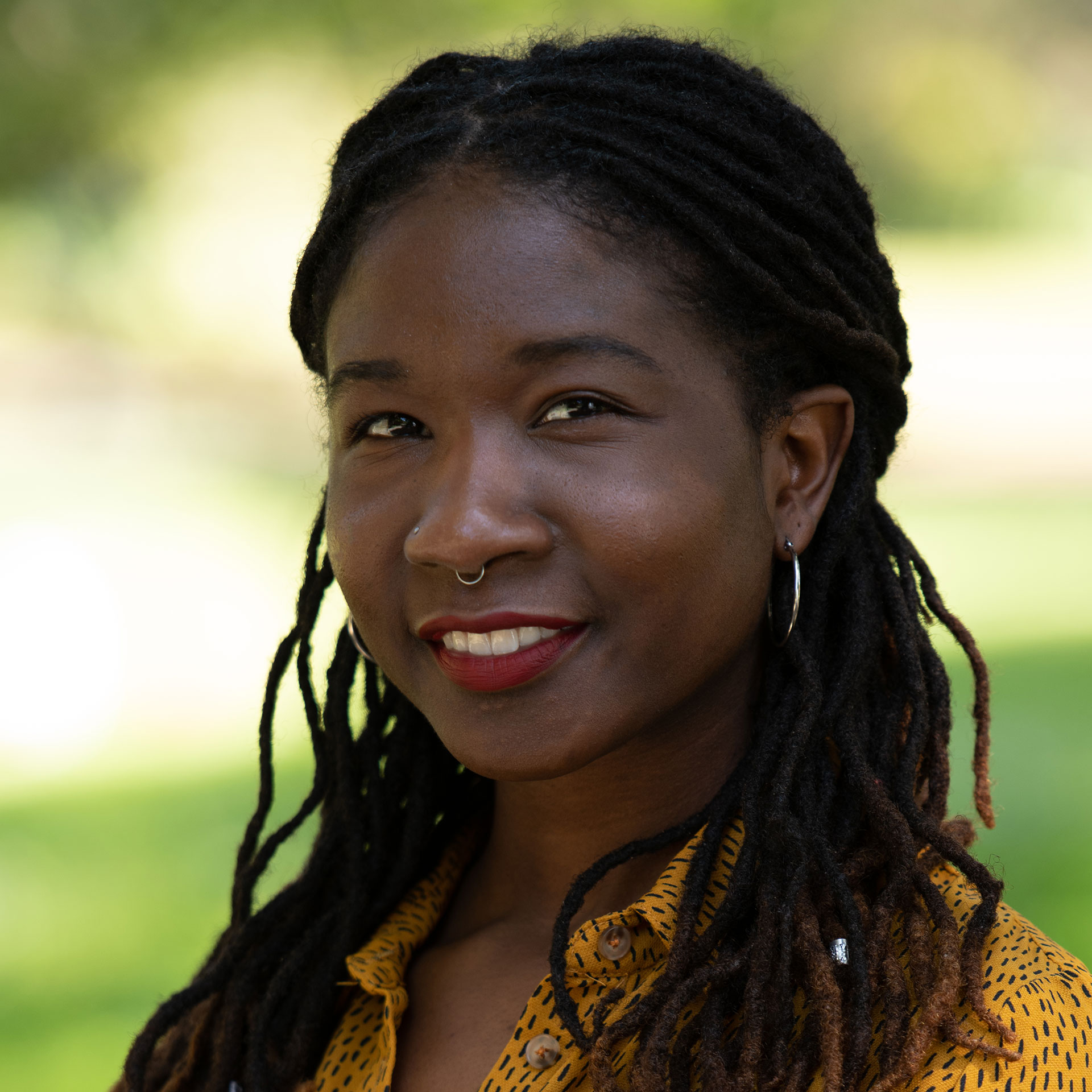
Nimah Gobir
Podcast host/Writer
Nimah is a writer and producer for MindShift. She has worked with young learners in many capacities including teacher, curriculum developer, and youth media producer. Each role offered a window into the different ways caregivers and educators strive to meet children’s needs and promote meaningful learning experiences in and out of the classroom. Nimah is committed to exploring stories about how to make learning more equitable, accessible, and magical for all students.
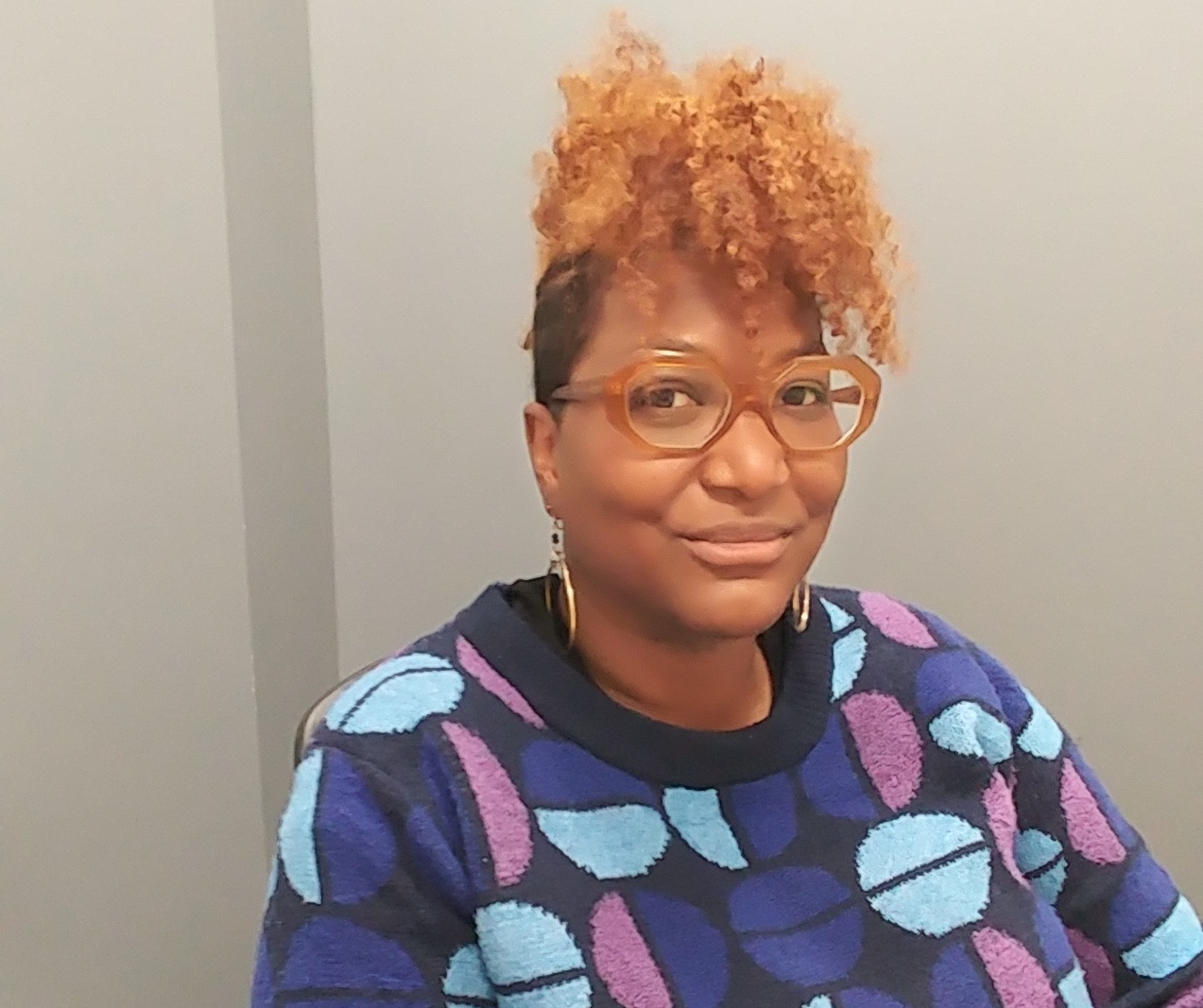
Chris Hambrick
Editor
Chris is an editor for KQED Podcasts and loves holding the big picture vision for shows. Previously they were a producer for Spooked Podcast from Snap Judgment Studios, host for The Tracklist on KGPC, as well as White Rabbit Story Hour podcast. They have contributed to KALW, KQED’s Bay Curious, and facilitated for national oral history project, StoryCorps. Sometimes, if you’re lucky, you can catch her telling stories on the Mortified, SFLitCrawl or Moth stages.
Seth Samuel
Sound Designer
Seth is a six-time Emmy Award-winning composer and sound designer. He is the score composer for PBS and KQED’s video series Deep Look, composer for the podcast Against The Rules With Michael Lewis; and the sound designer for podcasts from KQED, KALW, CPR, Radiotopia, Mother Jones, and Al Jazeera. He lives in Denver, Colorado with his brilliant wife, his brilliant son, his brilliant Australian shepherd, and their latest foster cat (the intelligence of which varies from cat to cat).
We Also RecommendWe Also Recommend
Support for MindShift is provided by the William and Flora Hewlett Foundation, sponsors and the members of KQED.
Major support for MindShift comes from
Player sponsored by
window.__IS_SSR__=true
window.__INITIAL_STATE__={
"attachmentsReducer": {
"audio_0": {
"type": "attachments",
"id": "audio_0",
"imgSizes": {
"kqedFullSize": {
"file": "https://ww2.kqed.org/news/wp-content/themes/KQED-unified/img/audio_bgs/background0.jpg"
}
}
},
"audio_1": {
"type": "attachments",
"id": "audio_1",
"imgSizes": {
"kqedFullSize": {
"file": "https://ww2.kqed.org/news/wp-content/themes/KQED-unified/img/audio_bgs/background1.jpg"
}
}
},
"audio_2": {
"type": "attachments",
"id": "audio_2",
"imgSizes": {
"kqedFullSize": {
"file": "https://ww2.kqed.org/news/wp-content/themes/KQED-unified/img/audio_bgs/background2.jpg"
}
}
},
"audio_3": {
"type": "attachments",
"id": "audio_3",
"imgSizes": {
"kqedFullSize": {
"file": "https://ww2.kqed.org/news/wp-content/themes/KQED-unified/img/audio_bgs/background3.jpg"
}
}
},
"audio_4": {
"type": "attachments",
"id": "audio_4",
"imgSizes": {
"kqedFullSize": {
"file": "https://ww2.kqed.org/news/wp-content/themes/KQED-unified/img/audio_bgs/background4.jpg"
}
}
},
"placeholder": {
"type": "attachments",
"id": "placeholder",
"imgSizes": {
"thumbnail": {
"file": "https://cdn.kqed.org/wp-content/uploads/2024/12/KQED-Default-Image-816638274-2000x1333-1-160x107.jpg",
"width": 160,
"height": 107,
"mimeType": "image/jpeg"
},
"medium": {
"file": "https://cdn.kqed.org/wp-content/uploads/2024/12/KQED-Default-Image-816638274-2000x1333-1-800x533.jpg",
"width": 800,
"height": 533,
"mimeType": "image/jpeg"
},
"medium_large": {
"file": "https://cdn.kqed.org/wp-content/uploads/2024/12/KQED-Default-Image-816638274-2000x1333-1-768x512.jpg",
"width": 768,
"height": 512,
"mimeType": "image/jpeg"
},
"large": {
"file": "https://cdn.kqed.org/wp-content/uploads/2024/12/KQED-Default-Image-816638274-2000x1333-1-1020x680.jpg",
"width": 1020,
"height": 680,
"mimeType": "image/jpeg"
},
"1536x1536": {
"file": "https://cdn.kqed.org/wp-content/uploads/2024/12/KQED-Default-Image-816638274-2000x1333-1-1536x1024.jpg",
"width": 1536,
"height": 1024,
"mimeType": "image/jpeg"
},
"fd-lrg": {
"file": "https://cdn.kqed.org/wp-content/uploads/2024/12/KQED-Default-Image-816638274-2000x1333-1-1536x1024.jpg",
"width": 1536,
"height": 1024,
"mimeType": "image/jpeg"
},
"fd-med": {
"file": "https://cdn.kqed.org/wp-content/uploads/2024/12/KQED-Default-Image-816638274-2000x1333-1-1020x680.jpg",
"width": 1020,
"height": 680,
"mimeType": "image/jpeg"
},
"fd-sm": {
"file": "https://cdn.kqed.org/wp-content/uploads/2024/12/KQED-Default-Image-816638274-2000x1333-1-800x533.jpg",
"width": 800,
"height": 533,
"mimeType": "image/jpeg"
},
"post-thumbnail": {
"file": "https://cdn.kqed.org/wp-content/uploads/2024/12/KQED-Default-Image-816638274-2000x1333-1-672x372.jpg",
"width": 672,
"height": 372,
"mimeType": "image/jpeg"
},
"twentyfourteen-full-width": {
"file": "https://cdn.kqed.org/wp-content/uploads/2024/12/KQED-Default-Image-816638274-2000x1333-1-1038x576.jpg",
"width": 1038,
"height": 576,
"mimeType": "image/jpeg"
},
"xxsmall": {
"file": "https://cdn.kqed.org/wp-content/uploads/2024/12/KQED-Default-Image-816638274-2000x1333-1-160x107.jpg",
"width": 160,
"height": 107,
"mimeType": "image/jpeg"
},
"xsmall": {
"file": "https://cdn.kqed.org/wp-content/uploads/2024/12/KQED-Default-Image-816638274-2000x1333-1-672x372.jpg",
"width": 672,
"height": 372,
"mimeType": "image/jpeg"
},
"small": {
"file": "https://cdn.kqed.org/wp-content/uploads/2024/12/KQED-Default-Image-816638274-2000x1333-1-672x372.jpg",
"width": 672,
"height": 372,
"mimeType": "image/jpeg"
},
"xlarge": {
"file": "https://cdn.kqed.org/wp-content/uploads/2024/12/KQED-Default-Image-816638274-2000x1333-1-1020x680.jpg",
"width": 1020,
"height": 680,
"mimeType": "image/jpeg"
},
"full-width": {
"file": "https://cdn.kqed.org/wp-content/uploads/2024/12/KQED-Default-Image-816638274-2000x1333-1-1920x1280.jpg",
"width": 1920,
"height": 1280,
"mimeType": "image/jpeg"
},
"guest-author-32": {
"file": "https://cdn.kqed.org/wp-content/uploads/2025/01/KQED-Default-Image-816638274-1333x1333-1-160x160.jpg",
"width": 32,
"height": 32,
"mimeType": "image/jpeg"
},
"guest-author-50": {
"file": "https://cdn.kqed.org/wp-content/uploads/2025/01/KQED-Default-Image-816638274-1333x1333-1-160x160.jpg",
"width": 50,
"height": 50,
"mimeType": "image/jpeg"
},
"guest-author-64": {
"file": "https://cdn.kqed.org/wp-content/uploads/2025/01/KQED-Default-Image-816638274-1333x1333-1-160x160.jpg",
"width": 64,
"height": 64,
"mimeType": "image/jpeg"
},
"guest-author-96": {
"file": "https://cdn.kqed.org/wp-content/uploads/2025/01/KQED-Default-Image-816638274-1333x1333-1-160x160.jpg",
"width": 96,
"height": 96,
"mimeType": "image/jpeg"
},
"guest-author-128": {
"file": "https://cdn.kqed.org/wp-content/uploads/2025/01/KQED-Default-Image-816638274-1333x1333-1-160x160.jpg",
"width": 128,
"height": 128,
"mimeType": "image/jpeg"
},
"detail": {
"file": "https://cdn.kqed.org/wp-content/uploads/2025/01/KQED-Default-Image-816638274-1333x1333-1-160x160.jpg",
"width": 160,
"height": 160,
"mimeType": "image/jpeg"
},
"kqedFullSize": {
"file": "https://cdn.kqed.org/wp-content/uploads/2024/12/KQED-Default-Image-816638274-2000x1333-1.jpg",
"width": 2000,
"height": 1333
}
}
},
"root-site_21235": {
"type": "attachments",
"id": "root-site_21235",
"meta": {
"index": "attachments_1716263798",
"site": "root-site",
"id": "21235",
"found": true
},
"parent": 0,
"imgSizes": {
"twentyfourteen-full-width": {
"file": "https://cdn.kqed.org/wp-content/uploads/2022/07/Newsletter-MindShift-Desktop-440x550@2x-880x576.png",
"width": 880,
"mimeType": "image/png",
"height": 576
},
"thumbnail": {
"file": "https://cdn.kqed.org/wp-content/uploads/2022/07/Newsletter-MindShift-Desktop-440x550@2x-160x200.png",
"width": 160,
"mimeType": "image/png",
"height": 200
},
"post-thumbnail": {
"file": "https://cdn.kqed.org/wp-content/uploads/2022/07/Newsletter-MindShift-Desktop-440x550@2x-672x372.png",
"width": 672,
"mimeType": "image/png",
"height": 372
},
"kqedFullSize": {
"file": "https://cdn.kqed.org/wp-content/uploads/2022/07/Newsletter-MindShift-Desktop-440x550@2x.png",
"width": 880,
"height": 1100
},
"medium": {
"file": "https://cdn.kqed.org/wp-content/uploads/2022/07/Newsletter-MindShift-Desktop-440x550@2x-800x1000.png",
"width": 800,
"mimeType": "image/png",
"height": 1000
},
"medium_large": {
"file": "https://cdn.kqed.org/wp-content/uploads/2022/07/Newsletter-MindShift-Desktop-440x550@2x-768x960.png",
"width": 768,
"mimeType": "image/png",
"height": 960
}
},
"publishDate": 1657013188,
"modified": 1657013188,
"caption": null,
"description": null,
"title": "Newsletter-MindShift-Desktop-440x550@2x",
"credit": null,
"status": "inherit",
"altTag": null,
"isLoading": false,
"fetchFailed": false
},
"mindshift_66348": {
"type": "attachments",
"id": "mindshift_66348",
"meta": {
"index": "attachments_1716263798",
"site": "mindshift",
"id": "66348",
"found": true
},
"title": "Ross Greene cover",
"publishDate": 1779138164,
"status": "inherit",
"parent": 66347,
"modified": 1779138218,
"caption": null,
"credit": "Courtesy of Ross Greene",
"altTag": "Book jacket of frustrated student covering his face alongside author photo",
"description": null,
"imgSizes": {
"medium": {
"file": "https://cdn.kqed.org/wp-content/uploads/sites/23/2026/05/Ross-Greene-cover-2000x1354.png",
"width": 2000,
"height": 1354,
"mimeType": "image/png"
},
"large": {
"file": "https://cdn.kqed.org/wp-content/uploads/sites/23/2026/05/Ross-Greene-cover-2000x1354.png",
"width": 2000,
"height": 1354,
"mimeType": "image/png"
},
"thumbnail": {
"file": "https://cdn.kqed.org/wp-content/uploads/sites/23/2026/05/Ross-Greene-cover-160x108.png",
"width": 160,
"height": 108,
"mimeType": "image/png"
},
"medium_large": {
"file": "https://cdn.kqed.org/wp-content/uploads/sites/23/2026/05/Ross-Greene-cover-768x520.png",
"width": 768,
"height": 520,
"mimeType": "image/png"
},
"1536x1536": {
"file": "https://cdn.kqed.org/wp-content/uploads/sites/23/2026/05/Ross-Greene-cover-1536x1040.png",
"width": 1536,
"height": 1040,
"mimeType": "image/png"
},
"2048x2048": {
"file": "https://cdn.kqed.org/wp-content/uploads/sites/23/2026/05/Ross-Greene-cover-2048x1386.png",
"width": 2048,
"height": 1386,
"mimeType": "image/png"
},
"post-thumbnail": {
"file": "https://cdn.kqed.org/wp-content/uploads/sites/23/2026/05/Ross-Greene-cover-672x372.png",
"width": 672,
"height": 372,
"mimeType": "image/png"
},
"twentyfourteen-full-width": {
"file": "https://cdn.kqed.org/wp-content/uploads/sites/23/2026/05/Ross-Greene-cover-1038x576.png",
"width": 1038,
"height": 576,
"mimeType": "image/png"
},
"full-width": {
"file": "https://cdn.kqed.org/wp-content/uploads/sites/23/2026/05/Ross-Greene-cover-2000x1354.png",
"width": 2000,
"height": 1354,
"mimeType": "image/png"
},
"npr-cds-wide": {
"file": "https://cdn.kqed.org/wp-content/uploads/sites/23/2026/05/Ross-Greene-cover-1200x675.png",
"width": 1200,
"height": 675,
"mimeType": "image/png"
},
"npr-cds-square": {
"file": "https://cdn.kqed.org/wp-content/uploads/sites/23/2026/05/Ross-Greene-cover-600x600.png",
"width": 600,
"height": 600,
"mimeType": "image/png"
},
"kqedFullSize": {
"file": "https://cdn.kqed.org/wp-content/uploads/sites/23/2026/05/Ross-Greene-cover.png",
"width": 2420,
"height": 1638
}
},
"isLoading": false,
"fetchFailed": false
},
"mindshift_66280": {
"type": "attachments",
"id": "mindshift_66280",
"meta": {
"index": "attachments_1716263798",
"site": "mindshift",
"id": "66280",
"found": true
},
"title": "Adult Woman Tutoring Teenage Girl during Home Learning Session",
"publishDate": 1776791353,
"status": "inherit",
"parent": 66279,
"modified": 1776791386,
"caption": null,
"credit": "DragonImages/iStock",
"altTag": "Woman helping girl with school work.",
"description": null,
"imgSizes": {
"medium": {
"file": "https://cdn.kqed.org/wp-content/uploads/sites/23/2026/04/iStock-2268486714-2000x1333.jpg",
"width": 2000,
"height": 1333,
"mimeType": "image/jpeg"
},
"large": {
"file": "https://cdn.kqed.org/wp-content/uploads/sites/23/2026/04/iStock-2268486714-2000x1333.jpg",
"width": 2000,
"height": 1333,
"mimeType": "image/jpeg"
},
"thumbnail": {
"file": "https://cdn.kqed.org/wp-content/uploads/sites/23/2026/04/iStock-2268486714-160x107.jpg",
"width": 160,
"height": 107,
"mimeType": "image/jpeg"
},
"medium_large": {
"file": "https://cdn.kqed.org/wp-content/uploads/sites/23/2026/04/iStock-2268486714-768x512.jpg",
"width": 768,
"height": 512,
"mimeType": "image/jpeg"
},
"1536x1536": {
"file": "https://cdn.kqed.org/wp-content/uploads/sites/23/2026/04/iStock-2268486714-1536x1024.jpg",
"width": 1536,
"height": 1024,
"mimeType": "image/jpeg"
},
"2048x2048": {
"file": "https://cdn.kqed.org/wp-content/uploads/sites/23/2026/04/iStock-2268486714-2048x1365.jpg",
"width": 2048,
"height": 1365,
"mimeType": "image/jpeg"
},
"post-thumbnail": {
"file": "https://cdn.kqed.org/wp-content/uploads/sites/23/2026/04/iStock-2268486714-672x372.jpg",
"width": 672,
"height": 372,
"mimeType": "image/jpeg"
},
"twentyfourteen-full-width": {
"file": "https://cdn.kqed.org/wp-content/uploads/sites/23/2026/04/iStock-2268486714-1038x576.jpg",
"width": 1038,
"height": 576,
"mimeType": "image/jpeg"
},
"full-width": {
"file": "https://cdn.kqed.org/wp-content/uploads/sites/23/2026/04/iStock-2268486714-2000x1333.jpg",
"width": 2000,
"height": 1333,
"mimeType": "image/jpeg"
},
"npr-cds-wide": {
"file": "https://cdn.kqed.org/wp-content/uploads/sites/23/2026/04/iStock-2268486714-1200x675.jpg",
"width": 1200,
"height": 675,
"mimeType": "image/jpeg"
},
"npr-cds-square": {
"file": "https://cdn.kqed.org/wp-content/uploads/sites/23/2026/04/iStock-2268486714-600x600.jpg",
"width": 600,
"height": 600,
"mimeType": "image/jpeg"
},
"kqedFullSize": {
"file": "https://cdn.kqed.org/wp-content/uploads/sites/23/2026/04/iStock-2268486714.jpg",
"width": 2121,
"height": 1414
}
},
"isLoading": false,
"fetchFailed": false
},
"mindshift_66250": {
"type": "attachments",
"id": "mindshift_66250",
"meta": {
"index": "attachments_1716263798",
"site": "mindshift",
"id": "66250",
"found": true
},
"title": "260313-RANDY PORTER RETIRES-MD-06_qed",
"publishDate": 1775507070,
"status": "inherit",
"parent": 66243,
"modified": 1775507289,
"caption": "Randy Porter teaches class at Roosevelt Middle School in Oakland on March 14, 2026.",
"credit": "Martin do Nascimento/KQED",
"altTag": "Man stands in front of students in band class.",
"description": null,
"imgSizes": {
"thumbnail": {
"file": "https://cdn.kqed.org/wp-content/uploads/sites/23/2026/04/260313-RANDY-PORTER-RETIRES-MD-06_qed-160x107.jpg",
"width": 160,
"height": 107,
"mimeType": "image/jpeg"
},
"medium_large": {
"file": "https://cdn.kqed.org/wp-content/uploads/sites/23/2026/04/260313-RANDY-PORTER-RETIRES-MD-06_qed-768x512.jpg",
"width": 768,
"height": 512,
"mimeType": "image/jpeg"
},
"1536x1536": {
"file": "https://cdn.kqed.org/wp-content/uploads/sites/23/2026/04/260313-RANDY-PORTER-RETIRES-MD-06_qed-1536x1024.jpg",
"width": 1536,
"height": 1024,
"mimeType": "image/jpeg"
},
"post-thumbnail": {
"file": "https://cdn.kqed.org/wp-content/uploads/sites/23/2026/04/260313-RANDY-PORTER-RETIRES-MD-06_qed-672x372.jpg",
"width": 672,
"height": 372,
"mimeType": "image/jpeg"
},
"twentyfourteen-full-width": {
"file": "https://cdn.kqed.org/wp-content/uploads/sites/23/2026/04/260313-RANDY-PORTER-RETIRES-MD-06_qed-1038x576.jpg",
"width": 1038,
"height": 576,
"mimeType": "image/jpeg"
},
"npr-cds-wide": {
"file": "https://cdn.kqed.org/wp-content/uploads/sites/23/2026/04/260313-RANDY-PORTER-RETIRES-MD-06_qed-1200x675.jpg",
"width": 1200,
"height": 675,
"mimeType": "image/jpeg"
},
"npr-cds-square": {
"file": "https://cdn.kqed.org/wp-content/uploads/sites/23/2026/04/260313-RANDY-PORTER-RETIRES-MD-06_qed-600x600.jpg",
"width": 600,
"height": 600,
"mimeType": "image/jpeg"
},
"kqedFullSize": {
"file": "https://cdn.kqed.org/wp-content/uploads/sites/23/2026/04/260313-RANDY-PORTER-RETIRES-MD-06_qed.jpg",
"width": 1999,
"height": 1333
}
},
"isLoading": false,
"fetchFailed": false
}
},
"audioPlayerReducer": {
"postId": "stream_live",
"isPaused": true,
"isPlaying": false,
"pfsActive": false,
"pledgeModalIsOpen": true,
"playerDrawerIsOpen": false
},
"authorsReducer": {
"ksung": {
"type": "authors",
"id": "4596",
"meta": {
"index": "authors_1716337520",
"id": "4596",
"found": true
},
"name": "Ki Sung",
"firstName": "Ki",
"lastName": "Sung",
"slug": "ksung",
"email": "ksung@kqed.org",
"display_author_email": false,
"staff_mastheads": [
"news"
],
"title": "KQED Contributor",
"bio": "Ki Sung is Managing Editor of Digital News at KQED. She is former Senior Editor of MindShift and worked at NPR before joining KQED in 2014.",
"avatar": "https://secure.gravatar.com/avatar/4ab131bca80bafb89a073bf2348fce93?s=600&d=blank&r=g",
"twitter": null,
"facebook": null,
"instagram": null,
"linkedin": null,
"sites": [
{
"site": "news",
"roles": [
"editor"
]
},
{
"site": "mindshift",
"roles": [
"administrator"
]
},
{
"site": "elections",
"roles": [
"administrator"
]
}
],
"headData": {
"title": "Ki Sung | KQED",
"description": "KQED Contributor",
"ogImgSrc": "https://secure.gravatar.com/avatar/4ab131bca80bafb89a073bf2348fce93?s=600&d=blank&r=g",
"twImgSrc": "https://secure.gravatar.com/avatar/4ab131bca80bafb89a073bf2348fce93?s=600&d=blank&r=g"
},
"isLoading": false,
"link": "/author/ksung"
},
"mjacksonretondo": {
"type": "authors",
"id": "11759",
"meta": {
"index": "authors_1716337520",
"id": "11759",
"found": true
},
"name": "Marlena Jackson-Retondo",
"firstName": "Marlena",
"lastName": "Jackson-Retondo",
"slug": "mjacksonretondo",
"email": "mjacksonretondo@kqed.org",
"display_author_email": false,
"staff_mastheads": [],
"title": "Engagement Producer",
"bio": "Marlena Jackson-Retondo is the engagement producer for KQED's \u003cem>Forum \u003c/em>and \u003cem>Mindshift\u003c/em>. Prior to joining the team in 2022, Marlena was an intern with the KQED Digital News Engagement team. She grew up in the Bay Area.\u003cem> \u003c/em>",
"avatar": "https://secure.gravatar.com/avatar/94ab429312e9a676559e31d1894130df?s=600&d=blank&r=g",
"twitter": null,
"facebook": null,
"instagram": null,
"linkedin": null,
"sites": [
{
"site": "arts",
"roles": [
"editor"
]
},
{
"site": "news",
"roles": [
"contributor"
]
},
{
"site": "mindshift",
"roles": [
"editor"
]
},
{
"site": "forum",
"roles": [
"editor"
]
}
],
"headData": {
"title": "Marlena Jackson-Retondo | KQED",
"description": "Engagement Producer",
"ogImgSrc": "https://secure.gravatar.com/avatar/94ab429312e9a676559e31d1894130df?s=600&d=blank&r=g",
"twImgSrc": "https://secure.gravatar.com/avatar/94ab429312e9a676559e31d1894130df?s=600&d=blank&r=g"
},
"isLoading": false,
"link": "/author/mjacksonretondo"
}
},
"breakingNewsReducer": {},
"pagesReducer": {
"root-site_mindshift-podcasts": {
"type": "pages",
"id": "root-site_21553",
"meta": {
"index": "pages_1716337520",
"site": "root-site",
"id": "21553",
"score": 0
},
"parent": 0,
"pageMeta": {
"excludeFromSiteSearch": "Include",
"sticky": false,
"adSlotOverride": "kqed300x250_mindshift",
"WpPageTemplate": "page-podcast"
},
"labelTerm": {
"site": ""
},
"blocks": [
{
"innerHTML": "",
"blockName": "kqed/hero",
"innerContent": [],
"innerBlocks": [],
"attrs": {
"backgroundImageAlt": "MindShift",
"titleLayout": "svg",
"titleSVG": "https://cdn.kqed.org/wp-content/uploads/2023/05/Mindshift-Logotype@2x.png",
"hasSponsorLogo": true,
"blurbImageUrl": "https://cdn.kqed.org/wp-content/uploads/2024/04/Mindshift-Podcast-Tile-703x703-1.jpg",
"blurb": "It’s easy to see a child’s education as a path determined by grades, test scores and extracurricular activities. But genuine learning is about so much more than the points schools tally. MindShift explores the future of education by highlighting the innovative – and sometimes counterintuitive – ways educators are helping all children succeed. \u003cbr>\u003cbr>\u003ca href=\"https://www.kqed.org/mindshift\" target=\"_blank\" rel=\"noreferrer noopener\">Visit MindShift's blog\u003c/a>",
"previewID": "mindshift_43474",
"blurbImageAlt": "MindShift",
"backgroundImageUrl": "https://cdn.kqed.org/wp-content/uploads/2024/04/Mindshift-Podcast-Banner-2560x1000-1.jpg"
}
},
{
"innerHTML": "",
"blockName": "kqed/post-list",
"innerContent": [],
"innerBlocks": [],
"attrs": {
"layout": "cardsRecent",
"sizeBase": 6,
"seeMore": true,
"sizeSeeMore": 6,
"query": "posts?category=mindshiftpodcast&queryId=c3917ac7c5",
"title": "Episodes"
}
},
{
"innerHTML": "",
"blockName": "kqed/listen-and-subscribe",
"innerContent": [],
"innerBlocks": [],
"attrs": []
},
{
"innerHTML": "",
"blockName": "kqed/email-signup",
"innerContent": [],
"innerBlocks": [],
"attrs": {
"newsletterSlug": "mindshift"
}
},
{
"innerHTML": "\n\u003cdiv class=\"wp-block-kqed-biographies\">\n\n\n\n\n\n\u003c/div>\n",
"blockName": "kqed/biographies",
"innerContent": [
"\n\u003cdiv class=\"wp-block-kqed-biographies\">",
null,
"\n\n",
null,
"\n\n",
null,
"\n\n",
null,
"\u003c/div>\n"
],
"innerBlocks": [
{
"innerHTML": "",
"blockName": "kqed/biographies-item",
"innerContent": [],
"innerBlocks": [],
"attrs": {
"mediaURL": "https://ww2.kqed.org/app/uploads/sites/77/2021/06/ksung-1178x1178-1.jpg",
"name": "Ki Sung",
"link": "/author/ksung",
"bio": "Ki is the senior editor of MindShift. Prior to joining MindShift in 2014, she was a digital news trainer at NPR, where she gained valuable lessons about how people learn and the support needed to implement change. She cares deeply about finding solutions that help children and loves meeting educators who create meaningful learning experiences for their students. At KQED, she leads diversity, equity and inclusion efforts and spearheaded our first source audit. She makes incredible kimchi, writes fiction and dreams of hiking the Camino de Santiago.",
"mediaAlt": "Ki Sung",
"position": "Podcast host/Senior editor"
}
},
{
"innerHTML": "",
"blockName": "kqed/biographies-item",
"innerContent": [],
"innerBlocks": [],
"attrs": {
"mediaURL": "https://ww2.kqed.org/app/uploads/sites/77/2021/06/ngobir-1920x1920-1.jpg",
"name": "Nimah Gobir",
"link": "/author/ngobir",
"bio": "Nimah is a writer and producer for MindShift. She has worked with young learners in many capacities including teacher, curriculum developer, and youth media producer. Each role offered a window into the different ways caregivers and educators strive to meet children’s needs and promote meaningful learning experiences in and out of the classroom. Nimah is committed to exploring stories about how to make learning more equitable, accessible, and magical for all students.",
"mediaAlt": "Nimah Gobir",
"position": "Podcast host/Writer"
}
},
{
"innerHTML": "",
"blockName": "kqed/biographies-item",
"innerContent": [],
"innerBlocks": [],
"attrs": {
"mediaURL": "https://cdn.kqed.org/wp-content/uploads/2023/05/1104221619p-1.jpg",
"name": "Chris Hambrick",
"link": "",
"bio": "Chris is an editor for KQED Podcasts and loves holding the big picture vision for shows. Previously they were a producer for \u003cem>Spooked\u003c/em> Podcast from Snap Judgment Studios, host for \u003cem>The Tracklist\u003c/em> on KGPC, as well as \u003cem>White Rabbit Story Hour \u003c/em>podcast. They have contributed to KALW, KQED’s Bay Curious, and facilitated for national oral history project, \u003cem>StoryCorps.\u003c/em> Sometimes, if you’re lucky, you can catch her telling stories on the\u003cem> Mortified\u003c/em>, \u003cem>SFLitCrawl \u003c/em>or \u003cem>Moth\u003c/em> stages.",
"mediaAlt": "Chris Hambrick",
"position": "Editor"
}
},
{
"innerHTML": "",
"blockName": "kqed/biographies-item",
"innerContent": [],
"innerBlocks": [],
"attrs": {
"mediaURL": "https://ww2.kqed.org/app/uploads/sites/77/2021/06/seth-853x853-1.jpg",
"name": "Seth Samuel",
"bio": "Seth is a six-time Emmy Award-winning composer and sound designer. He is the score composer for PBS and KQED’s video series \u003cem>Deep Look\u003c/em>, composer for the podcast \u003cem>Against The Rules With Michael Lewis\u003c/em>; and the sound designer for podcasts from KQED, KALW, CPR, Radiotopia, Mother Jones, and Al Jazeera. He lives in Denver, Colorado with his brilliant wife, his brilliant son, his brilliant Australian shepherd, and their latest foster cat (the intelligence of which varies from cat to cat).",
"mediaAlt": "Seth Samuel",
"position": "Sound Designer"
}
}
],
"attrs": {
"bioType": "white",
"heading": "MindShift Team"
}
},
{
"innerHTML": "",
"blockName": "kqed/programs",
"innerContent": [],
"innerBlocks": [],
"attrs": {
"programIDs": [
"baycurious",
"truthbetold",
"rightnowish",
"politicalbreakdown",
"soldout",
"thebay"
],
"title": "We Also Recommend"
}
},
{
"innerHTML": "",
"blockName": "kqed/ad",
"innerContent": [],
"innerBlocks": [],
"attrs": []
},
{
"innerHTML": "",
"blockName": "kqed/funding-credits",
"innerContent": [],
"innerBlocks": [],
"attrs": {
"text": "Support for MindShift is provided by the William and Flora Hewlett Foundation, sponsors and the members of KQED."
}
}
],
"publishDate": 1669753343,
"title": "MindShift | Podcasts",
"pagePath": "mindshift-podcasts",
"headTitle": "MindShift | Podcasts | KQED",
"content": "\u003cdiv class=\"wp-block-kqed-biographies\">\n\n\n\n\n\n\u003c/div>\n\n\n\n\n\n\n\u003cp>[ad fullwidth]\u003c/p>\u003cp>\u003c/p>\n",
"modified": 1713223244,
"headData": {
"twImgId": "",
"twTitle": "",
"socialTitle": "MindShift Podcast - Future of Learning and Raising Kids | KQED",
"canonicalUrl": "https://www.kqed.org/podcasts/mindshift",
"ogTitle": "",
"ogImgId": "",
"twDescription": "",
"description": "Explore the future of learning and parenting on MindShift, a podcast by KQED. Gain valuable insights into raising kids in a changing world.",
"socialDescription": "Explore the future of learning and parenting on MindShift, a podcast by KQED. Gain valuable insights into raising kids in a changing world.",
"title": "MindShift Podcast - Future of Learning and Raising Kids | KQED",
"ogDescription": "",
"schema": {
"@context": "https://schema.org",
"@type": "PodcastSeries",
"name": "MindShift | Podcasts",
"description": "Explore the future of learning and parenting on MindShift, a podcast by KQED. Gain valuable insights into raising kids in a changing world.",
"url": "https://www.kqed.org/podcasts/mindshift",
"image": "https://cdn.kqed.org/wp-content/uploads/2024/04/Mindshift-Podcast-Tile-703x703-1.jpg",
"inLanguage": "en-US",
"publisher": {
"@type": "NewsMediaOrganization",
"@id": "https://www.kqed.org/#organization",
"name": "KQED",
"logo": "https://cdn.kqed.org/wp-content/uploads/2020/02/KQED-OG-Image@1x.png",
"url": "https://www.kqed.org",
"sameAs": [
"https://www.facebook.com/KQED",
"https://twitter.com/KQED",
"https://www.instagram.com/kqed/",
"https://www.tiktok.com/@kqedofficial",
"https://www.linkedin.com/company/kqed",
"https://www.youtube.com/channel/UCeC0IOo7i1P_61zVUWbJ4nw"
]
}
},
"imageData": {
"ogImageSize": {
"file": "https://cdn.kqed.org/wp-content/uploads/2020/02/KQED-OG-Image@1x.png",
"width": 1200,
"height": 630
},
"twImageSize": {
"file": "https://cdn.kqed.org/wp-content/uploads/2020/02/KQED-OG-Image@1x.png"
},
"twitterCard": "summary_large_image"
}
},
"slug": "mindshift-podcasts",
"status": "publish",
"format": "standard",
"path": "/podcasts/mindshift",
"redirect": {
"type": "internal",
"url": "/podcasts/mindshift"
},
"audioTrackLength": null,
"parsedContent": [
{
"type": "contentString",
"content": "\u003cdiv class=\"post-body\">\u003cp>\u003cdiv class=\"wp-block-kqed-biographies\">\n\n\n\n\n\n\u003c/div>\n\n\n\n\n\n\n\u003cp>\u003c/p>\u003c/div>",
"attributes": {
"named": {},
"numeric": []
}
},
{
"type": "component",
"content": "",
"name": "ad",
"attributes": {
"named": {
"label": "fullwidth"
},
"numeric": [
"fullwidth"
]
}
},
{
"type": "contentString",
"content": "\u003cdiv class=\"post-body\">\u003cp>\u003c/p>\u003cp>\u003c/p>\n\u003c/div>\u003c/p>",
"attributes": {
"named": {},
"numeric": []
}
}
],
"featImg": "root-site_21235",
"label": "root-site",
"isLoading": false
}
},
"postsReducer": {
"stream_live": {
"type": "live",
"id": "stream_live",
"audioUrl": "https://streams.kqed.org/kqedradio",
"title": "Live Stream",
"excerpt": "Live Stream information currently unavailable.",
"link": "/radio",
"featImg": "",
"label": {
"name": "KQED Live",
"link": "/"
}
},
"stream_kqedNewscast": {
"type": "posts",
"id": "stream_kqedNewscast",
"audioUrl": "https://www.kqed.org/.stream/anon/radio/RDnews/newscast.mp3?_=1",
"title": "KQED Newscast",
"featImg": "",
"label": {
"name": "88.5 FM",
"link": "/"
}
},
"mindshift_66347": {
"type": "posts",
"id": "mindshift_66347",
"meta": {
"index": "posts_1716263798",
"site": "mindshift",
"id": "66347",
"score": null,
"sort": [
1779184833000
]
},
"guestAuthors": [],
"slug": "ross-greene-what-if-bad-behavior-isnt-the-problem",
"title": "Ross Greene: What if Bad Behavior Isn’t the Problem?",
"publishDate": 1779184833,
"format": "audio",
"headTitle": "Ross Greene: What if Bad Behavior Isn’t the Problem? | KQED",
"labelTerm": {
"term": 21942,
"site": "mindshift"
},
"content": "\u003cp>\u003ca href=\"#episode-transcript\">\u003ci>View the full episode transcript.\u003c/i>\u003c/a>\u003c/p>\n\u003cp>Ki Sung talks with clinical psychologist and author Ross Greene about why traditional discipline strategies often fail students, and what educators can do instead. Greene explains his \u003ca href=\"https://livesinthebalance.org/our-solution/\">Collaborative and Proactive Solutions\u003c/a> model, which shifts the focus away from rewards and punishments and toward identifying the unmet needs and unsolved problems behind student behavior.\u003c/p>\n\u003cp>\u003c!-- iframe plugin v.4.3 wordpress.org/plugins/iframe/ -->\u003cbr>\n\u003ciframe loading=\"lazy\" frameborder=\"0\" height=\"200\" scrolling=\"no\" src=\"http://www.youtube.com/embed/4qsGTXLnmKs\" width=\"100%\" class=\"iframe-class\">\u003c/iframe>\u003c/p>\n\u003ch2 id=\"episode-transcript\">Episode Transcript\u003c/h2>\n\u003cp>\u003ci>\u003cspan style=\"font-weight: 400;\">This is a computer-generated transcript. While our team has reviewed it, there may be errors.\u003cbr>\n\u003c/span>\u003c/i>\u003cbr>\n\u003cstrong>Ki Sung:\u003c/strong> Welcome to the MindShift podcast, where we explore the future of learning and how we raise our kids. I’m Ki Sung. There’s been no shortage of stories about what’s troubling kids today, the outbursts, the apathy, the mental health concerns. We’re seeing some signs of progress through solutions like limiting screen time and having more in real-life social interactions, but there are still students who need help.\u003c/p>\n\u003cp>\u003cstrong>\u003ca href=\"https://www.simonandschuster.com/books/The-Kids-Who-Arent-Okay/Ross-W-Greene/9781668203903\">\u003cimg loading=\"lazy\" decoding=\"async\" class=\"alignleft size-full wp-image-66349\" src=\"https://cdn.kqed.org/wp-content/uploads/sites/23/2026/05/the-kids-who-arent-okay-9781668203903_lg.jpg\" alt=\"\" width=\"265\" height=\"400\" srcset=\"https://cdn.kqed.org/wp-content/uploads/sites/23/2026/05/the-kids-who-arent-okay-9781668203903_lg.jpg 265w, https://cdn.kqed.org/wp-content/uploads/sites/23/2026/05/the-kids-who-arent-okay-9781668203903_lg-160x242.jpg 160w\" sizes=\"auto, (max-width: 265px) 100vw, 265px\">\u003c/a>Ki Sung:\u003c/strong> Dr. Ross Greene developed the \u003ca href=\"https://livesinthebalance.org/our-solution/\">Collaborative and Proactive Solutions Model\u003c/a> to help all students, and it requires a different way of responding to students’ behavior. He’s the author of the recently published book, \u003ca href=\"https://www.simonandschuster.com/books/The-Kids-Who-Arent-Okay/Ross-W-Greene/9781668203903\">The Kids Who Aren’t Okay: The Urgent Case for Reimagining Support, Belonging, and Hope in Schools\u003c/a>.\u003c/p>\n\u003cp>[ad fullwidth]\u003c/p>\n\u003cp>\u003cstrong>Ki Sung:\u003c/strong> He’s also the bestselling author of several other books, including The Explosive Child and Lost at School.\u003c/p>\n\u003cp>\u003cstrong>Ki Sung: \u003c/strong>Welcome, Dr. Greene.\u003c/p>\n\u003cp>\u003cstrong>Ross Greene:\u003c/strong> Thank you for inviting me to do this.\u003c/p>\n\u003cp>\u003cstrong>Ki Sung:\u003c/strong> Thank you so much for being here. Let’s talk first about what you describe as concerning behavior, the stuff that gets kids sent to the principal’s office.\u003c/p>\n\u003cp>\u003cstrong>Ki Sung:\u003c/strong> You say concerning behavior is how kids communicate that they’re having difficulty meeting a particular expectation. Can you tell us more?\u003c/p>\n\u003cp>\u003cstrong>Ross Greene:\u003c/strong> I do say that all the time, and I wish everybody knew that. We’ve, we’ve all become accustomed to the cliche “All behavior is communication.” Somehow, it doesn’t translate for a lot of people that concerning behavior communicates that a kid is frustrated or distressed.\u003c/p>\n\u003cp>\u003cstrong>Ross Greene:\u003c/strong> Concerning behavior is a frustration or distress response, and almost always, what the student is frustrated or distressed about is an expectation that they’re having difficulty meeting. Um, if all we pay attention to is the behavior, then we’re gonna be kinda narrow in what we can do, or… ’cause when you’re focused on behavior, all you can really do is try to modify it, and that’s usually accomplished through some mix of rewards and punishments.\u003c/p>\n\u003cp>\u003cstrong>Ross Greene:\u003c/strong> But rewards and punishments, what a lot of people refer to as consequences, aren’t problem-solving strategies. So we have a lot of students who have experienced a lot of consequences and who are still doing poorly because the problems that are causing the behaviors that we’ve been busy consequencing often haven’t even been identified, let alone solved.\u003c/p>\n\u003cp>\u003cstrong>Ki Sung:\u003c/strong> Um, it’s kinda wild to hear you say that because I hear a lot of focus on the behavior. So what are you proposing we do?\u003c/p>\n\u003cp>\u003cstrong>Ross Greene:\u003c/strong> I am proposing that we de-emphasize our focus on behavior, and by the way, our focus on behavior Is all around us. We are, um… When we have a kid who’s struggling and communicating that they’re struggling through their behavior, we do behavior checklists, we do behavior observations, we do a functional behavior assessment all so that we can come up with a behavior plan.\u003c/p>\n\u003cp>\u003cstrong>Ross Greene:\u003c/strong> When a student is struggling in a classroom and communicate that through their concerning behavior, they get a discipline referral, and what the, the information that is mostly passed along to the people who are on the receiving end of those discipline referrals is the kid’s concerning behavior. And what they often do about it is give the kid consequences for their concerning behavior.\u003c/p>\n\u003cp>\u003cstrong>Ross Greene:\u003c/strong> We need to instead, um, focus on the problems that are causing that behavior. I call them unsolved problems. The synonym for unsolved problem is unmet expectation. This includes things like stuff classroom teachers deal with every day.\u003c/p>\n\u003cp>\u003cstrong>Ross Greene:\u003c/strong> Um, difficulty coming back into the classroom after recess, difficulty sitting next to Susie during circle time, difficulty completing the double-digit division problems on the worksheet in math, difficulty agreeing with Billy on the rules of the four square game at recess, difficulty coming to school, difficulty coming to school on time.\u003c/p>\n\u003cp>\u003cstrong>Ross Greene:\u003c/strong> I could go on forever. Those are not typically the things people are talking about when they’re talking about a kid who’s struggling. They’re often talking about the kid’s concerning behavior and what they’re doing to try to modify it, and maybe even the diagnosis that captures those behaviors. We would be so much better off if we have an instrument that helps us identify their unsolved problems, and we do in the collaborative and proactive solutions model.\u003c/p>\n\u003cp>\u003cstrong>Ross Greene:\u003c/strong> And if we were engaging students in the process of solving those problems, meaning collaboratively, and since we’re now out in front of those problems, having now finally identified them, the problem should also be proactive.\u003c/p>\n\u003cp>\u003cstrong>Ki Sung:\u003c/strong> I think there’s something huge in what you’re talking about solutions-wise in the word collaborative.\u003c/p>\n\u003cp>\u003cstrong>Ki Sung:\u003c/strong> It sounds like you’re talking about including the student as well in how to move forward.\u003c/p>\n\u003cp>\u003cstrong>Ross Greene:\u003c/strong> That is so what I’m talking about. But I think a lot of adults, um, both in education, in education but also everywhere else, think it’s their job to divine what’s getting in the kid’s way and to divine what the solutions should be.\u003c/p>\n\u003cp>\u003cstrong>Ross Greene:\u003c/strong> This is not that. Kids can be relied upon to help us understand what’s making it hard for them to meet a particular expectation. I’m often asked the question, “What makes you think the kid knows?” And my answer is, “i35 years of asking.” Kids can also be relied upon to, um, come up with solutions t- about what’s getting in the way of them meeting certain expectations.\u003c/p>\n\u003cp>\u003cstrong>Ross Greene:\u003c/strong> So this model is moving us away from being completely adult-driven. The adult is the facilitator of a process in which kid and adult are working toward solutions together. That is very different from what typically goes on now.\u003c/p>\n\u003cp>\u003cstrong>Ki Sung:\u003c/strong> One thing I had to kind of work a little extra on to better understand is your concepts of collaborative and proactive solutions, because I realize a lot of why we continue to do what we’re doing, right, looking for behaviors, uh, trying to work in a behavior-focused model, I think a lot of why we operate that way is, is rooted in our communication, you know, how we communicate with young people, which is not necessarily open-ended, you know, which is thinking more about why have you not done this thing that I asked you to do already with the consequences in mind.\u003c/p>\n\u003cp>\u003cstrong>Ki Sung:\u003c/strong> Um, so can you give us some examples of how people can communicate to get to that state of collaboration versus maybe how we typically communicate now?\u003c/p>\n\u003cp>\u003cstrong>Ross Greene:\u003c/strong> Well, very interesting question. You know, solving a problem collaboratively starts with identifying the problem that you want to solve with the kid, and although that sounds like sort of a given, it’s not.\u003c/p>\n\u003cp>\u003cstrong>Ross Greene:\u003c/strong> Mostly because we’re so focused on behavior that we often haven’t even identified the expectations a student is having difficulty reliably meeting. So we’ve gotta start with that, and the instrument that I was talking about is called the Assessment of Skills and Unsolved Problems, and it helps us memorialize every single expectation a particular student is having difficulty reliably meeting.\u003c/p>\n\u003cp>\u003cstrong>Ross Greene:\u003c/strong> And we are now, for having done that, out in front of it, which means we don’t have to wait for the frustration response to occur before we intervene. So much of intervention, so much of what we’re training educators to do, so much of what we’re teaching kids is what to do once a kid is already becoming frustrated, and that’s late.\u003c/p>\n\u003cp>\u003cstrong>Ross Greene:\u003c/strong> That’s crisis management. That’s not out in front of it. That’s waiting for the behavior to occur. Boy, does the game change when we proactively identify unsolved problems- That positions us to solve them proactively. Um, I’m always telling educators, being late is not a given. With some intentionality, with some commitment, with some imagination, we could be early instead of late.\u003c/p>\n\u003cp>\u003cstrong>Ross Greene:\u003c/strong> So identifying unsolved problems is where the whole thing begins. It then continues with prioritizing the unsolved problems you’ve identified, because you’re not gonna be able to solve everything at once. Often we encourage educators to prioritize unsolved problems that are causing safety issues, because safety is a big deal in schools.\u003c/p>\n\u003cp>\u003cstrong>Ross Greene:\u003c/strong> And then it’s time to start solving a problem collaboratively and proactively with a student. Um, what might that sound like? “I’ve noticed you’ve been having difficulty completing the double-digit division problems on the worksheet in math. What’s up?” The caregiver just got the conversation going. The caregiver is now facilitating a problem-solving process.\u003c/p>\n\u003cp>\u003cstrong>Ross Greene:\u003c/strong> The caregiver is not thinking about consequences, because the caregiver should know that consequences don’t solve any problems. Now we’re looking to the kid to help us understand what’s making it hard. Now, sometimes kids say something that feel like a showstopper, like, “I hate it.” But one of the other things the collaborative and proactive solutions model provides is how to drill for more information, how to probe, and the drilling strategy, there are eight of them that I would use in that circumstances, is simple reflective listening.\u003c/p>\n\u003cp>\u003cstrong>Ross Greene:\u003c/strong> “You hate it. Tell me more about that.” “It’s stupid.” Sounds like another showstopper, but it’s not. “It’s stupid.” Um, “I’m sorry, I’m still not exactly sure what you mean. What do you mean when you say it’s stupid?” “It’s stupid how you make me do math I don’t know how to do.” Are we starting to get some traction here?\u003c/p>\n\u003cp>\u003cstrong>Ross Greene:\u003c/strong> We are. Do we need to continue probing? We do, because we don’t yet know what’s making it hard for the kid to complete the double-digit division problems on the worksheet in math. But we do have a kid who’s now talking, and that is a wonderful thing. Um, eventually, and I’m thinking of a particular kid here, we learned that, uh, when the double-digit division problems in math were presented in words, as in word problems, they got completely stumped.\u003c/p>\n\u003cp>\u003cstrong>Ross Greene:\u003c/strong> But when they could do it through, um, just doing out a division problem, they could do it just fine. Good. Now we know. That’s the first step of solving a problem collaboratively, curiosity, finding out what’s been getting in the kid’s way. The second step is the adult’s step. It’s their turn to say why they, um, think it’s important that the expectation Be met.\u003c/p>\n\u003cp>\u003cstrong>Ross Greene:\u003c/strong> And then in the third step, adult and kid are collaborating on a solution that’s going to address the concerns of both parties. Solved problems don’t cause frustration responses, only unsolved problems do. So when educators first hear about this process, and all I’ve given you is the basic outlines, the first thing they think about, and I completely understand why, is time.\u003c/p>\n\u003cp>\u003cstrong>Ross Greene:\u003c/strong> They ask, “When does he think we’re going to do this?” But I could make a very persuasive argument for the fact that the reason we have no time is because we haven’t been doing this. We’ve been chasing after behavior day after day, same kids. It saves a lot of time to finally identify and solve the problems we’ve been chasing after all this time.\u003c/p>\n\u003cp>\u003cstrong>Ki Sung:\u003c/strong> Who was it that said, uh, “The definition of insanity is doing the same thing over and over again and expecting different results”?\u003c/p>\n\u003cp>\u003cstrong>Ross Greene:\u003c/strong> I don’t remember who it was, but they had a good point.\u003c/p>\n\u003cp>\u003cstrong>Ki Sung:\u003c/strong> All right. Um, can I ask, in that instance with the math problem, what is the unproductive way to respond that you may have seen or heard about in classrooms?\u003c/p>\n\u003cp>\u003cstrong>Ross Greene:\u003c/strong> Oh, thinking that the student’s failure to do the math is due to poor motivation, and then thinking that what this student really needs is more motivation. And that could go in a few different directions. It could sound like this: “Uh, Billy, if you do not get that math done before recess, you are not going out for recess.”\u003c/p>\n\u003cp>\u003cstrong>Ross Greene:\u003c/strong> Could be in the form of reward, “Billy, if you get that math done, you get XYZ reward.” Very common. Um, we still have no idea what’s making it hard for Billy to do the math. We’ve lost sight of the fact that we are not the first people who’ve tried to incentivize Billy to do things that are hard for him. Um, we’ve also lost sight of the fact that this is not the first time Billy’s had difficulty completing the double-digit division problems on the worksheet in math.\u003c/p>\n\u003cp>\u003cstrong>Ross Greene:\u003c/strong> It’s the 197th, which makes this an old unsolved problem. Um, if we punish Billy for something, for a problem that he is currently unable to overcome on his own, we heighten the likelihood that Billy will exhibit a frustration response. If we dangle a reward in front of Billy, and Billy is unable to achieve that award because Billy is not yet over, uh, uh, able to overcome that problem- We still run the risk of a frustration response.\u003c/p>\n\u003cp>\u003cstrong>Ross Greene:\u003c/strong> I’ve seen just as many frustration responses when a kid didn’t get an anticipated reward as I have in response to punishment. But the whole thing here is we still don’t have the slightest idea what’s making it hard for Billy to do the double-digit division problems on the worksheet in math. And until we do, Billy’s still gonna struggle with that unsolved problem.\u003c/p>\n\u003cp>\u003cstrong>Ki Sung:\u003c/strong> It’s really fascinating to hear you describe the latter because that is far more common experience from my point of view than anyone having sat down and spent time identifying an unsolved problem. I like that.\u003c/p>\n\u003cp>\u003cstrong>Ross Greene:\u003c/strong> Even when people sit down with the kid and talk to the kid, what they’re often talking with the kid about is their concerning behavior.\u003c/p>\n\u003cp>\u003cstrong>Ross Greene:\u003c/strong> Um, so you ran out of Mrs. Johnson’s classroom. Why’d you do that? And the answer that we most frequently get when people try to talk with kids about their frustration responses is, “I don’t know,” or the most primitive of defense mechanisms, “No, I didn’t.” Those conversations, generally speaking, go nowhere.\u003c/p>\n\u003cp>\u003cstrong>Ross Greene:\u003c/strong> Conversations we have about helping kids understand what’s making it hard for them to meet an expectation, actually they’re the ones who are helping us understand, and working toward a solution that finally gets the problem solved so the frustration responses subside, that’s a beautiful thing.\u003c/p>\n\u003cp>\u003cstrong>Ki Sung:\u003c/strong> So as you said, “I don’t know,” or, you know, other things kids say like, “I don’t care,” I imagine adults also have a frustration response.\u003c/p>\n\u003cp>\u003cstrong>Ki Sung:\u003c/strong> Does this help get at the root of how adults respond as well?\u003c/p>\n\u003cp>\u003cstrong>Ross Greene:\u003c/strong> Well, a lot of maladaptive adult frustration responses occur in the heat of the moment as well. Our goal is to get out of the heat of the moment. The heat of the moment, I can’t say this enough times, isn’t a given. I know the students are difficult.\u003c/p>\n\u003cp>\u003cstrong>Ross Greene:\u003c/strong> I get it. I know that there’s too many of them in a classroom. I get that too. But this would all be a whole lot easier, and it would be much better practice for both educators and kids if we were focused on the right thing. Now, that’s the heat of the moment part of educator frustration these days.\u003c/p>\n\u003cp>\u003cstrong>Ross Greene:\u003c/strong> There’s a lot of reasons that educators should be frustrated these days. Um, I think we’ve made it a lot harder to be an educator over the last two to three decades, and yes, high-stakes testing, I’m staring at you, but that is not the only thing that has made it harder to be an educator. I’ve had many educators say to me, “They’ve taken all the humanity out of my job.\u003c/p>\n\u003cp>\u003cstrong>Ross Greene:\u003c/strong> They’ve turned me into a test prep robot.” Um, zero tolerance policies, um, made it more difficult for me to find out what’s really going on with a kid because zero tolerance policies just tightened the vice grip and gave us an algorithm for applying consequences to certain behaviors. Um, we’ve made a lot of things harder on educators.\u003c/p>\n\u003cp>\u003cstrong>Ross Greene:\u003c/strong> Let there be no doubt they aren’t paid anywhere nearly enough. Um, they don’t have time. So there’s a baseline level of frustration for a lot of educators these days. They often don’t feel safe in their classrooms. Um, I find that when we implement this model, it’s not just the frustration of kids that subside, it’s the frustration of educators as well.\u003c/p>\n\u003cp>\u003cstrong>Ross Greene:\u003c/strong> Although I will say this: there’s nothing about this model that will help educators get paid what they deserve.\u003c/p>\n\u003cp>\u003cstrong>Ki Sung:\u003c/strong> Yeah, that is the, a huge goal for so many people in order to better serve students.\u003c/p>\n\u003cp>\u003cstrong>Ki Sung: \u003c/strong>we’re going to take a short break. We’ll be back with our guest Ross Greene, right after this.\u003c/p>\n\u003cp>\u003cstrong>Ki Sung: \u003c/strong>So, you know, I’ve heard a lot of educators say, “Meet them where they’re at,” or, you know, a version of this is, “Teach the kid you have.” Um, but that’s not happening at a wide scale. Um, is it really hard to implement? Is it, uh, like what is it about schools that make it challenging to get to that point?\u003c/p>\n\u003cp>\u003cstrong>Ross Greene:\u003c/strong> You know, one of the other big focal points of the book is, um, the concept of developmental variability, which I don’t hear people talking about enough, especially in schools, but anywhere really. Um, developmental variability basically says what’s walking in the door is a bunch of individual differences.\u003c/p>\n\u003cp>\u003cstrong>Ross Greene:\u003c/strong> Developmental variability is just a fanciv- fancy way of saying every kid is different, and let there be no doubt that is what’s walking in every classroom. We’ve done kids and educators a tremendous disservice by saying, “Even with all that developmental variability, you gotta get every kid over the same line by the end of the school year.”\u003c/p>\n\u003cp>\u003cstrong>Ross Greene:\u003c/strong> How ludicrous, and educators told us that was ludicrous 30 years ago, and it’s just as ludicrous now. One of the points I make in the book is that every kid should be their own reference point. Teachers should feel free to have every kid be their own reference point for progress. That tells you that there is no line that everybody has to get over.\u003c/p>\n\u003cp>\u003cstrong>Ross Greene:\u003c/strong> There’s no line. There’s just making sure that every student makes as much progress relative to where they started at the beginning in every school year, and we need to free teachers up to be able to do that. Um, that’s what differentiated instruction is about. That’s what personalized learning is about.\u003c/p>\n\u003cp>\u003cstrong>Ross Greene:\u003c/strong> Unfortunately, those things frequently don’t embed themselves into our practice. Every kid is their own reference point. The goal of good teaching is defined as meeting every kid where they’re at. Um, we need to free teachers up to be able to do that.\u003c/p>\n\u003cp>\u003cstrong>Ki Sung:\u003c/strong> You know, one thing that I thought was really interesting about your book is, I, I think this is interesting because teachers are asked to do so much, right?\u003c/p>\n\u003cp>\u003cstrong>Ki Sung:\u003c/strong> They are, in many cases, social workers. Sometimes they’re stand-ins for parents. They’re just doing more and more all the time, and what you write is that you don’t want teachers to be diagnosing, to look at behavior and diagnose behavior. Um, can you tell me why that is? And, and I ask because there is so much emphasis on the behavior side of interacting with students.\u003c/p>\n\u003cp>\u003cstrong>Ki Sung:\u003c/strong> So why, why do you want teachers to, you know, not act in that way?\u003c/p>\n\u003cp>\u003cstrong>Ross Greene:\u003c/strong> Well, because diagnoses don’t really tell you very much. Um, not very much that you don’t already know. Diagnoses are sometimes the gateway for a kid to get services. Diagnosis can sometimes be the gateway for a kid to get funding for those services.\u003c/p>\n\u003cp>\u003cstrong>Ross Greene:\u003c/strong> I’m a mental health professional, and I don’t find that diagnoses give me much useful information about a kid. Um, what gives me the useful information? What skills this kid is struggling with and what expectations this kid is having difficulty reliably meeting, and I get that information from the assessment of skills and unsolved problems.\u003c/p>\n\u003cp>\u003cstrong>Ross Greene:\u003c/strong> Here’s a, um, I was speaking at a, uh, autism conference in Denmark pre-COVID, and a mother in my audience raised her hand very tentatively and said, “Yeah, but I found my daughter’s autism diagnosis to be very useful.” I said, “That’s good.” Then she thought about it for a second, and she said, “But I think what you’re saying-” “Is that my daughter’s autism diagnosis really doesn’t tell me anything about her specific skills or the specific expectations she’s having difficulty meeting.”\u003c/p>\n\u003cp>\u003cstrong>Ross Greene:\u003c/strong> I said, “Right.” She thought about it a little bit more, and then she said, “And I think what you’re saying is that once I identify my daughter’s skills and unsolved problems, I’m going to find that I have information that is far more useful than her psychiatric diagnosis.” I said, “Probably.” Um, focusing on diagnoses focuses on, makes us focus on behavior, because if we look at the diagnostic criteria for the vast majority of childhood psychiatric disorders, what we’re going to find is a long list of behaviors, frustration responses, distress responses.\u003c/p>\n\u003cp>\u003cstrong>Ross Greene:\u003c/strong> So long as we’re focused on the behavior, we’re gonna be late every time, because behavior occurs after a kid is already having difficulty meeting a particular expectation. We’ve been waiting for behavior to occur. We need to start anticipating, identifying, and solving problems instead.\u003c/p>\n\u003cp> \u003c/p>\n\u003cp>\u003cstrong>Ki Sung:\u003c/strong> Dr. Ross Greene, thank you so much.\u003c/p>\n\u003cp>\u003cstrong>Ross Greene:\u003c/strong> My pleasure. Thanks for inviting me to do this.\u003c/p>\n\u003cp>\u003cstrong>Ki Sung:\u003c/strong> Dr. Ross Greene is the author of the recently published book, The Kids Who Aren’t Okay: The Urgent Case for Reimagining Support, Belonging, and Hope in Schools. He’s also the author of other books, including The Explosive Child and Lost at School, and is the founding director of Lives in the Balance.\u003c/p>\n\u003cp>The MindShift team includes me, Ki Sung, Nimah Gobir, Marlena Jackson-Retondo and Marnette Federis. Our editor is Chris Hambrick. Seth Samuel is our sound designer. Jen Chien is our head of podcasts and Ethan Toven Lindsey is our editor in chief. We receive additional support from Maha Sanad.\u003c/p>\n\u003cp>MindShift is supported in part by the generosity of the William & Flora Hewlett Foundation and members of KQED.\u003c/p>\n\u003cp>Some members of the KQED podcast team are represented by The Screen Actors Guild, American Federation of Television and Radio Artists. San Francisco Northern California Local.\u003c/p>\n\u003cp>[ad floatright]\u003c/p>\n\u003cp>Thanks for listening to MindShift.\u003c/p>\n\n",
"blocks": [],
"excerpt": "Schools spend a lot of time on managing kids' behaviors; Dr. Ross Greene implores adults to instead first look at the unsolved problems that triggers the outbursts.",
"status": "publish",
"parent": 0,
"modified": 1779138733,
"stats": {
"hasAudio": false,
"hasVideo": true,
"hasChartOrMap": false,
"iframeSrcs": [],
"hasGoogleForm": false,
"hasGallery": false,
"hasHearkenModule": false,
"hasPolis": false,
"paragraphCount": 83,
"wordCount": 4287
},
"headData": {
"title": "Ross Greene: What if Bad Behavior Isn’t the Problem? | KQED",
"description": "Schools spend a lot of time on managing kids' behaviors; Dr. Ross Greene implores adults to instead first look at the unsolved problems that triggers the outbursts.",
"ogTitle": "",
"ogDescription": "",
"ogImgId": "",
"twTitle": "",
"twDescription": "",
"twImgId": "",
"schema": {
"@context": "https://schema.org",
"@type": "Article",
"headline": "Ross Greene: What if Bad Behavior Isn’t the Problem?",
"datePublished": "2026-05-19T03:00:33-07:00",
"dateModified": "2026-05-18T14:12:13-07:00",
"image": "https://cdn.kqed.org/wp-content/uploads/2020/02/KQED-OG-Image@1x.png"
}
},
"primaryCategory": {
"termId": 192,
"slug": "big-ideas",
"name": "Big Ideas"
},
"audioUrl": "https://www.podtrac.com/pts/redirect.mp3/traffic.megaphone.fm/KQINC7448687945.mp3?updated=1778642442",
"sticky": false,
"templateType": "standard",
"featuredImageType": "standard",
"excludeFromSiteSearch": "Include",
"articleAge": "0",
"path": "/mindshift/66347/ross-greene-what-if-bad-behavior-isnt-the-problem",
"audioTrackLength": null,
"parsedContent": [
{
"type": "contentString",
"content": "\u003cdiv class=\"post-body\">\u003cp>\u003cp>\u003ca href=\"#episode-transcript\">\u003ci>View the full episode transcript.\u003c/i>\u003c/a>\u003c/p>\n\u003cp>Ki Sung talks with clinical psychologist and author Ross Greene about why traditional discipline strategies often fail students, and what educators can do instead. Greene explains his \u003ca href=\"https://livesinthebalance.org/our-solution/\">Collaborative and Proactive Solutions\u003c/a> model, which shifts the focus away from rewards and punishments and toward identifying the unmet needs and unsolved problems behind student behavior.\u003c/p>\n\u003cp>\u003c!-- iframe plugin v.4.3 wordpress.org/plugins/iframe/ -->\u003cbr>\n\u003ciframe loading=\"lazy\" frameborder=\"0\" height=\"200\" scrolling=\"no\" src=\"http://www.youtube.com/embed/4qsGTXLnmKs\" width=\"100%\" class=\"iframe-class\">\u003c/iframe>\u003c/div>",
"attributes": {
"named": {},
"numeric": []
}
},
{
"type": "contentString",
"content": "\u003cdiv class=\"post-content post-body\">\u003ch2 id=\"episode-transcript\">Episode Transcript\u003c/h2>\n\u003cp>\u003ci>\u003cspan style=\"font-weight: 400;\">This is a computer-generated transcript. While our team has reviewed it, there may be errors.\u003cbr>\n\u003c/span>\u003c/i>\u003cbr>\n\u003cstrong>Ki Sung:\u003c/strong> Welcome to the MindShift podcast, where we explore the future of learning and how we raise our kids. I’m Ki Sung. There’s been no shortage of stories about what’s troubling kids today, the outbursts, the apathy, the mental health concerns. We’re seeing some signs of progress through solutions like limiting screen time and having more in real-life social interactions, but there are still students who need help.\u003c/p>\n\u003cp>\u003cstrong>\u003ca href=\"https://www.simonandschuster.com/books/The-Kids-Who-Arent-Okay/Ross-W-Greene/9781668203903\">\u003cimg loading=\"lazy\" decoding=\"async\" class=\"alignleft size-full wp-image-66349\" src=\"https://cdn.kqed.org/wp-content/uploads/sites/23/2026/05/the-kids-who-arent-okay-9781668203903_lg.jpg\" alt=\"\" width=\"265\" height=\"400\" srcset=\"https://cdn.kqed.org/wp-content/uploads/sites/23/2026/05/the-kids-who-arent-okay-9781668203903_lg.jpg 265w, https://cdn.kqed.org/wp-content/uploads/sites/23/2026/05/the-kids-who-arent-okay-9781668203903_lg-160x242.jpg 160w\" sizes=\"auto, (max-width: 265px) 100vw, 265px\">\u003c/a>Ki Sung:\u003c/strong> Dr. Ross Greene developed the \u003ca href=\"https://livesinthebalance.org/our-solution/\">Collaborative and Proactive Solutions Model\u003c/a> to help all students, and it requires a different way of responding to students’ behavior. He’s the author of the recently published book, \u003ca href=\"https://www.simonandschuster.com/books/The-Kids-Who-Arent-Okay/Ross-W-Greene/9781668203903\">The Kids Who Aren’t Okay: The Urgent Case for Reimagining Support, Belonging, and Hope in Schools\u003c/a>.\u003c/p>\n\u003cp>\u003c/p>\n\u003cp>\u003cstrong>Ki Sung:\u003c/strong> He’s also the bestselling author of several other books, including The Explosive Child and Lost at School.\u003c/p>\n\u003cp>\u003cstrong>Ki Sung: \u003c/strong>Welcome, Dr. Greene.\u003c/p>\n\u003cp>\u003cstrong>Ross Greene:\u003c/strong> Thank you for inviting me to do this.\u003c/p>\n\u003cp>\u003cstrong>Ki Sung:\u003c/strong> Thank you so much for being here. Let’s talk first about what you describe as concerning behavior, the stuff that gets kids sent to the principal’s office.\u003c/p>\n\u003cp>\u003cstrong>Ki Sung:\u003c/strong> You say concerning behavior is how kids communicate that they’re having difficulty meeting a particular expectation. Can you tell us more?\u003c/p>\n\u003cp>\u003cstrong>Ross Greene:\u003c/strong> I do say that all the time, and I wish everybody knew that. We’ve, we’ve all become accustomed to the cliche “All behavior is communication.” Somehow, it doesn’t translate for a lot of people that concerning behavior communicates that a kid is frustrated or distressed.\u003c/p>\n\u003cp>\u003cstrong>Ross Greene:\u003c/strong> Concerning behavior is a frustration or distress response, and almost always, what the student is frustrated or distressed about is an expectation that they’re having difficulty meeting. Um, if all we pay attention to is the behavior, then we’re gonna be kinda narrow in what we can do, or… ’cause when you’re focused on behavior, all you can really do is try to modify it, and that’s usually accomplished through some mix of rewards and punishments.\u003c/p>\n\u003cp>\u003cstrong>Ross Greene:\u003c/strong> But rewards and punishments, what a lot of people refer to as consequences, aren’t problem-solving strategies. So we have a lot of students who have experienced a lot of consequences and who are still doing poorly because the problems that are causing the behaviors that we’ve been busy consequencing often haven’t even been identified, let alone solved.\u003c/p>\n\u003cp>\u003cstrong>Ki Sung:\u003c/strong> Um, it’s kinda wild to hear you say that because I hear a lot of focus on the behavior. So what are you proposing we do?\u003c/p>\n\u003cp>\u003cstrong>Ross Greene:\u003c/strong> I am proposing that we de-emphasize our focus on behavior, and by the way, our focus on behavior Is all around us. We are, um… When we have a kid who’s struggling and communicating that they’re struggling through their behavior, we do behavior checklists, we do behavior observations, we do a functional behavior assessment all so that we can come up with a behavior plan.\u003c/p>\n\u003cp>\u003cstrong>Ross Greene:\u003c/strong> When a student is struggling in a classroom and communicate that through their concerning behavior, they get a discipline referral, and what the, the information that is mostly passed along to the people who are on the receiving end of those discipline referrals is the kid’s concerning behavior. And what they often do about it is give the kid consequences for their concerning behavior.\u003c/p>\n\u003cp>\u003cstrong>Ross Greene:\u003c/strong> We need to instead, um, focus on the problems that are causing that behavior. I call them unsolved problems. The synonym for unsolved problem is unmet expectation. This includes things like stuff classroom teachers deal with every day.\u003c/p>\n\u003cp>\u003cstrong>Ross Greene:\u003c/strong> Um, difficulty coming back into the classroom after recess, difficulty sitting next to Susie during circle time, difficulty completing the double-digit division problems on the worksheet in math, difficulty agreeing with Billy on the rules of the four square game at recess, difficulty coming to school, difficulty coming to school on time.\u003c/p>\n\u003cp>\u003cstrong>Ross Greene:\u003c/strong> I could go on forever. Those are not typically the things people are talking about when they’re talking about a kid who’s struggling. They’re often talking about the kid’s concerning behavior and what they’re doing to try to modify it, and maybe even the diagnosis that captures those behaviors. We would be so much better off if we have an instrument that helps us identify their unsolved problems, and we do in the collaborative and proactive solutions model.\u003c/p>\n\u003cp>\u003cstrong>Ross Greene:\u003c/strong> And if we were engaging students in the process of solving those problems, meaning collaboratively, and since we’re now out in front of those problems, having now finally identified them, the problem should also be proactive.\u003c/p>\n\u003cp>\u003cstrong>Ki Sung:\u003c/strong> I think there’s something huge in what you’re talking about solutions-wise in the word collaborative.\u003c/p>\n\u003cp>\u003cstrong>Ki Sung:\u003c/strong> It sounds like you’re talking about including the student as well in how to move forward.\u003c/p>\n\u003cp>\u003cstrong>Ross Greene:\u003c/strong> That is so what I’m talking about. But I think a lot of adults, um, both in education, in education but also everywhere else, think it’s their job to divine what’s getting in the kid’s way and to divine what the solutions should be.\u003c/p>\n\u003cp>\u003cstrong>Ross Greene:\u003c/strong> This is not that. Kids can be relied upon to help us understand what’s making it hard for them to meet a particular expectation. I’m often asked the question, “What makes you think the kid knows?” And my answer is, “i35 years of asking.” Kids can also be relied upon to, um, come up with solutions t- about what’s getting in the way of them meeting certain expectations.\u003c/p>\n\u003cp>\u003cstrong>Ross Greene:\u003c/strong> So this model is moving us away from being completely adult-driven. The adult is the facilitator of a process in which kid and adult are working toward solutions together. That is very different from what typically goes on now.\u003c/p>\n\u003cp>\u003cstrong>Ki Sung:\u003c/strong> One thing I had to kind of work a little extra on to better understand is your concepts of collaborative and proactive solutions, because I realize a lot of why we continue to do what we’re doing, right, looking for behaviors, uh, trying to work in a behavior-focused model, I think a lot of why we operate that way is, is rooted in our communication, you know, how we communicate with young people, which is not necessarily open-ended, you know, which is thinking more about why have you not done this thing that I asked you to do already with the consequences in mind.\u003c/p>\n\u003cp>\u003cstrong>Ki Sung:\u003c/strong> Um, so can you give us some examples of how people can communicate to get to that state of collaboration versus maybe how we typically communicate now?\u003c/p>\n\u003cp>\u003cstrong>Ross Greene:\u003c/strong> Well, very interesting question. You know, solving a problem collaboratively starts with identifying the problem that you want to solve with the kid, and although that sounds like sort of a given, it’s not.\u003c/p>\n\u003cp>\u003cstrong>Ross Greene:\u003c/strong> Mostly because we’re so focused on behavior that we often haven’t even identified the expectations a student is having difficulty reliably meeting. So we’ve gotta start with that, and the instrument that I was talking about is called the Assessment of Skills and Unsolved Problems, and it helps us memorialize every single expectation a particular student is having difficulty reliably meeting.\u003c/p>\n\u003cp>\u003cstrong>Ross Greene:\u003c/strong> And we are now, for having done that, out in front of it, which means we don’t have to wait for the frustration response to occur before we intervene. So much of intervention, so much of what we’re training educators to do, so much of what we’re teaching kids is what to do once a kid is already becoming frustrated, and that’s late.\u003c/p>\n\u003cp>\u003cstrong>Ross Greene:\u003c/strong> That’s crisis management. That’s not out in front of it. That’s waiting for the behavior to occur. Boy, does the game change when we proactively identify unsolved problems- That positions us to solve them proactively. Um, I’m always telling educators, being late is not a given. With some intentionality, with some commitment, with some imagination, we could be early instead of late.\u003c/p>\n\u003cp>\u003cstrong>Ross Greene:\u003c/strong> So identifying unsolved problems is where the whole thing begins. It then continues with prioritizing the unsolved problems you’ve identified, because you’re not gonna be able to solve everything at once. Often we encourage educators to prioritize unsolved problems that are causing safety issues, because safety is a big deal in schools.\u003c/p>\n\u003cp>\u003cstrong>Ross Greene:\u003c/strong> And then it’s time to start solving a problem collaboratively and proactively with a student. Um, what might that sound like? “I’ve noticed you’ve been having difficulty completing the double-digit division problems on the worksheet in math. What’s up?” The caregiver just got the conversation going. The caregiver is now facilitating a problem-solving process.\u003c/p>\n\u003cp>\u003cstrong>Ross Greene:\u003c/strong> The caregiver is not thinking about consequences, because the caregiver should know that consequences don’t solve any problems. Now we’re looking to the kid to help us understand what’s making it hard. Now, sometimes kids say something that feel like a showstopper, like, “I hate it.” But one of the other things the collaborative and proactive solutions model provides is how to drill for more information, how to probe, and the drilling strategy, there are eight of them that I would use in that circumstances, is simple reflective listening.\u003c/p>\n\u003cp>\u003cstrong>Ross Greene:\u003c/strong> “You hate it. Tell me more about that.” “It’s stupid.” Sounds like another showstopper, but it’s not. “It’s stupid.” Um, “I’m sorry, I’m still not exactly sure what you mean. What do you mean when you say it’s stupid?” “It’s stupid how you make me do math I don’t know how to do.” Are we starting to get some traction here?\u003c/p>\n\u003cp>\u003cstrong>Ross Greene:\u003c/strong> We are. Do we need to continue probing? We do, because we don’t yet know what’s making it hard for the kid to complete the double-digit division problems on the worksheet in math. But we do have a kid who’s now talking, and that is a wonderful thing. Um, eventually, and I’m thinking of a particular kid here, we learned that, uh, when the double-digit division problems in math were presented in words, as in word problems, they got completely stumped.\u003c/p>\n\u003cp>\u003cstrong>Ross Greene:\u003c/strong> But when they could do it through, um, just doing out a division problem, they could do it just fine. Good. Now we know. That’s the first step of solving a problem collaboratively, curiosity, finding out what’s been getting in the kid’s way. The second step is the adult’s step. It’s their turn to say why they, um, think it’s important that the expectation Be met.\u003c/p>\n\u003cp>\u003cstrong>Ross Greene:\u003c/strong> And then in the third step, adult and kid are collaborating on a solution that’s going to address the concerns of both parties. Solved problems don’t cause frustration responses, only unsolved problems do. So when educators first hear about this process, and all I’ve given you is the basic outlines, the first thing they think about, and I completely understand why, is time.\u003c/p>\n\u003cp>\u003cstrong>Ross Greene:\u003c/strong> They ask, “When does he think we’re going to do this?” But I could make a very persuasive argument for the fact that the reason we have no time is because we haven’t been doing this. We’ve been chasing after behavior day after day, same kids. It saves a lot of time to finally identify and solve the problems we’ve been chasing after all this time.\u003c/p>\n\u003cp>\u003cstrong>Ki Sung:\u003c/strong> Who was it that said, uh, “The definition of insanity is doing the same thing over and over again and expecting different results”?\u003c/p>\n\u003cp>\u003cstrong>Ross Greene:\u003c/strong> I don’t remember who it was, but they had a good point.\u003c/p>\n\u003cp>\u003cstrong>Ki Sung:\u003c/strong> All right. Um, can I ask, in that instance with the math problem, what is the unproductive way to respond that you may have seen or heard about in classrooms?\u003c/p>\n\u003cp>\u003cstrong>Ross Greene:\u003c/strong> Oh, thinking that the student’s failure to do the math is due to poor motivation, and then thinking that what this student really needs is more motivation. And that could go in a few different directions. It could sound like this: “Uh, Billy, if you do not get that math done before recess, you are not going out for recess.”\u003c/p>\n\u003cp>\u003cstrong>Ross Greene:\u003c/strong> Could be in the form of reward, “Billy, if you get that math done, you get XYZ reward.” Very common. Um, we still have no idea what’s making it hard for Billy to do the math. We’ve lost sight of the fact that we are not the first people who’ve tried to incentivize Billy to do things that are hard for him. Um, we’ve also lost sight of the fact that this is not the first time Billy’s had difficulty completing the double-digit division problems on the worksheet in math.\u003c/p>\n\u003cp>\u003cstrong>Ross Greene:\u003c/strong> It’s the 197th, which makes this an old unsolved problem. Um, if we punish Billy for something, for a problem that he is currently unable to overcome on his own, we heighten the likelihood that Billy will exhibit a frustration response. If we dangle a reward in front of Billy, and Billy is unable to achieve that award because Billy is not yet over, uh, uh, able to overcome that problem- We still run the risk of a frustration response.\u003c/p>\n\u003cp>\u003cstrong>Ross Greene:\u003c/strong> I’ve seen just as many frustration responses when a kid didn’t get an anticipated reward as I have in response to punishment. But the whole thing here is we still don’t have the slightest idea what’s making it hard for Billy to do the double-digit division problems on the worksheet in math. And until we do, Billy’s still gonna struggle with that unsolved problem.\u003c/p>\n\u003cp>\u003cstrong>Ki Sung:\u003c/strong> It’s really fascinating to hear you describe the latter because that is far more common experience from my point of view than anyone having sat down and spent time identifying an unsolved problem. I like that.\u003c/p>\n\u003cp>\u003cstrong>Ross Greene:\u003c/strong> Even when people sit down with the kid and talk to the kid, what they’re often talking with the kid about is their concerning behavior.\u003c/p>\n\u003cp>\u003cstrong>Ross Greene:\u003c/strong> Um, so you ran out of Mrs. Johnson’s classroom. Why’d you do that? And the answer that we most frequently get when people try to talk with kids about their frustration responses is, “I don’t know,” or the most primitive of defense mechanisms, “No, I didn’t.” Those conversations, generally speaking, go nowhere.\u003c/p>\n\u003cp>\u003cstrong>Ross Greene:\u003c/strong> Conversations we have about helping kids understand what’s making it hard for them to meet an expectation, actually they’re the ones who are helping us understand, and working toward a solution that finally gets the problem solved so the frustration responses subside, that’s a beautiful thing.\u003c/p>\n\u003cp>\u003cstrong>Ki Sung:\u003c/strong> So as you said, “I don’t know,” or, you know, other things kids say like, “I don’t care,” I imagine adults also have a frustration response.\u003c/p>\n\u003cp>\u003cstrong>Ki Sung:\u003c/strong> Does this help get at the root of how adults respond as well?\u003c/p>\n\u003cp>\u003cstrong>Ross Greene:\u003c/strong> Well, a lot of maladaptive adult frustration responses occur in the heat of the moment as well. Our goal is to get out of the heat of the moment. The heat of the moment, I can’t say this enough times, isn’t a given. I know the students are difficult.\u003c/p>\n\u003cp>\u003cstrong>Ross Greene:\u003c/strong> I get it. I know that there’s too many of them in a classroom. I get that too. But this would all be a whole lot easier, and it would be much better practice for both educators and kids if we were focused on the right thing. Now, that’s the heat of the moment part of educator frustration these days.\u003c/p>\n\u003cp>\u003cstrong>Ross Greene:\u003c/strong> There’s a lot of reasons that educators should be frustrated these days. Um, I think we’ve made it a lot harder to be an educator over the last two to three decades, and yes, high-stakes testing, I’m staring at you, but that is not the only thing that has made it harder to be an educator. I’ve had many educators say to me, “They’ve taken all the humanity out of my job.\u003c/p>\n\u003cp>\u003cstrong>Ross Greene:\u003c/strong> They’ve turned me into a test prep robot.” Um, zero tolerance policies, um, made it more difficult for me to find out what’s really going on with a kid because zero tolerance policies just tightened the vice grip and gave us an algorithm for applying consequences to certain behaviors. Um, we’ve made a lot of things harder on educators.\u003c/p>\n\u003cp>\u003cstrong>Ross Greene:\u003c/strong> Let there be no doubt they aren’t paid anywhere nearly enough. Um, they don’t have time. So there’s a baseline level of frustration for a lot of educators these days. They often don’t feel safe in their classrooms. Um, I find that when we implement this model, it’s not just the frustration of kids that subside, it’s the frustration of educators as well.\u003c/p>\n\u003cp>\u003cstrong>Ross Greene:\u003c/strong> Although I will say this: there’s nothing about this model that will help educators get paid what they deserve.\u003c/p>\n\u003cp>\u003cstrong>Ki Sung:\u003c/strong> Yeah, that is the, a huge goal for so many people in order to better serve students.\u003c/p>\n\u003cp>\u003cstrong>Ki Sung: \u003c/strong>we’re going to take a short break. We’ll be back with our guest Ross Greene, right after this.\u003c/p>\n\u003cp>\u003cstrong>Ki Sung: \u003c/strong>So, you know, I’ve heard a lot of educators say, “Meet them where they’re at,” or, you know, a version of this is, “Teach the kid you have.” Um, but that’s not happening at a wide scale. Um, is it really hard to implement? Is it, uh, like what is it about schools that make it challenging to get to that point?\u003c/p>\n\u003cp>\u003cstrong>Ross Greene:\u003c/strong> You know, one of the other big focal points of the book is, um, the concept of developmental variability, which I don’t hear people talking about enough, especially in schools, but anywhere really. Um, developmental variability basically says what’s walking in the door is a bunch of individual differences.\u003c/p>\n\u003cp>\u003cstrong>Ross Greene:\u003c/strong> Developmental variability is just a fanciv- fancy way of saying every kid is different, and let there be no doubt that is what’s walking in every classroom. We’ve done kids and educators a tremendous disservice by saying, “Even with all that developmental variability, you gotta get every kid over the same line by the end of the school year.”\u003c/p>\n\u003cp>\u003cstrong>Ross Greene:\u003c/strong> How ludicrous, and educators told us that was ludicrous 30 years ago, and it’s just as ludicrous now. One of the points I make in the book is that every kid should be their own reference point. Teachers should feel free to have every kid be their own reference point for progress. That tells you that there is no line that everybody has to get over.\u003c/p>\n\u003cp>\u003cstrong>Ross Greene:\u003c/strong> There’s no line. There’s just making sure that every student makes as much progress relative to where they started at the beginning in every school year, and we need to free teachers up to be able to do that. Um, that’s what differentiated instruction is about. That’s what personalized learning is about.\u003c/p>\n\u003cp>\u003cstrong>Ross Greene:\u003c/strong> Unfortunately, those things frequently don’t embed themselves into our practice. Every kid is their own reference point. The goal of good teaching is defined as meeting every kid where they’re at. Um, we need to free teachers up to be able to do that.\u003c/p>\n\u003cp>\u003cstrong>Ki Sung:\u003c/strong> You know, one thing that I thought was really interesting about your book is, I, I think this is interesting because teachers are asked to do so much, right?\u003c/p>\n\u003cp>\u003cstrong>Ki Sung:\u003c/strong> They are, in many cases, social workers. Sometimes they’re stand-ins for parents. They’re just doing more and more all the time, and what you write is that you don’t want teachers to be diagnosing, to look at behavior and diagnose behavior. Um, can you tell me why that is? And, and I ask because there is so much emphasis on the behavior side of interacting with students.\u003c/p>\n\u003cp>\u003cstrong>Ki Sung:\u003c/strong> So why, why do you want teachers to, you know, not act in that way?\u003c/p>\n\u003cp>\u003cstrong>Ross Greene:\u003c/strong> Well, because diagnoses don’t really tell you very much. Um, not very much that you don’t already know. Diagnoses are sometimes the gateway for a kid to get services. Diagnosis can sometimes be the gateway for a kid to get funding for those services.\u003c/p>\n\u003cp>\u003cstrong>Ross Greene:\u003c/strong> I’m a mental health professional, and I don’t find that diagnoses give me much useful information about a kid. Um, what gives me the useful information? What skills this kid is struggling with and what expectations this kid is having difficulty reliably meeting, and I get that information from the assessment of skills and unsolved problems.\u003c/p>\n\u003cp>\u003cstrong>Ross Greene:\u003c/strong> Here’s a, um, I was speaking at a, uh, autism conference in Denmark pre-COVID, and a mother in my audience raised her hand very tentatively and said, “Yeah, but I found my daughter’s autism diagnosis to be very useful.” I said, “That’s good.” Then she thought about it for a second, and she said, “But I think what you’re saying-” “Is that my daughter’s autism diagnosis really doesn’t tell me anything about her specific skills or the specific expectations she’s having difficulty meeting.”\u003c/p>\n\u003cp>\u003cstrong>Ross Greene:\u003c/strong> I said, “Right.” She thought about it a little bit more, and then she said, “And I think what you’re saying is that once I identify my daughter’s skills and unsolved problems, I’m going to find that I have information that is far more useful than her psychiatric diagnosis.” I said, “Probably.” Um, focusing on diagnoses focuses on, makes us focus on behavior, because if we look at the diagnostic criteria for the vast majority of childhood psychiatric disorders, what we’re going to find is a long list of behaviors, frustration responses, distress responses.\u003c/p>\n\u003cp>\u003cstrong>Ross Greene:\u003c/strong> So long as we’re focused on the behavior, we’re gonna be late every time, because behavior occurs after a kid is already having difficulty meeting a particular expectation. We’ve been waiting for behavior to occur. We need to start anticipating, identifying, and solving problems instead.\u003c/p>\n\u003cp> \u003c/p>\n\u003cp>\u003cstrong>Ki Sung:\u003c/strong> Dr. Ross Greene, thank you so much.\u003c/p>\n\u003cp>\u003cstrong>Ross Greene:\u003c/strong> My pleasure. Thanks for inviting me to do this.\u003c/p>\n\u003cp>\u003cstrong>Ki Sung:\u003c/strong> Dr. Ross Greene is the author of the recently published book, The Kids Who Aren’t Okay: The Urgent Case for Reimagining Support, Belonging, and Hope in Schools. He’s also the author of other books, including The Explosive Child and Lost at School, and is the founding director of Lives in the Balance.\u003c/p>\n\u003cp>The MindShift team includes me, Ki Sung, Nimah Gobir, Marlena Jackson-Retondo and Marnette Federis. Our editor is Chris Hambrick. Seth Samuel is our sound designer. Jen Chien is our head of podcasts and Ethan Toven Lindsey is our editor in chief. We receive additional support from Maha Sanad.\u003c/p>\n\u003cp>MindShift is supported in part by the generosity of the William & Flora Hewlett Foundation and members of KQED.\u003c/p>\n\u003cp>Some members of the KQED podcast team are represented by The Screen Actors Guild, American Federation of Television and Radio Artists. San Francisco Northern California Local.\u003c/p>\n\u003cp>\u003c/p>\n\u003cp>Thanks for listening to MindShift.\u003c/p>\n\n\u003c/div>"
}
],
"link": "/mindshift/66347/ross-greene-what-if-bad-behavior-isnt-the-problem",
"authors": [
"4596"
],
"programs": [
"mindshift_21942"
],
"categories": [
"mindshift_192",
"mindshift_21130"
],
"tags": [
"mindshift_21474",
"mindshift_22005",
"mindshift_121",
"mindshift_20865"
],
"featImg": "mindshift_66348",
"label": "mindshift_21942"
},
"mindshift_66279": {
"type": "posts",
"id": "mindshift_66279",
"meta": {
"index": "posts_1716263798",
"site": "mindshift",
"id": "66279",
"score": null,
"sort": [
1776877231000
]
},
"guestAuthors": [],
"slug": "who-misses-out-when-tutoring-starts-too-late",
"title": "Who Misses Out When Tutoring Starts Too Late?",
"publishDate": 1776877231,
"format": "audio",
"headTitle": "Who Misses Out When Tutoring Starts Too Late? | KQED",
"labelTerm": {
"term": 21847,
"site": "mindshift"
},
"content": "\u003cp>\u003ca href=\"#episode-transcript\">\u003ci>View the full episode transcript.\u003c/i>\u003c/a>\u003c/p>\n\u003cp>For 30 years, Bellevue Elementary in Santa Rosa has relied on AmeriCorps services to support their students that need extra help. But when federal funding was cut, and later reinstated, that programming stalled, leaving some students behind.\u003c/p>\n\u003cp>In this episode, principal Nina Craig explains how the loss of tutors affected instruction and student relationships, while new AmeriCorps members, Maya Nurse and Elena Zeoli, describe stepping into classrooms with limited time and resources. We learn how even a few missed months of literacy support reduces how many students can be served.\u003c/p>\n\u003cp>\u003c!-- iframe plugin v.4.3 wordpress.org/plugins/iframe/ -->\u003cbr>\n\u003ciframe loading=\"lazy\" frameborder=\"0\" height=\"200\" scrolling=\"no\" src=\"https://playlist.megaphone.fm?e=KQINC1557384124\" width=\"100%\" class=\"iframe-class\">\u003c/iframe>\u003c/p>\n\u003ch2 id=\"episode-transcript\">Episode Transcript\u003c/h2>\n\u003cp>\u003cstrong>Marlena Jackson-Retondo: \u003c/strong>Welcome to Mind Shift, where we explore the future of learning and how we raise our kids. I’m Marlena Jackson Rotondo. It’s almost Winter break at Bellevue Elementary in Santa Rosa, California, and tutoring sessions for the school year have just begun. The schools to AmeriCorps tutors have gone through a crash course of training to prepare for the reading and writing support they’ll provide for the rest of the year.\u003c/p>\n\u003cp>[ad fullwidth]\u003c/p>\n\u003cp>\u003cstrong>Jackson-Retondo: \u003c/strong>AmeriCorps is an independent government agency whose volunteer members provide educational support and services to schools across the country.\u003c/p>\n\u003cp>\u003cstrong>Jackson-Retondo: \u003c/strong>On this morning, a small group of fourth graders reluctantly file into the room.\u003c/p>\n\u003cp>\u003cstrong>Jackson-Retondo: \u003c/strong>They’ve been pulled out of their classroom to spend 30 minutes with the tutors, Maya Nurse and Elena Zeoli.\u003c/p>\n\u003cp>Maya has the students get straight to work reading a story out loud from a workbook In unison.\u003c/p>\n\u003cp>\u003cstrong>Mya Nurse:\u003c/strong> We’re gonna start with our choral style of reading today.\u003c/p>\n\u003cp>\u003cstrong>Mya Nurse:\u003c/strong> Ready? Go!\u003c/p>\n\u003cp>\u003cstrong>All reading:\u003c/strong> My mother says to me, I choose a pretty paper fan with a picture of leaves and fireflies. I will keep my fan forever. When I grow up I will look at it and remember this night.\u003c/p>\n\u003cp>\u003cstrong>Jackson-Retondo: \u003c/strong>The tutors stop the students every couple of sentences to ask about vocabulary in the text.\u003c/p>\n\u003cp>\u003cstrong>Elena Zeoli:\u003c/strong> So what happened?\u003c/p>\n\u003cp>\u003cstrong>Elena Zeoli:\u003c/strong> What unexpectedly happened? The wet… they were warned about the weather. They thought the waves were only gonna get to how tall? Do you remember from the first page? Student: mmmm….\u003c/p>\n\u003cp>\u003cstrong>Jackson-Retondo: \u003c/strong>The students seem timid, and when they do speak up, it’s very quiet. And sometimes the students don’t answer the questions at all, but Maya and Elena, unfazed by the silence, move on.\u003c/p>\n\u003cp>\u003cstrong>Jackson-Retondo:\u003c/strong> This is normal student behavior for the first week of tutoring at Bellevue Elementary, but what isn’t normal is that the first week of tutoring has been delayed this year by more than two months. Tutoring was supposed to start in early fall. Last April, all AmeriCorps funding was terminated by the Trump administration.\u003c/p>\n\u003cp>\u003cstrong>Jackson-Retondo: \u003c/strong> This ended an almost three decade long collaboration between Bellevue Elementary and AmeriCorps.\u003c/p>\n\u003cp>These cuts happened immediately and without explanation.\u003c/p>\n\u003cp>\u003cstrong>Nina Craig:\u003c/strong> It was shocking how quickly it happened. Um, uh, literally felt like overnight.\u003c/p>\n\u003cp>\u003cstrong>Nina Craig:\u003c/strong> so it kind of felt like the rug was pulled out from us.\u003c/p>\n\u003cp>\u003cstrong>Jackson-Retondo:\u003c/strong> That’s Nina Craig Bellevue, elementary’s principal of 10 years. Before that, she was a fifth grade teacher and she recalls working with AmeriCorps members then.\u003c/p>\n\u003cp>\u003cstrong>Nina Craig:\u003c/strong> As a classroom teacher I remember them coming into my room and working with some of my students and having that partnership as a teacher\u003c/p>\n\u003cp>\u003cstrong>Jackson-Retondo:\u003c/strong> And because the AmeriCorps members were such an integral part of the school community, the cuts were difficult for Bellevue students too.\u003c/p>\n\u003cp>\u003cstrong>Nina Craig:\u003c/strong> The relationship with the kids that was established and for the kids to all of a sudden have these people gone that are such a vital part of our school.\u003c/p>\n\u003cp>\u003cstrong>Nina Craig:\u003c/strong> was really sad and really hard to explain, because they really do become a part of our school culture.\u003c/p>\n\u003cp>\u003cstrong>Jackson-Retondo: \u003c/strong> Through lawsuits. AmeriCorps funding cuts were reversed in June of last year, but by that time, schools like Bellevue Elementary were already behind for the next school year’s cycle of tutoring. Some schools across the district opted not to continue with tutoring and mentoring support from AmeriCorps members for the next school year.\u003c/p>\n\u003cp>\u003cstrong>Jackson-Retondo:\u003c/strong> This is because they had to make decisions about their funding and without the certainty of AmeriCorps services, they had to go without. And because programming was delayed, Bellevue students didn’t start tutoring until December instead of October.\u003c/p>\n\u003cp>\u003cstrong>Nina Craig:\u003c/strong> there hasn’t been any tutoring offered for our third through sixth grade students until now.\u003c/p>\n\u003cp>\u003cstrong>Nina Craig:\u003c/strong> So without AmeriCorps, those students aren’t receiving any type of tutoring or intervention. And unless the teacher’s able to carve out time within their day to provide that,\u003c/p>\n\u003cp>\u003cstrong>Jackson-Retondo:\u003c/strong> AmeriCorps members provide one of Bellevue elementary’s only forms of tier two support. That’s targeted support in a small group setting. In this case, it helps students who are struggling with reading.\u003c/p>\n\u003cp>\u003cstrong>Nina Craig:\u003c/strong> In years past, we’ve had literacy paraprofessionals that could support our tier two. Um, however, with budget cuts, this is our first year without having them.\u003c/p>\n\u003cp>\u003cstrong>Nina Craig:\u003c/strong> And so, um, we have one instructional aide. For the entire school\u003c/p>\n\u003cp>\u003cstrong>Nina Craig:\u003c/strong> But yeah, we’re very limited.\u003c/p>\n\u003cp>\u003cstrong>Jackson-Retondo: \u003c/strong>The two AmeriCorps tutors contribute greatly to Bellevue’s tier two manpower, but it’s still not enough. The school reduced the kindergarten day by one and a half hours so that kindergarten teachers could provide extra support for Bellevue’s first and second grade classrooms. On short notice, and with no wiggle room in their budget.\u003c/p>\n\u003cp>\u003cstrong>Jackson-Retondo:\u003c/strong> Bellevue Elementary had to make some hard choices. We’ll find out how they’re doing right after this break.\u003c/p>\n\u003cp>***Midroll Break***\u003c/p>\n\u003cp>\u003cstrong>Jackson-Retondo: \u003c/strong>When I visited Bellevue Elementary back in December, I spoke with Fonzi, a fourth grader, receiving small group literacy tutoring for 30 minutes per day, four days per week.\u003c/p>\n\u003cp>\u003cstrong> Fonzi: \u003c/strong>Dog Man and then I Survived.\u003c/p>\n\u003cp>Fonzi’s telling me about the books he likes to read at home.,\u003c/p>\n\u003cp>\u003cstrong>Jackson-Retondo:\u003c/strong> What was that one?\u003c/p>\n\u003cp>\u003cstrong>Fonzi:\u003c/strong> I Survived.\u003c/p>\n\u003cp>\u003cstrong>Jackson-Retondo:\u003c/strong> What’s that one about?\u003c/p>\n\u003cp>\u003cstrong>Fonzi:\u003c/strong> It’s um, there’s like different books.\u003c/p>\n\u003cp>\u003cstrong> Fonzi:\u003c/strong> There’s, um, a Titanic book that, um, sunk in the ocean.\u003c/p>\n\u003cp>\u003cstrong>Jackson-Retondo:\u003c/strong> So you read about different survival stories? Whoa, that’s pretty cool.\u003c/p>\n\u003cp>\u003cstrong>Jackson-Retondo:\u003c/strong> He feels like there’s less reading time when he’s in his classroom.\u003c/p>\n\u003cp>\u003cstrong>Fonzi:\u003c/strong> The things that are different is, um, we don’t like read a lot of books,\u003c/p>\n\u003cp>\u003cstrong>Jackson-Retondo:\u003c/strong> But when he’s in his tutoring sessions, reading time, one of his favorite things to do, is extended\u003c/p>\n\u003cp>\u003cstrong>Fonzi:\u003c/strong> At AR time, we um, read, we read books for 15 minutes.\u003c/p>\n\u003cp>\u003cstrong>Jackson-Retondo:\u003c/strong> Fonzi is part of a small group of fourth grade students who have been identified as needing extra support with reading. During a normal year, there’s enough time for two groups of students to cycle through tutoring support from AmeriCorps members. But this year, since tutoring at Bellevue started late, AmeriCorps members only have time to help half of the students that they normally would.\u003c/p>\n\u003cp>\u003cstrong>Jackson-Retondo:\u003c/strong> At sites like Bellevue, the AmeriCorps tutors have become a staple in the school community.\u003c/p>\n\u003cp>\u003cstrong>Nina Craig:\u003c/strong> There’s so many ways AmeriCorps impacts because of the tutoring, the recess playtime, the mentoring. It’s so much connection. You guys probably know more of the kids’ names than I do, um, at this point. And you just started\u003c/p>\n\u003cp>\u003cstrong>Jackson-Retondo:\u003c/strong> And for Maya and Elena who are just starting their careers, the program offers them a glimpse into their professional future\u003c/p>\n\u003cp>\u003cstrong>Maya Nurse:\u003c/strong> I know I want to do a job where I’m helping people and so I thought this was a great opportunity to, yeah, like, get some real life experience where I’m like serving others and I’m thinking of maybe doing something with social work.\u003c/p>\n\u003cp>\u003cstrong>Jackson-Retondo:\u003c/strong> The opportunity to work with students in a school setting also offered Maya something new.\u003c/p>\n\u003cp>\u003cstrong>Maya Nurse:\u003c/strong> I’ve never worked with kids, and so I was kind of like, I feel like I don’t know what I’m doing. Like, I don’t know if I..\u003c/p>\n\u003cp>\u003cstrong>Maya Nurse:\u003c/strong> …If I can do this, at first, you know, I was a little timid, but then you kind of just jump in and, um, you start connecting with the kids.\u003c/p>\n\u003cp>\u003cstrong>Jackson-Retondo: \u003c/strong>When I spoke with the tutoring pair back in December, Elena was already feeling optimistic about her future.\u003c/p>\n\u003cp>\u003cstrong>Elena Zeoli:\u003c/strong> So far this job I feel extremely passionate about, which is, it’s just really nice waking up in the morning and I, I wake up early, like I wake up before my alarm clock ’cause I’m just excited to come to the school.\u003c/p>\n\u003cp>\u003cstrong>Jackson-Retondo:\u003c/strong> A couple months later, Maya and Elena felt comfortable in their roles,\u003c/p>\n\u003cp>\u003cstrong>Maya Nurse:\u003c/strong> I just like know what I’m doing a little more. I kinda have a sense of like, we have a daily routine. I have really like good relationships with students now, so I’m like so excited to see them every day and they’re excited to see me and yeah, it’s great. It’s really good.\u003c/p>\n\u003cp>\u003cstrong>Jackson-Retondo:\u003c/strong> And the AmeriCorps tutors have also noticed improvements in their students as well.\u003c/p>\n\u003cp>\u003cstrong>Maya Nurse:\u003c/strong> One of my students in sixth grade, in one of his tests, he was and like the 26th percentile for reading in like November. And now he is like in the 42nd percentile and I’m like, whoa, that’s so like rewarding and exciting that he’s like doing so much better and able to do that on his own now, like do it more on his own.\u003c/p>\n\u003cp>\u003cstrong>Jackson-Retondo:\u003c/strong> But the reality of having to work within the school’s limited resources has also sunk in for Maya.\u003c/p>\n\u003cp>\u003cstrong>Maya Nurse:\u003c/strong> Sometimes also it’s like really hard to see like how some students struggle so much in school or like, you know, and I can only do so much and help them so much in that 30 minutes.\u003c/p>\n\u003cp>\u003cstrong>Maya Nurse:\u003c/strong> yeah, just doing the best you can every day with what you have.\u003c/p>\n\u003cp>\u003cstrong>ambi:\u003c/strong> Cat was going to wait the cat, and then this could change to hundreds of bugs in one.\u003c/p>\n\u003cp>\u003cstrong>ambi:\u003c/strong> He called his keys and…\u003c/p>\n\u003cp>\u003cstrong>Jackson-Retondo: \u003c/strong>I walked into the tutoring classroom in February.\u003c/p>\n\u003cp>\u003cstrong>Jackson-Retondo:\u003c/strong> It felt like a transformed space with students who were relaxed and eager to learn.\u003c/p>\n\u003cp>\u003cstrong>Jackson-Retondo:\u003c/strong> Elena had also noticed a difference in her students too.\u003c/p>\n\u003cp>\u003cstrong>Elena Zeoli:\u003c/strong> I feel like they’re a lot more confident in answering questions and what to write down. So I feel like that’s. That’s like the biggest difference I’ve seen is like their confidence in what they’re writing.\u003c/p>\n\u003cp>\u003cstrong>ambi:\u003c/strong> So the door, what’s the door? Who does he know? What’s the door? It’s D, the OOR. Yeah. I thought it was E-D-O-O-O-R-H. What? All right.\u003c/p>\n\u003cp>\u003cstrong>Jackson-Retondo:\u003c/strong> Fonzi has also gained confidence in his reading abilities since December. He told me he’s reading three to four books a day and even tackling some chapter books.\u003c/p>\n\u003cp>\u003cstrong>Fonzi:\u003c/strong> When I first came in and reading groups, um, we started reading books and stuff and I kind of got into it and I started reading books every day.\u003c/p>\n\u003cp>\u003cstrong>Jackson-Retondo:\u003c/strong> The benefits of extra reading support provided by the AmeriCorps tutors at school has extended into Fonzie’s home life as well. He and his siblings made up a reading game that they like to play at home.\u003c/p>\n\u003cp>\u003cstrong>Fonzi:\u003c/strong> We guess, like, the book that they have. They don’t show the covers. And we, guess, and then if we get it right, the people that have the book that the people say, they’re eliminated.\u003c/p>\n\u003cp>\u003cstrong>Jackson-Retondo: \u003c/strong>Even though there won’t be enough time to bring in another group of fourth graders for tutoring this school year, Elena and Maya look forward to the rest of their time with the students that they are able to help.\u003c/p>\n\u003cp>\u003cstrong>Jackson-Retondo:\u003c/strong> Thank you to Bellevue Elementary’s faculty and staff who contributed their time to make this episode possible.\u003c/p>\n\u003cp>\u003cstrong>Jackson-Retondo: \u003c/strong>The MindShift team includes me, Marlena Jackson-Retondo, Nimah Gobir, and Ki Sung. Our editor is Chris Hambrick. Seth Samuel is our sound designer. Jen Chien is head of podcasts and Ethan Toven-Lindsey is KQED’s, editor-in-chief. We receive additional support from Maha Sanad.\u003c/p>\n\u003cp>\u003cstrong>Jackson-Retondo: \u003c/strong>Mindshift is supported in part by the generosity of the William and Flora Hewlett Foundation and members of KQED, some members of the KQED podcast team are represented by the Screen Actors Guild, American Federation of Television and Radio artists. San Francisco, Northern California Local.\u003c/p>\n\u003cp>[ad floatright]\u003c/p>\n\u003cp>\u003cstrong>Jackson-Retondo: \u003c/strong>Thanks for listening.\u003c/p>\n\n",
"blocks": [],
"excerpt": "Tutoring can be a helpful resource for students. But when budgets are unreliable, even a few missed months of literacy support reduces how many students can be served. ",
"status": "publish",
"parent": 0,
"modified": 1779122502,
"stats": {
"hasAudio": true,
"hasVideo": false,
"hasChartOrMap": false,
"iframeSrcs": [],
"hasGoogleForm": false,
"hasGallery": false,
"hasHearkenModule": false,
"hasPolis": false,
"paragraphCount": 83,
"wordCount": 2250
},
"headData": {
"title": "Who Misses Out When Tutoring Starts Too Late? | KQED",
"description": "Tutoring can be a helpful resource for students. But when budgets are unreliable, even a few missed months of literacy support reduces how many students can be served. ",
"ogTitle": "",
"ogDescription": "",
"ogImgId": "",
"twTitle": "",
"twDescription": "",
"twImgId": "",
"schema": {
"@context": "https://schema.org",
"@type": "Article",
"headline": "Who Misses Out When Tutoring Starts Too Late?",
"datePublished": "2026-04-22T10:00:31-07:00",
"dateModified": "2026-05-18T09:41:42-07:00",
"image": "https://cdn.kqed.org/wp-content/uploads/2020/02/KQED-OG-Image@1x.png"
}
},
"primaryCategory": {
"termId": 192,
"slug": "big-ideas",
"name": "Big Ideas"
},
"sticky": false,
"nprStoryId": "kqed-66279",
"templateType": "standard",
"featuredImageType": "standard",
"excludeFromSiteSearch": "Include",
"articleAge": "0",
"path": "/mindshift/66279/who-misses-out-when-tutoring-starts-too-late",
"audioTrackLength": null,
"parsedContent": [
{
"type": "contentString",
"content": "\u003cdiv class=\"post-body\">\u003cp>\u003cp>\u003ca href=\"#episode-transcript\">\u003ci>View the full episode transcript.\u003c/i>\u003c/a>\u003c/p>\n\u003cp>For 30 years, Bellevue Elementary in Santa Rosa has relied on AmeriCorps services to support their students that need extra help. But when federal funding was cut, and later reinstated, that programming stalled, leaving some students behind.\u003c/p>\n\u003cp>In this episode, principal Nina Craig explains how the loss of tutors affected instruction and student relationships, while new AmeriCorps members, Maya Nurse and Elena Zeoli, describe stepping into classrooms with limited time and resources. We learn how even a few missed months of literacy support reduces how many students can be served.\u003c/p>\n\u003cp>\u003c!-- iframe plugin v.4.3 wordpress.org/plugins/iframe/ -->\u003cbr>\n\u003ciframe loading=\"lazy\" frameborder=\"0\" height=\"200\" scrolling=\"no\" src=\"https://playlist.megaphone.fm?e=KQINC1557384124\" width=\"100%\" class=\"iframe-class\">\u003c/iframe>\u003c/div>",
"attributes": {
"named": {},
"numeric": []
}
},
{
"type": "contentString",
"content": "\u003cdiv class=\"post-content post-body\">\u003ch2 id=\"episode-transcript\">Episode Transcript\u003c/h2>\n\u003cp>\u003cstrong>Marlena Jackson-Retondo: \u003c/strong>Welcome to Mind Shift, where we explore the future of learning and how we raise our kids. I’m Marlena Jackson Rotondo. It’s almost Winter break at Bellevue Elementary in Santa Rosa, California, and tutoring sessions for the school year have just begun. The schools to AmeriCorps tutors have gone through a crash course of training to prepare for the reading and writing support they’ll provide for the rest of the year.\u003c/p>\n\u003cp>\u003c/p>\n\u003cp>\u003cstrong>Jackson-Retondo: \u003c/strong>AmeriCorps is an independent government agency whose volunteer members provide educational support and services to schools across the country.\u003c/p>\n\u003cp>\u003cstrong>Jackson-Retondo: \u003c/strong>On this morning, a small group of fourth graders reluctantly file into the room.\u003c/p>\n\u003cp>\u003cstrong>Jackson-Retondo: \u003c/strong>They’ve been pulled out of their classroom to spend 30 minutes with the tutors, Maya Nurse and Elena Zeoli.\u003c/p>\n\u003cp>Maya has the students get straight to work reading a story out loud from a workbook In unison.\u003c/p>\n\u003cp>\u003cstrong>Mya Nurse:\u003c/strong> We’re gonna start with our choral style of reading today.\u003c/p>\n\u003cp>\u003cstrong>Mya Nurse:\u003c/strong> Ready? Go!\u003c/p>\n\u003cp>\u003cstrong>All reading:\u003c/strong> My mother says to me, I choose a pretty paper fan with a picture of leaves and fireflies. I will keep my fan forever. When I grow up I will look at it and remember this night.\u003c/p>\n\u003cp>\u003cstrong>Jackson-Retondo: \u003c/strong>The tutors stop the students every couple of sentences to ask about vocabulary in the text.\u003c/p>\n\u003cp>\u003cstrong>Elena Zeoli:\u003c/strong> So what happened?\u003c/p>\n\u003cp>\u003cstrong>Elena Zeoli:\u003c/strong> What unexpectedly happened? The wet… they were warned about the weather. They thought the waves were only gonna get to how tall? Do you remember from the first page? Student: mmmm….\u003c/p>\n\u003cp>\u003cstrong>Jackson-Retondo: \u003c/strong>The students seem timid, and when they do speak up, it’s very quiet. And sometimes the students don’t answer the questions at all, but Maya and Elena, unfazed by the silence, move on.\u003c/p>\n\u003cp>\u003cstrong>Jackson-Retondo:\u003c/strong> This is normal student behavior for the first week of tutoring at Bellevue Elementary, but what isn’t normal is that the first week of tutoring has been delayed this year by more than two months. Tutoring was supposed to start in early fall. Last April, all AmeriCorps funding was terminated by the Trump administration.\u003c/p>\n\u003cp>\u003cstrong>Jackson-Retondo: \u003c/strong> This ended an almost three decade long collaboration between Bellevue Elementary and AmeriCorps.\u003c/p>\n\u003cp>These cuts happened immediately and without explanation.\u003c/p>\n\u003cp>\u003cstrong>Nina Craig:\u003c/strong> It was shocking how quickly it happened. Um, uh, literally felt like overnight.\u003c/p>\n\u003cp>\u003cstrong>Nina Craig:\u003c/strong> so it kind of felt like the rug was pulled out from us.\u003c/p>\n\u003cp>\u003cstrong>Jackson-Retondo:\u003c/strong> That’s Nina Craig Bellevue, elementary’s principal of 10 years. Before that, she was a fifth grade teacher and she recalls working with AmeriCorps members then.\u003c/p>\n\u003cp>\u003cstrong>Nina Craig:\u003c/strong> As a classroom teacher I remember them coming into my room and working with some of my students and having that partnership as a teacher\u003c/p>\n\u003cp>\u003cstrong>Jackson-Retondo:\u003c/strong> And because the AmeriCorps members were such an integral part of the school community, the cuts were difficult for Bellevue students too.\u003c/p>\n\u003cp>\u003cstrong>Nina Craig:\u003c/strong> The relationship with the kids that was established and for the kids to all of a sudden have these people gone that are such a vital part of our school.\u003c/p>\n\u003cp>\u003cstrong>Nina Craig:\u003c/strong> was really sad and really hard to explain, because they really do become a part of our school culture.\u003c/p>\n\u003cp>\u003cstrong>Jackson-Retondo: \u003c/strong> Through lawsuits. AmeriCorps funding cuts were reversed in June of last year, but by that time, schools like Bellevue Elementary were already behind for the next school year’s cycle of tutoring. Some schools across the district opted not to continue with tutoring and mentoring support from AmeriCorps members for the next school year.\u003c/p>\n\u003cp>\u003cstrong>Jackson-Retondo:\u003c/strong> This is because they had to make decisions about their funding and without the certainty of AmeriCorps services, they had to go without. And because programming was delayed, Bellevue students didn’t start tutoring until December instead of October.\u003c/p>\n\u003cp>\u003cstrong>Nina Craig:\u003c/strong> there hasn’t been any tutoring offered for our third through sixth grade students until now.\u003c/p>\n\u003cp>\u003cstrong>Nina Craig:\u003c/strong> So without AmeriCorps, those students aren’t receiving any type of tutoring or intervention. And unless the teacher’s able to carve out time within their day to provide that,\u003c/p>\n\u003cp>\u003cstrong>Jackson-Retondo:\u003c/strong> AmeriCorps members provide one of Bellevue elementary’s only forms of tier two support. That’s targeted support in a small group setting. In this case, it helps students who are struggling with reading.\u003c/p>\n\u003cp>\u003cstrong>Nina Craig:\u003c/strong> In years past, we’ve had literacy paraprofessionals that could support our tier two. Um, however, with budget cuts, this is our first year without having them.\u003c/p>\n\u003cp>\u003cstrong>Nina Craig:\u003c/strong> And so, um, we have one instructional aide. For the entire school\u003c/p>\n\u003cp>\u003cstrong>Nina Craig:\u003c/strong> But yeah, we’re very limited.\u003c/p>\n\u003cp>\u003cstrong>Jackson-Retondo: \u003c/strong>The two AmeriCorps tutors contribute greatly to Bellevue’s tier two manpower, but it’s still not enough. The school reduced the kindergarten day by one and a half hours so that kindergarten teachers could provide extra support for Bellevue’s first and second grade classrooms. On short notice, and with no wiggle room in their budget.\u003c/p>\n\u003cp>\u003cstrong>Jackson-Retondo:\u003c/strong> Bellevue Elementary had to make some hard choices. We’ll find out how they’re doing right after this break.\u003c/p>\n\u003cp>***Midroll Break***\u003c/p>\n\u003cp>\u003cstrong>Jackson-Retondo: \u003c/strong>When I visited Bellevue Elementary back in December, I spoke with Fonzi, a fourth grader, receiving small group literacy tutoring for 30 minutes per day, four days per week.\u003c/p>\n\u003cp>\u003cstrong> Fonzi: \u003c/strong>Dog Man and then I Survived.\u003c/p>\n\u003cp>Fonzi’s telling me about the books he likes to read at home.,\u003c/p>\n\u003cp>\u003cstrong>Jackson-Retondo:\u003c/strong> What was that one?\u003c/p>\n\u003cp>\u003cstrong>Fonzi:\u003c/strong> I Survived.\u003c/p>\n\u003cp>\u003cstrong>Jackson-Retondo:\u003c/strong> What’s that one about?\u003c/p>\n\u003cp>\u003cstrong>Fonzi:\u003c/strong> It’s um, there’s like different books.\u003c/p>\n\u003cp>\u003cstrong> Fonzi:\u003c/strong> There’s, um, a Titanic book that, um, sunk in the ocean.\u003c/p>\n\u003cp>\u003cstrong>Jackson-Retondo:\u003c/strong> So you read about different survival stories? Whoa, that’s pretty cool.\u003c/p>\n\u003cp>\u003cstrong>Jackson-Retondo:\u003c/strong> He feels like there’s less reading time when he’s in his classroom.\u003c/p>\n\u003cp>\u003cstrong>Fonzi:\u003c/strong> The things that are different is, um, we don’t like read a lot of books,\u003c/p>\n\u003cp>\u003cstrong>Jackson-Retondo:\u003c/strong> But when he’s in his tutoring sessions, reading time, one of his favorite things to do, is extended\u003c/p>\n\u003cp>\u003cstrong>Fonzi:\u003c/strong> At AR time, we um, read, we read books for 15 minutes.\u003c/p>\n\u003cp>\u003cstrong>Jackson-Retondo:\u003c/strong> Fonzi is part of a small group of fourth grade students who have been identified as needing extra support with reading. During a normal year, there’s enough time for two groups of students to cycle through tutoring support from AmeriCorps members. But this year, since tutoring at Bellevue started late, AmeriCorps members only have time to help half of the students that they normally would.\u003c/p>\n\u003cp>\u003cstrong>Jackson-Retondo:\u003c/strong> At sites like Bellevue, the AmeriCorps tutors have become a staple in the school community.\u003c/p>\n\u003cp>\u003cstrong>Nina Craig:\u003c/strong> There’s so many ways AmeriCorps impacts because of the tutoring, the recess playtime, the mentoring. It’s so much connection. You guys probably know more of the kids’ names than I do, um, at this point. And you just started\u003c/p>\n\u003cp>\u003cstrong>Jackson-Retondo:\u003c/strong> And for Maya and Elena who are just starting their careers, the program offers them a glimpse into their professional future\u003c/p>\n\u003cp>\u003cstrong>Maya Nurse:\u003c/strong> I know I want to do a job where I’m helping people and so I thought this was a great opportunity to, yeah, like, get some real life experience where I’m like serving others and I’m thinking of maybe doing something with social work.\u003c/p>\n\u003cp>\u003cstrong>Jackson-Retondo:\u003c/strong> The opportunity to work with students in a school setting also offered Maya something new.\u003c/p>\n\u003cp>\u003cstrong>Maya Nurse:\u003c/strong> I’ve never worked with kids, and so I was kind of like, I feel like I don’t know what I’m doing. Like, I don’t know if I..\u003c/p>\n\u003cp>\u003cstrong>Maya Nurse:\u003c/strong> …If I can do this, at first, you know, I was a little timid, but then you kind of just jump in and, um, you start connecting with the kids.\u003c/p>\n\u003cp>\u003cstrong>Jackson-Retondo: \u003c/strong>When I spoke with the tutoring pair back in December, Elena was already feeling optimistic about her future.\u003c/p>\n\u003cp>\u003cstrong>Elena Zeoli:\u003c/strong> So far this job I feel extremely passionate about, which is, it’s just really nice waking up in the morning and I, I wake up early, like I wake up before my alarm clock ’cause I’m just excited to come to the school.\u003c/p>\n\u003cp>\u003cstrong>Jackson-Retondo:\u003c/strong> A couple months later, Maya and Elena felt comfortable in their roles,\u003c/p>\n\u003cp>\u003cstrong>Maya Nurse:\u003c/strong> I just like know what I’m doing a little more. I kinda have a sense of like, we have a daily routine. I have really like good relationships with students now, so I’m like so excited to see them every day and they’re excited to see me and yeah, it’s great. It’s really good.\u003c/p>\n\u003cp>\u003cstrong>Jackson-Retondo:\u003c/strong> And the AmeriCorps tutors have also noticed improvements in their students as well.\u003c/p>\n\u003cp>\u003cstrong>Maya Nurse:\u003c/strong> One of my students in sixth grade, in one of his tests, he was and like the 26th percentile for reading in like November. And now he is like in the 42nd percentile and I’m like, whoa, that’s so like rewarding and exciting that he’s like doing so much better and able to do that on his own now, like do it more on his own.\u003c/p>\n\u003cp>\u003cstrong>Jackson-Retondo:\u003c/strong> But the reality of having to work within the school’s limited resources has also sunk in for Maya.\u003c/p>\n\u003cp>\u003cstrong>Maya Nurse:\u003c/strong> Sometimes also it’s like really hard to see like how some students struggle so much in school or like, you know, and I can only do so much and help them so much in that 30 minutes.\u003c/p>\n\u003cp>\u003cstrong>Maya Nurse:\u003c/strong> yeah, just doing the best you can every day with what you have.\u003c/p>\n\u003cp>\u003cstrong>ambi:\u003c/strong> Cat was going to wait the cat, and then this could change to hundreds of bugs in one.\u003c/p>\n\u003cp>\u003cstrong>ambi:\u003c/strong> He called his keys and…\u003c/p>\n\u003cp>\u003cstrong>Jackson-Retondo: \u003c/strong>I walked into the tutoring classroom in February.\u003c/p>\n\u003cp>\u003cstrong>Jackson-Retondo:\u003c/strong> It felt like a transformed space with students who were relaxed and eager to learn.\u003c/p>\n\u003cp>\u003cstrong>Jackson-Retondo:\u003c/strong> Elena had also noticed a difference in her students too.\u003c/p>\n\u003cp>\u003cstrong>Elena Zeoli:\u003c/strong> I feel like they’re a lot more confident in answering questions and what to write down. So I feel like that’s. That’s like the biggest difference I’ve seen is like their confidence in what they’re writing.\u003c/p>\n\u003cp>\u003cstrong>ambi:\u003c/strong> So the door, what’s the door? Who does he know? What’s the door? It’s D, the OOR. Yeah. I thought it was E-D-O-O-O-R-H. What? All right.\u003c/p>\n\u003cp>\u003cstrong>Jackson-Retondo:\u003c/strong> Fonzi has also gained confidence in his reading abilities since December. He told me he’s reading three to four books a day and even tackling some chapter books.\u003c/p>\n\u003cp>\u003cstrong>Fonzi:\u003c/strong> When I first came in and reading groups, um, we started reading books and stuff and I kind of got into it and I started reading books every day.\u003c/p>\n\u003cp>\u003cstrong>Jackson-Retondo:\u003c/strong> The benefits of extra reading support provided by the AmeriCorps tutors at school has extended into Fonzie’s home life as well. He and his siblings made up a reading game that they like to play at home.\u003c/p>\n\u003cp>\u003cstrong>Fonzi:\u003c/strong> We guess, like, the book that they have. They don’t show the covers. And we, guess, and then if we get it right, the people that have the book that the people say, they’re eliminated.\u003c/p>\n\u003cp>\u003cstrong>Jackson-Retondo: \u003c/strong>Even though there won’t be enough time to bring in another group of fourth graders for tutoring this school year, Elena and Maya look forward to the rest of their time with the students that they are able to help.\u003c/p>\n\u003cp>\u003cstrong>Jackson-Retondo:\u003c/strong> Thank you to Bellevue Elementary’s faculty and staff who contributed their time to make this episode possible.\u003c/p>\n\u003cp>\u003cstrong>Jackson-Retondo: \u003c/strong>The MindShift team includes me, Marlena Jackson-Retondo, Nimah Gobir, and Ki Sung. Our editor is Chris Hambrick. Seth Samuel is our sound designer. Jen Chien is head of podcasts and Ethan Toven-Lindsey is KQED’s, editor-in-chief. We receive additional support from Maha Sanad.\u003c/p>\n\u003cp>\u003cstrong>Jackson-Retondo: \u003c/strong>Mindshift is supported in part by the generosity of the William and Flora Hewlett Foundation and members of KQED, some members of the KQED podcast team are represented by the Screen Actors Guild, American Federation of Television and Radio artists. San Francisco, Northern California Local.\u003c/p>\n\u003cp>\u003c/p>\n\u003cp>\u003cstrong>Jackson-Retondo: \u003c/strong>Thanks for listening.\u003c/p>\n\n\u003c/div>"
}
],
"link": "/mindshift/66279/who-misses-out-when-tutoring-starts-too-late",
"authors": [
"11759"
],
"programs": [
"mindshift_21942",
"mindshift_21847"
],
"categories": [
"mindshift_192",
"mindshift_21130"
],
"tags": [
"mindshift_21132",
"mindshift_21213",
"mindshift_21413"
],
"featImg": "mindshift_66280",
"label": "mindshift_21847"
},
"mindshift_66243": {
"type": "posts",
"id": "mindshift_66243",
"meta": {
"index": "posts_1716263798",
"site": "mindshift",
"id": "66243",
"score": null,
"sort": [
1775556016000
]
},
"guestAuthors": [],
"slug": "sun-ra-and-symphony-in-middle-school-ousd-music-teacher-retires-after-four-decades",
"title": "Sun Ra and Symphony in Middle School: OUSD Music Teacher Retires After Four Decades",
"publishDate": 1775556016,
"format": "audio",
"headTitle": "Sun Ra and Symphony in Middle School: OUSD Music Teacher Retires After Four Decades | KQED",
"labelTerm": {
"term": 21847,
"site": "mindshift"
},
"content": "\u003cp>Randy Porter has been teaching music in the Oakland Unified School District for 40 years, but he never set out to become a music teacher.\u003c/p>\n\u003cp>When he was younger, he had his sights set on a professional music career as a guitarist. Then in the 1980s, he landed a long-term substitute teaching role in two very different schools within the same district: Hillcrest, which is in an affluent neighborhood in the Oakland Hills, and Whittier in East Oakland, which was an epicenter of the crack cocaine epidemic.\u003c/p>\n\u003cp>The stark disparity between the two schools challenged Porter’s perception of his own impact on the students who weren’t receiving the education they deserved. So, he decided to continue on with his teaching career and eventually landed permanent teaching positions throughout the district.\u003c/p>\n\u003cfigure id=\"attachment_66246\" class=\"wp-caption alignnone\" style=\"max-width: 1999px\">\u003cimg loading=\"lazy\" decoding=\"async\" class=\"size-full wp-image-66246\" src=\"https://cdn.kqed.org/wp-content/uploads/sites/23/2026/04/260313-RANDY-PORTER-RETIRES-MD-05_qed.jpg\" alt=\"Photo of students\" width=\"1999\" height=\"1333\" srcset=\"https://cdn.kqed.org/wp-content/uploads/sites/23/2026/04/260313-RANDY-PORTER-RETIRES-MD-05_qed.jpg 1999w, https://cdn.kqed.org/wp-content/uploads/sites/23/2026/04/260313-RANDY-PORTER-RETIRES-MD-05_qed-160x107.jpg 160w, https://cdn.kqed.org/wp-content/uploads/sites/23/2026/04/260313-RANDY-PORTER-RETIRES-MD-05_qed-768x512.jpg 768w, https://cdn.kqed.org/wp-content/uploads/sites/23/2026/04/260313-RANDY-PORTER-RETIRES-MD-05_qed-1536x1024.jpg 1536w\" sizes=\"auto, (max-width: 1999px) 100vw, 1999px\">\u003cfigcaption class=\"wp-caption-text\">A Randy Porter and a group of students at Cazadero Music Camp from in 2019 hangs on the wall in Porter’s classroom at Roosevelt Middle School in Oakland on March 14, 2026. \u003ccite>(Martin do Nascimento/KQED)\u003c/cite>\u003c/figcaption>\u003c/figure>\n\u003cp>These days at Roosevelt Middle School, his classroom stands out. When most middle schoolers are learning the classics, Porter’s students dive deep into the world of jazz, even going so far as to play avant-garde compositions.\u003c/p>\n\u003cp>“We’re the only middle school band in the Local Supercluster, as far as I know, certainly in the Milky Way galaxy, that specializes in the music of Sun Ra,” said Porter. Sun Ra was an American jazz composer and band leader, known for his experimental music style and cosmic philosophy.\u003c/p>\n\u003cp>[ad fullwidth]\u003c/p>\n\u003cp>Porter truly believes in the musical ability of kids of all ages. When he was Berkeley Symphony’s director of music education, he would have the orchestra perform pieces composed by 5-year-olds. And in years past, he’s created opportunities for his elementary and middle school students to record their own albums – something that he’s doing for his current middle school students.\u003c/p>\n\u003cfigure id=\"attachment_66244\" class=\"wp-caption alignnone\" style=\"max-width: 2000px\">\u003cimg loading=\"lazy\" decoding=\"async\" class=\"size-full wp-image-66244\" src=\"https://cdn.kqed.org/wp-content/uploads/sites/23/2026/04/260313-RANDY-PORTER-RETIRES-MD-02_qed.jpg\" alt=\"Photo of newspaper clipping on a wall.\" width=\"2000\" height=\"1333\" srcset=\"https://cdn.kqed.org/wp-content/uploads/sites/23/2026/04/260313-RANDY-PORTER-RETIRES-MD-02_qed.jpg 2000w, https://cdn.kqed.org/wp-content/uploads/sites/23/2026/04/260313-RANDY-PORTER-RETIRES-MD-02_qed-160x107.jpg 160w, https://cdn.kqed.org/wp-content/uploads/sites/23/2026/04/260313-RANDY-PORTER-RETIRES-MD-02_qed-768x512.jpg 768w, https://cdn.kqed.org/wp-content/uploads/sites/23/2026/04/260313-RANDY-PORTER-RETIRES-MD-02_qed-1536x1024.jpg 1536w\" sizes=\"auto, (max-width: 2000px) 100vw, 2000px\">\u003cfigcaption class=\"wp-caption-text\">News clippings of Randy Porter from 1994 hang on the wall in Porter’s classroom at Roosevelt Middle School in Oakland on March 14, 2026. \u003ccite>(Martin do Nascimento/KQED)\u003c/cite>\u003c/figcaption>\u003c/figure>\n\u003cp>Porter’s the type of teacher who provides a safe space for his students to practice, hang out and have a snack after school. But this is Mr. Porter’s last year teaching because he is retiring.\u003c/p>\n\u003cp>At this juncture, the future of music classes in Oakland public schools is uncertain because of \u003ca href=\"https://www.kqed.org/news/12064579/oaklands-school-district-must-cut-100-million-its-proposed-plan-doesnt-get-close\">looming budget cuts\u003c/a> across the district. Porter does not want arts education to fall to the wayside so he started a \u003ca href=\"https://ebayc.liveimpact.org/fundraiser/li/7632/D/200582\">fundraiser for Roosevelt’s music program\u003c/a>.\u003c/p>\n\u003cfigure id=\"attachment_66247\" class=\"wp-caption alignnone\" style=\"max-width: 1999px\">\u003cimg loading=\"lazy\" decoding=\"async\" class=\"size-full wp-image-66247\" src=\"https://cdn.kqed.org/wp-content/uploads/sites/23/2026/04/260313-RANDY-PORTER-RETIRES-MD-04_qed.jpg\" alt=\"Man holds repaired cello\" width=\"1999\" height=\"1333\" srcset=\"https://cdn.kqed.org/wp-content/uploads/sites/23/2026/04/260313-RANDY-PORTER-RETIRES-MD-04_qed.jpg 1999w, https://cdn.kqed.org/wp-content/uploads/sites/23/2026/04/260313-RANDY-PORTER-RETIRES-MD-04_qed-160x107.jpg 160w, https://cdn.kqed.org/wp-content/uploads/sites/23/2026/04/260313-RANDY-PORTER-RETIRES-MD-04_qed-768x512.jpg 768w, https://cdn.kqed.org/wp-content/uploads/sites/23/2026/04/260313-RANDY-PORTER-RETIRES-MD-04_qed-1536x1024.jpg 1536w\" sizes=\"auto, (max-width: 1999px) 100vw, 1999px\">\u003cfigcaption class=\"wp-caption-text\">Randy Porter sets up a cello that he repaired with Gorilla Glue in his classroom at Roosevelt Middle School in Oakland on March 14, 2026. \u003ccite>(Martin do Nascimento/KQED)\u003c/cite>\u003c/figcaption>\u003c/figure>\n\u003cp>“[The arts] is an absolutely essential part of a kid’s development. Music, art, PE, manipulating things with your hands – this is how kids learn,” he said. “It’s how a lot of people learn. And when you take them away, a certain portion of the population gets a little bit left behind,” Porter said.\u003c/p>\n\u003cp>There are many benefits for students who study and play music. Research conducted by the University of Southern California’s Brain and Creativity Institute found that \u003ca href=\"https://today.usc.edu/childrens-brains-develop-faster-with-music-training/\">learning music enhances auditory pathways in the brain\u003c/a>, which could help with other learning systems affected by these neural pathways like reading and language. In 2022, policy caught up with science when California voters passed \u003ca href=\"https://www.kqed.org/news/11934191/what-prop-28-funding-will-mean-for-arts-education-in-california\">Proposition 28\u003c/a>, requiring the state to provide additional funding for music and arts programs for public schools.\u003c/p>\n\u003cp>For students like seventh grader Diego, Porter’s band class wasn’t a natural choice when he entered middle school. “It was so weird,” Diego said of jazz music. “I was like, ‘will people actually wanna listen to this?’ I didn’t even want to play it at first.” But, he marched forward.\u003c/p>\n\u003cp>“I hesitated and then I just stuck with it,” he said. “I like that there’s so many possibilities and different combinations so that you can make any different one.”\u003c/p>\n\u003cp>Another of Porter’s seventh grade students, Imani, who plays guitar, became interested in playing Sun Ra’s music in band class. “All the parts are so different and they all come together into chaotic bliss,” she said.\u003c/p>\n\u003cfigure id=\"attachment_66245\" class=\"wp-caption alignnone\" style=\"max-width: 2000px\">\u003cimg loading=\"lazy\" decoding=\"async\" class=\"size-full wp-image-66245\" src=\"https://cdn.kqed.org/wp-content/uploads/sites/23/2026/04/260313-RANDY-PORTER-RETIRES-MD-01_qed.jpg\" alt=\"Student holding guitar\" width=\"2000\" height=\"1333\" srcset=\"https://cdn.kqed.org/wp-content/uploads/sites/23/2026/04/260313-RANDY-PORTER-RETIRES-MD-01_qed.jpg 2000w, https://cdn.kqed.org/wp-content/uploads/sites/23/2026/04/260313-RANDY-PORTER-RETIRES-MD-01_qed-160x107.jpg 160w, https://cdn.kqed.org/wp-content/uploads/sites/23/2026/04/260313-RANDY-PORTER-RETIRES-MD-01_qed-768x512.jpg 768w, https://cdn.kqed.org/wp-content/uploads/sites/23/2026/04/260313-RANDY-PORTER-RETIRES-MD-01_qed-1536x1024.jpg 1536w\" sizes=\"auto, (max-width: 2000px) 100vw, 2000px\">\u003cfigcaption class=\"wp-caption-text\">Imani plays the guitar in Randy Porter’s music class at Roosevelt Middle School in Oakland on March 14, 2026. \u003ccite>(Martin do Nascimento/KQED)\u003c/cite>\u003c/figcaption>\u003c/figure>\n\u003cp>Some of Porter’s former students have gone on to new heights, like 10th grade student Ryan, who comes back to Porter’s classroom at Roosevelt every Thursday to mentor middle schoolers. When Ryan arrived in Porter’s classroom about five years ago, he had experience playing violin and had picked up the cello. But Porter’s jazz-filled band class presented something new.\u003c/p>\n\u003cp>“It just felt exciting to be in the music class…that’s when I started to think, ‘wait, I need to switch to an instrument that’s more suitable for jazz,’” said Ryan.\u003c/p>\n\u003cp>So, at the suggestion of Porter, Ryan picked up his third instrument – the trombone. “It really opened up a new world for me,” said Ryan.\u003c/p>\n\u003cp>Now, he plays a total of fifteen instruments, is a member of the SFJAZZ High School All-Stars Band, and has played in a youth orchestra for three years, all at the encouragement of Porter.\u003c/p>\n\u003cp>Middle school students are in an age group that is notorious in schools and among teachers for their unpredictability, high energy, and increased social awareness. But if you can tap into their interests, the potential for growth is what Porter finds most exciting about this age group, he said.\u003c/p>\n\u003cfigure id=\"attachment_66248\" class=\"wp-caption alignnone\" style=\"max-width: 1998px\">\u003cimg loading=\"lazy\" decoding=\"async\" class=\"size-full wp-image-66248\" src=\"https://cdn.kqed.org/wp-content/uploads/sites/23/2026/04/260313-RANDY-PORTER-RETIRES-MD-03_qed.jpg\" alt=\"Man holding bass instrument\" width=\"1998\" height=\"1333\" srcset=\"https://cdn.kqed.org/wp-content/uploads/sites/23/2026/04/260313-RANDY-PORTER-RETIRES-MD-03_qed.jpg 1998w, https://cdn.kqed.org/wp-content/uploads/sites/23/2026/04/260313-RANDY-PORTER-RETIRES-MD-03_qed-160x107.jpg 160w, https://cdn.kqed.org/wp-content/uploads/sites/23/2026/04/260313-RANDY-PORTER-RETIRES-MD-03_qed-768x512.jpg 768w, https://cdn.kqed.org/wp-content/uploads/sites/23/2026/04/260313-RANDY-PORTER-RETIRES-MD-03_qed-1536x1025.jpg 1536w\" sizes=\"auto, (max-width: 1998px) 100vw, 1998px\">\u003cfigcaption class=\"wp-caption-text\">Randy Porter tests an upright bass before the start of classes at Roosevelt Middle School in Oakland on March 14, 2026. \u003ccite>(Martin do Nascimento/KQED)\u003c/cite>\u003c/figcaption>\u003c/figure>\n\u003cp>He plans on being an active member of the local music education community in his retirement, but the students are what he’ll miss most. “I wanna be helpful. I wanna mentor teachers. I want to do what I can just to see things continue to be successful,” he said.\u003c/p>\n\u003cp>But he’ll also take time to tap back into the professional music world. This summer you can find Porter playing at one of his annual \u003ca href=\"https://oakland.chapelofthechimes.com/about-us/news-and-events/event-detail/58006-oakland-annual-solstice-concert\">gigs\u003c/a>, Chapel of the Chimes.\u003c/p>\n\u003cp>[ad floatright]\u003c/p>\n\u003cp>\u003c!-- iframe plugin v.4.3 wordpress.org/plugins/iframe/ -->\u003cbr>\n\u003ciframe loading=\"lazy\" frameborder=\"0\" height=\"200\" scrolling=\"no\" src=\"https://playlist.megaphone.fm?e=KQINC6654357560\" width=\"100%\" class=\"iframe-class\">\u003c/iframe>\u003c/p>\n\n",
"blocks": [],
"excerpt": "Randy Porter knows the benefit of music education in developing minds. His day job as a teacher is coming to an end, but he's doing all he can to ensure music continues despite looming budget cuts. ",
"status": "publish",
"parent": 0,
"modified": 1779122519,
"stats": {
"hasAudio": true,
"hasVideo": false,
"hasChartOrMap": false,
"iframeSrcs": [],
"hasGoogleForm": false,
"hasGallery": false,
"hasHearkenModule": false,
"hasPolis": false,
"paragraphCount": 23,
"wordCount": 1116
},
"headData": {
"title": "Sun Ra and Symphony in Middle School: OUSD Music Teacher Retires After Four Decades | KQED",
"description": "Randy Porter knows the benefit of music education in developing minds. His day job as a teacher is coming to an end, but he's doing all he can to ensure music continues despite looming budget cuts. ",
"ogTitle": "",
"ogDescription": "",
"ogImgId": "",
"twTitle": "",
"twDescription": "",
"twImgId": "",
"schema": {
"@context": "https://schema.org",
"@type": "Article",
"headline": "Sun Ra and Symphony in Middle School: OUSD Music Teacher Retires After Four Decades",
"datePublished": "2026-04-07T03:00:16-07:00",
"dateModified": "2026-05-18T09:41:59-07:00",
"image": "https://cdn.kqed.org/wp-content/uploads/2020/02/KQED-OG-Image@1x.png"
}
},
"primaryCategory": {
"termId": 21504,
"slug": "education-research",
"name": "Education research"
},
"audioUrl": "https://www.podtrac.com/pts/redirect.mp3/traffic.megaphone.fm/KQINC6654357560.mp3?updated=1773118897",
"sticky": false,
"nprStoryId": "kqed-66243",
"templateType": "standard",
"featuredImageType": "standard",
"excludeFromSiteSearch": "Include",
"articleAge": "0",
"path": "/mindshift/66243/sun-ra-and-symphony-in-middle-school-ousd-music-teacher-retires-after-four-decades",
"audioTrackLength": null,
"parsedContent": [
{
"type": "contentString",
"content": "\u003cdiv class=\"post-body\">\u003cp>\u003cp>Randy Porter has been teaching music in the Oakland Unified School District for 40 years, but he never set out to become a music teacher.\u003c/p>\n\u003cp>When he was younger, he had his sights set on a professional music career as a guitarist. Then in the 1980s, he landed a long-term substitute teaching role in two very different schools within the same district: Hillcrest, which is in an affluent neighborhood in the Oakland Hills, and Whittier in East Oakland, which was an epicenter of the crack cocaine epidemic.\u003c/p>\n\u003cp>The stark disparity between the two schools challenged Porter’s perception of his own impact on the students who weren’t receiving the education they deserved. So, he decided to continue on with his teaching career and eventually landed permanent teaching positions throughout the district.\u003c/p>\n\u003cfigure id=\"attachment_66246\" class=\"wp-caption alignnone\" style=\"max-width: 1999px\">\u003cimg loading=\"lazy\" decoding=\"async\" class=\"size-full wp-image-66246\" src=\"https://cdn.kqed.org/wp-content/uploads/sites/23/2026/04/260313-RANDY-PORTER-RETIRES-MD-05_qed.jpg\" alt=\"Photo of students\" width=\"1999\" height=\"1333\" srcset=\"https://cdn.kqed.org/wp-content/uploads/sites/23/2026/04/260313-RANDY-PORTER-RETIRES-MD-05_qed.jpg 1999w, https://cdn.kqed.org/wp-content/uploads/sites/23/2026/04/260313-RANDY-PORTER-RETIRES-MD-05_qed-160x107.jpg 160w, https://cdn.kqed.org/wp-content/uploads/sites/23/2026/04/260313-RANDY-PORTER-RETIRES-MD-05_qed-768x512.jpg 768w, https://cdn.kqed.org/wp-content/uploads/sites/23/2026/04/260313-RANDY-PORTER-RETIRES-MD-05_qed-1536x1024.jpg 1536w\" sizes=\"auto, (max-width: 1999px) 100vw, 1999px\">\u003cfigcaption class=\"wp-caption-text\">A Randy Porter and a group of students at Cazadero Music Camp from in 2019 hangs on the wall in Porter’s classroom at Roosevelt Middle School in Oakland on March 14, 2026. \u003ccite>(Martin do Nascimento/KQED)\u003c/cite>\u003c/figcaption>\u003c/figure>\n\u003cp>These days at Roosevelt Middle School, his classroom stands out. When most middle schoolers are learning the classics, Porter’s students dive deep into the world of jazz, even going so far as to play avant-garde compositions.\u003c/p>\n\u003cp>“We’re the only middle school band in the Local Supercluster, as far as I know, certainly in the Milky Way galaxy, that specializes in the music of Sun Ra,” said Porter. Sun Ra was an American jazz composer and band leader, known for his experimental music style and cosmic philosophy.\u003c/p>\n\u003cp>\u003c/p>\u003c/div>",
"attributes": {
"named": {},
"numeric": []
}
},
{
"type": "component",
"content": "",
"name": "ad",
"attributes": {
"named": {
"label": "fullwidth"
},
"numeric": [
"fullwidth"
]
}
},
{
"type": "contentString",
"content": "\u003cdiv class=\"post-body\">\u003cp>\u003c/p>\n\u003cp>Porter truly believes in the musical ability of kids of all ages. When he was Berkeley Symphony’s director of music education, he would have the orchestra perform pieces composed by 5-year-olds. And in years past, he’s created opportunities for his elementary and middle school students to record their own albums – something that he’s doing for his current middle school students.\u003c/p>\n\u003cfigure id=\"attachment_66244\" class=\"wp-caption alignnone\" style=\"max-width: 2000px\">\u003cimg loading=\"lazy\" decoding=\"async\" class=\"size-full wp-image-66244\" src=\"https://cdn.kqed.org/wp-content/uploads/sites/23/2026/04/260313-RANDY-PORTER-RETIRES-MD-02_qed.jpg\" alt=\"Photo of newspaper clipping on a wall.\" width=\"2000\" height=\"1333\" srcset=\"https://cdn.kqed.org/wp-content/uploads/sites/23/2026/04/260313-RANDY-PORTER-RETIRES-MD-02_qed.jpg 2000w, https://cdn.kqed.org/wp-content/uploads/sites/23/2026/04/260313-RANDY-PORTER-RETIRES-MD-02_qed-160x107.jpg 160w, https://cdn.kqed.org/wp-content/uploads/sites/23/2026/04/260313-RANDY-PORTER-RETIRES-MD-02_qed-768x512.jpg 768w, https://cdn.kqed.org/wp-content/uploads/sites/23/2026/04/260313-RANDY-PORTER-RETIRES-MD-02_qed-1536x1024.jpg 1536w\" sizes=\"auto, (max-width: 2000px) 100vw, 2000px\">\u003cfigcaption class=\"wp-caption-text\">News clippings of Randy Porter from 1994 hang on the wall in Porter’s classroom at Roosevelt Middle School in Oakland on March 14, 2026. \u003ccite>(Martin do Nascimento/KQED)\u003c/cite>\u003c/figcaption>\u003c/figure>\n\u003cp>Porter’s the type of teacher who provides a safe space for his students to practice, hang out and have a snack after school. But this is Mr. Porter’s last year teaching because he is retiring.\u003c/p>\n\u003cp>At this juncture, the future of music classes in Oakland public schools is uncertain because of \u003ca href=\"https://www.kqed.org/news/12064579/oaklands-school-district-must-cut-100-million-its-proposed-plan-doesnt-get-close\">looming budget cuts\u003c/a> across the district. Porter does not want arts education to fall to the wayside so he started a \u003ca href=\"https://ebayc.liveimpact.org/fundraiser/li/7632/D/200582\">fundraiser for Roosevelt’s music program\u003c/a>.\u003c/p>\n\u003cfigure id=\"attachment_66247\" class=\"wp-caption alignnone\" style=\"max-width: 1999px\">\u003cimg loading=\"lazy\" decoding=\"async\" class=\"size-full wp-image-66247\" src=\"https://cdn.kqed.org/wp-content/uploads/sites/23/2026/04/260313-RANDY-PORTER-RETIRES-MD-04_qed.jpg\" alt=\"Man holds repaired cello\" width=\"1999\" height=\"1333\" srcset=\"https://cdn.kqed.org/wp-content/uploads/sites/23/2026/04/260313-RANDY-PORTER-RETIRES-MD-04_qed.jpg 1999w, https://cdn.kqed.org/wp-content/uploads/sites/23/2026/04/260313-RANDY-PORTER-RETIRES-MD-04_qed-160x107.jpg 160w, https://cdn.kqed.org/wp-content/uploads/sites/23/2026/04/260313-RANDY-PORTER-RETIRES-MD-04_qed-768x512.jpg 768w, https://cdn.kqed.org/wp-content/uploads/sites/23/2026/04/260313-RANDY-PORTER-RETIRES-MD-04_qed-1536x1024.jpg 1536w\" sizes=\"auto, (max-width: 1999px) 100vw, 1999px\">\u003cfigcaption class=\"wp-caption-text\">Randy Porter sets up a cello that he repaired with Gorilla Glue in his classroom at Roosevelt Middle School in Oakland on March 14, 2026. \u003ccite>(Martin do Nascimento/KQED)\u003c/cite>\u003c/figcaption>\u003c/figure>\n\u003cp>“[The arts] is an absolutely essential part of a kid’s development. Music, art, PE, manipulating things with your hands – this is how kids learn,” he said. “It’s how a lot of people learn. And when you take them away, a certain portion of the population gets a little bit left behind,” Porter said.\u003c/p>\n\u003cp>There are many benefits for students who study and play music. Research conducted by the University of Southern California’s Brain and Creativity Institute found that \u003ca href=\"https://today.usc.edu/childrens-brains-develop-faster-with-music-training/\">learning music enhances auditory pathways in the brain\u003c/a>, which could help with other learning systems affected by these neural pathways like reading and language. In 2022, policy caught up with science when California voters passed \u003ca href=\"https://www.kqed.org/news/11934191/what-prop-28-funding-will-mean-for-arts-education-in-california\">Proposition 28\u003c/a>, requiring the state to provide additional funding for music and arts programs for public schools.\u003c/p>\n\u003cp>For students like seventh grader Diego, Porter’s band class wasn’t a natural choice when he entered middle school. “It was so weird,” Diego said of jazz music. “I was like, ‘will people actually wanna listen to this?’ I didn’t even want to play it at first.” But, he marched forward.\u003c/p>\n\u003cp>“I hesitated and then I just stuck with it,” he said. “I like that there’s so many possibilities and different combinations so that you can make any different one.”\u003c/p>\n\u003cp>Another of Porter’s seventh grade students, Imani, who plays guitar, became interested in playing Sun Ra’s music in band class. “All the parts are so different and they all come together into chaotic bliss,” she said.\u003c/p>\n\u003cfigure id=\"attachment_66245\" class=\"wp-caption alignnone\" style=\"max-width: 2000px\">\u003cimg loading=\"lazy\" decoding=\"async\" class=\"size-full wp-image-66245\" src=\"https://cdn.kqed.org/wp-content/uploads/sites/23/2026/04/260313-RANDY-PORTER-RETIRES-MD-01_qed.jpg\" alt=\"Student holding guitar\" width=\"2000\" height=\"1333\" srcset=\"https://cdn.kqed.org/wp-content/uploads/sites/23/2026/04/260313-RANDY-PORTER-RETIRES-MD-01_qed.jpg 2000w, https://cdn.kqed.org/wp-content/uploads/sites/23/2026/04/260313-RANDY-PORTER-RETIRES-MD-01_qed-160x107.jpg 160w, https://cdn.kqed.org/wp-content/uploads/sites/23/2026/04/260313-RANDY-PORTER-RETIRES-MD-01_qed-768x512.jpg 768w, https://cdn.kqed.org/wp-content/uploads/sites/23/2026/04/260313-RANDY-PORTER-RETIRES-MD-01_qed-1536x1024.jpg 1536w\" sizes=\"auto, (max-width: 2000px) 100vw, 2000px\">\u003cfigcaption class=\"wp-caption-text\">Imani plays the guitar in Randy Porter’s music class at Roosevelt Middle School in Oakland on March 14, 2026. \u003ccite>(Martin do Nascimento/KQED)\u003c/cite>\u003c/figcaption>\u003c/figure>\n\u003cp>Some of Porter’s former students have gone on to new heights, like 10th grade student Ryan, who comes back to Porter’s classroom at Roosevelt every Thursday to mentor middle schoolers. When Ryan arrived in Porter’s classroom about five years ago, he had experience playing violin and had picked up the cello. But Porter’s jazz-filled band class presented something new.\u003c/p>\n\u003cp>“It just felt exciting to be in the music class…that’s when I started to think, ‘wait, I need to switch to an instrument that’s more suitable for jazz,’” said Ryan.\u003c/p>\n\u003cp>So, at the suggestion of Porter, Ryan picked up his third instrument – the trombone. “It really opened up a new world for me,” said Ryan.\u003c/p>\n\u003cp>Now, he plays a total of fifteen instruments, is a member of the SFJAZZ High School All-Stars Band, and has played in a youth orchestra for three years, all at the encouragement of Porter.\u003c/p>\n\u003cp>Middle school students are in an age group that is notorious in schools and among teachers for their unpredictability, high energy, and increased social awareness. But if you can tap into their interests, the potential for growth is what Porter finds most exciting about this age group, he said.\u003c/p>\n\u003cfigure id=\"attachment_66248\" class=\"wp-caption alignnone\" style=\"max-width: 1998px\">\u003cimg loading=\"lazy\" decoding=\"async\" class=\"size-full wp-image-66248\" src=\"https://cdn.kqed.org/wp-content/uploads/sites/23/2026/04/260313-RANDY-PORTER-RETIRES-MD-03_qed.jpg\" alt=\"Man holding bass instrument\" width=\"1998\" height=\"1333\" srcset=\"https://cdn.kqed.org/wp-content/uploads/sites/23/2026/04/260313-RANDY-PORTER-RETIRES-MD-03_qed.jpg 1998w, https://cdn.kqed.org/wp-content/uploads/sites/23/2026/04/260313-RANDY-PORTER-RETIRES-MD-03_qed-160x107.jpg 160w, https://cdn.kqed.org/wp-content/uploads/sites/23/2026/04/260313-RANDY-PORTER-RETIRES-MD-03_qed-768x512.jpg 768w, https://cdn.kqed.org/wp-content/uploads/sites/23/2026/04/260313-RANDY-PORTER-RETIRES-MD-03_qed-1536x1025.jpg 1536w\" sizes=\"auto, (max-width: 1998px) 100vw, 1998px\">\u003cfigcaption class=\"wp-caption-text\">Randy Porter tests an upright bass before the start of classes at Roosevelt Middle School in Oakland on March 14, 2026. \u003ccite>(Martin do Nascimento/KQED)\u003c/cite>\u003c/figcaption>\u003c/figure>\n\u003cp>He plans on being an active member of the local music education community in his retirement, but the students are what he’ll miss most. “I wanna be helpful. I wanna mentor teachers. I want to do what I can just to see things continue to be successful,” he said.\u003c/p>\n\u003cp>But he’ll also take time to tap back into the professional music world. This summer you can find Porter playing at one of his annual \u003ca href=\"https://oakland.chapelofthechimes.com/about-us/news-and-events/event-detail/58006-oakland-annual-solstice-concert\">gigs\u003c/a>, Chapel of the Chimes.\u003c/p>\n\u003cp>\u003c/p>\u003c/div>",
"attributes": {
"named": {},
"numeric": []
}
},
{
"type": "component",
"content": "",
"name": "ad",
"attributes": {
"named": {
"label": "floatright"
},
"numeric": [
"floatright"
]
}
},
{
"type": "contentString",
"content": "\u003cdiv class=\"post-body\">\u003cp>\u003c/p>\n\u003cp>\u003c!-- iframe plugin v.4.3 wordpress.org/plugins/iframe/ -->\u003cbr>\n\u003ciframe loading=\"lazy\" frameborder=\"0\" height=\"200\" scrolling=\"no\" src=\"https://playlist.megaphone.fm?e=KQINC6654357560\" width=\"100%\" class=\"iframe-class\">\u003c/iframe>\u003c/p>\n\n\u003c/div>\u003c/p>",
"attributes": {
"named": {},
"numeric": []
}
}
],
"link": "/mindshift/66243/sun-ra-and-symphony-in-middle-school-ousd-music-teacher-retires-after-four-decades",
"authors": [
"11759"
],
"programs": [
"mindshift_21942",
"mindshift_21847"
],
"categories": [
"mindshift_21504",
"mindshift_21130"
],
"tags": [
"mindshift_767",
"mindshift_21132",
"mindshift_364",
"mindshift_21159"
],
"featImg": "mindshift_66250",
"label": "mindshift_21847"
}
},
"programsReducer": {
"all-things-considered": {
"id": "all-things-considered",
"title": "All Things Considered",
"info": "Every weekday, \u003cem>All Things Considered\u003c/em> hosts Robert Siegel, Audie Cornish, Ari Shapiro, and Kelly McEvers present the program's trademark mix of news, interviews, commentaries, reviews, and offbeat features. Michel Martin hosts on the weekends.",
"airtime": "MON-FRI 1pm-2pm, 4:30pm-6:30pm\u003cbr />SAT-SUN 5pm-6pm",
"imageSrc": "https://cdn.kqed.org/wp-content/uploads/2024/04/All-Things-Considered-Podcast-Tile-360x360-1.jpg",
"officialWebsiteLink": "https://www.npr.org/programs/all-things-considered/",
"meta": {
"site": "news",
"source": "npr"
},
"link": "/radio/program/all-things-considered"
},
"american-suburb-podcast": {
"id": "american-suburb-podcast",
"title": "American Suburb: The Podcast",
"tagline": "The flip side of gentrification, told through one town",
"info": "Gentrification is changing cities across America, forcing people from neighborhoods they have long called home. Call them the displaced. Now those priced out of the Bay Area are looking for a better life in an unlikely place. American Suburb follows this migration to one California town along the Delta, 45 miles from San Francisco. But is this once sleepy suburb ready for them?",
"imageSrc": "https://cdn.kqed.org/wp-content/uploads/2024/04/American-Suburb-Podcast-Tile-703x703-1.jpg",
"officialWebsiteLink": "/news/series/american-suburb-podcast",
"meta": {
"site": "news",
"source": "kqed",
"order": 19
},
"link": "/news/series/american-suburb-podcast/",
"subscribe": {
"npr": "https://rpb3r.app.goo.gl/RBrW",
"apple": "https://itunes.apple.com/WebObjects/MZStore.woa/wa/viewPodcast?mt=2&id=1287748328",
"tuneIn": "https://tunein.com/radio/American-Suburb-p1086805/",
"rss": "https://ww2.kqed.org/news/series/american-suburb-podcast/feed/podcast",
"google": "https://podcasts.google.com/feed/aHR0cHM6Ly9mZWVkcy5tZWdhcGhvbmUuZm0vS1FJTkMzMDExODgxNjA5"
}
},
"baycurious": {
"id": "baycurious",
"title": "Bay Curious",
"tagline": "Exploring the Bay Area, one question at a time",
"info": "KQED’s new podcast, Bay Curious, gets to the bottom of the mysteries — both profound and peculiar — that give the Bay Area its unique identity. And we’ll do it with your help! You ask the questions. You decide what Bay Curious investigates. And you join us on the journey to find the answers.",
"imageSrc": "https://cdn.kqed.org/wp-content/uploads/2024/04/Bay-Curious-Podcast-Tile-703x703-1.jpg",
"imageAlt": "KQED Bay Curious",
"officialWebsiteLink": "/news/series/baycurious",
"meta": {
"site": "news",
"source": "kqed",
"order": 3
},
"link": "/podcasts/baycurious",
"subscribe": {
"apple": "https://podcasts.apple.com/us/podcast/bay-curious/id1172473406",
"npr": "https://www.npr.org/podcasts/500557090/bay-curious",
"rss": "https://ww2.kqed.org/news/category/bay-curious-podcast/feed/podcast",
"amazon": "https://music.amazon.com/podcasts/9a90d476-aa04-455d-9a4c-0871ed6216d4/bay-curious",
"stitcher": "https://www.stitcher.com/podcast/kqed/bay-curious",
"spotify": "https://open.spotify.com/show/6O76IdmhixfijmhTZLIJ8k"
}
},
"bbc-world-service": {
"id": "bbc-world-service",
"title": "BBC World Service",
"info": "The day's top stories from BBC News compiled twice daily in the week, once at weekends.",
"airtime": "MON-FRI 9pm-10pm, TUE-FRI 1am-2am",
"imageSrc": "https://cdn.kqed.org/wp-content/uploads/2024/04/BBC-World-Service-Podcast-Tile-360x360-1.jpg",
"officialWebsiteLink": "https://www.bbc.co.uk/sounds/play/live:bbc_world_service",
"meta": {
"site": "news",
"source": "BBC World Service"
},
"link": "/radio/program/bbc-world-service",
"subscribe": {
"apple": "https://itunes.apple.com/us/podcast/global-news-podcast/id135067274?mt=2",
"tuneIn": "https://tunein.com/radio/BBC-World-Service-p455581/",
"rss": "https://podcasts.files.bbci.co.uk/p02nq0gn.rss"
}
},
"californiareport": {
"id": "californiareport",
"title": "The California Report",
"tagline": "California, day by day",
"info": "KQED’s statewide radio news program providing daily coverage of issues, trends and public policy decisions.",
"imageSrc": "https://cdn.kqed.org/wp-content/uploads/2024/04/The-California-Report-Podcast-Tile-703x703-1.jpg",
"imageAlt": "KQED The California Report",
"officialWebsiteLink": "/californiareport",
"meta": {
"site": "news",
"source": "kqed",
"order": 8
},
"link": "/californiareport",
"subscribe": {
"apple": "https://podcasts.apple.com/us/podcast/kqeds-the-california-report/id79681292",
"amazon": "https://music.amazon.com/podcasts/26099305-72af-4542-9dde-ac1807fe36d5/kqed-s-the-california-report",
"npr": "https://www.npr.org/podcasts/432285393/the-california-report",
"stitcher": "https://www.stitcher.com/podcast/kqedfm-kqeds-the-california-report-podcast-8838",
"rss": "https://ww2.kqed.org/news/tag/tcram/feed/podcast"
}
},
"californiareportmagazine": {
"id": "californiareportmagazine",
"title": "The California Report Magazine",
"tagline": "Your state, your stories",
"info": "Every week, The California Report Magazine takes you on a road trip for the ears: to visit the places and meet the people who make California unique. The in-depth storytelling podcast from the California Report.",
"airtime": "FRI 4:30pm-5pm, 6:30pm-7pm, 11pm-11:30pm",
"imageSrc": "https://cdn.kqed.org/wp-content/uploads/2024/04/The-California-Report-Magazine-Podcast-Tile-703x703-1.jpg",
"imageAlt": "KQED The California Report Magazine",
"officialWebsiteLink": "/californiareportmagazine",
"meta": {
"site": "news",
"source": "kqed",
"order": 10
},
"link": "/californiareportmagazine",
"subscribe": {
"apple": "https://podcasts.apple.com/us/podcast/the-california-report-magazine/id1314750545",
"google": "https://podcasts.google.com/feed/aHR0cHM6Ly9mZWVkcy5tZWdhcGhvbmUuZm0vS1FJTkM3NjkwNjk1OTAz",
"npr": "https://www.npr.org/podcasts/564733126/the-california-report-magazine",
"stitcher": "https://www.stitcher.com/podcast/kqed/the-california-report-magazine",
"rss": "https://ww2.kqed.org/news/tag/tcrmag/feed/podcast"
}
},
"city-arts": {
"id": "city-arts",
"title": "City Arts & Lectures",
"info": "A one-hour radio program to hear celebrated writers, artists and thinkers address contemporary ideas and values, often discussing the creative process. Please note: tapes or transcripts are not available",
"imageSrc": "https://ww2.kqed.org/radio/wp-content/uploads/sites/50/2018/05/cityartsandlecture-300x300.jpg",
"officialWebsiteLink": "https://www.cityarts.net/",
"airtime": "SUN 1pm-2pm, TUE 10pm, WED 1am",
"meta": {
"site": "news",
"source": "City Arts & Lectures"
},
"link": "https://www.cityarts.net",
"subscribe": {
"tuneIn": "https://tunein.com/radio/City-Arts-and-Lectures-p692/",
"rss": "https://www.cityarts.net/feed/"
}
},
"closealltabs": {
"id": "closealltabs",
"title": "Close All Tabs",
"tagline": "Your irreverent guide to the trends redefining our world",
"info": "Close All Tabs breaks down how digital culture shapes our world through thoughtful insights and irreverent humor.",
"imageSrc": "https://cdn.kqed.org/wp-content/uploads/2025/02/CAT_2_Tile-scaled.jpg",
"imageAlt": "KQED Close All Tabs",
"officialWebsiteLink": "/podcasts/closealltabs",
"meta": {
"site": "news",
"source": "kqed",
"order": 1
},
"link": "/podcasts/closealltabs",
"subscribe": {
"apple": "https://podcasts.apple.com/us/podcast/close-all-tabs/id214663465",
"rss": "https://feeds.megaphone.fm/KQINC6993880386",
"amazon": "https://music.amazon.com/podcasts/92d9d4ac-67a3-4eed-b10a-fb45d45b1ef2/close-all-tabs",
"spotify": "https://open.spotify.com/show/6LAJFHnGK1pYXYzv6SIol6?si=deb0cae19813417c"
}
},
"code-switch-life-kit": {
"id": "code-switch-life-kit",
"title": "Code Switch / Life Kit",
"info": "\u003cem>Code Switch\u003c/em>, which listeners will hear in the first part of the hour, has fearless and much-needed conversations about race. Hosted by journalists of color, the show tackles the subject of race head-on, exploring how it impacts every part of society — from politics and pop culture to history, sports and more.\u003cbr />\u003cbr />\u003cem>Life Kit\u003c/em>, which will be in the second part of the hour, guides you through spaces and feelings no one prepares you for — from finances to mental health, from workplace microaggressions to imposter syndrome, from relationships to parenting. The show features experts with real world experience and shares their knowledge. Because everyone needs a little help being human.\u003cbr />\u003cbr />\u003ca href=\"https://www.npr.org/podcasts/510312/codeswitch\">\u003cem>Code Switch\u003c/em> offical site and podcast\u003c/a>\u003cbr />\u003ca href=\"https://www.npr.org/lifekit\">\u003cem>Life Kit\u003c/em> offical site and podcast\u003c/a>\u003cbr />",
"airtime": "SUN 9pm-10pm",
"imageSrc": "https://cdn.kqed.org/wp-content/uploads/2024/04/Code-Switch-Life-Kit-Podcast-Tile-360x360-1.jpg",
"meta": {
"site": "radio",
"source": "npr"
},
"link": "/radio/program/code-switch-life-kit",
"subscribe": {
"apple": "https://podcasts.apple.com/podcast/1112190608?mt=2&at=11l79Y&ct=nprdirectory",
"google": "https://podcasts.google.com/feed/aHR0cHM6Ly93d3cubnByLm9yZy9yc3MvcG9kY2FzdC5waHA_aWQ9NTEwMzEy",
"spotify": "https://open.spotify.com/show/3bExJ9JQpkwNhoHvaIIuyV",
"rss": "https://feeds.npr.org/510312/podcast.xml"
}
},
"commonwealth-club": {
"id": "commonwealth-club",
"title": "Commonwealth Club of California Podcast",
"info": "The Commonwealth Club of California is the nation's oldest and largest public affairs forum. As a non-partisan forum, The Club brings to the public airwaves diverse viewpoints on important topics. The Club's weekly radio broadcast - the oldest in the U.S., dating back to 1924 - is carried across the nation on public radio stations and is now podcasting. Our website archive features audio of our recent programs, as well as selected speeches from our long and distinguished history. This podcast feed is usually updated twice a week and is always un-edited.",
"airtime": "THU 10pm, FRI 1am",
"imageSrc": "https://cdn.kqed.org/wp-content/uploads/2024/04/Commonwealth-Club-Podcast-Tile-360x360-1.jpg",
"officialWebsiteLink": "https://www.commonwealthclub.org/podcasts",
"meta": {
"site": "news",
"source": "Commonwealth Club of California"
},
"link": "/radio/program/commonwealth-club",
"subscribe": {
"apple": "https://itunes.apple.com/us/podcast/commonwealth-club-of-california-podcast/id976334034?mt=2",
"google": "https://podcasts.google.com/feed/aHR0cDovL3d3dy5jb21tb253ZWFsdGhjbHViLm9yZy9hdWRpby9wb2RjYXN0L3dlZWtseS54bWw",
"tuneIn": "https://tunein.com/radio/Commonwealth-Club-of-California-p1060/"
}
},
"forum": {
"id": "forum",
"title": "Forum",
"tagline": "The conversation starts here",
"info": "KQED’s live call-in program discussing local, state, national and international issues, as well as in-depth interviews.",
"airtime": "MON-FRI 9am-11am, 10pm-11pm",
"imageSrc": "https://cdn.kqed.org/wp-content/uploads/2024/04/Forum-Podcast-Tile-703x703-1.jpg",
"imageAlt": "KQED Forum with Mina Kim and Alexis Madrigal",
"officialWebsiteLink": "/forum",
"meta": {
"site": "news",
"source": "kqed",
"order": 9
},
"link": "/forum",
"subscribe": {
"apple": "https://podcasts.apple.com/us/podcast/kqeds-forum/id73329719",
"google": "https://podcasts.google.com/feed/aHR0cHM6Ly9mZWVkcy5tZWdhcGhvbmUuZm0vS1FJTkM5NTU3MzgxNjMz",
"npr": "https://www.npr.org/podcasts/432307980/forum",
"stitcher": "https://www.stitcher.com/podcast/kqedfm-kqeds-forum-podcast",
"rss": "https://feeds.megaphone.fm/KQINC9557381633"
}
},
"freakonomics-radio": {
"id": "freakonomics-radio",
"title": "Freakonomics Radio",
"info": "Freakonomics Radio is a one-hour award-winning podcast and public-radio project hosted by Stephen Dubner, with co-author Steve Levitt as a regular guest. It is produced in partnership with WNYC.",
"imageSrc": "https://ww2.kqed.org/news/wp-content/uploads/sites/10/2018/05/freakonomicsRadio.png",
"officialWebsiteLink": "http://freakonomics.com/",
"airtime": "SUN 1am-2am, SAT 3pm-4pm",
"meta": {
"site": "radio",
"source": "WNYC"
},
"link": "/radio/program/freakonomics-radio",
"subscribe": {
"npr": "https://rpb3r.app.goo.gl/4s8b",
"apple": "https://itunes.apple.com/us/podcast/freakonomics-radio/id354668519",
"tuneIn": "https://tunein.com/podcasts/WNYC-Podcasts/Freakonomics-Radio-p272293/",
"rss": "https://feeds.feedburner.com/freakonomicsradio"
}
},
"fresh-air": {
"id": "fresh-air",
"title": "Fresh Air",
"info": "Hosted by Terry Gross, \u003cem>Fresh Air from WHYY\u003c/em> is the Peabody Award-winning weekday magazine of contemporary arts and issues. One of public radio's most popular programs, Fresh Air features intimate conversations with today's biggest luminaries.",
"airtime": "MON-FRI 7pm-8pm",
"imageSrc": "https://cdn.kqed.org/wp-content/uploads/2024/04/Fresh-Air-Podcast-Tile-360x360-1.jpg",
"officialWebsiteLink": "https://www.npr.org/programs/fresh-air/",
"meta": {
"site": "radio",
"source": "npr"
},
"link": "/radio/program/fresh-air",
"subscribe": {
"npr": "https://rpb3r.app.goo.gl/4s8b",
"apple": "https://itunes.apple.com/WebObjects/MZStore.woa/wa/viewPodcast?s=143441&mt=2&id=214089682&at=11l79Y&ct=nprdirectory",
"tuneIn": "https://tunein.com/radio/Fresh-Air-p17/",
"rss": "https://feeds.npr.org/381444908/podcast.xml"
}
},
"here-and-now": {
"id": "here-and-now",
"title": "Here & Now",
"info": "A live production of NPR and WBUR Boston, in collaboration with stations across the country, Here & Now reflects the fluid world of news as it's happening in the middle of the day, with timely, in-depth news, interviews and conversation. Hosted by Robin Young, Jeremy Hobson and Tonya Mosley.",
"airtime": "MON-THU 11am-12pm",
"imageSrc": "https://cdn.kqed.org/wp-content/uploads/2024/04/Here-And-Now-Podcast-Tile-360x360-1.jpg",
"officialWebsiteLink": "http://www.wbur.org/hereandnow",
"meta": {
"site": "news",
"source": "npr"
},
"link": "/radio/program/here-and-now",
"subsdcribe": {
"apple": "https://itunes.apple.com/WebObjects/MZStore.woa/wa/viewPodcast?mt=2&id=426698661",
"tuneIn": "https://tunein.com/radio/Here--Now-p211/",
"rss": "https://feeds.npr.org/510051/podcast.xml"
}
},
"hidden-brain": {
"id": "hidden-brain",
"title": "Hidden Brain",
"info": "Shankar Vedantam uses science and storytelling to reveal the unconscious patterns that drive human behavior, shape our choices and direct our relationships.",
"imageSrc": "https://ww2.kqed.org/radio/wp-content/uploads/sites/50/2018/05/hiddenbrain.jpg",
"officialWebsiteLink": "https://www.npr.org/series/423302056/hidden-brain",
"airtime": "SUN 7pm-8pm",
"meta": {
"site": "news",
"source": "NPR"
},
"link": "/radio/program/hidden-brain",
"subscribe": {
"apple": "https://itunes.apple.com/us/podcast/hidden-brain/id1028908750?mt=2",
"tuneIn": "https://tunein.com/podcasts/Science-Podcasts/Hidden-Brain-p787503/",
"rss": "https://feeds.npr.org/510308/podcast.xml"
}
},
"how-i-built-this": {
"id": "how-i-built-this",
"title": "How I Built This with Guy Raz",
"info": "Guy Raz dives into the stories behind some of the world's best known companies. How I Built This weaves a narrative journey about innovators, entrepreneurs and idealists—and the movements they built.",
"imageSrc": "https://ww2.kqed.org/news/wp-content/uploads/sites/10/2018/05/howIBuiltThis.png",
"officialWebsiteLink": "https://www.npr.org/podcasts/510313/how-i-built-this",
"airtime": "SUN 7:30pm-8pm",
"meta": {
"site": "news",
"source": "npr"
},
"link": "/radio/program/how-i-built-this",
"subscribe": {
"npr": "https://rpb3r.app.goo.gl/3zxy",
"apple": "https://itunes.apple.com/us/podcast/how-i-built-this-with-guy-raz/id1150510297?mt=2",
"tuneIn": "https://tunein.com/podcasts/Arts--Culture-Podcasts/How-I-Built-This-p910896/",
"rss": "https://feeds.npr.org/510313/podcast.xml"
}
},
"hyphenacion": {
"id": "hyphenacion",
"title": "Hyphenación",
"tagline": "Where conversation and cultura meet",
"info": "What kind of no sabo word is Hyphenación? For us, it’s about living within a hyphenation. Like being a third-gen Mexican-American from the Texas border now living that Bay Area Chicano life. Like Xorje! Each week we bring together a couple of hyphenated Latinos to talk all about personal life choices: family, careers, relationships, belonging … everything is on the table. ",
"imageSrc": "https://cdn.kqed.org/wp-content/uploads/2025/03/Hyphenacion_FinalAssets_PodcastTile.png",
"imageAlt": "KQED Hyphenación",
"officialWebsiteLink": "/podcasts/hyphenacion",
"meta": {
"site": "news",
"source": "kqed",
"order": 15
},
"link": "/podcasts/hyphenacion",
"subscribe": {
"apple": "https://podcasts.apple.com/us/podcast/hyphenaci%C3%B3n/id1191591838",
"spotify": "https://open.spotify.com/show/2p3Fifq96nw9BPcmFdIq0o?si=39209f7b25774f38",
"youtube": "https://www.youtube.com/c/kqedarts",
"amazon": "https://music.amazon.com/podcasts/6c3dd23c-93fb-4aab-97ba-1725fa6315f1/hyphenaci%C3%B3n",
"rss": "https://feeds.megaphone.fm/KQINC2275451163"
}
},
"jerrybrown": {
"id": "jerrybrown",
"title": "The Political Mind of Jerry Brown",
"tagline": "Lessons from a lifetime in politics",
"info": "The Political Mind of Jerry Brown brings listeners the wisdom of the former Governor, Mayor, and presidential candidate. Scott Shafer interviewed Brown for more than 40 hours, covering the former governor's life and half-century in the political game – and Brown has some lessons he'd like to share. ",
"imageSrc": "https://cdn.kqed.org/wp-content/uploads/2024/04/The-Political-Mind-of-Jerry-Brown-Podcast-Tile-703x703-1.jpg",
"imageAlt": "KQED The Political Mind of Jerry Brown",
"officialWebsiteLink": "/podcasts/jerrybrown",
"meta": {
"site": "news",
"source": "kqed",
"order": 18
},
"link": "/podcasts/jerrybrown",
"subscribe": {
"npr": "https://www.npr.org/podcasts/790253322/the-political-mind-of-jerry-brown",
"apple": "https://itunes.apple.com/us/podcast/id1492194549",
"rss": "https://ww2.kqed.org/news/series/jerrybrown/feed/podcast/",
"tuneIn": "http://tun.in/pjGcK",
"stitcher": "https://www.stitcher.com/podcast/kqed/the-political-mind-of-jerry-brown",
"spotify": "https://open.spotify.com/show/54C1dmuyFyKMFttY6X2j6r?si=K8SgRCoISNK6ZbjpXrX5-w",
"amazon": "https://music.amazon.com/podcasts/44420f75-3b0e-4301-ab3b-16da6b09e543/the-political-mind-of-jerry-brown"
}
},
"latino-usa": {
"id": "latino-usa",
"title": "Latino USA",
"airtime": "MON 1am-2am, SUN 6pm-7pm",
"info": "Latino USA, the radio journal of news and culture, is the only national, English-language radio program produced from a Latino perspective.",
"imageSrc": "https://ww2.kqed.org/radio/wp-content/uploads/sites/50/2018/04/latinoUsa.jpg",
"officialWebsiteLink": "http://latinousa.org/",
"meta": {
"site": "news",
"source": "npr"
},
"link": "/radio/program/latino-usa",
"subscribe": {
"npr": "https://rpb3r.app.goo.gl/xtTd",
"apple": "https://itunes.apple.com/WebObjects/MZStore.woa/wa/viewPodcast?s=143441&mt=2&id=79681317&at=11l79Y&ct=nprdirectory",
"tuneIn": "https://tunein.com/radio/Latino-USA-p621/",
"rss": "https://feeds.npr.org/510016/podcast.xml"
}
},
"marketplace": {
"id": "marketplace",
"title": "Marketplace",
"info": "Our flagship program, helmed by Kai Ryssdal, examines what the day in money delivered, through stories, conversations, newsworthy numbers and more. Updated Monday through Friday at about 3:30 p.m. PT.",
"airtime": "MON-FRI 4pm-4:30pm, MON-WED 6:30pm-7pm",
"imageSrc": "https://cdn.kqed.org/wp-content/uploads/2024/04/Marketplace-Podcast-Tile-360x360-1.jpg",
"officialWebsiteLink": "https://www.marketplace.org/",
"meta": {
"site": "news",
"source": "American Public Media"
},
"link": "/radio/program/marketplace",
"subscribe": {
"apple": "https://itunes.apple.com/WebObjects/MZStore.woa/wa/viewPodcast?s=143441&mt=2&id=201853034&at=11l79Y&ct=nprdirectory",
"tuneIn": "https://tunein.com/radio/APM-Marketplace-p88/",
"rss": "https://feeds.publicradio.org/public_feeds/marketplace-pm/rss/rss"
}
},
"masters-of-scale": {
"id": "masters-of-scale",
"title": "Masters of Scale",
"info": "Masters of Scale is an original podcast in which LinkedIn co-founder and Greylock Partner Reid Hoffman sets out to describe and prove theories that explain how great entrepreneurs take their companies from zero to a gazillion in ingenious fashion.",
"airtime": "Every other Wednesday June 12 through October 16 at 8pm (repeats Thursdays at 2am)",
"imageSrc": "https://cdn.kqed.org/wp-content/uploads/2024/04/Masters-of-Scale-Podcast-Tile-360x360-1.jpg",
"officialWebsiteLink": "https://mastersofscale.com/",
"meta": {
"site": "radio",
"source": "WaitWhat"
},
"link": "/radio/program/masters-of-scale",
"subscribe": {
"apple": "http://mastersofscale.app.link/",
"rss": "https://rss.art19.com/masters-of-scale"
}
},
"mindshift": {
"id": "mindshift",
"title": "MindShift",
"tagline": "A podcast about the future of learning and how we raise our kids",
"info": "The MindShift podcast explores the innovations in education that are shaping how kids learn. Hosts Ki Sung and Katrina Schwartz introduce listeners to educators, researchers, parents and students who are developing effective ways to improve how kids learn. We cover topics like how fed-up administrators are developing surprising tactics to deal with classroom disruptions; how listening to podcasts are helping kids develop reading skills; the consequences of overparenting; and why interdisciplinary learning can engage students on all ends of the traditional achievement spectrum. This podcast is part of the MindShift education site, a division of KQED News. KQED is an NPR/PBS member station based in San Francisco. You can also visit the MindShift website for episodes and supplemental blog posts or tweet us \u003ca href=\"https://twitter.com/MindShiftKQED\">@MindShiftKQED\u003c/a> or visit us at \u003ca href=\"/mindshift\">MindShift.KQED.org\u003c/a>",
"imageSrc": "https://cdn.kqed.org/wp-content/uploads/2024/04/Mindshift-Podcast-Tile-703x703-1.jpg",
"imageAlt": "KQED MindShift: How We Will Learn",
"officialWebsiteLink": "/mindshift/",
"meta": {
"site": "news",
"source": "kqed",
"order": 12
},
"link": "/podcasts/mindshift",
"subscribe": {
"apple": "https://podcasts.apple.com/us/podcast/mindshift-podcast/id1078765985",
"google": "https://podcasts.google.com/feed/aHR0cHM6Ly9mZWVkcy5tZWdhcGhvbmUuZm0vS1FJTkM1NzY0NjAwNDI5",
"npr": "https://www.npr.org/podcasts/464615685/mind-shift-podcast",
"stitcher": "https://www.stitcher.com/podcast/kqed/stories-teachers-share",
"spotify": "https://open.spotify.com/show/0MxSpNYZKNprFLCl7eEtyx"
}
},
"morning-edition": {
"id": "morning-edition",
"title": "Morning Edition",
"info": "\u003cem>Morning Edition\u003c/em> takes listeners around the country and the world with multi-faceted stories and commentaries every weekday. Hosts Steve Inskeep, David Greene and Rachel Martin bring you the latest breaking news and features to prepare you for the day.",
"airtime": "MON-FRI 3am-9am",
"imageSrc": "https://cdn.kqed.org/wp-content/uploads/2024/04/Morning-Edition-Podcast-Tile-360x360-1.jpg",
"officialWebsiteLink": "https://www.npr.org/programs/morning-edition/",
"meta": {
"site": "news",
"source": "npr"
},
"link": "/radio/program/morning-edition"
},
"onourwatch": {
"id": "onourwatch",
"title": "On Our Watch",
"tagline": "Deeply-reported investigative journalism",
"info": "For decades, the process for how police police themselves has been inconsistent – if not opaque. In some states, like California, these proceedings were completely hidden. After a new police transparency law unsealed scores of internal affairs files, our reporters set out to examine these cases and the shadow world of police discipline. On Our Watch brings listeners into the rooms where officers are questioned and witnesses are interrogated to find out who this system is really protecting. Is it the officers, or the public they've sworn to serve?",
"imageSrc": "https://cdn.kqed.org/wp-content/uploads/2024/04/On-Our-Watch-Podcast-Tile-703x703-1.jpg",
"imageAlt": "On Our Watch from NPR and KQED",
"officialWebsiteLink": "/podcasts/onourwatch",
"meta": {
"site": "news",
"source": "kqed",
"order": 11
},
"link": "/podcasts/onourwatch",
"subscribe": {
"apple": "https://podcasts.apple.com/podcast/id1567098962",
"google": "https://podcasts.google.com/feed/aHR0cHM6Ly9mZWVkcy5ucHIub3JnLzUxMDM2MC9wb2RjYXN0LnhtbD9zYz1nb29nbGVwb2RjYXN0cw",
"npr": "https://rpb3r.app.goo.gl/onourwatch",
"spotify": "https://open.spotify.com/show/0OLWoyizopu6tY1XiuX70x",
"tuneIn": "https://tunein.com/radio/On-Our-Watch-p1436229/",
"stitcher": "https://www.stitcher.com/show/on-our-watch",
"rss": "https://feeds.npr.org/510360/podcast.xml"
}
},
"on-the-media": {
"id": "on-the-media",
"title": "On The Media",
"info": "Our weekly podcast explores how the media 'sausage' is made, casts an incisive eye on fluctuations in the marketplace of ideas, and examines threats to the freedom of information and expression in America and abroad. For one hour a week, the show tries to lift the veil from the process of \"making media,\" especially news media, because it's through that lens that we see the world and the world sees us",
"airtime": "SUN 2pm-3pm, MON 12am-1am",
"imageSrc": "https://ww2.kqed.org/radio/wp-content/uploads/sites/50/2018/04/onTheMedia.png",
"officialWebsiteLink": "https://www.wnycstudios.org/shows/otm",
"meta": {
"site": "news",
"source": "wnyc"
},
"link": "/radio/program/on-the-media",
"subscribe": {
"apple": "https://itunes.apple.com/us/podcast/on-the-media/id73330715?mt=2",
"tuneIn": "https://tunein.com/radio/On-the-Media-p69/",
"rss": "http://feeds.wnyc.org/onthemedia"
}
},
"pbs-newshour": {
"id": "pbs-newshour",
"title": "PBS NewsHour",
"info": "Analysis, background reports and updates from the PBS NewsHour putting today's news in context.",
"airtime": "MON-FRI 3pm-4pm",
"imageSrc": "https://cdn.kqed.org/wp-content/uploads/2024/04/PBS-News-Hour-Podcast-Tile-360x360-1.jpg",
"officialWebsiteLink": "https://www.pbs.org/newshour/",
"meta": {
"site": "news",
"source": "pbs"
},
"link": "/radio/program/pbs-newshour",
"subscribe": {
"apple": "https://itunes.apple.com/us/podcast/pbs-newshour-full-show/id394432287?mt=2",
"tuneIn": "https://tunein.com/radio/PBS-NewsHour---Full-Show-p425698/",
"rss": "https://www.pbs.org/newshour/feeds/rss/podcasts/show"
}
},
"perspectives": {
"id": "perspectives",
"title": "Perspectives",
"tagline": "KQED's series of daily listener commentaries since 1991",
"info": "KQED's series of daily listener commentaries since 1991.",
"imageSrc": "https://cdn.kqed.org/wp-content/uploads/2025/01/Perspectives_Tile_Final.jpg",
"imageAlt": "KQED Perspectives",
"officialWebsiteLink": "/perspectives/",
"meta": {
"site": "radio",
"source": "kqed",
"order": 14
},
"link": "/perspectives",
"subscribe": {
"apple": "https://podcasts.apple.com/us/podcast/id73801135",
"npr": "https://www.npr.org/podcasts/432309616/perspectives",
"rss": "https://ww2.kqed.org/perspectives/category/perspectives/feed/",
"google": "https://podcasts.google.com/feed/aHR0cHM6Ly93dzIua3FlZC5vcmcvcGVyc3BlY3RpdmVzL2NhdGVnb3J5L3BlcnNwZWN0aXZlcy9mZWVkLw"
}
},
"planet-money": {
"id": "planet-money",
"title": "Planet Money",
"info": "The economy explained. Imagine you could call up a friend and say, Meet me at the bar and tell me what's going on with the economy. Now imagine that's actually a fun evening.",
"airtime": "SUN 3pm-4pm",
"imageSrc": "https://ww2.kqed.org/radio/wp-content/uploads/sites/50/2018/04/planetmoney.jpg",
"officialWebsiteLink": "https://www.npr.org/sections/money/",
"meta": {
"site": "news",
"source": "npr"
},
"link": "/radio/program/planet-money",
"subscribe": {
"npr": "https://rpb3r.app.goo.gl/M4f5",
"apple": "https://itunes.apple.com/us/podcast/planet-money/id290783428?mt=2",
"tuneIn": "https://tunein.com/podcasts/Business--Economics-Podcasts/Planet-Money-p164680/",
"rss": "https://feeds.npr.org/510289/podcast.xml"
}
},
"politicalbreakdown": {
"id": "politicalbreakdown",
"title": "Political Breakdown",
"tagline": "Politics from a personal perspective",
"info": "Political Breakdown is a new series that explores the political intersection of California and the nation. Each week hosts Scott Shafer and Marisa Lagos are joined with a new special guest to unpack politics -- with personality — and offer an insider’s glimpse at how politics happens.",
"airtime": "THU 6:30pm-7pm",
"imageSrc": "https://cdn.kqed.org/wp-content/uploads/2024/04/Political-Breakdown-2024-Podcast-Tile-703x703-1.jpg",
"imageAlt": "KQED Political Breakdown",
"officialWebsiteLink": "/podcasts/politicalbreakdown",
"meta": {
"site": "radio",
"source": "kqed",
"order": 5
},
"link": "/podcasts/politicalbreakdown",
"subscribe": {
"apple": "https://podcasts.apple.com/us/podcast/political-breakdown/id1327641087",
"amazon": "https://music.amazon.com/podcasts/e0c2d153-ad36-4c8d-901d-f1da6a724824/political-breakdown",
"npr": "https://www.npr.org/podcasts/572155894/political-breakdown",
"stitcher": "https://www.stitcher.com/podcast/kqed/political-breakdown",
"spotify": "https://open.spotify.com/show/07RVyIjIdk2WDuVehvBMoN",
"rss": "https://ww2.kqed.org/news/tag/political-breakdown/feed/podcast"
}
},
"possible": {
"id": "possible",
"title": "Possible",
"info": "Possible is hosted by entrepreneur Reid Hoffman and writer Aria Finger. Together in Possible, Hoffman and Finger lead enlightening discussions about building a brighter collective future. The show features interviews with visionary guests like Trevor Noah, Sam Altman and Janette Sadik-Khan. Possible paints an optimistic portrait of the world we can create through science, policy, business, art and our shared humanity. It asks: What if everything goes right for once? How can we get there? Each episode also includes a short fiction story generated by advanced AI GPT-4, serving as a thought-provoking springboard to speculate how humanity could leverage technology for good.",
"airtime": "SUN 2pm",
"imageSrc": "https://cdn.kqed.org/wp-content/uploads/2024/04/Possible-Podcast-Tile-360x360-1.jpg",
"officialWebsiteLink": "https://www.possible.fm/",
"meta": {
"site": "news",
"source": "Possible"
},
"link": "/radio/program/possible",
"subscribe": {
"apple": "https://podcasts.apple.com/us/podcast/possible/id1677184070",
"spotify": "https://open.spotify.com/show/730YpdUSNlMyPQwNnyjp4k"
}
},
"pri-the-world": {
"id": "pri-the-world",
"title": "PRI's The World: Latest Edition",
"info": "Each weekday, host Marco Werman and his team of producers bring you the world's most interesting stories in an hour of radio that reminds us just how small our planet really is.",
"airtime": "MON-FRI 2pm-3pm",
"imageSrc": "https://cdn.kqed.org/wp-content/uploads/2024/04/The-World-Podcast-Tile-360x360-1.jpg",
"officialWebsiteLink": "https://www.pri.org/programs/the-world",
"meta": {
"site": "news",
"source": "PRI"
},
"link": "/radio/program/pri-the-world",
"subscribe": {
"apple": "https://itunes.apple.com/us/podcast/pris-the-world-latest-edition/id278196007?mt=2",
"tuneIn": "https://tunein.com/podcasts/News--Politics-Podcasts/PRIs-The-World-p24/",
"rss": "http://feeds.feedburner.com/pri/theworld"
}
},
"radiolab": {
"id": "radiolab",
"title": "Radiolab",
"info": "A two-time Peabody Award-winner, Radiolab is an investigation told through sounds and stories, and centered around one big idea. In the Radiolab world, information sounds like music and science and culture collide. Hosted by Jad Abumrad and Robert Krulwich, the show is designed for listeners who demand skepticism, but appreciate wonder. WNYC Studios is the producer of other leading podcasts including Freakonomics Radio, Death, Sex & Money, On the Media and many more.",
"airtime": "SUN 12am-1am, SAT 2pm-3pm",
"imageSrc": "https://ww2.kqed.org/radio/wp-content/uploads/sites/50/2018/04/radiolab1400.png",
"officialWebsiteLink": "https://www.wnycstudios.org/shows/radiolab/",
"meta": {
"site": "science",
"source": "WNYC"
},
"link": "/radio/program/radiolab",
"subscribe": {
"apple": "https://itunes.apple.com/us/podcast/radiolab/id152249110?mt=2",
"tuneIn": "https://tunein.com/radio/RadioLab-p68032/",
"rss": "https://feeds.wnyc.org/radiolab"
}
},
"reveal": {
"id": "reveal",
"title": "Reveal",
"info": "Created by The Center for Investigative Reporting and PRX, Reveal is public radios first one-hour weekly radio show and podcast dedicated to investigative reporting. Credible, fact based and without a partisan agenda, Reveal combines the power and artistry of driveway moment storytelling with data-rich reporting on critically important issues. The result is stories that inform and inspire, arming our listeners with information to right injustices, hold the powerful accountable and improve lives.Reveal is hosted by Al Letson and showcases the award-winning work of CIR and newsrooms large and small across the nation. In a radio and podcast market crowded with choices, Reveal focuses on important and often surprising stories that illuminate the world for our listeners.",
"airtime": "SAT 4pm-5pm",
"imageSrc": "https://ww2.kqed.org/radio/wp-content/uploads/sites/50/2018/04/reveal300px.png",
"officialWebsiteLink": "https://www.revealnews.org/episodes/",
"meta": {
"site": "news",
"source": "npr"
},
"link": "/radio/program/reveal",
"subscribe": {
"apple": "https://itunes.apple.com/us/podcast/reveal/id886009669",
"tuneIn": "https://tunein.com/radio/Reveal-p679597/",
"rss": "http://feeds.revealradio.org/revealpodcast"
}
},
"rightnowish": {
"id": "rightnowish",
"title": "Rightnowish",
"tagline": "Art is where you find it",
"info": "Rightnowish digs into life in the Bay Area right now… ish. Journalist Pendarvis Harshaw takes us to galleries painted on the sides of liquor stores in West Oakland. We'll dance in warehouses in the Bayview, make smoothies with kids in South Berkeley, and listen to classical music in a 1984 Cutlass Supreme in Richmond. Every week, Pen talks to movers and shakers about how the Bay Area shapes what they create, and how they shape the place we call home.",
"imageSrc": "https://cdn.kqed.org/wp-content/uploads/2024/04/Rightnowish-Podcast-Tile-500x500-1.jpg",
"imageAlt": "KQED Rightnowish with Pendarvis Harshaw",
"officialWebsiteLink": "/podcasts/rightnowish",
"meta": {
"site": "arts",
"source": "kqed",
"order": 16
},
"link": "/podcasts/rightnowish",
"subscribe": {
"npr": "https://www.npr.org/podcasts/721590300/rightnowish",
"rss": "https://ww2.kqed.org/arts/programs/rightnowish/feed/podcast",
"apple": "https://podcasts.apple.com/us/podcast/rightnowish/id1482187648",
"stitcher": "https://www.stitcher.com/podcast/kqed/rightnowish",
"google": "https://podcasts.google.com/feed/aHR0cHM6Ly9mZWVkcy5tZWdhcGhvbmUuZm0vS1FJTkMxMjU5MTY3NDc4",
"spotify": "https://open.spotify.com/show/7kEJuafTzTVan7B78ttz1I"
}
},
"science-friday": {
"id": "science-friday",
"title": "Science Friday",
"info": "Science Friday is a weekly science talk show, broadcast live over public radio stations nationwide. Each week, the show focuses on science topics that are in the news and tries to bring an educated, balanced discussion to bear on the scientific issues at hand. Panels of expert guests join host Ira Flatow, a veteran science journalist, to discuss science and to take questions from listeners during the call-in portion of the program.",
"airtime": "FRI 11am-1pm",
"imageSrc": "https://cdn.kqed.org/wp-content/uploads/2024/04/Science-Friday-Podcast-Tile-360x360-1.jpg",
"officialWebsiteLink": "https://www.wnycstudios.org/shows/science-friday",
"meta": {
"site": "news",
"source": "npr"
},
"link": "/radio/program/science-friday",
"subscribe": {
"apple": "https://itunes.apple.com/WebObjects/MZStore.woa/wa/viewPodcast?s=143441&mt=2&id=73329284&at=11l79Y&ct=nprdirectory",
"tuneIn": "https://tunein.com/radio/Science-Friday-p394/",
"rss": "http://feeds.wnyc.org/science-friday"
}
},
"snap-judgment": {
"id": "snap-judgment",
"title": "Snap Judgment",
"tagline": "Real stories with killer beats",
"info": "The Snap Judgment radio show and podcast mixes real stories with killer beats to produce cinematic, dramatic radio. Snap's musical brand of storytelling dares listeners to see the world through the eyes of another. This is storytelling... with a BEAT!! Snap first aired on public radio stations nationwide in July 2010. Today, Snap Judgment airs on over 450 public radio stations and is brought to the airwaves by KQED & PRX.",
"airtime": "SAT 1pm-2pm, 9pm-10pm",
"imageSrc": "https://cdn.kqed.org/wp-content/uploads/2024/05/Snap-Judgment-Podcast-Tile-703x703-1.jpg",
"imageAlt": "KQED Snap Judgment",
"officialWebsiteLink": "https://snapjudgment.org",
"meta": {
"site": "arts",
"source": "kqed",
"order": 4
},
"link": "https://snapjudgment.org",
"subscribe": {
"apple": "https://podcasts.apple.com/us/podcast/snap-judgment/id283657561",
"npr": "https://www.npr.org/podcasts/449018144/snap-judgment",
"stitcher": "https://www.pandora.com/podcast/snap-judgment/PC:241?source=stitcher-sunset",
"spotify": "https://open.spotify.com/show/3Cct7ZWmxHNAtLgBTqjC5v",
"rss": "https://snap.feed.snapjudgment.org/"
}
},
"soldout": {
"id": "soldout",
"title": "SOLD OUT: Rethinking Housing in America",
"tagline": "A new future for housing",
"info": "Sold Out: Rethinking Housing in America",
"imageSrc": "https://cdn.kqed.org/wp-content/uploads/2024/04/Sold-Out-Podcast-Tile-703x703-1.jpg",
"imageAlt": "KQED Sold Out: Rethinking Housing in America",
"officialWebsiteLink": "/podcasts/soldout",
"meta": {
"site": "news",
"source": "kqed",
"order": 13
},
"link": "/podcasts/soldout",
"subscribe": {
"npr": "https://www.npr.org/podcasts/911586047/s-o-l-d-o-u-t-a-new-future-for-housing",
"apple": "https://podcasts.apple.com/us/podcast/introducing-sold-out-rethinking-housing-in-america/id1531354937",
"rss": "https://feeds.megaphone.fm/soldout",
"spotify": "https://open.spotify.com/show/38dTBSk2ISFoPiyYNoKn1X",
"stitcher": "https://www.stitcher.com/podcast/kqed/sold-out-rethinking-housing-in-america",
"tunein": "https://tunein.com/radio/SOLD-OUT-Rethinking-Housing-in-America-p1365871/"
}
},
"spooked": {
"id": "spooked",
"title": "Spooked",
"tagline": "True-life supernatural stories",
"info": "",
"imageSrc": "https://cdn.kqed.org/wp-content/uploads/2024/10/Spooked-Podcast-Tile-703x703-1.jpg",
"imageAlt": "KQED Spooked",
"officialWebsiteLink": "https://spookedpodcast.org/",
"meta": {
"site": "news",
"source": "kqed",
"order": 7
},
"link": "https://spookedpodcast.org/",
"subscribe": {
"apple": "https://podcasts.apple.com/us/podcast/spooked/id1279361017",
"npr": "https://www.npr.org/podcasts/549547848/snap-judgment-presents-spooked",
"spotify": "https://open.spotify.com/show/76571Rfl3m7PLJQZKQIGCT",
"rss": "https://feeds.simplecast.com/TBotaapn"
}
},
"tech-nation": {
"id": "tech-nation",
"title": "Tech Nation Radio Podcast",
"info": "Tech Nation is a weekly public radio program, hosted by Dr. Moira Gunn. Founded in 1993, it has grown from a simple interview show to a multi-faceted production, featuring conversations with noted technology and science leaders, and a weekly science and technology-related commentary.",
"airtime": "FRI 10pm",
"imageSrc": "https://cdn.kqed.org/wp-content/uploads/2024/04/Tech-Nation-Radio-Podcast-Tile-360x360-1.jpg",
"officialWebsiteLink": "http://technation.podomatic.com/",
"meta": {
"site": "science",
"source": "Tech Nation Media"
},
"link": "/radio/program/tech-nation",
"subscribe": {
"rss": "https://technation.podomatic.com/rss2.xml"
}
},
"ted-radio-hour": {
"id": "ted-radio-hour",
"title": "TED Radio Hour",
"info": "The TED Radio Hour is a journey through fascinating ideas, astonishing inventions, fresh approaches to old problems, and new ways to think and create.",
"airtime": "SUN 3pm-4pm, SAT 10pm-11pm",
"imageSrc": "https://ww2.kqed.org/radio/wp-content/uploads/sites/50/2018/04/tedRadioHour.jpg",
"officialWebsiteLink": "https://www.npr.org/programs/ted-radio-hour/?showDate=2018-06-22",
"meta": {
"site": "news",
"source": "npr"
},
"link": "/radio/program/ted-radio-hour",
"subscribe": {
"npr": "https://rpb3r.app.goo.gl/8vsS",
"apple": "https://itunes.apple.com/WebObjects/MZStore.woa/wa/viewPodcast?s=143441&mt=2&id=523121474&at=11l79Y&ct=nprdirectory",
"tuneIn": "https://tunein.com/radio/TED-Radio-Hour-p418021/",
"rss": "https://feeds.npr.org/510298/podcast.xml"
}
},
"thebay": {
"id": "thebay",
"title": "The Bay",
"tagline": "Local news to keep you rooted",
"info": "Host Devin Katayama walks you through the biggest story of the day with reporters and newsmakers.",
"imageSrc": "https://cdn.kqed.org/wp-content/uploads/2024/04/The-Bay-Podcast-Tile-703x703-1.jpg",
"imageAlt": "KQED The Bay",
"officialWebsiteLink": "/podcasts/thebay",
"meta": {
"site": "radio",
"source": "kqed",
"order": 2
},
"link": "/podcasts/thebay",
"subscribe": {
"apple": "https://podcasts.apple.com/us/podcast/the-bay/id1350043452",
"amazon": "https://music.amazon.com/podcasts/d800ea4c-7a2c-42f2-b861-edaf78a5db0b/the-bay",
"npr": "https://www.npr.org/podcasts/586725995/the-bay",
"stitcher": "https://www.stitcher.com/podcast/kqed/the-bay",
"spotify": "https://open.spotify.com/show/4BIKBKIujizLHlIlBNaAqQ",
"rss": "https://feeds.megaphone.fm/KQINC8259786327"
}
},
"thelatest": {
"id": "thelatest",
"title": "The Latest",
"tagline": "Trusted local news in real time",
"info": "",
"imageSrc": "https://cdn.kqed.org/wp-content/uploads/2025/05/The-Latest-2025-Podcast-Tile-703x703-1.jpg",
"imageAlt": "KQED The Latest",
"officialWebsiteLink": "/thelatest",
"meta": {
"site": "news",
"source": "kqed",
"order": 6
},
"link": "/thelatest",
"subscribe": {
"apple": "https://podcasts.apple.com/us/podcast/the-latest-from-kqed/id1197721799",
"npr": "https://www.npr.org/podcasts/1257949365/the-latest-from-k-q-e-d",
"spotify": "https://open.spotify.com/show/5KIIXMgM9GTi5AepwOYvIZ?si=bd3053fec7244dba",
"rss": "https://feeds.megaphone.fm/KQINC9137121918"
}
},
"theleap": {
"id": "theleap",
"title": "The Leap",
"tagline": "What if you closed your eyes, and jumped?",
"info": "Stories about people making dramatic, risky changes, told by award-winning public radio reporter Judy Campbell.",
"imageSrc": "https://cdn.kqed.org/wp-content/uploads/2024/04/The-Leap-Podcast-Tile-703x703-1.jpg",
"imageAlt": "KQED The Leap",
"officialWebsiteLink": "/podcasts/theleap",
"meta": {
"site": "news",
"source": "kqed",
"order": 17
},
"link": "/podcasts/theleap",
"subscribe": {
"apple": "https://podcasts.apple.com/us/podcast/the-leap/id1046668171",
"npr": "https://www.npr.org/podcasts/447248267/the-leap",
"stitcher": "https://www.stitcher.com/podcast/kqed/the-leap",
"spotify": "https://open.spotify.com/show/3sSlVHHzU0ytLwuGs1SD1U",
"rss": "https://ww2.kqed.org/news/programs/the-leap/feed/podcast"
}
},
"the-moth-radio-hour": {
"id": "the-moth-radio-hour",
"title": "The Moth Radio Hour",
"info": "Since its launch in 1997, The Moth has presented thousands of true stories, told live and without notes, to standing-room-only crowds worldwide. Moth storytellers stand alone, under a spotlight, with only a microphone and a roomful of strangers. The storyteller and the audience embark on a high-wire act of shared experience which is both terrifying and exhilarating. Since 2008, The Moth podcast has featured many of our favorite stories told live on Moth stages around the country. For information on all of our programs and live events, visit themoth.org.",
"airtime": "SAT 8pm-9pm and SUN 11am-12pm",
"imageSrc": "https://ww2.kqed.org/radio/wp-content/uploads/sites/50/2018/04/theMoth.jpg",
"officialWebsiteLink": "https://themoth.org/",
"meta": {
"site": "arts",
"source": "prx"
},
"link": "/radio/program/the-moth-radio-hour",
"subscribe": {
"apple": "https://itunes.apple.com/us/podcast/the-moth-podcast/id275699983?mt=2",
"tuneIn": "https://tunein.com/radio/The-Moth-p273888/",
"rss": "http://feeds.themoth.org/themothpodcast"
}
},
"the-new-yorker-radio-hour": {
"id": "the-new-yorker-radio-hour",
"title": "The New Yorker Radio Hour",
"info": "The New Yorker Radio Hour is a weekly program presented by the magazine's editor, David Remnick, and produced by WNYC Studios and The New Yorker. Each episode features a diverse mix of interviews, profiles, storytelling, and an occasional burst of humor inspired by the magazine, and shaped by its writers, artists, and editors. This isn't a radio version of a magazine, but something all its own, reflecting the rich possibilities of audio storytelling and conversation. Theme music for the show was composed and performed by Merrill Garbus of tUnE-YArDs.",
"airtime": "SAT 10am-11am",
"imageSrc": "https://cdn.kqed.org/wp-content/uploads/2024/04/The-New-Yorker-Podcast-Tile-360x360-1.jpg",
"officialWebsiteLink": "https://www.wnycstudios.org/shows/tnyradiohour",
"meta": {
"site": "arts",
"source": "WNYC"
},
"link": "/radio/program/the-new-yorker-radio-hour",
"subscribe": {
"apple": "https://itunes.apple.com/us/podcast/id1050430296",
"tuneIn": "https://tunein.com/podcasts/WNYC-Podcasts/New-Yorker-Radio-Hour-p803804/",
"rss": "https://feeds.feedburner.com/newyorkerradiohour"
}
},
"the-sam-sanders-show": {
"id": "the-sam-sanders-show",
"title": "The Sam Sanders Show",
"info": "One of public radio's most dynamic voices, Sam Sanders helped launch The NPR Politics Podcast and hosted NPR's hit show It's Been A Minute. Now, the award-winning host returns with something brand new, The Sam Sanders Show. Every week, Sam Sanders and friends dig into the culture that shapes our lives: what's driving the biggest trends, how artists really think, and even the memes you can't stop scrolling past. Sam is beloved for his way of unpacking the world and bringing you up close to fresh currents and engaging conversations. The Sam Sanders Show is smart, funny and always a good time.",
"airtime": "FRI 12-1pm AND SAT 11am-12pm",
"imageSrc": "https://cdn.kqed.org/wp-content/uploads/2025/11/The-Sam-Sanders-Show-Podcast-Tile-400x400-1.jpg",
"officialWebsiteLink": "https://www.kcrw.com/shows/the-sam-sanders-show/latest",
"meta": {
"site": "arts",
"source": "KCRW"
},
"link": "https://www.kcrw.com/shows/the-sam-sanders-show/latest",
"subscribe": {
"rss": "https://feed.cdnstream1.com/zjb/feed/download/ac/28/59/ac28594c-e1d0-4231-8728-61865cdc80e8.xml"
}
},
"the-splendid-table": {
"id": "the-splendid-table",
"title": "The Splendid Table",
"info": "\u003cem>The Splendid Table\u003c/em> hosts our nation's conversations about cooking, sustainability and food culture.",
"imageSrc": "https://cdn.kqed.org/wp-content/uploads/2024/04/The-Splendid-Table-Podcast-Tile-360x360-1.jpg",
"officialWebsiteLink": "https://www.splendidtable.org/",
"airtime": "SUN 10-11 pm",
"meta": {
"site": "radio",
"source": "npr"
},
"link": "/radio/program/the-splendid-table"
},
"this-american-life": {
"id": "this-american-life",
"title": "This American Life",
"info": "This American Life is a weekly public radio show, heard by 2.2 million people on more than 500 stations. Another 2.5 million people download the weekly podcast. It is hosted by Ira Glass, produced in collaboration with Chicago Public Media, delivered to stations by PRX The Public Radio Exchange, and has won all of the major broadcasting awards.",
"airtime": "SAT 12pm-1pm, 7pm-8pm",
"imageSrc": "https://ww2.kqed.org/radio/wp-content/uploads/sites/50/2018/04/thisAmericanLife.png",
"officialWebsiteLink": "https://www.thisamericanlife.org/",
"meta": {
"site": "news",
"source": "wbez"
},
"link": "/radio/program/this-american-life",
"subscribe": {
"apple": "https://itunes.apple.com/WebObjects/MZStore.woa/wa/viewPodcast?s=143441&mt=2&id=201671138&at=11l79Y&ct=nprdirectory",
"rss": "https://www.thisamericanlife.org/podcast/rss.xml"
}
},
"tinydeskradio": {
"id": "tinydeskradio",
"title": "Tiny Desk Radio",
"info": "We're bringing the best of Tiny Desk to the airwaves, only on public radio.",
"airtime": "SUN 8pm and SAT 9pm",
"imageSrc": "https://cdn.kqed.org/wp-content/uploads/2025/04/300x300-For-Member-Station-Logo-Tiny-Desk-Radio-@2x.png",
"officialWebsiteLink": "https://www.npr.org/series/g-s1-52030/tiny-desk-radio",
"meta": {
"site": "news",
"source": "npr"
},
"link": "/radio/program/tinydeskradio",
"subscribe": {
"rss": "https://feeds.npr.org/g-s1-52030/rss.xml"
}
},
"wait-wait-dont-tell-me": {
"id": "wait-wait-dont-tell-me",
"title": "Wait Wait... Don't Tell Me!",
"info": "Peter Sagal and Bill Kurtis host the weekly NPR News quiz show alongside some of the best and brightest news and entertainment personalities.",
"airtime": "SUN 10am-11am, SAT 11am-12pm, SAT 6pm-7pm",
"imageSrc": "https://cdn.kqed.org/wp-content/uploads/2024/04/Wait-Wait-Podcast-Tile-300x300-1.jpg",
"officialWebsiteLink": "https://www.npr.org/programs/wait-wait-dont-tell-me/",
"meta": {
"site": "news",
"source": "npr"
},
"link": "/radio/program/wait-wait-dont-tell-me",
"subscribe": {
"npr": "https://rpb3r.app.goo.gl/Xogv",
"apple": "https://itunes.apple.com/WebObjects/MZStore.woa/wa/viewPodcast?s=143441&mt=2&id=121493804&at=11l79Y&ct=nprdirectory",
"tuneIn": "https://tunein.com/radio/Wait-Wait-Dont-Tell-Me-p46/",
"rss": "https://feeds.npr.org/344098539/podcast.xml"
}
},
"weekend-edition-saturday": {
"id": "weekend-edition-saturday",
"title": "Weekend Edition Saturday",
"info": "Weekend Edition Saturday wraps up the week's news and offers a mix of analysis and features on a wide range of topics, including arts, sports, entertainment, and human interest stories. The two-hour program is hosted by NPR's Peabody Award-winning Scott Simon.",
"airtime": "SAT 5am-10am",
"imageSrc": "https://cdn.kqed.org/wp-content/uploads/2024/04/Weekend-Edition-Podcast-Tile-360x360-1.jpg",
"officialWebsiteLink": "https://www.npr.org/programs/weekend-edition-saturday/",
"meta": {
"site": "news",
"source": "npr"
},
"link": "/radio/program/weekend-edition-saturday"
},
"weekend-edition-sunday": {
"id": "weekend-edition-sunday",
"title": "Weekend Edition Sunday",
"info": "Weekend Edition Sunday features interviews with newsmakers, artists, scientists, politicians, musicians, writers, theologians and historians. The program has covered news events from Nelson Mandela's 1990 release from a South African prison to the capture of Saddam Hussein.",
"airtime": "SUN 5am-10am",
"imageSrc": "https://cdn.kqed.org/wp-content/uploads/2024/04/Weekend-Edition-Podcast-Tile-360x360-1.jpg",
"officialWebsiteLink": "https://www.npr.org/programs/weekend-edition-sunday/",
"meta": {
"site": "news",
"source": "npr"
},
"link": "/radio/program/weekend-edition-sunday"
}
},
"racesReducer": {},
"racesGenElectionReducer": {},
"racesGenElection2026Reducer": {},
"radioSchedulesReducer": {},
"listsReducer": {
"posts?category=mindshiftpodcast&queryId=c3917ac7c5": {
"isFetching": false,
"latestQuery": {
"from": 0,
"postsToRender": 3
},
"tag": null,
"vitalsOnly": true,
"totalRequested": 3,
"isLoading": false,
"isLoadingMore": true,
"total": {
"value": 95,
"relation": "eq"
},
"items": [
"mindshift_66347",
"mindshift_66279",
"mindshift_66243"
]
}
},
"recallGuideReducer": {
"intros": {},
"policy": {},
"candidates": {}
},
"savedArticleReducer": {
"articles": [],
"status": {}
},
"pfsSessionReducer": {},
"subscriptionsReducer": {},
"termsReducer": {
"about": {
"name": "About",
"type": "terms",
"id": "about",
"slug": "about",
"link": "/about",
"taxonomy": "site"
},
"arts": {
"name": "Arts & Culture",
"grouping": [
"arts",
"pop",
"trulyca"
],
"description": "KQED Arts provides daily in-depth coverage of the Bay Area's music, art, film, performing arts, literature and arts news, as well as cultural commentary and criticism.",
"type": "terms",
"id": "arts",
"slug": "arts",
"link": "/arts",
"taxonomy": "site"
},
"artschool": {
"name": "Art School",
"parent": "arts",
"type": "terms",
"id": "artschool",
"slug": "artschool",
"link": "/artschool",
"taxonomy": "site"
},
"bayareabites": {
"name": "KQED food",
"grouping": [
"food",
"bayareabites",
"checkplease"
],
"parent": "food",
"type": "terms",
"id": "bayareabites",
"slug": "bayareabites",
"link": "/food",
"taxonomy": "site"
},
"bayareahiphop": {
"name": "Bay Area Hiphop",
"type": "terms",
"id": "bayareahiphop",
"slug": "bayareahiphop",
"link": "/bayareahiphop",
"taxonomy": "site"
},
"campaign21": {
"name": "Campaign 21",
"type": "terms",
"id": "campaign21",
"slug": "campaign21",
"link": "/campaign21",
"taxonomy": "site"
},
"checkplease": {
"name": "KQED food",
"grouping": [
"food",
"bayareabites",
"checkplease"
],
"parent": "food",
"type": "terms",
"id": "checkplease",
"slug": "checkplease",
"link": "/food",
"taxonomy": "site"
},
"education": {
"name": "Education",
"grouping": [
"education"
],
"type": "terms",
"id": "education",
"slug": "education",
"link": "/education",
"taxonomy": "site"
},
"elections": {
"name": "Elections",
"type": "terms",
"id": "elections",
"slug": "elections",
"link": "/elections",
"taxonomy": "site"
},
"events": {
"name": "Events",
"type": "terms",
"id": "events",
"slug": "events",
"link": "/events",
"taxonomy": "site"
},
"event": {
"name": "Event",
"alias": "events",
"type": "terms",
"id": "event",
"slug": "event",
"link": "/event",
"taxonomy": "site"
},
"filmschoolshorts": {
"name": "Film School Shorts",
"type": "terms",
"id": "filmschoolshorts",
"slug": "filmschoolshorts",
"link": "/filmschoolshorts",
"taxonomy": "site"
},
"food": {
"name": "KQED food",
"grouping": [
"food",
"bayareabites",
"checkplease"
],
"type": "terms",
"id": "food",
"slug": "food",
"link": "/food",
"taxonomy": "site"
},
"forum": {
"name": "Forum",
"relatedContentQuery": "posts/forum?",
"parent": "news",
"type": "terms",
"id": "forum",
"slug": "forum",
"link": "/forum",
"taxonomy": "site"
},
"futureofyou": {
"name": "Future of You",
"grouping": [
"science",
"futureofyou"
],
"parent": "science",
"type": "terms",
"id": "futureofyou",
"slug": "futureofyou",
"link": "/futureofyou",
"taxonomy": "site"
},
"jpepinheart": {
"name": "KQED food",
"relatedContentQuery": "posts/food,bayareabites,checkplease",
"parent": "food",
"type": "terms",
"id": "jpepinheart",
"slug": "jpepinheart",
"link": "/food",
"taxonomy": "site"
},
"liveblog": {
"name": "Live Blog",
"type": "terms",
"id": "liveblog",
"slug": "liveblog",
"link": "/liveblog",
"taxonomy": "site"
},
"livetv": {
"name": "Live TV",
"parent": "tv",
"type": "terms",
"id": "livetv",
"slug": "livetv",
"link": "/livetv",
"taxonomy": "site"
},
"lowdown": {
"name": "The Lowdown",
"relatedContentQuery": "posts/lowdown?",
"parent": "news",
"type": "terms",
"id": "lowdown",
"slug": "lowdown",
"link": "/lowdown",
"taxonomy": "site"
},
"mindshift": {
"name": "Mindshift",
"parent": "news",
"description": "MindShift explores the future of education by highlighting the innovative – and sometimes counterintuitive – ways educators and parents are helping all children succeed.",
"type": "terms",
"id": "mindshift",
"slug": "mindshift",
"link": "/mindshift",
"taxonomy": "site"
},
"news": {
"name": "News",
"grouping": [
"news",
"forum"
],
"type": "terms",
"id": "news",
"slug": "news",
"link": "/news",
"taxonomy": "site"
},
"perspectives": {
"name": "Perspectives",
"parent": "radio",
"type": "terms",
"id": "perspectives",
"slug": "perspectives",
"link": "/perspectives",
"taxonomy": "site"
},
"podcasts": {
"name": "Podcasts",
"type": "terms",
"id": "podcasts",
"slug": "podcasts",
"link": "/podcasts",
"taxonomy": "site"
},
"pop": {
"name": "Pop",
"parent": "arts",
"type": "terms",
"id": "pop",
"slug": "pop",
"link": "/pop",
"taxonomy": "site"
},
"pressroom": {
"name": "Pressroom",
"type": "terms",
"id": "pressroom",
"slug": "pressroom",
"link": "/pressroom",
"taxonomy": "site"
},
"quest": {
"name": "Quest",
"parent": "science",
"type": "terms",
"id": "quest",
"slug": "quest",
"link": "/quest",
"taxonomy": "site"
},
"radio": {
"name": "Radio",
"grouping": [
"forum",
"perspectives"
],
"description": "Listen to KQED Public Radio – home of Forum and The California Report – on 88.5 FM in San Francisco, 89.3 FM in Sacramento, 88.3 FM in Santa Rosa and 88.1 FM in Martinez.",
"type": "terms",
"id": "radio",
"slug": "radio",
"link": "/radio",
"taxonomy": "site"
},
"root": {
"name": "KQED",
"image": "https://ww2.kqed.org/app/uploads/2020/02/KQED-OG-Image@1x.png",
"imageWidth": 1200,
"imageHeight": 630,
"headData": {
"title": "KQED | News, Radio, Podcasts, TV | Public Media for Northern California",
"description": "KQED provides public radio, television, and independent reporting on issues that matter to the Bay Area. We’re the NPR and PBS member station for Northern California."
},
"type": "terms",
"id": "root",
"slug": "root",
"link": "/root",
"taxonomy": "site"
},
"science": {
"name": "Science",
"grouping": [
"science",
"futureofyou"
],
"description": "KQED Science brings you award-winning science and environment coverage from the Bay Area and beyond.",
"type": "terms",
"id": "science",
"slug": "science",
"link": "/science",
"taxonomy": "site"
},
"stateofhealth": {
"name": "State of Health",
"parent": "science",
"type": "terms",
"id": "stateofhealth",
"slug": "stateofhealth",
"link": "/stateofhealth",
"taxonomy": "site"
},
"support": {
"name": "Support",
"type": "terms",
"id": "support",
"slug": "support",
"link": "/support",
"taxonomy": "site"
},
"thedolist": {
"name": "The Do List",
"parent": "arts",
"type": "terms",
"id": "thedolist",
"slug": "thedolist",
"link": "/thedolist",
"taxonomy": "site"
},
"trulyca": {
"name": "Truly CA",
"grouping": [
"arts",
"pop",
"trulyca"
],
"parent": "arts",
"type": "terms",
"id": "trulyca",
"slug": "trulyca",
"link": "/trulyca",
"taxonomy": "site"
},
"tv": {
"name": "TV",
"type": "terms",
"id": "tv",
"slug": "tv",
"link": "/tv",
"taxonomy": "site"
},
"voterguide": {
"name": "Voter Guide",
"parent": "elections",
"alias": "elections",
"type": "terms",
"id": "voterguide",
"slug": "voterguide",
"link": "/voterguide",
"taxonomy": "site"
},
"guiaelectoral": {
"name": "Guia Electoral",
"parent": "elections",
"alias": "elections",
"type": "terms",
"id": "guiaelectoral",
"slug": "guiaelectoral",
"link": "/guiaelectoral",
"taxonomy": "site"
},
"mindshift_21942": {
"type": "terms",
"id": "mindshift_21942",
"meta": {
"index": "terms_1716263798",
"site": "mindshift",
"id": "21942",
"found": true
},
"relationships": {},
"name": "Mindshift Podcast",
"slug": "mindshiftpodcast",
"taxonomy": "program",
"description": null,
"featImg": null,
"headData": {
"title": "Mindshift Podcast - KQED Mindshift",
"description": null,
"ogTitle": null,
"ogDescription": null,
"ogImgId": null,
"twTitle": null,
"twDescription": null,
"twImgId": null
},
"ttid": 21214,
"isLoading": false,
"link": "/mindshift/program/mindshiftpodcast"
},
"mindshift_192": {
"type": "terms",
"id": "mindshift_192",
"meta": {
"index": "terms_1716263798",
"site": "mindshift",
"id": "192",
"found": true
},
"relationships": {},
"featImg": null,
"name": "Big Ideas",
"description": "The latest findings from experts in the field related to the future of learning.",
"taxonomy": "category",
"headData": {
"twImgId": null,
"twTitle": null,
"ogTitle": null,
"ogImgId": null,
"twDescription": null,
"description": "The latest findings from experts in the field related to the future of learning.",
"title": "Big Ideas Archives | KQED Mindshift",
"ogDescription": null
},
"ttid": 192,
"slug": "big-ideas",
"isLoading": false,
"link": "/mindshift/category/big-ideas"
},
"mindshift_21130": {
"type": "terms",
"id": "mindshift_21130",
"meta": {
"index": "terms_1716263798",
"site": "mindshift",
"id": "21130",
"found": true
},
"relationships": {},
"featImg": "https://ww2.kqed.org/app/uploads/sites/23/2017/08/Mindshift_KQEDorg_1440x1103_02-1.jpg",
"name": "MindShift Podcast",
"description": "It’s easy to see a child’s education as a path determined by grades, test scores and extra curricular activities. But genuine learning is about so much more than the points schools tally. MindShift explores the future of education by investigating innovations and issues that are shaping how kids learn.\r\nEmotional safety, trust, and relationships: this season, we investigate the intangible, and often overlooked, elements of academic success. You’ll hear how teacher home visits can help parents see themselves as a valued a partner in their child’s education; how far a public high school goes to develop an inclusive experience for the crucial transition to ninth grade; how parents and schools can address childhood trauma so it doesn’t become an obstacle to learning, and what parents and communities can do to help kids grow.\r\nThis podcast is part of the MindShift education site, a division of KQED News. KQED is an NPR/PBS member station based in San Francisco. You can also visit the MindShift website for episodes and supplemental blog posts or tweet us @MindShiftKQED or visit us at MindShift.KQED.org.",
"taxonomy": "category",
"headData": {
"twImgId": null,
"twTitle": null,
"ogTitle": null,
"ogImgId": null,
"twDescription": null,
"description": "It’s easy to see a child’s education as a path determined by grades, test scores and extra curricular activities. But genuine learning is about so much more than the points schools tally. MindShift explores the future of education by investigating innovations and issues that are shaping how kids learn. Emotional safety, trust, and relationships: this season, we investigate the intangible, and often overlooked, elements of academic success. You’ll hear how teacher home visits can help parents see themselves as a valued a partner in their child’s education; how far a public high school goes to develop an inclusive experience for the crucial transition to ninth grade; how parents and schools can address childhood trauma so it doesn’t become an obstacle to learning, and what parents and communities can do to help kids grow. This podcast is part of the MindShift education site, a division of KQED News. KQED is an NPR/PBS member station based in San Francisco. You can also visit the MindShift website for episodes and supplemental blog posts or tweet us @MindShiftKQED or visit us at MindShift.KQED.org.",
"title": "MindShift Podcast Archives | KQED Mindshift",
"ogDescription": null
},
"ttid": 20402,
"slug": "mindshiftpodcast",
"isLoading": false,
"link": "/mindshift/category/mindshiftpodcast"
},
"mindshift_21474": {
"type": "terms",
"id": "mindshift_21474",
"meta": {
"index": "terms_1716263798",
"site": "mindshift",
"id": "21474",
"found": true
},
"relationships": {},
"featImg": null,
"name": "behavior management",
"description": null,
"taxonomy": "tag",
"headData": {
"twImgId": null,
"twTitle": null,
"ogTitle": null,
"ogImgId": null,
"twDescription": null,
"description": null,
"title": "behavior management Archives | KQED Mindshift",
"ogDescription": null
},
"ttid": 20746,
"slug": "behavior-management",
"isLoading": false,
"link": "/mindshift/tag/behavior-management"
},
"mindshift_22005": {
"type": "terms",
"id": "mindshift_22005",
"meta": {
"index": "terms_1716263798",
"site": "mindshift",
"id": "22005",
"found": true
},
"relationships": {},
"name": "Collaborative and Proactive Solutions",
"slug": "collaborative-and-proactive-solutions",
"taxonomy": "tag",
"description": null,
"featImg": null,
"headData": {
"title": "Collaborative and Proactive Solutions - KQED Mindshift",
"description": null,
"ogTitle": null,
"ogDescription": null,
"ogImgId": null,
"twTitle": null,
"twDescription": null,
"twImgId": null
},
"ttid": 21277,
"isLoading": false,
"link": "/mindshift/tag/collaborative-and-proactive-solutions"
},
"mindshift_121": {
"type": "terms",
"id": "mindshift_121",
"meta": {
"index": "terms_1716263798",
"site": "mindshift",
"id": "121",
"found": true
},
"relationships": {},
"featImg": null,
"name": "collaborative learning",
"description": null,
"taxonomy": "tag",
"headData": {
"twImgId": null,
"twTitle": null,
"ogTitle": null,
"ogImgId": null,
"twDescription": null,
"description": null,
"title": "collaborative learning Archives | KQED Mindshift",
"ogDescription": null
},
"ttid": 121,
"slug": "collaborative-learning",
"isLoading": false,
"link": "/mindshift/tag/collaborative-learning"
},
"mindshift_20865": {
"type": "terms",
"id": "mindshift_20865",
"meta": {
"index": "terms_1716263798",
"site": "mindshift",
"id": "20865",
"found": true
},
"relationships": {},
"featImg": null,
"name": "mental health",
"description": null,
"taxonomy": "tag",
"headData": {
"twImgId": null,
"twTitle": null,
"ogTitle": null,
"ogImgId": null,
"twDescription": null,
"description": null,
"title": "mental health Archives - KQED Mindshift",
"ogDescription": null
},
"ttid": 20143,
"slug": "mental-health",
"isLoading": false,
"link": "/mindshift/tag/mental-health"
},
"mindshift_21847": {
"type": "terms",
"id": "mindshift_21847",
"meta": {
"index": "terms_1716263798",
"site": "mindshift",
"id": "21847",
"found": true
},
"relationships": {},
"featImg": null,
"name": "MindShift",
"description": null,
"taxonomy": "program",
"headData": {
"twImgId": null,
"twTitle": null,
"ogTitle": null,
"ogImgId": null,
"twDescription": null,
"description": null,
"title": "MindShift Archives - KQED Mindshift",
"ogDescription": null
},
"ttid": 21119,
"slug": "mindshift",
"isLoading": false,
"link": "/mindshift/program/mindshift"
},
"mindshift_21132": {
"type": "terms",
"id": "mindshift_21132",
"meta": {
"index": "terms_1716263798",
"site": "mindshift",
"id": "21132",
"found": true
},
"relationships": {},
"featImg": null,
"name": "MindShift Podcast",
"description": null,
"taxonomy": "tag",
"headData": {
"twImgId": null,
"twTitle": null,
"ogTitle": null,
"ogImgId": null,
"twDescription": null,
"description": null,
"title": "MindShift Podcast Archives | KQED Mindshift",
"ogDescription": null
},
"ttid": 20404,
"slug": "mindshift-podcast",
"isLoading": false,
"link": "/mindshift/tag/mindshift-podcast"
},
"mindshift_21213": {
"type": "terms",
"id": "mindshift_21213",
"meta": {
"index": "terms_1716263798",
"site": "mindshift",
"id": "21213",
"found": true
},
"relationships": {},
"featImg": null,
"name": "relationships",
"description": null,
"taxonomy": "tag",
"headData": {
"twImgId": null,
"twTitle": null,
"ogTitle": null,
"ogImgId": null,
"twDescription": null,
"description": null,
"title": "relationships Archives - KQED Mindshift",
"ogDescription": null
},
"ttid": 20485,
"slug": "relationships",
"isLoading": false,
"link": "/mindshift/tag/relationships"
},
"mindshift_21413": {
"type": "terms",
"id": "mindshift_21413",
"meta": {
"index": "terms_1716263798",
"site": "mindshift",
"id": "21413",
"found": true
},
"relationships": {},
"featImg": null,
"name": "tutoring",
"description": null,
"taxonomy": "tag",
"headData": {
"twImgId": null,
"twTitle": null,
"ogTitle": null,
"ogImgId": null,
"twDescription": null,
"description": null,
"title": "tutoring Archives | KQED Mindshift",
"ogDescription": null
},
"ttid": 20685,
"slug": "tutoring",
"isLoading": false,
"link": "/mindshift/tag/tutoring"
},
"mindshift_21892": {
"type": "terms",
"id": "mindshift_21892",
"meta": {
"index": "terms_1716263798",
"site": "mindshift",
"id": "21892",
"found": true
},
"relationships": {},
"featImg": null,
"name": "Education",
"description": null,
"taxonomy": "interest",
"headData": {
"twImgId": null,
"twTitle": null,
"ogTitle": null,
"ogImgId": null,
"twDescription": null,
"description": null,
"title": "Education Archives - MindShift",
"ogDescription": null
},
"ttid": 21164,
"slug": "education",
"isLoading": false,
"link": "/mindshift/interest/education"
},
"mindshift_21504": {
"type": "terms",
"id": "mindshift_21504",
"meta": {
"index": "terms_1716263798",
"site": "mindshift",
"id": "21504",
"found": true
},
"relationships": {},
"featImg": null,
"name": "Education research",
"description": null,
"taxonomy": "category",
"headData": {
"twImgId": null,
"twTitle": null,
"ogTitle": null,
"ogImgId": null,
"twDescription": null,
"description": null,
"title": "Education research Archives | KQED Mindshift",
"ogDescription": null
},
"ttid": 20776,
"slug": "education-research",
"isLoading": false,
"link": "/mindshift/category/education-research"
},
"mindshift_767": {
"type": "terms",
"id": "mindshift_767",
"meta": {
"index": "terms_1716263798",
"site": "mindshift",
"id": "767",
"found": true
},
"relationships": {},
"featImg": null,
"name": "brain research",
"description": null,
"taxonomy": "tag",
"headData": {
"twImgId": null,
"twTitle": null,
"ogTitle": null,
"ogImgId": null,
"twDescription": null,
"description": null,
"title": "brain research Archives | KQED Mindshift",
"ogDescription": null
},
"ttid": 770,
"slug": "brain-research",
"isLoading": false,
"link": "/mindshift/tag/brain-research"
},
"mindshift_364": {
"type": "terms",
"id": "mindshift_364",
"meta": {
"index": "terms_1716263798",
"site": "mindshift",
"id": "364",
"found": true
},
"relationships": {},
"featImg": null,
"name": "music",
"description": null,
"taxonomy": "tag",
"headData": {
"twImgId": null,
"twTitle": null,
"ogTitle": null,
"ogImgId": null,
"twDescription": null,
"description": null,
"title": "music Archives | KQED Mindshift",
"ogDescription": null
},
"ttid": 365,
"slug": "music",
"isLoading": false,
"link": "/mindshift/tag/music"
},
"mindshift_21159": {
"type": "terms",
"id": "mindshift_21159",
"meta": {
"index": "terms_1716263798",
"site": "mindshift",
"id": "21159",
"found": true
},
"relationships": {},
"featImg": null,
"name": "teenage brain",
"description": null,
"taxonomy": "tag",
"headData": {
"twImgId": null,
"twTitle": null,
"ogTitle": null,
"ogImgId": null,
"twDescription": null,
"description": null,
"title": "teenage brain Archives | KQED Mindshift",
"ogDescription": null
},
"ttid": 20431,
"slug": "teenage-brain",
"isLoading": false,
"link": "/mindshift/tag/teenage-brain"
}
},
"userAgentReducer": {
"userAgent": "Mozilla/5.0 AppleWebKit/537.36 (KHTML, like Gecko; compatible; ClaudeBot/1.0; +claudebot@anthropic.com)",
"isBot": true
},
"userPermissionsReducer": {
"wpLoggedIn": false
},
"localStorageReducer": {},
"browserHistoryReducer": [],
"eventsReducer": {},
"fssReducer": {},
"tvDailyScheduleReducer": {},
"tvWeeklyScheduleReducer": {},
"tvPrimetimeScheduleReducer": {},
"tvMonthlyScheduleReducer": {},
"userAccountReducer": {
"user": {
"email": null,
"emailStatus": "EMAIL_UNVALIDATED",
"loggedStatus": "LOGGED_OUT",
"loggingChecked": false,
"articles": [],
"firstName": null,
"lastName": null,
"phoneNumber": null,
"fetchingMembership": false,
"membershipError": false,
"memberships": [
{
"id": null,
"startDate": null,
"firstName": null,
"lastName": null,
"familyNumber": null,
"memberNumber": null,
"memberSince": null,
"expirationDate": null,
"pfsEligible": false,
"isSustaining": false,
"membershipLevel": "Prospect",
"membershipStatus": "Non Member",
"lastGiftDate": null,
"renewalDate": null,
"lastDonationAmount": null
}
]
},
"authModal": {
"isOpen": false,
"view": "LANDING_VIEW"
},
"error": null
},
"youthMediaReducer": {},
"checkPleaseReducer": {
"filterData": {
"region": {
"key": "Restaurant Region",
"filters": [
"Any Region"
]
},
"cuisine": {
"key": "Restaurant Cuisine",
"filters": [
"Any Cuisine"
]
}
},
"restaurantDataById": {},
"restaurantIdsSorted": [],
"error": null
},
"location": {
"pathname": "/mindshift-podcasts",
"previousPathname": "/"
}
}