George Lavender is an award-winning independent radio and print journalist. His reporting has aired on NPR, WBUR, KQED, KCRW, and Radio France International.
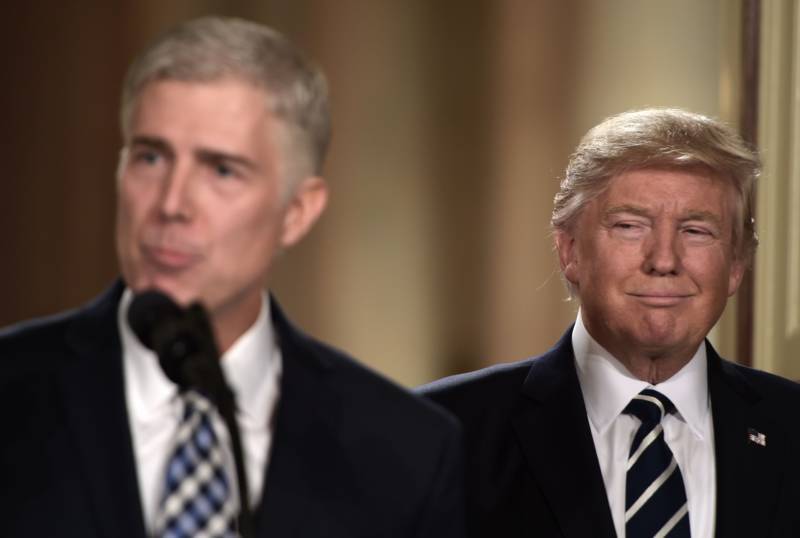
What You Need to Know about the Supreme Court and Its Latest Nominee
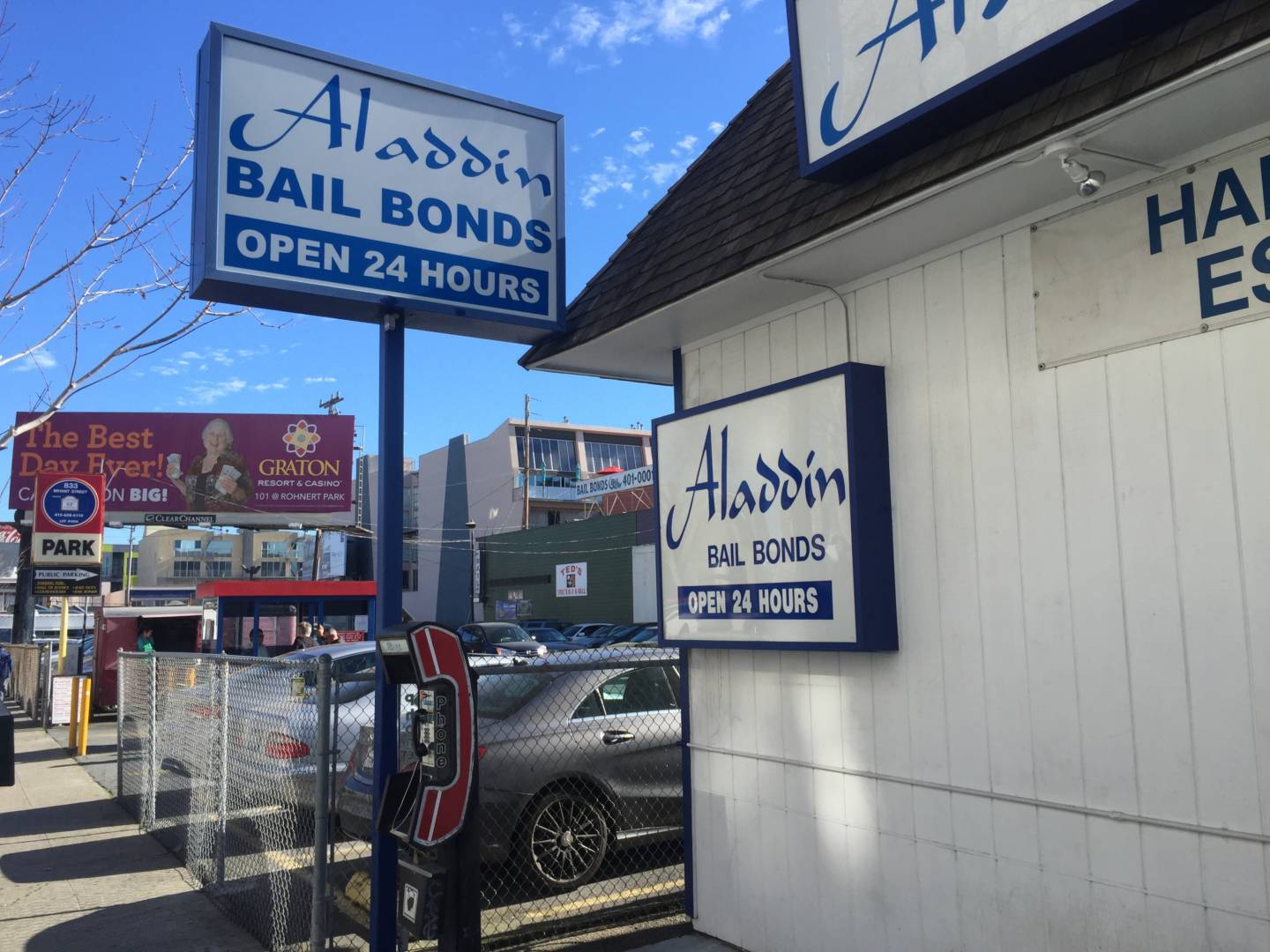
How the Money Bail System Works and Why Some Say It Isn't Fair
EXPLAINER: How the Supreme Court Works and Why Picking A New Justice Is Such A Battle
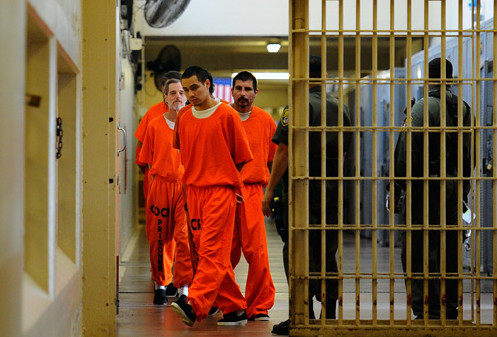
Presidential Clemency Explained: Why Obama Just Gave 46 Drug Offenders A Ticket Out of Prison
Player sponsored by
window.__IS_SSR__=true
window.__INITIAL_STATE__={
"attachmentsReducer": {
"audio_0": {
"type": "attachments",
"id": "audio_0",
"imgSizes": {
"kqedFullSize": {
"file": "https://ww2.kqed.org/news/wp-content/themes/KQED-unified/img/audio_bgs/background0.jpg"
}
}
},
"audio_1": {
"type": "attachments",
"id": "audio_1",
"imgSizes": {
"kqedFullSize": {
"file": "https://ww2.kqed.org/news/wp-content/themes/KQED-unified/img/audio_bgs/background1.jpg"
}
}
},
"audio_2": {
"type": "attachments",
"id": "audio_2",
"imgSizes": {
"kqedFullSize": {
"file": "https://ww2.kqed.org/news/wp-content/themes/KQED-unified/img/audio_bgs/background2.jpg"
}
}
},
"audio_3": {
"type": "attachments",
"id": "audio_3",
"imgSizes": {
"kqedFullSize": {
"file": "https://ww2.kqed.org/news/wp-content/themes/KQED-unified/img/audio_bgs/background3.jpg"
}
}
},
"audio_4": {
"type": "attachments",
"id": "audio_4",
"imgSizes": {
"kqedFullSize": {
"file": "https://ww2.kqed.org/news/wp-content/themes/KQED-unified/img/audio_bgs/background4.jpg"
}
}
},
"placeholder": {
"type": "attachments",
"id": "placeholder",
"imgSizes": {
"thumbnail": {
"file": "https://cdn.kqed.org/wp-content/uploads/2024/12/KQED-Default-Image-816638274-2000x1333-1-160x107.jpg",
"width": 160,
"height": 107,
"mimeType": "image/jpeg"
},
"medium": {
"file": "https://cdn.kqed.org/wp-content/uploads/2024/12/KQED-Default-Image-816638274-2000x1333-1-800x533.jpg",
"width": 800,
"height": 533,
"mimeType": "image/jpeg"
},
"medium_large": {
"file": "https://cdn.kqed.org/wp-content/uploads/2024/12/KQED-Default-Image-816638274-2000x1333-1-768x512.jpg",
"width": 768,
"height": 512,
"mimeType": "image/jpeg"
},
"large": {
"file": "https://cdn.kqed.org/wp-content/uploads/2024/12/KQED-Default-Image-816638274-2000x1333-1-1020x680.jpg",
"width": 1020,
"height": 680,
"mimeType": "image/jpeg"
},
"1536x1536": {
"file": "https://cdn.kqed.org/wp-content/uploads/2024/12/KQED-Default-Image-816638274-2000x1333-1-1536x1024.jpg",
"width": 1536,
"height": 1024,
"mimeType": "image/jpeg"
},
"fd-lrg": {
"file": "https://cdn.kqed.org/wp-content/uploads/2024/12/KQED-Default-Image-816638274-2000x1333-1-1536x1024.jpg",
"width": 1536,
"height": 1024,
"mimeType": "image/jpeg"
},
"fd-med": {
"file": "https://cdn.kqed.org/wp-content/uploads/2024/12/KQED-Default-Image-816638274-2000x1333-1-1020x680.jpg",
"width": 1020,
"height": 680,
"mimeType": "image/jpeg"
},
"fd-sm": {
"file": "https://cdn.kqed.org/wp-content/uploads/2024/12/KQED-Default-Image-816638274-2000x1333-1-800x533.jpg",
"width": 800,
"height": 533,
"mimeType": "image/jpeg"
},
"post-thumbnail": {
"file": "https://cdn.kqed.org/wp-content/uploads/2024/12/KQED-Default-Image-816638274-2000x1333-1-672x372.jpg",
"width": 672,
"height": 372,
"mimeType": "image/jpeg"
},
"twentyfourteen-full-width": {
"file": "https://cdn.kqed.org/wp-content/uploads/2024/12/KQED-Default-Image-816638274-2000x1333-1-1038x576.jpg",
"width": 1038,
"height": 576,
"mimeType": "image/jpeg"
},
"xxsmall": {
"file": "https://cdn.kqed.org/wp-content/uploads/2024/12/KQED-Default-Image-816638274-2000x1333-1-160x107.jpg",
"width": 160,
"height": 107,
"mimeType": "image/jpeg"
},
"xsmall": {
"file": "https://cdn.kqed.org/wp-content/uploads/2024/12/KQED-Default-Image-816638274-2000x1333-1-672x372.jpg",
"width": 672,
"height": 372,
"mimeType": "image/jpeg"
},
"small": {
"file": "https://cdn.kqed.org/wp-content/uploads/2024/12/KQED-Default-Image-816638274-2000x1333-1-672x372.jpg",
"width": 672,
"height": 372,
"mimeType": "image/jpeg"
},
"xlarge": {
"file": "https://cdn.kqed.org/wp-content/uploads/2024/12/KQED-Default-Image-816638274-2000x1333-1-1020x680.jpg",
"width": 1020,
"height": 680,
"mimeType": "image/jpeg"
},
"full-width": {
"file": "https://cdn.kqed.org/wp-content/uploads/2024/12/KQED-Default-Image-816638274-2000x1333-1-1920x1280.jpg",
"width": 1920,
"height": 1280,
"mimeType": "image/jpeg"
},
"guest-author-32": {
"file": "https://cdn.kqed.org/wp-content/uploads/2025/01/KQED-Default-Image-816638274-1333x1333-1-160x160.jpg",
"width": 32,
"height": 32,
"mimeType": "image/jpeg"
},
"guest-author-50": {
"file": "https://cdn.kqed.org/wp-content/uploads/2025/01/KQED-Default-Image-816638274-1333x1333-1-160x160.jpg",
"width": 50,
"height": 50,
"mimeType": "image/jpeg"
},
"guest-author-64": {
"file": "https://cdn.kqed.org/wp-content/uploads/2025/01/KQED-Default-Image-816638274-1333x1333-1-160x160.jpg",
"width": 64,
"height": 64,
"mimeType": "image/jpeg"
},
"guest-author-96": {
"file": "https://cdn.kqed.org/wp-content/uploads/2025/01/KQED-Default-Image-816638274-1333x1333-1-160x160.jpg",
"width": 96,
"height": 96,
"mimeType": "image/jpeg"
},
"guest-author-128": {
"file": "https://cdn.kqed.org/wp-content/uploads/2025/01/KQED-Default-Image-816638274-1333x1333-1-160x160.jpg",
"width": 128,
"height": 128,
"mimeType": "image/jpeg"
},
"detail": {
"file": "https://cdn.kqed.org/wp-content/uploads/2025/01/KQED-Default-Image-816638274-1333x1333-1-160x160.jpg",
"width": 160,
"height": 160,
"mimeType": "image/jpeg"
},
"kqedFullSize": {
"file": "https://cdn.kqed.org/wp-content/uploads/2024/12/KQED-Default-Image-816638274-2000x1333-1.jpg",
"width": 2000,
"height": 1333
}
}
},
"lowdown_25504": {
"type": "attachments",
"id": "lowdown_25504",
"meta": {
"index": "attachments_1716263798",
"site": "lowdown",
"id": "25504",
"found": true
},
"parent": 25493,
"imgSizes": {
"small": {
"file": "https://ww2.kqed.org/app/uploads/sites/26/2017/02/RS23967_GettyImages-633220996-qut-800x538-520x350.jpeg",
"width": 520,
"mimeType": "image/jpeg",
"height": 350
},
"thumbnail": {
"file": "https://ww2.kqed.org/app/uploads/sites/26/2017/02/RS23967_GettyImages-633220996-qut-800x538-160x108.jpeg",
"width": 160,
"mimeType": "image/jpeg",
"height": 108
},
"post-thumbnail": {
"file": "https://ww2.kqed.org/app/uploads/sites/26/2017/02/RS23967_GettyImages-633220996-qut-800x538-672x372.jpeg",
"width": 672,
"mimeType": "image/jpeg",
"height": 372
},
"xsmall": {
"file": "https://ww2.kqed.org/app/uploads/sites/26/2017/02/RS23967_GettyImages-633220996-qut-800x538-375x252.jpeg",
"width": 375,
"mimeType": "image/jpeg",
"height": 252
},
"kqedFullSize": {
"file": "https://ww2.kqed.org/app/uploads/sites/26/2017/02/RS23967_GettyImages-633220996-qut-800x538.jpeg",
"width": 800,
"height": 538
},
"guest-author-50": {
"file": "https://ww2.kqed.org/app/uploads/sites/26/2017/02/RS23967_GettyImages-633220996-qut-800x538-50x50.jpeg",
"width": 50,
"mimeType": "image/jpeg",
"height": 50
},
"guest-author-96": {
"file": "https://ww2.kqed.org/app/uploads/sites/26/2017/02/RS23967_GettyImages-633220996-qut-800x538-96x96.jpeg",
"width": 96,
"mimeType": "image/jpeg",
"height": 96
},
"medium": {
"file": "https://ww2.kqed.org/app/uploads/sites/26/2017/02/RS23967_GettyImages-633220996-qut-800x538-800x538.jpeg",
"width": 800,
"mimeType": "image/jpeg",
"height": 538
},
"guest-author-64": {
"file": "https://ww2.kqed.org/app/uploads/sites/26/2017/02/RS23967_GettyImages-633220996-qut-800x538-64x64.jpeg",
"width": 64,
"mimeType": "image/jpeg",
"height": 64
},
"guest-author-32": {
"file": "https://ww2.kqed.org/app/uploads/sites/26/2017/02/RS23967_GettyImages-633220996-qut-800x538-32x32.jpeg",
"width": 32,
"mimeType": "image/jpeg",
"height": 32
},
"detail": {
"file": "https://ww2.kqed.org/app/uploads/sites/26/2017/02/RS23967_GettyImages-633220996-qut-800x538-150x150.jpeg",
"width": 150,
"mimeType": "image/jpeg",
"height": 150
},
"medium_large": {
"file": "https://ww2.kqed.org/app/uploads/sites/26/2017/02/RS23967_GettyImages-633220996-qut-800x538-768x516.jpeg",
"width": 768,
"mimeType": "image/jpeg",
"height": 516
},
"guest-author-128": {
"file": "https://ww2.kqed.org/app/uploads/sites/26/2017/02/RS23967_GettyImages-633220996-qut-800x538-128x128.jpeg",
"width": 128,
"mimeType": "image/jpeg",
"height": 128
},
"xxsmall": {
"file": "https://ww2.kqed.org/app/uploads/sites/26/2017/02/RS23967_GettyImages-633220996-qut-800x538-240x161.jpeg",
"width": 240,
"mimeType": "image/jpeg",
"height": 161
}
},
"publishDate": 1486017432,
"modified": 1486510300,
"caption": "Judge Neil Gorsuch speaks during his Supreme Court nomination ceremony at the White House on Jan. 31.",
"description": null,
"title": "RS23967_GettyImages-633220996-qut-800x538",
"credit": "BRENDAN SMIALOWSKI/AFP/Getty Images",
"status": "inherit",
"isLoading": false,
"fetchFailed": false
},
"lowdown_21931": {
"type": "attachments",
"id": "lowdown_21931",
"meta": {
"index": "attachments_1716263798",
"site": "lowdown",
"id": "21931",
"found": true
},
"parent": 21930,
"imgSizes": {
"twentyfourteen-full-width": {
"file": "https://ww2.kqed.org/app/uploads/sites/26/2016/05/RS18562_IMG_4557-1038x576.jpg",
"width": 1038,
"mimeType": "image/jpeg",
"height": 576
},
"thumbnail": {
"file": "https://ww2.kqed.org/app/uploads/sites/26/2016/05/RS18562_IMG_4557-400x300.jpg",
"width": 400,
"mimeType": "image/jpeg",
"height": 300
},
"fd-sm": {
"file": "https://ww2.kqed.org/app/uploads/sites/26/2016/05/RS18562_IMG_4557-960x720.jpg",
"width": 960,
"mimeType": "image/jpeg",
"height": 720
},
"post-thumbnail": {
"file": "https://ww2.kqed.org/app/uploads/sites/26/2016/05/RS18562_IMG_4557-672x372.jpg",
"width": 672,
"mimeType": "image/jpeg",
"height": 372
},
"kqedFullSize": {
"file": "https://ww2.kqed.org/app/uploads/sites/26/2016/05/RS18562_IMG_4557.jpg",
"width": 3264,
"height": 2448
},
"large": {
"file": "https://ww2.kqed.org/app/uploads/sites/26/2016/05/RS18562_IMG_4557-1440x1080.jpg",
"width": 1440,
"mimeType": "image/jpeg",
"height": 1080
},
"guest-author-96": {
"file": "https://ww2.kqed.org/app/uploads/sites/26/2016/05/RS18562_IMG_4557-96x96.jpg",
"width": 96,
"mimeType": "image/jpeg",
"height": 96
},
"medium": {
"file": "https://ww2.kqed.org/app/uploads/sites/26/2016/05/RS18562_IMG_4557-800x600.jpg",
"width": 800,
"mimeType": "image/jpeg",
"height": 600
},
"guest-author-64": {
"file": "https://ww2.kqed.org/app/uploads/sites/26/2016/05/RS18562_IMG_4557-64x64.jpg",
"width": 64,
"mimeType": "image/jpeg",
"height": 64
},
"guest-author-32": {
"file": "https://ww2.kqed.org/app/uploads/sites/26/2016/05/RS18562_IMG_4557-32x32.jpg",
"width": 32,
"mimeType": "image/jpeg",
"height": 32
},
"fd-lrg": {
"file": "https://ww2.kqed.org/app/uploads/sites/26/2016/05/RS18562_IMG_4557-1920x1440.jpg",
"width": 1920,
"mimeType": "image/jpeg",
"height": 1440
},
"fd-med": {
"file": "https://ww2.kqed.org/app/uploads/sites/26/2016/05/RS18562_IMG_4557-1180x885.jpg",
"width": 1180,
"mimeType": "image/jpeg",
"height": 885
},
"detail": {
"file": "https://ww2.kqed.org/app/uploads/sites/26/2016/05/RS18562_IMG_4557-150x150.jpg",
"width": 150,
"mimeType": "image/jpeg",
"height": 150
},
"medium_large": {
"file": "https://ww2.kqed.org/app/uploads/sites/26/2016/05/RS18562_IMG_4557-768x576.jpg",
"width": 768,
"mimeType": "image/jpeg",
"height": 576
},
"guest-author-128": {
"file": "https://ww2.kqed.org/app/uploads/sites/26/2016/05/RS18562_IMG_4557-128x128.jpg",
"width": 128,
"mimeType": "image/jpeg",
"height": 128
}
},
"publishDate": 1462234656,
"modified": 1462234725,
"caption": "A bail bond agency near San Francisco's county courthouse. ",
"description": null,
"title": "RS18562_IMG_4557",
"credit": "Alex Emslie/KQED",
"status": "inherit",
"isLoading": false,
"fetchFailed": false
},
"lowdown_21152": {
"type": "attachments",
"id": "lowdown_21152",
"meta": {
"index": "attachments_1716263798",
"site": "lowdown",
"id": "21152",
"found": true
},
"parent": 21041,
"imgSizes": {
"twentyfourteen-full-width": {
"file": "https://ww2.kqed.org/app/uploads/sites/26/2016/03/1280px-Supreme_Court_US_2010-1038x576.png",
"width": 1038,
"mimeType": "image/png",
"height": 576
},
"thumbnail": {
"file": "https://ww2.kqed.org/app/uploads/sites/26/2016/03/1280px-Supreme_Court_US_2010-400x267.png",
"width": 400,
"mimeType": "image/png",
"height": 267
},
"fd-sm": {
"file": "https://ww2.kqed.org/app/uploads/sites/26/2016/03/1280px-Supreme_Court_US_2010-960x640.png",
"width": 960,
"mimeType": "image/png",
"height": 640
},
"post-thumbnail": {
"file": "https://ww2.kqed.org/app/uploads/sites/26/2016/03/1280px-Supreme_Court_US_2010-672x372.png",
"width": 672,
"mimeType": "image/png",
"height": 372
},
"kqedFullSize": {
"file": "https://ww2.kqed.org/app/uploads/sites/26/2016/03/1280px-Supreme_Court_US_2010.png",
"width": 1280,
"height": 853
},
"guest-author-96": {
"file": "https://ww2.kqed.org/app/uploads/sites/26/2016/03/1280px-Supreme_Court_US_2010-96x96.png",
"width": 96,
"mimeType": "image/png",
"height": 96
},
"medium": {
"file": "https://ww2.kqed.org/app/uploads/sites/26/2016/03/1280px-Supreme_Court_US_2010-800x533.png",
"width": 800,
"mimeType": "image/png",
"height": 533
},
"guest-author-64": {
"file": "https://ww2.kqed.org/app/uploads/sites/26/2016/03/1280px-Supreme_Court_US_2010-64x64.png",
"width": 64,
"mimeType": "image/png",
"height": 64
},
"guest-author-32": {
"file": "https://ww2.kqed.org/app/uploads/sites/26/2016/03/1280px-Supreme_Court_US_2010-32x32.png",
"width": 32,
"mimeType": "image/png",
"height": 32
},
"fd-med": {
"file": "https://ww2.kqed.org/app/uploads/sites/26/2016/03/1280px-Supreme_Court_US_2010-1180x786.png",
"width": 1180,
"mimeType": "image/png",
"height": 786
},
"detail": {
"file": "https://ww2.kqed.org/app/uploads/sites/26/2016/03/1280px-Supreme_Court_US_2010-75x75.png",
"width": 75,
"mimeType": "image/png",
"height": 75
},
"medium_large": {
"file": "https://ww2.kqed.org/app/uploads/sites/26/2016/03/1280px-Supreme_Court_US_2010-768x512.png",
"width": 768,
"mimeType": "image/png",
"height": 512
},
"guest-author-128": {
"file": "https://ww2.kqed.org/app/uploads/sites/26/2016/03/1280px-Supreme_Court_US_2010-128x128.png",
"width": 128,
"mimeType": "image/png",
"height": 128
}
},
"publishDate": 1456955881,
"modified": 1457652261,
"caption": null,
"description": null,
"title": "1280px-Supreme_Court_US_2010",
"credit": "Original photo courtesy of Wikipedia",
"status": "inherit",
"isLoading": false,
"fetchFailed": false
},
"lowdown_18044": {
"type": "attachments",
"id": "lowdown_18044",
"meta": {
"index": "attachments_1716263798",
"site": "lowdown",
"id": "18044",
"found": true
},
"parent": 3511,
"imgSizes": {
"thumbnail": {
"file": "https://ww2.kqed.org/app/uploads/sites/26/2012/08/ChinoStateInmates-e1432335315381-400x271.jpg",
"width": 400,
"mimeType": "image/jpeg",
"height": 271
},
"kqedFullSize": {
"file": "https://ww2.kqed.org/app/uploads/sites/26/2012/08/ChinoStateInmates-e1432335315381.jpg",
"width": 497,
"height": 337
},
"guest-author-96": {
"file": "https://ww2.kqed.org/app/uploads/sites/26/2012/08/ChinoStateInmates-e1432335315381-96x96.jpg",
"width": 96,
"mimeType": "image/jpeg",
"height": 96
},
"guest-author-64": {
"file": "https://ww2.kqed.org/app/uploads/sites/26/2012/08/ChinoStateInmates-e1432335315381-64x64.jpg",
"width": 64,
"mimeType": "image/jpeg",
"height": 64
},
"detail": {
"file": "https://ww2.kqed.org/app/uploads/sites/26/2012/08/ChinoStateInmates-e1432335315381-75x75.jpg",
"width": 75,
"mimeType": "image/jpeg",
"height": 75
},
"guest-author-32": {
"file": "https://ww2.kqed.org/app/uploads/sites/26/2012/08/ChinoStateInmates-e1432335315381-32x32.jpg",
"width": 32,
"mimeType": "image/jpeg",
"height": 32
},
"guest-author-128": {
"file": "https://ww2.kqed.org/app/uploads/sites/26/2012/08/ChinoStateInmates-e1432335315381-128x128.jpg",
"width": 128,
"mimeType": "image/jpeg",
"height": 128
}
},
"publishDate": 1432333708,
"modified": 1432333726,
"caption": "Chino State Prison inmates.",
"description": null,
"title": "ChinoStateInmates",
"credit": "Kevork Djansezian/Getty Images",
"status": "inherit",
"isLoading": false,
"fetchFailed": false
}
},
"audioPlayerReducer": {
"postId": "stream_live",
"isPaused": true,
"isPlaying": false,
"pfsActive": false,
"pledgeModalIsOpen": true,
"playerDrawerIsOpen": false,
"liveAudioPlayStartedAt": 0,
"liveAudioPlayContext": ""
},
"authorsReducer": {
"glavender": {
"type": "authors",
"id": "8669",
"meta": {
"index": "authors_1716337520",
"id": "8669",
"found": true
},
"name": "George Lavender",
"firstName": "George",
"lastName": "Lavender",
"slug": "glavender",
"email": "georgehblavender@googlemail.com",
"display_author_email": false,
"staff_mastheads": [],
"title": null,
"bio": "George Lavender is an award-winning independent radio and print journalist. His reporting has aired on NPR, WBUR, KQED, KCRW, and Radio France International.",
"avatar": "https://secure.gravatar.com/avatar/664191b201534ba59461c42afe3cb731?s=600&d=blank&r=g",
"twitter": "GeorgeLavender",
"facebook": null,
"instagram": null,
"linkedin": null,
"sites": [
{
"site": "lowdown",
"roles": [
"contributor"
]
}
],
"headData": {
"title": "George Lavender | KQED",
"description": null,
"ogImgSrc": "https://secure.gravatar.com/avatar/664191b201534ba59461c42afe3cb731?s=600&d=blank&r=g",
"twImgSrc": "https://secure.gravatar.com/avatar/664191b201534ba59461c42afe3cb731?s=600&d=blank&r=g"
},
"isLoading": false,
"link": "/author/glavender"
},
"matthewgreen": {
"type": "authors",
"id": "1263",
"meta": {
"index": "authors_1716337520",
"id": "1263",
"found": true
},
"name": "Matthew Green",
"firstName": "Matthew",
"lastName": "Green",
"slug": "matthewgreen",
"email": "mgreen@kqed.org",
"display_author_email": false,
"staff_mastheads": [],
"title": "KQED Editor/Reporter",
"bio": "Matthew Green is a digital media producer for KQED News. He previously produced \u003ca href=\"http://www.kqed.org/lowdown\">The Lowdown\u003c/a>, KQED’s multimedia news education blog. Matthew's written for numerous Bay Area publications, including the Oakland Tribune and San Francisco Chronicle. He also taught journalism classes at Fremont High School in East Oakland.\r\n\r\nEmail: mgreen@kqed.org; Twitter: @MGreenKQED",
"avatar": "https://secure.gravatar.com/avatar/3bf498d1267ca02c8494f33d8cfc575e?s=600&d=blank&r=g",
"twitter": "MGreenKQED",
"facebook": null,
"instagram": null,
"linkedin": null,
"sites": [
{
"site": "news",
"roles": []
},
{
"site": "lowdown",
"roles": []
},
{
"site": "science",
"roles": []
},
{
"site": "education",
"roles": []
},
{
"site": "quest",
"roles": []
},
{
"site": "liveblog",
"roles": []
}
],
"headData": {
"title": "Matthew Green | KQED",
"description": "KQED Editor/Reporter",
"ogImgSrc": "https://secure.gravatar.com/avatar/3bf498d1267ca02c8494f33d8cfc575e?s=600&d=blank&r=g",
"twImgSrc": "https://secure.gravatar.com/avatar/3bf498d1267ca02c8494f33d8cfc575e?s=600&d=blank&r=g"
},
"isLoading": false,
"link": "/author/matthewgreen"
}
},
"pagesReducer": {
"author_glavender": {
"type": "pages",
"id": "8669",
"meta": {
"index": "authors_1716337520",
"id": "8669",
"score": 6.7971954,
"site": "authors"
},
"name": "George Lavender",
"firstName": "George",
"lastName": "Lavender",
"slug": "glavender",
"email": "georgehblavender@googlemail.com",
"display_author_email": false,
"staff_mastheads": [],
"title": null,
"bio": "George Lavender is an award-winning independent radio and print journalist. His reporting has aired on NPR, WBUR, KQED, KCRW, and Radio France International.",
"avatar": "https://secure.gravatar.com/avatar/664191b201534ba59461c42afe3cb731?s=600&d=blank&r=g",
"twitter": "GeorgeLavender",
"facebook": null,
"instagram": null,
"linkedin": null,
"sites": [
{
"site": "lowdown",
"roles": [
"contributor"
]
}
],
"headData": {
"title": "George Lavender | KQED",
"description": null,
"ogImgSrc": "https://secure.gravatar.com/avatar/664191b201534ba59461c42afe3cb731?s=600&d=blank&r=g",
"twImgSrc": "https://secure.gravatar.com/avatar/664191b201534ba59461c42afe3cb731?s=600&d=blank&r=g"
},
"isLoading": false,
"hasAllInfo": true,
"blocks": [
{
"blockName": "kqed/staff-member",
"attrs": {
"author": {
"type": "authors",
"id": "8669",
"meta": {
"index": "authors_1716337520",
"id": "8669",
"score": 6.7971954
},
"name": "George Lavender",
"firstName": "George",
"lastName": "Lavender",
"slug": "glavender",
"email": "georgehblavender@googlemail.com",
"display_author_email": false,
"staff_mastheads": "[Circular]",
"title": null,
"bio": "George Lavender is an award-winning independent radio and print journalist. His reporting has aired on NPR, WBUR, KQED, KCRW, and Radio France International.",
"avatar": "https://secure.gravatar.com/avatar/664191b201534ba59461c42afe3cb731?s=600&d=blank&r=g",
"twitter": "GeorgeLavender",
"facebook": null,
"instagram": null,
"linkedin": null,
"sites": "[Circular]",
"headData": {
"title": "George Lavender | KQED",
"description": null,
"ogImgSrc": "https://secure.gravatar.com/avatar/664191b201534ba59461c42afe3cb731?s=600&d=blank&r=g",
"twImgSrc": "https://secure.gravatar.com/avatar/664191b201534ba59461c42afe3cb731?s=600&d=blank&r=g"
},
"isLoading": false,
"link": "/author/glavender",
"hasAllInfo": true
}
}
},
{
"blockName": "kqed/post-list",
"attrs": {
"query": "posts?author=8669&authorName=George Lavender",
"title": "By George Lavender",
"layout": "cardArticle2",
"className": "wp-block--nomargintop",
"seeMore": true
}
}
]
}
},
"pfsSessionReducer": {},
"postsReducer": {
"stream_live": {
"type": "live",
"id": "stream_live",
"audioUrl": "https://streams.kqed.org/kqedradio",
"title": "Live Stream",
"excerpt": "Live Stream information currently unavailable.",
"link": "/radio",
"featImg": "",
"label": {
"name": "KQED Live",
"link": "/"
}
},
"stream_kqedNewscast": {
"type": "posts",
"id": "stream_kqedNewscast",
"audioUrl": "https://www.kqed.org/.stream/anon/radio/RDnews/newscast.mp3?_=1",
"title": "KQED Newscast",
"featImg": "",
"label": {
"name": "88.5 FM",
"link": "/"
}
},
"lowdown_25493": {
"type": "posts",
"id": "lowdown_25493",
"meta": {
"index": "posts_1716263798",
"site": "lowdown",
"id": "25493",
"score": null,
"sort": [
1486017553000
]
},
"parent": 0,
"labelTerm": {
"site": "lowdown"
},
"blocks": [],
"publishDate": 1486017553,
"format": "aside",
"disqusTitle": "What You Need to Know about the Supreme Court and Its Latest Nominee",
"title": "What You Need to Know about the Supreme Court and Its Latest Nominee",
"headTitle": "The Lowdown | KQED News",
"content": "\u003cp>\u003c!--more-->\u003c/p>\n\u003cp>https://youtu.be/dZFctv9efPQ\u003c/p>\n\u003cp>With his characteristic showmanship on full display, President Trump waited for prime time on Jan. 31 to reveal Judge Neil Gorsuch as his nominee for the U.S. Supreme Court.\u003c/p>\n\u003cp>In doing so, Trump fulfilled a key campaign promise to nominate a staunch conservative to the court.\u003c/p>\n\u003cp>If confirmed, Gorsuch, 49, would replace the late Justice Antonin Scalia, a conservative icon who died unexpectedly in February after three decades on the court.\u003c/p>\n\u003cp>[ad fullwidth]\u003c/p>\n\u003cp>Scalia's seat has been empty for nearly a year now, the result of a controversial and unprecedented move by Senate Republican leaders to block President Obama's nominee, Judge Merrick Garland. Republicans argued that a nominee shouldn't be considered during an election year and blocked Garland from receiving so much as a hearing. Since then, the court has operated as an eight-member body (with any 4-4 ties upholding decisions made in the lower appeals courts).\u003c/p>\n\u003cp>Gorsuch currently serves on the U.S. Court of Appeals for the 10th Circuit, in Denver, and closely resembles Scalia in both political ideology and judicial philosophy. Like Scalia -- who adamantly opposed gay marriage, abortion, affirmative action, gun control and government regulation -- he is deeply conservative and known for his \"originalist\" perspective on the Constitution as a “dead” document to be interpreted the way the Founders originally intended when they drafted it more than 200 years ago.\u003c/p>\n\u003cp class=\"story-body-text story-content\">Gorsuch would be the youngest justice on the high court and would be expected to once again give it a conservative majority .\u003c/p>\n\u003cp class=\"story-body-text story-content\">\u003cem>Two random facts: \u003c/em>\u003c/p>\n\u003cp class=\"story-body-text story-content\">\u003cem>1. If Gorsuch gets the gig, he'll be working alongside his former boss, Justice Anthony Kennedy, whom he clerked for. \u003c/em>\u003c/p>\n\u003cp class=\"story-body-text story-content\">\u003cem>2. At Harvard Law School, Gorsuch was classmates with a guy by the name of Barack Obama.\u003c/em>\u003c/p>\n\u003cp class=\"story-body-text story-content\">\u003ca href=\"http://www.politico.com/story/2017/02/trump-supreme-court-gorsuch-234471\" target=\"_blank\">As a federal judge\u003c/a>, Gorsuch was a staunch defender of religious liberty and consistently wary of federal regulations. It's expected that his decisions on Supreme Court cases will be ideologically consistent with those made by Scalia.\u003c/p>\n\u003cp class=\"story-body-text story-content\">\"They really are incredibly similar in their approaches,\" Tom Goldstein, publisher of SCOTUSblog, \u003ca href=\"http://www.npr.org/2017/02/01/512906634/scotusblog-co-founder-gorsuch-to-have-immediate-impact-on-court\" target=\"_blank\">recently told NPR\u003c/a>. \"Gorsuch does seem almost to have modeled himself on Scalia across one area after another.\"\u003c/p>\n\u003cp>There's also a good chance that he will find himself in the awkward position of having to rule on the legality of one or more controversial executive actions made by the man who appointed him. Trump's recent executive order to temporarily block refugees from entering the United States and ban travel from seven Muslim-majority countries has already provoked a storm of litigation and is likely to be the first (of potentially many) of the president's actions to be challenged in the high court.\u003c/p>\n\u003ch4>So what happens now?\u003c/h4>\n\u003cp>In a standard confirmation process, the president’s nominee must first testify before the Senate Judiciary Committee. If given the green light, the nominee is considered by the full Senate, where a 60-vote threshold is required to overcome a \u003ca href=\"https://www.theatlantic.com/politics/archive/2017/02/a-confirmation-battle-brews-in-the-senate/515298/\" target=\"_blank\">filibuster\u003c/a>.\u003c/p>\n\u003cp>But things in Washington right now are anything but standard. The current relationship between Democrats and Republicans is pretty toxic, with Democrats still seething over the treatment of Garland, Obama's nominee, who Republicans stonewalled for nearly a year.\u003c/p>\n\u003cp>So some kind of showdown is pretty inevitable.\u003c/p>\n\u003cp>It's still unclear, though, what Democrats will do and how much leverage they have. Although in the minority, there are enough of them in the Senate (48 Democrats; 52 Republicans) to block the 60-vote supermajority needed to confirm a Supreme Court justice. If that were to happen, though, Republicans could strike back and try to invoke the \u003ca href=\"http://www.cnn.com/2013/11/21/politics/nuclear-option-explainer/\">\"nuclear option,\"\u003c/a> a funky maneuver that scraps the existing rules and requires only a simple majority of 51 votes to confirm the nominee.\u003c/p>\n\u003cp>Bottom line: It might take a while and it's not going to be pretty, but Gorsuch is pretty likely to be confirmed as the next U.S. Supreme Court justice.\u003c/p>\n\u003cp>Interestingly, despite Scalia's deeply conservative views, he was unanimously confirmed by the Senate in 1986, after being nominated by President Ronald Reagan. But the nominating process today is far more politically divisive than it used to be. In fact, until now, the Senate had never in its entire history taken longer than \u003ca href=\"http://www.nytimes.com/interactive/2016/02/13/us/how-long-does-it-take-to-confirm-a-supreme-court-nominee.html\" target=\"_blank\">125 days\u003c/a> to vote on a nominee.\u003c/p>\n\u003ch4>Why is this particular nomination such a big deal?\u003c/h4>\n\u003cp>The judiciary is intended to be a nonpartisan branch of government, but reality suggests otherwise; the Supreme Court is sharply divided along partisan lines. Of the eight justices on the court today, four lean pretty consistently to the right (John Roberts, Samuel Alito and Clarence Thomas and, to a slightly less predictable extent, Anthony Kennedy), and the other four, pretty consistently to the left (Ruth Bader Ginsburg, Elena Kagan, Sonia Sotomayor and Stephen Breyer). Scalia was a reliable vote for conservative causes, one of the five justices who tipped the balance of the court to the right. Gorsuch is expected to stay the court.\u003c/p>\n\u003cp>Garland, on the other hand, would have likely shifted the balance back to the left.\u003c/p>\n\u003cp>Additionally, we’re talking about a lifetime appointment. It means that a young nominee like Gorsuch is likely to serve on the court for quite a long time, influencing domestic affairs for generations, long after Trump leaves office.\u003c/p>\n\u003cp>Raising the stakes even more, several justices on the court are getting up there in years and probably won't be around for too much longer. Justice Kennedy is 80 and Justice Ruth Bader Ginsburg is 83. That means another appointment -- or set of appointments -- is likely to happen fairly soon (although how soon is anyone's guess), a move that could significantly alter the current makeup of the court.\u003c/p>\n\u003ch4>Do presidents always pick nominees who share their politics?\u003c/h4>\n\u003cp>\u003ca href=\"https://ww2.kqed.org/lowdown/wp-content/uploads/sites/26/2016/03/SCOTUS-e1486054825344.png\" rel=\"attachment wp-att-21270\">\u003cimg class=\"alignright wp-image-21270 size-full\" src=\"https://ww2.kqed.org/lowdown/wp-content/uploads/sites/26/2016/03/SCOTUS.png\" width=\"960\" height=\"720\" srcset=\"https://ww2.kqed.org/app/uploads/sites/26/2016/03/SCOTUS.png 960w, https://ww2.kqed.org/app/uploads/sites/26/2016/03/SCOTUS-400x300.png 400w, https://ww2.kqed.org/app/uploads/sites/26/2016/03/SCOTUS-800x600.png 800w, https://ww2.kqed.org/app/uploads/sites/26/2016/03/SCOTUS-768x576.png 768w\" sizes=\"(max-width: 960px) 100vw, 960px\">\u003c/a>Usually (wouldn’t you?). There are, however, some notable exceptions, including justices who have shifted positions during their time on the court, much to the chagrin of the presidents who appointed them.\u003c/p>\n\u003cp>President Dwight Eisenhower, for instance, once referred to his appointment of Chief Justice Earl Warren as “the biggest damn fool mistake I ever made.\" Likewise, Justice David Souter was far more left-leaning on the bench than ever anticipated by President George H. W. Bush, who appointed him in 1990.\u003c/p>\n\u003ch4>Is the court's political divide all that unusual?\u003c/h4>\n\u003cp>To some extent, yes. Although most judges aren't elected or considered \"politicians,\" you'd be hard pressed to find a judge whose legal decisions aren't influenced by his or her political beliefs. As such, there have always been partisan divides on the Supreme Court. But in recent years, the political polarization has intensified.\u003c/p>\n\u003cp>A \u003ca href=\"http://papers.ssrn.com/sol3/papers.cfm?abstract_id=2432111\">William and Mary Law School study\u003c/a> found that since 1990 there has been a “dramatic increase in the ideological gap between Democratic and Republican appointees.” As a result, it notes, “presidential elections will matter more to Court decision-making than they ever have in this nation’s history.”\u003c/p>\n\u003cp>The divide extends to the justice’s law clerks, who play a crucial role in both selecting the cases the court chooses to hear and influencing the rulings their bosses make. Justices have historically sought clerks who, to some extent, reflect a range of political views. But as the \u003ca href=\"http://www.nytimes.com/2010/09/07/us/politics/07clerks.html?pagewanted=all\" target=\"_blank\">New York Times\u003c/a> reported in 2010: “These days the more conservative justices are much more likely than were their predecessors to hire clerks who worked for judges appointed by Republicans. And the more liberal justices are more likely than in the past to hire from judges appointed by Democrats.”\u003c/p>\n\u003cp>https://youtu.be/8C0weq6CzqM\u003c/p>\n\u003ch4>Who can be a Supreme Court justice?\u003c/h4>\n\u003cp>Anyone! The Constitution doesn’t actually spell out any guidelines on age or education level (although you wouldn’t know it looking at the resumes of the current justices, all of whom attended law school at either Harvard or Yale). Nominees don't need to have judicial experience. Heck, they don't even need law degrees. And unlike the presidency, there is no requirement to be a “natural-born” citizen. In fact, foreign-born justices have been \u003ca href=\"http://www.supremecourt.gov/faq_justices.aspx\" target=\"_blank\">appointed six times\u003c/a> throughout the court’s history.\u003c/p>\n\u003cp>Even former presidents can be on the court: President William Howard Taft was appointed chief justice in 1921, nearly a decade after his presidency.\u003c/p>\n\u003cp>So maybe a Justice Obama or a Justice Trump someday? I wouldn't hold your breath.\u003c/p>\n\u003ch4>How many cases does the court hear each year, and how does it decide which ones to take?\u003c/h4>\n\u003cp>Again, much of the work is done by law clerks. Each term, they pour through upward of 8,000 requests, called a petition for a writ of certiorari (or a \"cert. petition\"). These are brought by the petitioners, who have already exhausted all appeals in federal and state courts.\u003c/p>\n\u003cp>Except on very rare occasions, the court considers only cases that have gone up the federal judicial system food chain: usually starting in a district court and then going to an appellate court. The Supreme Court is the highest court in the land, the final step on the legal ladder. Its decision is law, one that can't be appealed to any other court. (For a more thorough procedural overview, see the \u003ca href=\"http://www.scotusblog.com/reference/educational-resources/supreme-court-procedure/\" target=\"_blank\">SCOTUS Blog\u003c/a>.)\u003c/p>\n\u003cp>The clerks recommend which appeals their justices should consider or overlook, and the justices then vote. Four of nine justices have to agree to take a case and hear oral arguments. This is called “granting certiorari.”\u003c/p>\n\u003cp>Only a tiny percentage of those thousands of appeals actually see the light of day. The court now accepts about 80 cases a term, hearing oral arguments between October and April. In that respect, the court's less publicized decisions to NOT a hear a case are often as consequential (in that it upholds the decision of the lower court).\u003c/p>\n\u003cp>The petitioner and respondent usually appear in court for an hour-long session, during which they're pelted with questions from the nine justices (although Justice Clarence Thomas very rarely utters a word).\u003c/p>\n\u003cp>The justices then meet privately to vote on the decision. Unless the decision is unanimous, a justice from either side is selected to write the majority and dissenting opinions. Later in the term, the court announces -- or hands down -- its decision.\u003c/p>\n\u003cp>[ad floatright]\u003c/p>\n\u003cp>https://youtu.be/7sualy8OiKk\u003c/p>\n\n",
"disqusIdentifier": "25493 https://ww2.kqed.org/lowdown/?p=25493",
"disqusUrl": "https://ww2.kqed.org/lowdown/2017/02/01/what-you-need-to-know-about-the-supreme-court-and-its-newest-nominee/",
"stats": {
"hasVideo": false,
"hasChartOrMap": false,
"hasAudio": false,
"hasPolis": false,
"wordCount": 1742,
"hasGoogleForm": false,
"hasGallery": false,
"hasHearkenModule": false,
"iframeSrcs": [],
"paragraphCount": 33
},
"modified": 1490031178,
"excerpt": null,
"headData": {
"twImgId": "",
"twTitle": "",
"ogTitle": "",
"ogImgId": "",
"twDescription": "",
"description": "",
"title": "What You Need to Know about the Supreme Court and Its Latest Nominee | KQED",
"ogDescription": "",
"schema": {
"@context": "https://schema.org",
"@type": "Article",
"headline": "What You Need to Know about the Supreme Court and Its Latest Nominee",
"datePublished": "2017-02-01T22:39:13-08:00",
"dateModified": "2017-03-20T10:32:58-07:00",
"image": "https://cdn.kqed.org/wp-content/uploads/2020/02/KQED-OG-Image@1x.png"
}
},
"guestAuthors": [],
"slug": "what-you-need-to-know-about-the-supreme-court-and-its-newest-nominee",
"status": "publish",
"path": "/lowdown/25493/what-you-need-to-know-about-the-supreme-court-and-its-newest-nominee",
"audioTrackLength": null,
"parsedContent": [
{
"type": "contentString",
"content": "\u003cdiv class=\"post-body\">\u003cp>\u003cp>\u003c!--more-->\u003c/p>\u003c/p>\u003cp>\u003cspan class='utils-parseShortcode-shortcodes-__youtubeShortcode__embedYoutube'>\n \u003cspan class='utils-parseShortcode-shortcodes-__youtubeShortcode__embedYoutubeInside'>\n \u003ciframe\n loading='lazy'\n class='utils-parseShortcode-shortcodes-__youtubeShortcode__youtubePlayer'\n type='text/html'\n src='//www.youtube.com/embed/dZFctv9efPQ'\n title='//www.youtube.com/embed/dZFctv9efPQ'\n allowfullscreen='true'\n style='border:0;'>\u003c/iframe>\n \u003c/span>\n \u003c/span>\u003c/p>\u003cp>\u003cp>With his characteristic showmanship on full display, President Trump waited for prime time on Jan. 31 to reveal Judge Neil Gorsuch as his nominee for the U.S. Supreme Court.\u003c/p>\n\u003cp>In doing so, Trump fulfilled a key campaign promise to nominate a staunch conservative to the court.\u003c/p>\n\u003cp>If confirmed, Gorsuch, 49, would replace the late Justice Antonin Scalia, a conservative icon who died unexpectedly in February after three decades on the court.\u003c/p>\n\u003cp>\u003c/p>\u003c/div>",
"attributes": {
"named": {},
"numeric": []
}
},
{
"type": "component",
"content": "",
"name": "ad",
"attributes": {
"named": {
"label": "fullwidth"
},
"numeric": [
"fullwidth"
]
}
},
{
"type": "contentString",
"content": "\u003cdiv class=\"post-body\">\u003cp>\u003c/p>\n\u003cp>Scalia's seat has been empty for nearly a year now, the result of a controversial and unprecedented move by Senate Republican leaders to block President Obama's nominee, Judge Merrick Garland. Republicans argued that a nominee shouldn't be considered during an election year and blocked Garland from receiving so much as a hearing. Since then, the court has operated as an eight-member body (with any 4-4 ties upholding decisions made in the lower appeals courts).\u003c/p>\n\u003cp>Gorsuch currently serves on the U.S. Court of Appeals for the 10th Circuit, in Denver, and closely resembles Scalia in both political ideology and judicial philosophy. Like Scalia -- who adamantly opposed gay marriage, abortion, affirmative action, gun control and government regulation -- he is deeply conservative and known for his \"originalist\" perspective on the Constitution as a “dead” document to be interpreted the way the Founders originally intended when they drafted it more than 200 years ago.\u003c/p>\n\u003cp class=\"story-body-text story-content\">Gorsuch would be the youngest justice on the high court and would be expected to once again give it a conservative majority .\u003c/p>\n\u003cp class=\"story-body-text story-content\">\u003cem>Two random facts: \u003c/em>\u003c/p>\n\u003cp class=\"story-body-text story-content\">\u003cem>1. If Gorsuch gets the gig, he'll be working alongside his former boss, Justice Anthony Kennedy, whom he clerked for. \u003c/em>\u003c/p>\n\u003cp class=\"story-body-text story-content\">\u003cem>2. At Harvard Law School, Gorsuch was classmates with a guy by the name of Barack Obama.\u003c/em>\u003c/p>\n\u003cp class=\"story-body-text story-content\">\u003ca href=\"http://www.politico.com/story/2017/02/trump-supreme-court-gorsuch-234471\" target=\"_blank\">As a federal judge\u003c/a>, Gorsuch was a staunch defender of religious liberty and consistently wary of federal regulations. It's expected that his decisions on Supreme Court cases will be ideologically consistent with those made by Scalia.\u003c/p>\n\u003cp class=\"story-body-text story-content\">\"They really are incredibly similar in their approaches,\" Tom Goldstein, publisher of SCOTUSblog, \u003ca href=\"http://www.npr.org/2017/02/01/512906634/scotusblog-co-founder-gorsuch-to-have-immediate-impact-on-court\" target=\"_blank\">recently told NPR\u003c/a>. \"Gorsuch does seem almost to have modeled himself on Scalia across one area after another.\"\u003c/p>\n\u003cp>There's also a good chance that he will find himself in the awkward position of having to rule on the legality of one or more controversial executive actions made by the man who appointed him. Trump's recent executive order to temporarily block refugees from entering the United States and ban travel from seven Muslim-majority countries has already provoked a storm of litigation and is likely to be the first (of potentially many) of the president's actions to be challenged in the high court.\u003c/p>\n\u003ch4>So what happens now?\u003c/h4>\n\u003cp>In a standard confirmation process, the president’s nominee must first testify before the Senate Judiciary Committee. If given the green light, the nominee is considered by the full Senate, where a 60-vote threshold is required to overcome a \u003ca href=\"https://www.theatlantic.com/politics/archive/2017/02/a-confirmation-battle-brews-in-the-senate/515298/\" target=\"_blank\">filibuster\u003c/a>.\u003c/p>\n\u003cp>But things in Washington right now are anything but standard. The current relationship between Democrats and Republicans is pretty toxic, with Democrats still seething over the treatment of Garland, Obama's nominee, who Republicans stonewalled for nearly a year.\u003c/p>\n\u003cp>So some kind of showdown is pretty inevitable.\u003c/p>\n\u003cp>It's still unclear, though, what Democrats will do and how much leverage they have. Although in the minority, there are enough of them in the Senate (48 Democrats; 52 Republicans) to block the 60-vote supermajority needed to confirm a Supreme Court justice. If that were to happen, though, Republicans could strike back and try to invoke the \u003ca href=\"http://www.cnn.com/2013/11/21/politics/nuclear-option-explainer/\">\"nuclear option,\"\u003c/a> a funky maneuver that scraps the existing rules and requires only a simple majority of 51 votes to confirm the nominee.\u003c/p>\n\u003cp>Bottom line: It might take a while and it's not going to be pretty, but Gorsuch is pretty likely to be confirmed as the next U.S. Supreme Court justice.\u003c/p>\n\u003cp>Interestingly, despite Scalia's deeply conservative views, he was unanimously confirmed by the Senate in 1986, after being nominated by President Ronald Reagan. But the nominating process today is far more politically divisive than it used to be. In fact, until now, the Senate had never in its entire history taken longer than \u003ca href=\"http://www.nytimes.com/interactive/2016/02/13/us/how-long-does-it-take-to-confirm-a-supreme-court-nominee.html\" target=\"_blank\">125 days\u003c/a> to vote on a nominee.\u003c/p>\n\u003ch4>Why is this particular nomination such a big deal?\u003c/h4>\n\u003cp>The judiciary is intended to be a nonpartisan branch of government, but reality suggests otherwise; the Supreme Court is sharply divided along partisan lines. Of the eight justices on the court today, four lean pretty consistently to the right (John Roberts, Samuel Alito and Clarence Thomas and, to a slightly less predictable extent, Anthony Kennedy), and the other four, pretty consistently to the left (Ruth Bader Ginsburg, Elena Kagan, Sonia Sotomayor and Stephen Breyer). Scalia was a reliable vote for conservative causes, one of the five justices who tipped the balance of the court to the right. Gorsuch is expected to stay the court.\u003c/p>\n\u003cp>Garland, on the other hand, would have likely shifted the balance back to the left.\u003c/p>\n\u003cp>Additionally, we’re talking about a lifetime appointment. It means that a young nominee like Gorsuch is likely to serve on the court for quite a long time, influencing domestic affairs for generations, long after Trump leaves office.\u003c/p>\n\u003cp>Raising the stakes even more, several justices on the court are getting up there in years and probably won't be around for too much longer. Justice Kennedy is 80 and Justice Ruth Bader Ginsburg is 83. That means another appointment -- or set of appointments -- is likely to happen fairly soon (although how soon is anyone's guess), a move that could significantly alter the current makeup of the court.\u003c/p>\n\u003ch4>Do presidents always pick nominees who share their politics?\u003c/h4>\n\u003cp>\u003ca href=\"https://ww2.kqed.org/lowdown/wp-content/uploads/sites/26/2016/03/SCOTUS-e1486054825344.png\" rel=\"attachment wp-att-21270\">\u003cimg class=\"alignright wp-image-21270 size-full\" src=\"https://ww2.kqed.org/lowdown/wp-content/uploads/sites/26/2016/03/SCOTUS.png\" width=\"960\" height=\"720\" srcset=\"https://ww2.kqed.org/app/uploads/sites/26/2016/03/SCOTUS.png 960w, https://ww2.kqed.org/app/uploads/sites/26/2016/03/SCOTUS-400x300.png 400w, https://ww2.kqed.org/app/uploads/sites/26/2016/03/SCOTUS-800x600.png 800w, https://ww2.kqed.org/app/uploads/sites/26/2016/03/SCOTUS-768x576.png 768w\" sizes=\"(max-width: 960px) 100vw, 960px\">\u003c/a>Usually (wouldn’t you?). There are, however, some notable exceptions, including justices who have shifted positions during their time on the court, much to the chagrin of the presidents who appointed them.\u003c/p>\n\u003cp>President Dwight Eisenhower, for instance, once referred to his appointment of Chief Justice Earl Warren as “the biggest damn fool mistake I ever made.\" Likewise, Justice David Souter was far more left-leaning on the bench than ever anticipated by President George H. W. Bush, who appointed him in 1990.\u003c/p>\n\u003ch4>Is the court's political divide all that unusual?\u003c/h4>\n\u003cp>To some extent, yes. Although most judges aren't elected or considered \"politicians,\" you'd be hard pressed to find a judge whose legal decisions aren't influenced by his or her political beliefs. As such, there have always been partisan divides on the Supreme Court. But in recent years, the political polarization has intensified.\u003c/p>\n\u003cp>A \u003ca href=\"http://papers.ssrn.com/sol3/papers.cfm?abstract_id=2432111\">William and Mary Law School study\u003c/a> found that since 1990 there has been a “dramatic increase in the ideological gap between Democratic and Republican appointees.” As a result, it notes, “presidential elections will matter more to Court decision-making than they ever have in this nation’s history.”\u003c/p>\n\u003cp>The divide extends to the justice’s law clerks, who play a crucial role in both selecting the cases the court chooses to hear and influencing the rulings their bosses make. Justices have historically sought clerks who, to some extent, reflect a range of political views. But as the \u003ca href=\"http://www.nytimes.com/2010/09/07/us/politics/07clerks.html?pagewanted=all\" target=\"_blank\">New York Times\u003c/a> reported in 2010: “These days the more conservative justices are much more likely than were their predecessors to hire clerks who worked for judges appointed by Republicans. And the more liberal justices are more likely than in the past to hire from judges appointed by Democrats.”\u003c/p>\u003c/p>\u003cp>\u003cspan class='utils-parseShortcode-shortcodes-__youtubeShortcode__embedYoutube'>\n \u003cspan class='utils-parseShortcode-shortcodes-__youtubeShortcode__embedYoutubeInside'>\n \u003ciframe\n loading='lazy'\n class='utils-parseShortcode-shortcodes-__youtubeShortcode__youtubePlayer'\n type='text/html'\n src='//www.youtube.com/embed/8C0weq6CzqM'\n title='//www.youtube.com/embed/8C0weq6CzqM'\n allowfullscreen='true'\n style='border:0;'>\u003c/iframe>\n \u003c/span>\n \u003c/span>\u003c/p>\u003cp>\u003ch4>Who can be a Supreme Court justice?\u003c/h4>\n\u003cp>Anyone! The Constitution doesn’t actually spell out any guidelines on age or education level (although you wouldn’t know it looking at the resumes of the current justices, all of whom attended law school at either Harvard or Yale). Nominees don't need to have judicial experience. Heck, they don't even need law degrees. And unlike the presidency, there is no requirement to be a “natural-born” citizen. In fact, foreign-born justices have been \u003ca href=\"http://www.supremecourt.gov/faq_justices.aspx\" target=\"_blank\">appointed six times\u003c/a> throughout the court’s history.\u003c/p>\n\u003cp>Even former presidents can be on the court: President William Howard Taft was appointed chief justice in 1921, nearly a decade after his presidency.\u003c/p>\n\u003cp>So maybe a Justice Obama or a Justice Trump someday? I wouldn't hold your breath.\u003c/p>\n\u003ch4>How many cases does the court hear each year, and how does it decide which ones to take?\u003c/h4>\n\u003cp>Again, much of the work is done by law clerks. Each term, they pour through upward of 8,000 requests, called a petition for a writ of certiorari (or a \"cert. petition\"). These are brought by the petitioners, who have already exhausted all appeals in federal and state courts.\u003c/p>\n\u003cp>Except on very rare occasions, the court considers only cases that have gone up the federal judicial system food chain: usually starting in a district court and then going to an appellate court. The Supreme Court is the highest court in the land, the final step on the legal ladder. Its decision is law, one that can't be appealed to any other court. (For a more thorough procedural overview, see the \u003ca href=\"http://www.scotusblog.com/reference/educational-resources/supreme-court-procedure/\" target=\"_blank\">SCOTUS Blog\u003c/a>.)\u003c/p>\n\u003cp>The clerks recommend which appeals their justices should consider or overlook, and the justices then vote. Four of nine justices have to agree to take a case and hear oral arguments. This is called “granting certiorari.”\u003c/p>\n\u003cp>Only a tiny percentage of those thousands of appeals actually see the light of day. The court now accepts about 80 cases a term, hearing oral arguments between October and April. In that respect, the court's less publicized decisions to NOT a hear a case are often as consequential (in that it upholds the decision of the lower court).\u003c/p>\n\u003cp>The petitioner and respondent usually appear in court for an hour-long session, during which they're pelted with questions from the nine justices (although Justice Clarence Thomas very rarely utters a word).\u003c/p>\n\u003cp>The justices then meet privately to vote on the decision. Unless the decision is unanimous, a justice from either side is selected to write the majority and dissenting opinions. Later in the term, the court announces -- or hands down -- its decision.\u003c/p>\n\u003cp>\u003c/p>\u003c/div>",
"attributes": {
"named": {},
"numeric": []
}
},
{
"type": "component",
"content": "",
"name": "ad",
"attributes": {
"named": {
"label": "floatright"
},
"numeric": [
"floatright"
]
}
},
{
"type": "contentString",
"content": "\u003cdiv class=\"post-body\">\u003cp>\u003c/p>\u003c/p>\u003cp>\u003cspan class='utils-parseShortcode-shortcodes-__youtubeShortcode__embedYoutube'>\n \u003cspan class='utils-parseShortcode-shortcodes-__youtubeShortcode__embedYoutubeInside'>\n \u003ciframe\n loading='lazy'\n class='utils-parseShortcode-shortcodes-__youtubeShortcode__youtubePlayer'\n type='text/html'\n src='//www.youtube.com/embed/7sualy8OiKk'\n title='//www.youtube.com/embed/7sualy8OiKk'\n allowfullscreen='true'\n style='border:0;'>\u003c/iframe>\n \u003c/span>\n \u003c/span>\u003c/p>\u003cp>\n\u003c/div>\u003c/p>",
"attributes": {
"named": {},
"numeric": []
}
}
],
"link": "/lowdown/25493/what-you-need-to-know-about-the-supreme-court-and-its-newest-nominee",
"authors": [
"8669",
"1263"
],
"categories": [
"lowdown_2590"
],
"tags": [
"lowdown_2337",
"lowdown_2589",
"lowdown_143"
],
"featImg": "lowdown_25504",
"label": "lowdown"
},
"lowdown_21930": {
"type": "posts",
"id": "lowdown_21930",
"meta": {
"index": "posts_1716263798",
"site": "lowdown",
"id": "21930",
"score": null,
"sort": [
1462306393000
]
},
"parent": 0,
"labelTerm": {
"site": "lowdown"
},
"blocks": [],
"publishDate": 1462306393,
"format": "standard",
"disqusTitle": "How the Money Bail System Works and Why Some Say It Isn't Fair",
"title": "How the Money Bail System Works and Why Some Say It Isn't Fair",
"headTitle": "The Lowdown | KQED News",
"content": "\u003cp>More than half the U.S. jail population has never actually been convicted of a crime. \u003c!--more-->\u003c/p>\n\u003cp>That’s roughly 420,000 “pretrial” defendants stuck behind bars in city and county jails who haven't had their day in court, according to the \u003ca href=\"http://www.bjs.gov/content/pub/pdf/jim13st.pdf\" target=\"_blank\">Bureau of Justice Statistics\u003c/a>.\u003c/p>\n\u003cp>And many of these defendants are in jail for one simple reason: they can't afford to pay bail.\u003c/p>\n\u003cp>\u003ciframe src=\"https://w.soundcloud.com/player/?url=https%3A//api.soundcloud.com/tracks/262327143&color=ff5500&auto_play=false&hide_related=false&show_comments=true&show_user=true&show_reposts=false\" width=\"100%\" height=\"166\" frameborder=\"no\" scrolling=\"no\">\u003c/iframe>\u003c/p>\n\u003ch4>Bail and bail bonds\u003c/h4>\n\u003cp>Bail is what courts often require defendants to pay in order to gain temporary release from jail before trial. It’s a kind of collateral, a way for the court to ensure that defendants return for their legal proceedings without having to be detained in the interim. If a defendant fails to appear in court, he or the entity that puts up the money on his behalf (the bail bondsman) is liable for the full bail amount.\u003c/p>\n\u003cp>[ad fullwidth]\u003c/p>\n\u003cp>After arrest, defendants are occasionally released on their own recognizance, and those accused of the most violent crimes may be denied bail entirely. Most defendants, though, are offered one of the following bail payment options (a \"bond\"):\u003c/p>\n\u003cp>\u003cb>Cash bond\u003c/b> - defendant pays the full bail amount to the court, which is then reimbursed upon return, minus fees and administrative costs.\u003c/p>\n\u003cp>\u003cb>Property bond\u003c/b> - property is used instead of cash to secure release. The court places a \u003ca href=\"http://www.investopedia.com/terms/l/lien.asp\" target=\"_blank\">lien\u003c/a> on the property until the defendant returns to court.\u003c/p>\n\u003cp>\u003cb>Surety bond - \u003c/b> a commercial bail bond issued by a bail bond agent (or bondsman), who signs a promissory note to the court for the full amount of the bond. Bondsmen don't actually pay the full amount up front, but must show that they have sufficient resources to cover it.\u003c/p>\n\u003cp>A commercial bail bond is\u003ca href=\"http://criminal.findlaw.com/criminal-procedure/posting-bail.html\" target=\"_blank\"> a three-party contract\u003c/a> between the defendant, the court, and the bond agent, in which the bond agent agrees to forfeit the bail amount if the defendant fails to appear in court.\u003c/p>\n\u003cp>Typically, a defendant will pay a bondsmen a non-refundable fee for the service (usually about 10 to 15 percent of the bail amount). Although the practice is prohibited in a handful of states, surety bonds remain the most common form of bail in the United States.\u003c/p>\n\u003ch4>The big business of bail bonds\u003c/h4>\n\u003cp>On the streets near most city and county courthouses around the country, there are no shortage of bail bond businesses, flashing their services in neon.\u003c/p>\n\u003cp>The United States is one of only two countries in the world with an official private bail trade (the other is the Philippines), an estimated $2 billion industry with upwards of 15,000 bail agents.\u003c/p>\n\u003cp>“It's the only part of the criminal justice system that doesn't cost the taxpayers any money,” says Dennis Sew, Vice President of the \u003ca href=\"http://www.pbus.com/\">Professional Bail Agents of the United States\u003c/a>. Bail bond agents and the bounty hunters they employ have enforcement powers similar to police officers in terms of finding and detaining absentee clients. “The bondsman has a financial interest in the defendant,\" Sew explains. \"We will always go looking for him.”\u003c/p>\n\u003cp>Bond agents vet potential clients on their ability to pay and likelihood of showing up in court.\u003c/p>\n\u003cp>\"If you're homeless and you have nobody and there’s no guarantee you'll show up in court, then you may need to stay in jail,” Sew notes.\u003c/p>\n\u003ch4>Bail rates\u003c/h4>\n\u003cp>Although the Eighth Amendment of the U.S. Constitution states that “excessive bail shall not be required,\" critics of the system argue that bail is often set at unreasonably high rates, a factor they say disproportionately impacts poor defendants.\u003c/p>\n\u003cp>“So much is based not on the crime you committed but the jurisdiction in which you happen to have committed the crime,\" notes Daniel Macallair, of the \u003ca href=\"http://www.cjcj.org\">Center for Juvenile and Criminal Justice\u003c/a>. Bail rates for any given crime, he adds, vary widely by state and county.\u003c/p>\n\u003cp>Take California, where bail rates range considerably across the state's 58 counties. If you’re arrested for petty theft in Alameda County, the guideline bail amount is $15,000. But if arrested for the same offense in Orange County, you'll be liable for $20,000.\u003c/p>\n\u003cp>Again, this is the total amount that must be paid if a defendant fails to show up in court. In most cases, the defendant or bond agent need only pay a percentage of this total bond to gain release.\u003c/p>\n\u003cp>\u003ciframe src=\"https://lowdowntest.cartodb.com/viz/70abcd44-116a-11e6-bb6c-0e787de82d45/embed_map\" width=\"100%\" height=\"800\" frameborder=\"0\" allowfullscreen=\"allowfullscreen\">\u003c/iframe>\u003c/p>\n\u003cp>In most states, bail bond agents can't charge clients more than 10 to 15 percent of the total bail amount. Nonetheless, if your bail is $20,000, 10 percent is still $2,000, a sizeable amount of cash that a potentially innocent defendant might have to pay out-of-pocket to avoid sitting in jail for weeks or event months until trial.\u003c/p>\n\u003cp>It's also a factor that's led innocent defendants in certain cases to admit guilt after arrest, particularly when doing so is less costly than paying bail fees or awaiting trial in jail (even if it results in a lasting criminal record).\u003c/p>\n\u003cp>Monetary bail often “prevents the criminal justice system from operating in a fair and balanced way,\" argues Macallair, as it makes release contingent on a defendant's ability to pay, not his risk to society. Holding someone in jail pretrial, he adds, is costly for both taxpayers who foot the bill and for defendants whose employment or housing opportunities may be jeopardized.\u003c/p>\n\u003cp>And time spent in jail pretrial may also have an impact on the outcome of the actual trial, a factor that can potentially sway a jury during trial.\u003c/p>\n\u003cp>\u003c/p>\n\u003cp>A 2013 \u003ca href=\"http://www.arnoldfoundation.org/wp-content/uploads/2014/02/LJAF-Pretrial-CJ-Research-brief_FNL.pdf\" target=\"_blank\">Arnold Foundation report\u003c/a> found that when defendants remain in jail during the period before their case is heard, they are three times more likely be convicted and sent to jail and twice as likely to be sent to prison. The report also revealed that jail sentences were three times longer and prison sentences twice as long for defendants who had been detained before their court case.\u003c/p>\n\n",
"disqusIdentifier": "21930 http://ww2.kqed.org/lowdown/?p=21930",
"disqusUrl": "https://ww2.kqed.org/lowdown/2016/05/03/how-bail-works/",
"stats": {
"hasVideo": false,
"hasChartOrMap": true,
"hasAudio": true,
"hasPolis": false,
"wordCount": 1013,
"hasGoogleForm": false,
"hasGallery": false,
"hasHearkenModule": false,
"iframeSrcs": [
"https://w.soundcloud.com/player/",
"https://lowdowntest.cartodb.com/viz/70abcd44-116a-11e6-bb6c-0e787de82d45/embed_map"
],
"paragraphCount": 28
},
"modified": 1503619017,
"excerpt": null,
"headData": {
"twImgId": "",
"twTitle": "",
"ogTitle": "",
"ogImgId": "",
"twDescription": "",
"description": "More than half the U.S. jail population has never actually been convicted of a crime.",
"title": "How the Money Bail System Works and Why Some Say It Isn't Fair | KQED",
"ogDescription": "",
"schema": {
"@context": "https://schema.org",
"@type": "Article",
"headline": "How the Money Bail System Works and Why Some Say It Isn't Fair",
"datePublished": "2016-05-03T13:13:13-07:00",
"dateModified": "2017-08-24T16:56:57-07:00",
"image": "https://cdn.kqed.org/wp-content/uploads/2020/02/KQED-OG-Image@1x.png"
}
},
"guestAuthors": [],
"slug": "how-bail-works",
"status": "publish",
"path": "/lowdown/21930/how-bail-works",
"audioTrackLength": null,
"parsedContent": [
{
"type": "contentString",
"content": "\u003cdiv class=\"post-body\">\u003cp>\u003cp>More than half the U.S. jail population has never actually been convicted of a crime. \u003c!--more-->\u003c/p>\n\u003cp>That’s roughly 420,000 “pretrial” defendants stuck behind bars in city and county jails who haven't had their day in court, according to the \u003ca href=\"http://www.bjs.gov/content/pub/pdf/jim13st.pdf\" target=\"_blank\">Bureau of Justice Statistics\u003c/a>.\u003c/p>\n\u003cp>And many of these defendants are in jail for one simple reason: they can't afford to pay bail.\u003c/p>\n\u003cp>\u003ciframe src=\"https://w.soundcloud.com/player/?url=https%3A//api.soundcloud.com/tracks/262327143&color=ff5500&auto_play=false&hide_related=false&show_comments=true&show_user=true&show_reposts=false\" width=\"100%\" height=\"166\" frameborder=\"no\" scrolling=\"no\">\u003c/iframe>\u003c/p>\n\u003ch4>Bail and bail bonds\u003c/h4>\n\u003cp>Bail is what courts often require defendants to pay in order to gain temporary release from jail before trial. It’s a kind of collateral, a way for the court to ensure that defendants return for their legal proceedings without having to be detained in the interim. If a defendant fails to appear in court, he or the entity that puts up the money on his behalf (the bail bondsman) is liable for the full bail amount.\u003c/p>\n\u003cp>\u003c/p>\u003c/div>",
"attributes": {
"named": {},
"numeric": []
}
},
{
"type": "component",
"content": "",
"name": "ad",
"attributes": {
"named": {
"label": "fullwidth"
},
"numeric": [
"fullwidth"
]
}
},
{
"type": "contentString",
"content": "\u003cdiv class=\"post-body\">\u003cp>\u003c/p>\n\u003cp>After arrest, defendants are occasionally released on their own recognizance, and those accused of the most violent crimes may be denied bail entirely. Most defendants, though, are offered one of the following bail payment options (a \"bond\"):\u003c/p>\n\u003cp>\u003cb>Cash bond\u003c/b> - defendant pays the full bail amount to the court, which is then reimbursed upon return, minus fees and administrative costs.\u003c/p>\n\u003cp>\u003cb>Property bond\u003c/b> - property is used instead of cash to secure release. The court places a \u003ca href=\"http://www.investopedia.com/terms/l/lien.asp\" target=\"_blank\">lien\u003c/a> on the property until the defendant returns to court.\u003c/p>\n\u003cp>\u003cb>Surety bond - \u003c/b> a commercial bail bond issued by a bail bond agent (or bondsman), who signs a promissory note to the court for the full amount of the bond. Bondsmen don't actually pay the full amount up front, but must show that they have sufficient resources to cover it.\u003c/p>\n\u003cp>A commercial bail bond is\u003ca href=\"http://criminal.findlaw.com/criminal-procedure/posting-bail.html\" target=\"_blank\"> a three-party contract\u003c/a> between the defendant, the court, and the bond agent, in which the bond agent agrees to forfeit the bail amount if the defendant fails to appear in court.\u003c/p>\n\u003cp>Typically, a defendant will pay a bondsmen a non-refundable fee for the service (usually about 10 to 15 percent of the bail amount). Although the practice is prohibited in a handful of states, surety bonds remain the most common form of bail in the United States.\u003c/p>\n\u003ch4>The big business of bail bonds\u003c/h4>\n\u003cp>On the streets near most city and county courthouses around the country, there are no shortage of bail bond businesses, flashing their services in neon.\u003c/p>\n\u003cp>The United States is one of only two countries in the world with an official private bail trade (the other is the Philippines), an estimated $2 billion industry with upwards of 15,000 bail agents.\u003c/p>\n\u003cp>“It's the only part of the criminal justice system that doesn't cost the taxpayers any money,” says Dennis Sew, Vice President of the \u003ca href=\"http://www.pbus.com/\">Professional Bail Agents of the United States\u003c/a>. Bail bond agents and the bounty hunters they employ have enforcement powers similar to police officers in terms of finding and detaining absentee clients. “The bondsman has a financial interest in the defendant,\" Sew explains. \"We will always go looking for him.”\u003c/p>\n\u003cp>Bond agents vet potential clients on their ability to pay and likelihood of showing up in court.\u003c/p>\n\u003cp>\"If you're homeless and you have nobody and there’s no guarantee you'll show up in court, then you may need to stay in jail,” Sew notes.\u003c/p>\n\u003ch4>Bail rates\u003c/h4>\n\u003cp>Although the Eighth Amendment of the U.S. Constitution states that “excessive bail shall not be required,\" critics of the system argue that bail is often set at unreasonably high rates, a factor they say disproportionately impacts poor defendants.\u003c/p>\n\u003cp>“So much is based not on the crime you committed but the jurisdiction in which you happen to have committed the crime,\" notes Daniel Macallair, of the \u003ca href=\"http://www.cjcj.org\">Center for Juvenile and Criminal Justice\u003c/a>. Bail rates for any given crime, he adds, vary widely by state and county.\u003c/p>\n\u003cp>Take California, where bail rates range considerably across the state's 58 counties. If you’re arrested for petty theft in Alameda County, the guideline bail amount is $15,000. But if arrested for the same offense in Orange County, you'll be liable for $20,000.\u003c/p>\n\u003cp>Again, this is the total amount that must be paid if a defendant fails to show up in court. In most cases, the defendant or bond agent need only pay a percentage of this total bond to gain release.\u003c/p>\n\u003cp>\u003ciframe src=\"https://lowdowntest.cartodb.com/viz/70abcd44-116a-11e6-bb6c-0e787de82d45/embed_map\" width=\"100%\" height=\"800\" frameborder=\"0\" allowfullscreen=\"allowfullscreen\">\u003c/iframe>\u003c/p>\n\u003cp>In most states, bail bond agents can't charge clients more than 10 to 15 percent of the total bail amount. Nonetheless, if your bail is $20,000, 10 percent is still $2,000, a sizeable amount of cash that a potentially innocent defendant might have to pay out-of-pocket to avoid sitting in jail for weeks or event months until trial.\u003c/p>\n\u003cp>It's also a factor that's led innocent defendants in certain cases to admit guilt after arrest, particularly when doing so is less costly than paying bail fees or awaiting trial in jail (even if it results in a lasting criminal record).\u003c/p>\n\u003cp>Monetary bail often “prevents the criminal justice system from operating in a fair and balanced way,\" argues Macallair, as it makes release contingent on a defendant's ability to pay, not his risk to society. Holding someone in jail pretrial, he adds, is costly for both taxpayers who foot the bill and for defendants whose employment or housing opportunities may be jeopardized.\u003c/p>\n\u003cp>And time spent in jail pretrial may also have an impact on the outcome of the actual trial, a factor that can potentially sway a jury during trial.\u003c/p>\n\u003cp>\u003c/p>\n\u003cp>A 2013 \u003ca href=\"http://www.arnoldfoundation.org/wp-content/uploads/2014/02/LJAF-Pretrial-CJ-Research-brief_FNL.pdf\" target=\"_blank\">Arnold Foundation report\u003c/a> found that when defendants remain in jail during the period before their case is heard, they are three times more likely be convicted and sent to jail and twice as likely to be sent to prison. The report also revealed that jail sentences were three times longer and prison sentences twice as long for defendants who had been detained before their court case.\u003c/p>\n\n\u003c/div>\u003c/p>",
"attributes": {
"named": {},
"numeric": []
}
}
],
"link": "/lowdown/21930/how-bail-works",
"authors": [
"8669"
],
"categories": [
"lowdown_552",
"lowdown_1",
"lowdown_2372"
],
"tags": [
"lowdown_2527",
"lowdown_2528",
"lowdown_2337"
],
"featImg": "lowdown_21931",
"label": "lowdown"
},
"lowdown_21041": {
"type": "posts",
"id": "lowdown_21041",
"meta": {
"index": "posts_1716263798",
"site": "lowdown",
"id": "21041",
"score": null,
"sort": [
1457661493000
]
},
"parent": 0,
"labelTerm": {
"site": "lowdown"
},
"blocks": [],
"publishDate": 1457661493,
"format": "aside",
"disqusTitle": "EXPLAINER: How the Supreme Court Works and Why Picking A New Justice Is Such A Battle",
"title": "EXPLAINER: How the Supreme Court Works and Why Picking A New Justice Is Such A Battle",
"headTitle": "The Lowdown | KQED News",
"content": "\u003cp>\u003ca href=\"http://ww2.kqed.org/lowdown/wp-content/uploads/sites/26/2016/03/1280px-Supreme_Court_US_2010.png\" rel=\"attachment wp-att-21152\">\u003cimg class=\"alignnone wp-image-21152 size-full\" src=\"http://ww2.kqed.org/lowdown/wp-content/uploads/sites/26/2016/03/1280px-Supreme_Court_US_2010.png\" alt=\"1280px-Supreme_Court_US_2010\" width=\"1280\" height=\"853\" srcset=\"https://ww2.kqed.org/app/uploads/sites/26/2016/03/1280px-Supreme_Court_US_2010.png 1280w, https://ww2.kqed.org/app/uploads/sites/26/2016/03/1280px-Supreme_Court_US_2010-400x267.png 400w, https://ww2.kqed.org/app/uploads/sites/26/2016/03/1280px-Supreme_Court_US_2010-800x533.png 800w, https://ww2.kqed.org/app/uploads/sites/26/2016/03/1280px-Supreme_Court_US_2010-768x512.png 768w, https://ww2.kqed.org/app/uploads/sites/26/2016/03/1280px-Supreme_Court_US_2010-1180x786.png 1180w, https://ww2.kqed.org/app/uploads/sites/26/2016/03/1280px-Supreme_Court_US_2010-960x640.png 960w\" sizes=\"(max-width: 1280px) 100vw, 1280px\">\u003c/a>\u003c/p>\n\u003cp>\u003cem>\u003cstrong>UPDATE (March 16)\u003c/strong>: President Obama on Wednesday announced his decision to nominate \u003ca href=\"http://www.npr.org/sections/thetwo-way/2016/03/16/470643431/-i-ve-made-my-decision-on-supreme-court-nominee-president-obama-says\" target=\"_blank\">Merrick Garland\u003c/a>, a centrist appeals court judge, originally from Chicago, as the nation’s 113th Supreme Court justice.\u003c/em>\u003c!--more-->The unexpected death in February of Supreme Court Justice Antonin Scalia leaves open a coveted seat on the 9-member High Court, upping the ante of an already high stakes presidential race.\u003c/p>\n\u003cdiv>\n\u003caside class=\"alignright\">\n\u003cul>\n\u003cli>\u003ca href=\"#unique-identifier1\">What happens now?\u003c/a>\u003c/li>\n\u003cli>\u003ca href=\"#unique-identifier2\">Can Senate Republicans really block the nomination?\u003c/a>\u003c/li>\n\u003cli>\u003ca href=\"#unique-identifier4\">Why is this particular nomination such a big deal?\u003c/a>\u003c/li>\n\u003cli>\u003ca href=\"#unique-identifier5\">Do presidents always pick nominees who share their politics?\u003c/a>\u003c/li>\n\u003cli>\u003ca href=\"#unique-identifier6\">Is this court’s political divide all that unusual?\u003c/a>\u003c/li>\n\u003cli>\u003ca href=\"#unique-identifier7\">What are the big cases left in this term, and how do they get decided with only eight justices?\u003c/a>\u003c/li>\n\u003cli>\u003ca href=\"#unique-identifier8\">Who can be a Supreme Court justice?\u003c/a>\u003c/li>\n\u003cli>\u003ca href=\"#unique-identifier9\">How many cases does the court hear each year, and how does it decide which ones to take?\u003c/a>\u003c/li>\n\u003c/ul>\n\u003c/aside>\n\u003c/div>\n\u003cp>Scalia was the longest serving member of the current court, and one of its staunchest conservatives. Known throughout his 30-year tenure for colorfully crafted opinions and biting dissents, Scalia consistently reinforced his unique read of the Constitution as a “dead” document meant to be interpreted the way the Founders originally conceived it more than 200 years ago.\u003c/p>\n\u003cp>As celebrated by the right-wing establishment as he was scorned by the left, Scalia remained adamantly opposed to gay marriage, abortion rights, affirmative action, gun control and government regulation.\u003c/p>\n\u003cp>Today, the court is split between four Republican and four Democratic appointees. President Obama's nominee, if appointed, could potentially shift the court's political balance from right to left. And that’s a prospect that Senate Republicans are hell-bent on blocking.\u003ca name=\"unique-identifier1\">\u003c/a>\u003c/p>\n\u003cp>[ad fullwidth]\u003c/p>\n\u003cp> \u003c/p>\n\u003ch4>What happens now?\u003c/h4>\n\u003cp>It's the president's \u003ca href=\"https://www.law.cornell.edu/constitution/articleii\" target=\"_blank\">constitutional responsibility\u003c/a> to nominate a new justice to fill an open seat, and Obama quickly made clear his intention to do so. On March 16, he announced the nomination of Merrick Garland, a centrist appeals court judge, who now faces a daunting Senate confirmation process.\u003c/p>\n\u003cp>Under the \"normal\" confirmation process, the president’s nominee testifies before the Senate Judiciary Committee, which decides whether to give the go-ahead for the vote to proceed to the full Senate. If the Senate votes affirmatively, the president can formally appoint the nominee to the court.\u003c/p>\n\u003cp>Interestingly, Scalia was unanimously confirmed by the Senate after his nomination in 1986. But the nominating process is now far more politically fraught, especially with a Democratic president and Republican controlled Congress. And this being an election year, and Obama’s final stint in office, Senate Republicans argue that such a consequential decision should be made by the next president.\u003c/p>\n\u003cp>“The American people should have a voice in the selection of their next Supreme Court Justice,” Senate Majority Leader Mitch McConnell (R-Ky) \u003ca href=\"http://%E2%80%9CThe%20American%20people%20should%20have%20a%20voice%20in%20the%20selection%20of%20their%20next%20Supreme%20Court%20Justice\" target=\"_blank\">told reporters\u003c/a> soon after news broke of Scalia’s death. “Therefore, this vacancy should not be filled until we have a new president.”\u003c/p>\n\u003cp>McConnell and Senate Judiciary Committee Chairman Chuck Grassley (R-Iowa) have since \u003ca href=\"http://www.politico.com/story/2016/03/mcconnell-grassley-rally-conservative-groups-for-supreme-court-fight-220162\" target=\"_blank\">refused to hold\u003c/a> any hearings or a vote for Obama's nominee.\u003ca name=\"unique-identifier2\">\u003c/a>\u003c/p>\n\u003cp> \u003c/p>\n\u003ch4>Can they really do that?\u003c/h4>\n\u003cp>Technically, yes. The Constitution dictates that Supreme Court nominees must be confirmed by the Senate. And a \u003ca href=\"http://www.nytimes.com/interactive/2016/02/23/us/politics/document-Senate-SCOTUS-Letter.html\" target=\"_blank\">recent letter\u003c/a> from Republican members of the Senate Judiciary Committee makes an effort to justify their intent to block Obama's nominee: “Not since 1932 has the Senate confirmed in a presidential election year a Supreme Court nominee to a vacancy arising in that year.”\u003c/p>\n\u003cp>However, thwarting the nomination process until Obama leaves office, nearly a year from now, would also be unprecedented. The Senate has never taken \u003ca href=\"http://www.nytimes.com/interactive/2016/02/13/us/how-long-does-it-take-to-confirm-a-supreme-court-nominee.html\" target=\"_blank\">more than 125 days\u003c/a> to vote on a nominee, and the average length of time from nomination to confirmation vote is 25 days.\u003ca name=\"unique-identifier4\">\u003c/a>\u003c/p>\n\u003cp> \u003c/p>\n\u003ch4>Why is this particular nomination such a big deal?\u003c/h4>\n\u003cp>Although the judiciary is intended to be a non-partisan branch of government, the reality is otherwise. The Supreme Court is sharply divided along partisan lines. Of the eight remaining justices, four lean pretty consistently to the right (John Roberts, Samuel Alito and Clarence Thomas and, to a slightly less predictable extent, Anthony Kennedy), and the other four, pretty consistently to the left (Ruth Bader Ginsburg, Elena Kagan, Sonia Sotomayor and Stephen Breyer). Scalia was a reliable vote for conservative causes, one of the five justices who tipped the balance of the court to the right. Obama’s nominee could presumably shift the balance back to the left.\u003c/p>\n\u003cp>Additionally, we’re talking about a lifetime appointment here. That's some serious job security, and it means that whoever gets the Supreme Court gig will likely be there for quite some time - until he or she decides to retire or, well, dies. Say Obama nominates a 50-year-old to the court: if appointed, that justice may well remain for the next 30 or 40 years, impacting national affairs long after Obama is out of the limelight.\u003c/p>\n\u003cp>https://youtu.be/4CAtUs-PI4c \u003c/p>\n\u003cp>\u003ca name=\"unique-identifier5\">\u003c/a>\u003c/p>\n\u003cp> \u003c/p>\n\u003ch4>Do presidents always pick nominees who share their politics?\u003c/h4>\n\u003cp>Usually (wouldn’t you?). There are, however, some notable exceptions, including justices who have shifted positions during their time on the court, much to the chagrin of the presidents they were appointed by.\u003c/p>\n\u003cp>President Dwight Eisenhower, for instance, once referred to his appointment of Chief Justice Earl Warren as “the biggest damn fool mistake I ever made.\"\u003ca name=\"unique-identifier6\">\u003c/a>\u003c/p>\n\u003cp> \u003c/p>\n\u003ch4>So is this court's political divide all that unusual?\u003c/h4>\n\u003cp>To some extent, yes. Although most judges aren't elected or considered \"politicians,\" you'd be hard pressed to find a judge whose legal decisions aren't influenced by his or her political beliefs. As such, there have always been partisan divides on the Supreme Court. But in recent years, this political polarization has intensified.\u003c/p>\n\u003cp>A \u003ca href=\"http://papers.ssrn.com/sol3/papers.cfm?abstract_id=2432111\">William and Mary Law School study\u003c/a> found that since 1990 there has been a “dramatic increase in the ideological gap between Democratic and Republican appointees.” As a result, it notes, “presidential elections will matter more to Court decision-making than they ever have in this nation’s history.”\u003c/p>\n\u003cp>\u003ca href=\"http://ww2.kqed.org/lowdown/wp-content/uploads/sites/26/2016/03/SCOTUS-e1457657882278.png\" rel=\"attachment wp-att-21270\">\u003cimg class=\"alignright size-full wp-image-21270\" src=\"http://ww2.kqed.org/lowdown/wp-content/uploads/sites/26/2016/03/SCOTUS-e1457657882278.png\" alt=\"SCOTUS\" width=\"957\" height=\"638\">\u003c/a>\u003c/p>\n\u003cp>The divide extends to the justice’s law clerks, who play a crucial role in both selecting the cases the court chooses to hear and influencing the justices in their rulings. Justices have historically sought clerks who, to some extent, reflect a range of political views. As the \u003ca href=\"http://www.nytimes.com/2010/09/07/us/politics/07clerks.html?pagewanted=all\" target=\"_blank\">New York Times\u003c/a> reported in 2010: “These days the more conservative justices are much more likely than were their predecessors to hire clerks who worked for judges appointed by Republicans. And the more liberal justices are more likely than in the past to hire from judges appointed by Democrats.”\u003ca name=\"unique-identifier7\">\u003c/a>\u003c/p>\n\u003cp> \u003c/p>\n\u003ch4>What are the big cases this term, and how do they get decided with only eight justices?\u003c/h4>\n\u003cp>Last week, the court heard a major case on the legality of a restrictive Texas abortion law, a decision that's expected to be closely divided. If it comes down to a 4-4 split, the Texas law remains in effect. The court will also hear controversial cases on affirmative action, labor unions and the legality of Obama’s executive order that shields some undocumented immigrants from deportation. (See the complete list of cases\u003ca href=\"http://www.scotusblog.com/case-files/terms/ot2015/\" target=\"_blank\"> here.\u003c/a>)\u003c/p>\n\u003cp>The court will continues to hear its scheduled docket of cases. If there is a 4-to-4 vote on any decision, then the the lower court’s ruling stands.\u003c/p>\n\u003cp>But with only eight justices on hand, some of these cases likely won't be decided as originally anticipated. In late February, for instance, the Dow Chemical company, which had banked on Scalia's support, quickly decided to \u003ca href=\"http://www.scotusblog.com/2016/02/the-changing-Court-brings-an-end-to-a-major-case/\">settle a case\u003c/a> it was scheduled to argue before the court, fearing a likely 4-4 split (which would default to the lower court's decision against the company).\u003ca name=\"unique-identifier8\">\u003c/a>\u003c/p>\n\u003cp> \u003c/p>\n\u003ch4>Who can be a Supreme Court justice?\u003c/h4>\n\u003cp>Anyone! The Constitution doesn’t actually spell out any guidelines on age or education-level (although you wouldn’t know it looking at the resumes of the current justices, all of whom attended law school at either Harvard or Yale). Nominees don't need to have judicial experience. Heck, they don't even need law degrees. And unlike the presidency, there is no requirement to be a “natural-born” citizen. In fact, foreign-born justices have been \u003ca href=\"http://www.supremecourt.gov/faq_justices.aspx\" target=\"_blank\">appointed six times\u003c/a> throughout the court’s history.\u003c/p>\n\u003cp>Even former president's can be on the court: President William Howard Taft was appointed Chief Justice in 1921, nearly a decade after his presidency.\u003c/p>\n\u003cp>So maybe a Justice Obama someday? I wouldn't hold your breath.\u003ca name=\"unique-identifier9\">\u003c/a>\u003c/p>\n\u003cp> \u003c/p>\n\u003ch4>How many cases does the court hear each year, and how does it decide which ones to take?\u003c/h4>\n\u003cp>Again, much of the work is done by law clerks. Each term, they pour through upwards of 8,000 requests, called a petition for a writ of certiorari (or a \"cert. petition\"). These are brought by the petitioners, who have already exhausted all appeals in federal and state courts.\u003c/p>\n\u003cp>Except in very rare occasions, the court only considers cases that have gone up the judicial system food chain. The Supreme Court is the highest court in the land, the final step on the legal ladder. It's decision is law, one that can't be appealed to any other court. (For a more throughout procedural overview, see the \u003ca href=\"http://www.scotusblog.com/reference/educational-resources/supreme-court-procedure/\" target=\"_blank\">SCOTUS Blog\u003c/a>.)\u003c/p>\n\u003cp>The clerks recommend which appeals their justices should consider or overlook, and the justices then vote. Four of nine justices have to agree to take a case and hear oral arguments. This is called “granting ceriorari.”\u003c/p>\n\u003cp>Only a tiny percentage of those thousands of appeals actually see the light of day. The court now accepts about 80 cases a term, hearing oral arguments between October and April. In that respect, the court's less publicized decision to NOT a hear a case is often quite consequential.\u003c/p>\n\u003cp>The petitioner and respondent usually appear in court for an hour-long session, during which they're pelted with questions from the nine justices (although Justice Clarence Thomas very rarely utters a word).\u003c/p>\n\u003cp>The justices then meet privately to vote on the decision. Unless the decision is unanimous, a justice from either side is selected to write the majority and dissenting opinions. Later in the term, the court announces -- or “hands down” -- its decision.\u003c/p>\n\u003cp>[ad floatright]\u003c/p>\n\u003cp>https://youtu.be/7sualy8OiKk\u003c/p>\n\n",
"disqusIdentifier": "21041 http://ww2.kqed.org/lowdown/?p=21041",
"disqusUrl": "https://ww2.kqed.org/lowdown/2016/03/10/the-supreme-court-explained/",
"stats": {
"hasVideo": false,
"hasChartOrMap": false,
"hasAudio": false,
"hasPolis": false,
"wordCount": 1771,
"hasGoogleForm": false,
"hasGallery": false,
"hasHearkenModule": false,
"iframeSrcs": [],
"paragraphCount": 35
},
"modified": 1458169282,
"excerpt": null,
"headData": {
"twImgId": "",
"twTitle": "",
"ogTitle": "",
"ogImgId": "",
"twDescription": "",
"description": "UPDATE (March 16): President Obama on Wednesday announced his decision to nominate Merrick Garland, a centrist appeals court judge, originally from Chicago, as the nation’s 113th Supreme Court justice.",
"title": "EXPLAINER: How the Supreme Court Works and Why Picking A New Justice Is Such A Battle | KQED",
"ogDescription": "",
"schema": {
"@context": "https://schema.org",
"@type": "Article",
"headline": "EXPLAINER: How the Supreme Court Works and Why Picking A New Justice Is Such A Battle",
"datePublished": "2016-03-10T17:58:13-08:00",
"dateModified": "2016-03-16T16:01:22-07:00",
"image": "https://cdn.kqed.org/wp-content/uploads/2020/02/KQED-OG-Image@1x.png"
}
},
"guestAuthors": [],
"slug": "the-supreme-court-explained",
"status": "publish",
"path": "/lowdown/21041/the-supreme-court-explained",
"audioTrackLength": null,
"parsedContent": [
{
"type": "contentString",
"content": "\u003cdiv class=\"post-body\">\u003cp>\u003cp>\u003ca href=\"http://ww2.kqed.org/lowdown/wp-content/uploads/sites/26/2016/03/1280px-Supreme_Court_US_2010.png\" rel=\"attachment wp-att-21152\">\u003cimg class=\"alignnone wp-image-21152 size-full\" src=\"http://ww2.kqed.org/lowdown/wp-content/uploads/sites/26/2016/03/1280px-Supreme_Court_US_2010.png\" alt=\"1280px-Supreme_Court_US_2010\" width=\"1280\" height=\"853\" srcset=\"https://ww2.kqed.org/app/uploads/sites/26/2016/03/1280px-Supreme_Court_US_2010.png 1280w, https://ww2.kqed.org/app/uploads/sites/26/2016/03/1280px-Supreme_Court_US_2010-400x267.png 400w, https://ww2.kqed.org/app/uploads/sites/26/2016/03/1280px-Supreme_Court_US_2010-800x533.png 800w, https://ww2.kqed.org/app/uploads/sites/26/2016/03/1280px-Supreme_Court_US_2010-768x512.png 768w, https://ww2.kqed.org/app/uploads/sites/26/2016/03/1280px-Supreme_Court_US_2010-1180x786.png 1180w, https://ww2.kqed.org/app/uploads/sites/26/2016/03/1280px-Supreme_Court_US_2010-960x640.png 960w\" sizes=\"(max-width: 1280px) 100vw, 1280px\">\u003c/a>\u003c/p>\n\u003cp>\u003cem>\u003cstrong>UPDATE (March 16)\u003c/strong>: President Obama on Wednesday announced his decision to nominate \u003ca href=\"http://www.npr.org/sections/thetwo-way/2016/03/16/470643431/-i-ve-made-my-decision-on-supreme-court-nominee-president-obama-says\" target=\"_blank\">Merrick Garland\u003c/a>, a centrist appeals court judge, originally from Chicago, as the nation’s 113th Supreme Court justice.\u003c/em>\u003c!--more-->The unexpected death in February of Supreme Court Justice Antonin Scalia leaves open a coveted seat on the 9-member High Court, upping the ante of an already high stakes presidential race.\u003c/p>\n\u003cdiv>\n\u003caside class=\"alignright\">\n\u003cul>\n\u003cli>\u003ca href=\"#unique-identifier1\">What happens now?\u003c/a>\u003c/li>\n\u003cli>\u003ca href=\"#unique-identifier2\">Can Senate Republicans really block the nomination?\u003c/a>\u003c/li>\n\u003cli>\u003ca href=\"#unique-identifier4\">Why is this particular nomination such a big deal?\u003c/a>\u003c/li>\n\u003cli>\u003ca href=\"#unique-identifier5\">Do presidents always pick nominees who share their politics?\u003c/a>\u003c/li>\n\u003cli>\u003ca href=\"#unique-identifier6\">Is this court’s political divide all that unusual?\u003c/a>\u003c/li>\n\u003cli>\u003ca href=\"#unique-identifier7\">What are the big cases left in this term, and how do they get decided with only eight justices?\u003c/a>\u003c/li>\n\u003cli>\u003ca href=\"#unique-identifier8\">Who can be a Supreme Court justice?\u003c/a>\u003c/li>\n\u003cli>\u003ca href=\"#unique-identifier9\">How many cases does the court hear each year, and how does it decide which ones to take?\u003c/a>\u003c/li>\n\u003c/ul>\n\u003c/aside>\n\u003c/div>\n\u003cp>Scalia was the longest serving member of the current court, and one of its staunchest conservatives. Known throughout his 30-year tenure for colorfully crafted opinions and biting dissents, Scalia consistently reinforced his unique read of the Constitution as a “dead” document meant to be interpreted the way the Founders originally conceived it more than 200 years ago.\u003c/p>\n\u003cp>As celebrated by the right-wing establishment as he was scorned by the left, Scalia remained adamantly opposed to gay marriage, abortion rights, affirmative action, gun control and government regulation.\u003c/p>\n\u003cp>Today, the court is split between four Republican and four Democratic appointees. President Obama's nominee, if appointed, could potentially shift the court's political balance from right to left. And that’s a prospect that Senate Republicans are hell-bent on blocking.\u003ca name=\"unique-identifier1\">\u003c/a>\u003c/p>\n\u003cp>\u003c/p>\u003c/div>",
"attributes": {
"named": {},
"numeric": []
}
},
{
"type": "component",
"content": "",
"name": "ad",
"attributes": {
"named": {
"label": "fullwidth"
},
"numeric": [
"fullwidth"
]
}
},
{
"type": "contentString",
"content": "\u003cdiv class=\"post-body\">\u003cp>\u003c/p>\n\u003cp> \u003c/p>\n\u003ch4>What happens now?\u003c/h4>\n\u003cp>It's the president's \u003ca href=\"https://www.law.cornell.edu/constitution/articleii\" target=\"_blank\">constitutional responsibility\u003c/a> to nominate a new justice to fill an open seat, and Obama quickly made clear his intention to do so. On March 16, he announced the nomination of Merrick Garland, a centrist appeals court judge, who now faces a daunting Senate confirmation process.\u003c/p>\n\u003cp>Under the \"normal\" confirmation process, the president’s nominee testifies before the Senate Judiciary Committee, which decides whether to give the go-ahead for the vote to proceed to the full Senate. If the Senate votes affirmatively, the president can formally appoint the nominee to the court.\u003c/p>\n\u003cp>Interestingly, Scalia was unanimously confirmed by the Senate after his nomination in 1986. But the nominating process is now far more politically fraught, especially with a Democratic president and Republican controlled Congress. And this being an election year, and Obama’s final stint in office, Senate Republicans argue that such a consequential decision should be made by the next president.\u003c/p>\n\u003cp>“The American people should have a voice in the selection of their next Supreme Court Justice,” Senate Majority Leader Mitch McConnell (R-Ky) \u003ca href=\"http://%E2%80%9CThe%20American%20people%20should%20have%20a%20voice%20in%20the%20selection%20of%20their%20next%20Supreme%20Court%20Justice\" target=\"_blank\">told reporters\u003c/a> soon after news broke of Scalia’s death. “Therefore, this vacancy should not be filled until we have a new president.”\u003c/p>\n\u003cp>McConnell and Senate Judiciary Committee Chairman Chuck Grassley (R-Iowa) have since \u003ca href=\"http://www.politico.com/story/2016/03/mcconnell-grassley-rally-conservative-groups-for-supreme-court-fight-220162\" target=\"_blank\">refused to hold\u003c/a> any hearings or a vote for Obama's nominee.\u003ca name=\"unique-identifier2\">\u003c/a>\u003c/p>\n\u003cp> \u003c/p>\n\u003ch4>Can they really do that?\u003c/h4>\n\u003cp>Technically, yes. The Constitution dictates that Supreme Court nominees must be confirmed by the Senate. And a \u003ca href=\"http://www.nytimes.com/interactive/2016/02/23/us/politics/document-Senate-SCOTUS-Letter.html\" target=\"_blank\">recent letter\u003c/a> from Republican members of the Senate Judiciary Committee makes an effort to justify their intent to block Obama's nominee: “Not since 1932 has the Senate confirmed in a presidential election year a Supreme Court nominee to a vacancy arising in that year.”\u003c/p>\n\u003cp>However, thwarting the nomination process until Obama leaves office, nearly a year from now, would also be unprecedented. The Senate has never taken \u003ca href=\"http://www.nytimes.com/interactive/2016/02/13/us/how-long-does-it-take-to-confirm-a-supreme-court-nominee.html\" target=\"_blank\">more than 125 days\u003c/a> to vote on a nominee, and the average length of time from nomination to confirmation vote is 25 days.\u003ca name=\"unique-identifier4\">\u003c/a>\u003c/p>\n\u003cp> \u003c/p>\n\u003ch4>Why is this particular nomination such a big deal?\u003c/h4>\n\u003cp>Although the judiciary is intended to be a non-partisan branch of government, the reality is otherwise. The Supreme Court is sharply divided along partisan lines. Of the eight remaining justices, four lean pretty consistently to the right (John Roberts, Samuel Alito and Clarence Thomas and, to a slightly less predictable extent, Anthony Kennedy), and the other four, pretty consistently to the left (Ruth Bader Ginsburg, Elena Kagan, Sonia Sotomayor and Stephen Breyer). Scalia was a reliable vote for conservative causes, one of the five justices who tipped the balance of the court to the right. Obama’s nominee could presumably shift the balance back to the left.\u003c/p>\n\u003cp>Additionally, we’re talking about a lifetime appointment here. That's some serious job security, and it means that whoever gets the Supreme Court gig will likely be there for quite some time - until he or she decides to retire or, well, dies. Say Obama nominates a 50-year-old to the court: if appointed, that justice may well remain for the next 30 or 40 years, impacting national affairs long after Obama is out of the limelight.\u003c/p>\n\u003cp>https://youtu.be/4CAtUs-PI4c \u003c/p>\n\u003cp>\u003ca name=\"unique-identifier5\">\u003c/a>\u003c/p>\n\u003cp> \u003c/p>\n\u003ch4>Do presidents always pick nominees who share their politics?\u003c/h4>\n\u003cp>Usually (wouldn’t you?). There are, however, some notable exceptions, including justices who have shifted positions during their time on the court, much to the chagrin of the presidents they were appointed by.\u003c/p>\n\u003cp>President Dwight Eisenhower, for instance, once referred to his appointment of Chief Justice Earl Warren as “the biggest damn fool mistake I ever made.\"\u003ca name=\"unique-identifier6\">\u003c/a>\u003c/p>\n\u003cp> \u003c/p>\n\u003ch4>So is this court's political divide all that unusual?\u003c/h4>\n\u003cp>To some extent, yes. Although most judges aren't elected or considered \"politicians,\" you'd be hard pressed to find a judge whose legal decisions aren't influenced by his or her political beliefs. As such, there have always been partisan divides on the Supreme Court. But in recent years, this political polarization has intensified.\u003c/p>\n\u003cp>A \u003ca href=\"http://papers.ssrn.com/sol3/papers.cfm?abstract_id=2432111\">William and Mary Law School study\u003c/a> found that since 1990 there has been a “dramatic increase in the ideological gap between Democratic and Republican appointees.” As a result, it notes, “presidential elections will matter more to Court decision-making than they ever have in this nation’s history.”\u003c/p>\n\u003cp>\u003ca href=\"http://ww2.kqed.org/lowdown/wp-content/uploads/sites/26/2016/03/SCOTUS-e1457657882278.png\" rel=\"attachment wp-att-21270\">\u003cimg class=\"alignright size-full wp-image-21270\" src=\"http://ww2.kqed.org/lowdown/wp-content/uploads/sites/26/2016/03/SCOTUS-e1457657882278.png\" alt=\"SCOTUS\" width=\"957\" height=\"638\">\u003c/a>\u003c/p>\n\u003cp>The divide extends to the justice’s law clerks, who play a crucial role in both selecting the cases the court chooses to hear and influencing the justices in their rulings. Justices have historically sought clerks who, to some extent, reflect a range of political views. As the \u003ca href=\"http://www.nytimes.com/2010/09/07/us/politics/07clerks.html?pagewanted=all\" target=\"_blank\">New York Times\u003c/a> reported in 2010: “These days the more conservative justices are much more likely than were their predecessors to hire clerks who worked for judges appointed by Republicans. And the more liberal justices are more likely than in the past to hire from judges appointed by Democrats.”\u003ca name=\"unique-identifier7\">\u003c/a>\u003c/p>\n\u003cp> \u003c/p>\n\u003ch4>What are the big cases this term, and how do they get decided with only eight justices?\u003c/h4>\n\u003cp>Last week, the court heard a major case on the legality of a restrictive Texas abortion law, a decision that's expected to be closely divided. If it comes down to a 4-4 split, the Texas law remains in effect. The court will also hear controversial cases on affirmative action, labor unions and the legality of Obama’s executive order that shields some undocumented immigrants from deportation. (See the complete list of cases\u003ca href=\"http://www.scotusblog.com/case-files/terms/ot2015/\" target=\"_blank\"> here.\u003c/a>)\u003c/p>\n\u003cp>The court will continues to hear its scheduled docket of cases. If there is a 4-to-4 vote on any decision, then the the lower court’s ruling stands.\u003c/p>\n\u003cp>But with only eight justices on hand, some of these cases likely won't be decided as originally anticipated. In late February, for instance, the Dow Chemical company, which had banked on Scalia's support, quickly decided to \u003ca href=\"http://www.scotusblog.com/2016/02/the-changing-Court-brings-an-end-to-a-major-case/\">settle a case\u003c/a> it was scheduled to argue before the court, fearing a likely 4-4 split (which would default to the lower court's decision against the company).\u003ca name=\"unique-identifier8\">\u003c/a>\u003c/p>\n\u003cp> \u003c/p>\n\u003ch4>Who can be a Supreme Court justice?\u003c/h4>\n\u003cp>Anyone! The Constitution doesn’t actually spell out any guidelines on age or education-level (although you wouldn’t know it looking at the resumes of the current justices, all of whom attended law school at either Harvard or Yale). Nominees don't need to have judicial experience. Heck, they don't even need law degrees. And unlike the presidency, there is no requirement to be a “natural-born” citizen. In fact, foreign-born justices have been \u003ca href=\"http://www.supremecourt.gov/faq_justices.aspx\" target=\"_blank\">appointed six times\u003c/a> throughout the court’s history.\u003c/p>\n\u003cp>Even former president's can be on the court: President William Howard Taft was appointed Chief Justice in 1921, nearly a decade after his presidency.\u003c/p>\n\u003cp>So maybe a Justice Obama someday? I wouldn't hold your breath.\u003ca name=\"unique-identifier9\">\u003c/a>\u003c/p>\n\u003cp> \u003c/p>\n\u003ch4>How many cases does the court hear each year, and how does it decide which ones to take?\u003c/h4>\n\u003cp>Again, much of the work is done by law clerks. Each term, they pour through upwards of 8,000 requests, called a petition for a writ of certiorari (or a \"cert. petition\"). These are brought by the petitioners, who have already exhausted all appeals in federal and state courts.\u003c/p>\n\u003cp>Except in very rare occasions, the court only considers cases that have gone up the judicial system food chain. The Supreme Court is the highest court in the land, the final step on the legal ladder. It's decision is law, one that can't be appealed to any other court. (For a more throughout procedural overview, see the \u003ca href=\"http://www.scotusblog.com/reference/educational-resources/supreme-court-procedure/\" target=\"_blank\">SCOTUS Blog\u003c/a>.)\u003c/p>\n\u003cp>The clerks recommend which appeals their justices should consider or overlook, and the justices then vote. Four of nine justices have to agree to take a case and hear oral arguments. This is called “granting ceriorari.”\u003c/p>\n\u003cp>Only a tiny percentage of those thousands of appeals actually see the light of day. The court now accepts about 80 cases a term, hearing oral arguments between October and April. In that respect, the court's less publicized decision to NOT a hear a case is often quite consequential.\u003c/p>\n\u003cp>The petitioner and respondent usually appear in court for an hour-long session, during which they're pelted with questions from the nine justices (although Justice Clarence Thomas very rarely utters a word).\u003c/p>\n\u003cp>The justices then meet privately to vote on the decision. Unless the decision is unanimous, a justice from either side is selected to write the majority and dissenting opinions. Later in the term, the court announces -- or “hands down” -- its decision.\u003c/p>\n\u003cp>\u003c/p>\u003c/div>",
"attributes": {
"named": {},
"numeric": []
}
},
{
"type": "component",
"content": "",
"name": "ad",
"attributes": {
"named": {
"label": "floatright"
},
"numeric": [
"floatright"
]
}
},
{
"type": "contentString",
"content": "\u003cdiv class=\"post-body\">\u003cp>\u003c/p>\u003c/p>\u003cp>\u003cspan class='utils-parseShortcode-shortcodes-__youtubeShortcode__embedYoutube'>\n \u003cspan class='utils-parseShortcode-shortcodes-__youtubeShortcode__embedYoutubeInside'>\n \u003ciframe\n loading='lazy'\n class='utils-parseShortcode-shortcodes-__youtubeShortcode__youtubePlayer'\n type='text/html'\n src='//www.youtube.com/embed/7sualy8OiKk'\n title='//www.youtube.com/embed/7sualy8OiKk'\n allowfullscreen='true'\n style='border:0;'>\u003c/iframe>\n \u003c/span>\n \u003c/span>\u003c/p>\u003cp>\n\u003c/div>\u003c/p>",
"attributes": {
"named": {},
"numeric": []
}
}
],
"link": "/lowdown/21041/the-supreme-court-explained",
"authors": [
"8669"
],
"categories": [
"lowdown_1",
"lowdown_2391"
],
"tags": [
"lowdown_2337",
"lowdown_143"
],
"featImg": "lowdown_21152",
"label": "lowdown"
},
"lowdown_19102": {
"type": "posts",
"id": "lowdown_19102",
"meta": {
"index": "posts_1716263798",
"site": "lowdown",
"id": "19102",
"score": null,
"sort": [
1437599966000
]
},
"parent": 0,
"labelTerm": {
"site": "lowdown"
},
"blocks": [],
"publishDate": 1437599966,
"format": "video",
"disqusTitle": "Presidential Clemency Explained: Why Obama Just Gave 46 Drug Offenders A Ticket Out of Prison",
"title": "Presidential Clemency Explained: Why Obama Just Gave 46 Drug Offenders A Ticket Out of Prison",
"headTitle": "The Lowdown | KQED News",
"content": "\u003cp>Last week, President Obama (July 13) commuted the sentences of 46 inmates in federal prison, all of whom were serving time for non-violent drug offenses related to cocaine trafficking.\u003c!--more-->\u003c/p>\n\u003cp>“These men and women were not hardened criminals,” Obama said in his announcement. “But the overwhelming majority had been sentenced to at least 20 years. Fourteen of them had been sentenced to life for non-violent drug offenses.”\u003c/p>\n\u003cp>All 46 inmates, many of whom still had years left on their sentences, will be released in November.\u003c/p>\n\u003cp>In \u003ca href=\"https://www.whitehouse.gov/the-press-office/2015/07/13/president-obama-grants-commutations\">commuting these sentences\u003c/a> President Obama was using a unique executive authority granted in \u003ca href=\"https://www.law.cornell.edu/constitution/articleii\">Article II of the US Constitution\u003c/a>, which states that the president \"shall have power to grant reprieves and pardons for offenses against the United States, except in cases of impeachment.”\u003c/p>\n\u003cp>Like supporters today, the Founders argued it necessary for the president to provide relief in cases where the law had been excessively harsh.\u003c/p>\n\u003cp>[ad fullwidth]\u003c/p>\n\u003cp>Modern day presidents have primarily used this power, known as executive clemency, for pardons and commutations. Pardons restore a convicted offenders legal rights, like the ability to vote, serve on a jury or own a gun. Commutations, like the 46 made last week, reduce the severity of a punishment (but unlike pardons, don’t sweep criminal records under the rug). Presidents can only grant clemency to those convicted of federal offenses (governors typically hold that power for state-level crimes).\u003c/p>\n\u003cp>Obama has actually been pretty slow to exercise his clemency authority: he didn't issue any during his first three years in office. The recent commutations, though, mark the most granted in a single day since the administration of President Lyndon B. Johnson. Obama has now commuted 89 sentences to date. Most have been for non-violent drug offenses, including 22 commutations in March.\u003c/p>\n\u003cp>That's more commutations than those granted by presidents Ronald Reagan, George H.W. Bush, Bill Clinton and George W. Bush combined. It should be noted, though, how rare these commutations actually are: the 89 granted were out of the more than \u003ca href=\"http://www.justice.gov/pardon/clemency-statistics\">17 thousand Obama has received\u003c/a>, making for a commutation grant rate of about .5%.\u003c/p>\n\u003cp>Obama's pardon record, though, tells a different story. He's only granted 64, one of the lowest rates in presidential history.\u003c/p>\n\u003cp>“There are only eight other presidents who have pardoned fewer people,” according to P.S Ruckman Jr, who teaches political science at Rock Valley College in Illinois. “[And] three of them died in office before they could complete a term.”\u003c/p>\n\u003cp>[\u003ca href=\"http://www.justice.gov/pardon\" target=\"_blank\">Click here\u003c/a> for a complete list of all clemency requests granted and denied during Obama's presidency.]\u003c/p>\n\u003cp>Even with the spike in the prison population, the use of executive clemency, common among many 19\u003csup>th\u003c/sup> Century presidents, has declined dramatically, and most recent presidents have tended to exercise their clemency powers towards the end of their terms. President Bill Clinton, for instance, who had previously made little use of this power, waited until his very last day in office to grant 140 pardons and several commutations.\u003c/p>\n\u003cp>\u003ciframe class=\"highcharts-iframe\" style=\"border: 0; width: 100%; height: 450px;\" src=\"//cloud.highcharts.com/embed/urixas\" width=\"300\" height=\"150\">\u003c/iframe>\u003cbr>\nSource: \u003ca href=\"http://www.justice.gov/pardon/clemency-statistics\" target=\"_blank\">DOJ\u003c/a>\u003c/p>\n\u003cp>In its ramping up of clemency relief, the Obama administration is specifically taking aim at the U.S. criminal system and its recent history of harsh sentencing for non-violent offenses. Last year, the Justice Department announced it would prioritize applications from inmates convicted of non-violent, low-level drug offenses who had already spent more than ten years in prison. The department helped launch the \u003ca href=\"https://www.clemencyproject2014.org/\">Clemency Project\u003c/a>, enlisting more than a thousand volunteer defense attorneys to review clemency applications.\u003c/p>\n\u003cp>The U.S. prison population exploded over the last three decades: in 1980, state and federal prisons held about 300,000 inmates. The current population exceeds \u003ca href=\"http://www.bjs.gov/content/pub/pdf/p13.pdf\">1.5 million\u003c/a>, making it the largest prison system in the world. The federal prison population alone grew from about 24,000 in 1980 to nearly 208,000 today.\u003c/p>\n\u003cp>Much of this growth was the result of the prolonged War on Drugs, which lawmakers waged heavily throughout 1980s and 1990s as a tough-on- crime tactic. Sentences for non-violent drug offenses were often dramatically extended through new state and federal mandatory minimum sentencing laws (wherein people convicted of specific crimes are sentenced to a fixed minimum number of years in prison).\u003c/p>\n\u003cp>\u003cem>Mouseover points below to see offenses and original sentences of the 46 inmates granted clemency and where they're from. (Note: \"cocaine base\" refers to crack cocaine.). All theses inmates will be released in November. Map produced by Jessica Tarlton.\u003c/em>\u003c/p>\n\u003cp>\u003c!-- iframe plugin v.4.3 wordpress.org/plugins/iframe/ -->\u003cbr>\n\u003ciframe width=\"100%\" height=\"520\" frameborder=\"0\" src=\"https://mgreen.cartodb.com/viz/ab3d9a5a-2fd4-11e5-bfcb-0e8dde98a187/embed_map\" scrolling=\"yes\" class=\"iframe-class\">\u003c/iframe>\u003c/p>\n\u003cp>All 46 inmates granted clemency last week had received strikingly harsh sentences for non-violent drug convictions. Many of these drug laws, enacted during the 1980s crack epidemic, made penalties for crack cocaine about a hundred times more severe than for cocaine in its powder form. Disproportionately target African-Americans, these laws swept thousands of non-violent drug offenders into prison.\u003c/p>\n\u003cp>To address this disparity, Congress in 2010 passed the \u003ca href=\"http://www.gpo.gov/fdsys/pkg/BILLS-111s1789enr/pdf/BILLS-111s1789enr.pdf\" target=\"_blank\">Fair Sentencing Act\u003c/a>, which significantly eased the penalties for minor crack possession. However, while some aspects of the new law were made retroactive, thousands of offenders sentenced under earlier guidelines are still behind bars, many years left on their original sentences.\u003c/p>\n\u003cp>Using clemency to “patch up policy problems” is nothing new, says Douglas Berman, a law professor at The Ohio State University. When America went dry during Prohibition, President Woodrow Wilson pardoned hundreds of people convicted of alcohol related crimes, and his successor pardoned all those who remained in prison after the repeal of the 18\u003csup>th\u003c/sup> Amendment. Presidents John F Kennedy and Lyndon Johnson, pardoned hundreds of first-time drug offenders sentenced to mandatory minimums under the Narcotics and Control Act of 1956. And President Jimmy Carter famously used the authority to issue a pardon for Vietnam draft-dodgers.\u003c/p>\n\u003cp>After signing the 46 commutations, Obama reiterated the need for criminal justice reform, noting the rare bipartisan political opportunity at hand.\u003c/p>\n\u003cp>“Their punishments didn’t fit the crimes,” Obama said in a recent \u003ca href=\"https://www.facebook.com/WhiteHouse\">Facebook video\u003c/a>.\u003c/p>\n\u003cp>\u003c/p>\n\u003cp>“We’re at a moment when some good people in both parties, Republicans and Democrats, and folks all across the country are coming together around ideas to make the system work smarter. To make it work better and I’m determined to do my part, wherever I can.”\u003c/p>\n\n",
"disqusIdentifier": "19102 http://ww2.kqed.org/lowdown/?p=19102",
"disqusUrl": "https://ww2.kqed.org/lowdown/2015/07/22/amazing-grace-how-presidential-clemency-works-and-why-obamas-letting-46-drug-offenders-out-of-prison-4/",
"stats": {
"hasVideo": false,
"hasChartOrMap": true,
"hasAudio": false,
"hasPolis": false,
"wordCount": 1058,
"hasGoogleForm": false,
"hasGallery": false,
"hasHearkenModule": false,
"iframeSrcs": [
"//cloud.highcharts.com/embed/urixas",
"https://mgreen.cartodb.com/viz/ab3d9a5a-2fd4-11e5-bfcb-0e8dde98a187/embed_map"
],
"paragraphCount": 26
},
"modified": 1440018892,
"excerpt": null,
"headData": {
"twImgId": "",
"twTitle": "",
"ogTitle": "",
"ogImgId": "",
"twDescription": "",
"description": "Last week, President Obama (July 13) commuted the sentences of 46 inmates in federal prison, all of whom were serving time for non-violent drug offenses related to cocaine trafficking.",
"title": "Presidential Clemency Explained: Why Obama Just Gave 46 Drug Offenders A Ticket Out of Prison | KQED",
"ogDescription": "",
"schema": {
"@context": "https://schema.org",
"@type": "Article",
"headline": "Presidential Clemency Explained: Why Obama Just Gave 46 Drug Offenders A Ticket Out of Prison",
"datePublished": "2015-07-22T14:19:26-07:00",
"dateModified": "2015-08-19T14:14:52-07:00",
"image": "https://cdn.kqed.org/wp-content/uploads/2020/02/KQED-OG-Image@1x.png"
}
},
"guestAuthors": [],
"slug": "amazing-grace-how-presidential-clemency-works-and-why-obamas-letting-46-drug-offenders-out-of-prison-4",
"status": "publish",
"videoEmbed": "https://youtu.be/AhdUv6p-CNU",
"path": "/lowdown/19102/amazing-grace-how-presidential-clemency-works-and-why-obamas-letting-46-drug-offenders-out-of-prison-4",
"audioTrackLength": null,
"parsedContent": [
{
"type": "contentString",
"content": "\u003cdiv class=\"post-body\">\u003cp>\u003cp>Last week, President Obama (July 13) commuted the sentences of 46 inmates in federal prison, all of whom were serving time for non-violent drug offenses related to cocaine trafficking.\u003c!--more-->\u003c/p>\n\u003cp>“These men and women were not hardened criminals,” Obama said in his announcement. “But the overwhelming majority had been sentenced to at least 20 years. Fourteen of them had been sentenced to life for non-violent drug offenses.”\u003c/p>\n\u003cp>All 46 inmates, many of whom still had years left on their sentences, will be released in November.\u003c/p>\n\u003cp>In \u003ca href=\"https://www.whitehouse.gov/the-press-office/2015/07/13/president-obama-grants-commutations\">commuting these sentences\u003c/a> President Obama was using a unique executive authority granted in \u003ca href=\"https://www.law.cornell.edu/constitution/articleii\">Article II of the US Constitution\u003c/a>, which states that the president \"shall have power to grant reprieves and pardons for offenses against the United States, except in cases of impeachment.”\u003c/p>\n\u003cp>Like supporters today, the Founders argued it necessary for the president to provide relief in cases where the law had been excessively harsh.\u003c/p>\n\u003cp>\u003c/p>\u003c/div>",
"attributes": {
"named": {},
"numeric": []
}
},
{
"type": "component",
"content": "",
"name": "ad",
"attributes": {
"named": {
"label": "fullwidth"
},
"numeric": [
"fullwidth"
]
}
},
{
"type": "contentString",
"content": "\u003cdiv class=\"post-body\">\u003cp>\u003c/p>\n\u003cp>Modern day presidents have primarily used this power, known as executive clemency, for pardons and commutations. Pardons restore a convicted offenders legal rights, like the ability to vote, serve on a jury or own a gun. Commutations, like the 46 made last week, reduce the severity of a punishment (but unlike pardons, don’t sweep criminal records under the rug). Presidents can only grant clemency to those convicted of federal offenses (governors typically hold that power for state-level crimes).\u003c/p>\n\u003cp>Obama has actually been pretty slow to exercise his clemency authority: he didn't issue any during his first three years in office. The recent commutations, though, mark the most granted in a single day since the administration of President Lyndon B. Johnson. Obama has now commuted 89 sentences to date. Most have been for non-violent drug offenses, including 22 commutations in March.\u003c/p>\n\u003cp>That's more commutations than those granted by presidents Ronald Reagan, George H.W. Bush, Bill Clinton and George W. Bush combined. It should be noted, though, how rare these commutations actually are: the 89 granted were out of the more than \u003ca href=\"http://www.justice.gov/pardon/clemency-statistics\">17 thousand Obama has received\u003c/a>, making for a commutation grant rate of about .5%.\u003c/p>\n\u003cp>Obama's pardon record, though, tells a different story. He's only granted 64, one of the lowest rates in presidential history.\u003c/p>\n\u003cp>“There are only eight other presidents who have pardoned fewer people,” according to P.S Ruckman Jr, who teaches political science at Rock Valley College in Illinois. “[And] three of them died in office before they could complete a term.”\u003c/p>\n\u003cp>[\u003ca href=\"http://www.justice.gov/pardon\" target=\"_blank\">Click here\u003c/a> for a complete list of all clemency requests granted and denied during Obama's presidency.]\u003c/p>\n\u003cp>Even with the spike in the prison population, the use of executive clemency, common among many 19\u003csup>th\u003c/sup> Century presidents, has declined dramatically, and most recent presidents have tended to exercise their clemency powers towards the end of their terms. President Bill Clinton, for instance, who had previously made little use of this power, waited until his very last day in office to grant 140 pardons and several commutations.\u003c/p>\n\u003cp>\u003ciframe class=\"highcharts-iframe\" style=\"border: 0; width: 100%; height: 450px;\" src=\"//cloud.highcharts.com/embed/urixas\" width=\"300\" height=\"150\">\u003c/iframe>\u003cbr>\nSource: \u003ca href=\"http://www.justice.gov/pardon/clemency-statistics\" target=\"_blank\">DOJ\u003c/a>\u003c/p>\n\u003cp>In its ramping up of clemency relief, the Obama administration is specifically taking aim at the U.S. criminal system and its recent history of harsh sentencing for non-violent offenses. Last year, the Justice Department announced it would prioritize applications from inmates convicted of non-violent, low-level drug offenses who had already spent more than ten years in prison. The department helped launch the \u003ca href=\"https://www.clemencyproject2014.org/\">Clemency Project\u003c/a>, enlisting more than a thousand volunteer defense attorneys to review clemency applications.\u003c/p>\n\u003cp>The U.S. prison population exploded over the last three decades: in 1980, state and federal prisons held about 300,000 inmates. The current population exceeds \u003ca href=\"http://www.bjs.gov/content/pub/pdf/p13.pdf\">1.5 million\u003c/a>, making it the largest prison system in the world. The federal prison population alone grew from about 24,000 in 1980 to nearly 208,000 today.\u003c/p>\n\u003cp>Much of this growth was the result of the prolonged War on Drugs, which lawmakers waged heavily throughout 1980s and 1990s as a tough-on- crime tactic. Sentences for non-violent drug offenses were often dramatically extended through new state and federal mandatory minimum sentencing laws (wherein people convicted of specific crimes are sentenced to a fixed minimum number of years in prison).\u003c/p>\n\u003cp>\u003cem>Mouseover points below to see offenses and original sentences of the 46 inmates granted clemency and where they're from. (Note: \"cocaine base\" refers to crack cocaine.). All theses inmates will be released in November. Map produced by Jessica Tarlton.\u003c/em>\u003c/p>\n\u003cp>\u003c!-- iframe plugin v.4.3 wordpress.org/plugins/iframe/ -->\u003cbr>\n\u003ciframe width=\"100%\" height=\"520\" frameborder=\"0\" src=\"https://mgreen.cartodb.com/viz/ab3d9a5a-2fd4-11e5-bfcb-0e8dde98a187/embed_map\" scrolling=\"yes\" class=\"iframe-class\">\u003c/iframe>\u003c/p>\n\u003cp>All 46 inmates granted clemency last week had received strikingly harsh sentences for non-violent drug convictions. Many of these drug laws, enacted during the 1980s crack epidemic, made penalties for crack cocaine about a hundred times more severe than for cocaine in its powder form. Disproportionately target African-Americans, these laws swept thousands of non-violent drug offenders into prison.\u003c/p>\n\u003cp>To address this disparity, Congress in 2010 passed the \u003ca href=\"http://www.gpo.gov/fdsys/pkg/BILLS-111s1789enr/pdf/BILLS-111s1789enr.pdf\" target=\"_blank\">Fair Sentencing Act\u003c/a>, which significantly eased the penalties for minor crack possession. However, while some aspects of the new law were made retroactive, thousands of offenders sentenced under earlier guidelines are still behind bars, many years left on their original sentences.\u003c/p>\n\u003cp>Using clemency to “patch up policy problems” is nothing new, says Douglas Berman, a law professor at The Ohio State University. When America went dry during Prohibition, President Woodrow Wilson pardoned hundreds of people convicted of alcohol related crimes, and his successor pardoned all those who remained in prison after the repeal of the 18\u003csup>th\u003c/sup> Amendment. Presidents John F Kennedy and Lyndon Johnson, pardoned hundreds of first-time drug offenders sentenced to mandatory minimums under the Narcotics and Control Act of 1956. And President Jimmy Carter famously used the authority to issue a pardon for Vietnam draft-dodgers.\u003c/p>\n\u003cp>After signing the 46 commutations, Obama reiterated the need for criminal justice reform, noting the rare bipartisan political opportunity at hand.\u003c/p>\n\u003cp>“Their punishments didn’t fit the crimes,” Obama said in a recent \u003ca href=\"https://www.facebook.com/WhiteHouse\">Facebook video\u003c/a>.\u003c/p>\n\u003cp>\u003c/p>\n\u003cp>“We’re at a moment when some good people in both parties, Republicans and Democrats, and folks all across the country are coming together around ideas to make the system work smarter. To make it work better and I’m determined to do my part, wherever I can.”\u003c/p>\n\n\u003c/div>\u003c/p>",
"attributes": {
"named": {},
"numeric": []
}
}
],
"link": "/lowdown/19102/amazing-grace-how-presidential-clemency-works-and-why-obamas-letting-46-drug-offenders-out-of-prison-4",
"authors": [
"8669"
],
"categories": [
"lowdown_552",
"lowdown_1",
"lowdown_2372"
],
"tags": [
"lowdown_31",
"lowdown_2445",
"lowdown_2448",
"lowdown_2337"
],
"featImg": "lowdown_18044",
"label": "lowdown"
}
},
"podcastsReducer": {
"isFetching": false,
"fetchFailed": false,
"hasFetched": false,
"podcasts": {}
},
"radioProgramsReducer": {
"isFetching": false,
"fetchFailed": false,
"hasFetched": false,
"radioPrograms": {}
},
"radioSearchSegmentsReducer": {},
"programsReducer": {
"all-things-considered": {
"id": "all-things-considered",
"title": "All Things Considered",
"info": "Every weekday, \u003cem>All Things Considered\u003c/em> hosts Robert Siegel, Audie Cornish, Ari Shapiro, and Kelly McEvers present the program's trademark mix of news, interviews, commentaries, reviews, and offbeat features. Michel Martin hosts on the weekends.",
"airtime": "MON-FRI 1pm-2pm, 4:30pm-6:30pm\u003cbr />SAT-SUN 5pm-6pm",
"imageSrc": "https://cdn.kqed.org/wp-content/uploads/2024/04/All-Things-Considered-Podcast-Tile-360x360-1.jpg",
"officialWebsiteLink": "https://www.npr.org/programs/all-things-considered/",
"meta": {
"site": "news",
"source": "npr"
},
"link": "/radio/program/all-things-considered"
},
"american-suburb-podcast": {
"id": "american-suburb-podcast",
"title": "American Suburb: The Podcast",
"tagline": "The flip side of gentrification, told through one town",
"info": "Gentrification is changing cities across America, forcing people from neighborhoods they have long called home. Call them the displaced. Now those priced out of the Bay Area are looking for a better life in an unlikely place. American Suburb follows this migration to one California town along the Delta, 45 miles from San Francisco. But is this once sleepy suburb ready for them?",
"imageSrc": "https://cdn.kqed.org/wp-content/uploads/2024/04/American-Suburb-Podcast-Tile-703x703-1.jpg",
"officialWebsiteLink": "/news/series/american-suburb-podcast",
"meta": {
"site": "news",
"source": "kqed",
"order": 19
},
"link": "/news/series/american-suburb-podcast/",
"subscribe": {
"npr": "https://rpb3r.app.goo.gl/RBrW",
"apple": "https://itunes.apple.com/WebObjects/MZStore.woa/wa/viewPodcast?mt=2&id=1287748328",
"tuneIn": "https://tunein.com/radio/American-Suburb-p1086805/",
"rss": "https://ww2.kqed.org/news/series/american-suburb-podcast/feed/podcast",
"google": "https://podcasts.google.com/feed/aHR0cHM6Ly9mZWVkcy5tZWdhcGhvbmUuZm0vS1FJTkMzMDExODgxNjA5"
}
},
"baycurious": {
"id": "baycurious",
"title": "Bay Curious",
"tagline": "Exploring the Bay Area, one question at a time",
"info": "KQED’s new podcast, Bay Curious, gets to the bottom of the mysteries — both profound and peculiar — that give the Bay Area its unique identity. And we’ll do it with your help! You ask the questions. You decide what Bay Curious investigates. And you join us on the journey to find the answers.",
"imageSrc": "https://cdn.kqed.org/wp-content/uploads/2024/04/Bay-Curious-Podcast-Tile-703x703-1.jpg",
"imageAlt": "KQED Bay Curious",
"officialWebsiteLink": "/news/series/baycurious",
"meta": {
"site": "news",
"source": "kqed",
"order": 3
},
"link": "/podcasts/baycurious",
"subscribe": {
"apple": "https://podcasts.apple.com/us/podcast/bay-curious/id1172473406",
"npr": "https://www.npr.org/podcasts/500557090/bay-curious",
"rss": "https://ww2.kqed.org/news/category/bay-curious-podcast/feed/podcast",
"amazon": "https://music.amazon.com/podcasts/9a90d476-aa04-455d-9a4c-0871ed6216d4/bay-curious",
"stitcher": "https://www.stitcher.com/podcast/kqed/bay-curious",
"spotify": "https://open.spotify.com/show/6O76IdmhixfijmhTZLIJ8k"
}
},
"bbc-world-service": {
"id": "bbc-world-service",
"title": "BBC World Service",
"info": "The day's top stories from BBC News compiled twice daily in the week, once at weekends.",
"airtime": "MON-FRI 9pm-10pm, TUE-FRI 1am-2am",
"imageSrc": "https://cdn.kqed.org/wp-content/uploads/2024/04/BBC-World-Service-Podcast-Tile-360x360-1.jpg",
"officialWebsiteLink": "https://www.bbc.co.uk/sounds/play/live:bbc_world_service",
"meta": {
"site": "news",
"source": "BBC World Service"
},
"link": "/radio/program/bbc-world-service",
"subscribe": {
"apple": "https://itunes.apple.com/us/podcast/global-news-podcast/id135067274?mt=2",
"tuneIn": "https://tunein.com/radio/BBC-World-Service-p455581/",
"rss": "https://podcasts.files.bbci.co.uk/p02nq0gn.rss"
}
},
"californiareport": {
"id": "californiareport",
"title": "The California Report",
"tagline": "California, day by day",
"info": "KQED’s statewide radio news program providing daily coverage of issues, trends and public policy decisions.",
"imageSrc": "https://cdn.kqed.org/wp-content/uploads/2024/04/The-California-Report-Podcast-Tile-703x703-1.jpg",
"imageAlt": "KQED The California Report",
"officialWebsiteLink": "/californiareport",
"meta": {
"site": "news",
"source": "kqed",
"order": 8
},
"link": "/californiareport",
"subscribe": {
"apple": "https://podcasts.apple.com/us/podcast/kqeds-the-california-report/id79681292",
"amazon": "https://music.amazon.com/podcasts/26099305-72af-4542-9dde-ac1807fe36d5/kqed-s-the-california-report",
"npr": "https://www.npr.org/podcasts/432285393/the-california-report",
"stitcher": "https://www.stitcher.com/podcast/kqedfm-kqeds-the-california-report-podcast-8838",
"rss": "https://ww2.kqed.org/news/tag/tcram/feed/podcast"
}
},
"californiareportmagazine": {
"id": "californiareportmagazine",
"title": "The California Report Magazine",
"tagline": "Your state, your stories",
"info": "Every week, The California Report Magazine takes you on a road trip for the ears: to visit the places and meet the people who make California unique. The in-depth storytelling podcast from the California Report.",
"airtime": "FRI 4:30pm-5pm, 6:30pm-7pm, 11pm-11:30pm",
"imageSrc": "https://cdn.kqed.org/wp-content/uploads/2024/04/The-California-Report-Magazine-Podcast-Tile-703x703-1.jpg",
"imageAlt": "KQED The California Report Magazine",
"officialWebsiteLink": "/californiareportmagazine",
"meta": {
"site": "news",
"source": "kqed",
"order": 10
},
"link": "/californiareportmagazine",
"subscribe": {
"apple": "https://podcasts.apple.com/us/podcast/the-california-report-magazine/id1314750545",
"google": "https://podcasts.google.com/feed/aHR0cHM6Ly9mZWVkcy5tZWdhcGhvbmUuZm0vS1FJTkM3NjkwNjk1OTAz",
"npr": "https://www.npr.org/podcasts/564733126/the-california-report-magazine",
"stitcher": "https://www.stitcher.com/podcast/kqed/the-california-report-magazine",
"rss": "https://ww2.kqed.org/news/tag/tcrmag/feed/podcast"
}
},
"city-arts": {
"id": "city-arts",
"title": "City Arts & Lectures",
"info": "A one-hour radio program to hear celebrated writers, artists and thinkers address contemporary ideas and values, often discussing the creative process. Please note: tapes or transcripts are not available",
"imageSrc": "https://ww2.kqed.org/radio/wp-content/uploads/sites/50/2018/05/cityartsandlecture-300x300.jpg",
"officialWebsiteLink": "https://www.cityarts.net/",
"airtime": "SUN 1pm-2pm, TUE 10pm, WED 1am",
"meta": {
"site": "news",
"source": "City Arts & Lectures"
},
"link": "https://www.cityarts.net",
"subscribe": {
"tuneIn": "https://tunein.com/radio/City-Arts-and-Lectures-p692/",
"rss": "https://www.cityarts.net/feed/"
}
},
"closealltabs": {
"id": "closealltabs",
"title": "Close All Tabs",
"tagline": "Your irreverent guide to the trends redefining our world",
"info": "Close All Tabs breaks down how digital culture shapes our world through thoughtful insights and irreverent humor.",
"imageSrc": "https://cdn.kqed.org/wp-content/uploads/2025/02/CAT_2_Tile-scaled.jpg",
"imageAlt": "KQED Close All Tabs",
"officialWebsiteLink": "/podcasts/closealltabs",
"meta": {
"site": "news",
"source": "kqed",
"order": 1
},
"link": "/podcasts/closealltabs",
"subscribe": {
"apple": "https://podcasts.apple.com/us/podcast/close-all-tabs/id214663465",
"rss": "https://feeds.megaphone.fm/KQINC6993880386",
"amazon": "https://music.amazon.com/podcasts/92d9d4ac-67a3-4eed-b10a-fb45d45b1ef2/close-all-tabs",
"spotify": "https://open.spotify.com/show/6LAJFHnGK1pYXYzv6SIol6?si=deb0cae19813417c"
}
},
"code-switch-life-kit": {
"id": "code-switch-life-kit",
"title": "Code Switch / Life Kit",
"info": "\u003cem>Code Switch\u003c/em>, which listeners will hear in the first part of the hour, has fearless and much-needed conversations about race. Hosted by journalists of color, the show tackles the subject of race head-on, exploring how it impacts every part of society — from politics and pop culture to history, sports and more.\u003cbr />\u003cbr />\u003cem>Life Kit\u003c/em>, which will be in the second part of the hour, guides you through spaces and feelings no one prepares you for — from finances to mental health, from workplace microaggressions to imposter syndrome, from relationships to parenting. The show features experts with real world experience and shares their knowledge. Because everyone needs a little help being human.\u003cbr />\u003cbr />\u003ca href=\"https://www.npr.org/podcasts/510312/codeswitch\">\u003cem>Code Switch\u003c/em> offical site and podcast\u003c/a>\u003cbr />\u003ca href=\"https://www.npr.org/lifekit\">\u003cem>Life Kit\u003c/em> offical site and podcast\u003c/a>\u003cbr />",
"airtime": "SUN 9pm-10pm",
"imageSrc": "https://cdn.kqed.org/wp-content/uploads/2024/04/Code-Switch-Life-Kit-Podcast-Tile-360x360-1.jpg",
"meta": {
"site": "radio",
"source": "npr"
},
"link": "/radio/program/code-switch-life-kit",
"subscribe": {
"apple": "https://podcasts.apple.com/podcast/1112190608?mt=2&at=11l79Y&ct=nprdirectory",
"google": "https://podcasts.google.com/feed/aHR0cHM6Ly93d3cubnByLm9yZy9yc3MvcG9kY2FzdC5waHA_aWQ9NTEwMzEy",
"spotify": "https://open.spotify.com/show/3bExJ9JQpkwNhoHvaIIuyV",
"rss": "https://feeds.npr.org/510312/podcast.xml"
}
},
"commonwealth-club": {
"id": "commonwealth-club",
"title": "Commonwealth Club of California Podcast",
"info": "The Commonwealth Club of California is the nation's oldest and largest public affairs forum. As a non-partisan forum, The Club brings to the public airwaves diverse viewpoints on important topics. The Club's weekly radio broadcast - the oldest in the U.S., dating back to 1924 - is carried across the nation on public radio stations and is now podcasting. Our website archive features audio of our recent programs, as well as selected speeches from our long and distinguished history. This podcast feed is usually updated twice a week and is always un-edited.",
"airtime": "THU 10pm, FRI 1am",
"imageSrc": "https://cdn.kqed.org/wp-content/uploads/2024/04/Commonwealth-Club-Podcast-Tile-360x360-1.jpg",
"officialWebsiteLink": "https://www.commonwealthclub.org/podcasts",
"meta": {
"site": "news",
"source": "Commonwealth Club of California"
},
"link": "/radio/program/commonwealth-club",
"subscribe": {
"apple": "https://itunes.apple.com/us/podcast/commonwealth-club-of-california-podcast/id976334034?mt=2",
"google": "https://podcasts.google.com/feed/aHR0cDovL3d3dy5jb21tb253ZWFsdGhjbHViLm9yZy9hdWRpby9wb2RjYXN0L3dlZWtseS54bWw",
"tuneIn": "https://tunein.com/radio/Commonwealth-Club-of-California-p1060/"
}
},
"forum": {
"id": "forum",
"title": "Forum",
"tagline": "The conversation starts here",
"info": "KQED’s live call-in program discussing local, state, national and international issues, as well as in-depth interviews.",
"airtime": "MON-FRI 9am-11am, 10pm-11pm",
"imageSrc": "https://cdn.kqed.org/wp-content/uploads/2024/04/Forum-Podcast-Tile-703x703-1.jpg",
"imageAlt": "KQED Forum with Mina Kim and Alexis Madrigal",
"officialWebsiteLink": "/forum",
"meta": {
"site": "news",
"source": "kqed",
"order": 9
},
"link": "/forum",
"subscribe": {
"apple": "https://podcasts.apple.com/us/podcast/kqeds-forum/id73329719",
"google": "https://podcasts.google.com/feed/aHR0cHM6Ly9mZWVkcy5tZWdhcGhvbmUuZm0vS1FJTkM5NTU3MzgxNjMz",
"npr": "https://www.npr.org/podcasts/432307980/forum",
"stitcher": "https://www.stitcher.com/podcast/kqedfm-kqeds-forum-podcast",
"rss": "https://feeds.megaphone.fm/KQINC9557381633"
}
},
"freakonomics-radio": {
"id": "freakonomics-radio",
"title": "Freakonomics Radio",
"info": "Freakonomics Radio is a one-hour award-winning podcast and public-radio project hosted by Stephen Dubner, with co-author Steve Levitt as a regular guest. It is produced in partnership with WNYC.",
"imageSrc": "https://ww2.kqed.org/news/wp-content/uploads/sites/10/2018/05/freakonomicsRadio.png",
"officialWebsiteLink": "http://freakonomics.com/",
"airtime": "SUN 1am-2am, SAT 3pm-4pm",
"meta": {
"site": "radio",
"source": "WNYC"
},
"link": "/radio/program/freakonomics-radio",
"subscribe": {
"npr": "https://rpb3r.app.goo.gl/4s8b",
"apple": "https://itunes.apple.com/us/podcast/freakonomics-radio/id354668519",
"tuneIn": "https://tunein.com/podcasts/WNYC-Podcasts/Freakonomics-Radio-p272293/",
"rss": "https://feeds.feedburner.com/freakonomicsradio"
}
},
"fresh-air": {
"id": "fresh-air",
"title": "Fresh Air",
"info": "Hosted by Terry Gross, \u003cem>Fresh Air from WHYY\u003c/em> is the Peabody Award-winning weekday magazine of contemporary arts and issues. One of public radio's most popular programs, Fresh Air features intimate conversations with today's biggest luminaries.",
"airtime": "MON-FRI 7pm-8pm",
"imageSrc": "https://cdn.kqed.org/wp-content/uploads/2024/04/Fresh-Air-Podcast-Tile-360x360-1.jpg",
"officialWebsiteLink": "https://www.npr.org/programs/fresh-air/",
"meta": {
"site": "radio",
"source": "npr"
},
"link": "/radio/program/fresh-air",
"subscribe": {
"npr": "https://rpb3r.app.goo.gl/4s8b",
"apple": "https://itunes.apple.com/WebObjects/MZStore.woa/wa/viewPodcast?s=143441&mt=2&id=214089682&at=11l79Y&ct=nprdirectory",
"tuneIn": "https://tunein.com/radio/Fresh-Air-p17/",
"rss": "https://feeds.npr.org/381444908/podcast.xml"
}
},
"here-and-now": {
"id": "here-and-now",
"title": "Here & Now",
"info": "A live production of NPR and WBUR Boston, in collaboration with stations across the country, Here & Now reflects the fluid world of news as it's happening in the middle of the day, with timely, in-depth news, interviews and conversation. Hosted by Robin Young, Jeremy Hobson and Tonya Mosley.",
"airtime": "MON-THU 11am-12pm",
"imageSrc": "https://cdn.kqed.org/wp-content/uploads/2024/04/Here-And-Now-Podcast-Tile-360x360-1.jpg",
"officialWebsiteLink": "http://www.wbur.org/hereandnow",
"meta": {
"site": "news",
"source": "npr"
},
"link": "/radio/program/here-and-now",
"subsdcribe": {
"apple": "https://itunes.apple.com/WebObjects/MZStore.woa/wa/viewPodcast?mt=2&id=426698661",
"tuneIn": "https://tunein.com/radio/Here--Now-p211/",
"rss": "https://feeds.npr.org/510051/podcast.xml"
}
},
"hidden-brain": {
"id": "hidden-brain",
"title": "Hidden Brain",
"info": "Shankar Vedantam uses science and storytelling to reveal the unconscious patterns that drive human behavior, shape our choices and direct our relationships.",
"imageSrc": "https://ww2.kqed.org/radio/wp-content/uploads/sites/50/2018/05/hiddenbrain.jpg",
"officialWebsiteLink": "https://www.npr.org/series/423302056/hidden-brain",
"airtime": "SUN 7pm-8pm",
"meta": {
"site": "news",
"source": "NPR"
},
"link": "/radio/program/hidden-brain",
"subscribe": {
"apple": "https://itunes.apple.com/us/podcast/hidden-brain/id1028908750?mt=2",
"tuneIn": "https://tunein.com/podcasts/Science-Podcasts/Hidden-Brain-p787503/",
"rss": "https://feeds.npr.org/510308/podcast.xml"
}
},
"how-i-built-this": {
"id": "how-i-built-this",
"title": "How I Built This with Guy Raz",
"info": "Guy Raz dives into the stories behind some of the world's best known companies. How I Built This weaves a narrative journey about innovators, entrepreneurs and idealists—and the movements they built.",
"imageSrc": "https://ww2.kqed.org/news/wp-content/uploads/sites/10/2018/05/howIBuiltThis.png",
"officialWebsiteLink": "https://www.npr.org/podcasts/510313/how-i-built-this",
"airtime": "SUN 7:30pm-8pm",
"meta": {
"site": "news",
"source": "npr"
},
"link": "/radio/program/how-i-built-this",
"subscribe": {
"npr": "https://rpb3r.app.goo.gl/3zxy",
"apple": "https://itunes.apple.com/us/podcast/how-i-built-this-with-guy-raz/id1150510297?mt=2",
"tuneIn": "https://tunein.com/podcasts/Arts--Culture-Podcasts/How-I-Built-This-p910896/",
"rss": "https://feeds.npr.org/510313/podcast.xml"
}
},
"hyphenacion": {
"id": "hyphenacion",
"title": "Hyphenación",
"tagline": "Where conversation and cultura meet",
"info": "What kind of no sabo word is Hyphenación? For us, it’s about living within a hyphenation. Like being a third-gen Mexican-American from the Texas border now living that Bay Area Chicano life. Like Xorje! Each week we bring together a couple of hyphenated Latinos to talk all about personal life choices: family, careers, relationships, belonging … everything is on the table. ",
"imageSrc": "https://cdn.kqed.org/wp-content/uploads/2025/03/Hyphenacion_FinalAssets_PodcastTile.png",
"imageAlt": "KQED Hyphenación",
"officialWebsiteLink": "/podcasts/hyphenacion",
"meta": {
"site": "news",
"source": "kqed",
"order": 15
},
"link": "/podcasts/hyphenacion",
"subscribe": {
"apple": "https://podcasts.apple.com/us/podcast/hyphenaci%C3%B3n/id1191591838",
"spotify": "https://open.spotify.com/show/2p3Fifq96nw9BPcmFdIq0o?si=39209f7b25774f38",
"youtube": "https://www.youtube.com/c/kqedarts",
"amazon": "https://music.amazon.com/podcasts/6c3dd23c-93fb-4aab-97ba-1725fa6315f1/hyphenaci%C3%B3n",
"rss": "https://feeds.megaphone.fm/KQINC2275451163"
}
},
"jerrybrown": {
"id": "jerrybrown",
"title": "The Political Mind of Jerry Brown",
"tagline": "Lessons from a lifetime in politics",
"info": "The Political Mind of Jerry Brown brings listeners the wisdom of the former Governor, Mayor, and presidential candidate. Scott Shafer interviewed Brown for more than 40 hours, covering the former governor's life and half-century in the political game – and Brown has some lessons he'd like to share. ",
"imageSrc": "https://cdn.kqed.org/wp-content/uploads/2024/04/The-Political-Mind-of-Jerry-Brown-Podcast-Tile-703x703-1.jpg",
"imageAlt": "KQED The Political Mind of Jerry Brown",
"officialWebsiteLink": "/podcasts/jerrybrown",
"meta": {
"site": "news",
"source": "kqed",
"order": 18
},
"link": "/podcasts/jerrybrown",
"subscribe": {
"npr": "https://www.npr.org/podcasts/790253322/the-political-mind-of-jerry-brown",
"apple": "https://itunes.apple.com/us/podcast/id1492194549",
"rss": "https://ww2.kqed.org/news/series/jerrybrown/feed/podcast/",
"tuneIn": "http://tun.in/pjGcK",
"stitcher": "https://www.stitcher.com/podcast/kqed/the-political-mind-of-jerry-brown",
"spotify": "https://open.spotify.com/show/54C1dmuyFyKMFttY6X2j6r?si=K8SgRCoISNK6ZbjpXrX5-w",
"amazon": "https://music.amazon.com/podcasts/44420f75-3b0e-4301-ab3b-16da6b09e543/the-political-mind-of-jerry-brown"
}
},
"latino-usa": {
"id": "latino-usa",
"title": "Latino USA",
"airtime": "MON 1am-2am, SUN 6pm-7pm",
"info": "Latino USA, the radio journal of news and culture, is the only national, English-language radio program produced from a Latino perspective.",
"imageSrc": "https://ww2.kqed.org/radio/wp-content/uploads/sites/50/2018/04/latinoUsa.jpg",
"officialWebsiteLink": "http://latinousa.org/",
"meta": {
"site": "news",
"source": "npr"
},
"link": "/radio/program/latino-usa",
"subscribe": {
"npr": "https://rpb3r.app.goo.gl/xtTd",
"apple": "https://itunes.apple.com/WebObjects/MZStore.woa/wa/viewPodcast?s=143441&mt=2&id=79681317&at=11l79Y&ct=nprdirectory",
"tuneIn": "https://tunein.com/radio/Latino-USA-p621/",
"rss": "https://feeds.npr.org/510016/podcast.xml"
}
},
"marketplace": {
"id": "marketplace",
"title": "Marketplace",
"info": "Our flagship program, helmed by Kai Ryssdal, examines what the day in money delivered, through stories, conversations, newsworthy numbers and more. Updated Monday through Friday at about 3:30 p.m. PT.",
"airtime": "MON-FRI 4pm-4:30pm, MON-WED 6:30pm-7pm",
"imageSrc": "https://cdn.kqed.org/wp-content/uploads/2024/04/Marketplace-Podcast-Tile-360x360-1.jpg",
"officialWebsiteLink": "https://www.marketplace.org/",
"meta": {
"site": "news",
"source": "American Public Media"
},
"link": "/radio/program/marketplace",
"subscribe": {
"apple": "https://itunes.apple.com/WebObjects/MZStore.woa/wa/viewPodcast?s=143441&mt=2&id=201853034&at=11l79Y&ct=nprdirectory",
"tuneIn": "https://tunein.com/radio/APM-Marketplace-p88/",
"rss": "https://feeds.publicradio.org/public_feeds/marketplace-pm/rss/rss"
}
},
"masters-of-scale": {
"id": "masters-of-scale",
"title": "Masters of Scale",
"info": "Masters of Scale is an original podcast in which LinkedIn co-founder and Greylock Partner Reid Hoffman sets out to describe and prove theories that explain how great entrepreneurs take their companies from zero to a gazillion in ingenious fashion.",
"airtime": "Every other Wednesday June 12 through October 16 at 8pm (repeats Thursdays at 2am)",
"imageSrc": "https://cdn.kqed.org/wp-content/uploads/2024/04/Masters-of-Scale-Podcast-Tile-360x360-1.jpg",
"officialWebsiteLink": "https://mastersofscale.com/",
"meta": {
"site": "radio",
"source": "WaitWhat"
},
"link": "/radio/program/masters-of-scale",
"subscribe": {
"apple": "http://mastersofscale.app.link/",
"rss": "https://rss.art19.com/masters-of-scale"
}
},
"mindshift": {
"id": "mindshift",
"title": "MindShift",
"tagline": "A podcast about the future of learning and how we raise our kids",
"info": "The MindShift podcast explores the innovations in education that are shaping how kids learn. Hosts Ki Sung and Katrina Schwartz introduce listeners to educators, researchers, parents and students who are developing effective ways to improve how kids learn. We cover topics like how fed-up administrators are developing surprising tactics to deal with classroom disruptions; how listening to podcasts are helping kids develop reading skills; the consequences of overparenting; and why interdisciplinary learning can engage students on all ends of the traditional achievement spectrum. This podcast is part of the MindShift education site, a division of KQED News. KQED is an NPR/PBS member station based in San Francisco. You can also visit the MindShift website for episodes and supplemental blog posts or tweet us \u003ca href=\"https://twitter.com/MindShiftKQED\">@MindShiftKQED\u003c/a> or visit us at \u003ca href=\"/mindshift\">MindShift.KQED.org\u003c/a>",
"imageSrc": "https://cdn.kqed.org/wp-content/uploads/2024/04/Mindshift-Podcast-Tile-703x703-1.jpg",
"imageAlt": "KQED MindShift: How We Will Learn",
"officialWebsiteLink": "/mindshift/",
"meta": {
"site": "news",
"source": "kqed",
"order": 12
},
"link": "/podcasts/mindshift",
"subscribe": {
"apple": "https://podcasts.apple.com/us/podcast/mindshift-podcast/id1078765985",
"google": "https://podcasts.google.com/feed/aHR0cHM6Ly9mZWVkcy5tZWdhcGhvbmUuZm0vS1FJTkM1NzY0NjAwNDI5",
"npr": "https://www.npr.org/podcasts/464615685/mind-shift-podcast",
"stitcher": "https://www.stitcher.com/podcast/kqed/stories-teachers-share",
"spotify": "https://open.spotify.com/show/0MxSpNYZKNprFLCl7eEtyx"
}
},
"morning-edition": {
"id": "morning-edition",
"title": "Morning Edition",
"info": "\u003cem>Morning Edition\u003c/em> takes listeners around the country and the world with multi-faceted stories and commentaries every weekday. Hosts Steve Inskeep, David Greene and Rachel Martin bring you the latest breaking news and features to prepare you for the day.",
"airtime": "MON-FRI 3am-9am",
"imageSrc": "https://cdn.kqed.org/wp-content/uploads/2024/04/Morning-Edition-Podcast-Tile-360x360-1.jpg",
"officialWebsiteLink": "https://www.npr.org/programs/morning-edition/",
"meta": {
"site": "news",
"source": "npr"
},
"link": "/radio/program/morning-edition"
},
"onourwatch": {
"id": "onourwatch",
"title": "On Our Watch",
"tagline": "Deeply-reported investigative journalism",
"info": "For decades, the process for how police police themselves has been inconsistent – if not opaque. In some states, like California, these proceedings were completely hidden. After a new police transparency law unsealed scores of internal affairs files, our reporters set out to examine these cases and the shadow world of police discipline. On Our Watch brings listeners into the rooms where officers are questioned and witnesses are interrogated to find out who this system is really protecting. Is it the officers, or the public they've sworn to serve?",
"imageSrc": "https://cdn.kqed.org/wp-content/uploads/2024/04/On-Our-Watch-Podcast-Tile-703x703-1.jpg",
"imageAlt": "On Our Watch from NPR and KQED",
"officialWebsiteLink": "/podcasts/onourwatch",
"meta": {
"site": "news",
"source": "kqed",
"order": 11
},
"link": "/podcasts/onourwatch",
"subscribe": {
"apple": "https://podcasts.apple.com/podcast/id1567098962",
"google": "https://podcasts.google.com/feed/aHR0cHM6Ly9mZWVkcy5ucHIub3JnLzUxMDM2MC9wb2RjYXN0LnhtbD9zYz1nb29nbGVwb2RjYXN0cw",
"npr": "https://rpb3r.app.goo.gl/onourwatch",
"spotify": "https://open.spotify.com/show/0OLWoyizopu6tY1XiuX70x",
"tuneIn": "https://tunein.com/radio/On-Our-Watch-p1436229/",
"stitcher": "https://www.stitcher.com/show/on-our-watch",
"rss": "https://feeds.npr.org/510360/podcast.xml"
}
},
"on-the-media": {
"id": "on-the-media",
"title": "On The Media",
"info": "Our weekly podcast explores how the media 'sausage' is made, casts an incisive eye on fluctuations in the marketplace of ideas, and examines threats to the freedom of information and expression in America and abroad. For one hour a week, the show tries to lift the veil from the process of \"making media,\" especially news media, because it's through that lens that we see the world and the world sees us",
"airtime": "SUN 2pm-3pm, MON 12am-1am",
"imageSrc": "https://ww2.kqed.org/radio/wp-content/uploads/sites/50/2018/04/onTheMedia.png",
"officialWebsiteLink": "https://www.wnycstudios.org/shows/otm",
"meta": {
"site": "news",
"source": "wnyc"
},
"link": "/radio/program/on-the-media",
"subscribe": {
"apple": "https://itunes.apple.com/us/podcast/on-the-media/id73330715?mt=2",
"tuneIn": "https://tunein.com/radio/On-the-Media-p69/",
"rss": "http://feeds.wnyc.org/onthemedia"
}
},
"pbs-newshour": {
"id": "pbs-newshour",
"title": "PBS NewsHour",
"info": "Analysis, background reports and updates from the PBS NewsHour putting today's news in context.",
"airtime": "MON-FRI 3pm-4pm",
"imageSrc": "https://cdn.kqed.org/wp-content/uploads/2024/04/PBS-News-Hour-Podcast-Tile-360x360-1.jpg",
"officialWebsiteLink": "https://www.pbs.org/newshour/",
"meta": {
"site": "news",
"source": "pbs"
},
"link": "/radio/program/pbs-newshour",
"subscribe": {
"apple": "https://itunes.apple.com/us/podcast/pbs-newshour-full-show/id394432287?mt=2",
"tuneIn": "https://tunein.com/radio/PBS-NewsHour---Full-Show-p425698/",
"rss": "https://www.pbs.org/newshour/feeds/rss/podcasts/show"
}
},
"perspectives": {
"id": "perspectives",
"title": "Perspectives",
"tagline": "KQED's series of daily listener commentaries since 1991",
"info": "KQED's series of daily listener commentaries since 1991.",
"imageSrc": "https://cdn.kqed.org/wp-content/uploads/2025/01/Perspectives_Tile_Final.jpg",
"imageAlt": "KQED Perspectives",
"officialWebsiteLink": "/perspectives/",
"meta": {
"site": "radio",
"source": "kqed",
"order": 14
},
"link": "/perspectives",
"subscribe": {
"apple": "https://podcasts.apple.com/us/podcast/id73801135",
"npr": "https://www.npr.org/podcasts/432309616/perspectives",
"rss": "https://ww2.kqed.org/perspectives/category/perspectives/feed/",
"google": "https://podcasts.google.com/feed/aHR0cHM6Ly93dzIua3FlZC5vcmcvcGVyc3BlY3RpdmVzL2NhdGVnb3J5L3BlcnNwZWN0aXZlcy9mZWVkLw"
}
},
"planet-money": {
"id": "planet-money",
"title": "Planet Money",
"info": "The economy explained. Imagine you could call up a friend and say, Meet me at the bar and tell me what's going on with the economy. Now imagine that's actually a fun evening.",
"airtime": "SUN 3pm-4pm",
"imageSrc": "https://ww2.kqed.org/radio/wp-content/uploads/sites/50/2018/04/planetmoney.jpg",
"officialWebsiteLink": "https://www.npr.org/sections/money/",
"meta": {
"site": "news",
"source": "npr"
},
"link": "/radio/program/planet-money",
"subscribe": {
"npr": "https://rpb3r.app.goo.gl/M4f5",
"apple": "https://itunes.apple.com/us/podcast/planet-money/id290783428?mt=2",
"tuneIn": "https://tunein.com/podcasts/Business--Economics-Podcasts/Planet-Money-p164680/",
"rss": "https://feeds.npr.org/510289/podcast.xml"
}
},
"politicalbreakdown": {
"id": "politicalbreakdown",
"title": "Political Breakdown",
"tagline": "Politics from a personal perspective",
"info": "Political Breakdown is a new series that explores the political intersection of California and the nation. Each week hosts Scott Shafer and Marisa Lagos are joined with a new special guest to unpack politics -- with personality — and offer an insider’s glimpse at how politics happens.",
"airtime": "THU 6:30pm-7pm",
"imageSrc": "https://cdn.kqed.org/wp-content/uploads/2024/04/Political-Breakdown-2024-Podcast-Tile-703x703-1.jpg",
"imageAlt": "KQED Political Breakdown",
"officialWebsiteLink": "/podcasts/politicalbreakdown",
"meta": {
"site": "radio",
"source": "kqed",
"order": 5
},
"link": "/podcasts/politicalbreakdown",
"subscribe": {
"apple": "https://podcasts.apple.com/us/podcast/political-breakdown/id1327641087",
"amazon": "https://music.amazon.com/podcasts/e0c2d153-ad36-4c8d-901d-f1da6a724824/political-breakdown",
"npr": "https://www.npr.org/podcasts/572155894/political-breakdown",
"stitcher": "https://www.stitcher.com/podcast/kqed/political-breakdown",
"spotify": "https://open.spotify.com/show/07RVyIjIdk2WDuVehvBMoN",
"rss": "https://ww2.kqed.org/news/tag/political-breakdown/feed/podcast"
}
},
"possible": {
"id": "possible",
"title": "Possible",
"info": "Possible is hosted by entrepreneur Reid Hoffman and writer Aria Finger. Together in Possible, Hoffman and Finger lead enlightening discussions about building a brighter collective future. The show features interviews with visionary guests like Trevor Noah, Sam Altman and Janette Sadik-Khan. Possible paints an optimistic portrait of the world we can create through science, policy, business, art and our shared humanity. It asks: What if everything goes right for once? How can we get there? Each episode also includes a short fiction story generated by advanced AI GPT-4, serving as a thought-provoking springboard to speculate how humanity could leverage technology for good.",
"airtime": "SUN 2pm",
"imageSrc": "https://cdn.kqed.org/wp-content/uploads/2024/04/Possible-Podcast-Tile-360x360-1.jpg",
"officialWebsiteLink": "https://www.possible.fm/",
"meta": {
"site": "news",
"source": "Possible"
},
"link": "/radio/program/possible",
"subscribe": {
"apple": "https://podcasts.apple.com/us/podcast/possible/id1677184070",
"spotify": "https://open.spotify.com/show/730YpdUSNlMyPQwNnyjp4k"
}
},
"pri-the-world": {
"id": "pri-the-world",
"title": "PRI's The World: Latest Edition",
"info": "Each weekday, host Marco Werman and his team of producers bring you the world's most interesting stories in an hour of radio that reminds us just how small our planet really is.",
"airtime": "MON-FRI 2pm-3pm",
"imageSrc": "https://cdn.kqed.org/wp-content/uploads/2024/04/The-World-Podcast-Tile-360x360-1.jpg",
"officialWebsiteLink": "https://www.pri.org/programs/the-world",
"meta": {
"site": "news",
"source": "PRI"
},
"link": "/radio/program/pri-the-world",
"subscribe": {
"apple": "https://itunes.apple.com/us/podcast/pris-the-world-latest-edition/id278196007?mt=2",
"tuneIn": "https://tunein.com/podcasts/News--Politics-Podcasts/PRIs-The-World-p24/",
"rss": "http://feeds.feedburner.com/pri/theworld"
}
},
"radiolab": {
"id": "radiolab",
"title": "Radiolab",
"info": "A two-time Peabody Award-winner, Radiolab is an investigation told through sounds and stories, and centered around one big idea. In the Radiolab world, information sounds like music and science and culture collide. Hosted by Jad Abumrad and Robert Krulwich, the show is designed for listeners who demand skepticism, but appreciate wonder. WNYC Studios is the producer of other leading podcasts including Freakonomics Radio, Death, Sex & Money, On the Media and many more.",
"airtime": "SUN 12am-1am, SAT 2pm-3pm",
"imageSrc": "https://ww2.kqed.org/radio/wp-content/uploads/sites/50/2018/04/radiolab1400.png",
"officialWebsiteLink": "https://www.wnycstudios.org/shows/radiolab/",
"meta": {
"site": "science",
"source": "WNYC"
},
"link": "/radio/program/radiolab",
"subscribe": {
"apple": "https://itunes.apple.com/us/podcast/radiolab/id152249110?mt=2",
"tuneIn": "https://tunein.com/radio/RadioLab-p68032/",
"rss": "https://feeds.wnyc.org/radiolab"
}
},
"reveal": {
"id": "reveal",
"title": "Reveal",
"info": "Created by The Center for Investigative Reporting and PRX, Reveal is public radios first one-hour weekly radio show and podcast dedicated to investigative reporting. Credible, fact based and without a partisan agenda, Reveal combines the power and artistry of driveway moment storytelling with data-rich reporting on critically important issues. The result is stories that inform and inspire, arming our listeners with information to right injustices, hold the powerful accountable and improve lives.Reveal is hosted by Al Letson and showcases the award-winning work of CIR and newsrooms large and small across the nation. In a radio and podcast market crowded with choices, Reveal focuses on important and often surprising stories that illuminate the world for our listeners.",
"airtime": "SAT 4pm-5pm",
"imageSrc": "https://ww2.kqed.org/radio/wp-content/uploads/sites/50/2018/04/reveal300px.png",
"officialWebsiteLink": "https://www.revealnews.org/episodes/",
"meta": {
"site": "news",
"source": "npr"
},
"link": "/radio/program/reveal",
"subscribe": {
"apple": "https://itunes.apple.com/us/podcast/reveal/id886009669",
"tuneIn": "https://tunein.com/radio/Reveal-p679597/",
"rss": "http://feeds.revealradio.org/revealpodcast"
}
},
"rightnowish": {
"id": "rightnowish",
"title": "Rightnowish",
"tagline": "Art is where you find it",
"info": "Rightnowish digs into life in the Bay Area right now… ish. Journalist Pendarvis Harshaw takes us to galleries painted on the sides of liquor stores in West Oakland. We'll dance in warehouses in the Bayview, make smoothies with kids in South Berkeley, and listen to classical music in a 1984 Cutlass Supreme in Richmond. Every week, Pen talks to movers and shakers about how the Bay Area shapes what they create, and how they shape the place we call home.",
"imageSrc": "https://cdn.kqed.org/wp-content/uploads/2024/04/Rightnowish-Podcast-Tile-500x500-1.jpg",
"imageAlt": "KQED Rightnowish with Pendarvis Harshaw",
"officialWebsiteLink": "/podcasts/rightnowish",
"meta": {
"site": "arts",
"source": "kqed",
"order": 16
},
"link": "/podcasts/rightnowish",
"subscribe": {
"npr": "https://www.npr.org/podcasts/721590300/rightnowish",
"rss": "https://ww2.kqed.org/arts/programs/rightnowish/feed/podcast",
"apple": "https://podcasts.apple.com/us/podcast/rightnowish/id1482187648",
"stitcher": "https://www.stitcher.com/podcast/kqed/rightnowish",
"google": "https://podcasts.google.com/feed/aHR0cHM6Ly9mZWVkcy5tZWdhcGhvbmUuZm0vS1FJTkMxMjU5MTY3NDc4",
"spotify": "https://open.spotify.com/show/7kEJuafTzTVan7B78ttz1I"
}
},
"science-friday": {
"id": "science-friday",
"title": "Science Friday",
"info": "Science Friday is a weekly science talk show, broadcast live over public radio stations nationwide. Each week, the show focuses on science topics that are in the news and tries to bring an educated, balanced discussion to bear on the scientific issues at hand. Panels of expert guests join host Ira Flatow, a veteran science journalist, to discuss science and to take questions from listeners during the call-in portion of the program.",
"airtime": "FRI 11am-1pm",
"imageSrc": "https://cdn.kqed.org/wp-content/uploads/2024/04/Science-Friday-Podcast-Tile-360x360-1.jpg",
"officialWebsiteLink": "https://www.wnycstudios.org/shows/science-friday",
"meta": {
"site": "news",
"source": "npr"
},
"link": "/radio/program/science-friday",
"subscribe": {
"apple": "https://itunes.apple.com/WebObjects/MZStore.woa/wa/viewPodcast?s=143441&mt=2&id=73329284&at=11l79Y&ct=nprdirectory",
"tuneIn": "https://tunein.com/radio/Science-Friday-p394/",
"rss": "http://feeds.wnyc.org/science-friday"
}
},
"snap-judgment": {
"id": "snap-judgment",
"title": "Snap Judgment",
"tagline": "Real stories with killer beats",
"info": "The Snap Judgment radio show and podcast mixes real stories with killer beats to produce cinematic, dramatic radio. Snap's musical brand of storytelling dares listeners to see the world through the eyes of another. This is storytelling... with a BEAT!! Snap first aired on public radio stations nationwide in July 2010. Today, Snap Judgment airs on over 450 public radio stations and is brought to the airwaves by KQED & PRX.",
"airtime": "SAT 1pm-2pm, 9pm-10pm",
"imageSrc": "https://cdn.kqed.org/wp-content/uploads/2024/05/Snap-Judgment-Podcast-Tile-703x703-1.jpg",
"imageAlt": "KQED Snap Judgment",
"officialWebsiteLink": "https://snapjudgment.org",
"meta": {
"site": "arts",
"source": "kqed",
"order": 4
},
"link": "https://snapjudgment.org",
"subscribe": {
"apple": "https://podcasts.apple.com/us/podcast/snap-judgment/id283657561",
"npr": "https://www.npr.org/podcasts/449018144/snap-judgment",
"stitcher": "https://www.pandora.com/podcast/snap-judgment/PC:241?source=stitcher-sunset",
"spotify": "https://open.spotify.com/show/3Cct7ZWmxHNAtLgBTqjC5v",
"rss": "https://snap.feed.snapjudgment.org/"
}
},
"soldout": {
"id": "soldout",
"title": "SOLD OUT: Rethinking Housing in America",
"tagline": "A new future for housing",
"info": "Sold Out: Rethinking Housing in America",
"imageSrc": "https://cdn.kqed.org/wp-content/uploads/2024/04/Sold-Out-Podcast-Tile-703x703-1.jpg",
"imageAlt": "KQED Sold Out: Rethinking Housing in America",
"officialWebsiteLink": "/podcasts/soldout",
"meta": {
"site": "news",
"source": "kqed",
"order": 13
},
"link": "/podcasts/soldout",
"subscribe": {
"npr": "https://www.npr.org/podcasts/911586047/s-o-l-d-o-u-t-a-new-future-for-housing",
"apple": "https://podcasts.apple.com/us/podcast/introducing-sold-out-rethinking-housing-in-america/id1531354937",
"rss": "https://feeds.megaphone.fm/soldout",
"spotify": "https://open.spotify.com/show/38dTBSk2ISFoPiyYNoKn1X",
"stitcher": "https://www.stitcher.com/podcast/kqed/sold-out-rethinking-housing-in-america",
"tunein": "https://tunein.com/radio/SOLD-OUT-Rethinking-Housing-in-America-p1365871/"
}
},
"spooked": {
"id": "spooked",
"title": "Spooked",
"tagline": "True-life supernatural stories",
"info": "",
"imageSrc": "https://cdn.kqed.org/wp-content/uploads/2024/10/Spooked-Podcast-Tile-703x703-1.jpg",
"imageAlt": "KQED Spooked",
"officialWebsiteLink": "https://spookedpodcast.org/",
"meta": {
"site": "news",
"source": "kqed",
"order": 7
},
"link": "https://spookedpodcast.org/",
"subscribe": {
"apple": "https://podcasts.apple.com/us/podcast/spooked/id1279361017",
"npr": "https://www.npr.org/podcasts/549547848/snap-judgment-presents-spooked",
"spotify": "https://open.spotify.com/show/76571Rfl3m7PLJQZKQIGCT",
"rss": "https://feeds.simplecast.com/TBotaapn"
}
},
"tech-nation": {
"id": "tech-nation",
"title": "Tech Nation Radio Podcast",
"info": "Tech Nation is a weekly public radio program, hosted by Dr. Moira Gunn. Founded in 1993, it has grown from a simple interview show to a multi-faceted production, featuring conversations with noted technology and science leaders, and a weekly science and technology-related commentary.",
"airtime": "FRI 10pm",
"imageSrc": "https://cdn.kqed.org/wp-content/uploads/2024/04/Tech-Nation-Radio-Podcast-Tile-360x360-1.jpg",
"officialWebsiteLink": "http://technation.podomatic.com/",
"meta": {
"site": "science",
"source": "Tech Nation Media"
},
"link": "/radio/program/tech-nation",
"subscribe": {
"rss": "https://technation.podomatic.com/rss2.xml"
}
},
"ted-radio-hour": {
"id": "ted-radio-hour",
"title": "TED Radio Hour",
"info": "The TED Radio Hour is a journey through fascinating ideas, astonishing inventions, fresh approaches to old problems, and new ways to think and create.",
"airtime": "SUN 3pm-4pm, SAT 10pm-11pm",
"imageSrc": "https://ww2.kqed.org/radio/wp-content/uploads/sites/50/2018/04/tedRadioHour.jpg",
"officialWebsiteLink": "https://www.npr.org/programs/ted-radio-hour/?showDate=2018-06-22",
"meta": {
"site": "news",
"source": "npr"
},
"link": "/radio/program/ted-radio-hour",
"subscribe": {
"npr": "https://rpb3r.app.goo.gl/8vsS",
"apple": "https://itunes.apple.com/WebObjects/MZStore.woa/wa/viewPodcast?s=143441&mt=2&id=523121474&at=11l79Y&ct=nprdirectory",
"tuneIn": "https://tunein.com/radio/TED-Radio-Hour-p418021/",
"rss": "https://feeds.npr.org/510298/podcast.xml"
}
},
"thebay": {
"id": "thebay",
"title": "The Bay",
"tagline": "Local news to keep you rooted",
"info": "Host Devin Katayama walks you through the biggest story of the day with reporters and newsmakers.",
"imageSrc": "https://cdn.kqed.org/wp-content/uploads/2024/04/The-Bay-Podcast-Tile-703x703-1.jpg",
"imageAlt": "KQED The Bay",
"officialWebsiteLink": "/podcasts/thebay",
"meta": {
"site": "radio",
"source": "kqed",
"order": 2
},
"link": "/podcasts/thebay",
"subscribe": {
"apple": "https://podcasts.apple.com/us/podcast/the-bay/id1350043452",
"amazon": "https://music.amazon.com/podcasts/d800ea4c-7a2c-42f2-b861-edaf78a5db0b/the-bay",
"npr": "https://www.npr.org/podcasts/586725995/the-bay",
"stitcher": "https://www.stitcher.com/podcast/kqed/the-bay",
"spotify": "https://open.spotify.com/show/4BIKBKIujizLHlIlBNaAqQ",
"rss": "https://feeds.megaphone.fm/KQINC8259786327"
}
},
"thelatest": {
"id": "thelatest",
"title": "The Latest",
"tagline": "Trusted local news in real time",
"info": "",
"imageSrc": "https://cdn.kqed.org/wp-content/uploads/2025/05/The-Latest-2025-Podcast-Tile-703x703-1.jpg",
"imageAlt": "KQED The Latest",
"officialWebsiteLink": "/thelatest",
"meta": {
"site": "news",
"source": "kqed",
"order": 6
},
"link": "/thelatest",
"subscribe": {
"apple": "https://podcasts.apple.com/us/podcast/the-latest-from-kqed/id1197721799",
"npr": "https://www.npr.org/podcasts/1257949365/the-latest-from-k-q-e-d",
"spotify": "https://open.spotify.com/show/5KIIXMgM9GTi5AepwOYvIZ?si=bd3053fec7244dba",
"rss": "https://feeds.megaphone.fm/KQINC9137121918"
}
},
"theleap": {
"id": "theleap",
"title": "The Leap",
"tagline": "What if you closed your eyes, and jumped?",
"info": "Stories about people making dramatic, risky changes, told by award-winning public radio reporter Judy Campbell.",
"imageSrc": "https://cdn.kqed.org/wp-content/uploads/2024/04/The-Leap-Podcast-Tile-703x703-1.jpg",
"imageAlt": "KQED The Leap",
"officialWebsiteLink": "/podcasts/theleap",
"meta": {
"site": "news",
"source": "kqed",
"order": 17
},
"link": "/podcasts/theleap",
"subscribe": {
"apple": "https://podcasts.apple.com/us/podcast/the-leap/id1046668171",
"npr": "https://www.npr.org/podcasts/447248267/the-leap",
"stitcher": "https://www.stitcher.com/podcast/kqed/the-leap",
"spotify": "https://open.spotify.com/show/3sSlVHHzU0ytLwuGs1SD1U",
"rss": "https://ww2.kqed.org/news/programs/the-leap/feed/podcast"
}
},
"the-moth-radio-hour": {
"id": "the-moth-radio-hour",
"title": "The Moth Radio Hour",
"info": "Since its launch in 1997, The Moth has presented thousands of true stories, told live and without notes, to standing-room-only crowds worldwide. Moth storytellers stand alone, under a spotlight, with only a microphone and a roomful of strangers. The storyteller and the audience embark on a high-wire act of shared experience which is both terrifying and exhilarating. Since 2008, The Moth podcast has featured many of our favorite stories told live on Moth stages around the country. For information on all of our programs and live events, visit themoth.org.",
"airtime": "SAT 8pm-9pm and SUN 11am-12pm",
"imageSrc": "https://ww2.kqed.org/radio/wp-content/uploads/sites/50/2018/04/theMoth.jpg",
"officialWebsiteLink": "https://themoth.org/",
"meta": {
"site": "arts",
"source": "prx"
},
"link": "/radio/program/the-moth-radio-hour",
"subscribe": {
"apple": "https://itunes.apple.com/us/podcast/the-moth-podcast/id275699983?mt=2",
"tuneIn": "https://tunein.com/radio/The-Moth-p273888/",
"rss": "http://feeds.themoth.org/themothpodcast"
}
},
"the-new-yorker-radio-hour": {
"id": "the-new-yorker-radio-hour",
"title": "The New Yorker Radio Hour",
"info": "The New Yorker Radio Hour is a weekly program presented by the magazine's editor, David Remnick, and produced by WNYC Studios and The New Yorker. Each episode features a diverse mix of interviews, profiles, storytelling, and an occasional burst of humor inspired by the magazine, and shaped by its writers, artists, and editors. This isn't a radio version of a magazine, but something all its own, reflecting the rich possibilities of audio storytelling and conversation. Theme music for the show was composed and performed by Merrill Garbus of tUnE-YArDs.",
"airtime": "SAT 10am-11am",
"imageSrc": "https://cdn.kqed.org/wp-content/uploads/2024/04/The-New-Yorker-Podcast-Tile-360x360-1.jpg",
"officialWebsiteLink": "https://www.wnycstudios.org/shows/tnyradiohour",
"meta": {
"site": "arts",
"source": "WNYC"
},
"link": "/radio/program/the-new-yorker-radio-hour",
"subscribe": {
"apple": "https://itunes.apple.com/us/podcast/id1050430296",
"tuneIn": "https://tunein.com/podcasts/WNYC-Podcasts/New-Yorker-Radio-Hour-p803804/",
"rss": "https://feeds.feedburner.com/newyorkerradiohour"
}
},
"the-sam-sanders-show": {
"id": "the-sam-sanders-show",
"title": "The Sam Sanders Show",
"info": "One of public radio's most dynamic voices, Sam Sanders helped launch The NPR Politics Podcast and hosted NPR's hit show It's Been A Minute. Now, the award-winning host returns with something brand new, The Sam Sanders Show. Every week, Sam Sanders and friends dig into the culture that shapes our lives: what's driving the biggest trends, how artists really think, and even the memes you can't stop scrolling past. Sam is beloved for his way of unpacking the world and bringing you up close to fresh currents and engaging conversations. The Sam Sanders Show is smart, funny and always a good time.",
"airtime": "FRI 12-1pm AND SAT 11am-12pm",
"imageSrc": "https://cdn.kqed.org/wp-content/uploads/2025/11/The-Sam-Sanders-Show-Podcast-Tile-400x400-1.jpg",
"officialWebsiteLink": "https://www.kcrw.com/shows/the-sam-sanders-show/latest",
"meta": {
"site": "arts",
"source": "KCRW"
},
"link": "https://www.kcrw.com/shows/the-sam-sanders-show/latest",
"subscribe": {
"rss": "https://feed.cdnstream1.com/zjb/feed/download/ac/28/59/ac28594c-e1d0-4231-8728-61865cdc80e8.xml"
}
},
"the-splendid-table": {
"id": "the-splendid-table",
"title": "The Splendid Table",
"info": "\u003cem>The Splendid Table\u003c/em> hosts our nation's conversations about cooking, sustainability and food culture.",
"imageSrc": "https://cdn.kqed.org/wp-content/uploads/2024/04/The-Splendid-Table-Podcast-Tile-360x360-1.jpg",
"officialWebsiteLink": "https://www.splendidtable.org/",
"airtime": "SUN 10-11 pm",
"meta": {
"site": "radio",
"source": "npr"
},
"link": "/radio/program/the-splendid-table"
},
"this-american-life": {
"id": "this-american-life",
"title": "This American Life",
"info": "This American Life is a weekly public radio show, heard by 2.2 million people on more than 500 stations. Another 2.5 million people download the weekly podcast. It is hosted by Ira Glass, produced in collaboration with Chicago Public Media, delivered to stations by PRX The Public Radio Exchange, and has won all of the major broadcasting awards.",
"airtime": "SAT 12pm-1pm, 7pm-8pm",
"imageSrc": "https://ww2.kqed.org/radio/wp-content/uploads/sites/50/2018/04/thisAmericanLife.png",
"officialWebsiteLink": "https://www.thisamericanlife.org/",
"meta": {
"site": "news",
"source": "wbez"
},
"link": "/radio/program/this-american-life",
"subscribe": {
"apple": "https://itunes.apple.com/WebObjects/MZStore.woa/wa/viewPodcast?s=143441&mt=2&id=201671138&at=11l79Y&ct=nprdirectory",
"rss": "https://www.thisamericanlife.org/podcast/rss.xml"
}
},
"tinydeskradio": {
"id": "tinydeskradio",
"title": "Tiny Desk Radio",
"info": "We're bringing the best of Tiny Desk to the airwaves, only on public radio.",
"airtime": "SUN 8pm and SAT 9pm",
"imageSrc": "https://cdn.kqed.org/wp-content/uploads/2025/04/300x300-For-Member-Station-Logo-Tiny-Desk-Radio-@2x.png",
"officialWebsiteLink": "https://www.npr.org/series/g-s1-52030/tiny-desk-radio",
"meta": {
"site": "news",
"source": "npr"
},
"link": "/radio/program/tinydeskradio",
"subscribe": {
"rss": "https://feeds.npr.org/g-s1-52030/rss.xml"
}
},
"wait-wait-dont-tell-me": {
"id": "wait-wait-dont-tell-me",
"title": "Wait Wait... Don't Tell Me!",
"info": "Peter Sagal and Bill Kurtis host the weekly NPR News quiz show alongside some of the best and brightest news and entertainment personalities.",
"airtime": "SUN 10am-11am, SAT 11am-12pm, SAT 6pm-7pm",
"imageSrc": "https://cdn.kqed.org/wp-content/uploads/2024/04/Wait-Wait-Podcast-Tile-300x300-1.jpg",
"officialWebsiteLink": "https://www.npr.org/programs/wait-wait-dont-tell-me/",
"meta": {
"site": "news",
"source": "npr"
},
"link": "/radio/program/wait-wait-dont-tell-me",
"subscribe": {
"npr": "https://rpb3r.app.goo.gl/Xogv",
"apple": "https://itunes.apple.com/WebObjects/MZStore.woa/wa/viewPodcast?s=143441&mt=2&id=121493804&at=11l79Y&ct=nprdirectory",
"tuneIn": "https://tunein.com/radio/Wait-Wait-Dont-Tell-Me-p46/",
"rss": "https://feeds.npr.org/344098539/podcast.xml"
}
},
"weekend-edition-saturday": {
"id": "weekend-edition-saturday",
"title": "Weekend Edition Saturday",
"info": "Weekend Edition Saturday wraps up the week's news and offers a mix of analysis and features on a wide range of topics, including arts, sports, entertainment, and human interest stories. The two-hour program is hosted by NPR's Peabody Award-winning Scott Simon.",
"airtime": "SAT 5am-10am",
"imageSrc": "https://cdn.kqed.org/wp-content/uploads/2024/04/Weekend-Edition-Podcast-Tile-360x360-1.jpg",
"officialWebsiteLink": "https://www.npr.org/programs/weekend-edition-saturday/",
"meta": {
"site": "news",
"source": "npr"
},
"link": "/radio/program/weekend-edition-saturday"
},
"weekend-edition-sunday": {
"id": "weekend-edition-sunday",
"title": "Weekend Edition Sunday",
"info": "Weekend Edition Sunday features interviews with newsmakers, artists, scientists, politicians, musicians, writers, theologians and historians. The program has covered news events from Nelson Mandela's 1990 release from a South African prison to the capture of Saddam Hussein.",
"airtime": "SUN 5am-10am",
"imageSrc": "https://cdn.kqed.org/wp-content/uploads/2024/04/Weekend-Edition-Podcast-Tile-360x360-1.jpg",
"officialWebsiteLink": "https://www.npr.org/programs/weekend-edition-sunday/",
"meta": {
"site": "news",
"source": "npr"
},
"link": "/radio/program/weekend-edition-sunday"
}
},
"racesReducer": {},
"racesGenElectionReducer": {},
"racesGenElection2026Reducer": {},
"racesGenElection2026PresidentialReducer": {},
"radioSchedulesReducer": {},
"listsReducer": {
"posts?author=8669&authorName=George Lavender": {
"isFetching": false,
"latestQuery": {
"from": 0,
"size": 12
},
"vitalsOnly": false,
"totalRequested": 4,
"isLoading": false,
"isLoadingMore": true,
"total": {
"value": 4,
"relation": "eq"
},
"items": [
"lowdown_25493",
"lowdown_21930",
"lowdown_21041",
"lowdown_19102"
],
"complete": true
}
},
"recallGuideReducer": {
"intros": {},
"policy": {},
"candidates": {}
},
"savedArticleReducer": {
"articles": [],
"status": {}
},
"newslettersReducer": {
"isFetching": false,
"fetchFailed": false,
"hasFetched": false,
"newsletters": {},
"isSubscribing": false,
"isUnsubscribing": false,
"subscribedNewsletters": {}
},
"termsReducer": {
"about": {
"name": "About",
"type": "terms",
"id": "about",
"slug": "about",
"link": "/about",
"taxonomy": "site"
},
"arts": {
"name": "Arts & Culture",
"grouping": [
"arts",
"pop",
"trulyca"
],
"description": "KQED Arts provides daily in-depth coverage of the Bay Area's music, art, film, performing arts, literature and arts news, as well as cultural commentary and criticism.",
"type": "terms",
"id": "arts",
"slug": "arts",
"link": "/arts",
"taxonomy": "site"
},
"artschool": {
"name": "Art School",
"parent": "arts",
"type": "terms",
"id": "artschool",
"slug": "artschool",
"link": "/artschool",
"taxonomy": "site"
},
"bayareabites": {
"name": "KQED food",
"grouping": [
"food",
"bayareabites",
"checkplease"
],
"parent": "food",
"type": "terms",
"id": "bayareabites",
"slug": "bayareabites",
"link": "/food",
"taxonomy": "site"
},
"bayareahiphop": {
"name": "Bay Area Hiphop",
"type": "terms",
"id": "bayareahiphop",
"slug": "bayareahiphop",
"link": "/bayareahiphop",
"taxonomy": "site"
},
"campaign21": {
"name": "Campaign 21",
"type": "terms",
"id": "campaign21",
"slug": "campaign21",
"link": "/campaign21",
"taxonomy": "site"
},
"careers": {
"name": "Careers",
"type": "terms",
"id": "careers",
"slug": "careers",
"link": "/careers",
"taxonomy": "site"
},
"checkplease": {
"name": "KQED food",
"grouping": [
"food",
"bayareabites",
"checkplease"
],
"parent": "food",
"type": "terms",
"id": "checkplease",
"slug": "checkplease",
"link": "/food",
"taxonomy": "site"
},
"education": {
"name": "Education",
"grouping": [
"education"
],
"type": "terms",
"id": "education",
"slug": "education",
"link": "/education",
"taxonomy": "site"
},
"elections": {
"name": "Elections",
"type": "terms",
"id": "elections",
"slug": "elections",
"link": "/elections",
"taxonomy": "site"
},
"events": {
"name": "Events",
"type": "terms",
"id": "events",
"slug": "events",
"link": "/events",
"taxonomy": "site"
},
"event": {
"name": "Event",
"alias": "events",
"type": "terms",
"id": "event",
"slug": "event",
"link": "/event",
"taxonomy": "site"
},
"filmschoolshorts": {
"name": "Film School Shorts",
"type": "terms",
"id": "filmschoolshorts",
"slug": "filmschoolshorts",
"link": "/filmschoolshorts",
"taxonomy": "site"
},
"food": {
"name": "KQED food",
"grouping": [
"food",
"bayareabites",
"checkplease"
],
"type": "terms",
"id": "food",
"slug": "food",
"link": "/food",
"taxonomy": "site"
},
"forum": {
"name": "Forum",
"relatedContentQuery": "posts/forum?",
"parent": "news",
"type": "terms",
"id": "forum",
"slug": "forum",
"link": "/forum",
"taxonomy": "site"
},
"futureofyou": {
"name": "Future of You",
"grouping": [
"science",
"futureofyou"
],
"parent": "science",
"type": "terms",
"id": "futureofyou",
"slug": "futureofyou",
"link": "/futureofyou",
"taxonomy": "site"
},
"jpepinheart": {
"name": "KQED food",
"relatedContentQuery": "posts/food,bayareabites,checkplease",
"parent": "food",
"type": "terms",
"id": "jpepinheart",
"slug": "jpepinheart",
"link": "/food",
"taxonomy": "site"
},
"liveblog": {
"name": "Live Blog",
"type": "terms",
"id": "liveblog",
"slug": "liveblog",
"link": "/liveblog",
"taxonomy": "site"
},
"livetv": {
"name": "Live TV",
"parent": "tv",
"type": "terms",
"id": "livetv",
"slug": "livetv",
"link": "/livetv",
"taxonomy": "site"
},
"lowdown": {
"name": "The Lowdown",
"relatedContentQuery": "posts/lowdown?",
"parent": "news",
"type": "terms",
"id": "lowdown",
"slug": "lowdown",
"link": "/lowdown",
"taxonomy": "site"
},
"mindshift": {
"name": "Mindshift",
"parent": "news",
"description": "MindShift explores the future of education by highlighting the innovative – and sometimes counterintuitive – ways educators and parents are helping all children succeed.",
"type": "terms",
"id": "mindshift",
"slug": "mindshift",
"link": "/mindshift",
"taxonomy": "site"
},
"news": {
"name": "News",
"grouping": [
"news",
"forum"
],
"type": "terms",
"id": "news",
"slug": "news",
"link": "/news",
"taxonomy": "site"
},
"newsletters": {
"name": "newsletters",
"type": "terms",
"id": "newsletters",
"slug": "newsletters",
"link": "/newsletters",
"taxonomy": "site"
},
"perspectives": {
"name": "Perspectives",
"parent": "radio",
"type": "terms",
"id": "perspectives",
"slug": "perspectives",
"link": "/perspectives",
"taxonomy": "site"
},
"podcasts": {
"name": "Podcasts",
"type": "terms",
"id": "podcasts",
"slug": "podcasts",
"link": "/podcasts",
"taxonomy": "site"
},
"pop": {
"name": "Pop",
"parent": "arts",
"type": "terms",
"id": "pop",
"slug": "pop",
"link": "/pop",
"taxonomy": "site"
},
"pressroom": {
"name": "Pressroom",
"type": "terms",
"id": "pressroom",
"slug": "pressroom",
"link": "/pressroom",
"taxonomy": "site"
},
"quest": {
"name": "Quest",
"parent": "science",
"type": "terms",
"id": "quest",
"slug": "quest",
"link": "/quest",
"taxonomy": "site"
},
"radio": {
"name": "Radio",
"grouping": [
"forum",
"perspectives"
],
"description": "Listen to KQED Public Radio – home of Forum and The California Report – on 88.5 FM in San Francisco, 89.3 FM in Sacramento, 88.3 FM in Santa Rosa and 88.1 FM in Martinez.",
"type": "terms",
"id": "radio",
"slug": "radio",
"link": "/radio",
"taxonomy": "site"
},
"root": {
"name": "KQED",
"image": "https://ww2.kqed.org/app/uploads/2020/02/KQED-OG-Image@1x.png",
"imageWidth": 1200,
"imageHeight": 630,
"headData": {
"title": "KQED | News, Radio, Podcasts, TV | Public Media for Northern California",
"description": "KQED provides public radio, television, and independent reporting on issues that matter to the Bay Area. We’re the NPR and PBS member station for Northern California."
},
"type": "terms",
"id": "root",
"slug": "root",
"link": "/root",
"taxonomy": "site"
},
"science": {
"name": "Science",
"grouping": [
"science",
"futureofyou"
],
"description": "KQED Science brings you award-winning science and environment coverage from the Bay Area and beyond.",
"type": "terms",
"id": "science",
"slug": "science",
"link": "/science",
"taxonomy": "site"
},
"stateofhealth": {
"name": "State of Health",
"parent": "science",
"type": "terms",
"id": "stateofhealth",
"slug": "stateofhealth",
"link": "/stateofhealth",
"taxonomy": "site"
},
"support": {
"name": "Support",
"type": "terms",
"id": "support",
"slug": "support",
"link": "/support",
"taxonomy": "site"
},
"thedolist": {
"name": "The Do List",
"parent": "arts",
"type": "terms",
"id": "thedolist",
"slug": "thedolist",
"link": "/thedolist",
"taxonomy": "site"
},
"trulyca": {
"name": "Truly CA",
"grouping": [
"arts",
"pop",
"trulyca"
],
"parent": "arts",
"type": "terms",
"id": "trulyca",
"slug": "trulyca",
"link": "/trulyca",
"taxonomy": "site"
},
"tv": {
"name": "TV",
"type": "terms",
"id": "tv",
"slug": "tv",
"link": "/tv",
"taxonomy": "site"
},
"voterguide": {
"name": "Voter Guide",
"parent": "elections",
"alias": "elections",
"type": "terms",
"id": "voterguide",
"slug": "voterguide",
"link": "/voterguide",
"taxonomy": "site"
},
"guiaelectoral": {
"name": "Guia Electoral",
"parent": "elections",
"alias": "elections",
"type": "terms",
"id": "guiaelectoral",
"slug": "guiaelectoral",
"link": "/guiaelectoral",
"taxonomy": "site"
},
"lowdown_2590": {
"type": "terms",
"id": "lowdown_2590",
"meta": {
"index": "terms_1716263798",
"site": "lowdown",
"id": "2590",
"found": true
},
"relationships": {},
"featImg": null,
"name": "Supreme Court",
"description": null,
"taxonomy": "category",
"headData": {
"twImgId": null,
"twTitle": null,
"ogTitle": null,
"ogImgId": null,
"twDescription": null,
"description": null,
"title": "Supreme Court Archives | KQED Arts",
"ogDescription": null
},
"ttid": 2600,
"slug": "supreme-court",
"isLoading": false,
"link": "/lowdown/category/supreme-court"
},
"lowdown_2337": {
"type": "terms",
"id": "lowdown_2337",
"meta": {
"index": "terms_1716263798",
"site": "lowdown",
"id": "2337",
"found": true
},
"relationships": {},
"featImg": null,
"name": "featured",
"description": null,
"taxonomy": "tag",
"headData": {
"twImgId": null,
"twTitle": null,
"ogTitle": null,
"ogImgId": null,
"twDescription": null,
"description": null,
"title": "featured Archives | KQED Arts",
"ogDescription": null
},
"ttid": 2349,
"slug": "featured",
"isLoading": false,
"link": "/lowdown/tag/featured"
},
"lowdown_2589": {
"type": "terms",
"id": "lowdown_2589",
"meta": {
"index": "terms_1716263798",
"site": "lowdown",
"id": "2589",
"found": true
},
"relationships": {},
"featImg": null,
"name": "Neil Gorsuch",
"description": null,
"taxonomy": "tag",
"headData": {
"twImgId": null,
"twTitle": null,
"ogTitle": null,
"ogImgId": null,
"twDescription": null,
"description": null,
"title": "Neil Gorsuch Archives | KQED Arts",
"ogDescription": null
},
"ttid": 2599,
"slug": "neil-gorsuch",
"isLoading": false,
"link": "/lowdown/tag/neil-gorsuch"
},
"lowdown_143": {
"type": "terms",
"id": "lowdown_143",
"meta": {
"index": "terms_1716263798",
"site": "lowdown",
"id": "143",
"found": true
},
"relationships": {},
"featImg": null,
"name": "Supreme Court",
"description": null,
"taxonomy": "tag",
"headData": {
"twImgId": null,
"twTitle": null,
"ogTitle": null,
"ogImgId": null,
"twDescription": null,
"description": null,
"title": "Supreme Court Archives | KQED Arts",
"ogDescription": null
},
"ttid": 144,
"slug": "supreme-court",
"isLoading": false,
"link": "/lowdown/tag/supreme-court"
},
"lowdown_552": {
"type": "terms",
"id": "lowdown_552",
"meta": {
"index": "terms_1716263798",
"site": "lowdown",
"id": "552",
"found": true
},
"relationships": {},
"featImg": null,
"name": "Crime and Punishment",
"description": "Law enforcement, community and courts in the age of Ferguson.",
"taxonomy": "category",
"headData": {
"twImgId": null,
"twTitle": null,
"ogTitle": null,
"ogImgId": null,
"twDescription": null,
"description": "Law enforcement, community and courts in the age of Ferguson.",
"title": "Crime and Punishment Archives | KQED Arts",
"ogDescription": null
},
"ttid": 557,
"slug": "criminal-justice-2",
"isLoading": false,
"link": "/lowdown/category/criminal-justice-2"
},
"lowdown_1": {
"type": "terms",
"id": "lowdown_1",
"meta": {
"index": "terms_1716263798",
"site": "lowdown",
"id": "1",
"found": true
},
"relationships": {},
"featImg": null,
"name": "Lowdown",
"description": null,
"taxonomy": "category",
"headData": {
"twImgId": null,
"twTitle": null,
"ogTitle": null,
"ogImgId": null,
"twDescription": null,
"description": null,
"title": "Lowdown Archives | KQED Arts",
"ogDescription": null
},
"ttid": 1,
"slug": "lowdown",
"isLoading": false,
"link": "/lowdown/category/lowdown"
},
"lowdown_2372": {
"type": "terms",
"id": "lowdown_2372",
"meta": {
"index": "terms_1716263798",
"site": "lowdown",
"id": "2372",
"found": true
},
"relationships": {},
"featImg": null,
"name": "Prison and Punishment",
"description": null,
"taxonomy": "category",
"headData": {
"twImgId": null,
"twTitle": null,
"ogTitle": null,
"ogImgId": null,
"twDescription": null,
"description": null,
"title": "Prison and Punishment Archives | KQED Arts",
"ogDescription": null
},
"ttid": 2383,
"slug": "death-penalty",
"isLoading": false,
"link": "/lowdown/category/death-penalty"
},
"lowdown_2527": {
"type": "terms",
"id": "lowdown_2527",
"meta": {
"index": "terms_1716263798",
"site": "lowdown",
"id": "2527",
"found": true
},
"relationships": {},
"featImg": null,
"name": "bail",
"description": null,
"taxonomy": "tag",
"headData": {
"twImgId": null,
"twTitle": null,
"ogTitle": null,
"ogImgId": null,
"twDescription": null,
"description": null,
"title": "bail Archives | KQED Arts",
"ogDescription": null
},
"ttid": 2537,
"slug": "bail",
"isLoading": false,
"link": "/lowdown/tag/bail"
},
"lowdown_2528": {
"type": "terms",
"id": "lowdown_2528",
"meta": {
"index": "terms_1716263798",
"site": "lowdown",
"id": "2528",
"found": true
},
"relationships": {},
"featImg": null,
"name": "bail bonds",
"description": null,
"taxonomy": "tag",
"headData": {
"twImgId": null,
"twTitle": null,
"ogTitle": null,
"ogImgId": null,
"twDescription": null,
"description": null,
"title": "bail bonds Archives | KQED Arts",
"ogDescription": null
},
"ttid": 2538,
"slug": "bail-bonds",
"isLoading": false,
"link": "/lowdown/tag/bail-bonds"
},
"lowdown_2391": {
"type": "terms",
"id": "lowdown_2391",
"meta": {
"index": "terms_1716263798",
"site": "lowdown",
"id": "2391",
"found": true
},
"relationships": {},
"featImg": null,
"name": "Politics & Elections",
"description": null,
"taxonomy": "category",
"headData": {
"twImgId": null,
"twTitle": null,
"ogTitle": null,
"ogImgId": null,
"twDescription": null,
"description": null,
"title": "Politics & Elections Archives | KQED Arts",
"ogDescription": null
},
"ttid": 2401,
"slug": "politics-and-elections",
"isLoading": false,
"link": "/lowdown/category/politics-and-elections"
},
"lowdown_31": {
"type": "terms",
"id": "lowdown_31",
"meta": {
"index": "terms_1716263798",
"site": "lowdown",
"id": "31",
"found": true
},
"relationships": {},
"featImg": null,
"name": "California's Prison System",
"description": "How the state's prison system got so big so fast, and what's being done to reign it in.",
"taxonomy": "tag",
"headData": {
"twImgId": null,
"twTitle": null,
"ogTitle": null,
"ogImgId": null,
"twDescription": null,
"description": "How the state's prison system got so big so fast, and what's being done to reign it in.",
"title": "California's Prison System Archives | KQED Arts",
"ogDescription": null
},
"ttid": 31,
"slug": "prison",
"isLoading": false,
"link": "/lowdown/tag/prison"
},
"lowdown_2445": {
"type": "terms",
"id": "lowdown_2445",
"meta": {
"index": "terms_1716263798",
"site": "lowdown",
"id": "2445",
"found": true
},
"relationships": {},
"featImg": null,
"name": "clemency",
"description": null,
"taxonomy": "tag",
"headData": {
"twImgId": null,
"twTitle": null,
"ogTitle": null,
"ogImgId": null,
"twDescription": null,
"description": null,
"title": "clemency Archives | KQED Arts",
"ogDescription": null
},
"ttid": 2455,
"slug": "clemency",
"isLoading": false,
"link": "/lowdown/tag/clemency"
},
"lowdown_2448": {
"type": "terms",
"id": "lowdown_2448",
"meta": {
"index": "terms_1716263798",
"site": "lowdown",
"id": "2448",
"found": true
},
"relationships": {},
"featImg": null,
"name": "drug laws",
"description": null,
"taxonomy": "tag",
"headData": {
"twImgId": null,
"twTitle": null,
"ogTitle": null,
"ogImgId": null,
"twDescription": null,
"description": null,
"title": "drug laws Archives | KQED Arts",
"ogDescription": null
},
"ttid": 2458,
"slug": "drug-laws",
"isLoading": false,
"link": "/lowdown/tag/drug-laws"
}
},
"userPermissionsReducer": {
"wpLoggedIn": false
},
"eventsReducer": {},
"fssReducer": {},
"tvDailyScheduleReducer": {},
"tvWeeklyScheduleReducer": {},
"tvPrimetimeScheduleReducer": {},
"tvMonthlyScheduleReducer": {},
"userAccountReducer": {
"user": {
"email": null,
"emailStatus": "EMAIL_UNVALIDATED",
"loggedStatus": "LOGGED_OUT",
"loggingChecked": false,
"articles": [],
"firstName": null,
"lastName": null,
"phoneNumber": null,
"fetchingMembership": false,
"membershipError": false,
"memberships": [
{
"id": null,
"startDate": null,
"firstName": null,
"lastName": null,
"familyNumber": null,
"memberNumber": null,
"memberSince": null,
"expirationDate": null,
"pfsEligible": false,
"isSustaining": false,
"membershipLevel": "Prospect",
"membershipStatus": "Non Member",
"lastGiftDate": null,
"renewalDate": null,
"lastDonationAmount": null
}
]
},
"authModal": {
"isOpen": false,
"view": "LANDING_VIEW"
},
"error": null
},
"youthMediaReducer": {},
"checkPleaseReducer": {
"filterData": {
"region": {
"key": "Restaurant Region",
"filters": [
"Any Region"
]
},
"cuisine": {
"key": "Restaurant Cuisine",
"filters": [
"Any Cuisine"
]
}
},
"restaurantDataById": {},
"restaurantIdsSorted": [],
"error": null
},
"userAgentReducer": {
"userAgent": "Mozilla/5.0 AppleWebKit/537.36 (KHTML, like Gecko; compatible; ClaudeBot/1.0; +claudebot@anthropic.com)",
"isBot": true
},
"requestOutcomesReducer": {
"notFound": []
}
}