The Midnight Diners is a regular collaboration between KQED food editor Luke Tsai and artist Thien Pham. Follow them each week as they explore the hot pot restaurants, taco carts and 24-hour casino buffets that make up the Bay Area’s after-hours dining scene.
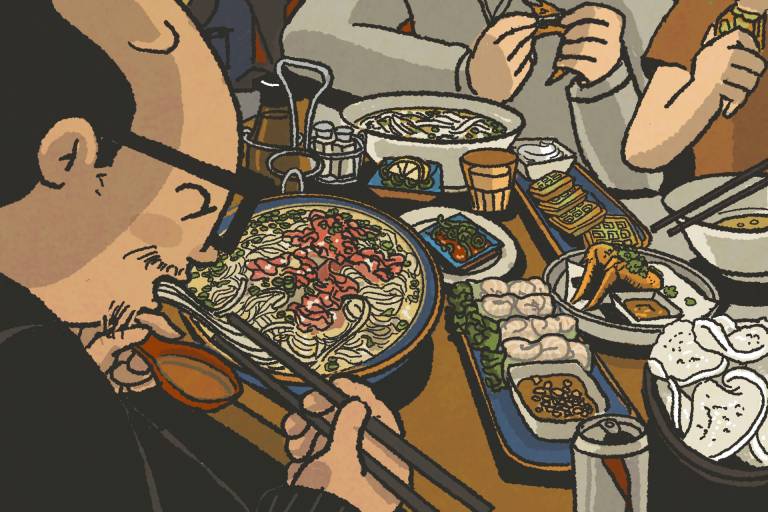
SF’s Most Legendary Chicken Phở Is Now Available Until 3 a.m.
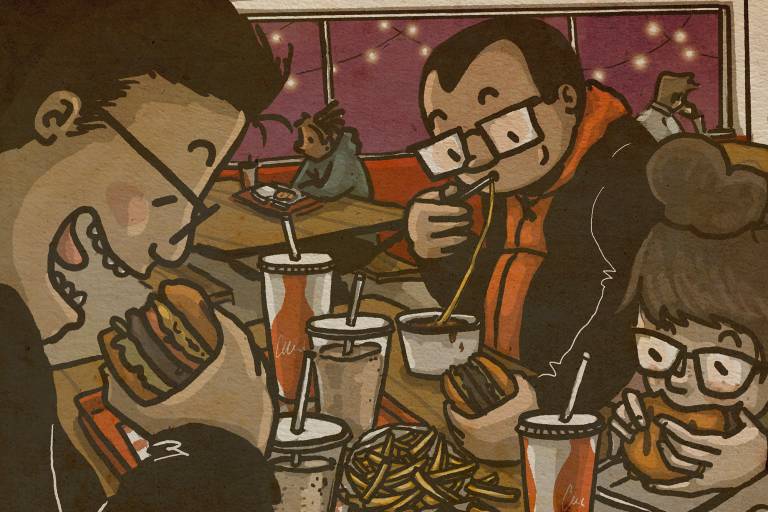
Revisiting Smokehouse, a Berkeley Classic for Late-Night Burgers and Shakes
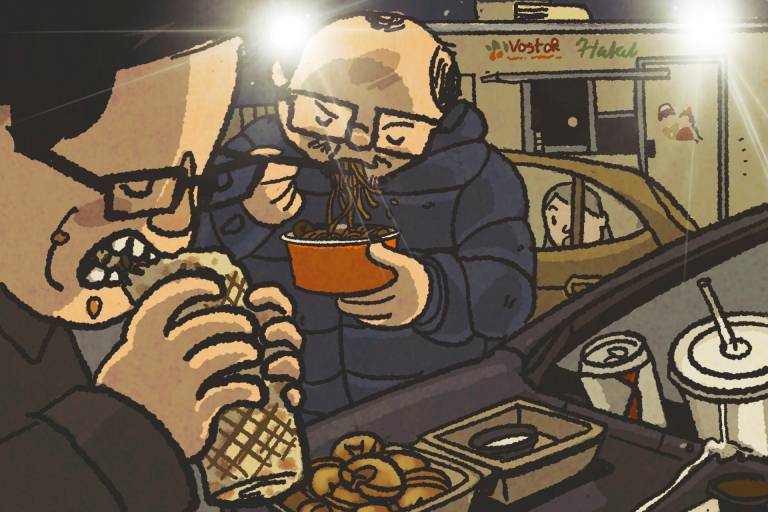
This Gas Station Food Truck Serves Amazing Kyrgyz Street Food in Santa Clara
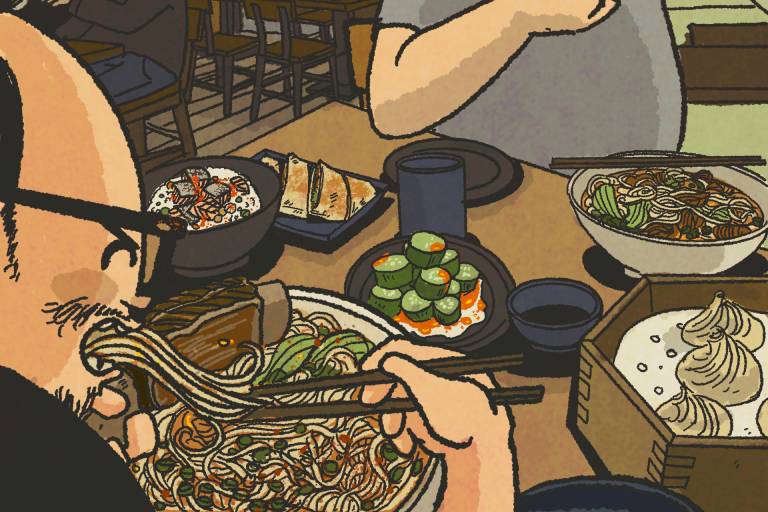
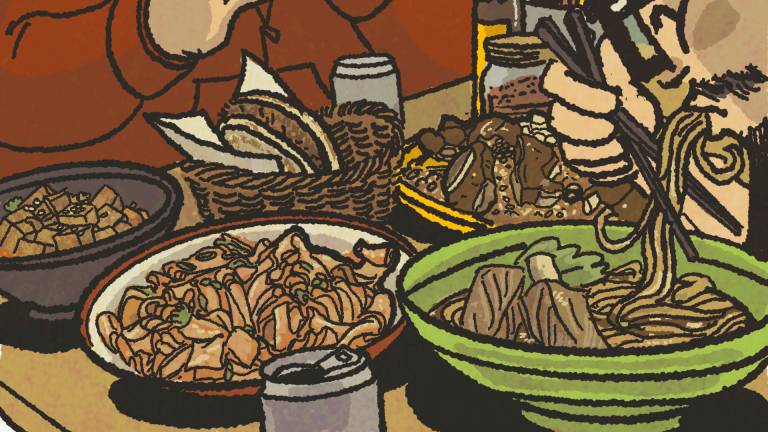
An East Bay Newcomer Slings Hand-Pulled Noodles and XLB Until Midnight
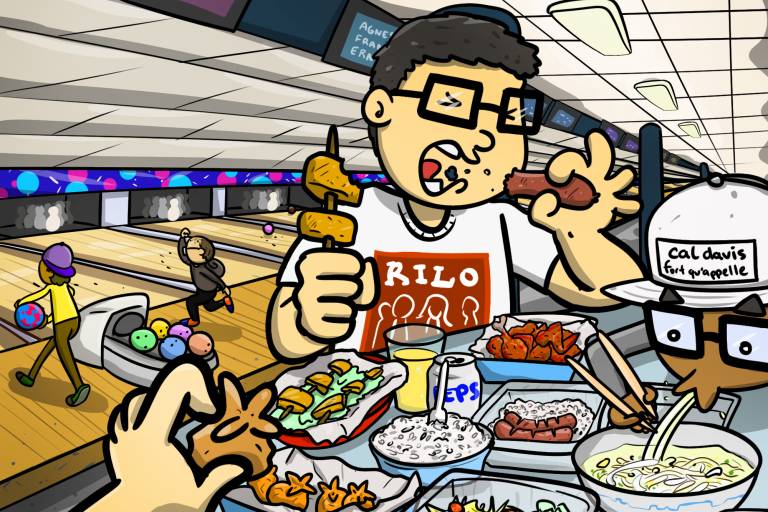
The East Bay’s Best Late-Night Lao Restaurant Is Inside a Bowling Alley
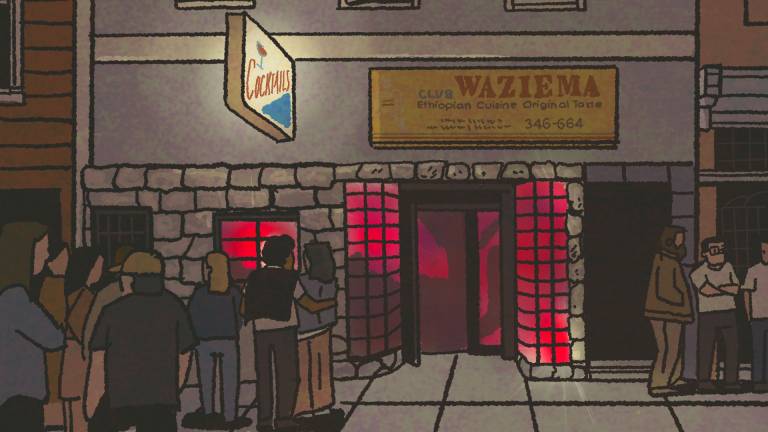
This Ethiopian Dive Bar’s Most Surprising Hit Is Its All-You-Can-Eat Veggie Combo
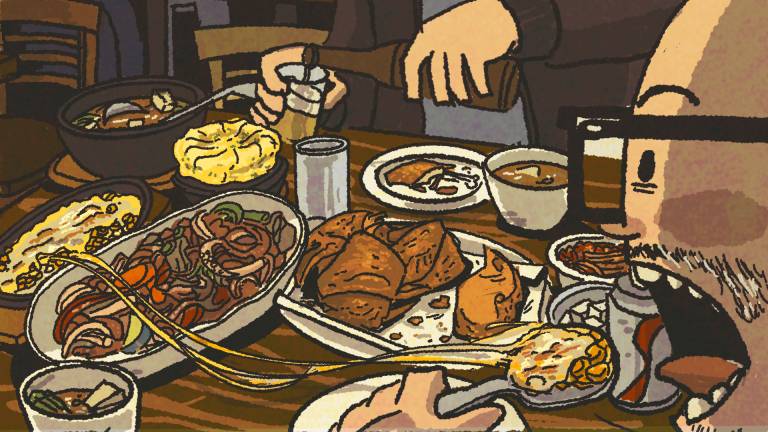
SF’s Famous Chicken Garage Is a Late-Night Korean Classic
Where Chinese Hamburgers Meet ‘Texas’ Barbecue
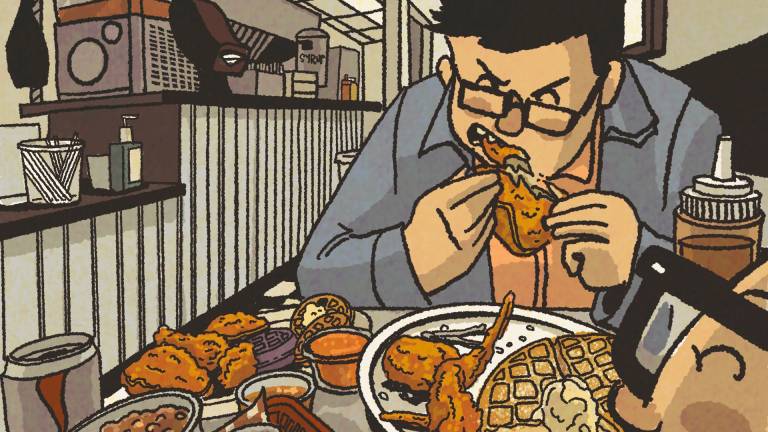
Keith’s Chicken N Waffles Slings Some of the Bay’s Crunchiest Fried Chicken
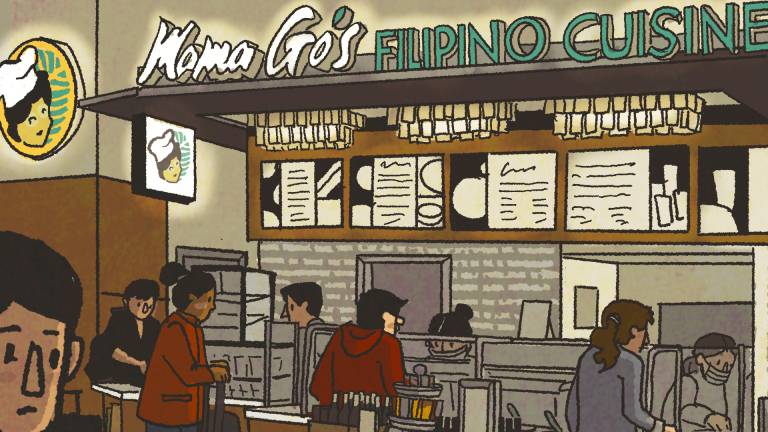
Mama Go’s Serves the Best Late-Night Airport Food at SFO
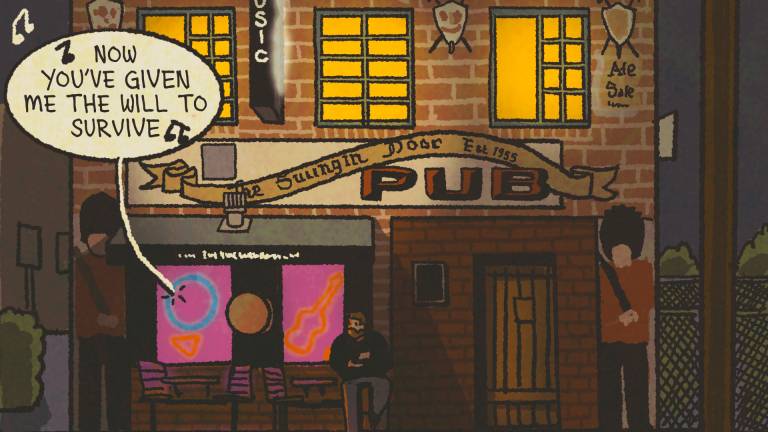
This British Pub in San Mateo Is a Riot of Late-Night Karaoke and Fish and Chips
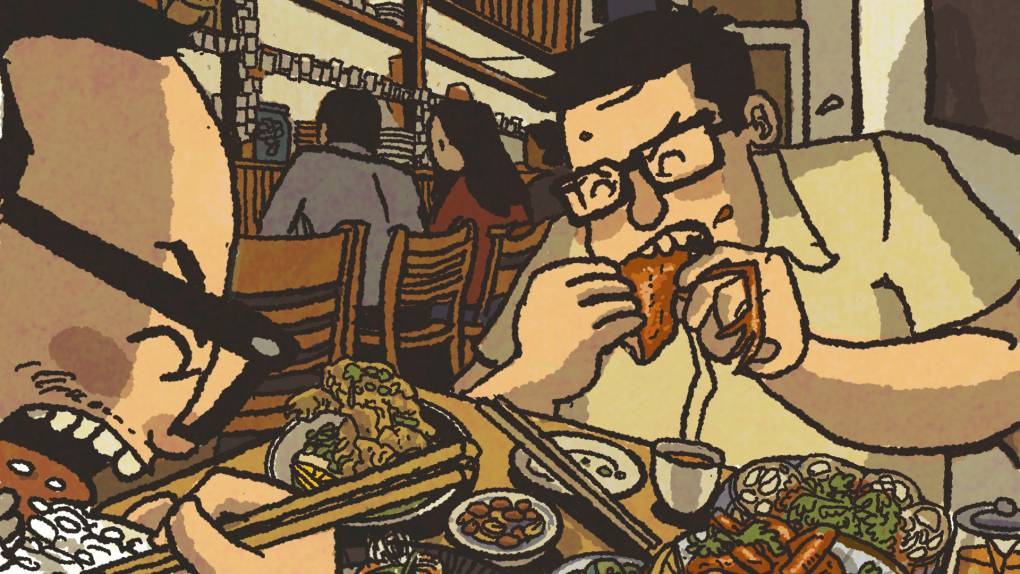
This Buzzy Late-Night Restaurant in Chinatown Lives Up to All the Hype
window.__IS_SSR__=true
window.__INITIAL_STATE__={
"attachmentsReducer": {
"audio_0": {
"type": "attachments",
"id": "audio_0",
"imgSizes": {
"kqedFullSize": {
"file": "https://ww2.kqed.org/news/wp-content/themes/KQED-unified/img/audio_bgs/background0.jpg"
}
}
},
"audio_1": {
"type": "attachments",
"id": "audio_1",
"imgSizes": {
"kqedFullSize": {
"file": "https://ww2.kqed.org/news/wp-content/themes/KQED-unified/img/audio_bgs/background1.jpg"
}
}
},
"audio_2": {
"type": "attachments",
"id": "audio_2",
"imgSizes": {
"kqedFullSize": {
"file": "https://ww2.kqed.org/news/wp-content/themes/KQED-unified/img/audio_bgs/background2.jpg"
}
}
},
"audio_3": {
"type": "attachments",
"id": "audio_3",
"imgSizes": {
"kqedFullSize": {
"file": "https://ww2.kqed.org/news/wp-content/themes/KQED-unified/img/audio_bgs/background3.jpg"
}
}
},
"audio_4": {
"type": "attachments",
"id": "audio_4",
"imgSizes": {
"kqedFullSize": {
"file": "https://ww2.kqed.org/news/wp-content/themes/KQED-unified/img/audio_bgs/background4.jpg"
}
}
},
"placeholder": {
"type": "attachments",
"id": "placeholder",
"imgSizes": {
"thumbnail": {
"file": "https://cdn.kqed.org/wp-content/uploads/2024/12/KQED-Default-Image-816638274-2000x1333-1-160x107.jpg",
"width": 160,
"height": 107,
"mimeType": "image/jpeg"
},
"medium": {
"file": "https://cdn.kqed.org/wp-content/uploads/2024/12/KQED-Default-Image-816638274-2000x1333-1-800x533.jpg",
"width": 800,
"height": 533,
"mimeType": "image/jpeg"
},
"medium_large": {
"file": "https://cdn.kqed.org/wp-content/uploads/2024/12/KQED-Default-Image-816638274-2000x1333-1-768x512.jpg",
"width": 768,
"height": 512,
"mimeType": "image/jpeg"
},
"large": {
"file": "https://cdn.kqed.org/wp-content/uploads/2024/12/KQED-Default-Image-816638274-2000x1333-1-1020x680.jpg",
"width": 1020,
"height": 680,
"mimeType": "image/jpeg"
},
"1536x1536": {
"file": "https://cdn.kqed.org/wp-content/uploads/2024/12/KQED-Default-Image-816638274-2000x1333-1-1536x1024.jpg",
"width": 1536,
"height": 1024,
"mimeType": "image/jpeg"
},
"fd-lrg": {
"file": "https://cdn.kqed.org/wp-content/uploads/2024/12/KQED-Default-Image-816638274-2000x1333-1-1536x1024.jpg",
"width": 1536,
"height": 1024,
"mimeType": "image/jpeg"
},
"fd-med": {
"file": "https://cdn.kqed.org/wp-content/uploads/2024/12/KQED-Default-Image-816638274-2000x1333-1-1020x680.jpg",
"width": 1020,
"height": 680,
"mimeType": "image/jpeg"
},
"fd-sm": {
"file": "https://cdn.kqed.org/wp-content/uploads/2024/12/KQED-Default-Image-816638274-2000x1333-1-800x533.jpg",
"width": 800,
"height": 533,
"mimeType": "image/jpeg"
},
"post-thumbnail": {
"file": "https://cdn.kqed.org/wp-content/uploads/2024/12/KQED-Default-Image-816638274-2000x1333-1-672x372.jpg",
"width": 672,
"height": 372,
"mimeType": "image/jpeg"
},
"twentyfourteen-full-width": {
"file": "https://cdn.kqed.org/wp-content/uploads/2024/12/KQED-Default-Image-816638274-2000x1333-1-1038x576.jpg",
"width": 1038,
"height": 576,
"mimeType": "image/jpeg"
},
"xxsmall": {
"file": "https://cdn.kqed.org/wp-content/uploads/2024/12/KQED-Default-Image-816638274-2000x1333-1-160x107.jpg",
"width": 160,
"height": 107,
"mimeType": "image/jpeg"
},
"xsmall": {
"file": "https://cdn.kqed.org/wp-content/uploads/2024/12/KQED-Default-Image-816638274-2000x1333-1-672x372.jpg",
"width": 672,
"height": 372,
"mimeType": "image/jpeg"
},
"small": {
"file": "https://cdn.kqed.org/wp-content/uploads/2024/12/KQED-Default-Image-816638274-2000x1333-1-672x372.jpg",
"width": 672,
"height": 372,
"mimeType": "image/jpeg"
},
"xlarge": {
"file": "https://cdn.kqed.org/wp-content/uploads/2024/12/KQED-Default-Image-816638274-2000x1333-1-1020x680.jpg",
"width": 1020,
"height": 680,
"mimeType": "image/jpeg"
},
"full-width": {
"file": "https://cdn.kqed.org/wp-content/uploads/2024/12/KQED-Default-Image-816638274-2000x1333-1-1920x1280.jpg",
"width": 1920,
"height": 1280,
"mimeType": "image/jpeg"
},
"guest-author-32": {
"file": "https://cdn.kqed.org/wp-content/uploads/2025/01/KQED-Default-Image-816638274-1333x1333-1-160x160.jpg",
"width": 32,
"height": 32,
"mimeType": "image/jpeg"
},
"guest-author-50": {
"file": "https://cdn.kqed.org/wp-content/uploads/2025/01/KQED-Default-Image-816638274-1333x1333-1-160x160.jpg",
"width": 50,
"height": 50,
"mimeType": "image/jpeg"
},
"guest-author-64": {
"file": "https://cdn.kqed.org/wp-content/uploads/2025/01/KQED-Default-Image-816638274-1333x1333-1-160x160.jpg",
"width": 64,
"height": 64,
"mimeType": "image/jpeg"
},
"guest-author-96": {
"file": "https://cdn.kqed.org/wp-content/uploads/2025/01/KQED-Default-Image-816638274-1333x1333-1-160x160.jpg",
"width": 96,
"height": 96,
"mimeType": "image/jpeg"
},
"guest-author-128": {
"file": "https://cdn.kqed.org/wp-content/uploads/2025/01/KQED-Default-Image-816638274-1333x1333-1-160x160.jpg",
"width": 128,
"height": 128,
"mimeType": "image/jpeg"
},
"detail": {
"file": "https://cdn.kqed.org/wp-content/uploads/2025/01/KQED-Default-Image-816638274-1333x1333-1-160x160.jpg",
"width": 160,
"height": 160,
"mimeType": "image/jpeg"
},
"kqedFullSize": {
"file": "https://cdn.kqed.org/wp-content/uploads/2024/12/KQED-Default-Image-816638274-2000x1333-1.jpg",
"width": 2000,
"height": 1333
}
}
},
"arts_13986958": {
"type": "attachments",
"id": "arts_13986958",
"meta": {
"index": "attachments_1716263798",
"site": "arts",
"id": "13986958",
"found": true
},
"title": "turtle tower 1-crop",
"publishDate": 1771618433,
"status": "inherit",
"parent": 13986949,
"modified": 1771618570,
"caption": "Turtle Tower, one of San Francisco's most famous pho restaurants, has a new location in the Marina District. The restaurant is known for its northern-style chicken pho.",
"credit": "Thien Pham",
"altTag": "A man devouring a bowl of beef pho.",
"description": null,
"imgSizes": {
"thumbnail": {
"file": "https://cdn.kqed.org/wp-content/uploads/sites/2/2026/02/turtle-tower-1-crop-160x107.jpg",
"width": 160,
"height": 107,
"mimeType": "image/jpeg"
},
"medium_large": {
"file": "https://cdn.kqed.org/wp-content/uploads/sites/2/2026/02/turtle-tower-1-crop-768x512.jpg",
"width": 768,
"height": 512,
"mimeType": "image/jpeg"
},
"1536x1536": {
"file": "https://cdn.kqed.org/wp-content/uploads/sites/2/2026/02/turtle-tower-1-crop-1536x1024.jpg",
"width": 1536,
"height": 1024,
"mimeType": "image/jpeg"
},
"post-thumbnail": {
"file": "https://cdn.kqed.org/wp-content/uploads/sites/2/2026/02/turtle-tower-1-crop-672x372.jpg",
"width": 672,
"height": 372,
"mimeType": "image/jpeg"
},
"twentyfourteen-full-width": {
"file": "https://cdn.kqed.org/wp-content/uploads/sites/2/2026/02/turtle-tower-1-crop-1038x576.jpg",
"width": 1038,
"height": 576,
"mimeType": "image/jpeg"
},
"npr-cds-wide": {
"file": "https://cdn.kqed.org/wp-content/uploads/sites/2/2026/02/turtle-tower-1-crop-1200x675.jpg",
"width": 1200,
"height": 675,
"mimeType": "image/jpeg"
},
"kqedFullSize": {
"file": "https://cdn.kqed.org/wp-content/uploads/sites/2/2026/02/turtle-tower-1-crop.jpg",
"width": 1920,
"height": 1280
}
},
"isLoading": false,
"fetchFailed": false
},
"arts_13985782": {
"type": "attachments",
"id": "arts_13985782",
"meta": {
"index": "attachments_1716263798",
"site": "arts",
"id": "13985782",
"found": true
},
"title": "Smokehouse_1 crop",
"publishDate": 1769127701,
"status": "inherit",
"parent": 13985780,
"modified": 1769127809,
"caption": "Smokehouse specializes in fire-grilled burgers and hot dogs. The Berkeley staple stays open until midnight on weekends.",
"credit": "Briana Loewinsohn",
"altTag": "Illustration: Three friends eater burgers, fries, and Cokes inside a casual restaurant.",
"description": null,
"imgSizes": {
"thumbnail": {
"file": "https://cdn.kqed.org/wp-content/uploads/sites/2/2026/01/Smokehouse_1-crop-160x107.jpg",
"width": 160,
"height": 107,
"mimeType": "image/jpeg"
},
"medium_large": {
"file": "https://cdn.kqed.org/wp-content/uploads/sites/2/2026/01/Smokehouse_1-crop-768x512.jpg",
"width": 768,
"height": 512,
"mimeType": "image/jpeg"
},
"1536x1536": {
"file": "https://cdn.kqed.org/wp-content/uploads/sites/2/2026/01/Smokehouse_1-crop-1536x1024.jpg",
"width": 1536,
"height": 1024,
"mimeType": "image/jpeg"
},
"post-thumbnail": {
"file": "https://cdn.kqed.org/wp-content/uploads/sites/2/2026/01/Smokehouse_1-crop-672x372.jpg",
"width": 672,
"height": 372,
"mimeType": "image/jpeg"
},
"twentyfourteen-full-width": {
"file": "https://cdn.kqed.org/wp-content/uploads/sites/2/2026/01/Smokehouse_1-crop-1038x576.jpg",
"width": 1038,
"height": 576,
"mimeType": "image/jpeg"
},
"npr-cds-wide": {
"file": "https://cdn.kqed.org/wp-content/uploads/sites/2/2026/01/Smokehouse_1-crop-1200x675.jpg",
"width": 1200,
"height": 675,
"mimeType": "image/jpeg"
},
"kqedFullSize": {
"file": "https://cdn.kqed.org/wp-content/uploads/sites/2/2026/01/Smokehouse_1-crop.jpg",
"width": 2000,
"height": 1333
}
},
"isLoading": false,
"fetchFailed": false
},
"arts_13985044": {
"type": "attachments",
"id": "arts_13985044",
"meta": {
"index": "attachments_1716263798",
"site": "arts",
"id": "13985044",
"found": true
},
"title": "vostok-crop",
"publishDate": 1766100558,
"status": "inherit",
"parent": 13985042,
"modified": 1766100673,
"caption": "Vostok is one of the only Bay Area food businesses that specializes in the cuisine of Kyrgyzstan: shwarma, plov and wok-fried lagman.",
"credit": "Thien Pham",
"altTag": "Illustration: Two men lean over the hood of a car at nighttime, chowing down on a shawarma wrap and stir-fried noodles.",
"description": null,
"imgSizes": {
"thumbnail": {
"file": "https://cdn.kqed.org/wp-content/uploads/sites/2/2025/12/vostok-crop-160x107.jpg",
"width": 160,
"height": 107,
"mimeType": "image/jpeg"
},
"medium_large": {
"file": "https://cdn.kqed.org/wp-content/uploads/sites/2/2025/12/vostok-crop-768x512.jpg",
"width": 768,
"height": 512,
"mimeType": "image/jpeg"
},
"1536x1536": {
"file": "https://cdn.kqed.org/wp-content/uploads/sites/2/2025/12/vostok-crop-1536x1024.jpg",
"width": 1536,
"height": 1024,
"mimeType": "image/jpeg"
},
"post-thumbnail": {
"file": "https://cdn.kqed.org/wp-content/uploads/sites/2/2025/12/vostok-crop-672x372.jpg",
"width": 672,
"height": 372,
"mimeType": "image/jpeg"
},
"twentyfourteen-full-width": {
"file": "https://cdn.kqed.org/wp-content/uploads/sites/2/2025/12/vostok-crop-1038x576.jpg",
"width": 1038,
"height": 576,
"mimeType": "image/jpeg"
},
"npr-cds-wide": {
"file": "https://cdn.kqed.org/wp-content/uploads/sites/2/2025/12/vostok-crop-1200x675.jpg",
"width": 1200,
"height": 675,
"mimeType": "image/jpeg"
},
"kqedFullSize": {
"file": "https://cdn.kqed.org/wp-content/uploads/sites/2/2025/12/vostok-crop.jpg",
"width": 1920,
"height": 1280
}
},
"isLoading": false,
"fetchFailed": false
},
"arts_13983726": {
"type": "attachments",
"id": "arts_13983726",
"meta": {
"index": "attachments_1716263798",
"site": "arts",
"id": "13983726",
"found": true
},
"title": "daonoodles1-crop",
"publishDate": 1763073166,
"status": "inherit",
"parent": 0,
"modified": 1763073498,
"caption": "A spread of food at Dao Artisan Noodle. The San Leandro restaurant specializes in Lanzhou-style hand-pulled noodles and other dough-based Northern Chinese dishes.",
"credit": "Thien Pham",
"altTag": "Illustration: Man devours a bowl of Chinese noodles. On the table are other assorted dishes: a cucumber salad, a steamer of soup dumplings, beef pancake, and bowl of salmon fried rice.",
"description": null,
"imgSizes": {
"thumbnail": {
"file": "https://cdn.kqed.org/wp-content/uploads/sites/2/2025/11/daonoodles1-crop-160x107.jpg",
"width": 160,
"height": 107,
"mimeType": "image/jpeg"
},
"medium_large": {
"file": "https://cdn.kqed.org/wp-content/uploads/sites/2/2025/11/daonoodles1-crop-768x512.jpg",
"width": 768,
"height": 512,
"mimeType": "image/jpeg"
},
"1536x1536": {
"file": "https://cdn.kqed.org/wp-content/uploads/sites/2/2025/11/daonoodles1-crop-1536x1024.jpg",
"width": 1536,
"height": 1024,
"mimeType": "image/jpeg"
},
"post-thumbnail": {
"file": "https://cdn.kqed.org/wp-content/uploads/sites/2/2025/11/daonoodles1-crop-672x372.jpg",
"width": 672,
"height": 372,
"mimeType": "image/jpeg"
},
"twentyfourteen-full-width": {
"file": "https://cdn.kqed.org/wp-content/uploads/sites/2/2025/11/daonoodles1-crop-1038x576.jpg",
"width": 1038,
"height": 576,
"mimeType": "image/jpeg"
},
"npr-cds-wide": {
"file": "https://cdn.kqed.org/wp-content/uploads/sites/2/2025/11/daonoodles1-crop-1200x675.jpg",
"width": 1200,
"height": 675,
"mimeType": "image/jpeg"
},
"kqedFullSize": {
"file": "https://cdn.kqed.org/wp-content/uploads/sites/2/2025/11/daonoodles1-crop.jpg",
"width": 1920,
"height": 1280
}
},
"isLoading": false,
"fetchFailed": false
},
"arts_13983252": {
"type": "attachments",
"id": "arts_13983252",
"meta": {
"index": "attachments_1716263798",
"site": "arts",
"id": "13983252",
"found": true
},
"title": "2 - Eating_crop",
"publishDate": 1761869740,
"status": "inherit",
"parent": 13983249,
"modified": 1761869861,
"caption": "Located inside the Castro Village Bowl bowling alley, the Lucky Lane 33 Cafe specializes in Lao and Thai dishes like Lao sausage, nam khao (crispy rice ball salad) and papaya salad.",
"credit": "Raynato Castro",
"altTag": "Illustration: Two men eating a spread of food inside a bowling alley.",
"description": null,
"imgSizes": {
"thumbnail": {
"file": "https://cdn.kqed.org/wp-content/uploads/sites/2/2025/10/2-Eating_crop-160x107.jpg",
"width": 160,
"height": 107,
"mimeType": "image/jpeg"
},
"medium_large": {
"file": "https://cdn.kqed.org/wp-content/uploads/sites/2/2025/10/2-Eating_crop-768x512.jpg",
"width": 768,
"height": 512,
"mimeType": "image/jpeg"
},
"1536x1536": {
"file": "https://cdn.kqed.org/wp-content/uploads/sites/2/2025/10/2-Eating_crop-1536x1024.jpg",
"width": 1536,
"height": 1024,
"mimeType": "image/jpeg"
},
"post-thumbnail": {
"file": "https://cdn.kqed.org/wp-content/uploads/sites/2/2025/10/2-Eating_crop-672x372.jpg",
"width": 672,
"height": 372,
"mimeType": "image/jpeg"
},
"twentyfourteen-full-width": {
"file": "https://cdn.kqed.org/wp-content/uploads/sites/2/2025/10/2-Eating_crop-1038x576.jpg",
"width": 1038,
"height": 576,
"mimeType": "image/jpeg"
},
"npr-cds-wide": {
"file": "https://cdn.kqed.org/wp-content/uploads/sites/2/2025/10/2-Eating_crop-1200x675.jpg",
"width": 1200,
"height": 675,
"mimeType": "image/jpeg"
},
"kqedFullSize": {
"file": "https://cdn.kqed.org/wp-content/uploads/sites/2/2025/10/2-Eating_crop.jpg",
"width": 2000,
"height": 1333
}
},
"isLoading": false,
"fetchFailed": false
},
"arts_13982100": {
"type": "attachments",
"id": "arts_13982100",
"meta": {
"index": "attachments_1716263798",
"site": "arts",
"id": "13982100",
"found": true
},
"title": "ClubWaziema-crop",
"publishDate": 1759450997,
"status": "inherit",
"parent": 13982096,
"modified": 1759451115,
"caption": "In a former life, Club Waziema was a legendary jazz club called Club Morocco.",
"credit": "Thien Pham",
"altTag": "Illustration: Exterior of a bar with a crowd of people outside. The sign says, \"Cocktails\".",
"description": null,
"imgSizes": {
"thumbnail": {
"file": "https://cdn.kqed.org/wp-content/uploads/sites/2/2025/10/ClubWaziema-crop-160x90.jpg",
"width": 160,
"height": 90,
"mimeType": "image/jpeg"
},
"medium_large": {
"file": "https://cdn.kqed.org/wp-content/uploads/sites/2/2025/10/ClubWaziema-crop-768x432.jpg",
"width": 768,
"height": 432,
"mimeType": "image/jpeg"
},
"1536x1536": {
"file": "https://cdn.kqed.org/wp-content/uploads/sites/2/2025/10/ClubWaziema-crop-1536x864.jpg",
"width": 1536,
"height": 864,
"mimeType": "image/jpeg"
},
"post-thumbnail": {
"file": "https://cdn.kqed.org/wp-content/uploads/sites/2/2025/10/ClubWaziema-crop-672x372.jpg",
"width": 672,
"height": 372,
"mimeType": "image/jpeg"
},
"twentyfourteen-full-width": {
"file": "https://cdn.kqed.org/wp-content/uploads/sites/2/2025/10/ClubWaziema-crop-1038x576.jpg",
"width": 1038,
"height": 576,
"mimeType": "image/jpeg"
},
"kqedFullSize": {
"file": "https://cdn.kqed.org/wp-content/uploads/sites/2/2025/10/ClubWaziema-crop.jpg",
"width": 1920,
"height": 1080
}
},
"isLoading": false,
"fetchFailed": false
},
"arts_13981037": {
"type": "attachments",
"id": "arts_13981037",
"meta": {
"index": "attachments_1716263798",
"site": "arts",
"id": "13981037",
"found": true
},
"title": "Toyose 1-crop",
"publishDate": 1757030507,
"status": "inherit",
"parent": 13981034,
"modified": 1757030632,
"caption": "Toyose is one of San Francisco's most popular late-night restaurants, serving classic Korean pub food until 2 a.m. on weekends.",
"credit": "Thien Pham",
"altTag": "Illustration: Man devours stretchy cheesy corn while looking over a table crammed full of Korean pub food.",
"description": null,
"imgSizes": {
"thumbnail": {
"file": "https://cdn.kqed.org/wp-content/uploads/sites/2/2025/09/Toyose-1-crop-160x90.jpg",
"width": 160,
"height": 90,
"mimeType": "image/jpeg"
},
"medium_large": {
"file": "https://cdn.kqed.org/wp-content/uploads/sites/2/2025/09/Toyose-1-crop-768x432.jpg",
"width": 768,
"height": 432,
"mimeType": "image/jpeg"
},
"1536x1536": {
"file": "https://cdn.kqed.org/wp-content/uploads/sites/2/2025/09/Toyose-1-crop-1536x864.jpg",
"width": 1536,
"height": 864,
"mimeType": "image/jpeg"
},
"post-thumbnail": {
"file": "https://cdn.kqed.org/wp-content/uploads/sites/2/2025/09/Toyose-1-crop-672x372.jpg",
"width": 672,
"height": 372,
"mimeType": "image/jpeg"
},
"twentyfourteen-full-width": {
"file": "https://cdn.kqed.org/wp-content/uploads/sites/2/2025/09/Toyose-1-crop-1038x576.jpg",
"width": 1038,
"height": 576,
"mimeType": "image/jpeg"
},
"kqedFullSize": {
"file": "https://cdn.kqed.org/wp-content/uploads/sites/2/2025/09/Toyose-1-crop.jpg",
"width": 1920,
"height": 1080
}
},
"isLoading": false,
"fetchFailed": false
},
"arts_13980218": {
"type": "attachments",
"id": "arts_13980218",
"meta": {
"index": "attachments_1716263798",
"site": "arts",
"id": "13980218",
"found": true
},
"title": "Z-One 1-1 crop",
"publishDate": 1755214030,
"status": "inherit",
"parent": 13980212,
"modified": 1755214134,
"caption": "In the last two years, San Bruno's Z-One Kitchen has added 'Texas'-style barbecue to its menu of Shaanxi drinking food.",
"credit": "Thien Pham",
"altTag": "A spread of Chinese food, including meat-stuffed flatbreads, a noodle soup, and slabs of grilled ribs.",
"description": null,
"imgSizes": {
"thumbnail": {
"file": "https://cdn.kqed.org/wp-content/uploads/sites/2/2025/08/Z-One-1-1-crop-160x90.jpg",
"width": 160,
"height": 90,
"mimeType": "image/jpeg"
},
"medium_large": {
"file": "https://cdn.kqed.org/wp-content/uploads/sites/2/2025/08/Z-One-1-1-crop-768x432.jpg",
"width": 768,
"height": 432,
"mimeType": "image/jpeg"
},
"1536x1536": {
"file": "https://cdn.kqed.org/wp-content/uploads/sites/2/2025/08/Z-One-1-1-crop-1536x864.jpg",
"width": 1536,
"height": 864,
"mimeType": "image/jpeg"
},
"post-thumbnail": {
"file": "https://cdn.kqed.org/wp-content/uploads/sites/2/2025/08/Z-One-1-1-crop-672x372.jpg",
"width": 672,
"height": 372,
"mimeType": "image/jpeg"
},
"twentyfourteen-full-width": {
"file": "https://cdn.kqed.org/wp-content/uploads/sites/2/2025/08/Z-One-1-1-crop-1038x576.jpg",
"width": 1038,
"height": 576,
"mimeType": "image/jpeg"
},
"kqedFullSize": {
"file": "https://cdn.kqed.org/wp-content/uploads/sites/2/2025/08/Z-One-1-1-crop.jpg",
"width": 1920,
"height": 1080
}
},
"isLoading": false,
"fetchFailed": false
},
"arts_13979464": {
"type": "attachments",
"id": "arts_13979464",
"meta": {
"index": "attachments_1716263798",
"site": "arts",
"id": "13979464",
"found": true
},
"title": "keiths 1 cropped",
"publishDate": 1754075759,
"status": "inherit",
"parent": 13979460,
"modified": 1754075864,
"caption": "The fried chicken at Keith's Chicken N Waffles is extraordinarily crunchy and flavorful.",
"credit": "Thien Pham",
"altTag": "Illustration: two men devour fried chicken and waffles inside a restaurant.",
"description": null,
"imgSizes": {
"thumbnail": {
"file": "https://cdn.kqed.org/wp-content/uploads/sites/2/2025/08/keiths-1-cropped-160x90.jpg",
"width": 160,
"height": 90,
"mimeType": "image/jpeg"
},
"medium_large": {
"file": "https://cdn.kqed.org/wp-content/uploads/sites/2/2025/08/keiths-1-cropped-768x432.jpg",
"width": 768,
"height": 432,
"mimeType": "image/jpeg"
},
"1536x1536": {
"file": "https://cdn.kqed.org/wp-content/uploads/sites/2/2025/08/keiths-1-cropped-1536x864.jpg",
"width": 1536,
"height": 864,
"mimeType": "image/jpeg"
},
"post-thumbnail": {
"file": "https://cdn.kqed.org/wp-content/uploads/sites/2/2025/08/keiths-1-cropped-672x372.jpg",
"width": 672,
"height": 372,
"mimeType": "image/jpeg"
},
"twentyfourteen-full-width": {
"file": "https://cdn.kqed.org/wp-content/uploads/sites/2/2025/08/keiths-1-cropped-1038x576.jpg",
"width": 1038,
"height": 576,
"mimeType": "image/jpeg"
},
"kqedFullSize": {
"file": "https://cdn.kqed.org/wp-content/uploads/sites/2/2025/08/keiths-1-cropped.jpg",
"width": 1920,
"height": 1080
}
},
"isLoading": false,
"fetchFailed": false
},
"arts_13978361": {
"type": "attachments",
"id": "arts_13978361",
"meta": {
"index": "attachments_1716263798",
"site": "arts",
"id": "13978361",
"found": true
},
"title": "Mama Go's2-crop",
"publishDate": 1751585727,
"status": "inherit",
"parent": 13978355,
"modified": 1751585760,
"caption": "The kiosk is open until 11:30 p.m. each night — and then it opens again at 3:30 a.m. for Filipino breakfast.",
"credit": "Thien Pham",
"altTag": "A busy food kiosk inside an airport. The sign overhead reads, \"Mama Go's Filipino Cuisine.\"",
"description": null,
"imgSizes": {
"thumbnail": {
"file": "https://cdn.kqed.org/wp-content/uploads/sites/2/2025/07/Mama-Gos2-crop-160x90.jpg",
"width": 160,
"height": 90,
"mimeType": "image/jpeg"
},
"medium_large": {
"file": "https://cdn.kqed.org/wp-content/uploads/sites/2/2025/07/Mama-Gos2-crop-768x432.jpg",
"width": 768,
"height": 432,
"mimeType": "image/jpeg"
},
"1536x1536": {
"file": "https://cdn.kqed.org/wp-content/uploads/sites/2/2025/07/Mama-Gos2-crop-1536x864.jpg",
"width": 1536,
"height": 864,
"mimeType": "image/jpeg"
},
"post-thumbnail": {
"file": "https://cdn.kqed.org/wp-content/uploads/sites/2/2025/07/Mama-Gos2-crop-672x372.jpg",
"width": 672,
"height": 372,
"mimeType": "image/jpeg"
},
"twentyfourteen-full-width": {
"file": "https://cdn.kqed.org/wp-content/uploads/sites/2/2025/07/Mama-Gos2-crop-1038x576.jpg",
"width": 1038,
"height": 576,
"mimeType": "image/jpeg"
},
"kqedFullSize": {
"file": "https://cdn.kqed.org/wp-content/uploads/sites/2/2025/07/Mama-Gos2-crop.jpg",
"width": 1920,
"height": 1080
}
},
"isLoading": false,
"fetchFailed": false
},
"arts_13977181": {
"type": "attachments",
"id": "arts_13977181",
"meta": {
"index": "attachments_1716263798",
"site": "arts",
"id": "13977181",
"found": true
},
"title": "swingin door crop",
"publishDate": 1749194619,
"status": "inherit",
"parent": 13977177,
"modified": 1749194801,
"caption": "The Swingin' Door runs a lively karaoke night four days a week. The British-style pub in San Mateo is open until 2 a.m.",
"credit": "Thien Pham",
"altTag": "Illustration: The exterior of a British-style pub. The sign reads, \"The Swingin' Door.\" Inside, someone is singing, \"Now you've given me the will to survive.\"",
"description": null,
"imgSizes": {
"thumbnail": {
"file": "https://cdn.kqed.org/wp-content/uploads/sites/2/2025/06/swingin-door-crop-160x90.jpg",
"width": 160,
"height": 90,
"mimeType": "image/jpeg"
},
"medium_large": {
"file": "https://cdn.kqed.org/wp-content/uploads/sites/2/2025/06/swingin-door-crop-768x432.jpg",
"width": 768,
"height": 432,
"mimeType": "image/jpeg"
},
"1536x1536": {
"file": "https://cdn.kqed.org/wp-content/uploads/sites/2/2025/06/swingin-door-crop-1536x864.jpg",
"width": 1536,
"height": 864,
"mimeType": "image/jpeg"
},
"post-thumbnail": {
"file": "https://cdn.kqed.org/wp-content/uploads/sites/2/2025/06/swingin-door-crop-672x372.jpg",
"width": 672,
"height": 372,
"mimeType": "image/jpeg"
},
"twentyfourteen-full-width": {
"file": "https://cdn.kqed.org/wp-content/uploads/sites/2/2025/06/swingin-door-crop-1038x576.jpg",
"width": 1038,
"height": 576,
"mimeType": "image/jpeg"
},
"kqedFullSize": {
"file": "https://cdn.kqed.org/wp-content/uploads/sites/2/2025/06/swingin-door-crop.jpg",
"width": 1920,
"height": 1080
}
},
"isLoading": false,
"fetchFailed": false
},
"arts_13976701": {
"type": "attachments",
"id": "arts_13976701",
"meta": {
"index": "attachments_1716263798",
"site": "arts",
"id": "13976701",
"found": true
},
"title": "4-kings2-crop",
"publishDate": 1747965780,
"status": "inherit",
"parent": 13976695,
"modified": 1747965828,
"caption": "Part of the excitement at Four Kings comes from covering the table with an abundance of dishes. The new-school Cantonese restaurant is open until 11 p.m. on the weekends in SF Chinatown.",
"credit": "Thien Pham",
"altTag": "Illustration: Two men devouring a table full of Cantonese dishes, including roast squab, fried soft-shell crabs, and a pork chop rice bowl.",
"description": null,
"imgSizes": {
"medium": {
"file": "https://cdn.kqed.org/wp-content/uploads/sites/2/2025/05/4-kings2-crop-800x450.jpg",
"width": 800,
"height": 450,
"mimeType": "image/jpeg"
},
"large": {
"file": "https://cdn.kqed.org/wp-content/uploads/sites/2/2025/05/4-kings2-crop-1020x574.jpg",
"width": 1020,
"height": 574,
"mimeType": "image/jpeg"
},
"thumbnail": {
"file": "https://cdn.kqed.org/wp-content/uploads/sites/2/2025/05/4-kings2-crop-160x90.jpg",
"width": 160,
"height": 90,
"mimeType": "image/jpeg"
},
"medium_large": {
"file": "https://cdn.kqed.org/wp-content/uploads/sites/2/2025/05/4-kings2-crop-768x432.jpg",
"width": 768,
"height": 432,
"mimeType": "image/jpeg"
},
"1536x1536": {
"file": "https://cdn.kqed.org/wp-content/uploads/sites/2/2025/05/4-kings2-crop-1536x864.jpg",
"width": 1536,
"height": 864,
"mimeType": "image/jpeg"
},
"post-thumbnail": {
"file": "https://cdn.kqed.org/wp-content/uploads/sites/2/2025/05/4-kings2-crop-672x372.jpg",
"width": 672,
"height": 372,
"mimeType": "image/jpeg"
},
"twentyfourteen-full-width": {
"file": "https://cdn.kqed.org/wp-content/uploads/sites/2/2025/05/4-kings2-crop-1038x576.jpg",
"width": 1038,
"height": 576,
"mimeType": "image/jpeg"
},
"kqedFullSize": {
"file": "https://cdn.kqed.org/wp-content/uploads/sites/2/2025/05/4-kings2-crop.jpg",
"width": 1920,
"height": 1080
}
},
"isLoading": false,
"fetchFailed": false
}
},
"audioPlayerReducer": {
"postId": "stream_live",
"isPaused": true,
"isPlaying": false,
"pfsActive": false,
"pledgeModalIsOpen": true,
"playerDrawerIsOpen": false,
"liveAudioPlayStartedAt": 0,
"liveAudioPlayContext": ""
},
"authorsReducer": {
"ltsai": {
"type": "authors",
"id": "11743",
"meta": {
"index": "authors_1716337520",
"id": "11743",
"found": true
},
"name": "Luke Tsai",
"firstName": "Luke",
"lastName": "Tsai",
"slug": "ltsai",
"email": "ltsai@kqed.org",
"display_author_email": true,
"staff_mastheads": [
"arts"
],
"title": "Food Editor",
"bio": "Luke Tsai is KQED's food editor and resident stinky tofu connoisseur. Prior to KQED, he was an editor at Eater SF, \u003cem>San Francisco \u003c/em>magazine, and the \u003cem>East Bay Express\u003c/em>, and his work has also appeared in TASTE, the \u003cem>San Francisco Chronicle\u003c/em>, and the \u003cem>Best Food Writing\u003c/em> anthology. When he isn't writing or editing, you'll find him eating most everything he can get his hands on.",
"avatar": "https://secure.gravatar.com/avatar/1e59b45bf191526e7339d6ba46e33a57b2030d25c27660ecc64ea3cb863e34f7?s=600&d=blank&r=g",
"twitter": "theluketsai",
"bluesky": null,
"facebook": null,
"instagram": null,
"linkedin": null,
"sites": [
{
"site": "",
"roles": [
"editor"
]
},
{
"site": "arts",
"roles": [
"administrator"
]
},
{
"site": "news",
"roles": [
"editor",
"contributor"
]
},
{
"site": "bayareabites",
"roles": [
"editor"
]
},
{
"site": "food",
"roles": [
"editor"
]
}
],
"headData": {
"title": "Luke Tsai | KQED",
"description": "Food Editor",
"ogImgSrc": "https://secure.gravatar.com/avatar/1e59b45bf191526e7339d6ba46e33a57b2030d25c27660ecc64ea3cb863e34f7?s=600&d=blank&r=g",
"twImgSrc": "https://secure.gravatar.com/avatar/1e59b45bf191526e7339d6ba46e33a57b2030d25c27660ecc64ea3cb863e34f7?s=600&d=blank&r=g"
},
"isLoading": false,
"link": "/author/ltsai"
},
"tpham": {
"type": "authors",
"id": "11753",
"meta": {
"index": "authors_1716337520",
"id": "11753",
"found": true
},
"name": "Thien Pham",
"firstName": "Thien",
"lastName": "Pham",
"slug": "tpham",
"email": "thiendog@gmail.com",
"display_author_email": false,
"staff_mastheads": [],
"title": "KQED Contributor",
"bio": null,
"avatar": "https://secure.gravatar.com/avatar/a5b4729969ad46d88e7b9ec9dd4f3fa6af84dd0fa8fa91f01d8d9481694999bc?s=600&d=blank&r=g",
"twitter": null,
"bluesky": null,
"facebook": null,
"instagram": null,
"linkedin": null,
"sites": [
{
"site": "arts",
"roles": [
"contributor"
]
}
],
"headData": {
"title": "Thien Pham | KQED",
"description": "KQED Contributor",
"ogImgSrc": "https://secure.gravatar.com/avatar/a5b4729969ad46d88e7b9ec9dd4f3fa6af84dd0fa8fa91f01d8d9481694999bc?s=600&d=blank&r=g",
"twImgSrc": "https://secure.gravatar.com/avatar/a5b4729969ad46d88e7b9ec9dd4f3fa6af84dd0fa8fa91f01d8d9481694999bc?s=600&d=blank&r=g"
},
"isLoading": false,
"link": "/author/tpham"
},
"bloewinsohn": {
"type": "authors",
"id": "11904",
"meta": {
"index": "authors_1716337520",
"id": "11904",
"found": true
},
"name": "Briana Loewinsohn",
"firstName": "Briana",
"lastName": "Loewinsohn",
"slug": "bloewinsohn",
"email": "brianabreaks@gmail.com",
"display_author_email": false,
"staff_mastheads": [],
"title": "KQED Contributor",
"bio": null,
"avatar": "https://secure.gravatar.com/avatar/939d84e992d1263b5df583828709edae706c0bba1db57ec593f24f34274ef0ec?s=600&d=blank&r=g",
"twitter": null,
"bluesky": null,
"facebook": null,
"instagram": null,
"linkedin": null,
"sites": [
{
"site": "arts",
"roles": [
"contributor"
]
}
],
"headData": {
"title": "Briana Loewinsohn | KQED",
"description": "KQED Contributor",
"ogImgSrc": "https://secure.gravatar.com/avatar/939d84e992d1263b5df583828709edae706c0bba1db57ec593f24f34274ef0ec?s=600&d=blank&r=g",
"twImgSrc": "https://secure.gravatar.com/avatar/939d84e992d1263b5df583828709edae706c0bba1db57ec593f24f34274ef0ec?s=600&d=blank&r=g"
},
"isLoading": false,
"link": "/author/bloewinsohn"
},
"rcastro": {
"type": "authors",
"id": "12029",
"meta": {
"index": "authors_1716337520",
"id": "12029",
"found": true
},
"name": "Raynato Castro",
"firstName": "Raynato",
"lastName": "Castro",
"slug": "rcastro",
"email": "rcastrodds@gmail.com",
"display_author_email": false,
"staff_mastheads": [],
"title": "KQED Contributor",
"bio": null,
"avatar": "https://secure.gravatar.com/avatar/bc9f1f13dc825c80cdf5963339a8c47f4a021d21376fc3a141ac91685ee054e1?s=600&d=blank&r=g",
"twitter": null,
"bluesky": null,
"facebook": null,
"instagram": null,
"linkedin": null,
"sites": [
{
"site": "arts",
"roles": [
"contributor"
]
}
],
"headData": {
"title": "Raynato Castro | KQED",
"description": "KQED Contributor",
"ogImgSrc": "https://secure.gravatar.com/avatar/bc9f1f13dc825c80cdf5963339a8c47f4a021d21376fc3a141ac91685ee054e1?s=600&d=blank&r=g",
"twImgSrc": "https://secure.gravatar.com/avatar/bc9f1f13dc825c80cdf5963339a8c47f4a021d21376fc3a141ac91685ee054e1?s=600&d=blank&r=g"
},
"isLoading": false,
"link": "/author/rcastro"
}
},
"pagesReducer": {
"arts_tag_the-midnight-diners": {
"type": "terms",
"id": "arts_21928",
"meta": {
"index": "terms_1716263798",
"site": "arts",
"id": "21928",
"score": 10.403414
},
"featImg": null,
"name": "The Midnight Diners",
"description": "The Midnight Diners is a regular collaboration between KQED food editor Luke Tsai and artist Thien Pham. Follow them each week as they explore the hot pot restaurants, taco carts and 24-hour casino buffets that make up the Bay Area’s after-hours dining scene.",
"taxonomy": "tag",
"headData": {
"twImgId": null,
"twTitle": null,
"ogTitle": null,
"ogImgId": null,
"twDescription": null,
"description": "The Midnight Diners is a regular collaboration between KQED food editor Luke Tsai and artist Thien Pham. Follow them each week as they explore the hot pot restaurants, taco carts and 24-hour casino buffets that make up the Bay Area’s after-hours dining scene.",
"title": "The Midnight Diners Archives | KQED Arts",
"ogDescription": null
},
"ttid": 21940,
"slug": "the-midnight-diners",
"isLoading": false,
"title": "The Midnight Diners",
"pageMeta": {
"site": "arts",
"WpPageTemplate": "page-topic-editorial",
"currentPage": 2
},
"blocks": [
{
"blockName": "kqed/company-paragraph",
"content": "The Midnight Diners is a regular collaboration between KQED food editor Luke Tsai and artist Thien Pham. Follow them each week as they explore the hot pot restaurants, taco carts and 24-hour casino buffets that make up the Bay Area’s after-hours dining scene."
},
{
"blockName": "kqed/post-list",
"attrs": {
"layout": "cardArticle2",
"query": "posts/arts?tag=the-midnight-diners",
"seeMore": false,
"paginated": true,
"page": 2
}
},
{
"blockName": "kqed/ad"
}
]
}
},
"pfsSessionReducer": {},
"postsReducer": {
"stream_live": {
"type": "live",
"id": "stream_live",
"audioUrl": "https://streams.kqed.org/kqedradio",
"title": "Live Stream",
"excerpt": "Live Stream information currently unavailable.",
"link": "/radio",
"featImg": "",
"label": {
"name": "KQED Live",
"link": "/"
}
},
"stream_kqedNewscast": {
"type": "posts",
"id": "stream_kqedNewscast",
"audioUrl": "https://www.kqed.org/.stream/anon/radio/RDnews/newscast.mp3?_=1",
"title": "KQED Newscast",
"featImg": "",
"label": {
"name": "88.5 FM",
"link": "/"
}
},
"arts_13986949": {
"type": "posts",
"id": "arts_13986949",
"meta": {
"index": "posts_1716263798",
"site": "arts",
"id": "13986949",
"score": null,
"sort": [
1771619131000
]
},
"guestAuthors": [],
"slug": "turtle-tower-sf-chicken-pho-marina-late-night",
"title": "SF’s Most Legendary Chicken Phở Is Now Available Until 3 a.m.",
"publishDate": 1771619131,
"format": "aside",
"headTitle": "SF’s Most Legendary Chicken Phở Is Now Available Until 3 a.m. | KQED",
"labelTerm": {},
"content": "\u003cfigure id=\"attachment_13986960\" class=\"wp-caption alignnone\" style=\"max-width: 1920px\">\u003cimg loading=\"lazy\" decoding=\"async\" class=\"size-full wp-image-13986960\" src=\"https://cdn.kqed.org/wp-content/uploads/sites/2/2026/02/turtle-tower-1.jpg\" alt=\"A group of me devouring bowls of beef and chicken pho.\" width=\"1920\" height=\"1920\" srcset=\"https://cdn.kqed.org/wp-content/uploads/sites/2/2026/02/turtle-tower-1.jpg 1920w, https://cdn.kqed.org/wp-content/uploads/sites/2/2026/02/turtle-tower-1-160x160.jpg 160w, https://cdn.kqed.org/wp-content/uploads/sites/2/2026/02/turtle-tower-1-768x768.jpg 768w, https://cdn.kqed.org/wp-content/uploads/sites/2/2026/02/turtle-tower-1-1536x1536.jpg 1536w\" sizes=\"auto, (max-width: 1920px) 100vw, 1920px\">\u003cfigcaption class=\"wp-caption-text\">Turtle Tower, one of San Francisco’s most famous pho restaurants, has a new location in the Marina District. The restaurant is known for its northern-style chicken pho. \u003ccite>(Thien Pham)\u003c/cite>\u003c/figcaption>\u003c/figure>\n\u003cp>\u003ca href=\"https://www.kqed.org/arts/tag/the-midnight-diners\">\u003ci>The Midnight Diners\u003c/i>\u003c/a>\u003ci> is a regular collaboration between KQED food editor Luke Tsai and graphic novelist \u003c/i>\u003ca href=\"https://www.instagram.com/thiendog/?hl=en\">\u003ci>Thien Pham\u003c/i>\u003c/a>\u003ci>. Follow them each week as they explore the hot pot restaurants, taco carts and 24-hour casino buffets that make up the Bay Area’s after-hours dining scene.\u003c/i>\u003c/p>\n\u003cp>We’d made the mistake of coming to the Marina District at 10 o’clock on a Friday night, and on \u003ca href=\"https://www.kqed.org/arts/tag/super-bowl\">Super Bowl\u003c/a> weekend, no less. The intersection of Fillmore and Greenwich was even \u003ci>more\u003c/i> chaotic than usual — both sides of the street swarming with half-drunk twentysomething frat-boy and sorority-girl types traveling in packs of six or eight. Everyone was decked out in their tightest skirts and bro-iest muscle shirts to stand in line outside \u003ca href=\"https://www.sfchronicle.com/food/wine/article/balboa-cafe-bar-sf-19913258.php\">Balboa Cafe\u003c/a> or any of the half-dozen other bars that flank the block.\u003c/p>\n\u003cp>That’s the Marina in a nutshell. Depending on your \u003ca href=\"https://sfstandard.com/2025/07/21/best-restaurants-bars-marina-sf/\">point of view\u003c/a>, it’s either the best or most obnoxious neighborhood in San Francisco.\u003c/p>\n\u003cp>Maybe it goes without saying that our dowdy, middle-aged party did not trek to this corner of the Marina for espresso martinis or a night of sweaty, awkward flirtation. Instead, we’d come in search of much unlikelier treasure: the most wholesome bowl of chicken phở in the city.\u003c/p>\n\u003cp>That’s what we were hoping for, anyway, when we heard that \u003ca href=\"https://www.turtletowersf.com/\">Turtle Tower\u003c/a> had opened a \u003ca href=\"https://www.instagram.com/reels/DToVxp2kt29/\">brand new location on Fillmore\u003c/a> — and, just as exciting, that it was dishing out hot phở until 3 a.m. on weekends.\u003c/p>\n\u003cp>[ad fullwidth]\u003c/p>\n\u003cp>If you’re a serious phở slurper in San Francisco, you’re likely aware of Turtle Tower’s rise and fall and, now, rise again. Probably the most famous and widely beloved phở restaurant in San Francisco during its 25-year run, Turtle Tower operated four locations across the city at its peak. Regulars were understandably devastated, then, when the last location shut its doors in 2023 — and overjoyed when a new ownership group \u003ca href=\"https://sf.eater.com/2025/3/19/24389523/san-francisco-turtle-tower-pho-restaurant-returns\">revived the business\u003c/a> with a sleek, well-appointed restaurant in the Financial District last spring. Then came the surprise news that Turtle Tower 2.0’s second location would be in the Marina, of all places.\u003c/p>\n\u003cfigure id=\"attachment_13986959\" class=\"wp-caption alignnone\" style=\"max-width: 1920px\">\u003cimg loading=\"lazy\" decoding=\"async\" class=\"size-full wp-image-13986959\" src=\"https://cdn.kqed.org/wp-content/uploads/sites/2/2026/02/turtle-tower-2.jpg\" alt='Illustration: Exterior of a restaurant. The sign up top reads, \"Turtle Tower.\"' width=\"1920\" height=\"1920\" srcset=\"https://cdn.kqed.org/wp-content/uploads/sites/2/2026/02/turtle-tower-2.jpg 1920w, https://cdn.kqed.org/wp-content/uploads/sites/2/2026/02/turtle-tower-2-160x160.jpg 160w, https://cdn.kqed.org/wp-content/uploads/sites/2/2026/02/turtle-tower-2-768x768.jpg 768w, https://cdn.kqed.org/wp-content/uploads/sites/2/2026/02/turtle-tower-2-1536x1536.jpg 1536w\" sizes=\"auto, (max-width: 1920px) 100vw, 1920px\">\u003cfigcaption class=\"wp-caption-text\">Turtle Tower’s Marina location is open until 3 a.m. on weekends. \u003ccite>(Thien Pham)\u003c/cite>\u003c/figcaption>\u003c/figure>\n\u003cp>Open for about a month now, the new Fillmore Street restaurant has the look and feel of a swanky fusion restaurant, with low-pulsing electronic dance music and an abundance of stylishly backlit tropical greenery. A chic black-and-gold mural of what appears to be the Imperial Citadel of Thăng Long spans the back wall. All in all, it’s quite a makeover from the stripped-down, mom-and-pop vibe of the original Larkin Street restaurant, where I used to go for big weekend lunches with my family in the early aughts.\u003c/p>\n\u003cp>The worry, of course, with the opening of a “fancier” Turtle Tower in a non-Asian neighborhood, is that the food is going to get whitewashed and watered down. Indeed, the first thing we noticed is that the menu didn’t list the “deluxe” version of the restaurant’s famous chicken phở (listed as “phở gà lòng” in the old days), which came with giblets and skin for a boost of texture and earthy oomph. When we asked our server about it, she smiled sheepishly and explained that, at least for now, they weren’t offering that version. “We weren’t sure if ‘Marina people’ would eat giblets,” she said. Which is, well, fair enough. (She noted, though, that a lot of Asian customers had been asking for them.)\u003c/p>\n\u003cp>Throughout our meal, there were other small signs of the “Marina-fication” of the restaurant: the (non-Asian) waitstaff’s confusion when one of us asked for some vinegar to mix into his dipping sauce for the phở meats. The fact that the phở arrived with only a single lime wedge and the tiniest imaginable pile of sliced jalapeños. (Not-so-pro tip: You just have to ask for more.) And, no surprise, the phở was priced about $5 higher than it was in the Tenderloin days, just a few years ago.\u003c/p>\n\u003cp>But when we actually dug into the food, we put aside all our skepticism. We started with an order of the fresh spring rolls stuffed with both shrimp and thin slices of pork — very light and very delicious, in large part because of the smokiness of the grilled pork, which lingered in our mouths. We also ordered the house-made crab chips (a perfect snack under any circumstance) and a plate of “Hanoi”-style chicken wings, which none of us remembered from any of the previous incarnations of Turtle Tower. These were whole, two-joint wings that we pulled apart with our hands, juicy and succulent, and fried to an attractive, crackly sheen.\u003c/p>\n\u003cp>\u003cspan style=\"font-weight: 400\">\u003cspan style=\"color: #2b2b2b;font-weight: 400\">[aside postID='arts_13961997,arts_13954983,arts_13985780']\u003c/span>\u003c/span>Of course the main attraction was the phở itself. Turtle Tower has always specialized in northern-style phở — one of the purest distillations of the form that you can find in the Bay Area. That means the broth is less sweet and incorporates fewer spices and fresh herbs; instead of the giant plate of basil and bean sprouts that you get at southern-style joints, the soup comes topped with just a flurry of chopped scallions and cilantro. What you’re meant to taste is the pure flavor of the chicken or beef itself.\u003c/p>\n\u003cp>It had been too long since I’d eaten at the old Turtle Tower for me to say with certainty that the chicken phở was exactly the same. But all it took was one sip of that broth — clear, refined, intensely chicken-y with just a hint of ginger — to be fully satisfied. The noodles were wide and soft and highly slurpable, and even without my precious giblets, I could appreciate the silkiness of the shreds of both dark and white chicken meat.\u003c/p>\n\u003cp>The beef phở, which many of the restaurant’s Vietnamese regulars like even better than the chicken, is similarly minimalistic. Thin slices of rare beef come lightly pounded, in the northern style, for extra tenderness, and the broth, once again, homes in on the pure essence of beef flavor. Both phởs are the very embodiment of a soup that’ll cure what ails you.\u003c/p>\n\u003cp>When the new incarnation of Turtle Tower first opened in the Financial District, that location was also open late on weekends and ran a steeply discounted late-night happy hour menu starting at 11 p.m. — $2 oysters, $8 chicken wings, $4 beers and the like. Now that the Marina location is the only one keeping those late-night hours, the happy hour has been discontinued while the restaurant sorts out its liquor license. But once it does, a manager told us, they plan to start those deals up once again.\u003c/p>\n\u003cp>At the end of the night, we came away still a bit unsure of exactly what kind of “Marina person” the restaurant is hoping to attract, and how successful that effort has been. At least based on our visit, the crowd is a lot more restrained and low-key than we expected — no party people, just groups of two or three, mostly Asian Americans, quietly enjoying a bowl of phở at the end of the night.\u003c/p>\n\u003cp>Mostly, everyone just seemed pleased to have found this little oasis of home-cooked goodness — a shelter from all the blustery noise outside. Most of them, I’d dare to venture, seemed like they could handle a bowl of giblets.\u003c/p>\n\u003chr>\n\u003cp>[ad floatright]\u003c/p>\n\u003cp>\u003ca href=\"https://www.instagram.com/turtletower.sf/?hl=en\">\u003ci>Turtle Tower’s\u003c/i>\u003c/a>\u003ci> Marina location is open Sunday to Thursday 11 a.m.–9 p.m. and Friday and Saturday 11 a.m.–3 a.m. at 3145 Fillmore St. in San Francisco. The restaurant also has a location in the Financial District, at 220 California St., with shorter, non-late-night hours.\u003c/i>\u003c/p>\n\n",
"blocks": [],
"excerpt": "Turtle Tower does the Marina.",
"status": "publish",
"parent": 0,
"modified": 1772660482,
"stats": {
"hasAudio": false,
"hasVideo": false,
"hasChartOrMap": false,
"iframeSrcs": [],
"hasGoogleForm": false,
"hasGallery": false,
"hasHearkenModule": false,
"hasPolis": false,
"paragraphCount": 19,
"wordCount": 1423
},
"headData": {
"title": "Turtle Tower's Legendary Chicken Pho Now Available Until 3 a.m. | KQED",
"description": "Turtle Tower does the Marina.",
"ogTitle": "SF’s Most Legendary Chicken Phở Is Now Available Until 3 a.m.",
"ogDescription": "",
"ogImgId": "",
"twTitle": "SF’s Most Legendary Chicken Phở Is Now Available Until 3 a.m.",
"twDescription": "",
"twImgId": "",
"socialTitle": "Turtle Tower's Legendary Chicken Pho Now Available Until 3 a.m. %%page%% %%sep%% KQED",
"schema": {
"@context": "https://schema.org",
"@type": "Article",
"headline": "SF’s Most Legendary Chicken Phở Is Now Available Until 3 a.m.",
"datePublished": "2026-02-20T12:25:31-08:00",
"dateModified": "2026-03-04T13:41:22-08:00",
"image": "https://cdn.kqed.org/wp-content/uploads/2020/02/KQED-OG-Image@1x.png"
}
},
"primaryCategory": {
"termId": 12276,
"slug": "food",
"name": "Food"
},
"source": "The Midnight Diners",
"sourceUrl": "https://www.kqed.org/arts/tag/the-midnight-diners",
"sticky": false,
"nprStoryId": "kqed-13986949",
"templateType": "standard",
"featuredImageType": "standard",
"excludeFromSiteSearch": "Include",
"articleAge": "0",
"path": "/arts/13986949/turtle-tower-sf-chicken-pho-marina-late-night",
"audioTrackLength": null,
"parsedContent": [
{
"type": "contentString",
"content": "\u003cdiv class=\"post-body\">\u003cp>\u003cfigure id=\"attachment_13986960\" class=\"wp-caption alignnone\" style=\"max-width: 1920px\">\u003cimg loading=\"lazy\" decoding=\"async\" class=\"size-full wp-image-13986960\" src=\"https://cdn.kqed.org/wp-content/uploads/sites/2/2026/02/turtle-tower-1.jpg\" alt=\"A group of me devouring bowls of beef and chicken pho.\" width=\"1920\" height=\"1920\" srcset=\"https://cdn.kqed.org/wp-content/uploads/sites/2/2026/02/turtle-tower-1.jpg 1920w, https://cdn.kqed.org/wp-content/uploads/sites/2/2026/02/turtle-tower-1-160x160.jpg 160w, https://cdn.kqed.org/wp-content/uploads/sites/2/2026/02/turtle-tower-1-768x768.jpg 768w, https://cdn.kqed.org/wp-content/uploads/sites/2/2026/02/turtle-tower-1-1536x1536.jpg 1536w\" sizes=\"auto, (max-width: 1920px) 100vw, 1920px\">\u003cfigcaption class=\"wp-caption-text\">Turtle Tower, one of San Francisco’s most famous pho restaurants, has a new location in the Marina District. The restaurant is known for its northern-style chicken pho. \u003ccite>(Thien Pham)\u003c/cite>\u003c/figcaption>\u003c/figure>\n\u003cp>\u003ca href=\"https://www.kqed.org/arts/tag/the-midnight-diners\">\u003ci>The Midnight Diners\u003c/i>\u003c/a>\u003ci> is a regular collaboration between KQED food editor Luke Tsai and graphic novelist \u003c/i>\u003ca href=\"https://www.instagram.com/thiendog/?hl=en\">\u003ci>Thien Pham\u003c/i>\u003c/a>\u003ci>. Follow them each week as they explore the hot pot restaurants, taco carts and 24-hour casino buffets that make up the Bay Area’s after-hours dining scene.\u003c/i>\u003c/p>\n\u003cp>We’d made the mistake of coming to the Marina District at 10 o’clock on a Friday night, and on \u003ca href=\"https://www.kqed.org/arts/tag/super-bowl\">Super Bowl\u003c/a> weekend, no less. The intersection of Fillmore and Greenwich was even \u003ci>more\u003c/i> chaotic than usual — both sides of the street swarming with half-drunk twentysomething frat-boy and sorority-girl types traveling in packs of six or eight. Everyone was decked out in their tightest skirts and bro-iest muscle shirts to stand in line outside \u003ca href=\"https://www.sfchronicle.com/food/wine/article/balboa-cafe-bar-sf-19913258.php\">Balboa Cafe\u003c/a> or any of the half-dozen other bars that flank the block.\u003c/p>\n\u003cp>That’s the Marina in a nutshell. Depending on your \u003ca href=\"https://sfstandard.com/2025/07/21/best-restaurants-bars-marina-sf/\">point of view\u003c/a>, it’s either the best or most obnoxious neighborhood in San Francisco.\u003c/p>\n\u003cp>Maybe it goes without saying that our dowdy, middle-aged party did not trek to this corner of the Marina for espresso martinis or a night of sweaty, awkward flirtation. Instead, we’d come in search of much unlikelier treasure: the most wholesome bowl of chicken phở in the city.\u003c/p>\n\u003cp>That’s what we were hoping for, anyway, when we heard that \u003ca href=\"https://www.turtletowersf.com/\">Turtle Tower\u003c/a> had opened a \u003ca href=\"https://www.instagram.com/reels/DToVxp2kt29/\">brand new location on Fillmore\u003c/a> — and, just as exciting, that it was dishing out hot phở until 3 a.m. on weekends.\u003c/p>\n\u003cp>\u003c/p>\u003c/div>",
"attributes": {
"named": {},
"numeric": []
}
},
{
"type": "component",
"content": "",
"name": "ad",
"attributes": {
"named": {
"label": "fullwidth"
},
"numeric": [
"fullwidth"
]
}
},
{
"type": "contentString",
"content": "\u003cdiv class=\"post-body\">\u003cp>\u003c/p>\n\u003cp>If you’re a serious phở slurper in San Francisco, you’re likely aware of Turtle Tower’s rise and fall and, now, rise again. Probably the most famous and widely beloved phở restaurant in San Francisco during its 25-year run, Turtle Tower operated four locations across the city at its peak. Regulars were understandably devastated, then, when the last location shut its doors in 2023 — and overjoyed when a new ownership group \u003ca href=\"https://sf.eater.com/2025/3/19/24389523/san-francisco-turtle-tower-pho-restaurant-returns\">revived the business\u003c/a> with a sleek, well-appointed restaurant in the Financial District last spring. Then came the surprise news that Turtle Tower 2.0’s second location would be in the Marina, of all places.\u003c/p>\n\u003cfigure id=\"attachment_13986959\" class=\"wp-caption alignnone\" style=\"max-width: 1920px\">\u003cimg loading=\"lazy\" decoding=\"async\" class=\"size-full wp-image-13986959\" src=\"https://cdn.kqed.org/wp-content/uploads/sites/2/2026/02/turtle-tower-2.jpg\" alt='Illustration: Exterior of a restaurant. The sign up top reads, \"Turtle Tower.\"' width=\"1920\" height=\"1920\" srcset=\"https://cdn.kqed.org/wp-content/uploads/sites/2/2026/02/turtle-tower-2.jpg 1920w, https://cdn.kqed.org/wp-content/uploads/sites/2/2026/02/turtle-tower-2-160x160.jpg 160w, https://cdn.kqed.org/wp-content/uploads/sites/2/2026/02/turtle-tower-2-768x768.jpg 768w, https://cdn.kqed.org/wp-content/uploads/sites/2/2026/02/turtle-tower-2-1536x1536.jpg 1536w\" sizes=\"auto, (max-width: 1920px) 100vw, 1920px\">\u003cfigcaption class=\"wp-caption-text\">Turtle Tower’s Marina location is open until 3 a.m. on weekends. \u003ccite>(Thien Pham)\u003c/cite>\u003c/figcaption>\u003c/figure>\n\u003cp>Open for about a month now, the new Fillmore Street restaurant has the look and feel of a swanky fusion restaurant, with low-pulsing electronic dance music and an abundance of stylishly backlit tropical greenery. A chic black-and-gold mural of what appears to be the Imperial Citadel of Thăng Long spans the back wall. All in all, it’s quite a makeover from the stripped-down, mom-and-pop vibe of the original Larkin Street restaurant, where I used to go for big weekend lunches with my family in the early aughts.\u003c/p>\n\u003cp>The worry, of course, with the opening of a “fancier” Turtle Tower in a non-Asian neighborhood, is that the food is going to get whitewashed and watered down. Indeed, the first thing we noticed is that the menu didn’t list the “deluxe” version of the restaurant’s famous chicken phở (listed as “phở gà lòng” in the old days), which came with giblets and skin for a boost of texture and earthy oomph. When we asked our server about it, she smiled sheepishly and explained that, at least for now, they weren’t offering that version. “We weren’t sure if ‘Marina people’ would eat giblets,” she said. Which is, well, fair enough. (She noted, though, that a lot of Asian customers had been asking for them.)\u003c/p>\n\u003cp>Throughout our meal, there were other small signs of the “Marina-fication” of the restaurant: the (non-Asian) waitstaff’s confusion when one of us asked for some vinegar to mix into his dipping sauce for the phở meats. The fact that the phở arrived with only a single lime wedge and the tiniest imaginable pile of sliced jalapeños. (Not-so-pro tip: You just have to ask for more.) And, no surprise, the phở was priced about $5 higher than it was in the Tenderloin days, just a few years ago.\u003c/p>\n\u003cp>But when we actually dug into the food, we put aside all our skepticism. We started with an order of the fresh spring rolls stuffed with both shrimp and thin slices of pork — very light and very delicious, in large part because of the smokiness of the grilled pork, which lingered in our mouths. We also ordered the house-made crab chips (a perfect snack under any circumstance) and a plate of “Hanoi”-style chicken wings, which none of us remembered from any of the previous incarnations of Turtle Tower. These were whole, two-joint wings that we pulled apart with our hands, juicy and succulent, and fried to an attractive, crackly sheen.\u003c/p>\n\u003cp>\u003cspan style=\"font-weight: 400\">\u003cspan style=\"color: #2b2b2b;font-weight: 400\">\u003c/p>\u003c/div>",
"attributes": {
"named": {},
"numeric": []
}
},
{
"type": "component",
"content": "",
"name": "aside",
"attributes": {
"named": {
"postid": "arts_13961997,arts_13954983,arts_13985780",
"label": ""
},
"numeric": []
}
},
{
"type": "contentString",
"content": "\u003cdiv class=\"post-body\">\u003cp>\u003c/span>\u003c/span>Of course the main attraction was the phở itself. Turtle Tower has always specialized in northern-style phở — one of the purest distillations of the form that you can find in the Bay Area. That means the broth is less sweet and incorporates fewer spices and fresh herbs; instead of the giant plate of basil and bean sprouts that you get at southern-style joints, the soup comes topped with just a flurry of chopped scallions and cilantro. What you’re meant to taste is the pure flavor of the chicken or beef itself.\u003c/p>\n\u003cp>It had been too long since I’d eaten at the old Turtle Tower for me to say with certainty that the chicken phở was exactly the same. But all it took was one sip of that broth — clear, refined, intensely chicken-y with just a hint of ginger — to be fully satisfied. The noodles were wide and soft and highly slurpable, and even without my precious giblets, I could appreciate the silkiness of the shreds of both dark and white chicken meat.\u003c/p>\n\u003cp>The beef phở, which many of the restaurant’s Vietnamese regulars like even better than the chicken, is similarly minimalistic. Thin slices of rare beef come lightly pounded, in the northern style, for extra tenderness, and the broth, once again, homes in on the pure essence of beef flavor. Both phởs are the very embodiment of a soup that’ll cure what ails you.\u003c/p>\n\u003cp>When the new incarnation of Turtle Tower first opened in the Financial District, that location was also open late on weekends and ran a steeply discounted late-night happy hour menu starting at 11 p.m. — $2 oysters, $8 chicken wings, $4 beers and the like. Now that the Marina location is the only one keeping those late-night hours, the happy hour has been discontinued while the restaurant sorts out its liquor license. But once it does, a manager told us, they plan to start those deals up once again.\u003c/p>\n\u003cp>At the end of the night, we came away still a bit unsure of exactly what kind of “Marina person” the restaurant is hoping to attract, and how successful that effort has been. At least based on our visit, the crowd is a lot more restrained and low-key than we expected — no party people, just groups of two or three, mostly Asian Americans, quietly enjoying a bowl of phở at the end of the night.\u003c/p>\n\u003cp>Mostly, everyone just seemed pleased to have found this little oasis of home-cooked goodness — a shelter from all the blustery noise outside. Most of them, I’d dare to venture, seemed like they could handle a bowl of giblets.\u003c/p>\n\u003chr>\n\u003cp>\u003c/p>\u003c/div>",
"attributes": {
"named": {},
"numeric": []
}
},
{
"type": "component",
"content": "",
"name": "ad",
"attributes": {
"named": {
"label": "floatright"
},
"numeric": [
"floatright"
]
}
},
{
"type": "contentString",
"content": "\u003cdiv class=\"post-body\">\u003cp>\u003c/p>\n\u003cp>\u003ca href=\"https://www.instagram.com/turtletower.sf/?hl=en\">\u003ci>Turtle Tower’s\u003c/i>\u003c/a>\u003ci> Marina location is open Sunday to Thursday 11 a.m.–9 p.m. and Friday and Saturday 11 a.m.–3 a.m. at 3145 Fillmore St. in San Francisco. The restaurant also has a location in the Financial District, at 220 California St., with shorter, non-late-night hours.\u003c/i>\u003c/p>\n\n\u003c/div>\u003c/p>",
"attributes": {
"named": {},
"numeric": []
}
}
],
"link": "/arts/13986949/turtle-tower-sf-chicken-pho-marina-late-night",
"authors": [
"11743",
"11753"
],
"categories": [
"arts_1",
"arts_12276",
"arts_235"
],
"tags": [
"arts_10278",
"arts_1297",
"arts_8805",
"arts_19019",
"arts_1146",
"arts_21928",
"arts_15126"
],
"featImg": "arts_13986958",
"label": "source_arts_13986949"
},
"arts_13985780": {
"type": "posts",
"id": "arts_13985780",
"meta": {
"index": "posts_1716263798",
"site": "arts",
"id": "13985780",
"score": null,
"sort": [
1769128443000
]
},
"guestAuthors": [],
"slug": "smokehouse-berkeley-late-night-burgers-hot-dogs-shakes",
"title": "Revisiting Smokehouse, a Berkeley Classic for Late-Night Burgers and Shakes",
"publishDate": 1769128443,
"format": "aside",
"headTitle": "Revisiting Smokehouse, a Berkeley Classic for Late-Night Burgers and Shakes | KQED",
"labelTerm": {
"term": 22316,
"site": "arts"
},
"content": "\u003cfigure id=\"attachment_13985783\" class=\"wp-caption alignnone\" style=\"max-width: 2000px\">\u003cimg loading=\"lazy\" decoding=\"async\" class=\"size-full wp-image-13985783\" src=\"https://cdn.kqed.org/wp-content/uploads/sites/2/2026/01/Smokehouse_1.jpg\" alt=\"\" width=\"2000\" height=\"2000\" srcset=\"https://cdn.kqed.org/wp-content/uploads/sites/2/2026/01/Smokehouse_1.jpg 2000w, https://cdn.kqed.org/wp-content/uploads/sites/2/2026/01/Smokehouse_1-160x160.jpg 160w, https://cdn.kqed.org/wp-content/uploads/sites/2/2026/01/Smokehouse_1-768x768.jpg 768w, https://cdn.kqed.org/wp-content/uploads/sites/2/2026/01/Smokehouse_1-1536x1536.jpg 1536w\" sizes=\"auto, (max-width: 2000px) 100vw, 2000px\">\u003cfigcaption class=\"wp-caption-text\">Smokehouse specializes in fire-grilled burgers and hot dogs. The Berkeley staple stays open until midnight on weekends. \u003ccite>(Briana Loewinsohn)\u003c/cite>\u003c/figcaption>\u003c/figure>\n\u003cp>\u003ca href=\"https://www.kqed.org/arts/tag/the-midnight-diners\">\u003ci>The Midnight Diners\u003c/i>\u003c/a>\u003ci> is a regular collaboration between KQED food editor Luke Tsai and graphic novelist \u003c/i>\u003ca href=\"https://www.instagram.com/thiendog/?hl=en\">\u003ci>Thien Pham\u003c/i>\u003c/a>\u003ci>. Follow them each week as they explore the hot pot restaurants, taco carts and 24-hour casino buffets that make up the Bay Area’s after-hours dining scene. This week, guest artist \u003c/i>\u003ca href=\"https://www.instagram.com/brianabreaks/?hl=en\">\u003ci>Briana Loewinsohn\u003c/i>\u003c/a>\u003ci> joined the burger party.\u003c/i>\u003c/p>\n\u003cp>Lit up like a beacon on the corner of Telegraph and Woolsey in \u003ca href=\"https://www.kqed.org/arts/tag/berkeley\">Berkeley\u003c/a>, \u003ca href=\"https://www.eatsmokehouse.com/\">Smokehouse\u003c/a> is a picture-postcard image of a classic American burger shack: the big, red, retro diner–style sign; the no-frills menu; the string lights twinkling over the cluster of picnic tables in back.\u003c/p>\n\u003cp>On a recent chilly Friday night, we could smell the smoke and the charred meat from all the way down the block. Jackpot.\u003c/p>\n\u003cp>We’d come because we were in the mood for a fast food–style char-grilled burger — and, like generations of Berkleyans before us, we knew that Smokehouse was \u003ci>the \u003c/i>spot to satisfy that craving, especially after 10 or 11 o’clock at night.\u003c/p>\n\u003cp>Open since 1951, the restaurant has a frozen-in-time quality that we found incredibly charming. The one of us who’d been a Smokehouse regular as a high schooler in the ’90s spotted only a handful of visible changes: Now, you order outside from a guy manning a tablet set up on a wheelie cart instead of lining up inside the restaurant itself. There’s now an Impossible Burger on the \u003ca href=\"https://www.eatsmokehouse.com/menu/\">menu\u003c/a>. And, after a \u003ca href=\"https://www.berkeleyside.org/2020/11/20/the-smokehouse-berkeley-burger-restaurant-reopening\">post-fire renovation\u003c/a> during the pandemic, the grassy back patio has gotten a nice little makeover — if you come earlier in the day, there are always a bunch of kids running around on the lawn.\u003c/p>\n\u003cp>[ad fullwidth]\u003c/p>\n\u003cp>One other gesture to modernity: Smokehouse now has one of those \u003ca href=\"https://www.reddit.com/r/IndustrialDesign/comments/hlr50d/what_you_guys_think_about_this_freestyle_coke/\">Coke Freestyle machines\u003c/a> — a relatively rare sighting in the non-movie-theater wilds — adding 60-some flavors’ worth of whimsy and mad science to your burger shop experience.\u003c/p>\n\u003cp>Otherwise, the place feels more or less the same as it always has. Even as the prices have crept up over the years, the burgers and hot dogs are still shockingly inexpensive by Bay Area standards — less than $9, for instance, for a double cheeseburger. Now, as always, the restaurant is the kind of place where \u003ci>everyone \u003c/i>in Berkeley goes. During our visit, we saw a multi-generational Filipino family, a handful of elderly couples who seemed like they lived in the neighborhood, a pack of teens, a couple of professor types, and several college kids enjoying the last gasp of their winter break. It was a nice, welcoming vibe.\u003c/p>\n\u003cfigure id=\"attachment_13985784\" class=\"wp-caption alignnone\" style=\"max-width: 2000px\">\u003cimg loading=\"lazy\" decoding=\"async\" class=\"size-full wp-image-13985784\" src=\"https://cdn.kqed.org/wp-content/uploads/sites/2/2026/01/Smokehouse_2.jpg\" alt='Exterior of a burger shack lit up at night. The retro-style red sign reads, \"Smokehouse.\"' width=\"2000\" height=\"2000\" srcset=\"https://cdn.kqed.org/wp-content/uploads/sites/2/2026/01/Smokehouse_2.jpg 2000w, https://cdn.kqed.org/wp-content/uploads/sites/2/2026/01/Smokehouse_2-160x160.jpg 160w, https://cdn.kqed.org/wp-content/uploads/sites/2/2026/01/Smokehouse_2-768x768.jpg 768w, https://cdn.kqed.org/wp-content/uploads/sites/2/2026/01/Smokehouse_2-1536x1536.jpg 1536w\" sizes=\"auto, (max-width: 2000px) 100vw, 2000px\">\u003cfigcaption class=\"wp-caption-text\">The restaurant has been open on the corner of Telegraph and Woolsey since 1951. \u003ccite>(Briana Loewinsohn)\u003c/cite>\u003c/figcaption>\u003c/figure>\n\u003cp>Let’s be real, though: If you’ve come to Smokehouse, it’s probably because you want to see your food get set on fire. The big sign outside touts the restaurant’s “flame-grilled” hot dogs and burgers, and that’s something the line cooks take seriously. Every minute or so, the entire grill bursts into massive flames, engulfing everything on it. And that’s the taste I crave: The cheeseburgers at Smokehouse are super-simple (my order is lettuce, diced onion, caramelized onion, hold the tomato, add a little tub of cherry peppers on the side), but the deep smoky, charred flavor that they get on the patties is tough to beat.\u003c/p>\n\u003cp>\u003cspan style=\"color: #2b2b2b;font-weight: 400\">\u003cb>\u003cstrong>\u003cspan style=\"font-weight: 400\">[aside postID='arts_13985042,arts_13983249,arts_13954597']\u003c/span>\u003c/strong>\u003c/b>\u003c/span>The fire-grilling also makes for some of the tastiest hot dogs in town — snappy and juicy, but with that extra dimension of smokiness like you get when you cook over a campfire. (Be forewarned that when they ask if you want everything on your hot dog, they really do mean \u003ci>everything \u003c/i>— we probably could have done with a little less relish, onions and ketchup.)\u003c/p>\n\u003cp>So it went with the rest of what we ordered. Everything was better, or at least as good, as it needed to be: the thick-cut fries that were crispy on the outside and fluffy on the inside. The extra-crunchy, frizzled onion rings that were cooked perfectly so you could bite through them cleanly. The savory, bean-forward chili with exactly the right texture for adhering to your fries or hot dog. The just-thick-enough straight chocolate shake.\u003c/p>\n\u003cp>It’s not a “gourmet” destination meal by any stretch. But on many, many nights, it’s exactly the meal that hits the spot.\u003c/p>\n\u003chr>\n\u003cp>\u003c/p>\n\u003cp>\u003ca href=\"https://www.eatsmokehouse.com/\">\u003ci>Smokehouse\u003c/i>\u003c/a>\u003ci> is open Mon. to Thursday 10:30 a.m.–11 p.m., Fri. and Sat. 10:30 a.m.–midnight and Sun. 10:30 a.m.–10 p.m. at 3115 Telegraph Ave. in Berkeley.\u003c/i>\u003c/p>\n\n",
"blocks": [],
"excerpt": "The Telegraph Avenue staple has been setting food on fire since 1951.",
"status": "publish",
"parent": 0,
"modified": 1769128443,
"stats": {
"hasAudio": false,
"hasVideo": false,
"hasChartOrMap": false,
"iframeSrcs": [],
"hasGoogleForm": false,
"hasGallery": false,
"hasHearkenModule": false,
"hasPolis": false,
"paragraphCount": 14,
"wordCount": 826
},
"headData": {
"title": "Smokehouse Is a Berkeley Classic for Late-Night Burgers and Shakes | KQED",
"description": "The Telegraph Avenue staple has been setting food on fire since 1951.",
"ogTitle": "Revisiting Smokehouse, a Berkeley Classic for Late-Night Burgers and Shakes",
"ogDescription": "",
"ogImgId": "",
"twTitle": "Revisiting Smokehouse, a Berkeley Classic for Late-Night Burgers and Shakes",
"twDescription": "",
"twImgId": "",
"socialTitle": "Smokehouse Is a Berkeley Classic for Late-Night Burgers and Shakes %%page%% %%sep%% KQED",
"schema": {
"@context": "https://schema.org",
"@type": "Article",
"headline": "Revisiting Smokehouse, a Berkeley Classic for Late-Night Burgers and Shakes",
"datePublished": "2026-01-22T16:34:03-08:00",
"dateModified": "2026-01-22T16:34:03-08:00",
"image": "https://cdn.kqed.org/wp-content/uploads/2020/02/KQED-OG-Image@1x.png"
}
},
"primaryCategory": {
"termId": 12276,
"slug": "food",
"name": "Food"
},
"sticky": false,
"nprStoryId": "kqed-13985780",
"templateType": "standard",
"featuredImageType": "standard",
"excludeFromSiteSearch": "Include",
"articleAge": "0",
"path": "/arts/13985780/smokehouse-berkeley-late-night-burgers-hot-dogs-shakes",
"audioTrackLength": null,
"parsedContent": [
{
"type": "contentString",
"content": "\u003cdiv class=\"post-body\">\u003cp>\u003cfigure id=\"attachment_13985783\" class=\"wp-caption alignnone\" style=\"max-width: 2000px\">\u003cimg loading=\"lazy\" decoding=\"async\" class=\"size-full wp-image-13985783\" src=\"https://cdn.kqed.org/wp-content/uploads/sites/2/2026/01/Smokehouse_1.jpg\" alt=\"\" width=\"2000\" height=\"2000\" srcset=\"https://cdn.kqed.org/wp-content/uploads/sites/2/2026/01/Smokehouse_1.jpg 2000w, https://cdn.kqed.org/wp-content/uploads/sites/2/2026/01/Smokehouse_1-160x160.jpg 160w, https://cdn.kqed.org/wp-content/uploads/sites/2/2026/01/Smokehouse_1-768x768.jpg 768w, https://cdn.kqed.org/wp-content/uploads/sites/2/2026/01/Smokehouse_1-1536x1536.jpg 1536w\" sizes=\"auto, (max-width: 2000px) 100vw, 2000px\">\u003cfigcaption class=\"wp-caption-text\">Smokehouse specializes in fire-grilled burgers and hot dogs. The Berkeley staple stays open until midnight on weekends. \u003ccite>(Briana Loewinsohn)\u003c/cite>\u003c/figcaption>\u003c/figure>\n\u003cp>\u003ca href=\"https://www.kqed.org/arts/tag/the-midnight-diners\">\u003ci>The Midnight Diners\u003c/i>\u003c/a>\u003ci> is a regular collaboration between KQED food editor Luke Tsai and graphic novelist \u003c/i>\u003ca href=\"https://www.instagram.com/thiendog/?hl=en\">\u003ci>Thien Pham\u003c/i>\u003c/a>\u003ci>. Follow them each week as they explore the hot pot restaurants, taco carts and 24-hour casino buffets that make up the Bay Area’s after-hours dining scene. This week, guest artist \u003c/i>\u003ca href=\"https://www.instagram.com/brianabreaks/?hl=en\">\u003ci>Briana Loewinsohn\u003c/i>\u003c/a>\u003ci> joined the burger party.\u003c/i>\u003c/p>\n\u003cp>Lit up like a beacon on the corner of Telegraph and Woolsey in \u003ca href=\"https://www.kqed.org/arts/tag/berkeley\">Berkeley\u003c/a>, \u003ca href=\"https://www.eatsmokehouse.com/\">Smokehouse\u003c/a> is a picture-postcard image of a classic American burger shack: the big, red, retro diner–style sign; the no-frills menu; the string lights twinkling over the cluster of picnic tables in back.\u003c/p>\n\u003cp>On a recent chilly Friday night, we could smell the smoke and the charred meat from all the way down the block. Jackpot.\u003c/p>\n\u003cp>We’d come because we were in the mood for a fast food–style char-grilled burger — and, like generations of Berkleyans before us, we knew that Smokehouse was \u003ci>the \u003c/i>spot to satisfy that craving, especially after 10 or 11 o’clock at night.\u003c/p>\n\u003cp>Open since 1951, the restaurant has a frozen-in-time quality that we found incredibly charming. The one of us who’d been a Smokehouse regular as a high schooler in the ’90s spotted only a handful of visible changes: Now, you order outside from a guy manning a tablet set up on a wheelie cart instead of lining up inside the restaurant itself. There’s now an Impossible Burger on the \u003ca href=\"https://www.eatsmokehouse.com/menu/\">menu\u003c/a>. And, after a \u003ca href=\"https://www.berkeleyside.org/2020/11/20/the-smokehouse-berkeley-burger-restaurant-reopening\">post-fire renovation\u003c/a> during the pandemic, the grassy back patio has gotten a nice little makeover — if you come earlier in the day, there are always a bunch of kids running around on the lawn.\u003c/p>\n\u003cp>\u003c/p>\u003c/div>",
"attributes": {
"named": {},
"numeric": []
}
},
{
"type": "component",
"content": "",
"name": "ad",
"attributes": {
"named": {
"label": "fullwidth"
},
"numeric": [
"fullwidth"
]
}
},
{
"type": "contentString",
"content": "\u003cdiv class=\"post-body\">\u003cp>\u003c/p>\n\u003cp>One other gesture to modernity: Smokehouse now has one of those \u003ca href=\"https://www.reddit.com/r/IndustrialDesign/comments/hlr50d/what_you_guys_think_about_this_freestyle_coke/\">Coke Freestyle machines\u003c/a> — a relatively rare sighting in the non-movie-theater wilds — adding 60-some flavors’ worth of whimsy and mad science to your burger shop experience.\u003c/p>\n\u003cp>Otherwise, the place feels more or less the same as it always has. Even as the prices have crept up over the years, the burgers and hot dogs are still shockingly inexpensive by Bay Area standards — less than $9, for instance, for a double cheeseburger. Now, as always, the restaurant is the kind of place where \u003ci>everyone \u003c/i>in Berkeley goes. During our visit, we saw a multi-generational Filipino family, a handful of elderly couples who seemed like they lived in the neighborhood, a pack of teens, a couple of professor types, and several college kids enjoying the last gasp of their winter break. It was a nice, welcoming vibe.\u003c/p>\n\u003cfigure id=\"attachment_13985784\" class=\"wp-caption alignnone\" style=\"max-width: 2000px\">\u003cimg loading=\"lazy\" decoding=\"async\" class=\"size-full wp-image-13985784\" src=\"https://cdn.kqed.org/wp-content/uploads/sites/2/2026/01/Smokehouse_2.jpg\" alt='Exterior of a burger shack lit up at night. The retro-style red sign reads, \"Smokehouse.\"' width=\"2000\" height=\"2000\" srcset=\"https://cdn.kqed.org/wp-content/uploads/sites/2/2026/01/Smokehouse_2.jpg 2000w, https://cdn.kqed.org/wp-content/uploads/sites/2/2026/01/Smokehouse_2-160x160.jpg 160w, https://cdn.kqed.org/wp-content/uploads/sites/2/2026/01/Smokehouse_2-768x768.jpg 768w, https://cdn.kqed.org/wp-content/uploads/sites/2/2026/01/Smokehouse_2-1536x1536.jpg 1536w\" sizes=\"auto, (max-width: 2000px) 100vw, 2000px\">\u003cfigcaption class=\"wp-caption-text\">The restaurant has been open on the corner of Telegraph and Woolsey since 1951. \u003ccite>(Briana Loewinsohn)\u003c/cite>\u003c/figcaption>\u003c/figure>\n\u003cp>Let’s be real, though: If you’ve come to Smokehouse, it’s probably because you want to see your food get set on fire. The big sign outside touts the restaurant’s “flame-grilled” hot dogs and burgers, and that’s something the line cooks take seriously. Every minute or so, the entire grill bursts into massive flames, engulfing everything on it. And that’s the taste I crave: The cheeseburgers at Smokehouse are super-simple (my order is lettuce, diced onion, caramelized onion, hold the tomato, add a little tub of cherry peppers on the side), but the deep smoky, charred flavor that they get on the patties is tough to beat.\u003c/p>\n\u003cp>\u003cspan style=\"color: #2b2b2b;font-weight: 400\">\u003cb>\u003cstrong>\u003cspan style=\"font-weight: 400\">\u003c/p>\u003c/div>",
"attributes": {
"named": {},
"numeric": []
}
},
{
"type": "component",
"content": "",
"name": "aside",
"attributes": {
"named": {
"postid": "arts_13985042,arts_13983249,arts_13954597",
"label": ""
},
"numeric": []
}
},
{
"type": "contentString",
"content": "\u003cdiv class=\"post-body\">\u003cp>\u003c/span>\u003c/strong>\u003c/b>\u003c/span>The fire-grilling also makes for some of the tastiest hot dogs in town — snappy and juicy, but with that extra dimension of smokiness like you get when you cook over a campfire. (Be forewarned that when they ask if you want everything on your hot dog, they really do mean \u003ci>everything \u003c/i>— we probably could have done with a little less relish, onions and ketchup.)\u003c/p>\n\u003cp>So it went with the rest of what we ordered. Everything was better, or at least as good, as it needed to be: the thick-cut fries that were crispy on the outside and fluffy on the inside. The extra-crunchy, frizzled onion rings that were cooked perfectly so you could bite through them cleanly. The savory, bean-forward chili with exactly the right texture for adhering to your fries or hot dog. The just-thick-enough straight chocolate shake.\u003c/p>\n\u003cp>It’s not a “gourmet” destination meal by any stretch. But on many, many nights, it’s exactly the meal that hits the spot.\u003c/p>\n\u003chr>\n\u003cp>\u003c/p>\n\u003cp>\u003ca href=\"https://www.eatsmokehouse.com/\">\u003ci>Smokehouse\u003c/i>\u003c/a>\u003ci> is open Mon. to Thursday 10:30 a.m.–11 p.m., Fri. and Sat. 10:30 a.m.–midnight and Sun. 10:30 a.m.–10 p.m. at 3115 Telegraph Ave. in Berkeley.\u003c/i>\u003c/p>\n\n\u003c/div>\u003c/p>",
"attributes": {
"named": {},
"numeric": []
}
}
],
"link": "/arts/13985780/smokehouse-berkeley-late-night-burgers-hot-dogs-shakes",
"authors": [
"11743",
"11904"
],
"series": [
"arts_22316"
],
"categories": [
"arts_1",
"arts_12276"
],
"tags": [
"arts_1270",
"arts_21946",
"arts_10278",
"arts_1297",
"arts_8805",
"arts_21928"
],
"featImg": "arts_13985782",
"label": "arts_22316"
},
"arts_13985042": {
"type": "posts",
"id": "arts_13985042",
"meta": {
"index": "posts_1716263798",
"site": "arts",
"id": "13985042",
"score": null,
"sort": [
1766101026000
]
},
"guestAuthors": [],
"slug": "vostok-kyrgyzstan-halal-street-food-shawarma-gas-station-santa-clara",
"title": "This Gas Station Food Truck Serves Amazing Kyrgyz Street Food in Santa Clara",
"publishDate": 1766101026,
"format": "aside",
"headTitle": "This Gas Station Food Truck Serves Amazing Kyrgyz Street Food in Santa Clara | KQED",
"labelTerm": {},
"content": "\u003cfigure id=\"attachment_13985045\" class=\"wp-caption alignnone\" style=\"max-width: 1920px\">\u003cimg loading=\"lazy\" decoding=\"async\" class=\"size-full wp-image-13985045\" src=\"https://cdn.kqed.org/wp-content/uploads/sites/2/2025/12/vostok.jpg\" alt=\"\" width=\"1920\" height=\"1920\" srcset=\"https://cdn.kqed.org/wp-content/uploads/sites/2/2025/12/vostok.jpg 1920w, https://cdn.kqed.org/wp-content/uploads/sites/2/2025/12/vostok-160x160.jpg 160w, https://cdn.kqed.org/wp-content/uploads/sites/2/2025/12/vostok-768x768.jpg 768w, https://cdn.kqed.org/wp-content/uploads/sites/2/2025/12/vostok-1536x1536.jpg 1536w\" sizes=\"auto, (max-width: 1920px) 100vw, 1920px\">\u003cfigcaption class=\"wp-caption-text\">Vostok is one of the only Bay Area food businesses that specializes in the cuisine of Kyrgyzstan: shwarma, plov and wok-fried lagman. \u003ccite>(Thien Pham)\u003c/cite>\u003c/figcaption>\u003c/figure>\n\u003cp>\u003ca href=\"https://www.kqed.org/arts/tag/the-midnight-diners\">\u003ci>The Midnight Diners\u003c/i>\u003c/a>\u003ci> is a regular collaboration between KQED food editor Luke Tsai and graphic novelist \u003c/i>\u003ca href=\"https://www.instagram.com/thiendog/?hl=en\">\u003ci>Thien Pham\u003c/i>\u003c/a>\u003ci>. Follow them each week as they explore the hot pot restaurants, taco carts and 24-hour casino buffets that make up the Bay Area’s after-hours dining scene.\u003c/i>\u003c/p>\n\u003cp>\u003ca href=\"https://www.kqed.org/forum/2010101891054/finding-amazing-food-in-unlikely-places\">Contrary to popular belief\u003c/a>, I don’t purchase \u003ci>all\u003c/i> of my meals from gas station convenience stores and food trucks parked outside of gas stations. But when I do, I’ve experienced close to a 100% rate of deliciousness — immaculately crunchy-skinned \u003ca href=\"https://web.archive.org/web/20190412201350/https://www.modernluxury.com/san-francisco/story/the-best-fried-chicken-sf-just-might-be-mission-gas-station\">Cajun fried chicken\u003c/a>, juicy \u003ca href=\"https://www.kqed.org/arts/13950577/halal-king-yemeni-restaurant-gas-station-richmond\">Yemeni scrambled eggs\u003c/a> ladled over hot pita, and behemothic \u003ca href=\"https://sf.eater.com/2021/2/11/22275500/tacos-el-rulas-truck-berkeley-quesabirria-torta-cubana-handmade-tortillas\">tortas Cubanas\u003c/a> oozing with melted cheese.\u003c/p>\n\u003cp>Somehow, the dodgier and more middle-of-nowhere the gas station, the tastier the food.\u003c/p>\n\u003cp>We were feeling pretty hyped, then, when we pulled into the Platinum gas station in Santa Clara at 9 o’clock on a recent chilly Thursday night to try the cuisine of Kyrgyzstan for the first time in our lives. Tucked behind the gas station mini-mart, hidden in the semi-darkness, was the halal food truck we’d driven an hour to find, its name, “Vostok Gyro & Shawarma,” emblazoned on top in a jaunty, colorful typeface.\u003c/p>\n\u003cp>Within the grand constellation of Bay Area food trucks, Vostok is a bit of an anomaly, due in part to its unusually long business hours, from noon to 11 p.m. daily. Based on the steady stream of customers we witnessed during our visit, the truck only gets busier as the night gets later.\u003c/p>\n\u003cp>[ad fullwidth]\u003c/p>\n\u003cp>Even more notably, Vostok is one of the only dedicated Kyrgyz food businesses in the Bay Area (I’m aware of just \u003ca href=\"https://sf.eater.com/dining-out-in-sf/204818/nursel-cuisine-kyrgyzstani-restaurant-peninsula-san-carlos\">one other\u003c/a>). There’s been a small uptick in Central Asian restaurants in the past few years — in places specializing in, say, Uyghur or Uzbek dishes. Afghan food, another cousin of these cuisines, has been a Bay Area staple going back to the ’80s and ’90s.\u003c/p>\n\u003cp>Kyrgyzstan, on the other hand, remains widely underrepresented. The country shares a border with Xinjiang, China, to the east, and Kazakhstan and Uzbekistan to the north and west. Its food, likewise, is an amalgamation of all of these regional influences — a kind of culinary middle ground between Russian pelmeni and borscht, Chinese noodles, and the well-spiced shawarma and kebabs that you can find in much of the Arabic-speaking world.\u003c/p>\n\u003cfigure id=\"attachment_13985046\" class=\"wp-caption alignnone\" style=\"max-width: 1920px\">\u003cimg loading=\"lazy\" decoding=\"async\" class=\"size-full wp-image-13985046\" src=\"https://cdn.kqed.org/wp-content/uploads/sites/2/2025/12/vostok2.jpg\" alt='Illustration: A food truck lit up at night. The sign on top reads, \"Vostok Gyro & Shawarma.\"' width=\"1920\" height=\"1920\" srcset=\"https://cdn.kqed.org/wp-content/uploads/sites/2/2025/12/vostok2.jpg 1920w, https://cdn.kqed.org/wp-content/uploads/sites/2/2025/12/vostok2-160x160.jpg 160w, https://cdn.kqed.org/wp-content/uploads/sites/2/2025/12/vostok2-768x768.jpg 768w, https://cdn.kqed.org/wp-content/uploads/sites/2/2025/12/vostok2-1536x1536.jpg 1536w\" sizes=\"auto, (max-width: 1920px) 100vw, 1920px\">\u003cfigcaption class=\"wp-caption-text\">Located in the parking lot of a Santa Clara gas station, Vostok is open from noon to 11 p.m. daily. \u003ccite>(Thien Pham)\u003c/cite>\u003c/figcaption>\u003c/figure>\n\u003cp>All of which is to say that the food at Vostok is \u003ci>delicious\u003c/i>, and several degrees more ambitious than what you might expect from a typical food truck, thanks in part to the fact that it’s rigged with both vertical shawarma spits and a wok station. Just about everything on the menu is cooked to order and comes out piping hot.\u003c/p>\n\u003cp>We were sold as soon as we had our first taste of the crispy fried pelmeni — tiny, crescent-shaped beef dumplings that burst with meaty juices when we bit in. They were especially tasty dipped in the accompanying tub of dill-infused sour cream.\u003c/p>\n\u003cp>Meanwhile, Vostok’s Kyrgyz-style shawarma wraps, which come in regular or “king” size, have their own distinct vibe that sets them apart from the shawarma you might get at a Turkish or \u003ca href=\"https://www.kqed.org/arts/13894684/toum-shawarmaji-jordanian-restaurant-oakland-garlic-sauce\">Jordanian\u003c/a> spot. We opted for the beef shawarma, and the meat was both juicier and steakier than we expected. Instead of hitting us with a garlic bomb, the sauce was tangy and dill-forward, with a hint of sweetness. The combination of textures and flavors was fantastic.\u003c/p>\n\u003cp>What really won me over, though, was the plov, a casserole-like rice dish flecked with tender stew beef, whole garlic cloves, and slivers of carrot cooked very soft. The main thing is that the long-grain rice comes out slicked brown with the grease and juices from the beef, which makes the whole thing incredibly decadent and delicious — not unlike, say, Afghan Qabili palaw. On the side, you get a little tub of raw onions and tomato to use as a garnish, cutting into the richness.\u003c/p>\n\u003cp>This is the dish I’ll be coming back for again and again.\u003c/p>\n\u003cp>\u003cspan style=\"color: #2b2b2b;font-weight: 400\">\u003cb>\u003cstrong>\u003cspan style=\"font-weight: 400\">[aside postID='arts_13983739,arts_13973430,arts_13950577']\u003c/span>\u003c/strong>\u003c/b>\u003c/span>Finally, we dug into the wok lagman, which is the Kyrgyz and Uyghur take on wok-fried hand-pulled noodles — like a super-premium version of the stir-fried noodles you might get at a Chinese takeout spot. The noodles were thick, chewy and steaming-hot; the beef tender and slightly sweet, like pepper steak. The bowl came loaded with vegetables, too: bell peppers, onions, garlic and crisp wood ear mushrooms. Every part of the dish had that addictive charred, smoky, “wok hei” quality that you only get from high-heat wok cooking. It was the perfect thing to eat on a chilly night.\u003c/p>\n\u003cp>Next to the truck, Vostok’s proprietors have set up a little tented dining area, with a patio heater and string lights — or they’re in the process of setting it up, anyway. During our visit, neither lights nor heater were working, but that didn’t stop the small gaggle of middle-aged men who were seated there in the darkness, chatting over shawarma wraps.\u003c/p>\n\u003cp>But most customers took their food to go. Others, who didn’t want to wait, sat inside their cars, opened up their takeout cartons and immediately dug in. A few, like us, simply laid out our feast on the hood of our cars, spilling chalap (a fizzy salted yogurt drink) onto the fender, slurping up the lagman and shoveling plov into our mouths as quickly as we could. The food was so hot and soul-nourishing, we forgot all about the cold.\u003c/p>\n\u003chr>\n\u003cp>\u003c/p>\n\u003cp>\u003ca href=\"https://www.instagram.com/vostok_shawarma/\">\u003ci>Vostok Gyro & Shawarma\u003c/i>\u003c/a>\u003ci> is open noon–11 p.m. daily at 36 Washington St. in Santa Clara (in the Platinum gas station parking lot).\u003c/i>\u003c/p>\n\n",
"blocks": [],
"excerpt": "Vostok is dishing out piping-hot shawarma and plov until 11 p.m. every night.",
"status": "publish",
"parent": 0,
"modified": 1766101026,
"stats": {
"hasAudio": false,
"hasVideo": false,
"hasChartOrMap": false,
"iframeSrcs": [],
"hasGoogleForm": false,
"hasGallery": false,
"hasHearkenModule": false,
"hasPolis": false,
"paragraphCount": 18,
"wordCount": 1041
},
"headData": {
"title": "A Gas Station Food Truck Serves Amazing Kyrgyz Shawarma and Plov | KQED",
"description": "Vostok is dishing out piping-hot shawarma and plov until 11 p.m. every night.",
"ogTitle": "This Gas Station Food Truck Serves Amazing Kyrgyz Street Food in Santa Clara",
"ogDescription": "",
"ogImgId": "",
"twTitle": "This Gas Station Food Truck Serves Amazing Kyrgyz Street Food in Santa Clara",
"twDescription": "",
"twImgId": "",
"socialTitle": "A Gas Station Food Truck Serves Amazing Kyrgyz Shawarma and Plov%%page%% %%sep%% KQED",
"schema": {
"@context": "https://schema.org",
"@type": "Article",
"headline": "This Gas Station Food Truck Serves Amazing Kyrgyz Street Food in Santa Clara",
"datePublished": "2025-12-18T15:37:06-08:00",
"dateModified": "2025-12-18T15:37:06-08:00",
"image": "https://cdn.kqed.org/wp-content/uploads/2020/02/KQED-OG-Image@1x.png"
}
},
"primaryCategory": {
"termId": 12276,
"slug": "food",
"name": "Food"
},
"source": "The Midnight Diners",
"sourceUrl": "https://www.kqed.org/arts/tag/the-midnight-diners",
"sticky": false,
"nprStoryId": "kqed-13985042",
"templateType": "standard",
"featuredImageType": "standard",
"excludeFromSiteSearch": "Include",
"articleAge": "0",
"path": "/arts/13985042/vostok-kyrgyzstan-halal-street-food-shawarma-gas-station-santa-clara",
"audioTrackLength": null,
"parsedContent": [
{
"type": "contentString",
"content": "\u003cdiv class=\"post-body\">\u003cp>\u003cfigure id=\"attachment_13985045\" class=\"wp-caption alignnone\" style=\"max-width: 1920px\">\u003cimg loading=\"lazy\" decoding=\"async\" class=\"size-full wp-image-13985045\" src=\"https://cdn.kqed.org/wp-content/uploads/sites/2/2025/12/vostok.jpg\" alt=\"\" width=\"1920\" height=\"1920\" srcset=\"https://cdn.kqed.org/wp-content/uploads/sites/2/2025/12/vostok.jpg 1920w, https://cdn.kqed.org/wp-content/uploads/sites/2/2025/12/vostok-160x160.jpg 160w, https://cdn.kqed.org/wp-content/uploads/sites/2/2025/12/vostok-768x768.jpg 768w, https://cdn.kqed.org/wp-content/uploads/sites/2/2025/12/vostok-1536x1536.jpg 1536w\" sizes=\"auto, (max-width: 1920px) 100vw, 1920px\">\u003cfigcaption class=\"wp-caption-text\">Vostok is one of the only Bay Area food businesses that specializes in the cuisine of Kyrgyzstan: shwarma, plov and wok-fried lagman. \u003ccite>(Thien Pham)\u003c/cite>\u003c/figcaption>\u003c/figure>\n\u003cp>\u003ca href=\"https://www.kqed.org/arts/tag/the-midnight-diners\">\u003ci>The Midnight Diners\u003c/i>\u003c/a>\u003ci> is a regular collaboration between KQED food editor Luke Tsai and graphic novelist \u003c/i>\u003ca href=\"https://www.instagram.com/thiendog/?hl=en\">\u003ci>Thien Pham\u003c/i>\u003c/a>\u003ci>. Follow them each week as they explore the hot pot restaurants, taco carts and 24-hour casino buffets that make up the Bay Area’s after-hours dining scene.\u003c/i>\u003c/p>\n\u003cp>\u003ca href=\"https://www.kqed.org/forum/2010101891054/finding-amazing-food-in-unlikely-places\">Contrary to popular belief\u003c/a>, I don’t purchase \u003ci>all\u003c/i> of my meals from gas station convenience stores and food trucks parked outside of gas stations. But when I do, I’ve experienced close to a 100% rate of deliciousness — immaculately crunchy-skinned \u003ca href=\"https://web.archive.org/web/20190412201350/https://www.modernluxury.com/san-francisco/story/the-best-fried-chicken-sf-just-might-be-mission-gas-station\">Cajun fried chicken\u003c/a>, juicy \u003ca href=\"https://www.kqed.org/arts/13950577/halal-king-yemeni-restaurant-gas-station-richmond\">Yemeni scrambled eggs\u003c/a> ladled over hot pita, and behemothic \u003ca href=\"https://sf.eater.com/2021/2/11/22275500/tacos-el-rulas-truck-berkeley-quesabirria-torta-cubana-handmade-tortillas\">tortas Cubanas\u003c/a> oozing with melted cheese.\u003c/p>\n\u003cp>Somehow, the dodgier and more middle-of-nowhere the gas station, the tastier the food.\u003c/p>\n\u003cp>We were feeling pretty hyped, then, when we pulled into the Platinum gas station in Santa Clara at 9 o’clock on a recent chilly Thursday night to try the cuisine of Kyrgyzstan for the first time in our lives. Tucked behind the gas station mini-mart, hidden in the semi-darkness, was the halal food truck we’d driven an hour to find, its name, “Vostok Gyro & Shawarma,” emblazoned on top in a jaunty, colorful typeface.\u003c/p>\n\u003cp>Within the grand constellation of Bay Area food trucks, Vostok is a bit of an anomaly, due in part to its unusually long business hours, from noon to 11 p.m. daily. Based on the steady stream of customers we witnessed during our visit, the truck only gets busier as the night gets later.\u003c/p>\n\u003cp>\u003c/p>\u003c/div>",
"attributes": {
"named": {},
"numeric": []
}
},
{
"type": "component",
"content": "",
"name": "ad",
"attributes": {
"named": {
"label": "fullwidth"
},
"numeric": [
"fullwidth"
]
}
},
{
"type": "contentString",
"content": "\u003cdiv class=\"post-body\">\u003cp>\u003c/p>\n\u003cp>Even more notably, Vostok is one of the only dedicated Kyrgyz food businesses in the Bay Area (I’m aware of just \u003ca href=\"https://sf.eater.com/dining-out-in-sf/204818/nursel-cuisine-kyrgyzstani-restaurant-peninsula-san-carlos\">one other\u003c/a>). There’s been a small uptick in Central Asian restaurants in the past few years — in places specializing in, say, Uyghur or Uzbek dishes. Afghan food, another cousin of these cuisines, has been a Bay Area staple going back to the ’80s and ’90s.\u003c/p>\n\u003cp>Kyrgyzstan, on the other hand, remains widely underrepresented. The country shares a border with Xinjiang, China, to the east, and Kazakhstan and Uzbekistan to the north and west. Its food, likewise, is an amalgamation of all of these regional influences — a kind of culinary middle ground between Russian pelmeni and borscht, Chinese noodles, and the well-spiced shawarma and kebabs that you can find in much of the Arabic-speaking world.\u003c/p>\n\u003cfigure id=\"attachment_13985046\" class=\"wp-caption alignnone\" style=\"max-width: 1920px\">\u003cimg loading=\"lazy\" decoding=\"async\" class=\"size-full wp-image-13985046\" src=\"https://cdn.kqed.org/wp-content/uploads/sites/2/2025/12/vostok2.jpg\" alt='Illustration: A food truck lit up at night. The sign on top reads, \"Vostok Gyro & Shawarma.\"' width=\"1920\" height=\"1920\" srcset=\"https://cdn.kqed.org/wp-content/uploads/sites/2/2025/12/vostok2.jpg 1920w, https://cdn.kqed.org/wp-content/uploads/sites/2/2025/12/vostok2-160x160.jpg 160w, https://cdn.kqed.org/wp-content/uploads/sites/2/2025/12/vostok2-768x768.jpg 768w, https://cdn.kqed.org/wp-content/uploads/sites/2/2025/12/vostok2-1536x1536.jpg 1536w\" sizes=\"auto, (max-width: 1920px) 100vw, 1920px\">\u003cfigcaption class=\"wp-caption-text\">Located in the parking lot of a Santa Clara gas station, Vostok is open from noon to 11 p.m. daily. \u003ccite>(Thien Pham)\u003c/cite>\u003c/figcaption>\u003c/figure>\n\u003cp>All of which is to say that the food at Vostok is \u003ci>delicious\u003c/i>, and several degrees more ambitious than what you might expect from a typical food truck, thanks in part to the fact that it’s rigged with both vertical shawarma spits and a wok station. Just about everything on the menu is cooked to order and comes out piping hot.\u003c/p>\n\u003cp>We were sold as soon as we had our first taste of the crispy fried pelmeni — tiny, crescent-shaped beef dumplings that burst with meaty juices when we bit in. They were especially tasty dipped in the accompanying tub of dill-infused sour cream.\u003c/p>\n\u003cp>Meanwhile, Vostok’s Kyrgyz-style shawarma wraps, which come in regular or “king” size, have their own distinct vibe that sets them apart from the shawarma you might get at a Turkish or \u003ca href=\"https://www.kqed.org/arts/13894684/toum-shawarmaji-jordanian-restaurant-oakland-garlic-sauce\">Jordanian\u003c/a> spot. We opted for the beef shawarma, and the meat was both juicier and steakier than we expected. Instead of hitting us with a garlic bomb, the sauce was tangy and dill-forward, with a hint of sweetness. The combination of textures and flavors was fantastic.\u003c/p>\n\u003cp>What really won me over, though, was the plov, a casserole-like rice dish flecked with tender stew beef, whole garlic cloves, and slivers of carrot cooked very soft. The main thing is that the long-grain rice comes out slicked brown with the grease and juices from the beef, which makes the whole thing incredibly decadent and delicious — not unlike, say, Afghan Qabili palaw. On the side, you get a little tub of raw onions and tomato to use as a garnish, cutting into the richness.\u003c/p>\n\u003cp>This is the dish I’ll be coming back for again and again.\u003c/p>\n\u003cp>\u003cspan style=\"color: #2b2b2b;font-weight: 400\">\u003cb>\u003cstrong>\u003cspan style=\"font-weight: 400\">\u003c/p>\u003c/div>",
"attributes": {
"named": {},
"numeric": []
}
},
{
"type": "component",
"content": "",
"name": "aside",
"attributes": {
"named": {
"postid": "arts_13983739,arts_13973430,arts_13950577",
"label": ""
},
"numeric": []
}
},
{
"type": "contentString",
"content": "\u003cdiv class=\"post-body\">\u003cp>\u003c/span>\u003c/strong>\u003c/b>\u003c/span>Finally, we dug into the wok lagman, which is the Kyrgyz and Uyghur take on wok-fried hand-pulled noodles — like a super-premium version of the stir-fried noodles you might get at a Chinese takeout spot. The noodles were thick, chewy and steaming-hot; the beef tender and slightly sweet, like pepper steak. The bowl came loaded with vegetables, too: bell peppers, onions, garlic and crisp wood ear mushrooms. Every part of the dish had that addictive charred, smoky, “wok hei” quality that you only get from high-heat wok cooking. It was the perfect thing to eat on a chilly night.\u003c/p>\n\u003cp>Next to the truck, Vostok’s proprietors have set up a little tented dining area, with a patio heater and string lights — or they’re in the process of setting it up, anyway. During our visit, neither lights nor heater were working, but that didn’t stop the small gaggle of middle-aged men who were seated there in the darkness, chatting over shawarma wraps.\u003c/p>\n\u003cp>But most customers took their food to go. Others, who didn’t want to wait, sat inside their cars, opened up their takeout cartons and immediately dug in. A few, like us, simply laid out our feast on the hood of our cars, spilling chalap (a fizzy salted yogurt drink) onto the fender, slurping up the lagman and shoveling plov into our mouths as quickly as we could. The food was so hot and soul-nourishing, we forgot all about the cold.\u003c/p>\n\u003chr>\n\u003cp>\u003c/p>\n\u003cp>\u003ca href=\"https://www.instagram.com/vostok_shawarma/\">\u003ci>Vostok Gyro & Shawarma\u003c/i>\u003c/a>\u003ci> is open noon–11 p.m. daily at 36 Washington St. in Santa Clara (in the Platinum gas station parking lot).\u003c/i>\u003c/p>\n\n\u003c/div>\u003c/p>",
"attributes": {
"named": {},
"numeric": []
}
}
],
"link": "/arts/13985042/vostok-kyrgyzstan-halal-street-food-shawarma-gas-station-santa-clara",
"authors": [
"11743",
"11753"
],
"series": [
"arts_22316"
],
"categories": [
"arts_1",
"arts_12276"
],
"tags": [
"arts_10278",
"arts_22196",
"arts_8805",
"arts_22323",
"arts_2475",
"arts_21928"
],
"featImg": "arts_13985044",
"label": "source_arts_13985042"
},
"arts_13983739": {
"type": "posts",
"id": "arts_13983739",
"meta": {
"index": "posts_1716263798",
"site": "arts",
"id": "13983739",
"score": null,
"sort": [
1763080006000
]
},
"guestAuthors": [],
"slug": "hand-pulled-chinese-noodles-late-night-dao-artisan-noodle-san-leandro",
"title": "An East Bay Newcomer Slings Hand-Pulled Noodles and XLB Until Midnight",
"publishDate": 1763080006,
"format": "aside",
"headTitle": "An East Bay Newcomer Slings Hand-Pulled Noodles and XLB Until Midnight | KQED",
"labelTerm": {},
"content": "\u003cfigure id=\"attachment_13983728\" class=\"wp-caption alignnone\" style=\"max-width: 1920px\">\u003cimg loading=\"lazy\" decoding=\"async\" class=\"size-full wp-image-13983728\" src=\"https://cdn.kqed.org/wp-content/uploads/sites/2/2025/11/daonoodles1.jpg\" alt=\"Illustration: Man devours a bowl of Chinese noodles while his companion prepares to eat a soup dumpling. On the table are other assorted dishes: a cucumber salad, a steamer of soup dumplings, beef pancake, and bowl of salmon fried rice.\" width=\"1920\" height=\"1920\" srcset=\"https://cdn.kqed.org/wp-content/uploads/sites/2/2025/11/daonoodles1.jpg 1920w, https://cdn.kqed.org/wp-content/uploads/sites/2/2025/11/daonoodles1-160x160.jpg 160w, https://cdn.kqed.org/wp-content/uploads/sites/2/2025/11/daonoodles1-768x768.jpg 768w, https://cdn.kqed.org/wp-content/uploads/sites/2/2025/11/daonoodles1-1536x1536.jpg 1536w\" sizes=\"auto, (max-width: 1920px) 100vw, 1920px\">\u003cfigcaption class=\"wp-caption-text\">A spread of food at Dao Artisan Noodle. The San Leandro restaurant specializes in Lanzhou-style hand-pulled noodles and other dough-based Northern Chinese dishes. \u003ccite>(Thien Pham)\u003c/cite>\u003c/figcaption>\u003c/figure>\n\u003cp>\u003ca href=\"https://www.kqed.org/arts/tag/the-midnight-diners\">\u003ci>The Midnight Diners\u003c/i>\u003c/a>\u003ci> is a regular collaboration between KQED food editor Luke Tsai and graphic novelist \u003c/i>\u003ca href=\"https://www.instagram.com/thiendog/?hl=en\">\u003ci>Thien Pham\u003c/i>\u003c/a>\u003ci>. Follow them each week as they explore the hot pot restaurants, taco carts and 24-hour casino buffets that make up the Bay Area’s after-hours dining scene.\u003c/i>\u003c/p>\n\u003cp>Tucked away in an unassuming suburban neighborhood in San Leandro, the 88 Manor Market shopping plaza had all but shut down for the night by the time we pulled up at 10:30 p.m. on a recent Friday. The Asian grocery, the chicken phở spot next door, the boba shop, the beauty parlor — all already closed for hours. Just a single storefront was still brightly lit up, bustling with a packed dining room full of hungry customers bent over steamers full of juicy soup dumplings and piping-hot bowls of noodles — an enticing offer as our fall evening grew chillier.\u003c/p>\n\u003cp>The restaurant is called \u003ca href=\"https://www.instagram.com/daoartisannoodle/\">Dao Artisan Noodle\u003c/a>, and while it’s only been open for a couple of months, it seems to have already established itself as \u003ci>the\u003c/i> place to grab a late-night bite in San Leandro, especially if you’re a noodle-loving Asian American (or other Asian food enthusiast).\u003c/p>\n\u003cp>We have the good fortune to be experiencing something of a noodle renaissance here in the Bay Area, where until recently Chinese restaurants specializing in handmade noodles were a relative rarity. Now, it feels like every few weeks there’s another new restaurant rolling out fresh \u003ca href=\"https://sf.eater.com/2021/1/25/22245029/huangcheng-noodle-house-opening-photos-oakland-shanxi-knife-cut-noodles\">Shanxi knife-cut noodles\u003c/a>, spicy \u003ca href=\"https://maps.apple.com/place?place-id=I39F1A23B05035EC0&address=358+11th+St%2C+Oakland%2C+CA++94607%2C+United+States&coordinate=37.8015093%2C-122.2702454&name=Mr+Liu+Noodle+House&_provider=9902\">Chongqing noodles\u003c/a> or the kind of stretchy \u003ca href=\"https://www.instagram.com/impression_of_lanzhou/?hl=en\">Lanzhou hand-pulled noodles\u003c/a> that you’ll find at Dao Artisan Noodle. And Dao is the only East Bay spot we’re aware of that’s selling hand-pulled noodles and handmade xiao long bao (XLB) until midnight every night.\u003c/p>\n\u003cp>Lanzhou noodles might be the flashiest of the Chinese regional styles — maybe you’ve seen videos of veteran noodle masters acrobatically twisting and stretching the dough, then \u003ca href=\"https://www.tiktok.com/@lanfulanzhoulamian/video/7560248389233855751\">dividing it between their fingertips over and over\u003c/a>, like \u003ca href=\"https://www.youtube.com/watch?v=O_6CtXa1_sA\">Cat’s Cradle virtuosos\u003c/a>, until they’ve formed a pile of bouncy, impossibly thin noodles.\u003c/p>\n\u003cp>[ad fullwidth]\u003c/p>\n\u003cp>During the day, the whole song and dance of the noodle-making is one of Dao’s selling points, as diners can watch the chefs make the dumplings and noodles by hand inside the restaurant’s glass-encased show kitchen. By the time we sat down to eat, those uncles and aunties had long gone home, which also meant that the menu options were a little bit more limited. Instead of being able to choose between five different noodle shapes and thicknesses (ranging from “thin” to “knife cut”), only the “regular” round noodles, roughly the shape and thickness of bucatini, were available.\u003c/p>\n\u003cp>But what excellent noodles they were, with a Goldilocks-like level of chewiness, neither too soggy nor distractingly al dente — just right for slurping and soaking up the savoriness of the braised beef noodle soup that I ordered. The chunks of meat were tender; the beefy, clean-tasting broth had a pleasant undercurrent heat. It was an ideal bowl of comfort food.\u003c/p>\n\u003cp>We also liked the soupless, oil-slicked beef short rib noodles, which had a tongue-tingling mala flavor profile and came with a big, showy hunk of meat on the bone.\u003c/p>\n\u003cfigure id=\"attachment_13983727\" class=\"wp-caption alignnone\" style=\"max-width: 1920px\">\u003cimg loading=\"lazy\" decoding=\"async\" class=\"size-full wp-image-13983727\" src=\"https://cdn.kqed.org/wp-content/uploads/sites/2/2025/11/daonoodles-2.jpg\" alt='Illustration: Exterior of a restaurant at night. The bright neon-lit sign reads \"Dao Artisan Noodle.\"' width=\"1920\" height=\"1920\" srcset=\"https://cdn.kqed.org/wp-content/uploads/sites/2/2025/11/daonoodles-2.jpg 1920w, https://cdn.kqed.org/wp-content/uploads/sites/2/2025/11/daonoodles-2-160x160.jpg 160w, https://cdn.kqed.org/wp-content/uploads/sites/2/2025/11/daonoodles-2-768x768.jpg 768w, https://cdn.kqed.org/wp-content/uploads/sites/2/2025/11/daonoodles-2-1536x1536.jpg 1536w\" sizes=\"auto, (max-width: 1920px) 100vw, 1920px\">\u003cfigcaption class=\"wp-caption-text\">The restaurant is open until midnight every night. \u003ccite>(Thien Pham)\u003c/cite>\u003c/figcaption>\u003c/figure>\n\u003cp>Dao has a broader, more varied menu than your standard noodle shop, though its specialties are its dough-based items. Apart from the noodles, Dao’s biggest selling point is its xiao long bao (aka soup dumplings), which come six to an order and are clearly handmade — thin-skinned and intricately pleated if a little rustic in appearance, and about 30 percent larger and plumper than I expected. None of that weak-hearted XLB-in-a-little-cupcake-sleeve here: These are soup dumplings you can pick up with your chopsticks and jiggle and bounce on your plate without a drop of the broth inside — the hot, savory, perfectly seasoned broth — leaking out.\u003c/p>\n\u003cp>Another surprise favorite: Dao’s beef wrap rolls, which look like the same meat-stuffed pancakes you can get at any number of Chinese restaurants in the Bay — except that the hoisin-soaked beef inside is much tenderer and more luxuriously fatty.\u003c/p>\n\u003cp>\u003cspan style=\"color: #2b2b2b;font-weight: 400\">\u003cb>\u003cstrong>\u003cspan style=\"font-weight: 400\">[aside postID='arts_13983249,arts_13980212,arts_13969092']\u003c/span>\u003c/strong>\u003c/b>\u003c/span>Dao’s classic Northern Chinese noodle and dumpling offerings are tasty enough to satisfy the most persnickety traditionalist. But the restaurant also has an edgy, modern streak that adds a dash of fun and whimsy to the menu — uni soft-boiled eggs and bright red, lychee-shaped fried shrimp balls. The cucumber salad we ordered had been drizzled in chili oil, like we expected, but also something sweet (condensed milk??) we couldn’t quite identify — a “secret recipe,” the server told us. Somehow the flavors worked. And one of our favorite dishes was a bowl of subtly earthy crab roe–infused salmon fried rice, which came topped with large chunks of skin-on salmon and a scattering of pleasantly crunchy flying fish eggs — a veritable bargain for $14.\u003c/p>\n\u003cp>In fact, almost everything on the menu costs less than $15, making it easy to take a chance and try something new.\u003c/p>\n\u003cp>On the sidewalk outside, the restaurant had even put out a signboard advertising the soft launch of its newest creation: pistachio-topped \u003ca href=\"https://www.kqed.org/news/12060700/dubai-chocolate-recipe-pistachios-climate-change-california\">\u003ci>Dubai chocolate\u003c/i>\u003c/a> xiao long bao. And sure, the whole concept of dessert XLB might be an abomination to the dumpling gods (I am nothing if not a traditionalist in this regard). But everything we’ve eaten at Dao so far has been a hit. In other words, I look forward to one of \u003ci>you\u003c/i> biting the bullet to taste these little bundles of melted chocolate. I can’t wait to hear how they are.\u003c/p>\n\u003chr>\n\u003cp>\u003c/p>\n\u003cp>\u003ca href=\"https://www.instagram.com/daoartisannoodle/\">\u003ci>Dao Artisan Noodle\u003c/i>\u003c/a>\u003ci> is open 10:30 a.m.–midnight daily at 15032 Farnsworth St. in San Leandro.\u003c/i>\u003c/p>\n\n",
"blocks": [],
"excerpt": "Dao Artisan Noodle brings Lanzhou-style noodles to San Leandro.",
"status": "publish",
"parent": 0,
"modified": 1766018232,
"stats": {
"hasAudio": false,
"hasVideo": false,
"hasChartOrMap": false,
"iframeSrcs": [],
"hasGoogleForm": false,
"hasGallery": false,
"hasHearkenModule": false,
"hasPolis": false,
"paragraphCount": 16,
"wordCount": 1048
},
"headData": {
"title": "In San Leandro, Hand-Pulled Noodles and XLB Until Midnight | KQED",
"description": "Dao Artisan Noodle brings Lanzhou-style noodles to San Leandro.",
"ogTitle": "An East Bay Newcomer Slings Hand-Pulled Noodles and XLB Until Midnight",
"ogDescription": "",
"ogImgId": "",
"twTitle": "An East Bay Newcomer Slings Hand-Pulled Noodles and XLB Until Midnight",
"twDescription": "",
"twImgId": "",
"socialTitle": "In San Leandro, Hand-Pulled Noodles and XLB Until Midnight %%page%% %%sep%% KQED",
"schema": {
"@context": "https://schema.org",
"@type": "Article",
"headline": "An East Bay Newcomer Slings Hand-Pulled Noodles and XLB Until Midnight",
"datePublished": "2025-11-13T16:26:46-08:00",
"dateModified": "2025-12-17T16:37:12-08:00",
"image": "https://cdn.kqed.org/wp-content/uploads/2020/02/KQED-OG-Image@1x.png"
}
},
"primaryCategory": {
"termId": 12276,
"slug": "food",
"name": "Food"
},
"source": "The Midnight Diners",
"sourceUrl": "https://www.kqed.org/arts/tag/the-midnight-diners",
"sticky": false,
"nprStoryId": "kqed-13983739",
"templateType": "standard",
"featuredImageType": "standard",
"excludeFromSiteSearch": "Include",
"articleAge": "0",
"path": "/arts/13983739/hand-pulled-chinese-noodles-late-night-dao-artisan-noodle-san-leandro",
"audioTrackLength": null,
"parsedContent": [
{
"type": "contentString",
"content": "\u003cdiv class=\"post-body\">\u003cp>\u003cfigure id=\"attachment_13983728\" class=\"wp-caption alignnone\" style=\"max-width: 1920px\">\u003cimg loading=\"lazy\" decoding=\"async\" class=\"size-full wp-image-13983728\" src=\"https://cdn.kqed.org/wp-content/uploads/sites/2/2025/11/daonoodles1.jpg\" alt=\"Illustration: Man devours a bowl of Chinese noodles while his companion prepares to eat a soup dumpling. On the table are other assorted dishes: a cucumber salad, a steamer of soup dumplings, beef pancake, and bowl of salmon fried rice.\" width=\"1920\" height=\"1920\" srcset=\"https://cdn.kqed.org/wp-content/uploads/sites/2/2025/11/daonoodles1.jpg 1920w, https://cdn.kqed.org/wp-content/uploads/sites/2/2025/11/daonoodles1-160x160.jpg 160w, https://cdn.kqed.org/wp-content/uploads/sites/2/2025/11/daonoodles1-768x768.jpg 768w, https://cdn.kqed.org/wp-content/uploads/sites/2/2025/11/daonoodles1-1536x1536.jpg 1536w\" sizes=\"auto, (max-width: 1920px) 100vw, 1920px\">\u003cfigcaption class=\"wp-caption-text\">A spread of food at Dao Artisan Noodle. The San Leandro restaurant specializes in Lanzhou-style hand-pulled noodles and other dough-based Northern Chinese dishes. \u003ccite>(Thien Pham)\u003c/cite>\u003c/figcaption>\u003c/figure>\n\u003cp>\u003ca href=\"https://www.kqed.org/arts/tag/the-midnight-diners\">\u003ci>The Midnight Diners\u003c/i>\u003c/a>\u003ci> is a regular collaboration between KQED food editor Luke Tsai and graphic novelist \u003c/i>\u003ca href=\"https://www.instagram.com/thiendog/?hl=en\">\u003ci>Thien Pham\u003c/i>\u003c/a>\u003ci>. Follow them each week as they explore the hot pot restaurants, taco carts and 24-hour casino buffets that make up the Bay Area’s after-hours dining scene.\u003c/i>\u003c/p>\n\u003cp>Tucked away in an unassuming suburban neighborhood in San Leandro, the 88 Manor Market shopping plaza had all but shut down for the night by the time we pulled up at 10:30 p.m. on a recent Friday. The Asian grocery, the chicken phở spot next door, the boba shop, the beauty parlor — all already closed for hours. Just a single storefront was still brightly lit up, bustling with a packed dining room full of hungry customers bent over steamers full of juicy soup dumplings and piping-hot bowls of noodles — an enticing offer as our fall evening grew chillier.\u003c/p>\n\u003cp>The restaurant is called \u003ca href=\"https://www.instagram.com/daoartisannoodle/\">Dao Artisan Noodle\u003c/a>, and while it’s only been open for a couple of months, it seems to have already established itself as \u003ci>the\u003c/i> place to grab a late-night bite in San Leandro, especially if you’re a noodle-loving Asian American (or other Asian food enthusiast).\u003c/p>\n\u003cp>We have the good fortune to be experiencing something of a noodle renaissance here in the Bay Area, where until recently Chinese restaurants specializing in handmade noodles were a relative rarity. Now, it feels like every few weeks there’s another new restaurant rolling out fresh \u003ca href=\"https://sf.eater.com/2021/1/25/22245029/huangcheng-noodle-house-opening-photos-oakland-shanxi-knife-cut-noodles\">Shanxi knife-cut noodles\u003c/a>, spicy \u003ca href=\"https://maps.apple.com/place?place-id=I39F1A23B05035EC0&address=358+11th+St%2C+Oakland%2C+CA++94607%2C+United+States&coordinate=37.8015093%2C-122.2702454&name=Mr+Liu+Noodle+House&_provider=9902\">Chongqing noodles\u003c/a> or the kind of stretchy \u003ca href=\"https://www.instagram.com/impression_of_lanzhou/?hl=en\">Lanzhou hand-pulled noodles\u003c/a> that you’ll find at Dao Artisan Noodle. And Dao is the only East Bay spot we’re aware of that’s selling hand-pulled noodles and handmade xiao long bao (XLB) until midnight every night.\u003c/p>\n\u003cp>Lanzhou noodles might be the flashiest of the Chinese regional styles — maybe you’ve seen videos of veteran noodle masters acrobatically twisting and stretching the dough, then \u003ca href=\"https://www.tiktok.com/@lanfulanzhoulamian/video/7560248389233855751\">dividing it between their fingertips over and over\u003c/a>, like \u003ca href=\"https://www.youtube.com/watch?v=O_6CtXa1_sA\">Cat’s Cradle virtuosos\u003c/a>, until they’ve formed a pile of bouncy, impossibly thin noodles.\u003c/p>\n\u003cp>\u003c/p>\u003c/div>",
"attributes": {
"named": {},
"numeric": []
}
},
{
"type": "component",
"content": "",
"name": "ad",
"attributes": {
"named": {
"label": "fullwidth"
},
"numeric": [
"fullwidth"
]
}
},
{
"type": "contentString",
"content": "\u003cdiv class=\"post-body\">\u003cp>\u003c/p>\n\u003cp>During the day, the whole song and dance of the noodle-making is one of Dao’s selling points, as diners can watch the chefs make the dumplings and noodles by hand inside the restaurant’s glass-encased show kitchen. By the time we sat down to eat, those uncles and aunties had long gone home, which also meant that the menu options were a little bit more limited. Instead of being able to choose between five different noodle shapes and thicknesses (ranging from “thin” to “knife cut”), only the “regular” round noodles, roughly the shape and thickness of bucatini, were available.\u003c/p>\n\u003cp>But what excellent noodles they were, with a Goldilocks-like level of chewiness, neither too soggy nor distractingly al dente — just right for slurping and soaking up the savoriness of the braised beef noodle soup that I ordered. The chunks of meat were tender; the beefy, clean-tasting broth had a pleasant undercurrent heat. It was an ideal bowl of comfort food.\u003c/p>\n\u003cp>We also liked the soupless, oil-slicked beef short rib noodles, which had a tongue-tingling mala flavor profile and came with a big, showy hunk of meat on the bone.\u003c/p>\n\u003cfigure id=\"attachment_13983727\" class=\"wp-caption alignnone\" style=\"max-width: 1920px\">\u003cimg loading=\"lazy\" decoding=\"async\" class=\"size-full wp-image-13983727\" src=\"https://cdn.kqed.org/wp-content/uploads/sites/2/2025/11/daonoodles-2.jpg\" alt='Illustration: Exterior of a restaurant at night. The bright neon-lit sign reads \"Dao Artisan Noodle.\"' width=\"1920\" height=\"1920\" srcset=\"https://cdn.kqed.org/wp-content/uploads/sites/2/2025/11/daonoodles-2.jpg 1920w, https://cdn.kqed.org/wp-content/uploads/sites/2/2025/11/daonoodles-2-160x160.jpg 160w, https://cdn.kqed.org/wp-content/uploads/sites/2/2025/11/daonoodles-2-768x768.jpg 768w, https://cdn.kqed.org/wp-content/uploads/sites/2/2025/11/daonoodles-2-1536x1536.jpg 1536w\" sizes=\"auto, (max-width: 1920px) 100vw, 1920px\">\u003cfigcaption class=\"wp-caption-text\">The restaurant is open until midnight every night. \u003ccite>(Thien Pham)\u003c/cite>\u003c/figcaption>\u003c/figure>\n\u003cp>Dao has a broader, more varied menu than your standard noodle shop, though its specialties are its dough-based items. Apart from the noodles, Dao’s biggest selling point is its xiao long bao (aka soup dumplings), which come six to an order and are clearly handmade — thin-skinned and intricately pleated if a little rustic in appearance, and about 30 percent larger and plumper than I expected. None of that weak-hearted XLB-in-a-little-cupcake-sleeve here: These are soup dumplings you can pick up with your chopsticks and jiggle and bounce on your plate without a drop of the broth inside — the hot, savory, perfectly seasoned broth — leaking out.\u003c/p>\n\u003cp>Another surprise favorite: Dao’s beef wrap rolls, which look like the same meat-stuffed pancakes you can get at any number of Chinese restaurants in the Bay — except that the hoisin-soaked beef inside is much tenderer and more luxuriously fatty.\u003c/p>\n\u003cp>\u003cspan style=\"color: #2b2b2b;font-weight: 400\">\u003cb>\u003cstrong>\u003cspan style=\"font-weight: 400\">\u003c/p>\u003c/div>",
"attributes": {
"named": {},
"numeric": []
}
},
{
"type": "component",
"content": "",
"name": "aside",
"attributes": {
"named": {
"postid": "arts_13983249,arts_13980212,arts_13969092",
"label": ""
},
"numeric": []
}
},
{
"type": "contentString",
"content": "\u003cdiv class=\"post-body\">\u003cp>\u003c/span>\u003c/strong>\u003c/b>\u003c/span>Dao’s classic Northern Chinese noodle and dumpling offerings are tasty enough to satisfy the most persnickety traditionalist. But the restaurant also has an edgy, modern streak that adds a dash of fun and whimsy to the menu — uni soft-boiled eggs and bright red, lychee-shaped fried shrimp balls. The cucumber salad we ordered had been drizzled in chili oil, like we expected, but also something sweet (condensed milk??) we couldn’t quite identify — a “secret recipe,” the server told us. Somehow the flavors worked. And one of our favorite dishes was a bowl of subtly earthy crab roe–infused salmon fried rice, which came topped with large chunks of skin-on salmon and a scattering of pleasantly crunchy flying fish eggs — a veritable bargain for $14.\u003c/p>\n\u003cp>In fact, almost everything on the menu costs less than $15, making it easy to take a chance and try something new.\u003c/p>\n\u003cp>On the sidewalk outside, the restaurant had even put out a signboard advertising the soft launch of its newest creation: pistachio-topped \u003ca href=\"https://www.kqed.org/news/12060700/dubai-chocolate-recipe-pistachios-climate-change-california\">\u003ci>Dubai chocolate\u003c/i>\u003c/a> xiao long bao. And sure, the whole concept of dessert XLB might be an abomination to the dumpling gods (I am nothing if not a traditionalist in this regard). But everything we’ve eaten at Dao so far has been a hit. In other words, I look forward to one of \u003ci>you\u003c/i> biting the bullet to taste these little bundles of melted chocolate. I can’t wait to hear how they are.\u003c/p>\n\u003chr>\n\u003cp>\u003c/p>\n\u003cp>\u003ca href=\"https://www.instagram.com/daoartisannoodle/\">\u003ci>Dao Artisan Noodle\u003c/i>\u003c/a>\u003ci> is open 10:30 a.m.–midnight daily at 15032 Farnsworth St. in San Leandro.\u003c/i>\u003c/p>\n\n\u003c/div>\u003c/p>",
"attributes": {
"named": {},
"numeric": []
}
}
],
"link": "/arts/13983739/hand-pulled-chinese-noodles-late-night-dao-artisan-noodle-san-leandro",
"authors": [
"11743",
"11753"
],
"series": [
"arts_22316"
],
"categories": [
"arts_1",
"arts_12276"
],
"tags": [
"arts_14125",
"arts_21727",
"arts_10278",
"arts_1297",
"arts_8805",
"arts_1635",
"arts_21928"
],
"featImg": "arts_13983726",
"label": "source_arts_13983739"
},
"arts_13983249": {
"type": "posts",
"id": "arts_13983249",
"meta": {
"index": "posts_1716263798",
"site": "arts",
"id": "13983249",
"score": null,
"sort": [
1761870258000
]
},
"guestAuthors": [],
"slug": "late-night-lao-thai-food-bowling-alley-castro-valley",
"title": "The East Bay’s Best Late-Night Lao Restaurant Is Inside a Bowling Alley",
"publishDate": 1761870258,
"format": "aside",
"headTitle": "The East Bay’s Best Late-Night Lao Restaurant Is Inside a Bowling Alley | KQED",
"labelTerm": {},
"content": "\u003cfigure id=\"attachment_13983253\" class=\"wp-caption alignnone\" style=\"max-width: 2000px\">\u003cimg loading=\"lazy\" decoding=\"async\" class=\"size-full wp-image-13983253\" src=\"https://cdn.kqed.org/wp-content/uploads/sites/2/2025/10/2-Eating.jpg\" alt=\"Illustration: Two men eating a spread of food inside a bowling alley.\" width=\"2000\" height=\"2000\" srcset=\"https://cdn.kqed.org/wp-content/uploads/sites/2/2025/10/2-Eating.jpg 2000w, https://cdn.kqed.org/wp-content/uploads/sites/2/2025/10/2-Eating-160x160.jpg 160w, https://cdn.kqed.org/wp-content/uploads/sites/2/2025/10/2-Eating-768x768.jpg 768w, https://cdn.kqed.org/wp-content/uploads/sites/2/2025/10/2-Eating-1536x1536.jpg 1536w\" sizes=\"auto, (max-width: 2000px) 100vw, 2000px\" />\u003cfigcaption class=\"wp-caption-text\">Located inside the Castro Village Bowl bowling alley, the Lucky Lane 33 Cafe specializes in Lao and Thai dishes like Lao sausage, nam khao (crispy rice ball salad) and papaya salad. \u003ccite>(Raynato Castro)\u003c/cite>\u003c/figcaption>\u003c/figure>\n\u003cp>\u003ca href=\"https://www.kqed.org/arts/tag/the-midnight-diners\">\u003ci>The Midnight Diners\u003c/i>\u003c/a>\u003ci> is a regular collaboration between KQED food editor Luke Tsai and graphic novelist \u003c/i>\u003ca href=\"https://www.instagram.com/thiendog/?hl=en\">\u003ci>Thien Pham\u003c/i>\u003c/a>\u003ci>. Follow them each week as they explore the hot pot restaurants, taco carts and 24-hour casino buffets that make up the Bay Area’s after-hours dining scene. This week, guest artist — and competitive league bowler — Raynato Castro joined the fray.\u003c/i>\u003c/p>\n\u003cp>A few minutes before 9 o’clock on a recent Saturday night, the line of prospective customers that looped around the Castro Village Bowl parking lot was as long and as energized as any nightclub queue. Inside, a pair of burly armed guards in full tactical gear scanned each person with metal detectors with the brusque efficiency of a TSA screening.\u003c/p>\n\u003cp>Once we got past the security checkpoint, though, the vibe could scarcely have been more cheerful and family-friendly — your typical bowling alley mix of young couples, chatty teens and heavy-set dudes in baseball caps. We’d all come for the Castro Valley bowling alley’s Friday and Saturday night “unlimited bowling” promotion: a $20 cover charge, shoe-rental inclusive, to bowl as many games as we could squeeze in between 9 and 11 p.m.\u003c/p>\n\u003cp>It is, my bowling-conversant friends tell me, about as good a deal as you can find in the Bay Area. And Castro Village Bowl is one of the region’s last remaining independent bowling alleys.\u003c/p>\n\u003cp>Of course, we had another mission, too: We’d heard that Lucky Lane 33 Cafe, the snack bar inside the bowling alley, doubles as one of the finest Laotian and Thai restaurants in the East Bay — almost certainly the best that stays open past 10 p.m. most nights. The idea of racking up a slew of strikes while munching on nam khao and funky, fish sauce–spiked papaya salad? Impossible to resist.\u003c/p>\n\u003cp>Unfortunately, we’d miscalculated. As it turns out, Lucky Lane 33 \u003ci>does \u003c/i>stay open late for these weekend unlimited bowling nights. But it stops serving its Lao-Thai menu (the whole reason we’d come!) after 8. There was no turning back, though. We’d already paid the cover charge and picked out our bowling balls. So all we could do was choose from the cafe’s other food offerings — quite a vast selection, it turns out. Lucky Lane is just a concessions window in the middle of the bowling alley, and yes, it sells your obligatory hot dogs, chicken strips, jalapeño poppers and mozzarella sticks. But even without dipping into the Lao specials, we were able to order a mostly Asian-leaning spread that far exceeded our expectations for bowling alley food.\u003c/p>\n\u003cfigure id=\"attachment_13983254\" class=\"wp-caption alignnone\" style=\"max-width: 2000px\">\u003cimg loading=\"lazy\" decoding=\"async\" class=\"size-full wp-image-13983254\" src=\"https://cdn.kqed.org/wp-content/uploads/sites/2/2025/10/1-Ordering.jpg\" alt=\"Illustration: A customer ordering at the food window inside a bowling alley.\" width=\"2000\" height=\"2000\" srcset=\"https://cdn.kqed.org/wp-content/uploads/sites/2/2025/10/1-Ordering.jpg 2000w, https://cdn.kqed.org/wp-content/uploads/sites/2/2025/10/1-Ordering-160x160.jpg 160w, https://cdn.kqed.org/wp-content/uploads/sites/2/2025/10/1-Ordering-768x768.jpg 768w, https://cdn.kqed.org/wp-content/uploads/sites/2/2025/10/1-Ordering-1536x1536.jpg 1536w\" sizes=\"auto, (max-width: 2000px) 100vw, 2000px\" />\u003cfigcaption class=\"wp-caption-text\">Lucky Lane 33 looks like a typical bowling alley concession stand — albeit one with an unusually large menu. \u003ccite>(Raynato Castro)\u003c/cite>\u003c/figcaption>\u003c/figure>\n\u003cp>Who knew, for instance, that crab rangoon makes for an ideal hand-held bowling snack? Yes, these fried wontons are purely an \u003ca href=\"https://www.foodrepublic.com/1494147/chinese-american-origin-story-crab-rangoon/\">American invention\u003c/a>, but something about the crunch of the wrappers and the burst of hot, savory cream cheese filling hit just right when we gobbled these down between frames. And while the pork skewers we ordered were a bit bland and dry, I feel confident declaring that the Thai angel wings were the best chicken wings I’ve ever had at a bowling alley — bite-sized but plump and super-crispy, coated with a sweet and spicy glaze that satisfied our craving for fish sauce.\u003c/p>\n\u003cp>Maybe because we’d seemed so sad about not being able to order off the Lao menu, the owner did offer us a plate of homemade, sesame seed–flecked Lao-style beef jerky, which was as crunchy as thick potato chip shards. Also proffered: a bag of Thai lotus cookies shaped like beautiful flowers — nutty, sesame seed–tinged, incredibly tasty flowers — at least until I dropped the entire bag onto the ground and they all shattered into a hundred tiny pieces. We also ordered a sleeve of tater tots because why not.\u003c/p>\n\u003cp>But all this was just a teaser. The good news is that Lucky Lane 33 serves its more specialized Lao-Thai menu until closing time every other night — as late as 10:30 p.m. on Wednesdays and Thursdays, for instance. So when we came back again the following week, we were able to eat our fill of all those pungent, spicy Lao flavors we’d been craving.\u003c/p>\n\u003cp>We knew the place was legit when we ordered the Lao-style papaya salad and the owner asked us not just how spicy we wanted it, but exactly how many chilies we wanted. Three, it turns out, was the perfect number — right at the limit of our tolerance, and hot enough to light up all of the pleasure synapses in our brains. On the owner’s suggestion, we ordered a bag of chicken cracklings to eat with the salad, and the combination of flavors and textures was as wonderful as she’d promised.\u003c/p>\n\u003cp>\u003cspan style=\"color: #2b2b2b;font-weight: 400\">\u003cb>\u003cstrong>\u003cspan style=\"font-weight: 400\">[aside postID='arts_13982096,arts_13974383,arts_13968142']\u003c/span>\u003c/strong>\u003c/b>\u003c/span>On and on went the parade of deliciousness. Nam khao, aka crispy rice ball salad, was a bright and limey delight, generously studded with pork skin and squishy, pink fermented pork sausage. The khao piak sen, a clear-brothed chicken noodle soup, tasted like something a home cook would whip up to cure your hangover. And my favorite, the Lao sausages, were thick, snappy, well-charred specimens — coarse-ground and lemongrassy, delicious over white rice.\u003c/p>\n\u003cp>We asked the owner if they happened to have any jeow som, the famously habit-forming, spicy-funky Lao condiment, and it turns out Lucky Lane makes its own in-house — it’s not on the menu, but Thai and Laotian customers know to ask for it. She handed us a tub, and it was amazing: bright, tangy heat balanced against a deep fish sauce funk, with an extra hit of ginger for good measure. Delicious as a dip for the sausages and the beef jerky, or as a topping for plain rice — for anything, really.\u003c/p>\n\u003cp>As for the actual bowling, our night went the predetermined way you might expect it to go, given that one of us had brought his own bowling shoes and a bag of five (!) bowling balls, and started the evening by giving an extended lecture about “radius of gyration.” The rest of us, who’d learned everything we knew from bowling anime and children’s birthday parties, didn’t fare quite as well.\u003c/p>\n\u003cp>Still, we kept getting up there, with fish sauce on our breath and a sense of hope and promise in our hearts. Because the thing about bowling is there’s always the next frame. There’s always a second ball. And if that doesn’t work out, a bite of Lao sausage and jeow som will ease even the most miserable performance.\u003c/p>\n\u003chr />\n\u003cp>\u003ci>Lucky Lane 33 Cafe is located inside Castro Village Bowl at 3501 Village Dr. in Castro Valley. The restaurant is open Mondays and Tuesdays 4–9 p.m., Wednesday through Friday 4–10:30 p.m., Saturday 1–10:30 p.m. and Sunday 1–9 p.m. On Friday and Saturday nights, when the bowling alley has its late-night “unlimited bowling” promotion, the kitchen stops serving its Lao and Thai menu after 8 p.m.\u003c/i>\u003c/p>\n",
"blocks": [],
"excerpt": "As it turns out, Lao sausages and crispy rice ball salad are the tastiest bowling snacks.",
"status": "publish",
"parent": 0,
"modified": 1789163574,
"stats": {
"hasAudio": false,
"hasVideo": false,
"hasChartOrMap": false,
"iframeSrcs": [],
"hasGoogleForm": false,
"hasGallery": false,
"hasHearkenModule": false,
"hasPolis": false,
"paragraphCount": 15,
"wordCount": 1241
},
"headData": {
"title": "The East Bay’s Best Late-Night Lao Restaurant Is Inside a Bowling Alley | KQED",
"description": "As it turns out, Lao sausages and crispy rice ball salad are the tastiest bowling snacks.",
"ogTitle": "",
"ogDescription": "",
"ogImgId": "",
"twTitle": "",
"twDescription": "",
"twImgId": "",
"schema": {
"@context": "https://schema.org",
"@type": "Article",
"headline": "The East Bay’s Best Late-Night Lao Restaurant Is Inside a Bowling Alley",
"datePublished": "2025-10-30T17:24:18-07:00",
"dateModified": "2026-09-11T14:52:54-07:00",
"image": "https://cdn.kqed.org/wp-content/uploads/2020/02/KQED-OG-Image@1x.png"
}
},
"primaryCategory": {
"termId": 12276,
"slug": "food",
"name": "Food"
},
"source": "The Midnight Diners",
"sourceUrl": "https://www.kqed.org/arts/tag/the-midnight-diners",
"sticky": false,
"nprStoryId": "kqed-13983249",
"templateType": "standard",
"featuredImageType": "standard",
"excludeFromSiteSearch": "Include",
"articleAge": "0",
"path": "/arts/13983249/late-night-lao-thai-food-bowling-alley-castro-valley",
"audioTrackLength": null,
"parsedContent": [
{
"type": "contentString",
"content": "\u003cdiv class=\"post-body\">\u003cp>\u003cfigure id=\"attachment_13983253\" class=\"wp-caption alignnone\" style=\"max-width: 2000px\">\u003cimg loading=\"lazy\" decoding=\"async\" class=\"size-full wp-image-13983253\" src=\"https://cdn.kqed.org/wp-content/uploads/sites/2/2025/10/2-Eating.jpg\" alt=\"Illustration: Two men eating a spread of food inside a bowling alley.\" width=\"2000\" height=\"2000\" srcset=\"https://cdn.kqed.org/wp-content/uploads/sites/2/2025/10/2-Eating.jpg 2000w, https://cdn.kqed.org/wp-content/uploads/sites/2/2025/10/2-Eating-160x160.jpg 160w, https://cdn.kqed.org/wp-content/uploads/sites/2/2025/10/2-Eating-768x768.jpg 768w, https://cdn.kqed.org/wp-content/uploads/sites/2/2025/10/2-Eating-1536x1536.jpg 1536w\" sizes=\"auto, (max-width: 2000px) 100vw, 2000px\" />\u003cfigcaption class=\"wp-caption-text\">Located inside the Castro Village Bowl bowling alley, the Lucky Lane 33 Cafe specializes in Lao and Thai dishes like Lao sausage, nam khao (crispy rice ball salad) and papaya salad. \u003ccite>(Raynato Castro)\u003c/cite>\u003c/figcaption>\u003c/figure>\n\u003cp>\u003ca href=\"https://www.kqed.org/arts/tag/the-midnight-diners\">\u003ci>The Midnight Diners\u003c/i>\u003c/a>\u003ci> is a regular collaboration between KQED food editor Luke Tsai and graphic novelist \u003c/i>\u003ca href=\"https://www.instagram.com/thiendog/?hl=en\">\u003ci>Thien Pham\u003c/i>\u003c/a>\u003ci>. Follow them each week as they explore the hot pot restaurants, taco carts and 24-hour casino buffets that make up the Bay Area’s after-hours dining scene. This week, guest artist — and competitive league bowler — Raynato Castro joined the fray.\u003c/i>\u003c/p>\n\u003cp>A few minutes before 9 o’clock on a recent Saturday night, the line of prospective customers that looped around the Castro Village Bowl parking lot was as long and as energized as any nightclub queue. Inside, a pair of burly armed guards in full tactical gear scanned each person with metal detectors with the brusque efficiency of a TSA screening.\u003c/p>\n\u003cp>Once we got past the security checkpoint, though, the vibe could scarcely have been more cheerful and family-friendly — your typical bowling alley mix of young couples, chatty teens and heavy-set dudes in baseball caps. We’d all come for the Castro Valley bowling alley’s Friday and Saturday night “unlimited bowling” promotion: a $20 cover charge, shoe-rental inclusive, to bowl as many games as we could squeeze in between 9 and 11 p.m.\u003c/p>\n\u003cp>It is, my bowling-conversant friends tell me, about as good a deal as you can find in the Bay Area. And Castro Village Bowl is one of the region’s last remaining independent bowling alleys.\u003c/p>\n\u003cp>Of course, we had another mission, too: We’d heard that Lucky Lane 33 Cafe, the snack bar inside the bowling alley, doubles as one of the finest Laotian and Thai restaurants in the East Bay — almost certainly the best that stays open past 10 p.m. most nights. The idea of racking up a slew of strikes while munching on nam khao and funky, fish sauce–spiked papaya salad? Impossible to resist.\u003c/p>\n\u003cp>Unfortunately, we’d miscalculated. As it turns out, Lucky Lane 33 \u003ci>does \u003c/i>stay open late for these weekend unlimited bowling nights. But it stops serving its Lao-Thai menu (the whole reason we’d come!) after 8. There was no turning back, though. We’d already paid the cover charge and picked out our bowling balls. So all we could do was choose from the cafe’s other food offerings — quite a vast selection, it turns out. Lucky Lane is just a concessions window in the middle of the bowling alley, and yes, it sells your obligatory hot dogs, chicken strips, jalapeño poppers and mozzarella sticks. But even without dipping into the Lao specials, we were able to order a mostly Asian-leaning spread that far exceeded our expectations for bowling alley food.\u003c/p>\n\u003cfigure id=\"attachment_13983254\" class=\"wp-caption alignnone\" style=\"max-width: 2000px\">\u003cimg loading=\"lazy\" decoding=\"async\" class=\"size-full wp-image-13983254\" src=\"https://cdn.kqed.org/wp-content/uploads/sites/2/2025/10/1-Ordering.jpg\" alt=\"Illustration: A customer ordering at the food window inside a bowling alley.\" width=\"2000\" height=\"2000\" srcset=\"https://cdn.kqed.org/wp-content/uploads/sites/2/2025/10/1-Ordering.jpg 2000w, https://cdn.kqed.org/wp-content/uploads/sites/2/2025/10/1-Ordering-160x160.jpg 160w, https://cdn.kqed.org/wp-content/uploads/sites/2/2025/10/1-Ordering-768x768.jpg 768w, https://cdn.kqed.org/wp-content/uploads/sites/2/2025/10/1-Ordering-1536x1536.jpg 1536w\" sizes=\"auto, (max-width: 2000px) 100vw, 2000px\" />\u003cfigcaption class=\"wp-caption-text\">Lucky Lane 33 looks like a typical bowling alley concession stand — albeit one with an unusually large menu. \u003ccite>(Raynato Castro)\u003c/cite>\u003c/figcaption>\u003c/figure>\n\u003cp>Who knew, for instance, that crab rangoon makes for an ideal hand-held bowling snack? Yes, these fried wontons are purely an \u003ca href=\"https://www.foodrepublic.com/1494147/chinese-american-origin-story-crab-rangoon/\">American invention\u003c/a>, but something about the crunch of the wrappers and the burst of hot, savory cream cheese filling hit just right when we gobbled these down between frames. And while the pork skewers we ordered were a bit bland and dry, I feel confident declaring that the Thai angel wings were the best chicken wings I’ve ever had at a bowling alley — bite-sized but plump and super-crispy, coated with a sweet and spicy glaze that satisfied our craving for fish sauce.\u003c/p>\n\u003cp>Maybe because we’d seemed so sad about not being able to order off the Lao menu, the owner did offer us a plate of homemade, sesame seed–flecked Lao-style beef jerky, which was as crunchy as thick potato chip shards. Also proffered: a bag of Thai lotus cookies shaped like beautiful flowers — nutty, sesame seed–tinged, incredibly tasty flowers — at least until I dropped the entire bag onto the ground and they all shattered into a hundred tiny pieces. We also ordered a sleeve of tater tots because why not.\u003c/p>\n\u003cp>But all this was just a teaser. The good news is that Lucky Lane 33 serves its more specialized Lao-Thai menu until closing time every other night — as late as 10:30 p.m. on Wednesdays and Thursdays, for instance. So when we came back again the following week, we were able to eat our fill of all those pungent, spicy Lao flavors we’d been craving.\u003c/p>\n\u003cp>We knew the place was legit when we ordered the Lao-style papaya salad and the owner asked us not just how spicy we wanted it, but exactly how many chilies we wanted. Three, it turns out, was the perfect number — right at the limit of our tolerance, and hot enough to light up all of the pleasure synapses in our brains. On the owner’s suggestion, we ordered a bag of chicken cracklings to eat with the salad, and the combination of flavors and textures was as wonderful as she’d promised.\u003c/p>\n\u003cp>\u003cspan style=\"color: #2b2b2b;font-weight: 400\">\u003cb>\u003cstrong>\u003cspan style=\"font-weight: 400\">\u003c/p>\u003c/div>",
"attributes": {
"named": {},
"numeric": []
}
},
{
"type": "component",
"content": "",
"name": "aside",
"attributes": {
"named": {
"postid": "arts_13982096,arts_13974383,arts_13968142",
"label": ""
},
"numeric": []
}
},
{
"type": "contentString",
"content": "\u003cdiv class=\"post-body\">\u003cp>\u003c/span>\u003c/strong>\u003c/b>\u003c/span>On and on went the parade of deliciousness. Nam khao, aka crispy rice ball salad, was a bright and limey delight, generously studded with pork skin and squishy, pink fermented pork sausage. The khao piak sen, a clear-brothed chicken noodle soup, tasted like something a home cook would whip up to cure your hangover. And my favorite, the Lao sausages, were thick, snappy, well-charred specimens — coarse-ground and lemongrassy, delicious over white rice.\u003c/p>\n\u003cp>We asked the owner if they happened to have any jeow som, the famously habit-forming, spicy-funky Lao condiment, and it turns out Lucky Lane makes its own in-house — it’s not on the menu, but Thai and Laotian customers know to ask for it. She handed us a tub, and it was amazing: bright, tangy heat balanced against a deep fish sauce funk, with an extra hit of ginger for good measure. Delicious as a dip for the sausages and the beef jerky, or as a topping for plain rice — for anything, really.\u003c/p>\n\u003cp>As for the actual bowling, our night went the predetermined way you might expect it to go, given that one of us had brought his own bowling shoes and a bag of five (!) bowling balls, and started the evening by giving an extended lecture about “radius of gyration.” The rest of us, who’d learned everything we knew from bowling anime and children’s birthday parties, didn’t fare quite as well.\u003c/p>\n\u003cp>Still, we kept getting up there, with fish sauce on our breath and a sense of hope and promise in our hearts. Because the thing about bowling is there’s always the next frame. There’s always a second ball. And if that doesn’t work out, a bite of Lao sausage and jeow som will ease even the most miserable performance.\u003c/p>\n\u003chr />\n\u003cp>\u003ci>Lucky Lane 33 Cafe is located inside Castro Village Bowl at 3501 Village Dr. in Castro Valley. The restaurant is open Mondays and Tuesdays 4–9 p.m., Wednesday through Friday 4–10:30 p.m., Saturday 1–10:30 p.m. and Sunday 1–9 p.m. On Friday and Saturday nights, when the bowling alley has its late-night “unlimited bowling” promotion, the kitchen stops serving its Lao and Thai menu after 8 p.m.\u003c/i>\u003c/p>\n\u003c/div>\u003c/p>",
"attributes": {
"named": {},
"numeric": []
}
}
],
"link": "/arts/13983249/late-night-lao-thai-food-bowling-alley-castro-valley",
"authors": [
"11743",
"12029"
],
"series": [
"arts_22316"
],
"categories": [
"arts_1",
"arts_12276"
],
"tags": [
"arts_5569",
"arts_10278",
"arts_1297",
"arts_8805",
"arts_21928"
],
"featImg": "arts_13983252",
"label": "source_arts_13983249"
},
"arts_13982096": {
"type": "posts",
"id": "arts_13982096",
"meta": {
"index": "posts_1716263798",
"site": "arts",
"id": "13982096",
"score": null,
"sort": [
1759451501000
]
},
"guestAuthors": [],
"slug": "club-waziema-ethiopian-dive-bar-san-francisco-all-you-can-eat-veggie-combo-late-night",
"title": "This Ethiopian Dive Bar’s Most Surprising Hit Is Its All-You-Can-Eat Veggie Combo",
"publishDate": 1759451501,
"format": "aside",
"headTitle": "This Ethiopian Dive Bar’s Most Surprising Hit Is Its All-You-Can-Eat Veggie Combo | KQED",
"labelTerm": {
"term": 22316,
"site": "arts"
},
"content": "\u003cfigure id=\"attachment_13982101\" class=\"wp-caption alignnone\" style=\"max-width: 1920px\">\u003cimg loading=\"lazy\" decoding=\"async\" class=\"size-full wp-image-13982101\" src=\"https://cdn.kqed.org/wp-content/uploads/sites/2/2025/10/ClubWaziema2.jpg\" alt=\"Illustration: Two men sit at a bar counter devouring plates of Ethiopian food.\" width=\"1920\" height=\"1920\" srcset=\"https://cdn.kqed.org/wp-content/uploads/sites/2/2025/10/ClubWaziema2.jpg 1920w, https://cdn.kqed.org/wp-content/uploads/sites/2/2025/10/ClubWaziema2-160x160.jpg 160w, https://cdn.kqed.org/wp-content/uploads/sites/2/2025/10/ClubWaziema2-768x768.jpg 768w, https://cdn.kqed.org/wp-content/uploads/sites/2/2025/10/ClubWaziema2-1536x1536.jpg 1536w\" sizes=\"auto, (max-width: 1920px) 100vw, 1920px\">\u003cfigcaption class=\"wp-caption-text\">Mostly known as a friendly neighborhood dive bar, Club Waziema also serves solid Ethiopian food — including an all-you-can-eat veggie combo. \u003ccite>(Thien Pham)\u003c/cite>\u003c/figcaption>\u003c/figure>\n\u003cp>You wouldn’t think \u003ca href=\"https://www.instagram.com/clubwaziema/?hl=en\">Club Waziema\u003c/a> even serves \u003ca href=\"https://www.kqed.org/arts/tag/food\">food\u003c/a>.\u003c/p>\n\u003cp>We rolled up to the ancient Divisadero Street watering hole at a little past nine o’clock on a Friday night, drawn by Waziema’s reputation as San Francisco’s \u003ca href=\"https://www.sfgate.com/sf-culture/article/club-waziema-dive-bar-19473205.php\">best and only Ethiopian dive bar\u003c/a>. Inside the crowded, dimly lit room, the jukebox blared the opening chords of Metallica’s “Enter Sandman” while a gaggle of half-tipsy twentysomethings ordered “whatever red wine” and three vodka cranberries at the long, curved bar. (“Perfect order,” the bartender quipped.)\u003c/p>\n\u003cp>The place has that homey, lived-in quality that all the best dive bars have, with its gorgeous, red-velvet damask wallpaper, \u003ca href=\"https://www.sfchronicle.com/restaurants/article/Club-Waziema-San-Francisco-s-finest-Ethiopian-13207234.php\">rumored to date back to the 1940s\u003c/a>. Framed photos of legends like Louis Armstrong and Marvin Gaye who played there during the bar’s heyday as a jazz club in the ’60s and ’70s, when it was called Club Morocco, line the walls.\u003c/p>\n\u003cp>These days, Club Waziema isn’t really a jazz club anymore (though it does host a lot of \u003ca href=\"https://www.instagram.com/clubwaziema/?hl=en\">trendy underground DJ shows\u003c/a>). A busy pool table occupies the elevated stage area where B.B. King once sang the blues. But like a proper neighborhood dive, the whole place buzzes with laughter and loud conversation, everyone throwing back Red Stripes and decently cheap cocktails.\u003c/p>\n\u003cp>Only when we looked carefully did we notice that a handful of customers were bent over heaping mounds of Ethiopian food, served, charmingly, on those red, \u003ca href=\"https://www.thrillist.com/eat/nation/chinese-plate-design-history\">swirly-patterned melamine plates\u003c/a> you can find in every Chinese American household.\u003c/p>\n\u003cp>[ad fullwidth]\u003c/p>\n\u003cp>Yes, as it turns out, Waziema is also one of the best-loved Ethiopian restaurants in the city, though it doesn’t much advertise that fact. There’s no obvious signage — no mention of food on the chalkboard drinks menu. But if you ask about it, a bartender will hand you a laminated menu, noting helpfully that the last call for food is at 10 p.m. (The bar itself stays open until 2 a.m.)\u003c/p>\n\u003cp>About that food menu: It’s probably the most concise that I’ve encountered in the Bay Area’s venerable \u003ca href=\"https://www.kqed.org/arts/13978846/new-ethiopian-eritrean-restaurants-bay-area-san-francisco-oakland\">Ethiopian restaurant scene\u003c/a> — but also, to be fair, the most extensive Ethiopian menu I’ve seen at a dive bar. All told, there are nine dishes listed, but it’s really more like four, since the entire vegetarian side of the menu comes included in the $18 veggie combo. It’s hard to see why you wouldn’t just order that — \u003ci>especially\u003c/i> since it turns out to be ALL YOU CAN EAT. (Though again, there’s nothing on the menu to indicate this.) We ordered one of those and one meat combo — which came with our choice of two out of three meat offerings — and we’d essentially ordered the entire menu.\u003c/p>\n\u003cfigure id=\"attachment_13982103\" class=\"wp-caption alignnone\" style=\"max-width: 1920px\">\u003cimg loading=\"lazy\" decoding=\"async\" class=\"size-full wp-image-13982103\" src=\"https://cdn.kqed.org/wp-content/uploads/sites/2/2025/10/ClubWaziema.jpg\" alt='Illustration: Exterior of a bar with a crowd of people outside. The sign says, \"Cocktails\".' width=\"1920\" height=\"1920\" srcset=\"https://cdn.kqed.org/wp-content/uploads/sites/2/2025/10/ClubWaziema.jpg 1920w, https://cdn.kqed.org/wp-content/uploads/sites/2/2025/10/ClubWaziema-160x160.jpg 160w, https://cdn.kqed.org/wp-content/uploads/sites/2/2025/10/ClubWaziema-768x768.jpg 768w, https://cdn.kqed.org/wp-content/uploads/sites/2/2025/10/ClubWaziema-1536x1536.jpg 1536w\" sizes=\"auto, (max-width: 1920px) 100vw, 1920px\">\u003cfigcaption class=\"wp-caption-text\">In a former life, Club Waziema was a legendary jazz club called Club Morocco. \u003ccite>(Thien Pham)\u003c/cite>\u003c/figcaption>\u003c/figure>\n\u003cp>Our favorite was the berbere-tinged beef stew (aka sega wot), which was wonderfully tender and rich. There was also a solid version of lamb tibs, that killer combination of seared lamb and sauteed onions that goes so perfectly with soft, tangy injera. On the veggie combo side, we loved the atakilt wat, listed on the menu as “veggie stew,” even though it was all potatoes; somehow the cabbage and carrots had gone missing. What amazing potatoes, though — perfectly cooked, sauce-slicked, incredibly tasty. We also loved the softly stewed red lentils (misir wot), which was the most spice-forward and aggressively seasoned dish.\u003c/p>\n\u003cp>Look, you can find Ethiopian food in Oakland or San Jose that has brighter flavors and more intense, intricate spicing. The kitchen definitely goes easy on the heat, even in that misir wot, to keep things accessible for Club Waziema’s multiethnic, largely non-Ethiopian crowd.\u003c/p>\n\u003cp>\u003cspan style=\"color: #2b2b2b;font-weight: 400\">\u003cb>\u003cstrong>\u003cspan style=\"font-weight: 400\">[aside postID='arts_13981034,arts_13977177,arts_13972197']\u003c/span>\u003c/strong>\u003c/b>\u003c/span>But the food is \u003ci>good\u003c/i>, and not just unexpectedly good for what you can get at a dive bar at 10 o’clock at night, though it certainly is that. The stews come out piping hot, piled atop a half-round of house-made injera on one of those Chinese plates. The extra injera on the side is fresh and still slightly warm, not cold and clammy like you get sometimes even at much fancier Ethiopian restaurants.\u003c/p>\n\u003cp>More than anything, the spread reminded me of home food — the kind of casual, generous plate an auntie might hand you when you visit her at her house, a bottle of honey wine already uncorked.\u003c/p>\n\u003cp>We got even more of that home feeling when we asked for seconds — because again, that veggie combo is \u003ci>all you can eat\u003c/i>. When the owner, Nebiat, came over to check on us toward the end of the night, we asked if we could have some more of the red lentils and the potatoes we’d so thoroughly enjoyed. When she came back, she apologized that they were already all out of the potatoes, but she’d ladled an extra-large scoop of lentils onto our plate — something cozy and belly-warming to fill us up before we headed back out into the night.\u003c/p>\n\u003chr>\n\u003cp>\u003c/p>\n\u003cp>\u003ca href=\"https://www.instagram.com/clubwaziema/?hl=en\">\u003ci>Club Waziema\u003c/i>\u003c/a>\u003ci> is open Tuesday through Saturday, 6 p.m.–2 a.m., at 543 Divisadero St. in San Francisco. Last call for food is at 10 p.m.\u003c/i>\u003c/p>\n\n",
"blocks": [],
"excerpt": "Club Waziema is one of SF’s classic neighborhood dives — and serves great misir wat and beef stew too.",
"status": "publish",
"parent": 0,
"modified": 1759547485,
"stats": {
"hasAudio": false,
"hasVideo": false,
"hasChartOrMap": false,
"iframeSrcs": [],
"hasGoogleForm": false,
"hasGallery": false,
"hasHearkenModule": false,
"hasPolis": false,
"paragraphCount": 15,
"wordCount": 947
},
"headData": {
"title": "Club Waziema's Late-Night AYCE Ethiopian Veggie Combo in SF | KQED",
"description": "Club Waziema is one of SF’s classic neighborhood dives — and serves great misir wat and beef stew too.",
"ogTitle": "This Ethiopian Dive Bar’s Most Surprising Hit Is Its All-You-Can-Eat Veggie Combo",
"ogDescription": "",
"ogImgId": "",
"twTitle": "This Ethiopian Dive Bar’s Most Surprising Hit Is Its All-You-Can-Eat Veggie Combo",
"twDescription": "",
"twImgId": "",
"socialTitle": "Club Waziema's Late-Night AYCE Ethiopian Veggie Combo in SF %%page%% %%sep%% KQED",
"schema": {
"@context": "https://schema.org",
"@type": "Article",
"headline": "This Ethiopian Dive Bar’s Most Surprising Hit Is Its All-You-Can-Eat Veggie Combo",
"datePublished": "2025-10-02T17:31:41-07:00",
"dateModified": "2025-10-03T20:11:25-07:00",
"image": "https://cdn.kqed.org/wp-content/uploads/2020/02/KQED-OG-Image@1x.png"
}
},
"primaryCategory": {
"termId": 12276,
"slug": "food",
"name": "Food"
},
"sticky": false,
"nprStoryId": "kqed-13982096",
"templateType": "standard",
"featuredImageType": "standard",
"excludeFromSiteSearch": "Include",
"articleAge": "0",
"path": "/arts/13982096/club-waziema-ethiopian-dive-bar-san-francisco-all-you-can-eat-veggie-combo-late-night",
"audioTrackLength": null,
"parsedContent": [
{
"type": "contentString",
"content": "\u003cdiv class=\"post-body\">\u003cp>\u003cfigure id=\"attachment_13982101\" class=\"wp-caption alignnone\" style=\"max-width: 1920px\">\u003cimg loading=\"lazy\" decoding=\"async\" class=\"size-full wp-image-13982101\" src=\"https://cdn.kqed.org/wp-content/uploads/sites/2/2025/10/ClubWaziema2.jpg\" alt=\"Illustration: Two men sit at a bar counter devouring plates of Ethiopian food.\" width=\"1920\" height=\"1920\" srcset=\"https://cdn.kqed.org/wp-content/uploads/sites/2/2025/10/ClubWaziema2.jpg 1920w, https://cdn.kqed.org/wp-content/uploads/sites/2/2025/10/ClubWaziema2-160x160.jpg 160w, https://cdn.kqed.org/wp-content/uploads/sites/2/2025/10/ClubWaziema2-768x768.jpg 768w, https://cdn.kqed.org/wp-content/uploads/sites/2/2025/10/ClubWaziema2-1536x1536.jpg 1536w\" sizes=\"auto, (max-width: 1920px) 100vw, 1920px\">\u003cfigcaption class=\"wp-caption-text\">Mostly known as a friendly neighborhood dive bar, Club Waziema also serves solid Ethiopian food — including an all-you-can-eat veggie combo. \u003ccite>(Thien Pham)\u003c/cite>\u003c/figcaption>\u003c/figure>\n\u003cp>You wouldn’t think \u003ca href=\"https://www.instagram.com/clubwaziema/?hl=en\">Club Waziema\u003c/a> even serves \u003ca href=\"https://www.kqed.org/arts/tag/food\">food\u003c/a>.\u003c/p>\n\u003cp>We rolled up to the ancient Divisadero Street watering hole at a little past nine o’clock on a Friday night, drawn by Waziema’s reputation as San Francisco’s \u003ca href=\"https://www.sfgate.com/sf-culture/article/club-waziema-dive-bar-19473205.php\">best and only Ethiopian dive bar\u003c/a>. Inside the crowded, dimly lit room, the jukebox blared the opening chords of Metallica’s “Enter Sandman” while a gaggle of half-tipsy twentysomethings ordered “whatever red wine” and three vodka cranberries at the long, curved bar. (“Perfect order,” the bartender quipped.)\u003c/p>\n\u003cp>The place has that homey, lived-in quality that all the best dive bars have, with its gorgeous, red-velvet damask wallpaper, \u003ca href=\"https://www.sfchronicle.com/restaurants/article/Club-Waziema-San-Francisco-s-finest-Ethiopian-13207234.php\">rumored to date back to the 1940s\u003c/a>. Framed photos of legends like Louis Armstrong and Marvin Gaye who played there during the bar’s heyday as a jazz club in the ’60s and ’70s, when it was called Club Morocco, line the walls.\u003c/p>\n\u003cp>These days, Club Waziema isn’t really a jazz club anymore (though it does host a lot of \u003ca href=\"https://www.instagram.com/clubwaziema/?hl=en\">trendy underground DJ shows\u003c/a>). A busy pool table occupies the elevated stage area where B.B. King once sang the blues. But like a proper neighborhood dive, the whole place buzzes with laughter and loud conversation, everyone throwing back Red Stripes and decently cheap cocktails.\u003c/p>\n\u003cp>Only when we looked carefully did we notice that a handful of customers were bent over heaping mounds of Ethiopian food, served, charmingly, on those red, \u003ca href=\"https://www.thrillist.com/eat/nation/chinese-plate-design-history\">swirly-patterned melamine plates\u003c/a> you can find in every Chinese American household.\u003c/p>\n\u003cp>\u003c/p>\u003c/div>",
"attributes": {
"named": {},
"numeric": []
}
},
{
"type": "component",
"content": "",
"name": "ad",
"attributes": {
"named": {
"label": "fullwidth"
},
"numeric": [
"fullwidth"
]
}
},
{
"type": "contentString",
"content": "\u003cdiv class=\"post-body\">\u003cp>\u003c/p>\n\u003cp>Yes, as it turns out, Waziema is also one of the best-loved Ethiopian restaurants in the city, though it doesn’t much advertise that fact. There’s no obvious signage — no mention of food on the chalkboard drinks menu. But if you ask about it, a bartender will hand you a laminated menu, noting helpfully that the last call for food is at 10 p.m. (The bar itself stays open until 2 a.m.)\u003c/p>\n\u003cp>About that food menu: It’s probably the most concise that I’ve encountered in the Bay Area’s venerable \u003ca href=\"https://www.kqed.org/arts/13978846/new-ethiopian-eritrean-restaurants-bay-area-san-francisco-oakland\">Ethiopian restaurant scene\u003c/a> — but also, to be fair, the most extensive Ethiopian menu I’ve seen at a dive bar. All told, there are nine dishes listed, but it’s really more like four, since the entire vegetarian side of the menu comes included in the $18 veggie combo. It’s hard to see why you wouldn’t just order that — \u003ci>especially\u003c/i> since it turns out to be ALL YOU CAN EAT. (Though again, there’s nothing on the menu to indicate this.) We ordered one of those and one meat combo — which came with our choice of two out of three meat offerings — and we’d essentially ordered the entire menu.\u003c/p>\n\u003cfigure id=\"attachment_13982103\" class=\"wp-caption alignnone\" style=\"max-width: 1920px\">\u003cimg loading=\"lazy\" decoding=\"async\" class=\"size-full wp-image-13982103\" src=\"https://cdn.kqed.org/wp-content/uploads/sites/2/2025/10/ClubWaziema.jpg\" alt='Illustration: Exterior of a bar with a crowd of people outside. The sign says, \"Cocktails\".' width=\"1920\" height=\"1920\" srcset=\"https://cdn.kqed.org/wp-content/uploads/sites/2/2025/10/ClubWaziema.jpg 1920w, https://cdn.kqed.org/wp-content/uploads/sites/2/2025/10/ClubWaziema-160x160.jpg 160w, https://cdn.kqed.org/wp-content/uploads/sites/2/2025/10/ClubWaziema-768x768.jpg 768w, https://cdn.kqed.org/wp-content/uploads/sites/2/2025/10/ClubWaziema-1536x1536.jpg 1536w\" sizes=\"auto, (max-width: 1920px) 100vw, 1920px\">\u003cfigcaption class=\"wp-caption-text\">In a former life, Club Waziema was a legendary jazz club called Club Morocco. \u003ccite>(Thien Pham)\u003c/cite>\u003c/figcaption>\u003c/figure>\n\u003cp>Our favorite was the berbere-tinged beef stew (aka sega wot), which was wonderfully tender and rich. There was also a solid version of lamb tibs, that killer combination of seared lamb and sauteed onions that goes so perfectly with soft, tangy injera. On the veggie combo side, we loved the atakilt wat, listed on the menu as “veggie stew,” even though it was all potatoes; somehow the cabbage and carrots had gone missing. What amazing potatoes, though — perfectly cooked, sauce-slicked, incredibly tasty. We also loved the softly stewed red lentils (misir wot), which was the most spice-forward and aggressively seasoned dish.\u003c/p>\n\u003cp>Look, you can find Ethiopian food in Oakland or San Jose that has brighter flavors and more intense, intricate spicing. The kitchen definitely goes easy on the heat, even in that misir wot, to keep things accessible for Club Waziema’s multiethnic, largely non-Ethiopian crowd.\u003c/p>\n\u003cp>\u003cspan style=\"color: #2b2b2b;font-weight: 400\">\u003cb>\u003cstrong>\u003cspan style=\"font-weight: 400\">\u003c/p>\u003c/div>",
"attributes": {
"named": {},
"numeric": []
}
},
{
"type": "component",
"content": "",
"name": "aside",
"attributes": {
"named": {
"postid": "arts_13981034,arts_13977177,arts_13972197",
"label": ""
},
"numeric": []
}
},
{
"type": "contentString",
"content": "\u003cdiv class=\"post-body\">\u003cp>\u003c/span>\u003c/strong>\u003c/b>\u003c/span>But the food is \u003ci>good\u003c/i>, and not just unexpectedly good for what you can get at a dive bar at 10 o’clock at night, though it certainly is that. The stews come out piping hot, piled atop a half-round of house-made injera on one of those Chinese plates. The extra injera on the side is fresh and still slightly warm, not cold and clammy like you get sometimes even at much fancier Ethiopian restaurants.\u003c/p>\n\u003cp>More than anything, the spread reminded me of home food — the kind of casual, generous plate an auntie might hand you when you visit her at her house, a bottle of honey wine already uncorked.\u003c/p>\n\u003cp>We got even more of that home feeling when we asked for seconds — because again, that veggie combo is \u003ci>all you can eat\u003c/i>. When the owner, Nebiat, came over to check on us toward the end of the night, we asked if we could have some more of the red lentils and the potatoes we’d so thoroughly enjoyed. When she came back, she apologized that they were already all out of the potatoes, but she’d ladled an extra-large scoop of lentils onto our plate — something cozy and belly-warming to fill us up before we headed back out into the night.\u003c/p>\n\u003chr>\n\u003cp>\u003c/p>\n\u003cp>\u003ca href=\"https://www.instagram.com/clubwaziema/?hl=en\">\u003ci>Club Waziema\u003c/i>\u003c/a>\u003ci> is open Tuesday through Saturday, 6 p.m.–2 a.m., at 543 Divisadero St. in San Francisco. Last call for food is at 10 p.m.\u003c/i>\u003c/p>\n\n\u003c/div>\u003c/p>",
"attributes": {
"named": {},
"numeric": []
}
}
],
"link": "/arts/13982096/club-waziema-ethiopian-dive-bar-san-francisco-all-you-can-eat-veggie-combo-late-night",
"authors": [
"11743",
"11753"
],
"series": [
"arts_22316"
],
"categories": [
"arts_1",
"arts_12276"
],
"tags": [
"arts_22245",
"arts_22438",
"arts_21761",
"arts_10278",
"arts_1297",
"arts_8805",
"arts_22437",
"arts_1146",
"arts_21928"
],
"featImg": "arts_13982100",
"label": "arts_22316"
},
"arts_13981034": {
"type": "posts",
"id": "arts_13981034",
"meta": {
"index": "posts_1716263798",
"site": "arts",
"id": "13981034",
"score": null,
"sort": [
1757031116000
]
},
"guestAuthors": [],
"slug": "toyose-korean-chicken-garage-late-night-san-francisco",
"title": "SF’s Famous Chicken Garage Is a Late-Night Korean Classic",
"publishDate": 1757031116,
"format": "aside",
"headTitle": "SF’s Famous Chicken Garage Is a Late-Night Korean Classic | KQED",
"labelTerm": {},
"content": "\u003cfigure id=\"attachment_13981038\" class=\"wp-caption alignnone\" style=\"max-width: 1920px\">\u003cimg loading=\"lazy\" decoding=\"async\" class=\"size-full wp-image-13981038\" src=\"https://cdn.kqed.org/wp-content/uploads/sites/2/2025/09/Toyose-1.jpg\" alt=\"Illustration: Man devours stretchy cheesy corn while looking over a table crammed full of Korean pub food; his dining companion fills a mug with beer.\" width=\"1920\" height=\"1920\" srcset=\"https://cdn.kqed.org/wp-content/uploads/sites/2/2025/09/Toyose-1.jpg 1920w, https://cdn.kqed.org/wp-content/uploads/sites/2/2025/09/Toyose-1-160x160.jpg 160w, https://cdn.kqed.org/wp-content/uploads/sites/2/2025/09/Toyose-1-768x768.jpg 768w, https://cdn.kqed.org/wp-content/uploads/sites/2/2025/09/Toyose-1-1536x1536.jpg 1536w\" sizes=\"auto, (max-width: 1920px) 100vw, 1920px\">\u003cfigcaption class=\"wp-caption-text\">Toyose is one of San Francisco’s most popular late-night restaurants, serving classic Korean pub food until 2 a.m. on weekends. \u003ccite>(Thien Pham)\u003c/cite>\u003c/figcaption>\u003c/figure>\n\u003cp>\u003ca href=\"https://www.kqed.org/arts/tag/the-midnight-diners\">\u003ci>The Midnight Diners\u003c/i>\u003c/a>\u003ci> is a regular collaboration between KQED food editor Luke Tsai and graphic novelist \u003c/i>\u003ca href=\"https://www.instagram.com/thiendog/?hl=en\">\u003ci>Thien Pham\u003c/i>\u003c/a>\u003ci>. Follow them each week as they explore the hot pot restaurants, taco carts and 24-hour casino buffets that make up the Bay Area’s after-hours dining scene.\u003c/i>\u003c/p>\n\u003cp>At a little past 9 on a recent Friday night, we pulled up to what mostly looked like an ordinary house in the Outer Sunset, a few blocks from Ocean Beach. An angry cartoon chicken, lit up like a beacon next to the unmarked garage door, was the only real indication that this was a restaurant — let alone the most famous \u003ca href=\"https://www.kqed.org/arts/tag/late-night\">late-night dining\u003c/a> spot in the neighborhood.\u003c/p>\n\u003cp>As soon as we stepped inside the converted garage restaurant, it was easy to see the charm. The dim, cramped dining room was vaguely reminiscent of the hold of an old-timey ship — ropes coiled around wooden beams, half-enebriated diners wobbling their way to the restroom, like they hadn’t quite gotten their sea legs yet. Every table had a big pitcher of Korean lager or a bottle of soju, and a mountainous spread of steaming hot dishes: fiery, gochujang-stained rice cakes; crispy chicken wings; and burbling stone cauldrons of kimchi and soybean paste soup — the kind of simple, satisfying meal you’d expect to find at a classic Korean soju pub.\u003c/p>\n\u003cp>\u003cspan style=\"color: #2b2b2b;font-weight: 400\">\u003cb>\u003cstrong>\u003cspan style=\"font-weight: 400\">[aside postID='arts_13980212,arts_13961328,arts_13973430']\u003c/span>\u003c/strong>\u003c/b>\u003c/span>Even though it was our first time at Toyose, I’d been hearing about the place for years, sometimes by name, or just as often as “the Korean chicken garage” or simply The Garage. Over the years, no other Korean restaurant in the city had been recommended to me more frequently or more enthusiastically — and almost always by non-Koreans. That sounds like shade, though I don’t mean it that way: As far as I can tell, Toyose and Dan Sung Sa (aka Porno Palace, in Oakland) were two of the first restaurants to bring the spicy, soju-and-OB-fueled pleasures of \u003ca href=\"https://eastbayexpress.com/the-pub-life-korean-style-1/\">Korean pub life\u003c/a> to the Bay Area mainstream in the early aughts. And if the diverse, jam-packed and \u003ci>extremely happy\u003c/i> dining room we encountered during our meal at Toyose was any indication, the restaurant’s popularity has simply extended far beyond its original niche audience.\u003c/p>\n\u003cp>Which is to say, Toyose belongs to all of San Francisco now. Or maybe it always has. And even after all these years, the restaurant is still cranking out huge portions of hot comfort food until 2 a.m. on the weekend.\u003c/p>\n\u003cfigure id=\"attachment_13981039\" class=\"wp-caption alignnone\" style=\"max-width: 1920px\">\u003cimg loading=\"lazy\" decoding=\"async\" class=\"size-full wp-image-13981039\" src=\"https://cdn.kqed.org/wp-content/uploads/sites/2/2025/09/Toyose-2.jpg\" alt=\"Illustration: Exterior of Toyose restaurant at night. A sign with a cartoon bird is lit up next to an unmarked garage door.\" width=\"1920\" height=\"1920\" srcset=\"https://cdn.kqed.org/wp-content/uploads/sites/2/2025/09/Toyose-2.jpg 1920w, https://cdn.kqed.org/wp-content/uploads/sites/2/2025/09/Toyose-2-160x160.jpg 160w, https://cdn.kqed.org/wp-content/uploads/sites/2/2025/09/Toyose-2-768x768.jpg 768w, https://cdn.kqed.org/wp-content/uploads/sites/2/2025/09/Toyose-2-1536x1536.jpg 1536w\" sizes=\"auto, (max-width: 1920px) 100vw, 1920px\">\u003cfigcaption class=\"wp-caption-text\">Located just blocks away from Ocean Beach, the restaurant has been an Outer Sunset staple since 2001. \u003ccite>(Thien Pham)\u003c/cite>\u003c/figcaption>\u003c/figure>\n\u003cp>The restaurant doesn’t really have a signature dish, though popular standards like its kimchi fried rice and seafood pancakes each have their legion of loyalists, quick to proclaim Toyose’s version the best in the city. My personal list of must-order items starts with the whole fried chicken, or tongdak — an entire bird cut up into big, bone-in pieces and then deep-fried. This is the OG style of Korean fried chicken, predating today’s more ubiquitous sweet and spicy sauce-slathered versions (though it’s still a staple \u003ca href=\"https://www.maangchi.com/recipe/sijang-tongdak\">at traditional markets\u003c/a> in Korea). Toyose’s tongdak is a sight to behold — a mountain of fried chicken! — and comes to the table scorchingly hot, with a thin, extra-crispy batter that shatters when you take a bite. It’s especially delicious dipped into the little dish of pepper salt that comes on the side.\u003c/p>\n\u003cp>[ad fullwidth]\u003c/p>\n\u003cp>Toyose’s \u003ca href=\"https://496af86d-33ba-475e-bbdb-31e2a5abb6f7.filesusr.com/ugd/50518f_7d7113e602464ca1a01097eb9b493650.pdf\">menu\u003c/a> isn’t so different from what you’ll find at other soju bangs around the Bay, but the food comes out fast and it’s all solidly prepared — the stretchy, golden-brown cheese corn; the puffed-up steamed egg that tastes so juicy and savory spooned over white rice. We were especially fond of a spicy-sweet calamari stir-fry noodle dish, wherein the squid tentacle segments mirrored the thickness and bouncy chew of the accompanying udon noodles. And we were surprised by how rustic and homey the vegetable and seafood–laden doenjang (fermented soybean paste) stew was — a soothing counterpoint when everything else you’ve ordered is spicy or deep-fried.\u003c/p>\n\u003cp>Really, though, where Toyose shines is in its atmosphere, which only gets more raucous and high-energy later into the night. If you want to have a quiet chat, you can grab one of the partitioned-off booths in front, which even have roll-down bamboo blinds for extra privacy. But the whole back of the restaurant \u003ci>feels\u003c/i> like you’re packed inside a friend’s crowded basement or garage, all the tables jammed right next to each other, the volume of everyone’s collective conversations loud enough that you need to raise your voice to be heard.\u003c/p>\n\u003cp>By the time we left, at around 11, every table was filled. And while it’s true that the diners at the table nearest to us didn’t appear to be Korean, or even Asian American, they’d done admirable work on a big pot of budae jjigae and a plate of spicy stir-fried pork. They, too, were having a good night.\u003c/p>\n\u003chr>\n\u003cp>\u003c/p>\n\u003cp>\u003ca href=\"https://www.instagram.com/toyose_sf/?hl=en\">\u003ci>Toyose\u003c/i>\u003c/a>\u003ci> is open Sunday through Thursday, 6 p.m.–midnight, and Fridays and Saturdays 6 p.m.–2 a.m., at 3814 Noriega St. in San Francisco. \u003c/i>\u003c/p>\n\n",
"blocks": [],
"excerpt": "Toyose has been serving late-night Korean pub food in the Outer Sunset since 2001.",
"status": "publish",
"parent": 0,
"modified": 1757031116,
"stats": {
"hasAudio": false,
"hasVideo": false,
"hasChartOrMap": false,
"iframeSrcs": [],
"hasGoogleForm": false,
"hasGallery": false,
"hasHearkenModule": false,
"hasPolis": false,
"paragraphCount": 12,
"wordCount": 960
},
"headData": {
"title": "Toyose Is SF’s Great Korean Fried Chicken Garage | KQED",
"description": "Toyose has been serving late-night Korean pub food in the Outer Sunset since 2001.",
"ogTitle": "SF’s Famous Chicken Garage Is a Late-Night Korean Classic",
"ogDescription": "",
"ogImgId": "",
"twTitle": "SF’s Famous Chicken Garage Is a Late-Night Korean Classic",
"twDescription": "",
"twImgId": "",
"socialTitle": "Toyose Is SF’s Great Korean Fried Chicken Garage %%page%% %%sep%% KQED",
"schema": {
"@context": "https://schema.org",
"@type": "Article",
"headline": "SF’s Famous Chicken Garage Is a Late-Night Korean Classic",
"datePublished": "2025-09-04T17:11:56-07:00",
"dateModified": "2025-09-04T17:11:56-07:00",
"image": "https://cdn.kqed.org/wp-content/uploads/2020/02/KQED-OG-Image@1x.png"
}
},
"primaryCategory": {
"termId": 12276,
"slug": "food",
"name": "Food"
},
"source": "The Midnight Diners",
"sourceUrl": "https://www.kqed.org/arts/tag/the-midnight-diners",
"sticky": false,
"nprStoryId": "kqed-13981034",
"templateType": "standard",
"featuredImageType": "standard",
"excludeFromSiteSearch": "Include",
"articleAge": "0",
"path": "/arts/13981034/toyose-korean-chicken-garage-late-night-san-francisco",
"audioTrackLength": null,
"parsedContent": [
{
"type": "contentString",
"content": "\u003cdiv class=\"post-body\">\u003cp>\u003cfigure id=\"attachment_13981038\" class=\"wp-caption alignnone\" style=\"max-width: 1920px\">\u003cimg loading=\"lazy\" decoding=\"async\" class=\"size-full wp-image-13981038\" src=\"https://cdn.kqed.org/wp-content/uploads/sites/2/2025/09/Toyose-1.jpg\" alt=\"Illustration: Man devours stretchy cheesy corn while looking over a table crammed full of Korean pub food; his dining companion fills a mug with beer.\" width=\"1920\" height=\"1920\" srcset=\"https://cdn.kqed.org/wp-content/uploads/sites/2/2025/09/Toyose-1.jpg 1920w, https://cdn.kqed.org/wp-content/uploads/sites/2/2025/09/Toyose-1-160x160.jpg 160w, https://cdn.kqed.org/wp-content/uploads/sites/2/2025/09/Toyose-1-768x768.jpg 768w, https://cdn.kqed.org/wp-content/uploads/sites/2/2025/09/Toyose-1-1536x1536.jpg 1536w\" sizes=\"auto, (max-width: 1920px) 100vw, 1920px\">\u003cfigcaption class=\"wp-caption-text\">Toyose is one of San Francisco’s most popular late-night restaurants, serving classic Korean pub food until 2 a.m. on weekends. \u003ccite>(Thien Pham)\u003c/cite>\u003c/figcaption>\u003c/figure>\n\u003cp>\u003ca href=\"https://www.kqed.org/arts/tag/the-midnight-diners\">\u003ci>The Midnight Diners\u003c/i>\u003c/a>\u003ci> is a regular collaboration between KQED food editor Luke Tsai and graphic novelist \u003c/i>\u003ca href=\"https://www.instagram.com/thiendog/?hl=en\">\u003ci>Thien Pham\u003c/i>\u003c/a>\u003ci>. Follow them each week as they explore the hot pot restaurants, taco carts and 24-hour casino buffets that make up the Bay Area’s after-hours dining scene.\u003c/i>\u003c/p>\n\u003cp>At a little past 9 on a recent Friday night, we pulled up to what mostly looked like an ordinary house in the Outer Sunset, a few blocks from Ocean Beach. An angry cartoon chicken, lit up like a beacon next to the unmarked garage door, was the only real indication that this was a restaurant — let alone the most famous \u003ca href=\"https://www.kqed.org/arts/tag/late-night\">late-night dining\u003c/a> spot in the neighborhood.\u003c/p>\n\u003cp>As soon as we stepped inside the converted garage restaurant, it was easy to see the charm. The dim, cramped dining room was vaguely reminiscent of the hold of an old-timey ship — ropes coiled around wooden beams, half-enebriated diners wobbling their way to the restroom, like they hadn’t quite gotten their sea legs yet. Every table had a big pitcher of Korean lager or a bottle of soju, and a mountainous spread of steaming hot dishes: fiery, gochujang-stained rice cakes; crispy chicken wings; and burbling stone cauldrons of kimchi and soybean paste soup — the kind of simple, satisfying meal you’d expect to find at a classic Korean soju pub.\u003c/p>\n\u003cp>\u003cspan style=\"color: #2b2b2b;font-weight: 400\">\u003cb>\u003cstrong>\u003cspan style=\"font-weight: 400\">\u003c/p>\u003c/div>",
"attributes": {
"named": {},
"numeric": []
}
},
{
"type": "component",
"content": "",
"name": "aside",
"attributes": {
"named": {
"postid": "arts_13980212,arts_13961328,arts_13973430",
"label": ""
},
"numeric": []
}
},
{
"type": "contentString",
"content": "\u003cdiv class=\"post-body\">\u003cp>\u003c/span>\u003c/strong>\u003c/b>\u003c/span>Even though it was our first time at Toyose, I’d been hearing about the place for years, sometimes by name, or just as often as “the Korean chicken garage” or simply The Garage. Over the years, no other Korean restaurant in the city had been recommended to me more frequently or more enthusiastically — and almost always by non-Koreans. That sounds like shade, though I don’t mean it that way: As far as I can tell, Toyose and Dan Sung Sa (aka Porno Palace, in Oakland) were two of the first restaurants to bring the spicy, soju-and-OB-fueled pleasures of \u003ca href=\"https://eastbayexpress.com/the-pub-life-korean-style-1/\">Korean pub life\u003c/a> to the Bay Area mainstream in the early aughts. And if the diverse, jam-packed and \u003ci>extremely happy\u003c/i> dining room we encountered during our meal at Toyose was any indication, the restaurant’s popularity has simply extended far beyond its original niche audience.\u003c/p>\n\u003cp>Which is to say, Toyose belongs to all of San Francisco now. Or maybe it always has. And even after all these years, the restaurant is still cranking out huge portions of hot comfort food until 2 a.m. on the weekend.\u003c/p>\n\u003cfigure id=\"attachment_13981039\" class=\"wp-caption alignnone\" style=\"max-width: 1920px\">\u003cimg loading=\"lazy\" decoding=\"async\" class=\"size-full wp-image-13981039\" src=\"https://cdn.kqed.org/wp-content/uploads/sites/2/2025/09/Toyose-2.jpg\" alt=\"Illustration: Exterior of Toyose restaurant at night. A sign with a cartoon bird is lit up next to an unmarked garage door.\" width=\"1920\" height=\"1920\" srcset=\"https://cdn.kqed.org/wp-content/uploads/sites/2/2025/09/Toyose-2.jpg 1920w, https://cdn.kqed.org/wp-content/uploads/sites/2/2025/09/Toyose-2-160x160.jpg 160w, https://cdn.kqed.org/wp-content/uploads/sites/2/2025/09/Toyose-2-768x768.jpg 768w, https://cdn.kqed.org/wp-content/uploads/sites/2/2025/09/Toyose-2-1536x1536.jpg 1536w\" sizes=\"auto, (max-width: 1920px) 100vw, 1920px\">\u003cfigcaption class=\"wp-caption-text\">Located just blocks away from Ocean Beach, the restaurant has been an Outer Sunset staple since 2001. \u003ccite>(Thien Pham)\u003c/cite>\u003c/figcaption>\u003c/figure>\n\u003cp>The restaurant doesn’t really have a signature dish, though popular standards like its kimchi fried rice and seafood pancakes each have their legion of loyalists, quick to proclaim Toyose’s version the best in the city. My personal list of must-order items starts with the whole fried chicken, or tongdak — an entire bird cut up into big, bone-in pieces and then deep-fried. This is the OG style of Korean fried chicken, predating today’s more ubiquitous sweet and spicy sauce-slathered versions (though it’s still a staple \u003ca href=\"https://www.maangchi.com/recipe/sijang-tongdak\">at traditional markets\u003c/a> in Korea). Toyose’s tongdak is a sight to behold — a mountain of fried chicken! — and comes to the table scorchingly hot, with a thin, extra-crispy batter that shatters when you take a bite. It’s especially delicious dipped into the little dish of pepper salt that comes on the side.\u003c/p>\n\u003cp>\u003c/p>\u003c/div>",
"attributes": {
"named": {},
"numeric": []
}
},
{
"type": "component",
"content": "",
"name": "ad",
"attributes": {
"named": {
"label": "fullwidth"
},
"numeric": [
"fullwidth"
]
}
},
{
"type": "contentString",
"content": "\u003cdiv class=\"post-body\">\u003cp>\u003c/p>\n\u003cp>Toyose’s \u003ca href=\"https://496af86d-33ba-475e-bbdb-31e2a5abb6f7.filesusr.com/ugd/50518f_7d7113e602464ca1a01097eb9b493650.pdf\">menu\u003c/a> isn’t so different from what you’ll find at other soju bangs around the Bay, but the food comes out fast and it’s all solidly prepared — the stretchy, golden-brown cheese corn; the puffed-up steamed egg that tastes so juicy and savory spooned over white rice. We were especially fond of a spicy-sweet calamari stir-fry noodle dish, wherein the squid tentacle segments mirrored the thickness and bouncy chew of the accompanying udon noodles. And we were surprised by how rustic and homey the vegetable and seafood–laden doenjang (fermented soybean paste) stew was — a soothing counterpoint when everything else you’ve ordered is spicy or deep-fried.\u003c/p>\n\u003cp>Really, though, where Toyose shines is in its atmosphere, which only gets more raucous and high-energy later into the night. If you want to have a quiet chat, you can grab one of the partitioned-off booths in front, which even have roll-down bamboo blinds for extra privacy. But the whole back of the restaurant \u003ci>feels\u003c/i> like you’re packed inside a friend’s crowded basement or garage, all the tables jammed right next to each other, the volume of everyone’s collective conversations loud enough that you need to raise your voice to be heard.\u003c/p>\n\u003cp>By the time we left, at around 11, every table was filled. And while it’s true that the diners at the table nearest to us didn’t appear to be Korean, or even Asian American, they’d done admirable work on a big pot of budae jjigae and a plate of spicy stir-fried pork. They, too, were having a good night.\u003c/p>\n\u003chr>\n\u003cp>\u003c/p>\n\u003cp>\u003ca href=\"https://www.instagram.com/toyose_sf/?hl=en\">\u003ci>Toyose\u003c/i>\u003c/a>\u003ci> is open Sunday through Thursday, 6 p.m.–midnight, and Fridays and Saturdays 6 p.m.–2 a.m., at 3814 Noriega St. in San Francisco. \u003c/i>\u003c/p>\n\n\u003c/div>\u003c/p>",
"attributes": {
"named": {},
"numeric": []
}
}
],
"link": "/arts/13981034/toyose-korean-chicken-garage-late-night-san-francisco",
"authors": [
"11743"
],
"series": [
"arts_22316"
],
"categories": [
"arts_1",
"arts_12276"
],
"tags": [
"arts_10278",
"arts_1297",
"arts_15803",
"arts_8805",
"arts_1146",
"arts_21928"
],
"featImg": "arts_13981037",
"label": "source_arts_13981034"
},
"arts_13980212": {
"type": "posts",
"id": "arts_13980212",
"meta": {
"index": "posts_1716263798",
"site": "arts",
"id": "13980212",
"score": null,
"sort": [
1755214574000
]
},
"guestAuthors": [],
"slug": "chinese-hamburger-barbecue-z-one-kitchen-san-bruno-rou-jia-mo",
"title": "Where Chinese Hamburgers Meet ‘Texas’ Barbecue",
"publishDate": 1755214574,
"format": "aside",
"headTitle": "Where Chinese Hamburgers Meet ‘Texas’ Barbecue | KQED",
"labelTerm": {},
"content": "\u003cfigure id=\"attachment_13980220\" class=\"wp-caption alignnone\" style=\"max-width: 1920px\">\u003cimg loading=\"lazy\" decoding=\"async\" class=\"size-full wp-image-13980220\" src=\"https://cdn.kqed.org/wp-content/uploads/sites/2/2025/08/Untitled_Artwork-1-1.jpg\" alt=\"Illustration: Two men devour\" width=\"1920\" height=\"1920\" srcset=\"https://cdn.kqed.org/wp-content/uploads/sites/2/2025/08/Untitled_Artwork-1-1.jpg 1920w, https://cdn.kqed.org/wp-content/uploads/sites/2/2025/08/Untitled_Artwork-1-1-160x160.jpg 160w, https://cdn.kqed.org/wp-content/uploads/sites/2/2025/08/Untitled_Artwork-1-1-768x768.jpg 768w, https://cdn.kqed.org/wp-content/uploads/sites/2/2025/08/Untitled_Artwork-1-1-1536x1536.jpg 1536w\" sizes=\"auto, (max-width: 1920px) 100vw, 1920px\">\u003cfigcaption class=\"wp-caption-text\">In the last two years, San Bruno’s Z-One Kitchen has added ‘Texas’-style barbecue to its menu of Shaanxi drinking food. \u003ccite>(Thien Pham)\u003c/cite>\u003c/figcaption>\u003c/figure>\n\u003cp>\u003ca href=\"https://www.kqed.org/arts/tag/the-midnight-diners\">\u003ci>The Midnight Diners\u003c/i>\u003c/a>\u003ci> is a regular collaboration between KQED food editor Luke Tsai and graphic novelist \u003c/i>\u003ca href=\"https://www.instagram.com/thiendog/?hl=en\">\u003ci>Thien Pham\u003c/i>\u003c/a>\u003ci>. Follow them each week as they explore the hot pot restaurants, taco carts and 24-hour casino buffets that make up the Bay Area’s after-hours dining scene.\u003c/i>\u003c/p>\n\u003cp>As we pulled into a cramped plaza in San Bruno, the bilingual sign above a modest-looking Chinese restaurant promised an ultra-rare, perhaps never-before-heard-of combination: “岐山肉夹馍 & Texas BBQ.” In other words, Xi’an-style rou jia mo (aka “Chinese hamburgers”) served alongside heaping stacks of Texas ’cue. What?!\u003c/p>\n\u003cp>As it turns out, the “Texas” part of the formula at Z-One Kitchen, as the restaurant is called, really stretches the limits of creative marketing. But that didn’t stop us from having an intensely meaty, rollicking good time.\u003c/p>\n\u003cp>We arrived at around 9 o’clock on a recent Friday night, our curiosity piqued by online reports of this unusual fusion cuisine. The place closes up shop at 10:30 — decently late, even if it isn’t on the extreme end of the late-night dining spectrum. (Curiously, it doesn’t appear to have any connection to the similarly named A-One Kitchen — another \u003ca href=\"https://www.kqed.org/arts/13951914/dungeness-crab-garlic-noodles-san-bruno-late-night\">Midnight Diners’ favorite\u003c/a> — just a mile up the road.)\u003c/p>\n\u003cp>But in terms of rowdy, slightly chaotic late-night vibes, Z-One has the part down to a tee, starting with the crowded parking lot, where a suped-up Volkswagen Beetle was gunning its engine. The dining room — a clutter of mismatched furniture and empty Tsingtao beer bottles — was loud, and so busy that we had to share a six-top booth with another party. The workers were all big, burly Chinese guys with Northern accents. After getting vague, slightly brusque responses to our questions about the menu, I finally interjected in Mandarin, prompting our server to cry out (also in Mandarin), “If you speak Chinese, why didn’t you just say so to begin with!”\u003c/p>\n\u003cp>[ad fullwidth]\u003c/p>\n\u003cp>The overall effect was like we’d stumbled onto the kind of roadside food stand you might find somewhere in rural China.\u003c/p>\n\u003cfigure id=\"attachment_13980221\" class=\"wp-caption alignnone\" style=\"max-width: 1920px\">\u003cimg loading=\"lazy\" decoding=\"async\" class=\"size-full wp-image-13980221\" src=\"https://cdn.kqed.org/wp-content/uploads/sites/2/2025/08/Untitled_Artwork-2-2.jpg\" alt=\"The exterior of a Chinese restaurant lit up at night. The sign above advertises 'Texas BBQ.'\" width=\"1920\" height=\"1920\" srcset=\"https://cdn.kqed.org/wp-content/uploads/sites/2/2025/08/Untitled_Artwork-2-2.jpg 1920w, https://cdn.kqed.org/wp-content/uploads/sites/2/2025/08/Untitled_Artwork-2-2-160x160.jpg 160w, https://cdn.kqed.org/wp-content/uploads/sites/2/2025/08/Untitled_Artwork-2-2-768x768.jpg 768w, https://cdn.kqed.org/wp-content/uploads/sites/2/2025/08/Untitled_Artwork-2-2-1536x1536.jpg 1536w\" sizes=\"auto, (max-width: 1920px) 100vw, 1920px\">\u003cfigcaption class=\"wp-caption-text\">Though it’s only open until 10:30 p.m., the restaurant has its rowdy, slightly chaotic late-night vibes down to a tee. \u003ccite>(Thien Pham)\u003c/cite>\u003c/figcaption>\u003c/figure>\n\u003cp>As the restaurant’s signage and branding suggest, the menu is divided into two halves: one side has all the “Texas barbecue”; the other side is a mishmash of Chinese drinking food, most of it specific to Shaanxi province. For the barbecue, there’s a $35 all-you-can-eat option (!), or you can order a plate that comes with your choice of meat and two dishes for as little as $16 — not unlike the meat-and-two format you’d find at a classic barbecue joint.\u003c/p>\n\u003cp>The only difference? The spices, the seasoning, the flavor profile and probably the entirety of the cooking process. None of the meats we tried had seen the inside of a smoker. Instead, they appeared to have been braised in some soy sauce–based concoction, then finished on the grill. They tasted not Texan (you should just eliminate that expectation entirely) but rather wholly Chinese.\u003c/p>\n\u003cp>Which isn’t to say this take on barbecue wasn’t tasty in its own right. The flavor reminded me of Chinese beef jerky more than anything else — savory with a whisper of honeyed sweetness. We especially loved the beef spare ribs, which were luscious and slightly sticky, with tender meat that pulled right off the bone. We also ordered slippery, gelatinous pigs’ feet and, our least favorite, pork ribs that came out a bit too dry. Next time we might just get three orders of beef ribs. You can also choose from an assortment of cumin-dusted meat skewers, similar to what you’ll find at other \u003ca href=\"https://www.kqed.org/arts/13951382/chinese-skewers-are-the-last-bastion-of-late-night-dining-in-the-bay\">Chinese barbecue restaurants\u003c/a> around the Bay.\u003c/p>\n\u003cp>[aside postID='arts_13979460,arts_13978355,arts_13976695']In truth, the sides are probably the most fusion-y part of Z-One’s menu, allowing you to pair the meats with, say, potato salad (creamy and surprisingly addicting) and a satisfyingly greasy, soy sauce–drenched version of egg fried rice. We loved them both.\u003c/p>\n\u003cp>Apparently, when Z-One first opened in 2020, it was a straightforward Shaanxi restaurant, specializing in the northwestern Chinese regional cuisine that gained some mainstream prominence in the U.S. after \u003ca href=\"https://ny.eater.com/2018/6/8/17442082/xian-famous-foods-jason-wang-anthony-bourdain\">the rise of Xi’an Famous Foods\u003c/a>, in New York, in the late aughts. So while the barbecue is worth trying, Z-One’s real sweet spot is its Shaanxi food, especially those so-called “Chinese hamburgers.” These, too, aren’t a fusion thing; rou jia mo has a \u003ca href=\"https://www.bbc.com/travel/article/20230508-roujiamo-chinas-2200-year-old-burger\">2,200-year history in China\u003c/a>. The burger comparison comes from the well-seasoned meat stuffed inside a crisp flatbread — more akin to a paratha or an extra-thin English muffin than a burger bun.\u003c/p>\n\u003cp>Z-One’s classic pork rou jia mo came crammed full of saucy, finely shredded meat. It was extraordinarily juicy and well-seasoned, with an occasional jolt of fresh chili heat. I liked the version stuffed with grilled cumin lamb and sliced onions even better.\u003c/p>\n\u003cp>On a warm summer night, the sandwiches pair perfectly with an order of liangpi — wide, crinkly cold noodles tossed in a spicy, tangy sesame sauce. Even better: Z-One serves one of the better versions of fried stinky tofu I’ve found in the Bay Area. The tofu cubes were expertly fried, super-crisp without getting dried out, served in a pool of deliciously garlicky chili sauce.\u003c/p>\n\u003cp>Everything Z-One serves goes exceptionally well with cold beer, so it came as no surprise that guys at the table next to us were three or four Tsingtaos in. They kept calling out to the owner (“Lao ban! Lao ban!”), teasing him half-nonsensically. We were feeling a little bit giddy too by the end of the night, even though we hadn’t been drinking. Instead, we left with full bellies — the smell of cumin and garlic heavy on our breath, with two big boxes of leftovers to tote home — feeling like we’d been taken on an unexpected journey. Not to Texas, certainly. But somewhere we hadn’t been before.\u003c/p>\n\u003cp>[ad floatright]\u003c/p>\n\u003cp>\u003ci>Z-One Kitchen is open Tuesday through Sunday, 11 a.m.–2 p.m. and 5–10:30 p.m., at 130 El Camino Real Ste. C in San Bruno.\u003c/i>\u003c/p>\n\n",
"blocks": [],
"excerpt": "The delicious contradictions of Z-One Kitchen in San Bruno.",
"status": "publish",
"parent": 0,
"modified": 1755215483,
"stats": {
"hasAudio": false,
"hasVideo": false,
"hasChartOrMap": false,
"iframeSrcs": [],
"hasGoogleForm": false,
"hasGallery": false,
"hasHearkenModule": false,
"hasPolis": false,
"paragraphCount": 17,
"wordCount": 1155
},
"headData": {
"title": "In San Bruno, Chinese Hamburgers Meet ‘Texas’ Barbecue | KQED",
"description": "The delicious contradictions of Z-One Kitchen in San Bruno.",
"ogTitle": "Where Chinese Hamburgers Meet ‘Texas’ Barbecue",
"ogDescription": "",
"ogImgId": "",
"twTitle": "Where Chinese Hamburgers Meet ‘Texas’ Barbecue",
"twDescription": "",
"twImgId": "",
"socialTitle": "In San Bruno, Chinese Hamburgers Meet ‘Texas’ Barbecue %%page%% %%sep%% KQED",
"schema": {
"@context": "https://schema.org",
"@type": "Article",
"headline": "Where Chinese Hamburgers Meet ‘Texas’ Barbecue",
"datePublished": "2025-08-14T16:36:14-07:00",
"dateModified": "2025-08-14T16:51:23-07:00",
"image": "https://cdn.kqed.org/wp-content/uploads/2020/02/KQED-OG-Image@1x.png"
}
},
"primaryCategory": {
"termId": 12276,
"slug": "food",
"name": "Food"
},
"source": "The Midnight Diners",
"sourceUrl": "https://www.kqed.org/arts/tag/the-midnight-diners",
"sticky": false,
"nprStoryId": "kqed-13980212",
"templateType": "standard",
"featuredImageType": "standard",
"excludeFromSiteSearch": "Include",
"articleAge": "0",
"path": "/arts/13980212/chinese-hamburger-barbecue-z-one-kitchen-san-bruno-rou-jia-mo",
"audioTrackLength": null,
"parsedContent": [
{
"type": "contentString",
"content": "\u003cdiv class=\"post-body\">\u003cp>\u003cfigure id=\"attachment_13980220\" class=\"wp-caption alignnone\" style=\"max-width: 1920px\">\u003cimg loading=\"lazy\" decoding=\"async\" class=\"size-full wp-image-13980220\" src=\"https://cdn.kqed.org/wp-content/uploads/sites/2/2025/08/Untitled_Artwork-1-1.jpg\" alt=\"Illustration: Two men devour\" width=\"1920\" height=\"1920\" srcset=\"https://cdn.kqed.org/wp-content/uploads/sites/2/2025/08/Untitled_Artwork-1-1.jpg 1920w, https://cdn.kqed.org/wp-content/uploads/sites/2/2025/08/Untitled_Artwork-1-1-160x160.jpg 160w, https://cdn.kqed.org/wp-content/uploads/sites/2/2025/08/Untitled_Artwork-1-1-768x768.jpg 768w, https://cdn.kqed.org/wp-content/uploads/sites/2/2025/08/Untitled_Artwork-1-1-1536x1536.jpg 1536w\" sizes=\"auto, (max-width: 1920px) 100vw, 1920px\">\u003cfigcaption class=\"wp-caption-text\">In the last two years, San Bruno’s Z-One Kitchen has added ‘Texas’-style barbecue to its menu of Shaanxi drinking food. \u003ccite>(Thien Pham)\u003c/cite>\u003c/figcaption>\u003c/figure>\n\u003cp>\u003ca href=\"https://www.kqed.org/arts/tag/the-midnight-diners\">\u003ci>The Midnight Diners\u003c/i>\u003c/a>\u003ci> is a regular collaboration between KQED food editor Luke Tsai and graphic novelist \u003c/i>\u003ca href=\"https://www.instagram.com/thiendog/?hl=en\">\u003ci>Thien Pham\u003c/i>\u003c/a>\u003ci>. Follow them each week as they explore the hot pot restaurants, taco carts and 24-hour casino buffets that make up the Bay Area’s after-hours dining scene.\u003c/i>\u003c/p>\n\u003cp>As we pulled into a cramped plaza in San Bruno, the bilingual sign above a modest-looking Chinese restaurant promised an ultra-rare, perhaps never-before-heard-of combination: “岐山肉夹馍 & Texas BBQ.” In other words, Xi’an-style rou jia mo (aka “Chinese hamburgers”) served alongside heaping stacks of Texas ’cue. What?!\u003c/p>\n\u003cp>As it turns out, the “Texas” part of the formula at Z-One Kitchen, as the restaurant is called, really stretches the limits of creative marketing. But that didn’t stop us from having an intensely meaty, rollicking good time.\u003c/p>\n\u003cp>We arrived at around 9 o’clock on a recent Friday night, our curiosity piqued by online reports of this unusual fusion cuisine. The place closes up shop at 10:30 — decently late, even if it isn’t on the extreme end of the late-night dining spectrum. (Curiously, it doesn’t appear to have any connection to the similarly named A-One Kitchen — another \u003ca href=\"https://www.kqed.org/arts/13951914/dungeness-crab-garlic-noodles-san-bruno-late-night\">Midnight Diners’ favorite\u003c/a> — just a mile up the road.)\u003c/p>\n\u003cp>But in terms of rowdy, slightly chaotic late-night vibes, Z-One has the part down to a tee, starting with the crowded parking lot, where a suped-up Volkswagen Beetle was gunning its engine. The dining room — a clutter of mismatched furniture and empty Tsingtao beer bottles — was loud, and so busy that we had to share a six-top booth with another party. The workers were all big, burly Chinese guys with Northern accents. After getting vague, slightly brusque responses to our questions about the menu, I finally interjected in Mandarin, prompting our server to cry out (also in Mandarin), “If you speak Chinese, why didn’t you just say so to begin with!”\u003c/p>\n\u003cp>\u003c/p>\u003c/div>",
"attributes": {
"named": {},
"numeric": []
}
},
{
"type": "component",
"content": "",
"name": "ad",
"attributes": {
"named": {
"label": "fullwidth"
},
"numeric": [
"fullwidth"
]
}
},
{
"type": "contentString",
"content": "\u003cdiv class=\"post-body\">\u003cp>\u003c/p>\n\u003cp>The overall effect was like we’d stumbled onto the kind of roadside food stand you might find somewhere in rural China.\u003c/p>\n\u003cfigure id=\"attachment_13980221\" class=\"wp-caption alignnone\" style=\"max-width: 1920px\">\u003cimg loading=\"lazy\" decoding=\"async\" class=\"size-full wp-image-13980221\" src=\"https://cdn.kqed.org/wp-content/uploads/sites/2/2025/08/Untitled_Artwork-2-2.jpg\" alt=\"The exterior of a Chinese restaurant lit up at night. The sign above advertises 'Texas BBQ.'\" width=\"1920\" height=\"1920\" srcset=\"https://cdn.kqed.org/wp-content/uploads/sites/2/2025/08/Untitled_Artwork-2-2.jpg 1920w, https://cdn.kqed.org/wp-content/uploads/sites/2/2025/08/Untitled_Artwork-2-2-160x160.jpg 160w, https://cdn.kqed.org/wp-content/uploads/sites/2/2025/08/Untitled_Artwork-2-2-768x768.jpg 768w, https://cdn.kqed.org/wp-content/uploads/sites/2/2025/08/Untitled_Artwork-2-2-1536x1536.jpg 1536w\" sizes=\"auto, (max-width: 1920px) 100vw, 1920px\">\u003cfigcaption class=\"wp-caption-text\">Though it’s only open until 10:30 p.m., the restaurant has its rowdy, slightly chaotic late-night vibes down to a tee. \u003ccite>(Thien Pham)\u003c/cite>\u003c/figcaption>\u003c/figure>\n\u003cp>As the restaurant’s signage and branding suggest, the menu is divided into two halves: one side has all the “Texas barbecue”; the other side is a mishmash of Chinese drinking food, most of it specific to Shaanxi province. For the barbecue, there’s a $35 all-you-can-eat option (!), or you can order a plate that comes with your choice of meat and two dishes for as little as $16 — not unlike the meat-and-two format you’d find at a classic barbecue joint.\u003c/p>\n\u003cp>The only difference? The spices, the seasoning, the flavor profile and probably the entirety of the cooking process. None of the meats we tried had seen the inside of a smoker. Instead, they appeared to have been braised in some soy sauce–based concoction, then finished on the grill. They tasted not Texan (you should just eliminate that expectation entirely) but rather wholly Chinese.\u003c/p>\n\u003cp>Which isn’t to say this take on barbecue wasn’t tasty in its own right. The flavor reminded me of Chinese beef jerky more than anything else — savory with a whisper of honeyed sweetness. We especially loved the beef spare ribs, which were luscious and slightly sticky, with tender meat that pulled right off the bone. We also ordered slippery, gelatinous pigs’ feet and, our least favorite, pork ribs that came out a bit too dry. Next time we might just get three orders of beef ribs. You can also choose from an assortment of cumin-dusted meat skewers, similar to what you’ll find at other \u003ca href=\"https://www.kqed.org/arts/13951382/chinese-skewers-are-the-last-bastion-of-late-night-dining-in-the-bay\">Chinese barbecue restaurants\u003c/a> around the Bay.\u003c/p>\n\u003cp>\u003c/p>\u003c/div>",
"attributes": {
"named": {},
"numeric": []
}
},
{
"type": "component",
"content": "",
"name": "aside",
"attributes": {
"named": {
"postid": "arts_13979460,arts_13978355,arts_13976695",
"label": ""
},
"numeric": []
}
},
{
"type": "contentString",
"content": "\u003cdiv class=\"post-body\">\u003cp>In truth, the sides are probably the most fusion-y part of Z-One’s menu, allowing you to pair the meats with, say, potato salad (creamy and surprisingly addicting) and a satisfyingly greasy, soy sauce–drenched version of egg fried rice. We loved them both.\u003c/p>\n\u003cp>Apparently, when Z-One first opened in 2020, it was a straightforward Shaanxi restaurant, specializing in the northwestern Chinese regional cuisine that gained some mainstream prominence in the U.S. after \u003ca href=\"https://ny.eater.com/2018/6/8/17442082/xian-famous-foods-jason-wang-anthony-bourdain\">the rise of Xi’an Famous Foods\u003c/a>, in New York, in the late aughts. So while the barbecue is worth trying, Z-One’s real sweet spot is its Shaanxi food, especially those so-called “Chinese hamburgers.” These, too, aren’t a fusion thing; rou jia mo has a \u003ca href=\"https://www.bbc.com/travel/article/20230508-roujiamo-chinas-2200-year-old-burger\">2,200-year history in China\u003c/a>. The burger comparison comes from the well-seasoned meat stuffed inside a crisp flatbread — more akin to a paratha or an extra-thin English muffin than a burger bun.\u003c/p>\n\u003cp>Z-One’s classic pork rou jia mo came crammed full of saucy, finely shredded meat. It was extraordinarily juicy and well-seasoned, with an occasional jolt of fresh chili heat. I liked the version stuffed with grilled cumin lamb and sliced onions even better.\u003c/p>\n\u003cp>On a warm summer night, the sandwiches pair perfectly with an order of liangpi — wide, crinkly cold noodles tossed in a spicy, tangy sesame sauce. Even better: Z-One serves one of the better versions of fried stinky tofu I’ve found in the Bay Area. The tofu cubes were expertly fried, super-crisp without getting dried out, served in a pool of deliciously garlicky chili sauce.\u003c/p>\n\u003cp>Everything Z-One serves goes exceptionally well with cold beer, so it came as no surprise that guys at the table next to us were three or four Tsingtaos in. They kept calling out to the owner (“Lao ban! Lao ban!”), teasing him half-nonsensically. We were feeling a little bit giddy too by the end of the night, even though we hadn’t been drinking. Instead, we left with full bellies — the smell of cumin and garlic heavy on our breath, with two big boxes of leftovers to tote home — feeling like we’d been taken on an unexpected journey. Not to Texas, certainly. But somewhere we hadn’t been before.\u003c/p>\n\u003cp>\u003c/p>\u003c/div>",
"attributes": {
"named": {},
"numeric": []
}
},
{
"type": "component",
"content": "",
"name": "ad",
"attributes": {
"named": {
"label": "floatright"
},
"numeric": [
"floatright"
]
}
},
{
"type": "contentString",
"content": "\u003cdiv class=\"post-body\">\u003cp>\u003c/p>\n\u003cp>\u003ci>Z-One Kitchen is open Tuesday through Sunday, 11 a.m.–2 p.m. and 5–10:30 p.m., at 130 El Camino Real Ste. C in San Bruno.\u003c/i>\u003c/p>\n\n\u003c/div>\u003c/p>",
"attributes": {
"named": {},
"numeric": []
}
}
],
"link": "/arts/13980212/chinese-hamburger-barbecue-z-one-kitchen-san-bruno-rou-jia-mo",
"authors": [
"11743",
"11753"
],
"series": [
"arts_22316"
],
"categories": [
"arts_1",
"arts_12276"
],
"tags": [
"arts_13831",
"arts_21727",
"arts_10278",
"arts_1297",
"arts_8805",
"arts_21929",
"arts_21928"
],
"featImg": "arts_13980218",
"label": "source_arts_13980212"
},
"arts_13979460": {
"type": "posts",
"id": "arts_13979460",
"meta": {
"index": "posts_1716263798",
"site": "arts",
"id": "13979460",
"score": null,
"sort": [
1754076712000
]
},
"guestAuthors": [],
"slug": "keiths-chicken-waffles-crunchiest-fried-chicken-daly-city-late-night",
"title": "Keith’s Chicken N Waffles Slings Some of the Bay’s Crunchiest Fried Chicken",
"publishDate": 1754076712,
"format": "aside",
"headTitle": "Keith’s Chicken N Waffles Slings Some of the Bay’s Crunchiest Fried Chicken | KQED",
"labelTerm": {},
"content": "\u003cfigure id=\"attachment_13979465\" class=\"wp-caption alignnone\" style=\"max-width: 1920px\">\u003cimg loading=\"lazy\" decoding=\"async\" class=\"size-full wp-image-13979465\" src=\"https://cdn.kqed.org/wp-content/uploads/sites/2/2025/08/keiths-1.jpeg\" alt=\"Illustration: two men devour fried chicken and waffles inside a restaurant.\" width=\"1920\" height=\"1920\" srcset=\"https://cdn.kqed.org/wp-content/uploads/sites/2/2025/08/keiths-1.jpeg 1920w, https://cdn.kqed.org/wp-content/uploads/sites/2/2025/08/keiths-1-160x160.jpeg 160w, https://cdn.kqed.org/wp-content/uploads/sites/2/2025/08/keiths-1-768x768.jpeg 768w, https://cdn.kqed.org/wp-content/uploads/sites/2/2025/08/keiths-1-1536x1536.jpeg 1536w\" sizes=\"auto, (max-width: 1920px) 100vw, 1920px\">\u003cfigcaption class=\"wp-caption-text\">The fried chicken at Keith’s Chicken N Waffles is extraordinarily crunchy and flavorful. \u003ccite>(Thien Pham)\u003c/cite>\u003c/figcaption>\u003c/figure>\n\u003cp>\u003ca href=\"https://www.kqed.org/arts/tag/the-midnight-diners\">\u003ci>The Midnight Diners\u003c/i>\u003c/a>\u003ci> is a regular collaboration between KQED food editor Luke Tsai and graphic novelist \u003c/i>\u003ca href=\"https://www.instagram.com/thiendog/?hl=en\">\u003ci>Thien Pham\u003c/i>\u003c/a>\u003ci>. Follow them each week as they explore the hot pot restaurants, taco carts and 24-hour casino buffets that make up the Bay Area’s after-hours dining scene.\u003c/i>\u003c/p>\n\u003cp>In a sparse, vaguely industrial stretch of Daly City, tucked among a cluster of auto body shops, a tiny storefront sells some of the best fried chicken in the Bay Area — dollar for dollar, almost certainly the best you can get your hands on at 10 o’clock on a Wednesday night, which is when we were inducted into the cult of \u003ca href=\"https://www.instagram.com/keithschickennwaffles/?hl=en\">Keith’s Chicken N Waffles\u003c/a>.\u003c/p>\n\u003cp>Keith’s came onto our radar a few months ago, when it \u003ca href=\"https://www.instagram.com/p/DEk_2lDzRty/?hl=en\">extended its hours\u003c/a> to midnight four nights a week. But for the longest time afterward, we couldn’t find any online evidence of anyone ever actually eating there late at night: No one picked up the phone the dozen or so times I called, and the one time we showed up, hungry, on a Friday night, the place was closed. No sign on the door or anything.\u003c/p>\n\u003cp>So we were thrilled to confirm firsthand that you \u003ci>can\u003c/i> score a plate of top-notch chicken and waffles in Daly City until midnight — or at least 11:30 p.m., when the shop puts in its last call for orders. (The hours are a little wonky, though, so if you’re trekking from the other side of the Bay, you should double-check the \u003ca href=\"https://keithschickennwaffles.com/menu\">restaurant website\u003c/a> to make sure they are in fact open and accepting orders before heading out.)\u003c/p>\n\u003cp>The shop itself looks like your standard corner soul food joint — a bit cramped and well-worn, with black and white checkerboard-tile flooring and a jaunty, muscle-bound cartoon rooster painted on the facade. A few framed paintings of Bob Marley and Tupac hang on the walls, and a hand-written sign next to the counter reads: “Don’t stare. After you order please sit your ass down.”\u003c/p>\n\u003cfigure id=\"attachment_13979468\" class=\"wp-caption alignnone\" style=\"max-width: 1920px\">\u003cimg loading=\"lazy\" decoding=\"async\" class=\"size-full wp-image-13979468\" src=\"https://cdn.kqed.org/wp-content/uploads/sites/2/2025/08/keiths-2.jpeg\" alt=\"Exterior of a chicken and waffles restaurant lit up at night.\" width=\"1920\" height=\"1920\" srcset=\"https://cdn.kqed.org/wp-content/uploads/sites/2/2025/08/keiths-2.jpeg 1920w, https://cdn.kqed.org/wp-content/uploads/sites/2/2025/08/keiths-2-160x160.jpeg 160w, https://cdn.kqed.org/wp-content/uploads/sites/2/2025/08/keiths-2-768x768.jpeg 768w, https://cdn.kqed.org/wp-content/uploads/sites/2/2025/08/keiths-2-1536x1536.jpeg 1536w\" sizes=\"auto, (max-width: 1920px) 100vw, 1920px\">\u003cfigcaption class=\"wp-caption-text\">Keith’s is now open late — until midnight — Wednesday through Saturday. \u003ccite>(Thien Pham)\u003c/cite>\u003c/figcaption>\u003c/figure>\n\u003cp>You will have to wait a little while, at least. One of the restaurant’s hallmarks is that the cooks fry every batch of chicken to order; there are no heat lamps to speak of. The chicken comes out burn-your-tongue hot, with a thin, well-bronzed, shatteringly crisp sheath. This was the crunchiest fried chicken I’ve eaten in recent memory, and some of the most flavorful too. I don’t know what they put in their seasoning mix, but every piece is seasoned extraordinarily well down to the last nook, cranny and crevice.\u003c/p>\n\u003cp>[ad fullwidth]\u003c/p>\n\u003cp>One of the shop’s quirks is that the chicken pieces come in a range of sizes — we received a big, ample thigh, a slightly smaller one, and a rather diminutive drumstick. It didn’t bother us. If anything, the nonuniformity underscored Keith’s Chicken N Waffles’ status as a homegrown, made-from-scratch operation, not some cookie-cutter McNugget factory.\u003c/p>\n\u003cp>If you happen to be more of a chicken tender connoisseur, Keith’s still has you covered. The tenders here are plump, moist and uncommonly large — and, again, seasoned so aggressively well that you can enjoy them straight-up. (Though I did like the orange-gold, Carolina-style, honey-based barbecue sauce that the shop provided.)\u003c/p>\n\u003cp>One remarkable thing about Keith’s is how reasonable the prices are. Combo meals — all named after rappers (the DMX, the Rick Ross and so on) — start at around $12 and come with waffles, sides, soda, the whole nine yards, and there’s always a bargain-priced daily special too (say, three wings and a waffle for $10). The upshot is you wind up paying cheaper-than-fast-food prices — I’m looking at you, Popeyes and Raising Cane’s — for fresher, more generous portions of chicken.\u003c/p>\n\u003cp>Meanwhile, the soul food side dishes (soupy, well-spiced collard greens, proper Southern-style mac and cheese, and more) were all better than solid, and we decided to save the saucy party wings and promising-looking fried chicken sandwich for our next visit.\u003c/p>\n\u003cp>[aside postID='arts_13978355,arts_13956683,arts_13969092']Of course at Keith’s Chicken N Waffles, the chicken is only half the story. In much of the Bay Area, \u003ca href=\"https://www.kqed.org/food/1337630/chicken\">fried chicken and waffles\u003c/a> is strictly a brunch-time treat, so it’s a rare pleasure to be able to score a good waffle late at night. And the waffles at Keith’s are very good, and available in a variety of flavors and sizes. We liked the standard Belgian waffle best: light, yeasty and super-buttery, with crisp edges, topped with a huge dollop of even more soft butter. It’s tasty enough that you don’t even really need to add syrup — though it’s hard to resist when the restaurant offers serve-yourself syrup, dispensed out of a gigantic coffee urn.\u003c/p>\n\u003cp>Anyone with a sweet tooth should also try the mini waffle trio, which comes with a pint-sized version of the standard waffle, plus a richly chocolatey (and surprisingly not-too-sweet) red velvet waffle and a waffle topped with candied yams.\u003c/p>\n\u003cp>And the union of the chicken and the waffles — of savory and sweet — is, of course, what has long made breakfast for dinner (or breakfast for a midnight snack) one of life’s most deeply pleasurable indulgences.\u003c/p>\n\u003cp>That alone makes Keith’s well worth a visit. It might not be the most vibey or bustling of the late-night food destinations we’ve frequented — when we visited, it seemed to be doing all takeout business past 9 p.m., as hungry teens and twentysomethings pulled up to pick up buckets of chicken and waffles before heading out into the night. But who needs vibe when the cooking is this good? The air hung thick with the smell of sweet syrup and hot fryer oil. A match, honestly, made in heaven.\u003c/p>\n\u003chr>\n\u003cp>[ad floatright]\u003c/p>\n\u003cp>\u003ca href=\"https://keithschickennwaffles.com/\">\u003ci>Keith’s Chicken N Waffles\u003c/i>\u003c/a>\u003ci> is open Wednesday through Saturday 11 a.m.–midnight, Sunday 11 a.m.–6 p.m. and Mondays and Tuesdays 11 a.m.–8 p.m. at 270 San Pedro Rd. in Daly City. It’s within walking distance of the Colma BART station.\u003c/i>\u003c/p>\n\n",
"blocks": [],
"excerpt": "The Daly City staple now stays open until midnight four nights a week.",
"status": "publish",
"parent": 0,
"modified": 1754076712,
"stats": {
"hasAudio": false,
"hasVideo": false,
"hasChartOrMap": false,
"iframeSrcs": [],
"hasGoogleForm": false,
"hasGallery": false,
"hasHearkenModule": false,
"hasPolis": false,
"paragraphCount": 17,
"wordCount": 1122
},
"headData": {
"title": "Keith’s Serves the Bay Area’s Crunchiest Fried Chicken | KQED",
"description": "The Daly City staple now stays open until midnight four nights a week.",
"ogTitle": "Keith’s Chicken N Waffles Slings Some of the Bay’s Crunchiest Fried Chicken",
"ogDescription": "",
"ogImgId": "",
"twTitle": "Keith’s Chicken N Waffles Slings Some of the Bay’s Crunchiest Fried Chicken",
"twDescription": "",
"twImgId": "",
"socialTitle": "Keith’s Serves the Bay Area’s Crunchiest Fried Chicken %%page%% %%sep%% KQED",
"schema": {
"@context": "https://schema.org",
"@type": "Article",
"headline": "Keith’s Chicken N Waffles Slings Some of the Bay’s Crunchiest Fried Chicken",
"datePublished": "2025-08-01T12:31:52-07:00",
"dateModified": "2025-08-01T12:31:52-07:00",
"image": "https://cdn.kqed.org/wp-content/uploads/2020/02/KQED-OG-Image@1x.png"
}
},
"primaryCategory": {
"termId": 12276,
"slug": "food",
"name": "Food"
},
"source": "The Midnight Diners",
"sourceUrl": "https://www.kqed.org/arts/tag/the-midnight-diners",
"sticky": false,
"nprStoryId": "kqed-13979460",
"templateType": "standard",
"featuredImageType": "standard",
"excludeFromSiteSearch": "Include",
"articleAge": "0",
"path": "/arts/13979460/keiths-chicken-waffles-crunchiest-fried-chicken-daly-city-late-night",
"audioTrackLength": null,
"parsedContent": [
{
"type": "contentString",
"content": "\u003cdiv class=\"post-body\">\u003cp>\u003cfigure id=\"attachment_13979465\" class=\"wp-caption alignnone\" style=\"max-width: 1920px\">\u003cimg loading=\"lazy\" decoding=\"async\" class=\"size-full wp-image-13979465\" src=\"https://cdn.kqed.org/wp-content/uploads/sites/2/2025/08/keiths-1.jpeg\" alt=\"Illustration: two men devour fried chicken and waffles inside a restaurant.\" width=\"1920\" height=\"1920\" srcset=\"https://cdn.kqed.org/wp-content/uploads/sites/2/2025/08/keiths-1.jpeg 1920w, https://cdn.kqed.org/wp-content/uploads/sites/2/2025/08/keiths-1-160x160.jpeg 160w, https://cdn.kqed.org/wp-content/uploads/sites/2/2025/08/keiths-1-768x768.jpeg 768w, https://cdn.kqed.org/wp-content/uploads/sites/2/2025/08/keiths-1-1536x1536.jpeg 1536w\" sizes=\"auto, (max-width: 1920px) 100vw, 1920px\">\u003cfigcaption class=\"wp-caption-text\">The fried chicken at Keith’s Chicken N Waffles is extraordinarily crunchy and flavorful. \u003ccite>(Thien Pham)\u003c/cite>\u003c/figcaption>\u003c/figure>\n\u003cp>\u003ca href=\"https://www.kqed.org/arts/tag/the-midnight-diners\">\u003ci>The Midnight Diners\u003c/i>\u003c/a>\u003ci> is a regular collaboration between KQED food editor Luke Tsai and graphic novelist \u003c/i>\u003ca href=\"https://www.instagram.com/thiendog/?hl=en\">\u003ci>Thien Pham\u003c/i>\u003c/a>\u003ci>. Follow them each week as they explore the hot pot restaurants, taco carts and 24-hour casino buffets that make up the Bay Area’s after-hours dining scene.\u003c/i>\u003c/p>\n\u003cp>In a sparse, vaguely industrial stretch of Daly City, tucked among a cluster of auto body shops, a tiny storefront sells some of the best fried chicken in the Bay Area — dollar for dollar, almost certainly the best you can get your hands on at 10 o’clock on a Wednesday night, which is when we were inducted into the cult of \u003ca href=\"https://www.instagram.com/keithschickennwaffles/?hl=en\">Keith’s Chicken N Waffles\u003c/a>.\u003c/p>\n\u003cp>Keith’s came onto our radar a few months ago, when it \u003ca href=\"https://www.instagram.com/p/DEk_2lDzRty/?hl=en\">extended its hours\u003c/a> to midnight four nights a week. But for the longest time afterward, we couldn’t find any online evidence of anyone ever actually eating there late at night: No one picked up the phone the dozen or so times I called, and the one time we showed up, hungry, on a Friday night, the place was closed. No sign on the door or anything.\u003c/p>\n\u003cp>So we were thrilled to confirm firsthand that you \u003ci>can\u003c/i> score a plate of top-notch chicken and waffles in Daly City until midnight — or at least 11:30 p.m., when the shop puts in its last call for orders. (The hours are a little wonky, though, so if you’re trekking from the other side of the Bay, you should double-check the \u003ca href=\"https://keithschickennwaffles.com/menu\">restaurant website\u003c/a> to make sure they are in fact open and accepting orders before heading out.)\u003c/p>\n\u003cp>The shop itself looks like your standard corner soul food joint — a bit cramped and well-worn, with black and white checkerboard-tile flooring and a jaunty, muscle-bound cartoon rooster painted on the facade. A few framed paintings of Bob Marley and Tupac hang on the walls, and a hand-written sign next to the counter reads: “Don’t stare. After you order please sit your ass down.”\u003c/p>\n\u003cfigure id=\"attachment_13979468\" class=\"wp-caption alignnone\" style=\"max-width: 1920px\">\u003cimg loading=\"lazy\" decoding=\"async\" class=\"size-full wp-image-13979468\" src=\"https://cdn.kqed.org/wp-content/uploads/sites/2/2025/08/keiths-2.jpeg\" alt=\"Exterior of a chicken and waffles restaurant lit up at night.\" width=\"1920\" height=\"1920\" srcset=\"https://cdn.kqed.org/wp-content/uploads/sites/2/2025/08/keiths-2.jpeg 1920w, https://cdn.kqed.org/wp-content/uploads/sites/2/2025/08/keiths-2-160x160.jpeg 160w, https://cdn.kqed.org/wp-content/uploads/sites/2/2025/08/keiths-2-768x768.jpeg 768w, https://cdn.kqed.org/wp-content/uploads/sites/2/2025/08/keiths-2-1536x1536.jpeg 1536w\" sizes=\"auto, (max-width: 1920px) 100vw, 1920px\">\u003cfigcaption class=\"wp-caption-text\">Keith’s is now open late — until midnight — Wednesday through Saturday. \u003ccite>(Thien Pham)\u003c/cite>\u003c/figcaption>\u003c/figure>\n\u003cp>You will have to wait a little while, at least. One of the restaurant’s hallmarks is that the cooks fry every batch of chicken to order; there are no heat lamps to speak of. The chicken comes out burn-your-tongue hot, with a thin, well-bronzed, shatteringly crisp sheath. This was the crunchiest fried chicken I’ve eaten in recent memory, and some of the most flavorful too. I don’t know what they put in their seasoning mix, but every piece is seasoned extraordinarily well down to the last nook, cranny and crevice.\u003c/p>\n\u003cp>\u003c/p>\u003c/div>",
"attributes": {
"named": {},
"numeric": []
}
},
{
"type": "component",
"content": "",
"name": "ad",
"attributes": {
"named": {
"label": "fullwidth"
},
"numeric": [
"fullwidth"
]
}
},
{
"type": "contentString",
"content": "\u003cdiv class=\"post-body\">\u003cp>\u003c/p>\n\u003cp>One of the shop’s quirks is that the chicken pieces come in a range of sizes — we received a big, ample thigh, a slightly smaller one, and a rather diminutive drumstick. It didn’t bother us. If anything, the nonuniformity underscored Keith’s Chicken N Waffles’ status as a homegrown, made-from-scratch operation, not some cookie-cutter McNugget factory.\u003c/p>\n\u003cp>If you happen to be more of a chicken tender connoisseur, Keith’s still has you covered. The tenders here are plump, moist and uncommonly large — and, again, seasoned so aggressively well that you can enjoy them straight-up. (Though I did like the orange-gold, Carolina-style, honey-based barbecue sauce that the shop provided.)\u003c/p>\n\u003cp>One remarkable thing about Keith’s is how reasonable the prices are. Combo meals — all named after rappers (the DMX, the Rick Ross and so on) — start at around $12 and come with waffles, sides, soda, the whole nine yards, and there’s always a bargain-priced daily special too (say, three wings and a waffle for $10). The upshot is you wind up paying cheaper-than-fast-food prices — I’m looking at you, Popeyes and Raising Cane’s — for fresher, more generous portions of chicken.\u003c/p>\n\u003cp>Meanwhile, the soul food side dishes (soupy, well-spiced collard greens, proper Southern-style mac and cheese, and more) were all better than solid, and we decided to save the saucy party wings and promising-looking fried chicken sandwich for our next visit.\u003c/p>\n\u003cp>\u003c/p>\u003c/div>",
"attributes": {
"named": {},
"numeric": []
}
},
{
"type": "component",
"content": "",
"name": "aside",
"attributes": {
"named": {
"postid": "arts_13978355,arts_13956683,arts_13969092",
"label": ""
},
"numeric": []
}
},
{
"type": "contentString",
"content": "\u003cdiv class=\"post-body\">\u003cp>Of course at Keith’s Chicken N Waffles, the chicken is only half the story. In much of the Bay Area, \u003ca href=\"https://www.kqed.org/food/1337630/chicken\">fried chicken and waffles\u003c/a> is strictly a brunch-time treat, so it’s a rare pleasure to be able to score a good waffle late at night. And the waffles at Keith’s are very good, and available in a variety of flavors and sizes. We liked the standard Belgian waffle best: light, yeasty and super-buttery, with crisp edges, topped with a huge dollop of even more soft butter. It’s tasty enough that you don’t even really need to add syrup — though it’s hard to resist when the restaurant offers serve-yourself syrup, dispensed out of a gigantic coffee urn.\u003c/p>\n\u003cp>Anyone with a sweet tooth should also try the mini waffle trio, which comes with a pint-sized version of the standard waffle, plus a richly chocolatey (and surprisingly not-too-sweet) red velvet waffle and a waffle topped with candied yams.\u003c/p>\n\u003cp>And the union of the chicken and the waffles — of savory and sweet — is, of course, what has long made breakfast for dinner (or breakfast for a midnight snack) one of life’s most deeply pleasurable indulgences.\u003c/p>\n\u003cp>That alone makes Keith’s well worth a visit. It might not be the most vibey or bustling of the late-night food destinations we’ve frequented — when we visited, it seemed to be doing all takeout business past 9 p.m., as hungry teens and twentysomethings pulled up to pick up buckets of chicken and waffles before heading out into the night. But who needs vibe when the cooking is this good? The air hung thick with the smell of sweet syrup and hot fryer oil. A match, honestly, made in heaven.\u003c/p>\n\u003chr>\n\u003cp>\u003c/p>\u003c/div>",
"attributes": {
"named": {},
"numeric": []
}
},
{
"type": "component",
"content": "",
"name": "ad",
"attributes": {
"named": {
"label": "floatright"
},
"numeric": [
"floatright"
]
}
},
{
"type": "contentString",
"content": "\u003cdiv class=\"post-body\">\u003cp>\u003c/p>\n\u003cp>\u003ca href=\"https://keithschickennwaffles.com/\">\u003ci>Keith’s Chicken N Waffles\u003c/i>\u003c/a>\u003ci> is open Wednesday through Saturday 11 a.m.–midnight, Sunday 11 a.m.–6 p.m. and Mondays and Tuesdays 11 a.m.–8 p.m. at 270 San Pedro Rd. in Daly City. It’s within walking distance of the Colma BART station.\u003c/i>\u003c/p>\n\n\u003c/div>\u003c/p>",
"attributes": {
"named": {},
"numeric": []
}
}
],
"link": "/arts/13979460/keiths-chicken-waffles-crunchiest-fried-chicken-daly-city-late-night",
"authors": [
"11743",
"11753"
],
"series": [
"arts_22316"
],
"categories": [
"arts_1",
"arts_12276"
],
"tags": [
"arts_2854",
"arts_10278",
"arts_1297",
"arts_8805",
"arts_14729",
"arts_21928"
],
"featImg": "arts_13979464",
"label": "source_arts_13979460"
},
"arts_13978355": {
"type": "posts",
"id": "arts_13978355",
"meta": {
"index": "posts_1716263798",
"site": "arts",
"id": "13978355",
"score": null,
"sort": [
1751586199000
]
},
"guestAuthors": [],
"slug": "mama-gos-filipino-food-sfo-airport-late-night-san-francisco",
"title": "Mama Go’s Serves the Best Late-Night Airport Food at SFO",
"publishDate": 1751586199,
"format": "aside",
"headTitle": "Mama Go’s Serves the Best Late-Night Airport Food at SFO | KQED",
"labelTerm": {},
"content": "\u003cfigure id=\"attachment_13978358\" class=\"wp-caption alignnone\" style=\"max-width: 1920px\">\u003cimg loading=\"lazy\" decoding=\"async\" class=\"size-full wp-image-13978358\" src=\"https://cdn.kqed.org/wp-content/uploads/sites/2/2025/07/Mama-Gos.jpg\" alt=\"Two men devour trays of Filipino food out of cafeteria-style trays. Behind them, travelers pull carry-on suitcases in the background. \" width=\"1920\" height=\"1920\" srcset=\"https://cdn.kqed.org/wp-content/uploads/sites/2/2025/07/Mama-Gos.jpg 1920w, https://cdn.kqed.org/wp-content/uploads/sites/2/2025/07/Mama-Gos-160x160.jpg 160w, https://cdn.kqed.org/wp-content/uploads/sites/2/2025/07/Mama-Gos-768x768.jpg 768w, https://cdn.kqed.org/wp-content/uploads/sites/2/2025/07/Mama-Gos-1536x1536.jpg 1536w\" sizes=\"auto, (max-width: 1920px) 100vw, 1920px\">\u003cfigcaption class=\"wp-caption-text\">Located in the Harvey Milk Terminal concourse at SFO, Mama Go’s serves a real rarity: home-style Filipino food at the airport. \u003ccite>(Thien Pham)\u003c/cite>\u003c/figcaption>\u003c/figure>\n\u003cp>\u003ca href=\"https://www.kqed.org/arts/tag/the-midnight-diners\">\u003ci>The Midnight Diners\u003c/i>\u003c/a>\u003ci> is a regular collaboration between KQED food editor Luke Tsai and graphic novelist \u003c/i>\u003ca href=\"https://www.instagram.com/thiendog/?hl=en\">\u003ci>Thien Pham\u003c/i>\u003c/a>\u003ci>. Follow them each week as they explore the hot pot restaurants, taco carts and 24-hour casino buffets that make up the Bay Area’s after-hours dining scene.\u003c/i>\u003c/p>\n\u003cp>We stepped off the airplane and onto the gleaming white \u003ca href=\"https://www.kqed.org/arts/tag/harvey-milk\">Harvey Milk\u003c/a> Terminal concourse with a rumbling in our stomachs and beef kaldereta on our minds.\u003c/p>\n\u003cp>It was nearly 10 o’clock on a Sunday night, when the options for late-night dining in San Francisco are even slimmer than usual. But we were lucky: We’d heard that \u003ca href=\"https://www.instagram.com/mamagos_filipino/?hl=en\">Mama Go’s\u003c/a>, located just outside our gate, serves its menu of home-style Filipino classics until 11:30 p.m. every night. As we soon learned, it’s probably the best restaurant in the entire airport.\u003c/p>\n\u003cp>We were hardly the only folks on our flight who made a beeline directly toward Mama Go’s, joining other travelers grabbing a quick bite before boarding their redeyes. The shared dining area encompassed a wide spectrum of late-night airport life: An off-shift ground crew member waited for his boba order. An older white guy in a neatly pressed dress shirt tucked a napkin bib into his collar, opened up the newspaper, and proceeded to dig into a big bowl of pancit bihon. A Gen Z Filipina absentmindedly picked at a plate of garlic rice while scrolling her phone.\u003c/p>\n\u003cp>The kiosk is set up similarly to the dozens of turo-turo (“point-point”) steam table restaurants you can find scattered throughout the Bay, except with slightly (but not outrageously) higher prices and a more tightly curated selection of pre-cooked dishes. During our visit, a couple of hours before close, the restaurant had sold out of a few a la carte offerings like its arroz caldo and grilled chicken skewers. In any case, the highlight of the menu at Mama Go’s by far is its array of homey, slow-cooked stews, which you can order as part of a two- or three-item combo plate for around $20 — easily the best bang for your buck.\u003c/p>\n\u003cp>[ad fullwidth]\u003c/p>\n\u003cp>Airport food or not, all of the meaty stews we tried were showstoppers, as comforting and compulsively eatable as anything you’d find at a Daly City or Vallejo neighborhood Filipino spot. Take that beef kaldereta, for instance. I’ve eaten slightly more elaborate versions made with oxtail and studded with green olives. But the airport kiosk’s take on the classic beef stew was as satisfying as any I’ve had — generous chunks of exquisitely tender meat, soft potatoes, and bell peppers in a rich, velvety brown gravy that tasted amazing over garlic rice. I could have eaten three bowls.\u003c/p>\n\u003cp>The Bicol express might have been even better. It featured cubes of tender, fatty pork bathed in a creamy coconut sauce with a surprising chili kick and a jolt of funky shrimp paste umami — the kind of flavor-packed dish I’d expect to find at a Filipino family potluck instead of just steps away from the airport’s children’s play area.\u003c/p>\n\u003cp>The restaurant also sells a very solid version of chicken adobo — boneless, skinless thigh meat to make things easier for the on-the-go crowd, but as lovingly slow-cooked as the other stews, with a bright vinegar tang that perked up our palates.\u003c/p>\n\u003cp>The combo plates all come with a side dish (we went with the cigar-shaped lumpia Shanghai, naturally), a choice of rice or noodles, and a bowl of sibuya soup topped with crispy onions that went soft after soaking up the clear, hot broth.\u003c/p>\n\u003cfigure id=\"attachment_13978359\" class=\"wp-caption alignnone\" style=\"max-width: 1920px\">\u003cimg loading=\"lazy\" decoding=\"async\" class=\"size-full wp-image-13978359\" src=\"https://cdn.kqed.org/wp-content/uploads/sites/2/2025/07/Mama-Gos2.jpg\" alt=\"A busy food kiosk inside an airport. The sign overhead reads, "Mama Go's Filipino Cuisine."\" width=\"1920\" height=\"1920\" srcset=\"https://cdn.kqed.org/wp-content/uploads/sites/2/2025/07/Mama-Gos2.jpg 1920w, https://cdn.kqed.org/wp-content/uploads/sites/2/2025/07/Mama-Gos2-160x160.jpg 160w, https://cdn.kqed.org/wp-content/uploads/sites/2/2025/07/Mama-Gos2-768x768.jpg 768w, https://cdn.kqed.org/wp-content/uploads/sites/2/2025/07/Mama-Gos2-1536x1536.jpg 1536w\" sizes=\"auto, (max-width: 1920px) 100vw, 1920px\">\u003cfigcaption class=\"wp-caption-text\">The kiosk is open until 11:30 p.m. each night — and then it opens again at 3:30 a.m. for Filipino breakfast. \u003ccite>(Thien Pham)\u003c/cite>\u003c/figcaption>\u003c/figure>\n\u003cp>[aside postID='arts_13977177,arts_13956683,arts_13966812']Mama Go’s claims to be the first Filipino restaurant to open at any airport in the United States, and there’s something so fitting and poetic about chicken adobo, garlic rice and lumpia being a traveler’s first and/or last taste of San Francisco. In fact, we only had a chance to experience one end of the restaurant’s late-night clutchness. Mama Go’s closes for just a few hours each night before opening again at 3:30 a.m. (!) to serve a full slate of Filipino breakfast dishes — silog plates with eggs, garlic rice, and your choice of grilled meat (or vegan patty) — to predawn travelers getting ready to board the earliest flights of the day. (When I flew back from the East Coast earlier this week, the prospect of a silog tempted me to \u003ci>not \u003c/i>reschedule a flight that was delayed so much I would have landed at SFO after 3 a.m. Sadly, Mrs. Midnight Diners was not amused.)\u003c/p>\n\u003cp>What really makes Mama Go’s stand out, however, is the way it offers a counterpoint to the inhumanity of commercial airline travel today — the shrinking legroom and overhead compartments, the \u003ca href=\"https://www.vox.com/the-goods/2019/4/17/18412450/tsa-airport-full-body-scanners-racist\">racial profiling\u003c/a>, the fee-ification of every last aspect of the travel experience. Even at SFO, which has better food than the bulk of American airports, almost all of the options are blandly corporate to the utmost degree: fast-casual fried chicken ordered from a touch-screen, overpriced chain restaurant banh mi, or a celebrity chef’s 28th or 29th new pizza franchise.\u003c/p>\n\u003cp>Against that backdrop, a home-style meal from Mama Go’s feels particularly special. To be sure, the restaurant’s parent company has its own \u003ca href=\"https://ladyluckgourmet.com/about-us/our-team/\">corporate hierarchy\u003c/a> — but for now, at least, the SFO kiosk is the only location in the world. The staff is warm and welcoming. And there is something wonderful and incredibly human about eating a meal like this at the airport. Luxuriating in a hearty stew (or two or three) and a mound of garlic rice. Sipping from a bowl of hot broth between bites. Just taking a minute to breathe.\u003c/p>\n\u003chr>\n\u003cp>[ad floatright]\u003c/p>\n\u003cp>\u003ca href=\"https://mamagos.com/\">\u003ci>Mama Go’s Filipino Cuisine\u003c/i>\u003c/a>\u003ci> is open 3:30 a.m.–11:30 p.m. daily in Terminal 1 of the San Francisco International Airport, near Gate B18.\u003c/i>\u003c/p>\n\n",
"blocks": [],
"excerpt": "The home-style Filipino meals — including breakfast at 3:30 a.m. — are a surprising find in Terminal 1.",
"status": "publish",
"parent": 0,
"modified": 1751593153,
"stats": {
"hasAudio": false,
"hasVideo": false,
"hasChartOrMap": false,
"iframeSrcs": [],
"hasGoogleForm": false,
"hasGallery": false,
"hasHearkenModule": false,
"hasPolis": false,
"paragraphCount": 15,
"wordCount": 1092
},
"headData": {
"title": "This Filipino Restaurant Serves the Best Airport Food at SFO | KQED",
"description": "The home-style Filipino meals — including breakfast at 3:30 a.m. — are a surprising find in Terminal 1.",
"ogTitle": "Mama Go’s Serves the Best Late-Night Airport Food at SFO",
"ogDescription": "",
"ogImgId": "",
"twTitle": "Mama Go’s Serves the Best Late-Night Airport Food at SFO",
"twDescription": "",
"twImgId": "",
"socialTitle": "This Filipino Restaurant Serves the Best Airport Food at SFO %%page%% %%sep%% KQED",
"schema": {
"@context": "https://schema.org",
"@type": "Article",
"headline": "Mama Go’s Serves the Best Late-Night Airport Food at SFO",
"datePublished": "2025-07-03T16:43:19-07:00",
"dateModified": "2025-07-03T18:39:13-07:00",
"image": "https://cdn.kqed.org/wp-content/uploads/2020/02/KQED-OG-Image@1x.png"
}
},
"primaryCategory": {
"termId": 12276,
"slug": "food",
"name": "Food"
},
"source": "The Midnight Diners",
"sourceUrl": "https://www.kqed.org/arts/tag/the-midnight-diners",
"sticky": false,
"nprStoryId": "kqed-13978355",
"templateType": "standard",
"featuredImageType": "standard",
"excludeFromSiteSearch": "Include",
"articleAge": "0",
"path": "/arts/13978355/mama-gos-filipino-food-sfo-airport-late-night-san-francisco",
"audioTrackLength": null,
"parsedContent": [
{
"type": "contentString",
"content": "\u003cdiv class=\"post-body\">\u003cp>\u003cfigure id=\"attachment_13978358\" class=\"wp-caption alignnone\" style=\"max-width: 1920px\">\u003cimg loading=\"lazy\" decoding=\"async\" class=\"size-full wp-image-13978358\" src=\"https://cdn.kqed.org/wp-content/uploads/sites/2/2025/07/Mama-Gos.jpg\" alt=\"Two men devour trays of Filipino food out of cafeteria-style trays. Behind them, travelers pull carry-on suitcases in the background. \" width=\"1920\" height=\"1920\" srcset=\"https://cdn.kqed.org/wp-content/uploads/sites/2/2025/07/Mama-Gos.jpg 1920w, https://cdn.kqed.org/wp-content/uploads/sites/2/2025/07/Mama-Gos-160x160.jpg 160w, https://cdn.kqed.org/wp-content/uploads/sites/2/2025/07/Mama-Gos-768x768.jpg 768w, https://cdn.kqed.org/wp-content/uploads/sites/2/2025/07/Mama-Gos-1536x1536.jpg 1536w\" sizes=\"auto, (max-width: 1920px) 100vw, 1920px\">\u003cfigcaption class=\"wp-caption-text\">Located in the Harvey Milk Terminal concourse at SFO, Mama Go’s serves a real rarity: home-style Filipino food at the airport. \u003ccite>(Thien Pham)\u003c/cite>\u003c/figcaption>\u003c/figure>\n\u003cp>\u003ca href=\"https://www.kqed.org/arts/tag/the-midnight-diners\">\u003ci>The Midnight Diners\u003c/i>\u003c/a>\u003ci> is a regular collaboration between KQED food editor Luke Tsai and graphic novelist \u003c/i>\u003ca href=\"https://www.instagram.com/thiendog/?hl=en\">\u003ci>Thien Pham\u003c/i>\u003c/a>\u003ci>. Follow them each week as they explore the hot pot restaurants, taco carts and 24-hour casino buffets that make up the Bay Area’s after-hours dining scene.\u003c/i>\u003c/p>\n\u003cp>We stepped off the airplane and onto the gleaming white \u003ca href=\"https://www.kqed.org/arts/tag/harvey-milk\">Harvey Milk\u003c/a> Terminal concourse with a rumbling in our stomachs and beef kaldereta on our minds.\u003c/p>\n\u003cp>It was nearly 10 o’clock on a Sunday night, when the options for late-night dining in San Francisco are even slimmer than usual. But we were lucky: We’d heard that \u003ca href=\"https://www.instagram.com/mamagos_filipino/?hl=en\">Mama Go’s\u003c/a>, located just outside our gate, serves its menu of home-style Filipino classics until 11:30 p.m. every night. As we soon learned, it’s probably the best restaurant in the entire airport.\u003c/p>\n\u003cp>We were hardly the only folks on our flight who made a beeline directly toward Mama Go’s, joining other travelers grabbing a quick bite before boarding their redeyes. The shared dining area encompassed a wide spectrum of late-night airport life: An off-shift ground crew member waited for his boba order. An older white guy in a neatly pressed dress shirt tucked a napkin bib into his collar, opened up the newspaper, and proceeded to dig into a big bowl of pancit bihon. A Gen Z Filipina absentmindedly picked at a plate of garlic rice while scrolling her phone.\u003c/p>\n\u003cp>The kiosk is set up similarly to the dozens of turo-turo (“point-point”) steam table restaurants you can find scattered throughout the Bay, except with slightly (but not outrageously) higher prices and a more tightly curated selection of pre-cooked dishes. During our visit, a couple of hours before close, the restaurant had sold out of a few a la carte offerings like its arroz caldo and grilled chicken skewers. In any case, the highlight of the menu at Mama Go’s by far is its array of homey, slow-cooked stews, which you can order as part of a two- or three-item combo plate for around $20 — easily the best bang for your buck.\u003c/p>\n\u003cp>\u003c/p>\u003c/div>",
"attributes": {
"named": {},
"numeric": []
}
},
{
"type": "component",
"content": "",
"name": "ad",
"attributes": {
"named": {
"label": "fullwidth"
},
"numeric": [
"fullwidth"
]
}
},
{
"type": "contentString",
"content": "\u003cdiv class=\"post-body\">\u003cp>\u003c/p>\n\u003cp>Airport food or not, all of the meaty stews we tried were showstoppers, as comforting and compulsively eatable as anything you’d find at a Daly City or Vallejo neighborhood Filipino spot. Take that beef kaldereta, for instance. I’ve eaten slightly more elaborate versions made with oxtail and studded with green olives. But the airport kiosk’s take on the classic beef stew was as satisfying as any I’ve had — generous chunks of exquisitely tender meat, soft potatoes, and bell peppers in a rich, velvety brown gravy that tasted amazing over garlic rice. I could have eaten three bowls.\u003c/p>\n\u003cp>The Bicol express might have been even better. It featured cubes of tender, fatty pork bathed in a creamy coconut sauce with a surprising chili kick and a jolt of funky shrimp paste umami — the kind of flavor-packed dish I’d expect to find at a Filipino family potluck instead of just steps away from the airport’s children’s play area.\u003c/p>\n\u003cp>The restaurant also sells a very solid version of chicken adobo — boneless, skinless thigh meat to make things easier for the on-the-go crowd, but as lovingly slow-cooked as the other stews, with a bright vinegar tang that perked up our palates.\u003c/p>\n\u003cp>The combo plates all come with a side dish (we went with the cigar-shaped lumpia Shanghai, naturally), a choice of rice or noodles, and a bowl of sibuya soup topped with crispy onions that went soft after soaking up the clear, hot broth.\u003c/p>\n\u003cfigure id=\"attachment_13978359\" class=\"wp-caption alignnone\" style=\"max-width: 1920px\">\u003cimg loading=\"lazy\" decoding=\"async\" class=\"size-full wp-image-13978359\" src=\"https://cdn.kqed.org/wp-content/uploads/sites/2/2025/07/Mama-Gos2.jpg\" alt=\"A busy food kiosk inside an airport. The sign overhead reads, "Mama Go's Filipino Cuisine."\" width=\"1920\" height=\"1920\" srcset=\"https://cdn.kqed.org/wp-content/uploads/sites/2/2025/07/Mama-Gos2.jpg 1920w, https://cdn.kqed.org/wp-content/uploads/sites/2/2025/07/Mama-Gos2-160x160.jpg 160w, https://cdn.kqed.org/wp-content/uploads/sites/2/2025/07/Mama-Gos2-768x768.jpg 768w, https://cdn.kqed.org/wp-content/uploads/sites/2/2025/07/Mama-Gos2-1536x1536.jpg 1536w\" sizes=\"auto, (max-width: 1920px) 100vw, 1920px\">\u003cfigcaption class=\"wp-caption-text\">The kiosk is open until 11:30 p.m. each night — and then it opens again at 3:30 a.m. for Filipino breakfast. \u003ccite>(Thien Pham)\u003c/cite>\u003c/figcaption>\u003c/figure>\n\u003cp>\u003c/p>\u003c/div>",
"attributes": {
"named": {},
"numeric": []
}
},
{
"type": "component",
"content": "",
"name": "aside",
"attributes": {
"named": {
"postid": "arts_13977177,arts_13956683,arts_13966812",
"label": ""
},
"numeric": []
}
},
{
"type": "contentString",
"content": "\u003cdiv class=\"post-body\">\u003cp>Mama Go’s claims to be the first Filipino restaurant to open at any airport in the United States, and there’s something so fitting and poetic about chicken adobo, garlic rice and lumpia being a traveler’s first and/or last taste of San Francisco. In fact, we only had a chance to experience one end of the restaurant’s late-night clutchness. Mama Go’s closes for just a few hours each night before opening again at 3:30 a.m. (!) to serve a full slate of Filipino breakfast dishes — silog plates with eggs, garlic rice, and your choice of grilled meat (or vegan patty) — to predawn travelers getting ready to board the earliest flights of the day. (When I flew back from the East Coast earlier this week, the prospect of a silog tempted me to \u003ci>not \u003c/i>reschedule a flight that was delayed so much I would have landed at SFO after 3 a.m. Sadly, Mrs. Midnight Diners was not amused.)\u003c/p>\n\u003cp>What really makes Mama Go’s stand out, however, is the way it offers a counterpoint to the inhumanity of commercial airline travel today — the shrinking legroom and overhead compartments, the \u003ca href=\"https://www.vox.com/the-goods/2019/4/17/18412450/tsa-airport-full-body-scanners-racist\">racial profiling\u003c/a>, the fee-ification of every last aspect of the travel experience. Even at SFO, which has better food than the bulk of American airports, almost all of the options are blandly corporate to the utmost degree: fast-casual fried chicken ordered from a touch-screen, overpriced chain restaurant banh mi, or a celebrity chef’s 28th or 29th new pizza franchise.\u003c/p>\n\u003cp>Against that backdrop, a home-style meal from Mama Go’s feels particularly special. To be sure, the restaurant’s parent company has its own \u003ca href=\"https://ladyluckgourmet.com/about-us/our-team/\">corporate hierarchy\u003c/a> — but for now, at least, the SFO kiosk is the only location in the world. The staff is warm and welcoming. And there is something wonderful and incredibly human about eating a meal like this at the airport. Luxuriating in a hearty stew (or two or three) and a mound of garlic rice. Sipping from a bowl of hot broth between bites. Just taking a minute to breathe.\u003c/p>\n\u003chr>\n\u003cp>\u003c/p>\u003c/div>",
"attributes": {
"named": {},
"numeric": []
}
},
{
"type": "component",
"content": "",
"name": "ad",
"attributes": {
"named": {
"label": "floatright"
},
"numeric": [
"floatright"
]
}
},
{
"type": "contentString",
"content": "\u003cdiv class=\"post-body\">\u003cp>\u003c/p>\n\u003cp>\u003ca href=\"https://mamagos.com/\">\u003ci>Mama Go’s Filipino Cuisine\u003c/i>\u003c/a>\u003ci> is open 3:30 a.m.–11:30 p.m. daily in Terminal 1 of the San Francisco International Airport, near Gate B18.\u003c/i>\u003c/p>\n\n\u003c/div>\u003c/p>",
"attributes": {
"named": {},
"numeric": []
}
}
],
"link": "/arts/13978355/mama-gos-filipino-food-sfo-airport-late-night-san-francisco",
"authors": [
"11743",
"11753"
],
"series": [
"arts_22316"
],
"categories": [
"arts_1",
"arts_12276"
],
"tags": [
"arts_10278",
"arts_14183",
"arts_1297",
"arts_8805",
"arts_1146",
"arts_4231",
"arts_21928"
],
"featImg": "arts_13978361",
"label": "source_arts_13978355"
},
"arts_13977177": {
"type": "posts",
"id": "arts_13977177",
"meta": {
"index": "posts_1716263798",
"site": "arts",
"id": "13977177",
"score": null,
"sort": [
1749229237000
]
},
"guestAuthors": [],
"slug": "swingin-door-british-pub-karaoke-fish-and-chips-late-night-san-mateo",
"title": "This British Pub in San Mateo Is a Riot of Late-Night Karaoke and Fish and Chips",
"publishDate": 1749229237,
"format": "aside",
"headTitle": "This British Pub in San Mateo Is a Riot of Late-Night Karaoke and Fish and Chips | KQED",
"labelTerm": {},
"content": "\u003cfigure id=\"attachment_13977180\" class=\"wp-caption alignnone\" style=\"max-width: 1920px\">\u003cimg loading=\"lazy\" decoding=\"async\" class=\"size-full wp-image-13977180\" src=\"https://cdn.kqed.org/wp-content/uploads/sites/2/2025/06/swingin-door-2.jpg\" alt=\"Illustration: In a dimly lit room, two men devour fish and chips and bangers and mash while a woman sings karaoke in the front of the room. "When we're hungry, love will keep us alive," she sings.\" width=\"1920\" height=\"1920\" srcset=\"https://cdn.kqed.org/wp-content/uploads/sites/2/2025/06/swingin-door-2.jpg 1920w, https://cdn.kqed.org/wp-content/uploads/sites/2/2025/06/swingin-door-2-160x160.jpg 160w, https://cdn.kqed.org/wp-content/uploads/sites/2/2025/06/swingin-door-2-768x768.jpg 768w, https://cdn.kqed.org/wp-content/uploads/sites/2/2025/06/swingin-door-2-1536x1536.jpg 1536w\" sizes=\"auto, (max-width: 1920px) 100vw, 1920px\">\u003cfigcaption class=\"wp-caption-text\">Foodwise, The Swingin’ Door is best known for its excellent fish and chips. The British-style pub in San Mateo is open until 2 a.m. every night. \u003ccite>(Thien Pham)\u003c/cite>\u003c/figcaption>\u003c/figure>\n\u003cp>\u003ca href=\"https://www.kqed.org/arts/tag/the-midnight-diners\">\u003ci>The Midnight Diners\u003c/i>\u003c/a>\u003ci> is a regular collaboration between KQED food editor Luke Tsai and graphic novelist \u003c/i>\u003ca href=\"https://www.instagram.com/thiendog/?hl=en\">\u003ci>Thien Pham\u003c/i>\u003c/a>\u003ci>. Follow them each week as they explore the hot pot restaurants, taco carts and 24-hour casino buffets that make up the Bay Area’s after-hours dining scene.\u003c/i>\u003c/p>\n\u003cp>At a little past 10 o’clock on a recent Friday night, we were seated beneath a deer head in a crowded dive bar in San Mateo while a Polynesian woman with flowers in her hair swayed in front of the karaoke machine, belting out the sweetest version of the Eagles’ “Love Will Keep Us Alive” you could imagine. Behind us, the faint smell of piss and weed emanated from the vicinity of the bathroom. In front of us, a steaming-hot plate of fish and chips so impeccably fried, we devoured the whole plate in minutes.\u003c/p>\n\u003cp>All of that about sums up \u003ca href=\"https://theswingindoor.com/\">The Swingin’ Door\u003c/a> experience. This is a British pub on the edge of Silicon Valley that stays open until 2 a.m. every night, and is probably the most enjoyable, neighborhood-y dive bar you can find on the Peninsula. It was easily the most fun we had all week, in any case.\u003c/p>\n\u003cp>Even just pulling up to the building, we started to fall in love with the place — the weathered red-brick facade, the multiple coats of arms, the big neon sign blaring “FISH AND CHIPS” in bright white letters, the solemn King’s Guard soldier painted next to the door. Three flags were painted on top: American, British and (probably) the Irish tricolor, faded enough that I mistook it for France.\u003c/p>\n\u003cp>The Swingin’ Door hosts karaoke nights four days a week, and during our visit, almost everyone in the packed house was there to sing or to watch their friends sing. It made for a fun juxtaposition — the handsome taxidermy, dark paisley wallpaper and framed black-and-white photos of a London dock strike on the one hand; the grown men and women dancing around with a toy electric guitar on the other. There’s also a quieter bar area upstairs and a sweet garden patio in back for smokers, pool players, and anyone who wants to have a conversation without having to shout.\u003c/p>\n\u003cfigure id=\"attachment_13977179\" class=\"wp-caption alignnone\" style=\"max-width: 1920px\">\u003cimg loading=\"lazy\" decoding=\"async\" class=\"size-full wp-image-13977179\" src=\"https://cdn.kqed.org/wp-content/uploads/sites/2/2025/06/swingin-door.jpg\" alt=\"Illustration: The exterior of a British-style pub. The sign reads, "The Swingin' Door." Inside, someone is singing, "Now you've given me the will to survive."\" width=\"1920\" height=\"1920\" srcset=\"https://cdn.kqed.org/wp-content/uploads/sites/2/2025/06/swingin-door.jpg 1920w, https://cdn.kqed.org/wp-content/uploads/sites/2/2025/06/swingin-door-160x160.jpg 160w, https://cdn.kqed.org/wp-content/uploads/sites/2/2025/06/swingin-door-768x768.jpg 768w, https://cdn.kqed.org/wp-content/uploads/sites/2/2025/06/swingin-door-1536x1536.jpg 1536w\" sizes=\"auto, (max-width: 1920px) 100vw, 1920px\">\u003cfigcaption class=\"wp-caption-text\">The bar runs a lively karaoke night four days a week. \u003ccite>(Thien Pham)\u003c/cite>\u003c/figcaption>\u003c/figure>\n\u003cp>Of course, we’d come to eat. The menu here consists of your standard selection of (mostly American) pub food, with just a handful of Britishisms. This isn’t the kind of hardcore pub where you’ll find deeper cuts like steak and kidney pies, haggis or a Scotch egg. But it \u003ci>is\u003c/i> one of a small handful of spots on the Peninsula where you can get a solid, real-deal plate of bangers and mash — the sausages charred and blistered until the casings are deliciously crispy, a scoop of Heinz Beanz on the side for good measure.\u003c/p>\n\u003cp>[ad fullwidth]\u003c/p>\n\u003cp>But the main reason to make a special trip to The Swingin’ Door, if you’re there for the food, is for those fish and chips, which is about as good a version as I’ve had in the Bay. Actually, what we ordered was the seafood platter for two — a low-key bargain at $30 for a whole mess of fried seafood: fat, briny little oysters, breaded scallops and shrimp, and a big pile of pleasantly chewy clam strips, in addition to two hefty pieces of batter-fried fish. The chips were thick steak fries and not especially memorable, but that fish? It blew away everything else on the plate, the audible crunch of its beer batter giving way to white flesh that was shockingly juicy and tender. I would have happily eaten a double order of just the fish.\u003c/p>\n\u003cp>For the more audacious late-night diner, the pub is also known for its variety of spicy and \u003ci>extremely\u003c/i> spicy hamburgers — the kind they put your name on a “Wall of Flame” for finishing. (We weren’t in the mood to test our middle-aged digestive tracts quite so late in the evening, but we promised to cover ourselves in glory on some future occasion.)\u003c/p>\n\u003cp>[aside postID='arts_13976695,arts_13971532,arts_13968142']Truth be told, The Swingin’ Door has more than enough charm to merit a visit even if you don’t plan on eating — and most of the folks in that packed room didn’t order much more than a basket of fries or onion rings with their pints of cold beer. Most of them, it turns out, were serious karaoke practitioners, and by God, they had come to \u003ci>sing\u003c/i>.\u003c/p>\n\u003cp>\u003ca href=\"https://www.kqed.org/arts/13968142/karaoke-south-san-francisco-hong-kong-late-night-restaurant-noodles-e-plus\">I’ve noted before\u003c/a> how I’ve always been too shy to participate in anything other than private-room karaoke. But I respect a well-run bar-style karaoke night, and The Swingin’ Door’s is one of the best I’ve seen. (Apparently, the renowned cookbook author J. Kenji López-Alt \u003ca href=\"https://www.instagram.com/p/DKH5PG6pP2L/?hl=en\">used to be a regular\u003c/a> back in the day.) Part of what makes the vibe so appealing is how diverse a crowd it draws. Instead of your prototypical techie Silicon Valley demographic, the regulars who’d come out on this particular Friday night were a surprising mix of swaggy Polynesians, older Latinos, white Boomers in crisp button-down shirts, and sure, a couple of young startup worker types.\u003c/p>\n\u003cp>We watched a mild-mannered Latina lady hit every soulful note of Duffy’s “Mercy,” and then a bearded bloke built like an offensive lineman blew our mind with the smoothest, silkiest rendition of “Tennessee Whiskey.” (His buddies in the back screaming the whole time, “That’s my boy!!”)\u003c/p>\n\u003cp>By the time a crowd favorite named Sumo Joe took his turn in the spotlight with his big sunglasses and Hawaiian shirt, and brought the house down with the most high-energy, Polynesian-inflected version of “Achy-Breaky Heart” I’ve ever heard, we were already thinking about who we might bring with us next time — and, after we’d eaten our fill of fish and chips and thrown back some liquid courage, what we might sign up to sing.\u003c/p>\n\u003chr>\n\u003cp>[ad floatright]\u003c/p>\n\u003cp>\u003ca href=\"https://www.instagram.com/theswingindoor/?hl=en\">\u003ci>The Swingin’ Door\u003c/i>\u003c/a>\u003ci> is open 11:30 a.m.–2 a.m. daily at 106 E. 25th Ave. in San Mateo. Karaoke goes from 9:30 p.m.–1:30 a.m. Wednesday through Saturday.\u003c/i>\u003c/p>\n\n",
"blocks": [],
"excerpt": "The Swingin’ Door might be the most fun dive bar on the Peninsula.",
"status": "publish",
"parent": 0,
"modified": 1749229472,
"stats": {
"hasAudio": false,
"hasVideo": false,
"hasChartOrMap": false,
"iframeSrcs": [],
"hasGoogleForm": false,
"hasGallery": false,
"hasHearkenModule": false,
"hasPolis": false,
"paragraphCount": 15,
"wordCount": 1139
},
"headData": {
"title": "San Mateo's Swingin' Door Has the Best Karaoke Nights, Fish and Chips | KQED",
"description": "The Swingin’ Door might be the most fun dive bar on the Peninsula.",
"ogTitle": "This British Pub in San Mateo Is a Riot of Late-Night Karaoke and Fish and Chips",
"ogDescription": "",
"ogImgId": "",
"twTitle": "This British Pub in San Mateo Is a Riot of Late-Night Karaoke and Fish and Chips",
"twDescription": "",
"twImgId": "",
"socialTitle": "San Mateo's Swingin' Door Has the Best Karaoke Nights, Fish and Chips %%page%% %%sep%% KQED",
"schema": {
"@context": "https://schema.org",
"@type": "Article",
"headline": "This British Pub in San Mateo Is a Riot of Late-Night Karaoke and Fish and Chips",
"datePublished": "2025-06-06T10:00:37-07:00",
"dateModified": "2025-06-06T10:04:32-07:00",
"image": "https://cdn.kqed.org/wp-content/uploads/2020/02/KQED-OG-Image@1x.png"
}
},
"source": "The Midnight Diners",
"sourceUrl": "https://www.kqed.org/arts/tag/the-midnight-diners",
"sticky": false,
"nprStoryId": "kqed-13977177",
"templateType": "standard",
"featuredImageType": "standard",
"excludeFromSiteSearch": "Include",
"articleAge": "0",
"path": "/arts/13977177/swingin-door-british-pub-karaoke-fish-and-chips-late-night-san-mateo",
"audioTrackLength": null,
"parsedContent": [
{
"type": "contentString",
"content": "\u003cdiv class=\"post-body\">\u003cp>\u003cfigure id=\"attachment_13977180\" class=\"wp-caption alignnone\" style=\"max-width: 1920px\">\u003cimg loading=\"lazy\" decoding=\"async\" class=\"size-full wp-image-13977180\" src=\"https://cdn.kqed.org/wp-content/uploads/sites/2/2025/06/swingin-door-2.jpg\" alt=\"Illustration: In a dimly lit room, two men devour fish and chips and bangers and mash while a woman sings karaoke in the front of the room. "When we're hungry, love will keep us alive," she sings.\" width=\"1920\" height=\"1920\" srcset=\"https://cdn.kqed.org/wp-content/uploads/sites/2/2025/06/swingin-door-2.jpg 1920w, https://cdn.kqed.org/wp-content/uploads/sites/2/2025/06/swingin-door-2-160x160.jpg 160w, https://cdn.kqed.org/wp-content/uploads/sites/2/2025/06/swingin-door-2-768x768.jpg 768w, https://cdn.kqed.org/wp-content/uploads/sites/2/2025/06/swingin-door-2-1536x1536.jpg 1536w\" sizes=\"auto, (max-width: 1920px) 100vw, 1920px\">\u003cfigcaption class=\"wp-caption-text\">Foodwise, The Swingin’ Door is best known for its excellent fish and chips. The British-style pub in San Mateo is open until 2 a.m. every night. \u003ccite>(Thien Pham)\u003c/cite>\u003c/figcaption>\u003c/figure>\n\u003cp>\u003ca href=\"https://www.kqed.org/arts/tag/the-midnight-diners\">\u003ci>The Midnight Diners\u003c/i>\u003c/a>\u003ci> is a regular collaboration between KQED food editor Luke Tsai and graphic novelist \u003c/i>\u003ca href=\"https://www.instagram.com/thiendog/?hl=en\">\u003ci>Thien Pham\u003c/i>\u003c/a>\u003ci>. Follow them each week as they explore the hot pot restaurants, taco carts and 24-hour casino buffets that make up the Bay Area’s after-hours dining scene.\u003c/i>\u003c/p>\n\u003cp>At a little past 10 o’clock on a recent Friday night, we were seated beneath a deer head in a crowded dive bar in San Mateo while a Polynesian woman with flowers in her hair swayed in front of the karaoke machine, belting out the sweetest version of the Eagles’ “Love Will Keep Us Alive” you could imagine. Behind us, the faint smell of piss and weed emanated from the vicinity of the bathroom. In front of us, a steaming-hot plate of fish and chips so impeccably fried, we devoured the whole plate in minutes.\u003c/p>\n\u003cp>All of that about sums up \u003ca href=\"https://theswingindoor.com/\">The Swingin’ Door\u003c/a> experience. This is a British pub on the edge of Silicon Valley that stays open until 2 a.m. every night, and is probably the most enjoyable, neighborhood-y dive bar you can find on the Peninsula. It was easily the most fun we had all week, in any case.\u003c/p>\n\u003cp>Even just pulling up to the building, we started to fall in love with the place — the weathered red-brick facade, the multiple coats of arms, the big neon sign blaring “FISH AND CHIPS” in bright white letters, the solemn King’s Guard soldier painted next to the door. Three flags were painted on top: American, British and (probably) the Irish tricolor, faded enough that I mistook it for France.\u003c/p>\n\u003cp>The Swingin’ Door hosts karaoke nights four days a week, and during our visit, almost everyone in the packed house was there to sing or to watch their friends sing. It made for a fun juxtaposition — the handsome taxidermy, dark paisley wallpaper and framed black-and-white photos of a London dock strike on the one hand; the grown men and women dancing around with a toy electric guitar on the other. There’s also a quieter bar area upstairs and a sweet garden patio in back for smokers, pool players, and anyone who wants to have a conversation without having to shout.\u003c/p>\n\u003cfigure id=\"attachment_13977179\" class=\"wp-caption alignnone\" style=\"max-width: 1920px\">\u003cimg loading=\"lazy\" decoding=\"async\" class=\"size-full wp-image-13977179\" src=\"https://cdn.kqed.org/wp-content/uploads/sites/2/2025/06/swingin-door.jpg\" alt=\"Illustration: The exterior of a British-style pub. The sign reads, "The Swingin' Door." Inside, someone is singing, "Now you've given me the will to survive."\" width=\"1920\" height=\"1920\" srcset=\"https://cdn.kqed.org/wp-content/uploads/sites/2/2025/06/swingin-door.jpg 1920w, https://cdn.kqed.org/wp-content/uploads/sites/2/2025/06/swingin-door-160x160.jpg 160w, https://cdn.kqed.org/wp-content/uploads/sites/2/2025/06/swingin-door-768x768.jpg 768w, https://cdn.kqed.org/wp-content/uploads/sites/2/2025/06/swingin-door-1536x1536.jpg 1536w\" sizes=\"auto, (max-width: 1920px) 100vw, 1920px\">\u003cfigcaption class=\"wp-caption-text\">The bar runs a lively karaoke night four days a week. \u003ccite>(Thien Pham)\u003c/cite>\u003c/figcaption>\u003c/figure>\n\u003cp>Of course, we’d come to eat. The menu here consists of your standard selection of (mostly American) pub food, with just a handful of Britishisms. This isn’t the kind of hardcore pub where you’ll find deeper cuts like steak and kidney pies, haggis or a Scotch egg. But it \u003ci>is\u003c/i> one of a small handful of spots on the Peninsula where you can get a solid, real-deal plate of bangers and mash — the sausages charred and blistered until the casings are deliciously crispy, a scoop of Heinz Beanz on the side for good measure.\u003c/p>\n\u003cp>\u003c/p>\u003c/div>",
"attributes": {
"named": {},
"numeric": []
}
},
{
"type": "component",
"content": "",
"name": "ad",
"attributes": {
"named": {
"label": "fullwidth"
},
"numeric": [
"fullwidth"
]
}
},
{
"type": "contentString",
"content": "\u003cdiv class=\"post-body\">\u003cp>\u003c/p>\n\u003cp>But the main reason to make a special trip to The Swingin’ Door, if you’re there for the food, is for those fish and chips, which is about as good a version as I’ve had in the Bay. Actually, what we ordered was the seafood platter for two — a low-key bargain at $30 for a whole mess of fried seafood: fat, briny little oysters, breaded scallops and shrimp, and a big pile of pleasantly chewy clam strips, in addition to two hefty pieces of batter-fried fish. The chips were thick steak fries and not especially memorable, but that fish? It blew away everything else on the plate, the audible crunch of its beer batter giving way to white flesh that was shockingly juicy and tender. I would have happily eaten a double order of just the fish.\u003c/p>\n\u003cp>For the more audacious late-night diner, the pub is also known for its variety of spicy and \u003ci>extremely\u003c/i> spicy hamburgers — the kind they put your name on a “Wall of Flame” for finishing. (We weren’t in the mood to test our middle-aged digestive tracts quite so late in the evening, but we promised to cover ourselves in glory on some future occasion.)\u003c/p>\n\u003cp>\u003c/p>\u003c/div>",
"attributes": {
"named": {},
"numeric": []
}
},
{
"type": "component",
"content": "",
"name": "aside",
"attributes": {
"named": {
"postid": "arts_13976695,arts_13971532,arts_13968142",
"label": ""
},
"numeric": []
}
},
{
"type": "contentString",
"content": "\u003cdiv class=\"post-body\">\u003cp>Truth be told, The Swingin’ Door has more than enough charm to merit a visit even if you don’t plan on eating — and most of the folks in that packed room didn’t order much more than a basket of fries or onion rings with their pints of cold beer. Most of them, it turns out, were serious karaoke practitioners, and by God, they had come to \u003ci>sing\u003c/i>.\u003c/p>\n\u003cp>\u003ca href=\"https://www.kqed.org/arts/13968142/karaoke-south-san-francisco-hong-kong-late-night-restaurant-noodles-e-plus\">I’ve noted before\u003c/a> how I’ve always been too shy to participate in anything other than private-room karaoke. But I respect a well-run bar-style karaoke night, and The Swingin’ Door’s is one of the best I’ve seen. (Apparently, the renowned cookbook author J. Kenji López-Alt \u003ca href=\"https://www.instagram.com/p/DKH5PG6pP2L/?hl=en\">used to be a regular\u003c/a> back in the day.) Part of what makes the vibe so appealing is how diverse a crowd it draws. Instead of your prototypical techie Silicon Valley demographic, the regulars who’d come out on this particular Friday night were a surprising mix of swaggy Polynesians, older Latinos, white Boomers in crisp button-down shirts, and sure, a couple of young startup worker types.\u003c/p>\n\u003cp>We watched a mild-mannered Latina lady hit every soulful note of Duffy’s “Mercy,” and then a bearded bloke built like an offensive lineman blew our mind with the smoothest, silkiest rendition of “Tennessee Whiskey.” (His buddies in the back screaming the whole time, “That’s my boy!!”)\u003c/p>\n\u003cp>By the time a crowd favorite named Sumo Joe took his turn in the spotlight with his big sunglasses and Hawaiian shirt, and brought the house down with the most high-energy, Polynesian-inflected version of “Achy-Breaky Heart” I’ve ever heard, we were already thinking about who we might bring with us next time — and, after we’d eaten our fill of fish and chips and thrown back some liquid courage, what we might sign up to sing.\u003c/p>\n\u003chr>\n\u003cp>\u003c/p>\u003c/div>",
"attributes": {
"named": {},
"numeric": []
}
},
{
"type": "component",
"content": "",
"name": "ad",
"attributes": {
"named": {
"label": "floatright"
},
"numeric": [
"floatright"
]
}
},
{
"type": "contentString",
"content": "\u003cdiv class=\"post-body\">\u003cp>\u003c/p>\n\u003cp>\u003ca href=\"https://www.instagram.com/theswingindoor/?hl=en\">\u003ci>The Swingin’ Door\u003c/i>\u003c/a>\u003ci> is open 11:30 a.m.–2 a.m. daily at 106 E. 25th Ave. in San Mateo. Karaoke goes from 9:30 p.m.–1:30 a.m. Wednesday through Saturday.\u003c/i>\u003c/p>\n\n\u003c/div>\u003c/p>",
"attributes": {
"named": {},
"numeric": []
}
}
],
"link": "/arts/13977177/swingin-door-british-pub-karaoke-fish-and-chips-late-night-san-mateo",
"authors": [
"11743",
"11753"
],
"series": [
"arts_22316"
],
"categories": [
"arts_1",
"arts_12276"
],
"tags": [
"arts_22245",
"arts_10278",
"arts_1297",
"arts_22210",
"arts_21881",
"arts_21928"
],
"featImg": "arts_13977181",
"label": "source_arts_13977177"
},
"arts_13976695": {
"type": "posts",
"id": "arts_13976695",
"meta": {
"index": "posts_1716263798",
"site": "arts",
"id": "13976695",
"score": null,
"sort": [
1747976387000
]
},
"guestAuthors": [],
"slug": "four-kings-sf-chinatown-late-night-cantonese-hong-kong-squab",
"title": "This Buzzy Late-Night Restaurant in Chinatown Lives Up to All the Hype",
"publishDate": 1747976387,
"format": "aside",
"headTitle": "This Buzzy Late-Night Restaurant in Chinatown Lives Up to All the Hype | KQED",
"labelTerm": {},
"content": "\u003cfigure id=\"attachment_13976699\" class=\"wp-caption alignnone\" style=\"max-width: 1920px\">\u003cimg loading=\"lazy\" decoding=\"async\" class=\"size-full wp-image-13976699\" src=\"https://cdn.kqed.org/wp-content/uploads/sites/2/2025/05/4-kings2.jpg\" alt=\"Illustration: Two men devouring a table full of Cantonese dishes, including roast squab, fried soft-shell crabs, and a pork chop rice bowl.\" width=\"1920\" height=\"1920\" srcset=\"https://cdn.kqed.org/wp-content/uploads/sites/2/2025/05/4-kings2.jpg 1920w, https://cdn.kqed.org/wp-content/uploads/sites/2/2025/05/4-kings2-800x800.jpg 800w, https://cdn.kqed.org/wp-content/uploads/sites/2/2025/05/4-kings2-1020x1020.jpg 1020w, https://cdn.kqed.org/wp-content/uploads/sites/2/2025/05/4-kings2-160x160.jpg 160w, https://cdn.kqed.org/wp-content/uploads/sites/2/2025/05/4-kings2-768x768.jpg 768w, https://cdn.kqed.org/wp-content/uploads/sites/2/2025/05/4-kings2-1536x1536.jpg 1536w\" sizes=\"auto, (max-width: 1920px) 100vw, 1920px\">\u003cfigcaption class=\"wp-caption-text\">Part of the excitement at Four Kings comes from covering the table with an abundance of dishes. The new-school Cantonese restaurant is open until 11 p.m. on the weekends in SF Chinatown. \u003ccite>(Thien Pham)\u003c/cite>\u003c/figcaption>\u003c/figure>\n\u003cp>\u003ca href=\"https://www.kqed.org/arts/tag/the-midnight-diners\">\u003ci>The Midnight Diners\u003c/i>\u003c/a>\u003ci> is a regular collaboration between KQED food editor Luke Tsai and graphic novelist \u003c/i>\u003ca href=\"https://www.instagram.com/thiendog/?hl=en\">\u003ci>Thien Pham\u003c/i>\u003c/a>\u003ci>. Follow them each week as they explore the hot pot restaurants, taco carts and 24-hour casino buffets that make up the Bay Area’s after-hours dining scene.\u003c/i>\u003c/p>\n\u003cp>The buzziest, most popular restaurant in San Francisco today sits in the heart of \u003ca href=\"https://www.kqed.org/arts/tag/chinatown\">Chinatown\u003c/a>, in a cheerful alleyway festooned with red lanterns, directly downstairs from a Kumon (as the restaurant’s young, first-gen Cantonese proprietors are fond of \u003ca href=\"https://www.itsfourkings.com/about\">pointing out\u003c/a>). In that way, \u003ca href=\"https://www.instagram.com/fourkings__/?hl=en\">Four Kings\u003c/a> feels a little bit like some metaphor for millennial Asian America, or maybe just the setting for a novel I’d like to read — one whose plot hinges on the re-creation of some particularly decadent and nostalgic version of claypot rice or Hong Kong pepper steak.\u003c/p>\n\u003cp>Of course, we had come to this bustling Hong Kong–inspired diner late on a Friday night because we’d heard it stays open, and fully packed, until 11 p.m. on weekends — and because we finally wanted to see for ourselves if the place lived up to all the hype.\u003c/p>\n\u003cp>More than a year after the restaurant’s feverishly anticipated debut, Four Kings \u003ci>still \u003c/i>gets booked up weeks in advance. Luckily for night owls, 9:30 p.m. is the most likely time you might be able to land a last-minute reservation. That’s also the best time to just show up and get in line, as we did, hoping to snag one of the tables they save for walk-ins. (We only had to wait about half an hour.)\u003c/p>\n\u003cp>Even apart from the food, Four Kings comes advertised as a \u003ca href=\"https://www.sfchronicle.com/food/restaurants/article/four-kings-cantonese-chinatown-19431105.php\">rollicking good time\u003c/a>, and the vibes are indeed excellent from the moment you walk in: Posters of ’80s and ’90s Cantopop idols decorate the walls, and their songs provide a boisterous, deeply nostalgic \u003ca href=\"https://open.spotify.com/playlist/7m5GmSTmYNqJ0VpZFyPG6A?si=c8282f11eef64212&nd=1&dlsi=d4a6f3ea1bdf4a88\">soundtrack\u003c/a> for your meal — lots of moody, sentimental rock ballads with sick guitar riffs. The counter is lined with Polaroids, lucky cat dolls and shochu bottles, and everyone is talking loudly, waving around their chopsticks, throwing back Tsingtao lagers and almond-milk highballs.\u003c/p>\n\u003cp>[ad fullwidth]\u003c/p>\n\u003cp>What we loved about the place, even before we’d taken a bite of the food, was how casual and low-key it was compared to other similarly trendy, acclaimed Bay Area restaurants. The one-page menu is peppered with little cartoon drawings and doesn’t feel the need to name-check any farm or fine-dining technique (despite the \u003ca href=\"https://www.kqed.org/arts/13962284/four-kings-hong-kong-restaurant-san-francisco-chinatown-hella-hungry-interview\">chefs’ fancy pedigrees\u003c/a>). And while Four Kings isn’t an inexpensive restaurant, the kitchen’s bells and whistles don’t call attention to themselves, so even the most exciting dishes just feel like really, really good versions of classic Cantonese cuisine.\u003c/p>\n\u003cfigure id=\"attachment_13976700\" class=\"wp-caption alignnone\" style=\"max-width: 1920px\">\u003cimg loading=\"lazy\" decoding=\"async\" class=\"size-full wp-image-13976700\" src=\"https://cdn.kqed.org/wp-content/uploads/sites/2/2025/05/4-kings1.jpg\" alt='Illustration: The exterior of a restaurant in Chinatown. The sign about says \"Kumon.\" And there are red lanterns strung up overhead.' width=\"1920\" height=\"1920\" srcset=\"https://cdn.kqed.org/wp-content/uploads/sites/2/2025/05/4-kings1.jpg 1920w, https://cdn.kqed.org/wp-content/uploads/sites/2/2025/05/4-kings1-800x800.jpg 800w, https://cdn.kqed.org/wp-content/uploads/sites/2/2025/05/4-kings1-1020x1020.jpg 1020w, https://cdn.kqed.org/wp-content/uploads/sites/2/2025/05/4-kings1-160x160.jpg 160w, https://cdn.kqed.org/wp-content/uploads/sites/2/2025/05/4-kings1-768x768.jpg 768w, https://cdn.kqed.org/wp-content/uploads/sites/2/2025/05/4-kings1-1536x1536.jpg 1536w\" sizes=\"auto, (max-width: 1920px) 100vw, 1920px\">\u003cfigcaption class=\"wp-caption-text\">The restaurant is downstairs from a Kumon. \u003ccite>(Thien Pham)\u003c/cite>\u003c/figcaption>\u003c/figure>\n\u003cp>The chefs \u003ca href=\"https://www.kqed.org/arts/13962284/four-kings-hong-kong-restaurant-san-francisco-chinatown-hella-hungry-interview\">have said\u003c/a> they designed the menu to consist mostly shareable small plates, not much bigger than a standard dim sum, because of the narrowness of their dining room. Budget-minded diners might complain about the price-to-portion-size ratio, but if you order prudently, you can eat really well for about $50 a person.\u003c/p>\n\u003cp>That said: We didn’t order prudently.\u003c/p>\n\u003cp>The best and worst thing about Four Kings is that there are so many amazing-sounding dishes, on both the regular menu and the handwritten specials board, that you really have to restrain yourself from ordering way too much food. (We could have assembled a whole feast out of dishes we lusted after but weren’t able to make room for this time: mapo spaghetti and Singaporean chili crab, clams with black bean sauce and whole fried petrale sole, and and and…)\u003c/p>\n\u003cp>The net effect was that we wound up filling our table with an abundance of little and not-so-little dishes, one after another. First the complimentary peanuts (roasted with bits of seaweed) and garlicky smacked cucumbers. Then, a sinus-clearing salad of hot mustard jellyfish, cut thick so they resembled udon noodles, but with a pleasing, cartilaginous crunch. Chili crisp pig’s head, cut into thin, fat-speckled rounds and topped with chrysanthemum greens. One perfect butter-seared scallop served on the half-shell over a nest of umami-drenched vermicelli.\u003c/p>\n\u003cp>[aside postID='arts_13975908,arts_13967564,arts_13962759']If Four Kings has a signature dish, it’s probably the fried squab (i.e., young pigeon), which comes cut into succulent quarters, claws still attached, tiny head staring back at you on the plate. The bird’s bronzed, glistening skin was immaculately crisp, giving away to a burst of soft fat when we bit in. The pink meat was rich and earthy, like duck with an extra bit of oomph. We tore the squab apart with our hands, squeezing lemon over top and dipping each morsel into a dish of tongue-tingling Sichuan-pepper-salt. If you’re bold and willing to work at it a little, even the head makes for good eating — the bits of crispy skin and the sweet, creamy brain in the center.\u003c/p>\n\u003cp>The prospect of 10 p.m. squab alone makes Four Kings an elite late-night dining destination, but I’d be remiss if I didn’t note that it wasn’t even our favorite dish of the night. That title goes to the “typhoon shelter” soft-shell crab, one of the daily specials. Popularized by a genre of floating restaurant that used to hold court in Hong Kong’s typhoon-safe protective harbors, the “typhoon shelter” style refers to seafood that’s batter-fried and topped with a ton of crispy fried garlic and, in this particular version, fried basil. To make the dish even more outlandishly luxurious, Four Kings also places the crunchy crustaceans on top of a layer of aioli — another rich counterpoint to the tender, sweet flesh inside the shell.\u003c/p>\n\u003cp>And there was so much more. A hefty fried pork chop rice bowl with sweet onions and velvety tomato-egg gravy. Water spinach electried with the pungent jolt of fermented shrimp paste. For dessert, mango pudding with tangy strawberry sorbet, served in a pool of liquified almond tofu.\u003c/p>\n\u003cp>We ate and we ate until we couldn’t possibly take another bite, and then we packed up our leftovers, leaning back ruefully, our hands on our bellies. That’s the kind of energy that Four Kings inspires: At almost every table, people were hunched over four or five different plates at once, crossing chopsticks, double-dipping, letting all those big flavors mingle together. Who’s going to stop you if you decide to dip a morsel of fried squab in the pig head chili oil? What’s to keep you from drizzling some of the fermented shrimp sauce from the ong choy over your pork chop rice?\u003c/p>\n\u003cp>We didn’t regret any of it. And walking back out into the crisp Chinatown night, we were already dreaming about all those dishes we couldn’t wait to try next time.\u003c/p>\n\u003chr>\n\u003cp>[ad floatright]\u003c/p>\n\u003cp>\u003ca href=\"https://www.instagram.com/fourkings__/?hl=en\">\u003ci>Four Kings\u003c/i>\u003c/a>\u003ci> is open Thursday through Saturday 6–11 p.m. and Sunday to Monday 6–10:30 p.m. at 710 Commercial St. in San Francisco. \u003c/i>\u003c/p>\n\n",
"blocks": [],
"excerpt": "SF’s new hot spot for late-night fried squab, pig head and ‘typhoon shelter’ crab. ",
"status": "publish",
"parent": 0,
"modified": 1747976387,
"stats": {
"hasAudio": false,
"hasVideo": false,
"hasChartOrMap": false,
"iframeSrcs": [],
"hasGoogleForm": false,
"hasGallery": false,
"hasHearkenModule": false,
"hasPolis": false,
"paragraphCount": 18,
"wordCount": 1273
},
"headData": {
"title": "Four Kings in SF Chinatown Lives Up to the Hype | KQED",
"description": "SF’s new hot spot for late-night fried squab, pig head and ‘typhoon shelter’ crab. ",
"ogTitle": "This Buzzy Late-Night Restaurant in Chinatown Lives Up to All the Hype",
"ogDescription": "",
"ogImgId": "",
"twTitle": "This Buzzy Late-Night Restaurant in Chinatown Lives Up to All the Hype",
"twDescription": "",
"twImgId": "",
"socialTitle": "Four Kings in SF Chinatown Lives Up to the Hype %%page%% %%sep%% KQED",
"schema": {
"@context": "https://schema.org",
"@type": "Article",
"headline": "This Buzzy Late-Night Restaurant in Chinatown Lives Up to All the Hype",
"datePublished": "2025-05-22T21:59:47-07:00",
"dateModified": "2025-05-22T21:59:47-07:00",
"image": "https://cdn.kqed.org/wp-content/uploads/2020/02/KQED-OG-Image@1x.png"
}
},
"source": "The Midnight Diners",
"sourceUrl": "https://www.kqed.org/arts/tag/the-midnight-diners",
"sticky": false,
"nprStoryId": "kqed-13976695",
"templateType": "standard",
"featuredImageType": "standard",
"excludeFromSiteSearch": "Include",
"articleAge": "0",
"path": "/arts/13976695/four-kings-sf-chinatown-late-night-cantonese-hong-kong-squab",
"audioTrackLength": null,
"parsedContent": [
{
"type": "contentString",
"content": "\u003cdiv class=\"post-body\">\u003cp>\u003cfigure id=\"attachment_13976699\" class=\"wp-caption alignnone\" style=\"max-width: 1920px\">\u003cimg loading=\"lazy\" decoding=\"async\" class=\"size-full wp-image-13976699\" src=\"https://cdn.kqed.org/wp-content/uploads/sites/2/2025/05/4-kings2.jpg\" alt=\"Illustration: Two men devouring a table full of Cantonese dishes, including roast squab, fried soft-shell crabs, and a pork chop rice bowl.\" width=\"1920\" height=\"1920\" srcset=\"https://cdn.kqed.org/wp-content/uploads/sites/2/2025/05/4-kings2.jpg 1920w, https://cdn.kqed.org/wp-content/uploads/sites/2/2025/05/4-kings2-800x800.jpg 800w, https://cdn.kqed.org/wp-content/uploads/sites/2/2025/05/4-kings2-1020x1020.jpg 1020w, https://cdn.kqed.org/wp-content/uploads/sites/2/2025/05/4-kings2-160x160.jpg 160w, https://cdn.kqed.org/wp-content/uploads/sites/2/2025/05/4-kings2-768x768.jpg 768w, https://cdn.kqed.org/wp-content/uploads/sites/2/2025/05/4-kings2-1536x1536.jpg 1536w\" sizes=\"auto, (max-width: 1920px) 100vw, 1920px\">\u003cfigcaption class=\"wp-caption-text\">Part of the excitement at Four Kings comes from covering the table with an abundance of dishes. The new-school Cantonese restaurant is open until 11 p.m. on the weekends in SF Chinatown. \u003ccite>(Thien Pham)\u003c/cite>\u003c/figcaption>\u003c/figure>\n\u003cp>\u003ca href=\"https://www.kqed.org/arts/tag/the-midnight-diners\">\u003ci>The Midnight Diners\u003c/i>\u003c/a>\u003ci> is a regular collaboration between KQED food editor Luke Tsai and graphic novelist \u003c/i>\u003ca href=\"https://www.instagram.com/thiendog/?hl=en\">\u003ci>Thien Pham\u003c/i>\u003c/a>\u003ci>. Follow them each week as they explore the hot pot restaurants, taco carts and 24-hour casino buffets that make up the Bay Area’s after-hours dining scene.\u003c/i>\u003c/p>\n\u003cp>The buzziest, most popular restaurant in San Francisco today sits in the heart of \u003ca href=\"https://www.kqed.org/arts/tag/chinatown\">Chinatown\u003c/a>, in a cheerful alleyway festooned with red lanterns, directly downstairs from a Kumon (as the restaurant’s young, first-gen Cantonese proprietors are fond of \u003ca href=\"https://www.itsfourkings.com/about\">pointing out\u003c/a>). In that way, \u003ca href=\"https://www.instagram.com/fourkings__/?hl=en\">Four Kings\u003c/a> feels a little bit like some metaphor for millennial Asian America, or maybe just the setting for a novel I’d like to read — one whose plot hinges on the re-creation of some particularly decadent and nostalgic version of claypot rice or Hong Kong pepper steak.\u003c/p>\n\u003cp>Of course, we had come to this bustling Hong Kong–inspired diner late on a Friday night because we’d heard it stays open, and fully packed, until 11 p.m. on weekends — and because we finally wanted to see for ourselves if the place lived up to all the hype.\u003c/p>\n\u003cp>More than a year after the restaurant’s feverishly anticipated debut, Four Kings \u003ci>still \u003c/i>gets booked up weeks in advance. Luckily for night owls, 9:30 p.m. is the most likely time you might be able to land a last-minute reservation. That’s also the best time to just show up and get in line, as we did, hoping to snag one of the tables they save for walk-ins. (We only had to wait about half an hour.)\u003c/p>\n\u003cp>Even apart from the food, Four Kings comes advertised as a \u003ca href=\"https://www.sfchronicle.com/food/restaurants/article/four-kings-cantonese-chinatown-19431105.php\">rollicking good time\u003c/a>, and the vibes are indeed excellent from the moment you walk in: Posters of ’80s and ’90s Cantopop idols decorate the walls, and their songs provide a boisterous, deeply nostalgic \u003ca href=\"https://open.spotify.com/playlist/7m5GmSTmYNqJ0VpZFyPG6A?si=c8282f11eef64212&nd=1&dlsi=d4a6f3ea1bdf4a88\">soundtrack\u003c/a> for your meal — lots of moody, sentimental rock ballads with sick guitar riffs. The counter is lined with Polaroids, lucky cat dolls and shochu bottles, and everyone is talking loudly, waving around their chopsticks, throwing back Tsingtao lagers and almond-milk highballs.\u003c/p>\n\u003cp>\u003c/p>\u003c/div>",
"attributes": {
"named": {},
"numeric": []
}
},
{
"type": "component",
"content": "",
"name": "ad",
"attributes": {
"named": {
"label": "fullwidth"
},
"numeric": [
"fullwidth"
]
}
},
{
"type": "contentString",
"content": "\u003cdiv class=\"post-body\">\u003cp>\u003c/p>\n\u003cp>What we loved about the place, even before we’d taken a bite of the food, was how casual and low-key it was compared to other similarly trendy, acclaimed Bay Area restaurants. The one-page menu is peppered with little cartoon drawings and doesn’t feel the need to name-check any farm or fine-dining technique (despite the \u003ca href=\"https://www.kqed.org/arts/13962284/four-kings-hong-kong-restaurant-san-francisco-chinatown-hella-hungry-interview\">chefs’ fancy pedigrees\u003c/a>). And while Four Kings isn’t an inexpensive restaurant, the kitchen’s bells and whistles don’t call attention to themselves, so even the most exciting dishes just feel like really, really good versions of classic Cantonese cuisine.\u003c/p>\n\u003cfigure id=\"attachment_13976700\" class=\"wp-caption alignnone\" style=\"max-width: 1920px\">\u003cimg loading=\"lazy\" decoding=\"async\" class=\"size-full wp-image-13976700\" src=\"https://cdn.kqed.org/wp-content/uploads/sites/2/2025/05/4-kings1.jpg\" alt='Illustration: The exterior of a restaurant in Chinatown. The sign about says \"Kumon.\" And there are red lanterns strung up overhead.' width=\"1920\" height=\"1920\" srcset=\"https://cdn.kqed.org/wp-content/uploads/sites/2/2025/05/4-kings1.jpg 1920w, https://cdn.kqed.org/wp-content/uploads/sites/2/2025/05/4-kings1-800x800.jpg 800w, https://cdn.kqed.org/wp-content/uploads/sites/2/2025/05/4-kings1-1020x1020.jpg 1020w, https://cdn.kqed.org/wp-content/uploads/sites/2/2025/05/4-kings1-160x160.jpg 160w, https://cdn.kqed.org/wp-content/uploads/sites/2/2025/05/4-kings1-768x768.jpg 768w, https://cdn.kqed.org/wp-content/uploads/sites/2/2025/05/4-kings1-1536x1536.jpg 1536w\" sizes=\"auto, (max-width: 1920px) 100vw, 1920px\">\u003cfigcaption class=\"wp-caption-text\">The restaurant is downstairs from a Kumon. \u003ccite>(Thien Pham)\u003c/cite>\u003c/figcaption>\u003c/figure>\n\u003cp>The chefs \u003ca href=\"https://www.kqed.org/arts/13962284/four-kings-hong-kong-restaurant-san-francisco-chinatown-hella-hungry-interview\">have said\u003c/a> they designed the menu to consist mostly shareable small plates, not much bigger than a standard dim sum, because of the narrowness of their dining room. Budget-minded diners might complain about the price-to-portion-size ratio, but if you order prudently, you can eat really well for about $50 a person.\u003c/p>\n\u003cp>That said: We didn’t order prudently.\u003c/p>\n\u003cp>The best and worst thing about Four Kings is that there are so many amazing-sounding dishes, on both the regular menu and the handwritten specials board, that you really have to restrain yourself from ordering way too much food. (We could have assembled a whole feast out of dishes we lusted after but weren’t able to make room for this time: mapo spaghetti and Singaporean chili crab, clams with black bean sauce and whole fried petrale sole, and and and…)\u003c/p>\n\u003cp>The net effect was that we wound up filling our table with an abundance of little and not-so-little dishes, one after another. First the complimentary peanuts (roasted with bits of seaweed) and garlicky smacked cucumbers. Then, a sinus-clearing salad of hot mustard jellyfish, cut thick so they resembled udon noodles, but with a pleasing, cartilaginous crunch. Chili crisp pig’s head, cut into thin, fat-speckled rounds and topped with chrysanthemum greens. One perfect butter-seared scallop served on the half-shell over a nest of umami-drenched vermicelli.\u003c/p>\n\u003cp>\u003c/p>\u003c/div>",
"attributes": {
"named": {},
"numeric": []
}
},
{
"type": "component",
"content": "",
"name": "aside",
"attributes": {
"named": {
"postid": "arts_13975908,arts_13967564,arts_13962759",
"label": ""
},
"numeric": []
}
},
{
"type": "contentString",
"content": "\u003cdiv class=\"post-body\">\u003cp>If Four Kings has a signature dish, it’s probably the fried squab (i.e., young pigeon), which comes cut into succulent quarters, claws still attached, tiny head staring back at you on the plate. The bird’s bronzed, glistening skin was immaculately crisp, giving away to a burst of soft fat when we bit in. The pink meat was rich and earthy, like duck with an extra bit of oomph. We tore the squab apart with our hands, squeezing lemon over top and dipping each morsel into a dish of tongue-tingling Sichuan-pepper-salt. If you’re bold and willing to work at it a little, even the head makes for good eating — the bits of crispy skin and the sweet, creamy brain in the center.\u003c/p>\n\u003cp>The prospect of 10 p.m. squab alone makes Four Kings an elite late-night dining destination, but I’d be remiss if I didn’t note that it wasn’t even our favorite dish of the night. That title goes to the “typhoon shelter” soft-shell crab, one of the daily specials. Popularized by a genre of floating restaurant that used to hold court in Hong Kong’s typhoon-safe protective harbors, the “typhoon shelter” style refers to seafood that’s batter-fried and topped with a ton of crispy fried garlic and, in this particular version, fried basil. To make the dish even more outlandishly luxurious, Four Kings also places the crunchy crustaceans on top of a layer of aioli — another rich counterpoint to the tender, sweet flesh inside the shell.\u003c/p>\n\u003cp>And there was so much more. A hefty fried pork chop rice bowl with sweet onions and velvety tomato-egg gravy. Water spinach electried with the pungent jolt of fermented shrimp paste. For dessert, mango pudding with tangy strawberry sorbet, served in a pool of liquified almond tofu.\u003c/p>\n\u003cp>We ate and we ate until we couldn’t possibly take another bite, and then we packed up our leftovers, leaning back ruefully, our hands on our bellies. That’s the kind of energy that Four Kings inspires: At almost every table, people were hunched over four or five different plates at once, crossing chopsticks, double-dipping, letting all those big flavors mingle together. Who’s going to stop you if you decide to dip a morsel of fried squab in the pig head chili oil? What’s to keep you from drizzling some of the fermented shrimp sauce from the ong choy over your pork chop rice?\u003c/p>\n\u003cp>We didn’t regret any of it. And walking back out into the crisp Chinatown night, we were already dreaming about all those dishes we couldn’t wait to try next time.\u003c/p>\n\u003chr>\n\u003cp>\u003c/p>\u003c/div>",
"attributes": {
"named": {},
"numeric": []
}
},
{
"type": "component",
"content": "",
"name": "ad",
"attributes": {
"named": {
"label": "floatright"
},
"numeric": [
"floatright"
]
}
},
{
"type": "contentString",
"content": "\u003cdiv class=\"post-body\">\u003cp>\u003c/p>\n\u003cp>\u003ca href=\"https://www.instagram.com/fourkings__/?hl=en\">\u003ci>Four Kings\u003c/i>\u003c/a>\u003ci> is open Thursday through Saturday 6–11 p.m. and Sunday to Monday 6–10:30 p.m. at 710 Commercial St. in San Francisco. \u003c/i>\u003c/p>\n\n\u003c/div>\u003c/p>",
"attributes": {
"named": {},
"numeric": []
}
}
],
"link": "/arts/13976695/four-kings-sf-chinatown-late-night-cantonese-hong-kong-squab",
"authors": [
"11743",
"11753"
],
"series": [
"arts_22316"
],
"categories": [
"arts_1",
"arts_12276",
"arts_235"
],
"tags": [
"arts_2654",
"arts_21727",
"arts_10278",
"arts_1297",
"arts_8805",
"arts_1146",
"arts_21928"
],
"featImg": "arts_13976701",
"label": "source_arts_13976695"
}
},
"podcastsReducer": {
"isFetching": false,
"fetchFailed": false,
"hasFetched": false,
"podcasts": {}
},
"radioProgramsReducer": {
"isFetching": false,
"fetchFailed": false,
"hasFetched": false,
"radioPrograms": {}
},
"radioSearchSegmentsReducer": {},
"programsReducer": {
"all-things-considered": {
"id": "all-things-considered",
"title": "All Things Considered",
"info": "Every weekday, \u003cem>All Things Considered\u003c/em> hosts Robert Siegel, Audie Cornish, Ari Shapiro, and Kelly McEvers present the program's trademark mix of news, interviews, commentaries, reviews, and offbeat features. Michel Martin hosts on the weekends.",
"airtime": "MON-FRI 1pm-2pm, 4:30pm-6:30pm\u003cbr />SAT-SUN 5pm-6pm",
"imageSrc": "https://cdn.kqed.org/wp-content/uploads/2024/04/All-Things-Considered-Podcast-Tile-360x360-1.jpg",
"officialWebsiteLink": "https://www.npr.org/programs/all-things-considered/",
"meta": {
"site": "news",
"source": "npr"
},
"link": "/radio/program/all-things-considered"
},
"american-suburb-podcast": {
"id": "american-suburb-podcast",
"title": "American Suburb: The Podcast",
"tagline": "The flip side of gentrification, told through one town",
"info": "Gentrification is changing cities across America, forcing people from neighborhoods they have long called home. Call them the displaced. Now those priced out of the Bay Area are looking for a better life in an unlikely place. American Suburb follows this migration to one California town along the Delta, 45 miles from San Francisco. But is this once sleepy suburb ready for them?",
"imageSrc": "https://cdn.kqed.org/wp-content/uploads/2024/04/American-Suburb-Podcast-Tile-703x703-1.jpg",
"officialWebsiteLink": "/news/series/american-suburb-podcast",
"meta": {
"site": "news",
"source": "kqed",
"order": 19
},
"link": "/news/series/american-suburb-podcast/",
"subscribe": {
"npr": "https://rpb3r.app.goo.gl/RBrW",
"apple": "https://itunes.apple.com/WebObjects/MZStore.woa/wa/viewPodcast?mt=2&id=1287748328",
"tuneIn": "https://tunein.com/radio/American-Suburb-p1086805/",
"rss": "https://ww2.kqed.org/news/series/american-suburb-podcast/feed/podcast",
"google": "https://podcasts.google.com/feed/aHR0cHM6Ly9mZWVkcy5tZWdhcGhvbmUuZm0vS1FJTkMzMDExODgxNjA5"
}
},
"baycurious": {
"id": "baycurious",
"title": "Bay Curious",
"tagline": "Exploring the Bay Area, one question at a time",
"info": "KQED’s new podcast, Bay Curious, gets to the bottom of the mysteries — both profound and peculiar — that give the Bay Area its unique identity. And we’ll do it with your help! You ask the questions. You decide what Bay Curious investigates. And you join us on the journey to find the answers.",
"imageSrc": "https://cdn.kqed.org/wp-content/uploads/2024/04/Bay-Curious-Podcast-Tile-703x703-1.jpg",
"imageAlt": "KQED Bay Curious",
"officialWebsiteLink": "/news/series/baycurious",
"meta": {
"site": "news",
"source": "kqed",
"order": 3
},
"link": "/podcasts/baycurious",
"subscribe": {
"apple": "https://podcasts.apple.com/us/podcast/bay-curious/id1172473406",
"npr": "https://www.npr.org/podcasts/500557090/bay-curious",
"rss": "https://ww2.kqed.org/news/category/bay-curious-podcast/feed/podcast",
"amazon": "https://music.amazon.com/podcasts/9a90d476-aa04-455d-9a4c-0871ed6216d4/bay-curious",
"stitcher": "https://www.stitcher.com/podcast/kqed/bay-curious",
"spotify": "https://open.spotify.com/show/6O76IdmhixfijmhTZLIJ8k"
}
},
"bbc-world-service": {
"id": "bbc-world-service",
"title": "BBC World Service",
"info": "The day's top stories from BBC News compiled twice daily in the week, once at weekends.",
"airtime": "MON-FRI 9pm-10pm, TUE-FRI 1am-2am",
"imageSrc": "https://cdn.kqed.org/wp-content/uploads/2024/04/BBC-World-Service-Podcast-Tile-360x360-1.jpg",
"officialWebsiteLink": "https://www.bbc.co.uk/sounds/play/live:bbc_world_service",
"meta": {
"site": "news",
"source": "BBC World Service"
},
"link": "/radio/program/bbc-world-service",
"subscribe": {
"apple": "https://itunes.apple.com/us/podcast/global-news-podcast/id135067274?mt=2",
"tuneIn": "https://tunein.com/radio/BBC-World-Service-p455581/",
"rss": "https://podcasts.files.bbci.co.uk/p02nq0gn.rss"
}
},
"californiareport": {
"id": "californiareport",
"title": "The California Report",
"tagline": "California, day by day",
"info": "KQED’s statewide radio news program providing daily coverage of issues, trends and public policy decisions.",
"imageSrc": "https://cdn.kqed.org/wp-content/uploads/2024/04/The-California-Report-Podcast-Tile-703x703-1.jpg",
"imageAlt": "KQED The California Report",
"officialWebsiteLink": "/californiareport",
"meta": {
"site": "news",
"source": "kqed",
"order": 8
},
"link": "/californiareport",
"subscribe": {
"apple": "https://podcasts.apple.com/us/podcast/kqeds-the-california-report/id79681292",
"amazon": "https://music.amazon.com/podcasts/26099305-72af-4542-9dde-ac1807fe36d5/kqed-s-the-california-report",
"npr": "https://www.npr.org/podcasts/432285393/the-california-report",
"stitcher": "https://www.stitcher.com/podcast/kqedfm-kqeds-the-california-report-podcast-8838",
"rss": "https://ww2.kqed.org/news/tag/tcram/feed/podcast"
}
},
"californiareportmagazine": {
"id": "californiareportmagazine",
"title": "The California Report Magazine",
"tagline": "Your state, your stories",
"info": "Every week, The California Report Magazine takes you on a road trip for the ears: to visit the places and meet the people who make California unique. The in-depth storytelling podcast from the California Report.",
"airtime": "FRI 4:30pm-5pm, 6:30pm-7pm, 11pm-11:30pm",
"imageSrc": "https://cdn.kqed.org/wp-content/uploads/2024/04/The-California-Report-Magazine-Podcast-Tile-703x703-1.jpg",
"imageAlt": "KQED The California Report Magazine",
"officialWebsiteLink": "/californiareportmagazine",
"meta": {
"site": "news",
"source": "kqed",
"order": 10
},
"link": "/californiareportmagazine",
"subscribe": {
"apple": "https://podcasts.apple.com/us/podcast/the-california-report-magazine/id1314750545",
"google": "https://podcasts.google.com/feed/aHR0cHM6Ly9mZWVkcy5tZWdhcGhvbmUuZm0vS1FJTkM3NjkwNjk1OTAz",
"npr": "https://www.npr.org/podcasts/564733126/the-california-report-magazine",
"stitcher": "https://www.stitcher.com/podcast/kqed/the-california-report-magazine",
"rss": "https://ww2.kqed.org/news/tag/tcrmag/feed/podcast"
}
},
"city-arts": {
"id": "city-arts",
"title": "City Arts & Lectures",
"info": "A one-hour radio program to hear celebrated writers, artists and thinkers address contemporary ideas and values, often discussing the creative process. Please note: tapes or transcripts are not available",
"imageSrc": "https://ww2.kqed.org/radio/wp-content/uploads/sites/50/2018/05/cityartsandlecture-300x300.jpg",
"officialWebsiteLink": "https://www.cityarts.net/",
"airtime": "SUN 1pm-2pm, TUE 10pm, WED 1am",
"meta": {
"site": "news",
"source": "City Arts & Lectures"
},
"link": "https://www.cityarts.net",
"subscribe": {
"tuneIn": "https://tunein.com/radio/City-Arts-and-Lectures-p692/",
"rss": "https://www.cityarts.net/feed/"
}
},
"closealltabs": {
"id": "closealltabs",
"title": "Close All Tabs",
"tagline": "Your irreverent guide to the trends redefining our world",
"info": "Close All Tabs breaks down how digital culture shapes our world through thoughtful insights and irreverent humor.",
"imageSrc": "https://cdn.kqed.org/wp-content/uploads/2025/02/CAT_2_Tile-scaled.jpg",
"imageAlt": "KQED Close All Tabs",
"officialWebsiteLink": "/podcasts/closealltabs",
"meta": {
"site": "news",
"source": "kqed",
"order": 1
},
"link": "/podcasts/closealltabs",
"subscribe": {
"apple": "https://podcasts.apple.com/us/podcast/close-all-tabs/id214663465",
"rss": "https://feeds.megaphone.fm/KQINC6993880386",
"amazon": "https://music.amazon.com/podcasts/92d9d4ac-67a3-4eed-b10a-fb45d45b1ef2/close-all-tabs",
"spotify": "https://open.spotify.com/show/6LAJFHnGK1pYXYzv6SIol6?si=deb0cae19813417c"
}
},
"code-switch-life-kit": {
"id": "code-switch-life-kit",
"title": "Code Switch / Life Kit",
"info": "\u003cem>Code Switch\u003c/em>, which listeners will hear in the first part of the hour, has fearless and much-needed conversations about race. Hosted by journalists of color, the show tackles the subject of race head-on, exploring how it impacts every part of society — from politics and pop culture to history, sports and more.\u003cbr />\u003cbr />\u003cem>Life Kit\u003c/em>, which will be in the second part of the hour, guides you through spaces and feelings no one prepares you for — from finances to mental health, from workplace microaggressions to imposter syndrome, from relationships to parenting. The show features experts with real world experience and shares their knowledge. Because everyone needs a little help being human.\u003cbr />\u003cbr />\u003ca href=\"https://www.npr.org/podcasts/510312/codeswitch\">\u003cem>Code Switch\u003c/em> offical site and podcast\u003c/a>\u003cbr />\u003ca href=\"https://www.npr.org/lifekit\">\u003cem>Life Kit\u003c/em> offical site and podcast\u003c/a>\u003cbr />",
"airtime": "SUN 9pm-10pm",
"imageSrc": "https://cdn.kqed.org/wp-content/uploads/2024/04/Code-Switch-Life-Kit-Podcast-Tile-360x360-1.jpg",
"meta": {
"site": "radio",
"source": "npr"
},
"link": "/radio/program/code-switch-life-kit",
"subscribe": {
"apple": "https://podcasts.apple.com/podcast/1112190608?mt=2&at=11l79Y&ct=nprdirectory",
"google": "https://podcasts.google.com/feed/aHR0cHM6Ly93d3cubnByLm9yZy9yc3MvcG9kY2FzdC5waHA_aWQ9NTEwMzEy",
"spotify": "https://open.spotify.com/show/3bExJ9JQpkwNhoHvaIIuyV",
"rss": "https://feeds.npr.org/510312/podcast.xml"
}
},
"commonwealth-club": {
"id": "commonwealth-club",
"title": "Commonwealth Club of California Podcast",
"info": "The Commonwealth Club of California is the nation's oldest and largest public affairs forum. As a non-partisan forum, The Club brings to the public airwaves diverse viewpoints on important topics. The Club's weekly radio broadcast - the oldest in the U.S., dating back to 1924 - is carried across the nation on public radio stations and is now podcasting. Our website archive features audio of our recent programs, as well as selected speeches from our long and distinguished history. This podcast feed is usually updated twice a week and is always un-edited.",
"airtime": "THU 10pm, FRI 1am",
"imageSrc": "https://cdn.kqed.org/wp-content/uploads/2024/04/Commonwealth-Club-Podcast-Tile-360x360-1.jpg",
"officialWebsiteLink": "https://www.commonwealthclub.org/podcasts",
"meta": {
"site": "news",
"source": "Commonwealth Club of California"
},
"link": "/radio/program/commonwealth-club",
"subscribe": {
"apple": "https://itunes.apple.com/us/podcast/commonwealth-club-of-california-podcast/id976334034?mt=2",
"google": "https://podcasts.google.com/feed/aHR0cDovL3d3dy5jb21tb253ZWFsdGhjbHViLm9yZy9hdWRpby9wb2RjYXN0L3dlZWtseS54bWw",
"tuneIn": "https://tunein.com/radio/Commonwealth-Club-of-California-p1060/"
}
},
"forum": {
"id": "forum",
"title": "Forum",
"tagline": "The conversation starts here",
"info": "KQED’s live call-in program discussing local, state, national and international issues, as well as in-depth interviews.",
"airtime": "MON-FRI 9am-11am, 10pm-11pm",
"imageSrc": "https://cdn.kqed.org/wp-content/uploads/2024/04/Forum-Podcast-Tile-703x703-1.jpg",
"imageAlt": "KQED Forum with Mina Kim and Alexis Madrigal",
"officialWebsiteLink": "/forum",
"meta": {
"site": "news",
"source": "kqed",
"order": 9
},
"link": "/forum",
"subscribe": {
"apple": "https://podcasts.apple.com/us/podcast/kqeds-forum/id73329719",
"google": "https://podcasts.google.com/feed/aHR0cHM6Ly9mZWVkcy5tZWdhcGhvbmUuZm0vS1FJTkM5NTU3MzgxNjMz",
"npr": "https://www.npr.org/podcasts/432307980/forum",
"stitcher": "https://www.stitcher.com/podcast/kqedfm-kqeds-forum-podcast",
"rss": "https://feeds.megaphone.fm/KQINC9557381633"
}
},
"freakonomics-radio": {
"id": "freakonomics-radio",
"title": "Freakonomics Radio",
"info": "Freakonomics Radio is a one-hour award-winning podcast and public-radio project hosted by Stephen Dubner, with co-author Steve Levitt as a regular guest. It is produced in partnership with WNYC.",
"imageSrc": "https://ww2.kqed.org/news/wp-content/uploads/sites/10/2018/05/freakonomicsRadio.png",
"officialWebsiteLink": "http://freakonomics.com/",
"airtime": "SUN 1am-2am, SAT 3pm-4pm",
"meta": {
"site": "radio",
"source": "WNYC"
},
"link": "/radio/program/freakonomics-radio",
"subscribe": {
"npr": "https://rpb3r.app.goo.gl/4s8b",
"apple": "https://itunes.apple.com/us/podcast/freakonomics-radio/id354668519",
"tuneIn": "https://tunein.com/podcasts/WNYC-Podcasts/Freakonomics-Radio-p272293/",
"rss": "https://feeds.feedburner.com/freakonomicsradio"
}
},
"fresh-air": {
"id": "fresh-air",
"title": "Fresh Air",
"info": "Hosted by Terry Gross, \u003cem>Fresh Air from WHYY\u003c/em> is the Peabody Award-winning weekday magazine of contemporary arts and issues. One of public radio's most popular programs, Fresh Air features intimate conversations with today's biggest luminaries.",
"airtime": "MON-FRI 7pm-8pm",
"imageSrc": "https://cdn.kqed.org/wp-content/uploads/2024/04/Fresh-Air-Podcast-Tile-360x360-1.jpg",
"officialWebsiteLink": "https://www.npr.org/programs/fresh-air/",
"meta": {
"site": "radio",
"source": "npr"
},
"link": "/radio/program/fresh-air",
"subscribe": {
"npr": "https://rpb3r.app.goo.gl/4s8b",
"apple": "https://itunes.apple.com/WebObjects/MZStore.woa/wa/viewPodcast?s=143441&mt=2&id=214089682&at=11l79Y&ct=nprdirectory",
"tuneIn": "https://tunein.com/radio/Fresh-Air-p17/",
"rss": "https://feeds.npr.org/381444908/podcast.xml"
}
},
"here-and-now": {
"id": "here-and-now",
"title": "Here & Now",
"info": "A live production of NPR and WBUR Boston, in collaboration with stations across the country, Here & Now reflects the fluid world of news as it's happening in the middle of the day, with timely, in-depth news, interviews and conversation. Hosted by Robin Young, Jeremy Hobson and Tonya Mosley.",
"airtime": "MON-THU 11am-12pm",
"imageSrc": "https://cdn.kqed.org/wp-content/uploads/2024/04/Here-And-Now-Podcast-Tile-360x360-1.jpg",
"officialWebsiteLink": "http://www.wbur.org/hereandnow",
"meta": {
"site": "news",
"source": "npr"
},
"link": "/radio/program/here-and-now",
"subsdcribe": {
"apple": "https://itunes.apple.com/WebObjects/MZStore.woa/wa/viewPodcast?mt=2&id=426698661",
"tuneIn": "https://tunein.com/radio/Here--Now-p211/",
"rss": "https://feeds.npr.org/510051/podcast.xml"
}
},
"hidden-brain": {
"id": "hidden-brain",
"title": "Hidden Brain",
"info": "Shankar Vedantam uses science and storytelling to reveal the unconscious patterns that drive human behavior, shape our choices and direct our relationships.",
"imageSrc": "https://ww2.kqed.org/radio/wp-content/uploads/sites/50/2018/05/hiddenbrain.jpg",
"officialWebsiteLink": "https://www.npr.org/series/423302056/hidden-brain",
"airtime": "SUN 7pm-8pm",
"meta": {
"site": "news",
"source": "NPR"
},
"link": "/radio/program/hidden-brain",
"subscribe": {
"apple": "https://itunes.apple.com/us/podcast/hidden-brain/id1028908750?mt=2",
"tuneIn": "https://tunein.com/podcasts/Science-Podcasts/Hidden-Brain-p787503/",
"rss": "https://feeds.npr.org/510308/podcast.xml"
}
},
"how-i-built-this": {
"id": "how-i-built-this",
"title": "How I Built This with Guy Raz",
"info": "Guy Raz dives into the stories behind some of the world's best known companies. How I Built This weaves a narrative journey about innovators, entrepreneurs and idealists—and the movements they built.",
"imageSrc": "https://ww2.kqed.org/news/wp-content/uploads/sites/10/2018/05/howIBuiltThis.png",
"officialWebsiteLink": "https://www.npr.org/podcasts/510313/how-i-built-this",
"airtime": "SUN 7:30pm-8pm",
"meta": {
"site": "news",
"source": "npr"
},
"link": "/radio/program/how-i-built-this",
"subscribe": {
"npr": "https://rpb3r.app.goo.gl/3zxy",
"apple": "https://itunes.apple.com/us/podcast/how-i-built-this-with-guy-raz/id1150510297?mt=2",
"tuneIn": "https://tunein.com/podcasts/Arts--Culture-Podcasts/How-I-Built-This-p910896/",
"rss": "https://feeds.npr.org/510313/podcast.xml"
}
},
"hyphenacion": {
"id": "hyphenacion",
"title": "Hyphenación",
"tagline": "Where conversation and cultura meet",
"info": "What kind of no sabo word is Hyphenación? For us, it’s about living within a hyphenation. Like being a third-gen Mexican-American from the Texas border now living that Bay Area Chicano life. Like Xorje! Each week we bring together a couple of hyphenated Latinos to talk all about personal life choices: family, careers, relationships, belonging … everything is on the table. ",
"imageSrc": "https://cdn.kqed.org/wp-content/uploads/2025/03/Hyphenacion_FinalAssets_PodcastTile.png",
"imageAlt": "KQED Hyphenación",
"officialWebsiteLink": "/podcasts/hyphenacion",
"meta": {
"site": "news",
"source": "kqed",
"order": 15
},
"link": "/podcasts/hyphenacion",
"subscribe": {
"apple": "https://podcasts.apple.com/us/podcast/hyphenaci%C3%B3n/id1191591838",
"spotify": "https://open.spotify.com/show/2p3Fifq96nw9BPcmFdIq0o?si=39209f7b25774f38",
"youtube": "https://www.youtube.com/c/kqedarts",
"amazon": "https://music.amazon.com/podcasts/6c3dd23c-93fb-4aab-97ba-1725fa6315f1/hyphenaci%C3%B3n",
"rss": "https://feeds.megaphone.fm/KQINC2275451163"
}
},
"jerrybrown": {
"id": "jerrybrown",
"title": "The Political Mind of Jerry Brown",
"tagline": "Lessons from a lifetime in politics",
"info": "The Political Mind of Jerry Brown brings listeners the wisdom of the former Governor, Mayor, and presidential candidate. Scott Shafer interviewed Brown for more than 40 hours, covering the former governor's life and half-century in the political game – and Brown has some lessons he'd like to share. ",
"imageSrc": "https://cdn.kqed.org/wp-content/uploads/2024/04/The-Political-Mind-of-Jerry-Brown-Podcast-Tile-703x703-1.jpg",
"imageAlt": "KQED The Political Mind of Jerry Brown",
"officialWebsiteLink": "/podcasts/jerrybrown",
"meta": {
"site": "news",
"source": "kqed",
"order": 18
},
"link": "/podcasts/jerrybrown",
"subscribe": {
"npr": "https://www.npr.org/podcasts/790253322/the-political-mind-of-jerry-brown",
"apple": "https://itunes.apple.com/us/podcast/id1492194549",
"rss": "https://ww2.kqed.org/news/series/jerrybrown/feed/podcast/",
"tuneIn": "http://tun.in/pjGcK",
"stitcher": "https://www.stitcher.com/podcast/kqed/the-political-mind-of-jerry-brown",
"spotify": "https://open.spotify.com/show/54C1dmuyFyKMFttY6X2j6r?si=K8SgRCoISNK6ZbjpXrX5-w",
"amazon": "https://music.amazon.com/podcasts/44420f75-3b0e-4301-ab3b-16da6b09e543/the-political-mind-of-jerry-brown"
}
},
"latino-usa": {
"id": "latino-usa",
"title": "Latino USA",
"airtime": "MON 1am-2am, SUN 6pm-7pm",
"info": "Latino USA, the radio journal of news and culture, is the only national, English-language radio program produced from a Latino perspective.",
"imageSrc": "https://ww2.kqed.org/radio/wp-content/uploads/sites/50/2018/04/latinoUsa.jpg",
"officialWebsiteLink": "http://latinousa.org/",
"meta": {
"site": "news",
"source": "npr"
},
"link": "/radio/program/latino-usa",
"subscribe": {
"npr": "https://rpb3r.app.goo.gl/xtTd",
"apple": "https://itunes.apple.com/WebObjects/MZStore.woa/wa/viewPodcast?s=143441&mt=2&id=79681317&at=11l79Y&ct=nprdirectory",
"tuneIn": "https://tunein.com/radio/Latino-USA-p621/",
"rss": "https://feeds.npr.org/510016/podcast.xml"
}
},
"marketplace": {
"id": "marketplace",
"title": "Marketplace",
"info": "Our flagship program, helmed by Kai Ryssdal, examines what the day in money delivered, through stories, conversations, newsworthy numbers and more. Updated Monday through Friday at about 3:30 p.m. PT.",
"airtime": "MON-FRI 4pm-4:30pm, MON-WED 6:30pm-7pm",
"imageSrc": "https://cdn.kqed.org/wp-content/uploads/2024/04/Marketplace-Podcast-Tile-360x360-1.jpg",
"officialWebsiteLink": "https://www.marketplace.org/",
"meta": {
"site": "news",
"source": "American Public Media"
},
"link": "/radio/program/marketplace",
"subscribe": {
"apple": "https://itunes.apple.com/WebObjects/MZStore.woa/wa/viewPodcast?s=143441&mt=2&id=201853034&at=11l79Y&ct=nprdirectory",
"tuneIn": "https://tunein.com/radio/APM-Marketplace-p88/",
"rss": "https://feeds.publicradio.org/public_feeds/marketplace-pm/rss/rss"
}
},
"masters-of-scale": {
"id": "masters-of-scale",
"title": "Masters of Scale",
"info": "Masters of Scale is an original podcast in which LinkedIn co-founder and Greylock Partner Reid Hoffman sets out to describe and prove theories that explain how great entrepreneurs take their companies from zero to a gazillion in ingenious fashion.",
"airtime": "Every other Wednesday June 12 through October 16 at 8pm (repeats Thursdays at 2am)",
"imageSrc": "https://cdn.kqed.org/wp-content/uploads/2024/04/Masters-of-Scale-Podcast-Tile-360x360-1.jpg",
"officialWebsiteLink": "https://mastersofscale.com/",
"meta": {
"site": "radio",
"source": "WaitWhat"
},
"link": "/radio/program/masters-of-scale",
"subscribe": {
"apple": "http://mastersofscale.app.link/",
"rss": "https://rss.art19.com/masters-of-scale"
}
},
"mindshift": {
"id": "mindshift",
"title": "MindShift",
"tagline": "A podcast about the future of learning and how we raise our kids",
"info": "The MindShift podcast explores the innovations in education that are shaping how kids learn. Hosts Ki Sung and Katrina Schwartz introduce listeners to educators, researchers, parents and students who are developing effective ways to improve how kids learn. We cover topics like how fed-up administrators are developing surprising tactics to deal with classroom disruptions; how listening to podcasts are helping kids develop reading skills; the consequences of overparenting; and why interdisciplinary learning can engage students on all ends of the traditional achievement spectrum. This podcast is part of the MindShift education site, a division of KQED News. KQED is an NPR/PBS member station based in San Francisco. You can also visit the MindShift website for episodes and supplemental blog posts or tweet us \u003ca href=\"https://twitter.com/MindShiftKQED\">@MindShiftKQED\u003c/a> or visit us at \u003ca href=\"/mindshift\">MindShift.KQED.org\u003c/a>",
"imageSrc": "https://cdn.kqed.org/wp-content/uploads/2024/04/Mindshift-Podcast-Tile-703x703-1.jpg",
"imageAlt": "KQED MindShift: How We Will Learn",
"officialWebsiteLink": "/mindshift/",
"meta": {
"site": "news",
"source": "kqed",
"order": 12
},
"link": "/podcasts/mindshift",
"subscribe": {
"apple": "https://podcasts.apple.com/us/podcast/mindshift-podcast/id1078765985",
"google": "https://podcasts.google.com/feed/aHR0cHM6Ly9mZWVkcy5tZWdhcGhvbmUuZm0vS1FJTkM1NzY0NjAwNDI5",
"npr": "https://www.npr.org/podcasts/464615685/mind-shift-podcast",
"stitcher": "https://www.stitcher.com/podcast/kqed/stories-teachers-share",
"spotify": "https://open.spotify.com/show/0MxSpNYZKNprFLCl7eEtyx"
}
},
"morning-edition": {
"id": "morning-edition",
"title": "Morning Edition",
"info": "\u003cem>Morning Edition\u003c/em> takes listeners around the country and the world with multi-faceted stories and commentaries every weekday. Hosts Steve Inskeep, David Greene and Rachel Martin bring you the latest breaking news and features to prepare you for the day.",
"airtime": "MON-FRI 3am-9am",
"imageSrc": "https://cdn.kqed.org/wp-content/uploads/2024/04/Morning-Edition-Podcast-Tile-360x360-1.jpg",
"officialWebsiteLink": "https://www.npr.org/programs/morning-edition/",
"meta": {
"site": "news",
"source": "npr"
},
"link": "/radio/program/morning-edition"
},
"onourwatch": {
"id": "onourwatch",
"title": "On Our Watch",
"tagline": "Deeply-reported investigative journalism",
"info": "For decades, the process for how police police themselves has been inconsistent – if not opaque. In some states, like California, these proceedings were completely hidden. After a new police transparency law unsealed scores of internal affairs files, our reporters set out to examine these cases and the shadow world of police discipline. On Our Watch brings listeners into the rooms where officers are questioned and witnesses are interrogated to find out who this system is really protecting. Is it the officers, or the public they've sworn to serve?",
"imageSrc": "https://cdn.kqed.org/wp-content/uploads/2024/04/On-Our-Watch-Podcast-Tile-703x703-1.jpg",
"imageAlt": "On Our Watch from NPR and KQED",
"officialWebsiteLink": "/podcasts/onourwatch",
"meta": {
"site": "news",
"source": "kqed",
"order": 11
},
"link": "/podcasts/onourwatch",
"subscribe": {
"apple": "https://podcasts.apple.com/podcast/id1567098962",
"google": "https://podcasts.google.com/feed/aHR0cHM6Ly9mZWVkcy5ucHIub3JnLzUxMDM2MC9wb2RjYXN0LnhtbD9zYz1nb29nbGVwb2RjYXN0cw",
"npr": "https://rpb3r.app.goo.gl/onourwatch",
"spotify": "https://open.spotify.com/show/0OLWoyizopu6tY1XiuX70x",
"tuneIn": "https://tunein.com/radio/On-Our-Watch-p1436229/",
"stitcher": "https://www.stitcher.com/show/on-our-watch",
"rss": "https://feeds.npr.org/510360/podcast.xml"
}
},
"on-the-media": {
"id": "on-the-media",
"title": "On The Media",
"info": "Our weekly podcast explores how the media 'sausage' is made, casts an incisive eye on fluctuations in the marketplace of ideas, and examines threats to the freedom of information and expression in America and abroad. For one hour a week, the show tries to lift the veil from the process of \"making media,\" especially news media, because it's through that lens that we see the world and the world sees us",
"airtime": "SUN 2pm-3pm, MON 12am-1am",
"imageSrc": "https://ww2.kqed.org/radio/wp-content/uploads/sites/50/2018/04/onTheMedia.png",
"officialWebsiteLink": "https://www.wnycstudios.org/shows/otm",
"meta": {
"site": "news",
"source": "wnyc"
},
"link": "/radio/program/on-the-media",
"subscribe": {
"apple": "https://itunes.apple.com/us/podcast/on-the-media/id73330715?mt=2",
"tuneIn": "https://tunein.com/radio/On-the-Media-p69/",
"rss": "http://feeds.wnyc.org/onthemedia"
}
},
"pbs-newshour": {
"id": "pbs-newshour",
"title": "PBS NewsHour",
"info": "Analysis, background reports and updates from the PBS NewsHour putting today's news in context.",
"airtime": "MON-FRI 3pm-4pm",
"imageSrc": "https://cdn.kqed.org/wp-content/uploads/2024/04/PBS-News-Hour-Podcast-Tile-360x360-1.jpg",
"officialWebsiteLink": "https://www.pbs.org/newshour/",
"meta": {
"site": "news",
"source": "pbs"
},
"link": "/radio/program/pbs-newshour",
"subscribe": {
"apple": "https://itunes.apple.com/us/podcast/pbs-newshour-full-show/id394432287?mt=2",
"tuneIn": "https://tunein.com/radio/PBS-NewsHour---Full-Show-p425698/",
"rss": "https://www.pbs.org/newshour/feeds/rss/podcasts/show"
}
},
"perspectives": {
"id": "perspectives",
"title": "Perspectives",
"tagline": "KQED's series of daily listener commentaries since 1991",
"info": "KQED's series of daily listener commentaries since 1991.",
"imageSrc": "https://cdn.kqed.org/wp-content/uploads/2025/01/Perspectives_Tile_Final.jpg",
"imageAlt": "KQED Perspectives",
"officialWebsiteLink": "/perspectives/",
"meta": {
"site": "radio",
"source": "kqed",
"order": 14
},
"link": "/perspectives",
"subscribe": {
"apple": "https://podcasts.apple.com/us/podcast/id73801135",
"npr": "https://www.npr.org/podcasts/432309616/perspectives",
"rss": "https://ww2.kqed.org/perspectives/category/perspectives/feed/",
"google": "https://podcasts.google.com/feed/aHR0cHM6Ly93dzIua3FlZC5vcmcvcGVyc3BlY3RpdmVzL2NhdGVnb3J5L3BlcnNwZWN0aXZlcy9mZWVkLw"
}
},
"planet-money": {
"id": "planet-money",
"title": "Planet Money",
"info": "The economy explained. Imagine you could call up a friend and say, Meet me at the bar and tell me what's going on with the economy. Now imagine that's actually a fun evening.",
"airtime": "SUN 3pm-4pm",
"imageSrc": "https://ww2.kqed.org/radio/wp-content/uploads/sites/50/2018/04/planetmoney.jpg",
"officialWebsiteLink": "https://www.npr.org/sections/money/",
"meta": {
"site": "news",
"source": "npr"
},
"link": "/radio/program/planet-money",
"subscribe": {
"npr": "https://rpb3r.app.goo.gl/M4f5",
"apple": "https://itunes.apple.com/us/podcast/planet-money/id290783428?mt=2",
"tuneIn": "https://tunein.com/podcasts/Business--Economics-Podcasts/Planet-Money-p164680/",
"rss": "https://feeds.npr.org/510289/podcast.xml"
}
},
"politicalbreakdown": {
"id": "politicalbreakdown",
"title": "Political Breakdown",
"tagline": "Politics from a personal perspective",
"info": "Political Breakdown is a new series that explores the political intersection of California and the nation. Each week hosts Scott Shafer and Marisa Lagos are joined with a new special guest to unpack politics -- with personality — and offer an insider’s glimpse at how politics happens.",
"airtime": "THU 6:30pm-7pm",
"imageSrc": "https://cdn.kqed.org/wp-content/uploads/2024/04/Political-Breakdown-2024-Podcast-Tile-703x703-1.jpg",
"imageAlt": "KQED Political Breakdown",
"officialWebsiteLink": "/podcasts/politicalbreakdown",
"meta": {
"site": "radio",
"source": "kqed",
"order": 5
},
"link": "/podcasts/politicalbreakdown",
"subscribe": {
"apple": "https://podcasts.apple.com/us/podcast/political-breakdown/id1327641087",
"amazon": "https://music.amazon.com/podcasts/e0c2d153-ad36-4c8d-901d-f1da6a724824/political-breakdown",
"npr": "https://www.npr.org/podcasts/572155894/political-breakdown",
"stitcher": "https://www.stitcher.com/podcast/kqed/political-breakdown",
"spotify": "https://open.spotify.com/show/07RVyIjIdk2WDuVehvBMoN",
"rss": "https://ww2.kqed.org/news/tag/political-breakdown/feed/podcast"
}
},
"possible": {
"id": "possible",
"title": "Possible",
"info": "Possible is hosted by entrepreneur Reid Hoffman and writer Aria Finger. Together in Possible, Hoffman and Finger lead enlightening discussions about building a brighter collective future. The show features interviews with visionary guests like Trevor Noah, Sam Altman and Janette Sadik-Khan. Possible paints an optimistic portrait of the world we can create through science, policy, business, art and our shared humanity. It asks: What if everything goes right for once? How can we get there? Each episode also includes a short fiction story generated by advanced AI GPT-4, serving as a thought-provoking springboard to speculate how humanity could leverage technology for good.",
"airtime": "SUN 2pm",
"imageSrc": "https://cdn.kqed.org/wp-content/uploads/2024/04/Possible-Podcast-Tile-360x360-1.jpg",
"officialWebsiteLink": "https://www.possible.fm/",
"meta": {
"site": "news",
"source": "Possible"
},
"link": "/radio/program/possible",
"subscribe": {
"apple": "https://podcasts.apple.com/us/podcast/possible/id1677184070",
"spotify": "https://open.spotify.com/show/730YpdUSNlMyPQwNnyjp4k"
}
},
"pri-the-world": {
"id": "pri-the-world",
"title": "PRI's The World: Latest Edition",
"info": "Each weekday, host Marco Werman and his team of producers bring you the world's most interesting stories in an hour of radio that reminds us just how small our planet really is.",
"airtime": "MON-FRI 2pm-3pm",
"imageSrc": "https://cdn.kqed.org/wp-content/uploads/2024/04/The-World-Podcast-Tile-360x360-1.jpg",
"officialWebsiteLink": "https://www.pri.org/programs/the-world",
"meta": {
"site": "news",
"source": "PRI"
},
"link": "/radio/program/pri-the-world",
"subscribe": {
"apple": "https://itunes.apple.com/us/podcast/pris-the-world-latest-edition/id278196007?mt=2",
"tuneIn": "https://tunein.com/podcasts/News--Politics-Podcasts/PRIs-The-World-p24/",
"rss": "http://feeds.feedburner.com/pri/theworld"
}
},
"radiolab": {
"id": "radiolab",
"title": "Radiolab",
"info": "A two-time Peabody Award-winner, Radiolab is an investigation told through sounds and stories, and centered around one big idea. In the Radiolab world, information sounds like music and science and culture collide. Hosted by Jad Abumrad and Robert Krulwich, the show is designed for listeners who demand skepticism, but appreciate wonder. WNYC Studios is the producer of other leading podcasts including Freakonomics Radio, Death, Sex & Money, On the Media and many more.",
"airtime": "SUN 12am-1am, SAT 2pm-3pm",
"imageSrc": "https://ww2.kqed.org/radio/wp-content/uploads/sites/50/2018/04/radiolab1400.png",
"officialWebsiteLink": "https://www.wnycstudios.org/shows/radiolab/",
"meta": {
"site": "science",
"source": "WNYC"
},
"link": "/radio/program/radiolab",
"subscribe": {
"apple": "https://itunes.apple.com/us/podcast/radiolab/id152249110?mt=2",
"tuneIn": "https://tunein.com/radio/RadioLab-p68032/",
"rss": "https://feeds.wnyc.org/radiolab"
}
},
"reveal": {
"id": "reveal",
"title": "Reveal",
"info": "Created by The Center for Investigative Reporting and PRX, Reveal is public radios first one-hour weekly radio show and podcast dedicated to investigative reporting. Credible, fact based and without a partisan agenda, Reveal combines the power and artistry of driveway moment storytelling with data-rich reporting on critically important issues. The result is stories that inform and inspire, arming our listeners with information to right injustices, hold the powerful accountable and improve lives.Reveal is hosted by Al Letson and showcases the award-winning work of CIR and newsrooms large and small across the nation. In a radio and podcast market crowded with choices, Reveal focuses on important and often surprising stories that illuminate the world for our listeners.",
"airtime": "SAT 4pm-5pm",
"imageSrc": "https://ww2.kqed.org/radio/wp-content/uploads/sites/50/2018/04/reveal300px.png",
"officialWebsiteLink": "https://www.revealnews.org/episodes/",
"meta": {
"site": "news",
"source": "npr"
},
"link": "/radio/program/reveal",
"subscribe": {
"apple": "https://itunes.apple.com/us/podcast/reveal/id886009669",
"tuneIn": "https://tunein.com/radio/Reveal-p679597/",
"rss": "http://feeds.revealradio.org/revealpodcast"
}
},
"rightnowish": {
"id": "rightnowish",
"title": "Rightnowish",
"tagline": "Art is where you find it",
"info": "Rightnowish digs into life in the Bay Area right now… ish. Journalist Pendarvis Harshaw takes us to galleries painted on the sides of liquor stores in West Oakland. We'll dance in warehouses in the Bayview, make smoothies with kids in South Berkeley, and listen to classical music in a 1984 Cutlass Supreme in Richmond. Every week, Pen talks to movers and shakers about how the Bay Area shapes what they create, and how they shape the place we call home.",
"imageSrc": "https://cdn.kqed.org/wp-content/uploads/2024/04/Rightnowish-Podcast-Tile-500x500-1.jpg",
"imageAlt": "KQED Rightnowish with Pendarvis Harshaw",
"officialWebsiteLink": "/podcasts/rightnowish",
"meta": {
"site": "arts",
"source": "kqed",
"order": 16
},
"link": "/podcasts/rightnowish",
"subscribe": {
"npr": "https://www.npr.org/podcasts/721590300/rightnowish",
"rss": "https://ww2.kqed.org/arts/programs/rightnowish/feed/podcast",
"apple": "https://podcasts.apple.com/us/podcast/rightnowish/id1482187648",
"stitcher": "https://www.stitcher.com/podcast/kqed/rightnowish",
"google": "https://podcasts.google.com/feed/aHR0cHM6Ly9mZWVkcy5tZWdhcGhvbmUuZm0vS1FJTkMxMjU5MTY3NDc4",
"spotify": "https://open.spotify.com/show/7kEJuafTzTVan7B78ttz1I"
}
},
"science-friday": {
"id": "science-friday",
"title": "Science Friday",
"info": "Science Friday is a weekly science talk show, broadcast live over public radio stations nationwide. Each week, the show focuses on science topics that are in the news and tries to bring an educated, balanced discussion to bear on the scientific issues at hand. Panels of expert guests join host Ira Flatow, a veteran science journalist, to discuss science and to take questions from listeners during the call-in portion of the program.",
"airtime": "FRI 11am-1pm",
"imageSrc": "https://cdn.kqed.org/wp-content/uploads/2024/04/Science-Friday-Podcast-Tile-360x360-1.jpg",
"officialWebsiteLink": "https://www.wnycstudios.org/shows/science-friday",
"meta": {
"site": "news",
"source": "npr"
},
"link": "/radio/program/science-friday",
"subscribe": {
"apple": "https://itunes.apple.com/WebObjects/MZStore.woa/wa/viewPodcast?s=143441&mt=2&id=73329284&at=11l79Y&ct=nprdirectory",
"tuneIn": "https://tunein.com/radio/Science-Friday-p394/",
"rss": "http://feeds.wnyc.org/science-friday"
}
},
"snap-judgment": {
"id": "snap-judgment",
"title": "Snap Judgment",
"tagline": "Real stories with killer beats",
"info": "The Snap Judgment radio show and podcast mixes real stories with killer beats to produce cinematic, dramatic radio. Snap's musical brand of storytelling dares listeners to see the world through the eyes of another. This is storytelling... with a BEAT!! Snap first aired on public radio stations nationwide in July 2010. Today, Snap Judgment airs on over 450 public radio stations and is brought to the airwaves by KQED & PRX.",
"airtime": "SAT 1pm-2pm, 9pm-10pm",
"imageSrc": "https://cdn.kqed.org/wp-content/uploads/2024/05/Snap-Judgment-Podcast-Tile-703x703-1.jpg",
"imageAlt": "KQED Snap Judgment",
"officialWebsiteLink": "https://snapjudgment.org",
"meta": {
"site": "arts",
"source": "kqed",
"order": 4
},
"link": "https://snapjudgment.org",
"subscribe": {
"apple": "https://podcasts.apple.com/us/podcast/snap-judgment/id283657561",
"npr": "https://www.npr.org/podcasts/449018144/snap-judgment",
"stitcher": "https://www.pandora.com/podcast/snap-judgment/PC:241?source=stitcher-sunset",
"spotify": "https://open.spotify.com/show/3Cct7ZWmxHNAtLgBTqjC5v",
"rss": "https://snap.feed.snapjudgment.org/"
}
},
"soldout": {
"id": "soldout",
"title": "SOLD OUT: Rethinking Housing in America",
"tagline": "A new future for housing",
"info": "Sold Out: Rethinking Housing in America",
"imageSrc": "https://cdn.kqed.org/wp-content/uploads/2024/04/Sold-Out-Podcast-Tile-703x703-1.jpg",
"imageAlt": "KQED Sold Out: Rethinking Housing in America",
"officialWebsiteLink": "/podcasts/soldout",
"meta": {
"site": "news",
"source": "kqed",
"order": 13
},
"link": "/podcasts/soldout",
"subscribe": {
"npr": "https://www.npr.org/podcasts/911586047/s-o-l-d-o-u-t-a-new-future-for-housing",
"apple": "https://podcasts.apple.com/us/podcast/introducing-sold-out-rethinking-housing-in-america/id1531354937",
"rss": "https://feeds.megaphone.fm/soldout",
"spotify": "https://open.spotify.com/show/38dTBSk2ISFoPiyYNoKn1X",
"stitcher": "https://www.stitcher.com/podcast/kqed/sold-out-rethinking-housing-in-america",
"tunein": "https://tunein.com/radio/SOLD-OUT-Rethinking-Housing-in-America-p1365871/"
}
},
"spooked": {
"id": "spooked",
"title": "Spooked",
"tagline": "True-life supernatural stories",
"info": "",
"imageSrc": "https://cdn.kqed.org/wp-content/uploads/2024/10/Spooked-Podcast-Tile-703x703-1.jpg",
"imageAlt": "KQED Spooked",
"officialWebsiteLink": "https://spookedpodcast.org/",
"meta": {
"site": "news",
"source": "kqed",
"order": 7
},
"link": "https://spookedpodcast.org/",
"subscribe": {
"apple": "https://podcasts.apple.com/us/podcast/spooked/id1279361017",
"npr": "https://www.npr.org/podcasts/549547848/snap-judgment-presents-spooked",
"spotify": "https://open.spotify.com/show/76571Rfl3m7PLJQZKQIGCT",
"rss": "https://feeds.simplecast.com/TBotaapn"
}
},
"tech-nation": {
"id": "tech-nation",
"title": "Tech Nation Radio Podcast",
"info": "Tech Nation is a weekly public radio program, hosted by Dr. Moira Gunn. Founded in 1993, it has grown from a simple interview show to a multi-faceted production, featuring conversations with noted technology and science leaders, and a weekly science and technology-related commentary.",
"airtime": "FRI 10pm",
"imageSrc": "https://cdn.kqed.org/wp-content/uploads/2024/04/Tech-Nation-Radio-Podcast-Tile-360x360-1.jpg",
"officialWebsiteLink": "http://technation.podomatic.com/",
"meta": {
"site": "science",
"source": "Tech Nation Media"
},
"link": "/radio/program/tech-nation",
"subscribe": {
"rss": "https://technation.podomatic.com/rss2.xml"
}
},
"ted-radio-hour": {
"id": "ted-radio-hour",
"title": "TED Radio Hour",
"info": "The TED Radio Hour is a journey through fascinating ideas, astonishing inventions, fresh approaches to old problems, and new ways to think and create.",
"airtime": "SUN 3pm-4pm, SAT 10pm-11pm",
"imageSrc": "https://ww2.kqed.org/radio/wp-content/uploads/sites/50/2018/04/tedRadioHour.jpg",
"officialWebsiteLink": "https://www.npr.org/programs/ted-radio-hour/?showDate=2018-06-22",
"meta": {
"site": "news",
"source": "npr"
},
"link": "/radio/program/ted-radio-hour",
"subscribe": {
"npr": "https://rpb3r.app.goo.gl/8vsS",
"apple": "https://itunes.apple.com/WebObjects/MZStore.woa/wa/viewPodcast?s=143441&mt=2&id=523121474&at=11l79Y&ct=nprdirectory",
"tuneIn": "https://tunein.com/radio/TED-Radio-Hour-p418021/",
"rss": "https://feeds.npr.org/510298/podcast.xml"
}
},
"thebay": {
"id": "thebay",
"title": "The Bay",
"tagline": "Local news to keep you rooted",
"info": "Host Devin Katayama walks you through the biggest story of the day with reporters and newsmakers.",
"imageSrc": "https://cdn.kqed.org/wp-content/uploads/2024/04/The-Bay-Podcast-Tile-703x703-1.jpg",
"imageAlt": "KQED The Bay",
"officialWebsiteLink": "/podcasts/thebay",
"meta": {
"site": "radio",
"source": "kqed",
"order": 2
},
"link": "/podcasts/thebay",
"subscribe": {
"apple": "https://podcasts.apple.com/us/podcast/the-bay/id1350043452",
"amazon": "https://music.amazon.com/podcasts/d800ea4c-7a2c-42f2-b861-edaf78a5db0b/the-bay",
"npr": "https://www.npr.org/podcasts/586725995/the-bay",
"stitcher": "https://www.stitcher.com/podcast/kqed/the-bay",
"spotify": "https://open.spotify.com/show/4BIKBKIujizLHlIlBNaAqQ",
"rss": "https://feeds.megaphone.fm/KQINC8259786327"
}
},
"thelatest": {
"id": "thelatest",
"title": "The Latest",
"tagline": "Trusted local news in real time",
"info": "",
"imageSrc": "https://cdn.kqed.org/wp-content/uploads/2025/05/The-Latest-2025-Podcast-Tile-703x703-1.jpg",
"imageAlt": "KQED The Latest",
"officialWebsiteLink": "/thelatest",
"meta": {
"site": "news",
"source": "kqed",
"order": 6
},
"link": "/thelatest",
"subscribe": {
"apple": "https://podcasts.apple.com/us/podcast/the-latest-from-kqed/id1197721799",
"npr": "https://www.npr.org/podcasts/1257949365/the-latest-from-k-q-e-d",
"spotify": "https://open.spotify.com/show/5KIIXMgM9GTi5AepwOYvIZ?si=bd3053fec7244dba",
"rss": "https://feeds.megaphone.fm/KQINC9137121918"
}
},
"theleap": {
"id": "theleap",
"title": "The Leap",
"tagline": "What if you closed your eyes, and jumped?",
"info": "Stories about people making dramatic, risky changes, told by award-winning public radio reporter Judy Campbell.",
"imageSrc": "https://cdn.kqed.org/wp-content/uploads/2024/04/The-Leap-Podcast-Tile-703x703-1.jpg",
"imageAlt": "KQED The Leap",
"officialWebsiteLink": "/podcasts/theleap",
"meta": {
"site": "news",
"source": "kqed",
"order": 17
},
"link": "/podcasts/theleap",
"subscribe": {
"apple": "https://podcasts.apple.com/us/podcast/the-leap/id1046668171",
"npr": "https://www.npr.org/podcasts/447248267/the-leap",
"stitcher": "https://www.stitcher.com/podcast/kqed/the-leap",
"spotify": "https://open.spotify.com/show/3sSlVHHzU0ytLwuGs1SD1U",
"rss": "https://ww2.kqed.org/news/programs/the-leap/feed/podcast"
}
},
"the-moth-radio-hour": {
"id": "the-moth-radio-hour",
"title": "The Moth Radio Hour",
"info": "Since its launch in 1997, The Moth has presented thousands of true stories, told live and without notes, to standing-room-only crowds worldwide. Moth storytellers stand alone, under a spotlight, with only a microphone and a roomful of strangers. The storyteller and the audience embark on a high-wire act of shared experience which is both terrifying and exhilarating. Since 2008, The Moth podcast has featured many of our favorite stories told live on Moth stages around the country. For information on all of our programs and live events, visit themoth.org.",
"airtime": "SAT 8pm-9pm and SUN 11am-12pm",
"imageSrc": "https://ww2.kqed.org/radio/wp-content/uploads/sites/50/2018/04/theMoth.jpg",
"officialWebsiteLink": "https://themoth.org/",
"meta": {
"site": "arts",
"source": "prx"
},
"link": "/radio/program/the-moth-radio-hour",
"subscribe": {
"apple": "https://itunes.apple.com/us/podcast/the-moth-podcast/id275699983?mt=2",
"tuneIn": "https://tunein.com/radio/The-Moth-p273888/",
"rss": "http://feeds.themoth.org/themothpodcast"
}
},
"the-new-yorker-radio-hour": {
"id": "the-new-yorker-radio-hour",
"title": "The New Yorker Radio Hour",
"info": "The New Yorker Radio Hour is a weekly program presented by the magazine's editor, David Remnick, and produced by WNYC Studios and The New Yorker. Each episode features a diverse mix of interviews, profiles, storytelling, and an occasional burst of humor inspired by the magazine, and shaped by its writers, artists, and editors. This isn't a radio version of a magazine, but something all its own, reflecting the rich possibilities of audio storytelling and conversation. Theme music for the show was composed and performed by Merrill Garbus of tUnE-YArDs.",
"airtime": "SAT 10am-11am",
"imageSrc": "https://cdn.kqed.org/wp-content/uploads/2024/04/The-New-Yorker-Podcast-Tile-360x360-1.jpg",
"officialWebsiteLink": "https://www.wnycstudios.org/shows/tnyradiohour",
"meta": {
"site": "arts",
"source": "WNYC"
},
"link": "/radio/program/the-new-yorker-radio-hour",
"subscribe": {
"apple": "https://itunes.apple.com/us/podcast/id1050430296",
"tuneIn": "https://tunein.com/podcasts/WNYC-Podcasts/New-Yorker-Radio-Hour-p803804/",
"rss": "https://feeds.feedburner.com/newyorkerradiohour"
}
},
"the-sam-sanders-show": {
"id": "the-sam-sanders-show",
"title": "The Sam Sanders Show",
"info": "One of public radio's most dynamic voices, Sam Sanders helped launch The NPR Politics Podcast and hosted NPR's hit show It's Been A Minute. Now, the award-winning host returns with something brand new, The Sam Sanders Show. Every week, Sam Sanders and friends dig into the culture that shapes our lives: what's driving the biggest trends, how artists really think, and even the memes you can't stop scrolling past. Sam is beloved for his way of unpacking the world and bringing you up close to fresh currents and engaging conversations. The Sam Sanders Show is smart, funny and always a good time.",
"airtime": "FRI 12-1pm AND SAT 11am-12pm",
"imageSrc": "https://cdn.kqed.org/wp-content/uploads/2025/11/The-Sam-Sanders-Show-Podcast-Tile-400x400-1.jpg",
"officialWebsiteLink": "https://www.kcrw.com/shows/the-sam-sanders-show/latest",
"meta": {
"site": "arts",
"source": "KCRW"
},
"link": "https://www.kcrw.com/shows/the-sam-sanders-show/latest",
"subscribe": {
"rss": "https://feed.cdnstream1.com/zjb/feed/download/ac/28/59/ac28594c-e1d0-4231-8728-61865cdc80e8.xml"
}
},
"the-splendid-table": {
"id": "the-splendid-table",
"title": "The Splendid Table",
"info": "\u003cem>The Splendid Table\u003c/em> hosts our nation's conversations about cooking, sustainability and food culture.",
"imageSrc": "https://cdn.kqed.org/wp-content/uploads/2024/04/The-Splendid-Table-Podcast-Tile-360x360-1.jpg",
"officialWebsiteLink": "https://www.splendidtable.org/",
"airtime": "SUN 10-11 pm",
"meta": {
"site": "radio",
"source": "npr"
},
"link": "/radio/program/the-splendid-table"
},
"this-american-life": {
"id": "this-american-life",
"title": "This American Life",
"info": "This American Life is a weekly public radio show, heard by 2.2 million people on more than 500 stations. Another 2.5 million people download the weekly podcast. It is hosted by Ira Glass, produced in collaboration with Chicago Public Media, delivered to stations by PRX The Public Radio Exchange, and has won all of the major broadcasting awards.",
"airtime": "SAT 12pm-1pm, 7pm-8pm",
"imageSrc": "https://ww2.kqed.org/radio/wp-content/uploads/sites/50/2018/04/thisAmericanLife.png",
"officialWebsiteLink": "https://www.thisamericanlife.org/",
"meta": {
"site": "news",
"source": "wbez"
},
"link": "/radio/program/this-american-life",
"subscribe": {
"apple": "https://itunes.apple.com/WebObjects/MZStore.woa/wa/viewPodcast?s=143441&mt=2&id=201671138&at=11l79Y&ct=nprdirectory",
"rss": "https://www.thisamericanlife.org/podcast/rss.xml"
}
},
"tinydeskradio": {
"id": "tinydeskradio",
"title": "Tiny Desk Radio",
"info": "We're bringing the best of Tiny Desk to the airwaves, only on public radio.",
"airtime": "SUN 8pm and SAT 9pm",
"imageSrc": "https://cdn.kqed.org/wp-content/uploads/2025/04/300x300-For-Member-Station-Logo-Tiny-Desk-Radio-@2x.png",
"officialWebsiteLink": "https://www.npr.org/series/g-s1-52030/tiny-desk-radio",
"meta": {
"site": "news",
"source": "npr"
},
"link": "/radio/program/tinydeskradio",
"subscribe": {
"rss": "https://feeds.npr.org/g-s1-52030/rss.xml"
}
},
"wait-wait-dont-tell-me": {
"id": "wait-wait-dont-tell-me",
"title": "Wait Wait... Don't Tell Me!",
"info": "Peter Sagal and Bill Kurtis host the weekly NPR News quiz show alongside some of the best and brightest news and entertainment personalities.",
"airtime": "SUN 10am-11am, SAT 11am-12pm, SAT 6pm-7pm",
"imageSrc": "https://cdn.kqed.org/wp-content/uploads/2024/04/Wait-Wait-Podcast-Tile-300x300-1.jpg",
"officialWebsiteLink": "https://www.npr.org/programs/wait-wait-dont-tell-me/",
"meta": {
"site": "news",
"source": "npr"
},
"link": "/radio/program/wait-wait-dont-tell-me",
"subscribe": {
"npr": "https://rpb3r.app.goo.gl/Xogv",
"apple": "https://itunes.apple.com/WebObjects/MZStore.woa/wa/viewPodcast?s=143441&mt=2&id=121493804&at=11l79Y&ct=nprdirectory",
"tuneIn": "https://tunein.com/radio/Wait-Wait-Dont-Tell-Me-p46/",
"rss": "https://feeds.npr.org/344098539/podcast.xml"
}
},
"weekend-edition-saturday": {
"id": "weekend-edition-saturday",
"title": "Weekend Edition Saturday",
"info": "Weekend Edition Saturday wraps up the week's news and offers a mix of analysis and features on a wide range of topics, including arts, sports, entertainment, and human interest stories. The two-hour program is hosted by NPR's Peabody Award-winning Scott Simon.",
"airtime": "SAT 5am-10am",
"imageSrc": "https://cdn.kqed.org/wp-content/uploads/2024/04/Weekend-Edition-Podcast-Tile-360x360-1.jpg",
"officialWebsiteLink": "https://www.npr.org/programs/weekend-edition-saturday/",
"meta": {
"site": "news",
"source": "npr"
},
"link": "/radio/program/weekend-edition-saturday"
},
"weekend-edition-sunday": {
"id": "weekend-edition-sunday",
"title": "Weekend Edition Sunday",
"info": "Weekend Edition Sunday features interviews with newsmakers, artists, scientists, politicians, musicians, writers, theologians and historians. The program has covered news events from Nelson Mandela's 1990 release from a South African prison to the capture of Saddam Hussein.",
"airtime": "SUN 5am-10am",
"imageSrc": "https://cdn.kqed.org/wp-content/uploads/2024/04/Weekend-Edition-Podcast-Tile-360x360-1.jpg",
"officialWebsiteLink": "https://www.npr.org/programs/weekend-edition-sunday/",
"meta": {
"site": "news",
"source": "npr"
},
"link": "/radio/program/weekend-edition-sunday"
}
},
"racesReducer": {},
"racesGenElectionReducer": {},
"racesGenElection2026Reducer": {},
"radioSchedulesReducer": {},
"listsReducer": {
"posts/arts?tag=the-midnight-diners": {
"isFetching": false,
"latestQuery": {
"from": 12,
"size": 12
},
"vitalsOnly": false,
"totalRequested": 12,
"isLoading": false,
"isLoadingMore": true,
"total": {
"value": 68,
"relation": "eq"
},
"items": [
"arts_13986949",
"arts_13985780",
"arts_13985042",
"arts_13983739",
"arts_13983249",
"arts_13982096",
"arts_13981034",
"arts_13980212",
"arts_13979460",
"arts_13978355",
"arts_13977177",
"arts_13976695"
],
"complete": true
}
},
"recallGuideReducer": {
"intros": {},
"policy": {},
"candidates": {}
},
"savedArticleReducer": {
"articles": [],
"status": {}
},
"newslettersReducer": {
"isFetching": false,
"fetchFailed": false,
"hasFetched": false,
"newsletters": {},
"isSubscribing": false,
"isUnsubscribing": false,
"subscribedNewsletters": {}
},
"termsReducer": {
"about": {
"name": "About",
"type": "terms",
"id": "about",
"slug": "about",
"link": "/about",
"taxonomy": "site"
},
"arts": {
"name": "Arts & Culture",
"grouping": [
"arts",
"pop",
"trulyca"
],
"description": "KQED Arts provides daily in-depth coverage of the Bay Area's music, art, film, performing arts, literature and arts news, as well as cultural commentary and criticism.",
"type": "terms",
"id": "arts",
"slug": "arts",
"link": "/arts",
"taxonomy": "site"
},
"artschool": {
"name": "Art School",
"parent": "arts",
"type": "terms",
"id": "artschool",
"slug": "artschool",
"link": "/artschool",
"taxonomy": "site"
},
"bayareabites": {
"name": "KQED food",
"grouping": [
"food",
"bayareabites",
"checkplease"
],
"parent": "food",
"type": "terms",
"id": "bayareabites",
"slug": "bayareabites",
"link": "/food",
"taxonomy": "site"
},
"bayareahiphop": {
"name": "Bay Area Hiphop",
"type": "terms",
"id": "bayareahiphop",
"slug": "bayareahiphop",
"link": "/bayareahiphop",
"taxonomy": "site"
},
"campaign21": {
"name": "Campaign 21",
"type": "terms",
"id": "campaign21",
"slug": "campaign21",
"link": "/campaign21",
"taxonomy": "site"
},
"careers": {
"name": "Careers",
"type": "terms",
"id": "careers",
"slug": "careers",
"link": "/careers",
"taxonomy": "site"
},
"checkplease": {
"name": "KQED food",
"grouping": [
"food",
"bayareabites",
"checkplease"
],
"parent": "food",
"type": "terms",
"id": "checkplease",
"slug": "checkplease",
"link": "/food",
"taxonomy": "site"
},
"education": {
"name": "Education",
"grouping": [
"education"
],
"type": "terms",
"id": "education",
"slug": "education",
"link": "/education",
"taxonomy": "site"
},
"elections": {
"name": "Elections",
"type": "terms",
"id": "elections",
"slug": "elections",
"link": "/elections",
"taxonomy": "site"
},
"events": {
"name": "Events",
"type": "terms",
"id": "events",
"slug": "events",
"link": "/events",
"taxonomy": "site"
},
"event": {
"name": "Event",
"alias": "events",
"type": "terms",
"id": "event",
"slug": "event",
"link": "/event",
"taxonomy": "site"
},
"filmschoolshorts": {
"name": "Film School Shorts",
"type": "terms",
"id": "filmschoolshorts",
"slug": "filmschoolshorts",
"link": "/filmschoolshorts",
"taxonomy": "site"
},
"food": {
"name": "KQED food",
"grouping": [
"food",
"bayareabites",
"checkplease"
],
"type": "terms",
"id": "food",
"slug": "food",
"link": "/food",
"taxonomy": "site"
},
"forum": {
"name": "Forum",
"relatedContentQuery": "posts/forum?",
"parent": "news",
"type": "terms",
"id": "forum",
"slug": "forum",
"link": "/forum",
"taxonomy": "site"
},
"futureofyou": {
"name": "Future of You",
"grouping": [
"science",
"futureofyou"
],
"parent": "science",
"type": "terms",
"id": "futureofyou",
"slug": "futureofyou",
"link": "/futureofyou",
"taxonomy": "site"
},
"jpepinheart": {
"name": "KQED food",
"relatedContentQuery": "posts/food,bayareabites,checkplease",
"parent": "food",
"type": "terms",
"id": "jpepinheart",
"slug": "jpepinheart",
"link": "/food",
"taxonomy": "site"
},
"liveblog": {
"name": "Live Blog",
"type": "terms",
"id": "liveblog",
"slug": "liveblog",
"link": "/liveblog",
"taxonomy": "site"
},
"livetv": {
"name": "Live TV",
"parent": "tv",
"type": "terms",
"id": "livetv",
"slug": "livetv",
"link": "/livetv",
"taxonomy": "site"
},
"lowdown": {
"name": "The Lowdown",
"relatedContentQuery": "posts/lowdown?",
"parent": "news",
"type": "terms",
"id": "lowdown",
"slug": "lowdown",
"link": "/lowdown",
"taxonomy": "site"
},
"mindshift": {
"name": "Mindshift",
"parent": "news",
"description": "MindShift explores the future of education by highlighting the innovative – and sometimes counterintuitive – ways educators and parents are helping all children succeed.",
"type": "terms",
"id": "mindshift",
"slug": "mindshift",
"link": "/mindshift",
"taxonomy": "site"
},
"news": {
"name": "News",
"grouping": [
"news",
"forum"
],
"type": "terms",
"id": "news",
"slug": "news",
"link": "/news",
"taxonomy": "site"
},
"newsletters": {
"name": "newsletters",
"type": "terms",
"id": "newsletters",
"slug": "newsletters",
"link": "/newsletters",
"taxonomy": "site"
},
"perspectives": {
"name": "Perspectives",
"parent": "radio",
"type": "terms",
"id": "perspectives",
"slug": "perspectives",
"link": "/perspectives",
"taxonomy": "site"
},
"podcasts": {
"name": "Podcasts",
"type": "terms",
"id": "podcasts",
"slug": "podcasts",
"link": "/podcasts",
"taxonomy": "site"
},
"pop": {
"name": "Pop",
"parent": "arts",
"type": "terms",
"id": "pop",
"slug": "pop",
"link": "/pop",
"taxonomy": "site"
},
"pressroom": {
"name": "Pressroom",
"type": "terms",
"id": "pressroom",
"slug": "pressroom",
"link": "/pressroom",
"taxonomy": "site"
},
"quest": {
"name": "Quest",
"parent": "science",
"type": "terms",
"id": "quest",
"slug": "quest",
"link": "/quest",
"taxonomy": "site"
},
"radio": {
"name": "Radio",
"grouping": [
"forum",
"perspectives"
],
"description": "Listen to KQED Public Radio – home of Forum and The California Report – on 88.5 FM in San Francisco, 89.3 FM in Sacramento, 88.3 FM in Santa Rosa and 88.1 FM in Martinez.",
"type": "terms",
"id": "radio",
"slug": "radio",
"link": "/radio",
"taxonomy": "site"
},
"root": {
"name": "KQED",
"image": "https://ww2.kqed.org/app/uploads/2020/02/KQED-OG-Image@1x.png",
"imageWidth": 1200,
"imageHeight": 630,
"headData": {
"title": "KQED | News, Radio, Podcasts, TV | Public Media for Northern California",
"description": "KQED provides public radio, television, and independent reporting on issues that matter to the Bay Area. We’re the NPR and PBS member station for Northern California."
},
"type": "terms",
"id": "root",
"slug": "root",
"link": "/root",
"taxonomy": "site"
},
"science": {
"name": "Science",
"grouping": [
"science",
"futureofyou"
],
"description": "KQED Science brings you award-winning science and environment coverage from the Bay Area and beyond.",
"type": "terms",
"id": "science",
"slug": "science",
"link": "/science",
"taxonomy": "site"
},
"stateofhealth": {
"name": "State of Health",
"parent": "science",
"type": "terms",
"id": "stateofhealth",
"slug": "stateofhealth",
"link": "/stateofhealth",
"taxonomy": "site"
},
"support": {
"name": "Support",
"type": "terms",
"id": "support",
"slug": "support",
"link": "/support",
"taxonomy": "site"
},
"thedolist": {
"name": "The Do List",
"parent": "arts",
"type": "terms",
"id": "thedolist",
"slug": "thedolist",
"link": "/thedolist",
"taxonomy": "site"
},
"trulyca": {
"name": "Truly CA",
"grouping": [
"arts",
"pop",
"trulyca"
],
"parent": "arts",
"type": "terms",
"id": "trulyca",
"slug": "trulyca",
"link": "/trulyca",
"taxonomy": "site"
},
"tv": {
"name": "TV",
"type": "terms",
"id": "tv",
"slug": "tv",
"link": "/tv",
"taxonomy": "site"
},
"voterguide": {
"name": "Voter Guide",
"parent": "elections",
"alias": "elections",
"type": "terms",
"id": "voterguide",
"slug": "voterguide",
"link": "/voterguide",
"taxonomy": "site"
},
"guiaelectoral": {
"name": "Guia Electoral",
"parent": "elections",
"alias": "elections",
"type": "terms",
"id": "guiaelectoral",
"slug": "guiaelectoral",
"link": "/guiaelectoral",
"taxonomy": "site"
},
"arts_tag_the-midnight-diners": {
"isLoading": true
},
"arts_21928": {
"type": "terms",
"id": "arts_21928",
"meta": {
"index": "terms_1716263798",
"site": "arts",
"id": "21928",
"found": true
},
"relationships": {},
"featImg": null,
"name": "The Midnight Diners",
"description": "The Midnight Diners is a regular collaboration between KQED food editor Luke Tsai and artist Thien Pham. Follow them each week as they explore the hot pot restaurants, taco carts and 24-hour casino buffets that make up the Bay Area’s after-hours dining scene.",
"taxonomy": "tag",
"headData": {
"twImgId": null,
"twTitle": null,
"ogTitle": null,
"ogImgId": null,
"twDescription": null,
"description": "The Midnight Diners is a regular collaboration between KQED food editor Luke Tsai and artist Thien Pham. Follow them each week as they explore the hot pot restaurants, taco carts and 24-hour casino buffets that make up the Bay Area’s after-hours dining scene.",
"title": "The Midnight Diners Archives | KQED Arts",
"ogDescription": null
},
"ttid": 21940,
"slug": "the-midnight-diners",
"isLoading": false,
"link": "/arts/tag/the-midnight-diners"
},
"source_arts_13986949": {
"type": "terms",
"id": "source_arts_13986949",
"meta": {
"override": true
},
"name": "The Midnight Diners",
"link": "https://www.kqed.org/arts/tag/the-midnight-diners",
"isLoading": false
},
"source_arts_13985042": {
"type": "terms",
"id": "source_arts_13985042",
"meta": {
"override": true
},
"name": "The Midnight Diners",
"link": "https://www.kqed.org/arts/tag/the-midnight-diners",
"isLoading": false
},
"source_arts_13983739": {
"type": "terms",
"id": "source_arts_13983739",
"meta": {
"override": true
},
"name": "The Midnight Diners",
"link": "https://www.kqed.org/arts/tag/the-midnight-diners",
"isLoading": false
},
"source_arts_13983249": {
"type": "terms",
"id": "source_arts_13983249",
"meta": {
"override": true
},
"name": "The Midnight Diners",
"link": "https://www.kqed.org/arts/tag/the-midnight-diners",
"isLoading": false
},
"source_arts_13981034": {
"type": "terms",
"id": "source_arts_13981034",
"meta": {
"override": true
},
"name": "The Midnight Diners",
"link": "https://www.kqed.org/arts/tag/the-midnight-diners",
"isLoading": false
},
"source_arts_13980212": {
"type": "terms",
"id": "source_arts_13980212",
"meta": {
"override": true
},
"name": "The Midnight Diners",
"link": "https://www.kqed.org/arts/tag/the-midnight-diners",
"isLoading": false
},
"source_arts_13979460": {
"type": "terms",
"id": "source_arts_13979460",
"meta": {
"override": true
},
"name": "The Midnight Diners",
"link": "https://www.kqed.org/arts/tag/the-midnight-diners",
"isLoading": false
},
"source_arts_13978355": {
"type": "terms",
"id": "source_arts_13978355",
"meta": {
"override": true
},
"name": "The Midnight Diners",
"link": "https://www.kqed.org/arts/tag/the-midnight-diners",
"isLoading": false
},
"source_arts_13977177": {
"type": "terms",
"id": "source_arts_13977177",
"meta": {
"override": true
},
"name": "The Midnight Diners",
"link": "https://www.kqed.org/arts/tag/the-midnight-diners",
"isLoading": false
},
"source_arts_13976695": {
"type": "terms",
"id": "source_arts_13976695",
"meta": {
"override": true
},
"name": "The Midnight Diners",
"link": "https://www.kqed.org/arts/tag/the-midnight-diners",
"isLoading": false
},
"arts_1": {
"type": "terms",
"id": "arts_1",
"meta": {
"index": "terms_1716263798",
"site": "arts",
"id": "1",
"found": true
},
"relationships": {},
"featImg": null,
"name": "Arts",
"description": null,
"taxonomy": "category",
"headData": {
"twImgId": null,
"twTitle": null,
"ogTitle": null,
"ogImgId": null,
"twDescription": null,
"description": null,
"title": "Arts Archives | KQED Arts",
"ogDescription": null
},
"ttid": 1,
"slug": "arts",
"isLoading": false,
"link": "/arts/category/arts"
},
"arts_12276": {
"type": "terms",
"id": "arts_12276",
"meta": {
"index": "terms_1716263798",
"site": "arts",
"id": "12276",
"found": true
},
"relationships": {},
"featImg": null,
"name": "Food",
"description": null,
"taxonomy": "category",
"headData": {
"twImgId": null,
"twTitle": null,
"ogTitle": null,
"ogImgId": null,
"twDescription": null,
"description": "Explore the Bay Area culinary scene through KQED's food stories, recipes, dining experiences, and stories from the diverse tastemakers that define the Bay's cuisines.",
"title": "Bay Area Food Archives, Articles, News, and Reviews | KQED",
"ogDescription": null
},
"ttid": 12288,
"slug": "food",
"isLoading": false,
"link": "/arts/category/food"
},
"arts_235": {
"type": "terms",
"id": "arts_235",
"meta": {
"index": "terms_1716263798",
"site": "arts",
"id": "235",
"found": true
},
"relationships": {},
"featImg": null,
"name": "News",
"description": null,
"taxonomy": "category",
"headData": {
"twImgId": null,
"twTitle": null,
"ogTitle": null,
"ogImgId": null,
"twDescription": null,
"description": null,
"title": "News Archives | KQED Arts",
"ogDescription": null
},
"ttid": 236,
"slug": "news",
"isLoading": false,
"link": "/arts/category/news"
},
"arts_10278": {
"type": "terms",
"id": "arts_10278",
"meta": {
"index": "terms_1716263798",
"site": "arts",
"id": "10278",
"found": true
},
"relationships": {},
"featImg": null,
"name": "featured-arts",
"description": null,
"taxonomy": "tag",
"headData": {
"twImgId": null,
"twTitle": null,
"ogTitle": null,
"ogImgId": null,
"twDescription": null,
"description": null,
"title": "featured-arts Archives | KQED Arts",
"ogDescription": null
},
"ttid": 10290,
"slug": "featured-arts",
"isLoading": false,
"link": "/arts/tag/featured-arts"
},
"arts_1297": {
"type": "terms",
"id": "arts_1297",
"meta": {
"index": "terms_1716263798",
"site": "arts",
"id": "1297",
"found": true
},
"relationships": {},
"featImg": null,
"name": "food",
"description": null,
"taxonomy": "tag",
"headData": {
"twImgId": null,
"twTitle": null,
"ogTitle": null,
"ogImgId": null,
"twDescription": null,
"description": null,
"title": "food Archives | KQED Arts",
"ogDescription": null
},
"ttid": 1309,
"slug": "food",
"isLoading": false,
"link": "/arts/tag/food"
},
"arts_8805": {
"type": "terms",
"id": "arts_8805",
"meta": {
"index": "terms_1716263798",
"site": "arts",
"id": "8805",
"found": true
},
"relationships": {},
"featImg": null,
"name": "late night",
"description": null,
"taxonomy": "tag",
"headData": {
"twImgId": null,
"twTitle": null,
"ogTitle": null,
"ogImgId": null,
"twDescription": null,
"description": null,
"title": "late night Archives | KQED Arts",
"ogDescription": null
},
"ttid": 8817,
"slug": "late-night",
"isLoading": false,
"link": "/arts/tag/late-night"
},
"arts_19019": {
"type": "terms",
"id": "arts_19019",
"meta": {
"index": "terms_1716263798",
"site": "arts",
"id": "19019",
"found": true
},
"relationships": {},
"featImg": null,
"name": "pho",
"description": null,
"taxonomy": "tag",
"headData": {
"twImgId": null,
"twTitle": null,
"ogTitle": null,
"ogImgId": null,
"twDescription": null,
"description": null,
"title": "pho Archives | KQED Arts",
"ogDescription": null
},
"ttid": 19031,
"slug": "pho",
"isLoading": false,
"link": "/arts/tag/pho"
},
"arts_1146": {
"type": "terms",
"id": "arts_1146",
"meta": {
"index": "terms_1716263798",
"site": "arts",
"id": "1146",
"found": true
},
"relationships": {},
"featImg": null,
"name": "San Francisco",
"description": null,
"taxonomy": "tag",
"headData": {
"twImgId": null,
"twTitle": null,
"ogTitle": null,
"ogImgId": null,
"twDescription": null,
"description": null,
"title": "San Francisco Archives | KQED Arts",
"ogDescription": null
},
"ttid": 701,
"slug": "san-francisco",
"isLoading": false,
"link": "/arts/tag/san-francisco"
},
"arts_15126": {
"type": "terms",
"id": "arts_15126",
"meta": {
"index": "terms_1716263798",
"site": "arts",
"id": "15126",
"found": true
},
"relationships": {},
"featImg": null,
"name": "vietnamese food",
"description": null,
"taxonomy": "tag",
"headData": {
"twImgId": null,
"twTitle": null,
"ogTitle": null,
"ogImgId": null,
"twDescription": null,
"description": null,
"title": "vietnamese food Archives | KQED Arts",
"ogDescription": null
},
"ttid": 15138,
"slug": "vietnamese-food",
"isLoading": false,
"link": "/arts/tag/vietnamese-food"
},
"arts_21866": {
"type": "terms",
"id": "arts_21866",
"meta": {
"index": "terms_1716263798",
"site": "arts",
"id": "21866",
"found": true
},
"relationships": {},
"featImg": null,
"name": "Arts and Culture",
"description": null,
"taxonomy": "interest",
"headData": {
"twImgId": null,
"twTitle": null,
"ogTitle": null,
"ogImgId": null,
"twDescription": null,
"description": null,
"title": "Arts and Culture Archives | KQED Arts",
"ogDescription": null
},
"ttid": 21878,
"slug": "arts-and-culture",
"isLoading": false,
"link": "/arts/interest/arts-and-culture"
},
"arts_21865": {
"type": "terms",
"id": "arts_21865",
"meta": {
"index": "terms_1716263798",
"site": "arts",
"id": "21865",
"found": true
},
"relationships": {},
"featImg": null,
"name": "Food and Drink",
"description": null,
"taxonomy": "interest",
"headData": {
"twImgId": null,
"twTitle": null,
"ogTitle": null,
"ogImgId": null,
"twDescription": null,
"description": null,
"title": "Food and Drink Archives | KQED Arts",
"ogDescription": null
},
"ttid": 21877,
"slug": "food-and-drink",
"isLoading": false,
"link": "/arts/interest/food-and-drink"
},
"arts_21859": {
"type": "terms",
"id": "arts_21859",
"meta": {
"index": "terms_1716263798",
"site": "arts",
"id": "21859",
"found": true
},
"relationships": {},
"featImg": null,
"name": "San Francisco",
"description": null,
"taxonomy": "interest",
"headData": {
"twImgId": null,
"twTitle": null,
"ogTitle": null,
"ogImgId": null,
"twDescription": null,
"description": null,
"title": "San Francisco Archives | KQED Arts",
"ogDescription": null
},
"ttid": 21871,
"slug": "san-francisco",
"isLoading": false,
"link": "/arts/interest/san-francisco"
},
"arts_22316": {
"type": "terms",
"id": "arts_22316",
"meta": {
"index": "terms_1716263798",
"site": "arts",
"id": "22316",
"found": true
},
"relationships": {},
"name": "The Midnight Diners",
"slug": "midnight-diners",
"taxonomy": "series",
"description": null,
"featImg": null,
"headData": {
"title": "The Midnight Diners | KQED Arts",
"description": null,
"ogTitle": null,
"ogDescription": null,
"ogImgId": null,
"twTitle": null,
"twDescription": null,
"twImgId": null
},
"ttid": 22328,
"isLoading": false,
"link": "/arts/series/midnight-diners"
},
"arts_1270": {
"type": "terms",
"id": "arts_1270",
"meta": {
"index": "terms_1716263798",
"site": "arts",
"id": "1270",
"found": true
},
"relationships": {},
"featImg": null,
"name": "Berkeley",
"description": null,
"taxonomy": "tag",
"headData": {
"twImgId": null,
"twTitle": null,
"ogTitle": null,
"ogImgId": null,
"twDescription": null,
"description": null,
"title": "Berkeley Archives | KQED Arts",
"ogDescription": null
},
"ttid": 1282,
"slug": "berkeley",
"isLoading": false,
"link": "/arts/tag/berkeley"
},
"arts_21946": {
"type": "terms",
"id": "arts_21946",
"meta": {
"index": "terms_1716263798",
"site": "arts",
"id": "21946",
"found": true
},
"relationships": {},
"featImg": null,
"name": "burger",
"description": null,
"taxonomy": "tag",
"headData": {
"twImgId": null,
"twTitle": null,
"ogTitle": null,
"ogImgId": null,
"twDescription": null,
"description": null,
"title": "burger Archives | KQED Arts",
"ogDescription": null
},
"ttid": 21958,
"slug": "burger",
"isLoading": false,
"link": "/arts/tag/burger"
},
"arts_21872": {
"type": "terms",
"id": "arts_21872",
"meta": {
"index": "terms_1716263798",
"site": "arts",
"id": "21872",
"found": true
},
"relationships": {},
"featImg": null,
"name": "Berkeley",
"description": null,
"taxonomy": "interest",
"headData": {
"twImgId": null,
"twTitle": null,
"ogTitle": null,
"ogImgId": null,
"twDescription": null,
"description": null,
"title": "Berkeley Archives | KQED Arts",
"ogDescription": null
},
"ttid": 21884,
"slug": "berkeley",
"isLoading": false,
"link": "/arts/interest/berkeley"
},
"arts_21871": {
"type": "terms",
"id": "arts_21871",
"meta": {
"index": "terms_1716263798",
"site": "arts",
"id": "21871",
"found": true
},
"relationships": {},
"featImg": null,
"name": "East Bay",
"description": null,
"taxonomy": "interest",
"headData": {
"twImgId": null,
"twTitle": null,
"ogTitle": null,
"ogImgId": null,
"twDescription": null,
"description": null,
"title": "East Bay Archives | KQED Arts",
"ogDescription": null
},
"ttid": 21883,
"slug": "east-bay",
"isLoading": false,
"link": "/arts/interest/east-bay"
},
"arts_22196": {
"type": "terms",
"id": "arts_22196",
"meta": {
"index": "terms_1716263798",
"site": "arts",
"id": "22196",
"found": true
},
"relationships": {},
"name": "food truck",
"slug": "food-truck",
"taxonomy": "tag",
"description": null,
"featImg": null,
"headData": {
"title": "food truck Archives | KQED Arts",
"description": null,
"ogTitle": null,
"ogDescription": null,
"ogImgId": null,
"twTitle": null,
"twDescription": null,
"twImgId": null
},
"ttid": 22208,
"isLoading": false,
"link": "/arts/tag/food-truck"
},
"arts_22323": {
"type": "terms",
"id": "arts_22323",
"meta": {
"index": "terms_1716263798",
"site": "arts",
"id": "22323",
"found": true
},
"relationships": {},
"name": "Santa Clara",
"slug": "santa-clara",
"taxonomy": "tag",
"description": null,
"featImg": null,
"headData": {
"title": "Santa Clara | KQED Arts",
"description": null,
"ogTitle": null,
"ogDescription": null,
"ogImgId": null,
"twTitle": null,
"twDescription": null,
"twImgId": null
},
"ttid": 22335,
"isLoading": false,
"link": "/arts/tag/santa-clara"
},
"arts_2475": {
"type": "terms",
"id": "arts_2475",
"meta": {
"index": "terms_1716263798",
"site": "arts",
"id": "2475",
"found": true
},
"relationships": {},
"featImg": null,
"name": "South Bay",
"description": null,
"taxonomy": "tag",
"headData": {
"twImgId": null,
"twTitle": null,
"ogTitle": null,
"ogImgId": null,
"twDescription": null,
"description": null,
"title": "South Bay Archives | KQED Arts",
"ogDescription": null
},
"ttid": 2487,
"slug": "south-bay",
"isLoading": false,
"link": "/arts/tag/south-bay"
},
"arts_21861": {
"type": "terms",
"id": "arts_21861",
"meta": {
"index": "terms_1716263798",
"site": "arts",
"id": "21861",
"found": true
},
"relationships": {},
"featImg": null,
"name": "South Bay",
"description": null,
"taxonomy": "interest",
"headData": {
"twImgId": null,
"twTitle": null,
"ogTitle": null,
"ogImgId": null,
"twDescription": null,
"description": null,
"title": "South Bay Archives | KQED Arts",
"ogDescription": null
},
"ttid": 21873,
"slug": "south-bay",
"isLoading": false,
"link": "/arts/interest/south-bay"
},
"arts_14125": {
"type": "terms",
"id": "arts_14125",
"meta": {
"index": "terms_1716263798",
"site": "arts",
"id": "14125",
"found": true
},
"relationships": {},
"featImg": null,
"name": "beef noodle soup",
"description": null,
"taxonomy": "tag",
"headData": {
"twImgId": null,
"twTitle": null,
"ogTitle": null,
"ogImgId": null,
"twDescription": null,
"description": null,
"title": "beef noodle soup Archives | KQED Arts",
"ogDescription": null
},
"ttid": 14137,
"slug": "beef-noodle-soup",
"isLoading": false,
"link": "/arts/tag/beef-noodle-soup"
},
"arts_21727": {
"type": "terms",
"id": "arts_21727",
"meta": {
"index": "terms_1716263798",
"site": "arts",
"id": "21727",
"found": true
},
"relationships": {},
"featImg": null,
"name": "chinese food",
"description": null,
"taxonomy": "tag",
"headData": {
"twImgId": null,
"twTitle": null,
"ogTitle": null,
"ogImgId": null,
"twDescription": null,
"description": null,
"title": "chinese food Archives | KQED Arts",
"ogDescription": null
},
"ttid": 21739,
"slug": "chinese-food",
"isLoading": false,
"link": "/arts/tag/chinese-food"
},
"arts_1635": {
"type": "terms",
"id": "arts_1635",
"meta": {
"index": "terms_1716263798",
"site": "arts",
"id": "1635",
"found": true
},
"relationships": {},
"featImg": null,
"name": "San Leandro",
"description": null,
"taxonomy": "tag",
"headData": {
"twImgId": null,
"twTitle": null,
"ogTitle": null,
"ogImgId": null,
"twDescription": null,
"description": null,
"title": "San Leandro Archives | KQED Arts",
"ogDescription": null
},
"ttid": 1647,
"slug": "san-leandro",
"isLoading": false,
"link": "/arts/tag/san-leandro"
},
"arts_5569": {
"type": "terms",
"id": "arts_5569",
"meta": {
"index": "terms_1716263798",
"site": "arts",
"id": "5569",
"found": true
},
"relationships": {},
"featImg": null,
"name": "east bay",
"description": null,
"taxonomy": "tag",
"headData": {
"twImgId": null,
"twTitle": null,
"ogTitle": null,
"ogImgId": null,
"twDescription": null,
"description": null,
"title": "east bay Archives | KQED Arts",
"ogDescription": null
},
"ttid": 5581,
"slug": "east-bay",
"isLoading": false,
"link": "/arts/tag/east-bay"
},
"arts_22245": {
"type": "terms",
"id": "arts_22245",
"meta": {
"index": "terms_1716263798",
"site": "arts",
"id": "22245",
"found": true
},
"relationships": {},
"name": "bar",
"slug": "bar",
"taxonomy": "tag",
"description": null,
"featImg": null,
"headData": {
"title": "bar Archives | KQED Arts",
"description": null,
"ogTitle": null,
"ogDescription": null,
"ogImgId": null,
"twTitle": null,
"twDescription": null,
"twImgId": null
},
"ttid": 22257,
"isLoading": false,
"link": "/arts/tag/bar"
},
"arts_22438": {
"type": "terms",
"id": "arts_22438",
"meta": {
"index": "terms_1716263798",
"site": "arts",
"id": "22438",
"found": true
},
"relationships": {},
"name": "clubs",
"slug": "clubs",
"taxonomy": "tag",
"description": null,
"featImg": null,
"headData": {
"title": "clubs | KQED Arts",
"description": null,
"ogTitle": null,
"ogDescription": null,
"ogImgId": null,
"twTitle": null,
"twDescription": null,
"twImgId": null
},
"ttid": 22450,
"isLoading": false,
"link": "/arts/tag/clubs"
},
"arts_21761": {
"type": "terms",
"id": "arts_21761",
"meta": {
"index": "terms_1716263798",
"site": "arts",
"id": "21761",
"found": true
},
"relationships": {},
"featImg": null,
"name": "ethiopian food",
"description": null,
"taxonomy": "tag",
"headData": {
"twImgId": null,
"twTitle": null,
"ogTitle": null,
"ogImgId": null,
"twDescription": null,
"description": null,
"title": "ethiopian food Archives | KQED Arts",
"ogDescription": null
},
"ttid": 21773,
"slug": "ethiopian-food",
"isLoading": false,
"link": "/arts/tag/ethiopian-food"
},
"arts_22437": {
"type": "terms",
"id": "arts_22437",
"meta": {
"index": "terms_1716263798",
"site": "arts",
"id": "22437",
"found": true
},
"relationships": {},
"name": "nightclubs",
"slug": "nightclubs",
"taxonomy": "tag",
"description": null,
"featImg": null,
"headData": {
"title": "nightclubs | KQED Arts",
"description": null,
"ogTitle": null,
"ogDescription": null,
"ogImgId": null,
"twTitle": null,
"twDescription": null,
"twImgId": null
},
"ttid": 22449,
"isLoading": false,
"link": "/arts/tag/nightclubs"
},
"arts_15803": {
"type": "terms",
"id": "arts_15803",
"meta": {
"index": "terms_1716263798",
"site": "arts",
"id": "15803",
"found": true
},
"relationships": {},
"featImg": null,
"name": "korean food",
"description": null,
"taxonomy": "tag",
"headData": {
"twImgId": null,
"twTitle": null,
"ogTitle": null,
"ogImgId": null,
"twDescription": null,
"description": null,
"title": "korean food Archives | KQED Arts",
"ogDescription": null
},
"ttid": 15815,
"slug": "korean-food",
"isLoading": false,
"link": "/arts/tag/korean-food"
},
"arts_21863": {
"type": "terms",
"id": "arts_21863",
"meta": {
"index": "terms_1716263798",
"site": "arts",
"id": "21863",
"found": true
},
"relationships": {},
"featImg": null,
"name": "News",
"description": null,
"taxonomy": "interest",
"headData": {
"twImgId": null,
"twTitle": null,
"ogTitle": null,
"ogImgId": null,
"twDescription": null,
"description": null,
"title": "News Archives | KQED Arts",
"ogDescription": null
},
"ttid": 21875,
"slug": "news",
"isLoading": false,
"link": "/arts/interest/news"
},
"arts_13831": {
"type": "terms",
"id": "arts_13831",
"meta": {
"index": "terms_1716263798",
"site": "arts",
"id": "13831",
"found": true
},
"relationships": {},
"featImg": null,
"name": "barbecue",
"description": null,
"taxonomy": "tag",
"headData": {
"twImgId": null,
"twTitle": null,
"ogTitle": null,
"ogImgId": null,
"twDescription": null,
"description": null,
"title": "barbecue Archives | KQED Arts",
"ogDescription": null
},
"ttid": 13843,
"slug": "barbecue",
"isLoading": false,
"link": "/arts/tag/barbecue"
},
"arts_21929": {
"type": "terms",
"id": "arts_21929",
"meta": {
"index": "terms_1716263798",
"site": "arts",
"id": "21929",
"found": true
},
"relationships": {},
"featImg": null,
"name": "San Bruno",
"description": null,
"taxonomy": "tag",
"headData": {
"twImgId": null,
"twTitle": null,
"ogTitle": null,
"ogImgId": null,
"twDescription": null,
"description": null,
"title": "San Bruno Archives | KQED Arts",
"ogDescription": null
},
"ttid": 21941,
"slug": "san-bruno",
"isLoading": false,
"link": "/arts/tag/san-bruno"
},
"arts_21874": {
"type": "terms",
"id": "arts_21874",
"meta": {
"index": "terms_1716263798",
"site": "arts",
"id": "21874",
"found": true
},
"relationships": {},
"featImg": null,
"name": "Peninsula",
"description": null,
"taxonomy": "interest",
"headData": {
"twImgId": null,
"twTitle": null,
"ogTitle": null,
"ogImgId": null,
"twDescription": null,
"description": null,
"title": "Peninsula Archives | KQED Arts",
"ogDescription": null
},
"ttid": 21886,
"slug": "peninsula",
"isLoading": false,
"link": "/arts/interest/peninsula"
},
"arts_2854": {
"type": "terms",
"id": "arts_2854",
"meta": {
"index": "terms_1716263798",
"site": "arts",
"id": "2854",
"found": true
},
"relationships": {},
"featImg": null,
"name": "daly city",
"description": null,
"taxonomy": "tag",
"headData": {
"twImgId": null,
"twTitle": null,
"ogTitle": null,
"ogImgId": null,
"twDescription": null,
"description": null,
"title": "daly city Archives | KQED Arts",
"ogDescription": null
},
"ttid": 2866,
"slug": "daly-city",
"isLoading": false,
"link": "/arts/tag/daly-city"
},
"arts_14729": {
"type": "terms",
"id": "arts_14729",
"meta": {
"index": "terms_1716263798",
"site": "arts",
"id": "14729",
"found": true
},
"relationships": {},
"featImg": null,
"name": "soul food",
"description": null,
"taxonomy": "tag",
"headData": {
"twImgId": null,
"twTitle": null,
"ogTitle": null,
"ogImgId": null,
"twDescription": null,
"description": null,
"title": "soul food Archives | KQED Arts",
"ogDescription": null
},
"ttid": 14741,
"slug": "soul-food",
"isLoading": false,
"link": "/arts/tag/soul-food"
},
"arts_21879": {
"type": "terms",
"id": "arts_21879",
"meta": {
"index": "terms_1716263798",
"site": "arts",
"id": "21879",
"found": true
},
"relationships": {},
"featImg": null,
"name": "Entertainment",
"description": null,
"taxonomy": "interest",
"headData": {
"twImgId": null,
"twTitle": null,
"ogTitle": null,
"ogImgId": null,
"twDescription": null,
"description": null,
"title": "Entertainment Archives | KQED Arts",
"ogDescription": null
},
"ttid": 21891,
"slug": "entertainment",
"isLoading": false,
"link": "/arts/interest/entertainment"
},
"arts_14183": {
"type": "terms",
"id": "arts_14183",
"meta": {
"index": "terms_1716263798",
"site": "arts",
"id": "14183",
"found": true
},
"relationships": {},
"featImg": null,
"name": "Filipino food",
"description": null,
"taxonomy": "tag",
"headData": {
"twImgId": null,
"twTitle": null,
"ogTitle": null,
"ogImgId": null,
"twDescription": null,
"description": null,
"title": "Filipino food Archives | KQED Arts",
"ogDescription": null
},
"ttid": 14195,
"slug": "filipino-food",
"isLoading": false,
"link": "/arts/tag/filipino-food"
},
"arts_4231": {
"type": "terms",
"id": "arts_4231",
"meta": {
"index": "terms_1716263798",
"site": "arts",
"id": "4231",
"found": true
},
"relationships": {},
"featImg": null,
"name": "SFO",
"description": null,
"taxonomy": "tag",
"headData": {
"twImgId": null,
"twTitle": null,
"ogTitle": null,
"ogImgId": null,
"twDescription": null,
"description": null,
"title": "SFO Archives | KQED Arts",
"ogDescription": null
},
"ttid": 4243,
"slug": "sfo",
"isLoading": false,
"link": "/arts/tag/sfo"
},
"arts_22210": {
"type": "terms",
"id": "arts_22210",
"meta": {
"index": "terms_1716263798",
"site": "arts",
"id": "22210",
"found": true
},
"relationships": {},
"name": "Peninsula",
"slug": "peninsula",
"taxonomy": "tag",
"description": null,
"featImg": null,
"headData": {
"title": "Peninsula Archives | KQED Arts",
"description": null,
"ogTitle": null,
"ogDescription": null,
"ogImgId": null,
"twTitle": null,
"twDescription": null,
"twImgId": null
},
"ttid": 22222,
"isLoading": false,
"link": "/arts/tag/peninsula"
},
"arts_21881": {
"type": "terms",
"id": "arts_21881",
"meta": {
"index": "terms_1716263798",
"site": "arts",
"id": "21881",
"found": true
},
"relationships": {},
"featImg": null,
"name": "San Mateo",
"description": null,
"taxonomy": "tag",
"headData": {
"twImgId": null,
"twTitle": null,
"ogTitle": null,
"ogImgId": null,
"twDescription": null,
"description": null,
"title": "San Mateo Archives | KQED Arts",
"ogDescription": null
},
"ttid": 21893,
"slug": "san-mateo",
"isLoading": false,
"link": "/arts/tag/san-mateo"
},
"arts_2654": {
"type": "terms",
"id": "arts_2654",
"meta": {
"index": "terms_1716263798",
"site": "arts",
"id": "2654",
"found": true
},
"relationships": {},
"featImg": null,
"name": "chinatown",
"description": null,
"taxonomy": "tag",
"headData": {
"twImgId": null,
"twTitle": null,
"ogTitle": null,
"ogImgId": null,
"twDescription": null,
"description": null,
"title": "chinatown Archives | KQED Arts",
"ogDescription": null
},
"ttid": 2666,
"slug": "chinatown",
"isLoading": false,
"link": "/arts/tag/chinatown"
}
},
"userPermissionsReducer": {
"wpLoggedIn": false
},
"eventsReducer": {},
"fssReducer": {},
"tvDailyScheduleReducer": {},
"tvWeeklyScheduleReducer": {},
"tvPrimetimeScheduleReducer": {},
"tvMonthlyScheduleReducer": {},
"userAccountReducer": {
"user": {
"email": null,
"emailStatus": "EMAIL_UNVALIDATED",
"loggedStatus": "LOGGED_OUT",
"loggingChecked": false,
"articles": [],
"firstName": null,
"lastName": null,
"phoneNumber": null,
"fetchingMembership": false,
"membershipError": false,
"memberships": [
{
"id": null,
"startDate": null,
"firstName": null,
"lastName": null,
"familyNumber": null,
"memberNumber": null,
"memberSince": null,
"expirationDate": null,
"pfsEligible": false,
"isSustaining": false,
"membershipLevel": "Prospect",
"membershipStatus": "Non Member",
"lastGiftDate": null,
"renewalDate": null,
"lastDonationAmount": null
}
]
},
"authModal": {
"isOpen": false,
"view": "LANDING_VIEW"
},
"error": null
},
"youthMediaReducer": {},
"checkPleaseReducer": {
"filterData": {
"region": {
"key": "Restaurant Region",
"filters": [
"Any Region"
]
},
"cuisine": {
"key": "Restaurant Cuisine",
"filters": [
"Any Cuisine"
]
}
},
"restaurantDataById": {},
"restaurantIdsSorted": [],
"error": null
},
"userAgentReducer": {
"userAgent": "Mozilla/5.0 AppleWebKit/537.36 (KHTML, like Gecko; compatible; ClaudeBot/1.0; +claudebot@anthropic.com)",
"isBot": true
},
"requestOutcomesReducer": {
"notFound": []
}
}