window.__IS_SSR__=true
window.__INITIAL_STATE__={
"attachmentsReducer": {
"audio_0": {
"type": "attachments",
"id": "audio_0",
"imgSizes": {
"kqedFullSize": {
"file": "https://ww2.kqed.org/news/wp-content/themes/KQED-unified/img/audio_bgs/background0.jpg"
}
}
},
"audio_1": {
"type": "attachments",
"id": "audio_1",
"imgSizes": {
"kqedFullSize": {
"file": "https://ww2.kqed.org/news/wp-content/themes/KQED-unified/img/audio_bgs/background1.jpg"
}
}
},
"audio_2": {
"type": "attachments",
"id": "audio_2",
"imgSizes": {
"kqedFullSize": {
"file": "https://ww2.kqed.org/news/wp-content/themes/KQED-unified/img/audio_bgs/background2.jpg"
}
}
},
"audio_3": {
"type": "attachments",
"id": "audio_3",
"imgSizes": {
"kqedFullSize": {
"file": "https://ww2.kqed.org/news/wp-content/themes/KQED-unified/img/audio_bgs/background3.jpg"
}
}
},
"audio_4": {
"type": "attachments",
"id": "audio_4",
"imgSizes": {
"kqedFullSize": {
"file": "https://ww2.kqed.org/news/wp-content/themes/KQED-unified/img/audio_bgs/background4.jpg"
}
}
},
"placeholder": {
"type": "attachments",
"id": "placeholder",
"imgSizes": {
"thumbnail": {
"file": "https://cdn.kqed.org/wp-content/uploads/2024/12/KQED-Default-Image-816638274-2000x1333-1-160x107.jpg",
"width": 160,
"height": 107,
"mimeType": "image/jpeg"
},
"medium": {
"file": "https://cdn.kqed.org/wp-content/uploads/2024/12/KQED-Default-Image-816638274-2000x1333-1-800x533.jpg",
"width": 800,
"height": 533,
"mimeType": "image/jpeg"
},
"medium_large": {
"file": "https://cdn.kqed.org/wp-content/uploads/2024/12/KQED-Default-Image-816638274-2000x1333-1-768x512.jpg",
"width": 768,
"height": 512,
"mimeType": "image/jpeg"
},
"large": {
"file": "https://cdn.kqed.org/wp-content/uploads/2024/12/KQED-Default-Image-816638274-2000x1333-1-1020x680.jpg",
"width": 1020,
"height": 680,
"mimeType": "image/jpeg"
},
"1536x1536": {
"file": "https://cdn.kqed.org/wp-content/uploads/2024/12/KQED-Default-Image-816638274-2000x1333-1-1536x1024.jpg",
"width": 1536,
"height": 1024,
"mimeType": "image/jpeg"
},
"fd-lrg": {
"file": "https://cdn.kqed.org/wp-content/uploads/2024/12/KQED-Default-Image-816638274-2000x1333-1-1536x1024.jpg",
"width": 1536,
"height": 1024,
"mimeType": "image/jpeg"
},
"fd-med": {
"file": "https://cdn.kqed.org/wp-content/uploads/2024/12/KQED-Default-Image-816638274-2000x1333-1-1020x680.jpg",
"width": 1020,
"height": 680,
"mimeType": "image/jpeg"
},
"fd-sm": {
"file": "https://cdn.kqed.org/wp-content/uploads/2024/12/KQED-Default-Image-816638274-2000x1333-1-800x533.jpg",
"width": 800,
"height": 533,
"mimeType": "image/jpeg"
},
"post-thumbnail": {
"file": "https://cdn.kqed.org/wp-content/uploads/2024/12/KQED-Default-Image-816638274-2000x1333-1-672x372.jpg",
"width": 672,
"height": 372,
"mimeType": "image/jpeg"
},
"twentyfourteen-full-width": {
"file": "https://cdn.kqed.org/wp-content/uploads/2024/12/KQED-Default-Image-816638274-2000x1333-1-1038x576.jpg",
"width": 1038,
"height": 576,
"mimeType": "image/jpeg"
},
"xxsmall": {
"file": "https://cdn.kqed.org/wp-content/uploads/2024/12/KQED-Default-Image-816638274-2000x1333-1-160x107.jpg",
"width": 160,
"height": 107,
"mimeType": "image/jpeg"
},
"xsmall": {
"file": "https://cdn.kqed.org/wp-content/uploads/2024/12/KQED-Default-Image-816638274-2000x1333-1-672x372.jpg",
"width": 672,
"height": 372,
"mimeType": "image/jpeg"
},
"small": {
"file": "https://cdn.kqed.org/wp-content/uploads/2024/12/KQED-Default-Image-816638274-2000x1333-1-672x372.jpg",
"width": 672,
"height": 372,
"mimeType": "image/jpeg"
},
"xlarge": {
"file": "https://cdn.kqed.org/wp-content/uploads/2024/12/KQED-Default-Image-816638274-2000x1333-1-1020x680.jpg",
"width": 1020,
"height": 680,
"mimeType": "image/jpeg"
},
"full-width": {
"file": "https://cdn.kqed.org/wp-content/uploads/2024/12/KQED-Default-Image-816638274-2000x1333-1-1920x1280.jpg",
"width": 1920,
"height": 1280,
"mimeType": "image/jpeg"
},
"guest-author-32": {
"file": "https://cdn.kqed.org/wp-content/uploads/2025/01/KQED-Default-Image-816638274-1333x1333-1-160x160.jpg",
"width": 32,
"height": 32,
"mimeType": "image/jpeg"
},
"guest-author-50": {
"file": "https://cdn.kqed.org/wp-content/uploads/2025/01/KQED-Default-Image-816638274-1333x1333-1-160x160.jpg",
"width": 50,
"height": 50,
"mimeType": "image/jpeg"
},
"guest-author-64": {
"file": "https://cdn.kqed.org/wp-content/uploads/2025/01/KQED-Default-Image-816638274-1333x1333-1-160x160.jpg",
"width": 64,
"height": 64,
"mimeType": "image/jpeg"
},
"guest-author-96": {
"file": "https://cdn.kqed.org/wp-content/uploads/2025/01/KQED-Default-Image-816638274-1333x1333-1-160x160.jpg",
"width": 96,
"height": 96,
"mimeType": "image/jpeg"
},
"guest-author-128": {
"file": "https://cdn.kqed.org/wp-content/uploads/2025/01/KQED-Default-Image-816638274-1333x1333-1-160x160.jpg",
"width": 128,
"height": 128,
"mimeType": "image/jpeg"
},
"detail": {
"file": "https://cdn.kqed.org/wp-content/uploads/2025/01/KQED-Default-Image-816638274-1333x1333-1-160x160.jpg",
"width": 160,
"height": 160,
"mimeType": "image/jpeg"
},
"kqedFullSize": {
"file": "https://cdn.kqed.org/wp-content/uploads/2024/12/KQED-Default-Image-816638274-2000x1333-1.jpg",
"width": 2000,
"height": 1333
}
}
},
"arts_13911460": {
"type": "attachments",
"id": "arts_13911460",
"meta": {
"index": "attachments_1716263798",
"site": "arts",
"id": "13911460",
"found": true
},
"parent": 13911456,
"imgSizes": {
"twentyfourteen-full-width": {
"file": "https://ww2.kqed.org/app/uploads/sites/2/2022/04/Treehuggers-4--e1648789259850-1038x576.jpg",
"width": 1038,
"mimeType": "image/jpeg",
"height": 576
},
"thumbnail": {
"file": "https://ww2.kqed.org/app/uploads/sites/2/2022/04/Treehuggers-4--e1648789259850-160x110.jpg",
"width": 160,
"mimeType": "image/jpeg",
"height": 110
},
"post-thumbnail": {
"file": "https://ww2.kqed.org/app/uploads/sites/2/2022/04/Treehuggers-4--e1648789259850-672x372.jpg",
"width": 672,
"mimeType": "image/jpeg",
"height": 372
},
"kqedFullSize": {
"file": "https://ww2.kqed.org/app/uploads/sites/2/2022/04/Treehuggers-4--e1648789259850.jpg",
"width": 1920,
"height": 1320
},
"large": {
"file": "https://ww2.kqed.org/app/uploads/sites/2/2022/04/Treehuggers-4--e1648789259850-1020x701.jpg",
"width": 1020,
"mimeType": "image/jpeg",
"height": 701
},
"1536x1536": {
"file": "https://ww2.kqed.org/app/uploads/sites/2/2022/04/Treehuggers-4--e1648789259850-1536x1056.jpg",
"width": 1536,
"mimeType": "image/jpeg",
"height": 1056
},
"medium": {
"file": "https://ww2.kqed.org/app/uploads/sites/2/2022/04/Treehuggers-4--e1648789259850-800x550.jpg",
"width": 800,
"mimeType": "image/jpeg",
"height": 550
},
"medium_large": {
"file": "https://ww2.kqed.org/app/uploads/sites/2/2022/04/Treehuggers-4--e1648789259850-768x528.jpg",
"width": 768,
"mimeType": "image/jpeg",
"height": 528
}
},
"publishDate": 1648789206,
"modified": 1648789450,
"caption": "David Huffman's 'Treehuggers #4,'\n2008.",
"description": null,
"title": "Treehuggers-#4-",
"credit": "Courtesy of the artist",
"status": "inherit",
"altTag": "A painting showing African American astronauts hugging trees against a green background.",
"isLoading": false,
"fetchFailed": false
},
"arts_13909484": {
"type": "attachments",
"id": "arts_13909484",
"meta": {
"index": "attachments_1716263798",
"site": "arts",
"id": "13909484",
"found": true
},
"parent": 13909470,
"imgSizes": {
"twentyfourteen-full-width": {
"file": "https://ww2.kqed.org/app/uploads/sites/2/2022/02/BB_20201105_Unit_02795_RT_COVER-1038x576.jpg",
"width": 1038,
"mimeType": "image/jpeg",
"height": 576
},
"thumbnail": {
"file": "https://ww2.kqed.org/app/uploads/sites/2/2022/02/BB_20201105_Unit_02795_RT_COVER-160x90.jpg",
"width": 160,
"mimeType": "image/jpeg",
"height": 90
},
"post-thumbnail": {
"file": "https://ww2.kqed.org/app/uploads/sites/2/2022/02/BB_20201105_Unit_02795_RT_COVER-672x372.jpg",
"width": 672,
"mimeType": "image/jpeg",
"height": 372
},
"kqedFullSize": {
"file": "https://ww2.kqed.org/app/uploads/sites/2/2022/02/BB_20201105_Unit_02795_RT_COVER.jpg",
"width": 1920,
"height": 1080
},
"large": {
"file": "https://ww2.kqed.org/app/uploads/sites/2/2022/02/BB_20201105_Unit_02795_RT_COVER-1020x574.jpg",
"width": 1020,
"mimeType": "image/jpeg",
"height": 574
},
"1536x1536": {
"file": "https://ww2.kqed.org/app/uploads/sites/2/2022/02/BB_20201105_Unit_02795_RT_COVER-1536x864.jpg",
"width": 1536,
"mimeType": "image/jpeg",
"height": 864
},
"medium": {
"file": "https://ww2.kqed.org/app/uploads/sites/2/2022/02/BB_20201105_Unit_02795_RT_COVER-800x450.jpg",
"width": 800,
"mimeType": "image/jpeg",
"height": 450
},
"medium_large": {
"file": "https://ww2.kqed.org/app/uploads/sites/2/2022/02/BB_20201105_Unit_02795_RT_COVER-768x432.jpg",
"width": 768,
"mimeType": "image/jpeg",
"height": 432
}
},
"publishDate": 1644971062,
"modified": 1644971171,
"caption": "A scene from 'Bigbug.'",
"description": null,
"title": "BB_20201105_Unit_02795_RT_COVER",
"credit": "Bruno Calvo / Netflix",
"status": "inherit",
"altTag": "A woman and a robot in bed",
"isLoading": false,
"fetchFailed": false
},
"arts_13898331": {
"type": "attachments",
"id": "arts_13898331",
"meta": {
"index": "attachments_1716263798",
"site": "arts",
"id": "13898331",
"found": true
},
"parent": 13898330,
"imgSizes": {
"twentyfourteen-full-width": {
"file": "https://ww2.kqed.org/app/uploads/sites/2/2021/06/a-quiet-place-part-ii-aqp2-08875r_rgb_wide-e06a122c523603e505da09d61fd1a94f9f496dfd-1038x576.jpg",
"width": 1038,
"mimeType": "image/jpeg",
"height": 576
},
"thumbnail": {
"file": "https://ww2.kqed.org/app/uploads/sites/2/2021/06/a-quiet-place-part-ii-aqp2-08875r_rgb_wide-e06a122c523603e505da09d61fd1a94f9f496dfd-160x90.jpg",
"width": 160,
"mimeType": "image/jpeg",
"height": 90
},
"post-thumbnail": {
"file": "https://ww2.kqed.org/app/uploads/sites/2/2021/06/a-quiet-place-part-ii-aqp2-08875r_rgb_wide-e06a122c523603e505da09d61fd1a94f9f496dfd-672x372.jpg",
"width": 672,
"mimeType": "image/jpeg",
"height": 372
},
"kqedFullSize": {
"file": "https://ww2.kqed.org/app/uploads/sites/2/2021/06/a-quiet-place-part-ii-aqp2-08875r_rgb_wide-e06a122c523603e505da09d61fd1a94f9f496dfd-scaled-e1622832217537.jpg",
"width": 1920,
"height": 1080
},
"2048x2048": {
"file": "https://ww2.kqed.org/app/uploads/sites/2/2021/06/a-quiet-place-part-ii-aqp2-08875r_rgb_wide-e06a122c523603e505da09d61fd1a94f9f496dfd-2048x1152.jpg",
"width": 2048,
"mimeType": "image/jpeg",
"height": 1152
},
"large": {
"file": "https://ww2.kqed.org/app/uploads/sites/2/2021/06/a-quiet-place-part-ii-aqp2-08875r_rgb_wide-e06a122c523603e505da09d61fd1a94f9f496dfd-1020x574.jpg",
"width": 1020,
"mimeType": "image/jpeg",
"height": 574
},
"1536x1536": {
"file": "https://ww2.kqed.org/app/uploads/sites/2/2021/06/a-quiet-place-part-ii-aqp2-08875r_rgb_wide-e06a122c523603e505da09d61fd1a94f9f496dfd-1536x864.jpg",
"width": 1536,
"mimeType": "image/jpeg",
"height": 864
},
"full-width": {
"file": "https://ww2.kqed.org/app/uploads/sites/2/2021/06/a-quiet-place-part-ii-aqp2-08875r_rgb_wide-e06a122c523603e505da09d61fd1a94f9f496dfd-1920x1080.jpg",
"width": 1920,
"mimeType": "image/jpeg",
"height": 1080
},
"medium": {
"file": "https://ww2.kqed.org/app/uploads/sites/2/2021/06/a-quiet-place-part-ii-aqp2-08875r_rgb_wide-e06a122c523603e505da09d61fd1a94f9f496dfd-800x450.jpg",
"width": 800,
"mimeType": "image/jpeg",
"height": 450
},
"medium_large": {
"file": "https://ww2.kqed.org/app/uploads/sites/2/2021/06/a-quiet-place-part-ii-aqp2-08875r_rgb_wide-e06a122c523603e505da09d61fd1a94f9f496dfd-768x432.jpg",
"width": 768,
"mimeType": "image/jpeg",
"height": 432
}
},
"publishDate": 1622832162,
"modified": 1622832281,
"caption": "Marcus (Noah Jupe), Regan (Millicent Simmonds) and Evelyn (Emily Blunt) brave the unknown in 'A Quiet Place Part II.'",
"description": "Marcus (Noah Jupe), Regan (Millicent Simmonds) and Evelyn (Emily Blunt) brave the unknown in 'A Quiet Place Part II.'",
"title": "Marcus (Noah Jupe), Regan (Millicent Simmonds) and Evelyn (Emily Blunt) brave the unknown in 'A Quiet Place Part II.'",
"credit": "Jonny Cournoyer/Paramount Pictures",
"status": "inherit",
"altTag": "Marcus (Noah Jupe), Regan (Millicent Simmonds) and Evelyn (Emily Blunt) huddle together in an enclosed space in 'A Quiet Place Part II.'",
"isLoading": false,
"fetchFailed": false
},
"arts_13890803": {
"type": "attachments",
"id": "arts_13890803",
"meta": {
"index": "attachments_1716263798",
"site": "arts",
"id": "13890803",
"found": true
},
"parent": 13890789,
"imgSizes": {
"twentyfourteen-full-width": {
"file": "https://ww2.kqed.org/app/uploads/sites/2/2021/01/B000I8ES4S_JohnnyMnemonic_UXSY1._V391273860_RI_-1038x576.jpg",
"width": 1038,
"mimeType": "image/jpeg",
"height": 576
},
"thumbnail": {
"file": "https://ww2.kqed.org/app/uploads/sites/2/2021/01/B000I8ES4S_JohnnyMnemonic_UXSY1._V391273860_RI_-160x110.jpg",
"width": 160,
"mimeType": "image/jpeg",
"height": 110
},
"post-thumbnail": {
"file": "https://ww2.kqed.org/app/uploads/sites/2/2021/01/B000I8ES4S_JohnnyMnemonic_UXSY1._V391273860_RI_-672x372.jpg",
"width": 672,
"mimeType": "image/jpeg",
"height": 372
},
"kqedFullSize": {
"file": "https://ww2.kqed.org/app/uploads/sites/2/2021/01/B000I8ES4S_JohnnyMnemonic_UXSY1._V391273860_RI_.jpg",
"width": 1600,
"height": 1100
},
"large": {
"file": "https://ww2.kqed.org/app/uploads/sites/2/2021/01/B000I8ES4S_JohnnyMnemonic_UXSY1._V391273860_RI_-1020x701.jpg",
"width": 1020,
"mimeType": "image/jpeg",
"height": 701
},
"1536x1536": {
"file": "https://ww2.kqed.org/app/uploads/sites/2/2021/01/B000I8ES4S_JohnnyMnemonic_UXSY1._V391273860_RI_-1536x1056.jpg",
"width": 1536,
"mimeType": "image/jpeg",
"height": 1056
},
"medium": {
"file": "https://ww2.kqed.org/app/uploads/sites/2/2021/01/B000I8ES4S_JohnnyMnemonic_UXSY1._V391273860_RI_-800x550.jpg",
"width": 800,
"mimeType": "image/jpeg",
"height": 550
},
"medium_large": {
"file": "https://ww2.kqed.org/app/uploads/sites/2/2021/01/B000I8ES4S_JohnnyMnemonic_UXSY1._V391273860_RI_-768x528.jpg",
"width": 768,
"mimeType": "image/jpeg",
"height": 528
}
},
"publishDate": 1609809169,
"modified": 1609809287,
"caption": "Johnny (Keanu Reeves) and Jane (Dina Meyer) battling cyber scares and a pandemic in 1995's 'Johnny Mnemonic.' ",
"description": "Johnny (Keanu Reeves) and Jane (Dina Meyer) battling cyber scares and a pandemic in 1995's 'Johnny Mnemonic.' ",
"title": "Johnny (Keanu Reeves) and Jane (Dina Meyer) battling cyber scares and a pandemic in 1995's 'Johnny Mnemonic.'",
"credit": "Tristar",
"status": "inherit",
"altTag": "Johnny (Keanu Reeves) and Jane (Dina Meyer) battling cyber scares and a pandemic in 1995's 'Johnny Mnemonic.'",
"isLoading": false,
"fetchFailed": false
},
"arts_13890685": {
"type": "attachments",
"id": "arts_13890685",
"meta": {
"index": "attachments_1716263798",
"site": "arts",
"id": "13890685",
"found": true
},
"parent": 13890684,
"imgSizes": {
"twentyfourteen-full-width": {
"file": "https://ww2.kqed.org/app/uploads/sites/2/2020/12/ap_20342633098583_wide-24bb005d59e25cd05c0ecaebe8f825c18af4d6dd-1038x576.jpg",
"width": 1038,
"mimeType": "image/jpeg",
"height": 576
},
"thumbnail": {
"file": "https://ww2.kqed.org/app/uploads/sites/2/2020/12/ap_20342633098583_wide-24bb005d59e25cd05c0ecaebe8f825c18af4d6dd-160x90.jpg",
"width": 160,
"mimeType": "image/jpeg",
"height": 90
},
"post-thumbnail": {
"file": "https://ww2.kqed.org/app/uploads/sites/2/2020/12/ap_20342633098583_wide-24bb005d59e25cd05c0ecaebe8f825c18af4d6dd-672x372.jpg",
"width": 672,
"mimeType": "image/jpeg",
"height": 372
},
"kqedFullSize": {
"file": "https://ww2.kqed.org/app/uploads/sites/2/2020/12/ap_20342633098583_wide-24bb005d59e25cd05c0ecaebe8f825c18af4d6dd-scaled-e1608577263602.jpg",
"width": 1920,
"height": 1080
},
"2048x2048": {
"file": "https://ww2.kqed.org/app/uploads/sites/2/2020/12/ap_20342633098583_wide-24bb005d59e25cd05c0ecaebe8f825c18af4d6dd-2048x1152.jpg",
"width": 2048,
"mimeType": "image/jpeg",
"height": 1152
},
"large": {
"file": "https://ww2.kqed.org/app/uploads/sites/2/2020/12/ap_20342633098583_wide-24bb005d59e25cd05c0ecaebe8f825c18af4d6dd-1020x574.jpg",
"width": 1020,
"mimeType": "image/jpeg",
"height": 574
},
"1536x1536": {
"file": "https://ww2.kqed.org/app/uploads/sites/2/2020/12/ap_20342633098583_wide-24bb005d59e25cd05c0ecaebe8f825c18af4d6dd-1536x864.jpg",
"width": 1536,
"mimeType": "image/jpeg",
"height": 864
},
"full-width": {
"file": "https://ww2.kqed.org/app/uploads/sites/2/2020/12/ap_20342633098583_wide-24bb005d59e25cd05c0ecaebe8f825c18af4d6dd-1920x1080.jpg",
"width": 1920,
"mimeType": "image/jpeg",
"height": 1080
},
"medium": {
"file": "https://ww2.kqed.org/app/uploads/sites/2/2020/12/ap_20342633098583_wide-24bb005d59e25cd05c0ecaebe8f825c18af4d6dd-800x450.jpg",
"width": 800,
"mimeType": "image/jpeg",
"height": 450
},
"medium_large": {
"file": "https://ww2.kqed.org/app/uploads/sites/2/2020/12/ap_20342633098583_wide-24bb005d59e25cd05c0ecaebe8f825c18af4d6dd-768x432.jpg",
"width": 768,
"mimeType": "image/jpeg",
"height": 432
}
},
"publishDate": 1608576658,
"modified": 1608577297,
"caption": "George Clooney and Caoilinn Springall, right, in a scene from the sci-fi film Clooney directed, 'The Midnight Sky.'",
"description": "George Clooney and Caoilinn Springall, right, in a scene from the sci-fi film Clooney directed, 'The Midnight Sky.'",
"title": "George Clooney and Caoilinn Springall, right, in a scene from the sci-fi film Clooney directed, 'The Midnight Sky.'",
"credit": null,
"status": "inherit",
"altTag": "George Clooney and Caoilinn Springall, right, in a scene from the sci-fi film Clooney directed, 'The Midnight Sky.'",
"isLoading": false,
"fetchFailed": false
},
"arts_13887532": {
"type": "attachments",
"id": "arts_13887532",
"meta": {
"index": "attachments_1716263798",
"site": "arts",
"id": "13887532",
"found": true
},
"parent": 13887531,
"imgSizes": {
"twentyfourteen-full-width": {
"file": "https://ww2.kqed.org/app/uploads/sites/2/2020/10/nx-pilot_sc35_15241_wide-50d4c0be2a81d6929393f74d4179dad93b17b993-1038x576.jpg",
"width": 1038,
"mimeType": "image/jpeg",
"height": 576
},
"thumbnail": {
"file": "https://ww2.kqed.org/app/uploads/sites/2/2020/10/nx-pilot_sc35_15241_wide-50d4c0be2a81d6929393f74d4179dad93b17b993-160x90.jpg",
"width": 160,
"mimeType": "image/jpeg",
"height": 90
},
"post-thumbnail": {
"file": "https://ww2.kqed.org/app/uploads/sites/2/2020/10/nx-pilot_sc35_15241_wide-50d4c0be2a81d6929393f74d4179dad93b17b993-672x372.jpg",
"width": 672,
"mimeType": "image/jpeg",
"height": 372
},
"kqedFullSize": {
"file": "https://ww2.kqed.org/app/uploads/sites/2/2020/10/nx-pilot_sc35_15241_wide-50d4c0be2a81d6929393f74d4179dad93b17b993-scaled-e1602022716625.jpg",
"width": 1920,
"height": 1080
},
"2048x2048": {
"file": "https://ww2.kqed.org/app/uploads/sites/2/2020/10/nx-pilot_sc35_15241_wide-50d4c0be2a81d6929393f74d4179dad93b17b993-2048x1152.jpg",
"width": 2048,
"mimeType": "image/jpeg",
"height": 1152
},
"large": {
"file": "https://ww2.kqed.org/app/uploads/sites/2/2020/10/nx-pilot_sc35_15241_wide-50d4c0be2a81d6929393f74d4179dad93b17b993-1020x574.jpg",
"width": 1020,
"mimeType": "image/jpeg",
"height": 574
},
"1536x1536": {
"file": "https://ww2.kqed.org/app/uploads/sites/2/2020/10/nx-pilot_sc35_15241_wide-50d4c0be2a81d6929393f74d4179dad93b17b993-1536x864.jpg",
"width": 1536,
"mimeType": "image/jpeg",
"height": 864
},
"full-width": {
"file": "https://ww2.kqed.org/app/uploads/sites/2/2020/10/nx-pilot_sc35_15241_wide-50d4c0be2a81d6929393f74d4179dad93b17b993-1920x1080.jpg",
"width": 1920,
"mimeType": "image/jpeg",
"height": 1080
},
"medium": {
"file": "https://ww2.kqed.org/app/uploads/sites/2/2020/10/nx-pilot_sc35_15241_wide-50d4c0be2a81d6929393f74d4179dad93b17b993-800x450.jpg",
"width": 800,
"mimeType": "image/jpeg",
"height": 450
},
"medium_large": {
"file": "https://ww2.kqed.org/app/uploads/sites/2/2020/10/nx-pilot_sc35_15241_wide-50d4c0be2a81d6929393f74d4179dad93b17b993-768x432.jpg",
"width": 768,
"mimeType": "image/jpeg",
"height": 432
}
},
"publishDate": 1602022332,
"modified": 1602022777,
"caption": "John Slattery stars in 'NeXt'—a fun techno-thriller, new on FOX.",
"description": "John Slattery stars in 'NeXt'—a fun techno-thriller, new on FOX.",
"title": "John Slattery stars in 'NeXt'—a fun techno-thriller, new on FOX.",
"credit": "Ed Araquel/FOX.",
"status": "inherit",
"isLoading": false,
"fetchFailed": false
},
"arts_13876670": {
"type": "attachments",
"id": "arts_13876670",
"meta": {
"index": "attachments_1716263798",
"site": "arts",
"id": "13876670",
"found": true
},
"parent": 13876658,
"imgSizes": {
"twentyfourteen-full-width": {
"file": "https://ww2.kqed.org/app/uploads/sites/2/2020/03/RS42016_DSC00441-qut-1038x576.jpg",
"width": 1038,
"mimeType": "image/jpeg",
"height": 576
},
"thumbnail": {
"file": "https://ww2.kqed.org/app/uploads/sites/2/2020/03/RS42016_DSC00441-qut-160x107.jpg",
"width": 160,
"mimeType": "image/jpeg",
"height": 107
},
"post-thumbnail": {
"file": "https://ww2.kqed.org/app/uploads/sites/2/2020/03/RS42016_DSC00441-qut-672x372.jpg",
"width": 672,
"mimeType": "image/jpeg",
"height": 372
},
"kqedFullSize": {
"file": "https://ww2.kqed.org/app/uploads/sites/2/2020/03/RS42016_DSC00441-qut.jpg",
"width": 1920,
"height": 1283
},
"large": {
"file": "https://ww2.kqed.org/app/uploads/sites/2/2020/03/RS42016_DSC00441-qut-1020x682.jpg",
"width": 1020,
"mimeType": "image/jpeg",
"height": 682
},
"full-width": {
"file": "https://ww2.kqed.org/app/uploads/sites/2/2020/03/RS42016_DSC00441-qut-1920x1283.jpg",
"width": 1920,
"mimeType": "image/jpeg",
"height": 1283
},
"medium": {
"file": "https://ww2.kqed.org/app/uploads/sites/2/2020/03/RS42016_DSC00441-qut-800x535.jpg",
"width": 800,
"mimeType": "image/jpeg",
"height": 535
},
"medium_large": {
"file": "https://ww2.kqed.org/app/uploads/sites/2/2020/03/RS42016_DSC00441-qut-768x513.jpg",
"width": 768,
"mimeType": "image/jpeg",
"height": 513
}
},
"publishDate": 1584205275,
"modified": 1584205316,
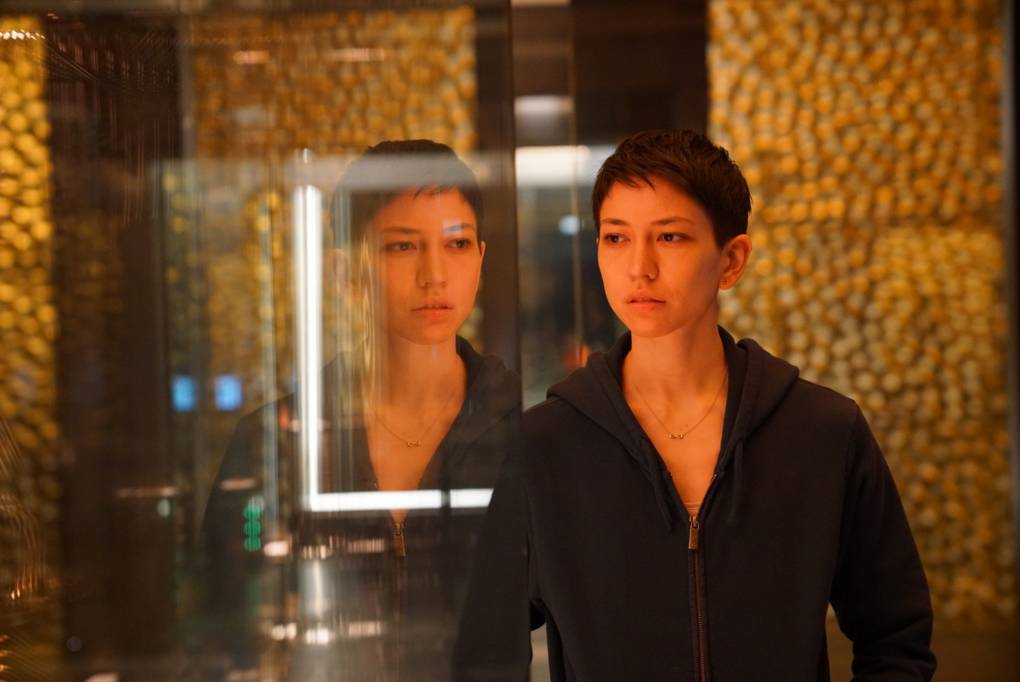
"caption": "Sonoya Mizuno stars in Devs, an ever so slightly fictional take on Silicon Valley; drenched in light, color and contrast.",
"description": "Sonoya Mizuno stars in Devs, an ever so slightly fictional take on Silicon Valley; drenched in light, color and contrast.",
"title": "Sonoya Mizuno stars in Devs, an ever so slightly fictional take on Silicon Valley; drenched in light, color and contrast.",
"credit": "Courtesy of Mia Mizuno/FX",
"status": "inherit",
"isLoading": false,
"fetchFailed": false
},
"arts_13876040": {
"type": "attachments",
"id": "arts_13876040",
"meta": {
"index": "attachments_1716263798",
"site": "arts",
"id": "13876040",
"found": true
},
"parent": 13876037,
"imgSizes": {
"twentyfourteen-full-width": {
"file": "https://ww2.kqed.org/app/uploads/sites/2/2020/03/FifthElement_COVER-1038x576.jpg",
"width": 1038,
"mimeType": "image/jpeg",
"height": 576
},
"thumbnail": {
"file": "https://ww2.kqed.org/app/uploads/sites/2/2020/03/FifthElement_COVER-160x90.jpg",
"width": 160,
"mimeType": "image/jpeg",
"height": 90
},
"post-thumbnail": {
"file": "https://ww2.kqed.org/app/uploads/sites/2/2020/03/FifthElement_COVER-672x372.jpg",
"width": 672,
"mimeType": "image/jpeg",
"height": 372
},
"kqedFullSize": {
"file": "https://ww2.kqed.org/app/uploads/sites/2/2020/03/FifthElement_COVER.jpg",
"width": 1920,
"height": 1080
},
"large": {
"file": "https://ww2.kqed.org/app/uploads/sites/2/2020/03/FifthElement_COVER-1020x574.jpg",
"width": 1020,
"mimeType": "image/jpeg",
"height": 574
},
"full-width": {
"file": "https://ww2.kqed.org/app/uploads/sites/2/2020/03/FifthElement_COVER-1920x1080.jpg",
"width": 1920,
"mimeType": "image/jpeg",
"height": 1080
},
"medium": {
"file": "https://ww2.kqed.org/app/uploads/sites/2/2020/03/FifthElement_COVER-800x450.jpg",
"width": 800,
"mimeType": "image/jpeg",
"height": 450
},
"medium_large": {
"file": "https://ww2.kqed.org/app/uploads/sites/2/2020/03/FifthElement_COVER-768x432.jpg",
"width": 768,
"mimeType": "image/jpeg",
"height": 432
}
},
"publishDate": 1583454519,
"modified": 1583454586,
"caption": "Still from Luc Besson's 1997 film, 'The Fifth Element,' starring Milla Jovovich and Bruce Willis.",
"description": "Still from Luc Besson's 1997 film, 'The Fifth Element,' starring Milla Jovovich and Bruce Willis.",
"title": "FifthElement_COVER",
"credit": "Courtesy of Astria Suparak",
"status": "inherit",
"isLoading": false,
"fetchFailed": false
},
"arts_13874723": {
"type": "attachments",
"id": "arts_13874723",
"meta": {
"index": "attachments_1716263798",
"site": "arts",
"id": "13874723",
"found": true
},
"parent": 13874720,
"imgSizes": {
"twentyfourteen-full-width": {
"file": "https://ww2.kqed.org/app/uploads/sites/2/2020/02/Aelita_Protazanov_05_W_COVER-1038x576.jpg",
"width": 1038,
"mimeType": "image/jpeg",
"height": 576
},
"thumbnail": {
"file": "https://ww2.kqed.org/app/uploads/sites/2/2020/02/Aelita_Protazanov_05_W_COVER-160x90.jpg",
"width": 160,
"mimeType": "image/jpeg",
"height": 90
},
"post-thumbnail": {
"file": "https://ww2.kqed.org/app/uploads/sites/2/2020/02/Aelita_Protazanov_05_W_COVER-672x372.jpg",
"width": 672,
"mimeType": "image/jpeg",
"height": 372
},
"kqedFullSize": {
"file": "https://ww2.kqed.org/app/uploads/sites/2/2020/02/Aelita_Protazanov_05_W_COVER.jpg",
"width": 1756,
"height": 988
},
"large": {
"file": "https://ww2.kqed.org/app/uploads/sites/2/2020/02/Aelita_Protazanov_05_W_COVER-1020x574.jpg",
"width": 1020,
"mimeType": "image/jpeg",
"height": 574
},
"medium": {
"file": "https://ww2.kqed.org/app/uploads/sites/2/2020/02/Aelita_Protazanov_05_W_COVER-800x450.jpg",
"width": 800,
"mimeType": "image/jpeg",
"height": 450
},
"medium_large": {
"file": "https://ww2.kqed.org/app/uploads/sites/2/2020/02/Aelita_Protazanov_05_W_COVER-768x432.jpg",
"width": 768,
"mimeType": "image/jpeg",
"height": 432
}
},
"publishDate": 1581387184,
"modified": 1581387213,
"caption": "'Aelita: Queen of Mars,' 1924.",
"description": "'Aelita: Queen of Mars,' 1924.",
"title": "Aelita_Protazanov_05_W_COVER",
"credit": null,
"status": "inherit",
"isLoading": false,
"fetchFailed": false
},
"arts_13866815": {
"type": "attachments",
"id": "arts_13866815",
"meta": {
"index": "attachments_1716263798",
"site": "arts",
"id": "13866815",
"found": true
},
"parent": 13866814,
"imgSizes": {
"twentyfourteen-full-width": {
"file": "https://ww2.kqed.org/app/uploads/sites/2/2019/09/adastra_wide-c6b3e34de77606249b9462c5647f19370b5d5b9f-1038x576.jpg",
"width": 1038,
"mimeType": "image/jpeg",
"height": 576
},
"thumbnail": {
"file": "https://ww2.kqed.org/app/uploads/sites/2/2019/09/adastra_wide-c6b3e34de77606249b9462c5647f19370b5d5b9f-160x90.jpg",
"width": 160,
"mimeType": "image/jpeg",
"height": 90
},
"post-thumbnail": {
"file": "https://ww2.kqed.org/app/uploads/sites/2/2019/09/adastra_wide-c6b3e34de77606249b9462c5647f19370b5d5b9f-672x372.jpg",
"width": 672,
"mimeType": "image/jpeg",
"height": 372
},
"kqedFullSize": {
"file": "https://ww2.kqed.org/app/uploads/sites/2/2019/09/adastra_wide-c6b3e34de77606249b9462c5647f19370b5d5b9f.jpg",
"width": 2048,
"height": 1151
},
"large": {
"file": "https://ww2.kqed.org/app/uploads/sites/2/2019/09/adastra_wide-c6b3e34de77606249b9462c5647f19370b5d5b9f-1020x573.jpg",
"width": 1020,
"mimeType": "image/jpeg",
"height": 573
},
"complete_open_graph": {
"file": "https://ww2.kqed.org/app/uploads/sites/2/2019/09/adastra_wide-c6b3e34de77606249b9462c5647f19370b5d5b9f-1200x675.jpg",
"width": 1200,
"mimeType": "image/jpeg",
"height": 675
},
"full-width": {
"file": "https://ww2.kqed.org/app/uploads/sites/2/2019/09/adastra_wide-c6b3e34de77606249b9462c5647f19370b5d5b9f-1920x1080.jpg",
"width": 1920,
"mimeType": "image/jpeg",
"height": 1080
},
"medium": {
"file": "https://ww2.kqed.org/app/uploads/sites/2/2019/09/adastra_wide-c6b3e34de77606249b9462c5647f19370b5d5b9f-800x450.jpg",
"width": 800,
"mimeType": "image/jpeg",
"height": 450
},
"medium_large": {
"file": "https://ww2.kqed.org/app/uploads/sites/2/2019/09/adastra_wide-c6b3e34de77606249b9462c5647f19370b5d5b9f-768x432.jpg",
"width": 768,
"mimeType": "image/jpeg",
"height": 432
}
},
"publishDate": 1568938621,
"modified": 1568939179,
"caption": "More like 'DAD Astra' am I right? Brad Pitt stars as astronaut Roy McBride chasing the ghost of his father across an unforgiving solar system in 'Ad Astra.'",
"description": "More like 'DAD Astra' am I right? Brad Pitt stars as astronaut Roy McBride chasing the ghost of his father across an unforgiving solar system in 'Ad Astra.'",
"title": "More like DAD Astra am I right? Brad Pitt stars as astronaut Roy McBride chasing the ghost of his father across an unforgiving solar system in Ad Astra.",
"credit": "Disney",
"status": "inherit",
"isLoading": false,
"fetchFailed": false
},
"arts_13864028": {
"type": "attachments",
"id": "arts_13864028",
"meta": {
"index": "attachments_1716263798",
"site": "arts",
"id": "13864028",
"found": true
},
"parent": 13864027,
"imgSizes": {
"twentyfourteen-full-width": {
"file": "https://ww2.kqed.org/app/uploads/sites/2/2019/08/legion_304_0915r_wide-425f5399d7bdb2a02895667bfab06663b379a4a1-1038x576.jpg",
"width": 1038,
"mimeType": "image/jpeg",
"height": 576
},
"thumbnail": {
"file": "https://ww2.kqed.org/app/uploads/sites/2/2019/08/legion_304_0915r_wide-425f5399d7bdb2a02895667bfab06663b379a4a1-160x90.jpg",
"width": 160,
"mimeType": "image/jpeg",
"height": 90
},
"post-thumbnail": {
"file": "https://ww2.kqed.org/app/uploads/sites/2/2019/08/legion_304_0915r_wide-425f5399d7bdb2a02895667bfab06663b379a4a1-672x372.jpg",
"width": 672,
"mimeType": "image/jpeg",
"height": 372
},
"kqedFullSize": {
"file": "https://ww2.kqed.org/app/uploads/sites/2/2019/08/legion_304_0915r_wide-425f5399d7bdb2a02895667bfab06663b379a4a1.jpg",
"width": 2048,
"height": 1152
},
"large": {
"file": "https://ww2.kqed.org/app/uploads/sites/2/2019/08/legion_304_0915r_wide-425f5399d7bdb2a02895667bfab06663b379a4a1-1020x574.jpg",
"width": 1020,
"mimeType": "image/jpeg",
"height": 574
},
"complete_open_graph": {
"file": "https://ww2.kqed.org/app/uploads/sites/2/2019/08/legion_304_0915r_wide-425f5399d7bdb2a02895667bfab06663b379a4a1-1200x675.jpg",
"width": 1200,
"mimeType": "image/jpeg",
"height": 675
},
"full-width": {
"file": "https://ww2.kqed.org/app/uploads/sites/2/2019/08/legion_304_0915r_wide-425f5399d7bdb2a02895667bfab06663b379a4a1-1920x1080.jpg",
"width": 1920,
"mimeType": "image/jpeg",
"height": 1080
},
"medium": {
"file": "https://ww2.kqed.org/app/uploads/sites/2/2019/08/legion_304_0915r_wide-425f5399d7bdb2a02895667bfab06663b379a4a1-800x450.jpg",
"width": 800,
"mimeType": "image/jpeg",
"height": 450
},
"medium_large": {
"file": "https://ww2.kqed.org/app/uploads/sites/2/2019/08/legion_304_0915r_wide-425f5399d7bdb2a02895667bfab06663b379a4a1-768x432.jpg",
"width": 768,
"mimeType": "image/jpeg",
"height": 432
}
},
"publishDate": 1565736486,
"modified": 1565737330,
"caption": "David (Dan Stevens) got his groove on, in more ways than one, in the final season of 'Legion.'\n",
"description": "David (Dan Stevens) got his groove on, in more ways than one, in the final season of 'Legion.'\n",
"title": "David (Dan Stevens) got his groove on, in more ways than one, in the final season of 'Legion.'",
"credit": "Suzanne Tenner/FX",
"status": "inherit",
"isLoading": false,
"fetchFailed": false
},
"arts_13860024": {
"type": "attachments",
"id": "arts_13860024",
"meta": {
"index": "attachments_1716263798",
"site": "arts",
"id": "13860024",
"found": true
},
"parent": 13860023,
"imgSizes": {
"thumbnail": {
"file": "https://ww2.kqed.org/app/uploads/sites/2/2019/06/mib_wide-80c899149096527c626a64bfc78175b9231e9740-160x90.jpg",
"width": 160,
"mimeType": "image/jpeg",
"height": 90
},
"post-thumbnail": {
"file": "https://ww2.kqed.org/app/uploads/sites/2/2019/06/mib_wide-80c899149096527c626a64bfc78175b9231e9740-672x372.jpg",
"width": 672,
"mimeType": "image/jpeg",
"height": 372
},
"kqedFullSize": {
"file": "https://ww2.kqed.org/app/uploads/sites/2/2019/06/mib_wide-80c899149096527c626a64bfc78175b9231e9740.jpg",
"width": 918,
"height": 516
},
"medium": {
"file": "https://ww2.kqed.org/app/uploads/sites/2/2019/06/mib_wide-80c899149096527c626a64bfc78175b9231e9740-800x450.jpg",
"width": 800,
"mimeType": "image/jpeg",
"height": 450
},
"medium_large": {
"file": "https://ww2.kqed.org/app/uploads/sites/2/2019/06/mib_wide-80c899149096527c626a64bfc78175b9231e9740-768x432.jpg",
"width": 768,
"mimeType": "image/jpeg",
"height": 432
}
},
"publishDate": 1561073062,
"modified": 1561073377,
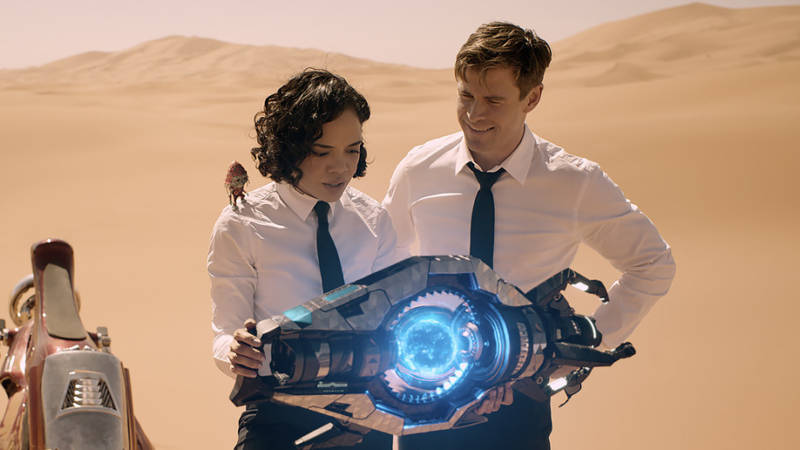
"caption": "Neuralyze This: Tessa Thompson and Chris Hemsworth team up as Agents M and H in the fourth installment of the 'Men in Black' series.",
"description": "Neuralyze This: Tessa Thompson and Chris Hemsworth team up as Agents M and H in the fourth installment of the 'Men in Black' series.",
"title": "Neuralyze This: Tessa Thompson and Chris Hemsworth team up as Agents M and H in the fourth installment of the Men in Black series.",
"credit": "Sony Pictures",
"status": "inherit",
"isLoading": false,
"fetchFailed": false
}
},
"audioPlayerReducer": {
"postId": "stream_live",
"isPaused": true,
"isPlaying": false,
"pfsActive": false,
"pledgeModalIsOpen": true,
"playerDrawerIsOpen": false,
"liveAudioPlayStartedAt": 0,
"liveAudioPlayContext": ""
},
"authorsReducer": {
"byline_arts_13898330": {
"type": "authors",
"id": "byline_arts_13898330",
"meta": {
"override": true
},
"slug": "byline_arts_13898330",
"name": "Justin Chang",
"isLoading": false
},
"byline_arts_13890684": {
"type": "authors",
"id": "byline_arts_13890684",
"meta": {
"override": true
},
"slug": "byline_arts_13890684",
"name": "Lydia Massey",
"isLoading": false
},
"byline_arts_13887531": {
"type": "authors",
"id": "byline_arts_13887531",
"meta": {
"override": true
},
"slug": "byline_arts_13887531",
"name": "Glen Weldon",
"isLoading": false
},
"byline_arts_13866814": {
"type": "authors",
"id": "byline_arts_13866814",
"meta": {
"override": true
},
"slug": "byline_arts_13866814",
"name": "Chris Klimek",
"isLoading": false
},
"byline_arts_13864027": {
"type": "authors",
"id": "byline_arts_13864027",
"meta": {
"override": true
},
"slug": "byline_arts_13864027",
"name": "Glen Weldon",
"isLoading": false
},
"byline_arts_13860023": {
"type": "authors",
"id": "byline_arts_13860023",
"meta": {
"override": true
},
"slug": "byline_arts_13860023",
"name": "Scott Tobias",
"isLoading": false
},
"mfox": {
"type": "authors",
"id": "22",
"meta": {
"index": "authors_1716337520",
"id": "22",
"found": true
},
"name": "Michael Fox",
"firstName": "Michael",
"lastName": "Fox",
"slug": "mfox",
"email": "foxonfilm@yahoo.com",
"display_author_email": false,
"staff_mastheads": [],
"title": "KQED Contributor",
"bio": "Michael Fox has written about film for dozens of publications since 1987. He is a founding member of the San Francisco Bay Area Film Critics Circle.",
"avatar": "https://secure.gravatar.com/avatar/d9849d6c659c41414795c471d907bb97b396e2a32b88e20e6ff66f65fbdd6dcd?s=600&d=blank&r=g",
"twitter": null,
"bluesky": null,
"facebook": null,
"instagram": null,
"linkedin": null,
"sites": [
{
"site": "arts",
"roles": [
"Contributor",
"contributor"
]
}
],
"headData": {
"title": "Michael Fox | KQED",
"description": "KQED Contributor",
"ogImgSrc": "https://secure.gravatar.com/avatar/d9849d6c659c41414795c471d907bb97b396e2a32b88e20e6ff66f65fbdd6dcd?s=600&d=blank&r=g",
"twImgSrc": "https://secure.gravatar.com/avatar/d9849d6c659c41414795c471d907bb97b396e2a32b88e20e6ff66f65fbdd6dcd?s=600&d=blank&r=g"
},
"isLoading": false,
"link": "/author/mfox"
},
"shotchkiss": {
"type": "authors",
"id": "61",
"meta": {
"index": "authors_1716337520",
"id": "61",
"found": true
},
"name": "Sarah Hotchkiss",
"firstName": "Sarah",
"lastName": "Hotchkiss",
"slug": "shotchkiss",
"email": "shotchkiss@kqed.org",
"display_author_email": true,
"staff_mastheads": [
"arts"
],
"title": "Senior Editor",
"bio": "Sarah Hotchkiss is a San Francisco \u003ca href=\"http://www.sarahhotchkiss.com\">artist\u003c/a> and arts writer. In 2019, she received the Dorothea & Leo Rabkin Foundation grant for visual art journalism and in 2020 she received a Society of Professional Journalists, Northern California award for excellence in arts and culture reporting.",
"avatar": "https://secure.gravatar.com/avatar/bc662df144b3d27fd8b1b6f1c2a420d34e91e53154d411bb7ad353cc8b6cea8d?s=600&d=blank&r=g",
"twitter": null,
"bluesky": null,
"facebook": null,
"instagram": null,
"linkedin": null,
"sites": [
{
"site": "",
"roles": [
"editor"
]
},
{
"site": "arts",
"roles": [
"Contributor",
"administrator"
]
},
{
"site": "artschool",
"roles": [
"administrator"
]
},
{
"site": "news",
"roles": [
"editor"
]
},
{
"site": "pop",
"roles": [
"administrator"
]
},
{
"site": "bayareabites",
"roles": [
"editor"
]
},
{
"site": "spark",
"roles": [
"editor"
]
},
{
"site": "checkplease",
"roles": [
"editor"
]
}
],
"headData": {
"title": "Sarah Hotchkiss | KQED",
"description": "Senior Editor",
"ogImgSrc": "https://secure.gravatar.com/avatar/bc662df144b3d27fd8b1b6f1c2a420d34e91e53154d411bb7ad353cc8b6cea8d?s=600&d=blank&r=g",
"twImgSrc": "https://secure.gravatar.com/avatar/bc662df144b3d27fd8b1b6f1c2a420d34e91e53154d411bb7ad353cc8b6cea8d?s=600&d=blank&r=g"
},
"isLoading": false,
"link": "/author/shotchkiss"
},
"rachael-myrow": {
"type": "authors",
"id": "251",
"meta": {
"index": "authors_1716337520",
"id": "251",
"found": true
},
"name": "Rachael Myrow",
"firstName": "Rachael",
"lastName": "Myrow",
"slug": "rachael-myrow",
"email": "rmyrow@kqed.org",
"display_author_email": true,
"staff_mastheads": [
"news"
],
"title": "Senior Editor of KQED's Silicon Valley News Desk",
"bio": "• I write and edit stories about how Silicon Valley power and policies shape everyday life in California. I’m also passionate about making Bay Area history and culture more accessible to a broad public. • I’ve been a journalist for most of my life, starting in high school with The Franklin Press in Los Angeles, where I grew up. While earning my first degree in English at UC Berkeley, I got my start in public radio at KALX-FM. After completing a second degree in journalism at Cal, I landed my first professional job at Marketplace, then moved on to KPCC (now LAist), and then KQED, where I hosted The California Report for more than seven years. • My reporting has appeared on NPR, The World, WBUR’s \u003ci>Here & Now\u003c/i>, and the BBC. I also guest host for KQED’s \u003ci>Forum\u003c/i>, as well as the Commonwealth Club in San Francisco. • I speak periodically on media, democracy and technology issues, and do voiceover work for documentaries and educational video projects. • Outside of the studio, you'll find me hiking Bay Area trails and whipping up Insta-ready meals in my kitchen. • I do not accept gifts, money, or favors from anyone connected to my reporting, I don't pay people for information, and I do not support or donate to political causes. • I strive to treat the people I report on with fairness, honesty, and respect. I also recognize there are often multiple sides to a story and work to verify information through multiple sources and documentation. If I get something wrong, I correct it.",
"avatar": "https://secure.gravatar.com/avatar/3ed8a3c5f26025e4a805ba634cda8cd764906b97438a6d9ce216b044e340da4e?s=600&d=blank&r=g",
"twitter": "rachaelmyrow",
"bluesky": null,
"facebook": null,
"instagram": null,
"linkedin": "https://www.linkedin.com/in/rachaelmyrow/",
"sites": [
{
"site": "arts",
"roles": [
"administrator"
]
},
{
"site": "news",
"roles": [
"edit_others_posts",
"editor"
]
},
{
"site": "futureofyou",
"roles": [
"editor"
]
},
{
"site": "bayareabites",
"roles": [
"editor"
]
},
{
"site": "stateofhealth",
"roles": [
"editor"
]
},
{
"site": "science",
"roles": [
"editor"
]
},
{
"site": "food",
"roles": [
"editor"
]
},
{
"site": "forum",
"roles": [
"editor"
]
},
{
"site": "liveblog",
"roles": [
"author"
]
}
],
"headData": {
"title": "Rachael Myrow | KQED",
"description": "Senior Editor of KQED's Silicon Valley News Desk",
"ogImgSrc": "https://secure.gravatar.com/avatar/3ed8a3c5f26025e4a805ba634cda8cd764906b97438a6d9ce216b044e340da4e?s=600&d=blank&r=g",
"twImgSrc": "https://secure.gravatar.com/avatar/3ed8a3c5f26025e4a805ba634cda8cd764906b97438a6d9ce216b044e340da4e?s=600&d=blank&r=g"
},
"isLoading": false,
"link": "/author/rachael-myrow"
},
"ralexandra": {
"type": "authors",
"id": "11242",
"meta": {
"index": "authors_1716337520",
"id": "11242",
"found": true
},
"name": "Rae Alexandra",
"firstName": "Rae",
"lastName": "Alexandra",
"slug": "ralexandra",
"email": "ralexandra@kqed.org",
"display_author_email": true,
"staff_mastheads": [],
"title": "Reporter/Producer",
"bio": "Rae Alexandra is a Reporter/Producer for KQED Arts & Culture, and the creator/author of the \u003ca href=\"https://www.kqed.org/arts/program/rebel-girls-from-bay-area-history\">Rebel Girls From Bay Area History\u003c/a> and \u003ca href=\"https://www.kqed.org/bizarrebayarea\">Bizarre Bay Area\u003c/a> series. Her debut book, \u003ca href=\"https://citylights.com/politics-current-events-history/unsung-heroines35-women-who-changed/\">Unsung Heroines: 35 Women Who Changed the Bay Area\u003c/a> was published by City Lights in March 2026. In 2023, Rae was awarded an SPJ Excellence in Journalism Award for Arts & Culture. Rae was born and raised in Wales and subsequently — even after two decades in Northern California — still uses phrases that regularly baffle her coworkers.",
"avatar": "https://secure.gravatar.com/avatar/edfee8176c80cc0a382b051190f5341997df378a934a5774dcb0977732dfd401?s=600&d=blank&r=g",
"twitter": null,
"bluesky": null,
"facebook": null,
"instagram": null,
"linkedin": null,
"sites": [
{
"site": "arts",
"roles": [
"subscriber"
]
},
{
"site": "news",
"roles": [
"subscriber"
]
},
{
"site": "pop",
"roles": [
"subscriber"
]
},
{
"site": "bayareabites",
"roles": [
"subscriber"
]
},
{
"site": "science",
"roles": [
"subscriber"
]
}
],
"headData": {
"title": "Rae Alexandra | KQED",
"description": "Reporter/Producer",
"ogImgSrc": "https://secure.gravatar.com/avatar/edfee8176c80cc0a382b051190f5341997df378a934a5774dcb0977732dfd401?s=600&d=blank&r=g",
"twImgSrc": "https://secure.gravatar.com/avatar/edfee8176c80cc0a382b051190f5341997df378a934a5774dcb0977732dfd401?s=600&d=blank&r=g"
},
"isLoading": false,
"link": "/author/ralexandra"
},
"jsorapuru": {
"type": "authors",
"id": "11792",
"meta": {
"index": "authors_1716337520",
"id": "11792",
"found": true
},
"name": "Julian E.J. Sorapuru",
"firstName": "Julian",
"lastName": "Sorapuru",
"slug": "jsorapuru",
"email": "jsorapuru@kqed.org",
"display_author_email": true,
"staff_mastheads": [],
"title": "Arts & Culture Reporter",
"bio": "Julian E.J. Sorapuru is an Arts & Culture Intern at KQED. Prior to joining KQED Arts, he interned at both POLITICO, covering transportation policy, and \u003cem>The Times-Picayune\u003c/em>, covering government and politics in his hometown of New Orleans, LA. Julian was the first and only Black male Editor-in-Chief in the 119 year history of the University of San Francisco's student newspaper, the\u003cem> San Francisco Foghorn\u003c/em>. He currently resides in San Francisco, CA and enjoys soccer, photography, and reading.",
"avatar": "https://secure.gravatar.com/avatar/e4d0156d1244f96b87927aa011d794a8?s=600&d=blank&r=g",
"twitter": "JulianSorapuru",
"facebook": null,
"instagram": null,
"linkedin": null,
"sites": [
{
"site": "arts",
"roles": [
"editor"
]
}
],
"headData": {
"title": "Julian E.J. Sorapuru | KQED",
"description": "Arts & Culture Reporter",
"ogImgSrc": "https://secure.gravatar.com/avatar/e4d0156d1244f96b87927aa011d794a8?s=600&d=blank&r=g",
"twImgSrc": "https://secure.gravatar.com/avatar/e4d0156d1244f96b87927aa011d794a8?s=600&d=blank&r=g"
},
"isLoading": false,
"link": "/author/jsorapuru"
}
},
"pagesReducer": {
"arts_tag_sci-fi": {
"type": "terms",
"id": "arts_3797",
"meta": {
"index": "terms_1716263798",
"site": "arts",
"id": "3797",
"score": 9.894002
},
"featImg": null,
"name": "sci-fi",
"description": null,
"taxonomy": "tag",
"headData": {
"twImgId": null,
"twTitle": null,
"ogTitle": null,
"ogImgId": null,
"twDescription": null,
"description": null,
"title": "sci-fi Archives | KQED Arts",
"ogDescription": null
},
"ttid": 3809,
"slug": "sci-fi",
"isLoading": false,
"title": "sci-fi",
"pageMeta": {
"site": "arts",
"WpPageTemplate": "page-topic-editorial",
"currentPage": 4
},
"blocks": [
{
"blockName": "kqed/post-list",
"attrs": {
"layout": "cardArticle2",
"query": "posts/arts?tag=sci-fi",
"seeMore": false,
"paginated": true,
"page": 4
}
},
{
"blockName": "kqed/ad"
}
]
}
},
"pfsSessionReducer": {},
"postsReducer": {
"stream_live": {
"type": "live",
"id": "stream_live",
"audioUrl": "https://streams.kqed.org/kqedradio",
"title": "Live Stream",
"excerpt": "Live Stream information currently unavailable.",
"link": "/radio",
"featImg": "",
"label": {
"name": "KQED Live",
"link": "/"
}
},
"stream_kqedNewscast": {
"type": "posts",
"id": "stream_kqedNewscast",
"audioUrl": "https://www.kqed.org/.stream/anon/radio/RDnews/newscast.mp3?_=1",
"title": "KQED Newscast",
"featImg": "",
"label": {
"name": "88.5 FM",
"link": "/"
}
},
"arts_13911456": {
"type": "posts",
"id": "arts_13911456",
"meta": {
"index": "posts_1716263798",
"site": "arts",
"id": "13911456",
"score": null,
"sort": [
1648825205000
]
},
"guestAuthors": [],
"slug": "at-moad-david-huffmans-terra-incognita-explores-black-trauma-among-the-stars",
"title": "At MoAD, David Huffman’s ‘Terra Incognita' Explores Black Trauma Among the Stars",
"publishDate": 1648825205,
"format": "aside",
"headTitle": "At MoAD, David Huffman’s ‘Terra Incognita’ Explores Black Trauma Among the Stars | KQED",
"labelTerm": {
"term": 140,
"site": "arts"
},
"content": "\u003cfigure id=\"attachment_13911473\" class=\"wp-caption aligncenter\" style=\"max-width: 800px\">\u003cimg loading=\"lazy\" decoding=\"async\" class=\"size-medium wp-image-13911473\" src=\"https://ww2.kqed.org/app/uploads/sites/2/2022/04/Treehuggers-4-1-1-800x598.jpg\" alt=\"A painting showing African American astronauts hugging trees against a green background.\" width=\"800\" height=\"598\" srcset=\"https://cdn.kqed.org/wp-content/uploads/sites/2/2022/04/Treehuggers-4-1-1-800x598.jpg 800w, https://cdn.kqed.org/wp-content/uploads/sites/2/2022/04/Treehuggers-4-1-1-1020x762.jpg 1020w, https://cdn.kqed.org/wp-content/uploads/sites/2/2022/04/Treehuggers-4-1-1-160x120.jpg 160w, https://cdn.kqed.org/wp-content/uploads/sites/2/2022/04/Treehuggers-4-1-1-768x574.jpg 768w, https://cdn.kqed.org/wp-content/uploads/sites/2/2022/04/Treehuggers-4-1-1-1536x1147.jpg 1536w, https://cdn.kqed.org/wp-content/uploads/sites/2/2022/04/Treehuggers-4-1-1.jpg 1920w\" sizes=\"(max-width: 800px) 100vw, 800px\">\u003cfigcaption class=\"wp-caption-text\">David Huffman’s ‘Treehuggers #4,’\u003cbr>2008, is part of a large survey at San Francisco’s Museum of the African Diaspora, spanning three decades of the artists’ work. \u003ccite>(Courtesy of the artist)\u003c/cite>\u003c/figcaption>\u003c/figure>\n\u003cp>When we think of a far-off future where humans trek about the “final frontier” of space like an intergalactic highway, how do we envision those who travel the cosmos? Most science fiction paints them as nomads on the hunt for adventure and the spoils of mysterious new places.\u003c/p>\n\u003cp>But whose faces are inside those astronaut helmets?\u003c/p>\n\u003cp>David Huffman’s exhibit at San Francisco’s Museum of the African Diaspora, titled \u003ca href=\"https://www.moadsf.org/exhibitions/david-huffman-terra-incognita\" target=\"_blank\" rel=\"noopener noreferrer\">\u003cem>Terra Incognita\u003c/em>\u003c/a>, positions recurring images of Black people in spacesuits, whom he calls “Traumanauts,” at the center of this question. In the exhibit, which runs through Aug. 18, Huffman uses interstellar imagery to call attention to Black Americans’ search for identity in our all-too-real society grounded here on Earth—a society that has stripped them of their ancestral history and culture.\u003c/p>\n\u003cfigure id=\"attachment_13911462\" class=\"wp-caption aligncenter\" style=\"max-width: 800px\">\u003ca href=\"https://ww2.kqed.org/app/uploads/sites/2/2022/04/Traumanaut-8-1.jpg\">\u003cimg loading=\"lazy\" decoding=\"async\" class=\"size-medium wp-image-13911462\" src=\"https://ww2.kqed.org/app/uploads/sites/2/2022/04/Traumanaut-8-1-800x790.jpg\" alt=\"A painting of an African-American man's face inside an astronaut helmet.\" width=\"800\" height=\"790\" srcset=\"https://cdn.kqed.org/wp-content/uploads/sites/2/2022/04/Traumanaut-8-1-800x790.jpg 800w, https://cdn.kqed.org/wp-content/uploads/sites/2/2022/04/Traumanaut-8-1-1020x1008.jpg 1020w, https://cdn.kqed.org/wp-content/uploads/sites/2/2022/04/Traumanaut-8-1-160x158.jpg 160w, https://cdn.kqed.org/wp-content/uploads/sites/2/2022/04/Traumanaut-8-1-768x759.jpg 768w, https://cdn.kqed.org/wp-content/uploads/sites/2/2022/04/Traumanaut-8-1-1536x1518.jpg 1536w, https://cdn.kqed.org/wp-content/uploads/sites/2/2022/04/Traumanaut-8-1.jpg 1920w\" sizes=\"(max-width: 800px) 100vw, 800px\">\u003c/a>\u003cfigcaption class=\"wp-caption-text\">David Huffman’s ‘Traumanaut #8,’ 2009. \u003ccite>(Courtesy of the artist)\u003c/cite>\u003c/figcaption>\u003c/figure>\n\u003cp>“The no therapy for Black folks after slavery, and just letting us figure out how to deal with it ourselves, becomes problematic in a sense of the continuity of health for a whole culture of folks,” the Berkeley-born visual artist tells KQED.\u003c/p>\n\u003cp>“In a way, we’re working out our own places of health,” Huffman adds. “So for me, these paintings cite these moments of trying to find health—like digging through some of the dirt, digging through some of the hard stuff—but also recognizing a sense of reflection.”\u003c/p>\n\u003cp>[ad fullwidth]\u003c/p>\n\u003cp>The Traumanauts’ journey takes place outside of space and time. But Huffman’s own use of the characters spans three decades and many mediums: from ceramics he sculpted as a graduate student at California College of the Arts in the ’90s to a live-action short film titled \u003cem>Tree Hugger\u003c/em> that he shot in 2011. Pieces from each of these eras are present in the exhibition, though it leans heavily on paintings he created in the mid to late 2000s.\u003c/p>\n\u003cfigure id=\"attachment_13911463\" class=\"wp-caption aligncenter\" style=\"max-width: 800px\">\u003ca href=\"https://ww2.kqed.org/app/uploads/sites/2/2022/04/Jimi-Hendrix-.jpg\">\u003cimg loading=\"lazy\" decoding=\"async\" class=\"size-medium wp-image-13911463\" src=\"https://ww2.kqed.org/app/uploads/sites/2/2022/04/Jimi-Hendrix--800x802.jpg\" alt=\"A painting of an astronaut, seen from the back, playing guitar against a dark landscape.\" width=\"800\" height=\"802\" srcset=\"https://cdn.kqed.org/wp-content/uploads/sites/2/2022/04/Jimi-Hendrix--800x802.jpg 800w, https://cdn.kqed.org/wp-content/uploads/sites/2/2022/04/Jimi-Hendrix--1020x1022.jpg 1020w, https://cdn.kqed.org/wp-content/uploads/sites/2/2022/04/Jimi-Hendrix--160x160.jpg 160w, https://cdn.kqed.org/wp-content/uploads/sites/2/2022/04/Jimi-Hendrix--768x770.jpg 768w, https://cdn.kqed.org/wp-content/uploads/sites/2/2022/04/Jimi-Hendrix--1533x1536.jpg 1533w, https://cdn.kqed.org/wp-content/uploads/sites/2/2022/04/Jimi-Hendrix-.jpg 1920w\" sizes=\"(max-width: 800px) 100vw, 800px\">\u003c/a>\u003cfigcaption class=\"wp-caption-text\">David Huffman’s ‘Jimi Hendrix,’ no date. \u003ccite>(Courtesy of the artist)\u003c/cite>\u003c/figcaption>\u003c/figure>\n\u003cp>The human subjects provide the throughline, drawn in minimalist, precise, linear boundaries. Huffman grew up watching classic sci-fi movies, but notes that his style was inspired more by 1960s Japanese manga like Osamu Tezuka’s “Astro Boy”; Walt Disney’s animations of the same era; and ancient Egyptian wall art.\u003c/p>\n\u003cp>These figures are positioned against abstract, horizontal landscapes. At times, Huffman paints in silhouette. At others, he uses models to create more defined recurring imagery like basketballs, watermelons, burning churches and barren trees meant to evoke Billie Holiday’s “Strange Fruit,” according to the artist, who now lives in Oakland.\u003c/p>\n\u003cfigure id=\"attachment_13911465\" class=\"wp-caption aligncenter\" style=\"max-width: 800px\">\u003ca href=\"https://ww2.kqed.org/app/uploads/sites/2/2022/04/Yankee-Trash.jpg\">\u003cimg loading=\"lazy\" decoding=\"async\" class=\"size-medium wp-image-13911465\" src=\"https://ww2.kqed.org/app/uploads/sites/2/2022/04/Yankee-Trash-800x397.jpg\" alt=\"A surrealist painting of burning churches, cars and barren trees on a foreign planet.\" width=\"800\" height=\"397\" srcset=\"https://cdn.kqed.org/wp-content/uploads/sites/2/2022/04/Yankee-Trash-800x397.jpg 800w, https://cdn.kqed.org/wp-content/uploads/sites/2/2022/04/Yankee-Trash-1020x506.jpg 1020w, https://cdn.kqed.org/wp-content/uploads/sites/2/2022/04/Yankee-Trash-160x79.jpg 160w, https://cdn.kqed.org/wp-content/uploads/sites/2/2022/04/Yankee-Trash-768x381.jpg 768w, https://cdn.kqed.org/wp-content/uploads/sites/2/2022/04/Yankee-Trash-1536x762.jpg 1536w, https://cdn.kqed.org/wp-content/uploads/sites/2/2022/04/Yankee-Trash.jpg 1920w\" sizes=\"(max-width: 800px) 100vw, 800px\">\u003c/a>\u003cfigcaption class=\"wp-caption-text\">David Huffman’s ‘Yankee Trash,’ 2008. \u003ccite>(Courtesy of the artist)\u003c/cite>\u003c/figcaption>\u003c/figure>\n\u003cp>This mixing of techniques also extends to the application of paint to canvas. Huffman created his otherworldly atmospheres using a variety of techniques: stroking, blotting, dabbing, jabbing or dripping with his brush; layering his canvases with multiple generations of paint including oil, acrylic, watercolor and even glitter.\u003c/p>\n\u003cp>In doing so, Huffman says, he seeks to “fracture the continuity of time” in order to create “unencumbered spaces” for his Black cosmic travelers to “work some of their own issues of trauma out.” The Traumanauts do this in a host of ways: \u003ca href=\"https://www.youtube.com/watch?v=ouhr0DDpiXI\" target=\"_blank\" rel=\"noopener noreferrer\">they play basketball\u003c/a>, or wage war against their oppressors. They also hug trees, create music and tend to one another’s injuries.\u003c/p>\n\u003cp>Some of these works undoubtedly come from a place of deep despair, such as “Untitled (Katrina Studies),” a collection of images created by Huffman in 2006 accented only by insidious blots and swirls of paint in ominous shades of black, gray and white. In scenes reminiscent of famous photographs from Hurricane Katrina, the Traumanauts’ spacesuits don’t look out of place in Huffman’s post-apocalyptic approximation of New Orleans.\u003c/p>\n\u003cfigure id=\"attachment_13911466\" class=\"wp-caption aligncenter\" style=\"max-width: 800px\">\u003ca href=\"https://ww2.kqed.org/app/uploads/sites/2/2022/04/Katrina-1.jpg\">\u003cimg loading=\"lazy\" decoding=\"async\" class=\"size-medium wp-image-13911466\" src=\"https://ww2.kqed.org/app/uploads/sites/2/2022/04/Katrina-1-800x533.jpg\" alt=\"A trifold painting depicting astronauts in a flood, reminiscent of scenes from Hurricane Katrina in New Orleans.\" width=\"800\" height=\"533\" srcset=\"https://cdn.kqed.org/wp-content/uploads/sites/2/2022/04/Katrina-1-800x533.jpg 800w, https://cdn.kqed.org/wp-content/uploads/sites/2/2022/04/Katrina-1-1020x680.jpg 1020w, https://cdn.kqed.org/wp-content/uploads/sites/2/2022/04/Katrina-1-160x107.jpg 160w, https://cdn.kqed.org/wp-content/uploads/sites/2/2022/04/Katrina-1-768x512.jpg 768w, https://cdn.kqed.org/wp-content/uploads/sites/2/2022/04/Katrina-1-1536x1024.jpg 1536w, https://cdn.kqed.org/wp-content/uploads/sites/2/2022/04/Katrina-1.jpg 1800w\" sizes=\"(max-width: 800px) 100vw, 800px\">\u003c/a>\u003cfigcaption class=\"wp-caption-text\">David Huffman’s ‘Katrina,’ 2006. \u003ccite>(Courtesy of the artist)\u003c/cite>\u003c/figcaption>\u003c/figure>\n\u003cp>“I wanted people to see this as an otherworldly landscape, because there’s not fully a map of the place, New Orleans, but it has leanings toward it,” Huffman said. “For me, Katrina signified a real urgent, hostile moment on Black culture and I wanted to show some of the absurdities and connections.”\u003c/p>\n\u003cp>[aside postID='arts_13824571']By contrast, Huffman’s work “Sideshow” stands out as a positive piece, populated with healthy trees, a colorful blue-green landscape and a scattering of Traumanauts exalting in the spectacle of cars burning rubber at a sideshow. Huffman positions his Traumanauts amidst bygone landmarks of both Oakland and Los Angeles—the Kwik Way Drive-In, the Crenshaw Hand Car Wash—while they do donuts, ghost ride their whips and post up in front of their cars, all without the threat of police presence to shut it down. Huffman created the piece to celebrate the “acrobatic delivery of the car,” he says, because if “you keep it illegal, you keep it dangerous.”\u003c/p>\n\u003cfigure id=\"attachment_13911459\" class=\"wp-caption aligncenter\" style=\"max-width: 800px\">\u003ca href=\"https://ww2.kqed.org/app/uploads/sites/2/2022/04/Sideshow-2.jpg\">\u003cimg loading=\"lazy\" decoding=\"async\" class=\"size-medium wp-image-13911459\" src=\"https://ww2.kqed.org/app/uploads/sites/2/2022/04/Sideshow-2-800x335.jpg\" alt=\"A painting of a festive scene with cars at a sideshow in a city like Oakland or Los Angeles, in front of liquor stores and bright green trees.\" width=\"800\" height=\"335\" srcset=\"https://cdn.kqed.org/wp-content/uploads/sites/2/2022/04/Sideshow-2-800x335.jpg 800w, https://cdn.kqed.org/wp-content/uploads/sites/2/2022/04/Sideshow-2-1020x427.jpg 1020w, https://cdn.kqed.org/wp-content/uploads/sites/2/2022/04/Sideshow-2-160x67.jpg 160w, https://cdn.kqed.org/wp-content/uploads/sites/2/2022/04/Sideshow-2-768x321.jpg 768w, https://cdn.kqed.org/wp-content/uploads/sites/2/2022/04/Sideshow-2-1536x642.jpg 1536w, https://cdn.kqed.org/wp-content/uploads/sites/2/2022/04/Sideshow-2.jpg 1920w\" sizes=\"(max-width: 800px) 100vw, 800px\">\u003c/a>\u003cfigcaption class=\"wp-caption-text\">David Huffman’s ‘Sideshow,’ 2009. \u003ccite>(Courtesy of the artist)\u003c/cite>\u003c/figcaption>\u003c/figure>\n\u003cp>For the painting’s inspiration, Huffman went looking for burnt rubber marks near his studio in Oakland, as well as Los Angeles, and photographed them. “I was like, ‘Whoa, this isn’t an Olympic sport yet?’” he said of sideshow culture. “To me, it’s an unsung creative act, because Black folks are thriving so well with so little… The idea that you can do it without funding is generally what we have to deal with all the time… so I do see this as a possibility of healing.”\u003c/p>\n\u003cp>On a personal note, Huffman hopes the exhibit will help showcase his career as “an originator of some of the components of Afrofuturism in contemporary art.” But he’d also like audiences to walk away with new ideas about the ways Black people find a sense of self.\u003c/p>\n\u003cp>“We’ve been separate from the larger sense of inclusion in society,” he said. “But we’ve always been extremely present and creative about it.”\u003c/p>\n\u003cp>\u003cimg loading=\"lazy\" decoding=\"async\" class=\"aligncenter size-full wp-image-12904247\" src=\"https://ww2.kqed.org/app/uploads/sites/2/2017/03/Q.Logo_.Break_-400x39.jpg\" alt=\"\" width=\"400\" height=\"39\" srcset=\"https://cdn.kqed.org/wp-content/uploads/sites/2/2017/03/Q.Logo_.Break_-400x39.jpg 400w, https://cdn.kqed.org/wp-content/uploads/sites/2/2017/03/Q.Logo_.Break_-400x39-160x16.jpg 160w, https://cdn.kqed.org/wp-content/uploads/sites/2/2017/03/Q.Logo_.Break_-400x39-240x23.jpg 240w, https://cdn.kqed.org/wp-content/uploads/sites/2/2017/03/Q.Logo_.Break_-400x39-375x37.jpg 375w\" sizes=\"(max-width: 400px) 100vw, 400px\">\u003c/p>\n\u003cp>\u003cem>‘David Huffman: Terra Incognita’ is on view at MoAD through Aug. 18. \u003ca href=\"https://www.moadsf.org/exhibitions/david-huffman-terra-incognita\" target=\"_blank\" rel=\"noopener noreferrer\">Details here\u003c/a>. \u003c/em>\u003c/p>\n\u003cp>\u003cem>Watch a short 2015 video about Huffman from KQED’s ‘Art School’ series below:\u003c/em>\u003c/p>\n\u003cp>[ad floatright]\u003c/p>\n\u003cp>https://www.youtube.com/watch?v=ouhr0DDpiXI\u003c/p>\n\n",
"blocks": [],
"excerpt": "In the Oakland artist's universe, Black astronauts explore outer worlds to make sense of—and heal from—the current world. ",
"status": "publish",
"parent": 0,
"modified": 1726759594,
"stats": {
"hasAudio": false,
"hasVideo": true,
"hasChartOrMap": false,
"iframeSrcs": [],
"hasGoogleForm": false,
"hasGallery": false,
"hasHearkenModule": false,
"hasPolis": false,
"paragraphCount": 21,
"wordCount": 1136
},
"headData": {
"title": "At MoAD, David Huffman’s ‘Terra Incognita' Explores Black Trauma Among the Stars | KQED",
"description": "In the Oakland artist's universe, Black astronauts explore outer worlds to make sense of—and heal from—the current world. ",
"ogTitle": "",
"ogDescription": "",
"ogImgId": "",
"twTitle": "",
"twDescription": "",
"twImgId": "",
"schema": {
"@context": "https://schema.org",
"@type": "Article",
"headline": "At MoAD, David Huffman’s ‘Terra Incognita' Explores Black Trauma Among the Stars",
"datePublished": "2022-04-01T08:00:05-07:00",
"dateModified": "2024-09-19T08:26:34-07:00",
"image": "https://cdn.kqed.org/wp-content/uploads/2020/02/KQED-OG-Image@1x.png"
}
},
"sticky": false,
"templateType": "standard",
"featuredImageType": "standard",
"excludeFromSiteSearch": "Include",
"path": "/arts/13911456/at-moad-david-huffmans-terra-incognita-explores-black-trauma-among-the-stars",
"audioTrackLength": null,
"parsedContent": [
{
"type": "contentString",
"content": "\u003cdiv class=\"post-body\">\u003cp>\u003cfigure id=\"attachment_13911473\" class=\"wp-caption aligncenter\" style=\"max-width: 800px\">\u003cimg loading=\"lazy\" decoding=\"async\" class=\"size-medium wp-image-13911473\" src=\"https://ww2.kqed.org/app/uploads/sites/2/2022/04/Treehuggers-4-1-1-800x598.jpg\" alt=\"A painting showing African American astronauts hugging trees against a green background.\" width=\"800\" height=\"598\" srcset=\"https://cdn.kqed.org/wp-content/uploads/sites/2/2022/04/Treehuggers-4-1-1-800x598.jpg 800w, https://cdn.kqed.org/wp-content/uploads/sites/2/2022/04/Treehuggers-4-1-1-1020x762.jpg 1020w, https://cdn.kqed.org/wp-content/uploads/sites/2/2022/04/Treehuggers-4-1-1-160x120.jpg 160w, https://cdn.kqed.org/wp-content/uploads/sites/2/2022/04/Treehuggers-4-1-1-768x574.jpg 768w, https://cdn.kqed.org/wp-content/uploads/sites/2/2022/04/Treehuggers-4-1-1-1536x1147.jpg 1536w, https://cdn.kqed.org/wp-content/uploads/sites/2/2022/04/Treehuggers-4-1-1.jpg 1920w\" sizes=\"(max-width: 800px) 100vw, 800px\">\u003cfigcaption class=\"wp-caption-text\">David Huffman’s ‘Treehuggers #4,’\u003cbr>2008, is part of a large survey at San Francisco’s Museum of the African Diaspora, spanning three decades of the artists’ work. \u003ccite>(Courtesy of the artist)\u003c/cite>\u003c/figcaption>\u003c/figure>\n\u003cp>When we think of a far-off future where humans trek about the “final frontier” of space like an intergalactic highway, how do we envision those who travel the cosmos? Most science fiction paints them as nomads on the hunt for adventure and the spoils of mysterious new places.\u003c/p>\n\u003cp>But whose faces are inside those astronaut helmets?\u003c/p>\n\u003cp>David Huffman’s exhibit at San Francisco’s Museum of the African Diaspora, titled \u003ca href=\"https://www.moadsf.org/exhibitions/david-huffman-terra-incognita\" target=\"_blank\" rel=\"noopener noreferrer\">\u003cem>Terra Incognita\u003c/em>\u003c/a>, positions recurring images of Black people in spacesuits, whom he calls “Traumanauts,” at the center of this question. In the exhibit, which runs through Aug. 18, Huffman uses interstellar imagery to call attention to Black Americans’ search for identity in our all-too-real society grounded here on Earth—a society that has stripped them of their ancestral history and culture.\u003c/p>\n\u003cfigure id=\"attachment_13911462\" class=\"wp-caption aligncenter\" style=\"max-width: 800px\">\u003ca href=\"https://ww2.kqed.org/app/uploads/sites/2/2022/04/Traumanaut-8-1.jpg\">\u003cimg loading=\"lazy\" decoding=\"async\" class=\"size-medium wp-image-13911462\" src=\"https://ww2.kqed.org/app/uploads/sites/2/2022/04/Traumanaut-8-1-800x790.jpg\" alt=\"A painting of an African-American man's face inside an astronaut helmet.\" width=\"800\" height=\"790\" srcset=\"https://cdn.kqed.org/wp-content/uploads/sites/2/2022/04/Traumanaut-8-1-800x790.jpg 800w, https://cdn.kqed.org/wp-content/uploads/sites/2/2022/04/Traumanaut-8-1-1020x1008.jpg 1020w, https://cdn.kqed.org/wp-content/uploads/sites/2/2022/04/Traumanaut-8-1-160x158.jpg 160w, https://cdn.kqed.org/wp-content/uploads/sites/2/2022/04/Traumanaut-8-1-768x759.jpg 768w, https://cdn.kqed.org/wp-content/uploads/sites/2/2022/04/Traumanaut-8-1-1536x1518.jpg 1536w, https://cdn.kqed.org/wp-content/uploads/sites/2/2022/04/Traumanaut-8-1.jpg 1920w\" sizes=\"(max-width: 800px) 100vw, 800px\">\u003c/a>\u003cfigcaption class=\"wp-caption-text\">David Huffman’s ‘Traumanaut #8,’ 2009. \u003ccite>(Courtesy of the artist)\u003c/cite>\u003c/figcaption>\u003c/figure>\n\u003cp>“The no therapy for Black folks after slavery, and just letting us figure out how to deal with it ourselves, becomes problematic in a sense of the continuity of health for a whole culture of folks,” the Berkeley-born visual artist tells KQED.\u003c/p>\n\u003cp>“In a way, we’re working out our own places of health,” Huffman adds. “So for me, these paintings cite these moments of trying to find health—like digging through some of the dirt, digging through some of the hard stuff—but also recognizing a sense of reflection.”\u003c/p>\n\u003cp>\u003c/p>\u003c/div>",
"attributes": {
"named": {},
"numeric": []
}
},
{
"type": "component",
"content": "",
"name": "ad",
"attributes": {
"named": {
"label": "fullwidth"
},
"numeric": [
"fullwidth"
]
}
},
{
"type": "contentString",
"content": "\u003cdiv class=\"post-body\">\u003cp>\u003c/p>\n\u003cp>The Traumanauts’ journey takes place outside of space and time. But Huffman’s own use of the characters spans three decades and many mediums: from ceramics he sculpted as a graduate student at California College of the Arts in the ’90s to a live-action short film titled \u003cem>Tree Hugger\u003c/em> that he shot in 2011. Pieces from each of these eras are present in the exhibition, though it leans heavily on paintings he created in the mid to late 2000s.\u003c/p>\n\u003cfigure id=\"attachment_13911463\" class=\"wp-caption aligncenter\" style=\"max-width: 800px\">\u003ca href=\"https://ww2.kqed.org/app/uploads/sites/2/2022/04/Jimi-Hendrix-.jpg\">\u003cimg loading=\"lazy\" decoding=\"async\" class=\"size-medium wp-image-13911463\" src=\"https://ww2.kqed.org/app/uploads/sites/2/2022/04/Jimi-Hendrix--800x802.jpg\" alt=\"A painting of an astronaut, seen from the back, playing guitar against a dark landscape.\" width=\"800\" height=\"802\" srcset=\"https://cdn.kqed.org/wp-content/uploads/sites/2/2022/04/Jimi-Hendrix--800x802.jpg 800w, https://cdn.kqed.org/wp-content/uploads/sites/2/2022/04/Jimi-Hendrix--1020x1022.jpg 1020w, https://cdn.kqed.org/wp-content/uploads/sites/2/2022/04/Jimi-Hendrix--160x160.jpg 160w, https://cdn.kqed.org/wp-content/uploads/sites/2/2022/04/Jimi-Hendrix--768x770.jpg 768w, https://cdn.kqed.org/wp-content/uploads/sites/2/2022/04/Jimi-Hendrix--1533x1536.jpg 1533w, https://cdn.kqed.org/wp-content/uploads/sites/2/2022/04/Jimi-Hendrix-.jpg 1920w\" sizes=\"(max-width: 800px) 100vw, 800px\">\u003c/a>\u003cfigcaption class=\"wp-caption-text\">David Huffman’s ‘Jimi Hendrix,’ no date. \u003ccite>(Courtesy of the artist)\u003c/cite>\u003c/figcaption>\u003c/figure>\n\u003cp>The human subjects provide the throughline, drawn in minimalist, precise, linear boundaries. Huffman grew up watching classic sci-fi movies, but notes that his style was inspired more by 1960s Japanese manga like Osamu Tezuka’s “Astro Boy”; Walt Disney’s animations of the same era; and ancient Egyptian wall art.\u003c/p>\n\u003cp>These figures are positioned against abstract, horizontal landscapes. At times, Huffman paints in silhouette. At others, he uses models to create more defined recurring imagery like basketballs, watermelons, burning churches and barren trees meant to evoke Billie Holiday’s “Strange Fruit,” according to the artist, who now lives in Oakland.\u003c/p>\n\u003cfigure id=\"attachment_13911465\" class=\"wp-caption aligncenter\" style=\"max-width: 800px\">\u003ca href=\"https://ww2.kqed.org/app/uploads/sites/2/2022/04/Yankee-Trash.jpg\">\u003cimg loading=\"lazy\" decoding=\"async\" class=\"size-medium wp-image-13911465\" src=\"https://ww2.kqed.org/app/uploads/sites/2/2022/04/Yankee-Trash-800x397.jpg\" alt=\"A surrealist painting of burning churches, cars and barren trees on a foreign planet.\" width=\"800\" height=\"397\" srcset=\"https://cdn.kqed.org/wp-content/uploads/sites/2/2022/04/Yankee-Trash-800x397.jpg 800w, https://cdn.kqed.org/wp-content/uploads/sites/2/2022/04/Yankee-Trash-1020x506.jpg 1020w, https://cdn.kqed.org/wp-content/uploads/sites/2/2022/04/Yankee-Trash-160x79.jpg 160w, https://cdn.kqed.org/wp-content/uploads/sites/2/2022/04/Yankee-Trash-768x381.jpg 768w, https://cdn.kqed.org/wp-content/uploads/sites/2/2022/04/Yankee-Trash-1536x762.jpg 1536w, https://cdn.kqed.org/wp-content/uploads/sites/2/2022/04/Yankee-Trash.jpg 1920w\" sizes=\"(max-width: 800px) 100vw, 800px\">\u003c/a>\u003cfigcaption class=\"wp-caption-text\">David Huffman’s ‘Yankee Trash,’ 2008. \u003ccite>(Courtesy of the artist)\u003c/cite>\u003c/figcaption>\u003c/figure>\n\u003cp>This mixing of techniques also extends to the application of paint to canvas. Huffman created his otherworldly atmospheres using a variety of techniques: stroking, blotting, dabbing, jabbing or dripping with his brush; layering his canvases with multiple generations of paint including oil, acrylic, watercolor and even glitter.\u003c/p>\n\u003cp>In doing so, Huffman says, he seeks to “fracture the continuity of time” in order to create “unencumbered spaces” for his Black cosmic travelers to “work some of their own issues of trauma out.” The Traumanauts do this in a host of ways: \u003ca href=\"https://www.youtube.com/watch?v=ouhr0DDpiXI\" target=\"_blank\" rel=\"noopener noreferrer\">they play basketball\u003c/a>, or wage war against their oppressors. They also hug trees, create music and tend to one another’s injuries.\u003c/p>\n\u003cp>Some of these works undoubtedly come from a place of deep despair, such as “Untitled (Katrina Studies),” a collection of images created by Huffman in 2006 accented only by insidious blots and swirls of paint in ominous shades of black, gray and white. In scenes reminiscent of famous photographs from Hurricane Katrina, the Traumanauts’ spacesuits don’t look out of place in Huffman’s post-apocalyptic approximation of New Orleans.\u003c/p>\n\u003cfigure id=\"attachment_13911466\" class=\"wp-caption aligncenter\" style=\"max-width: 800px\">\u003ca href=\"https://ww2.kqed.org/app/uploads/sites/2/2022/04/Katrina-1.jpg\">\u003cimg loading=\"lazy\" decoding=\"async\" class=\"size-medium wp-image-13911466\" src=\"https://ww2.kqed.org/app/uploads/sites/2/2022/04/Katrina-1-800x533.jpg\" alt=\"A trifold painting depicting astronauts in a flood, reminiscent of scenes from Hurricane Katrina in New Orleans.\" width=\"800\" height=\"533\" srcset=\"https://cdn.kqed.org/wp-content/uploads/sites/2/2022/04/Katrina-1-800x533.jpg 800w, https://cdn.kqed.org/wp-content/uploads/sites/2/2022/04/Katrina-1-1020x680.jpg 1020w, https://cdn.kqed.org/wp-content/uploads/sites/2/2022/04/Katrina-1-160x107.jpg 160w, https://cdn.kqed.org/wp-content/uploads/sites/2/2022/04/Katrina-1-768x512.jpg 768w, https://cdn.kqed.org/wp-content/uploads/sites/2/2022/04/Katrina-1-1536x1024.jpg 1536w, https://cdn.kqed.org/wp-content/uploads/sites/2/2022/04/Katrina-1.jpg 1800w\" sizes=\"(max-width: 800px) 100vw, 800px\">\u003c/a>\u003cfigcaption class=\"wp-caption-text\">David Huffman’s ‘Katrina,’ 2006. \u003ccite>(Courtesy of the artist)\u003c/cite>\u003c/figcaption>\u003c/figure>\n\u003cp>“I wanted people to see this as an otherworldly landscape, because there’s not fully a map of the place, New Orleans, but it has leanings toward it,” Huffman said. “For me, Katrina signified a real urgent, hostile moment on Black culture and I wanted to show some of the absurdities and connections.”\u003c/p>\n\u003cp>\u003c/p>\u003c/div>",
"attributes": {
"named": {},
"numeric": []
}
},
{
"type": "component",
"content": "",
"name": "aside",
"attributes": {
"named": {
"postid": "arts_13824571",
"label": ""
},
"numeric": []
}
},
{
"type": "contentString",
"content": "\u003cdiv class=\"post-body\">\u003cp>By contrast, Huffman’s work “Sideshow” stands out as a positive piece, populated with healthy trees, a colorful blue-green landscape and a scattering of Traumanauts exalting in the spectacle of cars burning rubber at a sideshow. Huffman positions his Traumanauts amidst bygone landmarks of both Oakland and Los Angeles—the Kwik Way Drive-In, the Crenshaw Hand Car Wash—while they do donuts, ghost ride their whips and post up in front of their cars, all without the threat of police presence to shut it down. Huffman created the piece to celebrate the “acrobatic delivery of the car,” he says, because if “you keep it illegal, you keep it dangerous.”\u003c/p>\n\u003cfigure id=\"attachment_13911459\" class=\"wp-caption aligncenter\" style=\"max-width: 800px\">\u003ca href=\"https://ww2.kqed.org/app/uploads/sites/2/2022/04/Sideshow-2.jpg\">\u003cimg loading=\"lazy\" decoding=\"async\" class=\"size-medium wp-image-13911459\" src=\"https://ww2.kqed.org/app/uploads/sites/2/2022/04/Sideshow-2-800x335.jpg\" alt=\"A painting of a festive scene with cars at a sideshow in a city like Oakland or Los Angeles, in front of liquor stores and bright green trees.\" width=\"800\" height=\"335\" srcset=\"https://cdn.kqed.org/wp-content/uploads/sites/2/2022/04/Sideshow-2-800x335.jpg 800w, https://cdn.kqed.org/wp-content/uploads/sites/2/2022/04/Sideshow-2-1020x427.jpg 1020w, https://cdn.kqed.org/wp-content/uploads/sites/2/2022/04/Sideshow-2-160x67.jpg 160w, https://cdn.kqed.org/wp-content/uploads/sites/2/2022/04/Sideshow-2-768x321.jpg 768w, https://cdn.kqed.org/wp-content/uploads/sites/2/2022/04/Sideshow-2-1536x642.jpg 1536w, https://cdn.kqed.org/wp-content/uploads/sites/2/2022/04/Sideshow-2.jpg 1920w\" sizes=\"(max-width: 800px) 100vw, 800px\">\u003c/a>\u003cfigcaption class=\"wp-caption-text\">David Huffman’s ‘Sideshow,’ 2009. \u003ccite>(Courtesy of the artist)\u003c/cite>\u003c/figcaption>\u003c/figure>\n\u003cp>For the painting’s inspiration, Huffman went looking for burnt rubber marks near his studio in Oakland, as well as Los Angeles, and photographed them. “I was like, ‘Whoa, this isn’t an Olympic sport yet?’” he said of sideshow culture. “To me, it’s an unsung creative act, because Black folks are thriving so well with so little… The idea that you can do it without funding is generally what we have to deal with all the time… so I do see this as a possibility of healing.”\u003c/p>\n\u003cp>On a personal note, Huffman hopes the exhibit will help showcase his career as “an originator of some of the components of Afrofuturism in contemporary art.” But he’d also like audiences to walk away with new ideas about the ways Black people find a sense of self.\u003c/p>\n\u003cp>“We’ve been separate from the larger sense of inclusion in society,” he said. “But we’ve always been extremely present and creative about it.”\u003c/p>\n\u003cp>\u003cimg loading=\"lazy\" decoding=\"async\" class=\"aligncenter size-full wp-image-12904247\" src=\"https://ww2.kqed.org/app/uploads/sites/2/2017/03/Q.Logo_.Break_-400x39.jpg\" alt=\"\" width=\"400\" height=\"39\" srcset=\"https://cdn.kqed.org/wp-content/uploads/sites/2/2017/03/Q.Logo_.Break_-400x39.jpg 400w, https://cdn.kqed.org/wp-content/uploads/sites/2/2017/03/Q.Logo_.Break_-400x39-160x16.jpg 160w, https://cdn.kqed.org/wp-content/uploads/sites/2/2017/03/Q.Logo_.Break_-400x39-240x23.jpg 240w, https://cdn.kqed.org/wp-content/uploads/sites/2/2017/03/Q.Logo_.Break_-400x39-375x37.jpg 375w\" sizes=\"(max-width: 400px) 100vw, 400px\">\u003c/p>\n\u003cp>\u003cem>‘David Huffman: Terra Incognita’ is on view at MoAD through Aug. 18. \u003ca href=\"https://www.moadsf.org/exhibitions/david-huffman-terra-incognita\" target=\"_blank\" rel=\"noopener noreferrer\">Details here\u003c/a>. \u003c/em>\u003c/p>\n\u003cp>\u003cem>Watch a short 2015 video about Huffman from KQED’s ‘Art School’ series below:\u003c/em>\u003c/p>\n\u003cp>\u003c/p>\u003c/div>",
"attributes": {
"named": {},
"numeric": []
}
},
{
"type": "component",
"content": "",
"name": "ad",
"attributes": {
"named": {
"label": "floatright"
},
"numeric": [
"floatright"
]
}
},
{
"type": "contentString",
"content": "\u003cdiv class=\"post-body\">\u003cp>\u003c/p>\u003c/p>\u003cp>\u003cspan class='utils-parseShortcode-shortcodes-__youtubeShortcode__embedYoutube'>\n \u003cspan class='utils-parseShortcode-shortcodes-__youtubeShortcode__embedYoutubeInside'>\n \u003ciframe\n loading='lazy'\n class='utils-parseShortcode-shortcodes-__youtubeShortcode__youtubePlayer'\n type='text/html'\n src='//www.youtube.com/embed/ouhr0DDpiXI'\n title='//www.youtube.com/embed/ouhr0DDpiXI'\n allowfullscreen='true'\n style='border:0;'>\u003c/iframe>\n \u003c/span>\n \u003c/span>\u003c/p>\u003cp>\n\u003c/div>\u003c/p>",
"attributes": {
"named": {},
"numeric": []
}
}
],
"link": "/arts/13911456/at-moad-david-huffmans-terra-incognita-explores-black-trauma-among-the-stars",
"authors": [
"11792"
],
"programs": [
"arts_140"
],
"categories": [
"arts_1",
"arts_70"
],
"tags": [
"arts_4003",
"arts_10342",
"arts_10278",
"arts_1987",
"arts_9013",
"arts_2636",
"arts_3797",
"arts_585",
"arts_901"
],
"featImg": "arts_13911460",
"label": "arts_140"
},
"arts_13909470": {
"type": "posts",
"id": "arts_13909470",
"meta": {
"index": "posts_1716263798",
"site": "arts",
"id": "13909470",
"score": null,
"sort": [
1644973067000
]
},
"parent": 0,
"labelTerm": {
"site": "arts",
"term": 140
},
"blocks": [],
"publishDate": 1644973067,
"format": "standard",
"title": "Jean-Pierre Jeunet’s ‘Bigbug’ is the Anti-‘Blade Runner’",
"headTitle": "Jean-Pierre Jeunet’s ‘Bigbug’ is the Anti-‘Blade Runner’ | KQED",
"content": "\u003cp>In \u003cem>\u003ca href=\"https://www.criterion.com/films/1076-the-exterminating-angel\" rel=\"noopener noreferrer\" target=\"_blank\">The Exterminating Angel\u003c/a>\u003c/em> (1962), one of the signature satires by the sublime Spanish surrealist Luis Buñuel, the mannered façade of upper-crust guests at a tony Mexico City dinner party cracks and crumbles when the servants depart. Helplessly left to feed and fend for themselves, and oddly incapable of leaving the premises, the masters and mistresses of the universe revert to behaving like animals.\u003c/p>\n\u003cp>[aside postID='arts_13907576']French filmmaker Jean-Pierre Jeunet’s fast-paced, multicolored and wildly entertaining \u003cem>\u003ca href=\"https://www.netflix.com/title/81158472\" rel=\"noopener noreferrer\" target=\"_blank\">Bigbug\u003c/a>\u003c/em> reimagines this scenario, with a good deal less acidity and more empathy, in 2045, when robots are the low-status household help, everything is Alexa-ized and the next-level generation of machines has designs on displacing (or rather, colonizing) the human race. The scene isn’t a dinner party but an ordinary day in a suburban house, complicated by the unexpected arrival of the ex-husband and his young squeeze—and further complicated when the trio of smart “home appliances” decide to lock the extended family and friends indoors for their own safety.\u003c/p>\n\u003cfigure id=\"attachment_13909485\" class=\"wp-caption aligncenter\" style=\"max-width: 1200px\">\u003cimg loading=\"lazy\" decoding=\"async\" src=\"https://ww2.kqed.org/app/uploads/sites/2/2022/02/Bigbug_1200.jpg\" alt=\"A group of people look up concerned\" width=\"1200\" height=\"930\" class=\"size-full wp-image-13909485\" srcset=\"https://cdn.kqed.org/wp-content/uploads/sites/2/2022/02/Bigbug_1200.jpg 1200w, https://cdn.kqed.org/wp-content/uploads/sites/2/2022/02/Bigbug_1200-800x620.jpg 800w, https://cdn.kqed.org/wp-content/uploads/sites/2/2022/02/Bigbug_1200-1020x791.jpg 1020w, https://cdn.kqed.org/wp-content/uploads/sites/2/2022/02/Bigbug_1200-160x124.jpg 160w, https://cdn.kqed.org/wp-content/uploads/sites/2/2022/02/Bigbug_1200-768x595.jpg 768w\" sizes=\"(max-width: 1200px) 100vw, 1200px\">\u003cfigcaption class=\"wp-caption-text\">The human ensemble of ‘Bigbug.’ \u003ccite>(Bruno Calvo / Netflix)\u003c/cite>\u003c/figcaption>\u003c/figure>\n\u003cp>\u003cem>Bigbug\u003c/em> (a worldwide Netflix production that premiered this past Friday) is the anti-\u003cem>Blade Runner\u003c/em>, a gaudily art-directed and cheerfully tongue-in-cheek fantasia of post-apocalyptic life on earth. It’s concerned with the same fundamental question, though: What is the ineffable quality that makes us human, and lies beyond the ken of robots and androids? \u003c/p>\n\u003cp>Jeunet is the co-writer, director and architect of the much-loved hit \u003cem>Amélie\u003c/em> (2001) and \u003cem>The Very Long Engagement\u003c/em> (along with ’90s cult faves \u003cem>Delicatessen\u003c/em> and \u003cem>The City of Lost Children\u003c/em>). Those later films provoked a love-it-or-hate-it response, you may recall, with the haters turned off by the reek of sentimentality perfumed with nostalgia. We’ll always have Paris, or at least the Paris snow globe of \u003ci>Amélie\u003c/i>.\u003c/p>\n\u003cp>I fully expected \u003cem>Big Bug\u003c/em> to pine for a romanticized past of scratchy Édith Piaf LPs and crêpes with strawberry preserves (homemade, of course). And while the lady of the house cherishes the long ago (she has a large collection of books, and at one point models the character of Garance, the object of everyone’s desire in Marcel Carné’s immortal \u003cem>\u003ca href=\"https://www.criterion.com/films/683-children-of-paradise\" rel=\"noopener noreferrer\" target=\"_blank\">Les enfants du paradis\u003c/a>\u003c/em>), Jeunet keeps the focus on the timeless impulses of human nature—lust, jealousy, pride, innovation and the need for connection, companionship and love.\u003c/p>\n\u003cfigure id=\"attachment_13909486\" class=\"wp-caption aligncenter\" style=\"max-width: 1200px\">\u003cimg loading=\"lazy\" decoding=\"async\" src=\"https://ww2.kqed.org/app/uploads/sites/2/2022/02/BB_20201008_Unit_00530_1200.jpg\" alt=\"\" width=\"1200\" height=\"800\" class=\"size-full wp-image-13909486\" srcset=\"https://cdn.kqed.org/wp-content/uploads/sites/2/2022/02/BB_20201008_Unit_00530_1200.jpg 1200w, https://cdn.kqed.org/wp-content/uploads/sites/2/2022/02/BB_20201008_Unit_00530_1200-800x533.jpg 800w, https://cdn.kqed.org/wp-content/uploads/sites/2/2022/02/BB_20201008_Unit_00530_1200-1020x680.jpg 1020w, https://cdn.kqed.org/wp-content/uploads/sites/2/2022/02/BB_20201008_Unit_00530_1200-160x107.jpg 160w, https://cdn.kqed.org/wp-content/uploads/sites/2/2022/02/BB_20201008_Unit_00530_1200-768x512.jpg 768w\" sizes=\"(max-width: 1200px) 100vw, 1200px\">\u003cfigcaption class=\"wp-caption-text\">The household robots in ‘Bigbug.’ \u003ccite>(Bruno Calvo / Netflix)\u003c/cite>\u003c/figcaption>\u003c/figure>\n\u003cp>That final bit involves the Spielbergian reconstitution of the nuclear family, the last in a very long chain of homages and send-ups of films by Jacques Tati (the cloned dog), Stanley Kubrick (HAL 9000, the most charismatic character in \u003cem>2001: A Space Odyssey\u003c/em>), George Lucas (R2-D2 and C3-PO) and no doubt many more that I missed. Jeunet’s affection for previous cinematic depictions of futuristic technology is palpable, but so is his concern for the quality of real life with actual, existing tech. As the teenage daughter says to the screen-savvy fella also stuck in the house, “When you’re purely virtual, how are you going to kiss girls?”\u003c/p>\n\u003cp>[ad fullwidth]\u003c/p>\n\u003cp>The pastel palette and frothy banter—I would say that \u003cem>Bigbug\u003c/em> resembles a live-action cartoon except that gives short shrift to the game-for-anything actors, in particular Claude Perron as the bewigged robot cook/housekeeper Monique—camouflage but don’t obscure Jeunet and co-writer Guillaume Laurant’s social commentary. The reality show that resurfaces on the big-screen TV from time to time makes humans the humiliated targets of robot-torture, a kind of metaphorical revenge for our mistreatment of animals as well as our indifference to the degradation of the environment.\u003c/p>\n\u003cfigure id=\"attachment_13909489\" class=\"wp-caption aligncenter\" style=\"max-width: 1200px\">\u003cimg loading=\"lazy\" decoding=\"async\" src=\"https://ww2.kqed.org/app/uploads/sites/2/2022/02/BB_20200928_Unit_00202_1200.jpg\" alt=\"A man and a woman look at a book in a small library room\" width=\"1200\" height=\"752\" class=\"size-full wp-image-13909489\" srcset=\"https://cdn.kqed.org/wp-content/uploads/sites/2/2022/02/BB_20200928_Unit_00202_1200.jpg 1200w, https://cdn.kqed.org/wp-content/uploads/sites/2/2022/02/BB_20200928_Unit_00202_1200-800x501.jpg 800w, https://cdn.kqed.org/wp-content/uploads/sites/2/2022/02/BB_20200928_Unit_00202_1200-1020x639.jpg 1020w, https://cdn.kqed.org/wp-content/uploads/sites/2/2022/02/BB_20200928_Unit_00202_1200-160x100.jpg 160w, https://cdn.kqed.org/wp-content/uploads/sites/2/2022/02/BB_20200928_Unit_00202_1200-768x481.jpg 768w\" sizes=\"(max-width: 1200px) 100vw, 1200px\">\u003cfigcaption class=\"wp-caption-text\">Stéphane De Groodt and Elsa Zylberstein in ‘Bigbug.’ \u003ccite>(Bruno Calvo / Netflix)\u003c/cite>\u003c/figcaption>\u003c/figure>\n\u003cp>Much lighter, but just as pointed if you’re paying attention, is the stream of throwaway jokes. We’re informed in passing that that teen girl was adopted when the Netherlands flooded. By the time you’ve parsed the joke, which references rising ocean levels due to climate change while evoking Westerners who adopted babies after past quakes and famines in Asia and Africa, another three one-liners have zipped by.\u003c/p>\n\u003cp>Between its dense set design and rapid repartee, along with the necessity of speed-reading subtitles if you aren’t a French speaker, \u003cem>Bigbug\u003c/em> demands and rewards a second viewing. (Though not right away, perhaps.) And that, arguably, is the lone advantage of its exclusive release on a streaming platform. \u003cem>Bigbug\u003c/em> deserves to be seen on the big screen, and I’ll hold out hope that one day Netflix and the Castro will grant that wish. \u003c/p>\n\u003cp>For now, I’ll be content with the explicit Buñuel homage that Jeunet lovingly included. The erstwhile seducer (played by Stéphane de Groodt) of the lady of the house (Elsa Zylberstein), who’s stymied at every turn, has a goatee. His resemblance to Fernando Rey, the urbane and sexually frustrated lead of \u003cem>\u003ca href=\"https://www.criterion.com/films/686-that-obscure-object-of-desire\" rel=\"noopener noreferrer\" target=\"_blank\">That Obscure Object of Desire\u003c/a>\u003c/em> and other Buñuel masterpieces (as well as the titular figure of \u003cem>The French Connection\u003c/em>), is intentional and wonderfully satisfying.\u003c/p>\n\u003cp>\u003cimg loading=\"lazy\" decoding=\"async\" src=\"https://ww2.kqed.org/app/uploads/sites/2/2016/09/Q.Logo_.Break_.jpg\" alt=\"\" width=\"800\" height=\"78\" class=\"aligncenter size-full wp-image-12127869\" srcset=\"https://cdn.kqed.org/wp-content/uploads/sites/2/2016/09/Q.Logo_.Break_.jpg 800w, https://cdn.kqed.org/wp-content/uploads/sites/2/2016/09/Q.Logo_.Break_-400x39.jpg 400w, https://cdn.kqed.org/wp-content/uploads/sites/2/2016/09/Q.Logo_.Break_-768x75.jpg 768w\" sizes=\"(max-width: 800px) 100vw, 800px\">\u003c/p>\n\u003cp>\u003c/p>\n\u003cp>\u003ci>‘Bigbug’ is streaming on Netflix. \u003ca href=\"https://www.netflix.com/title/81158472\" rel=\"noopener noreferrer\" target=\"_blank\">Watch it here\u003c/a>.\u003c/i>\u003c/p>\n\n",
"stats": {
"hasVideo": false,
"hasChartOrMap": false,
"hasAudio": false,
"hasPolis": false,
"wordCount": 917,
"hasGoogleForm": false,
"hasGallery": false,
"hasHearkenModule": false,
"iframeSrcs": [],
"paragraphCount": 14
},
"modified": 1705007188,
"excerpt": "The inventive and wildly entertaining French sci-fi, now streaming on Netflix, pulls the plug on technology.",
"headData": {
"twImgId": "",
"twTitle": "Jean-Pierre Jeunet’s ‘Bigbug’ is the Anti-‘Blade Runner’",
"socialTitle": "‘Bigbug’ Review: Jean-Pierre Jeunet’s Wildly Entertaining Sci-Fi %%page%% %%sep%% KQED",
"ogTitle": "Jean-Pierre Jeunet’s ‘Bigbug’ is the Anti-‘Blade Runner’",
"ogImgId": "",
"twDescription": "",
"description": "The inventive and wildly entertaining French sci-fi, now streaming on Netflix, pulls the plug on technology.",
"title": "‘Bigbug’ Review: Jean-Pierre Jeunet’s Wildly Entertaining Sci-Fi | KQED",
"ogDescription": "",
"schema": {
"@context": "https://schema.org",
"@type": "Article",
"headline": "Jean-Pierre Jeunet’s ‘Bigbug’ is the Anti-‘Blade Runner’",
"datePublished": "2022-02-15T16:57:47-08:00",
"dateModified": "2024-01-11T13:06:28-08:00",
"image": "https://cdn.kqed.org/wp-content/uploads/2020/02/KQED-OG-Image@1x.png"
}
},
"guestAuthors": [],
"slug": "bigbug-review-jean-pierre-jeunet-sci-fi",
"status": "publish",
"templateType": "standard",
"excludeFromSiteSearch": "Include",
"featuredImageType": "standard",
"sticky": false,
"path": "/arts/13909470/bigbug-review-jean-pierre-jeunet-sci-fi",
"audioTrackLength": null,
"parsedContent": [
{
"type": "contentString",
"content": "\u003cdiv class=\"post-body\">\u003cp>\u003cp>In \u003cem>\u003ca href=\"https://www.criterion.com/films/1076-the-exterminating-angel\" rel=\"noopener noreferrer\" target=\"_blank\">The Exterminating Angel\u003c/a>\u003c/em> (1962), one of the signature satires by the sublime Spanish surrealist Luis Buñuel, the mannered façade of upper-crust guests at a tony Mexico City dinner party cracks and crumbles when the servants depart. Helplessly left to feed and fend for themselves, and oddly incapable of leaving the premises, the masters and mistresses of the universe revert to behaving like animals.\u003c/p>\n\u003cp>\u003c/p>\u003c/div>",
"attributes": {
"named": {},
"numeric": []
}
},
{
"type": "component",
"content": "",
"name": "aside",
"attributes": {
"named": {
"postid": "arts_13907576",
"label": ""
},
"numeric": []
}
},
{
"type": "contentString",
"content": "\u003cdiv class=\"post-body\">\u003cp>French filmmaker Jean-Pierre Jeunet’s fast-paced, multicolored and wildly entertaining \u003cem>\u003ca href=\"https://www.netflix.com/title/81158472\" rel=\"noopener noreferrer\" target=\"_blank\">Bigbug\u003c/a>\u003c/em> reimagines this scenario, with a good deal less acidity and more empathy, in 2045, when robots are the low-status household help, everything is Alexa-ized and the next-level generation of machines has designs on displacing (or rather, colonizing) the human race. The scene isn’t a dinner party but an ordinary day in a suburban house, complicated by the unexpected arrival of the ex-husband and his young squeeze—and further complicated when the trio of smart “home appliances” decide to lock the extended family and friends indoors for their own safety.\u003c/p>\n\u003cfigure id=\"attachment_13909485\" class=\"wp-caption aligncenter\" style=\"max-width: 1200px\">\u003cimg loading=\"lazy\" decoding=\"async\" src=\"https://ww2.kqed.org/app/uploads/sites/2/2022/02/Bigbug_1200.jpg\" alt=\"A group of people look up concerned\" width=\"1200\" height=\"930\" class=\"size-full wp-image-13909485\" srcset=\"https://cdn.kqed.org/wp-content/uploads/sites/2/2022/02/Bigbug_1200.jpg 1200w, https://cdn.kqed.org/wp-content/uploads/sites/2/2022/02/Bigbug_1200-800x620.jpg 800w, https://cdn.kqed.org/wp-content/uploads/sites/2/2022/02/Bigbug_1200-1020x791.jpg 1020w, https://cdn.kqed.org/wp-content/uploads/sites/2/2022/02/Bigbug_1200-160x124.jpg 160w, https://cdn.kqed.org/wp-content/uploads/sites/2/2022/02/Bigbug_1200-768x595.jpg 768w\" sizes=\"(max-width: 1200px) 100vw, 1200px\">\u003cfigcaption class=\"wp-caption-text\">The human ensemble of ‘Bigbug.’ \u003ccite>(Bruno Calvo / Netflix)\u003c/cite>\u003c/figcaption>\u003c/figure>\n\u003cp>\u003cem>Bigbug\u003c/em> (a worldwide Netflix production that premiered this past Friday) is the anti-\u003cem>Blade Runner\u003c/em>, a gaudily art-directed and cheerfully tongue-in-cheek fantasia of post-apocalyptic life on earth. It’s concerned with the same fundamental question, though: What is the ineffable quality that makes us human, and lies beyond the ken of robots and androids? \u003c/p>\n\u003cp>Jeunet is the co-writer, director and architect of the much-loved hit \u003cem>Amélie\u003c/em> (2001) and \u003cem>The Very Long Engagement\u003c/em> (along with ’90s cult faves \u003cem>Delicatessen\u003c/em> and \u003cem>The City of Lost Children\u003c/em>). Those later films provoked a love-it-or-hate-it response, you may recall, with the haters turned off by the reek of sentimentality perfumed with nostalgia. We’ll always have Paris, or at least the Paris snow globe of \u003ci>Amélie\u003c/i>.\u003c/p>\n\u003cp>I fully expected \u003cem>Big Bug\u003c/em> to pine for a romanticized past of scratchy Édith Piaf LPs and crêpes with strawberry preserves (homemade, of course). And while the lady of the house cherishes the long ago (she has a large collection of books, and at one point models the character of Garance, the object of everyone’s desire in Marcel Carné’s immortal \u003cem>\u003ca href=\"https://www.criterion.com/films/683-children-of-paradise\" rel=\"noopener noreferrer\" target=\"_blank\">Les enfants du paradis\u003c/a>\u003c/em>), Jeunet keeps the focus on the timeless impulses of human nature—lust, jealousy, pride, innovation and the need for connection, companionship and love.\u003c/p>\n\u003cfigure id=\"attachment_13909486\" class=\"wp-caption aligncenter\" style=\"max-width: 1200px\">\u003cimg loading=\"lazy\" decoding=\"async\" src=\"https://ww2.kqed.org/app/uploads/sites/2/2022/02/BB_20201008_Unit_00530_1200.jpg\" alt=\"\" width=\"1200\" height=\"800\" class=\"size-full wp-image-13909486\" srcset=\"https://cdn.kqed.org/wp-content/uploads/sites/2/2022/02/BB_20201008_Unit_00530_1200.jpg 1200w, https://cdn.kqed.org/wp-content/uploads/sites/2/2022/02/BB_20201008_Unit_00530_1200-800x533.jpg 800w, https://cdn.kqed.org/wp-content/uploads/sites/2/2022/02/BB_20201008_Unit_00530_1200-1020x680.jpg 1020w, https://cdn.kqed.org/wp-content/uploads/sites/2/2022/02/BB_20201008_Unit_00530_1200-160x107.jpg 160w, https://cdn.kqed.org/wp-content/uploads/sites/2/2022/02/BB_20201008_Unit_00530_1200-768x512.jpg 768w\" sizes=\"(max-width: 1200px) 100vw, 1200px\">\u003cfigcaption class=\"wp-caption-text\">The household robots in ‘Bigbug.’ \u003ccite>(Bruno Calvo / Netflix)\u003c/cite>\u003c/figcaption>\u003c/figure>\n\u003cp>That final bit involves the Spielbergian reconstitution of the nuclear family, the last in a very long chain of homages and send-ups of films by Jacques Tati (the cloned dog), Stanley Kubrick (HAL 9000, the most charismatic character in \u003cem>2001: A Space Odyssey\u003c/em>), George Lucas (R2-D2 and C3-PO) and no doubt many more that I missed. Jeunet’s affection for previous cinematic depictions of futuristic technology is palpable, but so is his concern for the quality of real life with actual, existing tech. As the teenage daughter says to the screen-savvy fella also stuck in the house, “When you’re purely virtual, how are you going to kiss girls?”\u003c/p>\n\u003cp>\u003c/p>\u003c/div>",
"attributes": {
"named": {},
"numeric": []
}
},
{
"type": "component",
"content": "",
"name": "ad",
"attributes": {
"named": {
"label": "fullwidth"
},
"numeric": [
"fullwidth"
]
}
},
{
"type": "contentString",
"content": "\u003cdiv class=\"post-body\">\u003cp>\u003c/p>\n\u003cp>The pastel palette and frothy banter—I would say that \u003cem>Bigbug\u003c/em> resembles a live-action cartoon except that gives short shrift to the game-for-anything actors, in particular Claude Perron as the bewigged robot cook/housekeeper Monique—camouflage but don’t obscure Jeunet and co-writer Guillaume Laurant’s social commentary. The reality show that resurfaces on the big-screen TV from time to time makes humans the humiliated targets of robot-torture, a kind of metaphorical revenge for our mistreatment of animals as well as our indifference to the degradation of the environment.\u003c/p>\n\u003cfigure id=\"attachment_13909489\" class=\"wp-caption aligncenter\" style=\"max-width: 1200px\">\u003cimg loading=\"lazy\" decoding=\"async\" src=\"https://ww2.kqed.org/app/uploads/sites/2/2022/02/BB_20200928_Unit_00202_1200.jpg\" alt=\"A man and a woman look at a book in a small library room\" width=\"1200\" height=\"752\" class=\"size-full wp-image-13909489\" srcset=\"https://cdn.kqed.org/wp-content/uploads/sites/2/2022/02/BB_20200928_Unit_00202_1200.jpg 1200w, https://cdn.kqed.org/wp-content/uploads/sites/2/2022/02/BB_20200928_Unit_00202_1200-800x501.jpg 800w, https://cdn.kqed.org/wp-content/uploads/sites/2/2022/02/BB_20200928_Unit_00202_1200-1020x639.jpg 1020w, https://cdn.kqed.org/wp-content/uploads/sites/2/2022/02/BB_20200928_Unit_00202_1200-160x100.jpg 160w, https://cdn.kqed.org/wp-content/uploads/sites/2/2022/02/BB_20200928_Unit_00202_1200-768x481.jpg 768w\" sizes=\"(max-width: 1200px) 100vw, 1200px\">\u003cfigcaption class=\"wp-caption-text\">Stéphane De Groodt and Elsa Zylberstein in ‘Bigbug.’ \u003ccite>(Bruno Calvo / Netflix)\u003c/cite>\u003c/figcaption>\u003c/figure>\n\u003cp>Much lighter, but just as pointed if you’re paying attention, is the stream of throwaway jokes. We’re informed in passing that that teen girl was adopted when the Netherlands flooded. By the time you’ve parsed the joke, which references rising ocean levels due to climate change while evoking Westerners who adopted babies after past quakes and famines in Asia and Africa, another three one-liners have zipped by.\u003c/p>\n\u003cp>Between its dense set design and rapid repartee, along with the necessity of speed-reading subtitles if you aren’t a French speaker, \u003cem>Bigbug\u003c/em> demands and rewards a second viewing. (Though not right away, perhaps.) And that, arguably, is the lone advantage of its exclusive release on a streaming platform. \u003cem>Bigbug\u003c/em> deserves to be seen on the big screen, and I’ll hold out hope that one day Netflix and the Castro will grant that wish. \u003c/p>\n\u003cp>For now, I’ll be content with the explicit Buñuel homage that Jeunet lovingly included. The erstwhile seducer (played by Stéphane de Groodt) of the lady of the house (Elsa Zylberstein), who’s stymied at every turn, has a goatee. His resemblance to Fernando Rey, the urbane and sexually frustrated lead of \u003cem>\u003ca href=\"https://www.criterion.com/films/686-that-obscure-object-of-desire\" rel=\"noopener noreferrer\" target=\"_blank\">That Obscure Object of Desire\u003c/a>\u003c/em> and other Buñuel masterpieces (as well as the titular figure of \u003cem>The French Connection\u003c/em>), is intentional and wonderfully satisfying.\u003c/p>\n\u003cp>\u003cimg loading=\"lazy\" decoding=\"async\" src=\"https://ww2.kqed.org/app/uploads/sites/2/2016/09/Q.Logo_.Break_.jpg\" alt=\"\" width=\"800\" height=\"78\" class=\"aligncenter size-full wp-image-12127869\" srcset=\"https://cdn.kqed.org/wp-content/uploads/sites/2/2016/09/Q.Logo_.Break_.jpg 800w, https://cdn.kqed.org/wp-content/uploads/sites/2/2016/09/Q.Logo_.Break_-400x39.jpg 400w, https://cdn.kqed.org/wp-content/uploads/sites/2/2016/09/Q.Logo_.Break_-768x75.jpg 768w\" sizes=\"(max-width: 800px) 100vw, 800px\">\u003c/p>\n\u003cp>\u003c/p>\n\u003cp>\u003ci>‘Bigbug’ is streaming on Netflix. \u003ca href=\"https://www.netflix.com/title/81158472\" rel=\"noopener noreferrer\" target=\"_blank\">Watch it here\u003c/a>.\u003c/i>\u003c/p>\n\n\u003c/div>\u003c/p>",
"attributes": {
"named": {},
"numeric": []
}
}
],
"link": "/arts/13909470/bigbug-review-jean-pierre-jeunet-sci-fi",
"authors": [
"22"
],
"programs": [
"arts_140"
],
"categories": [
"arts_1",
"arts_74"
],
"tags": [
"arts_10278",
"arts_769",
"arts_3797",
"arts_585"
],
"featImg": "arts_13909484",
"label": "arts_140"
},
"arts_13898330": {
"type": "posts",
"id": "arts_13898330",
"meta": {
"index": "posts_1716263798",
"site": "arts",
"id": "13898330",
"score": null,
"sort": [
1622833198000
]
},
"parent": 0,
"labelTerm": {
"site": "arts",
"term": 137
},
"blocks": [],
"publishDate": 1622833198,
"format": "standard",
"title": "Listen Carefully: The Tense 'Quiet Place' Sequel Speaks to Our Present Time",
"headTitle": "Listen Carefully: The Tense ‘Quiet Place’ Sequel Speaks to Our Present Time | KQED",
"content": "\u003cp>In the sensational 2018 thriller \u003ca href=\"https://www.npr.org/2018/04/05/598796456/a-quiet-place-will-leave-you-shhhhhhaken\" target=\"_blank\" rel=\"noopener noreferrer\">\u003cem>A Quiet Place\u003c/em>\u003c/a>, humanity has been ravaged by hideous alien predators with extraordinary powers of hearing. The story follows the Abbotts, a family of survivors who must stay quiet at all times, unable to talk or sneeze or step on a creaky floorboard or they’ll likely be dead.\u003c/p>\n\u003cp>It was a killer word-of-mouth hook: Here was a movie you \u003cem>had\u003c/em> to watch in a theater in your own state of silence, with no slurping or popcorn crunching allowed.\u003c/p>\n\u003cp>\u003cem>A Quiet Place \u003c/em>became a huge success, and its filmmaker and star, John Krasinski, wrote and directed a sequel that was supposed to open in March 2020. But then the COVID-19 pandemic forced theaters to close, and the movie’s release was postponed.\u003c/p>\n\u003cp>[aside postid='pop_110691']Now, more than a year later, theaters have reopened, and \u003cem>A Quiet Place Part II \u003c/em>is drawing large audiences. Is it too soon to go back to theaters, with the pandemic not yet fully subsided? I wondered as much when I watched the film at a recent media screening. I felt pretty safe: I was wearing a mask in a nearly empty theater and had been fully vaccinated weeks earlier. But I also felt privileged to be seeing a film on a big screen with strict precautions in place.\u003c/p>\n\u003cp>Whether you go to see it now or wait until it begins streaming, \u003cem>A Quiet Place Part II \u003c/em>is likely to make you a little jumpy. It doesn’t have the same claustrophobic intensity as its predecessor, but it’s just as taut, suspenseful and beautifully made.\u003c/p>\n\u003cp>[ad fullwidth]\u003c/p>\n\u003cp>https://www.youtube.com/watch?v=BpdDN9d9Jio\u003c/p>\n\u003cp>As before, Krasinski doesn’t explain why the aliens are here in the first place. But he does give us an opening flashback to the terrible day they arrived, laying waste to the Abbotts’ small town in upstate New York—and other towns and cities all over the globe. Many people die, but the Abbotts survive, mainly because they’re quick to realize that the monsters hunt by sound.\u003c/p>\n\u003cp>Then the movie flashes forward many months, picking up right after the events of the first film. Krasinski’s character, Lee Abbott, has been tragically killed, leaving behind his wife, Evelyn, played by a fierce \u003ca href=\"https://www.npr.org/2014/12/21/372117734/desperate-to-speak-how-emily-blunt-found-her-voice\" target=\"_blank\" rel=\"noopener noreferrer\">Emily Blunt\u003c/a>, and their children. (Krasinski and Blunt are married in real life.)\u003c/p>\n\u003cp>The family is shaken but resilient: They’ve finally discovered the aliens’ fatal weakness, and they’re curious about making contact with other survivors. And so they set out from their farmhouse and make their way across an overgrown post-apocalyptic landscape where danger lurks around every corner.\u003c/p>\n\u003cp>The fact that the characters can’t speak out loud is one reason the \u003cem>Quiet Place\u003c/em> movies are so effective: Not being able to fall back on verbal exposition has forced Krasinski to become a ruthlessly efficient visual storyteller. It’s often said that Alfred Hitchcock’s movies are so sharply directed, you could turn the sound off and still follow the action—a truth that applies to these movies as well.\u003c/p>\n\u003cp>[aside postid='pop_6114']It helps that the Abbotts are fluent in American Sign Language since their oldest child, Regan, is deaf—as is the actor who plays her, the remarkable Millicent Simmonds. As in the first film, Regan emerges as the story’s truest hero: She’s tough, courageous and determined to help as many other people as she can. Less eager to take action is her traumatized younger brother, Marcus, heartbreakingly played by Noah Jupe.\u003c/p>\n\u003cp>Eventually the Abbotts take temporary shelter in an abandoned steel factory where they reunite with an old family friend, Emmett, played by a grave Cillian Murphy. Emmett is grieving the loss of his family and has become deeply cynical about humanity, at one point saying, “The people that are left … they’re not worth saving.” Regan disagrees; not only are people worth saving, she says, but if enough of them join forces, they might be able to fight back against the aliens.\u003c/p>\n\u003cp>The movie seems to think they both have a point. As Regan and Emmett embark on a perilous journey in search of survivors, they find themselves in situations that give rise to both hope and despair. Some of the people they meet are as predatory as the monsters; others are as brave and compassionate as Regan. That makes \u003cem>A Quiet Place Part II\u003c/em> an unexpectedly resonant film for the present moment as this country slowly emerges from a crisis that—while surely less terrifying than an alien apocalypse—has revealed humanity at its best and its worst.\u003c/p>\n\u003cp>\u003c/p>\n\u003cp>The movie ends on an inconclusive note, leaving the door open for another sequel, which is both frustrating and heartening. I’m already looking forward to finding out what happens next—hopefully in a dark theater, watching as quietly as I can.\u003c/p>\n\u003cdiv class=\"fullattribution\">\u003cem>Copyright 2021 Fresh Air. To see more, visit \u003ca href=\"http://www.npr.org/programs/fresh-air/\" target=\"_blank\" rel=\"noopener noreferrer\">Fresh Air\u003c/a>.\u003cimg decoding=\"async\" src=\"https://www.google-analytics.com/__utm.gif?utmac=UA-5828686-4&utmdt=Listen+Carefully%3A+The+Tense+%27Quiet+Place%27+Sequel+Speaks+To+Our+Present+Time&utme=8(APIKey)9(MDAxOTAwOTE4MDEyMTkxMDAzNjczZDljZA004)\">\u003c/em>\u003c/div>\n\n",
"stats": {
"hasVideo": true,
"hasChartOrMap": false,
"hasAudio": false,
"hasPolis": false,
"wordCount": 849,
"hasGoogleForm": false,
"hasGallery": false,
"hasHearkenModule": false,
"iframeSrcs": [],
"paragraphCount": 15
},
"modified": 1705008265,
"excerpt": "John Krasinski's thriller showcases humanity at its best and worst—and feels strikingly relevant as we emerge from the pandemic.",
"headData": {
"twImgId": "",
"twTitle": "",
"ogTitle": "",
"ogImgId": "",
"twDescription": "",
"description": "John Krasinski's thriller showcases humanity at its best and worst—and feels strikingly relevant as we emerge from the pandemic.",
"title": "Listen Carefully: The Tense 'Quiet Place' Sequel Speaks to Our Present Time | KQED",
"ogDescription": "",
"schema": {
"@context": "https://schema.org",
"@type": "Article",
"headline": "Listen Carefully: The Tense 'Quiet Place' Sequel Speaks to Our Present Time",
"datePublished": "2021-06-04T11:59:58-07:00",
"dateModified": "2024-01-11T13:24:25-08:00",
"image": "https://cdn.kqed.org/wp-content/uploads/2020/02/KQED-OG-Image@1x.png"
}
},
"guestAuthors": [],
"slug": "listen-carefully-the-tense-quiet-place-sequel-speaks-to-our-present-time",
"status": "publish",
"nprApiLink": "http://api.npr.org/query?id=1002871428&apiKey=MDAxOTAwOTE4MDEyMTkxMDAzNjczZDljZA004",
"templateType": "standard",
"nprStoryDate": "Fri, 04 Jun 2021 12:37:31 -0400",
"nprLastModifiedDate": "Fri, 04 Jun 2021 12:38:39 -0400",
"featuredImageType": "standard",
"nprHtmlLink": "https://www.npr.org/2021/06/04/1002871428/listen-carefully-the-tense-quiet-place-sequel-speaks-to-our-present-time?ft=nprml&f=1002871428",
"nprAudio": "https://ondemand.npr.org/anon.npr-mp3/npr/fa/2021/06/20210604_fa_02.mp3?orgId=427869011&topicId=4467349&d=386&p=13&story=1002871428&ft=nprml&f=1002871428",
"nprImageAgency": "Paramount Pictures",
"nprAudioM3u": "http://api.npr.org/m3u/11003320200-2c7e15.m3u?orgId=427869011&topicId=4467349&d=386&p=13&story=1002871428&ft=nprml&f=1002871428",
"nprStoryId": "1002871428",
"nprByline": "Justin Chang",
"sticky": false,
"nprImageCredit": "Jonny Cournoyer",
"nprRetrievedStory": "1",
"nprPubDate": "Fri, 04 Jun 2021 13:31:00 -0400",
"path": "/arts/13898330/listen-carefully-the-tense-quiet-place-sequel-speaks-to-our-present-time",
"audioUrl": "https://ondemand.npr.org/anon.npr-mp3/npr/fa/2021/06/20210604_fa_02.mp3?orgId=427869011&topicId=4467349&d=386&p=13&story=1002871428&ft=nprml&f=1002871428",
"audioTrackLength": null,
"parsedContent": [
{
"type": "contentString",
"content": "\u003cdiv class=\"post-body\">\u003cp>\u003cp>In the sensational 2018 thriller \u003ca href=\"https://www.npr.org/2018/04/05/598796456/a-quiet-place-will-leave-you-shhhhhhaken\" target=\"_blank\" rel=\"noopener noreferrer\">\u003cem>A Quiet Place\u003c/em>\u003c/a>, humanity has been ravaged by hideous alien predators with extraordinary powers of hearing. The story follows the Abbotts, a family of survivors who must stay quiet at all times, unable to talk or sneeze or step on a creaky floorboard or they’ll likely be dead.\u003c/p>\n\u003cp>It was a killer word-of-mouth hook: Here was a movie you \u003cem>had\u003c/em> to watch in a theater in your own state of silence, with no slurping or popcorn crunching allowed.\u003c/p>\n\u003cp>\u003cem>A Quiet Place \u003c/em>became a huge success, and its filmmaker and star, John Krasinski, wrote and directed a sequel that was supposed to open in March 2020. But then the COVID-19 pandemic forced theaters to close, and the movie’s release was postponed.\u003c/p>\n\u003cp>\u003c/p>\u003c/div>",
"attributes": {
"named": {},
"numeric": []
}
},
{
"type": "component",
"content": "",
"name": "aside",
"attributes": {
"named": {
"postid": "pop_110691",
"label": ""
},
"numeric": []
}
},
{
"type": "contentString",
"content": "\u003cdiv class=\"post-body\">\u003cp>Now, more than a year later, theaters have reopened, and \u003cem>A Quiet Place Part II \u003c/em>is drawing large audiences. Is it too soon to go back to theaters, with the pandemic not yet fully subsided? I wondered as much when I watched the film at a recent media screening. I felt pretty safe: I was wearing a mask in a nearly empty theater and had been fully vaccinated weeks earlier. But I also felt privileged to be seeing a film on a big screen with strict precautions in place.\u003c/p>\n\u003cp>Whether you go to see it now or wait until it begins streaming, \u003cem>A Quiet Place Part II \u003c/em>is likely to make you a little jumpy. It doesn’t have the same claustrophobic intensity as its predecessor, but it’s just as taut, suspenseful and beautifully made.\u003c/p>\n\u003cp>\u003c/p>\u003c/div>",
"attributes": {
"named": {},
"numeric": []
}
},
{
"type": "component",
"content": "",
"name": "ad",
"attributes": {
"named": {
"label": "fullwidth"
},
"numeric": [
"fullwidth"
]
}
},
{
"type": "contentString",
"content": "\u003cdiv class=\"post-body\">\u003cp>\u003c/p>\u003c/p>\u003cp>\u003cspan class='utils-parseShortcode-shortcodes-__youtubeShortcode__embedYoutube'>\n \u003cspan class='utils-parseShortcode-shortcodes-__youtubeShortcode__embedYoutubeInside'>\n \u003ciframe\n loading='lazy'\n class='utils-parseShortcode-shortcodes-__youtubeShortcode__youtubePlayer'\n type='text/html'\n src='//www.youtube.com/embed/BpdDN9d9Jio'\n title='//www.youtube.com/embed/BpdDN9d9Jio'\n allowfullscreen='true'\n style='border:0;'>\u003c/iframe>\n \u003c/span>\n \u003c/span>\u003c/p>\u003cp>\u003cp>As before, Krasinski doesn’t explain why the aliens are here in the first place. But he does give us an opening flashback to the terrible day they arrived, laying waste to the Abbotts’ small town in upstate New York—and other towns and cities all over the globe. Many people die, but the Abbotts survive, mainly because they’re quick to realize that the monsters hunt by sound.\u003c/p>\n\u003cp>Then the movie flashes forward many months, picking up right after the events of the first film. Krasinski’s character, Lee Abbott, has been tragically killed, leaving behind his wife, Evelyn, played by a fierce \u003ca href=\"https://www.npr.org/2014/12/21/372117734/desperate-to-speak-how-emily-blunt-found-her-voice\" target=\"_blank\" rel=\"noopener noreferrer\">Emily Blunt\u003c/a>, and their children. (Krasinski and Blunt are married in real life.)\u003c/p>\n\u003cp>The family is shaken but resilient: They’ve finally discovered the aliens’ fatal weakness, and they’re curious about making contact with other survivors. And so they set out from their farmhouse and make their way across an overgrown post-apocalyptic landscape where danger lurks around every corner.\u003c/p>\n\u003cp>The fact that the characters can’t speak out loud is one reason the \u003cem>Quiet Place\u003c/em> movies are so effective: Not being able to fall back on verbal exposition has forced Krasinski to become a ruthlessly efficient visual storyteller. It’s often said that Alfred Hitchcock’s movies are so sharply directed, you could turn the sound off and still follow the action—a truth that applies to these movies as well.\u003c/p>\n\u003cp>\u003c/p>\u003c/div>",
"attributes": {
"named": {},
"numeric": []
}
},
{
"type": "component",
"content": "",
"name": "aside",
"attributes": {
"named": {
"postid": "pop_6114",
"label": ""
},
"numeric": []
}
},
{
"type": "contentString",
"content": "\u003cdiv class=\"post-body\">\u003cp>It helps that the Abbotts are fluent in American Sign Language since their oldest child, Regan, is deaf—as is the actor who plays her, the remarkable Millicent Simmonds. As in the first film, Regan emerges as the story’s truest hero: She’s tough, courageous and determined to help as many other people as she can. Less eager to take action is her traumatized younger brother, Marcus, heartbreakingly played by Noah Jupe.\u003c/p>\n\u003cp>Eventually the Abbotts take temporary shelter in an abandoned steel factory where they reunite with an old family friend, Emmett, played by a grave Cillian Murphy. Emmett is grieving the loss of his family and has become deeply cynical about humanity, at one point saying, “The people that are left … they’re not worth saving.” Regan disagrees; not only are people worth saving, she says, but if enough of them join forces, they might be able to fight back against the aliens.\u003c/p>\n\u003cp>The movie seems to think they both have a point. As Regan and Emmett embark on a perilous journey in search of survivors, they find themselves in situations that give rise to both hope and despair. Some of the people they meet are as predatory as the monsters; others are as brave and compassionate as Regan. That makes \u003cem>A Quiet Place Part II\u003c/em> an unexpectedly resonant film for the present moment as this country slowly emerges from a crisis that—while surely less terrifying than an alien apocalypse—has revealed humanity at its best and its worst.\u003c/p>\n\u003cp>\u003c/p>\n\u003cp>The movie ends on an inconclusive note, leaving the door open for another sequel, which is both frustrating and heartening. I’m already looking forward to finding out what happens next—hopefully in a dark theater, watching as quietly as I can.\u003c/p>\n\u003cdiv class=\"fullattribution\">\u003cem>Copyright 2021 Fresh Air. To see more, visit \u003ca href=\"http://www.npr.org/programs/fresh-air/\" target=\"_blank\" rel=\"noopener noreferrer\">Fresh Air\u003c/a>.\u003cimg decoding=\"async\" src=\"https://www.google-analytics.com/__utm.gif?utmac=UA-5828686-4&utmdt=Listen+Carefully%3A+The+Tense+%27Quiet+Place%27+Sequel+Speaks+To+Our+Present+Time&utme=8(APIKey)9(MDAxOTAwOTE4MDEyMTkxMDAzNjczZDljZA004)\">\u003c/em>\u003c/div>\n\n\u003c/div>\u003c/p>",
"attributes": {
"named": {},
"numeric": []
}
}
],
"link": "/arts/13898330/listen-carefully-the-tense-quiet-place-sequel-speaks-to-our-present-time",
"authors": [
"byline_arts_13898330"
],
"categories": [
"arts_1",
"arts_74",
"arts_75"
],
"tags": [
"arts_14639",
"arts_977",
"arts_5087",
"arts_3797",
"arts_10416"
],
"affiliates": [
"arts_137"
],
"featImg": "arts_13898331",
"label": "arts_137"
},
"arts_13890789": {
"type": "posts",
"id": "arts_13890789",
"meta": {
"index": "posts_1716263798",
"site": "arts",
"id": "13890789",
"score": null,
"sort": [
1609874942000
]
},
"parent": 0,
"labelTerm": {
"site": "arts"
},
"blocks": [],
"publishDate": 1609874942,
"format": "standard",
"title": "All the Things 1995’s ‘Johnny Mnemonic’ Got Right About Life in 2021",
"headTitle": "All the Things 1995’s ‘Johnny Mnemonic’ Got Right About Life in 2021 | KQED",
"content": "\u003cp>On May 26, 1995, the day \u003cem>Johnny Mnemonic\u003c/em> first hit movie theaters, \u003ca href=\"https://www.rogerebert.com/reviews/johnny-mnemonic-1995\" target=\"_blank\" rel=\"noopener noreferrer\">Roger Ebert declared\u003c/a> it “a movie that doesn’t deserve one nanosecond of serious analysis.” Critics across the board were in agreement. “A disaster in every way,” said \u003ca href=\"https://www.nytimes.com/1995/05/26/movies/film-review-too-much-on-his-mind-ready-to-go-blooey.html\" target=\"_blank\" rel=\"noopener noreferrer\">\u003cem>The New York Times\u003c/em>\u003c/a>. “Utterly devoid of suspense,” \u003ca href=\"https://www.empireonline.com/movies/reviews/johnny-mnemonic-review/\" target=\"_blank\" rel=\"noopener noreferrer\">\u003cem>Empire\u003c/em>\u003c/a> reported. And it’s true: \u003cem>Johnny Mnemonic\u003c/em> was (and is) a total clunker; that special kind of movie that succeeds in being consistently preposterous \u003cem>and\u003c/em> kind of boring, all the way through.\u003c/p>\n\u003cp>Twenty-six years later, however, it’s impossible to pay any mind to Ebert’s suggestion. Because William Gibson’s story is of course set in 2021, which means movie masochists like myself can’t help but dive back in and pick apart this nonsense for timely meaning. And while \u003cem>Johnny Mnemonic\u003c/em> got a lot wrong—the fashions, the internet, the ability of mutant dolphins to fry human men using small satellite dishes (no, really)—some of it is surprisingly pertinent.\u003c/p>\n\u003cp>https://www.youtube.com/watch?v=Uwl5MBzTCRQ\u003c/p>\n\u003cp>First and foremost, \u003cem>Johnny Mnemonic\u003c/em> is set during a global pandemic. Nerve Attenuation Syndrome—or NAS, for short—is ravaging the planet, and scientists are struggling to get a cure to millions of infected and ailing civilians. (Sound familiar?) Standing between the scientists and the civilians are evil corporate entities who want control of the cure for their own social and financial gain. (Do with that what you will.)\u003c/p>\n\u003cp>NAS thrives because the feeble bodies of humans simply can’t cope with the amount of information and technology they are forced to absorb on a daily basis. (And who \u003cem>can’t\u003c/em> relate to that right now?) At one point, Henry Rollins, playing a \u003cspan style=\"text-decoration: line-through\">5G conspiracy theorist\u003c/span> doctor named Spider, attempts to explain how NAS contraction happens, and the scene is too gloriously stupefying not to share here.\u003c/p>\n\u003cp>[ad fullwidth]\u003c/p>\n\u003cp>https://www.youtube.com/watch?v=GOovtZXYqj4\u003c/p>\n\u003cp>Johnny (Keanu Reeves) has so much information in his skull, his brain is about to literally explode. (This is because he’s a clandestine courier who stores and transports secrets in his head.) His bodyguard Jane is infected with NAS, so she has similar, though less urgent, problems with her brain. Both of them occasionally lose all motor functions and writhe in agony as their bodies battle with the strain of it all. (Nine months into Zoom meetings, I can relate.)\u003c/p>\n\u003cp>In \u003cem>Johnny Mnemonic\u003c/em>, the stresses of the TMI pandemic have grown so strenuous that a great division has grown across the United States. (\u003cem>Uh-huh\u003c/em>.) On the ground, armies of resistance fighters, known as LoTeks, fight for justice and the greater good. (Ice-T is one of their leaders, in a role that’s only about one step above the humanoid kangaroo he played in \u003cem>\u003ca href=\"https://www.youtube.com/watch?v=Y3iEgKjh3Nk\" target=\"_blank\" rel=\"noopener noreferrer\">Tank Girl\u003c/a>—\u003c/em>another dystopian mess from ’95.) Several cars get set alight in the process, which is not an image that’s hard to conjure for anyone who lived through \u003ca href=\"https://www.kqed.org/news/11821931/photos-oakland-takes-to-the-streets-for-george-floyd\" target=\"_blank\" rel=\"noopener noreferrer\">last summer\u003c/a>.\u003c/p>\n\u003cp>And the movie captures more than shades of 2020’s social justice protests. At one point, Johnny has a massive tantrum about all the nice things he’s missing out on because of the pandemic, and his duties within it, and it’s astoundingly akin to the anti-lockdown protests from last spring. In this moment, Johnny—self-absorbed, screaming, and sick of being forced to think about other people—momentarily transforms into a walking \u003ca href=\"https://www.newsweek.com/protesters-wave-signs-branded-dumb-ignorant-1498873\" target=\"_blank\" rel=\"noopener noreferrer\">“I NEED A HAIRCUT” placard\u003c/a> with Nic Cage sensibilities. Only, he’s more concerned with “room service” and “laundered shirts” than his already perfectly coiffed hair.\u003c/p>\n\u003cp>https://www.youtube.com/watch?v=J1okpAj7Fhw\u003c/p>\n\u003cp>\u003cem>Johnny Mnemonic\u003c/em>’s broad themes are right on the money, but some of its details are also eerily accurate: the mass monitoring of personal information, communication via video calls, electronic passports, airport full-body scans, and the occasional jarring sight of a man bun.\u003c/p>\n\u003cp>It’s true that \u003cem>Johnny Mnemonic\u003c/em> gets as much wrong as it gets right. In actual 2021, we’re lacking electronic whips that can slice a man in two, and women aren’t walking around with pink hand grenades on key chains. (\u003cem>We wish!\u003c/em>) We don’t go to clubs to listen to opera singers backed by heavy metal guitars. We have neither computer chips in our brains, nor miniature fax machines in our pockets. And most of us wear much less latex. But it is genuinely surprising how much this quantifiably stupid movie understood about where the world would be at this very moment.\u003c/p>\n\u003cp>Truth be told, much of what we see in \u003cem>Johnny Mnemonic\u003c/em> that rings true are 2020 problems. But, in the end (spoiler alert!) Johnny, Jane, Ice-T and that magic dolphin I mentioned earlier \u003cem>do\u003c/em> figure out how to share the cure for the pandemic with the world. If there’s something about 2021 to cling to from this movie, it’s that. Minus the electro-dolphin, for reasons that should be obvious.\u003c/p>\n\u003cp>\u003cimg loading=\"lazy\" decoding=\"async\" class=\"size-full wp-image-13890809 aligncenter\" src=\"https://ww2.kqed.org/app/uploads/sites/2/2021/01/dolphin.gif\" alt=\"\" width=\"540\" height=\"292\">\u003c/p>\n\u003cp>\u003c/p>\n\u003cp>\u003cem>‘Johnny Mnemonic’ is streaming now on Hulu.\u003c/em>\u003c/p>\n\n",
"stats": {
"hasVideo": true,
"hasChartOrMap": false,
"hasAudio": false,
"hasPolis": false,
"wordCount": 874,
"hasGoogleForm": false,
"hasGallery": false,
"hasHearkenModule": false,
"iframeSrcs": [],
"paragraphCount": 14
},
"modified": 1705019689,
"excerpt": "Robert Longo’s unintentionally hilarious sci-fi movie predicted a pandemic, a social justice uprising and ... a cyber dolphin?",
"headData": {
"twImgId": "",
"twTitle": "",
"ogTitle": "",
"ogImgId": "",
"twDescription": "",
"description": "Robert Longo’s unintentionally hilarious sci-fi movie predicted a pandemic, a social justice uprising and ... a cyber dolphin?",
"title": "All the Things 1995’s ‘Johnny Mnemonic’ Got Right About Life in 2021 | KQED",
"ogDescription": "",
"schema": {
"@context": "https://schema.org",
"@type": "Article",
"headline": "All the Things 1995’s ‘Johnny Mnemonic’ Got Right About Life in 2021",
"datePublished": "2021-01-05T11:29:02-08:00",
"dateModified": "2024-01-11T16:34:49-08:00",
"image": "https://cdn.kqed.org/wp-content/uploads/2020/02/KQED-OG-Image@1x.png"
}
},
"guestAuthors": [],
"slug": "all-the-things-1995s-johnny-mnemonic-got-right-about-life-in-2021",
"status": "publish",
"templateType": "standard",
"featuredImageType": "standard",
"sticky": false,
"path": "/arts/13890789/all-the-things-1995s-johnny-mnemonic-got-right-about-life-in-2021",
"audioTrackLength": null,
"parsedContent": [
{
"type": "contentString",
"content": "\u003cdiv class=\"post-body\">\u003cp>\u003cp>On May 26, 1995, the day \u003cem>Johnny Mnemonic\u003c/em> first hit movie theaters, \u003ca href=\"https://www.rogerebert.com/reviews/johnny-mnemonic-1995\" target=\"_blank\" rel=\"noopener noreferrer\">Roger Ebert declared\u003c/a> it “a movie that doesn’t deserve one nanosecond of serious analysis.” Critics across the board were in agreement. “A disaster in every way,” said \u003ca href=\"https://www.nytimes.com/1995/05/26/movies/film-review-too-much-on-his-mind-ready-to-go-blooey.html\" target=\"_blank\" rel=\"noopener noreferrer\">\u003cem>The New York Times\u003c/em>\u003c/a>. “Utterly devoid of suspense,” \u003ca href=\"https://www.empireonline.com/movies/reviews/johnny-mnemonic-review/\" target=\"_blank\" rel=\"noopener noreferrer\">\u003cem>Empire\u003c/em>\u003c/a> reported. And it’s true: \u003cem>Johnny Mnemonic\u003c/em> was (and is) a total clunker; that special kind of movie that succeeds in being consistently preposterous \u003cem>and\u003c/em> kind of boring, all the way through.\u003c/p>\n\u003cp>Twenty-six years later, however, it’s impossible to pay any mind to Ebert’s suggestion. Because William Gibson’s story is of course set in 2021, which means movie masochists like myself can’t help but dive back in and pick apart this nonsense for timely meaning. And while \u003cem>Johnny Mnemonic\u003c/em> got a lot wrong—the fashions, the internet, the ability of mutant dolphins to fry human men using small satellite dishes (no, really)—some of it is surprisingly pertinent.\u003c/p>\u003c/p>\u003cp>\u003cspan class='utils-parseShortcode-shortcodes-__youtubeShortcode__embedYoutube'>\n \u003cspan class='utils-parseShortcode-shortcodes-__youtubeShortcode__embedYoutubeInside'>\n \u003ciframe\n loading='lazy'\n class='utils-parseShortcode-shortcodes-__youtubeShortcode__youtubePlayer'\n type='text/html'\n src='//www.youtube.com/embed/Uwl5MBzTCRQ'\n title='//www.youtube.com/embed/Uwl5MBzTCRQ'\n allowfullscreen='true'\n style='border:0;'>\u003c/iframe>\n \u003c/span>\n \u003c/span>\u003c/p>\u003cp>\u003cp>First and foremost, \u003cem>Johnny Mnemonic\u003c/em> is set during a global pandemic. Nerve Attenuation Syndrome—or NAS, for short—is ravaging the planet, and scientists are struggling to get a cure to millions of infected and ailing civilians. (Sound familiar?) Standing between the scientists and the civilians are evil corporate entities who want control of the cure for their own social and financial gain. (Do with that what you will.)\u003c/p>\n\u003cp>NAS thrives because the feeble bodies of humans simply can’t cope with the amount of information and technology they are forced to absorb on a daily basis. (And who \u003cem>can’t\u003c/em> relate to that right now?) At one point, Henry Rollins, playing a \u003cspan style=\"text-decoration: line-through\">5G conspiracy theorist\u003c/span> doctor named Spider, attempts to explain how NAS contraction happens, and the scene is too gloriously stupefying not to share here.\u003c/p>\n\u003cp>\u003c/p>\u003c/div>",
"attributes": {
"named": {},
"numeric": []
}
},
{
"type": "component",
"content": "",
"name": "ad",
"attributes": {
"named": {
"label": "fullwidth"
},
"numeric": [
"fullwidth"
]
}
},
{
"type": "contentString",
"content": "\u003cdiv class=\"post-body\">\u003cp>\u003c/p>\u003c/p>\u003cp>\u003cspan class='utils-parseShortcode-shortcodes-__youtubeShortcode__embedYoutube'>\n \u003cspan class='utils-parseShortcode-shortcodes-__youtubeShortcode__embedYoutubeInside'>\n \u003ciframe\n loading='lazy'\n class='utils-parseShortcode-shortcodes-__youtubeShortcode__youtubePlayer'\n type='text/html'\n src='//www.youtube.com/embed/GOovtZXYqj4'\n title='//www.youtube.com/embed/GOovtZXYqj4'\n allowfullscreen='true'\n style='border:0;'>\u003c/iframe>\n \u003c/span>\n \u003c/span>\u003c/p>\u003cp>\u003cp>Johnny (Keanu Reeves) has so much information in his skull, his brain is about to literally explode. (This is because he’s a clandestine courier who stores and transports secrets in his head.) His bodyguard Jane is infected with NAS, so she has similar, though less urgent, problems with her brain. Both of them occasionally lose all motor functions and writhe in agony as their bodies battle with the strain of it all. (Nine months into Zoom meetings, I can relate.)\u003c/p>\n\u003cp>In \u003cem>Johnny Mnemonic\u003c/em>, the stresses of the TMI pandemic have grown so strenuous that a great division has grown across the United States. (\u003cem>Uh-huh\u003c/em>.) On the ground, armies of resistance fighters, known as LoTeks, fight for justice and the greater good. (Ice-T is one of their leaders, in a role that’s only about one step above the humanoid kangaroo he played in \u003cem>\u003ca href=\"https://www.youtube.com/watch?v=Y3iEgKjh3Nk\" target=\"_blank\" rel=\"noopener noreferrer\">Tank Girl\u003c/a>—\u003c/em>another dystopian mess from ’95.) Several cars get set alight in the process, which is not an image that’s hard to conjure for anyone who lived through \u003ca href=\"https://www.kqed.org/news/11821931/photos-oakland-takes-to-the-streets-for-george-floyd\" target=\"_blank\" rel=\"noopener noreferrer\">last summer\u003c/a>.\u003c/p>\n\u003cp>And the movie captures more than shades of 2020’s social justice protests. At one point, Johnny has a massive tantrum about all the nice things he’s missing out on because of the pandemic, and his duties within it, and it’s astoundingly akin to the anti-lockdown protests from last spring. In this moment, Johnny—self-absorbed, screaming, and sick of being forced to think about other people—momentarily transforms into a walking \u003ca href=\"https://www.newsweek.com/protesters-wave-signs-branded-dumb-ignorant-1498873\" target=\"_blank\" rel=\"noopener noreferrer\">“I NEED A HAIRCUT” placard\u003c/a> with Nic Cage sensibilities. Only, he’s more concerned with “room service” and “laundered shirts” than his already perfectly coiffed hair.\u003c/p>\u003c/p>\u003cp>\u003cspan class='utils-parseShortcode-shortcodes-__youtubeShortcode__embedYoutube'>\n \u003cspan class='utils-parseShortcode-shortcodes-__youtubeShortcode__embedYoutubeInside'>\n \u003ciframe\n loading='lazy'\n class='utils-parseShortcode-shortcodes-__youtubeShortcode__youtubePlayer'\n type='text/html'\n src='//www.youtube.com/embed/J1okpAj7Fhw'\n title='//www.youtube.com/embed/J1okpAj7Fhw'\n allowfullscreen='true'\n style='border:0;'>\u003c/iframe>\n \u003c/span>\n \u003c/span>\u003c/p>\u003cp>\u003cp>\u003cem>Johnny Mnemonic\u003c/em>’s broad themes are right on the money, but some of its details are also eerily accurate: the mass monitoring of personal information, communication via video calls, electronic passports, airport full-body scans, and the occasional jarring sight of a man bun.\u003c/p>\n\u003cp>It’s true that \u003cem>Johnny Mnemonic\u003c/em> gets as much wrong as it gets right. In actual 2021, we’re lacking electronic whips that can slice a man in two, and women aren’t walking around with pink hand grenades on key chains. (\u003cem>We wish!\u003c/em>) We don’t go to clubs to listen to opera singers backed by heavy metal guitars. We have neither computer chips in our brains, nor miniature fax machines in our pockets. And most of us wear much less latex. But it is genuinely surprising how much this quantifiably stupid movie understood about where the world would be at this very moment.\u003c/p>\n\u003cp>Truth be told, much of what we see in \u003cem>Johnny Mnemonic\u003c/em> that rings true are 2020 problems. But, in the end (spoiler alert!) Johnny, Jane, Ice-T and that magic dolphin I mentioned earlier \u003cem>do\u003c/em> figure out how to share the cure for the pandemic with the world. If there’s something about 2021 to cling to from this movie, it’s that. Minus the electro-dolphin, for reasons that should be obvious.\u003c/p>\n\u003cp>\u003cimg loading=\"lazy\" decoding=\"async\" class=\"size-full wp-image-13890809 aligncenter\" src=\"https://ww2.kqed.org/app/uploads/sites/2/2021/01/dolphin.gif\" alt=\"\" width=\"540\" height=\"292\">\u003c/p>\n\u003cp>\u003c/p>\n\u003cp>\u003cem>‘Johnny Mnemonic’ is streaming now on Hulu.\u003c/em>\u003c/p>\n\n\u003c/div>\u003c/p>",
"attributes": {
"named": {},
"numeric": []
}
}
],
"link": "/arts/13890789/all-the-things-1995s-johnny-mnemonic-got-right-about-life-in-2021",
"authors": [
"11242"
],
"categories": [
"arts_1",
"arts_7862",
"arts_74"
],
"tags": [
"arts_11323",
"arts_10278",
"arts_10656",
"arts_3797"
],
"featImg": "arts_13890803",
"label": "arts"
},
"arts_13890684": {
"type": "posts",
"id": "arts_13890684",
"meta": {
"index": "posts_1716263798",
"site": "arts",
"id": "13890684",
"score": null,
"sort": [
1608577547000
]
},
"parent": 0,
"labelTerm": {
"site": "arts",
"term": 137
},
"blocks": [],
"publishDate": 1608577547,
"format": "standard",
"title": "George Clooney Says 'Midnight Sky' is About 'Our Desperate Need' to Be With Loved Ones",
"headTitle": "George Clooney Says ‘Midnight Sky’ is About ‘Our Desperate Need’ to Be With Loved Ones | KQED",
"content": "\u003cp>A global catastrophe has wiped out most of humanity. An astronomer living in an outpost inside the Arctic Circle is in a race against time to help the crew of a spacecraft returning from one of Jupiter’s moons.\u003c/p>\n\u003cp>That’s the premise of \u003cem>The Midnight Sky\u003c/em>, the new science fiction movie starring George Clooney. It’s based on the 2016 book \u003cem>Good Morning, Midnight\u003c/em> by Lily Brooks-Dalton. Though the story is set in 2049, the themes are very 2020.\u003c/p>\n\u003cp>“I always thought it was a film, when we started, about what we were capable of doing to one another,” Clooney, who also directed the movie, said in an interview with NPR’s \u003cem>Weekend Edition\u003c/em>.\u003c/p>\n\u003cp>Then the coronavirus pandemic hit.\u003c/p>\n\u003cp>“I was in post-production and started to realize that, no, what the film is and what the story is, is our desperate need to be home or to be with the people we love and to be in contact with them. And sometimes we forget that, and all of a sudden, you take it away so you can’t be in touch,” said Clooney.\u003c/p>\n\u003cp>[ad fullwidth]\u003c/p>\n\u003cp>“I think we all are going through a lot of that. And you’re at least reminded of how lucky you are to have somebody in your life that you love that much.”\u003c/p>\n\u003cp>https://www.youtube.com/watch?v=DXUUqr3AFKs\u003c/p>\n\u003cp>\u003cem>The following excerpts have been edited for length and clarity.\u003c/em>\u003c/p>\n\u003chr>\n\u003ch3>Interview Highlights\u003c/h3>\n\u003cp>\u003cstrong>On \u003c/strong>\u003cstrong>\u003cem>The Midnight Sky\u003c/em>\u003c/strong>\u003cstrong>‘s theme of regret and how it relates to the pandemic\u003c/strong>\u003c/p>\n\u003cp>Well, I will say this: I’m not filled with regret. Not that I don’t have the capacity for self-reflection. If I get hit by a bus tomorrow, I don’t think anybody who knows me would think that I didn’t get a lot out of life, you know, and try to add something to the conversation.\u003c/p>\n\u003cp>Having said that, I was, I think, probably doing what everyone was doing at the time [the pandemic began]. First, I couldn’t believe it—I couldn’t believe we were in the position we were in. And then I was worried, you know, I’ve got … a son who has asthma and you start to worry about just basic, “How are we going to do these things?”\u003c/p>\n\u003cp>\u003cstrong>On his two young children and the legacy he hopes to impart to them\u003c/strong>\u003c/p>\n\u003cp>Here’s the thing I want them to understand: the North Star for me, my parents drilled into my head from the time I was not much older than them, was if you only in your lifetime challenge people with power and defend people with less power, if you only do that in your life you will be a success. … If my kids have that in them, sort of burned into them, I think they’re going to be fine.\u003c/p>\n\u003cp>\u003cstrong>On the 1,000-page book that his wife, human rights lawyer Amal Clooney, recently co-wrote\u003c/strong>\u003c/p>\n\u003cp>Well, it was funny. So she was in the office upstairs doing her live book launch from … [a] Zoom meeting. And I’m in the office next door doing Howard Stern’s show at the same time. And so I can hear all these brilliant barristers and world leaders on Amal’s Zoom talking about how brilliant this book is and how it’s the game changer and the book that all of these people have been needing.\u003c/p>\n\u003cp>And then I’ve got Howard Stern and … he’s going, “So did you really crap in a cat box?”\u003c/p>\n\u003cp>\u003cstrong>On whether criticism he receives for being outspoken about certain causes makes him reconsider his approach\u003c/strong>\u003c/p>\n\u003cp>No. … Here’s the thing: Can you imagine how ashamed I would be to look at my son and daughter in 20 years and they come up to me and say, “Was there really a moment in time when we had a policy that said, ‘We’re going to disenfranchise people seeking asylum [and] make them not want to come here by taking their children away and putting them in cages?’ ”\u003c/p>\n\u003cp>And I would say, “Yes.” And they said, “And what did you say about it? What did you do about it?” And I would say, “Nothing.” I would be ashamed.\u003c/p>\n\u003cp>\u003cstrong>On how he’s been getting through quarantine\u003c/strong>\u003c/p>\n\u003cp>We do Zoom dinners. We did one with Norman Lear and we did one with the Obamas. … But my good pals, my best friends, all of us are on the same, on one message. In a strange way, we’ve spent more time talking to one another than we have in a long time. … And we’ve honestly needed it.\u003c/p>\n\u003cp>We’re all sort of in post-traumatic stress in a way. We’re all locked in, you know. People are dealing with having to teach their kids from home. … They’re dealing with the fear of dying, they’re dealing with the fear of losing their job. I mean, suddenly, everything is put in play that wasn’t before. And so this is going to be a while. And you really need to have the people you were closest to as close as they can be.\u003c/p>\n\u003cp>\u003c/p>\n\u003cp>\u003cem>Sophia Alvarez Boyd and Melissa Gray produced and edited the audio interview.\u003c/em>\u003c/p>\n\u003cdiv class=\"fullattribution\">\u003cem>Copyright 2020 NPR. To see more, visit \u003ca href=\"https://www.npr.org\" target=\"_blank\" rel=\"noopener noreferrer\">NPR\u003c/a>.\u003cimg decoding=\"async\" src=\"https://www.google-analytics.com/__utm.gif?utmac=UA-5828686-4&utmdt=George+Clooney%27s+New+Sci-Fi+Film+Is+About+%27Our+Desperate+Need%27+To+Be+With+Loved+Ones&utme=8(APIKey)9(MDAxOTAwOTE4MDEyMTkxMDAzNjczZDljZA004)\">\u003c/em>\u003c/div>\n\n",
"stats": {
"hasVideo": true,
"hasChartOrMap": false,
"hasAudio": false,
"hasPolis": false,
"wordCount": 945,
"hasGoogleForm": false,
"hasGallery": false,
"hasHearkenModule": false,
"iframeSrcs": [],
"paragraphCount": 24
},
"modified": 1705019708,
"excerpt": "The actor/director/raconteur talks about his new science fiction movie and the place we find ourselves in at the end of 2020.",
"headData": {
"twImgId": "",
"twTitle": "",
"ogTitle": "",
"ogImgId": "",
"twDescription": "",
"description": "The actor/director/raconteur talks about his new science fiction movie and the place we find ourselves in at the end of 2020.",
"title": "George Clooney Says 'Midnight Sky' is About 'Our Desperate Need' to Be With Loved Ones | KQED",
"ogDescription": "",
"schema": {
"@context": "https://schema.org",
"@type": "Article",
"headline": "George Clooney Says 'Midnight Sky' is About 'Our Desperate Need' to Be With Loved Ones",
"datePublished": "2020-12-21T11:05:47-08:00",
"dateModified": "2024-01-11T16:35:08-08:00",
"image": "https://cdn.kqed.org/wp-content/uploads/2020/02/KQED-OG-Image@1x.png"
}
},
"guestAuthors": [],
"slug": "george-clooney-says-midnight-sky-is-about-our-desperate-need-to-be-with-loved-ones",
"status": "publish",
"nprApiLink": "http://api.npr.org/query?id=948315518&apiKey=MDAxOTAwOTE4MDEyMTkxMDAzNjczZDljZA004",
"templateType": "standard",
"nprStoryDate": "Sun, 20 Dec 2020 08:06:00 -0500",
"nprLastModifiedDate": "Sun, 20 Dec 2020 16:39:03 -0500",
"featuredImageType": "standard",
"nprHtmlLink": "https://www.npr.org/2020/12/20/948315518/george-clooney-on-his-new-movie-the-midnight-sky?ft=nprml&f=948315518",
"nprAudio": "https://ondemand.npr.org/anon.npr-mp3/npr/wesun/2020/12/20201220_wesun_movie_midnight_sky.mp3?orgId=1&topicId=1137&d=636&p=10&story=948315518&ft=nprml&f=948315518",
"nprImageAgency": "AP",
"nprAudioM3u": "http://api.npr.org/m3u/1948315519-030211.m3u?orgId=1&topicId=1137&d=636&p=10&story=948315518&ft=nprml&f=948315518",
"nprStoryId": "948315518",
"nprByline": "Lydia Massey",
"sticky": false,
"nprImageCredit": "Philippe Antonello",
"nprRetrievedStory": "1",
"nprPubDate": "Mon, 21 Dec 2020 00:23:00 -0500",
"path": "/arts/13890684/george-clooney-says-midnight-sky-is-about-our-desperate-need-to-be-with-loved-ones",
"audioUrl": "https://ondemand.npr.org/anon.npr-mp3/npr/wesun/2020/12/20201220_wesun_movie_midnight_sky.mp3?orgId=1&topicId=1137&d=636&p=10&story=948315518&ft=nprml&f=948315518",
"audioTrackLength": null,
"parsedContent": [
{
"type": "contentString",
"content": "\u003cdiv class=\"post-body\">\u003cp>\u003cp>A global catastrophe has wiped out most of humanity. An astronomer living in an outpost inside the Arctic Circle is in a race against time to help the crew of a spacecraft returning from one of Jupiter’s moons.\u003c/p>\n\u003cp>That’s the premise of \u003cem>The Midnight Sky\u003c/em>, the new science fiction movie starring George Clooney. It’s based on the 2016 book \u003cem>Good Morning, Midnight\u003c/em> by Lily Brooks-Dalton. Though the story is set in 2049, the themes are very 2020.\u003c/p>\n\u003cp>“I always thought it was a film, when we started, about what we were capable of doing to one another,” Clooney, who also directed the movie, said in an interview with NPR’s \u003cem>Weekend Edition\u003c/em>.\u003c/p>\n\u003cp>Then the coronavirus pandemic hit.\u003c/p>\n\u003cp>“I was in post-production and started to realize that, no, what the film is and what the story is, is our desperate need to be home or to be with the people we love and to be in contact with them. And sometimes we forget that, and all of a sudden, you take it away so you can’t be in touch,” said Clooney.\u003c/p>\n\u003cp>\u003c/p>\u003c/div>",
"attributes": {
"named": {},
"numeric": []
}
},
{
"type": "component",
"content": "",
"name": "ad",
"attributes": {
"named": {
"label": "fullwidth"
},
"numeric": [
"fullwidth"
]
}
},
{
"type": "contentString",
"content": "\u003cdiv class=\"post-body\">\u003cp>\u003c/p>\n\u003cp>“I think we all are going through a lot of that. And you’re at least reminded of how lucky you are to have somebody in your life that you love that much.”\u003c/p>\u003c/p>\u003cp>\u003cspan class='utils-parseShortcode-shortcodes-__youtubeShortcode__embedYoutube'>\n \u003cspan class='utils-parseShortcode-shortcodes-__youtubeShortcode__embedYoutubeInside'>\n \u003ciframe\n loading='lazy'\n class='utils-parseShortcode-shortcodes-__youtubeShortcode__youtubePlayer'\n type='text/html'\n src='//www.youtube.com/embed/DXUUqr3AFKs'\n title='//www.youtube.com/embed/DXUUqr3AFKs'\n allowfullscreen='true'\n style='border:0;'>\u003c/iframe>\n \u003c/span>\n \u003c/span>\u003c/p>\u003cp>\u003cp>\u003cem>The following excerpts have been edited for length and clarity.\u003c/em>\u003c/p>\n\u003chr>\n\u003ch3>Interview Highlights\u003c/h3>\n\u003cp>\u003cstrong>On \u003c/strong>\u003cstrong>\u003cem>The Midnight Sky\u003c/em>\u003c/strong>\u003cstrong>‘s theme of regret and how it relates to the pandemic\u003c/strong>\u003c/p>\n\u003cp>Well, I will say this: I’m not filled with regret. Not that I don’t have the capacity for self-reflection. If I get hit by a bus tomorrow, I don’t think anybody who knows me would think that I didn’t get a lot out of life, you know, and try to add something to the conversation.\u003c/p>\n\u003cp>Having said that, I was, I think, probably doing what everyone was doing at the time [the pandemic began]. First, I couldn’t believe it—I couldn’t believe we were in the position we were in. And then I was worried, you know, I’ve got … a son who has asthma and you start to worry about just basic, “How are we going to do these things?”\u003c/p>\n\u003cp>\u003cstrong>On his two young children and the legacy he hopes to impart to them\u003c/strong>\u003c/p>\n\u003cp>Here’s the thing I want them to understand: the North Star for me, my parents drilled into my head from the time I was not much older than them, was if you only in your lifetime challenge people with power and defend people with less power, if you only do that in your life you will be a success. … If my kids have that in them, sort of burned into them, I think they’re going to be fine.\u003c/p>\n\u003cp>\u003cstrong>On the 1,000-page book that his wife, human rights lawyer Amal Clooney, recently co-wrote\u003c/strong>\u003c/p>\n\u003cp>Well, it was funny. So she was in the office upstairs doing her live book launch from … [a] Zoom meeting. And I’m in the office next door doing Howard Stern’s show at the same time. And so I can hear all these brilliant barristers and world leaders on Amal’s Zoom talking about how brilliant this book is and how it’s the game changer and the book that all of these people have been needing.\u003c/p>\n\u003cp>And then I’ve got Howard Stern and … he’s going, “So did you really crap in a cat box?”\u003c/p>\n\u003cp>\u003cstrong>On whether criticism he receives for being outspoken about certain causes makes him reconsider his approach\u003c/strong>\u003c/p>\n\u003cp>No. … Here’s the thing: Can you imagine how ashamed I would be to look at my son and daughter in 20 years and they come up to me and say, “Was there really a moment in time when we had a policy that said, ‘We’re going to disenfranchise people seeking asylum [and] make them not want to come here by taking their children away and putting them in cages?’ ”\u003c/p>\n\u003cp>And I would say, “Yes.” And they said, “And what did you say about it? What did you do about it?” And I would say, “Nothing.” I would be ashamed.\u003c/p>\n\u003cp>\u003cstrong>On how he’s been getting through quarantine\u003c/strong>\u003c/p>\n\u003cp>We do Zoom dinners. We did one with Norman Lear and we did one with the Obamas. … But my good pals, my best friends, all of us are on the same, on one message. In a strange way, we’ve spent more time talking to one another than we have in a long time. … And we’ve honestly needed it.\u003c/p>\n\u003cp>We’re all sort of in post-traumatic stress in a way. We’re all locked in, you know. People are dealing with having to teach their kids from home. … They’re dealing with the fear of dying, they’re dealing with the fear of losing their job. I mean, suddenly, everything is put in play that wasn’t before. And so this is going to be a while. And you really need to have the people you were closest to as close as they can be.\u003c/p>\n\u003cp>\u003c/p>\n\u003cp>\u003cem>Sophia Alvarez Boyd and Melissa Gray produced and edited the audio interview.\u003c/em>\u003c/p>\n\u003cdiv class=\"fullattribution\">\u003cem>Copyright 2020 NPR. To see more, visit \u003ca href=\"https://www.npr.org\" target=\"_blank\" rel=\"noopener noreferrer\">NPR\u003c/a>.\u003cimg decoding=\"async\" src=\"https://www.google-analytics.com/__utm.gif?utmac=UA-5828686-4&utmdt=George+Clooney%27s+New+Sci-Fi+Film+Is+About+%27Our+Desperate+Need%27+To+Be+With+Loved+Ones&utme=8(APIKey)9(MDAxOTAwOTE4MDEyMTkxMDAzNjczZDljZA004)\">\u003c/em>\u003c/div>\n\n\u003c/div>\u003c/p>",
"attributes": {
"named": {},
"numeric": []
}
}
],
"link": "/arts/13890684/george-clooney-says-midnight-sky-is-about-our-desperate-need-to-be-with-loved-ones",
"authors": [
"byline_arts_13890684"
],
"categories": [
"arts_1",
"arts_74"
],
"tags": [
"arts_9535",
"arts_10126",
"arts_10127",
"arts_3797",
"arts_10416"
],
"affiliates": [
"arts_137"
],
"featImg": "arts_13890685",
"label": "arts_137"
},
"arts_13887531": {
"type": "posts",
"id": "arts_13887531",
"meta": {
"index": "posts_1716263798",
"site": "arts",
"id": "13887531",
"score": null,
"sort": [
1602023265000
]
},
"parent": 0,
"labelTerm": {
"site": "arts",
"term": 137
},
"blocks": [],
"publishDate": 1602023265,
"format": "standard",
"title": "FOX's 'NeXt' is a Lighter, More Formulaic 'Black Mirror'",
"headTitle": "FOX’s ‘NeXt’ is a Lighter, More Formulaic ‘Black Mirror’ | KQED",
"content": "\u003cp>If seven seasons’ worth of \u003cem>Mad Men’s\u003c/em> Roger Sterling taught us anything, it’s that watching John Slattery in Smug Jerk Mode is dependably fun.\u003c/p>\n\u003cp>Paul LeBlanc, the tech billionaire he plays on FOX’s techno-thriller series \u003cem>NeXt\u003c/em>, shares Roger’s cockiness, his callous disregard for the feelings of those he sees as lesser than he (read: everyone) and his roguish charm. But Paul’s a lot less happy-go-lucky. Which is understandable; he’s got a good deal more on his mind, seeing as he created an artificial intelligence that has gained sentience and integrated itself with the world’s automated systems: “cameras, cellphones—anything with a lens or a mic or a sensor.”\u003c/p>\n\u003cp>This turns out to be a long list that includes automobile electronics, CCTV cameras, hospital monitors and smart speakers. The evil intelligence in question—called NeXt—clearly has a nefarious master plan, but in the first five episodes made available to press (out of the ten produced), it’s content to merely knock off a few people and menace an FBI investigator (Fernanda Andrade) and her family.\u003c/p>\n\u003cp>https://www.youtube.com/watch?v=micrLvzThs8&t=36s\u003c/p>\n\u003cp>The show’s trailer seems to suggest that \u003cem>NeXt\u003c/em> is a procedural, and Slattery’s character \u003cem>does \u003c/em>team up with the FBI Cybercrime division, which is peopled with exactly the types of characters you’d expect to see solving different crimes each week (No-nonsense Goth girl! Wisecracking ex-con with a secret! Etc.!). Instead, the series churns through its largely linear plot at a fast clip. This is certainly gratifying, in the age of Netflix bloat, though it does tend to blunt the stakes. Bit players who threaten to stand in the way of our main characters find themselves quickly dispatched before they can do so. No sooner does Slattery’s LeBlanc blow the whistle on his evil A.I. than the FBI takes him seriously and gets to work. It’s tough to make a paranoid thriller without leaving a healthy amount of room for, you know, paranoia.\u003c/p>\n\u003cp>[ad fullwidth]\u003c/p>\n\u003cp>When the show hews closest to present-day, real-world concerns about a populace under constant surveillance willingly giving up privacy in the interest of convenience, it can be legitimately unsettling. Yet when it goes further—when, for example, it sends [redacted] after Andrade’s character in a darkened hallway, the show takes on an agreeably cheesy aspect that’s pure sci-fi. (\u003cem>NeXt\u003c/em> is the kind of show in which characters type furiously and glare at their computer screens while muttering “come on, come on” as things download or upload or install or uninstall. I am pleased to report that at no point, in the first five episodes at least, does any character shout “I’m in!” upon hacking into a mainframe, but, really, it’s just a matter of time.)\u003c/p>\n\u003cp>\u003c/p>\n\u003cp>If the show is offered as an ominous warning about the threat of omnipresent technology in the manner of \u003cem>Black Mirror\u003c/em>, what it achieves is something far lighter and less chewy. That’s likely due, at least in part, to Slattery’s unflappable presence. Seriously—nothing flaps this guy. So even as his character goes around smashing cellphones and smart thermostats and car navigation systems while delivering dark pronouncements about the end of the human race, you can’t help but think, \u003cem>Look at this guy. He’s got this covered. We’ll be fine.\u003c/em>\u003c/p>\n\u003cdiv class=\"fullattribution\">\u003cem>Copyright 2020 NPR. To see more, visit \u003ca href=\"https://www.npr.org\" target=\"_blank\" rel=\"noopener noreferrer\">NPR\u003c/a>.\u003cimg decoding=\"async\" src=\"https://www.google-analytics.com/__utm.gif?utmac=UA-5828686-4&utmdt=FOX%27s+%27NeXt%27+Is+Pretty+Chill+For+A+Techno-Thriller&utme=8(APIKey)9(MDAxOTAwOTE4MDEyMTkxMDAzNjczZDljZA004)\">\u003c/em>\u003c/div>\n\n",
"stats": {
"hasVideo": true,
"hasChartOrMap": false,
"hasAudio": false,
"hasPolis": false,
"wordCount": 616,
"hasGoogleForm": false,
"hasGallery": false,
"hasHearkenModule": false,
"iframeSrcs": [],
"paragraphCount": 8
},
"modified": 1705020029,
"excerpt": "A tech CEO (John Slattery) blows the whistle on his own A.I., which has gained sentience and wants to destroy the human race.",
"headData": {
"twImgId": "",
"twTitle": "",
"ogTitle": "",
"ogImgId": "",
"twDescription": "",
"description": "A tech CEO (John Slattery) blows the whistle on his own A.I., which has gained sentience and wants to destroy the human race.",
"title": "FOX's 'NeXt' is a Lighter, More Formulaic 'Black Mirror' | KQED",
"ogDescription": "",
"schema": {
"@context": "https://schema.org",
"@type": "Article",
"headline": "FOX's 'NeXt' is a Lighter, More Formulaic 'Black Mirror'",
"datePublished": "2020-10-06T15:27:45-07:00",
"dateModified": "2024-01-11T16:40:29-08:00",
"image": "https://cdn.kqed.org/wp-content/uploads/2020/02/KQED-OG-Image@1x.png"
}
},
"guestAuthors": [],
"slug": "foxs-next-is-a-lighter-more-formulaic-black-mirror",
"status": "publish",
"nprApiLink": "http://api.npr.org/query?id=920331613&apiKey=MDAxOTAwOTE4MDEyMTkxMDAzNjczZDljZA004",
"templateType": "standard",
"nprStoryDate": "Tue, 06 Oct 2020 05:15:00 -0400",
"nprLastModifiedDate": "Tue, 06 Oct 2020 05:16:00 -0400",
"featuredImageType": "standard",
"nprHtmlLink": "https://www.npr.org/2020/10/06/920331613/foxs-next-is-pretty-chill-for-a-techno-thriller?ft=nprml&f=920331613",
"nprImageAgency": "FOX",
"nprStoryId": "920331613",
"nprByline": "Glen Weldon",
"sticky": false,
"nprImageCredit": "Ed Araquel",
"nprRetrievedStory": "1",
"nprPubDate": "Tue, 06 Oct 2020 05:16:00 -0400",
"path": "/arts/13887531/foxs-next-is-a-lighter-more-formulaic-black-mirror",
"audioTrackLength": null,
"parsedContent": [
{
"type": "contentString",
"content": "\u003cdiv class=\"post-body\">\u003cp>\u003cp>If seven seasons’ worth of \u003cem>Mad Men’s\u003c/em> Roger Sterling taught us anything, it’s that watching John Slattery in Smug Jerk Mode is dependably fun.\u003c/p>\n\u003cp>Paul LeBlanc, the tech billionaire he plays on FOX’s techno-thriller series \u003cem>NeXt\u003c/em>, shares Roger’s cockiness, his callous disregard for the feelings of those he sees as lesser than he (read: everyone) and his roguish charm. But Paul’s a lot less happy-go-lucky. Which is understandable; he’s got a good deal more on his mind, seeing as he created an artificial intelligence that has gained sentience and integrated itself with the world’s automated systems: “cameras, cellphones—anything with a lens or a mic or a sensor.”\u003c/p>\n\u003cp>This turns out to be a long list that includes automobile electronics, CCTV cameras, hospital monitors and smart speakers. The evil intelligence in question—called NeXt—clearly has a nefarious master plan, but in the first five episodes made available to press (out of the ten produced), it’s content to merely knock off a few people and menace an FBI investigator (Fernanda Andrade) and her family.\u003c/p>\u003c/p>\u003cp>\u003cspan class='utils-parseShortcode-shortcodes-__youtubeShortcode__embedYoutube'>\n \u003cspan class='utils-parseShortcode-shortcodes-__youtubeShortcode__embedYoutubeInside'>\n \u003ciframe\n loading='lazy'\n class='utils-parseShortcode-shortcodes-__youtubeShortcode__youtubePlayer'\n type='text/html'\n src='//www.youtube.com/embed/micrLvzThs8'\n title='//www.youtube.com/embed/micrLvzThs8'\n allowfullscreen='true'\n style='border:0;'>\u003c/iframe>\n \u003c/span>\n \u003c/span>\u003c/p>\u003cp>\u003cp>The show’s trailer seems to suggest that \u003cem>NeXt\u003c/em> is a procedural, and Slattery’s character \u003cem>does \u003c/em>team up with the FBI Cybercrime division, which is peopled with exactly the types of characters you’d expect to see solving different crimes each week (No-nonsense Goth girl! Wisecracking ex-con with a secret! Etc.!). Instead, the series churns through its largely linear plot at a fast clip. This is certainly gratifying, in the age of Netflix bloat, though it does tend to blunt the stakes. Bit players who threaten to stand in the way of our main characters find themselves quickly dispatched before they can do so. No sooner does Slattery’s LeBlanc blow the whistle on his evil A.I. than the FBI takes him seriously and gets to work. It’s tough to make a paranoid thriller without leaving a healthy amount of room for, you know, paranoia.\u003c/p>\n\u003cp>\u003c/p>\u003c/div>",
"attributes": {
"named": {},
"numeric": []
}
},
{
"type": "component",
"content": "",
"name": "ad",
"attributes": {
"named": {
"label": "fullwidth"
},
"numeric": [
"fullwidth"
]
}
},
{
"type": "contentString",
"content": "\u003cdiv class=\"post-body\">\u003cp>\u003c/p>\n\u003cp>When the show hews closest to present-day, real-world concerns about a populace under constant surveillance willingly giving up privacy in the interest of convenience, it can be legitimately unsettling. Yet when it goes further—when, for example, it sends [redacted] after Andrade’s character in a darkened hallway, the show takes on an agreeably cheesy aspect that’s pure sci-fi. (\u003cem>NeXt\u003c/em> is the kind of show in which characters type furiously and glare at their computer screens while muttering “come on, come on” as things download or upload or install or uninstall. I am pleased to report that at no point, in the first five episodes at least, does any character shout “I’m in!” upon hacking into a mainframe, but, really, it’s just a matter of time.)\u003c/p>\n\u003cp>\u003c/p>\n\u003cp>If the show is offered as an ominous warning about the threat of omnipresent technology in the manner of \u003cem>Black Mirror\u003c/em>, what it achieves is something far lighter and less chewy. That’s likely due, at least in part, to Slattery’s unflappable presence. Seriously—nothing flaps this guy. So even as his character goes around smashing cellphones and smart thermostats and car navigation systems while delivering dark pronouncements about the end of the human race, you can’t help but think, \u003cem>Look at this guy. He’s got this covered. We’ll be fine.\u003c/em>\u003c/p>\n\u003cdiv class=\"fullattribution\">\u003cem>Copyright 2020 NPR. To see more, visit \u003ca href=\"https://www.npr.org\" target=\"_blank\" rel=\"noopener noreferrer\">NPR\u003c/a>.\u003cimg decoding=\"async\" src=\"https://www.google-analytics.com/__utm.gif?utmac=UA-5828686-4&utmdt=FOX%27s+%27NeXt%27+Is+Pretty+Chill+For+A+Techno-Thriller&utme=8(APIKey)9(MDAxOTAwOTE4MDEyMTkxMDAzNjczZDljZA004)\">\u003c/em>\u003c/div>\n\n\u003c/div>\u003c/p>",
"attributes": {
"named": {},
"numeric": []
}
}
],
"link": "/arts/13887531/foxs-next-is-a-lighter-more-formulaic-black-mirror",
"authors": [
"byline_arts_13887531"
],
"categories": [
"arts_1",
"arts_75",
"arts_990"
],
"tags": [
"arts_6944",
"arts_3797"
],
"affiliates": [
"arts_137"
],
"featImg": "arts_13887532",
"label": "arts_137"
},
"arts_13876658": {
"type": "posts",
"id": "arts_13876658",
"meta": {
"index": "posts_1716263798",
"site": "arts",
"id": "13876658",
"score": null,
"sort": [
1584206204000
]
},
"guestAuthors": [],
"slug": "beautiful-but-oh-so-cold-devs-delivers-arty-take-on-silicon-valley-dystopia",
"title": "Beautiful But Oh So Cold: 'Devs' Delivers Arty Take on Silicon Valley Dystopia",
"publishDate": 1584206204,
"format": "standard",
"headTitle": "Beautiful But Oh So Cold: ‘Devs’ Delivers Arty Take on Silicon Valley Dystopia | KQED",
"labelTerm": {
"site": "arts"
},
"content": "\u003cp>Regardless of whether you like anything else about the FX sci fi thriller \u003ca href=\"https://www.fxnetworks.com/shows/devs\" target=\"_blank\" rel=\"noopener noreferrer\">\u003cem>Devs\u003c/em>\u003c/a>, its cold, ethereal, luminous vision of the San Francisco Bay Area in the near future captures the look and feel of our lives right now. From a strictly visual perspective, \u003cem>Devs\u003c/em> is a work of art.\u003c/p>\n\u003cp>Writer/director \u003ca href=\"https://en.wikipedia.org/wiki/Alex_Garland\" target=\"_blank\" rel=\"noopener noreferrer\">Alex Garland\u003c/a> (\u003cem>Ex Machina\u003c/em>, \u003cem>Annihilation\u003c/em>) has a degree in art history, and with this TV series, he reconstituted a team with a history of producing visually striking work: production designer \u003ca href=\"https://gersh.com/production/clients/mark-digby/\" target=\"_blank\" rel=\"noopener noreferrer\">Mark Digby\u003c/a>, set decorator \u003ca href=\"http://www.michelle-day.com\" target=\"_blank\" rel=\"noopener noreferrer\">Michelle Day\u003c/a>, cinematographer \u003ca href=\"https://luxartists.net/rob-hardy/\" target=\"_blank\" rel=\"noopener noreferrer\">Rob Hardy\u003c/a> and visual effects supervisor \u003ca href=\"http://www.andrew-whitehurst.net\" target=\"_blank\" rel=\"noopener noreferrer\">Andrew Whitehurst\u003c/a>. Together, they’ve created an ever so slightly fictional take on Silicon Valley, one drenched in light, color and contrast.\u003c/p>\n\u003cp>Naturally, there are establishing shots of San Francisco: foggy, silver, washed out, when it’s not glowing like a silicon chip at night. The series begins in the white, washed out apartment of software engineer \u003ca href=\"https://www.instagram.com/p/B9DGqaVH7jJ/\" target=\"_blank\" rel=\"noopener noreferrer\">Lily\u003c/a> (Sonoya Mizuno) and her boyfriend Sergei (Karl Glusman). Both live in the city and ride a company shuttle to work far, far away in some unnamed suburb to the south.\u003c/p>\n\u003cp>Amaya, the cultish tech company where they work, is set on a campus tucked inside a grove of redwoods — in real life \u003ca href=\"https://www.thecinemaholic.com/devs-filming-locations/\" target=\"_blank\" rel=\"noopener noreferrer\">shot at UC Santa Cruz\u003c/a>.\u003c/p>\n\u003cfigure id=\"attachment_13876669\" class=\"wp-caption aligncenter\" style=\"max-width: 1920px\">\u003cimg loading=\"lazy\" decoding=\"async\" class=\"size-full wp-image-13876669\" src=\"https://ww2.kqed.org/app/uploads/sites/2/2020/03/RS42015_DEVS_101_0059-qut.jpg\" alt=\"The crew of the FX TV series Devs shoots a scene on the campus of UC Santa Cruz\" width=\"1920\" height=\"1280\" srcset=\"https://cdn.kqed.org/wp-content/uploads/sites/2/2020/03/RS42015_DEVS_101_0059-qut.jpg 1920w, https://cdn.kqed.org/wp-content/uploads/sites/2/2020/03/RS42015_DEVS_101_0059-qut-160x107.jpg 160w, https://cdn.kqed.org/wp-content/uploads/sites/2/2020/03/RS42015_DEVS_101_0059-qut-800x533.jpg 800w, https://cdn.kqed.org/wp-content/uploads/sites/2/2020/03/RS42015_DEVS_101_0059-qut-768x512.jpg 768w, https://cdn.kqed.org/wp-content/uploads/sites/2/2020/03/RS42015_DEVS_101_0059-qut-1020x680.jpg 1020w\" sizes=\"(max-width: 1920px) 100vw, 1920px\">\u003cfigcaption class=\"wp-caption-text\">The crew of the FX TV series Devs shoots a scene on the campus of UC Santa Cruz \u003ccite>(Courtesy of Raymond Liu/FX)\u003c/cite>\u003c/figcaption>\u003c/figure>\n\u003cp>Why UC Santa Cruz? For a start, it was available. “\u003cb>\u003c/b>We would never be able to use the real [tech campuses], because they’re always in use by the companies. We needed somewhere that we were going to be for several months, shooting in and out, coming back,” said Digby, who admits the \u003cem>Devs\u003c/em> team was initially looking for a modern campus full of glass and steel, more akin to what you see in downtown San Francisco today.\u003c/p>\n\u003cp>[ad fullwidth]\u003c/p>\n\u003cp>But as with any visual production team, they adjusted to account for practical constraints and on-site inspiration. “I\u003cb>\u003c/b>t was a little bit out of left field,” Digby said of the slightly older, Brutalist buildings that dominate the UC Santa Cruz campus. Their characteristically massive, monolithic appearance, though, won the team over. “The minute we stepped foot in the area, we fell in love.”\u003c/p>\n\u003cp>So it was McHenry Library, Quarry Plaza and Science Hill provided the exteriors for Amaya’s public-facing office complex in \u003cem>Devs\u003c/em>. And from the inside, you could be looking at any Silicon Valley open floor office plan, featuring floor-to-ceiling glass and sweetly nerdy Millenials tapping away intently at their computer stations.\u003c/p>\n\u003cp>In this case, they look out on those bucolic, green redwoods. “\u003cb>\u003c/b>The redwoods embed you in California and the Bay Area,” Digby said.\u003c/p>\n\u003cp>Add a monumental, pop art statue of a little girl incongruously towering over the campus in a manner not unlike Robert Arneson’s \u003cem>Eggheads\u003c/em> at \u003ca href=\"https://www.kqed.org/arts/12413395/the-10-shocking-toilets-that-helped-put-uc-davis-on-the-art-world-map\" target=\"_blank\" rel=\"noopener noreferrer\">UC Davis\u003c/a>, and you have \u003cem>foreshadowing\u003c/em>.\u003c/p>\n\u003cfigure id=\"attachment_13876668\" class=\"wp-caption aligncenter\" style=\"max-width: 1600px\">\u003cimg loading=\"lazy\" decoding=\"async\" class=\"size-full wp-image-13876668\" src=\"https://ww2.kqed.org/app/uploads/sites/2/2020/03/DEVS_SET_033.jpg\" alt=\"The quantum supercomputer at the heart of Devs, an eight episode FX series that streaming on Hulu in March.\" width=\"1600\" height=\"1067\" srcset=\"https://cdn.kqed.org/wp-content/uploads/sites/2/2020/03/DEVS_SET_033.jpg 1600w, https://cdn.kqed.org/wp-content/uploads/sites/2/2020/03/DEVS_SET_033-160x107.jpg 160w, https://cdn.kqed.org/wp-content/uploads/sites/2/2020/03/DEVS_SET_033-800x534.jpg 800w, https://cdn.kqed.org/wp-content/uploads/sites/2/2020/03/DEVS_SET_033-768x512.jpg 768w, https://cdn.kqed.org/wp-content/uploads/sites/2/2020/03/DEVS_SET_033-1020x680.jpg 1020w\" sizes=\"(max-width: 1600px) 100vw, 1600px\">\u003cfigcaption class=\"wp-caption-text\">The quantum supercomputer at the heart of Devs, an eight episode FX series that streaming on Hulu in March. \u003ccite>(Courtesy of Mia Mizuno/FX)\u003c/cite>\u003c/figcaption>\u003c/figure>\n\u003ch2>What’s Inside the Box\u003c/h2>\n\u003cp>Because, of course, all is not well in this Garden of Eden. The company is running a secret operation that the world and most of its employees know nothing about.\u003c/p>\n\u003cp>Set off from the other buildings in a nearby meadow, there sits a computer-generated, concrete ziggurat that looks like a bunker or utility building from the World War II era. “It’s supposed to detract from any interest,” said Digby, “but it’s supposed to have scale. Also, from the outside, it’s supposed to juxtapose with what’s inside. W\u003cb>\u003c/b>hat’s inside is supposed to take your breath away.”\u003c/p>\n\u003cp>Inside sits a shimmering, gold jewel box of an office that is the heart of \u003cem>Devs\u003c/em>. Constructed and shot in a U.K. sound studio, it’s also an unabashed temple to technology as it might be in the near future. At the center of the cube, encased in glass, floats the innards of a quantum supercomputer that looks a lot like, for example, IBM’s Q System One.\u003c/p>\n\u003cfigure id=\"attachment_13876667\" class=\"wp-caption aligncenter\" style=\"max-width: 1919px\">\u003cimg loading=\"lazy\" decoding=\"async\" class=\"size-full wp-image-13876667\" src=\"https://ww2.kqed.org/app/uploads/sites/2/2020/03/RS42014_GettyImages-1091456252-qut.jpeg\" alt=\"The quantum supercomputer at the center of the FX TV series Devs looks a lot like IBM's Q System One.\" width=\"1919\" height=\"2027\" srcset=\"https://cdn.kqed.org/wp-content/uploads/sites/2/2020/03/RS42014_GettyImages-1091456252-qut.jpeg 1919w, https://cdn.kqed.org/wp-content/uploads/sites/2/2020/03/RS42014_GettyImages-1091456252-qut-160x169.jpeg 160w, https://cdn.kqed.org/wp-content/uploads/sites/2/2020/03/RS42014_GettyImages-1091456252-qut-800x845.jpeg 800w, https://cdn.kqed.org/wp-content/uploads/sites/2/2020/03/RS42014_GettyImages-1091456252-qut-768x811.jpeg 768w, https://cdn.kqed.org/wp-content/uploads/sites/2/2020/03/RS42014_GettyImages-1091456252-qut-1020x1077.jpeg 1020w\" sizes=\"(max-width: 1919px) 100vw, 1919px\">\u003cfigcaption class=\"wp-caption-text\">The quantum supercomputer at the center of the FX TV series Devs looks a lot like IBM’s Q System One. \u003ccite>(Courtesy of David Becker/Getty Images)\u003c/cite>\u003c/figcaption>\u003c/figure>\n\u003cp>Which was the idea.\u003c/p>\n\u003cp>“They are amazing pieces of art. Once they’re taken out of their shields, they are these gold and glass and aluminum and silver masterpieces. You know, the machines that we use, the insides of computers, are absolutely beautiful. It can be Awesome!-inspiring. It’s a character in itself,” Digby said.\u003c/p>\n\u003cp>The supercomputer is also at the center of the \u003cem>Devs\u003c/em> story. Much as my first impression of the space was of the lobby of a boutique hotel, or a futuristic, black, gold and glass inversion of an Apple store, Digby explained that science inspired the visual look of the supercomputer’s home.\u003c/p>\n\u003cp>Sound waves, light waves, electromagnetic waves — nothing will be able to penetrate this bunker encased in concrete and lined with lead and gold. Or gold leaf: the team applied hundreds of squares of gold leaf to the walls, using a recurring fractal pattern called a \u003ca href=\"https://en.wikipedia.org/wiki/Menger_sponge\" target=\"_blank\" rel=\"noopener noreferrer\">Menger sponge\u003c/a>, a visual representation of the idea of boxes within boxes within boxes.\u003c/p>\n\u003cp>[youtube https://www.youtube.com/watch?v=Fp9LMsI6uJ8]It’s a gilded, airless, isolated space that also looks and feels quasi-religious. The story circles around a metaphysical topic obsessed about in classic, \u003ca href=\"https://www.kqed.org/arts/13876008/devs-explores-modern-tech-driven-cultural-alienation-in-san-francisco\" target=\"_blank\" rel=\"noopener noreferrer\">over-heated\u003c/a> sci fi fashion by Amaya’s multibillionaire founder, Forest (Nick Offerman).\u003c/p>\n\u003cp>Does knowing the future allows us to change it to something more akin to our liking? Or are we compelled to act out the future laid before us in the magic mirror by artificial intelligence we built? It’s the old free will versus determinism debate some of you will remember from university philosophy classes.\u003c/p>\n\u003cp>\u003c/p>\n\u003cp>Moody, self-doubting, passively trapped in a gilded box of our own making: sounds like Silicon Valley in 2020. Looks like it, too.\u003c/p>\n\n",
"blocks": [],
"excerpt": "Moody, self-doubting, trapped in a gilded box of our own making: sounds like Silicon Valley in 2020. Looks like it, too, in the FX TV series Devs.",
"status": "publish",
"parent": 0,
"modified": 1726764118,
"stats": {
"hasAudio": false,
"hasVideo": true,
"hasChartOrMap": false,
"iframeSrcs": [],
"hasGoogleForm": false,
"hasGallery": false,
"hasHearkenModule": false,
"hasPolis": false,
"paragraphCount": 21,
"wordCount": 1047
},
"headData": {
"title": "Beautiful But Oh So Cold: 'Devs' Delivers Arty Take on Silicon Valley Dystopia | KQED",
"description": "Moody, self-doubting, trapped in a gilded box of our own making: sounds like Silicon Valley in 2020. Looks like it, too, in the FX TV series Devs.",
"ogTitle": "",
"ogDescription": "",
"ogImgId": "",
"twTitle": "",
"twDescription": "",
"twImgId": "",
"schema": {
"@context": "https://schema.org",
"@type": "Article",
"headline": "Beautiful But Oh So Cold: 'Devs' Delivers Arty Take on Silicon Valley Dystopia",
"datePublished": "2020-03-14T10:16:44-07:00",
"dateModified": "2024-09-19T09:41:58-07:00",
"image": "https://cdn.kqed.org/wp-content/uploads/2020/02/KQED-OG-Image@1x.png"
}
},
"sticky": false,
"templateType": "standard",
"featuredImageType": "standard",
"path": "/arts/13876658/beautiful-but-oh-so-cold-devs-delivers-arty-take-on-silicon-valley-dystopia",
"audioTrackLength": null,
"parsedContent": [
{
"type": "contentString",
"content": "\u003cdiv class=\"post-body\">\u003cp>\u003cp>Regardless of whether you like anything else about the FX sci fi thriller \u003ca href=\"https://www.fxnetworks.com/shows/devs\" target=\"_blank\" rel=\"noopener noreferrer\">\u003cem>Devs\u003c/em>\u003c/a>, its cold, ethereal, luminous vision of the San Francisco Bay Area in the near future captures the look and feel of our lives right now. From a strictly visual perspective, \u003cem>Devs\u003c/em> is a work of art.\u003c/p>\n\u003cp>Writer/director \u003ca href=\"https://en.wikipedia.org/wiki/Alex_Garland\" target=\"_blank\" rel=\"noopener noreferrer\">Alex Garland\u003c/a> (\u003cem>Ex Machina\u003c/em>, \u003cem>Annihilation\u003c/em>) has a degree in art history, and with this TV series, he reconstituted a team with a history of producing visually striking work: production designer \u003ca href=\"https://gersh.com/production/clients/mark-digby/\" target=\"_blank\" rel=\"noopener noreferrer\">Mark Digby\u003c/a>, set decorator \u003ca href=\"http://www.michelle-day.com\" target=\"_blank\" rel=\"noopener noreferrer\">Michelle Day\u003c/a>, cinematographer \u003ca href=\"https://luxartists.net/rob-hardy/\" target=\"_blank\" rel=\"noopener noreferrer\">Rob Hardy\u003c/a> and visual effects supervisor \u003ca href=\"http://www.andrew-whitehurst.net\" target=\"_blank\" rel=\"noopener noreferrer\">Andrew Whitehurst\u003c/a>. Together, they’ve created an ever so slightly fictional take on Silicon Valley, one drenched in light, color and contrast.\u003c/p>\n\u003cp>Naturally, there are establishing shots of San Francisco: foggy, silver, washed out, when it’s not glowing like a silicon chip at night. The series begins in the white, washed out apartment of software engineer \u003ca href=\"https://www.instagram.com/p/B9DGqaVH7jJ/\" target=\"_blank\" rel=\"noopener noreferrer\">Lily\u003c/a> (Sonoya Mizuno) and her boyfriend Sergei (Karl Glusman). Both live in the city and ride a company shuttle to work far, far away in some unnamed suburb to the south.\u003c/p>\n\u003cp>Amaya, the cultish tech company where they work, is set on a campus tucked inside a grove of redwoods — in real life \u003ca href=\"https://www.thecinemaholic.com/devs-filming-locations/\" target=\"_blank\" rel=\"noopener noreferrer\">shot at UC Santa Cruz\u003c/a>.\u003c/p>\n\u003cfigure id=\"attachment_13876669\" class=\"wp-caption aligncenter\" style=\"max-width: 1920px\">\u003cimg loading=\"lazy\" decoding=\"async\" class=\"size-full wp-image-13876669\" src=\"https://ww2.kqed.org/app/uploads/sites/2/2020/03/RS42015_DEVS_101_0059-qut.jpg\" alt=\"The crew of the FX TV series Devs shoots a scene on the campus of UC Santa Cruz\" width=\"1920\" height=\"1280\" srcset=\"https://cdn.kqed.org/wp-content/uploads/sites/2/2020/03/RS42015_DEVS_101_0059-qut.jpg 1920w, https://cdn.kqed.org/wp-content/uploads/sites/2/2020/03/RS42015_DEVS_101_0059-qut-160x107.jpg 160w, https://cdn.kqed.org/wp-content/uploads/sites/2/2020/03/RS42015_DEVS_101_0059-qut-800x533.jpg 800w, https://cdn.kqed.org/wp-content/uploads/sites/2/2020/03/RS42015_DEVS_101_0059-qut-768x512.jpg 768w, https://cdn.kqed.org/wp-content/uploads/sites/2/2020/03/RS42015_DEVS_101_0059-qut-1020x680.jpg 1020w\" sizes=\"(max-width: 1920px) 100vw, 1920px\">\u003cfigcaption class=\"wp-caption-text\">The crew of the FX TV series Devs shoots a scene on the campus of UC Santa Cruz \u003ccite>(Courtesy of Raymond Liu/FX)\u003c/cite>\u003c/figcaption>\u003c/figure>\n\u003cp>Why UC Santa Cruz? For a start, it was available. “\u003cb>\u003c/b>We would never be able to use the real [tech campuses], because they’re always in use by the companies. We needed somewhere that we were going to be for several months, shooting in and out, coming back,” said Digby, who admits the \u003cem>Devs\u003c/em> team was initially looking for a modern campus full of glass and steel, more akin to what you see in downtown San Francisco today.\u003c/p>\n\u003cp>\u003c/p>\u003c/div>",
"attributes": {
"named": {},
"numeric": []
}
},
{
"type": "component",
"content": "",
"name": "ad",
"attributes": {
"named": {
"label": "fullwidth"
},
"numeric": [
"fullwidth"
]
}
},
{
"type": "contentString",
"content": "\u003cdiv class=\"post-body\">\u003cp>\u003c/p>\n\u003cp>But as with any visual production team, they adjusted to account for practical constraints and on-site inspiration. “I\u003cb>\u003c/b>t was a little bit out of left field,” Digby said of the slightly older, Brutalist buildings that dominate the UC Santa Cruz campus. Their characteristically massive, monolithic appearance, though, won the team over. “The minute we stepped foot in the area, we fell in love.”\u003c/p>\n\u003cp>So it was McHenry Library, Quarry Plaza and Science Hill provided the exteriors for Amaya’s public-facing office complex in \u003cem>Devs\u003c/em>. And from the inside, you could be looking at any Silicon Valley open floor office plan, featuring floor-to-ceiling glass and sweetly nerdy Millenials tapping away intently at their computer stations.\u003c/p>\n\u003cp>In this case, they look out on those bucolic, green redwoods. “\u003cb>\u003c/b>The redwoods embed you in California and the Bay Area,” Digby said.\u003c/p>\n\u003cp>Add a monumental, pop art statue of a little girl incongruously towering over the campus in a manner not unlike Robert Arneson’s \u003cem>Eggheads\u003c/em> at \u003ca href=\"https://www.kqed.org/arts/12413395/the-10-shocking-toilets-that-helped-put-uc-davis-on-the-art-world-map\" target=\"_blank\" rel=\"noopener noreferrer\">UC Davis\u003c/a>, and you have \u003cem>foreshadowing\u003c/em>.\u003c/p>\n\u003cfigure id=\"attachment_13876668\" class=\"wp-caption aligncenter\" style=\"max-width: 1600px\">\u003cimg loading=\"lazy\" decoding=\"async\" class=\"size-full wp-image-13876668\" src=\"https://ww2.kqed.org/app/uploads/sites/2/2020/03/DEVS_SET_033.jpg\" alt=\"The quantum supercomputer at the heart of Devs, an eight episode FX series that streaming on Hulu in March.\" width=\"1600\" height=\"1067\" srcset=\"https://cdn.kqed.org/wp-content/uploads/sites/2/2020/03/DEVS_SET_033.jpg 1600w, https://cdn.kqed.org/wp-content/uploads/sites/2/2020/03/DEVS_SET_033-160x107.jpg 160w, https://cdn.kqed.org/wp-content/uploads/sites/2/2020/03/DEVS_SET_033-800x534.jpg 800w, https://cdn.kqed.org/wp-content/uploads/sites/2/2020/03/DEVS_SET_033-768x512.jpg 768w, https://cdn.kqed.org/wp-content/uploads/sites/2/2020/03/DEVS_SET_033-1020x680.jpg 1020w\" sizes=\"(max-width: 1600px) 100vw, 1600px\">\u003cfigcaption class=\"wp-caption-text\">The quantum supercomputer at the heart of Devs, an eight episode FX series that streaming on Hulu in March. \u003ccite>(Courtesy of Mia Mizuno/FX)\u003c/cite>\u003c/figcaption>\u003c/figure>\n\u003ch2>What’s Inside the Box\u003c/h2>\n\u003cp>Because, of course, all is not well in this Garden of Eden. The company is running a secret operation that the world and most of its employees know nothing about.\u003c/p>\n\u003cp>Set off from the other buildings in a nearby meadow, there sits a computer-generated, concrete ziggurat that looks like a bunker or utility building from the World War II era. “It’s supposed to detract from any interest,” said Digby, “but it’s supposed to have scale. Also, from the outside, it’s supposed to juxtapose with what’s inside. W\u003cb>\u003c/b>hat’s inside is supposed to take your breath away.”\u003c/p>\n\u003cp>Inside sits a shimmering, gold jewel box of an office that is the heart of \u003cem>Devs\u003c/em>. Constructed and shot in a U.K. sound studio, it’s also an unabashed temple to technology as it might be in the near future. At the center of the cube, encased in glass, floats the innards of a quantum supercomputer that looks a lot like, for example, IBM’s Q System One.\u003c/p>\n\u003cfigure id=\"attachment_13876667\" class=\"wp-caption aligncenter\" style=\"max-width: 1919px\">\u003cimg loading=\"lazy\" decoding=\"async\" class=\"size-full wp-image-13876667\" src=\"https://ww2.kqed.org/app/uploads/sites/2/2020/03/RS42014_GettyImages-1091456252-qut.jpeg\" alt=\"The quantum supercomputer at the center of the FX TV series Devs looks a lot like IBM's Q System One.\" width=\"1919\" height=\"2027\" srcset=\"https://cdn.kqed.org/wp-content/uploads/sites/2/2020/03/RS42014_GettyImages-1091456252-qut.jpeg 1919w, https://cdn.kqed.org/wp-content/uploads/sites/2/2020/03/RS42014_GettyImages-1091456252-qut-160x169.jpeg 160w, https://cdn.kqed.org/wp-content/uploads/sites/2/2020/03/RS42014_GettyImages-1091456252-qut-800x845.jpeg 800w, https://cdn.kqed.org/wp-content/uploads/sites/2/2020/03/RS42014_GettyImages-1091456252-qut-768x811.jpeg 768w, https://cdn.kqed.org/wp-content/uploads/sites/2/2020/03/RS42014_GettyImages-1091456252-qut-1020x1077.jpeg 1020w\" sizes=\"(max-width: 1919px) 100vw, 1919px\">\u003cfigcaption class=\"wp-caption-text\">The quantum supercomputer at the center of the FX TV series Devs looks a lot like IBM’s Q System One. \u003ccite>(Courtesy of David Becker/Getty Images)\u003c/cite>\u003c/figcaption>\u003c/figure>\n\u003cp>Which was the idea.\u003c/p>\n\u003cp>“They are amazing pieces of art. Once they’re taken out of their shields, they are these gold and glass and aluminum and silver masterpieces. You know, the machines that we use, the insides of computers, are absolutely beautiful. It can be Awesome!-inspiring. It’s a character in itself,” Digby said.\u003c/p>\n\u003cp>The supercomputer is also at the center of the \u003cem>Devs\u003c/em> story. Much as my first impression of the space was of the lobby of a boutique hotel, or a futuristic, black, gold and glass inversion of an Apple store, Digby explained that science inspired the visual look of the supercomputer’s home.\u003c/p>\n\u003cp>Sound waves, light waves, electromagnetic waves — nothing will be able to penetrate this bunker encased in concrete and lined with lead and gold. Or gold leaf: the team applied hundreds of squares of gold leaf to the walls, using a recurring fractal pattern called a \u003ca href=\"https://en.wikipedia.org/wiki/Menger_sponge\" target=\"_blank\" rel=\"noopener noreferrer\">Menger sponge\u003c/a>, a visual representation of the idea of boxes within boxes within boxes.\u003c/p>\n\u003cp>\u003c/p>\u003cp>\u003cspan class='utils-parseShortcode-shortcodes-__youtubeShortcode__embedYoutube'>\n \u003cspan class='utils-parseShortcode-shortcodes-__youtubeShortcode__embedYoutubeInside'>\n \u003ciframe\n loading='lazy'\n class='utils-parseShortcode-shortcodes-__youtubeShortcode__youtubePlayer'\n type='text/html'\n src='//www.youtube.com/embed/Fp9LMsI6uJ8'\n title='//www.youtube.com/embed/Fp9LMsI6uJ8'\n allowfullscreen='true'\n style='border:0;'>\u003c/iframe>\n \u003c/span>\n \u003c/span>\u003c/p>\u003cp>It’s a gilded, airless, isolated space that also looks and feels quasi-religious. The story circles around a metaphysical topic obsessed about in classic, \u003ca href=\"https://www.kqed.org/arts/13876008/devs-explores-modern-tech-driven-cultural-alienation-in-san-francisco\" target=\"_blank\" rel=\"noopener noreferrer\">over-heated\u003c/a> sci fi fashion by Amaya’s multibillionaire founder, Forest (Nick Offerman).\u003c/p>\n\u003cp>Does knowing the future allows us to change it to something more akin to our liking? Or are we compelled to act out the future laid before us in the magic mirror by artificial intelligence we built? It’s the old free will versus determinism debate some of you will remember from university philosophy classes.\u003c/p>\n\u003cp>\u003c/p>\n\u003cp>Moody, self-doubting, passively trapped in a gilded box of our own making: sounds like Silicon Valley in 2020. Looks like it, too.\u003c/p>\n\n\u003c/div>\u003c/p>",
"attributes": {
"named": {},
"numeric": []
}
}
],
"link": "/arts/13876658/beautiful-but-oh-so-cold-devs-delivers-arty-take-on-silicon-valley-dystopia",
"authors": [
"251"
],
"categories": [
"arts_235",
"arts_990",
"arts_70"
],
"tags": [
"arts_4178",
"arts_4642",
"arts_1146",
"arts_1028",
"arts_3797",
"arts_1884",
"arts_3001",
"arts_585"
],
"featImg": "arts_13876670",
"label": "arts"
},
"arts_13876037": {
"type": "posts",
"id": "arts_13876037",
"meta": {
"index": "posts_1716263798",
"site": "arts",
"id": "13876037",
"score": null,
"sort": [
1583455937000
]
},
"guestAuthors": [],
"slug": "sci-fi-is-full-of-asian-futures-without-asians",
"title": "CANCELED: Sci-Fi is Full of 'Asian Futures, Without Asians'",
"publishDate": 1583455937,
"format": "standard",
"headTitle": "CANCELED: Sci-Fi is Full of ‘Asian Futures, Without Asians’ | KQED",
"labelTerm": {
"term": 140,
"site": "arts"
},
"content": "\u003cp>\u003ci>This event has been postponed due to coronavirus concerns. Rescheduling to a later date is planned. For more, see \u003ca href=\"https://wattis.org/view?id=886\" rel=\"noopener noreferrer\" target=\"_blank\">here\u003c/a>.\u003c/i>\u003c/p>\n\u003cp>Once it’s pointed out, it’s hard to unsee: Asian futures without Asian people. In 2019, Oakland curator and artist Astria Suparak started cataloguing the trope (a form of \u003ca href=\"https://www.rutgersuniversitypress.org/techno-orientalism/9780813570631\" rel=\"noopener noreferrer\" target=\"_blank\">techno-orientalism\u003c/a>) in science fiction films made by white directors. \u003c/p>\n\u003cp>She found scores of movies and television shows depicting futures filled with Asian culture (red lanterns hanging across alleys, samurai swords in evil lairs, women wearing cheongsams, signs in Arabic script), but devoid of the people actually responsible for that culture. \u003c/p>\n\u003cp>In an illustrated talk derived from this research, Suparak promises “trivia, anecdotes, musings and details from the histories of architecture, fashion, design and film.” The event is part of the Wattis Institute’s \u003ca href=\"https://wattis.org/view?id=711\" rel=\"noopener noreferrer\" target=\"_blank\">ongoing series\u003c/a> addressing the work and influence of filmmaker, writer, composer and UC Berkeley professor Trinh T. Minh-ha. A quote from her 1989 film \u003ci>Surname Viet Given Name Nam\u003c/i> sets the tone for Suparak’s discussion: “Media images are the continuation of war by other means. Immersed in the machinery, part of the special effect, no critical distance.”\u003c/p>\n\u003cp>The talk “Asian Futures, Without Asians” is Suparak’s critical distance. Examining the imagery in movies like Luc Besson’s \u003ci>The Fifth Element\u003c/i>, with examples that stretch from the 1970s to present-day sci-fi, she asks the audience a crucial question: What does it mean to absorb visions of the future that decontextualize Asian culture from its very people? \u003ci>–Sarah Hotchkiss\u003c/i>\u003c/p>\n\u003cp>[ad fullwidth]\u003c/p>\u003cp>\u003c/p>\n",
"blocks": [],
"excerpt": "Astria Suparak's illustrated talk mines popular culture to ask important questions about collective visions of the future.",
"status": "publish",
"parent": 0,
"modified": 1726764205,
"stats": {
"hasAudio": false,
"hasVideo": false,
"hasChartOrMap": false,
"iframeSrcs": [],
"hasGoogleForm": false,
"hasGallery": false,
"hasHearkenModule": false,
"hasPolis": false,
"paragraphCount": 7,
"wordCount": 270
},
"headData": {
"title": "CANCELED: Sci-Fi is Full of 'Asian Futures, Without Asians' | KQED",
"description": "Astria Suparak's illustrated talk mines popular culture to ask important questions about collective visions of the future.",
"ogTitle": "",
"ogDescription": "",
"ogImgId": "",
"twTitle": "",
"twDescription": "",
"twImgId": "",
"schema": {
"@context": "https://schema.org",
"@type": "Article",
"headline": "CANCELED: Sci-Fi is Full of 'Asian Futures, Without Asians'",
"datePublished": "2020-03-05T16:52:17-08:00",
"dateModified": "2024-09-19T09:43:25-07:00",
"image": "https://cdn.kqed.org/wp-content/uploads/2020/02/KQED-OG-Image@1x.png"
}
},
"sticky": false,
"templateType": "event",
"featuredImageType": "standard",
"startTime": 1584667800,
"endTime": 1584684000,
"startTimeString": "Thursday, March 19, 6:30pm",
"venueName": "CCA Wattis Institute for Contemporary Arts",
"venueAddress": "360 Kansas St., San Francisco",
"eventLink": "https://wattis.org/view?id=886",
"path": "/arts/13876037/sci-fi-is-full-of-asian-futures-without-asians",
"audioTrackLength": null,
"parsedContent": [
{
"type": "contentString",
"content": "\u003cdiv class=\"post-body\">\u003cp>\u003cp>\u003ci>This event has been postponed due to coronavirus concerns. Rescheduling to a later date is planned. For more, see \u003ca href=\"https://wattis.org/view?id=886\" rel=\"noopener noreferrer\" target=\"_blank\">here\u003c/a>.\u003c/i>\u003c/p>\n\u003cp>Once it’s pointed out, it’s hard to unsee: Asian futures without Asian people. In 2019, Oakland curator and artist Astria Suparak started cataloguing the trope (a form of \u003ca href=\"https://www.rutgersuniversitypress.org/techno-orientalism/9780813570631\" rel=\"noopener noreferrer\" target=\"_blank\">techno-orientalism\u003c/a>) in science fiction films made by white directors. \u003c/p>\n\u003cp>She found scores of movies and television shows depicting futures filled with Asian culture (red lanterns hanging across alleys, samurai swords in evil lairs, women wearing cheongsams, signs in Arabic script), but devoid of the people actually responsible for that culture. \u003c/p>\n\u003cp>In an illustrated talk derived from this research, Suparak promises “trivia, anecdotes, musings and details from the histories of architecture, fashion, design and film.” The event is part of the Wattis Institute’s \u003ca href=\"https://wattis.org/view?id=711\" rel=\"noopener noreferrer\" target=\"_blank\">ongoing series\u003c/a> addressing the work and influence of filmmaker, writer, composer and UC Berkeley professor Trinh T. Minh-ha. A quote from her 1989 film \u003ci>Surname Viet Given Name Nam\u003c/i> sets the tone for Suparak’s discussion: “Media images are the continuation of war by other means. Immersed in the machinery, part of the special effect, no critical distance.”\u003c/p>\n\u003cp>The talk “Asian Futures, Without Asians” is Suparak’s critical distance. Examining the imagery in movies like Luc Besson’s \u003ci>The Fifth Element\u003c/i>, with examples that stretch from the 1970s to present-day sci-fi, she asks the audience a crucial question: What does it mean to absorb visions of the future that decontextualize Asian culture from its very people? \u003ci>–Sarah Hotchkiss\u003c/i>\u003c/p>\n\u003cp>\u003c/p>\u003c/div>",
"attributes": {
"named": {},
"numeric": []
}
},
{
"type": "component",
"content": "",
"name": "ad",
"attributes": {
"named": {
"label": "fullwidth"
},
"numeric": [
"fullwidth"
]
}
},
{
"type": "contentString",
"content": "\u003cdiv class=\"post-body\">\u003cp>\u003c/p>\u003cp>\u003c/p>\n\u003c/div>\u003c/p>",
"attributes": {
"named": {},
"numeric": []
}
}
],
"link": "/arts/13876037/sci-fi-is-full-of-asian-futures-without-asians",
"authors": [
"61"
],
"programs": [
"arts_140"
],
"categories": [
"arts_1",
"arts_74"
],
"tags": [
"arts_3465",
"arts_3797",
"arts_1334"
],
"featImg": "arts_13876040",
"label": "arts_140"
},
"arts_13874720": {
"type": "posts",
"id": "arts_13874720",
"meta": {
"index": "posts_1716263798",
"site": "arts",
"id": "13874720",
"score": null,
"sort": [
1581436818000
]
},
"parent": 0,
"labelTerm": {
"site": "arts",
"term": 140
},
"blocks": [],
"publishDate": 1581436818,
"format": "standard",
"title": "SF Public Library Celebrates Science Fiction 'By the Bay'",
"headTitle": "SF Public Library Celebrates Science Fiction ‘By the Bay’ | KQED",
"content": "\u003cp>Science fiction wasn’t always the genre of blockbuster films. There used to be a time when it was a much-maligned genre of fiction, something no writer would pursue if they wanted to be taken seriously. Thankfully those days are over, and the San Francisco Public Library is devoting three entire months to a celebration of all things science fiction and fantasy.\u003c/p>\n\u003cp>\u003ca href=\"https://sfpl.org/events/special-programs/sf-bay\" rel=\"noopener noreferrer\" target=\"_blank\">SF by the Bay\u003c/a> programming kicks off with an opening reception on Feb. 15. Catch a screening of a silent film from 1924 Soviet Russia called \u003ci>Aelita: Queen of Mars\u003c/i>, with live piano accompaniment by Frederick Hodges. This plot is much what you’d expect: A young man, Los, travels to Mars, falls in love the planet’s queen and participates in a Martian workers’ revolt. (Picture all of the above with angular and wonderfully impractical constructivist sets and costumes.)\u003c/p>\n\u003cp>Other events of note during the three-month program include a panel of local black authors who write speculative fiction (Feb. 19), a costume contest (April 12), a live radio play (March 28) and even a book club conversation about Virginia Woolf’s gender-fluid, time-stretching 1928 novel \u003ci>Orlando\u003c/i> (March 5).\u003c/p>\n\u003cp>Also of note, the homegrown podcast \u003ci>Our Opinions Are Correct\u003c/i>, hosted by sci-fi authors Annalee Newitz and Charlie Jane Anders (a science journalist and science enthusiast, respectively) record an episode of their show live at the library on April 16. They promise to discuss the sci-fi’s “relevance to real-life science and society.”\u003c/p>\n\u003cp>Science fiction stretches our imaginations to accommodate big, seemingly impossible ideas. It’s only by imagining other futures that we can start to bring about the one we want to inhabit. \u003ci>–Sarah Hotchkiss\u003c/i>\u003c/p>\n\u003cp>[ad fullwidth]\u003c/p>\u003cp>\u003c/p>\n",
"stats": {
"hasVideo": false,
"hasChartOrMap": false,
"hasAudio": false,
"hasPolis": false,
"wordCount": 296,
"hasGoogleForm": false,
"hasGallery": false,
"hasHearkenModule": false,
"iframeSrcs": [],
"paragraphCount": 7
},
"modified": 1705021313,
"excerpt": "Events, exhibitions and performances explore the Bay Area's contributions to science fiction and fantasy. ",
"headData": {
"twImgId": "",
"twTitle": "",
"ogTitle": "",
"ogImgId": "",
"twDescription": "",
"description": "Events, exhibitions and performances explore the Bay Area's contributions to science fiction and fantasy. ",
"title": "SF Public Library Celebrates Science Fiction 'By the Bay' | KQED",
"ogDescription": "",
"schema": {
"@context": "https://schema.org",
"@type": "Article",
"headline": "SF Public Library Celebrates Science Fiction 'By the Bay'",
"datePublished": "2020-02-11T08:00:18-08:00",
"dateModified": "2024-01-11T17:01:53-08:00",
"image": "https://cdn.kqed.org/wp-content/uploads/2020/02/KQED-OG-Image@1x.png"
}
},
"guestAuthors": [],
"slug": "sf-public-library-celebrates-science-fiction-by-the-bay",
"status": "publish",
"templateType": "event",
"venueName": "Main Branch, San Francisco Public Library",
"featuredImageType": "standard",
"sticky": false,
"startTime": 1580547600,
"endTime": 1588312800,
"startTimeString": "Feb. 1–April 30",
"venueAddress": "100 Larkin St., San Francisco",
"eventLink": "https://sfpl.org/events/special-programs/sf-bay",
"path": "/arts/13874720/sf-public-library-celebrates-science-fiction-by-the-bay",
"audioTrackLength": null,
"parsedContent": [
{
"type": "contentString",
"content": "\u003cdiv class=\"post-body\">\u003cp>\u003cp>Science fiction wasn’t always the genre of blockbuster films. There used to be a time when it was a much-maligned genre of fiction, something no writer would pursue if they wanted to be taken seriously. Thankfully those days are over, and the San Francisco Public Library is devoting three entire months to a celebration of all things science fiction and fantasy.\u003c/p>\n\u003cp>\u003ca href=\"https://sfpl.org/events/special-programs/sf-bay\" rel=\"noopener noreferrer\" target=\"_blank\">SF by the Bay\u003c/a> programming kicks off with an opening reception on Feb. 15. Catch a screening of a silent film from 1924 Soviet Russia called \u003ci>Aelita: Queen of Mars\u003c/i>, with live piano accompaniment by Frederick Hodges. This plot is much what you’d expect: A young man, Los, travels to Mars, falls in love the planet’s queen and participates in a Martian workers’ revolt. (Picture all of the above with angular and wonderfully impractical constructivist sets and costumes.)\u003c/p>\n\u003cp>Other events of note during the three-month program include a panel of local black authors who write speculative fiction (Feb. 19), a costume contest (April 12), a live radio play (March 28) and even a book club conversation about Virginia Woolf’s gender-fluid, time-stretching 1928 novel \u003ci>Orlando\u003c/i> (March 5).\u003c/p>\n\u003cp>Also of note, the homegrown podcast \u003ci>Our Opinions Are Correct\u003c/i>, hosted by sci-fi authors Annalee Newitz and Charlie Jane Anders (a science journalist and science enthusiast, respectively) record an episode of their show live at the library on April 16. They promise to discuss the sci-fi’s “relevance to real-life science and society.”\u003c/p>\n\u003cp>Science fiction stretches our imaginations to accommodate big, seemingly impossible ideas. It’s only by imagining other futures that we can start to bring about the one we want to inhabit. \u003ci>–Sarah Hotchkiss\u003c/i>\u003c/p>\n\u003cp>\u003c/p>\u003c/div>",
"attributes": {
"named": {},
"numeric": []
}
},
{
"type": "component",
"content": "",
"name": "ad",
"attributes": {
"named": {
"label": "fullwidth"
},
"numeric": [
"fullwidth"
]
}
},
{
"type": "contentString",
"content": "\u003cdiv class=\"post-body\">\u003cp>\u003c/p>\u003cp>\u003c/p>\n\u003c/div>\u003c/p>",
"attributes": {
"named": {},
"numeric": []
}
}
],
"link": "/arts/13874720/sf-public-library-celebrates-science-fiction-by-the-bay",
"authors": [
"61"
],
"programs": [
"arts_140"
],
"categories": [
"arts_1"
],
"tags": [
"arts_1118",
"arts_596",
"arts_3797",
"arts_1884",
"arts_7221",
"arts_1334"
],
"featImg": "arts_13874723",
"label": "arts_140"
},
"arts_13866814": {
"type": "posts",
"id": "arts_13866814",
"meta": {
"index": "posts_1716263798",
"site": "arts",
"id": "13866814",
"score": null,
"sort": [
1568984408000
]
},
"parent": 0,
"labelTerm": {
"site": "arts",
"term": 137
},
"blocks": [],
"publishDate": 1568984408,
"format": "standard",
"title": "'Ad Astra' Soars",
"headTitle": "‘Ad Astra’ Soars | KQED",
"content": "\u003cp>With its austere surfaces and jaundiced view of humanity’s interplanetary destiny, James Gray’s stirring sci-fi epic \u003cem>Ad Astra\u003c/em> can’t help but evoke Stanley Kubrick’s \u003cem>2001: A Space Odyssey\u003c/em>, the paterfamilias of all “serious” space movies. But in fact it’s a closer cousin to \u003cem>another\u003c/em> long-delayed, wildly over-budget spectacle that initially fared better with ticket-buyers than critics, only to be revealed in time as a masterpiece: Francis Ford Coppola’s \u003cem>Apocalypse Now\u003c/em>.\u003c/p>\n\u003cp>Like Coppola’s surreal Vietnam War movie, \u003cem>Ad Astra\u003c/em> is told to us by a haunted man on a mission into the unknown. After a thrilling set piece involving an unplanned high-altitude skydive from the “International Space Antenna,” Brad Pitt’s Major Roy McBride is dispatched to investigate the cause of a series of destructive cosmic ray bursts emanating from Neptune.\u003c/p>\n\u003cp>McBride is given the task because his superiors believe these disruptions might somehow have been caused by his father (Tommy Lee Jones), commander of an exploration mission that was presumed lost some 16 years earlier. In the event the old man has somehow survived and gone all Colonel Kurtz on them, they’re hoping his baby boy might be able to talk him down.\u003c/p>\n\u003cp>https://youtu.be/P6AaSMfXHbA\u003c/p>\n\u003cp>One needn’t have seen \u003cem>2001\u003c/em>—or for that matter, last year’s undervalued Neil Armstrong biopic \u003cem>First Man\u003c/em>—to grok that emotional availability is the one area in which McBride is seriously deficient. (His heart rate has never risen above 80, his dossier says.) In space, no one can hear you cry…\u003c/p>\n\u003cp>[ad fullwidth]\u003c/p>\n\u003cp>… though they \u003cem>are\u003c/em> sometimes privy to your internal monologue. “We are the world-eaters,” McBride laments in voiceover as he takes in the Applebees and Hudson News shops that pimple the near side of the moon in the mid-to-late 21st century. The only thing \u003cem>Ad Astra\u003c/em> shares with the comparatively upbeat adventure \u003cem>The Martian\u003c/em> is a notion we might be wiser to leave space exploration to our robots. We see McBride file a psychological self-evaluation each time he’s getting ready to launch; only if the A.I. concurs with his assessment that he’s fit to fly is he permitted to go.\u003c/p>\n\u003cp>Pitt is in every scene and frequently in close-up; now in his mid-50s, his face continues its preternaturally slow erosion from handsome to interesting. This is his second admirably interior performance in two months, but the laconic swagger he brought to \u003cem>Once Upon a Time… in Hollywood\u003c/em> is long gone. He plays McBride as a contemplative spaceman in the Armstrong mold; not one of those swaggering jet jocks Tom Wolfe wrote about in \u003cem>The Right Stuff\u003c/em>.\u003c/p>\n\u003cp>Gray and co-writer Ethan Gross are shrewd enough to consider that the qualities that made McBride a washout as a husband (Liv Tyler appears briefly as his estranged spouse in a near-silent role) make him an ideal candidate for the privation and solitude of space travel. Like Gray’s most recent picture, a soulful adaptation of the nonfiction book \u003cem>The Lost City of Z\u003c/em>, \u003cem>Ad Astra\u003c/em> is interested in the psychology of explorers. And while the filmmaker is careful to punctuate his existential walkabout with expertly staged feats of derring-do—there’s a pirate raid on a convoy of moon buggies, and it’s \u003cem>awesome\u003c/em>—he and his collaborators have done enough homework to let us suspend our disbelief without feeling like we’re selling it cheap. Their predictions of how commerce and geopolitics might play out on the moon in perhaps 50 years’ time are woven into the narrative rather than ladled on. And the movie’s analog aesthetic—\u003cem>Ad Astra\u003c/em> was shot on photochemical film, using practical sets wherever feasible—gives it a lens-flaring verisimilitude that makes it feel more substantial than all those space-set Marvel movies, for example.\u003c/p>\n\u003cp>Although Tyler is barely in the movie, the rest of the supporting cast delivers the requisite gravitas: Along with elder spacemen Jones and Donald Sutherland, there are brief but memorable appearances from Ruth Negga as the administrator of the American outpost on Mars and Loren Dean as a clay-footed rocket crewman.\u003c/p>\n\u003cp>\u003cem>Ad Astra\u003c/em> borrows some below-the-line talent from other sterling genre specimens of recent vintage: Cinematographer Hoyte Van Hoytema shot \u003cem>Interstellar\u003c/em> five years ago, while composer Max Richter (who shared scoring duties with Lorne Balfe) did the music for \u003cem>Arrival\u003c/em>. This film has big philosophical differences with those two, but it makes its observations about our place in the cosmos with equal grace, even majesty. If the arc of the moral universe bends toward justice, the arc of the physical universe might bend towards just us. That doesn’t mean we stop seeking.\u003c/p>\n\u003cp>\u003c/p>\n\u003cp>\u003ci>Copyright 2019 \u003ca href=\"https://www.npr.org\" rel=\"noopener\" target=\"_blank\">NPR\u003c/a>.\u003c/i>\u003c/p>\n\n",
"stats": {
"hasVideo": false,
"hasChartOrMap": false,
"hasAudio": false,
"hasPolis": false,
"wordCount": 829,
"hasGoogleForm": false,
"hasGallery": false,
"hasHearkenModule": false,
"iframeSrcs": [],
"paragraphCount": 12
},
"modified": 1705022115,
"excerpt": "Distance—both interplanetary and emotional—is the subject of James Gray's \"stirring sci-fi epic\" that stars Brad Pitt and Tommy Lee Jones.",
"headData": {
"twImgId": "",
"twTitle": "",
"ogTitle": "",
"ogImgId": "",
"twDescription": "",
"description": "Distance—both interplanetary and emotional—is the subject of James Gray's "stirring sci-fi epic" that stars Brad Pitt and Tommy Lee Jones.",
"title": "'Ad Astra' Soars | KQED",
"ogDescription": "",
"schema": {
"@context": "https://schema.org",
"@type": "Article",
"headline": "'Ad Astra' Soars",
"datePublished": "2019-09-20T06:00:08-07:00",
"dateModified": "2024-01-11T17:15:15-08:00",
"image": "https://cdn.kqed.org/wp-content/uploads/2020/02/KQED-OG-Image@1x.png"
}
},
"guestAuthors": [],
"slug": "ad-astra-soars",
"status": "publish",
"nprApiLink": "http://api.npr.org/query?id=760639769&apiKey=MDAxOTAwOTE4MDEyMTkxMDAzNjczZDljZA004",
"templateType": "standard",
"nprByline": "Chris Klimek",
"nprStoryDate": "Thu, 19 Sep 2019 17:00:53 -0400",
"nprLastModifiedDate": "Thu, 19 Sep 2019 18:52:44 -0400",
"featuredImageType": "standard",
"sticky": false,
"nprHtmlLink": "https://www.npr.org/2019/09/19/760639769/ad-astra-soars?ft=nprml&f=760639769",
"nprImageAgency": "Disney ",
"nprStoryId": "760639769",
"nprRetrievedStory": "1",
"nprPubDate": "Thu, 19 Sep 2019 18:52:00 -0400",
"path": "/arts/13866814/ad-astra-soars",
"audioTrackLength": null,
"parsedContent": [
{
"type": "contentString",
"content": "\u003cdiv class=\"post-body\">\u003cp>\u003cp>With its austere surfaces and jaundiced view of humanity’s interplanetary destiny, James Gray’s stirring sci-fi epic \u003cem>Ad Astra\u003c/em> can’t help but evoke Stanley Kubrick’s \u003cem>2001: A Space Odyssey\u003c/em>, the paterfamilias of all “serious” space movies. But in fact it’s a closer cousin to \u003cem>another\u003c/em> long-delayed, wildly over-budget spectacle that initially fared better with ticket-buyers than critics, only to be revealed in time as a masterpiece: Francis Ford Coppola’s \u003cem>Apocalypse Now\u003c/em>.\u003c/p>\n\u003cp>Like Coppola’s surreal Vietnam War movie, \u003cem>Ad Astra\u003c/em> is told to us by a haunted man on a mission into the unknown. After a thrilling set piece involving an unplanned high-altitude skydive from the “International Space Antenna,” Brad Pitt’s Major Roy McBride is dispatched to investigate the cause of a series of destructive cosmic ray bursts emanating from Neptune.\u003c/p>\n\u003cp>McBride is given the task because his superiors believe these disruptions might somehow have been caused by his father (Tommy Lee Jones), commander of an exploration mission that was presumed lost some 16 years earlier. In the event the old man has somehow survived and gone all Colonel Kurtz on them, they’re hoping his baby boy might be able to talk him down.\u003c/p>\u003c/p>\u003cp>\u003cspan class='utils-parseShortcode-shortcodes-__youtubeShortcode__embedYoutube'>\n \u003cspan class='utils-parseShortcode-shortcodes-__youtubeShortcode__embedYoutubeInside'>\n \u003ciframe\n loading='lazy'\n class='utils-parseShortcode-shortcodes-__youtubeShortcode__youtubePlayer'\n type='text/html'\n src='//www.youtube.com/embed/P6AaSMfXHbA'\n title='//www.youtube.com/embed/P6AaSMfXHbA'\n allowfullscreen='true'\n style='border:0;'>\u003c/iframe>\n \u003c/span>\n \u003c/span>\u003c/p>\u003cp>\u003cp>One needn’t have seen \u003cem>2001\u003c/em>—or for that matter, last year’s undervalued Neil Armstrong biopic \u003cem>First Man\u003c/em>—to grok that emotional availability is the one area in which McBride is seriously deficient. (His heart rate has never risen above 80, his dossier says.) In space, no one can hear you cry…\u003c/p>\n\u003cp>\u003c/p>\u003c/div>",
"attributes": {
"named": {},
"numeric": []
}
},
{
"type": "component",
"content": "",
"name": "ad",
"attributes": {
"named": {
"label": "fullwidth"
},
"numeric": [
"fullwidth"
]
}
},
{
"type": "contentString",
"content": "\u003cdiv class=\"post-body\">\u003cp>\u003c/p>\n\u003cp>… though they \u003cem>are\u003c/em> sometimes privy to your internal monologue. “We are the world-eaters,” McBride laments in voiceover as he takes in the Applebees and Hudson News shops that pimple the near side of the moon in the mid-to-late 21st century. The only thing \u003cem>Ad Astra\u003c/em> shares with the comparatively upbeat adventure \u003cem>The Martian\u003c/em> is a notion we might be wiser to leave space exploration to our robots. We see McBride file a psychological self-evaluation each time he’s getting ready to launch; only if the A.I. concurs with his assessment that he’s fit to fly is he permitted to go.\u003c/p>\n\u003cp>Pitt is in every scene and frequently in close-up; now in his mid-50s, his face continues its preternaturally slow erosion from handsome to interesting. This is his second admirably interior performance in two months, but the laconic swagger he brought to \u003cem>Once Upon a Time… in Hollywood\u003c/em> is long gone. He plays McBride as a contemplative spaceman in the Armstrong mold; not one of those swaggering jet jocks Tom Wolfe wrote about in \u003cem>The Right Stuff\u003c/em>.\u003c/p>\n\u003cp>Gray and co-writer Ethan Gross are shrewd enough to consider that the qualities that made McBride a washout as a husband (Liv Tyler appears briefly as his estranged spouse in a near-silent role) make him an ideal candidate for the privation and solitude of space travel. Like Gray’s most recent picture, a soulful adaptation of the nonfiction book \u003cem>The Lost City of Z\u003c/em>, \u003cem>Ad Astra\u003c/em> is interested in the psychology of explorers. And while the filmmaker is careful to punctuate his existential walkabout with expertly staged feats of derring-do—there’s a pirate raid on a convoy of moon buggies, and it’s \u003cem>awesome\u003c/em>—he and his collaborators have done enough homework to let us suspend our disbelief without feeling like we’re selling it cheap. Their predictions of how commerce and geopolitics might play out on the moon in perhaps 50 years’ time are woven into the narrative rather than ladled on. And the movie’s analog aesthetic—\u003cem>Ad Astra\u003c/em> was shot on photochemical film, using practical sets wherever feasible—gives it a lens-flaring verisimilitude that makes it feel more substantial than all those space-set Marvel movies, for example.\u003c/p>\n\u003cp>Although Tyler is barely in the movie, the rest of the supporting cast delivers the requisite gravitas: Along with elder spacemen Jones and Donald Sutherland, there are brief but memorable appearances from Ruth Negga as the administrator of the American outpost on Mars and Loren Dean as a clay-footed rocket crewman.\u003c/p>\n\u003cp>\u003cem>Ad Astra\u003c/em> borrows some below-the-line talent from other sterling genre specimens of recent vintage: Cinematographer Hoyte Van Hoytema shot \u003cem>Interstellar\u003c/em> five years ago, while composer Max Richter (who shared scoring duties with Lorne Balfe) did the music for \u003cem>Arrival\u003c/em>. This film has big philosophical differences with those two, but it makes its observations about our place in the cosmos with equal grace, even majesty. If the arc of the moral universe bends toward justice, the arc of the physical universe might bend towards just us. That doesn’t mean we stop seeking.\u003c/p>\n\u003cp>\u003c/p>\n\u003cp>\u003ci>Copyright 2019 \u003ca href=\"https://www.npr.org\" rel=\"noopener\" target=\"_blank\">NPR\u003c/a>.\u003c/i>\u003c/p>\n\n\u003c/div>\u003c/p>",
"attributes": {
"named": {},
"numeric": []
}
}
],
"link": "/arts/13866814/ad-astra-soars",
"authors": [
"byline_arts_13866814"
],
"categories": [
"arts_74"
],
"tags": [
"arts_11323",
"arts_1118",
"arts_769",
"arts_3797"
],
"affiliates": [
"arts_137"
],
"featImg": "arts_13866815",
"label": "arts_137"
},
"arts_13864027": {
"type": "posts",
"id": "arts_13864027",
"meta": {
"index": "posts_1716263798",
"site": "arts",
"id": "13864027",
"score": null,
"sort": [
1565737760000
]
},
"parent": 0,
"labelTerm": {
"site": "arts",
"term": 137
},
"blocks": [],
"publishDate": 1565737760,
"format": "standard",
"title": "Season 3 of 'Legion' Ends With Less Telepathy, More Empathy",
"headTitle": "Season 3 of ‘Legion’ Ends With Less Telepathy, More Empathy | KQED",
"content": "\u003cp>\u003cem>\u003cstrong>Warning: This piece discusses events in the series finale of \u003c/strong>\u003c/em>\u003cstrong>Legion\u003c/strong>\u003cem>\u003cstrong>.\u003c/strong>\u003c/em>\u003c/p>\n\u003cp>When it began, three seasons ago, \u003cem>Legion \u003c/em>was a show about a man who possessed the power of telepathy.\u003c/p>\n\u003cp>By the time it ended last night, \u003cem>Legion \u003c/em>had become a show about the power of empathy.\u003c/p>\n\u003cp>The three-season journey that took not-quite-a-superhero David Haller (Dan Stevens) from reading others’ thoughts to feeling others’ emotions was one that proved wildly discursive, often frustrating, frequently funny and never less than deeply, deeply weird.\u003c/p>\n\u003cp>Even when the narrative stumbled (or, more precisely, languished), \u003cem>Legion \u003c/em>wasn’t the kind of show you could easily tear your eyes away from. Creator Noah Hawley roped off a quiet corner of the Marvel Universe and proceeded to fill the screen with visuals so striking, so surreal and so \u003cem>determinedly \u003c/em>odd that it often took a moment to drink in just what the show was attempting to convey.\u003c/p>\n\u003cp>[ad fullwidth]\u003c/p>\n\u003cp>Some critics, especially in the early going, dinged the show’s tendency to indulge in eye-popping spectacle as just that—indulgent. And back in that first season, when David’s storyline seemed set to follow a familiar “hero learns his true nature and masters his powers” arc, those bits of visual flair did call attention to themselves.\u003c/p>\n\u003cp>But gradually, it became clear what Hawley and his team were up to: nudging the standard superhero narrative, which usually operates on an implicit, metaphorical level, over into the show’s explicit, physical reality.\u003c/p>\n\u003cp>Film and television are lousy with psychic characters who demonstrate their powers by scrunching up their faces and holding their arms out rigidly before them. And certainly, \u003cem>Legion\u003c/em>‘s Stevens did his fair share of mutant-miming. But the show took things further, using sound design, makeup, lighting, set design and cinematography to show us—to make us feel—how the world would seem to someone with the power to alter reality itself.\u003c/p>\n\u003cp>https://www.youtube.com/watch?v=6zblbNYyv0A\u003c/p>\n\u003cp>Thus, David’s psychological trauma got transmuted into a literal monster living inside him. Delusions were rendered as black, virulent goo-creatures that took up residence in the brain and spread from person to person. In lieu of standard hero-vs.-villain slugfests, conflict took place on the Astral Plane, in the form of trippy musical numbers, dance-offs and/or rap battles.\u003c/p>\n\u003cp>But even when \u003cem>Legion\u003c/em>‘s visual design went to the furthest extremes, producing some of the most unsettling images TV’s produced in recent memory (The Devil With the Yellow Eyes, roomfuls of people standing stock-still in the near dark, chattering their teeth, and this season’s grinning, unstoppable, perpetually-encroaching Time-Eaters) they were all in service of something. It just took a while for the show to understand, or at least to reveal to viewers, what it was really about. It finally did so at the end of its second season, by turning the show’s ostensible hero into its villain, albeit one who vehemently insisted that the damage he was doing was for the greater good.\u003c/p>\n\u003cp>That’s when we learned that while David’s psychic parasite, Amahl Farouk, (Navid Negahban) may be capital-e Evil monster, it was David’s desperate zeal to prove himself a good person that drove him to actions that were \u003cem>truly \u003c/em>monstrous. In the final season, which saw the addition of Lauren Tsai as the time-traveling mutant Switch, that zeal turned to megalomania as he casually disregarded the pain of others in his quest to press a temporal reset button.\u003c/p>\n\u003cp>In the end, that button got pressed, and the world was saved—not by David’s mutant powers, but by the very human thing those powers gained him unique access to: empathy.\u003c/p>\n\u003cp>The last half-hour served up plenty of the kind of thrills other superhero shows dole out all the time, with a sword-wielding Kerry (Amber Midthunder, the show’s not-so-secret weapon) and Syd (Rachel Keller) making a last stand against those creepy Time Eaters. But the climax of David’s storyline was weirder, warmer and—in keeping with the show’s tradition—more abstract, and more satisfying.\u003c/p>\n\u003cp>On the Astral Plane, it was all hugs and tears and hard-won forgiveness as David’s father Charles (Harry Lloyd) apologized for abandoning him. Meanwhile, an older, wiser Farouk showed his younger, evil self all the damage they’d done to David over the years. And it was that act of empathy—of Farouk truly \u003cem>feeling \u003c/em>David’s life as a whole—that defeated the villain.\u003c/p>\n\u003cp>\u003c/p>\n\u003cp>Selfless compassion revealed as the greatest mutant ability? It’s not where I would have bet the series would end up—but then, ever since that one dude showed up with the basket on his head and started speaking through those androgynous androids that looked like Sonny Bono in leotards, I’ve been content to let this show take me wherever it wanted to go.\u003c/p>\n\u003cdiv class=\"fullattribution\">\u003cem>Copyright 2019 NPR. To see more, visit \u003ca href=\"https://www.npr.org\" target=\"_blank\" rel=\"noopener\">NPR\u003c/a>.\u003cimg decoding=\"async\" src=\"https://www.google-analytics.com/__utm.gif?utmac=UA-5828686-4&utmdt=%27Legion%27+Ends+Its+Three-Season-Long+Strange+Trip&utme=8(APIKey)9(MDAxOTAwOTE4MDEyMTkxMDAzNjczZDljZA004)\">\u003c/em>\u003c/div>\n\n",
"stats": {
"hasVideo": true,
"hasChartOrMap": false,
"hasAudio": false,
"hasPolis": false,
"wordCount": 870,
"hasGoogleForm": false,
"hasGallery": false,
"hasHearkenModule": false,
"iframeSrcs": [],
"paragraphCount": 17
},
"modified": 1705022329,
"excerpt": "FX's surreal, gorgeous, not-quite-a-superhero-show concluded with neither a bang nor a whimper, but instead with time travel, Pink Floyd, forgiveness and an outpouring of empathy.",
"headData": {
"twImgId": "",
"twTitle": "",
"ogTitle": "",
"ogImgId": "",
"twDescription": "",
"description": "FX's surreal, gorgeous, not-quite-a-superhero-show concluded with neither a bang nor a whimper, but instead with time travel, Pink Floyd, forgiveness and an outpouring of empathy.",
"title": "Season 3 of 'Legion' Ends With Less Telepathy, More Empathy | KQED",
"ogDescription": "",
"schema": {
"@context": "https://schema.org",
"@type": "Article",
"headline": "Season 3 of 'Legion' Ends With Less Telepathy, More Empathy",
"datePublished": "2019-08-13T16:09:20-07:00",
"dateModified": "2024-01-11T17:18:49-08:00",
"image": "https://cdn.kqed.org/wp-content/uploads/2020/02/KQED-OG-Image@1x.png"
}
},
"guestAuthors": [],
"slug": "season-3-of-legion-ends-with-less-telepathy-more-empathy",
"status": "publish",
"nprApiLink": "http://api.npr.org/query?id=748376389&apiKey=MDAxOTAwOTE4MDEyMTkxMDAzNjczZDljZA004",
"nprByline": "Glen Weldon",
"nprStoryDate": "Tue, 13 Aug 2019 05:00:26 -0400",
"nprLastModifiedDate": "Tue, 13 Aug 2019 05:00:26 -0400",
"sticky": false,
"nprHtmlLink": "https://www.npr.org/2019/08/13/748376389/legion-ends-its-three-season-long-strange-trip?ft=nprml&f=748376389",
"nprImageAgency": "FX",
"nprImageCredit": "Suzanne Tenner",
"nprStoryId": "748376389",
"nprRetrievedStory": "1",
"nprPubDate": "Tue, 13 Aug 2019 05:00:00 -0400",
"path": "/arts/13864027/season-3-of-legion-ends-with-less-telepathy-more-empathy",
"audioTrackLength": null,
"parsedContent": [
{
"type": "contentString",
"content": "\u003cdiv class=\"post-body\">\u003cp>\u003cp>\u003cem>\u003cstrong>Warning: This piece discusses events in the series finale of \u003c/strong>\u003c/em>\u003cstrong>Legion\u003c/strong>\u003cem>\u003cstrong>.\u003c/strong>\u003c/em>\u003c/p>\n\u003cp>When it began, three seasons ago, \u003cem>Legion \u003c/em>was a show about a man who possessed the power of telepathy.\u003c/p>\n\u003cp>By the time it ended last night, \u003cem>Legion \u003c/em>had become a show about the power of empathy.\u003c/p>\n\u003cp>The three-season journey that took not-quite-a-superhero David Haller (Dan Stevens) from reading others’ thoughts to feeling others’ emotions was one that proved wildly discursive, often frustrating, frequently funny and never less than deeply, deeply weird.\u003c/p>\n\u003cp>Even when the narrative stumbled (or, more precisely, languished), \u003cem>Legion \u003c/em>wasn’t the kind of show you could easily tear your eyes away from. Creator Noah Hawley roped off a quiet corner of the Marvel Universe and proceeded to fill the screen with visuals so striking, so surreal and so \u003cem>determinedly \u003c/em>odd that it often took a moment to drink in just what the show was attempting to convey.\u003c/p>\n\u003cp>\u003c/p>\u003c/div>",
"attributes": {
"named": {},
"numeric": []
}
},
{
"type": "component",
"content": "",
"name": "ad",
"attributes": {
"named": {
"label": "fullwidth"
},
"numeric": [
"fullwidth"
]
}
},
{
"type": "contentString",
"content": "\u003cdiv class=\"post-body\">\u003cp>\u003c/p>\n\u003cp>Some critics, especially in the early going, dinged the show’s tendency to indulge in eye-popping spectacle as just that—indulgent. And back in that first season, when David’s storyline seemed set to follow a familiar “hero learns his true nature and masters his powers” arc, those bits of visual flair did call attention to themselves.\u003c/p>\n\u003cp>But gradually, it became clear what Hawley and his team were up to: nudging the standard superhero narrative, which usually operates on an implicit, metaphorical level, over into the show’s explicit, physical reality.\u003c/p>\n\u003cp>Film and television are lousy with psychic characters who demonstrate their powers by scrunching up their faces and holding their arms out rigidly before them. And certainly, \u003cem>Legion\u003c/em>‘s Stevens did his fair share of mutant-miming. But the show took things further, using sound design, makeup, lighting, set design and cinematography to show us—to make us feel—how the world would seem to someone with the power to alter reality itself.\u003c/p>\u003c/p>\u003cp>\u003cspan class='utils-parseShortcode-shortcodes-__youtubeShortcode__embedYoutube'>\n \u003cspan class='utils-parseShortcode-shortcodes-__youtubeShortcode__embedYoutubeInside'>\n \u003ciframe\n loading='lazy'\n class='utils-parseShortcode-shortcodes-__youtubeShortcode__youtubePlayer'\n type='text/html'\n src='//www.youtube.com/embed/6zblbNYyv0A'\n title='//www.youtube.com/embed/6zblbNYyv0A'\n allowfullscreen='true'\n style='border:0;'>\u003c/iframe>\n \u003c/span>\n \u003c/span>\u003c/p>\u003cp>\u003cp>Thus, David’s psychological trauma got transmuted into a literal monster living inside him. Delusions were rendered as black, virulent goo-creatures that took up residence in the brain and spread from person to person. In lieu of standard hero-vs.-villain slugfests, conflict took place on the Astral Plane, in the form of trippy musical numbers, dance-offs and/or rap battles.\u003c/p>\n\u003cp>But even when \u003cem>Legion\u003c/em>‘s visual design went to the furthest extremes, producing some of the most unsettling images TV’s produced in recent memory (The Devil With the Yellow Eyes, roomfuls of people standing stock-still in the near dark, chattering their teeth, and this season’s grinning, unstoppable, perpetually-encroaching Time-Eaters) they were all in service of something. It just took a while for the show to understand, or at least to reveal to viewers, what it was really about. It finally did so at the end of its second season, by turning the show’s ostensible hero into its villain, albeit one who vehemently insisted that the damage he was doing was for the greater good.\u003c/p>\n\u003cp>That’s when we learned that while David’s psychic parasite, Amahl Farouk, (Navid Negahban) may be capital-e Evil monster, it was David’s desperate zeal to prove himself a good person that drove him to actions that were \u003cem>truly \u003c/em>monstrous. In the final season, which saw the addition of Lauren Tsai as the time-traveling mutant Switch, that zeal turned to megalomania as he casually disregarded the pain of others in his quest to press a temporal reset button.\u003c/p>\n\u003cp>In the end, that button got pressed, and the world was saved—not by David’s mutant powers, but by the very human thing those powers gained him unique access to: empathy.\u003c/p>\n\u003cp>The last half-hour served up plenty of the kind of thrills other superhero shows dole out all the time, with a sword-wielding Kerry (Amber Midthunder, the show’s not-so-secret weapon) and Syd (Rachel Keller) making a last stand against those creepy Time Eaters. But the climax of David’s storyline was weirder, warmer and—in keeping with the show’s tradition—more abstract, and more satisfying.\u003c/p>\n\u003cp>On the Astral Plane, it was all hugs and tears and hard-won forgiveness as David’s father Charles (Harry Lloyd) apologized for abandoning him. Meanwhile, an older, wiser Farouk showed his younger, evil self all the damage they’d done to David over the years. And it was that act of empathy—of Farouk truly \u003cem>feeling \u003c/em>David’s life as a whole—that defeated the villain.\u003c/p>\n\u003cp>\u003c/p>\n\u003cp>Selfless compassion revealed as the greatest mutant ability? It’s not where I would have bet the series would end up—but then, ever since that one dude showed up with the basket on his head and started speaking through those androgynous androids that looked like Sonny Bono in leotards, I’ve been content to let this show take me wherever it wanted to go.\u003c/p>\n\u003cdiv class=\"fullattribution\">\u003cem>Copyright 2019 NPR. To see more, visit \u003ca href=\"https://www.npr.org\" target=\"_blank\" rel=\"noopener\">NPR\u003c/a>.\u003cimg decoding=\"async\" src=\"https://www.google-analytics.com/__utm.gif?utmac=UA-5828686-4&utmdt=%27Legion%27+Ends+Its+Three-Season-Long+Strange+Trip&utme=8(APIKey)9(MDAxOTAwOTE4MDEyMTkxMDAzNjczZDljZA004)\">\u003c/em>\u003c/div>\n\n\u003c/div>\u003c/p>",
"attributes": {
"named": {},
"numeric": []
}
}
],
"link": "/arts/13864027/season-3-of-legion-ends-with-less-telepathy-more-empathy",
"authors": [
"byline_arts_13864027"
],
"categories": [
"arts_75",
"arts_990"
],
"tags": [
"arts_8237",
"arts_3570",
"arts_5118",
"arts_3797"
],
"affiliates": [
"arts_137"
],
"featImg": "arts_13864028",
"label": "arts_137"
},
"arts_13860023": {
"type": "posts",
"id": "arts_13860023",
"meta": {
"index": "posts_1716263798",
"site": "arts",
"id": "13860023",
"score": null,
"sort": [
1561122035000
]
},
"parent": 0,
"labelTerm": {
"site": "arts",
"term": 137
},
"blocks": [],
"publishDate": 1561122035,
"format": "standard",
"title": "Erase The Awful 'Men In Black: International' From Your Mind",
"headTitle": "Erase The Awful ‘Men In Black: International’ From Your Mind | KQED",
"content": "\u003cp>If Hollywood studios are content to cannibalize the vaults in search of new hits, the first thing they should remember is why the original films were hits in the first place. For all the bells and whistles that went along with the original 1997 \u003cem>Men in Black\u003c/em>, with its cutting-edge alien effects, the reason it works is extremely old-fashioned, rooted in an effective cross-pollination between fish-out-of-water comedy and mismatched buddy comedy.\u003c/p>\n\u003cp>There were plenty of laughs in Will Smith’s knockabout reactions to a secret agency tasked with containing the alien underground, and more still in the back-and-forth between him and his crusty counterpart, played by Tommy Lee Jones. No matter how expensive films get, it’s the cheapest business that matter most. \u003c/p>\n\u003cp>https://youtu.be/BV-WEb2oxLk\u003c/p>\n\u003cp>Though the awful \u003cem>Men in Black: International\u003c/em> is technically a sequel to \u003cem>Men in Black 3\u003c/em>, it’s unlikely that many are immersed enough in the mythology to recall Emma Thompson’s Agent O as the thin connective tissue between them, especially without Smith or Jones in the picture. So it’s really more a stealth reboot with Tessa Thompson in the Smith role of a charismatic new recruit and Chris Hemsworth as the seasoned veteran in the Jones mold, though neither is doing an imitation. Their roles have been reimagined to where there’s hardly any sharp contrasts between them — her confidence is never buffoonish, his experience is never ornery — so the best they can manage is a little light teasing and the occasional moony glance. \u003c/p>\n\u003cp>Yet the true thrust of \u003cem>Men in Black: International\u003c/em> is suggested by its title: What if there were MIB branches around the world? That would mean that the agents are not mere American beat officers, like the Smith/Jones duo, but globe-trotting James Bond types who get whisked from London to Paris to Marrakesh, Morocco, and back again. There’s nothing funny about the concept, but like a 007 thriller, there’s a generous assortment of fashionable outfits, souped-up luxury vehicles and the latest in alien-zapping weaponry, all managed by those cool translucent swipe-screen computers from \u003cem>Minority Report\u003c/em>. More bells and whistles. \u003c/p>\n\u003cp>[ad fullwidth]\u003c/p>\n\u003cp>In a reversal of the \u003cem>Men in Black\u003c/em> origin story, Thompson’s Agent M isn’t discovered by MIB. It is the other way around, as part of a 20-year quest to find the agency that visited her home as a child. Admiring her initiative, Agent O sends her from New York to the London branch, which is immersed in intrigue surrounding a threat called The Hive. Hemsworth’s Agent H and his former partner, High T (Liam Neeson), saved the world from this same alien species a couple of years before, and now their enemies have taken the form of Les Twins (Laurent and Larry Bourgeois), two shape-shifting siblings from Morocco who are on a trail of destruction. Agent H and Agent M are on the case, joined by a pocket-sized alien wiseacre named Pawny (Kumail Nanjiani), but they begin to suspect that MIB’s house is not in order. \u003c/p>\n\u003cp>There’s a lot of plotting in \u003cem>Men In Black: International\u003c/em>, which makes room for a diabolical three-armed seductress (Rebecca Ferguson) and a compact weapon of planet-destroying power, but the more the story unfurls, the deeper the film sinks into quicksand. Director F. Gary Gray and his screenwriters, Art Marcum and Matt Holloway, have made the crucial mistake of believing the franchise needs complex world-building instead of streamlined comedy. Even if the events in the film made any kind of sense, they were never going to matter as much as the good time Hemsworth, Neeson and the two Thompsons are supposed to be showing us. And yet that’s where the emphasis lies. \u003c/p>\n\u003cp>\u003c/p>\n\u003cp>Hemsworth and Tessa Thompson are a proven commodity, having teamed up briefly in \u003cem>Thor: Ragnarok\u003c/em>, perhaps the funniest of all the Marvel movies, but they are too busy hustling around to expensive set pieces to spark off each other. Though Nanjiani’s super-cute alien seems like a leftover from \u003cem>Batteries Not Included\u003c/em>, at least he has some room to toss around insults and witticisms, and improvise his way out of trouble. Whether the franchise can survive without Smith and Jones is an open question, but it can’t live on gadgetry and spy games and an influx of Mos Eisley cantina denizens alone. There has to be chemistry, too. \u003c/p>\n\u003cdiv class=\"fullattribution\">Copyright 2019 NPR. To see more, visit https://www.npr.org.\u003cimg decoding=\"async\" src=\"https://www.google-analytics.com/__utm.gif?utmac=UA-5828686-4&utmdt=Erase+The+Awful+%27Men+In+Black%3A+International%27+From+Your+Mind&utme=8(APIKey)9(MDAxOTAwOTE4MDEyMTkxMDAzNjczZDljZA004)\">\u003c/div>\n\n",
"stats": {
"hasVideo": false,
"hasChartOrMap": false,
"hasAudio": false,
"hasPolis": false,
"wordCount": 780,
"hasGoogleForm": false,
"hasGallery": false,
"hasHearkenModule": false,
"iframeSrcs": [],
"paragraphCount": 9
},
"modified": 1705022622,
"excerpt": "The not-so-stealthy reboot of the sci-fi/comedy franchise skimps on comedy to focus on world-building, an overplotted story and set dressing. ",
"headData": {
"twImgId": "",
"twTitle": "",
"ogTitle": "",
"ogImgId": "",
"twDescription": "",
"description": "The not-so-stealthy reboot of the sci-fi/comedy franchise skimps on comedy to focus on world-building, an overplotted story and set dressing. ",
"title": "Erase The Awful 'Men In Black: International' From Your Mind | KQED",
"ogDescription": "",
"schema": {
"@context": "https://schema.org",
"@type": "Article",
"headline": "Erase The Awful 'Men In Black: International' From Your Mind",
"datePublished": "2019-06-21T06:00:35-07:00",
"dateModified": "2024-01-11T17:23:42-08:00",
"image": "https://cdn.kqed.org/wp-content/uploads/2020/02/KQED-OG-Image@1x.png"
}
},
"guestAuthors": [],
"slug": "erase-the-awful-men-in-black-international-from-your-mind",
"status": "publish",
"nprApiLink": "http://api.npr.org/query?id=730615574&apiKey=MDAxOTAwOTE4MDEyMTkxMDAzNjczZDljZA004",
"nprByline": "Scott Tobias",
"nprStoryDate": "Thu, 13 Jun 2019 17:00:21 -0400",
"nprLastModifiedDate": "Thu, 13 Jun 2019 17:00:21 -0400",
"sticky": false,
"nprHtmlLink": "https://www.npr.org/2019/06/13/730615574/erase-the-awful-men-in-black-international-from-your-mind?ft=nprml&f=730615574",
"nprImageAgency": "Sony Pictures",
"nprStoryId": "730615574",
"nprRetrievedStory": "1",
"nprPubDate": "Thu, 13 Jun 2019 17:00:00 -0400",
"path": "/arts/13860023/erase-the-awful-men-in-black-international-from-your-mind",
"audioTrackLength": null,
"parsedContent": [
{
"type": "contentString",
"content": "\u003cdiv class=\"post-body\">\u003cp>\u003cp>If Hollywood studios are content to cannibalize the vaults in search of new hits, the first thing they should remember is why the original films were hits in the first place. For all the bells and whistles that went along with the original 1997 \u003cem>Men in Black\u003c/em>, with its cutting-edge alien effects, the reason it works is extremely old-fashioned, rooted in an effective cross-pollination between fish-out-of-water comedy and mismatched buddy comedy.\u003c/p>\n\u003cp>There were plenty of laughs in Will Smith’s knockabout reactions to a secret agency tasked with containing the alien underground, and more still in the back-and-forth between him and his crusty counterpart, played by Tommy Lee Jones. No matter how expensive films get, it’s the cheapest business that matter most. \u003c/p>\u003c/p>\u003cp>\u003cspan class='utils-parseShortcode-shortcodes-__youtubeShortcode__embedYoutube'>\n \u003cspan class='utils-parseShortcode-shortcodes-__youtubeShortcode__embedYoutubeInside'>\n \u003ciframe\n loading='lazy'\n class='utils-parseShortcode-shortcodes-__youtubeShortcode__youtubePlayer'\n type='text/html'\n src='//www.youtube.com/embed/BV-WEb2oxLk'\n title='//www.youtube.com/embed/BV-WEb2oxLk'\n allowfullscreen='true'\n style='border:0;'>\u003c/iframe>\n \u003c/span>\n \u003c/span>\u003c/p>\u003cp>\u003cp>Though the awful \u003cem>Men in Black: International\u003c/em> is technically a sequel to \u003cem>Men in Black 3\u003c/em>, it’s unlikely that many are immersed enough in the mythology to recall Emma Thompson’s Agent O as the thin connective tissue between them, especially without Smith or Jones in the picture. So it’s really more a stealth reboot with Tessa Thompson in the Smith role of a charismatic new recruit and Chris Hemsworth as the seasoned veteran in the Jones mold, though neither is doing an imitation. Their roles have been reimagined to where there’s hardly any sharp contrasts between them — her confidence is never buffoonish, his experience is never ornery — so the best they can manage is a little light teasing and the occasional moony glance. \u003c/p>\n\u003cp>Yet the true thrust of \u003cem>Men in Black: International\u003c/em> is suggested by its title: What if there were MIB branches around the world? That would mean that the agents are not mere American beat officers, like the Smith/Jones duo, but globe-trotting James Bond types who get whisked from London to Paris to Marrakesh, Morocco, and back again. There’s nothing funny about the concept, but like a 007 thriller, there’s a generous assortment of fashionable outfits, souped-up luxury vehicles and the latest in alien-zapping weaponry, all managed by those cool translucent swipe-screen computers from \u003cem>Minority Report\u003c/em>. More bells and whistles. \u003c/p>\n\u003cp>\u003c/p>\u003c/div>",
"attributes": {
"named": {},
"numeric": []
}
},
{
"type": "component",
"content": "",
"name": "ad",
"attributes": {
"named": {
"label": "fullwidth"
},
"numeric": [
"fullwidth"
]
}
},
{
"type": "contentString",
"content": "\u003cdiv class=\"post-body\">\u003cp>\u003c/p>\n\u003cp>In a reversal of the \u003cem>Men in Black\u003c/em> origin story, Thompson’s Agent M isn’t discovered by MIB. It is the other way around, as part of a 20-year quest to find the agency that visited her home as a child. Admiring her initiative, Agent O sends her from New York to the London branch, which is immersed in intrigue surrounding a threat called The Hive. Hemsworth’s Agent H and his former partner, High T (Liam Neeson), saved the world from this same alien species a couple of years before, and now their enemies have taken the form of Les Twins (Laurent and Larry Bourgeois), two shape-shifting siblings from Morocco who are on a trail of destruction. Agent H and Agent M are on the case, joined by a pocket-sized alien wiseacre named Pawny (Kumail Nanjiani), but they begin to suspect that MIB’s house is not in order. \u003c/p>\n\u003cp>There’s a lot of plotting in \u003cem>Men In Black: International\u003c/em>, which makes room for a diabolical three-armed seductress (Rebecca Ferguson) and a compact weapon of planet-destroying power, but the more the story unfurls, the deeper the film sinks into quicksand. Director F. Gary Gray and his screenwriters, Art Marcum and Matt Holloway, have made the crucial mistake of believing the franchise needs complex world-building instead of streamlined comedy. Even if the events in the film made any kind of sense, they were never going to matter as much as the good time Hemsworth, Neeson and the two Thompsons are supposed to be showing us. And yet that’s where the emphasis lies. \u003c/p>\n\u003cp>\u003c/p>\n\u003cp>Hemsworth and Tessa Thompson are a proven commodity, having teamed up briefly in \u003cem>Thor: Ragnarok\u003c/em>, perhaps the funniest of all the Marvel movies, but they are too busy hustling around to expensive set pieces to spark off each other. Though Nanjiani’s super-cute alien seems like a leftover from \u003cem>Batteries Not Included\u003c/em>, at least he has some room to toss around insults and witticisms, and improvise his way out of trouble. Whether the franchise can survive without Smith and Jones is an open question, but it can’t live on gadgetry and spy games and an influx of Mos Eisley cantina denizens alone. There has to be chemistry, too. \u003c/p>\n\u003cdiv class=\"fullattribution\">Copyright 2019 NPR. To see more, visit https://www.npr.org.\u003cimg decoding=\"async\" src=\"https://www.google-analytics.com/__utm.gif?utmac=UA-5828686-4&utmdt=Erase+The+Awful+%27Men+In+Black%3A+International%27+From+Your+Mind&utme=8(APIKey)9(MDAxOTAwOTE4MDEyMTkxMDAzNjczZDljZA004)\">\u003c/div>\n\n\u003c/div>\u003c/p>",
"attributes": {
"named": {},
"numeric": []
}
}
],
"link": "/arts/13860023/erase-the-awful-men-in-black-international-from-your-mind",
"authors": [
"byline_arts_13860023"
],
"categories": [
"arts_74"
],
"tags": [
"arts_1118",
"arts_769",
"arts_3797"
],
"affiliates": [
"arts_137"
],
"featImg": "arts_13860024",
"label": "arts_137"
}
},
"podcastsReducer": {
"isFetching": false,
"fetchFailed": false,
"hasFetched": false,
"podcasts": {}
},
"radioProgramsReducer": {
"isFetching": false,
"fetchFailed": false,
"hasFetched": false,
"radioPrograms": {}
},
"radioSearchSegmentsReducer": {},
"programsReducer": {
"all-things-considered": {
"id": "all-things-considered",
"title": "All Things Considered",
"info": "Every weekday, \u003cem>All Things Considered\u003c/em> hosts Robert Siegel, Audie Cornish, Ari Shapiro, and Kelly McEvers present the program's trademark mix of news, interviews, commentaries, reviews, and offbeat features. Michel Martin hosts on the weekends.",
"airtime": "MON-FRI 1pm-2pm, 4:30pm-6:30pm\u003cbr />SAT-SUN 5pm-6pm",
"imageSrc": "https://cdn.kqed.org/wp-content/uploads/2024/04/All-Things-Considered-Podcast-Tile-360x360-1.jpg",
"officialWebsiteLink": "https://www.npr.org/programs/all-things-considered/",
"meta": {
"site": "news",
"source": "npr"
},
"link": "/radio/program/all-things-considered"
},
"american-suburb-podcast": {
"id": "american-suburb-podcast",
"title": "American Suburb: The Podcast",
"tagline": "The flip side of gentrification, told through one town",
"info": "Gentrification is changing cities across America, forcing people from neighborhoods they have long called home. Call them the displaced. Now those priced out of the Bay Area are looking for a better life in an unlikely place. American Suburb follows this migration to one California town along the Delta, 45 miles from San Francisco. But is this once sleepy suburb ready for them?",
"imageSrc": "https://cdn.kqed.org/wp-content/uploads/2024/04/American-Suburb-Podcast-Tile-703x703-1.jpg",
"officialWebsiteLink": "/news/series/american-suburb-podcast",
"meta": {
"site": "news",
"source": "kqed",
"order": 19
},
"link": "/news/series/american-suburb-podcast/",
"subscribe": {
"npr": "https://rpb3r.app.goo.gl/RBrW",
"apple": "https://itunes.apple.com/WebObjects/MZStore.woa/wa/viewPodcast?mt=2&id=1287748328",
"tuneIn": "https://tunein.com/radio/American-Suburb-p1086805/",
"rss": "https://ww2.kqed.org/news/series/american-suburb-podcast/feed/podcast",
"google": "https://podcasts.google.com/feed/aHR0cHM6Ly9mZWVkcy5tZWdhcGhvbmUuZm0vS1FJTkMzMDExODgxNjA5"
}
},
"baycurious": {
"id": "baycurious",
"title": "Bay Curious",
"tagline": "Exploring the Bay Area, one question at a time",
"info": "KQED’s new podcast, Bay Curious, gets to the bottom of the mysteries — both profound and peculiar — that give the Bay Area its unique identity. And we’ll do it with your help! You ask the questions. You decide what Bay Curious investigates. And you join us on the journey to find the answers.",
"imageSrc": "https://cdn.kqed.org/wp-content/uploads/2024/04/Bay-Curious-Podcast-Tile-703x703-1.jpg",
"imageAlt": "KQED Bay Curious",
"officialWebsiteLink": "/news/series/baycurious",
"meta": {
"site": "news",
"source": "kqed",
"order": 3
},
"link": "/podcasts/baycurious",
"subscribe": {
"apple": "https://podcasts.apple.com/us/podcast/bay-curious/id1172473406",
"npr": "https://www.npr.org/podcasts/500557090/bay-curious",
"rss": "https://ww2.kqed.org/news/category/bay-curious-podcast/feed/podcast",
"amazon": "https://music.amazon.com/podcasts/9a90d476-aa04-455d-9a4c-0871ed6216d4/bay-curious",
"stitcher": "https://www.stitcher.com/podcast/kqed/bay-curious",
"spotify": "https://open.spotify.com/show/6O76IdmhixfijmhTZLIJ8k"
}
},
"bbc-world-service": {
"id": "bbc-world-service",
"title": "BBC World Service",
"info": "The day's top stories from BBC News compiled twice daily in the week, once at weekends.",
"airtime": "MON-FRI 9pm-10pm, TUE-FRI 1am-2am",
"imageSrc": "https://cdn.kqed.org/wp-content/uploads/2024/04/BBC-World-Service-Podcast-Tile-360x360-1.jpg",
"officialWebsiteLink": "https://www.bbc.co.uk/sounds/play/live:bbc_world_service",
"meta": {
"site": "news",
"source": "BBC World Service"
},
"link": "/radio/program/bbc-world-service",
"subscribe": {
"apple": "https://itunes.apple.com/us/podcast/global-news-podcast/id135067274?mt=2",
"tuneIn": "https://tunein.com/radio/BBC-World-Service-p455581/",
"rss": "https://podcasts.files.bbci.co.uk/p02nq0gn.rss"
}
},
"californiareport": {
"id": "californiareport",
"title": "The California Report",
"tagline": "California, day by day",
"info": "KQED’s statewide radio news program providing daily coverage of issues, trends and public policy decisions.",
"imageSrc": "https://cdn.kqed.org/wp-content/uploads/2024/04/The-California-Report-Podcast-Tile-703x703-1.jpg",
"imageAlt": "KQED The California Report",
"officialWebsiteLink": "/californiareport",
"meta": {
"site": "news",
"source": "kqed",
"order": 8
},
"link": "/californiareport",
"subscribe": {
"apple": "https://podcasts.apple.com/us/podcast/kqeds-the-california-report/id79681292",
"amazon": "https://music.amazon.com/podcasts/26099305-72af-4542-9dde-ac1807fe36d5/kqed-s-the-california-report",
"npr": "https://www.npr.org/podcasts/432285393/the-california-report",
"stitcher": "https://www.stitcher.com/podcast/kqedfm-kqeds-the-california-report-podcast-8838",
"rss": "https://ww2.kqed.org/news/tag/tcram/feed/podcast"
}
},
"californiareportmagazine": {
"id": "californiareportmagazine",
"title": "The California Report Magazine",
"tagline": "Your state, your stories",
"info": "Every week, The California Report Magazine takes you on a road trip for the ears: to visit the places and meet the people who make California unique. The in-depth storytelling podcast from the California Report.",
"airtime": "FRI 4:30pm-5pm, 6:30pm-7pm, 11pm-11:30pm",
"imageSrc": "https://cdn.kqed.org/wp-content/uploads/2024/04/The-California-Report-Magazine-Podcast-Tile-703x703-1.jpg",
"imageAlt": "KQED The California Report Magazine",
"officialWebsiteLink": "/californiareportmagazine",
"meta": {
"site": "news",
"source": "kqed",
"order": 10
},
"link": "/californiareportmagazine",
"subscribe": {
"apple": "https://podcasts.apple.com/us/podcast/the-california-report-magazine/id1314750545",
"google": "https://podcasts.google.com/feed/aHR0cHM6Ly9mZWVkcy5tZWdhcGhvbmUuZm0vS1FJTkM3NjkwNjk1OTAz",
"npr": "https://www.npr.org/podcasts/564733126/the-california-report-magazine",
"stitcher": "https://www.stitcher.com/podcast/kqed/the-california-report-magazine",
"rss": "https://ww2.kqed.org/news/tag/tcrmag/feed/podcast"
}
},
"city-arts": {
"id": "city-arts",
"title": "City Arts & Lectures",
"info": "A one-hour radio program to hear celebrated writers, artists and thinkers address contemporary ideas and values, often discussing the creative process. Please note: tapes or transcripts are not available",
"imageSrc": "https://ww2.kqed.org/radio/wp-content/uploads/sites/50/2018/05/cityartsandlecture-300x300.jpg",
"officialWebsiteLink": "https://www.cityarts.net/",
"airtime": "SUN 1pm-2pm, TUE 10pm, WED 1am",
"meta": {
"site": "news",
"source": "City Arts & Lectures"
},
"link": "https://www.cityarts.net",
"subscribe": {
"tuneIn": "https://tunein.com/radio/City-Arts-and-Lectures-p692/",
"rss": "https://www.cityarts.net/feed/"
}
},
"closealltabs": {
"id": "closealltabs",
"title": "Close All Tabs",
"tagline": "Your irreverent guide to the trends redefining our world",
"info": "Close All Tabs breaks down how digital culture shapes our world through thoughtful insights and irreverent humor.",
"imageSrc": "https://cdn.kqed.org/wp-content/uploads/2025/02/CAT_2_Tile-scaled.jpg",
"imageAlt": "KQED Close All Tabs",
"officialWebsiteLink": "/podcasts/closealltabs",
"meta": {
"site": "news",
"source": "kqed",
"order": 1
},
"link": "/podcasts/closealltabs",
"subscribe": {
"apple": "https://podcasts.apple.com/us/podcast/close-all-tabs/id214663465",
"rss": "https://feeds.megaphone.fm/KQINC6993880386",
"amazon": "https://music.amazon.com/podcasts/92d9d4ac-67a3-4eed-b10a-fb45d45b1ef2/close-all-tabs",
"spotify": "https://open.spotify.com/show/6LAJFHnGK1pYXYzv6SIol6?si=deb0cae19813417c"
}
},
"code-switch-life-kit": {
"id": "code-switch-life-kit",
"title": "Code Switch / Life Kit",
"info": "\u003cem>Code Switch\u003c/em>, which listeners will hear in the first part of the hour, has fearless and much-needed conversations about race. Hosted by journalists of color, the show tackles the subject of race head-on, exploring how it impacts every part of society — from politics and pop culture to history, sports and more.\u003cbr />\u003cbr />\u003cem>Life Kit\u003c/em>, which will be in the second part of the hour, guides you through spaces and feelings no one prepares you for — from finances to mental health, from workplace microaggressions to imposter syndrome, from relationships to parenting. The show features experts with real world experience and shares their knowledge. Because everyone needs a little help being human.\u003cbr />\u003cbr />\u003ca href=\"https://www.npr.org/podcasts/510312/codeswitch\">\u003cem>Code Switch\u003c/em> offical site and podcast\u003c/a>\u003cbr />\u003ca href=\"https://www.npr.org/lifekit\">\u003cem>Life Kit\u003c/em> offical site and podcast\u003c/a>\u003cbr />",
"airtime": "SUN 9pm-10pm",
"imageSrc": "https://cdn.kqed.org/wp-content/uploads/2024/04/Code-Switch-Life-Kit-Podcast-Tile-360x360-1.jpg",
"meta": {
"site": "radio",
"source": "npr"
},
"link": "/radio/program/code-switch-life-kit",
"subscribe": {
"apple": "https://podcasts.apple.com/podcast/1112190608?mt=2&at=11l79Y&ct=nprdirectory",
"google": "https://podcasts.google.com/feed/aHR0cHM6Ly93d3cubnByLm9yZy9yc3MvcG9kY2FzdC5waHA_aWQ9NTEwMzEy",
"spotify": "https://open.spotify.com/show/3bExJ9JQpkwNhoHvaIIuyV",
"rss": "https://feeds.npr.org/510312/podcast.xml"
}
},
"commonwealth-club": {
"id": "commonwealth-club",
"title": "Commonwealth Club of California Podcast",
"info": "The Commonwealth Club of California is the nation's oldest and largest public affairs forum. As a non-partisan forum, The Club brings to the public airwaves diverse viewpoints on important topics. The Club's weekly radio broadcast - the oldest in the U.S., dating back to 1924 - is carried across the nation on public radio stations and is now podcasting. Our website archive features audio of our recent programs, as well as selected speeches from our long and distinguished history. This podcast feed is usually updated twice a week and is always un-edited.",
"airtime": "THU 10pm, FRI 1am",
"imageSrc": "https://cdn.kqed.org/wp-content/uploads/2024/04/Commonwealth-Club-Podcast-Tile-360x360-1.jpg",
"officialWebsiteLink": "https://www.commonwealthclub.org/podcasts",
"meta": {
"site": "news",
"source": "Commonwealth Club of California"
},
"link": "/radio/program/commonwealth-club",
"subscribe": {
"apple": "https://itunes.apple.com/us/podcast/commonwealth-club-of-california-podcast/id976334034?mt=2",
"google": "https://podcasts.google.com/feed/aHR0cDovL3d3dy5jb21tb253ZWFsdGhjbHViLm9yZy9hdWRpby9wb2RjYXN0L3dlZWtseS54bWw",
"tuneIn": "https://tunein.com/radio/Commonwealth-Club-of-California-p1060/"
}
},
"forum": {
"id": "forum",
"title": "Forum",
"tagline": "The conversation starts here",
"info": "KQED’s live call-in program discussing local, state, national and international issues, as well as in-depth interviews.",
"airtime": "MON-FRI 9am-11am, 10pm-11pm",
"imageSrc": "https://cdn.kqed.org/wp-content/uploads/2024/04/Forum-Podcast-Tile-703x703-1.jpg",
"imageAlt": "KQED Forum with Mina Kim and Alexis Madrigal",
"officialWebsiteLink": "/forum",
"meta": {
"site": "news",
"source": "kqed",
"order": 9
},
"link": "/forum",
"subscribe": {
"apple": "https://podcasts.apple.com/us/podcast/kqeds-forum/id73329719",
"google": "https://podcasts.google.com/feed/aHR0cHM6Ly9mZWVkcy5tZWdhcGhvbmUuZm0vS1FJTkM5NTU3MzgxNjMz",
"npr": "https://www.npr.org/podcasts/432307980/forum",
"stitcher": "https://www.stitcher.com/podcast/kqedfm-kqeds-forum-podcast",
"rss": "https://feeds.megaphone.fm/KQINC9557381633"
}
},
"freakonomics-radio": {
"id": "freakonomics-radio",
"title": "Freakonomics Radio",
"info": "Freakonomics Radio is a one-hour award-winning podcast and public-radio project hosted by Stephen Dubner, with co-author Steve Levitt as a regular guest. It is produced in partnership with WNYC.",
"imageSrc": "https://ww2.kqed.org/news/wp-content/uploads/sites/10/2018/05/freakonomicsRadio.png",
"officialWebsiteLink": "http://freakonomics.com/",
"airtime": "SUN 1am-2am, SAT 3pm-4pm",
"meta": {
"site": "radio",
"source": "WNYC"
},
"link": "/radio/program/freakonomics-radio",
"subscribe": {
"npr": "https://rpb3r.app.goo.gl/4s8b",
"apple": "https://itunes.apple.com/us/podcast/freakonomics-radio/id354668519",
"tuneIn": "https://tunein.com/podcasts/WNYC-Podcasts/Freakonomics-Radio-p272293/",
"rss": "https://feeds.feedburner.com/freakonomicsradio"
}
},
"fresh-air": {
"id": "fresh-air",
"title": "Fresh Air",
"info": "Hosted by Terry Gross, \u003cem>Fresh Air from WHYY\u003c/em> is the Peabody Award-winning weekday magazine of contemporary arts and issues. One of public radio's most popular programs, Fresh Air features intimate conversations with today's biggest luminaries.",
"airtime": "MON-FRI 7pm-8pm",
"imageSrc": "https://cdn.kqed.org/wp-content/uploads/2024/04/Fresh-Air-Podcast-Tile-360x360-1.jpg",
"officialWebsiteLink": "https://www.npr.org/programs/fresh-air/",
"meta": {
"site": "radio",
"source": "npr"
},
"link": "/radio/program/fresh-air",
"subscribe": {
"npr": "https://rpb3r.app.goo.gl/4s8b",
"apple": "https://itunes.apple.com/WebObjects/MZStore.woa/wa/viewPodcast?s=143441&mt=2&id=214089682&at=11l79Y&ct=nprdirectory",
"tuneIn": "https://tunein.com/radio/Fresh-Air-p17/",
"rss": "https://feeds.npr.org/381444908/podcast.xml"
}
},
"here-and-now": {
"id": "here-and-now",
"title": "Here & Now",
"info": "A live production of NPR and WBUR Boston, in collaboration with stations across the country, Here & Now reflects the fluid world of news as it's happening in the middle of the day, with timely, in-depth news, interviews and conversation. Hosted by Robin Young, Jeremy Hobson and Tonya Mosley.",
"airtime": "MON-THU 11am-12pm",
"imageSrc": "https://cdn.kqed.org/wp-content/uploads/2024/04/Here-And-Now-Podcast-Tile-360x360-1.jpg",
"officialWebsiteLink": "http://www.wbur.org/hereandnow",
"meta": {
"site": "news",
"source": "npr"
},
"link": "/radio/program/here-and-now",
"subsdcribe": {
"apple": "https://itunes.apple.com/WebObjects/MZStore.woa/wa/viewPodcast?mt=2&id=426698661",
"tuneIn": "https://tunein.com/radio/Here--Now-p211/",
"rss": "https://feeds.npr.org/510051/podcast.xml"
}
},
"hidden-brain": {
"id": "hidden-brain",
"title": "Hidden Brain",
"info": "Shankar Vedantam uses science and storytelling to reveal the unconscious patterns that drive human behavior, shape our choices and direct our relationships.",
"imageSrc": "https://ww2.kqed.org/radio/wp-content/uploads/sites/50/2018/05/hiddenbrain.jpg",
"officialWebsiteLink": "https://www.npr.org/series/423302056/hidden-brain",
"airtime": "SUN 7pm-8pm",
"meta": {
"site": "news",
"source": "NPR"
},
"link": "/radio/program/hidden-brain",
"subscribe": {
"apple": "https://itunes.apple.com/us/podcast/hidden-brain/id1028908750?mt=2",
"tuneIn": "https://tunein.com/podcasts/Science-Podcasts/Hidden-Brain-p787503/",
"rss": "https://feeds.npr.org/510308/podcast.xml"
}
},
"how-i-built-this": {
"id": "how-i-built-this",
"title": "How I Built This with Guy Raz",
"info": "Guy Raz dives into the stories behind some of the world's best known companies. How I Built This weaves a narrative journey about innovators, entrepreneurs and idealists—and the movements they built.",
"imageSrc": "https://ww2.kqed.org/news/wp-content/uploads/sites/10/2018/05/howIBuiltThis.png",
"officialWebsiteLink": "https://www.npr.org/podcasts/510313/how-i-built-this",
"airtime": "SUN 7:30pm-8pm",
"meta": {
"site": "news",
"source": "npr"
},
"link": "/radio/program/how-i-built-this",
"subscribe": {
"npr": "https://rpb3r.app.goo.gl/3zxy",
"apple": "https://itunes.apple.com/us/podcast/how-i-built-this-with-guy-raz/id1150510297?mt=2",
"tuneIn": "https://tunein.com/podcasts/Arts--Culture-Podcasts/How-I-Built-This-p910896/",
"rss": "https://feeds.npr.org/510313/podcast.xml"
}
},
"hyphenacion": {
"id": "hyphenacion",
"title": "Hyphenación",
"tagline": "Where conversation and cultura meet",
"info": "What kind of no sabo word is Hyphenación? For us, it’s about living within a hyphenation. Like being a third-gen Mexican-American from the Texas border now living that Bay Area Chicano life. Like Xorje! Each week we bring together a couple of hyphenated Latinos to talk all about personal life choices: family, careers, relationships, belonging … everything is on the table. ",
"imageSrc": "https://cdn.kqed.org/wp-content/uploads/2025/03/Hyphenacion_FinalAssets_PodcastTile.png",
"imageAlt": "KQED Hyphenación",
"officialWebsiteLink": "/podcasts/hyphenacion",
"meta": {
"site": "news",
"source": "kqed",
"order": 15
},
"link": "/podcasts/hyphenacion",
"subscribe": {
"apple": "https://podcasts.apple.com/us/podcast/hyphenaci%C3%B3n/id1191591838",
"spotify": "https://open.spotify.com/show/2p3Fifq96nw9BPcmFdIq0o?si=39209f7b25774f38",
"youtube": "https://www.youtube.com/c/kqedarts",
"amazon": "https://music.amazon.com/podcasts/6c3dd23c-93fb-4aab-97ba-1725fa6315f1/hyphenaci%C3%B3n",
"rss": "https://feeds.megaphone.fm/KQINC2275451163"
}
},
"jerrybrown": {
"id": "jerrybrown",
"title": "The Political Mind of Jerry Brown",
"tagline": "Lessons from a lifetime in politics",
"info": "The Political Mind of Jerry Brown brings listeners the wisdom of the former Governor, Mayor, and presidential candidate. Scott Shafer interviewed Brown for more than 40 hours, covering the former governor's life and half-century in the political game – and Brown has some lessons he'd like to share. ",
"imageSrc": "https://cdn.kqed.org/wp-content/uploads/2024/04/The-Political-Mind-of-Jerry-Brown-Podcast-Tile-703x703-1.jpg",
"imageAlt": "KQED The Political Mind of Jerry Brown",
"officialWebsiteLink": "/podcasts/jerrybrown",
"meta": {
"site": "news",
"source": "kqed",
"order": 18
},
"link": "/podcasts/jerrybrown",
"subscribe": {
"npr": "https://www.npr.org/podcasts/790253322/the-political-mind-of-jerry-brown",
"apple": "https://itunes.apple.com/us/podcast/id1492194549",
"rss": "https://ww2.kqed.org/news/series/jerrybrown/feed/podcast/",
"tuneIn": "http://tun.in/pjGcK",
"stitcher": "https://www.stitcher.com/podcast/kqed/the-political-mind-of-jerry-brown",
"spotify": "https://open.spotify.com/show/54C1dmuyFyKMFttY6X2j6r?si=K8SgRCoISNK6ZbjpXrX5-w",
"amazon": "https://music.amazon.com/podcasts/44420f75-3b0e-4301-ab3b-16da6b09e543/the-political-mind-of-jerry-brown"
}
},
"latino-usa": {
"id": "latino-usa",
"title": "Latino USA",
"airtime": "MON 1am-2am, SUN 6pm-7pm",
"info": "Latino USA, the radio journal of news and culture, is the only national, English-language radio program produced from a Latino perspective.",
"imageSrc": "https://ww2.kqed.org/radio/wp-content/uploads/sites/50/2018/04/latinoUsa.jpg",
"officialWebsiteLink": "http://latinousa.org/",
"meta": {
"site": "news",
"source": "npr"
},
"link": "/radio/program/latino-usa",
"subscribe": {
"npr": "https://rpb3r.app.goo.gl/xtTd",
"apple": "https://itunes.apple.com/WebObjects/MZStore.woa/wa/viewPodcast?s=143441&mt=2&id=79681317&at=11l79Y&ct=nprdirectory",
"tuneIn": "https://tunein.com/radio/Latino-USA-p621/",
"rss": "https://feeds.npr.org/510016/podcast.xml"
}
},
"marketplace": {
"id": "marketplace",
"title": "Marketplace",
"info": "Our flagship program, helmed by Kai Ryssdal, examines what the day in money delivered, through stories, conversations, newsworthy numbers and more. Updated Monday through Friday at about 3:30 p.m. PT.",
"airtime": "MON-FRI 4pm-4:30pm, MON-WED 6:30pm-7pm",
"imageSrc": "https://cdn.kqed.org/wp-content/uploads/2024/04/Marketplace-Podcast-Tile-360x360-1.jpg",
"officialWebsiteLink": "https://www.marketplace.org/",
"meta": {
"site": "news",
"source": "American Public Media"
},
"link": "/radio/program/marketplace",
"subscribe": {
"apple": "https://itunes.apple.com/WebObjects/MZStore.woa/wa/viewPodcast?s=143441&mt=2&id=201853034&at=11l79Y&ct=nprdirectory",
"tuneIn": "https://tunein.com/radio/APM-Marketplace-p88/",
"rss": "https://feeds.publicradio.org/public_feeds/marketplace-pm/rss/rss"
}
},
"masters-of-scale": {
"id": "masters-of-scale",
"title": "Masters of Scale",
"info": "Masters of Scale is an original podcast in which LinkedIn co-founder and Greylock Partner Reid Hoffman sets out to describe and prove theories that explain how great entrepreneurs take their companies from zero to a gazillion in ingenious fashion.",
"airtime": "Every other Wednesday June 12 through October 16 at 8pm (repeats Thursdays at 2am)",
"imageSrc": "https://cdn.kqed.org/wp-content/uploads/2024/04/Masters-of-Scale-Podcast-Tile-360x360-1.jpg",
"officialWebsiteLink": "https://mastersofscale.com/",
"meta": {
"site": "radio",
"source": "WaitWhat"
},
"link": "/radio/program/masters-of-scale",
"subscribe": {
"apple": "http://mastersofscale.app.link/",
"rss": "https://rss.art19.com/masters-of-scale"
}
},
"mindshift": {
"id": "mindshift",
"title": "MindShift",
"tagline": "A podcast about the future of learning and how we raise our kids",
"info": "The MindShift podcast explores the innovations in education that are shaping how kids learn. Hosts Ki Sung and Katrina Schwartz introduce listeners to educators, researchers, parents and students who are developing effective ways to improve how kids learn. We cover topics like how fed-up administrators are developing surprising tactics to deal with classroom disruptions; how listening to podcasts are helping kids develop reading skills; the consequences of overparenting; and why interdisciplinary learning can engage students on all ends of the traditional achievement spectrum. This podcast is part of the MindShift education site, a division of KQED News. KQED is an NPR/PBS member station based in San Francisco. You can also visit the MindShift website for episodes and supplemental blog posts or tweet us \u003ca href=\"https://twitter.com/MindShiftKQED\">@MindShiftKQED\u003c/a> or visit us at \u003ca href=\"/mindshift\">MindShift.KQED.org\u003c/a>",
"imageSrc": "https://cdn.kqed.org/wp-content/uploads/2024/04/Mindshift-Podcast-Tile-703x703-1.jpg",
"imageAlt": "KQED MindShift: How We Will Learn",
"officialWebsiteLink": "/mindshift/",
"meta": {
"site": "news",
"source": "kqed",
"order": 12
},
"link": "/podcasts/mindshift",
"subscribe": {
"apple": "https://podcasts.apple.com/us/podcast/mindshift-podcast/id1078765985",
"google": "https://podcasts.google.com/feed/aHR0cHM6Ly9mZWVkcy5tZWdhcGhvbmUuZm0vS1FJTkM1NzY0NjAwNDI5",
"npr": "https://www.npr.org/podcasts/464615685/mind-shift-podcast",
"stitcher": "https://www.stitcher.com/podcast/kqed/stories-teachers-share",
"spotify": "https://open.spotify.com/show/0MxSpNYZKNprFLCl7eEtyx"
}
},
"morning-edition": {
"id": "morning-edition",
"title": "Morning Edition",
"info": "\u003cem>Morning Edition\u003c/em> takes listeners around the country and the world with multi-faceted stories and commentaries every weekday. Hosts Steve Inskeep, David Greene and Rachel Martin bring you the latest breaking news and features to prepare you for the day.",
"airtime": "MON-FRI 3am-9am",
"imageSrc": "https://cdn.kqed.org/wp-content/uploads/2024/04/Morning-Edition-Podcast-Tile-360x360-1.jpg",
"officialWebsiteLink": "https://www.npr.org/programs/morning-edition/",
"meta": {
"site": "news",
"source": "npr"
},
"link": "/radio/program/morning-edition"
},
"onourwatch": {
"id": "onourwatch",
"title": "On Our Watch",
"tagline": "Deeply-reported investigative journalism",
"info": "For decades, the process for how police police themselves has been inconsistent – if not opaque. In some states, like California, these proceedings were completely hidden. After a new police transparency law unsealed scores of internal affairs files, our reporters set out to examine these cases and the shadow world of police discipline. On Our Watch brings listeners into the rooms where officers are questioned and witnesses are interrogated to find out who this system is really protecting. Is it the officers, or the public they've sworn to serve?",
"imageSrc": "https://cdn.kqed.org/wp-content/uploads/2024/04/On-Our-Watch-Podcast-Tile-703x703-1.jpg",
"imageAlt": "On Our Watch from NPR and KQED",
"officialWebsiteLink": "/podcasts/onourwatch",
"meta": {
"site": "news",
"source": "kqed",
"order": 11
},
"link": "/podcasts/onourwatch",
"subscribe": {
"apple": "https://podcasts.apple.com/podcast/id1567098962",
"google": "https://podcasts.google.com/feed/aHR0cHM6Ly9mZWVkcy5ucHIub3JnLzUxMDM2MC9wb2RjYXN0LnhtbD9zYz1nb29nbGVwb2RjYXN0cw",
"npr": "https://rpb3r.app.goo.gl/onourwatch",
"spotify": "https://open.spotify.com/show/0OLWoyizopu6tY1XiuX70x",
"tuneIn": "https://tunein.com/radio/On-Our-Watch-p1436229/",
"stitcher": "https://www.stitcher.com/show/on-our-watch",
"rss": "https://feeds.npr.org/510360/podcast.xml"
}
},
"on-the-media": {
"id": "on-the-media",
"title": "On The Media",
"info": "Our weekly podcast explores how the media 'sausage' is made, casts an incisive eye on fluctuations in the marketplace of ideas, and examines threats to the freedom of information and expression in America and abroad. For one hour a week, the show tries to lift the veil from the process of \"making media,\" especially news media, because it's through that lens that we see the world and the world sees us",
"airtime": "SUN 2pm-3pm, MON 12am-1am",
"imageSrc": "https://ww2.kqed.org/radio/wp-content/uploads/sites/50/2018/04/onTheMedia.png",
"officialWebsiteLink": "https://www.wnycstudios.org/shows/otm",
"meta": {
"site": "news",
"source": "wnyc"
},
"link": "/radio/program/on-the-media",
"subscribe": {
"apple": "https://itunes.apple.com/us/podcast/on-the-media/id73330715?mt=2",
"tuneIn": "https://tunein.com/radio/On-the-Media-p69/",
"rss": "http://feeds.wnyc.org/onthemedia"
}
},
"pbs-newshour": {
"id": "pbs-newshour",
"title": "PBS NewsHour",
"info": "Analysis, background reports and updates from the PBS NewsHour putting today's news in context.",
"airtime": "MON-FRI 3pm-4pm",
"imageSrc": "https://cdn.kqed.org/wp-content/uploads/2024/04/PBS-News-Hour-Podcast-Tile-360x360-1.jpg",
"officialWebsiteLink": "https://www.pbs.org/newshour/",
"meta": {
"site": "news",
"source": "pbs"
},
"link": "/radio/program/pbs-newshour",
"subscribe": {
"apple": "https://itunes.apple.com/us/podcast/pbs-newshour-full-show/id394432287?mt=2",
"tuneIn": "https://tunein.com/radio/PBS-NewsHour---Full-Show-p425698/",
"rss": "https://www.pbs.org/newshour/feeds/rss/podcasts/show"
}
},
"perspectives": {
"id": "perspectives",
"title": "Perspectives",
"tagline": "KQED's series of daily listener commentaries since 1991",
"info": "KQED's series of daily listener commentaries since 1991.",
"imageSrc": "https://cdn.kqed.org/wp-content/uploads/2025/01/Perspectives_Tile_Final.jpg",
"imageAlt": "KQED Perspectives",
"officialWebsiteLink": "/perspectives/",
"meta": {
"site": "radio",
"source": "kqed",
"order": 14
},
"link": "/perspectives",
"subscribe": {
"apple": "https://podcasts.apple.com/us/podcast/id73801135",
"npr": "https://www.npr.org/podcasts/432309616/perspectives",
"rss": "https://ww2.kqed.org/perspectives/category/perspectives/feed/",
"google": "https://podcasts.google.com/feed/aHR0cHM6Ly93dzIua3FlZC5vcmcvcGVyc3BlY3RpdmVzL2NhdGVnb3J5L3BlcnNwZWN0aXZlcy9mZWVkLw"
}
},
"planet-money": {
"id": "planet-money",
"title": "Planet Money",
"info": "The economy explained. Imagine you could call up a friend and say, Meet me at the bar and tell me what's going on with the economy. Now imagine that's actually a fun evening.",
"airtime": "SUN 3pm-4pm",
"imageSrc": "https://ww2.kqed.org/radio/wp-content/uploads/sites/50/2018/04/planetmoney.jpg",
"officialWebsiteLink": "https://www.npr.org/sections/money/",
"meta": {
"site": "news",
"source": "npr"
},
"link": "/radio/program/planet-money",
"subscribe": {
"npr": "https://rpb3r.app.goo.gl/M4f5",
"apple": "https://itunes.apple.com/us/podcast/planet-money/id290783428?mt=2",
"tuneIn": "https://tunein.com/podcasts/Business--Economics-Podcasts/Planet-Money-p164680/",
"rss": "https://feeds.npr.org/510289/podcast.xml"
}
},
"politicalbreakdown": {
"id": "politicalbreakdown",
"title": "Political Breakdown",
"tagline": "Politics from a personal perspective",
"info": "Political Breakdown is a new series that explores the political intersection of California and the nation. Each week hosts Scott Shafer and Marisa Lagos are joined with a new special guest to unpack politics -- with personality — and offer an insider’s glimpse at how politics happens.",
"airtime": "THU 6:30pm-7pm",
"imageSrc": "https://cdn.kqed.org/wp-content/uploads/2024/04/Political-Breakdown-2024-Podcast-Tile-703x703-1.jpg",
"imageAlt": "KQED Political Breakdown",
"officialWebsiteLink": "/podcasts/politicalbreakdown",
"meta": {
"site": "radio",
"source": "kqed",
"order": 5
},
"link": "/podcasts/politicalbreakdown",
"subscribe": {
"apple": "https://podcasts.apple.com/us/podcast/political-breakdown/id1327641087",
"amazon": "https://music.amazon.com/podcasts/e0c2d153-ad36-4c8d-901d-f1da6a724824/political-breakdown",
"npr": "https://www.npr.org/podcasts/572155894/political-breakdown",
"stitcher": "https://www.stitcher.com/podcast/kqed/political-breakdown",
"spotify": "https://open.spotify.com/show/07RVyIjIdk2WDuVehvBMoN",
"rss": "https://ww2.kqed.org/news/tag/political-breakdown/feed/podcast"
}
},
"possible": {
"id": "possible",
"title": "Possible",
"info": "Possible is hosted by entrepreneur Reid Hoffman and writer Aria Finger. Together in Possible, Hoffman and Finger lead enlightening discussions about building a brighter collective future. The show features interviews with visionary guests like Trevor Noah, Sam Altman and Janette Sadik-Khan. Possible paints an optimistic portrait of the world we can create through science, policy, business, art and our shared humanity. It asks: What if everything goes right for once? How can we get there? Each episode also includes a short fiction story generated by advanced AI GPT-4, serving as a thought-provoking springboard to speculate how humanity could leverage technology for good.",
"airtime": "SUN 2pm",
"imageSrc": "https://cdn.kqed.org/wp-content/uploads/2024/04/Possible-Podcast-Tile-360x360-1.jpg",
"officialWebsiteLink": "https://www.possible.fm/",
"meta": {
"site": "news",
"source": "Possible"
},
"link": "/radio/program/possible",
"subscribe": {
"apple": "https://podcasts.apple.com/us/podcast/possible/id1677184070",
"spotify": "https://open.spotify.com/show/730YpdUSNlMyPQwNnyjp4k"
}
},
"pri-the-world": {
"id": "pri-the-world",
"title": "PRI's The World: Latest Edition",
"info": "Each weekday, host Marco Werman and his team of producers bring you the world's most interesting stories in an hour of radio that reminds us just how small our planet really is.",
"airtime": "MON-FRI 2pm-3pm",
"imageSrc": "https://cdn.kqed.org/wp-content/uploads/2024/04/The-World-Podcast-Tile-360x360-1.jpg",
"officialWebsiteLink": "https://www.pri.org/programs/the-world",
"meta": {
"site": "news",
"source": "PRI"
},
"link": "/radio/program/pri-the-world",
"subscribe": {
"apple": "https://itunes.apple.com/us/podcast/pris-the-world-latest-edition/id278196007?mt=2",
"tuneIn": "https://tunein.com/podcasts/News--Politics-Podcasts/PRIs-The-World-p24/",
"rss": "http://feeds.feedburner.com/pri/theworld"
}
},
"radiolab": {
"id": "radiolab",
"title": "Radiolab",
"info": "A two-time Peabody Award-winner, Radiolab is an investigation told through sounds and stories, and centered around one big idea. In the Radiolab world, information sounds like music and science and culture collide. Hosted by Jad Abumrad and Robert Krulwich, the show is designed for listeners who demand skepticism, but appreciate wonder. WNYC Studios is the producer of other leading podcasts including Freakonomics Radio, Death, Sex & Money, On the Media and many more.",
"airtime": "SUN 12am-1am, SAT 2pm-3pm",
"imageSrc": "https://ww2.kqed.org/radio/wp-content/uploads/sites/50/2018/04/radiolab1400.png",
"officialWebsiteLink": "https://www.wnycstudios.org/shows/radiolab/",
"meta": {
"site": "science",
"source": "WNYC"
},
"link": "/radio/program/radiolab",
"subscribe": {
"apple": "https://itunes.apple.com/us/podcast/radiolab/id152249110?mt=2",
"tuneIn": "https://tunein.com/radio/RadioLab-p68032/",
"rss": "https://feeds.wnyc.org/radiolab"
}
},
"reveal": {
"id": "reveal",
"title": "Reveal",
"info": "Created by The Center for Investigative Reporting and PRX, Reveal is public radios first one-hour weekly radio show and podcast dedicated to investigative reporting. Credible, fact based and without a partisan agenda, Reveal combines the power and artistry of driveway moment storytelling with data-rich reporting on critically important issues. The result is stories that inform and inspire, arming our listeners with information to right injustices, hold the powerful accountable and improve lives.Reveal is hosted by Al Letson and showcases the award-winning work of CIR and newsrooms large and small across the nation. In a radio and podcast market crowded with choices, Reveal focuses on important and often surprising stories that illuminate the world for our listeners.",
"airtime": "SAT 4pm-5pm",
"imageSrc": "https://ww2.kqed.org/radio/wp-content/uploads/sites/50/2018/04/reveal300px.png",
"officialWebsiteLink": "https://www.revealnews.org/episodes/",
"meta": {
"site": "news",
"source": "npr"
},
"link": "/radio/program/reveal",
"subscribe": {
"apple": "https://itunes.apple.com/us/podcast/reveal/id886009669",
"tuneIn": "https://tunein.com/radio/Reveal-p679597/",
"rss": "http://feeds.revealradio.org/revealpodcast"
}
},
"rightnowish": {
"id": "rightnowish",
"title": "Rightnowish",
"tagline": "Art is where you find it",
"info": "Rightnowish digs into life in the Bay Area right now… ish. Journalist Pendarvis Harshaw takes us to galleries painted on the sides of liquor stores in West Oakland. We'll dance in warehouses in the Bayview, make smoothies with kids in South Berkeley, and listen to classical music in a 1984 Cutlass Supreme in Richmond. Every week, Pen talks to movers and shakers about how the Bay Area shapes what they create, and how they shape the place we call home.",
"imageSrc": "https://cdn.kqed.org/wp-content/uploads/2024/04/Rightnowish-Podcast-Tile-500x500-1.jpg",
"imageAlt": "KQED Rightnowish with Pendarvis Harshaw",
"officialWebsiteLink": "/podcasts/rightnowish",
"meta": {
"site": "arts",
"source": "kqed",
"order": 16
},
"link": "/podcasts/rightnowish",
"subscribe": {
"npr": "https://www.npr.org/podcasts/721590300/rightnowish",
"rss": "https://ww2.kqed.org/arts/programs/rightnowish/feed/podcast",
"apple": "https://podcasts.apple.com/us/podcast/rightnowish/id1482187648",
"stitcher": "https://www.stitcher.com/podcast/kqed/rightnowish",
"google": "https://podcasts.google.com/feed/aHR0cHM6Ly9mZWVkcy5tZWdhcGhvbmUuZm0vS1FJTkMxMjU5MTY3NDc4",
"spotify": "https://open.spotify.com/show/7kEJuafTzTVan7B78ttz1I"
}
},
"science-friday": {
"id": "science-friday",
"title": "Science Friday",
"info": "Science Friday is a weekly science talk show, broadcast live over public radio stations nationwide. Each week, the show focuses on science topics that are in the news and tries to bring an educated, balanced discussion to bear on the scientific issues at hand. Panels of expert guests join host Ira Flatow, a veteran science journalist, to discuss science and to take questions from listeners during the call-in portion of the program.",
"airtime": "FRI 11am-1pm",
"imageSrc": "https://cdn.kqed.org/wp-content/uploads/2024/04/Science-Friday-Podcast-Tile-360x360-1.jpg",
"officialWebsiteLink": "https://www.wnycstudios.org/shows/science-friday",
"meta": {
"site": "news",
"source": "npr"
},
"link": "/radio/program/science-friday",
"subscribe": {
"apple": "https://itunes.apple.com/WebObjects/MZStore.woa/wa/viewPodcast?s=143441&mt=2&id=73329284&at=11l79Y&ct=nprdirectory",
"tuneIn": "https://tunein.com/radio/Science-Friday-p394/",
"rss": "http://feeds.wnyc.org/science-friday"
}
},
"snap-judgment": {
"id": "snap-judgment",
"title": "Snap Judgment",
"tagline": "Real stories with killer beats",
"info": "The Snap Judgment radio show and podcast mixes real stories with killer beats to produce cinematic, dramatic radio. Snap's musical brand of storytelling dares listeners to see the world through the eyes of another. This is storytelling... with a BEAT!! Snap first aired on public radio stations nationwide in July 2010. Today, Snap Judgment airs on over 450 public radio stations and is brought to the airwaves by KQED & PRX.",
"airtime": "SAT 1pm-2pm, 9pm-10pm",
"imageSrc": "https://cdn.kqed.org/wp-content/uploads/2024/05/Snap-Judgment-Podcast-Tile-703x703-1.jpg",
"imageAlt": "KQED Snap Judgment",
"officialWebsiteLink": "https://snapjudgment.org",
"meta": {
"site": "arts",
"source": "kqed",
"order": 4
},
"link": "https://snapjudgment.org",
"subscribe": {
"apple": "https://podcasts.apple.com/us/podcast/snap-judgment/id283657561",
"npr": "https://www.npr.org/podcasts/449018144/snap-judgment",
"stitcher": "https://www.pandora.com/podcast/snap-judgment/PC:241?source=stitcher-sunset",
"spotify": "https://open.spotify.com/show/3Cct7ZWmxHNAtLgBTqjC5v",
"rss": "https://snap.feed.snapjudgment.org/"
}
},
"soldout": {
"id": "soldout",
"title": "SOLD OUT: Rethinking Housing in America",
"tagline": "A new future for housing",
"info": "Sold Out: Rethinking Housing in America",
"imageSrc": "https://cdn.kqed.org/wp-content/uploads/2024/04/Sold-Out-Podcast-Tile-703x703-1.jpg",
"imageAlt": "KQED Sold Out: Rethinking Housing in America",
"officialWebsiteLink": "/podcasts/soldout",
"meta": {
"site": "news",
"source": "kqed",
"order": 13
},
"link": "/podcasts/soldout",
"subscribe": {
"npr": "https://www.npr.org/podcasts/911586047/s-o-l-d-o-u-t-a-new-future-for-housing",
"apple": "https://podcasts.apple.com/us/podcast/introducing-sold-out-rethinking-housing-in-america/id1531354937",
"rss": "https://feeds.megaphone.fm/soldout",
"spotify": "https://open.spotify.com/show/38dTBSk2ISFoPiyYNoKn1X",
"stitcher": "https://www.stitcher.com/podcast/kqed/sold-out-rethinking-housing-in-america",
"tunein": "https://tunein.com/radio/SOLD-OUT-Rethinking-Housing-in-America-p1365871/"
}
},
"spooked": {
"id": "spooked",
"title": "Spooked",
"tagline": "True-life supernatural stories",
"info": "",
"imageSrc": "https://cdn.kqed.org/wp-content/uploads/2024/10/Spooked-Podcast-Tile-703x703-1.jpg",
"imageAlt": "KQED Spooked",
"officialWebsiteLink": "https://spookedpodcast.org/",
"meta": {
"site": "news",
"source": "kqed",
"order": 7
},
"link": "https://spookedpodcast.org/",
"subscribe": {
"apple": "https://podcasts.apple.com/us/podcast/spooked/id1279361017",
"npr": "https://www.npr.org/podcasts/549547848/snap-judgment-presents-spooked",
"spotify": "https://open.spotify.com/show/76571Rfl3m7PLJQZKQIGCT",
"rss": "https://feeds.simplecast.com/TBotaapn"
}
},
"tech-nation": {
"id": "tech-nation",
"title": "Tech Nation Radio Podcast",
"info": "Tech Nation is a weekly public radio program, hosted by Dr. Moira Gunn. Founded in 1993, it has grown from a simple interview show to a multi-faceted production, featuring conversations with noted technology and science leaders, and a weekly science and technology-related commentary.",
"airtime": "FRI 10pm",
"imageSrc": "https://cdn.kqed.org/wp-content/uploads/2024/04/Tech-Nation-Radio-Podcast-Tile-360x360-1.jpg",
"officialWebsiteLink": "http://technation.podomatic.com/",
"meta": {
"site": "science",
"source": "Tech Nation Media"
},
"link": "/radio/program/tech-nation",
"subscribe": {
"rss": "https://technation.podomatic.com/rss2.xml"
}
},
"ted-radio-hour": {
"id": "ted-radio-hour",
"title": "TED Radio Hour",
"info": "The TED Radio Hour is a journey through fascinating ideas, astonishing inventions, fresh approaches to old problems, and new ways to think and create.",
"airtime": "SUN 3pm-4pm, SAT 10pm-11pm",
"imageSrc": "https://ww2.kqed.org/radio/wp-content/uploads/sites/50/2018/04/tedRadioHour.jpg",
"officialWebsiteLink": "https://www.npr.org/programs/ted-radio-hour/?showDate=2018-06-22",
"meta": {
"site": "news",
"source": "npr"
},
"link": "/radio/program/ted-radio-hour",
"subscribe": {
"npr": "https://rpb3r.app.goo.gl/8vsS",
"apple": "https://itunes.apple.com/WebObjects/MZStore.woa/wa/viewPodcast?s=143441&mt=2&id=523121474&at=11l79Y&ct=nprdirectory",
"tuneIn": "https://tunein.com/radio/TED-Radio-Hour-p418021/",
"rss": "https://feeds.npr.org/510298/podcast.xml"
}
},
"thebay": {
"id": "thebay",
"title": "The Bay",
"tagline": "Local news to keep you rooted",
"info": "Host Devin Katayama walks you through the biggest story of the day with reporters and newsmakers.",
"imageSrc": "https://cdn.kqed.org/wp-content/uploads/2024/04/The-Bay-Podcast-Tile-703x703-1.jpg",
"imageAlt": "KQED The Bay",
"officialWebsiteLink": "/podcasts/thebay",
"meta": {
"site": "radio",
"source": "kqed",
"order": 2
},
"link": "/podcasts/thebay",
"subscribe": {
"apple": "https://podcasts.apple.com/us/podcast/the-bay/id1350043452",
"amazon": "https://music.amazon.com/podcasts/d800ea4c-7a2c-42f2-b861-edaf78a5db0b/the-bay",
"npr": "https://www.npr.org/podcasts/586725995/the-bay",
"stitcher": "https://www.stitcher.com/podcast/kqed/the-bay",
"spotify": "https://open.spotify.com/show/4BIKBKIujizLHlIlBNaAqQ",
"rss": "https://feeds.megaphone.fm/KQINC8259786327"
}
},
"thelatest": {
"id": "thelatest",
"title": "The Latest",
"tagline": "Trusted local news in real time",
"info": "",
"imageSrc": "https://cdn.kqed.org/wp-content/uploads/2025/05/The-Latest-2025-Podcast-Tile-703x703-1.jpg",
"imageAlt": "KQED The Latest",
"officialWebsiteLink": "/thelatest",
"meta": {
"site": "news",
"source": "kqed",
"order": 6
},
"link": "/thelatest",
"subscribe": {
"apple": "https://podcasts.apple.com/us/podcast/the-latest-from-kqed/id1197721799",
"npr": "https://www.npr.org/podcasts/1257949365/the-latest-from-k-q-e-d",
"spotify": "https://open.spotify.com/show/5KIIXMgM9GTi5AepwOYvIZ?si=bd3053fec7244dba",
"rss": "https://feeds.megaphone.fm/KQINC9137121918"
}
},
"theleap": {
"id": "theleap",
"title": "The Leap",
"tagline": "What if you closed your eyes, and jumped?",
"info": "Stories about people making dramatic, risky changes, told by award-winning public radio reporter Judy Campbell.",
"imageSrc": "https://cdn.kqed.org/wp-content/uploads/2024/04/The-Leap-Podcast-Tile-703x703-1.jpg",
"imageAlt": "KQED The Leap",
"officialWebsiteLink": "/podcasts/theleap",
"meta": {
"site": "news",
"source": "kqed",
"order": 17
},
"link": "/podcasts/theleap",
"subscribe": {
"apple": "https://podcasts.apple.com/us/podcast/the-leap/id1046668171",
"npr": "https://www.npr.org/podcasts/447248267/the-leap",
"stitcher": "https://www.stitcher.com/podcast/kqed/the-leap",
"spotify": "https://open.spotify.com/show/3sSlVHHzU0ytLwuGs1SD1U",
"rss": "https://ww2.kqed.org/news/programs/the-leap/feed/podcast"
}
},
"the-moth-radio-hour": {
"id": "the-moth-radio-hour",
"title": "The Moth Radio Hour",
"info": "Since its launch in 1997, The Moth has presented thousands of true stories, told live and without notes, to standing-room-only crowds worldwide. Moth storytellers stand alone, under a spotlight, with only a microphone and a roomful of strangers. The storyteller and the audience embark on a high-wire act of shared experience which is both terrifying and exhilarating. Since 2008, The Moth podcast has featured many of our favorite stories told live on Moth stages around the country. For information on all of our programs and live events, visit themoth.org.",
"airtime": "SAT 8pm-9pm and SUN 11am-12pm",
"imageSrc": "https://ww2.kqed.org/radio/wp-content/uploads/sites/50/2018/04/theMoth.jpg",
"officialWebsiteLink": "https://themoth.org/",
"meta": {
"site": "arts",
"source": "prx"
},
"link": "/radio/program/the-moth-radio-hour",
"subscribe": {
"apple": "https://itunes.apple.com/us/podcast/the-moth-podcast/id275699983?mt=2",
"tuneIn": "https://tunein.com/radio/The-Moth-p273888/",
"rss": "http://feeds.themoth.org/themothpodcast"
}
},
"the-new-yorker-radio-hour": {
"id": "the-new-yorker-radio-hour",
"title": "The New Yorker Radio Hour",
"info": "The New Yorker Radio Hour is a weekly program presented by the magazine's editor, David Remnick, and produced by WNYC Studios and The New Yorker. Each episode features a diverse mix of interviews, profiles, storytelling, and an occasional burst of humor inspired by the magazine, and shaped by its writers, artists, and editors. This isn't a radio version of a magazine, but something all its own, reflecting the rich possibilities of audio storytelling and conversation. Theme music for the show was composed and performed by Merrill Garbus of tUnE-YArDs.",
"airtime": "SAT 10am-11am",
"imageSrc": "https://cdn.kqed.org/wp-content/uploads/2024/04/The-New-Yorker-Podcast-Tile-360x360-1.jpg",
"officialWebsiteLink": "https://www.wnycstudios.org/shows/tnyradiohour",
"meta": {
"site": "arts",
"source": "WNYC"
},
"link": "/radio/program/the-new-yorker-radio-hour",
"subscribe": {
"apple": "https://itunes.apple.com/us/podcast/id1050430296",
"tuneIn": "https://tunein.com/podcasts/WNYC-Podcasts/New-Yorker-Radio-Hour-p803804/",
"rss": "https://feeds.feedburner.com/newyorkerradiohour"
}
},
"the-sam-sanders-show": {
"id": "the-sam-sanders-show",
"title": "The Sam Sanders Show",
"info": "One of public radio's most dynamic voices, Sam Sanders helped launch The NPR Politics Podcast and hosted NPR's hit show It's Been A Minute. Now, the award-winning host returns with something brand new, The Sam Sanders Show. Every week, Sam Sanders and friends dig into the culture that shapes our lives: what's driving the biggest trends, how artists really think, and even the memes you can't stop scrolling past. Sam is beloved for his way of unpacking the world and bringing you up close to fresh currents and engaging conversations. The Sam Sanders Show is smart, funny and always a good time.",
"airtime": "FRI 12-1pm AND SAT 11am-12pm",
"imageSrc": "https://cdn.kqed.org/wp-content/uploads/2025/11/The-Sam-Sanders-Show-Podcast-Tile-400x400-1.jpg",
"officialWebsiteLink": "https://www.kcrw.com/shows/the-sam-sanders-show/latest",
"meta": {
"site": "arts",
"source": "KCRW"
},
"link": "https://www.kcrw.com/shows/the-sam-sanders-show/latest",
"subscribe": {
"rss": "https://feed.cdnstream1.com/zjb/feed/download/ac/28/59/ac28594c-e1d0-4231-8728-61865cdc80e8.xml"
}
},
"the-splendid-table": {
"id": "the-splendid-table",
"title": "The Splendid Table",
"info": "\u003cem>The Splendid Table\u003c/em> hosts our nation's conversations about cooking, sustainability and food culture.",
"imageSrc": "https://cdn.kqed.org/wp-content/uploads/2024/04/The-Splendid-Table-Podcast-Tile-360x360-1.jpg",
"officialWebsiteLink": "https://www.splendidtable.org/",
"airtime": "SUN 10-11 pm",
"meta": {
"site": "radio",
"source": "npr"
},
"link": "/radio/program/the-splendid-table"
},
"this-american-life": {
"id": "this-american-life",
"title": "This American Life",
"info": "This American Life is a weekly public radio show, heard by 2.2 million people on more than 500 stations. Another 2.5 million people download the weekly podcast. It is hosted by Ira Glass, produced in collaboration with Chicago Public Media, delivered to stations by PRX The Public Radio Exchange, and has won all of the major broadcasting awards.",
"airtime": "SAT 12pm-1pm, 7pm-8pm",
"imageSrc": "https://ww2.kqed.org/radio/wp-content/uploads/sites/50/2018/04/thisAmericanLife.png",
"officialWebsiteLink": "https://www.thisamericanlife.org/",
"meta": {
"site": "news",
"source": "wbez"
},
"link": "/radio/program/this-american-life",
"subscribe": {
"apple": "https://itunes.apple.com/WebObjects/MZStore.woa/wa/viewPodcast?s=143441&mt=2&id=201671138&at=11l79Y&ct=nprdirectory",
"rss": "https://www.thisamericanlife.org/podcast/rss.xml"
}
},
"tinydeskradio": {
"id": "tinydeskradio",
"title": "Tiny Desk Radio",
"info": "We're bringing the best of Tiny Desk to the airwaves, only on public radio.",
"airtime": "SUN 8pm and SAT 9pm",
"imageSrc": "https://cdn.kqed.org/wp-content/uploads/2025/04/300x300-For-Member-Station-Logo-Tiny-Desk-Radio-@2x.png",
"officialWebsiteLink": "https://www.npr.org/series/g-s1-52030/tiny-desk-radio",
"meta": {
"site": "news",
"source": "npr"
},
"link": "/radio/program/tinydeskradio",
"subscribe": {
"rss": "https://feeds.npr.org/g-s1-52030/rss.xml"
}
},
"wait-wait-dont-tell-me": {
"id": "wait-wait-dont-tell-me",
"title": "Wait Wait... Don't Tell Me!",
"info": "Peter Sagal and Bill Kurtis host the weekly NPR News quiz show alongside some of the best and brightest news and entertainment personalities.",
"airtime": "SUN 10am-11am, SAT 11am-12pm, SAT 6pm-7pm",
"imageSrc": "https://cdn.kqed.org/wp-content/uploads/2024/04/Wait-Wait-Podcast-Tile-300x300-1.jpg",
"officialWebsiteLink": "https://www.npr.org/programs/wait-wait-dont-tell-me/",
"meta": {
"site": "news",
"source": "npr"
},
"link": "/radio/program/wait-wait-dont-tell-me",
"subscribe": {
"npr": "https://rpb3r.app.goo.gl/Xogv",
"apple": "https://itunes.apple.com/WebObjects/MZStore.woa/wa/viewPodcast?s=143441&mt=2&id=121493804&at=11l79Y&ct=nprdirectory",
"tuneIn": "https://tunein.com/radio/Wait-Wait-Dont-Tell-Me-p46/",
"rss": "https://feeds.npr.org/344098539/podcast.xml"
}
},
"weekend-edition-saturday": {
"id": "weekend-edition-saturday",
"title": "Weekend Edition Saturday",
"info": "Weekend Edition Saturday wraps up the week's news and offers a mix of analysis and features on a wide range of topics, including arts, sports, entertainment, and human interest stories. The two-hour program is hosted by NPR's Peabody Award-winning Scott Simon.",
"airtime": "SAT 5am-10am",
"imageSrc": "https://cdn.kqed.org/wp-content/uploads/2024/04/Weekend-Edition-Podcast-Tile-360x360-1.jpg",
"officialWebsiteLink": "https://www.npr.org/programs/weekend-edition-saturday/",
"meta": {
"site": "news",
"source": "npr"
},
"link": "/radio/program/weekend-edition-saturday"
},
"weekend-edition-sunday": {
"id": "weekend-edition-sunday",
"title": "Weekend Edition Sunday",
"info": "Weekend Edition Sunday features interviews with newsmakers, artists, scientists, politicians, musicians, writers, theologians and historians. The program has covered news events from Nelson Mandela's 1990 release from a South African prison to the capture of Saddam Hussein.",
"airtime": "SUN 5am-10am",
"imageSrc": "https://cdn.kqed.org/wp-content/uploads/2024/04/Weekend-Edition-Podcast-Tile-360x360-1.jpg",
"officialWebsiteLink": "https://www.npr.org/programs/weekend-edition-sunday/",
"meta": {
"site": "news",
"source": "npr"
},
"link": "/radio/program/weekend-edition-sunday"
}
},
"racesReducer": {},
"racesGenElectionReducer": {},
"racesGenElection2026Reducer": {},
"racesGenElection2026PresidentialReducer": {},
"radioSchedulesReducer": {},
"listsReducer": {
"posts/arts?tag=sci-fi": {
"isFetching": false,
"latestQuery": {
"from": 36,
"size": 12
},
"vitalsOnly": false,
"totalRequested": 12,
"isLoading": false,
"isLoadingMore": true,
"total": {
"value": 53,
"relation": "eq"
},
"items": [
"arts_13911456",
"arts_13909470",
"arts_13898330",
"arts_13890789",
"arts_13890684",
"arts_13887531",
"arts_13876658",
"arts_13876037",
"arts_13874720",
"arts_13866814",
"arts_13864027",
"arts_13860023"
],
"complete": true
}
},
"recallGuideReducer": {
"intros": {},
"policy": {},
"candidates": {}
},
"savedArticleReducer": {
"articles": [],
"status": {}
},
"newslettersReducer": {
"isFetching": false,
"fetchFailed": false,
"hasFetched": false,
"newsletters": {},
"isSubscribing": false,
"isUnsubscribing": false,
"subscribedNewsletters": {}
},
"termsReducer": {
"about": {
"name": "About",
"type": "terms",
"id": "about",
"slug": "about",
"link": "/about",
"taxonomy": "site"
},
"arts": {
"name": "Arts & Culture",
"grouping": [
"arts",
"pop",
"trulyca"
],
"description": "KQED Arts provides daily in-depth coverage of the Bay Area's music, art, film, performing arts, literature and arts news, as well as cultural commentary and criticism.",
"type": "terms",
"id": "arts",
"slug": "arts",
"link": "/arts",
"taxonomy": "site"
},
"artschool": {
"name": "Art School",
"parent": "arts",
"type": "terms",
"id": "artschool",
"slug": "artschool",
"link": "/artschool",
"taxonomy": "site"
},
"bayareabites": {
"name": "KQED food",
"grouping": [
"food",
"bayareabites",
"checkplease"
],
"parent": "food",
"type": "terms",
"id": "bayareabites",
"slug": "bayareabites",
"link": "/food",
"taxonomy": "site"
},
"bayareahiphop": {
"name": "Bay Area Hiphop",
"type": "terms",
"id": "bayareahiphop",
"slug": "bayareahiphop",
"link": "/bayareahiphop",
"taxonomy": "site"
},
"campaign21": {
"name": "Campaign 21",
"type": "terms",
"id": "campaign21",
"slug": "campaign21",
"link": "/campaign21",
"taxonomy": "site"
},
"careers": {
"name": "Careers",
"type": "terms",
"id": "careers",
"slug": "careers",
"link": "/careers",
"taxonomy": "site"
},
"checkplease": {
"name": "KQED food",
"grouping": [
"food",
"bayareabites",
"checkplease"
],
"parent": "food",
"type": "terms",
"id": "checkplease",
"slug": "checkplease",
"link": "/food",
"taxonomy": "site"
},
"education": {
"name": "Education",
"grouping": [
"education"
],
"type": "terms",
"id": "education",
"slug": "education",
"link": "/education",
"taxonomy": "site"
},
"elections": {
"name": "Elections",
"type": "terms",
"id": "elections",
"slug": "elections",
"link": "/elections",
"taxonomy": "site"
},
"events": {
"name": "Events",
"type": "terms",
"id": "events",
"slug": "events",
"link": "/events",
"taxonomy": "site"
},
"event": {
"name": "Event",
"alias": "events",
"type": "terms",
"id": "event",
"slug": "event",
"link": "/event",
"taxonomy": "site"
},
"filmschoolshorts": {
"name": "Film School Shorts",
"type": "terms",
"id": "filmschoolshorts",
"slug": "filmschoolshorts",
"link": "/filmschoolshorts",
"taxonomy": "site"
},
"food": {
"name": "KQED food",
"grouping": [
"food",
"bayareabites",
"checkplease"
],
"type": "terms",
"id": "food",
"slug": "food",
"link": "/food",
"taxonomy": "site"
},
"forum": {
"name": "Forum",
"relatedContentQuery": "posts/forum?",
"parent": "news",
"type": "terms",
"id": "forum",
"slug": "forum",
"link": "/forum",
"taxonomy": "site"
},
"futureofyou": {
"name": "Future of You",
"grouping": [
"science",
"futureofyou"
],
"parent": "science",
"type": "terms",
"id": "futureofyou",
"slug": "futureofyou",
"link": "/futureofyou",
"taxonomy": "site"
},
"jpepinheart": {
"name": "KQED food",
"relatedContentQuery": "posts/food,bayareabites,checkplease",
"parent": "food",
"type": "terms",
"id": "jpepinheart",
"slug": "jpepinheart",
"link": "/food",
"taxonomy": "site"
},
"liveblog": {
"name": "Live Blog",
"type": "terms",
"id": "liveblog",
"slug": "liveblog",
"link": "/liveblog",
"taxonomy": "site"
},
"livetv": {
"name": "Live TV",
"parent": "tv",
"type": "terms",
"id": "livetv",
"slug": "livetv",
"link": "/livetv",
"taxonomy": "site"
},
"lowdown": {
"name": "The Lowdown",
"relatedContentQuery": "posts/lowdown?",
"parent": "news",
"type": "terms",
"id": "lowdown",
"slug": "lowdown",
"link": "/lowdown",
"taxonomy": "site"
},
"mindshift": {
"name": "Mindshift",
"parent": "news",
"description": "MindShift explores the future of education by highlighting the innovative – and sometimes counterintuitive – ways educators and parents are helping all children succeed.",
"type": "terms",
"id": "mindshift",
"slug": "mindshift",
"link": "/mindshift",
"taxonomy": "site"
},
"news": {
"name": "News",
"grouping": [
"news",
"forum"
],
"type": "terms",
"id": "news",
"slug": "news",
"link": "/news",
"taxonomy": "site"
},
"newsletters": {
"name": "newsletters",
"type": "terms",
"id": "newsletters",
"slug": "newsletters",
"link": "/newsletters",
"taxonomy": "site"
},
"perspectives": {
"name": "Perspectives",
"parent": "radio",
"type": "terms",
"id": "perspectives",
"slug": "perspectives",
"link": "/perspectives",
"taxonomy": "site"
},
"podcasts": {
"name": "Podcasts",
"type": "terms",
"id": "podcasts",
"slug": "podcasts",
"link": "/podcasts",
"taxonomy": "site"
},
"pop": {
"name": "Pop",
"parent": "arts",
"type": "terms",
"id": "pop",
"slug": "pop",
"link": "/pop",
"taxonomy": "site"
},
"pressroom": {
"name": "Pressroom",
"type": "terms",
"id": "pressroom",
"slug": "pressroom",
"link": "/pressroom",
"taxonomy": "site"
},
"quest": {
"name": "Quest",
"parent": "science",
"type": "terms",
"id": "quest",
"slug": "quest",
"link": "/quest",
"taxonomy": "site"
},
"radio": {
"name": "Radio",
"grouping": [
"forum",
"perspectives"
],
"description": "Listen to KQED Public Radio – home of Forum and The California Report – on 88.5 FM in San Francisco, 89.3 FM in Sacramento, 88.3 FM in Santa Rosa and 88.1 FM in Martinez.",
"type": "terms",
"id": "radio",
"slug": "radio",
"link": "/radio",
"taxonomy": "site"
},
"root": {
"name": "KQED",
"image": "https://ww2.kqed.org/app/uploads/2020/02/KQED-OG-Image@1x.png",
"imageWidth": 1200,
"imageHeight": 630,
"headData": {
"title": "KQED | News, Radio, Podcasts, TV | Public Media for Northern California",
"description": "KQED provides public radio, television, and independent reporting on issues that matter to the Bay Area. We’re the NPR and PBS member station for Northern California."
},
"type": "terms",
"id": "root",
"slug": "root",
"link": "/root",
"taxonomy": "site"
},
"science": {
"name": "Science",
"grouping": [
"science",
"futureofyou"
],
"description": "KQED Science brings you award-winning science and environment coverage from the Bay Area and beyond.",
"type": "terms",
"id": "science",
"slug": "science",
"link": "/science",
"taxonomy": "site"
},
"stateofhealth": {
"name": "State of Health",
"parent": "science",
"type": "terms",
"id": "stateofhealth",
"slug": "stateofhealth",
"link": "/stateofhealth",
"taxonomy": "site"
},
"support": {
"name": "Support",
"type": "terms",
"id": "support",
"slug": "support",
"link": "/support",
"taxonomy": "site"
},
"thedolist": {
"name": "The Do List",
"parent": "arts",
"type": "terms",
"id": "thedolist",
"slug": "thedolist",
"link": "/thedolist",
"taxonomy": "site"
},
"trulyca": {
"name": "Truly CA",
"grouping": [
"arts",
"pop",
"trulyca"
],
"parent": "arts",
"type": "terms",
"id": "trulyca",
"slug": "trulyca",
"link": "/trulyca",
"taxonomy": "site"
},
"tv": {
"name": "TV",
"type": "terms",
"id": "tv",
"slug": "tv",
"link": "/tv",
"taxonomy": "site"
},
"voterguide": {
"name": "Voter Guide",
"parent": "elections",
"alias": "elections",
"type": "terms",
"id": "voterguide",
"slug": "voterguide",
"link": "/voterguide",
"taxonomy": "site"
},
"guiaelectoral": {
"name": "Guia Electoral",
"parent": "elections",
"alias": "elections",
"type": "terms",
"id": "guiaelectoral",
"slug": "guiaelectoral",
"link": "/guiaelectoral",
"taxonomy": "site"
},
"arts_tag_sci-fi": {
"isLoading": true
},
"arts_3797": {
"type": "terms",
"id": "arts_3797",
"meta": {
"index": "terms_1716263798",
"site": "arts",
"id": "3797",
"found": true
},
"relationships": {},
"featImg": null,
"name": "sci-fi",
"description": null,
"taxonomy": "tag",
"headData": {
"twImgId": null,
"twTitle": null,
"ogTitle": null,
"ogImgId": null,
"twDescription": null,
"description": null,
"title": "sci-fi Archives | KQED Arts",
"ogDescription": null
},
"ttid": 3809,
"slug": "sci-fi",
"isLoading": false,
"link": "/arts/tag/sci-fi"
},
"arts_140": {
"type": "terms",
"id": "arts_140",
"meta": {
"index": "terms_1716263798",
"site": "arts",
"id": "140",
"found": true
},
"relationships": {},
"name": "The Do List",
"slug": "the-do-list",
"taxonomy": "program",
"description": null,
"featImg": "https://cdn.kqed.org/wp-content/uploads/sites/2/2015/11/The-Do-LIst-logo-2014-horizontal-015.png",
"headData": {
"title": "The Do List Archives | KQED Arts",
"description": null,
"ogTitle": null,
"ogDescription": null,
"ogImgId": null,
"twTitle": null,
"twDescription": null,
"twImgId": null
},
"ttid": 141,
"isLoading": false,
"link": "/arts/program/the-do-list"
},
"arts_1": {
"type": "terms",
"id": "arts_1",
"meta": {
"index": "terms_1716263798",
"site": "arts",
"id": "1",
"found": true
},
"relationships": {},
"featImg": null,
"name": "Arts",
"description": null,
"taxonomy": "category",
"headData": {
"twImgId": null,
"twTitle": null,
"ogTitle": null,
"ogImgId": null,
"twDescription": null,
"description": null,
"title": "Arts Archives | KQED Arts",
"ogDescription": null
},
"ttid": 1,
"slug": "arts",
"isLoading": false,
"link": "/arts/category/arts"
},
"arts_70": {
"type": "terms",
"id": "arts_70",
"meta": {
"index": "terms_1716263798",
"site": "arts",
"id": "70",
"found": true
},
"relationships": {},
"featImg": null,
"name": "Visual Arts",
"description": null,
"taxonomy": "category",
"headData": {
"twImgId": null,
"twTitle": null,
"ogTitle": null,
"ogImgId": null,
"twDescription": null,
"description": null,
"title": "Visual Arts Archives | KQED Arts",
"ogDescription": null
},
"ttid": 71,
"slug": "visualarts",
"isLoading": false,
"link": "/arts/category/visualarts"
},
"arts_4003": {
"type": "terms",
"id": "arts_4003",
"meta": {
"index": "terms_1716263798",
"site": "arts",
"id": "4003",
"found": true
},
"relationships": {},
"featImg": null,
"name": "afrofuturism",
"description": null,
"taxonomy": "tag",
"headData": {
"twImgId": null,
"twTitle": null,
"ogTitle": null,
"ogImgId": null,
"twDescription": null,
"description": null,
"title": "afrofuturism Archives | KQED Arts",
"ogDescription": null
},
"ttid": 4015,
"slug": "afrofuturism",
"isLoading": false,
"link": "/arts/tag/afrofuturism"
},
"arts_10342": {
"type": "terms",
"id": "arts_10342",
"meta": {
"index": "terms_1716263798",
"site": "arts",
"id": "10342",
"found": true
},
"relationships": {},
"featImg": null,
"name": "editorspick",
"description": null,
"taxonomy": "tag",
"headData": {
"twImgId": null,
"twTitle": null,
"ogTitle": null,
"ogImgId": null,
"twDescription": null,
"description": null,
"title": "editorspick Archives | KQED Arts",
"ogDescription": null
},
"ttid": 10354,
"slug": "editorspick",
"isLoading": false,
"link": "/arts/tag/editorspick"
},
"arts_10278": {
"type": "terms",
"id": "arts_10278",
"meta": {
"index": "terms_1716263798",
"site": "arts",
"id": "10278",
"found": true
},
"relationships": {},
"featImg": null,
"name": "featured-arts",
"description": null,
"taxonomy": "tag",
"headData": {
"twImgId": null,
"twTitle": null,
"ogTitle": null,
"ogImgId": null,
"twDescription": null,
"description": null,
"title": "featured-arts Archives | KQED Arts",
"ogDescription": null
},
"ttid": 10290,
"slug": "featured-arts",
"isLoading": false,
"link": "/arts/tag/featured-arts"
},
"arts_1987": {
"type": "terms",
"id": "arts_1987",
"meta": {
"index": "terms_1716263798",
"site": "arts",
"id": "1987",
"found": true
},
"relationships": {},
"featImg": null,
"name": "Museum of the African Diaspora",
"description": null,
"taxonomy": "tag",
"headData": {
"twImgId": null,
"twTitle": null,
"ogTitle": null,
"ogImgId": null,
"twDescription": null,
"description": null,
"title": "Museum of the African Diaspora Archives | KQED Arts",
"ogDescription": null
},
"ttid": 1999,
"slug": "museum-of-the-african-diaspora",
"isLoading": false,
"link": "/arts/tag/museum-of-the-african-diaspora"
},
"arts_9013": {
"type": "terms",
"id": "arts_9013",
"meta": {
"index": "terms_1716263798",
"site": "arts",
"id": "9013",
"found": true
},
"relationships": {},
"featImg": null,
"name": "painter",
"description": null,
"taxonomy": "tag",
"headData": {
"twImgId": null,
"twTitle": null,
"ogTitle": null,
"ogImgId": null,
"twDescription": null,
"description": null,
"title": "painter Archives | KQED Arts",
"ogDescription": null
},
"ttid": 9025,
"slug": "painter",
"isLoading": false,
"link": "/arts/tag/painter"
},
"arts_2636": {
"type": "terms",
"id": "arts_2636",
"meta": {
"index": "terms_1716263798",
"site": "arts",
"id": "2636",
"found": true
},
"relationships": {},
"featImg": null,
"name": "painting",
"description": null,
"taxonomy": "tag",
"headData": {
"twImgId": null,
"twTitle": null,
"ogTitle": null,
"ogImgId": null,
"twDescription": null,
"description": null,
"title": "painting Archives | KQED Arts",
"ogDescription": null
},
"ttid": 2648,
"slug": "painting",
"isLoading": false,
"link": "/arts/tag/painting"
},
"arts_585": {
"type": "terms",
"id": "arts_585",
"meta": {
"index": "terms_1716263798",
"site": "arts",
"id": "585",
"found": true
},
"relationships": {},
"featImg": null,
"name": "thedolist",
"description": null,
"taxonomy": "tag",
"headData": {
"twImgId": null,
"twTitle": null,
"ogTitle": null,
"ogImgId": null,
"twDescription": null,
"description": null,
"title": "thedolist Archives | KQED Arts",
"ogDescription": null
},
"ttid": 590,
"slug": "thedolist",
"isLoading": false,
"link": "/arts/tag/thedolist"
},
"arts_901": {
"type": "terms",
"id": "arts_901",
"meta": {
"index": "terms_1716263798",
"site": "arts",
"id": "901",
"found": true
},
"relationships": {},
"featImg": null,
"name": "visual art",
"description": null,
"taxonomy": "tag",
"headData": {
"twImgId": null,
"twTitle": null,
"ogTitle": null,
"ogImgId": null,
"twDescription": null,
"description": null,
"title": "visual art Archives | KQED Arts",
"ogDescription": null
},
"ttid": 919,
"slug": "visual-art",
"isLoading": false,
"link": "/arts/tag/visual-art"
},
"arts_74": {
"type": "terms",
"id": "arts_74",
"meta": {
"index": "terms_1716263798",
"site": "arts",
"id": "74",
"found": true
},
"relationships": {},
"featImg": null,
"name": "Movies",
"description": null,
"taxonomy": "category",
"headData": {
"twImgId": null,
"twTitle": null,
"ogTitle": null,
"ogImgId": null,
"twDescription": null,
"description": null,
"title": "Movies Archives | KQED Arts",
"ogDescription": null
},
"ttid": 75,
"slug": "movies",
"isLoading": false,
"link": "/arts/category/movies"
},
"arts_769": {
"type": "terms",
"id": "arts_769",
"meta": {
"index": "terms_1716263798",
"site": "arts",
"id": "769",
"found": true
},
"relationships": {},
"featImg": null,
"name": "review",
"description": null,
"taxonomy": "tag",
"headData": {
"twImgId": null,
"twTitle": null,
"ogTitle": null,
"ogImgId": null,
"twDescription": null,
"description": null,
"title": "review Archives | KQED Arts",
"ogDescription": null
},
"ttid": 787,
"slug": "review",
"isLoading": false,
"link": "/arts/tag/review"
},
"arts_75": {
"type": "terms",
"id": "arts_75",
"meta": {
"index": "terms_1716263798",
"site": "arts",
"id": "75",
"found": true
},
"relationships": {},
"featImg": null,
"name": "Pop Culture",
"description": null,
"taxonomy": "category",
"headData": {
"twImgId": null,
"twTitle": null,
"ogTitle": null,
"ogImgId": null,
"twDescription": null,
"description": null,
"title": "Pop Culture Archives | KQED Arts",
"ogDescription": null
},
"ttid": 76,
"slug": "popculture",
"isLoading": false,
"link": "/arts/category/popculture"
},
"arts_14639": {
"type": "terms",
"id": "arts_14639",
"meta": {
"index": "terms_1716263798",
"site": "arts",
"id": "14639",
"found": true
},
"relationships": {},
"featImg": null,
"name": "Cillian Murphy",
"description": null,
"taxonomy": "tag",
"headData": {
"twImgId": null,
"twTitle": null,
"ogTitle": null,
"ogImgId": null,
"twDescription": null,
"description": null,
"title": "Cillian Murphy Archives | KQED Arts",
"ogDescription": null
},
"ttid": 14651,
"slug": "cillian-murphy",
"isLoading": false,
"link": "/arts/tag/cillian-murphy"
},
"arts_977": {
"type": "terms",
"id": "arts_977",
"meta": {
"index": "terms_1716263798",
"site": "arts",
"id": "977",
"found": true
},
"relationships": {},
"name": "Film",
"slug": "film",
"taxonomy": "tag",
"description": null,
"featImg": null,
"headData": {
"title": "Film Archives | KQED Arts",
"description": null,
"ogTitle": null,
"ogDescription": null,
"ogImgId": null,
"twTitle": null,
"twDescription": null,
"twImgId": null
},
"ttid": 995,
"isLoading": false,
"link": "/arts/tag/film"
},
"arts_5087": {
"type": "terms",
"id": "arts_5087",
"meta": {
"index": "terms_1716263798",
"site": "arts",
"id": "5087",
"found": true
},
"relationships": {},
"featImg": null,
"name": "horror",
"description": null,
"taxonomy": "tag",
"headData": {
"twImgId": null,
"twTitle": null,
"ogTitle": null,
"ogImgId": null,
"twDescription": null,
"description": null,
"title": "horror Archives | KQED Arts",
"ogDescription": null
},
"ttid": 5099,
"slug": "horror",
"isLoading": false,
"link": "/arts/tag/horror"
},
"arts_10416": {
"type": "terms",
"id": "arts_10416",
"meta": {
"index": "terms_1716263798",
"site": "arts",
"id": "10416",
"found": true
},
"relationships": {},
"featImg": null,
"name": "shelter in place",
"description": null,
"taxonomy": "tag",
"headData": {
"twImgId": null,
"twTitle": null,
"ogTitle": null,
"ogImgId": null,
"twDescription": null,
"description": null,
"title": "shelter in place Archives | KQED Arts",
"ogDescription": null
},
"ttid": 10428,
"slug": "shelter-in-place",
"isLoading": false,
"link": "/arts/tag/shelter-in-place"
},
"arts_137": {
"type": "terms",
"id": "arts_137",
"meta": {
"index": "terms_1716263798",
"site": "arts",
"id": "137",
"found": true
},
"relationships": {},
"featImg": "https://ww2.kqed.org/app/uploads/sites/2/2014/04/logo-npr-lg1.png",
"name": "NPR",
"description": null,
"taxonomy": "affiliate",
"headData": {
"twImgId": null,
"twTitle": null,
"ogTitle": null,
"ogImgId": null,
"twDescription": null,
"description": null,
"title": "NPR Archives | KQED Arts",
"ogDescription": null
},
"ttid": 138,
"slug": "npr",
"isLoading": false,
"link": "/arts/affiliate/npr"
},
"arts_7862": {
"type": "terms",
"id": "arts_7862",
"meta": {
"index": "terms_1716263798",
"site": "arts",
"id": "7862",
"found": true
},
"relationships": {},
"featImg": null,
"name": "History",
"description": null,
"taxonomy": "category",
"headData": {
"twImgId": null,
"twTitle": null,
"ogTitle": null,
"ogImgId": null,
"twDescription": null,
"description": null,
"title": "History Archives | KQED Arts",
"ogDescription": null
},
"ttid": 7874,
"slug": "history",
"isLoading": false,
"link": "/arts/category/history"
},
"arts_11323": {
"type": "terms",
"id": "arts_11323",
"meta": {
"index": "terms_1716263798",
"site": "arts",
"id": "11323",
"found": true
},
"relationships": {},
"featImg": null,
"name": "celebrities",
"description": null,
"taxonomy": "tag",
"headData": {
"twImgId": null,
"twTitle": null,
"ogTitle": null,
"ogImgId": null,
"twDescription": null,
"description": null,
"title": "celebrities Archives | KQED Arts",
"ogDescription": null
},
"ttid": 11335,
"slug": "celebrities",
"isLoading": false,
"link": "/arts/tag/celebrities"
},
"arts_10656": {
"type": "terms",
"id": "arts_10656",
"meta": {
"index": "terms_1716263798",
"site": "arts",
"id": "10656",
"found": true
},
"relationships": {},
"featImg": null,
"name": "Ice T",
"description": null,
"taxonomy": "tag",
"headData": {
"twImgId": null,
"twTitle": null,
"ogTitle": null,
"ogImgId": null,
"twDescription": null,
"description": null,
"title": "Ice T Archives | KQED Arts",
"ogDescription": null
},
"ttid": 10668,
"slug": "ice-t",
"isLoading": false,
"link": "/arts/tag/ice-t"
},
"arts_9535": {
"type": "terms",
"id": "arts_9535",
"meta": {
"index": "terms_1716263798",
"site": "arts",
"id": "9535",
"found": true
},
"relationships": {},
"featImg": null,
"name": "2020",
"description": null,
"taxonomy": "tag",
"headData": {
"twImgId": null,
"twTitle": null,
"ogTitle": null,
"ogImgId": null,
"twDescription": null,
"description": null,
"title": "2020 Archives | KQED Arts",
"ogDescription": null
},
"ttid": 9547,
"slug": "2020",
"isLoading": false,
"link": "/arts/tag/2020"
},
"arts_10126": {
"type": "terms",
"id": "arts_10126",
"meta": {
"index": "terms_1716263798",
"site": "arts",
"id": "10126",
"found": true
},
"relationships": {},
"featImg": null,
"name": "coronavirus",
"description": null,
"taxonomy": "tag",
"headData": {
"twImgId": null,
"twTitle": null,
"ogTitle": null,
"ogImgId": null,
"twDescription": null,
"description": null,
"title": "coronavirus Archives | KQED Arts",
"ogDescription": null
},
"ttid": 10138,
"slug": "coronavirus",
"isLoading": false,
"link": "/arts/tag/coronavirus"
},
"arts_10127": {
"type": "terms",
"id": "arts_10127",
"meta": {
"index": "terms_1716263798",
"site": "arts",
"id": "10127",
"found": true
},
"relationships": {},
"featImg": null,
"name": "covid-19",
"description": null,
"taxonomy": "tag",
"headData": {
"twImgId": null,
"twTitle": null,
"ogTitle": null,
"ogImgId": null,
"twDescription": null,
"description": null,
"title": "covid-19 Archives | KQED Arts",
"ogDescription": null
},
"ttid": 10139,
"slug": "covid-19",
"isLoading": false,
"link": "/arts/tag/covid-19"
},
"arts_990": {
"type": "terms",
"id": "arts_990",
"meta": {
"index": "terms_1716263798",
"site": "arts",
"id": "990",
"found": true
},
"relationships": {},
"featImg": null,
"name": "TV",
"description": null,
"taxonomy": "category",
"headData": {
"twImgId": null,
"twTitle": null,
"ogTitle": null,
"ogImgId": null,
"twDescription": null,
"description": null,
"title": "TV Archives | KQED Arts",
"ogDescription": null
},
"ttid": 1008,
"slug": "tv",
"isLoading": false,
"link": "/arts/category/tv"
},
"arts_6944": {
"type": "terms",
"id": "arts_6944",
"meta": {
"index": "terms_1716263798",
"site": "arts",
"id": "6944",
"found": true
},
"relationships": {},
"featImg": null,
"name": "fox",
"description": null,
"taxonomy": "tag",
"headData": {
"twImgId": null,
"twTitle": null,
"ogTitle": null,
"ogImgId": null,
"twDescription": null,
"description": null,
"title": "fox Archives | KQED Arts",
"ogDescription": null
},
"ttid": 6956,
"slug": "fox",
"isLoading": false,
"link": "/arts/tag/fox"
},
"arts_235": {
"type": "terms",
"id": "arts_235",
"meta": {
"index": "terms_1716263798",
"site": "arts",
"id": "235",
"found": true
},
"relationships": {},
"featImg": null,
"name": "News",
"description": null,
"taxonomy": "category",
"headData": {
"twImgId": null,
"twTitle": null,
"ogTitle": null,
"ogImgId": null,
"twDescription": null,
"description": null,
"title": "News Archives | KQED Arts",
"ogDescription": null
},
"ttid": 236,
"slug": "news",
"isLoading": false,
"link": "/arts/category/news"
},
"arts_4178": {
"type": "terms",
"id": "arts_4178",
"meta": {
"index": "terms_1716263798",
"site": "arts",
"id": "4178",
"found": true
},
"relationships": {},
"featImg": null,
"name": "architecture",
"description": null,
"taxonomy": "tag",
"headData": {
"twImgId": null,
"twTitle": null,
"ogTitle": null,
"ogImgId": null,
"twDescription": null,
"description": null,
"title": "architecture Archives | KQED Arts",
"ogDescription": null
},
"ttid": 4190,
"slug": "architecture",
"isLoading": false,
"link": "/arts/tag/architecture"
},
"arts_4642": {
"type": "terms",
"id": "arts_4642",
"meta": {
"index": "terms_1716263798",
"site": "arts",
"id": "4642",
"found": true
},
"relationships": {},
"featImg": null,
"name": "Rachael Myrow",
"description": null,
"taxonomy": "tag",
"headData": {
"twImgId": null,
"twTitle": null,
"ogTitle": null,
"ogImgId": null,
"twDescription": null,
"description": null,
"title": "Rachael Myrow Archives | KQED Arts",
"ogDescription": null
},
"ttid": 4654,
"slug": "rachael-myrow",
"isLoading": false,
"link": "/arts/tag/rachael-myrow"
},
"arts_1146": {
"type": "terms",
"id": "arts_1146",
"meta": {
"index": "terms_1716263798",
"site": "arts",
"id": "1146",
"found": true
},
"relationships": {},
"featImg": null,
"name": "San Francisco",
"description": null,
"taxonomy": "tag",
"headData": {
"twImgId": null,
"twTitle": null,
"ogTitle": null,
"ogImgId": null,
"twDescription": null,
"description": null,
"title": "San Francisco Archives | KQED Arts",
"ogDescription": null
},
"ttid": 701,
"slug": "san-francisco",
"isLoading": false,
"link": "/arts/tag/san-francisco"
},
"arts_1028": {
"type": "terms",
"id": "arts_1028",
"meta": {
"index": "terms_1716263798",
"site": "arts",
"id": "1028",
"found": true
},
"relationships": {},
"featImg": null,
"name": "Santa Cruz",
"description": null,
"taxonomy": "tag",
"headData": {
"twImgId": null,
"twTitle": null,
"ogTitle": null,
"ogImgId": null,
"twDescription": null,
"description": null,
"title": "Santa Cruz Archives | KQED Arts",
"ogDescription": null
},
"ttid": 1045,
"slug": "santa-cruz",
"isLoading": false,
"link": "/arts/tag/santa-cruz"
},
"arts_1884": {
"type": "terms",
"id": "arts_1884",
"meta": {
"index": "terms_1716263798",
"site": "arts",
"id": "1884",
"found": true
},
"relationships": {},
"featImg": null,
"name": "science fiction",
"description": null,
"taxonomy": "tag",
"headData": {
"twImgId": null,
"twTitle": null,
"ogTitle": null,
"ogImgId": null,
"twDescription": null,
"description": null,
"title": "science fiction Archives | KQED Arts",
"ogDescription": null
},
"ttid": 1896,
"slug": "science-fiction",
"isLoading": false,
"link": "/arts/tag/science-fiction"
},
"arts_3001": {
"type": "terms",
"id": "arts_3001",
"meta": {
"index": "terms_1716263798",
"site": "arts",
"id": "3001",
"found": true
},
"relationships": {},
"featImg": null,
"name": "silicon valley",
"description": null,
"taxonomy": "tag",
"headData": {
"twImgId": null,
"twTitle": null,
"ogTitle": null,
"ogImgId": null,
"twDescription": null,
"description": null,
"title": "silicon valley Archives | KQED Arts",
"ogDescription": null
},
"ttid": 3013,
"slug": "silicon-valley",
"isLoading": false,
"link": "/arts/tag/silicon-valley"
},
"arts_3465": {
"type": "terms",
"id": "arts_3465",
"meta": {
"index": "terms_1716263798",
"site": "arts",
"id": "3465",
"found": true
},
"relationships": {},
"featImg": null,
"name": "movies",
"description": null,
"taxonomy": "tag",
"headData": {
"twImgId": null,
"twTitle": null,
"ogTitle": null,
"ogImgId": null,
"twDescription": null,
"description": null,
"title": "movies Archives | KQED Arts",
"ogDescription": null
},
"ttid": 3477,
"slug": "movies",
"isLoading": false,
"link": "/arts/tag/movies"
},
"arts_1334": {
"type": "terms",
"id": "arts_1334",
"meta": {
"index": "terms_1716263798",
"site": "arts",
"id": "1334",
"found": true
},
"relationships": {},
"featImg": null,
"name": "the do list",
"description": null,
"taxonomy": "tag",
"headData": {
"twImgId": null,
"twTitle": null,
"ogTitle": null,
"ogImgId": null,
"twDescription": null,
"description": null,
"title": "the do list Archives | KQED Arts",
"ogDescription": null
},
"ttid": 1346,
"slug": "the-do-list",
"isLoading": false,
"link": "/arts/tag/the-do-list"
},
"arts_1118": {
"type": "terms",
"id": "arts_1118",
"meta": {
"index": "terms_1716263798",
"site": "arts",
"id": "1118",
"found": true
},
"relationships": {},
"featImg": null,
"name": "featured",
"description": null,
"taxonomy": "tag",
"headData": {
"twImgId": null,
"twTitle": null,
"ogTitle": null,
"ogImgId": null,
"twDescription": null,
"description": null,
"title": "featured Archives | KQED Arts",
"ogDescription": null
},
"ttid": 1135,
"slug": "featured",
"isLoading": false,
"link": "/arts/tag/featured"
},
"arts_596": {
"type": "terms",
"id": "arts_596",
"meta": {
"index": "terms_1716263798",
"site": "arts",
"id": "596",
"found": true
},
"relationships": {},
"featImg": null,
"name": "ntv",
"description": null,
"taxonomy": "tag",
"headData": {
"twImgId": null,
"twTitle": null,
"ogTitle": null,
"ogImgId": null,
"twDescription": null,
"description": null,
"title": "ntv Archives | KQED Arts",
"ogDescription": null
},
"ttid": 602,
"slug": "ntv",
"isLoading": false,
"link": "/arts/tag/ntv"
},
"arts_7221": {
"type": "terms",
"id": "arts_7221",
"meta": {
"index": "terms_1716263798",
"site": "arts",
"id": "7221",
"found": true
},
"relationships": {},
"featImg": null,
"name": "sfpl",
"description": null,
"taxonomy": "tag",
"headData": {
"twImgId": null,
"twTitle": null,
"ogTitle": null,
"ogImgId": null,
"twDescription": null,
"description": null,
"title": "sfpl Archives | KQED Arts",
"ogDescription": null
},
"ttid": 7233,
"slug": "sfpl",
"isLoading": false,
"link": "/arts/tag/sfpl"
},
"arts_8237": {
"type": "terms",
"id": "arts_8237",
"meta": {
"index": "terms_1716263798",
"site": "arts",
"id": "8237",
"found": true
},
"relationships": {},
"featImg": null,
"name": "FX",
"description": null,
"taxonomy": "tag",
"headData": {
"twImgId": null,
"twTitle": null,
"ogTitle": null,
"ogImgId": null,
"twDescription": null,
"description": null,
"title": "FX Archives | KQED Arts",
"ogDescription": null
},
"ttid": 8249,
"slug": "fx",
"isLoading": false,
"link": "/arts/tag/fx"
},
"arts_3570": {
"type": "terms",
"id": "arts_3570",
"meta": {
"index": "terms_1716263798",
"site": "arts",
"id": "3570",
"found": true
},
"relationships": {},
"featImg": null,
"name": "Marvel",
"description": null,
"taxonomy": "tag",
"headData": {
"twImgId": null,
"twTitle": null,
"ogTitle": null,
"ogImgId": null,
"twDescription": null,
"description": null,
"title": "Marvel Archives | KQED Arts",
"ogDescription": null
},
"ttid": 3582,
"slug": "marvel",
"isLoading": false,
"link": "/arts/tag/marvel"
},
"arts_5118": {
"type": "terms",
"id": "arts_5118",
"meta": {
"index": "terms_1716263798",
"site": "arts",
"id": "5118",
"found": true
},
"relationships": {},
"featImg": null,
"name": "Marvel Comics",
"description": null,
"taxonomy": "tag",
"headData": {
"twImgId": null,
"twTitle": null,
"ogTitle": null,
"ogImgId": null,
"twDescription": null,
"description": null,
"title": "Marvel Comics Archives | KQED Arts",
"ogDescription": null
},
"ttid": 5130,
"slug": "marvel-comics",
"isLoading": false,
"link": "/arts/tag/marvel-comics"
}
},
"userPermissionsReducer": {
"wpLoggedIn": false
},
"eventsReducer": {},
"fssReducer": {},
"tvDailyScheduleReducer": {},
"tvWeeklyScheduleReducer": {},
"tvPrimetimeScheduleReducer": {},
"tvMonthlyScheduleReducer": {},
"userAccountReducer": {
"user": {
"email": null,
"emailStatus": "EMAIL_UNVALIDATED",
"loggedStatus": "LOGGED_OUT",
"loggingChecked": false,
"articles": [],
"firstName": null,
"lastName": null,
"phoneNumber": null,
"fetchingMembership": false,
"membershipError": false,
"memberships": [
{
"id": null,
"startDate": null,
"firstName": null,
"lastName": null,
"familyNumber": null,
"memberNumber": null,
"memberSince": null,
"expirationDate": null,
"pfsEligible": false,
"isSustaining": false,
"membershipLevel": "Prospect",
"membershipStatus": "Non Member",
"lastGiftDate": null,
"renewalDate": null,
"lastDonationAmount": null
}
]
},
"authModal": {
"isOpen": false,
"view": "LANDING_VIEW"
},
"error": null
},
"youthMediaReducer": {},
"checkPleaseReducer": {
"filterData": {
"region": {
"key": "Restaurant Region",
"filters": [
"Any Region"
]
},
"cuisine": {
"key": "Restaurant Cuisine",
"filters": [
"Any Cuisine"
]
}
},
"restaurantDataById": {},
"restaurantIdsSorted": [],
"error": null
},
"userAgentReducer": {
"userAgent": "Mozilla/5.0 AppleWebKit/537.36 (KHTML, like Gecko; compatible; ClaudeBot/1.0; +claudebot@anthropic.com)",
"isBot": true
},
"requestOutcomesReducer": {
"notFound": []
}
}