window.__IS_SSR__=true
window.__INITIAL_STATE__={
"attachmentsReducer": {
"audio_0": {
"type": "attachments",
"id": "audio_0",
"imgSizes": {
"kqedFullSize": {
"file": "https://ww2.kqed.org/news/wp-content/themes/KQED-unified/img/audio_bgs/background0.jpg"
}
}
},
"audio_1": {
"type": "attachments",
"id": "audio_1",
"imgSizes": {
"kqedFullSize": {
"file": "https://ww2.kqed.org/news/wp-content/themes/KQED-unified/img/audio_bgs/background1.jpg"
}
}
},
"audio_2": {
"type": "attachments",
"id": "audio_2",
"imgSizes": {
"kqedFullSize": {
"file": "https://ww2.kqed.org/news/wp-content/themes/KQED-unified/img/audio_bgs/background2.jpg"
}
}
},
"audio_3": {
"type": "attachments",
"id": "audio_3",
"imgSizes": {
"kqedFullSize": {
"file": "https://ww2.kqed.org/news/wp-content/themes/KQED-unified/img/audio_bgs/background3.jpg"
}
}
},
"audio_4": {
"type": "attachments",
"id": "audio_4",
"imgSizes": {
"kqedFullSize": {
"file": "https://ww2.kqed.org/news/wp-content/themes/KQED-unified/img/audio_bgs/background4.jpg"
}
}
},
"placeholder": {
"type": "attachments",
"id": "placeholder",
"imgSizes": {
"thumbnail": {
"file": "https://cdn.kqed.org/wp-content/uploads/2024/12/KQED-Default-Image-816638274-2000x1333-1-160x107.jpg",
"width": 160,
"height": 107,
"mimeType": "image/jpeg"
},
"medium": {
"file": "https://cdn.kqed.org/wp-content/uploads/2024/12/KQED-Default-Image-816638274-2000x1333-1-800x533.jpg",
"width": 800,
"height": 533,
"mimeType": "image/jpeg"
},
"medium_large": {
"file": "https://cdn.kqed.org/wp-content/uploads/2024/12/KQED-Default-Image-816638274-2000x1333-1-768x512.jpg",
"width": 768,
"height": 512,
"mimeType": "image/jpeg"
},
"large": {
"file": "https://cdn.kqed.org/wp-content/uploads/2024/12/KQED-Default-Image-816638274-2000x1333-1-1020x680.jpg",
"width": 1020,
"height": 680,
"mimeType": "image/jpeg"
},
"1536x1536": {
"file": "https://cdn.kqed.org/wp-content/uploads/2024/12/KQED-Default-Image-816638274-2000x1333-1-1536x1024.jpg",
"width": 1536,
"height": 1024,
"mimeType": "image/jpeg"
},
"fd-lrg": {
"file": "https://cdn.kqed.org/wp-content/uploads/2024/12/KQED-Default-Image-816638274-2000x1333-1-1536x1024.jpg",
"width": 1536,
"height": 1024,
"mimeType": "image/jpeg"
},
"fd-med": {
"file": "https://cdn.kqed.org/wp-content/uploads/2024/12/KQED-Default-Image-816638274-2000x1333-1-1020x680.jpg",
"width": 1020,
"height": 680,
"mimeType": "image/jpeg"
},
"fd-sm": {
"file": "https://cdn.kqed.org/wp-content/uploads/2024/12/KQED-Default-Image-816638274-2000x1333-1-800x533.jpg",
"width": 800,
"height": 533,
"mimeType": "image/jpeg"
},
"post-thumbnail": {
"file": "https://cdn.kqed.org/wp-content/uploads/2024/12/KQED-Default-Image-816638274-2000x1333-1-672x372.jpg",
"width": 672,
"height": 372,
"mimeType": "image/jpeg"
},
"twentyfourteen-full-width": {
"file": "https://cdn.kqed.org/wp-content/uploads/2024/12/KQED-Default-Image-816638274-2000x1333-1-1038x576.jpg",
"width": 1038,
"height": 576,
"mimeType": "image/jpeg"
},
"xxsmall": {
"file": "https://cdn.kqed.org/wp-content/uploads/2024/12/KQED-Default-Image-816638274-2000x1333-1-160x107.jpg",
"width": 160,
"height": 107,
"mimeType": "image/jpeg"
},
"xsmall": {
"file": "https://cdn.kqed.org/wp-content/uploads/2024/12/KQED-Default-Image-816638274-2000x1333-1-672x372.jpg",
"width": 672,
"height": 372,
"mimeType": "image/jpeg"
},
"small": {
"file": "https://cdn.kqed.org/wp-content/uploads/2024/12/KQED-Default-Image-816638274-2000x1333-1-672x372.jpg",
"width": 672,
"height": 372,
"mimeType": "image/jpeg"
},
"xlarge": {
"file": "https://cdn.kqed.org/wp-content/uploads/2024/12/KQED-Default-Image-816638274-2000x1333-1-1020x680.jpg",
"width": 1020,
"height": 680,
"mimeType": "image/jpeg"
},
"full-width": {
"file": "https://cdn.kqed.org/wp-content/uploads/2024/12/KQED-Default-Image-816638274-2000x1333-1-1920x1280.jpg",
"width": 1920,
"height": 1280,
"mimeType": "image/jpeg"
},
"guest-author-32": {
"file": "https://cdn.kqed.org/wp-content/uploads/2025/01/KQED-Default-Image-816638274-1333x1333-1-160x160.jpg",
"width": 32,
"height": 32,
"mimeType": "image/jpeg"
},
"guest-author-50": {
"file": "https://cdn.kqed.org/wp-content/uploads/2025/01/KQED-Default-Image-816638274-1333x1333-1-160x160.jpg",
"width": 50,
"height": 50,
"mimeType": "image/jpeg"
},
"guest-author-64": {
"file": "https://cdn.kqed.org/wp-content/uploads/2025/01/KQED-Default-Image-816638274-1333x1333-1-160x160.jpg",
"width": 64,
"height": 64,
"mimeType": "image/jpeg"
},
"guest-author-96": {
"file": "https://cdn.kqed.org/wp-content/uploads/2025/01/KQED-Default-Image-816638274-1333x1333-1-160x160.jpg",
"width": 96,
"height": 96,
"mimeType": "image/jpeg"
},
"guest-author-128": {
"file": "https://cdn.kqed.org/wp-content/uploads/2025/01/KQED-Default-Image-816638274-1333x1333-1-160x160.jpg",
"width": 128,
"height": 128,
"mimeType": "image/jpeg"
},
"detail": {
"file": "https://cdn.kqed.org/wp-content/uploads/2025/01/KQED-Default-Image-816638274-1333x1333-1-160x160.jpg",
"width": 160,
"height": 160,
"mimeType": "image/jpeg"
},
"kqedFullSize": {
"file": "https://cdn.kqed.org/wp-content/uploads/2024/12/KQED-Default-Image-816638274-2000x1333-1.jpg",
"width": 2000,
"height": 1333
}
}
},
"arts_13954798": {
"type": "attachments",
"id": "arts_13954798",
"meta": {
"index": "attachments_1716263798",
"site": "arts",
"id": "13954798",
"found": true
},
"parent": 13954764,
"imgSizes": {
"twentyfourteen-full-width": {
"file": "https://cdn.kqed.org/wp-content/uploads/sites/2/2024/03/Salonen.Scriabin-1038x576.jpg",
"width": 1038,
"mimeType": "image/jpeg",
"height": 576
},
"thumbnail": {
"file": "https://cdn.kqed.org/wp-content/uploads/sites/2/2024/03/Salonen.Scriabin-160x90.jpg",
"width": 160,
"mimeType": "image/jpeg",
"height": 90
},
"post-thumbnail": {
"file": "https://cdn.kqed.org/wp-content/uploads/sites/2/2024/03/Salonen.Scriabin-672x372.jpg",
"width": 672,
"mimeType": "image/jpeg",
"height": 372
},
"kqedFullSize": {
"file": "https://cdn.kqed.org/wp-content/uploads/sites/2/2024/03/Salonen.Scriabin.jpg",
"width": 1920,
"height": 1080
},
"large": {
"file": "https://cdn.kqed.org/wp-content/uploads/sites/2/2024/03/Salonen.Scriabin-1020x574.jpg",
"width": 1020,
"mimeType": "image/jpeg",
"height": 574
},
"1536x1536": {
"file": "https://cdn.kqed.org/wp-content/uploads/sites/2/2024/03/Salonen.Scriabin-1536x864.jpg",
"width": 1536,
"mimeType": "image/jpeg",
"height": 864
},
"medium": {
"file": "https://cdn.kqed.org/wp-content/uploads/sites/2/2024/03/Salonen.Scriabin-800x450.jpg",
"width": 800,
"mimeType": "image/jpeg",
"height": 450
},
"medium_large": {
"file": "https://cdn.kqed.org/wp-content/uploads/sites/2/2024/03/Salonen.Scriabin-768x432.jpg",
"width": 768,
"mimeType": "image/jpeg",
"height": 432
}
},
"publishDate": 1711493233,
"modified": 1711493272,
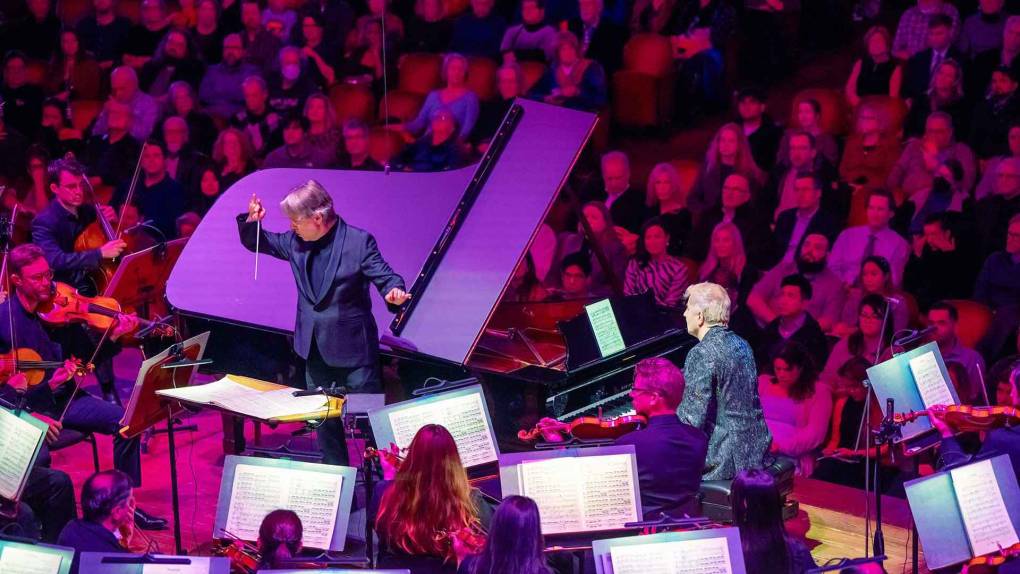
"caption": "Esa-Pekka Salonen conducts the orchestra with pianist Jean-Yves Thibaudet as the San Francisco Symphony performs Alexander Scriabin's 'Prometheus, The Poem of Fire' at Davies Symphony Hall on March 1, 2024.",
"description": null,
"title": "Salonen.Scriabin",
"credit": "Brandon Patoc",
"status": "inherit",
"altTag": "A man conducts an orchestra aside a pianist at a grand piano, on stage, bathed in purple light",
"isLoading": false,
"fetchFailed": false
},
"arts_13849055": {
"type": "attachments",
"id": "arts_13849055",
"meta": {
"index": "attachments_1716263798",
"site": "arts",
"id": "13849055",
"found": true
},
"parent": 13849044,
"imgSizes": {
"twentyfourteen-full-width": {
"file": "https://ww2.kqed.org/app/uploads/sites/2/2019/01/EsaPekkaSalonenSymphonyDebu-1038x576.jpg",
"width": 1038,
"mimeType": "image/jpeg",
"height": 576
},
"thumbnail": {
"file": "https://ww2.kqed.org/app/uploads/sites/2/2019/01/EsaPekkaSalonenSymphonyDebu-160x90.jpg",
"width": 160,
"mimeType": "image/jpeg",
"height": 90
},
"post-thumbnail": {
"file": "https://ww2.kqed.org/app/uploads/sites/2/2019/01/EsaPekkaSalonenSymphonyDebu-672x372.jpg",
"width": 672,
"mimeType": "image/jpeg",
"height": 372
},
"kqedFullSize": {
"file": "https://ww2.kqed.org/app/uploads/sites/2/2019/01/EsaPekkaSalonenSymphonyDebu.jpg",
"width": 1920,
"height": 1080
},
"large": {
"file": "https://ww2.kqed.org/app/uploads/sites/2/2019/01/EsaPekkaSalonenSymphonyDebu-1020x574.jpg",
"width": 1020,
"mimeType": "image/jpeg",
"height": 574
},
"complete_open_graph": {
"file": "https://ww2.kqed.org/app/uploads/sites/2/2019/01/EsaPekkaSalonenSymphonyDebu-1200x675.jpg",
"width": 1200,
"mimeType": "image/jpeg",
"height": 675
},
"guest-author-50": {
"file": "https://ww2.kqed.org/app/uploads/sites/2/2019/01/EsaPekkaSalonenSymphonyDebu-50x50.jpg",
"width": 50,
"mimeType": "image/jpeg",
"height": 50
},
"guest-author-96": {
"file": "https://ww2.kqed.org/app/uploads/sites/2/2019/01/EsaPekkaSalonenSymphonyDebu-96x96.jpg",
"width": 96,
"mimeType": "image/jpeg",
"height": 96
},
"medium": {
"file": "https://ww2.kqed.org/app/uploads/sites/2/2019/01/EsaPekkaSalonenSymphonyDebu-800x450.jpg",
"width": 800,
"mimeType": "image/jpeg",
"height": 450
},
"guest-author-64": {
"file": "https://ww2.kqed.org/app/uploads/sites/2/2019/01/EsaPekkaSalonenSymphonyDebu-64x64.jpg",
"width": 64,
"mimeType": "image/jpeg",
"height": 64
},
"guest-author-32": {
"file": "https://ww2.kqed.org/app/uploads/sites/2/2019/01/EsaPekkaSalonenSymphonyDebu-32x32.jpg",
"width": 32,
"mimeType": "image/jpeg",
"height": 32
},
"full-width": {
"file": "https://ww2.kqed.org/app/uploads/sites/2/2019/01/EsaPekkaSalonenSymphonyDebu-1920x1080.jpg",
"width": 1920,
"mimeType": "image/jpeg",
"height": 1080
},
"detail": {
"file": "https://ww2.kqed.org/app/uploads/sites/2/2019/01/EsaPekkaSalonenSymphonyDebu-150x150.jpg",
"width": 150,
"mimeType": "image/jpeg",
"height": 150
},
"medium_large": {
"file": "https://ww2.kqed.org/app/uploads/sites/2/2019/01/EsaPekkaSalonenSymphonyDebu-768x432.jpg",
"width": 768,
"mimeType": "image/jpeg",
"height": 432
},
"guest-author-128": {
"file": "https://ww2.kqed.org/app/uploads/sites/2/2019/01/EsaPekkaSalonenSymphonyDebu-128x128.jpg",
"width": 128,
"mimeType": "image/jpeg",
"height": 128
}
},
"publishDate": 1547922692,
"modified": 1582057428,
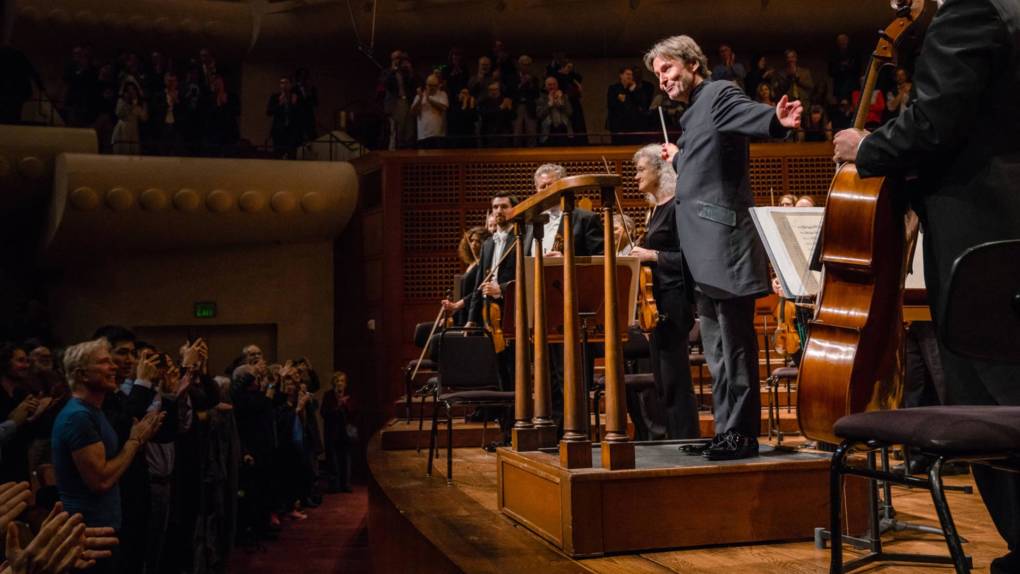
"caption": "Esa-Pekka Salonen conducts the San Francisco Symphony on Jan. 18, 2019.\n",
"description": "Esa-Pekka Salonen conducts the San Francisco Symphony on Jan. 18, 2019.\n",
"title": "EsaPekkaSalonenSymphonyDebu",
"credit": "Brandon Patoc/San Francisco Symphony",
"status": "inherit",
"isLoading": false,
"fetchFailed": false
},
"arts_13954060": {
"type": "attachments",
"id": "arts_13954060",
"meta": {
"index": "attachments_1716263798",
"site": "arts",
"id": "13954060",
"found": true
},
"parent": 13954039,
"imgSizes": {
"twentyfourteen-full-width": {
"file": "https://cdn.kqed.org/wp-content/uploads/sites/2/2024/03/JoeHisaishi.OmarCruz-1038x576.jpg",
"width": 1038,
"mimeType": "image/jpeg",
"height": 576
},
"thumbnail": {
"file": "https://cdn.kqed.org/wp-content/uploads/sites/2/2024/03/JoeHisaishi.OmarCruz-160x100.jpg",
"width": 160,
"mimeType": "image/jpeg",
"height": 100
},
"post-thumbnail": {
"file": "https://cdn.kqed.org/wp-content/uploads/sites/2/2024/03/JoeHisaishi.OmarCruz-672x372.jpg",
"width": 672,
"mimeType": "image/jpeg",
"height": 372
},
"kqedFullSize": {
"file": "https://cdn.kqed.org/wp-content/uploads/sites/2/2024/03/JoeHisaishi.OmarCruz.jpg",
"width": 2500,
"height": 1563
},
"2048x2048": {
"file": "https://cdn.kqed.org/wp-content/uploads/sites/2/2024/03/JoeHisaishi.OmarCruz-2048x1280.jpg",
"width": 2048,
"mimeType": "image/jpeg",
"height": 1280
},
"large": {
"file": "https://cdn.kqed.org/wp-content/uploads/sites/2/2024/03/JoeHisaishi.OmarCruz-1020x638.jpg",
"width": 1020,
"mimeType": "image/jpeg",
"height": 638
},
"1536x1536": {
"file": "https://cdn.kqed.org/wp-content/uploads/sites/2/2024/03/JoeHisaishi.OmarCruz-1536x960.jpg",
"width": 1536,
"mimeType": "image/jpeg",
"height": 960
},
"full-width": {
"file": "https://cdn.kqed.org/wp-content/uploads/sites/2/2024/03/JoeHisaishi.OmarCruz-1920x1200.jpg",
"width": 1920,
"mimeType": "image/jpeg",
"height": 1200
},
"medium": {
"file": "https://cdn.kqed.org/wp-content/uploads/sites/2/2024/03/JoeHisaishi.OmarCruz-800x500.jpg",
"width": 800,
"mimeType": "image/jpeg",
"height": 500
},
"medium_large": {
"file": "https://cdn.kqed.org/wp-content/uploads/sites/2/2024/03/JoeHisaishi.OmarCruz-768x480.jpg",
"width": 768,
"mimeType": "image/jpeg",
"height": 480
}
},
"publishDate": 1710374240,
"modified": 1710374848,
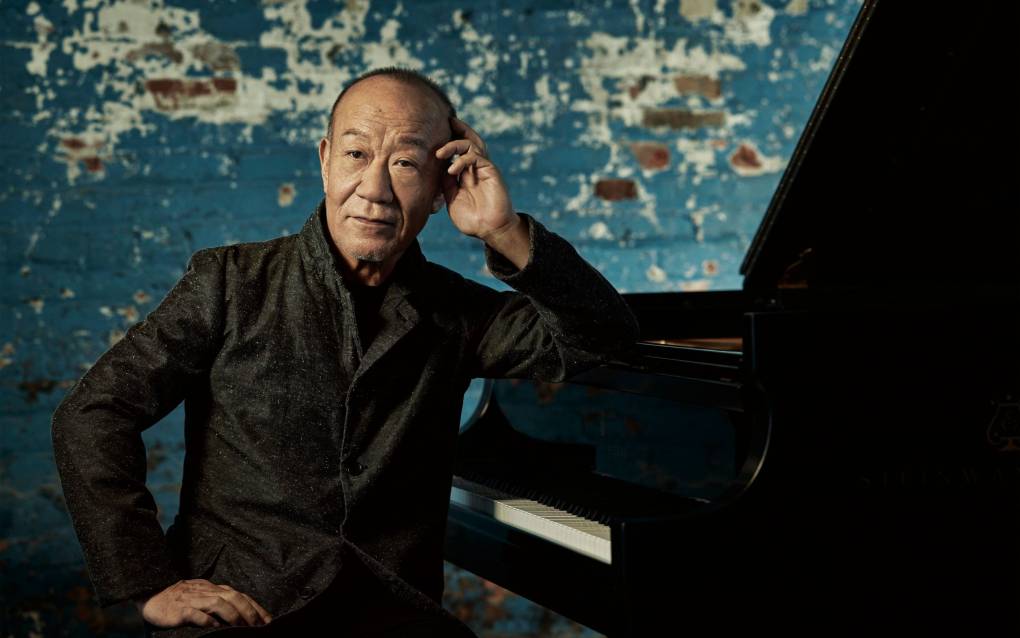
"caption": "Joe Hisaishi, who has composed music for Studio Ghibli films for four decades, conducts the San Francisco Symphony in a program of his famous film scores on Sept. 5–8 at Davies Symphony Hall.",
"description": null,
"title": "JoeHisaishi.OmarCruz",
"credit": "Omar Cruz",
"status": "inherit",
"altTag": "A Japanese man sits at a piano with an abstract pattern on the wall in the background",
"isLoading": false,
"fetchFailed": false
},
"arts_13954087": {
"type": "attachments",
"id": "arts_13954087",
"meta": {
"index": "attachments_1716263798",
"site": "arts",
"id": "13954087",
"found": true
},
"parent": 13954083,
"imgSizes": {
"twentyfourteen-full-width": {
"file": "https://cdn.kqed.org/wp-content/uploads/sites/2/2024/03/Salonen.Thumb_.16x9-1038x576.jpg",
"width": 1038,
"mimeType": "image/jpeg",
"height": 576
},
"thumbnail": {
"file": "https://cdn.kqed.org/wp-content/uploads/sites/2/2024/03/Salonen.Thumb_.16x9-160x90.jpg",
"width": 160,
"mimeType": "image/jpeg",
"height": 90
},
"post-thumbnail": {
"file": "https://cdn.kqed.org/wp-content/uploads/sites/2/2024/03/Salonen.Thumb_.16x9-672x372.jpg",
"width": 672,
"mimeType": "image/jpeg",
"height": 372
},
"kqedFullSize": {
"file": "https://cdn.kqed.org/wp-content/uploads/sites/2/2024/03/Salonen.Thumb_.16x9.jpg",
"width": 1920,
"height": 1080
},
"large": {
"file": "https://cdn.kqed.org/wp-content/uploads/sites/2/2024/03/Salonen.Thumb_.16x9-1020x574.jpg",
"width": 1020,
"mimeType": "image/jpeg",
"height": 574
},
"1536x1536": {
"file": "https://cdn.kqed.org/wp-content/uploads/sites/2/2024/03/Salonen.Thumb_.16x9-1536x864.jpg",
"width": 1536,
"mimeType": "image/jpeg",
"height": 864
},
"medium": {
"file": "https://cdn.kqed.org/wp-content/uploads/sites/2/2024/03/Salonen.Thumb_.16x9-800x450.jpg",
"width": 800,
"mimeType": "image/jpeg",
"height": 450
},
"medium_large": {
"file": "https://cdn.kqed.org/wp-content/uploads/sites/2/2024/03/Salonen.Thumb_.16x9-768x432.jpg",
"width": 768,
"mimeType": "image/jpeg",
"height": 432
}
},
"publishDate": 1710433521,
"modified": 1710433552,
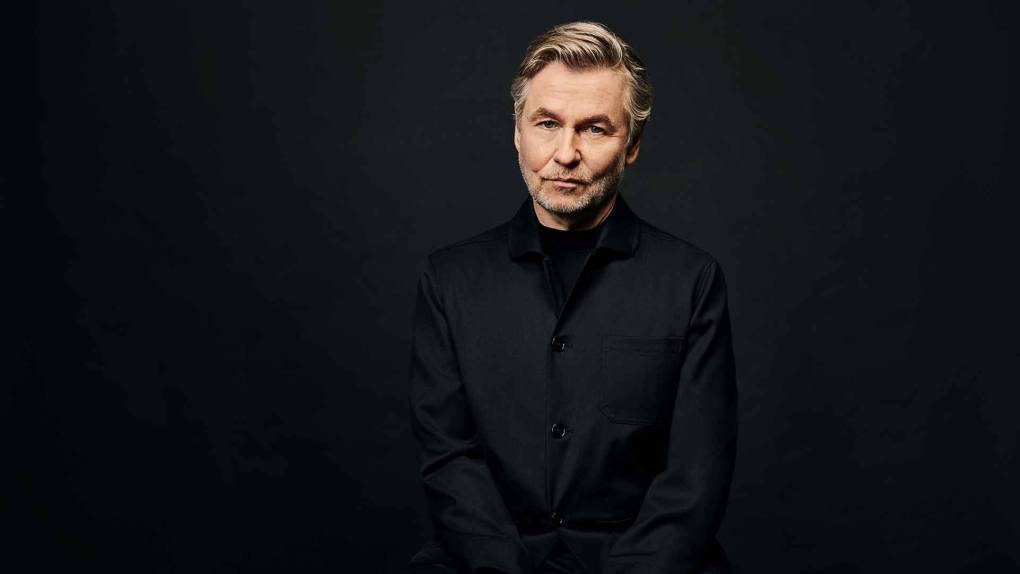
"caption": "Esa-Pekka Salonen, Music Director of the San Francisco Symphony, will exit his position in June 2025 at the end of his five-year contract.",
"description": null,
"title": "Salonen.Thumb.16x9",
"credit": "Cody Pickens",
"status": "inherit",
"altTag": "A middle-aged white man in black clothing stands against a black background, hands clasped at front.",
"isLoading": false,
"fetchFailed": false
},
"arts_13953337": {
"type": "attachments",
"id": "arts_13953337",
"meta": {
"index": "attachments_1716263798",
"site": "arts",
"id": "13953337",
"found": true
},
"parent": 13953312,
"imgSizes": {
"twentyfourteen-full-width": {
"file": "https://cdn.kqed.org/wp-content/uploads/sites/2/2024/03/2324-Concerts-Prometheus-Bluebeard-Brandon-Patoc_0028-1038x576.jpg",
"width": 1038,
"mimeType": "image/jpeg",
"height": 576
},
"thumbnail": {
"file": "https://cdn.kqed.org/wp-content/uploads/sites/2/2024/03/2324-Concerts-Prometheus-Bluebeard-Brandon-Patoc_0028-160x107.jpg",
"width": 160,
"mimeType": "image/jpeg",
"height": 107
},
"post-thumbnail": {
"file": "https://cdn.kqed.org/wp-content/uploads/sites/2/2024/03/2324-Concerts-Prometheus-Bluebeard-Brandon-Patoc_0028-672x372.jpg",
"width": 672,
"mimeType": "image/jpeg",
"height": 372
},
"kqedFullSize": {
"file": "https://cdn.kqed.org/wp-content/uploads/sites/2/2024/03/2324-Concerts-Prometheus-Bluebeard-Brandon-Patoc_0028.jpg",
"width": 1920,
"height": 1280
},
"large": {
"file": "https://cdn.kqed.org/wp-content/uploads/sites/2/2024/03/2324-Concerts-Prometheus-Bluebeard-Brandon-Patoc_0028-1020x680.jpg",
"width": 1020,
"mimeType": "image/jpeg",
"height": 680
},
"1536x1536": {
"file": "https://cdn.kqed.org/wp-content/uploads/sites/2/2024/03/2324-Concerts-Prometheus-Bluebeard-Brandon-Patoc_0028-1536x1024.jpg",
"width": 1536,
"mimeType": "image/jpeg",
"height": 1024
},
"medium": {
"file": "https://cdn.kqed.org/wp-content/uploads/sites/2/2024/03/2324-Concerts-Prometheus-Bluebeard-Brandon-Patoc_0028-800x533.jpg",
"width": 800,
"mimeType": "image/jpeg",
"height": 533
},
"medium_large": {
"file": "https://cdn.kqed.org/wp-content/uploads/sites/2/2024/03/2324-Concerts-Prometheus-Bluebeard-Brandon-Patoc_0028-768x512.jpg",
"width": 768,
"mimeType": "image/jpeg",
"height": 512
}
},
"publishDate": 1709579203,
"modified": 1709579569,
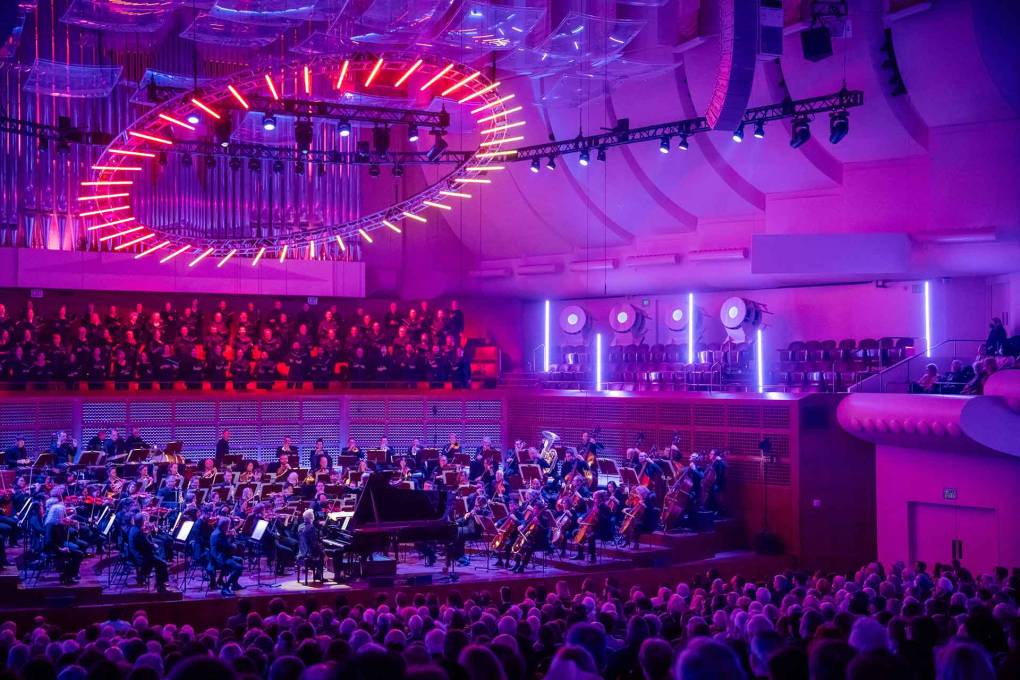
"caption": "The San Francisco Symphony performs Alexander Scriabin's 'Prometheus, The Poem of Fire' at Davies Symphony Hall on March 1, 2024.",
"description": null,
"title": "2324-Concerts-Prometheus-Bluebeard-Brandon-Patoc_0028",
"credit": "Brandon Patoc",
"status": "inherit",
"altTag": "A circle of red lights hovers above a symphony orchestra, bathed in indigo hues, inside a concert hall",
"isLoading": false,
"fetchFailed": false
},
"arts_13951061": {
"type": "attachments",
"id": "arts_13951061",
"meta": {
"index": "attachments_1716263798",
"site": "arts",
"id": "13951061",
"found": true
},
"title": "2324concerts_012524mttmahler_stefancohen_025",
"publishDate": 1706297102,
"status": "inherit",
"parent": 0,
"modified": 1776958738,
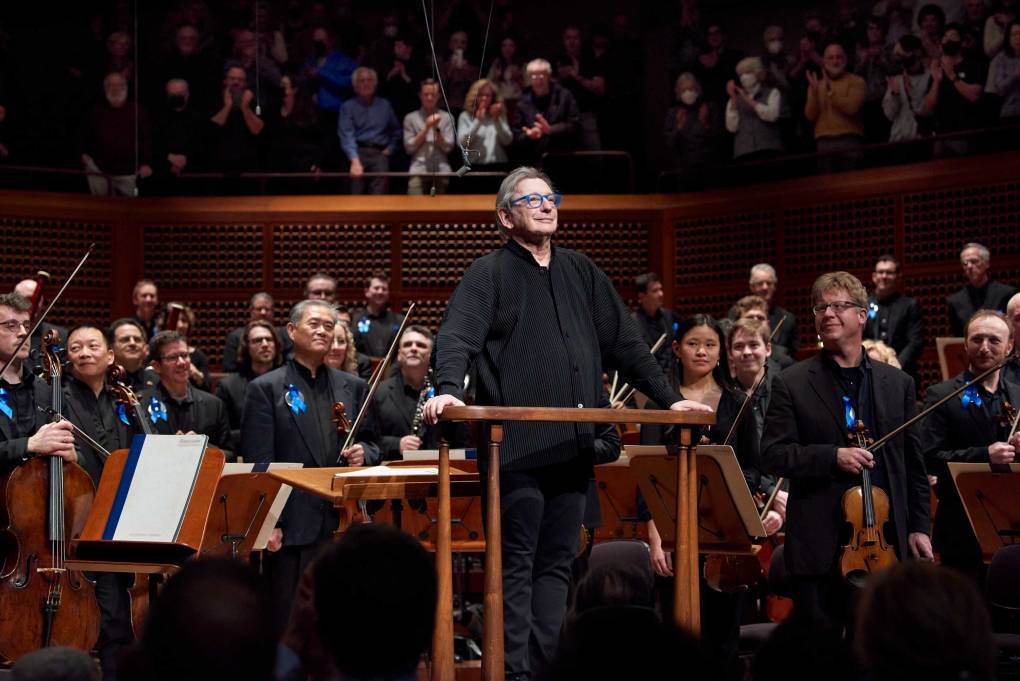
"caption": "Michael Tilson Thomas stands for a seven-minute standing ovation at the close of the San Francisco Symphony's performance of Mahler's Symphony No. 5 on Thursday, Jan. 25, 2024, at Davies Symphony Hall. ",
"credit": "Stefan Cohen",
"altTag": "Michael Tilson Thomas stands for a seven-minute standing ovation at the close of the San Francisco Symphony's performance of Mahler's Symphony No. 5 on Thursday, Jan. 25, 2024, at Davies Symphony Hall.",
"description": null,
"imgSizes": {
"medium": {
"file": "https://cdn.kqed.org/wp-content/uploads/sites/2/2024/01/2324concerts_012524mttmahler_stefancohen_025-800x534.jpg",
"width": 800,
"height": 534,
"mimeType": "image/jpeg"
},
"large": {
"file": "https://cdn.kqed.org/wp-content/uploads/sites/2/2024/01/2324concerts_012524mttmahler_stefancohen_025-1020x681.jpg",
"width": 1020,
"height": 681,
"mimeType": "image/jpeg"
},
"thumbnail": {
"file": "https://cdn.kqed.org/wp-content/uploads/sites/2/2024/01/2324concerts_012524mttmahler_stefancohen_025-160x107.jpg",
"width": 160,
"height": 107,
"mimeType": "image/jpeg"
},
"medium_large": {
"file": "https://cdn.kqed.org/wp-content/uploads/sites/2/2024/01/2324concerts_012524mttmahler_stefancohen_025-768x513.jpg",
"width": 768,
"height": 513,
"mimeType": "image/jpeg"
},
"1536x1536": {
"file": "https://cdn.kqed.org/wp-content/uploads/sites/2/2024/01/2324concerts_012524mttmahler_stefancohen_025-1536x1025.jpg",
"width": 1536,
"height": 1025,
"mimeType": "image/jpeg"
},
"2048x2048": {
"file": "https://cdn.kqed.org/wp-content/uploads/sites/2/2024/01/2324concerts_012524mttmahler_stefancohen_025-2048x1367.jpg",
"width": 2048,
"height": 1367,
"mimeType": "image/jpeg"
},
"post-thumbnail": {
"file": "https://cdn.kqed.org/wp-content/uploads/sites/2/2024/01/2324concerts_012524mttmahler_stefancohen_025-672x372.jpg",
"width": 672,
"height": 372,
"mimeType": "image/jpeg"
},
"twentyfourteen-full-width": {
"file": "https://cdn.kqed.org/wp-content/uploads/sites/2/2024/01/2324concerts_012524mttmahler_stefancohen_025-1038x576.jpg",
"width": 1038,
"height": 576,
"mimeType": "image/jpeg"
},
"full-width": {
"file": "https://cdn.kqed.org/wp-content/uploads/sites/2/2024/01/2324concerts_012524mttmahler_stefancohen_025-1920x1281.jpg",
"width": 1920,
"height": 1281,
"mimeType": "image/jpeg"
},
"kqedFullSize": {
"file": "https://cdn.kqed.org/wp-content/uploads/sites/2/2024/01/2324concerts_012524mttmahler_stefancohen_025-scaled.jpg",
"width": 2560,
"height": 1708
}
},
"isLoading": false,
"fetchFailed": false
},
"arts_13938053": {
"type": "attachments",
"id": "arts_13938053",
"meta": {
"index": "attachments_1716263798",
"site": "arts",
"id": "13938053",
"found": true
},
"parent": 13957394,
"imgSizes": {
"twentyfourteen-full-width": {
"file": "https://cdn.kqed.org/wp-content/uploads/sites/2/2023/11/GettyImages-1718296825-1038x576.jpg",
"width": 1038,
"mimeType": "image/jpeg",
"height": 576
},
"thumbnail": {
"file": "https://cdn.kqed.org/wp-content/uploads/sites/2/2023/11/GettyImages-1718296825-160x100.jpg",
"width": 160,
"mimeType": "image/jpeg",
"height": 100
},
"post-thumbnail": {
"file": "https://cdn.kqed.org/wp-content/uploads/sites/2/2023/11/GettyImages-1718296825-672x372.jpg",
"width": 672,
"mimeType": "image/jpeg",
"height": 372
},
"kqedFullSize": {
"file": "https://cdn.kqed.org/wp-content/uploads/sites/2/2023/11/GettyImages-1718296825-scaled.jpg",
"width": 2560,
"height": 1600
},
"2048x2048": {
"file": "https://cdn.kqed.org/wp-content/uploads/sites/2/2023/11/GettyImages-1718296825-2048x1280.jpg",
"width": 2048,
"mimeType": "image/jpeg",
"height": 1280
},
"large": {
"file": "https://cdn.kqed.org/wp-content/uploads/sites/2/2023/11/GettyImages-1718296825-1020x637.jpg",
"width": 1020,
"mimeType": "image/jpeg",
"height": 637
},
"1536x1536": {
"file": "https://cdn.kqed.org/wp-content/uploads/sites/2/2023/11/GettyImages-1718296825-1536x960.jpg",
"width": 1536,
"mimeType": "image/jpeg",
"height": 960
},
"full-width": {
"file": "https://cdn.kqed.org/wp-content/uploads/sites/2/2023/11/GettyImages-1718296825-1920x1200.jpg",
"width": 1920,
"mimeType": "image/jpeg",
"height": 1200
},
"medium": {
"file": "https://cdn.kqed.org/wp-content/uploads/sites/2/2023/11/GettyImages-1718296825-800x500.jpg",
"width": 800,
"mimeType": "image/jpeg",
"height": 500
},
"medium_large": {
"file": "https://cdn.kqed.org/wp-content/uploads/sites/2/2023/11/GettyImages-1718296825-768x480.jpg",
"width": 768,
"mimeType": "image/jpeg",
"height": 480
}
},
"publishDate": 1700009790,
"modified": 1715203300,
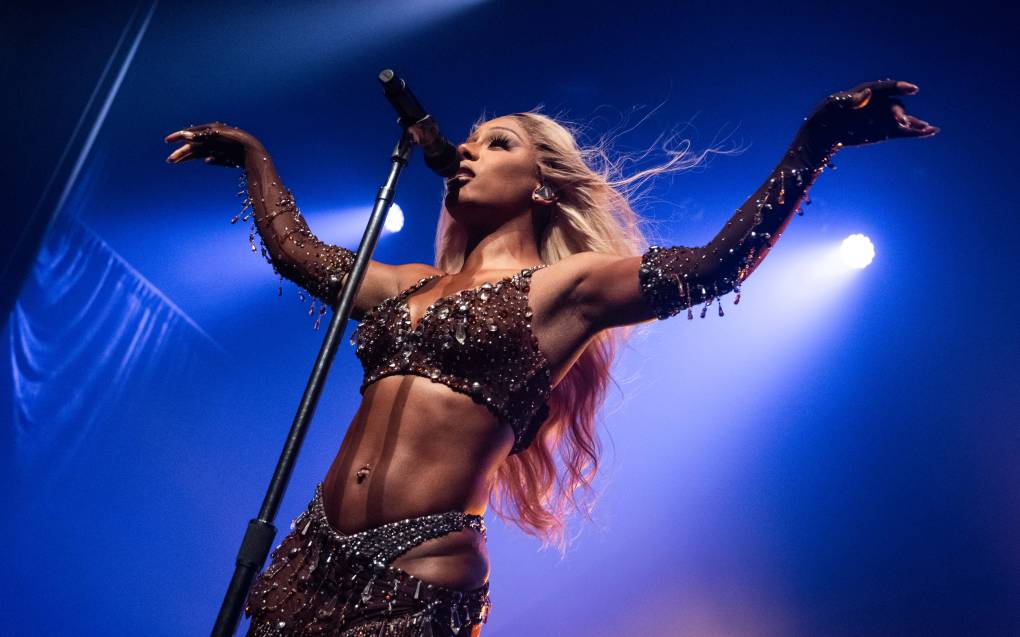
"caption": "Victoria Monét performs onstage during her The Jaguar Tour at The Regency Ballroom on Oct. 04, 2023 in San Francisco, Calif. ",
"description": null,
"title": "Victoria Monét Performs At The Regency Ballroom",
"credit": "Dana Jacobs/Getty Images",
"status": "inherit",
"altTag": "A pop star with long, flowing hair and a sparkling outfit performs amid bright stage lights. She sings into a microphone stand.",
"isLoading": false,
"fetchFailed": false
},
"arts_13932021": {
"type": "attachments",
"id": "arts_13932021",
"meta": {
"index": "attachments_1716263798",
"site": "arts",
"id": "13932021",
"found": true
},
"parent": 13932017,
"imgSizes": {
"twentyfourteen-full-width": {
"file": "https://ww2.kqed.org/app/uploads/sites/2/2023/07/Maxwell_approved-press-photo-2_cropped_credit-Cliff-Watts-1038x576.jpg",
"width": 1038,
"mimeType": "image/jpeg",
"height": 576
},
"thumbnail": {
"file": "https://ww2.kqed.org/app/uploads/sites/2/2023/07/Maxwell_approved-press-photo-2_cropped_credit-Cliff-Watts-160x107.jpg",
"width": 160,
"mimeType": "image/jpeg",
"height": 107
},
"post-thumbnail": {
"file": "https://ww2.kqed.org/app/uploads/sites/2/2023/07/Maxwell_approved-press-photo-2_cropped_credit-Cliff-Watts-672x372.jpg",
"width": 672,
"mimeType": "image/jpeg",
"height": 372
},
"kqedFullSize": {
"file": "https://ww2.kqed.org/app/uploads/sites/2/2023/07/Maxwell_approved-press-photo-2_cropped_credit-Cliff-Watts.jpg",
"width": 1920,
"height": 1280
},
"large": {
"file": "https://ww2.kqed.org/app/uploads/sites/2/2023/07/Maxwell_approved-press-photo-2_cropped_credit-Cliff-Watts-1020x680.jpg",
"width": 1020,
"mimeType": "image/jpeg",
"height": 680
},
"1536x1536": {
"file": "https://ww2.kqed.org/app/uploads/sites/2/2023/07/Maxwell_approved-press-photo-2_cropped_credit-Cliff-Watts-1536x1024.jpg",
"width": 1536,
"mimeType": "image/jpeg",
"height": 1024
},
"medium": {
"file": "https://ww2.kqed.org/app/uploads/sites/2/2023/07/Maxwell_approved-press-photo-2_cropped_credit-Cliff-Watts-800x533.jpg",
"width": 800,
"mimeType": "image/jpeg",
"height": 533
},
"medium_large": {
"file": "https://ww2.kqed.org/app/uploads/sites/2/2023/07/Maxwell_approved-press-photo-2_cropped_credit-Cliff-Watts-768x512.jpg",
"width": 768,
"mimeType": "image/jpeg",
"height": 512
}
},
"publishDate": 1690327403,
"modified": 1690327473,
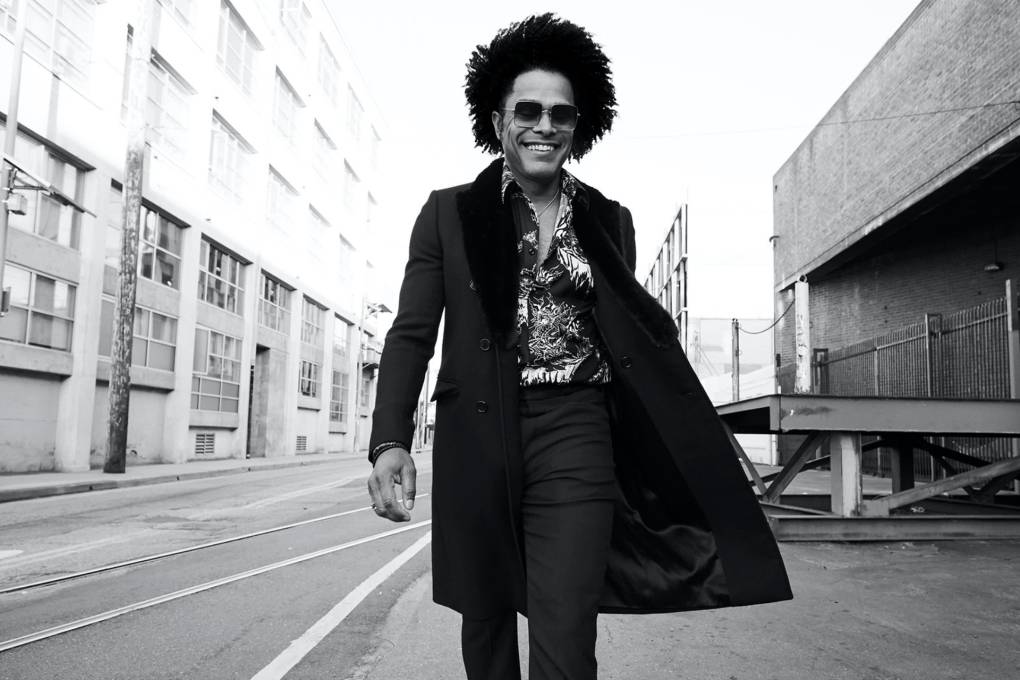
"caption": "Grammy-winning soul singer Maxwell makes his debut with the San Francisco Symphony on Aug. 4 and 5.",
"description": null,
"title": "Maxwell_approved press photo 2_cropped_credit - Cliff Watts",
"credit": "Cliff Watts",
"status": "inherit",
"altTag": "a tall Black man wearing sunglasses and a long coat smiles while walking down a city street in a black and white photograph",
"isLoading": false,
"fetchFailed": false
},
"arts_13929728": {
"type": "attachments",
"id": "arts_13929728",
"meta": {
"index": "attachments_1716263798",
"site": "arts",
"id": "13929728",
"found": true
},
"parent": 13929691,
"imgSizes": {
"twentyfourteen-full-width": {
"file": "https://ww2.kqed.org/app/uploads/sites/2/2023/05/Marshall.Allen_-1024x576.jpg",
"width": 1024,
"mimeType": "image/jpeg",
"height": 576
},
"thumbnail": {
"file": "https://ww2.kqed.org/app/uploads/sites/2/2023/05/Marshall.Allen_-160x106.jpg",
"width": 160,
"mimeType": "image/jpeg",
"height": 106
},
"post-thumbnail": {
"file": "https://ww2.kqed.org/app/uploads/sites/2/2023/05/Marshall.Allen_-672x372.jpg",
"width": 672,
"mimeType": "image/jpeg",
"height": 372
},
"kqedFullSize": {
"file": "https://ww2.kqed.org/app/uploads/sites/2/2023/05/Marshall.Allen_.jpg",
"width": 1024,
"height": 681
},
"large": {
"file": "https://ww2.kqed.org/app/uploads/sites/2/2023/05/Marshall.Allen_-1020x678.jpg",
"width": 1020,
"mimeType": "image/jpeg",
"height": 678
},
"medium": {
"file": "https://ww2.kqed.org/app/uploads/sites/2/2023/05/Marshall.Allen_-800x532.jpg",
"width": 800,
"mimeType": "image/jpeg",
"height": 532
},
"medium_large": {
"file": "https://ww2.kqed.org/app/uploads/sites/2/2023/05/Marshall.Allen_-768x511.jpg",
"width": 768,
"mimeType": "image/jpeg",
"height": 511
}
},
"publishDate": 1685075153,
"modified": 1685075209,
"caption": "Marshall Allen of the Sun Ra Arkestra performs on stage in the United Kingdom in 2012. ",
"description": null,
"title": "ATP Curated By Jeff Mangum: Day 3",
"credit": "Gary Wolstenholme/Redferns via Getty Images",
"status": "inherit",
"altTag": null,
"isLoading": false,
"fetchFailed": false
},
"arts_13927583": {
"type": "attachments",
"id": "arts_13927583",
"meta": {
"index": "attachments_1716263798",
"site": "arts",
"id": "13927583",
"found": true
},
"parent": 13927554,
"imgSizes": {
"twentyfourteen-full-width": {
"file": "https://ww2.kqed.org/app/uploads/sites/2/2023/04/GettyImages-1130639816-1038x576.jpg",
"width": 1038,
"mimeType": "image/jpeg",
"height": 576
},
"thumbnail": {
"file": "https://ww2.kqed.org/app/uploads/sites/2/2023/04/GettyImages-1130639816-160x103.jpg",
"width": 160,
"mimeType": "image/jpeg",
"height": 103
},
"post-thumbnail": {
"file": "https://ww2.kqed.org/app/uploads/sites/2/2023/04/GettyImages-1130639816-672x372.jpg",
"width": 672,
"mimeType": "image/jpeg",
"height": 372
},
"kqedFullSize": {
"file": "https://ww2.kqed.org/app/uploads/sites/2/2023/04/GettyImages-1130639816-scaled.jpg",
"width": 2560,
"height": 1643
},
"2048x2048": {
"file": "https://ww2.kqed.org/app/uploads/sites/2/2023/04/GettyImages-1130639816-2048x1314.jpg",
"width": 2048,
"mimeType": "image/jpeg",
"height": 1314
},
"large": {
"file": "https://ww2.kqed.org/app/uploads/sites/2/2023/04/GettyImages-1130639816-1020x655.jpg",
"width": 1020,
"mimeType": "image/jpeg",
"height": 655
},
"1536x1536": {
"file": "https://ww2.kqed.org/app/uploads/sites/2/2023/04/GettyImages-1130639816-1536x986.jpg",
"width": 1536,
"mimeType": "image/jpeg",
"height": 986
},
"full-width": {
"file": "https://ww2.kqed.org/app/uploads/sites/2/2023/04/GettyImages-1130639816-1920x1232.jpg",
"width": 1920,
"mimeType": "image/jpeg",
"height": 1232
},
"medium": {
"file": "https://ww2.kqed.org/app/uploads/sites/2/2023/04/GettyImages-1130639816-800x513.jpg",
"width": 800,
"mimeType": "image/jpeg",
"height": 513
},
"medium_large": {
"file": "https://ww2.kqed.org/app/uploads/sites/2/2023/04/GettyImages-1130639816-768x493.jpg",
"width": 768,
"mimeType": "image/jpeg",
"height": 493
}
},
"publishDate": 1681155447,
"modified": 1681187500,
"caption": "Director Barry Jenkins and composer Nicholas Britell, seen here in 2019 at an event discussing 'If Beale Street Could Talk.' Jenkins and Britell will be in discussion, and present live performances from their collaborations, at the San Francisco Symphony's SoundBox April 14–15.",
"description": null,
"title": "ArcLight Presents Hitting The High Note Screening Series Honoring 2019 Best Original Score Oscar Nominees - \"If Beale Street Could Talk\"",
"credit": "Amanda Edwards/Getty Images",
"status": "inherit",
"altTag": "a young Black man with glasses in a grey coat and black pants speaks into a microphone onstage next to a young white man in a black coat and glasses, as part of a panel at a film event",
"isLoading": false,
"fetchFailed": false
},
"arts_13927035": {
"type": "attachments",
"id": "arts_13927035",
"meta": {
"index": "attachments_1716263798",
"site": "arts",
"id": "13927035",
"found": true
},
"parent": 13926968,
"imgSizes": {
"twentyfourteen-full-width": {
"file": "https://ww2.kqed.org/app/uploads/sites/2/2023/03/the-healing_cover-1038x576.jpg",
"width": 1038,
"mimeType": "image/jpeg",
"height": 576
},
"thumbnail": {
"file": "https://ww2.kqed.org/app/uploads/sites/2/2023/03/the-healing_cover-160x90.jpg",
"width": 160,
"mimeType": "image/jpeg",
"height": 90
},
"post-thumbnail": {
"file": "https://ww2.kqed.org/app/uploads/sites/2/2023/03/the-healing_cover-672x372.jpg",
"width": 672,
"mimeType": "image/jpeg",
"height": 372
},
"kqedFullSize": {
"file": "https://ww2.kqed.org/app/uploads/sites/2/2023/03/the-healing_cover.jpg",
"width": 1600,
"height": 900
},
"large": {
"file": "https://ww2.kqed.org/app/uploads/sites/2/2023/03/the-healing_cover-1020x574.jpg",
"width": 1020,
"mimeType": "image/jpeg",
"height": 574
},
"1536x1536": {
"file": "https://ww2.kqed.org/app/uploads/sites/2/2023/03/the-healing_cover-1536x864.jpg",
"width": 1536,
"mimeType": "image/jpeg",
"height": 864
},
"medium": {
"file": "https://ww2.kqed.org/app/uploads/sites/2/2023/03/the-healing_cover-800x450.jpg",
"width": 800,
"mimeType": "image/jpeg",
"height": 450
},
"medium_large": {
"file": "https://ww2.kqed.org/app/uploads/sites/2/2023/03/the-healing_cover-768x432.jpg",
"width": 768,
"mimeType": "image/jpeg",
"height": 432
}
},
"publishDate": 1680029378,
"modified": 1680031456,
"caption": "'The Healing' is Kev Choice's ode to healthy relationships.",
"description": null,
"title": "the-healing_cover",
"credit": "Courtesy of the artist",
"status": "inherit",
"altTag": "an illustration of the musician Kev Choice with a crown of roses",
"isLoading": false,
"fetchFailed": false
},
"arts_13927062": {
"type": "attachments",
"id": "arts_13927062",
"meta": {
"index": "attachments_1716263798",
"site": "arts",
"id": "13927062",
"found": true
},
"parent": 13927033,
"imgSizes": {
"twentyfourteen-full-width": {
"file": "https://ww2.kqed.org/app/uploads/sites/2/2023/03/SFS.stage_.orchestra-1038x576.jpg",
"width": 1038,
"mimeType": "image/jpeg",
"height": 576
},
"thumbnail": {
"file": "https://ww2.kqed.org/app/uploads/sites/2/2023/03/SFS.stage_.orchestra-160x107.jpg",
"width": 160,
"mimeType": "image/jpeg",
"height": 107
},
"post-thumbnail": {
"file": "https://ww2.kqed.org/app/uploads/sites/2/2023/03/SFS.stage_.orchestra-672x372.jpg",
"width": 672,
"mimeType": "image/jpeg",
"height": 372
},
"kqedFullSize": {
"file": "https://ww2.kqed.org/app/uploads/sites/2/2023/03/SFS.stage_.orchestra.jpg",
"width": 1200,
"height": 800
},
"large": {
"file": "https://ww2.kqed.org/app/uploads/sites/2/2023/03/SFS.stage_.orchestra-1020x680.jpg",
"width": 1020,
"mimeType": "image/jpeg",
"height": 680
},
"medium": {
"file": "https://ww2.kqed.org/app/uploads/sites/2/2023/03/SFS.stage_.orchestra-800x533.jpg",
"width": 800,
"mimeType": "image/jpeg",
"height": 533
},
"medium_large": {
"file": "https://ww2.kqed.org/app/uploads/sites/2/2023/03/SFS.stage_.orchestra-768x512.jpg",
"width": 768,
"mimeType": "image/jpeg",
"height": 512
}
},
"publishDate": 1680032952,
"modified": 1680032983,
"caption": "The San Francisco Symphony at Davies Symphony Hall.",
"description": null,
"title": "SFS.stage.orchestra",
"credit": "Courtesy San Francisco Symphony",
"status": "inherit",
"altTag": null,
"isLoading": false,
"fetchFailed": false
}
},
"audioPlayerReducer": {
"postId": "stream_live",
"isPaused": true,
"isPlaying": false,
"pfsActive": false,
"pledgeModalIsOpen": true,
"playerDrawerIsOpen": false,
"liveAudioPlayStartedAt": 0,
"liveAudioPlayContext": ""
},
"authorsReducer": {
"gmeline": {
"type": "authors",
"id": "185",
"meta": {
"index": "authors_1716337520",
"id": "185",
"found": true
},
"name": "Gabe Meline",
"firstName": "Gabe",
"lastName": "Meline",
"slug": "gmeline",
"email": "gmeline@kqed.org",
"display_author_email": true,
"staff_mastheads": [
"arts"
],
"title": "Senior Editor, KQED Arts & Culture",
"bio": "Gabe Meline entered journalism at age 15 making photocopied zines, and has since earned awards from the Edward R. Murrow Awards, the Society for Professional Journalists, the Online Journalism Awards, the Association of Alternative Newsweeklies and the California Newspaper Publishers Association. Prior to KQED, he was the editor of the \u003cem>North Bay Bohemian\u003c/em> and a touring musician. He lives with his wife and daughter in his hometown of Santa Rosa, CA.",
"avatar": "https://secure.gravatar.com/avatar/5bebe57be0d8bc2dd318934feb47299e2d2d10cba28d09d8d7afb389a2ce2bdd?s=600&d=blank&r=g",
"twitter": null,
"bluesky": null,
"facebook": null,
"instagram": null,
"linkedin": null,
"sites": [
{
"site": "",
"roles": [
"editor"
]
},
{
"site": "arts",
"roles": [
"administrator"
]
},
{
"site": "artschool",
"roles": [
"editor"
]
},
{
"site": "news",
"roles": [
"author"
]
},
{
"site": "pop",
"roles": [
"editor"
]
},
{
"site": "bayareabites",
"roles": [
"editor"
]
},
{
"site": "food",
"roles": [
"editor"
]
},
{
"site": "liveblog",
"roles": [
"editor"
]
},
{
"site": "hiphop",
"roles": [
"editor"
]
}
],
"headData": {
"title": "Gabe Meline | KQED",
"description": "Senior Editor, KQED Arts & Culture",
"ogImgSrc": "https://secure.gravatar.com/avatar/5bebe57be0d8bc2dd318934feb47299e2d2d10cba28d09d8d7afb389a2ce2bdd?s=600&d=blank&r=g",
"twImgSrc": "https://secure.gravatar.com/avatar/5bebe57be0d8bc2dd318934feb47299e2d2d10cba28d09d8d7afb389a2ce2bdd?s=600&d=blank&r=g"
},
"isLoading": false,
"link": "/author/gmeline"
},
"esilvers": {
"type": "authors",
"id": "7237",
"meta": {
"index": "authors_1716337520",
"id": "7237",
"found": true
},
"name": "Emma Silvers",
"firstName": "Emma",
"lastName": "Silvers",
"slug": "esilvers",
"email": "esilvers@kqed.org",
"display_author_email": false,
"staff_mastheads": [],
"title": "KQED Contributor",
"bio": "Emma Silvers is an editor at KQED Arts and a former digital producer at KQED News. Born and raised in the Bay Area, she has previously been an arts and entertainment editor at the \u003cem>San Francisco Chronicle\u003c/em>, \u003cem>SF Weekly\u003c/em> and the \u003cem>San Francisco Bay Guardian.\u003c/em> \u003ca href=\"https://www.emmasilvers.com\">Her work\u003c/a> has also appeared in \u003cem>Rolling Stone\u003c/em>, Pitchfork and \u003cem>Mother Jones\u003c/em>. In 2017 she was the recipient of the Society of Professional Journalists-Northern California's award for arts and culture reporting. In 1993 she \u003ca href=\"https://www.kqed.org/pop/16759/wait-what-my-coworker-was-a-voice-over-hyperventilator-for-jurassic-park\">hyperventilated in \u003cem>Jurassic Park\u003c/em>\u003c/a>.",
"avatar": "https://secure.gravatar.com/avatar/247beada39b88ea5759db1f51dba05cf?s=600&d=blank&r=g",
"twitter": "emmaruthless",
"facebook": null,
"instagram": null,
"linkedin": null,
"sites": [
{
"site": "arts",
"roles": [
"editor"
]
},
{
"site": "news",
"roles": [
"editor"
]
},
{
"site": "pop",
"roles": [
"contributor"
]
},
{
"site": "bayareabites",
"roles": [
"editor"
]
},
{
"site": "food",
"roles": [
"contributor"
]
},
{
"site": "liveblog",
"roles": [
"editor"
]
}
],
"headData": {
"title": "Emma Silvers | KQED",
"description": "KQED Contributor",
"ogImgSrc": "https://secure.gravatar.com/avatar/247beada39b88ea5759db1f51dba05cf?s=600&d=blank&r=g",
"twImgSrc": "https://secure.gravatar.com/avatar/247beada39b88ea5759db1f51dba05cf?s=600&d=blank&r=g"
},
"isLoading": false,
"link": "/author/esilvers"
},
"aproehl": {
"type": "authors",
"id": "11296",
"meta": {
"index": "authors_1716337520",
"id": "11296",
"found": true
},
"name": "Ariana Proehl",
"firstName": "Ariana",
"lastName": "Proehl",
"slug": "aproehl",
"email": "aproehl@KQED.org",
"display_author_email": true,
"staff_mastheads": [
"news"
],
"title": "Culture Reporter, KQED",
"bio": "Ariana Proehl is a Culture Reporter and Host.",
"avatar": "https://secure.gravatar.com/avatar/c96b24567eb5bb3a4f8bb295ed53e232?s=600&d=blank&r=g",
"twitter": "ArianaProehl",
"facebook": null,
"instagram": null,
"linkedin": null,
"sites": [
{
"site": "arts",
"roles": []
},
{
"site": "news",
"roles": []
},
{
"site": "education",
"roles": []
},
{
"site": "forum",
"roles": []
}
],
"headData": {
"title": "Ariana Proehl | KQED",
"description": "Culture Reporter, KQED",
"ogImgSrc": "https://secure.gravatar.com/avatar/c96b24567eb5bb3a4f8bb295ed53e232?s=600&d=blank&r=g",
"twImgSrc": "https://secure.gravatar.com/avatar/c96b24567eb5bb3a4f8bb295ed53e232?s=600&d=blank&r=g"
},
"isLoading": false,
"link": "/author/aproehl"
},
"nvoynovskaya": {
"type": "authors",
"id": "11387",
"meta": {
"index": "authors_1716337520",
"id": "11387",
"found": true
},
"name": "Nastia Voynovskaya",
"firstName": "Nastia",
"lastName": "Voynovskaya",
"slug": "nvoynovskaya",
"email": "nvoynovskaya@kqed.org",
"display_author_email": false,
"staff_mastheads": [
"arts"
],
"title": "Editor and reporter",
"bio": "Nastia Voynovskaya is a reporter and editor at KQED Arts & Culture. She's been covering the arts in the Bay Area for over a decade, with a focus on music, queer culture, labor issues and grassroots organizing. She has edited KQED story series such as Trans Bay: A History of San Francisco's Gender-Diverse Community, and co-created KQED's Bay Area hip-hop history project, That's My Word. Nastia's work has been recognized by the Society of Professional Journalists and San Francisco Press Club. She holds a BA in comparative literature from UC Berkeley.",
"avatar": "https://secure.gravatar.com/avatar/5025ee460e5a85d69ca20ea6c6f2f80d7e17795c828f61ea3aecfcd924e9042e?s=600&d=blank&r=g",
"twitter": null,
"bluesky": null,
"facebook": null,
"instagram": "https://www.instagram.com/nananastia/",
"linkedin": null,
"sites": [
{
"site": "arts",
"roles": [
"administrator"
]
},
{
"site": "news",
"roles": [
"editor"
]
},
{
"site": "pop",
"roles": [
"administrator"
]
},
{
"site": "bayareabites",
"roles": [
"editor"
]
},
{
"site": "podcasts",
"roles": [
"editor"
]
},
{
"site": "hiphop",
"roles": [
"editor"
]
}
],
"headData": {
"title": "Nastia Voynovskaya | KQED",
"description": "Editor and reporter",
"ogImgSrc": "https://secure.gravatar.com/avatar/5025ee460e5a85d69ca20ea6c6f2f80d7e17795c828f61ea3aecfcd924e9042e?s=600&d=blank&r=g",
"twImgSrc": "https://secure.gravatar.com/avatar/5025ee460e5a85d69ca20ea6c6f2f80d7e17795c828f61ea3aecfcd924e9042e?s=600&d=blank&r=g"
},
"isLoading": false,
"link": "/author/nvoynovskaya"
},
"achazaro": {
"type": "authors",
"id": "11748",
"meta": {
"index": "authors_1716337520",
"id": "11748",
"found": true
},
"name": "Alan Chazaro",
"firstName": "Alan",
"lastName": "Chazaro",
"slug": "achazaro",
"email": "agchazaro@gmail.com",
"display_author_email": true,
"staff_mastheads": [],
"title": "Food Writer and Reporter",
"bio": "Alan Chazaro is the author of \u003cem>This Is Not a Frank Ocean Cover Album\u003c/em> (Black Lawrence Press, 2019), \u003cem>Piñata Theory\u003c/em> (Black Lawrence Press, 2020), and \u003cem>Notes from the Eastern Span of the Bay Bridge\u003c/em> (Ghost City Press, 2021). He is a graduate of June Jordan’s Poetry for the People program at UC Berkeley and a former Lawrence Ferlinghetti Fellow at the University of San Francisco. He writes about sports, food, art, music, education, and culture while repping the Bay on \u003ca href=\"https://twitter.com/alan_chazaro\">Twitter\u003c/a> and \u003ca href=\"https://www.instagram.com/alan_chazaro/?hl=en\">Instagram\u003c/a> at @alan_chazaro.",
"avatar": "https://secure.gravatar.com/avatar/ea8b6dd970fc5c29e7a188e7d5861df7?s=600&d=blank&r=g",
"twitter": "alan_chazaro",
"facebook": null,
"instagram": null,
"linkedin": null,
"sites": [
{
"site": "arts",
"roles": [
"contributor"
]
},
{
"site": "news",
"roles": [
"editor"
]
}
],
"headData": {
"title": "Alan Chazaro | KQED",
"description": "Food Writer and Reporter",
"ogImgSrc": "https://secure.gravatar.com/avatar/ea8b6dd970fc5c29e7a188e7d5861df7?s=600&d=blank&r=g",
"twImgSrc": "https://secure.gravatar.com/avatar/ea8b6dd970fc5c29e7a188e7d5861df7?s=600&d=blank&r=g"
},
"isLoading": false,
"link": "/author/achazaro"
},
"udursun": {
"type": "authors",
"id": "11883",
"meta": {
"index": "authors_1716337520",
"id": "11883",
"found": true
},
"name": "Ugur Dursun",
"firstName": "Ugur",
"lastName": "Dursun",
"slug": "udursun",
"email": "udursun@kqed.org",
"display_author_email": true,
"staff_mastheads": [
"arts"
],
"title": "Engagement Producer, KQED Arts & Culture",
"bio": "Ugur Dursun is a reporter and audience engagement producer for KQED Arts. Previously, her reporting has appeared on SFGate, East Bay Times, The Mercury News, KTVU, NBC Bay Area, The Stanford Daily, and other Bay Area local news outlets. In 2023, she was a recipient of Online News Association's \u003ca href=\"https://journalists.org/programs/mj-bear-fellowship/\">MJ Bear Fellowship\u003c/a>, which honors six standout journalists under the age of 30 who are pushing innovation in digital news.",
"avatar": "https://secure.gravatar.com/avatar/5275bbdc74da8a8845f2b9f9f7d94a5f?s=600&d=blank&r=g",
"twitter": null,
"bluesky": null,
"facebook": null,
"instagram": null,
"linkedin": null,
"sites": [
{
"site": "arts",
"roles": [
"editor"
]
},
{
"site": "news",
"roles": [
"editor"
]
}
],
"headData": {
"title": "Ugur Dursun | KQED",
"description": "Engagement Producer, KQED Arts & Culture",
"ogImgSrc": "https://secure.gravatar.com/avatar/5275bbdc74da8a8845f2b9f9f7d94a5f?s=600&d=blank&r=g",
"twImgSrc": "https://secure.gravatar.com/avatar/5275bbdc74da8a8845f2b9f9f7d94a5f?s=600&d=blank&r=g"
},
"isLoading": false,
"link": "/author/udursun"
}
},
"pagesReducer": {
"arts_tag_san-francisco-symphony": {
"type": "terms",
"id": "arts_1367",
"meta": {
"index": "terms_1716263798",
"site": "arts",
"id": "1367",
"score": 9.553679
},
"featImg": null,
"name": "San Francisco Symphony",
"description": null,
"taxonomy": "tag",
"headData": {
"twImgId": null,
"twTitle": null,
"ogTitle": null,
"ogImgId": null,
"twDescription": null,
"description": null,
"title": "San Francisco Symphony Archives | KQED Arts",
"ogDescription": null
},
"ttid": 1379,
"slug": "san-francisco-symphony",
"isLoading": false,
"title": "San Francisco Symphony",
"pageMeta": {
"site": "arts",
"WpPageTemplate": "page-topic-editorial",
"currentPage": 3
},
"blocks": [
{
"blockName": "kqed/post-list",
"attrs": {
"layout": "cardArticle2",
"query": "posts/arts?tag=san-francisco-symphony",
"seeMore": false,
"paginated": true,
"page": 3
}
},
{
"blockName": "kqed/ad"
}
]
}
},
"pfsSessionReducer": {},
"postsReducer": {
"stream_live": {
"type": "live",
"id": "stream_live",
"audioUrl": "https://streams.kqed.org/kqedradio",
"title": "Live Stream",
"excerpt": "Live Stream information currently unavailable.",
"link": "/radio",
"featImg": "",
"label": {
"name": "KQED Live",
"link": "/"
}
},
"stream_kqedNewscast": {
"type": "posts",
"id": "stream_kqedNewscast",
"audioUrl": "https://www.kqed.org/.stream/anon/radio/RDnews/newscast.mp3?_=1",
"title": "KQED Newscast",
"featImg": "",
"label": {
"name": "88.5 FM",
"link": "/"
}
},
"arts_13954764": {
"type": "posts",
"id": "arts_13954764",
"meta": {
"index": "posts_1716263798",
"site": "arts",
"id": "13954764",
"score": null,
"sort": [
1711495560000
]
},
"parent": 0,
"labelTerm": {
"site": "arts"
},
"blocks": [],
"publishDate": 1711495560,
"format": "standard",
"title": "SF Symphony Leadership Addresses Financial Issues After Musicians’ Protest",
"headTitle": "SF Symphony Leadership Addresses Financial Issues After Musicians’ Protest | KQED",
"content": "\u003cp>The leadership of the San Francisco Symphony has attempted to offer more transparency into its financial challenges after Esa-Pekka Salonen’s decision to step down as music director. Over the past two weeks, \u003ca href=\"https://www.kqed.org/arts/13954297/san-francisco-symphony-musicians-urge-leadership-to-keep-esa-pekka-salonen\">orchestra musicians have protested\u003c/a> both Salonen’s impending departure and the Symphony’s cuts to programs. \u003c/p>\n\u003cp>In \u003ca href=\"https://www.sfsymphony.org/SanFrancisco/media/SanFrancisco/Press%20Room/Statement-on-San-Francisco-Symphony-organizational-context.pdf\">a four-page statement\u003c/a> issued Monday, the Symphony said that it “deeply values” the musicians of the orchestra, as well as its relationship with Salonen, who on March 14 said he was stepping down from the Symphony “because I do not share the same goals for the future of the institution as the Board of Governors.”\u003c/p>\n\u003cp>Those goals are widely understood to be about Salonen’s creative vision for the Symphony, which includes international tours, special concerts, commissions and community programs, which the Symphony has either canceled or postponed. (As \u003ca href=\"https://www-hs-fi.translate.goog/kulttuuri/art-2000010292468.html?_x_tr_sl=auto&_x_tr_tl=en&_x_tr_hl=en&_x_tr_pto=wapp&_x_tr_hist=true&fbclid=IwAR3lLiC1drjtCx-DzU9k_ZYznsmIFuVXpQKVRwMRruugzjNels8ilQxGEi4\">Salonen explained to the Finnish newspaper \u003cem>Helsingin Sanomat\u003c/em>\u003c/a>, “The board has decided on big and dramatic cuts that affect the orchestra’s artistic profile so deeply that I don’t consider it possible to continue my contract.”)\u003c/p>\n\u003cp>“We would love nothing more than to be able to immediately restore the number of SoundBox performances, semi-staged productions, and new commissions; to resume touring; and to reinstate Concerts for Kids,” the Symphony’s statement reads. “The limiting factor prohibiting us from doing so is not a lack of desire, drive, or ambition. It is solely a lack of immediate financial resources.” \u003c/p>\n\u003cp>[aside postID='arts_13954297']The unsigned statement goes into additional detail about the Symphony’s declarations that its expenses exceed its revenue, asserting that in 2022–23, “the Symphony’s operating expenses totaled $78.6 million, while operating revenues, exclusive of extraordinary one-time contributions, totaled just $67.4 million.”\u003c/p>\n\u003cp>[ad fullwidth]\u003c/p>\n\u003cp>Without taking action or receiving additional funding, “we anticipate that our cumulative cash losses could grow by an additional $80 million over the next five years,” the statement reads.\u003c/p>\n\u003cp>Andy Lynch, a spokesperson for the musicians, said the orchestra is still disappointed. \u003c/p>\n\u003cp>“While we are glad that the administration is responding to the overwhelming outpouring of concern regarding the departure of Esa-Pekka Salonen due to cuts to programming, education, and touring, there is still no plan nor timeline for the reinstatement of these supposedly temporary cuts. The administration claims they are committed to transparency and ensuring the Symphony remains a world-class organization, but their recent actions have driven away a world-class Music Director and left more questions than answers related to Symphony finances and endowment,” Lynch said in a statement.\u003c/p>\n\u003cp>“Despite our requests, the administration has still not provided us with audited financial statements to support their claims, which we are now only hearing about through a press release.”\u003c/p>\n\u003cp>Orchestra musicians \u003ca href=\"https://www.kqed.org/arts/13954297/san-francisco-symphony-musicians-urge-leadership-to-keep-esa-pekka-salonen\">have argued\u003c/a> that the symphony should draw on its $325 million endowment — the second-largest of the country’s symphony orchestras — to keep programs afloat and, by extension, retain Salonen on the podium. \u003c/p>\n\u003cp>On this, the Symphony claims its hands are tied. \u003c/p>\n\u003cp>“There is a common misconception that endowments can be accessed like a savings account and used to support operating expenses at any time. In reality, our flexibility in spending from the endowment is limited by California law, as well as by legally binding donor applied restrictions,” the statement reads. (Restrictions on a nonprofit’s endowment can also be self-applied by the board.)\u003c/p>\n\u003cp>[aside postID='arts_13954083']Draws from the endowment provide an annual source of revenue for the organization. Musicians had provided figures to KQED showing a 4.4% draw on the endowment in 2022. The Symphony’s statement says the board has now authorized a larger draw of 6.45% for the 2024–25 season. \u003c/p>\n\u003cp>Another sticking point for the musicians has been their salaries, which have not been restored to pre-pandemic levels like those of their counterparts in other orchestras. (According to \u003ca href=\"https://cdn.kqed.org/wp-content/uploads/sites/2/2024/03/SFS.Flyer_.jpg\">a flyer distributed by musicians to patrons at Davies Symphony Hall\u003c/a> on March 16, Salonen has personally argued for musicians’ pay to be restored.) The Symphony statement, however, did not mention nor address musicians’ pay. \u003c/p>\n\u003cp>\u003c/p>\n\u003cp>Meanwhile, a \u003ca href=\"https://www.change.org/p/sf-symphony-board-retain-esa-pekka-salonen-invest-in-the-symphony\">Change.org petition addressed to the Symphony board\u003c/a>, calling to retain Salonen and reinvest in Symphony programs, has received over 5,000 signatures.\u003c/p>\n\n",
"stats": {
"hasVideo": false,
"hasChartOrMap": false,
"hasAudio": false,
"hasPolis": false,
"wordCount": 741,
"hasGoogleForm": false,
"hasGallery": false,
"hasHearkenModule": false,
"iframeSrcs": [],
"paragraphCount": 17
},
"modified": 1711554662,
"excerpt": "News of Esa-Pekka Salonen’s departure as music director has brought scrutiny on the Symphony’s finances.",
"headData": {
"twImgId": "",
"twTitle": "",
"ogTitle": "",
"ogImgId": "",
"twDescription": "",
"description": "News of Esa-Pekka Salonen’s departure as music director has brought scrutiny on the Symphony’s finances.",
"title": "SF Symphony Leadership Addresses Financial Issues After Musicians’ Protest | KQED",
"ogDescription": "",
"schema": {
"@context": "https://schema.org",
"@type": "Article",
"headline": "SF Symphony Leadership Addresses Financial Issues After Musicians’ Protest",
"datePublished": "2024-03-26T16:26:00-07:00",
"dateModified": "2024-03-27T08:51:02-07:00",
"image": "https://cdn.kqed.org/wp-content/uploads/2020/02/KQED-OG-Image@1x.png"
}
},
"guestAuthors": [],
"slug": "sf-symphony-leadership-esa-pekka-salonen-musicians-protest",
"status": "publish",
"templateType": "standard",
"excludeFromSiteSearch": "Include",
"featuredImageType": "standard",
"sticky": false,
"articleAge": "0",
"path": "/arts/13954764/sf-symphony-leadership-esa-pekka-salonen-musicians-protest",
"audioTrackLength": null,
"parsedContent": [
{
"type": "contentString",
"content": "\u003cdiv class=\"post-body\">\u003cp>\u003cp>The leadership of the San Francisco Symphony has attempted to offer more transparency into its financial challenges after Esa-Pekka Salonen’s decision to step down as music director. Over the past two weeks, \u003ca href=\"https://www.kqed.org/arts/13954297/san-francisco-symphony-musicians-urge-leadership-to-keep-esa-pekka-salonen\">orchestra musicians have protested\u003c/a> both Salonen’s impending departure and the Symphony’s cuts to programs. \u003c/p>\n\u003cp>In \u003ca href=\"https://www.sfsymphony.org/SanFrancisco/media/SanFrancisco/Press%20Room/Statement-on-San-Francisco-Symphony-organizational-context.pdf\">a four-page statement\u003c/a> issued Monday, the Symphony said that it “deeply values” the musicians of the orchestra, as well as its relationship with Salonen, who on March 14 said he was stepping down from the Symphony “because I do not share the same goals for the future of the institution as the Board of Governors.”\u003c/p>\n\u003cp>Those goals are widely understood to be about Salonen’s creative vision for the Symphony, which includes international tours, special concerts, commissions and community programs, which the Symphony has either canceled or postponed. (As \u003ca href=\"https://www-hs-fi.translate.goog/kulttuuri/art-2000010292468.html?_x_tr_sl=auto&_x_tr_tl=en&_x_tr_hl=en&_x_tr_pto=wapp&_x_tr_hist=true&fbclid=IwAR3lLiC1drjtCx-DzU9k_ZYznsmIFuVXpQKVRwMRruugzjNels8ilQxGEi4\">Salonen explained to the Finnish newspaper \u003cem>Helsingin Sanomat\u003c/em>\u003c/a>, “The board has decided on big and dramatic cuts that affect the orchestra’s artistic profile so deeply that I don’t consider it possible to continue my contract.”)\u003c/p>\n\u003cp>“We would love nothing more than to be able to immediately restore the number of SoundBox performances, semi-staged productions, and new commissions; to resume touring; and to reinstate Concerts for Kids,” the Symphony’s statement reads. “The limiting factor prohibiting us from doing so is not a lack of desire, drive, or ambition. It is solely a lack of immediate financial resources.” \u003c/p>\n\u003cp>\u003c/p>\u003c/div>",
"attributes": {
"named": {},
"numeric": []
}
},
{
"type": "component",
"content": "",
"name": "aside",
"attributes": {
"named": {
"postid": "arts_13954297",
"label": ""
},
"numeric": []
}
},
{
"type": "contentString",
"content": "\u003cdiv class=\"post-body\">\u003cp>The unsigned statement goes into additional detail about the Symphony’s declarations that its expenses exceed its revenue, asserting that in 2022–23, “the Symphony’s operating expenses totaled $78.6 million, while operating revenues, exclusive of extraordinary one-time contributions, totaled just $67.4 million.”\u003c/p>\n\u003cp>\u003c/p>\u003c/div>",
"attributes": {
"named": {},
"numeric": []
}
},
{
"type": "component",
"content": "",
"name": "ad",
"attributes": {
"named": {
"label": "fullwidth"
},
"numeric": [
"fullwidth"
]
}
},
{
"type": "contentString",
"content": "\u003cdiv class=\"post-body\">\u003cp>\u003c/p>\n\u003cp>Without taking action or receiving additional funding, “we anticipate that our cumulative cash losses could grow by an additional $80 million over the next five years,” the statement reads.\u003c/p>\n\u003cp>Andy Lynch, a spokesperson for the musicians, said the orchestra is still disappointed. \u003c/p>\n\u003cp>“While we are glad that the administration is responding to the overwhelming outpouring of concern regarding the departure of Esa-Pekka Salonen due to cuts to programming, education, and touring, there is still no plan nor timeline for the reinstatement of these supposedly temporary cuts. The administration claims they are committed to transparency and ensuring the Symphony remains a world-class organization, but their recent actions have driven away a world-class Music Director and left more questions than answers related to Symphony finances and endowment,” Lynch said in a statement.\u003c/p>\n\u003cp>“Despite our requests, the administration has still not provided us with audited financial statements to support their claims, which we are now only hearing about through a press release.”\u003c/p>\n\u003cp>Orchestra musicians \u003ca href=\"https://www.kqed.org/arts/13954297/san-francisco-symphony-musicians-urge-leadership-to-keep-esa-pekka-salonen\">have argued\u003c/a> that the symphony should draw on its $325 million endowment — the second-largest of the country’s symphony orchestras — to keep programs afloat and, by extension, retain Salonen on the podium. \u003c/p>\n\u003cp>On this, the Symphony claims its hands are tied. \u003c/p>\n\u003cp>“There is a common misconception that endowments can be accessed like a savings account and used to support operating expenses at any time. In reality, our flexibility in spending from the endowment is limited by California law, as well as by legally binding donor applied restrictions,” the statement reads. (Restrictions on a nonprofit’s endowment can also be self-applied by the board.)\u003c/p>\n\u003cp>\u003c/p>\u003c/div>",
"attributes": {
"named": {},
"numeric": []
}
},
{
"type": "component",
"content": "",
"name": "aside",
"attributes": {
"named": {
"postid": "arts_13954083",
"label": ""
},
"numeric": []
}
},
{
"type": "contentString",
"content": "\u003cdiv class=\"post-body\">\u003cp>Draws from the endowment provide an annual source of revenue for the organization. Musicians had provided figures to KQED showing a 4.4% draw on the endowment in 2022. The Symphony’s statement says the board has now authorized a larger draw of 6.45% for the 2024–25 season. \u003c/p>\n\u003cp>Another sticking point for the musicians has been their salaries, which have not been restored to pre-pandemic levels like those of their counterparts in other orchestras. (According to \u003ca href=\"https://cdn.kqed.org/wp-content/uploads/sites/2/2024/03/SFS.Flyer_.jpg\">a flyer distributed by musicians to patrons at Davies Symphony Hall\u003c/a> on March 16, Salonen has personally argued for musicians’ pay to be restored.) The Symphony statement, however, did not mention nor address musicians’ pay. \u003c/p>\n\u003cp>\u003c/p>\n\u003cp>Meanwhile, a \u003ca href=\"https://www.change.org/p/sf-symphony-board-retain-esa-pekka-salonen-invest-in-the-symphony\">Change.org petition addressed to the Symphony board\u003c/a>, calling to retain Salonen and reinvest in Symphony programs, has received over 5,000 signatures.\u003c/p>\n\n\u003c/div>\u003c/p>",
"attributes": {
"named": {},
"numeric": []
}
}
],
"link": "/arts/13954764/sf-symphony-leadership-esa-pekka-salonen-musicians-protest",
"authors": [
"185"
],
"categories": [
"arts_1",
"arts_69",
"arts_235"
],
"tags": [
"arts_1312",
"arts_6180",
"arts_10278",
"arts_1367"
],
"featImg": "arts_13954798",
"label": "arts"
},
"arts_13954297": {
"type": "posts",
"id": "arts_13954297",
"meta": {
"index": "posts_1716263798",
"site": "arts",
"id": "13954297",
"score": null,
"sort": [
1710981176000
]
},
"parent": 0,
"labelTerm": {
"site": "arts"
},
"blocks": [],
"publishDate": 1710981176,
"format": "standard",
"title": "San Francisco Symphony Musicians Urge Leadership to Keep Esa-Pekka Salonen",
"headTitle": "San Francisco Symphony Musicians Urge Leadership to Keep Esa-Pekka Salonen | KQED",
"content": "\u003cp>The musicians of the San Francisco Symphony are calling for the Symphony’s board to retain Esa-Pekka Salonen as music director.\u003c/p>\n\u003cp>The Symphony announced on March 14 that \u003ca href=\"https://www.kqed.org/arts/13954083/esa-pekka-salonen-steps-down-sf-symphony\">the upcoming 2024–25 season will be Salonen’s last as music director\u003c/a>, framing the departure as a simple contract expiration.\u003c/p>\n\u003cp>But in a statement shared with KQED, Salonen said, “I do not share the same goals for the future of the institution as the Board of Governors,” without elaborating.\u003c/p>\n\u003cp>Later that day, the orchestra delivered a bouquet of flowers onstage to Salonen. After a performance on Saturday, musicians stationed outside Davies Symphony Hall distributed flyers to patrons, asking them to email Symphony leadership and “urge them to do what it takes to retain our world-class Maestro.”\u003c/p>\n\u003cfigure id=\"attachment_13954507\" class=\"wp-caption aligncenter\" style=\"max-width: 688px\">\u003cimg loading=\"lazy\" decoding=\"async\" src=\"https://cdn.kqed.org/wp-content/uploads/sites/2/2024/03/SFS.Flyer_.jpg\" alt=\"\" width=\"688\" height=\"912\" class=\"size-full wp-image-13954507\" srcset=\"https://cdn.kqed.org/wp-content/uploads/sites/2/2024/03/SFS.Flyer_.jpg 688w, https://cdn.kqed.org/wp-content/uploads/sites/2/2024/03/SFS.Flyer_-160x212.jpg 160w\" sizes=\"(max-width: 688px) 100vw, 688px\">\u003cfigcaption class=\"wp-caption-text\">A flyer distributed outside Davies Symphony Hall on Saturday, March 16, 2024, calling on patrons to urge the Symphony to keep Esa-Pekka Salonen as music director.\u003c/figcaption>\u003c/figure>\n\u003cp>The dispute is widely understood to be about cost-cutting measures. \u003c/p>\n\u003cp>[ad fullwidth]\u003c/p>\n\u003cp>In the flyer and a press release distributed on Monday, orchestra musicians criticized the board’s decision to cancel the orchestra’s European tour and make cuts to its digital projects, educational initiatives and its nightclub-environment series, SoundBox. They added that the cancellations and cuts raise “serious questions about the future of the Symphony.”\u003c/p>\n\u003cp>Through a representative, Salonen declined comment to KQED. \u003c/p>\n\u003cp>[aside postID='arts_13954083']“Esa-Pekka is a force for innovation and experimentation in classical music, and that kind of innovation requires investment,” said Catherine Payne, the Symphony’s piccolo player and a representative from the musicians’ artistic and action committees. \u003c/p>\n\u003cp>Payne believes it’s still feasible for the Symphony board to reverse course and keep Salonen, who, at least to the orchestra, appears to want to stay, should certain conditions be met. According to the musicians’ flyer, Salonen had also personally argued for the Symphony to restore musicians’ salaries to pre-pandemic levels, like other major orchestras have done. \u003c/p>\n\u003cp>The Symphony provided no immediate comment for this story. \u003c/p>\n\u003cp>Musicians argue that the Symphony’s endowment — currently among the largest of American orchestras, at $324.5 million — should be utilized to pay for restoring programs, touring and Salonen’s salary. \u003c/p>\n\u003cp>According to publicly available records that the Symphony is required to file as a nonprofit, Salonen’s total compensation for the fiscal year ending in August of 2021 was $2,065,642, comparable to that of his predecessor, Michael Tilson Thomas. \u003c/p>\n\u003cfigure id=\"attachment_13954086\" class=\"wp-caption aligncenter\" style=\"max-width: 1920px\">\u003cimg loading=\"lazy\" decoding=\"async\" src=\"https://cdn.kqed.org/wp-content/uploads/sites/2/2024/03/03_ESA_PEKKA_II_SF_SYMPHONY_0557.jpg\" alt=\"A middle-aged white man in black clothing stands against a black background, hands clasped at front.\" width=\"1920\" height=\"1440\" class=\"size-full wp-image-13954086\" srcset=\"https://cdn.kqed.org/wp-content/uploads/sites/2/2024/03/03_ESA_PEKKA_II_SF_SYMPHONY_0557.jpg 1920w, https://cdn.kqed.org/wp-content/uploads/sites/2/2024/03/03_ESA_PEKKA_II_SF_SYMPHONY_0557-800x600.jpg 800w, https://cdn.kqed.org/wp-content/uploads/sites/2/2024/03/03_ESA_PEKKA_II_SF_SYMPHONY_0557-1020x765.jpg 1020w, https://cdn.kqed.org/wp-content/uploads/sites/2/2024/03/03_ESA_PEKKA_II_SF_SYMPHONY_0557-160x120.jpg 160w, https://cdn.kqed.org/wp-content/uploads/sites/2/2024/03/03_ESA_PEKKA_II_SF_SYMPHONY_0557-768x576.jpg 768w, https://cdn.kqed.org/wp-content/uploads/sites/2/2024/03/03_ESA_PEKKA_II_SF_SYMPHONY_0557-1536x1152.jpg 1536w\" sizes=\"(max-width: 1920px) 100vw, 1920px\">\u003cfigcaption class=\"wp-caption-text\">Esa-Pekka Salonen, Music Director of the San Francisco Symphony, will exit his position in June 2025. \u003ccite>(Cody Pickens)\u003c/cite>\u003c/figcaption>\u003c/figure>\n\u003cp>Large nonprofits are typically hesitant to dip into endowment funds to cover deficits. \u003c/p>\n\u003cp>“But what is the endowment for?” asked Payne. “Is it to fund the music director’s artistic vision, or is it to just sit there and be added to, and grown and grown? The money in the endowment is to fund programing and the kind of projects that the orchestra is known for.”\u003c/p>\n\u003cp>As \u003ca href=\"https://www.yahoo.com/entertainment/esa-pekka-salonens-resignation-san-180044875.html\">classical music critic Mark Swed of the \u003cem>Los Angeles Times\u003c/em> wrote\u003c/a>, “Boards tend to be composed of highly successful individuals who are not always in the habit of listening to others, especially others who want to risk their money.”\u003c/p>\n\u003cp>Matthew Spivey, the Symphony’s CEO, told other outlets last week that he understood Salonen’s decision to leave in the wake of the cuts to programming, and that the organization faced “significant financial pressures” that had become “impossible to ignore.”\u003c/p>\n\u003cp>[aside postID='arts_13953312']Salonen’s tenure began in 2020, during the pandemic, which worsened what Spivey characterized as already existing budget problems. Spivey announced the canceled European tour and other programming cuts to the orchestra in January of this year. \u003c/p>\n\u003cp>Payne said that the musicians have been “deeply troubled” by the board’s decisions, adding that Salonen, who had been attracted to the creative possibilities of the Bay Area’s technology sector, had plans for new digital projects with Apple and Google on the horizon.\u003c/p>\n\u003cp>\u003c/p>\n\u003cp>“We’re really a flagship institution that constantly pushes the boundaries of classical music, and is doing cutting-edge things,” said Payne, who has been with the orchestra for nearly 30 years. “It’s so sad to see all the progress that we’ve made over the decades, and how quickly that is going away.”\u003c/p>\n\n",
"stats": {
"hasVideo": false,
"hasChartOrMap": false,
"hasAudio": false,
"hasPolis": false,
"wordCount": 764,
"hasGoogleForm": false,
"hasGallery": false,
"hasHearkenModule": false,
"iframeSrcs": [],
"paragraphCount": 21
},
"modified": 1711124200,
"excerpt": "Orchestra members say the cost-cutting decision raises ‘serious questions about the future of the Symphony.’",
"headData": {
"twImgId": "",
"twTitle": "",
"ogTitle": "",
"ogImgId": "",
"twDescription": "",
"description": "Orchestra members say the cost-cutting decision raises ‘serious questions about the future of the Symphony.’",
"title": "San Francisco Symphony Musicians Urge Leadership to Keep Esa-Pekka Salonen | KQED",
"ogDescription": "",
"schema": {
"@context": "https://schema.org",
"@type": "Article",
"headline": "San Francisco Symphony Musicians Urge Leadership to Keep Esa-Pekka Salonen",
"datePublished": "2024-03-20T17:32:56-07:00",
"dateModified": "2024-03-22T09:16:40-07:00",
"image": "https://cdn.kqed.org/wp-content/uploads/2020/02/KQED-OG-Image@1x.png"
}
},
"guestAuthors": [],
"slug": "san-francisco-symphony-musicians-urge-leadership-to-keep-esa-pekka-salonen",
"status": "publish",
"templateType": "standard",
"excludeFromSiteSearch": "Include",
"featuredImageType": "standard",
"sticky": false,
"articleAge": "0",
"path": "/arts/13954297/san-francisco-symphony-musicians-urge-leadership-to-keep-esa-pekka-salonen",
"audioTrackLength": null,
"parsedContent": [
{
"type": "contentString",
"content": "\u003cdiv class=\"post-body\">\u003cp>\u003cp>The musicians of the San Francisco Symphony are calling for the Symphony’s board to retain Esa-Pekka Salonen as music director.\u003c/p>\n\u003cp>The Symphony announced on March 14 that \u003ca href=\"https://www.kqed.org/arts/13954083/esa-pekka-salonen-steps-down-sf-symphony\">the upcoming 2024–25 season will be Salonen’s last as music director\u003c/a>, framing the departure as a simple contract expiration.\u003c/p>\n\u003cp>But in a statement shared with KQED, Salonen said, “I do not share the same goals for the future of the institution as the Board of Governors,” without elaborating.\u003c/p>\n\u003cp>Later that day, the orchestra delivered a bouquet of flowers onstage to Salonen. After a performance on Saturday, musicians stationed outside Davies Symphony Hall distributed flyers to patrons, asking them to email Symphony leadership and “urge them to do what it takes to retain our world-class Maestro.”\u003c/p>\n\u003cfigure id=\"attachment_13954507\" class=\"wp-caption aligncenter\" style=\"max-width: 688px\">\u003cimg loading=\"lazy\" decoding=\"async\" src=\"https://cdn.kqed.org/wp-content/uploads/sites/2/2024/03/SFS.Flyer_.jpg\" alt=\"\" width=\"688\" height=\"912\" class=\"size-full wp-image-13954507\" srcset=\"https://cdn.kqed.org/wp-content/uploads/sites/2/2024/03/SFS.Flyer_.jpg 688w, https://cdn.kqed.org/wp-content/uploads/sites/2/2024/03/SFS.Flyer_-160x212.jpg 160w\" sizes=\"(max-width: 688px) 100vw, 688px\">\u003cfigcaption class=\"wp-caption-text\">A flyer distributed outside Davies Symphony Hall on Saturday, March 16, 2024, calling on patrons to urge the Symphony to keep Esa-Pekka Salonen as music director.\u003c/figcaption>\u003c/figure>\n\u003cp>The dispute is widely understood to be about cost-cutting measures. \u003c/p>\n\u003cp>\u003c/p>\u003c/div>",
"attributes": {
"named": {},
"numeric": []
}
},
{
"type": "component",
"content": "",
"name": "ad",
"attributes": {
"named": {
"label": "fullwidth"
},
"numeric": [
"fullwidth"
]
}
},
{
"type": "contentString",
"content": "\u003cdiv class=\"post-body\">\u003cp>\u003c/p>\n\u003cp>In the flyer and a press release distributed on Monday, orchestra musicians criticized the board’s decision to cancel the orchestra’s European tour and make cuts to its digital projects, educational initiatives and its nightclub-environment series, SoundBox. They added that the cancellations and cuts raise “serious questions about the future of the Symphony.”\u003c/p>\n\u003cp>Through a representative, Salonen declined comment to KQED. \u003c/p>\n\u003cp>\u003c/p>\u003c/div>",
"attributes": {
"named": {},
"numeric": []
}
},
{
"type": "component",
"content": "",
"name": "aside",
"attributes": {
"named": {
"postid": "arts_13954083",
"label": ""
},
"numeric": []
}
},
{
"type": "contentString",
"content": "\u003cdiv class=\"post-body\">\u003cp>“Esa-Pekka is a force for innovation and experimentation in classical music, and that kind of innovation requires investment,” said Catherine Payne, the Symphony’s piccolo player and a representative from the musicians’ artistic and action committees. \u003c/p>\n\u003cp>Payne believes it’s still feasible for the Symphony board to reverse course and keep Salonen, who, at least to the orchestra, appears to want to stay, should certain conditions be met. According to the musicians’ flyer, Salonen had also personally argued for the Symphony to restore musicians’ salaries to pre-pandemic levels, like other major orchestras have done. \u003c/p>\n\u003cp>The Symphony provided no immediate comment for this story. \u003c/p>\n\u003cp>Musicians argue that the Symphony’s endowment — currently among the largest of American orchestras, at $324.5 million — should be utilized to pay for restoring programs, touring and Salonen’s salary. \u003c/p>\n\u003cp>According to publicly available records that the Symphony is required to file as a nonprofit, Salonen’s total compensation for the fiscal year ending in August of 2021 was $2,065,642, comparable to that of his predecessor, Michael Tilson Thomas. \u003c/p>\n\u003cfigure id=\"attachment_13954086\" class=\"wp-caption aligncenter\" style=\"max-width: 1920px\">\u003cimg loading=\"lazy\" decoding=\"async\" src=\"https://cdn.kqed.org/wp-content/uploads/sites/2/2024/03/03_ESA_PEKKA_II_SF_SYMPHONY_0557.jpg\" alt=\"A middle-aged white man in black clothing stands against a black background, hands clasped at front.\" width=\"1920\" height=\"1440\" class=\"size-full wp-image-13954086\" srcset=\"https://cdn.kqed.org/wp-content/uploads/sites/2/2024/03/03_ESA_PEKKA_II_SF_SYMPHONY_0557.jpg 1920w, https://cdn.kqed.org/wp-content/uploads/sites/2/2024/03/03_ESA_PEKKA_II_SF_SYMPHONY_0557-800x600.jpg 800w, https://cdn.kqed.org/wp-content/uploads/sites/2/2024/03/03_ESA_PEKKA_II_SF_SYMPHONY_0557-1020x765.jpg 1020w, https://cdn.kqed.org/wp-content/uploads/sites/2/2024/03/03_ESA_PEKKA_II_SF_SYMPHONY_0557-160x120.jpg 160w, https://cdn.kqed.org/wp-content/uploads/sites/2/2024/03/03_ESA_PEKKA_II_SF_SYMPHONY_0557-768x576.jpg 768w, https://cdn.kqed.org/wp-content/uploads/sites/2/2024/03/03_ESA_PEKKA_II_SF_SYMPHONY_0557-1536x1152.jpg 1536w\" sizes=\"(max-width: 1920px) 100vw, 1920px\">\u003cfigcaption class=\"wp-caption-text\">Esa-Pekka Salonen, Music Director of the San Francisco Symphony, will exit his position in June 2025. \u003ccite>(Cody Pickens)\u003c/cite>\u003c/figcaption>\u003c/figure>\n\u003cp>Large nonprofits are typically hesitant to dip into endowment funds to cover deficits. \u003c/p>\n\u003cp>“But what is the endowment for?” asked Payne. “Is it to fund the music director’s artistic vision, or is it to just sit there and be added to, and grown and grown? The money in the endowment is to fund programing and the kind of projects that the orchestra is known for.”\u003c/p>\n\u003cp>As \u003ca href=\"https://www.yahoo.com/entertainment/esa-pekka-salonens-resignation-san-180044875.html\">classical music critic Mark Swed of the \u003cem>Los Angeles Times\u003c/em> wrote\u003c/a>, “Boards tend to be composed of highly successful individuals who are not always in the habit of listening to others, especially others who want to risk their money.”\u003c/p>\n\u003cp>Matthew Spivey, the Symphony’s CEO, told other outlets last week that he understood Salonen’s decision to leave in the wake of the cuts to programming, and that the organization faced “significant financial pressures” that had become “impossible to ignore.”\u003c/p>\n\u003cp>\u003c/p>\u003c/div>",
"attributes": {
"named": {},
"numeric": []
}
},
{
"type": "component",
"content": "",
"name": "aside",
"attributes": {
"named": {
"postid": "arts_13953312",
"label": ""
},
"numeric": []
}
},
{
"type": "contentString",
"content": "\u003cdiv class=\"post-body\">\u003cp>Salonen’s tenure began in 2020, during the pandemic, which worsened what Spivey characterized as already existing budget problems. Spivey announced the canceled European tour and other programming cuts to the orchestra in January of this year. \u003c/p>\n\u003cp>Payne said that the musicians have been “deeply troubled” by the board’s decisions, adding that Salonen, who had been attracted to the creative possibilities of the Bay Area’s technology sector, had plans for new digital projects with Apple and Google on the horizon.\u003c/p>\n\u003cp>\u003c/p>\n\u003cp>“We’re really a flagship institution that constantly pushes the boundaries of classical music, and is doing cutting-edge things,” said Payne, who has been with the orchestra for nearly 30 years. “It’s so sad to see all the progress that we’ve made over the decades, and how quickly that is going away.”\u003c/p>\n\n\u003c/div>\u003c/p>",
"attributes": {
"named": {},
"numeric": []
}
}
],
"link": "/arts/13954297/san-francisco-symphony-musicians-urge-leadership-to-keep-esa-pekka-salonen",
"authors": [
"185"
],
"categories": [
"arts_1",
"arts_69",
"arts_235"
],
"tags": [
"arts_1312",
"arts_10342",
"arts_6180",
"arts_10278",
"arts_1146",
"arts_1367"
],
"featImg": "arts_13849055",
"label": "arts"
},
"arts_13954039": {
"type": "posts",
"id": "arts_13954039",
"meta": {
"index": "posts_1716263798",
"site": "arts",
"id": "13954039",
"score": null,
"sort": [
1710435600000
]
},
"guestAuthors": [],
"slug": "studio-ghibli-music-joe-hisaishi-san-francisco-symphony",
"title": "Studio Ghibli Composer Joe Hisaishi is Coming to San Francisco",
"publishDate": 1710435600,
"format": "standard",
"headTitle": "Studio Ghibli Composer Joe Hisaishi is Coming to San Francisco | KQED",
"labelTerm": {
"term": 140,
"site": "arts"
},
"content": "\u003cp>Joe Hisaishi, the composer for timeless Studio Ghibli films such as \u003cem>Spirited Away\u003c/em>, \u003cem>My Neighbor Totoro\u003c/em>, \u003cem>Kiki’s Delivery Service\u003c/em> and others, is coming to Davies Symphony Hall in September for four performances with the San Francisco Symphony. \u003c/p>\n\u003cp>As a right-hand man to director Hayao Miyazaki since 1984’s \u003cem>Nausicaä of the Valley of the Wind\u003c/em>, Hisaishi has played a key role in shaping the tone of four decades’ worth of Studio Ghibli films, be it the buoyancy of \u003cem>Ponyo\u003c/em> or the tension of \u003cem>Princess Mononoke\u003c/em>.\u003c/p>\n\u003cp>Hisaishi’s appearances conducting the San Francisco Symphony, running Sept. 5–8, will feature both orchestra and chorus, as well as clips from classic Studio Ghibli films.\u003c/p>\n\u003cfigure id=\"attachment_13954061\" class=\"wp-caption aligncenter\" style=\"max-width: 2560px\">\u003cimg loading=\"lazy\" decoding=\"async\" src=\"https://cdn.kqed.org/wp-content/uploads/sites/2/2024/03/SpiritedAway-scaled.jpg\" alt=\"\" width=\"2560\" height=\"1384\" class=\"size-full wp-image-13954061\" srcset=\"https://cdn.kqed.org/wp-content/uploads/sites/2/2024/03/SpiritedAway-scaled.jpg 2560w, https://cdn.kqed.org/wp-content/uploads/sites/2/2024/03/SpiritedAway-800x432.jpg 800w, https://cdn.kqed.org/wp-content/uploads/sites/2/2024/03/SpiritedAway-1020x551.jpg 1020w, https://cdn.kqed.org/wp-content/uploads/sites/2/2024/03/SpiritedAway-160x86.jpg 160w, https://cdn.kqed.org/wp-content/uploads/sites/2/2024/03/SpiritedAway-768x415.jpg 768w, https://cdn.kqed.org/wp-content/uploads/sites/2/2024/03/SpiritedAway-1536x830.jpg 1536w, https://cdn.kqed.org/wp-content/uploads/sites/2/2024/03/SpiritedAway-2048x1107.jpg 2048w, https://cdn.kqed.org/wp-content/uploads/sites/2/2024/03/SpiritedAway-1920x1038.jpg 1920w\" sizes=\"auto, (max-width: 2560px) 100vw, 2560px\">\u003cfigcaption class=\"wp-caption-text\">A still from ‘Spirited Away,’ Hayao Miyazaki’s 2001 film which won the Academy Award for Best Animated Feature. \u003ccite>(Studio Ghibli)\u003c/cite>\u003c/figcaption>\u003c/figure>\n\u003cp>Ticket tip: the last time Hisaishi was in the Bay Area, at Symphony San Jose in 2018, all five shows sold out. So be ready when tickets go on sale for single symphony events on July 20 — or opt for a film series subscription package, available today, which includes screenings with a live orchestral score of \u003cem>Amadeus\u003c/em>, \u003cem>Titanic\u003c/em> and \u003cem>Lord of the Rings: The Two Towers\u003c/em>. (Other films with a live orchestral score in the symphony’s season include \u003cem>Psycho\u003c/em>, \u003cem>Coco\u003c/em> and \u003cem>Top Gun: Maverick\u003c/em>.)\u003c/p>\n\u003cp>[aside postID='arts_13954083']Hisaishi’s shows kick off the symphony’s 2024–25 season, \u003ca href=\"https://www.sfsymphony.org/Calendar/2024-25/Overview\">announced today\u003c/a>, which includes six commissions, five world premieres, 14 works by living composers and 14 artist debuts. It was also announced that \u003ca href=\"https://www.kqed.org/arts/13954083/esa-pekka-salonen-steps-down-sf-symphony\">this will be the final season for Music Director Esa-Pekka Salonen\u003c/a> before he steps down.\u003c/p>\n\u003cp>[ad fullwidth]\u003c/p>\n\u003cp>For film buffs, a Jan. 24–25 program conducted by Mark Elder includes Richard Strauss’ \u003cem>Also sprach Zarathustra\u003c/em> (you know it as the theme from \u003cem>2001: A Space Odyssey\u003c/em>), alongside works by Berlioz and Debussy, and Berkeley composer John Adams’ brisk, joyous \u003cem>Short Ride in a Fast Machine\u003c/em>. \u003c/p>\n\u003cfigure id=\"attachment_13954064\" class=\"wp-caption aligncenter\" style=\"max-width: 1200px\">\u003cimg loading=\"lazy\" decoding=\"async\" src=\"https://cdn.kqed.org/wp-content/uploads/sites/2/2024/03/Xavier-matt-dine-hires1-Medium-res.jpg\" alt=\"\" width=\"1200\" height=\"936\" class=\"size-full wp-image-13954064\" srcset=\"https://cdn.kqed.org/wp-content/uploads/sites/2/2024/03/Xavier-matt-dine-hires1-Medium-res.jpg 1200w, https://cdn.kqed.org/wp-content/uploads/sites/2/2024/03/Xavier-matt-dine-hires1-Medium-res-800x624.jpg 800w, https://cdn.kqed.org/wp-content/uploads/sites/2/2024/03/Xavier-matt-dine-hires1-Medium-res-1020x796.jpg 1020w, https://cdn.kqed.org/wp-content/uploads/sites/2/2024/03/Xavier-matt-dine-hires1-Medium-res-160x125.jpg 160w, https://cdn.kqed.org/wp-content/uploads/sites/2/2024/03/Xavier-matt-dine-hires1-Medium-res-768x599.jpg 768w\" sizes=\"auto, (max-width: 1200px) 100vw, 1200px\">\u003cfigcaption class=\"wp-caption-text\">Double bassist Xavier Foley. \u003ccite>(Matt Dine)\u003c/cite>\u003c/figcaption>\u003c/figure>\n\u003cp>The season also includes unusual combinations of musicians, such as a June 4 duo recital with double bassist Xavier Foley and pianist Kelly Lin, or a piano duet performance with Yuja Wang and Víkingur Ólafsson playing the music of Luciano Berio, Dave Brubeck, Conlon Nancarrow, Arvo Pärt and others.\u003c/p>\n\u003cp>Esteemed conductor Marin Alsop leads an April 10–12 program of American composers, including debut performances of works by Gabriela Ortiz and Gabriela Montero alongside Aaron Copland and Samuel Barber. \u003c/p>\n\u003cp>Guest artists include Lang Lang (at the symphony’s Sept. 25 gala performance), Joshua Bell, Emanuel Ax, Yuja Wang, Jean-Yves Thibaudet, Hilary Hahn, Anne-Sophie Mutter and Itzhak Perlman, among others. \u003c/p>\n\u003cfigure id=\"attachment_13954066\" class=\"wp-caption aligncenter\" style=\"max-width: 1200px\">\u003cimg loading=\"lazy\" decoding=\"async\" src=\"https://cdn.kqed.org/wp-content/uploads/sites/2/2024/03/Marin-Alsop-Credit-Nancy-Horowitz-DSC06568.jpg\" alt=\"\" width=\"1200\" height=\"840\" class=\"size-full wp-image-13954066\" srcset=\"https://cdn.kqed.org/wp-content/uploads/sites/2/2024/03/Marin-Alsop-Credit-Nancy-Horowitz-DSC06568.jpg 1200w, https://cdn.kqed.org/wp-content/uploads/sites/2/2024/03/Marin-Alsop-Credit-Nancy-Horowitz-DSC06568-800x560.jpg 800w, https://cdn.kqed.org/wp-content/uploads/sites/2/2024/03/Marin-Alsop-Credit-Nancy-Horowitz-DSC06568-1020x714.jpg 1020w, https://cdn.kqed.org/wp-content/uploads/sites/2/2024/03/Marin-Alsop-Credit-Nancy-Horowitz-DSC06568-160x112.jpg 160w, https://cdn.kqed.org/wp-content/uploads/sites/2/2024/03/Marin-Alsop-Credit-Nancy-Horowitz-DSC06568-768x538.jpg 768w\" sizes=\"auto, (max-width: 1200px) 100vw, 1200px\">\u003cfigcaption class=\"wp-caption-text\">Marin Alsop. \u003ccite>(Nancy Horowitz)\u003c/cite>\u003c/figcaption>\u003c/figure>\n\u003cp>Soundbox, the symphony’s more casual nightclub performance series, has been scaled down to just two programs, curated by percussionist and composer Andy Akiho and New Orleans-based composer Courtney Bryan.\u003c/p>\n\u003cp>Other programs include performances of Verdi’s Requiem, Brahms’ Symphony No. 4, Beethoven’s Symphony No. 6, Mahler’s Symphony No. 7, Fauré’s Requiem, Elgar’s \u003cem>Enigma\u003c/em> Variations, Orff’s \u003cem>Carmina burana\u003c/em>, Brahms’ Symphony No. 1, Stravinsky’s \u003cem>The Rite of Spring\u003c/em>, Tchaikovsky’s Symphony No. 6 and other classics of the classical canon. \u003c/p>\n\u003cp>\u003cimg loading=\"lazy\" decoding=\"async\" src=\"https://cdn.kqed.org/wp-content/uploads/sites/2/2016/09/Q.Logo_.Break_.jpg\" alt=\"\" width=\"800\" height=\"78\" class=\"aligncenter size-full wp-image-12127869\" srcset=\"https://cdn.kqed.org/wp-content/uploads/sites/2/2016/09/Q.Logo_.Break_.jpg 800w, https://cdn.kqed.org/wp-content/uploads/sites/2/2016/09/Q.Logo_.Break_-400x39.jpg 400w, https://cdn.kqed.org/wp-content/uploads/sites/2/2016/09/Q.Logo_.Break_-768x75.jpg 768w\" sizes=\"auto, (max-width: 800px) 100vw, 800px\">\u003c/p>\n\u003cp>\u003c/p>\n\u003cp>\u003cem>Joe Hisaishi conducts the San Francisco Symphony in a prorgram of Studio Ghibli film scores on Sept. 5–8 at Davies Symphony Hall in San Francisco. The San Francisco Symphony’s 2024–25 season runs through June 2025; for a full list of programs and events, see the \u003ca href=\"https://www.sfsymphony.org/Calendar/2024-25/Overview\">season announcement\u003c/a>. \u003c/em>\u003c/p>\n\n",
"blocks": [],
"excerpt": "The composer for films such as 'Spirited Away' and 'My Neighbor Totoro' will conduct four performances with the San Francisco Symphony.",
"status": "publish",
"parent": 0,
"modified": 1777396690,
"stats": {
"hasAudio": false,
"hasVideo": false,
"hasChartOrMap": false,
"iframeSrcs": [],
"hasGoogleForm": false,
"hasGallery": false,
"hasHearkenModule": false,
"hasPolis": false,
"paragraphCount": 15,
"wordCount": 619
},
"headData": {
"title": "Studio Ghibli Composer Joe Hisaishi is Coming to San Francisco | KQED",
"description": "The composer for films such as 'Spirited Away' and 'My Neighbor Totoro' will conduct four performances with the San Francisco Symphony.",
"ogTitle": "",
"ogDescription": "",
"ogImgId": "",
"twTitle": "",
"twDescription": "",
"twImgId": "",
"schema": {
"@context": "https://schema.org",
"@type": "Article",
"headline": "Studio Ghibli Composer Joe Hisaishi is Coming to San Francisco",
"datePublished": "2024-03-14T10:00:00-07:00",
"dateModified": "2026-04-28T10:18:10-07:00",
"image": "https://cdn.kqed.org/wp-content/uploads/2020/02/KQED-OG-Image@1x.png"
}
},
"primaryCategory": {
"termId": 1,
"slug": "arts",
"name": "Arts"
},
"sticky": false,
"templateType": "standard",
"featuredImageType": "standard",
"excludeFromSiteSearch": "Include",
"articleAge": "0",
"path": "/arts/13954039/studio-ghibli-music-joe-hisaishi-san-francisco-symphony",
"audioTrackLength": null,
"parsedContent": [
{
"type": "contentString",
"content": "\u003cdiv class=\"post-body\">\u003cp>\u003cp>Joe Hisaishi, the composer for timeless Studio Ghibli films such as \u003cem>Spirited Away\u003c/em>, \u003cem>My Neighbor Totoro\u003c/em>, \u003cem>Kiki’s Delivery Service\u003c/em> and others, is coming to Davies Symphony Hall in September for four performances with the San Francisco Symphony. \u003c/p>\n\u003cp>As a right-hand man to director Hayao Miyazaki since 1984’s \u003cem>Nausicaä of the Valley of the Wind\u003c/em>, Hisaishi has played a key role in shaping the tone of four decades’ worth of Studio Ghibli films, be it the buoyancy of \u003cem>Ponyo\u003c/em> or the tension of \u003cem>Princess Mononoke\u003c/em>.\u003c/p>\n\u003cp>Hisaishi’s appearances conducting the San Francisco Symphony, running Sept. 5–8, will feature both orchestra and chorus, as well as clips from classic Studio Ghibli films.\u003c/p>\n\u003cfigure id=\"attachment_13954061\" class=\"wp-caption aligncenter\" style=\"max-width: 2560px\">\u003cimg loading=\"lazy\" decoding=\"async\" src=\"https://cdn.kqed.org/wp-content/uploads/sites/2/2024/03/SpiritedAway-scaled.jpg\" alt=\"\" width=\"2560\" height=\"1384\" class=\"size-full wp-image-13954061\" srcset=\"https://cdn.kqed.org/wp-content/uploads/sites/2/2024/03/SpiritedAway-scaled.jpg 2560w, https://cdn.kqed.org/wp-content/uploads/sites/2/2024/03/SpiritedAway-800x432.jpg 800w, https://cdn.kqed.org/wp-content/uploads/sites/2/2024/03/SpiritedAway-1020x551.jpg 1020w, https://cdn.kqed.org/wp-content/uploads/sites/2/2024/03/SpiritedAway-160x86.jpg 160w, https://cdn.kqed.org/wp-content/uploads/sites/2/2024/03/SpiritedAway-768x415.jpg 768w, https://cdn.kqed.org/wp-content/uploads/sites/2/2024/03/SpiritedAway-1536x830.jpg 1536w, https://cdn.kqed.org/wp-content/uploads/sites/2/2024/03/SpiritedAway-2048x1107.jpg 2048w, https://cdn.kqed.org/wp-content/uploads/sites/2/2024/03/SpiritedAway-1920x1038.jpg 1920w\" sizes=\"auto, (max-width: 2560px) 100vw, 2560px\">\u003cfigcaption class=\"wp-caption-text\">A still from ‘Spirited Away,’ Hayao Miyazaki’s 2001 film which won the Academy Award for Best Animated Feature. \u003ccite>(Studio Ghibli)\u003c/cite>\u003c/figcaption>\u003c/figure>\n\u003cp>Ticket tip: the last time Hisaishi was in the Bay Area, at Symphony San Jose in 2018, all five shows sold out. So be ready when tickets go on sale for single symphony events on July 20 — or opt for a film series subscription package, available today, which includes screenings with a live orchestral score of \u003cem>Amadeus\u003c/em>, \u003cem>Titanic\u003c/em> and \u003cem>Lord of the Rings: The Two Towers\u003c/em>. (Other films with a live orchestral score in the symphony’s season include \u003cem>Psycho\u003c/em>, \u003cem>Coco\u003c/em> and \u003cem>Top Gun: Maverick\u003c/em>.)\u003c/p>\n\u003cp>\u003c/p>\u003c/div>",
"attributes": {
"named": {},
"numeric": []
}
},
{
"type": "component",
"content": "",
"name": "aside",
"attributes": {
"named": {
"postid": "arts_13954083",
"label": ""
},
"numeric": []
}
},
{
"type": "contentString",
"content": "\u003cdiv class=\"post-body\">\u003cp>Hisaishi’s shows kick off the symphony’s 2024–25 season, \u003ca href=\"https://www.sfsymphony.org/Calendar/2024-25/Overview\">announced today\u003c/a>, which includes six commissions, five world premieres, 14 works by living composers and 14 artist debuts. It was also announced that \u003ca href=\"https://www.kqed.org/arts/13954083/esa-pekka-salonen-steps-down-sf-symphony\">this will be the final season for Music Director Esa-Pekka Salonen\u003c/a> before he steps down.\u003c/p>\n\u003cp>\u003c/p>\u003c/div>",
"attributes": {
"named": {},
"numeric": []
}
},
{
"type": "component",
"content": "",
"name": "ad",
"attributes": {
"named": {
"label": "fullwidth"
},
"numeric": [
"fullwidth"
]
}
},
{
"type": "contentString",
"content": "\u003cdiv class=\"post-body\">\u003cp>\u003c/p>\n\u003cp>For film buffs, a Jan. 24–25 program conducted by Mark Elder includes Richard Strauss’ \u003cem>Also sprach Zarathustra\u003c/em> (you know it as the theme from \u003cem>2001: A Space Odyssey\u003c/em>), alongside works by Berlioz and Debussy, and Berkeley composer John Adams’ brisk, joyous \u003cem>Short Ride in a Fast Machine\u003c/em>. \u003c/p>\n\u003cfigure id=\"attachment_13954064\" class=\"wp-caption aligncenter\" style=\"max-width: 1200px\">\u003cimg loading=\"lazy\" decoding=\"async\" src=\"https://cdn.kqed.org/wp-content/uploads/sites/2/2024/03/Xavier-matt-dine-hires1-Medium-res.jpg\" alt=\"\" width=\"1200\" height=\"936\" class=\"size-full wp-image-13954064\" srcset=\"https://cdn.kqed.org/wp-content/uploads/sites/2/2024/03/Xavier-matt-dine-hires1-Medium-res.jpg 1200w, https://cdn.kqed.org/wp-content/uploads/sites/2/2024/03/Xavier-matt-dine-hires1-Medium-res-800x624.jpg 800w, https://cdn.kqed.org/wp-content/uploads/sites/2/2024/03/Xavier-matt-dine-hires1-Medium-res-1020x796.jpg 1020w, https://cdn.kqed.org/wp-content/uploads/sites/2/2024/03/Xavier-matt-dine-hires1-Medium-res-160x125.jpg 160w, https://cdn.kqed.org/wp-content/uploads/sites/2/2024/03/Xavier-matt-dine-hires1-Medium-res-768x599.jpg 768w\" sizes=\"auto, (max-width: 1200px) 100vw, 1200px\">\u003cfigcaption class=\"wp-caption-text\">Double bassist Xavier Foley. \u003ccite>(Matt Dine)\u003c/cite>\u003c/figcaption>\u003c/figure>\n\u003cp>The season also includes unusual combinations of musicians, such as a June 4 duo recital with double bassist Xavier Foley and pianist Kelly Lin, or a piano duet performance with Yuja Wang and Víkingur Ólafsson playing the music of Luciano Berio, Dave Brubeck, Conlon Nancarrow, Arvo Pärt and others.\u003c/p>\n\u003cp>Esteemed conductor Marin Alsop leads an April 10–12 program of American composers, including debut performances of works by Gabriela Ortiz and Gabriela Montero alongside Aaron Copland and Samuel Barber. \u003c/p>\n\u003cp>Guest artists include Lang Lang (at the symphony’s Sept. 25 gala performance), Joshua Bell, Emanuel Ax, Yuja Wang, Jean-Yves Thibaudet, Hilary Hahn, Anne-Sophie Mutter and Itzhak Perlman, among others. \u003c/p>\n\u003cfigure id=\"attachment_13954066\" class=\"wp-caption aligncenter\" style=\"max-width: 1200px\">\u003cimg loading=\"lazy\" decoding=\"async\" src=\"https://cdn.kqed.org/wp-content/uploads/sites/2/2024/03/Marin-Alsop-Credit-Nancy-Horowitz-DSC06568.jpg\" alt=\"\" width=\"1200\" height=\"840\" class=\"size-full wp-image-13954066\" srcset=\"https://cdn.kqed.org/wp-content/uploads/sites/2/2024/03/Marin-Alsop-Credit-Nancy-Horowitz-DSC06568.jpg 1200w, https://cdn.kqed.org/wp-content/uploads/sites/2/2024/03/Marin-Alsop-Credit-Nancy-Horowitz-DSC06568-800x560.jpg 800w, https://cdn.kqed.org/wp-content/uploads/sites/2/2024/03/Marin-Alsop-Credit-Nancy-Horowitz-DSC06568-1020x714.jpg 1020w, https://cdn.kqed.org/wp-content/uploads/sites/2/2024/03/Marin-Alsop-Credit-Nancy-Horowitz-DSC06568-160x112.jpg 160w, https://cdn.kqed.org/wp-content/uploads/sites/2/2024/03/Marin-Alsop-Credit-Nancy-Horowitz-DSC06568-768x538.jpg 768w\" sizes=\"auto, (max-width: 1200px) 100vw, 1200px\">\u003cfigcaption class=\"wp-caption-text\">Marin Alsop. \u003ccite>(Nancy Horowitz)\u003c/cite>\u003c/figcaption>\u003c/figure>\n\u003cp>Soundbox, the symphony’s more casual nightclub performance series, has been scaled down to just two programs, curated by percussionist and composer Andy Akiho and New Orleans-based composer Courtney Bryan.\u003c/p>\n\u003cp>Other programs include performances of Verdi’s Requiem, Brahms’ Symphony No. 4, Beethoven’s Symphony No. 6, Mahler’s Symphony No. 7, Fauré’s Requiem, Elgar’s \u003cem>Enigma\u003c/em> Variations, Orff’s \u003cem>Carmina burana\u003c/em>, Brahms’ Symphony No. 1, Stravinsky’s \u003cem>The Rite of Spring\u003c/em>, Tchaikovsky’s Symphony No. 6 and other classics of the classical canon. \u003c/p>\n\u003cp>\u003cimg loading=\"lazy\" decoding=\"async\" src=\"https://cdn.kqed.org/wp-content/uploads/sites/2/2016/09/Q.Logo_.Break_.jpg\" alt=\"\" width=\"800\" height=\"78\" class=\"aligncenter size-full wp-image-12127869\" srcset=\"https://cdn.kqed.org/wp-content/uploads/sites/2/2016/09/Q.Logo_.Break_.jpg 800w, https://cdn.kqed.org/wp-content/uploads/sites/2/2016/09/Q.Logo_.Break_-400x39.jpg 400w, https://cdn.kqed.org/wp-content/uploads/sites/2/2016/09/Q.Logo_.Break_-768x75.jpg 768w\" sizes=\"auto, (max-width: 800px) 100vw, 800px\">\u003c/p>\n\u003cp>\u003c/p>\n\u003cp>\u003cem>Joe Hisaishi conducts the San Francisco Symphony in a prorgram of Studio Ghibli film scores on Sept. 5–8 at Davies Symphony Hall in San Francisco. The San Francisco Symphony’s 2024–25 season runs through June 2025; for a full list of programs and events, see the \u003ca href=\"https://www.sfsymphony.org/Calendar/2024-25/Overview\">season announcement\u003c/a>. \u003c/em>\u003c/p>\n\n\u003c/div>\u003c/p>",
"attributes": {
"named": {},
"numeric": []
}
}
],
"link": "/arts/13954039/studio-ghibli-music-joe-hisaishi-san-francisco-symphony",
"authors": [
"185"
],
"programs": [
"arts_140"
],
"categories": [
"arts_1",
"arts_74",
"arts_69"
],
"tags": [
"arts_22013",
"arts_1677",
"arts_1146",
"arts_1367",
"arts_22014"
],
"featImg": "arts_13954060",
"label": "arts_140"
},
"arts_13954083": {
"type": "posts",
"id": "arts_13954083",
"meta": {
"index": "posts_1716263798",
"site": "arts",
"id": "13954083",
"score": null,
"sort": [
1710435588000
]
},
"parent": 0,
"labelTerm": {
"site": "arts"
},
"blocks": [],
"publishDate": 1710435588,
"format": "aside",
"title": "Esa-Pekka Salonen to Step Down as SF Symphony Music Director in 2025",
"headTitle": "Esa-Pekka Salonen to Step Down as SF Symphony Music Director in 2025 | KQED",
"content": "\u003cfigure id=\"attachment_13954086\" class=\"wp-caption aligncenter\" style=\"max-width: 1920px\">\u003cimg loading=\"lazy\" decoding=\"async\" src=\"https://cdn.kqed.org/wp-content/uploads/sites/2/2024/03/03_ESA_PEKKA_II_SF_SYMPHONY_0557.jpg\" alt=\"A middle-aged white man in black clothing stands against a black background, hands clasped at front.\" width=\"1920\" height=\"1440\" class=\"size-full wp-image-13954086\" srcset=\"https://cdn.kqed.org/wp-content/uploads/sites/2/2024/03/03_ESA_PEKKA_II_SF_SYMPHONY_0557.jpg 1920w, https://cdn.kqed.org/wp-content/uploads/sites/2/2024/03/03_ESA_PEKKA_II_SF_SYMPHONY_0557-800x600.jpg 800w, https://cdn.kqed.org/wp-content/uploads/sites/2/2024/03/03_ESA_PEKKA_II_SF_SYMPHONY_0557-1020x765.jpg 1020w, https://cdn.kqed.org/wp-content/uploads/sites/2/2024/03/03_ESA_PEKKA_II_SF_SYMPHONY_0557-160x120.jpg 160w, https://cdn.kqed.org/wp-content/uploads/sites/2/2024/03/03_ESA_PEKKA_II_SF_SYMPHONY_0557-768x576.jpg 768w, https://cdn.kqed.org/wp-content/uploads/sites/2/2024/03/03_ESA_PEKKA_II_SF_SYMPHONY_0557-1536x1152.jpg 1536w\" sizes=\"(max-width: 1920px) 100vw, 1920px\">\u003cfigcaption class=\"wp-caption-text\">Esa-Pekka Salonen, Music Director of the San Francisco Symphony. \u003ccite>(Cody Pickens)\u003c/cite>\u003c/figcaption>\u003c/figure>\n\u003cp>Esa-Pekka Salonen will step down as the San Francisco Symphony’s music director in June of 2025, at the end of his five-year contract, the symphony announced today.\u003c/p>\n\u003cp>Salonen, a major figure in the classical music world, surprised many when he joined the symphony in 2020. After 17 years as Music Director of the Los Angeles Philharmonic, he had repeatedly said he was uninterested in leading another major orchestra.\u003c/p>\n\u003cp>But Salonen’s creative vision and tech-friendly approach made a fit for San Francisco, where he presented innovative programs at Davies Symphony Hall and assembled an eight-member “brain trust” of younger artists to steer the orchestra into the future.\u003c/p>\n\u003cp>In a \u003ca href=\"https://www.sfchronicle.com/entertainment/article/esa-pekka-salonen-sf-symphony-18941145.php\">statement\u003c/a> to KQED, Salonen explained that he was leaving the symphony because “I do not share the same goals for the future of the institution as the Board of Governors,” without elaborating.\u003c/p>\n\u003cp>“I am sincerely looking forward to the many exciting programs we have planned for my final season as Music Director,” Salonen continued, “and am proud to continue working with the world-class musicians of the San Francisco Symphony.”\u003c/p>\n\u003cp>[ad fullwidth]\u003c/p>\n\u003cp>The symphony has not yet named a replacement. \u003c/p>\n\u003cfigure id=\"attachment_13846588\" class=\"wp-caption aligncenter\" style=\"max-width: 1920px\">\u003cimg loading=\"lazy\" decoding=\"async\" src=\"https://cdn.kqed.org/wp-content/uploads/sites/2/2018/12/EsaPekka.MAINREV.jpg\" alt=\"Esa-Pekka Salonen accepts his appointment as new Music Director of the San Francisco Symphony at a welcome party, Dec. 5, 2018.\" width=\"1920\" height=\"1080\" class=\"size-full wp-image-13846588\" srcset=\"https://cdn.kqed.org/wp-content/uploads/sites/2/2018/12/EsaPekka.MAINREV.jpg 1920w, https://cdn.kqed.org/wp-content/uploads/sites/2/2018/12/EsaPekka.MAINREV-160x90.jpg 160w, https://cdn.kqed.org/wp-content/uploads/sites/2/2018/12/EsaPekka.MAINREV-800x450.jpg 800w, https://cdn.kqed.org/wp-content/uploads/sites/2/2018/12/EsaPekka.MAINREV-768x432.jpg 768w, https://cdn.kqed.org/wp-content/uploads/sites/2/2018/12/EsaPekka.MAINREV-1020x574.jpg 1020w, https://cdn.kqed.org/wp-content/uploads/sites/2/2018/12/EsaPekka.MAINREV-1200x675.jpg 1200w, https://cdn.kqed.org/wp-content/uploads/sites/2/2018/12/EsaPekka.MAINREV-1180x664.jpg 1180w, https://cdn.kqed.org/wp-content/uploads/sites/2/2018/12/EsaPekka.MAINREV-960x540.jpg 960w, https://cdn.kqed.org/wp-content/uploads/sites/2/2018/12/EsaPekka.MAINREV-240x135.jpg 240w, https://cdn.kqed.org/wp-content/uploads/sites/2/2018/12/EsaPekka.MAINREV-375x211.jpg 375w, https://cdn.kqed.org/wp-content/uploads/sites/2/2018/12/EsaPekka.MAINREV-520x293.jpg 520w\" sizes=\"(max-width: 1920px) 100vw, 1920px\">\u003cfigcaption class=\"wp-caption-text\">Esa-Pekka Salonen accepts his appointment as new Music Director of the San Francisco Symphony at a welcome party, Dec. 5, 2018. \u003ccite>(Gabe Meline/KQED)\u003c/cite>\u003c/figcaption>\u003c/figure>\n\u003cp>In a statement, San Francisco Symphony CEO Matthew Spivey praised Salonen’s creative vision and hard work to address the challenges of the pandemic in the fall of 2020, when his tenure began. \u003c/p>\n\u003cp>“Over his time as Music Director, Esa-Pekka has brought with him a palpable spirit of collaboration and adventure to the San Francisco Symphony that has inspired our musicians, staff, board, and audiences to think more expansively about the possibilities of the orchestral experience,” Spivey said.\u003c/p>\n\u003cp>[aside postID='arts_13953312']Salonen, who was part of a 2014 iPad campaign for Apple, notably engaged with the tech sector following his appointment; a \u003cem>New York Times\u003c/em> headline called him a “disrupter” in the classical world. An \u003ca href=\"https://www.sfsymphony.org/Buy-Tickets/2023-24/SoundBox-CAROL-REILEY\">upcoming SoundBox program\u003c/a> at the symphony in April curated by Carol Reiley, a roboticist and member of Salonen’s creative partner team, will feature music made with the help of robots and AI.\u003c/p>\n\u003cp>Earlier this month, Salonen conducted Scriabin’s \u003cem>Prometheus, The Poem of Fire\u003c/em> \u003ca href=\"https://www.kqed.org/arts/13953312/scriabin-prometheus-san-francisco-symphony-review\">augmented by colorful lights, smoke cannons and piped-in scents\u003c/a>. \u003c/p>\n\u003cfigure id=\"attachment_13953338\" class=\"wp-caption aligncenter\" style=\"max-width: 1920px\">\u003cimg loading=\"lazy\" decoding=\"async\" src=\"https://cdn.kqed.org/wp-content/uploads/sites/2/2024/03/2324-Concerts-Prometheus-Bluebeard-Brandon-Patoc_0005.jpg\" alt=\"\" width=\"1920\" height=\"1280\" class=\"size-full wp-image-13953338\" srcset=\"https://cdn.kqed.org/wp-content/uploads/sites/2/2024/03/2324-Concerts-Prometheus-Bluebeard-Brandon-Patoc_0005.jpg 1920w, https://cdn.kqed.org/wp-content/uploads/sites/2/2024/03/2324-Concerts-Prometheus-Bluebeard-Brandon-Patoc_0005-800x533.jpg 800w, https://cdn.kqed.org/wp-content/uploads/sites/2/2024/03/2324-Concerts-Prometheus-Bluebeard-Brandon-Patoc_0005-1020x680.jpg 1020w, https://cdn.kqed.org/wp-content/uploads/sites/2/2024/03/2324-Concerts-Prometheus-Bluebeard-Brandon-Patoc_0005-160x107.jpg 160w, https://cdn.kqed.org/wp-content/uploads/sites/2/2024/03/2324-Concerts-Prometheus-Bluebeard-Brandon-Patoc_0005-768x512.jpg 768w, https://cdn.kqed.org/wp-content/uploads/sites/2/2024/03/2324-Concerts-Prometheus-Bluebeard-Brandon-Patoc_0005-1536x1024.jpg 1536w\" sizes=\"(max-width: 1920px) 100vw, 1920px\">\u003cfigcaption class=\"wp-caption-text\">Esa-Pekka Salonen conducts the orchestra with pianist Jean-Yves Thibaudet as the San Francisco Symphony performs Alexander Scriabin’s ‘Prometheus, The Poem of Fire’ at Davies Symphony Hall on March 1, 2024. \u003ccite>(Brandon Patoc)\u003c/cite>\u003c/figcaption>\u003c/figure>\n\u003cp>And yet Salonen has kept one foot in classical music’s traditions. In his final concert as Music Director next June, he will conduct Gustav Mahler, a favorite composer of Salonen’s predecessor Michael Tilson-Thomas and of Thomas’ mentor Leonard Bernstein.\u003c/p>\n\u003cp>“Esa-Pekka’s time as Music Director has been artistically rewarding and exciting for our whole organization, and though this moment is bittersweet, I’m looking forward to experiencing his creativity and artistry through his final programs in this role during the 2024–25 season,” said San Francisco Symphony Board Chair Priscilla Geeslin in a statement.\u003c/p>\n\u003cp>The news of Salonen’s exit, made public Thursday, coincided with \u003ca href=\"https://www.kqed.org/arts/13954039/studio-ghibli-music-joe-hisaishi-san-francisco-symphony\">the symphony’s 2024–25 season announcement\u003c/a>. In his final season, Salonen will conduct 12 programs, starting with Verdi’s Requiem in September. He will also conduct several world premieres, by Gabriella Smith, Nico Muhly and Xavier Muzik, as well as his own cello concerto.\u003c/p>\n\u003cp>The season includes six commissions, five world premieres, 14 works by living composers and 14 artist debuts, along with classic repertoire from Beethoven, Brahms, Debussy, Sibelius and Strauss.\u003c/p>\n\u003cfigure id=\"attachment_13849049\" class=\"wp-caption aligncenter\" style=\"max-width: 2048px\">\u003cimg loading=\"lazy\" decoding=\"async\" src=\"https://cdn.kqed.org/wp-content/uploads/sites/2/2019/01/SFS_Esa-Pekka_Concert_Preview_Brandon_Patoc_0010-1.jpg\" alt=\"Esa-Pekka Salonen conducts the San Francisco Symphony on Jan. 18.\" width=\"2048\" height=\"1366\" class=\"size-full wp-image-13849049\" srcset=\"https://cdn.kqed.org/wp-content/uploads/sites/2/2019/01/SFS_Esa-Pekka_Concert_Preview_Brandon_Patoc_0010-1.jpg 2048w, https://cdn.kqed.org/wp-content/uploads/sites/2/2019/01/SFS_Esa-Pekka_Concert_Preview_Brandon_Patoc_0010-1-160x107.jpg 160w, https://cdn.kqed.org/wp-content/uploads/sites/2/2019/01/SFS_Esa-Pekka_Concert_Preview_Brandon_Patoc_0010-1-800x534.jpg 800w, https://cdn.kqed.org/wp-content/uploads/sites/2/2019/01/SFS_Esa-Pekka_Concert_Preview_Brandon_Patoc_0010-1-768x512.jpg 768w, https://cdn.kqed.org/wp-content/uploads/sites/2/2019/01/SFS_Esa-Pekka_Concert_Preview_Brandon_Patoc_0010-1-1020x680.jpg 1020w, https://cdn.kqed.org/wp-content/uploads/sites/2/2019/01/SFS_Esa-Pekka_Concert_Preview_Brandon_Patoc_0010-1-1200x800.jpg 1200w, https://cdn.kqed.org/wp-content/uploads/sites/2/2019/01/SFS_Esa-Pekka_Concert_Preview_Brandon_Patoc_0010-1-1920x1281.jpg 1920w\" sizes=\"(max-width: 2048px) 100vw, 2048px\">\u003cfigcaption class=\"wp-caption-text\">Esa-Pekka Salonen leading the San Francisco Symphony on Jan. 18, 2019. \u003ccite>(Brandon Patoc/San Francisco Symphony)\u003c/cite>\u003c/figcaption>\u003c/figure>\n\u003cp>Salonen’s tenure in San Francisco has been marked, perhaps more than anything else, by a sense of wonder. At a party announcing his appointment in 2018, he addressed the crowd about the task of leading an orchestra. \u003c/p>\n\u003cp>“I’ve been doing this for a long time, and I still don’t understand how it works,” he said.\u003c/p>\n\u003cp>\u003c/p>\n\u003cp>Salonen is expected to continue collaborating with the symphony as a guest conductor after his tenure ends. His final season as music director commences in September, and concludes with a program of Mahler’s Symphony No. 2 on June 12–14, 2025.\u003c/p>\n\n",
"stats": {
"hasVideo": false,
"hasChartOrMap": false,
"hasAudio": false,
"hasPolis": false,
"wordCount": 775,
"hasGoogleForm": false,
"hasGallery": false,
"hasHearkenModule": false,
"iframeSrcs": [],
"paragraphCount": 19
},
"modified": 1710523175,
"excerpt": "\"I do not share the same goals for the future of the institution,\" Esa-Pekka Salonen stated.",
"headData": {
"twImgId": "",
"twTitle": "",
"ogTitle": "",
"ogImgId": "",
"twDescription": "",
"description": ""I do not share the same goals for the future of the institution," Esa-Pekka Salonen stated.",
"title": "Esa-Pekka Salonen to Step Down as SF Symphony Music Director in 2025 | KQED",
"ogDescription": "",
"schema": {
"@context": "https://schema.org",
"@type": "Article",
"headline": "Esa-Pekka Salonen to Step Down as SF Symphony Music Director in 2025",
"datePublished": "2024-03-14T09:59:48-07:00",
"dateModified": "2024-03-15T10:19:35-07:00",
"image": "https://cdn.kqed.org/wp-content/uploads/2020/02/KQED-OG-Image@1x.png"
}
},
"guestAuthors": [],
"slug": "esa-pekka-salonen-steps-down-sf-symphony",
"status": "publish",
"templateType": "standard",
"excludeFromSiteSearch": "Include",
"featuredImageType": "standard",
"sticky": false,
"articleAge": "0",
"path": "/arts/13954083/esa-pekka-salonen-steps-down-sf-symphony",
"audioTrackLength": null,
"parsedContent": [
{
"type": "contentString",
"content": "\u003cdiv class=\"post-body\">\u003cp>\u003cfigure id=\"attachment_13954086\" class=\"wp-caption aligncenter\" style=\"max-width: 1920px\">\u003cimg loading=\"lazy\" decoding=\"async\" src=\"https://cdn.kqed.org/wp-content/uploads/sites/2/2024/03/03_ESA_PEKKA_II_SF_SYMPHONY_0557.jpg\" alt=\"A middle-aged white man in black clothing stands against a black background, hands clasped at front.\" width=\"1920\" height=\"1440\" class=\"size-full wp-image-13954086\" srcset=\"https://cdn.kqed.org/wp-content/uploads/sites/2/2024/03/03_ESA_PEKKA_II_SF_SYMPHONY_0557.jpg 1920w, https://cdn.kqed.org/wp-content/uploads/sites/2/2024/03/03_ESA_PEKKA_II_SF_SYMPHONY_0557-800x600.jpg 800w, https://cdn.kqed.org/wp-content/uploads/sites/2/2024/03/03_ESA_PEKKA_II_SF_SYMPHONY_0557-1020x765.jpg 1020w, https://cdn.kqed.org/wp-content/uploads/sites/2/2024/03/03_ESA_PEKKA_II_SF_SYMPHONY_0557-160x120.jpg 160w, https://cdn.kqed.org/wp-content/uploads/sites/2/2024/03/03_ESA_PEKKA_II_SF_SYMPHONY_0557-768x576.jpg 768w, https://cdn.kqed.org/wp-content/uploads/sites/2/2024/03/03_ESA_PEKKA_II_SF_SYMPHONY_0557-1536x1152.jpg 1536w\" sizes=\"(max-width: 1920px) 100vw, 1920px\">\u003cfigcaption class=\"wp-caption-text\">Esa-Pekka Salonen, Music Director of the San Francisco Symphony. \u003ccite>(Cody Pickens)\u003c/cite>\u003c/figcaption>\u003c/figure>\n\u003cp>Esa-Pekka Salonen will step down as the San Francisco Symphony’s music director in June of 2025, at the end of his five-year contract, the symphony announced today.\u003c/p>\n\u003cp>Salonen, a major figure in the classical music world, surprised many when he joined the symphony in 2020. After 17 years as Music Director of the Los Angeles Philharmonic, he had repeatedly said he was uninterested in leading another major orchestra.\u003c/p>\n\u003cp>But Salonen’s creative vision and tech-friendly approach made a fit for San Francisco, where he presented innovative programs at Davies Symphony Hall and assembled an eight-member “brain trust” of younger artists to steer the orchestra into the future.\u003c/p>\n\u003cp>In a \u003ca href=\"https://www.sfchronicle.com/entertainment/article/esa-pekka-salonen-sf-symphony-18941145.php\">statement\u003c/a> to KQED, Salonen explained that he was leaving the symphony because “I do not share the same goals for the future of the institution as the Board of Governors,” without elaborating.\u003c/p>\n\u003cp>“I am sincerely looking forward to the many exciting programs we have planned for my final season as Music Director,” Salonen continued, “and am proud to continue working with the world-class musicians of the San Francisco Symphony.”\u003c/p>\n\u003cp>\u003c/p>\u003c/div>",
"attributes": {
"named": {},
"numeric": []
}
},
{
"type": "component",
"content": "",
"name": "ad",
"attributes": {
"named": {
"label": "fullwidth"
},
"numeric": [
"fullwidth"
]
}
},
{
"type": "contentString",
"content": "\u003cdiv class=\"post-body\">\u003cp>\u003c/p>\n\u003cp>The symphony has not yet named a replacement. \u003c/p>\n\u003cfigure id=\"attachment_13846588\" class=\"wp-caption aligncenter\" style=\"max-width: 1920px\">\u003cimg loading=\"lazy\" decoding=\"async\" src=\"https://cdn.kqed.org/wp-content/uploads/sites/2/2018/12/EsaPekka.MAINREV.jpg\" alt=\"Esa-Pekka Salonen accepts his appointment as new Music Director of the San Francisco Symphony at a welcome party, Dec. 5, 2018.\" width=\"1920\" height=\"1080\" class=\"size-full wp-image-13846588\" srcset=\"https://cdn.kqed.org/wp-content/uploads/sites/2/2018/12/EsaPekka.MAINREV.jpg 1920w, https://cdn.kqed.org/wp-content/uploads/sites/2/2018/12/EsaPekka.MAINREV-160x90.jpg 160w, https://cdn.kqed.org/wp-content/uploads/sites/2/2018/12/EsaPekka.MAINREV-800x450.jpg 800w, https://cdn.kqed.org/wp-content/uploads/sites/2/2018/12/EsaPekka.MAINREV-768x432.jpg 768w, https://cdn.kqed.org/wp-content/uploads/sites/2/2018/12/EsaPekka.MAINREV-1020x574.jpg 1020w, https://cdn.kqed.org/wp-content/uploads/sites/2/2018/12/EsaPekka.MAINREV-1200x675.jpg 1200w, https://cdn.kqed.org/wp-content/uploads/sites/2/2018/12/EsaPekka.MAINREV-1180x664.jpg 1180w, https://cdn.kqed.org/wp-content/uploads/sites/2/2018/12/EsaPekka.MAINREV-960x540.jpg 960w, https://cdn.kqed.org/wp-content/uploads/sites/2/2018/12/EsaPekka.MAINREV-240x135.jpg 240w, https://cdn.kqed.org/wp-content/uploads/sites/2/2018/12/EsaPekka.MAINREV-375x211.jpg 375w, https://cdn.kqed.org/wp-content/uploads/sites/2/2018/12/EsaPekka.MAINREV-520x293.jpg 520w\" sizes=\"(max-width: 1920px) 100vw, 1920px\">\u003cfigcaption class=\"wp-caption-text\">Esa-Pekka Salonen accepts his appointment as new Music Director of the San Francisco Symphony at a welcome party, Dec. 5, 2018. \u003ccite>(Gabe Meline/KQED)\u003c/cite>\u003c/figcaption>\u003c/figure>\n\u003cp>In a statement, San Francisco Symphony CEO Matthew Spivey praised Salonen’s creative vision and hard work to address the challenges of the pandemic in the fall of 2020, when his tenure began. \u003c/p>\n\u003cp>“Over his time as Music Director, Esa-Pekka has brought with him a palpable spirit of collaboration and adventure to the San Francisco Symphony that has inspired our musicians, staff, board, and audiences to think more expansively about the possibilities of the orchestral experience,” Spivey said.\u003c/p>\n\u003cp>\u003c/p>\u003c/div>",
"attributes": {
"named": {},
"numeric": []
}
},
{
"type": "component",
"content": "",
"name": "aside",
"attributes": {
"named": {
"postid": "arts_13953312",
"label": ""
},
"numeric": []
}
},
{
"type": "contentString",
"content": "\u003cdiv class=\"post-body\">\u003cp>Salonen, who was part of a 2014 iPad campaign for Apple, notably engaged with the tech sector following his appointment; a \u003cem>New York Times\u003c/em> headline called him a “disrupter” in the classical world. An \u003ca href=\"https://www.sfsymphony.org/Buy-Tickets/2023-24/SoundBox-CAROL-REILEY\">upcoming SoundBox program\u003c/a> at the symphony in April curated by Carol Reiley, a roboticist and member of Salonen’s creative partner team, will feature music made with the help of robots and AI.\u003c/p>\n\u003cp>Earlier this month, Salonen conducted Scriabin’s \u003cem>Prometheus, The Poem of Fire\u003c/em> \u003ca href=\"https://www.kqed.org/arts/13953312/scriabin-prometheus-san-francisco-symphony-review\">augmented by colorful lights, smoke cannons and piped-in scents\u003c/a>. \u003c/p>\n\u003cfigure id=\"attachment_13953338\" class=\"wp-caption aligncenter\" style=\"max-width: 1920px\">\u003cimg loading=\"lazy\" decoding=\"async\" src=\"https://cdn.kqed.org/wp-content/uploads/sites/2/2024/03/2324-Concerts-Prometheus-Bluebeard-Brandon-Patoc_0005.jpg\" alt=\"\" width=\"1920\" height=\"1280\" class=\"size-full wp-image-13953338\" srcset=\"https://cdn.kqed.org/wp-content/uploads/sites/2/2024/03/2324-Concerts-Prometheus-Bluebeard-Brandon-Patoc_0005.jpg 1920w, https://cdn.kqed.org/wp-content/uploads/sites/2/2024/03/2324-Concerts-Prometheus-Bluebeard-Brandon-Patoc_0005-800x533.jpg 800w, https://cdn.kqed.org/wp-content/uploads/sites/2/2024/03/2324-Concerts-Prometheus-Bluebeard-Brandon-Patoc_0005-1020x680.jpg 1020w, https://cdn.kqed.org/wp-content/uploads/sites/2/2024/03/2324-Concerts-Prometheus-Bluebeard-Brandon-Patoc_0005-160x107.jpg 160w, https://cdn.kqed.org/wp-content/uploads/sites/2/2024/03/2324-Concerts-Prometheus-Bluebeard-Brandon-Patoc_0005-768x512.jpg 768w, https://cdn.kqed.org/wp-content/uploads/sites/2/2024/03/2324-Concerts-Prometheus-Bluebeard-Brandon-Patoc_0005-1536x1024.jpg 1536w\" sizes=\"(max-width: 1920px) 100vw, 1920px\">\u003cfigcaption class=\"wp-caption-text\">Esa-Pekka Salonen conducts the orchestra with pianist Jean-Yves Thibaudet as the San Francisco Symphony performs Alexander Scriabin’s ‘Prometheus, The Poem of Fire’ at Davies Symphony Hall on March 1, 2024. \u003ccite>(Brandon Patoc)\u003c/cite>\u003c/figcaption>\u003c/figure>\n\u003cp>And yet Salonen has kept one foot in classical music’s traditions. In his final concert as Music Director next June, he will conduct Gustav Mahler, a favorite composer of Salonen’s predecessor Michael Tilson-Thomas and of Thomas’ mentor Leonard Bernstein.\u003c/p>\n\u003cp>“Esa-Pekka’s time as Music Director has been artistically rewarding and exciting for our whole organization, and though this moment is bittersweet, I’m looking forward to experiencing his creativity and artistry through his final programs in this role during the 2024–25 season,” said San Francisco Symphony Board Chair Priscilla Geeslin in a statement.\u003c/p>\n\u003cp>The news of Salonen’s exit, made public Thursday, coincided with \u003ca href=\"https://www.kqed.org/arts/13954039/studio-ghibli-music-joe-hisaishi-san-francisco-symphony\">the symphony’s 2024–25 season announcement\u003c/a>. In his final season, Salonen will conduct 12 programs, starting with Verdi’s Requiem in September. He will also conduct several world premieres, by Gabriella Smith, Nico Muhly and Xavier Muzik, as well as his own cello concerto.\u003c/p>\n\u003cp>The season includes six commissions, five world premieres, 14 works by living composers and 14 artist debuts, along with classic repertoire from Beethoven, Brahms, Debussy, Sibelius and Strauss.\u003c/p>\n\u003cfigure id=\"attachment_13849049\" class=\"wp-caption aligncenter\" style=\"max-width: 2048px\">\u003cimg loading=\"lazy\" decoding=\"async\" src=\"https://cdn.kqed.org/wp-content/uploads/sites/2/2019/01/SFS_Esa-Pekka_Concert_Preview_Brandon_Patoc_0010-1.jpg\" alt=\"Esa-Pekka Salonen conducts the San Francisco Symphony on Jan. 18.\" width=\"2048\" height=\"1366\" class=\"size-full wp-image-13849049\" srcset=\"https://cdn.kqed.org/wp-content/uploads/sites/2/2019/01/SFS_Esa-Pekka_Concert_Preview_Brandon_Patoc_0010-1.jpg 2048w, https://cdn.kqed.org/wp-content/uploads/sites/2/2019/01/SFS_Esa-Pekka_Concert_Preview_Brandon_Patoc_0010-1-160x107.jpg 160w, https://cdn.kqed.org/wp-content/uploads/sites/2/2019/01/SFS_Esa-Pekka_Concert_Preview_Brandon_Patoc_0010-1-800x534.jpg 800w, https://cdn.kqed.org/wp-content/uploads/sites/2/2019/01/SFS_Esa-Pekka_Concert_Preview_Brandon_Patoc_0010-1-768x512.jpg 768w, https://cdn.kqed.org/wp-content/uploads/sites/2/2019/01/SFS_Esa-Pekka_Concert_Preview_Brandon_Patoc_0010-1-1020x680.jpg 1020w, https://cdn.kqed.org/wp-content/uploads/sites/2/2019/01/SFS_Esa-Pekka_Concert_Preview_Brandon_Patoc_0010-1-1200x800.jpg 1200w, https://cdn.kqed.org/wp-content/uploads/sites/2/2019/01/SFS_Esa-Pekka_Concert_Preview_Brandon_Patoc_0010-1-1920x1281.jpg 1920w\" sizes=\"(max-width: 2048px) 100vw, 2048px\">\u003cfigcaption class=\"wp-caption-text\">Esa-Pekka Salonen leading the San Francisco Symphony on Jan. 18, 2019. \u003ccite>(Brandon Patoc/San Francisco Symphony)\u003c/cite>\u003c/figcaption>\u003c/figure>\n\u003cp>Salonen’s tenure in San Francisco has been marked, perhaps more than anything else, by a sense of wonder. At a party announcing his appointment in 2018, he addressed the crowd about the task of leading an orchestra. \u003c/p>\n\u003cp>“I’ve been doing this for a long time, and I still don’t understand how it works,” he said.\u003c/p>\n\u003cp>\u003c/p>\n\u003cp>Salonen is expected to continue collaborating with the symphony as a guest conductor after his tenure ends. His final season as music director commences in September, and concludes with a program of Mahler’s Symphony No. 2 on June 12–14, 2025.\u003c/p>\n\n\u003c/div>\u003c/p>",
"attributes": {
"named": {},
"numeric": []
}
}
],
"link": "/arts/13954083/esa-pekka-salonen-steps-down-sf-symphony",
"authors": [
"185"
],
"categories": [
"arts_1",
"arts_69",
"arts_235"
],
"tags": [
"arts_1312",
"arts_4058",
"arts_6180",
"arts_10278",
"arts_1146",
"arts_1367"
],
"featImg": "arts_13954087",
"label": "arts"
},
"arts_13953312": {
"type": "posts",
"id": "arts_13953312",
"meta": {
"index": "posts_1716263798",
"site": "arts",
"id": "13953312",
"score": null,
"sort": [
1709584511000
]
},
"parent": 0,
"labelTerm": {
"site": "arts"
},
"blocks": [],
"publishDate": 1709584511,
"format": "standard",
"title": "Smelling Music? A Multisensory ‘Prometheus’ Delights at the SF Symphony",
"headTitle": "Smelling Music? A Multisensory ‘Prometheus’ Delights at the SF Symphony | KQED",
"content": "\u003cp>So here’s the challenge: How does one present a 114-year-old piece of music by a composer said to be afflicted with \u003ca href=\"https://www.psychologytoday.com/us/basics/synesthesia\">synesthesia\u003c/a> who, in the score, calls for a “\u003ca href=\"https://en.wikipedia.org/wiki/Clavier_%C3%A0_lumi%C3%A8res\">color organ\u003c/a>” — an instrument that does not exist?\u003c/p>\n\u003cp>Furthermore, how does one interpret this composer’s mysticism and artistic philosophy of merging the senses? How does one weave together so many intangibles and unknowns in a way that says, “Yes, yes, this is the way he would want it performed” — even though it involves significant labor and cost, and, oh right, only lasts 20 minutes?\u003c/p>\n\u003cp>[aside postID='arts_13951043']That’s the challenge Esa-Pekka Salonen and the San Francisco Symphony faced when deciding to undertake Alexander Scriabin’s \u003cem>Prometheus, The Poem of Fire\u003c/em>, a piece rarely performed due to risks both aesthetic and logistic. (It’s not exactly an easy commercial sell, either.)\u003c/p>\n\u003cp>And yet on Sunday, with colorful light splashed around the inside of Davies Symphony Hall, and special scents piped throughout the audience, \u003cem>Prometheus\u003c/em> was a dazzling success.\u003c/p>\n\u003cfigure id=\"attachment_13953338\" class=\"wp-caption aligncenter\" style=\"max-width: 1920px\">\u003cimg loading=\"lazy\" decoding=\"async\" class=\"size-full wp-image-13953338\" src=\"https://cdn.kqed.org/wp-content/uploads/sites/2/2024/03/2324-Concerts-Prometheus-Bluebeard-Brandon-Patoc_0005.jpg\" alt=\"\" width=\"1920\" height=\"1280\" srcset=\"https://cdn.kqed.org/wp-content/uploads/sites/2/2024/03/2324-Concerts-Prometheus-Bluebeard-Brandon-Patoc_0005.jpg 1920w, https://cdn.kqed.org/wp-content/uploads/sites/2/2024/03/2324-Concerts-Prometheus-Bluebeard-Brandon-Patoc_0005-800x533.jpg 800w, https://cdn.kqed.org/wp-content/uploads/sites/2/2024/03/2324-Concerts-Prometheus-Bluebeard-Brandon-Patoc_0005-1020x680.jpg 1020w, https://cdn.kqed.org/wp-content/uploads/sites/2/2024/03/2324-Concerts-Prometheus-Bluebeard-Brandon-Patoc_0005-160x107.jpg 160w, https://cdn.kqed.org/wp-content/uploads/sites/2/2024/03/2324-Concerts-Prometheus-Bluebeard-Brandon-Patoc_0005-768x512.jpg 768w, https://cdn.kqed.org/wp-content/uploads/sites/2/2024/03/2324-Concerts-Prometheus-Bluebeard-Brandon-Patoc_0005-1536x1024.jpg 1536w\" sizes=\"(max-width: 1920px) 100vw, 1920px\">\u003cfigcaption class=\"wp-caption-text\">Esa-Pekka Salonen conducts the orchestra with pianist Jean-Yves Thibaudet as the San Francisco Symphony performs Alexander Scriabin’s ‘Prometheus, The Poem of Fire’ at Davies Symphony Hall on March 1, 2024. \u003ccite>(Brandon Patoc)\u003c/cite>\u003c/figcaption>\u003c/figure>\n\u003cp>Before the orchestra played a single note, Davies resembled elements from the film \u003cem>2001\u003c/em>; bathed in red light, the sound baffling conjured \u003ca href=\"https://www.kqed.org/pop/102906/50-years-later-2001-a-space-odyssey-is-still-a-cinematic-landmark\">David Bowman’s spherical helmet\u003c/a>, and the grid of square holes in the stage wall recalled \u003ca href=\"https://www.kinolab.org/FilmClip.php?id=790\">HAL’s central circuit boards\u003c/a>. A giant circular lighting rig hovered over the stage. Around the side terraces and floor were situated 12 \u003ca href=\"https://www.nytimes.com/2024/02/23/arts/music/scriabin-prometheus-san-francisco-perfume-cartier.html\">wooden contraptions looking like space pods\u003c/a>.\u003c/p>\n\u003cp>[ad fullwidth]\u003c/p>\n\u003cp>And then? The piece started in complete darkness. A faint spotlight appeared on conductor Esa-Pekka Salonen, then vertical lights down the orchestra floor turned indigo. Overhead, the circle glowed green, illuminating pianist Jean-Yves Thibaudet.\u003c/p>\n\u003cp>Three minutes in, I could smell the aroma developed by Mathilde Laurent from Cartier. I’d figured it’d resemble women’s perfume, but no — this was a complex, earthy scent. The lights changed colors corresponding to the music. A dextrous solo passage by Thibaudet was bathed in deep purple, and during one loud portion, what I thought was someone opening the concert hall’s doors to the bright afternoon sun turned out to be the side lighting burning bright white.\u003c/p>\n\u003cp>The scent got stronger — I thought of fern, madrone and damp bay leaves — and the music more swirling and intense. Swelling brass played against full-fingered piano runs as Scriabin’s score approached the moment, in the Greek myth of Prometheus (and, coincidentally, the beginning of \u003cem>2001\u003c/em>), when humankind is gifted with the power of harnessing fire.\u003c/p>\n\u003cfigure id=\"attachment_13953336\" class=\"wp-caption aligncenter\" style=\"max-width: 1920px\">\u003cimg loading=\"lazy\" decoding=\"async\" class=\"size-full wp-image-13953336\" src=\"https://cdn.kqed.org/wp-content/uploads/sites/2/2024/03/2324-Concerts-Prometheus-Bluebeard-Brandon-Patoc_0021.jpg\" alt=\"\" width=\"1920\" height=\"1280\" srcset=\"https://cdn.kqed.org/wp-content/uploads/sites/2/2024/03/2324-Concerts-Prometheus-Bluebeard-Brandon-Patoc_0021.jpg 1920w, https://cdn.kqed.org/wp-content/uploads/sites/2/2024/03/2324-Concerts-Prometheus-Bluebeard-Brandon-Patoc_0021-800x533.jpg 800w, https://cdn.kqed.org/wp-content/uploads/sites/2/2024/03/2324-Concerts-Prometheus-Bluebeard-Brandon-Patoc_0021-1020x680.jpg 1020w, https://cdn.kqed.org/wp-content/uploads/sites/2/2024/03/2324-Concerts-Prometheus-Bluebeard-Brandon-Patoc_0021-160x107.jpg 160w, https://cdn.kqed.org/wp-content/uploads/sites/2/2024/03/2324-Concerts-Prometheus-Bluebeard-Brandon-Patoc_0021-768x512.jpg 768w, https://cdn.kqed.org/wp-content/uploads/sites/2/2024/03/2324-Concerts-Prometheus-Bluebeard-Brandon-Patoc_0021-1536x1024.jpg 1536w\" sizes=\"(max-width: 1920px) 100vw, 1920px\">\u003cfigcaption class=\"wp-caption-text\">The San Francisco Symphony performs Alexander Scriabin’s ‘Prometheus, The Poem of Fire’ at Davies Symphony Hall, outfitted with special lighting and smoke cannons, on March 1, 2024. \u003ccite>(Brandon Patoc)\u003c/cite>\u003c/figcaption>\u003c/figure>\n\u003cp>That arrived at the 13-minute mark, when the round doors of the space pods slowly opened, emanating wisps of mist. As the orchestra crescendoed to a climax, \u003cem>boom!\u003c/em> — the space pod cannons launched smoke rings across the hall, zig-zagging over the audience in vibrant red and yellow light. The scent suddenly changed, lighter and less musky, to what seemed like citrus and lychee. I may or may not have whispered, “Oh my God.”\u003c/p>\n\u003cp>Did I say that was the climax? Alas, the joke was on me, because a 77-piece choir started filing into the center terrace to sing thunderously as the music intensified and the scent changed yet again, this time to a sweet herbal note reminiscent of Fernet Branca being poured in a houseplant boutique.\u003c/p>\n\u003cp>What followed in the final six minutes was pure wonderment at the scope of it all, and the capacity of humans to undertake such a vigorous challenge. At the gigantic fortississimo ending, Davies shimmered with red and yellow until a full blackout after the final thrilling chord.\u003c/p>\n\u003cfigure id=\"attachment_13953335\" class=\"wp-caption aligncenter\" style=\"max-width: 1920px\">\u003cimg loading=\"lazy\" decoding=\"async\" class=\"size-full wp-image-13953335\" src=\"https://cdn.kqed.org/wp-content/uploads/sites/2/2024/03/2324-Concerts-Prometheus-Bluebeard-Brandon-Patoc_0035.jpg\" alt=\"\" width=\"1920\" height=\"1280\" srcset=\"https://cdn.kqed.org/wp-content/uploads/sites/2/2024/03/2324-Concerts-Prometheus-Bluebeard-Brandon-Patoc_0035.jpg 1920w, https://cdn.kqed.org/wp-content/uploads/sites/2/2024/03/2324-Concerts-Prometheus-Bluebeard-Brandon-Patoc_0035-800x533.jpg 800w, https://cdn.kqed.org/wp-content/uploads/sites/2/2024/03/2324-Concerts-Prometheus-Bluebeard-Brandon-Patoc_0035-1020x680.jpg 1020w, https://cdn.kqed.org/wp-content/uploads/sites/2/2024/03/2324-Concerts-Prometheus-Bluebeard-Brandon-Patoc_0035-160x107.jpg 160w, https://cdn.kqed.org/wp-content/uploads/sites/2/2024/03/2324-Concerts-Prometheus-Bluebeard-Brandon-Patoc_0035-768x512.jpg 768w, https://cdn.kqed.org/wp-content/uploads/sites/2/2024/03/2324-Concerts-Prometheus-Bluebeard-Brandon-Patoc_0035-1536x1024.jpg 1536w\" sizes=\"(max-width: 1920px) 100vw, 1920px\">\u003cfigcaption class=\"wp-caption-text\">A curtain call for the San Francisco Symphony performance of Alexander Scriabin’s ‘Prometheus, The Poem of Fire’ at Davies Symphony Hall on March 1, 2024. Left to right: Music Director Esa-Pekka Salonen, Chorus Director Jenny Wong, lighting designer Luke Kritzeck, pianist Jean-Yves Thibaudet and Cartier’s in-house perfumer Mathilde Laurent. \u003ccite>(Brandon Patoc)\u003c/cite>\u003c/figcaption>\u003c/figure>\n\u003cp>After the intermission, Béla Bartók’s \u003cem>Duke Bluebeard’s Castle\u003c/em> felt a bit like Carly Rae Jepsen having to follow Beyoncé. Gerald Finley and Michelle DeYoung were in fine form singing the tale of a doomed wife exploring a blood-stained castle, and the special lighting was used intermittently. But it was no match for the first half.\u003c/p>\n\u003cp>Scriabin is a composer with a diehard fanbase. During a 2015 performance of Scriabin’s piano sonatas at SFJAZZ by Garrick Ohlsson, some audience members had sheet music in their laps to follow along. Their passion comes from those moments when his singular, strange vision of music is beautifully realized.\u003c/p>\n\u003cp>\u003c/p>\n\u003cp>It doesn’t happen often. Leave it up to San Francisco to pull it off.\u003c/p>\n\n",
"stats": {
"hasVideo": false,
"hasChartOrMap": false,
"hasAudio": false,
"hasPolis": false,
"wordCount": 878,
"hasGoogleForm": false,
"hasGallery": false,
"hasHearkenModule": false,
"iframeSrcs": [],
"paragraphCount": 16
},
"modified": 1709586547,
"excerpt": "Alexander Scriabin's mystical work soared with radiant lighting and immersive scents at Davis Symphony Hall. ",
"headData": {
"twImgId": "",
"twTitle": "",
"socialTitle": "Smelling Music? A Multisensory ‘Prometheus’ at SF Symphony %%page%% %%sep%% KQED",
"ogTitle": "",
"ogImgId": "",
"twDescription": "",
"description": "Alexander Scriabin's mystical work soared with radiant lighting and immersive scents at Davis Symphony Hall. ",
"title": "Smelling Music? A Multisensory ‘Prometheus’ at SF Symphony | KQED",
"ogDescription": "",
"schema": {
"@context": "https://schema.org",
"@type": "Article",
"headline": "Smelling Music? A Multisensory ‘Prometheus’ Delights at the SF Symphony",
"datePublished": "2024-03-04T12:35:11-08:00",
"dateModified": "2024-03-04T13:09:07-08:00",
"image": "https://cdn.kqed.org/wp-content/uploads/2020/02/KQED-OG-Image@1x.png"
}
},
"guestAuthors": [],
"slug": "scriabin-prometheus-san-francisco-symphony-review",
"status": "publish",
"templateType": "standard",
"excludeFromSiteSearch": "Include",
"featuredImageType": "standard",
"sticky": false,
"articleAge": "0",
"path": "/arts/13953312/scriabin-prometheus-san-francisco-symphony-review",
"audioTrackLength": null,
"parsedContent": [
{
"type": "contentString",
"content": "\u003cdiv class=\"post-body\">\u003cp>\u003cp>So here’s the challenge: How does one present a 114-year-old piece of music by a composer said to be afflicted with \u003ca href=\"https://www.psychologytoday.com/us/basics/synesthesia\">synesthesia\u003c/a> who, in the score, calls for a “\u003ca href=\"https://en.wikipedia.org/wiki/Clavier_%C3%A0_lumi%C3%A8res\">color organ\u003c/a>” — an instrument that does not exist?\u003c/p>\n\u003cp>Furthermore, how does one interpret this composer’s mysticism and artistic philosophy of merging the senses? How does one weave together so many intangibles and unknowns in a way that says, “Yes, yes, this is the way he would want it performed” — even though it involves significant labor and cost, and, oh right, only lasts 20 minutes?\u003c/p>\n\u003cp>\u003c/p>\u003c/div>",
"attributes": {
"named": {},
"numeric": []
}
},
{
"type": "component",
"content": "",
"name": "aside",
"attributes": {
"named": {
"postid": "arts_13951043",
"label": ""
},
"numeric": []
}
},
{
"type": "contentString",
"content": "\u003cdiv class=\"post-body\">\u003cp>That’s the challenge Esa-Pekka Salonen and the San Francisco Symphony faced when deciding to undertake Alexander Scriabin’s \u003cem>Prometheus, The Poem of Fire\u003c/em>, a piece rarely performed due to risks both aesthetic and logistic. (It’s not exactly an easy commercial sell, either.)\u003c/p>\n\u003cp>And yet on Sunday, with colorful light splashed around the inside of Davies Symphony Hall, and special scents piped throughout the audience, \u003cem>Prometheus\u003c/em> was a dazzling success.\u003c/p>\n\u003cfigure id=\"attachment_13953338\" class=\"wp-caption aligncenter\" style=\"max-width: 1920px\">\u003cimg loading=\"lazy\" decoding=\"async\" class=\"size-full wp-image-13953338\" src=\"https://cdn.kqed.org/wp-content/uploads/sites/2/2024/03/2324-Concerts-Prometheus-Bluebeard-Brandon-Patoc_0005.jpg\" alt=\"\" width=\"1920\" height=\"1280\" srcset=\"https://cdn.kqed.org/wp-content/uploads/sites/2/2024/03/2324-Concerts-Prometheus-Bluebeard-Brandon-Patoc_0005.jpg 1920w, https://cdn.kqed.org/wp-content/uploads/sites/2/2024/03/2324-Concerts-Prometheus-Bluebeard-Brandon-Patoc_0005-800x533.jpg 800w, https://cdn.kqed.org/wp-content/uploads/sites/2/2024/03/2324-Concerts-Prometheus-Bluebeard-Brandon-Patoc_0005-1020x680.jpg 1020w, https://cdn.kqed.org/wp-content/uploads/sites/2/2024/03/2324-Concerts-Prometheus-Bluebeard-Brandon-Patoc_0005-160x107.jpg 160w, https://cdn.kqed.org/wp-content/uploads/sites/2/2024/03/2324-Concerts-Prometheus-Bluebeard-Brandon-Patoc_0005-768x512.jpg 768w, https://cdn.kqed.org/wp-content/uploads/sites/2/2024/03/2324-Concerts-Prometheus-Bluebeard-Brandon-Patoc_0005-1536x1024.jpg 1536w\" sizes=\"(max-width: 1920px) 100vw, 1920px\">\u003cfigcaption class=\"wp-caption-text\">Esa-Pekka Salonen conducts the orchestra with pianist Jean-Yves Thibaudet as the San Francisco Symphony performs Alexander Scriabin’s ‘Prometheus, The Poem of Fire’ at Davies Symphony Hall on March 1, 2024. \u003ccite>(Brandon Patoc)\u003c/cite>\u003c/figcaption>\u003c/figure>\n\u003cp>Before the orchestra played a single note, Davies resembled elements from the film \u003cem>2001\u003c/em>; bathed in red light, the sound baffling conjured \u003ca href=\"https://www.kqed.org/pop/102906/50-years-later-2001-a-space-odyssey-is-still-a-cinematic-landmark\">David Bowman’s spherical helmet\u003c/a>, and the grid of square holes in the stage wall recalled \u003ca href=\"https://www.kinolab.org/FilmClip.php?id=790\">HAL’s central circuit boards\u003c/a>. A giant circular lighting rig hovered over the stage. Around the side terraces and floor were situated 12 \u003ca href=\"https://www.nytimes.com/2024/02/23/arts/music/scriabin-prometheus-san-francisco-perfume-cartier.html\">wooden contraptions looking like space pods\u003c/a>.\u003c/p>\n\u003cp>\u003c/p>\u003c/div>",
"attributes": {
"named": {},
"numeric": []
}
},
{
"type": "component",
"content": "",
"name": "ad",
"attributes": {
"named": {
"label": "fullwidth"
},
"numeric": [
"fullwidth"
]
}
},
{
"type": "contentString",
"content": "\u003cdiv class=\"post-body\">\u003cp>\u003c/p>\n\u003cp>And then? The piece started in complete darkness. A faint spotlight appeared on conductor Esa-Pekka Salonen, then vertical lights down the orchestra floor turned indigo. Overhead, the circle glowed green, illuminating pianist Jean-Yves Thibaudet.\u003c/p>\n\u003cp>Three minutes in, I could smell the aroma developed by Mathilde Laurent from Cartier. I’d figured it’d resemble women’s perfume, but no — this was a complex, earthy scent. The lights changed colors corresponding to the music. A dextrous solo passage by Thibaudet was bathed in deep purple, and during one loud portion, what I thought was someone opening the concert hall’s doors to the bright afternoon sun turned out to be the side lighting burning bright white.\u003c/p>\n\u003cp>The scent got stronger — I thought of fern, madrone and damp bay leaves — and the music more swirling and intense. Swelling brass played against full-fingered piano runs as Scriabin’s score approached the moment, in the Greek myth of Prometheus (and, coincidentally, the beginning of \u003cem>2001\u003c/em>), when humankind is gifted with the power of harnessing fire.\u003c/p>\n\u003cfigure id=\"attachment_13953336\" class=\"wp-caption aligncenter\" style=\"max-width: 1920px\">\u003cimg loading=\"lazy\" decoding=\"async\" class=\"size-full wp-image-13953336\" src=\"https://cdn.kqed.org/wp-content/uploads/sites/2/2024/03/2324-Concerts-Prometheus-Bluebeard-Brandon-Patoc_0021.jpg\" alt=\"\" width=\"1920\" height=\"1280\" srcset=\"https://cdn.kqed.org/wp-content/uploads/sites/2/2024/03/2324-Concerts-Prometheus-Bluebeard-Brandon-Patoc_0021.jpg 1920w, https://cdn.kqed.org/wp-content/uploads/sites/2/2024/03/2324-Concerts-Prometheus-Bluebeard-Brandon-Patoc_0021-800x533.jpg 800w, https://cdn.kqed.org/wp-content/uploads/sites/2/2024/03/2324-Concerts-Prometheus-Bluebeard-Brandon-Patoc_0021-1020x680.jpg 1020w, https://cdn.kqed.org/wp-content/uploads/sites/2/2024/03/2324-Concerts-Prometheus-Bluebeard-Brandon-Patoc_0021-160x107.jpg 160w, https://cdn.kqed.org/wp-content/uploads/sites/2/2024/03/2324-Concerts-Prometheus-Bluebeard-Brandon-Patoc_0021-768x512.jpg 768w, https://cdn.kqed.org/wp-content/uploads/sites/2/2024/03/2324-Concerts-Prometheus-Bluebeard-Brandon-Patoc_0021-1536x1024.jpg 1536w\" sizes=\"(max-width: 1920px) 100vw, 1920px\">\u003cfigcaption class=\"wp-caption-text\">The San Francisco Symphony performs Alexander Scriabin’s ‘Prometheus, The Poem of Fire’ at Davies Symphony Hall, outfitted with special lighting and smoke cannons, on March 1, 2024. \u003ccite>(Brandon Patoc)\u003c/cite>\u003c/figcaption>\u003c/figure>\n\u003cp>That arrived at the 13-minute mark, when the round doors of the space pods slowly opened, emanating wisps of mist. As the orchestra crescendoed to a climax, \u003cem>boom!\u003c/em> — the space pod cannons launched smoke rings across the hall, zig-zagging over the audience in vibrant red and yellow light. The scent suddenly changed, lighter and less musky, to what seemed like citrus and lychee. I may or may not have whispered, “Oh my God.”\u003c/p>\n\u003cp>Did I say that was the climax? Alas, the joke was on me, because a 77-piece choir started filing into the center terrace to sing thunderously as the music intensified and the scent changed yet again, this time to a sweet herbal note reminiscent of Fernet Branca being poured in a houseplant boutique.\u003c/p>\n\u003cp>What followed in the final six minutes was pure wonderment at the scope of it all, and the capacity of humans to undertake such a vigorous challenge. At the gigantic fortississimo ending, Davies shimmered with red and yellow until a full blackout after the final thrilling chord.\u003c/p>\n\u003cfigure id=\"attachment_13953335\" class=\"wp-caption aligncenter\" style=\"max-width: 1920px\">\u003cimg loading=\"lazy\" decoding=\"async\" class=\"size-full wp-image-13953335\" src=\"https://cdn.kqed.org/wp-content/uploads/sites/2/2024/03/2324-Concerts-Prometheus-Bluebeard-Brandon-Patoc_0035.jpg\" alt=\"\" width=\"1920\" height=\"1280\" srcset=\"https://cdn.kqed.org/wp-content/uploads/sites/2/2024/03/2324-Concerts-Prometheus-Bluebeard-Brandon-Patoc_0035.jpg 1920w, https://cdn.kqed.org/wp-content/uploads/sites/2/2024/03/2324-Concerts-Prometheus-Bluebeard-Brandon-Patoc_0035-800x533.jpg 800w, https://cdn.kqed.org/wp-content/uploads/sites/2/2024/03/2324-Concerts-Prometheus-Bluebeard-Brandon-Patoc_0035-1020x680.jpg 1020w, https://cdn.kqed.org/wp-content/uploads/sites/2/2024/03/2324-Concerts-Prometheus-Bluebeard-Brandon-Patoc_0035-160x107.jpg 160w, https://cdn.kqed.org/wp-content/uploads/sites/2/2024/03/2324-Concerts-Prometheus-Bluebeard-Brandon-Patoc_0035-768x512.jpg 768w, https://cdn.kqed.org/wp-content/uploads/sites/2/2024/03/2324-Concerts-Prometheus-Bluebeard-Brandon-Patoc_0035-1536x1024.jpg 1536w\" sizes=\"(max-width: 1920px) 100vw, 1920px\">\u003cfigcaption class=\"wp-caption-text\">A curtain call for the San Francisco Symphony performance of Alexander Scriabin’s ‘Prometheus, The Poem of Fire’ at Davies Symphony Hall on March 1, 2024. Left to right: Music Director Esa-Pekka Salonen, Chorus Director Jenny Wong, lighting designer Luke Kritzeck, pianist Jean-Yves Thibaudet and Cartier’s in-house perfumer Mathilde Laurent. \u003ccite>(Brandon Patoc)\u003c/cite>\u003c/figcaption>\u003c/figure>\n\u003cp>After the intermission, Béla Bartók’s \u003cem>Duke Bluebeard’s Castle\u003c/em> felt a bit like Carly Rae Jepsen having to follow Beyoncé. Gerald Finley and Michelle DeYoung were in fine form singing the tale of a doomed wife exploring a blood-stained castle, and the special lighting was used intermittently. But it was no match for the first half.\u003c/p>\n\u003cp>Scriabin is a composer with a diehard fanbase. During a 2015 performance of Scriabin’s piano sonatas at SFJAZZ by Garrick Ohlsson, some audience members had sheet music in their laps to follow along. Their passion comes from those moments when his singular, strange vision of music is beautifully realized.\u003c/p>\n\u003cp>\u003c/p>\n\u003cp>It doesn’t happen often. Leave it up to San Francisco to pull it off.\u003c/p>\n\n\u003c/div>\u003c/p>",
"attributes": {
"named": {},
"numeric": []
}
}
],
"link": "/arts/13953312/scriabin-prometheus-san-francisco-symphony-review",
"authors": [
"185"
],
"categories": [
"arts_1",
"arts_69",
"arts_235"
],
"tags": [
"arts_1312",
"arts_4058",
"arts_6180",
"arts_10278",
"arts_769",
"arts_1146",
"arts_1367"
],
"featImg": "arts_13953337",
"label": "arts"
},
"arts_13951043": {
"type": "posts",
"id": "arts_13951043",
"meta": {
"index": "posts_1716263798",
"site": "arts",
"id": "13951043",
"score": null,
"sort": [
1706298354000
]
},
"parent": 0,
"labelTerm": {
"site": "arts"
},
"blocks": [],
"publishDate": 1706298354,
"format": "standard",
"title": "In a Touching Farewell, Michael Tilson Thomas Savors Every Moment of Mahler's Fifth",
"headTitle": "In a Touching Farewell, Michael Tilson Thomas Savors Every Moment of Mahler’s Fifth | KQED",
"content": "\u003cp>Michael Tilson Thomas was in a good mood.\u003c/p>\n\u003cp>Entering the stage at Davies Symphony Hall on Thursday night to an instant standing ovation, a playful smirk came across his face. While applause continued, he extended his baton toward concertmaster Alexander Barantschik, and playfully poked the blue ribbon on his lapel.\u003c/p>\n\u003cp>Then, with an amused shrug, the 79-year-old conductor laughed, as if to say, “Let’s not be weighed down by all this gravitas here.”\u003c/p>\n\u003cp>[aside postID='arts_13909978']Because surely, there was gravitas. This weekend’s performances of Mahler’s Fifth Symphony could well constitute the last time Thomas conducts the San Francisco Symphony.\u003c/p>\n\u003cp>Having been diagnosed in 2021 with an \u003ca href=\"https://www.kqed.org/arts/13909978/michael-tilson-thomas-cancer-announcement\">aggressive form of brain cancer\u003c/a>, Thomas is noticeably weaker onstage and in public appearances. The beloved figure who led the orchestra for 25 years \u003ca href=\"https://symphony.org/michael-tilson-thomas-withdraws-from-some-2024-concerts-with-san-francisco-symphony/\">recently withdrew\u003c/a> from conducting two other programs at Davies. It’s possible he could return to the podium in the future, but as of now, this weekend marks his final concerts on the symphony’s calendar. \u003c/p>\n\u003cfigure id=\"attachment_13951058\" class=\"wp-caption aligncenter\" style=\"max-width: 2560px\">\u003cimg loading=\"lazy\" decoding=\"async\" src=\"https://cdn.kqed.org/wp-content/uploads/sites/2/2024/01/2324concerts_012524mttmahler_stefancohen_019-scaled.jpg\" alt=\"\" width=\"2560\" height=\"1708\" class=\"size-full wp-image-13951058\" srcset=\"https://cdn.kqed.org/wp-content/uploads/sites/2/2024/01/2324concerts_012524mttmahler_stefancohen_019-scaled.jpg 2560w, https://cdn.kqed.org/wp-content/uploads/sites/2/2024/01/2324concerts_012524mttmahler_stefancohen_019-800x534.jpg 800w, https://cdn.kqed.org/wp-content/uploads/sites/2/2024/01/2324concerts_012524mttmahler_stefancohen_019-1020x681.jpg 1020w, https://cdn.kqed.org/wp-content/uploads/sites/2/2024/01/2324concerts_012524mttmahler_stefancohen_019-160x107.jpg 160w, https://cdn.kqed.org/wp-content/uploads/sites/2/2024/01/2324concerts_012524mttmahler_stefancohen_019-768x513.jpg 768w, https://cdn.kqed.org/wp-content/uploads/sites/2/2024/01/2324concerts_012524mttmahler_stefancohen_019-1536x1025.jpg 1536w, https://cdn.kqed.org/wp-content/uploads/sites/2/2024/01/2324concerts_012524mttmahler_stefancohen_019-2048x1367.jpg 2048w, https://cdn.kqed.org/wp-content/uploads/sites/2/2024/01/2324concerts_012524mttmahler_stefancohen_019-1920x1281.jpg 1920w\" sizes=\"(max-width: 2560px) 100vw, 2560px\">\u003cfigcaption class=\"wp-caption-text\">Michael Tilson Thomas conducts the San Francisco Symphony’s performance of Mahler’s Symphony No. 5 on Thursday, Jan. 25, 2024, at Davies Symphony Hall. \u003ccite>(Stefan Cohen)\u003c/cite>\u003c/figcaption>\u003c/figure>\n\u003cp>Not that you’d have known it from his demeanor Thursday night. While leading a richly rewarding performance of Mahler’s Fifth — a program that repeats Friday and Saturday — a beaming grin was present on his face. Evidently, he needed this music as much as the music needed him.\u003c/p>\n\u003cp>[ad fullwidth]\u003c/p>\n\u003cp>Or maybe, just maybe, his smile came from settling a score. In 2022, filmgoers watched as Cate Blanchett’s character in \u003cem>Tár\u003c/em> took a tasteless dig at Thomas, likening his conducting to “screaming like a [expletive] porn star.” The central piece performed in the film? You guessed it: Mahler’s Fifth.\u003c/p>\n\u003cp>MTT announced these performances just months after the film opened, and on Thursday night, he showed \u003cem>Tár\u003c/em> how it’s done.\u003c/p>\n\u003cp>Mahler composed the Fifth Symphony in 1901–1902, and it’s often credited with ushering in 20th century composition. Deeply evocative, it fits nearly every human emotion into 75 minutes. It zig-zags from theme to theme, presenting soft timpani and pizzicatos along with thundering, full-throated brass passages.\u003c/p>\n\u003cfigure id=\"attachment_13951066\" class=\"wp-caption aligncenter\" style=\"max-width: 2560px\">\u003cimg loading=\"lazy\" decoding=\"async\" src=\"https://cdn.kqed.org/wp-content/uploads/sites/2/2024/01/2324concerts_012524mttmahler_stefancohen_021-scaled.jpg\" alt=\"\" width=\"2560\" height=\"1708\" class=\"size-full wp-image-13951066\" srcset=\"https://cdn.kqed.org/wp-content/uploads/sites/2/2024/01/2324concerts_012524mttmahler_stefancohen_021-scaled.jpg 2560w, https://cdn.kqed.org/wp-content/uploads/sites/2/2024/01/2324concerts_012524mttmahler_stefancohen_021-800x534.jpg 800w, https://cdn.kqed.org/wp-content/uploads/sites/2/2024/01/2324concerts_012524mttmahler_stefancohen_021-1020x681.jpg 1020w, https://cdn.kqed.org/wp-content/uploads/sites/2/2024/01/2324concerts_012524mttmahler_stefancohen_021-160x107.jpg 160w, https://cdn.kqed.org/wp-content/uploads/sites/2/2024/01/2324concerts_012524mttmahler_stefancohen_021-768x513.jpg 768w, https://cdn.kqed.org/wp-content/uploads/sites/2/2024/01/2324concerts_012524mttmahler_stefancohen_021-1536x1025.jpg 1536w, https://cdn.kqed.org/wp-content/uploads/sites/2/2024/01/2324concerts_012524mttmahler_stefancohen_021-2048x1367.jpg 2048w, https://cdn.kqed.org/wp-content/uploads/sites/2/2024/01/2324concerts_012524mttmahler_stefancohen_021-1920x1281.jpg 1920w\" sizes=\"(max-width: 2560px) 100vw, 2560px\">\u003cfigcaption class=\"wp-caption-text\">Michael Tilson Thomas conducts the San Francisco Symphony’s performance of Mahler’s Symphony No. 5 on Thursday, Jan. 25, 2024, at Davies Symphony Hall. \u003ccite>(Stefan Cohen)\u003c/cite>\u003c/figcaption>\u003c/figure>\n\u003cp>On Thursday, in the hands of Thomas — who made his conducting debut with the San Francisco Symphony 50 years ago, with Mahler’s Ninth — every few minutes yielded a new delight, from its alluring first measures to its thrilling ending.\u003c/p>\n\u003cp>Once or twice during the music, one noticed his health as he steadied himself by grasping his left hand on the podium. His conducting retained its rhythm, even if it lessened in dynamism; he rarely called for volume adjustments, or vigorously punctuated key moments. At one climactic downbeat in the first movement, the strings, brass and tympani all landed just a millisecond off from each other.\u003c/p>\n\u003cp>But this is Mahler. Every cell in Thomas’ body knows this music. The orchestra does, too, and rose to the occasion — especially in the beloved Adagietto, one of Mahler’s most heart-wrenching pieces of music. (Thomas’ mentor, Leonard Bernstein, so loved it that he was reportedly buried with the score.)\u003c/p>\n\u003cfigure id=\"attachment_13951059\" class=\"wp-caption aligncenter\" style=\"max-width: 2560px\">\u003cimg loading=\"lazy\" decoding=\"async\" src=\"https://cdn.kqed.org/wp-content/uploads/sites/2/2024/01/2324concerts_012524mttmahler_stefancohen_022-scaled.jpg\" alt=\"\" width=\"2560\" height=\"1708\" class=\"size-full wp-image-13951059\" srcset=\"https://cdn.kqed.org/wp-content/uploads/sites/2/2024/01/2324concerts_012524mttmahler_stefancohen_022-scaled.jpg 2560w, https://cdn.kqed.org/wp-content/uploads/sites/2/2024/01/2324concerts_012524mttmahler_stefancohen_022-800x534.jpg 800w, https://cdn.kqed.org/wp-content/uploads/sites/2/2024/01/2324concerts_012524mttmahler_stefancohen_022-1020x681.jpg 1020w, https://cdn.kqed.org/wp-content/uploads/sites/2/2024/01/2324concerts_012524mttmahler_stefancohen_022-160x107.jpg 160w, https://cdn.kqed.org/wp-content/uploads/sites/2/2024/01/2324concerts_012524mttmahler_stefancohen_022-768x513.jpg 768w, https://cdn.kqed.org/wp-content/uploads/sites/2/2024/01/2324concerts_012524mttmahler_stefancohen_022-1536x1025.jpg 1536w, https://cdn.kqed.org/wp-content/uploads/sites/2/2024/01/2324concerts_012524mttmahler_stefancohen_022-2048x1367.jpg 2048w, https://cdn.kqed.org/wp-content/uploads/sites/2/2024/01/2324concerts_012524mttmahler_stefancohen_022-1920x1281.jpg 1920w\" sizes=\"(max-width: 2560px) 100vw, 2560px\">\u003cfigcaption class=\"wp-caption-text\">Michael Tilson Thomas embraces concertmaster Alexander Barantschik after the San Francisco Symphony’s performance of Mahler’s Symphony No. 5 on Thursday, Jan. 25, 2024, at Davies Symphony Hall. \u003ccite>(Stefan Cohen)\u003c/cite>\u003c/figcaption>\u003c/figure>\n\u003cp>It was during the Adagietto that I couldn’t help but meditate on Thomas’ long history here. Personally, I thought back to first seeing him \u003ca href=\"https://www.sfsymphony.org/Larry-s-Play-Folder/z-OLD/1995-96-(2)\">at Davies in 1995\u003c/a>, conducting Stravinsky with violin prodigy Midori; again in 2001, \u003ca href=\"https://www.kqed.org/arts/13875367/a-landmark-of-michael-tilson-thomas-career-revisited\">valiantly conducting Mahler’s Symphony No. 6 one day after 9/11\u003c/a>; and in 2015, premiering the \u003ca href=\"https://www.kqed.org/arts/10216961/live-review-soundbox-classical-goes-clubbing\">groundbreaking SoundBox series\u003c/a>. He’s inspired multiple generations in the Bay Area (the Mahler vinyl bins at Amoeba Music are, as of this writing, completely sold out), and is indelibly woven into the cultural fabric of San Francisco.\u003c/p>\n\u003cp>After the piece’s rousing finale — before the audience spilled out onto the newly christened “\u003ca href=\"https://michaeltilsonthomas.com/2023/12/18/mtt-way-unveiled-in-san-francisco/\">MTT Way\u003c/a>” — Thomas stood for a seven-minute standing ovation. It would have gone on longer, too, were it not for him theatrically sighing and \u003ca href=\"https://www.tiktok.com/@horsesweremylife/video/7329402685969698094\">miming to the enthusiastic crowd that it was time to drink milk and go to bed\u003c/a>, drawing laugher among the cheers.\u003c/p>\n\u003cp>As if to console anyone with tears in their eyes at this celebration of life and an incredible career, for a second, at least, the message was: don’t be sad.\u003c/p>\n\u003cp>\u003cimg loading=\"lazy\" decoding=\"async\" src=\"https://cdn.kqed.org/wp-content/uploads/sites/2/2016/09/Q.Logo_.Break_.jpg\" alt=\"\" width=\"800\" height=\"78\" class=\"aligncenter size-full wp-image-12127869\" srcset=\"https://cdn.kqed.org/wp-content/uploads/sites/2/2016/09/Q.Logo_.Break_.jpg 800w, https://cdn.kqed.org/wp-content/uploads/sites/2/2016/09/Q.Logo_.Break_-400x39.jpg 400w, https://cdn.kqed.org/wp-content/uploads/sites/2/2016/09/Q.Logo_.Break_-768x75.jpg 768w\" sizes=\"(max-width: 800px) 100vw, 800px\">\u003c/p>\n\u003cp>\u003c/p>\n\u003cp>\u003cem>Michael Tilson Thomas conducts the San Francisco Symphony in Mahler’s Symphony No. 5 again on Friday, Jan. 26, and Saturday, Jan. 27. \u003ca href=\"https://www.sfsymphony.org/Buy-Tickets/2023-24/MTT-CONDUCTS-MAHLER-5\">Details here\u003c/a>.\u003c/em>\u003c/p>\n\n",
"stats": {
"hasVideo": false,
"hasChartOrMap": false,
"hasAudio": false,
"hasPolis": false,
"wordCount": 842,
"hasGoogleForm": false,
"hasGallery": false,
"hasHearkenModule": false,
"iframeSrcs": [],
"paragraphCount": 19
},
"modified": 1709584396,
"excerpt": "Nearing his final concerts with the San Francisco Symphony, MTT brought Mahler's masterpiece to life. ",
"headData": {
"twImgId": "",
"twTitle": "On a Special Night, Michael Tilson Thomas Savors Every Moment of Mahler's Fifth",
"socialTitle": "Review: Michael Tilson Thomas Leads Final Series Concerts at SF Symphony %%page%% %%sep%% KQED",
"ogTitle": "On a Special Night, Michael Tilson Thomas Savors Every Moment of Mahler's Fifth",
"ogImgId": "",
"twDescription": "",
"description": "In an emotional appearance, MTT brought Mahler's Symphony No. 5 to life.",
"socialDescription": "In an emotional appearance, MTT brought Mahler's Symphony No. 5 to life.",
"title": "Review: Michael Tilson Thomas Leads Final Series Concerts at SF Symphony | KQED",
"ogDescription": "",
"schema": {
"@context": "https://schema.org",
"@type": "Article",
"headline": "In a Touching Farewell, Michael Tilson Thomas Savors Every Moment of Mahler's Fifth",
"datePublished": "2024-01-26T11:45:54-08:00",
"dateModified": "2024-03-04T12:33:16-08:00",
"image": "https://cdn.kqed.org/wp-content/uploads/2020/02/KQED-OG-Image@1x.png"
}
},
"guestAuthors": [],
"slug": "review-michael-tilson-thomas-mahler-5-san-francisco-symphony",
"status": "publish",
"templateType": "standard",
"excludeFromSiteSearch": "Include",
"featuredImageType": "standard",
"sticky": false,
"articleAge": "0",
"path": "/arts/13951043/review-michael-tilson-thomas-mahler-5-san-francisco-symphony",
"audioTrackLength": null,
"parsedContent": [
{
"type": "contentString",
"content": "\u003cdiv class=\"post-body\">\u003cp>\u003cp>Michael Tilson Thomas was in a good mood.\u003c/p>\n\u003cp>Entering the stage at Davies Symphony Hall on Thursday night to an instant standing ovation, a playful smirk came across his face. While applause continued, he extended his baton toward concertmaster Alexander Barantschik, and playfully poked the blue ribbon on his lapel.\u003c/p>\n\u003cp>Then, with an amused shrug, the 79-year-old conductor laughed, as if to say, “Let’s not be weighed down by all this gravitas here.”\u003c/p>\n\u003cp>\u003c/p>\u003c/div>",
"attributes": {
"named": {},
"numeric": []
}
},
{
"type": "component",
"content": "",
"name": "aside",
"attributes": {
"named": {
"postid": "arts_13909978",
"label": ""
},
"numeric": []
}
},
{
"type": "contentString",
"content": "\u003cdiv class=\"post-body\">\u003cp>Because surely, there was gravitas. This weekend’s performances of Mahler’s Fifth Symphony could well constitute the last time Thomas conducts the San Francisco Symphony.\u003c/p>\n\u003cp>Having been diagnosed in 2021 with an \u003ca href=\"https://www.kqed.org/arts/13909978/michael-tilson-thomas-cancer-announcement\">aggressive form of brain cancer\u003c/a>, Thomas is noticeably weaker onstage and in public appearances. The beloved figure who led the orchestra for 25 years \u003ca href=\"https://symphony.org/michael-tilson-thomas-withdraws-from-some-2024-concerts-with-san-francisco-symphony/\">recently withdrew\u003c/a> from conducting two other programs at Davies. It’s possible he could return to the podium in the future, but as of now, this weekend marks his final concerts on the symphony’s calendar. \u003c/p>\n\u003cfigure id=\"attachment_13951058\" class=\"wp-caption aligncenter\" style=\"max-width: 2560px\">\u003cimg loading=\"lazy\" decoding=\"async\" src=\"https://cdn.kqed.org/wp-content/uploads/sites/2/2024/01/2324concerts_012524mttmahler_stefancohen_019-scaled.jpg\" alt=\"\" width=\"2560\" height=\"1708\" class=\"size-full wp-image-13951058\" srcset=\"https://cdn.kqed.org/wp-content/uploads/sites/2/2024/01/2324concerts_012524mttmahler_stefancohen_019-scaled.jpg 2560w, https://cdn.kqed.org/wp-content/uploads/sites/2/2024/01/2324concerts_012524mttmahler_stefancohen_019-800x534.jpg 800w, https://cdn.kqed.org/wp-content/uploads/sites/2/2024/01/2324concerts_012524mttmahler_stefancohen_019-1020x681.jpg 1020w, https://cdn.kqed.org/wp-content/uploads/sites/2/2024/01/2324concerts_012524mttmahler_stefancohen_019-160x107.jpg 160w, https://cdn.kqed.org/wp-content/uploads/sites/2/2024/01/2324concerts_012524mttmahler_stefancohen_019-768x513.jpg 768w, https://cdn.kqed.org/wp-content/uploads/sites/2/2024/01/2324concerts_012524mttmahler_stefancohen_019-1536x1025.jpg 1536w, https://cdn.kqed.org/wp-content/uploads/sites/2/2024/01/2324concerts_012524mttmahler_stefancohen_019-2048x1367.jpg 2048w, https://cdn.kqed.org/wp-content/uploads/sites/2/2024/01/2324concerts_012524mttmahler_stefancohen_019-1920x1281.jpg 1920w\" sizes=\"(max-width: 2560px) 100vw, 2560px\">\u003cfigcaption class=\"wp-caption-text\">Michael Tilson Thomas conducts the San Francisco Symphony’s performance of Mahler’s Symphony No. 5 on Thursday, Jan. 25, 2024, at Davies Symphony Hall. \u003ccite>(Stefan Cohen)\u003c/cite>\u003c/figcaption>\u003c/figure>\n\u003cp>Not that you’d have known it from his demeanor Thursday night. While leading a richly rewarding performance of Mahler’s Fifth — a program that repeats Friday and Saturday — a beaming grin was present on his face. Evidently, he needed this music as much as the music needed him.\u003c/p>\n\u003cp>\u003c/p>\u003c/div>",
"attributes": {
"named": {},
"numeric": []
}
},
{
"type": "component",
"content": "",
"name": "ad",
"attributes": {
"named": {
"label": "fullwidth"
},
"numeric": [
"fullwidth"
]
}
},
{
"type": "contentString",
"content": "\u003cdiv class=\"post-body\">\u003cp>\u003c/p>\n\u003cp>Or maybe, just maybe, his smile came from settling a score. In 2022, filmgoers watched as Cate Blanchett’s character in \u003cem>Tár\u003c/em> took a tasteless dig at Thomas, likening his conducting to “screaming like a [expletive] porn star.” The central piece performed in the film? You guessed it: Mahler’s Fifth.\u003c/p>\n\u003cp>MTT announced these performances just months after the film opened, and on Thursday night, he showed \u003cem>Tár\u003c/em> how it’s done.\u003c/p>\n\u003cp>Mahler composed the Fifth Symphony in 1901–1902, and it’s often credited with ushering in 20th century composition. Deeply evocative, it fits nearly every human emotion into 75 minutes. It zig-zags from theme to theme, presenting soft timpani and pizzicatos along with thundering, full-throated brass passages.\u003c/p>\n\u003cfigure id=\"attachment_13951066\" class=\"wp-caption aligncenter\" style=\"max-width: 2560px\">\u003cimg loading=\"lazy\" decoding=\"async\" src=\"https://cdn.kqed.org/wp-content/uploads/sites/2/2024/01/2324concerts_012524mttmahler_stefancohen_021-scaled.jpg\" alt=\"\" width=\"2560\" height=\"1708\" class=\"size-full wp-image-13951066\" srcset=\"https://cdn.kqed.org/wp-content/uploads/sites/2/2024/01/2324concerts_012524mttmahler_stefancohen_021-scaled.jpg 2560w, https://cdn.kqed.org/wp-content/uploads/sites/2/2024/01/2324concerts_012524mttmahler_stefancohen_021-800x534.jpg 800w, https://cdn.kqed.org/wp-content/uploads/sites/2/2024/01/2324concerts_012524mttmahler_stefancohen_021-1020x681.jpg 1020w, https://cdn.kqed.org/wp-content/uploads/sites/2/2024/01/2324concerts_012524mttmahler_stefancohen_021-160x107.jpg 160w, https://cdn.kqed.org/wp-content/uploads/sites/2/2024/01/2324concerts_012524mttmahler_stefancohen_021-768x513.jpg 768w, https://cdn.kqed.org/wp-content/uploads/sites/2/2024/01/2324concerts_012524mttmahler_stefancohen_021-1536x1025.jpg 1536w, https://cdn.kqed.org/wp-content/uploads/sites/2/2024/01/2324concerts_012524mttmahler_stefancohen_021-2048x1367.jpg 2048w, https://cdn.kqed.org/wp-content/uploads/sites/2/2024/01/2324concerts_012524mttmahler_stefancohen_021-1920x1281.jpg 1920w\" sizes=\"(max-width: 2560px) 100vw, 2560px\">\u003cfigcaption class=\"wp-caption-text\">Michael Tilson Thomas conducts the San Francisco Symphony’s performance of Mahler’s Symphony No. 5 on Thursday, Jan. 25, 2024, at Davies Symphony Hall. \u003ccite>(Stefan Cohen)\u003c/cite>\u003c/figcaption>\u003c/figure>\n\u003cp>On Thursday, in the hands of Thomas — who made his conducting debut with the San Francisco Symphony 50 years ago, with Mahler’s Ninth — every few minutes yielded a new delight, from its alluring first measures to its thrilling ending.\u003c/p>\n\u003cp>Once or twice during the music, one noticed his health as he steadied himself by grasping his left hand on the podium. His conducting retained its rhythm, even if it lessened in dynamism; he rarely called for volume adjustments, or vigorously punctuated key moments. At one climactic downbeat in the first movement, the strings, brass and tympani all landed just a millisecond off from each other.\u003c/p>\n\u003cp>But this is Mahler. Every cell in Thomas’ body knows this music. The orchestra does, too, and rose to the occasion — especially in the beloved Adagietto, one of Mahler’s most heart-wrenching pieces of music. (Thomas’ mentor, Leonard Bernstein, so loved it that he was reportedly buried with the score.)\u003c/p>\n\u003cfigure id=\"attachment_13951059\" class=\"wp-caption aligncenter\" style=\"max-width: 2560px\">\u003cimg loading=\"lazy\" decoding=\"async\" src=\"https://cdn.kqed.org/wp-content/uploads/sites/2/2024/01/2324concerts_012524mttmahler_stefancohen_022-scaled.jpg\" alt=\"\" width=\"2560\" height=\"1708\" class=\"size-full wp-image-13951059\" srcset=\"https://cdn.kqed.org/wp-content/uploads/sites/2/2024/01/2324concerts_012524mttmahler_stefancohen_022-scaled.jpg 2560w, https://cdn.kqed.org/wp-content/uploads/sites/2/2024/01/2324concerts_012524mttmahler_stefancohen_022-800x534.jpg 800w, https://cdn.kqed.org/wp-content/uploads/sites/2/2024/01/2324concerts_012524mttmahler_stefancohen_022-1020x681.jpg 1020w, https://cdn.kqed.org/wp-content/uploads/sites/2/2024/01/2324concerts_012524mttmahler_stefancohen_022-160x107.jpg 160w, https://cdn.kqed.org/wp-content/uploads/sites/2/2024/01/2324concerts_012524mttmahler_stefancohen_022-768x513.jpg 768w, https://cdn.kqed.org/wp-content/uploads/sites/2/2024/01/2324concerts_012524mttmahler_stefancohen_022-1536x1025.jpg 1536w, https://cdn.kqed.org/wp-content/uploads/sites/2/2024/01/2324concerts_012524mttmahler_stefancohen_022-2048x1367.jpg 2048w, https://cdn.kqed.org/wp-content/uploads/sites/2/2024/01/2324concerts_012524mttmahler_stefancohen_022-1920x1281.jpg 1920w\" sizes=\"(max-width: 2560px) 100vw, 2560px\">\u003cfigcaption class=\"wp-caption-text\">Michael Tilson Thomas embraces concertmaster Alexander Barantschik after the San Francisco Symphony’s performance of Mahler’s Symphony No. 5 on Thursday, Jan. 25, 2024, at Davies Symphony Hall. \u003ccite>(Stefan Cohen)\u003c/cite>\u003c/figcaption>\u003c/figure>\n\u003cp>It was during the Adagietto that I couldn’t help but meditate on Thomas’ long history here. Personally, I thought back to first seeing him \u003ca href=\"https://www.sfsymphony.org/Larry-s-Play-Folder/z-OLD/1995-96-(2)\">at Davies in 1995\u003c/a>, conducting Stravinsky with violin prodigy Midori; again in 2001, \u003ca href=\"https://www.kqed.org/arts/13875367/a-landmark-of-michael-tilson-thomas-career-revisited\">valiantly conducting Mahler’s Symphony No. 6 one day after 9/11\u003c/a>; and in 2015, premiering the \u003ca href=\"https://www.kqed.org/arts/10216961/live-review-soundbox-classical-goes-clubbing\">groundbreaking SoundBox series\u003c/a>. He’s inspired multiple generations in the Bay Area (the Mahler vinyl bins at Amoeba Music are, as of this writing, completely sold out), and is indelibly woven into the cultural fabric of San Francisco.\u003c/p>\n\u003cp>After the piece’s rousing finale — before the audience spilled out onto the newly christened “\u003ca href=\"https://michaeltilsonthomas.com/2023/12/18/mtt-way-unveiled-in-san-francisco/\">MTT Way\u003c/a>” — Thomas stood for a seven-minute standing ovation. It would have gone on longer, too, were it not for him theatrically sighing and \u003ca href=\"https://www.tiktok.com/@horsesweremylife/video/7329402685969698094\">miming to the enthusiastic crowd that it was time to drink milk and go to bed\u003c/a>, drawing laugher among the cheers.\u003c/p>\n\u003cp>As if to console anyone with tears in their eyes at this celebration of life and an incredible career, for a second, at least, the message was: don’t be sad.\u003c/p>\n\u003cp>\u003cimg loading=\"lazy\" decoding=\"async\" src=\"https://cdn.kqed.org/wp-content/uploads/sites/2/2016/09/Q.Logo_.Break_.jpg\" alt=\"\" width=\"800\" height=\"78\" class=\"aligncenter size-full wp-image-12127869\" srcset=\"https://cdn.kqed.org/wp-content/uploads/sites/2/2016/09/Q.Logo_.Break_.jpg 800w, https://cdn.kqed.org/wp-content/uploads/sites/2/2016/09/Q.Logo_.Break_-400x39.jpg 400w, https://cdn.kqed.org/wp-content/uploads/sites/2/2016/09/Q.Logo_.Break_-768x75.jpg 768w\" sizes=\"(max-width: 800px) 100vw, 800px\">\u003c/p>\n\u003cp>\u003c/p>\n\u003cp>\u003cem>Michael Tilson Thomas conducts the San Francisco Symphony in Mahler’s Symphony No. 5 again on Friday, Jan. 26, and Saturday, Jan. 27. \u003ca href=\"https://www.sfsymphony.org/Buy-Tickets/2023-24/MTT-CONDUCTS-MAHLER-5\">Details here\u003c/a>.\u003c/em>\u003c/p>\n\n\u003c/div>\u003c/p>",
"attributes": {
"named": {},
"numeric": []
}
}
],
"link": "/arts/13951043/review-michael-tilson-thomas-mahler-5-san-francisco-symphony",
"authors": [
"185"
],
"categories": [
"arts_1",
"arts_69"
],
"tags": [
"arts_4058",
"arts_10342",
"arts_10278",
"arts_1366",
"arts_769",
"arts_1146",
"arts_1367"
],
"featImg": "arts_13951061",
"label": "arts"
},
"arts_13938043": {
"type": "posts",
"id": "arts_13938043",
"meta": {
"index": "posts_1716263798",
"site": "arts",
"id": "13938043",
"score": null,
"sort": [
1700078417000
]
},
"parent": 0,
"labelTerm": {
"site": "arts"
},
"blocks": [],
"publishDate": 1700078417,
"format": "standard",
"title": "NorCal Grammy Award Nominees Revealed: Victoria Monét, Metallica and More",
"headTitle": "NorCal Grammy Award Nominees Revealed: Victoria Monét, Metallica and More | KQED",
"content": "\u003cp>The Recording Academy announced the \u003ca href=\"https://www.grammy.com/news/2024-grammys-nominations-full-winners-nominees-list\">nominees for the 2024 Grammy Awards\u003c/a> last week, kindling the usual deluge of conversations around which artists were snubbed.\u003c/p>\n\u003cp>Sifting through 91 categories revealed two big reasons for music fans to celebrate: the domination of women across many major categories that historically championed male artists. The sheer number of Bay Area and Northern California musicians also stood out, highlighting local talent who continue to break barriers and accumulate accolades.\u003c/p>\n\u003cp>\u003cspan style=\"font-weight: 400\">Rising R&B superstar Victoria Monét commanded seven nominations for her indelible debut album \u003c/span>\u003ci>\u003cspan style=\"font-weight: 400\">Jaguar II\u003c/span>\u003c/i>\u003cspan style=\"font-weight: 400\">. Monét grew up in Sacramento before relocating to Los Angeles to launch her songwriting career. \u003c/span>\u003c/p>\n\u003cp>[ad fullwidth]\u003c/p>\n\u003cp>Monét performed a homecoming show last month in Sacramento following two sold-out nights at the Regency Ballroom in San Francisco. The star quality in her performance was palpable. Monét previously received three Grammy nominations for her work on Ariana Grande’s album \u003cem>thank u, next\u003c/em> and Chloe x Halle’s hit single “Do It,” but this year’s seven nominations mark a first for her as a performer.\u003c/p>\n\u003cp>Monét’s 2-year-old daughter, Hazel, achieved a milestone as well. She’s the youngest nominee in the history of the awards for her featured voice in the song “Hollywood” alongside the legendary group Earth, Wind & Fire in the Best Traditional R&B Performance category.\u003c/p>\n\u003cp>https://twitter.com/Justjstyle/status/1720626880607396004?s=20\u003c/p>\n\u003cp>Monét is also nominated in these categories: Best R&B Song for “On My Mama”, Best R&B Performance for “How Does It Make You Feel”, Best R&B Album and Best Engineered Album categories. What’s more, she’ll compete in two of the four general field categories as she receives a coveted Best New Artist nomination while her hit song, “On My Mama,” lands in the Record of the Year tier. Colin Leonard, nominated as the mastering engineer of “On My Mama,” studied classical guitar at the University of the Pacific in Stockton.\u003c/p>\n\u003cp>The most nominated artist this year, SZA, had some Bay Area magic on her album, too. Rob Bisel, who received three nominations as the songwriter, producer and engineer on SZA’s multiplatinum hit “Kill Bill,” was raised in Moraga and interned at Studio 880 in Oakland as a teen.\u003c/p>\n\u003cp>Raised 115 miles north of San Francisco in the rural town of Ukiah, Phoebe Bridgers netted seven nominations, including one for her own collaboration with SZA, “Ghost in the Machine.” Six additional nominations for her group Boygenius, including Album of the Year for \u003cem>The Record\u003c/em> and Record of the Year for “Not Strong Enough,” brought Bridgers into a tie with Monét’s seven nominations.\u003c/p>\n\u003cp>With nine Grammy Awards earned over their decades-long career, iconic San Francisco-based band Metallica received three nominations in the rock and metal categories. The group released their eleventh studio album \u003cem>72 Seasons\u003c/em> earlier this year to positive critical reception. If they win in 2024, it will end the band’s unlucky streak, giving Metallica its first set of golden gramophones since 2009.\u003c/p>\n\u003cp>San Francisco Symphony conductor Esa-Pekka Salonen notched two nominations for the Best Orchestral Performance and Best Choral Performance categories for his recording of Stravinsky’s “The Rite of Spring” with the Symphony and the SF Symphony Chorus’ recording of Hungarian composer György Ligeti’s “Lux Aeterna,” respectively.\u003c/p>\n\u003cp>Molly Tuttle, who was born in Santa Clara and raised in Palo Alto, received a nod in the Best Bluegrass Album category with \u003cem>City of Gold\u003c/em>, a project featuring her band Golden Highway. The album is partly an ode to Tuttle’s roots in California, with titles like “San Joaquin” and “Yosemite” on the tracklist.\u003c/p>\n\u003cp>Jeremy Cohen-led Quartet San Francisco’s “Cutey and the Dragon” got recognition in the Best Instrumental Composition category. While Cohen is a Bay Area musician, he is not credited as a composer, making him ineligible for a nomination in this field.\u003c/p>\n\u003ch2>More nominees with Bay Area ties include:\u003c/h2>\n\u003cp>Ray Keys, a songwriter on Coco Jones’ sultry hit “ICU,” was born in San José.\u003c/p>\n\u003cp>Rogét Chahayed, a songwriter on Doja Cat’s comeback single “Attention.” Chahayed attended the San Francisco Conservatory of Music and studied under professor Yoshikazu Nagai. [aside postID=arts_13937961 hero='https://ww2.kqed.org/app/uploads/sites/2/2023/11/Tony-Toni-Tone-2.REV_-1020x574.png']Zakir Hussain, who lives in San Anselmo, received two nominations in the Best Global Music Performance and Best Contemporary Instrumental Album categories.\u003c/p>\n\u003cp>Julian Lage, a Santa Rosa-bred jazz musician, was nominated for his album \u003cem>The Layers\u003c/em> in the Best Contemporary Instrumental Album category.\u003c/p>\n\u003cp>And Skrillex, the popular DJ, spent part of his childhood in San Francisco and scored two nominations in the Dance/Electronic genre.\u003c/p>\n\u003cp>\u003cem>The \u003c/em>\u003ca href=\"https://www.grammy.com/\">\u003cem>66th Annual Grammy Awards\u003c/em>\u003c/a>\u003cem> are scheduled for Sunday, Feb. 4, at the Crypto.com Arena in Los Angeles. Viewers at home can tune into CBS or Paramount+ to catch the show.\u003c/em>\u003c/p>\n\u003cp>\u003c/p>\n",
"stats": {
"hasVideo": false,
"hasChartOrMap": false,
"hasAudio": false,
"hasPolis": false,
"wordCount": 887,
"hasGoogleForm": false,
"hasGallery": false,
"hasHearkenModule": false,
"iframeSrcs": [],
"paragraphCount": 19
},
"modified": 1705003096,
"excerpt": "The 2024 Grammy nominations are now live — and several artists with Northern California ties will be vying for a golden gramophone at the ceremony on Feb. 4 in Los Angeles.",
"headData": {
"twImgId": "",
"twTitle": "",
"ogTitle": "",
"ogImgId": "",
"twDescription": "",
"description": "The 2024 Grammy nominations are now live — and several artists with Northern California ties will be vying for a golden gramophone at the ceremony on Feb. 4 in Los Angeles.",
"title": "NorCal Grammy Award Nominees Revealed: Victoria Monét, Metallica and More | KQED",
"ogDescription": "",
"schema": {
"@context": "https://schema.org",
"@type": "Article",
"headline": "NorCal Grammy Award Nominees Revealed: Victoria Monét, Metallica and More",
"datePublished": "2023-11-15T12:00:17-08:00",
"dateModified": "2024-01-11T11:58:16-08:00",
"image": "https://cdn.kqed.org/wp-content/uploads/2020/02/KQED-OG-Image@1x.png"
}
},
"guestAuthors": [],
"slug": "bay-area-grammy-award-nominees-revealed-victoria-monet-metallica-and-more",
"status": "publish",
"templateType": "standard",
"excludeFromSiteSearch": "Include",
"featuredImageType": "standard",
"sticky": false,
"showOnAuthorArchivePages": "No",
"articleAge": "0",
"path": "/arts/13938043/bay-area-grammy-award-nominees-revealed-victoria-monet-metallica-and-more",
"audioTrackLength": null,
"parsedContent": [
{
"type": "contentString",
"content": "\u003cdiv class=\"post-body\">\u003cp>\u003cp>The Recording Academy announced the \u003ca href=\"https://www.grammy.com/news/2024-grammys-nominations-full-winners-nominees-list\">nominees for the 2024 Grammy Awards\u003c/a> last week, kindling the usual deluge of conversations around which artists were snubbed.\u003c/p>\n\u003cp>Sifting through 91 categories revealed two big reasons for music fans to celebrate: the domination of women across many major categories that historically championed male artists. The sheer number of Bay Area and Northern California musicians also stood out, highlighting local talent who continue to break barriers and accumulate accolades.\u003c/p>\n\u003cp>\u003cspan style=\"font-weight: 400\">Rising R&B superstar Victoria Monét commanded seven nominations for her indelible debut album \u003c/span>\u003ci>\u003cspan style=\"font-weight: 400\">Jaguar II\u003c/span>\u003c/i>\u003cspan style=\"font-weight: 400\">. Monét grew up in Sacramento before relocating to Los Angeles to launch her songwriting career. \u003c/span>\u003c/p>\n\u003cp>\u003c/p>\u003c/div>",
"attributes": {
"named": {},
"numeric": []
}
},
{
"type": "component",
"content": "",
"name": "ad",
"attributes": {
"named": {
"label": "fullwidth"
},
"numeric": [
"fullwidth"
]
}
},
{
"type": "contentString",
"content": "\u003cdiv class=\"post-body\">\u003cp>\u003c/p>\n\u003cp>Monét performed a homecoming show last month in Sacramento following two sold-out nights at the Regency Ballroom in San Francisco. The star quality in her performance was palpable. Monét previously received three Grammy nominations for her work on Ariana Grande’s album \u003cem>thank u, next\u003c/em> and Chloe x Halle’s hit single “Do It,” but this year’s seven nominations mark a first for her as a performer.\u003c/p>\n\u003cp>Monét’s 2-year-old daughter, Hazel, achieved a milestone as well. She’s the youngest nominee in the history of the awards for her featured voice in the song “Hollywood” alongside the legendary group Earth, Wind & Fire in the Best Traditional R&B Performance category.\u003c/p>\u003c/p>\u003c/div>",
"attributes": {
"named": {},
"numeric": []
}
},
{
"type": "component",
"content": "",
"name": "singleTwitterStatus",
"attributes": {
"named": {
"id": "1720626880607396004"
},
"numeric": []
}
},
{
"type": "contentString",
"content": "\u003cdiv class=\"post-body\">\u003cp>\n\u003cp>Monét is also nominated in these categories: Best R&B Song for “On My Mama”, Best R&B Performance for “How Does It Make You Feel”, Best R&B Album and Best Engineered Album categories. What’s more, she’ll compete in two of the four general field categories as she receives a coveted Best New Artist nomination while her hit song, “On My Mama,” lands in the Record of the Year tier. Colin Leonard, nominated as the mastering engineer of “On My Mama,” studied classical guitar at the University of the Pacific in Stockton.\u003c/p>\n\u003cp>The most nominated artist this year, SZA, had some Bay Area magic on her album, too. Rob Bisel, who received three nominations as the songwriter, producer and engineer on SZA’s multiplatinum hit “Kill Bill,” was raised in Moraga and interned at Studio 880 in Oakland as a teen.\u003c/p>\n\u003cp>Raised 115 miles north of San Francisco in the rural town of Ukiah, Phoebe Bridgers netted seven nominations, including one for her own collaboration with SZA, “Ghost in the Machine.” Six additional nominations for her group Boygenius, including Album of the Year for \u003cem>The Record\u003c/em> and Record of the Year for “Not Strong Enough,” brought Bridgers into a tie with Monét’s seven nominations.\u003c/p>\n\u003cp>With nine Grammy Awards earned over their decades-long career, iconic San Francisco-based band Metallica received three nominations in the rock and metal categories. The group released their eleventh studio album \u003cem>72 Seasons\u003c/em> earlier this year to positive critical reception. If they win in 2024, it will end the band’s unlucky streak, giving Metallica its first set of golden gramophones since 2009.\u003c/p>\n\u003cp>San Francisco Symphony conductor Esa-Pekka Salonen notched two nominations for the Best Orchestral Performance and Best Choral Performance categories for his recording of Stravinsky’s “The Rite of Spring” with the Symphony and the SF Symphony Chorus’ recording of Hungarian composer György Ligeti’s “Lux Aeterna,” respectively.\u003c/p>\n\u003cp>Molly Tuttle, who was born in Santa Clara and raised in Palo Alto, received a nod in the Best Bluegrass Album category with \u003cem>City of Gold\u003c/em>, a project featuring her band Golden Highway. The album is partly an ode to Tuttle’s roots in California, with titles like “San Joaquin” and “Yosemite” on the tracklist.\u003c/p>\n\u003cp>Jeremy Cohen-led Quartet San Francisco’s “Cutey and the Dragon” got recognition in the Best Instrumental Composition category. While Cohen is a Bay Area musician, he is not credited as a composer, making him ineligible for a nomination in this field.\u003c/p>\n\u003ch2>More nominees with Bay Area ties include:\u003c/h2>\n\u003cp>Ray Keys, a songwriter on Coco Jones’ sultry hit “ICU,” was born in San José.\u003c/p>\n\u003cp>Rogét Chahayed, a songwriter on Doja Cat’s comeback single “Attention.” Chahayed attended the San Francisco Conservatory of Music and studied under professor Yoshikazu Nagai. \u003c/p>\u003c/div>",
"attributes": {
"named": {},
"numeric": []
}
},
{
"type": "component",
"content": "",
"name": "aside",
"attributes": {
"named": {
"postid": "arts_13937961",
"hero": "https://ww2.kqed.org/app/uploads/sites/2/2023/11/Tony-Toni-Tone-2.REV_-1020x574.png",
"label": ""
},
"numeric": []
}
},
{
"type": "contentString",
"content": "\u003cdiv class=\"post-body\">\u003cp>Zakir Hussain, who lives in San Anselmo, received two nominations in the Best Global Music Performance and Best Contemporary Instrumental Album categories.\u003c/p>\n\u003cp>Julian Lage, a Santa Rosa-bred jazz musician, was nominated for his album \u003cem>The Layers\u003c/em> in the Best Contemporary Instrumental Album category.\u003c/p>\n\u003cp>And Skrillex, the popular DJ, spent part of his childhood in San Francisco and scored two nominations in the Dance/Electronic genre.\u003c/p>\n\u003cp>\u003cem>The \u003c/em>\u003ca href=\"https://www.grammy.com/\">\u003cem>66th Annual Grammy Awards\u003c/em>\u003c/a>\u003cem> are scheduled for Sunday, Feb. 4, at the Crypto.com Arena in Los Angeles. Viewers at home can tune into CBS or Paramount+ to catch the show.\u003c/em>\u003c/p>\n\u003cp>\u003c/p>\n\u003c/div>\u003c/p>",
"attributes": {
"named": {},
"numeric": []
}
}
],
"link": "/arts/13938043/bay-area-grammy-award-nominees-revealed-victoria-monet-metallica-and-more",
"authors": [
"11883"
],
"categories": [
"arts_1",
"arts_69",
"arts_235"
],
"tags": [
"arts_820",
"arts_1685",
"arts_1010",
"arts_1367",
"arts_21739"
],
"featImg": "arts_13938053",
"label": "arts"
},
"arts_13932017": {
"type": "posts",
"id": "arts_13932017",
"meta": {
"index": "posts_1716263798",
"site": "arts",
"id": "13932017",
"score": null,
"sort": [
1690393245000
]
},
"guestAuthors": [],
"slug": "maxwell-brings-neo-soul-to-the-symphony",
"title": "Maxwell Brings Neo-Soul to the Symphony",
"publishDate": 1690393245,
"format": "standard",
"headTitle": "Maxwell Brings Neo-Soul to the Symphony | KQED",
"labelTerm": {
"term": 140,
"site": "arts"
},
"content": "\u003cp>\u003ca href=\"https://musze.com/\">Maxwell\u003c/a> has been performing shows in the Bay Area since 1997, when he toured with his first album, \u003cem>Maxwell’s Urban Hang Suite\u003c/em>, a game-changing work that helped shape neo-soul as a genre. He was here two times in 2022 alone, for his \u003ca href=\"https://www.kqed.org/forum/2010101888523/maxwell-promises-a-sexy-show-as-he-returns-to-california-on-the-night-tour\">Night Tour stop\u003c/a> in Oakland and as a headliner for the inaugural \u003ca href=\"https://www.kqed.org/arts/13916940/review-blue-note-jazz-festival-napa-valley\">Blue Note Jazz Festival\u003c/a> in Napa.\u003c/p>\n\u003cp>But the singer’s upcoming visit to the Bay promises to be unlike any other — because the Grammy-winner will be performing with the San Francisco Symphony for the first time, at Davies Symphony Hall on \u003ca href=\"https://www.sfsymphony.org/Buy-Tickets/2022-23/Maxwell-Night\">Aug. 4 and 5\u003c/a>.[aside postid='arts_13916940']\u003c/p>\n\u003cp>“The San Francisco Symphony orchestra is badass. I’ve seen all the stuff. I’ve watched clips. And I’m very excited to share the space,” says Maxwell. “Even though it is a night of music that I’ve written over the course of my life, I am at their house. And so I’ll definitely bring something over. You know, I’ll bring drinks, I’ll bring flowers.”\u003c/p>\n\u003cp>The show will feature orchestral arrangements of some of Maxwell’s biggest songs, like “Ascension (Don’t Ever Wonder),” “Lifetime” and “Whenever, Wherever, Whatever.” Maxwell first premiered these versions — arranged by musician and composer \u003ca href=\"https://derrickhodge.com/\">Derrick Hodge\u003c/a> — when he performed four sold-out dates with the National Symphony Orchestra at the Kennedy Center in Washington, D.C. in 2019.\u003c/p>\n\u003cp>“I love getting down and dirty with the original versions [of my songs]… But when you hear it in an orchestral way, it’s just so beautiful. It feels so angelic,” Maxwell says.\u003c/p>\n\u003cp>[ad fullwidth]\u003c/p>\n\u003cp>https://youtu.be/RkPy4yq7EJo\u003c/p>\n\u003cp>\u003cspan style=\"color: #ffffff\">p\u003c/span>\u003cbr>\nI was in the audience for one of those Kennedy Center shows, and one of my favorite interpretations was for his 2009 hit “Pretty Wings” — a song whose studio version already features a gorgeous horn section. It becomes even more lush and goosebump-inducing with an orchestra.\u003c/p>\n\u003cp>The reimagining of “Pretty Wings” even blew Maxwell away when he first heard it: “What they did with the strings — there’s moments where I want to stop singing and I want to turn around and watch with you.”\u003c/p>\n\u003cp>The show also pulls out some deeper cuts that don’t typically make his setlists, like “Symptom Unknown” from his 2001 album, \u003cem>Now\u003c/em>.\u003c/p>\n\u003cp>https://www.youtube.com/watch?v=-_HaiUvh4YQ\u003c/p>\n\u003cp>\u003cspan style=\"color: #ffffff\">p\u003c/span>\u003cbr>\n“There’s a couple of songs that are very dramatic and kind of medieval, to a degree,” Maxwell says. “And then there’s obviously those really beautiful ballads that just make you want to hug someone.”\u003c/p>\n\u003cp>The SF Symphony audience will also be treated to a few brand-new arrangements —and a side of Maxwell fans don’t typically see. With a symphony performance, says the singer, “the truth of you and your emotion has to be really \u003cem>right there\u003c/em>. You have to be extremely vulnerable.”\u003c/p>\n\u003cp>“I’m in awe of it. And I’m also scared,” he says. “And those are the things that make me know that something good might happen here. Because that little bit of fear means that you care, you know?”\u003c/p>\n\u003cp>[pullquote align=\"right\" size=\"medium\" citation=\"Maxwell\"]‘San Francisco has such a special thing going on with regards to the openness of the people, the music, the culture … I feel like it’s a second home.’[/pullquote]\u003ca href=\"https://cso.org/experience/article/10058/steven-reineke-relishes-his-role-as-a-crown-p\">Steven Reineke\u003c/a>, who conducted the shows in D.C., will reunite with Maxwell to conduct the singer’s SF Symphony debut. Renowned for his work at Carnegie Hall, the National Symphony and others, Reineke has also become known for his collaborations with R&B and hip-hop stars, including Cynthia Erivo, Nas, Common and Kendrick Lamar.\u003c/p>\n\u003cp>As with Maxwell’s other symphony performances, audience members will be asked to lock up their cell phones \u003ca href=\"https://variety.com/2022/music/news/yondr-festival-live-pouch-lockup-1235230522/\">in Yondr pouches\u003c/a> for the duration of the show, a conscious choice intended to pay homage to the orchestra, and to take us back to the old school way of experiencing concerts.\u003c/p>\n\u003cp>“We get to kind of shut the world off for a second and really appreciate the magnitude of what [we]’re hearing,” Maxwell says of the decision. “Because I’m literally falling over inside myself, trying to keep it together because I’m so stunned by the harps and the conviction with which it’s played. It’s something to behold, really. So, I can’t wait. I’ve been practicing.”\u003c/p>\n\u003cp>\u003cimg loading=\"lazy\" decoding=\"async\" class=\"aligncenter size-full wp-image-12127869\" src=\"https://ww2.kqed.org/app/uploads/sites/2/2016/09/Q.Logo_.Break_.jpg\" alt=\"\" width=\"800\" height=\"78\" srcset=\"https://cdn.kqed.org/wp-content/uploads/sites/2/2016/09/Q.Logo_.Break_.jpg 800w, https://cdn.kqed.org/wp-content/uploads/sites/2/2016/09/Q.Logo_.Break_-400x39.jpg 400w, https://cdn.kqed.org/wp-content/uploads/sites/2/2016/09/Q.Logo_.Break_-768x75.jpg 768w\" sizes=\"(max-width: 800px) 100vw, 800px\">\u003c/p>\n\u003cp>\u003c/p>\n\u003cp>\u003cem>‘Maxwell: A Night at the Symphony’ is scheduled for Aug. 4 and 5 at Davies Symphony Hall in San Francisco. \u003ca href=\"https://www.sfsymphony.org/Buy-Tickets/2022-23/Maxwell-Night\">More details here\u003c/a>.\u003c/em>\u003c/p>\n\n",
"blocks": [],
"excerpt": "The acclaimed R&B singer will perform with the SF Symphony orchestra at Davies Symphony Hall Aug. 4–5.",
"status": "publish",
"parent": 0,
"modified": 1726758433,
"stats": {
"hasAudio": false,
"hasVideo": true,
"hasChartOrMap": false,
"iframeSrcs": [],
"hasGoogleForm": false,
"hasGallery": false,
"hasHearkenModule": false,
"hasPolis": false,
"paragraphCount": 18,
"wordCount": 829
},
"headData": {
"title": "Maxwell Brings Neo-Soul to the Symphony | KQED",
"description": "The acclaimed R&B singer will perform with the SF Symphony orchestra at Davies Symphony Hall Aug. 4–5.",
"ogTitle": "",
"ogDescription": "",
"ogImgId": "",
"twTitle": "",
"twDescription": "",
"twImgId": "",
"schema": {
"@context": "https://schema.org",
"@type": "Article",
"headline": "Maxwell Brings Neo-Soul to the Symphony",
"datePublished": "2023-07-26T10:40:45-07:00",
"dateModified": "2024-09-19T08:07:13-07:00",
"image": "https://cdn.kqed.org/wp-content/uploads/2020/02/KQED-OG-Image@1x.png"
}
},
"audioUrl": "https://traffic.omny.fm/d/clips/0af137ef-751e-4b19-a055-aaef00d2d578/ffca7e9f-6831-41c5-bcaf-aaef00f5a073/c565afb7-04a5-4d53-90bd-b04f000b2b4e/audio.mp3",
"sticky": false,
"excludeFromSiteSearch": "Include",
"articleAge": "0",
"path": "/arts/13932017/maxwell-brings-neo-soul-to-the-symphony",
"audioTrackLength": null,
"parsedContent": [
{
"type": "contentString",
"content": "\u003cdiv class=\"post-body\">\u003cp>\u003cp>\u003ca href=\"https://musze.com/\">Maxwell\u003c/a> has been performing shows in the Bay Area since 1997, when he toured with his first album, \u003cem>Maxwell’s Urban Hang Suite\u003c/em>, a game-changing work that helped shape neo-soul as a genre. He was here two times in 2022 alone, for his \u003ca href=\"https://www.kqed.org/forum/2010101888523/maxwell-promises-a-sexy-show-as-he-returns-to-california-on-the-night-tour\">Night Tour stop\u003c/a> in Oakland and as a headliner for the inaugural \u003ca href=\"https://www.kqed.org/arts/13916940/review-blue-note-jazz-festival-napa-valley\">Blue Note Jazz Festival\u003c/a> in Napa.\u003c/p>\n\u003cp>But the singer’s upcoming visit to the Bay promises to be unlike any other — because the Grammy-winner will be performing with the San Francisco Symphony for the first time, at Davies Symphony Hall on \u003ca href=\"https://www.sfsymphony.org/Buy-Tickets/2022-23/Maxwell-Night\">Aug. 4 and 5\u003c/a>.\u003c/p>\u003c/div>",
"attributes": {
"named": {},
"numeric": []
}
},
{
"type": "component",
"content": "",
"name": "aside",
"attributes": {
"named": {
"postid": "arts_13916940",
"label": ""
},
"numeric": []
}
},
{
"type": "contentString",
"content": "\u003cdiv class=\"post-body\">\u003cp>\u003c/p>\n\u003cp>“The San Francisco Symphony orchestra is badass. I’ve seen all the stuff. I’ve watched clips. And I’m very excited to share the space,” says Maxwell. “Even though it is a night of music that I’ve written over the course of my life, I am at their house. And so I’ll definitely bring something over. You know, I’ll bring drinks, I’ll bring flowers.”\u003c/p>\n\u003cp>The show will feature orchestral arrangements of some of Maxwell’s biggest songs, like “Ascension (Don’t Ever Wonder),” “Lifetime” and “Whenever, Wherever, Whatever.” Maxwell first premiered these versions — arranged by musician and composer \u003ca href=\"https://derrickhodge.com/\">Derrick Hodge\u003c/a> — when he performed four sold-out dates with the National Symphony Orchestra at the Kennedy Center in Washington, D.C. in 2019.\u003c/p>\n\u003cp>“I love getting down and dirty with the original versions [of my songs]… But when you hear it in an orchestral way, it’s just so beautiful. It feels so angelic,” Maxwell says.\u003c/p>\n\u003cp>\u003c/p>\u003c/div>",
"attributes": {
"named": {},
"numeric": []
}
},
{
"type": "component",
"content": "",
"name": "ad",
"attributes": {
"named": {
"label": "fullwidth"
},
"numeric": [
"fullwidth"
]
}
},
{
"type": "contentString",
"content": "\u003cdiv class=\"post-body\">\u003cp>\u003c/p>\u003c/p>\u003cp>\u003cspan class='utils-parseShortcode-shortcodes-__youtubeShortcode__embedYoutube'>\n \u003cspan class='utils-parseShortcode-shortcodes-__youtubeShortcode__embedYoutubeInside'>\n \u003ciframe\n loading='lazy'\n class='utils-parseShortcode-shortcodes-__youtubeShortcode__youtubePlayer'\n type='text/html'\n src='//www.youtube.com/embed/RkPy4yq7EJo'\n title='//www.youtube.com/embed/RkPy4yq7EJo'\n allowfullscreen='true'\n style='border:0;'>\u003c/iframe>\n \u003c/span>\n \u003c/span>\u003c/p>\u003cp>\u003cp>\u003cspan style=\"color: #ffffff\">p\u003c/span>\u003cbr>\nI was in the audience for one of those Kennedy Center shows, and one of my favorite interpretations was for his 2009 hit “Pretty Wings” — a song whose studio version already features a gorgeous horn section. It becomes even more lush and goosebump-inducing with an orchestra.\u003c/p>\n\u003cp>The reimagining of “Pretty Wings” even blew Maxwell away when he first heard it: “What they did with the strings — there’s moments where I want to stop singing and I want to turn around and watch with you.”\u003c/p>\n\u003cp>The show also pulls out some deeper cuts that don’t typically make his setlists, like “Symptom Unknown” from his 2001 album, \u003cem>Now\u003c/em>.\u003c/p>\u003c/p>\u003cp>\u003cspan class='utils-parseShortcode-shortcodes-__youtubeShortcode__embedYoutube'>\n \u003cspan class='utils-parseShortcode-shortcodes-__youtubeShortcode__embedYoutubeInside'>\n \u003ciframe\n loading='lazy'\n class='utils-parseShortcode-shortcodes-__youtubeShortcode__youtubePlayer'\n type='text/html'\n src='//www.youtube.com/embed/-_HaiUvh4YQ'\n title='//www.youtube.com/embed/-_HaiUvh4YQ'\n allowfullscreen='true'\n style='border:0;'>\u003c/iframe>\n \u003c/span>\n \u003c/span>\u003c/p>\u003cp>\u003cp>\u003cspan style=\"color: #ffffff\">p\u003c/span>\u003cbr>\n“There’s a couple of songs that are very dramatic and kind of medieval, to a degree,” Maxwell says. “And then there’s obviously those really beautiful ballads that just make you want to hug someone.”\u003c/p>\n\u003cp>The SF Symphony audience will also be treated to a few brand-new arrangements —and a side of Maxwell fans don’t typically see. With a symphony performance, says the singer, “the truth of you and your emotion has to be really \u003cem>right there\u003c/em>. You have to be extremely vulnerable.”\u003c/p>\n\u003cp>“I’m in awe of it. And I’m also scared,” he says. “And those are the things that make me know that something good might happen here. Because that little bit of fear means that you care, you know?”\u003c/p>\n\u003cp>\u003c/p>\u003c/div>",
"attributes": {
"named": {},
"numeric": []
}
},
{
"type": "component",
"content": "‘San Francisco has such a special thing going on with regards to the openness of the people, the music, the culture … I feel like it’s a second home.’",
"name": "pullquote",
"attributes": {
"named": {
"align": "right",
"size": "medium",
"citation": "Maxwell",
"label": ""
},
"numeric": []
}
},
{
"type": "contentString",
"content": "\u003cdiv class=\"post-body\">\u003cp>\u003ca href=\"https://cso.org/experience/article/10058/steven-reineke-relishes-his-role-as-a-crown-p\">Steven Reineke\u003c/a>, who conducted the shows in D.C., will reunite with Maxwell to conduct the singer’s SF Symphony debut. Renowned for his work at Carnegie Hall, the National Symphony and others, Reineke has also become known for his collaborations with R&B and hip-hop stars, including Cynthia Erivo, Nas, Common and Kendrick Lamar.\u003c/p>\n\u003cp>As with Maxwell’s other symphony performances, audience members will be asked to lock up their cell phones \u003ca href=\"https://variety.com/2022/music/news/yondr-festival-live-pouch-lockup-1235230522/\">in Yondr pouches\u003c/a> for the duration of the show, a conscious choice intended to pay homage to the orchestra, and to take us back to the old school way of experiencing concerts.\u003c/p>\n\u003cp>“We get to kind of shut the world off for a second and really appreciate the magnitude of what [we]’re hearing,” Maxwell says of the decision. “Because I’m literally falling over inside myself, trying to keep it together because I’m so stunned by the harps and the conviction with which it’s played. It’s something to behold, really. So, I can’t wait. I’ve been practicing.”\u003c/p>\n\u003cp>\u003cimg loading=\"lazy\" decoding=\"async\" class=\"aligncenter size-full wp-image-12127869\" src=\"https://ww2.kqed.org/app/uploads/sites/2/2016/09/Q.Logo_.Break_.jpg\" alt=\"\" width=\"800\" height=\"78\" srcset=\"https://cdn.kqed.org/wp-content/uploads/sites/2/2016/09/Q.Logo_.Break_.jpg 800w, https://cdn.kqed.org/wp-content/uploads/sites/2/2016/09/Q.Logo_.Break_-400x39.jpg 400w, https://cdn.kqed.org/wp-content/uploads/sites/2/2016/09/Q.Logo_.Break_-768x75.jpg 768w\" sizes=\"(max-width: 800px) 100vw, 800px\">\u003c/p>\n\u003cp>\u003c/p>\n\u003cp>\u003cem>‘Maxwell: A Night at the Symphony’ is scheduled for Aug. 4 and 5 at Davies Symphony Hall in San Francisco. \u003ca href=\"https://www.sfsymphony.org/Buy-Tickets/2022-23/Maxwell-Night\">More details here\u003c/a>.\u003c/em>\u003c/p>\n\n\u003c/div>\u003c/p>",
"attributes": {
"named": {},
"numeric": []
}
}
],
"link": "/arts/13932017/maxwell-brings-neo-soul-to-the-symphony",
"authors": [
"11296"
],
"programs": [
"arts_140"
],
"categories": [
"arts_1",
"arts_69"
],
"tags": [
"arts_1312",
"arts_17317",
"arts_924",
"arts_1367",
"arts_585"
],
"featImg": "arts_13932021",
"label": "arts_140"
},
"arts_13929691": {
"type": "posts",
"id": "arts_13929691",
"meta": {
"index": "posts_1716263798",
"site": "arts",
"id": "13929691",
"score": null,
"sort": [
1685106044000
]
},
"guestAuthors": [],
"slug": "10-jazz-and-classical-performances-to-catch-in-the-bay-area-this-summer",
"title": "10 Jazz and Classical Performances to Catch in the Bay Area This Summer",
"publishDate": 1685106044,
"format": "aside",
"headTitle": "10 Jazz and Classical Performances to Catch in the Bay Area This Summer | KQED",
"labelTerm": {},
"content": "\u003cp>They say that jazz is best as a cool, late-night experience, and classical concerts are often a nighttime affair. But don’t let that notion get in the way of enjoying the season where both genres hang a little loose, and let their formal suit buttons out. Here’s a solid list of picks for the club, concert hall and outdoor setting this summer.\u003c/p>\n\u003cfigure id=\"attachment_13929696\" class=\"wp-caption aligncenter\" style=\"max-width: 800px\">\u003cimg loading=\"lazy\" decoding=\"async\" class=\"size-full wp-image-13929696\" src=\"https://ww2.kqed.org/app/uploads/sites/2/2023/05/AndyBrick.GameOn.jpg\" alt=\"\" width=\"800\" height=\"532\" srcset=\"https://cdn.kqed.org/wp-content/uploads/sites/2/2023/05/AndyBrick.GameOn.jpg 800w, https://cdn.kqed.org/wp-content/uploads/sites/2/2023/05/AndyBrick.GameOn-160x106.jpg 160w, https://cdn.kqed.org/wp-content/uploads/sites/2/2023/05/AndyBrick.GameOn-768x511.jpg 768w\" sizes=\"auto, (max-width: 800px) 100vw, 800px\">\u003cfigcaption class=\"wp-caption-text\">Video game composer Andy Brock conducts ‘Game On!’ \u003ccite>(Courtesy Andy Brick)\u003c/cite>\u003c/figcaption>\u003c/figure>\n\u003ch2>‘\u003ca href=\"https://www.symphonysanjose.org/season/\">Game On!\u003c/a>’\u003c/h2>\n\u003cp>\u003cem>May 26 and 27\u003cbr>\nSan Jose Center for the Performing Arts\u003c/em>\u003c/p>\n\u003cp>Like trap music or TikTok, video game music is a generational divider: younger people who came of age playing \u003cem>Super Mario Bros.\u003c/em> recognize it as high art, and a certain older generation dismisses it as commercial decoration. While not all video game scores rise to the brilliant level of, say, \u003cem>Final Fantasy VII\u003c/em>, there’s enough craft in the canon at this point that symphonic concerts of video game music have become frequent — and popular. In \u003cem>Game On!\u003c/em>, game composer Andy Brick conducts the San Jose Symphony in an evening of music from titles like \u003cem>World of Warcraft, Diablo, Assassin’s Creed, League of Legends, Until Dawn\u003c/em> and more.\u003c/p>\n\u003cfigure id=\"attachment_13929695\" class=\"wp-caption aligncenter\" style=\"max-width: 800px\">\u003cimg loading=\"lazy\" decoding=\"async\" class=\"size-medium wp-image-13929695\" src=\"https://ww2.kqed.org/app/uploads/sites/2/2023/05/NavayeAzadiEnsemble-800x600.jpg\" alt=\"\" width=\"800\" height=\"600\" srcset=\"https://cdn.kqed.org/wp-content/uploads/sites/2/2023/05/NavayeAzadiEnsemble-800x600.jpg 800w, https://cdn.kqed.org/wp-content/uploads/sites/2/2023/05/NavayeAzadiEnsemble-1020x765.jpg 1020w, https://cdn.kqed.org/wp-content/uploads/sites/2/2023/05/NavayeAzadiEnsemble-160x120.jpg 160w, https://cdn.kqed.org/wp-content/uploads/sites/2/2023/05/NavayeAzadiEnsemble-768x576.jpg 768w, https://cdn.kqed.org/wp-content/uploads/sites/2/2023/05/NavayeAzadiEnsemble.jpg 1280w\" sizes=\"auto, (max-width: 800px) 100vw, 800px\">\u003cfigcaption class=\"wp-caption-text\">The Navaye Azadi Ensemble sings of the ‘women, life, freedom’ movement in Iran. \u003ccite>(SFIAF)\u003c/cite>\u003c/figcaption>\u003c/figure>\n\u003ch2>\u003ca href=\"https://www.sfiaf.org/2023_navaye_azadi\">Navaye Azadi Ensemble\u003c/a>\u003c/h2>\n\u003cp>\u003cem>June 11\u003cbr>\nBrava Theater, San Francisco\u003c/em>\u003c/p>\n\u003cp>As inspiring as the \u003ca href=\"https://en.wikipedia.org/wiki/Woman,_Life,_Freedom\">Women, Life, Freedom\u003c/a> movement in Iran may be, it’s important to remember that the opposition of the country’s morality police is strong, deadly, and not waning. To keep the movement in the public eye, and to express the issues of women’s rights and democracy through song, the Navaya Azadi Ensemble sings contemporary texts in Farsi, accompanied by violin and piano. The concert is part of the \u003ca href=\"https://www.sfiaf.org/\">San Francisco International Arts Festival\u003c/a>, itself a cornucopia of socially conscious performances over an 11-day span.\u003c/p>\n\u003cfigure id=\"attachment_13929694\" class=\"wp-caption aligncenter\" style=\"max-width: 800px\">\u003cimg loading=\"lazy\" decoding=\"async\" class=\"size-medium wp-image-13929694\" src=\"https://ww2.kqed.org/app/uploads/sites/2/2023/05/FridaDiego.CRED_.CarliKadelSDOpera-800x534.jpg\" alt=\"\" width=\"800\" height=\"534\" srcset=\"https://cdn.kqed.org/wp-content/uploads/sites/2/2023/05/FridaDiego.CRED_.CarliKadelSDOpera-800x534.jpg 800w, https://cdn.kqed.org/wp-content/uploads/sites/2/2023/05/FridaDiego.CRED_.CarliKadelSDOpera-1020x680.jpg 1020w, https://cdn.kqed.org/wp-content/uploads/sites/2/2023/05/FridaDiego.CRED_.CarliKadelSDOpera-160x107.jpg 160w, https://cdn.kqed.org/wp-content/uploads/sites/2/2023/05/FridaDiego.CRED_.CarliKadelSDOpera-768x512.jpg 768w, https://cdn.kqed.org/wp-content/uploads/sites/2/2023/05/FridaDiego.CRED_.CarliKadelSDOpera-1536x1024.jpg 1536w, https://cdn.kqed.org/wp-content/uploads/sites/2/2023/05/FridaDiego.CRED_.CarliKadelSDOpera.jpg 1600w\" sizes=\"auto, (max-width: 800px) 100vw, 800px\">\u003cfigcaption class=\"wp-caption-text\">Guadalupe Paz and Alfredo Daza in the San Diego Opera world premiere of ‘El ultimo sueño de Frida y Diego.’ \u003ccite>(Karli Cadel / San Diego Opera)\u003c/cite>\u003c/figcaption>\u003c/figure>\n\u003ch2>‘\u003ca href=\"https://www.sfopera.com/operas/el-ultimo-sueno-de-frida-y-diego/\">El último sueño de Frida y Diego\u003c/a>’\u003c/h2>\n\u003cp>\u003cem>June 13–30\u003cbr>\nWar Memorial Opera House, San Francisco\u003c/em>\u003c/p>\n\u003cp>[ad fullwidth]\u003c/p>\n\u003cp>In this summer’s most anticipated new work, the story of Frida Kahlo and Diego Rivera’s rollercoaster romance gets a creative treatment by Boonville-based composer Gabriela Lena Frank and librettist Nilo Cruz. Set three years after Kahlo’s death, and weeks before Rivera’s own, the opera imagines Rivera (Alfredo Daza) pining to see his wife Frida (Daniela Mack) one last time. Since it happens to be Día de los Muertos, his wish becomes an absorbing journey for both of them. With a relatively short run time of just over two hours, consider \u003cem>Frida y Diego\u003c/em> a perfect option for introducing first-timers to the opera.\u003c/p>\n\u003cfigure id=\"attachment_10811128\" class=\"wp-caption aligncenter\" style=\"max-width: 640px\">\u003cimg loading=\"lazy\" decoding=\"async\" class=\"size-full wp-image-10811128\" src=\"https://ww2.kqed.org/app/uploads/sites/2/2015/06/TerryDavid.jpg\" alt=\"\" width=\"640\" height=\"427\" srcset=\"https://cdn.kqed.org/wp-content/uploads/sites/2/2015/06/TerryDavid.jpg 640w, https://cdn.kqed.org/wp-content/uploads/sites/2/2015/06/TerryDavid-400x267.jpg 400w\" sizes=\"auto, (max-width: 640px) 100vw, 640px\">\u003cfigcaption class=\"wp-caption-text\">Terry Riley with the Kronos Quartet’s David Harrington at the SFJAZZ Center. \u003ccite>(Evan Neff)\u003c/cite>\u003c/figcaption>\u003c/figure>\n\u003ch2>\u003ca href=\"https://kronosquartet.org/kronos-festival-2023/\">Kronos Festival\u003c/a>\u003c/h2>\n\u003cp>\u003cem>June 22–24\u003cbr>\nSFJAZZ Center, San Francisco\u003c/em>\u003c/p>\n\u003cp>Put the classical canon in an air fryer, send it 50 years into the future, and play it at 1.5x speed, and you’d get something close to the atmospheres created by the Kronos Quartet. The Bay Area institution’s annual festival is always thrilling, with guest performers and daring works. This year’s lineup includes pieces by West African singer Angélique Kidjo, Pulitzer winner Henry Threadgill, Bay Area composer Gullermo Galindo, jazz-thrash polyglot Trey Spruance, and even some reliable standbys like Terry Riley (above) and Philip Glass. With Aizuri Quartet, Attacca Quartet and Friction Quartet joining Kronos, check your preconceptions at the door.\u003c/p>\n\u003cfigure id=\"attachment_13929699\" class=\"wp-caption aligncenter\" style=\"max-width: 800px\">\u003cimg loading=\"lazy\" decoding=\"async\" class=\"size-full wp-image-13929699\" src=\"https://ww2.kqed.org/app/uploads/sites/2/2023/05/IsaiahCollier.jpg\" alt=\"\" width=\"800\" height=\"519\" srcset=\"https://cdn.kqed.org/wp-content/uploads/sites/2/2023/05/IsaiahCollier.jpg 800w, https://cdn.kqed.org/wp-content/uploads/sites/2/2023/05/IsaiahCollier-160x104.jpg 160w, https://cdn.kqed.org/wp-content/uploads/sites/2/2023/05/IsaiahCollier-768x498.jpg 768w\" sizes=\"auto, (max-width: 800px) 100vw, 800px\">\u003cfigcaption class=\"wp-caption-text\">Isaiah Collier. \u003ccite>(Tiffany Smith)\u003c/cite>\u003c/figcaption>\u003c/figure>\n\u003ch2>\u003ca href=\"https://blackcatsf.turntabletickets.com/\">Isaiah Collier & the Chosen Few\u003c/a>\u003c/h2>\n\u003cp>\u003cem>June 22–25\u003cbr>\nThe Black Cat, San Francisco\u003c/em>\u003c/p>\n\u003cp>If you’ve ever wanted to travel back in time to see John Coltrane recording his landmark album \u003cem>A Love Supreme\u003c/em>, Isaiah Collier & the Chosen Few have a deal for you. For the saxophonist’s 2021 album \u003cem>Cosmic Transitions\u003c/em>, he brought his group to the same recording studio where \u003cem>A Love Supreme\u003c/em> was made, and on John Coltrane’s birthday, no less. This quaint anecdote could have ended there — if the results weren’t so vital and stunning. Live, Collier is always on his game, and in the classic confines of this Tenderloin basement club, his sets are bound to be a transporting experience.\u003c/p>\n\u003cfigure id=\"attachment_13929700\" class=\"wp-caption aligncenter\" style=\"max-width: 660px\">\u003cimg loading=\"lazy\" decoding=\"async\" class=\"size-full wp-image-13929700\" src=\"https://ww2.kqed.org/app/uploads/sites/2/2023/05/WillieColon.jpg\" alt=\"\" width=\"660\" height=\"480\" srcset=\"https://cdn.kqed.org/wp-content/uploads/sites/2/2023/05/WillieColon.jpg 660w, https://cdn.kqed.org/wp-content/uploads/sites/2/2023/05/WillieColon-160x116.jpg 160w\" sizes=\"auto, (max-width: 660px) 100vw, 660px\">\u003cfigcaption class=\"wp-caption-text\">Willie Colón. \u003ccite>(Artist photo)\u003c/cite>\u003c/figcaption>\u003c/figure>\n\u003ch2>\u003ca href=\"https://www.livenation.com/event/G5vYZ9Pb4EECE/cafe-con-leche-starring-willie-colon\">Willie Colón\u003c/a>\u003c/h2>\n\u003cp>\u003cem>July 15\u003cbr>\nShoreline Amphitheater, Mountain View\u003c/em>\u003c/p>\n\u003cp>Willie Colón’s name is near-synonymous with the New York Salsa renaissance of the early 1970s. In a series of underworld-themed albums on the Fania label, the trombonist, vocalist and bandleader worked with Hector Lavoe, Celia Cruz, Ruben Blades and many others. The Latin music legend headlines this package tour with Los Hermanos Rosario, Hector Acosta, Los Hermanos Flores and Fulanito. Pro tip: For a free concert of New York Latin music without the snarled traffic into and out of the parking lot, the Latin soul legend \u003ca href=\"https://ybgfestival.org/event/joe-bataan_la-dona/\">Joe Bataan plays with Mission District favorite La Doña at Yerba Buena Gardens\u003c/a> on the same day, July 15.\u003c/p>\n\u003cfigure id=\"attachment_13929728\" class=\"wp-caption aligncenter\" style=\"max-width: 800px\">\u003cimg loading=\"lazy\" decoding=\"async\" class=\"size-medium wp-image-13929728\" src=\"https://ww2.kqed.org/app/uploads/sites/2/2023/05/Marshall.Allen_-800x532.jpg\" alt=\"\" width=\"800\" height=\"532\" srcset=\"https://cdn.kqed.org/wp-content/uploads/sites/2/2023/05/Marshall.Allen_-800x532.jpg 800w, https://cdn.kqed.org/wp-content/uploads/sites/2/2023/05/Marshall.Allen_-1020x678.jpg 1020w, https://cdn.kqed.org/wp-content/uploads/sites/2/2023/05/Marshall.Allen_-160x106.jpg 160w, https://cdn.kqed.org/wp-content/uploads/sites/2/2023/05/Marshall.Allen_-768x511.jpg 768w, https://cdn.kqed.org/wp-content/uploads/sites/2/2023/05/Marshall.Allen_.jpg 1024w\" sizes=\"auto, (max-width: 800px) 100vw, 800px\">\u003cfigcaption class=\"wp-caption-text\">Marshall Allen of the Sun Ra Arkestra performs on stage in the United Kingdom in 2012. \u003ccite>(Gary Wolstenholme/Redferns via Getty Images)\u003c/cite>\u003c/figcaption>\u003c/figure>\n\u003ch2>\u003ca href=\"https://www.sfjazz.org/tickets/productions/summer23/sun-ra-arkestra-adventure-into-outer-space/\">Sun Ra Arkestra\u003c/a>\u003c/h2>\n\u003cp>\u003cem>July 20–23\u003cbr>\nSFJAZZ Center, San Francisco\u003c/em>\u003c/p>\n\u003cp>The music and mystique of Sun Ra just keep growing, and while Ra himself left this Earth to travel the outer spaceways in 1993, his mission is, thankfully, kept alive by 99-year-old saxophonist and bandleader Marshall Allen. (Note: Allen, 99, is no longer performing on the road with the band, and will not appear at these shows.) Cunningly, the group’s residency is split in half: two nights of Ra’s more borderless, avant-garde music, and two nights of his singular take on big-band swing. Attendees are advised to be ready for a journey — no one who experiences the music of Sun Ra in a live setting leaves unchanged.\u003c/p>\n\u003cfigure id=\"attachment_13929729\" class=\"wp-caption aligncenter\" style=\"max-width: 800px\">\u003cimg loading=\"lazy\" decoding=\"async\" class=\"size-medium wp-image-13929729\" src=\"https://ww2.kqed.org/app/uploads/sites/2/2023/05/Peter.Drake_-800x394.jpg\" alt=\"\" width=\"800\" height=\"394\" srcset=\"https://cdn.kqed.org/wp-content/uploads/sites/2/2023/05/Peter.Drake_-800x394.jpg 800w, https://cdn.kqed.org/wp-content/uploads/sites/2/2023/05/Peter.Drake_-160x79.jpg 160w, https://cdn.kqed.org/wp-content/uploads/sites/2/2023/05/Peter.Drake_-768x378.jpg 768w, https://cdn.kqed.org/wp-content/uploads/sites/2/2023/05/Peter.Drake_.jpg 1015w\" sizes=\"auto, (max-width: 800px) 100vw, 800px\">\u003cfigcaption class=\"wp-caption-text\">Tchaikovsky and… Drake?\u003c/figcaption>\u003c/figure>\n\u003ch2>\u003ca href=\"https://www.sfsymphony.org/Buy-Tickets/2022-23/Hackman-Tchaikovsky-X-Drake\">Tchaikovsky x Drake\u003c/a>\u003c/h2>\n\u003cp>\u003cem>July 29\u003cbr>\nDavis Symphony Hall, San Francisco\u003c/em>\u003c/p>\n\u003cp>Dude, I don’t know either. The classical establishment is always looking for ways to make classical music more enticing to younger people, and this seems to be its latest attempt: a touring production that blends the symphonies of Tchaikovsky with the half-melodic melodies and incel-adjacent bars of the famous Canadian rapper Drake. For a more local spin on this experiment, San Francisco rap icon \u003ca href=\"https://www.cityboxoffice.com/eventperformances.asp?evt=2867\">Andre Nickatina hosts a “reimagining” of his music with a classical ensemble\u003c/a> just one block away from Davies on June 24. Attention, NBA Youngboy and Yo-Yo Ma: your move!\u003c/p>\n\u003cfigure id=\"attachment_13929730\" class=\"wp-caption aligncenter\" style=\"max-width: 800px\">\u003cimg loading=\"lazy\" decoding=\"async\" class=\"size-medium wp-image-13929730\" src=\"https://ww2.kqed.org/app/uploads/sites/2/2023/05/Ahya.Simone-800x534.jpg\" alt=\"\" width=\"800\" height=\"534\" srcset=\"https://cdn.kqed.org/wp-content/uploads/sites/2/2023/05/Ahya.Simone-800x534.jpg 800w, https://cdn.kqed.org/wp-content/uploads/sites/2/2023/05/Ahya.Simone-1020x681.jpg 1020w, https://cdn.kqed.org/wp-content/uploads/sites/2/2023/05/Ahya.Simone-160x107.jpg 160w, https://cdn.kqed.org/wp-content/uploads/sites/2/2023/05/Ahya.Simone-768x513.jpg 768w, https://cdn.kqed.org/wp-content/uploads/sites/2/2023/05/Ahya.Simone.jpg 1298w\" sizes=\"auto, (max-width: 800px) 100vw, 800px\">\u003cfigcaption class=\"wp-caption-text\">Ahya Simone. \u003ccite>(Artist photo)\u003c/cite>\u003c/figcaption>\u003c/figure>\n\u003ch2>‘\u003ca href=\"https://operaparallele.org/expansive/\">Expansive: A Showcase of Transgender and Non-Binary Classical Artists\u003c/a>’\u003c/h2>\n\u003cp>\u003cem>Aug. 3 and 4\u003cbr>\nStrand Theater, San Francisco\u003c/em>\u003c/p>\n\u003cp>San Francisco’s first-of-its-kind Transgender District was founded in 2017, and in 2022, it partnered with Opera Parallèle to celebrate trans and nonbinary classical musicians. The series returns in a year that’s seen increased attacks on trans rights, both in distant state legislatures and on San Francisco’s own streets. Performing this year are singer Katherine Goforth, harpist Ahya Simone (above) and mezzo-soprano Nikola Printz. With host Afrika America, expect poignancy, humor and artistry of high order.\u003c/p>\n\u003cfigure id=\"attachment_13929731\" class=\"wp-caption aligncenter\" style=\"max-width: 800px\">\u003cimg loading=\"lazy\" decoding=\"async\" class=\"size-medium wp-image-13929731\" src=\"https://ww2.kqed.org/app/uploads/sites/2/2023/05/Patrice-Rushen-800x494.jpg\" alt=\"\" width=\"800\" height=\"494\" srcset=\"https://cdn.kqed.org/wp-content/uploads/sites/2/2023/05/Patrice-Rushen-800x494.jpg 800w, https://cdn.kqed.org/wp-content/uploads/sites/2/2023/05/Patrice-Rushen-1020x629.jpg 1020w, https://cdn.kqed.org/wp-content/uploads/sites/2/2023/05/Patrice-Rushen-160x99.jpg 160w, https://cdn.kqed.org/wp-content/uploads/sites/2/2023/05/Patrice-Rushen-768x474.jpg 768w, https://cdn.kqed.org/wp-content/uploads/sites/2/2023/05/Patrice-Rushen.jpg 1332w\" sizes=\"auto, (max-width: 800px) 100vw, 800px\">\u003cfigcaption class=\"wp-caption-text\">Patrice Rushen. \u003ccite>(San Jose Jazz)\u003c/cite>\u003c/figcaption>\u003c/figure>\n\u003ch2>\u003ca href=\"https://summerfest.sanjosejazz.org/\">San Jose Jazz Summer Fest\u003c/a>\u003c/h2>\n\u003cp>\u003cem>Aug. 11-13\u003cbr>\nVarious venues, downtown San Jose\u003c/em>\u003c/p>\n\u003cp>It’s remarkably common for small festivals to lose their steam and peter out after a couple years. Rare is the festival, like San Jose Summerfest, that just gets bigger and better each year. This year’s fun comes in the form of headliners like bassist extraordinaire Marcus Miller, experimentalists The Bad Plus, Zambian rock band W.I.T.C.H., soulful vocalist Gregory Porter and jazz phenomenon Veronica Swift. Spread out over central San Jose, the festival offers the sublime opportunity to listen to Patrice Rushen (above) on a Sunday afternoon, laying on a blanket in Plaza de César Chávez. Does summertime get much better?\u003c/p>\n\u003cp>\u003cem>\u003cstrong>Correction:\u003c/strong> \u003c/em>\u003cem>This story previously stated that San Jose Jazz Summer Fest takes place Aug. 3 and 4. The correct dates are Aug. 11-13. \u003c/em>\u003c/p>\n\u003cp>[ad floatright]\u003c/p>\n\u003cp>\u003cem>This story has also been updated to reflect that Marshall Allen is not performing with the Sun Ra Arkestra in Sam Francisco.\u003c/em>\u003c/p>\n\n",
"blocks": [],
"excerpt": "A Frida Kahlo opera, a salsa legend, an afrofuturist big band and, ahem, a mash-up between Tchaikovsky and Drake keep the jazz and classical scene lively this summer.",
"status": "publish",
"parent": 0,
"modified": 1743093841,
"stats": {
"hasAudio": false,
"hasVideo": false,
"hasChartOrMap": false,
"iframeSrcs": [],
"hasGoogleForm": false,
"hasGallery": false,
"hasHearkenModule": false,
"hasPolis": false,
"paragraphCount": 25,
"wordCount": 1441
},
"headData": {
"title": "10 Jazz and Classical Performances to Catch in the Bay Area This Summer | KQED",
"description": "A Frida Kahlo opera, a salsa legend, an afrofuturist big band and, ahem, a mash-up between Tchaikovsky and Drake keep the jazz and classical scene lively this summer.",
"ogTitle": "",
"ogDescription": "",
"ogImgId": "",
"twTitle": "",
"twDescription": "",
"twImgId": "",
"schema": {
"@context": "https://schema.org",
"@type": "Article",
"headline": "10 Jazz and Classical Performances to Catch in the Bay Area This Summer",
"datePublished": "2023-05-26T06:00:44-07:00",
"dateModified": "2025-03-27T09:44:01-07:00",
"image": "https://cdn.kqed.org/wp-content/uploads/2020/02/KQED-OG-Image@1x.png"
}
},
"source": "Hot Summer Guide 2023",
"sourceUrl": "http://www.kqed.org/summerguide2023",
"sticky": false,
"templateType": "standard",
"featuredImageType": "standard",
"excludeFromSiteSearch": "Include",
"articleAge": "0",
"path": "/arts/13929691/10-jazz-and-classical-performances-to-catch-in-the-bay-area-this-summer",
"audioTrackLength": null,
"parsedContent": [
{
"type": "contentString",
"content": "\u003cdiv class=\"post-body\">\u003cp>\u003cp>They say that jazz is best as a cool, late-night experience, and classical concerts are often a nighttime affair. But don’t let that notion get in the way of enjoying the season where both genres hang a little loose, and let their formal suit buttons out. Here’s a solid list of picks for the club, concert hall and outdoor setting this summer.\u003c/p>\n\u003cfigure id=\"attachment_13929696\" class=\"wp-caption aligncenter\" style=\"max-width: 800px\">\u003cimg loading=\"lazy\" decoding=\"async\" class=\"size-full wp-image-13929696\" src=\"https://ww2.kqed.org/app/uploads/sites/2/2023/05/AndyBrick.GameOn.jpg\" alt=\"\" width=\"800\" height=\"532\" srcset=\"https://cdn.kqed.org/wp-content/uploads/sites/2/2023/05/AndyBrick.GameOn.jpg 800w, https://cdn.kqed.org/wp-content/uploads/sites/2/2023/05/AndyBrick.GameOn-160x106.jpg 160w, https://cdn.kqed.org/wp-content/uploads/sites/2/2023/05/AndyBrick.GameOn-768x511.jpg 768w\" sizes=\"auto, (max-width: 800px) 100vw, 800px\">\u003cfigcaption class=\"wp-caption-text\">Video game composer Andy Brock conducts ‘Game On!’ \u003ccite>(Courtesy Andy Brick)\u003c/cite>\u003c/figcaption>\u003c/figure>\n\u003ch2>‘\u003ca href=\"https://www.symphonysanjose.org/season/\">Game On!\u003c/a>’\u003c/h2>\n\u003cp>\u003cem>May 26 and 27\u003cbr>\nSan Jose Center for the Performing Arts\u003c/em>\u003c/p>\n\u003cp>Like trap music or TikTok, video game music is a generational divider: younger people who came of age playing \u003cem>Super Mario Bros.\u003c/em> recognize it as high art, and a certain older generation dismisses it as commercial decoration. While not all video game scores rise to the brilliant level of, say, \u003cem>Final Fantasy VII\u003c/em>, there’s enough craft in the canon at this point that symphonic concerts of video game music have become frequent — and popular. In \u003cem>Game On!\u003c/em>, game composer Andy Brick conducts the San Jose Symphony in an evening of music from titles like \u003cem>World of Warcraft, Diablo, Assassin’s Creed, League of Legends, Until Dawn\u003c/em> and more.\u003c/p>\n\u003cfigure id=\"attachment_13929695\" class=\"wp-caption aligncenter\" style=\"max-width: 800px\">\u003cimg loading=\"lazy\" decoding=\"async\" class=\"size-medium wp-image-13929695\" src=\"https://ww2.kqed.org/app/uploads/sites/2/2023/05/NavayeAzadiEnsemble-800x600.jpg\" alt=\"\" width=\"800\" height=\"600\" srcset=\"https://cdn.kqed.org/wp-content/uploads/sites/2/2023/05/NavayeAzadiEnsemble-800x600.jpg 800w, https://cdn.kqed.org/wp-content/uploads/sites/2/2023/05/NavayeAzadiEnsemble-1020x765.jpg 1020w, https://cdn.kqed.org/wp-content/uploads/sites/2/2023/05/NavayeAzadiEnsemble-160x120.jpg 160w, https://cdn.kqed.org/wp-content/uploads/sites/2/2023/05/NavayeAzadiEnsemble-768x576.jpg 768w, https://cdn.kqed.org/wp-content/uploads/sites/2/2023/05/NavayeAzadiEnsemble.jpg 1280w\" sizes=\"auto, (max-width: 800px) 100vw, 800px\">\u003cfigcaption class=\"wp-caption-text\">The Navaye Azadi Ensemble sings of the ‘women, life, freedom’ movement in Iran. \u003ccite>(SFIAF)\u003c/cite>\u003c/figcaption>\u003c/figure>\n\u003ch2>\u003ca href=\"https://www.sfiaf.org/2023_navaye_azadi\">Navaye Azadi Ensemble\u003c/a>\u003c/h2>\n\u003cp>\u003cem>June 11\u003cbr>\nBrava Theater, San Francisco\u003c/em>\u003c/p>\n\u003cp>As inspiring as the \u003ca href=\"https://en.wikipedia.org/wiki/Woman,_Life,_Freedom\">Women, Life, Freedom\u003c/a> movement in Iran may be, it’s important to remember that the opposition of the country’s morality police is strong, deadly, and not waning. To keep the movement in the public eye, and to express the issues of women’s rights and democracy through song, the Navaya Azadi Ensemble sings contemporary texts in Farsi, accompanied by violin and piano. The concert is part of the \u003ca href=\"https://www.sfiaf.org/\">San Francisco International Arts Festival\u003c/a>, itself a cornucopia of socially conscious performances over an 11-day span.\u003c/p>\n\u003cfigure id=\"attachment_13929694\" class=\"wp-caption aligncenter\" style=\"max-width: 800px\">\u003cimg loading=\"lazy\" decoding=\"async\" class=\"size-medium wp-image-13929694\" src=\"https://ww2.kqed.org/app/uploads/sites/2/2023/05/FridaDiego.CRED_.CarliKadelSDOpera-800x534.jpg\" alt=\"\" width=\"800\" height=\"534\" srcset=\"https://cdn.kqed.org/wp-content/uploads/sites/2/2023/05/FridaDiego.CRED_.CarliKadelSDOpera-800x534.jpg 800w, https://cdn.kqed.org/wp-content/uploads/sites/2/2023/05/FridaDiego.CRED_.CarliKadelSDOpera-1020x680.jpg 1020w, https://cdn.kqed.org/wp-content/uploads/sites/2/2023/05/FridaDiego.CRED_.CarliKadelSDOpera-160x107.jpg 160w, https://cdn.kqed.org/wp-content/uploads/sites/2/2023/05/FridaDiego.CRED_.CarliKadelSDOpera-768x512.jpg 768w, https://cdn.kqed.org/wp-content/uploads/sites/2/2023/05/FridaDiego.CRED_.CarliKadelSDOpera-1536x1024.jpg 1536w, https://cdn.kqed.org/wp-content/uploads/sites/2/2023/05/FridaDiego.CRED_.CarliKadelSDOpera.jpg 1600w\" sizes=\"auto, (max-width: 800px) 100vw, 800px\">\u003cfigcaption class=\"wp-caption-text\">Guadalupe Paz and Alfredo Daza in the San Diego Opera world premiere of ‘El ultimo sueño de Frida y Diego.’ \u003ccite>(Karli Cadel / San Diego Opera)\u003c/cite>\u003c/figcaption>\u003c/figure>\n\u003ch2>‘\u003ca href=\"https://www.sfopera.com/operas/el-ultimo-sueno-de-frida-y-diego/\">El último sueño de Frida y Diego\u003c/a>’\u003c/h2>\n\u003cp>\u003cem>June 13–30\u003cbr>\nWar Memorial Opera House, San Francisco\u003c/em>\u003c/p>\n\u003cp>\u003c/p>\u003c/div>",
"attributes": {
"named": {},
"numeric": []
}
},
{
"type": "component",
"content": "",
"name": "ad",
"attributes": {
"named": {
"label": "fullwidth"
},
"numeric": [
"fullwidth"
]
}
},
{
"type": "contentString",
"content": "\u003cdiv class=\"post-body\">\u003cp>\u003c/p>\n\u003cp>In this summer’s most anticipated new work, the story of Frida Kahlo and Diego Rivera’s rollercoaster romance gets a creative treatment by Boonville-based composer Gabriela Lena Frank and librettist Nilo Cruz. Set three years after Kahlo’s death, and weeks before Rivera’s own, the opera imagines Rivera (Alfredo Daza) pining to see his wife Frida (Daniela Mack) one last time. Since it happens to be Día de los Muertos, his wish becomes an absorbing journey for both of them. With a relatively short run time of just over two hours, consider \u003cem>Frida y Diego\u003c/em> a perfect option for introducing first-timers to the opera.\u003c/p>\n\u003cfigure id=\"attachment_10811128\" class=\"wp-caption aligncenter\" style=\"max-width: 640px\">\u003cimg loading=\"lazy\" decoding=\"async\" class=\"size-full wp-image-10811128\" src=\"https://ww2.kqed.org/app/uploads/sites/2/2015/06/TerryDavid.jpg\" alt=\"\" width=\"640\" height=\"427\" srcset=\"https://cdn.kqed.org/wp-content/uploads/sites/2/2015/06/TerryDavid.jpg 640w, https://cdn.kqed.org/wp-content/uploads/sites/2/2015/06/TerryDavid-400x267.jpg 400w\" sizes=\"auto, (max-width: 640px) 100vw, 640px\">\u003cfigcaption class=\"wp-caption-text\">Terry Riley with the Kronos Quartet’s David Harrington at the SFJAZZ Center. \u003ccite>(Evan Neff)\u003c/cite>\u003c/figcaption>\u003c/figure>\n\u003ch2>\u003ca href=\"https://kronosquartet.org/kronos-festival-2023/\">Kronos Festival\u003c/a>\u003c/h2>\n\u003cp>\u003cem>June 22–24\u003cbr>\nSFJAZZ Center, San Francisco\u003c/em>\u003c/p>\n\u003cp>Put the classical canon in an air fryer, send it 50 years into the future, and play it at 1.5x speed, and you’d get something close to the atmospheres created by the Kronos Quartet. The Bay Area institution’s annual festival is always thrilling, with guest performers and daring works. This year’s lineup includes pieces by West African singer Angélique Kidjo, Pulitzer winner Henry Threadgill, Bay Area composer Gullermo Galindo, jazz-thrash polyglot Trey Spruance, and even some reliable standbys like Terry Riley (above) and Philip Glass. With Aizuri Quartet, Attacca Quartet and Friction Quartet joining Kronos, check your preconceptions at the door.\u003c/p>\n\u003cfigure id=\"attachment_13929699\" class=\"wp-caption aligncenter\" style=\"max-width: 800px\">\u003cimg loading=\"lazy\" decoding=\"async\" class=\"size-full wp-image-13929699\" src=\"https://ww2.kqed.org/app/uploads/sites/2/2023/05/IsaiahCollier.jpg\" alt=\"\" width=\"800\" height=\"519\" srcset=\"https://cdn.kqed.org/wp-content/uploads/sites/2/2023/05/IsaiahCollier.jpg 800w, https://cdn.kqed.org/wp-content/uploads/sites/2/2023/05/IsaiahCollier-160x104.jpg 160w, https://cdn.kqed.org/wp-content/uploads/sites/2/2023/05/IsaiahCollier-768x498.jpg 768w\" sizes=\"auto, (max-width: 800px) 100vw, 800px\">\u003cfigcaption class=\"wp-caption-text\">Isaiah Collier. \u003ccite>(Tiffany Smith)\u003c/cite>\u003c/figcaption>\u003c/figure>\n\u003ch2>\u003ca href=\"https://blackcatsf.turntabletickets.com/\">Isaiah Collier & the Chosen Few\u003c/a>\u003c/h2>\n\u003cp>\u003cem>June 22–25\u003cbr>\nThe Black Cat, San Francisco\u003c/em>\u003c/p>\n\u003cp>If you’ve ever wanted to travel back in time to see John Coltrane recording his landmark album \u003cem>A Love Supreme\u003c/em>, Isaiah Collier & the Chosen Few have a deal for you. For the saxophonist’s 2021 album \u003cem>Cosmic Transitions\u003c/em>, he brought his group to the same recording studio where \u003cem>A Love Supreme\u003c/em> was made, and on John Coltrane’s birthday, no less. This quaint anecdote could have ended there — if the results weren’t so vital and stunning. Live, Collier is always on his game, and in the classic confines of this Tenderloin basement club, his sets are bound to be a transporting experience.\u003c/p>\n\u003cfigure id=\"attachment_13929700\" class=\"wp-caption aligncenter\" style=\"max-width: 660px\">\u003cimg loading=\"lazy\" decoding=\"async\" class=\"size-full wp-image-13929700\" src=\"https://ww2.kqed.org/app/uploads/sites/2/2023/05/WillieColon.jpg\" alt=\"\" width=\"660\" height=\"480\" srcset=\"https://cdn.kqed.org/wp-content/uploads/sites/2/2023/05/WillieColon.jpg 660w, https://cdn.kqed.org/wp-content/uploads/sites/2/2023/05/WillieColon-160x116.jpg 160w\" sizes=\"auto, (max-width: 660px) 100vw, 660px\">\u003cfigcaption class=\"wp-caption-text\">Willie Colón. \u003ccite>(Artist photo)\u003c/cite>\u003c/figcaption>\u003c/figure>\n\u003ch2>\u003ca href=\"https://www.livenation.com/event/G5vYZ9Pb4EECE/cafe-con-leche-starring-willie-colon\">Willie Colón\u003c/a>\u003c/h2>\n\u003cp>\u003cem>July 15\u003cbr>\nShoreline Amphitheater, Mountain View\u003c/em>\u003c/p>\n\u003cp>Willie Colón’s name is near-synonymous with the New York Salsa renaissance of the early 1970s. In a series of underworld-themed albums on the Fania label, the trombonist, vocalist and bandleader worked with Hector Lavoe, Celia Cruz, Ruben Blades and many others. The Latin music legend headlines this package tour with Los Hermanos Rosario, Hector Acosta, Los Hermanos Flores and Fulanito. Pro tip: For a free concert of New York Latin music without the snarled traffic into and out of the parking lot, the Latin soul legend \u003ca href=\"https://ybgfestival.org/event/joe-bataan_la-dona/\">Joe Bataan plays with Mission District favorite La Doña at Yerba Buena Gardens\u003c/a> on the same day, July 15.\u003c/p>\n\u003cfigure id=\"attachment_13929728\" class=\"wp-caption aligncenter\" style=\"max-width: 800px\">\u003cimg loading=\"lazy\" decoding=\"async\" class=\"size-medium wp-image-13929728\" src=\"https://ww2.kqed.org/app/uploads/sites/2/2023/05/Marshall.Allen_-800x532.jpg\" alt=\"\" width=\"800\" height=\"532\" srcset=\"https://cdn.kqed.org/wp-content/uploads/sites/2/2023/05/Marshall.Allen_-800x532.jpg 800w, https://cdn.kqed.org/wp-content/uploads/sites/2/2023/05/Marshall.Allen_-1020x678.jpg 1020w, https://cdn.kqed.org/wp-content/uploads/sites/2/2023/05/Marshall.Allen_-160x106.jpg 160w, https://cdn.kqed.org/wp-content/uploads/sites/2/2023/05/Marshall.Allen_-768x511.jpg 768w, https://cdn.kqed.org/wp-content/uploads/sites/2/2023/05/Marshall.Allen_.jpg 1024w\" sizes=\"auto, (max-width: 800px) 100vw, 800px\">\u003cfigcaption class=\"wp-caption-text\">Marshall Allen of the Sun Ra Arkestra performs on stage in the United Kingdom in 2012. \u003ccite>(Gary Wolstenholme/Redferns via Getty Images)\u003c/cite>\u003c/figcaption>\u003c/figure>\n\u003ch2>\u003ca href=\"https://www.sfjazz.org/tickets/productions/summer23/sun-ra-arkestra-adventure-into-outer-space/\">Sun Ra Arkestra\u003c/a>\u003c/h2>\n\u003cp>\u003cem>July 20–23\u003cbr>\nSFJAZZ Center, San Francisco\u003c/em>\u003c/p>\n\u003cp>The music and mystique of Sun Ra just keep growing, and while Ra himself left this Earth to travel the outer spaceways in 1993, his mission is, thankfully, kept alive by 99-year-old saxophonist and bandleader Marshall Allen. (Note: Allen, 99, is no longer performing on the road with the band, and will not appear at these shows.) Cunningly, the group’s residency is split in half: two nights of Ra’s more borderless, avant-garde music, and two nights of his singular take on big-band swing. Attendees are advised to be ready for a journey — no one who experiences the music of Sun Ra in a live setting leaves unchanged.\u003c/p>\n\u003cfigure id=\"attachment_13929729\" class=\"wp-caption aligncenter\" style=\"max-width: 800px\">\u003cimg loading=\"lazy\" decoding=\"async\" class=\"size-medium wp-image-13929729\" src=\"https://ww2.kqed.org/app/uploads/sites/2/2023/05/Peter.Drake_-800x394.jpg\" alt=\"\" width=\"800\" height=\"394\" srcset=\"https://cdn.kqed.org/wp-content/uploads/sites/2/2023/05/Peter.Drake_-800x394.jpg 800w, https://cdn.kqed.org/wp-content/uploads/sites/2/2023/05/Peter.Drake_-160x79.jpg 160w, https://cdn.kqed.org/wp-content/uploads/sites/2/2023/05/Peter.Drake_-768x378.jpg 768w, https://cdn.kqed.org/wp-content/uploads/sites/2/2023/05/Peter.Drake_.jpg 1015w\" sizes=\"auto, (max-width: 800px) 100vw, 800px\">\u003cfigcaption class=\"wp-caption-text\">Tchaikovsky and… Drake?\u003c/figcaption>\u003c/figure>\n\u003ch2>\u003ca href=\"https://www.sfsymphony.org/Buy-Tickets/2022-23/Hackman-Tchaikovsky-X-Drake\">Tchaikovsky x Drake\u003c/a>\u003c/h2>\n\u003cp>\u003cem>July 29\u003cbr>\nDavis Symphony Hall, San Francisco\u003c/em>\u003c/p>\n\u003cp>Dude, I don’t know either. The classical establishment is always looking for ways to make classical music more enticing to younger people, and this seems to be its latest attempt: a touring production that blends the symphonies of Tchaikovsky with the half-melodic melodies and incel-adjacent bars of the famous Canadian rapper Drake. For a more local spin on this experiment, San Francisco rap icon \u003ca href=\"https://www.cityboxoffice.com/eventperformances.asp?evt=2867\">Andre Nickatina hosts a “reimagining” of his music with a classical ensemble\u003c/a> just one block away from Davies on June 24. Attention, NBA Youngboy and Yo-Yo Ma: your move!\u003c/p>\n\u003cfigure id=\"attachment_13929730\" class=\"wp-caption aligncenter\" style=\"max-width: 800px\">\u003cimg loading=\"lazy\" decoding=\"async\" class=\"size-medium wp-image-13929730\" src=\"https://ww2.kqed.org/app/uploads/sites/2/2023/05/Ahya.Simone-800x534.jpg\" alt=\"\" width=\"800\" height=\"534\" srcset=\"https://cdn.kqed.org/wp-content/uploads/sites/2/2023/05/Ahya.Simone-800x534.jpg 800w, https://cdn.kqed.org/wp-content/uploads/sites/2/2023/05/Ahya.Simone-1020x681.jpg 1020w, https://cdn.kqed.org/wp-content/uploads/sites/2/2023/05/Ahya.Simone-160x107.jpg 160w, https://cdn.kqed.org/wp-content/uploads/sites/2/2023/05/Ahya.Simone-768x513.jpg 768w, https://cdn.kqed.org/wp-content/uploads/sites/2/2023/05/Ahya.Simone.jpg 1298w\" sizes=\"auto, (max-width: 800px) 100vw, 800px\">\u003cfigcaption class=\"wp-caption-text\">Ahya Simone. \u003ccite>(Artist photo)\u003c/cite>\u003c/figcaption>\u003c/figure>\n\u003ch2>‘\u003ca href=\"https://operaparallele.org/expansive/\">Expansive: A Showcase of Transgender and Non-Binary Classical Artists\u003c/a>’\u003c/h2>\n\u003cp>\u003cem>Aug. 3 and 4\u003cbr>\nStrand Theater, San Francisco\u003c/em>\u003c/p>\n\u003cp>San Francisco’s first-of-its-kind Transgender District was founded in 2017, and in 2022, it partnered with Opera Parallèle to celebrate trans and nonbinary classical musicians. The series returns in a year that’s seen increased attacks on trans rights, both in distant state legislatures and on San Francisco’s own streets. Performing this year are singer Katherine Goforth, harpist Ahya Simone (above) and mezzo-soprano Nikola Printz. With host Afrika America, expect poignancy, humor and artistry of high order.\u003c/p>\n\u003cfigure id=\"attachment_13929731\" class=\"wp-caption aligncenter\" style=\"max-width: 800px\">\u003cimg loading=\"lazy\" decoding=\"async\" class=\"size-medium wp-image-13929731\" src=\"https://ww2.kqed.org/app/uploads/sites/2/2023/05/Patrice-Rushen-800x494.jpg\" alt=\"\" width=\"800\" height=\"494\" srcset=\"https://cdn.kqed.org/wp-content/uploads/sites/2/2023/05/Patrice-Rushen-800x494.jpg 800w, https://cdn.kqed.org/wp-content/uploads/sites/2/2023/05/Patrice-Rushen-1020x629.jpg 1020w, https://cdn.kqed.org/wp-content/uploads/sites/2/2023/05/Patrice-Rushen-160x99.jpg 160w, https://cdn.kqed.org/wp-content/uploads/sites/2/2023/05/Patrice-Rushen-768x474.jpg 768w, https://cdn.kqed.org/wp-content/uploads/sites/2/2023/05/Patrice-Rushen.jpg 1332w\" sizes=\"auto, (max-width: 800px) 100vw, 800px\">\u003cfigcaption class=\"wp-caption-text\">Patrice Rushen. \u003ccite>(San Jose Jazz)\u003c/cite>\u003c/figcaption>\u003c/figure>\n\u003ch2>\u003ca href=\"https://summerfest.sanjosejazz.org/\">San Jose Jazz Summer Fest\u003c/a>\u003c/h2>\n\u003cp>\u003cem>Aug. 11-13\u003cbr>\nVarious venues, downtown San Jose\u003c/em>\u003c/p>\n\u003cp>It’s remarkably common for small festivals to lose their steam and peter out after a couple years. Rare is the festival, like San Jose Summerfest, that just gets bigger and better each year. This year’s fun comes in the form of headliners like bassist extraordinaire Marcus Miller, experimentalists The Bad Plus, Zambian rock band W.I.T.C.H., soulful vocalist Gregory Porter and jazz phenomenon Veronica Swift. Spread out over central San Jose, the festival offers the sublime opportunity to listen to Patrice Rushen (above) on a Sunday afternoon, laying on a blanket in Plaza de César Chávez. Does summertime get much better?\u003c/p>\n\u003cp>\u003cem>\u003cstrong>Correction:\u003c/strong> \u003c/em>\u003cem>This story previously stated that San Jose Jazz Summer Fest takes place Aug. 3 and 4. The correct dates are Aug. 11-13. \u003c/em>\u003c/p>\n\u003cp>\u003c/p>\u003c/div>",
"attributes": {
"named": {},
"numeric": []
}
},
{
"type": "component",
"content": "",
"name": "ad",
"attributes": {
"named": {
"label": "floatright"
},
"numeric": [
"floatright"
]
}
},
{
"type": "contentString",
"content": "\u003cdiv class=\"post-body\">\u003cp>\u003c/p>\n\u003cp>\u003cem>This story has also been updated to reflect that Marshall Allen is not performing with the Sun Ra Arkestra in Sam Francisco.\u003c/em>\u003c/p>\n\n\u003c/div>\u003c/p>",
"attributes": {
"named": {},
"numeric": []
}
}
],
"link": "/arts/13929691/10-jazz-and-classical-performances-to-catch-in-the-bay-area-this-summer",
"authors": [
"185"
],
"programs": [
"arts_140"
],
"categories": [
"arts_1",
"arts_69",
"arts_235"
],
"tags": [
"arts_1175",
"arts_1312",
"arts_10278",
"arts_1420",
"arts_1367",
"arts_2078",
"arts_3316",
"arts_2048",
"arts_22188",
"arts_585"
],
"featImg": "arts_13929728",
"label": "source_arts_13929691"
},
"arts_13927554": {
"type": "posts",
"id": "arts_13927554",
"meta": {
"index": "posts_1716263798",
"site": "arts",
"id": "13927554",
"score": null,
"sort": [
1681231436000
]
},
"guestAuthors": [],
"slug": "barry-jenkins-nicholas-britell-interview-soundbox-san-francisco-symphony",
"title": "How to Write Film Music That Stops Time",
"publishDate": 1681231436,
"format": "standard",
"headTitle": "How to Write Film Music That Stops Time | KQED",
"labelTerm": {
"term": 140,
"site": "arts"
},
"content": "\u003cp>\u003cspan style=\"font-size: 4.6875em;float: left;line-height: 0.733em;padding: 0.05em 0.1em 0 0;font-family: times, serif, georgia\">T\u003c/span>here’s a standout scene in \u003cem>Moonlight\u003c/em>, Barry Jenkins’ widely acclaimed 2016 coming-of-age film, that doesn’t have the typical “pivotal moment” hallmarks of an \u003ca href=\"https://www.youtube.com/watch?v=GCQn_FkFElI\" target=\"_blank\" rel=\"noopener\">Oscars Best Picture winner\u003c/a>. There’s not a big speech. Not a lot really happens, even.\u003c/p>\n\u003cp>But the scene in which Juan (Mahershala Ali) teaches Little (Alex Hibbert) how to swim is rich text for other reasons. There’s the painterly light, athletic camera work. The symbolism is somehow both striking and understated — a rare glimpse of Black masculinity as a nurturing force, as well as what Jenkins has called a “spiritual transference” between these two characters.\u003c/p>\n\u003cp>Then there’s the music. Bright, anxious violins pick up speed as the figurative baptism progresses; over the course of a two-minute piece, composer Nicholas Britell’s score reflects the beauty and danger of the ocean, as well as the complex sea of emotions in our young protagonist: determination, hope and fear. I dare you to find me someone who didn’t sit in the movie theater holding their breath for the entire scene.\u003c/p>\n\u003cp>https://www.youtube.com/watch?v=z6yMItXePG8\u003c/p>\n\u003cp>In the seven years since \u003cem>Moonlight\u003c/em>’s release, with films like \u003cem>If Beale Street Could Talk\u003c/em> and the limited series \u003cem>The Underground Railroad\u003c/em>, the partnership between Jenkins and Britell has produced numerous breathtaking moments like this. Jenkins tells stories of Black America, consistently turning an artful, unflinching eye on protagonists who are limited or literally trapped by injustice, by poverty and incarceration. And while Jenkins’ writing and direction are deeply empathetic, it’s often Britell’s scores — soaring, evocative works that apply R&B and hip-hop production techniques to classical music — that grant these characters their full humanity, reminding us that even people living in the most tragic of circumstances experience a vast range of emotion, including love and yearning along with anguish.[aside postid='forum_2010101892493']\u003c/p>\n\u003cp>A horn line swells, and we remember — oh, right. Every single person I meet has an entire universe of pain and beauty and unfulfilled dreams swirling inside them at all times. And then we weep uncontrollably into our popcorn.\u003c/p>\n\u003cp>Britell, a classically trained pianist, has been a “\u003ca href=\"https://www.sfsymphony.org/About-SFS/Collaborative-Partners\" target=\"_blank\" rel=\"noopener\">collaborative partner\u003c/a>” with the San Francisco Symphony since 2018. But his April 14–15 events with Jenkins at \u003ca href=\"https://www.kqed.org/arts/tag/soundbox\" target=\"_blank\" rel=\"noopener\">SoundBox\u003c/a>, with Symphony musicians performing works from \u003cem>Moonlight,\u003c/em> \u003cem>Beale Street\u003c/em> and \u003cem>The Underground Railroad\u003c/em>, will present his most personal collaboration yet with the organization.\u003c/p>\n\u003cp>\u003cem>This interview has been edited for length and clarity.\u003c/em>\u003c/p>\n\u003cp>\u003cstrong>Emma Silvers: Barry, your projects have always shown a love of music, even going back to \u003ca href=\"https://www.kqed.org/arts/24154/medicine_for_melancholy\">\u003cem>Medicine for Melancholy\u003c/em>\u003c/a>. Can you talk about where music lives in your writing process? \u003c/strong>\u003c/p>\n\u003cp>\u003cstrong>Barry Jenkins:\u003c/strong> Music has always been part of it. I mean, I’ve always been surrounded by music — I grew up in a household where, even though we were so extremely poor, there was always music playing. Or I would go to the flea market and get tapes — and this is terrible as someone who now makes a living from copywritten material — but people would make these cassette tapes with all these different songs on them, and you could get a tape for like five bucks, as opposed to an album, which cost 15 or 20 bucks.\u003c/p>\n\u003cp>[aside postid='arts_13844783']And I’ve always listened to music while I write. When I first got to college and started pursuing creative writing and working on film, I would go to this café to work. And between coffee, wine and music, I found that I could slip into a place where I could translate the feeling of what was happening in the scene in my head to the page.\u003c/p>\n\u003cp>This was also when I was discovering the filmmakers who became foundational to my idea of what cinema was, people like Claire Denis and Wong Kar-wai, and they used music in a very open, very clear way. In film school, I was taught music is meant to be in the background of a film, which is kind of making it elevator music. So I was like, \u003cem>No, no, no:\u003c/em> I’ve seen films where you can use this combination of sound and images and score to really elevate what the character was feeling. That’s the place it’s always had for me.\u003c/p>\n\u003cfigure id=\"attachment_13927608\" class=\"wp-caption aligncenter\" style=\"max-width: 800px\">\u003ca href=\"https://ww2.kqed.org/app/uploads/sites/2/2023/04/3519cb71-3220-4c5f-bd61-a040847310ed-scaled.jpg\">\u003cimg loading=\"lazy\" decoding=\"async\" class=\"size-medium wp-image-13927608\" src=\"https://ww2.kqed.org/app/uploads/sites/2/2023/04/3519cb71-3220-4c5f-bd61-a040847310ed-800x530.jpg\" alt=\"a black and white photo of a young Black man in a dark collared shirt with glasses, smiling at the camera \" width=\"800\" height=\"530\" srcset=\"https://cdn.kqed.org/wp-content/uploads/sites/2/2023/04/3519cb71-3220-4c5f-bd61-a040847310ed-800x530.jpg 800w, https://cdn.kqed.org/wp-content/uploads/sites/2/2023/04/3519cb71-3220-4c5f-bd61-a040847310ed-1020x676.jpg 1020w, https://cdn.kqed.org/wp-content/uploads/sites/2/2023/04/3519cb71-3220-4c5f-bd61-a040847310ed-160x106.jpg 160w, https://cdn.kqed.org/wp-content/uploads/sites/2/2023/04/3519cb71-3220-4c5f-bd61-a040847310ed-768x509.jpg 768w, https://cdn.kqed.org/wp-content/uploads/sites/2/2023/04/3519cb71-3220-4c5f-bd61-a040847310ed-1536x1018.jpg 1536w, https://cdn.kqed.org/wp-content/uploads/sites/2/2023/04/3519cb71-3220-4c5f-bd61-a040847310ed-2048x1358.jpg 2048w, https://cdn.kqed.org/wp-content/uploads/sites/2/2023/04/3519cb71-3220-4c5f-bd61-a040847310ed-1920x1273.jpg 1920w\" sizes=\"(max-width: 800px) 100vw, 800px\">\u003c/a>\u003cfigcaption class=\"wp-caption-text\">Barry Jenkins’ San Francisco-set debut feature, ‘Medicine for Melancholy,’ will be released by The Criterion Collection in June, with new commentary from the filmmaker. \u003ccite>(Matt Morris)\u003c/cite>\u003c/figcaption>\u003c/figure>\n\u003cp>\u003cstrong>You’ve both spoken about not wanting to tell the audience how to feel, that it’s more about music that sounds the way the characters feel — kind of achieving interiority through music. Which, especially as a non-musician, seems mystical to me. Can you talk about what it looks like to get into that headspace and compose for different characters, especially people with very different lived experiences from your own?\u003c/strong>\u003c/p>\n\u003cp>\u003cstrong>Nicholas Britell:\u003c/strong> It can \u003cem>feel\u003c/em> mystical; I also use the word “alchemy” a lot. And so much of it is about this incredibly close collaboration, searching \u003cem>together\u003c/em> for things — I’m never working alone. Which is why it’s so special that Barry and I are doing this show; we get into this stream of consciousness when we’re in the room together.\u003c/p>\n\u003cp>On \u003cem>Beale Street\u003c/em>, for example, Barry said “I’m hearing brass and horns.” So I started thinking about the scene where Tish and Fonny have finally been able to rent that apartment, and they’re in the street and they start shouting to the sky with joy. I think a lot about shapes. I feel that the shapes of things in music actually affect us all in similar ways. So, OK, I want the music to go upward — to shout to the sky. Well, what if it’s a trumpet shouting to the sky? And then I start doing experiments with brass, French horns, clarinet, trumpet, flugelhorn, piccolo trumpet, and I kind of go off into the wilderness and try things.\u003c/p>\n\u003cp>Then, through experimenting together, we realized it was missing cellos. Like, \u003cem>oh, the cellos are the feeling of love.\u003c/em> And all of a sudden, if I take the chords that I was playing with brass but the cellos play them, everything feels different. It’s never, oh, what key signature is this, or what type of chord is this. It ultimately always comes back to feelings.\u003c/p>\n\u003cp>https://www.youtube.com/watch?v=mmK71ZfaZO4\u003c/p>\n\u003cp>\u003cstrong>Audiences have these incredibly poignant, personal responses to these scores, where the music seems to help them access complicated feelings about their own lives. Have you seen \u003ca href=\"https://www.youtube.com/watch?v=eWQ7neoBhCE\" target=\"_blank\" rel=\"noopener\">the comments\u003c/a> on “Agape” on YouTube?\u003c/strong>\u003c/p>\n\u003cp>\u003cstrong>Barry Jenkins:\u003c/strong> They’re nuts. (Laughs.) Nuts! Way more people have listened to that piece than have even heard of this film. Way more people are going to hear that song than will ever watch \u003cem>If Beale Street Could Talk\u003c/em>. And I remember being there at the moment of its creation, in this really diligent but simple process of chasing what that moment felt like, both within the film and within the characters’ lives. It’s this very aspirational moment, when Tish is at her most hopeful, like everything is on the table for this family. And Nick just did this thing where he had the song keep reaching \u003cem>up and up and up\u003c/em>.\u003c/p>\n\u003cp>[pullquote align=\"right\" size=\"medium\" citation=\"Barry Jenkins\"]‘[James] Baldwin was … bottling this nuclear atom of the hopes, the aspirations, the yearning, the melancholy of Black life in America. And Nick somehow found a way to get in there and really translate that into music.’[/pullquote]But the way that piece of music connects with people, and this is me saying this, not Nick — these are Black films and this is Black music. It really is. And it’s amazing to me there are white people all over the world, we’ve seen this on Instagram, who walk down the aisle to this piece of music. I say it’s Black music because what Mr. Baldwin was writing, and what Regina and Stephan and KiKi are doing in that sequence, is bottling this nuclear atom of the hopes, the aspirations, the yearning, the melancholy of Black life in America. And Nick somehow found a way to get in there and really translate that into music.\u003c/p>\n\u003cp>When I get a little tipsy and I go read those comments on YouTube, I see that the whole journey of making that film, even if people only accessed it through hearing this one song, would have been worth it. Because the way people respond to the feeling of that music … I mean, sometimes it knocks me down. If you want to know the power, the effect, the legitimate movement that a piece of score can create, go look up that thing on YouTube and the things that complete strangers — who have no skin in the game on how successful this film is or isn’t! — and they’re just pouring themselves out about what this piece of music means to them.\u003c/p>\n\u003cfigure id=\"attachment_13927605\" class=\"wp-caption aligncenter\" style=\"max-width: 800px\">\u003ca href=\"https://ww2.kqed.org/app/uploads/sites/2/2023/04/image0-scaled.jpg\">\u003cimg loading=\"lazy\" decoding=\"async\" class=\"size-medium wp-image-13927605\" src=\"https://ww2.kqed.org/app/uploads/sites/2/2023/04/image0-800x533.jpg\" alt=\"a young white man with light brown hair in a black button-down shirt and glasses looks down away from the camera\" width=\"800\" height=\"533\" srcset=\"https://cdn.kqed.org/wp-content/uploads/sites/2/2023/04/image0-800x533.jpg 800w, https://cdn.kqed.org/wp-content/uploads/sites/2/2023/04/image0-1020x680.jpg 1020w, https://cdn.kqed.org/wp-content/uploads/sites/2/2023/04/image0-160x107.jpg 160w, https://cdn.kqed.org/wp-content/uploads/sites/2/2023/04/image0-768x512.jpg 768w, https://cdn.kqed.org/wp-content/uploads/sites/2/2023/04/image0-1536x1024.jpg 1536w, https://cdn.kqed.org/wp-content/uploads/sites/2/2023/04/image0-2048x1365.jpg 2048w, https://cdn.kqed.org/wp-content/uploads/sites/2/2023/04/image0-1920x1280.jpg 1920w\" sizes=\"(max-width: 800px) 100vw, 800px\">\u003c/a>\u003cfigcaption class=\"wp-caption-text\">Nicholas Britell’s other scores include collaborations with director Adam McKay, including ‘The Big Short’ and ‘Don’t Look Up,’ as well as the HBO show ‘Succession.’ \u003ccite>(Emma McIntyre)\u003c/cite>\u003c/figcaption>\u003c/figure>\n\u003cp>\u003cstrong>Nicholas Britell:\u003c/strong> I’ll just add that the music that I write with Barry is unlike anything else that I write. In some ways, I think Barry lets me tap into different emotions, and there are certain feelings that I think we are both drawn to. And I get to figure out: what is the sound of that? So much of what we do is experimentation — Barry will like a kernel of something, so we follow that, but we don’t know where we’re going. Just that when we’re there, we’ll know.\u003c/p>\n\u003cp>\u003cstrong>\u003cem>Moonlight\u003c/em> and \u003cem>Beale Street\u003c/em> were both so rooted in Miami and New York, respectively, the cities where they took place. But \u003cem>The Underground Railroad\u003c/em> takes us to so many different locations, and then also has surreal elements. How do you find the sound for something of that scope, especially without the anchor of a specific, singular time or place?\u003c/strong>\u003c/p>\n\u003cp>[aside postid='arts_13897166']\u003cstrong>Nicholas Britell:\u003c/strong> The scale and scope and difficulty of \u003cem>The Underground Railroad\u003c/em> was unlike anything I’d ever done. I remember Barry saying to me, you know, each state is a different state of mind for Cora — and we thought of it almost like different planets. Because that journey is unlike \u003cem>anything\u003c/em>. As a comparison, it’s not \u003cem>Succession,\u003c/em> where, from episode 1 to 2, we’re probably in New York City, probably in the Roy family. This is like we’re in a different \u003cem>universe\u003c/em>. We’re in a different dimension, possibly.\u003c/p>\n\u003cp>Then there’s the sonic experimentation, just the amount that we were going to push… we look at \u003cem>Moonlight\u003c/em>, where there was the idea of using \u003ca href=\"https://ra.co/features/4040\">chopped and screwed\u003c/a> as a technique, or in \u003cem>Beale Street\u003c/em>, where we’re taking the sounds of love and harming them so they’re broken and they become a sound of injustice. On \u003cem>Underground Railroad\u003c/em>, it was times 100. How do we push things to feel beyond what we can even imagine?\u003c/p>\n\u003cp>Then, what is the architecture? Because if you establish a musical idea at the very beginning of a film, part of the beauty, hopefully, is that if it comes back later, you have a memory of having felt it — even just subconsciously. So multiplying that across 10 episodes, when do we echo back? I remember showing Barry some new ideas at one point, and he was like, ‘You know what? No new ideas. We’re done.’\u003c/p>\n\u003cp>https://www.youtube.com/watch?v=-sUIo56q-Qw\u003c/p>\n\u003cp>\u003cstrong>Barry Jenkins: \u003c/strong>\u003cem>The Underground Railroad\u003c/em> was definitely less of a literal journey, but to me it was also a much more clear emotional one: every state is different, because Cora’s mental state has shifted in addition to the setting. What Nick said about planets — I love that because different planets have different atmospheres, and these soundscapes are like those atmospheres. Venus is not like Mars, you know, it’s got to be completely different.\u003c/p>\n\u003cp>And we’re also responding to the world around us. [At one point during production] Nick and Caitlin, his wife, who’s a cellist, had moved out to L.A., and Nick, do you remember Caitlin took up this hobby of birdwatching?\u003c/p>\n\u003cp>\u003cstrong>Nicholas Britell: \u003c/strong>She’s still doing it. She’s an avid birder.\u003c/p>\n\u003cp>\u003cstrong>Barry Jenkins:\u003c/strong> She had all these feeders around, so there were these hummingbirds always around the studio. And I was thinking the other day, Nick, about the track “Fireflies.” And there’s a harp that’s played really fast, and to me, that’s the hummingbird wings.\u003c/p>\n\u003cfigure id=\"attachment_13927602\" class=\"wp-caption aligncenter\" style=\"max-width: 800px\">\u003ca href=\"https://ww2.kqed.org/app/uploads/sites/2/2023/04/DSC09282-grittani-creative-scaled.jpg\">\u003cimg loading=\"lazy\" decoding=\"async\" class=\"size-medium wp-image-13927602\" src=\"https://ww2.kqed.org/app/uploads/sites/2/2023/04/DSC09282-grittani-creative-800x533.jpg\" alt=\"a crowd of people sits watching classical musicians perform in a dark club-like space with large artworks projected onto the walls and ceiling\" width=\"800\" height=\"533\" srcset=\"https://cdn.kqed.org/wp-content/uploads/sites/2/2023/04/DSC09282-grittani-creative-800x533.jpg 800w, https://cdn.kqed.org/wp-content/uploads/sites/2/2023/04/DSC09282-grittani-creative-1020x680.jpg 1020w, https://cdn.kqed.org/wp-content/uploads/sites/2/2023/04/DSC09282-grittani-creative-160x107.jpg 160w, https://cdn.kqed.org/wp-content/uploads/sites/2/2023/04/DSC09282-grittani-creative-768x512.jpg 768w, https://cdn.kqed.org/wp-content/uploads/sites/2/2023/04/DSC09282-grittani-creative-1536x1024.jpg 1536w, https://cdn.kqed.org/wp-content/uploads/sites/2/2023/04/DSC09282-grittani-creative-2048x1365.jpg 2048w, https://cdn.kqed.org/wp-content/uploads/sites/2/2023/04/DSC09282-grittani-creative-1920x1280.jpg 1920w\" sizes=\"(max-width: 800px) 100vw, 800px\">\u003c/a>\u003cfigcaption class=\"wp-caption-text\">‘SoundBox: Modern Sanctuary,’ conducted by Edwin Outwater in February 2020. \u003ccite>(Mike Grittani/Grittani Creative)\u003c/cite>\u003c/figcaption>\u003c/figure>\n\u003cp>\u003cstrong>What do you want people to know going into these SoundBox shows?\u003c/strong>\u003c/p>\n\u003cp>\u003cstrong>Nicholas Britell:\u003c/strong> These performances are something Barry and I have never really done. While we’ve played \u003cem>Moonlight\u003c/em> live to picture before with orchestras, we have never actually performed in the authentic forms of the film with the original orchestrations. This is something we’ve been talking about since these were first written — like, how could we do this? \u003cem>Can\u003c/em> we do this? Because, for example, \u003cem>Beale Street\u003c/em> is as much an orchestration exercise, with these different instrument colors, as it is about these very special reverbs at times, where you hear the sounds sort of floating and soaring and swirling.\u003c/p>\n\u003cp>\u003cstrong>Barry Jenkins: \u003c/strong>We have heard stories about the reverb quality of SoundBox and we are hoping to put it through its paces. We’ve heard it’s legit. And the cats that work there are out to prove to us that it’s legit, so we’re pushing the boundaries with this concert.\u003c/p>\n\u003cp>I’ll also say — I moved to the Bay at a time in my life when I was incredibly down on myself, and I went through some ups and downs there. And I’d walk past the Symphony all the time, and I just never thought … There are going to be images of Black folks projected all throughout this show. These folks are going to be playing music that I think organically reflects the experience of Black people. And I just never, never thought there was a world in which that would ever happen. It’s gonna be very cool.\u003c/p>\n\u003cp>\u003cimg loading=\"lazy\" decoding=\"async\" class=\"aligncenter size-full wp-image-12127869\" src=\"https://ww2.kqed.org/app/uploads/sites/2/2016/09/Q.Logo_.Break_.jpg\" alt=\"\" width=\"800\" height=\"78\" srcset=\"https://cdn.kqed.org/wp-content/uploads/sites/2/2016/09/Q.Logo_.Break_.jpg 800w, https://cdn.kqed.org/wp-content/uploads/sites/2/2016/09/Q.Logo_.Break_-400x39.jpg 400w, https://cdn.kqed.org/wp-content/uploads/sites/2/2016/09/Q.Logo_.Break_-768x75.jpg 768w\" sizes=\"(max-width: 800px) 100vw, 800px\">\u003c/p>\n\u003cp>\u003ci>‘SoundBox: In Conversation With Nicholas Britell and Barry Jenkins’ takes place at 9 p.m. on Friday, April 14 and Saturday, April 15 at the San Francisco Symphony’s SoundBox (300 Franklin St., San Francisco). Tickets start at $99; \u003ca href=\"https://www.sfsymphony.org/Buy-Tickets/2022-23/SBX-NicholasBritell\">details here\u003c/a>.\u003c/i>\u003c/p>\n\u003cp>[ad fullwidth]\u003c/p>\n\u003cp>[ad floatright]\u003c/p>\n",
"blocks": [],
"excerpt": "Barry Jenkins and Nicholas Britell discuss the alchemy behind their breathtaking scores for 'Moonlight' and 'If Beale Street Could Talk.'",
"status": "publish",
"parent": 0,
"modified": 1726758796,
"stats": {
"hasAudio": false,
"hasVideo": true,
"hasChartOrMap": false,
"iframeSrcs": [],
"hasGoogleForm": false,
"hasGallery": false,
"hasHearkenModule": false,
"hasPolis": false,
"paragraphCount": 36,
"wordCount": 2569
},
"headData": {
"title": "Q&A: Barry Jenkins and Nicholas Britell Discuss 'Moonlight,' 'If Beale Street Could Talk' | KQED",
"description": "The director and composer reveal what goes into a breathtaking film score. The two appear in San Francisco April 14–15.",
"ogTitle": "Barry Jenkins, Nicholas Britell, and Film Music That Stops Time",
"ogDescription": "The director and composer reveal what goes into a breathtaking film score. The two appear in San Francisco April 14–15.",
"ogImgId": "",
"twTitle": "Barry Jenkins, Nicholas Britell, and Film Music That Stops Time",
"twDescription": "Barry Jenkins and Nicholas Britell discuss the alchemy of breathtaking film scores for 'Moonlight' and 'If Beale Street Could Talk.'",
"twImgId": "",
"socialTitle": "Q&A: Barry Jenkins and Nicholas Britell Discuss 'Moonlight,' 'If Beale Street Could Talk' %%page%% %%sep%% KQED",
"socialDescription": "The director and composer reveal what goes into a breathtaking film score. The two appear in San Francisco April 14–15.",
"schema": {
"@context": "https://schema.org",
"@type": "Article",
"headline": "How to Write Film Music That Stops Time",
"datePublished": "2023-04-11T09:43:56-07:00",
"dateModified": "2024-09-19T08:13:16-07:00",
"image": "https://cdn.kqed.org/wp-content/uploads/2020/02/KQED-OG-Image@1x.png"
}
},
"sticky": false,
"templateType": "standard",
"featuredImageType": "standard",
"excludeFromSiteSearch": "Include",
"articleAge": "0",
"path": "/arts/13927554/barry-jenkins-nicholas-britell-interview-soundbox-san-francisco-symphony",
"audioTrackLength": null,
"parsedContent": [
{
"type": "contentString",
"content": "\u003cdiv class=\"post-body\">\u003cp>\u003cp>\u003cspan style=\"font-size: 4.6875em;float: left;line-height: 0.733em;padding: 0.05em 0.1em 0 0;font-family: times, serif, georgia\">T\u003c/span>here’s a standout scene in \u003cem>Moonlight\u003c/em>, Barry Jenkins’ widely acclaimed 2016 coming-of-age film, that doesn’t have the typical “pivotal moment” hallmarks of an \u003ca href=\"https://www.youtube.com/watch?v=GCQn_FkFElI\" target=\"_blank\" rel=\"noopener\">Oscars Best Picture winner\u003c/a>. There’s not a big speech. Not a lot really happens, even.\u003c/p>\n\u003cp>But the scene in which Juan (Mahershala Ali) teaches Little (Alex Hibbert) how to swim is rich text for other reasons. There’s the painterly light, athletic camera work. The symbolism is somehow both striking and understated — a rare glimpse of Black masculinity as a nurturing force, as well as what Jenkins has called a “spiritual transference” between these two characters.\u003c/p>\n\u003cp>Then there’s the music. Bright, anxious violins pick up speed as the figurative baptism progresses; over the course of a two-minute piece, composer Nicholas Britell’s score reflects the beauty and danger of the ocean, as well as the complex sea of emotions in our young protagonist: determination, hope and fear. I dare you to find me someone who didn’t sit in the movie theater holding their breath for the entire scene.\u003c/p>\u003c/p>\u003cp>\u003cspan class='utils-parseShortcode-shortcodes-__youtubeShortcode__embedYoutube'>\n \u003cspan class='utils-parseShortcode-shortcodes-__youtubeShortcode__embedYoutubeInside'>\n \u003ciframe\n loading='lazy'\n class='utils-parseShortcode-shortcodes-__youtubeShortcode__youtubePlayer'\n type='text/html'\n src='//www.youtube.com/embed/z6yMItXePG8'\n title='//www.youtube.com/embed/z6yMItXePG8'\n allowfullscreen='true'\n style='border:0;'>\u003c/iframe>\n \u003c/span>\n \u003c/span>\u003c/p>\u003cp>\u003cp>In the seven years since \u003cem>Moonlight\u003c/em>’s release, with films like \u003cem>If Beale Street Could Talk\u003c/em> and the limited series \u003cem>The Underground Railroad\u003c/em>, the partnership between Jenkins and Britell has produced numerous breathtaking moments like this. Jenkins tells stories of Black America, consistently turning an artful, unflinching eye on protagonists who are limited or literally trapped by injustice, by poverty and incarceration. And while Jenkins’ writing and direction are deeply empathetic, it’s often Britell’s scores — soaring, evocative works that apply R&B and hip-hop production techniques to classical music — that grant these characters their full humanity, reminding us that even people living in the most tragic of circumstances experience a vast range of emotion, including love and yearning along with anguish.\u003c/p>\u003c/div>",
"attributes": {
"named": {},
"numeric": []
}
},
{
"type": "component",
"content": "",
"name": "aside",
"attributes": {
"named": {
"postid": "forum_2010101892493",
"label": ""
},
"numeric": []
}
},
{
"type": "contentString",
"content": "\u003cdiv class=\"post-body\">\u003cp>\u003c/p>\n\u003cp>A horn line swells, and we remember — oh, right. Every single person I meet has an entire universe of pain and beauty and unfulfilled dreams swirling inside them at all times. And then we weep uncontrollably into our popcorn.\u003c/p>\n\u003cp>Britell, a classically trained pianist, has been a “\u003ca href=\"https://www.sfsymphony.org/About-SFS/Collaborative-Partners\" target=\"_blank\" rel=\"noopener\">collaborative partner\u003c/a>” with the San Francisco Symphony since 2018. But his April 14–15 events with Jenkins at \u003ca href=\"https://www.kqed.org/arts/tag/soundbox\" target=\"_blank\" rel=\"noopener\">SoundBox\u003c/a>, with Symphony musicians performing works from \u003cem>Moonlight,\u003c/em> \u003cem>Beale Street\u003c/em> and \u003cem>The Underground Railroad\u003c/em>, will present his most personal collaboration yet with the organization.\u003c/p>\n\u003cp>\u003cem>This interview has been edited for length and clarity.\u003c/em>\u003c/p>\n\u003cp>\u003cstrong>Emma Silvers: Barry, your projects have always shown a love of music, even going back to \u003ca href=\"https://www.kqed.org/arts/24154/medicine_for_melancholy\">\u003cem>Medicine for Melancholy\u003c/em>\u003c/a>. Can you talk about where music lives in your writing process? \u003c/strong>\u003c/p>\n\u003cp>\u003cstrong>Barry Jenkins:\u003c/strong> Music has always been part of it. I mean, I’ve always been surrounded by music — I grew up in a household where, even though we were so extremely poor, there was always music playing. Or I would go to the flea market and get tapes — and this is terrible as someone who now makes a living from copywritten material — but people would make these cassette tapes with all these different songs on them, and you could get a tape for like five bucks, as opposed to an album, which cost 15 or 20 bucks.\u003c/p>\n\u003cp>\u003c/p>\u003c/div>",
"attributes": {
"named": {},
"numeric": []
}
},
{
"type": "component",
"content": "",
"name": "aside",
"attributes": {
"named": {
"postid": "arts_13844783",
"label": ""
},
"numeric": []
}
},
{
"type": "contentString",
"content": "\u003cdiv class=\"post-body\">\u003cp>And I’ve always listened to music while I write. When I first got to college and started pursuing creative writing and working on film, I would go to this café to work. And between coffee, wine and music, I found that I could slip into a place where I could translate the feeling of what was happening in the scene in my head to the page.\u003c/p>\n\u003cp>This was also when I was discovering the filmmakers who became foundational to my idea of what cinema was, people like Claire Denis and Wong Kar-wai, and they used music in a very open, very clear way. In film school, I was taught music is meant to be in the background of a film, which is kind of making it elevator music. So I was like, \u003cem>No, no, no:\u003c/em> I’ve seen films where you can use this combination of sound and images and score to really elevate what the character was feeling. That’s the place it’s always had for me.\u003c/p>\n\u003cfigure id=\"attachment_13927608\" class=\"wp-caption aligncenter\" style=\"max-width: 800px\">\u003ca href=\"https://ww2.kqed.org/app/uploads/sites/2/2023/04/3519cb71-3220-4c5f-bd61-a040847310ed-scaled.jpg\">\u003cimg loading=\"lazy\" decoding=\"async\" class=\"size-medium wp-image-13927608\" src=\"https://ww2.kqed.org/app/uploads/sites/2/2023/04/3519cb71-3220-4c5f-bd61-a040847310ed-800x530.jpg\" alt=\"a black and white photo of a young Black man in a dark collared shirt with glasses, smiling at the camera \" width=\"800\" height=\"530\" srcset=\"https://cdn.kqed.org/wp-content/uploads/sites/2/2023/04/3519cb71-3220-4c5f-bd61-a040847310ed-800x530.jpg 800w, https://cdn.kqed.org/wp-content/uploads/sites/2/2023/04/3519cb71-3220-4c5f-bd61-a040847310ed-1020x676.jpg 1020w, https://cdn.kqed.org/wp-content/uploads/sites/2/2023/04/3519cb71-3220-4c5f-bd61-a040847310ed-160x106.jpg 160w, https://cdn.kqed.org/wp-content/uploads/sites/2/2023/04/3519cb71-3220-4c5f-bd61-a040847310ed-768x509.jpg 768w, https://cdn.kqed.org/wp-content/uploads/sites/2/2023/04/3519cb71-3220-4c5f-bd61-a040847310ed-1536x1018.jpg 1536w, https://cdn.kqed.org/wp-content/uploads/sites/2/2023/04/3519cb71-3220-4c5f-bd61-a040847310ed-2048x1358.jpg 2048w, https://cdn.kqed.org/wp-content/uploads/sites/2/2023/04/3519cb71-3220-4c5f-bd61-a040847310ed-1920x1273.jpg 1920w\" sizes=\"(max-width: 800px) 100vw, 800px\">\u003c/a>\u003cfigcaption class=\"wp-caption-text\">Barry Jenkins’ San Francisco-set debut feature, ‘Medicine for Melancholy,’ will be released by The Criterion Collection in June, with new commentary from the filmmaker. \u003ccite>(Matt Morris)\u003c/cite>\u003c/figcaption>\u003c/figure>\n\u003cp>\u003cstrong>You’ve both spoken about not wanting to tell the audience how to feel, that it’s more about music that sounds the way the characters feel — kind of achieving interiority through music. Which, especially as a non-musician, seems mystical to me. Can you talk about what it looks like to get into that headspace and compose for different characters, especially people with very different lived experiences from your own?\u003c/strong>\u003c/p>\n\u003cp>\u003cstrong>Nicholas Britell:\u003c/strong> It can \u003cem>feel\u003c/em> mystical; I also use the word “alchemy” a lot. And so much of it is about this incredibly close collaboration, searching \u003cem>together\u003c/em> for things — I’m never working alone. Which is why it’s so special that Barry and I are doing this show; we get into this stream of consciousness when we’re in the room together.\u003c/p>\n\u003cp>On \u003cem>Beale Street\u003c/em>, for example, Barry said “I’m hearing brass and horns.” So I started thinking about the scene where Tish and Fonny have finally been able to rent that apartment, and they’re in the street and they start shouting to the sky with joy. I think a lot about shapes. I feel that the shapes of things in music actually affect us all in similar ways. So, OK, I want the music to go upward — to shout to the sky. Well, what if it’s a trumpet shouting to the sky? And then I start doing experiments with brass, French horns, clarinet, trumpet, flugelhorn, piccolo trumpet, and I kind of go off into the wilderness and try things.\u003c/p>\n\u003cp>Then, through experimenting together, we realized it was missing cellos. Like, \u003cem>oh, the cellos are the feeling of love.\u003c/em> And all of a sudden, if I take the chords that I was playing with brass but the cellos play them, everything feels different. It’s never, oh, what key signature is this, or what type of chord is this. It ultimately always comes back to feelings.\u003c/p>\u003c/p>\u003cp>\u003cspan class='utils-parseShortcode-shortcodes-__youtubeShortcode__embedYoutube'>\n \u003cspan class='utils-parseShortcode-shortcodes-__youtubeShortcode__embedYoutubeInside'>\n \u003ciframe\n loading='lazy'\n class='utils-parseShortcode-shortcodes-__youtubeShortcode__youtubePlayer'\n type='text/html'\n src='//www.youtube.com/embed/mmK71ZfaZO4'\n title='//www.youtube.com/embed/mmK71ZfaZO4'\n allowfullscreen='true'\n style='border:0;'>\u003c/iframe>\n \u003c/span>\n \u003c/span>\u003c/p>\u003cp>\u003cp>\u003cstrong>Audiences have these incredibly poignant, personal responses to these scores, where the music seems to help them access complicated feelings about their own lives. Have you seen \u003ca href=\"https://www.youtube.com/watch?v=eWQ7neoBhCE\" target=\"_blank\" rel=\"noopener\">the comments\u003c/a> on “Agape” on YouTube?\u003c/strong>\u003c/p>\n\u003cp>\u003cstrong>Barry Jenkins:\u003c/strong> They’re nuts. (Laughs.) Nuts! Way more people have listened to that piece than have even heard of this film. Way more people are going to hear that song than will ever watch \u003cem>If Beale Street Could Talk\u003c/em>. And I remember being there at the moment of its creation, in this really diligent but simple process of chasing what that moment felt like, both within the film and within the characters’ lives. It’s this very aspirational moment, when Tish is at her most hopeful, like everything is on the table for this family. And Nick just did this thing where he had the song keep reaching \u003cem>up and up and up\u003c/em>.\u003c/p>\n\u003cp>\u003c/p>\u003c/div>",
"attributes": {
"named": {},
"numeric": []
}
},
{
"type": "component",
"content": "‘[James] Baldwin was … bottling this nuclear atom of the hopes, the aspirations, the yearning, the melancholy of Black life in America. And Nick somehow found a way to get in there and really translate that into music.’",
"name": "pullquote",
"attributes": {
"named": {
"align": "right",
"size": "medium",
"citation": "Barry Jenkins",
"label": ""
},
"numeric": []
}
},
{
"type": "contentString",
"content": "\u003cdiv class=\"post-body\">\u003cp>But the way that piece of music connects with people, and this is me saying this, not Nick — these are Black films and this is Black music. It really is. And it’s amazing to me there are white people all over the world, we’ve seen this on Instagram, who walk down the aisle to this piece of music. I say it’s Black music because what Mr. Baldwin was writing, and what Regina and Stephan and KiKi are doing in that sequence, is bottling this nuclear atom of the hopes, the aspirations, the yearning, the melancholy of Black life in America. And Nick somehow found a way to get in there and really translate that into music.\u003c/p>\n\u003cp>When I get a little tipsy and I go read those comments on YouTube, I see that the whole journey of making that film, even if people only accessed it through hearing this one song, would have been worth it. Because the way people respond to the feeling of that music … I mean, sometimes it knocks me down. If you want to know the power, the effect, the legitimate movement that a piece of score can create, go look up that thing on YouTube and the things that complete strangers — who have no skin in the game on how successful this film is or isn’t! — and they’re just pouring themselves out about what this piece of music means to them.\u003c/p>\n\u003cfigure id=\"attachment_13927605\" class=\"wp-caption aligncenter\" style=\"max-width: 800px\">\u003ca href=\"https://ww2.kqed.org/app/uploads/sites/2/2023/04/image0-scaled.jpg\">\u003cimg loading=\"lazy\" decoding=\"async\" class=\"size-medium wp-image-13927605\" src=\"https://ww2.kqed.org/app/uploads/sites/2/2023/04/image0-800x533.jpg\" alt=\"a young white man with light brown hair in a black button-down shirt and glasses looks down away from the camera\" width=\"800\" height=\"533\" srcset=\"https://cdn.kqed.org/wp-content/uploads/sites/2/2023/04/image0-800x533.jpg 800w, https://cdn.kqed.org/wp-content/uploads/sites/2/2023/04/image0-1020x680.jpg 1020w, https://cdn.kqed.org/wp-content/uploads/sites/2/2023/04/image0-160x107.jpg 160w, https://cdn.kqed.org/wp-content/uploads/sites/2/2023/04/image0-768x512.jpg 768w, https://cdn.kqed.org/wp-content/uploads/sites/2/2023/04/image0-1536x1024.jpg 1536w, https://cdn.kqed.org/wp-content/uploads/sites/2/2023/04/image0-2048x1365.jpg 2048w, https://cdn.kqed.org/wp-content/uploads/sites/2/2023/04/image0-1920x1280.jpg 1920w\" sizes=\"(max-width: 800px) 100vw, 800px\">\u003c/a>\u003cfigcaption class=\"wp-caption-text\">Nicholas Britell’s other scores include collaborations with director Adam McKay, including ‘The Big Short’ and ‘Don’t Look Up,’ as well as the HBO show ‘Succession.’ \u003ccite>(Emma McIntyre)\u003c/cite>\u003c/figcaption>\u003c/figure>\n\u003cp>\u003cstrong>Nicholas Britell:\u003c/strong> I’ll just add that the music that I write with Barry is unlike anything else that I write. In some ways, I think Barry lets me tap into different emotions, and there are certain feelings that I think we are both drawn to. And I get to figure out: what is the sound of that? So much of what we do is experimentation — Barry will like a kernel of something, so we follow that, but we don’t know where we’re going. Just that when we’re there, we’ll know.\u003c/p>\n\u003cp>\u003cstrong>\u003cem>Moonlight\u003c/em> and \u003cem>Beale Street\u003c/em> were both so rooted in Miami and New York, respectively, the cities where they took place. But \u003cem>The Underground Railroad\u003c/em> takes us to so many different locations, and then also has surreal elements. How do you find the sound for something of that scope, especially without the anchor of a specific, singular time or place?\u003c/strong>\u003c/p>\n\u003cp>\u003c/p>\u003c/div>",
"attributes": {
"named": {},
"numeric": []
}
},
{
"type": "component",
"content": "",
"name": "aside",
"attributes": {
"named": {
"postid": "arts_13897166",
"label": ""
},
"numeric": []
}
},
{
"type": "contentString",
"content": "\u003cdiv class=\"post-body\">\u003cp>\u003cstrong>Nicholas Britell:\u003c/strong> The scale and scope and difficulty of \u003cem>The Underground Railroad\u003c/em> was unlike anything I’d ever done. I remember Barry saying to me, you know, each state is a different state of mind for Cora — and we thought of it almost like different planets. Because that journey is unlike \u003cem>anything\u003c/em>. As a comparison, it’s not \u003cem>Succession,\u003c/em> where, from episode 1 to 2, we’re probably in New York City, probably in the Roy family. This is like we’re in a different \u003cem>universe\u003c/em>. We’re in a different dimension, possibly.\u003c/p>\n\u003cp>Then there’s the sonic experimentation, just the amount that we were going to push… we look at \u003cem>Moonlight\u003c/em>, where there was the idea of using \u003ca href=\"https://ra.co/features/4040\">chopped and screwed\u003c/a> as a technique, or in \u003cem>Beale Street\u003c/em>, where we’re taking the sounds of love and harming them so they’re broken and they become a sound of injustice. On \u003cem>Underground Railroad\u003c/em>, it was times 100. How do we push things to feel beyond what we can even imagine?\u003c/p>\n\u003cp>Then, what is the architecture? Because if you establish a musical idea at the very beginning of a film, part of the beauty, hopefully, is that if it comes back later, you have a memory of having felt it — even just subconsciously. So multiplying that across 10 episodes, when do we echo back? I remember showing Barry some new ideas at one point, and he was like, ‘You know what? No new ideas. We’re done.’\u003c/p>\u003c/p>\u003cp>\u003cspan class='utils-parseShortcode-shortcodes-__youtubeShortcode__embedYoutube'>\n \u003cspan class='utils-parseShortcode-shortcodes-__youtubeShortcode__embedYoutubeInside'>\n \u003ciframe\n loading='lazy'\n class='utils-parseShortcode-shortcodes-__youtubeShortcode__youtubePlayer'\n type='text/html'\n src='//www.youtube.com/embed/-sUIo56q-Qw'\n title='//www.youtube.com/embed/-sUIo56q-Qw'\n allowfullscreen='true'\n style='border:0;'>\u003c/iframe>\n \u003c/span>\n \u003c/span>\u003c/p>\u003cp>\u003cp>\u003cstrong>Barry Jenkins: \u003c/strong>\u003cem>The Underground Railroad\u003c/em> was definitely less of a literal journey, but to me it was also a much more clear emotional one: every state is different, because Cora’s mental state has shifted in addition to the setting. What Nick said about planets — I love that because different planets have different atmospheres, and these soundscapes are like those atmospheres. Venus is not like Mars, you know, it’s got to be completely different.\u003c/p>\n\u003cp>And we’re also responding to the world around us. [At one point during production] Nick and Caitlin, his wife, who’s a cellist, had moved out to L.A., and Nick, do you remember Caitlin took up this hobby of birdwatching?\u003c/p>\n\u003cp>\u003cstrong>Nicholas Britell: \u003c/strong>She’s still doing it. She’s an avid birder.\u003c/p>\n\u003cp>\u003cstrong>Barry Jenkins:\u003c/strong> She had all these feeders around, so there were these hummingbirds always around the studio. And I was thinking the other day, Nick, about the track “Fireflies.” And there’s a harp that’s played really fast, and to me, that’s the hummingbird wings.\u003c/p>\n\u003cfigure id=\"attachment_13927602\" class=\"wp-caption aligncenter\" style=\"max-width: 800px\">\u003ca href=\"https://ww2.kqed.org/app/uploads/sites/2/2023/04/DSC09282-grittani-creative-scaled.jpg\">\u003cimg loading=\"lazy\" decoding=\"async\" class=\"size-medium wp-image-13927602\" src=\"https://ww2.kqed.org/app/uploads/sites/2/2023/04/DSC09282-grittani-creative-800x533.jpg\" alt=\"a crowd of people sits watching classical musicians perform in a dark club-like space with large artworks projected onto the walls and ceiling\" width=\"800\" height=\"533\" srcset=\"https://cdn.kqed.org/wp-content/uploads/sites/2/2023/04/DSC09282-grittani-creative-800x533.jpg 800w, https://cdn.kqed.org/wp-content/uploads/sites/2/2023/04/DSC09282-grittani-creative-1020x680.jpg 1020w, https://cdn.kqed.org/wp-content/uploads/sites/2/2023/04/DSC09282-grittani-creative-160x107.jpg 160w, https://cdn.kqed.org/wp-content/uploads/sites/2/2023/04/DSC09282-grittani-creative-768x512.jpg 768w, https://cdn.kqed.org/wp-content/uploads/sites/2/2023/04/DSC09282-grittani-creative-1536x1024.jpg 1536w, https://cdn.kqed.org/wp-content/uploads/sites/2/2023/04/DSC09282-grittani-creative-2048x1365.jpg 2048w, https://cdn.kqed.org/wp-content/uploads/sites/2/2023/04/DSC09282-grittani-creative-1920x1280.jpg 1920w\" sizes=\"(max-width: 800px) 100vw, 800px\">\u003c/a>\u003cfigcaption class=\"wp-caption-text\">‘SoundBox: Modern Sanctuary,’ conducted by Edwin Outwater in February 2020. \u003ccite>(Mike Grittani/Grittani Creative)\u003c/cite>\u003c/figcaption>\u003c/figure>\n\u003cp>\u003cstrong>What do you want people to know going into these SoundBox shows?\u003c/strong>\u003c/p>\n\u003cp>\u003cstrong>Nicholas Britell:\u003c/strong> These performances are something Barry and I have never really done. While we’ve played \u003cem>Moonlight\u003c/em> live to picture before with orchestras, we have never actually performed in the authentic forms of the film with the original orchestrations. This is something we’ve been talking about since these were first written — like, how could we do this? \u003cem>Can\u003c/em> we do this? Because, for example, \u003cem>Beale Street\u003c/em> is as much an orchestration exercise, with these different instrument colors, as it is about these very special reverbs at times, where you hear the sounds sort of floating and soaring and swirling.\u003c/p>\n\u003cp>\u003cstrong>Barry Jenkins: \u003c/strong>We have heard stories about the reverb quality of SoundBox and we are hoping to put it through its paces. We’ve heard it’s legit. And the cats that work there are out to prove to us that it’s legit, so we’re pushing the boundaries with this concert.\u003c/p>\n\u003cp>I’ll also say — I moved to the Bay at a time in my life when I was incredibly down on myself, and I went through some ups and downs there. And I’d walk past the Symphony all the time, and I just never thought … There are going to be images of Black folks projected all throughout this show. These folks are going to be playing music that I think organically reflects the experience of Black people. And I just never, never thought there was a world in which that would ever happen. It’s gonna be very cool.\u003c/p>\n\u003cp>\u003cimg loading=\"lazy\" decoding=\"async\" class=\"aligncenter size-full wp-image-12127869\" src=\"https://ww2.kqed.org/app/uploads/sites/2/2016/09/Q.Logo_.Break_.jpg\" alt=\"\" width=\"800\" height=\"78\" srcset=\"https://cdn.kqed.org/wp-content/uploads/sites/2/2016/09/Q.Logo_.Break_.jpg 800w, https://cdn.kqed.org/wp-content/uploads/sites/2/2016/09/Q.Logo_.Break_-400x39.jpg 400w, https://cdn.kqed.org/wp-content/uploads/sites/2/2016/09/Q.Logo_.Break_-768x75.jpg 768w\" sizes=\"(max-width: 800px) 100vw, 800px\">\u003c/p>\n\u003cp>\u003ci>‘SoundBox: In Conversation With Nicholas Britell and Barry Jenkins’ takes place at 9 p.m. on Friday, April 14 and Saturday, April 15 at the San Francisco Symphony’s SoundBox (300 Franklin St., San Francisco). Tickets start at $99; \u003ca href=\"https://www.sfsymphony.org/Buy-Tickets/2022-23/SBX-NicholasBritell\">details here\u003c/a>.\u003c/i>\u003c/p>\n\u003cp>\u003c/p>\u003c/div>",
"attributes": {
"named": {},
"numeric": []
}
},
{
"type": "component",
"content": "",
"name": "ad",
"attributes": {
"named": {
"label": "fullwidth"
},
"numeric": [
"fullwidth"
]
}
},
{
"type": "contentString",
"content": "\u003cdiv class=\"post-body\">\u003cp>\u003c/p>\n\u003cp>\u003c/p>\u003c/div>",
"attributes": {
"named": {},
"numeric": []
}
},
{
"type": "component",
"content": "",
"name": "ad",
"attributes": {
"named": {
"label": "floatright"
},
"numeric": [
"floatright"
]
}
},
{
"type": "contentString",
"content": "\u003cdiv class=\"post-body\">\u003cp>\u003c/p>\n\u003c/div>\u003c/p>",
"attributes": {
"named": {},
"numeric": []
}
}
],
"link": "/arts/13927554/barry-jenkins-nicholas-britell-interview-soundbox-san-francisco-symphony",
"authors": [
"7237"
],
"programs": [
"arts_140"
],
"categories": [
"arts_1",
"arts_74",
"arts_69"
],
"tags": [
"arts_928",
"arts_15393",
"arts_1312",
"arts_10278",
"arts_977",
"arts_1050",
"arts_3087",
"arts_989",
"arts_1367",
"arts_8904",
"arts_585"
],
"featImg": "arts_13927583",
"label": "arts_140"
},
"arts_13926968": {
"type": "posts",
"id": "arts_13926968",
"meta": {
"index": "posts_1716263798",
"site": "arts",
"id": "13926968",
"score": null,
"sort": [
1680034557000
]
},
"parent": 0,
"labelTerm": {
"site": "arts",
"term": 140
},
"blocks": [],
"publishDate": 1680034557,
"format": "standard",
"title": "Kev Choice Delivers Symphonic Rap with Newest Album, ‘The Healing’",
"headTitle": "Kev Choice Delivers Symphonic Rap with Newest Album, ‘The Healing’ | KQED",
"content": "\u003cp>In 2018, the Oakland Symphony’s “Rooted in Oakland” series brought an orchestral ensemble to the Paramount Theatre. But instead of the 50-piece band playing the usual Mozart or Bach, they summoned the mobbish energy of Too $hort, the Luniz and Dru Down. The mastermind behind that string-heavy tour de hyphy? Oakland’s own, \u003ca href=\"https://www.kqed.org/arts/13878382/kev-choices-social-distancing-album-captures-four-weeks-of-hope-and-grief\">Kev Choice\u003c/a>.\u003c/p>\n\u003cp>\u003ca href=\"https://www.instagram.com/kevchoice/?hl=en\">Choice\u003c/a> isn’t just a prolific, classically trained composer and arranger who has worked with the Oakland and \u003ca href=\"https://www.youtube.com/watch?v=LYuoaytEeDE\">San Francisco\u003c/a> symphonies, though; he also raps, produces, sings and is an especially fire pianist. His wide-ranging list of collaborators includes NBA superstar Damian Lillard and local rap savant \u003ca href=\"https://www.kqed.org/arts/13915940/rexx-life-raj-the-blue-hour-empire\">Rexx Life Raj\u003c/a>.\u003c/p>\n\u003cp>[aside postID='arts_13878382']Now, the chameleonic artist is on the verge of a new sound, one that synthesizes his maturity as a veteran Bay Area musician with his latest project, \u003ci>The Healing\u003c/i>. He’ll debut select tracks from the album as a “ghetto upscale” pre-release party with guest performances from \u003ca href=\"https://www.youtube.com/watch?v=7AnAwaYmIlE\">Rob Woods\u003c/a> and \u003ca href=\"https://youtu.be/aR1LVuhivnY\">T. Carriér\u003c/a> on Friday, April 7, at the New Parish in Oakland.\u003c/p>\n\u003cp>The event will serve as a teaser for the upcoming full-length album (scheduled to be dropped at the end of April). It’s a celebration of the local arts community that has pushed him towards his musical peak — “from concert halls to sidewalks,” as Choice puts it. Though listed as a solo project, the album’s various features — which include Woods and Carriér and contributions from \u003ca href=\"https://www.instagram.com/djdsharp/?hl=en\">DJ D-Sharp\u003c/a> and \u003ca href=\"https://www.instagram.com/drewwwbanga/\">Drew Banga\u003c/a> — are meant to tell a story about the kinds of relationships that men, Black men in particular, are capable of healing from.\u003c/p>\n\u003cp>“It’s a dope energy to build on. Just seeing how we’re all aligned as men in music, hip hop, community. We focus on craft, positive messaging,” he says. “There’s lots of issues around commitment, trust and transparency in any relationship. This is me telling that in a musical form.”\u003c/p>\n\u003cp>[ad fullwidth]\u003c/p>\n\u003cp>The album is part of a planned trilogy, something Choice says is influenced by his work as an orchestra arranger in a genre which often features a series of movements and sequences to create epic emotion. \u003ci>The Healing\u003c/i> is a preamble of sorts, and Choice later plans to explore the stages of “progression” and “transformation.”\u003c/p>\n\u003cp>“It’s about my growth as a human, musician and artist,” he adds. “Every step is building towards a larger composition. This is that first step for people to recognize and hear those elements I’ve been working on.”\u003c/p>\n\u003cp>\u003cimg loading=\"lazy\" decoding=\"async\" class=\"aligncenter size-full wp-image-12127869\" src=\"https://ww2.kqed.org/app/uploads/sites/2/2016/09/Q.Logo_.Break_.jpg\" alt=\"\" width=\"800\" height=\"78\" srcset=\"https://cdn.kqed.org/wp-content/uploads/sites/2/2016/09/Q.Logo_.Break_.jpg 800w, https://cdn.kqed.org/wp-content/uploads/sites/2/2016/09/Q.Logo_.Break_-400x39.jpg 400w, https://cdn.kqed.org/wp-content/uploads/sites/2/2016/09/Q.Logo_.Break_-768x75.jpg 768w\" sizes=\"(max-width: 800px) 100vw, 800px\">\u003c/p>\n\u003cp>\u003c/p>\n\u003cp>\u003ci>‘The Healing’ album pre-release party will be at \u003ca href=\"https://www.instagram.com/thenewparish/?hl=en\">The New Parish\u003c/a> (1743 San Pablo Ave., Oakland) on Friday, April 7 at 8 p.m. Tickets are $15-40 \u003ca href=\"https://www.ticketweb.com/event/kev-choice-t-carrier-rob-the-new-parish-tickets/12972385\">in advance\u003c/a>, $20 at the door.\u003c/i>\u003c/p>\n\n",
"stats": {
"hasVideo": false,
"hasChartOrMap": false,
"hasAudio": false,
"hasPolis": false,
"wordCount": 491,
"hasGoogleForm": false,
"hasGallery": false,
"hasHearkenModule": false,
"iframeSrcs": [],
"paragraphCount": 11
},
"modified": 1705005691,
"excerpt": "An album pre-release party on April 7 celebrates the versatile Oakland artist’s newest work, part of a planned trilogy.",
"headData": {
"twImgId": "",
"twTitle": "Kev Choice Delivers Symphonic Rap with Newest Album, ‘The Healing’",
"socialTitle": "Kev Choice’s New Album ‘The Healing’ Delivers Symphonic Rap %%page%% %%sep%% KQED",
"ogTitle": "Kev Choice Delivers Symphonic Rap with Newest Album, ‘The Healing’",
"ogImgId": "",
"twDescription": "",
"description": "An album pre-release party on April 7 celebrates the versatile Oakland artist’s newest work, part of a planned trilogy.",
"title": "Kev Choice’s New Album ‘The Healing’ Delivers Symphonic Rap | KQED",
"ogDescription": "",
"schema": {
"@context": "https://schema.org",
"@type": "Article",
"headline": "Kev Choice Delivers Symphonic Rap with Newest Album, ‘The Healing’",
"datePublished": "2023-03-28T13:15:57-07:00",
"dateModified": "2024-01-11T12:41:31-08:00",
"image": "https://cdn.kqed.org/wp-content/uploads/2020/02/KQED-OG-Image@1x.png"
}
},
"guestAuthors": [],
"slug": "kev-choice-the-healing-album-pre-release-party-new-parish",
"status": "publish",
"templateType": "standard",
"excludeFromSiteSearch": "Include",
"featuredImageType": "standard",
"sticky": false,
"WpOldSlug": "kev-choice-the-healing-album-release-new-parish",
"articleAge": "0",
"path": "/arts/13926968/kev-choice-the-healing-album-pre-release-party-new-parish",
"audioTrackLength": null,
"parsedContent": [
{
"type": "contentString",
"content": "\u003cdiv class=\"post-body\">\u003cp>\u003cp>In 2018, the Oakland Symphony’s “Rooted in Oakland” series brought an orchestral ensemble to the Paramount Theatre. But instead of the 50-piece band playing the usual Mozart or Bach, they summoned the mobbish energy of Too $hort, the Luniz and Dru Down. The mastermind behind that string-heavy tour de hyphy? Oakland’s own, \u003ca href=\"https://www.kqed.org/arts/13878382/kev-choices-social-distancing-album-captures-four-weeks-of-hope-and-grief\">Kev Choice\u003c/a>.\u003c/p>\n\u003cp>\u003ca href=\"https://www.instagram.com/kevchoice/?hl=en\">Choice\u003c/a> isn’t just a prolific, classically trained composer and arranger who has worked with the Oakland and \u003ca href=\"https://www.youtube.com/watch?v=LYuoaytEeDE\">San Francisco\u003c/a> symphonies, though; he also raps, produces, sings and is an especially fire pianist. His wide-ranging list of collaborators includes NBA superstar Damian Lillard and local rap savant \u003ca href=\"https://www.kqed.org/arts/13915940/rexx-life-raj-the-blue-hour-empire\">Rexx Life Raj\u003c/a>.\u003c/p>\n\u003cp>\u003c/p>\u003c/div>",
"attributes": {
"named": {},
"numeric": []
}
},
{
"type": "component",
"content": "",
"name": "aside",
"attributes": {
"named": {
"postid": "arts_13878382",
"label": ""
},
"numeric": []
}
},
{
"type": "contentString",
"content": "\u003cdiv class=\"post-body\">\u003cp>Now, the chameleonic artist is on the verge of a new sound, one that synthesizes his maturity as a veteran Bay Area musician with his latest project, \u003ci>The Healing\u003c/i>. He’ll debut select tracks from the album as a “ghetto upscale” pre-release party with guest performances from \u003ca href=\"https://www.youtube.com/watch?v=7AnAwaYmIlE\">Rob Woods\u003c/a> and \u003ca href=\"https://youtu.be/aR1LVuhivnY\">T. Carriér\u003c/a> on Friday, April 7, at the New Parish in Oakland.\u003c/p>\n\u003cp>The event will serve as a teaser for the upcoming full-length album (scheduled to be dropped at the end of April). It’s a celebration of the local arts community that has pushed him towards his musical peak — “from concert halls to sidewalks,” as Choice puts it. Though listed as a solo project, the album’s various features — which include Woods and Carriér and contributions from \u003ca href=\"https://www.instagram.com/djdsharp/?hl=en\">DJ D-Sharp\u003c/a> and \u003ca href=\"https://www.instagram.com/drewwwbanga/\">Drew Banga\u003c/a> — are meant to tell a story about the kinds of relationships that men, Black men in particular, are capable of healing from.\u003c/p>\n\u003cp>“It’s a dope energy to build on. Just seeing how we’re all aligned as men in music, hip hop, community. We focus on craft, positive messaging,” he says. “There’s lots of issues around commitment, trust and transparency in any relationship. This is me telling that in a musical form.”\u003c/p>\n\u003cp>\u003c/p>\u003c/div>",
"attributes": {
"named": {},
"numeric": []
}
},
{
"type": "component",
"content": "",
"name": "ad",
"attributes": {
"named": {
"label": "fullwidth"
},
"numeric": [
"fullwidth"
]
}
},
{
"type": "contentString",
"content": "\u003cdiv class=\"post-body\">\u003cp>\u003c/p>\n\u003cp>The album is part of a planned trilogy, something Choice says is influenced by his work as an orchestra arranger in a genre which often features a series of movements and sequences to create epic emotion. \u003ci>The Healing\u003c/i> is a preamble of sorts, and Choice later plans to explore the stages of “progression” and “transformation.”\u003c/p>\n\u003cp>“It’s about my growth as a human, musician and artist,” he adds. “Every step is building towards a larger composition. This is that first step for people to recognize and hear those elements I’ve been working on.”\u003c/p>\n\u003cp>\u003cimg loading=\"lazy\" decoding=\"async\" class=\"aligncenter size-full wp-image-12127869\" src=\"https://ww2.kqed.org/app/uploads/sites/2/2016/09/Q.Logo_.Break_.jpg\" alt=\"\" width=\"800\" height=\"78\" srcset=\"https://cdn.kqed.org/wp-content/uploads/sites/2/2016/09/Q.Logo_.Break_.jpg 800w, https://cdn.kqed.org/wp-content/uploads/sites/2/2016/09/Q.Logo_.Break_-400x39.jpg 400w, https://cdn.kqed.org/wp-content/uploads/sites/2/2016/09/Q.Logo_.Break_-768x75.jpg 768w\" sizes=\"(max-width: 800px) 100vw, 800px\">\u003c/p>\n\u003cp>\u003c/p>\n\u003cp>\u003ci>‘The Healing’ album pre-release party will be at \u003ca href=\"https://www.instagram.com/thenewparish/?hl=en\">The New Parish\u003c/a> (1743 San Pablo Ave., Oakland) on Friday, April 7 at 8 p.m. Tickets are $15-40 \u003ca href=\"https://www.ticketweb.com/event/kev-choice-t-carrier-rob-the-new-parish-tickets/12972385\">in advance\u003c/a>, $20 at the door.\u003c/i>\u003c/p>\n\n\u003c/div>\u003c/p>",
"attributes": {
"named": {},
"numeric": []
}
}
],
"link": "/arts/13926968/kev-choice-the-healing-album-pre-release-party-new-parish",
"authors": [
"11748"
],
"programs": [
"arts_140"
],
"categories": [
"arts_1",
"arts_69"
],
"tags": [
"arts_8505",
"arts_831",
"arts_5371",
"arts_6387",
"arts_3281",
"arts_1367",
"arts_585"
],
"featImg": "arts_13927035",
"label": "arts_140"
},
"arts_13927033": {
"type": "posts",
"id": "arts_13927033",
"meta": {
"index": "posts_1716263798",
"site": "arts",
"id": "13927033",
"score": null,
"sort": [
1680033236000
]
},
"parent": 0,
"labelTerm": {
"site": "arts",
"term": 140
},
"blocks": [],
"publishDate": 1680033236,
"format": "standard",
"title": "World Premieres, Classical Masterpieces Abound in SF Symphony’s New Season",
"headTitle": "World Premieres, Classical Masterpieces Abound in SF Symphony’s New Season | KQED",
"content": "\u003cp>Even in an era with endless entertainment options, there’s nothing quite like the rush of seeing 89 top-tier musicians coming together, channeling their passion — and thousands of hours of practice — into a moving vision. On Tuesday, the \u003ca href=\"https://www.sfsymphony.org/\">San Francisco Symphony\u003c/a> (SFS) announced its ambitious \u003ca href=\"https://www.sfsymphony.org/Calendar/2023-24/2023-24Season\">2023-2024 season\u003c/a>, featuring several world premieres, superstar guest performers, classical masterpieces, experimental SoundBox programming and more.\u003c/p>\n\u003cp>A highlight of the season is the California Festival: A Celebration of New Music, a new statewide initiative by SFS Music Director Esa-Pekka Salonen, LA Philharmonic Music and Artistic Director Gustavo Dudamel and San Diego Symphony Music Director Rafael Payare. (Recently poached by the New York Philharmonic\u003ca href=\"https://www.nytimes.com/2023/02/12/arts/music/gustavo-dudamel-new-york-philharmonic.html\">, Dudamel’s\u003c/a>\u003ca href=\"https://www.nytimes.com/2023/02/12/arts/music/gustavo-dudamel-new-york-philharmonic.html\"> esteemed tenure at the LA Phil is set to end in 2026\u003c/a>.)\u003c/p>\n\u003cp>Running Nov. 3–19, the California Festival features international works composed within the last five years. Salonen conducts the world premieres of \u003ci>City Lights: Aquatic Park\u003c/i> by Terry Riley — the influential minimalist composer still innovating at 87 years old — and \u003ci>Drowned in Light\u003c/i> by \u003ca href=\"https://www.washingtonpost.com/music/2022/03/16/cartography-project-kennedy-center-review/\">Jens Ibsen\u003c/a>, a critically acclaimed young vocalist, composer and winner of the San Francisco Conservatory’s 2022 \u003ca href=\"https://www.kqed.org/arts/13909289/emerging-black-composers-project-san-francisco-symphony-conservatory-music-trevor-weston\">Emerging Black Composers Project\u003c/a>. Salonen, a formidable composer himself, also conducts his own piece \u003ci>Kínēma\u003c/i>, featuring SFS Principal Clarinet Carey Bell.\u003c/p>\n\u003cp>https://youtu.be/m9eJ3zp0aho\u003c/p>\n\u003cp>SFS’ Great Performers Series brings out Russian star pianist \u003ca href=\"https://www.kqed.org/arts/13812897/wunderkind-daniil-trifonov-takes-the-classical-music-world-by-storm\">Daniil Trifonov\u003c/a> on Nov. 19, 2023, and Chinese piano virtuoso Yuja Wang on May 15, 2024. And on April 2, 2024, cellist Yo-Yo Ma and pianist Kathryn Scott perform works by Gabriel Fauré, Antonín Dvořák and others. Alonzo King LINES Ballet joins the orchestra in June 2024 for performances of Maurice Ravel’s \u003cem>Ma Mère l’Oye\u003c/em> and Arnold Schoenberg’s \u003cem>Erwartung\u003c/em>.\u003c/p>\n\u003cp>[ad fullwidth]\u003c/p>\n\u003cp>SFS Music Director Laureate Michael Tilson Thomas returns to the stage to conduct several performances, starting with Ludwig van Beethoven’s Symphony No. 9 in October 2023. In January 2024, Tilson Thomas revisits Symphony No. 5 by Gustav Mahler, a defining composer of his decades-long career at SFS. (Fans will note that the same Mahler symphony is a centerpiece of the Oscar-nominated 2022 film \u003ci>Tár\u003c/i>, which included an \u003ca href=\"https://www.latimes.com/entertainment-arts/story/2023-01-25/oscars-tar-conducting-is-bad-for-classical-music\">inexplicable dig at MTT\u003c/a>.) Barrier-breaking guest conductor Gustavo Dudamel takes the podium to conduct Johannes Brahms’ Symphony No. 2 on Nov. 24, 2023.\u003c/p>\n\u003cp>\u003cimg loading=\"lazy\" decoding=\"async\" class=\"aligncenter size-medium wp-image-12127869\" src=\"https://ww2.kqed.org/app/uploads/sites/2/2016/09/Q.Logo_.Break_-800x78.jpg\" alt=\"\" width=\"800\" height=\"78\" srcset=\"https://cdn.kqed.org/wp-content/uploads/sites/2/2016/09/Q.Logo_.Break_.jpg 800w, https://cdn.kqed.org/wp-content/uploads/sites/2/2016/09/Q.Logo_.Break_-400x39.jpg 400w, https://cdn.kqed.org/wp-content/uploads/sites/2/2016/09/Q.Logo_.Break_-768x75.jpg 768w\" sizes=\"(max-width: 800px) 100vw, 800px\">\u003c/p>\n\u003cp>\u003c/p>\n\u003cp>\u003cem>The San Francisco Symphony’s season begins on Sept. 22, 2023. For a full concert schedule, \u003ca href=\"https://www.sfsymphony.org/Calendar/2023-24/2023-24Season\">visit the San Francisco Symphony\u003c/a>.\u003c/em>\u003c/p>\n\n",
"stats": {
"hasVideo": false,
"hasChartOrMap": false,
"hasAudio": false,
"hasPolis": false,
"wordCount": 429,
"hasGoogleForm": false,
"hasGallery": false,
"hasHearkenModule": false,
"iframeSrcs": [],
"paragraphCount": 9
},
"modified": 1705005692,
"excerpt": "Highlights include superstar guests Yo-Yo Ma and Gustavo Dudamel, a new music festival and more.",
"headData": {
"twImgId": "",
"twTitle": "",
"socialTitle": "New 2023-24 Season at San Francisco Symphony Announced %%page%% %%sep%% KQED",
"ogTitle": "",
"ogImgId": "",
"twDescription": "",
"description": "Highlights include superstar guests Yo-Yo Ma and Gustavo Dudamel, a new music festival and more.",
"title": "New 2023-24 Season at San Francisco Symphony Announced | KQED",
"ogDescription": "",
"schema": {
"@context": "https://schema.org",
"@type": "Article",
"headline": "World Premieres, Classical Masterpieces Abound in SF Symphony’s New Season",
"datePublished": "2023-03-28T12:53:56-07:00",
"dateModified": "2024-01-11T12:41:32-08:00",
"image": "https://cdn.kqed.org/wp-content/uploads/2020/02/KQED-OG-Image@1x.png"
}
},
"guestAuthors": [],
"slug": "san-francisco-symphony-2023-2024-season",
"status": "publish",
"templateType": "standard",
"excludeFromSiteSearch": "Include",
"featuredImageType": "standard",
"sticky": false,
"articleAge": "0",
"path": "/arts/13927033/san-francisco-symphony-2023-2024-season",
"audioTrackLength": null,
"parsedContent": [
{
"type": "contentString",
"content": "\u003cdiv class=\"post-body\">\u003cp>\u003cp>Even in an era with endless entertainment options, there’s nothing quite like the rush of seeing 89 top-tier musicians coming together, channeling their passion — and thousands of hours of practice — into a moving vision. On Tuesday, the \u003ca href=\"https://www.sfsymphony.org/\">San Francisco Symphony\u003c/a> (SFS) announced its ambitious \u003ca href=\"https://www.sfsymphony.org/Calendar/2023-24/2023-24Season\">2023-2024 season\u003c/a>, featuring several world premieres, superstar guest performers, classical masterpieces, experimental SoundBox programming and more.\u003c/p>\n\u003cp>A highlight of the season is the California Festival: A Celebration of New Music, a new statewide initiative by SFS Music Director Esa-Pekka Salonen, LA Philharmonic Music and Artistic Director Gustavo Dudamel and San Diego Symphony Music Director Rafael Payare. (Recently poached by the New York Philharmonic\u003ca href=\"https://www.nytimes.com/2023/02/12/arts/music/gustavo-dudamel-new-york-philharmonic.html\">, Dudamel’s\u003c/a>\u003ca href=\"https://www.nytimes.com/2023/02/12/arts/music/gustavo-dudamel-new-york-philharmonic.html\"> esteemed tenure at the LA Phil is set to end in 2026\u003c/a>.)\u003c/p>\n\u003cp>Running Nov. 3–19, the California Festival features international works composed within the last five years. Salonen conducts the world premieres of \u003ci>City Lights: Aquatic Park\u003c/i> by Terry Riley — the influential minimalist composer still innovating at 87 years old — and \u003ci>Drowned in Light\u003c/i> by \u003ca href=\"https://www.washingtonpost.com/music/2022/03/16/cartography-project-kennedy-center-review/\">Jens Ibsen\u003c/a>, a critically acclaimed young vocalist, composer and winner of the San Francisco Conservatory’s 2022 \u003ca href=\"https://www.kqed.org/arts/13909289/emerging-black-composers-project-san-francisco-symphony-conservatory-music-trevor-weston\">Emerging Black Composers Project\u003c/a>. Salonen, a formidable composer himself, also conducts his own piece \u003ci>Kínēma\u003c/i>, featuring SFS Principal Clarinet Carey Bell.\u003c/p>\u003c/p>\u003cp>\u003cspan class='utils-parseShortcode-shortcodes-__youtubeShortcode__embedYoutube'>\n \u003cspan class='utils-parseShortcode-shortcodes-__youtubeShortcode__embedYoutubeInside'>\n \u003ciframe\n loading='lazy'\n class='utils-parseShortcode-shortcodes-__youtubeShortcode__youtubePlayer'\n type='text/html'\n src='//www.youtube.com/embed/m9eJ3zp0aho'\n title='//www.youtube.com/embed/m9eJ3zp0aho'\n allowfullscreen='true'\n style='border:0;'>\u003c/iframe>\n \u003c/span>\n \u003c/span>\u003c/p>\u003cp>\u003cp>SFS’ Great Performers Series brings out Russian star pianist \u003ca href=\"https://www.kqed.org/arts/13812897/wunderkind-daniil-trifonov-takes-the-classical-music-world-by-storm\">Daniil Trifonov\u003c/a> on Nov. 19, 2023, and Chinese piano virtuoso Yuja Wang on May 15, 2024. And on April 2, 2024, cellist Yo-Yo Ma and pianist Kathryn Scott perform works by Gabriel Fauré, Antonín Dvořák and others. Alonzo King LINES Ballet joins the orchestra in June 2024 for performances of Maurice Ravel’s \u003cem>Ma Mère l’Oye\u003c/em> and Arnold Schoenberg’s \u003cem>Erwartung\u003c/em>.\u003c/p>\n\u003cp>\u003c/p>\u003c/div>",
"attributes": {
"named": {},
"numeric": []
}
},
{
"type": "component",
"content": "",
"name": "ad",
"attributes": {
"named": {
"label": "fullwidth"
},
"numeric": [
"fullwidth"
]
}
},
{
"type": "contentString",
"content": "\u003cdiv class=\"post-body\">\u003cp>\u003c/p>\n\u003cp>SFS Music Director Laureate Michael Tilson Thomas returns to the stage to conduct several performances, starting with Ludwig van Beethoven’s Symphony No. 9 in October 2023. In January 2024, Tilson Thomas revisits Symphony No. 5 by Gustav Mahler, a defining composer of his decades-long career at SFS. (Fans will note that the same Mahler symphony is a centerpiece of the Oscar-nominated 2022 film \u003ci>Tár\u003c/i>, which included an \u003ca href=\"https://www.latimes.com/entertainment-arts/story/2023-01-25/oscars-tar-conducting-is-bad-for-classical-music\">inexplicable dig at MTT\u003c/a>.) Barrier-breaking guest conductor Gustavo Dudamel takes the podium to conduct Johannes Brahms’ Symphony No. 2 on Nov. 24, 2023.\u003c/p>\n\u003cp>\u003cimg loading=\"lazy\" decoding=\"async\" class=\"aligncenter size-medium wp-image-12127869\" src=\"https://ww2.kqed.org/app/uploads/sites/2/2016/09/Q.Logo_.Break_-800x78.jpg\" alt=\"\" width=\"800\" height=\"78\" srcset=\"https://cdn.kqed.org/wp-content/uploads/sites/2/2016/09/Q.Logo_.Break_.jpg 800w, https://cdn.kqed.org/wp-content/uploads/sites/2/2016/09/Q.Logo_.Break_-400x39.jpg 400w, https://cdn.kqed.org/wp-content/uploads/sites/2/2016/09/Q.Logo_.Break_-768x75.jpg 768w\" sizes=\"(max-width: 800px) 100vw, 800px\">\u003c/p>\n\u003cp>\u003c/p>\n\u003cp>\u003cem>The San Francisco Symphony’s season begins on Sept. 22, 2023. For a full concert schedule, \u003ca href=\"https://www.sfsymphony.org/Calendar/2023-24/2023-24Season\">visit the San Francisco Symphony\u003c/a>.\u003c/em>\u003c/p>\n\n\u003c/div>\u003c/p>",
"attributes": {
"named": {},
"numeric": []
}
}
],
"link": "/arts/13927033/san-francisco-symphony-2023-2024-season",
"authors": [
"11387"
],
"programs": [
"arts_140"
],
"categories": [
"arts_1",
"arts_69"
],
"tags": [
"arts_15393",
"arts_6180",
"arts_10278",
"arts_1366",
"arts_1694",
"arts_1367",
"arts_585"
],
"featImg": "arts_13927062",
"label": "arts_140"
}
},
"podcastsReducer": {
"isFetching": false,
"fetchFailed": false,
"hasFetched": false,
"podcasts": {}
},
"radioProgramsReducer": {
"isFetching": false,
"fetchFailed": false,
"hasFetched": false,
"radioPrograms": {}
},
"programsReducer": {
"all-things-considered": {
"id": "all-things-considered",
"title": "All Things Considered",
"info": "Every weekday, \u003cem>All Things Considered\u003c/em> hosts Robert Siegel, Audie Cornish, Ari Shapiro, and Kelly McEvers present the program's trademark mix of news, interviews, commentaries, reviews, and offbeat features. Michel Martin hosts on the weekends.",
"airtime": "MON-FRI 1pm-2pm, 4:30pm-6:30pm\u003cbr />SAT-SUN 5pm-6pm",
"imageSrc": "https://cdn.kqed.org/wp-content/uploads/2024/04/All-Things-Considered-Podcast-Tile-360x360-1.jpg",
"officialWebsiteLink": "https://www.npr.org/programs/all-things-considered/",
"meta": {
"site": "news",
"source": "npr"
},
"link": "/radio/program/all-things-considered"
},
"american-suburb-podcast": {
"id": "american-suburb-podcast",
"title": "American Suburb: The Podcast",
"tagline": "The flip side of gentrification, told through one town",
"info": "Gentrification is changing cities across America, forcing people from neighborhoods they have long called home. Call them the displaced. Now those priced out of the Bay Area are looking for a better life in an unlikely place. American Suburb follows this migration to one California town along the Delta, 45 miles from San Francisco. But is this once sleepy suburb ready for them?",
"imageSrc": "https://cdn.kqed.org/wp-content/uploads/2024/04/American-Suburb-Podcast-Tile-703x703-1.jpg",
"officialWebsiteLink": "/news/series/american-suburb-podcast",
"meta": {
"site": "news",
"source": "kqed",
"order": 19
},
"link": "/news/series/american-suburb-podcast/",
"subscribe": {
"npr": "https://rpb3r.app.goo.gl/RBrW",
"apple": "https://itunes.apple.com/WebObjects/MZStore.woa/wa/viewPodcast?mt=2&id=1287748328",
"tuneIn": "https://tunein.com/radio/American-Suburb-p1086805/",
"rss": "https://ww2.kqed.org/news/series/american-suburb-podcast/feed/podcast",
"google": "https://podcasts.google.com/feed/aHR0cHM6Ly9mZWVkcy5tZWdhcGhvbmUuZm0vS1FJTkMzMDExODgxNjA5"
}
},
"baycurious": {
"id": "baycurious",
"title": "Bay Curious",
"tagline": "Exploring the Bay Area, one question at a time",
"info": "KQED’s new podcast, Bay Curious, gets to the bottom of the mysteries — both profound and peculiar — that give the Bay Area its unique identity. And we’ll do it with your help! You ask the questions. You decide what Bay Curious investigates. And you join us on the journey to find the answers.",
"imageSrc": "https://cdn.kqed.org/wp-content/uploads/2024/04/Bay-Curious-Podcast-Tile-703x703-1.jpg",
"imageAlt": "KQED Bay Curious",
"officialWebsiteLink": "/news/series/baycurious",
"meta": {
"site": "news",
"source": "kqed",
"order": 3
},
"link": "/podcasts/baycurious",
"subscribe": {
"apple": "https://podcasts.apple.com/us/podcast/bay-curious/id1172473406",
"npr": "https://www.npr.org/podcasts/500557090/bay-curious",
"rss": "https://ww2.kqed.org/news/category/bay-curious-podcast/feed/podcast",
"amazon": "https://music.amazon.com/podcasts/9a90d476-aa04-455d-9a4c-0871ed6216d4/bay-curious",
"stitcher": "https://www.stitcher.com/podcast/kqed/bay-curious",
"spotify": "https://open.spotify.com/show/6O76IdmhixfijmhTZLIJ8k"
}
},
"bbc-world-service": {
"id": "bbc-world-service",
"title": "BBC World Service",
"info": "The day's top stories from BBC News compiled twice daily in the week, once at weekends.",
"airtime": "MON-FRI 9pm-10pm, TUE-FRI 1am-2am",
"imageSrc": "https://cdn.kqed.org/wp-content/uploads/2024/04/BBC-World-Service-Podcast-Tile-360x360-1.jpg",
"officialWebsiteLink": "https://www.bbc.co.uk/sounds/play/live:bbc_world_service",
"meta": {
"site": "news",
"source": "BBC World Service"
},
"link": "/radio/program/bbc-world-service",
"subscribe": {
"apple": "https://itunes.apple.com/us/podcast/global-news-podcast/id135067274?mt=2",
"tuneIn": "https://tunein.com/radio/BBC-World-Service-p455581/",
"rss": "https://podcasts.files.bbci.co.uk/p02nq0gn.rss"
}
},
"californiareport": {
"id": "californiareport",
"title": "The California Report",
"tagline": "California, day by day",
"info": "KQED’s statewide radio news program providing daily coverage of issues, trends and public policy decisions.",
"imageSrc": "https://cdn.kqed.org/wp-content/uploads/2024/04/The-California-Report-Podcast-Tile-703x703-1.jpg",
"imageAlt": "KQED The California Report",
"officialWebsiteLink": "/californiareport",
"meta": {
"site": "news",
"source": "kqed",
"order": 8
},
"link": "/californiareport",
"subscribe": {
"apple": "https://podcasts.apple.com/us/podcast/kqeds-the-california-report/id79681292",
"amazon": "https://music.amazon.com/podcasts/26099305-72af-4542-9dde-ac1807fe36d5/kqed-s-the-california-report",
"npr": "https://www.npr.org/podcasts/432285393/the-california-report",
"stitcher": "https://www.stitcher.com/podcast/kqedfm-kqeds-the-california-report-podcast-8838",
"rss": "https://ww2.kqed.org/news/tag/tcram/feed/podcast"
}
},
"californiareportmagazine": {
"id": "californiareportmagazine",
"title": "The California Report Magazine",
"tagline": "Your state, your stories",
"info": "Every week, The California Report Magazine takes you on a road trip for the ears: to visit the places and meet the people who make California unique. The in-depth storytelling podcast from the California Report.",
"airtime": "FRI 4:30pm-5pm, 6:30pm-7pm, 11pm-11:30pm",
"imageSrc": "https://cdn.kqed.org/wp-content/uploads/2024/04/The-California-Report-Magazine-Podcast-Tile-703x703-1.jpg",
"imageAlt": "KQED The California Report Magazine",
"officialWebsiteLink": "/californiareportmagazine",
"meta": {
"site": "news",
"source": "kqed",
"order": 10
},
"link": "/californiareportmagazine",
"subscribe": {
"apple": "https://podcasts.apple.com/us/podcast/the-california-report-magazine/id1314750545",
"google": "https://podcasts.google.com/feed/aHR0cHM6Ly9mZWVkcy5tZWdhcGhvbmUuZm0vS1FJTkM3NjkwNjk1OTAz",
"npr": "https://www.npr.org/podcasts/564733126/the-california-report-magazine",
"stitcher": "https://www.stitcher.com/podcast/kqed/the-california-report-magazine",
"rss": "https://ww2.kqed.org/news/tag/tcrmag/feed/podcast"
}
},
"city-arts": {
"id": "city-arts",
"title": "City Arts & Lectures",
"info": "A one-hour radio program to hear celebrated writers, artists and thinkers address contemporary ideas and values, often discussing the creative process. Please note: tapes or transcripts are not available",
"imageSrc": "https://ww2.kqed.org/radio/wp-content/uploads/sites/50/2018/05/cityartsandlecture-300x300.jpg",
"officialWebsiteLink": "https://www.cityarts.net/",
"airtime": "SUN 1pm-2pm, TUE 10pm, WED 1am",
"meta": {
"site": "news",
"source": "City Arts & Lectures"
},
"link": "https://www.cityarts.net",
"subscribe": {
"tuneIn": "https://tunein.com/radio/City-Arts-and-Lectures-p692/",
"rss": "https://www.cityarts.net/feed/"
}
},
"closealltabs": {
"id": "closealltabs",
"title": "Close All Tabs",
"tagline": "Your irreverent guide to the trends redefining our world",
"info": "Close All Tabs breaks down how digital culture shapes our world through thoughtful insights and irreverent humor.",
"imageSrc": "https://cdn.kqed.org/wp-content/uploads/2025/02/CAT_2_Tile-scaled.jpg",
"imageAlt": "KQED Close All Tabs",
"officialWebsiteLink": "/podcasts/closealltabs",
"meta": {
"site": "news",
"source": "kqed",
"order": 1
},
"link": "/podcasts/closealltabs",
"subscribe": {
"apple": "https://podcasts.apple.com/us/podcast/close-all-tabs/id214663465",
"rss": "https://feeds.megaphone.fm/KQINC6993880386",
"amazon": "https://music.amazon.com/podcasts/92d9d4ac-67a3-4eed-b10a-fb45d45b1ef2/close-all-tabs",
"spotify": "https://open.spotify.com/show/6LAJFHnGK1pYXYzv6SIol6?si=deb0cae19813417c"
}
},
"code-switch-life-kit": {
"id": "code-switch-life-kit",
"title": "Code Switch / Life Kit",
"info": "\u003cem>Code Switch\u003c/em>, which listeners will hear in the first part of the hour, has fearless and much-needed conversations about race. Hosted by journalists of color, the show tackles the subject of race head-on, exploring how it impacts every part of society — from politics and pop culture to history, sports and more.\u003cbr />\u003cbr />\u003cem>Life Kit\u003c/em>, which will be in the second part of the hour, guides you through spaces and feelings no one prepares you for — from finances to mental health, from workplace microaggressions to imposter syndrome, from relationships to parenting. The show features experts with real world experience and shares their knowledge. Because everyone needs a little help being human.\u003cbr />\u003cbr />\u003ca href=\"https://www.npr.org/podcasts/510312/codeswitch\">\u003cem>Code Switch\u003c/em> offical site and podcast\u003c/a>\u003cbr />\u003ca href=\"https://www.npr.org/lifekit\">\u003cem>Life Kit\u003c/em> offical site and podcast\u003c/a>\u003cbr />",
"airtime": "SUN 9pm-10pm",
"imageSrc": "https://cdn.kqed.org/wp-content/uploads/2024/04/Code-Switch-Life-Kit-Podcast-Tile-360x360-1.jpg",
"meta": {
"site": "radio",
"source": "npr"
},
"link": "/radio/program/code-switch-life-kit",
"subscribe": {
"apple": "https://podcasts.apple.com/podcast/1112190608?mt=2&at=11l79Y&ct=nprdirectory",
"google": "https://podcasts.google.com/feed/aHR0cHM6Ly93d3cubnByLm9yZy9yc3MvcG9kY2FzdC5waHA_aWQ9NTEwMzEy",
"spotify": "https://open.spotify.com/show/3bExJ9JQpkwNhoHvaIIuyV",
"rss": "https://feeds.npr.org/510312/podcast.xml"
}
},
"commonwealth-club": {
"id": "commonwealth-club",
"title": "Commonwealth Club of California Podcast",
"info": "The Commonwealth Club of California is the nation's oldest and largest public affairs forum. As a non-partisan forum, The Club brings to the public airwaves diverse viewpoints on important topics. The Club's weekly radio broadcast - the oldest in the U.S., dating back to 1924 - is carried across the nation on public radio stations and is now podcasting. Our website archive features audio of our recent programs, as well as selected speeches from our long and distinguished history. This podcast feed is usually updated twice a week and is always un-edited.",
"airtime": "THU 10pm, FRI 1am",
"imageSrc": "https://cdn.kqed.org/wp-content/uploads/2024/04/Commonwealth-Club-Podcast-Tile-360x360-1.jpg",
"officialWebsiteLink": "https://www.commonwealthclub.org/podcasts",
"meta": {
"site": "news",
"source": "Commonwealth Club of California"
},
"link": "/radio/program/commonwealth-club",
"subscribe": {
"apple": "https://itunes.apple.com/us/podcast/commonwealth-club-of-california-podcast/id976334034?mt=2",
"google": "https://podcasts.google.com/feed/aHR0cDovL3d3dy5jb21tb253ZWFsdGhjbHViLm9yZy9hdWRpby9wb2RjYXN0L3dlZWtseS54bWw",
"tuneIn": "https://tunein.com/radio/Commonwealth-Club-of-California-p1060/"
}
},
"forum": {
"id": "forum",
"title": "Forum",
"tagline": "The conversation starts here",
"info": "KQED’s live call-in program discussing local, state, national and international issues, as well as in-depth interviews.",
"airtime": "MON-FRI 9am-11am, 10pm-11pm",
"imageSrc": "https://cdn.kqed.org/wp-content/uploads/2024/04/Forum-Podcast-Tile-703x703-1.jpg",
"imageAlt": "KQED Forum with Mina Kim and Alexis Madrigal",
"officialWebsiteLink": "/forum",
"meta": {
"site": "news",
"source": "kqed",
"order": 9
},
"link": "/forum",
"subscribe": {
"apple": "https://podcasts.apple.com/us/podcast/kqeds-forum/id73329719",
"google": "https://podcasts.google.com/feed/aHR0cHM6Ly9mZWVkcy5tZWdhcGhvbmUuZm0vS1FJTkM5NTU3MzgxNjMz",
"npr": "https://www.npr.org/podcasts/432307980/forum",
"stitcher": "https://www.stitcher.com/podcast/kqedfm-kqeds-forum-podcast",
"rss": "https://feeds.megaphone.fm/KQINC9557381633"
}
},
"freakonomics-radio": {
"id": "freakonomics-radio",
"title": "Freakonomics Radio",
"info": "Freakonomics Radio is a one-hour award-winning podcast and public-radio project hosted by Stephen Dubner, with co-author Steve Levitt as a regular guest. It is produced in partnership with WNYC.",
"imageSrc": "https://ww2.kqed.org/news/wp-content/uploads/sites/10/2018/05/freakonomicsRadio.png",
"officialWebsiteLink": "http://freakonomics.com/",
"airtime": "SUN 1am-2am, SAT 3pm-4pm",
"meta": {
"site": "radio",
"source": "WNYC"
},
"link": "/radio/program/freakonomics-radio",
"subscribe": {
"npr": "https://rpb3r.app.goo.gl/4s8b",
"apple": "https://itunes.apple.com/us/podcast/freakonomics-radio/id354668519",
"tuneIn": "https://tunein.com/podcasts/WNYC-Podcasts/Freakonomics-Radio-p272293/",
"rss": "https://feeds.feedburner.com/freakonomicsradio"
}
},
"fresh-air": {
"id": "fresh-air",
"title": "Fresh Air",
"info": "Hosted by Terry Gross, \u003cem>Fresh Air from WHYY\u003c/em> is the Peabody Award-winning weekday magazine of contemporary arts and issues. One of public radio's most popular programs, Fresh Air features intimate conversations with today's biggest luminaries.",
"airtime": "MON-FRI 7pm-8pm",
"imageSrc": "https://cdn.kqed.org/wp-content/uploads/2024/04/Fresh-Air-Podcast-Tile-360x360-1.jpg",
"officialWebsiteLink": "https://www.npr.org/programs/fresh-air/",
"meta": {
"site": "radio",
"source": "npr"
},
"link": "/radio/program/fresh-air",
"subscribe": {
"npr": "https://rpb3r.app.goo.gl/4s8b",
"apple": "https://itunes.apple.com/WebObjects/MZStore.woa/wa/viewPodcast?s=143441&mt=2&id=214089682&at=11l79Y&ct=nprdirectory",
"tuneIn": "https://tunein.com/radio/Fresh-Air-p17/",
"rss": "https://feeds.npr.org/381444908/podcast.xml"
}
},
"here-and-now": {
"id": "here-and-now",
"title": "Here & Now",
"info": "A live production of NPR and WBUR Boston, in collaboration with stations across the country, Here & Now reflects the fluid world of news as it's happening in the middle of the day, with timely, in-depth news, interviews and conversation. Hosted by Robin Young, Jeremy Hobson and Tonya Mosley.",
"airtime": "MON-THU 11am-12pm",
"imageSrc": "https://cdn.kqed.org/wp-content/uploads/2024/04/Here-And-Now-Podcast-Tile-360x360-1.jpg",
"officialWebsiteLink": "http://www.wbur.org/hereandnow",
"meta": {
"site": "news",
"source": "npr"
},
"link": "/radio/program/here-and-now",
"subsdcribe": {
"apple": "https://itunes.apple.com/WebObjects/MZStore.woa/wa/viewPodcast?mt=2&id=426698661",
"tuneIn": "https://tunein.com/radio/Here--Now-p211/",
"rss": "https://feeds.npr.org/510051/podcast.xml"
}
},
"hidden-brain": {
"id": "hidden-brain",
"title": "Hidden Brain",
"info": "Shankar Vedantam uses science and storytelling to reveal the unconscious patterns that drive human behavior, shape our choices and direct our relationships.",
"imageSrc": "https://ww2.kqed.org/radio/wp-content/uploads/sites/50/2018/05/hiddenbrain.jpg",
"officialWebsiteLink": "https://www.npr.org/series/423302056/hidden-brain",
"airtime": "SUN 7pm-8pm",
"meta": {
"site": "news",
"source": "NPR"
},
"link": "/radio/program/hidden-brain",
"subscribe": {
"apple": "https://itunes.apple.com/us/podcast/hidden-brain/id1028908750?mt=2",
"tuneIn": "https://tunein.com/podcasts/Science-Podcasts/Hidden-Brain-p787503/",
"rss": "https://feeds.npr.org/510308/podcast.xml"
}
},
"how-i-built-this": {
"id": "how-i-built-this",
"title": "How I Built This with Guy Raz",
"info": "Guy Raz dives into the stories behind some of the world's best known companies. How I Built This weaves a narrative journey about innovators, entrepreneurs and idealists—and the movements they built.",
"imageSrc": "https://ww2.kqed.org/news/wp-content/uploads/sites/10/2018/05/howIBuiltThis.png",
"officialWebsiteLink": "https://www.npr.org/podcasts/510313/how-i-built-this",
"airtime": "SUN 7:30pm-8pm",
"meta": {
"site": "news",
"source": "npr"
},
"link": "/radio/program/how-i-built-this",
"subscribe": {
"npr": "https://rpb3r.app.goo.gl/3zxy",
"apple": "https://itunes.apple.com/us/podcast/how-i-built-this-with-guy-raz/id1150510297?mt=2",
"tuneIn": "https://tunein.com/podcasts/Arts--Culture-Podcasts/How-I-Built-This-p910896/",
"rss": "https://feeds.npr.org/510313/podcast.xml"
}
},
"hyphenacion": {
"id": "hyphenacion",
"title": "Hyphenación",
"tagline": "Where conversation and cultura meet",
"info": "What kind of no sabo word is Hyphenación? For us, it’s about living within a hyphenation. Like being a third-gen Mexican-American from the Texas border now living that Bay Area Chicano life. Like Xorje! Each week we bring together a couple of hyphenated Latinos to talk all about personal life choices: family, careers, relationships, belonging … everything is on the table. ",
"imageSrc": "https://cdn.kqed.org/wp-content/uploads/2025/03/Hyphenacion_FinalAssets_PodcastTile.png",
"imageAlt": "KQED Hyphenación",
"officialWebsiteLink": "/podcasts/hyphenacion",
"meta": {
"site": "news",
"source": "kqed",
"order": 15
},
"link": "/podcasts/hyphenacion",
"subscribe": {
"apple": "https://podcasts.apple.com/us/podcast/hyphenaci%C3%B3n/id1191591838",
"spotify": "https://open.spotify.com/show/2p3Fifq96nw9BPcmFdIq0o?si=39209f7b25774f38",
"youtube": "https://www.youtube.com/c/kqedarts",
"amazon": "https://music.amazon.com/podcasts/6c3dd23c-93fb-4aab-97ba-1725fa6315f1/hyphenaci%C3%B3n",
"rss": "https://feeds.megaphone.fm/KQINC2275451163"
}
},
"jerrybrown": {
"id": "jerrybrown",
"title": "The Political Mind of Jerry Brown",
"tagline": "Lessons from a lifetime in politics",
"info": "The Political Mind of Jerry Brown brings listeners the wisdom of the former Governor, Mayor, and presidential candidate. Scott Shafer interviewed Brown for more than 40 hours, covering the former governor's life and half-century in the political game – and Brown has some lessons he'd like to share. ",
"imageSrc": "https://cdn.kqed.org/wp-content/uploads/2024/04/The-Political-Mind-of-Jerry-Brown-Podcast-Tile-703x703-1.jpg",
"imageAlt": "KQED The Political Mind of Jerry Brown",
"officialWebsiteLink": "/podcasts/jerrybrown",
"meta": {
"site": "news",
"source": "kqed",
"order": 18
},
"link": "/podcasts/jerrybrown",
"subscribe": {
"npr": "https://www.npr.org/podcasts/790253322/the-political-mind-of-jerry-brown",
"apple": "https://itunes.apple.com/us/podcast/id1492194549",
"rss": "https://ww2.kqed.org/news/series/jerrybrown/feed/podcast/",
"tuneIn": "http://tun.in/pjGcK",
"stitcher": "https://www.stitcher.com/podcast/kqed/the-political-mind-of-jerry-brown",
"spotify": "https://open.spotify.com/show/54C1dmuyFyKMFttY6X2j6r?si=K8SgRCoISNK6ZbjpXrX5-w",
"amazon": "https://music.amazon.com/podcasts/44420f75-3b0e-4301-ab3b-16da6b09e543/the-political-mind-of-jerry-brown"
}
},
"latino-usa": {
"id": "latino-usa",
"title": "Latino USA",
"airtime": "MON 1am-2am, SUN 6pm-7pm",
"info": "Latino USA, the radio journal of news and culture, is the only national, English-language radio program produced from a Latino perspective.",
"imageSrc": "https://ww2.kqed.org/radio/wp-content/uploads/sites/50/2018/04/latinoUsa.jpg",
"officialWebsiteLink": "http://latinousa.org/",
"meta": {
"site": "news",
"source": "npr"
},
"link": "/radio/program/latino-usa",
"subscribe": {
"npr": "https://rpb3r.app.goo.gl/xtTd",
"apple": "https://itunes.apple.com/WebObjects/MZStore.woa/wa/viewPodcast?s=143441&mt=2&id=79681317&at=11l79Y&ct=nprdirectory",
"tuneIn": "https://tunein.com/radio/Latino-USA-p621/",
"rss": "https://feeds.npr.org/510016/podcast.xml"
}
},
"marketplace": {
"id": "marketplace",
"title": "Marketplace",
"info": "Our flagship program, helmed by Kai Ryssdal, examines what the day in money delivered, through stories, conversations, newsworthy numbers and more. Updated Monday through Friday at about 3:30 p.m. PT.",
"airtime": "MON-FRI 4pm-4:30pm, MON-WED 6:30pm-7pm",
"imageSrc": "https://cdn.kqed.org/wp-content/uploads/2024/04/Marketplace-Podcast-Tile-360x360-1.jpg",
"officialWebsiteLink": "https://www.marketplace.org/",
"meta": {
"site": "news",
"source": "American Public Media"
},
"link": "/radio/program/marketplace",
"subscribe": {
"apple": "https://itunes.apple.com/WebObjects/MZStore.woa/wa/viewPodcast?s=143441&mt=2&id=201853034&at=11l79Y&ct=nprdirectory",
"tuneIn": "https://tunein.com/radio/APM-Marketplace-p88/",
"rss": "https://feeds.publicradio.org/public_feeds/marketplace-pm/rss/rss"
}
},
"masters-of-scale": {
"id": "masters-of-scale",
"title": "Masters of Scale",
"info": "Masters of Scale is an original podcast in which LinkedIn co-founder and Greylock Partner Reid Hoffman sets out to describe and prove theories that explain how great entrepreneurs take their companies from zero to a gazillion in ingenious fashion.",
"airtime": "Every other Wednesday June 12 through October 16 at 8pm (repeats Thursdays at 2am)",
"imageSrc": "https://cdn.kqed.org/wp-content/uploads/2024/04/Masters-of-Scale-Podcast-Tile-360x360-1.jpg",
"officialWebsiteLink": "https://mastersofscale.com/",
"meta": {
"site": "radio",
"source": "WaitWhat"
},
"link": "/radio/program/masters-of-scale",
"subscribe": {
"apple": "http://mastersofscale.app.link/",
"rss": "https://rss.art19.com/masters-of-scale"
}
},
"mindshift": {
"id": "mindshift",
"title": "MindShift",
"tagline": "A podcast about the future of learning and how we raise our kids",
"info": "The MindShift podcast explores the innovations in education that are shaping how kids learn. Hosts Ki Sung and Katrina Schwartz introduce listeners to educators, researchers, parents and students who are developing effective ways to improve how kids learn. We cover topics like how fed-up administrators are developing surprising tactics to deal with classroom disruptions; how listening to podcasts are helping kids develop reading skills; the consequences of overparenting; and why interdisciplinary learning can engage students on all ends of the traditional achievement spectrum. This podcast is part of the MindShift education site, a division of KQED News. KQED is an NPR/PBS member station based in San Francisco. You can also visit the MindShift website for episodes and supplemental blog posts or tweet us \u003ca href=\"https://twitter.com/MindShiftKQED\">@MindShiftKQED\u003c/a> or visit us at \u003ca href=\"/mindshift\">MindShift.KQED.org\u003c/a>",
"imageSrc": "https://cdn.kqed.org/wp-content/uploads/2024/04/Mindshift-Podcast-Tile-703x703-1.jpg",
"imageAlt": "KQED MindShift: How We Will Learn",
"officialWebsiteLink": "/mindshift/",
"meta": {
"site": "news",
"source": "kqed",
"order": 12
},
"link": "/podcasts/mindshift",
"subscribe": {
"apple": "https://podcasts.apple.com/us/podcast/mindshift-podcast/id1078765985",
"google": "https://podcasts.google.com/feed/aHR0cHM6Ly9mZWVkcy5tZWdhcGhvbmUuZm0vS1FJTkM1NzY0NjAwNDI5",
"npr": "https://www.npr.org/podcasts/464615685/mind-shift-podcast",
"stitcher": "https://www.stitcher.com/podcast/kqed/stories-teachers-share",
"spotify": "https://open.spotify.com/show/0MxSpNYZKNprFLCl7eEtyx"
}
},
"morning-edition": {
"id": "morning-edition",
"title": "Morning Edition",
"info": "\u003cem>Morning Edition\u003c/em> takes listeners around the country and the world with multi-faceted stories and commentaries every weekday. Hosts Steve Inskeep, David Greene and Rachel Martin bring you the latest breaking news and features to prepare you for the day.",
"airtime": "MON-FRI 3am-9am",
"imageSrc": "https://cdn.kqed.org/wp-content/uploads/2024/04/Morning-Edition-Podcast-Tile-360x360-1.jpg",
"officialWebsiteLink": "https://www.npr.org/programs/morning-edition/",
"meta": {
"site": "news",
"source": "npr"
},
"link": "/radio/program/morning-edition"
},
"onourwatch": {
"id": "onourwatch",
"title": "On Our Watch",
"tagline": "Deeply-reported investigative journalism",
"info": "For decades, the process for how police police themselves has been inconsistent – if not opaque. In some states, like California, these proceedings were completely hidden. After a new police transparency law unsealed scores of internal affairs files, our reporters set out to examine these cases and the shadow world of police discipline. On Our Watch brings listeners into the rooms where officers are questioned and witnesses are interrogated to find out who this system is really protecting. Is it the officers, or the public they've sworn to serve?",
"imageSrc": "https://cdn.kqed.org/wp-content/uploads/2024/04/On-Our-Watch-Podcast-Tile-703x703-1.jpg",
"imageAlt": "On Our Watch from NPR and KQED",
"officialWebsiteLink": "/podcasts/onourwatch",
"meta": {
"site": "news",
"source": "kqed",
"order": 11
},
"link": "/podcasts/onourwatch",
"subscribe": {
"apple": "https://podcasts.apple.com/podcast/id1567098962",
"google": "https://podcasts.google.com/feed/aHR0cHM6Ly9mZWVkcy5ucHIub3JnLzUxMDM2MC9wb2RjYXN0LnhtbD9zYz1nb29nbGVwb2RjYXN0cw",
"npr": "https://rpb3r.app.goo.gl/onourwatch",
"spotify": "https://open.spotify.com/show/0OLWoyizopu6tY1XiuX70x",
"tuneIn": "https://tunein.com/radio/On-Our-Watch-p1436229/",
"stitcher": "https://www.stitcher.com/show/on-our-watch",
"rss": "https://feeds.npr.org/510360/podcast.xml"
}
},
"on-the-media": {
"id": "on-the-media",
"title": "On The Media",
"info": "Our weekly podcast explores how the media 'sausage' is made, casts an incisive eye on fluctuations in the marketplace of ideas, and examines threats to the freedom of information and expression in America and abroad. For one hour a week, the show tries to lift the veil from the process of \"making media,\" especially news media, because it's through that lens that we see the world and the world sees us",
"airtime": "SUN 2pm-3pm, MON 12am-1am",
"imageSrc": "https://ww2.kqed.org/radio/wp-content/uploads/sites/50/2018/04/onTheMedia.png",
"officialWebsiteLink": "https://www.wnycstudios.org/shows/otm",
"meta": {
"site": "news",
"source": "wnyc"
},
"link": "/radio/program/on-the-media",
"subscribe": {
"apple": "https://itunes.apple.com/us/podcast/on-the-media/id73330715?mt=2",
"tuneIn": "https://tunein.com/radio/On-the-Media-p69/",
"rss": "http://feeds.wnyc.org/onthemedia"
}
},
"pbs-newshour": {
"id": "pbs-newshour",
"title": "PBS NewsHour",
"info": "Analysis, background reports and updates from the PBS NewsHour putting today's news in context.",
"airtime": "MON-FRI 3pm-4pm",
"imageSrc": "https://cdn.kqed.org/wp-content/uploads/2024/04/PBS-News-Hour-Podcast-Tile-360x360-1.jpg",
"officialWebsiteLink": "https://www.pbs.org/newshour/",
"meta": {
"site": "news",
"source": "pbs"
},
"link": "/radio/program/pbs-newshour",
"subscribe": {
"apple": "https://itunes.apple.com/us/podcast/pbs-newshour-full-show/id394432287?mt=2",
"tuneIn": "https://tunein.com/radio/PBS-NewsHour---Full-Show-p425698/",
"rss": "https://www.pbs.org/newshour/feeds/rss/podcasts/show"
}
},
"perspectives": {
"id": "perspectives",
"title": "Perspectives",
"tagline": "KQED's series of daily listener commentaries since 1991",
"info": "KQED's series of daily listener commentaries since 1991.",
"imageSrc": "https://cdn.kqed.org/wp-content/uploads/2025/01/Perspectives_Tile_Final.jpg",
"imageAlt": "KQED Perspectives",
"officialWebsiteLink": "/perspectives/",
"meta": {
"site": "radio",
"source": "kqed",
"order": 14
},
"link": "/perspectives",
"subscribe": {
"apple": "https://podcasts.apple.com/us/podcast/id73801135",
"npr": "https://www.npr.org/podcasts/432309616/perspectives",
"rss": "https://ww2.kqed.org/perspectives/category/perspectives/feed/",
"google": "https://podcasts.google.com/feed/aHR0cHM6Ly93dzIua3FlZC5vcmcvcGVyc3BlY3RpdmVzL2NhdGVnb3J5L3BlcnNwZWN0aXZlcy9mZWVkLw"
}
},
"planet-money": {
"id": "planet-money",
"title": "Planet Money",
"info": "The economy explained. Imagine you could call up a friend and say, Meet me at the bar and tell me what's going on with the economy. Now imagine that's actually a fun evening.",
"airtime": "SUN 3pm-4pm",
"imageSrc": "https://ww2.kqed.org/radio/wp-content/uploads/sites/50/2018/04/planetmoney.jpg",
"officialWebsiteLink": "https://www.npr.org/sections/money/",
"meta": {
"site": "news",
"source": "npr"
},
"link": "/radio/program/planet-money",
"subscribe": {
"npr": "https://rpb3r.app.goo.gl/M4f5",
"apple": "https://itunes.apple.com/us/podcast/planet-money/id290783428?mt=2",
"tuneIn": "https://tunein.com/podcasts/Business--Economics-Podcasts/Planet-Money-p164680/",
"rss": "https://feeds.npr.org/510289/podcast.xml"
}
},
"politicalbreakdown": {
"id": "politicalbreakdown",
"title": "Political Breakdown",
"tagline": "Politics from a personal perspective",
"info": "Political Breakdown is a new series that explores the political intersection of California and the nation. Each week hosts Scott Shafer and Marisa Lagos are joined with a new special guest to unpack politics -- with personality — and offer an insider’s glimpse at how politics happens.",
"airtime": "THU 6:30pm-7pm",
"imageSrc": "https://cdn.kqed.org/wp-content/uploads/2024/04/Political-Breakdown-2024-Podcast-Tile-703x703-1.jpg",
"imageAlt": "KQED Political Breakdown",
"officialWebsiteLink": "/podcasts/politicalbreakdown",
"meta": {
"site": "radio",
"source": "kqed",
"order": 5
},
"link": "/podcasts/politicalbreakdown",
"subscribe": {
"apple": "https://podcasts.apple.com/us/podcast/political-breakdown/id1327641087",
"amazon": "https://music.amazon.com/podcasts/e0c2d153-ad36-4c8d-901d-f1da6a724824/political-breakdown",
"npr": "https://www.npr.org/podcasts/572155894/political-breakdown",
"stitcher": "https://www.stitcher.com/podcast/kqed/political-breakdown",
"spotify": "https://open.spotify.com/show/07RVyIjIdk2WDuVehvBMoN",
"rss": "https://ww2.kqed.org/news/tag/political-breakdown/feed/podcast"
}
},
"possible": {
"id": "possible",
"title": "Possible",
"info": "Possible is hosted by entrepreneur Reid Hoffman and writer Aria Finger. Together in Possible, Hoffman and Finger lead enlightening discussions about building a brighter collective future. The show features interviews with visionary guests like Trevor Noah, Sam Altman and Janette Sadik-Khan. Possible paints an optimistic portrait of the world we can create through science, policy, business, art and our shared humanity. It asks: What if everything goes right for once? How can we get there? Each episode also includes a short fiction story generated by advanced AI GPT-4, serving as a thought-provoking springboard to speculate how humanity could leverage technology for good.",
"airtime": "SUN 2pm",
"imageSrc": "https://cdn.kqed.org/wp-content/uploads/2024/04/Possible-Podcast-Tile-360x360-1.jpg",
"officialWebsiteLink": "https://www.possible.fm/",
"meta": {
"site": "news",
"source": "Possible"
},
"link": "/radio/program/possible",
"subscribe": {
"apple": "https://podcasts.apple.com/us/podcast/possible/id1677184070",
"spotify": "https://open.spotify.com/show/730YpdUSNlMyPQwNnyjp4k"
}
},
"pri-the-world": {
"id": "pri-the-world",
"title": "PRI's The World: Latest Edition",
"info": "Each weekday, host Marco Werman and his team of producers bring you the world's most interesting stories in an hour of radio that reminds us just how small our planet really is.",
"airtime": "MON-FRI 2pm-3pm",
"imageSrc": "https://cdn.kqed.org/wp-content/uploads/2024/04/The-World-Podcast-Tile-360x360-1.jpg",
"officialWebsiteLink": "https://www.pri.org/programs/the-world",
"meta": {
"site": "news",
"source": "PRI"
},
"link": "/radio/program/pri-the-world",
"subscribe": {
"apple": "https://itunes.apple.com/us/podcast/pris-the-world-latest-edition/id278196007?mt=2",
"tuneIn": "https://tunein.com/podcasts/News--Politics-Podcasts/PRIs-The-World-p24/",
"rss": "http://feeds.feedburner.com/pri/theworld"
}
},
"radiolab": {
"id": "radiolab",
"title": "Radiolab",
"info": "A two-time Peabody Award-winner, Radiolab is an investigation told through sounds and stories, and centered around one big idea. In the Radiolab world, information sounds like music and science and culture collide. Hosted by Jad Abumrad and Robert Krulwich, the show is designed for listeners who demand skepticism, but appreciate wonder. WNYC Studios is the producer of other leading podcasts including Freakonomics Radio, Death, Sex & Money, On the Media and many more.",
"airtime": "SUN 12am-1am, SAT 2pm-3pm",
"imageSrc": "https://ww2.kqed.org/radio/wp-content/uploads/sites/50/2018/04/radiolab1400.png",
"officialWebsiteLink": "https://www.wnycstudios.org/shows/radiolab/",
"meta": {
"site": "science",
"source": "WNYC"
},
"link": "/radio/program/radiolab",
"subscribe": {
"apple": "https://itunes.apple.com/us/podcast/radiolab/id152249110?mt=2",
"tuneIn": "https://tunein.com/radio/RadioLab-p68032/",
"rss": "https://feeds.wnyc.org/radiolab"
}
},
"reveal": {
"id": "reveal",
"title": "Reveal",
"info": "Created by The Center for Investigative Reporting and PRX, Reveal is public radios first one-hour weekly radio show and podcast dedicated to investigative reporting. Credible, fact based and without a partisan agenda, Reveal combines the power and artistry of driveway moment storytelling with data-rich reporting on critically important issues. The result is stories that inform and inspire, arming our listeners with information to right injustices, hold the powerful accountable and improve lives.Reveal is hosted by Al Letson and showcases the award-winning work of CIR and newsrooms large and small across the nation. In a radio and podcast market crowded with choices, Reveal focuses on important and often surprising stories that illuminate the world for our listeners.",
"airtime": "SAT 4pm-5pm",
"imageSrc": "https://ww2.kqed.org/radio/wp-content/uploads/sites/50/2018/04/reveal300px.png",
"officialWebsiteLink": "https://www.revealnews.org/episodes/",
"meta": {
"site": "news",
"source": "npr"
},
"link": "/radio/program/reveal",
"subscribe": {
"apple": "https://itunes.apple.com/us/podcast/reveal/id886009669",
"tuneIn": "https://tunein.com/radio/Reveal-p679597/",
"rss": "http://feeds.revealradio.org/revealpodcast"
}
},
"rightnowish": {
"id": "rightnowish",
"title": "Rightnowish",
"tagline": "Art is where you find it",
"info": "Rightnowish digs into life in the Bay Area right now… ish. Journalist Pendarvis Harshaw takes us to galleries painted on the sides of liquor stores in West Oakland. We'll dance in warehouses in the Bayview, make smoothies with kids in South Berkeley, and listen to classical music in a 1984 Cutlass Supreme in Richmond. Every week, Pen talks to movers and shakers about how the Bay Area shapes what they create, and how they shape the place we call home.",
"imageSrc": "https://cdn.kqed.org/wp-content/uploads/2024/04/Rightnowish-Podcast-Tile-500x500-1.jpg",
"imageAlt": "KQED Rightnowish with Pendarvis Harshaw",
"officialWebsiteLink": "/podcasts/rightnowish",
"meta": {
"site": "arts",
"source": "kqed",
"order": 16
},
"link": "/podcasts/rightnowish",
"subscribe": {
"npr": "https://www.npr.org/podcasts/721590300/rightnowish",
"rss": "https://ww2.kqed.org/arts/programs/rightnowish/feed/podcast",
"apple": "https://podcasts.apple.com/us/podcast/rightnowish/id1482187648",
"stitcher": "https://www.stitcher.com/podcast/kqed/rightnowish",
"google": "https://podcasts.google.com/feed/aHR0cHM6Ly9mZWVkcy5tZWdhcGhvbmUuZm0vS1FJTkMxMjU5MTY3NDc4",
"spotify": "https://open.spotify.com/show/7kEJuafTzTVan7B78ttz1I"
}
},
"science-friday": {
"id": "science-friday",
"title": "Science Friday",
"info": "Science Friday is a weekly science talk show, broadcast live over public radio stations nationwide. Each week, the show focuses on science topics that are in the news and tries to bring an educated, balanced discussion to bear on the scientific issues at hand. Panels of expert guests join host Ira Flatow, a veteran science journalist, to discuss science and to take questions from listeners during the call-in portion of the program.",
"airtime": "FRI 11am-1pm",
"imageSrc": "https://cdn.kqed.org/wp-content/uploads/2024/04/Science-Friday-Podcast-Tile-360x360-1.jpg",
"officialWebsiteLink": "https://www.wnycstudios.org/shows/science-friday",
"meta": {
"site": "news",
"source": "npr"
},
"link": "/radio/program/science-friday",
"subscribe": {
"apple": "https://itunes.apple.com/WebObjects/MZStore.woa/wa/viewPodcast?s=143441&mt=2&id=73329284&at=11l79Y&ct=nprdirectory",
"tuneIn": "https://tunein.com/radio/Science-Friday-p394/",
"rss": "http://feeds.wnyc.org/science-friday"
}
},
"snap-judgment": {
"id": "snap-judgment",
"title": "Snap Judgment",
"tagline": "Real stories with killer beats",
"info": "The Snap Judgment radio show and podcast mixes real stories with killer beats to produce cinematic, dramatic radio. Snap's musical brand of storytelling dares listeners to see the world through the eyes of another. This is storytelling... with a BEAT!! Snap first aired on public radio stations nationwide in July 2010. Today, Snap Judgment airs on over 450 public radio stations and is brought to the airwaves by KQED & PRX.",
"airtime": "SAT 1pm-2pm, 9pm-10pm",
"imageSrc": "https://cdn.kqed.org/wp-content/uploads/2024/05/Snap-Judgment-Podcast-Tile-703x703-1.jpg",
"imageAlt": "KQED Snap Judgment",
"officialWebsiteLink": "https://snapjudgment.org",
"meta": {
"site": "arts",
"source": "kqed",
"order": 4
},
"link": "https://snapjudgment.org",
"subscribe": {
"apple": "https://podcasts.apple.com/us/podcast/snap-judgment/id283657561",
"npr": "https://www.npr.org/podcasts/449018144/snap-judgment",
"stitcher": "https://www.pandora.com/podcast/snap-judgment/PC:241?source=stitcher-sunset",
"spotify": "https://open.spotify.com/show/3Cct7ZWmxHNAtLgBTqjC5v",
"rss": "https://snap.feed.snapjudgment.org/"
}
},
"soldout": {
"id": "soldout",
"title": "SOLD OUT: Rethinking Housing in America",
"tagline": "A new future for housing",
"info": "Sold Out: Rethinking Housing in America",
"imageSrc": "https://cdn.kqed.org/wp-content/uploads/2024/04/Sold-Out-Podcast-Tile-703x703-1.jpg",
"imageAlt": "KQED Sold Out: Rethinking Housing in America",
"officialWebsiteLink": "/podcasts/soldout",
"meta": {
"site": "news",
"source": "kqed",
"order": 13
},
"link": "/podcasts/soldout",
"subscribe": {
"npr": "https://www.npr.org/podcasts/911586047/s-o-l-d-o-u-t-a-new-future-for-housing",
"apple": "https://podcasts.apple.com/us/podcast/introducing-sold-out-rethinking-housing-in-america/id1531354937",
"rss": "https://feeds.megaphone.fm/soldout",
"spotify": "https://open.spotify.com/show/38dTBSk2ISFoPiyYNoKn1X",
"stitcher": "https://www.stitcher.com/podcast/kqed/sold-out-rethinking-housing-in-america",
"tunein": "https://tunein.com/radio/SOLD-OUT-Rethinking-Housing-in-America-p1365871/"
}
},
"spooked": {
"id": "spooked",
"title": "Spooked",
"tagline": "True-life supernatural stories",
"info": "",
"imageSrc": "https://cdn.kqed.org/wp-content/uploads/2024/10/Spooked-Podcast-Tile-703x703-1.jpg",
"imageAlt": "KQED Spooked",
"officialWebsiteLink": "https://spookedpodcast.org/",
"meta": {
"site": "news",
"source": "kqed",
"order": 7
},
"link": "https://spookedpodcast.org/",
"subscribe": {
"apple": "https://podcasts.apple.com/us/podcast/spooked/id1279361017",
"npr": "https://www.npr.org/podcasts/549547848/snap-judgment-presents-spooked",
"spotify": "https://open.spotify.com/show/76571Rfl3m7PLJQZKQIGCT",
"rss": "https://feeds.simplecast.com/TBotaapn"
}
},
"tech-nation": {
"id": "tech-nation",
"title": "Tech Nation Radio Podcast",
"info": "Tech Nation is a weekly public radio program, hosted by Dr. Moira Gunn. Founded in 1993, it has grown from a simple interview show to a multi-faceted production, featuring conversations with noted technology and science leaders, and a weekly science and technology-related commentary.",
"airtime": "FRI 10pm",
"imageSrc": "https://cdn.kqed.org/wp-content/uploads/2024/04/Tech-Nation-Radio-Podcast-Tile-360x360-1.jpg",
"officialWebsiteLink": "http://technation.podomatic.com/",
"meta": {
"site": "science",
"source": "Tech Nation Media"
},
"link": "/radio/program/tech-nation",
"subscribe": {
"rss": "https://technation.podomatic.com/rss2.xml"
}
},
"ted-radio-hour": {
"id": "ted-radio-hour",
"title": "TED Radio Hour",
"info": "The TED Radio Hour is a journey through fascinating ideas, astonishing inventions, fresh approaches to old problems, and new ways to think and create.",
"airtime": "SUN 3pm-4pm, SAT 10pm-11pm",
"imageSrc": "https://ww2.kqed.org/radio/wp-content/uploads/sites/50/2018/04/tedRadioHour.jpg",
"officialWebsiteLink": "https://www.npr.org/programs/ted-radio-hour/?showDate=2018-06-22",
"meta": {
"site": "news",
"source": "npr"
},
"link": "/radio/program/ted-radio-hour",
"subscribe": {
"npr": "https://rpb3r.app.goo.gl/8vsS",
"apple": "https://itunes.apple.com/WebObjects/MZStore.woa/wa/viewPodcast?s=143441&mt=2&id=523121474&at=11l79Y&ct=nprdirectory",
"tuneIn": "https://tunein.com/radio/TED-Radio-Hour-p418021/",
"rss": "https://feeds.npr.org/510298/podcast.xml"
}
},
"thebay": {
"id": "thebay",
"title": "The Bay",
"tagline": "Local news to keep you rooted",
"info": "Host Devin Katayama walks you through the biggest story of the day with reporters and newsmakers.",
"imageSrc": "https://cdn.kqed.org/wp-content/uploads/2024/04/The-Bay-Podcast-Tile-703x703-1.jpg",
"imageAlt": "KQED The Bay",
"officialWebsiteLink": "/podcasts/thebay",
"meta": {
"site": "radio",
"source": "kqed",
"order": 2
},
"link": "/podcasts/thebay",
"subscribe": {
"apple": "https://podcasts.apple.com/us/podcast/the-bay/id1350043452",
"amazon": "https://music.amazon.com/podcasts/d800ea4c-7a2c-42f2-b861-edaf78a5db0b/the-bay",
"npr": "https://www.npr.org/podcasts/586725995/the-bay",
"stitcher": "https://www.stitcher.com/podcast/kqed/the-bay",
"spotify": "https://open.spotify.com/show/4BIKBKIujizLHlIlBNaAqQ",
"rss": "https://feeds.megaphone.fm/KQINC8259786327"
}
},
"thelatest": {
"id": "thelatest",
"title": "The Latest",
"tagline": "Trusted local news in real time",
"info": "",
"imageSrc": "https://cdn.kqed.org/wp-content/uploads/2025/05/The-Latest-2025-Podcast-Tile-703x703-1.jpg",
"imageAlt": "KQED The Latest",
"officialWebsiteLink": "/thelatest",
"meta": {
"site": "news",
"source": "kqed",
"order": 6
},
"link": "/thelatest",
"subscribe": {
"apple": "https://podcasts.apple.com/us/podcast/the-latest-from-kqed/id1197721799",
"npr": "https://www.npr.org/podcasts/1257949365/the-latest-from-k-q-e-d",
"spotify": "https://open.spotify.com/show/5KIIXMgM9GTi5AepwOYvIZ?si=bd3053fec7244dba",
"rss": "https://feeds.megaphone.fm/KQINC9137121918"
}
},
"theleap": {
"id": "theleap",
"title": "The Leap",
"tagline": "What if you closed your eyes, and jumped?",
"info": "Stories about people making dramatic, risky changes, told by award-winning public radio reporter Judy Campbell.",
"imageSrc": "https://cdn.kqed.org/wp-content/uploads/2024/04/The-Leap-Podcast-Tile-703x703-1.jpg",
"imageAlt": "KQED The Leap",
"officialWebsiteLink": "/podcasts/theleap",
"meta": {
"site": "news",
"source": "kqed",
"order": 17
},
"link": "/podcasts/theleap",
"subscribe": {
"apple": "https://podcasts.apple.com/us/podcast/the-leap/id1046668171",
"npr": "https://www.npr.org/podcasts/447248267/the-leap",
"stitcher": "https://www.stitcher.com/podcast/kqed/the-leap",
"spotify": "https://open.spotify.com/show/3sSlVHHzU0ytLwuGs1SD1U",
"rss": "https://ww2.kqed.org/news/programs/the-leap/feed/podcast"
}
},
"the-moth-radio-hour": {
"id": "the-moth-radio-hour",
"title": "The Moth Radio Hour",
"info": "Since its launch in 1997, The Moth has presented thousands of true stories, told live and without notes, to standing-room-only crowds worldwide. Moth storytellers stand alone, under a spotlight, with only a microphone and a roomful of strangers. The storyteller and the audience embark on a high-wire act of shared experience which is both terrifying and exhilarating. Since 2008, The Moth podcast has featured many of our favorite stories told live on Moth stages around the country. For information on all of our programs and live events, visit themoth.org.",
"airtime": "SAT 8pm-9pm and SUN 11am-12pm",
"imageSrc": "https://ww2.kqed.org/radio/wp-content/uploads/sites/50/2018/04/theMoth.jpg",
"officialWebsiteLink": "https://themoth.org/",
"meta": {
"site": "arts",
"source": "prx"
},
"link": "/radio/program/the-moth-radio-hour",
"subscribe": {
"apple": "https://itunes.apple.com/us/podcast/the-moth-podcast/id275699983?mt=2",
"tuneIn": "https://tunein.com/radio/The-Moth-p273888/",
"rss": "http://feeds.themoth.org/themothpodcast"
}
},
"the-new-yorker-radio-hour": {
"id": "the-new-yorker-radio-hour",
"title": "The New Yorker Radio Hour",
"info": "The New Yorker Radio Hour is a weekly program presented by the magazine's editor, David Remnick, and produced by WNYC Studios and The New Yorker. Each episode features a diverse mix of interviews, profiles, storytelling, and an occasional burst of humor inspired by the magazine, and shaped by its writers, artists, and editors. This isn't a radio version of a magazine, but something all its own, reflecting the rich possibilities of audio storytelling and conversation. Theme music for the show was composed and performed by Merrill Garbus of tUnE-YArDs.",
"airtime": "SAT 10am-11am",
"imageSrc": "https://cdn.kqed.org/wp-content/uploads/2024/04/The-New-Yorker-Podcast-Tile-360x360-1.jpg",
"officialWebsiteLink": "https://www.wnycstudios.org/shows/tnyradiohour",
"meta": {
"site": "arts",
"source": "WNYC"
},
"link": "/radio/program/the-new-yorker-radio-hour",
"subscribe": {
"apple": "https://itunes.apple.com/us/podcast/id1050430296",
"tuneIn": "https://tunein.com/podcasts/WNYC-Podcasts/New-Yorker-Radio-Hour-p803804/",
"rss": "https://feeds.feedburner.com/newyorkerradiohour"
}
},
"the-sam-sanders-show": {
"id": "the-sam-sanders-show",
"title": "The Sam Sanders Show",
"info": "One of public radio's most dynamic voices, Sam Sanders helped launch The NPR Politics Podcast and hosted NPR's hit show It's Been A Minute. Now, the award-winning host returns with something brand new, The Sam Sanders Show. Every week, Sam Sanders and friends dig into the culture that shapes our lives: what's driving the biggest trends, how artists really think, and even the memes you can't stop scrolling past. Sam is beloved for his way of unpacking the world and bringing you up close to fresh currents and engaging conversations. The Sam Sanders Show is smart, funny and always a good time.",
"airtime": "FRI 12-1pm AND SAT 11am-12pm",
"imageSrc": "https://cdn.kqed.org/wp-content/uploads/2025/11/The-Sam-Sanders-Show-Podcast-Tile-400x400-1.jpg",
"officialWebsiteLink": "https://www.kcrw.com/shows/the-sam-sanders-show/latest",
"meta": {
"site": "arts",
"source": "KCRW"
},
"link": "https://www.kcrw.com/shows/the-sam-sanders-show/latest",
"subscribe": {
"rss": "https://feed.cdnstream1.com/zjb/feed/download/ac/28/59/ac28594c-e1d0-4231-8728-61865cdc80e8.xml"
}
},
"the-splendid-table": {
"id": "the-splendid-table",
"title": "The Splendid Table",
"info": "\u003cem>The Splendid Table\u003c/em> hosts our nation's conversations about cooking, sustainability and food culture.",
"imageSrc": "https://cdn.kqed.org/wp-content/uploads/2024/04/The-Splendid-Table-Podcast-Tile-360x360-1.jpg",
"officialWebsiteLink": "https://www.splendidtable.org/",
"airtime": "SUN 10-11 pm",
"meta": {
"site": "radio",
"source": "npr"
},
"link": "/radio/program/the-splendid-table"
},
"this-american-life": {
"id": "this-american-life",
"title": "This American Life",
"info": "This American Life is a weekly public radio show, heard by 2.2 million people on more than 500 stations. Another 2.5 million people download the weekly podcast. It is hosted by Ira Glass, produced in collaboration with Chicago Public Media, delivered to stations by PRX The Public Radio Exchange, and has won all of the major broadcasting awards.",
"airtime": "SAT 12pm-1pm, 7pm-8pm",
"imageSrc": "https://ww2.kqed.org/radio/wp-content/uploads/sites/50/2018/04/thisAmericanLife.png",
"officialWebsiteLink": "https://www.thisamericanlife.org/",
"meta": {
"site": "news",
"source": "wbez"
},
"link": "/radio/program/this-american-life",
"subscribe": {
"apple": "https://itunes.apple.com/WebObjects/MZStore.woa/wa/viewPodcast?s=143441&mt=2&id=201671138&at=11l79Y&ct=nprdirectory",
"rss": "https://www.thisamericanlife.org/podcast/rss.xml"
}
},
"tinydeskradio": {
"id": "tinydeskradio",
"title": "Tiny Desk Radio",
"info": "We're bringing the best of Tiny Desk to the airwaves, only on public radio.",
"airtime": "SUN 8pm and SAT 9pm",
"imageSrc": "https://cdn.kqed.org/wp-content/uploads/2025/04/300x300-For-Member-Station-Logo-Tiny-Desk-Radio-@2x.png",
"officialWebsiteLink": "https://www.npr.org/series/g-s1-52030/tiny-desk-radio",
"meta": {
"site": "news",
"source": "npr"
},
"link": "/radio/program/tinydeskradio",
"subscribe": {
"rss": "https://feeds.npr.org/g-s1-52030/rss.xml"
}
},
"wait-wait-dont-tell-me": {
"id": "wait-wait-dont-tell-me",
"title": "Wait Wait... Don't Tell Me!",
"info": "Peter Sagal and Bill Kurtis host the weekly NPR News quiz show alongside some of the best and brightest news and entertainment personalities.",
"airtime": "SUN 10am-11am, SAT 11am-12pm, SAT 6pm-7pm",
"imageSrc": "https://cdn.kqed.org/wp-content/uploads/2024/04/Wait-Wait-Podcast-Tile-300x300-1.jpg",
"officialWebsiteLink": "https://www.npr.org/programs/wait-wait-dont-tell-me/",
"meta": {
"site": "news",
"source": "npr"
},
"link": "/radio/program/wait-wait-dont-tell-me",
"subscribe": {
"npr": "https://rpb3r.app.goo.gl/Xogv",
"apple": "https://itunes.apple.com/WebObjects/MZStore.woa/wa/viewPodcast?s=143441&mt=2&id=121493804&at=11l79Y&ct=nprdirectory",
"tuneIn": "https://tunein.com/radio/Wait-Wait-Dont-Tell-Me-p46/",
"rss": "https://feeds.npr.org/344098539/podcast.xml"
}
},
"weekend-edition-saturday": {
"id": "weekend-edition-saturday",
"title": "Weekend Edition Saturday",
"info": "Weekend Edition Saturday wraps up the week's news and offers a mix of analysis and features on a wide range of topics, including arts, sports, entertainment, and human interest stories. The two-hour program is hosted by NPR's Peabody Award-winning Scott Simon.",
"airtime": "SAT 5am-10am",
"imageSrc": "https://cdn.kqed.org/wp-content/uploads/2024/04/Weekend-Edition-Podcast-Tile-360x360-1.jpg",
"officialWebsiteLink": "https://www.npr.org/programs/weekend-edition-saturday/",
"meta": {
"site": "news",
"source": "npr"
},
"link": "/radio/program/weekend-edition-saturday"
},
"weekend-edition-sunday": {
"id": "weekend-edition-sunday",
"title": "Weekend Edition Sunday",
"info": "Weekend Edition Sunday features interviews with newsmakers, artists, scientists, politicians, musicians, writers, theologians and historians. The program has covered news events from Nelson Mandela's 1990 release from a South African prison to the capture of Saddam Hussein.",
"airtime": "SUN 5am-10am",
"imageSrc": "https://cdn.kqed.org/wp-content/uploads/2024/04/Weekend-Edition-Podcast-Tile-360x360-1.jpg",
"officialWebsiteLink": "https://www.npr.org/programs/weekend-edition-sunday/",
"meta": {
"site": "news",
"source": "npr"
},
"link": "/radio/program/weekend-edition-sunday"
}
},
"racesReducer": {},
"racesGenElectionReducer": {},
"racesGenElection2026Reducer": {},
"radioSchedulesReducer": {},
"listsReducer": {
"posts/arts?tag=san-francisco-symphony": {
"isFetching": false,
"latestQuery": {
"from": 24,
"size": 12
},
"vitalsOnly": false,
"totalRequested": 12,
"isLoading": false,
"isLoadingMore": true,
"total": {
"value": 92,
"relation": "eq"
},
"items": [
"arts_13954764",
"arts_13954297",
"arts_13954039",
"arts_13954083",
"arts_13953312",
"arts_13951043",
"arts_13938043",
"arts_13932017",
"arts_13929691",
"arts_13927554",
"arts_13926968",
"arts_13927033"
],
"complete": true
}
},
"recallGuideReducer": {
"intros": {},
"policy": {},
"candidates": {}
},
"savedArticleReducer": {
"articles": [],
"status": {}
},
"newslettersReducer": {
"isFetching": false,
"fetchFailed": false,
"hasFetched": false,
"newsletters": {},
"isSubscribing": false,
"isUnsubscribing": false,
"subscribedNewsletters": {}
},
"termsReducer": {
"about": {
"name": "About",
"type": "terms",
"id": "about",
"slug": "about",
"link": "/about",
"taxonomy": "site"
},
"arts": {
"name": "Arts & Culture",
"grouping": [
"arts",
"pop",
"trulyca"
],
"description": "KQED Arts provides daily in-depth coverage of the Bay Area's music, art, film, performing arts, literature and arts news, as well as cultural commentary and criticism.",
"type": "terms",
"id": "arts",
"slug": "arts",
"link": "/arts",
"taxonomy": "site"
},
"artschool": {
"name": "Art School",
"parent": "arts",
"type": "terms",
"id": "artschool",
"slug": "artschool",
"link": "/artschool",
"taxonomy": "site"
},
"bayareabites": {
"name": "KQED food",
"grouping": [
"food",
"bayareabites",
"checkplease"
],
"parent": "food",
"type": "terms",
"id": "bayareabites",
"slug": "bayareabites",
"link": "/food",
"taxonomy": "site"
},
"bayareahiphop": {
"name": "Bay Area Hiphop",
"type": "terms",
"id": "bayareahiphop",
"slug": "bayareahiphop",
"link": "/bayareahiphop",
"taxonomy": "site"
},
"campaign21": {
"name": "Campaign 21",
"type": "terms",
"id": "campaign21",
"slug": "campaign21",
"link": "/campaign21",
"taxonomy": "site"
},
"careers": {
"name": "Careers",
"type": "terms",
"id": "careers",
"slug": "careers",
"link": "/careers",
"taxonomy": "site"
},
"checkplease": {
"name": "KQED food",
"grouping": [
"food",
"bayareabites",
"checkplease"
],
"parent": "food",
"type": "terms",
"id": "checkplease",
"slug": "checkplease",
"link": "/food",
"taxonomy": "site"
},
"education": {
"name": "Education",
"grouping": [
"education"
],
"type": "terms",
"id": "education",
"slug": "education",
"link": "/education",
"taxonomy": "site"
},
"elections": {
"name": "Elections",
"type": "terms",
"id": "elections",
"slug": "elections",
"link": "/elections",
"taxonomy": "site"
},
"events": {
"name": "Events",
"type": "terms",
"id": "events",
"slug": "events",
"link": "/events",
"taxonomy": "site"
},
"event": {
"name": "Event",
"alias": "events",
"type": "terms",
"id": "event",
"slug": "event",
"link": "/event",
"taxonomy": "site"
},
"filmschoolshorts": {
"name": "Film School Shorts",
"type": "terms",
"id": "filmschoolshorts",
"slug": "filmschoolshorts",
"link": "/filmschoolshorts",
"taxonomy": "site"
},
"food": {
"name": "KQED food",
"grouping": [
"food",
"bayareabites",
"checkplease"
],
"type": "terms",
"id": "food",
"slug": "food",
"link": "/food",
"taxonomy": "site"
},
"forum": {
"name": "Forum",
"relatedContentQuery": "posts/forum?",
"parent": "news",
"type": "terms",
"id": "forum",
"slug": "forum",
"link": "/forum",
"taxonomy": "site"
},
"futureofyou": {
"name": "Future of You",
"grouping": [
"science",
"futureofyou"
],
"parent": "science",
"type": "terms",
"id": "futureofyou",
"slug": "futureofyou",
"link": "/futureofyou",
"taxonomy": "site"
},
"jpepinheart": {
"name": "KQED food",
"relatedContentQuery": "posts/food,bayareabites,checkplease",
"parent": "food",
"type": "terms",
"id": "jpepinheart",
"slug": "jpepinheart",
"link": "/food",
"taxonomy": "site"
},
"liveblog": {
"name": "Live Blog",
"type": "terms",
"id": "liveblog",
"slug": "liveblog",
"link": "/liveblog",
"taxonomy": "site"
},
"livetv": {
"name": "Live TV",
"parent": "tv",
"type": "terms",
"id": "livetv",
"slug": "livetv",
"link": "/livetv",
"taxonomy": "site"
},
"lowdown": {
"name": "The Lowdown",
"relatedContentQuery": "posts/lowdown?",
"parent": "news",
"type": "terms",
"id": "lowdown",
"slug": "lowdown",
"link": "/lowdown",
"taxonomy": "site"
},
"mindshift": {
"name": "Mindshift",
"parent": "news",
"description": "MindShift explores the future of education by highlighting the innovative – and sometimes counterintuitive – ways educators and parents are helping all children succeed.",
"type": "terms",
"id": "mindshift",
"slug": "mindshift",
"link": "/mindshift",
"taxonomy": "site"
},
"news": {
"name": "News",
"grouping": [
"news",
"forum"
],
"type": "terms",
"id": "news",
"slug": "news",
"link": "/news",
"taxonomy": "site"
},
"newsletters": {
"name": "newsletters",
"type": "terms",
"id": "newsletters",
"slug": "newsletters",
"link": "/newsletters",
"taxonomy": "site"
},
"perspectives": {
"name": "Perspectives",
"parent": "radio",
"type": "terms",
"id": "perspectives",
"slug": "perspectives",
"link": "/perspectives",
"taxonomy": "site"
},
"podcasts": {
"name": "Podcasts",
"type": "terms",
"id": "podcasts",
"slug": "podcasts",
"link": "/podcasts",
"taxonomy": "site"
},
"pop": {
"name": "Pop",
"parent": "arts",
"type": "terms",
"id": "pop",
"slug": "pop",
"link": "/pop",
"taxonomy": "site"
},
"pressroom": {
"name": "Pressroom",
"type": "terms",
"id": "pressroom",
"slug": "pressroom",
"link": "/pressroom",
"taxonomy": "site"
},
"quest": {
"name": "Quest",
"parent": "science",
"type": "terms",
"id": "quest",
"slug": "quest",
"link": "/quest",
"taxonomy": "site"
},
"radio": {
"name": "Radio",
"grouping": [
"forum",
"perspectives"
],
"description": "Listen to KQED Public Radio – home of Forum and The California Report – on 88.5 FM in San Francisco, 89.3 FM in Sacramento, 88.3 FM in Santa Rosa and 88.1 FM in Martinez.",
"type": "terms",
"id": "radio",
"slug": "radio",
"link": "/radio",
"taxonomy": "site"
},
"root": {
"name": "KQED",
"image": "https://ww2.kqed.org/app/uploads/2020/02/KQED-OG-Image@1x.png",
"imageWidth": 1200,
"imageHeight": 630,
"headData": {
"title": "KQED | News, Radio, Podcasts, TV | Public Media for Northern California",
"description": "KQED provides public radio, television, and independent reporting on issues that matter to the Bay Area. We’re the NPR and PBS member station for Northern California."
},
"type": "terms",
"id": "root",
"slug": "root",
"link": "/root",
"taxonomy": "site"
},
"science": {
"name": "Science",
"grouping": [
"science",
"futureofyou"
],
"description": "KQED Science brings you award-winning science and environment coverage from the Bay Area and beyond.",
"type": "terms",
"id": "science",
"slug": "science",
"link": "/science",
"taxonomy": "site"
},
"stateofhealth": {
"name": "State of Health",
"parent": "science",
"type": "terms",
"id": "stateofhealth",
"slug": "stateofhealth",
"link": "/stateofhealth",
"taxonomy": "site"
},
"support": {
"name": "Support",
"type": "terms",
"id": "support",
"slug": "support",
"link": "/support",
"taxonomy": "site"
},
"thedolist": {
"name": "The Do List",
"parent": "arts",
"type": "terms",
"id": "thedolist",
"slug": "thedolist",
"link": "/thedolist",
"taxonomy": "site"
},
"trulyca": {
"name": "Truly CA",
"grouping": [
"arts",
"pop",
"trulyca"
],
"parent": "arts",
"type": "terms",
"id": "trulyca",
"slug": "trulyca",
"link": "/trulyca",
"taxonomy": "site"
},
"tv": {
"name": "TV",
"type": "terms",
"id": "tv",
"slug": "tv",
"link": "/tv",
"taxonomy": "site"
},
"voterguide": {
"name": "Voter Guide",
"parent": "elections",
"alias": "elections",
"type": "terms",
"id": "voterguide",
"slug": "voterguide",
"link": "/voterguide",
"taxonomy": "site"
},
"guiaelectoral": {
"name": "Guia Electoral",
"parent": "elections",
"alias": "elections",
"type": "terms",
"id": "guiaelectoral",
"slug": "guiaelectoral",
"link": "/guiaelectoral",
"taxonomy": "site"
},
"arts_tag_san-francisco-symphony": {
"isLoading": true
},
"arts_1367": {
"type": "terms",
"id": "arts_1367",
"meta": {
"index": "terms_1716263798",
"site": "arts",
"id": "1367",
"found": true
},
"relationships": {},
"featImg": null,
"name": "San Francisco Symphony",
"description": null,
"taxonomy": "tag",
"headData": {
"twImgId": null,
"twTitle": null,
"ogTitle": null,
"ogImgId": null,
"twDescription": null,
"description": null,
"title": "San Francisco Symphony Archives | KQED Arts",
"ogDescription": null
},
"ttid": 1379,
"slug": "san-francisco-symphony",
"isLoading": false,
"link": "/arts/tag/san-francisco-symphony"
},
"source_arts_13929691": {
"type": "terms",
"id": "source_arts_13929691",
"meta": {
"override": true
},
"name": "Hot Summer Guide 2023",
"link": "http://www.kqed.org/summerguide2023",
"isLoading": false
},
"arts_1": {
"type": "terms",
"id": "arts_1",
"meta": {
"index": "terms_1716263798",
"site": "arts",
"id": "1",
"found": true
},
"relationships": {},
"featImg": null,
"name": "Arts",
"description": null,
"taxonomy": "category",
"headData": {
"twImgId": null,
"twTitle": null,
"ogTitle": null,
"ogImgId": null,
"twDescription": null,
"description": null,
"title": "Arts Archives | KQED Arts",
"ogDescription": null
},
"ttid": 1,
"slug": "arts",
"isLoading": false,
"link": "/arts/category/arts"
},
"arts_69": {
"type": "terms",
"id": "arts_69",
"meta": {
"index": "terms_1716263798",
"site": "arts",
"id": "69",
"found": true
},
"relationships": {},
"featImg": null,
"name": "Music",
"description": null,
"taxonomy": "category",
"headData": {
"twImgId": null,
"twTitle": null,
"ogTitle": null,
"ogImgId": null,
"twDescription": null,
"description": null,
"title": "Music Archives | KQED Arts",
"ogDescription": null
},
"ttid": 70,
"slug": "music",
"isLoading": false,
"link": "/arts/category/music"
},
"arts_235": {
"type": "terms",
"id": "arts_235",
"meta": {
"index": "terms_1716263798",
"site": "arts",
"id": "235",
"found": true
},
"relationships": {},
"featImg": null,
"name": "News",
"description": null,
"taxonomy": "category",
"headData": {
"twImgId": null,
"twTitle": null,
"ogTitle": null,
"ogImgId": null,
"twDescription": null,
"description": null,
"title": "News Archives | KQED Arts",
"ogDescription": null
},
"ttid": 236,
"slug": "news",
"isLoading": false,
"link": "/arts/category/news"
},
"arts_1312": {
"type": "terms",
"id": "arts_1312",
"meta": {
"index": "terms_1716263798",
"site": "arts",
"id": "1312",
"found": true
},
"relationships": {},
"featImg": null,
"name": "classical music",
"description": null,
"taxonomy": "tag",
"headData": {
"twImgId": null,
"twTitle": null,
"socialTitle": "From Symphony Hall to Hidden Gems: Bay Area's Classical Music Stories",
"ogTitle": null,
"ogImgId": null,
"twDescription": null,
"description": "Immerse yourself in the Bay Area's rich classical music world! KQED brings you news, educational resources, and event listings.",
"metaRobotsNoIndex": "index",
"title": "From Symphony Hall to Hidden Gems: Bay Area's Classical Music Stories",
"ogDescription": null
},
"ttid": 1324,
"slug": "classical-music",
"isLoading": false,
"link": "/arts/tag/classical-music"
},
"arts_6180": {
"type": "terms",
"id": "arts_6180",
"meta": {
"index": "terms_1716263798",
"site": "arts",
"id": "6180",
"found": true
},
"relationships": {},
"featImg": null,
"name": "esa-pekka salonen",
"description": null,
"taxonomy": "tag",
"headData": {
"twImgId": null,
"twTitle": null,
"ogTitle": null,
"ogImgId": null,
"twDescription": null,
"description": null,
"title": "esa-pekka salonen Archives | KQED Arts",
"ogDescription": null
},
"ttid": 6192,
"slug": "esa-pekka-salonen",
"isLoading": false,
"link": "/arts/tag/esa-pekka-salonen"
},
"arts_10278": {
"type": "terms",
"id": "arts_10278",
"meta": {
"index": "terms_1716263798",
"site": "arts",
"id": "10278",
"found": true
},
"relationships": {},
"featImg": null,
"name": "featured-arts",
"description": null,
"taxonomy": "tag",
"headData": {
"twImgId": null,
"twTitle": null,
"ogTitle": null,
"ogImgId": null,
"twDescription": null,
"description": null,
"title": "featured-arts Archives | KQED Arts",
"ogDescription": null
},
"ttid": 10290,
"slug": "featured-arts",
"isLoading": false,
"link": "/arts/tag/featured-arts"
},
"arts_10342": {
"type": "terms",
"id": "arts_10342",
"meta": {
"index": "terms_1716263798",
"site": "arts",
"id": "10342",
"found": true
},
"relationships": {},
"featImg": null,
"name": "editorspick",
"description": null,
"taxonomy": "tag",
"headData": {
"twImgId": null,
"twTitle": null,
"ogTitle": null,
"ogImgId": null,
"twDescription": null,
"description": null,
"title": "editorspick Archives | KQED Arts",
"ogDescription": null
},
"ttid": 10354,
"slug": "editorspick",
"isLoading": false,
"link": "/arts/tag/editorspick"
},
"arts_1146": {
"type": "terms",
"id": "arts_1146",
"meta": {
"index": "terms_1716263798",
"site": "arts",
"id": "1146",
"found": true
},
"relationships": {},
"featImg": null,
"name": "San Francisco",
"description": null,
"taxonomy": "tag",
"headData": {
"twImgId": null,
"twTitle": null,
"ogTitle": null,
"ogImgId": null,
"twDescription": null,
"description": null,
"title": "San Francisco Archives | KQED Arts",
"ogDescription": null
},
"ttid": 701,
"slug": "san-francisco",
"isLoading": false,
"link": "/arts/tag/san-francisco"
},
"arts_140": {
"type": "terms",
"id": "arts_140",
"meta": {
"index": "terms_1716263798",
"site": "arts",
"id": "140",
"found": true
},
"relationships": {},
"name": "The Do List",
"slug": "the-do-list",
"taxonomy": "program",
"description": null,
"featImg": "https://cdn.kqed.org/wp-content/uploads/sites/2/2015/11/The-Do-LIst-logo-2014-horizontal-015.png",
"headData": {
"title": "The Do List Archives | KQED Arts",
"description": null,
"ogTitle": null,
"ogDescription": null,
"ogImgId": null,
"twTitle": null,
"twDescription": null,
"twImgId": null
},
"ttid": 141,
"isLoading": false,
"link": "/arts/program/the-do-list"
},
"arts_74": {
"type": "terms",
"id": "arts_74",
"meta": {
"index": "terms_1716263798",
"site": "arts",
"id": "74",
"found": true
},
"relationships": {},
"featImg": null,
"name": "Movies",
"description": null,
"taxonomy": "category",
"headData": {
"twImgId": null,
"twTitle": null,
"ogTitle": null,
"ogImgId": null,
"twDescription": null,
"description": null,
"title": "Movies Archives | KQED Arts",
"ogDescription": null
},
"ttid": 75,
"slug": "movies",
"isLoading": false,
"link": "/arts/category/movies"
},
"arts_22013": {
"type": "terms",
"id": "arts_22013",
"meta": {
"index": "terms_1716263798",
"site": "arts",
"id": "22013",
"found": true
},
"relationships": {},
"featImg": null,
"name": "anime",
"description": null,
"taxonomy": "tag",
"headData": {
"twImgId": null,
"twTitle": null,
"ogTitle": null,
"ogImgId": null,
"twDescription": null,
"description": null,
"title": "anime Archives | KQED Arts",
"ogDescription": null
},
"ttid": 22025,
"slug": "anime",
"isLoading": false,
"link": "/arts/tag/anime"
},
"arts_1677": {
"type": "terms",
"id": "arts_1677",
"meta": {
"index": "terms_1716263798",
"site": "arts",
"id": "1677",
"found": true
},
"relationships": {},
"featImg": null,
"name": "john adams",
"description": null,
"taxonomy": "tag",
"headData": {
"twImgId": null,
"twTitle": null,
"ogTitle": null,
"ogImgId": null,
"twDescription": null,
"description": null,
"title": "john adams Archives | KQED Arts",
"ogDescription": null
},
"ttid": 1689,
"slug": "john-adams",
"isLoading": false,
"link": "/arts/tag/john-adams"
},
"arts_22014": {
"type": "terms",
"id": "arts_22014",
"meta": {
"index": "terms_1716263798",
"site": "arts",
"id": "22014",
"found": true
},
"relationships": {},
"featImg": null,
"name": "soundbox",
"description": null,
"taxonomy": "tag",
"headData": {
"twImgId": null,
"twTitle": null,
"ogTitle": null,
"ogImgId": null,
"twDescription": null,
"description": null,
"title": "soundbox Archives | KQED Arts",
"ogDescription": null
},
"ttid": 22026,
"slug": "soundbox",
"isLoading": false,
"link": "/arts/tag/soundbox"
},
"arts_4058": {
"type": "terms",
"id": "arts_4058",
"meta": {
"index": "terms_1716263798",
"site": "arts",
"id": "4058",
"found": true
},
"relationships": {},
"featImg": null,
"name": "davies symphony hall",
"description": null,
"taxonomy": "tag",
"headData": {
"twImgId": null,
"twTitle": null,
"ogTitle": null,
"ogImgId": null,
"twDescription": null,
"description": null,
"title": "davies symphony hall Archives | KQED Arts",
"ogDescription": null
},
"ttid": 4070,
"slug": "davies-symphony-hall",
"isLoading": false,
"link": "/arts/tag/davies-symphony-hall"
},
"arts_769": {
"type": "terms",
"id": "arts_769",
"meta": {
"index": "terms_1716263798",
"site": "arts",
"id": "769",
"found": true
},
"relationships": {},
"featImg": null,
"name": "review",
"description": null,
"taxonomy": "tag",
"headData": {
"twImgId": null,
"twTitle": null,
"ogTitle": null,
"ogImgId": null,
"twDescription": null,
"description": null,
"title": "review Archives | KQED Arts",
"ogDescription": null
},
"ttid": 787,
"slug": "review",
"isLoading": false,
"link": "/arts/tag/review"
},
"arts_1366": {
"type": "terms",
"id": "arts_1366",
"meta": {
"index": "terms_1716263798",
"site": "arts",
"id": "1366",
"found": true
},
"relationships": {},
"featImg": null,
"name": "Michael Tilson Thomas",
"description": null,
"taxonomy": "tag",
"headData": {
"twImgId": null,
"twTitle": null,
"ogTitle": null,
"ogImgId": null,
"twDescription": null,
"description": null,
"title": "Michael Tilson Thomas Archives | KQED Arts",
"ogDescription": null
},
"ttid": 1378,
"slug": "michael-tilson-thomas",
"isLoading": false,
"link": "/arts/tag/michael-tilson-thomas"
},
"arts_820": {
"type": "terms",
"id": "arts_820",
"meta": {
"index": "terms_1716263798",
"site": "arts",
"id": "820",
"found": true
},
"relationships": {},
"featImg": null,
"name": "art",
"description": null,
"taxonomy": "tag",
"headData": {
"twImgId": null,
"twTitle": null,
"ogTitle": null,
"ogImgId": null,
"twDescription": null,
"description": null,
"title": "art Archives | KQED Arts",
"ogDescription": null
},
"ttid": 838,
"slug": "art",
"isLoading": false,
"link": "/arts/tag/art"
},
"arts_1685": {
"type": "terms",
"id": "arts_1685",
"meta": {
"index": "terms_1716263798",
"site": "arts",
"id": "1685",
"found": true
},
"relationships": {},
"featImg": null,
"name": "grammys",
"description": null,
"taxonomy": "tag",
"headData": {
"twImgId": null,
"twTitle": null,
"ogTitle": null,
"ogImgId": null,
"twDescription": null,
"description": null,
"title": "grammys Archives | KQED Arts",
"ogDescription": null
},
"ttid": 1697,
"slug": "grammys",
"isLoading": false,
"link": "/arts/tag/grammys"
},
"arts_1010": {
"type": "terms",
"id": "arts_1010",
"meta": {
"index": "terms_1716263798",
"site": "arts",
"id": "1010",
"found": true
},
"relationships": {},
"featImg": null,
"name": "Metallica",
"description": null,
"taxonomy": "tag",
"headData": {
"twImgId": null,
"twTitle": null,
"ogTitle": null,
"ogImgId": null,
"twDescription": null,
"description": null,
"title": "Metallica Archives | KQED Arts",
"ogDescription": null
},
"ttid": 1027,
"slug": "metallica",
"isLoading": false,
"link": "/arts/tag/metallica"
},
"arts_21739": {
"type": "terms",
"id": "arts_21739",
"meta": {
"index": "terms_1716263798",
"site": "arts",
"id": "21739",
"found": true
},
"relationships": {},
"featImg": null,
"name": "Victoria Monét",
"description": null,
"taxonomy": "tag",
"headData": {
"twImgId": null,
"twTitle": null,
"ogTitle": null,
"ogImgId": null,
"twDescription": null,
"description": null,
"title": "Victoria Monét Archives | KQED Arts",
"ogDescription": null
},
"ttid": 21751,
"slug": "victoria-monet",
"isLoading": false,
"link": "/arts/tag/victoria-monet"
},
"arts_17317": {
"type": "terms",
"id": "arts_17317",
"meta": {
"index": "terms_1716263798",
"site": "arts",
"id": "17317",
"found": true
},
"relationships": {},
"featImg": null,
"name": "maxwell",
"description": null,
"taxonomy": "tag",
"headData": {
"twImgId": null,
"twTitle": null,
"ogTitle": null,
"ogImgId": null,
"twDescription": null,
"description": null,
"title": "maxwell Archives | KQED Arts",
"ogDescription": null
},
"ttid": 17329,
"slug": "maxwell",
"isLoading": false,
"link": "/arts/tag/maxwell"
},
"arts_924": {
"type": "terms",
"id": "arts_924",
"meta": {
"index": "terms_1716263798",
"site": "arts",
"id": "924",
"found": true
},
"relationships": {},
"featImg": null,
"name": "R&B",
"description": null,
"taxonomy": "tag",
"headData": {
"twImgId": null,
"twTitle": null,
"ogTitle": null,
"ogImgId": null,
"twDescription": null,
"description": null,
"title": "R&B Archives | KQED Arts",
"ogDescription": null
},
"ttid": 942,
"slug": "rb",
"isLoading": false,
"link": "/arts/tag/rb"
},
"arts_585": {
"type": "terms",
"id": "arts_585",
"meta": {
"index": "terms_1716263798",
"site": "arts",
"id": "585",
"found": true
},
"relationships": {},
"featImg": null,
"name": "thedolist",
"description": null,
"taxonomy": "tag",
"headData": {
"twImgId": null,
"twTitle": null,
"ogTitle": null,
"ogImgId": null,
"twDescription": null,
"description": null,
"title": "thedolist Archives | KQED Arts",
"ogDescription": null
},
"ttid": 590,
"slug": "thedolist",
"isLoading": false,
"link": "/arts/tag/thedolist"
},
"arts_1175": {
"type": "terms",
"id": "arts_1175",
"meta": {
"index": "terms_1716263798",
"site": "arts",
"id": "1175",
"found": true
},
"relationships": {},
"featImg": null,
"name": "American Conservatory Theater",
"description": null,
"taxonomy": "tag",
"headData": {
"twImgId": null,
"twTitle": null,
"ogTitle": null,
"ogImgId": null,
"twDescription": null,
"description": null,
"title": "American Conservatory Theater Archives | KQED Arts",
"ogDescription": null
},
"ttid": 1187,
"slug": "american-conservatory-theater",
"isLoading": false,
"link": "/arts/tag/american-conservatory-theater"
},
"arts_1420": {
"type": "terms",
"id": "arts_1420",
"meta": {
"index": "terms_1716263798",
"site": "arts",
"id": "1420",
"found": true
},
"relationships": {},
"featImg": null,
"name": "jazz",
"description": null,
"taxonomy": "tag",
"headData": {
"twImgId": null,
"twTitle": null,
"ogTitle": null,
"ogImgId": null,
"twDescription": null,
"description": null,
"title": "jazz Archives | KQED Arts",
"ogDescription": null
},
"ttid": 1432,
"slug": "jazz",
"isLoading": false,
"link": "/arts/tag/jazz"
},
"arts_2078": {
"type": "terms",
"id": "arts_2078",
"meta": {
"index": "terms_1716263798",
"site": "arts",
"id": "2078",
"found": true
},
"relationships": {},
"featImg": null,
"name": "san jose jazz",
"description": null,
"taxonomy": "tag",
"headData": {
"twImgId": null,
"twTitle": null,
"ogTitle": null,
"ogImgId": null,
"twDescription": null,
"description": null,
"title": "san jose jazz Archives | KQED Arts",
"ogDescription": null
},
"ttid": 2090,
"slug": "san-jose-jazz",
"isLoading": false,
"link": "/arts/tag/san-jose-jazz"
},
"arts_3316": {
"type": "terms",
"id": "arts_3316",
"meta": {
"index": "terms_1716263798",
"site": "arts",
"id": "3316",
"found": true
},
"relationships": {},
"featImg": null,
"name": "SF Opera",
"description": null,
"taxonomy": "tag",
"headData": {
"twImgId": null,
"twTitle": null,
"ogTitle": null,
"ogImgId": null,
"twDescription": null,
"description": null,
"title": "SF Opera Archives | KQED Arts",
"ogDescription": null
},
"ttid": 3328,
"slug": "sf-opera",
"isLoading": false,
"link": "/arts/tag/sf-opera"
},
"arts_2048": {
"type": "terms",
"id": "arts_2048",
"meta": {
"index": "terms_1716263798",
"site": "arts",
"id": "2048",
"found": true
},
"relationships": {},
"featImg": null,
"name": "SFJAZZ",
"description": null,
"taxonomy": "tag",
"headData": {
"twImgId": null,
"twTitle": null,
"ogTitle": null,
"ogImgId": null,
"twDescription": null,
"description": null,
"title": "SFJAZZ Archives | KQED Arts",
"ogDescription": null
},
"ttid": 2060,
"slug": "sfjazz",
"isLoading": false,
"link": "/arts/tag/sfjazz"
},
"arts_22188": {
"type": "terms",
"id": "arts_22188",
"meta": {
"index": "terms_1716263798",
"site": "arts",
"id": "22188",
"found": true
},
"relationships": {},
"name": "sun ra",
"slug": "sun-ra",
"taxonomy": "tag",
"description": null,
"featImg": null,
"headData": {
"title": "sun ra Archives | KQED Arts",
"description": null,
"ogTitle": null,
"ogDescription": null,
"ogImgId": null,
"twTitle": null,
"twDescription": null,
"twImgId": null
},
"ttid": 22200,
"isLoading": false,
"link": "/arts/tag/sun-ra"
},
"arts_928": {
"type": "terms",
"id": "arts_928",
"meta": {
"index": "terms_1716263798",
"site": "arts",
"id": "928",
"found": true
},
"relationships": {},
"featImg": null,
"name": "books",
"description": null,
"taxonomy": "tag",
"headData": {
"twImgId": null,
"twTitle": null,
"ogTitle": null,
"ogImgId": null,
"twDescription": null,
"description": null,
"title": "books Archives | KQED Arts",
"ogDescription": null
},
"ttid": 946,
"slug": "books",
"isLoading": false,
"link": "/arts/tag/books"
},
"arts_15393": {
"type": "terms",
"id": "arts_15393",
"meta": {
"index": "terms_1716263798",
"site": "arts",
"id": "15393",
"found": true
},
"relationships": {},
"featImg": null,
"name": "classical",
"description": null,
"taxonomy": "tag",
"headData": {
"twImgId": null,
"twTitle": null,
"ogTitle": null,
"ogImgId": null,
"twDescription": null,
"description": null,
"title": "classical Archives | KQED Arts",
"ogDescription": null
},
"ttid": 15405,
"slug": "classical",
"isLoading": false,
"link": "/arts/tag/classical"
},
"arts_977": {
"type": "terms",
"id": "arts_977",
"meta": {
"index": "terms_1716263798",
"site": "arts",
"id": "977",
"found": true
},
"relationships": {},
"name": "Film",
"slug": "film",
"taxonomy": "tag",
"description": null,
"featImg": null,
"headData": {
"title": "Film Archives | KQED Arts",
"description": null,
"ogTitle": null,
"ogDescription": null,
"ogImgId": null,
"twTitle": null,
"twDescription": null,
"twImgId": null
},
"ttid": 995,
"isLoading": false,
"link": "/arts/tag/film"
},
"arts_1050": {
"type": "terms",
"id": "arts_1050",
"meta": {
"index": "terms_1716263798",
"site": "arts",
"id": "1050",
"found": true
},
"relationships": {},
"featImg": null,
"name": "interview",
"description": null,
"taxonomy": "tag",
"headData": {
"twImgId": null,
"twTitle": null,
"ogTitle": null,
"ogImgId": null,
"twDescription": null,
"description": null,
"title": "interview Archives | KQED Arts",
"ogDescription": null
},
"ttid": 1067,
"slug": "interview",
"isLoading": false,
"link": "/arts/tag/interview"
},
"arts_3087": {
"type": "terms",
"id": "arts_3087",
"meta": {
"index": "terms_1716263798",
"site": "arts",
"id": "3087",
"found": true
},
"relationships": {},
"featImg": null,
"name": "james baldwin",
"description": null,
"taxonomy": "tag",
"headData": {
"twImgId": null,
"twTitle": null,
"ogTitle": null,
"ogImgId": null,
"twDescription": null,
"description": null,
"title": "james baldwin Archives | KQED Arts",
"ogDescription": null
},
"ttid": 3099,
"slug": "james-baldwin",
"isLoading": false,
"link": "/arts/tag/james-baldwin"
},
"arts_989": {
"type": "terms",
"id": "arts_989",
"meta": {
"index": "terms_1716263798",
"site": "arts",
"id": "989",
"found": true
},
"relationships": {},
"featImg": null,
"name": "Q&A",
"description": null,
"taxonomy": "tag",
"headData": {
"twImgId": null,
"twTitle": null,
"ogTitle": null,
"ogImgId": null,
"twDescription": null,
"description": null,
"title": "Q&A Archives | KQED Arts",
"ogDescription": null
},
"ttid": 1007,
"slug": "qa",
"isLoading": false,
"link": "/arts/tag/qa"
},
"arts_8904": {
"type": "terms",
"id": "arts_8904",
"meta": {
"index": "terms_1716263798",
"site": "arts",
"id": "8904",
"found": true
},
"relationships": {},
"featImg": null,
"name": "Succession",
"description": null,
"taxonomy": "tag",
"headData": {
"twImgId": null,
"twTitle": null,
"ogTitle": null,
"ogImgId": null,
"twDescription": null,
"description": null,
"title": "Succession Archives | KQED Arts",
"ogDescription": null
},
"ttid": 8916,
"slug": "succession",
"isLoading": false,
"link": "/arts/tag/succession"
},
"arts_8505": {
"type": "terms",
"id": "arts_8505",
"meta": {
"index": "terms_1716263798",
"site": "arts",
"id": "8505",
"found": true
},
"relationships": {},
"featImg": null,
"name": "bay area hip-hop",
"description": null,
"taxonomy": "tag",
"headData": {
"twImgId": null,
"twTitle": null,
"ogTitle": null,
"ogImgId": null,
"twDescription": null,
"description": null,
"title": "bay area hip-hop Archives | KQED Arts",
"ogDescription": null
},
"ttid": 8517,
"slug": "bay-area-hip-hop",
"isLoading": false,
"link": "/arts/tag/bay-area-hip-hop"
},
"arts_831": {
"type": "terms",
"id": "arts_831",
"meta": {
"index": "terms_1716263798",
"site": "arts",
"id": "831",
"found": true
},
"relationships": {},
"featImg": null,
"name": "Hip Hop",
"description": null,
"taxonomy": "tag",
"headData": {
"twImgId": null,
"twTitle": null,
"socialTitle": "Fresh Off the Streets: Get Amped by the Bay's Hottest Hip-Hop Stories",
"ogTitle": null,
"ogImgId": null,
"twDescription": null,
"description": "Discover rising stars, hidden gems, and live events that'll keep your head nodding. Find your next favorite local hip hop artist right here.",
"metaRobotsNoIndex": "index",
"title": "Fresh Off the Streets: Get Amped by the Bay's Hottest Hip-Hop Stories",
"ogDescription": null
},
"ttid": 849,
"slug": "hip-hop",
"isLoading": false,
"link": "/arts/tag/hip-hop"
},
"arts_5371": {
"type": "terms",
"id": "arts_5371",
"meta": {
"index": "terms_1716263798",
"site": "arts",
"id": "5371",
"found": true
},
"relationships": {},
"featImg": null,
"name": "Kev Choice",
"description": null,
"taxonomy": "tag",
"headData": {
"twImgId": null,
"twTitle": null,
"ogTitle": null,
"ogImgId": null,
"twDescription": null,
"description": null,
"title": "Kev Choice Archives | KQED Arts",
"ogDescription": null
},
"ttid": 5383,
"slug": "kev-choice",
"isLoading": false,
"link": "/arts/tag/kev-choice"
},
"arts_6387": {
"type": "terms",
"id": "arts_6387",
"meta": {
"index": "terms_1716263798",
"site": "arts",
"id": "6387",
"found": true
},
"relationships": {},
"featImg": null,
"name": "music venues",
"description": null,
"taxonomy": "tag",
"headData": {
"twImgId": null,
"twTitle": null,
"ogTitle": null,
"ogImgId": null,
"twDescription": null,
"description": null,
"title": "music venues Archives | KQED Arts",
"ogDescription": null
},
"ttid": 6399,
"slug": "music-venues",
"isLoading": false,
"link": "/arts/tag/music-venues"
},
"arts_3281": {
"type": "terms",
"id": "arts_3281",
"meta": {
"index": "terms_1716263798",
"site": "arts",
"id": "3281",
"found": true
},
"relationships": {},
"featImg": null,
"name": "Oakland Symphony",
"description": null,
"taxonomy": "tag",
"headData": {
"twImgId": null,
"twTitle": null,
"ogTitle": null,
"ogImgId": null,
"twDescription": null,
"description": null,
"title": "Oakland Symphony Archives | KQED Arts",
"ogDescription": null
},
"ttid": 3293,
"slug": "oakland-symphony",
"isLoading": false,
"link": "/arts/tag/oakland-symphony"
},
"arts_1694": {
"type": "terms",
"id": "arts_1694",
"meta": {
"index": "terms_1716263798",
"site": "arts",
"id": "1694",
"found": true
},
"relationships": {},
"featImg": null,
"name": "music festivals",
"description": null,
"taxonomy": "tag",
"headData": {
"twImgId": null,
"twTitle": null,
"ogTitle": null,
"ogImgId": null,
"twDescription": null,
"description": null,
"title": "music festivals Archives | KQED Arts",
"ogDescription": null
},
"ttid": 1706,
"slug": "music-festivals",
"isLoading": false,
"link": "/arts/tag/music-festivals"
}
},
"userPermissionsReducer": {
"wpLoggedIn": false
},
"eventsReducer": {},
"fssReducer": {},
"tvDailyScheduleReducer": {},
"tvWeeklyScheduleReducer": {},
"tvPrimetimeScheduleReducer": {},
"tvMonthlyScheduleReducer": {},
"userAccountReducer": {
"user": {
"email": null,
"emailStatus": "EMAIL_UNVALIDATED",
"loggedStatus": "LOGGED_OUT",
"loggingChecked": false,
"articles": [],
"firstName": null,
"lastName": null,
"phoneNumber": null,
"fetchingMembership": false,
"membershipError": false,
"memberships": [
{
"id": null,
"startDate": null,
"firstName": null,
"lastName": null,
"familyNumber": null,
"memberNumber": null,
"memberSince": null,
"expirationDate": null,
"pfsEligible": false,
"isSustaining": false,
"membershipLevel": "Prospect",
"membershipStatus": "Non Member",
"lastGiftDate": null,
"renewalDate": null,
"lastDonationAmount": null
}
]
},
"authModal": {
"isOpen": false,
"view": "LANDING_VIEW"
},
"error": null
},
"youthMediaReducer": {},
"checkPleaseReducer": {
"filterData": {
"region": {
"key": "Restaurant Region",
"filters": [
"Any Region"
]
},
"cuisine": {
"key": "Restaurant Cuisine",
"filters": [
"Any Cuisine"
]
}
},
"restaurantDataById": {},
"restaurantIdsSorted": [],
"error": null
},
"userAgentReducer": {
"userAgent": "Mozilla/5.0 AppleWebKit/537.36 (KHTML, like Gecko; compatible; ClaudeBot/1.0; +claudebot@anthropic.com)",
"isBot": true
}
}