window.__IS_SSR__=true
window.__INITIAL_STATE__={
"attachmentsReducer": {
"audio_0": {
"type": "attachments",
"id": "audio_0",
"imgSizes": {
"kqedFullSize": {
"file": "https://ww2.kqed.org/news/wp-content/themes/KQED-unified/img/audio_bgs/background0.jpg"
}
}
},
"audio_1": {
"type": "attachments",
"id": "audio_1",
"imgSizes": {
"kqedFullSize": {
"file": "https://ww2.kqed.org/news/wp-content/themes/KQED-unified/img/audio_bgs/background1.jpg"
}
}
},
"audio_2": {
"type": "attachments",
"id": "audio_2",
"imgSizes": {
"kqedFullSize": {
"file": "https://ww2.kqed.org/news/wp-content/themes/KQED-unified/img/audio_bgs/background2.jpg"
}
}
},
"audio_3": {
"type": "attachments",
"id": "audio_3",
"imgSizes": {
"kqedFullSize": {
"file": "https://ww2.kqed.org/news/wp-content/themes/KQED-unified/img/audio_bgs/background3.jpg"
}
}
},
"audio_4": {
"type": "attachments",
"id": "audio_4",
"imgSizes": {
"kqedFullSize": {
"file": "https://ww2.kqed.org/news/wp-content/themes/KQED-unified/img/audio_bgs/background4.jpg"
}
}
},
"placeholder": {
"type": "attachments",
"id": "placeholder",
"imgSizes": {
"thumbnail": {
"file": "https://cdn.kqed.org/wp-content/uploads/2024/12/KQED-Default-Image-816638274-2000x1333-1-160x107.jpg",
"width": 160,
"height": 107,
"mimeType": "image/jpeg"
},
"medium": {
"file": "https://cdn.kqed.org/wp-content/uploads/2024/12/KQED-Default-Image-816638274-2000x1333-1-800x533.jpg",
"width": 800,
"height": 533,
"mimeType": "image/jpeg"
},
"medium_large": {
"file": "https://cdn.kqed.org/wp-content/uploads/2024/12/KQED-Default-Image-816638274-2000x1333-1-768x512.jpg",
"width": 768,
"height": 512,
"mimeType": "image/jpeg"
},
"large": {
"file": "https://cdn.kqed.org/wp-content/uploads/2024/12/KQED-Default-Image-816638274-2000x1333-1-1020x680.jpg",
"width": 1020,
"height": 680,
"mimeType": "image/jpeg"
},
"1536x1536": {
"file": "https://cdn.kqed.org/wp-content/uploads/2024/12/KQED-Default-Image-816638274-2000x1333-1-1536x1024.jpg",
"width": 1536,
"height": 1024,
"mimeType": "image/jpeg"
},
"fd-lrg": {
"file": "https://cdn.kqed.org/wp-content/uploads/2024/12/KQED-Default-Image-816638274-2000x1333-1-1536x1024.jpg",
"width": 1536,
"height": 1024,
"mimeType": "image/jpeg"
},
"fd-med": {
"file": "https://cdn.kqed.org/wp-content/uploads/2024/12/KQED-Default-Image-816638274-2000x1333-1-1020x680.jpg",
"width": 1020,
"height": 680,
"mimeType": "image/jpeg"
},
"fd-sm": {
"file": "https://cdn.kqed.org/wp-content/uploads/2024/12/KQED-Default-Image-816638274-2000x1333-1-800x533.jpg",
"width": 800,
"height": 533,
"mimeType": "image/jpeg"
},
"post-thumbnail": {
"file": "https://cdn.kqed.org/wp-content/uploads/2024/12/KQED-Default-Image-816638274-2000x1333-1-672x372.jpg",
"width": 672,
"height": 372,
"mimeType": "image/jpeg"
},
"twentyfourteen-full-width": {
"file": "https://cdn.kqed.org/wp-content/uploads/2024/12/KQED-Default-Image-816638274-2000x1333-1-1038x576.jpg",
"width": 1038,
"height": 576,
"mimeType": "image/jpeg"
},
"xxsmall": {
"file": "https://cdn.kqed.org/wp-content/uploads/2024/12/KQED-Default-Image-816638274-2000x1333-1-160x107.jpg",
"width": 160,
"height": 107,
"mimeType": "image/jpeg"
},
"xsmall": {
"file": "https://cdn.kqed.org/wp-content/uploads/2024/12/KQED-Default-Image-816638274-2000x1333-1-672x372.jpg",
"width": 672,
"height": 372,
"mimeType": "image/jpeg"
},
"small": {
"file": "https://cdn.kqed.org/wp-content/uploads/2024/12/KQED-Default-Image-816638274-2000x1333-1-672x372.jpg",
"width": 672,
"height": 372,
"mimeType": "image/jpeg"
},
"xlarge": {
"file": "https://cdn.kqed.org/wp-content/uploads/2024/12/KQED-Default-Image-816638274-2000x1333-1-1020x680.jpg",
"width": 1020,
"height": 680,
"mimeType": "image/jpeg"
},
"full-width": {
"file": "https://cdn.kqed.org/wp-content/uploads/2024/12/KQED-Default-Image-816638274-2000x1333-1-1920x1280.jpg",
"width": 1920,
"height": 1280,
"mimeType": "image/jpeg"
},
"guest-author-32": {
"file": "https://cdn.kqed.org/wp-content/uploads/2025/01/KQED-Default-Image-816638274-1333x1333-1-160x160.jpg",
"width": 32,
"height": 32,
"mimeType": "image/jpeg"
},
"guest-author-50": {
"file": "https://cdn.kqed.org/wp-content/uploads/2025/01/KQED-Default-Image-816638274-1333x1333-1-160x160.jpg",
"width": 50,
"height": 50,
"mimeType": "image/jpeg"
},
"guest-author-64": {
"file": "https://cdn.kqed.org/wp-content/uploads/2025/01/KQED-Default-Image-816638274-1333x1333-1-160x160.jpg",
"width": 64,
"height": 64,
"mimeType": "image/jpeg"
},
"guest-author-96": {
"file": "https://cdn.kqed.org/wp-content/uploads/2025/01/KQED-Default-Image-816638274-1333x1333-1-160x160.jpg",
"width": 96,
"height": 96,
"mimeType": "image/jpeg"
},
"guest-author-128": {
"file": "https://cdn.kqed.org/wp-content/uploads/2025/01/KQED-Default-Image-816638274-1333x1333-1-160x160.jpg",
"width": 128,
"height": 128,
"mimeType": "image/jpeg"
},
"detail": {
"file": "https://cdn.kqed.org/wp-content/uploads/2025/01/KQED-Default-Image-816638274-1333x1333-1-160x160.jpg",
"width": 160,
"height": 160,
"mimeType": "image/jpeg"
},
"kqedFullSize": {
"file": "https://cdn.kqed.org/wp-content/uploads/2024/12/KQED-Default-Image-816638274-2000x1333-1.jpg",
"width": 2000,
"height": 1333
}
}
},
"arts_13911690": {
"type": "attachments",
"id": "arts_13911690",
"meta": {
"index": "attachments_1716263798",
"site": "arts",
"id": "13911690",
"found": true
},
"parent": 13911684,
"imgSizes": {
"twentyfourteen-full-width": {
"file": "https://ww2.kqed.org/app/uploads/sites/2/2022/04/And-So-I-Stayed_Hi-Res-Prouduction-Still-01-edit-1038x576.jpg",
"width": 1038,
"mimeType": "image/jpeg",
"height": 576
},
"thumbnail": {
"file": "https://ww2.kqed.org/app/uploads/sites/2/2022/04/And-So-I-Stayed_Hi-Res-Prouduction-Still-01-edit-160x105.jpg",
"width": 160,
"mimeType": "image/jpeg",
"height": 105
},
"post-thumbnail": {
"file": "https://ww2.kqed.org/app/uploads/sites/2/2022/04/And-So-I-Stayed_Hi-Res-Prouduction-Still-01-edit-672x372.jpg",
"width": 672,
"mimeType": "image/jpeg",
"height": 372
},
"kqedFullSize": {
"file": "https://ww2.kqed.org/app/uploads/sites/2/2022/04/And-So-I-Stayed_Hi-Res-Prouduction-Still-01-edit.jpg",
"width": 1920,
"height": 1257
},
"large": {
"file": "https://ww2.kqed.org/app/uploads/sites/2/2022/04/And-So-I-Stayed_Hi-Res-Prouduction-Still-01-edit-1020x668.jpg",
"width": 1020,
"mimeType": "image/jpeg",
"height": 668
},
"1536x1536": {
"file": "https://ww2.kqed.org/app/uploads/sites/2/2022/04/And-So-I-Stayed_Hi-Res-Prouduction-Still-01-edit-1536x1006.jpg",
"width": 1536,
"mimeType": "image/jpeg",
"height": 1006
},
"medium": {
"file": "https://ww2.kqed.org/app/uploads/sites/2/2022/04/And-So-I-Stayed_Hi-Res-Prouduction-Still-01-edit-800x524.jpg",
"width": 800,
"mimeType": "image/jpeg",
"height": 524
},
"medium_large": {
"file": "https://ww2.kqed.org/app/uploads/sites/2/2022/04/And-So-I-Stayed_Hi-Res-Prouduction-Still-01-edit-768x503.jpg",
"width": 768,
"mimeType": "image/jpeg",
"height": 503
}
},
"publishDate": 1649455966,
"modified": 1649456302,
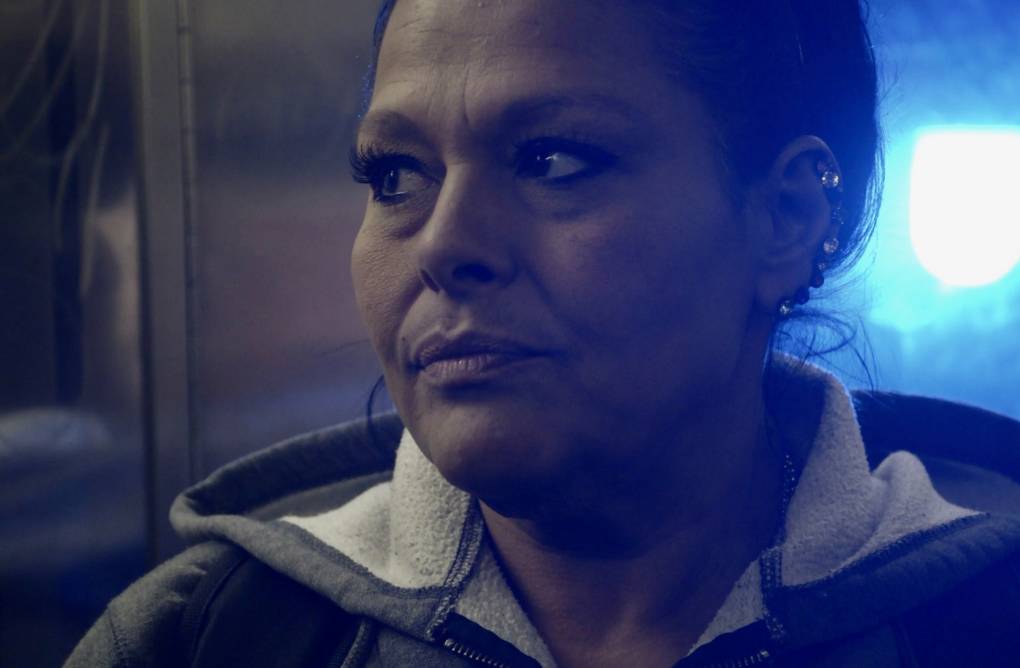
"caption": "Kim DaDou Brown, a formerly incarcerated survivor of domestic violence, in a still from 'And So I Stayed.'",
"description": null,
"title": "And So I Stayed_Hi-Res Prouduction Still 01 edit",
"credit": "'And So I Stayed'/Grit Pictures LLC",
"status": "inherit",
"altTag": "A woman with a concerned look on her face is shot in low light in a still from a documentary.",
"isLoading": false,
"fetchFailed": false
},
"arts_13911403": {
"type": "attachments",
"id": "arts_13911403",
"meta": {
"index": "attachments_1716263798",
"site": "arts",
"id": "13911403",
"found": true
},
"parent": 13911372,
"imgSizes": {
"twentyfourteen-full-width": {
"file": "https://ww2.kqed.org/app/uploads/sites/2/2022/03/Yeoh.Slate_-1038x576.jpg",
"width": 1038,
"mimeType": "image/jpeg",
"height": 576
},
"thumbnail": {
"file": "https://ww2.kqed.org/app/uploads/sites/2/2022/03/Yeoh.Slate_-160x90.jpg",
"width": 160,
"mimeType": "image/jpeg",
"height": 90
},
"post-thumbnail": {
"file": "https://ww2.kqed.org/app/uploads/sites/2/2022/03/Yeoh.Slate_-672x372.jpg",
"width": 672,
"mimeType": "image/jpeg",
"height": 372
},
"kqedFullSize": {
"file": "https://ww2.kqed.org/app/uploads/sites/2/2022/03/Yeoh.Slate_.jpg",
"width": 1920,
"height": 1080
},
"large": {
"file": "https://ww2.kqed.org/app/uploads/sites/2/2022/03/Yeoh.Slate_-1020x574.jpg",
"width": 1020,
"mimeType": "image/jpeg",
"height": 574
},
"1536x1536": {
"file": "https://ww2.kqed.org/app/uploads/sites/2/2022/03/Yeoh.Slate_-1536x864.jpg",
"width": 1536,
"mimeType": "image/jpeg",
"height": 864
},
"medium": {
"file": "https://ww2.kqed.org/app/uploads/sites/2/2022/03/Yeoh.Slate_-800x450.jpg",
"width": 800,
"mimeType": "image/jpeg",
"height": 450
},
"medium_large": {
"file": "https://ww2.kqed.org/app/uploads/sites/2/2022/03/Yeoh.Slate_-768x432.jpg",
"width": 768,
"mimeType": "image/jpeg",
"height": 432
}
},
"publishDate": 1648764071,
"modified": 1648764223,
"caption": "Michelle Yeoh and Jenny Slate both appear this year's 65th SFFILM festival.",
"description": null,
"title": "Yeoh.Slate",
"credit": "Thomas Laisne/Getty Images / KatieMcCurdy",
"status": "inherit",
"altTag": null,
"isLoading": false,
"fetchFailed": false
},
"arts_13904075": {
"type": "attachments",
"id": "arts_13904075",
"meta": {
"index": "attachments_1716263798",
"site": "arts",
"id": "13904075",
"found": true
},
"parent": 13904025,
"imgSizes": {
"twentyfourteen-full-width": {
"file": "https://ww2.kqed.org/app/uploads/sites/2/2021/09/CalleDeLaResistencia-ScreeningRoom_WomanCandles_COVER-1038x576.jpg",
"width": 1038,
"mimeType": "image/jpeg",
"height": 576
},
"thumbnail": {
"file": "https://ww2.kqed.org/app/uploads/sites/2/2021/09/CalleDeLaResistencia-ScreeningRoom_WomanCandles_COVER-160x90.jpg",
"width": 160,
"mimeType": "image/jpeg",
"height": 90
},
"post-thumbnail": {
"file": "https://ww2.kqed.org/app/uploads/sites/2/2021/09/CalleDeLaResistencia-ScreeningRoom_WomanCandles_COVER-672x372.jpg",
"width": 672,
"mimeType": "image/jpeg",
"height": 372
},
"kqedFullSize": {
"file": "https://ww2.kqed.org/app/uploads/sites/2/2021/09/CalleDeLaResistencia-ScreeningRoom_WomanCandles_COVER.jpg",
"width": 1876,
"height": 1055
},
"large": {
"file": "https://ww2.kqed.org/app/uploads/sites/2/2021/09/CalleDeLaResistencia-ScreeningRoom_WomanCandles_COVER-1020x574.jpg",
"width": 1020,
"mimeType": "image/jpeg",
"height": 574
},
"1536x1536": {
"file": "https://ww2.kqed.org/app/uploads/sites/2/2021/09/CalleDeLaResistencia-ScreeningRoom_WomanCandles_COVER-1536x864.jpg",
"width": 1536,
"mimeType": "image/jpeg",
"height": 864
},
"medium": {
"file": "https://ww2.kqed.org/app/uploads/sites/2/2021/09/CalleDeLaResistencia-ScreeningRoom_WomanCandles_COVER-800x450.jpg",
"width": 800,
"mimeType": "image/jpeg",
"height": 450
},
"medium_large": {
"file": "https://ww2.kqed.org/app/uploads/sites/2/2021/09/CalleDeLaResistencia-ScreeningRoom_WomanCandles_COVER-768x432.jpg",
"width": 768,
"mimeType": "image/jpeg",
"height": 432
}
},
"publishDate": 1633063682,
"modified": 1633064247,
"caption": "Still from 'Calle de la Resistencia.'",
"description": "Still from 'Calle de la Resistencia.'",
"title": "CalleDeLaResistencia-ScreeningRoom_WomanCandles_COVER",
"credit": "Courtesy SF Latino Film Fest",
"status": "inherit",
"altTag": null,
"isLoading": false,
"fetchFailed": false
},
"arts_13902355": {
"type": "attachments",
"id": "arts_13902355",
"meta": {
"index": "attachments_1716263798",
"site": "arts",
"id": "13902355",
"found": true
},
"parent": 13902293,
"imgSizes": {
"twentyfourteen-full-width": {
"file": "https://ww2.kqed.org/app/uploads/sites/2/2021/09/maxresdefault-1038x576.jpeg",
"width": 1038,
"mimeType": "image/jpeg",
"height": 576
},
"thumbnail": {
"file": "https://ww2.kqed.org/app/uploads/sites/2/2021/09/maxresdefault-160x90.jpeg",
"width": 160,
"mimeType": "image/jpeg",
"height": 90
},
"post-thumbnail": {
"file": "https://ww2.kqed.org/app/uploads/sites/2/2021/09/maxresdefault-672x372.jpeg",
"width": 672,
"mimeType": "image/jpeg",
"height": 372
},
"kqedFullSize": {
"file": "https://ww2.kqed.org/app/uploads/sites/2/2021/09/maxresdefault.jpeg",
"width": 1280,
"height": 720
},
"large": {
"file": "https://ww2.kqed.org/app/uploads/sites/2/2021/09/maxresdefault-1020x574.jpeg",
"width": 1020,
"mimeType": "image/jpeg",
"height": 574
},
"medium": {
"file": "https://ww2.kqed.org/app/uploads/sites/2/2021/09/maxresdefault-800x450.jpeg",
"width": 800,
"mimeType": "image/jpeg",
"height": 450
},
"medium_large": {
"file": "https://ww2.kqed.org/app/uploads/sites/2/2021/09/maxresdefault-768x432.jpeg",
"width": 768,
"mimeType": "image/jpeg",
"height": 432
}
},
"publishDate": 1630541575,
"modified": 1630542256,
"caption": "Eduardo San Juan Breña as Hernan Cortez in Rodrigo Reyes' '499,' 2020. ",
"description": "Eduardo San Juan Breña as Hernan Cortez in Rodrigo Reyes' '499,' 2020.",
"title": "maxresdefault",
"credit": "Roxie Theater",
"status": "inherit",
"altTag": "Man looks at himself in a shard of mirror.",
"isLoading": false,
"fetchFailed": false
},
"arts_13901923": {
"type": "attachments",
"id": "arts_13901923",
"meta": {
"index": "attachments_1716263798",
"site": "arts",
"id": "13901923",
"found": true
},
"parent": 13901778,
"imgSizes": {
"twentyfourteen-full-width": {
"file": "https://ww2.kqed.org/app/uploads/sites/2/2021/08/Eyimofe1-1038x576.jpeg",
"width": 1038,
"mimeType": "image/jpeg",
"height": 576
},
"thumbnail": {
"file": "https://ww2.kqed.org/app/uploads/sites/2/2021/08/Eyimofe1-160x90.jpeg",
"width": 160,
"mimeType": "image/jpeg",
"height": 90
},
"post-thumbnail": {
"file": "https://ww2.kqed.org/app/uploads/sites/2/2021/08/Eyimofe1-672x372.jpeg",
"width": 672,
"mimeType": "image/jpeg",
"height": 372
},
"kqedFullSize": {
"file": "https://ww2.kqed.org/app/uploads/sites/2/2021/08/Eyimofe1.jpeg",
"width": 1600,
"height": 900
},
"large": {
"file": "https://ww2.kqed.org/app/uploads/sites/2/2021/08/Eyimofe1-1020x574.jpeg",
"width": 1020,
"mimeType": "image/jpeg",
"height": 574
},
"1536x1536": {
"file": "https://ww2.kqed.org/app/uploads/sites/2/2021/08/Eyimofe1-1536x864.jpeg",
"width": 1536,
"mimeType": "image/jpeg",
"height": 864
},
"medium": {
"file": "https://ww2.kqed.org/app/uploads/sites/2/2021/08/Eyimofe1-800x450.jpeg",
"width": 800,
"mimeType": "image/jpeg",
"height": 450
},
"medium_large": {
"file": "https://ww2.kqed.org/app/uploads/sites/2/2021/08/Eyimofe1-768x432.jpeg",
"width": 768,
"mimeType": "image/jpeg",
"height": 432
}
},
"publishDate": 1629943583,
"modified": 1629943968,
"caption": "Still from 'Eyimofe (This is My Desire),' 2020. ",
"description": "Still from 'Eyimofe (This is My Desire),' 2020.",
"title": "Eyimofe1",
"credit": "Janus Films",
"status": "inherit",
"altTag": "A woman is in profile, seen through a beaded curtain.",
"isLoading": false,
"fetchFailed": false
},
"arts_13899766": {
"type": "attachments",
"id": "arts_13899766",
"meta": {
"index": "attachments_1716263798",
"site": "arts",
"id": "13899766",
"found": true
},
"parent": 13899598,
"imgSizes": {
"twentyfourteen-full-width": {
"file": "https://ww2.kqed.org/app/uploads/sites/2/2021/07/RS50208_angela-chan-qut-1038x576.jpg",
"width": 1038,
"mimeType": "image/jpeg",
"height": 576
},
"thumbnail": {
"file": "https://ww2.kqed.org/app/uploads/sites/2/2021/07/RS50208_angela-chan-qut-160x120.jpg",
"width": 160,
"mimeType": "image/jpeg",
"height": 120
},
"post-thumbnail": {
"file": "https://ww2.kqed.org/app/uploads/sites/2/2021/07/RS50208_angela-chan-qut-672x372.jpg",
"width": 672,
"mimeType": "image/jpeg",
"height": 372
},
"kqedFullSize": {
"file": "https://ww2.kqed.org/app/uploads/sites/2/2021/07/RS50208_angela-chan-qut.jpg",
"width": 1920,
"height": 1440
},
"large": {
"file": "https://ww2.kqed.org/app/uploads/sites/2/2021/07/RS50208_angela-chan-qut-1020x765.jpg",
"width": 1020,
"mimeType": "image/jpeg",
"height": 765
},
"1536x1536": {
"file": "https://ww2.kqed.org/app/uploads/sites/2/2021/07/RS50208_angela-chan-qut-1536x1152.jpg",
"width": 1536,
"mimeType": "image/jpeg",
"height": 1152
},
"medium": {
"file": "https://ww2.kqed.org/app/uploads/sites/2/2021/07/RS50208_angela-chan-qut-800x600.jpg",
"width": 800,
"mimeType": "image/jpeg",
"height": 600
},
"medium_large": {
"file": "https://ww2.kqed.org/app/uploads/sites/2/2021/07/RS50208_angela-chan-qut-768x576.jpg",
"width": 768,
"mimeType": "image/jpeg",
"height": 576
}
},
"publishDate": 1625171228,
"modified": 1625171352,
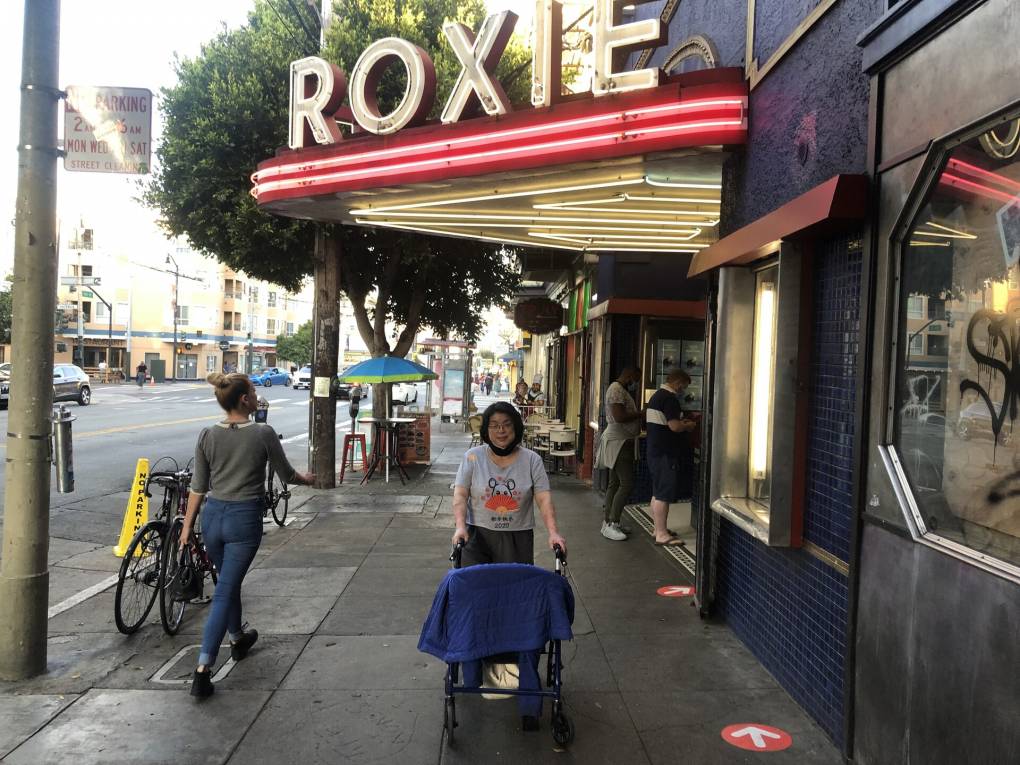
"caption": "Movie fan Angela Chan poses in front of the Roxie Theater before checking out the venue's new ADA upgrades on her way to a screening.",
"description": "Movie fan Angela Chan poses in front of the Roxie Theater before checking out the venue's new ADA upgrades on her way to a screening.",
"title": "RS50208_angela chan-qut",
"credit": "Chloe Veltman/KQED",
"status": "inherit",
"altTag": null,
"isLoading": false,
"fetchFailed": false
},
"arts_13896623": {
"type": "attachments",
"id": "arts_13896623",
"meta": {
"index": "attachments_1716263798",
"site": "arts",
"id": "13896623",
"found": true
},
"parent": 13896530,
"imgSizes": {
"twentyfourteen-full-width": {
"file": "https://ww2.kqed.org/app/uploads/sites/2/2021/04/Limbo2-1038x576.jpg",
"width": 1038,
"mimeType": "image/jpeg",
"height": 576
},
"thumbnail": {
"file": "https://ww2.kqed.org/app/uploads/sites/2/2021/04/Limbo2-160x117.jpg",
"width": 160,
"mimeType": "image/jpeg",
"height": 117
},
"post-thumbnail": {
"file": "https://ww2.kqed.org/app/uploads/sites/2/2021/04/Limbo2-672x372.jpg",
"width": 672,
"mimeType": "image/jpeg",
"height": 372
},
"kqedFullSize": {
"file": "https://ww2.kqed.org/app/uploads/sites/2/2021/04/Limbo2.jpg",
"width": 1920,
"height": 1402
},
"large": {
"file": "https://ww2.kqed.org/app/uploads/sites/2/2021/04/Limbo2-1020x745.jpg",
"width": 1020,
"mimeType": "image/jpeg",
"height": 745
},
"1536x1536": {
"file": "https://ww2.kqed.org/app/uploads/sites/2/2021/04/Limbo2-1536x1122.jpg",
"width": 1536,
"mimeType": "image/jpeg",
"height": 1122
},
"medium": {
"file": "https://ww2.kqed.org/app/uploads/sites/2/2021/04/Limbo2-800x584.jpg",
"width": 800,
"mimeType": "image/jpeg",
"height": 584
},
"medium_large": {
"file": "https://ww2.kqed.org/app/uploads/sites/2/2021/04/Limbo2-768x561.jpg",
"width": 768,
"mimeType": "image/jpeg",
"height": 561
}
},
"publishDate": 1619819554,
"modified": 1619819622,
"caption": "A scene from 'Limbo.' ",
"description": "A scene from 'Limbo.' ",
"title": "Limbo2",
"credit": "MUBI",
"status": "inherit",
"altTag": "A scene from 'Limbo.'",
"isLoading": false,
"fetchFailed": false
},
"arts_13895684": {
"type": "attachments",
"id": "arts_13895684",
"meta": {
"index": "attachments_1716263798",
"site": "arts",
"id": "13895684",
"found": true
},
"parent": 13895673,
"imgSizes": {
"twentyfourteen-full-width": {
"file": "https://ww2.kqed.org/app/uploads/sites/2/2021/04/RoxieTheatre-1038x576.jpg",
"width": 1038,
"mimeType": "image/jpeg",
"height": 576
},
"thumbnail": {
"file": "https://ww2.kqed.org/app/uploads/sites/2/2021/04/RoxieTheatre-160x107.jpg",
"width": 160,
"mimeType": "image/jpeg",
"height": 107
},
"post-thumbnail": {
"file": "https://ww2.kqed.org/app/uploads/sites/2/2021/04/RoxieTheatre-672x372.jpg",
"width": 672,
"mimeType": "image/jpeg",
"height": 372
},
"kqedFullSize": {
"file": "https://ww2.kqed.org/app/uploads/sites/2/2021/04/RoxieTheatre.jpg",
"width": 1999,
"height": 1333
},
"large": {
"file": "https://ww2.kqed.org/app/uploads/sites/2/2021/04/RoxieTheatre-1020x680.jpg",
"width": 1020,
"mimeType": "image/jpeg",
"height": 680
},
"1536x1536": {
"file": "https://ww2.kqed.org/app/uploads/sites/2/2021/04/RoxieTheatre-1536x1024.jpg",
"width": 1536,
"mimeType": "image/jpeg",
"height": 1024
},
"full-width": {
"file": "https://ww2.kqed.org/app/uploads/sites/2/2021/04/RoxieTheatre-1920x1280.jpg",
"width": 1920,
"mimeType": "image/jpeg",
"height": 1280
},
"medium": {
"file": "https://ww2.kqed.org/app/uploads/sites/2/2021/04/RoxieTheatre-800x533.jpg",
"width": 800,
"mimeType": "image/jpeg",
"height": 533
},
"medium_large": {
"file": "https://ww2.kqed.org/app/uploads/sites/2/2021/04/RoxieTheatre-768x512.jpg",
"width": 768,
"mimeType": "image/jpeg",
"height": 512
}
},
"publishDate": 1618354445,
"modified": 1618354539,
"caption": "The Roxie Theater in San Francisco's Mission District is one of the Bay Area's many smaller, independently run movie theaters. ",
"description": "The Roxie Theater in San Francisco's Mission District is one of the Bay Area's many smaller, independently run movie theaters. ",
"title": "RoxieTheatre",
"credit": "Courtesy Roxie Theater",
"status": "inherit",
"altTag": "The Roxie Theater in San Francisco's Mission District is one of the Bay Area's many smaller, independently run movie theaters.",
"isLoading": false,
"fetchFailed": false
},
"arts_13891840": {
"type": "attachments",
"id": "arts_13891840",
"meta": {
"index": "attachments_1716263798",
"site": "arts",
"id": "13891840",
"found": true
},
"parent": 13891822,
"imgSizes": {
"twentyfourteen-full-width": {
"file": "https://ww2.kqed.org/app/uploads/sites/2/2021/01/amy-tan_COVER-1038x576.jpg",
"width": 1038,
"mimeType": "image/jpeg",
"height": 576
},
"thumbnail": {
"file": "https://ww2.kqed.org/app/uploads/sites/2/2021/01/amy-tan_COVER-160x90.jpg",
"width": 160,
"mimeType": "image/jpeg",
"height": 90
},
"post-thumbnail": {
"file": "https://ww2.kqed.org/app/uploads/sites/2/2021/01/amy-tan_COVER-672x372.jpg",
"width": 672,
"mimeType": "image/jpeg",
"height": 372
},
"kqedFullSize": {
"file": "https://ww2.kqed.org/app/uploads/sites/2/2021/01/amy-tan_COVER.jpg",
"width": 1920,
"height": 1080
},
"large": {
"file": "https://ww2.kqed.org/app/uploads/sites/2/2021/01/amy-tan_COVER-1020x574.jpg",
"width": 1020,
"mimeType": "image/jpeg",
"height": 574
},
"1536x1536": {
"file": "https://ww2.kqed.org/app/uploads/sites/2/2021/01/amy-tan_COVER-1536x864.jpg",
"width": 1536,
"mimeType": "image/jpeg",
"height": 864
},
"medium": {
"file": "https://ww2.kqed.org/app/uploads/sites/2/2021/01/amy-tan_COVER-800x450.jpg",
"width": 800,
"mimeType": "image/jpeg",
"height": 450
},
"medium_large": {
"file": "https://ww2.kqed.org/app/uploads/sites/2/2021/01/amy-tan_COVER-768x432.jpg",
"width": 768,
"mimeType": "image/jpeg",
"height": 432
}
},
"publishDate": 1611698525,
"modified": 1611698595,
"caption": "Still from 'Amy Tan: Unintended Memoir' by James Redford.",
"description": "Still from 'Amy Tan: Unintended Memoir' by James Redford.",
"title": "amy-tan_COVER",
"credit": "Courtesy of Sundance Institute; photo by KPJR Films",
"status": "inherit",
"altTag": null,
"isLoading": false,
"fetchFailed": false
},
"arts_13890510": {
"type": "attachments",
"id": "arts_13890510",
"meta": {
"index": "attachments_1716263798",
"site": "arts",
"id": "13890510",
"found": true
},
"parent": 13890478,
"imgSizes": {
"twentyfourteen-full-width": {
"file": "https://ww2.kqed.org/app/uploads/sites/2/2020/12/Haight-Ashbury1966_COVER-1038x576.jpg",
"width": 1038,
"mimeType": "image/jpeg",
"height": 576
},
"thumbnail": {
"file": "https://ww2.kqed.org/app/uploads/sites/2/2020/12/Haight-Ashbury1966_COVER-160x90.jpg",
"width": 160,
"mimeType": "image/jpeg",
"height": 90
},
"post-thumbnail": {
"file": "https://ww2.kqed.org/app/uploads/sites/2/2020/12/Haight-Ashbury1966_COVER-672x372.jpg",
"width": 672,
"mimeType": "image/jpeg",
"height": 372
},
"kqedFullSize": {
"file": "https://ww2.kqed.org/app/uploads/sites/2/2020/12/Haight-Ashbury1966_COVER.jpg",
"width": 1491,
"height": 838
},
"large": {
"file": "https://ww2.kqed.org/app/uploads/sites/2/2020/12/Haight-Ashbury1966_COVER-1020x573.jpg",
"width": 1020,
"mimeType": "image/jpeg",
"height": 573
},
"medium": {
"file": "https://ww2.kqed.org/app/uploads/sites/2/2020/12/Haight-Ashbury1966_COVER-800x450.jpg",
"width": 800,
"mimeType": "image/jpeg",
"height": 450
},
"medium_large": {
"file": "https://ww2.kqed.org/app/uploads/sites/2/2020/12/Haight-Ashbury1966_COVER-768x432.jpg",
"width": 768,
"mimeType": "image/jpeg",
"height": 432
}
},
"publishDate": 1608147192,
"modified": 1608147472,
"caption": "The Haight-Ashbury intersection in 1966, a still from 'Lost Landscapes.'",
"description": "The Haight-Ashbury intersection in 1966, a still from 'Lost Landscapes.'",
"title": "Haight-Ashbury1966_COVER",
"credit": "Rick Prelinger",
"status": "inherit",
"altTag": null,
"isLoading": false,
"fetchFailed": false
},
"arts_13889835": {
"type": "attachments",
"id": "arts_13889835",
"meta": {
"index": "attachments_1716263798",
"site": "arts",
"id": "13889835",
"found": true
},
"title": "2018_Screening_TheTrade_JemalCountess_0034 (1)",
"publishDate": 1606939438,
"status": "inherit",
"parent": 13889823,
"modified": 1738192161,
"caption": "For the first time, the Sundance Film Festival is partnering with film presenters across the country for in-person screenings. San Francisco's Roxie Theater is the only theater in Northern California selected to show Sundance programming in 2021. ",
"credit": "Courtesy Sundance Film Festival",
"altTag": "A movie theater awning with a sign that says SUNDANCE FILM FESTIVAL.",
"description": "For the first time, the Sundance Film Festival is partnering with film presenters across the country for in-person screenings. San Francisco's Roxie Theater is the only theater in Northern California selected to show Sundance programming in 2021. ",
"imgSizes": {
"medium": {
"file": "https://cdn.kqed.org/wp-content/uploads/sites/2/2020/12/2018_Screening_TheTrade_JemalCountess_0034-1-800x533.jpg",
"width": 800,
"height": 533,
"mimeType": "image/jpeg"
},
"large": {
"file": "https://cdn.kqed.org/wp-content/uploads/sites/2/2020/12/2018_Screening_TheTrade_JemalCountess_0034-1-1020x680.jpg",
"width": 1020,
"height": 680,
"mimeType": "image/jpeg"
},
"thumbnail": {
"file": "https://cdn.kqed.org/wp-content/uploads/sites/2/2020/12/2018_Screening_TheTrade_JemalCountess_0034-1-160x107.jpg",
"width": 160,
"height": 107,
"mimeType": "image/jpeg"
},
"medium_large": {
"file": "https://cdn.kqed.org/wp-content/uploads/sites/2/2020/12/2018_Screening_TheTrade_JemalCountess_0034-1-768x512.jpg",
"width": 768,
"height": 512,
"mimeType": "image/jpeg"
},
"1536x1536": {
"file": "https://cdn.kqed.org/wp-content/uploads/sites/2/2020/12/2018_Screening_TheTrade_JemalCountess_0034-1-1536x1024.jpg",
"width": 1536,
"height": 1024,
"mimeType": "image/jpeg"
},
"post-thumbnail": {
"file": "https://cdn.kqed.org/wp-content/uploads/sites/2/2020/12/2018_Screening_TheTrade_JemalCountess_0034-1-672x372.jpg",
"width": 672,
"height": 372,
"mimeType": "image/jpeg"
},
"twentyfourteen-full-width": {
"file": "https://cdn.kqed.org/wp-content/uploads/sites/2/2020/12/2018_Screening_TheTrade_JemalCountess_0034-1-1038x576.jpg",
"width": 1038,
"height": 576,
"mimeType": "image/jpeg"
},
"full-width": {
"file": "https://cdn.kqed.org/wp-content/uploads/sites/2/2020/12/2018_Screening_TheTrade_JemalCountess_0034-1-1920x1280.jpg",
"width": 1920,
"height": 1280,
"mimeType": "image/jpeg"
},
"kqedFullSize": {
"file": "https://cdn.kqed.org/wp-content/uploads/sites/2/2020/12/2018_Screening_TheTrade_JemalCountess_0034-1.jpg",
"width": 2000,
"height": 1333
}
},
"isLoading": false,
"fetchFailed": false
},
"arts_13887089": {
"type": "attachments",
"id": "arts_13887089",
"meta": {
"index": "attachments_1716263798",
"site": "arts",
"id": "13887089",
"found": true
},
"parent": 13887083,
"imgSizes": {
"twentyfourteen-full-width": {
"file": "https://ww2.kqed.org/app/uploads/sites/2/2020/09/CastroTheatre.covid_-1038x576.jpg",
"width": 1038,
"mimeType": "image/jpeg",
"height": 576
},
"thumbnail": {
"file": "https://ww2.kqed.org/app/uploads/sites/2/2020/09/CastroTheatre.covid_-160x90.jpg",
"width": 160,
"mimeType": "image/jpeg",
"height": 90
},
"post-thumbnail": {
"file": "https://ww2.kqed.org/app/uploads/sites/2/2020/09/CastroTheatre.covid_-672x372.jpg",
"width": 672,
"mimeType": "image/jpeg",
"height": 372
},
"kqedFullSize": {
"file": "https://ww2.kqed.org/app/uploads/sites/2/2020/09/CastroTheatre.covid_.jpg",
"width": 1920,
"height": 1080
},
"large": {
"file": "https://ww2.kqed.org/app/uploads/sites/2/2020/09/CastroTheatre.covid_-1020x574.jpg",
"width": 1020,
"mimeType": "image/jpeg",
"height": 574
},
"1536x1536": {
"file": "https://ww2.kqed.org/app/uploads/sites/2/2020/09/CastroTheatre.covid_-1536x864.jpg",
"width": 1536,
"mimeType": "image/jpeg",
"height": 864
},
"medium": {
"file": "https://ww2.kqed.org/app/uploads/sites/2/2020/09/CastroTheatre.covid_-800x450.jpg",
"width": 800,
"mimeType": "image/jpeg",
"height": 450
},
"medium_large": {
"file": "https://ww2.kqed.org/app/uploads/sites/2/2020/09/CastroTheatre.covid_-768x432.jpg",
"width": 768,
"mimeType": "image/jpeg",
"height": 432
}
},
"publishDate": 1601417047,
"modified": 1625171561,
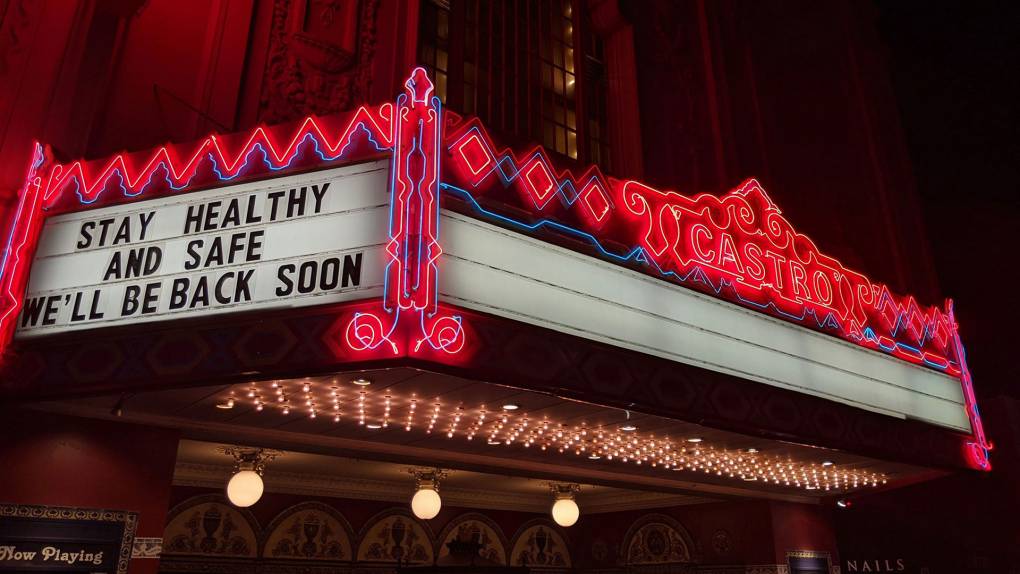
"caption": "The Castro Theatre. ",
"description": "The Castro Theatre. ",
"title": "CastroTheatre.covid",
"credit": "Castro Theatre/Facebook",
"status": "inherit",
"altTag": "The Castro Theatre at night. The theatre has been closed since March due to coronavirus restrictions.",
"isLoading": false,
"fetchFailed": false
}
},
"audioPlayerReducer": {
"postId": "stream_live",
"isPaused": true,
"isPlaying": false,
"pfsActive": false,
"pledgeModalIsOpen": true,
"playerDrawerIsOpen": false,
"liveAudioPlayStartedAt": 0,
"liveAudioPlayContext": ""
},
"authorsReducer": {
"byline_arts_13895673": {
"type": "authors",
"id": "byline_arts_13895673",
"meta": {
"override": true
},
"slug": "byline_arts_13895673",
"name": "Grace Orriss",
"isLoading": false
},
"mfox": {
"type": "authors",
"id": "22",
"meta": {
"index": "authors_1716337520",
"id": "22",
"found": true
},
"name": "Michael Fox",
"firstName": "Michael",
"lastName": "Fox",
"slug": "mfox",
"email": "foxonfilm@yahoo.com",
"display_author_email": false,
"staff_mastheads": [],
"title": "KQED Contributor",
"bio": "Michael Fox has written about film for dozens of publications since 1987. He is a founding member of the San Francisco Bay Area Film Critics Circle.",
"avatar": "https://secure.gravatar.com/avatar/d9849d6c659c41414795c471d907bb97b396e2a32b88e20e6ff66f65fbdd6dcd?s=600&d=blank&r=g",
"twitter": null,
"bluesky": null,
"facebook": null,
"instagram": null,
"linkedin": null,
"sites": [
{
"site": "arts",
"roles": [
"Contributor",
"contributor"
]
}
],
"headData": {
"title": "Michael Fox | KQED",
"description": "KQED Contributor",
"ogImgSrc": "https://secure.gravatar.com/avatar/d9849d6c659c41414795c471d907bb97b396e2a32b88e20e6ff66f65fbdd6dcd?s=600&d=blank&r=g",
"twImgSrc": "https://secure.gravatar.com/avatar/d9849d6c659c41414795c471d907bb97b396e2a32b88e20e6ff66f65fbdd6dcd?s=600&d=blank&r=g"
},
"isLoading": false,
"link": "/author/mfox"
},
"esilvers": {
"type": "authors",
"id": "7237",
"meta": {
"index": "authors_1716337520",
"id": "7237",
"found": true
},
"name": "Emma Silvers",
"firstName": "Emma",
"lastName": "Silvers",
"slug": "esilvers",
"email": "esilvers@kqed.org",
"display_author_email": false,
"staff_mastheads": [],
"title": "KQED Contributor",
"bio": "Emma Silvers is an editor at KQED Arts and a former digital producer at KQED News. Born and raised in the Bay Area, she has previously been an arts and entertainment editor at the \u003cem>San Francisco Chronicle\u003c/em>, \u003cem>SF Weekly\u003c/em> and the \u003cem>San Francisco Bay Guardian.\u003c/em> \u003ca href=\"https://www.emmasilvers.com\">Her work\u003c/a> has also appeared in \u003cem>Rolling Stone\u003c/em>, Pitchfork and \u003cem>Mother Jones\u003c/em>. In 2017 she was the recipient of the Society of Professional Journalists-Northern California's award for arts and culture reporting. In 1993 she \u003ca href=\"https://www.kqed.org/pop/16759/wait-what-my-coworker-was-a-voice-over-hyperventilator-for-jurassic-park\">hyperventilated in \u003cem>Jurassic Park\u003c/em>\u003c/a>.",
"avatar": "https://secure.gravatar.com/avatar/247beada39b88ea5759db1f51dba05cf?s=600&d=blank&r=g",
"twitter": "emmaruthless",
"facebook": null,
"instagram": null,
"linkedin": null,
"sites": [
{
"site": "arts",
"roles": [
"editor"
]
},
{
"site": "news",
"roles": [
"editor"
]
},
{
"site": "pop",
"roles": [
"contributor"
]
},
{
"site": "bayareabites",
"roles": [
"editor"
]
},
{
"site": "food",
"roles": [
"contributor"
]
},
{
"site": "liveblog",
"roles": [
"editor"
]
}
],
"headData": {
"title": "Emma Silvers | KQED",
"description": "KQED Contributor",
"ogImgSrc": "https://secure.gravatar.com/avatar/247beada39b88ea5759db1f51dba05cf?s=600&d=blank&r=g",
"twImgSrc": "https://secure.gravatar.com/avatar/247beada39b88ea5759db1f51dba05cf?s=600&d=blank&r=g"
},
"isLoading": false,
"link": "/author/esilvers"
},
"cveltman": {
"type": "authors",
"id": "8608",
"meta": {
"index": "authors_1716337520",
"id": "8608",
"found": true
},
"name": "Chloe Veltman",
"firstName": "Chloe",
"lastName": "Veltman",
"slug": "cveltman",
"email": "cveltman@kqed.org",
"display_author_email": true,
"staff_mastheads": [],
"title": "Arts and Culture Reporter",
"bio": "Chloe Veltman is a former arts and culture reporter for KQED. Prior to joining the organization, she launched and led the arts bureau at Colorado Public Radio, served as the Bay Area's culture columnist for the New York Times, and was the founder, host and executive producer of VoiceBox, a national award-winning weekly podcast/radio show and live events series all about the human voice. Chloe is the recipient of numerous prizes, grants and fellowships including a Webby Award for her work on interactive storytelling, both the John S Knight Journalism Fellowship and Humanities Center Fellowship at Stanford University, the Sundance Arts Writing Fellowship and a Library of Congress Research Fellowship. She is the author of the book \"On Acting\" and has appeared as a guest lecturer at Yale University and the San Francisco Conservatory of Music among other institutions. She holds a BA in english literature from King's College, Cambridge, and a Masters in Dramaturgy from the Central School of Speech and Drama/Harvard Institute for Advanced Theater Training.\r\n\u003ca href=\"https://www.chloeveltman.com\">www.chloeveltman.com\u003c/a>",
"avatar": "https://secure.gravatar.com/avatar/55403394b00a1ddab683952c2eb2cf85?s=600&d=blank&r=g",
"twitter": "chloeveltman",
"facebook": null,
"instagram": null,
"linkedin": null,
"sites": [
{
"site": "arts",
"roles": []
},
{
"site": "news",
"roles": [
"author"
]
},
{
"site": "pop",
"roles": [
"editor"
]
},
{
"site": "science",
"roles": []
}
],
"headData": {
"title": "Chloe Veltman | KQED",
"description": "Arts and Culture Reporter",
"ogImgSrc": "https://secure.gravatar.com/avatar/55403394b00a1ddab683952c2eb2cf85?s=600&d=blank&r=g",
"twImgSrc": "https://secure.gravatar.com/avatar/55403394b00a1ddab683952c2eb2cf85?s=600&d=blank&r=g"
},
"isLoading": false,
"link": "/author/cveltman"
}
},
"pagesReducer": {
"arts_tag_roxie-theater": {
"type": "terms",
"id": "arts_3163",
"meta": {
"index": "terms_1716263798",
"site": "arts",
"id": "3163",
"score": 10.404039
},
"featImg": null,
"name": "Roxie Theater",
"description": null,
"taxonomy": "tag",
"headData": {
"twImgId": null,
"twTitle": null,
"ogTitle": null,
"ogImgId": null,
"twDescription": null,
"description": null,
"title": "Roxie Theater Archives | KQED Arts",
"ogDescription": null
},
"ttid": 3175,
"slug": "roxie-theater",
"isLoading": false,
"title": "Roxie Theater",
"pageMeta": {
"site": "arts",
"WpPageTemplate": "page-topic-editorial",
"currentPage": 3
},
"blocks": [
{
"blockName": "kqed/post-list",
"attrs": {
"layout": "cardArticle2",
"query": "posts/arts?tag=roxie-theater",
"seeMore": false,
"paginated": true,
"page": 3
}
},
{
"blockName": "kqed/ad"
}
]
}
},
"pfsSessionReducer": {},
"postsReducer": {
"stream_live": {
"type": "live",
"id": "stream_live",
"audioUrl": "https://streams.kqed.org/kqedradio",
"title": "Live Stream",
"excerpt": "Live Stream information currently unavailable.",
"link": "/radio",
"featImg": "",
"label": {
"name": "KQED Live",
"link": "/"
}
},
"stream_kqedNewscast": {
"type": "posts",
"id": "stream_kqedNewscast",
"audioUrl": "https://www.kqed.org/.stream/anon/radio/RDnews/newscast.mp3?_=1",
"title": "KQED Newscast",
"featImg": "",
"label": {
"name": "88.5 FM",
"link": "/"
}
},
"arts_13911684": {
"type": "posts",
"id": "arts_13911684",
"meta": {
"index": "posts_1716263798",
"site": "arts",
"id": "13911684",
"score": null,
"sort": [
1649602817000
]
},
"guestAuthors": [],
"slug": "and-so-i-stayed-domestic-violence-incarceration-justice-documentary",
"title": "These Women Fought Back Against Their Abusers—And Were Incarcerated for It",
"publishDate": 1649602817,
"format": "standard",
"headTitle": "These Women Fought Back Against Their Abusers—And Were Incarcerated for It | KQED",
"labelTerm": {
"term": 140,
"site": "arts"
},
"content": "\u003cp>The U.N. has called it “\u003ca href=\"https://www.npr.org/2021/02/25/971525846/how-the-legal-system-can-better-address-a-rise-in-domestic-violence-amid-the-pan\">the shadow pandemic\u003c/a>“: there’s been a notable but as-yet difficult to quantify increase in intimate partner violence over the last two years, according to experts, most likely due to a combination of mental health issues, income loss and isolation.\u003c/p>\n\u003cp>It’s against this backdrop that filmmakers Natalie Pattillo and Daniel A. Nelson (the latter a San Francisco State University alum) made \u003ca href=\"https://andsoistayedfilm.com/\" target=\"_blank\" rel=\"noopener noreferrer\">\u003cem>And So I Stayed\u003c/em>\u003c/a>, a documentary about how the U.S. justice system treats survivors of domestic violence, and what happens to the people who are incarcerated, separated from their children and otherwise made to pay incredibly steep prices for fighting back against their abusers.\u003c/p>\n\u003cp>The film follows three women, including Kim DaDou Brown, a formerly incarcerated survivor and activist who served 17 years in prison for killing her abuser in self-defense. Brown played a key role in passing New York’s Domestic Violence Survivors Justice Act, which allows a court to resentence a survivor of sexual, psychological or physical abuse.\u003c/p>\n\u003cp>https://www.youtube.com/watch?v=uM_wkVGr3oM\u003c/p>\n\u003cp>For co-director Pattillo, the topic is an intensely personal one: a close family member was killed by an abusive boyfriend in 2010.\u003c/p>\n\u003cp>[ad fullwidth]\u003c/p>\n\u003cp>“As a survivor and woman of color, I believe that our film can uplift survivors in a culture where they are disbelieved and villainized rather than protected,” said Pattillo in a statement, describing the trauma-informed work that was necessary to build trust with the film’s subjects. “I believe it is my personal duty to not just make this film, but to make a searing, indelible impact on everyone who engages with it.”\u003c/p>\n\u003cp>\u003cimg loading=\"lazy\" decoding=\"async\" class=\"aligncenter size-full wp-image-12904247\" src=\"https://ww2.kqed.org/app/uploads/sites/2/2017/03/Q.Logo_.Break_-400x39.jpg\" alt=\"\" width=\"400\" height=\"39\" srcset=\"https://cdn.kqed.org/wp-content/uploads/sites/2/2017/03/Q.Logo_.Break_-400x39.jpg 400w, https://cdn.kqed.org/wp-content/uploads/sites/2/2017/03/Q.Logo_.Break_-400x39-160x16.jpg 160w, https://cdn.kqed.org/wp-content/uploads/sites/2/2017/03/Q.Logo_.Break_-400x39-240x23.jpg 240w, https://cdn.kqed.org/wp-content/uploads/sites/2/2017/03/Q.Logo_.Break_-400x39-375x37.jpg 375w\" sizes=\"(max-width: 400px) 100vw, 400px\">\u003c/p>\n\u003cp>\u003c/p>\n\u003cp>\u003cem>‘And So I Stayed’ screens at the Roxie Theater in San Francisco on Tuesday, April 12, at 6pm. Through a partnership with the Bay Area nonprofit \u003ca href=\"https://www.fivekeyshomefree.org/\" target=\"_blank\" rel=\"noopener noreferrer\">Five Keys, Home Free\u003c/a>, local formerly incarcerated survivors will speak following the screening. \u003ca href=\"https://www.roxie.com/ai1ec_event/and-so-i-stayed/\" target=\"_blank\" rel=\"noopener noreferrer\">Details here\u003c/a>. \u003c/em>\u003c/p>\n\n",
"blocks": [],
"excerpt": "The documentary 'And So I Stayed' clearly exposes the justice system failing domestic violence survivors.",
"status": "publish",
"parent": 0,
"modified": 1726759576,
"stats": {
"hasAudio": false,
"hasVideo": true,
"hasChartOrMap": false,
"iframeSrcs": [],
"hasGoogleForm": false,
"hasGallery": false,
"hasHearkenModule": false,
"hasPolis": false,
"paragraphCount": 9,
"wordCount": 331
},
"headData": {
"title": "'And So I Stayed' Screens at the Roxie Theater in SF | KQED",
"description": "The documentary follows three women who fought back against their domestic abusers—are were incarcerated for it.",
"ogTitle": "These Women Fought Back Against Their Abusers—And Were Incarcerated for It",
"ogDescription": "",
"ogImgId": "",
"twTitle": "These Women Fought Back Against Their Abusers—And Were Incarcerated for It",
"twDescription": "",
"twImgId": "",
"socialTitle": "'And So I Stayed' Screens at the Roxie Theater in SF %%page%% %%sep%% KQED",
"socialDescription": "The documentary follows three women who fought back against their domestic abusers—are were incarcerated for it.",
"schema": {
"@context": "https://schema.org",
"@type": "Article",
"headline": "These Women Fought Back Against Their Abusers—And Were Incarcerated for It",
"datePublished": "2022-04-10T08:00:17-07:00",
"dateModified": "2024-09-19T08:26:16-07:00",
"image": "https://cdn.kqed.org/wp-content/uploads/2020/02/KQED-OG-Image@1x.png"
}
},
"sticky": false,
"templateType": "standard",
"featuredImageType": "standard",
"excludeFromSiteSearch": "Include",
"path": "/arts/13911684/and-so-i-stayed-domestic-violence-incarceration-justice-documentary",
"audioTrackLength": null,
"parsedContent": [
{
"type": "contentString",
"content": "\u003cdiv class=\"post-body\">\u003cp>\u003cp>The U.N. has called it “\u003ca href=\"https://www.npr.org/2021/02/25/971525846/how-the-legal-system-can-better-address-a-rise-in-domestic-violence-amid-the-pan\">the shadow pandemic\u003c/a>“: there’s been a notable but as-yet difficult to quantify increase in intimate partner violence over the last two years, according to experts, most likely due to a combination of mental health issues, income loss and isolation.\u003c/p>\n\u003cp>It’s against this backdrop that filmmakers Natalie Pattillo and Daniel A. Nelson (the latter a San Francisco State University alum) made \u003ca href=\"https://andsoistayedfilm.com/\" target=\"_blank\" rel=\"noopener noreferrer\">\u003cem>And So I Stayed\u003c/em>\u003c/a>, a documentary about how the U.S. justice system treats survivors of domestic violence, and what happens to the people who are incarcerated, separated from their children and otherwise made to pay incredibly steep prices for fighting back against their abusers.\u003c/p>\n\u003cp>The film follows three women, including Kim DaDou Brown, a formerly incarcerated survivor and activist who served 17 years in prison for killing her abuser in self-defense. Brown played a key role in passing New York’s Domestic Violence Survivors Justice Act, which allows a court to resentence a survivor of sexual, psychological or physical abuse.\u003c/p>\u003c/p>\u003cp>\u003cspan class='utils-parseShortcode-shortcodes-__youtubeShortcode__embedYoutube'>\n \u003cspan class='utils-parseShortcode-shortcodes-__youtubeShortcode__embedYoutubeInside'>\n \u003ciframe\n loading='lazy'\n class='utils-parseShortcode-shortcodes-__youtubeShortcode__youtubePlayer'\n type='text/html'\n src='//www.youtube.com/embed/uM_wkVGr3oM'\n title='//www.youtube.com/embed/uM_wkVGr3oM'\n allowfullscreen='true'\n style='border:0;'>\u003c/iframe>\n \u003c/span>\n \u003c/span>\u003c/p>\u003cp>\u003cp>For co-director Pattillo, the topic is an intensely personal one: a close family member was killed by an abusive boyfriend in 2010.\u003c/p>\n\u003cp>\u003c/p>\u003c/div>",
"attributes": {
"named": {},
"numeric": []
}
},
{
"type": "component",
"content": "",
"name": "ad",
"attributes": {
"named": {
"label": "fullwidth"
},
"numeric": [
"fullwidth"
]
}
},
{
"type": "contentString",
"content": "\u003cdiv class=\"post-body\">\u003cp>\u003c/p>\n\u003cp>“As a survivor and woman of color, I believe that our film can uplift survivors in a culture where they are disbelieved and villainized rather than protected,” said Pattillo in a statement, describing the trauma-informed work that was necessary to build trust with the film’s subjects. “I believe it is my personal duty to not just make this film, but to make a searing, indelible impact on everyone who engages with it.”\u003c/p>\n\u003cp>\u003cimg loading=\"lazy\" decoding=\"async\" class=\"aligncenter size-full wp-image-12904247\" src=\"https://ww2.kqed.org/app/uploads/sites/2/2017/03/Q.Logo_.Break_-400x39.jpg\" alt=\"\" width=\"400\" height=\"39\" srcset=\"https://cdn.kqed.org/wp-content/uploads/sites/2/2017/03/Q.Logo_.Break_-400x39.jpg 400w, https://cdn.kqed.org/wp-content/uploads/sites/2/2017/03/Q.Logo_.Break_-400x39-160x16.jpg 160w, https://cdn.kqed.org/wp-content/uploads/sites/2/2017/03/Q.Logo_.Break_-400x39-240x23.jpg 240w, https://cdn.kqed.org/wp-content/uploads/sites/2/2017/03/Q.Logo_.Break_-400x39-375x37.jpg 375w\" sizes=\"(max-width: 400px) 100vw, 400px\">\u003c/p>\n\u003cp>\u003c/p>\n\u003cp>\u003cem>‘And So I Stayed’ screens at the Roxie Theater in San Francisco on Tuesday, April 12, at 6pm. Through a partnership with the Bay Area nonprofit \u003ca href=\"https://www.fivekeyshomefree.org/\" target=\"_blank\" rel=\"noopener noreferrer\">Five Keys, Home Free\u003c/a>, local formerly incarcerated survivors will speak following the screening. \u003ca href=\"https://www.roxie.com/ai1ec_event/and-so-i-stayed/\" target=\"_blank\" rel=\"noopener noreferrer\">Details here\u003c/a>. \u003c/em>\u003c/p>\n\n\u003c/div>\u003c/p>",
"attributes": {
"named": {},
"numeric": []
}
}
],
"link": "/arts/13911684/and-so-i-stayed-domestic-violence-incarceration-justice-documentary",
"authors": [
"7237"
],
"programs": [
"arts_140"
],
"categories": [
"arts_1",
"arts_74"
],
"tags": [
"arts_13672",
"arts_2455",
"arts_10342",
"arts_977",
"arts_1526",
"arts_3163",
"arts_585"
],
"featImg": "arts_13911690",
"label": "arts_140"
},
"arts_13911372": {
"type": "posts",
"id": "arts_13911372",
"meta": {
"index": "posts_1716263798",
"site": "arts",
"id": "13911372",
"score": null,
"sort": [
1648765217000
]
},
"parent": 0,
"labelTerm": {
"site": "arts",
"term": 140
},
"blocks": [],
"publishDate": 1648765217,
"format": "standard",
"title": "The Top 10 Hottest Tickets at the SFFILM Festival’s Return to Theaters in 2022",
"headTitle": "The Top 10 Hottest Tickets at the SFFILM Festival’s Return to Theaters in 2022 | KQED",
"content": "\u003cp>I’ve been attending and covering the \u003ca href=\"https://sffilm.org/2022-festival-program/\" rel=\"noopener noreferrer\" target=\"_blank\">SFFILM Festival\u003c/a> (known as the San Francisco International Film Festival for nearly its entire existence) for 35 of its 65 years, and I can’t recall a time when its identity was murkier. To be sure, it was approaching a crossroads even before the pandemic, as the festival and film worlds—and San Francisco itself—had changed in ways that turned SFFILM from a pioneering beacon to a nice regional festival.\u003c/p>\n\u003cp>SFFILM was once the sun around which a handful of much smaller Bay Area film events revolved. Then the local calendar grew full with niche film festivals, crammed with local premieres. The audience for daring foreign films in the Bay Area—one of the top markets in the country for decades—declined. Meanwhile, streaming platforms, in the course of evolving into production houses on par with Hollywood’s legacy studios, have turned your home screen into a first-run theater.\u003c/p>\n\u003cp>[aside postID='arts_13908311']At the same time, the \u003ca href=\"https://sffilm.org/event/rachel-rosen-this-is-your-sffilm-life/\" rel=\"noopener noreferrer\" target=\"_blank\">departure of SFFILM’s popular director of programming Rachel Rosen\u003c/a> after the 2020 festival, and the subsequent departures of longtime programmers Audrey Chang and Amanda Salazar, heralded an abrupt changing of the guard. The current programming team, with the exception of SFFILM veteran Rod Armstrong, consists of newcomers.\u003c/p>\n\u003cp>So if the 2022 edition of the SFFILM Festival (playing April 21–May 1 at the Castro, Roxie, Vogue and Victoria Theaters in San Francisco, and in Berkeley at BAMPFA) feels more like Sundance Redux than Postcards from the Edge of the World, c’est la vie.\u003c/p>\n\u003cp>None of this, however, is meant to dampen your enthusiasm for the dozens of quality films among the 60-odd features and equivalent number of shorts. Here are my guesses as to the programs likely to sell out first.\u003c/p>\n\u003cfigure id=\"attachment_13911402\" class=\"wp-caption aligncenter\" style=\"max-width: 800px\">\u003cimg loading=\"lazy\" decoding=\"async\" src=\"https://ww2.kqed.org/app/uploads/sites/2/2022/03/32sounds.FreeHistoryProject-800x533.jpg\" alt=\"A man stands with a microphone in a soundproof room \" width=\"800\" height=\"533\" class=\"size-medium wp-image-13911402\" srcset=\"https://cdn.kqed.org/wp-content/uploads/sites/2/2022/03/32sounds.FreeHistoryProject-800x533.jpg 800w, https://cdn.kqed.org/wp-content/uploads/sites/2/2022/03/32sounds.FreeHistoryProject-1020x680.jpg 1020w, https://cdn.kqed.org/wp-content/uploads/sites/2/2022/03/32sounds.FreeHistoryProject-160x107.jpg 160w, https://cdn.kqed.org/wp-content/uploads/sites/2/2022/03/32sounds.FreeHistoryProject-768x512.jpg 768w, https://cdn.kqed.org/wp-content/uploads/sites/2/2022/03/32sounds.FreeHistoryProject-1536x1024.jpg 1536w, https://cdn.kqed.org/wp-content/uploads/sites/2/2022/03/32sounds.FreeHistoryProject.jpg 1920w\" sizes=\"(max-width: 800px) 100vw, 800px\">\u003cfigcaption class=\"wp-caption-text\">’32 Sounds.’ \u003ccite>(Free History Project)\u003c/cite>\u003c/figcaption>\u003c/figure>\n\u003cp>\u003cstrong>’32 Sounds’\u003c/strong>\u003cbr>\n\u003cem>April 24, Castro Theatre\u003c/em>\u003cbr>\nSam Green began his career in San Francisco with the wonderful short documentary \u003cem>The Rainbow Man/John 3:16\u003c/em> and the essential feature doc \u003cem>The Weather Underground\u003c/em>. Before he relocated to New York, he devised a unique performance-oriented format that marries his onstage narration and live music to nonfiction film sequences. \u003cem>32 Sounds\u003c/em>, which premiered at Sundance, outfits every audience member with a headset for Green’s iconoclastic and beautifully guided road/head trip through the aural universe. Yes, the Castro is a big house, but trust me: You don’t want to miss this show.\u003c/p>\n\u003cfigure id=\"attachment_13911409\" class=\"wp-caption aligncenter\" style=\"max-width: 800px\">\u003cimg loading=\"lazy\" decoding=\"async\" src=\"https://ww2.kqed.org/app/uploads/sites/2/2022/03/yeoh.ThomasLaisne.GettyImages-800x600.jpg\" alt=\"\" width=\"800\" height=\"600\" class=\"size-medium wp-image-13911409\" srcset=\"https://cdn.kqed.org/wp-content/uploads/sites/2/2022/03/yeoh.ThomasLaisne.GettyImages-800x600.jpg 800w, https://cdn.kqed.org/wp-content/uploads/sites/2/2022/03/yeoh.ThomasLaisne.GettyImages-1020x765.jpg 1020w, https://cdn.kqed.org/wp-content/uploads/sites/2/2022/03/yeoh.ThomasLaisne.GettyImages-160x120.jpg 160w, https://cdn.kqed.org/wp-content/uploads/sites/2/2022/03/yeoh.ThomasLaisne.GettyImages-768x576.jpg 768w, https://cdn.kqed.org/wp-content/uploads/sites/2/2022/03/yeoh.ThomasLaisne.GettyImages-1536x1152.jpg 1536w, https://cdn.kqed.org/wp-content/uploads/sites/2/2022/03/yeoh.ThomasLaisne.GettyImages.jpg 1920w\" sizes=\"(max-width: 800px) 100vw, 800px\">\u003cfigcaption class=\"wp-caption-text\">Michelle Yeoh. \u003ccite>(Thomas Laisne / Getty Images)\u003c/cite>\u003c/figcaption>\u003c/figure>\n\u003cp>\u003cstrong>A Tribute to Michelle Yeoh: In Conversation with Sandra Oh\u003c/strong>\u003cbr>\n\u003cem>April 29, Castro Theatre\u003c/em>\u003cbr>\nLess than two weeks ago, the mere appearance of athletic, acrobatic Malaysian-born action superstar Michelle Yeoh was sufficient to pack the Castro. (OK, \u003ca href=\"https://sfstandard.com/arts-culture/photos-michelle-yeoh-co-stars-at-the-castro-theatre-debut-of-everything-everywhere-all-at-once/\" rel=\"noopener noreferrer\" target=\"_blank\">there was also a film premiere\u003c/a>, and her \u003cem>Everything Everywhere All at Once\u003c/em> costars and directors, but we all know who the draw was.) Surely there are more than enough Yeoh fans in the Bay Area to fill the vast movie house again, especially in the city that she calls her home away from home. (And, as a warmup, the festival is reprising \u003cem>Crouching Tiger, Hidden Dragon\u003c/em> (2000) on 35mm at the Castro on April 27.)\u003c/p>\n\u003cfigure id=\"attachment_13911400\" class=\"wp-caption aligncenter\" style=\"max-width: 800px\">\u003cimg loading=\"lazy\" decoding=\"async\" src=\"https://ww2.kqed.org/app/uploads/sites/2/2022/03/marcel.SFFILM-800x433.jpg\" alt=\"\" width=\"800\" height=\"433\" class=\"size-medium wp-image-13911400\" srcset=\"https://cdn.kqed.org/wp-content/uploads/sites/2/2022/03/marcel.SFFILM-800x433.jpg 800w, https://cdn.kqed.org/wp-content/uploads/sites/2/2022/03/marcel.SFFILM-1020x553.jpg 1020w, https://cdn.kqed.org/wp-content/uploads/sites/2/2022/03/marcel.SFFILM-160x87.jpg 160w, https://cdn.kqed.org/wp-content/uploads/sites/2/2022/03/marcel.SFFILM-768x416.jpg 768w, https://cdn.kqed.org/wp-content/uploads/sites/2/2022/03/marcel.SFFILM-1536x832.jpg 1536w, https://cdn.kqed.org/wp-content/uploads/sites/2/2022/03/marcel.SFFILM.jpg 1920w\" sizes=\"(max-width: 800px) 100vw, 800px\">\u003cfigcaption class=\"wp-caption-text\">‘Marcel the Shell With Shoes On.’ \u003ccite>(Courtesy SFFILM)\u003c/cite>\u003c/figcaption>\u003c/figure>\n\u003cp>\u003cstrong>A Tribute to Jenny Slate\u003c/strong>\u003cbr>\n\u003cem>April 22, Castro Theatre\u003c/em>\u003cbr>\nI’d be surprised if anyone is more surprised that Jenny Slate has become a household name than Jenny Slate. Sure, she’s been working nonstop (although often as a voice actor), going on two decades. But now she’s everywhere, with sufficient box-office clout to leverage her trilogy of animated web shorts into the new feature \u003cem>Marcell the Shell with Shoes On\u003c/em>. A laugh-filled, love-filled evening awaits.\u003c/p>\n\u003cfigure id=\"attachment_13911399\" class=\"wp-caption aligncenter\" style=\"max-width: 800px\">\u003cimg loading=\"lazy\" decoding=\"async\" src=\"https://ww2.kqed.org/app/uploads/sites/2/2022/03/AmJusticeonTrial.SFFILM-800x559.jpg\" alt=\"\" width=\"800\" height=\"559\" class=\"size-medium wp-image-13911399\" srcset=\"https://cdn.kqed.org/wp-content/uploads/sites/2/2022/03/AmJusticeonTrial.SFFILM-800x559.jpg 800w, https://cdn.kqed.org/wp-content/uploads/sites/2/2022/03/AmJusticeonTrial.SFFILM-1020x712.jpg 1020w, https://cdn.kqed.org/wp-content/uploads/sites/2/2022/03/AmJusticeonTrial.SFFILM-160x112.jpg 160w, https://cdn.kqed.org/wp-content/uploads/sites/2/2022/03/AmJusticeonTrial.SFFILM-768x536.jpg 768w, https://cdn.kqed.org/wp-content/uploads/sites/2/2022/03/AmJusticeonTrial.SFFILM-1536x1073.jpg 1536w, https://cdn.kqed.org/wp-content/uploads/sites/2/2022/03/AmJusticeonTrial.SFFILM.jpg 1718w\" sizes=\"(max-width: 800px) 100vw, 800px\">\u003cfigcaption class=\"wp-caption-text\">‘American Justice on Trial.’ \u003ccite>(Courtesy SFFILM)\u003c/cite>\u003c/figcaption>\u003c/figure>\n\u003cp>\u003cstrong>‘American Justice on Trial’\u003c/strong>\u003cbr>\n\u003cem>April 22, Roxie Theater\u003c/em>\u003cbr>\nJudge-turned-author Lise Pearlman struggled for years to make a movie from her 2012 book, \u003cem>The Sky’s The Limit: People v. Newton, The Real Trial of the 20th Century?\u003c/em> She found top-drawer collaborators in Bay Area doc maker Andrew Abrahams (\u003cem>Under the Skin\u003c/em>) and Emmy-winning editor Herb Ferrette, who revisit Black Panther leader Huey P. Newton’s notorious 1967 death-penalty trial for the death of an Oakland policeman. The 40-minute film screens with A.K. Sandhu’s short, \u003cem>For Love and Legacy\u003c/em>, which follows sculptor Dana King as she creates a bust of Newton, \u003ca href=\"https://www.kqed.org/news/11893532/debut-of-dr-huey-p-newton-bust-spotlights-an-influential-black-panther-party-leader\" rel=\"noopener noreferrer\" target=\"_blank\">publicly installed last year\u003c/a> in West Oakland.\u003c/p>\n\u003cfigure id=\"attachment_13911405\" class=\"wp-caption aligncenter\" style=\"max-width: 800px\">\u003cimg loading=\"lazy\" decoding=\"async\" src=\"https://ww2.kqed.org/app/uploads/sites/2/2022/03/IDidntSee.ReidDavenport-800x450.jpg\" alt=\"A shadow of a man in a wheelchair across a crosswalk \" width=\"800\" height=\"450\" class=\"size-medium wp-image-13911405\" srcset=\"https://cdn.kqed.org/wp-content/uploads/sites/2/2022/03/IDidntSee.ReidDavenport-800x450.jpg 800w, https://cdn.kqed.org/wp-content/uploads/sites/2/2022/03/IDidntSee.ReidDavenport-1020x574.jpg 1020w, https://cdn.kqed.org/wp-content/uploads/sites/2/2022/03/IDidntSee.ReidDavenport-160x90.jpg 160w, https://cdn.kqed.org/wp-content/uploads/sites/2/2022/03/IDidntSee.ReidDavenport-768x432.jpg 768w, https://cdn.kqed.org/wp-content/uploads/sites/2/2022/03/IDidntSee.ReidDavenport-1536x864.jpg 1536w, https://cdn.kqed.org/wp-content/uploads/sites/2/2022/03/IDidntSee.ReidDavenport.jpg 1920w\" sizes=\"(max-width: 800px) 100vw, 800px\">\u003cfigcaption class=\"wp-caption-text\">‘I Didn’t See You There.’ \u003ccite>(Reid Davenport)\u003c/cite>\u003c/figcaption>\u003c/figure>\n\u003cp>\u003cstrong>‘I Didn’t See You There’\u003c/strong>\u003cbr>\n\u003cem>April 29, Victoria Theatre; April 30, BAMPFA\u003c/em>\u003cbr>\nReid Davenport’s bracing and beautiful view of Oakland and BART from a wheelchair is off-putting and endearing, pragmatic and poetic, contemporary and historic(al). A landmark in disability representation and one of the most valuable documentaries we’ll see all year. \u003cem>I Didn’t See You There\u003c/em> debuted at Sundance, when we covered it \u003ca href=\"https://www.kqed.org/arts/13908383/i-didnt-see-you-there-documentary-sundance-oakland-disability\" rel=\"noopener noreferrer\" target=\"_blank\">here\u003c/a>.\u003c/p>\n\u003cfigure id=\"attachment_13911407\" class=\"wp-caption aligncenter\" style=\"max-width: 800px\">\u003cimg loading=\"lazy\" decoding=\"async\" src=\"https://ww2.kqed.org/app/uploads/sites/2/2022/03/FireofLove.SFFILM-800x450.jpg\" alt=\"A person in a spacesuit-looking outfit in front of a giant fireball\" width=\"800\" height=\"450\" class=\"size-medium wp-image-13911407\" srcset=\"https://cdn.kqed.org/wp-content/uploads/sites/2/2022/03/FireofLove.SFFILM-800x450.jpg 800w, https://cdn.kqed.org/wp-content/uploads/sites/2/2022/03/FireofLove.SFFILM-1020x574.jpg 1020w, https://cdn.kqed.org/wp-content/uploads/sites/2/2022/03/FireofLove.SFFILM-160x90.jpg 160w, https://cdn.kqed.org/wp-content/uploads/sites/2/2022/03/FireofLove.SFFILM-768x432.jpg 768w, https://cdn.kqed.org/wp-content/uploads/sites/2/2022/03/FireofLove.SFFILM-1536x864.jpg 1536w, https://cdn.kqed.org/wp-content/uploads/sites/2/2022/03/FireofLove.SFFILM.jpg 1920w\" sizes=\"(max-width: 800px) 100vw, 800px\">\u003cfigcaption class=\"wp-caption-text\">‘Fire of Love.’ \u003ccite>(Courtesy SFFILM)\u003c/cite>\u003c/figcaption>\u003c/figure>\n\u003cp>\u003cstrong>‘Fire of Love’\u003c/strong>\u003cbr>\n\u003cem>April 23, Castro Theatre; April 24, BAMPFA\u003c/em>\u003cbr>\nSara Dosa’s heat-seeking portrait of French husband-and-wife volcano nerds, er, scientists Katia and Maurice Krafft opened Sundance to rapturous reviews. Crafted from troves of archival footage, \u003cem>Fire of Love\u003c/em> is the most accomplished film by the beloved Bay Area filmmaker and former SFFILM staffer, though I prefer her \u003cem>The Last Season\u003c/em> and \u003cem>The Seer and the Unseen\u003c/em> (both available on Kanopy, hint hint). An excellent date movie, for obvious reasons. \u003c/p>\n\u003cfigure id=\"attachment_13911401\" class=\"wp-caption aligncenter\" style=\"max-width: 800px\">\u003cimg loading=\"lazy\" decoding=\"async\" src=\"https://ww2.kqed.org/app/uploads/sites/2/2022/03/Navalny.CNNFilms-800x450.jpg\" alt=\"A man sits at a desk \" width=\"800\" height=\"450\" class=\"size-medium wp-image-13911401\" srcset=\"https://cdn.kqed.org/wp-content/uploads/sites/2/2022/03/Navalny.CNNFilms-800x450.jpg 800w, https://cdn.kqed.org/wp-content/uploads/sites/2/2022/03/Navalny.CNNFilms-1020x574.jpg 1020w, https://cdn.kqed.org/wp-content/uploads/sites/2/2022/03/Navalny.CNNFilms-160x90.jpg 160w, https://cdn.kqed.org/wp-content/uploads/sites/2/2022/03/Navalny.CNNFilms-768x432.jpg 768w, https://cdn.kqed.org/wp-content/uploads/sites/2/2022/03/Navalny.CNNFilms-1536x864.jpg 1536w, https://cdn.kqed.org/wp-content/uploads/sites/2/2022/03/Navalny.CNNFilms.jpg 1920w\" sizes=\"(max-width: 800px) 100vw, 800px\">\u003cfigcaption class=\"wp-caption-text\">‘Navalny.’ \u003ccite>(CNN Films)\u003c/cite>\u003c/figcaption>\u003c/figure>\n\u003cp>\u003cstrong>‘Navalny’\u003c/strong>\u003cbr>\n\u003cem>April 23, Castro Theatre\u003c/em>\u003cbr>\nA late and wildly satisfying addition to the Sundance program, this doc has ripped-from-the-headlines political and hot-ticket frisson. The filmmaker had extraordinary access to Russian electoral candidate and opposition leader Alexei Navalny while he recovered in Germany from his Putin-ordered poisoning before courageously flying back to Moscow. Even before Putin’s invasion of Ukraine, and Navalny’s conviction last week for fraud and contempt of (kangaroo) court, \u003cem>Navalny\u003c/em> provided inspiration that people of character and conviction still roam the land.\u003c/p>\n\u003cfigure id=\"attachment_13911408\" class=\"wp-caption aligncenter\" style=\"max-width: 800px\">\u003cimg loading=\"lazy\" decoding=\"async\" src=\"https://ww2.kqed.org/app/uploads/sites/2/2022/03/Happening.CourtesyIFCFilms-800x450.jpg\" alt=\"\" width=\"800\" height=\"450\" class=\"size-medium wp-image-13911408\" srcset=\"https://cdn.kqed.org/wp-content/uploads/sites/2/2022/03/Happening.CourtesyIFCFilms-800x450.jpg 800w, https://cdn.kqed.org/wp-content/uploads/sites/2/2022/03/Happening.CourtesyIFCFilms-1020x573.jpg 1020w, https://cdn.kqed.org/wp-content/uploads/sites/2/2022/03/Happening.CourtesyIFCFilms-160x90.jpg 160w, https://cdn.kqed.org/wp-content/uploads/sites/2/2022/03/Happening.CourtesyIFCFilms-768x432.jpg 768w, https://cdn.kqed.org/wp-content/uploads/sites/2/2022/03/Happening.CourtesyIFCFilms-1536x864.jpg 1536w, https://cdn.kqed.org/wp-content/uploads/sites/2/2022/03/Happening.CourtesyIFCFilms.jpg 1688w\" sizes=\"(max-width: 800px) 100vw, 800px\">\u003cfigcaption class=\"wp-caption-text\">‘Happening.’ \u003ccite>(Courtesy IFC Films)\u003c/cite>\u003c/figcaption>\u003c/figure>\n\u003cp>\u003cstrong>‘Happening’\u003c/strong>\u003cbr>\n\u003cem>April 22, BAMPFA; April 23, Victoria Theatre\u003c/em>\u003cbr>\n\u003cstrong>‘The Janes’\u003c/strong>\u003cbr>\n\u003cem>April 30, Victoria Theatre\u003c/em>\u003cbr>\nAny day now, the headlines will announce the radical Supreme Court’s vote to overturn Roe v. Wade. Tia Lessin and Emma Pirdes’ prosaic yet galvanizing Sundance doc \u003cem>The Janes\u003c/em> collects the memories and testimony of the gutsy young Chicago women who devised and ran an illegal abortion-services operation in the late ’60s. Audrey Diwan’s \u003cem>Happening\u003c/em> is a devastating adaptation of Annie Ernaux’s autobiographical novel about a young French woman seeking to end an unwanted pregnancy in 1963.\u003c/p>\n\u003cfigure id=\"attachment_13911406\" class=\"wp-caption aligncenter\" style=\"max-width: 800px\">\u003cimg loading=\"lazy\" decoding=\"async\" src=\"https://ww2.kqed.org/app/uploads/sites/2/2022/03/ChaCha.CRED_.CourtesySFFILM-800x450.jpg\" alt=\"\" width=\"800\" height=\"450\" class=\"size-medium wp-image-13911406\" srcset=\"https://cdn.kqed.org/wp-content/uploads/sites/2/2022/03/ChaCha.CRED_.CourtesySFFILM-800x450.jpg 800w, https://cdn.kqed.org/wp-content/uploads/sites/2/2022/03/ChaCha.CRED_.CourtesySFFILM-1020x574.jpg 1020w, https://cdn.kqed.org/wp-content/uploads/sites/2/2022/03/ChaCha.CRED_.CourtesySFFILM-160x90.jpg 160w, https://cdn.kqed.org/wp-content/uploads/sites/2/2022/03/ChaCha.CRED_.CourtesySFFILM-768x432.jpg 768w, https://cdn.kqed.org/wp-content/uploads/sites/2/2022/03/ChaCha.CRED_.CourtesySFFILM-1536x864.jpg 1536w, https://cdn.kqed.org/wp-content/uploads/sites/2/2022/03/ChaCha.CRED_.CourtesySFFILM.jpg 1920w\" sizes=\"(max-width: 800px) 100vw, 800px\">\u003cfigcaption class=\"wp-caption-text\">‘Cha Cha Real Smooth.’ \u003ccite>(Courtesy SFFILM)\u003c/cite>\u003c/figcaption>\u003c/figure>\n\u003cp>\u003cstrong>‘Cha Cha Real Smooth’\u003c/strong>\u003cbr>\nApr. 30, Castro Theatre\u003cbr>\nThe festival’s Big Nights—Opening, Centerpiece, Closing—are, by definition, high-profile and quick sellers. I didn’t lead with them because, well, folks who like klieg lights and dressing up for movies and being the first on their block to see a new flick don’t need anyone’s encouragement to hop online and grab tickets.\u003c/p>\n\u003cp>[ad fullwidth]\u003c/p>\n\u003cp>But the Sundance crowd-pleaser \u003cem>Cha Cha Real Smooth\u003c/em> is the perfect Closing Night film: It manages to sustain and entertain the whole way through without being deep or even substantial, and boasts a mainstream star (Dakota Johnson) doing the indie-film thing. Writer-director-star Cooper Raiff—playing a charming, decent, newly coined college grad at loose ends—hugs the camera a little too much for my taste, but I have a hunch you’ll disagree.\u003c/p>\n\u003cp>[aside postID='arts_13870036']Jamie Sisley’s family drama \u003cem>Stay Awake\u003c/em> (April 21, Castro), featuring Chrissy Metz (\u003cem>This is Us\u003c/em>) as a mother addicted to opioids, marks an unexpectedly hard-hitting Opening Night selection. The fact-based Centerpiece pick, Abi Damaris Corbin’s \u003cem>892\u003c/em> (April 27, Castro), blends thriller elements with social concerns in its taut reenactment of an ex-Marine (John Boyega) who goes off in an Atlanta-area bank after Veterans Affairs bungles his disability payment.\u003c/p>\n\u003cp>Once upon a time, I could predict with some confidence that new films by Terence Davies (\u003cem>Benediction\u003c/em>) and Claire Denis (\u003cem>Both Sides of the Blade\u003c/em>) would sell out, along with \u003cem>Nothing Compares\u003c/em>, Kathryn Ferguson’s riveting reframing of Sinéad O’Connor as a no-fucks-to-give artist scarred by childhood abuse instead of the mischaracterizations of her as a shallow pop star/insulting heretic/fashion casualty/spoiled brat (take your pick) following her 1992 performance on \u003cem>Saturday Night Live\u003c/em>.\u003c/p>\n\u003cp>But who can say, at this tenuous moment in our relationship with movies, and the arts-agnostic attitude of so many of San Francisco’s newer arrivals? So my advice is the same as always: If a film catches your interest, don’t hesitate to buy a ticket.\u003c/p>\n\u003cp>\u003cimg loading=\"lazy\" decoding=\"async\" src=\"https://ww2.kqed.org/app/uploads/sites/2/2017/03/Q.Logo_.Break_-400x39.jpg\" alt=\"\" width=\"400\" height=\"39\" class=\"aligncenter size-full wp-image-12904247\" srcset=\"https://cdn.kqed.org/wp-content/uploads/sites/2/2017/03/Q.Logo_.Break_-400x39.jpg 400w, https://cdn.kqed.org/wp-content/uploads/sites/2/2017/03/Q.Logo_.Break_-400x39-160x16.jpg 160w, https://cdn.kqed.org/wp-content/uploads/sites/2/2017/03/Q.Logo_.Break_-400x39-240x23.jpg 240w, https://cdn.kqed.org/wp-content/uploads/sites/2/2017/03/Q.Logo_.Break_-400x39-375x37.jpg 375w\" sizes=\"(max-width: 400px) 100vw, 400px\">\u003c/p>\n\u003cp>[ad floatright]\u003c/p>\n\u003cp>\u003cem>The 65th SFFILM festival runs April 21–May 1, 2022, at various venues. \u003ca href=\"https://sffilm.org/\" rel=\"noopener noreferrer\" target=\"_blank\">Details here\u003c/a>. \u003c/em>\u003c/p>\n\n",
"stats": {
"hasVideo": false,
"hasChartOrMap": false,
"hasAudio": false,
"hasPolis": false,
"wordCount": 1550,
"hasGoogleForm": false,
"hasGallery": false,
"hasHearkenModule": false,
"iframeSrcs": [],
"paragraphCount": 22
},
"modified": 1705007017,
"excerpt": "Tributes to Michelle Yeoh and Jenny Slate, plus films about Huey P. Newton and Alexei Navalny, are among SFFILM's sure-to-sell-out events this year. ",
"headData": {
"twImgId": "",
"twTitle": "",
"ogTitle": "",
"ogImgId": "",
"twDescription": "",
"description": "Tributes to Michelle Yeoh and Jenny Slate, plus films about Huey P. Newton and Alexei Navalny, are among SFFILM's sure-to-sell-out events this year. ",
"title": "The Top 10 Hottest Tickets at the SFFILM Festival’s Return to Theaters in 2022 | KQED",
"ogDescription": "",
"schema": {
"@context": "https://schema.org",
"@type": "Article",
"headline": "The Top 10 Hottest Tickets at the SFFILM Festival’s Return to Theaters in 2022",
"datePublished": "2022-03-31T15:20:17-07:00",
"dateModified": "2024-01-11T13:03:37-08:00",
"image": "https://cdn.kqed.org/wp-content/uploads/2020/02/KQED-OG-Image@1x.png"
}
},
"guestAuthors": [],
"slug": "hottest-tickets-sffilm-2022-jenny-slate-michelle-yeoh-castro-theatre",
"status": "publish",
"templateType": "standard",
"excludeFromSiteSearch": "Include",
"featuredImageType": "standard",
"sticky": false,
"subhead": "Here are our picks to sell out, in an uncertain year.",
"WpOldSlug": "the-top-10-hottest-tickets-at-the-sffilm-festivals-return-to-theaters-in-2022",
"path": "/arts/13911372/hottest-tickets-sffilm-2022-jenny-slate-michelle-yeoh-castro-theatre",
"audioTrackLength": null,
"parsedContent": [
{
"type": "contentString",
"content": "\u003cdiv class=\"post-body\">\u003cp>\u003cp>I’ve been attending and covering the \u003ca href=\"https://sffilm.org/2022-festival-program/\" rel=\"noopener noreferrer\" target=\"_blank\">SFFILM Festival\u003c/a> (known as the San Francisco International Film Festival for nearly its entire existence) for 35 of its 65 years, and I can’t recall a time when its identity was murkier. To be sure, it was approaching a crossroads even before the pandemic, as the festival and film worlds—and San Francisco itself—had changed in ways that turned SFFILM from a pioneering beacon to a nice regional festival.\u003c/p>\n\u003cp>SFFILM was once the sun around which a handful of much smaller Bay Area film events revolved. Then the local calendar grew full with niche film festivals, crammed with local premieres. The audience for daring foreign films in the Bay Area—one of the top markets in the country for decades—declined. Meanwhile, streaming platforms, in the course of evolving into production houses on par with Hollywood’s legacy studios, have turned your home screen into a first-run theater.\u003c/p>\n\u003cp>\u003c/p>\u003c/div>",
"attributes": {
"named": {},
"numeric": []
}
},
{
"type": "component",
"content": "",
"name": "aside",
"attributes": {
"named": {
"postid": "arts_13908311",
"label": ""
},
"numeric": []
}
},
{
"type": "contentString",
"content": "\u003cdiv class=\"post-body\">\u003cp>At the same time, the \u003ca href=\"https://sffilm.org/event/rachel-rosen-this-is-your-sffilm-life/\" rel=\"noopener noreferrer\" target=\"_blank\">departure of SFFILM’s popular director of programming Rachel Rosen\u003c/a> after the 2020 festival, and the subsequent departures of longtime programmers Audrey Chang and Amanda Salazar, heralded an abrupt changing of the guard. The current programming team, with the exception of SFFILM veteran Rod Armstrong, consists of newcomers.\u003c/p>\n\u003cp>So if the 2022 edition of the SFFILM Festival (playing April 21–May 1 at the Castro, Roxie, Vogue and Victoria Theaters in San Francisco, and in Berkeley at BAMPFA) feels more like Sundance Redux than Postcards from the Edge of the World, c’est la vie.\u003c/p>\n\u003cp>None of this, however, is meant to dampen your enthusiasm for the dozens of quality films among the 60-odd features and equivalent number of shorts. Here are my guesses as to the programs likely to sell out first.\u003c/p>\n\u003cfigure id=\"attachment_13911402\" class=\"wp-caption aligncenter\" style=\"max-width: 800px\">\u003cimg loading=\"lazy\" decoding=\"async\" src=\"https://ww2.kqed.org/app/uploads/sites/2/2022/03/32sounds.FreeHistoryProject-800x533.jpg\" alt=\"A man stands with a microphone in a soundproof room \" width=\"800\" height=\"533\" class=\"size-medium wp-image-13911402\" srcset=\"https://cdn.kqed.org/wp-content/uploads/sites/2/2022/03/32sounds.FreeHistoryProject-800x533.jpg 800w, https://cdn.kqed.org/wp-content/uploads/sites/2/2022/03/32sounds.FreeHistoryProject-1020x680.jpg 1020w, https://cdn.kqed.org/wp-content/uploads/sites/2/2022/03/32sounds.FreeHistoryProject-160x107.jpg 160w, https://cdn.kqed.org/wp-content/uploads/sites/2/2022/03/32sounds.FreeHistoryProject-768x512.jpg 768w, https://cdn.kqed.org/wp-content/uploads/sites/2/2022/03/32sounds.FreeHistoryProject-1536x1024.jpg 1536w, https://cdn.kqed.org/wp-content/uploads/sites/2/2022/03/32sounds.FreeHistoryProject.jpg 1920w\" sizes=\"(max-width: 800px) 100vw, 800px\">\u003cfigcaption class=\"wp-caption-text\">’32 Sounds.’ \u003ccite>(Free History Project)\u003c/cite>\u003c/figcaption>\u003c/figure>\n\u003cp>\u003cstrong>’32 Sounds’\u003c/strong>\u003cbr>\n\u003cem>April 24, Castro Theatre\u003c/em>\u003cbr>\nSam Green began his career in San Francisco with the wonderful short documentary \u003cem>The Rainbow Man/John 3:16\u003c/em> and the essential feature doc \u003cem>The Weather Underground\u003c/em>. Before he relocated to New York, he devised a unique performance-oriented format that marries his onstage narration and live music to nonfiction film sequences. \u003cem>32 Sounds\u003c/em>, which premiered at Sundance, outfits every audience member with a headset for Green’s iconoclastic and beautifully guided road/head trip through the aural universe. Yes, the Castro is a big house, but trust me: You don’t want to miss this show.\u003c/p>\n\u003cfigure id=\"attachment_13911409\" class=\"wp-caption aligncenter\" style=\"max-width: 800px\">\u003cimg loading=\"lazy\" decoding=\"async\" src=\"https://ww2.kqed.org/app/uploads/sites/2/2022/03/yeoh.ThomasLaisne.GettyImages-800x600.jpg\" alt=\"\" width=\"800\" height=\"600\" class=\"size-medium wp-image-13911409\" srcset=\"https://cdn.kqed.org/wp-content/uploads/sites/2/2022/03/yeoh.ThomasLaisne.GettyImages-800x600.jpg 800w, https://cdn.kqed.org/wp-content/uploads/sites/2/2022/03/yeoh.ThomasLaisne.GettyImages-1020x765.jpg 1020w, https://cdn.kqed.org/wp-content/uploads/sites/2/2022/03/yeoh.ThomasLaisne.GettyImages-160x120.jpg 160w, https://cdn.kqed.org/wp-content/uploads/sites/2/2022/03/yeoh.ThomasLaisne.GettyImages-768x576.jpg 768w, https://cdn.kqed.org/wp-content/uploads/sites/2/2022/03/yeoh.ThomasLaisne.GettyImages-1536x1152.jpg 1536w, https://cdn.kqed.org/wp-content/uploads/sites/2/2022/03/yeoh.ThomasLaisne.GettyImages.jpg 1920w\" sizes=\"(max-width: 800px) 100vw, 800px\">\u003cfigcaption class=\"wp-caption-text\">Michelle Yeoh. \u003ccite>(Thomas Laisne / Getty Images)\u003c/cite>\u003c/figcaption>\u003c/figure>\n\u003cp>\u003cstrong>A Tribute to Michelle Yeoh: In Conversation with Sandra Oh\u003c/strong>\u003cbr>\n\u003cem>April 29, Castro Theatre\u003c/em>\u003cbr>\nLess than two weeks ago, the mere appearance of athletic, acrobatic Malaysian-born action superstar Michelle Yeoh was sufficient to pack the Castro. (OK, \u003ca href=\"https://sfstandard.com/arts-culture/photos-michelle-yeoh-co-stars-at-the-castro-theatre-debut-of-everything-everywhere-all-at-once/\" rel=\"noopener noreferrer\" target=\"_blank\">there was also a film premiere\u003c/a>, and her \u003cem>Everything Everywhere All at Once\u003c/em> costars and directors, but we all know who the draw was.) Surely there are more than enough Yeoh fans in the Bay Area to fill the vast movie house again, especially in the city that she calls her home away from home. (And, as a warmup, the festival is reprising \u003cem>Crouching Tiger, Hidden Dragon\u003c/em> (2000) on 35mm at the Castro on April 27.)\u003c/p>\n\u003cfigure id=\"attachment_13911400\" class=\"wp-caption aligncenter\" style=\"max-width: 800px\">\u003cimg loading=\"lazy\" decoding=\"async\" src=\"https://ww2.kqed.org/app/uploads/sites/2/2022/03/marcel.SFFILM-800x433.jpg\" alt=\"\" width=\"800\" height=\"433\" class=\"size-medium wp-image-13911400\" srcset=\"https://cdn.kqed.org/wp-content/uploads/sites/2/2022/03/marcel.SFFILM-800x433.jpg 800w, https://cdn.kqed.org/wp-content/uploads/sites/2/2022/03/marcel.SFFILM-1020x553.jpg 1020w, https://cdn.kqed.org/wp-content/uploads/sites/2/2022/03/marcel.SFFILM-160x87.jpg 160w, https://cdn.kqed.org/wp-content/uploads/sites/2/2022/03/marcel.SFFILM-768x416.jpg 768w, https://cdn.kqed.org/wp-content/uploads/sites/2/2022/03/marcel.SFFILM-1536x832.jpg 1536w, https://cdn.kqed.org/wp-content/uploads/sites/2/2022/03/marcel.SFFILM.jpg 1920w\" sizes=\"(max-width: 800px) 100vw, 800px\">\u003cfigcaption class=\"wp-caption-text\">‘Marcel the Shell With Shoes On.’ \u003ccite>(Courtesy SFFILM)\u003c/cite>\u003c/figcaption>\u003c/figure>\n\u003cp>\u003cstrong>A Tribute to Jenny Slate\u003c/strong>\u003cbr>\n\u003cem>April 22, Castro Theatre\u003c/em>\u003cbr>\nI’d be surprised if anyone is more surprised that Jenny Slate has become a household name than Jenny Slate. Sure, she’s been working nonstop (although often as a voice actor), going on two decades. But now she’s everywhere, with sufficient box-office clout to leverage her trilogy of animated web shorts into the new feature \u003cem>Marcell the Shell with Shoes On\u003c/em>. A laugh-filled, love-filled evening awaits.\u003c/p>\n\u003cfigure id=\"attachment_13911399\" class=\"wp-caption aligncenter\" style=\"max-width: 800px\">\u003cimg loading=\"lazy\" decoding=\"async\" src=\"https://ww2.kqed.org/app/uploads/sites/2/2022/03/AmJusticeonTrial.SFFILM-800x559.jpg\" alt=\"\" width=\"800\" height=\"559\" class=\"size-medium wp-image-13911399\" srcset=\"https://cdn.kqed.org/wp-content/uploads/sites/2/2022/03/AmJusticeonTrial.SFFILM-800x559.jpg 800w, https://cdn.kqed.org/wp-content/uploads/sites/2/2022/03/AmJusticeonTrial.SFFILM-1020x712.jpg 1020w, https://cdn.kqed.org/wp-content/uploads/sites/2/2022/03/AmJusticeonTrial.SFFILM-160x112.jpg 160w, https://cdn.kqed.org/wp-content/uploads/sites/2/2022/03/AmJusticeonTrial.SFFILM-768x536.jpg 768w, https://cdn.kqed.org/wp-content/uploads/sites/2/2022/03/AmJusticeonTrial.SFFILM-1536x1073.jpg 1536w, https://cdn.kqed.org/wp-content/uploads/sites/2/2022/03/AmJusticeonTrial.SFFILM.jpg 1718w\" sizes=\"(max-width: 800px) 100vw, 800px\">\u003cfigcaption class=\"wp-caption-text\">‘American Justice on Trial.’ \u003ccite>(Courtesy SFFILM)\u003c/cite>\u003c/figcaption>\u003c/figure>\n\u003cp>\u003cstrong>‘American Justice on Trial’\u003c/strong>\u003cbr>\n\u003cem>April 22, Roxie Theater\u003c/em>\u003cbr>\nJudge-turned-author Lise Pearlman struggled for years to make a movie from her 2012 book, \u003cem>The Sky’s The Limit: People v. Newton, The Real Trial of the 20th Century?\u003c/em> She found top-drawer collaborators in Bay Area doc maker Andrew Abrahams (\u003cem>Under the Skin\u003c/em>) and Emmy-winning editor Herb Ferrette, who revisit Black Panther leader Huey P. Newton’s notorious 1967 death-penalty trial for the death of an Oakland policeman. The 40-minute film screens with A.K. Sandhu’s short, \u003cem>For Love and Legacy\u003c/em>, which follows sculptor Dana King as she creates a bust of Newton, \u003ca href=\"https://www.kqed.org/news/11893532/debut-of-dr-huey-p-newton-bust-spotlights-an-influential-black-panther-party-leader\" rel=\"noopener noreferrer\" target=\"_blank\">publicly installed last year\u003c/a> in West Oakland.\u003c/p>\n\u003cfigure id=\"attachment_13911405\" class=\"wp-caption aligncenter\" style=\"max-width: 800px\">\u003cimg loading=\"lazy\" decoding=\"async\" src=\"https://ww2.kqed.org/app/uploads/sites/2/2022/03/IDidntSee.ReidDavenport-800x450.jpg\" alt=\"A shadow of a man in a wheelchair across a crosswalk \" width=\"800\" height=\"450\" class=\"size-medium wp-image-13911405\" srcset=\"https://cdn.kqed.org/wp-content/uploads/sites/2/2022/03/IDidntSee.ReidDavenport-800x450.jpg 800w, https://cdn.kqed.org/wp-content/uploads/sites/2/2022/03/IDidntSee.ReidDavenport-1020x574.jpg 1020w, https://cdn.kqed.org/wp-content/uploads/sites/2/2022/03/IDidntSee.ReidDavenport-160x90.jpg 160w, https://cdn.kqed.org/wp-content/uploads/sites/2/2022/03/IDidntSee.ReidDavenport-768x432.jpg 768w, https://cdn.kqed.org/wp-content/uploads/sites/2/2022/03/IDidntSee.ReidDavenport-1536x864.jpg 1536w, https://cdn.kqed.org/wp-content/uploads/sites/2/2022/03/IDidntSee.ReidDavenport.jpg 1920w\" sizes=\"(max-width: 800px) 100vw, 800px\">\u003cfigcaption class=\"wp-caption-text\">‘I Didn’t See You There.’ \u003ccite>(Reid Davenport)\u003c/cite>\u003c/figcaption>\u003c/figure>\n\u003cp>\u003cstrong>‘I Didn’t See You There’\u003c/strong>\u003cbr>\n\u003cem>April 29, Victoria Theatre; April 30, BAMPFA\u003c/em>\u003cbr>\nReid Davenport’s bracing and beautiful view of Oakland and BART from a wheelchair is off-putting and endearing, pragmatic and poetic, contemporary and historic(al). A landmark in disability representation and one of the most valuable documentaries we’ll see all year. \u003cem>I Didn’t See You There\u003c/em> debuted at Sundance, when we covered it \u003ca href=\"https://www.kqed.org/arts/13908383/i-didnt-see-you-there-documentary-sundance-oakland-disability\" rel=\"noopener noreferrer\" target=\"_blank\">here\u003c/a>.\u003c/p>\n\u003cfigure id=\"attachment_13911407\" class=\"wp-caption aligncenter\" style=\"max-width: 800px\">\u003cimg loading=\"lazy\" decoding=\"async\" src=\"https://ww2.kqed.org/app/uploads/sites/2/2022/03/FireofLove.SFFILM-800x450.jpg\" alt=\"A person in a spacesuit-looking outfit in front of a giant fireball\" width=\"800\" height=\"450\" class=\"size-medium wp-image-13911407\" srcset=\"https://cdn.kqed.org/wp-content/uploads/sites/2/2022/03/FireofLove.SFFILM-800x450.jpg 800w, https://cdn.kqed.org/wp-content/uploads/sites/2/2022/03/FireofLove.SFFILM-1020x574.jpg 1020w, https://cdn.kqed.org/wp-content/uploads/sites/2/2022/03/FireofLove.SFFILM-160x90.jpg 160w, https://cdn.kqed.org/wp-content/uploads/sites/2/2022/03/FireofLove.SFFILM-768x432.jpg 768w, https://cdn.kqed.org/wp-content/uploads/sites/2/2022/03/FireofLove.SFFILM-1536x864.jpg 1536w, https://cdn.kqed.org/wp-content/uploads/sites/2/2022/03/FireofLove.SFFILM.jpg 1920w\" sizes=\"(max-width: 800px) 100vw, 800px\">\u003cfigcaption class=\"wp-caption-text\">‘Fire of Love.’ \u003ccite>(Courtesy SFFILM)\u003c/cite>\u003c/figcaption>\u003c/figure>\n\u003cp>\u003cstrong>‘Fire of Love’\u003c/strong>\u003cbr>\n\u003cem>April 23, Castro Theatre; April 24, BAMPFA\u003c/em>\u003cbr>\nSara Dosa’s heat-seeking portrait of French husband-and-wife volcano nerds, er, scientists Katia and Maurice Krafft opened Sundance to rapturous reviews. Crafted from troves of archival footage, \u003cem>Fire of Love\u003c/em> is the most accomplished film by the beloved Bay Area filmmaker and former SFFILM staffer, though I prefer her \u003cem>The Last Season\u003c/em> and \u003cem>The Seer and the Unseen\u003c/em> (both available on Kanopy, hint hint). An excellent date movie, for obvious reasons. \u003c/p>\n\u003cfigure id=\"attachment_13911401\" class=\"wp-caption aligncenter\" style=\"max-width: 800px\">\u003cimg loading=\"lazy\" decoding=\"async\" src=\"https://ww2.kqed.org/app/uploads/sites/2/2022/03/Navalny.CNNFilms-800x450.jpg\" alt=\"A man sits at a desk \" width=\"800\" height=\"450\" class=\"size-medium wp-image-13911401\" srcset=\"https://cdn.kqed.org/wp-content/uploads/sites/2/2022/03/Navalny.CNNFilms-800x450.jpg 800w, https://cdn.kqed.org/wp-content/uploads/sites/2/2022/03/Navalny.CNNFilms-1020x574.jpg 1020w, https://cdn.kqed.org/wp-content/uploads/sites/2/2022/03/Navalny.CNNFilms-160x90.jpg 160w, https://cdn.kqed.org/wp-content/uploads/sites/2/2022/03/Navalny.CNNFilms-768x432.jpg 768w, https://cdn.kqed.org/wp-content/uploads/sites/2/2022/03/Navalny.CNNFilms-1536x864.jpg 1536w, https://cdn.kqed.org/wp-content/uploads/sites/2/2022/03/Navalny.CNNFilms.jpg 1920w\" sizes=\"(max-width: 800px) 100vw, 800px\">\u003cfigcaption class=\"wp-caption-text\">‘Navalny.’ \u003ccite>(CNN Films)\u003c/cite>\u003c/figcaption>\u003c/figure>\n\u003cp>\u003cstrong>‘Navalny’\u003c/strong>\u003cbr>\n\u003cem>April 23, Castro Theatre\u003c/em>\u003cbr>\nA late and wildly satisfying addition to the Sundance program, this doc has ripped-from-the-headlines political and hot-ticket frisson. The filmmaker had extraordinary access to Russian electoral candidate and opposition leader Alexei Navalny while he recovered in Germany from his Putin-ordered poisoning before courageously flying back to Moscow. Even before Putin’s invasion of Ukraine, and Navalny’s conviction last week for fraud and contempt of (kangaroo) court, \u003cem>Navalny\u003c/em> provided inspiration that people of character and conviction still roam the land.\u003c/p>\n\u003cfigure id=\"attachment_13911408\" class=\"wp-caption aligncenter\" style=\"max-width: 800px\">\u003cimg loading=\"lazy\" decoding=\"async\" src=\"https://ww2.kqed.org/app/uploads/sites/2/2022/03/Happening.CourtesyIFCFilms-800x450.jpg\" alt=\"\" width=\"800\" height=\"450\" class=\"size-medium wp-image-13911408\" srcset=\"https://cdn.kqed.org/wp-content/uploads/sites/2/2022/03/Happening.CourtesyIFCFilms-800x450.jpg 800w, https://cdn.kqed.org/wp-content/uploads/sites/2/2022/03/Happening.CourtesyIFCFilms-1020x573.jpg 1020w, https://cdn.kqed.org/wp-content/uploads/sites/2/2022/03/Happening.CourtesyIFCFilms-160x90.jpg 160w, https://cdn.kqed.org/wp-content/uploads/sites/2/2022/03/Happening.CourtesyIFCFilms-768x432.jpg 768w, https://cdn.kqed.org/wp-content/uploads/sites/2/2022/03/Happening.CourtesyIFCFilms-1536x864.jpg 1536w, https://cdn.kqed.org/wp-content/uploads/sites/2/2022/03/Happening.CourtesyIFCFilms.jpg 1688w\" sizes=\"(max-width: 800px) 100vw, 800px\">\u003cfigcaption class=\"wp-caption-text\">‘Happening.’ \u003ccite>(Courtesy IFC Films)\u003c/cite>\u003c/figcaption>\u003c/figure>\n\u003cp>\u003cstrong>‘Happening’\u003c/strong>\u003cbr>\n\u003cem>April 22, BAMPFA; April 23, Victoria Theatre\u003c/em>\u003cbr>\n\u003cstrong>‘The Janes’\u003c/strong>\u003cbr>\n\u003cem>April 30, Victoria Theatre\u003c/em>\u003cbr>\nAny day now, the headlines will announce the radical Supreme Court’s vote to overturn Roe v. Wade. Tia Lessin and Emma Pirdes’ prosaic yet galvanizing Sundance doc \u003cem>The Janes\u003c/em> collects the memories and testimony of the gutsy young Chicago women who devised and ran an illegal abortion-services operation in the late ’60s. Audrey Diwan’s \u003cem>Happening\u003c/em> is a devastating adaptation of Annie Ernaux’s autobiographical novel about a young French woman seeking to end an unwanted pregnancy in 1963.\u003c/p>\n\u003cfigure id=\"attachment_13911406\" class=\"wp-caption aligncenter\" style=\"max-width: 800px\">\u003cimg loading=\"lazy\" decoding=\"async\" src=\"https://ww2.kqed.org/app/uploads/sites/2/2022/03/ChaCha.CRED_.CourtesySFFILM-800x450.jpg\" alt=\"\" width=\"800\" height=\"450\" class=\"size-medium wp-image-13911406\" srcset=\"https://cdn.kqed.org/wp-content/uploads/sites/2/2022/03/ChaCha.CRED_.CourtesySFFILM-800x450.jpg 800w, https://cdn.kqed.org/wp-content/uploads/sites/2/2022/03/ChaCha.CRED_.CourtesySFFILM-1020x574.jpg 1020w, https://cdn.kqed.org/wp-content/uploads/sites/2/2022/03/ChaCha.CRED_.CourtesySFFILM-160x90.jpg 160w, https://cdn.kqed.org/wp-content/uploads/sites/2/2022/03/ChaCha.CRED_.CourtesySFFILM-768x432.jpg 768w, https://cdn.kqed.org/wp-content/uploads/sites/2/2022/03/ChaCha.CRED_.CourtesySFFILM-1536x864.jpg 1536w, https://cdn.kqed.org/wp-content/uploads/sites/2/2022/03/ChaCha.CRED_.CourtesySFFILM.jpg 1920w\" sizes=\"(max-width: 800px) 100vw, 800px\">\u003cfigcaption class=\"wp-caption-text\">‘Cha Cha Real Smooth.’ \u003ccite>(Courtesy SFFILM)\u003c/cite>\u003c/figcaption>\u003c/figure>\n\u003cp>\u003cstrong>‘Cha Cha Real Smooth’\u003c/strong>\u003cbr>\nApr. 30, Castro Theatre\u003cbr>\nThe festival’s Big Nights—Opening, Centerpiece, Closing—are, by definition, high-profile and quick sellers. I didn’t lead with them because, well, folks who like klieg lights and dressing up for movies and being the first on their block to see a new flick don’t need anyone’s encouragement to hop online and grab tickets.\u003c/p>\n\u003cp>\u003c/p>\u003c/div>",
"attributes": {
"named": {},
"numeric": []
}
},
{
"type": "component",
"content": "",
"name": "ad",
"attributes": {
"named": {
"label": "fullwidth"
},
"numeric": [
"fullwidth"
]
}
},
{
"type": "contentString",
"content": "\u003cdiv class=\"post-body\">\u003cp>\u003c/p>\n\u003cp>But the Sundance crowd-pleaser \u003cem>Cha Cha Real Smooth\u003c/em> is the perfect Closing Night film: It manages to sustain and entertain the whole way through without being deep or even substantial, and boasts a mainstream star (Dakota Johnson) doing the indie-film thing. Writer-director-star Cooper Raiff—playing a charming, decent, newly coined college grad at loose ends—hugs the camera a little too much for my taste, but I have a hunch you’ll disagree.\u003c/p>\n\u003cp>\u003c/p>\u003c/div>",
"attributes": {
"named": {},
"numeric": []
}
},
{
"type": "component",
"content": "",
"name": "aside",
"attributes": {
"named": {
"postid": "arts_13870036",
"label": ""
},
"numeric": []
}
},
{
"type": "contentString",
"content": "\u003cdiv class=\"post-body\">\u003cp>Jamie Sisley’s family drama \u003cem>Stay Awake\u003c/em> (April 21, Castro), featuring Chrissy Metz (\u003cem>This is Us\u003c/em>) as a mother addicted to opioids, marks an unexpectedly hard-hitting Opening Night selection. The fact-based Centerpiece pick, Abi Damaris Corbin’s \u003cem>892\u003c/em> (April 27, Castro), blends thriller elements with social concerns in its taut reenactment of an ex-Marine (John Boyega) who goes off in an Atlanta-area bank after Veterans Affairs bungles his disability payment.\u003c/p>\n\u003cp>Once upon a time, I could predict with some confidence that new films by Terence Davies (\u003cem>Benediction\u003c/em>) and Claire Denis (\u003cem>Both Sides of the Blade\u003c/em>) would sell out, along with \u003cem>Nothing Compares\u003c/em>, Kathryn Ferguson’s riveting reframing of Sinéad O’Connor as a no-fucks-to-give artist scarred by childhood abuse instead of the mischaracterizations of her as a shallow pop star/insulting heretic/fashion casualty/spoiled brat (take your pick) following her 1992 performance on \u003cem>Saturday Night Live\u003c/em>.\u003c/p>\n\u003cp>But who can say, at this tenuous moment in our relationship with movies, and the arts-agnostic attitude of so many of San Francisco’s newer arrivals? So my advice is the same as always: If a film catches your interest, don’t hesitate to buy a ticket.\u003c/p>\n\u003cp>\u003cimg loading=\"lazy\" decoding=\"async\" src=\"https://ww2.kqed.org/app/uploads/sites/2/2017/03/Q.Logo_.Break_-400x39.jpg\" alt=\"\" width=\"400\" height=\"39\" class=\"aligncenter size-full wp-image-12904247\" srcset=\"https://cdn.kqed.org/wp-content/uploads/sites/2/2017/03/Q.Logo_.Break_-400x39.jpg 400w, https://cdn.kqed.org/wp-content/uploads/sites/2/2017/03/Q.Logo_.Break_-400x39-160x16.jpg 160w, https://cdn.kqed.org/wp-content/uploads/sites/2/2017/03/Q.Logo_.Break_-400x39-240x23.jpg 240w, https://cdn.kqed.org/wp-content/uploads/sites/2/2017/03/Q.Logo_.Break_-400x39-375x37.jpg 375w\" sizes=\"(max-width: 400px) 100vw, 400px\">\u003c/p>\n\u003cp>\u003c/p>\u003c/div>",
"attributes": {
"named": {},
"numeric": []
}
},
{
"type": "component",
"content": "",
"name": "ad",
"attributes": {
"named": {
"label": "floatright"
},
"numeric": [
"floatright"
]
}
},
{
"type": "contentString",
"content": "\u003cdiv class=\"post-body\">\u003cp>\u003c/p>\n\u003cp>\u003cem>The 65th SFFILM festival runs April 21–May 1, 2022, at various venues. \u003ca href=\"https://sffilm.org/\" rel=\"noopener noreferrer\" target=\"_blank\">Details here\u003c/a>. \u003c/em>\u003c/p>\n\n\u003c/div>\u003c/p>",
"attributes": {
"named": {},
"numeric": []
}
}
],
"link": "/arts/13911372/hottest-tickets-sffilm-2022-jenny-slate-michelle-yeoh-castro-theatre",
"authors": [
"22"
],
"programs": [
"arts_140"
],
"categories": [
"arts_74"
],
"tags": [
"arts_2227",
"arts_6476",
"arts_549",
"arts_10342",
"arts_10278",
"arts_977",
"arts_1201",
"arts_5035",
"arts_1674",
"arts_3163",
"arts_3772",
"arts_585",
"arts_4221"
],
"featImg": "arts_13911403",
"label": "arts_140"
},
"arts_13904025": {
"type": "posts",
"id": "arts_13904025",
"meta": {
"index": "posts_1716263798",
"site": "arts",
"id": "13904025",
"score": null,
"sort": [
1633096802000
]
},
"parent": 0,
"labelTerm": {
"site": "arts",
"term": 140
},
"blocks": [],
"publishDate": 1633096802,
"format": "standard",
"title": "Now Playing! Stories of Liberation at SF Latino Film Festival",
"headTitle": "Now Playing! Stories of Liberation at SF Latino Film Festival | KQED",
"content": "\u003cp>It takes a certain amount of boldness, along with the requisite talent, to create a musical about Puerto Rico in the grieving, furious wake of Hurricane Maria. There are so many ways it can go wrong, from stolid earnestness to sticky sentimentality to (worst of all) trivialization of the victims and survivors. \u003cem>Calle de la Resistance\u003c/em> (Oct. 1 at the Roxie), the rousing opening night film of the 13th \u003ca href=\"https://cinemas2021.eventive.org/welcome\" rel=\"noopener noreferrer\" target=\"_blank\">Cine+Mas San Francisco Latino Film Festival\u003c/a> (online through Oct. 17 with additional in-person screenings at the Roxie), proves to be an impressive and poignant work despite a few moments where it trips from drama to dogma (i.e., sloganeering).\u003c/p>\n\u003cp>Milton Carrero’s book and music, directed for the screen by Denise Blasor and performed on an L.A. theater stage by an emotionally invested and gifted ensemble, casts the devastating storm as the catalyst for protests against longstanding local corruption and U.S. colonialism. Most of the characters are in their 20s, which gives the story a charged sense of the future being created before our eyes.\u003c/p>\n\u003cfigure id=\"attachment_13904076\" class=\"wp-caption aligncenter\" style=\"max-width: 1200px\">\u003cimg loading=\"lazy\" decoding=\"async\" src=\"https://ww2.kqed.org/app/uploads/sites/2/2021/09/Charlotte_WidePic_Pair_1200.jpg\" alt=\"\" width=\"1200\" height=\"503\" class=\"size-full wp-image-13904076\" srcset=\"https://cdn.kqed.org/wp-content/uploads/sites/2/2021/09/Charlotte_WidePic_Pair_1200.jpg 1200w, https://cdn.kqed.org/wp-content/uploads/sites/2/2021/09/Charlotte_WidePic_Pair_1200-800x335.jpg 800w, https://cdn.kqed.org/wp-content/uploads/sites/2/2021/09/Charlotte_WidePic_Pair_1200-1020x428.jpg 1020w, https://cdn.kqed.org/wp-content/uploads/sites/2/2021/09/Charlotte_WidePic_Pair_1200-160x67.jpg 160w, https://cdn.kqed.org/wp-content/uploads/sites/2/2021/09/Charlotte_WidePic_Pair_1200-768x322.jpg 768w\" sizes=\"(max-width: 1200px) 100vw, 1200px\">\u003cfigcaption class=\"wp-caption-text\">Still from ‘Charlotte.’ \u003ccite>(Courtesy SF Latino Film Fest)\u003c/cite>\u003c/figcaption>\u003c/figure>\n\u003cp>Opening night films are usually chosen for their innocuousness, but \u003cem>Calle de la Resistencia\u003c/em> embodies the pithy themes and urgent spirit—the pursuit of liberation and self-determination—of the remarkably expansive SF Latino Film Festival program, which encompasses some 100 films of varying lengths.\u003c/p>\n\u003cp>The 60-something actress at the center of Simon Franco’s quirky \u003cem>Charlotte\u003c/em> hits the Argentine highway in an RV with her repressed assistant, cruising to Paraguay to ambush the director with whom she found fame and fortune many years ago. Played by the fearless grande dame and Buñuel bombshell Ángela Molina with abundant self-awareness and ample wit, Charlotte is a jaded prisoner of the past who comes to realize she needs to embrace a new path. But that’s what road movies are always about, right?\u003c/p>\n\u003cp>\u003cem>Charlotte\u003c/em> is a pastel mashup of a droll indie, a star vehicle anchored by a late-career powerhouse and a satire of advertising. It works in fits and starts, trafficking in weird digressions for weirdness’ sake, but Molina is a show by herself in this U.S. premiere.\u003c/p>\n\u003cfigure id=\"attachment_13904077\" class=\"wp-caption aligncenter\" style=\"max-width: 1200px\">\u003cimg loading=\"lazy\" decoding=\"async\" src=\"https://ww2.kqed.org/app/uploads/sites/2/2021/09/MaidensTower_Cover_DILMA_1200.jpg\" alt=\"\" width=\"1200\" height=\"720\" class=\"size-full wp-image-13904077\" srcset=\"https://cdn.kqed.org/wp-content/uploads/sites/2/2021/09/MaidensTower_Cover_DILMA_1200.jpg 1200w, https://cdn.kqed.org/wp-content/uploads/sites/2/2021/09/MaidensTower_Cover_DILMA_1200-800x480.jpg 800w, https://cdn.kqed.org/wp-content/uploads/sites/2/2021/09/MaidensTower_Cover_DILMA_1200-1020x612.jpg 1020w, https://cdn.kqed.org/wp-content/uploads/sites/2/2021/09/MaidensTower_Cover_DILMA_1200-160x96.jpg 160w, https://cdn.kqed.org/wp-content/uploads/sites/2/2021/09/MaidensTower_Cover_DILMA_1200-768x461.jpg 768w\" sizes=\"(max-width: 1200px) 100vw, 1200px\">\u003cfigcaption class=\"wp-caption-text\">Dilma Rousseff in ‘Maiden’s Tower.’ \u003ccite>(Courtesy SF Latino Film Fest)\u003c/cite>\u003c/figcaption>\u003c/figure>\n\u003cp>A very different group of women of Charlotte’s generation, imprisoned Brazilian political activists of the late ’60s and early ’70s, command the screen in the experiential documentary \u003cem>Maiden’s Tower\u003c/em>. Director Susanna Lira isn’t focused on educating us about the military dictatorship that came to power in 1964 and ran Brazil for two decades, or the specific goals of the young female revolutionaries (most of them students) who risked everything for their idealistic beliefs. Nor, oddly enough, is the filmmaker interested in the scars these women carry.\u003c/p>\n\u003cp>[ad fullwidth]\u003c/p>\n\u003cp>Lira orchestrates a reunion of several women who were tortured, interrogated and jailed for indeterminate periods in Maiden’s Tower, the female wing of Tiradentes Prison. The picture that emerges isn’t a gallery of individual snapshots of women of extraordinary strength, intelligence and commitment—even if one of them, Dilma Rousseff, went on to become president—so much as a group portrait of sisterhood under fire.\u003c/p>\n\u003cp>\u003cem>Maiden’s Tower\u003c/em> is a film of quietly harrowing inspiration that, refreshingly, doesn’t strive for contemporary parallels or resonance. And if you’re drawn more to today’s injustices and current struggles, the SF Latino Film Festival has a solid selection of those stories as well. Dive right in.\u003c/p>\n\u003cp>\u003c/p>\n\u003cp>\u003ci>The SF Latino Film Festival streams online Oct. 1–17 with several in-person screenings at the Roxie Theater. \u003ca href=\"https://cinemas2021.eventive.org/welcome\" rel=\"noopener noreferrer\" target=\"_blank\">Details here\u003c/a>.\u003c/i>\u003c/p>\n\n",
"stats": {
"hasVideo": false,
"hasChartOrMap": false,
"hasAudio": false,
"hasPolis": false,
"wordCount": 635,
"hasGoogleForm": false,
"hasGallery": false,
"hasHearkenModule": false,
"iframeSrcs": [],
"paragraphCount": 11
},
"modified": 1705007669,
"excerpt": "Streaming online Oct. 1–17, this year’s remarkably expansive festival encompasses some 100 films.",
"headData": {
"twImgId": "",
"twTitle": "",
"ogTitle": "",
"ogImgId": "",
"twDescription": "",
"description": "Streaming online Oct. 1–17, this year’s remarkably expansive festival encompasses some 100 films.",
"title": "Now Playing! Stories of Liberation at SF Latino Film Festival | KQED",
"ogDescription": "",
"schema": {
"@context": "https://schema.org",
"@type": "Article",
"headline": "Now Playing! Stories of Liberation at SF Latino Film Festival",
"datePublished": "2021-10-01T07:00:02-07:00",
"dateModified": "2024-01-11T13:14:29-08:00",
"image": "https://cdn.kqed.org/wp-content/uploads/2020/02/KQED-OG-Image@1x.png"
}
},
"guestAuthors": [],
"slug": "sf-latino-film-festival-2021",
"status": "publish",
"templateType": "standard",
"featuredImageType": "standard",
"sticky": false,
"path": "/arts/13904025/sf-latino-film-festival-2021",
"audioTrackLength": null,
"parsedContent": [
{
"type": "contentString",
"content": "\u003cdiv class=\"post-body\">\u003cp>\u003cp>It takes a certain amount of boldness, along with the requisite talent, to create a musical about Puerto Rico in the grieving, furious wake of Hurricane Maria. There are so many ways it can go wrong, from stolid earnestness to sticky sentimentality to (worst of all) trivialization of the victims and survivors. \u003cem>Calle de la Resistance\u003c/em> (Oct. 1 at the Roxie), the rousing opening night film of the 13th \u003ca href=\"https://cinemas2021.eventive.org/welcome\" rel=\"noopener noreferrer\" target=\"_blank\">Cine+Mas San Francisco Latino Film Festival\u003c/a> (online through Oct. 17 with additional in-person screenings at the Roxie), proves to be an impressive and poignant work despite a few moments where it trips from drama to dogma (i.e., sloganeering).\u003c/p>\n\u003cp>Milton Carrero’s book and music, directed for the screen by Denise Blasor and performed on an L.A. theater stage by an emotionally invested and gifted ensemble, casts the devastating storm as the catalyst for protests against longstanding local corruption and U.S. colonialism. Most of the characters are in their 20s, which gives the story a charged sense of the future being created before our eyes.\u003c/p>\n\u003cfigure id=\"attachment_13904076\" class=\"wp-caption aligncenter\" style=\"max-width: 1200px\">\u003cimg loading=\"lazy\" decoding=\"async\" src=\"https://ww2.kqed.org/app/uploads/sites/2/2021/09/Charlotte_WidePic_Pair_1200.jpg\" alt=\"\" width=\"1200\" height=\"503\" class=\"size-full wp-image-13904076\" srcset=\"https://cdn.kqed.org/wp-content/uploads/sites/2/2021/09/Charlotte_WidePic_Pair_1200.jpg 1200w, https://cdn.kqed.org/wp-content/uploads/sites/2/2021/09/Charlotte_WidePic_Pair_1200-800x335.jpg 800w, https://cdn.kqed.org/wp-content/uploads/sites/2/2021/09/Charlotte_WidePic_Pair_1200-1020x428.jpg 1020w, https://cdn.kqed.org/wp-content/uploads/sites/2/2021/09/Charlotte_WidePic_Pair_1200-160x67.jpg 160w, https://cdn.kqed.org/wp-content/uploads/sites/2/2021/09/Charlotte_WidePic_Pair_1200-768x322.jpg 768w\" sizes=\"(max-width: 1200px) 100vw, 1200px\">\u003cfigcaption class=\"wp-caption-text\">Still from ‘Charlotte.’ \u003ccite>(Courtesy SF Latino Film Fest)\u003c/cite>\u003c/figcaption>\u003c/figure>\n\u003cp>Opening night films are usually chosen for their innocuousness, but \u003cem>Calle de la Resistencia\u003c/em> embodies the pithy themes and urgent spirit—the pursuit of liberation and self-determination—of the remarkably expansive SF Latino Film Festival program, which encompasses some 100 films of varying lengths.\u003c/p>\n\u003cp>The 60-something actress at the center of Simon Franco’s quirky \u003cem>Charlotte\u003c/em> hits the Argentine highway in an RV with her repressed assistant, cruising to Paraguay to ambush the director with whom she found fame and fortune many years ago. Played by the fearless grande dame and Buñuel bombshell Ángela Molina with abundant self-awareness and ample wit, Charlotte is a jaded prisoner of the past who comes to realize she needs to embrace a new path. But that’s what road movies are always about, right?\u003c/p>\n\u003cp>\u003cem>Charlotte\u003c/em> is a pastel mashup of a droll indie, a star vehicle anchored by a late-career powerhouse and a satire of advertising. It works in fits and starts, trafficking in weird digressions for weirdness’ sake, but Molina is a show by herself in this U.S. premiere.\u003c/p>\n\u003cfigure id=\"attachment_13904077\" class=\"wp-caption aligncenter\" style=\"max-width: 1200px\">\u003cimg loading=\"lazy\" decoding=\"async\" src=\"https://ww2.kqed.org/app/uploads/sites/2/2021/09/MaidensTower_Cover_DILMA_1200.jpg\" alt=\"\" width=\"1200\" height=\"720\" class=\"size-full wp-image-13904077\" srcset=\"https://cdn.kqed.org/wp-content/uploads/sites/2/2021/09/MaidensTower_Cover_DILMA_1200.jpg 1200w, https://cdn.kqed.org/wp-content/uploads/sites/2/2021/09/MaidensTower_Cover_DILMA_1200-800x480.jpg 800w, https://cdn.kqed.org/wp-content/uploads/sites/2/2021/09/MaidensTower_Cover_DILMA_1200-1020x612.jpg 1020w, https://cdn.kqed.org/wp-content/uploads/sites/2/2021/09/MaidensTower_Cover_DILMA_1200-160x96.jpg 160w, https://cdn.kqed.org/wp-content/uploads/sites/2/2021/09/MaidensTower_Cover_DILMA_1200-768x461.jpg 768w\" sizes=\"(max-width: 1200px) 100vw, 1200px\">\u003cfigcaption class=\"wp-caption-text\">Dilma Rousseff in ‘Maiden’s Tower.’ \u003ccite>(Courtesy SF Latino Film Fest)\u003c/cite>\u003c/figcaption>\u003c/figure>\n\u003cp>A very different group of women of Charlotte’s generation, imprisoned Brazilian political activists of the late ’60s and early ’70s, command the screen in the experiential documentary \u003cem>Maiden’s Tower\u003c/em>. Director Susanna Lira isn’t focused on educating us about the military dictatorship that came to power in 1964 and ran Brazil for two decades, or the specific goals of the young female revolutionaries (most of them students) who risked everything for their idealistic beliefs. Nor, oddly enough, is the filmmaker interested in the scars these women carry.\u003c/p>\n\u003cp>\u003c/p>\u003c/div>",
"attributes": {
"named": {},
"numeric": []
}
},
{
"type": "component",
"content": "",
"name": "ad",
"attributes": {
"named": {
"label": "fullwidth"
},
"numeric": [
"fullwidth"
]
}
},
{
"type": "contentString",
"content": "\u003cdiv class=\"post-body\">\u003cp>\u003c/p>\n\u003cp>Lira orchestrates a reunion of several women who were tortured, interrogated and jailed for indeterminate periods in Maiden’s Tower, the female wing of Tiradentes Prison. The picture that emerges isn’t a gallery of individual snapshots of women of extraordinary strength, intelligence and commitment—even if one of them, Dilma Rousseff, went on to become president—so much as a group portrait of sisterhood under fire.\u003c/p>\n\u003cp>\u003cem>Maiden’s Tower\u003c/em> is a film of quietly harrowing inspiration that, refreshingly, doesn’t strive for contemporary parallels or resonance. And if you’re drawn more to today’s injustices and current struggles, the SF Latino Film Festival has a solid selection of those stories as well. Dive right in.\u003c/p>\n\u003cp>\u003c/p>\n\u003cp>\u003ci>The SF Latino Film Festival streams online Oct. 1–17 with several in-person screenings at the Roxie Theater. \u003ca href=\"https://cinemas2021.eventive.org/welcome\" rel=\"noopener noreferrer\" target=\"_blank\">Details here\u003c/a>.\u003c/i>\u003c/p>\n\n\u003c/div>\u003c/p>",
"attributes": {
"named": {},
"numeric": []
}
}
],
"link": "/arts/13904025/sf-latino-film-festival-2021",
"authors": [
"22"
],
"programs": [
"arts_140"
],
"categories": [
"arts_1"
],
"tags": [
"arts_977",
"arts_3163",
"arts_585"
],
"featImg": "arts_13904075",
"label": "arts_140"
},
"arts_13902293": {
"type": "posts",
"id": "arts_13902293",
"meta": {
"index": "posts_1716263798",
"site": "arts",
"id": "13902293",
"score": null,
"sort": [
1630609246000
]
},
"parent": 0,
"labelTerm": {
"site": "arts",
"term": 140
},
"blocks": [],
"publishDate": 1630609246,
"format": "standard",
"title": "Rodrigo Reyes’ Audacious ‘499’ Locates Mexico’s Past in its Present",
"headTitle": "Rodrigo Reyes’ Audacious ‘499’ Locates Mexico’s Past in its Present | KQED",
"content": "\u003cp>If history is indeed written by the winners, why is Hernan Cortez so miserable?\u003c/p>\n\u003cp>For starters, Oakland-based director \u003ca href=\"https://rrcinema.com/\" rel=\"noopener noreferrer\" target=\"_blank\">Rodrigo Reyes\u003c/a> has yanked the 16th-century Spanish conquistador from his eternal rest and dropped him in the lapping water on a deserted Mexican coast. Making his way through picturesque dunes in his heavy boots and clothes, Cortez encounters pollution and culture shock.\u003c/p>\n\u003cp>Worse realizations await, as Cortez (a weary yet curious Eduardo San Juan Breña) sets out on a journey from Veracruz to Tenochtitlan (present-day Mexico City), retracing his steps half a millennium after he and his invading force conquered the Aztec Empire. Reyes presents Cortez—and us—with a litany of painful contemporary sagas ranging from the kidnapping and murder of a journalist to the legions of Latin Americans riding a hope, a prayer and a freight train through Mexico to El Norte. Confronted with the violence and “progress” that are his legacy, the colonial explorer has a crisis of conscience.\u003c/p>\n\u003cfigure id=\"attachment_13894799\" class=\"wp-caption aligncenter\" style=\"max-width: 1200px\">\u003cimg loading=\"lazy\" decoding=\"async\" src=\"https://ww2.kqed.org/app/uploads/sites/2/2021/03/Reyes_Rodrigo_499_Still_1-5_1200.jpg\" alt=\"A man dressed as a conquistador sits on a railway track with other men.\" width=\"1200\" height=\"503\" class=\"size-full wp-image-13894799\" srcset=\"https://cdn.kqed.org/wp-content/uploads/sites/2/2021/03/Reyes_Rodrigo_499_Still_1-5_1200.jpg 1200w, https://cdn.kqed.org/wp-content/uploads/sites/2/2021/03/Reyes_Rodrigo_499_Still_1-5_1200-800x335.jpg 800w, https://cdn.kqed.org/wp-content/uploads/sites/2/2021/03/Reyes_Rodrigo_499_Still_1-5_1200-1020x428.jpg 1020w, https://cdn.kqed.org/wp-content/uploads/sites/2/2021/03/Reyes_Rodrigo_499_Still_1-5_1200-160x67.jpg 160w, https://cdn.kqed.org/wp-content/uploads/sites/2/2021/03/Reyes_Rodrigo_499_Still_1-5_1200-768x322.jpg 768w\" sizes=\"(max-width: 1200px) 100vw, 1200px\">\u003cfigcaption class=\"wp-caption-text\">Still from Rodrigo Reyes’ ‘499,’ 2020. \u003ccite>(Alejandro Mejía/AMC)\u003c/cite>\u003c/figcaption>\u003c/figure>\n\u003cp>\u003cem>499\u003c/em> is at once an imaginative dreamscape and a harrowing travelogue that marries documentary and fiction to fascinating effect. While showing us our harsh, messy world through the eyes of an anachronistic figure, the film evokes the universal (and ludicrous) aspiration for immortality through a mix of horror, poetry and droll humor.\u003c/p>\n\u003cp>The big risk that Reyes runs is trivializing the real suffering of real people by incorporating their experiences in his grand conceit. (He originally intended for \u003cem>499\u003c/em> to come out in 2020, on the eve of the 500th anniversary of Spain’s conquest of the Aztec Empire.) And there’s a hurdle that Reyes has to leap with viewers, by drawing a straight (or even wavy line) through five centuries of history.\u003c/p>\n\u003cp>[ad fullwidth]\u003c/p>\n\u003cp>Wisely, Reyes is less interested in declarations and proclamations than in a universe of mysteries: The price of ego and the wages of power, the persisting beauty of a land riven by human civilization, the rituals of religion and the sway of superstition. The result is that \u003cem>499\u003c/em> turns us into explorers, alongside Cortez.\u003c/p>\n\u003cp>Consequently, and perhaps inevitably, we are implicated along with Cortez for the ravages he left in his wake so long (but not so long) ago. When he finally sheds and discards his armor in a sprawling garbage dump in a demonstration of self-loathing, acceptance and reinvention, we can identify.\u003c/p>\n\u003cp>\u003c/p>\n\u003cp>\u003ci>‘499’ plays Sept. 3–9 at the Roxie. \u003ca href=\"https://www.roxie.com/ai1ec_event/499/?instance_id=41998\" rel=\"noopener noreferrer\" target=\"_blank\">Tickets and showtimes here\u003c/a>.\u003c/i>\u003c/p>\n\n",
"stats": {
"hasVideo": false,
"hasChartOrMap": false,
"hasAudio": false,
"hasPolis": false,
"wordCount": 430,
"hasGoogleForm": false,
"hasGallery": false,
"hasHearkenModule": false,
"iframeSrcs": [],
"paragraphCount": 10
},
"modified": 1705007812,
"excerpt": "A 16th-century conquistador awakes in present-day Mexico to witness the legacy of colonialism.",
"headData": {
"twImgId": "",
"twTitle": "",
"ogTitle": "",
"ogImgId": "",
"twDescription": "",
"description": "A 16th-century conquistador awakes in present-day Mexico to witness the legacy of colonialism.",
"title": "Rodrigo Reyes’ Audacious ‘499’ Locates Mexico’s Past in its Present | KQED",
"ogDescription": "",
"schema": {
"@context": "https://schema.org",
"@type": "Article",
"headline": "Rodrigo Reyes’ Audacious ‘499’ Locates Mexico’s Past in its Present",
"datePublished": "2021-09-02T12:00:46-07:00",
"dateModified": "2024-01-11T13:16:52-08:00",
"image": "https://cdn.kqed.org/wp-content/uploads/2020/02/KQED-OG-Image@1x.png"
}
},
"guestAuthors": [],
"slug": "now-playing-499-rodrigo-reyes",
"status": "publish",
"templateType": "standard",
"excludeFromSiteSearch": "Include",
"featuredImageType": "standard",
"sticky": false,
"articleAge": "0",
"path": "/arts/13902293/now-playing-499-rodrigo-reyes",
"audioTrackLength": null,
"parsedContent": [
{
"type": "contentString",
"content": "\u003cdiv class=\"post-body\">\u003cp>\u003cp>If history is indeed written by the winners, why is Hernan Cortez so miserable?\u003c/p>\n\u003cp>For starters, Oakland-based director \u003ca href=\"https://rrcinema.com/\" rel=\"noopener noreferrer\" target=\"_blank\">Rodrigo Reyes\u003c/a> has yanked the 16th-century Spanish conquistador from his eternal rest and dropped him in the lapping water on a deserted Mexican coast. Making his way through picturesque dunes in his heavy boots and clothes, Cortez encounters pollution and culture shock.\u003c/p>\n\u003cp>Worse realizations await, as Cortez (a weary yet curious Eduardo San Juan Breña) sets out on a journey from Veracruz to Tenochtitlan (present-day Mexico City), retracing his steps half a millennium after he and his invading force conquered the Aztec Empire. Reyes presents Cortez—and us—with a litany of painful contemporary sagas ranging from the kidnapping and murder of a journalist to the legions of Latin Americans riding a hope, a prayer and a freight train through Mexico to El Norte. Confronted with the violence and “progress” that are his legacy, the colonial explorer has a crisis of conscience.\u003c/p>\n\u003cfigure id=\"attachment_13894799\" class=\"wp-caption aligncenter\" style=\"max-width: 1200px\">\u003cimg loading=\"lazy\" decoding=\"async\" src=\"https://ww2.kqed.org/app/uploads/sites/2/2021/03/Reyes_Rodrigo_499_Still_1-5_1200.jpg\" alt=\"A man dressed as a conquistador sits on a railway track with other men.\" width=\"1200\" height=\"503\" class=\"size-full wp-image-13894799\" srcset=\"https://cdn.kqed.org/wp-content/uploads/sites/2/2021/03/Reyes_Rodrigo_499_Still_1-5_1200.jpg 1200w, https://cdn.kqed.org/wp-content/uploads/sites/2/2021/03/Reyes_Rodrigo_499_Still_1-5_1200-800x335.jpg 800w, https://cdn.kqed.org/wp-content/uploads/sites/2/2021/03/Reyes_Rodrigo_499_Still_1-5_1200-1020x428.jpg 1020w, https://cdn.kqed.org/wp-content/uploads/sites/2/2021/03/Reyes_Rodrigo_499_Still_1-5_1200-160x67.jpg 160w, https://cdn.kqed.org/wp-content/uploads/sites/2/2021/03/Reyes_Rodrigo_499_Still_1-5_1200-768x322.jpg 768w\" sizes=\"(max-width: 1200px) 100vw, 1200px\">\u003cfigcaption class=\"wp-caption-text\">Still from Rodrigo Reyes’ ‘499,’ 2020. \u003ccite>(Alejandro Mejía/AMC)\u003c/cite>\u003c/figcaption>\u003c/figure>\n\u003cp>\u003cem>499\u003c/em> is at once an imaginative dreamscape and a harrowing travelogue that marries documentary and fiction to fascinating effect. While showing us our harsh, messy world through the eyes of an anachronistic figure, the film evokes the universal (and ludicrous) aspiration for immortality through a mix of horror, poetry and droll humor.\u003c/p>\n\u003cp>The big risk that Reyes runs is trivializing the real suffering of real people by incorporating their experiences in his grand conceit. (He originally intended for \u003cem>499\u003c/em> to come out in 2020, on the eve of the 500th anniversary of Spain’s conquest of the Aztec Empire.) And there’s a hurdle that Reyes has to leap with viewers, by drawing a straight (or even wavy line) through five centuries of history.\u003c/p>\n\u003cp>\u003c/p>\u003c/div>",
"attributes": {
"named": {},
"numeric": []
}
},
{
"type": "component",
"content": "",
"name": "ad",
"attributes": {
"named": {
"label": "fullwidth"
},
"numeric": [
"fullwidth"
]
}
},
{
"type": "contentString",
"content": "\u003cdiv class=\"post-body\">\u003cp>\u003c/p>\n\u003cp>Wisely, Reyes is less interested in declarations and proclamations than in a universe of mysteries: The price of ego and the wages of power, the persisting beauty of a land riven by human civilization, the rituals of religion and the sway of superstition. The result is that \u003cem>499\u003c/em> turns us into explorers, alongside Cortez.\u003c/p>\n\u003cp>Consequently, and perhaps inevitably, we are implicated along with Cortez for the ravages he left in his wake so long (but not so long) ago. When he finally sheds and discards his armor in a sprawling garbage dump in a demonstration of self-loathing, acceptance and reinvention, we can identify.\u003c/p>\n\u003cp>\u003c/p>\n\u003cp>\u003ci>‘499’ plays Sept. 3–9 at the Roxie. \u003ca href=\"https://www.roxie.com/ai1ec_event/499/?instance_id=41998\" rel=\"noopener noreferrer\" target=\"_blank\">Tickets and showtimes here\u003c/a>.\u003c/i>\u003c/p>\n\n\u003c/div>\u003c/p>",
"attributes": {
"named": {},
"numeric": []
}
}
],
"link": "/arts/13902293/now-playing-499-rodrigo-reyes",
"authors": [
"22"
],
"programs": [
"arts_140"
],
"categories": [
"arts_1",
"arts_74"
],
"tags": [
"arts_977",
"arts_3163",
"arts_585"
],
"featImg": "arts_13902355",
"label": "arts_140"
},
"arts_13901778": {
"type": "posts",
"id": "arts_13901778",
"meta": {
"index": "posts_1716263798",
"site": "arts",
"id": "13901778",
"score": null,
"sort": [
1629997230000
]
},
"parent": 0,
"labelTerm": {
"site": "arts",
"term": 140
},
"blocks": [],
"publishDate": 1629997230,
"format": "standard",
"title": "Now Playing! Lagos on Parade in Winning Drama ‘Eyimofe (This Is My Desire)’",
"headTitle": "Now Playing! Lagos on Parade in Winning Drama ‘Eyimofe (This Is My Desire)’ | KQED",
"content": "\u003cp>One of the most inviting and rewarding African films in recent years, \u003cem>Eyimofe (This Is My Desire)\u003c/em> vividly explores perhaps the most irresistible theme in movies: the urge for a better life. Nigerian twin brothers Arie Esiri and Chuko Esiri’s debut feature, opening Aug. 27 at the \u003ca href=\"https://www.roxie.com/ai1ec_event/eyimofe-this-is-my-desire/?instance_id=41738\" rel=\"noopener noreferrer\" target=\"_blank\">Little Roxie\u003c/a>, may hit the expected road markers—likable protagonists, unforeseen setbacks, wrenching compromises, smiling determination—but it does so without sacrificing freshness or charm. \u003c/p>\n\u003cp>The impulse to get ahead, especially in African cinema, is typically manifested in a village innocent coming to the big city. He or she invariably gets seduced or swallowed by criminals or the nouveau riche, respectively, and their cash. In contrast, the protagonists of \u003cem>Eyimofe\u003c/em> are well-established (albeit underpaid) in Lagos, and know their city very, very well. But they are not exempt from the endemic corruption and exploitation that await newcomers.\u003c/p>\n\u003cp>The film, which screened earlier this year in the SFFILM Festival, is split into two unconnected yet parallel stories. Mofe (Jude Akuwudike), a cheerful fix-it master at a jury-rigged workshop who also does repair jobs in the evening, drives the first half with his preparations to emigrate to Spain. An awful accident compels him, eventually, to deal with his father, whose shockingly selfish machinations prove the biggest enemy of Mofe’s dream.\u003c/p>\n\u003cfigure id=\"attachment_13901924\" class=\"wp-caption aligncenter\" style=\"max-width: 1600px\">\u003cimg loading=\"lazy\" decoding=\"async\" src=\"https://ww2.kqed.org/app/uploads/sites/2/2021/08/32158id_005_w1600.jpeg\" alt=\"A close-up of a dark-skinned man in profile.\" width=\"1600\" height=\"900\" class=\"size-full wp-image-13901924\" srcset=\"https://cdn.kqed.org/wp-content/uploads/sites/2/2021/08/32158id_005_w1600.jpeg 1600w, https://cdn.kqed.org/wp-content/uploads/sites/2/2021/08/32158id_005_w1600-800x450.jpeg 800w, https://cdn.kqed.org/wp-content/uploads/sites/2/2021/08/32158id_005_w1600-1020x574.jpeg 1020w, https://cdn.kqed.org/wp-content/uploads/sites/2/2021/08/32158id_005_w1600-160x90.jpeg 160w, https://cdn.kqed.org/wp-content/uploads/sites/2/2021/08/32158id_005_w1600-768x432.jpeg 768w, https://cdn.kqed.org/wp-content/uploads/sites/2/2021/08/32158id_005_w1600-1536x864.jpeg 1536w\" sizes=\"(max-width: 1600px) 100vw, 1600px\">\u003cfigcaption class=\"wp-caption-text\">Mofe (Jude Akuwudike) in ‘Eyimofe,’ 2020. \u003ccite>(Janus Films)\u003c/cite>\u003c/figcaption>\u003c/figure>\n\u003cp>Mofe keeps on keeping on, though, eventually handing the screen to streetwise Rosa (Temi Ami-Williams), a hairdresser and bartender (no one can live on one job, it seems) set on going to Italy with her pregnant younger sister. In her bits of free time between working, pursuing and paying for various travel documents, Rosa fends off her leering landlord and takes up with a well-off American, a development that takes the film from the street to the penthouse. The line between romance and commerce—what’s love got to do with it?—hasn’t been this blurred since the pre-Code days of Barbara Stanwyck and Jean Harlow.\u003c/p>\n\u003cp>Like those entertaining social-issue films, \u003cem>Eyimofe\u003c/em> retains an astonishing buoyancy and generosity of spirit amid the continuous bartering of dreams and souls. The Esiri brothers evince a palpable air of affection toward Mofe and Rosa, and the milieu of workaday Lagos, that infuses the movie with a sense of optimism borne of persistence. Neither guarantees success, of course, but \u003cem>Eyimofe\u003c/em> is far more enjoyable than a film bent on snuffing hope like a candle. (Be sure to stick around for the ’70s pop song playing over the end credits, Ifeanyi Eddie Okwedy & His Maymores Dance Band’s “\u003ca href=\"https://youtu.be/kgYFHoWrcBM\" rel=\"noopener noreferrer\" target=\"_blank\">Happy Survival\u003c/a>.”)\u003c/p>\n\u003cfigure id=\"attachment_13901925\" class=\"wp-caption aligncenter\" style=\"max-width: 1600px\">\u003cimg loading=\"lazy\" decoding=\"async\" src=\"https://ww2.kqed.org/app/uploads/sites/2/2021/08/32158id_043_w1600.jpeg\" alt=\"A woman with braids wears a green sequined shirt.\" width=\"1600\" height=\"900\" class=\"size-full wp-image-13901925\" srcset=\"https://cdn.kqed.org/wp-content/uploads/sites/2/2021/08/32158id_043_w1600.jpeg 1600w, https://cdn.kqed.org/wp-content/uploads/sites/2/2021/08/32158id_043_w1600-800x450.jpeg 800w, https://cdn.kqed.org/wp-content/uploads/sites/2/2021/08/32158id_043_w1600-1020x574.jpeg 1020w, https://cdn.kqed.org/wp-content/uploads/sites/2/2021/08/32158id_043_w1600-160x90.jpeg 160w, https://cdn.kqed.org/wp-content/uploads/sites/2/2021/08/32158id_043_w1600-768x432.jpeg 768w, https://cdn.kqed.org/wp-content/uploads/sites/2/2021/08/32158id_043_w1600-1536x864.jpeg 1536w\" sizes=\"(max-width: 1600px) 100vw, 1600px\">\u003cfigcaption class=\"wp-caption-text\">Rosa (Temi Ami-Williams) in ‘Eyimofe,’ 2020.\u003c/figcaption>\u003c/figure>\n\u003cp>There’s another aspect of \u003cem>Eyimofe\u003c/em> that is grounds for celebration. While the filmmakers received their MFAs at Columbia (Arie) and NYU (Chuko)—New York film schools with a different ethos from their Hollywood-adjacent counterparts—the familiar rules of narrative filmmaking still apply. It’s a pleasure to report that the Esiris’ debut feature has a rhythm and looseness that contributes significantly to the feeling of place. If \u003cem>Eyimofe\u003c/em> is a tad too long, it’s because the filmmakers are more interested in the texture and tapestry of the world their protagonists inhabit than in building suspense and orchestrating climaxes. \u003c/p>\n\u003cp>[ad fullwidth]\u003c/p>\n\u003cp>It’s certainly conceivable that one day the Esiris will direct an earnest Will Smith drama, or Marvel spinoff. But those movies won’t equal \u003cem>Eyimofe\u003c/em>, which shows us an entire society through the people that two working folks encounter in the course of a couple weeks in the big city.\u003c/p>\n\u003cp>\u003c/p>\n\u003cp>\u003ci>‘Eyimofe (This Is My Desire)’ plays at the Little Roxie Aug. 27–28 and Sept. 1. \u003ca href=\"https://www.roxie.com/ai1ec_event/eyimofe-this-is-my-desire/\" rel=\"noopener noreferrer\" target=\"_blank\">Tickets and showtimes here\u003c/a>.\u003c/i>\u003c/p>\n\n",
"stats": {
"hasVideo": false,
"hasChartOrMap": false,
"hasAudio": false,
"hasPolis": false,
"wordCount": 647,
"hasGoogleForm": false,
"hasGallery": false,
"hasHearkenModule": false,
"iframeSrcs": [],
"paragraphCount": 10
},
"modified": 1705007894,
"excerpt": "Brothers Arie and Chuko Esiri’s debut feature is a vivid, vibrant film about universal dreams of a better life.",
"headData": {
"twImgId": "",
"twTitle": "",
"ogTitle": "",
"ogImgId": "",
"twDescription": "",
"description": "Brothers Arie and Chuko Esiri’s debut feature is a vivid, vibrant film about universal dreams of a better life.",
"title": "Now Playing! Lagos on Parade in Winning Drama ‘Eyimofe (This Is My Desire)’ | KQED",
"ogDescription": "",
"schema": {
"@context": "https://schema.org",
"@type": "Article",
"headline": "Now Playing! Lagos on Parade in Winning Drama ‘Eyimofe (This Is My Desire)’",
"datePublished": "2021-08-26T10:00:30-07:00",
"dateModified": "2024-01-11T13:18:14-08:00",
"image": "https://cdn.kqed.org/wp-content/uploads/2020/02/KQED-OG-Image@1x.png"
}
},
"guestAuthors": [],
"slug": "now-playing-lagos-on-parade-in-winning-drama-eyimofe-this-is-my-desire",
"status": "publish",
"templateType": "standard",
"featuredImageType": "standard",
"sticky": false,
"path": "/arts/13901778/now-playing-lagos-on-parade-in-winning-drama-eyimofe-this-is-my-desire",
"audioTrackLength": null,
"parsedContent": [
{
"type": "contentString",
"content": "\u003cdiv class=\"post-body\">\u003cp>\u003cp>One of the most inviting and rewarding African films in recent years, \u003cem>Eyimofe (This Is My Desire)\u003c/em> vividly explores perhaps the most irresistible theme in movies: the urge for a better life. Nigerian twin brothers Arie Esiri and Chuko Esiri’s debut feature, opening Aug. 27 at the \u003ca href=\"https://www.roxie.com/ai1ec_event/eyimofe-this-is-my-desire/?instance_id=41738\" rel=\"noopener noreferrer\" target=\"_blank\">Little Roxie\u003c/a>, may hit the expected road markers—likable protagonists, unforeseen setbacks, wrenching compromises, smiling determination—but it does so without sacrificing freshness or charm. \u003c/p>\n\u003cp>The impulse to get ahead, especially in African cinema, is typically manifested in a village innocent coming to the big city. He or she invariably gets seduced or swallowed by criminals or the nouveau riche, respectively, and their cash. In contrast, the protagonists of \u003cem>Eyimofe\u003c/em> are well-established (albeit underpaid) in Lagos, and know their city very, very well. But they are not exempt from the endemic corruption and exploitation that await newcomers.\u003c/p>\n\u003cp>The film, which screened earlier this year in the SFFILM Festival, is split into two unconnected yet parallel stories. Mofe (Jude Akuwudike), a cheerful fix-it master at a jury-rigged workshop who also does repair jobs in the evening, drives the first half with his preparations to emigrate to Spain. An awful accident compels him, eventually, to deal with his father, whose shockingly selfish machinations prove the biggest enemy of Mofe’s dream.\u003c/p>\n\u003cfigure id=\"attachment_13901924\" class=\"wp-caption aligncenter\" style=\"max-width: 1600px\">\u003cimg loading=\"lazy\" decoding=\"async\" src=\"https://ww2.kqed.org/app/uploads/sites/2/2021/08/32158id_005_w1600.jpeg\" alt=\"A close-up of a dark-skinned man in profile.\" width=\"1600\" height=\"900\" class=\"size-full wp-image-13901924\" srcset=\"https://cdn.kqed.org/wp-content/uploads/sites/2/2021/08/32158id_005_w1600.jpeg 1600w, https://cdn.kqed.org/wp-content/uploads/sites/2/2021/08/32158id_005_w1600-800x450.jpeg 800w, https://cdn.kqed.org/wp-content/uploads/sites/2/2021/08/32158id_005_w1600-1020x574.jpeg 1020w, https://cdn.kqed.org/wp-content/uploads/sites/2/2021/08/32158id_005_w1600-160x90.jpeg 160w, https://cdn.kqed.org/wp-content/uploads/sites/2/2021/08/32158id_005_w1600-768x432.jpeg 768w, https://cdn.kqed.org/wp-content/uploads/sites/2/2021/08/32158id_005_w1600-1536x864.jpeg 1536w\" sizes=\"(max-width: 1600px) 100vw, 1600px\">\u003cfigcaption class=\"wp-caption-text\">Mofe (Jude Akuwudike) in ‘Eyimofe,’ 2020. \u003ccite>(Janus Films)\u003c/cite>\u003c/figcaption>\u003c/figure>\n\u003cp>Mofe keeps on keeping on, though, eventually handing the screen to streetwise Rosa (Temi Ami-Williams), a hairdresser and bartender (no one can live on one job, it seems) set on going to Italy with her pregnant younger sister. In her bits of free time between working, pursuing and paying for various travel documents, Rosa fends off her leering landlord and takes up with a well-off American, a development that takes the film from the street to the penthouse. The line between romance and commerce—what’s love got to do with it?—hasn’t been this blurred since the pre-Code days of Barbara Stanwyck and Jean Harlow.\u003c/p>\n\u003cp>Like those entertaining social-issue films, \u003cem>Eyimofe\u003c/em> retains an astonishing buoyancy and generosity of spirit amid the continuous bartering of dreams and souls. The Esiri brothers evince a palpable air of affection toward Mofe and Rosa, and the milieu of workaday Lagos, that infuses the movie with a sense of optimism borne of persistence. Neither guarantees success, of course, but \u003cem>Eyimofe\u003c/em> is far more enjoyable than a film bent on snuffing hope like a candle. (Be sure to stick around for the ’70s pop song playing over the end credits, Ifeanyi Eddie Okwedy & His Maymores Dance Band’s “\u003ca href=\"https://youtu.be/kgYFHoWrcBM\" rel=\"noopener noreferrer\" target=\"_blank\">Happy Survival\u003c/a>.”)\u003c/p>\n\u003cfigure id=\"attachment_13901925\" class=\"wp-caption aligncenter\" style=\"max-width: 1600px\">\u003cimg loading=\"lazy\" decoding=\"async\" src=\"https://ww2.kqed.org/app/uploads/sites/2/2021/08/32158id_043_w1600.jpeg\" alt=\"A woman with braids wears a green sequined shirt.\" width=\"1600\" height=\"900\" class=\"size-full wp-image-13901925\" srcset=\"https://cdn.kqed.org/wp-content/uploads/sites/2/2021/08/32158id_043_w1600.jpeg 1600w, https://cdn.kqed.org/wp-content/uploads/sites/2/2021/08/32158id_043_w1600-800x450.jpeg 800w, https://cdn.kqed.org/wp-content/uploads/sites/2/2021/08/32158id_043_w1600-1020x574.jpeg 1020w, https://cdn.kqed.org/wp-content/uploads/sites/2/2021/08/32158id_043_w1600-160x90.jpeg 160w, https://cdn.kqed.org/wp-content/uploads/sites/2/2021/08/32158id_043_w1600-768x432.jpeg 768w, https://cdn.kqed.org/wp-content/uploads/sites/2/2021/08/32158id_043_w1600-1536x864.jpeg 1536w\" sizes=\"(max-width: 1600px) 100vw, 1600px\">\u003cfigcaption class=\"wp-caption-text\">Rosa (Temi Ami-Williams) in ‘Eyimofe,’ 2020.\u003c/figcaption>\u003c/figure>\n\u003cp>There’s another aspect of \u003cem>Eyimofe\u003c/em> that is grounds for celebration. While the filmmakers received their MFAs at Columbia (Arie) and NYU (Chuko)—New York film schools with a different ethos from their Hollywood-adjacent counterparts—the familiar rules of narrative filmmaking still apply. It’s a pleasure to report that the Esiris’ debut feature has a rhythm and looseness that contributes significantly to the feeling of place. If \u003cem>Eyimofe\u003c/em> is a tad too long, it’s because the filmmakers are more interested in the texture and tapestry of the world their protagonists inhabit than in building suspense and orchestrating climaxes. \u003c/p>\n\u003cp>\u003c/p>\u003c/div>",
"attributes": {
"named": {},
"numeric": []
}
},
{
"type": "component",
"content": "",
"name": "ad",
"attributes": {
"named": {
"label": "fullwidth"
},
"numeric": [
"fullwidth"
]
}
},
{
"type": "contentString",
"content": "\u003cdiv class=\"post-body\">\u003cp>\u003c/p>\n\u003cp>It’s certainly conceivable that one day the Esiris will direct an earnest Will Smith drama, or Marvel spinoff. But those movies won’t equal \u003cem>Eyimofe\u003c/em>, which shows us an entire society through the people that two working folks encounter in the course of a couple weeks in the big city.\u003c/p>\n\u003cp>\u003c/p>\n\u003cp>\u003ci>‘Eyimofe (This Is My Desire)’ plays at the Little Roxie Aug. 27–28 and Sept. 1. \u003ca href=\"https://www.roxie.com/ai1ec_event/eyimofe-this-is-my-desire/\" rel=\"noopener noreferrer\" target=\"_blank\">Tickets and showtimes here\u003c/a>.\u003c/i>\u003c/p>\n\n\u003c/div>\u003c/p>",
"attributes": {
"named": {},
"numeric": []
}
}
],
"link": "/arts/13901778/now-playing-lagos-on-parade-in-winning-drama-eyimofe-this-is-my-desire",
"authors": [
"22"
],
"programs": [
"arts_140"
],
"categories": [
"arts_1",
"arts_74"
],
"tags": [
"arts_10278",
"arts_769",
"arts_3163",
"arts_585"
],
"featImg": "arts_13901923",
"label": "arts_140"
},
"arts_13899598": {
"type": "posts",
"id": "arts_13899598",
"meta": {
"index": "posts_1716263798",
"site": "arts",
"id": "13899598",
"score": null,
"sort": [
1625238018000
]
},
"parent": 0,
"labelTerm": {
"site": "arts"
},
"blocks": [],
"publishDate": 1625238018,
"format": "audio",
"title": "Bay Area Historic Movie Theaters Move Towards Greater Accessibility",
"headTitle": "Bay Area Historic Movie Theaters Move Towards Greater Accessibility | KQED",
"content": "\u003cp>\u003cspan style=\"font-weight: 400\">Angela Chan hardly misses a film at the \u003ca href=\"https://www.roxie.com/\" target=\"_blank\" rel=\"noopener noreferrer\">Roxie Theater\u003c/a>, even though she takes public transportation all the way from where she lives in Millbrae to get to the San Francisco Mission District venue.\u003c/span>\u003c/p>\n\u003cp>“When you get a membership, you’re going to want to see more than two movies a month,” the avid moviegoer says, crossing 16th Street on the way to catch a screening of \u003ca href=\"https://www.imdb.com/title/tt14030552/\" target=\"_blank\" rel=\"noopener noreferrer\">\u003cem>Kid Candidate\u003c/em>\u003c/a> as part of the Roxie’s \u003ca href=\"https://sfdocfest2021.eventive.org/welcome\" target=\"_blank\" rel=\"noopener noreferrer\">DocFest\u003c/a> programming. “And patron members get free popcorn.”\u003c/p>\n\u003cp>\u003cspan style=\"font-weight: 400\">Chan is legally blind, and because she has scoliosis, she uses a walker. So she’s thrilled to discover the theater’s shiny new wheelchair-accessible door, which glides open at the push of a big button. She’s also happy the Roxie remodeled its formerly wheelchair-inaccessible bathroom.\u003c/span>\u003c/p>\n\u003cp>“It’s huge,” she says. “And everything’s white, so it’s easy to see.”\u003c/p>\n\u003cp>One of the pandemic’s few silver linings is that it gave some of the Bay Area’s shuttered historic movie theaters, like the Roxie, the time and space to undertake much-needed accessibility upgrades. For these older theaters, built long before current codes, making the moviegoing experience more welcoming for the \u003ca href=\"https://www.cdc.gov/ncbddd/disabilityandhealth/impacts/california.html\" target=\"_blank\" rel=\"noopener noreferrer\">23% of adults in California\u003c/a> who live with a disability has been a long time coming.\u003c/p>\n\u003ch2>Accessibility Nightmare\u003c/h2>\n\u003cp>“There was a time in which myself as a wheelchair user could not get into many theaters at all,” says Oakland-based film director and sound designer \u003ca href=\"https://en.wikipedia.org/wiki/James_LeBrecht\" target=\"_blank\" rel=\"noopener noreferrer\">Jim LeBrecht\u003c/a>, who’s in his mid-60s. “Maybe they would allow me to sit in the aisle, but I was a fire hazard. Or maybe when I was a younger guy I was able to transfer to a seat, and then my wheelchair was stashed somewhere else.”\u003c/p>\n\u003cp>[ad fullwidth]\u003c/p>\n\u003cp>Together with \u003ca href=\"https://en.wikipedia.org/wiki/Nicole_Newnham\" target=\"_blank\" rel=\"noopener noreferrer\">Nicole Newnham\u003c/a>, LeBrecht wrote, directed and co-produced the Oscar-nominated movie \u003ca href=\"http://www.cripcamp.com\" target=\"_blank\" rel=\"noopener noreferrer\">\u003cem>Crip Camp\u003c/em>\u003c/a>, which tells the story of a group of disabled teens—LeBrecht among them—whose memorable experiences at a summer camp in the early 1970s sparked a nationwide surge in disability rights activism.\u003c/p>\n\u003cp>\u003ciframe loading=\"lazy\" title=\"CRIP CAMP: A DISABILITY REVOLUTION | Official Trailer | Netflix | Documentary\" width=\"500\" height=\"281\" src=\"https://www.youtube.com/embed/XRrIs22plz0?feature=oembed\" frameborder=\"0\" allow=\"accelerometer; autoplay; clipboard-write; encrypted-media; gyroscope; picture-in-picture\" allowfullscreen>\u003c/iframe>\u003c/p>\n\u003cp>LeBrecht says his moviegoing experience has steadily improved since the passage of the \u003ca href=\"https://www.ada.gov/pubs/adastatute08.htm\" target=\"_blank\" rel=\"noopener noreferrer\">Americans with Disabilities Act\u003c/a> (ADA) in 1990. \u003cspan style=\"font-weight: 400\">But he sees compliance with the ADA as “a floor, not a ceiling.” \u003c/span>\u003c/p>\n\u003cp>\u003cspan style=\"font-weight: 400\">This poses a challenge for \u003c/span>\u003cspan style=\"font-weight: 400\">historic\u003c/span>\u003cspan style=\"font-weight: 400\"> theaters, built decades before the establishment of ADA codes. Many are in constant need of other more pressing repairs, and, as small local businesses, they’ve traditionally been held less accountable for complying with accessibility laws, \u003cspan style=\"font-weight: 400\">LeBrecht says\u003c/span>.\u003c/span>\u003c/p>\n\u003cp>“Some have really not done much of anything, saying that the cost is so great, they are not obligated under the law,” LeBrecht says. Another common argument from historic theaters is that making accessibility upgrades would destroy their historic architecture.\u003c/p>\n\u003ch2>Historic Theaters Step It Up\u003c/h2>\n\u003cp>But things are changing. More owners and managers of historic theaters are seeing the value of making their spaces more inclusive, and finding the funds to follow through.\u003c/p>\n\u003cp>“There’s a huge audience out there that wants to come to the movies,” says the Roxie’s executive director Lex Sloan, who used the majority of a $150,000 grant from the \u003ca href=\"https://savingplaces.org/\" target=\"_blank\" rel=\"noopener noreferrer\">National Trust for Historic Preservation\u003c/a> to make accessibility upgrades to the 108-year-old venue. “And so let’s make sure that we have what they need to feel comfortable here.”\u003c/p>\n\u003cfigure id=\"attachment_13899767\" class=\"wp-caption alignright\" style=\"max-width: 800px\">\u003cimg loading=\"lazy\" decoding=\"async\" class=\"size-medium wp-image-13899767\" src=\"https://ww2.kqed.org/app/uploads/sites/2/2021/07/RS50210_lex-sloan-roxie-ada-door-copy-qut-800x600.jpg\" alt=\"\" width=\"800\" height=\"600\" srcset=\"https://cdn.kqed.org/wp-content/uploads/sites/2/2021/07/RS50210_lex-sloan-roxie-ada-door-copy-qut-800x600.jpg 800w, https://cdn.kqed.org/wp-content/uploads/sites/2/2021/07/RS50210_lex-sloan-roxie-ada-door-copy-qut-1020x765.jpg 1020w, https://cdn.kqed.org/wp-content/uploads/sites/2/2021/07/RS50210_lex-sloan-roxie-ada-door-copy-qut-160x120.jpg 160w, https://cdn.kqed.org/wp-content/uploads/sites/2/2021/07/RS50210_lex-sloan-roxie-ada-door-copy-qut-768x576.jpg 768w, https://cdn.kqed.org/wp-content/uploads/sites/2/2021/07/RS50210_lex-sloan-roxie-ada-door-copy-qut-1536x1152.jpg 1536w, https://cdn.kqed.org/wp-content/uploads/sites/2/2021/07/RS50210_lex-sloan-roxie-ada-door-copy-qut.jpg 1920w\" sizes=\"(max-width: 800px) 100vw, 800px\">\u003cfigcaption class=\"wp-caption-text\">Lex Sloan, executive director of the Roxie, demonstrates the new ADA door. \u003ccite>(Chloe Veltman/KQED)\u003c/cite>\u003c/figcaption>\u003c/figure>\n\u003cp>“We feel that that’s sort of a social responsibility of a business, and wherever possible needs to be achieved,” says Allen Michaan, owner and operator of Oakland’s 95-year-old \u003ca href=\"http://www.renaissancerialto.com/\" target=\"_blank\" rel=\"noopener noreferrer\">Grand Lake Theatre\u003c/a>. Michaan says he’s used business profits steadily over the years to make upgrades, like adding more seats for wheelchair users in prime spots.\u003c/p>\n\u003cp>Meanwhile, over in Marin County, the \u003ca href=\"https://larktheater.net/\" target=\"_blank\" rel=\"noopener noreferrer\">Lark Theater\u003c/a> in Larkspur, opened in 1940, is making its existing ADA bathrooms and lobby concession counters more wheelchair-friendly with funds from a capital campaign and a private donor. “It’s very important that we do this,” says the Lark’s executive director Ellie Mednick. “We have had people with disabilities come to our theater for a long time, and have always asked how we can improve.” The theater began these renovations a few months ago and plans to reopen in October.\u003c/p>\n\u003ch2>Some Lag Behind\u003c/h2>\n\u003cp>But some historic Bay Area theaters are lagging behind—notably San Francisco’s \u003ca href=\"https://www.castrotheatre.com/\" target=\"_blank\" rel=\"noopener noreferrer\">Castro Theatre\u003c/a>, which was built in 1922.\u003c/p>\n\u003cp>“All sorts of people with disabilities have been saying, ‘Look, we can’t access half the theater. It’s not available to us,'” says Catherine Kudlick, who directs the \u003ca href=\"https://longmoreinstitute.sfsu.edu/\" target=\"_blank\" rel=\"noopener noreferrer\">Paul K. Longmore Institute on Disability\u003c/a> at \u003ca href=\"https://www.sfsu.edu/\" target=\"_blank\" rel=\"noopener noreferrer\">San Francisco State University\u003c/a>, which hosts \u003ca href=\"https://longmoreinstitute.sfsu.edu/superfest\" target=\"_blank\" rel=\"noopener noreferrer\">Superfest\u003c/a>, touted as “the world’s longest running disability film festival.”\u003c/p>\n\u003cp>Kudlick is among several people interviewed for this story who want the famed San Francisco movie palace to make a variety of accessibility upgrades, including providing more desirable seating options for wheelchair users, implementing audio description and closed captioning technology for people who are hearing or sight impaired, and making the stage and mezzanine accessible to people who can’t climb stairs.\u003c/p>\n\u003cp>“If there’s a will, there’s a way,” says Kudlick. “The problem is you’ve got to get people to the point where they need to be willing to do this.”\u003c/p>\n\u003cfigure id=\"attachment_13887089\" class=\"wp-caption alignright\" style=\"max-width: 800px\">\u003cimg loading=\"lazy\" decoding=\"async\" class=\"size-medium wp-image-13887089\" src=\"https://ww2.kqed.org/app/uploads/sites/2/2020/09/CastroTheatre.covid_-800x450.jpg\" alt=\"The Castro Theatre at night. The theatre has been closed since March due to coronavirus restrictions.\" width=\"800\" height=\"450\" srcset=\"https://cdn.kqed.org/wp-content/uploads/sites/2/2020/09/CastroTheatre.covid_-800x450.jpg 800w, https://cdn.kqed.org/wp-content/uploads/sites/2/2020/09/CastroTheatre.covid_-1020x574.jpg 1020w, https://cdn.kqed.org/wp-content/uploads/sites/2/2020/09/CastroTheatre.covid_-160x90.jpg 160w, https://cdn.kqed.org/wp-content/uploads/sites/2/2020/09/CastroTheatre.covid_-768x432.jpg 768w, https://cdn.kqed.org/wp-content/uploads/sites/2/2020/09/CastroTheatre.covid_-1536x864.jpg 1536w, https://cdn.kqed.org/wp-content/uploads/sites/2/2020/09/CastroTheatre.covid_.jpg 1920w\" sizes=\"(max-width: 800px) 100vw, 800px\">\u003cfigcaption class=\"wp-caption-text\">The Castro Theatre. \u003ccite>(Castro Theatre/Facebook)\u003c/cite>\u003c/figcaption>\u003c/figure>\n\u003cp>“The Castro is\u003cb>\u003c/b> a wonderful theater, the absolute centerpiece of our cinematic community, and I appreciate it deeply,” says filmmaker LeBrecht. “But it is a horrible place for me to go see a movie.”\u003c/p>\n\u003ch2>Working Toward Improvements\u003c/h2>\n\u003cp>\u003cspan style=\"font-weight: 400\">LeBrecht and Kudlick are part of a \u003ca href=\"https://sffilm.org/accessibility/\" target=\"_blank\" rel=\"noopener noreferrer\">Disability Advisory Board\u003c/a> set up three years ago by \u003ca href=\"https://sffilm.org/\" target=\"_blank\" rel=\"noopener noreferrer\">SFFILM\u003c/a>, which hosts many \u003ca href=\"https://sffilm.org/sffilm-festival/?gclid=CjwKCAjwz_WGBhA1EiwAUAxIcREwVAJI7xRZUCo3tgUFvBOPr40iHKjTsyq5yk0IH0jfu6UYoZdWuxoCCs8QAvD_BwE\" target=\"_blank\" rel=\"noopener noreferrer\">San Francisco International Film Festival\u003c/a> screenings and other events throughout the year at the Castro, among other local venues. The board’s initiatives, with the help of funding from the \u003ca href=\"https://krfoundation.org/\" target=\"_blank\" rel=\"noopener noreferrer\">Kenneth Rainin Foundation\u003c/a>, include improving accessibility at historic movie theaters, supporting filmmakers with disabilities, and increasing access to closed captioning and audio description both for digital and in-person film events. \u003c/span>\u003c/p>\n\u003cp>\u003cspan style=\"font-weight: 400\">LeBrecht says his group is helping SFFILM work with its partner venues, including the Castro, to address accessibility issues. \u003c/span>\u003c/p>\n\u003cp>The Castro’s general manager, Steve Nasser, says he’s committed to addressing their concerns, though he’s vague on specifics and a timeline at this stage.\u003c/p>\n\u003cp>“You know, we’re looking at a variety of options, is what I would say,” Nasser says. “Our architect and historical consultants have met with the city.”\u003c/p>\n\u003ch2>The Audio Description Challenge\u003c/h2>\n\u003cp>Even theaters that \u003cem>have\u003c/em> embraced accessibility can’t always create the most optimal experience for disabled customers.\u003c/p>\n\u003cp>The Roxie, for example, has a stock of closed captioning and audio description devices. Small \u003ca href=\"https://en.wikipedia.org/wiki/Closed_captioning\" target=\"_blank\" rel=\"noopener noreferrer\">closed captioning\u003c/a> boxes, for people who have trouble hearing, fit in seat cupholders with text captions showing up on the boxes’ screens. \u003ca href=\"https://en.wikipedia.org/wiki/Audio_description\" target=\"_blank\" rel=\"noopener noreferrer\">Audio description\u003c/a>, for patrons who are sight-impaired, is provided through headphones. A voice describes the action unfolding on the movie theater screen.\u003c/p>\n\u003cp>But these devices are mostly only useful to visually and hearing impaired filmgoers if the films on view are outfitted with closed captioning and audio descriptions. And making a film caption- and audio description-ready is the responsibility of the filmmaker or film distributor. (Sloan adds a caveat that audio headsets have a setting which will increase the loudness of any film’s basic audio track, so this can help some people who have trouble hearing, even if the film itself doesn’t come with audio description. But it’s not much help to people who can’t see very well.)\u003c/p>\n\u003cfigure id=\"attachment_13899768\" class=\"wp-caption alignright\" style=\"max-width: 800px\">\u003cimg loading=\"lazy\" decoding=\"async\" class=\"size-medium wp-image-13899768\" src=\"https://ww2.kqed.org/app/uploads/sites/2/2021/07/RS50209_audio-decription-headset-qut-800x600.jpg\" alt=\"\" width=\"800\" height=\"600\" srcset=\"https://cdn.kqed.org/wp-content/uploads/sites/2/2021/07/RS50209_audio-decription-headset-qut-800x600.jpg 800w, https://cdn.kqed.org/wp-content/uploads/sites/2/2021/07/RS50209_audio-decription-headset-qut-1020x765.jpg 1020w, https://cdn.kqed.org/wp-content/uploads/sites/2/2021/07/RS50209_audio-decription-headset-qut-160x120.jpg 160w, https://cdn.kqed.org/wp-content/uploads/sites/2/2021/07/RS50209_audio-decription-headset-qut-768x576.jpg 768w, https://cdn.kqed.org/wp-content/uploads/sites/2/2021/07/RS50209_audio-decription-headset-qut-1536x1152.jpg 1536w, https://cdn.kqed.org/wp-content/uploads/sites/2/2021/07/RS50209_audio-decription-headset-qut.jpg 1920w\" sizes=\"(max-width: 800px) 100vw, 800px\">\u003cfigcaption class=\"wp-caption-text\">An audio description headset. \u003ccite>(Lex Sloan)\u003c/cite>\u003c/figcaption>\u003c/figure>\n\u003cp>The Roxie’s screening of indie documentary \u003cem>Kid Candidate \u003c/em>didn’t come with audio description. So film buff and Roxie member Chan had to sit in the very front row to follow the action on screen and the post-show Q&A with the director.\u003c/p>\n\u003cp>“Big studio films have the money to provide that kind of service,” Chan says. “Independent films and foreign films generally won’t have that available.”\u003c/p>\n\u003cp>Closed captioning is now \u003ca href=\"https://www.ada.gov/regs2016/movie_captioning_qa.html\" target=\"_blank\" rel=\"noopener noreferrer\">legally required\u003c/a> and can be done cheaply, or even for free using automated speech-to-text technology. So films with captioning are fairly ubiquitous these days. Movies with audio description are much less prevalent.\u003c/p>\n\u003cp>The Longmore Institute’s Kudlick, who is vision impaired, says audio description is more hands-on and subjective. “Someone has to decide what to describe, so it’s more complex and pricey to produce. It’s also still more niche and in its infancy as a service, so a lot of folks don’t know about it.”\u003c/p>\n\u003cp>According to data provided to KQED by the Rainin Foundation via email, audio description costs $20-$30 per minute. Captioning costs around $4 per minute.\u003c/p>\n\u003cp>But Kudlick’s colleague, Longmore Institute associate director Emily Beitiks, says indie filmmakers shouldn’t be let off the hook for providing audio description because of budget size. She says more of them are starting to include the service as part of the basic package that goes along with their films. “They write it into grants or get reduced costs from access providers who want to see these titles provided with access,” Beitiks says.\u003c/p>\n\u003ch2>Accessibility For All\u003c/h2>\n\u003cp>\u003cspan style=\"font-weight: 400\">Filmmaker LeBrecht says the movie industry is starting to understand that accessibility isn’t just about meeting the needs of a niche group or fulfilling legal requirements. \u003c/span>\u003c/p>\n\u003cp>“\u003cspan style=\"font-weight: 400\">There is this shift, finally, of support and validation for the disabled community that we have been fighting for for years,” he says.\u003c/span>\u003c/p>\n\u003cp>\u003cspan style=\"font-weight: 400\">Also, LeBrecht points out, the mere act of aging comes with accessibility needs.\u003c/span>\u003c/p>\n\u003cp>“If you are fortunate enough to live long enough, you are going to start experiencing things with your body that are going to make it more difficult for you to access a cinema or just society in general without some kind of accommodation,” LeBrecht says.\u003c/p>\n\u003cp>So the more that movie theaters prioritize accessibility, the more moviegoers they can reach.\u003c/p>\n\u003cp>“There’s an audience out there!” LeBrecht says. “They spend money in your theater!”\u003c/p>\n\u003cp>[ad floatright]\u003c/p>\n\u003cp> \u003c/p>\n\n",
"stats": {
"hasVideo": true,
"hasChartOrMap": false,
"hasAudio": false,
"hasPolis": false,
"wordCount": 1796,
"hasGoogleForm": false,
"hasGallery": false,
"hasHearkenModule": false,
"iframeSrcs": [],
"paragraphCount": 41
},
"modified": 1705008106,
"excerpt": "More owners and managers of older theaters are finding funds to make their venues more inclusive.",
"headData": {
"twImgId": "",
"twTitle": "",
"ogTitle": "",
"ogImgId": "",
"twDescription": "",
"description": "More owners and managers of older theaters are finding funds to make their venues more inclusive.",
"title": "Bay Area Historic Movie Theaters Move Towards Greater Accessibility | KQED",
"ogDescription": "",
"schema": {
"@context": "https://schema.org",
"@type": "Article",
"headline": "Bay Area Historic Movie Theaters Move Towards Greater Accessibility",
"datePublished": "2021-07-02T08:00:18-07:00",
"dateModified": "2024-01-11T13:21:46-08:00",
"image": "https://cdn.kqed.org/wp-content/uploads/2020/02/KQED-OG-Image@1x.png"
}
},
"guestAuthors": [],
"slug": "bay-area-historic-movie-theaters-move-towards-greater-accessibility",
"status": "publish",
"templateType": "standard",
"audioUrl": "https://traffic.omny.fm/d/clips/0af137ef-751e-4b19-a055-aaef00d2d578/ffca7e9f-6831-41c5-bcaf-aaef00f5a073/0094d27e-8ef3-4818-afe8-ad67012b2750/audio.mp3",
"featuredImageType": "standard",
"sticky": false,
"path": "/arts/13899598/bay-area-historic-movie-theaters-move-towards-greater-accessibility",
"audioTrackLength": null,
"parsedContent": [
{
"type": "contentString",
"content": "\u003cdiv class=\"post-body\">\u003cp>\u003cp>\u003cspan style=\"font-weight: 400\">Angela Chan hardly misses a film at the \u003ca href=\"https://www.roxie.com/\" target=\"_blank\" rel=\"noopener noreferrer\">Roxie Theater\u003c/a>, even though she takes public transportation all the way from where she lives in Millbrae to get to the San Francisco Mission District venue.\u003c/span>\u003c/p>\n\u003cp>“When you get a membership, you’re going to want to see more than two movies a month,” the avid moviegoer says, crossing 16th Street on the way to catch a screening of \u003ca href=\"https://www.imdb.com/title/tt14030552/\" target=\"_blank\" rel=\"noopener noreferrer\">\u003cem>Kid Candidate\u003c/em>\u003c/a> as part of the Roxie’s \u003ca href=\"https://sfdocfest2021.eventive.org/welcome\" target=\"_blank\" rel=\"noopener noreferrer\">DocFest\u003c/a> programming. “And patron members get free popcorn.”\u003c/p>\n\u003cp>\u003cspan style=\"font-weight: 400\">Chan is legally blind, and because she has scoliosis, she uses a walker. So she’s thrilled to discover the theater’s shiny new wheelchair-accessible door, which glides open at the push of a big button. She’s also happy the Roxie remodeled its formerly wheelchair-inaccessible bathroom.\u003c/span>\u003c/p>\n\u003cp>“It’s huge,” she says. “And everything’s white, so it’s easy to see.”\u003c/p>\n\u003cp>One of the pandemic’s few silver linings is that it gave some of the Bay Area’s shuttered historic movie theaters, like the Roxie, the time and space to undertake much-needed accessibility upgrades. For these older theaters, built long before current codes, making the moviegoing experience more welcoming for the \u003ca href=\"https://www.cdc.gov/ncbddd/disabilityandhealth/impacts/california.html\" target=\"_blank\" rel=\"noopener noreferrer\">23% of adults in California\u003c/a> who live with a disability has been a long time coming.\u003c/p>\n\u003ch2>Accessibility Nightmare\u003c/h2>\n\u003cp>“There was a time in which myself as a wheelchair user could not get into many theaters at all,” says Oakland-based film director and sound designer \u003ca href=\"https://en.wikipedia.org/wiki/James_LeBrecht\" target=\"_blank\" rel=\"noopener noreferrer\">Jim LeBrecht\u003c/a>, who’s in his mid-60s. “Maybe they would allow me to sit in the aisle, but I was a fire hazard. Or maybe when I was a younger guy I was able to transfer to a seat, and then my wheelchair was stashed somewhere else.”\u003c/p>\n\u003cp>\u003c/p>\u003c/div>",
"attributes": {
"named": {},
"numeric": []
}
},
{
"type": "component",
"content": "",
"name": "ad",
"attributes": {
"named": {
"label": "fullwidth"
},
"numeric": [
"fullwidth"
]
}
},
{
"type": "contentString",
"content": "\u003cdiv class=\"post-body\">\u003cp>\u003c/p>\n\u003cp>Together with \u003ca href=\"https://en.wikipedia.org/wiki/Nicole_Newnham\" target=\"_blank\" rel=\"noopener noreferrer\">Nicole Newnham\u003c/a>, LeBrecht wrote, directed and co-produced the Oscar-nominated movie \u003ca href=\"http://www.cripcamp.com\" target=\"_blank\" rel=\"noopener noreferrer\">\u003cem>Crip Camp\u003c/em>\u003c/a>, which tells the story of a group of disabled teens—LeBrecht among them—whose memorable experiences at a summer camp in the early 1970s sparked a nationwide surge in disability rights activism.\u003c/p>\n\u003cp>\u003ciframe loading=\"lazy\" title=\"CRIP CAMP: A DISABILITY REVOLUTION | Official Trailer | Netflix | Documentary\" width=\"500\" height=\"281\" src=\"https://www.youtube.com/embed/XRrIs22plz0?feature=oembed\" frameborder=\"0\" allow=\"accelerometer; autoplay; clipboard-write; encrypted-media; gyroscope; picture-in-picture\" allowfullscreen>\u003c/iframe>\u003c/p>\n\u003cp>LeBrecht says his moviegoing experience has steadily improved since the passage of the \u003ca href=\"https://www.ada.gov/pubs/adastatute08.htm\" target=\"_blank\" rel=\"noopener noreferrer\">Americans with Disabilities Act\u003c/a> (ADA) in 1990. \u003cspan style=\"font-weight: 400\">But he sees compliance with the ADA as “a floor, not a ceiling.” \u003c/span>\u003c/p>\n\u003cp>\u003cspan style=\"font-weight: 400\">This poses a challenge for \u003c/span>\u003cspan style=\"font-weight: 400\">historic\u003c/span>\u003cspan style=\"font-weight: 400\"> theaters, built decades before the establishment of ADA codes. Many are in constant need of other more pressing repairs, and, as small local businesses, they’ve traditionally been held less accountable for complying with accessibility laws, \u003cspan style=\"font-weight: 400\">LeBrecht says\u003c/span>.\u003c/span>\u003c/p>\n\u003cp>“Some have really not done much of anything, saying that the cost is so great, they are not obligated under the law,” LeBrecht says. Another common argument from historic theaters is that making accessibility upgrades would destroy their historic architecture.\u003c/p>\n\u003ch2>Historic Theaters Step It Up\u003c/h2>\n\u003cp>But things are changing. More owners and managers of historic theaters are seeing the value of making their spaces more inclusive, and finding the funds to follow through.\u003c/p>\n\u003cp>“There’s a huge audience out there that wants to come to the movies,” says the Roxie’s executive director Lex Sloan, who used the majority of a $150,000 grant from the \u003ca href=\"https://savingplaces.org/\" target=\"_blank\" rel=\"noopener noreferrer\">National Trust for Historic Preservation\u003c/a> to make accessibility upgrades to the 108-year-old venue. “And so let’s make sure that we have what they need to feel comfortable here.”\u003c/p>\n\u003cfigure id=\"attachment_13899767\" class=\"wp-caption alignright\" style=\"max-width: 800px\">\u003cimg loading=\"lazy\" decoding=\"async\" class=\"size-medium wp-image-13899767\" src=\"https://ww2.kqed.org/app/uploads/sites/2/2021/07/RS50210_lex-sloan-roxie-ada-door-copy-qut-800x600.jpg\" alt=\"\" width=\"800\" height=\"600\" srcset=\"https://cdn.kqed.org/wp-content/uploads/sites/2/2021/07/RS50210_lex-sloan-roxie-ada-door-copy-qut-800x600.jpg 800w, https://cdn.kqed.org/wp-content/uploads/sites/2/2021/07/RS50210_lex-sloan-roxie-ada-door-copy-qut-1020x765.jpg 1020w, https://cdn.kqed.org/wp-content/uploads/sites/2/2021/07/RS50210_lex-sloan-roxie-ada-door-copy-qut-160x120.jpg 160w, https://cdn.kqed.org/wp-content/uploads/sites/2/2021/07/RS50210_lex-sloan-roxie-ada-door-copy-qut-768x576.jpg 768w, https://cdn.kqed.org/wp-content/uploads/sites/2/2021/07/RS50210_lex-sloan-roxie-ada-door-copy-qut-1536x1152.jpg 1536w, https://cdn.kqed.org/wp-content/uploads/sites/2/2021/07/RS50210_lex-sloan-roxie-ada-door-copy-qut.jpg 1920w\" sizes=\"(max-width: 800px) 100vw, 800px\">\u003cfigcaption class=\"wp-caption-text\">Lex Sloan, executive director of the Roxie, demonstrates the new ADA door. \u003ccite>(Chloe Veltman/KQED)\u003c/cite>\u003c/figcaption>\u003c/figure>\n\u003cp>“We feel that that’s sort of a social responsibility of a business, and wherever possible needs to be achieved,” says Allen Michaan, owner and operator of Oakland’s 95-year-old \u003ca href=\"http://www.renaissancerialto.com/\" target=\"_blank\" rel=\"noopener noreferrer\">Grand Lake Theatre\u003c/a>. Michaan says he’s used business profits steadily over the years to make upgrades, like adding more seats for wheelchair users in prime spots.\u003c/p>\n\u003cp>Meanwhile, over in Marin County, the \u003ca href=\"https://larktheater.net/\" target=\"_blank\" rel=\"noopener noreferrer\">Lark Theater\u003c/a> in Larkspur, opened in 1940, is making its existing ADA bathrooms and lobby concession counters more wheelchair-friendly with funds from a capital campaign and a private donor. “It’s very important that we do this,” says the Lark’s executive director Ellie Mednick. “We have had people with disabilities come to our theater for a long time, and have always asked how we can improve.” The theater began these renovations a few months ago and plans to reopen in October.\u003c/p>\n\u003ch2>Some Lag Behind\u003c/h2>\n\u003cp>But some historic Bay Area theaters are lagging behind—notably San Francisco’s \u003ca href=\"https://www.castrotheatre.com/\" target=\"_blank\" rel=\"noopener noreferrer\">Castro Theatre\u003c/a>, which was built in 1922.\u003c/p>\n\u003cp>“All sorts of people with disabilities have been saying, ‘Look, we can’t access half the theater. It’s not available to us,'” says Catherine Kudlick, who directs the \u003ca href=\"https://longmoreinstitute.sfsu.edu/\" target=\"_blank\" rel=\"noopener noreferrer\">Paul K. Longmore Institute on Disability\u003c/a> at \u003ca href=\"https://www.sfsu.edu/\" target=\"_blank\" rel=\"noopener noreferrer\">San Francisco State University\u003c/a>, which hosts \u003ca href=\"https://longmoreinstitute.sfsu.edu/superfest\" target=\"_blank\" rel=\"noopener noreferrer\">Superfest\u003c/a>, touted as “the world’s longest running disability film festival.”\u003c/p>\n\u003cp>Kudlick is among several people interviewed for this story who want the famed San Francisco movie palace to make a variety of accessibility upgrades, including providing more desirable seating options for wheelchair users, implementing audio description and closed captioning technology for people who are hearing or sight impaired, and making the stage and mezzanine accessible to people who can’t climb stairs.\u003c/p>\n\u003cp>“If there’s a will, there’s a way,” says Kudlick. “The problem is you’ve got to get people to the point where they need to be willing to do this.”\u003c/p>\n\u003cfigure id=\"attachment_13887089\" class=\"wp-caption alignright\" style=\"max-width: 800px\">\u003cimg loading=\"lazy\" decoding=\"async\" class=\"size-medium wp-image-13887089\" src=\"https://ww2.kqed.org/app/uploads/sites/2/2020/09/CastroTheatre.covid_-800x450.jpg\" alt=\"The Castro Theatre at night. The theatre has been closed since March due to coronavirus restrictions.\" width=\"800\" height=\"450\" srcset=\"https://cdn.kqed.org/wp-content/uploads/sites/2/2020/09/CastroTheatre.covid_-800x450.jpg 800w, https://cdn.kqed.org/wp-content/uploads/sites/2/2020/09/CastroTheatre.covid_-1020x574.jpg 1020w, https://cdn.kqed.org/wp-content/uploads/sites/2/2020/09/CastroTheatre.covid_-160x90.jpg 160w, https://cdn.kqed.org/wp-content/uploads/sites/2/2020/09/CastroTheatre.covid_-768x432.jpg 768w, https://cdn.kqed.org/wp-content/uploads/sites/2/2020/09/CastroTheatre.covid_-1536x864.jpg 1536w, https://cdn.kqed.org/wp-content/uploads/sites/2/2020/09/CastroTheatre.covid_.jpg 1920w\" sizes=\"(max-width: 800px) 100vw, 800px\">\u003cfigcaption class=\"wp-caption-text\">The Castro Theatre. \u003ccite>(Castro Theatre/Facebook)\u003c/cite>\u003c/figcaption>\u003c/figure>\n\u003cp>“The Castro is\u003cb>\u003c/b> a wonderful theater, the absolute centerpiece of our cinematic community, and I appreciate it deeply,” says filmmaker LeBrecht. “But it is a horrible place for me to go see a movie.”\u003c/p>\n\u003ch2>Working Toward Improvements\u003c/h2>\n\u003cp>\u003cspan style=\"font-weight: 400\">LeBrecht and Kudlick are part of a \u003ca href=\"https://sffilm.org/accessibility/\" target=\"_blank\" rel=\"noopener noreferrer\">Disability Advisory Board\u003c/a> set up three years ago by \u003ca href=\"https://sffilm.org/\" target=\"_blank\" rel=\"noopener noreferrer\">SFFILM\u003c/a>, which hosts many \u003ca href=\"https://sffilm.org/sffilm-festival/?gclid=CjwKCAjwz_WGBhA1EiwAUAxIcREwVAJI7xRZUCo3tgUFvBOPr40iHKjTsyq5yk0IH0jfu6UYoZdWuxoCCs8QAvD_BwE\" target=\"_blank\" rel=\"noopener noreferrer\">San Francisco International Film Festival\u003c/a> screenings and other events throughout the year at the Castro, among other local venues. The board’s initiatives, with the help of funding from the \u003ca href=\"https://krfoundation.org/\" target=\"_blank\" rel=\"noopener noreferrer\">Kenneth Rainin Foundation\u003c/a>, include improving accessibility at historic movie theaters, supporting filmmakers with disabilities, and increasing access to closed captioning and audio description both for digital and in-person film events. \u003c/span>\u003c/p>\n\u003cp>\u003cspan style=\"font-weight: 400\">LeBrecht says his group is helping SFFILM work with its partner venues, including the Castro, to address accessibility issues. \u003c/span>\u003c/p>\n\u003cp>The Castro’s general manager, Steve Nasser, says he’s committed to addressing their concerns, though he’s vague on specifics and a timeline at this stage.\u003c/p>\n\u003cp>“You know, we’re looking at a variety of options, is what I would say,” Nasser says. “Our architect and historical consultants have met with the city.”\u003c/p>\n\u003ch2>The Audio Description Challenge\u003c/h2>\n\u003cp>Even theaters that \u003cem>have\u003c/em> embraced accessibility can’t always create the most optimal experience for disabled customers.\u003c/p>\n\u003cp>The Roxie, for example, has a stock of closed captioning and audio description devices. Small \u003ca href=\"https://en.wikipedia.org/wiki/Closed_captioning\" target=\"_blank\" rel=\"noopener noreferrer\">closed captioning\u003c/a> boxes, for people who have trouble hearing, fit in seat cupholders with text captions showing up on the boxes’ screens. \u003ca href=\"https://en.wikipedia.org/wiki/Audio_description\" target=\"_blank\" rel=\"noopener noreferrer\">Audio description\u003c/a>, for patrons who are sight-impaired, is provided through headphones. A voice describes the action unfolding on the movie theater screen.\u003c/p>\n\u003cp>But these devices are mostly only useful to visually and hearing impaired filmgoers if the films on view are outfitted with closed captioning and audio descriptions. And making a film caption- and audio description-ready is the responsibility of the filmmaker or film distributor. (Sloan adds a caveat that audio headsets have a setting which will increase the loudness of any film’s basic audio track, so this can help some people who have trouble hearing, even if the film itself doesn’t come with audio description. But it’s not much help to people who can’t see very well.)\u003c/p>\n\u003cfigure id=\"attachment_13899768\" class=\"wp-caption alignright\" style=\"max-width: 800px\">\u003cimg loading=\"lazy\" decoding=\"async\" class=\"size-medium wp-image-13899768\" src=\"https://ww2.kqed.org/app/uploads/sites/2/2021/07/RS50209_audio-decription-headset-qut-800x600.jpg\" alt=\"\" width=\"800\" height=\"600\" srcset=\"https://cdn.kqed.org/wp-content/uploads/sites/2/2021/07/RS50209_audio-decription-headset-qut-800x600.jpg 800w, https://cdn.kqed.org/wp-content/uploads/sites/2/2021/07/RS50209_audio-decription-headset-qut-1020x765.jpg 1020w, https://cdn.kqed.org/wp-content/uploads/sites/2/2021/07/RS50209_audio-decription-headset-qut-160x120.jpg 160w, https://cdn.kqed.org/wp-content/uploads/sites/2/2021/07/RS50209_audio-decription-headset-qut-768x576.jpg 768w, https://cdn.kqed.org/wp-content/uploads/sites/2/2021/07/RS50209_audio-decription-headset-qut-1536x1152.jpg 1536w, https://cdn.kqed.org/wp-content/uploads/sites/2/2021/07/RS50209_audio-decription-headset-qut.jpg 1920w\" sizes=\"(max-width: 800px) 100vw, 800px\">\u003cfigcaption class=\"wp-caption-text\">An audio description headset. \u003ccite>(Lex Sloan)\u003c/cite>\u003c/figcaption>\u003c/figure>\n\u003cp>The Roxie’s screening of indie documentary \u003cem>Kid Candidate \u003c/em>didn’t come with audio description. So film buff and Roxie member Chan had to sit in the very front row to follow the action on screen and the post-show Q&A with the director.\u003c/p>\n\u003cp>“Big studio films have the money to provide that kind of service,” Chan says. “Independent films and foreign films generally won’t have that available.”\u003c/p>\n\u003cp>Closed captioning is now \u003ca href=\"https://www.ada.gov/regs2016/movie_captioning_qa.html\" target=\"_blank\" rel=\"noopener noreferrer\">legally required\u003c/a> and can be done cheaply, or even for free using automated speech-to-text technology. So films with captioning are fairly ubiquitous these days. Movies with audio description are much less prevalent.\u003c/p>\n\u003cp>The Longmore Institute’s Kudlick, who is vision impaired, says audio description is more hands-on and subjective. “Someone has to decide what to describe, so it’s more complex and pricey to produce. It’s also still more niche and in its infancy as a service, so a lot of folks don’t know about it.”\u003c/p>\n\u003cp>According to data provided to KQED by the Rainin Foundation via email, audio description costs $20-$30 per minute. Captioning costs around $4 per minute.\u003c/p>\n\u003cp>But Kudlick’s colleague, Longmore Institute associate director Emily Beitiks, says indie filmmakers shouldn’t be let off the hook for providing audio description because of budget size. She says more of them are starting to include the service as part of the basic package that goes along with their films. “They write it into grants or get reduced costs from access providers who want to see these titles provided with access,” Beitiks says.\u003c/p>\n\u003ch2>Accessibility For All\u003c/h2>\n\u003cp>\u003cspan style=\"font-weight: 400\">Filmmaker LeBrecht says the movie industry is starting to understand that accessibility isn’t just about meeting the needs of a niche group or fulfilling legal requirements. \u003c/span>\u003c/p>\n\u003cp>“\u003cspan style=\"font-weight: 400\">There is this shift, finally, of support and validation for the disabled community that we have been fighting for for years,” he says.\u003c/span>\u003c/p>\n\u003cp>\u003cspan style=\"font-weight: 400\">Also, LeBrecht points out, the mere act of aging comes with accessibility needs.\u003c/span>\u003c/p>\n\u003cp>“If you are fortunate enough to live long enough, you are going to start experiencing things with your body that are going to make it more difficult for you to access a cinema or just society in general without some kind of accommodation,” LeBrecht says.\u003c/p>\n\u003cp>So the more that movie theaters prioritize accessibility, the more moviegoers they can reach.\u003c/p>\n\u003cp>“There’s an audience out there!” LeBrecht says. “They spend money in your theater!”\u003c/p>\n\u003cp>\u003c/p>\u003c/div>",
"attributes": {
"named": {},
"numeric": []
}
},
{
"type": "component",
"content": "",
"name": "ad",
"attributes": {
"named": {
"label": "floatright"
},
"numeric": [
"floatright"
]
}
},
{
"type": "contentString",
"content": "\u003cdiv class=\"post-body\">\u003cp>\u003c/p>\n\u003cp> \u003c/p>\n\n\u003c/div>\u003c/p>",
"attributes": {
"named": {},
"numeric": []
}
}
],
"link": "/arts/13899598/bay-area-historic-movie-theaters-move-towards-greater-accessibility",
"authors": [
"8608"
],
"categories": [
"arts_1"
],
"tags": [
"arts_6476",
"arts_9693",
"arts_977",
"arts_5544",
"arts_3465",
"arts_3163",
"arts_1072"
],
"featImg": "arts_13899766",
"label": "arts"
},
"arts_13896530": {
"type": "posts",
"id": "arts_13896530",
"meta": {
"index": "posts_1716263798",
"site": "arts",
"id": "13896530",
"score": null,
"sort": [
1619821188000
]
},
"parent": 0,
"labelTerm": {
"site": "arts",
"term": 140
},
"blocks": [],
"publishDate": 1619821188,
"format": "standard",
"title": "Now Playing! This Must Be the Place. Right?",
"headTitle": "Now Playing! This Must Be the Place. Right? | KQED",
"content": "\u003cp>The choice of location and setting is an essential element of most movies, even leaving aside the multitude of flicks that unfold in any-old big city, generic suburb, lookalike apartment and anonymous hotel room. From a barren Scottish island to frenetic Paris to stripped-down Stockholm, the sites of this week’s picks are intertwined with their characters’ states of mind.\u003c/p>\n\u003cfigure id=\"attachment_13896621\" class=\"wp-caption aligncenter\" style=\"max-width: 800px\">\u003cimg loading=\"lazy\" decoding=\"async\" src=\"https://ww2.kqed.org/app/uploads/sites/2/2021/04/Ottinger_Paris-Calligrammes_001-1-800x580.jpg\" alt=\"A scene from 'Paris Calligrammes.'\" width=\"800\" height=\"580\" class=\"size-medium wp-image-13896621\" srcset=\"https://cdn.kqed.org/wp-content/uploads/sites/2/2021/04/Ottinger_Paris-Calligrammes_001-1-800x580.jpg 800w, https://cdn.kqed.org/wp-content/uploads/sites/2/2021/04/Ottinger_Paris-Calligrammes_001-1-1020x740.jpg 1020w, https://cdn.kqed.org/wp-content/uploads/sites/2/2021/04/Ottinger_Paris-Calligrammes_001-1-160x116.jpg 160w, https://cdn.kqed.org/wp-content/uploads/sites/2/2021/04/Ottinger_Paris-Calligrammes_001-1-768x557.jpg 768w, https://cdn.kqed.org/wp-content/uploads/sites/2/2021/04/Ottinger_Paris-Calligrammes_001-1-1536x1114.jpg 1536w, https://cdn.kqed.org/wp-content/uploads/sites/2/2021/04/Ottinger_Paris-Calligrammes_001-1.jpg 1920w\" sizes=\"(max-width: 800px) 100vw, 800px\">\u003cfigcaption class=\"wp-caption-text\">A scene from ‘Paris Calligrammes.’ \u003ccite>(Courtesy BAMPFA)\u003c/cite>\u003c/figcaption>\u003c/figure>\n\u003cp>\u003cem>\u003cstrong>Paris Calligrammes\u003c/strong>\u003c/em> \u003cbr>\nNow playing\u003cbr>\n\u003ca href=\"https://bampfa.org/event/paris-calligrammes\" rel=\"noopener noreferrer\" target=\"_blank\">BAMPFA virtual screening room\u003c/a>\u003cbr>\nThe prolific German filmmaker, photographer and stage director Ulrike Ottinger has always been a seeker—of fellow artists, remote places and personal revelation. \u003cem>Paris Calligrammes\u003c/em>, slated to screen here a year ago as part of the COVID-cancelled SFFILM Festival, finds her buoyantly bringing to life a formative period in her artistic and personal development: Paris in the ’60s. An incredibly alive and pleasurable film, it marks a high point in the subgenre of first-person documentaries about impressionable youth.\u003c/p>\n\u003cp>Ottinger was just 20 when she lit out for Paris from her small rural town in 1962. Her Isetta microcar conked out en route, so she ditched it on the side of the road and hitchhiked the rest of the way. She gravitated to Saint-Germain-des-Prés, fell under the sway of German bookseller Fritz Picard, met a range of artists, began her career and rode the wave of political consciousness and social turmoil.\u003c/p>\n\u003cp>\u003cem>Paris Calligrammes\u003c/em> is utterly free of the off-putting cling of nostalgia, largely because Ottinger is far more interested in honoring and highlighting other people than in dominating the narrative. As a result, Ottinger’s erstwhile memoir works as both a record of a kinetic social history and as an inspiration to young artists seeking just such a scene today.\u003c/p>\n\u003cp>The film is part of an extensive BAMPFA retrospective, \u003ca href=\"https://bampfa.org/watch-from-home/east-meets-west-films-ulrike-ottinger\" rel=\"noopener noreferrer\" target=\"_blank\">East Meets West: The Films of Ulrike Ottinger\u003c/a>, which screens virtually in conjunction with a career-spanning exhibition of Ottinger’s photographs at the museum, which reopens Apr. 30.\u003c/p>\n\u003cfigure id=\"attachment_13896624\" class=\"wp-caption aligncenter\" style=\"max-width: 800px\">\u003cimg loading=\"lazy\" decoding=\"async\" src=\"https://ww2.kqed.org/app/uploads/sites/2/2021/04/Limbo1-800x500.jpg\" alt=\"A scene from 'Limbo.'\" width=\"800\" height=\"500\" class=\"size-medium wp-image-13896624\" srcset=\"https://cdn.kqed.org/wp-content/uploads/sites/2/2021/04/Limbo1-800x500.jpg 800w, https://cdn.kqed.org/wp-content/uploads/sites/2/2021/04/Limbo1-1020x638.jpg 1020w, https://cdn.kqed.org/wp-content/uploads/sites/2/2021/04/Limbo1-160x100.jpg 160w, https://cdn.kqed.org/wp-content/uploads/sites/2/2021/04/Limbo1-768x480.jpg 768w, https://cdn.kqed.org/wp-content/uploads/sites/2/2021/04/Limbo1-1536x960.jpg 1536w, https://cdn.kqed.org/wp-content/uploads/sites/2/2021/04/Limbo1.jpg 1920w\" sizes=\"(max-width: 800px) 100vw, 800px\">\u003cfigcaption class=\"wp-caption-text\">A scene from ‘Limbo.’ \u003ccite>(MUBI)\u003c/cite>\u003c/figcaption>\u003c/figure>\n\u003cp>\u003cem>\u003cstrong>Limbo\u003c/strong>\u003c/em>\u003cbr>\nOpens April 30\u003cbr>\nEmbarcadero Center Cinemas, Shattuck (Berkeley)\u003c/p>\n\u003cp>[ad fullwidth]\u003c/p>\n\u003cp>Dramas about the refugee experience are usually, at their core, exercises in empathy, but writer-director Ben Sharrock achieves something far greater through a touching blend of slack-jawed absurdism, underplayed tragedy and well-played metaphors. While \u003cem>Limbo\u003c/em>, which received British Academy Award nominations for best film and best debut, refers most obviously to the months and months of suspended semi-animation that the film’s Middle Eastern and African characters endure awaiting the Scottish government’s dispensation of their requests for asylum, it also describes the disorienting period between the past (forever slipping through their fingers) and the unknowable future.\u003c/p>\n\u003cp>Culture shock is the least of the problems facing Syrian musician Omar (Amir El-Masry) and Afghan emigré Farhad (Vikram Bhai), part of a group of refugees stuck on a sparsely populated island with nothing to pass the time except role-play acculturation classes and \u003cem>Friends\u003c/em> episodes. (Sharrock supplies enough deadpan laughs to keep limbo from turning into hell.) Farhad is a loner with a secret passion for Freddie Mercury, while Omar endures guilt-rich conversations (via a phone booth in the middle of nowhere) with his parents in Turkey about his older brother in Syria, fighting with the opposition.\u003c/p>\n\u003cp>Everywhere he goes, Omar carries a cross in the form of his grandfather’s oud. The movie carries the weight of the metaphor to the breaking point—it’s hard to conceive of anything with less pragmatic value in this indifferent clime and place than an Arabic musical instrument—yet Sharrock manages to parlay the oud into a deeply moving expression of loyalty, friendship and love, as well as self-assertion and self-expression.\u003c/p>\n\u003cfigure id=\"attachment_13896622\" class=\"wp-caption aligncenter\" style=\"max-width: 750px\">\u003cimg loading=\"lazy\" decoding=\"async\" src=\"https://ww2.kqed.org/app/uploads/sites/2/2021/04/AboutEndlessness.jpg\" alt=\"A scene from 'About Endlessness.'\" width=\"750\" height=\"469\" class=\"size-full wp-image-13896622\" srcset=\"https://cdn.kqed.org/wp-content/uploads/sites/2/2021/04/AboutEndlessness.jpg 750w, https://cdn.kqed.org/wp-content/uploads/sites/2/2021/04/AboutEndlessness-160x100.jpg 160w\" sizes=\"(max-width: 750px) 100vw, 750px\">\u003cfigcaption class=\"wp-caption-text\">A scene from ‘About Endlessness.’ \u003ccite>(Magnolia Pictures)\u003c/cite>\u003c/figcaption>\u003c/figure>\n\u003cp>\u003cem>\u003cstrong>About Endlessness\u003c/strong>\u003c/em>\u003cbr>\nOpens Apr. 30\u003cbr>\n\u003ca href=\"https://www.roxie.com/\" rel=\"noopener noreferrer\" target=\"_blank\">Roxie Virtual Cinema\u003c/a>, \u003ca href=\"https://rafaelfilm.cafilm.org/\" rel=\"noopener noreferrer\" target=\"_blank\">Rafael@Home\u003c/a>\u003c/p>\n\u003cp>The Swedish director Roy Andersson has been well-known in certain circles, locally and abroad, since his 2000 breakthrough, \u003cem>Songs from the Second Floor\u003c/em>. His style, on full view in the wonderful \u003cem>You, the Living\u003c/em> (2007) and, less successfully, \u003cem>A Pigeon Sat on A Branch Contemplating Existence\u003c/em> (2014), consists of a succession of mostly unrelated encounters between husbands and wives, doctors and patients, waiters and customers. They’re shot with a fixed camera set at the perfect distance from the characters to grant them their dignity (if not a total respite from embarrassment) and to relieve us from (most of) our discomfort.\u003c/p>\n\u003cp>Imagine \u003cem>New Yorker\u003c/em> cartoons without the captions, and you get an idea of Andersson’s surrealistically deadpan vignettes. They aren’t silent, to be sure, but they never pay off the way you’d expect. A man describes running into, and being ignored by, a person he hadn’t seen since school—and the incident repeats itself while he’s talking to us. (Andersson likes to knock down the fourth wall.)\u003c/p>\n\u003cp>\u003cem>About Endlessness\u003c/em> is, like Andersson’s other recent films, a grimly hilarious exposé of lives of quiet desperation that makes Stockholm look like a soundstage in a Samuel Beckett universe. But he also achieves moments of genuine pathos, notably via the recurring character of a pastor who, in one terrific sequence, plaintively repeats over and over, “What should I do now that I have lost my faith?” \u003c/p>\n\u003cp>\u003c/p>\n\u003cp>Improbably, that’s also the funniest scene in the movie. No words can convey its grim levity, any more than describing a Buster Keaton stunt can duplicate the effect of seeing it. Andersson thinks in cinema, as well as Nordic philosophy.\u003c/p>\n\n",
"stats": {
"hasVideo": false,
"hasChartOrMap": false,
"hasAudio": false,
"hasPolis": false,
"wordCount": 953,
"hasGoogleForm": false,
"hasGallery": false,
"hasHearkenModule": false,
"iframeSrcs": [],
"paragraphCount": 16
},
"modified": 1705019087,
"excerpt": "Location and setting are intertwined with the characters’ states of mind in this week's picks.",
"headData": {
"twImgId": "",
"twTitle": "",
"ogTitle": "",
"ogImgId": "",
"twDescription": "",
"description": "Location and setting are intertwined with the characters’ states of mind in this week's picks.",
"title": "Now Playing! This Must Be the Place. Right? | KQED",
"ogDescription": "",
"schema": {
"@context": "https://schema.org",
"@type": "Article",
"headline": "Now Playing! This Must Be the Place. Right?",
"datePublished": "2021-04-30T15:19:48-07:00",
"dateModified": "2024-01-11T16:24:47-08:00",
"image": "https://cdn.kqed.org/wp-content/uploads/2020/02/KQED-OG-Image@1x.png"
}
},
"guestAuthors": [],
"slug": "now-playing-this-must-be-the-place-right",
"status": "publish",
"templateType": "standard",
"featuredImageType": "standard",
"sticky": false,
"path": "/arts/13896530/now-playing-this-must-be-the-place-right",
"audioTrackLength": null,
"parsedContent": [
{
"type": "contentString",
"content": "\u003cdiv class=\"post-body\">\u003cp>\u003cp>The choice of location and setting is an essential element of most movies, even leaving aside the multitude of flicks that unfold in any-old big city, generic suburb, lookalike apartment and anonymous hotel room. From a barren Scottish island to frenetic Paris to stripped-down Stockholm, the sites of this week’s picks are intertwined with their characters’ states of mind.\u003c/p>\n\u003cfigure id=\"attachment_13896621\" class=\"wp-caption aligncenter\" style=\"max-width: 800px\">\u003cimg loading=\"lazy\" decoding=\"async\" src=\"https://ww2.kqed.org/app/uploads/sites/2/2021/04/Ottinger_Paris-Calligrammes_001-1-800x580.jpg\" alt=\"A scene from 'Paris Calligrammes.'\" width=\"800\" height=\"580\" class=\"size-medium wp-image-13896621\" srcset=\"https://cdn.kqed.org/wp-content/uploads/sites/2/2021/04/Ottinger_Paris-Calligrammes_001-1-800x580.jpg 800w, https://cdn.kqed.org/wp-content/uploads/sites/2/2021/04/Ottinger_Paris-Calligrammes_001-1-1020x740.jpg 1020w, https://cdn.kqed.org/wp-content/uploads/sites/2/2021/04/Ottinger_Paris-Calligrammes_001-1-160x116.jpg 160w, https://cdn.kqed.org/wp-content/uploads/sites/2/2021/04/Ottinger_Paris-Calligrammes_001-1-768x557.jpg 768w, https://cdn.kqed.org/wp-content/uploads/sites/2/2021/04/Ottinger_Paris-Calligrammes_001-1-1536x1114.jpg 1536w, https://cdn.kqed.org/wp-content/uploads/sites/2/2021/04/Ottinger_Paris-Calligrammes_001-1.jpg 1920w\" sizes=\"(max-width: 800px) 100vw, 800px\">\u003cfigcaption class=\"wp-caption-text\">A scene from ‘Paris Calligrammes.’ \u003ccite>(Courtesy BAMPFA)\u003c/cite>\u003c/figcaption>\u003c/figure>\n\u003cp>\u003cem>\u003cstrong>Paris Calligrammes\u003c/strong>\u003c/em> \u003cbr>\nNow playing\u003cbr>\n\u003ca href=\"https://bampfa.org/event/paris-calligrammes\" rel=\"noopener noreferrer\" target=\"_blank\">BAMPFA virtual screening room\u003c/a>\u003cbr>\nThe prolific German filmmaker, photographer and stage director Ulrike Ottinger has always been a seeker—of fellow artists, remote places and personal revelation. \u003cem>Paris Calligrammes\u003c/em>, slated to screen here a year ago as part of the COVID-cancelled SFFILM Festival, finds her buoyantly bringing to life a formative period in her artistic and personal development: Paris in the ’60s. An incredibly alive and pleasurable film, it marks a high point in the subgenre of first-person documentaries about impressionable youth.\u003c/p>\n\u003cp>Ottinger was just 20 when she lit out for Paris from her small rural town in 1962. Her Isetta microcar conked out en route, so she ditched it on the side of the road and hitchhiked the rest of the way. She gravitated to Saint-Germain-des-Prés, fell under the sway of German bookseller Fritz Picard, met a range of artists, began her career and rode the wave of political consciousness and social turmoil.\u003c/p>\n\u003cp>\u003cem>Paris Calligrammes\u003c/em> is utterly free of the off-putting cling of nostalgia, largely because Ottinger is far more interested in honoring and highlighting other people than in dominating the narrative. As a result, Ottinger’s erstwhile memoir works as both a record of a kinetic social history and as an inspiration to young artists seeking just such a scene today.\u003c/p>\n\u003cp>The film is part of an extensive BAMPFA retrospective, \u003ca href=\"https://bampfa.org/watch-from-home/east-meets-west-films-ulrike-ottinger\" rel=\"noopener noreferrer\" target=\"_blank\">East Meets West: The Films of Ulrike Ottinger\u003c/a>, which screens virtually in conjunction with a career-spanning exhibition of Ottinger’s photographs at the museum, which reopens Apr. 30.\u003c/p>\n\u003cfigure id=\"attachment_13896624\" class=\"wp-caption aligncenter\" style=\"max-width: 800px\">\u003cimg loading=\"lazy\" decoding=\"async\" src=\"https://ww2.kqed.org/app/uploads/sites/2/2021/04/Limbo1-800x500.jpg\" alt=\"A scene from 'Limbo.'\" width=\"800\" height=\"500\" class=\"size-medium wp-image-13896624\" srcset=\"https://cdn.kqed.org/wp-content/uploads/sites/2/2021/04/Limbo1-800x500.jpg 800w, https://cdn.kqed.org/wp-content/uploads/sites/2/2021/04/Limbo1-1020x638.jpg 1020w, https://cdn.kqed.org/wp-content/uploads/sites/2/2021/04/Limbo1-160x100.jpg 160w, https://cdn.kqed.org/wp-content/uploads/sites/2/2021/04/Limbo1-768x480.jpg 768w, https://cdn.kqed.org/wp-content/uploads/sites/2/2021/04/Limbo1-1536x960.jpg 1536w, https://cdn.kqed.org/wp-content/uploads/sites/2/2021/04/Limbo1.jpg 1920w\" sizes=\"(max-width: 800px) 100vw, 800px\">\u003cfigcaption class=\"wp-caption-text\">A scene from ‘Limbo.’ \u003ccite>(MUBI)\u003c/cite>\u003c/figcaption>\u003c/figure>\n\u003cp>\u003cem>\u003cstrong>Limbo\u003c/strong>\u003c/em>\u003cbr>\nOpens April 30\u003cbr>\nEmbarcadero Center Cinemas, Shattuck (Berkeley)\u003c/p>\n\u003cp>\u003c/p>\u003c/div>",
"attributes": {
"named": {},
"numeric": []
}
},
{
"type": "component",
"content": "",
"name": "ad",
"attributes": {
"named": {
"label": "fullwidth"
},
"numeric": [
"fullwidth"
]
}
},
{
"type": "contentString",
"content": "\u003cdiv class=\"post-body\">\u003cp>\u003c/p>\n\u003cp>Dramas about the refugee experience are usually, at their core, exercises in empathy, but writer-director Ben Sharrock achieves something far greater through a touching blend of slack-jawed absurdism, underplayed tragedy and well-played metaphors. While \u003cem>Limbo\u003c/em>, which received British Academy Award nominations for best film and best debut, refers most obviously to the months and months of suspended semi-animation that the film’s Middle Eastern and African characters endure awaiting the Scottish government’s dispensation of their requests for asylum, it also describes the disorienting period between the past (forever slipping through their fingers) and the unknowable future.\u003c/p>\n\u003cp>Culture shock is the least of the problems facing Syrian musician Omar (Amir El-Masry) and Afghan emigré Farhad (Vikram Bhai), part of a group of refugees stuck on a sparsely populated island with nothing to pass the time except role-play acculturation classes and \u003cem>Friends\u003c/em> episodes. (Sharrock supplies enough deadpan laughs to keep limbo from turning into hell.) Farhad is a loner with a secret passion for Freddie Mercury, while Omar endures guilt-rich conversations (via a phone booth in the middle of nowhere) with his parents in Turkey about his older brother in Syria, fighting with the opposition.\u003c/p>\n\u003cp>Everywhere he goes, Omar carries a cross in the form of his grandfather’s oud. The movie carries the weight of the metaphor to the breaking point—it’s hard to conceive of anything with less pragmatic value in this indifferent clime and place than an Arabic musical instrument—yet Sharrock manages to parlay the oud into a deeply moving expression of loyalty, friendship and love, as well as self-assertion and self-expression.\u003c/p>\n\u003cfigure id=\"attachment_13896622\" class=\"wp-caption aligncenter\" style=\"max-width: 750px\">\u003cimg loading=\"lazy\" decoding=\"async\" src=\"https://ww2.kqed.org/app/uploads/sites/2/2021/04/AboutEndlessness.jpg\" alt=\"A scene from 'About Endlessness.'\" width=\"750\" height=\"469\" class=\"size-full wp-image-13896622\" srcset=\"https://cdn.kqed.org/wp-content/uploads/sites/2/2021/04/AboutEndlessness.jpg 750w, https://cdn.kqed.org/wp-content/uploads/sites/2/2021/04/AboutEndlessness-160x100.jpg 160w\" sizes=\"(max-width: 750px) 100vw, 750px\">\u003cfigcaption class=\"wp-caption-text\">A scene from ‘About Endlessness.’ \u003ccite>(Magnolia Pictures)\u003c/cite>\u003c/figcaption>\u003c/figure>\n\u003cp>\u003cem>\u003cstrong>About Endlessness\u003c/strong>\u003c/em>\u003cbr>\nOpens Apr. 30\u003cbr>\n\u003ca href=\"https://www.roxie.com/\" rel=\"noopener noreferrer\" target=\"_blank\">Roxie Virtual Cinema\u003c/a>, \u003ca href=\"https://rafaelfilm.cafilm.org/\" rel=\"noopener noreferrer\" target=\"_blank\">Rafael@Home\u003c/a>\u003c/p>\n\u003cp>The Swedish director Roy Andersson has been well-known in certain circles, locally and abroad, since his 2000 breakthrough, \u003cem>Songs from the Second Floor\u003c/em>. His style, on full view in the wonderful \u003cem>You, the Living\u003c/em> (2007) and, less successfully, \u003cem>A Pigeon Sat on A Branch Contemplating Existence\u003c/em> (2014), consists of a succession of mostly unrelated encounters between husbands and wives, doctors and patients, waiters and customers. They’re shot with a fixed camera set at the perfect distance from the characters to grant them their dignity (if not a total respite from embarrassment) and to relieve us from (most of) our discomfort.\u003c/p>\n\u003cp>Imagine \u003cem>New Yorker\u003c/em> cartoons without the captions, and you get an idea of Andersson’s surrealistically deadpan vignettes. They aren’t silent, to be sure, but they never pay off the way you’d expect. A man describes running into, and being ignored by, a person he hadn’t seen since school—and the incident repeats itself while he’s talking to us. (Andersson likes to knock down the fourth wall.)\u003c/p>\n\u003cp>\u003cem>About Endlessness\u003c/em> is, like Andersson’s other recent films, a grimly hilarious exposé of lives of quiet desperation that makes Stockholm look like a soundstage in a Samuel Beckett universe. But he also achieves moments of genuine pathos, notably via the recurring character of a pastor who, in one terrific sequence, plaintively repeats over and over, “What should I do now that I have lost my faith?” \u003c/p>\n\u003cp>\u003c/p>\n\u003cp>Improbably, that’s also the funniest scene in the movie. No words can convey its grim levity, any more than describing a Buster Keaton stunt can duplicate the effect of seeing it. Andersson thinks in cinema, as well as Nordic philosophy.\u003c/p>\n\n\u003c/div>\u003c/p>",
"attributes": {
"named": {},
"numeric": []
}
}
],
"link": "/arts/13896530/now-playing-this-must-be-the-place-right",
"authors": [
"22"
],
"programs": [
"arts_140"
],
"categories": [
"arts_1",
"arts_74"
],
"tags": [
"arts_2227",
"arts_977",
"arts_3163"
],
"featImg": "arts_13896623",
"label": "arts_140"
},
"arts_13895673": {
"type": "posts",
"id": "arts_13895673",
"meta": {
"index": "posts_1716263798",
"site": "arts",
"id": "13895673",
"score": null,
"sort": [
1618412421000
]
},
"parent": 0,
"labelTerm": {
"site": "arts"
},
"blocks": [],
"publishDate": 1618412421,
"format": "standard",
"title": "For Indie Movie Theaters in the Bay Area, an Uphill Climb to Reopening",
"headTitle": "For Indie Movie Theaters in the Bay Area, an Uphill Climb to Reopening | KQED",
"content": "\u003cp>On March 13 of last year, Lex Sloan had been planning for a sold-out weekend of movies at the \u003ca href=\"https://www.roxie.com/\" rel=\"noopener noreferrer\" target=\"_blank\">Roxie\u003c/a> when she decided to \u003ca href=\"https://www.roxie.com/a-message-to-our-patrons-regarding-covid-19/\" rel=\"noopener noreferrer\" target=\"_blank\">shut down\u003c/a>. “Health and public safety encouraged us to close our doors early and to remain closed,” explains Sloan, the executive director of the historic indie movie theater in San Francisco’s Mission District.\u003c/p>\n\u003cp>Now, over a year later, large theater chains in the Bay Area like AMC and Regency have reopened their multiplexes while most indie theaters remain closed, a result of reduced resources combined with social-distancing protocols. Smaller cinemas have been forced to innovate to stay afloat, leaning on \u003ca href=\"https://www.gofundme.com/f/rialto-cinemas-needs-your-help\" rel=\"noopener noreferrer\" target=\"_blank\">crowdfunding campaigns\u003c/a> and \u003ca href=\"https://www.thenewparkway.com/very-private-rentals/\" rel=\"noopener noreferrer\" target=\"_blank\">private theater rentals\u003c/a>. As for their reopening, Sloan has a simple prescription.\u003c/p>\n\u003cp>“San Franciscans and Bay Areans \u003ca href=\"https://www.kqed.org/news/11855623/where-can-i-get-a-covid-19-vaccine-in-the-bay-area-your-questions-answered\" rel=\"noopener noreferrer\" target=\"_blank\">getting vaccinated\u003c/a>,” she says. “That’s really the key.” \u003c/p>\n\u003ch2>Indie Theaters Hit Harder\u003c/h2>\n\u003cp>Until the pandemic fully recedes, indie theaters abide by the state’s \u003ca href=\"https://www.cinemasafe.org/\" rel=\"noopener noreferrer\" target=\"_blank\">CinemaSafe\u003c/a> regulations, which mandate reduced capacity and social distancing in movie theaters. These rules make the indoor moviegoing experience safer—and, for many independent exhibitors, less profitable. Smaller venues with less seats, Zastrow explains, will have trouble reaching even 50% capacity while also maintaining six feet of distance between customers.\u003c/p>\n\u003cp>J Moses Caesar, general manager of the \u003ca href=\"https://www.thenewparkway.com/\" rel=\"noopener noreferrer\" target=\"_blank\">New Parkway\u003c/a> in Oakland, concurs. “We had the opportunity to reopen in the fall,” Caesar says. “The numbers just did not pencil out for us, certainly at 25% [capacity] and probably not even at 50%.” Caesar admits the decision to reopen the New Parkway \u003ca href=\"https://twitter.com/TheNewParkway/status/1379630318064447497\" rel=\"noopener noreferrer\" target=\"_blank\">in September\u003c/a> is partially based on the hope that, by then, it will be allowed to operate as a “non-socially distanced theater.”\u003c/p>\n\u003cfigure id=\"attachment_13895685\" class=\"wp-caption aligncenter\" style=\"max-width: 800px\">\u003cimg loading=\"lazy\" decoding=\"async\" src=\"https://ww2.kqed.org/app/uploads/sites/2/2021/04/New.Parkway-800x600.jpg\" alt=\"The New Parkway auditorium, with couches and seats\" width=\"800\" height=\"600\" class=\"size-medium wp-image-13895685\" srcset=\"https://cdn.kqed.org/wp-content/uploads/sites/2/2021/04/New.Parkway-800x600.jpg 800w, https://cdn.kqed.org/wp-content/uploads/sites/2/2021/04/New.Parkway-1020x765.jpg 1020w, https://cdn.kqed.org/wp-content/uploads/sites/2/2021/04/New.Parkway-160x120.jpg 160w, https://cdn.kqed.org/wp-content/uploads/sites/2/2021/04/New.Parkway-768x576.jpg 768w, https://cdn.kqed.org/wp-content/uploads/sites/2/2021/04/New.Parkway-1536x1152.jpg 1536w, https://cdn.kqed.org/wp-content/uploads/sites/2/2021/04/New.Parkway.jpg 1920w\" sizes=\"(max-width: 800px) 100vw, 800px\">\u003cfigcaption class=\"wp-caption-text\">The New Parkway in Oakland, with couches and household furniture as seating, may wait until social-distancing requirements are scaled back before reopening to the public. \u003ccite>(Flickr/mliu92)\u003c/cite>\u003c/figcaption>\u003c/figure>\n\u003cp>Sloan estimates that the Roxie will also probably lose money when it reopens. “With limited concessions at reduced capacity,” she says, “it’s very unlikely we will be able to break even for the first couple of months that we’re open.”\u003c/p>\n\u003cp>[ad fullwidth]\u003c/p>\n\u003cp>But continued sales of virtual cinema tickets and memberships have given Sloan reason for optimism. This community support, she says, will make the financial losses workable.\u003c/p>\n\u003ch2>Innovations—and Obstacles\u003c/h2>\n\u003cp>Streaming cinema is one of many interim measures that smaller theaters have implemented—in addition to crowdfunding campaigns and private theater rentals—that may remain a fixture of post-pandemic moviegoing. As the specter of the virus looms over public gatherings, at-home digital cinema provides viewers who would rather watch from home with a steady supply of curated programming from their local indie theater. The Roxie Theater, Balboa Theater and the Smith Rafael Film Center have all incorporated a digital cinema arm since initially closing their physical doors.\u003c/p>\n\u003cp>Dan Zastrow, general manager and programmer at the \u003ca href=\"https://rafaelfilm.cafilm.org/\" rel=\"noopener noreferrer\" target=\"_blank\">Smith Rafael Film Center\u003c/a>, has seen continued engagement with both in-person and virtual offerings since the theater reopened on March 5. “It’s kind of 50/50 in terms of attendance,” Zastrow says. “So, if these kinds of numbers keep holding true, it makes total sense to keep the streaming site going.” \u003c/p>\n\u003cp>Another pandemic-era feature that could possibly stay put is the \u003ca href=\"https://dothebay.com/events/weekly/sun/popcorn-parklet-tickets\" rel=\"noopener noreferrer\" target=\"_blank\">parklet\u003c/a> that owner and operator Adam Bergeron installed in front of the \u003ca href=\"https://www.cinemasf.com/balboa\" rel=\"noopener noreferrer\" target=\"_blank\">Balboa Theater\u003c/a>. The parklet, which features an 80-inch screen and allows for concession sales, has enabled Bergeron to stay in contact with audiences in the absence of indoor screenings. \u003c/p>\n\u003cp>“The neighborhood has really responded to it,” says Bergeron. “I really hope that is something we keep up for as long as we can.”\u003c/p>\n\u003cfigure id=\"attachment_13895683\" class=\"wp-caption aligncenter\" style=\"max-width: 800px\">\u003cimg loading=\"lazy\" decoding=\"async\" src=\"https://ww2.kqed.org/app/uploads/sites/2/2021/04/Smith.Rafael.Film_.Center.GeorgeLazarus-800x534.jpg\" alt=\"The Smith Rafael Film Center in San Rafael.\" width=\"800\" height=\"534\" class=\"size-medium wp-image-13895683\" srcset=\"https://cdn.kqed.org/wp-content/uploads/sites/2/2021/04/Smith.Rafael.Film_.Center.GeorgeLazarus-800x534.jpg 800w, https://cdn.kqed.org/wp-content/uploads/sites/2/2021/04/Smith.Rafael.Film_.Center.GeorgeLazarus-1020x680.jpg 1020w, https://cdn.kqed.org/wp-content/uploads/sites/2/2021/04/Smith.Rafael.Film_.Center.GeorgeLazarus-160x107.jpg 160w, https://cdn.kqed.org/wp-content/uploads/sites/2/2021/04/Smith.Rafael.Film_.Center.GeorgeLazarus-768x512.jpg 768w, https://cdn.kqed.org/wp-content/uploads/sites/2/2021/04/Smith.Rafael.Film_.Center.GeorgeLazarus.jpg 1030w\" sizes=\"(max-width: 800px) 100vw, 800px\">\u003cfigcaption class=\"wp-caption-text\">The Smith Rafael Film Center in San Rafael. \u003ccite>(George Lazarus/Courtesy Smith Rafael Film Center)\u003c/cite>\u003c/figcaption>\u003c/figure>\n\u003cp>A more unwelcome innovation? Major film studios’ aggressive shifts in \u003ca href=\"https://variety.com/2021/film/news/disney-postpones-black-widow-shang-chi-1234935874/\" rel=\"noopener noreferrer\" target=\"_blank\">release strategy\u003c/a> as a response to COVID-19. Warner Bros., for example, is \u003ca href=\"https://www.hollywoodreporter.com/news/warner-bros-smashes-box-office-windows-will-send-2021-slate-to-hbo-max-and-theaters\" rel=\"noopener noreferrer\" target=\"_blank\">releasing its 2021 slate of films simultaneously\u003c/a> in cinemas and on HBOMax. In 2022, Warner will return to theatrical releases, but with a \u003ca href=\"https://www.theverge.com/2021/3/23/22346613/warner-bros-theatrical-releases-2022-hbo-max\" rel=\"noopener noreferrer\" target=\"_blank\">much shorter window of exclusivity\u003c/a>—only 45 days, as opposed to the pre-pandemic 90—that is quickly coalescing as the \u003ca href=\"https://www.cnet.com/news/paramount-plus-to-stream-big-screen-movies-45-days-after-they-hit-theaters/\" rel=\"noopener noreferrer\" target=\"_blank\">new industry standard\u003c/a>.\u003c/p>\n\u003cp>“The theatrical window has irrevocably changed,” admits Ky J. Boyd, director of the \u003ca href=\"https://rialtocinemas.com/\" rel=\"noopener noreferrer\" target=\"_blank\">Rialto Cinemas\u003c/a> theaters in Sebastopol, Berkeley and El Cerrito. Titles like Disney’s \u003cem>Luca\u003c/em> \u003ca href=\"https://collider.com/luca-disney-plus-release-date-pixar-movie-details/\" rel=\"noopener noreferrer\" target=\"_blank\">bypassing theaters\u003c/a> for streamers, he says, is a “concerning factor” for him and other exhibitors.\u003c/p>\n\u003ch2>‘We Know Our Customers’ Names’\u003c/h2>\n\u003cp>But many indie theaters see themselves as adaptable to these changes, in a way that the larger theater chains—who depend almost exclusively on studio blockbusters for traffic—aren’t. “We’ve never relied on the Disney hits to keep our theater going,” says Sloan. “At the megaplexes, you’ll see Godzilla vs. Whoever on their screens, like, all week long. At the Roxie, we usually do 14 different titles a week.”\u003c/p>\n\u003cp>Upcoming programming across Bay Area arthouses follows this niche model, guided by local tastes and suggestions. The Balboa is reopening May 14 with a festival of 10 classic Godzilla flicks; the New Parkway is planning a series of theme weeks; and the Rafael is currently showing quirky documentaries and Academy Award-nominated films on 35mm.\u003c/p>\n\u003cp>[aside postID='arts_13894499']It’s this kind of community-driven, creative ethos that theater owners confidently predict will help them maneuver around national chains and reignite their neighborhoods’ desire to come back to the movies. “We know our customers’ names, and they know our names,” says Bergeron. Zastrow echoes: “We are an integral part of the community.”\u003c/p>\n\u003cp>And after a year of darkened auditoriums, reconnecting with their local communities is a buoying prospect for these Bay Area institutions.\u003c/p>\n\u003cp>\u003c/p>\n\u003cp>“I do think that theaters are going to continue to be a place where audiences discover film, whether it’s indie film or mid-size releases,” says Boyd, voicing a shared sense of optimism among indie cinemas. “Because there’s only so much that the streaming services have.”\u003c/p>\n\n",
"stats": {
"hasVideo": false,
"hasChartOrMap": false,
"hasAudio": false,
"hasPolis": false,
"wordCount": 1056,
"hasGoogleForm": false,
"hasGallery": false,
"hasHearkenModule": false,
"iframeSrcs": [],
"paragraphCount": 20
},
"modified": 1705019176,
"excerpt": "The Roxie, New Parkway, Rafael, Rialto and Balboa Theaters all face challenges—and possibly, permanent changes.",
"headData": {
"twImgId": "",
"twTitle": "",
"ogTitle": "",
"ogImgId": "",
"twDescription": "",
"description": "The Roxie, New Parkway, Rafael, Rialto and Balboa Theaters all face challenges—and possibly, permanent changes.",
"title": "For Indie Movie Theaters in the Bay Area, an Uphill Climb to Reopening | KQED",
"ogDescription": "",
"schema": {
"@context": "https://schema.org",
"@type": "Article",
"headline": "For Indie Movie Theaters in the Bay Area, an Uphill Climb to Reopening",
"datePublished": "2021-04-14T08:00:21-07:00",
"dateModified": "2024-01-11T16:26:16-08:00",
"image": "https://cdn.kqed.org/wp-content/uploads/2020/02/KQED-OG-Image@1x.png"
}
},
"guestAuthors": [],
"slug": "for-indie-movie-theaters-in-the-bay-area-an-uphill-climb-to-reopening",
"status": "publish",
"templateType": "standard",
"nprByline": "Grace Orriss",
"featuredImageType": "standard",
"sticky": false,
"path": "/arts/13895673/for-indie-movie-theaters-in-the-bay-area-an-uphill-climb-to-reopening",
"audioTrackLength": null,
"parsedContent": [
{
"type": "contentString",
"content": "\u003cdiv class=\"post-body\">\u003cp>\u003cp>On March 13 of last year, Lex Sloan had been planning for a sold-out weekend of movies at the \u003ca href=\"https://www.roxie.com/\" rel=\"noopener noreferrer\" target=\"_blank\">Roxie\u003c/a> when she decided to \u003ca href=\"https://www.roxie.com/a-message-to-our-patrons-regarding-covid-19/\" rel=\"noopener noreferrer\" target=\"_blank\">shut down\u003c/a>. “Health and public safety encouraged us to close our doors early and to remain closed,” explains Sloan, the executive director of the historic indie movie theater in San Francisco’s Mission District.\u003c/p>\n\u003cp>Now, over a year later, large theater chains in the Bay Area like AMC and Regency have reopened their multiplexes while most indie theaters remain closed, a result of reduced resources combined with social-distancing protocols. Smaller cinemas have been forced to innovate to stay afloat, leaning on \u003ca href=\"https://www.gofundme.com/f/rialto-cinemas-needs-your-help\" rel=\"noopener noreferrer\" target=\"_blank\">crowdfunding campaigns\u003c/a> and \u003ca href=\"https://www.thenewparkway.com/very-private-rentals/\" rel=\"noopener noreferrer\" target=\"_blank\">private theater rentals\u003c/a>. As for their reopening, Sloan has a simple prescription.\u003c/p>\n\u003cp>“San Franciscans and Bay Areans \u003ca href=\"https://www.kqed.org/news/11855623/where-can-i-get-a-covid-19-vaccine-in-the-bay-area-your-questions-answered\" rel=\"noopener noreferrer\" target=\"_blank\">getting vaccinated\u003c/a>,” she says. “That’s really the key.” \u003c/p>\n\u003ch2>Indie Theaters Hit Harder\u003c/h2>\n\u003cp>Until the pandemic fully recedes, indie theaters abide by the state’s \u003ca href=\"https://www.cinemasafe.org/\" rel=\"noopener noreferrer\" target=\"_blank\">CinemaSafe\u003c/a> regulations, which mandate reduced capacity and social distancing in movie theaters. These rules make the indoor moviegoing experience safer—and, for many independent exhibitors, less profitable. Smaller venues with less seats, Zastrow explains, will have trouble reaching even 50% capacity while also maintaining six feet of distance between customers.\u003c/p>\n\u003cp>J Moses Caesar, general manager of the \u003ca href=\"https://www.thenewparkway.com/\" rel=\"noopener noreferrer\" target=\"_blank\">New Parkway\u003c/a> in Oakland, concurs. “We had the opportunity to reopen in the fall,” Caesar says. “The numbers just did not pencil out for us, certainly at 25% [capacity] and probably not even at 50%.” Caesar admits the decision to reopen the New Parkway \u003ca href=\"https://twitter.com/TheNewParkway/status/1379630318064447497\" rel=\"noopener noreferrer\" target=\"_blank\">in September\u003c/a> is partially based on the hope that, by then, it will be allowed to operate as a “non-socially distanced theater.”\u003c/p>\n\u003cfigure id=\"attachment_13895685\" class=\"wp-caption aligncenter\" style=\"max-width: 800px\">\u003cimg loading=\"lazy\" decoding=\"async\" src=\"https://ww2.kqed.org/app/uploads/sites/2/2021/04/New.Parkway-800x600.jpg\" alt=\"The New Parkway auditorium, with couches and seats\" width=\"800\" height=\"600\" class=\"size-medium wp-image-13895685\" srcset=\"https://cdn.kqed.org/wp-content/uploads/sites/2/2021/04/New.Parkway-800x600.jpg 800w, https://cdn.kqed.org/wp-content/uploads/sites/2/2021/04/New.Parkway-1020x765.jpg 1020w, https://cdn.kqed.org/wp-content/uploads/sites/2/2021/04/New.Parkway-160x120.jpg 160w, https://cdn.kqed.org/wp-content/uploads/sites/2/2021/04/New.Parkway-768x576.jpg 768w, https://cdn.kqed.org/wp-content/uploads/sites/2/2021/04/New.Parkway-1536x1152.jpg 1536w, https://cdn.kqed.org/wp-content/uploads/sites/2/2021/04/New.Parkway.jpg 1920w\" sizes=\"(max-width: 800px) 100vw, 800px\">\u003cfigcaption class=\"wp-caption-text\">The New Parkway in Oakland, with couches and household furniture as seating, may wait until social-distancing requirements are scaled back before reopening to the public. \u003ccite>(Flickr/mliu92)\u003c/cite>\u003c/figcaption>\u003c/figure>\n\u003cp>Sloan estimates that the Roxie will also probably lose money when it reopens. “With limited concessions at reduced capacity,” she says, “it’s very unlikely we will be able to break even for the first couple of months that we’re open.”\u003c/p>\n\u003cp>\u003c/p>\u003c/div>",
"attributes": {
"named": {},
"numeric": []
}
},
{
"type": "component",
"content": "",
"name": "ad",
"attributes": {
"named": {
"label": "fullwidth"
},
"numeric": [
"fullwidth"
]
}
},
{
"type": "contentString",
"content": "\u003cdiv class=\"post-body\">\u003cp>\u003c/p>\n\u003cp>But continued sales of virtual cinema tickets and memberships have given Sloan reason for optimism. This community support, she says, will make the financial losses workable.\u003c/p>\n\u003ch2>Innovations—and Obstacles\u003c/h2>\n\u003cp>Streaming cinema is one of many interim measures that smaller theaters have implemented—in addition to crowdfunding campaigns and private theater rentals—that may remain a fixture of post-pandemic moviegoing. As the specter of the virus looms over public gatherings, at-home digital cinema provides viewers who would rather watch from home with a steady supply of curated programming from their local indie theater. The Roxie Theater, Balboa Theater and the Smith Rafael Film Center have all incorporated a digital cinema arm since initially closing their physical doors.\u003c/p>\n\u003cp>Dan Zastrow, general manager and programmer at the \u003ca href=\"https://rafaelfilm.cafilm.org/\" rel=\"noopener noreferrer\" target=\"_blank\">Smith Rafael Film Center\u003c/a>, has seen continued engagement with both in-person and virtual offerings since the theater reopened on March 5. “It’s kind of 50/50 in terms of attendance,” Zastrow says. “So, if these kinds of numbers keep holding true, it makes total sense to keep the streaming site going.” \u003c/p>\n\u003cp>Another pandemic-era feature that could possibly stay put is the \u003ca href=\"https://dothebay.com/events/weekly/sun/popcorn-parklet-tickets\" rel=\"noopener noreferrer\" target=\"_blank\">parklet\u003c/a> that owner and operator Adam Bergeron installed in front of the \u003ca href=\"https://www.cinemasf.com/balboa\" rel=\"noopener noreferrer\" target=\"_blank\">Balboa Theater\u003c/a>. The parklet, which features an 80-inch screen and allows for concession sales, has enabled Bergeron to stay in contact with audiences in the absence of indoor screenings. \u003c/p>\n\u003cp>“The neighborhood has really responded to it,” says Bergeron. “I really hope that is something we keep up for as long as we can.”\u003c/p>\n\u003cfigure id=\"attachment_13895683\" class=\"wp-caption aligncenter\" style=\"max-width: 800px\">\u003cimg loading=\"lazy\" decoding=\"async\" src=\"https://ww2.kqed.org/app/uploads/sites/2/2021/04/Smith.Rafael.Film_.Center.GeorgeLazarus-800x534.jpg\" alt=\"The Smith Rafael Film Center in San Rafael.\" width=\"800\" height=\"534\" class=\"size-medium wp-image-13895683\" srcset=\"https://cdn.kqed.org/wp-content/uploads/sites/2/2021/04/Smith.Rafael.Film_.Center.GeorgeLazarus-800x534.jpg 800w, https://cdn.kqed.org/wp-content/uploads/sites/2/2021/04/Smith.Rafael.Film_.Center.GeorgeLazarus-1020x680.jpg 1020w, https://cdn.kqed.org/wp-content/uploads/sites/2/2021/04/Smith.Rafael.Film_.Center.GeorgeLazarus-160x107.jpg 160w, https://cdn.kqed.org/wp-content/uploads/sites/2/2021/04/Smith.Rafael.Film_.Center.GeorgeLazarus-768x512.jpg 768w, https://cdn.kqed.org/wp-content/uploads/sites/2/2021/04/Smith.Rafael.Film_.Center.GeorgeLazarus.jpg 1030w\" sizes=\"(max-width: 800px) 100vw, 800px\">\u003cfigcaption class=\"wp-caption-text\">The Smith Rafael Film Center in San Rafael. \u003ccite>(George Lazarus/Courtesy Smith Rafael Film Center)\u003c/cite>\u003c/figcaption>\u003c/figure>\n\u003cp>A more unwelcome innovation? Major film studios’ aggressive shifts in \u003ca href=\"https://variety.com/2021/film/news/disney-postpones-black-widow-shang-chi-1234935874/\" rel=\"noopener noreferrer\" target=\"_blank\">release strategy\u003c/a> as a response to COVID-19. Warner Bros., for example, is \u003ca href=\"https://www.hollywoodreporter.com/news/warner-bros-smashes-box-office-windows-will-send-2021-slate-to-hbo-max-and-theaters\" rel=\"noopener noreferrer\" target=\"_blank\">releasing its 2021 slate of films simultaneously\u003c/a> in cinemas and on HBOMax. In 2022, Warner will return to theatrical releases, but with a \u003ca href=\"https://www.theverge.com/2021/3/23/22346613/warner-bros-theatrical-releases-2022-hbo-max\" rel=\"noopener noreferrer\" target=\"_blank\">much shorter window of exclusivity\u003c/a>—only 45 days, as opposed to the pre-pandemic 90—that is quickly coalescing as the \u003ca href=\"https://www.cnet.com/news/paramount-plus-to-stream-big-screen-movies-45-days-after-they-hit-theaters/\" rel=\"noopener noreferrer\" target=\"_blank\">new industry standard\u003c/a>.\u003c/p>\n\u003cp>“The theatrical window has irrevocably changed,” admits Ky J. Boyd, director of the \u003ca href=\"https://rialtocinemas.com/\" rel=\"noopener noreferrer\" target=\"_blank\">Rialto Cinemas\u003c/a> theaters in Sebastopol, Berkeley and El Cerrito. Titles like Disney’s \u003cem>Luca\u003c/em> \u003ca href=\"https://collider.com/luca-disney-plus-release-date-pixar-movie-details/\" rel=\"noopener noreferrer\" target=\"_blank\">bypassing theaters\u003c/a> for streamers, he says, is a “concerning factor” for him and other exhibitors.\u003c/p>\n\u003ch2>‘We Know Our Customers’ Names’\u003c/h2>\n\u003cp>But many indie theaters see themselves as adaptable to these changes, in a way that the larger theater chains—who depend almost exclusively on studio blockbusters for traffic—aren’t. “We’ve never relied on the Disney hits to keep our theater going,” says Sloan. “At the megaplexes, you’ll see Godzilla vs. Whoever on their screens, like, all week long. At the Roxie, we usually do 14 different titles a week.”\u003c/p>\n\u003cp>Upcoming programming across Bay Area arthouses follows this niche model, guided by local tastes and suggestions. The Balboa is reopening May 14 with a festival of 10 classic Godzilla flicks; the New Parkway is planning a series of theme weeks; and the Rafael is currently showing quirky documentaries and Academy Award-nominated films on 35mm.\u003c/p>\n\u003cp>\u003c/p>\u003c/div>",
"attributes": {
"named": {},
"numeric": []
}
},
{
"type": "component",
"content": "",
"name": "aside",
"attributes": {
"named": {
"postid": "arts_13894499",
"label": ""
},
"numeric": []
}
},
{
"type": "contentString",
"content": "\u003cdiv class=\"post-body\">\u003cp>It’s this kind of community-driven, creative ethos that theater owners confidently predict will help them maneuver around national chains and reignite their neighborhoods’ desire to come back to the movies. “We know our customers’ names, and they know our names,” says Bergeron. Zastrow echoes: “We are an integral part of the community.”\u003c/p>\n\u003cp>And after a year of darkened auditoriums, reconnecting with their local communities is a buoying prospect for these Bay Area institutions.\u003c/p>\n\u003cp>\u003c/p>\n\u003cp>“I do think that theaters are going to continue to be a place where audiences discover film, whether it’s indie film or mid-size releases,” says Boyd, voicing a shared sense of optimism among indie cinemas. “Because there’s only so much that the streaming services have.”\u003c/p>\n\n\u003c/div>\u003c/p>",
"attributes": {
"named": {},
"numeric": []
}
}
],
"link": "/arts/13895673/for-indie-movie-theaters-in-the-bay-area-an-uphill-climb-to-reopening",
"authors": [
"byline_arts_13895673"
],
"categories": [
"arts_1",
"arts_74",
"arts_235"
],
"tags": [
"arts_10342",
"arts_10278",
"arts_977",
"arts_5544",
"arts_2196",
"arts_10902",
"arts_3163"
],
"featImg": "arts_13895684",
"label": "arts"
},
"arts_13891822": {
"type": "posts",
"id": "arts_13891822",
"meta": {
"index": "posts_1716263798",
"site": "arts",
"id": "13891822",
"score": null,
"sort": [
1611699448000
]
},
"parent": 0,
"labelTerm": {
"site": "arts",
"term": 140
},
"blocks": [],
"publishDate": 1611699448,
"format": "standard",
"title": "Sundance Shines on the Bay with Locally Made Films",
"headTitle": "Sundance Shines on the Bay with Locally Made Films | KQED",
"content": "\u003cp>Forget the parka and the Airborne. You won’t need those clunky, waiting-in-winter-lines boots, either. Don’t bother looking for your business cards. Stop practicing your elevator pitch. Give your celebrity-spotting peripheral vision a rest.\u003c/p>\n\u003cp>You’re not going to Park City, Utah. This year, Sundance is coming to you.\u003c/p>\n\u003cp>Like so many film events in the last 10 months, the \u003ca href=\"https://festival.sundance.org\" rel=\"noopener noreferrer\" target=\"_blank\">Sundance Film Festival\u003c/a> is going virtual and rolling to the drive-in. The festival opens online this Friday, Jan. 28 and runs through Wednesday, Feb. 3 with ticketed movies and a slew of \u003ca href=\"https://fpg.festival.sundance.org/film/btf/catalog\" rel=\"noopener noreferrer\" target=\"_blank\">free talks\u003c/a>, conversations, Q&As and panels.\u003c/p>\n\u003cp>Locally, the Roxie is one of 20 Sundance Satellite Screens around the country, and it concurrently presents 11 world premieres (and an international premiere) with Fort Mason Flix. If you’re lucky enough to score tickets, head to the dock of the bay, not the Mission.\u003c/p>\n\u003cp>[ad fullwidth]\u003c/p>\n\u003cp>Four Bay Area films are included in the Sundance lineup, and three of them—\u003cem>Rita Moreno: Just a Girl Who Decided to Go For It\u003c/em>, \u003cem>Amy Tan: Unintended Memoir\u003c/em> and \u003cem>Try Harder!\u003c/em>—screen at the Drive-in at Fort Mason. \u003cem>Amy Tan\u003c/em> and \u003cem>Try Harder!\u003c/em>, along with Peter Nicks’ \u003cem>Homeroom\u003c/em>, face off in the U.S. Documentary Competition.\u003c/p>\n\u003cp>Should you opt not to be the first on your block to catch the world premieres, either in person or online, here’s a taste to whet your attitude for the theatrical run and/or TV broadcast later this year.\u003c/p>\n\u003cfigure id=\"attachment_13891842\" class=\"wp-caption aligncenter\" style=\"max-width: 1200px\">\u003cimg loading=\"lazy\" decoding=\"async\" src=\"https://ww2.kqed.org/app/uploads/sites/2/2021/01/rita-moreno_1200.jpg\" alt=\"\" width=\"1200\" height=\"675\" class=\"size-full wp-image-13891842\" srcset=\"https://cdn.kqed.org/wp-content/uploads/sites/2/2021/01/rita-moreno_1200.jpg 1200w, https://cdn.kqed.org/wp-content/uploads/sites/2/2021/01/rita-moreno_1200-800x450.jpg 800w, https://cdn.kqed.org/wp-content/uploads/sites/2/2021/01/rita-moreno_1200-1020x574.jpg 1020w, https://cdn.kqed.org/wp-content/uploads/sites/2/2021/01/rita-moreno_1200-160x90.jpg 160w, https://cdn.kqed.org/wp-content/uploads/sites/2/2021/01/rita-moreno_1200-768x432.jpg 768w\" sizes=\"(max-width: 1200px) 100vw, 1200px\">\u003cfigcaption class=\"wp-caption-text\">Rita Moreno at the 1975 Tony Awards, from ‘Rita Moreno: Just a Girl Who Decided to Go For It’ by Mariem Pérez Riera. \u003ccite>(Courtesy of Sundance Institute)\u003c/cite>\u003c/figcaption>\u003c/figure>\n\u003cp>\u003cem>\u003cstrong>\u003ca href=\"https://fpg.festival.sundance.org/film-info/5fd055b72885b880e094684b\" rel=\"noopener noreferrer\" target=\"_blank\">Rita Moreno: Just a Girl Who Decided to Go For It\u003c/a>\u003c/strong>\u003c/em>\u003cbr>\nOnline and Fort Mason, Jan. 29\u003c/p>\n\u003cp>The self-deprecating title of this \u003cem>long\u003c/em>-overdue \u003ci>American Masters\u003c/i> portrait—Moreno joined the rarefied EGOT (Emmy, Grammy, Oscar, Tony) club back in 1977—belies the obstacles and obstruction the beloved Puerto Rican star hurdled in her (still thriving) career. Filmmaker Mariem Pérez Riera told \u003cem>Current\u003c/em> magazine that she hopes to leave audiences with the question, “What is the American dream, or what [are] the sacrifices that you take to have that American dream?”\u003c/p>\n\u003cp>\u003cem>\u003cstrong>\u003ca href=\"https://fpg.festival.sundance.org/film-info/5fd05c4e2885b80eaf9468f6\" rel=\"noopener noreferrer\" target=\"_blank\">Try Harder!\u003c/a>\u003c/strong>\u003c/em>\u003cbr>\nOnline, Jan. 30; Fort Mason, Feb. 2\u003c/p>\n\u003cp>Top-rated Lowell High School might be ground zero for the American dream in San Francisco, if you agree that education is the launching pad to success. Debbie Lum’s fluid documentary eschews the breadth of the high school experience to focus on seniors navigating the college-application rat race in the throes of parental pressure, unrealistic expectations and half-formed ambitions. The myths and stereotypes about Asian-Americans—the film’s title is just barely tongue-in-cheek—get a thorough whacking in this \u003ci>Independent Lens\u003c/i> production from the director of \u003cem>Single Asian Female\u003c/em>.\u003c/p>\n\u003cfigure id=\"attachment_13891843\" class=\"wp-caption aligncenter\" style=\"max-width: 1200px\">\u003cimg loading=\"lazy\" decoding=\"async\" src=\"https://ww2.kqed.org/app/uploads/sites/2/2021/01/try-harder_1200.jpg\" alt=\"\" width=\"1200\" height=\"675\" class=\"size-full wp-image-13891843\" srcset=\"https://cdn.kqed.org/wp-content/uploads/sites/2/2021/01/try-harder_1200.jpg 1200w, https://cdn.kqed.org/wp-content/uploads/sites/2/2021/01/try-harder_1200-800x450.jpg 800w, https://cdn.kqed.org/wp-content/uploads/sites/2/2021/01/try-harder_1200-1020x574.jpg 1020w, https://cdn.kqed.org/wp-content/uploads/sites/2/2021/01/try-harder_1200-160x90.jpg 160w, https://cdn.kqed.org/wp-content/uploads/sites/2/2021/01/try-harder_1200-768x432.jpg 768w\" sizes=\"(max-width: 1200px) 100vw, 1200px\">\u003cfigcaption class=\"wp-caption-text\">Still from ‘Try Harder!’ by Debbie Lum. \u003ccite>(Courtesy of Sundance Institute; photo by Mario Furloni)\u003c/cite>\u003c/figcaption>\u003c/figure>\n\u003cp>\u003cem>\u003cstrong>\u003ca href=\"https://fpg.festival.sundance.org/film-info/5fd105c963d67704fbc3a54c\" rel=\"noopener noreferrer\" target=\"_blank\">Amy Tan: Unintended Memoir\u003c/a>\u003c/strong>\u003c/em>\u003cbr>\nOnline and Fort Mason, Feb. 2\u003c/p>\n\u003cp>Born in Oakland to Chinese parents, Amy Tan channeled the complex experience of growing up first-generation American into \u003cem>The Joy Luck Club\u003c/em> and other best-sellers. Transcending expectations and broaching uncomfortable subjects usually has a price, which Tan bravely delineates in the late Bay Area documentary maker James Redford’s last film. This film is further evidence of the welcome turn that PBS’ \u003ci>American Masters\u003c/i> has taken in recent years from bland biography to incisive social commentary in line with the subject’s themes.\u003c/p>\n\u003cp>\u003cem>\u003cstrong>\u003ca href=\"https://fpg.festival.sundance.org/film-info/5fd0ea373eb4bb66ad102828\" rel=\"noopener noreferrer\" target=\"_blank\">Homeroom\u003c/a>\u003c/strong>\u003c/em>\u003cbr>\nOnline Jan. 29\u003c/p>\n\u003cp>East Bay doc maker Peter Nicks follows his unflinching verité studies of Oakland’s Highland Hospital (\u003cem>The Waiting Room\u003c/em>) and police department (\u003cem>The Force\u003c/em>) with this high-stakes foray into the blackboard jungle. Every school year is momentous everywhere, but 2019–2020 was off the charts for Oakland High seniors. The world they were preparing to matriculate into went (further) off the rails courtesy of Trump, the coronavirus and racist cops, calling into question the students’ chances—and strategies—for achieving their dreams. \u003c/p>\n\u003cfigure id=\"attachment_13891844\" class=\"wp-caption aligncenter\" style=\"max-width: 1200px\">\u003cimg loading=\"lazy\" decoding=\"async\" src=\"https://ww2.kqed.org/app/uploads/sites/2/2021/01/when-we-were-bullies_1200.jpg\" alt=\"\" width=\"1200\" height=\"675\" class=\"size-full wp-image-13891844\" srcset=\"https://cdn.kqed.org/wp-content/uploads/sites/2/2021/01/when-we-were-bullies_1200.jpg 1200w, https://cdn.kqed.org/wp-content/uploads/sites/2/2021/01/when-we-were-bullies_1200-800x450.jpg 800w, https://cdn.kqed.org/wp-content/uploads/sites/2/2021/01/when-we-were-bullies_1200-1020x574.jpg 1020w, https://cdn.kqed.org/wp-content/uploads/sites/2/2021/01/when-we-were-bullies_1200-160x90.jpg 160w, https://cdn.kqed.org/wp-content/uploads/sites/2/2021/01/when-we-were-bullies_1200-768x432.jpg 768w\" sizes=\"(max-width: 1200px) 100vw, 1200px\">\u003cfigcaption class=\"wp-caption-text\">Still from ‘When We Were Bullies’ by Jay Rosenblatt. \u003ccite>(Courtesy of Sundance Institute; photo by Jeremy Rourke)\u003c/cite>\u003c/figcaption>\u003c/figure>\n\u003cp>\u003cem>\u003cstrong>\u003ca href=\"https://fpg.festival.sundance.org/film-info/5fd15bc004818b1c93648d9a\" rel=\"noopener noreferrer\" target=\"_blank\">When We Were Bullies\u003c/a>\u003c/strong>\u003c/em>\u003cbr>\nOnline, Jan. 28 in Documentary Shorts Program 2\u003c/p>\n\u003cp>In 1994, San Francisco experimental filmmaker Jay Rosenblatt debuted his first found-footage masterpiece, \u003cem>The Smell of Burning Ants\u003c/em>, at Sundance. A devastating 21-minute evisceration of the routine and unquestioned brutality of male adolescence, it garnered a shelf’s worth of awards and pioneered a unique approach to first-person documentary.\u003c/p>\n\u003cp>The unforgettable heart of that film, at least for me, was a cowardly act the filmmaker had unthinkingly joined in back in fifth grade. Over the course of 36 rather uncomfortable minutes, \u003cem>When We Were Bullies\u003c/em> excavates and examines that same long-ago incident through the lens of personal responsibility. Rosenblatt’s investigation is complicated, however, by his total awareness that the statute of limitations (as it were) on resolution, let alone reconciliation, might have expired.\u003c/p>\n\u003cp>There is much, much more in the Sundance program, notably the most-watched section of the festival, the U.S. Dramatic Competition. B.Y.O. popcorn.\u003c/p>\n\u003cp>\u003c/p>\n",
"stats": {
"hasVideo": false,
"hasChartOrMap": false,
"hasAudio": false,
"hasPolis": false,
"wordCount": 891,
"hasGoogleForm": false,
"hasGallery": false,
"hasHearkenModule": false,
"iframeSrcs": [],
"paragraphCount": 20
},
"modified": 1705019583,
"excerpt": "This year’s festival is online with a 12-film contingent of premieres screening via the Roxie at Fort Mason.",
"headData": {
"twImgId": "",
"twTitle": "",
"ogTitle": "",
"ogImgId": "",
"twDescription": "",
"description": "This year’s festival is online with a 12-film contingent of premieres screening via the Roxie at Fort Mason.",
"title": "Sundance Shines on the Bay with Locally Made Films | KQED",
"ogDescription": "",
"schema": {
"@context": "https://schema.org",
"@type": "Article",
"headline": "Sundance Shines on the Bay with Locally Made Films",
"datePublished": "2021-01-26T14:17:28-08:00",
"dateModified": "2024-01-11T16:33:03-08:00",
"image": "https://cdn.kqed.org/wp-content/uploads/2020/02/KQED-OG-Image@1x.png"
}
},
"guestAuthors": [],
"slug": "sundance-comes-to-the-bay-this-year-with-locally-made-films",
"status": "publish",
"templateType": "standard",
"featuredImageType": "standard",
"sticky": false,
"path": "/arts/13891822/sundance-comes-to-the-bay-this-year-with-locally-made-films",
"audioTrackLength": null,
"parsedContent": [
{
"type": "contentString",
"content": "\u003cdiv class=\"post-body\">\u003cp>\u003cp>Forget the parka and the Airborne. You won’t need those clunky, waiting-in-winter-lines boots, either. Don’t bother looking for your business cards. Stop practicing your elevator pitch. Give your celebrity-spotting peripheral vision a rest.\u003c/p>\n\u003cp>You’re not going to Park City, Utah. This year, Sundance is coming to you.\u003c/p>\n\u003cp>Like so many film events in the last 10 months, the \u003ca href=\"https://festival.sundance.org\" rel=\"noopener noreferrer\" target=\"_blank\">Sundance Film Festival\u003c/a> is going virtual and rolling to the drive-in. The festival opens online this Friday, Jan. 28 and runs through Wednesday, Feb. 3 with ticketed movies and a slew of \u003ca href=\"https://fpg.festival.sundance.org/film/btf/catalog\" rel=\"noopener noreferrer\" target=\"_blank\">free talks\u003c/a>, conversations, Q&As and panels.\u003c/p>\n\u003cp>Locally, the Roxie is one of 20 Sundance Satellite Screens around the country, and it concurrently presents 11 world premieres (and an international premiere) with Fort Mason Flix. If you’re lucky enough to score tickets, head to the dock of the bay, not the Mission.\u003c/p>\n\u003cp>\u003c/p>\u003c/div>",
"attributes": {
"named": {},
"numeric": []
}
},
{
"type": "component",
"content": "",
"name": "ad",
"attributes": {
"named": {
"label": "fullwidth"
},
"numeric": [
"fullwidth"
]
}
},
{
"type": "contentString",
"content": "\u003cdiv class=\"post-body\">\u003cp>\u003c/p>\n\u003cp>Four Bay Area films are included in the Sundance lineup, and three of them—\u003cem>Rita Moreno: Just a Girl Who Decided to Go For It\u003c/em>, \u003cem>Amy Tan: Unintended Memoir\u003c/em> and \u003cem>Try Harder!\u003c/em>—screen at the Drive-in at Fort Mason. \u003cem>Amy Tan\u003c/em> and \u003cem>Try Harder!\u003c/em>, along with Peter Nicks’ \u003cem>Homeroom\u003c/em>, face off in the U.S. Documentary Competition.\u003c/p>\n\u003cp>Should you opt not to be the first on your block to catch the world premieres, either in person or online, here’s a taste to whet your attitude for the theatrical run and/or TV broadcast later this year.\u003c/p>\n\u003cfigure id=\"attachment_13891842\" class=\"wp-caption aligncenter\" style=\"max-width: 1200px\">\u003cimg loading=\"lazy\" decoding=\"async\" src=\"https://ww2.kqed.org/app/uploads/sites/2/2021/01/rita-moreno_1200.jpg\" alt=\"\" width=\"1200\" height=\"675\" class=\"size-full wp-image-13891842\" srcset=\"https://cdn.kqed.org/wp-content/uploads/sites/2/2021/01/rita-moreno_1200.jpg 1200w, https://cdn.kqed.org/wp-content/uploads/sites/2/2021/01/rita-moreno_1200-800x450.jpg 800w, https://cdn.kqed.org/wp-content/uploads/sites/2/2021/01/rita-moreno_1200-1020x574.jpg 1020w, https://cdn.kqed.org/wp-content/uploads/sites/2/2021/01/rita-moreno_1200-160x90.jpg 160w, https://cdn.kqed.org/wp-content/uploads/sites/2/2021/01/rita-moreno_1200-768x432.jpg 768w\" sizes=\"(max-width: 1200px) 100vw, 1200px\">\u003cfigcaption class=\"wp-caption-text\">Rita Moreno at the 1975 Tony Awards, from ‘Rita Moreno: Just a Girl Who Decided to Go For It’ by Mariem Pérez Riera. \u003ccite>(Courtesy of Sundance Institute)\u003c/cite>\u003c/figcaption>\u003c/figure>\n\u003cp>\u003cem>\u003cstrong>\u003ca href=\"https://fpg.festival.sundance.org/film-info/5fd055b72885b880e094684b\" rel=\"noopener noreferrer\" target=\"_blank\">Rita Moreno: Just a Girl Who Decided to Go For It\u003c/a>\u003c/strong>\u003c/em>\u003cbr>\nOnline and Fort Mason, Jan. 29\u003c/p>\n\u003cp>The self-deprecating title of this \u003cem>long\u003c/em>-overdue \u003ci>American Masters\u003c/i> portrait—Moreno joined the rarefied EGOT (Emmy, Grammy, Oscar, Tony) club back in 1977—belies the obstacles and obstruction the beloved Puerto Rican star hurdled in her (still thriving) career. Filmmaker Mariem Pérez Riera told \u003cem>Current\u003c/em> magazine that she hopes to leave audiences with the question, “What is the American dream, or what [are] the sacrifices that you take to have that American dream?”\u003c/p>\n\u003cp>\u003cem>\u003cstrong>\u003ca href=\"https://fpg.festival.sundance.org/film-info/5fd05c4e2885b80eaf9468f6\" rel=\"noopener noreferrer\" target=\"_blank\">Try Harder!\u003c/a>\u003c/strong>\u003c/em>\u003cbr>\nOnline, Jan. 30; Fort Mason, Feb. 2\u003c/p>\n\u003cp>Top-rated Lowell High School might be ground zero for the American dream in San Francisco, if you agree that education is the launching pad to success. Debbie Lum’s fluid documentary eschews the breadth of the high school experience to focus on seniors navigating the college-application rat race in the throes of parental pressure, unrealistic expectations and half-formed ambitions. The myths and stereotypes about Asian-Americans—the film’s title is just barely tongue-in-cheek—get a thorough whacking in this \u003ci>Independent Lens\u003c/i> production from the director of \u003cem>Single Asian Female\u003c/em>.\u003c/p>\n\u003cfigure id=\"attachment_13891843\" class=\"wp-caption aligncenter\" style=\"max-width: 1200px\">\u003cimg loading=\"lazy\" decoding=\"async\" src=\"https://ww2.kqed.org/app/uploads/sites/2/2021/01/try-harder_1200.jpg\" alt=\"\" width=\"1200\" height=\"675\" class=\"size-full wp-image-13891843\" srcset=\"https://cdn.kqed.org/wp-content/uploads/sites/2/2021/01/try-harder_1200.jpg 1200w, https://cdn.kqed.org/wp-content/uploads/sites/2/2021/01/try-harder_1200-800x450.jpg 800w, https://cdn.kqed.org/wp-content/uploads/sites/2/2021/01/try-harder_1200-1020x574.jpg 1020w, https://cdn.kqed.org/wp-content/uploads/sites/2/2021/01/try-harder_1200-160x90.jpg 160w, https://cdn.kqed.org/wp-content/uploads/sites/2/2021/01/try-harder_1200-768x432.jpg 768w\" sizes=\"(max-width: 1200px) 100vw, 1200px\">\u003cfigcaption class=\"wp-caption-text\">Still from ‘Try Harder!’ by Debbie Lum. \u003ccite>(Courtesy of Sundance Institute; photo by Mario Furloni)\u003c/cite>\u003c/figcaption>\u003c/figure>\n\u003cp>\u003cem>\u003cstrong>\u003ca href=\"https://fpg.festival.sundance.org/film-info/5fd105c963d67704fbc3a54c\" rel=\"noopener noreferrer\" target=\"_blank\">Amy Tan: Unintended Memoir\u003c/a>\u003c/strong>\u003c/em>\u003cbr>\nOnline and Fort Mason, Feb. 2\u003c/p>\n\u003cp>Born in Oakland to Chinese parents, Amy Tan channeled the complex experience of growing up first-generation American into \u003cem>The Joy Luck Club\u003c/em> and other best-sellers. Transcending expectations and broaching uncomfortable subjects usually has a price, which Tan bravely delineates in the late Bay Area documentary maker James Redford’s last film. This film is further evidence of the welcome turn that PBS’ \u003ci>American Masters\u003c/i> has taken in recent years from bland biography to incisive social commentary in line with the subject’s themes.\u003c/p>\n\u003cp>\u003cem>\u003cstrong>\u003ca href=\"https://fpg.festival.sundance.org/film-info/5fd0ea373eb4bb66ad102828\" rel=\"noopener noreferrer\" target=\"_blank\">Homeroom\u003c/a>\u003c/strong>\u003c/em>\u003cbr>\nOnline Jan. 29\u003c/p>\n\u003cp>East Bay doc maker Peter Nicks follows his unflinching verité studies of Oakland’s Highland Hospital (\u003cem>The Waiting Room\u003c/em>) and police department (\u003cem>The Force\u003c/em>) with this high-stakes foray into the blackboard jungle. Every school year is momentous everywhere, but 2019–2020 was off the charts for Oakland High seniors. The world they were preparing to matriculate into went (further) off the rails courtesy of Trump, the coronavirus and racist cops, calling into question the students’ chances—and strategies—for achieving their dreams. \u003c/p>\n\u003cfigure id=\"attachment_13891844\" class=\"wp-caption aligncenter\" style=\"max-width: 1200px\">\u003cimg loading=\"lazy\" decoding=\"async\" src=\"https://ww2.kqed.org/app/uploads/sites/2/2021/01/when-we-were-bullies_1200.jpg\" alt=\"\" width=\"1200\" height=\"675\" class=\"size-full wp-image-13891844\" srcset=\"https://cdn.kqed.org/wp-content/uploads/sites/2/2021/01/when-we-were-bullies_1200.jpg 1200w, https://cdn.kqed.org/wp-content/uploads/sites/2/2021/01/when-we-were-bullies_1200-800x450.jpg 800w, https://cdn.kqed.org/wp-content/uploads/sites/2/2021/01/when-we-were-bullies_1200-1020x574.jpg 1020w, https://cdn.kqed.org/wp-content/uploads/sites/2/2021/01/when-we-were-bullies_1200-160x90.jpg 160w, https://cdn.kqed.org/wp-content/uploads/sites/2/2021/01/when-we-were-bullies_1200-768x432.jpg 768w\" sizes=\"(max-width: 1200px) 100vw, 1200px\">\u003cfigcaption class=\"wp-caption-text\">Still from ‘When We Were Bullies’ by Jay Rosenblatt. \u003ccite>(Courtesy of Sundance Institute; photo by Jeremy Rourke)\u003c/cite>\u003c/figcaption>\u003c/figure>\n\u003cp>\u003cem>\u003cstrong>\u003ca href=\"https://fpg.festival.sundance.org/film-info/5fd15bc004818b1c93648d9a\" rel=\"noopener noreferrer\" target=\"_blank\">When We Were Bullies\u003c/a>\u003c/strong>\u003c/em>\u003cbr>\nOnline, Jan. 28 in Documentary Shorts Program 2\u003c/p>\n\u003cp>In 1994, San Francisco experimental filmmaker Jay Rosenblatt debuted his first found-footage masterpiece, \u003cem>The Smell of Burning Ants\u003c/em>, at Sundance. A devastating 21-minute evisceration of the routine and unquestioned brutality of male adolescence, it garnered a shelf’s worth of awards and pioneered a unique approach to first-person documentary.\u003c/p>\n\u003cp>The unforgettable heart of that film, at least for me, was a cowardly act the filmmaker had unthinkingly joined in back in fifth grade. Over the course of 36 rather uncomfortable minutes, \u003cem>When We Were Bullies\u003c/em> excavates and examines that same long-ago incident through the lens of personal responsibility. Rosenblatt’s investigation is complicated, however, by his total awareness that the statute of limitations (as it were) on resolution, let alone reconciliation, might have expired.\u003c/p>\n\u003cp>There is much, much more in the Sundance program, notably the most-watched section of the festival, the U.S. Dramatic Competition. B.Y.O. popcorn.\u003c/p>\n\u003cp>\u003c/p>\n\u003c/div>\u003c/p>",
"attributes": {
"named": {},
"numeric": []
}
}
],
"link": "/arts/13891822/sundance-comes-to-the-bay-this-year-with-locally-made-films",
"authors": [
"22"
],
"programs": [
"arts_140"
],
"categories": [
"arts_1",
"arts_74"
],
"tags": [
"arts_10278",
"arts_1006",
"arts_3163",
"arts_11853",
"arts_585"
],
"featImg": "arts_13891840",
"label": "arts_140"
},
"arts_13890478": {
"type": "posts",
"id": "arts_13890478",
"meta": {
"index": "posts_1716263798",
"site": "arts",
"id": "13890478",
"score": null,
"sort": [
1608147589000
]
},
"parent": 0,
"labelTerm": {
"site": "arts",
"term": 140
},
"blocks": [],
"publishDate": 1608147589,
"format": "standard",
"title": "Now Playing! Bayview and Beyond, All the Way to Hong Kong",
"headTitle": "Now Playing! Bayview and Beyond, All the Way to Hong Kong | KQED",
"content": "\u003cp>The local news of the week, Entertainment Division, is that the multi-talented Boots Riley (\u003cem>Sorry to Bother You\u003c/em>) is making a half-hour, Oakland-set series for Amazon with Jharrel Jerome playing a 13-foot man-child. Riley previously described \u003ci>I’m A Virgo\u003c/i> as “dark, absurd, hilarious and important,” which jibes with the writer-director’s latest statement: “This show will either have me lauded or banned, and as such, I have demanded payment up front.”\u003c/p>\n\u003cp>\u003cstrong>Lost Landscapes of San Francisco\u003c/strong>\u003cbr />\nDec. 16\u003cbr />\n\u003ca href=\"https://www.eventbrite.com/e/lost-landscapes-of-san-francisco-02020-film-premiere-registration-128534984599\" rel=\"noopener noreferrer\" target=\"_blank\">Online\u003c/a>\u003c/p>\n\u003cp>Cities exist in a swirl of evolution and entropy, but San Francisco’s rate of change quickened dramatically in 2020 with the death-by-pandemic of countless restaurants and small businesses. So the aura of nostalgia that envelops Rick Prelinger’s annual compendium of 20th-century amateur films (i.e., home movies) and archival artifacts will be particularly pronounced this year. \u003c/p>\n\u003cp>Much of the fun of Lost Landscapes is hearing people yell out names and locations as places zip by in Prelinger’s seductive montage. A live chat will have to suffice instead, in this 5pm streaming presentation, with the advantage that you’ll be able to make out what everyone is yelling (that is, typing). Just don’t be surprised if the castles in the celluloid exert a stronger-than-usual emotional pull. The screening is free, though the Prelinger Library welcomes donations.\u003c/p>\n\u003cfigure id=\"attachment_13890509\" class=\"wp-caption aligncenter\" style=\"max-width: 1200px\">\u003cimg loading=\"lazy\" decoding=\"async\" src=\"https://ww2.kqed.org/app/uploads/sites/2/2020/12/BayviewLive10.17.20-142_LucasBradley_1200.jpg\" alt=\"\" width=\"1200\" height=\"800\" class=\"size-full wp-image-13890509\" srcset=\"https://cdn.kqed.org/wp-content/uploads/sites/2/2020/12/BayviewLive10.17.20-142_LucasBradley_1200.jpg 1200w, https://cdn.kqed.org/wp-content/uploads/sites/2/2020/12/BayviewLive10.17.20-142_LucasBradley_1200-800x533.jpg 800w, https://cdn.kqed.org/wp-content/uploads/sites/2/2020/12/BayviewLive10.17.20-142_LucasBradley_1200-1020x680.jpg 1020w, https://cdn.kqed.org/wp-content/uploads/sites/2/2020/12/BayviewLive10.17.20-142_LucasBradley_1200-160x107.jpg 160w, https://cdn.kqed.org/wp-content/uploads/sites/2/2020/12/BayviewLive10.17.20-142_LucasBradley_1200-768x512.jpg 768w\" sizes=\"(max-width: 1200px) 100vw, 1200px\" />\u003cfigcaption class=\"wp-caption-text\">Bayview Live, held Oct. 17, 2020 by SF Urban Film Fest. \u003ccite>(Lucas Bradley)\u003c/cite>\u003c/figcaption>\u003c/figure>\n\u003cp>\u003cstrong>\u003cem>Bayview is Alive\u003c/em>\u003c/strong>\u003cbr />\nDec. 17\u003cbr />\n\u003ca href=\"https://ybca.org/event/bayview-is-alive-film-screening-panel/\" rel=\"noopener noreferrer\" target=\"_blank\">YBCA\u003c/a> (online)\u003c/p>\n\u003cp>Bayview has as rich a history as any district in San Francisco, though much of it has been forgotten or erased. Important bits and pieces of that history are preserved and depicted in the murals that dot the neighborhood. And now, Susie Smith has documented four of those murals in individual short films that movingly convey the lives of everyday people.\u003c/p>\n\u003cp>These essential portraits—which should be seen by every San Franciscan—screen under the auspices of YBCA artists in residence SF Urban Film Fest, along with Shantré Pinkney’s new, immersive short filmed at a summer community event in Bayview. Then stay tuned (streamed?) for a conversation among community leaders—some of whom appear in the films—about Bayview’s past and present contributions to the fabric of San Francisco. In addition, the YBCA website features a link to the short documentary \u003cem>Point of Pride: The People’s View of Bayview/Hunter’s Point\u003c/em> (2014).\u003c/p>\n\u003cfigure id=\"attachment_13890511\" class=\"wp-caption aligncenter\" style=\"max-width: 1200px\">\u003cimg loading=\"lazy\" decoding=\"async\" src=\"https://ww2.kqed.org/app/uploads/sites/2/2020/12/tamarasuarezporras_greatsilence_still_1200.jpg\" alt=\"\" width=\"1200\" height=\"750\" class=\"size-full wp-image-13890511\" srcset=\"https://cdn.kqed.org/wp-content/uploads/sites/2/2020/12/tamarasuarezporras_greatsilence_still_1200.jpg 1200w, https://cdn.kqed.org/wp-content/uploads/sites/2/2020/12/tamarasuarezporras_greatsilence_still_1200-800x500.jpg 800w, https://cdn.kqed.org/wp-content/uploads/sites/2/2020/12/tamarasuarezporras_greatsilence_still_1200-1020x638.jpg 1020w, https://cdn.kqed.org/wp-content/uploads/sites/2/2020/12/tamarasuarezporras_greatsilence_still_1200-160x100.jpg 160w, https://cdn.kqed.org/wp-content/uploads/sites/2/2020/12/tamarasuarezporras_greatsilence_still_1200-768x480.jpg 768w\" sizes=\"(max-width: 1200px) 100vw, 1200px\" />\u003cfigcaption class=\"wp-caption-text\">Still from from tamara suarez porras’ ‘within a great silence,’ 2019. \u003ccite>(Courtesy SF Cinematheque)\u003c/cite>\u003c/figcaption>\u003c/figure>\n\u003cp>\u003cstrong>\u003cem>covalences: works from black hole collective film lab\u003c/em>\u003c/strong>\u003cbr />\nThrough Jan. 10, 2021\u003cbr />\n\u003ca href=\"http://www.sfcinematheque.org/video-programs/covalences-works-from-black-hole-collective-film-lab/\" rel=\"noopener noreferrer\" target=\"_blank\">SF Cinematheque\u003c/a> (online)\u003c/p>\n\u003cp>If I asked you to name the biggest champions of shooting movies on film in the digital age, you’d likely cite megalomaniac multimillionaires Christopher Nolan and Quentin Tarantino. They are the loudest, certainly, but I’m more impressed with the work of a dogged confederation of avant-garde filmmakers based in West Oakland and known as the Black Hole Collective Film Lab.\u003c/p>\n\u003cp>\u003cem>covalences\u003c/em>, a collection of experimental shorts by Alix Blevins, Anna Geyer and many others curated by BHCFL and streaming on the SF Cinematheque website, confronts us with flashes and flurries of tactile, shuddering images intended to provoke and unsettle. For those of adventurous spirit, the last sentence of the artists’ statement is irresistible: “On the one hand, this program represents to us a memorial for pre-pandemic life and on the other, an act of radical self-determination: onward movement into the fiery flames of the future.”\u003c/p>\n\u003cfigure id=\"attachment_13890507\" class=\"wp-caption aligncenter\" style=\"max-width: 650px\">\u003cimg loading=\"lazy\" decoding=\"async\" src=\"https://ww2.kqed.org/app/uploads/sites/2/2020/12/Wong_As-Tears-Go-By_002-2_1200_0.jpg\" alt=\"\" width=\"650\" height=\"420\" class=\"size-full wp-image-13890507\" srcset=\"https://cdn.kqed.org/wp-content/uploads/sites/2/2020/12/Wong_As-Tears-Go-By_002-2_1200_0.jpg 650w, https://cdn.kqed.org/wp-content/uploads/sites/2/2020/12/Wong_As-Tears-Go-By_002-2_1200_0-160x103.jpg 160w\" sizes=\"(max-width: 650px) 100vw, 650px\" />\u003cfigcaption class=\"wp-caption-text\">Still from Wong Kar Wai’s ‘As Tears Go By,’ 1988. \u003ccite>(BAMPFA)\u003c/cite>\u003c/figcaption>\u003c/figure>\n\u003cp>\u003cstrong>Wong Kar Wai\u003c/strong>\u003cbr />\nOngoing\u003cbr />\n\u003ca href=\"https://bampfa.org/watch-from-home/existence-longing-wong-kar-wai\" rel=\"noopener noreferrer\" target=\"_blank\">BAMPFA\u003c/a> and \u003ca href=\"https://www.roxie.com/world-of-wong-kar-wai/\" rel=\"noopener noreferrer\" target=\"_blank\">Roxie\u003c/a> \u003c/p>\n\u003cp>Born in Shanghai and raised in Hong Kong, Wong Kar Wai exploded on the international scene in 1988 with \u003cem>As Tears Go By\u003c/em>, a gritty gangster film suffused with unusual beauty and sensitivity. Genre filmmaking may have been WKW’s point of entry, but his métier was stylized, deeply felt melodramas full of gorgeous compositions, luscious clothes and beautiful stars like Maggie Cheung and Tony Leung.\u003c/p>\n\u003cp>From \u003cem>Days of Being Wild\u003c/em> (1990) to \u003cem>In the Mood For Love\u003c/em> (2000), WKW was \u003cem>the\u003c/em> filmmaker of the 1990s. A touring retrospective in tandem with new high-definition restorations of his wondrous films was one of the year’s most anticipated events until the pandemic pushed it online. Take a big dip into his oeuvre via the Roxie’s \u003cem>World of Wong Kar Wai\u003c/em> or BAMPFA’s \u003cem>Existence is Longing: Wong Kar Wai\u003c/em> (through Feb. 28, 2021), and your holiday romance won’t be the same.\u003c/p>\n",
"stats": {
"hasVideo": false,
"hasChartOrMap": false,
"hasAudio": false,
"hasPolis": false,
"wordCount": 764,
"hasGoogleForm": false,
"hasGallery": false,
"hasHearkenModule": false,
"iframeSrcs": [],
"paragraphCount": 13
},
"modified": 1705019728,
"excerpt": "A bountiful season of local history, celluloid artisans and Wong Kar Wai.",
"headData": {
"twImgId": "",
"twTitle": "",
"ogTitle": "",
"ogImgId": "",
"twDescription": "",
"description": "A bountiful season of local history, celluloid artisans and Wong Kar Wai.",
"title": "Now Playing! Bayview and Beyond, All the Way to Hong Kong | KQED",
"ogDescription": "",
"schema": {
"@context": "https://schema.org",
"@type": "Article",
"headline": "Now Playing! Bayview and Beyond, All the Way to Hong Kong",
"datePublished": "2020-12-16T11:39:49-08:00",
"dateModified": "2024-01-11T16:35:28-08:00",
"image": "https://cdn.kqed.org/wp-content/uploads/2020/02/KQED-OG-Image@1x.png"
}
},
"guestAuthors": [],
"slug": "now-playing-bayview-and-beyond-all-the-way-to-hong-kong",
"status": "publish",
"templateType": "standard",
"featuredImageType": "standard",
"sticky": false,
"path": "/arts/13890478/now-playing-bayview-and-beyond-all-the-way-to-hong-kong",
"audioTrackLength": null,
"parsedContent": [
{
"type": "contentString",
"content": "\u003cdiv class=\"post-body\">\u003cp>\u003cp>The local news of the week, Entertainment Division, is that the multi-talented Boots Riley (\u003cem>Sorry to Bother You\u003c/em>) is making a half-hour, Oakland-set series for Amazon with Jharrel Jerome playing a 13-foot man-child. Riley previously described \u003ci>I’m A Virgo\u003c/i> as “dark, absurd, hilarious and important,” which jibes with the writer-director’s latest statement: “This show will either have me lauded or banned, and as such, I have demanded payment up front.”\u003c/p>\n\u003cp>\u003cstrong>Lost Landscapes of San Francisco\u003c/strong>\u003cbr />\nDec. 16\u003cbr />\n\u003ca href=\"https://www.eventbrite.com/e/lost-landscapes-of-san-francisco-02020-film-premiere-registration-128534984599\" rel=\"noopener noreferrer\" target=\"_blank\">Online\u003c/a>\u003c/p>\n\u003cp>Cities exist in a swirl of evolution and entropy, but San Francisco’s rate of change quickened dramatically in 2020 with the death-by-pandemic of countless restaurants and small businesses. So the aura of nostalgia that envelops Rick Prelinger’s annual compendium of 20th-century amateur films (i.e., home movies) and archival artifacts will be particularly pronounced this year. \u003c/p>\n\u003cp>Much of the fun of Lost Landscapes is hearing people yell out names and locations as places zip by in Prelinger’s seductive montage. A live chat will have to suffice instead, in this 5pm streaming presentation, with the advantage that you’ll be able to make out what everyone is yelling (that is, typing). Just don’t be surprised if the castles in the celluloid exert a stronger-than-usual emotional pull. The screening is free, though the Prelinger Library welcomes donations.\u003c/p>\n\u003cfigure id=\"attachment_13890509\" class=\"wp-caption aligncenter\" style=\"max-width: 1200px\">\u003cimg loading=\"lazy\" decoding=\"async\" src=\"https://ww2.kqed.org/app/uploads/sites/2/2020/12/BayviewLive10.17.20-142_LucasBradley_1200.jpg\" alt=\"\" width=\"1200\" height=\"800\" class=\"size-full wp-image-13890509\" srcset=\"https://cdn.kqed.org/wp-content/uploads/sites/2/2020/12/BayviewLive10.17.20-142_LucasBradley_1200.jpg 1200w, https://cdn.kqed.org/wp-content/uploads/sites/2/2020/12/BayviewLive10.17.20-142_LucasBradley_1200-800x533.jpg 800w, https://cdn.kqed.org/wp-content/uploads/sites/2/2020/12/BayviewLive10.17.20-142_LucasBradley_1200-1020x680.jpg 1020w, https://cdn.kqed.org/wp-content/uploads/sites/2/2020/12/BayviewLive10.17.20-142_LucasBradley_1200-160x107.jpg 160w, https://cdn.kqed.org/wp-content/uploads/sites/2/2020/12/BayviewLive10.17.20-142_LucasBradley_1200-768x512.jpg 768w\" sizes=\"(max-width: 1200px) 100vw, 1200px\" />\u003cfigcaption class=\"wp-caption-text\">Bayview Live, held Oct. 17, 2020 by SF Urban Film Fest. \u003ccite>(Lucas Bradley)\u003c/cite>\u003c/figcaption>\u003c/figure>\n\u003cp>\u003cstrong>\u003cem>Bayview is Alive\u003c/em>\u003c/strong>\u003cbr />\nDec. 17\u003cbr />\n\u003ca href=\"https://ybca.org/event/bayview-is-alive-film-screening-panel/\" rel=\"noopener noreferrer\" target=\"_blank\">YBCA\u003c/a> (online)\u003c/p>\n\u003cp>Bayview has as rich a history as any district in San Francisco, though much of it has been forgotten or erased. Important bits and pieces of that history are preserved and depicted in the murals that dot the neighborhood. And now, Susie Smith has documented four of those murals in individual short films that movingly convey the lives of everyday people.\u003c/p>\n\u003cp>These essential portraits—which should be seen by every San Franciscan—screen under the auspices of YBCA artists in residence SF Urban Film Fest, along with Shantré Pinkney’s new, immersive short filmed at a summer community event in Bayview. Then stay tuned (streamed?) for a conversation among community leaders—some of whom appear in the films—about Bayview’s past and present contributions to the fabric of San Francisco. In addition, the YBCA website features a link to the short documentary \u003cem>Point of Pride: The People’s View of Bayview/Hunter’s Point\u003c/em> (2014).\u003c/p>\n\u003cfigure id=\"attachment_13890511\" class=\"wp-caption aligncenter\" style=\"max-width: 1200px\">\u003cimg loading=\"lazy\" decoding=\"async\" src=\"https://ww2.kqed.org/app/uploads/sites/2/2020/12/tamarasuarezporras_greatsilence_still_1200.jpg\" alt=\"\" width=\"1200\" height=\"750\" class=\"size-full wp-image-13890511\" srcset=\"https://cdn.kqed.org/wp-content/uploads/sites/2/2020/12/tamarasuarezporras_greatsilence_still_1200.jpg 1200w, https://cdn.kqed.org/wp-content/uploads/sites/2/2020/12/tamarasuarezporras_greatsilence_still_1200-800x500.jpg 800w, https://cdn.kqed.org/wp-content/uploads/sites/2/2020/12/tamarasuarezporras_greatsilence_still_1200-1020x638.jpg 1020w, https://cdn.kqed.org/wp-content/uploads/sites/2/2020/12/tamarasuarezporras_greatsilence_still_1200-160x100.jpg 160w, https://cdn.kqed.org/wp-content/uploads/sites/2/2020/12/tamarasuarezporras_greatsilence_still_1200-768x480.jpg 768w\" sizes=\"(max-width: 1200px) 100vw, 1200px\" />\u003cfigcaption class=\"wp-caption-text\">Still from from tamara suarez porras’ ‘within a great silence,’ 2019. \u003ccite>(Courtesy SF Cinematheque)\u003c/cite>\u003c/figcaption>\u003c/figure>\n\u003cp>\u003cstrong>\u003cem>covalences: works from black hole collective film lab\u003c/em>\u003c/strong>\u003cbr />\nThrough Jan. 10, 2021\u003cbr />\n\u003ca href=\"http://www.sfcinematheque.org/video-programs/covalences-works-from-black-hole-collective-film-lab/\" rel=\"noopener noreferrer\" target=\"_blank\">SF Cinematheque\u003c/a> (online)\u003c/p>\n\u003cp>If I asked you to name the biggest champions of shooting movies on film in the digital age, you’d likely cite megalomaniac multimillionaires Christopher Nolan and Quentin Tarantino. They are the loudest, certainly, but I’m more impressed with the work of a dogged confederation of avant-garde filmmakers based in West Oakland and known as the Black Hole Collective Film Lab.\u003c/p>\n\u003cp>\u003cem>covalences\u003c/em>, a collection of experimental shorts by Alix Blevins, Anna Geyer and many others curated by BHCFL and streaming on the SF Cinematheque website, confronts us with flashes and flurries of tactile, shuddering images intended to provoke and unsettle. For those of adventurous spirit, the last sentence of the artists’ statement is irresistible: “On the one hand, this program represents to us a memorial for pre-pandemic life and on the other, an act of radical self-determination: onward movement into the fiery flames of the future.”\u003c/p>\n\u003cfigure id=\"attachment_13890507\" class=\"wp-caption aligncenter\" style=\"max-width: 650px\">\u003cimg loading=\"lazy\" decoding=\"async\" src=\"https://ww2.kqed.org/app/uploads/sites/2/2020/12/Wong_As-Tears-Go-By_002-2_1200_0.jpg\" alt=\"\" width=\"650\" height=\"420\" class=\"size-full wp-image-13890507\" srcset=\"https://cdn.kqed.org/wp-content/uploads/sites/2/2020/12/Wong_As-Tears-Go-By_002-2_1200_0.jpg 650w, https://cdn.kqed.org/wp-content/uploads/sites/2/2020/12/Wong_As-Tears-Go-By_002-2_1200_0-160x103.jpg 160w\" sizes=\"(max-width: 650px) 100vw, 650px\" />\u003cfigcaption class=\"wp-caption-text\">Still from Wong Kar Wai’s ‘As Tears Go By,’ 1988. \u003ccite>(BAMPFA)\u003c/cite>\u003c/figcaption>\u003c/figure>\n\u003cp>\u003cstrong>Wong Kar Wai\u003c/strong>\u003cbr />\nOngoing\u003cbr />\n\u003ca href=\"https://bampfa.org/watch-from-home/existence-longing-wong-kar-wai\" rel=\"noopener noreferrer\" target=\"_blank\">BAMPFA\u003c/a> and \u003ca href=\"https://www.roxie.com/world-of-wong-kar-wai/\" rel=\"noopener noreferrer\" target=\"_blank\">Roxie\u003c/a> \u003c/p>\n\u003cp>Born in Shanghai and raised in Hong Kong, Wong Kar Wai exploded on the international scene in 1988 with \u003cem>As Tears Go By\u003c/em>, a gritty gangster film suffused with unusual beauty and sensitivity. Genre filmmaking may have been WKW’s point of entry, but his métier was stylized, deeply felt melodramas full of gorgeous compositions, luscious clothes and beautiful stars like Maggie Cheung and Tony Leung.\u003c/p>\n\u003cp>From \u003cem>Days of Being Wild\u003c/em> (1990) to \u003cem>In the Mood For Love\u003c/em> (2000), WKW was \u003cem>the\u003c/em> filmmaker of the 1990s. A touring retrospective in tandem with new high-definition restorations of his wondrous films was one of the year’s most anticipated events until the pandemic pushed it online. Take a big dip into his oeuvre via the Roxie’s \u003cem>World of Wong Kar Wai\u003c/em> or BAMPFA’s \u003cem>Existence is Longing: Wong Kar Wai\u003c/em> (through Feb. 28, 2021), and your holiday romance won’t be the same.\u003c/p>\n\u003c/div>\u003c/p>",
"attributes": {
"named": {},
"numeric": []
}
}
],
"link": "/arts/13890478/now-playing-bayview-and-beyond-all-the-way-to-hong-kong",
"authors": [
"22"
],
"programs": [
"arts_140"
],
"categories": [
"arts_1",
"arts_74"
],
"tags": [
"arts_2227",
"arts_10278",
"arts_1006",
"arts_3163",
"arts_5052",
"arts_6427",
"arts_585",
"arts_1040"
],
"featImg": "arts_13890510",
"label": "arts_140"
},
"arts_13889823": {
"type": "posts",
"id": "arts_13889823",
"meta": {
"index": "posts_1716263798",
"site": "arts",
"id": "13889823",
"score": null,
"sort": [
1606941690000
]
},
"parent": 0,
"labelTerm": {
"site": "arts"
},
"blocks": [],
"publishDate": 1606941690,
"format": "standard",
"title": "Sundance Selects SF’s Roxie Theater as Sole NorCal Venue for 2021 Festival",
"headTitle": "Sundance Selects SF’s Roxie Theater as Sole NorCal Venue for 2021 Festival | KQED",
"content": "\u003cp>For the first time, Bay Area movie buffs won’t have to trek out to snowy Utah to experience the \u003ca href=\"https://festival.sundance.org/\" target=\"_blank\" rel=\"noopener noreferrer\">Sundance Film Festival\u003c/a> in January.\u003c/p>\n\u003cp>San Francisco’s \u003ca href=\"https://www.roxie.com/\" target=\"_blank\" rel=\"noopener noreferrer\">Roxie Theater\u003c/a> will play host to the week-long festival’s lineup of movies, talks and other events.\u003c/p>\n\u003cp>Sundance selected the Roxie, a historic indie theater with two screens, as one of 33 partner film presenters around the country. It’s the only Northern California theater chosen to partner with the festival. The other two presenters in California are near Los Angeles.\u003c/p>\n\u003cp>“Thanks to a constellation of independent cinema communities across the U.S. we are not putting on our festival alone,” said Sundance Festival Director Tabitha Jackson in a statement released Wednesday. “At the heart of all this is a belief in the power of coming together, and the desire to preserve what makes a festival unique—a collaborative spirit, a collective energy, and a celebration of the art, artists, and ideas that leave us changed.”\u003c/p>\n\u003cfigure id=\"attachment_13889836\" class=\"wp-caption aligncenter\" style=\"max-width: 800px\">\u003cimg loading=\"lazy\" decoding=\"async\" class=\"size-medium wp-image-13889836\" src=\"https://ww2.kqed.org/app/uploads/sites/2/2020/12/RoxieTheatre-800x533.jpg\" alt=\"\" width=\"800\" height=\"533\" srcset=\"https://cdn.kqed.org/wp-content/uploads/sites/2/2020/12/RoxieTheatre-800x533.jpg 800w, https://cdn.kqed.org/wp-content/uploads/sites/2/2020/12/RoxieTheatre-1020x680.jpg 1020w, https://cdn.kqed.org/wp-content/uploads/sites/2/2020/12/RoxieTheatre-160x107.jpg 160w, https://cdn.kqed.org/wp-content/uploads/sites/2/2020/12/RoxieTheatre-768x512.jpg 768w, https://cdn.kqed.org/wp-content/uploads/sites/2/2020/12/RoxieTheatre-1536x1024.jpg 1536w, https://cdn.kqed.org/wp-content/uploads/sites/2/2020/12/RoxieTheatre-1920x1280.jpg 1920w, https://cdn.kqed.org/wp-content/uploads/sites/2/2020/12/RoxieTheatre.jpg 1999w\" sizes=\"(max-width: 800px) 100vw, 800px\">\u003cfigcaption class=\"wp-caption-text\">The Roxie Theater is among the 33 presenters selected by Sundance around the country to screen 2021 festival programming. \u003ccite>(Courtesy Roxie Theater)\u003c/cite>\u003c/figcaption>\u003c/figure>\n\u003cp>According to a Sundance representative, the Institute has previously led and collaborated on domestic and international public film programs, but this is the first time the annual festival’s full program has been available beyond Park City.\u003c/p>\n\u003cp>[ad fullwidth]\u003c/p>\n\u003cp>Like many other cultural events these days, the Sundance Festival is also happening online.\u003c/p>\n\u003cp>And unless the COVID-19-related health and safety restrictions lift in time for the 2021 event, which runs Jan. 28–Feb. 3, the in-person screenings will take place at the Fort Mason Drive-In, and not at the theater’s home-base in the Mission District.\u003c/p>\n\u003cp>The Roxie’s director of programming, Isabel Fondevila, told KQED the festival’s organizers reached out to her over the summer about the potential collaboration.\u003c/p>\n\u003cp>“We’re not sure why we are the only partner theater in Northern California because there are definitely a lot of fantastic independent movie theaters around here,” Fondevila said. “The Roxie has been around for a while and has a reputation for its programing and curation. We do show mostly independent films, and that includes a lot of films that have come out of Sundance. So I think those things helped.”\u003c/p>\n\u003cp>Under the terms of the partnership, Fondevila said Sundance is making a financial contribution to all of the satellite screen partners, including the Roxie, to help cover some of the costs associated with putting together the festival in the many remote locations.\u003c/p>\n\u003cp>Fondevila said the festival is also providing its partners with additional resources, like sponsorship knowhow. Plus, the Roxie gets to keep all of the income from festival ticket sales in San Francisco.\u003c/p>\n\u003cp>\u003c/p>\n\u003cp>“Sundance does not need to do satellite screenings all over the country,” Fondevila said. “But they really believe a healthy ecosystem for artists and audiences requires that independent cinemas across the country survive and thrive.”\u003c/p>\n\n",
"stats": {
"hasVideo": false,
"hasChartOrMap": false,
"hasAudio": false,
"hasPolis": false,
"wordCount": 516,
"hasGoogleForm": false,
"hasGallery": false,
"hasHearkenModule": false,
"iframeSrcs": [],
"paragraphCount": 14
},
"modified": 1705019787,
"excerpt": "Sundance selected the Mission District’s two-screen theater as one of 33 partner film presenters around the country.",
"headData": {
"twImgId": "",
"twTitle": "",
"ogTitle": "",
"ogImgId": "",
"twDescription": "",
"description": "Sundance selected the Mission District’s two-screen theater as one of 33 partner film presenters around the country.",
"title": "Sundance Selects SF’s Roxie Theater as Sole NorCal Venue for 2021 Festival | KQED",
"ogDescription": "",
"schema": {
"@context": "https://schema.org",
"@type": "Article",
"headline": "Sundance Selects SF’s Roxie Theater as Sole NorCal Venue for 2021 Festival",
"datePublished": "2020-12-02T12:41:30-08:00",
"dateModified": "2024-01-11T16:36:27-08:00",
"image": "https://cdn.kqed.org/wp-content/uploads/2020/02/KQED-OG-Image@1x.png"
}
},
"guestAuthors": [],
"slug": "sundance-selects-sfs-roxie-theater-as-sole-norcal-venue-for-2021-festival",
"status": "publish",
"templateType": "standard",
"featuredImageType": "standard",
"sticky": false,
"path": "/arts/13889823/sundance-selects-sfs-roxie-theater-as-sole-norcal-venue-for-2021-festival",
"audioTrackLength": null,
"parsedContent": [
{
"type": "contentString",
"content": "\u003cdiv class=\"post-body\">\u003cp>\u003cp>For the first time, Bay Area movie buffs won’t have to trek out to snowy Utah to experience the \u003ca href=\"https://festival.sundance.org/\" target=\"_blank\" rel=\"noopener noreferrer\">Sundance Film Festival\u003c/a> in January.\u003c/p>\n\u003cp>San Francisco’s \u003ca href=\"https://www.roxie.com/\" target=\"_blank\" rel=\"noopener noreferrer\">Roxie Theater\u003c/a> will play host to the week-long festival’s lineup of movies, talks and other events.\u003c/p>\n\u003cp>Sundance selected the Roxie, a historic indie theater with two screens, as one of 33 partner film presenters around the country. It’s the only Northern California theater chosen to partner with the festival. The other two presenters in California are near Los Angeles.\u003c/p>\n\u003cp>“Thanks to a constellation of independent cinema communities across the U.S. we are not putting on our festival alone,” said Sundance Festival Director Tabitha Jackson in a statement released Wednesday. “At the heart of all this is a belief in the power of coming together, and the desire to preserve what makes a festival unique—a collaborative spirit, a collective energy, and a celebration of the art, artists, and ideas that leave us changed.”\u003c/p>\n\u003cfigure id=\"attachment_13889836\" class=\"wp-caption aligncenter\" style=\"max-width: 800px\">\u003cimg loading=\"lazy\" decoding=\"async\" class=\"size-medium wp-image-13889836\" src=\"https://ww2.kqed.org/app/uploads/sites/2/2020/12/RoxieTheatre-800x533.jpg\" alt=\"\" width=\"800\" height=\"533\" srcset=\"https://cdn.kqed.org/wp-content/uploads/sites/2/2020/12/RoxieTheatre-800x533.jpg 800w, https://cdn.kqed.org/wp-content/uploads/sites/2/2020/12/RoxieTheatre-1020x680.jpg 1020w, https://cdn.kqed.org/wp-content/uploads/sites/2/2020/12/RoxieTheatre-160x107.jpg 160w, https://cdn.kqed.org/wp-content/uploads/sites/2/2020/12/RoxieTheatre-768x512.jpg 768w, https://cdn.kqed.org/wp-content/uploads/sites/2/2020/12/RoxieTheatre-1536x1024.jpg 1536w, https://cdn.kqed.org/wp-content/uploads/sites/2/2020/12/RoxieTheatre-1920x1280.jpg 1920w, https://cdn.kqed.org/wp-content/uploads/sites/2/2020/12/RoxieTheatre.jpg 1999w\" sizes=\"(max-width: 800px) 100vw, 800px\">\u003cfigcaption class=\"wp-caption-text\">The Roxie Theater is among the 33 presenters selected by Sundance around the country to screen 2021 festival programming. \u003ccite>(Courtesy Roxie Theater)\u003c/cite>\u003c/figcaption>\u003c/figure>\n\u003cp>According to a Sundance representative, the Institute has previously led and collaborated on domestic and international public film programs, but this is the first time the annual festival’s full program has been available beyond Park City.\u003c/p>\n\u003cp>\u003c/p>\u003c/div>",
"attributes": {
"named": {},
"numeric": []
}
},
{
"type": "component",
"content": "",
"name": "ad",
"attributes": {
"named": {
"label": "fullwidth"
},
"numeric": [
"fullwidth"
]
}
},
{
"type": "contentString",
"content": "\u003cdiv class=\"post-body\">\u003cp>\u003c/p>\n\u003cp>Like many other cultural events these days, the Sundance Festival is also happening online.\u003c/p>\n\u003cp>And unless the COVID-19-related health and safety restrictions lift in time for the 2021 event, which runs Jan. 28–Feb. 3, the in-person screenings will take place at the Fort Mason Drive-In, and not at the theater’s home-base in the Mission District.\u003c/p>\n\u003cp>The Roxie’s director of programming, Isabel Fondevila, told KQED the festival’s organizers reached out to her over the summer about the potential collaboration.\u003c/p>\n\u003cp>“We’re not sure why we are the only partner theater in Northern California because there are definitely a lot of fantastic independent movie theaters around here,” Fondevila said. “The Roxie has been around for a while and has a reputation for its programing and curation. We do show mostly independent films, and that includes a lot of films that have come out of Sundance. So I think those things helped.”\u003c/p>\n\u003cp>Under the terms of the partnership, Fondevila said Sundance is making a financial contribution to all of the satellite screen partners, including the Roxie, to help cover some of the costs associated with putting together the festival in the many remote locations.\u003c/p>\n\u003cp>Fondevila said the festival is also providing its partners with additional resources, like sponsorship knowhow. Plus, the Roxie gets to keep all of the income from festival ticket sales in San Francisco.\u003c/p>\n\u003cp>\u003c/p>\n\u003cp>“Sundance does not need to do satellite screenings all over the country,” Fondevila said. “But they really believe a healthy ecosystem for artists and audiences requires that independent cinemas across the country survive and thrive.”\u003c/p>\n\n\u003c/div>\u003c/p>",
"attributes": {
"named": {},
"numeric": []
}
}
],
"link": "/arts/13889823/sundance-selects-sfs-roxie-theater-as-sole-norcal-venue-for-2021-festival",
"authors": [
"8608"
],
"categories": [
"arts_1",
"arts_74",
"arts_235"
],
"tags": [
"arts_10278",
"arts_977",
"arts_3163"
],
"featImg": "arts_13889835",
"label": "arts"
},
"arts_13887083": {
"type": "posts",
"id": "arts_13887083",
"meta": {
"index": "posts_1716263798",
"site": "arts",
"id": "13887083",
"score": null,
"sort": [
1601417222000
]
},
"parent": 0,
"labelTerm": {
"site": "arts"
},
"blocks": [],
"publishDate": 1601417222,
"format": "standard",
"title": "Movie Theaters in San Francisco Could Reopen on Oct. 7",
"headTitle": "Movie Theaters in San Francisco Could Reopen on Oct. 7 | KQED",
"content": "\u003cp>San Francisco Mayor London Breed announced a goal to reopen indoor movie theaters in the city starting Wednesday, Oct. 7. \u003c/p>\n\u003cp>Guidelines issued on Tuesday by the San Francisco Department of Public Health state the reopening is contingent on San Francisco remaining in the so-called “orange tier.” If that holds through Oct. 7, cinemas may then reopen at 25 percent capacity or up to 100 people, whichever is less. In addition, the guidelines prohibit the sale of concessions and the consumption of outside food and drinks.\u003c/p>\n\u003cp>San Francisco is the first Bay Area county to enter the orange (“moderate”) tier in California’s color-coded reopening system for businesses and services. \u003c/p>\n\u003cp>“We know this continues to be a challenging time with people struggling economically and emotionally. However, thanks to San Francisco’s commitment to following public health guidance, we are seeing improvements in our numbers, which means we can continue to move forward with reopening,” said Mayor Breed in a statement on Tuesday. \u003c/p>\n\u003cp>The rules around reopening movie theaters vary from county to county. For example, indoor cinemas in Napa County have \u003ca href=\"https://www.kqed.org/arts/13886431/as-some-bay-area-movie-theaters-reopen-local-authorities-exercise-caution\" rel=\"noopener noreferrer\" target=\"_blank\">already been open for business for more than two weeks\u003c/a>. They were allowed to do so while in the more severe “red” tier, and customers have been able to purchase limited concessions. \u003c/p>\n\u003cp>[ad fullwidth]\u003c/p>\n\u003cp>Even though San Francisco cinemas could soon be reopen, some are not ready to do so just yet. \u003c/p>\n\u003cp>\u003c/p>\n\u003cp>“Having now been closed to the public for over six months, we’ve been taking stock of the challenges facing our eventual reopening,” said Lex Sloan, executive director of The Roxie Theater, an independent movie house in San Francisco’s Mission District. “While we want nothing more than to return to being a physical space where film lovers gather together in communal appreciation of the seventh art, we are not, despite the recent announcement that San Francisco theaters can reopen today, rushing headlong into doing so for the general public.” \u003cem>—Chloe Veltman (\u003ca href=\"https://twitter.com/chloeveltman\" rel=\"noopener noreferrer\" target=\"_blank\">@chloeveltman\u003c/a>)\u003c/em>\u003c/p>\n\n",
"stats": {
"hasVideo": false,
"hasChartOrMap": false,
"hasAudio": false,
"hasPolis": false,
"wordCount": 344,
"hasGoogleForm": false,
"hasGallery": false,
"hasHearkenModule": false,
"iframeSrcs": [],
"paragraphCount": 9
},
"modified": 1705020064,
"excerpt": "If the city's status holds, cinemas may reopen at 25 percent capacity or up to 100 people, whichever is less.",
"headData": {
"twImgId": "",
"twTitle": "",
"ogTitle": "",
"ogImgId": "",
"twDescription": "",
"description": "If the city's status holds, cinemas may reopen at 25 percent capacity or up to 100 people, whichever is less.",
"title": "Movie Theaters in San Francisco Could Reopen on Oct. 7 | KQED",
"ogDescription": "",
"schema": {
"@context": "https://schema.org",
"@type": "Article",
"headline": "Movie Theaters in San Francisco Could Reopen on Oct. 7",
"datePublished": "2020-09-29T15:07:02-07:00",
"dateModified": "2024-01-11T16:41:04-08:00",
"image": "https://cdn.kqed.org/wp-content/uploads/2020/02/KQED-OG-Image@1x.png"
}
},
"guestAuthors": [],
"slug": "movie-theaters-in-san-francisco-could-reopen-on-oct-7",
"status": "publish",
"templateType": "standard",
"featuredImageType": "standard",
"justInHeadline": "Movie theaters in San Francisco could reopen on Oct. 7",
"sticky": false,
"path": "/arts/13887083/movie-theaters-in-san-francisco-could-reopen-on-oct-7",
"redirect": {
"type": "internal",
"url": "/coronavirusliveupdates/arts/13887083/movie-theaters-in-san-francisco-could-reopen-on-oct-7"
},
"audioTrackLength": null,
"parsedContent": [
{
"type": "contentString",
"content": "\u003cdiv class=\"post-body\">\u003cp>\u003cp>San Francisco Mayor London Breed announced a goal to reopen indoor movie theaters in the city starting Wednesday, Oct. 7. \u003c/p>\n\u003cp>Guidelines issued on Tuesday by the San Francisco Department of Public Health state the reopening is contingent on San Francisco remaining in the so-called “orange tier.” If that holds through Oct. 7, cinemas may then reopen at 25 percent capacity or up to 100 people, whichever is less. In addition, the guidelines prohibit the sale of concessions and the consumption of outside food and drinks.\u003c/p>\n\u003cp>San Francisco is the first Bay Area county to enter the orange (“moderate”) tier in California’s color-coded reopening system for businesses and services. \u003c/p>\n\u003cp>“We know this continues to be a challenging time with people struggling economically and emotionally. However, thanks to San Francisco’s commitment to following public health guidance, we are seeing improvements in our numbers, which means we can continue to move forward with reopening,” said Mayor Breed in a statement on Tuesday. \u003c/p>\n\u003cp>The rules around reopening movie theaters vary from county to county. For example, indoor cinemas in Napa County have \u003ca href=\"https://www.kqed.org/arts/13886431/as-some-bay-area-movie-theaters-reopen-local-authorities-exercise-caution\" rel=\"noopener noreferrer\" target=\"_blank\">already been open for business for more than two weeks\u003c/a>. They were allowed to do so while in the more severe “red” tier, and customers have been able to purchase limited concessions. \u003c/p>\n\u003cp>\u003c/p>\u003c/div>",
"attributes": {
"named": {},
"numeric": []
}
},
{
"type": "component",
"content": "",
"name": "ad",
"attributes": {
"named": {
"label": "fullwidth"
},
"numeric": [
"fullwidth"
]
}
},
{
"type": "contentString",
"content": "\u003cdiv class=\"post-body\">\u003cp>\u003c/p>\n\u003cp>Even though San Francisco cinemas could soon be reopen, some are not ready to do so just yet. \u003c/p>\n\u003cp>\u003c/p>\n\u003cp>“Having now been closed to the public for over six months, we’ve been taking stock of the challenges facing our eventual reopening,” said Lex Sloan, executive director of The Roxie Theater, an independent movie house in San Francisco’s Mission District. “While we want nothing more than to return to being a physical space where film lovers gather together in communal appreciation of the seventh art, we are not, despite the recent announcement that San Francisco theaters can reopen today, rushing headlong into doing so for the general public.” \u003cem>—Chloe Veltman (\u003ca href=\"https://twitter.com/chloeveltman\" rel=\"noopener noreferrer\" target=\"_blank\">@chloeveltman\u003c/a>)\u003c/em>\u003c/p>\n\n\u003c/div>\u003c/p>",
"attributes": {
"named": {},
"numeric": []
}
}
],
"link": "/coronavirusliveupdates/arts/13887083/movie-theaters-in-san-francisco-could-reopen-on-oct-7",
"authors": [
"8608"
],
"categories": [
"arts_1",
"arts_10797",
"arts_74",
"arts_235"
],
"tags": [
"arts_10126",
"arts_10651",
"arts_5544",
"arts_10902",
"arts_3163"
],
"featImg": "arts_13887089",
"label": "arts"
}
},
"podcastsReducer": {
"isFetching": false,
"fetchFailed": false,
"hasFetched": false,
"podcasts": {}
},
"radioProgramsReducer": {
"isFetching": false,
"fetchFailed": false,
"hasFetched": false,
"radioPrograms": {}
},
"radioSearchSegmentsReducer": {},
"programsReducer": {
"all-things-considered": {
"id": "all-things-considered",
"title": "All Things Considered",
"info": "Every weekday, \u003cem>All Things Considered\u003c/em> hosts Robert Siegel, Audie Cornish, Ari Shapiro, and Kelly McEvers present the program's trademark mix of news, interviews, commentaries, reviews, and offbeat features. Michel Martin hosts on the weekends.",
"airtime": "MON-FRI 1pm-2pm, 4:30pm-6:30pm\u003cbr />SAT-SUN 5pm-6pm",
"imageSrc": "https://cdn.kqed.org/wp-content/uploads/2024/04/All-Things-Considered-Podcast-Tile-360x360-1.jpg",
"officialWebsiteLink": "https://www.npr.org/programs/all-things-considered/",
"meta": {
"site": "news",
"source": "npr"
},
"link": "/radio/program/all-things-considered"
},
"american-suburb-podcast": {
"id": "american-suburb-podcast",
"title": "American Suburb: The Podcast",
"tagline": "The flip side of gentrification, told through one town",
"info": "Gentrification is changing cities across America, forcing people from neighborhoods they have long called home. Call them the displaced. Now those priced out of the Bay Area are looking for a better life in an unlikely place. American Suburb follows this migration to one California town along the Delta, 45 miles from San Francisco. But is this once sleepy suburb ready for them?",
"imageSrc": "https://cdn.kqed.org/wp-content/uploads/2024/04/American-Suburb-Podcast-Tile-703x703-1.jpg",
"officialWebsiteLink": "/news/series/american-suburb-podcast",
"meta": {
"site": "news",
"source": "kqed",
"order": 19
},
"link": "/news/series/american-suburb-podcast/",
"subscribe": {
"npr": "https://rpb3r.app.goo.gl/RBrW",
"apple": "https://itunes.apple.com/WebObjects/MZStore.woa/wa/viewPodcast?mt=2&id=1287748328",
"tuneIn": "https://tunein.com/radio/American-Suburb-p1086805/",
"rss": "https://ww2.kqed.org/news/series/american-suburb-podcast/feed/podcast",
"google": "https://podcasts.google.com/feed/aHR0cHM6Ly9mZWVkcy5tZWdhcGhvbmUuZm0vS1FJTkMzMDExODgxNjA5"
}
},
"baycurious": {
"id": "baycurious",
"title": "Bay Curious",
"tagline": "Exploring the Bay Area, one question at a time",
"info": "KQED’s new podcast, Bay Curious, gets to the bottom of the mysteries — both profound and peculiar — that give the Bay Area its unique identity. And we’ll do it with your help! You ask the questions. You decide what Bay Curious investigates. And you join us on the journey to find the answers.",
"imageSrc": "https://cdn.kqed.org/wp-content/uploads/2024/04/Bay-Curious-Podcast-Tile-703x703-1.jpg",
"imageAlt": "KQED Bay Curious",
"officialWebsiteLink": "/news/series/baycurious",
"meta": {
"site": "news",
"source": "kqed",
"order": 3
},
"link": "/podcasts/baycurious",
"subscribe": {
"apple": "https://podcasts.apple.com/us/podcast/bay-curious/id1172473406",
"npr": "https://www.npr.org/podcasts/500557090/bay-curious",
"rss": "https://ww2.kqed.org/news/category/bay-curious-podcast/feed/podcast",
"amazon": "https://music.amazon.com/podcasts/9a90d476-aa04-455d-9a4c-0871ed6216d4/bay-curious",
"stitcher": "https://www.stitcher.com/podcast/kqed/bay-curious",
"spotify": "https://open.spotify.com/show/6O76IdmhixfijmhTZLIJ8k"
}
},
"bbc-world-service": {
"id": "bbc-world-service",
"title": "BBC World Service",
"info": "The day's top stories from BBC News compiled twice daily in the week, once at weekends.",
"airtime": "MON-FRI 9pm-10pm, TUE-FRI 1am-2am",
"imageSrc": "https://cdn.kqed.org/wp-content/uploads/2024/04/BBC-World-Service-Podcast-Tile-360x360-1.jpg",
"officialWebsiteLink": "https://www.bbc.co.uk/sounds/play/live:bbc_world_service",
"meta": {
"site": "news",
"source": "BBC World Service"
},
"link": "/radio/program/bbc-world-service",
"subscribe": {
"apple": "https://itunes.apple.com/us/podcast/global-news-podcast/id135067274?mt=2",
"tuneIn": "https://tunein.com/radio/BBC-World-Service-p455581/",
"rss": "https://podcasts.files.bbci.co.uk/p02nq0gn.rss"
}
},
"californiareport": {
"id": "californiareport",
"title": "The California Report",
"tagline": "California, day by day",
"info": "KQED’s statewide radio news program providing daily coverage of issues, trends and public policy decisions.",
"imageSrc": "https://cdn.kqed.org/wp-content/uploads/2024/04/The-California-Report-Podcast-Tile-703x703-1.jpg",
"imageAlt": "KQED The California Report",
"officialWebsiteLink": "/californiareport",
"meta": {
"site": "news",
"source": "kqed",
"order": 8
},
"link": "/californiareport",
"subscribe": {
"apple": "https://podcasts.apple.com/us/podcast/kqeds-the-california-report/id79681292",
"amazon": "https://music.amazon.com/podcasts/26099305-72af-4542-9dde-ac1807fe36d5/kqed-s-the-california-report",
"npr": "https://www.npr.org/podcasts/432285393/the-california-report",
"stitcher": "https://www.stitcher.com/podcast/kqedfm-kqeds-the-california-report-podcast-8838",
"rss": "https://ww2.kqed.org/news/tag/tcram/feed/podcast"
}
},
"californiareportmagazine": {
"id": "californiareportmagazine",
"title": "The California Report Magazine",
"tagline": "Your state, your stories",
"info": "Every week, The California Report Magazine takes you on a road trip for the ears: to visit the places and meet the people who make California unique. The in-depth storytelling podcast from the California Report.",
"airtime": "FRI 4:30pm-5pm, 6:30pm-7pm, 11pm-11:30pm",
"imageSrc": "https://cdn.kqed.org/wp-content/uploads/2024/04/The-California-Report-Magazine-Podcast-Tile-703x703-1.jpg",
"imageAlt": "KQED The California Report Magazine",
"officialWebsiteLink": "/californiareportmagazine",
"meta": {
"site": "news",
"source": "kqed",
"order": 10
},
"link": "/californiareportmagazine",
"subscribe": {
"apple": "https://podcasts.apple.com/us/podcast/the-california-report-magazine/id1314750545",
"google": "https://podcasts.google.com/feed/aHR0cHM6Ly9mZWVkcy5tZWdhcGhvbmUuZm0vS1FJTkM3NjkwNjk1OTAz",
"npr": "https://www.npr.org/podcasts/564733126/the-california-report-magazine",
"stitcher": "https://www.stitcher.com/podcast/kqed/the-california-report-magazine",
"rss": "https://ww2.kqed.org/news/tag/tcrmag/feed/podcast"
}
},
"city-arts": {
"id": "city-arts",
"title": "City Arts & Lectures",
"info": "A one-hour radio program to hear celebrated writers, artists and thinkers address contemporary ideas and values, often discussing the creative process. Please note: tapes or transcripts are not available",
"imageSrc": "https://ww2.kqed.org/radio/wp-content/uploads/sites/50/2018/05/cityartsandlecture-300x300.jpg",
"officialWebsiteLink": "https://www.cityarts.net/",
"airtime": "SUN 1pm-2pm, TUE 10pm, WED 1am",
"meta": {
"site": "news",
"source": "City Arts & Lectures"
},
"link": "https://www.cityarts.net",
"subscribe": {
"tuneIn": "https://tunein.com/radio/City-Arts-and-Lectures-p692/",
"rss": "https://www.cityarts.net/feed/"
}
},
"closealltabs": {
"id": "closealltabs",
"title": "Close All Tabs",
"tagline": "Your irreverent guide to the trends redefining our world",
"info": "Close All Tabs breaks down how digital culture shapes our world through thoughtful insights and irreverent humor.",
"imageSrc": "https://cdn.kqed.org/wp-content/uploads/2025/02/CAT_2_Tile-scaled.jpg",
"imageAlt": "KQED Close All Tabs",
"officialWebsiteLink": "/podcasts/closealltabs",
"meta": {
"site": "news",
"source": "kqed",
"order": 1
},
"link": "/podcasts/closealltabs",
"subscribe": {
"apple": "https://podcasts.apple.com/us/podcast/close-all-tabs/id214663465",
"rss": "https://feeds.megaphone.fm/KQINC6993880386",
"amazon": "https://music.amazon.com/podcasts/92d9d4ac-67a3-4eed-b10a-fb45d45b1ef2/close-all-tabs",
"spotify": "https://open.spotify.com/show/6LAJFHnGK1pYXYzv6SIol6?si=deb0cae19813417c"
}
},
"code-switch-life-kit": {
"id": "code-switch-life-kit",
"title": "Code Switch / Life Kit",
"info": "\u003cem>Code Switch\u003c/em>, which listeners will hear in the first part of the hour, has fearless and much-needed conversations about race. Hosted by journalists of color, the show tackles the subject of race head-on, exploring how it impacts every part of society — from politics and pop culture to history, sports and more.\u003cbr />\u003cbr />\u003cem>Life Kit\u003c/em>, which will be in the second part of the hour, guides you through spaces and feelings no one prepares you for — from finances to mental health, from workplace microaggressions to imposter syndrome, from relationships to parenting. The show features experts with real world experience and shares their knowledge. Because everyone needs a little help being human.\u003cbr />\u003cbr />\u003ca href=\"https://www.npr.org/podcasts/510312/codeswitch\">\u003cem>Code Switch\u003c/em> offical site and podcast\u003c/a>\u003cbr />\u003ca href=\"https://www.npr.org/lifekit\">\u003cem>Life Kit\u003c/em> offical site and podcast\u003c/a>\u003cbr />",
"airtime": "SUN 9pm-10pm",
"imageSrc": "https://cdn.kqed.org/wp-content/uploads/2024/04/Code-Switch-Life-Kit-Podcast-Tile-360x360-1.jpg",
"meta": {
"site": "radio",
"source": "npr"
},
"link": "/radio/program/code-switch-life-kit",
"subscribe": {
"apple": "https://podcasts.apple.com/podcast/1112190608?mt=2&at=11l79Y&ct=nprdirectory",
"google": "https://podcasts.google.com/feed/aHR0cHM6Ly93d3cubnByLm9yZy9yc3MvcG9kY2FzdC5waHA_aWQ9NTEwMzEy",
"spotify": "https://open.spotify.com/show/3bExJ9JQpkwNhoHvaIIuyV",
"rss": "https://feeds.npr.org/510312/podcast.xml"
}
},
"commonwealth-club": {
"id": "commonwealth-club",
"title": "Commonwealth Club of California Podcast",
"info": "The Commonwealth Club of California is the nation's oldest and largest public affairs forum. As a non-partisan forum, The Club brings to the public airwaves diverse viewpoints on important topics. The Club's weekly radio broadcast - the oldest in the U.S., dating back to 1924 - is carried across the nation on public radio stations and is now podcasting. Our website archive features audio of our recent programs, as well as selected speeches from our long and distinguished history. This podcast feed is usually updated twice a week and is always un-edited.",
"airtime": "THU 10pm, FRI 1am",
"imageSrc": "https://cdn.kqed.org/wp-content/uploads/2024/04/Commonwealth-Club-Podcast-Tile-360x360-1.jpg",
"officialWebsiteLink": "https://www.commonwealthclub.org/podcasts",
"meta": {
"site": "news",
"source": "Commonwealth Club of California"
},
"link": "/radio/program/commonwealth-club",
"subscribe": {
"apple": "https://itunes.apple.com/us/podcast/commonwealth-club-of-california-podcast/id976334034?mt=2",
"google": "https://podcasts.google.com/feed/aHR0cDovL3d3dy5jb21tb253ZWFsdGhjbHViLm9yZy9hdWRpby9wb2RjYXN0L3dlZWtseS54bWw",
"tuneIn": "https://tunein.com/radio/Commonwealth-Club-of-California-p1060/"
}
},
"forum": {
"id": "forum",
"title": "Forum",
"tagline": "The conversation starts here",
"info": "KQED’s live call-in program discussing local, state, national and international issues, as well as in-depth interviews.",
"airtime": "MON-FRI 9am-11am, 10pm-11pm",
"imageSrc": "https://cdn.kqed.org/wp-content/uploads/2024/04/Forum-Podcast-Tile-703x703-1.jpg",
"imageAlt": "KQED Forum with Mina Kim and Alexis Madrigal",
"officialWebsiteLink": "/forum",
"meta": {
"site": "news",
"source": "kqed",
"order": 9
},
"link": "/forum",
"subscribe": {
"apple": "https://podcasts.apple.com/us/podcast/kqeds-forum/id73329719",
"google": "https://podcasts.google.com/feed/aHR0cHM6Ly9mZWVkcy5tZWdhcGhvbmUuZm0vS1FJTkM5NTU3MzgxNjMz",
"npr": "https://www.npr.org/podcasts/432307980/forum",
"stitcher": "https://www.stitcher.com/podcast/kqedfm-kqeds-forum-podcast",
"rss": "https://feeds.megaphone.fm/KQINC9557381633"
}
},
"freakonomics-radio": {
"id": "freakonomics-radio",
"title": "Freakonomics Radio",
"info": "Freakonomics Radio is a one-hour award-winning podcast and public-radio project hosted by Stephen Dubner, with co-author Steve Levitt as a regular guest. It is produced in partnership with WNYC.",
"imageSrc": "https://ww2.kqed.org/news/wp-content/uploads/sites/10/2018/05/freakonomicsRadio.png",
"officialWebsiteLink": "http://freakonomics.com/",
"airtime": "SUN 1am-2am, SAT 3pm-4pm",
"meta": {
"site": "radio",
"source": "WNYC"
},
"link": "/radio/program/freakonomics-radio",
"subscribe": {
"npr": "https://rpb3r.app.goo.gl/4s8b",
"apple": "https://itunes.apple.com/us/podcast/freakonomics-radio/id354668519",
"tuneIn": "https://tunein.com/podcasts/WNYC-Podcasts/Freakonomics-Radio-p272293/",
"rss": "https://feeds.feedburner.com/freakonomicsradio"
}
},
"fresh-air": {
"id": "fresh-air",
"title": "Fresh Air",
"info": "Hosted by Terry Gross, \u003cem>Fresh Air from WHYY\u003c/em> is the Peabody Award-winning weekday magazine of contemporary arts and issues. One of public radio's most popular programs, Fresh Air features intimate conversations with today's biggest luminaries.",
"airtime": "MON-FRI 7pm-8pm",
"imageSrc": "https://cdn.kqed.org/wp-content/uploads/2024/04/Fresh-Air-Podcast-Tile-360x360-1.jpg",
"officialWebsiteLink": "https://www.npr.org/programs/fresh-air/",
"meta": {
"site": "radio",
"source": "npr"
},
"link": "/radio/program/fresh-air",
"subscribe": {
"npr": "https://rpb3r.app.goo.gl/4s8b",
"apple": "https://itunes.apple.com/WebObjects/MZStore.woa/wa/viewPodcast?s=143441&mt=2&id=214089682&at=11l79Y&ct=nprdirectory",
"tuneIn": "https://tunein.com/radio/Fresh-Air-p17/",
"rss": "https://feeds.npr.org/381444908/podcast.xml"
}
},
"here-and-now": {
"id": "here-and-now",
"title": "Here & Now",
"info": "A live production of NPR and WBUR Boston, in collaboration with stations across the country, Here & Now reflects the fluid world of news as it's happening in the middle of the day, with timely, in-depth news, interviews and conversation. Hosted by Robin Young, Jeremy Hobson and Tonya Mosley.",
"airtime": "MON-THU 11am-12pm",
"imageSrc": "https://cdn.kqed.org/wp-content/uploads/2024/04/Here-And-Now-Podcast-Tile-360x360-1.jpg",
"officialWebsiteLink": "http://www.wbur.org/hereandnow",
"meta": {
"site": "news",
"source": "npr"
},
"link": "/radio/program/here-and-now",
"subsdcribe": {
"apple": "https://itunes.apple.com/WebObjects/MZStore.woa/wa/viewPodcast?mt=2&id=426698661",
"tuneIn": "https://tunein.com/radio/Here--Now-p211/",
"rss": "https://feeds.npr.org/510051/podcast.xml"
}
},
"hidden-brain": {
"id": "hidden-brain",
"title": "Hidden Brain",
"info": "Shankar Vedantam uses science and storytelling to reveal the unconscious patterns that drive human behavior, shape our choices and direct our relationships.",
"imageSrc": "https://ww2.kqed.org/radio/wp-content/uploads/sites/50/2018/05/hiddenbrain.jpg",
"officialWebsiteLink": "https://www.npr.org/series/423302056/hidden-brain",
"airtime": "SUN 7pm-8pm",
"meta": {
"site": "news",
"source": "NPR"
},
"link": "/radio/program/hidden-brain",
"subscribe": {
"apple": "https://itunes.apple.com/us/podcast/hidden-brain/id1028908750?mt=2",
"tuneIn": "https://tunein.com/podcasts/Science-Podcasts/Hidden-Brain-p787503/",
"rss": "https://feeds.npr.org/510308/podcast.xml"
}
},
"how-i-built-this": {
"id": "how-i-built-this",
"title": "How I Built This with Guy Raz",
"info": "Guy Raz dives into the stories behind some of the world's best known companies. How I Built This weaves a narrative journey about innovators, entrepreneurs and idealists—and the movements they built.",
"imageSrc": "https://ww2.kqed.org/news/wp-content/uploads/sites/10/2018/05/howIBuiltThis.png",
"officialWebsiteLink": "https://www.npr.org/podcasts/510313/how-i-built-this",
"airtime": "SUN 7:30pm-8pm",
"meta": {
"site": "news",
"source": "npr"
},
"link": "/radio/program/how-i-built-this",
"subscribe": {
"npr": "https://rpb3r.app.goo.gl/3zxy",
"apple": "https://itunes.apple.com/us/podcast/how-i-built-this-with-guy-raz/id1150510297?mt=2",
"tuneIn": "https://tunein.com/podcasts/Arts--Culture-Podcasts/How-I-Built-This-p910896/",
"rss": "https://feeds.npr.org/510313/podcast.xml"
}
},
"hyphenacion": {
"id": "hyphenacion",
"title": "Hyphenación",
"tagline": "Where conversation and cultura meet",
"info": "What kind of no sabo word is Hyphenación? For us, it’s about living within a hyphenation. Like being a third-gen Mexican-American from the Texas border now living that Bay Area Chicano life. Like Xorje! Each week we bring together a couple of hyphenated Latinos to talk all about personal life choices: family, careers, relationships, belonging … everything is on the table. ",
"imageSrc": "https://cdn.kqed.org/wp-content/uploads/2025/03/Hyphenacion_FinalAssets_PodcastTile.png",
"imageAlt": "KQED Hyphenación",
"officialWebsiteLink": "/podcasts/hyphenacion",
"meta": {
"site": "news",
"source": "kqed",
"order": 15
},
"link": "/podcasts/hyphenacion",
"subscribe": {
"apple": "https://podcasts.apple.com/us/podcast/hyphenaci%C3%B3n/id1191591838",
"spotify": "https://open.spotify.com/show/2p3Fifq96nw9BPcmFdIq0o?si=39209f7b25774f38",
"youtube": "https://www.youtube.com/c/kqedarts",
"amazon": "https://music.amazon.com/podcasts/6c3dd23c-93fb-4aab-97ba-1725fa6315f1/hyphenaci%C3%B3n",
"rss": "https://feeds.megaphone.fm/KQINC2275451163"
}
},
"jerrybrown": {
"id": "jerrybrown",
"title": "The Political Mind of Jerry Brown",
"tagline": "Lessons from a lifetime in politics",
"info": "The Political Mind of Jerry Brown brings listeners the wisdom of the former Governor, Mayor, and presidential candidate. Scott Shafer interviewed Brown for more than 40 hours, covering the former governor's life and half-century in the political game – and Brown has some lessons he'd like to share. ",
"imageSrc": "https://cdn.kqed.org/wp-content/uploads/2024/04/The-Political-Mind-of-Jerry-Brown-Podcast-Tile-703x703-1.jpg",
"imageAlt": "KQED The Political Mind of Jerry Brown",
"officialWebsiteLink": "/podcasts/jerrybrown",
"meta": {
"site": "news",
"source": "kqed",
"order": 18
},
"link": "/podcasts/jerrybrown",
"subscribe": {
"npr": "https://www.npr.org/podcasts/790253322/the-political-mind-of-jerry-brown",
"apple": "https://itunes.apple.com/us/podcast/id1492194549",
"rss": "https://ww2.kqed.org/news/series/jerrybrown/feed/podcast/",
"tuneIn": "http://tun.in/pjGcK",
"stitcher": "https://www.stitcher.com/podcast/kqed/the-political-mind-of-jerry-brown",
"spotify": "https://open.spotify.com/show/54C1dmuyFyKMFttY6X2j6r?si=K8SgRCoISNK6ZbjpXrX5-w",
"amazon": "https://music.amazon.com/podcasts/44420f75-3b0e-4301-ab3b-16da6b09e543/the-political-mind-of-jerry-brown"
}
},
"latino-usa": {
"id": "latino-usa",
"title": "Latino USA",
"airtime": "MON 1am-2am, SUN 6pm-7pm",
"info": "Latino USA, the radio journal of news and culture, is the only national, English-language radio program produced from a Latino perspective.",
"imageSrc": "https://ww2.kqed.org/radio/wp-content/uploads/sites/50/2018/04/latinoUsa.jpg",
"officialWebsiteLink": "http://latinousa.org/",
"meta": {
"site": "news",
"source": "npr"
},
"link": "/radio/program/latino-usa",
"subscribe": {
"npr": "https://rpb3r.app.goo.gl/xtTd",
"apple": "https://itunes.apple.com/WebObjects/MZStore.woa/wa/viewPodcast?s=143441&mt=2&id=79681317&at=11l79Y&ct=nprdirectory",
"tuneIn": "https://tunein.com/radio/Latino-USA-p621/",
"rss": "https://feeds.npr.org/510016/podcast.xml"
}
},
"marketplace": {
"id": "marketplace",
"title": "Marketplace",
"info": "Our flagship program, helmed by Kai Ryssdal, examines what the day in money delivered, through stories, conversations, newsworthy numbers and more. Updated Monday through Friday at about 3:30 p.m. PT.",
"airtime": "MON-FRI 4pm-4:30pm, MON-WED 6:30pm-7pm",
"imageSrc": "https://cdn.kqed.org/wp-content/uploads/2024/04/Marketplace-Podcast-Tile-360x360-1.jpg",
"officialWebsiteLink": "https://www.marketplace.org/",
"meta": {
"site": "news",
"source": "American Public Media"
},
"link": "/radio/program/marketplace",
"subscribe": {
"apple": "https://itunes.apple.com/WebObjects/MZStore.woa/wa/viewPodcast?s=143441&mt=2&id=201853034&at=11l79Y&ct=nprdirectory",
"tuneIn": "https://tunein.com/radio/APM-Marketplace-p88/",
"rss": "https://feeds.publicradio.org/public_feeds/marketplace-pm/rss/rss"
}
},
"masters-of-scale": {
"id": "masters-of-scale",
"title": "Masters of Scale",
"info": "Masters of Scale is an original podcast in which LinkedIn co-founder and Greylock Partner Reid Hoffman sets out to describe and prove theories that explain how great entrepreneurs take their companies from zero to a gazillion in ingenious fashion.",
"airtime": "Every other Wednesday June 12 through October 16 at 8pm (repeats Thursdays at 2am)",
"imageSrc": "https://cdn.kqed.org/wp-content/uploads/2024/04/Masters-of-Scale-Podcast-Tile-360x360-1.jpg",
"officialWebsiteLink": "https://mastersofscale.com/",
"meta": {
"site": "radio",
"source": "WaitWhat"
},
"link": "/radio/program/masters-of-scale",
"subscribe": {
"apple": "http://mastersofscale.app.link/",
"rss": "https://rss.art19.com/masters-of-scale"
}
},
"mindshift": {
"id": "mindshift",
"title": "MindShift",
"tagline": "A podcast about the future of learning and how we raise our kids",
"info": "The MindShift podcast explores the innovations in education that are shaping how kids learn. Hosts Ki Sung and Katrina Schwartz introduce listeners to educators, researchers, parents and students who are developing effective ways to improve how kids learn. We cover topics like how fed-up administrators are developing surprising tactics to deal with classroom disruptions; how listening to podcasts are helping kids develop reading skills; the consequences of overparenting; and why interdisciplinary learning can engage students on all ends of the traditional achievement spectrum. This podcast is part of the MindShift education site, a division of KQED News. KQED is an NPR/PBS member station based in San Francisco. You can also visit the MindShift website for episodes and supplemental blog posts or tweet us \u003ca href=\"https://twitter.com/MindShiftKQED\">@MindShiftKQED\u003c/a> or visit us at \u003ca href=\"/mindshift\">MindShift.KQED.org\u003c/a>",
"imageSrc": "https://cdn.kqed.org/wp-content/uploads/2024/04/Mindshift-Podcast-Tile-703x703-1.jpg",
"imageAlt": "KQED MindShift: How We Will Learn",
"officialWebsiteLink": "/mindshift/",
"meta": {
"site": "news",
"source": "kqed",
"order": 12
},
"link": "/podcasts/mindshift",
"subscribe": {
"apple": "https://podcasts.apple.com/us/podcast/mindshift-podcast/id1078765985",
"google": "https://podcasts.google.com/feed/aHR0cHM6Ly9mZWVkcy5tZWdhcGhvbmUuZm0vS1FJTkM1NzY0NjAwNDI5",
"npr": "https://www.npr.org/podcasts/464615685/mind-shift-podcast",
"stitcher": "https://www.stitcher.com/podcast/kqed/stories-teachers-share",
"spotify": "https://open.spotify.com/show/0MxSpNYZKNprFLCl7eEtyx"
}
},
"morning-edition": {
"id": "morning-edition",
"title": "Morning Edition",
"info": "\u003cem>Morning Edition\u003c/em> takes listeners around the country and the world with multi-faceted stories and commentaries every weekday. Hosts Steve Inskeep, David Greene and Rachel Martin bring you the latest breaking news and features to prepare you for the day.",
"airtime": "MON-FRI 3am-9am",
"imageSrc": "https://cdn.kqed.org/wp-content/uploads/2024/04/Morning-Edition-Podcast-Tile-360x360-1.jpg",
"officialWebsiteLink": "https://www.npr.org/programs/morning-edition/",
"meta": {
"site": "news",
"source": "npr"
},
"link": "/radio/program/morning-edition"
},
"onourwatch": {
"id": "onourwatch",
"title": "On Our Watch",
"tagline": "Deeply-reported investigative journalism",
"info": "For decades, the process for how police police themselves has been inconsistent – if not opaque. In some states, like California, these proceedings were completely hidden. After a new police transparency law unsealed scores of internal affairs files, our reporters set out to examine these cases and the shadow world of police discipline. On Our Watch brings listeners into the rooms where officers are questioned and witnesses are interrogated to find out who this system is really protecting. Is it the officers, or the public they've sworn to serve?",
"imageSrc": "https://cdn.kqed.org/wp-content/uploads/2024/04/On-Our-Watch-Podcast-Tile-703x703-1.jpg",
"imageAlt": "On Our Watch from NPR and KQED",
"officialWebsiteLink": "/podcasts/onourwatch",
"meta": {
"site": "news",
"source": "kqed",
"order": 11
},
"link": "/podcasts/onourwatch",
"subscribe": {
"apple": "https://podcasts.apple.com/podcast/id1567098962",
"google": "https://podcasts.google.com/feed/aHR0cHM6Ly9mZWVkcy5ucHIub3JnLzUxMDM2MC9wb2RjYXN0LnhtbD9zYz1nb29nbGVwb2RjYXN0cw",
"npr": "https://rpb3r.app.goo.gl/onourwatch",
"spotify": "https://open.spotify.com/show/0OLWoyizopu6tY1XiuX70x",
"tuneIn": "https://tunein.com/radio/On-Our-Watch-p1436229/",
"stitcher": "https://www.stitcher.com/show/on-our-watch",
"rss": "https://feeds.npr.org/510360/podcast.xml"
}
},
"on-the-media": {
"id": "on-the-media",
"title": "On The Media",
"info": "Our weekly podcast explores how the media 'sausage' is made, casts an incisive eye on fluctuations in the marketplace of ideas, and examines threats to the freedom of information and expression in America and abroad. For one hour a week, the show tries to lift the veil from the process of \"making media,\" especially news media, because it's through that lens that we see the world and the world sees us",
"airtime": "SUN 2pm-3pm, MON 12am-1am",
"imageSrc": "https://ww2.kqed.org/radio/wp-content/uploads/sites/50/2018/04/onTheMedia.png",
"officialWebsiteLink": "https://www.wnycstudios.org/shows/otm",
"meta": {
"site": "news",
"source": "wnyc"
},
"link": "/radio/program/on-the-media",
"subscribe": {
"apple": "https://itunes.apple.com/us/podcast/on-the-media/id73330715?mt=2",
"tuneIn": "https://tunein.com/radio/On-the-Media-p69/",
"rss": "http://feeds.wnyc.org/onthemedia"
}
},
"pbs-newshour": {
"id": "pbs-newshour",
"title": "PBS NewsHour",
"info": "Analysis, background reports and updates from the PBS NewsHour putting today's news in context.",
"airtime": "MON-FRI 3pm-4pm",
"imageSrc": "https://cdn.kqed.org/wp-content/uploads/2024/04/PBS-News-Hour-Podcast-Tile-360x360-1.jpg",
"officialWebsiteLink": "https://www.pbs.org/newshour/",
"meta": {
"site": "news",
"source": "pbs"
},
"link": "/radio/program/pbs-newshour",
"subscribe": {
"apple": "https://itunes.apple.com/us/podcast/pbs-newshour-full-show/id394432287?mt=2",
"tuneIn": "https://tunein.com/radio/PBS-NewsHour---Full-Show-p425698/",
"rss": "https://www.pbs.org/newshour/feeds/rss/podcasts/show"
}
},
"perspectives": {
"id": "perspectives",
"title": "Perspectives",
"tagline": "KQED's series of daily listener commentaries since 1991",
"info": "KQED's series of daily listener commentaries since 1991.",
"imageSrc": "https://cdn.kqed.org/wp-content/uploads/2025/01/Perspectives_Tile_Final.jpg",
"imageAlt": "KQED Perspectives",
"officialWebsiteLink": "/perspectives/",
"meta": {
"site": "radio",
"source": "kqed",
"order": 14
},
"link": "/perspectives",
"subscribe": {
"apple": "https://podcasts.apple.com/us/podcast/id73801135",
"npr": "https://www.npr.org/podcasts/432309616/perspectives",
"rss": "https://ww2.kqed.org/perspectives/category/perspectives/feed/",
"google": "https://podcasts.google.com/feed/aHR0cHM6Ly93dzIua3FlZC5vcmcvcGVyc3BlY3RpdmVzL2NhdGVnb3J5L3BlcnNwZWN0aXZlcy9mZWVkLw"
}
},
"planet-money": {
"id": "planet-money",
"title": "Planet Money",
"info": "The economy explained. Imagine you could call up a friend and say, Meet me at the bar and tell me what's going on with the economy. Now imagine that's actually a fun evening.",
"airtime": "SUN 3pm-4pm",
"imageSrc": "https://ww2.kqed.org/radio/wp-content/uploads/sites/50/2018/04/planetmoney.jpg",
"officialWebsiteLink": "https://www.npr.org/sections/money/",
"meta": {
"site": "news",
"source": "npr"
},
"link": "/radio/program/planet-money",
"subscribe": {
"npr": "https://rpb3r.app.goo.gl/M4f5",
"apple": "https://itunes.apple.com/us/podcast/planet-money/id290783428?mt=2",
"tuneIn": "https://tunein.com/podcasts/Business--Economics-Podcasts/Planet-Money-p164680/",
"rss": "https://feeds.npr.org/510289/podcast.xml"
}
},
"politicalbreakdown": {
"id": "politicalbreakdown",
"title": "Political Breakdown",
"tagline": "Politics from a personal perspective",
"info": "Political Breakdown is a new series that explores the political intersection of California and the nation. Each week hosts Scott Shafer and Marisa Lagos are joined with a new special guest to unpack politics -- with personality — and offer an insider’s glimpse at how politics happens.",
"airtime": "THU 6:30pm-7pm",
"imageSrc": "https://cdn.kqed.org/wp-content/uploads/2024/04/Political-Breakdown-2024-Podcast-Tile-703x703-1.jpg",
"imageAlt": "KQED Political Breakdown",
"officialWebsiteLink": "/podcasts/politicalbreakdown",
"meta": {
"site": "radio",
"source": "kqed",
"order": 5
},
"link": "/podcasts/politicalbreakdown",
"subscribe": {
"apple": "https://podcasts.apple.com/us/podcast/political-breakdown/id1327641087",
"amazon": "https://music.amazon.com/podcasts/e0c2d153-ad36-4c8d-901d-f1da6a724824/political-breakdown",
"npr": "https://www.npr.org/podcasts/572155894/political-breakdown",
"stitcher": "https://www.stitcher.com/podcast/kqed/political-breakdown",
"spotify": "https://open.spotify.com/show/07RVyIjIdk2WDuVehvBMoN",
"rss": "https://ww2.kqed.org/news/tag/political-breakdown/feed/podcast"
}
},
"possible": {
"id": "possible",
"title": "Possible",
"info": "Possible is hosted by entrepreneur Reid Hoffman and writer Aria Finger. Together in Possible, Hoffman and Finger lead enlightening discussions about building a brighter collective future. The show features interviews with visionary guests like Trevor Noah, Sam Altman and Janette Sadik-Khan. Possible paints an optimistic portrait of the world we can create through science, policy, business, art and our shared humanity. It asks: What if everything goes right for once? How can we get there? Each episode also includes a short fiction story generated by advanced AI GPT-4, serving as a thought-provoking springboard to speculate how humanity could leverage technology for good.",
"airtime": "SUN 2pm",
"imageSrc": "https://cdn.kqed.org/wp-content/uploads/2024/04/Possible-Podcast-Tile-360x360-1.jpg",
"officialWebsiteLink": "https://www.possible.fm/",
"meta": {
"site": "news",
"source": "Possible"
},
"link": "/radio/program/possible",
"subscribe": {
"apple": "https://podcasts.apple.com/us/podcast/possible/id1677184070",
"spotify": "https://open.spotify.com/show/730YpdUSNlMyPQwNnyjp4k"
}
},
"pri-the-world": {
"id": "pri-the-world",
"title": "PRI's The World: Latest Edition",
"info": "Each weekday, host Marco Werman and his team of producers bring you the world's most interesting stories in an hour of radio that reminds us just how small our planet really is.",
"airtime": "MON-FRI 2pm-3pm",
"imageSrc": "https://cdn.kqed.org/wp-content/uploads/2024/04/The-World-Podcast-Tile-360x360-1.jpg",
"officialWebsiteLink": "https://www.pri.org/programs/the-world",
"meta": {
"site": "news",
"source": "PRI"
},
"link": "/radio/program/pri-the-world",
"subscribe": {
"apple": "https://itunes.apple.com/us/podcast/pris-the-world-latest-edition/id278196007?mt=2",
"tuneIn": "https://tunein.com/podcasts/News--Politics-Podcasts/PRIs-The-World-p24/",
"rss": "http://feeds.feedburner.com/pri/theworld"
}
},
"radiolab": {
"id": "radiolab",
"title": "Radiolab",
"info": "A two-time Peabody Award-winner, Radiolab is an investigation told through sounds and stories, and centered around one big idea. In the Radiolab world, information sounds like music and science and culture collide. Hosted by Jad Abumrad and Robert Krulwich, the show is designed for listeners who demand skepticism, but appreciate wonder. WNYC Studios is the producer of other leading podcasts including Freakonomics Radio, Death, Sex & Money, On the Media and many more.",
"airtime": "SUN 12am-1am, SAT 2pm-3pm",
"imageSrc": "https://ww2.kqed.org/radio/wp-content/uploads/sites/50/2018/04/radiolab1400.png",
"officialWebsiteLink": "https://www.wnycstudios.org/shows/radiolab/",
"meta": {
"site": "science",
"source": "WNYC"
},
"link": "/radio/program/radiolab",
"subscribe": {
"apple": "https://itunes.apple.com/us/podcast/radiolab/id152249110?mt=2",
"tuneIn": "https://tunein.com/radio/RadioLab-p68032/",
"rss": "https://feeds.wnyc.org/radiolab"
}
},
"reveal": {
"id": "reveal",
"title": "Reveal",
"info": "Created by The Center for Investigative Reporting and PRX, Reveal is public radios first one-hour weekly radio show and podcast dedicated to investigative reporting. Credible, fact based and without a partisan agenda, Reveal combines the power and artistry of driveway moment storytelling with data-rich reporting on critically important issues. The result is stories that inform and inspire, arming our listeners with information to right injustices, hold the powerful accountable and improve lives.Reveal is hosted by Al Letson and showcases the award-winning work of CIR and newsrooms large and small across the nation. In a radio and podcast market crowded with choices, Reveal focuses on important and often surprising stories that illuminate the world for our listeners.",
"airtime": "SAT 4pm-5pm",
"imageSrc": "https://ww2.kqed.org/radio/wp-content/uploads/sites/50/2018/04/reveal300px.png",
"officialWebsiteLink": "https://www.revealnews.org/episodes/",
"meta": {
"site": "news",
"source": "npr"
},
"link": "/radio/program/reveal",
"subscribe": {
"apple": "https://itunes.apple.com/us/podcast/reveal/id886009669",
"tuneIn": "https://tunein.com/radio/Reveal-p679597/",
"rss": "http://feeds.revealradio.org/revealpodcast"
}
},
"rightnowish": {
"id": "rightnowish",
"title": "Rightnowish",
"tagline": "Art is where you find it",
"info": "Rightnowish digs into life in the Bay Area right now… ish. Journalist Pendarvis Harshaw takes us to galleries painted on the sides of liquor stores in West Oakland. We'll dance in warehouses in the Bayview, make smoothies with kids in South Berkeley, and listen to classical music in a 1984 Cutlass Supreme in Richmond. Every week, Pen talks to movers and shakers about how the Bay Area shapes what they create, and how they shape the place we call home.",
"imageSrc": "https://cdn.kqed.org/wp-content/uploads/2024/04/Rightnowish-Podcast-Tile-500x500-1.jpg",
"imageAlt": "KQED Rightnowish with Pendarvis Harshaw",
"officialWebsiteLink": "/podcasts/rightnowish",
"meta": {
"site": "arts",
"source": "kqed",
"order": 16
},
"link": "/podcasts/rightnowish",
"subscribe": {
"npr": "https://www.npr.org/podcasts/721590300/rightnowish",
"rss": "https://ww2.kqed.org/arts/programs/rightnowish/feed/podcast",
"apple": "https://podcasts.apple.com/us/podcast/rightnowish/id1482187648",
"stitcher": "https://www.stitcher.com/podcast/kqed/rightnowish",
"google": "https://podcasts.google.com/feed/aHR0cHM6Ly9mZWVkcy5tZWdhcGhvbmUuZm0vS1FJTkMxMjU5MTY3NDc4",
"spotify": "https://open.spotify.com/show/7kEJuafTzTVan7B78ttz1I"
}
},
"science-friday": {
"id": "science-friday",
"title": "Science Friday",
"info": "Science Friday is a weekly science talk show, broadcast live over public radio stations nationwide. Each week, the show focuses on science topics that are in the news and tries to bring an educated, balanced discussion to bear on the scientific issues at hand. Panels of expert guests join host Ira Flatow, a veteran science journalist, to discuss science and to take questions from listeners during the call-in portion of the program.",
"airtime": "FRI 11am-1pm",
"imageSrc": "https://cdn.kqed.org/wp-content/uploads/2024/04/Science-Friday-Podcast-Tile-360x360-1.jpg",
"officialWebsiteLink": "https://www.wnycstudios.org/shows/science-friday",
"meta": {
"site": "news",
"source": "npr"
},
"link": "/radio/program/science-friday",
"subscribe": {
"apple": "https://itunes.apple.com/WebObjects/MZStore.woa/wa/viewPodcast?s=143441&mt=2&id=73329284&at=11l79Y&ct=nprdirectory",
"tuneIn": "https://tunein.com/radio/Science-Friday-p394/",
"rss": "http://feeds.wnyc.org/science-friday"
}
},
"snap-judgment": {
"id": "snap-judgment",
"title": "Snap Judgment",
"tagline": "Real stories with killer beats",
"info": "The Snap Judgment radio show and podcast mixes real stories with killer beats to produce cinematic, dramatic radio. Snap's musical brand of storytelling dares listeners to see the world through the eyes of another. This is storytelling... with a BEAT!! Snap first aired on public radio stations nationwide in July 2010. Today, Snap Judgment airs on over 450 public radio stations and is brought to the airwaves by KQED & PRX.",
"airtime": "SAT 1pm-2pm, 9pm-10pm",
"imageSrc": "https://cdn.kqed.org/wp-content/uploads/2024/05/Snap-Judgment-Podcast-Tile-703x703-1.jpg",
"imageAlt": "KQED Snap Judgment",
"officialWebsiteLink": "https://snapjudgment.org",
"meta": {
"site": "arts",
"source": "kqed",
"order": 4
},
"link": "https://snapjudgment.org",
"subscribe": {
"apple": "https://podcasts.apple.com/us/podcast/snap-judgment/id283657561",
"npr": "https://www.npr.org/podcasts/449018144/snap-judgment",
"stitcher": "https://www.pandora.com/podcast/snap-judgment/PC:241?source=stitcher-sunset",
"spotify": "https://open.spotify.com/show/3Cct7ZWmxHNAtLgBTqjC5v",
"rss": "https://snap.feed.snapjudgment.org/"
}
},
"soldout": {
"id": "soldout",
"title": "SOLD OUT: Rethinking Housing in America",
"tagline": "A new future for housing",
"info": "Sold Out: Rethinking Housing in America",
"imageSrc": "https://cdn.kqed.org/wp-content/uploads/2024/04/Sold-Out-Podcast-Tile-703x703-1.jpg",
"imageAlt": "KQED Sold Out: Rethinking Housing in America",
"officialWebsiteLink": "/podcasts/soldout",
"meta": {
"site": "news",
"source": "kqed",
"order": 13
},
"link": "/podcasts/soldout",
"subscribe": {
"npr": "https://www.npr.org/podcasts/911586047/s-o-l-d-o-u-t-a-new-future-for-housing",
"apple": "https://podcasts.apple.com/us/podcast/introducing-sold-out-rethinking-housing-in-america/id1531354937",
"rss": "https://feeds.megaphone.fm/soldout",
"spotify": "https://open.spotify.com/show/38dTBSk2ISFoPiyYNoKn1X",
"stitcher": "https://www.stitcher.com/podcast/kqed/sold-out-rethinking-housing-in-america",
"tunein": "https://tunein.com/radio/SOLD-OUT-Rethinking-Housing-in-America-p1365871/"
}
},
"spooked": {
"id": "spooked",
"title": "Spooked",
"tagline": "True-life supernatural stories",
"info": "",
"imageSrc": "https://cdn.kqed.org/wp-content/uploads/2024/10/Spooked-Podcast-Tile-703x703-1.jpg",
"imageAlt": "KQED Spooked",
"officialWebsiteLink": "https://spookedpodcast.org/",
"meta": {
"site": "news",
"source": "kqed",
"order": 7
},
"link": "https://spookedpodcast.org/",
"subscribe": {
"apple": "https://podcasts.apple.com/us/podcast/spooked/id1279361017",
"npr": "https://www.npr.org/podcasts/549547848/snap-judgment-presents-spooked",
"spotify": "https://open.spotify.com/show/76571Rfl3m7PLJQZKQIGCT",
"rss": "https://feeds.simplecast.com/TBotaapn"
}
},
"tech-nation": {
"id": "tech-nation",
"title": "Tech Nation Radio Podcast",
"info": "Tech Nation is a weekly public radio program, hosted by Dr. Moira Gunn. Founded in 1993, it has grown from a simple interview show to a multi-faceted production, featuring conversations with noted technology and science leaders, and a weekly science and technology-related commentary.",
"airtime": "FRI 10pm",
"imageSrc": "https://cdn.kqed.org/wp-content/uploads/2024/04/Tech-Nation-Radio-Podcast-Tile-360x360-1.jpg",
"officialWebsiteLink": "http://technation.podomatic.com/",
"meta": {
"site": "science",
"source": "Tech Nation Media"
},
"link": "/radio/program/tech-nation",
"subscribe": {
"rss": "https://technation.podomatic.com/rss2.xml"
}
},
"ted-radio-hour": {
"id": "ted-radio-hour",
"title": "TED Radio Hour",
"info": "The TED Radio Hour is a journey through fascinating ideas, astonishing inventions, fresh approaches to old problems, and new ways to think and create.",
"airtime": "SUN 3pm-4pm, SAT 10pm-11pm",
"imageSrc": "https://ww2.kqed.org/radio/wp-content/uploads/sites/50/2018/04/tedRadioHour.jpg",
"officialWebsiteLink": "https://www.npr.org/programs/ted-radio-hour/?showDate=2018-06-22",
"meta": {
"site": "news",
"source": "npr"
},
"link": "/radio/program/ted-radio-hour",
"subscribe": {
"npr": "https://rpb3r.app.goo.gl/8vsS",
"apple": "https://itunes.apple.com/WebObjects/MZStore.woa/wa/viewPodcast?s=143441&mt=2&id=523121474&at=11l79Y&ct=nprdirectory",
"tuneIn": "https://tunein.com/radio/TED-Radio-Hour-p418021/",
"rss": "https://feeds.npr.org/510298/podcast.xml"
}
},
"thebay": {
"id": "thebay",
"title": "The Bay",
"tagline": "Local news to keep you rooted",
"info": "Host Devin Katayama walks you through the biggest story of the day with reporters and newsmakers.",
"imageSrc": "https://cdn.kqed.org/wp-content/uploads/2024/04/The-Bay-Podcast-Tile-703x703-1.jpg",
"imageAlt": "KQED The Bay",
"officialWebsiteLink": "/podcasts/thebay",
"meta": {
"site": "radio",
"source": "kqed",
"order": 2
},
"link": "/podcasts/thebay",
"subscribe": {
"apple": "https://podcasts.apple.com/us/podcast/the-bay/id1350043452",
"amazon": "https://music.amazon.com/podcasts/d800ea4c-7a2c-42f2-b861-edaf78a5db0b/the-bay",
"npr": "https://www.npr.org/podcasts/586725995/the-bay",
"stitcher": "https://www.stitcher.com/podcast/kqed/the-bay",
"spotify": "https://open.spotify.com/show/4BIKBKIujizLHlIlBNaAqQ",
"rss": "https://feeds.megaphone.fm/KQINC8259786327"
}
},
"thelatest": {
"id": "thelatest",
"title": "The Latest",
"tagline": "Trusted local news in real time",
"info": "",
"imageSrc": "https://cdn.kqed.org/wp-content/uploads/2025/05/The-Latest-2025-Podcast-Tile-703x703-1.jpg",
"imageAlt": "KQED The Latest",
"officialWebsiteLink": "/thelatest",
"meta": {
"site": "news",
"source": "kqed",
"order": 6
},
"link": "/thelatest",
"subscribe": {
"apple": "https://podcasts.apple.com/us/podcast/the-latest-from-kqed/id1197721799",
"npr": "https://www.npr.org/podcasts/1257949365/the-latest-from-k-q-e-d",
"spotify": "https://open.spotify.com/show/5KIIXMgM9GTi5AepwOYvIZ?si=bd3053fec7244dba",
"rss": "https://feeds.megaphone.fm/KQINC9137121918"
}
},
"theleap": {
"id": "theleap",
"title": "The Leap",
"tagline": "What if you closed your eyes, and jumped?",
"info": "Stories about people making dramatic, risky changes, told by award-winning public radio reporter Judy Campbell.",
"imageSrc": "https://cdn.kqed.org/wp-content/uploads/2024/04/The-Leap-Podcast-Tile-703x703-1.jpg",
"imageAlt": "KQED The Leap",
"officialWebsiteLink": "/podcasts/theleap",
"meta": {
"site": "news",
"source": "kqed",
"order": 17
},
"link": "/podcasts/theleap",
"subscribe": {
"apple": "https://podcasts.apple.com/us/podcast/the-leap/id1046668171",
"npr": "https://www.npr.org/podcasts/447248267/the-leap",
"stitcher": "https://www.stitcher.com/podcast/kqed/the-leap",
"spotify": "https://open.spotify.com/show/3sSlVHHzU0ytLwuGs1SD1U",
"rss": "https://ww2.kqed.org/news/programs/the-leap/feed/podcast"
}
},
"the-moth-radio-hour": {
"id": "the-moth-radio-hour",
"title": "The Moth Radio Hour",
"info": "Since its launch in 1997, The Moth has presented thousands of true stories, told live and without notes, to standing-room-only crowds worldwide. Moth storytellers stand alone, under a spotlight, with only a microphone and a roomful of strangers. The storyteller and the audience embark on a high-wire act of shared experience which is both terrifying and exhilarating. Since 2008, The Moth podcast has featured many of our favorite stories told live on Moth stages around the country. For information on all of our programs and live events, visit themoth.org.",
"airtime": "SAT 8pm-9pm and SUN 11am-12pm",
"imageSrc": "https://ww2.kqed.org/radio/wp-content/uploads/sites/50/2018/04/theMoth.jpg",
"officialWebsiteLink": "https://themoth.org/",
"meta": {
"site": "arts",
"source": "prx"
},
"link": "/radio/program/the-moth-radio-hour",
"subscribe": {
"apple": "https://itunes.apple.com/us/podcast/the-moth-podcast/id275699983?mt=2",
"tuneIn": "https://tunein.com/radio/The-Moth-p273888/",
"rss": "http://feeds.themoth.org/themothpodcast"
}
},
"the-new-yorker-radio-hour": {
"id": "the-new-yorker-radio-hour",
"title": "The New Yorker Radio Hour",
"info": "The New Yorker Radio Hour is a weekly program presented by the magazine's editor, David Remnick, and produced by WNYC Studios and The New Yorker. Each episode features a diverse mix of interviews, profiles, storytelling, and an occasional burst of humor inspired by the magazine, and shaped by its writers, artists, and editors. This isn't a radio version of a magazine, but something all its own, reflecting the rich possibilities of audio storytelling and conversation. Theme music for the show was composed and performed by Merrill Garbus of tUnE-YArDs.",
"airtime": "SAT 10am-11am",
"imageSrc": "https://cdn.kqed.org/wp-content/uploads/2024/04/The-New-Yorker-Podcast-Tile-360x360-1.jpg",
"officialWebsiteLink": "https://www.wnycstudios.org/shows/tnyradiohour",
"meta": {
"site": "arts",
"source": "WNYC"
},
"link": "/radio/program/the-new-yorker-radio-hour",
"subscribe": {
"apple": "https://itunes.apple.com/us/podcast/id1050430296",
"tuneIn": "https://tunein.com/podcasts/WNYC-Podcasts/New-Yorker-Radio-Hour-p803804/",
"rss": "https://feeds.feedburner.com/newyorkerradiohour"
}
},
"the-sam-sanders-show": {
"id": "the-sam-sanders-show",
"title": "The Sam Sanders Show",
"info": "One of public radio's most dynamic voices, Sam Sanders helped launch The NPR Politics Podcast and hosted NPR's hit show It's Been A Minute. Now, the award-winning host returns with something brand new, The Sam Sanders Show. Every week, Sam Sanders and friends dig into the culture that shapes our lives: what's driving the biggest trends, how artists really think, and even the memes you can't stop scrolling past. Sam is beloved for his way of unpacking the world and bringing you up close to fresh currents and engaging conversations. The Sam Sanders Show is smart, funny and always a good time.",
"airtime": "FRI 12-1pm AND SAT 11am-12pm",
"imageSrc": "https://cdn.kqed.org/wp-content/uploads/2025/11/The-Sam-Sanders-Show-Podcast-Tile-400x400-1.jpg",
"officialWebsiteLink": "https://www.kcrw.com/shows/the-sam-sanders-show/latest",
"meta": {
"site": "arts",
"source": "KCRW"
},
"link": "https://www.kcrw.com/shows/the-sam-sanders-show/latest",
"subscribe": {
"rss": "https://feed.cdnstream1.com/zjb/feed/download/ac/28/59/ac28594c-e1d0-4231-8728-61865cdc80e8.xml"
}
},
"the-splendid-table": {
"id": "the-splendid-table",
"title": "The Splendid Table",
"info": "\u003cem>The Splendid Table\u003c/em> hosts our nation's conversations about cooking, sustainability and food culture.",
"imageSrc": "https://cdn.kqed.org/wp-content/uploads/2024/04/The-Splendid-Table-Podcast-Tile-360x360-1.jpg",
"officialWebsiteLink": "https://www.splendidtable.org/",
"airtime": "SUN 10-11 pm",
"meta": {
"site": "radio",
"source": "npr"
},
"link": "/radio/program/the-splendid-table"
},
"this-american-life": {
"id": "this-american-life",
"title": "This American Life",
"info": "This American Life is a weekly public radio show, heard by 2.2 million people on more than 500 stations. Another 2.5 million people download the weekly podcast. It is hosted by Ira Glass, produced in collaboration with Chicago Public Media, delivered to stations by PRX The Public Radio Exchange, and has won all of the major broadcasting awards.",
"airtime": "SAT 12pm-1pm, 7pm-8pm",
"imageSrc": "https://ww2.kqed.org/radio/wp-content/uploads/sites/50/2018/04/thisAmericanLife.png",
"officialWebsiteLink": "https://www.thisamericanlife.org/",
"meta": {
"site": "news",
"source": "wbez"
},
"link": "/radio/program/this-american-life",
"subscribe": {
"apple": "https://itunes.apple.com/WebObjects/MZStore.woa/wa/viewPodcast?s=143441&mt=2&id=201671138&at=11l79Y&ct=nprdirectory",
"rss": "https://www.thisamericanlife.org/podcast/rss.xml"
}
},
"tinydeskradio": {
"id": "tinydeskradio",
"title": "Tiny Desk Radio",
"info": "We're bringing the best of Tiny Desk to the airwaves, only on public radio.",
"airtime": "SUN 8pm and SAT 9pm",
"imageSrc": "https://cdn.kqed.org/wp-content/uploads/2025/04/300x300-For-Member-Station-Logo-Tiny-Desk-Radio-@2x.png",
"officialWebsiteLink": "https://www.npr.org/series/g-s1-52030/tiny-desk-radio",
"meta": {
"site": "news",
"source": "npr"
},
"link": "/radio/program/tinydeskradio",
"subscribe": {
"rss": "https://feeds.npr.org/g-s1-52030/rss.xml"
}
},
"wait-wait-dont-tell-me": {
"id": "wait-wait-dont-tell-me",
"title": "Wait Wait... Don't Tell Me!",
"info": "Peter Sagal and Bill Kurtis host the weekly NPR News quiz show alongside some of the best and brightest news and entertainment personalities.",
"airtime": "SUN 10am-11am, SAT 11am-12pm, SAT 6pm-7pm",
"imageSrc": "https://cdn.kqed.org/wp-content/uploads/2024/04/Wait-Wait-Podcast-Tile-300x300-1.jpg",
"officialWebsiteLink": "https://www.npr.org/programs/wait-wait-dont-tell-me/",
"meta": {
"site": "news",
"source": "npr"
},
"link": "/radio/program/wait-wait-dont-tell-me",
"subscribe": {
"npr": "https://rpb3r.app.goo.gl/Xogv",
"apple": "https://itunes.apple.com/WebObjects/MZStore.woa/wa/viewPodcast?s=143441&mt=2&id=121493804&at=11l79Y&ct=nprdirectory",
"tuneIn": "https://tunein.com/radio/Wait-Wait-Dont-Tell-Me-p46/",
"rss": "https://feeds.npr.org/344098539/podcast.xml"
}
},
"weekend-edition-saturday": {
"id": "weekend-edition-saturday",
"title": "Weekend Edition Saturday",
"info": "Weekend Edition Saturday wraps up the week's news and offers a mix of analysis and features on a wide range of topics, including arts, sports, entertainment, and human interest stories. The two-hour program is hosted by NPR's Peabody Award-winning Scott Simon.",
"airtime": "SAT 5am-10am",
"imageSrc": "https://cdn.kqed.org/wp-content/uploads/2024/04/Weekend-Edition-Podcast-Tile-360x360-1.jpg",
"officialWebsiteLink": "https://www.npr.org/programs/weekend-edition-saturday/",
"meta": {
"site": "news",
"source": "npr"
},
"link": "/radio/program/weekend-edition-saturday"
},
"weekend-edition-sunday": {
"id": "weekend-edition-sunday",
"title": "Weekend Edition Sunday",
"info": "Weekend Edition Sunday features interviews with newsmakers, artists, scientists, politicians, musicians, writers, theologians and historians. The program has covered news events from Nelson Mandela's 1990 release from a South African prison to the capture of Saddam Hussein.",
"airtime": "SUN 5am-10am",
"imageSrc": "https://cdn.kqed.org/wp-content/uploads/2024/04/Weekend-Edition-Podcast-Tile-360x360-1.jpg",
"officialWebsiteLink": "https://www.npr.org/programs/weekend-edition-sunday/",
"meta": {
"site": "news",
"source": "npr"
},
"link": "/radio/program/weekend-edition-sunday"
}
},
"racesReducer": {},
"racesGenElectionReducer": {},
"racesGenElection2026Reducer": {},
"radioSchedulesReducer": {},
"listsReducer": {
"posts/arts?tag=roxie-theater": {
"isFetching": false,
"latestQuery": {
"from": 24,
"size": 12
},
"vitalsOnly": false,
"totalRequested": 12,
"isLoading": false,
"isLoadingMore": true,
"total": {
"value": 52,
"relation": "eq"
},
"items": [
"arts_13911684",
"arts_13911372",
"arts_13904025",
"arts_13902293",
"arts_13901778",
"arts_13899598",
"arts_13896530",
"arts_13895673",
"arts_13891822",
"arts_13890478",
"arts_13889823",
"arts_13887083"
],
"complete": true
}
},
"recallGuideReducer": {
"intros": {},
"policy": {},
"candidates": {}
},
"savedArticleReducer": {
"articles": [],
"status": {}
},
"newslettersReducer": {
"isFetching": false,
"fetchFailed": false,
"hasFetched": false,
"newsletters": {},
"isSubscribing": false,
"isUnsubscribing": false,
"subscribedNewsletters": {}
},
"termsReducer": {
"about": {
"name": "About",
"type": "terms",
"id": "about",
"slug": "about",
"link": "/about",
"taxonomy": "site"
},
"arts": {
"name": "Arts & Culture",
"grouping": [
"arts",
"pop",
"trulyca"
],
"description": "KQED Arts provides daily in-depth coverage of the Bay Area's music, art, film, performing arts, literature and arts news, as well as cultural commentary and criticism.",
"type": "terms",
"id": "arts",
"slug": "arts",
"link": "/arts",
"taxonomy": "site"
},
"artschool": {
"name": "Art School",
"parent": "arts",
"type": "terms",
"id": "artschool",
"slug": "artschool",
"link": "/artschool",
"taxonomy": "site"
},
"bayareabites": {
"name": "KQED food",
"grouping": [
"food",
"bayareabites",
"checkplease"
],
"parent": "food",
"type": "terms",
"id": "bayareabites",
"slug": "bayareabites",
"link": "/food",
"taxonomy": "site"
},
"bayareahiphop": {
"name": "Bay Area Hiphop",
"type": "terms",
"id": "bayareahiphop",
"slug": "bayareahiphop",
"link": "/bayareahiphop",
"taxonomy": "site"
},
"campaign21": {
"name": "Campaign 21",
"type": "terms",
"id": "campaign21",
"slug": "campaign21",
"link": "/campaign21",
"taxonomy": "site"
},
"careers": {
"name": "Careers",
"type": "terms",
"id": "careers",
"slug": "careers",
"link": "/careers",
"taxonomy": "site"
},
"checkplease": {
"name": "KQED food",
"grouping": [
"food",
"bayareabites",
"checkplease"
],
"parent": "food",
"type": "terms",
"id": "checkplease",
"slug": "checkplease",
"link": "/food",
"taxonomy": "site"
},
"education": {
"name": "Education",
"grouping": [
"education"
],
"type": "terms",
"id": "education",
"slug": "education",
"link": "/education",
"taxonomy": "site"
},
"elections": {
"name": "Elections",
"type": "terms",
"id": "elections",
"slug": "elections",
"link": "/elections",
"taxonomy": "site"
},
"events": {
"name": "Events",
"type": "terms",
"id": "events",
"slug": "events",
"link": "/events",
"taxonomy": "site"
},
"event": {
"name": "Event",
"alias": "events",
"type": "terms",
"id": "event",
"slug": "event",
"link": "/event",
"taxonomy": "site"
},
"filmschoolshorts": {
"name": "Film School Shorts",
"type": "terms",
"id": "filmschoolshorts",
"slug": "filmschoolshorts",
"link": "/filmschoolshorts",
"taxonomy": "site"
},
"food": {
"name": "KQED food",
"grouping": [
"food",
"bayareabites",
"checkplease"
],
"type": "terms",
"id": "food",
"slug": "food",
"link": "/food",
"taxonomy": "site"
},
"forum": {
"name": "Forum",
"relatedContentQuery": "posts/forum?",
"parent": "news",
"type": "terms",
"id": "forum",
"slug": "forum",
"link": "/forum",
"taxonomy": "site"
},
"futureofyou": {
"name": "Future of You",
"grouping": [
"science",
"futureofyou"
],
"parent": "science",
"type": "terms",
"id": "futureofyou",
"slug": "futureofyou",
"link": "/futureofyou",
"taxonomy": "site"
},
"jpepinheart": {
"name": "KQED food",
"relatedContentQuery": "posts/food,bayareabites,checkplease",
"parent": "food",
"type": "terms",
"id": "jpepinheart",
"slug": "jpepinheart",
"link": "/food",
"taxonomy": "site"
},
"liveblog": {
"name": "Live Blog",
"type": "terms",
"id": "liveblog",
"slug": "liveblog",
"link": "/liveblog",
"taxonomy": "site"
},
"livetv": {
"name": "Live TV",
"parent": "tv",
"type": "terms",
"id": "livetv",
"slug": "livetv",
"link": "/livetv",
"taxonomy": "site"
},
"lowdown": {
"name": "The Lowdown",
"relatedContentQuery": "posts/lowdown?",
"parent": "news",
"type": "terms",
"id": "lowdown",
"slug": "lowdown",
"link": "/lowdown",
"taxonomy": "site"
},
"mindshift": {
"name": "Mindshift",
"parent": "news",
"description": "MindShift explores the future of education by highlighting the innovative – and sometimes counterintuitive – ways educators and parents are helping all children succeed.",
"type": "terms",
"id": "mindshift",
"slug": "mindshift",
"link": "/mindshift",
"taxonomy": "site"
},
"news": {
"name": "News",
"grouping": [
"news",
"forum"
],
"type": "terms",
"id": "news",
"slug": "news",
"link": "/news",
"taxonomy": "site"
},
"newsletters": {
"name": "newsletters",
"type": "terms",
"id": "newsletters",
"slug": "newsletters",
"link": "/newsletters",
"taxonomy": "site"
},
"perspectives": {
"name": "Perspectives",
"parent": "radio",
"type": "terms",
"id": "perspectives",
"slug": "perspectives",
"link": "/perspectives",
"taxonomy": "site"
},
"podcasts": {
"name": "Podcasts",
"type": "terms",
"id": "podcasts",
"slug": "podcasts",
"link": "/podcasts",
"taxonomy": "site"
},
"pop": {
"name": "Pop",
"parent": "arts",
"type": "terms",
"id": "pop",
"slug": "pop",
"link": "/pop",
"taxonomy": "site"
},
"pressroom": {
"name": "Pressroom",
"type": "terms",
"id": "pressroom",
"slug": "pressroom",
"link": "/pressroom",
"taxonomy": "site"
},
"quest": {
"name": "Quest",
"parent": "science",
"type": "terms",
"id": "quest",
"slug": "quest",
"link": "/quest",
"taxonomy": "site"
},
"radio": {
"name": "Radio",
"grouping": [
"forum",
"perspectives"
],
"description": "Listen to KQED Public Radio – home of Forum and The California Report – on 88.5 FM in San Francisco, 89.3 FM in Sacramento, 88.3 FM in Santa Rosa and 88.1 FM in Martinez.",
"type": "terms",
"id": "radio",
"slug": "radio",
"link": "/radio",
"taxonomy": "site"
},
"root": {
"name": "KQED",
"image": "https://ww2.kqed.org/app/uploads/2020/02/KQED-OG-Image@1x.png",
"imageWidth": 1200,
"imageHeight": 630,
"headData": {
"title": "KQED | News, Radio, Podcasts, TV | Public Media for Northern California",
"description": "KQED provides public radio, television, and independent reporting on issues that matter to the Bay Area. We’re the NPR and PBS member station for Northern California."
},
"type": "terms",
"id": "root",
"slug": "root",
"link": "/root",
"taxonomy": "site"
},
"science": {
"name": "Science",
"grouping": [
"science",
"futureofyou"
],
"description": "KQED Science brings you award-winning science and environment coverage from the Bay Area and beyond.",
"type": "terms",
"id": "science",
"slug": "science",
"link": "/science",
"taxonomy": "site"
},
"stateofhealth": {
"name": "State of Health",
"parent": "science",
"type": "terms",
"id": "stateofhealth",
"slug": "stateofhealth",
"link": "/stateofhealth",
"taxonomy": "site"
},
"support": {
"name": "Support",
"type": "terms",
"id": "support",
"slug": "support",
"link": "/support",
"taxonomy": "site"
},
"thedolist": {
"name": "The Do List",
"parent": "arts",
"type": "terms",
"id": "thedolist",
"slug": "thedolist",
"link": "/thedolist",
"taxonomy": "site"
},
"trulyca": {
"name": "Truly CA",
"grouping": [
"arts",
"pop",
"trulyca"
],
"parent": "arts",
"type": "terms",
"id": "trulyca",
"slug": "trulyca",
"link": "/trulyca",
"taxonomy": "site"
},
"tv": {
"name": "TV",
"type": "terms",
"id": "tv",
"slug": "tv",
"link": "/tv",
"taxonomy": "site"
},
"voterguide": {
"name": "Voter Guide",
"parent": "elections",
"alias": "elections",
"type": "terms",
"id": "voterguide",
"slug": "voterguide",
"link": "/voterguide",
"taxonomy": "site"
},
"guiaelectoral": {
"name": "Guia Electoral",
"parent": "elections",
"alias": "elections",
"type": "terms",
"id": "guiaelectoral",
"slug": "guiaelectoral",
"link": "/guiaelectoral",
"taxonomy": "site"
},
"arts_tag_roxie-theater": {
"isLoading": true
},
"arts_3163": {
"type": "terms",
"id": "arts_3163",
"meta": {
"index": "terms_1716263798",
"site": "arts",
"id": "3163",
"found": true
},
"relationships": {},
"featImg": null,
"name": "Roxie Theater",
"description": null,
"taxonomy": "tag",
"headData": {
"twImgId": null,
"twTitle": null,
"ogTitle": null,
"ogImgId": null,
"twDescription": null,
"description": null,
"title": "Roxie Theater Archives | KQED Arts",
"ogDescription": null
},
"ttid": 3175,
"slug": "roxie-theater",
"isLoading": false,
"link": "/arts/tag/roxie-theater"
},
"arts_140": {
"type": "terms",
"id": "arts_140",
"meta": {
"index": "terms_1716263798",
"site": "arts",
"id": "140",
"found": true
},
"relationships": {},
"name": "The Do List",
"slug": "the-do-list",
"taxonomy": "program",
"description": null,
"featImg": "https://cdn.kqed.org/wp-content/uploads/sites/2/2015/11/The-Do-LIst-logo-2014-horizontal-015.png",
"headData": {
"title": "The Do List Archives | KQED Arts",
"description": null,
"ogTitle": null,
"ogDescription": null,
"ogImgId": null,
"twTitle": null,
"twDescription": null,
"twImgId": null
},
"ttid": 141,
"isLoading": false,
"link": "/arts/program/the-do-list"
},
"arts_1": {
"type": "terms",
"id": "arts_1",
"meta": {
"index": "terms_1716263798",
"site": "arts",
"id": "1",
"found": true
},
"relationships": {},
"featImg": null,
"name": "Arts",
"description": null,
"taxonomy": "category",
"headData": {
"twImgId": null,
"twTitle": null,
"ogTitle": null,
"ogImgId": null,
"twDescription": null,
"description": null,
"title": "Arts Archives | KQED Arts",
"ogDescription": null
},
"ttid": 1,
"slug": "arts",
"isLoading": false,
"link": "/arts/category/arts"
},
"arts_74": {
"type": "terms",
"id": "arts_74",
"meta": {
"index": "terms_1716263798",
"site": "arts",
"id": "74",
"found": true
},
"relationships": {},
"featImg": null,
"name": "Movies",
"description": null,
"taxonomy": "category",
"headData": {
"twImgId": null,
"twTitle": null,
"ogTitle": null,
"ogImgId": null,
"twDescription": null,
"description": null,
"title": "Movies Archives | KQED Arts",
"ogDescription": null
},
"ttid": 75,
"slug": "movies",
"isLoading": false,
"link": "/arts/category/movies"
},
"arts_13672": {
"type": "terms",
"id": "arts_13672",
"meta": {
"index": "terms_1716263798",
"site": "arts",
"id": "13672",
"found": true
},
"relationships": {},
"name": "Documentaries",
"slug": "documentaries",
"taxonomy": "tag",
"description": null,
"featImg": null,
"headData": {
"title": "Documentaries | KQED Arts",
"description": null,
"ogTitle": null,
"ogDescription": null,
"ogImgId": null,
"twTitle": null,
"twDescription": null,
"twImgId": null
},
"ttid": 13684,
"isLoading": false,
"link": "/arts/tag/documentaries"
},
"arts_2455": {
"type": "terms",
"id": "arts_2455",
"meta": {
"index": "terms_1716263798",
"site": "arts",
"id": "2455",
"found": true
},
"relationships": {},
"featImg": null,
"name": "domestic violence",
"description": null,
"taxonomy": "tag",
"headData": {
"twImgId": null,
"twTitle": null,
"ogTitle": null,
"ogImgId": null,
"twDescription": null,
"description": null,
"title": "domestic violence Archives | KQED Arts",
"ogDescription": null
},
"ttid": 2467,
"slug": "domestic-violence",
"isLoading": false,
"link": "/arts/tag/domestic-violence"
},
"arts_10342": {
"type": "terms",
"id": "arts_10342",
"meta": {
"index": "terms_1716263798",
"site": "arts",
"id": "10342",
"found": true
},
"relationships": {},
"featImg": null,
"name": "editorspick",
"description": null,
"taxonomy": "tag",
"headData": {
"twImgId": null,
"twTitle": null,
"ogTitle": null,
"ogImgId": null,
"twDescription": null,
"description": null,
"title": "editorspick Archives | KQED Arts",
"ogDescription": null
},
"ttid": 10354,
"slug": "editorspick",
"isLoading": false,
"link": "/arts/tag/editorspick"
},
"arts_977": {
"type": "terms",
"id": "arts_977",
"meta": {
"index": "terms_1716263798",
"site": "arts",
"id": "977",
"found": true
},
"relationships": {},
"name": "Film",
"slug": "film",
"taxonomy": "tag",
"description": null,
"featImg": null,
"headData": {
"title": "Film Archives | KQED Arts",
"description": null,
"ogTitle": null,
"ogDescription": null,
"ogImgId": null,
"twTitle": null,
"twDescription": null,
"twImgId": null
},
"ttid": 995,
"isLoading": false,
"link": "/arts/tag/film"
},
"arts_1526": {
"type": "terms",
"id": "arts_1526",
"meta": {
"index": "terms_1716263798",
"site": "arts",
"id": "1526",
"found": true
},
"relationships": {},
"featImg": null,
"name": "prison",
"description": null,
"taxonomy": "tag",
"headData": {
"twImgId": null,
"twTitle": null,
"ogTitle": null,
"ogImgId": null,
"twDescription": null,
"description": null,
"title": "prison Archives | KQED Arts",
"ogDescription": null
},
"ttid": 1538,
"slug": "prison",
"isLoading": false,
"link": "/arts/tag/prison"
},
"arts_585": {
"type": "terms",
"id": "arts_585",
"meta": {
"index": "terms_1716263798",
"site": "arts",
"id": "585",
"found": true
},
"relationships": {},
"featImg": null,
"name": "thedolist",
"description": null,
"taxonomy": "tag",
"headData": {
"twImgId": null,
"twTitle": null,
"ogTitle": null,
"ogImgId": null,
"twDescription": null,
"description": null,
"title": "thedolist Archives | KQED Arts",
"ogDescription": null
},
"ttid": 590,
"slug": "thedolist",
"isLoading": false,
"link": "/arts/tag/thedolist"
},
"arts_2227": {
"type": "terms",
"id": "arts_2227",
"meta": {
"index": "terms_1716263798",
"site": "arts",
"id": "2227",
"found": true
},
"relationships": {},
"featImg": null,
"name": "BAMPFA",
"description": null,
"taxonomy": "tag",
"headData": {
"twImgId": null,
"twTitle": null,
"ogTitle": null,
"ogImgId": null,
"twDescription": null,
"description": null,
"title": "BAMPFA Archives | KQED Arts",
"ogDescription": null
},
"ttid": 2239,
"slug": "bampfa",
"isLoading": false,
"link": "/arts/tag/bampfa"
},
"arts_6476": {
"type": "terms",
"id": "arts_6476",
"meta": {
"index": "terms_1716263798",
"site": "arts",
"id": "6476",
"found": true
},
"relationships": {},
"featImg": null,
"name": "castro theatre",
"description": null,
"taxonomy": "tag",
"headData": {
"twImgId": null,
"twTitle": null,
"ogTitle": null,
"ogImgId": null,
"twDescription": null,
"description": null,
"title": "castro theatre Archives | KQED Arts",
"ogDescription": null
},
"ttid": 6488,
"slug": "castro-theatre",
"isLoading": false,
"link": "/arts/tag/castro-theatre"
},
"arts_549": {
"type": "terms",
"id": "arts_549",
"meta": {
"index": "terms_1716263798",
"site": "arts",
"id": "549",
"found": true
},
"relationships": {},
"featImg": null,
"name": "comedy",
"description": null,
"taxonomy": "tag",
"headData": {
"twImgId": null,
"twTitle": null,
"ogTitle": null,
"ogImgId": null,
"twDescription": null,
"description": null,
"title": "comedy Archives | KQED Arts",
"ogDescription": null
},
"ttid": 550,
"slug": "comedy",
"isLoading": false,
"link": "/arts/tag/comedy"
},
"arts_10278": {
"type": "terms",
"id": "arts_10278",
"meta": {
"index": "terms_1716263798",
"site": "arts",
"id": "10278",
"found": true
},
"relationships": {},
"featImg": null,
"name": "featured-arts",
"description": null,
"taxonomy": "tag",
"headData": {
"twImgId": null,
"twTitle": null,
"ogTitle": null,
"ogImgId": null,
"twDescription": null,
"description": null,
"title": "featured-arts Archives | KQED Arts",
"ogDescription": null
},
"ttid": 10290,
"slug": "featured-arts",
"isLoading": false,
"link": "/arts/tag/featured-arts"
},
"arts_1201": {
"type": "terms",
"id": "arts_1201",
"meta": {
"index": "terms_1716263798",
"site": "arts",
"id": "1201",
"found": true
},
"relationships": {},
"featImg": null,
"name": "film festivals",
"description": null,
"taxonomy": "tag",
"headData": {
"twImgId": null,
"twTitle": null,
"ogTitle": null,
"ogImgId": null,
"twDescription": null,
"description": null,
"title": "film festivals Archives | KQED Arts",
"ogDescription": null
},
"ttid": 1213,
"slug": "film-festivals",
"isLoading": false,
"link": "/arts/tag/film-festivals"
},
"arts_5035": {
"type": "terms",
"id": "arts_5035",
"meta": {
"index": "terms_1716263798",
"site": "arts",
"id": "5035",
"found": true
},
"relationships": {},
"featImg": null,
"name": "Huey Newton",
"description": null,
"taxonomy": "tag",
"headData": {
"twImgId": null,
"twTitle": null,
"ogTitle": null,
"ogImgId": null,
"twDescription": null,
"description": null,
"title": "Huey Newton Archives | KQED Arts",
"ogDescription": null
},
"ttid": 5047,
"slug": "huey-newton",
"isLoading": false,
"link": "/arts/tag/huey-newton"
},
"arts_1674": {
"type": "terms",
"id": "arts_1674",
"meta": {
"index": "terms_1716263798",
"site": "arts",
"id": "1674",
"found": true
},
"relationships": {},
"featImg": null,
"name": "roe v. wade",
"description": null,
"taxonomy": "tag",
"headData": {
"twImgId": null,
"twTitle": null,
"ogTitle": null,
"ogImgId": null,
"twDescription": null,
"description": null,
"title": "roe v. wade Archives | KQED Arts",
"ogDescription": null
},
"ttid": 1686,
"slug": "roe-v-wade",
"isLoading": false,
"link": "/arts/tag/roe-v-wade"
},
"arts_3772": {
"type": "terms",
"id": "arts_3772",
"meta": {
"index": "terms_1716263798",
"site": "arts",
"id": "3772",
"found": true
},
"relationships": {},
"name": "SFFILM",
"slug": "sffilm",
"taxonomy": "tag",
"description": null,
"featImg": null,
"headData": {
"title": "SFFILM | KQED Arts",
"description": null,
"ogTitle": null,
"ogDescription": null,
"ogImgId": null,
"twTitle": null,
"twDescription": null,
"twImgId": null
},
"ttid": 3784,
"isLoading": false,
"link": "/arts/tag/sffilm"
},
"arts_4221": {
"type": "terms",
"id": "arts_4221",
"meta": {
"index": "terms_1716263798",
"site": "arts",
"id": "4221",
"found": true
},
"relationships": {},
"featImg": null,
"name": "vogue theatre",
"description": null,
"taxonomy": "tag",
"headData": {
"twImgId": null,
"twTitle": null,
"ogTitle": null,
"ogImgId": null,
"twDescription": null,
"description": null,
"title": "vogue theatre Archives | KQED Arts",
"ogDescription": null
},
"ttid": 4233,
"slug": "vogue-theatre",
"isLoading": false,
"link": "/arts/tag/vogue-theatre"
},
"arts_769": {
"type": "terms",
"id": "arts_769",
"meta": {
"index": "terms_1716263798",
"site": "arts",
"id": "769",
"found": true
},
"relationships": {},
"featImg": null,
"name": "review",
"description": null,
"taxonomy": "tag",
"headData": {
"twImgId": null,
"twTitle": null,
"ogTitle": null,
"ogImgId": null,
"twDescription": null,
"description": null,
"title": "review Archives | KQED Arts",
"ogDescription": null
},
"ttid": 787,
"slug": "review",
"isLoading": false,
"link": "/arts/tag/review"
},
"arts_9693": {
"type": "terms",
"id": "arts_9693",
"meta": {
"index": "terms_1716263798",
"site": "arts",
"id": "9693",
"found": true
},
"relationships": {},
"featImg": null,
"name": "disability",
"description": null,
"taxonomy": "tag",
"headData": {
"twImgId": null,
"twTitle": null,
"ogTitle": null,
"ogImgId": null,
"twDescription": null,
"description": null,
"title": "disability Archives | KQED Arts",
"ogDescription": null
},
"ttid": 9705,
"slug": "disability",
"isLoading": false,
"link": "/arts/tag/disability"
},
"arts_5544": {
"type": "terms",
"id": "arts_5544",
"meta": {
"index": "terms_1716263798",
"site": "arts",
"id": "5544",
"found": true
},
"relationships": {},
"featImg": null,
"name": "movie theaters",
"description": null,
"taxonomy": "tag",
"headData": {
"twImgId": null,
"twTitle": null,
"ogTitle": null,
"ogImgId": null,
"twDescription": null,
"description": null,
"title": "movie theaters Archives | KQED Arts",
"ogDescription": null
},
"ttid": 5556,
"slug": "movie-theaters",
"isLoading": false,
"link": "/arts/tag/movie-theaters"
},
"arts_3465": {
"type": "terms",
"id": "arts_3465",
"meta": {
"index": "terms_1716263798",
"site": "arts",
"id": "3465",
"found": true
},
"relationships": {},
"featImg": null,
"name": "movies",
"description": null,
"taxonomy": "tag",
"headData": {
"twImgId": null,
"twTitle": null,
"ogTitle": null,
"ogImgId": null,
"twDescription": null,
"description": null,
"title": "movies Archives | KQED Arts",
"ogDescription": null
},
"ttid": 3477,
"slug": "movies",
"isLoading": false,
"link": "/arts/tag/movies"
},
"arts_1072": {
"type": "terms",
"id": "arts_1072",
"meta": {
"index": "terms_1716263798",
"site": "arts",
"id": "1072",
"found": true
},
"relationships": {},
"featImg": null,
"name": "theater",
"description": null,
"taxonomy": "tag",
"headData": {
"twImgId": null,
"twTitle": null,
"ogTitle": null,
"ogImgId": null,
"twDescription": null,
"description": null,
"title": "theater Archives | KQED Arts",
"ogDescription": null
},
"ttid": 1089,
"slug": "theater",
"isLoading": false,
"link": "/arts/tag/theater"
},
"arts_235": {
"type": "terms",
"id": "arts_235",
"meta": {
"index": "terms_1716263798",
"site": "arts",
"id": "235",
"found": true
},
"relationships": {},
"featImg": null,
"name": "News",
"description": null,
"taxonomy": "category",
"headData": {
"twImgId": null,
"twTitle": null,
"ogTitle": null,
"ogImgId": null,
"twDescription": null,
"description": null,
"title": "News Archives | KQED Arts",
"ogDescription": null
},
"ttid": 236,
"slug": "news",
"isLoading": false,
"link": "/arts/category/news"
},
"arts_2196": {
"type": "terms",
"id": "arts_2196",
"meta": {
"index": "terms_1716263798",
"site": "arts",
"id": "2196",
"found": true
},
"relationships": {},
"featImg": null,
"name": "New Parkway",
"description": null,
"taxonomy": "tag",
"headData": {
"twImgId": null,
"twTitle": null,
"ogTitle": null,
"ogImgId": null,
"twDescription": null,
"description": null,
"title": "New Parkway Archives | KQED Arts",
"ogDescription": null
},
"ttid": 2208,
"slug": "new-parkway",
"isLoading": false,
"link": "/arts/tag/new-parkway"
},
"arts_10902": {
"type": "terms",
"id": "arts_10902",
"meta": {
"index": "terms_1716263798",
"site": "arts",
"id": "10902",
"found": true
},
"relationships": {},
"featImg": null,
"name": "reopening",
"description": null,
"taxonomy": "tag",
"headData": {
"twImgId": null,
"twTitle": null,
"ogTitle": null,
"ogImgId": null,
"twDescription": null,
"description": null,
"title": "reopening Archives | KQED Arts",
"ogDescription": null
},
"ttid": 10914,
"slug": "reopening",
"isLoading": false,
"link": "/arts/tag/reopening"
},
"arts_1006": {
"type": "terms",
"id": "arts_1006",
"meta": {
"index": "terms_1716263798",
"site": "arts",
"id": "1006",
"found": true
},
"relationships": {},
"featImg": null,
"name": "guide",
"description": null,
"taxonomy": "tag",
"headData": {
"twImgId": null,
"twTitle": null,
"ogTitle": null,
"ogImgId": null,
"twDescription": null,
"description": null,
"title": "guide Archives | KQED Arts",
"ogDescription": null
},
"ttid": 1023,
"slug": "guide",
"isLoading": false,
"link": "/arts/tag/guide"
},
"arts_11853": {
"type": "terms",
"id": "arts_11853",
"meta": {
"index": "terms_1716263798",
"site": "arts",
"id": "11853",
"found": true
},
"relationships": {},
"featImg": null,
"name": "sundance",
"description": null,
"taxonomy": "tag",
"headData": {
"twImgId": null,
"twTitle": null,
"ogTitle": null,
"ogImgId": null,
"twDescription": null,
"description": null,
"title": "sundance Archives | KQED Arts",
"ogDescription": null
},
"ttid": 11865,
"slug": "sundance",
"isLoading": false,
"link": "/arts/tag/sundance"
},
"arts_5052": {
"type": "terms",
"id": "arts_5052",
"meta": {
"index": "terms_1716263798",
"site": "arts",
"id": "5052",
"found": true
},
"relationships": {},
"featImg": null,
"name": "sf cinematheque",
"description": null,
"taxonomy": "tag",
"headData": {
"twImgId": null,
"twTitle": null,
"ogTitle": null,
"ogImgId": null,
"twDescription": null,
"description": null,
"title": "sf cinematheque Archives | KQED Arts",
"ogDescription": null
},
"ttid": 5064,
"slug": "sf-cinematheque",
"isLoading": false,
"link": "/arts/tag/sf-cinematheque"
},
"arts_6427": {
"type": "terms",
"id": "arts_6427",
"meta": {
"index": "terms_1716263798",
"site": "arts",
"id": "6427",
"found": true
},
"relationships": {},
"featImg": null,
"name": "streaming",
"description": null,
"taxonomy": "tag",
"headData": {
"twImgId": null,
"twTitle": null,
"ogTitle": null,
"ogImgId": null,
"twDescription": null,
"description": null,
"title": "streaming Archives | KQED Arts",
"ogDescription": null
},
"ttid": 6439,
"slug": "streaming",
"isLoading": false,
"link": "/arts/tag/streaming"
},
"arts_1040": {
"type": "terms",
"id": "arts_1040",
"meta": {
"index": "terms_1716263798",
"site": "arts",
"id": "1040",
"found": true
},
"relationships": {},
"featImg": null,
"name": "YBCA",
"description": null,
"taxonomy": "tag",
"headData": {
"twImgId": null,
"twTitle": null,
"ogTitle": null,
"ogImgId": null,
"twDescription": null,
"description": null,
"title": "YBCA Archives | KQED Arts",
"ogDescription": null
},
"ttid": 1057,
"slug": "ybca",
"isLoading": false,
"link": "/arts/tag/ybca"
},
"arts_10797": {
"type": "terms",
"id": "arts_10797",
"meta": {
"index": "terms_1716263798",
"site": "arts",
"id": "10797",
"found": true
},
"relationships": {},
"featImg": null,
"name": "Live Updates",
"description": null,
"taxonomy": "category",
"headData": {
"twImgId": null,
"twTitle": null,
"ogTitle": null,
"ogImgId": null,
"twDescription": null,
"description": null,
"title": "Live Updates Archives | KQED Arts",
"ogDescription": null
},
"ttid": 10809,
"slug": "live-updates",
"isLoading": false,
"link": "/arts/category/live-updates"
},
"arts_10126": {
"type": "terms",
"id": "arts_10126",
"meta": {
"index": "terms_1716263798",
"site": "arts",
"id": "10126",
"found": true
},
"relationships": {},
"featImg": null,
"name": "coronavirus",
"description": null,
"taxonomy": "tag",
"headData": {
"twImgId": null,
"twTitle": null,
"ogTitle": null,
"ogImgId": null,
"twDescription": null,
"description": null,
"title": "coronavirus Archives | KQED Arts",
"ogDescription": null
},
"ttid": 10138,
"slug": "coronavirus",
"isLoading": false,
"link": "/arts/tag/coronavirus"
},
"arts_10651": {
"type": "terms",
"id": "arts_10651",
"meta": {
"index": "terms_1716263798",
"site": "arts",
"id": "10651",
"found": true
},
"relationships": {},
"featImg": null,
"name": "liveupdates",
"description": null,
"taxonomy": "tag",
"headData": {
"twImgId": null,
"twTitle": null,
"ogTitle": null,
"ogImgId": null,
"twDescription": null,
"description": null,
"title": "liveupdates Archives | KQED Arts",
"ogDescription": null
},
"ttid": 10663,
"slug": "liveupdates",
"isLoading": false,
"link": "/arts/tag/liveupdates"
}
},
"userPermissionsReducer": {
"wpLoggedIn": false
},
"eventsReducer": {},
"fssReducer": {},
"tvDailyScheduleReducer": {},
"tvWeeklyScheduleReducer": {},
"tvPrimetimeScheduleReducer": {},
"tvMonthlyScheduleReducer": {},
"userAccountReducer": {
"user": {
"email": null,
"emailStatus": "EMAIL_UNVALIDATED",
"loggedStatus": "LOGGED_OUT",
"loggingChecked": false,
"articles": [],
"firstName": null,
"lastName": null,
"phoneNumber": null,
"fetchingMembership": false,
"membershipError": false,
"memberships": [
{
"id": null,
"startDate": null,
"firstName": null,
"lastName": null,
"familyNumber": null,
"memberNumber": null,
"memberSince": null,
"expirationDate": null,
"pfsEligible": false,
"isSustaining": false,
"membershipLevel": "Prospect",
"membershipStatus": "Non Member",
"lastGiftDate": null,
"renewalDate": null,
"lastDonationAmount": null
}
]
},
"authModal": {
"isOpen": false,
"view": "LANDING_VIEW"
},
"error": null
},
"youthMediaReducer": {},
"checkPleaseReducer": {
"filterData": {
"region": {
"key": "Restaurant Region",
"filters": [
"Any Region"
]
},
"cuisine": {
"key": "Restaurant Cuisine",
"filters": [
"Any Cuisine"
]
}
},
"restaurantDataById": {},
"restaurantIdsSorted": [],
"error": null
},
"userAgentReducer": {
"userAgent": "Mozilla/5.0 AppleWebKit/537.36 (KHTML, like Gecko; compatible; ClaudeBot/1.0; +claudebot@anthropic.com)",
"isBot": true
},
"requestOutcomesReducer": {
"notFound": []
}
}