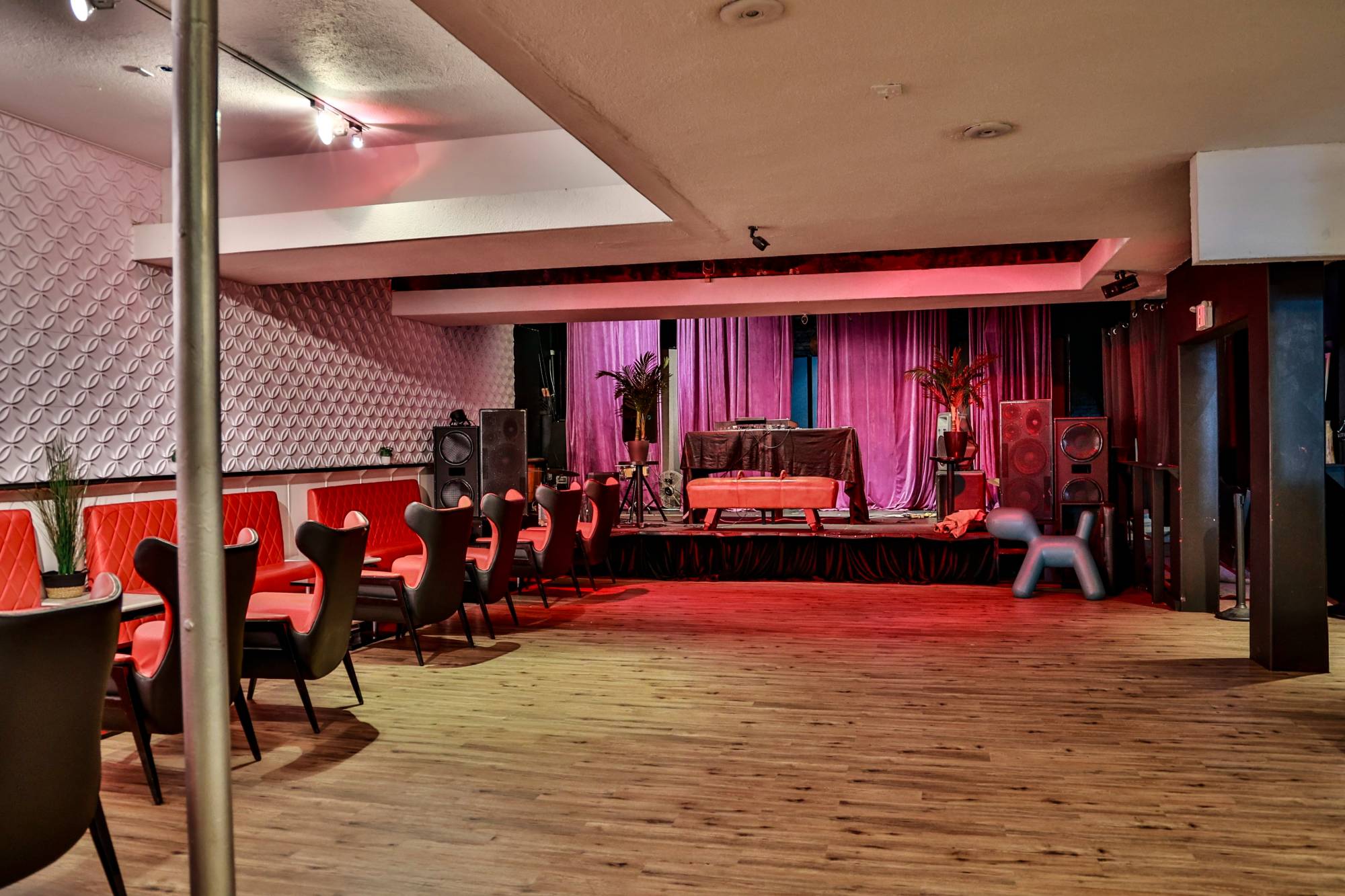
Legendary SF Punk Club Mabuhay Gardens Is on the Verge of Reopening
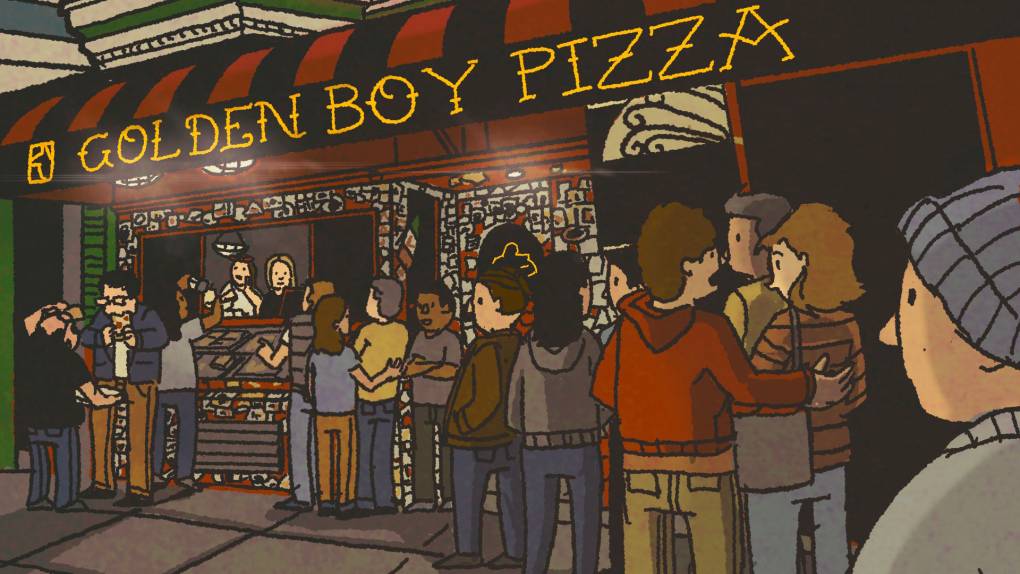
Golden Boy Pizza Is Where You Want To End Your Night
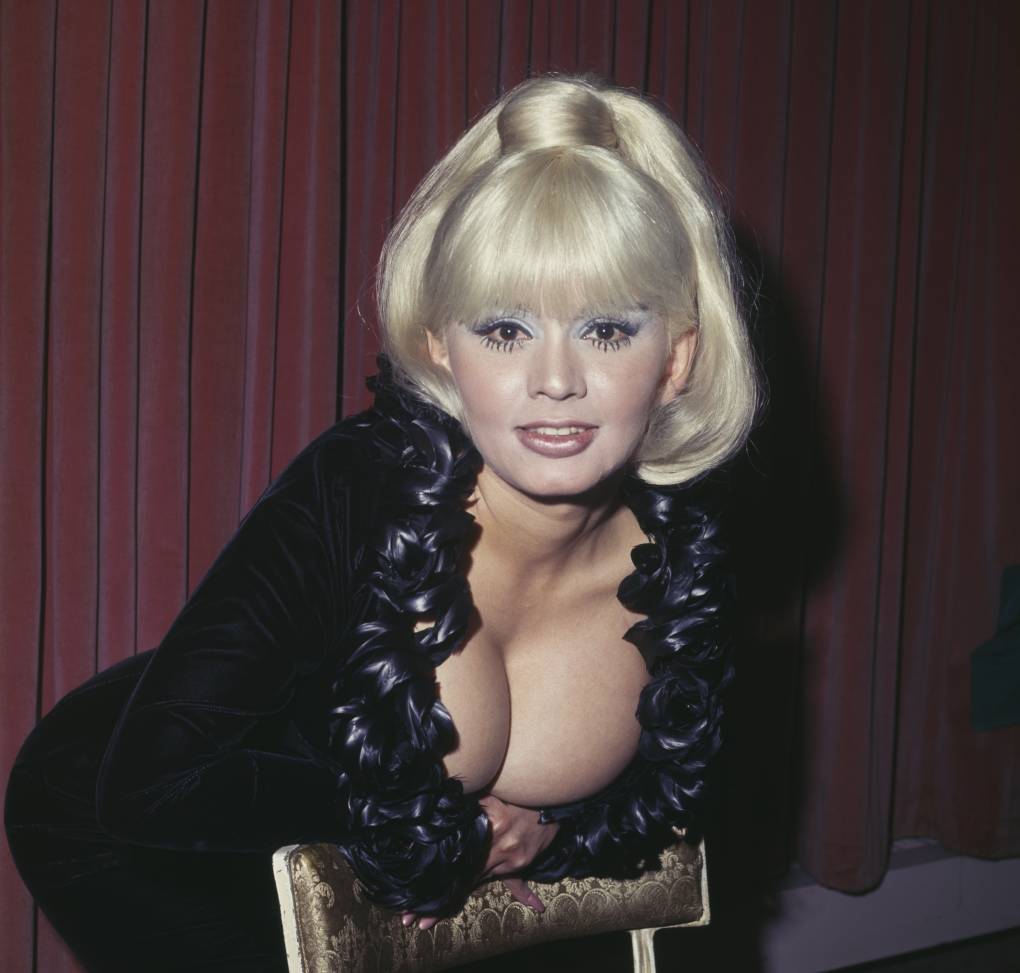
The Mysterious Life of 1960s North Beach Starlet Yvonne D’Angers
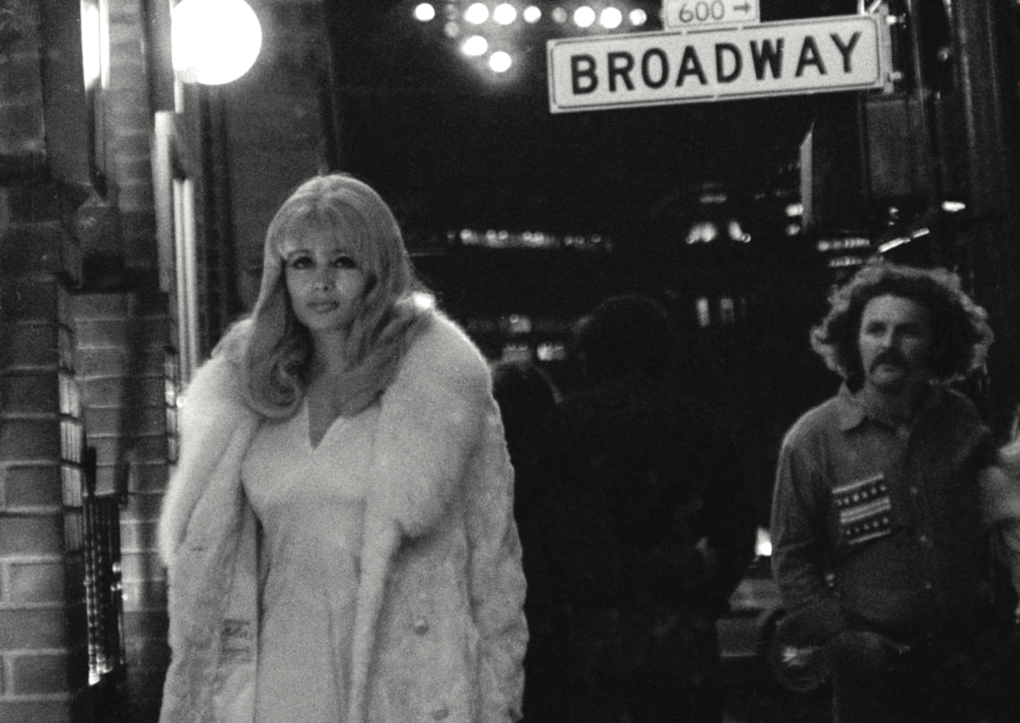
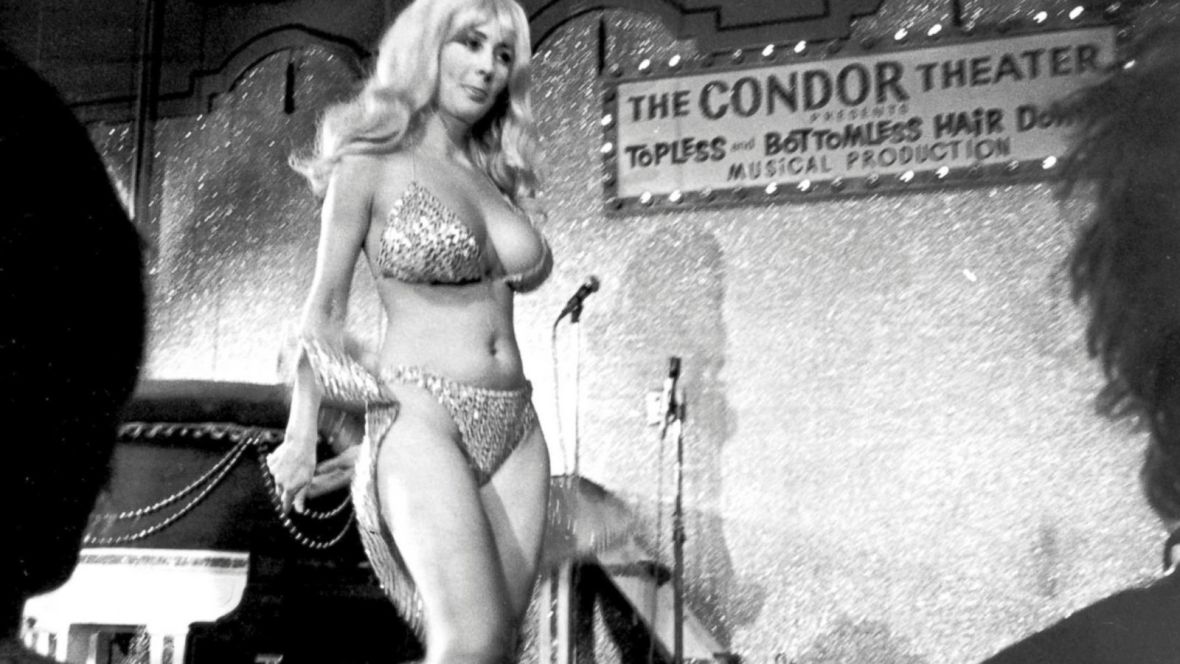
‘Topless at the Condor’ Profiles Carol Doda and the Tawdry Raunch of 1960s North Beach
‘Carol Doda Topless at the Condor’ Documentary Gets SF Release Date
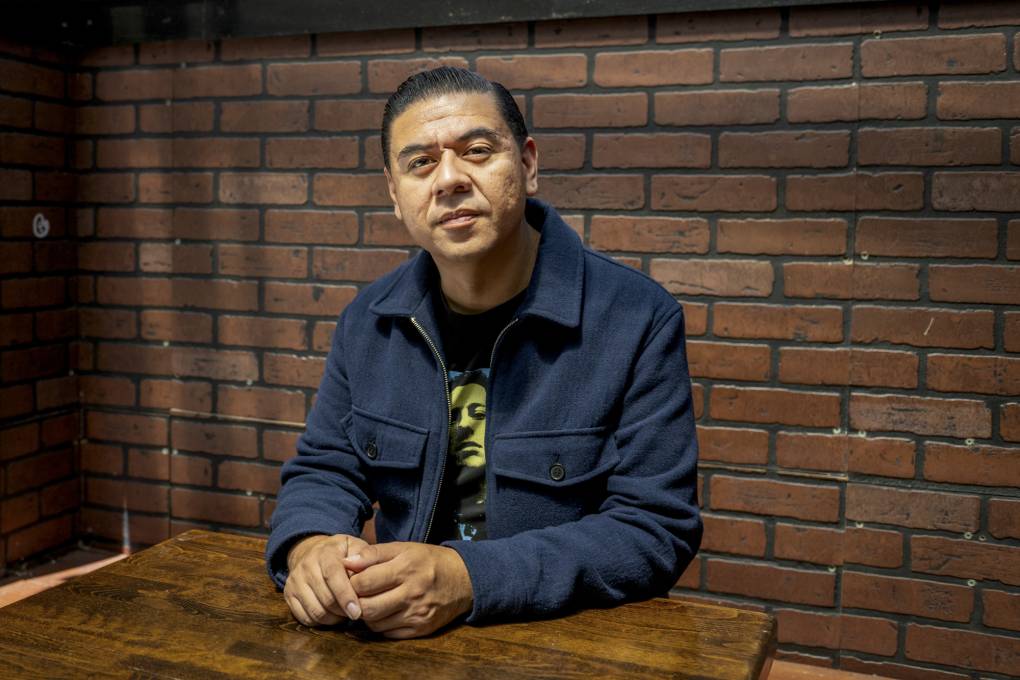
‘A Beautiful City’: Comedian Chris Estrada on SF and the Iconic Punch Line
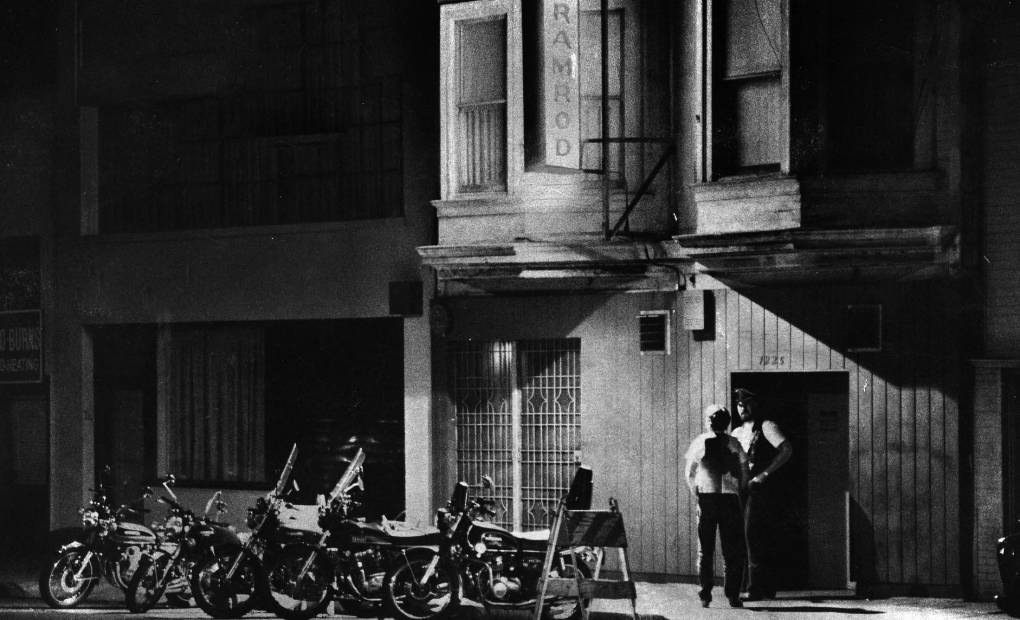
5 Historic San Francisco Gay Bars We Wish Still Existed
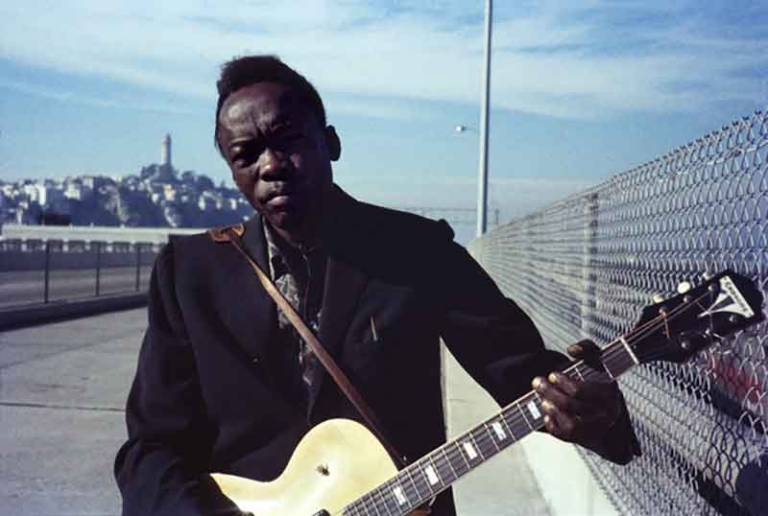
Once Booming, Where Are the Blues in San Francisco Now?
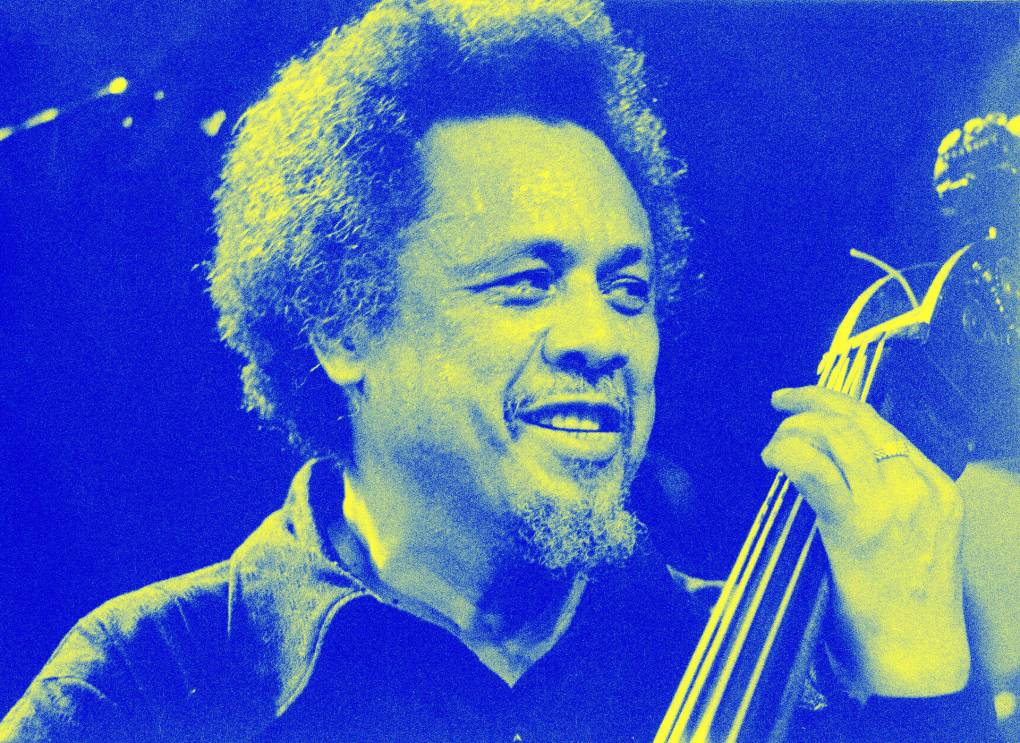
Charles Mingus at 100: A Roiling, Political Jazz Figure Made for the 21st Century
Sponsored
Player sponsored by
window.__IS_SSR__=true
window.__INITIAL_STATE__={
"attachmentsReducer": {
"audio_0": {
"type": "attachments",
"id": "audio_0",
"imgSizes": {
"kqedFullSize": {
"file": "https://ww2.kqed.org/news/wp-content/themes/KQED-unified/img/audio_bgs/background0.jpg"
}
}
},
"audio_1": {
"type": "attachments",
"id": "audio_1",
"imgSizes": {
"kqedFullSize": {
"file": "https://ww2.kqed.org/news/wp-content/themes/KQED-unified/img/audio_bgs/background1.jpg"
}
}
},
"audio_2": {
"type": "attachments",
"id": "audio_2",
"imgSizes": {
"kqedFullSize": {
"file": "https://ww2.kqed.org/news/wp-content/themes/KQED-unified/img/audio_bgs/background2.jpg"
}
}
},
"audio_3": {
"type": "attachments",
"id": "audio_3",
"imgSizes": {
"kqedFullSize": {
"file": "https://ww2.kqed.org/news/wp-content/themes/KQED-unified/img/audio_bgs/background3.jpg"
}
}
},
"audio_4": {
"type": "attachments",
"id": "audio_4",
"imgSizes": {
"kqedFullSize": {
"file": "https://ww2.kqed.org/news/wp-content/themes/KQED-unified/img/audio_bgs/background4.jpg"
}
}
},
"placeholder": {
"type": "attachments",
"id": "placeholder",
"imgSizes": {
"thumbnail": {
"file": "https://cdn.kqed.org/wp-content/uploads/2024/12/KQED-Default-Image-816638274-2000x1333-1-160x107.jpg",
"width": 160,
"height": 107,
"mimeType": "image/jpeg"
},
"medium": {
"file": "https://cdn.kqed.org/wp-content/uploads/2024/12/KQED-Default-Image-816638274-2000x1333-1-800x533.jpg",
"width": 800,
"height": 533,
"mimeType": "image/jpeg"
},
"medium_large": {
"file": "https://cdn.kqed.org/wp-content/uploads/2024/12/KQED-Default-Image-816638274-2000x1333-1-768x512.jpg",
"width": 768,
"height": 512,
"mimeType": "image/jpeg"
},
"large": {
"file": "https://cdn.kqed.org/wp-content/uploads/2024/12/KQED-Default-Image-816638274-2000x1333-1-1020x680.jpg",
"width": 1020,
"height": 680,
"mimeType": "image/jpeg"
},
"1536x1536": {
"file": "https://cdn.kqed.org/wp-content/uploads/2024/12/KQED-Default-Image-816638274-2000x1333-1-1536x1024.jpg",
"width": 1536,
"height": 1024,
"mimeType": "image/jpeg"
},
"fd-lrg": {
"file": "https://cdn.kqed.org/wp-content/uploads/2024/12/KQED-Default-Image-816638274-2000x1333-1-1536x1024.jpg",
"width": 1536,
"height": 1024,
"mimeType": "image/jpeg"
},
"fd-med": {
"file": "https://cdn.kqed.org/wp-content/uploads/2024/12/KQED-Default-Image-816638274-2000x1333-1-1020x680.jpg",
"width": 1020,
"height": 680,
"mimeType": "image/jpeg"
},
"fd-sm": {
"file": "https://cdn.kqed.org/wp-content/uploads/2024/12/KQED-Default-Image-816638274-2000x1333-1-800x533.jpg",
"width": 800,
"height": 533,
"mimeType": "image/jpeg"
},
"post-thumbnail": {
"file": "https://cdn.kqed.org/wp-content/uploads/2024/12/KQED-Default-Image-816638274-2000x1333-1-672x372.jpg",
"width": 672,
"height": 372,
"mimeType": "image/jpeg"
},
"twentyfourteen-full-width": {
"file": "https://cdn.kqed.org/wp-content/uploads/2024/12/KQED-Default-Image-816638274-2000x1333-1-1038x576.jpg",
"width": 1038,
"height": 576,
"mimeType": "image/jpeg"
},
"xxsmall": {
"file": "https://cdn.kqed.org/wp-content/uploads/2024/12/KQED-Default-Image-816638274-2000x1333-1-160x107.jpg",
"width": 160,
"height": 107,
"mimeType": "image/jpeg"
},
"xsmall": {
"file": "https://cdn.kqed.org/wp-content/uploads/2024/12/KQED-Default-Image-816638274-2000x1333-1-672x372.jpg",
"width": 672,
"height": 372,
"mimeType": "image/jpeg"
},
"small": {
"file": "https://cdn.kqed.org/wp-content/uploads/2024/12/KQED-Default-Image-816638274-2000x1333-1-672x372.jpg",
"width": 672,
"height": 372,
"mimeType": "image/jpeg"
},
"xlarge": {
"file": "https://cdn.kqed.org/wp-content/uploads/2024/12/KQED-Default-Image-816638274-2000x1333-1-1020x680.jpg",
"width": 1020,
"height": 680,
"mimeType": "image/jpeg"
},
"full-width": {
"file": "https://cdn.kqed.org/wp-content/uploads/2024/12/KQED-Default-Image-816638274-2000x1333-1-1920x1280.jpg",
"width": 1920,
"height": 1280,
"mimeType": "image/jpeg"
},
"guest-author-32": {
"file": "https://cdn.kqed.org/wp-content/uploads/2025/01/KQED-Default-Image-816638274-1333x1333-1-160x160.jpg",
"width": 32,
"height": 32,
"mimeType": "image/jpeg"
},
"guest-author-50": {
"file": "https://cdn.kqed.org/wp-content/uploads/2025/01/KQED-Default-Image-816638274-1333x1333-1-160x160.jpg",
"width": 50,
"height": 50,
"mimeType": "image/jpeg"
},
"guest-author-64": {
"file": "https://cdn.kqed.org/wp-content/uploads/2025/01/KQED-Default-Image-816638274-1333x1333-1-160x160.jpg",
"width": 64,
"height": 64,
"mimeType": "image/jpeg"
},
"guest-author-96": {
"file": "https://cdn.kqed.org/wp-content/uploads/2025/01/KQED-Default-Image-816638274-1333x1333-1-160x160.jpg",
"width": 96,
"height": 96,
"mimeType": "image/jpeg"
},
"guest-author-128": {
"file": "https://cdn.kqed.org/wp-content/uploads/2025/01/KQED-Default-Image-816638274-1333x1333-1-160x160.jpg",
"width": 128,
"height": 128,
"mimeType": "image/jpeg"
},
"detail": {
"file": "https://cdn.kqed.org/wp-content/uploads/2025/01/KQED-Default-Image-816638274-1333x1333-1-160x160.jpg",
"width": 160,
"height": 160,
"mimeType": "image/jpeg"
},
"kqedFullSize": {
"file": "https://cdn.kqed.org/wp-content/uploads/2024/12/KQED-Default-Image-816638274-2000x1333-1.jpg",
"width": 2000,
"height": 1333
}
}
},
"arts_13980624": {
"type": "attachments",
"id": "arts_13980624",
"meta": {
"index": "attachments_1716263798",
"site": "arts",
"id": "13980624",
"found": true
},
"title": "Mabuhay.downstairs",
"publishDate": 1756155387,
"status": "inherit",
"parent": 0,
"modified": 1756155956,
"caption": "The former stage of Mabuhay Gardens, where host Dirk Dirksen and a now-legendary punk bands once performed, on Broadway in San Francisco's North Beach neighborhood. With an impending sale of the building, a new group aims to reopen Mabuhay Gardens as a music venue. ",
"credit": "Stefanie Atkinson Schwartz",
"altTag": "A 2-foot high stage sits at the end of a room that's adorned with plush furniture in pastel pinks and oranges.",
"description": null,
"imgSizes": {
"medium": {
"file": "https://cdn.kqed.org/wp-content/uploads/sites/2/2025/08/Mabuhay.downstairs-2000x1333.jpg",
"width": 2000,
"height": 1333,
"mimeType": "image/jpeg"
},
"large": {
"file": "https://cdn.kqed.org/wp-content/uploads/sites/2/2025/08/Mabuhay.downstairs-2000x1333.jpg",
"width": 2000,
"height": 1333,
"mimeType": "image/jpeg"
},
"thumbnail": {
"file": "https://cdn.kqed.org/wp-content/uploads/sites/2/2025/08/Mabuhay.downstairs-160x107.jpg",
"width": 160,
"height": 107,
"mimeType": "image/jpeg"
},
"medium_large": {
"file": "https://cdn.kqed.org/wp-content/uploads/sites/2/2025/08/Mabuhay.downstairs-768x512.jpg",
"width": 768,
"height": 512,
"mimeType": "image/jpeg"
},
"1536x1536": {
"file": "https://cdn.kqed.org/wp-content/uploads/sites/2/2025/08/Mabuhay.downstairs-1536x1024.jpg",
"width": 1536,
"height": 1024,
"mimeType": "image/jpeg"
},
"2048x2048": {
"file": "https://cdn.kqed.org/wp-content/uploads/sites/2/2025/08/Mabuhay.downstairs-2048x1365.jpg",
"width": 2048,
"height": 1365,
"mimeType": "image/jpeg"
},
"post-thumbnail": {
"file": "https://cdn.kqed.org/wp-content/uploads/sites/2/2025/08/Mabuhay.downstairs-672x372.jpg",
"width": 672,
"height": 372,
"mimeType": "image/jpeg"
},
"twentyfourteen-full-width": {
"file": "https://cdn.kqed.org/wp-content/uploads/sites/2/2025/08/Mabuhay.downstairs-1038x576.jpg",
"width": 1038,
"height": 576,
"mimeType": "image/jpeg"
},
"full-width": {
"file": "https://cdn.kqed.org/wp-content/uploads/sites/2/2025/08/Mabuhay.downstairs-2000x1333.jpg",
"width": 2000,
"height": 1333,
"mimeType": "image/jpeg"
},
"kqedFullSize": {
"file": "https://cdn.kqed.org/wp-content/uploads/sites/2/2025/08/Mabuhay.downstairs-scaled.jpg",
"width": 2560,
"height": 1707
}
},
"fetchFailed": false,
"isLoading": false
},
"arts_13959810": {
"type": "attachments",
"id": "arts_13959810",
"meta": {
"index": "attachments_1716263798",
"site": "arts",
"id": "13959810",
"found": true
},
"title": "Goldenboy2-crop",
"publishDate": 1718310707,
"status": "inherit",
"parent": 13959808,
"modified": 1718310939,
"caption": "Even though it's no longer open past 2 a.m. on the weekend, Golden Boy Pizza remains a popular late-night destination in North Beach.",
"credit": "Thien Pham",
"altTag": "Illustration: A line of customers waiting outside of Golden Boy Pizza.",
"description": null,
"imgSizes": {
"medium": {
"file": "https://cdn.kqed.org/wp-content/uploads/sites/2/2024/06/Goldenboy2-crop-800x450.jpg",
"width": 800,
"height": 450,
"mimeType": "image/jpeg"
},
"large": {
"file": "https://cdn.kqed.org/wp-content/uploads/sites/2/2024/06/Goldenboy2-crop-1020x574.jpg",
"width": 1020,
"height": 574,
"mimeType": "image/jpeg"
},
"thumbnail": {
"file": "https://cdn.kqed.org/wp-content/uploads/sites/2/2024/06/Goldenboy2-crop-160x90.jpg",
"width": 160,
"height": 90,
"mimeType": "image/jpeg"
},
"medium_large": {
"file": "https://cdn.kqed.org/wp-content/uploads/sites/2/2024/06/Goldenboy2-crop-768x432.jpg",
"width": 768,
"height": 432,
"mimeType": "image/jpeg"
},
"1536x1536": {
"file": "https://cdn.kqed.org/wp-content/uploads/sites/2/2024/06/Goldenboy2-crop-1536x864.jpg",
"width": 1536,
"height": 864,
"mimeType": "image/jpeg"
},
"post-thumbnail": {
"file": "https://cdn.kqed.org/wp-content/uploads/sites/2/2024/06/Goldenboy2-crop-672x372.jpg",
"width": 672,
"height": 372,
"mimeType": "image/jpeg"
},
"twentyfourteen-full-width": {
"file": "https://cdn.kqed.org/wp-content/uploads/sites/2/2024/06/Goldenboy2-crop-1038x576.jpg",
"width": 1038,
"height": 576,
"mimeType": "image/jpeg"
},
"kqedFullSize": {
"file": "https://cdn.kqed.org/wp-content/uploads/sites/2/2024/06/Goldenboy2-crop.jpg",
"width": 1920,
"height": 1080
}
},
"fetchFailed": false,
"isLoading": false
},
"arts_13958725": {
"type": "attachments",
"id": "arts_13958725",
"meta": {
"index": "attachments_1716263798",
"site": "arts",
"id": "13958725",
"found": true
},
"title": "Yvonne D'Angers in November 1966.",
"publishDate": 1716931052,
"status": "inherit",
"parent": 13958719,
"modified": 1717521374,
"caption": "Yvonne D'Angers in November 1966.",
"credit": "UPI/Bettmann Archive/Getty Images",
"altTag": "A glamorous woman with fake eyelashes leaning over a chair wearing a low cut top and her platinum blond hair high in a ponytail.",
"description": null,
"imgSizes": {
"medium": {
"file": "https://cdn.kqed.org/wp-content/uploads/sites/2/2024/05/GettyImages-2007662369-800x763.jpg",
"width": 800,
"height": 763,
"mimeType": "image/jpeg"
},
"large": {
"file": "https://cdn.kqed.org/wp-content/uploads/sites/2/2024/05/GettyImages-2007662369-1020x973.jpg",
"width": 1020,
"height": 973,
"mimeType": "image/jpeg"
},
"thumbnail": {
"file": "https://cdn.kqed.org/wp-content/uploads/sites/2/2024/05/GettyImages-2007662369-160x153.jpg",
"width": 160,
"height": 153,
"mimeType": "image/jpeg"
},
"medium_large": {
"file": "https://cdn.kqed.org/wp-content/uploads/sites/2/2024/05/GettyImages-2007662369-768x733.jpg",
"width": 768,
"height": 733,
"mimeType": "image/jpeg"
},
"1536x1536": {
"file": "https://cdn.kqed.org/wp-content/uploads/sites/2/2024/05/GettyImages-2007662369-1536x1466.jpg",
"width": 1536,
"height": 1466,
"mimeType": "image/jpeg"
},
"2048x2048": {
"file": "https://cdn.kqed.org/wp-content/uploads/sites/2/2024/05/GettyImages-2007662369-2048x1954.jpg",
"width": 2048,
"height": 1954,
"mimeType": "image/jpeg"
},
"post-thumbnail": {
"file": "https://cdn.kqed.org/wp-content/uploads/sites/2/2024/05/GettyImages-2007662369-672x372.jpg",
"width": 672,
"height": 372,
"mimeType": "image/jpeg"
},
"twentyfourteen-full-width": {
"file": "https://cdn.kqed.org/wp-content/uploads/sites/2/2024/05/GettyImages-2007662369-1038x576.jpg",
"width": 1038,
"height": 576,
"mimeType": "image/jpeg"
},
"full-width": {
"file": "https://cdn.kqed.org/wp-content/uploads/sites/2/2024/05/GettyImages-2007662369-1920x1832.jpg",
"width": 1920,
"height": 1832,
"mimeType": "image/jpeg"
},
"kqedFullSize": {
"file": "https://cdn.kqed.org/wp-content/uploads/sites/2/2024/05/GettyImages-2007662369-scaled-e1716931190943.jpg",
"width": 1920,
"height": 1832
}
},
"fetchFailed": false,
"isLoading": false
},
"arts_13953252": {
"type": "attachments",
"id": "arts_13953252",
"meta": {
"index": "attachments_1716263798",
"site": "arts",
"id": "13953252",
"found": true
},
"parent": 13953248,
"imgSizes": {
"twentyfourteen-full-width": {
"file": "https://cdn.kqed.org/wp-content/uploads/sites/2/2024/02/Screen-Shot-2024-02-29-at-5.20.14-PM-1038x576.png",
"width": 1038,
"mimeType": "image/png",
"height": 576
},
"thumbnail": {
"file": "https://cdn.kqed.org/wp-content/uploads/sites/2/2024/02/Screen-Shot-2024-02-29-at-5.20.14-PM-160x113.png",
"width": 160,
"mimeType": "image/png",
"height": 113
},
"post-thumbnail": {
"file": "https://cdn.kqed.org/wp-content/uploads/sites/2/2024/02/Screen-Shot-2024-02-29-at-5.20.14-PM-672x372.png",
"width": 672,
"mimeType": "image/png",
"height": 372
},
"kqedFullSize": {
"file": "https://cdn.kqed.org/wp-content/uploads/sites/2/2024/02/Screen-Shot-2024-02-29-at-5.20.14-PM.png",
"width": 1770,
"height": 1254
},
"large": {
"file": "https://cdn.kqed.org/wp-content/uploads/sites/2/2024/02/Screen-Shot-2024-02-29-at-5.20.14-PM-1020x723.png",
"width": 1020,
"mimeType": "image/png",
"height": 723
},
"1536x1536": {
"file": "https://cdn.kqed.org/wp-content/uploads/sites/2/2024/02/Screen-Shot-2024-02-29-at-5.20.14-PM-1536x1088.png",
"width": 1536,
"mimeType": "image/png",
"height": 1088
},
"medium": {
"file": "https://cdn.kqed.org/wp-content/uploads/sites/2/2024/02/Screen-Shot-2024-02-29-at-5.20.14-PM-800x567.png",
"width": 800,
"mimeType": "image/png",
"height": 567
},
"medium_large": {
"file": "https://cdn.kqed.org/wp-content/uploads/sites/2/2024/02/Screen-Shot-2024-02-29-at-5.20.14-PM-768x544.png",
"width": 768,
"mimeType": "image/png",
"height": 544
}
},
"publishDate": 1709256179,
"modified": 1709256251,
"caption": "Carol Doda poses outside the Condor in the 1970s.",
"description": null,
"title": "Carol Doda poses outside the Condor in the 1970s.",
"credit": "Tim Boxer/ Getty Images",
"status": "inherit",
"altTag": "A beautiful blond woman wearing a white coat, miniskirt and boots under a marquee advertising Carol Doda at the Condor.",
"fetchFailed": false,
"isLoading": false
},
"arts_11075580": {
"type": "attachments",
"id": "arts_11075580",
"meta": {
"index": "attachments_1716263798",
"site": "arts",
"id": "11075580",
"found": true
},
"parent": 13904467,
"imgSizes": {
"twentyfourteen-full-width": {
"file": "https://cdn.kqed.org/wp-content/uploads/sites/2/2015/11/Carol-Doda-AP-1038x576.jpg",
"width": 1038,
"mimeType": "image/jpeg",
"height": 576
},
"thumbnail": {
"file": "https://cdn.kqed.org/wp-content/uploads/sites/2/2015/11/Carol-Doda-AP-400x225.jpg",
"width": 400,
"mimeType": "image/jpeg",
"height": 225
},
"fd-sm": {
"file": "https://cdn.kqed.org/wp-content/uploads/sites/2/2015/11/Carol-Doda-AP-960x540.jpg",
"width": 960,
"mimeType": "image/jpeg",
"height": 540
},
"post-thumbnail": {
"file": "https://cdn.kqed.org/wp-content/uploads/sites/2/2015/11/Carol-Doda-AP-672x372.jpg",
"width": 672,
"mimeType": "image/jpeg",
"height": 372
},
"kqedFullSize": {
"file": "https://cdn.kqed.org/wp-content/uploads/sites/2/2015/11/Carol-Doda-AP.jpg",
"width": 1600,
"height": 900
},
"large": {
"file": "https://cdn.kqed.org/wp-content/uploads/sites/2/2015/11/Carol-Doda-AP-1180x664.jpg",
"width": 1180,
"mimeType": "image/jpeg",
"height": 664
},
"guest-author-96": {
"file": "https://cdn.kqed.org/wp-content/uploads/sites/2/2015/11/Carol-Doda-AP-96x96.jpg",
"width": 96,
"mimeType": "image/jpeg",
"height": 96
},
"medium": {
"file": "https://cdn.kqed.org/wp-content/uploads/sites/2/2015/11/Carol-Doda-AP-800x450.jpg",
"width": 800,
"mimeType": "image/jpeg",
"height": 450
},
"guest-author-64": {
"file": "https://cdn.kqed.org/wp-content/uploads/sites/2/2015/11/Carol-Doda-AP-64x64.jpg",
"width": 64,
"mimeType": "image/jpeg",
"height": 64
},
"guest-author-32": {
"file": "https://cdn.kqed.org/wp-content/uploads/sites/2/2015/11/Carol-Doda-AP-32x32.jpg",
"width": 32,
"mimeType": "image/jpeg",
"height": 32
},
"fd-med": {
"file": "https://cdn.kqed.org/wp-content/uploads/sites/2/2015/11/Carol-Doda-AP-1180x664.jpg",
"width": 1180,
"mimeType": "image/jpeg",
"height": 664
},
"detail": {
"file": "https://cdn.kqed.org/wp-content/uploads/sites/2/2015/11/Carol-Doda-AP-75x75.jpg",
"width": 75,
"mimeType": "image/jpeg",
"height": 75
},
"guest-author-128": {
"file": "https://cdn.kqed.org/wp-content/uploads/sites/2/2015/11/Carol-Doda-AP-128x128.jpg",
"width": 128,
"mimeType": "image/jpeg",
"height": 128
}
},
"publishDate": 1447319541,
"modified": 1706305800,
"caption": "Waitress-turned-stripper Carol Doda helped fuel the topless bar scene in San Francisco, which in part led to the demise of the nearby supper club scene in Chinatown.",
"description": null,
"title": "Waitress turned stripper Carol Doda helped to fuel the topless bar scene in San Francisco, which in part led to the demise of the nearby supper club scene in Chinatown.",
"credit": "Associated Press",
"status": "inherit",
"altTag": "woman with long hair in spangly bikini dances on stage",
"fetchFailed": false,
"isLoading": false
},
"arts_13933444": {
"type": "attachments",
"id": "arts_13933444",
"meta": {
"index": "attachments_1716263798",
"site": "arts",
"id": "13933444",
"found": true
},
"parent": 0,
"imgSizes": {
"twentyfourteen-full-width": {
"file": "https://ww2.kqed.org/app/uploads/sites/2/2023/08/RS68029_230817-ComedianChrisEstrada-06-BL-KQED-1038x576.jpg",
"width": 1038,
"mimeType": "image/jpeg",
"height": 576
},
"thumbnail": {
"file": "https://ww2.kqed.org/app/uploads/sites/2/2023/08/RS68029_230817-ComedianChrisEstrada-06-BL-KQED-160x107.jpg",
"width": 160,
"mimeType": "image/jpeg",
"height": 107
},
"post-thumbnail": {
"file": "https://ww2.kqed.org/app/uploads/sites/2/2023/08/RS68029_230817-ComedianChrisEstrada-06-BL-KQED-672x372.jpg",
"width": 672,
"mimeType": "image/jpeg",
"height": 372
},
"kqedFullSize": {
"file": "https://ww2.kqed.org/app/uploads/sites/2/2023/08/RS68029_230817-ComedianChrisEstrada-06-BL-KQED.jpg",
"width": 2000,
"height": 1333
},
"large": {
"file": "https://ww2.kqed.org/app/uploads/sites/2/2023/08/RS68029_230817-ComedianChrisEstrada-06-BL-KQED-1020x680.jpg",
"width": 1020,
"mimeType": "image/jpeg",
"height": 680
},
"1536x1536": {
"file": "https://ww2.kqed.org/app/uploads/sites/2/2023/08/RS68029_230817-ComedianChrisEstrada-06-BL-KQED-1536x1024.jpg",
"width": 1536,
"mimeType": "image/jpeg",
"height": 1024
},
"full-width": {
"file": "https://ww2.kqed.org/app/uploads/sites/2/2023/08/RS68029_230817-ComedianChrisEstrada-06-BL-KQED-1920x1280.jpg",
"width": 1920,
"mimeType": "image/jpeg",
"height": 1280
},
"medium": {
"file": "https://ww2.kqed.org/app/uploads/sites/2/2023/08/RS68029_230817-ComedianChrisEstrada-06-BL-KQED-800x533.jpg",
"width": 800,
"mimeType": "image/jpeg",
"height": 533
},
"medium_large": {
"file": "https://ww2.kqed.org/app/uploads/sites/2/2023/08/RS68029_230817-ComedianChrisEstrada-06-BL-KQED-768x512.jpg",
"width": 768,
"mimeType": "image/jpeg",
"height": 512
}
},
"publishDate": 1692318659,
"modified": 1692318699,
"caption": "Comedian Chris Estrada sits at Mr. Bing's in San Francisco's North Beach neighborhood on Aug. 17, 2023.",
"description": null,
"title": "RS68029_230817-ComedianChrisEstrada-06-BL-KQED",
"credit": "Beth LaBerge/KQED",
"status": "inherit",
"altTag": "A person in a blue jacket sits at a wooden table in front of a brick wall.",
"fetchFailed": false,
"isLoading": false
},
"arts_13930342": {
"type": "attachments",
"id": "arts_13930342",
"meta": {
"index": "attachments_1716263798",
"site": "arts",
"id": "13930342",
"found": true
},
"parent": 13930323,
"imgSizes": {
"twentyfourteen-full-width": {
"file": "https://ww2.kqed.org/app/uploads/sites/2/2023/06/ramrod-1038x576.jpg",
"width": 1038,
"mimeType": "image/jpeg",
"height": 576
},
"thumbnail": {
"file": "https://ww2.kqed.org/app/uploads/sites/2/2023/06/ramrod-160x97.jpg",
"width": 160,
"mimeType": "image/jpeg",
"height": 97
},
"post-thumbnail": {
"file": "https://ww2.kqed.org/app/uploads/sites/2/2023/06/ramrod-672x372.jpg",
"width": 672,
"mimeType": "image/jpeg",
"height": 372
},
"kqedFullSize": {
"file": "https://ww2.kqed.org/app/uploads/sites/2/2023/06/ramrod.jpg",
"width": 1882,
"height": 1144
},
"large": {
"file": "https://ww2.kqed.org/app/uploads/sites/2/2023/06/ramrod-1020x620.jpg",
"width": 1020,
"mimeType": "image/jpeg",
"height": 620
},
"1536x1536": {
"file": "https://ww2.kqed.org/app/uploads/sites/2/2023/06/ramrod-1536x934.jpg",
"width": 1536,
"mimeType": "image/jpeg",
"height": 934
},
"medium": {
"file": "https://ww2.kqed.org/app/uploads/sites/2/2023/06/ramrod-800x486.jpg",
"width": 800,
"mimeType": "image/jpeg",
"height": 486
},
"medium_large": {
"file": "https://ww2.kqed.org/app/uploads/sites/2/2023/06/ramrod-768x467.jpg",
"width": 768,
"mimeType": "image/jpeg",
"height": 467
}
},
"publishDate": 1686268037,
"modified": 1686268556,
"caption": "A 1972 image taken of the Ramrod — a leather bar at 1225 Folsom St. (between 8th and 9th). It opened in 1967 and was immortalized in ‘The Laughing Policeman,’ a movie starring Walter Matthau and Bruce Dern.",
"description": "The Ramrod was a leather bar at 1225 Folsom St. (between 8th and 9th). It opened in 1967 by George Wilburn (retired film editor from Hollywood) and Paul Bentley. Taken on a Sunday afternoon, this photo postcard was made for the 5th anniversary by Henri Leleu, and shows its enormous popularity at the time. Filming took place in this bar for the 1973 film ",
"title": "A 1972 image taken of the Ramrod — a leather bar at 1225 Folsom St. (between 8th and 9th). It opened in 1967 and was immortalized in ‘The Laughing Policeman,’ a movie starring Walter Matthau and Bruce Dern.",
"credit": "Gary Fong/ San Francisco Chronicle via Getty Images",
"status": "inherit",
"altTag": null,
"fetchFailed": false,
"isLoading": false
},
"arts_13920896": {
"type": "attachments",
"id": "arts_13920896",
"meta": {
"index": "attachments_1716263798",
"site": "arts",
"id": "13920896",
"found": true
},
"parent": 0,
"imgSizes": {
"thumbnail": {
"file": "https://ww2.kqed.org/app/uploads/sites/2/2022/10/JL_Hooker_Courtesy_of_Fantasy_Records_Archives-160x108.jpg",
"width": 160,
"mimeType": "image/jpeg",
"height": 108
},
"post-thumbnail": {
"file": "https://ww2.kqed.org/app/uploads/sites/2/2022/10/JL_Hooker_Courtesy_of_Fantasy_Records_Archives-672x372.jpg",
"width": 672,
"mimeType": "image/jpeg",
"height": 372
},
"kqedFullSize": {
"file": "https://ww2.kqed.org/app/uploads/sites/2/2022/10/JL_Hooker_Courtesy_of_Fantasy_Records_Archives.jpg",
"width": 800,
"height": 538
},
"medium_large": {
"file": "https://ww2.kqed.org/app/uploads/sites/2/2022/10/JL_Hooker_Courtesy_of_Fantasy_Records_Archives-768x516.jpg",
"width": 768,
"mimeType": "image/jpeg",
"height": 516
}
},
"publishDate": 1666764488,
"modified": 1666799997,
"caption": "John Lee Hooker in San Francisco. A new reissue of the blues master's 1989 album 'The Healer' recalls a different, far more robust and active era for the blues in San Francisco.",
"description": null,
"title": "JL_Hooker_Courtesy_of_Fantasy_Records_Archives",
"credit": "Courtesy Fantasy Records Archives",
"status": "inherit",
"altTag": "An older black man plays a guitar on a pier with Coit Tower in the background",
"fetchFailed": false,
"isLoading": false
},
"arts_13912258": {
"type": "attachments",
"id": "arts_13912258",
"meta": {
"index": "attachments_1716263798",
"site": "arts",
"id": "13912258",
"found": true
},
"parent": 0,
"imgSizes": {
"twentyfourteen-full-width": {
"file": "https://ww2.kqed.org/app/uploads/sites/2/2022/04/MingusSmiling.color_-1038x576.jpg",
"width": 1038,
"mimeType": "image/jpeg",
"height": 576
},
"thumbnail": {
"file": "https://ww2.kqed.org/app/uploads/sites/2/2022/04/MingusSmiling.color_-160x117.jpg",
"width": 160,
"mimeType": "image/jpeg",
"height": 117
},
"post-thumbnail": {
"file": "https://ww2.kqed.org/app/uploads/sites/2/2022/04/MingusSmiling.color_-672x372.jpg",
"width": 672,
"mimeType": "image/jpeg",
"height": 372
},
"kqedFullSize": {
"file": "https://ww2.kqed.org/app/uploads/sites/2/2022/04/MingusSmiling.color_.jpg",
"width": 1920,
"height": 1399
},
"large": {
"file": "https://ww2.kqed.org/app/uploads/sites/2/2022/04/MingusSmiling.color_-1020x743.jpg",
"width": 1020,
"mimeType": "image/jpeg",
"height": 743
},
"1536x1536": {
"file": "https://ww2.kqed.org/app/uploads/sites/2/2022/04/MingusSmiling.color_-1536x1119.jpg",
"width": 1536,
"mimeType": "image/jpeg",
"height": 1119
},
"medium": {
"file": "https://ww2.kqed.org/app/uploads/sites/2/2022/04/MingusSmiling.color_-800x583.jpg",
"width": 800,
"mimeType": "image/jpeg",
"height": 583
},
"medium_large": {
"file": "https://ww2.kqed.org/app/uploads/sites/2/2022/04/MingusSmiling.color_-768x560.jpg",
"width": 768,
"mimeType": "image/jpeg",
"height": 560
}
},
"publishDate": 1650565172,
"modified": 1650566053,
"caption": "Mingus' ties to the Bay Area—and his music's political overtones—presaged many of our activist movements of today. ",
"description": null,
"title": "MingusSmiling.color",
"credit": "Tom Copi/Michael Ochs Archives/Getty Images/Illustration by Becca Kao ",
"status": "inherit",
"altTag": "Charles Mingus playing the bass, looking to the right and smiling knowingly",
"fetchFailed": false,
"isLoading": false
}
},
"audioPlayerReducer": {
"postId": "stream_live",
"isPaused": true,
"isPlaying": false,
"pfsActive": false,
"pledgeModalIsOpen": true,
"playerDrawerIsOpen": false
},
"authorsReducer": {
"byline_arts_13980619": {
"type": "authors",
"id": "byline_arts_13980619",
"meta": {
"override": true
},
"slug": "byline_arts_13980619",
"name": "Jessica Lipsky ",
"isLoading": false
},
"agilbert": {
"type": "authors",
"id": "86",
"meta": {
"index": "authors_1716337520",
"id": "86",
"found": true
},
"name": "Andrew Gilbert",
"firstName": "Andrew",
"lastName": "Gilbert",
"slug": "agilbert",
"email": "jazzscribe@aol.com",
"display_author_email": false,
"staff_mastheads": [],
"title": "KQED Contributor",
"bio": "A Los Angeles native based in the Berkeley area since 1996, Andrew Gilbert covers jazz, international music and dance for KQED's \u003ci>California Report, \u003c/i>the\u003ci> Mercury News\u003c/i>, \u003ci>San Francisco Chronicle\u003c/i>, \u003ci>Berkeleyside.com\u003c/i>, and other publications. He is available for weddings and bar and bat mitzvahs. #jazzscribe",
"avatar": "https://secure.gravatar.com/avatar/445e6fe4cc696bd39773e3c90f5108b6?s=600&d=blank&r=g",
"twitter": null,
"facebook": null,
"instagram": null,
"linkedin": null,
"sites": [
{
"site": "arts",
"roles": [
"Contributor",
"author"
]
},
{
"site": "news",
"roles": [
"author"
]
}
],
"headData": {
"title": "Andrew Gilbert | KQED",
"description": "KQED Contributor",
"ogImgSrc": "https://secure.gravatar.com/avatar/445e6fe4cc696bd39773e3c90f5108b6?s=600&d=blank&r=g",
"twImgSrc": "https://secure.gravatar.com/avatar/445e6fe4cc696bd39773e3c90f5108b6?s=600&d=blank&r=g"
},
"isLoading": false,
"link": "/author/agilbert"
},
"ralexandra": {
"type": "authors",
"id": "11242",
"meta": {
"index": "authors_1716337520",
"id": "11242",
"found": true
},
"name": "Rae Alexandra",
"firstName": "Rae",
"lastName": "Alexandra",
"slug": "ralexandra",
"email": "ralexandra@kqed.org",
"display_author_email": true,
"staff_mastheads": [
"arts"
],
"title": "Reporter/Producer",
"bio": "Rae Alexandra is a Reporter/Producer for KQED Arts & Culture, and the creator/author of the \u003ca href=\"https://www.kqed.org/arts/program/rebel-girls-from-bay-area-history\">Rebel Girls From Bay Area History\u003c/a> and \u003ca href=\"https://www.kqed.org/bizarrebayarea\">Bizarre Bay Area\u003c/a> series. Her debut book, \u003ca href=\"https://citylights.com/politics-current-events-history/unsung-heroines35-women-who-changed/\">Unsung Heroines: 35 Women Who Changed the Bay Area\u003c/a> will be published by City Lights in Spring 2026. In 2023, Rae was awarded an SPJ Excellence in Journalism Award for Arts & Culture. Rae was born and raised in Wales and subsequently — even after two decades in Northern California — still uses phrases that regularly baffle her coworkers.",
"avatar": "https://secure.gravatar.com/avatar/d5ef3d663d9adae1345d06932a3951de?s=600&d=blank&r=g",
"twitter": null,
"facebook": null,
"instagram": null,
"linkedin": null,
"sites": [
{
"site": "arts",
"roles": [
"editor"
]
},
{
"site": "news",
"roles": [
"editor"
]
},
{
"site": "pop",
"roles": [
"editor"
]
},
{
"site": "bayareabites",
"roles": [
"editor"
]
},
{
"site": "science",
"roles": [
"editor"
]
}
],
"headData": {
"title": "Rae Alexandra | KQED",
"description": "Reporter/Producer",
"ogImgSrc": "https://secure.gravatar.com/avatar/d5ef3d663d9adae1345d06932a3951de?s=600&d=blank&r=g",
"twImgSrc": "https://secure.gravatar.com/avatar/d5ef3d663d9adae1345d06932a3951de?s=600&d=blank&r=g"
},
"isLoading": false,
"link": "/author/ralexandra"
},
"ltsai": {
"type": "authors",
"id": "11743",
"meta": {
"index": "authors_1716337520",
"id": "11743",
"found": true
},
"name": "Luke Tsai",
"firstName": "Luke",
"lastName": "Tsai",
"slug": "ltsai",
"email": "ltsai@kqed.org",
"display_author_email": true,
"staff_mastheads": [
"arts"
],
"title": "Food Editor",
"bio": "Luke Tsai is KQED's food editor and resident stinky tofu connoisseur. Prior to KQED, he was an editor at Eater SF, \u003cem>San Francisco \u003c/em>magazine, and the \u003cem>East Bay Express\u003c/em>, and his work has also appeared in TASTE, the \u003cem>San Francisco Chronicle\u003c/em>, and the \u003cem>Best Food Writing\u003c/em> anthology. When he isn't writing or editing, you'll find him eating most everything he can get his hands on.",
"avatar": "https://secure.gravatar.com/avatar/d1ff591a3047b143a0e23cf7f28fcac0?s=600&d=blank&r=g",
"twitter": "theluketsai",
"facebook": null,
"instagram": null,
"linkedin": null,
"sites": [
{
"site": "",
"roles": [
"editor"
]
},
{
"site": "arts",
"roles": [
"administrator"
]
},
{
"site": "bayareabites",
"roles": [
"editor"
]
},
{
"site": "food",
"roles": [
"editor"
]
}
],
"headData": {
"title": "Luke Tsai | KQED",
"description": "Food Editor",
"ogImgSrc": "https://secure.gravatar.com/avatar/d1ff591a3047b143a0e23cf7f28fcac0?s=600&d=blank&r=g",
"twImgSrc": "https://secure.gravatar.com/avatar/d1ff591a3047b143a0e23cf7f28fcac0?s=600&d=blank&r=g"
},
"isLoading": false,
"link": "/author/ltsai"
},
"tpham": {
"type": "authors",
"id": "11753",
"meta": {
"index": "authors_1716337520",
"id": "11753",
"found": true
},
"name": "Thien Pham",
"firstName": "Thien",
"lastName": "Pham",
"slug": "tpham",
"email": "thiendog@gmail.com",
"display_author_email": false,
"staff_mastheads": [],
"title": "KQED Contributor",
"bio": null,
"avatar": "https://secure.gravatar.com/avatar/fa68ed7d6a785e5294a7bb79a3f409c3?s=600&d=blank&r=g",
"twitter": null,
"facebook": null,
"instagram": null,
"linkedin": null,
"sites": [
{
"site": "arts",
"roles": [
"contributor"
]
}
],
"headData": {
"title": "Thien Pham | KQED",
"description": "KQED Contributor",
"ogImgSrc": "https://secure.gravatar.com/avatar/fa68ed7d6a785e5294a7bb79a3f409c3?s=600&d=blank&r=g",
"twImgSrc": "https://secure.gravatar.com/avatar/fa68ed7d6a785e5294a7bb79a3f409c3?s=600&d=blank&r=g"
},
"isLoading": false,
"link": "/author/tpham"
},
"srodriguez": {
"type": "authors",
"id": "11852",
"meta": {
"index": "authors_1716337520",
"id": "11852",
"found": true
},
"name": "Steph Rodriguez",
"firstName": "Steph",
"lastName": "Rodriguez",
"slug": "srodriguez",
"email": "srodriguez@KQED.org",
"display_author_email": true,
"staff_mastheads": [
"news"
],
"title": "KQED Contributor",
"bio": "Steph Rodriguez is an award-winning editor and journalist who specializes in writing stories about food and music, arts and culture. She’s currently a Digital Editor for KQED News in San Francisco. Her past professional experience includes Food Editor for SFGATE as well as Managing Editor and Dining Editor for the Sacramento News & Review. She has roots in Bakersfield and Sacramento California and currently lives in Oakland with her family.",
"avatar": "https://secure.gravatar.com/avatar/b82fb97fa945385c4ec4dcfe672192a2?s=600&d=blank&r=g",
"twitter": "wordstospill",
"facebook": null,
"instagram": null,
"linkedin": null,
"sites": [
{
"site": "arts",
"roles": [
"editor"
]
},
{
"site": "news",
"roles": [
"editor"
]
},
{
"site": "science",
"roles": [
"editor"
]
}
],
"headData": {
"title": "Steph Rodriguez | KQED",
"description": "KQED Contributor",
"ogImgSrc": "https://secure.gravatar.com/avatar/b82fb97fa945385c4ec4dcfe672192a2?s=600&d=blank&r=g",
"twImgSrc": "https://secure.gravatar.com/avatar/b82fb97fa945385c4ec4dcfe672192a2?s=600&d=blank&r=g"
},
"isLoading": false,
"link": "/author/srodriguez"
}
},
"breakingNewsReducer": {},
"pagesReducer": {},
"postsReducer": {
"stream_live": {
"type": "live",
"id": "stream_live",
"audioUrl": "https://streams.kqed.org/kqedradio",
"title": "Live Stream",
"excerpt": "Live Stream information currently unavailable.",
"link": "/radio",
"featImg": "",
"label": {
"name": "KQED Live",
"link": "/"
}
},
"stream_kqedNewscast": {
"type": "posts",
"id": "stream_kqedNewscast",
"audioUrl": "https://www.kqed.org/.stream/anon/radio/RDnews/newscast.mp3?_=1",
"title": "KQED Newscast",
"featImg": "",
"label": {
"name": "88.5 FM",
"link": "/"
}
},
"arts_13980619": {
"type": "posts",
"id": "arts_13980619",
"meta": {
"index": "posts_1716263798",
"site": "arts",
"id": "13980619",
"score": null,
"sort": [
1756156822000
]
},
"guestAuthors": [],
"slug": "mabuhay-gardens-reopening-sf-punk-club-north-beach",
"title": "Legendary SF Punk Club Mabuhay Gardens Is on the Verge of Reopening",
"publishDate": 1756156822,
"format": "standard",
"headTitle": "Legendary SF Punk Club Mabuhay Gardens Is on the Verge of Reopening | KQED",
"labelTerm": {
"site": "arts"
},
"content": "\u003cp>Few institutions in San Francisco are as crucial to \u003ca href=\"https://www.kqed.org/arts/tag/punk\">punk\u003c/a> as Mabuhay Gardens.\u003c/p>\n\u003cp>The legendary venue and Filipino restaurant at 435-443 Broadway was ground zero for the\u003ca href=\"https://www.kqed.org/arts/13938024/old-san-francisco-punk-venues-deaf-club-farm-sound-music-tool-die\"> Bay’s burgeoning punk scene\u003c/a> in the 1970s and ’80s. The lower level of the two-story, 12,000-square-foot venue featured local acts like the Avengers, Dead Kennedys, the Nuns, and touring forces such as Devo, Iggy Pop, the Cramps and many more until its closure in 1987 – a foundational punk club that’s \u003ca href=\"https://www.kqed.org/arts/13930570/hit-girls-bay-area-punk-avengers-frightwig-penelope-houston-jen-larson-sfpl\">been\u003c/a> \u003ca href=\"https://www.kqed.org/arts/13962592/raymond-pettibon-auction-black-flag-fliers-punk-rock-ephemera-fab-mab-on-broadway\">widely\u003c/a> \u003ca href=\"https://www.kqed.org/arts/10963517/in-the-beginning-ruby-ray-discusses-the-earliest-days-of-sf-punk\">documented\u003c/a> \u003ca href=\"https://www.kqed.org/arts/13961071/san-francisco-punk-photography-70s-80s-haight-street-art-center\">and\u003c/a> \u003ca href=\"https://www.kqed.org/arts/13961071/san-francisco-punk-photography-70s-80s-haight-street-art-center\">revered\u003c/a> since.\u003c/p>\n\u003cp>Although the building has hosted dinner theater, \u003ca href=\"https://brokeassstuart.com/2022/03/28/historic-punk-venue-mabuhay-gardens-becoming-underground-comedy-hotspot/\">underground comedy\u003c/a>, a monthly morning dance party and more as \u003ca href=\"https://famevenue.com/\">Fame Venue\u003c/a>, the “Fab Mab,” as it was known, never returned to its musical roots – until now. \u003c/p>\n\u003cfigure id=\"attachment_10963533\" class=\"wp-caption aligncenter\" style=\"max-width: 920px\">\u003cimg loading=\"lazy\" decoding=\"async\" src=\"https://cdn.kqed.org/wp-content/uploads/sites/2/2015/09/RRaycrimedrop.jpg\" alt=\"Crime at the Mabuhay Gardens\" width=\"920\" height=\"619\" class=\"size-full wp-image-10963533\" srcset=\"https://cdn.kqed.org/wp-content/uploads/sites/2/2015/09/RRaycrimedrop.jpg 920w, https://cdn.kqed.org/wp-content/uploads/sites/2/2015/09/RRaycrimedrop-400x269.jpg 400w, https://cdn.kqed.org/wp-content/uploads/sites/2/2015/09/RRaycrimedrop-800x538.jpg 800w\" sizes=\"auto, (max-width: 920px) 100vw, 920px\">\u003cfigcaption class=\"wp-caption-text\">San Francisco punk band Crime at Mabuhay Gardens. \u003ccite>(Ruby Ray)\u003c/cite>\u003c/figcaption>\u003c/figure>\n\u003cp>A group of local investors, nightlife veterans and North Beach neighbors are currently working to revive the property as a multi-use space with a focus on music, including but not limited to punk shows. On Aug. 25, they \u003ca href=\"https://www.gofundme.com/f/bringing-back-the-fab-mab\">launched a crowdfunding campaign\u003c/a> to support the purchase of the venue, which would once again be called Mabuhay Gardens.\u003c/p>\n\u003cp>The group’s first show will be held on Sept. 6, featuring local singer and guitarist \u003ca href=\"https://www.instagram.com/anthonyjadearya/?hl=en\">Anthony Arya\u003c/a>. Singer-songwriter \u003ca href=\"https://www.instagram.com/kelleystoltz/?hl=en\">Kelley Stoltz\u003c/a>, Portland’s \u003ca href=\"https://federalepdx.com/\">Federale\u003c/a>, and locals \u003ca href=\"https://www.instagram.com/the.boars.sf/?hl=en\">The Boars\u003c/a> are set to perform on Oct. 3. Musicians will play on the original Mabuhay stage downstairs, as well as the ballroom stage on the second floor.\u003c/p>\n\u003cp>[ad fullwidth]\u003c/p>\n\u003cp>“We’re going for it; we’re not holding back,” says Tom Watson, the designer and civil engineer leading The Mab revival. “[Mabuhay Gardens] was such an important venue for so many people, and so bringing that back as soon as we can is the least we can do for our community here.”\u003c/p>\n\u003cp>While these shows will softly herald the return of The Mab, they function as proofs of concept. The building hasn’t been a music venue in years. It will require equipment upgrades and proper staffing, though the site retains proper event permits, Watson says. \u003c/p>\n\u003cfigure id=\"attachment_13980626\" class=\"wp-caption aligncenter\" style=\"max-width: 2560px\">\u003cimg loading=\"lazy\" decoding=\"async\" src=\"https://cdn.kqed.org/wp-content/uploads/sites/2/2025/08/Mabuhay.ballroom-scaled.jpg\" alt=\"\" width=\"2560\" height=\"1707\" class=\"size-full wp-image-13980626\" srcset=\"https://cdn.kqed.org/wp-content/uploads/sites/2/2025/08/Mabuhay.ballroom-scaled.jpg 2560w, https://cdn.kqed.org/wp-content/uploads/sites/2/2025/08/Mabuhay.ballroom-2000x1333.jpg 2000w, https://cdn.kqed.org/wp-content/uploads/sites/2/2025/08/Mabuhay.ballroom-160x107.jpg 160w, https://cdn.kqed.org/wp-content/uploads/sites/2/2025/08/Mabuhay.ballroom-768x512.jpg 768w, https://cdn.kqed.org/wp-content/uploads/sites/2/2025/08/Mabuhay.ballroom-1536x1024.jpg 1536w, https://cdn.kqed.org/wp-content/uploads/sites/2/2025/08/Mabuhay.ballroom-2048x1365.jpg 2048w\" sizes=\"auto, (max-width: 2560px) 100vw, 2560px\">\u003cfigcaption class=\"wp-caption-text\">The upstairs ballroom space above the former Mabuhay Gardens site, on Broadway in San Francisco. \u003ccite>(Stefanie Atkinson Schwartz)\u003c/cite>\u003c/figcaption>\u003c/figure>\n\u003cp>“We’re going to spin up and activate as quickly as possible. And we’ll learn from some of those events,” Watson says, adding that the space will be used for co-working during \u003ca href=\"https://www.tech-week.com/\">Tech Week \u003c/a>in early October. “We need to get people in through the doors, and get them to experience the space and figure out how they might like to use it.”\u003c/p>\n\u003cp>Vesuvio Cafe manager and veteran booker Joanna Blanche Lioce will book one show a month at The Mab. She sees the potential it could bring to the neighborhood. “There really isn’t any live music venue in North Beach that is of that size still operating continuously,” says Lioce, who booked the Oct. 3 show.\u003c/p>\n\u003cp>[aside postID='arts_13938024']Indeed, with the recent \u003ca href=\"https://missionlocal.org/2025/08/edinburgh-castle-pub-closed-dive-bar/\">eviction of Edinburgh Castle\u003c/a> and \u003ca href=\"https://missionlocal.org/2025/08/sf-punk-rock-thee-parkside-may-close-new-landlord/\">impending sale of Thee Parkside to a developer\u003c/a>, clubs with a historically punk clientele have faced jeopardy citywide. \u003c/p>\n\u003cp>“The Bay has been losing live performance venues and creative talent for a long time,” says The Crucible founder \u003ca href=\"https://www.thecrucible.org/person/michael-sturtz/\">Michael Sturtz\u003c/a>, who invested in and is advising the project. “The Mab has an amazing history. Now it has a top-notch leadership team.”\u003c/p>\n\u003cfigure id=\"attachment_13962609\" class=\"wp-caption aligncenter\" style=\"max-width: 1578px\">\u003cimg loading=\"lazy\" decoding=\"async\" src=\"https://cdn.kqed.org/wp-content/uploads/sites/2/2024/08/black-flag-mabuhay.png\" alt=\"A flier featuring black and white art of a woman sneaking into the room of a sleeping man. She is holding a gun.\" width=\"1578\" height=\"1212\" class=\"size-full wp-image-13962609\" srcset=\"https://cdn.kqed.org/wp-content/uploads/sites/2/2024/08/black-flag-mabuhay.png 1578w, https://cdn.kqed.org/wp-content/uploads/sites/2/2024/08/black-flag-mabuhay-800x614.png 800w, https://cdn.kqed.org/wp-content/uploads/sites/2/2024/08/black-flag-mabuhay-1020x783.png 1020w, https://cdn.kqed.org/wp-content/uploads/sites/2/2024/08/black-flag-mabuhay-160x123.png 160w, https://cdn.kqed.org/wp-content/uploads/sites/2/2024/08/black-flag-mabuhay-768x590.png 768w, https://cdn.kqed.org/wp-content/uploads/sites/2/2024/08/black-flag-mabuhay-1536x1180.png 1536w\" sizes=\"auto, (max-width: 1578px) 100vw, 1578px\">\u003cfigcaption class=\"wp-caption-text\">A 1980 Raymond Pettibon flyer for Black Flag, The Enemy, The Cosmetics and Social Unrest at Mabuhay Gardens in San Francisco. \u003ccite>(Courtesy of Specific Object/ Wright Auction House)\u003c/cite>\u003c/figcaption>\u003c/figure>\n\u003cp>Watson and his group of investors, advisors and supporters – which includes Sturtz, Bobby Fishkin, \u003ca href=\"https://www.youtube.com/watch?v=f7RwANj9z-c\">Jesse Elliott\u003c/a>, former director of Fort Collins, CO’s Music District, Stanford Design lecturer Patrick Fenton, event producer \u003ca href=\"https://hoodline.com/2015/05/the-emerald-tablet-creativity-salon-closing-this-month-due-to-rent-increase/\">Lapo Guzzini\u003c/a> and artist \u003ca href=\"https://url.us.m.mimecastprotect.com/s/4c8MCL9PNwTXloB6TBf5syqcBu?domain=members.cruzio.com\">David Fleming\u003c/a> – have been hosting meetings with up to 20 like-minded people to develop the space. Their chief priority is honoring the wishes and vision of late owner Francesca Valdez, who took over the building in 1989 and \u003ca href=\"https://www.legacy.com/us/obituaries/sfgate/name/francesca-valdez-obituary?id=59045371#:~:text=The%20Queen%20of%20Broadway%2C%20Francesca,%2C%20fearless%2C%20independent%20and%20empowered.\">died on July 21\u003c/a> at age 71.\u003c/p>\n\u003cp>“[It was her] vision that prevented the place from being simply sold for commercial interests,” says Guzzini. “Instead, people are talking to each other and trying to figure out how best to populate the space.”\u003c/p>\n\u003cp>Watson, a San Francisco resident since 2011 who studied at Stanford’s design program, met Valdez several years ago and developed a close friendship. Valdez had offered Watson the opportunity to purchase 49 percent of the building, but the sale was not completed before her death. Valdez’s sister is now handling the building sale. \u003c/p>\n\u003cfigure id=\"attachment_13980625\" class=\"wp-caption aligncenter\" style=\"max-width: 2560px\">\u003cimg loading=\"lazy\" decoding=\"async\" src=\"https://cdn.kqed.org/wp-content/uploads/sites/2/2025/08/Mabuhay.Tom_-scaled.jpg\" alt=\"\" width=\"2560\" height=\"1920\" class=\"size-full wp-image-13980625\" srcset=\"https://cdn.kqed.org/wp-content/uploads/sites/2/2025/08/Mabuhay.Tom_-scaled.jpg 2560w, https://cdn.kqed.org/wp-content/uploads/sites/2/2025/08/Mabuhay.Tom_-2000x1500.jpg 2000w, https://cdn.kqed.org/wp-content/uploads/sites/2/2025/08/Mabuhay.Tom_-160x120.jpg 160w, https://cdn.kqed.org/wp-content/uploads/sites/2/2025/08/Mabuhay.Tom_-768x576.jpg 768w, https://cdn.kqed.org/wp-content/uploads/sites/2/2025/08/Mabuhay.Tom_-1536x1152.jpg 1536w, https://cdn.kqed.org/wp-content/uploads/sites/2/2025/08/Mabuhay.Tom_-2048x1536.jpg 2048w\" sizes=\"auto, (max-width: 2560px) 100vw, 2560px\">\u003cfigcaption class=\"wp-caption-text\">Tom Watson with Francesca Valdez, who took over the former Mabuhay Gardens property in 1987. She and Watson became close in the years before her death, in July 2025, at age 71. \u003ccite>(Tom Watson)\u003c/cite>\u003c/figcaption>\u003c/figure>\n\u003cp>Watson says “about 10 people” had invested an undisclosed amount of money in the project; \u003ca href=\"https://www.gofundme.com/f/bringing-back-the-fab-mab\">their GoFundMe campaign\u003c/a> aims to raise $4.5 million to “acquire 435–443 Broadway and reopen it as a nonprofit arts and culture space, reviving the legendary Mabuhay Gardens.”\u003c/p>\n\u003cp>Valdez put in place three LLCs: one owns the building, and the other two own each floor. Watson and Fishkin set up a nonprofit, M4A Foundation, with the goal of acquiring those LLCs in part or in whole; funds raised would also allow investors to be paid back. Watson suggested that crowd-raised funds could be matched by an organization like the San Francisco Foundation. \u003c/p>\n\u003cp>“We are getting it at a very good price, and there are many other people who are circling trying to buy the building,” Watson adds.\u003c/p>\n\u003cp>The ownership group’s ideal vision for the new Mab is similar to Watson’s \u003ca href=\"https://www.instagram.com/garageost.leipzig/\">Garage Ost\u003c/a>. The renovated historical building in Liepzeg, Germany is a “creative community space” that hosts workshops, food pop-ups, music and whatever else its patrons desire. The communal vision for the new Mab includes a venue, recording studio, listening lounge, and record label that would be “a whole circle for musicians.” \u003c/p>\n\u003cp>\u003c/p>\n\u003cp>“It’s not my space, it’s the community space,” Watson says. “These buildings tell you what they want to be.”\u003c/p>\n\n",
"blocks": [],
"excerpt": "Buyers are fundraising to reopen a music venue and multi-use space at the former punk club and restaurant.",
"status": "publish",
"parent": 0,
"modified": 1756531593,
"stats": {
"hasAudio": false,
"hasVideo": false,
"hasChartOrMap": false,
"iframeSrcs": [],
"hasGoogleForm": false,
"hasGallery": false,
"hasHearkenModule": false,
"hasPolis": false,
"paragraphCount": 21,
"wordCount": 1070
},
"headData": {
"title": "Legendary SF Punk Club Mabuhay Gardens Is on the Verge of Reopening | KQED",
"description": "Buyers are fundraising to reopen a music venue and multi-use space at the former punk club and restaurant.",
"ogTitle": "",
"ogDescription": "",
"ogImgId": "",
"twTitle": "",
"twDescription": "",
"twImgId": "",
"schema": {
"@context": "https://schema.org",
"@type": "Article",
"headline": "Legendary SF Punk Club Mabuhay Gardens Is on the Verge of Reopening",
"datePublished": "2025-08-25T14:20:22-07:00",
"dateModified": "2025-08-29T22:26:33-07:00",
"image": "https://cdn.kqed.org/wp-content/uploads/2020/02/KQED-OG-Image@1x.png"
}
},
"primaryCategory": {
"termId": 1,
"slug": "arts",
"name": "Arts"
},
"sticky": false,
"nprByline": "Jessica Lipsky ",
"nprStoryId": "kqed-13980619",
"templateType": "standard",
"featuredImageType": "standard",
"excludeFromSiteSearch": "Include",
"showOnAuthorArchivePages": "No",
"articleAge": "0",
"path": "/arts/13980619/mabuhay-gardens-reopening-sf-punk-club-north-beach",
"audioTrackLength": null,
"parsedContent": [
{
"type": "contentString",
"content": "\u003cdiv class=\"post-body\">\u003cp>\u003cp>Few institutions in San Francisco are as crucial to \u003ca href=\"https://www.kqed.org/arts/tag/punk\">punk\u003c/a> as Mabuhay Gardens.\u003c/p>\n\u003cp>The legendary venue and Filipino restaurant at 435-443 Broadway was ground zero for the\u003ca href=\"https://www.kqed.org/arts/13938024/old-san-francisco-punk-venues-deaf-club-farm-sound-music-tool-die\"> Bay’s burgeoning punk scene\u003c/a> in the 1970s and ’80s. The lower level of the two-story, 12,000-square-foot venue featured local acts like the Avengers, Dead Kennedys, the Nuns, and touring forces such as Devo, Iggy Pop, the Cramps and many more until its closure in 1987 – a foundational punk club that’s \u003ca href=\"https://www.kqed.org/arts/13930570/hit-girls-bay-area-punk-avengers-frightwig-penelope-houston-jen-larson-sfpl\">been\u003c/a> \u003ca href=\"https://www.kqed.org/arts/13962592/raymond-pettibon-auction-black-flag-fliers-punk-rock-ephemera-fab-mab-on-broadway\">widely\u003c/a> \u003ca href=\"https://www.kqed.org/arts/10963517/in-the-beginning-ruby-ray-discusses-the-earliest-days-of-sf-punk\">documented\u003c/a> \u003ca href=\"https://www.kqed.org/arts/13961071/san-francisco-punk-photography-70s-80s-haight-street-art-center\">and\u003c/a> \u003ca href=\"https://www.kqed.org/arts/13961071/san-francisco-punk-photography-70s-80s-haight-street-art-center\">revered\u003c/a> since.\u003c/p>\n\u003cp>Although the building has hosted dinner theater, \u003ca href=\"https://brokeassstuart.com/2022/03/28/historic-punk-venue-mabuhay-gardens-becoming-underground-comedy-hotspot/\">underground comedy\u003c/a>, a monthly morning dance party and more as \u003ca href=\"https://famevenue.com/\">Fame Venue\u003c/a>, the “Fab Mab,” as it was known, never returned to its musical roots – until now. \u003c/p>\n\u003cfigure id=\"attachment_10963533\" class=\"wp-caption aligncenter\" style=\"max-width: 920px\">\u003cimg loading=\"lazy\" decoding=\"async\" src=\"https://cdn.kqed.org/wp-content/uploads/sites/2/2015/09/RRaycrimedrop.jpg\" alt=\"Crime at the Mabuhay Gardens\" width=\"920\" height=\"619\" class=\"size-full wp-image-10963533\" srcset=\"https://cdn.kqed.org/wp-content/uploads/sites/2/2015/09/RRaycrimedrop.jpg 920w, https://cdn.kqed.org/wp-content/uploads/sites/2/2015/09/RRaycrimedrop-400x269.jpg 400w, https://cdn.kqed.org/wp-content/uploads/sites/2/2015/09/RRaycrimedrop-800x538.jpg 800w\" sizes=\"auto, (max-width: 920px) 100vw, 920px\">\u003cfigcaption class=\"wp-caption-text\">San Francisco punk band Crime at Mabuhay Gardens. \u003ccite>(Ruby Ray)\u003c/cite>\u003c/figcaption>\u003c/figure>\n\u003cp>A group of local investors, nightlife veterans and North Beach neighbors are currently working to revive the property as a multi-use space with a focus on music, including but not limited to punk shows. On Aug. 25, they \u003ca href=\"https://www.gofundme.com/f/bringing-back-the-fab-mab\">launched a crowdfunding campaign\u003c/a> to support the purchase of the venue, which would once again be called Mabuhay Gardens.\u003c/p>\n\u003cp>The group’s first show will be held on Sept. 6, featuring local singer and guitarist \u003ca href=\"https://www.instagram.com/anthonyjadearya/?hl=en\">Anthony Arya\u003c/a>. Singer-songwriter \u003ca href=\"https://www.instagram.com/kelleystoltz/?hl=en\">Kelley Stoltz\u003c/a>, Portland’s \u003ca href=\"https://federalepdx.com/\">Federale\u003c/a>, and locals \u003ca href=\"https://www.instagram.com/the.boars.sf/?hl=en\">The Boars\u003c/a> are set to perform on Oct. 3. Musicians will play on the original Mabuhay stage downstairs, as well as the ballroom stage on the second floor.\u003c/p>\n\u003cp>\u003c/p>\u003c/div>",
"attributes": {
"named": {},
"numeric": []
}
},
{
"type": "component",
"content": "",
"name": "ad",
"attributes": {
"named": {
"label": "fullwidth"
},
"numeric": [
"fullwidth"
]
}
},
{
"type": "contentString",
"content": "\u003cdiv class=\"post-body\">\u003cp>\u003c/p>\n\u003cp>“We’re going for it; we’re not holding back,” says Tom Watson, the designer and civil engineer leading The Mab revival. “[Mabuhay Gardens] was such an important venue for so many people, and so bringing that back as soon as we can is the least we can do for our community here.”\u003c/p>\n\u003cp>While these shows will softly herald the return of The Mab, they function as proofs of concept. The building hasn’t been a music venue in years. It will require equipment upgrades and proper staffing, though the site retains proper event permits, Watson says. \u003c/p>\n\u003cfigure id=\"attachment_13980626\" class=\"wp-caption aligncenter\" style=\"max-width: 2560px\">\u003cimg loading=\"lazy\" decoding=\"async\" src=\"https://cdn.kqed.org/wp-content/uploads/sites/2/2025/08/Mabuhay.ballroom-scaled.jpg\" alt=\"\" width=\"2560\" height=\"1707\" class=\"size-full wp-image-13980626\" srcset=\"https://cdn.kqed.org/wp-content/uploads/sites/2/2025/08/Mabuhay.ballroom-scaled.jpg 2560w, https://cdn.kqed.org/wp-content/uploads/sites/2/2025/08/Mabuhay.ballroom-2000x1333.jpg 2000w, https://cdn.kqed.org/wp-content/uploads/sites/2/2025/08/Mabuhay.ballroom-160x107.jpg 160w, https://cdn.kqed.org/wp-content/uploads/sites/2/2025/08/Mabuhay.ballroom-768x512.jpg 768w, https://cdn.kqed.org/wp-content/uploads/sites/2/2025/08/Mabuhay.ballroom-1536x1024.jpg 1536w, https://cdn.kqed.org/wp-content/uploads/sites/2/2025/08/Mabuhay.ballroom-2048x1365.jpg 2048w\" sizes=\"auto, (max-width: 2560px) 100vw, 2560px\">\u003cfigcaption class=\"wp-caption-text\">The upstairs ballroom space above the former Mabuhay Gardens site, on Broadway in San Francisco. \u003ccite>(Stefanie Atkinson Schwartz)\u003c/cite>\u003c/figcaption>\u003c/figure>\n\u003cp>“We’re going to spin up and activate as quickly as possible. And we’ll learn from some of those events,” Watson says, adding that the space will be used for co-working during \u003ca href=\"https://www.tech-week.com/\">Tech Week \u003c/a>in early October. “We need to get people in through the doors, and get them to experience the space and figure out how they might like to use it.”\u003c/p>\n\u003cp>Vesuvio Cafe manager and veteran booker Joanna Blanche Lioce will book one show a month at The Mab. She sees the potential it could bring to the neighborhood. “There really isn’t any live music venue in North Beach that is of that size still operating continuously,” says Lioce, who booked the Oct. 3 show.\u003c/p>\n\u003cp>\u003c/p>\u003c/div>",
"attributes": {
"named": {},
"numeric": []
}
},
{
"type": "component",
"content": "",
"name": "aside",
"attributes": {
"named": {
"postid": "arts_13938024",
"label": ""
},
"numeric": []
}
},
{
"type": "contentString",
"content": "\u003cdiv class=\"post-body\">\u003cp>Indeed, with the recent \u003ca href=\"https://missionlocal.org/2025/08/edinburgh-castle-pub-closed-dive-bar/\">eviction of Edinburgh Castle\u003c/a> and \u003ca href=\"https://missionlocal.org/2025/08/sf-punk-rock-thee-parkside-may-close-new-landlord/\">impending sale of Thee Parkside to a developer\u003c/a>, clubs with a historically punk clientele have faced jeopardy citywide. \u003c/p>\n\u003cp>“The Bay has been losing live performance venues and creative talent for a long time,” says The Crucible founder \u003ca href=\"https://www.thecrucible.org/person/michael-sturtz/\">Michael Sturtz\u003c/a>, who invested in and is advising the project. “The Mab has an amazing history. Now it has a top-notch leadership team.”\u003c/p>\n\u003cfigure id=\"attachment_13962609\" class=\"wp-caption aligncenter\" style=\"max-width: 1578px\">\u003cimg loading=\"lazy\" decoding=\"async\" src=\"https://cdn.kqed.org/wp-content/uploads/sites/2/2024/08/black-flag-mabuhay.png\" alt=\"A flier featuring black and white art of a woman sneaking into the room of a sleeping man. She is holding a gun.\" width=\"1578\" height=\"1212\" class=\"size-full wp-image-13962609\" srcset=\"https://cdn.kqed.org/wp-content/uploads/sites/2/2024/08/black-flag-mabuhay.png 1578w, https://cdn.kqed.org/wp-content/uploads/sites/2/2024/08/black-flag-mabuhay-800x614.png 800w, https://cdn.kqed.org/wp-content/uploads/sites/2/2024/08/black-flag-mabuhay-1020x783.png 1020w, https://cdn.kqed.org/wp-content/uploads/sites/2/2024/08/black-flag-mabuhay-160x123.png 160w, https://cdn.kqed.org/wp-content/uploads/sites/2/2024/08/black-flag-mabuhay-768x590.png 768w, https://cdn.kqed.org/wp-content/uploads/sites/2/2024/08/black-flag-mabuhay-1536x1180.png 1536w\" sizes=\"auto, (max-width: 1578px) 100vw, 1578px\">\u003cfigcaption class=\"wp-caption-text\">A 1980 Raymond Pettibon flyer for Black Flag, The Enemy, The Cosmetics and Social Unrest at Mabuhay Gardens in San Francisco. \u003ccite>(Courtesy of Specific Object/ Wright Auction House)\u003c/cite>\u003c/figcaption>\u003c/figure>\n\u003cp>Watson and his group of investors, advisors and supporters – which includes Sturtz, Bobby Fishkin, \u003ca href=\"https://www.youtube.com/watch?v=f7RwANj9z-c\">Jesse Elliott\u003c/a>, former director of Fort Collins, CO’s Music District, Stanford Design lecturer Patrick Fenton, event producer \u003ca href=\"https://hoodline.com/2015/05/the-emerald-tablet-creativity-salon-closing-this-month-due-to-rent-increase/\">Lapo Guzzini\u003c/a> and artist \u003ca href=\"https://url.us.m.mimecastprotect.com/s/4c8MCL9PNwTXloB6TBf5syqcBu?domain=members.cruzio.com\">David Fleming\u003c/a> – have been hosting meetings with up to 20 like-minded people to develop the space. Their chief priority is honoring the wishes and vision of late owner Francesca Valdez, who took over the building in 1989 and \u003ca href=\"https://www.legacy.com/us/obituaries/sfgate/name/francesca-valdez-obituary?id=59045371#:~:text=The%20Queen%20of%20Broadway%2C%20Francesca,%2C%20fearless%2C%20independent%20and%20empowered.\">died on July 21\u003c/a> at age 71.\u003c/p>\n\u003cp>“[It was her] vision that prevented the place from being simply sold for commercial interests,” says Guzzini. “Instead, people are talking to each other and trying to figure out how best to populate the space.”\u003c/p>\n\u003cp>Watson, a San Francisco resident since 2011 who studied at Stanford’s design program, met Valdez several years ago and developed a close friendship. Valdez had offered Watson the opportunity to purchase 49 percent of the building, but the sale was not completed before her death. Valdez’s sister is now handling the building sale. \u003c/p>\n\u003cfigure id=\"attachment_13980625\" class=\"wp-caption aligncenter\" style=\"max-width: 2560px\">\u003cimg loading=\"lazy\" decoding=\"async\" src=\"https://cdn.kqed.org/wp-content/uploads/sites/2/2025/08/Mabuhay.Tom_-scaled.jpg\" alt=\"\" width=\"2560\" height=\"1920\" class=\"size-full wp-image-13980625\" srcset=\"https://cdn.kqed.org/wp-content/uploads/sites/2/2025/08/Mabuhay.Tom_-scaled.jpg 2560w, https://cdn.kqed.org/wp-content/uploads/sites/2/2025/08/Mabuhay.Tom_-2000x1500.jpg 2000w, https://cdn.kqed.org/wp-content/uploads/sites/2/2025/08/Mabuhay.Tom_-160x120.jpg 160w, https://cdn.kqed.org/wp-content/uploads/sites/2/2025/08/Mabuhay.Tom_-768x576.jpg 768w, https://cdn.kqed.org/wp-content/uploads/sites/2/2025/08/Mabuhay.Tom_-1536x1152.jpg 1536w, https://cdn.kqed.org/wp-content/uploads/sites/2/2025/08/Mabuhay.Tom_-2048x1536.jpg 2048w\" sizes=\"auto, (max-width: 2560px) 100vw, 2560px\">\u003cfigcaption class=\"wp-caption-text\">Tom Watson with Francesca Valdez, who took over the former Mabuhay Gardens property in 1987. She and Watson became close in the years before her death, in July 2025, at age 71. \u003ccite>(Tom Watson)\u003c/cite>\u003c/figcaption>\u003c/figure>\n\u003cp>Watson says “about 10 people” had invested an undisclosed amount of money in the project; \u003ca href=\"https://www.gofundme.com/f/bringing-back-the-fab-mab\">their GoFundMe campaign\u003c/a> aims to raise $4.5 million to “acquire 435–443 Broadway and reopen it as a nonprofit arts and culture space, reviving the legendary Mabuhay Gardens.”\u003c/p>\n\u003cp>Valdez put in place three LLCs: one owns the building, and the other two own each floor. Watson and Fishkin set up a nonprofit, M4A Foundation, with the goal of acquiring those LLCs in part or in whole; funds raised would also allow investors to be paid back. Watson suggested that crowd-raised funds could be matched by an organization like the San Francisco Foundation. \u003c/p>\n\u003cp>“We are getting it at a very good price, and there are many other people who are circling trying to buy the building,” Watson adds.\u003c/p>\n\u003cp>The ownership group’s ideal vision for the new Mab is similar to Watson’s \u003ca href=\"https://www.instagram.com/garageost.leipzig/\">Garage Ost\u003c/a>. The renovated historical building in Liepzeg, Germany is a “creative community space” that hosts workshops, food pop-ups, music and whatever else its patrons desire. The communal vision for the new Mab includes a venue, recording studio, listening lounge, and record label that would be “a whole circle for musicians.” \u003c/p>\n\u003cp>\u003c/p>\n\u003cp>“It’s not my space, it’s the community space,” Watson says. “These buildings tell you what they want to be.”\u003c/p>\n\n\u003c/div>\u003c/p>",
"attributes": {
"named": {},
"numeric": []
}
}
],
"link": "/arts/13980619/mabuhay-gardens-reopening-sf-punk-club-north-beach",
"authors": [
"byline_arts_13980619"
],
"categories": [
"arts_1",
"arts_69",
"arts_235"
],
"tags": [
"arts_10342",
"arts_10278",
"arts_5732",
"arts_913",
"arts_1146"
],
"featImg": "arts_13980624",
"label": "arts"
},
"arts_13959808": {
"type": "posts",
"id": "arts_13959808",
"meta": {
"index": "posts_1716263798",
"site": "arts",
"id": "13959808",
"score": null,
"sort": [
1718311524000
]
},
"guestAuthors": [],
"slug": "golden-boy-pizza-north-beach-sf-late-night",
"title": "Golden Boy Pizza Is Where You Want To End Your Night",
"publishDate": 1718311524,
"format": "aside",
"headTitle": "Golden Boy Pizza Is Where You Want To End Your Night | KQED",
"labelTerm": {},
"content": "\u003cfigure id=\"attachment_13959812\" class=\"wp-caption alignnone\" style=\"max-width: 1920px\">\u003cimg loading=\"lazy\" decoding=\"async\" class=\"size-full wp-image-13959812\" src=\"https://cdn.kqed.org/wp-content/uploads/sites/2/2024/06/Goldenboy.jpg\" alt=\"Two men devour a pizza straight out of the box while standing in a crowd of other customers.\" width=\"1920\" height=\"1920\" srcset=\"https://cdn.kqed.org/wp-content/uploads/sites/2/2024/06/Goldenboy.jpg 1920w, https://cdn.kqed.org/wp-content/uploads/sites/2/2024/06/Goldenboy-800x800.jpg 800w, https://cdn.kqed.org/wp-content/uploads/sites/2/2024/06/Goldenboy-1020x1020.jpg 1020w, https://cdn.kqed.org/wp-content/uploads/sites/2/2024/06/Goldenboy-160x160.jpg 160w, https://cdn.kqed.org/wp-content/uploads/sites/2/2024/06/Goldenboy-768x768.jpg 768w, https://cdn.kqed.org/wp-content/uploads/sites/2/2024/06/Goldenboy-1536x1536.jpg 1536w\" sizes=\"(max-width: 1920px) 100vw, 1920px\">\u003cfigcaption class=\"wp-caption-text\">Eating a Golden Boy slice while standing on the sidewalk late at night is an indelible San Francisco experience. \u003ccite>(Thien Pham)\u003c/cite>\u003c/figcaption>\u003c/figure>\n\u003cp>\u003ca href=\"https://www.kqed.org/arts/tag/the-midnight-diners\">\u003ci>The Midnight Diners\u003c/i>\u003c/a>\u003ci> is a regular collaboration between KQED food editor Luke Tsai and graphic novelist \u003c/i>\u003ca href=\"https://www.instagram.com/thiendog/?hl=en\">\u003ci>Thien Pham\u003c/i>\u003c/a>\u003ci>. Follow them each week as they explore the hot pot restaurants, taco carts and 24-hour casino buffets that make up the Bay Area’s after-hours dining scene.\u003c/i>\u003c/p>\n\u003cp>If you’re a lifelong San Franciscan, chances are you’ve grabbed a slice at \u003ca href=\"https://goldenboypizza.com/\">Golden Boy Pizza\u003c/a>.\u003c/p>\n\u003cp>Or to be more specific: If your misspent youth involved hanging around the vicinity of North Beach late at night, you’ve probably burned the roof of your mouth scarfing down a Golden Boy clam-and-garlic slice while standing on the sidewalk well past midnight.\u003c/p>\n\u003cp>Ever since Golden Boy’s original Green Street location opened in 1978, the pizzeria has been an indelible fixture of San Francisco’s late-night scene. Pre-pandemic, and for the bulk of its 40-plus-year heyday as an after-hours hangout, Golden Boy was open past 2 a.m. on the weekend, making it the ideal place to hit up after a punk show or a reckless night of bar-hopping. Back then, the restaurant itself doubled as a neighborhood dive bar of sorts, with pizza eaters squeezing shoulder-to-shoulder at the counter to enjoy pitchers of cold Stella and a thrash metal–heavy playlist with their meal.\u003c/p>\n\u003cp>Times change, of course. These days, Golden Boy is strictly takeout only. It now closes at 9 p.m. on weekdays, and 11 p.m. on weekends. But even in its streamlined form, the restaurant remains one of the best spots in the city to grab a bite late at night. At a little before 10 o’clock on a recent Friday night, you could still spot the pizzeria’s iconic neon sign (an enormous hand, lit up in red and green, its index finger pointing the way) from several blocks away. The line outside seemed as long as it had ever been, maybe nine or 10 customers deep — an ethnically diverse crowd, mostly in their 20s or 30s. Because there isn’t any dine-in option, some took off in their cars as they’d gotten their pizzas. A few took their slices into the cocktail bar next door; a few more, like us, found a spot on the sidewalk where they could lean against a wall and eat their pizza standing up, like a proper street food.\u003c/p>\n\u003cfigure id=\"attachment_13959811\" class=\"wp-caption alignnone\" style=\"max-width: 1920px\">\u003cimg loading=\"lazy\" decoding=\"async\" class=\"size-full wp-image-13959811\" src=\"https://cdn.kqed.org/wp-content/uploads/sites/2/2024/06/Goldenboy2.jpg\" alt=\"Illustration: A line of customers waiting outside of Golden Boy Pizza.\" width=\"1920\" height=\"1920\" srcset=\"https://cdn.kqed.org/wp-content/uploads/sites/2/2024/06/Goldenboy2.jpg 1920w, https://cdn.kqed.org/wp-content/uploads/sites/2/2024/06/Goldenboy2-800x800.jpg 800w, https://cdn.kqed.org/wp-content/uploads/sites/2/2024/06/Goldenboy2-1020x1020.jpg 1020w, https://cdn.kqed.org/wp-content/uploads/sites/2/2024/06/Goldenboy2-160x160.jpg 160w, https://cdn.kqed.org/wp-content/uploads/sites/2/2024/06/Goldenboy2-768x768.jpg 768w, https://cdn.kqed.org/wp-content/uploads/sites/2/2024/06/Goldenboy2-1536x1536.jpg 1536w\" sizes=\"(max-width: 1920px) 100vw, 1920px\">\u003cfigcaption class=\"wp-caption-text\">Even though it’s no longer open past 2 a.m. on the weekend, Golden Boy Pizza remains a popular late-night destination in North Beach. \u003ccite>(Thien Pham)\u003c/cite>\u003c/figcaption>\u003c/figure>\n\u003cp>What I love about Golden Boy is its commitment to selling just pizza, nothing else — no perfunctory salad or chicken wings. (If you want a balanced, multicourse meal, there are plenty of other places in North Beach that’ll do the job.)\u003c/p>\n\u003cp>[ad fullwidth]\u003c/p>\n\u003cp>The pizza, meanwhile, is uniquely and idiosyncratically Bay Area. A Golden Boy pie’s thick crust and rectangular shape predate the region’s recent wave of trendy, right-angled Detroit-style pizzas by about 40 years — though no one would confuse the two styles. According to its official backstory, a Golden Boy “San Francilian” pie is basically “\u003ca href=\"https://www.goldenboypizza.com/sanfrancisco.php\">focaccia with pizza topping\u003c/a>.” That description might lead you to imagine a pizza with a spongy or bready texture, but the most remarkable thing about a Golden Boy slice is how light and airy it is once you’ve bitten into its golden-brown, impeccably crunchy bottom. Though I’ve never tested the theory, I \u003ci>feel\u003c/i> like I could eat 100 slices without feeling uncomfortably full.\u003c/p>\n\u003cp>\u003cspan style=\"font-weight: 400\">\u003cspan style=\"color: #2b2b2b;font-weight: 400\">[aside postID='arts_13958926,arts_13958466,arts_13954597']\u003c/span>\u003c/span>It’s a tempting prospect, too, because the pizza’s components are so well-balanced and delicious — the juicy, thick red sauce (hands-down one of the best in the Bay); the generous amount of stretchy cheese; the charred, squared-off edges on each coveted corner slice. The toppings list is short and sweet, not veering far beyond pepperoni, sausage and a few simple vegetables. The clam-and-garlic pie is the cult favorite of the bunch, topped with chewy baby clams, enough garlic to bowl you over and linger on your breath, and a flurry of chopped parsley to act as a fresh counterpoint. How good is it? If we were sculpting a Mount Rushmore of Bay Area pizzas, it would easily snag one of the four spots.\u003c/p>\n\u003cp>Golden Boy also does a more standard combination pizza, as well as a tasty vegetarian pie that subs in pesto for the red sauce. During our recent visit, however, we found ourselves gravitating toward the simplest pizzas — the plain cheese slice and the classic, no-frills pepperoni. Without any fussy toppings to distract, we marinated in that perfect union of cheese, sauce and ethereal crust.\u003c/p>\n\u003cp>I don’t know if this is the best slice in San Francisco, but it sure \u003ci>felt\u003c/i> like it was. Standing there hunched over outside in the lamplight, balancing the pizza box in one hand and a can of soda in the other while we ate. Cars whizzed past. A saxophone guy on the opposite street corner was playing something plaintive and jazzy. In that moment, it was hard to imagine anything better.\u003c/p>\n\u003chr>\n\u003cp>\u003c/p>\n\u003cp>\u003ca href=\"https://goldenboypizza.com/\">\u003ci>Golden Boy Pizza’s\u003c/i>\u003c/a>\u003ci> original North Beach location is open Sunday through Thursday 11:30 a.m.–9 p.m. and Friday to Saturday 11:30 a.m.–11 p.m. at 542 Green St. in San Francisco. There’s also a San Mateo location and a forthcoming location at 1447 Taraval St., in the Parkside neighborhood of SF.\u003c/i>\u003c/p>\n\n",
"blocks": [],
"excerpt": "The legendary North Beach pizzeria is still drawing long lines and serving delicious, square late-night slices. ",
"status": "publish",
"parent": 0,
"modified": 1726786312,
"stats": {
"hasAudio": false,
"hasVideo": false,
"hasChartOrMap": false,
"iframeSrcs": [],
"hasGoogleForm": false,
"hasGallery": false,
"hasHearkenModule": false,
"hasPolis": false,
"paragraphCount": 13,
"wordCount": 981
},
"headData": {
"title": "Golden Boy Pizza Is a Late-Night Classic in San Francisco | KQED",
"description": "The legendary North Beach pizzeria is still drawing long lines and serving delicious, square late-night slices. ",
"ogTitle": "Golden Boy Pizza Is Where You Want To End Your Night",
"ogDescription": "",
"ogImgId": "",
"twTitle": "Golden Boy Pizza Is Where You Want To End Your Night",
"twDescription": "",
"twImgId": "",
"socialTitle": "Golden Boy Pizza Is a Late-Night Classic in San Francisco %%page%% %%sep%% KQED",
"schema": {
"@context": "https://schema.org",
"@type": "Article",
"headline": "Golden Boy Pizza Is Where You Want To End Your Night",
"datePublished": "2024-06-13T13:45:24-07:00",
"dateModified": "2024-09-19T15:51:52-07:00",
"image": "https://cdn.kqed.org/wp-content/uploads/2020/02/KQED-OG-Image@1x.png"
}
},
"source": "The Midnight Diners",
"sourceUrl": "https://www.kqed.org/arts/tag/the-midnight-diners",
"sticky": false,
"nprStoryId": "kqed-13959808",
"excludeFromSiteSearch": "Include",
"articleAge": "0",
"path": "/arts/13959808/golden-boy-pizza-north-beach-sf-late-night",
"audioTrackLength": null,
"parsedContent": [
{
"type": "contentString",
"content": "\u003cdiv class=\"post-body\">\u003cp>\u003cfigure id=\"attachment_13959812\" class=\"wp-caption alignnone\" style=\"max-width: 1920px\">\u003cimg loading=\"lazy\" decoding=\"async\" class=\"size-full wp-image-13959812\" src=\"https://cdn.kqed.org/wp-content/uploads/sites/2/2024/06/Goldenboy.jpg\" alt=\"Two men devour a pizza straight out of the box while standing in a crowd of other customers.\" width=\"1920\" height=\"1920\" srcset=\"https://cdn.kqed.org/wp-content/uploads/sites/2/2024/06/Goldenboy.jpg 1920w, https://cdn.kqed.org/wp-content/uploads/sites/2/2024/06/Goldenboy-800x800.jpg 800w, https://cdn.kqed.org/wp-content/uploads/sites/2/2024/06/Goldenboy-1020x1020.jpg 1020w, https://cdn.kqed.org/wp-content/uploads/sites/2/2024/06/Goldenboy-160x160.jpg 160w, https://cdn.kqed.org/wp-content/uploads/sites/2/2024/06/Goldenboy-768x768.jpg 768w, https://cdn.kqed.org/wp-content/uploads/sites/2/2024/06/Goldenboy-1536x1536.jpg 1536w\" sizes=\"(max-width: 1920px) 100vw, 1920px\">\u003cfigcaption class=\"wp-caption-text\">Eating a Golden Boy slice while standing on the sidewalk late at night is an indelible San Francisco experience. \u003ccite>(Thien Pham)\u003c/cite>\u003c/figcaption>\u003c/figure>\n\u003cp>\u003ca href=\"https://www.kqed.org/arts/tag/the-midnight-diners\">\u003ci>The Midnight Diners\u003c/i>\u003c/a>\u003ci> is a regular collaboration between KQED food editor Luke Tsai and graphic novelist \u003c/i>\u003ca href=\"https://www.instagram.com/thiendog/?hl=en\">\u003ci>Thien Pham\u003c/i>\u003c/a>\u003ci>. Follow them each week as they explore the hot pot restaurants, taco carts and 24-hour casino buffets that make up the Bay Area’s after-hours dining scene.\u003c/i>\u003c/p>\n\u003cp>If you’re a lifelong San Franciscan, chances are you’ve grabbed a slice at \u003ca href=\"https://goldenboypizza.com/\">Golden Boy Pizza\u003c/a>.\u003c/p>\n\u003cp>Or to be more specific: If your misspent youth involved hanging around the vicinity of North Beach late at night, you’ve probably burned the roof of your mouth scarfing down a Golden Boy clam-and-garlic slice while standing on the sidewalk well past midnight.\u003c/p>\n\u003cp>Ever since Golden Boy’s original Green Street location opened in 1978, the pizzeria has been an indelible fixture of San Francisco’s late-night scene. Pre-pandemic, and for the bulk of its 40-plus-year heyday as an after-hours hangout, Golden Boy was open past 2 a.m. on the weekend, making it the ideal place to hit up after a punk show or a reckless night of bar-hopping. Back then, the restaurant itself doubled as a neighborhood dive bar of sorts, with pizza eaters squeezing shoulder-to-shoulder at the counter to enjoy pitchers of cold Stella and a thrash metal–heavy playlist with their meal.\u003c/p>\n\u003cp>Times change, of course. These days, Golden Boy is strictly takeout only. It now closes at 9 p.m. on weekdays, and 11 p.m. on weekends. But even in its streamlined form, the restaurant remains one of the best spots in the city to grab a bite late at night. At a little before 10 o’clock on a recent Friday night, you could still spot the pizzeria’s iconic neon sign (an enormous hand, lit up in red and green, its index finger pointing the way) from several blocks away. The line outside seemed as long as it had ever been, maybe nine or 10 customers deep — an ethnically diverse crowd, mostly in their 20s or 30s. Because there isn’t any dine-in option, some took off in their cars as they’d gotten their pizzas. A few took their slices into the cocktail bar next door; a few more, like us, found a spot on the sidewalk where they could lean against a wall and eat their pizza standing up, like a proper street food.\u003c/p>\n\u003cfigure id=\"attachment_13959811\" class=\"wp-caption alignnone\" style=\"max-width: 1920px\">\u003cimg loading=\"lazy\" decoding=\"async\" class=\"size-full wp-image-13959811\" src=\"https://cdn.kqed.org/wp-content/uploads/sites/2/2024/06/Goldenboy2.jpg\" alt=\"Illustration: A line of customers waiting outside of Golden Boy Pizza.\" width=\"1920\" height=\"1920\" srcset=\"https://cdn.kqed.org/wp-content/uploads/sites/2/2024/06/Goldenboy2.jpg 1920w, https://cdn.kqed.org/wp-content/uploads/sites/2/2024/06/Goldenboy2-800x800.jpg 800w, https://cdn.kqed.org/wp-content/uploads/sites/2/2024/06/Goldenboy2-1020x1020.jpg 1020w, https://cdn.kqed.org/wp-content/uploads/sites/2/2024/06/Goldenboy2-160x160.jpg 160w, https://cdn.kqed.org/wp-content/uploads/sites/2/2024/06/Goldenboy2-768x768.jpg 768w, https://cdn.kqed.org/wp-content/uploads/sites/2/2024/06/Goldenboy2-1536x1536.jpg 1536w\" sizes=\"(max-width: 1920px) 100vw, 1920px\">\u003cfigcaption class=\"wp-caption-text\">Even though it’s no longer open past 2 a.m. on the weekend, Golden Boy Pizza remains a popular late-night destination in North Beach. \u003ccite>(Thien Pham)\u003c/cite>\u003c/figcaption>\u003c/figure>\n\u003cp>What I love about Golden Boy is its commitment to selling just pizza, nothing else — no perfunctory salad or chicken wings. (If you want a balanced, multicourse meal, there are plenty of other places in North Beach that’ll do the job.)\u003c/p>\n\u003cp>\u003c/p>\u003c/div>",
"attributes": {
"named": {},
"numeric": []
}
},
{
"type": "component",
"content": "",
"name": "ad",
"attributes": {
"named": {
"label": "fullwidth"
},
"numeric": [
"fullwidth"
]
}
},
{
"type": "contentString",
"content": "\u003cdiv class=\"post-body\">\u003cp>\u003c/p>\n\u003cp>The pizza, meanwhile, is uniquely and idiosyncratically Bay Area. A Golden Boy pie’s thick crust and rectangular shape predate the region’s recent wave of trendy, right-angled Detroit-style pizzas by about 40 years — though no one would confuse the two styles. According to its official backstory, a Golden Boy “San Francilian” pie is basically “\u003ca href=\"https://www.goldenboypizza.com/sanfrancisco.php\">focaccia with pizza topping\u003c/a>.” That description might lead you to imagine a pizza with a spongy or bready texture, but the most remarkable thing about a Golden Boy slice is how light and airy it is once you’ve bitten into its golden-brown, impeccably crunchy bottom. Though I’ve never tested the theory, I \u003ci>feel\u003c/i> like I could eat 100 slices without feeling uncomfortably full.\u003c/p>\n\u003cp>\u003cspan style=\"font-weight: 400\">\u003cspan style=\"color: #2b2b2b;font-weight: 400\">\u003c/p>\u003c/div>",
"attributes": {
"named": {},
"numeric": []
}
},
{
"type": "component",
"content": "",
"name": "aside",
"attributes": {
"named": {
"postid": "arts_13958926,arts_13958466,arts_13954597",
"label": ""
},
"numeric": []
}
},
{
"type": "contentString",
"content": "\u003cdiv class=\"post-body\">\u003cp>\u003c/span>\u003c/span>It’s a tempting prospect, too, because the pizza’s components are so well-balanced and delicious — the juicy, thick red sauce (hands-down one of the best in the Bay); the generous amount of stretchy cheese; the charred, squared-off edges on each coveted corner slice. The toppings list is short and sweet, not veering far beyond pepperoni, sausage and a few simple vegetables. The clam-and-garlic pie is the cult favorite of the bunch, topped with chewy baby clams, enough garlic to bowl you over and linger on your breath, and a flurry of chopped parsley to act as a fresh counterpoint. How good is it? If we were sculpting a Mount Rushmore of Bay Area pizzas, it would easily snag one of the four spots.\u003c/p>\n\u003cp>Golden Boy also does a more standard combination pizza, as well as a tasty vegetarian pie that subs in pesto for the red sauce. During our recent visit, however, we found ourselves gravitating toward the simplest pizzas — the plain cheese slice and the classic, no-frills pepperoni. Without any fussy toppings to distract, we marinated in that perfect union of cheese, sauce and ethereal crust.\u003c/p>\n\u003cp>I don’t know if this is the best slice in San Francisco, but it sure \u003ci>felt\u003c/i> like it was. Standing there hunched over outside in the lamplight, balancing the pizza box in one hand and a can of soda in the other while we ate. Cars whizzed past. A saxophone guy on the opposite street corner was playing something plaintive and jazzy. In that moment, it was hard to imagine anything better.\u003c/p>\n\u003chr>\n\u003cp>\u003c/p>\n\u003cp>\u003ca href=\"https://goldenboypizza.com/\">\u003ci>Golden Boy Pizza’s\u003c/i>\u003c/a>\u003ci> original North Beach location is open Sunday through Thursday 11:30 a.m.–9 p.m. and Friday to Saturday 11:30 a.m.–11 p.m. at 542 Green St. in San Francisco. There’s also a San Mateo location and a forthcoming location at 1447 Taraval St., in the Parkside neighborhood of SF.\u003c/i>\u003c/p>\n\n\u003c/div>\u003c/p>",
"attributes": {
"named": {},
"numeric": []
}
}
],
"link": "/arts/13959808/golden-boy-pizza-north-beach-sf-late-night",
"authors": [
"11743",
"11753"
],
"series": [
"arts_22316"
],
"categories": [
"arts_1",
"arts_12276"
],
"tags": [
"arts_10278",
"arts_1297",
"arts_8805",
"arts_5732",
"arts_14730",
"arts_1146",
"arts_21928"
],
"featImg": "arts_13959810",
"label": "source_arts_13959808"
},
"arts_13958719": {
"type": "posts",
"id": "arts_13958719",
"meta": {
"index": "posts_1716263798",
"site": "arts",
"id": "13958719",
"score": null,
"sort": [
1717603252000
]
},
"guestAuthors": [],
"slug": "who-was-yvonne-dangers-1960s-topless-north-beach-star-deportation",
"title": "The Mysterious Life of 1960s North Beach Starlet Yvonne D’Angers",
"publishDate": 1717603252,
"format": "standard",
"headTitle": "The Mysterious Life of 1960s North Beach Starlet Yvonne D’Angers | KQED",
"labelTerm": {
"site": "arts"
},
"content": "\u003cp>This is the story of a young woman who routinely bared her body, but never revealed much about her true identity.\u003c/p>\n\u003cp>Her name was Yvonne D’Angers — sometimes. Her birth name was rumored to be Mahviz Daneshforouz. Sometimes she went by Yvonne Donjay. Others knew her as Carmella Ettlinger when she worked as a cocktail waitress at bars around North Beach. Later, she adopted her second husband’s last name and became Yvonne Boreta. But at the peak of her fame in San Francisco, she was most affectionately referred to as “The Persian Lamb.”\u003c/p>\n\u003cp>D’Angers graduated from waitress to stage talent shortly after Carol Doda first went topless at the Condor. As North Beach venues scrambled to compete with Doda, the Off Broadway (located at 1024 Kearny) employed D’Angers — a large-breasted beauty who was rumored to be one of the reasons Doda first enhanced her chest with silicone. In 1966, at the peak of her fame, D’Angers posed for \u003cem>Playboy\u003c/em> and played Cleopatra at the month-long opening party for Caesar’s Palace in Las Vegas.\u003c/p>\n\u003cp>[aside postid='arts_13953248']D’Angers’ performances were not as strenuous as Doda’s. At the Off Broadway, she posed nude on stage while an artist named Nick Galin sketched her. She participated in topless “fashion shows.” She undressed behind a screen and then emerged for cheering audiences. Some of her performances lasted only five minutes. It mattered not. Newspaper ads for the Off Broadway promoted D’Angers as being in possession of “two of San Francisco’s three most famous landmarks.” During this same period, she was \u003ca href=\"https://www.christies.com/en/lot/lot-1591387\">photographed topless in her dressing room by Diane Arbus\u003c/a>. The image later appeared in Arbus’ posthumous monograph, published by Aperture.\u003c/p>\n\u003cp>During one 1966 interview, D’Angers spoke proudly of her job and the atmosphere at the Off Broadway. “I don’t see anything wrong with it,” she said. “I have never heard a nasty remark. I hear nothing but compliments. Lots of nice people come to this club. Businessmen, family men, married couples, office workers. They don’t bother me. I have dedicated myself to being a show business person.”\u003c/p>\n\u003cfigure id=\"attachment_13958875\" class=\"wp-caption aligncenter\" style=\"max-width: 840px\">\u003cimg loading=\"lazy\" decoding=\"async\" class=\"size-full wp-image-13958875\" src=\"https://cdn.kqed.org/wp-content/uploads/sites/2/2024/05/Screen-Shot-2024-05-30-at-1.36.12-PM.png\" alt=\"A blond woman in a white bikini poses, sideways on next to a headline that read 'virginity should be against the law.’\" width=\"840\" height=\"1170\" srcset=\"https://cdn.kqed.org/wp-content/uploads/sites/2/2024/05/Screen-Shot-2024-05-30-at-1.36.12-PM.png 840w, https://cdn.kqed.org/wp-content/uploads/sites/2/2024/05/Screen-Shot-2024-05-30-at-1.36.12-PM-800x1114.png 800w, https://cdn.kqed.org/wp-content/uploads/sites/2/2024/05/Screen-Shot-2024-05-30-at-1.36.12-PM-160x223.png 160w, https://cdn.kqed.org/wp-content/uploads/sites/2/2024/05/Screen-Shot-2024-05-30-at-1.36.12-PM-768x1070.png 768w\" sizes=\"(max-width: 840px) 100vw, 840px\">\u003cfigcaption class=\"wp-caption-text\">D’Angers gracing the cover of ‘Midnight’ magazine in 1967. \u003ccite>(Midnight: A Parliament Publication)\u003c/cite>\u003c/figcaption>\u003c/figure>\n\u003cp>D’Angers was born in either Tehran or Paris, the second of nine children. She became a model at the age of 14, and later studied — some say architecture, others say art — at UC Berkeley. She admitted to doctoring her birth certificate “any time it was necessary,” including when she got married at the age of 16 to a man named Howard S. Ettlinger who later claimed D’Angers paid him $200 to do so.\u003c/p>\n\u003cp>[ad fullwidth]\u003c/p>\n\u003cp>Throughout the 1960s and ’70s, in multiple courts across the land, D’Angers waged war with the United States Immigration and Naturalization Service as it tried desperately to deport her. D’Angers responded to this with a series of stunts. On Aug. 30, 1966, she chained herself, while clad in a hot pink catsuit, to the Golden Gate Bridge in protest, noting that she “felt like Joan of Arc.” Her antics attracted fascinated reporters who made a point to provide D’Angers’ measurements (“44-21-36!”) in almost every story.\u003c/p>\n\u003cfigure id=\"attachment_13958872\" class=\"wp-caption aligncenter\" style=\"max-width: 2499px\">\u003cimg loading=\"lazy\" decoding=\"async\" class=\"size-full wp-image-13958872\" src=\"https://cdn.kqed.org/wp-content/uploads/sites/2/2024/05/GettyImages-1206296094-scaled.jpg\" alt=\"A black and white image of a slender blonde woman in full make-up chained to a bridge railing.\" width=\"2499\" height=\"2560\" srcset=\"https://cdn.kqed.org/wp-content/uploads/sites/2/2024/05/GettyImages-1206296094-scaled.jpg 2499w, https://cdn.kqed.org/wp-content/uploads/sites/2/2024/05/GettyImages-1206296094-800x819.jpg 800w, https://cdn.kqed.org/wp-content/uploads/sites/2/2024/05/GettyImages-1206296094-1020x1045.jpg 1020w, https://cdn.kqed.org/wp-content/uploads/sites/2/2024/05/GettyImages-1206296094-160x164.jpg 160w, https://cdn.kqed.org/wp-content/uploads/sites/2/2024/05/GettyImages-1206296094-768x787.jpg 768w, https://cdn.kqed.org/wp-content/uploads/sites/2/2024/05/GettyImages-1206296094-1499x1536.jpg 1499w, https://cdn.kqed.org/wp-content/uploads/sites/2/2024/05/GettyImages-1206296094-1999x2048.jpg 1999w, https://cdn.kqed.org/wp-content/uploads/sites/2/2024/05/GettyImages-1206296094-1920x1967.jpg 1920w\" sizes=\"(max-width: 2499px) 100vw, 2499px\">\u003cfigcaption class=\"wp-caption-text\">On August 6, 1966, D’Angers chained herself to Golden Gate Bridge and tossed the keys into the water. The bolt cutters of a bridge worker were quickly employed to free her. \u003ccite>(Bill Young/San Francisco Chronicle via Getty Images)\u003c/cite>\u003c/figcaption>\u003c/figure>\n\u003cp>More than two years later, D’Angers arrived at the Immigration Service building at 630 Sansome with her attorney Melvin Belli and her husband \u003ca href=\"https://www.legacy.com/us/obituaries/lvrj/name/voss-boreta-obituary?id=19784478\">Voss Boreta\u003c/a>. Trailing behind them were 21 dancers, waitresses and supporters from Off Broadway and other North Beach clubs carrying protest signs that demanded: “Save Our National Monument,” “Don’t Bust the Bust” and “Keep America Beautiful — Save Yvonne.”\u003c/p>\n\u003cp>[aside postid='arts_13902628']In 1965, D’Angers was also obliged to go to court to defend her right to be topless in public. This followed an arrest at the Off Broadway as she, in \u003cem>Life\u003c/em> magazine’s words, “strut[ted] down the aisle modeling a topless parody of an evening gown.” \u003cem>Life\u003c/em> quoted D’Angers as saying: “Being arrested does not bother me. San Francisco is so much like Paris. And I know that in Paris nothing will happen to a girl for doing this or more or less.”\u003c/p>\n\u003cp>She was right. D’Angers — alongside Doda and fellow topless performers, Kay Star and Euraine Heimberg — was acquitted of obscenity charges on May 8, 1965. D’Angers showed up to court wearing an electric-blue sequined dress.\u003c/p>\n\u003cp>D’Angers truly had a canny knack for getting herself out of trouble. Nowhere was this more evident than in June 1967 when she was stalked by a violent criminal from Oakland named James Reece. Reece, who had recently escaped from the Alameda County Jail and was wanted in five cities for a long list of felonies (including rape, kidnapping, burglary, assault with a deadly weapon and possession of a firearm), followed D’Angers in a stolen car one night after she left her shift at the Off Broadway.\u003c/p>\n\u003cp>“Following a high speed chase,” the \u003cem>Oakland Tribune\u003c/em> later reported, “Miss D’Angers cut into a dead end street and skidded to a stop, her four-day-old Cadillac half over a creek embankment. Reece careened into a tree and his car flipped 100 feet to the opposite bank.”\u003c/p>\n\u003cp>Reece survived the accident on the quiet Marin County road, was quickly apprehended and transferred to the San Quentin prison hospital. D’Angers was unscathed, her love of the spotlight undiluted by the terrifying incident. A year later, the aspiring actress made her big screen debut in \u003cem>Sappho Darling\u003c/em>, a lesbian exploitation flick that has since found a cult following. At the time of its release, however, the \u003cem>San Francisco Examiner\u003c/em> issued a scathing review:\u003c/p>\n\u003cp>[aside postid='arts_13958101']“[D’Angers] has been totally victimized by the glaring vulgarity of director Gunnar Steel’s sleazy little effort,” the review said. “Even her spectacular figure has been photographed disadvantageously and her voice (either her own or an inept dubbing job) sounds like a strident Betty Boop … When [a co-star] tremulously asks Miss D’Angers after a night of love: ‘Do you think I’m a lesbian?’ Yvonne smilingly recites quotations from Krafft-Ebing, Dr. Kinsey and Sigmund Freud … The scene is unintentionally hilarious.”\u003c/p>\n\u003cp>Following \u003cem>Sappho Darling\u003c/em>, D’Angers worked with Russ Meyer on \u003cem>The Seven Minutes\u003c/em> and \u003cem>Move\u003c/em>, alongside Elliot Gould and Paula Prentiss. A few years later came \u003cem>Ground Zero\u003c/em>, a thriller about a terrorist organization that plants a nuclear device on the Golden Gate Bridge.\u003c/p>\n\u003cfigure id=\"attachment_13958874\" class=\"wp-caption aligncenter\" style=\"max-width: 712px\">\u003cimg loading=\"lazy\" decoding=\"async\" class=\"size-full wp-image-13958874\" src=\"https://cdn.kqed.org/wp-content/uploads/sites/2/2024/05/Screen-Shot-2024-05-30-at-12.55.53-PM.png\" alt=\"A VHS cover featuring a fiery Golden Gate Bridge, close up of a man's face holding a gun and a woman in a bikini.\" width=\"712\" height=\"1270\" srcset=\"https://cdn.kqed.org/wp-content/uploads/sites/2/2024/05/Screen-Shot-2024-05-30-at-12.55.53-PM.png 712w, https://cdn.kqed.org/wp-content/uploads/sites/2/2024/05/Screen-Shot-2024-05-30-at-12.55.53-PM-160x285.png 160w\" sizes=\"(max-width: 712px) 100vw, 712px\">\u003cfigcaption class=\"wp-caption-text\">The home video cover of 1973’s ‘Ground Zero,’ which credits D’Angers as: ‘Ivonne D’Angiers.’ \u003ccite>(Genesis Home Video)\u003c/cite>\u003c/figcaption>\u003c/figure>\n\u003cp>By the time \u003cem>Ground Zero\u003c/em> came out, D’Angers was living a much quieter life. In August 1973, the \u003cem>Oakland Tribune\u003c/em> reported that she could be regularly found hanging out at her husband’s Plaka Taverna club in North Beach. “The D’Angers charm is contagious as ever,” the newspaper said, “though … she prefers to stay in the background and let husband Voss run things.” She was quoted as saying “I’m enjoying being a wife very much.”\u003c/p>\n\u003cp>D’Angers died on June 10, 2009 in Las Vegas; she moved there with Boreta in 1974, and the couple subsequently raised three children. How she managed to stay in the United States after multiple deportation orders — including two, in 1967 and 1970, from Washington, D.C.’s Immigration Appeals Board — remains a mystery.\u003c/p>\n\u003cp>[ad floatright]\u003c/p>\n\u003cp>By the time of her death, D’Angers’ notoriety had been largely forgotten. In its obituary, the \u003cem>San Francisco Chronicle\u003c/em> referred to D’Angers only as “an accomplished painter, model and college graduate.”\u003c/p>\n\n",
"blocks": [],
"excerpt": "The topless performer had multiple pseudonyms and legal troubles, and once escaped a violent stalker.",
"status": "publish",
"parent": 0,
"modified": 1726770923,
"stats": {
"hasAudio": false,
"hasVideo": false,
"hasChartOrMap": false,
"iframeSrcs": [],
"hasGoogleForm": false,
"hasGallery": false,
"hasHearkenModule": false,
"hasPolis": false,
"paragraphCount": 20,
"wordCount": 1413
},
"headData": {
"title": "Remembering Yvonne D’Angers, 1960s North Beach Sensation | KQED",
"description": "The topless performer had multiple pseudonyms and legal troubles, and once escaped a violent stalker.",
"ogTitle": "The Mysterious Life of 1960s North Beach Starlet, Yvonne D'Angers",
"ogDescription": "",
"ogImgId": "",
"twTitle": "The Mysterious Life of 1960s North Beach Starlet, Yvonne D'Angers",
"twDescription": "",
"twImgId": "",
"socialTitle": "Remembering Yvonne D’Angers, 1960s North Beach Sensation %%page%% %%sep%% KQED",
"schema": {
"@context": "https://schema.org",
"@type": "Article",
"headline": "The Mysterious Life of 1960s North Beach Starlet Yvonne D’Angers",
"datePublished": "2024-06-05T09:00:52-07:00",
"dateModified": "2024-09-19T11:35:23-07:00",
"image": "https://cdn.kqed.org/wp-content/uploads/2020/02/KQED-OG-Image@1x.png"
}
},
"audioUrl": "https://traffic.omny.fm/d/clips/0af137ef-751e-4b19-a055-aaef00d2d578/ffca7e9f-6831-4[…]f-aaef00f5a073/76e08d50-d0e8-4432-947f-b18d016583ea/audio.mp3",
"sticky": false,
"nprStoryId": "kqed-13958719",
"templateType": "standard",
"featuredImageType": "standard",
"excludeFromSiteSearch": "Include",
"articleAge": "0",
"path": "/arts/13958719/who-was-yvonne-dangers-1960s-topless-north-beach-star-deportation",
"audioTrackLength": null,
"parsedContent": [
{
"type": "contentString",
"content": "\u003cdiv class=\"post-body\">\u003cp>\u003cp>This is the story of a young woman who routinely bared her body, but never revealed much about her true identity.\u003c/p>\n\u003cp>Her name was Yvonne D’Angers — sometimes. Her birth name was rumored to be Mahviz Daneshforouz. Sometimes she went by Yvonne Donjay. Others knew her as Carmella Ettlinger when she worked as a cocktail waitress at bars around North Beach. Later, she adopted her second husband’s last name and became Yvonne Boreta. But at the peak of her fame in San Francisco, she was most affectionately referred to as “The Persian Lamb.”\u003c/p>\n\u003cp>D’Angers graduated from waitress to stage talent shortly after Carol Doda first went topless at the Condor. As North Beach venues scrambled to compete with Doda, the Off Broadway (located at 1024 Kearny) employed D’Angers — a large-breasted beauty who was rumored to be one of the reasons Doda first enhanced her chest with silicone. In 1966, at the peak of her fame, D’Angers posed for \u003cem>Playboy\u003c/em> and played Cleopatra at the month-long opening party for Caesar’s Palace in Las Vegas.\u003c/p>\n\u003cp>\u003c/p>\u003c/div>",
"attributes": {
"named": {},
"numeric": []
}
},
{
"type": "component",
"content": "",
"name": "aside",
"attributes": {
"named": {
"postid": "arts_13953248",
"label": ""
},
"numeric": []
}
},
{
"type": "contentString",
"content": "\u003cdiv class=\"post-body\">\u003cp>D’Angers’ performances were not as strenuous as Doda’s. At the Off Broadway, she posed nude on stage while an artist named Nick Galin sketched her. She participated in topless “fashion shows.” She undressed behind a screen and then emerged for cheering audiences. Some of her performances lasted only five minutes. It mattered not. Newspaper ads for the Off Broadway promoted D’Angers as being in possession of “two of San Francisco’s three most famous landmarks.” During this same period, she was \u003ca href=\"https://www.christies.com/en/lot/lot-1591387\">photographed topless in her dressing room by Diane Arbus\u003c/a>. The image later appeared in Arbus’ posthumous monograph, published by Aperture.\u003c/p>\n\u003cp>During one 1966 interview, D’Angers spoke proudly of her job and the atmosphere at the Off Broadway. “I don’t see anything wrong with it,” she said. “I have never heard a nasty remark. I hear nothing but compliments. Lots of nice people come to this club. Businessmen, family men, married couples, office workers. They don’t bother me. I have dedicated myself to being a show business person.”\u003c/p>\n\u003cfigure id=\"attachment_13958875\" class=\"wp-caption aligncenter\" style=\"max-width: 840px\">\u003cimg loading=\"lazy\" decoding=\"async\" class=\"size-full wp-image-13958875\" src=\"https://cdn.kqed.org/wp-content/uploads/sites/2/2024/05/Screen-Shot-2024-05-30-at-1.36.12-PM.png\" alt=\"A blond woman in a white bikini poses, sideways on next to a headline that read 'virginity should be against the law.’\" width=\"840\" height=\"1170\" srcset=\"https://cdn.kqed.org/wp-content/uploads/sites/2/2024/05/Screen-Shot-2024-05-30-at-1.36.12-PM.png 840w, https://cdn.kqed.org/wp-content/uploads/sites/2/2024/05/Screen-Shot-2024-05-30-at-1.36.12-PM-800x1114.png 800w, https://cdn.kqed.org/wp-content/uploads/sites/2/2024/05/Screen-Shot-2024-05-30-at-1.36.12-PM-160x223.png 160w, https://cdn.kqed.org/wp-content/uploads/sites/2/2024/05/Screen-Shot-2024-05-30-at-1.36.12-PM-768x1070.png 768w\" sizes=\"(max-width: 840px) 100vw, 840px\">\u003cfigcaption class=\"wp-caption-text\">D’Angers gracing the cover of ‘Midnight’ magazine in 1967. \u003ccite>(Midnight: A Parliament Publication)\u003c/cite>\u003c/figcaption>\u003c/figure>\n\u003cp>D’Angers was born in either Tehran or Paris, the second of nine children. She became a model at the age of 14, and later studied — some say architecture, others say art — at UC Berkeley. She admitted to doctoring her birth certificate “any time it was necessary,” including when she got married at the age of 16 to a man named Howard S. Ettlinger who later claimed D’Angers paid him $200 to do so.\u003c/p>\n\u003cp>\u003c/p>\u003c/div>",
"attributes": {
"named": {},
"numeric": []
}
},
{
"type": "component",
"content": "",
"name": "ad",
"attributes": {
"named": {
"label": "fullwidth"
},
"numeric": [
"fullwidth"
]
}
},
{
"type": "contentString",
"content": "\u003cdiv class=\"post-body\">\u003cp>\u003c/p>\n\u003cp>Throughout the 1960s and ’70s, in multiple courts across the land, D’Angers waged war with the United States Immigration and Naturalization Service as it tried desperately to deport her. D’Angers responded to this with a series of stunts. On Aug. 30, 1966, she chained herself, while clad in a hot pink catsuit, to the Golden Gate Bridge in protest, noting that she “felt like Joan of Arc.” Her antics attracted fascinated reporters who made a point to provide D’Angers’ measurements (“44-21-36!”) in almost every story.\u003c/p>\n\u003cfigure id=\"attachment_13958872\" class=\"wp-caption aligncenter\" style=\"max-width: 2499px\">\u003cimg loading=\"lazy\" decoding=\"async\" class=\"size-full wp-image-13958872\" src=\"https://cdn.kqed.org/wp-content/uploads/sites/2/2024/05/GettyImages-1206296094-scaled.jpg\" alt=\"A black and white image of a slender blonde woman in full make-up chained to a bridge railing.\" width=\"2499\" height=\"2560\" srcset=\"https://cdn.kqed.org/wp-content/uploads/sites/2/2024/05/GettyImages-1206296094-scaled.jpg 2499w, https://cdn.kqed.org/wp-content/uploads/sites/2/2024/05/GettyImages-1206296094-800x819.jpg 800w, https://cdn.kqed.org/wp-content/uploads/sites/2/2024/05/GettyImages-1206296094-1020x1045.jpg 1020w, https://cdn.kqed.org/wp-content/uploads/sites/2/2024/05/GettyImages-1206296094-160x164.jpg 160w, https://cdn.kqed.org/wp-content/uploads/sites/2/2024/05/GettyImages-1206296094-768x787.jpg 768w, https://cdn.kqed.org/wp-content/uploads/sites/2/2024/05/GettyImages-1206296094-1499x1536.jpg 1499w, https://cdn.kqed.org/wp-content/uploads/sites/2/2024/05/GettyImages-1206296094-1999x2048.jpg 1999w, https://cdn.kqed.org/wp-content/uploads/sites/2/2024/05/GettyImages-1206296094-1920x1967.jpg 1920w\" sizes=\"(max-width: 2499px) 100vw, 2499px\">\u003cfigcaption class=\"wp-caption-text\">On August 6, 1966, D’Angers chained herself to Golden Gate Bridge and tossed the keys into the water. The bolt cutters of a bridge worker were quickly employed to free her. \u003ccite>(Bill Young/San Francisco Chronicle via Getty Images)\u003c/cite>\u003c/figcaption>\u003c/figure>\n\u003cp>More than two years later, D’Angers arrived at the Immigration Service building at 630 Sansome with her attorney Melvin Belli and her husband \u003ca href=\"https://www.legacy.com/us/obituaries/lvrj/name/voss-boreta-obituary?id=19784478\">Voss Boreta\u003c/a>. Trailing behind them were 21 dancers, waitresses and supporters from Off Broadway and other North Beach clubs carrying protest signs that demanded: “Save Our National Monument,” “Don’t Bust the Bust” and “Keep America Beautiful — Save Yvonne.”\u003c/p>\n\u003cp>\u003c/p>\u003c/div>",
"attributes": {
"named": {},
"numeric": []
}
},
{
"type": "component",
"content": "",
"name": "aside",
"attributes": {
"named": {
"postid": "arts_13902628",
"label": ""
},
"numeric": []
}
},
{
"type": "contentString",
"content": "\u003cdiv class=\"post-body\">\u003cp>In 1965, D’Angers was also obliged to go to court to defend her right to be topless in public. This followed an arrest at the Off Broadway as she, in \u003cem>Life\u003c/em> magazine’s words, “strut[ted] down the aisle modeling a topless parody of an evening gown.” \u003cem>Life\u003c/em> quoted D’Angers as saying: “Being arrested does not bother me. San Francisco is so much like Paris. And I know that in Paris nothing will happen to a girl for doing this or more or less.”\u003c/p>\n\u003cp>She was right. D’Angers — alongside Doda and fellow topless performers, Kay Star and Euraine Heimberg — was acquitted of obscenity charges on May 8, 1965. D’Angers showed up to court wearing an electric-blue sequined dress.\u003c/p>\n\u003cp>D’Angers truly had a canny knack for getting herself out of trouble. Nowhere was this more evident than in June 1967 when she was stalked by a violent criminal from Oakland named James Reece. Reece, who had recently escaped from the Alameda County Jail and was wanted in five cities for a long list of felonies (including rape, kidnapping, burglary, assault with a deadly weapon and possession of a firearm), followed D’Angers in a stolen car one night after she left her shift at the Off Broadway.\u003c/p>\n\u003cp>“Following a high speed chase,” the \u003cem>Oakland Tribune\u003c/em> later reported, “Miss D’Angers cut into a dead end street and skidded to a stop, her four-day-old Cadillac half over a creek embankment. Reece careened into a tree and his car flipped 100 feet to the opposite bank.”\u003c/p>\n\u003cp>Reece survived the accident on the quiet Marin County road, was quickly apprehended and transferred to the San Quentin prison hospital. D’Angers was unscathed, her love of the spotlight undiluted by the terrifying incident. A year later, the aspiring actress made her big screen debut in \u003cem>Sappho Darling\u003c/em>, a lesbian exploitation flick that has since found a cult following. At the time of its release, however, the \u003cem>San Francisco Examiner\u003c/em> issued a scathing review:\u003c/p>\n\u003cp>\u003c/p>\u003c/div>",
"attributes": {
"named": {},
"numeric": []
}
},
{
"type": "component",
"content": "",
"name": "aside",
"attributes": {
"named": {
"postid": "arts_13958101",
"label": ""
},
"numeric": []
}
},
{
"type": "contentString",
"content": "\u003cdiv class=\"post-body\">\u003cp>“[D’Angers] has been totally victimized by the glaring vulgarity of director Gunnar Steel’s sleazy little effort,” the review said. “Even her spectacular figure has been photographed disadvantageously and her voice (either her own or an inept dubbing job) sounds like a strident Betty Boop … When [a co-star] tremulously asks Miss D’Angers after a night of love: ‘Do you think I’m a lesbian?’ Yvonne smilingly recites quotations from Krafft-Ebing, Dr. Kinsey and Sigmund Freud … The scene is unintentionally hilarious.”\u003c/p>\n\u003cp>Following \u003cem>Sappho Darling\u003c/em>, D’Angers worked with Russ Meyer on \u003cem>The Seven Minutes\u003c/em> and \u003cem>Move\u003c/em>, alongside Elliot Gould and Paula Prentiss. A few years later came \u003cem>Ground Zero\u003c/em>, a thriller about a terrorist organization that plants a nuclear device on the Golden Gate Bridge.\u003c/p>\n\u003cfigure id=\"attachment_13958874\" class=\"wp-caption aligncenter\" style=\"max-width: 712px\">\u003cimg loading=\"lazy\" decoding=\"async\" class=\"size-full wp-image-13958874\" src=\"https://cdn.kqed.org/wp-content/uploads/sites/2/2024/05/Screen-Shot-2024-05-30-at-12.55.53-PM.png\" alt=\"A VHS cover featuring a fiery Golden Gate Bridge, close up of a man's face holding a gun and a woman in a bikini.\" width=\"712\" height=\"1270\" srcset=\"https://cdn.kqed.org/wp-content/uploads/sites/2/2024/05/Screen-Shot-2024-05-30-at-12.55.53-PM.png 712w, https://cdn.kqed.org/wp-content/uploads/sites/2/2024/05/Screen-Shot-2024-05-30-at-12.55.53-PM-160x285.png 160w\" sizes=\"(max-width: 712px) 100vw, 712px\">\u003cfigcaption class=\"wp-caption-text\">The home video cover of 1973’s ‘Ground Zero,’ which credits D’Angers as: ‘Ivonne D’Angiers.’ \u003ccite>(Genesis Home Video)\u003c/cite>\u003c/figcaption>\u003c/figure>\n\u003cp>By the time \u003cem>Ground Zero\u003c/em> came out, D’Angers was living a much quieter life. In August 1973, the \u003cem>Oakland Tribune\u003c/em> reported that she could be regularly found hanging out at her husband’s Plaka Taverna club in North Beach. “The D’Angers charm is contagious as ever,” the newspaper said, “though … she prefers to stay in the background and let husband Voss run things.” She was quoted as saying “I’m enjoying being a wife very much.”\u003c/p>\n\u003cp>D’Angers died on June 10, 2009 in Las Vegas; she moved there with Boreta in 1974, and the couple subsequently raised three children. How she managed to stay in the United States after multiple deportation orders — including two, in 1967 and 1970, from Washington, D.C.’s Immigration Appeals Board — remains a mystery.\u003c/p>\n\u003cp>\u003c/p>\u003c/div>",
"attributes": {
"named": {},
"numeric": []
}
},
{
"type": "component",
"content": "",
"name": "ad",
"attributes": {
"named": {
"label": "floatright"
},
"numeric": [
"floatright"
]
}
},
{
"type": "contentString",
"content": "\u003cdiv class=\"post-body\">\u003cp>\u003c/p>\n\u003cp>By the time of her death, D’Angers’ notoriety had been largely forgotten. In its obituary, the \u003cem>San Francisco Chronicle\u003c/em> referred to D’Angers only as “an accomplished painter, model and college graduate.”\u003c/p>\n\n\u003c/div>\u003c/p>",
"attributes": {
"named": {},
"numeric": []
}
}
],
"link": "/arts/13958719/who-was-yvonne-dangers-1960s-topless-north-beach-star-deportation",
"authors": [
"11242"
],
"categories": [
"arts_1",
"arts_7862",
"arts_75"
],
"tags": [
"arts_5426",
"arts_5351",
"arts_5732"
],
"featImg": "arts_13958725",
"label": "arts"
},
"arts_13953248": {
"type": "posts",
"id": "arts_13953248",
"meta": {
"index": "posts_1716263798",
"site": "arts",
"id": "13953248",
"score": null,
"sort": [
1710518428000
]
},
"guestAuthors": [],
"slug": "topless-at-the-condor-movie-review-carol-doda-documentary-north-beach-history",
"title": "‘Topless at the Condor’ Profiles Carol Doda and the Tawdry Raunch of 1960s North Beach",
"publishDate": 1710518428,
"format": "aside",
"headTitle": "‘Topless at the Condor’ Profiles Carol Doda and the Tawdry Raunch of 1960s North Beach | KQED",
"labelTerm": {
"term": 140,
"site": "arts"
},
"content": "\u003cfigure id=\"attachment_13951081\" class=\"wp-caption aligncenter\" style=\"max-width: 1857px\">\u003cimg loading=\"lazy\" decoding=\"async\" class=\"size-full wp-image-13951081\" src=\"https://cdn.kqed.org/wp-content/uploads/sites/2/2024/01/GettyImages-72626589-scaled.jpg\" alt=\"A beautiful blond woman wearing a white coat, miniskirt and boots under a marquee advertising Carol Doda at the Condor.\" width=\"1857\" height=\"2560\" srcset=\"https://cdn.kqed.org/wp-content/uploads/sites/2/2024/01/GettyImages-72626589-scaled.jpg 1857w, https://cdn.kqed.org/wp-content/uploads/sites/2/2024/01/GettyImages-72626589-800x1103.jpg 800w, https://cdn.kqed.org/wp-content/uploads/sites/2/2024/01/GettyImages-72626589-1020x1406.jpg 1020w, https://cdn.kqed.org/wp-content/uploads/sites/2/2024/01/GettyImages-72626589-160x221.jpg 160w, https://cdn.kqed.org/wp-content/uploads/sites/2/2024/01/GettyImages-72626589-768x1059.jpg 768w, https://cdn.kqed.org/wp-content/uploads/sites/2/2024/01/GettyImages-72626589-1114x1536.jpg 1114w, https://cdn.kqed.org/wp-content/uploads/sites/2/2024/01/GettyImages-72626589-1485x2048.jpg 1485w, https://cdn.kqed.org/wp-content/uploads/sites/2/2024/01/GettyImages-72626589-1920x2647.jpg 1920w\" sizes=\"auto, (max-width: 1857px) 100vw, 1857px\">\u003cfigcaption class=\"wp-caption-text\">Carol Doda poses outside the Condor in the 1970s. \u003ccite>(Tim Boxer/ Getty Images)\u003c/cite>\u003c/figcaption>\u003c/figure>\n\u003cp>If you’re familiar with North Beach anecdotes, you might have heard the one about the man who died on the Condor Club’s infamous hydraulic piano. The story goes that in 1983, Jimmy “the Beard” Ferrozzo was having sex with a girlfriend on the piano when he accidentally flipped a switch and wound up crushed against the ceiling.\u003c/p>\n\u003cp>One of the many revelations in the new documentary \u003cem>\u003ca href=\"https://www.kqed.org/arts/13951078/carol-doda-documentary-san-francisco-release-date\">Carol Doda: Topless at the Condor\u003c/a>\u003c/em>, is that Ferrozzo was, more likely, murdered by the mob. Friends confirm that he was in trouble with some very dangerous people at the time, and news footage featured in the film demonstrates that police originally considered the death a homicide. What initially seems like a quirky little legend takes on a much more sinister air.\u003c/p>\n\u003cp>[aside postid='arts_13951126']That, in a nutshell, is the message of \u003cem>Topless at the Condor\u003c/em>: much of what’s been passed down as amusing stories actually belies a much darker underbelly.\u003c/p>\n\u003cp>The documentary follows Doda, the first woman to dance topless in North Beach, who sparked a craze in 1964 that ultimately transformed the neighborhood. Her story here initially seems a lighthearted one. The dainty, energetic, go-go-dancing cocktail waitress first bared her breasts at the Condor by wearing the most preposterous swimsuit in history — designer Rudi Gernreich’s \u003ca href=\"https://us.rudigernreich.com/products/monokini\">monokini\u003c/a>. Prior to that, nightclub dancers always covered their nipples with burlesque-style pasties.\u003c/p>\n\u003cp>Doda was such an instant sensation that topless novelty acts quickly emerged all over North Beach. Other bars scrambled to keep up with the Condor, introducing their own spins on Doda’s act. (The topless band at Tipsy’s is a particular highlight here. As is Judy Mamou, the dancer who incorporated snakes and a monkey into her routine.) Soon the entire neighborhood had topless fever; a menswear store opened with topless assistants, along with a topless shoeshine stand. (Those last two proved to be a step too far for local authorities.)\u003c/p>\n\u003cp>[ad fullwidth]\u003c/p>\n\u003cp>https://www.youtube.com/watch?v=tTITyLpW9nI\u003c/p>\n\u003cp>That, unfortunately, is right about where the fun ends. \u003cem>Topless at the Condor\u003c/em> reveals that Doda was the product of childhood neglect and an abusive early marriage. Doda also apparently had two children during that marriage — a fact that comes up almost as an aside towards the end of the movie. (\u003cem>Topless at the Condor\u003c/em> would have benefited from more on that topic.) Doda spent her life desperately seeking love wherever she could find it — and her audience was the most immediate and consistent source. That emotional reliance on the limelight, paired with a dearth of other job options ultimately left Doda overworked and underpaid. Though her likeness graced the Condor’s sign for decades, the club’s owners cruelly locked her out of any revenue shares.\u003c/p>\n\u003cp>Even bleaker, it was the Condor’s publicist Davey Rosenberg who first encouraged Doda — a naturally very small-chested woman — to get silicon injections. Though she spent her life making jokes about the largeness of her enhanced assets, behind the scenes, the injections caused Doda lifelong pain, as well as \u003ca href=\"https://www.hopkinsmedicine.org/health/conditions-and-diseases/goodpasture-syndrome\">the disease that ultimately killed her\u003c/a> in 2015. (A rival topless dancer interviewed in the film followed Doda’s lead, had her breasts pumped full of silicon and lost both of them at the age of 30 after developing gangrene.)\u003c/p>\n\u003cp>[aside postid='news_10755111']Though \u003cem>Topless at the Condor\u003c/em> does its best to explore whether Doda’s decision to take it all off could be considered a feminist act, the issue is far too complex for the film’s soundbites. Within Doda’s story, there are seeds of joy: bold women exercising the freedom to show off whatever body parts they wanted. The film attempts to draw a parallel between second-wave feminists who burned their bras and Doda’s decision to free her nipples. But this point is a stretch, at best. \u003c/p>\n\u003cp>In another line of argument, the film weighs dancers’ individual financial gains against the collective effects of normalized objectification. Unfortunately, despite some solid input from commentators like Wednesday Martin and Florence Williams, there simply isn’t enough time here to effectively unpack questions of empowerment and exploitation.\u003c/p>\n\u003cp>What the film does more successfully is transport the audience back to the sights, sounds, lights and music of 1960s North Beach. \u003ca href=\"https://www.kqed.org/arts/13936538/sly-stone-memoir-autobiography-thank-you-ben-greenman-questlove-funk\">Sly Stone\u003c/a>’s history in the neighborhood is a welcome addition to the narrative, as is the music of Teddy & George. The documentary is also outstanding when it comes to exploring Doda’s moxie, personal motivations and drive to survive. Some of the nuggets uncovered here about Doda’s later life — like the fact that she performed with a metal band at the DNA Lounge in the 1980s — are captivating. Any time interview footage of Doda is used, her charisma and complexity shine through.\u003c/p>\n\u003cp>Doda was a product of her time and circumstances and she paid dearly for both her boundary-pushing and endearing, devil-may-care attitude. The film works hard over its 100 minutes to pay Doda her dues and immortalize her life and legacy in a meaningful way. But, like so many who flocked to North Beach in the ’60s in search of a good time, viewers of \u003cem>Carol Doda: Topless at the Condor\u003c/em> might be surprised to find out just how much grime was lurking underneath all of that glitz.\u003c/p>\n\u003cp>\u003cimg loading=\"lazy\" decoding=\"async\" class=\"aligncenter size-medium wp-image-12127869\" src=\"https://ww2.kqed.org/arts/wp-content/uploads/sites/2/2016/09/Q.Logo_.Break_-800x78.jpg\" alt=\"\" width=\"800\" height=\"78\" srcset=\"https://cdn.kqed.org/wp-content/uploads/sites/2/2016/09/Q.Logo_.Break_.jpg 800w, https://cdn.kqed.org/wp-content/uploads/sites/2/2016/09/Q.Logo_.Break_-400x39.jpg 400w, https://cdn.kqed.org/wp-content/uploads/sites/2/2016/09/Q.Logo_.Break_-768x75.jpg 768w\" sizes=\"auto, (max-width: 800px) 100vw, 800px\">\u003c/p>\n\u003cp>\u003c/p>\n\u003cp>\u003cem>‘Carol Doda: Topless at the Condor’ opens at San Francisco’s \u003ca href=\"https://roxie.com/film/carol-doda-topless-at-the-condor/\">Roxie Theater\u003c/a> (3117 16th St.) and San Rafael’s \u003ca href=\"https://rafaelfilm.cafilm.org/carol-doda-topless-at-the-condor/\">Smith Rafael Film Center\u003c/a> (1118 4th St.) on March 22, 2024. The documentary expands to screens nationwide on March 29.\u003c/em>\u003c/p>\n\n",
"blocks": [],
"excerpt": "Empowerment and exploitation commingle in an entertaining new documentary about the legendary North Beach dancer.",
"status": "publish",
"parent": 0,
"modified": 1750185788,
"stats": {
"hasAudio": false,
"hasVideo": true,
"hasChartOrMap": false,
"iframeSrcs": [],
"hasGoogleForm": false,
"hasGallery": false,
"hasHearkenModule": false,
"hasPolis": false,
"paragraphCount": 15,
"wordCount": 975
},
"headData": {
"title": "‘Carol Doda: Topless at the Condor’ Review: Glitz, Grime, ’60s SF | KQED",
"description": "Empowerment and exploitation commingle in an entertaining new documentary about the legendary North Beach dancer.",
"ogTitle": "‘Topless at the Condor’ Profiles Carol Doda and the Raunch of 1960s North Beach",
"ogDescription": "",
"ogImgId": "",
"twTitle": "‘Topless at the Condor’ Profiles Carol Doda and the Raunch of 1960s North Beach",
"twDescription": "",
"twImgId": "",
"socialTitle": "‘Carol Doda: Topless at the Condor’ Review: Glitz, Grime, ’60s SF %%page%% %%sep%% KQED",
"schema": {
"@context": "https://schema.org",
"@type": "Article",
"headline": "‘Topless at the Condor’ Profiles Carol Doda and the Tawdry Raunch of 1960s North Beach",
"datePublished": "2024-03-15T09:00:28-07:00",
"dateModified": "2025-06-17T11:43:08-07:00",
"image": "https://cdn.kqed.org/wp-content/uploads/2020/02/KQED-OG-Image@1x.png"
}
},
"sticky": false,
"templateType": "standard",
"featuredImageType": "standard",
"excludeFromSiteSearch": "Include",
"articleAge": "0",
"path": "/arts/13953248/topless-at-the-condor-movie-review-carol-doda-documentary-north-beach-history",
"audioTrackLength": null,
"parsedContent": [
{
"type": "contentString",
"content": "\u003cdiv class=\"post-body\">\u003cp>\u003cfigure id=\"attachment_13951081\" class=\"wp-caption aligncenter\" style=\"max-width: 1857px\">\u003cimg loading=\"lazy\" decoding=\"async\" class=\"size-full wp-image-13951081\" src=\"https://cdn.kqed.org/wp-content/uploads/sites/2/2024/01/GettyImages-72626589-scaled.jpg\" alt=\"A beautiful blond woman wearing a white coat, miniskirt and boots under a marquee advertising Carol Doda at the Condor.\" width=\"1857\" height=\"2560\" srcset=\"https://cdn.kqed.org/wp-content/uploads/sites/2/2024/01/GettyImages-72626589-scaled.jpg 1857w, https://cdn.kqed.org/wp-content/uploads/sites/2/2024/01/GettyImages-72626589-800x1103.jpg 800w, https://cdn.kqed.org/wp-content/uploads/sites/2/2024/01/GettyImages-72626589-1020x1406.jpg 1020w, https://cdn.kqed.org/wp-content/uploads/sites/2/2024/01/GettyImages-72626589-160x221.jpg 160w, https://cdn.kqed.org/wp-content/uploads/sites/2/2024/01/GettyImages-72626589-768x1059.jpg 768w, https://cdn.kqed.org/wp-content/uploads/sites/2/2024/01/GettyImages-72626589-1114x1536.jpg 1114w, https://cdn.kqed.org/wp-content/uploads/sites/2/2024/01/GettyImages-72626589-1485x2048.jpg 1485w, https://cdn.kqed.org/wp-content/uploads/sites/2/2024/01/GettyImages-72626589-1920x2647.jpg 1920w\" sizes=\"auto, (max-width: 1857px) 100vw, 1857px\">\u003cfigcaption class=\"wp-caption-text\">Carol Doda poses outside the Condor in the 1970s. \u003ccite>(Tim Boxer/ Getty Images)\u003c/cite>\u003c/figcaption>\u003c/figure>\n\u003cp>If you’re familiar with North Beach anecdotes, you might have heard the one about the man who died on the Condor Club’s infamous hydraulic piano. The story goes that in 1983, Jimmy “the Beard” Ferrozzo was having sex with a girlfriend on the piano when he accidentally flipped a switch and wound up crushed against the ceiling.\u003c/p>\n\u003cp>One of the many revelations in the new documentary \u003cem>\u003ca href=\"https://www.kqed.org/arts/13951078/carol-doda-documentary-san-francisco-release-date\">Carol Doda: Topless at the Condor\u003c/a>\u003c/em>, is that Ferrozzo was, more likely, murdered by the mob. Friends confirm that he was in trouble with some very dangerous people at the time, and news footage featured in the film demonstrates that police originally considered the death a homicide. What initially seems like a quirky little legend takes on a much more sinister air.\u003c/p>\n\u003cp>\u003c/p>\u003c/div>",
"attributes": {
"named": {},
"numeric": []
}
},
{
"type": "component",
"content": "",
"name": "aside",
"attributes": {
"named": {
"postid": "arts_13951126",
"label": ""
},
"numeric": []
}
},
{
"type": "contentString",
"content": "\u003cdiv class=\"post-body\">\u003cp>That, in a nutshell, is the message of \u003cem>Topless at the Condor\u003c/em>: much of what’s been passed down as amusing stories actually belies a much darker underbelly.\u003c/p>\n\u003cp>The documentary follows Doda, the first woman to dance topless in North Beach, who sparked a craze in 1964 that ultimately transformed the neighborhood. Her story here initially seems a lighthearted one. The dainty, energetic, go-go-dancing cocktail waitress first bared her breasts at the Condor by wearing the most preposterous swimsuit in history — designer Rudi Gernreich’s \u003ca href=\"https://us.rudigernreich.com/products/monokini\">monokini\u003c/a>. Prior to that, nightclub dancers always covered their nipples with burlesque-style pasties.\u003c/p>\n\u003cp>Doda was such an instant sensation that topless novelty acts quickly emerged all over North Beach. Other bars scrambled to keep up with the Condor, introducing their own spins on Doda’s act. (The topless band at Tipsy’s is a particular highlight here. As is Judy Mamou, the dancer who incorporated snakes and a monkey into her routine.) Soon the entire neighborhood had topless fever; a menswear store opened with topless assistants, along with a topless shoeshine stand. (Those last two proved to be a step too far for local authorities.)\u003c/p>\n\u003cp>\u003c/p>\u003c/div>",
"attributes": {
"named": {},
"numeric": []
}
},
{
"type": "component",
"content": "",
"name": "ad",
"attributes": {
"named": {
"label": "fullwidth"
},
"numeric": [
"fullwidth"
]
}
},
{
"type": "contentString",
"content": "\u003cdiv class=\"post-body\">\u003cp>\u003c/p>\u003c/p>\u003cp>\u003cspan class='utils-parseShortcode-shortcodes-__youtubeShortcode__embedYoutube'>\n \u003cspan class='utils-parseShortcode-shortcodes-__youtubeShortcode__embedYoutubeInside'>\n \u003ciframe\n loading='lazy'\n class='utils-parseShortcode-shortcodes-__youtubeShortcode__youtubePlayer'\n type='text/html'\n src='//www.youtube.com/embed/tTITyLpW9nI'\n title='//www.youtube.com/embed/tTITyLpW9nI'\n allowfullscreen='true'\n style='border:0;'>\u003c/iframe>\n \u003c/span>\n \u003c/span>\u003c/p>\u003cp>\u003cp>That, unfortunately, is right about where the fun ends. \u003cem>Topless at the Condor\u003c/em> reveals that Doda was the product of childhood neglect and an abusive early marriage. Doda also apparently had two children during that marriage — a fact that comes up almost as an aside towards the end of the movie. (\u003cem>Topless at the Condor\u003c/em> would have benefited from more on that topic.) Doda spent her life desperately seeking love wherever she could find it — and her audience was the most immediate and consistent source. That emotional reliance on the limelight, paired with a dearth of other job options ultimately left Doda overworked and underpaid. Though her likeness graced the Condor’s sign for decades, the club’s owners cruelly locked her out of any revenue shares.\u003c/p>\n\u003cp>Even bleaker, it was the Condor’s publicist Davey Rosenberg who first encouraged Doda — a naturally very small-chested woman — to get silicon injections. Though she spent her life making jokes about the largeness of her enhanced assets, behind the scenes, the injections caused Doda lifelong pain, as well as \u003ca href=\"https://www.hopkinsmedicine.org/health/conditions-and-diseases/goodpasture-syndrome\">the disease that ultimately killed her\u003c/a> in 2015. (A rival topless dancer interviewed in the film followed Doda’s lead, had her breasts pumped full of silicon and lost both of them at the age of 30 after developing gangrene.)\u003c/p>\n\u003cp>\u003c/p>\u003c/div>",
"attributes": {
"named": {},
"numeric": []
}
},
{
"type": "component",
"content": "",
"name": "aside",
"attributes": {
"named": {
"postid": "news_10755111",
"label": ""
},
"numeric": []
}
},
{
"type": "contentString",
"content": "\u003cdiv class=\"post-body\">\u003cp>Though \u003cem>Topless at the Condor\u003c/em> does its best to explore whether Doda’s decision to take it all off could be considered a feminist act, the issue is far too complex for the film’s soundbites. Within Doda’s story, there are seeds of joy: bold women exercising the freedom to show off whatever body parts they wanted. The film attempts to draw a parallel between second-wave feminists who burned their bras and Doda’s decision to free her nipples. But this point is a stretch, at best. \u003c/p>\n\u003cp>In another line of argument, the film weighs dancers’ individual financial gains against the collective effects of normalized objectification. Unfortunately, despite some solid input from commentators like Wednesday Martin and Florence Williams, there simply isn’t enough time here to effectively unpack questions of empowerment and exploitation.\u003c/p>\n\u003cp>What the film does more successfully is transport the audience back to the sights, sounds, lights and music of 1960s North Beach. \u003ca href=\"https://www.kqed.org/arts/13936538/sly-stone-memoir-autobiography-thank-you-ben-greenman-questlove-funk\">Sly Stone\u003c/a>’s history in the neighborhood is a welcome addition to the narrative, as is the music of Teddy & George. The documentary is also outstanding when it comes to exploring Doda’s moxie, personal motivations and drive to survive. Some of the nuggets uncovered here about Doda’s later life — like the fact that she performed with a metal band at the DNA Lounge in the 1980s — are captivating. Any time interview footage of Doda is used, her charisma and complexity shine through.\u003c/p>\n\u003cp>Doda was a product of her time and circumstances and she paid dearly for both her boundary-pushing and endearing, devil-may-care attitude. The film works hard over its 100 minutes to pay Doda her dues and immortalize her life and legacy in a meaningful way. But, like so many who flocked to North Beach in the ’60s in search of a good time, viewers of \u003cem>Carol Doda: Topless at the Condor\u003c/em> might be surprised to find out just how much grime was lurking underneath all of that glitz.\u003c/p>\n\u003cp>\u003cimg loading=\"lazy\" decoding=\"async\" class=\"aligncenter size-medium wp-image-12127869\" src=\"https://ww2.kqed.org/arts/wp-content/uploads/sites/2/2016/09/Q.Logo_.Break_-800x78.jpg\" alt=\"\" width=\"800\" height=\"78\" srcset=\"https://cdn.kqed.org/wp-content/uploads/sites/2/2016/09/Q.Logo_.Break_.jpg 800w, https://cdn.kqed.org/wp-content/uploads/sites/2/2016/09/Q.Logo_.Break_-400x39.jpg 400w, https://cdn.kqed.org/wp-content/uploads/sites/2/2016/09/Q.Logo_.Break_-768x75.jpg 768w\" sizes=\"auto, (max-width: 800px) 100vw, 800px\">\u003c/p>\n\u003cp>\u003c/p>\n\u003cp>\u003cem>‘Carol Doda: Topless at the Condor’ opens at San Francisco’s \u003ca href=\"https://roxie.com/film/carol-doda-topless-at-the-condor/\">Roxie Theater\u003c/a> (3117 16th St.) and San Rafael’s \u003ca href=\"https://rafaelfilm.cafilm.org/carol-doda-topless-at-the-condor/\">Smith Rafael Film Center\u003c/a> (1118 4th St.) on March 22, 2024. The documentary expands to screens nationwide on March 29.\u003c/em>\u003c/p>\n\n\u003c/div>\u003c/p>",
"attributes": {
"named": {},
"numeric": []
}
}
],
"link": "/arts/13953248/topless-at-the-condor-movie-review-carol-doda-documentary-north-beach-history",
"authors": [
"11242"
],
"programs": [
"arts_140"
],
"categories": [
"arts_1",
"arts_7862",
"arts_74",
"arts_75"
],
"tags": [
"arts_13672",
"arts_10342",
"arts_5732",
"arts_769",
"arts_1146",
"arts_585"
],
"featImg": "arts_13953252",
"label": "arts_140"
},
"arts_13951078": {
"type": "posts",
"id": "arts_13951078",
"meta": {
"index": "posts_1716263798",
"site": "arts",
"id": "13951078",
"score": null,
"sort": [
1706306266000
]
},
"parent": 0,
"labelTerm": {
"site": "arts"
},
"blocks": [],
"publishDate": 1706306266,
"format": "standard",
"title": "‘Carol Doda Topless at the Condor’ Documentary Gets SF Release Date",
"headTitle": "‘Carol Doda Topless at the Condor’ Documentary Gets SF Release Date | KQED",
"content": "\u003cp>A new documentary about \u003ca href=\"https://www.kqed.org/news/10755111/legendary-san-francisco-stripper-carol-doda-dies\">Carol Doda\u003c/a>, the go-go dancing North Beach legend, will hit San Francisco movie theaters on March 22.\u003c/p>\n\u003cp>[aside postid='news_10755111']\u003ca href=\"https://www.imdb.com/title/tt12280494/\">\u003cem>Carol Doda Topless at the Condor\u003c/em>\u003c/a> was made by San Francisco filmmakers \u003ca href=\"https://parkerfilmcompany.com/about/\">Jonathan Parker\u003c/a> — who knew Doda personally — and \u003ca href=\"https://www.imdb.com/name/nm5464057/\">Marlo McKenzie\u003c/a>. It was produced by Metallica drummer Lars Ulrich. The film is partially based on \u003ca href=\"https://books.google.com/books/about/Three_Nights_at_the_Condor.html?id=IgO-vgEACAAJ\">\u003cem>Three Nights at the Condor\u003c/em>\u003c/a>, the 2018 memoir by Benita Mattioli whose husband Pete owned the Condor in its heyday. The documentary first premiered in the Bay Area last October at the \u003ca href=\"https://www.mvff.com/\">Mill Valley Film Festival\u003c/a>.\u003c/p>\n\u003cp>Doda became an instant legend after dancing topless at the Condor in 1964. She was quickly nicknamed “The Girl on the Piano” for her splashy entrance — she rode on stage atop a piano that was lowered from the ceiling on an elevator platform.\u003c/p>\n\u003cp>Doda’s performances, which incorporated the upbeat dance moves of the day, were such an instant sensation that many North Beach nightclubs quickly followed suit and introduced topless entertainment. For decades, Doda’s likeness — complete with blond bob, killer curves and skimpy bikini — hovered over Broadway on the Condor sign.\u003c/p>\n\u003cfigure id=\"attachment_13951081\" class=\"wp-caption aligncenter\" style=\"max-width: 1857px\">\u003cimg loading=\"lazy\" decoding=\"async\" class=\"size-full wp-image-13951081\" src=\"https://cdn.kqed.org/wp-content/uploads/sites/2/2024/01/GettyImages-72626589-scaled.jpg\" alt=\"A beautiful blond woman wearing a white coat, miniskirt and boots under a marquee advertising Carol Doda at the Condor.\" width=\"1857\" height=\"2560\" srcset=\"https://cdn.kqed.org/wp-content/uploads/sites/2/2024/01/GettyImages-72626589-scaled.jpg 1857w, https://cdn.kqed.org/wp-content/uploads/sites/2/2024/01/GettyImages-72626589-800x1103.jpg 800w, https://cdn.kqed.org/wp-content/uploads/sites/2/2024/01/GettyImages-72626589-1020x1406.jpg 1020w, https://cdn.kqed.org/wp-content/uploads/sites/2/2024/01/GettyImages-72626589-160x221.jpg 160w, https://cdn.kqed.org/wp-content/uploads/sites/2/2024/01/GettyImages-72626589-768x1059.jpg 768w, https://cdn.kqed.org/wp-content/uploads/sites/2/2024/01/GettyImages-72626589-1114x1536.jpg 1114w, https://cdn.kqed.org/wp-content/uploads/sites/2/2024/01/GettyImages-72626589-1485x2048.jpg 1485w, https://cdn.kqed.org/wp-content/uploads/sites/2/2024/01/GettyImages-72626589-1920x2647.jpg 1920w\" sizes=\"(max-width: 1857px) 100vw, 1857px\">\u003cfigcaption class=\"wp-caption-text\">Carol Doda poses outside the Condor in the 1970s. \u003ccite>(Tim Boxer/ Getty Images)\u003c/cite>\u003c/figcaption>\u003c/figure>\n\u003cp>Doda retired from the Condor in 1985, but went on to open her own lingerie store, Champagne and Lace, where she regularly assisted customers. Years after her 2015 death at the age of 78, she remains a much-beloved figure in the Bay.\u003c/p>\n\u003cp>[ad fullwidth]\u003c/p>\n\u003cp>“She’s such a complex person,” Marlo Mackenzie noted after a screening of \u003cem>Carol Doda Topless at the Condor \u003c/em>last October. “I love the way she challenges our ideas around nudity and body shame.”\u003c/p>\n\u003cp>\u003c/p>\n\u003cp>“She was such an important part of San Francisco’s cultural history, which had an impact on the whole country,” \u003ca href=\"https://deadline.com/2024/01/picturehouse-carol-doda-topless-at-the-condor-1235806107/\">Jonathan Parker told Deadline\u003c/a>. “At a time when there weren’t a lot of options for women, Carol created a career for herself that resonated on many levels. She had charisma. She had courage. And I believe she loved what she did.”\u003c/p>\n\n",
"stats": {
"hasVideo": false,
"hasChartOrMap": false,
"hasAudio": false,
"hasPolis": false,
"wordCount": 363,
"hasGoogleForm": false,
"hasGallery": false,
"hasHearkenModule": false,
"iframeSrcs": [],
"paragraphCount": 9
},
"modified": 1706306266,
"excerpt": "A new film about the go-go dancing North Beach legend will hit San Francisco theaters in March.",
"headData": {
"twImgId": "",
"twTitle": "",
"socialTitle": "Carol Doda Documentary Gets Official SF Release Date %%page%% %%sep%% KQED",
"ogTitle": "",
"ogImgId": "",
"twDescription": "",
"description": "A new film about the go-go dancing North Beach legend will hit San Francisco theaters in March.",
"title": "Carol Doda Documentary Gets Official SF Release Date | KQED",
"ogDescription": "",
"schema": {
"@context": "https://schema.org",
"@type": "Article",
"headline": "‘Carol Doda Topless at the Condor’ Documentary Gets SF Release Date",
"datePublished": "2024-01-26T13:57:46-08:00",
"dateModified": "2024-01-26T13:57:46-08:00",
"image": "https://cdn.kqed.org/wp-content/uploads/2020/02/KQED-OG-Image@1x.png"
}
},
"guestAuthors": [],
"slug": "carol-doda-documentary-san-francisco-release-date",
"status": "publish",
"templateType": "standard",
"excludeFromSiteSearch": "Include",
"featuredImageType": "standard",
"sticky": false,
"articleAge": "0",
"path": "/arts/13951078/carol-doda-documentary-san-francisco-release-date",
"audioTrackLength": null,
"parsedContent": [
{
"type": "contentString",
"content": "\u003cdiv class=\"post-body\">\u003cp>\u003cp>A new documentary about \u003ca href=\"https://www.kqed.org/news/10755111/legendary-san-francisco-stripper-carol-doda-dies\">Carol Doda\u003c/a>, the go-go dancing North Beach legend, will hit San Francisco movie theaters on March 22.\u003c/p>\n\u003cp>\u003c/p>\u003c/div>",
"attributes": {
"named": {},
"numeric": []
}
},
{
"type": "component",
"content": "",
"name": "aside",
"attributes": {
"named": {
"postid": "news_10755111",
"label": ""
},
"numeric": []
}
},
{
"type": "contentString",
"content": "\u003cdiv class=\"post-body\">\u003cp>\u003ca href=\"https://www.imdb.com/title/tt12280494/\">\u003cem>Carol Doda Topless at the Condor\u003c/em>\u003c/a> was made by San Francisco filmmakers \u003ca href=\"https://parkerfilmcompany.com/about/\">Jonathan Parker\u003c/a> — who knew Doda personally — and \u003ca href=\"https://www.imdb.com/name/nm5464057/\">Marlo McKenzie\u003c/a>. It was produced by Metallica drummer Lars Ulrich. The film is partially based on \u003ca href=\"https://books.google.com/books/about/Three_Nights_at_the_Condor.html?id=IgO-vgEACAAJ\">\u003cem>Three Nights at the Condor\u003c/em>\u003c/a>, the 2018 memoir by Benita Mattioli whose husband Pete owned the Condor in its heyday. The documentary first premiered in the Bay Area last October at the \u003ca href=\"https://www.mvff.com/\">Mill Valley Film Festival\u003c/a>.\u003c/p>\n\u003cp>Doda became an instant legend after dancing topless at the Condor in 1964. She was quickly nicknamed “The Girl on the Piano” for her splashy entrance — she rode on stage atop a piano that was lowered from the ceiling on an elevator platform.\u003c/p>\n\u003cp>Doda’s performances, which incorporated the upbeat dance moves of the day, were such an instant sensation that many North Beach nightclubs quickly followed suit and introduced topless entertainment. For decades, Doda’s likeness — complete with blond bob, killer curves and skimpy bikini — hovered over Broadway on the Condor sign.\u003c/p>\n\u003cfigure id=\"attachment_13951081\" class=\"wp-caption aligncenter\" style=\"max-width: 1857px\">\u003cimg loading=\"lazy\" decoding=\"async\" class=\"size-full wp-image-13951081\" src=\"https://cdn.kqed.org/wp-content/uploads/sites/2/2024/01/GettyImages-72626589-scaled.jpg\" alt=\"A beautiful blond woman wearing a white coat, miniskirt and boots under a marquee advertising Carol Doda at the Condor.\" width=\"1857\" height=\"2560\" srcset=\"https://cdn.kqed.org/wp-content/uploads/sites/2/2024/01/GettyImages-72626589-scaled.jpg 1857w, https://cdn.kqed.org/wp-content/uploads/sites/2/2024/01/GettyImages-72626589-800x1103.jpg 800w, https://cdn.kqed.org/wp-content/uploads/sites/2/2024/01/GettyImages-72626589-1020x1406.jpg 1020w, https://cdn.kqed.org/wp-content/uploads/sites/2/2024/01/GettyImages-72626589-160x221.jpg 160w, https://cdn.kqed.org/wp-content/uploads/sites/2/2024/01/GettyImages-72626589-768x1059.jpg 768w, https://cdn.kqed.org/wp-content/uploads/sites/2/2024/01/GettyImages-72626589-1114x1536.jpg 1114w, https://cdn.kqed.org/wp-content/uploads/sites/2/2024/01/GettyImages-72626589-1485x2048.jpg 1485w, https://cdn.kqed.org/wp-content/uploads/sites/2/2024/01/GettyImages-72626589-1920x2647.jpg 1920w\" sizes=\"(max-width: 1857px) 100vw, 1857px\">\u003cfigcaption class=\"wp-caption-text\">Carol Doda poses outside the Condor in the 1970s. \u003ccite>(Tim Boxer/ Getty Images)\u003c/cite>\u003c/figcaption>\u003c/figure>\n\u003cp>Doda retired from the Condor in 1985, but went on to open her own lingerie store, Champagne and Lace, where she regularly assisted customers. Years after her 2015 death at the age of 78, she remains a much-beloved figure in the Bay.\u003c/p>\n\u003cp>\u003c/p>\u003c/div>",
"attributes": {
"named": {},
"numeric": []
}
},
{
"type": "component",
"content": "",
"name": "ad",
"attributes": {
"named": {
"label": "fullwidth"
},
"numeric": [
"fullwidth"
]
}
},
{
"type": "contentString",
"content": "\u003cdiv class=\"post-body\">\u003cp>\u003c/p>\n\u003cp>“She’s such a complex person,” Marlo Mackenzie noted after a screening of \u003cem>Carol Doda Topless at the Condor \u003c/em>last October. “I love the way she challenges our ideas around nudity and body shame.”\u003c/p>\n\u003cp>\u003c/p>\n\u003cp>“She was such an important part of San Francisco’s cultural history, which had an impact on the whole country,” \u003ca href=\"https://deadline.com/2024/01/picturehouse-carol-doda-topless-at-the-condor-1235806107/\">Jonathan Parker told Deadline\u003c/a>. “At a time when there weren’t a lot of options for women, Carol created a career for herself that resonated on many levels. She had charisma. She had courage. And I believe she loved what she did.”\u003c/p>\n\n\u003c/div>\u003c/p>",
"attributes": {
"named": {},
"numeric": []
}
}
],
"link": "/arts/13951078/carol-doda-documentary-san-francisco-release-date",
"authors": [
"11242"
],
"categories": [
"arts_1",
"arts_74"
],
"tags": [
"arts_13672",
"arts_5732"
],
"featImg": "arts_11075580",
"label": "arts"
},
"arts_13933480": {
"type": "posts",
"id": "arts_13933480",
"meta": {
"index": "posts_1716263798",
"site": "arts",
"id": "13933480",
"score": null,
"sort": [
1692385770000
]
},
"parent": 0,
"labelTerm": {
"site": "arts"
},
"blocks": [],
"publishDate": 1692385770,
"format": "standard",
"title": "‘A Beautiful City’: Comedian Chris Estrada on SF and the Iconic Punch Line",
"headTitle": "‘A Beautiful City’: Comedian Chris Estrada on SF and the Iconic Punch Line | KQED",
"content": "\u003cp>\u003ca href=\"https://www.instagram.com/chrisestradacomic/?hl=en\">Chris Estrada\u003c/a> loves wandering around San Francisco.\u003c/p>\n\u003cp>Standing on the corner of Columbus and Vallejo with a slicked-back gentlemen’s cut and a crisp, black T-shirt, the Los Angeles-born stand-up comedian is arguably one of today’s funniest entertainers. [pullquote size=\"medium\" align=\"right\" citation=\"Comedian Chris Estrada\"]‘I truly love walking around San Francisco just because it’s such a beautiful city.’[/pullquote] He’s also the star and co-creator of the widely acclaimed TV series \u003cem>This Fool\u003c/em>, now in its second season on Hulu. While actors and writers, including Estrada, continue to \u003ca href=\"https://www.kqed.org/news/11956178/its-now-or-never-writers-and-actors-see-conflict-with-big-tech-as-existential\">strike over labor disputes\u003c/a>, the 39-year-old is making audiences laugh in person at some of the best comedy clubs in the country, including a \u003ca href=\"https://www.punchlinecomedyclub.com/\">current run at the Punch Line\u003c/a> in San Francisco.\u003c/p>\n\u003cp>“I truly love walking around San Francisco just because it’s such a beautiful city,” said Estrada while visiting Molinari Delicatessen for a quick lunch on Thursday afternoon. “We’re right down the street from City Lights. I love City Lights. It’s one of my favorite bookstores in the country.”\u003c/p>\n\u003cp>He’s also a fan of Mr. Bings in North Beach and the quieter side of the Sunset because it’s right by the water (he loves the fog). Estrada’s no stranger to the Punch Line, where he’s previously been an opener, and he’s performed at Cobb’s and Comedy Central’s Clusterfest at the Civic Center.\u003c/p>\n\u003cp>This time, however, Estrada makes his headline debut at the venue where the likes of comedy figures such as the late Robin Williams, Dana Carvey and Dave Chappelle have all stood on stage making audiences laugh through the decades.\u003c/p>\n\u003cp>[ad fullwidth]\u003c/p>\n\u003cp>This weekend, Estrada isn’t alone. He’s tapped local comedian Allison Hooker as host, and L.A.-based comic Zack Chapaloni to warm up the crowd.\u003c/p>\n\u003cp>Estrada’s comedy style is both personal and universal. He can write a joke with details that instantly resonate with Latinos, and still have the entire audience laughing. He wants everyone in on the joke.\u003c/p>\n\u003cp>He also draws on his own life: the absurdity of missing the thrill of toxic relationships, or how being nice is an “ugly people quality” while calling himself “an ugly fool with a heart of gold.”\u003c/p>\n\u003cp>Making audiences erupt in laughter at clubs like the Punch Line this past week is something Estrada said he’s been working toward for the last decade — and it feels good.\u003c/p>\n\u003cp>“That club is really special. It’s just beautiful in there. To me, it’s one of the perfect clubs in the country,” Estrada said. “It’s low ceilings. It’s incredibly intimate. It fits about 180, maybe 200 [people], which is nice. It’s just small, wide and that backdrop is iconic. That painted backdrop of San Francisco — I love it.”\u003c/p>\n\u003ch2>‘I just kept going and going’\u003c/h2>\n\u003cp>Losing a nighttime job as a valet for the Beverly Hilton changed the trajectory of Estrada’s life. Having grown up in working-class neighborhoods like Inglewood and South Central, he often jokes that he always held “three shitty jobs” that would pay him the equivalent of one shitty job.\u003c/p>\n\u003cp>When he lost the valet gig — parking luxury cars at star-studded events like the Golden Globes — his nights suddenly freed up. Estrada worked up the nerve to finally give his stand-up comedy dreams a chance.\u003c/p>\n\u003cfigure id=\"attachment_13933490\" class=\"wp-caption aligncenter\" style=\"max-width: 1920px\">\u003cimg loading=\"lazy\" decoding=\"async\" class=\"size-full wp-image-13933490\" src=\"https://ww2.kqed.org/app/uploads/sites/2/2023/08/RS68038_230817-ComedianChrisEstrada-12-BL-qut.jpg\" alt=\"A man in a blue jacket sits inside a bookstore with a full bookshelf behind him.\" width=\"1920\" height=\"1280\" srcset=\"https://cdn.kqed.org/wp-content/uploads/sites/2/2023/08/RS68038_230817-ComedianChrisEstrada-12-BL-qut.jpg 1920w, https://cdn.kqed.org/wp-content/uploads/sites/2/2023/08/RS68038_230817-ComedianChrisEstrada-12-BL-qut-800x533.jpg 800w, https://cdn.kqed.org/wp-content/uploads/sites/2/2023/08/RS68038_230817-ComedianChrisEstrada-12-BL-qut-1020x680.jpg 1020w, https://cdn.kqed.org/wp-content/uploads/sites/2/2023/08/RS68038_230817-ComedianChrisEstrada-12-BL-qut-160x107.jpg 160w, https://cdn.kqed.org/wp-content/uploads/sites/2/2023/08/RS68038_230817-ComedianChrisEstrada-12-BL-qut-768x512.jpg 768w, https://cdn.kqed.org/wp-content/uploads/sites/2/2023/08/RS68038_230817-ComedianChrisEstrada-12-BL-qut-1536x1024.jpg 1536w\" sizes=\"(max-width: 1920px) 100vw, 1920px\">\u003cfigcaption class=\"wp-caption-text\">Comedian Chris Estrada hangs out at City Lights Bookstore in San Francisco’s North Beach neighborhood on Aug. 17, 2023, during a headlining run at the Punchline comedy club. \u003ccite>(Beth LeBerge/KQED)\u003c/cite>\u003c/figcaption>\u003c/figure>\n\u003cp>“I went and I had a decent set the first time. And then, I was like, ‘Fuck it. I don’t have anything to do at night anymore so I’m just going to keep doing this,’” he said. “I kept doing it blindly. I just kept going and going.”\u003c/p>\n\u003cp>He said headlining the Punch Line feels like a real stepping stone, especially when he reflects on the trips he used to make to San Francisco from Los Angeles just to watch performances and get a feel for the local scene.\u003c/p>\n\u003cp>“The clubs out here, the people out here, they’re pretty savvy, comedically,” he said. “Audiences, they’re just a sharp, city audience.”\u003c/p>\n\u003ch2>Getting inspiration from Bay Area punk\u003c/h2>\n\u003cp>Besides his affinity for stand-up, Estrada is also a huge music enthusiast. He admits to driving out of his way to places like Going Underground Records in downtown Bakersfield just to pick up a rare album. He loves Joe Strummer, and often wears punk and hardcore T-shirts from local and national bands. So it’s no surprise to learn that Estrada is well-versed in Bay Area punk bands and long-lost music venues in San Francisco. [pullquote size=\"medium\" align=\"right\" citation=\"Comedian Chris Estrada\"]‘San Francisco itself has such a history of punk music. I also love Dead Kennedys. I love Spazz, an old powerviolence band. There are so many Bay Area punk bands that I love.’[/pullquote] “I also like to walk around and look for old punk venues that don’t exist anymore. There was this Filipino place out here in the ’70s called Mabuhay Gardens and they used to rent out its place to punk shows,” he said. “There was another place not too far from here called the Deaf Club. It was a club for deaf people and then a lot of punk bands used to perform there. I always look around for these places.”\u003c/p>\n\u003cp>He’s a fan of Berkeley-formed hardcore punk band Spitboy, and said drummer \u003ca href=\"https://www.kqed.org/arts/11470573/the-struggles-and-victories-of-a-chicana-woman-in-a-hardcore-band\">Michelle Cruz Gonzales\u003c/a> attended one of his Punch Line shows this week. He enjoys The Avengers, The Dils and Crime. He also recommends new bands like Oakland punks Deseos Primitivos, who he found on Bandcamp and whose album he immediately bought at a record store in downtown L.A.\u003c/p>\n\u003cp>“San Francisco itself has such a history of punk music,” he said. “I also love Dead Kennedys. I love Spazz, an old powerviolence band. There are so many Bay Area punk bands that I love.”\u003c/p>\n\u003cp>Music accompanies Estrada on the road, bringing him comfort on long drives and flights while on tour. It’s also what gets him in the right mindset before he takes the stage. [aside label='More on Bay Area Music' tag='bay-area-punk'] “There’s a song, it’s not like an energetic song, it’s called ‘\u003ca href=\"https://youtu.be/3Ifb_Zs0X9s\">State of the Art\u003c/a>’ by Jesse Malin. Then, there’s another song called ‘\u003ca href=\"https://youtu.be/3MUGAxpI0Bc\">Ante Up’\u003c/a> by a hip-hop group called M.O.P. — and that just has such a strong energy,” he said. “‘Ante Up,’ because it’s such an amped-up, hyped song, it’s about robbing rappers, it just gets me in a really good mood when I need it. But when I feel anxiety, the other one calms me down.”\u003c/p>\n\u003cp>With his last remaining performances at the Punch Line, Estrada hopes to win over people in the crowd who aren’t as familiar with his stand-up career. He recognizes that Hollywood fame only lasts a few seasons for many in the industry. It’s comedy he’s betting on — and he aims to leave audiences across the country wanting an encore.\u003c/p>\n\u003cp>“Because of \u003cem>This Fool\u003c/em>, most people are coming to see me because of that. Some of them don’t know me as a stand-up comedian. I don’t know how long I’ll have the show. Maybe we’ll have a third season, maybe we won’t. Who knows? At some point, it ends,” Estrada said.\u003c/p>\n\u003cp>“I don’t want [audiences] to keep coming because they know the show,” he added. “I want a large part of them to keep coming because they know me as a comedian.”\u003c/p>\n\u003cp>\u003cimg loading=\"lazy\" decoding=\"async\" class=\"aligncenter size-medium wp-image-12127869\" src=\"https://ww2.kqed.org/app/uploads/sites/2/2016/09/Q.Logo_.Break_-800x78.jpg\" alt=\"\" width=\"800\" height=\"78\" srcset=\"https://cdn.kqed.org/wp-content/uploads/sites/2/2016/09/Q.Logo_.Break_.jpg 800w, https://cdn.kqed.org/wp-content/uploads/sites/2/2016/09/Q.Logo_.Break_-400x39.jpg 400w, https://cdn.kqed.org/wp-content/uploads/sites/2/2016/09/Q.Logo_.Break_-768x75.jpg 768w\" sizes=\"(max-width: 800px) 100vw, 800px\">\u003c/p>\n\u003cp>\u003cem>Chris Estrada performs at the Punch Line in San Francisco through Aug. 19. \u003c/em>\u003ca href=\"https://www.punchlinecomedyclub.com/\">\u003cem>Details here\u003c/em>\u003c/a>\u003cem>. \u003c/em>\u003c/p>\n\u003cp>[ad floatright]\u003c/p>\n",
"stats": {
"hasVideo": false,
"hasChartOrMap": false,
"hasAudio": false,
"hasPolis": false,
"wordCount": 1434,
"hasGoogleForm": false,
"hasGallery": false,
"hasHearkenModule": false,
"iframeSrcs": [],
"paragraphCount": 26
},
"modified": 1705005131,
"excerpt": "Ahead of his headlining shows at the famed comedy club, the star of Hulu's 'This Fool' shares his favorite SF treasures. ",
"headData": {
"twImgId": "",
"twTitle": "‘A Beautiful City’: Comedian Chris Estrada on SF and the Iconic Punch Line",
"socialTitle": "Chris Estrada on Headlining the Punch Line and His Favorite SF Treasures %%page%% %%sep%% KQED",
"ogTitle": "‘A Beautiful City’: Comedian Chris Estrada on SF and the Iconic Punch Line",
"ogImgId": "",
"twDescription": "",
"description": "Ahead of his headlining shows at the famed comedy club, the star of Hulu's 'This Fool' shares his favorite SF treasures. ",
"title": "Chris Estrada on Headlining the Punch Line and His Favorite SF Treasures | KQED",
"ogDescription": "",
"schema": {
"@context": "https://schema.org",
"@type": "Article",
"headline": "‘A Beautiful City’: Comedian Chris Estrada on SF and the Iconic Punch Line",
"datePublished": "2023-08-18T12:09:30-07:00",
"dateModified": "2024-01-11T12:32:11-08:00",
"image": "https://cdn.kqed.org/wp-content/uploads/2020/02/KQED-OG-Image@1x.png"
}
},
"guestAuthors": [],
"slug": "a-beautiful-city-comedian-chris-estrada-on-sf-and-the-iconic-punch-line",
"status": "publish",
"templateType": "standard",
"excludeFromSiteSearch": "Include",
"featuredImageType": "standard",
"sticky": false,
"articleAge": "0",
"path": "/arts/13933480/a-beautiful-city-comedian-chris-estrada-on-sf-and-the-iconic-punch-line",
"audioTrackLength": null,
"parsedContent": [
{
"type": "contentString",
"content": "\u003cdiv class=\"post-body\">\u003cp>\u003cp>\u003ca href=\"https://www.instagram.com/chrisestradacomic/?hl=en\">Chris Estrada\u003c/a> loves wandering around San Francisco.\u003c/p>\n\u003cp>Standing on the corner of Columbus and Vallejo with a slicked-back gentlemen’s cut and a crisp, black T-shirt, the Los Angeles-born stand-up comedian is arguably one of today’s funniest entertainers. \u003c/p>\u003c/div>",
"attributes": {
"named": {},
"numeric": []
}
},
{
"type": "component",
"content": "‘I truly love walking around San Francisco just because it’s such a beautiful city.’",
"name": "pullquote",
"attributes": {
"named": {
"size": "medium",
"align": "right",
"citation": "Comedian Chris Estrada",
"label": ""
},
"numeric": []
}
},
{
"type": "contentString",
"content": "\u003cdiv class=\"post-body\">\u003cp> He’s also the star and co-creator of the widely acclaimed TV series \u003cem>This Fool\u003c/em>, now in its second season on Hulu. While actors and writers, including Estrada, continue to \u003ca href=\"https://www.kqed.org/news/11956178/its-now-or-never-writers-and-actors-see-conflict-with-big-tech-as-existential\">strike over labor disputes\u003c/a>, the 39-year-old is making audiences laugh in person at some of the best comedy clubs in the country, including a \u003ca href=\"https://www.punchlinecomedyclub.com/\">current run at the Punch Line\u003c/a> in San Francisco.\u003c/p>\n\u003cp>“I truly love walking around San Francisco just because it’s such a beautiful city,” said Estrada while visiting Molinari Delicatessen for a quick lunch on Thursday afternoon. “We’re right down the street from City Lights. I love City Lights. It’s one of my favorite bookstores in the country.”\u003c/p>\n\u003cp>He’s also a fan of Mr. Bings in North Beach and the quieter side of the Sunset because it’s right by the water (he loves the fog). Estrada’s no stranger to the Punch Line, where he’s previously been an opener, and he’s performed at Cobb’s and Comedy Central’s Clusterfest at the Civic Center.\u003c/p>\n\u003cp>This time, however, Estrada makes his headline debut at the venue where the likes of comedy figures such as the late Robin Williams, Dana Carvey and Dave Chappelle have all stood on stage making audiences laugh through the decades.\u003c/p>\n\u003cp>\u003c/p>\u003c/div>",
"attributes": {
"named": {},
"numeric": []
}
},
{
"type": "component",
"content": "",
"name": "ad",
"attributes": {
"named": {
"label": "fullwidth"
},
"numeric": [
"fullwidth"
]
}
},
{
"type": "contentString",
"content": "\u003cdiv class=\"post-body\">\u003cp>\u003c/p>\n\u003cp>This weekend, Estrada isn’t alone. He’s tapped local comedian Allison Hooker as host, and L.A.-based comic Zack Chapaloni to warm up the crowd.\u003c/p>\n\u003cp>Estrada’s comedy style is both personal and universal. He can write a joke with details that instantly resonate with Latinos, and still have the entire audience laughing. He wants everyone in on the joke.\u003c/p>\n\u003cp>He also draws on his own life: the absurdity of missing the thrill of toxic relationships, or how being nice is an “ugly people quality” while calling himself “an ugly fool with a heart of gold.”\u003c/p>\n\u003cp>Making audiences erupt in laughter at clubs like the Punch Line this past week is something Estrada said he’s been working toward for the last decade — and it feels good.\u003c/p>\n\u003cp>“That club is really special. It’s just beautiful in there. To me, it’s one of the perfect clubs in the country,” Estrada said. “It’s low ceilings. It’s incredibly intimate. It fits about 180, maybe 200 [people], which is nice. It’s just small, wide and that backdrop is iconic. That painted backdrop of San Francisco — I love it.”\u003c/p>\n\u003ch2>‘I just kept going and going’\u003c/h2>\n\u003cp>Losing a nighttime job as a valet for the Beverly Hilton changed the trajectory of Estrada’s life. Having grown up in working-class neighborhoods like Inglewood and South Central, he often jokes that he always held “three shitty jobs” that would pay him the equivalent of one shitty job.\u003c/p>\n\u003cp>When he lost the valet gig — parking luxury cars at star-studded events like the Golden Globes — his nights suddenly freed up. Estrada worked up the nerve to finally give his stand-up comedy dreams a chance.\u003c/p>\n\u003cfigure id=\"attachment_13933490\" class=\"wp-caption aligncenter\" style=\"max-width: 1920px\">\u003cimg loading=\"lazy\" decoding=\"async\" class=\"size-full wp-image-13933490\" src=\"https://ww2.kqed.org/app/uploads/sites/2/2023/08/RS68038_230817-ComedianChrisEstrada-12-BL-qut.jpg\" alt=\"A man in a blue jacket sits inside a bookstore with a full bookshelf behind him.\" width=\"1920\" height=\"1280\" srcset=\"https://cdn.kqed.org/wp-content/uploads/sites/2/2023/08/RS68038_230817-ComedianChrisEstrada-12-BL-qut.jpg 1920w, https://cdn.kqed.org/wp-content/uploads/sites/2/2023/08/RS68038_230817-ComedianChrisEstrada-12-BL-qut-800x533.jpg 800w, https://cdn.kqed.org/wp-content/uploads/sites/2/2023/08/RS68038_230817-ComedianChrisEstrada-12-BL-qut-1020x680.jpg 1020w, https://cdn.kqed.org/wp-content/uploads/sites/2/2023/08/RS68038_230817-ComedianChrisEstrada-12-BL-qut-160x107.jpg 160w, https://cdn.kqed.org/wp-content/uploads/sites/2/2023/08/RS68038_230817-ComedianChrisEstrada-12-BL-qut-768x512.jpg 768w, https://cdn.kqed.org/wp-content/uploads/sites/2/2023/08/RS68038_230817-ComedianChrisEstrada-12-BL-qut-1536x1024.jpg 1536w\" sizes=\"(max-width: 1920px) 100vw, 1920px\">\u003cfigcaption class=\"wp-caption-text\">Comedian Chris Estrada hangs out at City Lights Bookstore in San Francisco’s North Beach neighborhood on Aug. 17, 2023, during a headlining run at the Punchline comedy club. \u003ccite>(Beth LeBerge/KQED)\u003c/cite>\u003c/figcaption>\u003c/figure>\n\u003cp>“I went and I had a decent set the first time. And then, I was like, ‘Fuck it. I don’t have anything to do at night anymore so I’m just going to keep doing this,’” he said. “I kept doing it blindly. I just kept going and going.”\u003c/p>\n\u003cp>He said headlining the Punch Line feels like a real stepping stone, especially when he reflects on the trips he used to make to San Francisco from Los Angeles just to watch performances and get a feel for the local scene.\u003c/p>\n\u003cp>“The clubs out here, the people out here, they’re pretty savvy, comedically,” he said. “Audiences, they’re just a sharp, city audience.”\u003c/p>\n\u003ch2>Getting inspiration from Bay Area punk\u003c/h2>\n\u003cp>Besides his affinity for stand-up, Estrada is also a huge music enthusiast. He admits to driving out of his way to places like Going Underground Records in downtown Bakersfield just to pick up a rare album. He loves Joe Strummer, and often wears punk and hardcore T-shirts from local and national bands. So it’s no surprise to learn that Estrada is well-versed in Bay Area punk bands and long-lost music venues in San Francisco. \u003c/p>\u003c/div>",
"attributes": {
"named": {},
"numeric": []
}
},
{
"type": "component",
"content": "‘San Francisco itself has such a history of punk music. I also love Dead Kennedys. I love Spazz, an old powerviolence band. There are so many Bay Area punk bands that I love.’",
"name": "pullquote",
"attributes": {
"named": {
"size": "medium",
"align": "right",
"citation": "Comedian Chris Estrada",
"label": ""
},
"numeric": []
}
},
{
"type": "contentString",
"content": "\u003cdiv class=\"post-body\">\u003cp> “I also like to walk around and look for old punk venues that don’t exist anymore. There was this Filipino place out here in the ’70s called Mabuhay Gardens and they used to rent out its place to punk shows,” he said. “There was another place not too far from here called the Deaf Club. It was a club for deaf people and then a lot of punk bands used to perform there. I always look around for these places.”\u003c/p>\n\u003cp>He’s a fan of Berkeley-formed hardcore punk band Spitboy, and said drummer \u003ca href=\"https://www.kqed.org/arts/11470573/the-struggles-and-victories-of-a-chicana-woman-in-a-hardcore-band\">Michelle Cruz Gonzales\u003c/a> attended one of his Punch Line shows this week. He enjoys The Avengers, The Dils and Crime. He also recommends new bands like Oakland punks Deseos Primitivos, who he found on Bandcamp and whose album he immediately bought at a record store in downtown L.A.\u003c/p>\n\u003cp>“San Francisco itself has such a history of punk music,” he said. “I also love Dead Kennedys. I love Spazz, an old powerviolence band. There are so many Bay Area punk bands that I love.”\u003c/p>\n\u003cp>Music accompanies Estrada on the road, bringing him comfort on long drives and flights while on tour. It’s also what gets him in the right mindset before he takes the stage. \u003c/p>\u003c/div>",
"attributes": {
"named": {},
"numeric": []
}
},
{
"type": "component",
"content": "",
"name": "aside",
"attributes": {
"named": {
"label": "More on Bay Area Music ",
"tag": "bay-area-punk"
},
"numeric": []
}
},
{
"type": "contentString",
"content": "\u003cdiv class=\"post-body\">\u003cp> “There’s a song, it’s not like an energetic song, it’s called ‘\u003ca href=\"https://youtu.be/3Ifb_Zs0X9s\">State of the Art\u003c/a>’ by Jesse Malin. Then, there’s another song called ‘\u003ca href=\"https://youtu.be/3MUGAxpI0Bc\">Ante Up’\u003c/a> by a hip-hop group called M.O.P. — and that just has such a strong energy,” he said. “‘Ante Up,’ because it’s such an amped-up, hyped song, it’s about robbing rappers, it just gets me in a really good mood when I need it. But when I feel anxiety, the other one calms me down.”\u003c/p>\n\u003cp>With his last remaining performances at the Punch Line, Estrada hopes to win over people in the crowd who aren’t as familiar with his stand-up career. He recognizes that Hollywood fame only lasts a few seasons for many in the industry. It’s comedy he’s betting on — and he aims to leave audiences across the country wanting an encore.\u003c/p>\n\u003cp>“Because of \u003cem>This Fool\u003c/em>, most people are coming to see me because of that. Some of them don’t know me as a stand-up comedian. I don’t know how long I’ll have the show. Maybe we’ll have a third season, maybe we won’t. Who knows? At some point, it ends,” Estrada said.\u003c/p>\n\u003cp>“I don’t want [audiences] to keep coming because they know the show,” he added. “I want a large part of them to keep coming because they know me as a comedian.”\u003c/p>\n\u003cp>\u003cimg loading=\"lazy\" decoding=\"async\" class=\"aligncenter size-medium wp-image-12127869\" src=\"https://ww2.kqed.org/app/uploads/sites/2/2016/09/Q.Logo_.Break_-800x78.jpg\" alt=\"\" width=\"800\" height=\"78\" srcset=\"https://cdn.kqed.org/wp-content/uploads/sites/2/2016/09/Q.Logo_.Break_.jpg 800w, https://cdn.kqed.org/wp-content/uploads/sites/2/2016/09/Q.Logo_.Break_-400x39.jpg 400w, https://cdn.kqed.org/wp-content/uploads/sites/2/2016/09/Q.Logo_.Break_-768x75.jpg 768w\" sizes=\"(max-width: 800px) 100vw, 800px\">\u003c/p>\n\u003cp>\u003cem>Chris Estrada performs at the Punch Line in San Francisco through Aug. 19. \u003c/em>\u003ca href=\"https://www.punchlinecomedyclub.com/\">\u003cem>Details here\u003c/em>\u003c/a>\u003cem>. \u003c/em>\u003c/p>\n\u003cp>\u003c/p>\u003c/div>",
"attributes": {
"named": {},
"numeric": []
}
},
{
"type": "component",
"content": "",
"name": "ad",
"attributes": {
"named": {
"label": "floatright"
},
"numeric": [
"floatright"
]
}
},
{
"type": "contentString",
"content": "\u003cdiv class=\"post-body\">\u003cp>\u003c/p>\n\u003c/div>\u003c/p>",
"attributes": {
"named": {},
"numeric": []
}
}
],
"link": "/arts/13933480/a-beautiful-city-comedian-chris-estrada-on-sf-and-the-iconic-punch-line",
"authors": [
"11852"
],
"categories": [
"arts_1",
"arts_968"
],
"tags": [
"arts_6425",
"arts_9964",
"arts_549",
"arts_13501",
"arts_5234",
"arts_1256",
"arts_4681",
"arts_5732",
"arts_3986",
"arts_913",
"arts_3432"
],
"featImg": "arts_13933444",
"label": "arts"
},
"arts_13930323": {
"type": "posts",
"id": "arts_13930323",
"meta": {
"index": "posts_1716263798",
"site": "arts",
"id": "13930323",
"score": null,
"sort": [
1687115335000
]
},
"guestAuthors": [],
"slug": "san-francisco-gay-bars-history-silver-rail-febes-black-cat",
"title": "5 Historic San Francisco Gay Bars We Wish Still Existed",
"publishDate": 1687115335,
"format": "standard",
"headTitle": "5 Historic San Francisco Gay Bars We Wish Still Existed | KQED",
"labelTerm": {
"site": "arts"
},
"content": "\u003cp>For a lot of us in the Bay Area, \u003ca href=\"https://www.kqed.org/arts/13930587/drag-dance-and-liberation-5-parties-for-your-2023-sf-pride-weekend\">where to party for Pride\u003c/a> is an annual debate. As we sit down this year to figure out where to dance the weekend away, let’s take a moment to remember the San Francisco gay bars of yore — the foundations on which our current venues were built, and the places that went to battle with the city so future generations wouldn’t have to.\u003c/p>\n\u003cp>Here are five of the most crucial.\u003c/p>\n\u003ch2>Sailor Boy Tavern\u003c/h2>\n\u003cfigure id=\"attachment_13930268\" class=\"wp-caption aligncenter\" style=\"max-width: 800px\">\u003cimg loading=\"lazy\" decoding=\"async\" class=\"size-medium wp-image-13930268\" src=\"https://ww2.kqed.org/app/uploads/sites/2/2023/06/opensfhistory_wnp14.2717-800x601.jpg\" alt=\"The front of a pier building in San Francisco next to a large, anonymous two-story building.\" width=\"800\" height=\"601\" srcset=\"https://cdn.kqed.org/wp-content/uploads/sites/2/2023/06/opensfhistory_wnp14.2717-800x601.jpg 800w, https://cdn.kqed.org/wp-content/uploads/sites/2/2023/06/opensfhistory_wnp14.2717-160x120.jpg 160w, https://cdn.kqed.org/wp-content/uploads/sites/2/2023/06/opensfhistory_wnp14.2717-768x577.jpg 768w, https://cdn.kqed.org/wp-content/uploads/sites/2/2023/06/opensfhistory_wnp14.2717.jpg 1000w\" sizes=\"auto, (max-width: 800px) 100vw, 800px\">\u003cfigcaption class=\"wp-caption-text\">The Sailor Boy Tavern was housed in the unassuming building on the left, positioned directly next to Pier 16. \u003ccite>(OpenSFHistory / wnp14.2717)\u003c/cite>\u003c/figcaption>\u003c/figure>\n\u003cp>One of the first leather bars in San Francisco, this joint at 24 Howard St. stayed open between 1936 and 1953, though its ownership changed hands in 1938. In its earliest days, the tavern garnered a reputation for entertaining naval men who were on leave and looking for a good (and very gay!) time in San Francisco. Later, it was also frequented by residents of the nearby Army Navy YMCA on Steuart St. — a hotbed of gay socializing.\u003c/p>\n\u003cp>[aside postid='arts_13929998']In Justin Spring’s \u003cem>\u003ca href=\"https://www.amazon.com/Secret-Historian-Steward-Professor-Renegade/dp/0374533024\">Secret Historian, The Life and Times of Samuel Steward, Professor, Tattoo Artist and Sexual Renegade\u003c/a>, \u003c/em>Steward’s diary describes the scene at the time. “Saw a fantastic thing down by the piers,” he wrote. “Two sailors standing watch for passersby while a third went down on a fourth.”\u003c/p>\n\u003cp>Pier 16 was demolished in the early 1970s and today, there’s no sign of the building that once housed Sailor Boy. Its influence and spirit, however, live on in SoMa, with the plethora of leather bars that followed Sailor Boy’s lead.\u003c/p>\n\u003ch2>The Silver Rail\u003c/h2>\n\u003cp>By the time the Silver Rail opened on June 18, 1941, the area around 974 Market St. was, on a nightly basis, awash with gay men looking to party. The cruising and hustling that had been happening in the streets for at least a decade started moving inside when the first gay bars — the College Inn and the Pirates’ Cave —arrived in 1933 with the end of prohibition.\u003c/p>\n\u003cp>[ad fullwidth]\u003c/p>\n\u003cp>Despite being a relative latecomer to the downtown gay scene (which was nicknamed “the Meat Rack,” incidentally), the Silver Rail was a notorious dive from day one. It was a far cry from how one newspaper ad described the bar right before it first opened, claiming that the Silver Rail would “add new lustre to the town’s old traditions of the finest in foods, drinks and merriment … and a sparkling atmosphere to match.”\u003c/p>\n\u003cp>What the Silver Rail actually excelled at was providing a dark, fun place for men to pick each other up. Handily, it was also designed specifically to try and keep them safe from police intervention — the bar had entry doors on both Market and Turk to give customers escape routes in the event of a raid.\u003c/p>\n\u003cfigure id=\"attachment_13930605\" class=\"wp-caption aligncenter\" style=\"max-width: 800px\">\u003cimg loading=\"lazy\" decoding=\"async\" class=\"size-medium wp-image-13930605\" src=\"https://ww2.kqed.org/app/uploads/sites/2/2023/06/silver-rail-final-800x495.jpg\" alt=\"Newspaper clippings advertising a bar named The Silver Rail.\" width=\"800\" height=\"495\" srcset=\"https://cdn.kqed.org/wp-content/uploads/sites/2/2023/06/silver-rail-final-800x495.jpg 800w, https://cdn.kqed.org/wp-content/uploads/sites/2/2023/06/silver-rail-final-1020x631.jpg 1020w, https://cdn.kqed.org/wp-content/uploads/sites/2/2023/06/silver-rail-final-160x99.jpg 160w, https://cdn.kqed.org/wp-content/uploads/sites/2/2023/06/silver-rail-final-768x475.jpg 768w, https://cdn.kqed.org/wp-content/uploads/sites/2/2023/06/silver-rail-final-1536x951.jpg 1536w, https://cdn.kqed.org/wp-content/uploads/sites/2/2023/06/silver-rail-final-2048x1267.jpg 2048w, https://cdn.kqed.org/wp-content/uploads/sites/2/2023/06/silver-rail-final-1920x1188.jpg 1920w\" sizes=\"auto, (max-width: 800px) 100vw, 800px\">\u003cfigcaption class=\"wp-caption-text\">(L) A newspaper ad for the Silver Rail’s opening night, promising ‘fine food’ and ‘a sparkling atmosphere.’ (R) A newspaper ad for the Silver Rail from several years later, promising cheap drinks and ‘two entrances.’ \u003ccite>(Newpapers.com)\u003c/cite>\u003c/figcaption>\u003c/figure>\n\u003cp>In 1949, the Silver Rail was officially classed by local authorities as a “disorderly premises.” At that point, one of the bar’s three owners, Louis E. Wolcher, filed for dissolution of partnership because his partners, Sidney Wolfe and Jack Rushin, were allowing “unlawful practices to be indulged in on the premises to such an extent that the military and naval authorities have denounced the manner in which the business was conducted.”\u003c/p>\n\u003cp>Every time legal action was taken against the Silver Rail, “venereal disease” was mentioned as the reason for the clampdown — but the bar had all sorts of other problems. In 1950, the Silver Rail burned down, causing $35,000 worth of damage (almost $400,000 in 2023 money). In 1952, a man named Jimmie Tarantino successfully extorted money from the bar manager in exchange for not reporting the rampant homosexual activity taking place in the joint. In 1953, it was raided at 3:30 a.m. and 14 people were arrested. (Bartender Charles Smith was charged with selling liquor to a minor, 10 customers were taken in on charges relating to drunkenness, and three others were taken in for apparent draft card violation.)\u003c/p>\n\u003cp>That was the same year the Silver Rail finally went out of business. But boy, oh boy, what glorious, hedonistic chaos it brought to the city in its time here.\u003c/p>\n\u003ch2>Fe-Be’s Bar\u003c/h2>\n\u003cfigure id=\"attachment_13959430\" class=\"wp-caption aligncenter\" style=\"max-width: 1576px\">\u003cimg loading=\"lazy\" decoding=\"async\" class=\"size-full wp-image-13959430\" src=\"https://cdn.kqed.org/wp-content/uploads/sites/2/2023/06/Mr-Fe-Be22s-scaled.jpg\" alt=\"A white marble statue depicting a shirtless biker, with his hand hooked in one pocket.\" width=\"1576\" height=\"2560\" srcset=\"https://cdn.kqed.org/wp-content/uploads/sites/2/2023/06/Mr-Fe-Be22s-scaled.jpg 1576w, https://cdn.kqed.org/wp-content/uploads/sites/2/2023/06/Mr-Fe-Be22s-800x1300.jpg 800w, https://cdn.kqed.org/wp-content/uploads/sites/2/2023/06/Mr-Fe-Be22s-1020x1657.jpg 1020w, https://cdn.kqed.org/wp-content/uploads/sites/2/2023/06/Mr-Fe-Be22s-160x260.jpg 160w, https://cdn.kqed.org/wp-content/uploads/sites/2/2023/06/Mr-Fe-Be22s-768x1248.jpg 768w, https://cdn.kqed.org/wp-content/uploads/sites/2/2023/06/Mr-Fe-Be22s-945x1536.jpg 945w, https://cdn.kqed.org/wp-content/uploads/sites/2/2023/06/Mr-Fe-Be22s-1261x2048.jpg 1261w, https://cdn.kqed.org/wp-content/uploads/sites/2/2023/06/Mr-Fe-Be22s-1920x3119.jpg 1920w\" sizes=\"auto, (max-width: 1576px) 100vw, 1576px\">\u003cfigcaption class=\"wp-caption-text\">Mike Caffee’s Leather David statue was designed specifically to be displayed in Fe-Be’s. It has lived on long after the bar. Today, this one resides in San Francisco’s GLBT Historical Society. \u003ccite>(Rae Alexandra)\u003c/cite>\u003c/figcaption>\u003c/figure>\n\u003cp>Folsom St.’s first-ever leather bar opened on July 26, 1966, courtesy of owners Don Geist and John Kissinger, a couple who had met while serving in the Navy in the 1940s. The city would come to realize that, in many ways, Geist and Kissinger were nightlife visionaries.\u003c/p>\n\u003cp>First, the duo garnered a faithful crowd by frequenting biker gang meetings and handing out free drink tickets. Second, Geist and Kissinger were consistently involved with the\u003ca href=\"https://www.sfimperialcouncil.org/\"> Imperial Council of San Francisco\u003c/a> — the oldest LGBTQ+ non-profit in the world — thereby making themselves part of the wider community. (The couple is also said to have donated \u003cem>a lot\u003c/em> of money to charity.) Third, the couple incorporated A Taste of Leather into Fe-Be’s — an on-site fetish store, run by a man named Nick O’Demus, that was situated upstairs from the bar. There, patrons could fulfill all their leather- and poppers-related needs on the spot. Fourth, Geist and Kissinger started “Mr. Fe-Be’s” — an annual leather daddy contest that brought in crowds of non-regulars.\u003c/p>\n\u003cp>[aside postid='arts_13859162']Needless to say, it didn’t take long for authorities to start surveilling goings on at Fe-Be’s. Starting in 1967, the Department of Alcoholic Beverage Control (ABC) held multiple meetings about the activities of staff and patrons at Fe-Be’s. In 1969, the ABC accused the bar of “behavior contrary to public morals,” including close physical contact amongst men, below the waist. At another hearing, when accused of having sex toys on the premises, Geist (somewhat comedically) claimed that they were merely being used as novelty drink stirrers.\u003c/p>\n\u003cp>In 1970, when the bar was closed down for a year, the community that Geist and Kissinger had so lovingly built rallied around Fe-Be’s, with fellow venues holding fundraisers and offering vocal support. In December 1971, the bar roared back to life and stayed put until 1986. In the end, it wasn’t legal scrutiny that put an end to Fe-Be’s; it was the toll of the AIDs epidemic on San Francisco’s gay community. Kissinger died in 1988, Geist in 1998.\u003c/p>\n\u003cp>Fe-Be’s lives on today via the \u003ca href=\"https://www.queerarthistory.com/uncategorized/mike-caffee-fe-bes-leather-david-1966/\">Leather David\u003c/a>. When Geist and Kissinger first opened the bar, they hired artist Mike Caffee to make them a version of Michaelangelo’s famous sculpture, transformed into a gay biker. Caffee’s vision went on to adorn a range of merch. When Fe-Be’s closed down and the Paradise Lounge moved in, Leather David stayed behind. Versions of Caffee’s kitsch masterpiece sit in bars today as far away as Melbourne, Australia.\u003c/p>\n\u003ch2>Black Cat Café\u003c/h2>\n\u003cfigure id=\"attachment_13930327\" class=\"wp-caption aligncenter\" style=\"max-width: 800px\">\u003cimg loading=\"lazy\" decoding=\"async\" class=\"size-medium wp-image-13930327\" src=\"https://ww2.kqed.org/app/uploads/sites/2/2023/06/GettyImages-1298804949-scaled-e1686869423456-800x533.jpg\" alt=\"A close up image of a black and white illustration featuring two cats wearing suits and walking together in the street light, arm in arm.\" width=\"800\" height=\"533\" srcset=\"https://cdn.kqed.org/wp-content/uploads/sites/2/2023/06/GettyImages-1298804949-scaled-e1686869423456-800x533.jpg 800w, https://cdn.kqed.org/wp-content/uploads/sites/2/2023/06/GettyImages-1298804949-scaled-e1686869423456-1020x680.jpg 1020w, https://cdn.kqed.org/wp-content/uploads/sites/2/2023/06/GettyImages-1298804949-scaled-e1686869423456-160x107.jpg 160w, https://cdn.kqed.org/wp-content/uploads/sites/2/2023/06/GettyImages-1298804949-scaled-e1686869423456-768x512.jpg 768w, https://cdn.kqed.org/wp-content/uploads/sites/2/2023/06/GettyImages-1298804949-scaled-e1686869423456-1536x1024.jpg 1536w, https://cdn.kqed.org/wp-content/uploads/sites/2/2023/06/GettyImages-1298804949-scaled-e1686869423456.jpg 1920w\" sizes=\"auto, (max-width: 800px) 100vw, 800px\">\u003cfigcaption class=\"wp-caption-text\">A brochure from Black Cat Café, a historic bar at 710 Montgomery that existed between 1933 and 1963. \u003ccite>(Leah Millis/San Francisco Chronicle via Getty Images)\u003c/cite>\u003c/figcaption>\u003c/figure>\n\u003cp>Once described by Allen Ginsberg as the “greatest gay bar in America,” the Black Cat Café started life in 1933 as a hangout for bohemians, just doors away from where the Transamerica Pyramid currently stands.\u003c/p>\n\u003cp>In the early ’40s, when the venue was taken over by Sol Stouman, the Black Cat began fearlessly embracing all things gay. Stouman was a straight man who understood the importance of safe spaces. That was something the already subversive crowd in the bar wholeheartedly embraced. Ginsberg once commented: “It was totally open … Everybody went there, heterosexual and homosexual … All the gay screaming queens would come, the heterosexual gray flannel suit types, longshoremen. All the poets went there.”\u003c/p>\n\u003cp>No one was under any illusions about the ethos of the Black Cat and those that frequented it. Legendary LGBTQ+ rights activist \u003ca href=\"https://en.wikipedia.org/wiki/Jos%C3%A9_Sarria\">José Sarria\u003c/a> regularly performed in drag there in his younger years, having started out as a Black Cat waiter. Sarria was fond of belting out a rendition of “God Save the Queen” with revised lyrics — he sang “God save us nellie queens” instead. He also performed a version of the opera \u003cem>Carmen\u003c/em>, in which he outran pursuing cops.\u003c/p>\n\u003cp>Like the Silver Rail, the Black Cat was subject to major legal scrutiny starting in the late 1940s, and was labeled “disorderly.” When Stouman had his liquor license indefinitely revoked in 1949 because “\u003ca href=\"https://casetext.com/case/stoumen-v-reilly\">persons of known homosexual tendencies patronized said premises and used said premises as a meeting place\u003c/a>,” Stouman fought back — all the way to California’s Supreme Court. And in 1951, he won.\u003c/p>\n\u003cp>The court concluded:\u003c/p>\n\u003cblockquote>\u003cp>A number of people were arrested [at the Black Cat], some for vagrancy and some because they ‘demonstrated homosexual actions,’ but there was no showing that any of those arrested were convicted. There was no evidence of any illegal or immoral conduct on the premises … The patronage of a public restaurant and bar by homosexuals … without proof of the commission of illegal or immoral acts on the premises … is not sufficient to show a violation.\u003c/p>\u003c/blockquote>\n\u003cp>The Black Cat Café stayed in operation for another decade, though harassment by local police remained a problem for the venue for the rest of its days.\u003c/p>\n\u003ch2>The Gangway\u003c/h2>\n\u003cp>If ever there was a gay bar that should have lived forever, it’s the Gangway, first founded in 1910. What was, until 2018, San Francisco’s oldest continuously surviving gay bar had made it through Prohibition, anti-LGBTQ+ legislation and the AIDs crisis — an astonishing run that ended unceremoniously after \u003ca href=\"https://www.sfweekly.com/dining/the-gangway-s-f-s-oldest-lgbt-bar-has-closed-after-57-years/article_96057518-3360-548c-96f5-b7769c2e07be.html\">a simple liquor license transfer\u003c/a>.\u003c/p>\n\u003cp>[aside postid='arts_13859570']The nautical bar at 841 Larkin St. made it through an entire century by being both a magnificent Tenderloin watering hole, a wedding venue before marriage equality was the law and an LGBTQ+ museum. (The bar was equipped with a history wall, historic gay ephemera and an entryway that paid tribute to 1969’s \u003ca href=\"https://www.kqed.org/arts/13859570/friday-purple-hand-gay-liberation-1969\">Friday of the Purple Hand\u003c/a> protest.)\u003c/p>\n\u003cp>Beyond that, the Gangway also acted as a sort of community center. Starting in the 1970s, it consistently raised money for LGBTQ+ charities, whether through auctions, a charitable bar crawl known as Bar Wars, or other means. The Gangway kept itself concerned with giving back to both its own community and those that lived around the venue. (During Thanksgiving 1977, the bar gave cash and turkeys to local seniors in need.)\u003c/p>\n\u003cp>[ad floatright]\u003c/p>\n\u003cp>No wonder Harvey Milk was a regular.\u003c/p>\n\n",
"blocks": [],
"excerpt": "As you carefully pick your venue for this year's Pride celebrations, a minute to remember some foundational SF gay bars.",
"status": "publish",
"parent": 0,
"modified": 1742946681,
"stats": {
"hasAudio": false,
"hasVideo": false,
"hasChartOrMap": false,
"iframeSrcs": [],
"hasGoogleForm": false,
"hasGallery": false,
"hasHearkenModule": false,
"hasPolis": false,
"paragraphCount": 29,
"wordCount": 1917
},
"headData": {
"title": "Amazing San Francisco Gay Bars From History | KQED",
"description": "As you carefully pick your venue for this year's Pride celebrations, a minute to remember some foundational SF gay bars.",
"ogTitle": "5 Historic San Francisco Gay Bars We Wish Still Existed",
"ogDescription": "",
"ogImgId": "",
"twTitle": "5 Historic San Francisco Gay Bars We Wish Still Existed",
"twDescription": "",
"twImgId": "",
"socialTitle": "Amazing San Francisco Gay Bars From History %%page%% %%sep%% KQED",
"schema": {
"@context": "https://schema.org",
"@type": "Article",
"headline": "5 Historic San Francisco Gay Bars We Wish Still Existed",
"datePublished": "2023-06-18T12:08:55-07:00",
"dateModified": "2025-03-25T16:51:21-07:00",
"image": "https://cdn.kqed.org/wp-content/uploads/2020/02/KQED-OG-Image@1x.png"
}
},
"audioUrl": "https://traffic.omny.fm/d/clips/0af137ef-751e-4b19-a055-aaef00d2d578/ffca7e9f-6831-4[…]f-aaef00f5a073/b1b475a8-2749-491f-b5ff-b02901707a27/audio.mp3",
"sticky": false,
"templateType": "standard",
"featuredImageType": "standard",
"excludeFromSiteSearch": "Include",
"articleAge": "0",
"path": "/arts/13930323/san-francisco-gay-bars-history-silver-rail-febes-black-cat",
"audioTrackLength": null,
"parsedContent": [
{
"type": "contentString",
"content": "\u003cdiv class=\"post-body\">\u003cp>\u003cp>For a lot of us in the Bay Area, \u003ca href=\"https://www.kqed.org/arts/13930587/drag-dance-and-liberation-5-parties-for-your-2023-sf-pride-weekend\">where to party for Pride\u003c/a> is an annual debate. As we sit down this year to figure out where to dance the weekend away, let’s take a moment to remember the San Francisco gay bars of yore — the foundations on which our current venues were built, and the places that went to battle with the city so future generations wouldn’t have to.\u003c/p>\n\u003cp>Here are five of the most crucial.\u003c/p>\n\u003ch2>Sailor Boy Tavern\u003c/h2>\n\u003cfigure id=\"attachment_13930268\" class=\"wp-caption aligncenter\" style=\"max-width: 800px\">\u003cimg loading=\"lazy\" decoding=\"async\" class=\"size-medium wp-image-13930268\" src=\"https://ww2.kqed.org/app/uploads/sites/2/2023/06/opensfhistory_wnp14.2717-800x601.jpg\" alt=\"The front of a pier building in San Francisco next to a large, anonymous two-story building.\" width=\"800\" height=\"601\" srcset=\"https://cdn.kqed.org/wp-content/uploads/sites/2/2023/06/opensfhistory_wnp14.2717-800x601.jpg 800w, https://cdn.kqed.org/wp-content/uploads/sites/2/2023/06/opensfhistory_wnp14.2717-160x120.jpg 160w, https://cdn.kqed.org/wp-content/uploads/sites/2/2023/06/opensfhistory_wnp14.2717-768x577.jpg 768w, https://cdn.kqed.org/wp-content/uploads/sites/2/2023/06/opensfhistory_wnp14.2717.jpg 1000w\" sizes=\"auto, (max-width: 800px) 100vw, 800px\">\u003cfigcaption class=\"wp-caption-text\">The Sailor Boy Tavern was housed in the unassuming building on the left, positioned directly next to Pier 16. \u003ccite>(OpenSFHistory / wnp14.2717)\u003c/cite>\u003c/figcaption>\u003c/figure>\n\u003cp>One of the first leather bars in San Francisco, this joint at 24 Howard St. stayed open between 1936 and 1953, though its ownership changed hands in 1938. In its earliest days, the tavern garnered a reputation for entertaining naval men who were on leave and looking for a good (and very gay!) time in San Francisco. Later, it was also frequented by residents of the nearby Army Navy YMCA on Steuart St. — a hotbed of gay socializing.\u003c/p>\n\u003cp>\u003c/p>\u003c/div>",
"attributes": {
"named": {},
"numeric": []
}
},
{
"type": "component",
"content": "",
"name": "aside",
"attributes": {
"named": {
"postid": "arts_13929998",
"label": ""
},
"numeric": []
}
},
{
"type": "contentString",
"content": "\u003cdiv class=\"post-body\">\u003cp>In Justin Spring’s \u003cem>\u003ca href=\"https://www.amazon.com/Secret-Historian-Steward-Professor-Renegade/dp/0374533024\">Secret Historian, The Life and Times of Samuel Steward, Professor, Tattoo Artist and Sexual Renegade\u003c/a>, \u003c/em>Steward’s diary describes the scene at the time. “Saw a fantastic thing down by the piers,” he wrote. “Two sailors standing watch for passersby while a third went down on a fourth.”\u003c/p>\n\u003cp>Pier 16 was demolished in the early 1970s and today, there’s no sign of the building that once housed Sailor Boy. Its influence and spirit, however, live on in SoMa, with the plethora of leather bars that followed Sailor Boy’s lead.\u003c/p>\n\u003ch2>The Silver Rail\u003c/h2>\n\u003cp>By the time the Silver Rail opened on June 18, 1941, the area around 974 Market St. was, on a nightly basis, awash with gay men looking to party. The cruising and hustling that had been happening in the streets for at least a decade started moving inside when the first gay bars — the College Inn and the Pirates’ Cave —arrived in 1933 with the end of prohibition.\u003c/p>\n\u003cp>\u003c/p>\u003c/div>",
"attributes": {
"named": {},
"numeric": []
}
},
{
"type": "component",
"content": "",
"name": "ad",
"attributes": {
"named": {
"label": "fullwidth"
},
"numeric": [
"fullwidth"
]
}
},
{
"type": "contentString",
"content": "\u003cdiv class=\"post-body\">\u003cp>\u003c/p>\n\u003cp>Despite being a relative latecomer to the downtown gay scene (which was nicknamed “the Meat Rack,” incidentally), the Silver Rail was a notorious dive from day one. It was a far cry from how one newspaper ad described the bar right before it first opened, claiming that the Silver Rail would “add new lustre to the town’s old traditions of the finest in foods, drinks and merriment … and a sparkling atmosphere to match.”\u003c/p>\n\u003cp>What the Silver Rail actually excelled at was providing a dark, fun place for men to pick each other up. Handily, it was also designed specifically to try and keep them safe from police intervention — the bar had entry doors on both Market and Turk to give customers escape routes in the event of a raid.\u003c/p>\n\u003cfigure id=\"attachment_13930605\" class=\"wp-caption aligncenter\" style=\"max-width: 800px\">\u003cimg loading=\"lazy\" decoding=\"async\" class=\"size-medium wp-image-13930605\" src=\"https://ww2.kqed.org/app/uploads/sites/2/2023/06/silver-rail-final-800x495.jpg\" alt=\"Newspaper clippings advertising a bar named The Silver Rail.\" width=\"800\" height=\"495\" srcset=\"https://cdn.kqed.org/wp-content/uploads/sites/2/2023/06/silver-rail-final-800x495.jpg 800w, https://cdn.kqed.org/wp-content/uploads/sites/2/2023/06/silver-rail-final-1020x631.jpg 1020w, https://cdn.kqed.org/wp-content/uploads/sites/2/2023/06/silver-rail-final-160x99.jpg 160w, https://cdn.kqed.org/wp-content/uploads/sites/2/2023/06/silver-rail-final-768x475.jpg 768w, https://cdn.kqed.org/wp-content/uploads/sites/2/2023/06/silver-rail-final-1536x951.jpg 1536w, https://cdn.kqed.org/wp-content/uploads/sites/2/2023/06/silver-rail-final-2048x1267.jpg 2048w, https://cdn.kqed.org/wp-content/uploads/sites/2/2023/06/silver-rail-final-1920x1188.jpg 1920w\" sizes=\"auto, (max-width: 800px) 100vw, 800px\">\u003cfigcaption class=\"wp-caption-text\">(L) A newspaper ad for the Silver Rail’s opening night, promising ‘fine food’ and ‘a sparkling atmosphere.’ (R) A newspaper ad for the Silver Rail from several years later, promising cheap drinks and ‘two entrances.’ \u003ccite>(Newpapers.com)\u003c/cite>\u003c/figcaption>\u003c/figure>\n\u003cp>In 1949, the Silver Rail was officially classed by local authorities as a “disorderly premises.” At that point, one of the bar’s three owners, Louis E. Wolcher, filed for dissolution of partnership because his partners, Sidney Wolfe and Jack Rushin, were allowing “unlawful practices to be indulged in on the premises to such an extent that the military and naval authorities have denounced the manner in which the business was conducted.”\u003c/p>\n\u003cp>Every time legal action was taken against the Silver Rail, “venereal disease” was mentioned as the reason for the clampdown — but the bar had all sorts of other problems. In 1950, the Silver Rail burned down, causing $35,000 worth of damage (almost $400,000 in 2023 money). In 1952, a man named Jimmie Tarantino successfully extorted money from the bar manager in exchange for not reporting the rampant homosexual activity taking place in the joint. In 1953, it was raided at 3:30 a.m. and 14 people were arrested. (Bartender Charles Smith was charged with selling liquor to a minor, 10 customers were taken in on charges relating to drunkenness, and three others were taken in for apparent draft card violation.)\u003c/p>\n\u003cp>That was the same year the Silver Rail finally went out of business. But boy, oh boy, what glorious, hedonistic chaos it brought to the city in its time here.\u003c/p>\n\u003ch2>Fe-Be’s Bar\u003c/h2>\n\u003cfigure id=\"attachment_13959430\" class=\"wp-caption aligncenter\" style=\"max-width: 1576px\">\u003cimg loading=\"lazy\" decoding=\"async\" class=\"size-full wp-image-13959430\" src=\"https://cdn.kqed.org/wp-content/uploads/sites/2/2023/06/Mr-Fe-Be22s-scaled.jpg\" alt=\"A white marble statue depicting a shirtless biker, with his hand hooked in one pocket.\" width=\"1576\" height=\"2560\" srcset=\"https://cdn.kqed.org/wp-content/uploads/sites/2/2023/06/Mr-Fe-Be22s-scaled.jpg 1576w, https://cdn.kqed.org/wp-content/uploads/sites/2/2023/06/Mr-Fe-Be22s-800x1300.jpg 800w, https://cdn.kqed.org/wp-content/uploads/sites/2/2023/06/Mr-Fe-Be22s-1020x1657.jpg 1020w, https://cdn.kqed.org/wp-content/uploads/sites/2/2023/06/Mr-Fe-Be22s-160x260.jpg 160w, https://cdn.kqed.org/wp-content/uploads/sites/2/2023/06/Mr-Fe-Be22s-768x1248.jpg 768w, https://cdn.kqed.org/wp-content/uploads/sites/2/2023/06/Mr-Fe-Be22s-945x1536.jpg 945w, https://cdn.kqed.org/wp-content/uploads/sites/2/2023/06/Mr-Fe-Be22s-1261x2048.jpg 1261w, https://cdn.kqed.org/wp-content/uploads/sites/2/2023/06/Mr-Fe-Be22s-1920x3119.jpg 1920w\" sizes=\"auto, (max-width: 1576px) 100vw, 1576px\">\u003cfigcaption class=\"wp-caption-text\">Mike Caffee’s Leather David statue was designed specifically to be displayed in Fe-Be’s. It has lived on long after the bar. Today, this one resides in San Francisco’s GLBT Historical Society. \u003ccite>(Rae Alexandra)\u003c/cite>\u003c/figcaption>\u003c/figure>\n\u003cp>Folsom St.’s first-ever leather bar opened on July 26, 1966, courtesy of owners Don Geist and John Kissinger, a couple who had met while serving in the Navy in the 1940s. The city would come to realize that, in many ways, Geist and Kissinger were nightlife visionaries.\u003c/p>\n\u003cp>First, the duo garnered a faithful crowd by frequenting biker gang meetings and handing out free drink tickets. Second, Geist and Kissinger were consistently involved with the\u003ca href=\"https://www.sfimperialcouncil.org/\"> Imperial Council of San Francisco\u003c/a> — the oldest LGBTQ+ non-profit in the world — thereby making themselves part of the wider community. (The couple is also said to have donated \u003cem>a lot\u003c/em> of money to charity.) Third, the couple incorporated A Taste of Leather into Fe-Be’s — an on-site fetish store, run by a man named Nick O’Demus, that was situated upstairs from the bar. There, patrons could fulfill all their leather- and poppers-related needs on the spot. Fourth, Geist and Kissinger started “Mr. Fe-Be’s” — an annual leather daddy contest that brought in crowds of non-regulars.\u003c/p>\n\u003cp>\u003c/p>\u003c/div>",
"attributes": {
"named": {},
"numeric": []
}
},
{
"type": "component",
"content": "",
"name": "aside",
"attributes": {
"named": {
"postid": "arts_13859162",
"label": ""
},
"numeric": []
}
},
{
"type": "contentString",
"content": "\u003cdiv class=\"post-body\">\u003cp>Needless to say, it didn’t take long for authorities to start surveilling goings on at Fe-Be’s. Starting in 1967, the Department of Alcoholic Beverage Control (ABC) held multiple meetings about the activities of staff and patrons at Fe-Be’s. In 1969, the ABC accused the bar of “behavior contrary to public morals,” including close physical contact amongst men, below the waist. At another hearing, when accused of having sex toys on the premises, Geist (somewhat comedically) claimed that they were merely being used as novelty drink stirrers.\u003c/p>\n\u003cp>In 1970, when the bar was closed down for a year, the community that Geist and Kissinger had so lovingly built rallied around Fe-Be’s, with fellow venues holding fundraisers and offering vocal support. In December 1971, the bar roared back to life and stayed put until 1986. In the end, it wasn’t legal scrutiny that put an end to Fe-Be’s; it was the toll of the AIDs epidemic on San Francisco’s gay community. Kissinger died in 1988, Geist in 1998.\u003c/p>\n\u003cp>Fe-Be’s lives on today via the \u003ca href=\"https://www.queerarthistory.com/uncategorized/mike-caffee-fe-bes-leather-david-1966/\">Leather David\u003c/a>. When Geist and Kissinger first opened the bar, they hired artist Mike Caffee to make them a version of Michaelangelo’s famous sculpture, transformed into a gay biker. Caffee’s vision went on to adorn a range of merch. When Fe-Be’s closed down and the Paradise Lounge moved in, Leather David stayed behind. Versions of Caffee’s kitsch masterpiece sit in bars today as far away as Melbourne, Australia.\u003c/p>\n\u003ch2>Black Cat Café\u003c/h2>\n\u003cfigure id=\"attachment_13930327\" class=\"wp-caption aligncenter\" style=\"max-width: 800px\">\u003cimg loading=\"lazy\" decoding=\"async\" class=\"size-medium wp-image-13930327\" src=\"https://ww2.kqed.org/app/uploads/sites/2/2023/06/GettyImages-1298804949-scaled-e1686869423456-800x533.jpg\" alt=\"A close up image of a black and white illustration featuring two cats wearing suits and walking together in the street light, arm in arm.\" width=\"800\" height=\"533\" srcset=\"https://cdn.kqed.org/wp-content/uploads/sites/2/2023/06/GettyImages-1298804949-scaled-e1686869423456-800x533.jpg 800w, https://cdn.kqed.org/wp-content/uploads/sites/2/2023/06/GettyImages-1298804949-scaled-e1686869423456-1020x680.jpg 1020w, https://cdn.kqed.org/wp-content/uploads/sites/2/2023/06/GettyImages-1298804949-scaled-e1686869423456-160x107.jpg 160w, https://cdn.kqed.org/wp-content/uploads/sites/2/2023/06/GettyImages-1298804949-scaled-e1686869423456-768x512.jpg 768w, https://cdn.kqed.org/wp-content/uploads/sites/2/2023/06/GettyImages-1298804949-scaled-e1686869423456-1536x1024.jpg 1536w, https://cdn.kqed.org/wp-content/uploads/sites/2/2023/06/GettyImages-1298804949-scaled-e1686869423456.jpg 1920w\" sizes=\"auto, (max-width: 800px) 100vw, 800px\">\u003cfigcaption class=\"wp-caption-text\">A brochure from Black Cat Café, a historic bar at 710 Montgomery that existed between 1933 and 1963. \u003ccite>(Leah Millis/San Francisco Chronicle via Getty Images)\u003c/cite>\u003c/figcaption>\u003c/figure>\n\u003cp>Once described by Allen Ginsberg as the “greatest gay bar in America,” the Black Cat Café started life in 1933 as a hangout for bohemians, just doors away from where the Transamerica Pyramid currently stands.\u003c/p>\n\u003cp>In the early ’40s, when the venue was taken over by Sol Stouman, the Black Cat began fearlessly embracing all things gay. Stouman was a straight man who understood the importance of safe spaces. That was something the already subversive crowd in the bar wholeheartedly embraced. Ginsberg once commented: “It was totally open … Everybody went there, heterosexual and homosexual … All the gay screaming queens would come, the heterosexual gray flannel suit types, longshoremen. All the poets went there.”\u003c/p>\n\u003cp>No one was under any illusions about the ethos of the Black Cat and those that frequented it. Legendary LGBTQ+ rights activist \u003ca href=\"https://en.wikipedia.org/wiki/Jos%C3%A9_Sarria\">José Sarria\u003c/a> regularly performed in drag there in his younger years, having started out as a Black Cat waiter. Sarria was fond of belting out a rendition of “God Save the Queen” with revised lyrics — he sang “God save us nellie queens” instead. He also performed a version of the opera \u003cem>Carmen\u003c/em>, in which he outran pursuing cops.\u003c/p>\n\u003cp>Like the Silver Rail, the Black Cat was subject to major legal scrutiny starting in the late 1940s, and was labeled “disorderly.” When Stouman had his liquor license indefinitely revoked in 1949 because “\u003ca href=\"https://casetext.com/case/stoumen-v-reilly\">persons of known homosexual tendencies patronized said premises and used said premises as a meeting place\u003c/a>,” Stouman fought back — all the way to California’s Supreme Court. And in 1951, he won.\u003c/p>\n\u003cp>The court concluded:\u003c/p>\n\u003cblockquote>\u003cp>A number of people were arrested [at the Black Cat], some for vagrancy and some because they ‘demonstrated homosexual actions,’ but there was no showing that any of those arrested were convicted. There was no evidence of any illegal or immoral conduct on the premises … The patronage of a public restaurant and bar by homosexuals … without proof of the commission of illegal or immoral acts on the premises … is not sufficient to show a violation.\u003c/p>\u003c/blockquote>\n\u003cp>The Black Cat Café stayed in operation for another decade, though harassment by local police remained a problem for the venue for the rest of its days.\u003c/p>\n\u003ch2>The Gangway\u003c/h2>\n\u003cp>If ever there was a gay bar that should have lived forever, it’s the Gangway, first founded in 1910. What was, until 2018, San Francisco’s oldest continuously surviving gay bar had made it through Prohibition, anti-LGBTQ+ legislation and the AIDs crisis — an astonishing run that ended unceremoniously after \u003ca href=\"https://www.sfweekly.com/dining/the-gangway-s-f-s-oldest-lgbt-bar-has-closed-after-57-years/article_96057518-3360-548c-96f5-b7769c2e07be.html\">a simple liquor license transfer\u003c/a>.\u003c/p>\n\u003cp>\u003c/p>\u003c/div>",
"attributes": {
"named": {},
"numeric": []
}
},
{
"type": "component",
"content": "",
"name": "aside",
"attributes": {
"named": {
"postid": "arts_13859570",
"label": ""
},
"numeric": []
}
},
{
"type": "contentString",
"content": "\u003cdiv class=\"post-body\">\u003cp>The nautical bar at 841 Larkin St. made it through an entire century by being both a magnificent Tenderloin watering hole, a wedding venue before marriage equality was the law and an LGBTQ+ museum. (The bar was equipped with a history wall, historic gay ephemera and an entryway that paid tribute to 1969’s \u003ca href=\"https://www.kqed.org/arts/13859570/friday-purple-hand-gay-liberation-1969\">Friday of the Purple Hand\u003c/a> protest.)\u003c/p>\n\u003cp>Beyond that, the Gangway also acted as a sort of community center. Starting in the 1970s, it consistently raised money for LGBTQ+ charities, whether through auctions, a charitable bar crawl known as Bar Wars, or other means. The Gangway kept itself concerned with giving back to both its own community and those that lived around the venue. (During Thanksgiving 1977, the bar gave cash and turkeys to local seniors in need.)\u003c/p>\n\u003cp>\u003c/p>\u003c/div>",
"attributes": {
"named": {},
"numeric": []
}
},
{
"type": "component",
"content": "",
"name": "ad",
"attributes": {
"named": {
"label": "floatright"
},
"numeric": [
"floatright"
]
}
},
{
"type": "contentString",
"content": "\u003cdiv class=\"post-body\">\u003cp>\u003c/p>\n\u003cp>No wonder Harvey Milk was a regular.\u003c/p>\n\n\u003c/div>\u003c/p>",
"attributes": {
"named": {},
"numeric": []
}
}
],
"link": "/arts/13930323/san-francisco-gay-bars-history-silver-rail-febes-black-cat",
"authors": [
"11242"
],
"categories": [
"arts_1",
"arts_7862"
],
"tags": [
"arts_6660",
"arts_10278",
"arts_21529",
"arts_3226",
"arts_5732",
"arts_5158",
"arts_4903",
"arts_1020"
],
"featImg": "arts_13930342",
"label": "arts"
},
"arts_13920900": {
"type": "posts",
"id": "arts_13920900",
"meta": {
"index": "posts_1716263798",
"site": "arts",
"id": "13920900",
"score": null,
"sort": [
1666809813000
]
},
"parent": 0,
"labelTerm": {
"site": "arts"
},
"blocks": [],
"publishDate": 1666809813,
"format": "standard",
"title": "Once Booming, Where Are the Blues in San Francisco Now?",
"headTitle": "Once Booming, Where Are the Blues in San Francisco Now? | KQED",
"content": "\u003cp>No take on San Francisco is more clichéd than proclaiming that the year of one’s arrival was a golden age from which the city has steadily descended, shedding its luster with each passing season. And when it comes to the city’s blues scene, one can make a righteous case for any decade in the latter half of the 20th century as a high-water mark.\u003c/p>\n\u003cp>But by God, the mid-1990s, when I just happened to move to the Bay Area, was an extraordinary moment for the blues in San Francisco, an era reigned over by one of the fiercest artists ever to walk the earth, John Lee Hooker.\u003c/p>\n\u003cp>A potent artifact from that long-gone moment arrives Friday with the Craft Recordings reissue of Hooker’s epochal 1989 hit album \u003cem>The Healer\u003c/em>, which reignited his career amidst a gaudy cast of guest artists eager to bask in his sharkskin-suited glory, including Carlos Santana, George Thorogood, Los Lobos, Canned Heat, Charlie Musselwhite and Robert Cray.\u003c/p>\n\u003cp>Out of print for the past decade, the album not only earned the 73-year-old guitarist, vocalist and songwriter his first Grammy Award (for the Bonnie Raitt duet “I’m in the Mood”), it put Hooker at the center of the scene when the blues still occupied a significant swath of the cultural terrain.\u003c/p>\n\u003cp>https://www.youtube.com/watch?v=0n6fctAUjX4\u003c/p>\n\u003cp>[ad fullwidth]\u003c/p>\n\u003cp>Hooker went on to make several more popular albums also produced by slide guitarist Roy Rogers, while various labels excavated his vast discography, which got off to a brilliant start with his chart-topping 1948 single “Boogie Chillen.” His iconic status continued to grow over the next decade with his 1991 induction into the Rock and Roll Hall of Fame and his Grammy Lifetime Achievement Award in 2000.\u003c/p>\n\u003ch2>National icon, local legend\u003c/h2>\n\u003cp>Locally, Hooker’s star hung over the Fillmore, where Alexander Andreas rechristened a nightspot long known as Jack’s Tavern as the Boom Boom Room, in honor of Hooker’s signature 1962 hit, “Boom Boom.” Contrary to the widespread belief that Hooker owned a piece of the club, Andreas made him an honorary partner, and many a night he could be found behind a red velvet rope in his reserved booth, surrounded by a bevy of ladies and a coterie of musicians. Occasionally a brave fan might approach to pay homage.\u003c/p>\n\u003cp>[aside label=\"Related Stories\" postID=\"arts_13876143,arts_13809453,arts_13897443\"]Robert Cray, who toured widely with Hooker as an opening act and appeared on \u003cem>The Healer\u003c/em>’s funky third track “Baby Lee,” recalled the scene on the Boom Boom Room’s opening night, when the club was packed with dozens of other musicians, television crews and Mayor Willie Brown.\u003c/p>\n\u003cp>“The impact of \u003cem>The Healer\u003c/em> was huge, and then when the Boom Boom Room opened it meant people knew where to find him,” Cray said. “John always seemed to me to have this great attitude about everything. He always had people around who adored him. It was a really exciting time. Carlos and Bonnie Raitt would pop in. We played the San Francisco Blues Festival, the Sacramento Blues Festival and all the clubs in San Francisco and the South Bay. It was pretty live.”\u003c/p>\n\u003cp>As late as the 1990s, the blues scene was still inextricably linked to the frisson around the Fillmore Auditorium in the 1960s — when a rising generation of white Chicago transplants (including Paul Butterfield, Barry Goldberg, Elvin Bishop and Mike Bloomfield) all prevailed upon Bill Graham to present the Black masters who’d mentored them on the Southside (particularly Howlin’ Wolf, Muddy Waters and B.B. King). It’s a story well-told in filmmaker Bob Sarles’ 2021 documentary \u003ca href=\"https://www.youtube.com/watch?v=A8X1n58B9Dw\">\u003cem>Born in Chicago\u003c/em>\u003c/a>.\u003c/p>\n\u003cp>The 1960s also saw Hooker connecting with the blues-besotted cohort of young British musicians on the swinging London scene, and it’s no coincidence that the Yardbirds, the Spencer Davis Group and the Animals all recorded his songs. He moved to Oakland late in the decade and worked steadily, with a particularly fruitful collaboration with Canned Heat. When \u003cem>The Healer\u003c/em> put him back on top, he took it all in stride.\u003c/p>\n\u003cp>https://www.youtube.com/watch?v=nUUyFrHERpU\u003c/p>\n\u003cp>Bassist Ruth Davies, who recorded with Hooker on several albums following \u003cem>The Healer\u003c/em>, remembers one celebratory night at the Boom Boom Room after he’d won two Grammys for his 1997 album \u003cem>Don’t Look Back\u003c/em>, which was co-produced by Van Morrison. He spotted her in the club and motioned for her to join him.\u003c/p>\n\u003cp>“I felt so privileged,” said Davies (who performs \u003ca href=\"https://secure.thefreight.org/11704/pamela-rose-presents-blues-is-a-woman\">Nov. 19 at Freight & Salvage\u003c/a> backing Pamela Rose’s \u003cem>Blues Is a Woman\u003c/em>). Before Davies started working with Hooker, she gained prominence during her long tenure with West Coast blues legend Charles Brown, and went on to tour and record with guitarist Elvin Bishop’s band.\u003c/p>\n\u003cp>“A lot of the blues legends were living here around that time,” Davies said. “Etta James, Charlie Musselwhite and Elvin Bishop were here. Bonnie Raitt was in Marin, and she did so much to help revive Charles Brown’s career.\u003c/p>\n\u003cfigure id=\"attachment_13920970\" class=\"wp-caption aligncenter\" style=\"max-width: 800px\">\u003ca href=\"https://ww2.kqed.org/app/uploads/sites/2/2022/10/With-John-Lee-Hooker.jpg\">\u003cimg loading=\"lazy\" decoding=\"async\" class=\"size-medium wp-image-13920970\" src=\"https://ww2.kqed.org/app/uploads/sites/2/2022/10/With-John-Lee-Hooker-800x739.jpg\" alt=\"an older Black man in a hat and sungalsses next to a white woman with bangs in a dark suit in a club\" width=\"800\" height=\"739\" srcset=\"https://cdn.kqed.org/wp-content/uploads/sites/2/2022/10/With-John-Lee-Hooker-800x739.jpg 800w, https://cdn.kqed.org/wp-content/uploads/sites/2/2022/10/With-John-Lee-Hooker-1020x942.jpg 1020w, https://cdn.kqed.org/wp-content/uploads/sites/2/2022/10/With-John-Lee-Hooker-160x148.jpg 160w, https://cdn.kqed.org/wp-content/uploads/sites/2/2022/10/With-John-Lee-Hooker-768x709.jpg 768w, https://cdn.kqed.org/wp-content/uploads/sites/2/2022/10/With-John-Lee-Hooker-1536x1418.jpg 1536w, https://cdn.kqed.org/wp-content/uploads/sites/2/2022/10/With-John-Lee-Hooker-2048x1891.jpg 2048w, https://cdn.kqed.org/wp-content/uploads/sites/2/2022/10/With-John-Lee-Hooker-1920x1773.jpg 1920w\" sizes=\"(max-width: 800px) 100vw, 800px\">\u003c/a>\u003cfigcaption class=\"wp-caption-text\">John Lee Hooker and Ruth Davies in Hooker’s booth at the Boom Boom Room. \u003ccite>(Courtesy of Ruth Davies)\u003c/cite>\u003c/figcaption>\u003c/figure>\n\u003cp>“But it wasn’t just the scene here. Traveling was easier. When I started touring with Charles, we did a lot of concerts and festivals, and it seemed like there were three tiers. There were the stars who got paid the most. The middle tier — Charles was in that group. And the local artists. That middle tier is gone,” she said, along with the post-World War II generation of innovators. (Now 86, guitar legend Buddy Guy recently announced a farewell tour in 2023.)\u003c/p>\n\u003ch2>A shifting center of gravity\u003c/h2>\n\u003cp>The infrastructure that sustained the scene has also all but disappeared, with nothing arising to fill the void left by the end of the San Francisco Blues Festival, a major annual event that ran from 1973-2008. The city’s dwindling Black population is another challenge, but the story is similar all over the region. Oakland long boasted a more vital and influential blues scene than San Francisco, anchoring an East Bay soul archipelago that stretched from Richmond and Berkeley out to Camp Stoneman in Pittsburg, and almost all of the clubs and joints that once hosted the blues are gone.\u003c/p>\n\u003cp>Still, the music’s inextricable roots in Black culture continue to manifest in various guises. \u003ca href=\"https://www.fayecarol.com/\">The Dynamic Miss Faye Carol\u003c/a> provides an essential link to the glory days of the East Bay scenes wherever she performs (like her\u003ca href=\"https://secure.thefreight.org/11867/black-womens-roots-festival\"> Black Women’s Roots Festival\u003c/a>, Nov. 27 at Freight & Salvage). Oakland blues vocalist Terrie Odabi has carved out an international career over the past decade, and some of the Bay Area’s best jazz vocalists, like Kim Nalley and Tiffany Austin, make a point of including blues as an essential thread in jazz’s elastic fabric. \u003ca href=\"http://littlevillagefoundation.com/\">The Little Village Foundation\u003c/a> label, created by veteran blues keyboardist and John Lee Hooker sideman Jim Pugh, has boosted the careers of several Bay Area blues artists, like Mumbai-born harmonica player Aki Kumar.\u003c/p>\n\u003cp>https://www.youtube.com/watch?v=W2EG6svjz0w\u003c/p>\n\u003cp>Meanwhile, the music’s center of gravity continues to shift away from San Francisco. Yoshi’s keeps blues in the musical mix, with shows like the Nov. 21 \u003ca href=\"https://yoshis.com/events/buy-tickets/bay-area-harmonica-convergence-1/detail\">Bay Area Harmonica Convergence\u003c/a>. Norwegian-born San Jose guitarist and recording engineer Kid Andersen has turned his \u003ca href=\"https://www.facebook.com/Greaseland/\">Greaseland Studios\u003c/a> into the top spot for Bay Area blues acts to document their music (while working hand-in-hand with Little Village). San Jose’s \u003ca href=\"https://poorhousebistro.com/\">Poor House Bistro\u003c/a> just relocated — literally the entire building — to Little Italy, to make way for Google’s massive new downtown development. Blues great Angela Strehli’s \u003ca href=\"https://www.ranchonicasio.com/\">Rancho Nicasio\u003c/a> is an important outpost in the North Bay, while the biggest blues bills tend to take place at Vallejo’s Empress Theatre.\u003c/p>\n\u003cp>“It’s the same thing in Seattle,” Cray said. “There used to be a bunch of clubs in town. Now we always hit the outskirts, where there might be the theaters and some of the clubs. We’re not downtown in places where it used it happen.”\u003c/p>\n\u003cp>In San Francisco, Myron Mu has kept \u003ca href=\"http://sfblues.weebly.com/saloon-schedule.html\">The Saloon in North Beach\u003c/a>, the city’s oldest venue, in business presenting blues seven nights a week. The city’s premiere club, \u003ca href=\"https://biscuitsandblues.com/\">Biscuits & Blues\u003c/a>, still hasn’t reopened since it was forced to shutter in 2019 by a persistent plumbing problem and an ensuing legal struggle with the neighboring Jack In the Box — but that might finally be coming to an end, said owner Steven Suen said. More than optimistic, he sounded downright philosophic about a musical tradition born out of a need to find solace and communal release in hard times.\u003c/p>\n\u003cp>“The blues as a form of music will never die,” said Suen, who was born in Hong Kong and ended up buying the club after he started managing the venue in 2006. “People keep going back to the roots, figuring out how that music comes about. It will always have a place. It’s not a popular thing, but once people experience it they’ll find something special.”\u003c/p>\n\u003cp>[ad floatright]\u003c/p>\n\u003cp>\u003cimg loading=\"lazy\" decoding=\"async\" class=\"aligncenter size-full wp-image-12127869\" src=\"https://ww2.kqed.org/app/uploads/sites/2/2016/09/Q.Logo_.Break_.jpg\" alt=\"\" width=\"800\" height=\"78\" srcset=\"https://cdn.kqed.org/wp-content/uploads/sites/2/2016/09/Q.Logo_.Break_.jpg 800w, https://cdn.kqed.org/wp-content/uploads/sites/2/2016/09/Q.Logo_.Break_-400x39.jpg 400w, https://cdn.kqed.org/wp-content/uploads/sites/2/2016/09/Q.Logo_.Break_-768x75.jpg 768w\" sizes=\"(max-width: 800px) 100vw, 800px\">\u003c/p>\n\n",
"stats": {
"hasVideo": true,
"hasChartOrMap": false,
"hasAudio": false,
"hasPolis": false,
"wordCount": 1606,
"hasGoogleForm": false,
"hasGallery": false,
"hasHearkenModule": false,
"iframeSrcs": [],
"paragraphCount": 23
},
"modified": 1705006229,
"excerpt": "A new reissue of John Lee Hooker's 1989 album 'The Healer' recalls the city's active blues scene.",
"headData": {
"twImgId": "",
"twTitle": "",
"ogTitle": "",
"ogImgId": "",
"twDescription": "",
"description": "A new reissue of John Lee Hooker's 1989 album 'The Healer' recalls the city's active blues scene.",
"title": "Once Booming, Where Are the Blues in San Francisco Now? | KQED",
"ogDescription": "",
"schema": {
"@context": "https://schema.org",
"@type": "Article",
"headline": "Once Booming, Where Are the Blues in San Francisco Now?",
"datePublished": "2022-10-26T11:43:33-07:00",
"dateModified": "2024-01-11T12:50:29-08:00",
"image": "https://cdn.kqed.org/wp-content/uploads/2020/02/KQED-OG-Image@1x.png"
}
},
"guestAuthors": [],
"slug": "once-booming-where-are-the-blues-in-san-francisco-now",
"status": "publish",
"templateType": "standard",
"excludeFromSiteSearch": "Include",
"featuredImageType": "standard",
"sticky": false,
"path": "/arts/13920900/once-booming-where-are-the-blues-in-san-francisco-now",
"audioTrackLength": null,
"parsedContent": [
{
"type": "contentString",
"content": "\u003cdiv class=\"post-body\">\u003cp>\u003cp>No take on San Francisco is more clichéd than proclaiming that the year of one’s arrival was a golden age from which the city has steadily descended, shedding its luster with each passing season. And when it comes to the city’s blues scene, one can make a righteous case for any decade in the latter half of the 20th century as a high-water mark.\u003c/p>\n\u003cp>But by God, the mid-1990s, when I just happened to move to the Bay Area, was an extraordinary moment for the blues in San Francisco, an era reigned over by one of the fiercest artists ever to walk the earth, John Lee Hooker.\u003c/p>\n\u003cp>A potent artifact from that long-gone moment arrives Friday with the Craft Recordings reissue of Hooker’s epochal 1989 hit album \u003cem>The Healer\u003c/em>, which reignited his career amidst a gaudy cast of guest artists eager to bask in his sharkskin-suited glory, including Carlos Santana, George Thorogood, Los Lobos, Canned Heat, Charlie Musselwhite and Robert Cray.\u003c/p>\n\u003cp>Out of print for the past decade, the album not only earned the 73-year-old guitarist, vocalist and songwriter his first Grammy Award (for the Bonnie Raitt duet “I’m in the Mood”), it put Hooker at the center of the scene when the blues still occupied a significant swath of the cultural terrain.\u003c/p>\u003c/p>\u003cp>\u003cspan class='utils-parseShortcode-shortcodes-__youtubeShortcode__embedYoutube'>\n \u003cspan class='utils-parseShortcode-shortcodes-__youtubeShortcode__embedYoutubeInside'>\n \u003ciframe\n loading='lazy'\n class='utils-parseShortcode-shortcodes-__youtubeShortcode__youtubePlayer'\n type='text/html'\n src='//www.youtube.com/embed/0n6fctAUjX4'\n title='//www.youtube.com/embed/0n6fctAUjX4'\n allowfullscreen='true'\n style='border:0;'>\u003c/iframe>\n \u003c/span>\n \u003c/span>\u003c/p>\u003cp>\u003cp>\u003c/p>\u003c/div>",
"attributes": {
"named": {},
"numeric": []
}
},
{
"type": "component",
"content": "",
"name": "ad",
"attributes": {
"named": {
"label": "fullwidth"
},
"numeric": [
"fullwidth"
]
}
},
{
"type": "contentString",
"content": "\u003cdiv class=\"post-body\">\u003cp>\u003c/p>\n\u003cp>Hooker went on to make several more popular albums also produced by slide guitarist Roy Rogers, while various labels excavated his vast discography, which got off to a brilliant start with his chart-topping 1948 single “Boogie Chillen.” His iconic status continued to grow over the next decade with his 1991 induction into the Rock and Roll Hall of Fame and his Grammy Lifetime Achievement Award in 2000.\u003c/p>\n\u003ch2>National icon, local legend\u003c/h2>\n\u003cp>Locally, Hooker’s star hung over the Fillmore, where Alexander Andreas rechristened a nightspot long known as Jack’s Tavern as the Boom Boom Room, in honor of Hooker’s signature 1962 hit, “Boom Boom.” Contrary to the widespread belief that Hooker owned a piece of the club, Andreas made him an honorary partner, and many a night he could be found behind a red velvet rope in his reserved booth, surrounded by a bevy of ladies and a coterie of musicians. Occasionally a brave fan might approach to pay homage.\u003c/p>\n\u003cp>\u003c/p>\u003c/div>",
"attributes": {
"named": {},
"numeric": []
}
},
{
"type": "component",
"content": "",
"name": "aside",
"attributes": {
"named": {
"label": "Related Stories ",
"postid": "arts_13876143,arts_13809453,arts_13897443"
},
"numeric": []
}
},
{
"type": "contentString",
"content": "\u003cdiv class=\"post-body\">\u003cp>Robert Cray, who toured widely with Hooker as an opening act and appeared on \u003cem>The Healer\u003c/em>’s funky third track “Baby Lee,” recalled the scene on the Boom Boom Room’s opening night, when the club was packed with dozens of other musicians, television crews and Mayor Willie Brown.\u003c/p>\n\u003cp>“The impact of \u003cem>The Healer\u003c/em> was huge, and then when the Boom Boom Room opened it meant people knew where to find him,” Cray said. “John always seemed to me to have this great attitude about everything. He always had people around who adored him. It was a really exciting time. Carlos and Bonnie Raitt would pop in. We played the San Francisco Blues Festival, the Sacramento Blues Festival and all the clubs in San Francisco and the South Bay. It was pretty live.”\u003c/p>\n\u003cp>As late as the 1990s, the blues scene was still inextricably linked to the frisson around the Fillmore Auditorium in the 1960s — when a rising generation of white Chicago transplants (including Paul Butterfield, Barry Goldberg, Elvin Bishop and Mike Bloomfield) all prevailed upon Bill Graham to present the Black masters who’d mentored them on the Southside (particularly Howlin’ Wolf, Muddy Waters and B.B. King). It’s a story well-told in filmmaker Bob Sarles’ 2021 documentary \u003ca href=\"https://www.youtube.com/watch?v=A8X1n58B9Dw\">\u003cem>Born in Chicago\u003c/em>\u003c/a>.\u003c/p>\n\u003cp>The 1960s also saw Hooker connecting with the blues-besotted cohort of young British musicians on the swinging London scene, and it’s no coincidence that the Yardbirds, the Spencer Davis Group and the Animals all recorded his songs. He moved to Oakland late in the decade and worked steadily, with a particularly fruitful collaboration with Canned Heat. When \u003cem>The Healer\u003c/em> put him back on top, he took it all in stride.\u003c/p>\u003c/p>\u003cp>\u003cspan class='utils-parseShortcode-shortcodes-__youtubeShortcode__embedYoutube'>\n \u003cspan class='utils-parseShortcode-shortcodes-__youtubeShortcode__embedYoutubeInside'>\n \u003ciframe\n loading='lazy'\n class='utils-parseShortcode-shortcodes-__youtubeShortcode__youtubePlayer'\n type='text/html'\n src='//www.youtube.com/embed/nUUyFrHERpU'\n title='//www.youtube.com/embed/nUUyFrHERpU'\n allowfullscreen='true'\n style='border:0;'>\u003c/iframe>\n \u003c/span>\n \u003c/span>\u003c/p>\u003cp>\u003cp>Bassist Ruth Davies, who recorded with Hooker on several albums following \u003cem>The Healer\u003c/em>, remembers one celebratory night at the Boom Boom Room after he’d won two Grammys for his 1997 album \u003cem>Don’t Look Back\u003c/em>, which was co-produced by Van Morrison. He spotted her in the club and motioned for her to join him.\u003c/p>\n\u003cp>“I felt so privileged,” said Davies (who performs \u003ca href=\"https://secure.thefreight.org/11704/pamela-rose-presents-blues-is-a-woman\">Nov. 19 at Freight & Salvage\u003c/a> backing Pamela Rose’s \u003cem>Blues Is a Woman\u003c/em>). Before Davies started working with Hooker, she gained prominence during her long tenure with West Coast blues legend Charles Brown, and went on to tour and record with guitarist Elvin Bishop’s band.\u003c/p>\n\u003cp>“A lot of the blues legends were living here around that time,” Davies said. “Etta James, Charlie Musselwhite and Elvin Bishop were here. Bonnie Raitt was in Marin, and she did so much to help revive Charles Brown’s career.\u003c/p>\n\u003cfigure id=\"attachment_13920970\" class=\"wp-caption aligncenter\" style=\"max-width: 800px\">\u003ca href=\"https://ww2.kqed.org/app/uploads/sites/2/2022/10/With-John-Lee-Hooker.jpg\">\u003cimg loading=\"lazy\" decoding=\"async\" class=\"size-medium wp-image-13920970\" src=\"https://ww2.kqed.org/app/uploads/sites/2/2022/10/With-John-Lee-Hooker-800x739.jpg\" alt=\"an older Black man in a hat and sungalsses next to a white woman with bangs in a dark suit in a club\" width=\"800\" height=\"739\" srcset=\"https://cdn.kqed.org/wp-content/uploads/sites/2/2022/10/With-John-Lee-Hooker-800x739.jpg 800w, https://cdn.kqed.org/wp-content/uploads/sites/2/2022/10/With-John-Lee-Hooker-1020x942.jpg 1020w, https://cdn.kqed.org/wp-content/uploads/sites/2/2022/10/With-John-Lee-Hooker-160x148.jpg 160w, https://cdn.kqed.org/wp-content/uploads/sites/2/2022/10/With-John-Lee-Hooker-768x709.jpg 768w, https://cdn.kqed.org/wp-content/uploads/sites/2/2022/10/With-John-Lee-Hooker-1536x1418.jpg 1536w, https://cdn.kqed.org/wp-content/uploads/sites/2/2022/10/With-John-Lee-Hooker-2048x1891.jpg 2048w, https://cdn.kqed.org/wp-content/uploads/sites/2/2022/10/With-John-Lee-Hooker-1920x1773.jpg 1920w\" sizes=\"(max-width: 800px) 100vw, 800px\">\u003c/a>\u003cfigcaption class=\"wp-caption-text\">John Lee Hooker and Ruth Davies in Hooker’s booth at the Boom Boom Room. \u003ccite>(Courtesy of Ruth Davies)\u003c/cite>\u003c/figcaption>\u003c/figure>\n\u003cp>“But it wasn’t just the scene here. Traveling was easier. When I started touring with Charles, we did a lot of concerts and festivals, and it seemed like there were three tiers. There were the stars who got paid the most. The middle tier — Charles was in that group. And the local artists. That middle tier is gone,” she said, along with the post-World War II generation of innovators. (Now 86, guitar legend Buddy Guy recently announced a farewell tour in 2023.)\u003c/p>\n\u003ch2>A shifting center of gravity\u003c/h2>\n\u003cp>The infrastructure that sustained the scene has also all but disappeared, with nothing arising to fill the void left by the end of the San Francisco Blues Festival, a major annual event that ran from 1973-2008. The city’s dwindling Black population is another challenge, but the story is similar all over the region. Oakland long boasted a more vital and influential blues scene than San Francisco, anchoring an East Bay soul archipelago that stretched from Richmond and Berkeley out to Camp Stoneman in Pittsburg, and almost all of the clubs and joints that once hosted the blues are gone.\u003c/p>\n\u003cp>Still, the music’s inextricable roots in Black culture continue to manifest in various guises. \u003ca href=\"https://www.fayecarol.com/\">The Dynamic Miss Faye Carol\u003c/a> provides an essential link to the glory days of the East Bay scenes wherever she performs (like her\u003ca href=\"https://secure.thefreight.org/11867/black-womens-roots-festival\"> Black Women’s Roots Festival\u003c/a>, Nov. 27 at Freight & Salvage). Oakland blues vocalist Terrie Odabi has carved out an international career over the past decade, and some of the Bay Area’s best jazz vocalists, like Kim Nalley and Tiffany Austin, make a point of including blues as an essential thread in jazz’s elastic fabric. \u003ca href=\"http://littlevillagefoundation.com/\">The Little Village Foundation\u003c/a> label, created by veteran blues keyboardist and John Lee Hooker sideman Jim Pugh, has boosted the careers of several Bay Area blues artists, like Mumbai-born harmonica player Aki Kumar.\u003c/p>\u003c/p>\u003cp>\u003cspan class='utils-parseShortcode-shortcodes-__youtubeShortcode__embedYoutube'>\n \u003cspan class='utils-parseShortcode-shortcodes-__youtubeShortcode__embedYoutubeInside'>\n \u003ciframe\n loading='lazy'\n class='utils-parseShortcode-shortcodes-__youtubeShortcode__youtubePlayer'\n type='text/html'\n src='//www.youtube.com/embed/W2EG6svjz0w'\n title='//www.youtube.com/embed/W2EG6svjz0w'\n allowfullscreen='true'\n style='border:0;'>\u003c/iframe>\n \u003c/span>\n \u003c/span>\u003c/p>\u003cp>\u003cp>Meanwhile, the music’s center of gravity continues to shift away from San Francisco. Yoshi’s keeps blues in the musical mix, with shows like the Nov. 21 \u003ca href=\"https://yoshis.com/events/buy-tickets/bay-area-harmonica-convergence-1/detail\">Bay Area Harmonica Convergence\u003c/a>. Norwegian-born San Jose guitarist and recording engineer Kid Andersen has turned his \u003ca href=\"https://www.facebook.com/Greaseland/\">Greaseland Studios\u003c/a> into the top spot for Bay Area blues acts to document their music (while working hand-in-hand with Little Village). San Jose’s \u003ca href=\"https://poorhousebistro.com/\">Poor House Bistro\u003c/a> just relocated — literally the entire building — to Little Italy, to make way for Google’s massive new downtown development. Blues great Angela Strehli’s \u003ca href=\"https://www.ranchonicasio.com/\">Rancho Nicasio\u003c/a> is an important outpost in the North Bay, while the biggest blues bills tend to take place at Vallejo’s Empress Theatre.\u003c/p>\n\u003cp>“It’s the same thing in Seattle,” Cray said. “There used to be a bunch of clubs in town. Now we always hit the outskirts, where there might be the theaters and some of the clubs. We’re not downtown in places where it used it happen.”\u003c/p>\n\u003cp>In San Francisco, Myron Mu has kept \u003ca href=\"http://sfblues.weebly.com/saloon-schedule.html\">The Saloon in North Beach\u003c/a>, the city’s oldest venue, in business presenting blues seven nights a week. The city’s premiere club, \u003ca href=\"https://biscuitsandblues.com/\">Biscuits & Blues\u003c/a>, still hasn’t reopened since it was forced to shutter in 2019 by a persistent plumbing problem and an ensuing legal struggle with the neighboring Jack In the Box — but that might finally be coming to an end, said owner Steven Suen said. More than optimistic, he sounded downright philosophic about a musical tradition born out of a need to find solace and communal release in hard times.\u003c/p>\n\u003cp>“The blues as a form of music will never die,” said Suen, who was born in Hong Kong and ended up buying the club after he started managing the venue in 2006. “People keep going back to the roots, figuring out how that music comes about. It will always have a place. It’s not a popular thing, but once people experience it they’ll find something special.”\u003c/p>\n\u003cp>\u003c/p>\u003c/div>",
"attributes": {
"named": {},
"numeric": []
}
},
{
"type": "component",
"content": "",
"name": "ad",
"attributes": {
"named": {
"label": "floatright"
},
"numeric": [
"floatright"
]
}
},
{
"type": "contentString",
"content": "\u003cdiv class=\"post-body\">\u003cp>\u003c/p>\n\u003cp>\u003cimg loading=\"lazy\" decoding=\"async\" class=\"aligncenter size-full wp-image-12127869\" src=\"https://ww2.kqed.org/app/uploads/sites/2/2016/09/Q.Logo_.Break_.jpg\" alt=\"\" width=\"800\" height=\"78\" srcset=\"https://cdn.kqed.org/wp-content/uploads/sites/2/2016/09/Q.Logo_.Break_.jpg 800w, https://cdn.kqed.org/wp-content/uploads/sites/2/2016/09/Q.Logo_.Break_-400x39.jpg 400w, https://cdn.kqed.org/wp-content/uploads/sites/2/2016/09/Q.Logo_.Break_-768x75.jpg 768w\" sizes=\"(max-width: 800px) 100vw, 800px\">\u003c/p>\n\n\u003c/div>\u003c/p>",
"attributes": {
"named": {},
"numeric": []
}
}
],
"link": "/arts/13920900/once-booming-where-are-the-blues-in-san-francisco-now",
"authors": [
"86"
],
"categories": [
"arts_1",
"arts_69"
],
"tags": [
"arts_638",
"arts_10342",
"arts_5732",
"arts_2996",
"arts_4107"
],
"featImg": "arts_13920896",
"label": "arts"
},
"arts_13912108": {
"type": "posts",
"id": "arts_13912108",
"meta": {
"index": "posts_1716263798",
"site": "arts",
"id": "13912108",
"score": null,
"sort": [
1650570419000
]
},
"guestAuthors": [],
"slug": "charles-mingus-100-centennial-bay-area-political-jazz",
"title": "Charles Mingus at 100: A Roiling, Political Jazz Figure Made for the 21st Century",
"publishDate": 1650570419,
"format": "standard",
"headTitle": "Charles Mingus at 100: A Roiling, Political Jazz Figure Made for the 21st Century | KQED",
"labelTerm": {
"site": "arts"
},
"content": "\u003cp>\u003cspan style=\"font-size: 4.6875em;float: left;line-height: 0.733em;padding: 0.05em 0.1em 0 0;font-family: times, serif, georgia\">I\u003c/span>n the summer of 1939, a 17-year-old bassist named Charles Mingus made a fateful trip to the Bay Area.\u003c/p>\n\u003cp>While already possessed by extraordinary ambition—a racially ambiguous jazz artist drawn to Stravinsky and Ellington, the blues, and church call-and-response worship—the protean bassist had felt misaligned for every path that presented itself. That included his 1939 gigs which brought him to Oakland and San Francisco with the Floyd Ray Orchestra, a now-forgotten Los Angeles-based dance band.\u003c/p>\n\u003cp>An encounter with North Beach artist Farwell Taylor, however, changed the course of Mingus’s life, and initiated a decades-long connection to the Bay Area. Their fast friendship introduced the teenager to a world of poets and painters, philosophers and novelists. Providing the young bassist and composer with refuge whenever money was thin and moral support when depression closed in, Taylor opened up an infinite vista into which the bassist gradually expanded. And expanded. And \u003cem>expanded\u003c/em>.\u003c/p>\n\u003cp>On April 22, 2022, Charles Mingus would have been 100 years old. A singular composer, volatile bandleader, outspoken activist and virtuosic improviser, Mingus created a body of music as profound, diverse and emotionally unbridled as any in American music. And his centennial coincides with a moment in American history, and in the Bay Area especially, uncannily primed for his prescient music and its social and political overtones.\u003c/p>\n\u003cfigure id=\"attachment_13912262\" class=\"wp-caption aligncenter\" style=\"max-width: 800px\">\u003cimg loading=\"lazy\" decoding=\"async\" src=\"https://ww2.kqed.org/app/uploads/sites/2/2022/04/Mingus.3pix-800x300.jpg\" alt=\"Mingus smiling, scowling, and musing\" width=\"800\" height=\"300\" class=\"size-medium wp-image-13912262\" srcset=\"https://cdn.kqed.org/wp-content/uploads/sites/2/2022/04/Mingus.3pix-800x300.jpg 800w, https://cdn.kqed.org/wp-content/uploads/sites/2/2022/04/Mingus.3pix-1020x382.jpg 1020w, https://cdn.kqed.org/wp-content/uploads/sites/2/2022/04/Mingus.3pix-160x60.jpg 160w, https://cdn.kqed.org/wp-content/uploads/sites/2/2022/04/Mingus.3pix-768x288.jpg 768w, https://cdn.kqed.org/wp-content/uploads/sites/2/2022/04/Mingus.3pix-1536x575.jpg 1536w, https://cdn.kqed.org/wp-content/uploads/sites/2/2022/04/Mingus.3pix.jpg 1920w\" sizes=\"(max-width: 800px) 100vw, 800px\">\u003cfigcaption class=\"wp-caption-text\">Mingus was a musician of many emotions, reflected in his evocative compositions. \u003ccite>(Courtesy Sue Mingus, Jazz Workshop Inc.; Tom Copi/Michael Ochs Archives/Getty Images; Jean-Pierre Leloir)\u003c/cite>\u003c/figcaption>\u003c/figure>\n\u003ch2>‘Mingus Dealt With All the Muses’\u003c/h2>\n\u003cp>Within jazz, Mingus intersected on stage and in the studio with artists spanning the entire 20th century, from Louis Armstrong and Charlie Parker to Randy Brecker and John Scofield. Beyond jazz, his breadth remains just as imposing. Collaborating with leading figures across numerous disciplines, including Langston Hughes and Alvin Ailey, Joni Mitchell and Dimitri Tiomkin, Jean Shepherd and John Cassavetes, “Mingus dealt with all the muses,” alto saxophonist Charles McPherson says today.\u003c/p>\n\u003cp>https://www.youtube.com/watch?v=tTwluCOgq5w&feature=share&fbclid=IwAR0CJOihWAyIzoeiV1byGGINvDubmxuWYRL_LW1ywJ1gQeIVVrFsFIth6TY\u003c/p>\n\u003cp>McPherson played and recorded intermittently with Mingus from 1960-72, and decades later, he continues to sound awed when discussing the scope of the composer’s creative realm.\u003c/p>\n\u003cp>“He wrote pieces protesting social injustice,” McPherson says. “He wrote love songs dealing with \u003cem>eros\u003c/em>, romantic love, and sometimes he wrote love songs with reverence dealing with \u003cem>agape\u003c/em>, love of God. He wrote from different angles. Sometimes it was dance, like ‘\u003ca href=\"https://www.youtube.com/watch?v=Kw1BWwiPJCY\" rel=\"noopener noreferrer\" target=\"_blank\">Ysabel’s Table Dance\u003c/a>,’ or blues and folk music and bebop. He loved Charlie Parker. He was very knowledgable about Western classical music: Stravinsky, Hindemith, Prokofiev. More than anything, he revered Duke Ellington. You stir all that up, that’s how you get a Charles Mingus.”\u003c/p>\n\u003cfigure id=\"attachment_13912235\" class=\"wp-caption aligncenter\" style=\"max-width: 800px\">\u003cimg loading=\"lazy\" decoding=\"async\" src=\"https://ww2.kqed.org/app/uploads/sites/2/2022/04/Mingus.McPherson-800x533.jpg\" alt=\"Mingus with goatee and hat and glasses, and McPherson, holding a saxophone, in a beanie\" width=\"800\" height=\"533\" class=\"size-medium wp-image-13912235\" srcset=\"https://cdn.kqed.org/wp-content/uploads/sites/2/2022/04/Mingus.McPherson-800x533.jpg 800w, https://cdn.kqed.org/wp-content/uploads/sites/2/2022/04/Mingus.McPherson-1020x680.jpg 1020w, https://cdn.kqed.org/wp-content/uploads/sites/2/2022/04/Mingus.McPherson-160x107.jpg 160w, https://cdn.kqed.org/wp-content/uploads/sites/2/2022/04/Mingus.McPherson-768x512.jpg 768w, https://cdn.kqed.org/wp-content/uploads/sites/2/2022/04/Mingus.McPherson-1536x1024.jpg 1536w, https://cdn.kqed.org/wp-content/uploads/sites/2/2022/04/Mingus.McPherson.jpg 1920w\" sizes=\"(max-width: 800px) 100vw, 800px\">\u003cfigcaption class=\"wp-caption-text\">Charles Mingus with Charles McPherson. “He wrote from different angles,” McPherson says of the jazz titan. \u003ccite>(Courtesy Sue Mingus/Jazz Workshop, Inc.)\u003c/cite>\u003c/figcaption>\u003c/figure>\n\u003ch2>A Distinct Bay Area Ingredient\u003c/h2>\n\u003cp>Mingus absorbed plenty from his Los Angeles upbringing, including several disillusioned years delivering mail, or ghostwriting Hollywood film scores for Dimitri Tiomkin. But he seemed most in tune in San Francisco’s bohemian circles.\u003c/p>\n\u003cp>Even after he moved to New York City in 1951, the Bay Area served as Mingus’ second home. He returned repeatedly to settle into its clubs for extended residencies, and to commune with Farwell Taylor. It’s no coincidence that some of his signature artistic triumphs took place here. (Certain Bay Area markers found their way into his recordings, also: cable car bells and foghorns in his version of “\u003ca href=\"https://www.youtube.com/watch?v=QUo5gD6WlyA\" rel=\"noopener noreferrer\" target=\"_blank\">A Foggy Day\u003c/a>,” or an ode to Taylor titled “\u003ca href=\"https://www.youtube.com/watch?v=Q2HnleSPNYw\" rel=\"noopener noreferrer\" target=\"_blank\">Far Wells, Mill Valley\u003c/a>.”)\u003c/p>\n\u003cp>Rather than presenting polished compositions, Mingus treated performance as an in-progress process, often billing his confederation of musicians the “Mingus Jazz Workshop.” It was a moniker picked up by the North Beach nightclub that became one of his primary San Francisco outlets, where he recorded the thrilling 1964 album \u003cem>\u003ca href=\"https://www.youtube.com/watch?v=F2DzPmJkFFw\" rel=\"noopener noreferrer\" target=\"_blank\">Right Now: Live at the Jazz Workshop\u003c/a>\u003c/em> for Berkeley label Fantasy Records. Just a few months later, he made an epochal appearance at the Monterey Jazz Festival with a big band, premiering his roiling, political opus “\u003ca href=\"https://www.youtube.com/watch?v=fECCAOpVCR4\" rel=\"noopener noreferrer\" target=\"_blank\">Meditations on Integration\u003c/a>” (as well as an extended medley of Ellingtonia), released on \u003cem>Mingus at Monterey\u003c/em>.\u003c/p>\n\u003cfigure id=\"attachment_13912250\" class=\"wp-caption aligncenter\" style=\"max-width: 800px\">\u003cimg loading=\"lazy\" decoding=\"async\" src=\"https://ww2.kqed.org/app/uploads/sites/2/2022/04/Mingus.Jordan.Paris_.60s-800x528.jpg\" alt=\"A saxophonist and bassist share the stage in deep concentration\" width=\"800\" height=\"528\" class=\"size-medium wp-image-13912250\" srcset=\"https://cdn.kqed.org/wp-content/uploads/sites/2/2022/04/Mingus.Jordan.Paris_.60s-800x528.jpg 800w, https://cdn.kqed.org/wp-content/uploads/sites/2/2022/04/Mingus.Jordan.Paris_.60s-1020x673.jpg 1020w, https://cdn.kqed.org/wp-content/uploads/sites/2/2022/04/Mingus.Jordan.Paris_.60s-160x106.jpg 160w, https://cdn.kqed.org/wp-content/uploads/sites/2/2022/04/Mingus.Jordan.Paris_.60s-768x506.jpg 768w, https://cdn.kqed.org/wp-content/uploads/sites/2/2022/04/Mingus.Jordan.Paris_.60s-1536x1013.jpg 1536w, https://cdn.kqed.org/wp-content/uploads/sites/2/2022/04/Mingus.Jordan.Paris_.60s.jpg 1920w\" sizes=\"(max-width: 800px) 100vw, 800px\">\u003cfigcaption class=\"wp-caption-text\">Clifford Jordan and Charles Mingus on stage in Paris, 1964. \u003ccite>(Charles Edridge/Getty Images)\u003c/cite>\u003c/figcaption>\u003c/figure>\n\u003ch2>Social and Political Overtones Ahead of Their Time\u003c/h2>\n\u003cp>In 2022, the scope of Mingus’ legacy is enduring and, indeed, increasing. He was a pioneering entrepreneur who was among the first jazz musicians to launch his own label, Debut Records, independently releasing a catalog eventually acquired by Fantasy in Berkeley. His DIY efforts rippled across the music business, connecting to future Bay Area independent labels like \u003ca href=\"https://www.kqed.org/arts/13910091/how-415-records-made-san-francisco-a-punk-and-new-wave-powerhouse\" rel=\"noopener noreferrer\" target=\"_blank\">415 Records\u003c/a>, \u003ca href=\"https://www.kqed.org/arts/13845645/how-san-francisco-punk-reacted-to-harvey-milk-and-george-moscones-deaths\" rel=\"noopener noreferrer\" target=\"_blank\">Alternative Tentacles\u003c/a> and \u003ca href=\"https://www.kqed.org/arts/13807461/hiero-day-2017-music-highlights-and-photo-gallery\" rel=\"noopener noreferrer\" target=\"_blank\">Hieroglyphics Imperium\u003c/a>.\u003c/p>\n\u003cp>In much the same way, Mingus’s experimental bent as an artist often intersected with his radical opposition to white supremacy and prejudice. The felicitous marriage of activism and aesthetics has also resonated deeply in the Bay Area, across the decades.\u003c/p>\n\u003cp>“He started using mixed media and prerecorded sounds in his recordings, all this stuff you start to see incredible young composers like \u003ca href=\"https://www.kqed.org/arts/13911226/samora-pinderhughes-ybca-the-healing-project\" rel=\"noopener noreferrer\" target=\"_blank\">Samora Pinderhughes\u003c/a> and \u003ca href=\"https://www.kqed.org/arts/13887363/ambrose-akinmusire-soundtracks-black-resistance-from-oakland-to-the-world\" rel=\"noopener noreferrer\" target=\"_blank\">Ambrose Akinmusire\u003c/a> doing today,” notes San Francisco bassist Marcus Shelby.\u003c/p>\n\u003cp>[ad fullwidth]\u003c/p>\n\u003cp>At a time when taking a political stance could end a Black musician’s career, Mingus explicitly connected the struggle for civil rights in America with Black resistance to oppression abroad. Sometimes he christened a tune with a title that amplified its impact, like the insistently pugnacious “Haitian Fight Song,” also recorded as “\u003ca href=\"https://www.youtube.com/watch?v=w0E1XTqUlCc\" rel=\"noopener noreferrer\" target=\"_blank\">II B.S.\u003c/a>,” which Barack Obama selected in 2016 for one his famous playlists.\u003c/p>\n\u003cp>In the liner notes to the 1957 album \u003cem>The Clown\u003c/em> that introduced “Haitian Fight Song,” Mingus wrote that “my solo in it is a deeply concentrated one. I can’t play it right unless I’m thinking about prejudice and hate and persecution, and how unfair it is. There’s sadness and cries in it, but also determination. And it usually ends with my feeling: ‘I told them! I hope somebody heard me.’”\u003c/p>\n\u003cp>Other times, a provocative title seemed to have little relationship to the music itself. His outrage at the massacre that ended the 1971 Attica Prison riot manifested on his late career masterpiece \u003cem>Changes Two\u003c/em> with “\u003ca href=\"https://www.youtube.com/watch?v=OTRf9Ef6nuA\" rel=\"noopener noreferrer\" target=\"_blank\">Free Cell Block F, ‘Tis Nazi USA\u003c/a>,” a beautiful piece that evokes a much more pleasant scenario than its title implies.\u003c/p>\n\u003cfigure id=\"attachment_13912245\" class=\"wp-caption aligncenter\" style=\"max-width: 600px\">\u003cimg loading=\"lazy\" decoding=\"async\" src=\"https://ww2.kqed.org/app/uploads/sites/2/2022/04/Mingus.JazzWorkshop.jpg\" alt=\"\" width=\"600\" height=\"699\" class=\"size-full wp-image-13912245\" srcset=\"https://cdn.kqed.org/wp-content/uploads/sites/2/2022/04/Mingus.JazzWorkshop.jpg 600w, https://cdn.kqed.org/wp-content/uploads/sites/2/2022/04/Mingus.JazzWorkshop-160x186.jpg 160w\" sizes=\"(max-width: 600px) 100vw, 600px\">\u003cfigcaption class=\"wp-caption-text\">Cover detail from ‘Right Now! Live at the Jazz Workshop,’ recorded in San Francisco in 1964. \u003ccite>(Fantasy Records)\u003c/cite>\u003c/figcaption>\u003c/figure>\n\u003ch2>Presaging the Bay Area’s Activist Movements\u003c/h2>\n\u003cp>Mingus’s gift for transforming news of the day and historical events into deeply personal and cutting edge musical expression is another legacy that has rippled through the Bay Area music scene in the work of composers and bandleaders like \u003ca href=\"https://www.kqed.org/arts/13214017/celebrating-30-years-of-challenging-music-from-asian-improv\" rel=\"noopener noreferrer\" target=\"_blank\">Jon Jang\u003c/a>, \u003ca href=\"https://www.kqed.org/arts/13214017/celebrating-30-years-of-challenging-music-from-asian-improv\" rel=\"noopener noreferrer\" target=\"_blank\">Francis Wong\u003c/a> and \u003ca href=\"https://www.kqed.org/arts/13832643/jazz-is-protest-music-in-angela-davis-anthony-brown-collaboration\" rel=\"noopener noreferrer\" target=\"_blank\">Anthony Brown\u003c/a>.\u003c/p>\n\u003cp>“He inspired me to create music about the world around me and really use music as a way to highlight issues,” says Shelby, who across his career has composed and recorded a series of suites inspired by abolitionists, civil rights leaders, and Negro League baseball. “That came straight from Mingus and Nina Simone.”\u003c/p>\n\u003cp>In an era when prison abolition had far less public purchase than at today’s organizations like Oakland’s \u003ca href=\"https://www.kqed.org/arts/13863810/critical-resistance-prison-abolition-oakland-temescal-baby-world\" rel=\"noopener noreferrer\" target=\"_blank\">Critical Resistance\u003c/a>, Mingus released “\u003ca href=\"https://www.youtube.com/watch?v=IM6vIURo5OI\" rel=\"noopener noreferrer\" target=\"_blank\">Remember Rockefeller at Attica\u003c/a>,” pointing a finger at the New York governor who ordered guards and police to retake the prison.\u003c/p>\n\u003cp>Mingus knew Black uplift as well as Black suffering; his “\u003ca href=\"https://www.youtube.com/watch?v=E7hoX7golZI\" rel=\"noopener noreferrer\" target=\"_blank\">Better Git It It Your Soul\u003c/a>” could be the de facto soundtrack to Oakland’s annual \u003ca href=\"https://www.kqed.org/arts/13909853/black-joy-parade-2022-oakland-photos\" rel=\"noopener noreferrer\" target=\"_blank\">Black Joy Parade\u003c/a>. As for groups like \u003ca href=\"https://www.kqed.org/news/11842392/how-moms-4-housing-changed-laws-and-inspired-a-movement\" rel=\"noopener noreferrer\" target=\"_blank\">Moms 4 Housing fighting the eviction crisis\u003c/a> in the Bay Area, look no further than the 1966 film \u003cem>Mingus\u003c/em>. In one scene, \u003ca href=\"https://www.openculture.com/2012/08/charles_mingus_evicted_in_1966_film.html\" rel=\"noopener noreferrer\" target=\"_blank\">to protest his impending eviction\u003c/a>, Mingus \u003ca href=\"https://www.youtube.com/watch?v=hqb_QUsnKbg\" rel=\"noopener noreferrer\" target=\"_blank\">loads and fires a rifle\u003c/a> into his apartment ceiling.\u003c/p>\n\u003cp>After chuckling, Mingus begins singing under his breath: “My country ’tis of thee / Sweet land of slavery.”\u003c/p>\n\u003cfigure id=\"attachment_13912242\" class=\"wp-caption aligncenter\" style=\"max-width: 800px\">\u003cimg loading=\"lazy\" decoding=\"async\" src=\"https://ww2.kqed.org/app/uploads/sites/2/2022/04/Mingus.Albums-800x264.jpg\" alt=\"Three album covers showing Mingus smoking, an open sea, and an abstract painting\" width=\"800\" height=\"264\" class=\"size-medium wp-image-13912242\" srcset=\"https://cdn.kqed.org/wp-content/uploads/sites/2/2022/04/Mingus.Albums-800x264.jpg 800w, https://cdn.kqed.org/wp-content/uploads/sites/2/2022/04/Mingus.Albums-1020x337.jpg 1020w, https://cdn.kqed.org/wp-content/uploads/sites/2/2022/04/Mingus.Albums-160x53.jpg 160w, https://cdn.kqed.org/wp-content/uploads/sites/2/2022/04/Mingus.Albums-768x254.jpg 768w, https://cdn.kqed.org/wp-content/uploads/sites/2/2022/04/Mingus.Albums-1536x507.jpg 1536w, https://cdn.kqed.org/wp-content/uploads/sites/2/2022/04/Mingus.Albums.jpg 1920w\" sizes=\"(max-width: 800px) 100vw, 800px\">\u003cfigcaption class=\"wp-caption-text\">Three of many essential Mingus titles: ‘The Black Saint and the Sinner Lady,’ ‘Mingus at Monterey,’ and ‘Mingus Ah Um.’ \u003ccite>(Impulse Records/Fantasy Records/Columbia Records)\u003c/cite>\u003c/figcaption>\u003c/figure>\n\u003ch2>Essential Recordings\u003c/h2>\n\u003cp>For the uninitiated, a short list of essential Mingus albums cluster within the decade between 1955-1965, and include Mingus’s first extended programmatic work on the 1956 Atlantic album \u003cem>Pithecanthropus Erectus\u003c/em>. Especially crucial is his popular breakthrough and Columbia Records bestseller \u003cem>Mingus Ah Um\u003c/em>, from 1959. \u003cem>Ah Um\u003c/em> features his oft-played tribute to Lester Young, “\u003ca href=\"https://www.youtube.com/watch?v=CWWO_VcdnHY\" rel=\"noopener noreferrer\" target=\"_blank\">Goodbye Pork Pie Hat\u003c/a>,” as well as “\u003ca href=\"https://www.youtube.com/watch?v=CutrIZzTJl0\" rel=\"noopener noreferrer\" target=\"_blank\">Fables of Faubus\u003c/a>,” his anthem mocking the Arkansas governor who called in the Arkansas National Guard to prevent the desegregation of Little Rock Central High School.\u003c/p>\n\u003cp>https://www.youtube.com/watch?v=xPWvA1EiezI\u003c/p>\n\u003cp>His elemental 1960 nonet session for Atlantic, \u003cem>Blues & Roots\u003c/em>, is a personal favorite, and, like \u003cem>Ah Um\u003c/em>, it prominently features Oakland-raised saxophonist John Handy, an essential part of Mingus’ musical world during his most celebrated period. The 1962 RCA release \u003cem>Tijuana Moods\u003c/em> is another classic, a wild, border-town dispatch unlike anything else in his discography (recorded in 1957, it was one of several Mingus masterpieces that took years to surface, delaying recognition of his genius).\u003c/p>\n\u003cp>Just last week, the historic jazz label Candid relaunched by reissuing five albums, including 1960’s \u003cem>Charles Mingus Presents Charles Mingus\u003c/em>. It’s a spectacular quartet session with Eric Dolphy that includes “\u003ca href=\"https://www.youtube.com/watch?v=K4WSwtM7nyI\" rel=\"noopener noreferrer\" target=\"_blank\">Original Faubus Fables\u003c/a>,” with the chanted lyrics about the governor that had been repressed by Columbia (“Oh, Lord, don’t let ’em shoot us … 2-4-6-8/Brainwash and teach you hate”) as well as quintessentially Mingusian contrafact “\u003ca href=\"https://www.youtube.com/watch?v=aYbpAkOKLmU\" rel=\"noopener noreferrer\" target=\"_blank\">All the Things You Could Be by Now If Sigmund Freud’s Wife Was Your Mother\u003c/a>.”\u003c/p>\n\u003cp>https://www.youtube.com/watch?v=vFpuizHSkjY\u003c/p>\n\u003cp>And for sheer immersive pleasure, \u003cem>\u003ca href=\"https://www.youtube.com/watch?v=zFA0FYQo0Gg\" rel=\"noopener noreferrer\" target=\"_blank\">The Black Saint and the Sinner Lady\u003c/a>\u003c/em>, his 1963 ballet score for Impulse Records, is another \u003cem>sui generis\u003c/em> project. Combining the ecstatic release of flamenco with the earthy heft of the blues, it’s a fantastical longform journey, seething with fire and beauty. (Mingus wrote the liner notes with his psychotherapist).\u003c/p>\n\u003cp>The list could go on and on; Mingus recorded at least a half dozen other bona fide masterpieces in this period. But he created some of his most vivid and visceral music in his final decade. \u003c/p>\n\u003cfigure id=\"attachment_13912249\" class=\"wp-caption aligncenter\" style=\"max-width: 622px\">\u003cimg loading=\"lazy\" decoding=\"async\" src=\"https://ww2.kqed.org/app/uploads/sites/2/2022/04/Mingus.WHiteHouse.jpg\" alt=\"Mingus, in a wheelchair, surrounded by\" width=\"622\" height=\"424\" class=\"size-full wp-image-13912249\" srcset=\"https://cdn.kqed.org/wp-content/uploads/sites/2/2022/04/Mingus.WHiteHouse.jpg 622w, https://cdn.kqed.org/wp-content/uploads/sites/2/2022/04/Mingus.WHiteHouse-160x109.jpg 160w\" sizes=\"(max-width: 622px) 100vw, 622px\">\u003cfigcaption class=\"wp-caption-text\">Mingus appeared the White House jazz festival of 1978, hosted by President Jimmy Carter. Traditionally unbreakable, Mingus broke into tears when the president, placing his arm around Mingus, paid his life and achievements due respect. \u003ccite>(Tom Copi/Michael Ochs Archives/Getty Images)\u003c/cite>\u003c/figcaption>\u003c/figure>\n\u003ch2>Inhabiting a Singular Vision\u003c/h2>\n\u003cp>Mingus’ band often featured rising stars and established veterans, but Mingus didn’t seem to care about a player’s name recognition. More than anything, he valued a musician’s ability to inhabit his music without relying on jazz clichés.\u003c/p>\n\u003cp>In fact, Mingus’ discography is dotted with obscure players, such as \u003ca href=\"https://www.discogs.com/artist/253067-Shafi-Hadi\" rel=\"noopener noreferrer\" target=\"_blank\">Shafi Hadi\u003c/a>, remembered only for their work with him. This is exemplified by \u003cem>\u003ca href=\"https://resonancerecords.org/product/charles-mingus-the-lost-album-from-ronnie-scotts-cd/\" target=\"_blank\" rel=\"noopener noreferrer\">The Lost Album from Ronnie Scott’s\u003c/a>\u003c/em>, due out on April 29 from Resonance Records.\u003c/p>\n\u003cp>[aside postID='arts_13850922']\u003cem>The Lost Album\u003c/em> was originally intended to be an official release for Columbia. Instead, this searing three-disc live session from a short-lived incarnation of Mingus’s sextet was recorded in the summer of 1972, just before the label infamously dropped its entire jazz roster (except for Miles Davis) in what historian Ted Gioia called \u003ca href=\"https://tedgioia.substack.com/p/the-worst-day-in-jazz-history?s=r\">the worst day in jazz history\u003c/a>.\u003c/p>\n\u003cp>Detroit-raised altoist Charles McPherson, who by 1972 was nearing the end of his intermittent 12-year association with Mingus, anchored the band, which also featured tenor saxophonist Bobby Jones (a fluent improviser who made his only significant mark with Mingus from 1970-74). Mingus’s longtime drummer Dannie Richmond had decamped to join the pop band Mark-Almond (he returned to the fold in 1973), and was replaced by Roy Brooks, a stellar Detroit musician who augmented his drums with an eerie-sounding musical saw on several tracks.\u003c/p>\n\u003cp>The obscure pianist John Foster makes a powerful impression on \u003cem>The Lost Album\u003c/em>, though the album’s standout surprise is 19-year-old Oakland trumpet phenomenon Jon Faddis, perhaps best known now to younger listeners as \u003ca href=\"https://www.gqindia.com/content/jazz-for-hip-hop-heads\" target=\"_blank\" rel=\"noopener noreferrer\">the uncle of hip-hop producer Madlib\u003c/a>.\u003c/p>\n\u003cp>https://www.youtube.com/watch?v=vAn_gyNcvN4\u003c/p>\n\u003ch2>‘He Lived, Breathed and Embodied the Music’\u003c/h2>\n\u003cp>For a taste of Mingus’ music in person, saxophonist David Slusser’s band \u003ca href=\"https://davidslusser.com/stray-horns\" rel=\"noopener noreferrer\" target=\"_blank\">The Stray Horns\u003c/a> celebrate Mingus’ centennial on Saturday, April 23, at the California Jazz Conservatory. A repertory group that’s presented Slusser’s arrangements of music by Duke Ellington, Sun Ra, and band namesake Billy Strayhorn, the piano-less septet includes heavyweight saxophonists David Boyce and Sheldon Brown. The CJC show includes a new excerpt from “Meditations on Integration,” based more on an album of Mingus \u003ca href=\"https://youtu.be/GjCR3jVjsH4?t=42\" target=\"_blank\" rel=\"noopener noreferrer\">rehearsing the band at UCLA\u003c/a> than the famous \u003cem>Mingus at Monterey\u003c/em> version recorded a few days later.\u003c/p>\n\u003cp>“That’s the biggest challenge doing a Mingus tribute,” Slusser says. “He’s one of a kind, and he’s directing everything from the bass. Whatever he does, it’s the bottom note. He controls the harmony and the band in an almost stream-of-consciousness way. It’s hard to capture for a written ensemble the way he lived and breathed and embodied the music. We’ll play the main themes and have duos explore these breakout themes in tandem, so it’s like a conversation between two soloists that reflects the process of integration. People have to occupy a musical space and have a dialogue. It’s a great challenge.”\u003c/p>\n\u003cp>As for Farwell Taylor, who at his Bay Area home introduced Mingus to the Vedanta Hindu faith, he left his mark on Mingus right up until the end: the aging composer requested that his ashes be scattered in the Ganges, a task fulfilled by his widow, Sue Mingus, after his death in 1979 at the age of 56 from Lou Gehrig’s disease.\u003c/p>\n\u003cp>In the world of Charles Mingus, nothing came easy. But in striving to express his entire outsized soul, he created music so dauntingly beautiful and nakedly human, it sounds as powerful today as when it was recorded.\u003c/p>\n\u003cp>\u003cimg loading=\"lazy\" decoding=\"async\" src=\"https://ww2.kqed.org/app/uploads/sites/2/2016/09/Q.Logo_.Break_-800x78.jpg\" alt=\"\" width=\"800\" height=\"78\" class=\"aligncenter size-medium wp-image-12127869\" srcset=\"https://cdn.kqed.org/wp-content/uploads/sites/2/2016/09/Q.Logo_.Break_.jpg 800w, https://cdn.kqed.org/wp-content/uploads/sites/2/2016/09/Q.Logo_.Break_-400x39.jpg 400w, https://cdn.kqed.org/wp-content/uploads/sites/2/2016/09/Q.Logo_.Break_-768x75.jpg 768w\" sizes=\"(max-width: 800px) 100vw, 800px\">\u003c/p>\n\u003cp>[ad floatright]\u003c/p>\n",
"blocks": [],
"excerpt": "Charles Mingus’ ties to the Bay Area—and his music's political overtones—presaged many of our activist movements today.",
"status": "publish",
"parent": 0,
"modified": 1726759537,
"stats": {
"hasAudio": false,
"hasVideo": true,
"hasChartOrMap": false,
"iframeSrcs": [],
"hasGoogleForm": false,
"hasGallery": false,
"hasHearkenModule": false,
"hasPolis": false,
"paragraphCount": 38,
"wordCount": 2483
},
"headData": {
"title": "Charles Mingus at 100: A Roiling, Political Jazz Figure Made for the 21st Century | KQED",
"description": "Charles Mingus’ ties to the Bay Area—and his music's political overtones—presaged many of our activist movements today.",
"ogTitle": "",
"ogDescription": "",
"ogImgId": "",
"twTitle": "",
"twDescription": "",
"twImgId": "",
"schema": {
"@context": "https://schema.org",
"@type": "Article",
"headline": "Charles Mingus at 100: A Roiling, Political Jazz Figure Made for the 21st Century",
"datePublished": "2022-04-21T12:46:59-07:00",
"dateModified": "2024-09-19T08:25:37-07:00",
"image": "https://cdn.kqed.org/wp-content/uploads/2020/02/KQED-OG-Image@1x.png"
}
},
"sticky": false,
"WpOldSlug": "charles-mingus-at-100-a-roiling-political-jazz-figure-made-for-the-21st-century",
"templateType": "standard",
"featuredImageType": "standard",
"excludeFromSiteSearch": "Include",
"path": "/arts/13912108/charles-mingus-100-centennial-bay-area-political-jazz",
"audioTrackLength": null,
"parsedContent": [
{
"type": "contentString",
"content": "\u003cdiv class=\"post-body\">\u003cp>\u003cp>\u003cspan style=\"font-size: 4.6875em;float: left;line-height: 0.733em;padding: 0.05em 0.1em 0 0;font-family: times, serif, georgia\">I\u003c/span>n the summer of 1939, a 17-year-old bassist named Charles Mingus made a fateful trip to the Bay Area.\u003c/p>\n\u003cp>While already possessed by extraordinary ambition—a racially ambiguous jazz artist drawn to Stravinsky and Ellington, the blues, and church call-and-response worship—the protean bassist had felt misaligned for every path that presented itself. That included his 1939 gigs which brought him to Oakland and San Francisco with the Floyd Ray Orchestra, a now-forgotten Los Angeles-based dance band.\u003c/p>\n\u003cp>An encounter with North Beach artist Farwell Taylor, however, changed the course of Mingus’s life, and initiated a decades-long connection to the Bay Area. Their fast friendship introduced the teenager to a world of poets and painters, philosophers and novelists. Providing the young bassist and composer with refuge whenever money was thin and moral support when depression closed in, Taylor opened up an infinite vista into which the bassist gradually expanded. And expanded. And \u003cem>expanded\u003c/em>.\u003c/p>\n\u003cp>On April 22, 2022, Charles Mingus would have been 100 years old. A singular composer, volatile bandleader, outspoken activist and virtuosic improviser, Mingus created a body of music as profound, diverse and emotionally unbridled as any in American music. And his centennial coincides with a moment in American history, and in the Bay Area especially, uncannily primed for his prescient music and its social and political overtones.\u003c/p>\n\u003cfigure id=\"attachment_13912262\" class=\"wp-caption aligncenter\" style=\"max-width: 800px\">\u003cimg loading=\"lazy\" decoding=\"async\" src=\"https://ww2.kqed.org/app/uploads/sites/2/2022/04/Mingus.3pix-800x300.jpg\" alt=\"Mingus smiling, scowling, and musing\" width=\"800\" height=\"300\" class=\"size-medium wp-image-13912262\" srcset=\"https://cdn.kqed.org/wp-content/uploads/sites/2/2022/04/Mingus.3pix-800x300.jpg 800w, https://cdn.kqed.org/wp-content/uploads/sites/2/2022/04/Mingus.3pix-1020x382.jpg 1020w, https://cdn.kqed.org/wp-content/uploads/sites/2/2022/04/Mingus.3pix-160x60.jpg 160w, https://cdn.kqed.org/wp-content/uploads/sites/2/2022/04/Mingus.3pix-768x288.jpg 768w, https://cdn.kqed.org/wp-content/uploads/sites/2/2022/04/Mingus.3pix-1536x575.jpg 1536w, https://cdn.kqed.org/wp-content/uploads/sites/2/2022/04/Mingus.3pix.jpg 1920w\" sizes=\"(max-width: 800px) 100vw, 800px\">\u003cfigcaption class=\"wp-caption-text\">Mingus was a musician of many emotions, reflected in his evocative compositions. \u003ccite>(Courtesy Sue Mingus, Jazz Workshop Inc.; Tom Copi/Michael Ochs Archives/Getty Images; Jean-Pierre Leloir)\u003c/cite>\u003c/figcaption>\u003c/figure>\n\u003ch2>‘Mingus Dealt With All the Muses’\u003c/h2>\n\u003cp>Within jazz, Mingus intersected on stage and in the studio with artists spanning the entire 20th century, from Louis Armstrong and Charlie Parker to Randy Brecker and John Scofield. Beyond jazz, his breadth remains just as imposing. Collaborating with leading figures across numerous disciplines, including Langston Hughes and Alvin Ailey, Joni Mitchell and Dimitri Tiomkin, Jean Shepherd and John Cassavetes, “Mingus dealt with all the muses,” alto saxophonist Charles McPherson says today.\u003c/p>\u003c/p>\u003cp>\u003cspan class='utils-parseShortcode-shortcodes-__youtubeShortcode__embedYoutube'>\n \u003cspan class='utils-parseShortcode-shortcodes-__youtubeShortcode__embedYoutubeInside'>\n \u003ciframe\n loading='lazy'\n class='utils-parseShortcode-shortcodes-__youtubeShortcode__youtubePlayer'\n type='text/html'\n src='//www.youtube.com/embed/tTwluCOgq5w'\n title='//www.youtube.com/embed/tTwluCOgq5w'\n allowfullscreen='true'\n style='border:0;'>\u003c/iframe>\n \u003c/span>\n \u003c/span>\u003c/p>\u003cp>\u003cp>McPherson played and recorded intermittently with Mingus from 1960-72, and decades later, he continues to sound awed when discussing the scope of the composer’s creative realm.\u003c/p>\n\u003cp>“He wrote pieces protesting social injustice,” McPherson says. “He wrote love songs dealing with \u003cem>eros\u003c/em>, romantic love, and sometimes he wrote love songs with reverence dealing with \u003cem>agape\u003c/em>, love of God. He wrote from different angles. Sometimes it was dance, like ‘\u003ca href=\"https://www.youtube.com/watch?v=Kw1BWwiPJCY\" rel=\"noopener noreferrer\" target=\"_blank\">Ysabel’s Table Dance\u003c/a>,’ or blues and folk music and bebop. He loved Charlie Parker. He was very knowledgable about Western classical music: Stravinsky, Hindemith, Prokofiev. More than anything, he revered Duke Ellington. You stir all that up, that’s how you get a Charles Mingus.”\u003c/p>\n\u003cfigure id=\"attachment_13912235\" class=\"wp-caption aligncenter\" style=\"max-width: 800px\">\u003cimg loading=\"lazy\" decoding=\"async\" src=\"https://ww2.kqed.org/app/uploads/sites/2/2022/04/Mingus.McPherson-800x533.jpg\" alt=\"Mingus with goatee and hat and glasses, and McPherson, holding a saxophone, in a beanie\" width=\"800\" height=\"533\" class=\"size-medium wp-image-13912235\" srcset=\"https://cdn.kqed.org/wp-content/uploads/sites/2/2022/04/Mingus.McPherson-800x533.jpg 800w, https://cdn.kqed.org/wp-content/uploads/sites/2/2022/04/Mingus.McPherson-1020x680.jpg 1020w, https://cdn.kqed.org/wp-content/uploads/sites/2/2022/04/Mingus.McPherson-160x107.jpg 160w, https://cdn.kqed.org/wp-content/uploads/sites/2/2022/04/Mingus.McPherson-768x512.jpg 768w, https://cdn.kqed.org/wp-content/uploads/sites/2/2022/04/Mingus.McPherson-1536x1024.jpg 1536w, https://cdn.kqed.org/wp-content/uploads/sites/2/2022/04/Mingus.McPherson.jpg 1920w\" sizes=\"(max-width: 800px) 100vw, 800px\">\u003cfigcaption class=\"wp-caption-text\">Charles Mingus with Charles McPherson. “He wrote from different angles,” McPherson says of the jazz titan. \u003ccite>(Courtesy Sue Mingus/Jazz Workshop, Inc.)\u003c/cite>\u003c/figcaption>\u003c/figure>\n\u003ch2>A Distinct Bay Area Ingredient\u003c/h2>\n\u003cp>Mingus absorbed plenty from his Los Angeles upbringing, including several disillusioned years delivering mail, or ghostwriting Hollywood film scores for Dimitri Tiomkin. But he seemed most in tune in San Francisco’s bohemian circles.\u003c/p>\n\u003cp>Even after he moved to New York City in 1951, the Bay Area served as Mingus’ second home. He returned repeatedly to settle into its clubs for extended residencies, and to commune with Farwell Taylor. It’s no coincidence that some of his signature artistic triumphs took place here. (Certain Bay Area markers found their way into his recordings, also: cable car bells and foghorns in his version of “\u003ca href=\"https://www.youtube.com/watch?v=QUo5gD6WlyA\" rel=\"noopener noreferrer\" target=\"_blank\">A Foggy Day\u003c/a>,” or an ode to Taylor titled “\u003ca href=\"https://www.youtube.com/watch?v=Q2HnleSPNYw\" rel=\"noopener noreferrer\" target=\"_blank\">Far Wells, Mill Valley\u003c/a>.”)\u003c/p>\n\u003cp>Rather than presenting polished compositions, Mingus treated performance as an in-progress process, often billing his confederation of musicians the “Mingus Jazz Workshop.” It was a moniker picked up by the North Beach nightclub that became one of his primary San Francisco outlets, where he recorded the thrilling 1964 album \u003cem>\u003ca href=\"https://www.youtube.com/watch?v=F2DzPmJkFFw\" rel=\"noopener noreferrer\" target=\"_blank\">Right Now: Live at the Jazz Workshop\u003c/a>\u003c/em> for Berkeley label Fantasy Records. Just a few months later, he made an epochal appearance at the Monterey Jazz Festival with a big band, premiering his roiling, political opus “\u003ca href=\"https://www.youtube.com/watch?v=fECCAOpVCR4\" rel=\"noopener noreferrer\" target=\"_blank\">Meditations on Integration\u003c/a>” (as well as an extended medley of Ellingtonia), released on \u003cem>Mingus at Monterey\u003c/em>.\u003c/p>\n\u003cfigure id=\"attachment_13912250\" class=\"wp-caption aligncenter\" style=\"max-width: 800px\">\u003cimg loading=\"lazy\" decoding=\"async\" src=\"https://ww2.kqed.org/app/uploads/sites/2/2022/04/Mingus.Jordan.Paris_.60s-800x528.jpg\" alt=\"A saxophonist and bassist share the stage in deep concentration\" width=\"800\" height=\"528\" class=\"size-medium wp-image-13912250\" srcset=\"https://cdn.kqed.org/wp-content/uploads/sites/2/2022/04/Mingus.Jordan.Paris_.60s-800x528.jpg 800w, https://cdn.kqed.org/wp-content/uploads/sites/2/2022/04/Mingus.Jordan.Paris_.60s-1020x673.jpg 1020w, https://cdn.kqed.org/wp-content/uploads/sites/2/2022/04/Mingus.Jordan.Paris_.60s-160x106.jpg 160w, https://cdn.kqed.org/wp-content/uploads/sites/2/2022/04/Mingus.Jordan.Paris_.60s-768x506.jpg 768w, https://cdn.kqed.org/wp-content/uploads/sites/2/2022/04/Mingus.Jordan.Paris_.60s-1536x1013.jpg 1536w, https://cdn.kqed.org/wp-content/uploads/sites/2/2022/04/Mingus.Jordan.Paris_.60s.jpg 1920w\" sizes=\"(max-width: 800px) 100vw, 800px\">\u003cfigcaption class=\"wp-caption-text\">Clifford Jordan and Charles Mingus on stage in Paris, 1964. \u003ccite>(Charles Edridge/Getty Images)\u003c/cite>\u003c/figcaption>\u003c/figure>\n\u003ch2>Social and Political Overtones Ahead of Their Time\u003c/h2>\n\u003cp>In 2022, the scope of Mingus’ legacy is enduring and, indeed, increasing. He was a pioneering entrepreneur who was among the first jazz musicians to launch his own label, Debut Records, independently releasing a catalog eventually acquired by Fantasy in Berkeley. His DIY efforts rippled across the music business, connecting to future Bay Area independent labels like \u003ca href=\"https://www.kqed.org/arts/13910091/how-415-records-made-san-francisco-a-punk-and-new-wave-powerhouse\" rel=\"noopener noreferrer\" target=\"_blank\">415 Records\u003c/a>, \u003ca href=\"https://www.kqed.org/arts/13845645/how-san-francisco-punk-reacted-to-harvey-milk-and-george-moscones-deaths\" rel=\"noopener noreferrer\" target=\"_blank\">Alternative Tentacles\u003c/a> and \u003ca href=\"https://www.kqed.org/arts/13807461/hiero-day-2017-music-highlights-and-photo-gallery\" rel=\"noopener noreferrer\" target=\"_blank\">Hieroglyphics Imperium\u003c/a>.\u003c/p>\n\u003cp>In much the same way, Mingus’s experimental bent as an artist often intersected with his radical opposition to white supremacy and prejudice. The felicitous marriage of activism and aesthetics has also resonated deeply in the Bay Area, across the decades.\u003c/p>\n\u003cp>“He started using mixed media and prerecorded sounds in his recordings, all this stuff you start to see incredible young composers like \u003ca href=\"https://www.kqed.org/arts/13911226/samora-pinderhughes-ybca-the-healing-project\" rel=\"noopener noreferrer\" target=\"_blank\">Samora Pinderhughes\u003c/a> and \u003ca href=\"https://www.kqed.org/arts/13887363/ambrose-akinmusire-soundtracks-black-resistance-from-oakland-to-the-world\" rel=\"noopener noreferrer\" target=\"_blank\">Ambrose Akinmusire\u003c/a> doing today,” notes San Francisco bassist Marcus Shelby.\u003c/p>\n\u003cp>\u003c/p>\u003c/div>",
"attributes": {
"named": {},
"numeric": []
}
},
{
"type": "component",
"content": "",
"name": "ad",
"attributes": {
"named": {
"label": "fullwidth"
},
"numeric": [
"fullwidth"
]
}
},
{
"type": "contentString",
"content": "\u003cdiv class=\"post-body\">\u003cp>\u003c/p>\n\u003cp>At a time when taking a political stance could end a Black musician’s career, Mingus explicitly connected the struggle for civil rights in America with Black resistance to oppression abroad. Sometimes he christened a tune with a title that amplified its impact, like the insistently pugnacious “Haitian Fight Song,” also recorded as “\u003ca href=\"https://www.youtube.com/watch?v=w0E1XTqUlCc\" rel=\"noopener noreferrer\" target=\"_blank\">II B.S.\u003c/a>,” which Barack Obama selected in 2016 for one his famous playlists.\u003c/p>\n\u003cp>In the liner notes to the 1957 album \u003cem>The Clown\u003c/em> that introduced “Haitian Fight Song,” Mingus wrote that “my solo in it is a deeply concentrated one. I can’t play it right unless I’m thinking about prejudice and hate and persecution, and how unfair it is. There’s sadness and cries in it, but also determination. And it usually ends with my feeling: ‘I told them! I hope somebody heard me.’”\u003c/p>\n\u003cp>Other times, a provocative title seemed to have little relationship to the music itself. His outrage at the massacre that ended the 1971 Attica Prison riot manifested on his late career masterpiece \u003cem>Changes Two\u003c/em> with “\u003ca href=\"https://www.youtube.com/watch?v=OTRf9Ef6nuA\" rel=\"noopener noreferrer\" target=\"_blank\">Free Cell Block F, ‘Tis Nazi USA\u003c/a>,” a beautiful piece that evokes a much more pleasant scenario than its title implies.\u003c/p>\n\u003cfigure id=\"attachment_13912245\" class=\"wp-caption aligncenter\" style=\"max-width: 600px\">\u003cimg loading=\"lazy\" decoding=\"async\" src=\"https://ww2.kqed.org/app/uploads/sites/2/2022/04/Mingus.JazzWorkshop.jpg\" alt=\"\" width=\"600\" height=\"699\" class=\"size-full wp-image-13912245\" srcset=\"https://cdn.kqed.org/wp-content/uploads/sites/2/2022/04/Mingus.JazzWorkshop.jpg 600w, https://cdn.kqed.org/wp-content/uploads/sites/2/2022/04/Mingus.JazzWorkshop-160x186.jpg 160w\" sizes=\"(max-width: 600px) 100vw, 600px\">\u003cfigcaption class=\"wp-caption-text\">Cover detail from ‘Right Now! Live at the Jazz Workshop,’ recorded in San Francisco in 1964. \u003ccite>(Fantasy Records)\u003c/cite>\u003c/figcaption>\u003c/figure>\n\u003ch2>Presaging the Bay Area’s Activist Movements\u003c/h2>\n\u003cp>Mingus’s gift for transforming news of the day and historical events into deeply personal and cutting edge musical expression is another legacy that has rippled through the Bay Area music scene in the work of composers and bandleaders like \u003ca href=\"https://www.kqed.org/arts/13214017/celebrating-30-years-of-challenging-music-from-asian-improv\" rel=\"noopener noreferrer\" target=\"_blank\">Jon Jang\u003c/a>, \u003ca href=\"https://www.kqed.org/arts/13214017/celebrating-30-years-of-challenging-music-from-asian-improv\" rel=\"noopener noreferrer\" target=\"_blank\">Francis Wong\u003c/a> and \u003ca href=\"https://www.kqed.org/arts/13832643/jazz-is-protest-music-in-angela-davis-anthony-brown-collaboration\" rel=\"noopener noreferrer\" target=\"_blank\">Anthony Brown\u003c/a>.\u003c/p>\n\u003cp>“He inspired me to create music about the world around me and really use music as a way to highlight issues,” says Shelby, who across his career has composed and recorded a series of suites inspired by abolitionists, civil rights leaders, and Negro League baseball. “That came straight from Mingus and Nina Simone.”\u003c/p>\n\u003cp>In an era when prison abolition had far less public purchase than at today’s organizations like Oakland’s \u003ca href=\"https://www.kqed.org/arts/13863810/critical-resistance-prison-abolition-oakland-temescal-baby-world\" rel=\"noopener noreferrer\" target=\"_blank\">Critical Resistance\u003c/a>, Mingus released “\u003ca href=\"https://www.youtube.com/watch?v=IM6vIURo5OI\" rel=\"noopener noreferrer\" target=\"_blank\">Remember Rockefeller at Attica\u003c/a>,” pointing a finger at the New York governor who ordered guards and police to retake the prison.\u003c/p>\n\u003cp>Mingus knew Black uplift as well as Black suffering; his “\u003ca href=\"https://www.youtube.com/watch?v=E7hoX7golZI\" rel=\"noopener noreferrer\" target=\"_blank\">Better Git It It Your Soul\u003c/a>” could be the de facto soundtrack to Oakland’s annual \u003ca href=\"https://www.kqed.org/arts/13909853/black-joy-parade-2022-oakland-photos\" rel=\"noopener noreferrer\" target=\"_blank\">Black Joy Parade\u003c/a>. As for groups like \u003ca href=\"https://www.kqed.org/news/11842392/how-moms-4-housing-changed-laws-and-inspired-a-movement\" rel=\"noopener noreferrer\" target=\"_blank\">Moms 4 Housing fighting the eviction crisis\u003c/a> in the Bay Area, look no further than the 1966 film \u003cem>Mingus\u003c/em>. In one scene, \u003ca href=\"https://www.openculture.com/2012/08/charles_mingus_evicted_in_1966_film.html\" rel=\"noopener noreferrer\" target=\"_blank\">to protest his impending eviction\u003c/a>, Mingus \u003ca href=\"https://www.youtube.com/watch?v=hqb_QUsnKbg\" rel=\"noopener noreferrer\" target=\"_blank\">loads and fires a rifle\u003c/a> into his apartment ceiling.\u003c/p>\n\u003cp>After chuckling, Mingus begins singing under his breath: “My country ’tis of thee / Sweet land of slavery.”\u003c/p>\n\u003cfigure id=\"attachment_13912242\" class=\"wp-caption aligncenter\" style=\"max-width: 800px\">\u003cimg loading=\"lazy\" decoding=\"async\" src=\"https://ww2.kqed.org/app/uploads/sites/2/2022/04/Mingus.Albums-800x264.jpg\" alt=\"Three album covers showing Mingus smoking, an open sea, and an abstract painting\" width=\"800\" height=\"264\" class=\"size-medium wp-image-13912242\" srcset=\"https://cdn.kqed.org/wp-content/uploads/sites/2/2022/04/Mingus.Albums-800x264.jpg 800w, https://cdn.kqed.org/wp-content/uploads/sites/2/2022/04/Mingus.Albums-1020x337.jpg 1020w, https://cdn.kqed.org/wp-content/uploads/sites/2/2022/04/Mingus.Albums-160x53.jpg 160w, https://cdn.kqed.org/wp-content/uploads/sites/2/2022/04/Mingus.Albums-768x254.jpg 768w, https://cdn.kqed.org/wp-content/uploads/sites/2/2022/04/Mingus.Albums-1536x507.jpg 1536w, https://cdn.kqed.org/wp-content/uploads/sites/2/2022/04/Mingus.Albums.jpg 1920w\" sizes=\"(max-width: 800px) 100vw, 800px\">\u003cfigcaption class=\"wp-caption-text\">Three of many essential Mingus titles: ‘The Black Saint and the Sinner Lady,’ ‘Mingus at Monterey,’ and ‘Mingus Ah Um.’ \u003ccite>(Impulse Records/Fantasy Records/Columbia Records)\u003c/cite>\u003c/figcaption>\u003c/figure>\n\u003ch2>Essential Recordings\u003c/h2>\n\u003cp>For the uninitiated, a short list of essential Mingus albums cluster within the decade between 1955-1965, and include Mingus’s first extended programmatic work on the 1956 Atlantic album \u003cem>Pithecanthropus Erectus\u003c/em>. Especially crucial is his popular breakthrough and Columbia Records bestseller \u003cem>Mingus Ah Um\u003c/em>, from 1959. \u003cem>Ah Um\u003c/em> features his oft-played tribute to Lester Young, “\u003ca href=\"https://www.youtube.com/watch?v=CWWO_VcdnHY\" rel=\"noopener noreferrer\" target=\"_blank\">Goodbye Pork Pie Hat\u003c/a>,” as well as “\u003ca href=\"https://www.youtube.com/watch?v=CutrIZzTJl0\" rel=\"noopener noreferrer\" target=\"_blank\">Fables of Faubus\u003c/a>,” his anthem mocking the Arkansas governor who called in the Arkansas National Guard to prevent the desegregation of Little Rock Central High School.\u003c/p>\u003c/p>\u003cp>\u003cspan class='utils-parseShortcode-shortcodes-__youtubeShortcode__embedYoutube'>\n \u003cspan class='utils-parseShortcode-shortcodes-__youtubeShortcode__embedYoutubeInside'>\n \u003ciframe\n loading='lazy'\n class='utils-parseShortcode-shortcodes-__youtubeShortcode__youtubePlayer'\n type='text/html'\n src='//www.youtube.com/embed/xPWvA1EiezI'\n title='//www.youtube.com/embed/xPWvA1EiezI'\n allowfullscreen='true'\n style='border:0;'>\u003c/iframe>\n \u003c/span>\n \u003c/span>\u003c/p>\u003cp>\u003cp>His elemental 1960 nonet session for Atlantic, \u003cem>Blues & Roots\u003c/em>, is a personal favorite, and, like \u003cem>Ah Um\u003c/em>, it prominently features Oakland-raised saxophonist John Handy, an essential part of Mingus’ musical world during his most celebrated period. The 1962 RCA release \u003cem>Tijuana Moods\u003c/em> is another classic, a wild, border-town dispatch unlike anything else in his discography (recorded in 1957, it was one of several Mingus masterpieces that took years to surface, delaying recognition of his genius).\u003c/p>\n\u003cp>Just last week, the historic jazz label Candid relaunched by reissuing five albums, including 1960’s \u003cem>Charles Mingus Presents Charles Mingus\u003c/em>. It’s a spectacular quartet session with Eric Dolphy that includes “\u003ca href=\"https://www.youtube.com/watch?v=K4WSwtM7nyI\" rel=\"noopener noreferrer\" target=\"_blank\">Original Faubus Fables\u003c/a>,” with the chanted lyrics about the governor that had been repressed by Columbia (“Oh, Lord, don’t let ’em shoot us … 2-4-6-8/Brainwash and teach you hate”) as well as quintessentially Mingusian contrafact “\u003ca href=\"https://www.youtube.com/watch?v=aYbpAkOKLmU\" rel=\"noopener noreferrer\" target=\"_blank\">All the Things You Could Be by Now If Sigmund Freud’s Wife Was Your Mother\u003c/a>.”\u003c/p>\u003c/p>\u003cp>\u003cspan class='utils-parseShortcode-shortcodes-__youtubeShortcode__embedYoutube'>\n \u003cspan class='utils-parseShortcode-shortcodes-__youtubeShortcode__embedYoutubeInside'>\n \u003ciframe\n loading='lazy'\n class='utils-parseShortcode-shortcodes-__youtubeShortcode__youtubePlayer'\n type='text/html'\n src='//www.youtube.com/embed/vFpuizHSkjY'\n title='//www.youtube.com/embed/vFpuizHSkjY'\n allowfullscreen='true'\n style='border:0;'>\u003c/iframe>\n \u003c/span>\n \u003c/span>\u003c/p>\u003cp>\u003cp>And for sheer immersive pleasure, \u003cem>\u003ca href=\"https://www.youtube.com/watch?v=zFA0FYQo0Gg\" rel=\"noopener noreferrer\" target=\"_blank\">The Black Saint and the Sinner Lady\u003c/a>\u003c/em>, his 1963 ballet score for Impulse Records, is another \u003cem>sui generis\u003c/em> project. Combining the ecstatic release of flamenco with the earthy heft of the blues, it’s a fantastical longform journey, seething with fire and beauty. (Mingus wrote the liner notes with his psychotherapist).\u003c/p>\n\u003cp>The list could go on and on; Mingus recorded at least a half dozen other bona fide masterpieces in this period. But he created some of his most vivid and visceral music in his final decade. \u003c/p>\n\u003cfigure id=\"attachment_13912249\" class=\"wp-caption aligncenter\" style=\"max-width: 622px\">\u003cimg loading=\"lazy\" decoding=\"async\" src=\"https://ww2.kqed.org/app/uploads/sites/2/2022/04/Mingus.WHiteHouse.jpg\" alt=\"Mingus, in a wheelchair, surrounded by\" width=\"622\" height=\"424\" class=\"size-full wp-image-13912249\" srcset=\"https://cdn.kqed.org/wp-content/uploads/sites/2/2022/04/Mingus.WHiteHouse.jpg 622w, https://cdn.kqed.org/wp-content/uploads/sites/2/2022/04/Mingus.WHiteHouse-160x109.jpg 160w\" sizes=\"(max-width: 622px) 100vw, 622px\">\u003cfigcaption class=\"wp-caption-text\">Mingus appeared the White House jazz festival of 1978, hosted by President Jimmy Carter. Traditionally unbreakable, Mingus broke into tears when the president, placing his arm around Mingus, paid his life and achievements due respect. \u003ccite>(Tom Copi/Michael Ochs Archives/Getty Images)\u003c/cite>\u003c/figcaption>\u003c/figure>\n\u003ch2>Inhabiting a Singular Vision\u003c/h2>\n\u003cp>Mingus’ band often featured rising stars and established veterans, but Mingus didn’t seem to care about a player’s name recognition. More than anything, he valued a musician’s ability to inhabit his music without relying on jazz clichés.\u003c/p>\n\u003cp>In fact, Mingus’ discography is dotted with obscure players, such as \u003ca href=\"https://www.discogs.com/artist/253067-Shafi-Hadi\" rel=\"noopener noreferrer\" target=\"_blank\">Shafi Hadi\u003c/a>, remembered only for their work with him. This is exemplified by \u003cem>\u003ca href=\"https://resonancerecords.org/product/charles-mingus-the-lost-album-from-ronnie-scotts-cd/\" target=\"_blank\" rel=\"noopener noreferrer\">The Lost Album from Ronnie Scott’s\u003c/a>\u003c/em>, due out on April 29 from Resonance Records.\u003c/p>\n\u003cp>\u003c/p>\u003c/div>",
"attributes": {
"named": {},
"numeric": []
}
},
{
"type": "component",
"content": "",
"name": "aside",
"attributes": {
"named": {
"postid": "arts_13850922",
"label": ""
},
"numeric": []
}
},
{
"type": "contentString",
"content": "\u003cdiv class=\"post-body\">\u003cp>\u003cem>The Lost Album\u003c/em> was originally intended to be an official release for Columbia. Instead, this searing three-disc live session from a short-lived incarnation of Mingus’s sextet was recorded in the summer of 1972, just before the label infamously dropped its entire jazz roster (except for Miles Davis) in what historian Ted Gioia called \u003ca href=\"https://tedgioia.substack.com/p/the-worst-day-in-jazz-history?s=r\">the worst day in jazz history\u003c/a>.\u003c/p>\n\u003cp>Detroit-raised altoist Charles McPherson, who by 1972 was nearing the end of his intermittent 12-year association with Mingus, anchored the band, which also featured tenor saxophonist Bobby Jones (a fluent improviser who made his only significant mark with Mingus from 1970-74). Mingus’s longtime drummer Dannie Richmond had decamped to join the pop band Mark-Almond (he returned to the fold in 1973), and was replaced by Roy Brooks, a stellar Detroit musician who augmented his drums with an eerie-sounding musical saw on several tracks.\u003c/p>\n\u003cp>The obscure pianist John Foster makes a powerful impression on \u003cem>The Lost Album\u003c/em>, though the album’s standout surprise is 19-year-old Oakland trumpet phenomenon Jon Faddis, perhaps best known now to younger listeners as \u003ca href=\"https://www.gqindia.com/content/jazz-for-hip-hop-heads\" target=\"_blank\" rel=\"noopener noreferrer\">the uncle of hip-hop producer Madlib\u003c/a>.\u003c/p>\u003c/p>\u003cp>\u003cspan class='utils-parseShortcode-shortcodes-__youtubeShortcode__embedYoutube'>\n \u003cspan class='utils-parseShortcode-shortcodes-__youtubeShortcode__embedYoutubeInside'>\n \u003ciframe\n loading='lazy'\n class='utils-parseShortcode-shortcodes-__youtubeShortcode__youtubePlayer'\n type='text/html'\n src='//www.youtube.com/embed/vAn_gyNcvN4'\n title='//www.youtube.com/embed/vAn_gyNcvN4'\n allowfullscreen='true'\n style='border:0;'>\u003c/iframe>\n \u003c/span>\n \u003c/span>\u003c/p>\u003cp>\u003ch2>‘He Lived, Breathed and Embodied the Music’\u003c/h2>\n\u003cp>For a taste of Mingus’ music in person, saxophonist David Slusser’s band \u003ca href=\"https://davidslusser.com/stray-horns\" rel=\"noopener noreferrer\" target=\"_blank\">The Stray Horns\u003c/a> celebrate Mingus’ centennial on Saturday, April 23, at the California Jazz Conservatory. A repertory group that’s presented Slusser’s arrangements of music by Duke Ellington, Sun Ra, and band namesake Billy Strayhorn, the piano-less septet includes heavyweight saxophonists David Boyce and Sheldon Brown. The CJC show includes a new excerpt from “Meditations on Integration,” based more on an album of Mingus \u003ca href=\"https://youtu.be/GjCR3jVjsH4?t=42\" target=\"_blank\" rel=\"noopener noreferrer\">rehearsing the band at UCLA\u003c/a> than the famous \u003cem>Mingus at Monterey\u003c/em> version recorded a few days later.\u003c/p>\n\u003cp>“That’s the biggest challenge doing a Mingus tribute,” Slusser says. “He’s one of a kind, and he’s directing everything from the bass. Whatever he does, it’s the bottom note. He controls the harmony and the band in an almost stream-of-consciousness way. It’s hard to capture for a written ensemble the way he lived and breathed and embodied the music. We’ll play the main themes and have duos explore these breakout themes in tandem, so it’s like a conversation between two soloists that reflects the process of integration. People have to occupy a musical space and have a dialogue. It’s a great challenge.”\u003c/p>\n\u003cp>As for Farwell Taylor, who at his Bay Area home introduced Mingus to the Vedanta Hindu faith, he left his mark on Mingus right up until the end: the aging composer requested that his ashes be scattered in the Ganges, a task fulfilled by his widow, Sue Mingus, after his death in 1979 at the age of 56 from Lou Gehrig’s disease.\u003c/p>\n\u003cp>In the world of Charles Mingus, nothing came easy. But in striving to express his entire outsized soul, he created music so dauntingly beautiful and nakedly human, it sounds as powerful today as when it was recorded.\u003c/p>\n\u003cp>\u003cimg loading=\"lazy\" decoding=\"async\" src=\"https://ww2.kqed.org/app/uploads/sites/2/2016/09/Q.Logo_.Break_-800x78.jpg\" alt=\"\" width=\"800\" height=\"78\" class=\"aligncenter size-medium wp-image-12127869\" srcset=\"https://cdn.kqed.org/wp-content/uploads/sites/2/2016/09/Q.Logo_.Break_.jpg 800w, https://cdn.kqed.org/wp-content/uploads/sites/2/2016/09/Q.Logo_.Break_-400x39.jpg 400w, https://cdn.kqed.org/wp-content/uploads/sites/2/2016/09/Q.Logo_.Break_-768x75.jpg 768w\" sizes=\"(max-width: 800px) 100vw, 800px\">\u003c/p>\n\u003cp>\u003c/p>\u003c/div>",
"attributes": {
"named": {},
"numeric": []
}
},
{
"type": "component",
"content": "",
"name": "ad",
"attributes": {
"named": {
"label": "floatright"
},
"numeric": [
"floatright"
]
}
},
{
"type": "contentString",
"content": "\u003cdiv class=\"post-body\">\u003cp>\u003c/p>\n\u003c/div>\u003c/p>",
"attributes": {
"named": {},
"numeric": []
}
}
],
"link": "/arts/13912108/charles-mingus-100-centennial-bay-area-political-jazz",
"authors": [
"86"
],
"categories": [
"arts_1",
"arts_69"
],
"tags": [
"arts_10342",
"arts_10278",
"arts_1420",
"arts_5732"
],
"featImg": "arts_13912258",
"label": "arts"
}
},
"programsReducer": {
"all-things-considered": {
"id": "all-things-considered",
"title": "All Things Considered",
"info": "Every weekday, \u003cem>All Things Considered\u003c/em> hosts Robert Siegel, Audie Cornish, Ari Shapiro, and Kelly McEvers present the program's trademark mix of news, interviews, commentaries, reviews, and offbeat features. Michel Martin hosts on the weekends.",
"airtime": "MON-FRI 1pm-2pm, 4:30pm-6:30pm\u003cbr />SAT-SUN 5pm-6pm",
"imageSrc": "https://cdn.kqed.org/wp-content/uploads/2024/04/All-Things-Considered-Podcast-Tile-360x360-1.jpg",
"officialWebsiteLink": "https://www.npr.org/programs/all-things-considered/",
"meta": {
"site": "news",
"source": "npr"
},
"link": "/radio/program/all-things-considered"
},
"american-suburb-podcast": {
"id": "american-suburb-podcast",
"title": "American Suburb: The Podcast",
"tagline": "The flip side of gentrification, told through one town",
"info": "Gentrification is changing cities across America, forcing people from neighborhoods they have long called home. Call them the displaced. Now those priced out of the Bay Area are looking for a better life in an unlikely place. American Suburb follows this migration to one California town along the Delta, 45 miles from San Francisco. But is this once sleepy suburb ready for them?",
"imageSrc": "https://cdn.kqed.org/wp-content/uploads/2024/04/American-Suburb-Podcast-Tile-703x703-1.jpg",
"officialWebsiteLink": "/news/series/american-suburb-podcast",
"meta": {
"site": "news",
"source": "kqed",
"order": 19
},
"link": "/news/series/american-suburb-podcast/",
"subscribe": {
"npr": "https://rpb3r.app.goo.gl/RBrW",
"apple": "https://itunes.apple.com/WebObjects/MZStore.woa/wa/viewPodcast?mt=2&id=1287748328",
"tuneIn": "https://tunein.com/radio/American-Suburb-p1086805/",
"rss": "https://ww2.kqed.org/news/series/american-suburb-podcast/feed/podcast",
"google": "https://podcasts.google.com/feed/aHR0cHM6Ly9mZWVkcy5tZWdhcGhvbmUuZm0vS1FJTkMzMDExODgxNjA5"
}
},
"baycurious": {
"id": "baycurious",
"title": "Bay Curious",
"tagline": "Exploring the Bay Area, one question at a time",
"info": "KQED’s new podcast, Bay Curious, gets to the bottom of the mysteries — both profound and peculiar — that give the Bay Area its unique identity. And we’ll do it with your help! You ask the questions. You decide what Bay Curious investigates. And you join us on the journey to find the answers.",
"imageSrc": "https://cdn.kqed.org/wp-content/uploads/2024/04/Bay-Curious-Podcast-Tile-703x703-1.jpg",
"imageAlt": "\"KQED Bay Curious",
"officialWebsiteLink": "/news/series/baycurious",
"meta": {
"site": "news",
"source": "kqed",
"order": 3
},
"link": "/podcasts/baycurious",
"subscribe": {
"apple": "https://podcasts.apple.com/us/podcast/bay-curious/id1172473406",
"npr": "https://www.npr.org/podcasts/500557090/bay-curious",
"rss": "https://ww2.kqed.org/news/category/bay-curious-podcast/feed/podcast",
"google": "https://podcasts.google.com/feed/aHR0cHM6Ly93dzIua3FlZC5vcmcvbmV3cy9jYXRlZ29yeS9iYXktY3VyaW91cy1wb2RjYXN0L2ZlZWQvcG9kY2FzdA",
"stitcher": "https://www.stitcher.com/podcast/kqed/bay-curious",
"spotify": "https://open.spotify.com/show/6O76IdmhixfijmhTZLIJ8k"
}
},
"bbc-world-service": {
"id": "bbc-world-service",
"title": "BBC World Service",
"info": "The day's top stories from BBC News compiled twice daily in the week, once at weekends.",
"airtime": "MON-FRI 9pm-10pm, TUE-FRI 1am-2am",
"imageSrc": "https://cdn.kqed.org/wp-content/uploads/2024/04/BBC-World-Service-Podcast-Tile-360x360-1.jpg",
"officialWebsiteLink": "https://www.bbc.co.uk/sounds/play/live:bbc_world_service",
"meta": {
"site": "news",
"source": "BBC World Service"
},
"link": "/radio/program/bbc-world-service",
"subscribe": {
"apple": "https://itunes.apple.com/us/podcast/global-news-podcast/id135067274?mt=2",
"tuneIn": "https://tunein.com/radio/BBC-World-Service-p455581/",
"rss": "https://podcasts.files.bbci.co.uk/p02nq0gn.rss"
}
},
"californiareport": {
"id": "californiareport",
"title": "The California Report",
"tagline": "California, day by day",
"info": "KQED’s statewide radio news program providing daily coverage of issues, trends and public policy decisions.",
"imageSrc": "https://cdn.kqed.org/wp-content/uploads/2024/04/The-California-Report-Podcast-Tile-703x703-1.jpg",
"imageAlt": "KQED The California Report",
"officialWebsiteLink": "/californiareport",
"meta": {
"site": "news",
"source": "kqed",
"order": 8
},
"link": "/californiareport",
"subscribe": {
"apple": "https://podcasts.apple.com/us/podcast/kqeds-the-california-report/id79681292",
"google": "https://podcasts.google.com/feed/aHR0cHM6Ly9mZWVkcy5tZWdhcGhvbmUuZm0vS1FJTkM1MDAyODE4NTgz",
"npr": "https://www.npr.org/podcasts/432285393/the-california-report",
"stitcher": "https://www.stitcher.com/podcast/kqedfm-kqeds-the-california-report-podcast-8838",
"rss": "https://ww2.kqed.org/news/tag/tcram/feed/podcast"
}
},
"californiareportmagazine": {
"id": "californiareportmagazine",
"title": "The California Report Magazine",
"tagline": "Your state, your stories",
"info": "Every week, The California Report Magazine takes you on a road trip for the ears: to visit the places and meet the people who make California unique. The in-depth storytelling podcast from the California Report.",
"airtime": "FRI 4:30pm-5pm, 6:30pm-7pm, 11pm-11:30pm",
"imageSrc": "https://cdn.kqed.org/wp-content/uploads/2024/04/The-California-Report-Magazine-Podcast-Tile-703x703-1.jpg",
"imageAlt": "KQED The California Report Magazine",
"officialWebsiteLink": "/californiareportmagazine",
"meta": {
"site": "news",
"source": "kqed",
"order": 10
},
"link": "/californiareportmagazine",
"subscribe": {
"apple": "https://podcasts.apple.com/us/podcast/the-california-report-magazine/id1314750545",
"google": "https://podcasts.google.com/feed/aHR0cHM6Ly9mZWVkcy5tZWdhcGhvbmUuZm0vS1FJTkM3NjkwNjk1OTAz",
"npr": "https://www.npr.org/podcasts/564733126/the-california-report-magazine",
"stitcher": "https://www.stitcher.com/podcast/kqed/the-california-report-magazine",
"rss": "https://ww2.kqed.org/news/tag/tcrmag/feed/podcast"
}
},
"city-arts": {
"id": "city-arts",
"title": "City Arts & Lectures",
"info": "A one-hour radio program to hear celebrated writers, artists and thinkers address contemporary ideas and values, often discussing the creative process. Please note: tapes or transcripts are not available",
"imageSrc": "https://ww2.kqed.org/radio/wp-content/uploads/sites/50/2018/05/cityartsandlecture-300x300.jpg",
"officialWebsiteLink": "https://www.cityarts.net/",
"airtime": "SUN 1pm-2pm, TUE 10pm, WED 1am",
"meta": {
"site": "news",
"source": "City Arts & Lectures"
},
"link": "https://www.cityarts.net",
"subscribe": {
"tuneIn": "https://tunein.com/radio/City-Arts-and-Lectures-p692/",
"rss": "https://www.cityarts.net/feed/"
}
},
"closealltabs": {
"id": "closealltabs",
"title": "Close All Tabs",
"tagline": "Your irreverent guide to the trends redefining our world",
"info": "Close All Tabs breaks down how digital culture shapes our world through thoughtful insights and irreverent humor.",
"imageSrc": "https://cdn.kqed.org/wp-content/uploads/2025/02/CAT_2_Tile-scaled.jpg",
"imageAlt": "\"KQED Close All Tabs",
"officialWebsiteLink": "/podcasts/closealltabs",
"meta": {
"site": "news",
"source": "kqed",
"order": 1
},
"link": "/podcasts/closealltabs",
"subscribe": {
"apple": "https://podcasts.apple.com/us/podcast/close-all-tabs/id214663465",
"rss": "https://feeds.megaphone.fm/KQINC6993880386",
"amazon": "https://music.amazon.com/podcasts/92d9d4ac-67a3-4eed-b10a-fb45d45b1ef2/close-all-tabs",
"spotify": "https://open.spotify.com/show/6LAJFHnGK1pYXYzv6SIol6?si=deb0cae19813417c"
}
},
"code-switch-life-kit": {
"id": "code-switch-life-kit",
"title": "Code Switch / Life Kit",
"info": "\u003cem>Code Switch\u003c/em>, which listeners will hear in the first part of the hour, has fearless and much-needed conversations about race. Hosted by journalists of color, the show tackles the subject of race head-on, exploring how it impacts every part of society — from politics and pop culture to history, sports and more.\u003cbr />\u003cbr />\u003cem>Life Kit\u003c/em>, which will be in the second part of the hour, guides you through spaces and feelings no one prepares you for — from finances to mental health, from workplace microaggressions to imposter syndrome, from relationships to parenting. The show features experts with real world experience and shares their knowledge. Because everyone needs a little help being human.\u003cbr />\u003cbr />\u003ca href=\"https://www.npr.org/podcasts/510312/codeswitch\">\u003cem>Code Switch\u003c/em> offical site and podcast\u003c/a>\u003cbr />\u003ca href=\"https://www.npr.org/lifekit\">\u003cem>Life Kit\u003c/em> offical site and podcast\u003c/a>\u003cbr />",
"airtime": "SUN 9pm-10pm",
"imageSrc": "https://cdn.kqed.org/wp-content/uploads/2024/04/Code-Switch-Life-Kit-Podcast-Tile-360x360-1.jpg",
"meta": {
"site": "radio",
"source": "npr"
},
"link": "/radio/program/code-switch-life-kit",
"subscribe": {
"apple": "https://podcasts.apple.com/podcast/1112190608?mt=2&at=11l79Y&ct=nprdirectory",
"google": "https://podcasts.google.com/feed/aHR0cHM6Ly93d3cubnByLm9yZy9yc3MvcG9kY2FzdC5waHA_aWQ9NTEwMzEy",
"spotify": "https://open.spotify.com/show/3bExJ9JQpkwNhoHvaIIuyV",
"rss": "https://feeds.npr.org/510312/podcast.xml"
}
},
"commonwealth-club": {
"id": "commonwealth-club",
"title": "Commonwealth Club of California Podcast",
"info": "The Commonwealth Club of California is the nation's oldest and largest public affairs forum. As a non-partisan forum, The Club brings to the public airwaves diverse viewpoints on important topics. The Club's weekly radio broadcast - the oldest in the U.S., dating back to 1924 - is carried across the nation on public radio stations and is now podcasting. Our website archive features audio of our recent programs, as well as selected speeches from our long and distinguished history. This podcast feed is usually updated twice a week and is always un-edited.",
"airtime": "THU 10pm, FRI 1am",
"imageSrc": "https://cdn.kqed.org/wp-content/uploads/2024/04/Commonwealth-Club-Podcast-Tile-360x360-1.jpg",
"officialWebsiteLink": "https://www.commonwealthclub.org/podcasts",
"meta": {
"site": "news",
"source": "Commonwealth Club of California"
},
"link": "/radio/program/commonwealth-club",
"subscribe": {
"apple": "https://itunes.apple.com/us/podcast/commonwealth-club-of-california-podcast/id976334034?mt=2",
"google": "https://podcasts.google.com/feed/aHR0cDovL3d3dy5jb21tb253ZWFsdGhjbHViLm9yZy9hdWRpby9wb2RjYXN0L3dlZWtseS54bWw",
"tuneIn": "https://tunein.com/radio/Commonwealth-Club-of-California-p1060/"
}
},
"forum": {
"id": "forum",
"title": "Forum",
"tagline": "The conversation starts here",
"info": "KQED’s live call-in program discussing local, state, national and international issues, as well as in-depth interviews.",
"airtime": "MON-FRI 9am-11am, 10pm-11pm",
"imageSrc": "https://cdn.kqed.org/wp-content/uploads/2024/04/Forum-Podcast-Tile-703x703-1.jpg",
"imageAlt": "KQED Forum with Mina Kim and Alexis Madrigal",
"officialWebsiteLink": "/forum",
"meta": {
"site": "news",
"source": "kqed",
"order": 9
},
"link": "/forum",
"subscribe": {
"apple": "https://podcasts.apple.com/us/podcast/kqeds-forum/id73329719",
"google": "https://podcasts.google.com/feed/aHR0cHM6Ly9mZWVkcy5tZWdhcGhvbmUuZm0vS1FJTkM5NTU3MzgxNjMz",
"npr": "https://www.npr.org/podcasts/432307980/forum",
"stitcher": "https://www.stitcher.com/podcast/kqedfm-kqeds-forum-podcast",
"rss": "https://feeds.megaphone.fm/KQINC9557381633"
}
},
"freakonomics-radio": {
"id": "freakonomics-radio",
"title": "Freakonomics Radio",
"info": "Freakonomics Radio is a one-hour award-winning podcast and public-radio project hosted by Stephen Dubner, with co-author Steve Levitt as a regular guest. It is produced in partnership with WNYC.",
"imageSrc": "https://ww2.kqed.org/news/wp-content/uploads/sites/10/2018/05/freakonomicsRadio.png",
"officialWebsiteLink": "http://freakonomics.com/",
"airtime": "SUN 1am-2am, SAT 3pm-4pm",
"meta": {
"site": "radio",
"source": "WNYC"
},
"link": "/radio/program/freakonomics-radio",
"subscribe": {
"npr": "https://rpb3r.app.goo.gl/4s8b",
"apple": "https://itunes.apple.com/us/podcast/freakonomics-radio/id354668519",
"tuneIn": "https://tunein.com/podcasts/WNYC-Podcasts/Freakonomics-Radio-p272293/",
"rss": "https://feeds.feedburner.com/freakonomicsradio"
}
},
"fresh-air": {
"id": "fresh-air",
"title": "Fresh Air",
"info": "Hosted by Terry Gross, \u003cem>Fresh Air from WHYY\u003c/em> is the Peabody Award-winning weekday magazine of contemporary arts and issues. One of public radio's most popular programs, Fresh Air features intimate conversations with today's biggest luminaries.",
"airtime": "MON-FRI 7pm-8pm",
"imageSrc": "https://cdn.kqed.org/wp-content/uploads/2024/04/Fresh-Air-Podcast-Tile-360x360-1.jpg",
"officialWebsiteLink": "https://www.npr.org/programs/fresh-air/",
"meta": {
"site": "radio",
"source": "npr"
},
"link": "/radio/program/fresh-air",
"subscribe": {
"npr": "https://rpb3r.app.goo.gl/4s8b",
"apple": "https://itunes.apple.com/WebObjects/MZStore.woa/wa/viewPodcast?s=143441&mt=2&id=214089682&at=11l79Y&ct=nprdirectory",
"tuneIn": "https://tunein.com/radio/Fresh-Air-p17/",
"rss": "https://feeds.npr.org/381444908/podcast.xml"
}
},
"here-and-now": {
"id": "here-and-now",
"title": "Here & Now",
"info": "A live production of NPR and WBUR Boston, in collaboration with stations across the country, Here & Now reflects the fluid world of news as it's happening in the middle of the day, with timely, in-depth news, interviews and conversation. Hosted by Robin Young, Jeremy Hobson and Tonya Mosley.",
"airtime": "MON-THU 11am-12pm",
"imageSrc": "https://cdn.kqed.org/wp-content/uploads/2024/04/Here-And-Now-Podcast-Tile-360x360-1.jpg",
"officialWebsiteLink": "http://www.wbur.org/hereandnow",
"meta": {
"site": "news",
"source": "npr"
},
"link": "/radio/program/here-and-now",
"subsdcribe": {
"apple": "https://itunes.apple.com/WebObjects/MZStore.woa/wa/viewPodcast?mt=2&id=426698661",
"tuneIn": "https://tunein.com/radio/Here--Now-p211/",
"rss": "https://feeds.npr.org/510051/podcast.xml"
}
},
"hidden-brain": {
"id": "hidden-brain",
"title": "Hidden Brain",
"info": "Shankar Vedantam uses science and storytelling to reveal the unconscious patterns that drive human behavior, shape our choices and direct our relationships.",
"imageSrc": "https://ww2.kqed.org/radio/wp-content/uploads/sites/50/2018/05/hiddenbrain.jpg",
"officialWebsiteLink": "https://www.npr.org/series/423302056/hidden-brain",
"airtime": "SUN 7pm-8pm",
"meta": {
"site": "news",
"source": "NPR"
},
"link": "/radio/program/hidden-brain",
"subscribe": {
"apple": "https://itunes.apple.com/us/podcast/hidden-brain/id1028908750?mt=2",
"tuneIn": "https://tunein.com/podcasts/Science-Podcasts/Hidden-Brain-p787503/",
"rss": "https://feeds.npr.org/510308/podcast.xml"
}
},
"how-i-built-this": {
"id": "how-i-built-this",
"title": "How I Built This with Guy Raz",
"info": "Guy Raz dives into the stories behind some of the world's best known companies. How I Built This weaves a narrative journey about innovators, entrepreneurs and idealists—and the movements they built.",
"imageSrc": "https://ww2.kqed.org/news/wp-content/uploads/sites/10/2018/05/howIBuiltThis.png",
"officialWebsiteLink": "https://www.npr.org/podcasts/510313/how-i-built-this",
"airtime": "SUN 7:30pm-8pm",
"meta": {
"site": "news",
"source": "npr"
},
"link": "/radio/program/how-i-built-this",
"subscribe": {
"npr": "https://rpb3r.app.goo.gl/3zxy",
"apple": "https://itunes.apple.com/us/podcast/how-i-built-this-with-guy-raz/id1150510297?mt=2",
"tuneIn": "https://tunein.com/podcasts/Arts--Culture-Podcasts/How-I-Built-This-p910896/",
"rss": "https://feeds.npr.org/510313/podcast.xml"
}
},
"hyphenacion": {
"id": "hyphenacion",
"title": "Hyphenación",
"tagline": "Where conversation and cultura meet",
"info": "What kind of no sabo word is Hyphenación? For us, it’s about living within a hyphenation. Like being a third-gen Mexican-American from the Texas border now living that Bay Area Chicano life. Like Xorje! Each week we bring together a couple of hyphenated Latinos to talk all about personal life choices: family, careers, relationships, belonging … everything is on the table. ",
"imageSrc": "https://cdn.kqed.org/wp-content/uploads/2025/03/Hyphenacion_FinalAssets_PodcastTile.png",
"imageAlt": "KQED Hyphenación",
"officialWebsiteLink": "/podcasts/hyphenacion",
"meta": {
"site": "news",
"source": "kqed",
"order": 15
},
"link": "/podcasts/hyphenacion",
"subscribe": {
"apple": "https://podcasts.apple.com/us/podcast/hyphenaci%C3%B3n/id1191591838",
"spotify": "https://open.spotify.com/show/2p3Fifq96nw9BPcmFdIq0o?si=39209f7b25774f38",
"youtube": "https://www.youtube.com/c/kqedarts",
"amazon": "https://music.amazon.com/podcasts/6c3dd23c-93fb-4aab-97ba-1725fa6315f1/hyphenaci%C3%B3n",
"rss": "https://feeds.megaphone.fm/KQINC2275451163"
}
},
"jerrybrown": {
"id": "jerrybrown",
"title": "The Political Mind of Jerry Brown",
"tagline": "Lessons from a lifetime in politics",
"info": "The Political Mind of Jerry Brown brings listeners the wisdom of the former Governor, Mayor, and presidential candidate. Scott Shafer interviewed Brown for more than 40 hours, covering the former governor's life and half-century in the political game – and Brown has some lessons he'd like to share. ",
"imageSrc": "https://cdn.kqed.org/wp-content/uploads/2024/04/The-Political-Mind-of-Jerry-Brown-Podcast-Tile-703x703-1.jpg",
"imageAlt": "KQED The Political Mind of Jerry Brown",
"officialWebsiteLink": "/podcasts/jerrybrown",
"meta": {
"site": "news",
"source": "kqed",
"order": 18
},
"link": "/podcasts/jerrybrown",
"subscribe": {
"npr": "https://www.npr.org/podcasts/790253322/the-political-mind-of-jerry-brown",
"apple": "https://itunes.apple.com/us/podcast/id1492194549",
"rss": "https://ww2.kqed.org/news/series/jerrybrown/feed/podcast/",
"tuneIn": "http://tun.in/pjGcK",
"stitcher": "https://www.stitcher.com/podcast/kqed/the-political-mind-of-jerry-brown",
"spotify": "https://open.spotify.com/show/54C1dmuyFyKMFttY6X2j6r?si=K8SgRCoISNK6ZbjpXrX5-w",
"google": "https://podcasts.google.com/feed/aHR0cHM6Ly93dzIua3FlZC5vcmcvbmV3cy9zZXJpZXMvamVycnlicm93bi9mZWVkL3BvZGNhc3Qv"
}
},
"latino-usa": {
"id": "latino-usa",
"title": "Latino USA",
"airtime": "MON 1am-2am, SUN 6pm-7pm",
"info": "Latino USA, the radio journal of news and culture, is the only national, English-language radio program produced from a Latino perspective.",
"imageSrc": "https://ww2.kqed.org/radio/wp-content/uploads/sites/50/2018/04/latinoUsa.jpg",
"officialWebsiteLink": "http://latinousa.org/",
"meta": {
"site": "news",
"source": "npr"
},
"link": "/radio/program/latino-usa",
"subscribe": {
"npr": "https://rpb3r.app.goo.gl/xtTd",
"apple": "https://itunes.apple.com/WebObjects/MZStore.woa/wa/viewPodcast?s=143441&mt=2&id=79681317&at=11l79Y&ct=nprdirectory",
"tuneIn": "https://tunein.com/radio/Latino-USA-p621/",
"rss": "https://feeds.npr.org/510016/podcast.xml"
}
},
"marketplace": {
"id": "marketplace",
"title": "Marketplace",
"info": "Our flagship program, helmed by Kai Ryssdal, examines what the day in money delivered, through stories, conversations, newsworthy numbers and more. Updated Monday through Friday at about 3:30 p.m. PT.",
"airtime": "MON-FRI 4pm-4:30pm, MON-WED 6:30pm-7pm",
"imageSrc": "https://cdn.kqed.org/wp-content/uploads/2024/04/Marketplace-Podcast-Tile-360x360-1.jpg",
"officialWebsiteLink": "https://www.marketplace.org/",
"meta": {
"site": "news",
"source": "American Public Media"
},
"link": "/radio/program/marketplace",
"subscribe": {
"apple": "https://itunes.apple.com/WebObjects/MZStore.woa/wa/viewPodcast?s=143441&mt=2&id=201853034&at=11l79Y&ct=nprdirectory",
"tuneIn": "https://tunein.com/radio/APM-Marketplace-p88/",
"rss": "https://feeds.publicradio.org/public_feeds/marketplace-pm/rss/rss"
}
},
"masters-of-scale": {
"id": "masters-of-scale",
"title": "Masters of Scale",
"info": "Masters of Scale is an original podcast in which LinkedIn co-founder and Greylock Partner Reid Hoffman sets out to describe and prove theories that explain how great entrepreneurs take their companies from zero to a gazillion in ingenious fashion.",
"airtime": "Every other Wednesday June 12 through October 16 at 8pm (repeats Thursdays at 2am)",
"imageSrc": "https://cdn.kqed.org/wp-content/uploads/2024/04/Masters-of-Scale-Podcast-Tile-360x360-1.jpg",
"officialWebsiteLink": "https://mastersofscale.com/",
"meta": {
"site": "radio",
"source": "WaitWhat"
},
"link": "/radio/program/masters-of-scale",
"subscribe": {
"apple": "http://mastersofscale.app.link/",
"rss": "https://rss.art19.com/masters-of-scale"
}
},
"mindshift": {
"id": "mindshift",
"title": "MindShift",
"tagline": "A podcast about the future of learning and how we raise our kids",
"info": "The MindShift podcast explores the innovations in education that are shaping how kids learn. Hosts Ki Sung and Katrina Schwartz introduce listeners to educators, researchers, parents and students who are developing effective ways to improve how kids learn. We cover topics like how fed-up administrators are developing surprising tactics to deal with classroom disruptions; how listening to podcasts are helping kids develop reading skills; the consequences of overparenting; and why interdisciplinary learning can engage students on all ends of the traditional achievement spectrum. This podcast is part of the MindShift education site, a division of KQED News. KQED is an NPR/PBS member station based in San Francisco. You can also visit the MindShift website for episodes and supplemental blog posts or tweet us \u003ca href=\"https://twitter.com/MindShiftKQED\">@MindShiftKQED\u003c/a> or visit us at \u003ca href=\"/mindshift\">MindShift.KQED.org\u003c/a>",
"imageSrc": "https://cdn.kqed.org/wp-content/uploads/2024/04/Mindshift-Podcast-Tile-703x703-1.jpg",
"imageAlt": "KQED MindShift: How We Will Learn",
"officialWebsiteLink": "/mindshift/",
"meta": {
"site": "news",
"source": "kqed",
"order": 12
},
"link": "/podcasts/mindshift",
"subscribe": {
"apple": "https://podcasts.apple.com/us/podcast/mindshift-podcast/id1078765985",
"google": "https://podcasts.google.com/feed/aHR0cHM6Ly9mZWVkcy5tZWdhcGhvbmUuZm0vS1FJTkM1NzY0NjAwNDI5",
"npr": "https://www.npr.org/podcasts/464615685/mind-shift-podcast",
"stitcher": "https://www.stitcher.com/podcast/kqed/stories-teachers-share",
"spotify": "https://open.spotify.com/show/0MxSpNYZKNprFLCl7eEtyx"
}
},
"morning-edition": {
"id": "morning-edition",
"title": "Morning Edition",
"info": "\u003cem>Morning Edition\u003c/em> takes listeners around the country and the world with multi-faceted stories and commentaries every weekday. Hosts Steve Inskeep, David Greene and Rachel Martin bring you the latest breaking news and features to prepare you for the day.",
"airtime": "MON-FRI 3am-9am",
"imageSrc": "https://cdn.kqed.org/wp-content/uploads/2024/04/Morning-Edition-Podcast-Tile-360x360-1.jpg",
"officialWebsiteLink": "https://www.npr.org/programs/morning-edition/",
"meta": {
"site": "news",
"source": "npr"
},
"link": "/radio/program/morning-edition"
},
"onourwatch": {
"id": "onourwatch",
"title": "On Our Watch",
"tagline": "Deeply-reported investigative journalism",
"info": "For decades, the process for how police police themselves has been inconsistent – if not opaque. In some states, like California, these proceedings were completely hidden. After a new police transparency law unsealed scores of internal affairs files, our reporters set out to examine these cases and the shadow world of police discipline. On Our Watch brings listeners into the rooms where officers are questioned and witnesses are interrogated to find out who this system is really protecting. Is it the officers, or the public they've sworn to serve?",
"imageSrc": "https://cdn.kqed.org/wp-content/uploads/2024/04/On-Our-Watch-Podcast-Tile-703x703-1.jpg",
"imageAlt": "On Our Watch from NPR and KQED",
"officialWebsiteLink": "/podcasts/onourwatch",
"meta": {
"site": "news",
"source": "kqed",
"order": 11
},
"link": "/podcasts/onourwatch",
"subscribe": {
"apple": "https://podcasts.apple.com/podcast/id1567098962",
"google": "https://podcasts.google.com/feed/aHR0cHM6Ly9mZWVkcy5ucHIub3JnLzUxMDM2MC9wb2RjYXN0LnhtbD9zYz1nb29nbGVwb2RjYXN0cw",
"npr": "https://rpb3r.app.goo.gl/onourwatch",
"spotify": "https://open.spotify.com/show/0OLWoyizopu6tY1XiuX70x",
"tuneIn": "https://tunein.com/radio/On-Our-Watch-p1436229/",
"stitcher": "https://www.stitcher.com/show/on-our-watch",
"rss": "https://feeds.npr.org/510360/podcast.xml"
}
},
"on-the-media": {
"id": "on-the-media",
"title": "On The Media",
"info": "Our weekly podcast explores how the media 'sausage' is made, casts an incisive eye on fluctuations in the marketplace of ideas, and examines threats to the freedom of information and expression in America and abroad. For one hour a week, the show tries to lift the veil from the process of \"making media,\" especially news media, because it's through that lens that we see the world and the world sees us",
"airtime": "SUN 2pm-3pm, MON 12am-1am",
"imageSrc": "https://ww2.kqed.org/radio/wp-content/uploads/sites/50/2018/04/onTheMedia.png",
"officialWebsiteLink": "https://www.wnycstudios.org/shows/otm",
"meta": {
"site": "news",
"source": "wnyc"
},
"link": "/radio/program/on-the-media",
"subscribe": {
"apple": "https://itunes.apple.com/us/podcast/on-the-media/id73330715?mt=2",
"tuneIn": "https://tunein.com/radio/On-the-Media-p69/",
"rss": "http://feeds.wnyc.org/onthemedia"
}
},
"pbs-newshour": {
"id": "pbs-newshour",
"title": "PBS NewsHour",
"info": "Analysis, background reports and updates from the PBS NewsHour putting today's news in context.",
"airtime": "MON-FRI 3pm-4pm",
"imageSrc": "https://cdn.kqed.org/wp-content/uploads/2024/04/PBS-News-Hour-Podcast-Tile-360x360-1.jpg",
"officialWebsiteLink": "https://www.pbs.org/newshour/",
"meta": {
"site": "news",
"source": "pbs"
},
"link": "/radio/program/pbs-newshour",
"subscribe": {
"apple": "https://itunes.apple.com/us/podcast/pbs-newshour-full-show/id394432287?mt=2",
"tuneIn": "https://tunein.com/radio/PBS-NewsHour---Full-Show-p425698/",
"rss": "https://www.pbs.org/newshour/feeds/rss/podcasts/show"
}
},
"perspectives": {
"id": "perspectives",
"title": "Perspectives",
"tagline": "KQED's series of daily listener commentaries since 1991",
"info": "KQED's series of daily listener commentaries since 1991.",
"imageSrc": "https://cdn.kqed.org/wp-content/uploads/2025/01/Perspectives_Tile_Final.jpg",
"officialWebsiteLink": "/perspectives/",
"meta": {
"site": "radio",
"source": "kqed",
"order": 14
},
"link": "/perspectives",
"subscribe": {
"apple": "https://podcasts.apple.com/us/podcast/id73801135",
"npr": "https://www.npr.org/podcasts/432309616/perspectives",
"rss": "https://ww2.kqed.org/perspectives/category/perspectives/feed/",
"google": "https://podcasts.google.com/feed/aHR0cHM6Ly93dzIua3FlZC5vcmcvcGVyc3BlY3RpdmVzL2NhdGVnb3J5L3BlcnNwZWN0aXZlcy9mZWVkLw"
}
},
"planet-money": {
"id": "planet-money",
"title": "Planet Money",
"info": "The economy explained. Imagine you could call up a friend and say, Meet me at the bar and tell me what's going on with the economy. Now imagine that's actually a fun evening.",
"airtime": "SUN 3pm-4pm",
"imageSrc": "https://ww2.kqed.org/radio/wp-content/uploads/sites/50/2018/04/planetmoney.jpg",
"officialWebsiteLink": "https://www.npr.org/sections/money/",
"meta": {
"site": "news",
"source": "npr"
},
"link": "/radio/program/planet-money",
"subscribe": {
"npr": "https://rpb3r.app.goo.gl/M4f5",
"apple": "https://itunes.apple.com/us/podcast/planet-money/id290783428?mt=2",
"tuneIn": "https://tunein.com/podcasts/Business--Economics-Podcasts/Planet-Money-p164680/",
"rss": "https://feeds.npr.org/510289/podcast.xml"
}
},
"politicalbreakdown": {
"id": "politicalbreakdown",
"title": "Political Breakdown",
"tagline": "Politics from a personal perspective",
"info": "Political Breakdown is a new series that explores the political intersection of California and the nation. Each week hosts Scott Shafer and Marisa Lagos are joined with a new special guest to unpack politics -- with personality — and offer an insider’s glimpse at how politics happens.",
"airtime": "THU 6:30pm-7pm",
"imageSrc": "https://cdn.kqed.org/wp-content/uploads/2024/04/Political-Breakdown-2024-Podcast-Tile-703x703-1.jpg",
"imageAlt": "KQED Political Breakdown",
"officialWebsiteLink": "/podcasts/politicalbreakdown",
"meta": {
"site": "radio",
"source": "kqed",
"order": 5
},
"link": "/podcasts/politicalbreakdown",
"subscribe": {
"apple": "https://podcasts.apple.com/us/podcast/political-breakdown/id1327641087",
"google": "https://podcasts.google.com/feed/aHR0cHM6Ly9mZWVkcy5tZWdhcGhvbmUuZm0vS1FJTkM5Nzk2MzI2MTEx",
"npr": "https://www.npr.org/podcasts/572155894/political-breakdown",
"stitcher": "https://www.stitcher.com/podcast/kqed/political-breakdown",
"spotify": "https://open.spotify.com/show/07RVyIjIdk2WDuVehvBMoN",
"rss": "https://ww2.kqed.org/news/tag/political-breakdown/feed/podcast"
}
},
"possible": {
"id": "possible",
"title": "Possible",
"info": "Possible is hosted by entrepreneur Reid Hoffman and writer Aria Finger. Together in Possible, Hoffman and Finger lead enlightening discussions about building a brighter collective future. The show features interviews with visionary guests like Trevor Noah, Sam Altman and Janette Sadik-Khan. Possible paints an optimistic portrait of the world we can create through science, policy, business, art and our shared humanity. It asks: What if everything goes right for once? How can we get there? Each episode also includes a short fiction story generated by advanced AI GPT-4, serving as a thought-provoking springboard to speculate how humanity could leverage technology for good.",
"airtime": "SUN 2pm",
"imageSrc": "https://cdn.kqed.org/wp-content/uploads/2024/04/Possible-Podcast-Tile-360x360-1.jpg",
"officialWebsiteLink": "https://www.possible.fm/",
"meta": {
"site": "news",
"source": "Possible"
},
"link": "/radio/program/possible",
"subscribe": {
"apple": "https://podcasts.apple.com/us/podcast/possible/id1677184070",
"spotify": "https://open.spotify.com/show/730YpdUSNlMyPQwNnyjp4k"
}
},
"pri-the-world": {
"id": "pri-the-world",
"title": "PRI's The World: Latest Edition",
"info": "Each weekday, host Marco Werman and his team of producers bring you the world's most interesting stories in an hour of radio that reminds us just how small our planet really is.",
"airtime": "MON-FRI 2pm-3pm",
"imageSrc": "https://cdn.kqed.org/wp-content/uploads/2024/04/The-World-Podcast-Tile-360x360-1.jpg",
"officialWebsiteLink": "https://www.pri.org/programs/the-world",
"meta": {
"site": "news",
"source": "PRI"
},
"link": "/radio/program/pri-the-world",
"subscribe": {
"apple": "https://itunes.apple.com/us/podcast/pris-the-world-latest-edition/id278196007?mt=2",
"tuneIn": "https://tunein.com/podcasts/News--Politics-Podcasts/PRIs-The-World-p24/",
"rss": "http://feeds.feedburner.com/pri/theworld"
}
},
"radiolab": {
"id": "radiolab",
"title": "Radiolab",
"info": "A two-time Peabody Award-winner, Radiolab is an investigation told through sounds and stories, and centered around one big idea. In the Radiolab world, information sounds like music and science and culture collide. Hosted by Jad Abumrad and Robert Krulwich, the show is designed for listeners who demand skepticism, but appreciate wonder. WNYC Studios is the producer of other leading podcasts including Freakonomics Radio, Death, Sex & Money, On the Media and many more.",
"airtime": "SUN 12am-1am, SAT 2pm-3pm",
"imageSrc": "https://ww2.kqed.org/radio/wp-content/uploads/sites/50/2018/04/radiolab1400.png",
"officialWebsiteLink": "https://www.wnycstudios.org/shows/radiolab/",
"meta": {
"site": "science",
"source": "WNYC"
},
"link": "/radio/program/radiolab",
"subscribe": {
"apple": "https://itunes.apple.com/us/podcast/radiolab/id152249110?mt=2",
"tuneIn": "https://tunein.com/radio/RadioLab-p68032/",
"rss": "https://feeds.wnyc.org/radiolab"
}
},
"reveal": {
"id": "reveal",
"title": "Reveal",
"info": "Created by The Center for Investigative Reporting and PRX, Reveal is public radios first one-hour weekly radio show and podcast dedicated to investigative reporting. Credible, fact based and without a partisan agenda, Reveal combines the power and artistry of driveway moment storytelling with data-rich reporting on critically important issues. The result is stories that inform and inspire, arming our listeners with information to right injustices, hold the powerful accountable and improve lives.Reveal is hosted by Al Letson and showcases the award-winning work of CIR and newsrooms large and small across the nation. In a radio and podcast market crowded with choices, Reveal focuses on important and often surprising stories that illuminate the world for our listeners.",
"airtime": "SAT 4pm-5pm",
"imageSrc": "https://ww2.kqed.org/radio/wp-content/uploads/sites/50/2018/04/reveal300px.png",
"officialWebsiteLink": "https://www.revealnews.org/episodes/",
"meta": {
"site": "news",
"source": "npr"
},
"link": "/radio/program/reveal",
"subscribe": {
"apple": "https://itunes.apple.com/us/podcast/reveal/id886009669",
"tuneIn": "https://tunein.com/radio/Reveal-p679597/",
"rss": "http://feeds.revealradio.org/revealpodcast"
}
},
"rightnowish": {
"id": "rightnowish",
"title": "Rightnowish",
"tagline": "Art is where you find it",
"info": "Rightnowish digs into life in the Bay Area right now… ish. Journalist Pendarvis Harshaw takes us to galleries painted on the sides of liquor stores in West Oakland. We'll dance in warehouses in the Bayview, make smoothies with kids in South Berkeley, and listen to classical music in a 1984 Cutlass Supreme in Richmond. Every week, Pen talks to movers and shakers about how the Bay Area shapes what they create, and how they shape the place we call home.",
"imageSrc": "https://cdn.kqed.org/wp-content/uploads/2024/04/Rightnowish-Podcast-Tile-500x500-1.jpg",
"imageAlt": "KQED Rightnowish with Pendarvis Harshaw",
"officialWebsiteLink": "/podcasts/rightnowish",
"meta": {
"site": "arts",
"source": "kqed",
"order": 16
},
"link": "/podcasts/rightnowish",
"subscribe": {
"npr": "https://www.npr.org/podcasts/721590300/rightnowish",
"rss": "https://ww2.kqed.org/arts/programs/rightnowish/feed/podcast",
"apple": "https://podcasts.apple.com/us/podcast/rightnowish/id1482187648",
"stitcher": "https://www.stitcher.com/podcast/kqed/rightnowish",
"google": "https://podcasts.google.com/feed/aHR0cHM6Ly9mZWVkcy5tZWdhcGhvbmUuZm0vS1FJTkMxMjU5MTY3NDc4",
"spotify": "https://open.spotify.com/show/7kEJuafTzTVan7B78ttz1I"
}
},
"science-friday": {
"id": "science-friday",
"title": "Science Friday",
"info": "Science Friday is a weekly science talk show, broadcast live over public radio stations nationwide. Each week, the show focuses on science topics that are in the news and tries to bring an educated, balanced discussion to bear on the scientific issues at hand. Panels of expert guests join host Ira Flatow, a veteran science journalist, to discuss science and to take questions from listeners during the call-in portion of the program.",
"airtime": "FRI 11am-1pm",
"imageSrc": "https://cdn.kqed.org/wp-content/uploads/2024/04/Science-Friday-Podcast-Tile-360x360-1.jpg",
"officialWebsiteLink": "https://www.wnycstudios.org/shows/science-friday",
"meta": {
"site": "news",
"source": "npr"
},
"link": "/radio/program/science-friday",
"subscribe": {
"apple": "https://itunes.apple.com/WebObjects/MZStore.woa/wa/viewPodcast?s=143441&mt=2&id=73329284&at=11l79Y&ct=nprdirectory",
"tuneIn": "https://tunein.com/radio/Science-Friday-p394/",
"rss": "http://feeds.wnyc.org/science-friday"
}
},
"snap-judgment": {
"id": "snap-judgment",
"title": "Snap Judgment",
"tagline": "Real stories with killer beats",
"info": "The Snap Judgment radio show and podcast mixes real stories with killer beats to produce cinematic, dramatic radio. Snap's musical brand of storytelling dares listeners to see the world through the eyes of another. This is storytelling... with a BEAT!! Snap first aired on public radio stations nationwide in July 2010. Today, Snap Judgment airs on over 450 public radio stations and is brought to the airwaves by KQED & PRX.",
"airtime": "SAT 1pm-2pm, 9pm-10pm",
"imageSrc": "https://cdn.kqed.org/wp-content/uploads/2024/05/Snap-Judgment-Podcast-Tile-703x703-1.jpg",
"officialWebsiteLink": "https://snapjudgment.org",
"meta": {
"site": "arts",
"source": "kqed",
"order": 4
},
"link": "https://snapjudgment.org",
"subscribe": {
"apple": "https://podcasts.apple.com/us/podcast/snap-judgment/id283657561",
"npr": "https://www.npr.org/podcasts/449018144/snap-judgment",
"stitcher": "https://www.pandora.com/podcast/snap-judgment/PC:241?source=stitcher-sunset",
"spotify": "https://open.spotify.com/show/3Cct7ZWmxHNAtLgBTqjC5v",
"rss": "https://snap.feed.snapjudgment.org/"
}
},
"soldout": {
"id": "soldout",
"title": "SOLD OUT: Rethinking Housing in America",
"tagline": "A new future for housing",
"info": "Sold Out: Rethinking Housing in America",
"imageSrc": "https://cdn.kqed.org/wp-content/uploads/2024/04/Sold-Out-Podcast-Tile-703x703-1.jpg",
"imageAlt": "KQED Sold Out: Rethinking Housing in America",
"officialWebsiteLink": "/podcasts/soldout",
"meta": {
"site": "news",
"source": "kqed",
"order": 13
},
"link": "/podcasts/soldout",
"subscribe": {
"npr": "https://www.npr.org/podcasts/911586047/s-o-l-d-o-u-t-a-new-future-for-housing",
"apple": "https://podcasts.apple.com/us/podcast/introducing-sold-out-rethinking-housing-in-america/id1531354937",
"rss": "https://feeds.megaphone.fm/soldout",
"spotify": "https://open.spotify.com/show/38dTBSk2ISFoPiyYNoKn1X",
"stitcher": "https://www.stitcher.com/podcast/kqed/sold-out-rethinking-housing-in-america",
"tunein": "https://tunein.com/radio/SOLD-OUT-Rethinking-Housing-in-America-p1365871/",
"google": "https://podcasts.google.com/feed/aHR0cHM6Ly9mZWVkcy5tZWdhcGhvbmUuZm0vc29sZG91dA"
}
},
"spooked": {
"id": "spooked",
"title": "Spooked",
"tagline": "True-life supernatural stories",
"info": "",
"imageSrc": "https://cdn.kqed.org/wp-content/uploads/2024/10/Spooked-Podcast-Tile-703x703-1.jpg",
"imageAlt": "",
"officialWebsiteLink": "https://spookedpodcast.org/",
"meta": {
"site": "news",
"source": "kqed",
"order": 7
},
"link": "https://spookedpodcast.org/",
"subscribe": {
"apple": "https://podcasts.apple.com/us/podcast/spooked/id1279361017",
"npr": "https://www.npr.org/podcasts/549547848/snap-judgment-presents-spooked",
"spotify": "https://open.spotify.com/show/76571Rfl3m7PLJQZKQIGCT",
"rss": "https://feeds.simplecast.com/TBotaapn"
}
},
"tech-nation": {
"id": "tech-nation",
"title": "Tech Nation Radio Podcast",
"info": "Tech Nation is a weekly public radio program, hosted by Dr. Moira Gunn. Founded in 1993, it has grown from a simple interview show to a multi-faceted production, featuring conversations with noted technology and science leaders, and a weekly science and technology-related commentary.",
"airtime": "FRI 10pm",
"imageSrc": "https://cdn.kqed.org/wp-content/uploads/2024/04/Tech-Nation-Radio-Podcast-Tile-360x360-1.jpg",
"officialWebsiteLink": "http://technation.podomatic.com/",
"meta": {
"site": "science",
"source": "Tech Nation Media"
},
"link": "/radio/program/tech-nation",
"subscribe": {
"rss": "https://technation.podomatic.com/rss2.xml"
}
},
"ted-radio-hour": {
"id": "ted-radio-hour",
"title": "TED Radio Hour",
"info": "The TED Radio Hour is a journey through fascinating ideas, astonishing inventions, fresh approaches to old problems, and new ways to think and create.",
"airtime": "SUN 3pm-4pm, SAT 10pm-11pm",
"imageSrc": "https://ww2.kqed.org/radio/wp-content/uploads/sites/50/2018/04/tedRadioHour.jpg",
"officialWebsiteLink": "https://www.npr.org/programs/ted-radio-hour/?showDate=2018-06-22",
"meta": {
"site": "news",
"source": "npr"
},
"link": "/radio/program/ted-radio-hour",
"subscribe": {
"npr": "https://rpb3r.app.goo.gl/8vsS",
"apple": "https://itunes.apple.com/WebObjects/MZStore.woa/wa/viewPodcast?s=143441&mt=2&id=523121474&at=11l79Y&ct=nprdirectory",
"tuneIn": "https://tunein.com/radio/TED-Radio-Hour-p418021/",
"rss": "https://feeds.npr.org/510298/podcast.xml"
}
},
"thebay": {
"id": "thebay",
"title": "The Bay",
"tagline": "Local news to keep you rooted",
"info": "Host Devin Katayama walks you through the biggest story of the day with reporters and newsmakers.",
"imageSrc": "https://cdn.kqed.org/wp-content/uploads/2024/04/The-Bay-Podcast-Tile-703x703-1.jpg",
"imageAlt": "KQED The Bay",
"officialWebsiteLink": "/podcasts/thebay",
"meta": {
"site": "radio",
"source": "kqed",
"order": 2
},
"link": "/podcasts/thebay",
"subscribe": {
"apple": "https://podcasts.apple.com/us/podcast/the-bay/id1350043452",
"google": "https://podcasts.google.com/feed/aHR0cHM6Ly9mZWVkcy5tZWdhcGhvbmUuZm0vS1FJTkM4MjU5Nzg2MzI3",
"npr": "https://www.npr.org/podcasts/586725995/the-bay",
"stitcher": "https://www.stitcher.com/podcast/kqed/the-bay",
"spotify": "https://open.spotify.com/show/4BIKBKIujizLHlIlBNaAqQ",
"rss": "https://feeds.megaphone.fm/KQINC8259786327"
}
},
"thelatest": {
"id": "thelatest",
"title": "The Latest",
"tagline": "Trusted local news in real time",
"info": "",
"imageSrc": "https://cdn.kqed.org/wp-content/uploads/2025/05/The-Latest-2025-Podcast-Tile-703x703-1.jpg",
"imageAlt": "KQED The Latest",
"officialWebsiteLink": "/thelatest",
"meta": {
"site": "news",
"source": "kqed",
"order": 6
},
"link": "/thelatest",
"subscribe": {
"apple": "https://podcasts.apple.com/us/podcast/the-latest-from-kqed/id1197721799",
"npr": "https://www.npr.org/podcasts/1257949365/the-latest-from-k-q-e-d",
"spotify": "https://open.spotify.com/show/5KIIXMgM9GTi5AepwOYvIZ?si=bd3053fec7244dba",
"rss": "https://feeds.megaphone.fm/KQINC9137121918"
}
},
"theleap": {
"id": "theleap",
"title": "The Leap",
"tagline": "What if you closed your eyes, and jumped?",
"info": "Stories about people making dramatic, risky changes, told by award-winning public radio reporter Judy Campbell.",
"imageSrc": "https://cdn.kqed.org/wp-content/uploads/2024/04/The-Leap-Podcast-Tile-703x703-1.jpg",
"imageAlt": "KQED The Leap",
"officialWebsiteLink": "/podcasts/theleap",
"meta": {
"site": "news",
"source": "kqed",
"order": 17
},
"link": "/podcasts/theleap",
"subscribe": {
"apple": "https://podcasts.apple.com/us/podcast/the-leap/id1046668171",
"google": "https://podcasts.google.com/feed/aHR0cHM6Ly9mZWVkcy5tZWdhcGhvbmUuZm0vS1FJTkM0NTcwODQ2MjY2",
"npr": "https://www.npr.org/podcasts/447248267/the-leap",
"stitcher": "https://www.stitcher.com/podcast/kqed/the-leap",
"spotify": "https://open.spotify.com/show/3sSlVHHzU0ytLwuGs1SD1U",
"rss": "https://ww2.kqed.org/news/programs/the-leap/feed/podcast"
}
},
"the-moth-radio-hour": {
"id": "the-moth-radio-hour",
"title": "The Moth Radio Hour",
"info": "Since its launch in 1997, The Moth has presented thousands of true stories, told live and without notes, to standing-room-only crowds worldwide. Moth storytellers stand alone, under a spotlight, with only a microphone and a roomful of strangers. The storyteller and the audience embark on a high-wire act of shared experience which is both terrifying and exhilarating. Since 2008, The Moth podcast has featured many of our favorite stories told live on Moth stages around the country. For information on all of our programs and live events, visit themoth.org.",
"airtime": "SAT 8pm-9pm and SUN 11am-12pm",
"imageSrc": "https://ww2.kqed.org/radio/wp-content/uploads/sites/50/2018/04/theMoth.jpg",
"officialWebsiteLink": "https://themoth.org/",
"meta": {
"site": "arts",
"source": "prx"
},
"link": "/radio/program/the-moth-radio-hour",
"subscribe": {
"apple": "https://itunes.apple.com/us/podcast/the-moth-podcast/id275699983?mt=2",
"tuneIn": "https://tunein.com/radio/The-Moth-p273888/",
"rss": "http://feeds.themoth.org/themothpodcast"
}
},
"the-new-yorker-radio-hour": {
"id": "the-new-yorker-radio-hour",
"title": "The New Yorker Radio Hour",
"info": "The New Yorker Radio Hour is a weekly program presented by the magazine's editor, David Remnick, and produced by WNYC Studios and The New Yorker. Each episode features a diverse mix of interviews, profiles, storytelling, and an occasional burst of humor inspired by the magazine, and shaped by its writers, artists, and editors. This isn't a radio version of a magazine, but something all its own, reflecting the rich possibilities of audio storytelling and conversation. Theme music for the show was composed and performed by Merrill Garbus of tUnE-YArDs.",
"airtime": "SAT 10am-11am",
"imageSrc": "https://cdn.kqed.org/wp-content/uploads/2024/04/The-New-Yorker-Podcast-Tile-360x360-1.jpg",
"officialWebsiteLink": "https://www.wnycstudios.org/shows/tnyradiohour",
"meta": {
"site": "arts",
"source": "WNYC"
},
"link": "/radio/program/the-new-yorker-radio-hour",
"subscribe": {
"apple": "https://itunes.apple.com/us/podcast/id1050430296",
"tuneIn": "https://tunein.com/podcasts/WNYC-Podcasts/New-Yorker-Radio-Hour-p803804/",
"rss": "https://feeds.feedburner.com/newyorkerradiohour"
}
},
"the-sam-sanders-show": {
"id": "the-sam-sanders-show",
"title": "The Sam Sanders Show",
"info": "One of public radio's most dynamic voices, Sam Sanders helped launch The NPR Politics Podcast and hosted NPR's hit show It's Been A Minute. Now, the award-winning host returns with something brand new, The Sam Sanders Show. Every week, Sam Sanders and friends dig into the culture that shapes our lives: what's driving the biggest trends, how artists really think, and even the memes you can't stop scrolling past. Sam is beloved for his way of unpacking the world and bringing you up close to fresh currents and engaging conversations. The Sam Sanders Show is smart, funny and always a good time.",
"airtime": "FRI 12-1pm AND SAT 11am-12pm",
"imageSrc": "https://cdn.kqed.org/wp-content/uploads/2025/11/The-Sam-Sanders-Show-Podcast-Tile-400x400-1.jpg",
"officialWebsiteLink": "https://www.kcrw.com/shows/the-sam-sanders-show/latest",
"meta": {
"site": "arts",
"source": "KCRW"
},
"link": "https://www.kcrw.com/shows/the-sam-sanders-show/latest",
"subscribe": {
"rss": "https://feed.cdnstream1.com/zjb/feed/download/ac/28/59/ac28594c-e1d0-4231-8728-61865cdc80e8.xml"
}
},
"the-splendid-table": {
"id": "the-splendid-table",
"title": "The Splendid Table",
"info": "\u003cem>The Splendid Table\u003c/em> hosts our nation's conversations about cooking, sustainability and food culture.",
"imageSrc": "https://cdn.kqed.org/wp-content/uploads/2024/04/The-Splendid-Table-Podcast-Tile-360x360-1.jpg",
"officialWebsiteLink": "https://www.splendidtable.org/",
"airtime": "SUN 10-11 pm",
"meta": {
"site": "radio",
"source": "npr"
},
"link": "/radio/program/the-splendid-table"
},
"this-american-life": {
"id": "this-american-life",
"title": "This American Life",
"info": "This American Life is a weekly public radio show, heard by 2.2 million people on more than 500 stations. Another 2.5 million people download the weekly podcast. It is hosted by Ira Glass, produced in collaboration with Chicago Public Media, delivered to stations by PRX The Public Radio Exchange, and has won all of the major broadcasting awards.",
"airtime": "SAT 12pm-1pm, 7pm-8pm",
"imageSrc": "https://ww2.kqed.org/radio/wp-content/uploads/sites/50/2018/04/thisAmericanLife.png",
"officialWebsiteLink": "https://www.thisamericanlife.org/",
"meta": {
"site": "news",
"source": "wbez"
},
"link": "/radio/program/this-american-life",
"subscribe": {
"apple": "https://itunes.apple.com/WebObjects/MZStore.woa/wa/viewPodcast?s=143441&mt=2&id=201671138&at=11l79Y&ct=nprdirectory",
"rss": "https://www.thisamericanlife.org/podcast/rss.xml"
}
},
"tinydeskradio": {
"id": "tinydeskradio",
"title": "Tiny Desk Radio",
"info": "We're bringing the best of Tiny Desk to the airwaves, only on public radio.",
"airtime": "SUN 8pm and SAT 9pm",
"imageSrc": "https://cdn.kqed.org/wp-content/uploads/2025/04/300x300-For-Member-Station-Logo-Tiny-Desk-Radio-@2x.png",
"officialWebsiteLink": "https://www.npr.org/series/g-s1-52030/tiny-desk-radio",
"meta": {
"site": "news",
"source": "npr"
},
"link": "/radio/program/tinydeskradio",
"subscribe": {
"rss": "https://feeds.npr.org/g-s1-52030/rss.xml"
}
},
"wait-wait-dont-tell-me": {
"id": "wait-wait-dont-tell-me",
"title": "Wait Wait... Don't Tell Me!",
"info": "Peter Sagal and Bill Kurtis host the weekly NPR News quiz show alongside some of the best and brightest news and entertainment personalities.",
"airtime": "SUN 10am-11am, SAT 11am-12pm, SAT 6pm-7pm",
"imageSrc": "https://cdn.kqed.org/wp-content/uploads/2024/04/Wait-Wait-Podcast-Tile-300x300-1.jpg",
"officialWebsiteLink": "https://www.npr.org/programs/wait-wait-dont-tell-me/",
"meta": {
"site": "news",
"source": "npr"
},
"link": "/radio/program/wait-wait-dont-tell-me",
"subscribe": {
"npr": "https://rpb3r.app.goo.gl/Xogv",
"apple": "https://itunes.apple.com/WebObjects/MZStore.woa/wa/viewPodcast?s=143441&mt=2&id=121493804&at=11l79Y&ct=nprdirectory",
"tuneIn": "https://tunein.com/radio/Wait-Wait-Dont-Tell-Me-p46/",
"rss": "https://feeds.npr.org/344098539/podcast.xml"
}
},
"weekend-edition-saturday": {
"id": "weekend-edition-saturday",
"title": "Weekend Edition Saturday",
"info": "Weekend Edition Saturday wraps up the week's news and offers a mix of analysis and features on a wide range of topics, including arts, sports, entertainment, and human interest stories. The two-hour program is hosted by NPR's Peabody Award-winning Scott Simon.",
"airtime": "SAT 5am-10am",
"imageSrc": "https://cdn.kqed.org/wp-content/uploads/2024/04/Weekend-Edition-Podcast-Tile-360x360-1.jpg",
"officialWebsiteLink": "https://www.npr.org/programs/weekend-edition-saturday/",
"meta": {
"site": "news",
"source": "npr"
},
"link": "/radio/program/weekend-edition-saturday"
},
"weekend-edition-sunday": {
"id": "weekend-edition-sunday",
"title": "Weekend Edition Sunday",
"info": "Weekend Edition Sunday features interviews with newsmakers, artists, scientists, politicians, musicians, writers, theologians and historians. The program has covered news events from Nelson Mandela's 1990 release from a South African prison to the capture of Saddam Hussein.",
"airtime": "SUN 5am-10am",
"imageSrc": "https://cdn.kqed.org/wp-content/uploads/2024/04/Weekend-Edition-Podcast-Tile-360x360-1.jpg",
"officialWebsiteLink": "https://www.npr.org/programs/weekend-edition-sunday/",
"meta": {
"site": "news",
"source": "npr"
},
"link": "/radio/program/weekend-edition-sunday"
}
},
"racesReducer": {},
"racesGenElectionReducer": {},
"radioSchedulesReducer": {},
"listsReducer": {
"posts/arts?tag=north-beach": {
"isFetching": false,
"latestQuery": {
"from": 0,
"postsToRender": 9
},
"tag": null,
"vitalsOnly": true,
"totalRequested": 9,
"isLoading": false,
"isLoadingMore": true,
"total": {
"value": 12,
"relation": "eq"
},
"items": [
"arts_13980619",
"arts_13959808",
"arts_13958719",
"arts_13953248",
"arts_13951078",
"arts_13933480",
"arts_13930323",
"arts_13920900",
"arts_13912108"
]
}
},
"recallGuideReducer": {
"intros": {},
"policy": {},
"candidates": {}
},
"savedArticleReducer": {
"articles": [],
"status": {}
},
"pfsSessionReducer": {},
"subscriptionsReducer": {},
"termsReducer": {
"about": {
"name": "About",
"type": "terms",
"id": "about",
"slug": "about",
"link": "/about",
"taxonomy": "site"
},
"arts": {
"name": "Arts & Culture",
"grouping": [
"arts",
"pop",
"trulyca"
],
"description": "KQED Arts provides daily in-depth coverage of the Bay Area's music, art, film, performing arts, literature and arts news, as well as cultural commentary and criticism.",
"type": "terms",
"id": "arts",
"slug": "arts",
"link": "/arts",
"taxonomy": "site"
},
"artschool": {
"name": "Art School",
"parent": "arts",
"type": "terms",
"id": "artschool",
"slug": "artschool",
"link": "/artschool",
"taxonomy": "site"
},
"bayareabites": {
"name": "KQED food",
"grouping": [
"food",
"bayareabites",
"checkplease"
],
"parent": "food",
"type": "terms",
"id": "bayareabites",
"slug": "bayareabites",
"link": "/food",
"taxonomy": "site"
},
"bayareahiphop": {
"name": "Bay Area Hiphop",
"type": "terms",
"id": "bayareahiphop",
"slug": "bayareahiphop",
"link": "/bayareahiphop",
"taxonomy": "site"
},
"campaign21": {
"name": "Campaign 21",
"type": "terms",
"id": "campaign21",
"slug": "campaign21",
"link": "/campaign21",
"taxonomy": "site"
},
"checkplease": {
"name": "KQED food",
"grouping": [
"food",
"bayareabites",
"checkplease"
],
"parent": "food",
"type": "terms",
"id": "checkplease",
"slug": "checkplease",
"link": "/food",
"taxonomy": "site"
},
"education": {
"name": "Education",
"grouping": [
"education"
],
"type": "terms",
"id": "education",
"slug": "education",
"link": "/education",
"taxonomy": "site"
},
"elections": {
"name": "Elections",
"type": "terms",
"id": "elections",
"slug": "elections",
"link": "/elections",
"taxonomy": "site"
},
"events": {
"name": "Events",
"type": "terms",
"id": "events",
"slug": "events",
"link": "/events",
"taxonomy": "site"
},
"event": {
"name": "Event",
"alias": "events",
"type": "terms",
"id": "event",
"slug": "event",
"link": "/event",
"taxonomy": "site"
},
"filmschoolshorts": {
"name": "Film School Shorts",
"type": "terms",
"id": "filmschoolshorts",
"slug": "filmschoolshorts",
"link": "/filmschoolshorts",
"taxonomy": "site"
},
"food": {
"name": "KQED food",
"grouping": [
"food",
"bayareabites",
"checkplease"
],
"type": "terms",
"id": "food",
"slug": "food",
"link": "/food",
"taxonomy": "site"
},
"forum": {
"name": "Forum",
"relatedContentQuery": "posts/forum?",
"parent": "news",
"type": "terms",
"id": "forum",
"slug": "forum",
"link": "/forum",
"taxonomy": "site"
},
"futureofyou": {
"name": "Future of You",
"grouping": [
"science",
"futureofyou"
],
"parent": "science",
"type": "terms",
"id": "futureofyou",
"slug": "futureofyou",
"link": "/futureofyou",
"taxonomy": "site"
},
"jpepinheart": {
"name": "KQED food",
"relatedContentQuery": "posts/food,bayareabites,checkplease",
"parent": "food",
"type": "terms",
"id": "jpepinheart",
"slug": "jpepinheart",
"link": "/food",
"taxonomy": "site"
},
"liveblog": {
"name": "Live Blog",
"type": "terms",
"id": "liveblog",
"slug": "liveblog",
"link": "/liveblog",
"taxonomy": "site"
},
"livetv": {
"name": "Live TV",
"parent": "tv",
"type": "terms",
"id": "livetv",
"slug": "livetv",
"link": "/livetv",
"taxonomy": "site"
},
"lowdown": {
"name": "The Lowdown",
"relatedContentQuery": "posts/lowdown?",
"parent": "news",
"type": "terms",
"id": "lowdown",
"slug": "lowdown",
"link": "/lowdown",
"taxonomy": "site"
},
"mindshift": {
"name": "Mindshift",
"parent": "news",
"description": "MindShift explores the future of education by highlighting the innovative – and sometimes counterintuitive – ways educators and parents are helping all children succeed.",
"type": "terms",
"id": "mindshift",
"slug": "mindshift",
"link": "/mindshift",
"taxonomy": "site"
},
"news": {
"name": "News",
"grouping": [
"news",
"forum"
],
"type": "terms",
"id": "news",
"slug": "news",
"link": "/news",
"taxonomy": "site"
},
"perspectives": {
"name": "Perspectives",
"parent": "radio",
"type": "terms",
"id": "perspectives",
"slug": "perspectives",
"link": "/perspectives",
"taxonomy": "site"
},
"podcasts": {
"name": "Podcasts",
"type": "terms",
"id": "podcasts",
"slug": "podcasts",
"link": "/podcasts",
"taxonomy": "site"
},
"pop": {
"name": "Pop",
"parent": "arts",
"type": "terms",
"id": "pop",
"slug": "pop",
"link": "/pop",
"taxonomy": "site"
},
"pressroom": {
"name": "Pressroom",
"type": "terms",
"id": "pressroom",
"slug": "pressroom",
"link": "/pressroom",
"taxonomy": "site"
},
"quest": {
"name": "Quest",
"parent": "science",
"type": "terms",
"id": "quest",
"slug": "quest",
"link": "/quest",
"taxonomy": "site"
},
"radio": {
"name": "Radio",
"grouping": [
"forum",
"perspectives"
],
"description": "Listen to KQED Public Radio – home of Forum and The California Report – on 88.5 FM in San Francisco, 89.3 FM in Sacramento, 88.3 FM in Santa Rosa and 88.1 FM in Martinez.",
"type": "terms",
"id": "radio",
"slug": "radio",
"link": "/radio",
"taxonomy": "site"
},
"root": {
"name": "KQED",
"image": "https://ww2.kqed.org/app/uploads/2020/02/KQED-OG-Image@1x.png",
"imageWidth": 1200,
"imageHeight": 630,
"headData": {
"title": "KQED | News, Radio, Podcasts, TV | Public Media for Northern California",
"description": "KQED provides public radio, television, and independent reporting on issues that matter to the Bay Area. We’re the NPR and PBS member station for Northern California."
},
"type": "terms",
"id": "root",
"slug": "root",
"link": "/root",
"taxonomy": "site"
},
"science": {
"name": "Science",
"grouping": [
"science",
"futureofyou"
],
"description": "KQED Science brings you award-winning science and environment coverage from the Bay Area and beyond.",
"type": "terms",
"id": "science",
"slug": "science",
"link": "/science",
"taxonomy": "site"
},
"stateofhealth": {
"name": "State of Health",
"parent": "science",
"type": "terms",
"id": "stateofhealth",
"slug": "stateofhealth",
"link": "/stateofhealth",
"taxonomy": "site"
},
"support": {
"name": "Support",
"type": "terms",
"id": "support",
"slug": "support",
"link": "/support",
"taxonomy": "site"
},
"thedolist": {
"name": "The Do List",
"parent": "arts",
"type": "terms",
"id": "thedolist",
"slug": "thedolist",
"link": "/thedolist",
"taxonomy": "site"
},
"trulyca": {
"name": "Truly CA",
"grouping": [
"arts",
"pop",
"trulyca"
],
"parent": "arts",
"type": "terms",
"id": "trulyca",
"slug": "trulyca",
"link": "/trulyca",
"taxonomy": "site"
},
"tv": {
"name": "TV",
"type": "terms",
"id": "tv",
"slug": "tv",
"link": "/tv",
"taxonomy": "site"
},
"voterguide": {
"name": "Voter Guide",
"parent": "elections",
"alias": "elections",
"type": "terms",
"id": "voterguide",
"slug": "voterguide",
"link": "/voterguide",
"taxonomy": "site"
},
"guiaelectoral": {
"name": "Guia Electoral",
"parent": "elections",
"alias": "elections",
"type": "terms",
"id": "guiaelectoral",
"slug": "guiaelectoral",
"link": "/guiaelectoral",
"taxonomy": "site"
},
"arts_5732": {
"type": "terms",
"id": "arts_5732",
"meta": {
"index": "terms_1716263798",
"site": "arts",
"id": "5732",
"found": true
},
"relationships": {},
"featImg": null,
"name": "north beach",
"description": null,
"taxonomy": "tag",
"headData": {
"twImgId": null,
"twTitle": null,
"ogTitle": null,
"ogImgId": null,
"twDescription": null,
"description": null,
"title": "north beach Archives | KQED Arts",
"ogDescription": null,
"imageData": {
"ogImageSize": {
"file": "https://cdn.kqed.org/wp-content/uploads/2020/02/KQED-OG-Image@1x.png",
"width": 1200,
"height": 630
},
"twImageSize": {
"file": "https://cdn.kqed.org/wp-content/uploads/2020/02/KQED-OG-Image@1x.png"
},
"twitterCard": "summary_large_image"
}
},
"ttid": 5744,
"slug": "north-beach",
"isLoading": false,
"link": "/arts/tag/north-beach"
},
"source_arts_13959808": {
"type": "terms",
"id": "source_arts_13959808",
"meta": {
"override": true
},
"name": "The Midnight Diners",
"link": "https://www.kqed.org/arts/tag/the-midnight-diners",
"isLoading": false
},
"arts_1": {
"type": "terms",
"id": "arts_1",
"meta": {
"index": "terms_1716263798",
"site": "arts",
"id": "1",
"found": true
},
"relationships": {},
"featImg": null,
"name": "Arts",
"description": null,
"taxonomy": "category",
"headData": {
"twImgId": null,
"twTitle": null,
"ogTitle": null,
"ogImgId": null,
"twDescription": null,
"description": null,
"title": "Arts Archives | KQED Arts",
"ogDescription": null
},
"ttid": 1,
"slug": "arts",
"isLoading": false,
"link": "/arts/category/arts"
},
"arts_69": {
"type": "terms",
"id": "arts_69",
"meta": {
"index": "terms_1716263798",
"site": "arts",
"id": "69",
"found": true
},
"relationships": {},
"featImg": null,
"name": "Music",
"description": null,
"taxonomy": "category",
"headData": {
"twImgId": null,
"twTitle": null,
"ogTitle": null,
"ogImgId": null,
"twDescription": null,
"description": null,
"title": "Music Archives | KQED Arts",
"ogDescription": null
},
"ttid": 70,
"slug": "music",
"isLoading": false,
"link": "/arts/category/music"
},
"arts_235": {
"type": "terms",
"id": "arts_235",
"meta": {
"index": "terms_1716263798",
"site": "arts",
"id": "235",
"found": true
},
"relationships": {},
"featImg": null,
"name": "News",
"description": null,
"taxonomy": "category",
"headData": {
"twImgId": null,
"twTitle": null,
"ogTitle": null,
"ogImgId": null,
"twDescription": null,
"description": null,
"title": "News Archives | KQED Arts",
"ogDescription": null
},
"ttid": 236,
"slug": "news",
"isLoading": false,
"link": "/arts/category/news"
},
"arts_10342": {
"type": "terms",
"id": "arts_10342",
"meta": {
"index": "terms_1716263798",
"site": "arts",
"id": "10342",
"found": true
},
"relationships": {},
"featImg": null,
"name": "editorspick",
"description": null,
"taxonomy": "tag",
"headData": {
"twImgId": null,
"twTitle": null,
"ogTitle": null,
"ogImgId": null,
"twDescription": null,
"description": null,
"title": "editorspick Archives | KQED Arts",
"ogDescription": null
},
"ttid": 10354,
"slug": "editorspick",
"isLoading": false,
"link": "/arts/tag/editorspick"
},
"arts_10278": {
"type": "terms",
"id": "arts_10278",
"meta": {
"index": "terms_1716263798",
"site": "arts",
"id": "10278",
"found": true
},
"relationships": {},
"featImg": null,
"name": "featured-arts",
"description": null,
"taxonomy": "tag",
"headData": {
"twImgId": null,
"twTitle": null,
"ogTitle": null,
"ogImgId": null,
"twDescription": null,
"description": null,
"title": "featured-arts Archives | KQED Arts",
"ogDescription": null
},
"ttid": 10290,
"slug": "featured-arts",
"isLoading": false,
"link": "/arts/tag/featured-arts"
},
"arts_913": {
"type": "terms",
"id": "arts_913",
"meta": {
"index": "terms_1716263798",
"site": "arts",
"id": "913",
"found": true
},
"relationships": {},
"featImg": null,
"name": "punk",
"description": null,
"taxonomy": "tag",
"headData": {
"twImgId": null,
"twTitle": null,
"ogTitle": null,
"ogImgId": null,
"twDescription": null,
"description": null,
"title": "punk Archives | KQED Arts",
"ogDescription": null
},
"ttid": 931,
"slug": "punk",
"isLoading": false,
"link": "/arts/tag/punk"
},
"arts_1146": {
"type": "terms",
"id": "arts_1146",
"meta": {
"index": "terms_1716263798",
"site": "arts",
"id": "1146",
"found": true
},
"relationships": {},
"featImg": null,
"name": "San Francisco",
"description": null,
"taxonomy": "tag",
"headData": {
"twImgId": null,
"twTitle": null,
"ogTitle": null,
"ogImgId": null,
"twDescription": null,
"description": null,
"title": "San Francisco Archives | KQED Arts",
"ogDescription": null
},
"ttid": 701,
"slug": "san-francisco",
"isLoading": false,
"link": "/arts/tag/san-francisco"
},
"arts_21866": {
"type": "terms",
"id": "arts_21866",
"meta": {
"index": "terms_1716263798",
"site": "arts",
"id": "21866",
"found": true
},
"relationships": {},
"featImg": null,
"name": "Arts and Culture",
"description": null,
"taxonomy": "interest",
"headData": {
"twImgId": null,
"twTitle": null,
"ogTitle": null,
"ogImgId": null,
"twDescription": null,
"description": null,
"title": "Arts and Culture Archives | KQED Arts",
"ogDescription": null
},
"ttid": 21878,
"slug": "arts-and-culture",
"isLoading": false,
"link": "/arts/interest/arts-and-culture"
},
"arts_21879": {
"type": "terms",
"id": "arts_21879",
"meta": {
"index": "terms_1716263798",
"site": "arts",
"id": "21879",
"found": true
},
"relationships": {},
"featImg": null,
"name": "Entertainment",
"description": null,
"taxonomy": "interest",
"headData": {
"twImgId": null,
"twTitle": null,
"ogTitle": null,
"ogImgId": null,
"twDescription": null,
"description": null,
"title": "Entertainment Archives | KQED Arts",
"ogDescription": null
},
"ttid": 21891,
"slug": "entertainment",
"isLoading": false,
"link": "/arts/interest/entertainment"
},
"arts_21859": {
"type": "terms",
"id": "arts_21859",
"meta": {
"index": "terms_1716263798",
"site": "arts",
"id": "21859",
"found": true
},
"relationships": {},
"featImg": null,
"name": "San Francisco",
"description": null,
"taxonomy": "interest",
"headData": {
"twImgId": null,
"twTitle": null,
"ogTitle": null,
"ogImgId": null,
"twDescription": null,
"description": null,
"title": "San Francisco Archives | KQED Arts",
"ogDescription": null
},
"ttid": 21871,
"slug": "san-francisco",
"isLoading": false,
"link": "/arts/interest/san-francisco"
},
"arts_22316": {
"type": "terms",
"id": "arts_22316",
"meta": {
"index": "terms_1716263798",
"site": "arts",
"id": "22316",
"found": true
},
"relationships": {},
"name": "The Midnight Diners",
"slug": "midnight-diners",
"taxonomy": "series",
"description": null,
"featImg": null,
"headData": {
"title": "The Midnight Diners | KQED Arts",
"description": null,
"ogTitle": null,
"ogDescription": null,
"ogImgId": null,
"twTitle": null,
"twDescription": null,
"twImgId": null
},
"ttid": 22328,
"isLoading": false,
"link": "/arts/series/midnight-diners"
},
"arts_12276": {
"type": "terms",
"id": "arts_12276",
"meta": {
"index": "terms_1716263798",
"site": "arts",
"id": "12276",
"found": true
},
"relationships": {},
"featImg": null,
"name": "Food",
"description": null,
"taxonomy": "category",
"headData": {
"twImgId": null,
"twTitle": null,
"ogTitle": null,
"ogImgId": null,
"twDescription": null,
"description": "Explore the Bay Area culinary scene through KQED's food stories, recipes, dining experiences, and stories from the diverse tastemakers that define the Bay's cuisines.",
"title": "Bay Area Food Archives, Articles, News, and Reviews | KQED",
"ogDescription": null
},
"ttid": 12288,
"slug": "food",
"isLoading": false,
"link": "/arts/category/food"
},
"arts_1297": {
"type": "terms",
"id": "arts_1297",
"meta": {
"index": "terms_1716263798",
"site": "arts",
"id": "1297",
"found": true
},
"relationships": {},
"featImg": null,
"name": "food",
"description": null,
"taxonomy": "tag",
"headData": {
"twImgId": null,
"twTitle": null,
"ogTitle": null,
"ogImgId": null,
"twDescription": null,
"description": null,
"title": "food Archives | KQED Arts",
"ogDescription": null
},
"ttid": 1309,
"slug": "food",
"isLoading": false,
"link": "/arts/tag/food"
},
"arts_8805": {
"type": "terms",
"id": "arts_8805",
"meta": {
"index": "terms_1716263798",
"site": "arts",
"id": "8805",
"found": true
},
"relationships": {},
"featImg": null,
"name": "late night",
"description": null,
"taxonomy": "tag",
"headData": {
"twImgId": null,
"twTitle": null,
"ogTitle": null,
"ogImgId": null,
"twDescription": null,
"description": null,
"title": "late night Archives | KQED Arts",
"ogDescription": null
},
"ttid": 8817,
"slug": "late-night",
"isLoading": false,
"link": "/arts/tag/late-night"
},
"arts_14730": {
"type": "terms",
"id": "arts_14730",
"meta": {
"index": "terms_1716263798",
"site": "arts",
"id": "14730",
"found": true
},
"relationships": {},
"featImg": null,
"name": "pizza",
"description": null,
"taxonomy": "tag",
"headData": {
"twImgId": null,
"twTitle": null,
"ogTitle": null,
"ogImgId": null,
"twDescription": null,
"description": null,
"title": "pizza Archives | KQED Arts",
"ogDescription": null
},
"ttid": 14742,
"slug": "pizza",
"isLoading": false,
"link": "/arts/tag/pizza"
},
"arts_21928": {
"type": "terms",
"id": "arts_21928",
"meta": {
"index": "terms_1716263798",
"site": "arts",
"id": "21928",
"found": true
},
"relationships": {},
"featImg": null,
"name": "The Midnight Diners",
"description": "The Midnight Diners is a regular collaboration between KQED food editor Luke Tsai and artist Thien Pham. Follow them each week as they explore the hot pot restaurants, taco carts and 24-hour casino buffets that make up the Bay Area’s after-hours dining scene.",
"taxonomy": "tag",
"headData": {
"twImgId": null,
"twTitle": null,
"ogTitle": null,
"ogImgId": null,
"twDescription": null,
"description": "The Midnight Diners is a regular collaboration between KQED food editor Luke Tsai and artist Thien Pham. Follow them each week as they explore the hot pot restaurants, taco carts and 24-hour casino buffets that make up the Bay Area’s after-hours dining scene.",
"title": "The Midnight Diners Archives | KQED Arts",
"ogDescription": null
},
"ttid": 21940,
"slug": "the-midnight-diners",
"isLoading": false,
"link": "/arts/tag/the-midnight-diners"
},
"arts_21865": {
"type": "terms",
"id": "arts_21865",
"meta": {
"index": "terms_1716263798",
"site": "arts",
"id": "21865",
"found": true
},
"relationships": {},
"featImg": null,
"name": "Food and Drink",
"description": null,
"taxonomy": "interest",
"headData": {
"twImgId": null,
"twTitle": null,
"ogTitle": null,
"ogImgId": null,
"twDescription": null,
"description": null,
"title": "Food and Drink Archives | KQED Arts",
"ogDescription": null
},
"ttid": 21877,
"slug": "food-and-drink",
"isLoading": false,
"link": "/arts/interest/food-and-drink"
},
"arts_7862": {
"type": "terms",
"id": "arts_7862",
"meta": {
"index": "terms_1716263798",
"site": "arts",
"id": "7862",
"found": true
},
"relationships": {},
"featImg": null,
"name": "History",
"description": null,
"taxonomy": "category",
"headData": {
"twImgId": null,
"twTitle": null,
"ogTitle": null,
"ogImgId": null,
"twDescription": null,
"description": null,
"title": "History Archives | KQED Arts",
"ogDescription": null
},
"ttid": 7874,
"slug": "history",
"isLoading": false,
"link": "/arts/category/history"
},
"arts_75": {
"type": "terms",
"id": "arts_75",
"meta": {
"index": "terms_1716263798",
"site": "arts",
"id": "75",
"found": true
},
"relationships": {},
"featImg": null,
"name": "Pop Culture",
"description": null,
"taxonomy": "category",
"headData": {
"twImgId": null,
"twTitle": null,
"ogTitle": null,
"ogImgId": null,
"twDescription": null,
"description": null,
"title": "Pop Culture Archives | KQED Arts",
"ogDescription": null
},
"ttid": 76,
"slug": "popculture",
"isLoading": false,
"link": "/arts/category/popculture"
},
"arts_5426": {
"type": "terms",
"id": "arts_5426",
"meta": {
"index": "terms_1716263798",
"site": "arts",
"id": "5426",
"found": true
},
"relationships": {},
"name": "1960s",
"slug": "1960s",
"taxonomy": "tag",
"description": null,
"featImg": null,
"headData": {
"title": "1960s | KQED Arts",
"description": null,
"ogTitle": null,
"ogDescription": null,
"ogImgId": null,
"twTitle": null,
"twDescription": null,
"twImgId": null
},
"ttid": 5438,
"isLoading": false,
"link": "/arts/tag/1960s"
},
"arts_5351": {
"type": "terms",
"id": "arts_5351",
"meta": {
"index": "terms_1716263798",
"site": "arts",
"id": "5351",
"found": true
},
"relationships": {},
"featImg": null,
"name": "nightlife",
"description": null,
"taxonomy": "tag",
"headData": {
"twImgId": null,
"twTitle": null,
"ogTitle": null,
"ogImgId": null,
"twDescription": null,
"description": null,
"title": "nightlife Archives | KQED Arts",
"ogDescription": null
},
"ttid": 5363,
"slug": "nightlife",
"isLoading": false,
"link": "/arts/tag/nightlife"
},
"arts_21868": {
"type": "terms",
"id": "arts_21868",
"meta": {
"index": "terms_1716263798",
"site": "arts",
"id": "21868",
"found": true
},
"relationships": {},
"featImg": null,
"name": "California",
"description": null,
"taxonomy": "interest",
"headData": {
"twImgId": null,
"twTitle": null,
"ogTitle": null,
"ogImgId": null,
"twDescription": null,
"description": null,
"title": "California Archives | KQED Arts",
"ogDescription": null
},
"ttid": 21880,
"slug": "california",
"isLoading": false,
"link": "/arts/interest/california"
},
"arts_140": {
"type": "terms",
"id": "arts_140",
"meta": {
"index": "terms_1716263798",
"site": "arts",
"id": "140",
"found": true
},
"relationships": {},
"name": "The Do List",
"slug": "the-do-list",
"taxonomy": "program",
"description": null,
"featImg": "https://cdn.kqed.org/wp-content/uploads/sites/2/2015/11/The-Do-LIst-logo-2014-horizontal-015.png",
"headData": {
"title": "The Do List Archives | KQED Arts",
"description": null,
"ogTitle": null,
"ogDescription": null,
"ogImgId": null,
"twTitle": null,
"twDescription": null,
"twImgId": null
},
"ttid": 141,
"isLoading": false,
"link": "/arts/program/the-do-list"
},
"arts_74": {
"type": "terms",
"id": "arts_74",
"meta": {
"index": "terms_1716263798",
"site": "arts",
"id": "74",
"found": true
},
"relationships": {},
"featImg": null,
"name": "Movies",
"description": null,
"taxonomy": "category",
"headData": {
"twImgId": null,
"twTitle": null,
"ogTitle": null,
"ogImgId": null,
"twDescription": null,
"description": null,
"title": "Movies Archives | KQED Arts",
"ogDescription": null
},
"ttid": 75,
"slug": "movies",
"isLoading": false,
"link": "/arts/category/movies"
},
"arts_13672": {
"type": "terms",
"id": "arts_13672",
"meta": {
"index": "terms_1716263798",
"site": "arts",
"id": "13672",
"found": true
},
"relationships": {},
"name": "Documentaries",
"slug": "documentaries",
"taxonomy": "tag",
"description": null,
"featImg": null,
"headData": {
"title": "Documentaries | KQED Arts",
"description": null,
"ogTitle": null,
"ogDescription": null,
"ogImgId": null,
"twTitle": null,
"twDescription": null,
"twImgId": null
},
"ttid": 13684,
"isLoading": false,
"link": "/arts/tag/documentaries"
},
"arts_769": {
"type": "terms",
"id": "arts_769",
"meta": {
"index": "terms_1716263798",
"site": "arts",
"id": "769",
"found": true
},
"relationships": {},
"featImg": null,
"name": "review",
"description": null,
"taxonomy": "tag",
"headData": {
"twImgId": null,
"twTitle": null,
"ogTitle": null,
"ogImgId": null,
"twDescription": null,
"description": null,
"title": "review Archives | KQED Arts",
"ogDescription": null
},
"ttid": 787,
"slug": "review",
"isLoading": false,
"link": "/arts/tag/review"
},
"arts_585": {
"type": "terms",
"id": "arts_585",
"meta": {
"index": "terms_1716263798",
"site": "arts",
"id": "585",
"found": true
},
"relationships": {},
"featImg": null,
"name": "thedolist",
"description": null,
"taxonomy": "tag",
"headData": {
"twImgId": null,
"twTitle": null,
"ogTitle": null,
"ogImgId": null,
"twDescription": null,
"description": null,
"title": "thedolist Archives | KQED Arts",
"ogDescription": null
},
"ttid": 590,
"slug": "thedolist",
"isLoading": false,
"link": "/arts/tag/thedolist"
},
"arts_968": {
"type": "terms",
"id": "arts_968",
"meta": {
"index": "terms_1716263798",
"site": "arts",
"id": "968",
"found": true
},
"relationships": {},
"featImg": null,
"name": "Comedy",
"description": null,
"taxonomy": "category",
"headData": {
"twImgId": null,
"twTitle": null,
"ogTitle": null,
"ogImgId": null,
"twDescription": null,
"description": null,
"title": "Comedy Archives | KQED Arts",
"ogDescription": null
},
"ttid": 986,
"slug": "comedy",
"isLoading": false,
"link": "/arts/category/comedy"
},
"arts_6425": {
"type": "terms",
"id": "arts_6425",
"meta": {
"index": "terms_1716263798",
"site": "arts",
"id": "6425",
"found": true
},
"relationships": {},
"featImg": null,
"name": "bandcamp",
"description": null,
"taxonomy": "tag",
"headData": {
"twImgId": null,
"twTitle": null,
"ogTitle": null,
"ogImgId": null,
"twDescription": null,
"description": null,
"title": "bandcamp Archives | KQED Arts",
"ogDescription": null
},
"ttid": 6437,
"slug": "bandcamp",
"isLoading": false,
"link": "/arts/tag/bandcamp"
},
"arts_9964": {
"type": "terms",
"id": "arts_9964",
"meta": {
"index": "terms_1716263798",
"site": "arts",
"id": "9964",
"found": true
},
"relationships": {},
"featImg": null,
"name": "bay area punk",
"description": null,
"taxonomy": "tag",
"headData": {
"twImgId": null,
"twTitle": null,
"ogTitle": null,
"ogImgId": null,
"twDescription": null,
"description": null,
"title": "bay area punk Archives | KQED Arts",
"ogDescription": null
},
"ttid": 9976,
"slug": "bay-area-punk",
"isLoading": false,
"link": "/arts/tag/bay-area-punk"
},
"arts_549": {
"type": "terms",
"id": "arts_549",
"meta": {
"index": "terms_1716263798",
"site": "arts",
"id": "549",
"found": true
},
"relationships": {},
"featImg": null,
"name": "comedy",
"description": null,
"taxonomy": "tag",
"headData": {
"twImgId": null,
"twTitle": null,
"ogTitle": null,
"ogImgId": null,
"twDescription": null,
"description": null,
"title": "comedy Archives | KQED Arts",
"ogDescription": null
},
"ttid": 550,
"slug": "comedy",
"isLoading": false,
"link": "/arts/tag/comedy"
},
"arts_13501": {
"type": "terms",
"id": "arts_13501",
"meta": {
"index": "terms_1716263798",
"site": "arts",
"id": "13501",
"found": true
},
"relationships": {},
"featImg": null,
"name": "downtown Los Angeles",
"description": null,
"taxonomy": "tag",
"headData": {
"twImgId": null,
"twTitle": null,
"ogTitle": null,
"ogImgId": null,
"twDescription": null,
"description": null,
"title": "downtown Los Angeles Archives | KQED Arts",
"ogDescription": null
},
"ttid": 13513,
"slug": "downtown-los-angeles",
"isLoading": false,
"link": "/arts/tag/downtown-los-angeles"
},
"arts_5234": {
"type": "terms",
"id": "arts_5234",
"meta": {
"index": "terms_1716263798",
"site": "arts",
"id": "5234",
"found": true
},
"relationships": {},
"featImg": null,
"name": "Hulu",
"description": null,
"taxonomy": "tag",
"headData": {
"twImgId": null,
"twTitle": null,
"ogTitle": null,
"ogImgId": null,
"twDescription": null,
"description": null,
"title": "Hulu Archives | KQED Arts",
"ogDescription": null
},
"ttid": 5246,
"slug": "hulu",
"isLoading": false,
"link": "/arts/tag/hulu"
},
"arts_1256": {
"type": "terms",
"id": "arts_1256",
"meta": {
"index": "terms_1716263798",
"site": "arts",
"id": "1256",
"found": true
},
"relationships": {},
"featImg": null,
"name": "Latino",
"description": null,
"taxonomy": "tag",
"headData": {
"twImgId": null,
"twTitle": null,
"ogTitle": null,
"ogImgId": null,
"twDescription": null,
"description": null,
"title": "Latino Archives | KQED Arts",
"ogDescription": null
},
"ttid": 1268,
"slug": "latino",
"isLoading": false,
"link": "/arts/tag/latino"
},
"arts_4681": {
"type": "terms",
"id": "arts_4681",
"meta": {
"index": "terms_1716263798",
"site": "arts",
"id": "4681",
"found": true
},
"relationships": {},
"featImg": null,
"name": "los angeles",
"description": null,
"taxonomy": "tag",
"headData": {
"twImgId": null,
"twTitle": null,
"ogTitle": null,
"ogImgId": null,
"twDescription": null,
"description": null,
"title": "los angeles Archives | KQED Arts",
"ogDescription": null
},
"ttid": 4693,
"slug": "los-angeles",
"isLoading": false,
"link": "/arts/tag/los-angeles"
},
"arts_3986": {
"type": "terms",
"id": "arts_3986",
"meta": {
"index": "terms_1716263798",
"site": "arts",
"id": "3986",
"found": true
},
"relationships": {},
"featImg": null,
"name": "Punchline San Francisco",
"description": null,
"taxonomy": "tag",
"headData": {
"twImgId": null,
"twTitle": null,
"ogTitle": null,
"ogImgId": null,
"twDescription": null,
"description": null,
"title": "Punchline San Francisco Archives | KQED Arts",
"ogDescription": null
},
"ttid": 3998,
"slug": "punchline-san-francisco",
"isLoading": false,
"link": "/arts/tag/punchline-san-francisco"
},
"arts_3432": {
"type": "terms",
"id": "arts_3432",
"meta": {
"index": "terms_1716263798",
"site": "arts",
"id": "3432",
"found": true
},
"relationships": {},
"featImg": null,
"name": "The Dils",
"description": null,
"taxonomy": "tag",
"headData": {
"twImgId": null,
"twTitle": null,
"ogTitle": null,
"ogImgId": null,
"twDescription": null,
"description": null,
"title": "The Dils Archives | KQED Arts",
"ogDescription": null
},
"ttid": 3444,
"slug": "the-dils",
"isLoading": false,
"link": "/arts/tag/the-dils"
},
"arts_6660": {
"type": "terms",
"id": "arts_6660",
"meta": {
"index": "terms_1716263798",
"site": "arts",
"id": "6660",
"found": true
},
"relationships": {},
"featImg": null,
"name": "bay area history",
"description": null,
"taxonomy": "tag",
"headData": {
"twImgId": null,
"twTitle": null,
"ogTitle": null,
"ogImgId": null,
"twDescription": null,
"description": null,
"title": "bay area history Archives | KQED Arts",
"ogDescription": null
},
"ttid": 6672,
"slug": "bay-area-history",
"isLoading": false,
"link": "/arts/tag/bay-area-history"
},
"arts_21529": {
"type": "terms",
"id": "arts_21529",
"meta": {
"index": "terms_1716263798",
"site": "arts",
"id": "21529",
"found": true
},
"relationships": {},
"featImg": null,
"name": "historic bay area bars",
"description": null,
"taxonomy": "tag",
"headData": {
"twImgId": null,
"twTitle": null,
"ogTitle": null,
"ogImgId": null,
"twDescription": null,
"description": null,
"title": "historic bay area bars Archives | KQED Arts",
"ogDescription": null
},
"ttid": 21541,
"slug": "historic-bay-area-bars",
"isLoading": false,
"link": "/arts/tag/historic-bay-area-bars"
},
"arts_3226": {
"type": "terms",
"id": "arts_3226",
"meta": {
"index": "terms_1716263798",
"site": "arts",
"id": "3226",
"found": true
},
"relationships": {},
"name": "LGBTQ+",
"slug": "lgbtq",
"taxonomy": "tag",
"description": null,
"featImg": null,
"headData": {
"title": "LGBTQ+ | KQED Arts",
"description": null,
"ogTitle": null,
"ogDescription": null,
"ogImgId": null,
"twTitle": null,
"twDescription": null,
"twImgId": null
},
"ttid": 3238,
"isLoading": false,
"link": "/arts/tag/lgbtq"
},
"arts_5158": {
"type": "terms",
"id": "arts_5158",
"meta": {
"index": "terms_1716263798",
"site": "arts",
"id": "5158",
"found": true
},
"relationships": {},
"name": "Pride",
"slug": "pride",
"taxonomy": "tag",
"description": null,
"featImg": null,
"headData": {
"title": "Pride | KQED Arts",
"description": null,
"ogTitle": null,
"ogDescription": null,
"ogImgId": null,
"twTitle": null,
"twDescription": null,
"twImgId": null
},
"ttid": 5170,
"isLoading": false,
"link": "/arts/tag/pride"
},
"arts_4903": {
"type": "terms",
"id": "arts_4903",
"meta": {
"index": "terms_1716263798",
"site": "arts",
"id": "4903",
"found": true
},
"relationships": {},
"featImg": null,
"name": "soma",
"description": null,
"taxonomy": "tag",
"headData": {
"twImgId": null,
"twTitle": null,
"ogTitle": null,
"ogImgId": null,
"twDescription": null,
"description": null,
"title": "soma Archives | KQED Arts",
"ogDescription": null
},
"ttid": 4915,
"slug": "soma",
"isLoading": false,
"link": "/arts/tag/soma"
},
"arts_1020": {
"type": "terms",
"id": "arts_1020",
"meta": {
"index": "terms_1716263798",
"site": "arts",
"id": "1020",
"found": true
},
"relationships": {},
"featImg": null,
"name": "Tenderloin",
"description": null,
"taxonomy": "tag",
"headData": {
"twImgId": null,
"twTitle": null,
"ogTitle": null,
"ogImgId": null,
"twDescription": null,
"description": null,
"title": "Tenderloin Archives | KQED Arts",
"ogDescription": null
},
"ttid": 1037,
"slug": "tenderloin",
"isLoading": false,
"link": "/arts/tag/tenderloin"
},
"arts_638": {
"type": "terms",
"id": "arts_638",
"meta": {
"index": "terms_1716263798",
"site": "arts",
"id": "638",
"found": true
},
"relationships": {},
"featImg": null,
"name": "blues",
"description": null,
"taxonomy": "tag",
"headData": {
"twImgId": null,
"twTitle": null,
"ogTitle": null,
"ogImgId": null,
"twDescription": null,
"description": null,
"title": "blues Archives | KQED Arts",
"ogDescription": null
},
"ttid": 647,
"slug": "blues",
"isLoading": false,
"link": "/arts/tag/blues"
},
"arts_2996": {
"type": "terms",
"id": "arts_2996",
"meta": {
"index": "terms_1716263798",
"site": "arts",
"id": "2996",
"found": true
},
"relationships": {},
"featImg": null,
"name": "the fillmore",
"description": null,
"taxonomy": "tag",
"headData": {
"twImgId": null,
"twTitle": null,
"ogTitle": null,
"ogImgId": null,
"twDescription": null,
"description": null,
"title": "the fillmore Archives | KQED Arts",
"ogDescription": null
},
"ttid": 3008,
"slug": "the-fillmore",
"isLoading": false,
"link": "/arts/tag/the-fillmore"
},
"arts_4107": {
"type": "terms",
"id": "arts_4107",
"meta": {
"index": "terms_1716263798",
"site": "arts",
"id": "4107",
"found": true
},
"relationships": {},
"featImg": null,
"name": "Yoshis",
"description": null,
"taxonomy": "tag",
"headData": {
"twImgId": null,
"twTitle": null,
"ogTitle": null,
"ogImgId": null,
"twDescription": null,
"description": null,
"title": "Yoshis Archives | KQED Arts",
"ogDescription": null
},
"ttid": 4119,
"slug": "yoshis",
"isLoading": false,
"link": "/arts/tag/yoshis"
},
"arts_1420": {
"type": "terms",
"id": "arts_1420",
"meta": {
"index": "terms_1716263798",
"site": "arts",
"id": "1420",
"found": true
},
"relationships": {},
"featImg": null,
"name": "jazz",
"description": null,
"taxonomy": "tag",
"headData": {
"twImgId": null,
"twTitle": null,
"ogTitle": null,
"ogImgId": null,
"twDescription": null,
"description": null,
"title": "jazz Archives | KQED Arts",
"ogDescription": null
},
"ttid": 1432,
"slug": "jazz",
"isLoading": false,
"link": "/arts/tag/jazz"
}
},
"userAgentReducer": {
"userAgent": "Mozilla/5.0 AppleWebKit/537.36 (KHTML, like Gecko; compatible; ClaudeBot/1.0; +claudebot@anthropic.com)",
"isBot": true
},
"userPermissionsReducer": {
"wpLoggedIn": false
},
"localStorageReducer": {},
"browserHistoryReducer": [],
"eventsReducer": {},
"fssReducer": {},
"tvDailyScheduleReducer": {},
"tvWeeklyScheduleReducer": {},
"tvPrimetimeScheduleReducer": {},
"tvMonthlyScheduleReducer": {},
"userAccountReducer": {
"user": {
"email": null,
"emailStatus": "EMAIL_UNVALIDATED",
"loggedStatus": "LOGGED_OUT",
"loggingChecked": false,
"articles": [],
"firstName": null,
"lastName": null,
"phoneNumber": null,
"fetchingMembership": false,
"membershipError": false,
"memberships": [
{
"id": null,
"startDate": null,
"firstName": null,
"lastName": null,
"familyNumber": null,
"memberNumber": null,
"memberSince": null,
"expirationDate": null,
"pfsEligible": false,
"isSustaining": false,
"membershipLevel": "Prospect",
"membershipStatus": "Non Member",
"lastGiftDate": null,
"renewalDate": null,
"lastDonationAmount": null
}
]
},
"authModal": {
"isOpen": false,
"view": "LANDING_VIEW"
},
"error": null
},
"youthMediaReducer": {},
"checkPleaseReducer": {
"filterData": {},
"restaurantData": []
},
"location": {
"pathname": "/arts/tag/north-beach",
"previousPathname": "/"
}
}