window.__IS_SSR__=true
window.__INITIAL_STATE__={
"attachmentsReducer": {
"audio_0": {
"type": "attachments",
"id": "audio_0",
"imgSizes": {
"kqedFullSize": {
"file": "https://ww2.kqed.org/news/wp-content/themes/KQED-unified/img/audio_bgs/background0.jpg"
}
}
},
"audio_1": {
"type": "attachments",
"id": "audio_1",
"imgSizes": {
"kqedFullSize": {
"file": "https://ww2.kqed.org/news/wp-content/themes/KQED-unified/img/audio_bgs/background1.jpg"
}
}
},
"audio_2": {
"type": "attachments",
"id": "audio_2",
"imgSizes": {
"kqedFullSize": {
"file": "https://ww2.kqed.org/news/wp-content/themes/KQED-unified/img/audio_bgs/background2.jpg"
}
}
},
"audio_3": {
"type": "attachments",
"id": "audio_3",
"imgSizes": {
"kqedFullSize": {
"file": "https://ww2.kqed.org/news/wp-content/themes/KQED-unified/img/audio_bgs/background3.jpg"
}
}
},
"audio_4": {
"type": "attachments",
"id": "audio_4",
"imgSizes": {
"kqedFullSize": {
"file": "https://ww2.kqed.org/news/wp-content/themes/KQED-unified/img/audio_bgs/background4.jpg"
}
}
},
"placeholder": {
"type": "attachments",
"id": "placeholder",
"imgSizes": {
"thumbnail": {
"file": "https://cdn.kqed.org/wp-content/uploads/2024/12/KQED-Default-Image-816638274-2000x1333-1-160x107.jpg",
"width": 160,
"height": 107,
"mimeType": "image/jpeg"
},
"medium": {
"file": "https://cdn.kqed.org/wp-content/uploads/2024/12/KQED-Default-Image-816638274-2000x1333-1-800x533.jpg",
"width": 800,
"height": 533,
"mimeType": "image/jpeg"
},
"medium_large": {
"file": "https://cdn.kqed.org/wp-content/uploads/2024/12/KQED-Default-Image-816638274-2000x1333-1-768x512.jpg",
"width": 768,
"height": 512,
"mimeType": "image/jpeg"
},
"large": {
"file": "https://cdn.kqed.org/wp-content/uploads/2024/12/KQED-Default-Image-816638274-2000x1333-1-1020x680.jpg",
"width": 1020,
"height": 680,
"mimeType": "image/jpeg"
},
"1536x1536": {
"file": "https://cdn.kqed.org/wp-content/uploads/2024/12/KQED-Default-Image-816638274-2000x1333-1-1536x1024.jpg",
"width": 1536,
"height": 1024,
"mimeType": "image/jpeg"
},
"fd-lrg": {
"file": "https://cdn.kqed.org/wp-content/uploads/2024/12/KQED-Default-Image-816638274-2000x1333-1-1536x1024.jpg",
"width": 1536,
"height": 1024,
"mimeType": "image/jpeg"
},
"fd-med": {
"file": "https://cdn.kqed.org/wp-content/uploads/2024/12/KQED-Default-Image-816638274-2000x1333-1-1020x680.jpg",
"width": 1020,
"height": 680,
"mimeType": "image/jpeg"
},
"fd-sm": {
"file": "https://cdn.kqed.org/wp-content/uploads/2024/12/KQED-Default-Image-816638274-2000x1333-1-800x533.jpg",
"width": 800,
"height": 533,
"mimeType": "image/jpeg"
},
"post-thumbnail": {
"file": "https://cdn.kqed.org/wp-content/uploads/2024/12/KQED-Default-Image-816638274-2000x1333-1-672x372.jpg",
"width": 672,
"height": 372,
"mimeType": "image/jpeg"
},
"twentyfourteen-full-width": {
"file": "https://cdn.kqed.org/wp-content/uploads/2024/12/KQED-Default-Image-816638274-2000x1333-1-1038x576.jpg",
"width": 1038,
"height": 576,
"mimeType": "image/jpeg"
},
"xxsmall": {
"file": "https://cdn.kqed.org/wp-content/uploads/2024/12/KQED-Default-Image-816638274-2000x1333-1-160x107.jpg",
"width": 160,
"height": 107,
"mimeType": "image/jpeg"
},
"xsmall": {
"file": "https://cdn.kqed.org/wp-content/uploads/2024/12/KQED-Default-Image-816638274-2000x1333-1-672x372.jpg",
"width": 672,
"height": 372,
"mimeType": "image/jpeg"
},
"small": {
"file": "https://cdn.kqed.org/wp-content/uploads/2024/12/KQED-Default-Image-816638274-2000x1333-1-672x372.jpg",
"width": 672,
"height": 372,
"mimeType": "image/jpeg"
},
"xlarge": {
"file": "https://cdn.kqed.org/wp-content/uploads/2024/12/KQED-Default-Image-816638274-2000x1333-1-1020x680.jpg",
"width": 1020,
"height": 680,
"mimeType": "image/jpeg"
},
"full-width": {
"file": "https://cdn.kqed.org/wp-content/uploads/2024/12/KQED-Default-Image-816638274-2000x1333-1-1920x1280.jpg",
"width": 1920,
"height": 1280,
"mimeType": "image/jpeg"
},
"guest-author-32": {
"file": "https://cdn.kqed.org/wp-content/uploads/2025/01/KQED-Default-Image-816638274-1333x1333-1-160x160.jpg",
"width": 32,
"height": 32,
"mimeType": "image/jpeg"
},
"guest-author-50": {
"file": "https://cdn.kqed.org/wp-content/uploads/2025/01/KQED-Default-Image-816638274-1333x1333-1-160x160.jpg",
"width": 50,
"height": 50,
"mimeType": "image/jpeg"
},
"guest-author-64": {
"file": "https://cdn.kqed.org/wp-content/uploads/2025/01/KQED-Default-Image-816638274-1333x1333-1-160x160.jpg",
"width": 64,
"height": 64,
"mimeType": "image/jpeg"
},
"guest-author-96": {
"file": "https://cdn.kqed.org/wp-content/uploads/2025/01/KQED-Default-Image-816638274-1333x1333-1-160x160.jpg",
"width": 96,
"height": 96,
"mimeType": "image/jpeg"
},
"guest-author-128": {
"file": "https://cdn.kqed.org/wp-content/uploads/2025/01/KQED-Default-Image-816638274-1333x1333-1-160x160.jpg",
"width": 128,
"height": 128,
"mimeType": "image/jpeg"
},
"detail": {
"file": "https://cdn.kqed.org/wp-content/uploads/2025/01/KQED-Default-Image-816638274-1333x1333-1-160x160.jpg",
"width": 160,
"height": 160,
"mimeType": "image/jpeg"
},
"kqedFullSize": {
"file": "https://cdn.kqed.org/wp-content/uploads/2024/12/KQED-Default-Image-816638274-2000x1333-1.jpg",
"width": 2000,
"height": 1333
}
}
},
"arts_13853281": {
"type": "attachments",
"id": "arts_13853281",
"meta": {
"index": "attachments_1716263798",
"site": "arts",
"id": "13853281",
"found": true
},
"parent": 0,
"imgSizes": {
"twentyfourteen-full-width": {
"file": "https://ww2.kqed.org/app/uploads/sites/2/2019/03/Fries-Install-View_COVER-1038x576.jpg",
"width": 1038,
"mimeType": "image/jpeg",
"height": 576
},
"thumbnail": {
"file": "https://ww2.kqed.org/app/uploads/sites/2/2019/03/Fries-Install-View_COVER-160x90.jpg",
"width": 160,
"mimeType": "image/jpeg",
"height": 90
},
"post-thumbnail": {
"file": "https://ww2.kqed.org/app/uploads/sites/2/2019/03/Fries-Install-View_COVER-672x372.jpg",
"width": 672,
"mimeType": "image/jpeg",
"height": 372
},
"kqedFullSize": {
"file": "https://ww2.kqed.org/app/uploads/sites/2/2019/03/Fries-Install-View_COVER.jpg",
"width": 2000,
"height": 1125
},
"large": {
"file": "https://ww2.kqed.org/app/uploads/sites/2/2019/03/Fries-Install-View_COVER-1020x574.jpg",
"width": 1020,
"mimeType": "image/jpeg",
"height": 574
},
"complete_open_graph": {
"file": "https://ww2.kqed.org/app/uploads/sites/2/2019/03/Fries-Install-View_COVER-1200x675.jpg",
"width": 1200,
"mimeType": "image/jpeg",
"height": 675
},
"guest-author-50": {
"file": "https://ww2.kqed.org/app/uploads/sites/2/2019/03/Fries-Install-View_COVER-50x50.jpg",
"width": 50,
"mimeType": "image/jpeg",
"height": 50
},
"guest-author-96": {
"file": "https://ww2.kqed.org/app/uploads/sites/2/2019/03/Fries-Install-View_COVER-96x96.jpg",
"width": 96,
"mimeType": "image/jpeg",
"height": 96
},
"medium": {
"file": "https://ww2.kqed.org/app/uploads/sites/2/2019/03/Fries-Install-View_COVER-800x450.jpg",
"width": 800,
"mimeType": "image/jpeg",
"height": 450
},
"guest-author-64": {
"file": "https://ww2.kqed.org/app/uploads/sites/2/2019/03/Fries-Install-View_COVER-64x64.jpg",
"width": 64,
"mimeType": "image/jpeg",
"height": 64
},
"guest-author-32": {
"file": "https://ww2.kqed.org/app/uploads/sites/2/2019/03/Fries-Install-View_COVER-32x32.jpg",
"width": 32,
"mimeType": "image/jpeg",
"height": 32
},
"full-width": {
"file": "https://ww2.kqed.org/app/uploads/sites/2/2019/03/Fries-Install-View_COVER-1920x1080.jpg",
"width": 1920,
"mimeType": "image/jpeg",
"height": 1080
},
"medium_large": {
"file": "https://ww2.kqed.org/app/uploads/sites/2/2019/03/Fries-Install-View_COVER-768x432.jpg",
"width": 768,
"mimeType": "image/jpeg",
"height": 432
},
"guest-author-128": {
"file": "https://ww2.kqed.org/app/uploads/sites/2/2019/03/Fries-Install-View_COVER-128x128.jpg",
"width": 128,
"mimeType": "image/jpeg",
"height": 128
}
},
"publishDate": 1553032927,
"modified": 1553033262,
"caption": "Installation view of 'Fries With That...?' at 3320 18th Street.",
"description": "Installation view of 'Fries With That...?' at 3320 18th Street.",
"title": "Fries-Install-View_COVER",
"credit": "Courtesy 3320 18th Street",
"status": "inherit",
"isLoading": false,
"fetchFailed": false
},
"arts_13848437": {
"type": "attachments",
"id": "arts_13848437",
"meta": {
"index": "attachments_1716263798",
"site": "arts",
"id": "13848437",
"found": true
},
"parent": 13848436,
"imgSizes": {
"thumbnail": {
"file": "https://ww2.kqed.org/app/uploads/sites/2/2019/01/kimscon2-2ab6e964e7a910db9a0949f63e52d207b8203981-160x120.png",
"width": 160,
"mimeType": "image/png",
"height": 120
},
"post-thumbnail": {
"file": "https://ww2.kqed.org/app/uploads/sites/2/2019/01/kimscon2-2ab6e964e7a910db9a0949f63e52d207b8203981-672x372.png",
"width": 672,
"mimeType": "image/png",
"height": 372
},
"kqedFullSize": {
"file": "https://ww2.kqed.org/app/uploads/sites/2/2019/01/kimscon2-2ab6e964e7a910db9a0949f63e52d207b8203981.png",
"width": 746,
"height": 559
},
"guest-author-50": {
"file": "https://ww2.kqed.org/app/uploads/sites/2/2019/01/kimscon2-2ab6e964e7a910db9a0949f63e52d207b8203981-50x50.png",
"width": 50,
"mimeType": "image/png",
"height": 50
},
"guest-author-96": {
"file": "https://ww2.kqed.org/app/uploads/sites/2/2019/01/kimscon2-2ab6e964e7a910db9a0949f63e52d207b8203981-96x96.png",
"width": 96,
"mimeType": "image/png",
"height": 96
},
"guest-author-64": {
"file": "https://ww2.kqed.org/app/uploads/sites/2/2019/01/kimscon2-2ab6e964e7a910db9a0949f63e52d207b8203981-64x64.png",
"width": 64,
"mimeType": "image/png",
"height": 64
},
"detail": {
"file": "https://ww2.kqed.org/app/uploads/sites/2/2019/01/kimscon2-2ab6e964e7a910db9a0949f63e52d207b8203981-150x150.png",
"width": 150,
"mimeType": "image/png",
"height": 150
},
"guest-author-32": {
"file": "https://ww2.kqed.org/app/uploads/sites/2/2019/01/kimscon2-2ab6e964e7a910db9a0949f63e52d207b8203981-32x32.png",
"width": 32,
"mimeType": "image/png",
"height": 32
},
"guest-author-128": {
"file": "https://ww2.kqed.org/app/uploads/sites/2/2019/01/kimscon2-2ab6e964e7a910db9a0949f63e52d207b8203981-128x128.png",
"width": 128,
"mimeType": "image/png",
"height": 128
}
},
"publishDate": 1547066799,
"modified": 1547066884,
"caption": "The main cast of Kim's Convenience (from left): Simu Liu (Jung), Jean Yoon (Umma), Paul Sun-Hyung Lee (Appa), Andrea Bang (Janet), Andrew Phung (Kimchi), Nicole Power (Shannon Ross). Season 3 debuted on the CBC on Tuesday.",
"description": "The main cast of Kim's Convenience (from left): Simu Liu (Jung), Jean Yoon (Umma), Paul Sun-Hyung Lee (Appa), Andrea Bang (Janet), Andrew Phung (Kimchi), Nicole Power (Shannon Ross). Season 3 debuted on the CBC on Tuesday.",
"title": "The main cast of Kim's Convenience (from left): Simu Liu (Jung), Jean Yoon (Umma), Paul Sun-Hyung Lee (Appa), Andrea Bang (Janet), Andrew Phung (Kimchi), Nicole Power (Shannon Ross). Season 3 debuted on the CBC on Tuesday.",
"credit": "Canadian Broadcasting Corp.",
"status": "inherit",
"isLoading": false,
"fetchFailed": false
},
"arts_13844649": {
"type": "attachments",
"id": "arts_13844649",
"meta": {
"index": "attachments_1716263798",
"site": "arts",
"id": "13844649",
"found": true
},
"parent": 13844629,
"imgSizes": {
"small": {
"file": "https://ww2.kqed.org/app/uploads/sites/2/2018/11/RS33828_IMG_7876-qut-520x390.jpg",
"width": 520,
"mimeType": "image/jpeg",
"height": 390
},
"twentyfourteen-full-width": {
"file": "https://ww2.kqed.org/app/uploads/sites/2/2018/11/RS33828_IMG_7876-qut-1038x576.jpg",
"width": 1038,
"mimeType": "image/jpeg",
"height": 576
},
"thumbnail": {
"file": "https://ww2.kqed.org/app/uploads/sites/2/2018/11/RS33828_IMG_7876-qut-160x120.jpg",
"width": 160,
"mimeType": "image/jpeg",
"height": 120
},
"fd-sm": {
"file": "https://ww2.kqed.org/app/uploads/sites/2/2018/11/RS33828_IMG_7876-qut-960x720.jpg",
"width": 960,
"mimeType": "image/jpeg",
"height": 720
},
"post-thumbnail": {
"file": "https://ww2.kqed.org/app/uploads/sites/2/2018/11/RS33828_IMG_7876-qut-672x372.jpg",
"width": 672,
"mimeType": "image/jpeg",
"height": 372
},
"xsmall": {
"file": "https://ww2.kqed.org/app/uploads/sites/2/2018/11/RS33828_IMG_7876-qut-375x281.jpg",
"width": 375,
"mimeType": "image/jpeg",
"height": 281
},
"kqedFullSize": {
"file": "https://ww2.kqed.org/app/uploads/sites/2/2018/11/RS33828_IMG_7876-qut.jpg",
"width": 1920,
"height": 1440
},
"large": {
"file": "https://ww2.kqed.org/app/uploads/sites/2/2018/11/RS33828_IMG_7876-qut-1020x765.jpg",
"width": 1020,
"mimeType": "image/jpeg",
"height": 765
},
"xlarge": {
"file": "https://ww2.kqed.org/app/uploads/sites/2/2018/11/RS33828_IMG_7876-qut-1180x885.jpg",
"width": 1180,
"mimeType": "image/jpeg",
"height": 885
},
"complete_open_graph": {
"file": "https://ww2.kqed.org/app/uploads/sites/2/2018/11/RS33828_IMG_7876-qut-1200x900.jpg",
"width": 1200,
"mimeType": "image/jpeg",
"height": 900
},
"guest-author-50": {
"file": "https://ww2.kqed.org/app/uploads/sites/2/2018/11/RS33828_IMG_7876-qut-50x50.jpg",
"width": 50,
"mimeType": "image/jpeg",
"height": 50
},
"guest-author-96": {
"file": "https://ww2.kqed.org/app/uploads/sites/2/2018/11/RS33828_IMG_7876-qut-96x96.jpg",
"width": 96,
"mimeType": "image/jpeg",
"height": 96
},
"medium": {
"file": "https://ww2.kqed.org/app/uploads/sites/2/2018/11/RS33828_IMG_7876-qut-800x600.jpg",
"width": 800,
"mimeType": "image/jpeg",
"height": 600
},
"guest-author-64": {
"file": "https://ww2.kqed.org/app/uploads/sites/2/2018/11/RS33828_IMG_7876-qut-64x64.jpg",
"width": 64,
"mimeType": "image/jpeg",
"height": 64
},
"guest-author-32": {
"file": "https://ww2.kqed.org/app/uploads/sites/2/2018/11/RS33828_IMG_7876-qut-32x32.jpg",
"width": 32,
"mimeType": "image/jpeg",
"height": 32
},
"fd-lrg": {
"file": "https://ww2.kqed.org/app/uploads/sites/2/2018/11/RS33828_IMG_7876-qut-1920x1440.jpg",
"width": 1920,
"mimeType": "image/jpeg",
"height": 1440
},
"fd-med": {
"file": "https://ww2.kqed.org/app/uploads/sites/2/2018/11/RS33828_IMG_7876-qut-1180x885.jpg",
"width": 1180,
"mimeType": "image/jpeg",
"height": 885
},
"full-width": {
"file": "https://ww2.kqed.org/app/uploads/sites/2/2018/11/RS33828_IMG_7876-qut-1920x1440.jpg",
"width": 1920,
"mimeType": "image/jpeg",
"height": 1440
},
"detail": {
"file": "https://ww2.kqed.org/app/uploads/sites/2/2018/11/RS33828_IMG_7876-qut-150x150.jpg",
"width": 150,
"mimeType": "image/jpeg",
"height": 150
},
"medium_large": {
"file": "https://ww2.kqed.org/app/uploads/sites/2/2018/11/RS33828_IMG_7876-qut-768x576.jpg",
"width": 768,
"mimeType": "image/jpeg",
"height": 576
},
"guest-author-128": {
"file": "https://ww2.kqed.org/app/uploads/sites/2/2018/11/RS33828_IMG_7876-qut-128x128.jpg",
"width": 128,
"mimeType": "image/jpeg",
"height": 128
},
"xxsmall": {
"file": "https://ww2.kqed.org/app/uploads/sites/2/2018/11/RS33828_IMG_7876-qut-240x180.jpg",
"width": 240,
"mimeType": "image/jpeg",
"height": 180
}
},
"publishDate": 1541824944,
"modified": 1541825005,
"caption": "Orange County columnist Gustavo Arellano and Anthony Garcia, executive artistic director of the Denver theatre company Su Teatro, pose for a photo at Movimiento de Arte y Cultura Latino Americana in San Jose, California.",
"description": "Orange County columnist Gustavo Arellano and Anthony Garcia, executive artistic director of the Denver theatre company Su Teatro, pose for a photo at Movimiento de Arte y Cultura Latino Americana in San Jose, California.",
"title": "RS33828_IMG_7876-qut",
"credit": "Rachael Myrow/KQED",
"status": "inherit",
"isLoading": false,
"fetchFailed": false
},
"arts_13836813": {
"type": "attachments",
"id": "arts_13836813",
"meta": {
"index": "attachments_1716263798",
"site": "arts",
"id": "13836813",
"found": true
},
"parent": 13836809,
"imgSizes": {
"small": {
"file": "https://ww2.kqed.org/app/uploads/sites/2/2018/07/PKC_forKQEDpost-520x293.jpg",
"width": 520,
"mimeType": "image/jpeg",
"height": 293
},
"twentyfourteen-full-width": {
"file": "https://ww2.kqed.org/app/uploads/sites/2/2018/07/PKC_forKQEDpost-1038x576.jpg",
"width": 1038,
"mimeType": "image/jpeg",
"height": 576
},
"thumbnail": {
"file": "https://ww2.kqed.org/app/uploads/sites/2/2018/07/PKC_forKQEDpost-160x90.jpg",
"width": 160,
"mimeType": "image/jpeg",
"height": 90
},
"fd-sm": {
"file": "https://ww2.kqed.org/app/uploads/sites/2/2018/07/PKC_forKQEDpost-960x540.jpg",
"width": 960,
"mimeType": "image/jpeg",
"height": 540
},
"post-thumbnail": {
"file": "https://ww2.kqed.org/app/uploads/sites/2/2018/07/PKC_forKQEDpost-672x372.jpg",
"width": 672,
"mimeType": "image/jpeg",
"height": 372
},
"xsmall": {
"file": "https://ww2.kqed.org/app/uploads/sites/2/2018/07/PKC_forKQEDpost-375x211.jpg",
"width": 375,
"mimeType": "image/jpeg",
"height": 211
},
"kqedFullSize": {
"file": "https://ww2.kqed.org/app/uploads/sites/2/2018/07/PKC_forKQEDpost.jpg",
"width": 1920,
"height": 1080
},
"large": {
"file": "https://ww2.kqed.org/app/uploads/sites/2/2018/07/PKC_forKQEDpost-1020x574.jpg",
"width": 1020,
"mimeType": "image/jpeg",
"height": 574
},
"xlarge": {
"file": "https://ww2.kqed.org/app/uploads/sites/2/2018/07/PKC_forKQEDpost-1180x664.jpg",
"width": 1180,
"mimeType": "image/jpeg",
"height": 664
},
"complete_open_graph": {
"file": "https://ww2.kqed.org/app/uploads/sites/2/2018/07/PKC_forKQEDpost-1200x675.jpg",
"width": 1200,
"mimeType": "image/jpeg",
"height": 675
},
"guest-author-50": {
"file": "https://ww2.kqed.org/app/uploads/sites/2/2018/07/PKC_forKQEDpost-50x50.jpg",
"width": 50,
"mimeType": "image/jpeg",
"height": 50
},
"guest-author-96": {
"file": "https://ww2.kqed.org/app/uploads/sites/2/2018/07/PKC_forKQEDpost-96x96.jpg",
"width": 96,
"mimeType": "image/jpeg",
"height": 96
},
"medium": {
"file": "https://ww2.kqed.org/app/uploads/sites/2/2018/07/PKC_forKQEDpost-800x450.jpg",
"width": 800,
"mimeType": "image/jpeg",
"height": 450
},
"guest-author-64": {
"file": "https://ww2.kqed.org/app/uploads/sites/2/2018/07/PKC_forKQEDpost-64x64.jpg",
"width": 64,
"mimeType": "image/jpeg",
"height": 64
},
"guest-author-32": {
"file": "https://ww2.kqed.org/app/uploads/sites/2/2018/07/PKC_forKQEDpost-32x32.jpg",
"width": 32,
"mimeType": "image/jpeg",
"height": 32
},
"fd-lrg": {
"file": "https://ww2.kqed.org/app/uploads/sites/2/2018/07/PKC_forKQEDpost-1920x1080.jpg",
"width": 1920,
"mimeType": "image/jpeg",
"height": 1080
},
"fd-med": {
"file": "https://ww2.kqed.org/app/uploads/sites/2/2018/07/PKC_forKQEDpost-1180x664.jpg",
"width": 1180,
"mimeType": "image/jpeg",
"height": 664
},
"full-width": {
"file": "https://ww2.kqed.org/app/uploads/sites/2/2018/07/PKC_forKQEDpost-1920x1080.jpg",
"width": 1920,
"mimeType": "image/jpeg",
"height": 1080
},
"detail": {
"file": "https://ww2.kqed.org/app/uploads/sites/2/2018/07/PKC_forKQEDpost-150x150.jpg",
"width": 150,
"mimeType": "image/jpeg",
"height": 150
},
"medium_large": {
"file": "https://ww2.kqed.org/app/uploads/sites/2/2018/07/PKC_forKQEDpost-768x432.jpg",
"width": 768,
"mimeType": "image/jpeg",
"height": 432
},
"guest-author-128": {
"file": "https://ww2.kqed.org/app/uploads/sites/2/2018/07/PKC_forKQEDpost-128x128.jpg",
"width": 128,
"mimeType": "image/jpeg",
"height": 128
},
"xxsmall": {
"file": "https://ww2.kqed.org/app/uploads/sites/2/2018/07/PKC_forKQEDpost-240x135.jpg",
"width": 240,
"mimeType": "image/jpeg",
"height": 135
}
},
"publishDate": 1531249015,
"modified": 1531249631,
"caption": null,
"description": "The People's Kitchen Collective in Oakland creates community meals",
"title": "PKC_forKQEDpost",
"credit": null,
"status": "inherit",
"isLoading": false,
"fetchFailed": false
},
"arts_13828715": {
"type": "attachments",
"id": "arts_13828715",
"meta": {
"index": "attachments_1716263798",
"site": "arts",
"id": "13828715",
"found": true
},
"parent": 13828118,
"imgSizes": {
"small": {
"file": "https://ww2.kqed.org/app/uploads/sites/2/2018/04/SixMonths_COVER-520x293.jpg",
"width": 520,
"mimeType": "image/jpeg",
"height": 293
},
"twentyfourteen-full-width": {
"file": "https://ww2.kqed.org/app/uploads/sites/2/2018/04/SixMonths_COVER-1038x576.jpg",
"width": 1038,
"mimeType": "image/jpeg",
"height": 576
},
"thumbnail": {
"file": "https://ww2.kqed.org/app/uploads/sites/2/2018/04/SixMonths_COVER-160x90.jpg",
"width": 160,
"mimeType": "image/jpeg",
"height": 90
},
"fd-sm": {
"file": "https://ww2.kqed.org/app/uploads/sites/2/2018/04/SixMonths_COVER-960x540.jpg",
"width": 960,
"mimeType": "image/jpeg",
"height": 540
},
"post-thumbnail": {
"file": "https://ww2.kqed.org/app/uploads/sites/2/2018/04/SixMonths_COVER-672x372.jpg",
"width": 672,
"mimeType": "image/jpeg",
"height": 372
},
"xsmall": {
"file": "https://ww2.kqed.org/app/uploads/sites/2/2018/04/SixMonths_COVER-375x211.jpg",
"width": 375,
"mimeType": "image/jpeg",
"height": 211
},
"kqedFullSize": {
"file": "https://ww2.kqed.org/app/uploads/sites/2/2018/04/SixMonths_COVER.jpg",
"width": 2048,
"height": 1152
},
"large": {
"file": "https://ww2.kqed.org/app/uploads/sites/2/2018/04/SixMonths_COVER-1020x574.jpg",
"width": 1020,
"mimeType": "image/jpeg",
"height": 574
},
"xlarge": {
"file": "https://ww2.kqed.org/app/uploads/sites/2/2018/04/SixMonths_COVER-1180x664.jpg",
"width": 1180,
"mimeType": "image/jpeg",
"height": 664
},
"guest-author-50": {
"file": "https://ww2.kqed.org/app/uploads/sites/2/2018/04/SixMonths_COVER-50x50.jpg",
"width": 50,
"mimeType": "image/jpeg",
"height": 50
},
"guest-author-96": {
"file": "https://ww2.kqed.org/app/uploads/sites/2/2018/04/SixMonths_COVER-96x96.jpg",
"width": 96,
"mimeType": "image/jpeg",
"height": 96
},
"medium": {
"file": "https://ww2.kqed.org/app/uploads/sites/2/2018/04/SixMonths_COVER-800x450.jpg",
"width": 800,
"mimeType": "image/jpeg",
"height": 450
},
"guest-author-64": {
"file": "https://ww2.kqed.org/app/uploads/sites/2/2018/04/SixMonths_COVER-64x64.jpg",
"width": 64,
"mimeType": "image/jpeg",
"height": 64
},
"guest-author-32": {
"file": "https://ww2.kqed.org/app/uploads/sites/2/2018/04/SixMonths_COVER-32x32.jpg",
"width": 32,
"mimeType": "image/jpeg",
"height": 32
},
"fd-lrg": {
"file": "https://ww2.kqed.org/app/uploads/sites/2/2018/04/SixMonths_COVER-1920x1080.jpg",
"width": 1920,
"mimeType": "image/jpeg",
"height": 1080
},
"fd-med": {
"file": "https://ww2.kqed.org/app/uploads/sites/2/2018/04/SixMonths_COVER-1180x664.jpg",
"width": 1180,
"mimeType": "image/jpeg",
"height": 664
},
"full-width": {
"file": "https://ww2.kqed.org/app/uploads/sites/2/2018/04/SixMonths_COVER-1920x1080.jpg",
"width": 1920,
"mimeType": "image/jpeg",
"height": 1080
},
"detail": {
"file": "https://ww2.kqed.org/app/uploads/sites/2/2018/04/SixMonths_COVER-150x150.jpg",
"width": 150,
"mimeType": "image/jpeg",
"height": 150
},
"medium_large": {
"file": "https://ww2.kqed.org/app/uploads/sites/2/2018/04/SixMonths_COVER-768x432.jpg",
"width": 768,
"mimeType": "image/jpeg",
"height": 432
},
"guest-author-128": {
"file": "https://ww2.kqed.org/app/uploads/sites/2/2018/04/SixMonths_COVER-128x128.jpg",
"width": 128,
"mimeType": "image/jpeg",
"height": 128
},
"xxsmall": {
"file": "https://ww2.kqed.org/app/uploads/sites/2/2018/04/SixMonths_COVER-240x135.jpg",
"width": 240,
"mimeType": "image/jpeg",
"height": 135
}
},
"publishDate": 1522891461,
"modified": 1522891511,
"caption": "Fresh flowers are seen at a burned residence in the Coffey Park area of Santa Rosa, California on Oct. 20, 2017.",
"description": "Fresh flowers are seen at a burned residence in the Coffey Park area of Santa Rosa, California on Oct. 20, 2017.",
"title": "US-FIRE-CALIFORNIA",
"credit": "JOSH EDELSON/AFP/Getty Images",
"status": "inherit",
"isLoading": false,
"fetchFailed": false
},
"arts_13823486": {
"type": "attachments",
"id": "arts_13823486",
"meta": {
"index": "attachments_1716263798",
"site": "arts",
"id": "13823486",
"found": true
},
"parent": 13823483,
"imgSizes": {
"small": {
"file": "https://ww2.kqed.org/app/uploads/sites/2/2018/02/sf27s-sadie-pfiefe-hine-1910_enl-e5d57c7fa5f0a95a06518232c710af7511cdc32d-1-520x412.jpg",
"width": 520,
"mimeType": "image/jpeg",
"height": 412
},
"twentyfourteen-full-width": {
"file": "https://ww2.kqed.org/app/uploads/sites/2/2018/02/sf27s-sadie-pfiefe-hine-1910_enl-e5d57c7fa5f0a95a06518232c710af7511cdc32d-1-1038x576.jpg",
"width": 1038,
"mimeType": "image/jpeg",
"height": 576
},
"thumbnail": {
"file": "https://ww2.kqed.org/app/uploads/sites/2/2018/02/sf27s-sadie-pfiefe-hine-1910_enl-e5d57c7fa5f0a95a06518232c710af7511cdc32d-1-160x127.jpg",
"width": 160,
"mimeType": "image/jpeg",
"height": 127
},
"fd-sm": {
"file": "https://ww2.kqed.org/app/uploads/sites/2/2018/02/sf27s-sadie-pfiefe-hine-1910_enl-e5d57c7fa5f0a95a06518232c710af7511cdc32d-1-960x760.jpg",
"width": 960,
"mimeType": "image/jpeg",
"height": 760
},
"post-thumbnail": {
"file": "https://ww2.kqed.org/app/uploads/sites/2/2018/02/sf27s-sadie-pfiefe-hine-1910_enl-e5d57c7fa5f0a95a06518232c710af7511cdc32d-1-672x372.jpg",
"width": 672,
"mimeType": "image/jpeg",
"height": 372
},
"xsmall": {
"file": "https://ww2.kqed.org/app/uploads/sites/2/2018/02/sf27s-sadie-pfiefe-hine-1910_enl-e5d57c7fa5f0a95a06518232c710af7511cdc32d-1-375x297.jpg",
"width": 375,
"mimeType": "image/jpeg",
"height": 297
},
"kqedFullSize": {
"file": "https://ww2.kqed.org/app/uploads/sites/2/2018/02/sf27s-sadie-pfiefe-hine-1910_enl-e5d57c7fa5f0a95a06518232c710af7511cdc32d-1.jpg",
"width": 2048,
"height": 1622
},
"large": {
"file": "https://ww2.kqed.org/app/uploads/sites/2/2018/02/sf27s-sadie-pfiefe-hine-1910_enl-e5d57c7fa5f0a95a06518232c710af7511cdc32d-1-1020x808.jpg",
"width": 1020,
"mimeType": "image/jpeg",
"height": 808
},
"xlarge": {
"file": "https://ww2.kqed.org/app/uploads/sites/2/2018/02/sf27s-sadie-pfiefe-hine-1910_enl-e5d57c7fa5f0a95a06518232c710af7511cdc32d-1-1180x935.jpg",
"width": 1180,
"mimeType": "image/jpeg",
"height": 935
},
"guest-author-50": {
"file": "https://ww2.kqed.org/app/uploads/sites/2/2018/02/sf27s-sadie-pfiefe-hine-1910_enl-e5d57c7fa5f0a95a06518232c710af7511cdc32d-1-50x50.jpg",
"width": 50,
"mimeType": "image/jpeg",
"height": 50
},
"guest-author-96": {
"file": "https://ww2.kqed.org/app/uploads/sites/2/2018/02/sf27s-sadie-pfiefe-hine-1910_enl-e5d57c7fa5f0a95a06518232c710af7511cdc32d-1-96x96.jpg",
"width": 96,
"mimeType": "image/jpeg",
"height": 96
},
"medium": {
"file": "https://ww2.kqed.org/app/uploads/sites/2/2018/02/sf27s-sadie-pfiefe-hine-1910_enl-e5d57c7fa5f0a95a06518232c710af7511cdc32d-1-800x634.jpg",
"width": 800,
"mimeType": "image/jpeg",
"height": 634
},
"guest-author-64": {
"file": "https://ww2.kqed.org/app/uploads/sites/2/2018/02/sf27s-sadie-pfiefe-hine-1910_enl-e5d57c7fa5f0a95a06518232c710af7511cdc32d-1-64x64.jpg",
"width": 64,
"mimeType": "image/jpeg",
"height": 64
},
"guest-author-32": {
"file": "https://ww2.kqed.org/app/uploads/sites/2/2018/02/sf27s-sadie-pfiefe-hine-1910_enl-e5d57c7fa5f0a95a06518232c710af7511cdc32d-1-32x32.jpg",
"width": 32,
"mimeType": "image/jpeg",
"height": 32
},
"fd-lrg": {
"file": "https://ww2.kqed.org/app/uploads/sites/2/2018/02/sf27s-sadie-pfiefe-hine-1910_enl-e5d57c7fa5f0a95a06518232c710af7511cdc32d-1-1920x1521.jpg",
"width": 1920,
"mimeType": "image/jpeg",
"height": 1521
},
"fd-med": {
"file": "https://ww2.kqed.org/app/uploads/sites/2/2018/02/sf27s-sadie-pfiefe-hine-1910_enl-e5d57c7fa5f0a95a06518232c710af7511cdc32d-1-1180x935.jpg",
"width": 1180,
"mimeType": "image/jpeg",
"height": 935
},
"full-width": {
"file": "https://ww2.kqed.org/app/uploads/sites/2/2018/02/sf27s-sadie-pfiefe-hine-1910_enl-e5d57c7fa5f0a95a06518232c710af7511cdc32d-1-1920x1521.jpg",
"width": 1920,
"mimeType": "image/jpeg",
"height": 1521
},
"detail": {
"file": "https://ww2.kqed.org/app/uploads/sites/2/2018/02/sf27s-sadie-pfiefe-hine-1910_enl-e5d57c7fa5f0a95a06518232c710af7511cdc32d-1-150x150.jpg",
"width": 150,
"mimeType": "image/jpeg",
"height": 150
},
"medium_large": {
"file": "https://ww2.kqed.org/app/uploads/sites/2/2018/02/sf27s-sadie-pfiefe-hine-1910_enl-e5d57c7fa5f0a95a06518232c710af7511cdc32d-1-768x608.jpg",
"width": 768,
"mimeType": "image/jpeg",
"height": 608
},
"guest-author-128": {
"file": "https://ww2.kqed.org/app/uploads/sites/2/2018/02/sf27s-sadie-pfiefe-hine-1910_enl-e5d57c7fa5f0a95a06518232c710af7511cdc32d-1-128x128.jpg",
"width": 128,
"mimeType": "image/jpeg",
"height": 128
},
"xxsmall": {
"file": "https://ww2.kqed.org/app/uploads/sites/2/2018/02/sf27s-sadie-pfiefe-hine-1910_enl-e5d57c7fa5f0a95a06518232c710af7511cdc32d-1-240x190.jpg",
"width": 240,
"mimeType": "image/jpeg",
"height": 190
}
},
"publishDate": 1517528099,
"modified": 1517529596,
"caption": "Lewis Wickes Hine's Child Labor shows young Sadie Pfeifer at Lancaster Cotton Mills in South Carolina.",
"description": "Lewis Wickes Hine’s \u003cem>Child Labor\u003c/em> shows young Sadie Pfeifer at Lancaster Cotton Mills in South Carolin",
"title": "Lewis Wickes Hine's Child Labor shows young Sadie Pfeifer at Lancaster Cotton Mills in South Carolina.",
"credit": "Lewis Wickes Hine/Bank of America Collection/ Courtesy of the National Portrait Gallery",
"status": "inherit",
"isLoading": false,
"fetchFailed": false
},
"arts_13816459": {
"type": "attachments",
"id": "arts_13816459",
"meta": {
"index": "attachments_1716263798",
"site": "arts",
"id": "13816459",
"found": true
},
"parent": 13816446,
"imgSizes": {
"small": {
"file": "https://ww2.kqed.org/app/uploads/sites/2/2017/12/Sunset-headquarter-520x293.jpg",
"width": 520,
"mimeType": "image/jpeg",
"height": 293
},
"twentyfourteen-full-width": {
"file": "https://ww2.kqed.org/app/uploads/sites/2/2017/12/Sunset-headquarter-1038x576.jpg",
"width": 1038,
"mimeType": "image/jpeg",
"height": 576
},
"thumbnail": {
"file": "https://ww2.kqed.org/app/uploads/sites/2/2017/12/Sunset-headquarter-160x90.jpg",
"width": 160,
"mimeType": "image/jpeg",
"height": 90
},
"fd-sm": {
"file": "https://ww2.kqed.org/app/uploads/sites/2/2017/12/Sunset-headquarter-960x540.jpg",
"width": 960,
"mimeType": "image/jpeg",
"height": 540
},
"post-thumbnail": {
"file": "https://ww2.kqed.org/app/uploads/sites/2/2017/12/Sunset-headquarter-672x372.jpg",
"width": 672,
"mimeType": "image/jpeg",
"height": 372
},
"xsmall": {
"file": "https://ww2.kqed.org/app/uploads/sites/2/2017/12/Sunset-headquarter-375x211.jpg",
"width": 375,
"mimeType": "image/jpeg",
"height": 211
},
"kqedFullSize": {
"file": "https://ww2.kqed.org/app/uploads/sites/2/2017/12/Sunset-headquarter.jpg",
"width": 1920,
"height": 1080
},
"large": {
"file": "https://ww2.kqed.org/app/uploads/sites/2/2017/12/Sunset-headquarter-1020x574.jpg",
"width": 1020,
"mimeType": "image/jpeg",
"height": 574
},
"xlarge": {
"file": "https://ww2.kqed.org/app/uploads/sites/2/2017/12/Sunset-headquarter-1180x664.jpg",
"width": 1180,
"mimeType": "image/jpeg",
"height": 664
},
"guest-author-50": {
"file": "https://ww2.kqed.org/app/uploads/sites/2/2017/12/Sunset-headquarter-50x50.jpg",
"width": 50,
"mimeType": "image/jpeg",
"height": 50
},
"guest-author-96": {
"file": "https://ww2.kqed.org/app/uploads/sites/2/2017/12/Sunset-headquarter-96x96.jpg",
"width": 96,
"mimeType": "image/jpeg",
"height": 96
},
"medium": {
"file": "https://ww2.kqed.org/app/uploads/sites/2/2017/12/Sunset-headquarter-800x450.jpg",
"width": 800,
"mimeType": "image/jpeg",
"height": 450
},
"guest-author-64": {
"file": "https://ww2.kqed.org/app/uploads/sites/2/2017/12/Sunset-headquarter-64x64.jpg",
"width": 64,
"mimeType": "image/jpeg",
"height": 64
},
"guest-author-32": {
"file": "https://ww2.kqed.org/app/uploads/sites/2/2017/12/Sunset-headquarter-32x32.jpg",
"width": 32,
"mimeType": "image/jpeg",
"height": 32
},
"fd-lrg": {
"file": "https://ww2.kqed.org/app/uploads/sites/2/2017/12/Sunset-headquarter-1920x1080.jpg",
"width": 1920,
"mimeType": "image/jpeg",
"height": 1080
},
"fd-med": {
"file": "https://ww2.kqed.org/app/uploads/sites/2/2017/12/Sunset-headquarter-1180x664.jpg",
"width": 1180,
"mimeType": "image/jpeg",
"height": 664
},
"full-width": {
"file": "https://ww2.kqed.org/app/uploads/sites/2/2017/12/Sunset-headquarter-1920x1080.jpg",
"width": 1920,
"mimeType": "image/jpeg",
"height": 1080
},
"detail": {
"file": "https://ww2.kqed.org/app/uploads/sites/2/2017/12/Sunset-headquarter-150x150.jpg",
"width": 150,
"mimeType": "image/jpeg",
"height": 150
},
"medium_large": {
"file": "https://ww2.kqed.org/app/uploads/sites/2/2017/12/Sunset-headquarter-768x432.jpg",
"width": 768,
"mimeType": "image/jpeg",
"height": 432
},
"guest-author-128": {
"file": "https://ww2.kqed.org/app/uploads/sites/2/2017/12/Sunset-headquarter-128x128.jpg",
"width": 128,
"mimeType": "image/jpeg",
"height": 128
},
"xxsmall": {
"file": "https://ww2.kqed.org/app/uploads/sites/2/2017/12/Sunset-headquarter-240x135.jpg",
"width": 240,
"mimeType": "image/jpeg",
"height": 135
}
},
"publishDate": 1512171352,
"modified": 1512171389,
"caption": "Sunset Headquarters in Oakland’s Jack London Square",
"description": "Sunset Headquarters in Oakland’s Jack London Square",
"title": "Jack London Sq, Oakland, CA",
"credit": "Courtesy of Sunset",
"status": "inherit",
"isLoading": false,
"fetchFailed": false
},
"arts_13815507": {
"type": "attachments",
"id": "arts_13815507",
"meta": {
"index": "attachments_1716263798",
"site": "arts",
"id": "13815507",
"found": true
},
"parent": 13815450,
"imgSizes": {
"small": {
"file": "https://ww2.kqed.org/app/uploads/sites/2/2017/11/Undocumented.MAIN_-520x293.jpg",
"width": 520,
"mimeType": "image/jpeg",
"height": 293
},
"twentyfourteen-full-width": {
"file": "https://ww2.kqed.org/app/uploads/sites/2/2017/11/Undocumented.MAIN_-1038x576.jpg",
"width": 1038,
"mimeType": "image/jpeg",
"height": 576
},
"thumbnail": {
"file": "https://ww2.kqed.org/app/uploads/sites/2/2017/11/Undocumented.MAIN_-160x90.jpg",
"width": 160,
"mimeType": "image/jpeg",
"height": 90
},
"fd-sm": {
"file": "https://ww2.kqed.org/app/uploads/sites/2/2017/11/Undocumented.MAIN_-960x540.jpg",
"width": 960,
"mimeType": "image/jpeg",
"height": 540
},
"post-thumbnail": {
"file": "https://ww2.kqed.org/app/uploads/sites/2/2017/11/Undocumented.MAIN_-672x372.jpg",
"width": 672,
"mimeType": "image/jpeg",
"height": 372
},
"xsmall": {
"file": "https://ww2.kqed.org/app/uploads/sites/2/2017/11/Undocumented.MAIN_-375x211.jpg",
"width": 375,
"mimeType": "image/jpeg",
"height": 211
},
"kqedFullSize": {
"file": "https://ww2.kqed.org/app/uploads/sites/2/2017/11/Undocumented.MAIN_.jpg",
"width": 1920,
"height": 1080
},
"large": {
"file": "https://ww2.kqed.org/app/uploads/sites/2/2017/11/Undocumented.MAIN_-1020x574.jpg",
"width": 1020,
"mimeType": "image/jpeg",
"height": 574
},
"xlarge": {
"file": "https://ww2.kqed.org/app/uploads/sites/2/2017/11/Undocumented.MAIN_-1180x664.jpg",
"width": 1180,
"mimeType": "image/jpeg",
"height": 664
},
"guest-author-50": {
"file": "https://ww2.kqed.org/app/uploads/sites/2/2017/11/Undocumented.MAIN_-50x50.jpg",
"width": 50,
"mimeType": "image/jpeg",
"height": 50
},
"guest-author-96": {
"file": "https://ww2.kqed.org/app/uploads/sites/2/2017/11/Undocumented.MAIN_-96x96.jpg",
"width": 96,
"mimeType": "image/jpeg",
"height": 96
},
"medium": {
"file": "https://ww2.kqed.org/app/uploads/sites/2/2017/11/Undocumented.MAIN_-800x450.jpg",
"width": 800,
"mimeType": "image/jpeg",
"height": 450
},
"guest-author-64": {
"file": "https://ww2.kqed.org/app/uploads/sites/2/2017/11/Undocumented.MAIN_-64x64.jpg",
"width": 64,
"mimeType": "image/jpeg",
"height": 64
},
"guest-author-32": {
"file": "https://ww2.kqed.org/app/uploads/sites/2/2017/11/Undocumented.MAIN_-32x32.jpg",
"width": 32,
"mimeType": "image/jpeg",
"height": 32
},
"fd-lrg": {
"file": "https://ww2.kqed.org/app/uploads/sites/2/2017/11/Undocumented.MAIN_-1920x1080.jpg",
"width": 1920,
"mimeType": "image/jpeg",
"height": 1080
},
"fd-med": {
"file": "https://ww2.kqed.org/app/uploads/sites/2/2017/11/Undocumented.MAIN_-1180x664.jpg",
"width": 1180,
"mimeType": "image/jpeg",
"height": 664
},
"full-width": {
"file": "https://ww2.kqed.org/app/uploads/sites/2/2017/11/Undocumented.MAIN_-1920x1080.jpg",
"width": 1920,
"mimeType": "image/jpeg",
"height": 1080
},
"detail": {
"file": "https://ww2.kqed.org/app/uploads/sites/2/2017/11/Undocumented.MAIN_-150x150.jpg",
"width": 150,
"mimeType": "image/jpeg",
"height": 150
},
"medium_large": {
"file": "https://ww2.kqed.org/app/uploads/sites/2/2017/11/Undocumented.MAIN_-768x432.jpg",
"width": 768,
"mimeType": "image/jpeg",
"height": 432
},
"guest-author-128": {
"file": "https://ww2.kqed.org/app/uploads/sites/2/2017/11/Undocumented.MAIN_-128x128.jpg",
"width": 128,
"mimeType": "image/jpeg",
"height": 128
},
"xxsmall": {
"file": "https://ww2.kqed.org/app/uploads/sites/2/2017/11/Undocumented.MAIN_-240x135.jpg",
"width": 240,
"mimeType": "image/jpeg",
"height": 135
}
},
"publishDate": 1511211933,
"modified": 1511211983,
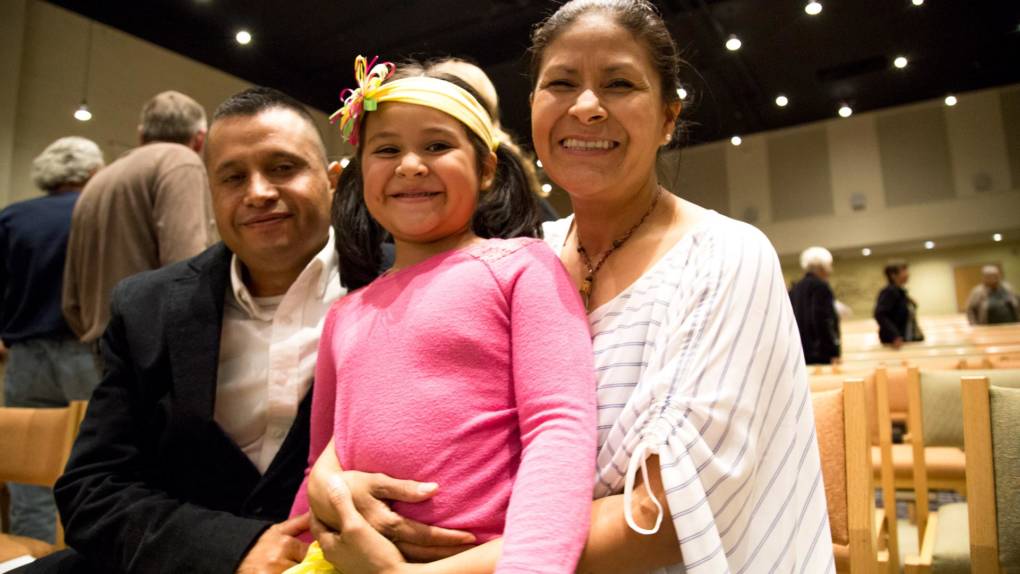
"caption": "Irma Garcia sits with her daughter Francis Escobedo and husband Trinidad Escobedo at the North Bay Organizing Project Issues Assembly in Santa Rosa on Sunday, Nov. 5, after introducing the North Bay Rapid Response Network, an emergency 24-hour hotline to support undocumented members of the North Bay community. ",
"description": "Irma Garcia sits with her daughter Francis Escobedo and husband Trinidad Escobedo at the North Bay Organizing Project Issues Assembly in Santa Rosa on Sunday, Nov. 5, after introducing the North Bay Rapid Response Network, an emergency 24-hour hotline to support undocumented members of the North Bay community. ",
"title": "Undocumented.MAIN",
"credit": "Estefany Gonzales",
"status": "inherit",
"isLoading": false,
"fetchFailed": false
},
"arts_13814525": {
"type": "attachments",
"id": "arts_13814525",
"meta": {
"index": "attachments_1716263798",
"site": "arts",
"id": "13814525",
"found": true
},
"parent": 13814318,
"imgSizes": {
"small": {
"file": "https://ww2.kqed.org/app/uploads/sites/2/2017/11/IMG_7340-520x296.jpg",
"width": 520,
"mimeType": "image/jpeg",
"height": 296
},
"twentyfourteen-full-width": {
"file": "https://ww2.kqed.org/app/uploads/sites/2/2017/11/IMG_7340-1038x576.jpg",
"width": 1038,
"mimeType": "image/jpeg",
"height": 576
},
"thumbnail": {
"file": "https://ww2.kqed.org/app/uploads/sites/2/2017/11/IMG_7340-160x91.jpg",
"width": 160,
"mimeType": "image/jpeg",
"height": 91
},
"fd-sm": {
"file": "https://ww2.kqed.org/app/uploads/sites/2/2017/11/IMG_7340-960x547.jpg",
"width": 960,
"mimeType": "image/jpeg",
"height": 547
},
"post-thumbnail": {
"file": "https://ww2.kqed.org/app/uploads/sites/2/2017/11/IMG_7340-672x372.jpg",
"width": 672,
"mimeType": "image/jpeg",
"height": 372
},
"xsmall": {
"file": "https://ww2.kqed.org/app/uploads/sites/2/2017/11/IMG_7340-375x213.jpg",
"width": 375,
"mimeType": "image/jpeg",
"height": 213
},
"kqedFullSize": {
"file": "https://ww2.kqed.org/app/uploads/sites/2/2017/11/IMG_7340.jpg",
"width": 1920,
"height": 1093
},
"large": {
"file": "https://ww2.kqed.org/app/uploads/sites/2/2017/11/IMG_7340-1020x581.jpg",
"width": 1020,
"mimeType": "image/jpeg",
"height": 581
},
"xlarge": {
"file": "https://ww2.kqed.org/app/uploads/sites/2/2017/11/IMG_7340-1180x672.jpg",
"width": 1180,
"mimeType": "image/jpeg",
"height": 672
},
"guest-author-50": {
"file": "https://ww2.kqed.org/app/uploads/sites/2/2017/11/IMG_7340-50x50.jpg",
"width": 50,
"mimeType": "image/jpeg",
"height": 50
},
"guest-author-96": {
"file": "https://ww2.kqed.org/app/uploads/sites/2/2017/11/IMG_7340-96x96.jpg",
"width": 96,
"mimeType": "image/jpeg",
"height": 96
},
"medium": {
"file": "https://ww2.kqed.org/app/uploads/sites/2/2017/11/IMG_7340-800x455.jpg",
"width": 800,
"mimeType": "image/jpeg",
"height": 455
},
"guest-author-64": {
"file": "https://ww2.kqed.org/app/uploads/sites/2/2017/11/IMG_7340-64x64.jpg",
"width": 64,
"mimeType": "image/jpeg",
"height": 64
},
"guest-author-32": {
"file": "https://ww2.kqed.org/app/uploads/sites/2/2017/11/IMG_7340-32x32.jpg",
"width": 32,
"mimeType": "image/jpeg",
"height": 32
},
"fd-lrg": {
"file": "https://ww2.kqed.org/app/uploads/sites/2/2017/11/IMG_7340-1920x1093.jpg",
"width": 1920,
"mimeType": "image/jpeg",
"height": 1093
},
"fd-med": {
"file": "https://ww2.kqed.org/app/uploads/sites/2/2017/11/IMG_7340-1180x672.jpg",
"width": 1180,
"mimeType": "image/jpeg",
"height": 672
},
"full-width": {
"file": "https://ww2.kqed.org/app/uploads/sites/2/2017/11/IMG_7340-1920x1093.jpg",
"width": 1920,
"mimeType": "image/jpeg",
"height": 1093
},
"detail": {
"file": "https://ww2.kqed.org/app/uploads/sites/2/2017/11/IMG_7340-150x150.jpg",
"width": 150,
"mimeType": "image/jpeg",
"height": 150
},
"medium_large": {
"file": "https://ww2.kqed.org/app/uploads/sites/2/2017/11/IMG_7340-768x437.jpg",
"width": 768,
"mimeType": "image/jpeg",
"height": 437
},
"guest-author-128": {
"file": "https://ww2.kqed.org/app/uploads/sites/2/2017/11/IMG_7340-128x128.jpg",
"width": 128,
"mimeType": "image/jpeg",
"height": 128
},
"xxsmall": {
"file": "https://ww2.kqed.org/app/uploads/sites/2/2017/11/IMG_7340-240x137.jpg",
"width": 240,
"mimeType": "image/jpeg",
"height": 137
}
},
"publishDate": 1510268644,
"modified": 1510269317,
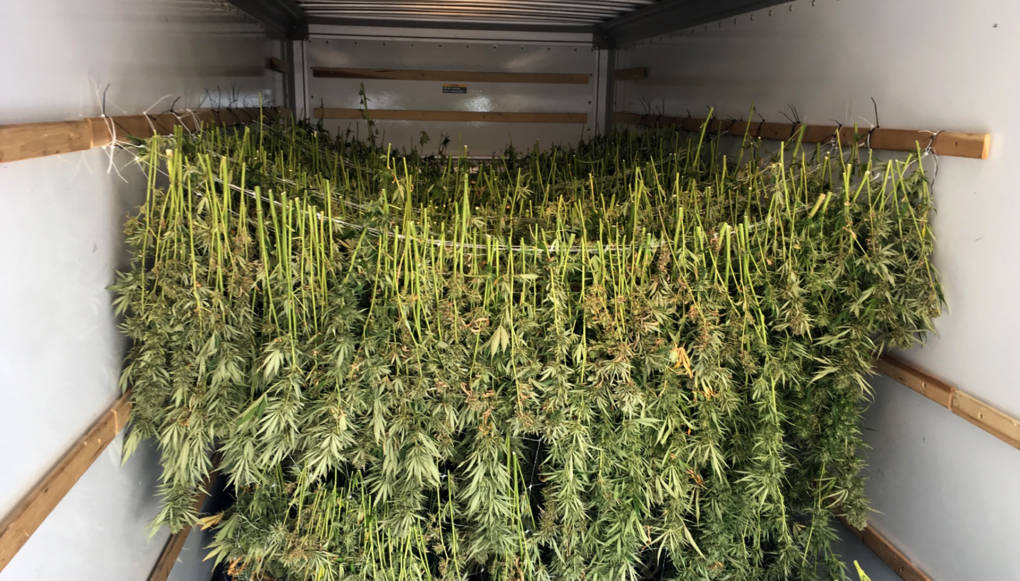
"caption": "Pete Pietrangeli had to harvest and move his plants early in order to save them from smoke damage.",
"description": "Pete Pietrangeli had to harvest and move his plants early in order to save them from smoke damage.",
"title": "IMG_7340",
"credit": "Pete Pietrangeli",
"status": "inherit",
"isLoading": false,
"fetchFailed": false
},
"arts_13812637": {
"type": "attachments",
"id": "arts_13812637",
"meta": {
"index": "attachments_1716263798",
"site": "arts",
"id": "13812637",
"found": true
},
"parent": 13812636,
"imgSizes": {
"small": {
"file": "https://ww2.kqed.org/app/uploads/sites/2/2017/10/Caryn-Fried-Ceramic-sculpture-Sonoma-Art-Trails-e1508959652420-520x292.jpg",
"width": 520,
"mimeType": "image/jpeg",
"height": 292
},
"twentyfourteen-full-width": {
"file": "https://ww2.kqed.org/app/uploads/sites/2/2017/10/Caryn-Fried-Ceramic-sculpture-Sonoma-Art-Trails-e1508959652420-1038x576.jpg",
"width": 1038,
"mimeType": "image/jpeg",
"height": 576
},
"thumbnail": {
"file": "https://ww2.kqed.org/app/uploads/sites/2/2017/10/Caryn-Fried-Ceramic-sculpture-Sonoma-Art-Trails-e1508959652420-160x90.jpg",
"width": 160,
"mimeType": "image/jpeg",
"height": 90
},
"fd-sm": {
"file": "https://ww2.kqed.org/app/uploads/sites/2/2017/10/Caryn-Fried-Ceramic-sculpture-Sonoma-Art-Trails-e1508959652420-960x539.jpg",
"width": 960,
"mimeType": "image/jpeg",
"height": 539
},
"post-thumbnail": {
"file": "https://ww2.kqed.org/app/uploads/sites/2/2017/10/Caryn-Fried-Ceramic-sculpture-Sonoma-Art-Trails-e1508959652420-672x372.jpg",
"width": 672,
"mimeType": "image/jpeg",
"height": 372
},
"xsmall": {
"file": "https://ww2.kqed.org/app/uploads/sites/2/2017/10/Caryn-Fried-Ceramic-sculpture-Sonoma-Art-Trails-e1508959652420-375x211.jpg",
"width": 375,
"mimeType": "image/jpeg",
"height": 211
},
"kqedFullSize": {
"file": "https://ww2.kqed.org/app/uploads/sites/2/2017/10/Caryn-Fried-Ceramic-sculpture-Sonoma-Art-Trails-e1508959652420.jpg",
"width": 1127,
"height": 633
},
"large": {
"file": "https://ww2.kqed.org/app/uploads/sites/2/2017/10/Caryn-Fried-Ceramic-sculpture-Sonoma-Art-Trails-e1508959652420-1020x573.jpg",
"width": 1020,
"mimeType": "image/jpeg",
"height": 573
},
"guest-author-50": {
"file": "https://ww2.kqed.org/app/uploads/sites/2/2017/10/Caryn-Fried-Ceramic-sculpture-Sonoma-Art-Trails-e1508959652420-50x50.jpg",
"width": 50,
"mimeType": "image/jpeg",
"height": 50
},
"guest-author-96": {
"file": "https://ww2.kqed.org/app/uploads/sites/2/2017/10/Caryn-Fried-Ceramic-sculpture-Sonoma-Art-Trails-e1508959652420-96x96.jpg",
"width": 96,
"mimeType": "image/jpeg",
"height": 96
},
"medium": {
"file": "https://ww2.kqed.org/app/uploads/sites/2/2017/10/Caryn-Fried-Ceramic-sculpture-Sonoma-Art-Trails-e1508959652420-800x449.jpg",
"width": 800,
"mimeType": "image/jpeg",
"height": 449
},
"guest-author-64": {
"file": "https://ww2.kqed.org/app/uploads/sites/2/2017/10/Caryn-Fried-Ceramic-sculpture-Sonoma-Art-Trails-e1508959652420-64x64.jpg",
"width": 64,
"mimeType": "image/jpeg",
"height": 64
},
"guest-author-32": {
"file": "https://ww2.kqed.org/app/uploads/sites/2/2017/10/Caryn-Fried-Ceramic-sculpture-Sonoma-Art-Trails-e1508959652420-32x32.jpg",
"width": 32,
"mimeType": "image/jpeg",
"height": 32
},
"detail": {
"file": "https://ww2.kqed.org/app/uploads/sites/2/2017/10/Caryn-Fried-Ceramic-sculpture-Sonoma-Art-Trails-e1508959652420-150x150.jpg",
"width": 150,
"mimeType": "image/jpeg",
"height": 150
},
"medium_large": {
"file": "https://ww2.kqed.org/app/uploads/sites/2/2017/10/Caryn-Fried-Ceramic-sculpture-Sonoma-Art-Trails-e1508959652420-768x431.jpg",
"width": 768,
"mimeType": "image/jpeg",
"height": 431
},
"guest-author-128": {
"file": "https://ww2.kqed.org/app/uploads/sites/2/2017/10/Caryn-Fried-Ceramic-sculpture-Sonoma-Art-Trails-e1508959652420-128x128.jpg",
"width": 128,
"mimeType": "image/jpeg",
"height": 128
},
"xxsmall": {
"file": "https://ww2.kqed.org/app/uploads/sites/2/2017/10/Caryn-Fried-Ceramic-sculpture-Sonoma-Art-Trails-e1508959652420-240x135.jpg",
"width": 240,
"mimeType": "image/jpeg",
"height": 135
}
},
"publishDate": 1508959595,
"modified": 1508959726,
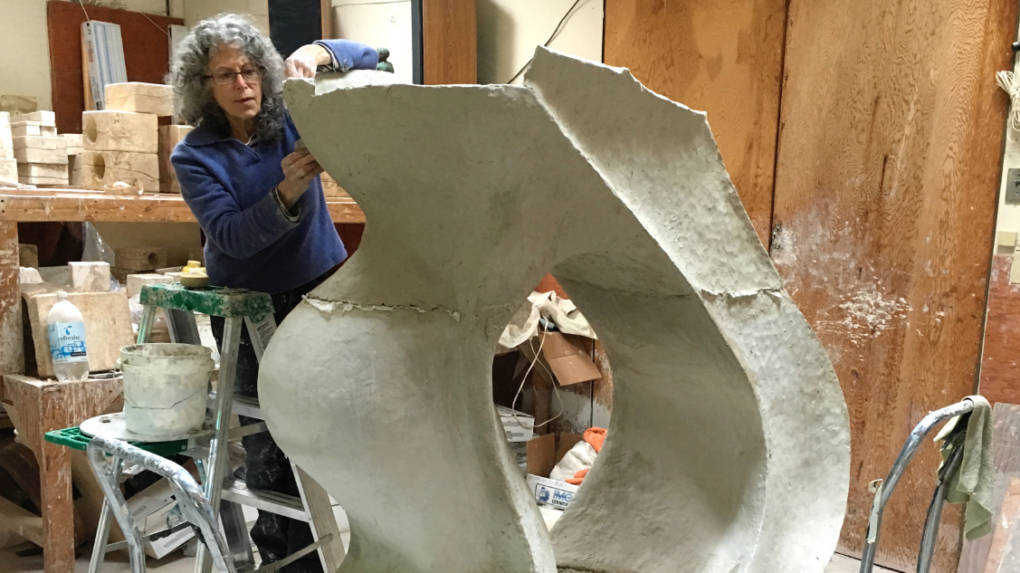
"caption": "Caryn Fried is an artist showing her work as part of the Sonoma Art Trails open studios Oct. 28 and 29",
"description": "Caryn Fried is an artist showing her work as part of the Sonoma Art Trails open studios Oct. 28 and 29",
"title": "Caryn Fried is an artist showing her work as part of the Sonoma Art Trails open studios Oct. 28 and 29",
"credit": "Photo: Courtesy of the artist ",
"status": "inherit",
"isLoading": false,
"fetchFailed": false
},
"arts_13812656": {
"type": "attachments",
"id": "arts_13812656",
"meta": {
"index": "attachments_1716263798",
"site": "arts",
"id": "13812656",
"found": true
},
"parent": 13812640,
"imgSizes": {
"small": {
"file": "https://ww2.kqed.org/app/uploads/sites/2/2017/10/Agent-Inks-Curt-Barnickel-holding-a-painting-that-will-be-auctioned-at-a-fundraiser-at-the-gallery-Nov.-11-e1508966581184-520x293.jpg",
"width": 520,
"mimeType": "image/jpeg",
"height": 293
},
"twentyfourteen-full-width": {
"file": "https://ww2.kqed.org/app/uploads/sites/2/2017/10/Agent-Inks-Curt-Barnickel-holding-a-painting-that-will-be-auctioned-at-a-fundraiser-at-the-gallery-Nov.-11-e1508966581184-1038x576.jpg",
"width": 1038,
"mimeType": "image/jpeg",
"height": 576
},
"thumbnail": {
"file": "https://ww2.kqed.org/app/uploads/sites/2/2017/10/Agent-Inks-Curt-Barnickel-holding-a-painting-that-will-be-auctioned-at-a-fundraiser-at-the-gallery-Nov.-11-e1508966581184-160x90.jpg",
"width": 160,
"mimeType": "image/jpeg",
"height": 90
},
"fd-sm": {
"file": "https://ww2.kqed.org/app/uploads/sites/2/2017/10/Agent-Inks-Curt-Barnickel-holding-a-painting-that-will-be-auctioned-at-a-fundraiser-at-the-gallery-Nov.-11-e1508966581184-960x540.jpg",
"width": 960,
"mimeType": "image/jpeg",
"height": 540
},
"post-thumbnail": {
"file": "https://ww2.kqed.org/app/uploads/sites/2/2017/10/Agent-Inks-Curt-Barnickel-holding-a-painting-that-will-be-auctioned-at-a-fundraiser-at-the-gallery-Nov.-11-e1508966581184-672x372.jpg",
"width": 672,
"mimeType": "image/jpeg",
"height": 372
},
"xsmall": {
"file": "https://ww2.kqed.org/app/uploads/sites/2/2017/10/Agent-Inks-Curt-Barnickel-holding-a-painting-that-will-be-auctioned-at-a-fundraiser-at-the-gallery-Nov.-11-e1508966581184-375x211.jpg",
"width": 375,
"mimeType": "image/jpeg",
"height": 211
},
"kqedFullSize": {
"file": "https://ww2.kqed.org/app/uploads/sites/2/2017/10/Agent-Inks-Curt-Barnickel-holding-a-painting-that-will-be-auctioned-at-a-fundraiser-at-the-gallery-Nov.-11-e1508966581184.jpg",
"width": 3264,
"height": 1836
},
"large": {
"file": "https://ww2.kqed.org/app/uploads/sites/2/2017/10/Agent-Inks-Curt-Barnickel-holding-a-painting-that-will-be-auctioned-at-a-fundraiser-at-the-gallery-Nov.-11-e1508966581184-1020x574.jpg",
"width": 1020,
"mimeType": "image/jpeg",
"height": 574
},
"xlarge": {
"file": "https://ww2.kqed.org/app/uploads/sites/2/2017/10/Agent-Inks-Curt-Barnickel-holding-a-painting-that-will-be-auctioned-at-a-fundraiser-at-the-gallery-Nov.-11-e1508966581184-1180x664.jpg",
"width": 1180,
"mimeType": "image/jpeg",
"height": 664
},
"guest-author-50": {
"file": "https://ww2.kqed.org/app/uploads/sites/2/2017/10/Agent-Inks-Curt-Barnickel-holding-a-painting-that-will-be-auctioned-at-a-fundraiser-at-the-gallery-Nov.-11-e1508966581184-50x50.jpg",
"width": 50,
"mimeType": "image/jpeg",
"height": 50
},
"guest-author-96": {
"file": "https://ww2.kqed.org/app/uploads/sites/2/2017/10/Agent-Inks-Curt-Barnickel-holding-a-painting-that-will-be-auctioned-at-a-fundraiser-at-the-gallery-Nov.-11-e1508966581184-96x96.jpg",
"width": 96,
"mimeType": "image/jpeg",
"height": 96
},
"medium": {
"file": "https://ww2.kqed.org/app/uploads/sites/2/2017/10/Agent-Inks-Curt-Barnickel-holding-a-painting-that-will-be-auctioned-at-a-fundraiser-at-the-gallery-Nov.-11-e1508966581184-800x450.jpg",
"width": 800,
"mimeType": "image/jpeg",
"height": 450
},
"guest-author-64": {
"file": "https://ww2.kqed.org/app/uploads/sites/2/2017/10/Agent-Inks-Curt-Barnickel-holding-a-painting-that-will-be-auctioned-at-a-fundraiser-at-the-gallery-Nov.-11-e1508966581184-64x64.jpg",
"width": 64,
"mimeType": "image/jpeg",
"height": 64
},
"guest-author-32": {
"file": "https://ww2.kqed.org/app/uploads/sites/2/2017/10/Agent-Inks-Curt-Barnickel-holding-a-painting-that-will-be-auctioned-at-a-fundraiser-at-the-gallery-Nov.-11-e1508966581184-32x32.jpg",
"width": 32,
"mimeType": "image/jpeg",
"height": 32
},
"fd-lrg": {
"file": "https://ww2.kqed.org/app/uploads/sites/2/2017/10/Agent-Inks-Curt-Barnickel-holding-a-painting-that-will-be-auctioned-at-a-fundraiser-at-the-gallery-Nov.-11-e1508966581184-1920x1080.jpg",
"width": 1920,
"mimeType": "image/jpeg",
"height": 1080
},
"fd-med": {
"file": "https://ww2.kqed.org/app/uploads/sites/2/2017/10/Agent-Inks-Curt-Barnickel-holding-a-painting-that-will-be-auctioned-at-a-fundraiser-at-the-gallery-Nov.-11-e1508966581184-1180x664.jpg",
"width": 1180,
"mimeType": "image/jpeg",
"height": 664
},
"full-width": {
"file": "https://ww2.kqed.org/app/uploads/sites/2/2017/10/Agent-Inks-Curt-Barnickel-holding-a-painting-that-will-be-auctioned-at-a-fundraiser-at-the-gallery-Nov.-11-e1508966581184-1920x1080.jpg",
"width": 1920,
"mimeType": "image/jpeg",
"height": 1080
},
"detail": {
"file": "https://ww2.kqed.org/app/uploads/sites/2/2017/10/Agent-Inks-Curt-Barnickel-holding-a-painting-that-will-be-auctioned-at-a-fundraiser-at-the-gallery-Nov.-11-e1508966581184-150x150.jpg",
"width": 150,
"mimeType": "image/jpeg",
"height": 150
},
"medium_large": {
"file": "https://ww2.kqed.org/app/uploads/sites/2/2017/10/Agent-Inks-Curt-Barnickel-holding-a-painting-that-will-be-auctioned-at-a-fundraiser-at-the-gallery-Nov.-11-e1508966581184-768x432.jpg",
"width": 768,
"mimeType": "image/jpeg",
"height": 432
},
"guest-author-128": {
"file": "https://ww2.kqed.org/app/uploads/sites/2/2017/10/Agent-Inks-Curt-Barnickel-holding-a-painting-that-will-be-auctioned-at-a-fundraiser-at-the-gallery-Nov.-11-e1508966581184-128x128.jpg",
"width": 128,
"mimeType": "image/jpeg",
"height": 128
},
"xxsmall": {
"file": "https://ww2.kqed.org/app/uploads/sites/2/2017/10/Agent-Inks-Curt-Barnickel-holding-a-painting-that-will-be-auctioned-at-a-fundraiser-at-the-gallery-Nov.-11-e1508966581184-240x135.jpg",
"width": 240,
"mimeType": "image/jpeg",
"height": 135
}
},
"publishDate": 1508966502,
"modified": 1508980790,
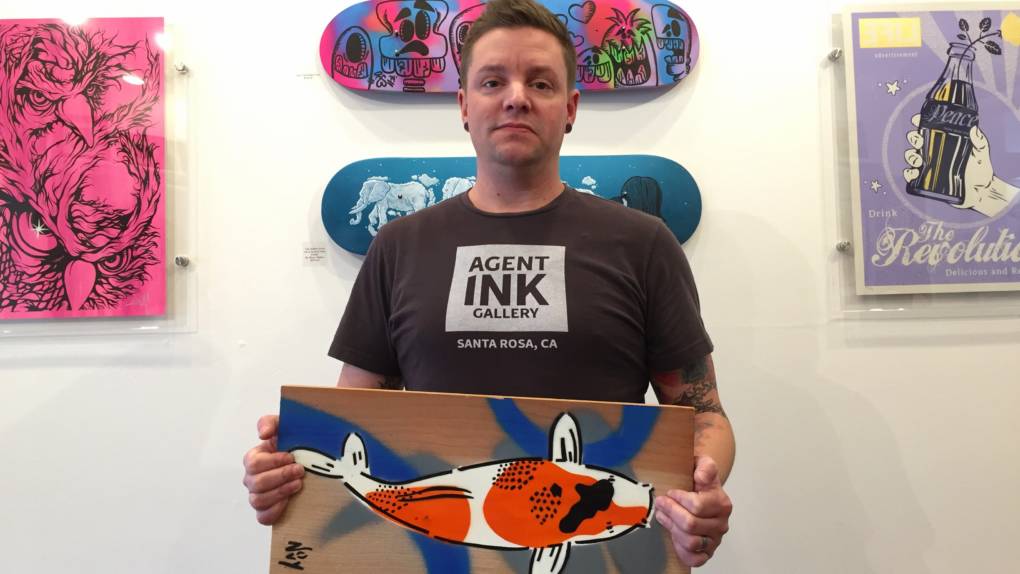
"caption": "Agent Ink's Curt Barnickel holding a painting that will be auctioned at a fundraiser at the gallery Nov. 11.",
"description": "Agent Ink's Curt Barnickel holding a painting that will be auctioned at a fundraiser at the gallery Nov. 11",
"title": "Agent Ink's Curt Barnickel holding a painting that will be auctioned at a fundraiser at the gallery Nov. 11",
"credit": null,
"status": "inherit",
"isLoading": false,
"fetchFailed": false
},
"arts_13811516": {
"type": "attachments",
"id": "arts_13811516",
"meta": {
"index": "attachments_1716263798",
"site": "arts",
"id": "13811516",
"found": true
},
"parent": 0,
"imgSizes": {
"small": {
"file": "https://ww2.kqed.org/app/uploads/sites/2/2017/10/GuyFieri.MAIN1_-520x325.jpg",
"width": 520,
"mimeType": "image/jpeg",
"height": 325
},
"twentyfourteen-full-width": {
"file": "https://ww2.kqed.org/app/uploads/sites/2/2017/10/GuyFieri.MAIN1_-1038x576.jpg",
"width": 1038,
"mimeType": "image/jpeg",
"height": 576
},
"thumbnail": {
"file": "https://ww2.kqed.org/app/uploads/sites/2/2017/10/GuyFieri.MAIN1_-160x100.jpg",
"width": 160,
"mimeType": "image/jpeg",
"height": 100
},
"fd-sm": {
"file": "https://ww2.kqed.org/app/uploads/sites/2/2017/10/GuyFieri.MAIN1_-960x600.jpg",
"width": 960,
"mimeType": "image/jpeg",
"height": 600
},
"post-thumbnail": {
"file": "https://ww2.kqed.org/app/uploads/sites/2/2017/10/GuyFieri.MAIN1_-672x372.jpg",
"width": 672,
"mimeType": "image/jpeg",
"height": 372
},
"xsmall": {
"file": "https://ww2.kqed.org/app/uploads/sites/2/2017/10/GuyFieri.MAIN1_-375x234.jpg",
"width": 375,
"mimeType": "image/jpeg",
"height": 234
},
"kqedFullSize": {
"file": "https://ww2.kqed.org/app/uploads/sites/2/2017/10/GuyFieri.MAIN1_.jpg",
"width": 1920,
"height": 1200
},
"large": {
"file": "https://ww2.kqed.org/app/uploads/sites/2/2017/10/GuyFieri.MAIN1_-1020x638.jpg",
"width": 1020,
"mimeType": "image/jpeg",
"height": 638
},
"xlarge": {
"file": "https://ww2.kqed.org/app/uploads/sites/2/2017/10/GuyFieri.MAIN1_-1180x738.jpg",
"width": 1180,
"mimeType": "image/jpeg",
"height": 738
},
"guest-author-50": {
"file": "https://ww2.kqed.org/app/uploads/sites/2/2017/10/GuyFieri.MAIN1_-50x50.jpg",
"width": 50,
"mimeType": "image/jpeg",
"height": 50
},
"guest-author-96": {
"file": "https://ww2.kqed.org/app/uploads/sites/2/2017/10/GuyFieri.MAIN1_-96x96.jpg",
"width": 96,
"mimeType": "image/jpeg",
"height": 96
},
"medium": {
"file": "https://ww2.kqed.org/app/uploads/sites/2/2017/10/GuyFieri.MAIN1_-800x500.jpg",
"width": 800,
"mimeType": "image/jpeg",
"height": 500
},
"guest-author-64": {
"file": "https://ww2.kqed.org/app/uploads/sites/2/2017/10/GuyFieri.MAIN1_-64x64.jpg",
"width": 64,
"mimeType": "image/jpeg",
"height": 64
},
"guest-author-32": {
"file": "https://ww2.kqed.org/app/uploads/sites/2/2017/10/GuyFieri.MAIN1_-32x32.jpg",
"width": 32,
"mimeType": "image/jpeg",
"height": 32
},
"fd-lrg": {
"file": "https://ww2.kqed.org/app/uploads/sites/2/2017/10/GuyFieri.MAIN1_-1920x1200.jpg",
"width": 1920,
"mimeType": "image/jpeg",
"height": 1200
},
"fd-med": {
"file": "https://ww2.kqed.org/app/uploads/sites/2/2017/10/GuyFieri.MAIN1_-1180x738.jpg",
"width": 1180,
"mimeType": "image/jpeg",
"height": 738
},
"full-width": {
"file": "https://ww2.kqed.org/app/uploads/sites/2/2017/10/GuyFieri.MAIN1_-1920x1200.jpg",
"width": 1920,
"mimeType": "image/jpeg",
"height": 1200
},
"detail": {
"file": "https://ww2.kqed.org/app/uploads/sites/2/2017/10/GuyFieri.MAIN1_-150x150.jpg",
"width": 150,
"mimeType": "image/jpeg",
"height": 150
},
"medium_large": {
"file": "https://ww2.kqed.org/app/uploads/sites/2/2017/10/GuyFieri.MAIN1_-768x480.jpg",
"width": 768,
"mimeType": "image/jpeg",
"height": 480
},
"guest-author-128": {
"file": "https://ww2.kqed.org/app/uploads/sites/2/2017/10/GuyFieri.MAIN1_-128x128.jpg",
"width": 128,
"mimeType": "image/jpeg",
"height": 128
},
"xxsmall": {
"file": "https://ww2.kqed.org/app/uploads/sites/2/2017/10/GuyFieri.MAIN1_-240x150.jpg",
"width": 240,
"mimeType": "image/jpeg",
"height": 150
}
},
"publishDate": 1507849463,
"modified": 1507849590,
"caption": "Guy Fieri at the Santa Rosa Veterans Building Evacuation Center, Oct. 12, 2017.",
"description": "Guy Fieri at the Santa Rosa Veterans Building Evacuation Center, Oct. 12, 2017.",
"title": "GuyFieri.MAIN1",
"credit": "Gabe Meline/KQED",
"status": "inherit",
"isLoading": false,
"fetchFailed": false
}
},
"audioPlayerReducer": {
"postId": "stream_live",
"isPaused": true,
"isPlaying": false,
"pfsActive": false,
"pledgeModalIsOpen": true,
"playerDrawerIsOpen": false,
"liveAudioPlayStartedAt": 0,
"liveAudioPlayContext": ""
},
"authorsReducer": {
"byline_arts_13848436": {
"type": "authors",
"id": "byline_arts_13848436",
"meta": {
"override": true
},
"slug": "byline_arts_13848436",
"name": "Ashley Westerman",
"isLoading": false
},
"byline_arts_13823483": {
"type": "authors",
"id": "byline_arts_13823483",
"meta": {
"override": true
},
"slug": "byline_arts_13823483",
"name": "Susan Stamberg",
"isLoading": false
},
"cmusiker": {
"type": "authors",
"id": "32",
"meta": {
"index": "authors_1716337520",
"id": "32",
"found": true
},
"name": "Cy Musiker",
"firstName": "Cy",
"lastName": "Musiker",
"slug": "cmusiker",
"email": "cmusiker@kqed.org",
"display_author_email": false,
"staff_mastheads": [],
"title": "KQED Contributor",
"bio": "Cy Musiker is a former co-host of The Do List and a former reporter covering the arts for KQED News and The California Report. He loves live performance, especially great theater, jazz, roots music, anything by Mahler. Cy has an MJ from UC Berkeley's School of Journalism, and got his BA from Hampshire College. His work has been recognized by the Society for Professional Journalists with their Sigma Delta Chi Award for Public Service in Journalism. When he can, Cy likes to swim in Tomales Bay, run with his dog in the East Bay Hills, and hike the Sierra.",
"avatar": "https://secure.gravatar.com/avatar/05eaba5c5696ce8f062e4ea2df428a43?s=600&d=blank&r=g",
"twitter": null,
"facebook": null,
"instagram": null,
"linkedin": null,
"sites": [
{
"site": "arts",
"roles": [
"Contributor",
"subscriber"
]
},
{
"site": "news",
"roles": [
"author"
]
},
{
"site": "bayareabites",
"roles": [
"contributor"
]
}
],
"headData": {
"title": "Cy Musiker | KQED",
"description": "KQED Contributor",
"ogImgSrc": "https://secure.gravatar.com/avatar/05eaba5c5696ce8f062e4ea2df428a43?s=600&d=blank&r=g",
"twImgSrc": "https://secure.gravatar.com/avatar/05eaba5c5696ce8f062e4ea2df428a43?s=600&d=blank&r=g"
},
"isLoading": false,
"link": "/author/cmusiker"
},
"shotchkiss": {
"type": "authors",
"id": "61",
"meta": {
"index": "authors_1716337520",
"id": "61",
"found": true
},
"name": "Sarah Hotchkiss",
"firstName": "Sarah",
"lastName": "Hotchkiss",
"slug": "shotchkiss",
"email": "shotchkiss@kqed.org",
"display_author_email": true,
"staff_mastheads": [
"arts"
],
"title": "Senior Editor",
"bio": "Sarah Hotchkiss is a San Francisco \u003ca href=\"http://www.sarahhotchkiss.com\">artist\u003c/a> and arts writer. In 2019, she received the Dorothea & Leo Rabkin Foundation grant for visual art journalism and in 2020 she received a Society of Professional Journalists, Northern California award for excellence in arts and culture reporting.",
"avatar": "https://secure.gravatar.com/avatar/bc662df144b3d27fd8b1b6f1c2a420d34e91e53154d411bb7ad353cc8b6cea8d?s=600&d=blank&r=g",
"twitter": null,
"bluesky": null,
"facebook": null,
"instagram": null,
"linkedin": null,
"sites": [
{
"site": "",
"roles": [
"editor"
]
},
{
"site": "arts",
"roles": [
"Contributor",
"administrator"
]
},
{
"site": "artschool",
"roles": [
"administrator"
]
},
{
"site": "news",
"roles": [
"editor"
]
},
{
"site": "pop",
"roles": [
"administrator"
]
},
{
"site": "bayareabites",
"roles": [
"editor"
]
},
{
"site": "spark",
"roles": [
"editor"
]
},
{
"site": "checkplease",
"roles": [
"editor"
]
}
],
"headData": {
"title": "Sarah Hotchkiss | KQED",
"description": "Senior Editor",
"ogImgSrc": "https://secure.gravatar.com/avatar/bc662df144b3d27fd8b1b6f1c2a420d34e91e53154d411bb7ad353cc8b6cea8d?s=600&d=blank&r=g",
"twImgSrc": "https://secure.gravatar.com/avatar/bc662df144b3d27fd8b1b6f1c2a420d34e91e53154d411bb7ad353cc8b6cea8d?s=600&d=blank&r=g"
},
"isLoading": false,
"link": "/author/shotchkiss"
},
"kqedarts": {
"type": "authors",
"id": "92",
"meta": {
"index": "authors_1716337520",
"id": "92",
"found": true
},
"name": "KQED Arts",
"firstName": "KQED",
"lastName": "Arts",
"slug": "kqedarts",
"email": "arts@kqed.org",
"display_author_email": false,
"staff_mastheads": [],
"title": "KQED Staff",
"bio": null,
"avatar": "https://secure.gravatar.com/avatar/321c9ebfeb7736f9e55366a6d3399ab0?s=600&d=blank&r=g",
"twitter": null,
"facebook": null,
"instagram": "https://www.instagram.com/kqed_arts/",
"linkedin": null,
"sites": [
{
"site": "arts",
"roles": [
"contributor"
]
},
{
"site": "pop",
"roles": [
"contributor"
]
},
{
"site": "science",
"roles": [
"author"
]
},
{
"site": "food",
"roles": [
"contributor"
]
}
],
"headData": {
"title": "KQED Arts | KQED",
"description": "KQED Staff",
"ogImgSrc": "https://secure.gravatar.com/avatar/321c9ebfeb7736f9e55366a6d3399ab0?s=600&d=blank&r=g",
"twImgSrc": "https://secure.gravatar.com/avatar/321c9ebfeb7736f9e55366a6d3399ab0?s=600&d=blank&r=g"
},
"isLoading": false,
"link": "/author/kqedarts"
},
"gmeline": {
"type": "authors",
"id": "185",
"meta": {
"index": "authors_1716337520",
"id": "185",
"found": true
},
"name": "Gabe Meline",
"firstName": "Gabe",
"lastName": "Meline",
"slug": "gmeline",
"email": "gmeline@kqed.org",
"display_author_email": true,
"staff_mastheads": [
"arts"
],
"title": "Senior Editor, KQED Arts & Culture",
"bio": "Gabe Meline entered journalism at age 15 making photocopied zines, and has since earned awards from the Edward R. Murrow Awards, the Society for Professional Journalists, the Online Journalism Awards, the Association of Alternative Newsweeklies and the California Newspaper Publishers Association. Prior to KQED, he was the editor of the \u003cem>North Bay Bohemian\u003c/em> and a touring musician. He lives with his wife and daughter in his hometown of Santa Rosa, CA.",
"avatar": "https://secure.gravatar.com/avatar/5bebe57be0d8bc2dd318934feb47299e2d2d10cba28d09d8d7afb389a2ce2bdd?s=600&d=blank&r=g",
"twitter": null,
"bluesky": null,
"facebook": null,
"instagram": null,
"linkedin": null,
"sites": [
{
"site": "",
"roles": [
"editor"
]
},
{
"site": "arts",
"roles": [
"administrator"
]
},
{
"site": "artschool",
"roles": [
"editor"
]
},
{
"site": "news",
"roles": [
"author"
]
},
{
"site": "pop",
"roles": [
"editor"
]
},
{
"site": "bayareabites",
"roles": [
"editor"
]
},
{
"site": "food",
"roles": [
"editor"
]
},
{
"site": "forum",
"roles": [
"administrator"
]
},
{
"site": "liveblog",
"roles": [
"editor"
]
},
{
"site": "hiphop",
"roles": [
"editor"
]
}
],
"headData": {
"title": "Gabe Meline | KQED",
"description": "Senior Editor, KQED Arts & Culture",
"ogImgSrc": "https://secure.gravatar.com/avatar/5bebe57be0d8bc2dd318934feb47299e2d2d10cba28d09d8d7afb389a2ce2bdd?s=600&d=blank&r=g",
"twImgSrc": "https://secure.gravatar.com/avatar/5bebe57be0d8bc2dd318934feb47299e2d2d10cba28d09d8d7afb389a2ce2bdd?s=600&d=blank&r=g"
},
"isLoading": false,
"link": "/author/gmeline"
},
"rachael-myrow": {
"type": "authors",
"id": "251",
"meta": {
"index": "authors_1716337520",
"id": "251",
"found": true
},
"name": "Rachael Myrow",
"firstName": "Rachael",
"lastName": "Myrow",
"slug": "rachael-myrow",
"email": "rmyrow@kqed.org",
"display_author_email": true,
"staff_mastheads": [
"news"
],
"title": "Senior Editor of KQED's Silicon Valley News Desk",
"bio": "• I write and edit stories about how Silicon Valley power and policies shape everyday life in California. I’m also passionate about making Bay Area history and culture more accessible to a broad public. • I’ve been a journalist for most of my life, starting in high school with The Franklin Press in Los Angeles, where I grew up. While earning my first degree in English at UC Berkeley, I got my start in public radio at KALX-FM. After completing a second degree in journalism at Cal, I landed my first professional job at Marketplace, then moved on to KPCC (now LAist), and then KQED, where I hosted The California Report for more than seven years. • My reporting has appeared on NPR, The World, WBUR’s \u003ci>Here & Now\u003c/i>, and the BBC. I also guest host for KQED’s \u003ci>Forum\u003c/i>, as well as the Commonwealth Club in San Francisco. • I speak periodically on media, democracy and technology issues, and do voiceover work for documentaries and educational video projects. • Outside of the studio, you'll find me hiking Bay Area trails and whipping up Insta-ready meals in my kitchen. • I do not accept gifts, money, or favors from anyone connected to my reporting, I don't pay people for information, and I do not support or donate to political causes. • I strive to treat the people I report on with fairness, honesty, and respect. I also recognize there are often multiple sides to a story and work to verify information through multiple sources and documentation. If I get something wrong, I correct it.",
"avatar": "https://secure.gravatar.com/avatar/3ed8a3c5f26025e4a805ba634cda8cd764906b97438a6d9ce216b044e340da4e?s=600&d=blank&r=g",
"twitter": "rachaelmyrow",
"bluesky": null,
"facebook": null,
"instagram": null,
"linkedin": "https://www.linkedin.com/in/rachaelmyrow/",
"sites": [
{
"site": "arts",
"roles": [
"administrator"
]
},
{
"site": "news",
"roles": [
"edit_others_posts",
"editor"
]
},
{
"site": "futureofyou",
"roles": [
"editor"
]
},
{
"site": "bayareabites",
"roles": [
"editor"
]
},
{
"site": "stateofhealth",
"roles": [
"editor"
]
},
{
"site": "science",
"roles": [
"editor"
]
},
{
"site": "food",
"roles": [
"editor"
]
},
{
"site": "forum",
"roles": [
"editor"
]
},
{
"site": "liveblog",
"roles": [
"author"
]
}
],
"headData": {
"title": "Rachael Myrow | KQED",
"description": "Senior Editor of KQED's Silicon Valley News Desk",
"ogImgSrc": "https://secure.gravatar.com/avatar/3ed8a3c5f26025e4a805ba634cda8cd764906b97438a6d9ce216b044e340da4e?s=600&d=blank&r=g",
"twImgSrc": "https://secure.gravatar.com/avatar/3ed8a3c5f26025e4a805ba634cda8cd764906b97438a6d9ce216b044e340da4e?s=600&d=blank&r=g"
},
"isLoading": false,
"link": "/author/rachael-myrow"
},
"dburlison": {
"type": "authors",
"id": "3216",
"meta": {
"index": "authors_1716337520",
"id": "3216",
"found": true
},
"name": "Dani Burlison",
"firstName": "Dani",
"lastName": "Burlison",
"slug": "dburlison",
"email": "danisavestheworld@yahoo.com",
"display_author_email": false,
"staff_mastheads": [],
"title": null,
"bio": "\u003cb id=\"yui_3_16_0_1_1416414652499_5365\" class=\"yiv3033141065\">Dani Burlison\u003c/b> is an award-winning writer, teacher and North Bay resident with a special interest in California's fascinating subcultures. You can find her commentary on writing, feminism, social justice and life with two teen daughters on Twitter at @DaniBurlison.",
"avatar": "https://secure.gravatar.com/avatar/c0b371463a220978c947a5c4ce2da294?s=600&d=blank&r=g",
"twitter": null,
"facebook": null,
"instagram": null,
"linkedin": null,
"sites": [
{
"site": "arts",
"roles": [
"contributor"
]
}
],
"headData": {
"title": "Dani Burlison | KQED",
"description": null,
"ogImgSrc": "https://secure.gravatar.com/avatar/c0b371463a220978c947a5c4ce2da294?s=600&d=blank&r=g",
"twImgSrc": "https://secure.gravatar.com/avatar/c0b371463a220978c947a5c4ce2da294?s=600&d=blank&r=g"
},
"isLoading": false,
"link": "/author/dburlison"
},
"kwhalen": {
"type": "authors",
"id": "3248",
"meta": {
"index": "authors_1716337520",
"id": "3248",
"found": true
},
"name": "Kelly Whalen",
"firstName": "Kelly",
"lastName": "Whalen",
"slug": "kwhalen",
"email": "kwhalen@kqed.org",
"display_author_email": false,
"staff_mastheads": [],
"title": "Senior Video Producer",
"bio": "Kelly Whalen is a filmmaker and educator who directs and produces social justice documentaries and award-winning arts and culture web series. She is the creator of KQED Arts’ three-time Webby Award-winning YouTube series \u003cem>If Cities Could Dance\u003c/em>, featuring dancers across the country representing their cities’ signature moves, and the director of \u003cem>When the Waters Get Deep\u003c/em>, a documentary about Oakland-based artists SOL Development and their work toward healing their communities’ trauma from gun violence.",
"avatar": "https://secure.gravatar.com/avatar/1a2b57e8a13abdcfc3d4966d9c0e1512?s=600&d=blank&r=g",
"twitter": "kellyfilmmaker",
"facebook": null,
"instagram": null,
"linkedin": null,
"sites": [
{
"site": "arts",
"roles": [
"subscriber"
]
}
],
"headData": {
"title": "Kelly Whalen | KQED",
"description": "Senior Video Producer",
"ogImgSrc": "https://secure.gravatar.com/avatar/1a2b57e8a13abdcfc3d4966d9c0e1512?s=600&d=blank&r=g",
"twImgSrc": "https://secure.gravatar.com/avatar/1a2b57e8a13abdcfc3d4966d9c0e1512?s=600&d=blank&r=g"
},
"isLoading": false,
"link": "/author/kwhalen"
},
"jbote": {
"type": "authors",
"id": "11371",
"meta": {
"index": "authors_1716337520",
"id": "11371",
"found": true
},
"name": "Joshua Bote",
"firstName": "Joshua",
"lastName": "Bote",
"slug": "jbote",
"email": "jbote@kqed.org",
"display_author_email": false,
"staff_mastheads": [],
"title": null,
"bio": "\u003cp class=\"p1\">Joshua Bote is an intern for KQED Arts. A senior at UC Berkeley, Joshua previously served as the Arts & Entertainment Editor at \u003ci>The Daily Californian\u003c/i>, UC Berkeley’s independently-run student newspaper. His work has been published in the \u003cem>East Bay Express.\u003c/em>\u003c/p>\r\n\u003cp class=\"p1\">He’s deeply enamored with Twitter culture, Carly Rae Jepsen, and love-oriented podcasts. He's also slowly learning to appreciate bad award shows. Follow him on Twitter \u003ca href=\"http://twitter.com/joshuaboat\">@joshuaboat\u003c/a>.\u003c/p>",
"avatar": "https://secure.gravatar.com/avatar/f060759cb27bc8b191022334ab99fc5a?s=600&d=blank&r=g",
"twitter": null,
"facebook": null,
"instagram": null,
"linkedin": null,
"sites": [
{
"site": "arts",
"roles": [
"author"
]
}
],
"headData": {
"title": "Joshua Bote | KQED",
"description": null,
"ogImgSrc": "https://secure.gravatar.com/avatar/f060759cb27bc8b191022334ab99fc5a?s=600&d=blank&r=g",
"twImgSrc": "https://secure.gravatar.com/avatar/f060759cb27bc8b191022334ab99fc5a?s=600&d=blank&r=g"
},
"isLoading": false,
"link": "/author/jbote"
},
"nvoynovskaya": {
"type": "authors",
"id": "11387",
"meta": {
"index": "authors_1716337520",
"id": "11387",
"found": true
},
"name": "Nastia Voynovskaya",
"firstName": "Nastia",
"lastName": "Voynovskaya",
"slug": "nvoynovskaya",
"email": "nvoynovskaya@kqed.org",
"display_author_email": false,
"staff_mastheads": [
"arts"
],
"title": "Editor and reporter",
"bio": "Nastia Voynovskaya is a reporter, editor and host at KQED Arts & Culture. She's been covering the arts in the Bay Area for over a decade, with a focus on music, queer culture, labor issues and grassroots organizing. She has edited KQED story series such as Trans Bay: A History of San Francisco's Gender-Diverse Community, and co-created KQED's Bay Area hip-hop history project, That's My Word. Nastia's work has been recognized by the Society of Professional Journalists and San Francisco Press Club. She regularly appears on podcasts and radio programs, including NPR's All Songs Considered, and hosts live events where music, culture and conversation meet.",
"avatar": "https://secure.gravatar.com/avatar/5025ee460e5a85d69ca20ea6c6f2f80d7e17795c828f61ea3aecfcd924e9042e?s=600&d=blank&r=g",
"twitter": null,
"bluesky": null,
"facebook": null,
"instagram": "https://www.instagram.com/nananastia/",
"linkedin": null,
"sites": [
{
"site": "",
"roles": [
"editor"
]
},
{
"site": "arts",
"roles": [
"administrator"
]
},
{
"site": "news",
"roles": [
"editor"
]
},
{
"site": "pop",
"roles": [
"administrator"
]
},
{
"site": "bayareabites",
"roles": [
"editor"
]
},
{
"site": "podcasts",
"roles": [
"editor"
]
},
{
"site": "hiphop",
"roles": [
"editor"
]
}
],
"headData": {
"title": "Nastia Voynovskaya | KQED",
"description": "Editor and reporter",
"ogImgSrc": "https://secure.gravatar.com/avatar/5025ee460e5a85d69ca20ea6c6f2f80d7e17795c828f61ea3aecfcd924e9042e?s=600&d=blank&r=g",
"twImgSrc": "https://secure.gravatar.com/avatar/5025ee460e5a85d69ca20ea6c6f2f80d7e17795c828f61ea3aecfcd924e9042e?s=600&d=blank&r=g"
},
"isLoading": false,
"link": "/author/nvoynovskaya"
}
},
"pagesReducer": {
"arts_tag_food": {
"type": "terms",
"id": "arts_1297",
"meta": {
"index": "terms_1716263798",
"site": "arts",
"id": "1297",
"score": 7.4242826
},
"featImg": null,
"name": "food",
"description": null,
"taxonomy": "tag",
"headData": {
"twImgId": null,
"twTitle": null,
"ogTitle": null,
"ogImgId": null,
"twDescription": null,
"description": null,
"title": "food Archives | KQED Arts",
"ogDescription": null
},
"ttid": 1309,
"slug": "food",
"isLoading": false,
"title": "food",
"pageMeta": {
"site": "arts",
"WpPageTemplate": "page-topic-editorial",
"currentPage": 39
},
"blocks": [
{
"blockName": "kqed/post-list",
"attrs": {
"layout": "cardArticle2",
"query": "posts/arts?tag=food",
"seeMore": false,
"paginated": true,
"page": 39
}
},
{
"blockName": "kqed/ad"
}
]
}
},
"pfsSessionReducer": {},
"postsReducer": {
"stream_live": {
"type": "live",
"id": "stream_live",
"audioUrl": "https://streams.kqed.org/kqedradio",
"title": "Live Stream",
"excerpt": "Live Stream information currently unavailable.",
"link": "/radio",
"featImg": "",
"label": {
"name": "KQED Live",
"link": "/"
}
},
"stream_kqedNewscast": {
"type": "posts",
"id": "stream_kqedNewscast",
"audioUrl": "https://www.kqed.org/.stream/anon/radio/RDnews/newscast.mp3?_=1",
"title": "KQED Newscast",
"featImg": "",
"label": {
"name": "88.5 FM",
"link": "/"
}
},
"arts_13853272": {
"type": "posts",
"id": "arts_13853272",
"meta": {
"index": "posts_1716263798",
"site": "arts",
"id": "13853272",
"score": null,
"sort": [
1553034649000
]
},
"parent": 0,
"labelTerm": {
"site": "arts",
"term": 140
},
"blocks": [],
"publishDate": 1553034649,
"format": "standard",
"title": "‘Fries With That’ Serves Up Darkly Humorous Photo Show, And a Side of Ketchup",
"headTitle": "‘Fries With That’ Serves Up Darkly Humorous Photo Show, And a Side of Ketchup | KQED",
"content": "\u003cp>Jordan Stein’s been working on a joke. “You might not like it,” he says. “It’s a Jewish joke.”\u003c/p>\n\u003cp>The build-up is full of anxiety and hand-wringing: a miserable man experiencing the brunt of life’s woes details his misfortunes to a waitress along with an order for a hamburger, rare. “What a day, what a day,” he says, head in his hands.\u003c/p>\n\u003cp>She barely looks up. “Fries with that?” she asks.\u003c/p>\n\u003cp>\u003ci>Ba-dum tss!\u003c/i>\u003c/p>\n\u003cp>It’s not what I’d call a great joke, but a chuckle escapes me nonetheless. Even though I saw it coming from a hundred miles away, it’s still a nice lesson in how little other people care about your problems. And it’s fundamentally funny (maybe not ha-ha funny, but definitely odd funny) to see a show title reverse-engineered into a joke.\u003c/p>\n\u003cfigure id=\"attachment_13853282\" class=\"wp-caption aligncenter\" style=\"max-width: 1964px\">\u003cimg loading=\"lazy\" decoding=\"async\" src=\"https://ww2.kqed.org/arts/wp-content/uploads/sites/2/2019/03/Fries-Install-View_COVERb.jpg\" alt=\"Installation view of 'Fries With That...?' L: Photographer unknown, [Men in swim trunks], ca. 1950; R: Photographer unknown, 'Untitled,' ca. 1960.\" width=\"1964\" height=\"1105\" class=\"size-full wp-image-13853282\" srcset=\"https://cdn.kqed.org/wp-content/uploads/sites/2/2019/03/Fries-Install-View_COVERb.jpg 1964w, https://cdn.kqed.org/wp-content/uploads/sites/2/2019/03/Fries-Install-View_COVERb-160x90.jpg 160w, https://cdn.kqed.org/wp-content/uploads/sites/2/2019/03/Fries-Install-View_COVERb-800x450.jpg 800w, https://cdn.kqed.org/wp-content/uploads/sites/2/2019/03/Fries-Install-View_COVERb-768x432.jpg 768w, https://cdn.kqed.org/wp-content/uploads/sites/2/2019/03/Fries-Install-View_COVERb-1020x574.jpg 1020w, https://cdn.kqed.org/wp-content/uploads/sites/2/2019/03/Fries-Install-View_COVERb-1200x675.jpg 1200w, https://cdn.kqed.org/wp-content/uploads/sites/2/2019/03/Fries-Install-View_COVERb-1920x1080.jpg 1920w\" sizes=\"(max-width: 1964px) 100vw, 1964px\">\u003cfigcaption class=\"wp-caption-text\">Installation view of ‘Fries With That…?’ L: Photographer unknown, [Men in swim trunks], ca. 1950; R: Photographer unknown, ‘Untitled,’ ca. 1960. \u003ccite>(Courtesy 3320 18th Street)\u003c/cite>\u003c/figcaption>\u003c/figure>\n\u003cp>We’re standing in the midst of \u003ci>Fries With That…?\u003c/i> at 3320 18th Street, a photography exhibition curated by Jeffrey Fraenkel (of the \u003ca href=\"https://fraenkelgallery.com/\" rel=\"noopener\" target=\"_blank\">eponymous 49 Geary gallery\u003c/a>) from the “more unorthodox depths” of the gallery’s holdings. The selected works, the exhibition description continues, are there because they “would not fit comfortably in any exhibition not titled \u003ci>Fries With That…?\u003c/i>”\u003c/p>\n\u003cp>[ad fullwidth]\u003c/p>\n\u003cp>(You can see a bit of circular logic forming.) \u003c/p>\n\u003cp>The exhibition itself is no joke. I’d describe it instead as a strange and satisfying viewing experience. The show is full of rare prints by established artists (an early Diane Arbus, a pristine Carleton E. Watkins) hung side-by-side with images taken by unknown, possibly amateur photographers. There’s a simple pleasure in this curatorial democracy—but even without the help of the image list to put names, dates or the lack thereof to each picture, the sequencing provides the real thrill of \u003ci>Fries With That…?\u003c/i>\u003c/p>\n\u003cfigure id=\"attachment_13853278\" class=\"wp-caption aligncenter\" style=\"max-width: 1200px\">\u003cimg loading=\"lazy\" decoding=\"async\" src=\"https://ww2.kqed.org/arts/wp-content/uploads/sites/2/2019/03/03_Fries-With-That_Gas-Explosion-at-home-on-the-corner-of-Buchanan-and-Grove_1200.jpg\" alt=\"Photographer unknown, 'Gas Explosion at home on the corner of Buchanan and Grove, San Francisco,' June 6, 1938.\" width=\"1200\" height=\"836\" class=\"size-full wp-image-13853278\" srcset=\"https://cdn.kqed.org/wp-content/uploads/sites/2/2019/03/03_Fries-With-That_Gas-Explosion-at-home-on-the-corner-of-Buchanan-and-Grove_1200.jpg 1200w, https://cdn.kqed.org/wp-content/uploads/sites/2/2019/03/03_Fries-With-That_Gas-Explosion-at-home-on-the-corner-of-Buchanan-and-Grove_1200-160x111.jpg 160w, https://cdn.kqed.org/wp-content/uploads/sites/2/2019/03/03_Fries-With-That_Gas-Explosion-at-home-on-the-corner-of-Buchanan-and-Grove_1200-800x557.jpg 800w, https://cdn.kqed.org/wp-content/uploads/sites/2/2019/03/03_Fries-With-That_Gas-Explosion-at-home-on-the-corner-of-Buchanan-and-Grove_1200-768x535.jpg 768w, https://cdn.kqed.org/wp-content/uploads/sites/2/2019/03/03_Fries-With-That_Gas-Explosion-at-home-on-the-corner-of-Buchanan-and-Grove_1200-1020x711.jpg 1020w\" sizes=\"(max-width: 1200px) 100vw, 1200px\">\u003cfigcaption class=\"wp-caption-text\">Photographer unknown, ‘Gas Explosion at home on the corner of Buchanan and Grove, San Francisco,’ June 6, 1938.\u003cbr> \u003ccite>(Courtesy Fraenkel Gallery, San Francisco)\u003c/cite>\u003c/figcaption>\u003c/figure>\n\u003cp>It’s more than just shared subject matter (young woman in a vampy pose on a bed next to a giant \u003ci>Psycho\u003c/i> poster featuring Janet Leigh on a bed), or formal similarities (Edouard Baldus’ train tracks beside an indecipherable lump of approximately the same triangular shape). \u003c/p>\n\u003cp>Fraenkel’s juxtapositions establish a rhythm or a status quo (say, banality) and then undermine that concept completely, a process most clearly demonstrated by a particularly hard-hitting five-image sequence. It begins with an aerial view of the French countryside before and after American bombs drop. Then, an image of a San Francisco home destroyed by a gas explosion, annotated to show where a body was found blown out of bed. Next, an Eadweard Muybridge collotype of a nude woman cheerfully getting under the covers. And finally: a Las Vegas neon sign reading “RELAX IN COMFORT.”\u003c/p>\n\u003cfigure id=\"attachment_13853280\" class=\"wp-caption alignright\" style=\"max-width: 640px\">\u003cimg loading=\"lazy\" decoding=\"async\" src=\"https://ww2.kqed.org/arts/wp-content/uploads/sites/2/2019/03/Fries-With-That_Woman-in-Fries-Costume_640.jpg\" alt=\"Photographer unknown, [Woman in Fries Costume], date unknown.\" width=\"640\" height=\"945\" class=\"size-full wp-image-13853280\" srcset=\"https://cdn.kqed.org/wp-content/uploads/sites/2/2019/03/Fries-With-That_Woman-in-Fries-Costume_640.jpg 640w, https://cdn.kqed.org/wp-content/uploads/sites/2/2019/03/Fries-With-That_Woman-in-Fries-Costume_640-160x236.jpg 160w\" sizes=\"(max-width: 640px) 100vw, 640px\">\u003cfigcaption class=\"wp-caption-text\">Photographer unknown, [Woman in Fries Costume], date unknown. \u003ccite>(Courtesy Fraenkel Gallery, San Francisco)\u003c/cite>\u003c/figcaption>\u003c/figure>\n\u003cp>The humor of \u003ci>Fries With That…?\u003c/i> is dark. (It’s also punny: A framed photograph in a central vitrine displays two humerus bones—one human, one animal.)\u003c/p>\n\u003cp>The show came about as a result of Stein’s own guest curatorial gig at Fraenkel Gallery in July of last year. Fraenkel (the person) gave Stein free reign, even letting him title the show \u003ci>\u003ca href=\"https://fraenkelgallery.com/exhibitions/earache-jordan-stein\" rel=\"noopener\" target=\"_blank\">Earache\u003c/a>\u003c/i>, despite the fact the gallerist much preferred what was to Stein the nonsensical title of \u003ci>Fries With That…?\u003c/i> So Stein thought he’d repay the favor: white walls, full curatorial powers and the liberty to name the show after a particularly American turn of phrase meant to push more fried objects onto fast food trays. \u003c/p>\n\u003cp>It helps there is a site-specificity to it all: 3320 18th is directly across the street from the venerable Mission district joint Whiz Burger. For the opening, the gallery secured 14 large orders of fries and a seven-pound bag of ketchup. \u003c/p>\n\u003cp>Throughout, Fraenkel equates cut-and-fried potatoes with prone bodies, the insides of bodies and the spiritual yearnings of bodies (spend as much time as you can with E.O. Goldbeck’s panorama of a San Antonio baptism). The result is a circular journey well worth taking—a journey that ends with a woman in a fries costume, her arms pinned inside, preventing her from waving goodbye. It’s a macabre, nihilistic and ultimately reassuring show—the waitress doesn’t care about your sob story, but you can rely on her to ask you if you want fries with that.\u003c/p>\n\u003cp>\u003cimg loading=\"lazy\" decoding=\"async\" src=\"https://ww2.kqed.org/arts/wp-content/uploads/sites/2/2016/09/Q.Logo_.Break_.jpg\" alt=\"\" width=\"800\" height=\"78\" class=\"aligncenter size-full wp-image-12127869\" srcset=\"https://cdn.kqed.org/wp-content/uploads/sites/2/2016/09/Q.Logo_.Break_.jpg 800w, https://cdn.kqed.org/wp-content/uploads/sites/2/2016/09/Q.Logo_.Break_-400x39.jpg 400w, https://cdn.kqed.org/wp-content/uploads/sites/2/2016/09/Q.Logo_.Break_-768x75.jpg 768w\" sizes=\"(max-width: 800px) 100vw, 800px\">\u003c/p>\n\u003cp>\u003c/p>\n\u003cp>\u003ci>‘Fries With That…?’ is on view at 3320 18th Street, San Francisco on Thursdays and Saturdays through March 30, and by appointment. \u003ca href=\"http://cushionworks.info/\" rel=\"noopener\" target=\"_blank\">Details here\u003c/a>.\u003c/i> \u003c/p>\n\n",
"stats": {
"hasVideo": false,
"hasChartOrMap": false,
"hasAudio": false,
"hasPolis": false,
"wordCount": 845,
"hasGoogleForm": false,
"hasGallery": false,
"hasHearkenModule": false,
"iframeSrcs": [],
"paragraphCount": 18
},
"modified": 1705026462,
"excerpt": "An exhibition at 3320 18th Street, curated by Jeffrey Fraenkel, illustrates a macabre spin on a very American turn of phrase. ",
"headData": {
"twImgId": "",
"twTitle": "",
"ogTitle": "",
"ogImgId": "",
"twDescription": "",
"description": "An exhibition at 3320 18th Street, curated by Jeffrey Fraenkel, illustrates a macabre spin on a very American turn of phrase. ",
"title": "‘Fries With That’ Serves Up Darkly Humorous Photo Show, And a Side of Ketchup | KQED",
"ogDescription": "",
"schema": {
"@context": "https://schema.org",
"@type": "Article",
"headline": "‘Fries With That’ Serves Up Darkly Humorous Photo Show, And a Side of Ketchup",
"datePublished": "2019-03-19T15:30:49-07:00",
"dateModified": "2024-01-11T18:27:42-08:00",
"image": "https://cdn.kqed.org/wp-content/uploads/2020/02/KQED-OG-Image@1x.png"
}
},
"guestAuthors": [],
"slug": "fries-with-that-serves-up-darkly-humorous-photo-show-with-a-side-of-ketchup",
"status": "publish",
"sticky": false,
"path": "/arts/13853272/fries-with-that-serves-up-darkly-humorous-photo-show-with-a-side-of-ketchup",
"audioTrackLength": null,
"parsedContent": [
{
"type": "contentString",
"content": "\u003cdiv class=\"post-body\">\u003cp>\u003cp>Jordan Stein’s been working on a joke. “You might not like it,” he says. “It’s a Jewish joke.”\u003c/p>\n\u003cp>The build-up is full of anxiety and hand-wringing: a miserable man experiencing the brunt of life’s woes details his misfortunes to a waitress along with an order for a hamburger, rare. “What a day, what a day,” he says, head in his hands.\u003c/p>\n\u003cp>She barely looks up. “Fries with that?” she asks.\u003c/p>\n\u003cp>\u003ci>Ba-dum tss!\u003c/i>\u003c/p>\n\u003cp>It’s not what I’d call a great joke, but a chuckle escapes me nonetheless. Even though I saw it coming from a hundred miles away, it’s still a nice lesson in how little other people care about your problems. And it’s fundamentally funny (maybe not ha-ha funny, but definitely odd funny) to see a show title reverse-engineered into a joke.\u003c/p>\n\u003cfigure id=\"attachment_13853282\" class=\"wp-caption aligncenter\" style=\"max-width: 1964px\">\u003cimg loading=\"lazy\" decoding=\"async\" src=\"https://ww2.kqed.org/arts/wp-content/uploads/sites/2/2019/03/Fries-Install-View_COVERb.jpg\" alt=\"Installation view of 'Fries With That...?' L: Photographer unknown, [Men in swim trunks], ca. 1950; R: Photographer unknown, 'Untitled,' ca. 1960.\" width=\"1964\" height=\"1105\" class=\"size-full wp-image-13853282\" srcset=\"https://cdn.kqed.org/wp-content/uploads/sites/2/2019/03/Fries-Install-View_COVERb.jpg 1964w, https://cdn.kqed.org/wp-content/uploads/sites/2/2019/03/Fries-Install-View_COVERb-160x90.jpg 160w, https://cdn.kqed.org/wp-content/uploads/sites/2/2019/03/Fries-Install-View_COVERb-800x450.jpg 800w, https://cdn.kqed.org/wp-content/uploads/sites/2/2019/03/Fries-Install-View_COVERb-768x432.jpg 768w, https://cdn.kqed.org/wp-content/uploads/sites/2/2019/03/Fries-Install-View_COVERb-1020x574.jpg 1020w, https://cdn.kqed.org/wp-content/uploads/sites/2/2019/03/Fries-Install-View_COVERb-1200x675.jpg 1200w, https://cdn.kqed.org/wp-content/uploads/sites/2/2019/03/Fries-Install-View_COVERb-1920x1080.jpg 1920w\" sizes=\"(max-width: 1964px) 100vw, 1964px\">\u003cfigcaption class=\"wp-caption-text\">Installation view of ‘Fries With That…?’ L: Photographer unknown, [Men in swim trunks], ca. 1950; R: Photographer unknown, ‘Untitled,’ ca. 1960. \u003ccite>(Courtesy 3320 18th Street)\u003c/cite>\u003c/figcaption>\u003c/figure>\n\u003cp>We’re standing in the midst of \u003ci>Fries With That…?\u003c/i> at 3320 18th Street, a photography exhibition curated by Jeffrey Fraenkel (of the \u003ca href=\"https://fraenkelgallery.com/\" rel=\"noopener\" target=\"_blank\">eponymous 49 Geary gallery\u003c/a>) from the “more unorthodox depths” of the gallery’s holdings. The selected works, the exhibition description continues, are there because they “would not fit comfortably in any exhibition not titled \u003ci>Fries With That…?\u003c/i>”\u003c/p>\n\u003cp>\u003c/p>\u003c/div>",
"attributes": {
"named": {},
"numeric": []
}
},
{
"type": "component",
"content": "",
"name": "ad",
"attributes": {
"named": {
"label": "fullwidth"
},
"numeric": [
"fullwidth"
]
}
},
{
"type": "contentString",
"content": "\u003cdiv class=\"post-body\">\u003cp>\u003c/p>\n\u003cp>(You can see a bit of circular logic forming.) \u003c/p>\n\u003cp>The exhibition itself is no joke. I’d describe it instead as a strange and satisfying viewing experience. The show is full of rare prints by established artists (an early Diane Arbus, a pristine Carleton E. Watkins) hung side-by-side with images taken by unknown, possibly amateur photographers. There’s a simple pleasure in this curatorial democracy—but even without the help of the image list to put names, dates or the lack thereof to each picture, the sequencing provides the real thrill of \u003ci>Fries With That…?\u003c/i>\u003c/p>\n\u003cfigure id=\"attachment_13853278\" class=\"wp-caption aligncenter\" style=\"max-width: 1200px\">\u003cimg loading=\"lazy\" decoding=\"async\" src=\"https://ww2.kqed.org/arts/wp-content/uploads/sites/2/2019/03/03_Fries-With-That_Gas-Explosion-at-home-on-the-corner-of-Buchanan-and-Grove_1200.jpg\" alt=\"Photographer unknown, 'Gas Explosion at home on the corner of Buchanan and Grove, San Francisco,' June 6, 1938.\" width=\"1200\" height=\"836\" class=\"size-full wp-image-13853278\" srcset=\"https://cdn.kqed.org/wp-content/uploads/sites/2/2019/03/03_Fries-With-That_Gas-Explosion-at-home-on-the-corner-of-Buchanan-and-Grove_1200.jpg 1200w, https://cdn.kqed.org/wp-content/uploads/sites/2/2019/03/03_Fries-With-That_Gas-Explosion-at-home-on-the-corner-of-Buchanan-and-Grove_1200-160x111.jpg 160w, https://cdn.kqed.org/wp-content/uploads/sites/2/2019/03/03_Fries-With-That_Gas-Explosion-at-home-on-the-corner-of-Buchanan-and-Grove_1200-800x557.jpg 800w, https://cdn.kqed.org/wp-content/uploads/sites/2/2019/03/03_Fries-With-That_Gas-Explosion-at-home-on-the-corner-of-Buchanan-and-Grove_1200-768x535.jpg 768w, https://cdn.kqed.org/wp-content/uploads/sites/2/2019/03/03_Fries-With-That_Gas-Explosion-at-home-on-the-corner-of-Buchanan-and-Grove_1200-1020x711.jpg 1020w\" sizes=\"(max-width: 1200px) 100vw, 1200px\">\u003cfigcaption class=\"wp-caption-text\">Photographer unknown, ‘Gas Explosion at home on the corner of Buchanan and Grove, San Francisco,’ June 6, 1938.\u003cbr> \u003ccite>(Courtesy Fraenkel Gallery, San Francisco)\u003c/cite>\u003c/figcaption>\u003c/figure>\n\u003cp>It’s more than just shared subject matter (young woman in a vampy pose on a bed next to a giant \u003ci>Psycho\u003c/i> poster featuring Janet Leigh on a bed), or formal similarities (Edouard Baldus’ train tracks beside an indecipherable lump of approximately the same triangular shape). \u003c/p>\n\u003cp>Fraenkel’s juxtapositions establish a rhythm or a status quo (say, banality) and then undermine that concept completely, a process most clearly demonstrated by a particularly hard-hitting five-image sequence. It begins with an aerial view of the French countryside before and after American bombs drop. Then, an image of a San Francisco home destroyed by a gas explosion, annotated to show where a body was found blown out of bed. Next, an Eadweard Muybridge collotype of a nude woman cheerfully getting under the covers. And finally: a Las Vegas neon sign reading “RELAX IN COMFORT.”\u003c/p>\n\u003cfigure id=\"attachment_13853280\" class=\"wp-caption alignright\" style=\"max-width: 640px\">\u003cimg loading=\"lazy\" decoding=\"async\" src=\"https://ww2.kqed.org/arts/wp-content/uploads/sites/2/2019/03/Fries-With-That_Woman-in-Fries-Costume_640.jpg\" alt=\"Photographer unknown, [Woman in Fries Costume], date unknown.\" width=\"640\" height=\"945\" class=\"size-full wp-image-13853280\" srcset=\"https://cdn.kqed.org/wp-content/uploads/sites/2/2019/03/Fries-With-That_Woman-in-Fries-Costume_640.jpg 640w, https://cdn.kqed.org/wp-content/uploads/sites/2/2019/03/Fries-With-That_Woman-in-Fries-Costume_640-160x236.jpg 160w\" sizes=\"(max-width: 640px) 100vw, 640px\">\u003cfigcaption class=\"wp-caption-text\">Photographer unknown, [Woman in Fries Costume], date unknown. \u003ccite>(Courtesy Fraenkel Gallery, San Francisco)\u003c/cite>\u003c/figcaption>\u003c/figure>\n\u003cp>The humor of \u003ci>Fries With That…?\u003c/i> is dark. (It’s also punny: A framed photograph in a central vitrine displays two humerus bones—one human, one animal.)\u003c/p>\n\u003cp>The show came about as a result of Stein’s own guest curatorial gig at Fraenkel Gallery in July of last year. Fraenkel (the person) gave Stein free reign, even letting him title the show \u003ci>\u003ca href=\"https://fraenkelgallery.com/exhibitions/earache-jordan-stein\" rel=\"noopener\" target=\"_blank\">Earache\u003c/a>\u003c/i>, despite the fact the gallerist much preferred what was to Stein the nonsensical title of \u003ci>Fries With That…?\u003c/i> So Stein thought he’d repay the favor: white walls, full curatorial powers and the liberty to name the show after a particularly American turn of phrase meant to push more fried objects onto fast food trays. \u003c/p>\n\u003cp>It helps there is a site-specificity to it all: 3320 18th is directly across the street from the venerable Mission district joint Whiz Burger. For the opening, the gallery secured 14 large orders of fries and a seven-pound bag of ketchup. \u003c/p>\n\u003cp>Throughout, Fraenkel equates cut-and-fried potatoes with prone bodies, the insides of bodies and the spiritual yearnings of bodies (spend as much time as you can with E.O. Goldbeck’s panorama of a San Antonio baptism). The result is a circular journey well worth taking—a journey that ends with a woman in a fries costume, her arms pinned inside, preventing her from waving goodbye. It’s a macabre, nihilistic and ultimately reassuring show—the waitress doesn’t care about your sob story, but you can rely on her to ask you if you want fries with that.\u003c/p>\n\u003cp>\u003cimg loading=\"lazy\" decoding=\"async\" src=\"https://ww2.kqed.org/arts/wp-content/uploads/sites/2/2016/09/Q.Logo_.Break_.jpg\" alt=\"\" width=\"800\" height=\"78\" class=\"aligncenter size-full wp-image-12127869\" srcset=\"https://cdn.kqed.org/wp-content/uploads/sites/2/2016/09/Q.Logo_.Break_.jpg 800w, https://cdn.kqed.org/wp-content/uploads/sites/2/2016/09/Q.Logo_.Break_-400x39.jpg 400w, https://cdn.kqed.org/wp-content/uploads/sites/2/2016/09/Q.Logo_.Break_-768x75.jpg 768w\" sizes=\"(max-width: 800px) 100vw, 800px\">\u003c/p>\n\u003cp>\u003c/p>\n\u003cp>\u003ci>‘Fries With That…?’ is on view at 3320 18th Street, San Francisco on Thursdays and Saturdays through March 30, and by appointment. \u003ca href=\"http://cushionworks.info/\" rel=\"noopener\" target=\"_blank\">Details here\u003c/a>.\u003c/i> \u003c/p>\n\n\u003c/div>\u003c/p>",
"attributes": {
"named": {},
"numeric": []
}
}
],
"link": "/arts/13853272/fries-with-that-serves-up-darkly-humorous-photo-show-with-a-side-of-ketchup",
"authors": [
"61"
],
"programs": [
"arts_140"
],
"categories": [
"arts_70"
],
"tags": [
"arts_1118",
"arts_1297",
"arts_3740",
"arts_596",
"arts_822"
],
"featImg": "arts_13853281",
"label": "arts_140"
},
"arts_13848436": {
"type": "posts",
"id": "arts_13848436",
"meta": {
"index": "posts_1716263798",
"site": "arts",
"id": "13848436",
"score": null,
"sort": [
1547067191000
]
},
"guestAuthors": [],
"slug": "kims-convenience-is-a-sitcom-about-asian-immigrants-with-depth",
"title": "'Kim's Convenience' Is A Sitcom About Asian Immigrants — With Depth",
"publishDate": 1547067191,
"format": "standard",
"headTitle": "‘Kim’s Convenience’ Is A Sitcom About Asian Immigrants — With Depth | KQED",
"labelTerm": {
"term": 137,
"site": "arts"
},
"content": "\u003cp>Archetypes, not stereotypes.\u003c/p>\n\u003cp>That’s what the creators and cast of the hit play-turned-sitcom \u003cem>Kim’s Convenience\u003c/em>, the first Canadian TV show with an all-Asian lead cast, have striven for from the beginning. And as the series starts its third season, \u003ca href=\"https://www.cbc.ca/kimsconvenience/\">the CBC production\u003c/a> has found lasting success in being both funny and deep.\u003c/p>\n\u003cp>Creator Ins Choi, whose family moved from Korea and settled in Toronto when he was very young, started penning \u003cem>Kim’s Convenience \u003c/em>as a play in 2005. At the time, with his acting career off to a bumpy start, he was invited to join the playwriting unit at \u003ca href=\"https://www.fu-gen.org/\">fu-GEN\u003c/a>, a Toronto theater company dedicated to developing Asian-Canadian stories.\u003c/p>\n\u003cp>“I came in with an idea: Write what you know,” Choi says.\u003c/p>\n\u003cp>At the same time, Choi also felt the stage was missing stories like his.\u003c/p>\n\u003cp>[ad fullwidth]\u003c/p>\n\u003cp>“I wasn’t seeing Asians on stage, I wasn’t seeing Asian stories,” he says.\u003c/p>\n\u003cp>Indeed, \u003cem>Kim’s Convenience \u003c/em>— from its setting in a convenience store in downtown Toronto, to the generational differences between the immigrant parents and their children, to the prominence of the Korean church — is infused with the parts of Choi’s life that shaped him.\u003c/p>\n\u003cp>“My father’s a pastor. He used to be a pastor of an immigrant church in downtown Toronto,” Choi says. “All my friends growing up in the ’80s, ’90s, their parents owned convenience stores … I wanted it to be funny. My family’s funny.”\u003c/p>\n\u003cp>\u003c!-- iframe plugin v.4.3 wordpress.org/plugins/iframe/ -->\u003cbr>\n\u003ciframe loading=\"lazy\" src=\"https://www.npr.org/player/embed/682888290/683501489\" width=\"100%\" height=\"290\" frameborder=\"0\" scrolling=\"no\" class=\"iframe-class\">\u003c/iframe>\u003c/p>\n\u003cp>\u003cstrong>Play-turned-sitcom\u003c/strong>\u003c/p>\n\u003cp>The play took Choi about seven years to complete. It then became a hit at the Toronto Fringe Festival in 2011, which led to a years-long theater tour of Canada. \u003cem>Kim’s Convenience\u003c/em> was eventually adapted into a television show of the same name in 2016.\u003c/p>\n\u003cp>The story centers on the Kim family — Mr. Kim (or “Appa,” meaning father in Korean), played by Paul Sun-Hyung Lee; Mrs. Kim (or “Umma,” meaning mother in Korean), played by \u003ca href=\"https://twitter.com/jean_yoon\">Jean Yoon\u003c/a>; and their two grown children, Jung and Janet, played by \u003ca href=\"https://twitter.com/SimuLiu\">Simu Liu\u003c/a> and \u003ca href=\"https://twitter.com/iAndreaBang\">Andrea Bang\u003c/a>. The show draws laughs through the family’s interactions with each other, and also with their multicultural community. Between \u003ca href=\"https://www.youtube.com/watch?v=1bcoitiGDpU\">Appa’s antics\u003c/a> or Umma’s\u003ca href=\"https://www.youtube.com/watch?v=-8nLujVU3e0\"> approach to parenting\u003c/a>, the show is quippy and smartly written.\u003c/p>\n\u003cp>But looking past its formulaic sitcom structure, \u003cem>Kim’s Convenience \u003c/em>also offers something else: well-rounded Asian characters who have depth. Whether it’s the tense relationship between Appa and his estranged son Jung, or Janet’s constant struggle to get her parents to support her photography career, there’s no shortage of heavy story lines.\u003c/p>\n\u003cp>\u003ca href=\"https://twitter.com/bitterasiandude?ref_src=twsrc%5Egoogle%7Ctwcamp%5Eserp%7Ctwgr%5Eauthor\">Paul Sun-Hyung Lee\u003c/a> says he was able to connect almost immediately with Mr. Kim’s character.\u003c/p>\n\u003cp>“I read the first two scenes, and my heart — it exploded because that was my \u003cem>appa\u003c/em>,” Lee says. “And I’d never heard him represented that way before — and it was like a key turning in my head, and his voice just started coming out.”\u003c/p>\n\u003cp>Lee, who also moved to Canada from Korea when he was very young, and whose father ran a store, says he has channeled people throughout his life for the role of Appa. He drew inspiration from strong characters in his community growing up, like people in the Korean church his family attended. He draws the character’s temper from his \u003cem>umma \u003c/em>because his \u003cem>appa \u003c/em>“doesn’t get mad.”\u003c/p>\n\u003cp>“He’s very stoic, but when he does let loose, it’s apocalyptic,” Lee says.\u003c/p>\n\u003cp>There was one problem. At the outset of the show, Lee says he couldn’t do a Korean immigrant’s accent.\u003c/p>\n\u003cp>“And it was just a byproduct of denying my own heritage for so long, wanting to assimilate and be like all the other white kids,” he says. “I just wanted to fit in with everybody else.”\u003c/p>\n\u003cp>Lee would go on to \u003ca href=\"https://www.youtube.com/watch?v=h9ifO5bDoYM\">win the award\u003c/a> for best actor in a continuing comedy series at the 2017 Canadian Screen Awards. And luckily, he says, his parents’ only criticism of his performance as Appa has been his Korean.\u003c/p>\n\u003cfigure id=\"attachment_13848438\" class=\"wp-caption aligncenter\" style=\"max-width: 800px\">\u003cimg loading=\"lazy\" decoding=\"async\" class=\"size-medium wp-image-13848438\" src=\"https://ww2.kqed.org/arts/wp-content/uploads/sites/2/2019/01/kimscon1-80a83794f56f7c081df6efb53702e2e8c6d4def7-800x600.jpg\" alt=\"In Kim's Convenience, Umma (Jean Yoon, left) and Appa (Paul Sun-Hyung Lee) try to balance running their store and keeping up with their grown children. Season 3 of the CBC show debuts this week in Canada. The first two seasons can be streamed on Netflix.\" width=\"800\" height=\"600\">\u003cfigcaption class=\"wp-caption-text\">In Kim’s Convenience, Umma (Jean Yoon, left) and Appa (Paul Sun-Hyung Lee) try to balance running their store and keeping up with their grown children. Season 3 of the CBC show debuts this week in Canada. The first two seasons can be streamed on Netflix. \u003ccite>(Canadian Broadcasting Corp.)\u003c/cite>\u003c/figcaption>\u003c/figure>\n\u003cp>\u003cstrong>Archetype vs. stereotypes\u003c/strong>\u003c/p>\n\u003cp>In Canada, like the United States,\u003ca href=\"https://www12.statcan.gc.ca/census-recensement/2016/dp-pd/dv-vd/imm/index-eng.cfm\"> Asians are the fastest growing\u003c/a> minority group. According to \u003ca href=\"https://www12.statcan.gc.ca/census-recensement/2016/dp-pd/index-eng.cfm\">the latest Canadian Census\u003c/a>, Asians make up almost 18 percent of the country’s population.\u003c/p>\n\u003cp>This is why it’s important for viewers to see well-written and well-rounded roles for Asians, Lee says. He takes umbrage when people criticize the characters — especially their accents — on \u003cem>Kim’s Convenience. \u003c/em>Lee says they aren’t playing stereotypes that begin and end with one trait.\u003c/p>\n\u003cp>“They are archetypes,” Lee says. “They are three-dimensional characters with wants, with hopes, with needs, with fears. And that’s what’s so exciting about playing them as an actor of color, because we’ve been so cut off from playing real people.”\u003c/p>\n\u003cp>This kind of drama-comedy approach to Asian characters is refreshing, says Nancy Wang Yuen, a sociologist and the author of the book \u003cem>Reel Inequality. \u003c/em>Especially compared to U.S. family sitcoms with Asian-American families, she says.\u003c/p>\n\u003cp>“They [U.S. sitcoms] tend to resolve everything in one episode,” Yuen says, pointing to ABC’s \u003ca href=\"https://www.npr.org/2015/02/04/383785757/a-skilled-cast-perks-up-the-sweet-and-funny-fresh-off-the-boat\">Fresh Off The Boat\u003c/a> as an example. “And the humor, even when it takes on social kind of issues, they’re more, I guess, light? And I think that \u003cem>Kim’s Convenience\u003c/em> takes on a little more complex layers.”\u003c/p>\n\u003cp>Yuen says she first heard about \u003cem>Kim’s Convenience \u003c/em>from her own community here in the U.S. So when it came to Netflix over the summer, there was already anticipation building.\u003c/p>\n\u003cp>“When it finally came, I think people in the U.S. were just so excited to see yet another sitcom that seemed less clownish, that had kind of a tone that made people think,” Yuen says.\u003c/p>\n\u003cp>In Season 3, Ins Choi promises more of what the show is good at: smart comedy with authentic depth. But he also says the writers plan to expand the worlds of the characters and put them through more “high-stakes” situations.\u003c/p>\n\u003cp>“It’s a very, very funny season,” Choi says.\u003c/p>\n\u003cp>While watchers in the U.S. can binge the first two seasons on Netflix, the streaming service has not yet announced when Season 3 will be available.\u003c/p>\n\u003cp>[ad floatright]\u003c/p>\n\u003cp>\u003cem>Ted Robbins edited the broadcast version of this story.\u003c/em>\u003c/p>\n\u003cdiv class=\"fullattribution\">Copyright 2019 NPR. To see more, visit https://www.npr.org.\u003cimg decoding=\"async\" src=\"https://www.google-analytics.com/__utm.gif?utmac=UA-5828686-4&utmdt=%27Kim%27s+Convenience%27+Is+A+Sitcom+About+Asian+Immigrants+%E2%80%94+With+Depth&utme=8(APIKey)9(MDAxOTAwOTE4MDEyMTkxMDAzNjczZDljZA004)\">\u003c/div>\n\n",
"blocks": [],
"excerpt": "The Canadian television show, which centers on a Korean immigrant family in Toronto, is the country's first to have an all-Asian lead cast. Season 3 debuted Tuesday on the CBC. ",
"status": "publish",
"parent": 0,
"modified": 1729111992,
"stats": {
"hasAudio": false,
"hasVideo": false,
"hasChartOrMap": false,
"iframeSrcs": [],
"hasGoogleForm": false,
"hasGallery": false,
"hasHearkenModule": false,
"hasPolis": false,
"paragraphCount": 34,
"wordCount": 1202
},
"headData": {
"title": "'Kim's Convenience' Is A Sitcom About Asian Immigrants — With Depth | KQED",
"description": "The Canadian television show, which centers on a Korean immigrant family in Toronto, is the country's first to have an all-Asian lead cast. Season 3 debuted Tuesday on the CBC. ",
"ogTitle": "",
"ogDescription": "",
"ogImgId": "",
"twTitle": "",
"twDescription": "",
"twImgId": "",
"schema": {
"@context": "https://schema.org",
"@type": "Article",
"headline": "'Kim's Convenience' Is A Sitcom About Asian Immigrants — With Depth",
"datePublished": "2019-01-09T12:53:11-08:00",
"dateModified": "2024-10-16T13:53:12-07:00",
"image": "https://cdn.kqed.org/wp-content/uploads/2020/02/KQED-OG-Image@1x.png"
}
},
"sticky": false,
"nprByline": "Ashley Westerman",
"nprImageAgency": "Canadian Broadcasting Corp.",
"nprStoryId": "682888290",
"nprApiLink": "http://api.npr.org/query?id=682888290&apiKey=MDAxOTAwOTE4MDEyMTkxMDAzNjczZDljZA004",
"nprHtmlLink": "https://www.npr.org/2019/01/09/682888290/kim-s-convenience-is-a-sitcom-about-asian-immigrants-with-depth?ft=nprml&f=682888290",
"nprRetrievedStory": "1",
"nprPubDate": "Wed, 09 Jan 2019 14:32:00 -0500",
"nprStoryDate": "Wed, 09 Jan 2019 05:00:00 -0500",
"nprLastModifiedDate": "Wed, 09 Jan 2019 14:32:24 -0500",
"nprAudio": "https://ondemand.npr.org/anon.npr-mp3/npr/me/2019/01/20190109_me_kims_convenience_is_a_sitcom_about_asian_immigrants_with_depth.mp3?orgId=1&topicId=1138&d=232&p=3&story=682888290&ft=nprml&f=682888290",
"nprAudioM3u": "http://api.npr.org/m3u/1683501489-29e704.m3u?orgId=1&topicId=1138&d=232&p=3&story=682888290&ft=nprml&f=682888290",
"audioTrackLength": 233,
"path": "/arts/13848436/kims-convenience-is-a-sitcom-about-asian-immigrants-with-depth",
"audioUrl": "https://ondemand.npr.org/anon.npr-mp3/npr/me/2019/01/20190109_me_kims_convenience_is_a_sitcom_about_asian_immigrants_with_depth.mp3?orgId=1&topicId=1138&d=232&p=3&story=682888290&ft=nprml&f=682888290",
"parsedContent": [
{
"type": "contentString",
"content": "\u003cdiv class=\"post-body\">\u003cp>\u003cp>Archetypes, not stereotypes.\u003c/p>\n\u003cp>That’s what the creators and cast of the hit play-turned-sitcom \u003cem>Kim’s Convenience\u003c/em>, the first Canadian TV show with an all-Asian lead cast, have striven for from the beginning. And as the series starts its third season, \u003ca href=\"https://www.cbc.ca/kimsconvenience/\">the CBC production\u003c/a> has found lasting success in being both funny and deep.\u003c/p>\n\u003cp>Creator Ins Choi, whose family moved from Korea and settled in Toronto when he was very young, started penning \u003cem>Kim’s Convenience \u003c/em>as a play in 2005. At the time, with his acting career off to a bumpy start, he was invited to join the playwriting unit at \u003ca href=\"https://www.fu-gen.org/\">fu-GEN\u003c/a>, a Toronto theater company dedicated to developing Asian-Canadian stories.\u003c/p>\n\u003cp>“I came in with an idea: Write what you know,” Choi says.\u003c/p>\n\u003cp>At the same time, Choi also felt the stage was missing stories like his.\u003c/p>\n\u003cp>\u003c/p>\u003c/div>",
"attributes": {
"named": {},
"numeric": []
}
},
{
"type": "component",
"content": "",
"name": "ad",
"attributes": {
"named": {
"label": "fullwidth"
},
"numeric": [
"fullwidth"
]
}
},
{
"type": "contentString",
"content": "\u003cdiv class=\"post-body\">\u003cp>\u003c/p>\n\u003cp>“I wasn’t seeing Asians on stage, I wasn’t seeing Asian stories,” he says.\u003c/p>\n\u003cp>Indeed, \u003cem>Kim’s Convenience \u003c/em>— from its setting in a convenience store in downtown Toronto, to the generational differences between the immigrant parents and their children, to the prominence of the Korean church — is infused with the parts of Choi’s life that shaped him.\u003c/p>\n\u003cp>“My father’s a pastor. He used to be a pastor of an immigrant church in downtown Toronto,” Choi says. “All my friends growing up in the ’80s, ’90s, their parents owned convenience stores … I wanted it to be funny. My family’s funny.”\u003c/p>\n\u003cp>\u003c!-- iframe plugin v.4.3 wordpress.org/plugins/iframe/ -->\u003cbr>\n\u003ciframe loading=\"lazy\" src=\"https://www.npr.org/player/embed/682888290/683501489\" width=\"100%\" height=\"290\" frameborder=\"0\" scrolling=\"no\" class=\"iframe-class\">\u003c/iframe>\u003c/p>\n\u003cp>\u003cstrong>Play-turned-sitcom\u003c/strong>\u003c/p>\n\u003cp>The play took Choi about seven years to complete. It then became a hit at the Toronto Fringe Festival in 2011, which led to a years-long theater tour of Canada. \u003cem>Kim’s Convenience\u003c/em> was eventually adapted into a television show of the same name in 2016.\u003c/p>\n\u003cp>The story centers on the Kim family — Mr. Kim (or “Appa,” meaning father in Korean), played by Paul Sun-Hyung Lee; Mrs. Kim (or “Umma,” meaning mother in Korean), played by \u003ca href=\"https://twitter.com/jean_yoon\">Jean Yoon\u003c/a>; and their two grown children, Jung and Janet, played by \u003ca href=\"https://twitter.com/SimuLiu\">Simu Liu\u003c/a> and \u003ca href=\"https://twitter.com/iAndreaBang\">Andrea Bang\u003c/a>. The show draws laughs through the family’s interactions with each other, and also with their multicultural community. Between \u003ca href=\"https://www.youtube.com/watch?v=1bcoitiGDpU\">Appa’s antics\u003c/a> or Umma’s\u003ca href=\"https://www.youtube.com/watch?v=-8nLujVU3e0\"> approach to parenting\u003c/a>, the show is quippy and smartly written.\u003c/p>\n\u003cp>But looking past its formulaic sitcom structure, \u003cem>Kim’s Convenience \u003c/em>also offers something else: well-rounded Asian characters who have depth. Whether it’s the tense relationship between Appa and his estranged son Jung, or Janet’s constant struggle to get her parents to support her photography career, there’s no shortage of heavy story lines.\u003c/p>\n\u003cp>\u003ca href=\"https://twitter.com/bitterasiandude?ref_src=twsrc%5Egoogle%7Ctwcamp%5Eserp%7Ctwgr%5Eauthor\">Paul Sun-Hyung Lee\u003c/a> says he was able to connect almost immediately with Mr. Kim’s character.\u003c/p>\n\u003cp>“I read the first two scenes, and my heart — it exploded because that was my \u003cem>appa\u003c/em>,” Lee says. “And I’d never heard him represented that way before — and it was like a key turning in my head, and his voice just started coming out.”\u003c/p>\n\u003cp>Lee, who also moved to Canada from Korea when he was very young, and whose father ran a store, says he has channeled people throughout his life for the role of Appa. He drew inspiration from strong characters in his community growing up, like people in the Korean church his family attended. He draws the character’s temper from his \u003cem>umma \u003c/em>because his \u003cem>appa \u003c/em>“doesn’t get mad.”\u003c/p>\n\u003cp>“He’s very stoic, but when he does let loose, it’s apocalyptic,” Lee says.\u003c/p>\n\u003cp>There was one problem. At the outset of the show, Lee says he couldn’t do a Korean immigrant’s accent.\u003c/p>\n\u003cp>“And it was just a byproduct of denying my own heritage for so long, wanting to assimilate and be like all the other white kids,” he says. “I just wanted to fit in with everybody else.”\u003c/p>\n\u003cp>Lee would go on to \u003ca href=\"https://www.youtube.com/watch?v=h9ifO5bDoYM\">win the award\u003c/a> for best actor in a continuing comedy series at the 2017 Canadian Screen Awards. And luckily, he says, his parents’ only criticism of his performance as Appa has been his Korean.\u003c/p>\n\u003cfigure id=\"attachment_13848438\" class=\"wp-caption aligncenter\" style=\"max-width: 800px\">\u003cimg loading=\"lazy\" decoding=\"async\" class=\"size-medium wp-image-13848438\" src=\"https://ww2.kqed.org/arts/wp-content/uploads/sites/2/2019/01/kimscon1-80a83794f56f7c081df6efb53702e2e8c6d4def7-800x600.jpg\" alt=\"In Kim's Convenience, Umma (Jean Yoon, left) and Appa (Paul Sun-Hyung Lee) try to balance running their store and keeping up with their grown children. Season 3 of the CBC show debuts this week in Canada. The first two seasons can be streamed on Netflix.\" width=\"800\" height=\"600\">\u003cfigcaption class=\"wp-caption-text\">In Kim’s Convenience, Umma (Jean Yoon, left) and Appa (Paul Sun-Hyung Lee) try to balance running their store and keeping up with their grown children. Season 3 of the CBC show debuts this week in Canada. The first two seasons can be streamed on Netflix. \u003ccite>(Canadian Broadcasting Corp.)\u003c/cite>\u003c/figcaption>\u003c/figure>\n\u003cp>\u003cstrong>Archetype vs. stereotypes\u003c/strong>\u003c/p>\n\u003cp>In Canada, like the United States,\u003ca href=\"https://www12.statcan.gc.ca/census-recensement/2016/dp-pd/dv-vd/imm/index-eng.cfm\"> Asians are the fastest growing\u003c/a> minority group. According to \u003ca href=\"https://www12.statcan.gc.ca/census-recensement/2016/dp-pd/index-eng.cfm\">the latest Canadian Census\u003c/a>, Asians make up almost 18 percent of the country’s population.\u003c/p>\n\u003cp>This is why it’s important for viewers to see well-written and well-rounded roles for Asians, Lee says. He takes umbrage when people criticize the characters — especially their accents — on \u003cem>Kim’s Convenience. \u003c/em>Lee says they aren’t playing stereotypes that begin and end with one trait.\u003c/p>\n\u003cp>“They are archetypes,” Lee says. “They are three-dimensional characters with wants, with hopes, with needs, with fears. And that’s what’s so exciting about playing them as an actor of color, because we’ve been so cut off from playing real people.”\u003c/p>\n\u003cp>This kind of drama-comedy approach to Asian characters is refreshing, says Nancy Wang Yuen, a sociologist and the author of the book \u003cem>Reel Inequality. \u003c/em>Especially compared to U.S. family sitcoms with Asian-American families, she says.\u003c/p>\n\u003cp>“They [U.S. sitcoms] tend to resolve everything in one episode,” Yuen says, pointing to ABC’s \u003ca href=\"https://www.npr.org/2015/02/04/383785757/a-skilled-cast-perks-up-the-sweet-and-funny-fresh-off-the-boat\">Fresh Off The Boat\u003c/a> as an example. “And the humor, even when it takes on social kind of issues, they’re more, I guess, light? And I think that \u003cem>Kim’s Convenience\u003c/em> takes on a little more complex layers.”\u003c/p>\n\u003cp>Yuen says she first heard about \u003cem>Kim’s Convenience \u003c/em>from her own community here in the U.S. So when it came to Netflix over the summer, there was already anticipation building.\u003c/p>\n\u003cp>“When it finally came, I think people in the U.S. were just so excited to see yet another sitcom that seemed less clownish, that had kind of a tone that made people think,” Yuen says.\u003c/p>\n\u003cp>In Season 3, Ins Choi promises more of what the show is good at: smart comedy with authentic depth. But he also says the writers plan to expand the worlds of the characters and put them through more “high-stakes” situations.\u003c/p>\n\u003cp>“It’s a very, very funny season,” Choi says.\u003c/p>\n\u003cp>While watchers in the U.S. can binge the first two seasons on Netflix, the streaming service has not yet announced when Season 3 will be available.\u003c/p>\n\u003cp>\u003c/p>\u003c/div>",
"attributes": {
"named": {},
"numeric": []
}
},
{
"type": "component",
"content": "",
"name": "ad",
"attributes": {
"named": {
"label": "floatright"
},
"numeric": [
"floatright"
]
}
},
{
"type": "contentString",
"content": "\u003cdiv class=\"post-body\">\u003cp>\u003c/p>\n\u003cp>\u003cem>Ted Robbins edited the broadcast version of this story.\u003c/em>\u003c/p>\n\u003cdiv class=\"fullattribution\">Copyright 2019 NPR. To see more, visit https://www.npr.org.\u003cimg decoding=\"async\" src=\"https://www.google-analytics.com/__utm.gif?utmac=UA-5828686-4&utmdt=%27Kim%27s+Convenience%27+Is+A+Sitcom+About+Asian+Immigrants+%E2%80%94+With+Depth&utme=8(APIKey)9(MDAxOTAwOTE4MDEyMTkxMDAzNjczZDljZA004)\">\u003c/div>\n\n\u003c/div>\u003c/p>",
"attributes": {
"named": {},
"numeric": []
}
}
],
"link": "/arts/13848436/kims-convenience-is-a-sitcom-about-asian-immigrants-with-depth",
"authors": [
"byline_arts_13848436"
],
"categories": [
"arts_22352",
"arts_75",
"arts_990"
],
"tags": [
"arts_1297",
"arts_1773",
"arts_596"
],
"affiliates": [
"arts_137"
],
"featImg": "arts_13848437",
"label": "arts_137"
},
"arts_13844629": {
"type": "posts",
"id": "arts_13844629",
"meta": {
"index": "posts_1716263798",
"site": "arts",
"id": "13844629",
"score": null,
"sort": [
1541858421000
]
},
"guestAuthors": [],
"slug": "con-su-pluma-en-su-mano-gustavo-arellano-inspires-stage-tribute-in-san-jose",
"title": "Con Su Pluma En Su Mano, Gustavo Arellano Inspires Stage Tribute in San Jose",
"publishDate": 1541858421,
"format": "audio",
"headTitle": "Con Su Pluma En Su Mano, Gustavo Arellano Inspires Stage Tribute in San Jose | KQED",
"labelTerm": {
"term": 140,
"site": "arts"
},
"content": "\u003cp>The \u003ca href=\"https://ocweekly.com\" target=\"_blank\" rel=\"noopener noreferrer\">\u003ci>OC Weekly\u003c/i>\u003c/a> column \u003ca href=\"https://www.amazon.com/Ask-Mexican-Gustavo-Arellano/dp/1416540032\" target=\"_blank\" rel=\"noopener noreferrer\">\u003cem>Ask a Mexican\u003c/em>\u003c/a> started out as a joke in 2004, but within a couple of years, \u003ca href=\"https://tinyletter.com/gustavoarellanosweekly\" target=\"_blank\" rel=\"noopener noreferrer\">Gustavo Arellano\u003c/a> became a nationally syndicated spokesman for Orange County: the good, the bad and the very, very racist. This weekend, you can see his sense of humor interpreted for the stage in San Jose with \u003cem>\u003ca href=\"https://www.eventbrite.com/e/interview-with-a-mexican-tickets-50795561893\" target=\"_blank\" rel=\"noopener noreferrer\">¡Interview with a Mexican!\u003c/a>\u003c/em> at Movimiento de Arte y Cultura Latino Americana, or \u003ca href=\"https://maclaarte.org\" target=\"_blank\" rel=\"noopener noreferrer\">MACLA\u003c/a> for short.\u003c/p>\n\u003cp>The 39 year-old Mexican-American born and raised in Anaheim has covered many topics over the course of his journalistic career: “Tacos, pedophile priests, Mexicans and neo-Nazis. Hey, it’s a living right?” Love his pointed sense of humor or hate it, you’d be hard-pressed to find anyone else who does such a wickedly funny job documenting Orange County’s historically uber-right politics, and politically incorrect attitudes.\u003c/p>\n\u003cp>In \u003cem>Ask a Mexican\u003c/em>, which ended in 2017, Arellano blended a genuine desire to educate with a sarcastic edge that makes the lesson amusing to readers — whether they know the answer already or find themselves quietly taking notes. Here is but one example:\u003c/p>\n\u003cblockquote>\n\u003cp id=\"p_1_1\" class=\"container\">\u003cstrong>Dear Mexican: Believe I’ve heard from you, in an interview, that “gringo” is either out-of-date or inappropriate and that \u003cem>gabacho\u003c/em> is the better choice. I’ve checked online and most sources say that \u003cem>gabacho\u003c/em> is a pejorative and/or generally refers to Europeans. Is this the case, or is \u003cem>gabacho\u003c/em> just a better word than “gringo”? Also, as a native SoCal cracker, is it acceptable for me to use \u003cem>gabacho\u003c/em> or to refer to myself as such? What is the proper etiquette and usage so I don’t offend anyone or embarrass myself? I’ve also asked friends, but the vote seems to be split. \u003c/strong>\u003c/p>\n\u003cp id=\"p_1_2\" class=\"container\">\u003cstrong>Gringo-Gabacho Greg\u003c/strong>\u003c/p>\n\u003cp> \u003c/p>\n\u003cp id=\"p_1_3\" class=\"container\">Dear Gabacho: As I’ve explained in this \u003cem>columna\u003c/em> before, \u003cem>gabacho\u003c/em> and gringo are synonyms for the same thing—\u003cem>gabachos\u003c/em>, with the key differences being certainty in their respective etymology (\u003cem>gabacho\u003c/em> comes from Provencal, while no one has ever put forth a definite origin story for “gringo”), and the important fact that \u003cem>gabachos\u003c/em> long ago appropriated “gringo” into a harmless term that has absolutely no sting, while \u003cem>gabacho\u003c/em> maintains its sting. And now you want to proudly refer to yourself as a \u003cem>gabacho\u003c/em>, \u003cem>gabacho\u003c/em>? No. Content yourself with the theft of half of Mexico back in the day, and leave our treasures alone once and for all.\u003c/p>\n\u003c/blockquote>\n\u003cfigure id=\"attachment_13844650\" class=\"wp-caption aligncenter\" style=\"max-width: 800px\">\u003cimg loading=\"lazy\" decoding=\"async\" class=\"size-medium wp-image-13844650\" src=\"https://ww2.kqed.org/arts/wp-content/uploads/sites/2/2018/11/RS33830_IMG_0959-qut-800x450.jpg\" alt=\"The Mexican “Goldhat,” played by actor Lorenzo Gonzalez, plays off of Gustavo Arellano's stereotype-busting column, "Ask a Mexican."\" width=\"800\" height=\"450\" srcset=\"https://cdn.kqed.org/wp-content/uploads/sites/2/2018/11/RS33830_IMG_0959-qut-800x450.jpg 800w, https://cdn.kqed.org/wp-content/uploads/sites/2/2018/11/RS33830_IMG_0959-qut-160x90.jpg 160w, https://cdn.kqed.org/wp-content/uploads/sites/2/2018/11/RS33830_IMG_0959-qut-768x432.jpg 768w, https://cdn.kqed.org/wp-content/uploads/sites/2/2018/11/RS33830_IMG_0959-qut-1020x574.jpg 1020w, https://cdn.kqed.org/wp-content/uploads/sites/2/2018/11/RS33830_IMG_0959-qut-1200x675.jpg 1200w, https://cdn.kqed.org/wp-content/uploads/sites/2/2018/11/RS33830_IMG_0959-qut.jpg 1920w, https://cdn.kqed.org/wp-content/uploads/sites/2/2018/11/RS33830_IMG_0959-qut-1180x664.jpg 1180w, https://cdn.kqed.org/wp-content/uploads/sites/2/2018/11/RS33830_IMG_0959-qut-960x540.jpg 960w, https://cdn.kqed.org/wp-content/uploads/sites/2/2018/11/RS33830_IMG_0959-qut-240x135.jpg 240w, https://cdn.kqed.org/wp-content/uploads/sites/2/2018/11/RS33830_IMG_0959-qut-375x211.jpg 375w, https://cdn.kqed.org/wp-content/uploads/sites/2/2018/11/RS33830_IMG_0959-qut-520x293.jpg 520w\" sizes=\"(max-width: 800px) 100vw, 800px\">\u003cfigcaption class=\"wp-caption-text\">The Mexican “Goldhat,” played by actor Lorenzo Gonzalez, plays off of Gustavo Arellano’s stereotype-busting column, “Ask a Mexican.” \u003ccite>(Photo: Courtesy of Steven Abeyta)\u003c/cite>\u003c/figcaption>\u003c/figure>\n\u003cp class=\"css-1xl4flh e2kc3sl0\">You can see why Arellano has taken heat from readers on the political left as well as right. He takes pride in the criticism, calling himself a Jeremiah, the Old Testament prophet whose complaints about the Jews were not greeted with enthusiasm or warmth by the Chosen People. “I say how it is, whether people like it or not. Most of the time, people don’t like it, but that’s OK,” Arellano says.\u003c/p>\n\u003cp>Arellano \u003ca class=\"css-1g7m0tk\" title=\"\" href=\"https://www.ocregister.com/2017/10/13/gustavo-arellano-editor-in-chief-of-oc-weekly-says-he-quit-instead-of-laying-off-staffers/\" target=\"_blank\" rel=\"noopener noreferrer\">resigned\u003c/a> as editor in chief of the \u003cem>OC Weekly\u003c/em> in 2017, rather than capitulate to a demand by the publication’s owners to lay off most of his staff. Soon after, he began writing a weekly column for the opinion section of \u003cem>\u003ca href=\"http://www.latimes.com/opinion/op-ed/la-oe-arellano-california-20170103-story.html\" target=\"_blank\" rel=\"noopener noreferrer\">The Los Angeles Times\u003c/a>,\u003c/em> and he delivers regular commentary in a series called\u003cem> \u003ca href=\"https://www.kcrw.com/people/gustavo-arellano\" target=\"_blank\" rel=\"noopener noreferrer\">Orange County Line\u003c/a>\u003c/em> for the Santa Monica public radio station KCRW. But the copyright for the \u003cem>Ask A Mexican\u003c/em> column remains the property of the \u003cem>OC Weekly\u003c/em>, even if it has no value without Arellano’s trademark wit.\u003c/p>\n\u003cp>[ad fullwidth]\u003c/p>\n\u003cp>“I would have never imagined that the column would even run that long,” he says. “There was a proposed television show. That flamed out. \u003cem>Ask a Mexican: The Movie.\u003c/em> Yeah, that wasn’t going to happen.”\u003c/p>\n\u003cp>There was even a play, but that died after one reading. But Arellano knew playwright Anthony Garcia, executive artistic director of the Denver theatre company\u003ca href=\"http://suteatro.org\" target=\"_blank\" rel=\"noopener noreferrer\"> Su Teatro\u003c/a>. So when Garcia pitched his concept for another play, “I trusted him,” Arellano says. “And he came up with a great piece of theatre.”\u003c/p>\n\u003cfigure id=\"attachment_13844651\" class=\"wp-caption aligncenter\" style=\"max-width: 800px\">\u003cimg loading=\"lazy\" decoding=\"async\" class=\"size-medium wp-image-13844651\" src=\"https://ww2.kqed.org/arts/wp-content/uploads/sites/2/2018/11/RS33829_IMG_0942-qut-800x450.jpg\" alt=\"Ramon (Miguel Martimen) and Andrea (Paola Miranda) eat tamales in ¡Interview with a Mexican! at Movimiento de Arte y Cultura Latino Americana in San Jose.\" width=\"800\" height=\"450\" srcset=\"https://cdn.kqed.org/wp-content/uploads/sites/2/2018/11/RS33829_IMG_0942-qut-800x450.jpg 800w, https://cdn.kqed.org/wp-content/uploads/sites/2/2018/11/RS33829_IMG_0942-qut-160x90.jpg 160w, https://cdn.kqed.org/wp-content/uploads/sites/2/2018/11/RS33829_IMG_0942-qut-768x432.jpg 768w, https://cdn.kqed.org/wp-content/uploads/sites/2/2018/11/RS33829_IMG_0942-qut-1020x574.jpg 1020w, https://cdn.kqed.org/wp-content/uploads/sites/2/2018/11/RS33829_IMG_0942-qut-1200x675.jpg 1200w, https://cdn.kqed.org/wp-content/uploads/sites/2/2018/11/RS33829_IMG_0942-qut.jpg 1920w, https://cdn.kqed.org/wp-content/uploads/sites/2/2018/11/RS33829_IMG_0942-qut-1180x664.jpg 1180w, https://cdn.kqed.org/wp-content/uploads/sites/2/2018/11/RS33829_IMG_0942-qut-960x540.jpg 960w, https://cdn.kqed.org/wp-content/uploads/sites/2/2018/11/RS33829_IMG_0942-qut-240x135.jpg 240w, https://cdn.kqed.org/wp-content/uploads/sites/2/2018/11/RS33829_IMG_0942-qut-375x211.jpg 375w, https://cdn.kqed.org/wp-content/uploads/sites/2/2018/11/RS33829_IMG_0942-qut-520x293.jpg 520w\" sizes=\"(max-width: 800px) 100vw, 800px\">\u003cfigcaption class=\"wp-caption-text\">Ramon (Miguel Martimen) and Andrea (Paola Miranda) eat tamales in ¡Interview with a Mexican! at Movimiento de Arte y Cultura Latino Americana in San Jose. \u003ccite>(Photo: Courtesy of Steven Abeyta)\u003c/cite>\u003c/figcaption>\u003c/figure>\n\u003ch2 class=\"css-1xl4flh e2kc3sl0\">So how does this become a play?\u003c/h2>\n\u003cp>To make it work for the stage, Garcia married bits from Arellano’s columns and books with music, dance, and back-and-forth with the audience. “The whole piece really is about asking questions. We say, “Ask, so you don’t look like a \u003ci>pendejo\u003c/i>.” I.e. stupid. “You can get educated and insulted at the same time.”\u003c/p>\n\u003cp>In the last year since the first staged reading at MACLA, \u003cem>¡Interview with a Mexican!\u003c/em> played in Denver and Albuquerque before returning to the Bay Area.\u003c/p>\n\u003cp>Garcia says he’s been surprised at how warmly audiences accept the edgy humor. “There is a conversation about how we can’t talk about race anymore without understanding everybody’s personal vibe. Clearly, I know enough to know when to keep my mouth shut, but on stage, I don’t think we have those same restrictions.”\u003c/p>\n\u003cp>Garcia has led Su Teatro for half a century, and says Arellano’s humor plays well in Denver. “There are Chicanos who’ve been there for a very long time. There’s recent immigrants. There’s second and third-generation Mexican-Americans kids who call themselves Mexicanos but don’t know shit about the Virgen de Guadalupe. And these are my students!” says Garcia, who’s also an adjunct professor at Metro State College in Denver.\u003c/p>\n\u003cp>Garcia adds he hopes this play can serve as a tool to help younger generations understand more about themselves in a palatable fashion. “We love to laugh at ourselves.”\u003c/p>\n\u003cp>Is there one question Arellano gets all the time: “If you hate Orange County so much, why do you live here?”\u003c/p>\n\u003cp>His answer: “You can only truly love Orange County if you despise it. Cause there’s a lot of horrible things with Orange County, but those things are slowly going away.”\u003c/p>\n\u003cp>Does that make Gustavo Arellano an optimist or a pessimist? Well, he’s still living there.\u003c/p>\n\u003cp>[ad floatright]\u003c/p>\n\u003cp>\u003cem>\u003cstrong>\u003ca href=\"https://www.eventbrite.com/e/interview-with-a-mexican-tickets-50795561893\" target=\"_blank\" rel=\"noopener noreferrer\">¡Interview with a Mexican!\u003c/a> \u003c/strong>runs through November 11, 2018 at Movimiento de Arte y Cultura Latino Americana in San Jose. For more information, click \u003cstrong>\u003ca href=\"https://maclaarte.org\" target=\"_blank\" rel=\"noopener noreferrer\">here\u003c/a>\u003c/strong>.\u003c/em>\u003c/p>\n\n",
"blocks": [],
"excerpt": "Gustavo Arellano's edgy humor takes center stage in a theatrical adaptation of his writings about life in Orange County.",
"status": "publish",
"parent": 0,
"modified": 1726770911,
"stats": {
"hasAudio": false,
"hasVideo": false,
"hasChartOrMap": false,
"iframeSrcs": [],
"hasGoogleForm": false,
"hasGallery": false,
"hasHearkenModule": false,
"hasPolis": false,
"paragraphCount": 17,
"wordCount": 1160
},
"headData": {
"title": "Con Su Pluma En Su Mano, Gustavo Arellano Inspires Stage Tribute in San Jose | KQED",
"description": "Gustavo Arellano's edgy humor takes center stage in a theatrical adaptation of his writings about life in Orange County.",
"ogTitle": "",
"ogDescription": "",
"ogImgId": "",
"twTitle": "",
"twDescription": "",
"twImgId": "",
"schema": {
"@context": "https://schema.org",
"@type": "Article",
"headline": "Con Su Pluma En Su Mano, Gustavo Arellano Inspires Stage Tribute in San Jose",
"datePublished": "2018-11-10T06:00:21-08:00",
"dateModified": "2024-09-19T11:35:11-07:00",
"image": "https://cdn.kqed.org/wp-content/uploads/2020/02/KQED-OG-Image@1x.png"
}
},
"audioUrl": "https://www.kqed.org/.stream/anon/radio/RDnews/2018/11/AskAMexicanMyrow.mp3",
"sticky": false,
"audioTrackLength": 115,
"excludeFromSiteSearch": "Include",
"articleAge": "0",
"path": "/arts/13844629/con-su-pluma-en-su-mano-gustavo-arellano-inspires-stage-tribute-in-san-jose",
"parsedContent": [
{
"type": "contentString",
"content": "\u003cdiv class=\"post-body\">\u003cp>\u003cp>The \u003ca href=\"https://ocweekly.com\" target=\"_blank\" rel=\"noopener noreferrer\">\u003ci>OC Weekly\u003c/i>\u003c/a> column \u003ca href=\"https://www.amazon.com/Ask-Mexican-Gustavo-Arellano/dp/1416540032\" target=\"_blank\" rel=\"noopener noreferrer\">\u003cem>Ask a Mexican\u003c/em>\u003c/a> started out as a joke in 2004, but within a couple of years, \u003ca href=\"https://tinyletter.com/gustavoarellanosweekly\" target=\"_blank\" rel=\"noopener noreferrer\">Gustavo Arellano\u003c/a> became a nationally syndicated spokesman for Orange County: the good, the bad and the very, very racist. This weekend, you can see his sense of humor interpreted for the stage in San Jose with \u003cem>\u003ca href=\"https://www.eventbrite.com/e/interview-with-a-mexican-tickets-50795561893\" target=\"_blank\" rel=\"noopener noreferrer\">¡Interview with a Mexican!\u003c/a>\u003c/em> at Movimiento de Arte y Cultura Latino Americana, or \u003ca href=\"https://maclaarte.org\" target=\"_blank\" rel=\"noopener noreferrer\">MACLA\u003c/a> for short.\u003c/p>\n\u003cp>The 39 year-old Mexican-American born and raised in Anaheim has covered many topics over the course of his journalistic career: “Tacos, pedophile priests, Mexicans and neo-Nazis. Hey, it’s a living right?” Love his pointed sense of humor or hate it, you’d be hard-pressed to find anyone else who does such a wickedly funny job documenting Orange County’s historically uber-right politics, and politically incorrect attitudes.\u003c/p>\n\u003cp>In \u003cem>Ask a Mexican\u003c/em>, which ended in 2017, Arellano blended a genuine desire to educate with a sarcastic edge that makes the lesson amusing to readers — whether they know the answer already or find themselves quietly taking notes. Here is but one example:\u003c/p>\n\u003cblockquote>\n\u003cp id=\"p_1_1\" class=\"container\">\u003cstrong>Dear Mexican: Believe I’ve heard from you, in an interview, that “gringo” is either out-of-date or inappropriate and that \u003cem>gabacho\u003c/em> is the better choice. I’ve checked online and most sources say that \u003cem>gabacho\u003c/em> is a pejorative and/or generally refers to Europeans. Is this the case, or is \u003cem>gabacho\u003c/em> just a better word than “gringo”? Also, as a native SoCal cracker, is it acceptable for me to use \u003cem>gabacho\u003c/em> or to refer to myself as such? What is the proper etiquette and usage so I don’t offend anyone or embarrass myself? I’ve also asked friends, but the vote seems to be split. \u003c/strong>\u003c/p>\n\u003cp id=\"p_1_2\" class=\"container\">\u003cstrong>Gringo-Gabacho Greg\u003c/strong>\u003c/p>\n\u003cp> \u003c/p>\n\u003cp id=\"p_1_3\" class=\"container\">Dear Gabacho: As I’ve explained in this \u003cem>columna\u003c/em> before, \u003cem>gabacho\u003c/em> and gringo are synonyms for the same thing—\u003cem>gabachos\u003c/em>, with the key differences being certainty in their respective etymology (\u003cem>gabacho\u003c/em> comes from Provencal, while no one has ever put forth a definite origin story for “gringo”), and the important fact that \u003cem>gabachos\u003c/em> long ago appropriated “gringo” into a harmless term that has absolutely no sting, while \u003cem>gabacho\u003c/em> maintains its sting. And now you want to proudly refer to yourself as a \u003cem>gabacho\u003c/em>, \u003cem>gabacho\u003c/em>? No. Content yourself with the theft of half of Mexico back in the day, and leave our treasures alone once and for all.\u003c/p>\n\u003c/blockquote>\n\u003cfigure id=\"attachment_13844650\" class=\"wp-caption aligncenter\" style=\"max-width: 800px\">\u003cimg loading=\"lazy\" decoding=\"async\" class=\"size-medium wp-image-13844650\" src=\"https://ww2.kqed.org/arts/wp-content/uploads/sites/2/2018/11/RS33830_IMG_0959-qut-800x450.jpg\" alt=\"The Mexican “Goldhat,” played by actor Lorenzo Gonzalez, plays off of Gustavo Arellano's stereotype-busting column, "Ask a Mexican."\" width=\"800\" height=\"450\" srcset=\"https://cdn.kqed.org/wp-content/uploads/sites/2/2018/11/RS33830_IMG_0959-qut-800x450.jpg 800w, https://cdn.kqed.org/wp-content/uploads/sites/2/2018/11/RS33830_IMG_0959-qut-160x90.jpg 160w, https://cdn.kqed.org/wp-content/uploads/sites/2/2018/11/RS33830_IMG_0959-qut-768x432.jpg 768w, https://cdn.kqed.org/wp-content/uploads/sites/2/2018/11/RS33830_IMG_0959-qut-1020x574.jpg 1020w, https://cdn.kqed.org/wp-content/uploads/sites/2/2018/11/RS33830_IMG_0959-qut-1200x675.jpg 1200w, https://cdn.kqed.org/wp-content/uploads/sites/2/2018/11/RS33830_IMG_0959-qut.jpg 1920w, https://cdn.kqed.org/wp-content/uploads/sites/2/2018/11/RS33830_IMG_0959-qut-1180x664.jpg 1180w, https://cdn.kqed.org/wp-content/uploads/sites/2/2018/11/RS33830_IMG_0959-qut-960x540.jpg 960w, https://cdn.kqed.org/wp-content/uploads/sites/2/2018/11/RS33830_IMG_0959-qut-240x135.jpg 240w, https://cdn.kqed.org/wp-content/uploads/sites/2/2018/11/RS33830_IMG_0959-qut-375x211.jpg 375w, https://cdn.kqed.org/wp-content/uploads/sites/2/2018/11/RS33830_IMG_0959-qut-520x293.jpg 520w\" sizes=\"(max-width: 800px) 100vw, 800px\">\u003cfigcaption class=\"wp-caption-text\">The Mexican “Goldhat,” played by actor Lorenzo Gonzalez, plays off of Gustavo Arellano’s stereotype-busting column, “Ask a Mexican.” \u003ccite>(Photo: Courtesy of Steven Abeyta)\u003c/cite>\u003c/figcaption>\u003c/figure>\n\u003cp class=\"css-1xl4flh e2kc3sl0\">You can see why Arellano has taken heat from readers on the political left as well as right. He takes pride in the criticism, calling himself a Jeremiah, the Old Testament prophet whose complaints about the Jews were not greeted with enthusiasm or warmth by the Chosen People. “I say how it is, whether people like it or not. Most of the time, people don’t like it, but that’s OK,” Arellano says.\u003c/p>\n\u003cp>Arellano \u003ca class=\"css-1g7m0tk\" title=\"\" href=\"https://www.ocregister.com/2017/10/13/gustavo-arellano-editor-in-chief-of-oc-weekly-says-he-quit-instead-of-laying-off-staffers/\" target=\"_blank\" rel=\"noopener noreferrer\">resigned\u003c/a> as editor in chief of the \u003cem>OC Weekly\u003c/em> in 2017, rather than capitulate to a demand by the publication’s owners to lay off most of his staff. Soon after, he began writing a weekly column for the opinion section of \u003cem>\u003ca href=\"http://www.latimes.com/opinion/op-ed/la-oe-arellano-california-20170103-story.html\" target=\"_blank\" rel=\"noopener noreferrer\">The Los Angeles Times\u003c/a>,\u003c/em> and he delivers regular commentary in a series called\u003cem> \u003ca href=\"https://www.kcrw.com/people/gustavo-arellano\" target=\"_blank\" rel=\"noopener noreferrer\">Orange County Line\u003c/a>\u003c/em> for the Santa Monica public radio station KCRW. But the copyright for the \u003cem>Ask A Mexican\u003c/em> column remains the property of the \u003cem>OC Weekly\u003c/em>, even if it has no value without Arellano’s trademark wit.\u003c/p>\n\u003cp>\u003c/p>\u003c/div>",
"attributes": {
"named": {},
"numeric": []
}
},
{
"type": "component",
"content": "",
"name": "ad",
"attributes": {
"named": {
"label": "fullwidth"
},
"numeric": [
"fullwidth"
]
}
},
{
"type": "contentString",
"content": "\u003cdiv class=\"post-body\">\u003cp>\u003c/p>\n\u003cp>“I would have never imagined that the column would even run that long,” he says. “There was a proposed television show. That flamed out. \u003cem>Ask a Mexican: The Movie.\u003c/em> Yeah, that wasn’t going to happen.”\u003c/p>\n\u003cp>There was even a play, but that died after one reading. But Arellano knew playwright Anthony Garcia, executive artistic director of the Denver theatre company\u003ca href=\"http://suteatro.org\" target=\"_blank\" rel=\"noopener noreferrer\"> Su Teatro\u003c/a>. So when Garcia pitched his concept for another play, “I trusted him,” Arellano says. “And he came up with a great piece of theatre.”\u003c/p>\n\u003cfigure id=\"attachment_13844651\" class=\"wp-caption aligncenter\" style=\"max-width: 800px\">\u003cimg loading=\"lazy\" decoding=\"async\" class=\"size-medium wp-image-13844651\" src=\"https://ww2.kqed.org/arts/wp-content/uploads/sites/2/2018/11/RS33829_IMG_0942-qut-800x450.jpg\" alt=\"Ramon (Miguel Martimen) and Andrea (Paola Miranda) eat tamales in ¡Interview with a Mexican! at Movimiento de Arte y Cultura Latino Americana in San Jose.\" width=\"800\" height=\"450\" srcset=\"https://cdn.kqed.org/wp-content/uploads/sites/2/2018/11/RS33829_IMG_0942-qut-800x450.jpg 800w, https://cdn.kqed.org/wp-content/uploads/sites/2/2018/11/RS33829_IMG_0942-qut-160x90.jpg 160w, https://cdn.kqed.org/wp-content/uploads/sites/2/2018/11/RS33829_IMG_0942-qut-768x432.jpg 768w, https://cdn.kqed.org/wp-content/uploads/sites/2/2018/11/RS33829_IMG_0942-qut-1020x574.jpg 1020w, https://cdn.kqed.org/wp-content/uploads/sites/2/2018/11/RS33829_IMG_0942-qut-1200x675.jpg 1200w, https://cdn.kqed.org/wp-content/uploads/sites/2/2018/11/RS33829_IMG_0942-qut.jpg 1920w, https://cdn.kqed.org/wp-content/uploads/sites/2/2018/11/RS33829_IMG_0942-qut-1180x664.jpg 1180w, https://cdn.kqed.org/wp-content/uploads/sites/2/2018/11/RS33829_IMG_0942-qut-960x540.jpg 960w, https://cdn.kqed.org/wp-content/uploads/sites/2/2018/11/RS33829_IMG_0942-qut-240x135.jpg 240w, https://cdn.kqed.org/wp-content/uploads/sites/2/2018/11/RS33829_IMG_0942-qut-375x211.jpg 375w, https://cdn.kqed.org/wp-content/uploads/sites/2/2018/11/RS33829_IMG_0942-qut-520x293.jpg 520w\" sizes=\"(max-width: 800px) 100vw, 800px\">\u003cfigcaption class=\"wp-caption-text\">Ramon (Miguel Martimen) and Andrea (Paola Miranda) eat tamales in ¡Interview with a Mexican! at Movimiento de Arte y Cultura Latino Americana in San Jose. \u003ccite>(Photo: Courtesy of Steven Abeyta)\u003c/cite>\u003c/figcaption>\u003c/figure>\n\u003ch2 class=\"css-1xl4flh e2kc3sl0\">So how does this become a play?\u003c/h2>\n\u003cp>To make it work for the stage, Garcia married bits from Arellano’s columns and books with music, dance, and back-and-forth with the audience. “The whole piece really is about asking questions. We say, “Ask, so you don’t look like a \u003ci>pendejo\u003c/i>.” I.e. stupid. “You can get educated and insulted at the same time.”\u003c/p>\n\u003cp>In the last year since the first staged reading at MACLA, \u003cem>¡Interview with a Mexican!\u003c/em> played in Denver and Albuquerque before returning to the Bay Area.\u003c/p>\n\u003cp>Garcia says he’s been surprised at how warmly audiences accept the edgy humor. “There is a conversation about how we can’t talk about race anymore without understanding everybody’s personal vibe. Clearly, I know enough to know when to keep my mouth shut, but on stage, I don’t think we have those same restrictions.”\u003c/p>\n\u003cp>Garcia has led Su Teatro for half a century, and says Arellano’s humor plays well in Denver. “There are Chicanos who’ve been there for a very long time. There’s recent immigrants. There’s second and third-generation Mexican-Americans kids who call themselves Mexicanos but don’t know shit about the Virgen de Guadalupe. And these are my students!” says Garcia, who’s also an adjunct professor at Metro State College in Denver.\u003c/p>\n\u003cp>Garcia adds he hopes this play can serve as a tool to help younger generations understand more about themselves in a palatable fashion. “We love to laugh at ourselves.”\u003c/p>\n\u003cp>Is there one question Arellano gets all the time: “If you hate Orange County so much, why do you live here?”\u003c/p>\n\u003cp>His answer: “You can only truly love Orange County if you despise it. Cause there’s a lot of horrible things with Orange County, but those things are slowly going away.”\u003c/p>\n\u003cp>Does that make Gustavo Arellano an optimist or a pessimist? Well, he’s still living there.\u003c/p>\n\u003cp>\u003c/p>\u003c/div>",
"attributes": {
"named": {},
"numeric": []
}
},
{
"type": "component",
"content": "",
"name": "ad",
"attributes": {
"named": {
"label": "floatright"
},
"numeric": [
"floatright"
]
}
},
{
"type": "contentString",
"content": "\u003cdiv class=\"post-body\">\u003cp>\u003c/p>\n\u003cp>\u003cem>\u003cstrong>\u003ca href=\"https://www.eventbrite.com/e/interview-with-a-mexican-tickets-50795561893\" target=\"_blank\" rel=\"noopener noreferrer\">¡Interview with a Mexican!\u003c/a> \u003c/strong>runs through November 11, 2018 at Movimiento de Arte y Cultura Latino Americana in San Jose. For more information, click \u003cstrong>\u003ca href=\"https://maclaarte.org\" target=\"_blank\" rel=\"noopener noreferrer\">here\u003c/a>\u003c/strong>.\u003c/em>\u003c/p>\n\n\u003c/div>\u003c/p>",
"attributes": {
"named": {},
"numeric": []
}
}
],
"link": "/arts/13844629/con-su-pluma-en-su-mano-gustavo-arellano-inspires-stage-tribute-in-san-jose",
"authors": [
"251"
],
"programs": [
"arts_140"
],
"categories": [
"arts_968",
"arts_2303",
"arts_235",
"arts_967"
],
"tags": [
"arts_3419",
"arts_2767",
"arts_1118",
"arts_1297",
"arts_1256",
"arts_5747",
"arts_2500",
"arts_596",
"arts_4642",
"arts_1084"
],
"featImg": "arts_13844649",
"label": "arts_140"
},
"arts_13836809": {
"type": "posts",
"id": "arts_13836809",
"meta": {
"index": "posts_1716263798",
"site": "arts",
"id": "13836809",
"score": null,
"sort": [
1531260047000
]
},
"guestAuthors": [],
"slug": "peoples-kitchen-collective-serves-up-a-recipe-for-resilience",
"title": "People’s Kitchen Collective Serves Up a Recipe for Resilience",
"publishDate": 1531260047,
"format": "video",
"headTitle": "People’s Kitchen Collective Serves Up a Recipe for Resilience | KQED",
"labelTerm": {
"site": "arts"
},
"content": "\u003cp class=\"p1\">You can’t fight for justice, equity and freedom on an empty stomach. The co-founders of \u003ca href=\"http://peopleskitchencollective.com/\" target=\"_blank\" rel=\"noopener noreferrer\">\u003cspan class=\"s1\">People’s Kitchen Collective\u003c/span>\u003c/a> (PKC), Sita Kuratomi Bhaumik, Jocelyn Jackson and Saqib Keval, believe in the power of conversation and community over shared meals—and the necessity of bridging racial, religious and generational divides to build solidarity.\u003c/p>\n\u003cp class=\"p1\">Over the course of a year, PKC organized a four-meal series called “From the FARM, to the KITCHEN, to the TABLE, to the STREETS,” nourishing people with courses sourced from their own family recipes, community members and historical references. As PKC says, “In our kitchen, food has flavor.”\u003c/p>\n\u003cp class=\"p1\">“TABLE” brought together communities affected by xenophobic immigration policies, including Flora Ninomiya, a survivor of the internment camps of Japanese Americans established under Executive Order 9066, and Misha Abbas, a Muslim textile artist from Pakistan.\u003c/p>\n\u003cp class=\"p1\">“The Muslim travel ban and the idea that we don’t belong here, that’s how the Japanese were seen,” says Abbas, who created and naturally died furoshiki, traditional Japanese wrapping cloths, using flowers from Ninomiya’s land. “We’re part of the same struggle.”\u003c/p>\n\u003cp class=\"p1\">For the culminating meal, PKC fed 500 guests, with dishes inspired by the Black Panthers’ Free Breakfast Program—at a single long table that spanned an entire West Oakland city block.\u003c/p>\n\u003cp>[ad fullwidth]\u003c/p>\n\u003cp class=\"p1\">“We’re Black and brown people at a table together in a Black and brown neighborhood, claiming space, and that’s political,” says Keval. This is especially true in West Oakland, where rapid gentrification is pushing longtime residents and artists out of the neighborhood. One need only a look at the Alena Museum, the community arts space out of which PKC has operated the last two years, and \u003ca href=\"https://www.mercurynews.com/2018/06/17/gallery-supporting-black-artists-fighting-eviction-from-west-oakland\" target=\"_blank\" rel=\"noopener noreferrer\">\u003cspan class=\"s1\">its likely displacement\u003c/span>\u003c/a>, as an example of looming cultural erasure in the neighborhood.\u003c/p>\n\u003cp>\u003c/p>\n\u003cp class=\"p1\">PKC’s mission to “nourish the revolution” is both radical and completely in earnest. “At every meal,” Keval says, “we want you to be moved, moved out into a place where you’re publicly advocating for the issues that matter.” — \u003cem>Text by Sarah Hotchkiss\u003c/em>\u003c/p>\n\n",
"blocks": [],
"excerpt": "The Oakland-based collective feeds hundreds of people at a time, bridging racial, religious and generational divides to build community. ",
"status": "publish",
"parent": 0,
"modified": 1726771041,
"stats": {
"hasAudio": false,
"hasVideo": false,
"hasChartOrMap": false,
"iframeSrcs": [],
"hasGoogleForm": false,
"hasGallery": false,
"hasHearkenModule": false,
"hasPolis": false,
"paragraphCount": 2,
"wordCount": 374
},
"headData": {
"title": "People’s Kitchen Collective Serves Up a Recipe for Resilience | KQED",
"description": "The Oakland-based collective feeds hundreds of people at a time, bridging racial, religious and generational divides to build community. ",
"ogTitle": "",
"ogDescription": "",
"ogImgId": "",
"twTitle": "",
"twDescription": "",
"twImgId": "",
"schema": {
"@context": "https://schema.org",
"@type": "Article",
"headline": "People’s Kitchen Collective Serves Up a Recipe for Resilience",
"datePublished": "2018-07-10T15:00:47-07:00",
"dateModified": "2024-09-19T11:37:21-07:00",
"image": "https://cdn.kqed.org/wp-content/uploads/2020/02/KQED-OG-Image@1x.png"
}
},
"videoEmbed": "https://vimeo.com/277920203",
"pbsMediaId": "3070979762",
"sticky": false,
"excludeFromSiteSearch": "Include",
"path": "/arts/13836809/peoples-kitchen-collective-serves-up-a-recipe-for-resilience",
"audioTrackLength": null,
"parsedContent": [
{
"type": "contentString",
"content": "\u003cdiv class=\"post-body\">\u003cp>\u003cp class=\"p1\">You can’t fight for justice, equity and freedom on an empty stomach. The co-founders of \u003ca href=\"http://peopleskitchencollective.com/\" target=\"_blank\" rel=\"noopener noreferrer\">\u003cspan class=\"s1\">People’s Kitchen Collective\u003c/span>\u003c/a> (PKC), Sita Kuratomi Bhaumik, Jocelyn Jackson and Saqib Keval, believe in the power of conversation and community over shared meals—and the necessity of bridging racial, religious and generational divides to build solidarity.\u003c/p>\n\u003cp class=\"p1\">Over the course of a year, PKC organized a four-meal series called “From the FARM, to the KITCHEN, to the TABLE, to the STREETS,” nourishing people with courses sourced from their own family recipes, community members and historical references. As PKC says, “In our kitchen, food has flavor.”\u003c/p>\n\u003cp class=\"p1\">“TABLE” brought together communities affected by xenophobic immigration policies, including Flora Ninomiya, a survivor of the internment camps of Japanese Americans established under Executive Order 9066, and Misha Abbas, a Muslim textile artist from Pakistan.\u003c/p>\n\u003cp class=\"p1\">“The Muslim travel ban and the idea that we don’t belong here, that’s how the Japanese were seen,” says Abbas, who created and naturally died furoshiki, traditional Japanese wrapping cloths, using flowers from Ninomiya’s land. “We’re part of the same struggle.”\u003c/p>\n\u003cp class=\"p1\">For the culminating meal, PKC fed 500 guests, with dishes inspired by the Black Panthers’ Free Breakfast Program—at a single long table that spanned an entire West Oakland city block.\u003c/p>\n\u003cp>\u003c/p>\u003c/div>",
"attributes": {
"named": {},
"numeric": []
}
},
{
"type": "component",
"content": "",
"name": "ad",
"attributes": {
"named": {
"label": "fullwidth"
},
"numeric": [
"fullwidth"
]
}
},
{
"type": "contentString",
"content": "\u003cdiv class=\"post-body\">\u003cp>\u003c/p>\n\u003cp class=\"p1\">“We’re Black and brown people at a table together in a Black and brown neighborhood, claiming space, and that’s political,” says Keval. This is especially true in West Oakland, where rapid gentrification is pushing longtime residents and artists out of the neighborhood. One need only a look at the Alena Museum, the community arts space out of which PKC has operated the last two years, and \u003ca href=\"https://www.mercurynews.com/2018/06/17/gallery-supporting-black-artists-fighting-eviction-from-west-oakland\" target=\"_blank\" rel=\"noopener noreferrer\">\u003cspan class=\"s1\">its likely displacement\u003c/span>\u003c/a>, as an example of looming cultural erasure in the neighborhood.\u003c/p>\n\u003cp>\u003c/p>\n\u003cp class=\"p1\">PKC’s mission to “nourish the revolution” is both radical and completely in earnest. “At every meal,” Keval says, “we want you to be moved, moved out into a place where you’re publicly advocating for the issues that matter.” — \u003cem>Text by Sarah Hotchkiss\u003c/em>\u003c/p>\n\n\u003c/div>\u003c/p>",
"attributes": {
"named": {},
"numeric": []
}
}
],
"link": "/arts/13836809/peoples-kitchen-collective-serves-up-a-recipe-for-resilience",
"authors": [
"3248"
],
"categories": [
"arts_1"
],
"tags": [
"arts_1118",
"arts_1297",
"arts_5266",
"arts_4205",
"arts_1143",
"arts_5264",
"arts_3126",
"arts_5265",
"arts_5267",
"arts_1007"
],
"featImg": "arts_13836813",
"label": "arts"
},
"arts_13828118": {
"type": "posts",
"id": "arts_13828118",
"meta": {
"index": "posts_1716263798",
"site": "arts",
"id": "13828118",
"score": null,
"sort": [
1522940454000
]
},
"guestAuthors": [],
"slug": "up-from-the-ashes-six-months-after-the-north-bay-fires",
"title": "Up From the Ashes, Six Months After the North Bay Fires",
"publishDate": 1522940454,
"format": "image",
"headTitle": "Up From the Ashes, Six Months After the North Bay Fires | KQED",
"labelTerm": {
"term": 2934,
"site": "arts"
},
"content": "\u003cp>When we talked to artists, chefs and creatives affected by the North Bay fires just one month into their new realities, they were dealing with the immediate aftermath of the devastation — finding ways to comfort their communities and come to terms with loss and uncertainty. Six months later, national media outlets are long gone from Sonoma, Napa and Mendocino Counties. Lots have been cleared, businesses reopened, construction has begun. \u003c/p>\n\u003cp>\u003ca href=\"https://www.kqed.org/arts/series/up-from-the-ashes\">\u003cimg loading=\"lazy\" decoding=\"async\" src=\"https://ww2.kqed.org/arts/wp-content/uploads/sites/2/2017/11/Ashes2-400x400px-2.jpg\" alt=\"\" width=\"400\" height=\"400\" class=\"alignright size-full wp-image-13813910\" srcset=\"https://cdn.kqed.org/wp-content/uploads/sites/2/2017/11/Ashes2-400x400px-2.jpg 400w, https://cdn.kqed.org/wp-content/uploads/sites/2/2017/11/Ashes2-400x400px-2-160x160.jpg 160w, https://cdn.kqed.org/wp-content/uploads/sites/2/2017/11/Ashes2-400x400px-2-240x240.jpg 240w, https://cdn.kqed.org/wp-content/uploads/sites/2/2017/11/Ashes2-400x400px-2-375x375.jpg 375w, https://cdn.kqed.org/wp-content/uploads/sites/2/2017/11/Ashes2-400x400px-2-32x32.jpg 32w, https://cdn.kqed.org/wp-content/uploads/sites/2/2017/11/Ashes2-400x400px-2-50x50.jpg 50w, https://cdn.kqed.org/wp-content/uploads/sites/2/2017/11/Ashes2-400x400px-2-64x64.jpg 64w, https://cdn.kqed.org/wp-content/uploads/sites/2/2017/11/Ashes2-400x400px-2-96x96.jpg 96w, https://cdn.kqed.org/wp-content/uploads/sites/2/2017/11/Ashes2-400x400px-2-128x128.jpg 128w, https://cdn.kqed.org/wp-content/uploads/sites/2/2017/11/Ashes2-400x400px-2-150x150.jpg 150w\" sizes=\"(max-width: 400px) 100vw, 400px\">\u003c/a>\u003c/p>\n\u003cp>But for eight of the subjects of our initial \u003ca href=\"https://www.kqed.org/arts/series/up-from-the-ashes\" rel=\"noopener\" target=\"_blank\">post-fire stories\u003c/a> from last November — Norma Quintana, Mark and Terri Stark, Heather Irwin, Allen Sudduth, Brain Fies, Robin Pressman and Mick Loveland — life is anything but back to normal. \u003c/p>\n\u003cp>Some have turned their trauma into fuel for new creative projects, others are in a holding pattern of temporary housing and insurance delays. But sharing their talents — whether that’s through photographs, delicious meals or healing music — has helped them move forward on new, unexpected paths, after those fateful days of October 2017.\u003c/p>\n\u003ch2>‘This is When the Real Work Begins’\u003c/h2>\n\u003cp>The last time we spoke to Norma Quintana she was literally sifting through the ruins of her burnt-out Napa home.\u003c/p>\n\u003cp>[ad fullwidth]\u003c/p>\n\u003cp>[contextly_sidebar id=”hQcTBb6dSb02fdTDJ3jCAsGbATQbHlAG”]\u003c/p>\n\u003cp>Gloved and crouched over the rubble, she pulled out small objects and photographed them with her iPhone. Fifty of those images became a series she calls \u003ci>Forage from the Fire\u003c/i>. An acclaimed photographer, documentarian, and collector, Norma’s response was instinctual: capture a visual record of the events that had detonated her community. She had no idea that in the weeks and months to come the images would strike a healing chord with others who’d lost everything to the blazes. \u003c/p>\n\u003cfigure id=\"attachment_13828782\" class=\"wp-caption alignright\" style=\"max-width: 640px\">\u003cimg loading=\"lazy\" decoding=\"async\" src=\"https://ww2.kqed.org/arts/wp-content/uploads/sites/2/2018/04/NormaForageImage2_640.jpg\" alt=\"Norma Quintana, from the series 'Forage from the Fire,' 2017.\" width=\"640\" height=\"800\" class=\"size-full wp-image-13828782\" srcset=\"https://cdn.kqed.org/wp-content/uploads/sites/2/2018/04/NormaForageImage2_640.jpg 640w, https://cdn.kqed.org/wp-content/uploads/sites/2/2018/04/NormaForageImage2_640-160x200.jpg 160w, https://cdn.kqed.org/wp-content/uploads/sites/2/2018/04/NormaForageImage2_640-240x300.jpg 240w, https://cdn.kqed.org/wp-content/uploads/sites/2/2018/04/NormaForageImage2_640-375x469.jpg 375w, https://cdn.kqed.org/wp-content/uploads/sites/2/2018/04/NormaForageImage2_640-520x650.jpg 520w\" sizes=\"(max-width: 640px) 100vw, 640px\">\u003cfigcaption class=\"wp-caption-text\">Norma Quintana, from the series ‘Forage from the Fire,’ 2017. \u003ccite>(Courtesy of the artist)\u003c/cite>\u003c/figcaption>\u003c/figure>\n\u003cp>Says one fire victim after viewing Norma’s image of a charred Nativity scene, “I thought of all the Nativities and Christmases I have seen since I was a little girl and realized that while things thing can be damaged and even disappear, the memories never leave. That thought alone helps me a lot.”\u003c/p>\n\u003cp>Norma has since become familiar with this response. “These pictures help people break down their trauma into parts, and somehow that makes it easier,” she says. She is applying for a grant to study human trauma and wants to return to her first photographic love, portraiture, to capture her insights.\u003c/p>\n\u003cp>“There are so many people in our society whose lives have been turned upside down by forces completely beyond our control. We need to understand what is happening to them and why.” The recent killing of three mental health workers in Napa County veterans home by a former army rifleman believed to be suffering from extreme post-traumatic stress disorder has spurred her determination to dig in to the problem.\u003c/p>\n\u003cp>Meanwhile, \u003ci>Forage from the Fire\u003c/i> has prompted Napa’s Rail Arts District organization (RAD) to offer Quintana the opportunity to print her images on electrical boxes and transformers along the Napa Valley Wine Train line. And, after six months bouncing from one temporary lodging to another, her family has bought a new home in a new part of town. \u003c/p>\n\u003cp>But perhaps most gratifying has been the outpouring of gifts sent to Norma, mostly by strangers, to help her replace the books, images and collections she lost in the fire.\u003c/p>\n\u003cp>“I can feel it,” she says. “It’s taken a while. But I am starting to feel at home again. For me, this is when the real work begins.” \u003ci>—David Markus\u003c/i>\u003c/p>\n\u003ch2>‘I’ve Learned That I Can Withstand a Lot’\u003c/h2>\n\u003cfigure id=\"attachment_13828454\" class=\"wp-caption alignright\" style=\"max-width: 720px\">\u003cimg loading=\"lazy\" decoding=\"async\" src=\"https://ww2.kqed.org/arts/wp-content/uploads/sites/2/2018/04/RobinPressman.CRED_.LiaBethany.jpg\" alt=\"Robin Pressman planting redwood saplings at her property in the Santa Rosa foothills.\" width=\"720\" height=\"960\" class=\"size-full wp-image-13828454\" srcset=\"https://cdn.kqed.org/wp-content/uploads/sites/2/2018/04/RobinPressman.CRED_.LiaBethany.jpg 720w, https://cdn.kqed.org/wp-content/uploads/sites/2/2018/04/RobinPressman.CRED_.LiaBethany-160x213.jpg 160w, https://cdn.kqed.org/wp-content/uploads/sites/2/2018/04/RobinPressman.CRED_.LiaBethany-240x320.jpg 240w, https://cdn.kqed.org/wp-content/uploads/sites/2/2018/04/RobinPressman.CRED_.LiaBethany-375x500.jpg 375w, https://cdn.kqed.org/wp-content/uploads/sites/2/2018/04/RobinPressman.CRED_.LiaBethany-520x693.jpg 520w\" sizes=\"(max-width: 720px) 100vw, 720px\">\u003cfigcaption class=\"wp-caption-text\">Robin Pressman planting redwood saplings at her property in the Santa Rosa foothills. \u003ccite>(Lia Bethany)\u003c/cite>\u003c/figcaption>\u003c/figure>\n\u003cp>In the immediate aftermath of the Tubbs Fire, Robin Pressman was at her Sunday morning radio show in Sonoma County, playing “music for keeping us up and going.” She’d lost her house and all her belongings, and didn’t know where she’d go next. But she knew that the songs she played helped. \u003c/p>\n\u003cp>Six months later, Pressman finds herself drawn to the song “\u003ca href=\"https://youtu.be/R8Gv6A2_BFI\">Less & Less\u003c/a>,” by the folksinger Tim O’Brien, about living with fewer possessions. She’s since moved into a 350-square-foot shack in Berkeley, “one-tenth the size of my old house.” She rescued a few things while sifting through the ashes of her Santa Rosa home — ceramic artworks by both her mother and her husband’s mother, and some only-partially-melted bronze pieces — and she’s gotten closer to rebuilding her CD collection with the help of friends and fellow DJs. \u003c/p>\n\u003cp>Certain other changes in Pressman’s life accelerated after the fires. Her husband, Peter, moved into a nursing home, one of those eventualities that became expedited by the loss of their home. In addition to hosting “The Sunday Muse” on KRSH-FM in Santa Rosa, she also \u003ca href=\"https://www.sfchronicle.com/entertainment/radiowaves/article/A-DJ-s-juggling-act-classical-and-folk-music-12716907.php#photo-15115431\" rel=\"noopener\" target=\"_blank\">went full-time at classical station KDFC in November\u003c/a>, and now hosts the afternoon show “The Home Stretch,” a job for which she’d been auditioning when the fires hit. \u003c/p>\n\u003cp>[contextly_sidebar id=”CyijfYnGm63y1VvqCyaan6AI0XkFqU3s”]\u003c/p>\n\u003cp>The one uncertainty remains Pressman’s property. Pressman was dropped by her insurance company late last summer due to fire danger, the fifth coverage provider to do so right before the fires hit. Left to take what was offered by her mortgage company’s insurance — which undervalued the house by about half its true value — “I just got the check I got and was done with it,” she says. She’s currently researching if it’s financially feasible to build a new house on the lot in order to sell it and recoup her losses. If not, she says, she’ll simply sell the land she called home for 18 years. \u003c/p>\n\u003cp>“I guess I’ve learned that I can withstand a lot,” Pressman says today. “Even though what you could say is ‘the worst’ has happened, I feel pretty resilient, and pretty strong.” \u003cem>—Gabe Meline\u003c/em>\u003c/p>\n\u003cfigure id=\"attachment_13828750\" class=\"wp-caption aligncenter\" style=\"max-width: 1200px\">\u003cimg loading=\"lazy\" decoding=\"async\" src=\"https://ww2.kqed.org/arts/wp-content/uploads/sites/2/2018/04/FiesStill1200.jpg\" alt=\"Still from the KQED animation of Brian Fies 'A Fire Story.'\" width=\"1200\" height=\"675\" class=\"size-full wp-image-13828750\" srcset=\"https://cdn.kqed.org/wp-content/uploads/sites/2/2018/04/FiesStill1200.jpg 1200w, https://cdn.kqed.org/wp-content/uploads/sites/2/2018/04/FiesStill1200-160x90.jpg 160w, https://cdn.kqed.org/wp-content/uploads/sites/2/2018/04/FiesStill1200-800x450.jpg 800w, https://cdn.kqed.org/wp-content/uploads/sites/2/2018/04/FiesStill1200-768x432.jpg 768w, https://cdn.kqed.org/wp-content/uploads/sites/2/2018/04/FiesStill1200-1020x574.jpg 1020w, https://cdn.kqed.org/wp-content/uploads/sites/2/2018/04/FiesStill1200-1180x664.jpg 1180w, https://cdn.kqed.org/wp-content/uploads/sites/2/2018/04/FiesStill1200-960x540.jpg 960w, https://cdn.kqed.org/wp-content/uploads/sites/2/2018/04/FiesStill1200-240x135.jpg 240w, https://cdn.kqed.org/wp-content/uploads/sites/2/2018/04/FiesStill1200-375x211.jpg 375w, https://cdn.kqed.org/wp-content/uploads/sites/2/2018/04/FiesStill1200-520x293.jpg 520w\" sizes=\"(max-width: 1200px) 100vw, 1200px\">\u003cfigcaption class=\"wp-caption-text\">Still from the KQED animation of Brian Fies ‘A Fire Story.’ \u003ccite>(Courtesy of the artist)\u003c/cite>\u003c/figcaption>\u003c/figure>\n\u003ch2>‘Hopeful Still Feels a Long Way Off’\u003c/h2>\n\u003cp>When we adapted Santa Rosa illustrator Brian Fies’ \u003cem>A Fire Story\u003c/em> last fall, the resulting \u003ca href=\"https://vimeo.com/241621786\" rel=\"noopener\" target=\"_blank\">animated video narrated by Fies himself\u003c/a> drew more than 2 million views. “I think it’s the first-person reporting that people really connected with,” says Fies, who detailed in \u003ca href=\"http://brianfies.blogspot.com/2017/10/a-fire-story-complete.html\" rel=\"noopener\" target=\"_blank\">an 18-page comic strip\u003c/a> his and his wife’s evacuation, the discovery of losing their home, and what that experience felt like in the immediate days and weeks that followed. \u003c/p>\n\u003cp>[contextly_sidebar id=”PUerRlY41jNfpIdjihgWCeZvKaH3bH5P”]\u003c/p>\n\u003cp>Six months later, from a rental home on the Russian River, Fies continues to illustrate and write about his experience — his decision to rebuild, his dealings with FEMA, and all the what-next questions that appear after you’ve lost just about everything. Together, they will fill a 160-page graphic novel that he hopes to finish by next year. “It’s turning out to be a long, hard slog,” says Fies of the recovery and rebuilding process. “Hopeful still feels a long way off — we haven’t built a new normal. But we are all looking forward to the day when we are back with our neighbors, opening a bottle of something, and toasting that we all made it.”\u003c/p>\n\u003cp>In the full-length novel, Fies plans to take a journalistic approach, drawing on other people’s stories, as well as offering context of how the drought and climate change contributed to the deadly fire. \u003c/p>\n\u003cp>With the rental market more stabilized now than in the immediate months after the fire, Fies and his wife plan to move closer to Santa Rosa soon. Among the surprising gifts that family and friends have shared with them over the last few months are photographs of his family, including many moments captured that Fies never even knew existed. “We’ve realized how many friends we really have — just how kind and generous they all are,” Fies says. \u003cem>—Kelly Whalen\u003c/em>\u003c/p>\n\u003ch2>‘We Were Pretty Lucky’\u003c/h2>\n\u003cp>When we spoke with local guitar hero Allen Sudduth last week, he was moving into his new home in the hills near Santa Rosa’s Bennett Valley neighborhood. He and his wife lived at a friend’s summer home in Guerneville in the months after the deadly wildfires destroyed their house and now, almost half a year later, they have returned to Santa Rosa.\u003c/p>\n\u003cp>[contextly_sidebar id=”6OF6sJqEB5E5BwlniN4OQl7EC6sjeCZU”]\u003c/p>\n\u003cp>“Everything came to us through personal connections and networking,” Sudduth says. “We were pretty lucky in that regard.”\u003c/p>\n\u003cp>But Sudduth isn’t done dealing with the aftermath of the fire. The fires took almost everything from him, including his sizable collection of musical instruments and recording equipment. Six months later, Sudduth’s insurance claim is still open, and he and his wife haven’t decided whether or not they’ll rebuild their house on their property in Coffey Park. He says his dealings with his insurance company have been great, but they’re not ready to make a commitment yet.\u003c/p>\n\u003cfigure id=\"attachment_13828712\" class=\"wp-caption alignright\" style=\"max-width: 640px\">\u003cimg loading=\"lazy\" decoding=\"async\" src=\"https://ww2.kqed.org/arts/wp-content/uploads/sites/2/2018/04/Sudduth2_640.jpg\" alt=\"Allen Sudduth and wife, Kris Sudduth, six months after the North Bay fires destroyed their home.\" width=\"640\" height=\"852\" class=\"size-full wp-image-13828712\" srcset=\"https://cdn.kqed.org/wp-content/uploads/sites/2/2018/04/Sudduth2_640.jpg 640w, https://cdn.kqed.org/wp-content/uploads/sites/2/2018/04/Sudduth2_640-160x213.jpg 160w, https://cdn.kqed.org/wp-content/uploads/sites/2/2018/04/Sudduth2_640-240x320.jpg 240w, https://cdn.kqed.org/wp-content/uploads/sites/2/2018/04/Sudduth2_640-375x499.jpg 375w, https://cdn.kqed.org/wp-content/uploads/sites/2/2018/04/Sudduth2_640-520x692.jpg 520w\" sizes=\"(max-width: 640px) 100vw, 640px\">\u003cfigcaption class=\"wp-caption-text\">Allen Sudduth and wife, Kris Sudduth, six months after the North Bay fires destroyed their home. \u003ccite>(Courtesy of Allen Sudduth)\u003c/cite>\u003c/figcaption>\u003c/figure>\n\u003cp>“A lot of people came up short on their insurance, in terms of rebuilding,” Sudduth says.\u003c/p>\n\u003cp>Since the fire, Sudduth has been focusing on his music. He’s still got the five guitars he picked up in the weeks after he lost his house, and he’s been working on a benefit album with fellow Santa Rosa musicians called \u003ci>After the Fire\u003c/i>.\u003c/p>\n\u003cp>He also still stands by his decision to only grab his dad’s Martin when he evacuated. He realizes now that what he saved is going to become a family heirloom.\u003c/p>\n\u003cp>“A week or two after the fire, we went down to Oakland to visit my son and he said, ‘Bring down the Martin; I want to hear you play it,’” Sudduth says. “He picked it up and started playing it, and I went, ‘Where the f**k did you learn to play like that?’ He’s a really good musician.”\u003c/p>\n\u003cp>“At that moment, I knew I had made the right decision to save it, so he could inherit it.” \u003cem>—Kevin L. Jones\u003c/em>\u003c/p>\n\u003cfigure id=\"attachment_13828713\" class=\"wp-caption aligncenter\" style=\"max-width: 1200px\">\u003cimg loading=\"lazy\" decoding=\"async\" src=\"https://ww2.kqed.org/arts/wp-content/uploads/sites/2/2018/04/Starks1200.jpg\" alt=\"Terri and Mark Stark at their Santa Rosa restaurant Bird & The Bottle.\" width=\"1200\" height=\"800\" class=\"size-full wp-image-13828713\" srcset=\"https://cdn.kqed.org/wp-content/uploads/sites/2/2018/04/Starks1200.jpg 1200w, https://cdn.kqed.org/wp-content/uploads/sites/2/2018/04/Starks1200-160x107.jpg 160w, https://cdn.kqed.org/wp-content/uploads/sites/2/2018/04/Starks1200-800x533.jpg 800w, https://cdn.kqed.org/wp-content/uploads/sites/2/2018/04/Starks1200-768x512.jpg 768w, https://cdn.kqed.org/wp-content/uploads/sites/2/2018/04/Starks1200-1020x680.jpg 1020w, https://cdn.kqed.org/wp-content/uploads/sites/2/2018/04/Starks1200-1180x787.jpg 1180w, https://cdn.kqed.org/wp-content/uploads/sites/2/2018/04/Starks1200-960x640.jpg 960w, https://cdn.kqed.org/wp-content/uploads/sites/2/2018/04/Starks1200-240x160.jpg 240w, https://cdn.kqed.org/wp-content/uploads/sites/2/2018/04/Starks1200-375x250.jpg 375w, https://cdn.kqed.org/wp-content/uploads/sites/2/2018/04/Starks1200-520x347.jpg 520w\" sizes=\"(max-width: 1200px) 100vw, 1200px\">\u003cfigcaption class=\"wp-caption-text\">Terri and Mark Stark at their Santa Rosa restaurant Bird & The Bottle. \u003ccite>(Wendy Goodfriend)\u003c/cite>\u003c/figcaption>\u003c/figure>\n\u003ch2>‘The Community, Everyone, Really Came Together’\u003c/h2>\n\u003cp>When KQED first talked with Terri and Mark Stark in the days after their restaurant, Willi’s Wine Bar, burned down, they were unsure if they could rebuild on the historic property site. Now, instead of rebuilding, the Starks are in negotiations to lease a restaurant space in Santa Rosa to open the new Willi’s. \u003c/p>\n\u003cp>The Starks, who own \u003ca href=\"http://www.starkrestaurants.com/\" rel=\"noopener\" target=\"_blank\">five other restaurants\u003c/a> in Sonoma County, were \u003ca href=\"https://www.kqed.org/bayareabites/122193/after-heroic-efforts-by-restaurateurs-north-bay-restaurants-are-still-here-and-need-your-support\" rel=\"noopener\" target=\"_blank\">heroic in their efforts\u003c/a> to feed evacuees and first responders during the initial days of the fires. They also supported their employees by reopening their restaurants as soon as possible and finding work at their other establishments for the displaced Willi’s staff. \u003c/p>\n\u003cp>[contextly_sidebar id=”3NUWpYEqMUa6szpDmyRxNXEI1K2DANr1″]\u003c/p>\n\u003cp>According to Terri, the wine tourism season has started, and people are coming back to the area, alleviating fears that business would tank in the aftermath of the fires. But Terri says, “Things are far from being back to normal.” \u003c/p>\n\u003cp>Employees who previously worked at Willi’s are excited about the restaurant reopening. “They miss each other,” Terri says. “They want to be part of Willi’s again and work together.” If everything goes according to plan, they hope to open the new restaurant on Oct. 9, 2018, the first-year anniversary of the fire.\u003c/p>\n\u003cp>“If there is one thing to be said — something positive out of such a horrible occurrence — it is that the community, everyone, really came together,” Terri says. “For anyone who needed help, people were there to do what they could.”\u003c/p>\n\u003cp>The couple also has a new restaurant in the works – a New York-style Jewish deli in Santa Rosa. “We really need one up here,” Terri says. “There are not that many in the Bay Area, let alone up here.”\u003c/p>\n\u003cp>To be named Grossman’s (Terri’s maiden name is Gross, shortened from Grossman), the restaurant will make its own challah, rye bread and bagels. And according to Terri, it will be “Jew-ish.” \u003ci>—Wendy Goodfriend\u003c/i>\u003c/p>\n\u003ch2>‘People Still Want to Enjoy Music’\u003c/h2>\n\u003cp>The Loveland Violin Shop in Santa Rosa has been a hub for Sonoma County’s string players since 1980. Thankfully, the downtown, family-run business survived the North Bay fires, and the owners helped out musicians who’d lost precious instruments in the disaster by offering discounts and assistance with filing insurance claims. \u003c/p>\n\u003cp>[contextly_sidebar id=”Dl91scTOFyFq5f1bTWR0bwvhSq1i3ueM”]But the store’s owner, Mick Loveland, wasn’t so lucky when it came to his personal property near Calistoga.\u003c/p>\n\u003cp>“It was raining embers at the front of house,” Mick’s son Julian, who was looking after his parents’ longtime home when the fire spread, told KQED last November. (Mick was away traveling at the time.) “I could see a whole wall of flames.”\u003c/p>\n\u003cfigure id=\"attachment_13828774\" class=\"wp-caption alignright\" style=\"max-width: 480px\">\u003cimg loading=\"lazy\" decoding=\"async\" src=\"https://ww2.kqed.org/arts/wp-content/uploads/sites/2/2018/04/Loveland2-e1522948143348.jpg\" alt=\"Julian and Mick Loveland in the family's Santa Rosa shop.\" width=\"480\" height=\"640\" class=\"size-full wp-image-13828774\" srcset=\"https://cdn.kqed.org/wp-content/uploads/sites/2/2018/04/Loveland2-e1522948143348.jpg 480w, https://cdn.kqed.org/wp-content/uploads/sites/2/2018/04/Loveland2-e1522948143348-160x213.jpg 160w, https://cdn.kqed.org/wp-content/uploads/sites/2/2018/04/Loveland2-e1522948143348-240x320.jpg 240w, https://cdn.kqed.org/wp-content/uploads/sites/2/2018/04/Loveland2-e1522948143348-375x500.jpg 375w\" sizes=\"(max-width: 480px) 100vw, 480px\">\u003cfigcaption class=\"wp-caption-text\">Julian and Mick Loveland in the family’s Santa Rosa shop. \u003ccite>(Chloe Veltman)\u003c/cite>\u003c/figcaption>\u003c/figure>\n\u003cp>Loveland has been working to pull his life back together ever since. “Our lot has been cleared, and we are in the process of getting our dead trees logged to allow us to rebuild,” Loveland says. But rebuilding is a nightmare. “We are constantly having to deal with the insurance company, the loggers, foresters, the well person, the septic person, the county, shopping for clothes, etc. It’s all-consuming.”\u003c/p>\n\u003cp>Loveland recently bought a mobile home and is planning to move into it when the lease on the rental he’s currently in is up in May. “It’s a place to reside while we rebuild,” he says. “We’ll resell it when we finish the new house.”\u003c/p>\n\u003cp>Despite his rebuilding woes, Loveland remains optimistic. He’s particularly touched by the kindness and generosity shown by many of the people in his community. “This is still a beautiful area to live with lots of wonderful people,” he says. “Nature is doing its job of healing. The land will repair itself!”\u003c/p>\n\u003cp>And Loveland says business at the Loveland Violin Shop has been brisk in recent months. “Not particularly because of the fires, but in spite of them,” he says. “People still want to enjoy music.” \u003cem>—Chloe Veltman\u003c/em>\u003c/p>\n\u003cfigure id=\"attachment_13828727\" class=\"wp-caption aligncenter\" style=\"max-width: 1200px\">\u003cimg loading=\"lazy\" decoding=\"async\" src=\"https://ww2.kqed.org/arts/wp-content/uploads/sites/2/2018/04/sonoma-family-meal1200.jpg\" alt=\"A dish served up by Sonoma Family Meal.\" width=\"1200\" height=\"900\" class=\"size-full wp-image-13828727\" srcset=\"https://cdn.kqed.org/wp-content/uploads/sites/2/2018/04/sonoma-family-meal1200.jpg 1200w, https://cdn.kqed.org/wp-content/uploads/sites/2/2018/04/sonoma-family-meal1200-160x120.jpg 160w, https://cdn.kqed.org/wp-content/uploads/sites/2/2018/04/sonoma-family-meal1200-800x600.jpg 800w, https://cdn.kqed.org/wp-content/uploads/sites/2/2018/04/sonoma-family-meal1200-768x576.jpg 768w, https://cdn.kqed.org/wp-content/uploads/sites/2/2018/04/sonoma-family-meal1200-1020x765.jpg 1020w, https://cdn.kqed.org/wp-content/uploads/sites/2/2018/04/sonoma-family-meal1200-1180x885.jpg 1180w, https://cdn.kqed.org/wp-content/uploads/sites/2/2018/04/sonoma-family-meal1200-960x720.jpg 960w, https://cdn.kqed.org/wp-content/uploads/sites/2/2018/04/sonoma-family-meal1200-240x180.jpg 240w, https://cdn.kqed.org/wp-content/uploads/sites/2/2018/04/sonoma-family-meal1200-375x281.jpg 375w, https://cdn.kqed.org/wp-content/uploads/sites/2/2018/04/sonoma-family-meal1200-520x390.jpg 520w\" sizes=\"(max-width: 1200px) 100vw, 1200px\">\u003cfigcaption class=\"wp-caption-text\">A dish served up by Sonoma Family Meal. \u003ccite>(Courtesy of Heather Irwin)\u003c/cite>\u003c/figcaption>\u003c/figure>\n\u003ch2>‘There Are a Lot of People Here That Feel Left Behind’\u003c/h2>\n\u003cp>When Heather Irwin and her family evacuated their home during the North Bay fires, one of their many concerns was accessing food during the disaster. Irwin, who is a food journalist, was inspired to do something to help other families facing similar difficulties. Mobilizing her connections in the local community, she brought food professionals and volunteers together to make healthy and safe meals for displaced families. And \u003ca href=\"http://sonomafamilymeal.org/\" rel=\"noopener\" target=\"_blank\">Sonoma Family Meal\u003c/a> was born.\u003c/p>\n\u003cp>After feeding families in need in the days immediately after the fire began, when SFM made 2,000 meals a day, they regrouped around Thanksgiving and applied for non-profit status to get funding to continue their efforts. SFM is now feeding up to 50 families – a population that is falling through the cracks of the system – and they have a waiting list of 25 people. \u003c/p>\n\u003cp>“I learned how passionate our food community is and how much people care,” Irwin says. “And that’s what really drives me.”\u003c/p>\n\u003cp>Even with generous donations from local sources like the Redwood Credit Union, Mark and Terri Stark, and Kendall Jackson, SFM needs significantly more funding to operate for the rest of the year. They also have plans to create an emergency food network, so a system is in place if (and more likely, when) there are similar disasters in the future. \u003c/p>\n\u003cp>“These families are suffering and there are a lot of people here that feel left behind, they feel the world has moved on,” Irwin says. “They are really scared and if we can just offer them a couple of meals a week so they can sit down as a family and take that pressure off, I think it’s pretty darn worth it.” \u003ci>—Wendy Goodfriend\u003c/i>\u003c/p>\n\u003cp>\u003cimg loading=\"lazy\" decoding=\"async\" src=\"https://ww2.kqed.org/arts/wp-content/uploads/sites/2/2016/09/Q.Logo_.Break_.jpg\" alt=\"\" width=\"800\" height=\"78\" class=\"aligncenter size-full wp-image-12127869\" srcset=\"https://cdn.kqed.org/wp-content/uploads/sites/2/2016/09/Q.Logo_.Break_.jpg 800w, https://cdn.kqed.org/wp-content/uploads/sites/2/2016/09/Q.Logo_.Break_-400x39.jpg 400w, https://cdn.kqed.org/wp-content/uploads/sites/2/2016/09/Q.Logo_.Break_-768x75.jpg 768w\" sizes=\"(max-width: 800px) 100vw, 800px\">\u003c/p>\n\u003cp>[ad floatright]\u003c/p>\n\u003cp>\u003ci>For more stories from artists in the wake of the fires, \u003ca href=\"https://www.kqed.org/arts/series/up-from-the-ashes\" rel=\"noopener\" target=\"_blank\">click here\u003c/a>.\u003c/i>\u003c/p>\n\n",
"blocks": [],
"excerpt": "We check back in with the artists, chefs and creatives we profiled half a year ago to see how their lives have changed.",
"status": "publish",
"parent": 0,
"modified": 1726771169,
"stats": {
"hasAudio": false,
"hasVideo": false,
"hasChartOrMap": false,
"iframeSrcs": [],
"hasGoogleForm": false,
"hasGallery": false,
"hasHearkenModule": false,
"hasPolis": false,
"paragraphCount": 57,
"wordCount": 2909
},
"headData": {
"title": "Up From the Ashes, Six Months After the North Bay Fires | KQED",
"description": "We check back in with the artists, chefs and creatives we profiled half a year ago to see how their lives have changed.",
"ogTitle": "",
"ogDescription": "",
"ogImgId": "",
"twTitle": "",
"twDescription": "",
"twImgId": "",
"schema": {
"@context": "https://schema.org",
"@type": "Article",
"headline": "Up From the Ashes, Six Months After the North Bay Fires",
"datePublished": "2018-04-05T08:00:54-07:00",
"dateModified": "2024-09-19T11:39:29-07:00",
"image": "https://cdn.kqed.org/wp-content/uploads/2020/02/KQED-OG-Image@1x.png"
}
},
"sticky": false,
"path": "/arts/13828118/up-from-the-ashes-six-months-after-the-north-bay-fires",
"audioTrackLength": null,
"parsedContent": [
{
"type": "contentString",
"content": "\u003cdiv class=\"post-body\">\u003cp>\u003cp>When we talked to artists, chefs and creatives affected by the North Bay fires just one month into their new realities, they were dealing with the immediate aftermath of the devastation — finding ways to comfort their communities and come to terms with loss and uncertainty. Six months later, national media outlets are long gone from Sonoma, Napa and Mendocino Counties. Lots have been cleared, businesses reopened, construction has begun. \u003c/p>\n\u003cp>\u003ca href=\"https://www.kqed.org/arts/series/up-from-the-ashes\">\u003cimg loading=\"lazy\" decoding=\"async\" src=\"https://ww2.kqed.org/arts/wp-content/uploads/sites/2/2017/11/Ashes2-400x400px-2.jpg\" alt=\"\" width=\"400\" height=\"400\" class=\"alignright size-full wp-image-13813910\" srcset=\"https://cdn.kqed.org/wp-content/uploads/sites/2/2017/11/Ashes2-400x400px-2.jpg 400w, https://cdn.kqed.org/wp-content/uploads/sites/2/2017/11/Ashes2-400x400px-2-160x160.jpg 160w, https://cdn.kqed.org/wp-content/uploads/sites/2/2017/11/Ashes2-400x400px-2-240x240.jpg 240w, https://cdn.kqed.org/wp-content/uploads/sites/2/2017/11/Ashes2-400x400px-2-375x375.jpg 375w, https://cdn.kqed.org/wp-content/uploads/sites/2/2017/11/Ashes2-400x400px-2-32x32.jpg 32w, https://cdn.kqed.org/wp-content/uploads/sites/2/2017/11/Ashes2-400x400px-2-50x50.jpg 50w, https://cdn.kqed.org/wp-content/uploads/sites/2/2017/11/Ashes2-400x400px-2-64x64.jpg 64w, https://cdn.kqed.org/wp-content/uploads/sites/2/2017/11/Ashes2-400x400px-2-96x96.jpg 96w, https://cdn.kqed.org/wp-content/uploads/sites/2/2017/11/Ashes2-400x400px-2-128x128.jpg 128w, https://cdn.kqed.org/wp-content/uploads/sites/2/2017/11/Ashes2-400x400px-2-150x150.jpg 150w\" sizes=\"(max-width: 400px) 100vw, 400px\">\u003c/a>\u003c/p>\n\u003cp>But for eight of the subjects of our initial \u003ca href=\"https://www.kqed.org/arts/series/up-from-the-ashes\" rel=\"noopener\" target=\"_blank\">post-fire stories\u003c/a> from last November — Norma Quintana, Mark and Terri Stark, Heather Irwin, Allen Sudduth, Brain Fies, Robin Pressman and Mick Loveland — life is anything but back to normal. \u003c/p>\n\u003cp>Some have turned their trauma into fuel for new creative projects, others are in a holding pattern of temporary housing and insurance delays. But sharing their talents — whether that’s through photographs, delicious meals or healing music — has helped them move forward on new, unexpected paths, after those fateful days of October 2017.\u003c/p>\n\u003ch2>‘This is When the Real Work Begins’\u003c/h2>\n\u003cp>The last time we spoke to Norma Quintana she was literally sifting through the ruins of her burnt-out Napa home.\u003c/p>\n\u003cp>\u003c/p>\u003c/div>",
"attributes": {
"named": {},
"numeric": []
}
},
{
"type": "component",
"content": "",
"name": "ad",
"attributes": {
"named": {
"label": "fullwidth"
},
"numeric": [
"fullwidth"
]
}
},
{
"type": "contentString",
"content": "\u003cdiv class=\"post-body\">\u003cp>\u003c/p>\n\u003cp>\u003c/p>\u003cp>\u003c/p>\u003cp>\u003c/p>\n\u003cp>Gloved and crouched over the rubble, she pulled out small objects and photographed them with her iPhone. Fifty of those images became a series she calls \u003ci>Forage from the Fire\u003c/i>. An acclaimed photographer, documentarian, and collector, Norma’s response was instinctual: capture a visual record of the events that had detonated her community. She had no idea that in the weeks and months to come the images would strike a healing chord with others who’d lost everything to the blazes. \u003c/p>\n\u003cfigure id=\"attachment_13828782\" class=\"wp-caption alignright\" style=\"max-width: 640px\">\u003cimg loading=\"lazy\" decoding=\"async\" src=\"https://ww2.kqed.org/arts/wp-content/uploads/sites/2/2018/04/NormaForageImage2_640.jpg\" alt=\"Norma Quintana, from the series 'Forage from the Fire,' 2017.\" width=\"640\" height=\"800\" class=\"size-full wp-image-13828782\" srcset=\"https://cdn.kqed.org/wp-content/uploads/sites/2/2018/04/NormaForageImage2_640.jpg 640w, https://cdn.kqed.org/wp-content/uploads/sites/2/2018/04/NormaForageImage2_640-160x200.jpg 160w, https://cdn.kqed.org/wp-content/uploads/sites/2/2018/04/NormaForageImage2_640-240x300.jpg 240w, https://cdn.kqed.org/wp-content/uploads/sites/2/2018/04/NormaForageImage2_640-375x469.jpg 375w, https://cdn.kqed.org/wp-content/uploads/sites/2/2018/04/NormaForageImage2_640-520x650.jpg 520w\" sizes=\"(max-width: 640px) 100vw, 640px\">\u003cfigcaption class=\"wp-caption-text\">Norma Quintana, from the series ‘Forage from the Fire,’ 2017. \u003ccite>(Courtesy of the artist)\u003c/cite>\u003c/figcaption>\u003c/figure>\n\u003cp>Says one fire victim after viewing Norma’s image of a charred Nativity scene, “I thought of all the Nativities and Christmases I have seen since I was a little girl and realized that while things thing can be damaged and even disappear, the memories never leave. That thought alone helps me a lot.”\u003c/p>\n\u003cp>Norma has since become familiar with this response. “These pictures help people break down their trauma into parts, and somehow that makes it easier,” she says. She is applying for a grant to study human trauma and wants to return to her first photographic love, portraiture, to capture her insights.\u003c/p>\n\u003cp>“There are so many people in our society whose lives have been turned upside down by forces completely beyond our control. We need to understand what is happening to them and why.” The recent killing of three mental health workers in Napa County veterans home by a former army rifleman believed to be suffering from extreme post-traumatic stress disorder has spurred her determination to dig in to the problem.\u003c/p>\n\u003cp>Meanwhile, \u003ci>Forage from the Fire\u003c/i> has prompted Napa’s Rail Arts District organization (RAD) to offer Quintana the opportunity to print her images on electrical boxes and transformers along the Napa Valley Wine Train line. And, after six months bouncing from one temporary lodging to another, her family has bought a new home in a new part of town. \u003c/p>\n\u003cp>But perhaps most gratifying has been the outpouring of gifts sent to Norma, mostly by strangers, to help her replace the books, images and collections she lost in the fire.\u003c/p>\n\u003cp>“I can feel it,” she says. “It’s taken a while. But I am starting to feel at home again. For me, this is when the real work begins.” \u003ci>—David Markus\u003c/i>\u003c/p>\n\u003ch2>‘I’ve Learned That I Can Withstand a Lot’\u003c/h2>\n\u003cfigure id=\"attachment_13828454\" class=\"wp-caption alignright\" style=\"max-width: 720px\">\u003cimg loading=\"lazy\" decoding=\"async\" src=\"https://ww2.kqed.org/arts/wp-content/uploads/sites/2/2018/04/RobinPressman.CRED_.LiaBethany.jpg\" alt=\"Robin Pressman planting redwood saplings at her property in the Santa Rosa foothills.\" width=\"720\" height=\"960\" class=\"size-full wp-image-13828454\" srcset=\"https://cdn.kqed.org/wp-content/uploads/sites/2/2018/04/RobinPressman.CRED_.LiaBethany.jpg 720w, https://cdn.kqed.org/wp-content/uploads/sites/2/2018/04/RobinPressman.CRED_.LiaBethany-160x213.jpg 160w, https://cdn.kqed.org/wp-content/uploads/sites/2/2018/04/RobinPressman.CRED_.LiaBethany-240x320.jpg 240w, https://cdn.kqed.org/wp-content/uploads/sites/2/2018/04/RobinPressman.CRED_.LiaBethany-375x500.jpg 375w, https://cdn.kqed.org/wp-content/uploads/sites/2/2018/04/RobinPressman.CRED_.LiaBethany-520x693.jpg 520w\" sizes=\"(max-width: 720px) 100vw, 720px\">\u003cfigcaption class=\"wp-caption-text\">Robin Pressman planting redwood saplings at her property in the Santa Rosa foothills. \u003ccite>(Lia Bethany)\u003c/cite>\u003c/figcaption>\u003c/figure>\n\u003cp>In the immediate aftermath of the Tubbs Fire, Robin Pressman was at her Sunday morning radio show in Sonoma County, playing “music for keeping us up and going.” She’d lost her house and all her belongings, and didn’t know where she’d go next. But she knew that the songs she played helped. \u003c/p>\n\u003cp>Six months later, Pressman finds herself drawn to the song “\u003ca href=\"https://youtu.be/R8Gv6A2_BFI\">Less & Less\u003c/a>,” by the folksinger Tim O’Brien, about living with fewer possessions. She’s since moved into a 350-square-foot shack in Berkeley, “one-tenth the size of my old house.” She rescued a few things while sifting through the ashes of her Santa Rosa home — ceramic artworks by both her mother and her husband’s mother, and some only-partially-melted bronze pieces — and she’s gotten closer to rebuilding her CD collection with the help of friends and fellow DJs. \u003c/p>\n\u003cp>Certain other changes in Pressman’s life accelerated after the fires. Her husband, Peter, moved into a nursing home, one of those eventualities that became expedited by the loss of their home. In addition to hosting “The Sunday Muse” on KRSH-FM in Santa Rosa, she also \u003ca href=\"https://www.sfchronicle.com/entertainment/radiowaves/article/A-DJ-s-juggling-act-classical-and-folk-music-12716907.php#photo-15115431\" rel=\"noopener\" target=\"_blank\">went full-time at classical station KDFC in November\u003c/a>, and now hosts the afternoon show “The Home Stretch,” a job for which she’d been auditioning when the fires hit. \u003c/p>\n\u003cp>\u003c/p>\u003cp>\u003c/p>\u003cp>\u003c/p>\n\u003cp>The one uncertainty remains Pressman’s property. Pressman was dropped by her insurance company late last summer due to fire danger, the fifth coverage provider to do so right before the fires hit. Left to take what was offered by her mortgage company’s insurance — which undervalued the house by about half its true value — “I just got the check I got and was done with it,” she says. She’s currently researching if it’s financially feasible to build a new house on the lot in order to sell it and recoup her losses. If not, she says, she’ll simply sell the land she called home for 18 years. \u003c/p>\n\u003cp>“I guess I’ve learned that I can withstand a lot,” Pressman says today. “Even though what you could say is ‘the worst’ has happened, I feel pretty resilient, and pretty strong.” \u003cem>—Gabe Meline\u003c/em>\u003c/p>\n\u003cfigure id=\"attachment_13828750\" class=\"wp-caption aligncenter\" style=\"max-width: 1200px\">\u003cimg loading=\"lazy\" decoding=\"async\" src=\"https://ww2.kqed.org/arts/wp-content/uploads/sites/2/2018/04/FiesStill1200.jpg\" alt=\"Still from the KQED animation of Brian Fies 'A Fire Story.'\" width=\"1200\" height=\"675\" class=\"size-full wp-image-13828750\" srcset=\"https://cdn.kqed.org/wp-content/uploads/sites/2/2018/04/FiesStill1200.jpg 1200w, https://cdn.kqed.org/wp-content/uploads/sites/2/2018/04/FiesStill1200-160x90.jpg 160w, https://cdn.kqed.org/wp-content/uploads/sites/2/2018/04/FiesStill1200-800x450.jpg 800w, https://cdn.kqed.org/wp-content/uploads/sites/2/2018/04/FiesStill1200-768x432.jpg 768w, https://cdn.kqed.org/wp-content/uploads/sites/2/2018/04/FiesStill1200-1020x574.jpg 1020w, https://cdn.kqed.org/wp-content/uploads/sites/2/2018/04/FiesStill1200-1180x664.jpg 1180w, https://cdn.kqed.org/wp-content/uploads/sites/2/2018/04/FiesStill1200-960x540.jpg 960w, https://cdn.kqed.org/wp-content/uploads/sites/2/2018/04/FiesStill1200-240x135.jpg 240w, https://cdn.kqed.org/wp-content/uploads/sites/2/2018/04/FiesStill1200-375x211.jpg 375w, https://cdn.kqed.org/wp-content/uploads/sites/2/2018/04/FiesStill1200-520x293.jpg 520w\" sizes=\"(max-width: 1200px) 100vw, 1200px\">\u003cfigcaption class=\"wp-caption-text\">Still from the KQED animation of Brian Fies ‘A Fire Story.’ \u003ccite>(Courtesy of the artist)\u003c/cite>\u003c/figcaption>\u003c/figure>\n\u003ch2>‘Hopeful Still Feels a Long Way Off’\u003c/h2>\n\u003cp>When we adapted Santa Rosa illustrator Brian Fies’ \u003cem>A Fire Story\u003c/em> last fall, the resulting \u003ca href=\"https://vimeo.com/241621786\" rel=\"noopener\" target=\"_blank\">animated video narrated by Fies himself\u003c/a> drew more than 2 million views. “I think it’s the first-person reporting that people really connected with,” says Fies, who detailed in \u003ca href=\"http://brianfies.blogspot.com/2017/10/a-fire-story-complete.html\" rel=\"noopener\" target=\"_blank\">an 18-page comic strip\u003c/a> his and his wife’s evacuation, the discovery of losing their home, and what that experience felt like in the immediate days and weeks that followed. \u003c/p>\n\u003cp>\u003c/p>\u003cp>\u003c/p>\u003cp>\u003c/p>\n\u003cp>Six months later, from a rental home on the Russian River, Fies continues to illustrate and write about his experience — his decision to rebuild, his dealings with FEMA, and all the what-next questions that appear after you’ve lost just about everything. Together, they will fill a 160-page graphic novel that he hopes to finish by next year. “It’s turning out to be a long, hard slog,” says Fies of the recovery and rebuilding process. “Hopeful still feels a long way off — we haven’t built a new normal. But we are all looking forward to the day when we are back with our neighbors, opening a bottle of something, and toasting that we all made it.”\u003c/p>\n\u003cp>In the full-length novel, Fies plans to take a journalistic approach, drawing on other people’s stories, as well as offering context of how the drought and climate change contributed to the deadly fire. \u003c/p>\n\u003cp>With the rental market more stabilized now than in the immediate months after the fire, Fies and his wife plan to move closer to Santa Rosa soon. Among the surprising gifts that family and friends have shared with them over the last few months are photographs of his family, including many moments captured that Fies never even knew existed. “We’ve realized how many friends we really have — just how kind and generous they all are,” Fies says. \u003cem>—Kelly Whalen\u003c/em>\u003c/p>\n\u003ch2>‘We Were Pretty Lucky’\u003c/h2>\n\u003cp>When we spoke with local guitar hero Allen Sudduth last week, he was moving into his new home in the hills near Santa Rosa’s Bennett Valley neighborhood. He and his wife lived at a friend’s summer home in Guerneville in the months after the deadly wildfires destroyed their house and now, almost half a year later, they have returned to Santa Rosa.\u003c/p>\n\u003cp>\u003c/p>\u003cp>\u003c/p>\u003cp>\u003c/p>\n\u003cp>“Everything came to us through personal connections and networking,” Sudduth says. “We were pretty lucky in that regard.”\u003c/p>\n\u003cp>But Sudduth isn’t done dealing with the aftermath of the fire. The fires took almost everything from him, including his sizable collection of musical instruments and recording equipment. Six months later, Sudduth’s insurance claim is still open, and he and his wife haven’t decided whether or not they’ll rebuild their house on their property in Coffey Park. He says his dealings with his insurance company have been great, but they’re not ready to make a commitment yet.\u003c/p>\n\u003cfigure id=\"attachment_13828712\" class=\"wp-caption alignright\" style=\"max-width: 640px\">\u003cimg loading=\"lazy\" decoding=\"async\" src=\"https://ww2.kqed.org/arts/wp-content/uploads/sites/2/2018/04/Sudduth2_640.jpg\" alt=\"Allen Sudduth and wife, Kris Sudduth, six months after the North Bay fires destroyed their home.\" width=\"640\" height=\"852\" class=\"size-full wp-image-13828712\" srcset=\"https://cdn.kqed.org/wp-content/uploads/sites/2/2018/04/Sudduth2_640.jpg 640w, https://cdn.kqed.org/wp-content/uploads/sites/2/2018/04/Sudduth2_640-160x213.jpg 160w, https://cdn.kqed.org/wp-content/uploads/sites/2/2018/04/Sudduth2_640-240x320.jpg 240w, https://cdn.kqed.org/wp-content/uploads/sites/2/2018/04/Sudduth2_640-375x499.jpg 375w, https://cdn.kqed.org/wp-content/uploads/sites/2/2018/04/Sudduth2_640-520x692.jpg 520w\" sizes=\"(max-width: 640px) 100vw, 640px\">\u003cfigcaption class=\"wp-caption-text\">Allen Sudduth and wife, Kris Sudduth, six months after the North Bay fires destroyed their home. \u003ccite>(Courtesy of Allen Sudduth)\u003c/cite>\u003c/figcaption>\u003c/figure>\n\u003cp>“A lot of people came up short on their insurance, in terms of rebuilding,” Sudduth says.\u003c/p>\n\u003cp>Since the fire, Sudduth has been focusing on his music. He’s still got the five guitars he picked up in the weeks after he lost his house, and he’s been working on a benefit album with fellow Santa Rosa musicians called \u003ci>After the Fire\u003c/i>.\u003c/p>\n\u003cp>He also still stands by his decision to only grab his dad’s Martin when he evacuated. He realizes now that what he saved is going to become a family heirloom.\u003c/p>\n\u003cp>“A week or two after the fire, we went down to Oakland to visit my son and he said, ‘Bring down the Martin; I want to hear you play it,’” Sudduth says. “He picked it up and started playing it, and I went, ‘Where the f**k did you learn to play like that?’ He’s a really good musician.”\u003c/p>\n\u003cp>“At that moment, I knew I had made the right decision to save it, so he could inherit it.” \u003cem>—Kevin L. Jones\u003c/em>\u003c/p>\n\u003cfigure id=\"attachment_13828713\" class=\"wp-caption aligncenter\" style=\"max-width: 1200px\">\u003cimg loading=\"lazy\" decoding=\"async\" src=\"https://ww2.kqed.org/arts/wp-content/uploads/sites/2/2018/04/Starks1200.jpg\" alt=\"Terri and Mark Stark at their Santa Rosa restaurant Bird & The Bottle.\" width=\"1200\" height=\"800\" class=\"size-full wp-image-13828713\" srcset=\"https://cdn.kqed.org/wp-content/uploads/sites/2/2018/04/Starks1200.jpg 1200w, https://cdn.kqed.org/wp-content/uploads/sites/2/2018/04/Starks1200-160x107.jpg 160w, https://cdn.kqed.org/wp-content/uploads/sites/2/2018/04/Starks1200-800x533.jpg 800w, https://cdn.kqed.org/wp-content/uploads/sites/2/2018/04/Starks1200-768x512.jpg 768w, https://cdn.kqed.org/wp-content/uploads/sites/2/2018/04/Starks1200-1020x680.jpg 1020w, https://cdn.kqed.org/wp-content/uploads/sites/2/2018/04/Starks1200-1180x787.jpg 1180w, https://cdn.kqed.org/wp-content/uploads/sites/2/2018/04/Starks1200-960x640.jpg 960w, https://cdn.kqed.org/wp-content/uploads/sites/2/2018/04/Starks1200-240x160.jpg 240w, https://cdn.kqed.org/wp-content/uploads/sites/2/2018/04/Starks1200-375x250.jpg 375w, https://cdn.kqed.org/wp-content/uploads/sites/2/2018/04/Starks1200-520x347.jpg 520w\" sizes=\"(max-width: 1200px) 100vw, 1200px\">\u003cfigcaption class=\"wp-caption-text\">Terri and Mark Stark at their Santa Rosa restaurant Bird & The Bottle. \u003ccite>(Wendy Goodfriend)\u003c/cite>\u003c/figcaption>\u003c/figure>\n\u003ch2>‘The Community, Everyone, Really Came Together’\u003c/h2>\n\u003cp>When KQED first talked with Terri and Mark Stark in the days after their restaurant, Willi’s Wine Bar, burned down, they were unsure if they could rebuild on the historic property site. Now, instead of rebuilding, the Starks are in negotiations to lease a restaurant space in Santa Rosa to open the new Willi’s. \u003c/p>\n\u003cp>The Starks, who own \u003ca href=\"http://www.starkrestaurants.com/\" rel=\"noopener\" target=\"_blank\">five other restaurants\u003c/a> in Sonoma County, were \u003ca href=\"https://www.kqed.org/bayareabites/122193/after-heroic-efforts-by-restaurateurs-north-bay-restaurants-are-still-here-and-need-your-support\" rel=\"noopener\" target=\"_blank\">heroic in their efforts\u003c/a> to feed evacuees and first responders during the initial days of the fires. They also supported their employees by reopening their restaurants as soon as possible and finding work at their other establishments for the displaced Willi’s staff. \u003c/p>\n\u003cp>\u003c/p>\u003cp>\u003c/p>\u003cp>\u003c/p>\n\u003cp>According to Terri, the wine tourism season has started, and people are coming back to the area, alleviating fears that business would tank in the aftermath of the fires. But Terri says, “Things are far from being back to normal.” \u003c/p>\n\u003cp>Employees who previously worked at Willi’s are excited about the restaurant reopening. “They miss each other,” Terri says. “They want to be part of Willi’s again and work together.” If everything goes according to plan, they hope to open the new restaurant on Oct. 9, 2018, the first-year anniversary of the fire.\u003c/p>\n\u003cp>“If there is one thing to be said — something positive out of such a horrible occurrence — it is that the community, everyone, really came together,” Terri says. “For anyone who needed help, people were there to do what they could.”\u003c/p>\n\u003cp>The couple also has a new restaurant in the works – a New York-style Jewish deli in Santa Rosa. “We really need one up here,” Terri says. “There are not that many in the Bay Area, let alone up here.”\u003c/p>\n\u003cp>To be named Grossman’s (Terri’s maiden name is Gross, shortened from Grossman), the restaurant will make its own challah, rye bread and bagels. And according to Terri, it will be “Jew-ish.” \u003ci>—Wendy Goodfriend\u003c/i>\u003c/p>\n\u003ch2>‘People Still Want to Enjoy Music’\u003c/h2>\n\u003cp>The Loveland Violin Shop in Santa Rosa has been a hub for Sonoma County’s string players since 1980. Thankfully, the downtown, family-run business survived the North Bay fires, and the owners helped out musicians who’d lost precious instruments in the disaster by offering discounts and assistance with filing insurance claims. \u003c/p>\n\u003cp>\u003c/p>\u003cp>\u003c/p>\u003cp>But the store’s owner, Mick Loveland, wasn’t so lucky when it came to his personal property near Calistoga.\u003c/p>\n\u003cp>“It was raining embers at the front of house,” Mick’s son Julian, who was looking after his parents’ longtime home when the fire spread, told KQED last November. (Mick was away traveling at the time.) “I could see a whole wall of flames.”\u003c/p>\n\u003cfigure id=\"attachment_13828774\" class=\"wp-caption alignright\" style=\"max-width: 480px\">\u003cimg loading=\"lazy\" decoding=\"async\" src=\"https://ww2.kqed.org/arts/wp-content/uploads/sites/2/2018/04/Loveland2-e1522948143348.jpg\" alt=\"Julian and Mick Loveland in the family's Santa Rosa shop.\" width=\"480\" height=\"640\" class=\"size-full wp-image-13828774\" srcset=\"https://cdn.kqed.org/wp-content/uploads/sites/2/2018/04/Loveland2-e1522948143348.jpg 480w, https://cdn.kqed.org/wp-content/uploads/sites/2/2018/04/Loveland2-e1522948143348-160x213.jpg 160w, https://cdn.kqed.org/wp-content/uploads/sites/2/2018/04/Loveland2-e1522948143348-240x320.jpg 240w, https://cdn.kqed.org/wp-content/uploads/sites/2/2018/04/Loveland2-e1522948143348-375x500.jpg 375w\" sizes=\"(max-width: 480px) 100vw, 480px\">\u003cfigcaption class=\"wp-caption-text\">Julian and Mick Loveland in the family’s Santa Rosa shop. \u003ccite>(Chloe Veltman)\u003c/cite>\u003c/figcaption>\u003c/figure>\n\u003cp>Loveland has been working to pull his life back together ever since. “Our lot has been cleared, and we are in the process of getting our dead trees logged to allow us to rebuild,” Loveland says. But rebuilding is a nightmare. “We are constantly having to deal with the insurance company, the loggers, foresters, the well person, the septic person, the county, shopping for clothes, etc. It’s all-consuming.”\u003c/p>\n\u003cp>Loveland recently bought a mobile home and is planning to move into it when the lease on the rental he’s currently in is up in May. “It’s a place to reside while we rebuild,” he says. “We’ll resell it when we finish the new house.”\u003c/p>\n\u003cp>Despite his rebuilding woes, Loveland remains optimistic. He’s particularly touched by the kindness and generosity shown by many of the people in his community. “This is still a beautiful area to live with lots of wonderful people,” he says. “Nature is doing its job of healing. The land will repair itself!”\u003c/p>\n\u003cp>And Loveland says business at the Loveland Violin Shop has been brisk in recent months. “Not particularly because of the fires, but in spite of them,” he says. “People still want to enjoy music.” \u003cem>—Chloe Veltman\u003c/em>\u003c/p>\n\u003cfigure id=\"attachment_13828727\" class=\"wp-caption aligncenter\" style=\"max-width: 1200px\">\u003cimg loading=\"lazy\" decoding=\"async\" src=\"https://ww2.kqed.org/arts/wp-content/uploads/sites/2/2018/04/sonoma-family-meal1200.jpg\" alt=\"A dish served up by Sonoma Family Meal.\" width=\"1200\" height=\"900\" class=\"size-full wp-image-13828727\" srcset=\"https://cdn.kqed.org/wp-content/uploads/sites/2/2018/04/sonoma-family-meal1200.jpg 1200w, https://cdn.kqed.org/wp-content/uploads/sites/2/2018/04/sonoma-family-meal1200-160x120.jpg 160w, https://cdn.kqed.org/wp-content/uploads/sites/2/2018/04/sonoma-family-meal1200-800x600.jpg 800w, https://cdn.kqed.org/wp-content/uploads/sites/2/2018/04/sonoma-family-meal1200-768x576.jpg 768w, https://cdn.kqed.org/wp-content/uploads/sites/2/2018/04/sonoma-family-meal1200-1020x765.jpg 1020w, https://cdn.kqed.org/wp-content/uploads/sites/2/2018/04/sonoma-family-meal1200-1180x885.jpg 1180w, https://cdn.kqed.org/wp-content/uploads/sites/2/2018/04/sonoma-family-meal1200-960x720.jpg 960w, https://cdn.kqed.org/wp-content/uploads/sites/2/2018/04/sonoma-family-meal1200-240x180.jpg 240w, https://cdn.kqed.org/wp-content/uploads/sites/2/2018/04/sonoma-family-meal1200-375x281.jpg 375w, https://cdn.kqed.org/wp-content/uploads/sites/2/2018/04/sonoma-family-meal1200-520x390.jpg 520w\" sizes=\"(max-width: 1200px) 100vw, 1200px\">\u003cfigcaption class=\"wp-caption-text\">A dish served up by Sonoma Family Meal. \u003ccite>(Courtesy of Heather Irwin)\u003c/cite>\u003c/figcaption>\u003c/figure>\n\u003ch2>‘There Are a Lot of People Here That Feel Left Behind’\u003c/h2>\n\u003cp>When Heather Irwin and her family evacuated their home during the North Bay fires, one of their many concerns was accessing food during the disaster. Irwin, who is a food journalist, was inspired to do something to help other families facing similar difficulties. Mobilizing her connections in the local community, she brought food professionals and volunteers together to make healthy and safe meals for displaced families. And \u003ca href=\"http://sonomafamilymeal.org/\" rel=\"noopener\" target=\"_blank\">Sonoma Family Meal\u003c/a> was born.\u003c/p>\n\u003cp>After feeding families in need in the days immediately after the fire began, when SFM made 2,000 meals a day, they regrouped around Thanksgiving and applied for non-profit status to get funding to continue their efforts. SFM is now feeding up to 50 families – a population that is falling through the cracks of the system – and they have a waiting list of 25 people. \u003c/p>\n\u003cp>“I learned how passionate our food community is and how much people care,” Irwin says. “And that’s what really drives me.”\u003c/p>\n\u003cp>Even with generous donations from local sources like the Redwood Credit Union, Mark and Terri Stark, and Kendall Jackson, SFM needs significantly more funding to operate for the rest of the year. They also have plans to create an emergency food network, so a system is in place if (and more likely, when) there are similar disasters in the future. \u003c/p>\n\u003cp>“These families are suffering and there are a lot of people here that feel left behind, they feel the world has moved on,” Irwin says. “They are really scared and if we can just offer them a couple of meals a week so they can sit down as a family and take that pressure off, I think it’s pretty darn worth it.” \u003ci>—Wendy Goodfriend\u003c/i>\u003c/p>\n\u003cp>\u003cimg loading=\"lazy\" decoding=\"async\" src=\"https://ww2.kqed.org/arts/wp-content/uploads/sites/2/2016/09/Q.Logo_.Break_.jpg\" alt=\"\" width=\"800\" height=\"78\" class=\"aligncenter size-full wp-image-12127869\" srcset=\"https://cdn.kqed.org/wp-content/uploads/sites/2/2016/09/Q.Logo_.Break_.jpg 800w, https://cdn.kqed.org/wp-content/uploads/sites/2/2016/09/Q.Logo_.Break_-400x39.jpg 400w, https://cdn.kqed.org/wp-content/uploads/sites/2/2016/09/Q.Logo_.Break_-768x75.jpg 768w\" sizes=\"(max-width: 800px) 100vw, 800px\">\u003c/p>\n\u003cp>\u003c/p>\u003c/div>",
"attributes": {
"named": {},
"numeric": []
}
},
{
"type": "component",
"content": "",
"name": "ad",
"attributes": {
"named": {
"label": "floatright"
},
"numeric": [
"floatright"
]
}
},
{
"type": "contentString",
"content": "\u003cdiv class=\"post-body\">\u003cp>\u003c/p>\n\u003cp>\u003ci>For more stories from artists in the wake of the fires, \u003ca href=\"https://www.kqed.org/arts/series/up-from-the-ashes\" rel=\"noopener\" target=\"_blank\">click here\u003c/a>.\u003c/i>\u003c/p>\n\n\u003c/div>\u003c/p>",
"attributes": {
"named": {},
"numeric": []
}
}
],
"link": "/arts/13828118/up-from-the-ashes-six-months-after-the-north-bay-fires",
"authors": [
"92"
],
"series": [
"arts_2934"
],
"categories": [
"arts_1"
],
"tags": [
"arts_1118",
"arts_1297",
"arts_2757",
"arts_596"
],
"featImg": "arts_13828715",
"label": "arts_2934"
},
"arts_13823483": {
"type": "posts",
"id": "arts_13823483",
"meta": {
"index": "posts_1716263798",
"site": "arts",
"id": "13823483",
"score": null,
"sort": [
1517528873000
]
},
"parent": 0,
"labelTerm": {
"site": "arts",
"term": 137
},
"blocks": [],
"publishDate": 1517528873,
"format": "standard",
"title": "From Sandwich Shops to Cotton Mills, Art that Honors the American Worker",
"headTitle": "From Sandwich Shops to Cotton Mills, Art that Honors the American Worker | KQED",
"content": "\u003cp>A lot of very hard work is going on at the National Portrait Gallery in Washington, D.C.\u003c/p>\n\u003cp>A muscled guy in an undershirt tightens a big bolt with his wrench; a farm worker bends almost in half, filling his sack with cotton; Rosie the Riveter rolls up her sleeve to tackle her factory job. They’re all part of an exhibition called “\u003ca href=\"http://npg.si.edu/sweat-of-their-face\">The Sweat Of Their Face: Portraying American Workers\u003c/a>.”\u003c/p>\n\u003cp>But not all the laborers are big and burly.\u003c/p>\n\u003cp>A forlorn young girl — she can’t be more than 11 or 12 — stands at a long row of spools of thread mounted on a big piece of complicated machinery. Photographer Lewis Wickes Hine wrote her name and height on the back of the picture: “Sadie Pfeifer, 48 inches high, has worked half a year.” She had a job in 1908 at the Lancaster Cotton Mills in South Carolina. You can almost hear the noise, feel the heat.\u003c/p>\n\u003cp>“And there she is, this little girl, alone, facing an enormous machine,” says Dorothy Moss, who curated this show with David C. Ward. She says Hine was a crusader, and his cause was to abolish child labor. “He would often disguise himself as a Bible vendor or newspaper deliverer, other professions, to get into these mills.”\u003c/p>\n\u003cp>[ad fullwidth]\u003c/p>\n\u003cp>Hine put himself at risk to take these pictures, and, with the camera as witness, reforms and regulations were enacted. This exhibition showcases centuries of American workers. They are, as Moss says,”the people who were building this country, who may be on the sidelines, who are not always the focus of our attention. But because artists often identify as workers, artists felt strongly to bring these peoples’ stories out and to honor them.”\u003c/p>\n\u003cp>In this century, Los Angeles painter Ramiro Gomez honors his parents (his mother is a janitor; his father is a truck driver) by adding workers onto copies of iconic American paintings. In his version of \u003ca href=\"http://www.david-hockney.org/man-taking-shower/\">David Hockney’s \u003cem>Man in Shower in Beverly Hills\u003c/em>\u003c/a>, Gomez deletes the man and inserts a cleaning woman; we can’t see her face — just her hands squeegee-ing the shower tiles. Gomez is making the invisible visible; he and others in the show take workers we never notice, and make us notice.\u003c/p>\n\u003cfigure id=\"attachment_13823494\" class=\"wp-caption aligncenter\" style=\"max-width: 800px\">\u003cimg loading=\"lazy\" decoding=\"async\" src=\"https://ww2.kqed.org/arts/wp-content/uploads/sites/2/2018/02/sf80-woman-cleaning-shower-gomez-2014_enl-fc2ec4707c6888d9857b6eae71f6d97fb18274c7-2-800x798.jpg\" alt=\"In his version of a famous David Hockney painting, Ramiro Gomez deletes the man and inserts a cleaning woman. The result is 'Woman Cleaning Shower in Beverly Hills.'\" width=\"800\" height=\"798\" class=\"size-medium wp-image-13823494\">\u003cfigcaption class=\"wp-caption-text\">In his version of a famous David Hockney painting, Ramiro Gomez deletes the man and inserts a cleaning woman. The result is ‘Woman Cleaning Shower in Beverly Hills.’\u003c/figcaption>\u003c/figure>\n\u003cp>A food worker in a Subway sandwich store gets the full treatment from photographer Shauna Frischkorn. She puts him against a black background, and lights his face to look sculptural. The black and green Subway cap sits on his red hair like a crown. It’s like a Renaissance portrait, but with a little smile — a twinkle.\u003c/p>\n\u003cp>“She’s restoring his humanity through the pose and lighting,” Moss says.\u003c/p>\n\u003cp>While the workers aren’t known, some of the artists who portray them are famous. The exhibition includes photographs by Dorothea Lange, Gordon Parks and Ansel Adams, and it has paintings by Winslow Homer and George Bellows.\u003c/p>\n\u003cfigure id=\"attachment_13823499\" class=\"wp-caption aligncenter\" style=\"max-width: 800px\">\u003cimg loading=\"lazy\" decoding=\"async\" src=\"https://ww2.kqed.org/arts/wp-content/uploads/sites/2/2018/02/subway-artist-800x524.jpg\" alt=\"Left: 'Kean, Subway Sandwich Artist' by Shauna Frischkorn. Right: 'Pat Lyon 'at the Forgev by John Neagle.\" width=\"800\" height=\"524\" class=\"size-medium wp-image-13823499\" srcset=\"https://cdn.kqed.org/wp-content/uploads/sites/2/2018/02/subway-artist.jpg 800w, https://cdn.kqed.org/wp-content/uploads/sites/2/2018/02/subway-artist-160x105.jpg 160w, https://cdn.kqed.org/wp-content/uploads/sites/2/2018/02/subway-artist-768x503.jpg 768w, https://cdn.kqed.org/wp-content/uploads/sites/2/2018/02/subway-artist-240x157.jpg 240w, https://cdn.kqed.org/wp-content/uploads/sites/2/2018/02/subway-artist-375x246.jpg 375w, https://cdn.kqed.org/wp-content/uploads/sites/2/2018/02/subway-artist-520x341.jpg 520w\" sizes=\"(max-width: 800px) 100vw, 800px\">\u003cfigcaption class=\"wp-caption-text\">Left: ‘Kean, Subway Sandwich Artist’ by Shauna Frischkorn. Right: ‘Pat Lyon ‘at the Forgev by John Neagle. \u003ccite>(Shauna Frischkorn; Pennsylvania Academy of the Fine Arts, Philadelphia/Courtesy of the National Portrait Gallery)\u003c/cite>\u003c/figcaption>\u003c/figure>\n\u003cp>Other artists are less familiar. John Neagle was fashionable in his day, less so now. Still, his 1829 portrait of Pat Lyon is a marvel. It shows a big, beefy guy in a leather apron — a blacksmith at his anvil. The muscles strain in his right arm. In real life, Pat Lyon was falsely accused of theft and jailed for three years — then he became a wealthy businessman. Yet the painter shows him sweating at his anvil, at Lyon’s request.\u003c/p>\n\u003cp>“He said he wanted to be shown as a working man because the working people of this country are the most honest people of the country,” Moss says.\u003c/p>\n\u003cp>For an image of someone actually enjoying their work, Moss points to Dawoud Bey’s 1976 photo \u003cem>Mr. Moore’s Bar-B-Que, 125th Street\u003c/em>. The owner beams from behind his Harlem lunch counter. He’s looked up from talking with a customer who’s waiting for her food. (She’s smoking, and better flick off the long cigarette ash pretty soon.) Mr. Moore’s apron is stained, probably with barbecue sauce, and he looks welcoming and proud.\u003c/p>\n\u003cfigure id=\"attachment_13823496\" class=\"wp-caption aligncenter\" style=\"max-width: 800px\">\u003cimg loading=\"lazy\" decoding=\"async\" src=\"https://ww2.kqed.org/arts/wp-content/uploads/sites/2/2018/02/mooresbbq_custom-efac2fb9c3da488e836434203a8637663ddf5164-2-800x531.jpg\" alt=\"Dawoud Bey's 'Mr. Moore's Bar-B-Que, 125th Street' shows someone actually enjoying their work.\" width=\"800\" height=\"531\" class=\"size-medium wp-image-13823496\">\u003cfigcaption class=\"wp-caption-text\">Dawoud Bey’s ‘Mr. Moore’s Bar-B-Que, 125th Street’ shows someone actually enjoying their work.\u003c/figcaption>\u003c/figure>\n\u003cp>“It looks like a wonderful place to spend an afternoon,” Moss says.\u003c/p>\n\u003cp>\u003c/p>\n\u003cp>Workers of the world — well, the United States, anyway — unite at this Portrait Gallery exhibition. “The Sweat Of Their Face” reminds visitors of the range of vital work we do — and the ways we feel about it. \u003c/p>\n\u003cdiv class=\"fullattribution\">Copyright 2018 NPR. To see more, visit http://www.npr.org/.\u003cimg decoding=\"async\" src=\"https://www.google-analytics.com/__utm.gif?utmac=UA-5828686-4&utmdt=From+Sandwich+Shops+To+Cotton+Mills%2C+Art+That+Honors+The+American+Worker&utme=8(APIKey)9(MDAxOTAwOTE4MDEyMTkxMDAzNjczZDljZA004)\">\u003c/div>\n\n",
"stats": {
"hasVideo": false,
"hasChartOrMap": false,
"hasAudio": false,
"hasPolis": false,
"wordCount": 860,
"hasGoogleForm": false,
"hasGallery": false,
"hasHearkenModule": false,
"iframeSrcs": [],
"paragraphCount": 17
},
"modified": 1705028618,
"excerpt": "A Subway employee, a cleaning woman and a 1908 child laborer are all part of a National Portrait Gallery exhibition called 'The Sweat Of Their Face.'",
"headData": {
"twImgId": "",
"twTitle": "",
"ogTitle": "",
"ogImgId": "",
"twDescription": "",
"description": "A Subway employee, a cleaning woman and a 1908 child laborer are all part of a National Portrait Gallery exhibition called 'The Sweat Of Their Face.'",
"title": "From Sandwich Shops to Cotton Mills, Art that Honors the American Worker | KQED",
"ogDescription": "",
"schema": {
"@context": "https://schema.org",
"@type": "Article",
"headline": "From Sandwich Shops to Cotton Mills, Art that Honors the American Worker",
"datePublished": "2018-02-01T15:47:53-08:00",
"dateModified": "2024-01-11T19:03:38-08:00",
"image": "https://cdn.kqed.org/wp-content/uploads/2020/02/KQED-OG-Image@1x.png"
}
},
"guestAuthors": [],
"slug": "from-sandwich-shops-to-cotton-mills-art-that-honors-the-american-worker",
"status": "publish",
"nprApiLink": "http://api.npr.org/query?id=577714534&apiKey=MDAxOTAwOTE4MDEyMTkxMDAzNjczZDljZA004",
"nprStoryDate": "Thu, 01 Feb 2018 04:37:00 -0500",
"nprLastModifiedDate": "Thu, 01 Feb 2018 08:07:12 -0500",
"nprHtmlLink": "https://www.npr.org/2018/02/01/577714534/from-sandwich-shops-to-cotton-mills-art-that-honors-the-american-worker?ft=nprml&f=577714534",
"nprAudio": "https://ondemand.npr.org/anon.npr-mp3/npr/me/2018/02/20180201_me_from_sandwich_shops_to_cotton_mills_art_that_honors_the_american_worker.mp3?orgId=1&topicId=1141&d=272&p=3&story=577714534&ft=nprml&f=577714534",
"nprImageAgency": "Courtesy of the National Portrait Gallery",
"nprAudioM3u": "http://api.npr.org/m3u/1582338697-a561ca.m3u?orgId=1&topicId=1141&d=272&p=3&story=577714534&ft=nprml&f=577714534",
"nprStoryId": "577714534",
"nprByline": "Susan Stamberg",
"sticky": false,
"nprImageCredit": "Shauna Frischkorn",
"nprRetrievedStory": "1",
"nprPubDate": "Thu, 01 Feb 2018 08:07:00 -0500",
"path": "/arts/13823483/from-sandwich-shops-to-cotton-mills-art-that-honors-the-american-worker",
"audioUrl": "https://ondemand.npr.org/anon.npr-mp3/npr/me/2018/02/20180201_me_from_sandwich_shops_to_cotton_mills_art_that_honors_the_american_worker.mp3?orgId=1&topicId=1141&d=272&p=3&story=577714534&ft=nprml&f=577714534",
"audioTrackLength": null,
"parsedContent": [
{
"type": "contentString",
"content": "\u003cdiv class=\"post-body\">\u003cp>\u003cp>A lot of very hard work is going on at the National Portrait Gallery in Washington, D.C.\u003c/p>\n\u003cp>A muscled guy in an undershirt tightens a big bolt with his wrench; a farm worker bends almost in half, filling his sack with cotton; Rosie the Riveter rolls up her sleeve to tackle her factory job. They’re all part of an exhibition called “\u003ca href=\"http://npg.si.edu/sweat-of-their-face\">The Sweat Of Their Face: Portraying American Workers\u003c/a>.”\u003c/p>\n\u003cp>But not all the laborers are big and burly.\u003c/p>\n\u003cp>A forlorn young girl — she can’t be more than 11 or 12 — stands at a long row of spools of thread mounted on a big piece of complicated machinery. Photographer Lewis Wickes Hine wrote her name and height on the back of the picture: “Sadie Pfeifer, 48 inches high, has worked half a year.” She had a job in 1908 at the Lancaster Cotton Mills in South Carolina. You can almost hear the noise, feel the heat.\u003c/p>\n\u003cp>“And there she is, this little girl, alone, facing an enormous machine,” says Dorothy Moss, who curated this show with David C. Ward. She says Hine was a crusader, and his cause was to abolish child labor. “He would often disguise himself as a Bible vendor or newspaper deliverer, other professions, to get into these mills.”\u003c/p>\n\u003cp>\u003c/p>\u003c/div>",
"attributes": {
"named": {},
"numeric": []
}
},
{
"type": "component",
"content": "",
"name": "ad",
"attributes": {
"named": {
"label": "fullwidth"
},
"numeric": [
"fullwidth"
]
}
},
{
"type": "contentString",
"content": "\u003cdiv class=\"post-body\">\u003cp>\u003c/p>\n\u003cp>Hine put himself at risk to take these pictures, and, with the camera as witness, reforms and regulations were enacted. This exhibition showcases centuries of American workers. They are, as Moss says,”the people who were building this country, who may be on the sidelines, who are not always the focus of our attention. But because artists often identify as workers, artists felt strongly to bring these peoples’ stories out and to honor them.”\u003c/p>\n\u003cp>In this century, Los Angeles painter Ramiro Gomez honors his parents (his mother is a janitor; his father is a truck driver) by adding workers onto copies of iconic American paintings. In his version of \u003ca href=\"http://www.david-hockney.org/man-taking-shower/\">David Hockney’s \u003cem>Man in Shower in Beverly Hills\u003c/em>\u003c/a>, Gomez deletes the man and inserts a cleaning woman; we can’t see her face — just her hands squeegee-ing the shower tiles. Gomez is making the invisible visible; he and others in the show take workers we never notice, and make us notice.\u003c/p>\n\u003cfigure id=\"attachment_13823494\" class=\"wp-caption aligncenter\" style=\"max-width: 800px\">\u003cimg loading=\"lazy\" decoding=\"async\" src=\"https://ww2.kqed.org/arts/wp-content/uploads/sites/2/2018/02/sf80-woman-cleaning-shower-gomez-2014_enl-fc2ec4707c6888d9857b6eae71f6d97fb18274c7-2-800x798.jpg\" alt=\"In his version of a famous David Hockney painting, Ramiro Gomez deletes the man and inserts a cleaning woman. The result is 'Woman Cleaning Shower in Beverly Hills.'\" width=\"800\" height=\"798\" class=\"size-medium wp-image-13823494\">\u003cfigcaption class=\"wp-caption-text\">In his version of a famous David Hockney painting, Ramiro Gomez deletes the man and inserts a cleaning woman. The result is ‘Woman Cleaning Shower in Beverly Hills.’\u003c/figcaption>\u003c/figure>\n\u003cp>A food worker in a Subway sandwich store gets the full treatment from photographer Shauna Frischkorn. She puts him against a black background, and lights his face to look sculptural. The black and green Subway cap sits on his red hair like a crown. It’s like a Renaissance portrait, but with a little smile — a twinkle.\u003c/p>\n\u003cp>“She’s restoring his humanity through the pose and lighting,” Moss says.\u003c/p>\n\u003cp>While the workers aren’t known, some of the artists who portray them are famous. The exhibition includes photographs by Dorothea Lange, Gordon Parks and Ansel Adams, and it has paintings by Winslow Homer and George Bellows.\u003c/p>\n\u003cfigure id=\"attachment_13823499\" class=\"wp-caption aligncenter\" style=\"max-width: 800px\">\u003cimg loading=\"lazy\" decoding=\"async\" src=\"https://ww2.kqed.org/arts/wp-content/uploads/sites/2/2018/02/subway-artist-800x524.jpg\" alt=\"Left: 'Kean, Subway Sandwich Artist' by Shauna Frischkorn. Right: 'Pat Lyon 'at the Forgev by John Neagle.\" width=\"800\" height=\"524\" class=\"size-medium wp-image-13823499\" srcset=\"https://cdn.kqed.org/wp-content/uploads/sites/2/2018/02/subway-artist.jpg 800w, https://cdn.kqed.org/wp-content/uploads/sites/2/2018/02/subway-artist-160x105.jpg 160w, https://cdn.kqed.org/wp-content/uploads/sites/2/2018/02/subway-artist-768x503.jpg 768w, https://cdn.kqed.org/wp-content/uploads/sites/2/2018/02/subway-artist-240x157.jpg 240w, https://cdn.kqed.org/wp-content/uploads/sites/2/2018/02/subway-artist-375x246.jpg 375w, https://cdn.kqed.org/wp-content/uploads/sites/2/2018/02/subway-artist-520x341.jpg 520w\" sizes=\"(max-width: 800px) 100vw, 800px\">\u003cfigcaption class=\"wp-caption-text\">Left: ‘Kean, Subway Sandwich Artist’ by Shauna Frischkorn. Right: ‘Pat Lyon ‘at the Forgev by John Neagle. \u003ccite>(Shauna Frischkorn; Pennsylvania Academy of the Fine Arts, Philadelphia/Courtesy of the National Portrait Gallery)\u003c/cite>\u003c/figcaption>\u003c/figure>\n\u003cp>Other artists are less familiar. John Neagle was fashionable in his day, less so now. Still, his 1829 portrait of Pat Lyon is a marvel. It shows a big, beefy guy in a leather apron — a blacksmith at his anvil. The muscles strain in his right arm. In real life, Pat Lyon was falsely accused of theft and jailed for three years — then he became a wealthy businessman. Yet the painter shows him sweating at his anvil, at Lyon’s request.\u003c/p>\n\u003cp>“He said he wanted to be shown as a working man because the working people of this country are the most honest people of the country,” Moss says.\u003c/p>\n\u003cp>For an image of someone actually enjoying their work, Moss points to Dawoud Bey’s 1976 photo \u003cem>Mr. Moore’s Bar-B-Que, 125th Street\u003c/em>. The owner beams from behind his Harlem lunch counter. He’s looked up from talking with a customer who’s waiting for her food. (She’s smoking, and better flick off the long cigarette ash pretty soon.) Mr. Moore’s apron is stained, probably with barbecue sauce, and he looks welcoming and proud.\u003c/p>\n\u003cfigure id=\"attachment_13823496\" class=\"wp-caption aligncenter\" style=\"max-width: 800px\">\u003cimg loading=\"lazy\" decoding=\"async\" src=\"https://ww2.kqed.org/arts/wp-content/uploads/sites/2/2018/02/mooresbbq_custom-efac2fb9c3da488e836434203a8637663ddf5164-2-800x531.jpg\" alt=\"Dawoud Bey's 'Mr. Moore's Bar-B-Que, 125th Street' shows someone actually enjoying their work.\" width=\"800\" height=\"531\" class=\"size-medium wp-image-13823496\">\u003cfigcaption class=\"wp-caption-text\">Dawoud Bey’s ‘Mr. Moore’s Bar-B-Que, 125th Street’ shows someone actually enjoying their work.\u003c/figcaption>\u003c/figure>\n\u003cp>“It looks like a wonderful place to spend an afternoon,” Moss says.\u003c/p>\n\u003cp>\u003c/p>\n\u003cp>Workers of the world — well, the United States, anyway — unite at this Portrait Gallery exhibition. “The Sweat Of Their Face” reminds visitors of the range of vital work we do — and the ways we feel about it. \u003c/p>\n\u003cdiv class=\"fullattribution\">Copyright 2018 NPR. To see more, visit http://www.npr.org/.\u003cimg decoding=\"async\" src=\"https://www.google-analytics.com/__utm.gif?utmac=UA-5828686-4&utmdt=From+Sandwich+Shops+To+Cotton+Mills%2C+Art+That+Honors+The+American+Worker&utme=8(APIKey)9(MDAxOTAwOTE4MDEyMTkxMDAzNjczZDljZA004)\">\u003c/div>\n\n\u003c/div>\u003c/p>",
"attributes": {
"named": {},
"numeric": []
}
}
],
"link": "/arts/13823483/from-sandwich-shops-to-cotton-mills-art-that-honors-the-american-worker",
"authors": [
"byline_arts_13823483"
],
"categories": [
"arts_70"
],
"tags": [
"arts_1118",
"arts_1297",
"arts_596",
"arts_901"
],
"affiliates": [
"arts_137"
],
"featImg": "arts_13823486",
"label": "arts_137"
},
"arts_13816446": {
"type": "posts",
"id": "arts_13816446",
"meta": {
"index": "posts_1716263798",
"site": "arts",
"id": "13816446",
"score": null,
"sort": [
1512171568000
]
},
"guestAuthors": [],
"slug": "sunset-magazine-switches-hands-from-time-to-private-beverly-hills-investor",
"title": "Sunset Magazine Switches Hands from TIME to Private Investor",
"publishDate": 1512171568,
"format": "standard",
"headTitle": "Sunset Magazine Switches Hands from TIME to Private Investor | KQED",
"labelTerm": {
"site": "arts"
},
"content": "\u003cp>\u003cem>Sunset\u003c/em> magazine, the West Coast-centered lifestyle publication and forebear to the current deluge of food and lifestyle media, is changing ownership amid its parent company Time Inc.’s own acquisition.\u003c/p>\n\u003cp>Time Inc. announced on Thursday that \u003cem>Sunset\u003c/em>, which is based out of Oakland’s Jack London Square, is switching hands to Regent, a private equity firm out of Beverly Hills.\u003c/p>\n\u003cp>With this shift to new management — its fourth in over 120 years — about five staff members will be laid off as the publication pivots its focus on events and digital media.\u003c/p>\n\u003cp>“As a native Californian, I am honored to take the mantle as the fourth owner of this iconic and beloved institution,” Michael Reinstein, Regent’s chairman, said in a statement. “For almost 120 years \u003cem>Sunset\u003c/em> has been the definitive, pioneering voice of the promise, hope, values and innovative spirit of the West.”\u003c/p>\n\u003cp>This acquisition comes days after Time Inc. was purchased by Meredith Corp., the Midwest media group that counts among its properties \u003cem>Better Homes & Gardens\u003c/em>. Meredith Corp. made the nearly $3 billion deal in part with equity funneled in by Koch Industries, the corporation largely owned by Charles and David Koch.\u003c/p>\n\u003cp>[ad fullwidth]\u003c/p>\n\u003cp>Still, Time has been planning the sale of \u003cem>Sunset\u003c/em> since July as part of its restructuring plan.\u003c/p>\n\u003cp>A publication conceived in 1898 to inspire Southern Pacific train passengers to move westward, Sunset sowed its seeds in the Bay Area and has kept its roots despite a media landscape experiencing growing pains. It has served as an vehicle for weighty fiction and reporting by the likes of Sinclair Lewis, Jack London and Herbert Hoover, but its lasting impression as a magazine for reliable food, home and gardening writing holds today.\u003c/p>\n\u003cp>It called San Francisco home for its first 50 years of publication. It weathered the 1906 fire — which burned its main offices — as well as two sales during this era: one to \u003cem>Sunset\u003c/em> employees in 1914 and one to ad exec-turned-publisher Lawrence Lane fifteen years later.\u003c/p>\n\u003cp>During World War II, \u003cem>Sunset\u003c/em> editors and Lane’s children Bill and Mel Lane pushed for Californians to plant their own victory gardens by successfully raising their own one-acre victory garden in Berkeley.\u003c/p>\n\u003cp>\u003cem>Sunset\u003c/em> relocated to its famed Menlo Park headquarters in 1951, a seven-acre behemoth designed by Cliff May once deemed “the laboratory of Western living.” With it, the magazine’s culinary and horticultural experiments could be housed in the same roof as its in-house writing staff.\u003c/p>\n\u003cp>The publication has adapted to the changing digital landscape with varying degrees of success. \u003cem>Sunset\u003c/em> legitimized food blogging with its forays into locavore cuisine through its \u003ca href=\"https://www.sunset.com/food-wine/sunset-one-block-feast\" target=\"_blank\" rel=\"noopener\">One-Block Diet experiments\u003c/a>. \u003ca href=\"https://ww2.kqed.org/bayareabites/2010/11/21/sunset-cookbook-review/\" target=\"_blank\" rel=\"noopener\">Its definitive cookbooks and garden books remain evergreen staples\u003c/a>. Its Idea Houses have installed forward-thinking architecture in locales like the Berkeley Hills. (\u003ca href=\"https://www.sunset.com/home/for-sale-sunsets-2016-bay-area-idea-house\" target=\"_blank\" rel=\"noopener\">The 2016 Idea House is now on sale\u003c/a>.)\u003c/p>\n\u003cp>\u003cem>Sunset\u003c/em> sold their Menlo Park headquarters in 2014 and moved to a smaller space in Oakland after the appointment of its current editor-in-chief, Irene Edwards. Despite mixed reception from readers, the move symbolized the ongoing changes affecting the publication.\u003c/p>\n\u003cp>“I can’t imagine a better city for the modern \u003cem>Sunset\u003c/em>. This is its audience,” \u003ca href=\"https://ww2.kqed.org/bayareabites/2016/02/20/sunset-magazine-opens-hip-new-headquarters-in-oakland/\" target=\"_blank\" rel=\"noopener\">Edwards told KQED in 2014.\u003c/a>\u003c/p>\n\u003cp>\u003c/p>\n\u003cp>For what it’s worth, the new ownership does not signal that \u003cem>Sunset\u003c/em> will relocate again. Its Oakland offices, and Edwards, will remain in place.\u003c/p>\n\n",
"blocks": [],
"excerpt": "Lifestyle mag Sunset will be owned by equity firm Regent, though the publication will remain in Oakland",
"status": "publish",
"parent": 0,
"modified": 1726706813,
"stats": {
"hasAudio": false,
"hasVideo": false,
"hasChartOrMap": false,
"iframeSrcs": [],
"hasGoogleForm": false,
"hasGallery": false,
"hasHearkenModule": false,
"hasPolis": false,
"paragraphCount": 16,
"wordCount": 586
},
"headData": {
"title": "Sunset Magazine Switches Hands from TIME to Private Investor | KQED",
"description": "Lifestyle mag Sunset will be owned by equity firm Regent, though the publication will remain in Oakland",
"ogTitle": "",
"ogDescription": "",
"ogImgId": "",
"twTitle": "",
"twDescription": "",
"twImgId": "",
"schema": {
"@context": "https://schema.org",
"@type": "Article",
"headline": "Sunset Magazine Switches Hands from TIME to Private Investor",
"datePublished": "2017-12-01T15:39:28-08:00",
"dateModified": "2024-09-18T17:46:53-07:00",
"image": "https://cdn.kqed.org/wp-content/uploads/2020/02/KQED-OG-Image@1x.png"
}
},
"sticky": false,
"path": "/arts/13816446/sunset-magazine-switches-hands-from-time-to-private-beverly-hills-investor",
"audioTrackLength": null,
"parsedContent": [
{
"type": "contentString",
"content": "\u003cdiv class=\"post-body\">\u003cp>\u003cp>\u003cem>Sunset\u003c/em> magazine, the West Coast-centered lifestyle publication and forebear to the current deluge of food and lifestyle media, is changing ownership amid its parent company Time Inc.’s own acquisition.\u003c/p>\n\u003cp>Time Inc. announced on Thursday that \u003cem>Sunset\u003c/em>, which is based out of Oakland’s Jack London Square, is switching hands to Regent, a private equity firm out of Beverly Hills.\u003c/p>\n\u003cp>With this shift to new management — its fourth in over 120 years — about five staff members will be laid off as the publication pivots its focus on events and digital media.\u003c/p>\n\u003cp>“As a native Californian, I am honored to take the mantle as the fourth owner of this iconic and beloved institution,” Michael Reinstein, Regent’s chairman, said in a statement. “For almost 120 years \u003cem>Sunset\u003c/em> has been the definitive, pioneering voice of the promise, hope, values and innovative spirit of the West.”\u003c/p>\n\u003cp>This acquisition comes days after Time Inc. was purchased by Meredith Corp., the Midwest media group that counts among its properties \u003cem>Better Homes & Gardens\u003c/em>. Meredith Corp. made the nearly $3 billion deal in part with equity funneled in by Koch Industries, the corporation largely owned by Charles and David Koch.\u003c/p>\n\u003cp>\u003c/p>\u003c/div>",
"attributes": {
"named": {},
"numeric": []
}
},
{
"type": "component",
"content": "",
"name": "ad",
"attributes": {
"named": {
"label": "fullwidth"
},
"numeric": [
"fullwidth"
]
}
},
{
"type": "contentString",
"content": "\u003cdiv class=\"post-body\">\u003cp>\u003c/p>\n\u003cp>Still, Time has been planning the sale of \u003cem>Sunset\u003c/em> since July as part of its restructuring plan.\u003c/p>\n\u003cp>A publication conceived in 1898 to inspire Southern Pacific train passengers to move westward, Sunset sowed its seeds in the Bay Area and has kept its roots despite a media landscape experiencing growing pains. It has served as an vehicle for weighty fiction and reporting by the likes of Sinclair Lewis, Jack London and Herbert Hoover, but its lasting impression as a magazine for reliable food, home and gardening writing holds today.\u003c/p>\n\u003cp>It called San Francisco home for its first 50 years of publication. It weathered the 1906 fire — which burned its main offices — as well as two sales during this era: one to \u003cem>Sunset\u003c/em> employees in 1914 and one to ad exec-turned-publisher Lawrence Lane fifteen years later.\u003c/p>\n\u003cp>During World War II, \u003cem>Sunset\u003c/em> editors and Lane’s children Bill and Mel Lane pushed for Californians to plant their own victory gardens by successfully raising their own one-acre victory garden in Berkeley.\u003c/p>\n\u003cp>\u003cem>Sunset\u003c/em> relocated to its famed Menlo Park headquarters in 1951, a seven-acre behemoth designed by Cliff May once deemed “the laboratory of Western living.” With it, the magazine’s culinary and horticultural experiments could be housed in the same roof as its in-house writing staff.\u003c/p>\n\u003cp>The publication has adapted to the changing digital landscape with varying degrees of success. \u003cem>Sunset\u003c/em> legitimized food blogging with its forays into locavore cuisine through its \u003ca href=\"https://www.sunset.com/food-wine/sunset-one-block-feast\" target=\"_blank\" rel=\"noopener\">One-Block Diet experiments\u003c/a>. \u003ca href=\"https://ww2.kqed.org/bayareabites/2010/11/21/sunset-cookbook-review/\" target=\"_blank\" rel=\"noopener\">Its definitive cookbooks and garden books remain evergreen staples\u003c/a>. Its Idea Houses have installed forward-thinking architecture in locales like the Berkeley Hills. (\u003ca href=\"https://www.sunset.com/home/for-sale-sunsets-2016-bay-area-idea-house\" target=\"_blank\" rel=\"noopener\">The 2016 Idea House is now on sale\u003c/a>.)\u003c/p>\n\u003cp>\u003cem>Sunset\u003c/em> sold their Menlo Park headquarters in 2014 and moved to a smaller space in Oakland after the appointment of its current editor-in-chief, Irene Edwards. Despite mixed reception from readers, the move symbolized the ongoing changes affecting the publication.\u003c/p>\n\u003cp>“I can’t imagine a better city for the modern \u003cem>Sunset\u003c/em>. This is its audience,” \u003ca href=\"https://ww2.kqed.org/bayareabites/2016/02/20/sunset-magazine-opens-hip-new-headquarters-in-oakland/\" target=\"_blank\" rel=\"noopener\">Edwards told KQED in 2014.\u003c/a>\u003c/p>\n\u003cp>\u003c/p>\n\u003cp>For what it’s worth, the new ownership does not signal that \u003cem>Sunset\u003c/em> will relocate again. Its Oakland offices, and Edwards, will remain in place.\u003c/p>\n\n\u003c/div>\u003c/p>",
"attributes": {
"named": {},
"numeric": []
}
}
],
"link": "/arts/13816446/sunset-magazine-switches-hands-from-time-to-private-beverly-hills-investor",
"authors": [
"11371"
],
"categories": [
"arts_1",
"arts_235"
],
"tags": [
"arts_1448",
"arts_1297",
"arts_596",
"arts_3311"
],
"featImg": "arts_13816459",
"label": "arts"
},
"arts_13815450": {
"type": "posts",
"id": "arts_13815450",
"meta": {
"index": "posts_1716263798",
"site": "arts",
"id": "13815450",
"score": null,
"sort": [
1511218854000
]
},
"guestAuthors": [],
"slug": "for-undocumented-workers-an-uphill-journey-after-the-fires",
"title": "For Undocumented Workers, an Uphill Journey After the Fires",
"publishDate": 1511218854,
"format": "image",
"headTitle": "For Undocumented Workers, an Uphill Journey After the Fires | KQED",
"labelTerm": {
"term": 2934,
"site": "arts"
},
"content": "\u003cp>The national media calls them the “wine country fires” — the destructive fires in Sonoma and Napa Counties which decimated thousands of homes and businesses in October.\u003c/p>\n\u003cp>\u003ca href=\"https://ww2.kqed.org/arts/series/up-from-the-ashes/\" target=\"_blank\" rel=\"noopener\">\u003cimg loading=\"lazy\" decoding=\"async\" class=\"alignright size-full wp-image-13813910\" src=\"https://ww2.kqed.org/arts/wp-content/uploads/sites/2/2017/11/Ashes2-400x400px-2.jpg\" alt=\"\" width=\"400\" height=\"400\" srcset=\"https://cdn.kqed.org/wp-content/uploads/sites/2/2017/11/Ashes2-400x400px-2.jpg 400w, https://cdn.kqed.org/wp-content/uploads/sites/2/2017/11/Ashes2-400x400px-2-160x160.jpg 160w, https://cdn.kqed.org/wp-content/uploads/sites/2/2017/11/Ashes2-400x400px-2-240x240.jpg 240w, https://cdn.kqed.org/wp-content/uploads/sites/2/2017/11/Ashes2-400x400px-2-375x375.jpg 375w, https://cdn.kqed.org/wp-content/uploads/sites/2/2017/11/Ashes2-400x400px-2-32x32.jpg 32w, https://cdn.kqed.org/wp-content/uploads/sites/2/2017/11/Ashes2-400x400px-2-50x50.jpg 50w, https://cdn.kqed.org/wp-content/uploads/sites/2/2017/11/Ashes2-400x400px-2-64x64.jpg 64w, https://cdn.kqed.org/wp-content/uploads/sites/2/2017/11/Ashes2-400x400px-2-96x96.jpg 96w, https://cdn.kqed.org/wp-content/uploads/sites/2/2017/11/Ashes2-400x400px-2-128x128.jpg 128w, https://cdn.kqed.org/wp-content/uploads/sites/2/2017/11/Ashes2-400x400px-2-150x150.jpg 150w\" sizes=\"(max-width: 400px) 100vw, 400px\">\u003c/a>\u003c/p>\n\u003cp>But to understand the fires’ impact on the immigrant community, the “wine country” description only tells part of the story. Of the roughly 28,000 undocumented immigrants who live and work in Sonoma County, some laborers who worked at affected vineyards after the fires had \u003ca href=\"https://www.usatoday.com/story/money/business/2017/10/11/napa-fires-rage-wineries-face-singed-grapes-displaced-workers-and-costs-rebuilding/751267001/\" target=\"_blank\" rel=\"noopener\">fewer or no grapes\u003c/a> to pick; others \u003ca href=\"https://www.winebusiness.com/news/?go=getArticle&dataid=190974\" target=\"_blank\" rel=\"noopener\">picked what was left in the vineyards without masks\u003c/a>, prompting an advisory from the state Occupational Safety and Health Administration.\u003c/p>\n\u003cp>An even larger population of immigrants utilized widely throughout the county are the undocumented domestic workers — house cleaners, landscapers, and pool cleaners — who relied on employment at large homes in the upper-class hillside neighborhoods of Fountaingrove, the Foothills, and elsewhere.\u003c/p>\n\u003cp>Nearly all of those homes no longer exist.\u003c/p>\n\u003cp>[ad fullwidth]\u003c/p>\n\u003cp>Local immigrant advocates predict that domestic workers, and not vineyard workers, will face the biggest challenges rebuilding their lives after the fires. In addition to maid services, landscapers, and house cleaners having far fewer houses to clean and maintain, other longstanding issues of housing and assistance for Sonoma County’s undocumented population have been exacerbated by the fires.\u003c/p>\n\u003ch2>Anecdotal hazards\u003c/h2>\n\u003cp>Amid rumors of ICE agents’ presence at local evacuation centers, many undocumented immigrants left the county during the disaster. Already facing lost wages because of evacuation, many were dealt an added blow when they discovered that they were no longer employed.\u003c/p>\n\u003cp>Mario Castillo, who manages the \u003ca href=\"https://springshall.org/\" target=\"_blank\" rel=\"noopener\">Sonoma Springs Community Hall\u003c/a> and works as a community resource navigator for the First Congregational Church in the Sonoma Valley area, witnessed immediate challenges for local domestic workers. The community hall, about 20 miles east of Santa Rosa, has been open daily for lunches, serving thousands of people since the fires started last month.\u003c/p>\n\u003cfigure id=\"attachment_13814059\" class=\"wp-caption aligncenter\" style=\"max-width: 800px\">\u003cimg loading=\"lazy\" decoding=\"async\" class=\"size-medium wp-image-13814059\" src=\"https://ww2.kqed.org/arts/wp-content/uploads/sites/2/2017/11/MG_0118-800x533.jpg\" alt=\"Sonoma Valley community organizer Mario Castillo posts a gold sticker to vote in support of immigration policy at the North Bay Organizing Project Issues Assembly in Santa Rosa on Sunday, Nov. 5. \" width=\"800\" height=\"533\" srcset=\"https://cdn.kqed.org/wp-content/uploads/sites/2/2017/11/MG_0118-800x533.jpg 800w, https://cdn.kqed.org/wp-content/uploads/sites/2/2017/11/MG_0118-160x107.jpg 160w, https://cdn.kqed.org/wp-content/uploads/sites/2/2017/11/MG_0118-768x512.jpg 768w, https://cdn.kqed.org/wp-content/uploads/sites/2/2017/11/MG_0118-1020x680.jpg 1020w, https://cdn.kqed.org/wp-content/uploads/sites/2/2017/11/MG_0118.jpg 1920w, https://cdn.kqed.org/wp-content/uploads/sites/2/2017/11/MG_0118-1180x787.jpg 1180w, https://cdn.kqed.org/wp-content/uploads/sites/2/2017/11/MG_0118-960x640.jpg 960w, https://cdn.kqed.org/wp-content/uploads/sites/2/2017/11/MG_0118-240x160.jpg 240w, https://cdn.kqed.org/wp-content/uploads/sites/2/2017/11/MG_0118-375x250.jpg 375w, https://cdn.kqed.org/wp-content/uploads/sites/2/2017/11/MG_0118-520x347.jpg 520w\" sizes=\"(max-width: 800px) 100vw, 800px\">\u003cfigcaption class=\"wp-caption-text\">Sonoma Valley community organizer Mario Castillo posts a gold sticker to vote in support of immigration policy at the North Bay Organizing Project Issues Assembly in Santa Rosa on Sunday, Nov. 5. \u003ccite>(Estefany Gonzalez)\u003c/cite>\u003c/figcaption>\u003c/figure>\n\u003cp>“A lot of families have lost their jobs because their employers were not able to go back to their business for whatever reason,” says Castillo. “So they found themselves not only losing income during the time that the fires were happening but also after.”\u003c/p>\n\u003cp>Homes and businesses where many worked as house cleaners were destroyed in the fires, Castillo says. Other workers were asked to do labor in hazardous conditions, cleaning or picking grapes without adequate respiratory protection.\u003c/p>\n\u003cp>A week into the three-week blaze, Castillo met six women — one of whom lost her house and family dog in the Nuns-Partrick fire — who worked as housekeepers in a local hotel. They had just returned to the area after evacuating to shelters in nearby towns. The women were upset about being asked to do major cleaning at the business, which had hazardous smoke damage. Castillo stepped in to mediate.\u003c/p>\n\u003cp>“I called the manager, called the owners and managed to get them a meeting so that they could talk about what was happening,” says Castillo. “Later, I found out that the owner of the hotel laid them off.”\u003c/p>\n\u003cp>“It’s been very, very traumatic, very stressful, very difficult,” adds Castillo.\u003c/p>\n\u003cp>Ten miles west of Santa Rosa, \u003ca href=\"http://www.gratondaylabor.org/\" target=\"_blank\" rel=\"noopener\">Centro Laboral de Graton\u003c/a> (the Graton Day Labor Center) connects day laborers, including a large number of domestic workers, with employment at their worker pick-up site. The center also sponsors ALMAS, a domestic worker organizing project. Christy Lubin, the center’s executive director, says the impact on domestic workers is difficult to calculate because domestic workers are a part of the casual economy, and work behind closed doors.\u003c/p>\n\u003caside class=\"pullquote alignright\">‘A lot of folks worked up in the Fountaingrove area… they don’t know what they’re going to do now that the homes they clean, or the pools they clean, or the landscaping work that they do is no more.’ \u003ccite>Mara Ventura\u003c/cite>\u003c/aside>\n\u003cp>Megan Weber of the \u003ca href=\"http://www.cadomesticworkers.org/\" target=\"_blank\" rel=\"noopener\">California Domestic Workers Coalition\u003c/a> says that there were more than 4,000 domestic workers in Sonoma County in 2013, a number that has surely grown in recent years but is hard to collect current data for because of the nature of domestic workers’ casual employment. She points to a 2016 UCLA Labor Center study that shows house cleaners make up more than 50 percent of the domestic labor market statewide.\u003c/p>\n\u003cp>“The need for data is critical, and many people are grasping for numbers,” says Lubin.\u003c/p>\n\u003cp>Despite this lack of data — which is crucial for accessing job loss for the undocumented community — Lubin has witnessed a dire impact on some of the laborers at the center.\u003c/p>\n\u003cp>“A huge number of the houses that burned down were in exclusive neighborhoods. I spoke with one woman who has a crew of five and they lost 20 jobs from the fire,” says Lubin. “On top of losing jobs due to the fire, some have lost homes and possessions, and others are caring for family members who did lose homes.”\u003c/p>\n\u003cp>Lubin says that many of the women that have returned to work are facing hazardous scenarios similar to those Castillo saw in Glen Ellen.\u003c/p>\n\u003cp>“Domestic workers are cleaning homes that did not burn but suffered smoke damage. Special companies come in to do smoke damage cleanup, then the homeowners have domestic workers do a final clean before they move back in,” says Lubin. “No one really knows what chemicals were used to remove the smoke damage.” Lubin further questions if domestic workers are supplied with protective equipment, or are trained about the potential risks of cleaning these houses.\u003c/p>\n\u003ch2>No access to FEMA\u003c/h2>\n\u003cp>According to Mara Ventura, Lead Organizer at \u003ca href=\"http://www.northbayjobswithjustice.org/\" target=\"_blank\" rel=\"noopener\">North Bay Jobs with Justice\u003c/a>, a Santa Rosa-based labor and immigrant rights coalition, loss of wages from time away from work and permanent job loss are the biggest issues for the immigrant community after the fires.\u003c/p>\n\u003cp>“We have, of course, the Coffey Park neighborhood, that had a lot of homes where two to three families were living in them, more middle classes, and also our lower income migrant families,” says Ventura. “Another problem is that a lot of folks worked up in the Fountaingrove area, and lots of them worked at the businesses that were lost. They don’t know what they’re going to do now that the homes they clean, or the pools they clean, or the landscaping work that they do is no more,” she adds.\u003c/p>\n\u003cfigure id=\"attachment_13814065\" class=\"wp-caption aligncenter\" style=\"max-width: 800px\">\u003cimg loading=\"lazy\" decoding=\"async\" class=\"size-medium wp-image-13814065\" src=\"https://ww2.kqed.org/arts/wp-content/uploads/sites/2/2017/11/MG_0552-800x533.jpg\" alt=\"North Bay Jobs for Justice lead organizer Mara Ventura sits outside of her office in downtown Santa Rosa. \" width=\"800\" height=\"533\" srcset=\"https://cdn.kqed.org/wp-content/uploads/sites/2/2017/11/MG_0552-800x533.jpg 800w, https://cdn.kqed.org/wp-content/uploads/sites/2/2017/11/MG_0552-160x107.jpg 160w, https://cdn.kqed.org/wp-content/uploads/sites/2/2017/11/MG_0552-768x511.jpg 768w, https://cdn.kqed.org/wp-content/uploads/sites/2/2017/11/MG_0552-1020x679.jpg 1020w, https://cdn.kqed.org/wp-content/uploads/sites/2/2017/11/MG_0552.jpg 1920w, https://cdn.kqed.org/wp-content/uploads/sites/2/2017/11/MG_0552-1180x785.jpg 1180w, https://cdn.kqed.org/wp-content/uploads/sites/2/2017/11/MG_0552-960x639.jpg 960w, https://cdn.kqed.org/wp-content/uploads/sites/2/2017/11/MG_0552-240x160.jpg 240w, https://cdn.kqed.org/wp-content/uploads/sites/2/2017/11/MG_0552-375x250.jpg 375w, https://cdn.kqed.org/wp-content/uploads/sites/2/2017/11/MG_0552-520x346.jpg 520w\" sizes=\"(max-width: 800px) 100vw, 800px\">\u003cfigcaption class=\"wp-caption-text\">North Bay Jobs for Justice lead organizer Mara Ventura sits outside of her office in downtown Santa Rosa. \u003ccite>(Estefany Gonzalez)\u003c/cite>\u003c/figcaption>\u003c/figure>\n\u003cp>A \u003ca href=\"http://sonomaedb.org/WorkArea/DownloadAsset.aspx?id=2147539271\" target=\"_blank\" rel=\"noopener\">recent report\u003c/a> shows that Sonoma County has the largest Latino population in the North Bay region. Ventura says that this population has the highest number of adults who are \u003ca href=\"https://www.merriam-webster.com/dictionary/underemployment\" target=\"_blank\" rel=\"noopener\">underemployed\u003c/a>, working part-time hours and working for rates of $10 per hour (minimum wage) or below.\u003c/p>\n\u003cp>“Many of them work multiple jobs. The impact of the fires, for many of them, have been loss of wages for a week or two, and it could impact their family, and will for months, when they’re living paycheck to paycheck,” says Ventura. “We’re really concerned about the rains coming, and the floods coming, and what plans people are making in the long-term.”\u003c/p>\n\u003cp>With disaster funds from FEMA allocated strictly to U.S. citizens, undocumented residents have fewer options for financial support. In mid-October, the \u003ca href=\"https://ww2.kqed.org/news/2017/10/24/mexican-government-steps-in-to-help-wildfire-victims/\" target=\"_blank\" rel=\"noopener\">Mexican consulate stepped in\u003c/a>, offering help with locating missing people, document recovery and referrals to housing or shelter and psychological services. At the consulate’s two-day drop-in site in the Roseland neighborhood of Santa Rosa, all financial needs were assessed on a case-by-case basis. At that point, the fires had been burning, still widely uncontained, for 10 days.\u003c/p>\n\u003ch2>Grassroots assistance\u003c/h2>\n\u003cp>Before the Mexican consulate showed up, however, Latino-led community organizations began laying the ground work for financial assistance.\u003c/p>\n\u003cp>The \u003ca href=\"http://undocufund.org/\" target=\"_blank\" rel=\"noopener\">UndocuFund\u003c/a> program, a collaborative effort between North Bay Jobs with Justice, \u003ca href=\"http://northbayop.org/\" target=\"_blank\" rel=\"noopener\">North Bay Organizing Project\u003c/a> and the Graton Day Labor Center, aims to fill the financial gaps left by lost wages. The groups came together quickly to get UndocuFund up and running; by the fourth day of the fires, UndocuFund had a bank account and support from the \u003ca href=\"https://www.gcir.org/\" target=\"_blank\" rel=\"noopener\">Grantmakers Concerned for Immigrants and Refugees\u003c/a> to administer funds.\u003c/p>\n\u003cp>A website with its mission to “provide direct funding to undocumented immigrants in Sonoma County and their families to help with expenses incurred directly as a result of the fires” was live, and donations started rolling in. To date, UndocuFund has raised nearly $1 million.\u003c/p>\n\u003cfigure id=\"attachment_13815509\" class=\"wp-caption aligncenter\" style=\"max-width: 800px\">\u003cimg loading=\"lazy\" decoding=\"async\" class=\"size-medium wp-image-13815509\" src=\"https://ww2.kqed.org/arts/wp-content/uploads/sites/2/2017/11/GratonDayLabor-800x533.jpg\" alt=\"The Graton Day Labor Center in West Sonoma County.\" width=\"800\" height=\"533\" srcset=\"https://cdn.kqed.org/wp-content/uploads/sites/2/2017/11/GratonDayLabor-800x533.jpg 800w, https://cdn.kqed.org/wp-content/uploads/sites/2/2017/11/GratonDayLabor-160x107.jpg 160w, https://cdn.kqed.org/wp-content/uploads/sites/2/2017/11/GratonDayLabor-768x512.jpg 768w, https://cdn.kqed.org/wp-content/uploads/sites/2/2017/11/GratonDayLabor-1020x680.jpg 1020w, https://cdn.kqed.org/wp-content/uploads/sites/2/2017/11/GratonDayLabor-1920x1280.jpg 1920w, https://cdn.kqed.org/wp-content/uploads/sites/2/2017/11/GratonDayLabor-1180x786.jpg 1180w, https://cdn.kqed.org/wp-content/uploads/sites/2/2017/11/GratonDayLabor-960x640.jpg 960w, https://cdn.kqed.org/wp-content/uploads/sites/2/2017/11/GratonDayLabor-240x160.jpg 240w, https://cdn.kqed.org/wp-content/uploads/sites/2/2017/11/GratonDayLabor-375x250.jpg 375w, https://cdn.kqed.org/wp-content/uploads/sites/2/2017/11/GratonDayLabor-520x347.jpg 520w, https://cdn.kqed.org/wp-content/uploads/sites/2/2017/11/GratonDayLabor.jpg 2048w\" sizes=\"(max-width: 800px) 100vw, 800px\">\u003cfigcaption class=\"wp-caption-text\">The Graton Day Labor Center in West Sonoma County. \u003ccite>(Courtesy Graton Day Labor Center)\u003c/cite>\u003c/figcaption>\u003c/figure>\n\u003cp>Omar Medina says that within the first week, \u003ca href=\"https://californiahumandevelopment.org/\" target=\"_blank\" rel=\"noopener\">California Human Development\u003c/a> in Santa Rosa identified 400 families who needed immediate assistance and who wouldn’t otherwise qualify for government-based services due to their immigration status. Medina, treasurer at the North Bay Organizing Project and a volunteer with UndocuFund, says that on-the-ground reporting has been key as well.\u003c/p>\n\u003cp>“We gathered a group of undocumented folks and family members also impacted and asked them, ‘What are you going through? What are you seeing? What are you hearing from your community?’,” says Medina.\u003c/p>\n\u003cp>From his initial assessment, his findings echoed what Ventura was hearing: financial support for rental assistance or first-month deposits were the biggest needs. Applicants will receive help with paperwork through community partner organizations and application clinics, and once applications are received by UndocuFund, all information will be reviewed and verified before funds are dispersed.\u003c/p>\n\u003cp>Other community organizations in the area have also started funding programs for immigrants, including \u003ca href=\"https://www.ciyja.org/caliimmfirefunds\" target=\"_blank\" rel=\"noopener\">California Immigrant Youth Justice Alliance: Northern California Affiliate\u003c/a>, \u003ca href=\"https://latino-community-foundation.networkforgood.com/projects/38583-northern-california-fires-relie\" target=\"_blank\" rel=\"noopener\">Latino Community Foundation\u003c/a>, \u003ca href=\"http://www.laluzcenter.org/\" target=\"_blank\" rel=\"noopener\">La Luz Center\u003c/a>, and the \u003ca href=\"https://www.calbarfoundation.org/\" target=\"_blank\" rel=\"noopener\">California Bar Foundation\u003c/a>.\u003c/p>\n\u003cp>And while support of the various funds has been positive, Medina points out that rental assistance won’t do much good if there aren’t available rentals.\u003c/p>\n\u003ch2>Another Marin?\u003c/h2>\n\u003cp>An estimated 4,600 homes were destroyed by the Tubbs Fire in and around Santa Rosa alone, and another 10,000 residential properties were damaged countywide, leaving a reported 5-percent decrease in housing in a region that has already been stretched beyond its means for available residential property.\u003c/p>\n\u003cp>According to \u003ca href=\"http://sonomaedb.org/WorkArea/DownloadAsset.aspx?id=2147539181\" target=\"_blank\" rel=\"noopener\">a report published by the Sonoma County Economic Development Board in April 2017\u003c/a>, rental vacancy rates in 2015 were at 1.8 percent and the homeowner vacancy rate was at a mere 1 percent. Rents have increased by 45 percent in the past five years, creating additional housing barriers in a region plagued by a housing crisis and a growing homeless population.\u003c/p>\n\u003cfigure id=\"attachment_13814062\" class=\"wp-caption aligncenter\" style=\"max-width: 800px\">\u003cimg loading=\"lazy\" decoding=\"async\" class=\"size-medium wp-image-13814062\" src=\"https://ww2.kqed.org/arts/wp-content/uploads/sites/2/2017/11/MG_0127-800x533.jpg\" alt=\"(Left to right) Graton Day Labor Center program director Emilia Carbajal attends the North Bay Organizing Project Issues Assembly in Santa Rosa with program organizers Luis Avila Cruz and Jazmin Gudino Mendoza on Sunday, Nov. 5. \" width=\"800\" height=\"533\" srcset=\"https://cdn.kqed.org/wp-content/uploads/sites/2/2017/11/MG_0127-800x533.jpg 800w, https://cdn.kqed.org/wp-content/uploads/sites/2/2017/11/MG_0127-160x107.jpg 160w, https://cdn.kqed.org/wp-content/uploads/sites/2/2017/11/MG_0127-768x512.jpg 768w, https://cdn.kqed.org/wp-content/uploads/sites/2/2017/11/MG_0127-1020x680.jpg 1020w, https://cdn.kqed.org/wp-content/uploads/sites/2/2017/11/MG_0127.jpg 1920w, https://cdn.kqed.org/wp-content/uploads/sites/2/2017/11/MG_0127-1180x787.jpg 1180w, https://cdn.kqed.org/wp-content/uploads/sites/2/2017/11/MG_0127-960x640.jpg 960w, https://cdn.kqed.org/wp-content/uploads/sites/2/2017/11/MG_0127-240x160.jpg 240w, https://cdn.kqed.org/wp-content/uploads/sites/2/2017/11/MG_0127-375x250.jpg 375w, https://cdn.kqed.org/wp-content/uploads/sites/2/2017/11/MG_0127-520x347.jpg 520w\" sizes=\"(max-width: 800px) 100vw, 800px\">\u003cfigcaption class=\"wp-caption-text\">(Left to right) Graton Day Labor Center program director Emilia Carbajal attends the North Bay Organizing Project Issues Assembly in Santa Rosa with program organizers Luis Avila Cruz and Jazmin Gudino Mendoza on Sunday, Nov. 5. \u003ccite>(Estefany Gonzalez)\u003c/cite>\u003c/figcaption>\u003c/figure>\n\u003cp>The topic of available and affordable housing has been a contentious one in Sonoma County. Earlier in 2017, the North Bay Organizing Project campaigned for \u003ca href=\"https://www.fairandaffordablesantarosa.com/\" target=\"_blank\" rel=\"noopener\">Measure C\u003c/a>, which would have reinstated rent control and just-cause eviction rules previously enacted by Santa Rosa’s city council. But the measure only received 47 percent of the vote and was defeated after the opposition garnered more than $800,000 in donations, by far the highest amount raised for a political campaign in Sonoma County, mostly from outside realtors and apartment owners associations aiming to fight rent stabilization.\u003c/p>\n\u003cp>“While I don’t think Measure C was the ultimate answer, it was definitely a step in the right direction,” says Ventura. “An unfortunate step that had to be taken because we were seeing landlords unfairly evicting people, and unnecessarily raising rents… I bring that up because now, as people say, ‘What are we going to do about these rents?’ Like, we would have had a solution, and I don’t think it’s completely not an option anymore.”\u003c/p>\n\u003cp>Housing advocates hope that \u003ca href=\"http://sonomacounty.ca.gov/Public-Safety/News/Frequently-Asked-Questions-About-Price-Gouging-During-Disasters/\" target=\"_blank\" rel=\"noopener\">California’s anti-price gouging statute\u003c/a> — which prohibits increases of more that 10 percent on the price of many consumer goods and services, including rent, after an emergency has been declared — will help stabilize the scarce housing market during disaster recovery in Santa Rosa. The statute may stay in effect for up to 180 days after Governor Brown’s official declaration of emergency on Oct. 9.\u003c/p>\n\u003cfigure id=\"attachment_13814066\" class=\"wp-caption aligncenter\" style=\"max-width: 800px\">\u003cimg loading=\"lazy\" decoding=\"async\" class=\"size-medium wp-image-13814066\" src=\"https://ww2.kqed.org/arts/wp-content/uploads/sites/2/2017/11/MG_0562-800x533.jpg\" alt=\"North Bay Jobs for Justice Lead organizer Mara Ventura takes a business call at her office in Downtown Santa Rosa.\" width=\"800\" height=\"533\" srcset=\"https://cdn.kqed.org/wp-content/uploads/sites/2/2017/11/MG_0562-800x533.jpg 800w, https://cdn.kqed.org/wp-content/uploads/sites/2/2017/11/MG_0562-160x107.jpg 160w, https://cdn.kqed.org/wp-content/uploads/sites/2/2017/11/MG_0562-768x512.jpg 768w, https://cdn.kqed.org/wp-content/uploads/sites/2/2017/11/MG_0562-1020x680.jpg 1020w, https://cdn.kqed.org/wp-content/uploads/sites/2/2017/11/MG_0562.jpg 1920w, https://cdn.kqed.org/wp-content/uploads/sites/2/2017/11/MG_0562-1180x787.jpg 1180w, https://cdn.kqed.org/wp-content/uploads/sites/2/2017/11/MG_0562-960x640.jpg 960w, https://cdn.kqed.org/wp-content/uploads/sites/2/2017/11/MG_0562-240x160.jpg 240w, https://cdn.kqed.org/wp-content/uploads/sites/2/2017/11/MG_0562-375x250.jpg 375w, https://cdn.kqed.org/wp-content/uploads/sites/2/2017/11/MG_0562-520x347.jpg 520w\" sizes=\"(max-width: 800px) 100vw, 800px\">\u003cfigcaption class=\"wp-caption-text\">North Bay Jobs for Justice Lead organizer Mara Ventura takes a business call at her office in Downtown Santa Rosa. \u003ccite>(Estefany Gonzalez)\u003c/cite>\u003c/figcaption>\u003c/figure>\n\u003cp>On Oct. 24, the \u003ca href=\"http://sonomacounty.ca.gov/Board-of-Supervisors/\" target=\"_blank\" rel=\"noopener\">Sonoma County Board of Supervisors\u003c/a> approved urgency ordinances to suspend new vacation rental permits for 45 days, and agreed to temporarily allow travel trailers and other recreational vehicles to serve as housing where septic services are available, as well as converted garages and other units without kitchens. The board also approved an extension on seasonal farm worker housing from 180 days to 365 days a year, which may provide some relief for many of the area’s immigrant workers. Additionally, the county voted in early November to allow \u003ca href=\"http://sonomacounty.ca.gov/Public-Safety/Press-Releases/FEMA-Temporary-Housing-Units-Coming/\" target=\"_blank\" rel=\"noopener\">temporary emergency housing\u003c/a> — in the form of travel trailers, mobile homes and tiny houses — at the Sonoma County Fairgrounds in Santa Rosa for up to two years.\u003c/p>\n\u003cp>Still, Ventura doesn’t think it is enough.\u003c/p>\n\u003cp>“I think we’d like to still see our city council or our board of supervisors to consider a rent moratorium,” Ventura says. Beyond the 10-percent mark for price gouging, Ventura says, even “1 percent is not acceptable,” she says. “You should not be raising rents unless it’s directly related to a cost you had to incur.”\u003c/p>\n\u003cp>Lubin agrees that issues of affordable housing and low vacancy rates have affected immigrant workers in Sonoma County for years; the fire only exacerbated the problem. But with that population growing, Lubin imagines a future for Sonoma County that’s eerily similar to that of Marin County, to the south.\u003c/p>\n\u003cp>“We could lose residents in the long run,” Lubin says, “and become a commuter county for low-wage workers.”\u003c/p>\n\u003cfigure id=\"attachment_13814056\" class=\"wp-caption aligncenter\" style=\"max-width: 800px\">\u003cimg loading=\"lazy\" decoding=\"async\" class=\"size-medium wp-image-13814056\" src=\"https://ww2.kqed.org/arts/wp-content/uploads/sites/2/2017/11/MG_0091-800x533.jpg\" alt=\"Irma Garcia introduces the North Bay Rapid Response Network, an emergency 24-hour hotline to support undocumented members of the community in case of an ICE raid, and shares her story as an undocumented mother of two at the North Bay Organizing Project Issues Assembly in Santa Rosa on Sunday, Nov. 5. \" width=\"800\" height=\"533\" srcset=\"https://cdn.kqed.org/wp-content/uploads/sites/2/2017/11/MG_0091-800x533.jpg 800w, https://cdn.kqed.org/wp-content/uploads/sites/2/2017/11/MG_0091-160x107.jpg 160w, https://cdn.kqed.org/wp-content/uploads/sites/2/2017/11/MG_0091-768x512.jpg 768w, https://cdn.kqed.org/wp-content/uploads/sites/2/2017/11/MG_0091-1020x680.jpg 1020w, https://cdn.kqed.org/wp-content/uploads/sites/2/2017/11/MG_0091.jpg 1920w, https://cdn.kqed.org/wp-content/uploads/sites/2/2017/11/MG_0091-1180x787.jpg 1180w, https://cdn.kqed.org/wp-content/uploads/sites/2/2017/11/MG_0091-960x640.jpg 960w, https://cdn.kqed.org/wp-content/uploads/sites/2/2017/11/MG_0091-240x160.jpg 240w, https://cdn.kqed.org/wp-content/uploads/sites/2/2017/11/MG_0091-375x250.jpg 375w, https://cdn.kqed.org/wp-content/uploads/sites/2/2017/11/MG_0091-520x347.jpg 520w\" sizes=\"(max-width: 800px) 100vw, 800px\">\u003cfigcaption class=\"wp-caption-text\">Irma Garcia introduces the North Bay Rapid Response Network, an emergency 24-hour hotline to support undocumented members of the community in case of an ICE raid, and shares her story as an undocumented mother of two at the North Bay Organizing Project Issues Assembly in Santa Rosa on Sunday, Nov. 5. \u003ccite>(Estefany Gonzalez)\u003c/cite>\u003c/figcaption>\u003c/figure>\n\u003ch2>Temporary support\u003c/h2>\n\u003cp>Ventura points out that immigrant families already faced many variables before the fires. Even rain can put an undocumented or immigrant family behind in rent if it creates a barrier for them to get to work on time.\u003c/p>\n\u003cp>And while programs like UndocuFund can provide temporary financial support, it is hard to estimate what long-term solutions can be put in place to support the undocumented community.\u003c/p>\n\u003cp>“I think that the frustrating part for me,” adds Castillo, “is that a lot of the issues that we are facing right now are issues that we have had for a long time: access to good education, access to mental health, access to adequate housing, access to a living wage. These are all the issues that we’ve had to deal with for a long time, but situations like this fire just makes it even harder for the undocumented community.”\u003c/p>\n\u003cp>[ad floatright]\u003c/p>\n\u003cp>\u003cimg loading=\"lazy\" decoding=\"async\" class=\"aligncenter size-full wp-image-12127869\" src=\"https://ww2.kqed.org/arts/wp-content/uploads/sites/2/2016/09/Q.Logo_.Break_.jpg\" alt=\"\" width=\"800\" height=\"78\" srcset=\"https://cdn.kqed.org/wp-content/uploads/sites/2/2016/09/Q.Logo_.Break_.jpg 800w, https://cdn.kqed.org/wp-content/uploads/sites/2/2016/09/Q.Logo_.Break_-400x39.jpg 400w, https://cdn.kqed.org/wp-content/uploads/sites/2/2016/09/Q.Logo_.Break_-768x75.jpg 768w\" sizes=\"(max-width: 800px) 100vw, 800px\">\u003c/p>\n\n",
"blocks": [],
"excerpt": "No houses to clean, no yards to landscape — in wine country's immigrant community, domestic workers rather than vineyard laborers face the biggest struggles after the fires.\r\n",
"status": "publish",
"parent": 0,
"modified": 1729112015,
"stats": {
"hasAudio": false,
"hasVideo": false,
"hasChartOrMap": false,
"iframeSrcs": [],
"hasGoogleForm": false,
"hasGallery": false,
"hasHearkenModule": false,
"hasPolis": false,
"paragraphCount": 49,
"wordCount": 2634
},
"headData": {
"title": "For Undocumented Workers, an Uphill Journey After the Fires | KQED",
"description": "No houses to clean, no yards to landscape — in wine country's immigrant community, domestic workers rather than vineyard laborers face the biggest struggles after the fires.\r\n",
"ogTitle": "",
"ogDescription": "",
"ogImgId": "",
"twTitle": "",
"twDescription": "",
"twImgId": "",
"schema": {
"@context": "https://schema.org",
"@type": "Article",
"headline": "For Undocumented Workers, an Uphill Journey After the Fires",
"datePublished": "2017-11-20T15:00:54-08:00",
"dateModified": "2024-10-16T13:53:35-07:00",
"image": "https://cdn.kqed.org/wp-content/uploads/2020/02/KQED-OG-Image@1x.png"
}
},
"sticky": false,
"path": "/arts/13815450/for-undocumented-workers-an-uphill-journey-after-the-fires",
"audioTrackLength": null,
"parsedContent": [
{
"type": "contentString",
"content": "\u003cdiv class=\"post-body\">\u003cp>\u003cp>The national media calls them the “wine country fires” — the destructive fires in Sonoma and Napa Counties which decimated thousands of homes and businesses in October.\u003c/p>\n\u003cp>\u003ca href=\"https://ww2.kqed.org/arts/series/up-from-the-ashes/\" target=\"_blank\" rel=\"noopener\">\u003cimg loading=\"lazy\" decoding=\"async\" class=\"alignright size-full wp-image-13813910\" src=\"https://ww2.kqed.org/arts/wp-content/uploads/sites/2/2017/11/Ashes2-400x400px-2.jpg\" alt=\"\" width=\"400\" height=\"400\" srcset=\"https://cdn.kqed.org/wp-content/uploads/sites/2/2017/11/Ashes2-400x400px-2.jpg 400w, https://cdn.kqed.org/wp-content/uploads/sites/2/2017/11/Ashes2-400x400px-2-160x160.jpg 160w, https://cdn.kqed.org/wp-content/uploads/sites/2/2017/11/Ashes2-400x400px-2-240x240.jpg 240w, https://cdn.kqed.org/wp-content/uploads/sites/2/2017/11/Ashes2-400x400px-2-375x375.jpg 375w, https://cdn.kqed.org/wp-content/uploads/sites/2/2017/11/Ashes2-400x400px-2-32x32.jpg 32w, https://cdn.kqed.org/wp-content/uploads/sites/2/2017/11/Ashes2-400x400px-2-50x50.jpg 50w, https://cdn.kqed.org/wp-content/uploads/sites/2/2017/11/Ashes2-400x400px-2-64x64.jpg 64w, https://cdn.kqed.org/wp-content/uploads/sites/2/2017/11/Ashes2-400x400px-2-96x96.jpg 96w, https://cdn.kqed.org/wp-content/uploads/sites/2/2017/11/Ashes2-400x400px-2-128x128.jpg 128w, https://cdn.kqed.org/wp-content/uploads/sites/2/2017/11/Ashes2-400x400px-2-150x150.jpg 150w\" sizes=\"(max-width: 400px) 100vw, 400px\">\u003c/a>\u003c/p>\n\u003cp>But to understand the fires’ impact on the immigrant community, the “wine country” description only tells part of the story. Of the roughly 28,000 undocumented immigrants who live and work in Sonoma County, some laborers who worked at affected vineyards after the fires had \u003ca href=\"https://www.usatoday.com/story/money/business/2017/10/11/napa-fires-rage-wineries-face-singed-grapes-displaced-workers-and-costs-rebuilding/751267001/\" target=\"_blank\" rel=\"noopener\">fewer or no grapes\u003c/a> to pick; others \u003ca href=\"https://www.winebusiness.com/news/?go=getArticle&dataid=190974\" target=\"_blank\" rel=\"noopener\">picked what was left in the vineyards without masks\u003c/a>, prompting an advisory from the state Occupational Safety and Health Administration.\u003c/p>\n\u003cp>An even larger population of immigrants utilized widely throughout the county are the undocumented domestic workers — house cleaners, landscapers, and pool cleaners — who relied on employment at large homes in the upper-class hillside neighborhoods of Fountaingrove, the Foothills, and elsewhere.\u003c/p>\n\u003cp>Nearly all of those homes no longer exist.\u003c/p>\n\u003cp>\u003c/p>\u003c/div>",
"attributes": {
"named": {},
"numeric": []
}
},
{
"type": "component",
"content": "",
"name": "ad",
"attributes": {
"named": {
"label": "fullwidth"
},
"numeric": [
"fullwidth"
]
}
},
{
"type": "contentString",
"content": "\u003cdiv class=\"post-body\">\u003cp>\u003c/p>\n\u003cp>Local immigrant advocates predict that domestic workers, and not vineyard workers, will face the biggest challenges rebuilding their lives after the fires. In addition to maid services, landscapers, and house cleaners having far fewer houses to clean and maintain, other longstanding issues of housing and assistance for Sonoma County’s undocumented population have been exacerbated by the fires.\u003c/p>\n\u003ch2>Anecdotal hazards\u003c/h2>\n\u003cp>Amid rumors of ICE agents’ presence at local evacuation centers, many undocumented immigrants left the county during the disaster. Already facing lost wages because of evacuation, many were dealt an added blow when they discovered that they were no longer employed.\u003c/p>\n\u003cp>Mario Castillo, who manages the \u003ca href=\"https://springshall.org/\" target=\"_blank\" rel=\"noopener\">Sonoma Springs Community Hall\u003c/a> and works as a community resource navigator for the First Congregational Church in the Sonoma Valley area, witnessed immediate challenges for local domestic workers. The community hall, about 20 miles east of Santa Rosa, has been open daily for lunches, serving thousands of people since the fires started last month.\u003c/p>\n\u003cfigure id=\"attachment_13814059\" class=\"wp-caption aligncenter\" style=\"max-width: 800px\">\u003cimg loading=\"lazy\" decoding=\"async\" class=\"size-medium wp-image-13814059\" src=\"https://ww2.kqed.org/arts/wp-content/uploads/sites/2/2017/11/MG_0118-800x533.jpg\" alt=\"Sonoma Valley community organizer Mario Castillo posts a gold sticker to vote in support of immigration policy at the North Bay Organizing Project Issues Assembly in Santa Rosa on Sunday, Nov. 5. \" width=\"800\" height=\"533\" srcset=\"https://cdn.kqed.org/wp-content/uploads/sites/2/2017/11/MG_0118-800x533.jpg 800w, https://cdn.kqed.org/wp-content/uploads/sites/2/2017/11/MG_0118-160x107.jpg 160w, https://cdn.kqed.org/wp-content/uploads/sites/2/2017/11/MG_0118-768x512.jpg 768w, https://cdn.kqed.org/wp-content/uploads/sites/2/2017/11/MG_0118-1020x680.jpg 1020w, https://cdn.kqed.org/wp-content/uploads/sites/2/2017/11/MG_0118.jpg 1920w, https://cdn.kqed.org/wp-content/uploads/sites/2/2017/11/MG_0118-1180x787.jpg 1180w, https://cdn.kqed.org/wp-content/uploads/sites/2/2017/11/MG_0118-960x640.jpg 960w, https://cdn.kqed.org/wp-content/uploads/sites/2/2017/11/MG_0118-240x160.jpg 240w, https://cdn.kqed.org/wp-content/uploads/sites/2/2017/11/MG_0118-375x250.jpg 375w, https://cdn.kqed.org/wp-content/uploads/sites/2/2017/11/MG_0118-520x347.jpg 520w\" sizes=\"(max-width: 800px) 100vw, 800px\">\u003cfigcaption class=\"wp-caption-text\">Sonoma Valley community organizer Mario Castillo posts a gold sticker to vote in support of immigration policy at the North Bay Organizing Project Issues Assembly in Santa Rosa on Sunday, Nov. 5. \u003ccite>(Estefany Gonzalez)\u003c/cite>\u003c/figcaption>\u003c/figure>\n\u003cp>“A lot of families have lost their jobs because their employers were not able to go back to their business for whatever reason,” says Castillo. “So they found themselves not only losing income during the time that the fires were happening but also after.”\u003c/p>\n\u003cp>Homes and businesses where many worked as house cleaners were destroyed in the fires, Castillo says. Other workers were asked to do labor in hazardous conditions, cleaning or picking grapes without adequate respiratory protection.\u003c/p>\n\u003cp>A week into the three-week blaze, Castillo met six women — one of whom lost her house and family dog in the Nuns-Partrick fire — who worked as housekeepers in a local hotel. They had just returned to the area after evacuating to shelters in nearby towns. The women were upset about being asked to do major cleaning at the business, which had hazardous smoke damage. Castillo stepped in to mediate.\u003c/p>\n\u003cp>“I called the manager, called the owners and managed to get them a meeting so that they could talk about what was happening,” says Castillo. “Later, I found out that the owner of the hotel laid them off.”\u003c/p>\n\u003cp>“It’s been very, very traumatic, very stressful, very difficult,” adds Castillo.\u003c/p>\n\u003cp>Ten miles west of Santa Rosa, \u003ca href=\"http://www.gratondaylabor.org/\" target=\"_blank\" rel=\"noopener\">Centro Laboral de Graton\u003c/a> (the Graton Day Labor Center) connects day laborers, including a large number of domestic workers, with employment at their worker pick-up site. The center also sponsors ALMAS, a domestic worker organizing project. Christy Lubin, the center’s executive director, says the impact on domestic workers is difficult to calculate because domestic workers are a part of the casual economy, and work behind closed doors.\u003c/p>\n\u003caside class=\"pullquote alignright\">‘A lot of folks worked up in the Fountaingrove area… they don’t know what they’re going to do now that the homes they clean, or the pools they clean, or the landscaping work that they do is no more.’ \u003ccite>Mara Ventura\u003c/cite>\u003c/aside>\n\u003cp>Megan Weber of the \u003ca href=\"http://www.cadomesticworkers.org/\" target=\"_blank\" rel=\"noopener\">California Domestic Workers Coalition\u003c/a> says that there were more than 4,000 domestic workers in Sonoma County in 2013, a number that has surely grown in recent years but is hard to collect current data for because of the nature of domestic workers’ casual employment. She points to a 2016 UCLA Labor Center study that shows house cleaners make up more than 50 percent of the domestic labor market statewide.\u003c/p>\n\u003cp>“The need for data is critical, and many people are grasping for numbers,” says Lubin.\u003c/p>\n\u003cp>Despite this lack of data — which is crucial for accessing job loss for the undocumented community — Lubin has witnessed a dire impact on some of the laborers at the center.\u003c/p>\n\u003cp>“A huge number of the houses that burned down were in exclusive neighborhoods. I spoke with one woman who has a crew of five and they lost 20 jobs from the fire,” says Lubin. “On top of losing jobs due to the fire, some have lost homes and possessions, and others are caring for family members who did lose homes.”\u003c/p>\n\u003cp>Lubin says that many of the women that have returned to work are facing hazardous scenarios similar to those Castillo saw in Glen Ellen.\u003c/p>\n\u003cp>“Domestic workers are cleaning homes that did not burn but suffered smoke damage. Special companies come in to do smoke damage cleanup, then the homeowners have domestic workers do a final clean before they move back in,” says Lubin. “No one really knows what chemicals were used to remove the smoke damage.” Lubin further questions if domestic workers are supplied with protective equipment, or are trained about the potential risks of cleaning these houses.\u003c/p>\n\u003ch2>No access to FEMA\u003c/h2>\n\u003cp>According to Mara Ventura, Lead Organizer at \u003ca href=\"http://www.northbayjobswithjustice.org/\" target=\"_blank\" rel=\"noopener\">North Bay Jobs with Justice\u003c/a>, a Santa Rosa-based labor and immigrant rights coalition, loss of wages from time away from work and permanent job loss are the biggest issues for the immigrant community after the fires.\u003c/p>\n\u003cp>“We have, of course, the Coffey Park neighborhood, that had a lot of homes where two to three families were living in them, more middle classes, and also our lower income migrant families,” says Ventura. “Another problem is that a lot of folks worked up in the Fountaingrove area, and lots of them worked at the businesses that were lost. They don’t know what they’re going to do now that the homes they clean, or the pools they clean, or the landscaping work that they do is no more,” she adds.\u003c/p>\n\u003cfigure id=\"attachment_13814065\" class=\"wp-caption aligncenter\" style=\"max-width: 800px\">\u003cimg loading=\"lazy\" decoding=\"async\" class=\"size-medium wp-image-13814065\" src=\"https://ww2.kqed.org/arts/wp-content/uploads/sites/2/2017/11/MG_0552-800x533.jpg\" alt=\"North Bay Jobs for Justice lead organizer Mara Ventura sits outside of her office in downtown Santa Rosa. \" width=\"800\" height=\"533\" srcset=\"https://cdn.kqed.org/wp-content/uploads/sites/2/2017/11/MG_0552-800x533.jpg 800w, https://cdn.kqed.org/wp-content/uploads/sites/2/2017/11/MG_0552-160x107.jpg 160w, https://cdn.kqed.org/wp-content/uploads/sites/2/2017/11/MG_0552-768x511.jpg 768w, https://cdn.kqed.org/wp-content/uploads/sites/2/2017/11/MG_0552-1020x679.jpg 1020w, https://cdn.kqed.org/wp-content/uploads/sites/2/2017/11/MG_0552.jpg 1920w, https://cdn.kqed.org/wp-content/uploads/sites/2/2017/11/MG_0552-1180x785.jpg 1180w, https://cdn.kqed.org/wp-content/uploads/sites/2/2017/11/MG_0552-960x639.jpg 960w, https://cdn.kqed.org/wp-content/uploads/sites/2/2017/11/MG_0552-240x160.jpg 240w, https://cdn.kqed.org/wp-content/uploads/sites/2/2017/11/MG_0552-375x250.jpg 375w, https://cdn.kqed.org/wp-content/uploads/sites/2/2017/11/MG_0552-520x346.jpg 520w\" sizes=\"(max-width: 800px) 100vw, 800px\">\u003cfigcaption class=\"wp-caption-text\">North Bay Jobs for Justice lead organizer Mara Ventura sits outside of her office in downtown Santa Rosa. \u003ccite>(Estefany Gonzalez)\u003c/cite>\u003c/figcaption>\u003c/figure>\n\u003cp>A \u003ca href=\"http://sonomaedb.org/WorkArea/DownloadAsset.aspx?id=2147539271\" target=\"_blank\" rel=\"noopener\">recent report\u003c/a> shows that Sonoma County has the largest Latino population in the North Bay region. Ventura says that this population has the highest number of adults who are \u003ca href=\"https://www.merriam-webster.com/dictionary/underemployment\" target=\"_blank\" rel=\"noopener\">underemployed\u003c/a>, working part-time hours and working for rates of $10 per hour (minimum wage) or below.\u003c/p>\n\u003cp>“Many of them work multiple jobs. The impact of the fires, for many of them, have been loss of wages for a week or two, and it could impact their family, and will for months, when they’re living paycheck to paycheck,” says Ventura. “We’re really concerned about the rains coming, and the floods coming, and what plans people are making in the long-term.”\u003c/p>\n\u003cp>With disaster funds from FEMA allocated strictly to U.S. citizens, undocumented residents have fewer options for financial support. In mid-October, the \u003ca href=\"https://ww2.kqed.org/news/2017/10/24/mexican-government-steps-in-to-help-wildfire-victims/\" target=\"_blank\" rel=\"noopener\">Mexican consulate stepped in\u003c/a>, offering help with locating missing people, document recovery and referrals to housing or shelter and psychological services. At the consulate’s two-day drop-in site in the Roseland neighborhood of Santa Rosa, all financial needs were assessed on a case-by-case basis. At that point, the fires had been burning, still widely uncontained, for 10 days.\u003c/p>\n\u003ch2>Grassroots assistance\u003c/h2>\n\u003cp>Before the Mexican consulate showed up, however, Latino-led community organizations began laying the ground work for financial assistance.\u003c/p>\n\u003cp>The \u003ca href=\"http://undocufund.org/\" target=\"_blank\" rel=\"noopener\">UndocuFund\u003c/a> program, a collaborative effort between North Bay Jobs with Justice, \u003ca href=\"http://northbayop.org/\" target=\"_blank\" rel=\"noopener\">North Bay Organizing Project\u003c/a> and the Graton Day Labor Center, aims to fill the financial gaps left by lost wages. The groups came together quickly to get UndocuFund up and running; by the fourth day of the fires, UndocuFund had a bank account and support from the \u003ca href=\"https://www.gcir.org/\" target=\"_blank\" rel=\"noopener\">Grantmakers Concerned for Immigrants and Refugees\u003c/a> to administer funds.\u003c/p>\n\u003cp>A website with its mission to “provide direct funding to undocumented immigrants in Sonoma County and their families to help with expenses incurred directly as a result of the fires” was live, and donations started rolling in. To date, UndocuFund has raised nearly $1 million.\u003c/p>\n\u003cfigure id=\"attachment_13815509\" class=\"wp-caption aligncenter\" style=\"max-width: 800px\">\u003cimg loading=\"lazy\" decoding=\"async\" class=\"size-medium wp-image-13815509\" src=\"https://ww2.kqed.org/arts/wp-content/uploads/sites/2/2017/11/GratonDayLabor-800x533.jpg\" alt=\"The Graton Day Labor Center in West Sonoma County.\" width=\"800\" height=\"533\" srcset=\"https://cdn.kqed.org/wp-content/uploads/sites/2/2017/11/GratonDayLabor-800x533.jpg 800w, https://cdn.kqed.org/wp-content/uploads/sites/2/2017/11/GratonDayLabor-160x107.jpg 160w, https://cdn.kqed.org/wp-content/uploads/sites/2/2017/11/GratonDayLabor-768x512.jpg 768w, https://cdn.kqed.org/wp-content/uploads/sites/2/2017/11/GratonDayLabor-1020x680.jpg 1020w, https://cdn.kqed.org/wp-content/uploads/sites/2/2017/11/GratonDayLabor-1920x1280.jpg 1920w, https://cdn.kqed.org/wp-content/uploads/sites/2/2017/11/GratonDayLabor-1180x786.jpg 1180w, https://cdn.kqed.org/wp-content/uploads/sites/2/2017/11/GratonDayLabor-960x640.jpg 960w, https://cdn.kqed.org/wp-content/uploads/sites/2/2017/11/GratonDayLabor-240x160.jpg 240w, https://cdn.kqed.org/wp-content/uploads/sites/2/2017/11/GratonDayLabor-375x250.jpg 375w, https://cdn.kqed.org/wp-content/uploads/sites/2/2017/11/GratonDayLabor-520x347.jpg 520w, https://cdn.kqed.org/wp-content/uploads/sites/2/2017/11/GratonDayLabor.jpg 2048w\" sizes=\"(max-width: 800px) 100vw, 800px\">\u003cfigcaption class=\"wp-caption-text\">The Graton Day Labor Center in West Sonoma County. \u003ccite>(Courtesy Graton Day Labor Center)\u003c/cite>\u003c/figcaption>\u003c/figure>\n\u003cp>Omar Medina says that within the first week, \u003ca href=\"https://californiahumandevelopment.org/\" target=\"_blank\" rel=\"noopener\">California Human Development\u003c/a> in Santa Rosa identified 400 families who needed immediate assistance and who wouldn’t otherwise qualify for government-based services due to their immigration status. Medina, treasurer at the North Bay Organizing Project and a volunteer with UndocuFund, says that on-the-ground reporting has been key as well.\u003c/p>\n\u003cp>“We gathered a group of undocumented folks and family members also impacted and asked them, ‘What are you going through? What are you seeing? What are you hearing from your community?’,” says Medina.\u003c/p>\n\u003cp>From his initial assessment, his findings echoed what Ventura was hearing: financial support for rental assistance or first-month deposits were the biggest needs. Applicants will receive help with paperwork through community partner organizations and application clinics, and once applications are received by UndocuFund, all information will be reviewed and verified before funds are dispersed.\u003c/p>\n\u003cp>Other community organizations in the area have also started funding programs for immigrants, including \u003ca href=\"https://www.ciyja.org/caliimmfirefunds\" target=\"_blank\" rel=\"noopener\">California Immigrant Youth Justice Alliance: Northern California Affiliate\u003c/a>, \u003ca href=\"https://latino-community-foundation.networkforgood.com/projects/38583-northern-california-fires-relie\" target=\"_blank\" rel=\"noopener\">Latino Community Foundation\u003c/a>, \u003ca href=\"http://www.laluzcenter.org/\" target=\"_blank\" rel=\"noopener\">La Luz Center\u003c/a>, and the \u003ca href=\"https://www.calbarfoundation.org/\" target=\"_blank\" rel=\"noopener\">California Bar Foundation\u003c/a>.\u003c/p>\n\u003cp>And while support of the various funds has been positive, Medina points out that rental assistance won’t do much good if there aren’t available rentals.\u003c/p>\n\u003ch2>Another Marin?\u003c/h2>\n\u003cp>An estimated 4,600 homes were destroyed by the Tubbs Fire in and around Santa Rosa alone, and another 10,000 residential properties were damaged countywide, leaving a reported 5-percent decrease in housing in a region that has already been stretched beyond its means for available residential property.\u003c/p>\n\u003cp>According to \u003ca href=\"http://sonomaedb.org/WorkArea/DownloadAsset.aspx?id=2147539181\" target=\"_blank\" rel=\"noopener\">a report published by the Sonoma County Economic Development Board in April 2017\u003c/a>, rental vacancy rates in 2015 were at 1.8 percent and the homeowner vacancy rate was at a mere 1 percent. Rents have increased by 45 percent in the past five years, creating additional housing barriers in a region plagued by a housing crisis and a growing homeless population.\u003c/p>\n\u003cfigure id=\"attachment_13814062\" class=\"wp-caption aligncenter\" style=\"max-width: 800px\">\u003cimg loading=\"lazy\" decoding=\"async\" class=\"size-medium wp-image-13814062\" src=\"https://ww2.kqed.org/arts/wp-content/uploads/sites/2/2017/11/MG_0127-800x533.jpg\" alt=\"(Left to right) Graton Day Labor Center program director Emilia Carbajal attends the North Bay Organizing Project Issues Assembly in Santa Rosa with program organizers Luis Avila Cruz and Jazmin Gudino Mendoza on Sunday, Nov. 5. \" width=\"800\" height=\"533\" srcset=\"https://cdn.kqed.org/wp-content/uploads/sites/2/2017/11/MG_0127-800x533.jpg 800w, https://cdn.kqed.org/wp-content/uploads/sites/2/2017/11/MG_0127-160x107.jpg 160w, https://cdn.kqed.org/wp-content/uploads/sites/2/2017/11/MG_0127-768x512.jpg 768w, https://cdn.kqed.org/wp-content/uploads/sites/2/2017/11/MG_0127-1020x680.jpg 1020w, https://cdn.kqed.org/wp-content/uploads/sites/2/2017/11/MG_0127.jpg 1920w, https://cdn.kqed.org/wp-content/uploads/sites/2/2017/11/MG_0127-1180x787.jpg 1180w, https://cdn.kqed.org/wp-content/uploads/sites/2/2017/11/MG_0127-960x640.jpg 960w, https://cdn.kqed.org/wp-content/uploads/sites/2/2017/11/MG_0127-240x160.jpg 240w, https://cdn.kqed.org/wp-content/uploads/sites/2/2017/11/MG_0127-375x250.jpg 375w, https://cdn.kqed.org/wp-content/uploads/sites/2/2017/11/MG_0127-520x347.jpg 520w\" sizes=\"(max-width: 800px) 100vw, 800px\">\u003cfigcaption class=\"wp-caption-text\">(Left to right) Graton Day Labor Center program director Emilia Carbajal attends the North Bay Organizing Project Issues Assembly in Santa Rosa with program organizers Luis Avila Cruz and Jazmin Gudino Mendoza on Sunday, Nov. 5. \u003ccite>(Estefany Gonzalez)\u003c/cite>\u003c/figcaption>\u003c/figure>\n\u003cp>The topic of available and affordable housing has been a contentious one in Sonoma County. Earlier in 2017, the North Bay Organizing Project campaigned for \u003ca href=\"https://www.fairandaffordablesantarosa.com/\" target=\"_blank\" rel=\"noopener\">Measure C\u003c/a>, which would have reinstated rent control and just-cause eviction rules previously enacted by Santa Rosa’s city council. But the measure only received 47 percent of the vote and was defeated after the opposition garnered more than $800,000 in donations, by far the highest amount raised for a political campaign in Sonoma County, mostly from outside realtors and apartment owners associations aiming to fight rent stabilization.\u003c/p>\n\u003cp>“While I don’t think Measure C was the ultimate answer, it was definitely a step in the right direction,” says Ventura. “An unfortunate step that had to be taken because we were seeing landlords unfairly evicting people, and unnecessarily raising rents… I bring that up because now, as people say, ‘What are we going to do about these rents?’ Like, we would have had a solution, and I don’t think it’s completely not an option anymore.”\u003c/p>\n\u003cp>Housing advocates hope that \u003ca href=\"http://sonomacounty.ca.gov/Public-Safety/News/Frequently-Asked-Questions-About-Price-Gouging-During-Disasters/\" target=\"_blank\" rel=\"noopener\">California’s anti-price gouging statute\u003c/a> — which prohibits increases of more that 10 percent on the price of many consumer goods and services, including rent, after an emergency has been declared — will help stabilize the scarce housing market during disaster recovery in Santa Rosa. The statute may stay in effect for up to 180 days after Governor Brown’s official declaration of emergency on Oct. 9.\u003c/p>\n\u003cfigure id=\"attachment_13814066\" class=\"wp-caption aligncenter\" style=\"max-width: 800px\">\u003cimg loading=\"lazy\" decoding=\"async\" class=\"size-medium wp-image-13814066\" src=\"https://ww2.kqed.org/arts/wp-content/uploads/sites/2/2017/11/MG_0562-800x533.jpg\" alt=\"North Bay Jobs for Justice Lead organizer Mara Ventura takes a business call at her office in Downtown Santa Rosa.\" width=\"800\" height=\"533\" srcset=\"https://cdn.kqed.org/wp-content/uploads/sites/2/2017/11/MG_0562-800x533.jpg 800w, https://cdn.kqed.org/wp-content/uploads/sites/2/2017/11/MG_0562-160x107.jpg 160w, https://cdn.kqed.org/wp-content/uploads/sites/2/2017/11/MG_0562-768x512.jpg 768w, https://cdn.kqed.org/wp-content/uploads/sites/2/2017/11/MG_0562-1020x680.jpg 1020w, https://cdn.kqed.org/wp-content/uploads/sites/2/2017/11/MG_0562.jpg 1920w, https://cdn.kqed.org/wp-content/uploads/sites/2/2017/11/MG_0562-1180x787.jpg 1180w, https://cdn.kqed.org/wp-content/uploads/sites/2/2017/11/MG_0562-960x640.jpg 960w, https://cdn.kqed.org/wp-content/uploads/sites/2/2017/11/MG_0562-240x160.jpg 240w, https://cdn.kqed.org/wp-content/uploads/sites/2/2017/11/MG_0562-375x250.jpg 375w, https://cdn.kqed.org/wp-content/uploads/sites/2/2017/11/MG_0562-520x347.jpg 520w\" sizes=\"(max-width: 800px) 100vw, 800px\">\u003cfigcaption class=\"wp-caption-text\">North Bay Jobs for Justice Lead organizer Mara Ventura takes a business call at her office in Downtown Santa Rosa. \u003ccite>(Estefany Gonzalez)\u003c/cite>\u003c/figcaption>\u003c/figure>\n\u003cp>On Oct. 24, the \u003ca href=\"http://sonomacounty.ca.gov/Board-of-Supervisors/\" target=\"_blank\" rel=\"noopener\">Sonoma County Board of Supervisors\u003c/a> approved urgency ordinances to suspend new vacation rental permits for 45 days, and agreed to temporarily allow travel trailers and other recreational vehicles to serve as housing where septic services are available, as well as converted garages and other units without kitchens. The board also approved an extension on seasonal farm worker housing from 180 days to 365 days a year, which may provide some relief for many of the area’s immigrant workers. Additionally, the county voted in early November to allow \u003ca href=\"http://sonomacounty.ca.gov/Public-Safety/Press-Releases/FEMA-Temporary-Housing-Units-Coming/\" target=\"_blank\" rel=\"noopener\">temporary emergency housing\u003c/a> — in the form of travel trailers, mobile homes and tiny houses — at the Sonoma County Fairgrounds in Santa Rosa for up to two years.\u003c/p>\n\u003cp>Still, Ventura doesn’t think it is enough.\u003c/p>\n\u003cp>“I think we’d like to still see our city council or our board of supervisors to consider a rent moratorium,” Ventura says. Beyond the 10-percent mark for price gouging, Ventura says, even “1 percent is not acceptable,” she says. “You should not be raising rents unless it’s directly related to a cost you had to incur.”\u003c/p>\n\u003cp>Lubin agrees that issues of affordable housing and low vacancy rates have affected immigrant workers in Sonoma County for years; the fire only exacerbated the problem. But with that population growing, Lubin imagines a future for Sonoma County that’s eerily similar to that of Marin County, to the south.\u003c/p>\n\u003cp>“We could lose residents in the long run,” Lubin says, “and become a commuter county for low-wage workers.”\u003c/p>\n\u003cfigure id=\"attachment_13814056\" class=\"wp-caption aligncenter\" style=\"max-width: 800px\">\u003cimg loading=\"lazy\" decoding=\"async\" class=\"size-medium wp-image-13814056\" src=\"https://ww2.kqed.org/arts/wp-content/uploads/sites/2/2017/11/MG_0091-800x533.jpg\" alt=\"Irma Garcia introduces the North Bay Rapid Response Network, an emergency 24-hour hotline to support undocumented members of the community in case of an ICE raid, and shares her story as an undocumented mother of two at the North Bay Organizing Project Issues Assembly in Santa Rosa on Sunday, Nov. 5. \" width=\"800\" height=\"533\" srcset=\"https://cdn.kqed.org/wp-content/uploads/sites/2/2017/11/MG_0091-800x533.jpg 800w, https://cdn.kqed.org/wp-content/uploads/sites/2/2017/11/MG_0091-160x107.jpg 160w, https://cdn.kqed.org/wp-content/uploads/sites/2/2017/11/MG_0091-768x512.jpg 768w, https://cdn.kqed.org/wp-content/uploads/sites/2/2017/11/MG_0091-1020x680.jpg 1020w, https://cdn.kqed.org/wp-content/uploads/sites/2/2017/11/MG_0091.jpg 1920w, https://cdn.kqed.org/wp-content/uploads/sites/2/2017/11/MG_0091-1180x787.jpg 1180w, https://cdn.kqed.org/wp-content/uploads/sites/2/2017/11/MG_0091-960x640.jpg 960w, https://cdn.kqed.org/wp-content/uploads/sites/2/2017/11/MG_0091-240x160.jpg 240w, https://cdn.kqed.org/wp-content/uploads/sites/2/2017/11/MG_0091-375x250.jpg 375w, https://cdn.kqed.org/wp-content/uploads/sites/2/2017/11/MG_0091-520x347.jpg 520w\" sizes=\"(max-width: 800px) 100vw, 800px\">\u003cfigcaption class=\"wp-caption-text\">Irma Garcia introduces the North Bay Rapid Response Network, an emergency 24-hour hotline to support undocumented members of the community in case of an ICE raid, and shares her story as an undocumented mother of two at the North Bay Organizing Project Issues Assembly in Santa Rosa on Sunday, Nov. 5. \u003ccite>(Estefany Gonzalez)\u003c/cite>\u003c/figcaption>\u003c/figure>\n\u003ch2>Temporary support\u003c/h2>\n\u003cp>Ventura points out that immigrant families already faced many variables before the fires. Even rain can put an undocumented or immigrant family behind in rent if it creates a barrier for them to get to work on time.\u003c/p>\n\u003cp>And while programs like UndocuFund can provide temporary financial support, it is hard to estimate what long-term solutions can be put in place to support the undocumented community.\u003c/p>\n\u003cp>“I think that the frustrating part for me,” adds Castillo, “is that a lot of the issues that we are facing right now are issues that we have had for a long time: access to good education, access to mental health, access to adequate housing, access to a living wage. These are all the issues that we’ve had to deal with for a long time, but situations like this fire just makes it even harder for the undocumented community.”\u003c/p>\n\u003cp>\u003c/p>\u003c/div>",
"attributes": {
"named": {},
"numeric": []
}
},
{
"type": "component",
"content": "",
"name": "ad",
"attributes": {
"named": {
"label": "floatright"
},
"numeric": [
"floatright"
]
}
},
{
"type": "contentString",
"content": "\u003cdiv class=\"post-body\">\u003cp>\u003c/p>\n\u003cp>\u003cimg loading=\"lazy\" decoding=\"async\" class=\"aligncenter size-full wp-image-12127869\" src=\"https://ww2.kqed.org/arts/wp-content/uploads/sites/2/2016/09/Q.Logo_.Break_.jpg\" alt=\"\" width=\"800\" height=\"78\" srcset=\"https://cdn.kqed.org/wp-content/uploads/sites/2/2016/09/Q.Logo_.Break_.jpg 800w, https://cdn.kqed.org/wp-content/uploads/sites/2/2016/09/Q.Logo_.Break_-400x39.jpg 400w, https://cdn.kqed.org/wp-content/uploads/sites/2/2016/09/Q.Logo_.Break_-768x75.jpg 768w\" sizes=\"(max-width: 800px) 100vw, 800px\">\u003c/p>\n\n\u003c/div>\u003c/p>",
"attributes": {
"named": {},
"numeric": []
}
}
],
"link": "/arts/13815450/for-undocumented-workers-an-uphill-journey-after-the-fires",
"authors": [
"3216"
],
"series": [
"arts_2934"
],
"categories": [
"arts_22352",
"arts_235"
],
"tags": [
"arts_1118",
"arts_1297",
"arts_1773",
"arts_596"
],
"featImg": "arts_13815507",
"label": "arts_2934"
},
"arts_13814318": {
"type": "posts",
"id": "arts_13814318",
"meta": {
"index": "posts_1716263798",
"site": "arts",
"id": "13814318",
"score": null,
"sort": [
1510614057000
]
},
"guestAuthors": [],
"slug": "wildfires-jeopardize-jobs-for-cannabis-trimmers",
"title": "Wildfires Jeopardize Jobs for Cannabis Trimmers",
"publishDate": 1510614057,
"format": "image",
"headTitle": "Wildfires Jeopardize Jobs for Cannabis Trimmers | KQED",
"labelTerm": {
"term": 2934,
"site": "arts"
},
"content": "\u003cp>Twelve hours after moving the last of his Christmas-tree-sized marijuana plants from his Marin County farm to Harborside’s Monterey County property in order to save them from smoke damage, Peter Pietrangeli had finally closed his eyes in a Scotts Valley hotel room when he got a text about flames approaching his other property in nearby Boulder Creek, in the Santa Cruz mountains.\u003c/p>\n\u003cp>The Bear Fire was only a quarter of a mile away from his farm, and Pietrangeli knew his 12 trimmers — workers who manicure cannabis buds to optimize their quality — were on the property without cellphone reception. CHP officers blocked the roads to keep people away from the blaze, but he persuaded them to let him up to the farm. As smoke poured in, he got his crew out at about midnight.\u003c/p>\n\u003cp>“It was quite traumatic to deal with all that,” he says. “Half of them were sleeping; some of them were up trimming. None of them had any idea.”\u003c/p>\n\u003cfigure id=\"attachment_13814527\" class=\"wp-caption alignright\" style=\"max-width: 800px\">\u003cimg loading=\"lazy\" decoding=\"async\" class=\"size-medium wp-image-13814527\" src=\"https://ww2.kqed.org/arts/wp-content/uploads/sites/2/2017/11/IMG_7341-800x600.jpg\" alt=\"Pietrangeli scrambled to evacuate his trimmers as flames approached his Boulder Creek farm. \" width=\"800\" height=\"600\" srcset=\"https://cdn.kqed.org/wp-content/uploads/sites/2/2017/11/IMG_7341.jpg 800w, https://cdn.kqed.org/wp-content/uploads/sites/2/2017/11/IMG_7341-160x120.jpg 160w, https://cdn.kqed.org/wp-content/uploads/sites/2/2017/11/IMG_7341-768x576.jpg 768w, https://cdn.kqed.org/wp-content/uploads/sites/2/2017/11/IMG_7341-240x180.jpg 240w, https://cdn.kqed.org/wp-content/uploads/sites/2/2017/11/IMG_7341-375x281.jpg 375w, https://cdn.kqed.org/wp-content/uploads/sites/2/2017/11/IMG_7341-520x390.jpg 520w\" sizes=\"(max-width: 800px) 100vw, 800px\">\u003cfigcaption class=\"wp-caption-text\">Pietrangeli scrambled to evacuate his trimmers as flames approached his Boulder Creek farm. \u003ccite>(Peter Pietrangeli)\u003c/cite>\u003c/figcaption>\u003c/figure>\n\u003cp>“On the way out, we came really close to the fire,” recalls a trimmer from Peitrangeli’s farm who requested to remain anonymous. “It was still a shock when we arrived at the hotel; we still didn’t realize what danger we could have been in — that came a little bit later. It took a while to fully realize what’s really going on.”\u003c/p>\n\u003cp>He and the other workers stayed in a hotel with Pietrangeli for several days until it was safe to return to the property. “We had no idea if the fire is coming to the farm,” says the trimmer. “All our stuff was there; some people had valuables because there was no time to get them, like passports. It was a scary time.”\u003c/p>\n\u003cp>[ad fullwidth]\u003c/p>\n\u003cp>Pietrangeli is the founder and CEO of Acme Elixirs, a company that sells cannabis-infused tinctures, edibles, and vape pens throughout dispensaries in California. Though his Boulder Creek property endured substantial smoke damage, he considers himself one of the lucky ones. Growers that he knows in Sonoma County lost entire homes, farms, and greenhouses — essentially, their entire livelihoods.\u003c/p>\n\u003cp>With state legalization taking effect next year, the North Bay wildfires “happened, ironically, after several people put down tons of money, millions of dollars, to set up farms and greenhouses in Santa Rosa and Sonoma,” he says.\u003c/p>\n\u003cfigure id=\"attachment_13814528\" class=\"wp-caption alignright\" style=\"max-width: 800px\">\u003cimg loading=\"lazy\" decoding=\"async\" class=\"size-medium wp-image-13814528\" src=\"https://ww2.kqed.org/arts/wp-content/uploads/sites/2/2017/11/IMG_7336-800x1067.jpg\" alt=\"Pietrangeli (right) and grower Chris Leenhouts worked around the clock transferring their harvest to containers at Harborside's farm in the Salinas Valley.\" width=\"800\" height=\"1067\" srcset=\"https://cdn.kqed.org/wp-content/uploads/sites/2/2017/11/IMG_7336.jpg 800w, https://cdn.kqed.org/wp-content/uploads/sites/2/2017/11/IMG_7336-160x213.jpg 160w, https://cdn.kqed.org/wp-content/uploads/sites/2/2017/11/IMG_7336-768x1024.jpg 768w, https://cdn.kqed.org/wp-content/uploads/sites/2/2017/11/IMG_7336-240x320.jpg 240w, https://cdn.kqed.org/wp-content/uploads/sites/2/2017/11/IMG_7336-375x500.jpg 375w, https://cdn.kqed.org/wp-content/uploads/sites/2/2017/11/IMG_7336-520x694.jpg 520w\" sizes=\"(max-width: 800px) 100vw, 800px\">\u003cfigcaption class=\"wp-caption-text\">Pietrangeli (right) and grower Chris Leenhouts worked around the clock transferring their harvest to containers at Harborside’s farm in the Salinas Valley. \u003ccite>(Courtesy of Pete Pietrangeli)\u003c/cite>\u003c/figcaption>\u003c/figure>\n\u003cp>Because marijuana is still federally illegal, crucial resources available to other kinds of business owners — such as loans, insurance, and federal disaster relief aid — are not available to owners of cannabis businesses. Many of the small growers Pietrangeli knows cultivated marijuana in the grey market and were preparing to go legit in time for Proposition 64, the recreational adult use act, to take effect in January.\u003c/p>\n\u003cp>“Now they’re going to go into next year almost empty-handed and start all over,” he laments. “A lot of these people rely on money from the previous season to make the next season work, so there’s definitely a ripple effect that’s caused a lot of different economic downfalls for people in the cannabis industry.”\u003c/p>\n\u003cp>That ripple effect extends to the cannabis industry’s workforce. Pietrangeli typically employs 30 people across his three properties in Boulder Creek, Lagunitas, and Nevada City during harvest season. Because smoke from the wildfires damaged a substantial portion of his crops, he’s using plants that would have normally been sold as flowers for tinctures and extracts and cutting costs on labor by using trimming machines. His crew of 30 has shrunk down to just 8 people.\u003c/p>\n\u003cp>“Only three people of our group went back to the farm to Pete,” says the trimmer I spoke with. After about a week, he left to find work elsewhere. He was able to find another trimming job through industry connections, but other trimmers he knows haven’t been so lucky.\u003c/p>\n\u003cp>“I know a lot of people that are waiting to come to farms, but it’s not so easy right now,” he adds. “I know a few other trimmers who are looking for work and they don’t find a spot and they’re waiting since the fire. A lot of people have been affected.”\u003c/p>\n\u003cfigure id=\"attachment_13814530\" class=\"wp-caption alignright\" style=\"max-width: 800px\">\u003cimg loading=\"lazy\" decoding=\"async\" class=\"size-medium wp-image-13814530\" src=\"https://ww2.kqed.org/arts/wp-content/uploads/sites/2/2017/11/IMG_7339-800x600.jpg\" alt=\"The Bear Fire came to just a quarter mile away from Pietrangeli's farm in the Santa Cruz mountains. \" width=\"800\" height=\"600\" srcset=\"https://cdn.kqed.org/wp-content/uploads/sites/2/2017/11/IMG_7339.jpg 800w, https://cdn.kqed.org/wp-content/uploads/sites/2/2017/11/IMG_7339-160x120.jpg 160w, https://cdn.kqed.org/wp-content/uploads/sites/2/2017/11/IMG_7339-768x576.jpg 768w, https://cdn.kqed.org/wp-content/uploads/sites/2/2017/11/IMG_7339-240x180.jpg 240w, https://cdn.kqed.org/wp-content/uploads/sites/2/2017/11/IMG_7339-375x281.jpg 375w, https://cdn.kqed.org/wp-content/uploads/sites/2/2017/11/IMG_7339-520x390.jpg 520w\" sizes=\"(max-width: 800px) 100vw, 800px\">\u003cfigcaption class=\"wp-caption-text\">The Bear Fire came to just a quarter mile away from Pietrangeli’s farm in the Santa Cruz mountains. \u003ccite>(Pete Pietrangeli)\u003c/cite>\u003c/figcaption>\u003c/figure>\n\u003cp>Prior to the Northern California wildfires, trimmers’ jobs were already in jeopardy. As I learned \u003ca href=\"http://www.greenstate.com/culture/a12231224/bay-area-artists-lucrative-secret-side-gig\" target=\"_blank\" rel=\"noopener\">talking to trimmers earlier this year\u003c/a>, as more product floods the soon-to-be-legal market, the price of trimmers’ labor has decreased. In previous years, temporary workers — many of them artists from the Bay Area who traveled up north for flexible, short-term gigs — were paid $250 for every pound of cannabis they trimmed. Now, the average wage is closer to $150 a pound — and is dropping in the aftermath of the wildfires. At some farms, trimmers are being replaced by machines altogether.\u003c/p>\n\u003cp>Fortunately, things are not all bad for the cannabis industry. Hezekiah Allen, executive director of the California Growers Association, estimates that only a small fraction of the state’s total marijuana supply was affected by the fires, so there’s still plenty of trimming work available.\u003c/p>\n\u003cp>“But for the folks relying on these specific farms, they’re in a pretty tough spot,” he adds.\u003c/p>\n\u003cp>Allen estimates that over 45 farmers lost their crops, their homes, or a combination of both in the wildfires. “While it was a pretty high number of farms that were impacted, it really is a small percentage of the overall farms,” he says. “There are tens of thousands of cannabis farms throughout the north coast.”\u003c/p>\n\u003cp>Despite those figures, Allen admits that there has been a substantial impact on the workforce. “Because of the seasonal nature of the work, it can be a bit tricky to estimate” how many trimmers have lost their jobs, he says. “But I would guess there are easily several hundred people that are without work at this point.”\u003c/p>\n\u003cp>That figure may rise as farmers account for smoke damage. While the number of farms that burned to the ground is relatively small, Andrew DeAngelo, the operations manager of Harborside, a dispensary chain with its own farm in the Salinas Valley, estimates that smoke damage may render far more crops unusable, further decreasing the need for trimmers.\u003c/p>\n\u003cfigure id=\"attachment_13814529\" class=\"wp-caption alignright\" style=\"max-width: 800px\">\u003cimg loading=\"lazy\" decoding=\"async\" class=\"size-medium wp-image-13814529\" src=\"https://ww2.kqed.org/arts/wp-content/uploads/sites/2/2017/11/IMG_7342-800x1067.jpg\" alt=\"Smoke from wildfires can stick to the resin in cannabis buds, rendering them unusable. \" width=\"800\" height=\"1067\" srcset=\"https://cdn.kqed.org/wp-content/uploads/sites/2/2017/11/IMG_7342.jpg 800w, https://cdn.kqed.org/wp-content/uploads/sites/2/2017/11/IMG_7342-160x213.jpg 160w, https://cdn.kqed.org/wp-content/uploads/sites/2/2017/11/IMG_7342-768x1024.jpg 768w, https://cdn.kqed.org/wp-content/uploads/sites/2/2017/11/IMG_7342-240x320.jpg 240w, https://cdn.kqed.org/wp-content/uploads/sites/2/2017/11/IMG_7342-375x500.jpg 375w, https://cdn.kqed.org/wp-content/uploads/sites/2/2017/11/IMG_7342-520x694.jpg 520w\" sizes=\"(max-width: 800px) 100vw, 800px\">\u003cfigcaption class=\"wp-caption-text\">Smoke from wildfires can stick to the resin in cannabis buds, rendering them unusable. \u003ccite>(Pete Pietrangeli)\u003c/cite>\u003c/figcaption>\u003c/figure>\n\u003cp>“Smoke damage on cannabis is kind of like smoke damage on wine grapes or fresh fruit: It’s really hard to get the campfire smell and taste out of the food or crop,” he says. “We generally don’t put products like that on our shelves — and certainly not in a legal, regulated market would that be allowed, I assume.”\u003c/p>\n\u003cp>Like the California Growers Association, which has partnered with several cannabis advocacy groups to set up a \u003ca href=\"http://www.calgrowersassociation.org/calfireaid\" target=\"_blank\" rel=\"noopener\">wildfire recovery fund\u003c/a>, Harborside has held several fundraisers to help colleagues in the cannabis industry make up for their losses, raising over $28,000. There’s still a long way to go to make up for the hundreds of millions of dollars in losses the industry has endured, DeAngelo says.\u003c/p>\n\u003cp>Still, DeAngelo and others I spoke with remain optimistic for the industry’s future. He says this year’s harvest was a particularly fruitful one, and he and other industry peers are doing what they can to assist relief efforts. CannaCraft, a brand he works with, for instance, is raising money for an emergency housing fund for growers who lost their homes. DeAngelo characterizes cannabis entrepreneurs as a particularly resilient group of people who are used to overcoming all sorts of challenges, especially since their work was previously conducted in the black market.\u003c/p>\n\u003cp>“Cannabis people tend to do well in emergencies,” he says, “in terms of coming together and sharing resources to get people back on their feet.”\u003c/p>\n\u003cp>\u003cimg loading=\"lazy\" decoding=\"async\" class=\"alignright size-medium wp-image-12127869\" src=\"https://ww2.kqed.org/arts/wp-content/uploads/sites/2/2016/09/Q.Logo_.Break_-800x78.jpg\" alt=\"\" width=\"800\" height=\"78\" srcset=\"https://cdn.kqed.org/wp-content/uploads/sites/2/2016/09/Q.Logo_.Break_.jpg 800w, https://cdn.kqed.org/wp-content/uploads/sites/2/2016/09/Q.Logo_.Break_-400x39.jpg 400w, https://cdn.kqed.org/wp-content/uploads/sites/2/2016/09/Q.Logo_.Break_-768x75.jpg 768w\" sizes=\"(max-width: 800px) 100vw, 800px\">\u003c/p>\n\u003cp>[ad floatright]\u003c/p>\n\u003cp>\u003cimg loading=\"lazy\" decoding=\"async\" class=\"size-medium wp-image-13814525\" src=\"https://ww2.kqed.org/arts/wp-content/uploads/sites/2/2017/11/IMG_7340-800x455.jpg\" alt=\"Pete Pietrangeli had to harvest and move his plants early in order to save them from smoke damage.\" width=\"0\" height=\"0\" srcset=\"https://cdn.kqed.org/wp-content/uploads/sites/2/2017/11/IMG_7340-800x455.jpg 800w, https://cdn.kqed.org/wp-content/uploads/sites/2/2017/11/IMG_7340-160x91.jpg 160w, https://cdn.kqed.org/wp-content/uploads/sites/2/2017/11/IMG_7340-768x437.jpg 768w, https://cdn.kqed.org/wp-content/uploads/sites/2/2017/11/IMG_7340-1020x581.jpg 1020w, https://cdn.kqed.org/wp-content/uploads/sites/2/2017/11/IMG_7340.jpg 1920w, https://cdn.kqed.org/wp-content/uploads/sites/2/2017/11/IMG_7340-1180x672.jpg 1180w, https://cdn.kqed.org/wp-content/uploads/sites/2/2017/11/IMG_7340-960x547.jpg 960w, https://cdn.kqed.org/wp-content/uploads/sites/2/2017/11/IMG_7340-240x137.jpg 240w, https://cdn.kqed.org/wp-content/uploads/sites/2/2017/11/IMG_7340-375x213.jpg 375w, https://cdn.kqed.org/wp-content/uploads/sites/2/2017/11/IMG_7340-520x296.jpg 520w\" sizes=\"(max-width: 800px) 100vw, 800px\">\u003c/p>\n\n",
"blocks": [],
"excerpt": "With millions of dollars in crops lost or damaged in the wildfires, hundreds of trimmers are out of work. ",
"status": "publish",
"parent": 0,
"modified": 1726781970,
"stats": {
"hasAudio": false,
"hasVideo": false,
"hasChartOrMap": false,
"iframeSrcs": [],
"hasGoogleForm": false,
"hasGallery": false,
"hasHearkenModule": false,
"hasPolis": false,
"paragraphCount": 26,
"wordCount": 1428
},
"headData": {
"title": "Wildfires Jeopardize Jobs for Cannabis Trimmers | KQED",
"description": "With millions of dollars in crops lost or damaged in the wildfires, hundreds of trimmers are out of work. ",
"ogTitle": "",
"ogDescription": "",
"ogImgId": "",
"twTitle": "",
"twDescription": "",
"twImgId": "",
"schema": {
"@context": "https://schema.org",
"@type": "Article",
"headline": "Wildfires Jeopardize Jobs for Cannabis Trimmers",
"datePublished": "2017-11-13T15:00:57-08:00",
"dateModified": "2024-09-19T14:39:30-07:00",
"image": "https://cdn.kqed.org/wp-content/uploads/2020/02/KQED-OG-Image@1x.png"
}
},
"sticky": false,
"path": "/arts/13814318/wildfires-jeopardize-jobs-for-cannabis-trimmers",
"audioTrackLength": null,
"parsedContent": [
{
"type": "contentString",
"content": "\u003cdiv class=\"post-body\">\u003cp>\u003cp>Twelve hours after moving the last of his Christmas-tree-sized marijuana plants from his Marin County farm to Harborside’s Monterey County property in order to save them from smoke damage, Peter Pietrangeli had finally closed his eyes in a Scotts Valley hotel room when he got a text about flames approaching his other property in nearby Boulder Creek, in the Santa Cruz mountains.\u003c/p>\n\u003cp>The Bear Fire was only a quarter of a mile away from his farm, and Pietrangeli knew his 12 trimmers — workers who manicure cannabis buds to optimize their quality — were on the property without cellphone reception. CHP officers blocked the roads to keep people away from the blaze, but he persuaded them to let him up to the farm. As smoke poured in, he got his crew out at about midnight.\u003c/p>\n\u003cp>“It was quite traumatic to deal with all that,” he says. “Half of them were sleeping; some of them were up trimming. None of them had any idea.”\u003c/p>\n\u003cfigure id=\"attachment_13814527\" class=\"wp-caption alignright\" style=\"max-width: 800px\">\u003cimg loading=\"lazy\" decoding=\"async\" class=\"size-medium wp-image-13814527\" src=\"https://ww2.kqed.org/arts/wp-content/uploads/sites/2/2017/11/IMG_7341-800x600.jpg\" alt=\"Pietrangeli scrambled to evacuate his trimmers as flames approached his Boulder Creek farm. \" width=\"800\" height=\"600\" srcset=\"https://cdn.kqed.org/wp-content/uploads/sites/2/2017/11/IMG_7341.jpg 800w, https://cdn.kqed.org/wp-content/uploads/sites/2/2017/11/IMG_7341-160x120.jpg 160w, https://cdn.kqed.org/wp-content/uploads/sites/2/2017/11/IMG_7341-768x576.jpg 768w, https://cdn.kqed.org/wp-content/uploads/sites/2/2017/11/IMG_7341-240x180.jpg 240w, https://cdn.kqed.org/wp-content/uploads/sites/2/2017/11/IMG_7341-375x281.jpg 375w, https://cdn.kqed.org/wp-content/uploads/sites/2/2017/11/IMG_7341-520x390.jpg 520w\" sizes=\"(max-width: 800px) 100vw, 800px\">\u003cfigcaption class=\"wp-caption-text\">Pietrangeli scrambled to evacuate his trimmers as flames approached his Boulder Creek farm. \u003ccite>(Peter Pietrangeli)\u003c/cite>\u003c/figcaption>\u003c/figure>\n\u003cp>“On the way out, we came really close to the fire,” recalls a trimmer from Peitrangeli’s farm who requested to remain anonymous. “It was still a shock when we arrived at the hotel; we still didn’t realize what danger we could have been in — that came a little bit later. It took a while to fully realize what’s really going on.”\u003c/p>\n\u003cp>He and the other workers stayed in a hotel with Pietrangeli for several days until it was safe to return to the property. “We had no idea if the fire is coming to the farm,” says the trimmer. “All our stuff was there; some people had valuables because there was no time to get them, like passports. It was a scary time.”\u003c/p>\n\u003cp>\u003c/p>\u003c/div>",
"attributes": {
"named": {},
"numeric": []
}
},
{
"type": "component",
"content": "",
"name": "ad",
"attributes": {
"named": {
"label": "fullwidth"
},
"numeric": [
"fullwidth"
]
}
},
{
"type": "contentString",
"content": "\u003cdiv class=\"post-body\">\u003cp>\u003c/p>\n\u003cp>Pietrangeli is the founder and CEO of Acme Elixirs, a company that sells cannabis-infused tinctures, edibles, and vape pens throughout dispensaries in California. Though his Boulder Creek property endured substantial smoke damage, he considers himself one of the lucky ones. Growers that he knows in Sonoma County lost entire homes, farms, and greenhouses — essentially, their entire livelihoods.\u003c/p>\n\u003cp>With state legalization taking effect next year, the North Bay wildfires “happened, ironically, after several people put down tons of money, millions of dollars, to set up farms and greenhouses in Santa Rosa and Sonoma,” he says.\u003c/p>\n\u003cfigure id=\"attachment_13814528\" class=\"wp-caption alignright\" style=\"max-width: 800px\">\u003cimg loading=\"lazy\" decoding=\"async\" class=\"size-medium wp-image-13814528\" src=\"https://ww2.kqed.org/arts/wp-content/uploads/sites/2/2017/11/IMG_7336-800x1067.jpg\" alt=\"Pietrangeli (right) and grower Chris Leenhouts worked around the clock transferring their harvest to containers at Harborside's farm in the Salinas Valley.\" width=\"800\" height=\"1067\" srcset=\"https://cdn.kqed.org/wp-content/uploads/sites/2/2017/11/IMG_7336.jpg 800w, https://cdn.kqed.org/wp-content/uploads/sites/2/2017/11/IMG_7336-160x213.jpg 160w, https://cdn.kqed.org/wp-content/uploads/sites/2/2017/11/IMG_7336-768x1024.jpg 768w, https://cdn.kqed.org/wp-content/uploads/sites/2/2017/11/IMG_7336-240x320.jpg 240w, https://cdn.kqed.org/wp-content/uploads/sites/2/2017/11/IMG_7336-375x500.jpg 375w, https://cdn.kqed.org/wp-content/uploads/sites/2/2017/11/IMG_7336-520x694.jpg 520w\" sizes=\"(max-width: 800px) 100vw, 800px\">\u003cfigcaption class=\"wp-caption-text\">Pietrangeli (right) and grower Chris Leenhouts worked around the clock transferring their harvest to containers at Harborside’s farm in the Salinas Valley. \u003ccite>(Courtesy of Pete Pietrangeli)\u003c/cite>\u003c/figcaption>\u003c/figure>\n\u003cp>Because marijuana is still federally illegal, crucial resources available to other kinds of business owners — such as loans, insurance, and federal disaster relief aid — are not available to owners of cannabis businesses. Many of the small growers Pietrangeli knows cultivated marijuana in the grey market and were preparing to go legit in time for Proposition 64, the recreational adult use act, to take effect in January.\u003c/p>\n\u003cp>“Now they’re going to go into next year almost empty-handed and start all over,” he laments. “A lot of these people rely on money from the previous season to make the next season work, so there’s definitely a ripple effect that’s caused a lot of different economic downfalls for people in the cannabis industry.”\u003c/p>\n\u003cp>That ripple effect extends to the cannabis industry’s workforce. Pietrangeli typically employs 30 people across his three properties in Boulder Creek, Lagunitas, and Nevada City during harvest season. Because smoke from the wildfires damaged a substantial portion of his crops, he’s using plants that would have normally been sold as flowers for tinctures and extracts and cutting costs on labor by using trimming machines. His crew of 30 has shrunk down to just 8 people.\u003c/p>\n\u003cp>“Only three people of our group went back to the farm to Pete,” says the trimmer I spoke with. After about a week, he left to find work elsewhere. He was able to find another trimming job through industry connections, but other trimmers he knows haven’t been so lucky.\u003c/p>\n\u003cp>“I know a lot of people that are waiting to come to farms, but it’s not so easy right now,” he adds. “I know a few other trimmers who are looking for work and they don’t find a spot and they’re waiting since the fire. A lot of people have been affected.”\u003c/p>\n\u003cfigure id=\"attachment_13814530\" class=\"wp-caption alignright\" style=\"max-width: 800px\">\u003cimg loading=\"lazy\" decoding=\"async\" class=\"size-medium wp-image-13814530\" src=\"https://ww2.kqed.org/arts/wp-content/uploads/sites/2/2017/11/IMG_7339-800x600.jpg\" alt=\"The Bear Fire came to just a quarter mile away from Pietrangeli's farm in the Santa Cruz mountains. \" width=\"800\" height=\"600\" srcset=\"https://cdn.kqed.org/wp-content/uploads/sites/2/2017/11/IMG_7339.jpg 800w, https://cdn.kqed.org/wp-content/uploads/sites/2/2017/11/IMG_7339-160x120.jpg 160w, https://cdn.kqed.org/wp-content/uploads/sites/2/2017/11/IMG_7339-768x576.jpg 768w, https://cdn.kqed.org/wp-content/uploads/sites/2/2017/11/IMG_7339-240x180.jpg 240w, https://cdn.kqed.org/wp-content/uploads/sites/2/2017/11/IMG_7339-375x281.jpg 375w, https://cdn.kqed.org/wp-content/uploads/sites/2/2017/11/IMG_7339-520x390.jpg 520w\" sizes=\"(max-width: 800px) 100vw, 800px\">\u003cfigcaption class=\"wp-caption-text\">The Bear Fire came to just a quarter mile away from Pietrangeli’s farm in the Santa Cruz mountains. \u003ccite>(Pete Pietrangeli)\u003c/cite>\u003c/figcaption>\u003c/figure>\n\u003cp>Prior to the Northern California wildfires, trimmers’ jobs were already in jeopardy. As I learned \u003ca href=\"http://www.greenstate.com/culture/a12231224/bay-area-artists-lucrative-secret-side-gig\" target=\"_blank\" rel=\"noopener\">talking to trimmers earlier this year\u003c/a>, as more product floods the soon-to-be-legal market, the price of trimmers’ labor has decreased. In previous years, temporary workers — many of them artists from the Bay Area who traveled up north for flexible, short-term gigs — were paid $250 for every pound of cannabis they trimmed. Now, the average wage is closer to $150 a pound — and is dropping in the aftermath of the wildfires. At some farms, trimmers are being replaced by machines altogether.\u003c/p>\n\u003cp>Fortunately, things are not all bad for the cannabis industry. Hezekiah Allen, executive director of the California Growers Association, estimates that only a small fraction of the state’s total marijuana supply was affected by the fires, so there’s still plenty of trimming work available.\u003c/p>\n\u003cp>“But for the folks relying on these specific farms, they’re in a pretty tough spot,” he adds.\u003c/p>\n\u003cp>Allen estimates that over 45 farmers lost their crops, their homes, or a combination of both in the wildfires. “While it was a pretty high number of farms that were impacted, it really is a small percentage of the overall farms,” he says. “There are tens of thousands of cannabis farms throughout the north coast.”\u003c/p>\n\u003cp>Despite those figures, Allen admits that there has been a substantial impact on the workforce. “Because of the seasonal nature of the work, it can be a bit tricky to estimate” how many trimmers have lost their jobs, he says. “But I would guess there are easily several hundred people that are without work at this point.”\u003c/p>\n\u003cp>That figure may rise as farmers account for smoke damage. While the number of farms that burned to the ground is relatively small, Andrew DeAngelo, the operations manager of Harborside, a dispensary chain with its own farm in the Salinas Valley, estimates that smoke damage may render far more crops unusable, further decreasing the need for trimmers.\u003c/p>\n\u003cfigure id=\"attachment_13814529\" class=\"wp-caption alignright\" style=\"max-width: 800px\">\u003cimg loading=\"lazy\" decoding=\"async\" class=\"size-medium wp-image-13814529\" src=\"https://ww2.kqed.org/arts/wp-content/uploads/sites/2/2017/11/IMG_7342-800x1067.jpg\" alt=\"Smoke from wildfires can stick to the resin in cannabis buds, rendering them unusable. \" width=\"800\" height=\"1067\" srcset=\"https://cdn.kqed.org/wp-content/uploads/sites/2/2017/11/IMG_7342.jpg 800w, https://cdn.kqed.org/wp-content/uploads/sites/2/2017/11/IMG_7342-160x213.jpg 160w, https://cdn.kqed.org/wp-content/uploads/sites/2/2017/11/IMG_7342-768x1024.jpg 768w, https://cdn.kqed.org/wp-content/uploads/sites/2/2017/11/IMG_7342-240x320.jpg 240w, https://cdn.kqed.org/wp-content/uploads/sites/2/2017/11/IMG_7342-375x500.jpg 375w, https://cdn.kqed.org/wp-content/uploads/sites/2/2017/11/IMG_7342-520x694.jpg 520w\" sizes=\"(max-width: 800px) 100vw, 800px\">\u003cfigcaption class=\"wp-caption-text\">Smoke from wildfires can stick to the resin in cannabis buds, rendering them unusable. \u003ccite>(Pete Pietrangeli)\u003c/cite>\u003c/figcaption>\u003c/figure>\n\u003cp>“Smoke damage on cannabis is kind of like smoke damage on wine grapes or fresh fruit: It’s really hard to get the campfire smell and taste out of the food or crop,” he says. “We generally don’t put products like that on our shelves — and certainly not in a legal, regulated market would that be allowed, I assume.”\u003c/p>\n\u003cp>Like the California Growers Association, which has partnered with several cannabis advocacy groups to set up a \u003ca href=\"http://www.calgrowersassociation.org/calfireaid\" target=\"_blank\" rel=\"noopener\">wildfire recovery fund\u003c/a>, Harborside has held several fundraisers to help colleagues in the cannabis industry make up for their losses, raising over $28,000. There’s still a long way to go to make up for the hundreds of millions of dollars in losses the industry has endured, DeAngelo says.\u003c/p>\n\u003cp>Still, DeAngelo and others I spoke with remain optimistic for the industry’s future. He says this year’s harvest was a particularly fruitful one, and he and other industry peers are doing what they can to assist relief efforts. CannaCraft, a brand he works with, for instance, is raising money for an emergency housing fund for growers who lost their homes. DeAngelo characterizes cannabis entrepreneurs as a particularly resilient group of people who are used to overcoming all sorts of challenges, especially since their work was previously conducted in the black market.\u003c/p>\n\u003cp>“Cannabis people tend to do well in emergencies,” he says, “in terms of coming together and sharing resources to get people back on their feet.”\u003c/p>\n\u003cp>\u003cimg loading=\"lazy\" decoding=\"async\" class=\"alignright size-medium wp-image-12127869\" src=\"https://ww2.kqed.org/arts/wp-content/uploads/sites/2/2016/09/Q.Logo_.Break_-800x78.jpg\" alt=\"\" width=\"800\" height=\"78\" srcset=\"https://cdn.kqed.org/wp-content/uploads/sites/2/2016/09/Q.Logo_.Break_.jpg 800w, https://cdn.kqed.org/wp-content/uploads/sites/2/2016/09/Q.Logo_.Break_-400x39.jpg 400w, https://cdn.kqed.org/wp-content/uploads/sites/2/2016/09/Q.Logo_.Break_-768x75.jpg 768w\" sizes=\"(max-width: 800px) 100vw, 800px\">\u003c/p>\n\u003cp>\u003c/p>\u003c/div>",
"attributes": {
"named": {},
"numeric": []
}
},
{
"type": "component",
"content": "",
"name": "ad",
"attributes": {
"named": {
"label": "floatright"
},
"numeric": [
"floatright"
]
}
},
{
"type": "contentString",
"content": "\u003cdiv class=\"post-body\">\u003cp>\u003c/p>\n\u003cp>\u003cimg loading=\"lazy\" decoding=\"async\" class=\"size-medium wp-image-13814525\" src=\"https://ww2.kqed.org/arts/wp-content/uploads/sites/2/2017/11/IMG_7340-800x455.jpg\" alt=\"Pete Pietrangeli had to harvest and move his plants early in order to save them from smoke damage.\" width=\"0\" height=\"0\" srcset=\"https://cdn.kqed.org/wp-content/uploads/sites/2/2017/11/IMG_7340-800x455.jpg 800w, https://cdn.kqed.org/wp-content/uploads/sites/2/2017/11/IMG_7340-160x91.jpg 160w, https://cdn.kqed.org/wp-content/uploads/sites/2/2017/11/IMG_7340-768x437.jpg 768w, https://cdn.kqed.org/wp-content/uploads/sites/2/2017/11/IMG_7340-1020x581.jpg 1020w, https://cdn.kqed.org/wp-content/uploads/sites/2/2017/11/IMG_7340.jpg 1920w, https://cdn.kqed.org/wp-content/uploads/sites/2/2017/11/IMG_7340-1180x672.jpg 1180w, https://cdn.kqed.org/wp-content/uploads/sites/2/2017/11/IMG_7340-960x547.jpg 960w, https://cdn.kqed.org/wp-content/uploads/sites/2/2017/11/IMG_7340-240x137.jpg 240w, https://cdn.kqed.org/wp-content/uploads/sites/2/2017/11/IMG_7340-375x213.jpg 375w, https://cdn.kqed.org/wp-content/uploads/sites/2/2017/11/IMG_7340-520x296.jpg 520w\" sizes=\"(max-width: 800px) 100vw, 800px\">\u003c/p>\n\n\u003c/div>\u003c/p>",
"attributes": {
"named": {},
"numeric": []
}
}
],
"link": "/arts/13814318/wildfires-jeopardize-jobs-for-cannabis-trimmers",
"authors": [
"11387"
],
"series": [
"arts_2934"
],
"categories": [
"arts_1"
],
"tags": [
"arts_3077",
"arts_1118",
"arts_1297",
"arts_3078",
"arts_2757",
"arts_596"
],
"featImg": "arts_13814525",
"label": "arts_2934"
},
"arts_13812636": {
"type": "posts",
"id": "arts_13812636",
"meta": {
"index": "posts_1716263798",
"site": "arts",
"id": "13812636",
"score": null,
"sort": [
1508982719000
]
},
"guestAuthors": [],
"slug": "on-the-air-cy-and-tomas-do-list-picks-for-oct-24-2017",
"title": "On the Air: Cy and Tomas' Do List Picks for Oct. 24, 2017",
"publishDate": 1508982719,
"format": "audio",
"headTitle": "On the Air: Cy and Tomas’ Do List Picks for Oct. 24, 2017 | KQED",
"labelTerm": {
"term": 140,
"site": "arts"
},
"content": "\u003cp>The fires in the North Bay may be contained, but life is hardly back to normal. On the Do List this week, Tomas Riley, former Executive Director for Counterpulse in San Francisco, joins me to talk about fundraisers for fire survivors and ways people can visit and support Sonoma and Napa County artists. Plus we discuss art and politics as the Mariinsky Orchestra barnstorms the Bay Area, a pair of dance festivals and a punk fest featuring women and trans bandleaders. We hope you like the show.\u003c/p>\n\u003cp>\u003cstrong>Oct. 28-Nov. 11:\u003c/strong>\u003ca href=\"https://wp.me/p4oi3Y-VXiw\" target=\"_blank\" rel=\"noopener\"> Wine Country fundraisers and arts events range from a pop-up sale of apparel by Johnny Cupcakes to an art auction to a music fest in Napa\u003c/a> \u003ca href=\"https://ww2.kqed.org/arts/2017/10/25/how-to-help-fire-survivors-through-art/\" target=\"_blank\" rel=\"noopener\">Valley\u003c/a>\u003c/p>\n\u003cp>\u003cstrong>Oct. 29-Nov. 4: \u003c/strong>\u003ca href=\"https://wp.me/p4oi3Y-VXiR\" target=\"_blank\" rel=\"noopener\">Valery Gergiev leads his Mariinsky Orchestra on a tour of Bay Area concert halls\u003c/a>\u003c/p>\n\u003cp>\u003cstrong>Oct. 28: \u003c/strong>\u003ca href=\"http://lil10.youthspeaks.org/\" target=\"_blank\" rel=\"noopener\">The Life is Living Fest celebrates community at Defremery (a.k.a. Little Bobby Hutton) Park\u003c/a>\u003c/p>\n\u003cp>\u003cstrong>Nov. 10-12:\u003c/strong> \u003ca href=\"https://wp.me/p4oi3Y-VXiY\" target=\"_blank\" rel=\"noopener\">The Festival of Latin American Contemporary Choreographers features dance about current events and politics\u003c/a>\u003c/p>\n\u003cp>[ad fullwidth]\u003c/p>\n\u003cp>\u003cstrong>Nov. 2-5: \u003c/strong>\u003ca href=\"https://wp.me/p4oi3Y-VXjr\" target=\"_blank\" rel=\"noopener\">Jess Curtis makes dances that don’t have to be seen to be appreciated\u003c/a>\u003c/p>\n\u003cp>\u003cstrong>Nov. 2-6: \u003c/strong>\u003ca href=\"https://wp.me/p4oi3Y-VXjE\" target=\"_blank\" rel=\"noopener\">The West Coast Women’s Darkwave Festival\u003c/a>\u003c/p>\n\u003cp>\u003cstrong>Oct. 28-29: \u003c/strong>\u003ca href=\"https://www.facebook.com/LaUltimaParadaSJ/\" target=\"_blank\" rel=\"noopener\">Join the family friendly fun at La Ultima Parada, a Day of the Dead celebration at the School of Arts and Culture in San Jose of Life on the Day of the Dead in San Jose\u003c/a>\u003c/p>\n\u003cp>\u003cstrong>Nov. 12:\u003c/strong>\u003ca href=\"https://www.brava.org/all-events/2017/11/12/diana-gameros-celebrates-her-new-album-arullo-with-a-cd-release-party-and-concert\" target=\"_blank\" rel=\"noopener\"> Diana Gameros celebrates the release of her album Arullo (Lullaby in English) at Brava For Women in the Arts in San Franciso\u003c/a>\u003c/p>\n\u003cfigure id=\"attachment_13812638\" class=\"wp-caption aligncenter\" style=\"max-width: 800px\">\u003cimg loading=\"lazy\" decoding=\"async\" class=\"size-medium wp-image-13812638\" src=\"https://ww2.kqed.org/arts/wp-content/uploads/sites/2/2017/10/Tomas-and-Cyrus-10-24-e1508962762294-800x558.jpg\" alt=\"Tomas Riley and Cy Musiker of KQED\" width=\"800\" height=\"558\" srcset=\"https://cdn.kqed.org/wp-content/uploads/sites/2/2017/10/Tomas-and-Cyrus-10-24-e1508962762294-800x558.jpg 800w, https://cdn.kqed.org/wp-content/uploads/sites/2/2017/10/Tomas-and-Cyrus-10-24-e1508962762294-160x112.jpg 160w, https://cdn.kqed.org/wp-content/uploads/sites/2/2017/10/Tomas-and-Cyrus-10-24-e1508962762294-768x535.jpg 768w, https://cdn.kqed.org/wp-content/uploads/sites/2/2017/10/Tomas-and-Cyrus-10-24-e1508962762294-1020x711.jpg 1020w, https://cdn.kqed.org/wp-content/uploads/sites/2/2017/10/Tomas-and-Cyrus-10-24-e1508962762294-1920x1339.jpg 1920w, https://cdn.kqed.org/wp-content/uploads/sites/2/2017/10/Tomas-and-Cyrus-10-24-e1508962762294-1180x823.jpg 1180w, https://cdn.kqed.org/wp-content/uploads/sites/2/2017/10/Tomas-and-Cyrus-10-24-e1508962762294-960x669.jpg 960w, https://cdn.kqed.org/wp-content/uploads/sites/2/2017/10/Tomas-and-Cyrus-10-24-e1508962762294-240x167.jpg 240w, https://cdn.kqed.org/wp-content/uploads/sites/2/2017/10/Tomas-and-Cyrus-10-24-e1508962762294-375x261.jpg 375w, https://cdn.kqed.org/wp-content/uploads/sites/2/2017/10/Tomas-and-Cyrus-10-24-e1508962762294-520x363.jpg 520w\" sizes=\"(max-width: 800px) 100vw, 800px\">\u003cfigcaption class=\"wp-caption-text\">Tomas Riley and Cy Musiker of KQED \u003ccite>(Photo: Chloe Veltman/KQED)\u003c/cite>\u003c/figcaption>\u003c/figure>\n\u003cp>\u003c/p>\n\u003cp> \u003c/p>\n\n",
"blocks": [],
"excerpt": "On the Do List this week, KQED's Cy Musiker and Tomas Riley talk about fundraisers for fire victims, a Russian orchestra, a pair of dance fests and more.",
"status": "publish",
"parent": 0,
"modified": 1726781991,
"stats": {
"hasAudio": false,
"hasVideo": false,
"hasChartOrMap": false,
"iframeSrcs": [],
"hasGoogleForm": false,
"hasGallery": false,
"hasHearkenModule": false,
"hasPolis": false,
"paragraphCount": 11,
"wordCount": 280
},
"headData": {
"title": "On the Air: Cy and Tomas' Do List Picks for Oct. 24, 2017 | KQED",
"description": "On the Do List this week, KQED's Cy Musiker and Tomas Riley talk about fundraisers for fire victims, a Russian orchestra, a pair of dance fests and more.",
"ogTitle": "",
"ogDescription": "",
"ogImgId": "",
"twTitle": "",
"twDescription": "",
"twImgId": "",
"schema": {
"@context": "https://schema.org",
"@type": "Article",
"headline": "On the Air: Cy and Tomas' Do List Picks for Oct. 24, 2017",
"datePublished": "2017-10-25T18:51:59-07:00",
"dateModified": "2024-09-19T14:39:51-07:00",
"image": "https://cdn.kqed.org/wp-content/uploads/2020/02/KQED-OG-Image@1x.png"
}
},
"audioUrl": "https://www.kqed.org/.stream/anon/radio/thedolist/2017/10/TheDoListforOct24.mp3",
"sticky": false,
"path": "/arts/13812636/on-the-air-cy-and-tomas-do-list-picks-for-oct-24-2017",
"audioTrackLength": null,
"parsedContent": [
{
"type": "contentString",
"content": "\u003cdiv class=\"post-body\">\u003cp>\u003cp>The fires in the North Bay may be contained, but life is hardly back to normal. On the Do List this week, Tomas Riley, former Executive Director for Counterpulse in San Francisco, joins me to talk about fundraisers for fire survivors and ways people can visit and support Sonoma and Napa County artists. Plus we discuss art and politics as the Mariinsky Orchestra barnstorms the Bay Area, a pair of dance festivals and a punk fest featuring women and trans bandleaders. We hope you like the show.\u003c/p>\n\u003cp>\u003cstrong>Oct. 28-Nov. 11:\u003c/strong>\u003ca href=\"https://wp.me/p4oi3Y-VXiw\" target=\"_blank\" rel=\"noopener\"> Wine Country fundraisers and arts events range from a pop-up sale of apparel by Johnny Cupcakes to an art auction to a music fest in Napa\u003c/a> \u003ca href=\"https://ww2.kqed.org/arts/2017/10/25/how-to-help-fire-survivors-through-art/\" target=\"_blank\" rel=\"noopener\">Valley\u003c/a>\u003c/p>\n\u003cp>\u003cstrong>Oct. 29-Nov. 4: \u003c/strong>\u003ca href=\"https://wp.me/p4oi3Y-VXiR\" target=\"_blank\" rel=\"noopener\">Valery Gergiev leads his Mariinsky Orchestra on a tour of Bay Area concert halls\u003c/a>\u003c/p>\n\u003cp>\u003cstrong>Oct. 28: \u003c/strong>\u003ca href=\"http://lil10.youthspeaks.org/\" target=\"_blank\" rel=\"noopener\">The Life is Living Fest celebrates community at Defremery (a.k.a. Little Bobby Hutton) Park\u003c/a>\u003c/p>\n\u003cp>\u003cstrong>Nov. 10-12:\u003c/strong> \u003ca href=\"https://wp.me/p4oi3Y-VXiY\" target=\"_blank\" rel=\"noopener\">The Festival of Latin American Contemporary Choreographers features dance about current events and politics\u003c/a>\u003c/p>\n\u003cp>\u003c/p>\u003c/div>",
"attributes": {
"named": {},
"numeric": []
}
},
{
"type": "component",
"content": "",
"name": "ad",
"attributes": {
"named": {
"label": "fullwidth"
},
"numeric": [
"fullwidth"
]
}
},
{
"type": "contentString",
"content": "\u003cdiv class=\"post-body\">\u003cp>\u003c/p>\n\u003cp>\u003cstrong>Nov. 2-5: \u003c/strong>\u003ca href=\"https://wp.me/p4oi3Y-VXjr\" target=\"_blank\" rel=\"noopener\">Jess Curtis makes dances that don’t have to be seen to be appreciated\u003c/a>\u003c/p>\n\u003cp>\u003cstrong>Nov. 2-6: \u003c/strong>\u003ca href=\"https://wp.me/p4oi3Y-VXjE\" target=\"_blank\" rel=\"noopener\">The West Coast Women’s Darkwave Festival\u003c/a>\u003c/p>\n\u003cp>\u003cstrong>Oct. 28-29: \u003c/strong>\u003ca href=\"https://www.facebook.com/LaUltimaParadaSJ/\" target=\"_blank\" rel=\"noopener\">Join the family friendly fun at La Ultima Parada, a Day of the Dead celebration at the School of Arts and Culture in San Jose of Life on the Day of the Dead in San Jose\u003c/a>\u003c/p>\n\u003cp>\u003cstrong>Nov. 12:\u003c/strong>\u003ca href=\"https://www.brava.org/all-events/2017/11/12/diana-gameros-celebrates-her-new-album-arullo-with-a-cd-release-party-and-concert\" target=\"_blank\" rel=\"noopener\"> Diana Gameros celebrates the release of her album Arullo (Lullaby in English) at Brava For Women in the Arts in San Franciso\u003c/a>\u003c/p>\n\u003cfigure id=\"attachment_13812638\" class=\"wp-caption aligncenter\" style=\"max-width: 800px\">\u003cimg loading=\"lazy\" decoding=\"async\" class=\"size-medium wp-image-13812638\" src=\"https://ww2.kqed.org/arts/wp-content/uploads/sites/2/2017/10/Tomas-and-Cyrus-10-24-e1508962762294-800x558.jpg\" alt=\"Tomas Riley and Cy Musiker of KQED\" width=\"800\" height=\"558\" srcset=\"https://cdn.kqed.org/wp-content/uploads/sites/2/2017/10/Tomas-and-Cyrus-10-24-e1508962762294-800x558.jpg 800w, https://cdn.kqed.org/wp-content/uploads/sites/2/2017/10/Tomas-and-Cyrus-10-24-e1508962762294-160x112.jpg 160w, https://cdn.kqed.org/wp-content/uploads/sites/2/2017/10/Tomas-and-Cyrus-10-24-e1508962762294-768x535.jpg 768w, https://cdn.kqed.org/wp-content/uploads/sites/2/2017/10/Tomas-and-Cyrus-10-24-e1508962762294-1020x711.jpg 1020w, https://cdn.kqed.org/wp-content/uploads/sites/2/2017/10/Tomas-and-Cyrus-10-24-e1508962762294-1920x1339.jpg 1920w, https://cdn.kqed.org/wp-content/uploads/sites/2/2017/10/Tomas-and-Cyrus-10-24-e1508962762294-1180x823.jpg 1180w, https://cdn.kqed.org/wp-content/uploads/sites/2/2017/10/Tomas-and-Cyrus-10-24-e1508962762294-960x669.jpg 960w, https://cdn.kqed.org/wp-content/uploads/sites/2/2017/10/Tomas-and-Cyrus-10-24-e1508962762294-240x167.jpg 240w, https://cdn.kqed.org/wp-content/uploads/sites/2/2017/10/Tomas-and-Cyrus-10-24-e1508962762294-375x261.jpg 375w, https://cdn.kqed.org/wp-content/uploads/sites/2/2017/10/Tomas-and-Cyrus-10-24-e1508962762294-520x363.jpg 520w\" sizes=\"(max-width: 800px) 100vw, 800px\">\u003cfigcaption class=\"wp-caption-text\">Tomas Riley and Cy Musiker of KQED \u003ccite>(Photo: Chloe Veltman/KQED)\u003c/cite>\u003c/figcaption>\u003c/figure>\n\u003cp>\u003c/p>\n\u003cp> \u003c/p>\n\n\u003c/div>\u003c/p>",
"attributes": {
"named": {},
"numeric": []
}
}
],
"link": "/arts/13812636/on-the-air-cy-and-tomas-do-list-picks-for-oct-24-2017",
"authors": [
"32"
],
"programs": [
"arts_140"
],
"categories": [
"arts_1",
"arts_966",
"arts_69",
"arts_235",
"arts_75",
"arts_70"
],
"tags": [
"arts_2435",
"arts_1118",
"arts_1297",
"arts_2520",
"arts_1006",
"arts_2267",
"arts_596",
"arts_626"
],
"featImg": "arts_13812637",
"label": "arts_140"
},
"arts_13812640": {
"type": "posts",
"id": "arts_13812640",
"meta": {
"index": "posts_1716263798",
"site": "arts",
"id": "13812640",
"score": null,
"sort": [
1508980980000
]
},
"guestAuthors": [],
"slug": "how-to-help-fire-survivors-through-art",
"title": "How to Help Fire Survivors Through Art",
"publishDate": 1508980980,
"format": "standard",
"headTitle": "How to Help Fire Survivors Through Art | KQED",
"labelTerm": {
"term": 140,
"site": "arts"
},
"content": "\u003cp>The North Bay fires have inspired many artists to offer their help in the way of fundraisers, and inspired us to highlight the work of Sonoma and Napa County artists who may need support. As my co-host Tomas Riley said, “As much as artists create work for the joy of fulfilling a vision, the other piece to that cycle is for the work to be purchased.” Here’s a list of events benefiting the North Bay.\u003c/p>\n\u003cp>\u003cstrong>Oct. 28 and Nov. 11: \u003c/strong>\u003ca href=\"https://www.facebook.com/agentInkgallery/\" target=\"_blank\" rel=\"noopener\">Two\u003c/a> \u003ca href=\"https://www.facebook.com/agentInkgallery/\" target=\"_blank\" rel=\"noopener\">fundraisers at Agent Ink, a print gallery in Santa Rosa owned by Curt Barnickel\u003c/a>.\u003c/p>\n\u003cp>\u003cstrong>Oct. 28-29: \u003c/strong>\u003ca href=\"http://sonomacountyarttrails.org\" target=\"_blank\" rel=\"noopener\">Sonoma County ArtTrails is a weekend of open studios\u003c/a>.\u003c/p>\n\u003cp>\u003cstrong>Oct. 29:\u003c/strong> \u003ca href=\"https://www.facebook.com/pg/greenmusiccenter/posts/?ref=page_internal\" target=\"_blank\" rel=\"noopener\">Pianist Alexi Kenney performs at the Green Music Center, and donates his fee for the recital to Undocufund, which helps undocumented immigrants displaced by the fires\u003c/a>.\u003c/p>\n\u003cp>\u003cb>Oct. 29:\u003c/b> \u003ca href=\"https://www.florasprings.com/events/napa-valley-fire-relief-benefit-music-festival-room/\" target=\"_blank\" rel=\"noopener\">Flora Springs Winery hosts a music festival for Napa Valley Fire Relief with five bands, including Petaluma’s Miss Moonshine… one of whose members lost her house, another member lost his job\u003c/a>.\u003c/p>\n\u003cp>[ad fullwidth]\u003c/p>\n\u003cp>\u003cstrong>Nov. 3:\u003c/strong> \u003ca href=\"https://www.facebook.com/events/133610447391438/?acontext=%7B%22source%22%3A5%2C%22page_id_source%22%3A71458621914%2C%22action_history%22%3A%5B%7B%22surface%22%3A%22page%22%2C%22mechanism%22%3A%22main_list%22%2C%22extra_data%22%3A%22%7B%5C%22page_id%5C%22%3A71458621914%2C%5C%22tour_id%5C%22%3Anull%7D%22%7D%5D%2C%22has_source%22%3Atrue%7D\" target=\"_blank\" rel=\"noopener\">The Community Music Center hosts a fundraiser for survivors of Hurricane Maria, the Mexico City earthquake, and the North Bay Fires\u003c/a>.\u003c/p>\n\u003cp>https://www.youtube.com/watch?v=XMMTJ1-vj_Y\u003c/p>\n\u003cp>\u003c/p>\n\u003cp> \u003c/p>\n\n",
"blocks": [],
"excerpt": "North Bay art fundraisers include a pop-up sale of apparel by Johnny Cupcakes, an art auction, a recital in Rohnert Park, and a music fest at Flora Springs.",
"status": "publish",
"parent": 0,
"modified": 1729112019,
"stats": {
"hasAudio": false,
"hasVideo": true,
"hasChartOrMap": false,
"iframeSrcs": [],
"hasGoogleForm": false,
"hasGallery": false,
"hasHearkenModule": false,
"hasPolis": false,
"paragraphCount": 8,
"wordCount": 215
},
"headData": {
"title": "How to Help Fire Survivors Through Art | KQED",
"description": "North Bay art fundraisers include a pop-up sale of apparel by Johnny Cupcakes, an art auction, a recital in Rohnert Park, and a music fest at Flora Springs.",
"ogTitle": "",
"ogDescription": "",
"ogImgId": "",
"twTitle": "",
"twDescription": "",
"twImgId": "",
"schema": {
"@context": "https://schema.org",
"@type": "Article",
"headline": "How to Help Fire Survivors Through Art",
"datePublished": "2017-10-25T18:23:00-07:00",
"dateModified": "2024-10-16T13:53:39-07:00",
"image": "https://cdn.kqed.org/wp-content/uploads/2020/02/KQED-OG-Image@1x.png"
}
},
"sticky": false,
"path": "/arts/13812640/how-to-help-fire-survivors-through-art",
"audioTrackLength": null,
"parsedContent": [
{
"type": "contentString",
"content": "\u003cdiv class=\"post-body\">\u003cp>\u003cp>The North Bay fires have inspired many artists to offer their help in the way of fundraisers, and inspired us to highlight the work of Sonoma and Napa County artists who may need support. As my co-host Tomas Riley said, “As much as artists create work for the joy of fulfilling a vision, the other piece to that cycle is for the work to be purchased.” Here’s a list of events benefiting the North Bay.\u003c/p>\n\u003cp>\u003cstrong>Oct. 28 and Nov. 11: \u003c/strong>\u003ca href=\"https://www.facebook.com/agentInkgallery/\" target=\"_blank\" rel=\"noopener\">Two\u003c/a> \u003ca href=\"https://www.facebook.com/agentInkgallery/\" target=\"_blank\" rel=\"noopener\">fundraisers at Agent Ink, a print gallery in Santa Rosa owned by Curt Barnickel\u003c/a>.\u003c/p>\n\u003cp>\u003cstrong>Oct. 28-29: \u003c/strong>\u003ca href=\"http://sonomacountyarttrails.org\" target=\"_blank\" rel=\"noopener\">Sonoma County ArtTrails is a weekend of open studios\u003c/a>.\u003c/p>\n\u003cp>\u003cstrong>Oct. 29:\u003c/strong> \u003ca href=\"https://www.facebook.com/pg/greenmusiccenter/posts/?ref=page_internal\" target=\"_blank\" rel=\"noopener\">Pianist Alexi Kenney performs at the Green Music Center, and donates his fee for the recital to Undocufund, which helps undocumented immigrants displaced by the fires\u003c/a>.\u003c/p>\n\u003cp>\u003cb>Oct. 29:\u003c/b> \u003ca href=\"https://www.florasprings.com/events/napa-valley-fire-relief-benefit-music-festival-room/\" target=\"_blank\" rel=\"noopener\">Flora Springs Winery hosts a music festival for Napa Valley Fire Relief with five bands, including Petaluma’s Miss Moonshine… one of whose members lost her house, another member lost his job\u003c/a>.\u003c/p>\n\u003cp>\u003c/p>\u003c/div>",
"attributes": {
"named": {},
"numeric": []
}
},
{
"type": "component",
"content": "",
"name": "ad",
"attributes": {
"named": {
"label": "fullwidth"
},
"numeric": [
"fullwidth"
]
}
},
{
"type": "contentString",
"content": "\u003cdiv class=\"post-body\">\u003cp>\u003c/p>\n\u003cp>\u003cstrong>Nov. 3:\u003c/strong> \u003ca href=\"https://www.facebook.com/events/133610447391438/?acontext=%7B%22source%22%3A5%2C%22page_id_source%22%3A71458621914%2C%22action_history%22%3A%5B%7B%22surface%22%3A%22page%22%2C%22mechanism%22%3A%22main_list%22%2C%22extra_data%22%3A%22%7B%5C%22page_id%5C%22%3A71458621914%2C%5C%22tour_id%5C%22%3Anull%7D%22%7D%5D%2C%22has_source%22%3Atrue%7D\" target=\"_blank\" rel=\"noopener\">The Community Music Center hosts a fundraiser for survivors of Hurricane Maria, the Mexico City earthquake, and the North Bay Fires\u003c/a>.\u003c/p>\u003c/p>\u003cp>\u003cspan class='utils-parseShortcode-shortcodes-__youtubeShortcode__embedYoutube'>\n \u003cspan class='utils-parseShortcode-shortcodes-__youtubeShortcode__embedYoutubeInside'>\n \u003ciframe\n loading='lazy'\n class='utils-parseShortcode-shortcodes-__youtubeShortcode__youtubePlayer'\n type='text/html'\n src='//www.youtube.com/embed/XMMTJ1-vj_Y'\n title='//www.youtube.com/embed/XMMTJ1-vj_Y'\n allowfullscreen='true'\n style='border:0;'>\u003c/iframe>\n \u003c/span>\n \u003c/span>\u003c/p>\u003cp>\u003cp>\u003c/p>\n\u003cp> \u003c/p>\n\n\u003c/div>\u003c/p>",
"attributes": {
"named": {},
"numeric": []
}
}
],
"link": "/arts/13812640/how-to-help-fire-survivors-through-art",
"authors": [
"32"
],
"programs": [
"arts_140"
],
"categories": [
"arts_22352",
"arts_69"
],
"tags": [
"arts_1297",
"arts_2520",
"arts_1006",
"arts_1773",
"arts_596",
"arts_626"
],
"featImg": "arts_13812656",
"label": "arts_140"
},
"arts_13811485": {
"type": "posts",
"id": "arts_13811485",
"meta": {
"index": "posts_1716263798",
"site": "arts",
"id": "13811485",
"score": null,
"sort": [
1507850646000
]
},
"parent": 0,
"labelTerm": {
"site": "arts"
},
"blocks": [],
"publishDate": 1507850646,
"format": "image",
"title": "Guy Fieri Brings Barbecue Smoker to Santa Rosa Fire Evacuation Center",
"headTitle": "Guy Fieri Brings Barbecue Smoker to Santa Rosa Fire Evacuation Center | KQED",
"content": "\u003cp>Celebrity chef Guy Fieri arrived at a Santa Rosa evacuation center on Thursday morning with a trailer, a crew, a wood-fired oven and a barbecue smoker, cooking meat for evacuees and sending plumes of smoke into an already smoke-filled sky.\u003c/p>\n\u003cp>Fieri spoke with KQED at his mobile operation in the Veterans Memorial Building parking lot on Thursday. “We’re feeding folks in the shelter that have been displaced,” he said. “Plus volunteers here on the ground, plus the military. We just did around 1,200 for lunch, we started this morning. Now everyone’s having a little break, and we’re getting ready to do dinner. That’ll be about 2,500.”\u003c/p>\n\u003cfigure id=\"attachment_13811514\" class=\"wp-caption aligncenter\" style=\"max-width: 800px\">\u003cimg loading=\"lazy\" decoding=\"async\" src=\"https://ww2.kqed.org/arts/wp-content/uploads/sites/2/2017/10/Fieri.Smoker-800x500.jpg\" alt=\"A meat smoker with fire decorations operated by Guy Fieri cooks food at the Santa Rosa Veterans Memorial Building, Oct. 12, 2017.\" width=\"800\" height=\"500\" class=\"size-medium wp-image-13811514\" srcset=\"https://cdn.kqed.org/wp-content/uploads/sites/2/2017/10/Fieri.Smoker-800x500.jpg 800w, https://cdn.kqed.org/wp-content/uploads/sites/2/2017/10/Fieri.Smoker-160x100.jpg 160w, https://cdn.kqed.org/wp-content/uploads/sites/2/2017/10/Fieri.Smoker-768x480.jpg 768w, https://cdn.kqed.org/wp-content/uploads/sites/2/2017/10/Fieri.Smoker-1020x638.jpg 1020w, https://cdn.kqed.org/wp-content/uploads/sites/2/2017/10/Fieri.Smoker.jpg 1920w, https://cdn.kqed.org/wp-content/uploads/sites/2/2017/10/Fieri.Smoker-1180x738.jpg 1180w, https://cdn.kqed.org/wp-content/uploads/sites/2/2017/10/Fieri.Smoker-960x600.jpg 960w, https://cdn.kqed.org/wp-content/uploads/sites/2/2017/10/Fieri.Smoker-240x150.jpg 240w, https://cdn.kqed.org/wp-content/uploads/sites/2/2017/10/Fieri.Smoker-375x234.jpg 375w, https://cdn.kqed.org/wp-content/uploads/sites/2/2017/10/Fieri.Smoker-520x325.jpg 520w\" sizes=\"(max-width: 800px) 100vw, 800px\">\u003cfigcaption class=\"wp-caption-text\">A meat smoker with fire decorations operated by Guy Fieri cooks food at the Santa Rosa Veterans Memorial Building, Oct. 12, 2017. \u003ccite>(Gabe Meline/KQED)\u003c/cite>\u003c/figcaption>\u003c/figure>\n\u003cp>Fieri said he was in bed Monday morning at his house in Santa Rosa when his wife woke him up. “The smoke was really bad,” he said. “We had to evacuate at two in the morning, and we grabbed what we could, taking pictures off the wall as fast as we could. Jumped in the truck, loaded in the dogs, and away we went.”\u003c/p>\n\u003cp>[contextly_sidebar id=”9Jx132Vf8vSM04MkUjQ9OejZ5TrZse9f”]\u003c/p>\n\u003cp>The couple spent five hours outside the fire boundary in waiting. Fieri’s house, “a block and a half from Coffey Park,” the neighborhood destroyed in Monday night’s blaze, was spared, he said.\u003c/p>\n\u003cp>[ad fullwidth]\u003c/p>\n\u003cp>Fieri was raised in Ferndale, a small hamlet in Humboldt County. He has lived in Santa Rosa since the 1990s, where he has owned restaurants, filmed his Food Network game show \u003cem>Guy’s Grocery Games\u003c/em>, and raised a family.\u003c/p>\n\u003cp>“So I called the Salvation Army in Santa Rosa and I said, ‘I’m ready, I’ve got an army, I’m ready to help,'” Fieri said. “And they said, ‘Bring it.'”\u003c/p>\n\u003cfigure id=\"attachment_13811511\" class=\"wp-caption aligncenter\" style=\"max-width: 800px\">\u003cimg loading=\"lazy\" decoding=\"async\" src=\"https://ww2.kqed.org/arts/wp-content/uploads/sites/2/2017/10/Fieri.Eating-800x534.jpg\" alt=\"Guy Fieri takes a lunch break at the Santa Rosa Veterans Memorial Building, Oct. 12, 2017.\" width=\"800\" height=\"534\" class=\"size-medium wp-image-13811511\" srcset=\"https://cdn.kqed.org/wp-content/uploads/sites/2/2017/10/Fieri.Eating-800x534.jpg 800w, https://cdn.kqed.org/wp-content/uploads/sites/2/2017/10/Fieri.Eating-160x107.jpg 160w, https://cdn.kqed.org/wp-content/uploads/sites/2/2017/10/Fieri.Eating-768x512.jpg 768w, https://cdn.kqed.org/wp-content/uploads/sites/2/2017/10/Fieri.Eating-1020x681.jpg 1020w, https://cdn.kqed.org/wp-content/uploads/sites/2/2017/10/Fieri.Eating.jpg 1920w, https://cdn.kqed.org/wp-content/uploads/sites/2/2017/10/Fieri.Eating-1180x787.jpg 1180w, https://cdn.kqed.org/wp-content/uploads/sites/2/2017/10/Fieri.Eating-960x641.jpg 960w, https://cdn.kqed.org/wp-content/uploads/sites/2/2017/10/Fieri.Eating-240x160.jpg 240w, https://cdn.kqed.org/wp-content/uploads/sites/2/2017/10/Fieri.Eating-375x250.jpg 375w, https://cdn.kqed.org/wp-content/uploads/sites/2/2017/10/Fieri.Eating-520x347.jpg 520w\" sizes=\"(max-width: 800px) 100vw, 800px\">\u003cfigcaption class=\"wp-caption-text\">Guy Fieri takes a lunch break at the Santa Rosa Veterans Memorial Building, Oct. 12, 2017. \u003ccite>(Gabe Meline/KQED)\u003c/cite>\u003c/figcaption>\u003c/figure>\n\u003cp>Despite his history in the city, criticism follows the bleached-hair celebrity wherever he goes in Santa Rosa. As soon as photos of Fieri’s operation popped up on local social media, a storm of opinions followed, with some deriding the setup as a publicity stunt and the choice of a barbecue smoker, especially, as inconsiderate to victims of the fire. \u003c/p>\n\u003cp>“If that’s what you think and you’re that shallow at a time like this with what we’re facing, then there’s no changing your mind about that,” Fieri said, addressing critics. “This isn’t a PR stunt. You don’t see my banners up. I’m not promoting anything. I’m just here cooking. This is feeding people. People need help, and I’m here to help. That’s it.”\u003c/p>\n\u003cp>When asked about the choice of barbecue smoker considering the smoke and fire in the devastated area, Fieri got defensive. “I don’t even have anything to say about that,” he said. “That’s a ridiculous question. And that’s a ridiculous statement. I mean, come on. What do you want me to do?”\u003c/p>\n\u003cfigure id=\"attachment_13811512\" class=\"wp-caption aligncenter\" style=\"max-width: 800px\">\u003cimg loading=\"lazy\" decoding=\"async\" src=\"https://ww2.kqed.org/arts/wp-content/uploads/sites/2/2017/10/Fieri.Operation-800x533.jpg\" alt=\"A wood-fired oven atop a trailer brought in by Guy Fieri at the Santa Rosa Veterans Memorial Building, Oct. 12, 2017.\" width=\"800\" height=\"533\" class=\"size-medium wp-image-13811512\" srcset=\"https://cdn.kqed.org/wp-content/uploads/sites/2/2017/10/Fieri.Operation-800x533.jpg 800w, https://cdn.kqed.org/wp-content/uploads/sites/2/2017/10/Fieri.Operation-160x107.jpg 160w, https://cdn.kqed.org/wp-content/uploads/sites/2/2017/10/Fieri.Operation-768x512.jpg 768w, https://cdn.kqed.org/wp-content/uploads/sites/2/2017/10/Fieri.Operation-1020x680.jpg 1020w, https://cdn.kqed.org/wp-content/uploads/sites/2/2017/10/Fieri.Operation.jpg 1920w, https://cdn.kqed.org/wp-content/uploads/sites/2/2017/10/Fieri.Operation-1180x787.jpg 1180w, https://cdn.kqed.org/wp-content/uploads/sites/2/2017/10/Fieri.Operation-960x640.jpg 960w, https://cdn.kqed.org/wp-content/uploads/sites/2/2017/10/Fieri.Operation-240x160.jpg 240w, https://cdn.kqed.org/wp-content/uploads/sites/2/2017/10/Fieri.Operation-375x250.jpg 375w, https://cdn.kqed.org/wp-content/uploads/sites/2/2017/10/Fieri.Operation-520x347.jpg 520w\" sizes=\"(max-width: 800px) 100vw, 800px\">\u003cfigcaption class=\"wp-caption-text\">A wood-fired oven atop a trailer brought in by Guy Fieri at the Santa Rosa Veterans Memorial Building, Oct. 12, 2017. \u003ccite>(Gabe Meline/KQED)\u003c/cite>\u003c/figcaption>\u003c/figure>\n\u003cp>Fieri was certainly not the first in the food industry to arrive to the shelter. For the past four days, \u003ca href=\"http://www.sonomamag.com/biteclub/sonoma-restaurants-a-calm-in-the-firestorm/\" rel=\"noopener\" target=\"_blank\">chefs and restaurant owners all over Sonoma County\u003c/a> — including Dustin Valette in Healdsburg, Daniel Kedan and Marianna Gardenhire in Forestville, Mark and Terri Stark in Santa Rosa, Duskie Estes and John Stewart in Sebastopol and many, many others — have \u003ca href=\"http://www.sonomamag.com/biteclub/sonoma-restaurants-a-calm-in-the-firestorm/\" rel=\"noopener\" target=\"_blank\">assisted at shelters and cooked truckloads of free food for first responders\u003c/a> to augment Salvation Army and Red Cross efforts. On Tuesday night, \u003ca href=\"https://www.facebook.com/veroskitchensoco/\" rel=\"noopener\" target=\"_blank\">Vero’s Kitchen\u003c/a> came to the Veterans Building and prepared taco plates for the hundreds housed there. Many civilians like Jennifer Torrey, a data analyst at Exchange Bank who does private chef work and has been cooking at the shelter around the clock since Monday, have stepped in to help at the Veterans Building. \u003c/p>\n\u003cp>Now, Fieri’s star stands to eclipse their efforts. A source close to the evacuation center said that the celebrity operation in the parking lot — surrounded by yellow tape and uniformed security guards to keep people out — may take over all cooking duties from the small volunteer kitchen crew inside the building. \u003c/p>\n\u003cfigure id=\"attachment_13811513\" class=\"wp-caption aligncenter\" style=\"max-width: 800px\">\u003cimg loading=\"lazy\" decoding=\"async\" src=\"https://ww2.kqed.org/arts/wp-content/uploads/sites/2/2017/10/Fieri.SAServing-800x534.jpg\" alt=\"Salvation Army volunteers serving food to evacuees inside the Santa Rosa Veterans Memorial Building, Oct. 12, 2017.\" width=\"800\" height=\"534\" class=\"size-medium wp-image-13811513\" srcset=\"https://cdn.kqed.org/wp-content/uploads/sites/2/2017/10/Fieri.SAServing-800x534.jpg 800w, https://cdn.kqed.org/wp-content/uploads/sites/2/2017/10/Fieri.SAServing-160x107.jpg 160w, https://cdn.kqed.org/wp-content/uploads/sites/2/2017/10/Fieri.SAServing-768x513.jpg 768w, https://cdn.kqed.org/wp-content/uploads/sites/2/2017/10/Fieri.SAServing-1020x681.jpg 1020w, https://cdn.kqed.org/wp-content/uploads/sites/2/2017/10/Fieri.SAServing.jpg 1920w, https://cdn.kqed.org/wp-content/uploads/sites/2/2017/10/Fieri.SAServing-1180x788.jpg 1180w, https://cdn.kqed.org/wp-content/uploads/sites/2/2017/10/Fieri.SAServing-960x641.jpg 960w, https://cdn.kqed.org/wp-content/uploads/sites/2/2017/10/Fieri.SAServing-240x160.jpg 240w, https://cdn.kqed.org/wp-content/uploads/sites/2/2017/10/Fieri.SAServing-375x250.jpg 375w, https://cdn.kqed.org/wp-content/uploads/sites/2/2017/10/Fieri.SAServing-520x347.jpg 520w\" sizes=\"(max-width: 800px) 100vw, 800px\">\u003cfigcaption class=\"wp-caption-text\">Salvation Army volunteers serving food to evacuees inside the Santa Rosa Veterans Memorial Building, Oct. 12, 2017. \u003ccite>(Gabe Meline/KQED)\u003c/cite>\u003c/figcaption>\u003c/figure>\n\u003cp>At 1pm on Thursday, volunteers inside the building’s auditorium served hot dogs, pork and beans, and other simple fare. One volunteer who asked not to be named said she did not know the status of Fieri’s involvement.\u003c/p>\n\u003cp>“He’s just out there doing his thing,” she said.\u003c/p>\n\u003cp>\u003cimg loading=\"lazy\" decoding=\"async\" src=\"https://ww2.kqed.org/arts/wp-content/uploads/sites/2/2016/09/Q.Logo_.Break_-800x78.jpg\" alt=\"\" width=\"800\" height=\"78\" class=\"aligncenter size-medium wp-image-12127869\" srcset=\"https://cdn.kqed.org/wp-content/uploads/sites/2/2016/09/Q.Logo_.Break_.jpg 800w, https://cdn.kqed.org/wp-content/uploads/sites/2/2016/09/Q.Logo_.Break_-400x39.jpg 400w, https://cdn.kqed.org/wp-content/uploads/sites/2/2016/09/Q.Logo_.Break_-768x75.jpg 768w\" sizes=\"(max-width: 800px) 100vw, 800px\">\u003c/p>\n\u003cp>\u003c/p>\n\u003cp>\u003cem>For information on how you can help evauees in Santa Rosa and Sonoma County, \u003ca href=\"https://ww2.kqed.org/news/2017/10/12/from-donations-to-volunteering-how-to-help-fire-victims/\" rel=\"noopener\" target=\"_blank\">see here\u003c/a>.\u003c/em>\u003c/p>\n\n",
"stats": {
"hasVideo": false,
"hasChartOrMap": false,
"hasAudio": false,
"hasPolis": false,
"wordCount": 879,
"hasGoogleForm": false,
"hasGallery": false,
"hasHearkenModule": false,
"iframeSrcs": [],
"paragraphCount": 18
},
"modified": 1705029346,
"excerpt": "The celebrity chef, who evacuated from his own Santa Rosa home Monday, explains his relief efforts.",
"headData": {
"twImgId": "",
"twTitle": "",
"ogTitle": "",
"ogImgId": "",
"twDescription": "",
"description": "The celebrity chef, who evacuated from his own Santa Rosa home Monday, explains his relief efforts.",
"title": "Guy Fieri Brings Barbecue Smoker to Santa Rosa Fire Evacuation Center | KQED",
"ogDescription": "",
"schema": {
"@context": "https://schema.org",
"@type": "Article",
"headline": "Guy Fieri Brings Barbecue Smoker to Santa Rosa Fire Evacuation Center",
"datePublished": "2017-10-12T16:24:06-07:00",
"dateModified": "2024-01-11T19:15:46-08:00",
"image": "https://cdn.kqed.org/wp-content/uploads/2020/02/KQED-OG-Image@1x.png"
}
},
"guestAuthors": [],
"slug": "guy-fieri-brings-barbecue-smoker-to-santa-rosa-fire-evacuation-center",
"status": "publish",
"sticky": false,
"path": "/arts/13811485/guy-fieri-brings-barbecue-smoker-to-santa-rosa-fire-evacuation-center",
"audioTrackLength": null,
"parsedContent": [
{
"type": "contentString",
"content": "\u003cdiv class=\"post-body\">\u003cp>\u003cp>Celebrity chef Guy Fieri arrived at a Santa Rosa evacuation center on Thursday morning with a trailer, a crew, a wood-fired oven and a barbecue smoker, cooking meat for evacuees and sending plumes of smoke into an already smoke-filled sky.\u003c/p>\n\u003cp>Fieri spoke with KQED at his mobile operation in the Veterans Memorial Building parking lot on Thursday. “We’re feeding folks in the shelter that have been displaced,” he said. “Plus volunteers here on the ground, plus the military. We just did around 1,200 for lunch, we started this morning. Now everyone’s having a little break, and we’re getting ready to do dinner. That’ll be about 2,500.”\u003c/p>\n\u003cfigure id=\"attachment_13811514\" class=\"wp-caption aligncenter\" style=\"max-width: 800px\">\u003cimg loading=\"lazy\" decoding=\"async\" src=\"https://ww2.kqed.org/arts/wp-content/uploads/sites/2/2017/10/Fieri.Smoker-800x500.jpg\" alt=\"A meat smoker with fire decorations operated by Guy Fieri cooks food at the Santa Rosa Veterans Memorial Building, Oct. 12, 2017.\" width=\"800\" height=\"500\" class=\"size-medium wp-image-13811514\" srcset=\"https://cdn.kqed.org/wp-content/uploads/sites/2/2017/10/Fieri.Smoker-800x500.jpg 800w, https://cdn.kqed.org/wp-content/uploads/sites/2/2017/10/Fieri.Smoker-160x100.jpg 160w, https://cdn.kqed.org/wp-content/uploads/sites/2/2017/10/Fieri.Smoker-768x480.jpg 768w, https://cdn.kqed.org/wp-content/uploads/sites/2/2017/10/Fieri.Smoker-1020x638.jpg 1020w, https://cdn.kqed.org/wp-content/uploads/sites/2/2017/10/Fieri.Smoker.jpg 1920w, https://cdn.kqed.org/wp-content/uploads/sites/2/2017/10/Fieri.Smoker-1180x738.jpg 1180w, https://cdn.kqed.org/wp-content/uploads/sites/2/2017/10/Fieri.Smoker-960x600.jpg 960w, https://cdn.kqed.org/wp-content/uploads/sites/2/2017/10/Fieri.Smoker-240x150.jpg 240w, https://cdn.kqed.org/wp-content/uploads/sites/2/2017/10/Fieri.Smoker-375x234.jpg 375w, https://cdn.kqed.org/wp-content/uploads/sites/2/2017/10/Fieri.Smoker-520x325.jpg 520w\" sizes=\"(max-width: 800px) 100vw, 800px\">\u003cfigcaption class=\"wp-caption-text\">A meat smoker with fire decorations operated by Guy Fieri cooks food at the Santa Rosa Veterans Memorial Building, Oct. 12, 2017. \u003ccite>(Gabe Meline/KQED)\u003c/cite>\u003c/figcaption>\u003c/figure>\n\u003cp>Fieri said he was in bed Monday morning at his house in Santa Rosa when his wife woke him up. “The smoke was really bad,” he said. “We had to evacuate at two in the morning, and we grabbed what we could, taking pictures off the wall as fast as we could. Jumped in the truck, loaded in the dogs, and away we went.”\u003c/p>\n\u003cp>\u003c/p>\u003cp>\u003c/p>\u003cp>\u003c/p>\n\u003cp>The couple spent five hours outside the fire boundary in waiting. Fieri’s house, “a block and a half from Coffey Park,” the neighborhood destroyed in Monday night’s blaze, was spared, he said.\u003c/p>\n\u003cp>\u003c/p>\u003c/div>",
"attributes": {
"named": {},
"numeric": []
}
},
{
"type": "component",
"content": "",
"name": "ad",
"attributes": {
"named": {
"label": "fullwidth"
},
"numeric": [
"fullwidth"
]
}
},
{
"type": "contentString",
"content": "\u003cdiv class=\"post-body\">\u003cp>\u003c/p>\n\u003cp>Fieri was raised in Ferndale, a small hamlet in Humboldt County. He has lived in Santa Rosa since the 1990s, where he has owned restaurants, filmed his Food Network game show \u003cem>Guy’s Grocery Games\u003c/em>, and raised a family.\u003c/p>\n\u003cp>“So I called the Salvation Army in Santa Rosa and I said, ‘I’m ready, I’ve got an army, I’m ready to help,'” Fieri said. “And they said, ‘Bring it.'”\u003c/p>\n\u003cfigure id=\"attachment_13811511\" class=\"wp-caption aligncenter\" style=\"max-width: 800px\">\u003cimg loading=\"lazy\" decoding=\"async\" src=\"https://ww2.kqed.org/arts/wp-content/uploads/sites/2/2017/10/Fieri.Eating-800x534.jpg\" alt=\"Guy Fieri takes a lunch break at the Santa Rosa Veterans Memorial Building, Oct. 12, 2017.\" width=\"800\" height=\"534\" class=\"size-medium wp-image-13811511\" srcset=\"https://cdn.kqed.org/wp-content/uploads/sites/2/2017/10/Fieri.Eating-800x534.jpg 800w, https://cdn.kqed.org/wp-content/uploads/sites/2/2017/10/Fieri.Eating-160x107.jpg 160w, https://cdn.kqed.org/wp-content/uploads/sites/2/2017/10/Fieri.Eating-768x512.jpg 768w, https://cdn.kqed.org/wp-content/uploads/sites/2/2017/10/Fieri.Eating-1020x681.jpg 1020w, https://cdn.kqed.org/wp-content/uploads/sites/2/2017/10/Fieri.Eating.jpg 1920w, https://cdn.kqed.org/wp-content/uploads/sites/2/2017/10/Fieri.Eating-1180x787.jpg 1180w, https://cdn.kqed.org/wp-content/uploads/sites/2/2017/10/Fieri.Eating-960x641.jpg 960w, https://cdn.kqed.org/wp-content/uploads/sites/2/2017/10/Fieri.Eating-240x160.jpg 240w, https://cdn.kqed.org/wp-content/uploads/sites/2/2017/10/Fieri.Eating-375x250.jpg 375w, https://cdn.kqed.org/wp-content/uploads/sites/2/2017/10/Fieri.Eating-520x347.jpg 520w\" sizes=\"(max-width: 800px) 100vw, 800px\">\u003cfigcaption class=\"wp-caption-text\">Guy Fieri takes a lunch break at the Santa Rosa Veterans Memorial Building, Oct. 12, 2017. \u003ccite>(Gabe Meline/KQED)\u003c/cite>\u003c/figcaption>\u003c/figure>\n\u003cp>Despite his history in the city, criticism follows the bleached-hair celebrity wherever he goes in Santa Rosa. As soon as photos of Fieri’s operation popped up on local social media, a storm of opinions followed, with some deriding the setup as a publicity stunt and the choice of a barbecue smoker, especially, as inconsiderate to victims of the fire. \u003c/p>\n\u003cp>“If that’s what you think and you’re that shallow at a time like this with what we’re facing, then there’s no changing your mind about that,” Fieri said, addressing critics. “This isn’t a PR stunt. You don’t see my banners up. I’m not promoting anything. I’m just here cooking. This is feeding people. People need help, and I’m here to help. That’s it.”\u003c/p>\n\u003cp>When asked about the choice of barbecue smoker considering the smoke and fire in the devastated area, Fieri got defensive. “I don’t even have anything to say about that,” he said. “That’s a ridiculous question. And that’s a ridiculous statement. I mean, come on. What do you want me to do?”\u003c/p>\n\u003cfigure id=\"attachment_13811512\" class=\"wp-caption aligncenter\" style=\"max-width: 800px\">\u003cimg loading=\"lazy\" decoding=\"async\" src=\"https://ww2.kqed.org/arts/wp-content/uploads/sites/2/2017/10/Fieri.Operation-800x533.jpg\" alt=\"A wood-fired oven atop a trailer brought in by Guy Fieri at the Santa Rosa Veterans Memorial Building, Oct. 12, 2017.\" width=\"800\" height=\"533\" class=\"size-medium wp-image-13811512\" srcset=\"https://cdn.kqed.org/wp-content/uploads/sites/2/2017/10/Fieri.Operation-800x533.jpg 800w, https://cdn.kqed.org/wp-content/uploads/sites/2/2017/10/Fieri.Operation-160x107.jpg 160w, https://cdn.kqed.org/wp-content/uploads/sites/2/2017/10/Fieri.Operation-768x512.jpg 768w, https://cdn.kqed.org/wp-content/uploads/sites/2/2017/10/Fieri.Operation-1020x680.jpg 1020w, https://cdn.kqed.org/wp-content/uploads/sites/2/2017/10/Fieri.Operation.jpg 1920w, https://cdn.kqed.org/wp-content/uploads/sites/2/2017/10/Fieri.Operation-1180x787.jpg 1180w, https://cdn.kqed.org/wp-content/uploads/sites/2/2017/10/Fieri.Operation-960x640.jpg 960w, https://cdn.kqed.org/wp-content/uploads/sites/2/2017/10/Fieri.Operation-240x160.jpg 240w, https://cdn.kqed.org/wp-content/uploads/sites/2/2017/10/Fieri.Operation-375x250.jpg 375w, https://cdn.kqed.org/wp-content/uploads/sites/2/2017/10/Fieri.Operation-520x347.jpg 520w\" sizes=\"(max-width: 800px) 100vw, 800px\">\u003cfigcaption class=\"wp-caption-text\">A wood-fired oven atop a trailer brought in by Guy Fieri at the Santa Rosa Veterans Memorial Building, Oct. 12, 2017. \u003ccite>(Gabe Meline/KQED)\u003c/cite>\u003c/figcaption>\u003c/figure>\n\u003cp>Fieri was certainly not the first in the food industry to arrive to the shelter. For the past four days, \u003ca href=\"http://www.sonomamag.com/biteclub/sonoma-restaurants-a-calm-in-the-firestorm/\" rel=\"noopener\" target=\"_blank\">chefs and restaurant owners all over Sonoma County\u003c/a> — including Dustin Valette in Healdsburg, Daniel Kedan and Marianna Gardenhire in Forestville, Mark and Terri Stark in Santa Rosa, Duskie Estes and John Stewart in Sebastopol and many, many others — have \u003ca href=\"http://www.sonomamag.com/biteclub/sonoma-restaurants-a-calm-in-the-firestorm/\" rel=\"noopener\" target=\"_blank\">assisted at shelters and cooked truckloads of free food for first responders\u003c/a> to augment Salvation Army and Red Cross efforts. On Tuesday night, \u003ca href=\"https://www.facebook.com/veroskitchensoco/\" rel=\"noopener\" target=\"_blank\">Vero’s Kitchen\u003c/a> came to the Veterans Building and prepared taco plates for the hundreds housed there. Many civilians like Jennifer Torrey, a data analyst at Exchange Bank who does private chef work and has been cooking at the shelter around the clock since Monday, have stepped in to help at the Veterans Building. \u003c/p>\n\u003cp>Now, Fieri’s star stands to eclipse their efforts. A source close to the evacuation center said that the celebrity operation in the parking lot — surrounded by yellow tape and uniformed security guards to keep people out — may take over all cooking duties from the small volunteer kitchen crew inside the building. \u003c/p>\n\u003cfigure id=\"attachment_13811513\" class=\"wp-caption aligncenter\" style=\"max-width: 800px\">\u003cimg loading=\"lazy\" decoding=\"async\" src=\"https://ww2.kqed.org/arts/wp-content/uploads/sites/2/2017/10/Fieri.SAServing-800x534.jpg\" alt=\"Salvation Army volunteers serving food to evacuees inside the Santa Rosa Veterans Memorial Building, Oct. 12, 2017.\" width=\"800\" height=\"534\" class=\"size-medium wp-image-13811513\" srcset=\"https://cdn.kqed.org/wp-content/uploads/sites/2/2017/10/Fieri.SAServing-800x534.jpg 800w, https://cdn.kqed.org/wp-content/uploads/sites/2/2017/10/Fieri.SAServing-160x107.jpg 160w, https://cdn.kqed.org/wp-content/uploads/sites/2/2017/10/Fieri.SAServing-768x513.jpg 768w, https://cdn.kqed.org/wp-content/uploads/sites/2/2017/10/Fieri.SAServing-1020x681.jpg 1020w, https://cdn.kqed.org/wp-content/uploads/sites/2/2017/10/Fieri.SAServing.jpg 1920w, https://cdn.kqed.org/wp-content/uploads/sites/2/2017/10/Fieri.SAServing-1180x788.jpg 1180w, https://cdn.kqed.org/wp-content/uploads/sites/2/2017/10/Fieri.SAServing-960x641.jpg 960w, https://cdn.kqed.org/wp-content/uploads/sites/2/2017/10/Fieri.SAServing-240x160.jpg 240w, https://cdn.kqed.org/wp-content/uploads/sites/2/2017/10/Fieri.SAServing-375x250.jpg 375w, https://cdn.kqed.org/wp-content/uploads/sites/2/2017/10/Fieri.SAServing-520x347.jpg 520w\" sizes=\"(max-width: 800px) 100vw, 800px\">\u003cfigcaption class=\"wp-caption-text\">Salvation Army volunteers serving food to evacuees inside the Santa Rosa Veterans Memorial Building, Oct. 12, 2017. \u003ccite>(Gabe Meline/KQED)\u003c/cite>\u003c/figcaption>\u003c/figure>\n\u003cp>At 1pm on Thursday, volunteers inside the building’s auditorium served hot dogs, pork and beans, and other simple fare. One volunteer who asked not to be named said she did not know the status of Fieri’s involvement.\u003c/p>\n\u003cp>“He’s just out there doing his thing,” she said.\u003c/p>\n\u003cp>\u003cimg loading=\"lazy\" decoding=\"async\" src=\"https://ww2.kqed.org/arts/wp-content/uploads/sites/2/2016/09/Q.Logo_.Break_-800x78.jpg\" alt=\"\" width=\"800\" height=\"78\" class=\"aligncenter size-medium wp-image-12127869\" srcset=\"https://cdn.kqed.org/wp-content/uploads/sites/2/2016/09/Q.Logo_.Break_.jpg 800w, https://cdn.kqed.org/wp-content/uploads/sites/2/2016/09/Q.Logo_.Break_-400x39.jpg 400w, https://cdn.kqed.org/wp-content/uploads/sites/2/2016/09/Q.Logo_.Break_-768x75.jpg 768w\" sizes=\"(max-width: 800px) 100vw, 800px\">\u003c/p>\n\u003cp>\u003c/p>\n\u003cp>\u003cem>For information on how you can help evauees in Santa Rosa and Sonoma County, \u003ca href=\"https://ww2.kqed.org/news/2017/10/12/from-donations-to-volunteering-how-to-help-fire-victims/\" rel=\"noopener\" target=\"_blank\">see here\u003c/a>.\u003c/em>\u003c/p>\n\n\u003c/div>\u003c/p>",
"attributes": {
"named": {},
"numeric": []
}
}
],
"link": "/arts/13811485/guy-fieri-brings-barbecue-smoker-to-santa-rosa-fire-evacuation-center",
"authors": [
"185"
],
"categories": [
"arts_235"
],
"tags": [
"arts_1297",
"arts_746",
"arts_596",
"arts_2721"
],
"featImg": "arts_13811516",
"label": "arts"
}
},
"podcastsReducer": {
"isFetching": false,
"fetchFailed": false,
"hasFetched": false,
"podcasts": {}
},
"radioProgramsReducer": {
"isFetching": false,
"fetchFailed": false,
"hasFetched": false,
"radioPrograms": {}
},
"radioSearchSegmentsReducer": {},
"programsReducer": {
"all-things-considered": {
"id": "all-things-considered",
"title": "All Things Considered",
"info": "Every weekday, \u003cem>All Things Considered\u003c/em> hosts Robert Siegel, Audie Cornish, Ari Shapiro, and Kelly McEvers present the program's trademark mix of news, interviews, commentaries, reviews, and offbeat features. Michel Martin hosts on the weekends.",
"airtime": "MON-FRI 1pm-2pm, 4:30pm-6:30pm\u003cbr />SAT-SUN 5pm-6pm",
"imageSrc": "https://cdn.kqed.org/wp-content/uploads/2024/04/All-Things-Considered-Podcast-Tile-360x360-1.jpg",
"officialWebsiteLink": "https://www.npr.org/programs/all-things-considered/",
"meta": {
"site": "news",
"source": "npr"
},
"link": "/radio/program/all-things-considered"
},
"american-suburb-podcast": {
"id": "american-suburb-podcast",
"title": "American Suburb: The Podcast",
"tagline": "The flip side of gentrification, told through one town",
"info": "Gentrification is changing cities across America, forcing people from neighborhoods they have long called home. Call them the displaced. Now those priced out of the Bay Area are looking for a better life in an unlikely place. American Suburb follows this migration to one California town along the Delta, 45 miles from San Francisco. But is this once sleepy suburb ready for them?",
"imageSrc": "https://cdn.kqed.org/wp-content/uploads/2024/04/American-Suburb-Podcast-Tile-703x703-1.jpg",
"officialWebsiteLink": "/news/series/american-suburb-podcast",
"meta": {
"site": "news",
"source": "kqed",
"order": 19
},
"link": "/news/series/american-suburb-podcast/",
"subscribe": {
"npr": "https://rpb3r.app.goo.gl/RBrW",
"apple": "https://itunes.apple.com/WebObjects/MZStore.woa/wa/viewPodcast?mt=2&id=1287748328",
"tuneIn": "https://tunein.com/radio/American-Suburb-p1086805/",
"rss": "https://ww2.kqed.org/news/series/american-suburb-podcast/feed/podcast",
"google": "https://podcasts.google.com/feed/aHR0cHM6Ly9mZWVkcy5tZWdhcGhvbmUuZm0vS1FJTkMzMDExODgxNjA5"
}
},
"baycurious": {
"id": "baycurious",
"title": "Bay Curious",
"tagline": "Exploring the Bay Area, one question at a time",
"info": "KQED’s new podcast, Bay Curious, gets to the bottom of the mysteries — both profound and peculiar — that give the Bay Area its unique identity. And we’ll do it with your help! You ask the questions. You decide what Bay Curious investigates. And you join us on the journey to find the answers.",
"imageSrc": "https://cdn.kqed.org/wp-content/uploads/2024/04/Bay-Curious-Podcast-Tile-703x703-1.jpg",
"imageAlt": "KQED Bay Curious",
"officialWebsiteLink": "/news/series/baycurious",
"meta": {
"site": "news",
"source": "kqed",
"order": 3
},
"link": "/podcasts/baycurious",
"subscribe": {
"apple": "https://podcasts.apple.com/us/podcast/bay-curious/id1172473406",
"npr": "https://www.npr.org/podcasts/500557090/bay-curious",
"rss": "https://ww2.kqed.org/news/category/bay-curious-podcast/feed/podcast",
"amazon": "https://music.amazon.com/podcasts/9a90d476-aa04-455d-9a4c-0871ed6216d4/bay-curious",
"stitcher": "https://www.stitcher.com/podcast/kqed/bay-curious",
"spotify": "https://open.spotify.com/show/6O76IdmhixfijmhTZLIJ8k"
}
},
"bbc-world-service": {
"id": "bbc-world-service",
"title": "BBC World Service",
"info": "The day's top stories from BBC News compiled twice daily in the week, once at weekends.",
"airtime": "MON-FRI 9pm-10pm, TUE-FRI 1am-2am",
"imageSrc": "https://cdn.kqed.org/wp-content/uploads/2024/04/BBC-World-Service-Podcast-Tile-360x360-1.jpg",
"officialWebsiteLink": "https://www.bbc.co.uk/sounds/play/live:bbc_world_service",
"meta": {
"site": "news",
"source": "BBC World Service"
},
"link": "/radio/program/bbc-world-service",
"subscribe": {
"apple": "https://itunes.apple.com/us/podcast/global-news-podcast/id135067274?mt=2",
"tuneIn": "https://tunein.com/radio/BBC-World-Service-p455581/",
"rss": "https://podcasts.files.bbci.co.uk/p02nq0gn.rss"
}
},
"californiareport": {
"id": "californiareport",
"title": "The California Report",
"tagline": "California, day by day",
"info": "KQED’s statewide radio news program providing daily coverage of issues, trends and public policy decisions.",
"imageSrc": "https://cdn.kqed.org/wp-content/uploads/2024/04/The-California-Report-Podcast-Tile-703x703-1.jpg",
"imageAlt": "KQED The California Report",
"officialWebsiteLink": "/californiareport",
"meta": {
"site": "news",
"source": "kqed",
"order": 8
},
"link": "/californiareport",
"subscribe": {
"apple": "https://podcasts.apple.com/us/podcast/kqeds-the-california-report/id79681292",
"amazon": "https://music.amazon.com/podcasts/26099305-72af-4542-9dde-ac1807fe36d5/kqed-s-the-california-report",
"npr": "https://www.npr.org/podcasts/432285393/the-california-report",
"stitcher": "https://www.stitcher.com/podcast/kqedfm-kqeds-the-california-report-podcast-8838",
"rss": "https://ww2.kqed.org/news/tag/tcram/feed/podcast"
}
},
"californiareportmagazine": {
"id": "californiareportmagazine",
"title": "The California Report Magazine",
"tagline": "Your state, your stories",
"info": "Every week, The California Report Magazine takes you on a road trip for the ears: to visit the places and meet the people who make California unique. The in-depth storytelling podcast from the California Report.",
"airtime": "FRI 4:30pm-5pm, 6:30pm-7pm, 11pm-11:30pm",
"imageSrc": "https://cdn.kqed.org/wp-content/uploads/2024/04/The-California-Report-Magazine-Podcast-Tile-703x703-1.jpg",
"imageAlt": "KQED The California Report Magazine",
"officialWebsiteLink": "/californiareportmagazine",
"meta": {
"site": "news",
"source": "kqed",
"order": 10
},
"link": "/californiareportmagazine",
"subscribe": {
"apple": "https://podcasts.apple.com/us/podcast/the-california-report-magazine/id1314750545",
"google": "https://podcasts.google.com/feed/aHR0cHM6Ly9mZWVkcy5tZWdhcGhvbmUuZm0vS1FJTkM3NjkwNjk1OTAz",
"npr": "https://www.npr.org/podcasts/564733126/the-california-report-magazine",
"stitcher": "https://www.stitcher.com/podcast/kqed/the-california-report-magazine",
"rss": "https://ww2.kqed.org/news/tag/tcrmag/feed/podcast"
}
},
"city-arts": {
"id": "city-arts",
"title": "City Arts & Lectures",
"info": "A one-hour radio program to hear celebrated writers, artists and thinkers address contemporary ideas and values, often discussing the creative process. Please note: tapes or transcripts are not available",
"imageSrc": "https://ww2.kqed.org/radio/wp-content/uploads/sites/50/2018/05/cityartsandlecture-300x300.jpg",
"officialWebsiteLink": "https://www.cityarts.net/",
"airtime": "SUN 1pm-2pm, TUE 10pm, WED 1am",
"meta": {
"site": "news",
"source": "City Arts & Lectures"
},
"link": "https://www.cityarts.net",
"subscribe": {
"tuneIn": "https://tunein.com/radio/City-Arts-and-Lectures-p692/",
"rss": "https://www.cityarts.net/feed/"
}
},
"closealltabs": {
"id": "closealltabs",
"title": "Close All Tabs",
"tagline": "Your irreverent guide to the trends redefining our world",
"info": "Close All Tabs breaks down how digital culture shapes our world through thoughtful insights and irreverent humor.",
"imageSrc": "https://cdn.kqed.org/wp-content/uploads/2025/02/CAT_2_Tile-scaled.jpg",
"imageAlt": "KQED Close All Tabs",
"officialWebsiteLink": "/podcasts/closealltabs",
"meta": {
"site": "news",
"source": "kqed",
"order": 1
},
"link": "/podcasts/closealltabs",
"subscribe": {
"apple": "https://podcasts.apple.com/us/podcast/close-all-tabs/id214663465",
"rss": "https://feeds.megaphone.fm/KQINC6993880386",
"amazon": "https://music.amazon.com/podcasts/92d9d4ac-67a3-4eed-b10a-fb45d45b1ef2/close-all-tabs",
"spotify": "https://open.spotify.com/show/6LAJFHnGK1pYXYzv6SIol6?si=deb0cae19813417c"
}
},
"code-switch-life-kit": {
"id": "code-switch-life-kit",
"title": "Code Switch / Life Kit",
"info": "\u003cem>Code Switch\u003c/em>, which listeners will hear in the first part of the hour, has fearless and much-needed conversations about race. Hosted by journalists of color, the show tackles the subject of race head-on, exploring how it impacts every part of society — from politics and pop culture to history, sports and more.\u003cbr />\u003cbr />\u003cem>Life Kit\u003c/em>, which will be in the second part of the hour, guides you through spaces and feelings no one prepares you for — from finances to mental health, from workplace microaggressions to imposter syndrome, from relationships to parenting. The show features experts with real world experience and shares their knowledge. Because everyone needs a little help being human.\u003cbr />\u003cbr />\u003ca href=\"https://www.npr.org/podcasts/510312/codeswitch\">\u003cem>Code Switch\u003c/em> offical site and podcast\u003c/a>\u003cbr />\u003ca href=\"https://www.npr.org/lifekit\">\u003cem>Life Kit\u003c/em> offical site and podcast\u003c/a>\u003cbr />",
"airtime": "SUN 9pm-10pm",
"imageSrc": "https://cdn.kqed.org/wp-content/uploads/2024/04/Code-Switch-Life-Kit-Podcast-Tile-360x360-1.jpg",
"meta": {
"site": "radio",
"source": "npr"
},
"link": "/radio/program/code-switch-life-kit",
"subscribe": {
"apple": "https://podcasts.apple.com/podcast/1112190608?mt=2&at=11l79Y&ct=nprdirectory",
"google": "https://podcasts.google.com/feed/aHR0cHM6Ly93d3cubnByLm9yZy9yc3MvcG9kY2FzdC5waHA_aWQ9NTEwMzEy",
"spotify": "https://open.spotify.com/show/3bExJ9JQpkwNhoHvaIIuyV",
"rss": "https://feeds.npr.org/510312/podcast.xml"
}
},
"commonwealth-club": {
"id": "commonwealth-club",
"title": "Commonwealth Club of California Podcast",
"info": "The Commonwealth Club of California is the nation's oldest and largest public affairs forum. As a non-partisan forum, The Club brings to the public airwaves diverse viewpoints on important topics. The Club's weekly radio broadcast - the oldest in the U.S., dating back to 1924 - is carried across the nation on public radio stations and is now podcasting. Our website archive features audio of our recent programs, as well as selected speeches from our long and distinguished history. This podcast feed is usually updated twice a week and is always un-edited.",
"airtime": "THU 10pm, FRI 1am",
"imageSrc": "https://cdn.kqed.org/wp-content/uploads/2024/04/Commonwealth-Club-Podcast-Tile-360x360-1.jpg",
"officialWebsiteLink": "https://www.commonwealthclub.org/podcasts",
"meta": {
"site": "news",
"source": "Commonwealth Club of California"
},
"link": "/radio/program/commonwealth-club",
"subscribe": {
"apple": "https://itunes.apple.com/us/podcast/commonwealth-club-of-california-podcast/id976334034?mt=2",
"google": "https://podcasts.google.com/feed/aHR0cDovL3d3dy5jb21tb253ZWFsdGhjbHViLm9yZy9hdWRpby9wb2RjYXN0L3dlZWtseS54bWw",
"tuneIn": "https://tunein.com/radio/Commonwealth-Club-of-California-p1060/"
}
},
"forum": {
"id": "forum",
"title": "Forum",
"tagline": "The conversation starts here",
"info": "KQED’s live call-in program discussing local, state, national and international issues, as well as in-depth interviews.",
"airtime": "MON-FRI 9am-11am, 10pm-11pm",
"imageSrc": "https://cdn.kqed.org/wp-content/uploads/2024/04/Forum-Podcast-Tile-703x703-1.jpg",
"imageAlt": "KQED Forum with Mina Kim and Alexis Madrigal",
"officialWebsiteLink": "/forum",
"meta": {
"site": "news",
"source": "kqed",
"order": 9
},
"link": "/forum",
"subscribe": {
"apple": "https://podcasts.apple.com/us/podcast/kqeds-forum/id73329719",
"google": "https://podcasts.google.com/feed/aHR0cHM6Ly9mZWVkcy5tZWdhcGhvbmUuZm0vS1FJTkM5NTU3MzgxNjMz",
"npr": "https://www.npr.org/podcasts/432307980/forum",
"stitcher": "https://www.stitcher.com/podcast/kqedfm-kqeds-forum-podcast",
"rss": "https://feeds.megaphone.fm/KQINC9557381633"
}
},
"freakonomics-radio": {
"id": "freakonomics-radio",
"title": "Freakonomics Radio",
"info": "Freakonomics Radio is a one-hour award-winning podcast and public-radio project hosted by Stephen Dubner, with co-author Steve Levitt as a regular guest. It is produced in partnership with WNYC.",
"imageSrc": "https://ww2.kqed.org/news/wp-content/uploads/sites/10/2018/05/freakonomicsRadio.png",
"officialWebsiteLink": "http://freakonomics.com/",
"airtime": "SUN 1am-2am, SAT 3pm-4pm",
"meta": {
"site": "radio",
"source": "WNYC"
},
"link": "/radio/program/freakonomics-radio",
"subscribe": {
"npr": "https://rpb3r.app.goo.gl/4s8b",
"apple": "https://itunes.apple.com/us/podcast/freakonomics-radio/id354668519",
"tuneIn": "https://tunein.com/podcasts/WNYC-Podcasts/Freakonomics-Radio-p272293/",
"rss": "https://feeds.feedburner.com/freakonomicsradio"
}
},
"fresh-air": {
"id": "fresh-air",
"title": "Fresh Air",
"info": "Hosted by Terry Gross, \u003cem>Fresh Air from WHYY\u003c/em> is the Peabody Award-winning weekday magazine of contemporary arts and issues. One of public radio's most popular programs, Fresh Air features intimate conversations with today's biggest luminaries.",
"airtime": "MON-FRI 7pm-8pm",
"imageSrc": "https://cdn.kqed.org/wp-content/uploads/2024/04/Fresh-Air-Podcast-Tile-360x360-1.jpg",
"officialWebsiteLink": "https://www.npr.org/programs/fresh-air/",
"meta": {
"site": "radio",
"source": "npr"
},
"link": "/radio/program/fresh-air",
"subscribe": {
"npr": "https://rpb3r.app.goo.gl/4s8b",
"apple": "https://itunes.apple.com/WebObjects/MZStore.woa/wa/viewPodcast?s=143441&mt=2&id=214089682&at=11l79Y&ct=nprdirectory",
"tuneIn": "https://tunein.com/radio/Fresh-Air-p17/",
"rss": "https://feeds.npr.org/381444908/podcast.xml"
}
},
"here-and-now": {
"id": "here-and-now",
"title": "Here & Now",
"info": "A live production of NPR and WBUR Boston, in collaboration with stations across the country, Here & Now reflects the fluid world of news as it's happening in the middle of the day, with timely, in-depth news, interviews and conversation. Hosted by Robin Young, Jeremy Hobson and Tonya Mosley.",
"airtime": "MON-THU 11am-12pm",
"imageSrc": "https://cdn.kqed.org/wp-content/uploads/2024/04/Here-And-Now-Podcast-Tile-360x360-1.jpg",
"officialWebsiteLink": "http://www.wbur.org/hereandnow",
"meta": {
"site": "news",
"source": "npr"
},
"link": "/radio/program/here-and-now",
"subsdcribe": {
"apple": "https://itunes.apple.com/WebObjects/MZStore.woa/wa/viewPodcast?mt=2&id=426698661",
"tuneIn": "https://tunein.com/radio/Here--Now-p211/",
"rss": "https://feeds.npr.org/510051/podcast.xml"
}
},
"hidden-brain": {
"id": "hidden-brain",
"title": "Hidden Brain",
"info": "Shankar Vedantam uses science and storytelling to reveal the unconscious patterns that drive human behavior, shape our choices and direct our relationships.",
"imageSrc": "https://ww2.kqed.org/radio/wp-content/uploads/sites/50/2018/05/hiddenbrain.jpg",
"officialWebsiteLink": "https://www.npr.org/series/423302056/hidden-brain",
"airtime": "SUN 7pm-8pm",
"meta": {
"site": "news",
"source": "NPR"
},
"link": "/radio/program/hidden-brain",
"subscribe": {
"apple": "https://itunes.apple.com/us/podcast/hidden-brain/id1028908750?mt=2",
"tuneIn": "https://tunein.com/podcasts/Science-Podcasts/Hidden-Brain-p787503/",
"rss": "https://feeds.npr.org/510308/podcast.xml"
}
},
"how-i-built-this": {
"id": "how-i-built-this",
"title": "How I Built This with Guy Raz",
"info": "Guy Raz dives into the stories behind some of the world's best known companies. How I Built This weaves a narrative journey about innovators, entrepreneurs and idealists—and the movements they built.",
"imageSrc": "https://ww2.kqed.org/news/wp-content/uploads/sites/10/2018/05/howIBuiltThis.png",
"officialWebsiteLink": "https://www.npr.org/podcasts/510313/how-i-built-this",
"airtime": "SUN 7:30pm-8pm",
"meta": {
"site": "news",
"source": "npr"
},
"link": "/radio/program/how-i-built-this",
"subscribe": {
"npr": "https://rpb3r.app.goo.gl/3zxy",
"apple": "https://itunes.apple.com/us/podcast/how-i-built-this-with-guy-raz/id1150510297?mt=2",
"tuneIn": "https://tunein.com/podcasts/Arts--Culture-Podcasts/How-I-Built-This-p910896/",
"rss": "https://feeds.npr.org/510313/podcast.xml"
}
},
"hyphenacion": {
"id": "hyphenacion",
"title": "Hyphenación",
"tagline": "Where conversation and cultura meet",
"info": "What kind of no sabo word is Hyphenación? For us, it’s about living within a hyphenation. Like being a third-gen Mexican-American from the Texas border now living that Bay Area Chicano life. Like Xorje! Each week we bring together a couple of hyphenated Latinos to talk all about personal life choices: family, careers, relationships, belonging … everything is on the table. ",
"imageSrc": "https://cdn.kqed.org/wp-content/uploads/2025/03/Hyphenacion_FinalAssets_PodcastTile.png",
"imageAlt": "KQED Hyphenación",
"officialWebsiteLink": "/podcasts/hyphenacion",
"meta": {
"site": "news",
"source": "kqed",
"order": 15
},
"link": "/podcasts/hyphenacion",
"subscribe": {
"apple": "https://podcasts.apple.com/us/podcast/hyphenaci%C3%B3n/id1191591838",
"spotify": "https://open.spotify.com/show/2p3Fifq96nw9BPcmFdIq0o?si=39209f7b25774f38",
"youtube": "https://www.youtube.com/c/kqedarts",
"amazon": "https://music.amazon.com/podcasts/6c3dd23c-93fb-4aab-97ba-1725fa6315f1/hyphenaci%C3%B3n",
"rss": "https://feeds.megaphone.fm/KQINC2275451163"
}
},
"jerrybrown": {
"id": "jerrybrown",
"title": "The Political Mind of Jerry Brown",
"tagline": "Lessons from a lifetime in politics",
"info": "The Political Mind of Jerry Brown brings listeners the wisdom of the former Governor, Mayor, and presidential candidate. Scott Shafer interviewed Brown for more than 40 hours, covering the former governor's life and half-century in the political game – and Brown has some lessons he'd like to share. ",
"imageSrc": "https://cdn.kqed.org/wp-content/uploads/2024/04/The-Political-Mind-of-Jerry-Brown-Podcast-Tile-703x703-1.jpg",
"imageAlt": "KQED The Political Mind of Jerry Brown",
"officialWebsiteLink": "/podcasts/jerrybrown",
"meta": {
"site": "news",
"source": "kqed",
"order": 18
},
"link": "/podcasts/jerrybrown",
"subscribe": {
"npr": "https://www.npr.org/podcasts/790253322/the-political-mind-of-jerry-brown",
"apple": "https://itunes.apple.com/us/podcast/id1492194549",
"rss": "https://ww2.kqed.org/news/series/jerrybrown/feed/podcast/",
"tuneIn": "http://tun.in/pjGcK",
"stitcher": "https://www.stitcher.com/podcast/kqed/the-political-mind-of-jerry-brown",
"spotify": "https://open.spotify.com/show/54C1dmuyFyKMFttY6X2j6r?si=K8SgRCoISNK6ZbjpXrX5-w",
"amazon": "https://music.amazon.com/podcasts/44420f75-3b0e-4301-ab3b-16da6b09e543/the-political-mind-of-jerry-brown"
}
},
"latino-usa": {
"id": "latino-usa",
"title": "Latino USA",
"airtime": "MON 1am-2am, SUN 6pm-7pm",
"info": "Latino USA, the radio journal of news and culture, is the only national, English-language radio program produced from a Latino perspective.",
"imageSrc": "https://ww2.kqed.org/radio/wp-content/uploads/sites/50/2018/04/latinoUsa.jpg",
"officialWebsiteLink": "http://latinousa.org/",
"meta": {
"site": "news",
"source": "npr"
},
"link": "/radio/program/latino-usa",
"subscribe": {
"npr": "https://rpb3r.app.goo.gl/xtTd",
"apple": "https://itunes.apple.com/WebObjects/MZStore.woa/wa/viewPodcast?s=143441&mt=2&id=79681317&at=11l79Y&ct=nprdirectory",
"tuneIn": "https://tunein.com/radio/Latino-USA-p621/",
"rss": "https://feeds.npr.org/510016/podcast.xml"
}
},
"marketplace": {
"id": "marketplace",
"title": "Marketplace",
"info": "Our flagship program, helmed by Kai Ryssdal, examines what the day in money delivered, through stories, conversations, newsworthy numbers and more. Updated Monday through Friday at about 3:30 p.m. PT.",
"airtime": "MON-FRI 4pm-4:30pm, MON-WED 6:30pm-7pm",
"imageSrc": "https://cdn.kqed.org/wp-content/uploads/2024/04/Marketplace-Podcast-Tile-360x360-1.jpg",
"officialWebsiteLink": "https://www.marketplace.org/",
"meta": {
"site": "news",
"source": "American Public Media"
},
"link": "/radio/program/marketplace",
"subscribe": {
"apple": "https://itunes.apple.com/WebObjects/MZStore.woa/wa/viewPodcast?s=143441&mt=2&id=201853034&at=11l79Y&ct=nprdirectory",
"tuneIn": "https://tunein.com/radio/APM-Marketplace-p88/",
"rss": "https://feeds.publicradio.org/public_feeds/marketplace-pm/rss/rss"
}
},
"masters-of-scale": {
"id": "masters-of-scale",
"title": "Masters of Scale",
"info": "Masters of Scale is an original podcast in which LinkedIn co-founder and Greylock Partner Reid Hoffman sets out to describe and prove theories that explain how great entrepreneurs take their companies from zero to a gazillion in ingenious fashion.",
"airtime": "Every other Wednesday June 12 through October 16 at 8pm (repeats Thursdays at 2am)",
"imageSrc": "https://cdn.kqed.org/wp-content/uploads/2024/04/Masters-of-Scale-Podcast-Tile-360x360-1.jpg",
"officialWebsiteLink": "https://mastersofscale.com/",
"meta": {
"site": "radio",
"source": "WaitWhat"
},
"link": "/radio/program/masters-of-scale",
"subscribe": {
"apple": "http://mastersofscale.app.link/",
"rss": "https://rss.art19.com/masters-of-scale"
}
},
"mindshift": {
"id": "mindshift",
"title": "MindShift",
"tagline": "A podcast about the future of learning and how we raise our kids",
"info": "The MindShift podcast explores the innovations in education that are shaping how kids learn. Hosts Ki Sung and Katrina Schwartz introduce listeners to educators, researchers, parents and students who are developing effective ways to improve how kids learn. We cover topics like how fed-up administrators are developing surprising tactics to deal with classroom disruptions; how listening to podcasts are helping kids develop reading skills; the consequences of overparenting; and why interdisciplinary learning can engage students on all ends of the traditional achievement spectrum. This podcast is part of the MindShift education site, a division of KQED News. KQED is an NPR/PBS member station based in San Francisco. You can also visit the MindShift website for episodes and supplemental blog posts or tweet us \u003ca href=\"https://twitter.com/MindShiftKQED\">@MindShiftKQED\u003c/a> or visit us at \u003ca href=\"/mindshift\">MindShift.KQED.org\u003c/a>",
"imageSrc": "https://cdn.kqed.org/wp-content/uploads/2024/04/Mindshift-Podcast-Tile-703x703-1.jpg",
"imageAlt": "KQED MindShift: How We Will Learn",
"officialWebsiteLink": "/mindshift/",
"meta": {
"site": "news",
"source": "kqed",
"order": 12
},
"link": "/podcasts/mindshift",
"subscribe": {
"apple": "https://podcasts.apple.com/us/podcast/mindshift-podcast/id1078765985",
"google": "https://podcasts.google.com/feed/aHR0cHM6Ly9mZWVkcy5tZWdhcGhvbmUuZm0vS1FJTkM1NzY0NjAwNDI5",
"npr": "https://www.npr.org/podcasts/464615685/mind-shift-podcast",
"stitcher": "https://www.stitcher.com/podcast/kqed/stories-teachers-share",
"spotify": "https://open.spotify.com/show/0MxSpNYZKNprFLCl7eEtyx"
}
},
"morning-edition": {
"id": "morning-edition",
"title": "Morning Edition",
"info": "\u003cem>Morning Edition\u003c/em> takes listeners around the country and the world with multi-faceted stories and commentaries every weekday. Hosts Steve Inskeep, David Greene and Rachel Martin bring you the latest breaking news and features to prepare you for the day.",
"airtime": "MON-FRI 3am-9am",
"imageSrc": "https://cdn.kqed.org/wp-content/uploads/2024/04/Morning-Edition-Podcast-Tile-360x360-1.jpg",
"officialWebsiteLink": "https://www.npr.org/programs/morning-edition/",
"meta": {
"site": "news",
"source": "npr"
},
"link": "/radio/program/morning-edition"
},
"onourwatch": {
"id": "onourwatch",
"title": "On Our Watch",
"tagline": "Deeply-reported investigative journalism",
"info": "For decades, the process for how police police themselves has been inconsistent – if not opaque. In some states, like California, these proceedings were completely hidden. After a new police transparency law unsealed scores of internal affairs files, our reporters set out to examine these cases and the shadow world of police discipline. On Our Watch brings listeners into the rooms where officers are questioned and witnesses are interrogated to find out who this system is really protecting. Is it the officers, or the public they've sworn to serve?",
"imageSrc": "https://cdn.kqed.org/wp-content/uploads/2024/04/On-Our-Watch-Podcast-Tile-703x703-1.jpg",
"imageAlt": "On Our Watch from NPR and KQED",
"officialWebsiteLink": "/podcasts/onourwatch",
"meta": {
"site": "news",
"source": "kqed",
"order": 11
},
"link": "/podcasts/onourwatch",
"subscribe": {
"apple": "https://podcasts.apple.com/podcast/id1567098962",
"google": "https://podcasts.google.com/feed/aHR0cHM6Ly9mZWVkcy5ucHIub3JnLzUxMDM2MC9wb2RjYXN0LnhtbD9zYz1nb29nbGVwb2RjYXN0cw",
"npr": "https://rpb3r.app.goo.gl/onourwatch",
"spotify": "https://open.spotify.com/show/0OLWoyizopu6tY1XiuX70x",
"tuneIn": "https://tunein.com/radio/On-Our-Watch-p1436229/",
"stitcher": "https://www.stitcher.com/show/on-our-watch",
"rss": "https://feeds.npr.org/510360/podcast.xml"
}
},
"on-the-media": {
"id": "on-the-media",
"title": "On The Media",
"info": "Our weekly podcast explores how the media 'sausage' is made, casts an incisive eye on fluctuations in the marketplace of ideas, and examines threats to the freedom of information and expression in America and abroad. For one hour a week, the show tries to lift the veil from the process of \"making media,\" especially news media, because it's through that lens that we see the world and the world sees us",
"airtime": "SUN 2pm-3pm, MON 12am-1am",
"imageSrc": "https://ww2.kqed.org/radio/wp-content/uploads/sites/50/2018/04/onTheMedia.png",
"officialWebsiteLink": "https://www.wnycstudios.org/shows/otm",
"meta": {
"site": "news",
"source": "wnyc"
},
"link": "/radio/program/on-the-media",
"subscribe": {
"apple": "https://itunes.apple.com/us/podcast/on-the-media/id73330715?mt=2",
"tuneIn": "https://tunein.com/radio/On-the-Media-p69/",
"rss": "http://feeds.wnyc.org/onthemedia"
}
},
"pbs-newshour": {
"id": "pbs-newshour",
"title": "PBS NewsHour",
"info": "Analysis, background reports and updates from the PBS NewsHour putting today's news in context.",
"airtime": "MON-FRI 3pm-4pm",
"imageSrc": "https://cdn.kqed.org/wp-content/uploads/2024/04/PBS-News-Hour-Podcast-Tile-360x360-1.jpg",
"officialWebsiteLink": "https://www.pbs.org/newshour/",
"meta": {
"site": "news",
"source": "pbs"
},
"link": "/radio/program/pbs-newshour",
"subscribe": {
"apple": "https://itunes.apple.com/us/podcast/pbs-newshour-full-show/id394432287?mt=2",
"tuneIn": "https://tunein.com/radio/PBS-NewsHour---Full-Show-p425698/",
"rss": "https://www.pbs.org/newshour/feeds/rss/podcasts/show"
}
},
"perspectives": {
"id": "perspectives",
"title": "Perspectives",
"tagline": "KQED's series of daily listener commentaries since 1991",
"info": "KQED's series of daily listener commentaries since 1991.",
"imageSrc": "https://cdn.kqed.org/wp-content/uploads/2025/01/Perspectives_Tile_Final.jpg",
"imageAlt": "KQED Perspectives",
"officialWebsiteLink": "/perspectives/",
"meta": {
"site": "radio",
"source": "kqed",
"order": 14
},
"link": "/perspectives",
"subscribe": {
"apple": "https://podcasts.apple.com/us/podcast/id73801135",
"npr": "https://www.npr.org/podcasts/432309616/perspectives",
"rss": "https://ww2.kqed.org/perspectives/category/perspectives/feed/",
"google": "https://podcasts.google.com/feed/aHR0cHM6Ly93dzIua3FlZC5vcmcvcGVyc3BlY3RpdmVzL2NhdGVnb3J5L3BlcnNwZWN0aXZlcy9mZWVkLw"
}
},
"planet-money": {
"id": "planet-money",
"title": "Planet Money",
"info": "The economy explained. Imagine you could call up a friend and say, Meet me at the bar and tell me what's going on with the economy. Now imagine that's actually a fun evening.",
"airtime": "SUN 3pm-4pm",
"imageSrc": "https://ww2.kqed.org/radio/wp-content/uploads/sites/50/2018/04/planetmoney.jpg",
"officialWebsiteLink": "https://www.npr.org/sections/money/",
"meta": {
"site": "news",
"source": "npr"
},
"link": "/radio/program/planet-money",
"subscribe": {
"npr": "https://rpb3r.app.goo.gl/M4f5",
"apple": "https://itunes.apple.com/us/podcast/planet-money/id290783428?mt=2",
"tuneIn": "https://tunein.com/podcasts/Business--Economics-Podcasts/Planet-Money-p164680/",
"rss": "https://feeds.npr.org/510289/podcast.xml"
}
},
"politicalbreakdown": {
"id": "politicalbreakdown",
"title": "Political Breakdown",
"tagline": "Politics from a personal perspective",
"info": "Political Breakdown is a new series that explores the political intersection of California and the nation. Each week hosts Scott Shafer and Marisa Lagos are joined with a new special guest to unpack politics -- with personality — and offer an insider’s glimpse at how politics happens.",
"airtime": "THU 6:30pm-7pm",
"imageSrc": "https://cdn.kqed.org/wp-content/uploads/2024/04/Political-Breakdown-2024-Podcast-Tile-703x703-1.jpg",
"imageAlt": "KQED Political Breakdown",
"officialWebsiteLink": "/podcasts/politicalbreakdown",
"meta": {
"site": "radio",
"source": "kqed",
"order": 5
},
"link": "/podcasts/politicalbreakdown",
"subscribe": {
"apple": "https://podcasts.apple.com/us/podcast/political-breakdown/id1327641087",
"amazon": "https://music.amazon.com/podcasts/e0c2d153-ad36-4c8d-901d-f1da6a724824/political-breakdown",
"npr": "https://www.npr.org/podcasts/572155894/political-breakdown",
"stitcher": "https://www.stitcher.com/podcast/kqed/political-breakdown",
"spotify": "https://open.spotify.com/show/07RVyIjIdk2WDuVehvBMoN",
"rss": "https://ww2.kqed.org/news/tag/political-breakdown/feed/podcast"
}
},
"possible": {
"id": "possible",
"title": "Possible",
"info": "Possible is hosted by entrepreneur Reid Hoffman and writer Aria Finger. Together in Possible, Hoffman and Finger lead enlightening discussions about building a brighter collective future. The show features interviews with visionary guests like Trevor Noah, Sam Altman and Janette Sadik-Khan. Possible paints an optimistic portrait of the world we can create through science, policy, business, art and our shared humanity. It asks: What if everything goes right for once? How can we get there? Each episode also includes a short fiction story generated by advanced AI GPT-4, serving as a thought-provoking springboard to speculate how humanity could leverage technology for good.",
"airtime": "SUN 2pm",
"imageSrc": "https://cdn.kqed.org/wp-content/uploads/2024/04/Possible-Podcast-Tile-360x360-1.jpg",
"officialWebsiteLink": "https://www.possible.fm/",
"meta": {
"site": "news",
"source": "Possible"
},
"link": "/radio/program/possible",
"subscribe": {
"apple": "https://podcasts.apple.com/us/podcast/possible/id1677184070",
"spotify": "https://open.spotify.com/show/730YpdUSNlMyPQwNnyjp4k"
}
},
"pri-the-world": {
"id": "pri-the-world",
"title": "PRI's The World: Latest Edition",
"info": "Each weekday, host Marco Werman and his team of producers bring you the world's most interesting stories in an hour of radio that reminds us just how small our planet really is.",
"airtime": "MON-FRI 2pm-3pm",
"imageSrc": "https://cdn.kqed.org/wp-content/uploads/2024/04/The-World-Podcast-Tile-360x360-1.jpg",
"officialWebsiteLink": "https://www.pri.org/programs/the-world",
"meta": {
"site": "news",
"source": "PRI"
},
"link": "/radio/program/pri-the-world",
"subscribe": {
"apple": "https://itunes.apple.com/us/podcast/pris-the-world-latest-edition/id278196007?mt=2",
"tuneIn": "https://tunein.com/podcasts/News--Politics-Podcasts/PRIs-The-World-p24/",
"rss": "http://feeds.feedburner.com/pri/theworld"
}
},
"radiolab": {
"id": "radiolab",
"title": "Radiolab",
"info": "A two-time Peabody Award-winner, Radiolab is an investigation told through sounds and stories, and centered around one big idea. In the Radiolab world, information sounds like music and science and culture collide. Hosted by Jad Abumrad and Robert Krulwich, the show is designed for listeners who demand skepticism, but appreciate wonder. WNYC Studios is the producer of other leading podcasts including Freakonomics Radio, Death, Sex & Money, On the Media and many more.",
"airtime": "SUN 12am-1am, SAT 2pm-3pm",
"imageSrc": "https://ww2.kqed.org/radio/wp-content/uploads/sites/50/2018/04/radiolab1400.png",
"officialWebsiteLink": "https://www.wnycstudios.org/shows/radiolab/",
"meta": {
"site": "science",
"source": "WNYC"
},
"link": "/radio/program/radiolab",
"subscribe": {
"apple": "https://itunes.apple.com/us/podcast/radiolab/id152249110?mt=2",
"tuneIn": "https://tunein.com/radio/RadioLab-p68032/",
"rss": "https://feeds.wnyc.org/radiolab"
}
},
"reveal": {
"id": "reveal",
"title": "Reveal",
"info": "Created by The Center for Investigative Reporting and PRX, Reveal is public radios first one-hour weekly radio show and podcast dedicated to investigative reporting. Credible, fact based and without a partisan agenda, Reveal combines the power and artistry of driveway moment storytelling with data-rich reporting on critically important issues. The result is stories that inform and inspire, arming our listeners with information to right injustices, hold the powerful accountable and improve lives.Reveal is hosted by Al Letson and showcases the award-winning work of CIR and newsrooms large and small across the nation. In a radio and podcast market crowded with choices, Reveal focuses on important and often surprising stories that illuminate the world for our listeners.",
"airtime": "SAT 4pm-5pm",
"imageSrc": "https://ww2.kqed.org/radio/wp-content/uploads/sites/50/2018/04/reveal300px.png",
"officialWebsiteLink": "https://www.revealnews.org/episodes/",
"meta": {
"site": "news",
"source": "npr"
},
"link": "/radio/program/reveal",
"subscribe": {
"apple": "https://itunes.apple.com/us/podcast/reveal/id886009669",
"tuneIn": "https://tunein.com/radio/Reveal-p679597/",
"rss": "http://feeds.revealradio.org/revealpodcast"
}
},
"rightnowish": {
"id": "rightnowish",
"title": "Rightnowish",
"tagline": "Art is where you find it",
"info": "Rightnowish digs into life in the Bay Area right now… ish. Journalist Pendarvis Harshaw takes us to galleries painted on the sides of liquor stores in West Oakland. We'll dance in warehouses in the Bayview, make smoothies with kids in South Berkeley, and listen to classical music in a 1984 Cutlass Supreme in Richmond. Every week, Pen talks to movers and shakers about how the Bay Area shapes what they create, and how they shape the place we call home.",
"imageSrc": "https://cdn.kqed.org/wp-content/uploads/2024/04/Rightnowish-Podcast-Tile-500x500-1.jpg",
"imageAlt": "KQED Rightnowish with Pendarvis Harshaw",
"officialWebsiteLink": "/podcasts/rightnowish",
"meta": {
"site": "arts",
"source": "kqed",
"order": 16
},
"link": "/podcasts/rightnowish",
"subscribe": {
"npr": "https://www.npr.org/podcasts/721590300/rightnowish",
"rss": "https://ww2.kqed.org/arts/programs/rightnowish/feed/podcast",
"apple": "https://podcasts.apple.com/us/podcast/rightnowish/id1482187648",
"stitcher": "https://www.stitcher.com/podcast/kqed/rightnowish",
"google": "https://podcasts.google.com/feed/aHR0cHM6Ly9mZWVkcy5tZWdhcGhvbmUuZm0vS1FJTkMxMjU5MTY3NDc4",
"spotify": "https://open.spotify.com/show/7kEJuafTzTVan7B78ttz1I"
}
},
"science-friday": {
"id": "science-friday",
"title": "Science Friday",
"info": "Science Friday is a weekly science talk show, broadcast live over public radio stations nationwide. Each week, the show focuses on science topics that are in the news and tries to bring an educated, balanced discussion to bear on the scientific issues at hand. Panels of expert guests join host Ira Flatow, a veteran science journalist, to discuss science and to take questions from listeners during the call-in portion of the program.",
"airtime": "FRI 11am-1pm",
"imageSrc": "https://cdn.kqed.org/wp-content/uploads/2024/04/Science-Friday-Podcast-Tile-360x360-1.jpg",
"officialWebsiteLink": "https://www.wnycstudios.org/shows/science-friday",
"meta": {
"site": "news",
"source": "npr"
},
"link": "/radio/program/science-friday",
"subscribe": {
"apple": "https://itunes.apple.com/WebObjects/MZStore.woa/wa/viewPodcast?s=143441&mt=2&id=73329284&at=11l79Y&ct=nprdirectory",
"tuneIn": "https://tunein.com/radio/Science-Friday-p394/",
"rss": "http://feeds.wnyc.org/science-friday"
}
},
"snap-judgment": {
"id": "snap-judgment",
"title": "Snap Judgment",
"tagline": "Real stories with killer beats",
"info": "The Snap Judgment radio show and podcast mixes real stories with killer beats to produce cinematic, dramatic radio. Snap's musical brand of storytelling dares listeners to see the world through the eyes of another. This is storytelling... with a BEAT!! Snap first aired on public radio stations nationwide in July 2010. Today, Snap Judgment airs on over 450 public radio stations and is brought to the airwaves by KQED & PRX.",
"airtime": "SAT 1pm-2pm, 9pm-10pm",
"imageSrc": "https://cdn.kqed.org/wp-content/uploads/2024/05/Snap-Judgment-Podcast-Tile-703x703-1.jpg",
"imageAlt": "KQED Snap Judgment",
"officialWebsiteLink": "https://snapjudgment.org",
"meta": {
"site": "arts",
"source": "kqed",
"order": 4
},
"link": "https://snapjudgment.org",
"subscribe": {
"apple": "https://podcasts.apple.com/us/podcast/snap-judgment/id283657561",
"npr": "https://www.npr.org/podcasts/449018144/snap-judgment",
"stitcher": "https://www.pandora.com/podcast/snap-judgment/PC:241?source=stitcher-sunset",
"spotify": "https://open.spotify.com/show/3Cct7ZWmxHNAtLgBTqjC5v",
"rss": "https://snap.feed.snapjudgment.org/"
}
},
"soldout": {
"id": "soldout",
"title": "SOLD OUT: Rethinking Housing in America",
"tagline": "A new future for housing",
"info": "Sold Out: Rethinking Housing in America",
"imageSrc": "https://cdn.kqed.org/wp-content/uploads/2024/04/Sold-Out-Podcast-Tile-703x703-1.jpg",
"imageAlt": "KQED Sold Out: Rethinking Housing in America",
"officialWebsiteLink": "/podcasts/soldout",
"meta": {
"site": "news",
"source": "kqed",
"order": 13
},
"link": "/podcasts/soldout",
"subscribe": {
"npr": "https://www.npr.org/podcasts/911586047/s-o-l-d-o-u-t-a-new-future-for-housing",
"apple": "https://podcasts.apple.com/us/podcast/introducing-sold-out-rethinking-housing-in-america/id1531354937",
"rss": "https://feeds.megaphone.fm/soldout",
"spotify": "https://open.spotify.com/show/38dTBSk2ISFoPiyYNoKn1X",
"stitcher": "https://www.stitcher.com/podcast/kqed/sold-out-rethinking-housing-in-america",
"tunein": "https://tunein.com/radio/SOLD-OUT-Rethinking-Housing-in-America-p1365871/"
}
},
"spooked": {
"id": "spooked",
"title": "Spooked",
"tagline": "True-life supernatural stories",
"info": "",
"imageSrc": "https://cdn.kqed.org/wp-content/uploads/2024/10/Spooked-Podcast-Tile-703x703-1.jpg",
"imageAlt": "KQED Spooked",
"officialWebsiteLink": "https://spookedpodcast.org/",
"meta": {
"site": "news",
"source": "kqed",
"order": 7
},
"link": "https://spookedpodcast.org/",
"subscribe": {
"apple": "https://podcasts.apple.com/us/podcast/spooked/id1279361017",
"npr": "https://www.npr.org/podcasts/549547848/snap-judgment-presents-spooked",
"spotify": "https://open.spotify.com/show/76571Rfl3m7PLJQZKQIGCT",
"rss": "https://feeds.simplecast.com/TBotaapn"
}
},
"tech-nation": {
"id": "tech-nation",
"title": "Tech Nation Radio Podcast",
"info": "Tech Nation is a weekly public radio program, hosted by Dr. Moira Gunn. Founded in 1993, it has grown from a simple interview show to a multi-faceted production, featuring conversations with noted technology and science leaders, and a weekly science and technology-related commentary.",
"airtime": "FRI 10pm",
"imageSrc": "https://cdn.kqed.org/wp-content/uploads/2024/04/Tech-Nation-Radio-Podcast-Tile-360x360-1.jpg",
"officialWebsiteLink": "http://technation.podomatic.com/",
"meta": {
"site": "science",
"source": "Tech Nation Media"
},
"link": "/radio/program/tech-nation",
"subscribe": {
"rss": "https://technation.podomatic.com/rss2.xml"
}
},
"ted-radio-hour": {
"id": "ted-radio-hour",
"title": "TED Radio Hour",
"info": "The TED Radio Hour is a journey through fascinating ideas, astonishing inventions, fresh approaches to old problems, and new ways to think and create.",
"airtime": "SUN 3pm-4pm, SAT 10pm-11pm",
"imageSrc": "https://ww2.kqed.org/radio/wp-content/uploads/sites/50/2018/04/tedRadioHour.jpg",
"officialWebsiteLink": "https://www.npr.org/programs/ted-radio-hour/?showDate=2018-06-22",
"meta": {
"site": "news",
"source": "npr"
},
"link": "/radio/program/ted-radio-hour",
"subscribe": {
"npr": "https://rpb3r.app.goo.gl/8vsS",
"apple": "https://itunes.apple.com/WebObjects/MZStore.woa/wa/viewPodcast?s=143441&mt=2&id=523121474&at=11l79Y&ct=nprdirectory",
"tuneIn": "https://tunein.com/radio/TED-Radio-Hour-p418021/",
"rss": "https://feeds.npr.org/510298/podcast.xml"
}
},
"thebay": {
"id": "thebay",
"title": "The Bay",
"tagline": "Local news to keep you rooted",
"info": "Host Devin Katayama walks you through the biggest story of the day with reporters and newsmakers.",
"imageSrc": "https://cdn.kqed.org/wp-content/uploads/2024/04/The-Bay-Podcast-Tile-703x703-1.jpg",
"imageAlt": "KQED The Bay",
"officialWebsiteLink": "/podcasts/thebay",
"meta": {
"site": "radio",
"source": "kqed",
"order": 2
},
"link": "/podcasts/thebay",
"subscribe": {
"apple": "https://podcasts.apple.com/us/podcast/the-bay/id1350043452",
"amazon": "https://music.amazon.com/podcasts/d800ea4c-7a2c-42f2-b861-edaf78a5db0b/the-bay",
"npr": "https://www.npr.org/podcasts/586725995/the-bay",
"stitcher": "https://www.stitcher.com/podcast/kqed/the-bay",
"spotify": "https://open.spotify.com/show/4BIKBKIujizLHlIlBNaAqQ",
"rss": "https://feeds.megaphone.fm/KQINC8259786327"
}
},
"thelatest": {
"id": "thelatest",
"title": "The Latest",
"tagline": "Trusted local news in real time",
"info": "",
"imageSrc": "https://cdn.kqed.org/wp-content/uploads/2025/05/The-Latest-2025-Podcast-Tile-703x703-1.jpg",
"imageAlt": "KQED The Latest",
"officialWebsiteLink": "/thelatest",
"meta": {
"site": "news",
"source": "kqed",
"order": 6
},
"link": "/thelatest",
"subscribe": {
"apple": "https://podcasts.apple.com/us/podcast/the-latest-from-kqed/id1197721799",
"npr": "https://www.npr.org/podcasts/1257949365/the-latest-from-k-q-e-d",
"spotify": "https://open.spotify.com/show/5KIIXMgM9GTi5AepwOYvIZ?si=bd3053fec7244dba",
"rss": "https://feeds.megaphone.fm/KQINC9137121918"
}
},
"theleap": {
"id": "theleap",
"title": "The Leap",
"tagline": "What if you closed your eyes, and jumped?",
"info": "Stories about people making dramatic, risky changes, told by award-winning public radio reporter Judy Campbell.",
"imageSrc": "https://cdn.kqed.org/wp-content/uploads/2024/04/The-Leap-Podcast-Tile-703x703-1.jpg",
"imageAlt": "KQED The Leap",
"officialWebsiteLink": "/podcasts/theleap",
"meta": {
"site": "news",
"source": "kqed",
"order": 17
},
"link": "/podcasts/theleap",
"subscribe": {
"apple": "https://podcasts.apple.com/us/podcast/the-leap/id1046668171",
"npr": "https://www.npr.org/podcasts/447248267/the-leap",
"stitcher": "https://www.stitcher.com/podcast/kqed/the-leap",
"spotify": "https://open.spotify.com/show/3sSlVHHzU0ytLwuGs1SD1U",
"rss": "https://ww2.kqed.org/news/programs/the-leap/feed/podcast"
}
},
"the-moth-radio-hour": {
"id": "the-moth-radio-hour",
"title": "The Moth Radio Hour",
"info": "Since its launch in 1997, The Moth has presented thousands of true stories, told live and without notes, to standing-room-only crowds worldwide. Moth storytellers stand alone, under a spotlight, with only a microphone and a roomful of strangers. The storyteller and the audience embark on a high-wire act of shared experience which is both terrifying and exhilarating. Since 2008, The Moth podcast has featured many of our favorite stories told live on Moth stages around the country. For information on all of our programs and live events, visit themoth.org.",
"airtime": "SAT 8pm-9pm and SUN 11am-12pm",
"imageSrc": "https://ww2.kqed.org/radio/wp-content/uploads/sites/50/2018/04/theMoth.jpg",
"officialWebsiteLink": "https://themoth.org/",
"meta": {
"site": "arts",
"source": "prx"
},
"link": "/radio/program/the-moth-radio-hour",
"subscribe": {
"apple": "https://itunes.apple.com/us/podcast/the-moth-podcast/id275699983?mt=2",
"tuneIn": "https://tunein.com/radio/The-Moth-p273888/",
"rss": "http://feeds.themoth.org/themothpodcast"
}
},
"the-new-yorker-radio-hour": {
"id": "the-new-yorker-radio-hour",
"title": "The New Yorker Radio Hour",
"info": "The New Yorker Radio Hour is a weekly program presented by the magazine's editor, David Remnick, and produced by WNYC Studios and The New Yorker. Each episode features a diverse mix of interviews, profiles, storytelling, and an occasional burst of humor inspired by the magazine, and shaped by its writers, artists, and editors. This isn't a radio version of a magazine, but something all its own, reflecting the rich possibilities of audio storytelling and conversation. Theme music for the show was composed and performed by Merrill Garbus of tUnE-YArDs.",
"airtime": "SAT 10am-11am",
"imageSrc": "https://cdn.kqed.org/wp-content/uploads/2024/04/The-New-Yorker-Podcast-Tile-360x360-1.jpg",
"officialWebsiteLink": "https://www.wnycstudios.org/shows/tnyradiohour",
"meta": {
"site": "arts",
"source": "WNYC"
},
"link": "/radio/program/the-new-yorker-radio-hour",
"subscribe": {
"apple": "https://itunes.apple.com/us/podcast/id1050430296",
"tuneIn": "https://tunein.com/podcasts/WNYC-Podcasts/New-Yorker-Radio-Hour-p803804/",
"rss": "https://feeds.feedburner.com/newyorkerradiohour"
}
},
"the-sam-sanders-show": {
"id": "the-sam-sanders-show",
"title": "The Sam Sanders Show",
"info": "One of public radio's most dynamic voices, Sam Sanders helped launch The NPR Politics Podcast and hosted NPR's hit show It's Been A Minute. Now, the award-winning host returns with something brand new, The Sam Sanders Show. Every week, Sam Sanders and friends dig into the culture that shapes our lives: what's driving the biggest trends, how artists really think, and even the memes you can't stop scrolling past. Sam is beloved for his way of unpacking the world and bringing you up close to fresh currents and engaging conversations. The Sam Sanders Show is smart, funny and always a good time.",
"airtime": "FRI 12-1pm AND SAT 11am-12pm",
"imageSrc": "https://cdn.kqed.org/wp-content/uploads/2025/11/The-Sam-Sanders-Show-Podcast-Tile-400x400-1.jpg",
"officialWebsiteLink": "https://www.kcrw.com/shows/the-sam-sanders-show/latest",
"meta": {
"site": "arts",
"source": "KCRW"
},
"link": "https://www.kcrw.com/shows/the-sam-sanders-show/latest",
"subscribe": {
"rss": "https://feed.cdnstream1.com/zjb/feed/download/ac/28/59/ac28594c-e1d0-4231-8728-61865cdc80e8.xml"
}
},
"the-splendid-table": {
"id": "the-splendid-table",
"title": "The Splendid Table",
"info": "\u003cem>The Splendid Table\u003c/em> hosts our nation's conversations about cooking, sustainability and food culture.",
"imageSrc": "https://cdn.kqed.org/wp-content/uploads/2024/04/The-Splendid-Table-Podcast-Tile-360x360-1.jpg",
"officialWebsiteLink": "https://www.splendidtable.org/",
"airtime": "SUN 10-11 pm",
"meta": {
"site": "radio",
"source": "npr"
},
"link": "/radio/program/the-splendid-table"
},
"this-american-life": {
"id": "this-american-life",
"title": "This American Life",
"info": "This American Life is a weekly public radio show, heard by 2.2 million people on more than 500 stations. Another 2.5 million people download the weekly podcast. It is hosted by Ira Glass, produced in collaboration with Chicago Public Media, delivered to stations by PRX The Public Radio Exchange, and has won all of the major broadcasting awards.",
"airtime": "SAT 12pm-1pm, 7pm-8pm",
"imageSrc": "https://ww2.kqed.org/radio/wp-content/uploads/sites/50/2018/04/thisAmericanLife.png",
"officialWebsiteLink": "https://www.thisamericanlife.org/",
"meta": {
"site": "news",
"source": "wbez"
},
"link": "/radio/program/this-american-life",
"subscribe": {
"apple": "https://itunes.apple.com/WebObjects/MZStore.woa/wa/viewPodcast?s=143441&mt=2&id=201671138&at=11l79Y&ct=nprdirectory",
"rss": "https://www.thisamericanlife.org/podcast/rss.xml"
}
},
"tinydeskradio": {
"id": "tinydeskradio",
"title": "Tiny Desk Radio",
"info": "We're bringing the best of Tiny Desk to the airwaves, only on public radio.",
"airtime": "SUN 8pm and SAT 9pm",
"imageSrc": "https://cdn.kqed.org/wp-content/uploads/2025/04/300x300-For-Member-Station-Logo-Tiny-Desk-Radio-@2x.png",
"officialWebsiteLink": "https://www.npr.org/series/g-s1-52030/tiny-desk-radio",
"meta": {
"site": "news",
"source": "npr"
},
"link": "/radio/program/tinydeskradio",
"subscribe": {
"rss": "https://feeds.npr.org/g-s1-52030/rss.xml"
}
},
"wait-wait-dont-tell-me": {
"id": "wait-wait-dont-tell-me",
"title": "Wait Wait... Don't Tell Me!",
"info": "Peter Sagal and Bill Kurtis host the weekly NPR News quiz show alongside some of the best and brightest news and entertainment personalities.",
"airtime": "SUN 10am-11am, SAT 11am-12pm, SAT 6pm-7pm",
"imageSrc": "https://cdn.kqed.org/wp-content/uploads/2024/04/Wait-Wait-Podcast-Tile-300x300-1.jpg",
"officialWebsiteLink": "https://www.npr.org/programs/wait-wait-dont-tell-me/",
"meta": {
"site": "news",
"source": "npr"
},
"link": "/radio/program/wait-wait-dont-tell-me",
"subscribe": {
"npr": "https://rpb3r.app.goo.gl/Xogv",
"apple": "https://itunes.apple.com/WebObjects/MZStore.woa/wa/viewPodcast?s=143441&mt=2&id=121493804&at=11l79Y&ct=nprdirectory",
"tuneIn": "https://tunein.com/radio/Wait-Wait-Dont-Tell-Me-p46/",
"rss": "https://feeds.npr.org/344098539/podcast.xml"
}
},
"weekend-edition-saturday": {
"id": "weekend-edition-saturday",
"title": "Weekend Edition Saturday",
"info": "Weekend Edition Saturday wraps up the week's news and offers a mix of analysis and features on a wide range of topics, including arts, sports, entertainment, and human interest stories. The two-hour program is hosted by NPR's Peabody Award-winning Scott Simon.",
"airtime": "SAT 5am-10am",
"imageSrc": "https://cdn.kqed.org/wp-content/uploads/2024/04/Weekend-Edition-Podcast-Tile-360x360-1.jpg",
"officialWebsiteLink": "https://www.npr.org/programs/weekend-edition-saturday/",
"meta": {
"site": "news",
"source": "npr"
},
"link": "/radio/program/weekend-edition-saturday"
},
"weekend-edition-sunday": {
"id": "weekend-edition-sunday",
"title": "Weekend Edition Sunday",
"info": "Weekend Edition Sunday features interviews with newsmakers, artists, scientists, politicians, musicians, writers, theologians and historians. The program has covered news events from Nelson Mandela's 1990 release from a South African prison to the capture of Saddam Hussein.",
"airtime": "SUN 5am-10am",
"imageSrc": "https://cdn.kqed.org/wp-content/uploads/2024/04/Weekend-Edition-Podcast-Tile-360x360-1.jpg",
"officialWebsiteLink": "https://www.npr.org/programs/weekend-edition-sunday/",
"meta": {
"site": "news",
"source": "npr"
},
"link": "/radio/program/weekend-edition-sunday"
}
},
"racesReducer": {},
"racesGenElectionReducer": {},
"racesGenElection2026Reducer": {},
"radioSchedulesReducer": {},
"listsReducer": {
"posts/arts?tag=food": {
"isFetching": false,
"latestQuery": {
"from": 456,
"size": 12
},
"vitalsOnly": false,
"totalRequested": 12,
"isLoading": false,
"isLoadingMore": true,
"total": {
"value": 481,
"relation": "eq"
},
"items": [
"arts_13853272",
"arts_13848436",
"arts_13844629",
"arts_13836809",
"arts_13828118",
"arts_13823483",
"arts_13816446",
"arts_13815450",
"arts_13814318",
"arts_13812636",
"arts_13812640",
"arts_13811485"
],
"complete": true
}
},
"recallGuideReducer": {
"intros": {},
"policy": {},
"candidates": {}
},
"savedArticleReducer": {
"articles": [],
"status": {}
},
"newslettersReducer": {
"isFetching": false,
"fetchFailed": false,
"hasFetched": false,
"newsletters": {},
"isSubscribing": false,
"isUnsubscribing": false,
"subscribedNewsletters": {}
},
"termsReducer": {
"about": {
"name": "About",
"type": "terms",
"id": "about",
"slug": "about",
"link": "/about",
"taxonomy": "site"
},
"arts": {
"name": "Arts & Culture",
"grouping": [
"arts",
"pop",
"trulyca"
],
"description": "KQED Arts provides daily in-depth coverage of the Bay Area's music, art, film, performing arts, literature and arts news, as well as cultural commentary and criticism.",
"type": "terms",
"id": "arts",
"slug": "arts",
"link": "/arts",
"taxonomy": "site"
},
"artschool": {
"name": "Art School",
"parent": "arts",
"type": "terms",
"id": "artschool",
"slug": "artschool",
"link": "/artschool",
"taxonomy": "site"
},
"bayareabites": {
"name": "KQED food",
"grouping": [
"food",
"bayareabites",
"checkplease"
],
"parent": "food",
"type": "terms",
"id": "bayareabites",
"slug": "bayareabites",
"link": "/food",
"taxonomy": "site"
},
"bayareahiphop": {
"name": "Bay Area Hiphop",
"type": "terms",
"id": "bayareahiphop",
"slug": "bayareahiphop",
"link": "/bayareahiphop",
"taxonomy": "site"
},
"campaign21": {
"name": "Campaign 21",
"type": "terms",
"id": "campaign21",
"slug": "campaign21",
"link": "/campaign21",
"taxonomy": "site"
},
"careers": {
"name": "Careers",
"type": "terms",
"id": "careers",
"slug": "careers",
"link": "/careers",
"taxonomy": "site"
},
"checkplease": {
"name": "KQED food",
"grouping": [
"food",
"bayareabites",
"checkplease"
],
"parent": "food",
"type": "terms",
"id": "checkplease",
"slug": "checkplease",
"link": "/food",
"taxonomy": "site"
},
"education": {
"name": "Education",
"grouping": [
"education"
],
"type": "terms",
"id": "education",
"slug": "education",
"link": "/education",
"taxonomy": "site"
},
"elections": {
"name": "Elections",
"type": "terms",
"id": "elections",
"slug": "elections",
"link": "/elections",
"taxonomy": "site"
},
"events": {
"name": "Events",
"type": "terms",
"id": "events",
"slug": "events",
"link": "/events",
"taxonomy": "site"
},
"event": {
"name": "Event",
"alias": "events",
"type": "terms",
"id": "event",
"slug": "event",
"link": "/event",
"taxonomy": "site"
},
"filmschoolshorts": {
"name": "Film School Shorts",
"type": "terms",
"id": "filmschoolshorts",
"slug": "filmschoolshorts",
"link": "/filmschoolshorts",
"taxonomy": "site"
},
"food": {
"name": "KQED food",
"grouping": [
"food",
"bayareabites",
"checkplease"
],
"type": "terms",
"id": "food",
"slug": "food",
"link": "/food",
"taxonomy": "site"
},
"forum": {
"name": "Forum",
"relatedContentQuery": "posts/forum?",
"parent": "news",
"type": "terms",
"id": "forum",
"slug": "forum",
"link": "/forum",
"taxonomy": "site"
},
"futureofyou": {
"name": "Future of You",
"grouping": [
"science",
"futureofyou"
],
"parent": "science",
"type": "terms",
"id": "futureofyou",
"slug": "futureofyou",
"link": "/futureofyou",
"taxonomy": "site"
},
"jpepinheart": {
"name": "KQED food",
"relatedContentQuery": "posts/food,bayareabites,checkplease",
"parent": "food",
"type": "terms",
"id": "jpepinheart",
"slug": "jpepinheart",
"link": "/food",
"taxonomy": "site"
},
"liveblog": {
"name": "Live Blog",
"type": "terms",
"id": "liveblog",
"slug": "liveblog",
"link": "/liveblog",
"taxonomy": "site"
},
"livetv": {
"name": "Live TV",
"parent": "tv",
"type": "terms",
"id": "livetv",
"slug": "livetv",
"link": "/livetv",
"taxonomy": "site"
},
"lowdown": {
"name": "The Lowdown",
"relatedContentQuery": "posts/lowdown?",
"parent": "news",
"type": "terms",
"id": "lowdown",
"slug": "lowdown",
"link": "/lowdown",
"taxonomy": "site"
},
"mindshift": {
"name": "Mindshift",
"parent": "news",
"description": "MindShift explores the future of education by highlighting the innovative – and sometimes counterintuitive – ways educators and parents are helping all children succeed.",
"type": "terms",
"id": "mindshift",
"slug": "mindshift",
"link": "/mindshift",
"taxonomy": "site"
},
"news": {
"name": "News",
"grouping": [
"news",
"forum"
],
"type": "terms",
"id": "news",
"slug": "news",
"link": "/news",
"taxonomy": "site"
},
"newsletters": {
"name": "newsletters",
"type": "terms",
"id": "newsletters",
"slug": "newsletters",
"link": "/newsletters",
"taxonomy": "site"
},
"perspectives": {
"name": "Perspectives",
"parent": "radio",
"type": "terms",
"id": "perspectives",
"slug": "perspectives",
"link": "/perspectives",
"taxonomy": "site"
},
"podcasts": {
"name": "Podcasts",
"type": "terms",
"id": "podcasts",
"slug": "podcasts",
"link": "/podcasts",
"taxonomy": "site"
},
"pop": {
"name": "Pop",
"parent": "arts",
"type": "terms",
"id": "pop",
"slug": "pop",
"link": "/pop",
"taxonomy": "site"
},
"pressroom": {
"name": "Pressroom",
"type": "terms",
"id": "pressroom",
"slug": "pressroom",
"link": "/pressroom",
"taxonomy": "site"
},
"quest": {
"name": "Quest",
"parent": "science",
"type": "terms",
"id": "quest",
"slug": "quest",
"link": "/quest",
"taxonomy": "site"
},
"radio": {
"name": "Radio",
"grouping": [
"forum",
"perspectives"
],
"description": "Listen to KQED Public Radio – home of Forum and The California Report – on 88.5 FM in San Francisco, 89.3 FM in Sacramento, 88.3 FM in Santa Rosa and 88.1 FM in Martinez.",
"type": "terms",
"id": "radio",
"slug": "radio",
"link": "/radio",
"taxonomy": "site"
},
"root": {
"name": "KQED",
"image": "https://ww2.kqed.org/app/uploads/2020/02/KQED-OG-Image@1x.png",
"imageWidth": 1200,
"imageHeight": 630,
"headData": {
"title": "KQED | News, Radio, Podcasts, TV | Public Media for Northern California",
"description": "KQED provides public radio, television, and independent reporting on issues that matter to the Bay Area. We’re the NPR and PBS member station for Northern California."
},
"type": "terms",
"id": "root",
"slug": "root",
"link": "/root",
"taxonomy": "site"
},
"science": {
"name": "Science",
"grouping": [
"science",
"futureofyou"
],
"description": "KQED Science brings you award-winning science and environment coverage from the Bay Area and beyond.",
"type": "terms",
"id": "science",
"slug": "science",
"link": "/science",
"taxonomy": "site"
},
"stateofhealth": {
"name": "State of Health",
"parent": "science",
"type": "terms",
"id": "stateofhealth",
"slug": "stateofhealth",
"link": "/stateofhealth",
"taxonomy": "site"
},
"support": {
"name": "Support",
"type": "terms",
"id": "support",
"slug": "support",
"link": "/support",
"taxonomy": "site"
},
"thedolist": {
"name": "The Do List",
"parent": "arts",
"type": "terms",
"id": "thedolist",
"slug": "thedolist",
"link": "/thedolist",
"taxonomy": "site"
},
"trulyca": {
"name": "Truly CA",
"grouping": [
"arts",
"pop",
"trulyca"
],
"parent": "arts",
"type": "terms",
"id": "trulyca",
"slug": "trulyca",
"link": "/trulyca",
"taxonomy": "site"
},
"tv": {
"name": "TV",
"type": "terms",
"id": "tv",
"slug": "tv",
"link": "/tv",
"taxonomy": "site"
},
"voterguide": {
"name": "Voter Guide",
"parent": "elections",
"alias": "elections",
"type": "terms",
"id": "voterguide",
"slug": "voterguide",
"link": "/voterguide",
"taxonomy": "site"
},
"guiaelectoral": {
"name": "Guia Electoral",
"parent": "elections",
"alias": "elections",
"type": "terms",
"id": "guiaelectoral",
"slug": "guiaelectoral",
"link": "/guiaelectoral",
"taxonomy": "site"
},
"arts_tag_food": {
"isLoading": true
},
"arts_1297": {
"type": "terms",
"id": "arts_1297",
"meta": {
"index": "terms_1716263798",
"site": "arts",
"id": "1297",
"found": true
},
"relationships": {},
"featImg": null,
"name": "food",
"description": null,
"taxonomy": "tag",
"headData": {
"twImgId": null,
"twTitle": null,
"ogTitle": null,
"ogImgId": null,
"twDescription": null,
"description": null,
"title": "food Archives | KQED Arts",
"ogDescription": null
},
"ttid": 1309,
"slug": "food",
"isLoading": false,
"link": "/arts/tag/food"
},
"arts_140": {
"type": "terms",
"id": "arts_140",
"meta": {
"index": "terms_1716263798",
"site": "arts",
"id": "140",
"found": true
},
"relationships": {},
"name": "The Do List",
"slug": "the-do-list",
"taxonomy": "program",
"description": null,
"featImg": "https://cdn.kqed.org/wp-content/uploads/sites/2/2015/11/The-Do-LIst-logo-2014-horizontal-015.png",
"headData": {
"title": "The Do List Archives | KQED Arts",
"description": null,
"ogTitle": null,
"ogDescription": null,
"ogImgId": null,
"twTitle": null,
"twDescription": null,
"twImgId": null
},
"ttid": 141,
"isLoading": false,
"link": "/arts/program/the-do-list"
},
"arts_70": {
"type": "terms",
"id": "arts_70",
"meta": {
"index": "terms_1716263798",
"site": "arts",
"id": "70",
"found": true
},
"relationships": {},
"featImg": null,
"name": "Visual Arts",
"description": null,
"taxonomy": "category",
"headData": {
"twImgId": null,
"twTitle": null,
"ogTitle": null,
"ogImgId": null,
"twDescription": null,
"description": null,
"title": "Visual Arts Archives | KQED Arts",
"ogDescription": null
},
"ttid": 71,
"slug": "visualarts",
"isLoading": false,
"link": "/arts/category/visualarts"
},
"arts_1118": {
"type": "terms",
"id": "arts_1118",
"meta": {
"index": "terms_1716263798",
"site": "arts",
"id": "1118",
"found": true
},
"relationships": {},
"featImg": null,
"name": "featured",
"description": null,
"taxonomy": "tag",
"headData": {
"twImgId": null,
"twTitle": null,
"ogTitle": null,
"ogImgId": null,
"twDescription": null,
"description": null,
"title": "featured Archives | KQED Arts",
"ogDescription": null
},
"ttid": 1135,
"slug": "featured",
"isLoading": false,
"link": "/arts/tag/featured"
},
"arts_3740": {
"type": "terms",
"id": "arts_3740",
"meta": {
"index": "terms_1716263798",
"site": "arts",
"id": "3740",
"found": true
},
"relationships": {},
"featImg": null,
"name": "Fraenkel Gallery",
"description": null,
"taxonomy": "tag",
"headData": {
"twImgId": null,
"twTitle": null,
"ogTitle": null,
"ogImgId": null,
"twDescription": null,
"description": null,
"title": "Fraenkel Gallery Archives | KQED Arts",
"ogDescription": null
},
"ttid": 3752,
"slug": "fraenkel-gallery",
"isLoading": false,
"link": "/arts/tag/fraenkel-gallery"
},
"arts_596": {
"type": "terms",
"id": "arts_596",
"meta": {
"index": "terms_1716263798",
"site": "arts",
"id": "596",
"found": true
},
"relationships": {},
"featImg": null,
"name": "ntv",
"description": null,
"taxonomy": "tag",
"headData": {
"twImgId": null,
"twTitle": null,
"ogTitle": null,
"ogImgId": null,
"twDescription": null,
"description": null,
"title": "ntv Archives | KQED Arts",
"ogDescription": null
},
"ttid": 602,
"slug": "ntv",
"isLoading": false,
"link": "/arts/tag/ntv"
},
"arts_822": {
"type": "terms",
"id": "arts_822",
"meta": {
"index": "terms_1716263798",
"site": "arts",
"id": "822",
"found": true
},
"relationships": {},
"featImg": null,
"name": "photography",
"description": null,
"taxonomy": "tag",
"headData": {
"twImgId": null,
"twTitle": null,
"ogTitle": null,
"ogImgId": null,
"twDescription": null,
"description": null,
"title": "photography Archives | KQED Arts",
"ogDescription": null
},
"ttid": 840,
"slug": "photography",
"isLoading": false,
"link": "/arts/tag/photography"
},
"arts_22352": {
"type": "terms",
"id": "arts_22352",
"meta": {
"index": "terms_1716263798",
"site": "arts",
"id": "22352",
"found": true
},
"relationships": {},
"name": "Immigration",
"slug": "immigration",
"taxonomy": "category",
"description": null,
"featImg": null,
"headData": {
"title": "Immigration | KQED Arts",
"description": null,
"ogTitle": null,
"ogDescription": null,
"ogImgId": null,
"twTitle": null,
"twDescription": null,
"twImgId": null
},
"ttid": 22364,
"isLoading": false,
"link": "/arts/category/immigration"
},
"arts_75": {
"type": "terms",
"id": "arts_75",
"meta": {
"index": "terms_1716263798",
"site": "arts",
"id": "75",
"found": true
},
"relationships": {},
"featImg": null,
"name": "Pop Culture",
"description": null,
"taxonomy": "category",
"headData": {
"twImgId": null,
"twTitle": null,
"ogTitle": null,
"ogImgId": null,
"twDescription": null,
"description": null,
"title": "Pop Culture Archives | KQED Arts",
"ogDescription": null
},
"ttid": 76,
"slug": "popculture",
"isLoading": false,
"link": "/arts/category/popculture"
},
"arts_990": {
"type": "terms",
"id": "arts_990",
"meta": {
"index": "terms_1716263798",
"site": "arts",
"id": "990",
"found": true
},
"relationships": {},
"featImg": null,
"name": "TV",
"description": null,
"taxonomy": "category",
"headData": {
"twImgId": null,
"twTitle": null,
"ogTitle": null,
"ogImgId": null,
"twDescription": null,
"description": null,
"title": "TV Archives | KQED Arts",
"ogDescription": null
},
"ttid": 1008,
"slug": "tv",
"isLoading": false,
"link": "/arts/category/tv"
},
"arts_1773": {
"type": "terms",
"id": "arts_1773",
"meta": {
"index": "terms_1716263798",
"site": "arts",
"id": "1773",
"found": true
},
"relationships": {},
"featImg": null,
"name": "immigration",
"description": null,
"taxonomy": "tag",
"headData": {
"twImgId": null,
"twTitle": null,
"ogTitle": null,
"ogImgId": null,
"twDescription": null,
"description": null,
"title": "immigration Archives | KQED Arts",
"ogDescription": null
},
"ttid": 1785,
"slug": "immigration",
"isLoading": false,
"link": "/arts/tag/immigration"
},
"arts_137": {
"type": "terms",
"id": "arts_137",
"meta": {
"index": "terms_1716263798",
"site": "arts",
"id": "137",
"found": true
},
"relationships": {},
"featImg": "https://ww2.kqed.org/app/uploads/sites/2/2014/04/logo-npr-lg1.png",
"name": "NPR",
"description": null,
"taxonomy": "affiliate",
"headData": {
"twImgId": null,
"twTitle": null,
"ogTitle": null,
"ogImgId": null,
"twDescription": null,
"description": null,
"title": "NPR Archives | KQED Arts",
"ogDescription": null
},
"ttid": 138,
"slug": "npr",
"isLoading": false,
"link": "/arts/affiliate/npr"
},
"arts_968": {
"type": "terms",
"id": "arts_968",
"meta": {
"index": "terms_1716263798",
"site": "arts",
"id": "968",
"found": true
},
"relationships": {},
"featImg": null,
"name": "Comedy",
"description": null,
"taxonomy": "category",
"headData": {
"twImgId": null,
"twTitle": null,
"ogTitle": null,
"ogImgId": null,
"twDescription": null,
"description": null,
"title": "Comedy Archives | KQED Arts",
"ogDescription": null
},
"ttid": 986,
"slug": "comedy",
"isLoading": false,
"link": "/arts/category/comedy"
},
"arts_2303": {
"type": "terms",
"id": "arts_2303",
"meta": {
"index": "terms_1716263798",
"site": "arts",
"id": "2303",
"found": true
},
"relationships": {},
"featImg": null,
"name": "Commentary",
"description": null,
"taxonomy": "category",
"headData": {
"twImgId": null,
"twTitle": null,
"ogTitle": null,
"ogImgId": null,
"twDescription": null,
"description": null,
"title": "Commentary Archives | KQED Arts",
"ogDescription": null
},
"ttid": 2315,
"slug": "commentary",
"isLoading": false,
"link": "/arts/category/commentary"
},
"arts_235": {
"type": "terms",
"id": "arts_235",
"meta": {
"index": "terms_1716263798",
"site": "arts",
"id": "235",
"found": true
},
"relationships": {},
"featImg": null,
"name": "News",
"description": null,
"taxonomy": "category",
"headData": {
"twImgId": null,
"twTitle": null,
"ogTitle": null,
"ogImgId": null,
"twDescription": null,
"description": null,
"title": "News Archives | KQED Arts",
"ogDescription": null
},
"ttid": 236,
"slug": "news",
"isLoading": false,
"link": "/arts/category/news"
},
"arts_967": {
"type": "terms",
"id": "arts_967",
"meta": {
"index": "terms_1716263798",
"site": "arts",
"id": "967",
"found": true
},
"relationships": {},
"featImg": null,
"name": "Theater",
"description": null,
"taxonomy": "category",
"headData": {
"twImgId": null,
"twTitle": null,
"ogTitle": null,
"ogImgId": null,
"twDescription": null,
"description": null,
"title": "Theater Archives | KQED Arts",
"ogDescription": null
},
"ttid": 985,
"slug": "theater",
"isLoading": false,
"link": "/arts/category/theater"
},
"arts_3419": {
"type": "terms",
"id": "arts_3419",
"meta": {
"index": "terms_1716263798",
"site": "arts",
"id": "3419",
"found": true
},
"relationships": {},
"featImg": null,
"name": "Chicano",
"description": null,
"taxonomy": "tag",
"headData": {
"twImgId": null,
"twTitle": null,
"ogTitle": null,
"ogImgId": null,
"twDescription": null,
"description": null,
"title": "Chicano Archives | KQED Arts",
"ogDescription": null
},
"ttid": 3431,
"slug": "chicano",
"isLoading": false,
"link": "/arts/tag/chicano"
},
"arts_2767": {
"type": "terms",
"id": "arts_2767",
"meta": {
"index": "terms_1716263798",
"site": "arts",
"id": "2767",
"found": true
},
"relationships": {},
"featImg": null,
"name": "commentary",
"description": null,
"taxonomy": "tag",
"headData": {
"twImgId": null,
"twTitle": null,
"ogTitle": null,
"ogImgId": null,
"twDescription": null,
"description": null,
"title": "commentary Archives | KQED Arts",
"ogDescription": null
},
"ttid": 2779,
"slug": "commentary",
"isLoading": false,
"link": "/arts/tag/commentary"
},
"arts_1256": {
"type": "terms",
"id": "arts_1256",
"meta": {
"index": "terms_1716263798",
"site": "arts",
"id": "1256",
"found": true
},
"relationships": {},
"featImg": null,
"name": "Latino",
"description": null,
"taxonomy": "tag",
"headData": {
"twImgId": null,
"twTitle": null,
"ogTitle": null,
"ogImgId": null,
"twDescription": null,
"description": null,
"title": "Latino Archives | KQED Arts",
"ogDescription": null
},
"ttid": 1268,
"slug": "latino",
"isLoading": false,
"link": "/arts/tag/latino"
},
"arts_5747": {
"type": "terms",
"id": "arts_5747",
"meta": {
"index": "terms_1716263798",
"site": "arts",
"id": "5747",
"found": true
},
"relationships": {},
"featImg": null,
"name": "latinx",
"description": null,
"taxonomy": "tag",
"headData": {
"twImgId": null,
"twTitle": null,
"ogTitle": null,
"ogImgId": null,
"twDescription": null,
"description": null,
"title": "latinx Archives | KQED Arts",
"ogDescription": null
},
"ttid": 5759,
"slug": "latinx",
"isLoading": false,
"link": "/arts/tag/latinx"
},
"arts_2500": {
"type": "terms",
"id": "arts_2500",
"meta": {
"index": "terms_1716263798",
"site": "arts",
"id": "2500",
"found": true
},
"relationships": {},
"featImg": null,
"name": "macla",
"description": null,
"taxonomy": "tag",
"headData": {
"twImgId": null,
"twTitle": null,
"ogTitle": null,
"ogImgId": null,
"twDescription": null,
"description": null,
"title": "macla Archives | KQED Arts",
"ogDescription": null
},
"ttid": 2512,
"slug": "macla",
"isLoading": false,
"link": "/arts/tag/macla"
},
"arts_4642": {
"type": "terms",
"id": "arts_4642",
"meta": {
"index": "terms_1716263798",
"site": "arts",
"id": "4642",
"found": true
},
"relationships": {},
"featImg": null,
"name": "Rachael Myrow",
"description": null,
"taxonomy": "tag",
"headData": {
"twImgId": null,
"twTitle": null,
"ogTitle": null,
"ogImgId": null,
"twDescription": null,
"description": null,
"title": "Rachael Myrow Archives | KQED Arts",
"ogDescription": null
},
"ttid": 4654,
"slug": "rachael-myrow",
"isLoading": false,
"link": "/arts/tag/rachael-myrow"
},
"arts_1084": {
"type": "terms",
"id": "arts_1084",
"meta": {
"index": "terms_1716263798",
"site": "arts",
"id": "1084",
"found": true
},
"relationships": {},
"featImg": null,
"name": "San Jose",
"description": null,
"taxonomy": "tag",
"headData": {
"twImgId": null,
"twTitle": null,
"ogTitle": null,
"ogImgId": null,
"twDescription": null,
"description": null,
"title": "San Jose Archives | KQED Arts",
"ogDescription": null
},
"ttid": 1101,
"slug": "san-jose",
"isLoading": false,
"link": "/arts/tag/san-jose"
},
"arts_1": {
"type": "terms",
"id": "arts_1",
"meta": {
"index": "terms_1716263798",
"site": "arts",
"id": "1",
"found": true
},
"relationships": {},
"featImg": null,
"name": "Arts",
"description": null,
"taxonomy": "category",
"headData": {
"twImgId": null,
"twTitle": null,
"ogTitle": null,
"ogImgId": null,
"twDescription": null,
"description": null,
"title": "Arts Archives | KQED Arts",
"ogDescription": null
},
"ttid": 1,
"slug": "arts",
"isLoading": false,
"link": "/arts/category/arts"
},
"arts_5266": {
"type": "terms",
"id": "arts_5266",
"meta": {
"index": "terms_1716263798",
"site": "arts",
"id": "5266",
"found": true
},
"relationships": {},
"featImg": null,
"name": "KQED Arts",
"description": null,
"taxonomy": "tag",
"headData": {
"twImgId": null,
"twTitle": null,
"ogTitle": null,
"ogImgId": null,
"twDescription": null,
"description": null,
"title": "KQED Arts Archives | KQED Arts",
"ogDescription": null
},
"ttid": 5278,
"slug": "kqed-arts",
"isLoading": false,
"link": "/arts/tag/kqed-arts"
},
"arts_4205": {
"type": "terms",
"id": "arts_4205",
"meta": {
"index": "terms_1716263798",
"site": "arts",
"id": "4205",
"found": true
},
"relationships": {},
"featImg": null,
"name": "latest video",
"description": null,
"taxonomy": "tag",
"headData": {
"twImgId": null,
"twTitle": null,
"ogTitle": null,
"ogImgId": null,
"twDescription": null,
"description": null,
"title": "latest video Archives | KQED Arts",
"ogDescription": null
},
"ttid": 4217,
"slug": "latest-video",
"isLoading": false,
"link": "/arts/tag/latest-video"
},
"arts_1143": {
"type": "terms",
"id": "arts_1143",
"meta": {
"index": "terms_1716263798",
"site": "arts",
"id": "1143",
"found": true
},
"relationships": {},
"featImg": null,
"name": "Oakland",
"description": null,
"taxonomy": "tag",
"headData": {
"twImgId": null,
"twTitle": null,
"ogTitle": null,
"ogImgId": null,
"twDescription": null,
"description": null,
"title": "Oakland Archives | KQED Arts",
"ogDescription": null
},
"ttid": 692,
"slug": "oakland",
"isLoading": false,
"link": "/arts/tag/oakland"
},
"arts_5264": {
"type": "terms",
"id": "arts_5264",
"meta": {
"index": "terms_1716263798",
"site": "arts",
"id": "5264",
"found": true
},
"relationships": {},
"featImg": null,
"name": "People's Kitchen Collective",
"description": null,
"taxonomy": "tag",
"headData": {
"twImgId": null,
"twTitle": null,
"ogTitle": null,
"ogImgId": null,
"twDescription": null,
"description": null,
"title": "People's Kitchen Collective Archives | KQED Arts",
"ogDescription": null
},
"ttid": 5276,
"slug": "peoples-kitchen-collective",
"isLoading": false,
"link": "/arts/tag/peoples-kitchen-collective"
},
"arts_3126": {
"type": "terms",
"id": "arts_3126",
"meta": {
"index": "terms_1716263798",
"site": "arts",
"id": "3126",
"found": true
},
"relationships": {},
"featImg": null,
"name": "represent",
"description": null,
"taxonomy": "tag",
"headData": {
"twImgId": null,
"twTitle": null,
"ogTitle": null,
"ogImgId": null,
"twDescription": null,
"description": null,
"title": "represent Archives | KQED Arts",
"ogDescription": null
},
"ttid": 3138,
"slug": "represent",
"isLoading": false,
"link": "/arts/tag/represent"
},
"arts_5265": {
"type": "terms",
"id": "arts_5265",
"meta": {
"index": "terms_1716263798",
"site": "arts",
"id": "5265",
"found": true
},
"relationships": {},
"featImg": null,
"name": "social justice",
"description": null,
"taxonomy": "tag",
"headData": {
"twImgId": null,
"twTitle": null,
"ogTitle": null,
"ogImgId": null,
"twDescription": null,
"description": null,
"title": "social justice Archives | KQED Arts",
"ogDescription": null
},
"ttid": 5277,
"slug": "social-justice",
"isLoading": false,
"link": "/arts/tag/social-justice"
},
"arts_5267": {
"type": "terms",
"id": "arts_5267",
"meta": {
"index": "terms_1716263798",
"site": "arts",
"id": "5267",
"found": true
},
"relationships": {},
"featImg": null,
"name": "topvideo",
"description": null,
"taxonomy": "tag",
"headData": {
"twImgId": null,
"twTitle": null,
"ogTitle": null,
"ogImgId": null,
"twDescription": null,
"description": null,
"title": "topvideo Archives | KQED Arts",
"ogDescription": null
},
"ttid": 5279,
"slug": "topvideo",
"isLoading": false,
"link": "/arts/tag/topvideo"
},
"arts_1007": {
"type": "terms",
"id": "arts_1007",
"meta": {
"index": "terms_1716263798",
"site": "arts",
"id": "1007",
"found": true
},
"relationships": {},
"featImg": null,
"name": "video",
"description": null,
"taxonomy": "tag",
"headData": {
"twImgId": null,
"twTitle": null,
"ogTitle": null,
"ogImgId": null,
"twDescription": null,
"description": null,
"title": "video Archives | KQED Arts",
"ogDescription": null
},
"ttid": 1024,
"slug": "video",
"isLoading": false,
"link": "/arts/tag/video"
},
"arts_2934": {
"type": "terms",
"id": "arts_2934",
"meta": {
"index": "terms_1716263798",
"site": "arts",
"id": "2934",
"found": true
},
"relationships": {},
"featImg": "https://ww2.kqed.org/app/uploads/sites/2/2017/11/Ashes2-800x200px-2.jpg",
"name": "Up From the Ashes: North Bay Fires",
"description": "The North Bay fires of October 2017 ravaged Sonoma, Napa and Mendocino Counties, leaving entire neighborhoods destroyed and the community reeling with loss and uncertainty. KQED Arts tells the stories of the many artists, chefs and other creatives who are, or aren't, rebounding from the damage after their loss — and of those lending their talents to the resilience effort for healing and recovery.",
"taxonomy": "series",
"headData": {
"twImgId": null,
"twTitle": null,
"ogTitle": null,
"ogImgId": null,
"twDescription": null,
"description": "Discover stories of rebirth and community support in the aftermath of the North Bay fires. Experience resilience and unity through KQED's captivating narratives.",
"title": "Up From the Ashes: North Bay Fires Archives| KQED",
"ogDescription": null
},
"ttid": 2946,
"slug": "up-from-the-ashes",
"isLoading": false,
"link": "/arts/series/up-from-the-ashes"
},
"arts_2757": {
"type": "terms",
"id": "arts_2757",
"meta": {
"index": "terms_1716263798",
"site": "arts",
"id": "2757",
"found": true
},
"relationships": {},
"featImg": null,
"name": "North Bay Fires",
"description": null,
"taxonomy": "tag",
"headData": {
"twImgId": null,
"twTitle": null,
"ogTitle": null,
"ogImgId": null,
"twDescription": null,
"description": null,
"title": "North Bay Fires Archives | KQED Arts",
"ogDescription": null
},
"ttid": 2769,
"slug": "north-bay-fires",
"isLoading": false,
"link": "/arts/tag/north-bay-fires"
},
"arts_901": {
"type": "terms",
"id": "arts_901",
"meta": {
"index": "terms_1716263798",
"site": "arts",
"id": "901",
"found": true
},
"relationships": {},
"featImg": null,
"name": "visual art",
"description": null,
"taxonomy": "tag",
"headData": {
"twImgId": null,
"twTitle": null,
"ogTitle": null,
"ogImgId": null,
"twDescription": null,
"description": null,
"title": "visual art Archives | KQED Arts",
"ogDescription": null
},
"ttid": 919,
"slug": "visual-art",
"isLoading": false,
"link": "/arts/tag/visual-art"
},
"arts_1448": {
"type": "terms",
"id": "arts_1448",
"meta": {
"index": "terms_1716263798",
"site": "arts",
"id": "1448",
"found": true
},
"relationships": {},
"featImg": null,
"name": "art wire",
"description": null,
"taxonomy": "tag",
"headData": {
"twImgId": null,
"twTitle": null,
"ogTitle": null,
"ogImgId": null,
"twDescription": null,
"description": null,
"title": "art wire Archives | KQED Arts",
"ogDescription": null
},
"ttid": 1460,
"slug": "art-wire",
"isLoading": false,
"link": "/arts/tag/art-wire"
},
"arts_3311": {
"type": "terms",
"id": "arts_3311",
"meta": {
"index": "terms_1716263798",
"site": "arts",
"id": "3311",
"found": true
},
"relationships": {},
"featImg": null,
"name": "Time",
"description": null,
"taxonomy": "tag",
"headData": {
"twImgId": null,
"twTitle": null,
"ogTitle": null,
"ogImgId": null,
"twDescription": null,
"description": null,
"title": "Time Archives | KQED Arts",
"ogDescription": null
},
"ttid": 3323,
"slug": "time",
"isLoading": false,
"link": "/arts/tag/time"
},
"arts_3077": {
"type": "terms",
"id": "arts_3077",
"meta": {
"index": "terms_1716263798",
"site": "arts",
"id": "3077",
"found": true
},
"relationships": {},
"featImg": null,
"name": "cannabis",
"description": null,
"taxonomy": "tag",
"headData": {
"twImgId": null,
"twTitle": null,
"ogTitle": null,
"ogImgId": null,
"twDescription": null,
"description": null,
"title": "cannabis Archives | KQED Arts",
"ogDescription": null
},
"ttid": 3089,
"slug": "cannabis",
"isLoading": false,
"link": "/arts/tag/cannabis"
},
"arts_3078": {
"type": "terms",
"id": "arts_3078",
"meta": {
"index": "terms_1716263798",
"site": "arts",
"id": "3078",
"found": true
},
"relationships": {},
"featImg": null,
"name": "marijuana",
"description": null,
"taxonomy": "tag",
"headData": {
"twImgId": null,
"twTitle": null,
"ogTitle": null,
"ogImgId": null,
"twDescription": null,
"description": null,
"title": "marijuana Archives | KQED Arts",
"ogDescription": null
},
"ttid": 3090,
"slug": "marijuana",
"isLoading": false,
"link": "/arts/tag/marijuana"
},
"arts_966": {
"type": "terms",
"id": "arts_966",
"meta": {
"index": "terms_1716263798",
"site": "arts",
"id": "966",
"found": true
},
"relationships": {},
"featImg": null,
"name": "Dance",
"description": null,
"taxonomy": "category",
"headData": {
"twImgId": null,
"twTitle": null,
"ogTitle": null,
"ogImgId": null,
"twDescription": null,
"description": null,
"title": "Dance Archives | KQED Arts",
"ogDescription": null
},
"ttid": 984,
"slug": "dance",
"isLoading": false,
"link": "/arts/category/dance"
},
"arts_69": {
"type": "terms",
"id": "arts_69",
"meta": {
"index": "terms_1716263798",
"site": "arts",
"id": "69",
"found": true
},
"relationships": {},
"featImg": null,
"name": "Music",
"description": null,
"taxonomy": "category",
"headData": {
"twImgId": null,
"twTitle": null,
"ogTitle": null,
"ogImgId": null,
"twDescription": null,
"description": null,
"title": "Music Archives | KQED Arts",
"ogDescription": null
},
"ttid": 70,
"slug": "music",
"isLoading": false,
"link": "/arts/category/music"
},
"arts_2435": {
"type": "terms",
"id": "arts_2435",
"meta": {
"index": "terms_1716263798",
"site": "arts",
"id": "2435",
"found": true
},
"relationships": {},
"featImg": null,
"name": "Cal Performances",
"description": null,
"taxonomy": "tag",
"headData": {
"twImgId": null,
"twTitle": null,
"ogTitle": null,
"ogImgId": null,
"twDescription": null,
"description": null,
"title": "Cal Performances Archives | KQED Arts",
"ogDescription": null
},
"ttid": 2447,
"slug": "cal-performances",
"isLoading": false,
"link": "/arts/tag/cal-performances"
},
"arts_2520": {
"type": "terms",
"id": "arts_2520",
"meta": {
"index": "terms_1716263798",
"site": "arts",
"id": "2520",
"found": true
},
"relationships": {},
"featImg": null,
"name": "green music center",
"description": null,
"taxonomy": "tag",
"headData": {
"twImgId": null,
"twTitle": null,
"ogTitle": null,
"ogImgId": null,
"twDescription": null,
"description": null,
"title": "green music center Archives | KQED Arts",
"ogDescription": null
},
"ttid": 2532,
"slug": "green-music-center",
"isLoading": false,
"link": "/arts/tag/green-music-center"
},
"arts_1006": {
"type": "terms",
"id": "arts_1006",
"meta": {
"index": "terms_1716263798",
"site": "arts",
"id": "1006",
"found": true
},
"relationships": {},
"featImg": null,
"name": "guide",
"description": null,
"taxonomy": "tag",
"headData": {
"twImgId": null,
"twTitle": null,
"ogTitle": null,
"ogImgId": null,
"twDescription": null,
"description": null,
"title": "guide Archives | KQED Arts",
"ogDescription": null
},
"ttid": 1023,
"slug": "guide",
"isLoading": false,
"link": "/arts/tag/guide"
},
"arts_2267": {
"type": "terms",
"id": "arts_2267",
"meta": {
"index": "terms_1716263798",
"site": "arts",
"id": "2267",
"found": true
},
"relationships": {},
"featImg": null,
"name": "Mondavi Center",
"description": null,
"taxonomy": "tag",
"headData": {
"twImgId": null,
"twTitle": null,
"ogTitle": null,
"ogImgId": null,
"twDescription": null,
"description": null,
"title": "Mondavi Center Archives | KQED Arts",
"ogDescription": null
},
"ttid": 2279,
"slug": "mondavi-center",
"isLoading": false,
"link": "/arts/tag/mondavi-center"
},
"arts_626": {
"type": "terms",
"id": "arts_626",
"meta": {
"index": "terms_1716263798",
"site": "arts",
"id": "626",
"found": true
},
"relationships": {},
"featImg": null,
"name": "the-do-list-featured",
"description": null,
"taxonomy": "tag",
"headData": {
"twImgId": null,
"twTitle": null,
"ogTitle": null,
"ogImgId": null,
"twDescription": null,
"description": null,
"title": "the-do-list-featured Archives | KQED Arts",
"ogDescription": null
},
"ttid": 634,
"slug": "the-do-list-featured",
"isLoading": false,
"link": "/arts/tag/the-do-list-featured"
},
"arts_746": {
"type": "terms",
"id": "arts_746",
"meta": {
"index": "terms_1716263798",
"site": "arts",
"id": "746",
"found": true
},
"relationships": {},
"featImg": null,
"name": "news",
"description": null,
"taxonomy": "tag",
"headData": {
"twImgId": null,
"twTitle": null,
"ogTitle": null,
"ogImgId": null,
"twDescription": null,
"description": null,
"title": "news Archives | KQED Arts",
"ogDescription": null
},
"ttid": 764,
"slug": "news-2",
"isLoading": false,
"link": "/arts/tag/news-2"
},
"arts_2721": {
"type": "terms",
"id": "arts_2721",
"meta": {
"index": "terms_1716263798",
"site": "arts",
"id": "2721",
"found": true
},
"relationships": {},
"featImg": null,
"name": "Santa Rosa",
"description": null,
"taxonomy": "tag",
"headData": {
"twImgId": null,
"twTitle": null,
"ogTitle": null,
"ogImgId": null,
"twDescription": null,
"description": null,
"title": "Santa Rosa Archives | KQED Arts",
"ogDescription": null
},
"ttid": 2733,
"slug": "santa-rosa",
"isLoading": false,
"link": "/arts/tag/santa-rosa"
}
},
"userPermissionsReducer": {
"wpLoggedIn": false
},
"eventsReducer": {},
"fssReducer": {},
"tvDailyScheduleReducer": {},
"tvWeeklyScheduleReducer": {},
"tvPrimetimeScheduleReducer": {},
"tvMonthlyScheduleReducer": {},
"userAccountReducer": {
"user": {
"email": null,
"emailStatus": "EMAIL_UNVALIDATED",
"loggedStatus": "LOGGED_OUT",
"loggingChecked": false,
"articles": [],
"firstName": null,
"lastName": null,
"phoneNumber": null,
"fetchingMembership": false,
"membershipError": false,
"memberships": [
{
"id": null,
"startDate": null,
"firstName": null,
"lastName": null,
"familyNumber": null,
"memberNumber": null,
"memberSince": null,
"expirationDate": null,
"pfsEligible": false,
"isSustaining": false,
"membershipLevel": "Prospect",
"membershipStatus": "Non Member",
"lastGiftDate": null,
"renewalDate": null,
"lastDonationAmount": null
}
]
},
"authModal": {
"isOpen": false,
"view": "LANDING_VIEW"
},
"error": null
},
"youthMediaReducer": {},
"checkPleaseReducer": {
"filterData": {
"region": {
"key": "Restaurant Region",
"filters": [
"Any Region"
]
},
"cuisine": {
"key": "Restaurant Cuisine",
"filters": [
"Any Cuisine"
]
}
},
"restaurantDataById": {},
"restaurantIdsSorted": [],
"error": null
},
"userAgentReducer": {
"userAgent": "Mozilla/5.0 AppleWebKit/537.36 (KHTML, like Gecko; compatible; ClaudeBot/1.0; +claudebot@anthropic.com)",
"isBot": true
},
"requestOutcomesReducer": {
"notFound": []
}
}