window.__IS_SSR__=true
window.__INITIAL_STATE__={
"attachmentsReducer": {
"audio_0": {
"type": "attachments",
"id": "audio_0",
"imgSizes": {
"kqedFullSize": {
"file": "https://ww2.kqed.org/news/wp-content/themes/KQED-unified/img/audio_bgs/background0.jpg"
}
}
},
"audio_1": {
"type": "attachments",
"id": "audio_1",
"imgSizes": {
"kqedFullSize": {
"file": "https://ww2.kqed.org/news/wp-content/themes/KQED-unified/img/audio_bgs/background1.jpg"
}
}
},
"audio_2": {
"type": "attachments",
"id": "audio_2",
"imgSizes": {
"kqedFullSize": {
"file": "https://ww2.kqed.org/news/wp-content/themes/KQED-unified/img/audio_bgs/background2.jpg"
}
}
},
"audio_3": {
"type": "attachments",
"id": "audio_3",
"imgSizes": {
"kqedFullSize": {
"file": "https://ww2.kqed.org/news/wp-content/themes/KQED-unified/img/audio_bgs/background3.jpg"
}
}
},
"audio_4": {
"type": "attachments",
"id": "audio_4",
"imgSizes": {
"kqedFullSize": {
"file": "https://ww2.kqed.org/news/wp-content/themes/KQED-unified/img/audio_bgs/background4.jpg"
}
}
},
"placeholder": {
"type": "attachments",
"id": "placeholder",
"imgSizes": {
"thumbnail": {
"file": "https://cdn.kqed.org/wp-content/uploads/2024/12/KQED-Default-Image-816638274-2000x1333-1-160x107.jpg",
"width": 160,
"height": 107,
"mimeType": "image/jpeg"
},
"medium": {
"file": "https://cdn.kqed.org/wp-content/uploads/2024/12/KQED-Default-Image-816638274-2000x1333-1-800x533.jpg",
"width": 800,
"height": 533,
"mimeType": "image/jpeg"
},
"medium_large": {
"file": "https://cdn.kqed.org/wp-content/uploads/2024/12/KQED-Default-Image-816638274-2000x1333-1-768x512.jpg",
"width": 768,
"height": 512,
"mimeType": "image/jpeg"
},
"large": {
"file": "https://cdn.kqed.org/wp-content/uploads/2024/12/KQED-Default-Image-816638274-2000x1333-1-1020x680.jpg",
"width": 1020,
"height": 680,
"mimeType": "image/jpeg"
},
"1536x1536": {
"file": "https://cdn.kqed.org/wp-content/uploads/2024/12/KQED-Default-Image-816638274-2000x1333-1-1536x1024.jpg",
"width": 1536,
"height": 1024,
"mimeType": "image/jpeg"
},
"fd-lrg": {
"file": "https://cdn.kqed.org/wp-content/uploads/2024/12/KQED-Default-Image-816638274-2000x1333-1-1536x1024.jpg",
"width": 1536,
"height": 1024,
"mimeType": "image/jpeg"
},
"fd-med": {
"file": "https://cdn.kqed.org/wp-content/uploads/2024/12/KQED-Default-Image-816638274-2000x1333-1-1020x680.jpg",
"width": 1020,
"height": 680,
"mimeType": "image/jpeg"
},
"fd-sm": {
"file": "https://cdn.kqed.org/wp-content/uploads/2024/12/KQED-Default-Image-816638274-2000x1333-1-800x533.jpg",
"width": 800,
"height": 533,
"mimeType": "image/jpeg"
},
"post-thumbnail": {
"file": "https://cdn.kqed.org/wp-content/uploads/2024/12/KQED-Default-Image-816638274-2000x1333-1-672x372.jpg",
"width": 672,
"height": 372,
"mimeType": "image/jpeg"
},
"twentyfourteen-full-width": {
"file": "https://cdn.kqed.org/wp-content/uploads/2024/12/KQED-Default-Image-816638274-2000x1333-1-1038x576.jpg",
"width": 1038,
"height": 576,
"mimeType": "image/jpeg"
},
"xxsmall": {
"file": "https://cdn.kqed.org/wp-content/uploads/2024/12/KQED-Default-Image-816638274-2000x1333-1-160x107.jpg",
"width": 160,
"height": 107,
"mimeType": "image/jpeg"
},
"xsmall": {
"file": "https://cdn.kqed.org/wp-content/uploads/2024/12/KQED-Default-Image-816638274-2000x1333-1-672x372.jpg",
"width": 672,
"height": 372,
"mimeType": "image/jpeg"
},
"small": {
"file": "https://cdn.kqed.org/wp-content/uploads/2024/12/KQED-Default-Image-816638274-2000x1333-1-672x372.jpg",
"width": 672,
"height": 372,
"mimeType": "image/jpeg"
},
"xlarge": {
"file": "https://cdn.kqed.org/wp-content/uploads/2024/12/KQED-Default-Image-816638274-2000x1333-1-1020x680.jpg",
"width": 1020,
"height": 680,
"mimeType": "image/jpeg"
},
"full-width": {
"file": "https://cdn.kqed.org/wp-content/uploads/2024/12/KQED-Default-Image-816638274-2000x1333-1-1920x1280.jpg",
"width": 1920,
"height": 1280,
"mimeType": "image/jpeg"
},
"guest-author-32": {
"file": "https://cdn.kqed.org/wp-content/uploads/2025/01/KQED-Default-Image-816638274-1333x1333-1-160x160.jpg",
"width": 32,
"height": 32,
"mimeType": "image/jpeg"
},
"guest-author-50": {
"file": "https://cdn.kqed.org/wp-content/uploads/2025/01/KQED-Default-Image-816638274-1333x1333-1-160x160.jpg",
"width": 50,
"height": 50,
"mimeType": "image/jpeg"
},
"guest-author-64": {
"file": "https://cdn.kqed.org/wp-content/uploads/2025/01/KQED-Default-Image-816638274-1333x1333-1-160x160.jpg",
"width": 64,
"height": 64,
"mimeType": "image/jpeg"
},
"guest-author-96": {
"file": "https://cdn.kqed.org/wp-content/uploads/2025/01/KQED-Default-Image-816638274-1333x1333-1-160x160.jpg",
"width": 96,
"height": 96,
"mimeType": "image/jpeg"
},
"guest-author-128": {
"file": "https://cdn.kqed.org/wp-content/uploads/2025/01/KQED-Default-Image-816638274-1333x1333-1-160x160.jpg",
"width": 128,
"height": 128,
"mimeType": "image/jpeg"
},
"detail": {
"file": "https://cdn.kqed.org/wp-content/uploads/2025/01/KQED-Default-Image-816638274-1333x1333-1-160x160.jpg",
"width": 160,
"height": 160,
"mimeType": "image/jpeg"
},
"kqedFullSize": {
"file": "https://cdn.kqed.org/wp-content/uploads/2024/12/KQED-Default-Image-816638274-2000x1333-1.jpg",
"width": 2000,
"height": 1333
}
}
},
"arts_13909331": {
"type": "attachments",
"id": "arts_13909331",
"meta": {
"index": "attachments_1716263798",
"site": "arts",
"id": "13909331",
"found": true
},
"parent": 13909330,
"imgSizes": {
"twentyfourteen-full-width": {
"file": "https://ww2.kqed.org/app/uploads/sites/2/2022/02/Savor-and-Sage-Coconut-Lime-Cornmeal-Tres-Leches-Cake3_crop-1038x576.jpg",
"width": 1038,
"mimeType": "image/jpeg",
"height": 576
},
"thumbnail": {
"file": "https://ww2.kqed.org/app/uploads/sites/2/2022/02/Savor-and-Sage-Coconut-Lime-Cornmeal-Tres-Leches-Cake3_crop-160x90.jpg",
"width": 160,
"mimeType": "image/jpeg",
"height": 90
},
"post-thumbnail": {
"file": "https://ww2.kqed.org/app/uploads/sites/2/2022/02/Savor-and-Sage-Coconut-Lime-Cornmeal-Tres-Leches-Cake3_crop-672x372.jpg",
"width": 672,
"mimeType": "image/jpeg",
"height": 372
},
"kqedFullSize": {
"file": "https://ww2.kqed.org/app/uploads/sites/2/2022/02/Savor-and-Sage-Coconut-Lime-Cornmeal-Tres-Leches-Cake3_crop.jpg",
"width": 2048,
"height": 1152
},
"large": {
"file": "https://ww2.kqed.org/app/uploads/sites/2/2022/02/Savor-and-Sage-Coconut-Lime-Cornmeal-Tres-Leches-Cake3_crop-1020x574.jpg",
"width": 1020,
"mimeType": "image/jpeg",
"height": 574
},
"1536x1536": {
"file": "https://ww2.kqed.org/app/uploads/sites/2/2022/02/Savor-and-Sage-Coconut-Lime-Cornmeal-Tres-Leches-Cake3_crop-1536x864.jpg",
"width": 1536,
"mimeType": "image/jpeg",
"height": 864
},
"full-width": {
"file": "https://ww2.kqed.org/app/uploads/sites/2/2022/02/Savor-and-Sage-Coconut-Lime-Cornmeal-Tres-Leches-Cake3_crop-1920x1080.jpg",
"width": 1920,
"mimeType": "image/jpeg",
"height": 1080
},
"medium": {
"file": "https://ww2.kqed.org/app/uploads/sites/2/2022/02/Savor-and-Sage-Coconut-Lime-Cornmeal-Tres-Leches-Cake3_crop-800x450.jpg",
"width": 800,
"mimeType": "image/jpeg",
"height": 450
},
"medium_large": {
"file": "https://ww2.kqed.org/app/uploads/sites/2/2022/02/Savor-and-Sage-Coconut-Lime-Cornmeal-Tres-Leches-Cake3_crop-768x432.jpg",
"width": 768,
"mimeType": "image/jpeg",
"height": 432
}
},
"publishDate": 1644619429,
"modified": 1644619676,
"caption": "For Stefani Renée, the future of Black food will be multicultural like her cornmeal tres leches cake, which fuses together the traditions of Latin America and the American South.",
"description": null,
"title": "Savor and Sage-Coconut-Lime Cornmeal Tres Leches Cake3_crop",
"credit": "Savor and Sage",
"status": "inherit",
"altTag": "Overhead view of a square tres leches cake topped with toasted coconut.",
"isLoading": false,
"fetchFailed": false
},
"arts_13908799": {
"type": "attachments",
"id": "arts_13908799",
"meta": {
"index": "attachments_1716263798",
"site": "arts",
"id": "13908799",
"found": true
},
"parent": 13908798,
"imgSizes": {
"twentyfourteen-full-width": {
"file": "https://ww2.kqed.org/app/uploads/sites/2/2022/02/dgrobak_signaturebakso-1038x576.jpg",
"width": 1038,
"mimeType": "image/jpeg",
"height": 576
},
"thumbnail": {
"file": "https://ww2.kqed.org/app/uploads/sites/2/2022/02/dgrobak_signaturebakso-160x100.jpg",
"width": 160,
"mimeType": "image/jpeg",
"height": 100
},
"post-thumbnail": {
"file": "https://ww2.kqed.org/app/uploads/sites/2/2022/02/dgrobak_signaturebakso-672x372.jpg",
"width": 672,
"mimeType": "image/jpeg",
"height": 372
},
"kqedFullSize": {
"file": "https://ww2.kqed.org/app/uploads/sites/2/2022/02/dgrobak_signaturebakso.jpg",
"width": 1708,
"height": 1068
},
"large": {
"file": "https://ww2.kqed.org/app/uploads/sites/2/2022/02/dgrobak_signaturebakso-1020x638.jpg",
"width": 1020,
"mimeType": "image/jpeg",
"height": 638
},
"1536x1536": {
"file": "https://ww2.kqed.org/app/uploads/sites/2/2022/02/dgrobak_signaturebakso-1536x960.jpg",
"width": 1536,
"mimeType": "image/jpeg",
"height": 960
},
"medium": {
"file": "https://ww2.kqed.org/app/uploads/sites/2/2022/02/dgrobak_signaturebakso-800x500.jpg",
"width": 800,
"mimeType": "image/jpeg",
"height": 500
},
"medium_large": {
"file": "https://ww2.kqed.org/app/uploads/sites/2/2022/02/dgrobak_signaturebakso-768x480.jpg",
"width": 768,
"mimeType": "image/jpeg",
"height": 480
}
},
"publishDate": 1643756232,
"modified": 1643756331,
"caption": "D'Grobak's signature dish is its bakso, a noodle soup made with hand-rolled beef meatballs.",
"description": null,
"title": "d'grobak_signaturebakso",
"credit": "D'Grobak",
"status": "inherit",
"altTag": "Overhead view of a bowl of noodle soup with meatballs and a spoonful of sambal.",
"isLoading": false,
"fetchFailed": false
},
"arts_13908448": {
"type": "attachments",
"id": "arts_13908448",
"meta": {
"index": "attachments_1716263798",
"site": "arts",
"id": "13908448",
"found": true
},
"parent": 13908432,
"imgSizes": {
"twentyfourteen-full-width": {
"file": "https://ww2.kqed.org/app/uploads/sites/2/2022/01/kornerbar_featured-1038x576.jpg",
"width": 1038,
"mimeType": "image/jpeg",
"height": 576
},
"thumbnail": {
"file": "https://ww2.kqed.org/app/uploads/sites/2/2022/01/kornerbar_featured-160x107.jpg",
"width": 160,
"mimeType": "image/jpeg",
"height": 107
},
"post-thumbnail": {
"file": "https://ww2.kqed.org/app/uploads/sites/2/2022/01/kornerbar_featured-672x372.jpg",
"width": 672,
"mimeType": "image/jpeg",
"height": 372
},
"kqedFullSize": {
"file": "https://ww2.kqed.org/app/uploads/sites/2/2022/01/kornerbar_featured-scaled.jpg",
"width": 2560,
"height": 1707
},
"2048x2048": {
"file": "https://ww2.kqed.org/app/uploads/sites/2/2022/01/kornerbar_featured-2048x1365.jpg",
"width": 2048,
"mimeType": "image/jpeg",
"height": 1365
},
"large": {
"file": "https://ww2.kqed.org/app/uploads/sites/2/2022/01/kornerbar_featured-1020x680.jpg",
"width": 1020,
"mimeType": "image/jpeg",
"height": 680
},
"1536x1536": {
"file": "https://ww2.kqed.org/app/uploads/sites/2/2022/01/kornerbar_featured-1536x1024.jpg",
"width": 1536,
"mimeType": "image/jpeg",
"height": 1024
},
"full-width": {
"file": "https://ww2.kqed.org/app/uploads/sites/2/2022/01/kornerbar_featured-1920x1280.jpg",
"width": 1920,
"mimeType": "image/jpeg",
"height": 1280
},
"medium": {
"file": "https://ww2.kqed.org/app/uploads/sites/2/2022/01/kornerbar_featured-800x533.jpg",
"width": 800,
"mimeType": "image/jpeg",
"height": 533
},
"medium_large": {
"file": "https://ww2.kqed.org/app/uploads/sites/2/2022/01/kornerbar_featured-768x512.jpg",
"width": 768,
"mimeType": "image/jpeg",
"height": 512
}
},
"publishDate": 1642798292,
"modified": 1642798486,
"caption": "Korner Kitchen & Bar has at least one thing ghost kitchens don't have: an outdoor bar and patio where customers can sit down to eat.",
"description": null,
"title": "kornerbar_featured",
"credit": "Korner Kitchen & Bar",
"status": "inherit",
"altTag": "Customers mingle on a bar's outdoor patio.",
"isLoading": false,
"fetchFailed": false
},
"arts_13908106": {
"type": "attachments",
"id": "arts_13908106",
"meta": {
"index": "attachments_1716263798",
"site": "arts",
"id": "13908106",
"found": true
},
"parent": 13908103,
"imgSizes": {
"twentyfourteen-full-width": {
"file": "https://ww2.kqed.org/app/uploads/sites/2/2022/01/annies-t-cakes_biscuits_crop-1038x576.jpg",
"width": 1038,
"mimeType": "image/jpeg",
"height": 576
},
"thumbnail": {
"file": "https://ww2.kqed.org/app/uploads/sites/2/2022/01/annies-t-cakes_biscuits_crop-160x100.jpg",
"width": 160,
"mimeType": "image/jpeg",
"height": 100
},
"post-thumbnail": {
"file": "https://ww2.kqed.org/app/uploads/sites/2/2022/01/annies-t-cakes_biscuits_crop-672x372.jpg",
"width": 672,
"mimeType": "image/jpeg",
"height": 372
},
"kqedFullSize": {
"file": "https://ww2.kqed.org/app/uploads/sites/2/2022/01/annies-t-cakes_biscuits_crop-scaled.jpg",
"width": 2560,
"height": 1600
},
"2048x2048": {
"file": "https://ww2.kqed.org/app/uploads/sites/2/2022/01/annies-t-cakes_biscuits_crop-2048x1280.jpg",
"width": 2048,
"mimeType": "image/jpeg",
"height": 1280
},
"large": {
"file": "https://ww2.kqed.org/app/uploads/sites/2/2022/01/annies-t-cakes_biscuits_crop-1020x638.jpg",
"width": 1020,
"mimeType": "image/jpeg",
"height": 638
},
"1536x1536": {
"file": "https://ww2.kqed.org/app/uploads/sites/2/2022/01/annies-t-cakes_biscuits_crop-1536x960.jpg",
"width": 1536,
"mimeType": "image/jpeg",
"height": 960
},
"full-width": {
"file": "https://ww2.kqed.org/app/uploads/sites/2/2022/01/annies-t-cakes_biscuits_crop-1920x1200.jpg",
"width": 1920,
"mimeType": "image/jpeg",
"height": 1200
},
"medium": {
"file": "https://ww2.kqed.org/app/uploads/sites/2/2022/01/annies-t-cakes_biscuits_crop-800x500.jpg",
"width": 800,
"mimeType": "image/jpeg",
"height": 500
},
"medium_large": {
"file": "https://ww2.kqed.org/app/uploads/sites/2/2022/01/annies-t-cakes_biscuits_crop-768x480.jpg",
"width": 768,
"mimeType": "image/jpeg",
"height": 480
}
},
"publishDate": 1642087026,
"modified": 1642089721,
"caption": "Originally conceived as a way to use up leftover mooncake dough, mooncake biscuits are a rarity in the Bay Area.",
"description": null,
"title": "annies-t-cakes_biscuits_crop",
"credit": "Annie's T Cakes",
"status": "inherit",
"altTag": "A plate of five mooncake biscuits with a traditional engraved pattern.",
"isLoading": false,
"fetchFailed": false
},
"arts_13907796": {
"type": "attachments",
"id": "arts_13907796",
"meta": {
"index": "attachments_1716263798",
"site": "arts",
"id": "13907796",
"found": true
},
"parent": 0,
"imgSizes": {
"twentyfourteen-full-width": {
"file": "https://ww2.kqed.org/app/uploads/sites/2/2022/01/A7R08446-1038x576.jpg",
"width": 1038,
"mimeType": "image/jpeg",
"height": 576
},
"thumbnail": {
"file": "https://ww2.kqed.org/app/uploads/sites/2/2022/01/A7R08446-160x107.jpg",
"width": 160,
"mimeType": "image/jpeg",
"height": 107
},
"post-thumbnail": {
"file": "https://ww2.kqed.org/app/uploads/sites/2/2022/01/A7R08446-672x372.jpg",
"width": 672,
"mimeType": "image/jpeg",
"height": 372
},
"kqedFullSize": {
"file": "https://ww2.kqed.org/app/uploads/sites/2/2022/01/A7R08446-scaled.jpg",
"width": 2560,
"height": 1707
},
"2048x2048": {
"file": "https://ww2.kqed.org/app/uploads/sites/2/2022/01/A7R08446-2048x1365.jpg",
"width": 2048,
"mimeType": "image/jpeg",
"height": 1365
},
"large": {
"file": "https://ww2.kqed.org/app/uploads/sites/2/2022/01/A7R08446-1020x680.jpg",
"width": 1020,
"mimeType": "image/jpeg",
"height": 680
},
"1536x1536": {
"file": "https://ww2.kqed.org/app/uploads/sites/2/2022/01/A7R08446-1536x1024.jpg",
"width": 1536,
"mimeType": "image/jpeg",
"height": 1024
},
"full-width": {
"file": "https://ww2.kqed.org/app/uploads/sites/2/2022/01/A7R08446-1920x1280.jpg",
"width": 1920,
"mimeType": "image/jpeg",
"height": 1280
},
"medium": {
"file": "https://ww2.kqed.org/app/uploads/sites/2/2022/01/A7R08446-800x533.jpg",
"width": 800,
"mimeType": "image/jpeg",
"height": 533
},
"medium_large": {
"file": "https://ww2.kqed.org/app/uploads/sites/2/2022/01/A7R08446-768x512.jpg",
"width": 768,
"mimeType": "image/jpeg",
"height": 512
}
},
"publishDate": 1641502559,
"modified": 1641503206,
"caption": "E-40's new food products have names like \"turf burritos\" that mirror the rapper's unique Bay Area hip-hop vernacular.",
"description": null,
"title": "A7R08446",
"credit": "Darius Riley | HOUR VOYSES",
"status": "inherit",
"altTag": "One of E-40's Turf Burritos, part of his new Good With the Spoon product line, at a liquor store in Vallejo.",
"isLoading": false,
"fetchFailed": false
},
"arts_13907532": {
"type": "attachments",
"id": "arts_13907532",
"meta": {
"index": "attachments_1716263798",
"site": "arts",
"id": "13907532",
"found": true
},
"parent": 13907528,
"imgSizes": {
"twentyfourteen-full-width": {
"file": "https://ww2.kqed.org/app/uploads/sites/2/2021/12/Priya-Fielding-Singh-c-Vero-Kherian-Photography_COVER-1038x576.jpg",
"width": 1038,
"mimeType": "image/jpeg",
"height": 576
},
"thumbnail": {
"file": "https://ww2.kqed.org/app/uploads/sites/2/2021/12/Priya-Fielding-Singh-c-Vero-Kherian-Photography_COVER-160x90.jpg",
"width": 160,
"mimeType": "image/jpeg",
"height": 90
},
"post-thumbnail": {
"file": "https://ww2.kqed.org/app/uploads/sites/2/2021/12/Priya-Fielding-Singh-c-Vero-Kherian-Photography_COVER-672x372.jpg",
"width": 672,
"mimeType": "image/jpeg",
"height": 372
},
"kqedFullSize": {
"file": "https://ww2.kqed.org/app/uploads/sites/2/2021/12/Priya-Fielding-Singh-c-Vero-Kherian-Photography_COVER.jpg",
"width": 1200,
"height": 675
},
"large": {
"file": "https://ww2.kqed.org/app/uploads/sites/2/2021/12/Priya-Fielding-Singh-c-Vero-Kherian-Photography_COVER-1020x574.jpg",
"width": 1020,
"mimeType": "image/jpeg",
"height": 574
},
"medium": {
"file": "https://ww2.kqed.org/app/uploads/sites/2/2021/12/Priya-Fielding-Singh-c-Vero-Kherian-Photography_COVER-800x450.jpg",
"width": 800,
"mimeType": "image/jpeg",
"height": 450
},
"medium_large": {
"file": "https://ww2.kqed.org/app/uploads/sites/2/2021/12/Priya-Fielding-Singh-c-Vero-Kherian-Photography_COVER-768x432.jpg",
"width": 768,
"mimeType": "image/jpeg",
"height": 432
}
},
"publishDate": 1640211474,
"modified": 1640236712,
"caption": "Priya Fielding-Singh’s ‘How the Other Half Eats’ offers a fresh perspective on America's nutrition gap.",
"description": null,
"title": "Priya-Fielding-Singh-(c)-Vero-Kherian-Photography_COVER",
"credit": "Author photo by Vero Kherian Photography",
"status": "inherit",
"altTag": "Book cover with dinner plate and author with long brown hair and yellow shirt.",
"isLoading": false,
"fetchFailed": false
},
"arts_13904870": {
"type": "attachments",
"id": "arts_13904870",
"meta": {
"index": "attachments_1716263798",
"site": "arts",
"id": "13904870",
"found": true
},
"parent": 13904835,
"imgSizes": {
"twentyfourteen-full-width": {
"file": "https://ww2.kqed.org/app/uploads/sites/2/2021/10/025_SanJose_JubbaSomaliRestaurant_10072021-1038x576.jpg",
"width": 1038,
"mimeType": "image/jpeg",
"height": 576
},
"thumbnail": {
"file": "https://ww2.kqed.org/app/uploads/sites/2/2021/10/025_SanJose_JubbaSomaliRestaurant_10072021-160x107.jpg",
"width": 160,
"mimeType": "image/jpeg",
"height": 107
},
"post-thumbnail": {
"file": "https://ww2.kqed.org/app/uploads/sites/2/2021/10/025_SanJose_JubbaSomaliRestaurant_10072021-672x372.jpg",
"width": 672,
"mimeType": "image/jpeg",
"height": 372
},
"kqedFullSize": {
"file": "https://ww2.kqed.org/app/uploads/sites/2/2021/10/025_SanJose_JubbaSomaliRestaurant_10072021-scaled.jpg",
"width": 2560,
"height": 1707
},
"2048x2048": {
"file": "https://ww2.kqed.org/app/uploads/sites/2/2021/10/025_SanJose_JubbaSomaliRestaurant_10072021-2048x1365.jpg",
"width": 2048,
"mimeType": "image/jpeg",
"height": 1365
},
"large": {
"file": "https://ww2.kqed.org/app/uploads/sites/2/2021/10/025_SanJose_JubbaSomaliRestaurant_10072021-1020x680.jpg",
"width": 1020,
"mimeType": "image/jpeg",
"height": 680
},
"1536x1536": {
"file": "https://ww2.kqed.org/app/uploads/sites/2/2021/10/025_SanJose_JubbaSomaliRestaurant_10072021-1536x1024.jpg",
"width": 1536,
"mimeType": "image/jpeg",
"height": 1024
},
"full-width": {
"file": "https://ww2.kqed.org/app/uploads/sites/2/2021/10/025_SanJose_JubbaSomaliRestaurant_10072021-1920x1280.jpg",
"width": 1920,
"mimeType": "image/jpeg",
"height": 1280
},
"medium": {
"file": "https://ww2.kqed.org/app/uploads/sites/2/2021/10/025_SanJose_JubbaSomaliRestaurant_10072021-800x533.jpg",
"width": 800,
"mimeType": "image/jpeg",
"height": 533
},
"medium_large": {
"file": "https://ww2.kqed.org/app/uploads/sites/2/2021/10/025_SanJose_JubbaSomaliRestaurant_10072021-768x512.jpg",
"width": 768,
"mimeType": "image/jpeg",
"height": 512
}
},
"publishDate": 1634715633,
"modified": 1639149464,
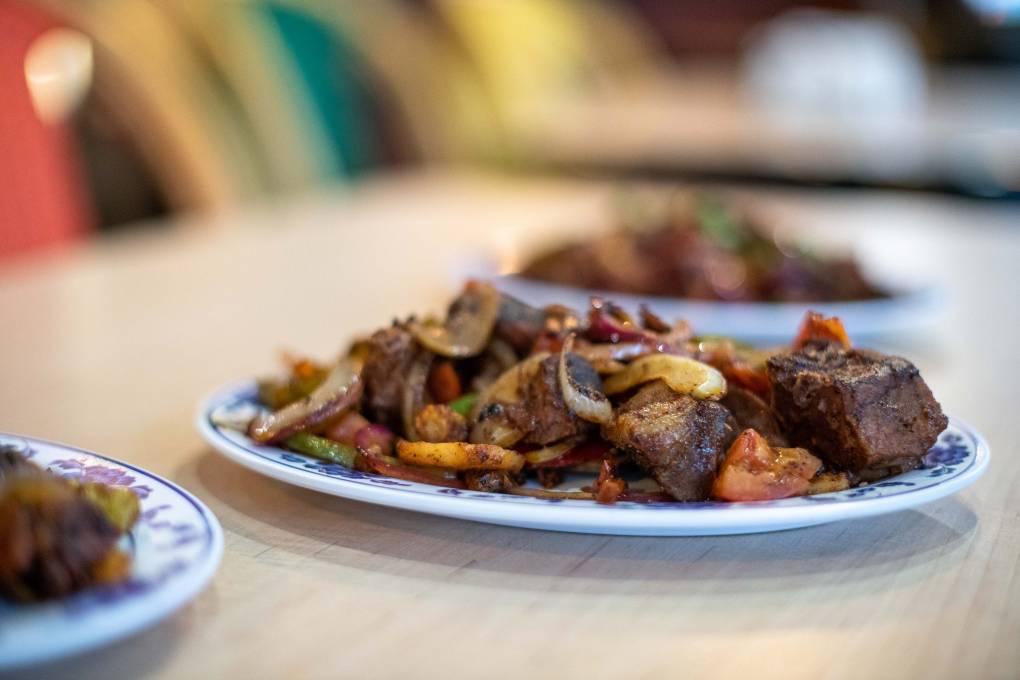
"caption": "A plate of roasted goat at Jubba, the Bay Area's only Somali restaurant.",
"description": null,
"title": "025_SanJose_JubbaSomaliRestaurant_10072021",
"credit": "Beth LaBerge/KQED",
"status": "inherit",
"altTag": "A plate of Somali-style goat suqaar—a kind of stir-fry—on a table.",
"isLoading": false,
"fetchFailed": false
},
"arts_13906789": {
"type": "attachments",
"id": "arts_13906789",
"meta": {
"index": "attachments_1716263798",
"site": "arts",
"id": "13906789",
"found": true
},
"parent": 13906738,
"imgSizes": {
"twentyfourteen-full-width": {
"file": "https://ww2.kqed.org/app/uploads/sites/2/2021/12/malibus_breakfast_hi-res-1038x576.jpg",
"width": 1038,
"mimeType": "image/jpeg",
"height": 576
},
"thumbnail": {
"file": "https://ww2.kqed.org/app/uploads/sites/2/2021/12/malibus_breakfast_hi-res-160x100.jpg",
"width": 160,
"mimeType": "image/jpeg",
"height": 100
},
"post-thumbnail": {
"file": "https://ww2.kqed.org/app/uploads/sites/2/2021/12/malibus_breakfast_hi-res-672x372.jpg",
"width": 672,
"mimeType": "image/jpeg",
"height": 372
},
"kqedFullSize": {
"file": "https://ww2.kqed.org/app/uploads/sites/2/2021/12/malibus_breakfast_hi-res-scaled.jpg",
"width": 2560,
"height": 1600
},
"2048x2048": {
"file": "https://ww2.kqed.org/app/uploads/sites/2/2021/12/malibus_breakfast_hi-res-2048x1280.jpg",
"width": 2048,
"mimeType": "image/jpeg",
"height": 1280
},
"large": {
"file": "https://ww2.kqed.org/app/uploads/sites/2/2021/12/malibus_breakfast_hi-res-1020x638.jpg",
"width": 1020,
"mimeType": "image/jpeg",
"height": 638
},
"1536x1536": {
"file": "https://ww2.kqed.org/app/uploads/sites/2/2021/12/malibus_breakfast_hi-res-1536x960.jpg",
"width": 1536,
"mimeType": "image/jpeg",
"height": 960
},
"full-width": {
"file": "https://ww2.kqed.org/app/uploads/sites/2/2021/12/malibus_breakfast_hi-res-1920x1200.jpg",
"width": 1920,
"mimeType": "image/jpeg",
"height": 1200
},
"medium": {
"file": "https://ww2.kqed.org/app/uploads/sites/2/2021/12/malibus_breakfast_hi-res-800x500.jpg",
"width": 800,
"mimeType": "image/jpeg",
"height": 500
},
"medium_large": {
"file": "https://ww2.kqed.org/app/uploads/sites/2/2021/12/malibus_breakfast_hi-res-768x480.jpg",
"width": 768,
"mimeType": "image/jpeg",
"height": 480
}
},
"publishDate": 1638554320,
"modified": 1638554361,
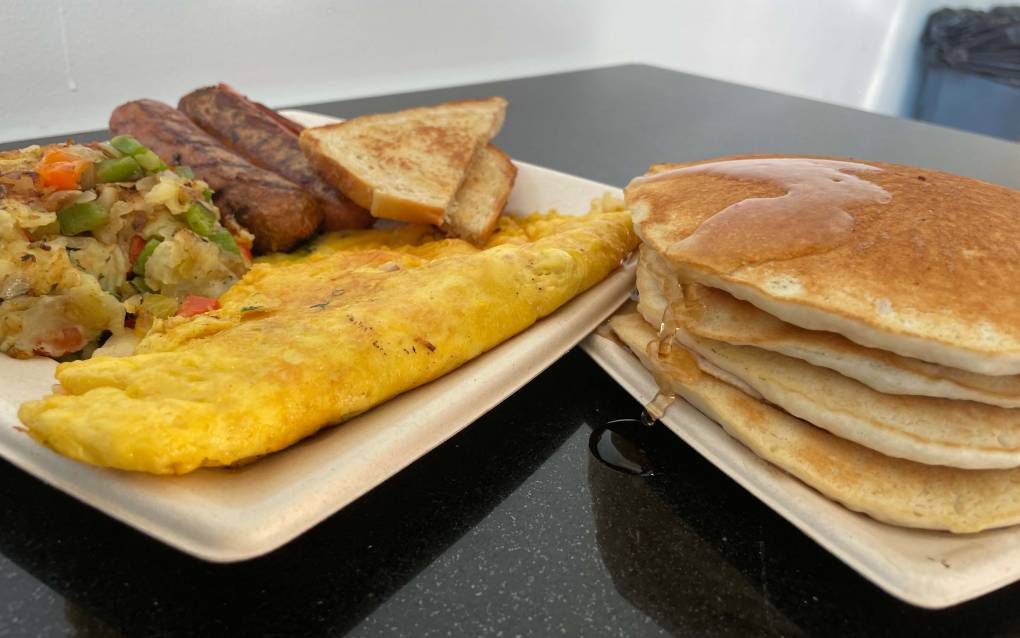
"caption": "Malibu's Burgers has veganized the kind of classic breakfast plate you'd find at an East Coast diner.",
"description": null,
"title": "malibus_breakfast_hi-res",
"credit": "Malibu's Burgers",
"status": "inherit",
"altTag": "Sausage, omelette and breakfast potatoes on a plate next to a stack of pancakes.",
"isLoading": false,
"fetchFailed": false
},
"arts_13906465": {
"type": "attachments",
"id": "arts_13906465",
"meta": {
"index": "attachments_1716263798",
"site": "arts",
"id": "13906465",
"found": true
},
"parent": 13906456,
"imgSizes": {
"twentyfourteen-full-width": {
"file": "https://ww2.kqed.org/app/uploads/sites/2/2021/11/Aoba_lena_alex-zhu-1038x576.jpg",
"width": 1038,
"mimeType": "image/jpeg",
"height": 576
},
"thumbnail": {
"file": "https://ww2.kqed.org/app/uploads/sites/2/2021/11/Aoba_lena_alex-zhu-160x90.jpg",
"width": 160,
"mimeType": "image/jpeg",
"height": 90
},
"post-thumbnail": {
"file": "https://ww2.kqed.org/app/uploads/sites/2/2021/11/Aoba_lena_alex-zhu-672x372.jpg",
"width": 672,
"mimeType": "image/jpeg",
"height": 372
},
"kqedFullSize": {
"file": "https://ww2.kqed.org/app/uploads/sites/2/2021/11/Aoba_lena_alex-zhu-scaled.jpg",
"width": 2560,
"height": 1440
},
"2048x2048": {
"file": "https://ww2.kqed.org/app/uploads/sites/2/2021/11/Aoba_lena_alex-zhu-2048x1152.jpg",
"width": 2048,
"mimeType": "image/jpeg",
"height": 1152
},
"large": {
"file": "https://ww2.kqed.org/app/uploads/sites/2/2021/11/Aoba_lena_alex-zhu-1020x574.jpg",
"width": 1020,
"mimeType": "image/jpeg",
"height": 574
},
"1536x1536": {
"file": "https://ww2.kqed.org/app/uploads/sites/2/2021/11/Aoba_lena_alex-zhu-1536x864.jpg",
"width": 1536,
"mimeType": "image/jpeg",
"height": 864
},
"full-width": {
"file": "https://ww2.kqed.org/app/uploads/sites/2/2021/11/Aoba_lena_alex-zhu-1920x1080.jpg",
"width": 1920,
"mimeType": "image/jpeg",
"height": 1080
},
"medium": {
"file": "https://ww2.kqed.org/app/uploads/sites/2/2021/11/Aoba_lena_alex-zhu-800x450.jpg",
"width": 800,
"mimeType": "image/jpeg",
"height": 450
},
"medium_large": {
"file": "https://ww2.kqed.org/app/uploads/sites/2/2021/11/Aoba_lena_alex-zhu-768x432.jpg",
"width": 768,
"mimeType": "image/jpeg",
"height": 432
}
},
"publishDate": 1637713653,
"modified": 1637713733,
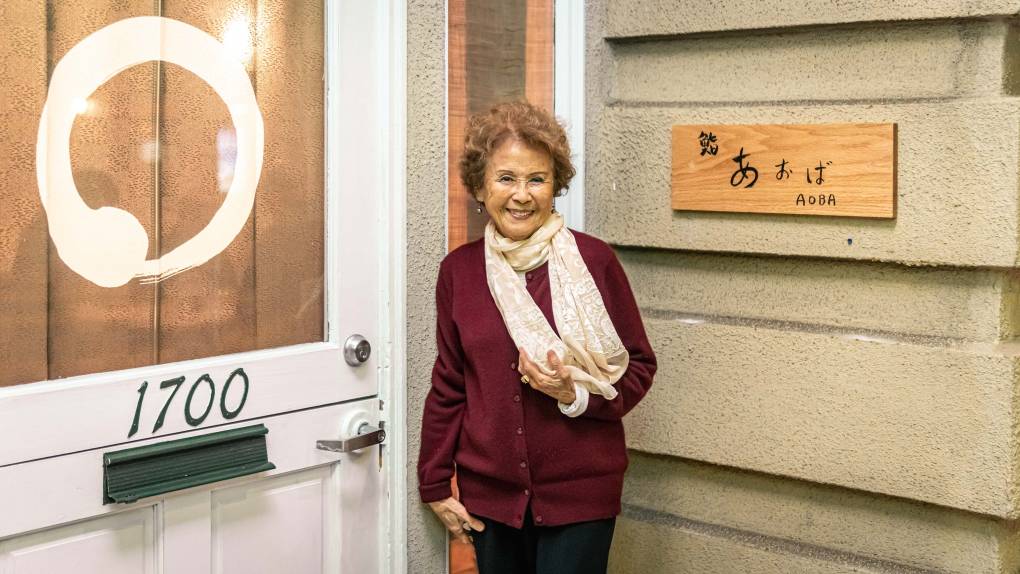
"caption": "Even at 91 years old, Aoba owner Lena Turner doesn't feel close to ready to retire.",
"description": null,
"title": "Aoba_lena_alex zhu",
"credit": "Alex Zhu",
"status": "inherit",
"altTag": "An older woman in a white scarf stands next to the entrance to Aoba restaurant.",
"isLoading": false,
"fetchFailed": false
},
"arts_13906294": {
"type": "attachments",
"id": "arts_13906294",
"meta": {
"index": "attachments_1716263798",
"site": "arts",
"id": "13906294",
"found": true
},
"parent": 13906292,
"imgSizes": {
"twentyfourteen-full-width": {
"file": "https://ww2.kqed.org/app/uploads/sites/2/2021/11/slack-imgs-1024x576.jpg",
"width": 1024,
"mimeType": "image/jpeg",
"height": 576
},
"thumbnail": {
"file": "https://ww2.kqed.org/app/uploads/sites/2/2021/11/slack-imgs-160x107.jpg",
"width": 160,
"mimeType": "image/jpeg",
"height": 107
},
"post-thumbnail": {
"file": "https://ww2.kqed.org/app/uploads/sites/2/2021/11/slack-imgs-672x372.jpg",
"width": 672,
"mimeType": "image/jpeg",
"height": 372
},
"kqedFullSize": {
"file": "https://ww2.kqed.org/app/uploads/sites/2/2021/11/slack-imgs.jpg",
"width": 1024,
"height": 682
},
"large": {
"file": "https://ww2.kqed.org/app/uploads/sites/2/2021/11/slack-imgs-1020x679.jpg",
"width": 1020,
"mimeType": "image/jpeg",
"height": 679
},
"medium": {
"file": "https://ww2.kqed.org/app/uploads/sites/2/2021/11/slack-imgs-800x533.jpg",
"width": 800,
"mimeType": "image/jpeg",
"height": 533
},
"medium_large": {
"file": "https://ww2.kqed.org/app/uploads/sites/2/2021/11/slack-imgs-768x512.jpg",
"width": 768,
"mimeType": "image/jpeg",
"height": 512
}
},
"publishDate": 1637271856,
"modified": 1637272186,
"caption": "Fresh baked pie.",
"description": "Fresh baked pie.",
"title": "Fresh baked pie.",
"credit": "Courtesy of mazaletel. ",
"status": "inherit",
"altTag": "Fresh baked pie.",
"isLoading": false,
"fetchFailed": false
},
"arts_13906210": {
"type": "attachments",
"id": "arts_13906210",
"meta": {
"index": "attachments_1716263798",
"site": "arts",
"id": "13906210",
"found": true
},
"parent": 13906189,
"imgSizes": {
"twentyfourteen-full-width": {
"file": "https://ww2.kqed.org/app/uploads/sites/2/2021/11/CookbookCovers_Shadows-1038x576.jpg",
"width": 1038,
"mimeType": "image/jpeg",
"height": 576
},
"thumbnail": {
"file": "https://ww2.kqed.org/app/uploads/sites/2/2021/11/CookbookCovers_Shadows-160x90.jpg",
"width": 160,
"mimeType": "image/jpeg",
"height": 90
},
"post-thumbnail": {
"file": "https://ww2.kqed.org/app/uploads/sites/2/2021/11/CookbookCovers_Shadows-672x372.jpg",
"width": 672,
"mimeType": "image/jpeg",
"height": 372
},
"kqedFullSize": {
"file": "https://ww2.kqed.org/app/uploads/sites/2/2021/11/CookbookCovers_Shadows.jpg",
"width": 1200,
"height": 675
},
"large": {
"file": "https://ww2.kqed.org/app/uploads/sites/2/2021/11/CookbookCovers_Shadows-1020x574.jpg",
"width": 1020,
"mimeType": "image/jpeg",
"height": 574
},
"medium": {
"file": "https://ww2.kqed.org/app/uploads/sites/2/2021/11/CookbookCovers_Shadows-800x450.jpg",
"width": 800,
"mimeType": "image/jpeg",
"height": 450
},
"medium_large": {
"file": "https://ww2.kqed.org/app/uploads/sites/2/2021/11/CookbookCovers_Shadows-768x432.jpg",
"width": 768,
"mimeType": "image/jpeg",
"height": 432
}
},
"publishDate": 1637098992,
"modified": 1663273529,
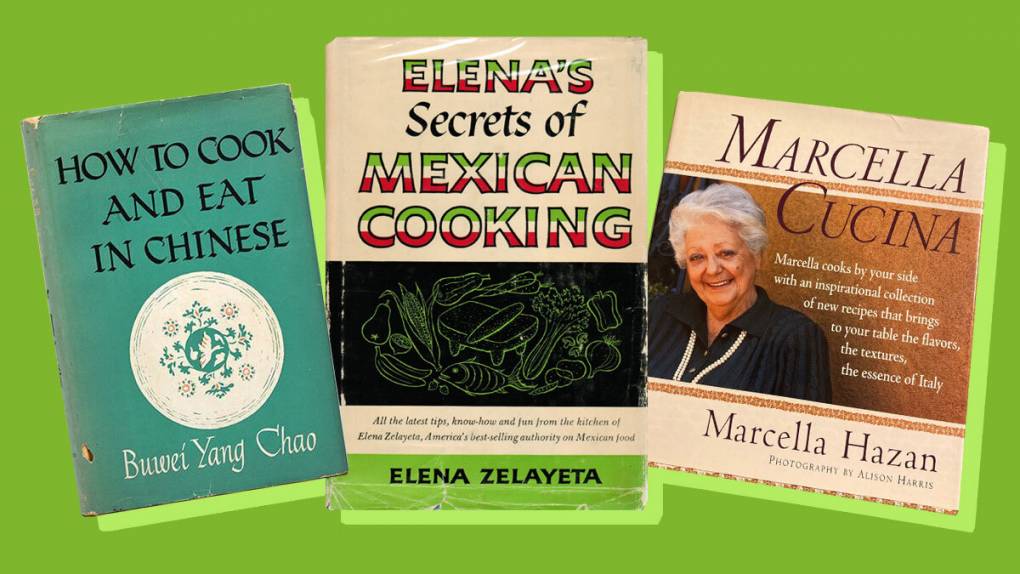
"caption": "Chao Yang Buwei, Elena Zelayeta and Marcella Hazan are three of the immigrant women who profoundly impacted the way Americans eat.",
"description": null,
"title": "CookbookCovers_Shadows",
"credit": null,
"status": "inherit",
"altTag": "Three cookbook covers on a green background.",
"isLoading": false,
"fetchFailed": false
},
"arts_13905833": {
"type": "attachments",
"id": "arts_13905833",
"meta": {
"index": "attachments_1716263798",
"site": "arts",
"id": "13905833",
"found": true
},
"parent": 13905832,
"imgSizes": {
"twentyfourteen-full-width": {
"file": "https://ww2.kqed.org/app/uploads/sites/2/2021/11/Stir-fried-Vegetable-over-Crispy-noodles-10-2021-1038x576.jpg",
"width": 1038,
"mimeType": "image/jpeg",
"height": 576
},
"thumbnail": {
"file": "https://ww2.kqed.org/app/uploads/sites/2/2021/11/Stir-fried-Vegetable-over-Crispy-noodles-10-2021-160x120.jpg",
"width": 160,
"mimeType": "image/jpeg",
"height": 120
},
"post-thumbnail": {
"file": "https://ww2.kqed.org/app/uploads/sites/2/2021/11/Stir-fried-Vegetable-over-Crispy-noodles-10-2021-672x372.jpg",
"width": 672,
"mimeType": "image/jpeg",
"height": 372
},
"kqedFullSize": {
"file": "https://ww2.kqed.org/app/uploads/sites/2/2021/11/Stir-fried-Vegetable-over-Crispy-noodles-10-2021-scaled.jpg",
"width": 2560,
"height": 1920
},
"2048x2048": {
"file": "https://ww2.kqed.org/app/uploads/sites/2/2021/11/Stir-fried-Vegetable-over-Crispy-noodles-10-2021-2048x1536.jpg",
"width": 2048,
"mimeType": "image/jpeg",
"height": 1536
},
"large": {
"file": "https://ww2.kqed.org/app/uploads/sites/2/2021/11/Stir-fried-Vegetable-over-Crispy-noodles-10-2021-1020x765.jpg",
"width": 1020,
"mimeType": "image/jpeg",
"height": 765
},
"1536x1536": {
"file": "https://ww2.kqed.org/app/uploads/sites/2/2021/11/Stir-fried-Vegetable-over-Crispy-noodles-10-2021-1536x1152.jpg",
"width": 1536,
"mimeType": "image/jpeg",
"height": 1152
},
"full-width": {
"file": "https://ww2.kqed.org/app/uploads/sites/2/2021/11/Stir-fried-Vegetable-over-Crispy-noodles-10-2021-1920x1440.jpg",
"width": 1920,
"mimeType": "image/jpeg",
"height": 1440
},
"medium": {
"file": "https://ww2.kqed.org/app/uploads/sites/2/2021/11/Stir-fried-Vegetable-over-Crispy-noodles-10-2021-800x600.jpg",
"width": 800,
"mimeType": "image/jpeg",
"height": 600
},
"medium_large": {
"file": "https://ww2.kqed.org/app/uploads/sites/2/2021/11/Stir-fried-Vegetable-over-Crispy-noodles-10-2021-768x576.jpg",
"width": 768,
"mimeType": "image/jpeg",
"height": 576
}
},
"publishDate": 1636018514,
"modified": 1636018597,
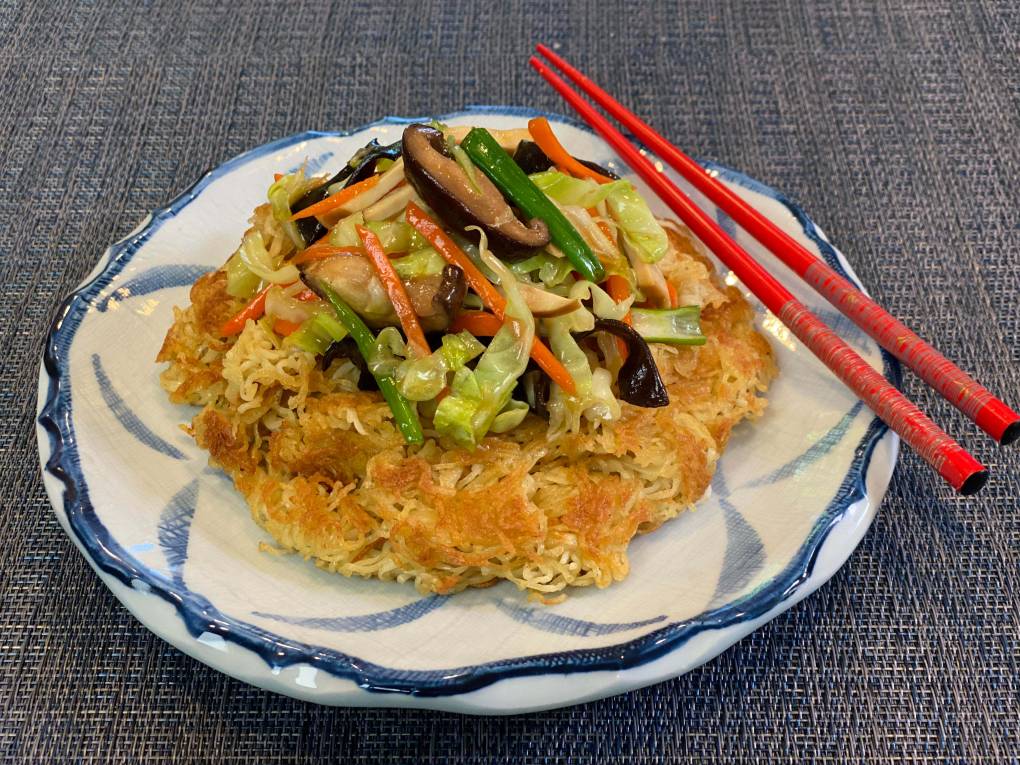
"caption": "Martin Yan's plant-based holiday dish is a vegan twist on mu shu pork.",
"description": null,
"title": "Stir-fried Vegetable over Crispy noodles 10-2021",
"credit": "Martin Yan",
"status": "inherit",
"altTag": "Stir-fried vegetables on top of a crispy noodle pancake, with a pair of red chopsticks.",
"isLoading": false,
"fetchFailed": false
}
},
"audioPlayerReducer": {
"postId": "stream_live",
"isPaused": true,
"isPlaying": false,
"pfsActive": false,
"pledgeModalIsOpen": true,
"playerDrawerIsOpen": false,
"liveAudioPlayStartedAt": 0,
"liveAudioPlayContext": ""
},
"authorsReducer": {
"ogpenn": {
"type": "authors",
"id": "11491",
"meta": {
"index": "authors_1716337520",
"id": "11491",
"found": true
},
"name": "Pendarvis Harshaw",
"firstName": "Pendarvis",
"lastName": "Harshaw",
"slug": "ogpenn",
"email": "ogpenn@gmail.com",
"display_author_email": false,
"staff_mastheads": [
"arts"
],
"title": "Community Engagement Reporter",
"bio": "Pendarvis Harshaw is an educator, host and writer with KQED Arts.",
"avatar": "https://secure.gravatar.com/avatar/972b77ee8e3f346ae2b00622661187fbfabd059b5693bbdc1475ea7a722fd4cd?s=600&d=blank&r=g",
"twitter": null,
"bluesky": null,
"facebook": null,
"instagram": "ogpenn",
"linkedin": null,
"sites": [
{
"site": "arts",
"roles": [
"administrator"
]
},
{
"site": "news",
"roles": [
"editor"
]
},
{
"site": "bayareabites",
"roles": [
"author"
]
},
{
"site": "hiphop",
"roles": [
"editor"
]
}
],
"headData": {
"title": "Pendarvis Harshaw | KQED",
"description": "Community Engagement Reporter",
"ogImgSrc": "https://secure.gravatar.com/avatar/972b77ee8e3f346ae2b00622661187fbfabd059b5693bbdc1475ea7a722fd4cd?s=600&d=blank&r=g",
"twImgSrc": "https://secure.gravatar.com/avatar/972b77ee8e3f346ae2b00622661187fbfabd059b5693bbdc1475ea7a722fd4cd?s=600&d=blank&r=g"
},
"isLoading": false,
"link": "/author/ogpenn"
},
"mmedina": {
"type": "authors",
"id": "11528",
"meta": {
"index": "authors_1716337520",
"id": "11528",
"found": true
},
"name": "Marisol Medina-Cadena",
"firstName": "Marisol",
"lastName": "Medina-Cadena",
"slug": "mmedina",
"email": "mmedina@KQED.org",
"display_author_email": true,
"staff_mastheads": [],
"title": "Producer, Rightnowish Podcast",
"bio": "Marisol Medina-Cadena is a radio reporter and podcast producer. Before working at KQED, she produced for PBS member station, KCET, in Los Angeles. In 2017, Marisol won an Emmy Award for her work on the televised documentary, \u003cem>City Rising\u003c/em>, examining California's affordable housing crisis and the historical roots of gentrification.",
"avatar": "https://secure.gravatar.com/avatar/6c3db46a1cabb5e1fe9a365b5f4e681e?s=600&d=blank&r=g",
"twitter": "marisolreports",
"facebook": null,
"instagram": null,
"linkedin": null,
"sites": [
{
"site": "arts",
"roles": []
},
{
"site": "news",
"roles": [
"edit_others_posts"
]
}
],
"headData": {
"title": "Marisol Medina-Cadena | KQED",
"description": "Producer, Rightnowish Podcast",
"ogImgSrc": "https://secure.gravatar.com/avatar/6c3db46a1cabb5e1fe9a365b5f4e681e?s=600&d=blank&r=g",
"twImgSrc": "https://secure.gravatar.com/avatar/6c3db46a1cabb5e1fe9a365b5f4e681e?s=600&d=blank&r=g"
},
"isLoading": false,
"link": "/author/mmedina"
},
"ltsai": {
"type": "authors",
"id": "11743",
"meta": {
"index": "authors_1716337520",
"id": "11743",
"found": true
},
"name": "Luke Tsai",
"firstName": "Luke",
"lastName": "Tsai",
"slug": "ltsai",
"email": "ltsai@kqed.org",
"display_author_email": true,
"staff_mastheads": [
"arts"
],
"title": "Food Editor",
"bio": "Luke Tsai is KQED's food editor and resident stinky tofu connoisseur. Prior to KQED, he was an editor at Eater SF, \u003cem>San Francisco \u003c/em>magazine, and the \u003cem>East Bay Express\u003c/em>, and his work has also appeared in TASTE, the \u003cem>San Francisco Chronicle\u003c/em>, and the \u003cem>Best Food Writing\u003c/em> anthology. When he isn't writing or editing, you'll find him eating most everything he can get his hands on.",
"avatar": "https://secure.gravatar.com/avatar/1e59b45bf191526e7339d6ba46e33a57b2030d25c27660ecc64ea3cb863e34f7?s=600&d=blank&r=g",
"twitter": "theluketsai",
"bluesky": null,
"facebook": null,
"instagram": null,
"linkedin": null,
"sites": [
{
"site": "",
"roles": [
"editor"
]
},
{
"site": "arts",
"roles": [
"administrator"
]
},
{
"site": "news",
"roles": [
"editor",
"contributor"
]
},
{
"site": "bayareabites",
"roles": [
"editor"
]
},
{
"site": "food",
"roles": [
"editor"
]
}
],
"headData": {
"title": "Luke Tsai | KQED",
"description": "Food Editor",
"ogImgSrc": "https://secure.gravatar.com/avatar/1e59b45bf191526e7339d6ba46e33a57b2030d25c27660ecc64ea3cb863e34f7?s=600&d=blank&r=g",
"twImgSrc": "https://secure.gravatar.com/avatar/1e59b45bf191526e7339d6ba46e33a57b2030d25c27660ecc64ea3cb863e34f7?s=600&d=blank&r=g"
},
"isLoading": false,
"link": "/author/ltsai"
},
"achazaro": {
"type": "authors",
"id": "11748",
"meta": {
"index": "authors_1716337520",
"id": "11748",
"found": true
},
"name": "Alan Chazaro",
"firstName": "Alan",
"lastName": "Chazaro",
"slug": "achazaro",
"email": "agchazaro@gmail.com",
"display_author_email": true,
"staff_mastheads": [],
"title": "Food Writer and Reporter",
"bio": "Alan Chazaro is the author of \u003cem>This Is Not a Frank Ocean Cover Album\u003c/em> (Black Lawrence Press, 2019), \u003cem>Piñata Theory\u003c/em> (Black Lawrence Press, 2020), and \u003cem>Notes from the Eastern Span of the Bay Bridge\u003c/em> (Ghost City Press, 2021). He is a graduate of June Jordan’s Poetry for the People program at UC Berkeley and a former Lawrence Ferlinghetti Fellow at the University of San Francisco. He writes about sports, food, art, music, education, and culture while repping the Bay on \u003ca href=\"https://twitter.com/alan_chazaro\">Twitter\u003c/a> and \u003ca href=\"https://www.instagram.com/alan_chazaro/?hl=en\">Instagram\u003c/a> at @alan_chazaro.",
"avatar": "https://secure.gravatar.com/avatar/ea8b6dd970fc5c29e7a188e7d5861df7?s=600&d=blank&r=g",
"twitter": "alan_chazaro",
"facebook": null,
"instagram": null,
"linkedin": null,
"sites": [
{
"site": "arts",
"roles": [
"contributor"
]
},
{
"site": "news",
"roles": [
"editor"
]
}
],
"headData": {
"title": "Alan Chazaro | KQED",
"description": "Food Writer and Reporter",
"ogImgSrc": "https://secure.gravatar.com/avatar/ea8b6dd970fc5c29e7a188e7d5861df7?s=600&d=blank&r=g",
"twImgSrc": "https://secure.gravatar.com/avatar/ea8b6dd970fc5c29e7a188e7d5861df7?s=600&d=blank&r=g"
},
"isLoading": false,
"link": "/author/achazaro"
}
},
"pagesReducer": {
"arts_tag_food": {
"type": "terms",
"id": "arts_1297",
"meta": {
"index": "terms_1716263798",
"site": "arts",
"id": "1297",
"score": 7.4242826
},
"featImg": null,
"name": "food",
"description": null,
"taxonomy": "tag",
"headData": {
"twImgId": null,
"twTitle": null,
"ogTitle": null,
"ogImgId": null,
"twDescription": null,
"description": null,
"title": "food Archives | KQED Arts",
"ogDescription": null
},
"ttid": 1309,
"slug": "food",
"isLoading": false,
"title": "food",
"pageMeta": {
"site": "arts",
"WpPageTemplate": "page-topic-editorial",
"currentPage": 33
},
"blocks": [
{
"blockName": "kqed/post-list",
"attrs": {
"layout": "cardArticle2",
"query": "posts/arts?tag=food",
"seeMore": false,
"paginated": true,
"page": 33
}
},
{
"blockName": "kqed/ad"
}
]
}
},
"pfsSessionReducer": {},
"postsReducer": {
"stream_live": {
"type": "live",
"id": "stream_live",
"audioUrl": "https://streams.kqed.org/kqedradio",
"title": "Live Stream",
"excerpt": "Live Stream information currently unavailable.",
"link": "/radio",
"featImg": "",
"label": {
"name": "KQED Live",
"link": "/"
}
},
"stream_kqedNewscast": {
"type": "posts",
"id": "stream_kqedNewscast",
"audioUrl": "https://www.kqed.org/.stream/anon/radio/RDnews/newscast.mp3?_=1",
"title": "KQED Newscast",
"featImg": "",
"label": {
"name": "88.5 FM",
"link": "/"
}
},
"arts_13909330": {
"type": "posts",
"id": "arts_13909330",
"meta": {
"index": "posts_1716263798",
"site": "arts",
"id": "13909330",
"score": null,
"sort": [
1644854431000
]
},
"parent": 0,
"labelTerm": {},
"blocks": [],
"publishDate": 1644854431,
"format": "standard",
"title": "Baking a Cake for the Afrofuturism Potluck",
"headTitle": "Baking a Cake for the Afrofuturism Potluck | KQED",
"content": "\u003cp>\u003cspan style=\"font-weight: 400\">A crash course on \u003c/span>\u003ca href=\"https://www.kqed.org/arts/13901009/omca-afrofuturism-mothership-review\">\u003cspan style=\"font-weight: 400\">Afrofuturism\u003c/span>\u003c/a>\u003cspan style=\"font-weight: 400\"> might include \u003c/span>\u003ci>\u003cspan style=\"font-weight: 400\">Black Panther’s \u003c/span>\u003c/i>\u003cspan style=\"font-weight: 400\">portrayal of a utopian, techno-centric Wakanda, the science fiction novels of Octavia Butler and a \u003c/span>\u003ca href=\"https://www.kqed.org/arts/13864915/the-liberated-pop-future-missy-elliott-envisioned-is-now\">\u003cspan style=\"font-weight: 400\">Missy Elliott music video\u003c/span>\u003c/a>\u003cspan style=\"font-weight: 400\">—all visions of a liberated future seen through a Black lens. \u003c/span>\u003c/p>\n\u003cp>\u003cspan style=\"font-weight: 400\">But what will Black people be eating in this thriving, revolutionary future? \u003c/span>\u003c/p>\n\u003cp>\u003cspan style=\"font-weight: 400\">That’s the question that \u003c/span>\u003ca href=\"https://eattheculture.com/about/\">\u003cspan style=\"font-weight: 400\">Eat the Culture\u003c/span>\u003c/a>\u003cspan style=\"font-weight: 400\">, a collective of Black food bloggers, explores this month through a series of Afrofuturism-themed \u003c/span>\u003ca href=\"https://www.instagram.com/eattheculture/\">\u003cspan style=\"font-weight: 400\">social media posts\u003c/span>\u003c/a>\u003cspan style=\"font-weight: 400\"> and online gatherings, including a Feb. 24 collaboration with the magazine \u003c/span>\u003ci>\u003cspan style=\"font-weight: 400\">Cuisine Noir\u003c/span>\u003c/i>\u003cspan style=\"font-weight: 400\">. Framed as a “Virtual Potluck,” the series celebrates Black History Month by remixing traditional dishes of the African diaspora to create new recipes that are artful and, at times, deeply political: A plate of \u003c/span>\u003ca href=\"https://senseandedibility.com/salmorejo-jueyes-coconut-grits-cakes/\">\u003cspan style=\"font-weight: 400\">stewed crab and grits\u003c/span>\u003c/a>\u003cspan style=\"font-weight: 400\"> fuses together African and Puerto Rican traditions. A \u003c/span>\u003ca href=\"https://meikoandthedish.com/sombi-brown-butter-rice-pudding-brulee-black-history-month-virtual-potluck/\">\u003cspan style=\"font-weight: 400\">coconut rice pudding\u003c/span>\u003c/a>\u003cspan style=\"font-weight: 400\"> doubles as a commentary on gentrification. \u003c/span>\u003c/p>\n\u003cp>\u003cspan style=\"font-weight: 400\">“It’s this intersection of technology, culture, innovation and politics,” co-organizer Stefani Renée, of the Bay Area–based blog \u003c/span>\u003ca href=\"https://savorandsage.com/\">\u003cspan style=\"font-weight: 400\">Savor and Sage\u003c/span>\u003c/a>\u003cspan style=\"font-weight: 400\">, says of Afrofuturism. “How do we explore that through food?”\u003c/span>\u003c/p>\n\u003cp>\u003cspan style=\"font-weight: 400\">The event stems from a similar virtual potluck that a\u003c/span>\u003cspan style=\"font-weight: 400\"> handful of prominent Black food bloggers—including Aaron Hutcherson (of the blog \u003c/span>\u003ca href=\"https://www.thehungryhutch.com/\">\u003cspan style=\"font-weight: 400\">The Hungry Hutch\u003c/span>\u003c/a>\u003cspan style=\"font-weight: 400\">) and Meiko Temple (of \u003c/span>\u003ca href=\"https://meikoandthedish.com/\">\u003cspan style=\"font-weight: 400\">Mieko and the Dish\u003c/span>\u003c/a>\u003cspan style=\"font-weight: 400\">)—put together each year for Black History Month \u003c/span>\u003ca href=\"https://www.tastingtable.com/693332/black-history-month-african-american-food-blog-2017/\">\u003cspan style=\"font-weight: 400\">starting in 2017\u003c/span>\u003c/a>\u003cspan style=\"font-weight: 400\">. Renée, a relative newcomer to food blogging, joined in the past two years and started talking to other participants about expanding the group’s efforts beyond just one or two virtual events each year. In particular, the group wanted to create a support system for Black food bloggers, given the unique set of challenges that they face.\u003c/span>\u003c/p>\n\u003cfigure id=\"attachment_13909336\" class=\"wp-caption alignnone\" style=\"max-width: 2000px\">\u003cimg loading=\"lazy\" decoding=\"async\" class=\"size-full wp-image-13909336\" src=\"https://ww2.kqed.org/app/uploads/sites/2/2022/02/Kenneth-Temple_Smothered-Okra-and-Tomatoes.jpg\" alt=\"Overhead view of a plate of tempura-fried okra served over a bright orange pool of confit tomatoes\" width=\"2000\" height=\"1600\" srcset=\"https://cdn.kqed.org/wp-content/uploads/sites/2/2022/02/Kenneth-Temple_Smothered-Okra-and-Tomatoes.jpg 2000w, https://cdn.kqed.org/wp-content/uploads/sites/2/2022/02/Kenneth-Temple_Smothered-Okra-and-Tomatoes-800x640.jpg 800w, https://cdn.kqed.org/wp-content/uploads/sites/2/2022/02/Kenneth-Temple_Smothered-Okra-and-Tomatoes-1020x816.jpg 1020w, https://cdn.kqed.org/wp-content/uploads/sites/2/2022/02/Kenneth-Temple_Smothered-Okra-and-Tomatoes-160x128.jpg 160w, https://cdn.kqed.org/wp-content/uploads/sites/2/2022/02/Kenneth-Temple_Smothered-Okra-and-Tomatoes-768x614.jpg 768w, https://cdn.kqed.org/wp-content/uploads/sites/2/2022/02/Kenneth-Temple_Smothered-Okra-and-Tomatoes-1536x1229.jpg 1536w, https://cdn.kqed.org/wp-content/uploads/sites/2/2022/02/Kenneth-Temple_Smothered-Okra-and-Tomatoes-1920x1536.jpg 1920w\" sizes=\"(max-width: 2000px) 100vw, 2000px\">\u003cfigcaption class=\"wp-caption-text\">Food blogger Kenneth Temple’s riff on stewed okra includes fine dining touches like confit tomatoes and smoked sausage “dust.” \u003ccite>(Kenneth Temple)\u003c/cite>\u003c/figcaption>\u003c/figure>\n\u003cp>\u003cspan style=\"font-weight: 400\">“Folks don’t know that we’re here,” Renée says. “When we start looking at who gets the most exposure, it’s usually white female food bloggers—and they’re getting attention for foods that aren’t necessarily authentic or native to them.”\u003c/span>\u003c/p>\n\u003cp>[ad fullwidth]\u003c/p>\n\u003cp>\u003cspan style=\"font-weight: 400\">[pullquote size=\"large\" align=\"right\" citation=\"Stefani Renée\"]“Black food isn’t a monolith. There are so many different aspects to Black food that people don’t know.”[/pullquote]Meanwhile, Renée says, Black and other BIPOC food bloggers struggle to get that same level of recognition and, just as importantly, to land the kind of lucrative sponsorship deals that make food blogging a viable full-time career. \u003c/span>\u003ca href=\"https://eattheculture.com/\">\u003cspan style=\"font-weight: 400\">Eat the Culture\u003c/span>\u003c/a>\u003cspan style=\"font-weight: 400\"> was created as a platform for Black food bloggers to share that kind of information with one another—a place where they could access tutorials on shooting food videos and get tips about search engine optimization. As Renée puts it, “How do we break these barriers and create our own space?”\u003c/span>\u003c/p>\n\u003cp>\u003cspan style=\"font-weight: 400\">This year’s Afrofuturism-themed potluck is one of the collective’s first signature events. Renée sees it as an extension of the work of \u003ca href=\"https://savorandsage.com/\">her own blog\u003c/a>, which focuses on updating and expanding people’s definition of “soul food” to include things other than just fried chicken and macaroni and cheese. “\u003c/span>\u003cspan style=\"font-weight: 400\">Black food isn’t a monolith,” she says. “There are so many different aspects to Black food that people don’t know.”\u003c/span>\u003c/p>\n\u003cp>\u003cspan style=\"font-weight: 400\">In presenting a vision for the future of Black food, several of the dishes that Eat the Culture members created for the virtual potluck explicitly challenge the idea that food with African origins isn’t “refined.” There’s a modern take on \u003c/span>\u003ca href=\"http://thefooddisciple.com/yam-gnocchi-served-w-oxtail-pepper-soup/\">\u003cspan style=\"font-weight: 400\">West African oxtail pepper soup\u003c/span>\u003c/a>\u003cspan style=\"font-weight: 400\"> made with yam gnocchi, for instance, and a version of \u003c/span>\u003ca href=\"https://kennethtemple.com/smothered-okra-and-tomatoes-recipe/\">\u003cspan style=\"font-weight: 400\">smothered okra\u003c/span>\u003c/a>\u003cspan style=\"font-weight: 400\"> that features fine dining elements like confit tomatoes and smoked sausage “dust.” \u003c/span>\u003c/p>\n\u003cfigure id=\"attachment_13909337\" class=\"wp-caption alignnone\" style=\"max-width: 1600px\">\u003cimg loading=\"lazy\" decoding=\"async\" class=\"size-full wp-image-13909337\" src=\"https://ww2.kqed.org/app/uploads/sites/2/2022/02/meikoandthedish-sombi-brown-butter-rice-pudding-L.jpg\" alt=\"Three portions of rice pudding served inside coconut shells, arranged on a wooden cutting board.\" width=\"1600\" height=\"1067\" srcset=\"https://cdn.kqed.org/wp-content/uploads/sites/2/2022/02/meikoandthedish-sombi-brown-butter-rice-pudding-L.jpg 1600w, https://cdn.kqed.org/wp-content/uploads/sites/2/2022/02/meikoandthedish-sombi-brown-butter-rice-pudding-L-800x534.jpg 800w, https://cdn.kqed.org/wp-content/uploads/sites/2/2022/02/meikoandthedish-sombi-brown-butter-rice-pudding-L-1020x680.jpg 1020w, https://cdn.kqed.org/wp-content/uploads/sites/2/2022/02/meikoandthedish-sombi-brown-butter-rice-pudding-L-160x107.jpg 160w, https://cdn.kqed.org/wp-content/uploads/sites/2/2022/02/meikoandthedish-sombi-brown-butter-rice-pudding-L-768x512.jpg 768w, https://cdn.kqed.org/wp-content/uploads/sites/2/2022/02/meikoandthedish-sombi-brown-butter-rice-pudding-L-1536x1024.jpg 1536w\" sizes=\"(max-width: 1600px) 100vw, 1600px\">\u003cfigcaption class=\"wp-caption-text\">Meiko and the Dish’s modern take on sombi, the Senegalese coconut rice pudding, is a commentary on gentrification. \u003ccite>(Meiko and the Dish)\u003c/cite>\u003c/figcaption>\u003c/figure>\n\u003cp>\u003cspan style=\"font-weight: 400\">Several of the recipes veganize dishes traditionally made with meat—a rebuttal, Renée says, to the notion that “Black people don’t really eat vegetables.” Others offer pointed political commentary: \u003c/span>\u003ca href=\"https://meikoandthedish.com/sombi-brown-butter-rice-pudding-brulee-black-history-month-virtual-potluck/\">\u003cspan style=\"font-weight: 400\">Meiko and the Dish’s\u003c/span>\u003c/a>\u003cspan style=\"font-weight: 400\"> aforementioned coconut rice pudding adds a crème brûlée–style burnt sugar topping to a traditional Senegalese dish, thereby mirroring “\u003c/span>\u003ca href=\"https://meikoandthedish.com/sombi-brown-butter-rice-pudding-brulee-black-history-month-virtual-potluck/\">\u003cspan style=\"font-weight: 400\">the concept of gentrification, the process whereby the character of a poor urban area is changed by wealthier people moving in and typically displacing current inhabitants in the process.\u003c/span>\u003c/a>\u003cspan style=\"font-weight: 400\">”\u003c/span>\u003c/p>\n\u003cp>\u003cspan style=\"font-weight: 400\">[aside postID='arts_13901009,arts_13900311,arts_13900855']For her own contribution to the Afrofuturism potluck, Renée did a riff on cornbread soaked in buttermilk, a very traditional, “old-school” snack that she remembers eating in her Southern grandmother’s kitchen when she was a kid. Renée’s version reimagines the treat as a \u003c/span>\u003ca href=\"https://savorandsage.com/coconut-lime-cornmeal-tres-leches-cake/\">\u003cspan style=\"font-weight: 400\">tres leches cake\u003c/span>\u003c/a>\u003cspan style=\"font-weight: 400\">, soaking the cornmeal cake in buttermilk, coconut milk and sweet condensed milk, then topping the whole thing with toasted coconut. The dessert is meant to feel new and modern, but it’s also a nod to the often forgotten history of \u003c/span>\u003ca href=\"https://www.theguardian.com/world/2020/mar/19/afro-mexicans-census-history-identity\">\u003cspan style=\"font-weight: 400\">Mexicans of African descent\u003c/span>\u003c/a>\u003cspan style=\"font-weight: 400\">, who have long fought for recognition in their home country.\u003c/span>\u003c/p>\n\u003cp>\u003cspan style=\"font-weight: 400\">“It’s a combination of different cultures,” Renée says of the cake. “That’s what Afrofuturism means to me.”\u003c/span>\u003c/p>\n\u003cp>\u003cimg loading=\"lazy\" decoding=\"async\" class=\"aligncenter size-full wp-image-12904247\" src=\"https://ww2.kqed.org/app/uploads/sites/2/2017/03/Q.Logo_.Break_-400x39.jpg\" alt=\"\" width=\"400\" height=\"39\" srcset=\"https://cdn.kqed.org/wp-content/uploads/sites/2/2017/03/Q.Logo_.Break_-400x39.jpg 400w, https://cdn.kqed.org/wp-content/uploads/sites/2/2017/03/Q.Logo_.Break_-400x39-160x16.jpg 160w, https://cdn.kqed.org/wp-content/uploads/sites/2/2017/03/Q.Logo_.Break_-400x39-240x23.jpg 240w, https://cdn.kqed.org/wp-content/uploads/sites/2/2017/03/Q.Logo_.Break_-400x39-375x37.jpg 375w\" sizes=\"(max-width: 400px) 100vw, 400px\">\u003c/p>\n\u003cp>\u003c/p>\n\u003cp>\u003ci>\u003cspan style=\"font-weight: 400\">Throughout the month of February, Eat the Culture will highlight Afrofuturism-themed recipes on its \u003c/span>\u003c/i>\u003ca href=\"https://www.instagram.com/eattheculture/\">\u003ci>\u003cspan style=\"font-weight: 400\">Instagram page\u003c/span>\u003c/i>\u003c/a>\u003ci>\u003cspan style=\"font-weight: 400\">. The page will also offer details about other virtual events once they’ve been finalized, including the Cuisine Noir collaboration.\u003c/span>\u003c/i>\u003c/p>\n\n",
"stats": {
"hasVideo": false,
"hasChartOrMap": false,
"hasAudio": false,
"hasPolis": false,
"wordCount": 989,
"hasGoogleForm": false,
"hasGallery": false,
"hasHearkenModule": false,
"iframeSrcs": [],
"paragraphCount": 16
},
"modified": 1705007197,
"excerpt": "To celebrate Black History Month, food blogging collective Eat The Culture looks toward the future of Black food.",
"headData": {
"twImgId": "",
"twTitle": "Baking a Cake for the Afrofuturism Potluck",
"socialTitle": "Afrofuturism-Themed Virtual Potluck Envisions the Future of Black Food %%page%% %%sep%% KQED",
"ogTitle": "Baking a Cake for the Afrofuturism Potluck",
"ogImgId": "",
"twDescription": "",
"description": "To celebrate Black History Month, food blogging collective Eat The Culture looks toward the future of Black food.",
"title": "Afrofuturism-Themed Virtual Potluck Envisions the Future of Black Food | KQED",
"ogDescription": "",
"schema": {
"@context": "https://schema.org",
"@type": "Article",
"headline": "Baking a Cake for the Afrofuturism Potluck",
"datePublished": "2022-02-14T08:00:31-08:00",
"dateModified": "2024-01-11T13:06:37-08:00",
"image": "https://cdn.kqed.org/wp-content/uploads/2020/02/KQED-OG-Image@1x.png"
}
},
"guestAuthors": [],
"slug": "afrofuturism-potluck-eat-the-culture-black-history-month",
"status": "publish",
"sourceUrl": "/food/",
"templateType": "standard",
"excludeFromSiteSearch": "Include",
"featuredImageType": "standard",
"sticky": false,
"source": "Food",
"path": "/arts/13909330/afrofuturism-potluck-eat-the-culture-black-history-month",
"audioTrackLength": null,
"parsedContent": [
{
"type": "contentString",
"content": "\u003cdiv class=\"post-body\">\u003cp>\u003cp>\u003cspan style=\"font-weight: 400\">A crash course on \u003c/span>\u003ca href=\"https://www.kqed.org/arts/13901009/omca-afrofuturism-mothership-review\">\u003cspan style=\"font-weight: 400\">Afrofuturism\u003c/span>\u003c/a>\u003cspan style=\"font-weight: 400\"> might include \u003c/span>\u003ci>\u003cspan style=\"font-weight: 400\">Black Panther’s \u003c/span>\u003c/i>\u003cspan style=\"font-weight: 400\">portrayal of a utopian, techno-centric Wakanda, the science fiction novels of Octavia Butler and a \u003c/span>\u003ca href=\"https://www.kqed.org/arts/13864915/the-liberated-pop-future-missy-elliott-envisioned-is-now\">\u003cspan style=\"font-weight: 400\">Missy Elliott music video\u003c/span>\u003c/a>\u003cspan style=\"font-weight: 400\">—all visions of a liberated future seen through a Black lens. \u003c/span>\u003c/p>\n\u003cp>\u003cspan style=\"font-weight: 400\">But what will Black people be eating in this thriving, revolutionary future? \u003c/span>\u003c/p>\n\u003cp>\u003cspan style=\"font-weight: 400\">That’s the question that \u003c/span>\u003ca href=\"https://eattheculture.com/about/\">\u003cspan style=\"font-weight: 400\">Eat the Culture\u003c/span>\u003c/a>\u003cspan style=\"font-weight: 400\">, a collective of Black food bloggers, explores this month through a series of Afrofuturism-themed \u003c/span>\u003ca href=\"https://www.instagram.com/eattheculture/\">\u003cspan style=\"font-weight: 400\">social media posts\u003c/span>\u003c/a>\u003cspan style=\"font-weight: 400\"> and online gatherings, including a Feb. 24 collaboration with the magazine \u003c/span>\u003ci>\u003cspan style=\"font-weight: 400\">Cuisine Noir\u003c/span>\u003c/i>\u003cspan style=\"font-weight: 400\">. Framed as a “Virtual Potluck,” the series celebrates Black History Month by remixing traditional dishes of the African diaspora to create new recipes that are artful and, at times, deeply political: A plate of \u003c/span>\u003ca href=\"https://senseandedibility.com/salmorejo-jueyes-coconut-grits-cakes/\">\u003cspan style=\"font-weight: 400\">stewed crab and grits\u003c/span>\u003c/a>\u003cspan style=\"font-weight: 400\"> fuses together African and Puerto Rican traditions. A \u003c/span>\u003ca href=\"https://meikoandthedish.com/sombi-brown-butter-rice-pudding-brulee-black-history-month-virtual-potluck/\">\u003cspan style=\"font-weight: 400\">coconut rice pudding\u003c/span>\u003c/a>\u003cspan style=\"font-weight: 400\"> doubles as a commentary on gentrification. \u003c/span>\u003c/p>\n\u003cp>\u003cspan style=\"font-weight: 400\">“It’s this intersection of technology, culture, innovation and politics,” co-organizer Stefani Renée, of the Bay Area–based blog \u003c/span>\u003ca href=\"https://savorandsage.com/\">\u003cspan style=\"font-weight: 400\">Savor and Sage\u003c/span>\u003c/a>\u003cspan style=\"font-weight: 400\">, says of Afrofuturism. “How do we explore that through food?”\u003c/span>\u003c/p>\n\u003cp>\u003cspan style=\"font-weight: 400\">The event stems from a similar virtual potluck that a\u003c/span>\u003cspan style=\"font-weight: 400\"> handful of prominent Black food bloggers—including Aaron Hutcherson (of the blog \u003c/span>\u003ca href=\"https://www.thehungryhutch.com/\">\u003cspan style=\"font-weight: 400\">The Hungry Hutch\u003c/span>\u003c/a>\u003cspan style=\"font-weight: 400\">) and Meiko Temple (of \u003c/span>\u003ca href=\"https://meikoandthedish.com/\">\u003cspan style=\"font-weight: 400\">Mieko and the Dish\u003c/span>\u003c/a>\u003cspan style=\"font-weight: 400\">)—put together each year for Black History Month \u003c/span>\u003ca href=\"https://www.tastingtable.com/693332/black-history-month-african-american-food-blog-2017/\">\u003cspan style=\"font-weight: 400\">starting in 2017\u003c/span>\u003c/a>\u003cspan style=\"font-weight: 400\">. Renée, a relative newcomer to food blogging, joined in the past two years and started talking to other participants about expanding the group’s efforts beyond just one or two virtual events each year. In particular, the group wanted to create a support system for Black food bloggers, given the unique set of challenges that they face.\u003c/span>\u003c/p>\n\u003cfigure id=\"attachment_13909336\" class=\"wp-caption alignnone\" style=\"max-width: 2000px\">\u003cimg loading=\"lazy\" decoding=\"async\" class=\"size-full wp-image-13909336\" src=\"https://ww2.kqed.org/app/uploads/sites/2/2022/02/Kenneth-Temple_Smothered-Okra-and-Tomatoes.jpg\" alt=\"Overhead view of a plate of tempura-fried okra served over a bright orange pool of confit tomatoes\" width=\"2000\" height=\"1600\" srcset=\"https://cdn.kqed.org/wp-content/uploads/sites/2/2022/02/Kenneth-Temple_Smothered-Okra-and-Tomatoes.jpg 2000w, https://cdn.kqed.org/wp-content/uploads/sites/2/2022/02/Kenneth-Temple_Smothered-Okra-and-Tomatoes-800x640.jpg 800w, https://cdn.kqed.org/wp-content/uploads/sites/2/2022/02/Kenneth-Temple_Smothered-Okra-and-Tomatoes-1020x816.jpg 1020w, https://cdn.kqed.org/wp-content/uploads/sites/2/2022/02/Kenneth-Temple_Smothered-Okra-and-Tomatoes-160x128.jpg 160w, https://cdn.kqed.org/wp-content/uploads/sites/2/2022/02/Kenneth-Temple_Smothered-Okra-and-Tomatoes-768x614.jpg 768w, https://cdn.kqed.org/wp-content/uploads/sites/2/2022/02/Kenneth-Temple_Smothered-Okra-and-Tomatoes-1536x1229.jpg 1536w, https://cdn.kqed.org/wp-content/uploads/sites/2/2022/02/Kenneth-Temple_Smothered-Okra-and-Tomatoes-1920x1536.jpg 1920w\" sizes=\"(max-width: 2000px) 100vw, 2000px\">\u003cfigcaption class=\"wp-caption-text\">Food blogger Kenneth Temple’s riff on stewed okra includes fine dining touches like confit tomatoes and smoked sausage “dust.” \u003ccite>(Kenneth Temple)\u003c/cite>\u003c/figcaption>\u003c/figure>\n\u003cp>\u003cspan style=\"font-weight: 400\">“Folks don’t know that we’re here,” Renée says. “When we start looking at who gets the most exposure, it’s usually white female food bloggers—and they’re getting attention for foods that aren’t necessarily authentic or native to them.”\u003c/span>\u003c/p>\n\u003cp>\u003c/p>\u003c/div>",
"attributes": {
"named": {},
"numeric": []
}
},
{
"type": "component",
"content": "",
"name": "ad",
"attributes": {
"named": {
"label": "fullwidth"
},
"numeric": [
"fullwidth"
]
}
},
{
"type": "contentString",
"content": "\u003cdiv class=\"post-body\">\u003cp>\u003c/p>\n\u003cp>\u003cspan style=\"font-weight: 400\">\u003c/p>\u003c/div>",
"attributes": {
"named": {},
"numeric": []
}
},
{
"type": "component",
"content": "“Black food isn’t a monolith. There are so many different aspects to Black food that people don’t know.”",
"name": "pullquote",
"attributes": {
"named": {
"size": "large",
"align": "right",
"citation": "Stefani Renée",
"label": ""
},
"numeric": []
}
},
{
"type": "contentString",
"content": "\u003cdiv class=\"post-body\">\u003cp>Meanwhile, Renée says, Black and other BIPOC food bloggers struggle to get that same level of recognition and, just as importantly, to land the kind of lucrative sponsorship deals that make food blogging a viable full-time career. \u003c/span>\u003ca href=\"https://eattheculture.com/\">\u003cspan style=\"font-weight: 400\">Eat the Culture\u003c/span>\u003c/a>\u003cspan style=\"font-weight: 400\"> was created as a platform for Black food bloggers to share that kind of information with one another—a place where they could access tutorials on shooting food videos and get tips about search engine optimization. As Renée puts it, “How do we break these barriers and create our own space?”\u003c/span>\u003c/p>\n\u003cp>\u003cspan style=\"font-weight: 400\">This year’s Afrofuturism-themed potluck is one of the collective’s first signature events. Renée sees it as an extension of the work of \u003ca href=\"https://savorandsage.com/\">her own blog\u003c/a>, which focuses on updating and expanding people’s definition of “soul food” to include things other than just fried chicken and macaroni and cheese. “\u003c/span>\u003cspan style=\"font-weight: 400\">Black food isn’t a monolith,” she says. “There are so many different aspects to Black food that people don’t know.”\u003c/span>\u003c/p>\n\u003cp>\u003cspan style=\"font-weight: 400\">In presenting a vision for the future of Black food, several of the dishes that Eat the Culture members created for the virtual potluck explicitly challenge the idea that food with African origins isn’t “refined.” There’s a modern take on \u003c/span>\u003ca href=\"http://thefooddisciple.com/yam-gnocchi-served-w-oxtail-pepper-soup/\">\u003cspan style=\"font-weight: 400\">West African oxtail pepper soup\u003c/span>\u003c/a>\u003cspan style=\"font-weight: 400\"> made with yam gnocchi, for instance, and a version of \u003c/span>\u003ca href=\"https://kennethtemple.com/smothered-okra-and-tomatoes-recipe/\">\u003cspan style=\"font-weight: 400\">smothered okra\u003c/span>\u003c/a>\u003cspan style=\"font-weight: 400\"> that features fine dining elements like confit tomatoes and smoked sausage “dust.” \u003c/span>\u003c/p>\n\u003cfigure id=\"attachment_13909337\" class=\"wp-caption alignnone\" style=\"max-width: 1600px\">\u003cimg loading=\"lazy\" decoding=\"async\" class=\"size-full wp-image-13909337\" src=\"https://ww2.kqed.org/app/uploads/sites/2/2022/02/meikoandthedish-sombi-brown-butter-rice-pudding-L.jpg\" alt=\"Three portions of rice pudding served inside coconut shells, arranged on a wooden cutting board.\" width=\"1600\" height=\"1067\" srcset=\"https://cdn.kqed.org/wp-content/uploads/sites/2/2022/02/meikoandthedish-sombi-brown-butter-rice-pudding-L.jpg 1600w, https://cdn.kqed.org/wp-content/uploads/sites/2/2022/02/meikoandthedish-sombi-brown-butter-rice-pudding-L-800x534.jpg 800w, https://cdn.kqed.org/wp-content/uploads/sites/2/2022/02/meikoandthedish-sombi-brown-butter-rice-pudding-L-1020x680.jpg 1020w, https://cdn.kqed.org/wp-content/uploads/sites/2/2022/02/meikoandthedish-sombi-brown-butter-rice-pudding-L-160x107.jpg 160w, https://cdn.kqed.org/wp-content/uploads/sites/2/2022/02/meikoandthedish-sombi-brown-butter-rice-pudding-L-768x512.jpg 768w, https://cdn.kqed.org/wp-content/uploads/sites/2/2022/02/meikoandthedish-sombi-brown-butter-rice-pudding-L-1536x1024.jpg 1536w\" sizes=\"(max-width: 1600px) 100vw, 1600px\">\u003cfigcaption class=\"wp-caption-text\">Meiko and the Dish’s modern take on sombi, the Senegalese coconut rice pudding, is a commentary on gentrification. \u003ccite>(Meiko and the Dish)\u003c/cite>\u003c/figcaption>\u003c/figure>\n\u003cp>\u003cspan style=\"font-weight: 400\">Several of the recipes veganize dishes traditionally made with meat—a rebuttal, Renée says, to the notion that “Black people don’t really eat vegetables.” Others offer pointed political commentary: \u003c/span>\u003ca href=\"https://meikoandthedish.com/sombi-brown-butter-rice-pudding-brulee-black-history-month-virtual-potluck/\">\u003cspan style=\"font-weight: 400\">Meiko and the Dish’s\u003c/span>\u003c/a>\u003cspan style=\"font-weight: 400\"> aforementioned coconut rice pudding adds a crème brûlée–style burnt sugar topping to a traditional Senegalese dish, thereby mirroring “\u003c/span>\u003ca href=\"https://meikoandthedish.com/sombi-brown-butter-rice-pudding-brulee-black-history-month-virtual-potluck/\">\u003cspan style=\"font-weight: 400\">the concept of gentrification, the process whereby the character of a poor urban area is changed by wealthier people moving in and typically displacing current inhabitants in the process.\u003c/span>\u003c/a>\u003cspan style=\"font-weight: 400\">”\u003c/span>\u003c/p>\n\u003cp>\u003cspan style=\"font-weight: 400\">\u003c/p>\u003c/div>",
"attributes": {
"named": {},
"numeric": []
}
},
{
"type": "component",
"content": "",
"name": "aside",
"attributes": {
"named": {
"postid": "arts_13901009,arts_13900311,arts_13900855",
"label": ""
},
"numeric": []
}
},
{
"type": "contentString",
"content": "\u003cdiv class=\"post-body\">\u003cp>For her own contribution to the Afrofuturism potluck, Renée did a riff on cornbread soaked in buttermilk, a very traditional, “old-school” snack that she remembers eating in her Southern grandmother’s kitchen when she was a kid. Renée’s version reimagines the treat as a \u003c/span>\u003ca href=\"https://savorandsage.com/coconut-lime-cornmeal-tres-leches-cake/\">\u003cspan style=\"font-weight: 400\">tres leches cake\u003c/span>\u003c/a>\u003cspan style=\"font-weight: 400\">, soaking the cornmeal cake in buttermilk, coconut milk and sweet condensed milk, then topping the whole thing with toasted coconut. The dessert is meant to feel new and modern, but it’s also a nod to the often forgotten history of \u003c/span>\u003ca href=\"https://www.theguardian.com/world/2020/mar/19/afro-mexicans-census-history-identity\">\u003cspan style=\"font-weight: 400\">Mexicans of African descent\u003c/span>\u003c/a>\u003cspan style=\"font-weight: 400\">, who have long fought for recognition in their home country.\u003c/span>\u003c/p>\n\u003cp>\u003cspan style=\"font-weight: 400\">“It’s a combination of different cultures,” Renée says of the cake. “That’s what Afrofuturism means to me.”\u003c/span>\u003c/p>\n\u003cp>\u003cimg loading=\"lazy\" decoding=\"async\" class=\"aligncenter size-full wp-image-12904247\" src=\"https://ww2.kqed.org/app/uploads/sites/2/2017/03/Q.Logo_.Break_-400x39.jpg\" alt=\"\" width=\"400\" height=\"39\" srcset=\"https://cdn.kqed.org/wp-content/uploads/sites/2/2017/03/Q.Logo_.Break_-400x39.jpg 400w, https://cdn.kqed.org/wp-content/uploads/sites/2/2017/03/Q.Logo_.Break_-400x39-160x16.jpg 160w, https://cdn.kqed.org/wp-content/uploads/sites/2/2017/03/Q.Logo_.Break_-400x39-240x23.jpg 240w, https://cdn.kqed.org/wp-content/uploads/sites/2/2017/03/Q.Logo_.Break_-400x39-375x37.jpg 375w\" sizes=\"(max-width: 400px) 100vw, 400px\">\u003c/p>\n\u003cp>\u003c/p>\n\u003cp>\u003ci>\u003cspan style=\"font-weight: 400\">Throughout the month of February, Eat the Culture will highlight Afrofuturism-themed recipes on its \u003c/span>\u003c/i>\u003ca href=\"https://www.instagram.com/eattheculture/\">\u003ci>\u003cspan style=\"font-weight: 400\">Instagram page\u003c/span>\u003c/i>\u003c/a>\u003ci>\u003cspan style=\"font-weight: 400\">. The page will also offer details about other virtual events once they’ve been finalized, including the Cuisine Noir collaboration.\u003c/span>\u003c/i>\u003c/p>\n\n\u003c/div>\u003c/p>",
"attributes": {
"named": {},
"numeric": []
}
}
],
"link": "/arts/13909330/afrofuturism-potluck-eat-the-culture-black-history-month",
"authors": [
"11743"
],
"categories": [
"arts_1",
"arts_12276"
],
"tags": [
"arts_4003",
"arts_4096",
"arts_10342",
"arts_10278",
"arts_1297",
"arts_14729",
"arts_585",
"arts_699"
],
"featImg": "arts_13909331",
"label": "source_arts_13909330"
},
"arts_13908798": {
"type": "posts",
"id": "arts_13908798",
"meta": {
"index": "posts_1716263798",
"site": "arts",
"id": "13908798",
"score": null,
"sort": [
1643761851000
]
},
"guestAuthors": [],
"slug": "bakso-indonesian-street-food-noodle-soup-dgrobak-richmond",
"title": "This Indonesian Pop-up Wants to Make Bakso a Household Name in the Bay",
"publishDate": 1643761851,
"format": "audio",
"headTitle": "This Indonesian Pop-up Wants to Make Bakso a Household Name in the Bay | KQED",
"labelTerm": {},
"content": "\u003cp>\u003cspan style=\"font-weight: 400\">Like so many of the Bay Area’s singular food experiences, \u003c/span>\u003ca href=\"https://www.instagram.com/dgrobak.bayarea/?hl=en\">\u003cspan style=\"font-weight: 400\">D’Grobak\u003c/span>\u003c/a>\u003cspan style=\"font-weight: 400\"> started with a craving. Back in Indonesia, Christna Lim and Yohanes Ng would buy the meatball noodle soup known as bakso from street vendors multiple times a week. But they couldn’t find the dish here in the Bay. \u003c/span>\u003c/p>\n\u003cp>\u003cspan style=\"font-weight: 400\">“We said, ‘Let’s create some bakso because we miss bakso,’” Lim explains.\u003c/span>\u003c/p>\n\u003cp>\u003cspan style=\"font-weight: 400\">Ng, whose day job is at a sushi catering company, already had a reputation as a skilled cook within the couple’s circle of Indonesian friends. One year of experimentation later, he’d nailed down the recipe for a version of the soup that’s popular in the city of Surakarta, made by simmering marrow bones for 12 hours until the broth turns as cloudy-white as a rich tonkotsu ramen. When he served his bakso to friends, they couldn’t stop talking about how much it reminded them of home. “Why don’t you sell it?” they said. When the pandemic hit, Lim and Ng decided to give it a shot. \u003c/span>\u003c/p>\n\u003cp>\u003cspan style=\"font-weight: 400\">Now a weekly pop-up restaurant, D’Grobak (pronounced “\u003c/span>\u003ca href=\"https://www.instagram.com/dgrobak.bayarea/?hl=en\">\u003cspan style=\"font-weight: 400\">the Growbuck\u003c/span>\u003c/a>\u003cspan style=\"font-weight: 400\">”) holds in-person events every other Saturday at various locations. (The next one will be on Saturday, Feb. 12, 11am–4pm, at \u003ca href=\"https://lilikoiboba.com/\">Lilikoi Boba\u003c/a> in San Francisco.) On the Saturdays in between, Lim and Ng sell bakso to \u003c/span>\u003ca href=\"https://www.thethirdplace.is/dgrobak/order/one-off\">\u003cspan style=\"font-weight: 400\">pre-order customers\u003c/span>\u003c/a>\u003cspan style=\"font-weight: 400\"> out of their \u003c/span>\u003ca href=\"http://www.artisankitchenandcafe.com/\">\u003cspan style=\"font-weight: 400\">commissary kitchen\u003c/span>\u003c/a>\u003cspan style=\"font-weight: 400\"> in Richmond, where they live.\u003c/span>\u003c/p>\n\u003cp>\u003cspan style=\"font-weight: 400\">D’Grobak has a growing fan base thanks in part to a \u003c/span>\u003ca href=\"https://www.sfchronicle.com/food/restaurants/article/Bay-Area-s-underground-Indonesian-food-scene-is-16263823.php#photo-21152036\">\u003cspan style=\"font-weight: 400\">shoutout in the \u003c/span>\u003ci>\u003cspan style=\"font-weight: 400\">San Francisco Chronicle\u003c/span>\u003c/i>\u003c/a> \u003cspan style=\"font-weight: 400\">last summer and strong word of mouth within the Bay Area’s tight-knit Indonesian community—and, most of all, because the bakso is delicious. The basic version features two different kinds of noodles (vermicelli and egg noodles); jiggly, soft-cooked tendon; and the “bakso” itself—bouncy, hand-rolled beef meatballs, some of which are stuffed in tofu or wrapped around a boiled quail egg. \u003c/span>\u003c/p>\n\u003cp>[ad fullwidth]\u003c/p>\n\u003cp>\u003cspan style=\"font-weight: 400\">Like all of the great Asian noodle soups, each bowl of bakso comes with an assortment of toppings and condiments to hit every part of the palate: crunchy fried shallots, fried wonton skin, sweet soy sauce, a squeeze of lime and a shot of fiery housemade sambal, the pride of every Indonesian kitchen. The smell of the broth alone—all beef fat and white pepper—is enough to get you salivating.\u003c/span>\u003c/p>\n\u003cp>\u003cspan style=\"font-weight: 400\">The pop-up also sells a vegetarian version of the dish made with Impossible plant-based meat and a version crowned with a well-charred beef short rib. \u003c/span>\u003c/p>\n\u003cfigure id=\"attachment_13908802\" class=\"wp-caption alignnone\" style=\"max-width: 2560px\">\u003cimg loading=\"lazy\" decoding=\"async\" class=\"size-full wp-image-13908802\" src=\"https://ww2.kqed.org/app/uploads/sites/2/2022/02/dgrobak_chefs-scaled.jpg\" alt=\"Two chefs in orange and brown aprons pose in their kitchen in front of many empty soup containers.\" width=\"2560\" height=\"2028\" srcset=\"https://cdn.kqed.org/wp-content/uploads/sites/2/2022/02/dgrobak_chefs-scaled.jpg 2560w, https://cdn.kqed.org/wp-content/uploads/sites/2/2022/02/dgrobak_chefs-800x634.jpg 800w, https://cdn.kqed.org/wp-content/uploads/sites/2/2022/02/dgrobak_chefs-1020x808.jpg 1020w, https://cdn.kqed.org/wp-content/uploads/sites/2/2022/02/dgrobak_chefs-160x127.jpg 160w, https://cdn.kqed.org/wp-content/uploads/sites/2/2022/02/dgrobak_chefs-768x608.jpg 768w, https://cdn.kqed.org/wp-content/uploads/sites/2/2022/02/dgrobak_chefs-1536x1217.jpg 1536w, https://cdn.kqed.org/wp-content/uploads/sites/2/2022/02/dgrobak_chefs-2048x1622.jpg 2048w, https://cdn.kqed.org/wp-content/uploads/sites/2/2022/02/dgrobak_chefs-1920x1521.jpg 1920w\" sizes=\"(max-width: 2560px) 100vw, 2560px\">\u003cfigcaption class=\"wp-caption-text\">Christna Lim (left) and Yohanes Ng started making bakso because they couldn’t find it at any restaurants in the Bay Area. \u003ccite>(D'Grobak)\u003c/cite>\u003c/figcaption>\u003c/figure>\n\u003cp>\u003cspan style=\"font-weight: 400\">Ng and Lim say they never intended to turn the little bakso experiments in their home kitchen into a business. Now, they hope to turn D’Grobak into a proper restaurant, and they’ve made it their personal mission to spread the gospel of Indonesian street food. In her hometown of Jayakarta, Lim explains, there’s a bakso stall on every street corner. In the Bay Area, however, it’s nearly impossible to find: \u003c/span>\u003ca href=\"https://eastbayexpress.com/the-school-of-sambal-1/\">\u003cspan style=\"font-weight: 400\">Padi\u003c/span>\u003c/a>\u003cspan style=\"font-weight: 400\">, a short-lived Sumatran-style Indonesian spot in Berkeley, had a bakso soup on its menu during the restaurant’s early 2010s run. But the Bay Area’s two longtime Indonesian staples—Berkeley’s Jayakarta and San Francisco’s Borobudur, both closed in 2019—didn’t serve the dish. Neither does Redwood City newcomer \u003c/span>\u003ca href=\"https://www.warungsiska.com/menus/#main-menu\">\u003cspan style=\"font-weight: 400\">Warung Siska\u003c/span>\u003c/a>\u003cspan style=\"font-weight: 400\">, currently the region’s buzziest Indonesian restaurant. Apart from D’Grobak, the only place where you can find bakso is at a handful of informal, Instagram-based pop-ups run out of people’s homes. \u003c/span>\u003c/p>\n\u003cp>\u003cspan style=\"font-weight: 400\">[aside postID='arts_13907197,arts_13898743,arts_13897410']Part of the reason for this omission is because the Bay Area really doesn’t have the kind of street food culture found in Asian cities such as Jayakarta. Lim and Ng named their business D’Grobak after the wheeled push carts known as grobak (or “gerobak”), the basic building block of Indonesia’s bustling street food scene and still one of the primary ways that bakso is sold. Ng’s own father sold pickled fruit from a push cart. And Ng has memories of seeing bakso vendors who were even more old-school in their setup: They’d walk through the streets carrying a bucket of broth on one side and a bucket of meatballs on the other, balancing the two on their shoulders with a wooden pole. \u003c/span>\u003c/p>\n\u003cp>\u003cspan style=\"font-weight: 400\">Ng and Lim don’t have any plans to convert their business into an actual push cart or bucket-based operation. (“I would collapse before I get to the distance,” Ng says, laughing.) But they hope to do their part to bring Indonesian street food culture to the Bay Area. At their in-person pop-ups, they’ll sometimes bring in an Indonesian musician to perform, to recreate the feeling of eating at a bakso stand in Jayakarta, where a siter player or ukulele player might wander from stall to stall playing for tips. And they do hope that the word “bakso” will enter into the everyday vocabulary of all Bay Area food enthusiasts. \u003c/span>\u003c/p>\n\u003cp>\u003cspan style=\"font-weight: 400\">“We’re aware that Indonesian food is really underground here,” Ng says. “So why don’t we try to promote this? So that bakso will be known like pho in Vietnam, like ramen in Japan.”\u003c/span>\u003c/p>\n\u003cfigure id=\"attachment_13908804\" class=\"wp-caption alignnone\" style=\"max-width: 2560px\">\u003cimg loading=\"lazy\" decoding=\"async\" class=\"size-full wp-image-13908804\" src=\"https://ww2.kqed.org/app/uploads/sites/2/2022/02/dgrobak_shortrib-scaled.jpg\" alt=\"A bowl of bakso (Indonesian meatball noodle soup) topped with a whole beef short rib.\" width=\"2560\" height=\"1867\" srcset=\"https://cdn.kqed.org/wp-content/uploads/sites/2/2022/02/dgrobak_shortrib-scaled.jpg 2560w, https://cdn.kqed.org/wp-content/uploads/sites/2/2022/02/dgrobak_shortrib-800x584.jpg 800w, https://cdn.kqed.org/wp-content/uploads/sites/2/2022/02/dgrobak_shortrib-1020x744.jpg 1020w, https://cdn.kqed.org/wp-content/uploads/sites/2/2022/02/dgrobak_shortrib-160x117.jpg 160w, https://cdn.kqed.org/wp-content/uploads/sites/2/2022/02/dgrobak_shortrib-768x560.jpg 768w, https://cdn.kqed.org/wp-content/uploads/sites/2/2022/02/dgrobak_shortrib-1536x1120.jpg 1536w, https://cdn.kqed.org/wp-content/uploads/sites/2/2022/02/dgrobak_shortrib-2048x1494.jpg 2048w, https://cdn.kqed.org/wp-content/uploads/sites/2/2022/02/dgrobak_shortrib-1920x1400.jpg 1920w\" sizes=\"(max-width: 2560px) 100vw, 2560px\">\u003cfigcaption class=\"wp-caption-text\">D’Grobak sells a vegetarian version of their signature bakso and another version, pictured, that comes crowned with a well-charred beef short rib. \u003ccite>(D'Grobak)\u003c/cite>\u003c/figcaption>\u003c/figure>\n\u003cp>\u003cimg loading=\"lazy\" decoding=\"async\" class=\"aligncenter size-full wp-image-12904247\" src=\"https://ww2.kqed.org/app/uploads/sites/2/2017/03/Q.Logo_.Break_-400x39.jpg\" alt=\"\" width=\"400\" height=\"39\" srcset=\"https://cdn.kqed.org/wp-content/uploads/sites/2/2017/03/Q.Logo_.Break_-400x39.jpg 400w, https://cdn.kqed.org/wp-content/uploads/sites/2/2017/03/Q.Logo_.Break_-400x39-160x16.jpg 160w, https://cdn.kqed.org/wp-content/uploads/sites/2/2017/03/Q.Logo_.Break_-400x39-240x23.jpg 240w, https://cdn.kqed.org/wp-content/uploads/sites/2/2017/03/Q.Logo_.Break_-400x39-375x37.jpg 375w\" sizes=\"(max-width: 400px) 100vw, 400px\">\u003c/p>\n\u003cp>\u003c/p>\n\u003cp>\u003ci>\u003cspan style=\"font-weight: 400\">D’Grobak takes \u003c/span>\u003c/i>\u003ca href=\"https://www.thethirdplace.is/dgrobak/order/one-off\">\u003ci>\u003cspan style=\"font-weight: 400\">pre-orders for delivery and pickup\u003c/span>\u003c/i>\u003c/a>\u003ci>\u003cspan style=\"font-weight: 400\"> at Artisan Kitchen (865 Marina Bay Pkwy #33, Richmond) every first and third Saturday of the month. (The online pre-ordering window opens on the preceding Monday at noon.) One the second and fourth Saturdays, D’Grobak holds in-person pop-ups at various locations in San Francisco and the East Bay. For details, follow the company on \u003c/span>\u003c/i>\u003ca href=\"https://www.instagram.com/dgrobak.bayarea/?hl=en\">\u003ci>\u003cspan style=\"font-weight: 400\">Instagram\u003c/span>\u003c/i>\u003c/a>\u003ci>\u003cspan style=\"font-weight: 400\">. \u003c/span>\u003c/i>\u003c/p>\n\n",
"blocks": [],
"excerpt": "D’Grobak sells Indonesian street food noodles out of a Richmond commissary kitchen.",
"status": "publish",
"parent": 0,
"modified": 1723056930,
"stats": {
"hasAudio": false,
"hasVideo": false,
"hasChartOrMap": false,
"iframeSrcs": [],
"hasGoogleForm": false,
"hasGallery": false,
"hasHearkenModule": false,
"hasPolis": false,
"paragraphCount": 15,
"wordCount": 1062
},
"headData": {
"title": "Indonesian Pop-up D'Grobak Wants to Make Bakso a Household Name in the Bay | KQED",
"description": "D’Grobak sells Indonesian street food noodles out of a Richmond commissary kitchen.",
"ogTitle": "This Indonesian Pop-up Wants to Make Bakso a Household Name in the Bay",
"ogDescription": "",
"ogImgId": "",
"twTitle": "This Indonesian Pop-up Wants to Make Bakso a Household Name in the Bay",
"twDescription": "",
"twImgId": "",
"socialTitle": "Indonesian Pop-up D'Grobak Wants to Make Bakso a Household Name in the Bay %%page%% %%sep%% KQED",
"schema": {
"@context": "https://schema.org",
"@type": "Article",
"headline": "This Indonesian Pop-up Wants to Make Bakso a Household Name in the Bay",
"datePublished": "2022-02-01T16:30:51-08:00",
"dateModified": "2024-08-07T11:55:30-07:00",
"image": "https://cdn.kqed.org/wp-content/uploads/2020/02/KQED-OG-Image@1x.png"
}
},
"source": "Food",
"sourceUrl": "https://www.kqed.org/food",
"audioUrl": "https://traffic.omny.fm/d/clips/0af137ef-751e-4b19-a055-aaef00d2d578/ffca7e9f-6831-4[…]f-aaef00f5a073/e7340314-4cf4-40a5-82f9-ae370182fc88/audio.mp3",
"sticky": false,
"templateType": "standard",
"featuredImageType": "standard",
"excludeFromSiteSearch": "Include",
"articleAge": "0",
"path": "/arts/13908798/bakso-indonesian-street-food-noodle-soup-dgrobak-richmond",
"audioTrackLength": null,
"parsedContent": [
{
"type": "contentString",
"content": "\u003cdiv class=\"post-body\">\u003cp>\u003cp>\u003cspan style=\"font-weight: 400\">Like so many of the Bay Area’s singular food experiences, \u003c/span>\u003ca href=\"https://www.instagram.com/dgrobak.bayarea/?hl=en\">\u003cspan style=\"font-weight: 400\">D’Grobak\u003c/span>\u003c/a>\u003cspan style=\"font-weight: 400\"> started with a craving. Back in Indonesia, Christna Lim and Yohanes Ng would buy the meatball noodle soup known as bakso from street vendors multiple times a week. But they couldn’t find the dish here in the Bay. \u003c/span>\u003c/p>\n\u003cp>\u003cspan style=\"font-weight: 400\">“We said, ‘Let’s create some bakso because we miss bakso,’” Lim explains.\u003c/span>\u003c/p>\n\u003cp>\u003cspan style=\"font-weight: 400\">Ng, whose day job is at a sushi catering company, already had a reputation as a skilled cook within the couple’s circle of Indonesian friends. One year of experimentation later, he’d nailed down the recipe for a version of the soup that’s popular in the city of Surakarta, made by simmering marrow bones for 12 hours until the broth turns as cloudy-white as a rich tonkotsu ramen. When he served his bakso to friends, they couldn’t stop talking about how much it reminded them of home. “Why don’t you sell it?” they said. When the pandemic hit, Lim and Ng decided to give it a shot. \u003c/span>\u003c/p>\n\u003cp>\u003cspan style=\"font-weight: 400\">Now a weekly pop-up restaurant, D’Grobak (pronounced “\u003c/span>\u003ca href=\"https://www.instagram.com/dgrobak.bayarea/?hl=en\">\u003cspan style=\"font-weight: 400\">the Growbuck\u003c/span>\u003c/a>\u003cspan style=\"font-weight: 400\">”) holds in-person events every other Saturday at various locations. (The next one will be on Saturday, Feb. 12, 11am–4pm, at \u003ca href=\"https://lilikoiboba.com/\">Lilikoi Boba\u003c/a> in San Francisco.) On the Saturdays in between, Lim and Ng sell bakso to \u003c/span>\u003ca href=\"https://www.thethirdplace.is/dgrobak/order/one-off\">\u003cspan style=\"font-weight: 400\">pre-order customers\u003c/span>\u003c/a>\u003cspan style=\"font-weight: 400\"> out of their \u003c/span>\u003ca href=\"http://www.artisankitchenandcafe.com/\">\u003cspan style=\"font-weight: 400\">commissary kitchen\u003c/span>\u003c/a>\u003cspan style=\"font-weight: 400\"> in Richmond, where they live.\u003c/span>\u003c/p>\n\u003cp>\u003cspan style=\"font-weight: 400\">D’Grobak has a growing fan base thanks in part to a \u003c/span>\u003ca href=\"https://www.sfchronicle.com/food/restaurants/article/Bay-Area-s-underground-Indonesian-food-scene-is-16263823.php#photo-21152036\">\u003cspan style=\"font-weight: 400\">shoutout in the \u003c/span>\u003ci>\u003cspan style=\"font-weight: 400\">San Francisco Chronicle\u003c/span>\u003c/i>\u003c/a> \u003cspan style=\"font-weight: 400\">last summer and strong word of mouth within the Bay Area’s tight-knit Indonesian community—and, most of all, because the bakso is delicious. The basic version features two different kinds of noodles (vermicelli and egg noodles); jiggly, soft-cooked tendon; and the “bakso” itself—bouncy, hand-rolled beef meatballs, some of which are stuffed in tofu or wrapped around a boiled quail egg. \u003c/span>\u003c/p>\n\u003cp>\u003c/p>\u003c/div>",
"attributes": {
"named": {},
"numeric": []
}
},
{
"type": "component",
"content": "",
"name": "ad",
"attributes": {
"named": {
"label": "fullwidth"
},
"numeric": [
"fullwidth"
]
}
},
{
"type": "contentString",
"content": "\u003cdiv class=\"post-body\">\u003cp>\u003c/p>\n\u003cp>\u003cspan style=\"font-weight: 400\">Like all of the great Asian noodle soups, each bowl of bakso comes with an assortment of toppings and condiments to hit every part of the palate: crunchy fried shallots, fried wonton skin, sweet soy sauce, a squeeze of lime and a shot of fiery housemade sambal, the pride of every Indonesian kitchen. The smell of the broth alone—all beef fat and white pepper—is enough to get you salivating.\u003c/span>\u003c/p>\n\u003cp>\u003cspan style=\"font-weight: 400\">The pop-up also sells a vegetarian version of the dish made with Impossible plant-based meat and a version crowned with a well-charred beef short rib. \u003c/span>\u003c/p>\n\u003cfigure id=\"attachment_13908802\" class=\"wp-caption alignnone\" style=\"max-width: 2560px\">\u003cimg loading=\"lazy\" decoding=\"async\" class=\"size-full wp-image-13908802\" src=\"https://ww2.kqed.org/app/uploads/sites/2/2022/02/dgrobak_chefs-scaled.jpg\" alt=\"Two chefs in orange and brown aprons pose in their kitchen in front of many empty soup containers.\" width=\"2560\" height=\"2028\" srcset=\"https://cdn.kqed.org/wp-content/uploads/sites/2/2022/02/dgrobak_chefs-scaled.jpg 2560w, https://cdn.kqed.org/wp-content/uploads/sites/2/2022/02/dgrobak_chefs-800x634.jpg 800w, https://cdn.kqed.org/wp-content/uploads/sites/2/2022/02/dgrobak_chefs-1020x808.jpg 1020w, https://cdn.kqed.org/wp-content/uploads/sites/2/2022/02/dgrobak_chefs-160x127.jpg 160w, https://cdn.kqed.org/wp-content/uploads/sites/2/2022/02/dgrobak_chefs-768x608.jpg 768w, https://cdn.kqed.org/wp-content/uploads/sites/2/2022/02/dgrobak_chefs-1536x1217.jpg 1536w, https://cdn.kqed.org/wp-content/uploads/sites/2/2022/02/dgrobak_chefs-2048x1622.jpg 2048w, https://cdn.kqed.org/wp-content/uploads/sites/2/2022/02/dgrobak_chefs-1920x1521.jpg 1920w\" sizes=\"(max-width: 2560px) 100vw, 2560px\">\u003cfigcaption class=\"wp-caption-text\">Christna Lim (left) and Yohanes Ng started making bakso because they couldn’t find it at any restaurants in the Bay Area. \u003ccite>(D'Grobak)\u003c/cite>\u003c/figcaption>\u003c/figure>\n\u003cp>\u003cspan style=\"font-weight: 400\">Ng and Lim say they never intended to turn the little bakso experiments in their home kitchen into a business. Now, they hope to turn D’Grobak into a proper restaurant, and they’ve made it their personal mission to spread the gospel of Indonesian street food. In her hometown of Jayakarta, Lim explains, there’s a bakso stall on every street corner. In the Bay Area, however, it’s nearly impossible to find: \u003c/span>\u003ca href=\"https://eastbayexpress.com/the-school-of-sambal-1/\">\u003cspan style=\"font-weight: 400\">Padi\u003c/span>\u003c/a>\u003cspan style=\"font-weight: 400\">, a short-lived Sumatran-style Indonesian spot in Berkeley, had a bakso soup on its menu during the restaurant’s early 2010s run. But the Bay Area’s two longtime Indonesian staples—Berkeley’s Jayakarta and San Francisco’s Borobudur, both closed in 2019—didn’t serve the dish. Neither does Redwood City newcomer \u003c/span>\u003ca href=\"https://www.warungsiska.com/menus/#main-menu\">\u003cspan style=\"font-weight: 400\">Warung Siska\u003c/span>\u003c/a>\u003cspan style=\"font-weight: 400\">, currently the region’s buzziest Indonesian restaurant. Apart from D’Grobak, the only place where you can find bakso is at a handful of informal, Instagram-based pop-ups run out of people’s homes. \u003c/span>\u003c/p>\n\u003cp>\u003cspan style=\"font-weight: 400\">\u003c/p>\u003c/div>",
"attributes": {
"named": {},
"numeric": []
}
},
{
"type": "component",
"content": "",
"name": "aside",
"attributes": {
"named": {
"postid": "arts_13907197,arts_13898743,arts_13897410",
"label": ""
},
"numeric": []
}
},
{
"type": "contentString",
"content": "\u003cdiv class=\"post-body\">\u003cp>Part of the reason for this omission is because the Bay Area really doesn’t have the kind of street food culture found in Asian cities such as Jayakarta. Lim and Ng named their business D’Grobak after the wheeled push carts known as grobak (or “gerobak”), the basic building block of Indonesia’s bustling street food scene and still one of the primary ways that bakso is sold. Ng’s own father sold pickled fruit from a push cart. And Ng has memories of seeing bakso vendors who were even more old-school in their setup: They’d walk through the streets carrying a bucket of broth on one side and a bucket of meatballs on the other, balancing the two on their shoulders with a wooden pole. \u003c/span>\u003c/p>\n\u003cp>\u003cspan style=\"font-weight: 400\">Ng and Lim don’t have any plans to convert their business into an actual push cart or bucket-based operation. (“I would collapse before I get to the distance,” Ng says, laughing.) But they hope to do their part to bring Indonesian street food culture to the Bay Area. At their in-person pop-ups, they’ll sometimes bring in an Indonesian musician to perform, to recreate the feeling of eating at a bakso stand in Jayakarta, where a siter player or ukulele player might wander from stall to stall playing for tips. And they do hope that the word “bakso” will enter into the everyday vocabulary of all Bay Area food enthusiasts. \u003c/span>\u003c/p>\n\u003cp>\u003cspan style=\"font-weight: 400\">“We’re aware that Indonesian food is really underground here,” Ng says. “So why don’t we try to promote this? So that bakso will be known like pho in Vietnam, like ramen in Japan.”\u003c/span>\u003c/p>\n\u003cfigure id=\"attachment_13908804\" class=\"wp-caption alignnone\" style=\"max-width: 2560px\">\u003cimg loading=\"lazy\" decoding=\"async\" class=\"size-full wp-image-13908804\" src=\"https://ww2.kqed.org/app/uploads/sites/2/2022/02/dgrobak_shortrib-scaled.jpg\" alt=\"A bowl of bakso (Indonesian meatball noodle soup) topped with a whole beef short rib.\" width=\"2560\" height=\"1867\" srcset=\"https://cdn.kqed.org/wp-content/uploads/sites/2/2022/02/dgrobak_shortrib-scaled.jpg 2560w, https://cdn.kqed.org/wp-content/uploads/sites/2/2022/02/dgrobak_shortrib-800x584.jpg 800w, https://cdn.kqed.org/wp-content/uploads/sites/2/2022/02/dgrobak_shortrib-1020x744.jpg 1020w, https://cdn.kqed.org/wp-content/uploads/sites/2/2022/02/dgrobak_shortrib-160x117.jpg 160w, https://cdn.kqed.org/wp-content/uploads/sites/2/2022/02/dgrobak_shortrib-768x560.jpg 768w, https://cdn.kqed.org/wp-content/uploads/sites/2/2022/02/dgrobak_shortrib-1536x1120.jpg 1536w, https://cdn.kqed.org/wp-content/uploads/sites/2/2022/02/dgrobak_shortrib-2048x1494.jpg 2048w, https://cdn.kqed.org/wp-content/uploads/sites/2/2022/02/dgrobak_shortrib-1920x1400.jpg 1920w\" sizes=\"(max-width: 2560px) 100vw, 2560px\">\u003cfigcaption class=\"wp-caption-text\">D’Grobak sells a vegetarian version of their signature bakso and another version, pictured, that comes crowned with a well-charred beef short rib. \u003ccite>(D'Grobak)\u003c/cite>\u003c/figcaption>\u003c/figure>\n\u003cp>\u003cimg loading=\"lazy\" decoding=\"async\" class=\"aligncenter size-full wp-image-12904247\" src=\"https://ww2.kqed.org/app/uploads/sites/2/2017/03/Q.Logo_.Break_-400x39.jpg\" alt=\"\" width=\"400\" height=\"39\" srcset=\"https://cdn.kqed.org/wp-content/uploads/sites/2/2017/03/Q.Logo_.Break_-400x39.jpg 400w, https://cdn.kqed.org/wp-content/uploads/sites/2/2017/03/Q.Logo_.Break_-400x39-160x16.jpg 160w, https://cdn.kqed.org/wp-content/uploads/sites/2/2017/03/Q.Logo_.Break_-400x39-240x23.jpg 240w, https://cdn.kqed.org/wp-content/uploads/sites/2/2017/03/Q.Logo_.Break_-400x39-375x37.jpg 375w\" sizes=\"(max-width: 400px) 100vw, 400px\">\u003c/p>\n\u003cp>\u003c/p>\n\u003cp>\u003ci>\u003cspan style=\"font-weight: 400\">D’Grobak takes \u003c/span>\u003c/i>\u003ca href=\"https://www.thethirdplace.is/dgrobak/order/one-off\">\u003ci>\u003cspan style=\"font-weight: 400\">pre-orders for delivery and pickup\u003c/span>\u003c/i>\u003c/a>\u003ci>\u003cspan style=\"font-weight: 400\"> at Artisan Kitchen (865 Marina Bay Pkwy #33, Richmond) every first and third Saturday of the month. (The online pre-ordering window opens on the preceding Monday at noon.) One the second and fourth Saturdays, D’Grobak holds in-person pop-ups at various locations in San Francisco and the East Bay. For details, follow the company on \u003c/span>\u003c/i>\u003ca href=\"https://www.instagram.com/dgrobak.bayarea/?hl=en\">\u003ci>\u003cspan style=\"font-weight: 400\">Instagram\u003c/span>\u003c/i>\u003c/a>\u003ci>\u003cspan style=\"font-weight: 400\">. \u003c/span>\u003c/i>\u003c/p>\n\n\u003c/div>\u003c/p>",
"attributes": {
"named": {},
"numeric": []
}
}
],
"link": "/arts/13908798/bakso-indonesian-street-food-noodle-soup-dgrobak-richmond",
"authors": [
"11743"
],
"categories": [
"arts_1",
"arts_12276"
],
"tags": [
"arts_10342",
"arts_10278",
"arts_1297",
"arts_22255",
"arts_14089",
"arts_2479"
],
"featImg": "arts_13908799",
"label": "source_arts_13908798"
},
"arts_13908432": {
"type": "posts",
"id": "arts_13908432",
"meta": {
"index": "posts_1716263798",
"site": "arts",
"id": "13908432",
"score": null,
"sort": [
1642799199000
]
},
"parent": 0,
"labelTerm": {},
"blocks": [],
"publishDate": 1642799199,
"format": "standard",
"title": "Korner Kitchen & Bar Wants to Be the Anti-Ghost Kitchen",
"headTitle": "Korner Kitchen & Bar Wants to Be the Anti-Ghost Kitchen | KQED",
"content": "\u003cp>\u003cspan style=\"font-weight: 400\">On the string light–bedecked back patio of Fruitvale’s newest food hub, customers can sit down to a meal of chimichangas, garlic noodles or Vietnamese fried chicken. They might throw back a Kingfisher—Bangalore’s finest—and, if they have a sweet tooth, they’ll almost certainly order a pint of the Bay Area’s buzziest lactose-free ice cream for the road. \u003c/span>\u003c/p>\n\u003cp>\u003cspan style=\"font-weight: 400\">Welcome to \u003c/span>\u003ca href=\"https://www.instagram.com/korneroakland/\">\u003cspan style=\"font-weight: 400\">Korner Kitchen & Bar\u003c/span>\u003c/a>\u003cspan style=\"font-weight: 400\">, a kitchen incubator and outdoor cocktail bar where multiculturalism is baked into the business’s identity. Located adjacent to the Fruitvale BART station, the space quietly opened in May as a production facility for 10 up-and-coming Bay Area food and beverage brands: There’s garlic noodle specialist Noodle Belly, a restaurant centered on one of the \u003c/span>\u003ca href=\"https://www.kqed.org/arts/13900855/garlic-noodles-sf-bay-area-iconic-foods-thanh-long-smellys\">\u003cspan style=\"font-weight: 400\">Bay Area’s most iconic dishes\u003c/span>\u003c/a>\u003cspan style=\"font-weight: 400\">. There’s \u003c/span>\u003ca href=\"https://www.instagram.com/fishandbonez/\">\u003cspan style=\"font-weight: 400\">Fish N Bonez\u003c/span>\u003c/a>\u003cspan style=\"font-weight: 400\">, which sells charcuterie and serves a hip, stylish Latinx-American brunch. There’s \u003c/span>\u003ca href=\"https://www.instagram.com/badwalters/\">\u003cspan style=\"font-weight: 400\">Bad Walter’s\u003c/span>\u003c/a>\u003cspan style=\"font-weight: 400\">, the aforementioned ice cream company that’s already built up a legion of fans, both lactose tolerant and intolerant. There’s a \u003c/span>\u003ca href=\"https://www.instagram.com/sfiziopasta/\">\u003cspan style=\"font-weight: 400\">pasta pop-up\u003c/span>\u003c/a>\u003cspan style=\"font-weight: 400\"> and a company that specializes in \u003c/span>\u003ca href=\"https://www.instagram.com/sugarmama_sugarcane/\">\u003cspan style=\"font-weight: 400\">fresh-pressed sugarcane juice\u003c/span>\u003c/a>\u003cspan style=\"font-weight: 400\">.\u003c/span>\u003c/p>\n\u003cp>\u003cspan style=\"font-weight: 400\">Now nine months in, Korner Bar is holding its grand opening this week, Jan. 20–23, with DJs, live music and giveaways each day. \u003c/span>\u003c/p>\n\u003cfigure id=\"attachment_13908449\" class=\"wp-caption alignleft\" style=\"max-width: 1670px\">\u003cimg loading=\"lazy\" decoding=\"async\" class=\"size-full wp-image-13908449\" src=\"https://ww2.kqed.org/app/uploads/sites/2/2022/01/kornerbar_bar.jpg\" alt=\"An outdoor bar lit up by blue neon lights with the Fruitvale BART station in the background.\" width=\"1670\" height=\"2504\" srcset=\"https://cdn.kqed.org/wp-content/uploads/sites/2/2022/01/kornerbar_bar.jpg 1670w, https://cdn.kqed.org/wp-content/uploads/sites/2/2022/01/kornerbar_bar-800x1200.jpg 800w, https://cdn.kqed.org/wp-content/uploads/sites/2/2022/01/kornerbar_bar-1020x1529.jpg 1020w, https://cdn.kqed.org/wp-content/uploads/sites/2/2022/01/kornerbar_bar-160x240.jpg 160w, https://cdn.kqed.org/wp-content/uploads/sites/2/2022/01/kornerbar_bar-768x1152.jpg 768w, https://cdn.kqed.org/wp-content/uploads/sites/2/2022/01/kornerbar_bar-1024x1536.jpg 1024w, https://cdn.kqed.org/wp-content/uploads/sites/2/2022/01/kornerbar_bar-1366x2048.jpg 1366w\" sizes=\"(max-width: 1670px) 100vw, 1670px\">\u003cfigcaption class=\"wp-caption-text\">The outdoor bar area is located adjacent to the Fruitvale BART station. \u003ccite>(Korner Kitchen & Bar)\u003c/cite>\u003c/figcaption>\u003c/figure>\n\u003cp>\u003cspan style=\"font-weight: 400\">At its core, the business operates as a commissary kitchen, explains co-owner Alex Tejeda. In many ways, it’s the spiritual cousin of West Oakland’s \u003c/span>\u003ca href=\"https://www.sfgate.com/food/article/Magnolia-Mini-Mart-pandemic-trendy-pastries-Bay-15610154.php\">\u003cspan style=\"font-weight: 400\">Magnolia Mini Mart\u003c/span>\u003c/a>\u003cspan style=\"font-weight: 400\">, Tejeda’s brainchild and a breakaway hit during the early stages of the pandemic. Currently closed for construction, the mini mart was created to provide an outlet for chefs who’d been laid off during the pandemic, and it wound up becoming a kind of food-enthusiast hotspot—the place you would go to discover the latest cool local pastry or snack brand before it blew up. Korner Bar plays a similar role of curator and tastemaker and hopes to serve as a “one-stop shop,” Tejeda says, for folks who want to grab a meal and a drink and also support small businesses that are just starting to get off the ground. \u003c/span>\u003c/p>\n\u003cp>\u003cspan style=\"font-weight: 400\">According to events manager Jessica Seggman, Korner Bar can support as many as 18 different food and beverage entrepreneurs at once. What the vendors like, she says, are the flexible contracts and the relatively low hourly rates that the kitchen offers.\u003c/span>\u003c/p>\n\u003cp>[ad fullwidth]\u003c/p>\n\u003cp>\u003cspan style=\"font-weight: 400\">As co-owner Eugene Lee (who also runs Noodle Belly with his partner Kevyn Miyata) puts it, “I like to think of our space as a turnkey solution for people like myself, who always wanted to dabble in the food world but don’t want to invest in a three-year, $6,000-a-month lease on a space to do it.”\u003c/span>\u003c/p>\n\u003cp>\u003cspan style=\"font-weight: 400\">Korner Bar bears some resemblance to another big trend that has proliferated during the pandemic: the ghost kitchen—an umbrella term for restaurants that don’t have any brick-and-mortar storefront and only exist in the virtual world of DoorDash and UberEats. Like a ghost kitchen, Korner Bar also houses multiple brands within a single large kitchen facility. Many of them do a brisk business via the delivery apps. \u003c/span>\u003c/p>\n\u003cp>\u003cspan style=\"font-weight: 400\">But Lee says he believes Korner Bar is the \u003c/span>\u003ci>\u003cspan style=\"font-weight: 400\">opposite \u003c/span>\u003c/i>\u003cspan style=\"font-weight: 400\">of a ghost kitchen, which he sees as being these “huge, money-making cash-grabbing facilities.” The ghost kitchen approach, he says, is to cram as many vendors as you can into a gigantic, anonymous, warehouse-like building in order to generate as much rent as possible. \u003c/span>\u003c/p>\n\u003cp>\u003cspan style=\"font-weight: 400\">“Our facility shouldn’t be about that,” Lee says. “We want to highlight our community.”\u003c/span>\u003c/p>\n\u003cfigure id=\"attachment_13908450\" class=\"wp-caption alignnone\" style=\"max-width: 2560px\">\u003cimg loading=\"lazy\" decoding=\"async\" class=\"size-full wp-image-13908450\" src=\"https://ww2.kqed.org/app/uploads/sites/2/2022/01/kornerbar_beer-scaled.jpg\" alt=\"A bartender shows off an array of international beers, including Beerlao, Kingfisher and San Miguel.\" width=\"2560\" height=\"1707\" srcset=\"https://cdn.kqed.org/wp-content/uploads/sites/2/2022/01/kornerbar_beer-scaled.jpg 2560w, https://cdn.kqed.org/wp-content/uploads/sites/2/2022/01/kornerbar_beer-800x533.jpg 800w, https://cdn.kqed.org/wp-content/uploads/sites/2/2022/01/kornerbar_beer-1020x680.jpg 1020w, https://cdn.kqed.org/wp-content/uploads/sites/2/2022/01/kornerbar_beer-160x107.jpg 160w, https://cdn.kqed.org/wp-content/uploads/sites/2/2022/01/kornerbar_beer-768x512.jpg 768w, https://cdn.kqed.org/wp-content/uploads/sites/2/2022/01/kornerbar_beer-1536x1024.jpg 1536w, https://cdn.kqed.org/wp-content/uploads/sites/2/2022/01/kornerbar_beer-2048x1365.jpg 2048w, https://cdn.kqed.org/wp-content/uploads/sites/2/2022/01/kornerbar_beer-1920x1280.jpg 1920w\" sizes=\"(max-width: 2560px) 100vw, 2560px\">\u003cfigcaption class=\"wp-caption-text\">Bar director Fred Acebo shows off an array of international beers. \u003ccite>(Korner Kitchen & Bar)\u003c/cite>\u003c/figcaption>\u003c/figure>\n\u003cp>\u003cspan style=\"font-weight: 400\">By “our community,” Lee is referring, in part, to the diversity of Korner Bar’s vendor lineup, which largely pulls from the Bay Area’s communities of color. That didn’t necessarily come as a result of any kind of explicit outreach or requirement, Lee says. If anything, it was just the natural result of the diversity at the top of the company—for instance, Lee is Korean American; Tejeda is Filipino; Seggman is half Mexican. “Every single person here looks like me and my friends,” Lee says. “We might not be directly saying we want this type of customer. But if we say, ‘Let’s go out for lunch,’ people are going to say, ‘Let’s go for kalbi, let’s go for pho or banh mi.’”\u003c/span>\u003c/p>\n\u003cp>\u003cspan style=\"font-weight: 400\">[aside postID='arts_13900855,arts_13904913,arts_13903531']He and Tejeda both cite Korner’s bar program as a prime example: Lee’s one request was that the bar carry not just your typical craft microbrews but also the beers that are beloved by the Bay Area’s various immigrant communities. So, it’s one of the few places in the Bay Area where you can find Beerlao, the Laotian cult favorite. It carries Kingfisher and San Miguel. Meanwhile, bar director \u003c/span>\u003cspan style=\"font-weight: 400\">Fred Acebo, who is Filipino, has put together a cocktail list that includes a drink inspired by halo-halo and a version of Tejeda’s favorite drink—a Hennessy and horchata, made with Red Bay coffee and horchata from Obelisco around the corner.\u003c/span>\u003c/p>\n\u003cp>\u003cspan style=\"font-weight: 400\">Of course, Korner Bar also offers something that ghost kitchens, by their very definition, do not: a lovely, expansive patio and outdoor bar where customers can order food and drink from whichever in-house food vendors are on rotation, and enjoy a nice sit-down meal. In person.\u003c/span>\u003c/p>\n\u003cp>\u003cimg loading=\"lazy\" decoding=\"async\" class=\"aligncenter size-full wp-image-12904247\" src=\"https://ww2.kqed.org/app/uploads/sites/2/2017/03/Q.Logo_.Break_-400x39.jpg\" alt=\"\" width=\"400\" height=\"39\" srcset=\"https://cdn.kqed.org/wp-content/uploads/sites/2/2017/03/Q.Logo_.Break_-400x39.jpg 400w, https://cdn.kqed.org/wp-content/uploads/sites/2/2017/03/Q.Logo_.Break_-400x39-160x16.jpg 160w, https://cdn.kqed.org/wp-content/uploads/sites/2/2017/03/Q.Logo_.Break_-400x39-240x23.jpg 240w, https://cdn.kqed.org/wp-content/uploads/sites/2/2017/03/Q.Logo_.Break_-400x39-375x37.jpg 375w\" sizes=\"(max-width: 400px) 100vw, 400px\">\u003c/p>\n\u003cp>\u003c/p>\n\u003cp>\u003ci>\u003cspan style=\"font-weight: 400\">Korner Kitchen & Bar is open Thurs.–Fri. 3–10pm, Sat. 11am–10pm and Sunday 11am–9pm at 1014 Fruitvale Avenue in Oakland.\u003c/span>\u003c/i>\u003c/p>\n\n",
"stats": {
"hasVideo": false,
"hasChartOrMap": false,
"hasAudio": false,
"hasPolis": false,
"wordCount": 1026,
"hasGoogleForm": false,
"hasGallery": false,
"hasHearkenModule": false,
"iframeSrcs": [],
"paragraphCount": 16
},
"modified": 1705007286,
"excerpt": "Laotian beer, lactose-free ice cream and a whole lot of community spirit. ",
"headData": {
"twImgId": "",
"twTitle": "Korner Kitchen & Bar Wants to Be the Anti-Ghost Kitchen",
"socialTitle": "Korner Kitchen & Bar in Fruitvale Wants to Be the Anti-Ghost Kitchen %%page%% %%sep%% KQED",
"ogTitle": "Korner Kitchen & Bar Wants to Be the Anti-Ghost Kitchen",
"ogImgId": "",
"twDescription": "",
"description": "Laotian beer, lactose-free ice cream and a whole lot of community spirit. ",
"title": "Korner Kitchen & Bar in Fruitvale Wants to Be the Anti-Ghost Kitchen | KQED",
"ogDescription": "",
"schema": {
"@context": "https://schema.org",
"@type": "Article",
"headline": "Korner Kitchen & Bar Wants to Be the Anti-Ghost Kitchen",
"datePublished": "2022-01-21T13:06:39-08:00",
"dateModified": "2024-01-11T13:08:06-08:00",
"image": "https://cdn.kqed.org/wp-content/uploads/2020/02/KQED-OG-Image@1x.png"
}
},
"guestAuthors": [],
"slug": "korner-kitchen-bar-fruitvale-commissary-kitchen-grand-opening",
"status": "publish",
"sourceUrl": "/food/",
"excludeFromSiteSearch": "Include",
"sticky": false,
"source": "Food",
"path": "/arts/13908432/korner-kitchen-bar-fruitvale-commissary-kitchen-grand-opening",
"audioTrackLength": null,
"parsedContent": [
{
"type": "contentString",
"content": "\u003cdiv class=\"post-body\">\u003cp>\u003cp>\u003cspan style=\"font-weight: 400\">On the string light–bedecked back patio of Fruitvale’s newest food hub, customers can sit down to a meal of chimichangas, garlic noodles or Vietnamese fried chicken. They might throw back a Kingfisher—Bangalore’s finest—and, if they have a sweet tooth, they’ll almost certainly order a pint of the Bay Area’s buzziest lactose-free ice cream for the road. \u003c/span>\u003c/p>\n\u003cp>\u003cspan style=\"font-weight: 400\">Welcome to \u003c/span>\u003ca href=\"https://www.instagram.com/korneroakland/\">\u003cspan style=\"font-weight: 400\">Korner Kitchen & Bar\u003c/span>\u003c/a>\u003cspan style=\"font-weight: 400\">, a kitchen incubator and outdoor cocktail bar where multiculturalism is baked into the business’s identity. Located adjacent to the Fruitvale BART station, the space quietly opened in May as a production facility for 10 up-and-coming Bay Area food and beverage brands: There’s garlic noodle specialist Noodle Belly, a restaurant centered on one of the \u003c/span>\u003ca href=\"https://www.kqed.org/arts/13900855/garlic-noodles-sf-bay-area-iconic-foods-thanh-long-smellys\">\u003cspan style=\"font-weight: 400\">Bay Area’s most iconic dishes\u003c/span>\u003c/a>\u003cspan style=\"font-weight: 400\">. There’s \u003c/span>\u003ca href=\"https://www.instagram.com/fishandbonez/\">\u003cspan style=\"font-weight: 400\">Fish N Bonez\u003c/span>\u003c/a>\u003cspan style=\"font-weight: 400\">, which sells charcuterie and serves a hip, stylish Latinx-American brunch. There’s \u003c/span>\u003ca href=\"https://www.instagram.com/badwalters/\">\u003cspan style=\"font-weight: 400\">Bad Walter’s\u003c/span>\u003c/a>\u003cspan style=\"font-weight: 400\">, the aforementioned ice cream company that’s already built up a legion of fans, both lactose tolerant and intolerant. There’s a \u003c/span>\u003ca href=\"https://www.instagram.com/sfiziopasta/\">\u003cspan style=\"font-weight: 400\">pasta pop-up\u003c/span>\u003c/a>\u003cspan style=\"font-weight: 400\"> and a company that specializes in \u003c/span>\u003ca href=\"https://www.instagram.com/sugarmama_sugarcane/\">\u003cspan style=\"font-weight: 400\">fresh-pressed sugarcane juice\u003c/span>\u003c/a>\u003cspan style=\"font-weight: 400\">.\u003c/span>\u003c/p>\n\u003cp>\u003cspan style=\"font-weight: 400\">Now nine months in, Korner Bar is holding its grand opening this week, Jan. 20–23, with DJs, live music and giveaways each day. \u003c/span>\u003c/p>\n\u003cfigure id=\"attachment_13908449\" class=\"wp-caption alignleft\" style=\"max-width: 1670px\">\u003cimg loading=\"lazy\" decoding=\"async\" class=\"size-full wp-image-13908449\" src=\"https://ww2.kqed.org/app/uploads/sites/2/2022/01/kornerbar_bar.jpg\" alt=\"An outdoor bar lit up by blue neon lights with the Fruitvale BART station in the background.\" width=\"1670\" height=\"2504\" srcset=\"https://cdn.kqed.org/wp-content/uploads/sites/2/2022/01/kornerbar_bar.jpg 1670w, https://cdn.kqed.org/wp-content/uploads/sites/2/2022/01/kornerbar_bar-800x1200.jpg 800w, https://cdn.kqed.org/wp-content/uploads/sites/2/2022/01/kornerbar_bar-1020x1529.jpg 1020w, https://cdn.kqed.org/wp-content/uploads/sites/2/2022/01/kornerbar_bar-160x240.jpg 160w, https://cdn.kqed.org/wp-content/uploads/sites/2/2022/01/kornerbar_bar-768x1152.jpg 768w, https://cdn.kqed.org/wp-content/uploads/sites/2/2022/01/kornerbar_bar-1024x1536.jpg 1024w, https://cdn.kqed.org/wp-content/uploads/sites/2/2022/01/kornerbar_bar-1366x2048.jpg 1366w\" sizes=\"(max-width: 1670px) 100vw, 1670px\">\u003cfigcaption class=\"wp-caption-text\">The outdoor bar area is located adjacent to the Fruitvale BART station. \u003ccite>(Korner Kitchen & Bar)\u003c/cite>\u003c/figcaption>\u003c/figure>\n\u003cp>\u003cspan style=\"font-weight: 400\">At its core, the business operates as a commissary kitchen, explains co-owner Alex Tejeda. In many ways, it’s the spiritual cousin of West Oakland’s \u003c/span>\u003ca href=\"https://www.sfgate.com/food/article/Magnolia-Mini-Mart-pandemic-trendy-pastries-Bay-15610154.php\">\u003cspan style=\"font-weight: 400\">Magnolia Mini Mart\u003c/span>\u003c/a>\u003cspan style=\"font-weight: 400\">, Tejeda’s brainchild and a breakaway hit during the early stages of the pandemic. Currently closed for construction, the mini mart was created to provide an outlet for chefs who’d been laid off during the pandemic, and it wound up becoming a kind of food-enthusiast hotspot—the place you would go to discover the latest cool local pastry or snack brand before it blew up. Korner Bar plays a similar role of curator and tastemaker and hopes to serve as a “one-stop shop,” Tejeda says, for folks who want to grab a meal and a drink and also support small businesses that are just starting to get off the ground. \u003c/span>\u003c/p>\n\u003cp>\u003cspan style=\"font-weight: 400\">According to events manager Jessica Seggman, Korner Bar can support as many as 18 different food and beverage entrepreneurs at once. What the vendors like, she says, are the flexible contracts and the relatively low hourly rates that the kitchen offers.\u003c/span>\u003c/p>\n\u003cp>\u003c/p>\u003c/div>",
"attributes": {
"named": {},
"numeric": []
}
},
{
"type": "component",
"content": "",
"name": "ad",
"attributes": {
"named": {
"label": "fullwidth"
},
"numeric": [
"fullwidth"
]
}
},
{
"type": "contentString",
"content": "\u003cdiv class=\"post-body\">\u003cp>\u003c/p>\n\u003cp>\u003cspan style=\"font-weight: 400\">As co-owner Eugene Lee (who also runs Noodle Belly with his partner Kevyn Miyata) puts it, “I like to think of our space as a turnkey solution for people like myself, who always wanted to dabble in the food world but don’t want to invest in a three-year, $6,000-a-month lease on a space to do it.”\u003c/span>\u003c/p>\n\u003cp>\u003cspan style=\"font-weight: 400\">Korner Bar bears some resemblance to another big trend that has proliferated during the pandemic: the ghost kitchen—an umbrella term for restaurants that don’t have any brick-and-mortar storefront and only exist in the virtual world of DoorDash and UberEats. Like a ghost kitchen, Korner Bar also houses multiple brands within a single large kitchen facility. Many of them do a brisk business via the delivery apps. \u003c/span>\u003c/p>\n\u003cp>\u003cspan style=\"font-weight: 400\">But Lee says he believes Korner Bar is the \u003c/span>\u003ci>\u003cspan style=\"font-weight: 400\">opposite \u003c/span>\u003c/i>\u003cspan style=\"font-weight: 400\">of a ghost kitchen, which he sees as being these “huge, money-making cash-grabbing facilities.” The ghost kitchen approach, he says, is to cram as many vendors as you can into a gigantic, anonymous, warehouse-like building in order to generate as much rent as possible. \u003c/span>\u003c/p>\n\u003cp>\u003cspan style=\"font-weight: 400\">“Our facility shouldn’t be about that,” Lee says. “We want to highlight our community.”\u003c/span>\u003c/p>\n\u003cfigure id=\"attachment_13908450\" class=\"wp-caption alignnone\" style=\"max-width: 2560px\">\u003cimg loading=\"lazy\" decoding=\"async\" class=\"size-full wp-image-13908450\" src=\"https://ww2.kqed.org/app/uploads/sites/2/2022/01/kornerbar_beer-scaled.jpg\" alt=\"A bartender shows off an array of international beers, including Beerlao, Kingfisher and San Miguel.\" width=\"2560\" height=\"1707\" srcset=\"https://cdn.kqed.org/wp-content/uploads/sites/2/2022/01/kornerbar_beer-scaled.jpg 2560w, https://cdn.kqed.org/wp-content/uploads/sites/2/2022/01/kornerbar_beer-800x533.jpg 800w, https://cdn.kqed.org/wp-content/uploads/sites/2/2022/01/kornerbar_beer-1020x680.jpg 1020w, https://cdn.kqed.org/wp-content/uploads/sites/2/2022/01/kornerbar_beer-160x107.jpg 160w, https://cdn.kqed.org/wp-content/uploads/sites/2/2022/01/kornerbar_beer-768x512.jpg 768w, https://cdn.kqed.org/wp-content/uploads/sites/2/2022/01/kornerbar_beer-1536x1024.jpg 1536w, https://cdn.kqed.org/wp-content/uploads/sites/2/2022/01/kornerbar_beer-2048x1365.jpg 2048w, https://cdn.kqed.org/wp-content/uploads/sites/2/2022/01/kornerbar_beer-1920x1280.jpg 1920w\" sizes=\"(max-width: 2560px) 100vw, 2560px\">\u003cfigcaption class=\"wp-caption-text\">Bar director Fred Acebo shows off an array of international beers. \u003ccite>(Korner Kitchen & Bar)\u003c/cite>\u003c/figcaption>\u003c/figure>\n\u003cp>\u003cspan style=\"font-weight: 400\">By “our community,” Lee is referring, in part, to the diversity of Korner Bar’s vendor lineup, which largely pulls from the Bay Area’s communities of color. That didn’t necessarily come as a result of any kind of explicit outreach or requirement, Lee says. If anything, it was just the natural result of the diversity at the top of the company—for instance, Lee is Korean American; Tejeda is Filipino; Seggman is half Mexican. “Every single person here looks like me and my friends,” Lee says. “We might not be directly saying we want this type of customer. But if we say, ‘Let’s go out for lunch,’ people are going to say, ‘Let’s go for kalbi, let’s go for pho or banh mi.’”\u003c/span>\u003c/p>\n\u003cp>\u003cspan style=\"font-weight: 400\">\u003c/p>\u003c/div>",
"attributes": {
"named": {},
"numeric": []
}
},
{
"type": "component",
"content": "",
"name": "aside",
"attributes": {
"named": {
"postid": "arts_13900855,arts_13904913,arts_13903531",
"label": ""
},
"numeric": []
}
},
{
"type": "contentString",
"content": "\u003cdiv class=\"post-body\">\u003cp>He and Tejeda both cite Korner’s bar program as a prime example: Lee’s one request was that the bar carry not just your typical craft microbrews but also the beers that are beloved by the Bay Area’s various immigrant communities. So, it’s one of the few places in the Bay Area where you can find Beerlao, the Laotian cult favorite. It carries Kingfisher and San Miguel. Meanwhile, bar director \u003c/span>\u003cspan style=\"font-weight: 400\">Fred Acebo, who is Filipino, has put together a cocktail list that includes a drink inspired by halo-halo and a version of Tejeda’s favorite drink—a Hennessy and horchata, made with Red Bay coffee and horchata from Obelisco around the corner.\u003c/span>\u003c/p>\n\u003cp>\u003cspan style=\"font-weight: 400\">Of course, Korner Bar also offers something that ghost kitchens, by their very definition, do not: a lovely, expansive patio and outdoor bar where customers can order food and drink from whichever in-house food vendors are on rotation, and enjoy a nice sit-down meal. In person.\u003c/span>\u003c/p>\n\u003cp>\u003cimg loading=\"lazy\" decoding=\"async\" class=\"aligncenter size-full wp-image-12904247\" src=\"https://ww2.kqed.org/app/uploads/sites/2/2017/03/Q.Logo_.Break_-400x39.jpg\" alt=\"\" width=\"400\" height=\"39\" srcset=\"https://cdn.kqed.org/wp-content/uploads/sites/2/2017/03/Q.Logo_.Break_-400x39.jpg 400w, https://cdn.kqed.org/wp-content/uploads/sites/2/2017/03/Q.Logo_.Break_-400x39-160x16.jpg 160w, https://cdn.kqed.org/wp-content/uploads/sites/2/2017/03/Q.Logo_.Break_-400x39-240x23.jpg 240w, https://cdn.kqed.org/wp-content/uploads/sites/2/2017/03/Q.Logo_.Break_-400x39-375x37.jpg 375w\" sizes=\"(max-width: 400px) 100vw, 400px\">\u003c/p>\n\u003cp>\u003c/p>\n\u003cp>\u003ci>\u003cspan style=\"font-weight: 400\">Korner Kitchen & Bar is open Thurs.–Fri. 3–10pm, Sat. 11am–10pm and Sunday 11am–9pm at 1014 Fruitvale Avenue in Oakland.\u003c/span>\u003c/i>\u003c/p>\n\n\u003c/div>\u003c/p>",
"attributes": {
"named": {},
"numeric": []
}
}
],
"link": "/arts/13908432/korner-kitchen-bar-fruitvale-commissary-kitchen-grand-opening",
"authors": [
"11743"
],
"categories": [
"arts_1",
"arts_12276"
],
"tags": [
"arts_10278",
"arts_1297",
"arts_7944",
"arts_1143"
],
"featImg": "arts_13908448",
"label": "source_arts_13908432"
},
"arts_13908103": {
"type": "posts",
"id": "arts_13908103",
"meta": {
"index": "posts_1716263798",
"site": "arts",
"id": "13908103",
"score": null,
"sort": [
1642097177000
]
},
"parent": 0,
"labelTerm": {},
"blocks": [],
"publishDate": 1642097177,
"format": "standard",
"title": "These Vegan Mooncake Biscuits Are a Rare Lunar Year Treat",
"headTitle": "These Vegan Mooncake Biscuits Are a Rare Lunar Year Treat | KQED",
"content": "\u003cp>\u003cspan style=\"font-weight: 400\">It started out as a way to reduce food waste. “I was looking into what to do with leftover mooncake skins,” explains Annie Wang, who runs the vegan home bakery \u003c/span>\u003ca href=\"https://www.anniestcakes.com/\">\u003cspan style=\"font-weight: 400\">Annie’s T Cakes\u003c/span>\u003c/a>\u003cspan style=\"font-weight: 400\"> out of her Uptown Oakland apartment. \u003c/span>\u003c/p>\n\u003cp>\u003cspan style=\"font-weight: 400\">The answer, Wang discovered, was mooncake biscuits. According to Chinese custom, bakers would put a small portion of mooncake dough in the oven to test its temperature. Eventually, they started forming these test batches \u003ca href=\"https://www.therakyatpost.com/taste/2021/09/20/little-piggy-biscuits-rediscovering-a-fast-disappearing-mid-autumn-festival-tradition/\">into the shape of little pigs\u003c/a> and selling them as a standalone item—an inexpensive alternative to the mooncakes proper, minus their luxurious lotus seed and salted egg yolk fillings. Kids, in particular, love the biscuits, which Wang describes as being akin to a flaky, not-too-sweet cookie. \u003c/span>\u003c/p>\n\u003cp>\u003cspan style=\"font-weight: 400\">In Hong Kong, Malaysia and elsewhere in the Chinese diaspora, mooncake biscuits are a common sighting during the Mid-Autumn Festival (which typically falls in September or October). But this year Wang decided to feature them in her Lunar New Year snack box—\u003c/span>\u003ca href=\"https://www.anniestcakes.com/products/lunar-new-year-snack-box\">\u003cspan style=\"font-weight: 400\">just released for preorder\u003c/span>\u003c/a>\u003cspan style=\"font-weight: 400\">—in part because the biscuits are such a rarity in the Bay Area. \u003c/span>\u003c/p>\n\u003cp>\u003cspan style=\"font-weight: 400\">The Lunar New Year boxes ($30), which also include almond cookies and the more typical filled varieties of mooncake, will be available for pickup in Oakland from Jan. 27–Feb. 1. \u003c/span>\u003c/p>\n\u003cp>\u003cspan style=\"font-weight: 400\">All of the baked treats are 100 percent vegan, in keeping with the bakery’s overall mission to veganize traditional East Asian sweets. Armed with a cottage food license and an arsenal of plant-based egg and dairy substitutes, Wang says she hopes efforts like hers will help create a better, more sustainable food system.\u003c/span>\u003c/p>\n\u003cfigure id=\"attachment_13908107\" class=\"wp-caption alignleft\" style=\"max-width: 1920px\">\u003cimg loading=\"lazy\" decoding=\"async\" class=\"size-full wp-image-13908107\" src=\"https://ww2.kqed.org/app/uploads/sites/2/2022/01/annies-t-cakes_LunarNewYear-scaled.jpg\" alt=\"A variety of Chinese baked goods—including a mooncake and an almond cookie—arranged on a plate.\" width=\"1920\" height=\"2560\" srcset=\"https://cdn.kqed.org/wp-content/uploads/sites/2/2022/01/annies-t-cakes_LunarNewYear-scaled.jpg 1920w, https://cdn.kqed.org/wp-content/uploads/sites/2/2022/01/annies-t-cakes_LunarNewYear-800x1067.jpg 800w, https://cdn.kqed.org/wp-content/uploads/sites/2/2022/01/annies-t-cakes_LunarNewYear-1020x1360.jpg 1020w, https://cdn.kqed.org/wp-content/uploads/sites/2/2022/01/annies-t-cakes_LunarNewYear-160x213.jpg 160w, https://cdn.kqed.org/wp-content/uploads/sites/2/2022/01/annies-t-cakes_LunarNewYear-768x1024.jpg 768w, https://cdn.kqed.org/wp-content/uploads/sites/2/2022/01/annies-t-cakes_LunarNewYear-1152x1536.jpg 1152w, https://cdn.kqed.org/wp-content/uploads/sites/2/2022/01/annies-t-cakes_LunarNewYear-1536x2048.jpg 1536w\" sizes=\"(max-width: 1920px) 100vw, 1920px\">\u003cfigcaption class=\"wp-caption-text\">The Lunar New Year’s treat box also features almond cookies and regular mooncakes. \u003ccite>(Annie's T Cakes)\u003c/cite>\u003c/figcaption>\u003c/figure>\n\u003cp>\u003cspan style=\"font-weight: 400\">As it did for so many other Americans, the pandemic brought Wang face to face with the hard realization that “a full-time job is not necessarily as stable as we thought.” When she was laid off from her marketing job in May of 2020, she dove headfirst into her passion for food tech and vegan baking, spending the better part of the year on recipe development. \u003c/span>\u003c/p>\n\u003cp>[ad fullwidth]\u003c/p>\n\u003cp>\u003cspan style=\"font-weight: 400\">Her first breakthrough wound up becoming the item that Annie’s is best known for: a plant-based version of \u003c/span>\u003ca href=\"https://www.anniestcakes.com/products/taiwanese-pineapple-cake-original\">\u003cspan style=\"font-weight: 400\">Taiwanese pineapple cakes\u003c/span>\u003c/a>\u003cspan style=\"font-weight: 400\">, or fengli su, probably Taiwan’s most iconic snack cake. Wang, who is Chinese American, grew up eating the cakes, and she says it only took her three tries to come up with an eggless recipe that hit all the right notes, with a buttery (but butter-free) shortbread crust and jammy pineapple filling. Conveniently, the cakes are also gluten-free.\u003c/span>\u003c/p>\n\u003cp>\u003cspan style=\"font-weight: 400\">Meanwhile, for Lunar New Year, Wang is excited to introduce her vegan mooncake biscuits to customers who aren’t familiar with them. “They’re really satisfying to eat, and you can eat a lot of them,” she says. “It’s not a heavy snack.” In Hong Kong or Singapore, the little pig-shaped biscuits are typically sold in baskets that are meant to look like cages—which, Wang says, “as a vegan is less fun for me to think about.” So, Wang’s version isn’t modeled after a pig at all. Instead, she stuck with a more traditional-looking engraved mooncake design, though she’s playing around with other shapes for the future.\u003c/span>\u003c/p>\n\u003cp>\u003cspan style=\"font-weight: 400\">[aside postID='arts_13906738,arts_13905832,arts_13897868']\u003c/span>The bakery is also selling kits for preparing \u003ca href=\"https://www.anniestcakes.com/products/tang-yuan-soup-kit\">tang yuan soup\u003c/a>, a rice flour–based dessert that\u003cspan style=\"font-weight: 400\">’\u003c/span>s also commonly eaten during Lunar New Year.\u003c/p>\n\u003cp>\u003cspan style=\"font-weight: 400\">Growing up, Wang remembers that Lunar New Year was all about family time: making dumplings, playing mahjong, watching Chinese comedy skits on TV that she couldn’t understand. Wang’s Lunar New Year box is well suited for that kind of small, intimate gathering—the kind most people will be having to ring in the Year of the Tiger this coming month. \u003c/span>\u003c/p>\n\u003cp>\u003cspan style=\"font-weight: 400\">“It’s not a great time for the world,” Wang says. “But one of the small side benefits of the pandemic is a lot of people really got closer to their smaller circle.”\u003c/span>\u003c/p>\n\u003cp>\u003cimg loading=\"lazy\" decoding=\"async\" class=\"aligncenter size-full wp-image-12904247\" src=\"https://ww2.kqed.org/app/uploads/sites/2/2017/03/Q.Logo_.Break_-400x39.jpg\" alt=\"\" width=\"400\" height=\"39\" srcset=\"https://cdn.kqed.org/wp-content/uploads/sites/2/2017/03/Q.Logo_.Break_-400x39.jpg 400w, https://cdn.kqed.org/wp-content/uploads/sites/2/2017/03/Q.Logo_.Break_-400x39-160x16.jpg 160w, https://cdn.kqed.org/wp-content/uploads/sites/2/2017/03/Q.Logo_.Break_-400x39-240x23.jpg 240w, https://cdn.kqed.org/wp-content/uploads/sites/2/2017/03/Q.Logo_.Break_-400x39-375x37.jpg 375w\" sizes=\"(max-width: 400px) 100vw, 400px\">\u003c/p>\n\u003cp>\u003c/p>\n\u003cp>\u003ci>\u003cspan style=\"font-weight: 400\">The \u003ca href=\"https://www.anniestcakes.com/\">Annie’s T Cakes\u003c/a> Lunar New Year Box ($30) is available for preorder through Jan. 18, with pickup at Little Giant Ice Cream (1951 Telegraph Ave., Oakland) Jan. 27–Feb. 1. Shipping is also available in California only. \u003c/span>\u003c/i>\u003c/p>\n\n",
"stats": {
"hasVideo": false,
"hasChartOrMap": false,
"hasAudio": false,
"hasPolis": false,
"wordCount": 764,
"hasGoogleForm": false,
"hasGallery": false,
"hasHearkenModule": false,
"iframeSrcs": [],
"paragraphCount": 15
},
"modified": 1705007315,
"excerpt": "Ring in the Year of the Tiger with plant-based desserts from Oakland’s Annie’s T Cakes.",
"headData": {
"twImgId": "",
"twTitle": "These Vegan Mooncake Biscuits Are a Rare Lunar Year Treat",
"socialTitle": "Vegan Mooncake Biscuits From Annie's T Cakes Are a Rare Lunar Year Treat %%page%% %%sep%% KQED",
"ogTitle": "These Vegan Mooncake Biscuits Are a Rare Lunar Year Treat",
"ogImgId": "",
"twDescription": "",
"description": "Ring in the Year of the Tiger with plant-based desserts from Oakland’s Annie’s T Cakes.",
"title": "Vegan Mooncake Biscuits From Annie's T Cakes Are a Rare Lunar Year Treat | KQED",
"ogDescription": "",
"schema": {
"@context": "https://schema.org",
"@type": "Article",
"headline": "These Vegan Mooncake Biscuits Are a Rare Lunar Year Treat",
"datePublished": "2022-01-13T10:06:17-08:00",
"dateModified": "2024-01-11T13:08:35-08:00",
"image": "https://cdn.kqed.org/wp-content/uploads/2020/02/KQED-OG-Image@1x.png"
}
},
"guestAuthors": [],
"slug": "lunar-new-year-vegan-mooncake-biscuits-annies-t-cakes",
"status": "publish",
"sourceUrl": "/food/",
"templateType": "standard",
"excludeFromSiteSearch": "Include",
"featuredImageType": "standard",
"sticky": false,
"source": "Food",
"path": "/arts/13908103/lunar-new-year-vegan-mooncake-biscuits-annies-t-cakes",
"audioTrackLength": null,
"parsedContent": [
{
"type": "contentString",
"content": "\u003cdiv class=\"post-body\">\u003cp>\u003cp>\u003cspan style=\"font-weight: 400\">It started out as a way to reduce food waste. “I was looking into what to do with leftover mooncake skins,” explains Annie Wang, who runs the vegan home bakery \u003c/span>\u003ca href=\"https://www.anniestcakes.com/\">\u003cspan style=\"font-weight: 400\">Annie’s T Cakes\u003c/span>\u003c/a>\u003cspan style=\"font-weight: 400\"> out of her Uptown Oakland apartment. \u003c/span>\u003c/p>\n\u003cp>\u003cspan style=\"font-weight: 400\">The answer, Wang discovered, was mooncake biscuits. According to Chinese custom, bakers would put a small portion of mooncake dough in the oven to test its temperature. Eventually, they started forming these test batches \u003ca href=\"https://www.therakyatpost.com/taste/2021/09/20/little-piggy-biscuits-rediscovering-a-fast-disappearing-mid-autumn-festival-tradition/\">into the shape of little pigs\u003c/a> and selling them as a standalone item—an inexpensive alternative to the mooncakes proper, minus their luxurious lotus seed and salted egg yolk fillings. Kids, in particular, love the biscuits, which Wang describes as being akin to a flaky, not-too-sweet cookie. \u003c/span>\u003c/p>\n\u003cp>\u003cspan style=\"font-weight: 400\">In Hong Kong, Malaysia and elsewhere in the Chinese diaspora, mooncake biscuits are a common sighting during the Mid-Autumn Festival (which typically falls in September or October). But this year Wang decided to feature them in her Lunar New Year snack box—\u003c/span>\u003ca href=\"https://www.anniestcakes.com/products/lunar-new-year-snack-box\">\u003cspan style=\"font-weight: 400\">just released for preorder\u003c/span>\u003c/a>\u003cspan style=\"font-weight: 400\">—in part because the biscuits are such a rarity in the Bay Area. \u003c/span>\u003c/p>\n\u003cp>\u003cspan style=\"font-weight: 400\">The Lunar New Year boxes ($30), which also include almond cookies and the more typical filled varieties of mooncake, will be available for pickup in Oakland from Jan. 27–Feb. 1. \u003c/span>\u003c/p>\n\u003cp>\u003cspan style=\"font-weight: 400\">All of the baked treats are 100 percent vegan, in keeping with the bakery’s overall mission to veganize traditional East Asian sweets. Armed with a cottage food license and an arsenal of plant-based egg and dairy substitutes, Wang says she hopes efforts like hers will help create a better, more sustainable food system.\u003c/span>\u003c/p>\n\u003cfigure id=\"attachment_13908107\" class=\"wp-caption alignleft\" style=\"max-width: 1920px\">\u003cimg loading=\"lazy\" decoding=\"async\" class=\"size-full wp-image-13908107\" src=\"https://ww2.kqed.org/app/uploads/sites/2/2022/01/annies-t-cakes_LunarNewYear-scaled.jpg\" alt=\"A variety of Chinese baked goods—including a mooncake and an almond cookie—arranged on a plate.\" width=\"1920\" height=\"2560\" srcset=\"https://cdn.kqed.org/wp-content/uploads/sites/2/2022/01/annies-t-cakes_LunarNewYear-scaled.jpg 1920w, https://cdn.kqed.org/wp-content/uploads/sites/2/2022/01/annies-t-cakes_LunarNewYear-800x1067.jpg 800w, https://cdn.kqed.org/wp-content/uploads/sites/2/2022/01/annies-t-cakes_LunarNewYear-1020x1360.jpg 1020w, https://cdn.kqed.org/wp-content/uploads/sites/2/2022/01/annies-t-cakes_LunarNewYear-160x213.jpg 160w, https://cdn.kqed.org/wp-content/uploads/sites/2/2022/01/annies-t-cakes_LunarNewYear-768x1024.jpg 768w, https://cdn.kqed.org/wp-content/uploads/sites/2/2022/01/annies-t-cakes_LunarNewYear-1152x1536.jpg 1152w, https://cdn.kqed.org/wp-content/uploads/sites/2/2022/01/annies-t-cakes_LunarNewYear-1536x2048.jpg 1536w\" sizes=\"(max-width: 1920px) 100vw, 1920px\">\u003cfigcaption class=\"wp-caption-text\">The Lunar New Year’s treat box also features almond cookies and regular mooncakes. \u003ccite>(Annie's T Cakes)\u003c/cite>\u003c/figcaption>\u003c/figure>\n\u003cp>\u003cspan style=\"font-weight: 400\">As it did for so many other Americans, the pandemic brought Wang face to face with the hard realization that “a full-time job is not necessarily as stable as we thought.” When she was laid off from her marketing job in May of 2020, she dove headfirst into her passion for food tech and vegan baking, spending the better part of the year on recipe development. \u003c/span>\u003c/p>\n\u003cp>\u003c/p>\u003c/div>",
"attributes": {
"named": {},
"numeric": []
}
},
{
"type": "component",
"content": "",
"name": "ad",
"attributes": {
"named": {
"label": "fullwidth"
},
"numeric": [
"fullwidth"
]
}
},
{
"type": "contentString",
"content": "\u003cdiv class=\"post-body\">\u003cp>\u003c/p>\n\u003cp>\u003cspan style=\"font-weight: 400\">Her first breakthrough wound up becoming the item that Annie’s is best known for: a plant-based version of \u003c/span>\u003ca href=\"https://www.anniestcakes.com/products/taiwanese-pineapple-cake-original\">\u003cspan style=\"font-weight: 400\">Taiwanese pineapple cakes\u003c/span>\u003c/a>\u003cspan style=\"font-weight: 400\">, or fengli su, probably Taiwan’s most iconic snack cake. Wang, who is Chinese American, grew up eating the cakes, and she says it only took her three tries to come up with an eggless recipe that hit all the right notes, with a buttery (but butter-free) shortbread crust and jammy pineapple filling. Conveniently, the cakes are also gluten-free.\u003c/span>\u003c/p>\n\u003cp>\u003cspan style=\"font-weight: 400\">Meanwhile, for Lunar New Year, Wang is excited to introduce her vegan mooncake biscuits to customers who aren’t familiar with them. “They’re really satisfying to eat, and you can eat a lot of them,” she says. “It’s not a heavy snack.” In Hong Kong or Singapore, the little pig-shaped biscuits are typically sold in baskets that are meant to look like cages—which, Wang says, “as a vegan is less fun for me to think about.” So, Wang’s version isn’t modeled after a pig at all. Instead, she stuck with a more traditional-looking engraved mooncake design, though she’s playing around with other shapes for the future.\u003c/span>\u003c/p>\n\u003cp>\u003cspan style=\"font-weight: 400\">\u003c/p>\u003c/div>",
"attributes": {
"named": {},
"numeric": []
}
},
{
"type": "component",
"content": "",
"name": "aside",
"attributes": {
"named": {
"postid": "arts_13906738,arts_13905832,arts_13897868",
"label": ""
},
"numeric": []
}
},
{
"type": "contentString",
"content": "\u003cdiv class=\"post-body\">\u003cp>\u003c/span>The bakery is also selling kits for preparing \u003ca href=\"https://www.anniestcakes.com/products/tang-yuan-soup-kit\">tang yuan soup\u003c/a>, a rice flour–based dessert that\u003cspan style=\"font-weight: 400\">’\u003c/span>s also commonly eaten during Lunar New Year.\u003c/p>\n\u003cp>\u003cspan style=\"font-weight: 400\">Growing up, Wang remembers that Lunar New Year was all about family time: making dumplings, playing mahjong, watching Chinese comedy skits on TV that she couldn’t understand. Wang’s Lunar New Year box is well suited for that kind of small, intimate gathering—the kind most people will be having to ring in the Year of the Tiger this coming month. \u003c/span>\u003c/p>\n\u003cp>\u003cspan style=\"font-weight: 400\">“It’s not a great time for the world,” Wang says. “But one of the small side benefits of the pandemic is a lot of people really got closer to their smaller circle.”\u003c/span>\u003c/p>\n\u003cp>\u003cimg loading=\"lazy\" decoding=\"async\" class=\"aligncenter size-full wp-image-12904247\" src=\"https://ww2.kqed.org/app/uploads/sites/2/2017/03/Q.Logo_.Break_-400x39.jpg\" alt=\"\" width=\"400\" height=\"39\" srcset=\"https://cdn.kqed.org/wp-content/uploads/sites/2/2017/03/Q.Logo_.Break_-400x39.jpg 400w, https://cdn.kqed.org/wp-content/uploads/sites/2/2017/03/Q.Logo_.Break_-400x39-160x16.jpg 160w, https://cdn.kqed.org/wp-content/uploads/sites/2/2017/03/Q.Logo_.Break_-400x39-240x23.jpg 240w, https://cdn.kqed.org/wp-content/uploads/sites/2/2017/03/Q.Logo_.Break_-400x39-375x37.jpg 375w\" sizes=\"(max-width: 400px) 100vw, 400px\">\u003c/p>\n\u003cp>\u003c/p>\n\u003cp>\u003ci>\u003cspan style=\"font-weight: 400\">The \u003ca href=\"https://www.anniestcakes.com/\">Annie’s T Cakes\u003c/a> Lunar New Year Box ($30) is available for preorder through Jan. 18, with pickup at Little Giant Ice Cream (1951 Telegraph Ave., Oakland) Jan. 27–Feb. 1. Shipping is also available in California only. \u003c/span>\u003c/i>\u003c/p>\n\n\u003c/div>\u003c/p>",
"attributes": {
"named": {},
"numeric": []
}
}
],
"link": "/arts/13908103/lunar-new-year-vegan-mooncake-biscuits-annies-t-cakes",
"authors": [
"11743"
],
"categories": [
"arts_1",
"arts_12276"
],
"tags": [
"arts_16423",
"arts_10278",
"arts_1297",
"arts_13164",
"arts_1694",
"arts_1143"
],
"featImg": "arts_13908106",
"label": "source_arts_13908103"
},
"arts_13907726": {
"type": "posts",
"id": "arts_13907726",
"meta": {
"index": "posts_1716263798",
"site": "arts",
"id": "13907726",
"score": null,
"sort": [
1641505813000
]
},
"guestAuthors": [],
"slug": "e-40-goon-with-the-spoon-bay-area-rappers-food-entrepreneurs-hustle",
"title": "No One Hustles Harder Than the Bay Area’s Hip-Hop Food Entrepreneurs",
"publishDate": 1641505813,
"format": "standard",
"headTitle": "No One Hustles Harder Than the Bay Area’s Hip-Hop Food Entrepreneurs | KQED",
"labelTerm": {},
"content": "\u003cp>\u003cspan style=\"font-weight: 400\">[dropcap]T[/dropcap]here’s no other rapper in the history of hustling who can serve you more flavors than E-40. If you don’t believe me, ask another certified Bay Area tycoon: San Francisco rapper Larry June.\u003c/span>\u003c/p>\n\u003cp>\u003cspan style=\"font-weight: 400\">In a recent \u003ca href=\"https://www.complex.com/music/jay-z-rozay-ye-larry-june-crowns-the-ultimate-hustler-or-complex-brackets\">interview with Complex Brackets\u003c/a>, June—who co-owns \u003ca href=\"https://www.honeybearbobaco.com/\">Honeybear Boba\u003c/a> and “does numbers” with his music—credited E-40 as “the ultimate hustler.” In a genre of music that has produced figures like Jay-Z, Bun B, Sean Combs, Suge Knight, Gucci Mane, Nipsey Hussle, Nicki Minaj and countless other business savants, E-40 being crowned “the ultimate” speaks volumes.\u003c/span>\u003c/p>\n\u003cp>\u003cspan style=\"font-weight: 400\">“When I think of an ultimate hustler, I think of a person who’s been able to leverage their music to outside ventures,” B. Dot, the show’s host, told June.\u003c/span>\u003c/p>\n\u003cp>\u003cspan style=\"font-weight: 400\">By this standard, how could anyone not crown E-40 as the preeminent entrepreneur in the Hall of Game?\u003c/span>\u003c/p>\n\u003cp>\u003cspan style=\"font-weight: 400\">From purveying his own brand of \u003c/span>\u003ca href=\"https://earlstevensselections.com/\">\u003cspan style=\"font-weight: 400\">wines\u003c/span>\u003c/a>\u003cspan style=\"font-weight: 400\">, \u003c/span>\u003ca href=\"https://ecuarenta.com/\">\u003cspan style=\"font-weight: 400\">tequilas\u003c/span>\u003c/a>\u003cspan style=\"font-weight: 400\">, \u003c/span>\u003ca href=\"https://www.youtube.com/watch?v=YTe4FMYX5uU\">\u003cspan style=\"font-weight: 400\">cervezas\u003c/span>\u003c/a>\u003cspan style=\"font-weight: 400\">, \u003c/span>\u003ca href=\"https://www.forbes.com/sites/susannahbreslin/2015/09/27/e-40-sluricane/?sh=6a401ad56ab9\">\u003cspan style=\"font-weight: 400\">cocktails\u003c/span>\u003c/a>\u003cspan style=\"font-weight: 400\"> and \u003c/span>\u003ca href=\"http://40ozmaltliquor.com/brands/e40.php\">\u003cspan style=\"font-weight: 400\">malt liquor\u003c/span>\u003c/a>\u003cspan style=\"font-weight: 400\">; to \u003c/span>\u003ca href=\"https://sf.eater.com/2019/9/9/20857515/e-40-lumpia-company-co-owner-sf-oracle-park-filipino-food\">\u003cspan style=\"font-weight: 400\">dishing out lumpia\u003c/span>\u003c/a>\u003cspan style=\"font-weight: 400\">; to running \u003c/span>\u003ca href=\"https://rockthebells.com/articles/20-greatest-e-40-songs-sick-wid-it/\">\u003cspan style=\"font-weight: 400\">his own record label,\u003c/span>\u003c/a>\u003cspan style=\"font-weight: 400\"> Sick Wid’ It, and releasing so many slappers in a lifetime that we have all lost count (\u003c/span>\u003ca href=\"https://www.xxlmag.com/e40-talks-releasing-three-albums-on-same-day-upcoming-too-hort-collaboration/\">\u003cspan style=\"font-weight: 400\">he once put out three albums in one day\u003c/span>\u003c/a>\u003cspan style=\"font-weight: 400\">), no one better represents the art of calculated effort and long-term investment than Charlie Hustle himself. As he says on “Function,” this Ballatician could “sell the White House black paint.”\u003c/span>\u003c/p>\n\u003cp>[ad fullwidth]\u003c/p>\n\u003cp>\u003cspan style=\"font-weight: 400\">Now, add to 40’s resume his latest and perhaps most intriguing venture: a food company.\u003c/span>\u003c/p>\n\u003cp>\u003ca href=\"https://thegoonwiththespoon.com/\">\u003cspan style=\"font-weight: 400\">Goon With The Spoon\u003c/span>\u003c/a>\u003cspan style=\"font-weight: 400\"> is something the 54-year-old says fulfilled a “lifelong dream,” according to his \u003c/span>\u003ca href=\"https://www.instagram.com/p/CVc9LUgA2Ja/?utm_source=ig_embed&ig_rid=2cd17ab2-eabe-4051-9bcf-9a554cad0937\">\u003cspan style=\"font-weight: 400\">Instagram announcement\u003c/span>\u003c/a>\u003cspan style=\"font-weight: 400\">. The company’s pre-packaged sausages and burritos—offered in partnership with local barbecue chain Kinder’s Meats—playfully mirror the rapper’s inventive hip-hop vernacular (see: “Turf Burritos” and a “\u003c/span>\u003ca href=\"https://www.youtube.com/watch?v=bRChz-OYi9o\">\u003cspan style=\"font-weight: 400\">Choices (Yum)\u003c/span>\u003c/a>\u003cspan style=\"font-weight: 400\">” variety pack).\u003c/span>\u003c/p>\n\u003cp>https://www.instagram.com/p/CNq2sdlMBrz/\u003c/p>\n\u003cp>\u003cspan style=\"font-weight: 400\">The brand’s name references track six on \u003c/span>\u003ci>\u003cspan style=\"font-weight: 400\">Revenue Retrievin’: Day Shift\u003c/span>\u003c/i>\u003cspan style=\"font-weight: 400\">, when rapper B-Legit says, “I’m a beast with the mouthpiece, goon with the spoon,” boasting about both his wordplay in the booth and illicit skills in the kitchen. Like the lyrics, 40’s newest endeavor seeks to bend the norm and feed the streets—literally. \u003c/span>\u003c/p>\n\u003cp>\u003cspan style=\"font-weight: 400\">[pullquote size=\"large\" align=\"right\"]“No one better represents the art of calculated effort and long-term investment than Charlie Hustle himself.”[/pullquote]“[E-40] always takes the best of what he likes, then adds something unique to the table,” says Droop-E, E-40’s son, who is a rapper himself and consults on his dad’s business operations. “It’s pushing the envelope, just like how he brings a different style to the rap game. He’s just doing the same thing but in the food market.”\u003c/span>\u003c/p>\n\u003cp>\u003cspan style=\"font-weight: 400\">In the case of Goon With The Spoon, that fresh remix includes removing the pork casing from his sausages and introducing untraditional sausage flavors, such as Philly cheesesteak and teriyaki pineapple chicken.\u003c/span>\u003c/p>\n\u003cfigure id=\"attachment_13907801\" class=\"wp-caption alignright\" style=\"max-width: 1707px\">\u003cimg loading=\"lazy\" decoding=\"async\" class=\"size-full wp-image-13907801\" src=\"https://ww2.kqed.org/app/uploads/sites/2/2022/01/A7R08481-scaled.jpg\" alt='Two \"turf burritos\" inside a refrigerated display case.' width=\"1707\" height=\"2560\" srcset=\"https://cdn.kqed.org/wp-content/uploads/sites/2/2022/01/A7R08481-scaled.jpg 1707w, https://cdn.kqed.org/wp-content/uploads/sites/2/2022/01/A7R08481-800x1200.jpg 800w, https://cdn.kqed.org/wp-content/uploads/sites/2/2022/01/A7R08481-1020x1530.jpg 1020w, https://cdn.kqed.org/wp-content/uploads/sites/2/2022/01/A7R08481-160x240.jpg 160w, https://cdn.kqed.org/wp-content/uploads/sites/2/2022/01/A7R08481-768x1152.jpg 768w, https://cdn.kqed.org/wp-content/uploads/sites/2/2022/01/A7R08481-1024x1536.jpg 1024w, https://cdn.kqed.org/wp-content/uploads/sites/2/2022/01/A7R08481-1365x2048.jpg 1365w, https://cdn.kqed.org/wp-content/uploads/sites/2/2022/01/A7R08481-1920x2880.jpg 1920w\" sizes=\"(max-width: 1707px) 100vw, 1707px\">\u003cfigcaption class=\"wp-caption-text\">Two of Goon With The Spoon’s prepackaged burritos, spotted at a liquor store in Vallejo. \u003ccite>(Darius Riley | HOUR VOYSES)\u003c/cite>\u003c/figcaption>\u003c/figure>\n\u003cp>\u003cspan style=\"font-weight: 400\">But 40 and his team aren’t the only cooks in the kitchen. They’re part of a long legacy of entrepreneurialism in the Northern California rap scene.\u003c/span>\u003c/p>\n\u003cp>\u003cspan style=\"font-weight: 400\">There is arguably no place that demands more hustle than the Bay Area. It’s a soil that has cultivated a deep community of “ultimate hustlers”—rappers, activists, educators, poets, BART dancers, tech developers, revolutionaries, journalists, immigrants and other expressionists—who, going back to the Gold Rush of 1849, have had to embody a level of risk taking, multifaceted commerce and grit in order to thrive. \u003c/span>\u003c/p>\n\u003cp>\u003cspan style=\"font-weight: 400\">In today’s globally competitive and hyper-inflated Bay Area market, you need to be able to maneuver multiple services in order to get ahead—especially in light of reports that saddle the region with the notorious title of \u003c/span>\u003ca href=\"https://abc7news.com/sf-metro-area-most-expensive-to-live-cost-of-living-bay-home-prices-silicon-valley/11343904/\">\u003cspan style=\"font-weight: 400\">“most expensive place to live in the U.S.”\u003c/span>\u003c/a>\u003cspan style=\"font-weight: 400\"> For the true hustler, though, that high cost of living has simply inspired alternative forms of income.\u003c/span>\u003c/p>\n\u003cp>\u003cspan style=\"font-weight: 400\">“Hustling is a huge part of the Bay Area rap aesthetic,” says hip-hop journalist Eric Arnold. “Going back to Too $hort and Freddy B in 1983 selling tapes on the bus line with no record label. It all started there.” In Arnold’s view, Too $hort may have been rap’s earliest player to showcase his entrepreneurial autonomy. The East Oakland rapper famously self-ignited his career by selling his music from the trunk of his vehicle, pioneering popular phrases like “born to mack” and “out the trunk”—terms that are still used in hip-hop to indicate one’s DIY ambitions.\u003c/span>\u003c/p>\n\u003cp>\u003cspan style=\"font-weight: 400\">“As time went on, rappers and performers looked at things other than just the music as a form of economic sustainability,” Arnold says. “It could be \u003c/span>\u003ca href=\"https://www.forbes.com/sites/javierhasse/2020/09/16/berner/?sh=22e201a9541d\">\u003cspan style=\"font-weight: 400\">Berner being a partner in [the cannabis company] Cookies\u003c/span>\u003c/a>\u003cspan style=\"font-weight: 400\">. It could be \u003c/span>\u003ca href=\"http://www.daveyd.com/FullArticles/articleN149.asp\">\u003cspan style=\"font-weight: 400\">Pam the Funkstress formerly owning her restaurant\u003c/span>\u003c/a>\u003cspan style=\"font-weight: 400\"> and catering business, Piccadilly’s. \u003c/span>\u003ca href=\"https://www.nbcbayarea.com/news/local/oaklands-mistah-f-a-b-dealing-clothing-and-life-lessons-in-his-dope-era-shop/2455765/\">\u003cspan style=\"font-weight: 400\">Look at F.A.B with Dope Era\u003c/span>\u003c/a>\u003cspan style=\"font-weight: 400\">, some of the hottest gear in the streets right now.”\u003c/span>\u003c/p>\n\u003cp>\u003cspan style=\"font-weight: 400\">The same can be said for a young Master P, who before making his name in New Orleans with No Limit Records—one of the most successful labels of the ’90s and ’00s—spent his formative years in Richmond operating his first business: \u003c/span>\u003ca href=\"https://theurbandaily.com/1336195/black-music-moment-55-master-ps-no-limit-records-founded/\">\u003cspan style=\"font-weight: 400\">No Limit Record Shop\u003c/span>\u003c/a>\u003cspan style=\"font-weight: 400\">. \u003c/span>\u003c/p>\n\u003cp>\u003cspan style=\"font-weight: 400\">“The idea that rap is the only thing people can do as rappers and DJs is false,” Arnold says. \u003c/span>\u003c/p>\n\u003cp>\u003cspan style=\"font-weight: 400\">[pullquote size=\"large\" align=\"right\" citation=\"Eric Arnold\"]“Rappers and performers looked at things other than just the music as a form of economic sustainability.”[/pullquote]From the Hieroglyphics running their own record label in 1995 and \u003c/span>\u003ca href=\"https://www.kqed.org/arts/13865645/hieroglyphics-hip-hop-holy-day-celebrated-the-bay-areas-independent-spirit\">\u003cspan style=\"font-weight: 400\">curating a yearly, community showcase\u003c/span>\u003c/a>\u003cspan style=\"font-weight: 400\"> for other artists, to the Coup’s \u003c/span>\u003ca href=\"https://www.chicagotribune.com/entertainment/movies/ct-mov-boots-riley-0713-story.html\">\u003cspan style=\"font-weight: 400\">Boots Riley becoming a renowned screenwriter\u003c/span>\u003c/a>\u003cspan style=\"font-weight: 400\"> and director in recent years, there is no shortage of local rappers, DJs, and producers who have made an indelible impact on the region’s culture with their outside ventures. \u003c/span>\u003c/p>\n\u003cp>\u003cspan style=\"font-weight: 400\">But it’s with food and drinks that Bay Area hip-hop has delivered its best work.\u003c/span>\u003c/p>\n\u003cp>\u003cspan style=\"font-weight: 400\">Who else but Larry June is rapping about fresh smoothies while actually owning a \u003ca href=\"https://www.instagram.com/honeybearboba_/?hl=en\">popular boba shop\u003c/a>? From the Team’s \u003c/span>\u003ca href=\"https://www.sfgate.com/column/article/Bay-Area-Hyphy-Juice-Soda-Clyde-Carson-grapple-16480549.php\">\u003cspan style=\"font-weight: 400\">Clyde Carson co-owning Hyphy Juice\u003c/span>\u003c/a>\u003cspan style=\"font-weight: 400\">, to the vaunted hustles of Nump, who owns a \u003c/span>\u003ca href=\"https://www.facebook.com/watch/?v=1263174667045544\">\u003cspan style=\"font-weight: 400\">doughnut shop\u003c/span>\u003c/a>\u003cspan style=\"font-weight: 400\"> (in addition to running \u003c/span>\u003ca href=\"https://eastbayexpress.com/its-easy-filipino-rapper-nump-enters-cannabis-delivery-service/\">\u003cspan style=\"font-weight: 400\">a cannabis delivery service that offers “Lumpia” blunts\u003c/span>\u003c/a>\u003cspan style=\"font-weight: 400\">), to \u003c/span>\u003cspan style=\"font-weight: 400\">\u003ca href=\"https://datebook.sfchronicle.com/music/hip-hop-has-become-an-influencer-in-the-bay-area-restaurant-industry\">Don Toriano\u003c/a>, who created the popular restaurant and \u003ca href=\"https://www.kqed.org/arts/13895209/vegan-mob-oakland-mission-sf-expansion-food-truck-toriano-gordon-senor-sisig-vegano\">food truck Vegan Mob\u003c/a>\u003c/span>\u003cspan style=\"font-weight: 400\">, a diversified food and beverage portfolio is perhaps the most defining contribution to the Bay Area rapper’s playbook, which is designed to be versatile and \u003c/span>\u003ca href=\"https://www.youtube.com/watch?v=sxXsBTMuZgU\">\u003cspan style=\"font-weight: 400\">“Quarterbackin’.”\u003c/span>\u003c/a>\u003c/p>\n\u003cp>\u003cspan style=\"font-weight: 400\">Of course, we have 40 Fonzarelli to thank for that. More than anyone else it’s 40, carrying as many aliases as he does enterprises, who showcases the food game hustle that is interconnected with Bay Area rap culture.\u003c/span>\u003c/p>\n\u003cp>\u003cspan style=\"font-weight: 400\">“40 owned a Fatburger back in the day,” Arnold says. “He told you he was a hustler from day one, back in 1992. He was telling you that.”\u003c/span>\u003c/p>\n\u003cp>\u003cspan style=\"font-weight: 400\">The fact that he’s still pushing weight and launching new ventures in 2021 shouldn’t shock anyone.\u003c/span>\u003c/p>\n\u003cp>\u003cspan style=\"font-weight: 400\">“My pops is just super focused because he really enjoys what he does,” says Droop-E. “He’s always cooking for the family, asking us for our honest opinions. It tastes better when someone makes something they care about.”\u003c/span>\u003c/p>\n\u003cp>https://www.instagram.com/p/CYPlG9-Dwhu/\u003c/p>\n\u003cp>\u003cspan style=\"font-weight: 400\">Though \u003c/span>\u003ca href=\"https://www.kqed.org/pop/17076/eye-of-the-sluricane-a-dispatch-from-an-e-40-bottle-signing\">\u003cspan style=\"font-weight: 400\">not all of 40’s pursuits have been received glowingly\u003c/span>\u003c/a>\u003cspan style=\"font-weight: 400\">, no one can knock his hustle. Earl Stevens’ relentlessness to trailblaze multiple paths at once has provided a roadmap for generations of listeners, who in turn have embraced his freelancing spirit. His efforts have earned him recognition from media outlets that don’t typically seek out rappers for their food expertise, including \u003c/span>\u003ca href=\"https://www.forbes.com/sites/andreabossi/2021/03/24/legendary-rapper-e-40-talks-building-his-spirits-empire-owning-100/?sh=1c64ad2118cb\">\u003ci>\u003cspan style=\"font-weight: 400\">Forbes\u003c/span>\u003c/i>\u003c/a>\u003cspan style=\"font-weight: 400\">, \u003c/span>\u003ca href=\"https://www.businessinsider.com/e-40-interview-spirits-clubhouse-verzuz-2021-4\">\u003ci>\u003cspan style=\"font-weight: 400\">Business Insider\u003c/span>\u003c/i>\u003c/a>\u003cspan style=\"font-weight: 400\"> and \u003c/span>\u003ca href=\"https://sf.eater.com/2018/2/1/16960322/e-40-tequila-line-e-cuarenta\">\u003cspan style=\"font-weight: 400\">Eater\u003c/span>\u003c/a>\u003cspan style=\"font-weight: 400\">. Through it all, he’s remained loyal to his soil—and helped to define it.\u003c/span>\u003c/p>\n\u003cp>\u003cspan style=\"font-weight: 400\">“I think the Bay, if I was to put a finger on it, knows we’re not New York, LA, Chicago,” Arnold says. “You get used to being an underdog. You get used to taking an extra step because of the lack of media or industry infrastructure.”\u003c/span>\u003c/p>\n\u003cp>\u003cspan style=\"font-weight: 400\">Having that “extra step” is what elevates those who are driven to find and create their own lane, even when it may not seem possible.\u003c/span>\u003c/p>\n\u003cp>\u003cspan style=\"font-weight: 400\">[aside postID='arts_13895209,arts_13890437']Although it has become more commonplace (and sometimes necessary) for people to have multiple sources of income here in the Bay, the region’s rappers have been laying the groundwork for this blueprint decades before it was normalized. However you cut the math, these hip-hop legends have been “revenue retrieving” and “currency collecting” the hard way since the early ’80s—back when most mainstream rappers were dependent on major brands and record labels to fuel their image, rather than creating their own. \u003c/span>\u003c/p>\n\u003cp>\u003cspan style=\"font-weight: 400\">For 40, the past few decades have been so flavorful that Droop-E told me he and his pops are planning to launch a line of ice cream soon, with up to seven different varieties. Fittingly, the Vallejo rapper’s newest hustle will be as the “\u003ca href=\"https://www.youtube.com/watch?v=OAqUP4Dt5co\">Ice Cream Man\u003c/a>,” a phrase coined back in ’93 by Bay Area counterparts Dru Down and Luniz, who later collaborated with 40 on the “I Got 5 On It” remix. \u003c/span>\u003c/p>\n\u003cp>\u003cspan style=\"font-weight: 400\">Though his ice cream’s release dates have yet to be announced, Droop-E assures me it’s officially on the way.\u003c/span>\u003c/p>\n\u003cp>[ad floatright]\u003c/p>\n\u003cp>\u003cspan style=\"font-weight: 400\">Like I said, no one serves more flavors than E-40.\u003c/span>\u003c/p>\n\n",
"blocks": [],
"excerpt": "E-40's sausage and burrito brand, Goon With The Spoon, is the latest addition to a long Bay Area rap legacy.",
"status": "publish",
"parent": 0,
"modified": 1723495183,
"stats": {
"hasAudio": false,
"hasVideo": false,
"hasChartOrMap": false,
"iframeSrcs": [],
"hasGoogleForm": false,
"hasGallery": false,
"hasHearkenModule": false,
"hasPolis": false,
"paragraphCount": 33,
"wordCount": 1725
},
"headData": {
"title": "E-40's Sausage Brand Joins a Long Legacy of Bay Area Hip-Hop Food Entrepreneurs | KQED",
"description": "E-40's sausage and burrito brand, Goon With The Spoon, is the latest addition to a long Bay Area rap legacy.",
"ogTitle": "No One Hustles Harder Than the Bay Area’s Hip-Hop Food Entrepreneurs",
"ogDescription": "",
"ogImgId": "",
"twTitle": "No One Hustles Harder Than the Bay Area’s Hip-Hop Food Entrepreneurs",
"twDescription": "",
"twImgId": "",
"socialTitle": "E-40's Sausage Brand Joins a Long Legacy of Bay Area Hip-Hop Food Entrepreneurs %%page%% %%sep%% KQED",
"schema": {
"@context": "https://schema.org",
"@type": "Article",
"headline": "No One Hustles Harder Than the Bay Area’s Hip-Hop Food Entrepreneurs",
"datePublished": "2022-01-06T13:50:13-08:00",
"dateModified": "2024-08-12T13:39:43-07:00",
"image": "https://cdn.kqed.org/wp-content/uploads/2020/02/KQED-OG-Image@1x.png"
}
},
"source": "Food",
"sourceUrl": "https://www.kqed.org/arts/13907726/e-40-goon-with-the-spoon-bay-area-rappers-food-entrepreneurs-hustle",
"sticky": false,
"templateType": "standard",
"featuredImageType": "standard",
"excludeFromSiteSearch": "Include",
"articleAge": "0",
"path": "/arts/13907726/e-40-goon-with-the-spoon-bay-area-rappers-food-entrepreneurs-hustle",
"audioTrackLength": null,
"parsedContent": [
{
"type": "contentString",
"content": "\u003cdiv class=\"post-body\">\u003cp>\u003cp>\u003cspan style=\"font-weight: 400\">\u003c/p>\u003cp>\u003cspan class=\"utils-parseShortcode-shortcodes-__dropcapShortcode__dropcap\">T\u003c/span>\u003c/p>\u003cp>here’s no other rapper in the history of hustling who can serve you more flavors than E-40. If you don’t believe me, ask another certified Bay Area tycoon: San Francisco rapper Larry June.\u003c/span>\u003c/p>\n\u003cp>\u003cspan style=\"font-weight: 400\">In a recent \u003ca href=\"https://www.complex.com/music/jay-z-rozay-ye-larry-june-crowns-the-ultimate-hustler-or-complex-brackets\">interview with Complex Brackets\u003c/a>, June—who co-owns \u003ca href=\"https://www.honeybearbobaco.com/\">Honeybear Boba\u003c/a> and “does numbers” with his music—credited E-40 as “the ultimate hustler.” In a genre of music that has produced figures like Jay-Z, Bun B, Sean Combs, Suge Knight, Gucci Mane, Nipsey Hussle, Nicki Minaj and countless other business savants, E-40 being crowned “the ultimate” speaks volumes.\u003c/span>\u003c/p>\n\u003cp>\u003cspan style=\"font-weight: 400\">“When I think of an ultimate hustler, I think of a person who’s been able to leverage their music to outside ventures,” B. Dot, the show’s host, told June.\u003c/span>\u003c/p>\n\u003cp>\u003cspan style=\"font-weight: 400\">By this standard, how could anyone not crown E-40 as the preeminent entrepreneur in the Hall of Game?\u003c/span>\u003c/p>\n\u003cp>\u003cspan style=\"font-weight: 400\">From purveying his own brand of \u003c/span>\u003ca href=\"https://earlstevensselections.com/\">\u003cspan style=\"font-weight: 400\">wines\u003c/span>\u003c/a>\u003cspan style=\"font-weight: 400\">, \u003c/span>\u003ca href=\"https://ecuarenta.com/\">\u003cspan style=\"font-weight: 400\">tequilas\u003c/span>\u003c/a>\u003cspan style=\"font-weight: 400\">, \u003c/span>\u003ca href=\"https://www.youtube.com/watch?v=YTe4FMYX5uU\">\u003cspan style=\"font-weight: 400\">cervezas\u003c/span>\u003c/a>\u003cspan style=\"font-weight: 400\">, \u003c/span>\u003ca href=\"https://www.forbes.com/sites/susannahbreslin/2015/09/27/e-40-sluricane/?sh=6a401ad56ab9\">\u003cspan style=\"font-weight: 400\">cocktails\u003c/span>\u003c/a>\u003cspan style=\"font-weight: 400\"> and \u003c/span>\u003ca href=\"http://40ozmaltliquor.com/brands/e40.php\">\u003cspan style=\"font-weight: 400\">malt liquor\u003c/span>\u003c/a>\u003cspan style=\"font-weight: 400\">; to \u003c/span>\u003ca href=\"https://sf.eater.com/2019/9/9/20857515/e-40-lumpia-company-co-owner-sf-oracle-park-filipino-food\">\u003cspan style=\"font-weight: 400\">dishing out lumpia\u003c/span>\u003c/a>\u003cspan style=\"font-weight: 400\">; to running \u003c/span>\u003ca href=\"https://rockthebells.com/articles/20-greatest-e-40-songs-sick-wid-it/\">\u003cspan style=\"font-weight: 400\">his own record label,\u003c/span>\u003c/a>\u003cspan style=\"font-weight: 400\"> Sick Wid’ It, and releasing so many slappers in a lifetime that we have all lost count (\u003c/span>\u003ca href=\"https://www.xxlmag.com/e40-talks-releasing-three-albums-on-same-day-upcoming-too-hort-collaboration/\">\u003cspan style=\"font-weight: 400\">he once put out three albums in one day\u003c/span>\u003c/a>\u003cspan style=\"font-weight: 400\">), no one better represents the art of calculated effort and long-term investment than Charlie Hustle himself. As he says on “Function,” this Ballatician could “sell the White House black paint.”\u003c/span>\u003c/p>\n\u003cp>\u003c/p>\u003c/div>",
"attributes": {
"named": {},
"numeric": []
}
},
{
"type": "component",
"content": "",
"name": "ad",
"attributes": {
"named": {
"label": "fullwidth"
},
"numeric": [
"fullwidth"
]
}
},
{
"type": "contentString",
"content": "\u003cdiv class=\"post-body\">\u003cp>\u003c/p>\n\u003cp>\u003cspan style=\"font-weight: 400\">Now, add to 40’s resume his latest and perhaps most intriguing venture: a food company.\u003c/span>\u003c/p>\n\u003cp>\u003ca href=\"https://thegoonwiththespoon.com/\">\u003cspan style=\"font-weight: 400\">Goon With The Spoon\u003c/span>\u003c/a>\u003cspan style=\"font-weight: 400\"> is something the 54-year-old says fulfilled a “lifelong dream,” according to his \u003c/span>\u003ca href=\"https://www.instagram.com/p/CVc9LUgA2Ja/?utm_source=ig_embed&ig_rid=2cd17ab2-eabe-4051-9bcf-9a554cad0937\">\u003cspan style=\"font-weight: 400\">Instagram announcement\u003c/span>\u003c/a>\u003cspan style=\"font-weight: 400\">. The company’s pre-packaged sausages and burritos—offered in partnership with local barbecue chain Kinder’s Meats—playfully mirror the rapper’s inventive hip-hop vernacular (see: “Turf Burritos” and a “\u003c/span>\u003ca href=\"https://www.youtube.com/watch?v=bRChz-OYi9o\">\u003cspan style=\"font-weight: 400\">Choices (Yum)\u003c/span>\u003c/a>\u003cspan style=\"font-weight: 400\">” variety pack).\u003c/span>\u003c/p>\u003c/p>\u003c/div>",
"attributes": {
"named": {},
"numeric": []
}
},
{
"type": "component",
"content": "",
"name": "instagramLink",
"attributes": {
"named": {
"instagramUrl": "https://www.instagram.com/p/CNq2sdlMBrz/"
},
"numeric": []
}
},
{
"type": "contentString",
"content": "\u003cdiv class=\"post-body\">\u003cp>\u003cp>\u003cspan style=\"font-weight: 400\">The brand’s name references track six on \u003c/span>\u003ci>\u003cspan style=\"font-weight: 400\">Revenue Retrievin’: Day Shift\u003c/span>\u003c/i>\u003cspan style=\"font-weight: 400\">, when rapper B-Legit says, “I’m a beast with the mouthpiece, goon with the spoon,” boasting about both his wordplay in the booth and illicit skills in the kitchen. Like the lyrics, 40’s newest endeavor seeks to bend the norm and feed the streets—literally. \u003c/span>\u003c/p>\n\u003cp>\u003cspan style=\"font-weight: 400\">\u003c/p>\u003c/div>",
"attributes": {
"named": {},
"numeric": []
}
},
{
"type": "component",
"content": "“No one better represents the art of calculated effort and long-term investment than Charlie Hustle himself.”",
"name": "pullquote",
"attributes": {
"named": {
"size": "large",
"align": "right",
"label": ""
},
"numeric": []
}
},
{
"type": "contentString",
"content": "\u003cdiv class=\"post-body\">\u003cp>“[E-40] always takes the best of what he likes, then adds something unique to the table,” says Droop-E, E-40’s son, who is a rapper himself and consults on his dad’s business operations. “It’s pushing the envelope, just like how he brings a different style to the rap game. He’s just doing the same thing but in the food market.”\u003c/span>\u003c/p>\n\u003cp>\u003cspan style=\"font-weight: 400\">In the case of Goon With The Spoon, that fresh remix includes removing the pork casing from his sausages and introducing untraditional sausage flavors, such as Philly cheesesteak and teriyaki pineapple chicken.\u003c/span>\u003c/p>\n\u003cfigure id=\"attachment_13907801\" class=\"wp-caption alignright\" style=\"max-width: 1707px\">\u003cimg loading=\"lazy\" decoding=\"async\" class=\"size-full wp-image-13907801\" src=\"https://ww2.kqed.org/app/uploads/sites/2/2022/01/A7R08481-scaled.jpg\" alt='Two \"turf burritos\" inside a refrigerated display case.' width=\"1707\" height=\"2560\" srcset=\"https://cdn.kqed.org/wp-content/uploads/sites/2/2022/01/A7R08481-scaled.jpg 1707w, https://cdn.kqed.org/wp-content/uploads/sites/2/2022/01/A7R08481-800x1200.jpg 800w, https://cdn.kqed.org/wp-content/uploads/sites/2/2022/01/A7R08481-1020x1530.jpg 1020w, https://cdn.kqed.org/wp-content/uploads/sites/2/2022/01/A7R08481-160x240.jpg 160w, https://cdn.kqed.org/wp-content/uploads/sites/2/2022/01/A7R08481-768x1152.jpg 768w, https://cdn.kqed.org/wp-content/uploads/sites/2/2022/01/A7R08481-1024x1536.jpg 1024w, https://cdn.kqed.org/wp-content/uploads/sites/2/2022/01/A7R08481-1365x2048.jpg 1365w, https://cdn.kqed.org/wp-content/uploads/sites/2/2022/01/A7R08481-1920x2880.jpg 1920w\" sizes=\"(max-width: 1707px) 100vw, 1707px\">\u003cfigcaption class=\"wp-caption-text\">Two of Goon With The Spoon’s prepackaged burritos, spotted at a liquor store in Vallejo. \u003ccite>(Darius Riley | HOUR VOYSES)\u003c/cite>\u003c/figcaption>\u003c/figure>\n\u003cp>\u003cspan style=\"font-weight: 400\">But 40 and his team aren’t the only cooks in the kitchen. They’re part of a long legacy of entrepreneurialism in the Northern California rap scene.\u003c/span>\u003c/p>\n\u003cp>\u003cspan style=\"font-weight: 400\">There is arguably no place that demands more hustle than the Bay Area. It’s a soil that has cultivated a deep community of “ultimate hustlers”—rappers, activists, educators, poets, BART dancers, tech developers, revolutionaries, journalists, immigrants and other expressionists—who, going back to the Gold Rush of 1849, have had to embody a level of risk taking, multifaceted commerce and grit in order to thrive. \u003c/span>\u003c/p>\n\u003cp>\u003cspan style=\"font-weight: 400\">In today’s globally competitive and hyper-inflated Bay Area market, you need to be able to maneuver multiple services in order to get ahead—especially in light of reports that saddle the region with the notorious title of \u003c/span>\u003ca href=\"https://abc7news.com/sf-metro-area-most-expensive-to-live-cost-of-living-bay-home-prices-silicon-valley/11343904/\">\u003cspan style=\"font-weight: 400\">“most expensive place to live in the U.S.”\u003c/span>\u003c/a>\u003cspan style=\"font-weight: 400\"> For the true hustler, though, that high cost of living has simply inspired alternative forms of income.\u003c/span>\u003c/p>\n\u003cp>\u003cspan style=\"font-weight: 400\">“Hustling is a huge part of the Bay Area rap aesthetic,” says hip-hop journalist Eric Arnold. “Going back to Too $hort and Freddy B in 1983 selling tapes on the bus line with no record label. It all started there.” In Arnold’s view, Too $hort may have been rap’s earliest player to showcase his entrepreneurial autonomy. The East Oakland rapper famously self-ignited his career by selling his music from the trunk of his vehicle, pioneering popular phrases like “born to mack” and “out the trunk”—terms that are still used in hip-hop to indicate one’s DIY ambitions.\u003c/span>\u003c/p>\n\u003cp>\u003cspan style=\"font-weight: 400\">“As time went on, rappers and performers looked at things other than just the music as a form of economic sustainability,” Arnold says. “It could be \u003c/span>\u003ca href=\"https://www.forbes.com/sites/javierhasse/2020/09/16/berner/?sh=22e201a9541d\">\u003cspan style=\"font-weight: 400\">Berner being a partner in [the cannabis company] Cookies\u003c/span>\u003c/a>\u003cspan style=\"font-weight: 400\">. It could be \u003c/span>\u003ca href=\"http://www.daveyd.com/FullArticles/articleN149.asp\">\u003cspan style=\"font-weight: 400\">Pam the Funkstress formerly owning her restaurant\u003c/span>\u003c/a>\u003cspan style=\"font-weight: 400\"> and catering business, Piccadilly’s. \u003c/span>\u003ca href=\"https://www.nbcbayarea.com/news/local/oaklands-mistah-f-a-b-dealing-clothing-and-life-lessons-in-his-dope-era-shop/2455765/\">\u003cspan style=\"font-weight: 400\">Look at F.A.B with Dope Era\u003c/span>\u003c/a>\u003cspan style=\"font-weight: 400\">, some of the hottest gear in the streets right now.”\u003c/span>\u003c/p>\n\u003cp>\u003cspan style=\"font-weight: 400\">The same can be said for a young Master P, who before making his name in New Orleans with No Limit Records—one of the most successful labels of the ’90s and ’00s—spent his formative years in Richmond operating his first business: \u003c/span>\u003ca href=\"https://theurbandaily.com/1336195/black-music-moment-55-master-ps-no-limit-records-founded/\">\u003cspan style=\"font-weight: 400\">No Limit Record Shop\u003c/span>\u003c/a>\u003cspan style=\"font-weight: 400\">. \u003c/span>\u003c/p>\n\u003cp>\u003cspan style=\"font-weight: 400\">“The idea that rap is the only thing people can do as rappers and DJs is false,” Arnold says. \u003c/span>\u003c/p>\n\u003cp>\u003cspan style=\"font-weight: 400\">\u003c/p>\u003c/div>",
"attributes": {
"named": {},
"numeric": []
}
},
{
"type": "component",
"content": "“Rappers and performers looked at things other than just the music as a form of economic sustainability.”",
"name": "pullquote",
"attributes": {
"named": {
"size": "large",
"align": "right",
"citation": "Eric Arnold",
"label": ""
},
"numeric": []
}
},
{
"type": "contentString",
"content": "\u003cdiv class=\"post-body\">\u003cp>From the Hieroglyphics running their own record label in 1995 and \u003c/span>\u003ca href=\"https://www.kqed.org/arts/13865645/hieroglyphics-hip-hop-holy-day-celebrated-the-bay-areas-independent-spirit\">\u003cspan style=\"font-weight: 400\">curating a yearly, community showcase\u003c/span>\u003c/a>\u003cspan style=\"font-weight: 400\"> for other artists, to the Coup’s \u003c/span>\u003ca href=\"https://www.chicagotribune.com/entertainment/movies/ct-mov-boots-riley-0713-story.html\">\u003cspan style=\"font-weight: 400\">Boots Riley becoming a renowned screenwriter\u003c/span>\u003c/a>\u003cspan style=\"font-weight: 400\"> and director in recent years, there is no shortage of local rappers, DJs, and producers who have made an indelible impact on the region’s culture with their outside ventures. \u003c/span>\u003c/p>\n\u003cp>\u003cspan style=\"font-weight: 400\">But it’s with food and drinks that Bay Area hip-hop has delivered its best work.\u003c/span>\u003c/p>\n\u003cp>\u003cspan style=\"font-weight: 400\">Who else but Larry June is rapping about fresh smoothies while actually owning a \u003ca href=\"https://www.instagram.com/honeybearboba_/?hl=en\">popular boba shop\u003c/a>? From the Team’s \u003c/span>\u003ca href=\"https://www.sfgate.com/column/article/Bay-Area-Hyphy-Juice-Soda-Clyde-Carson-grapple-16480549.php\">\u003cspan style=\"font-weight: 400\">Clyde Carson co-owning Hyphy Juice\u003c/span>\u003c/a>\u003cspan style=\"font-weight: 400\">, to the vaunted hustles of Nump, who owns a \u003c/span>\u003ca href=\"https://www.facebook.com/watch/?v=1263174667045544\">\u003cspan style=\"font-weight: 400\">doughnut shop\u003c/span>\u003c/a>\u003cspan style=\"font-weight: 400\"> (in addition to running \u003c/span>\u003ca href=\"https://eastbayexpress.com/its-easy-filipino-rapper-nump-enters-cannabis-delivery-service/\">\u003cspan style=\"font-weight: 400\">a cannabis delivery service that offers “Lumpia” blunts\u003c/span>\u003c/a>\u003cspan style=\"font-weight: 400\">), to \u003c/span>\u003cspan style=\"font-weight: 400\">\u003ca href=\"https://datebook.sfchronicle.com/music/hip-hop-has-become-an-influencer-in-the-bay-area-restaurant-industry\">Don Toriano\u003c/a>, who created the popular restaurant and \u003ca href=\"https://www.kqed.org/arts/13895209/vegan-mob-oakland-mission-sf-expansion-food-truck-toriano-gordon-senor-sisig-vegano\">food truck Vegan Mob\u003c/a>\u003c/span>\u003cspan style=\"font-weight: 400\">, a diversified food and beverage portfolio is perhaps the most defining contribution to the Bay Area rapper’s playbook, which is designed to be versatile and \u003c/span>\u003ca href=\"https://www.youtube.com/watch?v=sxXsBTMuZgU\">\u003cspan style=\"font-weight: 400\">“Quarterbackin’.”\u003c/span>\u003c/a>\u003c/p>\n\u003cp>\u003cspan style=\"font-weight: 400\">Of course, we have 40 Fonzarelli to thank for that. More than anyone else it’s 40, carrying as many aliases as he does enterprises, who showcases the food game hustle that is interconnected with Bay Area rap culture.\u003c/span>\u003c/p>\n\u003cp>\u003cspan style=\"font-weight: 400\">“40 owned a Fatburger back in the day,” Arnold says. “He told you he was a hustler from day one, back in 1992. He was telling you that.”\u003c/span>\u003c/p>\n\u003cp>\u003cspan style=\"font-weight: 400\">The fact that he’s still pushing weight and launching new ventures in 2021 shouldn’t shock anyone.\u003c/span>\u003c/p>\n\u003cp>\u003cspan style=\"font-weight: 400\">“My pops is just super focused because he really enjoys what he does,” says Droop-E. “He’s always cooking for the family, asking us for our honest opinions. It tastes better when someone makes something they care about.”\u003c/span>\u003c/p>\u003c/p>\u003c/div>",
"attributes": {
"named": {},
"numeric": []
}
},
{
"type": "component",
"content": "",
"name": "instagramLink",
"attributes": {
"named": {
"instagramUrl": "https://www.instagram.com/p/CYPlG9-Dwhu/"
},
"numeric": []
}
},
{
"type": "contentString",
"content": "\u003cdiv class=\"post-body\">\u003cp>\u003cp>\u003cspan style=\"font-weight: 400\">Though \u003c/span>\u003ca href=\"https://www.kqed.org/pop/17076/eye-of-the-sluricane-a-dispatch-from-an-e-40-bottle-signing\">\u003cspan style=\"font-weight: 400\">not all of 40’s pursuits have been received glowingly\u003c/span>\u003c/a>\u003cspan style=\"font-weight: 400\">, no one can knock his hustle. Earl Stevens’ relentlessness to trailblaze multiple paths at once has provided a roadmap for generations of listeners, who in turn have embraced his freelancing spirit. His efforts have earned him recognition from media outlets that don’t typically seek out rappers for their food expertise, including \u003c/span>\u003ca href=\"https://www.forbes.com/sites/andreabossi/2021/03/24/legendary-rapper-e-40-talks-building-his-spirits-empire-owning-100/?sh=1c64ad2118cb\">\u003ci>\u003cspan style=\"font-weight: 400\">Forbes\u003c/span>\u003c/i>\u003c/a>\u003cspan style=\"font-weight: 400\">, \u003c/span>\u003ca href=\"https://www.businessinsider.com/e-40-interview-spirits-clubhouse-verzuz-2021-4\">\u003ci>\u003cspan style=\"font-weight: 400\">Business Insider\u003c/span>\u003c/i>\u003c/a>\u003cspan style=\"font-weight: 400\"> and \u003c/span>\u003ca href=\"https://sf.eater.com/2018/2/1/16960322/e-40-tequila-line-e-cuarenta\">\u003cspan style=\"font-weight: 400\">Eater\u003c/span>\u003c/a>\u003cspan style=\"font-weight: 400\">. Through it all, he’s remained loyal to his soil—and helped to define it.\u003c/span>\u003c/p>\n\u003cp>\u003cspan style=\"font-weight: 400\">“I think the Bay, if I was to put a finger on it, knows we’re not New York, LA, Chicago,” Arnold says. “You get used to being an underdog. You get used to taking an extra step because of the lack of media or industry infrastructure.”\u003c/span>\u003c/p>\n\u003cp>\u003cspan style=\"font-weight: 400\">Having that “extra step” is what elevates those who are driven to find and create their own lane, even when it may not seem possible.\u003c/span>\u003c/p>\n\u003cp>\u003cspan style=\"font-weight: 400\">\u003c/p>\u003c/div>",
"attributes": {
"named": {},
"numeric": []
}
},
{
"type": "component",
"content": "",
"name": "aside",
"attributes": {
"named": {
"postid": "arts_13895209,arts_13890437",
"label": ""
},
"numeric": []
}
},
{
"type": "contentString",
"content": "\u003cdiv class=\"post-body\">\u003cp>Although it has become more commonplace (and sometimes necessary) for people to have multiple sources of income here in the Bay, the region’s rappers have been laying the groundwork for this blueprint decades before it was normalized. However you cut the math, these hip-hop legends have been “revenue retrieving” and “currency collecting” the hard way since the early ’80s—back when most mainstream rappers were dependent on major brands and record labels to fuel their image, rather than creating their own. \u003c/span>\u003c/p>\n\u003cp>\u003cspan style=\"font-weight: 400\">For 40, the past few decades have been so flavorful that Droop-E told me he and his pops are planning to launch a line of ice cream soon, with up to seven different varieties. Fittingly, the Vallejo rapper’s newest hustle will be as the “\u003ca href=\"https://www.youtube.com/watch?v=OAqUP4Dt5co\">Ice Cream Man\u003c/a>,” a phrase coined back in ’93 by Bay Area counterparts Dru Down and Luniz, who later collaborated with 40 on the “I Got 5 On It” remix. \u003c/span>\u003c/p>\n\u003cp>\u003cspan style=\"font-weight: 400\">Though his ice cream’s release dates have yet to be announced, Droop-E assures me it’s officially on the way.\u003c/span>\u003c/p>\n\u003cp>\u003c/p>\u003c/div>",
"attributes": {
"named": {},
"numeric": []
}
},
{
"type": "component",
"content": "",
"name": "ad",
"attributes": {
"named": {
"label": "floatright"
},
"numeric": [
"floatright"
]
}
},
{
"type": "contentString",
"content": "\u003cdiv class=\"post-body\">\u003cp>\u003c/p>\n\u003cp>\u003cspan style=\"font-weight: 400\">Like I said, no one serves more flavors than E-40.\u003c/span>\u003c/p>\n\n\u003c/div>\u003c/p>",
"attributes": {
"named": {},
"numeric": []
}
}
],
"link": "/arts/13907726/e-40-goon-with-the-spoon-bay-area-rappers-food-entrepreneurs-hustle",
"authors": [
"11748"
],
"categories": [
"arts_1",
"arts_12276"
],
"tags": [
"arts_8505",
"arts_1601",
"arts_10342",
"arts_7819",
"arts_10278",
"arts_1297",
"arts_16372",
"arts_9337",
"arts_16375"
],
"featImg": "arts_13907796",
"label": "source_arts_13907726"
},
"arts_13907528": {
"type": "posts",
"id": "arts_13907528",
"meta": {
"index": "posts_1716263798",
"site": "arts",
"id": "13907528",
"score": null,
"sort": [
1640279126000
]
},
"parent": 0,
"labelTerm": {},
"blocks": [],
"publishDate": 1640279126,
"format": "standard",
"title": "Maybe Food Deserts Aren’t the Problem After All",
"headTitle": "Maybe Food Deserts Aren’t the Problem After All | KQED",
"content": "\u003cp>[dropcap]W[/dropcap]hen people read the title of sociologist Priya Fielding-Singh’s new book, \u003ca href=\"https://www.hachettebookgroup.com/titles/priya-fielding-singh-phd/how-the-other-half-eats/9780316427272/#:~:text=Packed%20with%20lyrical%20storytelling%20and,starts%20on%20the%20dinner%20plate.\">\u003ci>How the Other Half Eats\u003c/i>\u003c/a>, they might assume that it’s about how poor people eat. And it is that, in part. But in fact, Fielding-Singh tells me, the book is an attempt to assess how \u003ci>all\u003c/i> Americans eat.\u003c/p>\n\u003cp>“Everyone’s ‘other half’ is somewhat different,” the Utah-based sociologist says.\u003c/p>\n\u003cp>Out since November, \u003ci>How the Other Half Eats\u003c/i> is the product of years of ethnographic research, most of which Fielding-Singh conducted when she was a doctoral student at Stanford. Which is to say that the book is, among other things, very much a document of the Bay Area in specific. It’s a portrait of how food inequality plays out in a place that has a nearly unimaginable wealth disparity—a gap that’s widening year by year. To understand how that inequality plays out on the dinner table, Fielding-Singh interviewed 160 families across the demographic spectrum, closely shadowing four of those families—four mothers, in particular, who share their food-related hopes and frustrations.\u003c/p>\n\u003cp>The book is wide-ranging: It delves into how trying to force your kid to be a less picky eater is mostly a luxury afforded to the relatively affluent. (Low-income families can’t afford the wasted food.) It explores the use of food as a signifier of social status. It devotes multiple chapters toward assessing the disproportionate balance of time and emotional labor that mothers, across all demographics, have to spend feeding their families.\u003c/p>\n\u003cp>Perhaps above all, the book is a referendum on American policymakers’ recent focus on food deserts—the idea that the main reason why low-income folks don’t eat as well is because they don’t have access to a supermarket in their neighborhood. Eliminating food deserts was, for instance, one of the core tenets of First Lady Michelle Obama’s “\u003ca href=\"https://letsmove.obamawhitehouse.archives.gov/achievements\">Let’s Move\u003c/a>” initiative.\u003c/p>\n\u003cp>[ad fullwidth]\u003c/p>\n\u003cp>\u003ci>How the Other Half Eats\u003c/i> calls that very premise into question. It also asks readers to be more empathetic—to stop judging parents for the way they feed their kids. Instead, Fielding-Singh writes, the more important question is to ask, “How can we, as a society, ensure that parents—all parents—have the means necessary to nourish their children?”\u003c/p>\n\u003cp>\u003ci>The following interview has been edited for length and clarity.\u003c/i>\u003c/p>\n\u003chr>\n\u003cp>\u003cb>The book’s subtitle is “The Untold Story of Food Inequality in America,” which I think is a bold statement to make—that no one has properly told this story yet. Can you describe how your book is different from the other literature that’s out there about food inequality in America?\u003c/b>\u003c/p>\n\u003cp>My motivation in writing the book was this wealth of epidemiological research showing that there are really important disparities in diet across class and race in the United States—what’s called the “nutritional gap.” And it’s a gap that is longstanding. It’s durable. It’s not closing. And it matters profoundly because of just how much our diets influence our health, well-being and other broader outcomes.\u003c/p>\n\u003cp>For about the past decade, there has been this prevailing narrative about why we have food inequality in this country—that there are key differences in geographic access to healthy food. I want to be really clear: Food deserts are real. They exist. There are important disparities in access to healthy food. And there are certainly areas where it is hard to get a hold of fresh and ripe and tasty fruits and vegetables.\u003c/p>\n\u003cp>But what we know from mounting research over the past four to six years is that geographic access inequalities are actually a pretty poor explanation of dietary inequalities. The best research we have suggests that they account for about 10% of the nutritional gap between rich and poor. In a car-centric nation like America, the vast majority of people actually drive to get groceries. In my research, it was especially the lower-income families that were willing to drive further to get groceries, in order to get the best deals. And while supermarket openings increase residents’ perception that they have access to healthy food, it doesn’t actually change anything about what kinds of food they purchase.\u003c/p>\n\u003cp>And so my book comes in and says, “Well, okay. If it’s not just—or primarily—food access, then what else is going on? What other forces are at play?” That’s the part that we haven’t talked about.\u003c/p>\n\u003cp>\u003cb>One of those forces that you talk about in the book is the way that wealth and social class influence people’s decisions around food in somewhat surprising ways—in the way that parents deal with children who are picky eaters, for instance, or the extent to which they allow their kids to eat junk food. Can you elaborate on that?\u003c/b>\u003c/p>\n\u003cp>One thing that I found with all the moms that I interviewed was that they all wanted their kids to eat a healthy diet, and they shared pretty broadly similar ideas about what that meant. I noticed that higher-income moms were always talking about the ways that they were trying to rebuff their kids’ junk food requests.\u003c/p>\n\u003cp>\u003cspan style=\"font-weight: 400\">[pullquote size=\"large\" align=\"right\"]“\u003c/span>Wealthier moms…parented in this world of endless yeses. And so in this world of yes, saying no to junk food just wasn’t very emotionally distressing\u003cspan style=\"font-weight: 400\">.”[/pullquote]\u003c/span>But for moms who were raising their kids in poverty, making ends meet was completely dependent on saying no to their children. You could not make the rent or put gas in the car or pay the utilities if you said yes to what your kids asked for. I watched Nyah—the lowest income mom in the book whom I spent time with—say no to her kids continuously. And it was heartbreaking for her. And in this world of no, that Snickers bar, or the ice cream cone from the neighborhood ice cream truck, that was something that Nyah could almost always say yes to her kids about. It was one of the few things she had that she could afford that her kids liked, and that could bring that smile to their face every single day.\u003c/p>\n\u003cp>Wealthier moms like Julie, the highest-income mom I observed, parented in this world of endless yeses, just by the neighborhood and the house she was able to raise her kid in. And so in this world of yes, saying no to junk food just wasn’t very emotionally distressing.\u003c/p>\n\u003cp>I think that these emotions related to parenting have really been missing from the conversation about inequalities in families’ diets and in the ways that kids eat.\u003c/p>\n\u003cp>\u003cb>Most of your research was conducted in the Bay Area, which, as you note in the book, has as wide of a wealth gap as anywhere in the country. How did that specific setting influence your findings?\u003c/b>\u003c/p>\n\u003cp>Sometimes when I talk to audiences, they ask that question too: “Well, the Bay Area is so extreme. How much of the story can be generalized?” And the way that I frame it in the book is that the Bay Area is a trendsetter in the American story of inequality. It’s not an outlier. A lot of trends that we’ve seen happening in the Bay Area, like the skyrocketing incomes at the top, the hollowing of the middle class, increasing residential segregation, financial hardship among the poor—all of these things are happening in cities across America.\u003c/p>\n\u003cp>And so I think that the story I’m trying to tell is a Bay Area story, but it’s also an American story.\u003c/p>\n\u003cp>\u003cb>What’s the solution, then, if it isn’t just a matter of eliminating food deserts?\u003c/b>\u003c/p>\n\u003cp>Yes, if people take away from the book that we need to move the conversation beyond a myopic focus on food deserts, I will be very happy.\u003c/p>\n\u003cp>\u003cspan style=\"font-weight: 400\">[pullquote size=\"large\" align=\"right\"]“The Bay Area is a trendsetter in the American story of inequality. It’s not an outlier.”[/pullquote]\u003c/span>This is a massive and extremely complex problem that we cannot easily walk ourselves back out of, but the way that I think about solutions is to approach it from two angles. First, on the social safety net side, I think we need to decide as a country what the minimum standard of living is that we’re okay with a family having. And so many of the mothers that I met were raising their children under conditions of such intense and unconscionable scarcity, that it feels completely unrealistic and offensive to ask them to also be able to feed their children healthily.\u003c/p>\n\u003cp>\u003cspan style=\"font-weight: 400\">[aside postID='arts_13895386,arts_13906189']\u003c/span>So things like instituting a living wage and expanding access to affordable housing and affordable, high-quality childcare—policies that would actually lift families out of poverty. Because my work shows that living in poverty shapes the meaning of food, and the meaning of food is what drives food choices. And so we need solutions that actually shift the meaning of food.\u003c/p>\n\u003cp>On the food systems side, we live in a country where there are billions of dollars being made off of children acting on unhealthy preferences for junk food, soda and fast food. And the food and beverage industries spend billions of dollars every year cultivating in children those desires and tastes. They’re literally profiting off of poisoning children.\u003c/p>\n\u003cp>[ad floatright]\u003c/p>\n\u003cp>And so I would advocate for really strong regulations of marketing. And I think schools are a place where we have a lot of power, actually, to help shape kids’ preferences—to take some of the weight off of families and make parents’ lives easier.\u003c/p>\n\n",
"stats": {
"hasVideo": false,
"hasChartOrMap": false,
"hasAudio": false,
"hasPolis": false,
"wordCount": 1696,
"hasGoogleForm": false,
"hasGallery": false,
"hasHearkenModule": false,
"iframeSrcs": [],
"paragraphCount": 28
},
"modified": 1705007369,
"excerpt": "In an increasingly unequal SF Bay Area, sociologist Priya Fielding-Singh examines ‘How the Other Half Eats.’",
"headData": {
"twImgId": "",
"twTitle": "Maybe Food Deserts Aren’t the Problem After All",
"socialTitle": "'How the Other Half Eats' Reexamines Food Deserts and Food Inequality %%page%% %%sep%% KQED",
"ogTitle": "Maybe Food Deserts Aren’t the Problem After All",
"ogImgId": "",
"twDescription": "",
"description": "In an increasingly unequal SF Bay Area, sociologist Priya Fielding-Singh examines ‘How the Other Half Eats.’",
"title": "'How the Other Half Eats' Reexamines Food Deserts and Food Inequality | KQED",
"ogDescription": "",
"schema": {
"@context": "https://schema.org",
"@type": "Article",
"headline": "Maybe Food Deserts Aren’t the Problem After All",
"datePublished": "2021-12-23T09:05:26-08:00",
"dateModified": "2024-01-11T13:09:29-08:00",
"image": "https://cdn.kqed.org/wp-content/uploads/2020/02/KQED-OG-Image@1x.png"
}
},
"guestAuthors": [],
"slug": "how-the-other-half-eats-food-deserts-food-inequality-bay-area",
"status": "publish",
"sourceUrl": "/food/",
"templateType": "standard",
"excludeFromSiteSearch": "Include",
"featuredImageType": "standard",
"sticky": false,
"source": "Food",
"path": "/arts/13907528/how-the-other-half-eats-food-deserts-food-inequality-bay-area",
"audioTrackLength": null,
"parsedContent": [
{
"type": "contentString",
"content": "\u003cdiv class=\"post-body\">\u003cp>\u003cp>\u003c/p>\u003cp>\u003cspan class=\"utils-parseShortcode-shortcodes-__dropcapShortcode__dropcap\">W\u003c/span>\u003c/p>\u003cp>hen people read the title of sociologist Priya Fielding-Singh’s new book, \u003ca href=\"https://www.hachettebookgroup.com/titles/priya-fielding-singh-phd/how-the-other-half-eats/9780316427272/#:~:text=Packed%20with%20lyrical%20storytelling%20and,starts%20on%20the%20dinner%20plate.\">\u003ci>How the Other Half Eats\u003c/i>\u003c/a>, they might assume that it’s about how poor people eat. And it is that, in part. But in fact, Fielding-Singh tells me, the book is an attempt to assess how \u003ci>all\u003c/i> Americans eat.\u003c/p>\n\u003cp>“Everyone’s ‘other half’ is somewhat different,” the Utah-based sociologist says.\u003c/p>\n\u003cp>Out since November, \u003ci>How the Other Half Eats\u003c/i> is the product of years of ethnographic research, most of which Fielding-Singh conducted when she was a doctoral student at Stanford. Which is to say that the book is, among other things, very much a document of the Bay Area in specific. It’s a portrait of how food inequality plays out in a place that has a nearly unimaginable wealth disparity—a gap that’s widening year by year. To understand how that inequality plays out on the dinner table, Fielding-Singh interviewed 160 families across the demographic spectrum, closely shadowing four of those families—four mothers, in particular, who share their food-related hopes and frustrations.\u003c/p>\n\u003cp>The book is wide-ranging: It delves into how trying to force your kid to be a less picky eater is mostly a luxury afforded to the relatively affluent. (Low-income families can’t afford the wasted food.) It explores the use of food as a signifier of social status. It devotes multiple chapters toward assessing the disproportionate balance of time and emotional labor that mothers, across all demographics, have to spend feeding their families.\u003c/p>\n\u003cp>Perhaps above all, the book is a referendum on American policymakers’ recent focus on food deserts—the idea that the main reason why low-income folks don’t eat as well is because they don’t have access to a supermarket in their neighborhood. Eliminating food deserts was, for instance, one of the core tenets of First Lady Michelle Obama’s “\u003ca href=\"https://letsmove.obamawhitehouse.archives.gov/achievements\">Let’s Move\u003c/a>” initiative.\u003c/p>\n\u003cp>\u003c/p>\u003c/div>",
"attributes": {
"named": {},
"numeric": []
}
},
{
"type": "component",
"content": "",
"name": "ad",
"attributes": {
"named": {
"label": "fullwidth"
},
"numeric": [
"fullwidth"
]
}
},
{
"type": "contentString",
"content": "\u003cdiv class=\"post-body\">\u003cp>\u003c/p>\n\u003cp>\u003ci>How the Other Half Eats\u003c/i> calls that very premise into question. It also asks readers to be more empathetic—to stop judging parents for the way they feed their kids. Instead, Fielding-Singh writes, the more important question is to ask, “How can we, as a society, ensure that parents—all parents—have the means necessary to nourish their children?”\u003c/p>\n\u003cp>\u003ci>The following interview has been edited for length and clarity.\u003c/i>\u003c/p>\n\u003chr>\n\u003cp>\u003cb>The book’s subtitle is “The Untold Story of Food Inequality in America,” which I think is a bold statement to make—that no one has properly told this story yet. Can you describe how your book is different from the other literature that’s out there about food inequality in America?\u003c/b>\u003c/p>\n\u003cp>My motivation in writing the book was this wealth of epidemiological research showing that there are really important disparities in diet across class and race in the United States—what’s called the “nutritional gap.” And it’s a gap that is longstanding. It’s durable. It’s not closing. And it matters profoundly because of just how much our diets influence our health, well-being and other broader outcomes.\u003c/p>\n\u003cp>For about the past decade, there has been this prevailing narrative about why we have food inequality in this country—that there are key differences in geographic access to healthy food. I want to be really clear: Food deserts are real. They exist. There are important disparities in access to healthy food. And there are certainly areas where it is hard to get a hold of fresh and ripe and tasty fruits and vegetables.\u003c/p>\n\u003cp>But what we know from mounting research over the past four to six years is that geographic access inequalities are actually a pretty poor explanation of dietary inequalities. The best research we have suggests that they account for about 10% of the nutritional gap between rich and poor. In a car-centric nation like America, the vast majority of people actually drive to get groceries. In my research, it was especially the lower-income families that were willing to drive further to get groceries, in order to get the best deals. And while supermarket openings increase residents’ perception that they have access to healthy food, it doesn’t actually change anything about what kinds of food they purchase.\u003c/p>\n\u003cp>And so my book comes in and says, “Well, okay. If it’s not just—or primarily—food access, then what else is going on? What other forces are at play?” That’s the part that we haven’t talked about.\u003c/p>\n\u003cp>\u003cb>One of those forces that you talk about in the book is the way that wealth and social class influence people’s decisions around food in somewhat surprising ways—in the way that parents deal with children who are picky eaters, for instance, or the extent to which they allow their kids to eat junk food. Can you elaborate on that?\u003c/b>\u003c/p>\n\u003cp>One thing that I found with all the moms that I interviewed was that they all wanted their kids to eat a healthy diet, and they shared pretty broadly similar ideas about what that meant. I noticed that higher-income moms were always talking about the ways that they were trying to rebuff their kids’ junk food requests.\u003c/p>\n\u003cp>\u003cspan style=\"font-weight: 400\">\u003c/p>\u003c/div>",
"attributes": {
"named": {},
"numeric": []
}
},
{
"type": "component",
"content": "“\u003c/span>Wealthier moms…parented in this world of endless yeses. And so in this world of yes, saying no to junk food just wasn’t very emotionally distressing\u003cspan style=\"font-weight: 400\">.”",
"name": "pullquote",
"attributes": {
"named": {
"size": "large",
"align": "right",
"label": ""
},
"numeric": []
}
},
{
"type": "contentString",
"content": "\u003cdiv class=\"post-body\">\u003cp>\u003c/span>But for moms who were raising their kids in poverty, making ends meet was completely dependent on saying no to their children. You could not make the rent or put gas in the car or pay the utilities if you said yes to what your kids asked for. I watched Nyah—the lowest income mom in the book whom I spent time with—say no to her kids continuously. And it was heartbreaking for her. And in this world of no, that Snickers bar, or the ice cream cone from the neighborhood ice cream truck, that was something that Nyah could almost always say yes to her kids about. It was one of the few things she had that she could afford that her kids liked, and that could bring that smile to their face every single day.\u003c/p>\n\u003cp>Wealthier moms like Julie, the highest-income mom I observed, parented in this world of endless yeses, just by the neighborhood and the house she was able to raise her kid in. And so in this world of yes, saying no to junk food just wasn’t very emotionally distressing.\u003c/p>\n\u003cp>I think that these emotions related to parenting have really been missing from the conversation about inequalities in families’ diets and in the ways that kids eat.\u003c/p>\n\u003cp>\u003cb>Most of your research was conducted in the Bay Area, which, as you note in the book, has as wide of a wealth gap as anywhere in the country. How did that specific setting influence your findings?\u003c/b>\u003c/p>\n\u003cp>Sometimes when I talk to audiences, they ask that question too: “Well, the Bay Area is so extreme. How much of the story can be generalized?” And the way that I frame it in the book is that the Bay Area is a trendsetter in the American story of inequality. It’s not an outlier. A lot of trends that we’ve seen happening in the Bay Area, like the skyrocketing incomes at the top, the hollowing of the middle class, increasing residential segregation, financial hardship among the poor—all of these things are happening in cities across America.\u003c/p>\n\u003cp>And so I think that the story I’m trying to tell is a Bay Area story, but it’s also an American story.\u003c/p>\n\u003cp>\u003cb>What’s the solution, then, if it isn’t just a matter of eliminating food deserts?\u003c/b>\u003c/p>\n\u003cp>Yes, if people take away from the book that we need to move the conversation beyond a myopic focus on food deserts, I will be very happy.\u003c/p>\n\u003cp>\u003cspan style=\"font-weight: 400\">\u003c/p>\u003c/div>",
"attributes": {
"named": {},
"numeric": []
}
},
{
"type": "component",
"content": "“The Bay Area is a trendsetter in the American story of inequality. It’s not an outlier.”",
"name": "pullquote",
"attributes": {
"named": {
"size": "large",
"align": "right",
"label": ""
},
"numeric": []
}
},
{
"type": "contentString",
"content": "\u003cdiv class=\"post-body\">\u003cp>\u003c/span>This is a massive and extremely complex problem that we cannot easily walk ourselves back out of, but the way that I think about solutions is to approach it from two angles. First, on the social safety net side, I think we need to decide as a country what the minimum standard of living is that we’re okay with a family having. And so many of the mothers that I met were raising their children under conditions of such intense and unconscionable scarcity, that it feels completely unrealistic and offensive to ask them to also be able to feed their children healthily.\u003c/p>\n\u003cp>\u003cspan style=\"font-weight: 400\">\u003c/p>\u003c/div>",
"attributes": {
"named": {},
"numeric": []
}
},
{
"type": "component",
"content": "",
"name": "aside",
"attributes": {
"named": {
"postid": "arts_13895386,arts_13906189",
"label": ""
},
"numeric": []
}
},
{
"type": "contentString",
"content": "\u003cdiv class=\"post-body\">\u003cp>\u003c/span>So things like instituting a living wage and expanding access to affordable housing and affordable, high-quality childcare—policies that would actually lift families out of poverty. Because my work shows that living in poverty shapes the meaning of food, and the meaning of food is what drives food choices. And so we need solutions that actually shift the meaning of food.\u003c/p>\n\u003cp>On the food systems side, we live in a country where there are billions of dollars being made off of children acting on unhealthy preferences for junk food, soda and fast food. And the food and beverage industries spend billions of dollars every year cultivating in children those desires and tastes. They’re literally profiting off of poisoning children.\u003c/p>\n\u003cp>\u003c/p>\u003c/div>",
"attributes": {
"named": {},
"numeric": []
}
},
{
"type": "component",
"content": "",
"name": "ad",
"attributes": {
"named": {
"label": "floatright"
},
"numeric": [
"floatright"
]
}
},
{
"type": "contentString",
"content": "\u003cdiv class=\"post-body\">\u003cp>\u003c/p>\n\u003cp>And so I would advocate for really strong regulations of marketing. And I think schools are a place where we have a lot of power, actually, to help shape kids’ preferences—to take some of the weight off of families and make parents’ lives easier.\u003c/p>\n\n\u003c/div>\u003c/p>",
"attributes": {
"named": {},
"numeric": []
}
}
],
"link": "/arts/13907528/how-the-other-half-eats-food-deserts-food-inequality-bay-area",
"authors": [
"11743"
],
"categories": [
"arts_1",
"arts_12276"
],
"tags": [
"arts_1331",
"arts_7446",
"arts_10278",
"arts_1297",
"arts_989",
"arts_2309"
],
"featImg": "arts_13907532",
"label": "source_arts_13907528"
},
"arts_13907197": {
"type": "posts",
"id": "arts_13907197",
"meta": {
"index": "posts_1716263798",
"site": "arts",
"id": "13907197",
"score": null,
"sort": [
1639161682000
]
},
"parent": 0,
"labelTerm": {},
"blocks": [],
"publishDate": 1639161682,
"format": "standard",
"title": "The Best Dishes I Ate in 2021",
"headTitle": "The Best Dishes I Ate in 2021 | KQED",
"content": "\u003cp>When I worked for a glossy magazine, I was sometimes taken to task for my predilection toward only ever writing about food that consisted of different shades of brown—monochrome food that couldn’t be photographed beautifully enough, I was told, to carry a big, splashy feature story.\u003c/p>\n\u003cp>Is it surprising, then, that this year—all of us still in the thick of a stressful, world-altering pandemic—all I wanted to eat was brown food? Which is to say, the comfort foods.\u003c/p>\n\u003cp>The truth is, 2021 also marked my return to a handful of posh, trendy restaurants—both for takeout and in person—but very few of them made any lasting impression. Instead, all I could think about were big pots of meaty stew, redolent with spice. Japanese curry ladled over rice. Pork chop bento boxes. Noodle soups in which a large number of bones simmer for hours.\u003c/p>\n\u003cp>It was that kind of year. For me, that also meant that it was an especially delicious year. Here, then, are my 10 favorite things I ate in 2021, presented in roughly chronological order.\u003c/p>\n\u003cfigure id=\"attachment_13907206\" class=\"wp-caption alignnone\" style=\"max-width: 2560px\">\u003cimg loading=\"lazy\" decoding=\"async\" class=\"size-full wp-image-13907206\" src=\"https://ww2.kqed.org/app/uploads/sites/2/2021/12/hina_sandwich_LT-scaled.jpg\" alt=\"A fried chicken sandwich in a plastic takeout container.\" width=\"2560\" height=\"1920\" srcset=\"https://cdn.kqed.org/wp-content/uploads/sites/2/2021/12/hina_sandwich_LT-scaled.jpg 2560w, https://cdn.kqed.org/wp-content/uploads/sites/2/2021/12/hina_sandwich_LT-800x600.jpg 800w, https://cdn.kqed.org/wp-content/uploads/sites/2/2021/12/hina_sandwich_LT-1020x765.jpg 1020w, https://cdn.kqed.org/wp-content/uploads/sites/2/2021/12/hina_sandwich_LT-160x120.jpg 160w, https://cdn.kqed.org/wp-content/uploads/sites/2/2021/12/hina_sandwich_LT-768x576.jpg 768w, https://cdn.kqed.org/wp-content/uploads/sites/2/2021/12/hina_sandwich_LT-1536x1152.jpg 1536w, https://cdn.kqed.org/wp-content/uploads/sites/2/2021/12/hina_sandwich_LT-2048x1536.jpg 2048w, https://cdn.kqed.org/wp-content/uploads/sites/2/2021/12/hina_sandwich_LT-1920x1440.jpg 1920w\" sizes=\"(max-width: 2560px) 100vw, 2560px\">\u003cfigcaption class=\"wp-caption-text\">Hina’s Yogenbori fried chicken sandwich is a Tokyo-Nashville hybrid. \u003ccite>(Luke Tsai)\u003c/cite>\u003c/figcaption>\u003c/figure>\n\u003ch4>\u003cb>1. Yogenbori hot chicken sandwich at Hina Yakitori\u003c/b>\u003c/h4>\n\u003cp>\u003ci>808 Divisadero St., San Francisco\u003c/i>\u003c/p>\n\u003cp>[ad fullwidth]\u003c/p>\n\u003cp>Remember the stage of the pandemic when every fancy Bay Area restaurant converted into a fried chicken sandwich shack? That’s what it felt like, anyway. I must have eaten a dozen different versions, but the one that sparked the most joy, by far, was the immaculately crunchy \u003ca href=\"https://sf.eater.com/2021/1/21/22241119/hina-yakitori-yagenbori-nashville-hot-chicken-japanese-shichimi-togarashi\">Nashville-Tokyo hybrid\u003c/a> that \u003ca href=\"https://www.hinasf.com/\">Hina Yakitori\u003c/a> chef Tommy Cleary cooked up, tossing boneless thighs in hot oil and a shichimi togarashi spice mix after they’ve been fried. Sitting in my parked car on a cloudy spring afternoon, I must have eaten the whole sandwich in about two minutes flat. Named after the shop that invented shichimi togarashi back in the 1600s, the Yogenbori hot chicken has been off the menu since Hina resumed in-person dining, but Cleary promises the sandwich will be back sometime in 2022.\u003c/p>\n\u003cp>https://www.youtube.com/watch?v=F1gVtH_48Do\u003c/p>\n\u003ch4>\u003cb>2. Bo kho tacos at Pho Vy\u003c/b>\u003c/h4>\n\u003cp>\u003ci>401 International Blvd., Oakland\u003c/i>\u003c/p>\n\u003cp>If quesabirria was the Bay Area dish of 2020, then 2021 was the year when it seemed like \u003ci>every\u003c/i> meaty, stew-y dish got quesabirria-ized, regardless of culture of origin. In the case of \u003ca href=\"http://phovyoakland.com/\">Pho Vy’s\u003c/a> extraordinary \u003ca href=\"https://www.kqed.org/arts/13895488/pho-vy-oakland-vietnamese-tacos-quesabirria-bo-kho\">bo kho tacos\u003c/a>, it just made sense: The restaurant’s Vietnamese-style beef stew was already one of my favorite cold-weather dishes in the East Bay. Piling the tender, star anise–tinged beef onto a griddle-crisped tortilla and topping it with melted cheese and sweet carrot and daikon pickles simply multiplies the comfort quotient. The cup of bo kho broth (the “consomé”) on the side—for dunking—is optional but highly recommended.\u003c/p>\n\u003cfigure id=\"attachment_13907199\" class=\"wp-caption alignnone\" style=\"max-width: 2560px\">\u003cimg loading=\"lazy\" decoding=\"async\" class=\"size-full wp-image-13907199\" src=\"https://ww2.kqed.org/app/uploads/sites/2/2021/12/mamaliu_luroufan_LT-scaled.jpg\" alt=\"A bowl of rice topped with braised pork belly, egg and pickled greens.\" width=\"2560\" height=\"1920\" srcset=\"https://cdn.kqed.org/wp-content/uploads/sites/2/2021/12/mamaliu_luroufan_LT-scaled.jpg 2560w, https://cdn.kqed.org/wp-content/uploads/sites/2/2021/12/mamaliu_luroufan_LT-800x600.jpg 800w, https://cdn.kqed.org/wp-content/uploads/sites/2/2021/12/mamaliu_luroufan_LT-1020x765.jpg 1020w, https://cdn.kqed.org/wp-content/uploads/sites/2/2021/12/mamaliu_luroufan_LT-160x120.jpg 160w, https://cdn.kqed.org/wp-content/uploads/sites/2/2021/12/mamaliu_luroufan_LT-768x576.jpg 768w, https://cdn.kqed.org/wp-content/uploads/sites/2/2021/12/mamaliu_luroufan_LT-1536x1152.jpg 1536w, https://cdn.kqed.org/wp-content/uploads/sites/2/2021/12/mamaliu_luroufan_LT-2048x1536.jpg 2048w, https://cdn.kqed.org/wp-content/uploads/sites/2/2021/12/mamaliu_luroufan_LT-1920x1440.jpg 1920w\" sizes=\"(max-width: 2560px) 100vw, 2560px\">\u003cfigcaption class=\"wp-caption-text\">The lu rou fan at Mama Liu hit the right notes of Taiwanese American nostalgia. \u003ccite>(Luke Tsai)\u003c/cite>\u003c/figcaption>\u003c/figure>\n\u003ch4>\u003cb>3. Lu rou fan at Mama Liu\u003c/b>\u003c/h4>\n\u003cp>\u003ci>Various locations in the South Bay and Peninsula\u003c/i>\u003c/p>\n\u003cp>This was the year I \u003ca href=\"https://www.kqed.org/arts/13897272/bay-area-taiwanese-food-scene-nostalgia\">reconsidered my long-held skepticism about the Bay Area’s Taiwanese food scene\u003c/a>, mainly by venturing outside the Oakland-San Francisco bubble to find delicious pork chop rice, \u003ca href=\"https://www.kqed.org/arts/13897868/taiwanese-breakfast-bay-area\">fan tuan and Taiwanese breakfast burgers\u003c/a> in places like Fremont, Milpitas and Cupertino. What struck the biggest chord of nostalgia, though, was the tub of braised pork belly—or lu rou fan—that I bought from a food truck called \u003ca href=\"https://www.facebook.com/Mama-Liu-Taiwanese-Street-Food-424857264260232/\">Mama Liu\u003c/a>. Ladled over white rice, the tender hand-cut belly brought me straight back to happier, pre-pandemic times, when I’d \u003ca href=\"https://www.kqed.org/arts/13897498/mama-liu-lu-rou-fan-taiwanese-food-comic\">scour the streets of Taipei\u003c/a> in search of that classic, quintessentially Taiwanese taste.\u003c/p>\n\u003cfigure id=\"attachment_13896073\" class=\"wp-caption alignnone\" style=\"max-width: 2560px\">\u003cimg loading=\"lazy\" decoding=\"async\" class=\"size-full wp-image-13896073\" src=\"https://ww2.kqed.org/app/uploads/sites/2/2021/04/Jolly-Jolly_noodle-scaled.jpg\" alt=\"Overhead view of jollof Indomie: Indomie instant noodles tossed with vegetables and topped with plantains and scrambled egg\" width=\"2560\" height=\"1920\" srcset=\"https://cdn.kqed.org/wp-content/uploads/sites/2/2021/04/Jolly-Jolly_noodle-scaled.jpg 2560w, https://cdn.kqed.org/wp-content/uploads/sites/2/2021/04/Jolly-Jolly_noodle-800x600.jpg 800w, https://cdn.kqed.org/wp-content/uploads/sites/2/2021/04/Jolly-Jolly_noodle-1020x765.jpg 1020w, https://cdn.kqed.org/wp-content/uploads/sites/2/2021/04/Jolly-Jolly_noodle-160x120.jpg 160w, https://cdn.kqed.org/wp-content/uploads/sites/2/2021/04/Jolly-Jolly_noodle-768x576.jpg 768w, https://cdn.kqed.org/wp-content/uploads/sites/2/2021/04/Jolly-Jolly_noodle-1536x1152.jpg 1536w, https://cdn.kqed.org/wp-content/uploads/sites/2/2021/04/Jolly-Jolly_noodle-2048x1536.jpg 2048w, https://cdn.kqed.org/wp-content/uploads/sites/2/2021/04/Jolly-Jolly_noodle-1920x1440.jpg 1920w\" sizes=\"(max-width: 2560px) 100vw, 2560px\">\u003cfigcaption class=\"wp-caption-text\">Indomie jollof: a classic breakfast for thrifty Nigerian university students. \u003ccite>(Luke Tsai)\u003c/cite>\u003c/figcaption>\u003c/figure>\n\u003ch4>\u003cb>4. Jollof Indomie at Jolly-Jolly Coffee & Kitchen\u003c/b>\u003c/h4>\n\u003cp>\u003ci>1498 7th St. Ste. B, Oakland\u003c/i>\u003c/p>\n\u003cp>I have been eating instant noodles my entire life, and it never once occurred to me to have them for breakfast. So it was that the \u003ca href=\"https://www.kqed.org/arts/13896069/jolly-jolly-nigerian-restaurant-west-oakland-jollof-rice-indomie\">jollof Indomie\u003c/a> at West Oakland’s \u003ca href=\"https://www.jollyjollyllc.com/\">Jolly-Jolly\u003c/a> expanded my mind to a whole new world of delicious possibilities. In Nigeria, the simple stir-fry of Indomie brand instant noodles, diced vegetables and spices is a breakfast staple for thrifty college students. Jolly-Jolly’s version comes with a little egg scramble and fried plantains, which made for such a tasty combination that I still think about the dish on almost a weekly basis.\u003c/p>\n\u003cfigure id=\"attachment_13907207\" class=\"wp-caption alignnone\" style=\"max-width: 2560px\">\u003cimg loading=\"lazy\" decoding=\"async\" class=\"size-full wp-image-13907207\" src=\"https://ww2.kqed.org/app/uploads/sites/2/2021/12/noodle-belly_garlic-noodles_LT-scaled.jpg\" alt=\"Overhead view of a takeout container of garlic noodles, roasted mushrooms and crispy pork belly.\" width=\"2560\" height=\"1920\" srcset=\"https://cdn.kqed.org/wp-content/uploads/sites/2/2021/12/noodle-belly_garlic-noodles_LT-scaled.jpg 2560w, https://cdn.kqed.org/wp-content/uploads/sites/2/2021/12/noodle-belly_garlic-noodles_LT-800x600.jpg 800w, https://cdn.kqed.org/wp-content/uploads/sites/2/2021/12/noodle-belly_garlic-noodles_LT-1020x765.jpg 1020w, https://cdn.kqed.org/wp-content/uploads/sites/2/2021/12/noodle-belly_garlic-noodles_LT-160x120.jpg 160w, https://cdn.kqed.org/wp-content/uploads/sites/2/2021/12/noodle-belly_garlic-noodles_LT-768x576.jpg 768w, https://cdn.kqed.org/wp-content/uploads/sites/2/2021/12/noodle-belly_garlic-noodles_LT-1536x1152.jpg 1536w, https://cdn.kqed.org/wp-content/uploads/sites/2/2021/12/noodle-belly_garlic-noodles_LT-2048x1536.jpg 2048w, https://cdn.kqed.org/wp-content/uploads/sites/2/2021/12/noodle-belly_garlic-noodles_LT-1920x1440.jpg 1920w\" sizes=\"(max-width: 2560px) 100vw, 2560px\">\u003cfigcaption class=\"wp-caption-text\">The entire menu at Noodle Belly is built around garlic noodles. \u003ccite>(Luke Tsai)\u003c/cite>\u003c/figcaption>\u003c/figure>\n\u003ch4>\u003cb>5. Garlic noodles at Noodle Belly\u003c/b>\u003c/h4>\n\u003cp>\u003ci>1014 Fruitvale Ave., Oakland\u003c/i>\u003c/p>\n\u003cp>I don’t think I’ve ever encountered a plate of garlic noodles I didn’t like, but the version at \u003ca href=\"https://www.noodlebelly.com/\">Noodle Belly\u003c/a>—whose entire menu is built around the butter-soaked carb—reminded me of just how great the \u003ca href=\"https://www.kqed.org/arts/13900855/garlic-noodles-sf-bay-area-iconic-foods-thanh-long-smellys\">iconic Bay Area dish\u003c/a> can be: chewy, crisp at the edges and slicked with a garlicky secret sauce so singularly delicious, the restaurant’s employees all have to sign NDAs. It didn’t hurt either that all of the adornments were just as stellar—the cubes of luxuriously fatty fried pork belly; the thick, meaty slices of roasted king trumpet mushroom.\u003c/p>\n\u003cfigure id=\"attachment_13907200\" class=\"wp-caption alignnone\" style=\"max-width: 2560px\">\u003cimg loading=\"lazy\" decoding=\"async\" class=\"size-full wp-image-13907200\" src=\"https://ww2.kqed.org/app/uploads/sites/2/2021/12/mi-zacatecas_barbacoa_LT-scaled.jpg\" alt=\"An earthenware bowl of beef barbacoa, with tortillas wrapped in a dish towel on the side.\" width=\"2560\" height=\"1920\" srcset=\"https://cdn.kqed.org/wp-content/uploads/sites/2/2021/12/mi-zacatecas_barbacoa_LT-scaled.jpg 2560w, https://cdn.kqed.org/wp-content/uploads/sites/2/2021/12/mi-zacatecas_barbacoa_LT-800x600.jpg 800w, https://cdn.kqed.org/wp-content/uploads/sites/2/2021/12/mi-zacatecas_barbacoa_LT-1020x765.jpg 1020w, https://cdn.kqed.org/wp-content/uploads/sites/2/2021/12/mi-zacatecas_barbacoa_LT-160x120.jpg 160w, https://cdn.kqed.org/wp-content/uploads/sites/2/2021/12/mi-zacatecas_barbacoa_LT-768x576.jpg 768w, https://cdn.kqed.org/wp-content/uploads/sites/2/2021/12/mi-zacatecas_barbacoa_LT-1536x1152.jpg 1536w, https://cdn.kqed.org/wp-content/uploads/sites/2/2021/12/mi-zacatecas_barbacoa_LT-2048x1536.jpg 2048w, https://cdn.kqed.org/wp-content/uploads/sites/2/2021/12/mi-zacatecas_barbacoa_LT-1920x1440.jpg 1920w\" sizes=\"(max-width: 2560px) 100vw, 2560px\">\u003cfigcaption class=\"wp-caption-text\">The barbacoa at Mi Zacatecas marked the return of an old favorite. \u003ccite>(Luke Tsai)\u003c/cite>\u003c/figcaption>\u003c/figure>\n\u003ch4>\u003cb>6. Barbacoa at Mi Zacatecas\u003c/b>\u003c/h4>\n\u003cp>\u003ci>6633 Bancroft Ave., Oakland\u003c/i>\u003c/p>\n\u003cp>\u003ca href=\"https://sf.eater.com/2019/4/19/18410748/mi-zacatecas-cecilia-chairez-gorditas-macarthur-oakland\">The Bay Area’s only Zacatecan restaurant\u003c/a> had the misfortune of scheduling its move to a new location right around the time the pandemic hit, effectively shutting the operation down for an entire year. But I’m happy to report that \u003ca href=\"https://www.instagram.com/mizacatecas_mexicanfood/?hl=en\">Mi Zacatecas\u003c/a> is very much back in business, still serving the finest gorditas in the Bay. The first time I sat down inside the restaurant’s new, more spacious East Oakland digs, it was on a weekend, which meant there were glistening bowls of beef barbacoa, unspeakably tender and rich, served with handmade tortillas still hot off the griddle—a luxury I’d nearly forgotten about after a year of takeout.\u003c/p>\n\u003cfigure id=\"attachment_13907215\" class=\"wp-caption aligncenter\" style=\"max-width: 800px\">\u003cimg loading=\"lazy\" decoding=\"async\" class=\"size-medium wp-image-13907215\" src=\"https://ww2.kqed.org/app/uploads/sites/2/2021/12/WhataChicken-800x600.jpg\" alt=\"A man in a flannel and hat tends to chicken on a grill on an overcast day\" width=\"800\" height=\"600\" srcset=\"https://cdn.kqed.org/wp-content/uploads/sites/2/2021/12/WhataChicken-800x600.jpg 800w, https://cdn.kqed.org/wp-content/uploads/sites/2/2021/12/WhataChicken-1020x765.jpg 1020w, https://cdn.kqed.org/wp-content/uploads/sites/2/2021/12/WhataChicken-160x120.jpg 160w, https://cdn.kqed.org/wp-content/uploads/sites/2/2021/12/WhataChicken-768x576.jpg 768w, https://cdn.kqed.org/wp-content/uploads/sites/2/2021/12/WhataChicken-1536x1152.jpg 1536w, https://cdn.kqed.org/wp-content/uploads/sites/2/2021/12/WhataChicken.jpg 1920w\" sizes=\"(max-width: 800px) 100vw, 800px\">\u003cfigcaption class=\"wp-caption-text\">What a Chicken’s outdoor grill, seen here at the Santa Rosa Flea Market. \u003ccite>(Gabe Meline/KQED)\u003c/cite>\u003c/figcaption>\u003c/figure>\n\u003ch4>\u003cb>7. Char-grilled chicken at What a Chicken\u003c/b>\u003c/h4>\n\u003cp>\u003ci>706 E. Washington St., Petaluma\u003c/i>\u003c/p>\n\u003cp>A quick pit stop on the way home from a little weekend Sonoma County getaway wound up being the best meal of the whole trip: \u003ca href=\"https://www.instagram.com/whatachicken_petaluma/?hl=en\">What a Chicken’s\u003c/a> spatchcocked, char-grilled birds were devastatingly juicy and full-flavored, and the pork ribs were just as good—a triumph of slow, careful cooking. Add rice, salsa and excellent, piping-hot tortillas, and you have yourself the ideal family-style meal.\u003c/p>\n\u003cfigure id=\"attachment_13907201\" class=\"wp-caption alignnone\" style=\"max-width: 2560px\">\u003cimg loading=\"lazy\" decoding=\"async\" class=\"wp-image-13907201 size-full\" src=\"https://ww2.kqed.org/app/uploads/sites/2/2021/12/richmond-kebab_iskender_LT-scaled.jpg\" alt=\"Sliced gyro meat next to a pool of yogurt in an aluminum takeout container.\" width=\"2560\" height=\"1920\" srcset=\"https://cdn.kqed.org/wp-content/uploads/sites/2/2021/12/richmond-kebab_iskender_LT-scaled.jpg 2560w, https://cdn.kqed.org/wp-content/uploads/sites/2/2021/12/richmond-kebab_iskender_LT-800x600.jpg 800w, https://cdn.kqed.org/wp-content/uploads/sites/2/2021/12/richmond-kebab_iskender_LT-1020x765.jpg 1020w, https://cdn.kqed.org/wp-content/uploads/sites/2/2021/12/richmond-kebab_iskender_LT-160x120.jpg 160w, https://cdn.kqed.org/wp-content/uploads/sites/2/2021/12/richmond-kebab_iskender_LT-768x576.jpg 768w, https://cdn.kqed.org/wp-content/uploads/sites/2/2021/12/richmond-kebab_iskender_LT-1536x1152.jpg 1536w, https://cdn.kqed.org/wp-content/uploads/sites/2/2021/12/richmond-kebab_iskender_LT-2048x1536.jpg 2048w, https://cdn.kqed.org/wp-content/uploads/sites/2/2021/12/richmond-kebab_iskender_LT-1920x1440.jpg 1920w\" sizes=\"(max-width: 2560px) 100vw, 2560px\">\u003cfigcaption class=\"wp-caption-text\">Richmond Kebab’s iskender kebab is a textural delight. \u003ccite>(Luke Tsai)\u003c/cite>\u003c/figcaption>\u003c/figure>\n\u003ch4>\u003cb>8. Iskender kebab at Richmond Kebab & Gyros\u003c/b>\u003c/h4>\n\u003cp>\u003ci>15501 San Pablo Ave. Ste. J, Richmond\u003c/i>\u003c/p>\n\u003cp>Somehow I’ve lived in Richmond for four years and never knew the city was home to some of the tastiest kebabs this side of Fremont. This unobtrusive strip mall kebab shop features a habit-forming red pepper sauce and the most exquisitely tender, flavorful chicken. But the star of the menu is the Turkish-style iskender kebab: gyro meat sliced thin, slathered with tomato sauce and re-crisped, then served on a bed of crispy diced potatoes—a textural delight—with a pool of yogurt on the side.\u003c/p>\n\u003cfigure id=\"attachment_13904851\" class=\"wp-caption alignnone\" style=\"max-width: 2560px\">\u003cimg loading=\"lazy\" decoding=\"async\" class=\"size-full wp-image-13904851\" src=\"https://ww2.kqed.org/app/uploads/sites/2/2021/10/010_SanJose_JubbaSomaliRestaurant_10072021-scaled.jpg\" alt=\"Meat and vegetables sizzling on a hot flat-top grill.\" width=\"2560\" height=\"1707\" srcset=\"https://cdn.kqed.org/wp-content/uploads/sites/2/2021/10/010_SanJose_JubbaSomaliRestaurant_10072021-scaled.jpg 2560w, https://cdn.kqed.org/wp-content/uploads/sites/2/2021/10/010_SanJose_JubbaSomaliRestaurant_10072021-800x533.jpg 800w, https://cdn.kqed.org/wp-content/uploads/sites/2/2021/10/010_SanJose_JubbaSomaliRestaurant_10072021-1020x680.jpg 1020w, https://cdn.kqed.org/wp-content/uploads/sites/2/2021/10/010_SanJose_JubbaSomaliRestaurant_10072021-160x107.jpg 160w, https://cdn.kqed.org/wp-content/uploads/sites/2/2021/10/010_SanJose_JubbaSomaliRestaurant_10072021-768x512.jpg 768w, https://cdn.kqed.org/wp-content/uploads/sites/2/2021/10/010_SanJose_JubbaSomaliRestaurant_10072021-1536x1024.jpg 1536w, https://cdn.kqed.org/wp-content/uploads/sites/2/2021/10/010_SanJose_JubbaSomaliRestaurant_10072021-2048x1365.jpg 2048w, https://cdn.kqed.org/wp-content/uploads/sites/2/2021/10/010_SanJose_JubbaSomaliRestaurant_10072021-1920x1280.jpg 1920w\" sizes=\"(max-width: 2560px) 100vw, 2560px\">\u003cfigcaption class=\"wp-caption-text\">One of the signature dishes at Jubba, in San Jose, is the beef suqaar, a kind of Somali stir-fry. \u003ccite>(Beth LaBerge/KQED)\u003c/cite>\u003c/figcaption>\u003c/figure>\n\u003ch4>\u003cb>9. Roasted Goat Cutlet Plate at Jubba Restaurant\u003c/b>\u003c/h4>\n\u003cp>\u003ci>5330 Terner Way, San Jose\u003c/i>\u003c/p>\n\u003cp>If I lived in San Jose, I would order the goat plate at Jubba, the Bay Area’s only Somali Restaurant, at least once a week. Like so many of the restaurant’s dishes, it’s presented as a stir-fry, essentially: tender, well-charred chunks of goat meat tossed in a tangy, tamarind-based sauce, with caramelized onions, bell peppers and—to my surprise and delight—water chestnuts and baby corn, which I’d previously only encountered in Asian food. Get it with the immaculately seasoned herbed rice and save a little bit of everything for leftovers. Somehow everything tastes even better the next day.\u003c/p>\n\u003cfigure id=\"attachment_13907202\" class=\"wp-caption alignnone\" style=\"max-width: 2560px\">\u003cimg loading=\"lazy\" decoding=\"async\" class=\"size-full wp-image-13907202\" src=\"https://ww2.kqed.org/app/uploads/sites/2/2021/12/fish-and-bird_yakiniku_LT-scaled.jpg\" alt=\"A spread of raw meat and seafood next to a Japanese-style tabletop charcoal grill. \" width=\"2560\" height=\"1920\" srcset=\"https://cdn.kqed.org/wp-content/uploads/sites/2/2021/12/fish-and-bird_yakiniku_LT-scaled.jpg 2560w, https://cdn.kqed.org/wp-content/uploads/sites/2/2021/12/fish-and-bird_yakiniku_LT-800x600.jpg 800w, https://cdn.kqed.org/wp-content/uploads/sites/2/2021/12/fish-and-bird_yakiniku_LT-1020x765.jpg 1020w, https://cdn.kqed.org/wp-content/uploads/sites/2/2021/12/fish-and-bird_yakiniku_LT-160x120.jpg 160w, https://cdn.kqed.org/wp-content/uploads/sites/2/2021/12/fish-and-bird_yakiniku_LT-768x576.jpg 768w, https://cdn.kqed.org/wp-content/uploads/sites/2/2021/12/fish-and-bird_yakiniku_LT-1536x1152.jpg 1536w, https://cdn.kqed.org/wp-content/uploads/sites/2/2021/12/fish-and-bird_yakiniku_LT-2048x1536.jpg 2048w, https://cdn.kqed.org/wp-content/uploads/sites/2/2021/12/fish-and-bird_yakiniku_LT-1920x1440.jpg 1920w\" sizes=\"(max-width: 2560px) 100vw, 2560px\">\u003cfigcaption class=\"wp-caption-text\">The outdoor yakiniku setup at Fish & Bird. \u003ccite>(Luke Tsai)\u003c/cite>\u003c/figcaption>\u003c/figure>\n\u003ch4>\u003cb>10. Yakiniku at Fish & Bird\u003c/b>\u003c/h4>\n\u003cp>\u003ci>2451 Shattuck Ave., Berkeley\u003c/i>\u003c/p>\n\u003cp>[ad floatright]\u003c/p>\n\u003cp>My most spur-of-the-moment splurge meal of the year came on a recent chilly evening in Berkeley, when a group of us decided to spring for \u003ca href=\"https://fishbirdizakaya.com/\">Fish & Bird’s\u003c/a> yakiniku set, which costs $75 a person and is best ordered with at least a half hour advance notice so the staff has time to adequately heat up the binchotan charcoal for their traditional Japanese tabletop grills. Out on the sidewalk in front of the restaurant, we grilled spot prawns, perfectly plump scallops, beef tongue and—the peak of luxury—richly marbled slices of A5 wagyu rib cap, which only needed the slightest kiss of the flame before we dipped them in salt and sesame oil. We slathered onigiri in yakiniku sauce and slowly turned them on the grill until their outsides were charred and crispy. If there’s a more festive, thoroughly enjoyable outdoor meal to be had during these pandemic times, I haven’t found it yet.\u003c/p>\n\n",
"stats": {
"hasVideo": true,
"hasChartOrMap": false,
"hasAudio": false,
"hasPolis": false,
"wordCount": 1599,
"hasGoogleForm": false,
"hasGallery": false,
"hasHearkenModule": false,
"iframeSrcs": [],
"paragraphCount": 26
},
"modified": 1705007398,
"excerpt": "My year in comfort food.",
"headData": {
"twImgId": "",
"twTitle": "The Best Dishes I Ate in 2021",
"socialTitle": "KQED Food Editor Luke Tsai's Best Dishes of 2021 %%page%% %%sep%% KQED",
"ogTitle": "The Best Dishes I Ate in 2021",
"ogImgId": "",
"twDescription": "",
"description": "My year in comfort food.",
"title": "KQED Food Editor Luke Tsai's Best Dishes of 2021 | KQED",
"ogDescription": "",
"schema": {
"@context": "https://schema.org",
"@type": "Article",
"headline": "The Best Dishes I Ate in 2021",
"datePublished": "2021-12-10T10:41:22-08:00",
"dateModified": "2024-01-11T13:09:58-08:00",
"image": "https://cdn.kqed.org/wp-content/uploads/2020/02/KQED-OG-Image@1x.png"
}
},
"guestAuthors": [],
"slug": "best-dishes-bay-area-2021",
"status": "publish",
"sourceUrl": "/food/",
"templateType": "standard",
"excludeFromSiteSearch": "Include",
"featuredImageType": "standard",
"sticky": false,
"source": "Food",
"path": "/arts/13907197/best-dishes-bay-area-2021",
"audioTrackLength": null,
"parsedContent": [
{
"type": "contentString",
"content": "\u003cdiv class=\"post-body\">\u003cp>\u003cp>When I worked for a glossy magazine, I was sometimes taken to task for my predilection toward only ever writing about food that consisted of different shades of brown—monochrome food that couldn’t be photographed beautifully enough, I was told, to carry a big, splashy feature story.\u003c/p>\n\u003cp>Is it surprising, then, that this year—all of us still in the thick of a stressful, world-altering pandemic—all I wanted to eat was brown food? Which is to say, the comfort foods.\u003c/p>\n\u003cp>The truth is, 2021 also marked my return to a handful of posh, trendy restaurants—both for takeout and in person—but very few of them made any lasting impression. Instead, all I could think about were big pots of meaty stew, redolent with spice. Japanese curry ladled over rice. Pork chop bento boxes. Noodle soups in which a large number of bones simmer for hours.\u003c/p>\n\u003cp>It was that kind of year. For me, that also meant that it was an especially delicious year. Here, then, are my 10 favorite things I ate in 2021, presented in roughly chronological order.\u003c/p>\n\u003cfigure id=\"attachment_13907206\" class=\"wp-caption alignnone\" style=\"max-width: 2560px\">\u003cimg loading=\"lazy\" decoding=\"async\" class=\"size-full wp-image-13907206\" src=\"https://ww2.kqed.org/app/uploads/sites/2/2021/12/hina_sandwich_LT-scaled.jpg\" alt=\"A fried chicken sandwich in a plastic takeout container.\" width=\"2560\" height=\"1920\" srcset=\"https://cdn.kqed.org/wp-content/uploads/sites/2/2021/12/hina_sandwich_LT-scaled.jpg 2560w, https://cdn.kqed.org/wp-content/uploads/sites/2/2021/12/hina_sandwich_LT-800x600.jpg 800w, https://cdn.kqed.org/wp-content/uploads/sites/2/2021/12/hina_sandwich_LT-1020x765.jpg 1020w, https://cdn.kqed.org/wp-content/uploads/sites/2/2021/12/hina_sandwich_LT-160x120.jpg 160w, https://cdn.kqed.org/wp-content/uploads/sites/2/2021/12/hina_sandwich_LT-768x576.jpg 768w, https://cdn.kqed.org/wp-content/uploads/sites/2/2021/12/hina_sandwich_LT-1536x1152.jpg 1536w, https://cdn.kqed.org/wp-content/uploads/sites/2/2021/12/hina_sandwich_LT-2048x1536.jpg 2048w, https://cdn.kqed.org/wp-content/uploads/sites/2/2021/12/hina_sandwich_LT-1920x1440.jpg 1920w\" sizes=\"(max-width: 2560px) 100vw, 2560px\">\u003cfigcaption class=\"wp-caption-text\">Hina’s Yogenbori fried chicken sandwich is a Tokyo-Nashville hybrid. \u003ccite>(Luke Tsai)\u003c/cite>\u003c/figcaption>\u003c/figure>\n\u003ch4>\u003cb>1. Yogenbori hot chicken sandwich at Hina Yakitori\u003c/b>\u003c/h4>\n\u003cp>\u003ci>808 Divisadero St., San Francisco\u003c/i>\u003c/p>\n\u003cp>\u003c/p>\u003c/div>",
"attributes": {
"named": {},
"numeric": []
}
},
{
"type": "component",
"content": "",
"name": "ad",
"attributes": {
"named": {
"label": "fullwidth"
},
"numeric": [
"fullwidth"
]
}
},
{
"type": "contentString",
"content": "\u003cdiv class=\"post-body\">\u003cp>\u003c/p>\n\u003cp>Remember the stage of the pandemic when every fancy Bay Area restaurant converted into a fried chicken sandwich shack? That’s what it felt like, anyway. I must have eaten a dozen different versions, but the one that sparked the most joy, by far, was the immaculately crunchy \u003ca href=\"https://sf.eater.com/2021/1/21/22241119/hina-yakitori-yagenbori-nashville-hot-chicken-japanese-shichimi-togarashi\">Nashville-Tokyo hybrid\u003c/a> that \u003ca href=\"https://www.hinasf.com/\">Hina Yakitori\u003c/a> chef Tommy Cleary cooked up, tossing boneless thighs in hot oil and a shichimi togarashi spice mix after they’ve been fried. Sitting in my parked car on a cloudy spring afternoon, I must have eaten the whole sandwich in about two minutes flat. Named after the shop that invented shichimi togarashi back in the 1600s, the Yogenbori hot chicken has been off the menu since Hina resumed in-person dining, but Cleary promises the sandwich will be back sometime in 2022.\u003c/p>\u003c/p>\u003cp>\u003cspan class='utils-parseShortcode-shortcodes-__youtubeShortcode__embedYoutube'>\n \u003cspan class='utils-parseShortcode-shortcodes-__youtubeShortcode__embedYoutubeInside'>\n \u003ciframe\n loading='lazy'\n class='utils-parseShortcode-shortcodes-__youtubeShortcode__youtubePlayer'\n type='text/html'\n src='//www.youtube.com/embed/F1gVtH_48Do'\n title='//www.youtube.com/embed/F1gVtH_48Do'\n allowfullscreen='true'\n style='border:0;'>\u003c/iframe>\n \u003c/span>\n \u003c/span>\u003c/p>\u003cp>\u003ch4>\u003cb>2. Bo kho tacos at Pho Vy\u003c/b>\u003c/h4>\n\u003cp>\u003ci>401 International Blvd., Oakland\u003c/i>\u003c/p>\n\u003cp>If quesabirria was the Bay Area dish of 2020, then 2021 was the year when it seemed like \u003ci>every\u003c/i> meaty, stew-y dish got quesabirria-ized, regardless of culture of origin. In the case of \u003ca href=\"http://phovyoakland.com/\">Pho Vy’s\u003c/a> extraordinary \u003ca href=\"https://www.kqed.org/arts/13895488/pho-vy-oakland-vietnamese-tacos-quesabirria-bo-kho\">bo kho tacos\u003c/a>, it just made sense: The restaurant’s Vietnamese-style beef stew was already one of my favorite cold-weather dishes in the East Bay. Piling the tender, star anise–tinged beef onto a griddle-crisped tortilla and topping it with melted cheese and sweet carrot and daikon pickles simply multiplies the comfort quotient. The cup of bo kho broth (the “consomé”) on the side—for dunking—is optional but highly recommended.\u003c/p>\n\u003cfigure id=\"attachment_13907199\" class=\"wp-caption alignnone\" style=\"max-width: 2560px\">\u003cimg loading=\"lazy\" decoding=\"async\" class=\"size-full wp-image-13907199\" src=\"https://ww2.kqed.org/app/uploads/sites/2/2021/12/mamaliu_luroufan_LT-scaled.jpg\" alt=\"A bowl of rice topped with braised pork belly, egg and pickled greens.\" width=\"2560\" height=\"1920\" srcset=\"https://cdn.kqed.org/wp-content/uploads/sites/2/2021/12/mamaliu_luroufan_LT-scaled.jpg 2560w, https://cdn.kqed.org/wp-content/uploads/sites/2/2021/12/mamaliu_luroufan_LT-800x600.jpg 800w, https://cdn.kqed.org/wp-content/uploads/sites/2/2021/12/mamaliu_luroufan_LT-1020x765.jpg 1020w, https://cdn.kqed.org/wp-content/uploads/sites/2/2021/12/mamaliu_luroufan_LT-160x120.jpg 160w, https://cdn.kqed.org/wp-content/uploads/sites/2/2021/12/mamaliu_luroufan_LT-768x576.jpg 768w, https://cdn.kqed.org/wp-content/uploads/sites/2/2021/12/mamaliu_luroufan_LT-1536x1152.jpg 1536w, https://cdn.kqed.org/wp-content/uploads/sites/2/2021/12/mamaliu_luroufan_LT-2048x1536.jpg 2048w, https://cdn.kqed.org/wp-content/uploads/sites/2/2021/12/mamaliu_luroufan_LT-1920x1440.jpg 1920w\" sizes=\"(max-width: 2560px) 100vw, 2560px\">\u003cfigcaption class=\"wp-caption-text\">The lu rou fan at Mama Liu hit the right notes of Taiwanese American nostalgia. \u003ccite>(Luke Tsai)\u003c/cite>\u003c/figcaption>\u003c/figure>\n\u003ch4>\u003cb>3. Lu rou fan at Mama Liu\u003c/b>\u003c/h4>\n\u003cp>\u003ci>Various locations in the South Bay and Peninsula\u003c/i>\u003c/p>\n\u003cp>This was the year I \u003ca href=\"https://www.kqed.org/arts/13897272/bay-area-taiwanese-food-scene-nostalgia\">reconsidered my long-held skepticism about the Bay Area’s Taiwanese food scene\u003c/a>, mainly by venturing outside the Oakland-San Francisco bubble to find delicious pork chop rice, \u003ca href=\"https://www.kqed.org/arts/13897868/taiwanese-breakfast-bay-area\">fan tuan and Taiwanese breakfast burgers\u003c/a> in places like Fremont, Milpitas and Cupertino. What struck the biggest chord of nostalgia, though, was the tub of braised pork belly—or lu rou fan—that I bought from a food truck called \u003ca href=\"https://www.facebook.com/Mama-Liu-Taiwanese-Street-Food-424857264260232/\">Mama Liu\u003c/a>. Ladled over white rice, the tender hand-cut belly brought me straight back to happier, pre-pandemic times, when I’d \u003ca href=\"https://www.kqed.org/arts/13897498/mama-liu-lu-rou-fan-taiwanese-food-comic\">scour the streets of Taipei\u003c/a> in search of that classic, quintessentially Taiwanese taste.\u003c/p>\n\u003cfigure id=\"attachment_13896073\" class=\"wp-caption alignnone\" style=\"max-width: 2560px\">\u003cimg loading=\"lazy\" decoding=\"async\" class=\"size-full wp-image-13896073\" src=\"https://ww2.kqed.org/app/uploads/sites/2/2021/04/Jolly-Jolly_noodle-scaled.jpg\" alt=\"Overhead view of jollof Indomie: Indomie instant noodles tossed with vegetables and topped with plantains and scrambled egg\" width=\"2560\" height=\"1920\" srcset=\"https://cdn.kqed.org/wp-content/uploads/sites/2/2021/04/Jolly-Jolly_noodle-scaled.jpg 2560w, https://cdn.kqed.org/wp-content/uploads/sites/2/2021/04/Jolly-Jolly_noodle-800x600.jpg 800w, https://cdn.kqed.org/wp-content/uploads/sites/2/2021/04/Jolly-Jolly_noodle-1020x765.jpg 1020w, https://cdn.kqed.org/wp-content/uploads/sites/2/2021/04/Jolly-Jolly_noodle-160x120.jpg 160w, https://cdn.kqed.org/wp-content/uploads/sites/2/2021/04/Jolly-Jolly_noodle-768x576.jpg 768w, https://cdn.kqed.org/wp-content/uploads/sites/2/2021/04/Jolly-Jolly_noodle-1536x1152.jpg 1536w, https://cdn.kqed.org/wp-content/uploads/sites/2/2021/04/Jolly-Jolly_noodle-2048x1536.jpg 2048w, https://cdn.kqed.org/wp-content/uploads/sites/2/2021/04/Jolly-Jolly_noodle-1920x1440.jpg 1920w\" sizes=\"(max-width: 2560px) 100vw, 2560px\">\u003cfigcaption class=\"wp-caption-text\">Indomie jollof: a classic breakfast for thrifty Nigerian university students. \u003ccite>(Luke Tsai)\u003c/cite>\u003c/figcaption>\u003c/figure>\n\u003ch4>\u003cb>4. Jollof Indomie at Jolly-Jolly Coffee & Kitchen\u003c/b>\u003c/h4>\n\u003cp>\u003ci>1498 7th St. Ste. B, Oakland\u003c/i>\u003c/p>\n\u003cp>I have been eating instant noodles my entire life, and it never once occurred to me to have them for breakfast. So it was that the \u003ca href=\"https://www.kqed.org/arts/13896069/jolly-jolly-nigerian-restaurant-west-oakland-jollof-rice-indomie\">jollof Indomie\u003c/a> at West Oakland’s \u003ca href=\"https://www.jollyjollyllc.com/\">Jolly-Jolly\u003c/a> expanded my mind to a whole new world of delicious possibilities. In Nigeria, the simple stir-fry of Indomie brand instant noodles, diced vegetables and spices is a breakfast staple for thrifty college students. Jolly-Jolly’s version comes with a little egg scramble and fried plantains, which made for such a tasty combination that I still think about the dish on almost a weekly basis.\u003c/p>\n\u003cfigure id=\"attachment_13907207\" class=\"wp-caption alignnone\" style=\"max-width: 2560px\">\u003cimg loading=\"lazy\" decoding=\"async\" class=\"size-full wp-image-13907207\" src=\"https://ww2.kqed.org/app/uploads/sites/2/2021/12/noodle-belly_garlic-noodles_LT-scaled.jpg\" alt=\"Overhead view of a takeout container of garlic noodles, roasted mushrooms and crispy pork belly.\" width=\"2560\" height=\"1920\" srcset=\"https://cdn.kqed.org/wp-content/uploads/sites/2/2021/12/noodle-belly_garlic-noodles_LT-scaled.jpg 2560w, https://cdn.kqed.org/wp-content/uploads/sites/2/2021/12/noodle-belly_garlic-noodles_LT-800x600.jpg 800w, https://cdn.kqed.org/wp-content/uploads/sites/2/2021/12/noodle-belly_garlic-noodles_LT-1020x765.jpg 1020w, https://cdn.kqed.org/wp-content/uploads/sites/2/2021/12/noodle-belly_garlic-noodles_LT-160x120.jpg 160w, https://cdn.kqed.org/wp-content/uploads/sites/2/2021/12/noodle-belly_garlic-noodles_LT-768x576.jpg 768w, https://cdn.kqed.org/wp-content/uploads/sites/2/2021/12/noodle-belly_garlic-noodles_LT-1536x1152.jpg 1536w, https://cdn.kqed.org/wp-content/uploads/sites/2/2021/12/noodle-belly_garlic-noodles_LT-2048x1536.jpg 2048w, https://cdn.kqed.org/wp-content/uploads/sites/2/2021/12/noodle-belly_garlic-noodles_LT-1920x1440.jpg 1920w\" sizes=\"(max-width: 2560px) 100vw, 2560px\">\u003cfigcaption class=\"wp-caption-text\">The entire menu at Noodle Belly is built around garlic noodles. \u003ccite>(Luke Tsai)\u003c/cite>\u003c/figcaption>\u003c/figure>\n\u003ch4>\u003cb>5. Garlic noodles at Noodle Belly\u003c/b>\u003c/h4>\n\u003cp>\u003ci>1014 Fruitvale Ave., Oakland\u003c/i>\u003c/p>\n\u003cp>I don’t think I’ve ever encountered a plate of garlic noodles I didn’t like, but the version at \u003ca href=\"https://www.noodlebelly.com/\">Noodle Belly\u003c/a>—whose entire menu is built around the butter-soaked carb—reminded me of just how great the \u003ca href=\"https://www.kqed.org/arts/13900855/garlic-noodles-sf-bay-area-iconic-foods-thanh-long-smellys\">iconic Bay Area dish\u003c/a> can be: chewy, crisp at the edges and slicked with a garlicky secret sauce so singularly delicious, the restaurant’s employees all have to sign NDAs. It didn’t hurt either that all of the adornments were just as stellar—the cubes of luxuriously fatty fried pork belly; the thick, meaty slices of roasted king trumpet mushroom.\u003c/p>\n\u003cfigure id=\"attachment_13907200\" class=\"wp-caption alignnone\" style=\"max-width: 2560px\">\u003cimg loading=\"lazy\" decoding=\"async\" class=\"size-full wp-image-13907200\" src=\"https://ww2.kqed.org/app/uploads/sites/2/2021/12/mi-zacatecas_barbacoa_LT-scaled.jpg\" alt=\"An earthenware bowl of beef barbacoa, with tortillas wrapped in a dish towel on the side.\" width=\"2560\" height=\"1920\" srcset=\"https://cdn.kqed.org/wp-content/uploads/sites/2/2021/12/mi-zacatecas_barbacoa_LT-scaled.jpg 2560w, https://cdn.kqed.org/wp-content/uploads/sites/2/2021/12/mi-zacatecas_barbacoa_LT-800x600.jpg 800w, https://cdn.kqed.org/wp-content/uploads/sites/2/2021/12/mi-zacatecas_barbacoa_LT-1020x765.jpg 1020w, https://cdn.kqed.org/wp-content/uploads/sites/2/2021/12/mi-zacatecas_barbacoa_LT-160x120.jpg 160w, https://cdn.kqed.org/wp-content/uploads/sites/2/2021/12/mi-zacatecas_barbacoa_LT-768x576.jpg 768w, https://cdn.kqed.org/wp-content/uploads/sites/2/2021/12/mi-zacatecas_barbacoa_LT-1536x1152.jpg 1536w, https://cdn.kqed.org/wp-content/uploads/sites/2/2021/12/mi-zacatecas_barbacoa_LT-2048x1536.jpg 2048w, https://cdn.kqed.org/wp-content/uploads/sites/2/2021/12/mi-zacatecas_barbacoa_LT-1920x1440.jpg 1920w\" sizes=\"(max-width: 2560px) 100vw, 2560px\">\u003cfigcaption class=\"wp-caption-text\">The barbacoa at Mi Zacatecas marked the return of an old favorite. \u003ccite>(Luke Tsai)\u003c/cite>\u003c/figcaption>\u003c/figure>\n\u003ch4>\u003cb>6. Barbacoa at Mi Zacatecas\u003c/b>\u003c/h4>\n\u003cp>\u003ci>6633 Bancroft Ave., Oakland\u003c/i>\u003c/p>\n\u003cp>\u003ca href=\"https://sf.eater.com/2019/4/19/18410748/mi-zacatecas-cecilia-chairez-gorditas-macarthur-oakland\">The Bay Area’s only Zacatecan restaurant\u003c/a> had the misfortune of scheduling its move to a new location right around the time the pandemic hit, effectively shutting the operation down for an entire year. But I’m happy to report that \u003ca href=\"https://www.instagram.com/mizacatecas_mexicanfood/?hl=en\">Mi Zacatecas\u003c/a> is very much back in business, still serving the finest gorditas in the Bay. The first time I sat down inside the restaurant’s new, more spacious East Oakland digs, it was on a weekend, which meant there were glistening bowls of beef barbacoa, unspeakably tender and rich, served with handmade tortillas still hot off the griddle—a luxury I’d nearly forgotten about after a year of takeout.\u003c/p>\n\u003cfigure id=\"attachment_13907215\" class=\"wp-caption aligncenter\" style=\"max-width: 800px\">\u003cimg loading=\"lazy\" decoding=\"async\" class=\"size-medium wp-image-13907215\" src=\"https://ww2.kqed.org/app/uploads/sites/2/2021/12/WhataChicken-800x600.jpg\" alt=\"A man in a flannel and hat tends to chicken on a grill on an overcast day\" width=\"800\" height=\"600\" srcset=\"https://cdn.kqed.org/wp-content/uploads/sites/2/2021/12/WhataChicken-800x600.jpg 800w, https://cdn.kqed.org/wp-content/uploads/sites/2/2021/12/WhataChicken-1020x765.jpg 1020w, https://cdn.kqed.org/wp-content/uploads/sites/2/2021/12/WhataChicken-160x120.jpg 160w, https://cdn.kqed.org/wp-content/uploads/sites/2/2021/12/WhataChicken-768x576.jpg 768w, https://cdn.kqed.org/wp-content/uploads/sites/2/2021/12/WhataChicken-1536x1152.jpg 1536w, https://cdn.kqed.org/wp-content/uploads/sites/2/2021/12/WhataChicken.jpg 1920w\" sizes=\"(max-width: 800px) 100vw, 800px\">\u003cfigcaption class=\"wp-caption-text\">What a Chicken’s outdoor grill, seen here at the Santa Rosa Flea Market. \u003ccite>(Gabe Meline/KQED)\u003c/cite>\u003c/figcaption>\u003c/figure>\n\u003ch4>\u003cb>7. Char-grilled chicken at What a Chicken\u003c/b>\u003c/h4>\n\u003cp>\u003ci>706 E. Washington St., Petaluma\u003c/i>\u003c/p>\n\u003cp>A quick pit stop on the way home from a little weekend Sonoma County getaway wound up being the best meal of the whole trip: \u003ca href=\"https://www.instagram.com/whatachicken_petaluma/?hl=en\">What a Chicken’s\u003c/a> spatchcocked, char-grilled birds were devastatingly juicy and full-flavored, and the pork ribs were just as good—a triumph of slow, careful cooking. Add rice, salsa and excellent, piping-hot tortillas, and you have yourself the ideal family-style meal.\u003c/p>\n\u003cfigure id=\"attachment_13907201\" class=\"wp-caption alignnone\" style=\"max-width: 2560px\">\u003cimg loading=\"lazy\" decoding=\"async\" class=\"wp-image-13907201 size-full\" src=\"https://ww2.kqed.org/app/uploads/sites/2/2021/12/richmond-kebab_iskender_LT-scaled.jpg\" alt=\"Sliced gyro meat next to a pool of yogurt in an aluminum takeout container.\" width=\"2560\" height=\"1920\" srcset=\"https://cdn.kqed.org/wp-content/uploads/sites/2/2021/12/richmond-kebab_iskender_LT-scaled.jpg 2560w, https://cdn.kqed.org/wp-content/uploads/sites/2/2021/12/richmond-kebab_iskender_LT-800x600.jpg 800w, https://cdn.kqed.org/wp-content/uploads/sites/2/2021/12/richmond-kebab_iskender_LT-1020x765.jpg 1020w, https://cdn.kqed.org/wp-content/uploads/sites/2/2021/12/richmond-kebab_iskender_LT-160x120.jpg 160w, https://cdn.kqed.org/wp-content/uploads/sites/2/2021/12/richmond-kebab_iskender_LT-768x576.jpg 768w, https://cdn.kqed.org/wp-content/uploads/sites/2/2021/12/richmond-kebab_iskender_LT-1536x1152.jpg 1536w, https://cdn.kqed.org/wp-content/uploads/sites/2/2021/12/richmond-kebab_iskender_LT-2048x1536.jpg 2048w, https://cdn.kqed.org/wp-content/uploads/sites/2/2021/12/richmond-kebab_iskender_LT-1920x1440.jpg 1920w\" sizes=\"(max-width: 2560px) 100vw, 2560px\">\u003cfigcaption class=\"wp-caption-text\">Richmond Kebab’s iskender kebab is a textural delight. \u003ccite>(Luke Tsai)\u003c/cite>\u003c/figcaption>\u003c/figure>\n\u003ch4>\u003cb>8. Iskender kebab at Richmond Kebab & Gyros\u003c/b>\u003c/h4>\n\u003cp>\u003ci>15501 San Pablo Ave. Ste. J, Richmond\u003c/i>\u003c/p>\n\u003cp>Somehow I’ve lived in Richmond for four years and never knew the city was home to some of the tastiest kebabs this side of Fremont. This unobtrusive strip mall kebab shop features a habit-forming red pepper sauce and the most exquisitely tender, flavorful chicken. But the star of the menu is the Turkish-style iskender kebab: gyro meat sliced thin, slathered with tomato sauce and re-crisped, then served on a bed of crispy diced potatoes—a textural delight—with a pool of yogurt on the side.\u003c/p>\n\u003cfigure id=\"attachment_13904851\" class=\"wp-caption alignnone\" style=\"max-width: 2560px\">\u003cimg loading=\"lazy\" decoding=\"async\" class=\"size-full wp-image-13904851\" src=\"https://ww2.kqed.org/app/uploads/sites/2/2021/10/010_SanJose_JubbaSomaliRestaurant_10072021-scaled.jpg\" alt=\"Meat and vegetables sizzling on a hot flat-top grill.\" width=\"2560\" height=\"1707\" srcset=\"https://cdn.kqed.org/wp-content/uploads/sites/2/2021/10/010_SanJose_JubbaSomaliRestaurant_10072021-scaled.jpg 2560w, https://cdn.kqed.org/wp-content/uploads/sites/2/2021/10/010_SanJose_JubbaSomaliRestaurant_10072021-800x533.jpg 800w, https://cdn.kqed.org/wp-content/uploads/sites/2/2021/10/010_SanJose_JubbaSomaliRestaurant_10072021-1020x680.jpg 1020w, https://cdn.kqed.org/wp-content/uploads/sites/2/2021/10/010_SanJose_JubbaSomaliRestaurant_10072021-160x107.jpg 160w, https://cdn.kqed.org/wp-content/uploads/sites/2/2021/10/010_SanJose_JubbaSomaliRestaurant_10072021-768x512.jpg 768w, https://cdn.kqed.org/wp-content/uploads/sites/2/2021/10/010_SanJose_JubbaSomaliRestaurant_10072021-1536x1024.jpg 1536w, https://cdn.kqed.org/wp-content/uploads/sites/2/2021/10/010_SanJose_JubbaSomaliRestaurant_10072021-2048x1365.jpg 2048w, https://cdn.kqed.org/wp-content/uploads/sites/2/2021/10/010_SanJose_JubbaSomaliRestaurant_10072021-1920x1280.jpg 1920w\" sizes=\"(max-width: 2560px) 100vw, 2560px\">\u003cfigcaption class=\"wp-caption-text\">One of the signature dishes at Jubba, in San Jose, is the beef suqaar, a kind of Somali stir-fry. \u003ccite>(Beth LaBerge/KQED)\u003c/cite>\u003c/figcaption>\u003c/figure>\n\u003ch4>\u003cb>9. Roasted Goat Cutlet Plate at Jubba Restaurant\u003c/b>\u003c/h4>\n\u003cp>\u003ci>5330 Terner Way, San Jose\u003c/i>\u003c/p>\n\u003cp>If I lived in San Jose, I would order the goat plate at Jubba, the Bay Area’s only Somali Restaurant, at least once a week. Like so many of the restaurant’s dishes, it’s presented as a stir-fry, essentially: tender, well-charred chunks of goat meat tossed in a tangy, tamarind-based sauce, with caramelized onions, bell peppers and—to my surprise and delight—water chestnuts and baby corn, which I’d previously only encountered in Asian food. Get it with the immaculately seasoned herbed rice and save a little bit of everything for leftovers. Somehow everything tastes even better the next day.\u003c/p>\n\u003cfigure id=\"attachment_13907202\" class=\"wp-caption alignnone\" style=\"max-width: 2560px\">\u003cimg loading=\"lazy\" decoding=\"async\" class=\"size-full wp-image-13907202\" src=\"https://ww2.kqed.org/app/uploads/sites/2/2021/12/fish-and-bird_yakiniku_LT-scaled.jpg\" alt=\"A spread of raw meat and seafood next to a Japanese-style tabletop charcoal grill. \" width=\"2560\" height=\"1920\" srcset=\"https://cdn.kqed.org/wp-content/uploads/sites/2/2021/12/fish-and-bird_yakiniku_LT-scaled.jpg 2560w, https://cdn.kqed.org/wp-content/uploads/sites/2/2021/12/fish-and-bird_yakiniku_LT-800x600.jpg 800w, https://cdn.kqed.org/wp-content/uploads/sites/2/2021/12/fish-and-bird_yakiniku_LT-1020x765.jpg 1020w, https://cdn.kqed.org/wp-content/uploads/sites/2/2021/12/fish-and-bird_yakiniku_LT-160x120.jpg 160w, https://cdn.kqed.org/wp-content/uploads/sites/2/2021/12/fish-and-bird_yakiniku_LT-768x576.jpg 768w, https://cdn.kqed.org/wp-content/uploads/sites/2/2021/12/fish-and-bird_yakiniku_LT-1536x1152.jpg 1536w, https://cdn.kqed.org/wp-content/uploads/sites/2/2021/12/fish-and-bird_yakiniku_LT-2048x1536.jpg 2048w, https://cdn.kqed.org/wp-content/uploads/sites/2/2021/12/fish-and-bird_yakiniku_LT-1920x1440.jpg 1920w\" sizes=\"(max-width: 2560px) 100vw, 2560px\">\u003cfigcaption class=\"wp-caption-text\">The outdoor yakiniku setup at Fish & Bird. \u003ccite>(Luke Tsai)\u003c/cite>\u003c/figcaption>\u003c/figure>\n\u003ch4>\u003cb>10. Yakiniku at Fish & Bird\u003c/b>\u003c/h4>\n\u003cp>\u003ci>2451 Shattuck Ave., Berkeley\u003c/i>\u003c/p>\n\u003cp>\u003c/p>\u003c/div>",
"attributes": {
"named": {},
"numeric": []
}
},
{
"type": "component",
"content": "",
"name": "ad",
"attributes": {
"named": {
"label": "floatright"
},
"numeric": [
"floatright"
]
}
},
{
"type": "contentString",
"content": "\u003cdiv class=\"post-body\">\u003cp>\u003c/p>\n\u003cp>My most spur-of-the-moment splurge meal of the year came on a recent chilly evening in Berkeley, when a group of us decided to spring for \u003ca href=\"https://fishbirdizakaya.com/\">Fish & Bird’s\u003c/a> yakiniku set, which costs $75 a person and is best ordered with at least a half hour advance notice so the staff has time to adequately heat up the binchotan charcoal for their traditional Japanese tabletop grills. Out on the sidewalk in front of the restaurant, we grilled spot prawns, perfectly plump scallops, beef tongue and—the peak of luxury—richly marbled slices of A5 wagyu rib cap, which only needed the slightest kiss of the flame before we dipped them in salt and sesame oil. We slathered onigiri in yakiniku sauce and slowly turned them on the grill until their outsides were charred and crispy. If there’s a more festive, thoroughly enjoyable outdoor meal to be had during these pandemic times, I haven’t found it yet.\u003c/p>\n\n\u003c/div>\u003c/p>",
"attributes": {
"named": {},
"numeric": []
}
}
],
"link": "/arts/13907197/best-dishes-bay-area-2021",
"authors": [
"11743"
],
"categories": [
"arts_1",
"arts_12276"
],
"tags": [
"arts_16311",
"arts_1331",
"arts_10342",
"arts_10278",
"arts_1297",
"arts_14401"
],
"featImg": "arts_13904870",
"label": "source_arts_13907197"
},
"arts_13906738": {
"type": "posts",
"id": "arts_13906738",
"meta": {
"index": "posts_1716263798",
"site": "arts",
"id": "13906738",
"score": null,
"sort": [
1638552621000
]
},
"parent": 0,
"labelTerm": {},
"blocks": [],
"publishDate": 1638552621,
"format": "standard",
"title": "Malibu’s Thinks Vegans Deserve a Classic Diner Breakfast Too",
"headTitle": "Malibu’s Thinks Vegans Deserve a Classic Diner Breakfast Too | KQED",
"content": "\u003cp>\u003cspan style=\"font-weight: 400\">There’s no shortage of veggie burgers in the Bay Area, but few, if any, come as tricked out as the overstacked, gloriously grease-laden specimens at \u003c/span>\u003ca href=\"https://www.malibusburgers.com/\">\u003cspan style=\"font-weight: 400\">Malibu’s Burgers\u003c/span>\u003c/a>\u003cspan style=\"font-weight: 400\"> in Oakland, where one-time food truck entrepreneur Darren Preston plies his plant-based trade. Along with partners Natasha Fernández-Pérez and Wahid Brown, Preston has made a name for himself by flipping the old vegan-food-as-health-food paradigm on its head.\u003c/span>\u003c/p>\n\u003cp>\u003cspan style=\"font-weight: 400\">Now, the Piedmont Avenue spot is ready to turn its attention toward another vegan food genre that’s in need of a revamp: breakfast. Specifically, Preston wants to serve the kind of classic diner breakfast that you might find at your prototypical East Coast greasy spoon—a relative rarity in the Bay Area in any form, much less at a restaurant that’s 100-percent vegan. \u003c/span>\u003c/p>\n\u003cp>\u003cspan style=\"font-weight: 400\">“We deserve hash browns, omelettes, pancakes and all that good stuff,” Preston wrote in an \u003c/span>\u003ca href=\"https://www.instagram.com/p/CW8scMWPGYG/\">\u003cspan style=\"font-weight: 400\">Instagram post\u003c/span>\u003c/a>\u003cspan style=\"font-weight: 400\"> announcing the new breakfast menu. In the coming weeks, the restaurant will roll out its “Malibu’s Diner” breakfast menu a few new dishes at a time, with the first omelettes coming off the flat top as early as Sunday, Dec. 5. \u003c/span>\u003c/p>\n\u003cp>\u003cspan style=\"font-weight: 400\">[pullquote size=\"large\" align=\"right\" citation=\"Darren Preston of Malibu’s Burgers\"]“We’re bringing our seasoning and culture with it.”[/pullquote]Preston’s affinity for East Coast diner fare comes honestly: He was born in Brooklyn and moved to Jamaica, Queens as a kid. “There’s diners everywhere there,” he says. “There was a diner on the corner of my block. I still remember the excitement of, ‘\u003c/span>\u003cspan style=\"font-weight: 400\">Oh, we’re gonna go to the diner\u003c/span>\u003cspan style=\"font-weight: 400\">.’ To me, that’s nostalgia.” \u003c/span>\u003c/p>\n\u003cp>\u003cspan style=\"font-weight: 400\">The Bay Area, on the other hand, doesn’t really have that kind of diner culture, Preston explains. You can’t find an unfussy, New York–style short-order breakfast spot on every other street corner. And after Preston went vegan in 2011, he says the options became even more limited. It’s not that the Bay Area doesn’t have an abundance of vegan restaurants that’ll serve you pancakes and an egg substitute for breakfast. But many of them still lean toward that health food model. The dishes tend to be more wholesome; they might have more of a California twist. \u003c/span>\u003c/p>\n\u003cp>[ad fullwidth]\u003c/p>\n\u003cp>\u003cspan style=\"font-weight: 400\">“I’ve eaten so much scrambled tofu,” Preston says. “So much tofu bacon.”\u003c/span>\u003c/p>\n\u003cfigure id=\"attachment_13906790\" class=\"wp-caption alignleft\" style=\"max-width: 1920px\">\u003cimg loading=\"lazy\" decoding=\"async\" class=\"size-full wp-image-13906790\" src=\"https://ww2.kqed.org/app/uploads/sites/2/2021/12/malibus_breakfast_vertical-hi-res-scaled.jpg\" alt=\"\" width=\"1920\" height=\"2560\" srcset=\"https://cdn.kqed.org/wp-content/uploads/sites/2/2021/12/malibus_breakfast_vertical-hi-res-scaled.jpg 1920w, https://cdn.kqed.org/wp-content/uploads/sites/2/2021/12/malibus_breakfast_vertical-hi-res-800x1067.jpg 800w, https://cdn.kqed.org/wp-content/uploads/sites/2/2021/12/malibus_breakfast_vertical-hi-res-1020x1360.jpg 1020w, https://cdn.kqed.org/wp-content/uploads/sites/2/2021/12/malibus_breakfast_vertical-hi-res-160x213.jpg 160w, https://cdn.kqed.org/wp-content/uploads/sites/2/2021/12/malibus_breakfast_vertical-hi-res-768x1024.jpg 768w, https://cdn.kqed.org/wp-content/uploads/sites/2/2021/12/malibus_breakfast_vertical-hi-res-1152x1536.jpg 1152w, https://cdn.kqed.org/wp-content/uploads/sites/2/2021/12/malibus_breakfast_vertical-hi-res-1536x2048.jpg 1536w\" sizes=\"(max-width: 1920px) 100vw, 1920px\">\u003cfigcaption class=\"wp-caption-text\">“We deserve hash browns, omelettes, pancakes and all that good stuff,” Malibu’s co-founder Darren Preston says. \u003ccite>(Malibu's Burgers)\u003c/cite>\u003c/figcaption>\u003c/figure>\n\u003cp>\u003cspan style=\"font-weight: 400\">What Preston craved, instead, were the decadently oozy, cheesy omelettes of his pre-vegan New York life. And thanks to the emergence of the new, eerily accurate faux-meat technology of companies like Impossible Foods, Beyond Meat and Just Egg—the same products Malibu’s uses for its burgers—making that vision a reality now seemed well within his reach. \u003c/span>\u003c/p>\n\u003cp>\u003cspan style=\"font-weight: 400\">“I have fond memories of going to the diner and getting a blueberry pancake and dipping my sausage in the maple syrup,” Preston says. “It’s that greasy breakfast that makes you feel good after. You might want to take a nap!”\u003c/span>\u003c/p>\n\u003cp>\u003cspan style=\"font-weight: 400\">When Malibu kicks off its new breakfast menu, it’ll start with a handful of classic diner plates: omelettes, pancakes, sausage, bacon, hash browns and toast, all of it vegan. Eventually, though, Preston will add even more nostalgic favorites, like the iconic New York bodega bacon, egg and cheese. He’ll do a breakfast burrito. He’s working on croissant and chocolate chip, blueberry and even ube versions of the pancakes. “Back in the day,” Preston says, “I would tear up a pastrami, egg and cheese on a bagel”—so, of course, he’s working on a vegan version of that as well. And because the emphasis will be on providing diners with a fun experience, there will be mimosas too.\u003c/span>\u003c/p>\n\u003cp>\u003cspan style=\"font-weight: 400\">[aside postID='arts_13895209,arts_13905832']The overall approach is similar to the one Preston and his partners have taken with the burgers at Malibu’s, whose over-the-top, fast-food aesthetic \u003c/span>\u003ca href=\"https://www.sfchronicle.com/restaurants/article/Two-growing-Bay-Area-restaurants-Malibu-s-and-15870540.php\">\u003ci>\u003cspan style=\"font-weight: 400\">SF Chronicle \u003c/span>\u003c/i>\u003cspan style=\"font-weight: 400\">restaurant critic Soleil Ho called “Fieriesque”\u003c/span>\u003c/a>\u003cspan style=\"font-weight: 400\">—in the most complimentary sense, of course. The restaurant is also one of the prominent members of a new wave of hip, social media–savvy vegan food businesses helmed by people of color, along with other Oakland spots like \u003c/span>\u003ca href=\"https://www.kqed.org/arts/13895209/vegan-mob-oakland-mission-sf-expansion-food-truck-toriano-gordon-senor-sisig-vegano\">\u003cspan style=\"font-weight: 400\">Vegan Mob\u003c/span>\u003c/a>\u003cspan style=\"font-weight: 400\"> and \u003c/span>\u003ca href=\"https://www.kqed.org/arts/13895713/lion-dance-cafe-shawarmaji-vegan-shawarma-seitan-oakland\">\u003cspan style=\"font-weight: 400\">Lion Dance Cafe\u003c/span>\u003c/a>\u003cspan style=\"font-weight: 400\">. \u003c/span>\u003c/p>\n\u003cp>\u003cspan style=\"font-weight: 400\">“\u003c/span>\u003cspan style=\"font-weight: 400\">We’re bringing our seasoning and culture with it,” Preston says. \u003c/span>\u003c/p>\n\u003cp>\u003cspan style=\"font-weight: 400\">In the end, the goal is for vegan customers to feel like they’ve been treated to something special—to not, for instance, put a $15 salad on the menu as the lone vegan option and call it a day.\u003c/span>\u003c/p>\n\u003cp>\u003cspan style=\"font-weight: 400\">“Because we live this lifestyle of being plant-based, a lot of times places give us the minimum,” Preston says. “They don’t go above and beyond for us.” \u003c/span>\u003c/p>\n\u003cp>\u003cimg loading=\"lazy\" decoding=\"async\" class=\"aligncenter size-full wp-image-12904247\" src=\"https://ww2.kqed.org/app/uploads/sites/2/2017/03/Q.Logo_.Break_-400x39.jpg\" alt=\"\" width=\"400\" height=\"39\" srcset=\"https://cdn.kqed.org/wp-content/uploads/sites/2/2017/03/Q.Logo_.Break_-400x39.jpg 400w, https://cdn.kqed.org/wp-content/uploads/sites/2/2017/03/Q.Logo_.Break_-400x39-160x16.jpg 160w, https://cdn.kqed.org/wp-content/uploads/sites/2/2017/03/Q.Logo_.Break_-400x39-240x23.jpg 240w, https://cdn.kqed.org/wp-content/uploads/sites/2/2017/03/Q.Logo_.Break_-400x39-375x37.jpg 375w\" sizes=\"(max-width: 400px) 100vw, 400px\">\u003c/p>\n\u003cp>\u003ci>\u003cspan style=\"font-weight: 400\">Malibu’s Burgers (3905 Piedmont Ave., Oakland) will serve breakfast on weekend mornings, 9:30am–noon, starting as early as Dec. 5. For updates, follow the restaurant \u003c/span>\u003c/i>\u003ca href=\"https://www.instagram.com/malibusburgers/\">\u003ci>\u003cspan style=\"font-weight: 400\">on Instagram\u003c/span>\u003c/i>\u003c/a>\u003ci>\u003cspan style=\"font-weight: 400\">.\u003c/span>\u003c/i>\u003c/p>\n\u003cp>\u003cstrong>Update: \u003c/strong>Malibu’s Diner will launch on Saturday, December 11.\u003c/p>\n\u003cp>https://www.instagram.com/p/CXIOlTQLkm_/\u003c/p>\n\u003cp>\u003c/p>\n\u003cp> \u003c/p>\n\n",
"stats": {
"hasVideo": false,
"hasChartOrMap": false,
"hasAudio": false,
"hasPolis": false,
"wordCount": 938,
"hasGoogleForm": false,
"hasGallery": false,
"hasHearkenModule": false,
"iframeSrcs": [],
"paragraphCount": 18
},
"modified": 1705007428,
"excerpt": "The popular Oakland fast-food burger joint is now slinging plant-based omelettes, pancakes and hash browns.",
"headData": {
"twImgId": "",
"twTitle": "",
"socialTitle": "Malibu’s Burgers Thinks Vegans Deserve a Classic Diner Breakfast Too %%page%% %%sep%% KQED",
"ogTitle": "",
"ogImgId": "",
"twDescription": "",
"description": "The popular Oakland fast-food burger joint is now slinging plant-based omelettes, pancakes and hash browns.",
"title": "Malibu’s Burgers Thinks Vegans Deserve a Classic Diner Breakfast Too | KQED",
"ogDescription": "",
"schema": {
"@context": "https://schema.org",
"@type": "Article",
"headline": "Malibu’s Thinks Vegans Deserve a Classic Diner Breakfast Too",
"datePublished": "2021-12-03T09:30:21-08:00",
"dateModified": "2024-01-11T13:10:28-08:00",
"image": "https://cdn.kqed.org/wp-content/uploads/2020/02/KQED-OG-Image@1x.png"
}
},
"guestAuthors": [],
"slug": "malibus-burgers-vegan-diner-breakfast-oakland",
"status": "publish",
"sourceUrl": "/food/",
"templateType": "standard",
"excludeFromSiteSearch": "Include",
"featuredImageType": "standard",
"sticky": false,
"source": "Food",
"path": "/arts/13906738/malibus-burgers-vegan-diner-breakfast-oakland",
"audioTrackLength": null,
"parsedContent": [
{
"type": "contentString",
"content": "\u003cdiv class=\"post-body\">\u003cp>\u003cp>\u003cspan style=\"font-weight: 400\">There’s no shortage of veggie burgers in the Bay Area, but few, if any, come as tricked out as the overstacked, gloriously grease-laden specimens at \u003c/span>\u003ca href=\"https://www.malibusburgers.com/\">\u003cspan style=\"font-weight: 400\">Malibu’s Burgers\u003c/span>\u003c/a>\u003cspan style=\"font-weight: 400\"> in Oakland, where one-time food truck entrepreneur Darren Preston plies his plant-based trade. Along with partners Natasha Fernández-Pérez and Wahid Brown, Preston has made a name for himself by flipping the old vegan-food-as-health-food paradigm on its head.\u003c/span>\u003c/p>\n\u003cp>\u003cspan style=\"font-weight: 400\">Now, the Piedmont Avenue spot is ready to turn its attention toward another vegan food genre that’s in need of a revamp: breakfast. Specifically, Preston wants to serve the kind of classic diner breakfast that you might find at your prototypical East Coast greasy spoon—a relative rarity in the Bay Area in any form, much less at a restaurant that’s 100-percent vegan. \u003c/span>\u003c/p>\n\u003cp>\u003cspan style=\"font-weight: 400\">“We deserve hash browns, omelettes, pancakes and all that good stuff,” Preston wrote in an \u003c/span>\u003ca href=\"https://www.instagram.com/p/CW8scMWPGYG/\">\u003cspan style=\"font-weight: 400\">Instagram post\u003c/span>\u003c/a>\u003cspan style=\"font-weight: 400\"> announcing the new breakfast menu. In the coming weeks, the restaurant will roll out its “Malibu’s Diner” breakfast menu a few new dishes at a time, with the first omelettes coming off the flat top as early as Sunday, Dec. 5. \u003c/span>\u003c/p>\n\u003cp>\u003cspan style=\"font-weight: 400\">\u003c/p>\u003c/div>",
"attributes": {
"named": {},
"numeric": []
}
},
{
"type": "component",
"content": "“We’re bringing our seasoning and culture with it.”",
"name": "pullquote",
"attributes": {
"named": {
"size": "large",
"align": "right",
"citation": "Darren Preston of Malibu’s Burgers",
"label": ""
},
"numeric": []
}
},
{
"type": "contentString",
"content": "\u003cdiv class=\"post-body\">\u003cp>Preston’s affinity for East Coast diner fare comes honestly: He was born in Brooklyn and moved to Jamaica, Queens as a kid. “There’s diners everywhere there,” he says. “There was a diner on the corner of my block. I still remember the excitement of, ‘\u003c/span>\u003cspan style=\"font-weight: 400\">Oh, we’re gonna go to the diner\u003c/span>\u003cspan style=\"font-weight: 400\">.’ To me, that’s nostalgia.” \u003c/span>\u003c/p>\n\u003cp>\u003cspan style=\"font-weight: 400\">The Bay Area, on the other hand, doesn’t really have that kind of diner culture, Preston explains. You can’t find an unfussy, New York–style short-order breakfast spot on every other street corner. And after Preston went vegan in 2011, he says the options became even more limited. It’s not that the Bay Area doesn’t have an abundance of vegan restaurants that’ll serve you pancakes and an egg substitute for breakfast. But many of them still lean toward that health food model. The dishes tend to be more wholesome; they might have more of a California twist. \u003c/span>\u003c/p>\n\u003cp>\u003c/p>\u003c/div>",
"attributes": {
"named": {},
"numeric": []
}
},
{
"type": "component",
"content": "",
"name": "ad",
"attributes": {
"named": {
"label": "fullwidth"
},
"numeric": [
"fullwidth"
]
}
},
{
"type": "contentString",
"content": "\u003cdiv class=\"post-body\">\u003cp>\u003c/p>\n\u003cp>\u003cspan style=\"font-weight: 400\">“I’ve eaten so much scrambled tofu,” Preston says. “So much tofu bacon.”\u003c/span>\u003c/p>\n\u003cfigure id=\"attachment_13906790\" class=\"wp-caption alignleft\" style=\"max-width: 1920px\">\u003cimg loading=\"lazy\" decoding=\"async\" class=\"size-full wp-image-13906790\" src=\"https://ww2.kqed.org/app/uploads/sites/2/2021/12/malibus_breakfast_vertical-hi-res-scaled.jpg\" alt=\"\" width=\"1920\" height=\"2560\" srcset=\"https://cdn.kqed.org/wp-content/uploads/sites/2/2021/12/malibus_breakfast_vertical-hi-res-scaled.jpg 1920w, https://cdn.kqed.org/wp-content/uploads/sites/2/2021/12/malibus_breakfast_vertical-hi-res-800x1067.jpg 800w, https://cdn.kqed.org/wp-content/uploads/sites/2/2021/12/malibus_breakfast_vertical-hi-res-1020x1360.jpg 1020w, https://cdn.kqed.org/wp-content/uploads/sites/2/2021/12/malibus_breakfast_vertical-hi-res-160x213.jpg 160w, https://cdn.kqed.org/wp-content/uploads/sites/2/2021/12/malibus_breakfast_vertical-hi-res-768x1024.jpg 768w, https://cdn.kqed.org/wp-content/uploads/sites/2/2021/12/malibus_breakfast_vertical-hi-res-1152x1536.jpg 1152w, https://cdn.kqed.org/wp-content/uploads/sites/2/2021/12/malibus_breakfast_vertical-hi-res-1536x2048.jpg 1536w\" sizes=\"(max-width: 1920px) 100vw, 1920px\">\u003cfigcaption class=\"wp-caption-text\">“We deserve hash browns, omelettes, pancakes and all that good stuff,” Malibu’s co-founder Darren Preston says. \u003ccite>(Malibu's Burgers)\u003c/cite>\u003c/figcaption>\u003c/figure>\n\u003cp>\u003cspan style=\"font-weight: 400\">What Preston craved, instead, were the decadently oozy, cheesy omelettes of his pre-vegan New York life. And thanks to the emergence of the new, eerily accurate faux-meat technology of companies like Impossible Foods, Beyond Meat and Just Egg—the same products Malibu’s uses for its burgers—making that vision a reality now seemed well within his reach. \u003c/span>\u003c/p>\n\u003cp>\u003cspan style=\"font-weight: 400\">“I have fond memories of going to the diner and getting a blueberry pancake and dipping my sausage in the maple syrup,” Preston says. “It’s that greasy breakfast that makes you feel good after. You might want to take a nap!”\u003c/span>\u003c/p>\n\u003cp>\u003cspan style=\"font-weight: 400\">When Malibu kicks off its new breakfast menu, it’ll start with a handful of classic diner plates: omelettes, pancakes, sausage, bacon, hash browns and toast, all of it vegan. Eventually, though, Preston will add even more nostalgic favorites, like the iconic New York bodega bacon, egg and cheese. He’ll do a breakfast burrito. He’s working on croissant and chocolate chip, blueberry and even ube versions of the pancakes. “Back in the day,” Preston says, “I would tear up a pastrami, egg and cheese on a bagel”—so, of course, he’s working on a vegan version of that as well. And because the emphasis will be on providing diners with a fun experience, there will be mimosas too.\u003c/span>\u003c/p>\n\u003cp>\u003cspan style=\"font-weight: 400\">\u003c/p>\u003c/div>",
"attributes": {
"named": {},
"numeric": []
}
},
{
"type": "component",
"content": "",
"name": "aside",
"attributes": {
"named": {
"postid": "arts_13895209,arts_13905832",
"label": ""
},
"numeric": []
}
},
{
"type": "contentString",
"content": "\u003cdiv class=\"post-body\">\u003cp>The overall approach is similar to the one Preston and his partners have taken with the burgers at Malibu’s, whose over-the-top, fast-food aesthetic \u003c/span>\u003ca href=\"https://www.sfchronicle.com/restaurants/article/Two-growing-Bay-Area-restaurants-Malibu-s-and-15870540.php\">\u003ci>\u003cspan style=\"font-weight: 400\">SF Chronicle \u003c/span>\u003c/i>\u003cspan style=\"font-weight: 400\">restaurant critic Soleil Ho called “Fieriesque”\u003c/span>\u003c/a>\u003cspan style=\"font-weight: 400\">—in the most complimentary sense, of course. The restaurant is also one of the prominent members of a new wave of hip, social media–savvy vegan food businesses helmed by people of color, along with other Oakland spots like \u003c/span>\u003ca href=\"https://www.kqed.org/arts/13895209/vegan-mob-oakland-mission-sf-expansion-food-truck-toriano-gordon-senor-sisig-vegano\">\u003cspan style=\"font-weight: 400\">Vegan Mob\u003c/span>\u003c/a>\u003cspan style=\"font-weight: 400\"> and \u003c/span>\u003ca href=\"https://www.kqed.org/arts/13895713/lion-dance-cafe-shawarmaji-vegan-shawarma-seitan-oakland\">\u003cspan style=\"font-weight: 400\">Lion Dance Cafe\u003c/span>\u003c/a>\u003cspan style=\"font-weight: 400\">. \u003c/span>\u003c/p>\n\u003cp>\u003cspan style=\"font-weight: 400\">“\u003c/span>\u003cspan style=\"font-weight: 400\">We’re bringing our seasoning and culture with it,” Preston says. \u003c/span>\u003c/p>\n\u003cp>\u003cspan style=\"font-weight: 400\">In the end, the goal is for vegan customers to feel like they’ve been treated to something special—to not, for instance, put a $15 salad on the menu as the lone vegan option and call it a day.\u003c/span>\u003c/p>\n\u003cp>\u003cspan style=\"font-weight: 400\">“Because we live this lifestyle of being plant-based, a lot of times places give us the minimum,” Preston says. “They don’t go above and beyond for us.” \u003c/span>\u003c/p>\n\u003cp>\u003cimg loading=\"lazy\" decoding=\"async\" class=\"aligncenter size-full wp-image-12904247\" src=\"https://ww2.kqed.org/app/uploads/sites/2/2017/03/Q.Logo_.Break_-400x39.jpg\" alt=\"\" width=\"400\" height=\"39\" srcset=\"https://cdn.kqed.org/wp-content/uploads/sites/2/2017/03/Q.Logo_.Break_-400x39.jpg 400w, https://cdn.kqed.org/wp-content/uploads/sites/2/2017/03/Q.Logo_.Break_-400x39-160x16.jpg 160w, https://cdn.kqed.org/wp-content/uploads/sites/2/2017/03/Q.Logo_.Break_-400x39-240x23.jpg 240w, https://cdn.kqed.org/wp-content/uploads/sites/2/2017/03/Q.Logo_.Break_-400x39-375x37.jpg 375w\" sizes=\"(max-width: 400px) 100vw, 400px\">\u003c/p>\n\u003cp>\u003ci>\u003cspan style=\"font-weight: 400\">Malibu’s Burgers (3905 Piedmont Ave., Oakland) will serve breakfast on weekend mornings, 9:30am–noon, starting as early as Dec. 5. For updates, follow the restaurant \u003c/span>\u003c/i>\u003ca href=\"https://www.instagram.com/malibusburgers/\">\u003ci>\u003cspan style=\"font-weight: 400\">on Instagram\u003c/span>\u003c/i>\u003c/a>\u003ci>\u003cspan style=\"font-weight: 400\">.\u003c/span>\u003c/i>\u003c/p>\n\u003cp>\u003cstrong>Update: \u003c/strong>Malibu’s Diner will launch on Saturday, December 11.\u003c/p>\u003c/p>\u003c/div>",
"attributes": {
"named": {},
"numeric": []
}
},
{
"type": "component",
"content": "",
"name": "instagramLink",
"attributes": {
"named": {
"instagramUrl": "https://www.instagram.com/p/CXIOlTQLkm_/"
},
"numeric": []
}
},
{
"type": "contentString",
"content": "\u003cdiv class=\"post-body\">\u003cp>\u003cp>\u003c/p>\n\u003cp> \u003c/p>\n\n\u003c/div>\u003c/p>",
"attributes": {
"named": {},
"numeric": []
}
}
],
"link": "/arts/13906738/malibus-burgers-vegan-diner-breakfast-oakland",
"authors": [
"11743"
],
"categories": [
"arts_1",
"arts_12276"
],
"tags": [
"arts_10278",
"arts_1297",
"arts_1143",
"arts_14087"
],
"featImg": "arts_13906789",
"label": "source_arts_13906738"
},
"arts_13906456": {
"type": "posts",
"id": "arts_13906456",
"meta": {
"index": "posts_1716263798",
"site": "arts",
"id": "13906456",
"score": null,
"sort": [
1637773531000
]
},
"parent": 0,
"labelTerm": {},
"blocks": [],
"publishDate": 1637773531,
"format": "standard",
"title": "This 91-Year-Old Japantown Legend Has One More Restaurant Up Her Sleeve",
"headTitle": "This 91-Year-Old Japantown Legend Has One More Restaurant Up Her Sleeve | KQED",
"content": "\u003cp>When Lena Turner \u003ca href=\"https://sf.eater.com/2021/1/29/22254711/takara-sf-japantown-permanent-closure-japan-center-kiss-seafood\" target=\"_blank\" rel=\"noopener noreferrer\">closed Takara, her 20-year-old Japantown restaurant, earlier this year\u003c/a> after a months-long rent dispute, it marked the end of an era. The restaurant was a favorite among locals who’d gotten hooked on its generous bento boxes, impeccably fried tempura and other unfussy, homestyle Japanese dishes. And Turner herself was, in many ways, the face of San Francisco’s Japantown. In 1976, she opened the Japan Center mall’s very first restaurant, Sapporo-ya Ramen. All of the local merchants knew her and had stories about how she’d regale them with tales of the time she served Yoko Ono, for instance.\u003c/p>\n\u003cp>Even at 91 years old, she didn’t even feel close to being ready to retire.\u003c/p>\n\u003cp>Everyone loves a good comeback story, though, and this one is sweeter than most: On Nov. 26, Turner will open a new omakase-style sushi restaurant called Sushi Aoba helmed by acclaimed sushi chef Sachio Kojima. Located on the edge of Japantown, in the former location of Kiss Seafood, it will be the seventh restaurant that Turner has opened in the neighborhood over the past four decades.\u003c/p>\n\u003cp>“I had jewelry shops before that,” she says. “I’ve done so much in my life.”\u003c/p>\n\u003cfigure id=\"attachment_13906472\" class=\"wp-caption alignnone\" style=\"max-width: 2560px\">\u003cimg loading=\"lazy\" decoding=\"async\" class=\"size-full wp-image-13906472\" src=\"https://ww2.kqed.org/app/uploads/sites/2/2021/11/Aoba_sashimi_alex-zhu-scaled.jpg\" alt=\"Artfully arranged sashimi on a dark gray serving tray.\" width=\"2560\" height=\"1440\" srcset=\"https://cdn.kqed.org/wp-content/uploads/sites/2/2021/11/Aoba_sashimi_alex-zhu-scaled.jpg 2560w, https://cdn.kqed.org/wp-content/uploads/sites/2/2021/11/Aoba_sashimi_alex-zhu-800x450.jpg 800w, https://cdn.kqed.org/wp-content/uploads/sites/2/2021/11/Aoba_sashimi_alex-zhu-1020x574.jpg 1020w, https://cdn.kqed.org/wp-content/uploads/sites/2/2021/11/Aoba_sashimi_alex-zhu-160x90.jpg 160w, https://cdn.kqed.org/wp-content/uploads/sites/2/2021/11/Aoba_sashimi_alex-zhu-768x432.jpg 768w, https://cdn.kqed.org/wp-content/uploads/sites/2/2021/11/Aoba_sashimi_alex-zhu-1536x864.jpg 1536w, https://cdn.kqed.org/wp-content/uploads/sites/2/2021/11/Aoba_sashimi_alex-zhu-2048x1152.jpg 2048w, https://cdn.kqed.org/wp-content/uploads/sites/2/2021/11/Aoba_sashimi_alex-zhu-1920x1080.jpg 1920w\" sizes=\"(max-width: 2560px) 100vw, 2560px\">\u003cfigcaption class=\"wp-caption-text\">Artfully arranged sashimi will be part of the omakase experience at Sushi Aoba. \u003ccite>(Alex Zhu)\u003c/cite>\u003c/figcaption>\u003c/figure>\n\u003cp>In some ways, the new restaurant feels like a form of vindication, especially since the circumstances surrounding Takara’s closure were so grim. Like so many other businesses in the three Japan Center malls, Takara was forced to close entirely for several months at the start of the pandemic because the malls themselves weren’t open to the public. Still, 3D Investments, the Beverly Hills-based real estate developer that owns the Japan Center East and West buildings, insisted on charging the full rent and maintenance fees even for the time the malls were closed. In Takara’s case, that \u003ca href=\"https://sf.eater.com/2021/1/29/22254711/takara-sf-japantown-permanent-closure-japan-center-kiss-seafood\" target=\"_blank\" rel=\"noopener noreferrer\">came out to nearly $20,000 a month\u003c/a> during a time when the restaurant had no income whatsoever.\u003c/p>\n\u003cp>[ad fullwidth]\u003c/p>\n\u003cp>In Turner’s view, the rent disputes—which have affected nearly all of the 50 or so small businesses in the Japan Center malls—pose a threat to the entire neighborhood’s survival. “I think Japantown is no more,” she \u003ca href=\"https://sf.eater.com/21524071/japantown-japan-center-restaurants-sf-rent-negotiations-takara-kui-shin-bo\" target=\"_blank\" rel=\"noopener noreferrer\">told Eater SF at the time\u003c/a>.\u003c/p>\n\u003cp>In the end, Turner was able to negotiate a deal with the landlord that allowed her to exit her lease with a discounted back rent payment. “I just don’t like to owe anybody in my life,” Turner says. Meanwhile, she says, her peers in the Japan Center are still struggling to negotiate terms that will allow them to keep their businesses alive.\u003c/p>\n\u003cfigure id=\"attachment_13906470\" class=\"wp-caption alignnone\" style=\"max-width: 2560px\">\u003cimg loading=\"lazy\" decoding=\"async\" class=\"size-full wp-image-13906470\" src=\"https://ww2.kqed.org/app/uploads/sites/2/2021/11/Aoba_chef-sachio_alex-zhu-scaled.jpg\" alt=\"A sushi chef holds a pair of long chopsticks behind the sushi counter.\" width=\"2560\" height=\"1440\" srcset=\"https://cdn.kqed.org/wp-content/uploads/sites/2/2021/11/Aoba_chef-sachio_alex-zhu-scaled.jpg 2560w, https://cdn.kqed.org/wp-content/uploads/sites/2/2021/11/Aoba_chef-sachio_alex-zhu-800x450.jpg 800w, https://cdn.kqed.org/wp-content/uploads/sites/2/2021/11/Aoba_chef-sachio_alex-zhu-1020x574.jpg 1020w, https://cdn.kqed.org/wp-content/uploads/sites/2/2021/11/Aoba_chef-sachio_alex-zhu-160x90.jpg 160w, https://cdn.kqed.org/wp-content/uploads/sites/2/2021/11/Aoba_chef-sachio_alex-zhu-768x432.jpg 768w, https://cdn.kqed.org/wp-content/uploads/sites/2/2021/11/Aoba_chef-sachio_alex-zhu-1536x864.jpg 1536w, https://cdn.kqed.org/wp-content/uploads/sites/2/2021/11/Aoba_chef-sachio_alex-zhu-2048x1152.jpg 2048w, https://cdn.kqed.org/wp-content/uploads/sites/2/2021/11/Aoba_chef-sachio_alex-zhu-1920x1080.jpg 1920w\" sizes=\"(max-width: 2560px) 100vw, 2560px\">\u003cfigcaption class=\"wp-caption-text\">Sachio Kojima was considered San Francisco’s top sushi chef for much of the ’80s and ’90s. \u003ccite>(Alex Zhu)\u003c/cite>\u003c/figcaption>\u003c/figure>\n\u003cfigure id=\"attachment_13906597\" class=\"wp-caption alignnone\" style=\"max-width: 2560px\">\u003cimg loading=\"lazy\" decoding=\"async\" class=\"size-full wp-image-13906597\" src=\"https://ww2.kqed.org/app/uploads/sites/2/2021/11/Aoba_uni_alex-zhu-scaled.jpg\" alt=\"Bright orange uni nigiri served in a bowl with toasted seaweed and salmon roe.\" width=\"2560\" height=\"1441\" srcset=\"https://cdn.kqed.org/wp-content/uploads/sites/2/2021/11/Aoba_uni_alex-zhu-scaled.jpg 2560w, https://cdn.kqed.org/wp-content/uploads/sites/2/2021/11/Aoba_uni_alex-zhu-800x450.jpg 800w, https://cdn.kqed.org/wp-content/uploads/sites/2/2021/11/Aoba_uni_alex-zhu-1020x574.jpg 1020w, https://cdn.kqed.org/wp-content/uploads/sites/2/2021/11/Aoba_uni_alex-zhu-160x90.jpg 160w, https://cdn.kqed.org/wp-content/uploads/sites/2/2021/11/Aoba_uni_alex-zhu-768x432.jpg 768w, https://cdn.kqed.org/wp-content/uploads/sites/2/2021/11/Aoba_uni_alex-zhu-1536x864.jpg 1536w, https://cdn.kqed.org/wp-content/uploads/sites/2/2021/11/Aoba_uni_alex-zhu-2048x1152.jpg 2048w, https://cdn.kqed.org/wp-content/uploads/sites/2/2021/11/Aoba_uni_alex-zhu-1920x1080.jpg 1920w\" sizes=\"(max-width: 2560px) 100vw, 2560px\">\u003cfigcaption class=\"wp-caption-text\">Uni nigiri at Aoba. \u003ccite>(Alex Zhu)\u003c/cite>\u003c/figcaption>\u003c/figure>\n\u003cp>When it opens this Friday, Turner’s new restaurant, Sushi Aoba, will have a very different vibe from Takara. The tiny dining room seats just 10 to 12 people at a time, and the only menu option will be a high-end omakase experience—$165 per person for a long sequence of sashimi, nigiri and elegant appetizers like chawanmushi.\u003c/p>\n\u003cp>[aside postID='arts_13896729,news_11837511']And Sachio Kojima, the chef Turner has hired to preside over the sushi counter, is something of a local legend in his own right: For much of the 1980s and ’90s, Kamio was “the acknowledged master of sushi in San Francisco,” as \u003ci>SF Weekly\u003c/i> put it in a \u003ca href=\"https://archives.sfweekly.com/sanfrancisco/hecho-sushi-and-tequila-make-strange-bedfellows/Content?oid=2184436\" target=\"_blank\" rel=\"noopener noreferrer\">2012 review\u003c/a>, and his restaurant, \u003ca href=\"http://kabutosf.com/\">Kabuto\u003c/a>, was often touted as the best sushi restaurant in the city. After a six-year sojourn in Shasta County, Kojima could most recently be found working the sushi counter at well-respected spots like Sausalito’s Sushi Ran and Michelin-starred Omakase in the Design District. At Aoba, he’ll once again run the whole show.\u003c/p>\n\u003cp>“I was just looking for the best chef,” Turner says. “Japanese people, everybody knows about Sachio.”\u003c/p>\n\u003cp>\u003cimg loading=\"lazy\" decoding=\"async\" class=\"aligncenter size-full wp-image-12904247\" src=\"https://ww2.kqed.org/app/uploads/sites/2/2017/03/Q.Logo_.Break_-400x39.jpg\" alt=\"\" width=\"400\" height=\"39\" srcset=\"https://cdn.kqed.org/wp-content/uploads/sites/2/2017/03/Q.Logo_.Break_-400x39.jpg 400w, https://cdn.kqed.org/wp-content/uploads/sites/2/2017/03/Q.Logo_.Break_-400x39-160x16.jpg 160w, https://cdn.kqed.org/wp-content/uploads/sites/2/2017/03/Q.Logo_.Break_-400x39-240x23.jpg 240w, https://cdn.kqed.org/wp-content/uploads/sites/2/2017/03/Q.Logo_.Break_-400x39-375x37.jpg 375w\" sizes=\"(max-width: 400px) 100vw, 400px\">\u003c/p>\n\u003cp>\u003ci>Aoba will be open at 700 Laguna St. in San Francisco, Tuesday–Saturday, 5–9pm, starting Nov. 26. Call 415-517-1339 to make a reservation. See the opening menu below:\u003cbr>\n\u003c/i>\u003c/p>\n\u003cp>\u003c/p>\n\u003cp>\u003cimg loading=\"lazy\" decoding=\"async\" class=\"alignnone size-full wp-image-13906473\" src=\"https://ww2.kqed.org/app/uploads/sites/2/2021/11/aoba-menu-scaled.jpg\" alt=\"The menu for Sushi Aoba.\" width=\"1978\" height=\"2560\" srcset=\"https://cdn.kqed.org/wp-content/uploads/sites/2/2021/11/aoba-menu-scaled.jpg 1978w, https://cdn.kqed.org/wp-content/uploads/sites/2/2021/11/aoba-menu-800x1035.jpg 800w, https://cdn.kqed.org/wp-content/uploads/sites/2/2021/11/aoba-menu-1020x1320.jpg 1020w, https://cdn.kqed.org/wp-content/uploads/sites/2/2021/11/aoba-menu-160x207.jpg 160w, https://cdn.kqed.org/wp-content/uploads/sites/2/2021/11/aoba-menu-768x994.jpg 768w, https://cdn.kqed.org/wp-content/uploads/sites/2/2021/11/aoba-menu-1187x1536.jpg 1187w, https://cdn.kqed.org/wp-content/uploads/sites/2/2021/11/aoba-menu-1583x2048.jpg 1583w, https://cdn.kqed.org/wp-content/uploads/sites/2/2021/11/aoba-menu-1920x2485.jpg 1920w\" sizes=\"(max-width: 1978px) 100vw, 1978px\">\u003c/p>\n\n",
"stats": {
"hasVideo": false,
"hasChartOrMap": false,
"hasAudio": false,
"hasPolis": false,
"wordCount": 734,
"hasGoogleForm": false,
"hasGallery": false,
"hasHearkenModule": false,
"iframeSrcs": [],
"paragraphCount": 15
},
"modified": 1705007453,
"excerpt": "Aoba, a new sushi spot, opens after a COVID-era rent dispute shut down Lena Turner’s last restaurant, Takara.",
"headData": {
"twImgId": "",
"twTitle": "",
"ogTitle": "",
"ogImgId": "",
"twDescription": "",
"description": "Aoba, a new sushi spot, opens after a COVID-era rent dispute shut down Lena Turner’s last restaurant, Takara.",
"title": "This 91-Year-Old Japantown Legend Has One More Restaurant Up Her Sleeve | KQED",
"ogDescription": "",
"schema": {
"@context": "https://schema.org",
"@type": "Article",
"headline": "This 91-Year-Old Japantown Legend Has One More Restaurant Up Her Sleeve",
"datePublished": "2021-11-24T09:05:31-08:00",
"dateModified": "2024-01-11T13:10:53-08:00",
"image": "https://cdn.kqed.org/wp-content/uploads/2020/02/KQED-OG-Image@1x.png"
}
},
"guestAuthors": [],
"slug": "aoba-japantown-japanese-restaurant-lena-turner-takara",
"status": "publish",
"sourceUrl": "https://www.kqed.org/food/",
"templateType": "standard",
"excludeFromSiteSearch": "Include",
"featuredImageType": "standard",
"sticky": false,
"source": "Food",
"articleAge": "0",
"path": "/arts/13906456/aoba-japantown-japanese-restaurant-lena-turner-takara",
"audioTrackLength": null,
"parsedContent": [
{
"type": "contentString",
"content": "\u003cdiv class=\"post-body\">\u003cp>\u003cp>When Lena Turner \u003ca href=\"https://sf.eater.com/2021/1/29/22254711/takara-sf-japantown-permanent-closure-japan-center-kiss-seafood\" target=\"_blank\" rel=\"noopener noreferrer\">closed Takara, her 20-year-old Japantown restaurant, earlier this year\u003c/a> after a months-long rent dispute, it marked the end of an era. The restaurant was a favorite among locals who’d gotten hooked on its generous bento boxes, impeccably fried tempura and other unfussy, homestyle Japanese dishes. And Turner herself was, in many ways, the face of San Francisco’s Japantown. In 1976, she opened the Japan Center mall’s very first restaurant, Sapporo-ya Ramen. All of the local merchants knew her and had stories about how she’d regale them with tales of the time she served Yoko Ono, for instance.\u003c/p>\n\u003cp>Even at 91 years old, she didn’t even feel close to being ready to retire.\u003c/p>\n\u003cp>Everyone loves a good comeback story, though, and this one is sweeter than most: On Nov. 26, Turner will open a new omakase-style sushi restaurant called Sushi Aoba helmed by acclaimed sushi chef Sachio Kojima. Located on the edge of Japantown, in the former location of Kiss Seafood, it will be the seventh restaurant that Turner has opened in the neighborhood over the past four decades.\u003c/p>\n\u003cp>“I had jewelry shops before that,” she says. “I’ve done so much in my life.”\u003c/p>\n\u003cfigure id=\"attachment_13906472\" class=\"wp-caption alignnone\" style=\"max-width: 2560px\">\u003cimg loading=\"lazy\" decoding=\"async\" class=\"size-full wp-image-13906472\" src=\"https://ww2.kqed.org/app/uploads/sites/2/2021/11/Aoba_sashimi_alex-zhu-scaled.jpg\" alt=\"Artfully arranged sashimi on a dark gray serving tray.\" width=\"2560\" height=\"1440\" srcset=\"https://cdn.kqed.org/wp-content/uploads/sites/2/2021/11/Aoba_sashimi_alex-zhu-scaled.jpg 2560w, https://cdn.kqed.org/wp-content/uploads/sites/2/2021/11/Aoba_sashimi_alex-zhu-800x450.jpg 800w, https://cdn.kqed.org/wp-content/uploads/sites/2/2021/11/Aoba_sashimi_alex-zhu-1020x574.jpg 1020w, https://cdn.kqed.org/wp-content/uploads/sites/2/2021/11/Aoba_sashimi_alex-zhu-160x90.jpg 160w, https://cdn.kqed.org/wp-content/uploads/sites/2/2021/11/Aoba_sashimi_alex-zhu-768x432.jpg 768w, https://cdn.kqed.org/wp-content/uploads/sites/2/2021/11/Aoba_sashimi_alex-zhu-1536x864.jpg 1536w, https://cdn.kqed.org/wp-content/uploads/sites/2/2021/11/Aoba_sashimi_alex-zhu-2048x1152.jpg 2048w, https://cdn.kqed.org/wp-content/uploads/sites/2/2021/11/Aoba_sashimi_alex-zhu-1920x1080.jpg 1920w\" sizes=\"(max-width: 2560px) 100vw, 2560px\">\u003cfigcaption class=\"wp-caption-text\">Artfully arranged sashimi will be part of the omakase experience at Sushi Aoba. \u003ccite>(Alex Zhu)\u003c/cite>\u003c/figcaption>\u003c/figure>\n\u003cp>In some ways, the new restaurant feels like a form of vindication, especially since the circumstances surrounding Takara’s closure were so grim. Like so many other businesses in the three Japan Center malls, Takara was forced to close entirely for several months at the start of the pandemic because the malls themselves weren’t open to the public. Still, 3D Investments, the Beverly Hills-based real estate developer that owns the Japan Center East and West buildings, insisted on charging the full rent and maintenance fees even for the time the malls were closed. In Takara’s case, that \u003ca href=\"https://sf.eater.com/2021/1/29/22254711/takara-sf-japantown-permanent-closure-japan-center-kiss-seafood\" target=\"_blank\" rel=\"noopener noreferrer\">came out to nearly $20,000 a month\u003c/a> during a time when the restaurant had no income whatsoever.\u003c/p>\n\u003cp>\u003c/p>\u003c/div>",
"attributes": {
"named": {},
"numeric": []
}
},
{
"type": "component",
"content": "",
"name": "ad",
"attributes": {
"named": {
"label": "fullwidth"
},
"numeric": [
"fullwidth"
]
}
},
{
"type": "contentString",
"content": "\u003cdiv class=\"post-body\">\u003cp>\u003c/p>\n\u003cp>In Turner’s view, the rent disputes—which have affected nearly all of the 50 or so small businesses in the Japan Center malls—pose a threat to the entire neighborhood’s survival. “I think Japantown is no more,” she \u003ca href=\"https://sf.eater.com/21524071/japantown-japan-center-restaurants-sf-rent-negotiations-takara-kui-shin-bo\" target=\"_blank\" rel=\"noopener noreferrer\">told Eater SF at the time\u003c/a>.\u003c/p>\n\u003cp>In the end, Turner was able to negotiate a deal with the landlord that allowed her to exit her lease with a discounted back rent payment. “I just don’t like to owe anybody in my life,” Turner says. Meanwhile, she says, her peers in the Japan Center are still struggling to negotiate terms that will allow them to keep their businesses alive.\u003c/p>\n\u003cfigure id=\"attachment_13906470\" class=\"wp-caption alignnone\" style=\"max-width: 2560px\">\u003cimg loading=\"lazy\" decoding=\"async\" class=\"size-full wp-image-13906470\" src=\"https://ww2.kqed.org/app/uploads/sites/2/2021/11/Aoba_chef-sachio_alex-zhu-scaled.jpg\" alt=\"A sushi chef holds a pair of long chopsticks behind the sushi counter.\" width=\"2560\" height=\"1440\" srcset=\"https://cdn.kqed.org/wp-content/uploads/sites/2/2021/11/Aoba_chef-sachio_alex-zhu-scaled.jpg 2560w, https://cdn.kqed.org/wp-content/uploads/sites/2/2021/11/Aoba_chef-sachio_alex-zhu-800x450.jpg 800w, https://cdn.kqed.org/wp-content/uploads/sites/2/2021/11/Aoba_chef-sachio_alex-zhu-1020x574.jpg 1020w, https://cdn.kqed.org/wp-content/uploads/sites/2/2021/11/Aoba_chef-sachio_alex-zhu-160x90.jpg 160w, https://cdn.kqed.org/wp-content/uploads/sites/2/2021/11/Aoba_chef-sachio_alex-zhu-768x432.jpg 768w, https://cdn.kqed.org/wp-content/uploads/sites/2/2021/11/Aoba_chef-sachio_alex-zhu-1536x864.jpg 1536w, https://cdn.kqed.org/wp-content/uploads/sites/2/2021/11/Aoba_chef-sachio_alex-zhu-2048x1152.jpg 2048w, https://cdn.kqed.org/wp-content/uploads/sites/2/2021/11/Aoba_chef-sachio_alex-zhu-1920x1080.jpg 1920w\" sizes=\"(max-width: 2560px) 100vw, 2560px\">\u003cfigcaption class=\"wp-caption-text\">Sachio Kojima was considered San Francisco’s top sushi chef for much of the ’80s and ’90s. \u003ccite>(Alex Zhu)\u003c/cite>\u003c/figcaption>\u003c/figure>\n\u003cfigure id=\"attachment_13906597\" class=\"wp-caption alignnone\" style=\"max-width: 2560px\">\u003cimg loading=\"lazy\" decoding=\"async\" class=\"size-full wp-image-13906597\" src=\"https://ww2.kqed.org/app/uploads/sites/2/2021/11/Aoba_uni_alex-zhu-scaled.jpg\" alt=\"Bright orange uni nigiri served in a bowl with toasted seaweed and salmon roe.\" width=\"2560\" height=\"1441\" srcset=\"https://cdn.kqed.org/wp-content/uploads/sites/2/2021/11/Aoba_uni_alex-zhu-scaled.jpg 2560w, https://cdn.kqed.org/wp-content/uploads/sites/2/2021/11/Aoba_uni_alex-zhu-800x450.jpg 800w, https://cdn.kqed.org/wp-content/uploads/sites/2/2021/11/Aoba_uni_alex-zhu-1020x574.jpg 1020w, https://cdn.kqed.org/wp-content/uploads/sites/2/2021/11/Aoba_uni_alex-zhu-160x90.jpg 160w, https://cdn.kqed.org/wp-content/uploads/sites/2/2021/11/Aoba_uni_alex-zhu-768x432.jpg 768w, https://cdn.kqed.org/wp-content/uploads/sites/2/2021/11/Aoba_uni_alex-zhu-1536x864.jpg 1536w, https://cdn.kqed.org/wp-content/uploads/sites/2/2021/11/Aoba_uni_alex-zhu-2048x1152.jpg 2048w, https://cdn.kqed.org/wp-content/uploads/sites/2/2021/11/Aoba_uni_alex-zhu-1920x1080.jpg 1920w\" sizes=\"(max-width: 2560px) 100vw, 2560px\">\u003cfigcaption class=\"wp-caption-text\">Uni nigiri at Aoba. \u003ccite>(Alex Zhu)\u003c/cite>\u003c/figcaption>\u003c/figure>\n\u003cp>When it opens this Friday, Turner’s new restaurant, Sushi Aoba, will have a very different vibe from Takara. The tiny dining room seats just 10 to 12 people at a time, and the only menu option will be a high-end omakase experience—$165 per person for a long sequence of sashimi, nigiri and elegant appetizers like chawanmushi.\u003c/p>\n\u003cp>\u003c/p>\u003c/div>",
"attributes": {
"named": {},
"numeric": []
}
},
{
"type": "component",
"content": "",
"name": "aside",
"attributes": {
"named": {
"postid": "arts_13896729,news_11837511",
"label": ""
},
"numeric": []
}
},
{
"type": "contentString",
"content": "\u003cdiv class=\"post-body\">\u003cp>And Sachio Kojima, the chef Turner has hired to preside over the sushi counter, is something of a local legend in his own right: For much of the 1980s and ’90s, Kamio was “the acknowledged master of sushi in San Francisco,” as \u003ci>SF Weekly\u003c/i> put it in a \u003ca href=\"https://archives.sfweekly.com/sanfrancisco/hecho-sushi-and-tequila-make-strange-bedfellows/Content?oid=2184436\" target=\"_blank\" rel=\"noopener noreferrer\">2012 review\u003c/a>, and his restaurant, \u003ca href=\"http://kabutosf.com/\">Kabuto\u003c/a>, was often touted as the best sushi restaurant in the city. After a six-year sojourn in Shasta County, Kojima could most recently be found working the sushi counter at well-respected spots like Sausalito’s Sushi Ran and Michelin-starred Omakase in the Design District. At Aoba, he’ll once again run the whole show.\u003c/p>\n\u003cp>“I was just looking for the best chef,” Turner says. “Japanese people, everybody knows about Sachio.”\u003c/p>\n\u003cp>\u003cimg loading=\"lazy\" decoding=\"async\" class=\"aligncenter size-full wp-image-12904247\" src=\"https://ww2.kqed.org/app/uploads/sites/2/2017/03/Q.Logo_.Break_-400x39.jpg\" alt=\"\" width=\"400\" height=\"39\" srcset=\"https://cdn.kqed.org/wp-content/uploads/sites/2/2017/03/Q.Logo_.Break_-400x39.jpg 400w, https://cdn.kqed.org/wp-content/uploads/sites/2/2017/03/Q.Logo_.Break_-400x39-160x16.jpg 160w, https://cdn.kqed.org/wp-content/uploads/sites/2/2017/03/Q.Logo_.Break_-400x39-240x23.jpg 240w, https://cdn.kqed.org/wp-content/uploads/sites/2/2017/03/Q.Logo_.Break_-400x39-375x37.jpg 375w\" sizes=\"(max-width: 400px) 100vw, 400px\">\u003c/p>\n\u003cp>\u003ci>Aoba will be open at 700 Laguna St. in San Francisco, Tuesday–Saturday, 5–9pm, starting Nov. 26. Call 415-517-1339 to make a reservation. See the opening menu below:\u003cbr>\n\u003c/i>\u003c/p>\n\u003cp>\u003c/p>\n\u003cp>\u003cimg loading=\"lazy\" decoding=\"async\" class=\"alignnone size-full wp-image-13906473\" src=\"https://ww2.kqed.org/app/uploads/sites/2/2021/11/aoba-menu-scaled.jpg\" alt=\"The menu for Sushi Aoba.\" width=\"1978\" height=\"2560\" srcset=\"https://cdn.kqed.org/wp-content/uploads/sites/2/2021/11/aoba-menu-scaled.jpg 1978w, https://cdn.kqed.org/wp-content/uploads/sites/2/2021/11/aoba-menu-800x1035.jpg 800w, https://cdn.kqed.org/wp-content/uploads/sites/2/2021/11/aoba-menu-1020x1320.jpg 1020w, https://cdn.kqed.org/wp-content/uploads/sites/2/2021/11/aoba-menu-160x207.jpg 160w, https://cdn.kqed.org/wp-content/uploads/sites/2/2021/11/aoba-menu-768x994.jpg 768w, https://cdn.kqed.org/wp-content/uploads/sites/2/2021/11/aoba-menu-1187x1536.jpg 1187w, https://cdn.kqed.org/wp-content/uploads/sites/2/2021/11/aoba-menu-1583x2048.jpg 1583w, https://cdn.kqed.org/wp-content/uploads/sites/2/2021/11/aoba-menu-1920x2485.jpg 1920w\" sizes=\"(max-width: 1978px) 100vw, 1978px\">\u003c/p>\n\n\u003c/div>\u003c/p>",
"attributes": {
"named": {},
"numeric": []
}
}
],
"link": "/arts/13906456/aoba-japantown-japanese-restaurant-lena-turner-takara",
"authors": [
"11743"
],
"categories": [
"arts_1",
"arts_12276"
],
"tags": [
"arts_10342",
"arts_10278",
"arts_1297",
"arts_21673",
"arts_21732",
"arts_14294",
"arts_16173"
],
"featImg": "arts_13906465",
"label": "source_arts_13906456"
},
"arts_13906292": {
"type": "posts",
"id": "arts_13906292",
"meta": {
"index": "posts_1716263798",
"site": "arts",
"id": "13906292",
"score": null,
"sort": [
1637319627000
]
},
"guestAuthors": [],
"slug": "friends-feelings-and-food-this-thanksgiving",
"title": "Friends, Feelings and Food This Thanksgiving",
"publishDate": 1637319627,
"format": "standard",
"headTitle": "Friends, Feelings and Food This Thanksgiving | KQED",
"labelTerm": {},
"content": "\u003cp>\u003c!-- iframe plugin v.4.3 wordpress.org/plugins/iframe/ -->\u003cbr>\n\u003ciframe loading=\"lazy\" frameborder=\"0\" height=\"200\" scrolling=\"no\" src=\"https://playlist.megaphone.fm?e=KQINC9210146539\" width=\"100%\" class=\"iframe-class\">\u003c/iframe>\u003c/p>\n\u003cp>This Thanksgiving– Friendsgiving, Thankstaking, or whatever you call this holiday– I’m turning the microphone on the Rightnowish team and asking the hard questions about food, friend and feelings.\u003c/p>\n\u003cp>For this episode I’m joined by Rightnowish producer Marisol Medina-Cadena and editor Jessica Placzek. We dive into our holiday experiences, the music that we turn to as the weather gets cold, and we take some time to appreciate you– the listeners.\u003c/p>\n\u003cp>This episode was made for your listening pleasure, to be enjoyed while cooking, eating, or doing some exercise to shake off that meal you’ve just consumed. As I say at the end of the show, and will reiterate here: May you eat well and nourish yourselves this holiday.\u003c/p>\n\u003cp>\u003cimg loading=\"lazy\" decoding=\"async\" class=\"aligncenter size-full wp-image-12127869\" src=\"https://ww2.kqed.org/app/uploads/sites/2/2016/09/Q.Logo_.Break_.jpg\" alt=\"\" width=\"800\" height=\"78\" srcset=\"https://cdn.kqed.org/wp-content/uploads/sites/2/2016/09/Q.Logo_.Break_.jpg 800w, https://cdn.kqed.org/wp-content/uploads/sites/2/2016/09/Q.Logo_.Break_-400x39.jpg 400w, https://cdn.kqed.org/wp-content/uploads/sites/2/2016/09/Q.Logo_.Break_-768x75.jpg 768w\" sizes=\"(max-width: 800px) 100vw, 800px\">\u003c/p>\n\u003cp>\u003cstrong>\u003cem>Rightnowish is an arts and culture podcast produced at KQED. Listen to it wherever you get your podcasts or click the play button at the top of this page and subscribe to the show on \u003ca href=\"https://www.npr.org/podcasts/721590300/rightnowish\">NPR One\u003c/a>, \u003ca href=\"https://open.spotify.com/show/7kEJuafTzTVan7B78ttz1I\">Spotify\u003c/a>, \u003ca href=\"https://podcasts.apple.com/us/podcast/rightnowish/id1482187648\">Apple Podcasts\u003c/a>, \u003ca href=\"https://tunein.com/podcasts/Arts--Culture-Podcasts/Rightnowish-p1258245/\">TuneIn\u003c/a>, \u003ca href=\"https://www.stitcher.com/podcast/kqed/rightnowish\">Stitcher\u003c/a> or wherever you get your podcasts. \u003c/em>\u003c/strong>\u003c/p>\n\u003cp>[ad fullwidth]\u003c/p>\n\u003cp>\u003c/p>\n",
"blocks": [],
"excerpt": "A conversation with the Rightnowish host, producer and editor.",
"status": "publish",
"parent": 0,
"modified": 1726759730,
"stats": {
"hasAudio": true,
"hasVideo": false,
"hasChartOrMap": false,
"iframeSrcs": [],
"hasGoogleForm": false,
"hasGallery": false,
"hasHearkenModule": false,
"hasPolis": false,
"paragraphCount": 8,
"wordCount": 177
},
"headData": {
"title": "Friends, Feelings and Food This Thanksgiving | KQED",
"description": "A conversation with the Rightnowish host, producer and editor.",
"ogTitle": "",
"ogDescription": "",
"ogImgId": "",
"twTitle": "",
"twDescription": "",
"twImgId": "",
"schema": {
"@context": "https://schema.org",
"@type": "Article",
"headline": "Friends, Feelings and Food This Thanksgiving",
"datePublished": "2021-11-19T03:00:27-08:00",
"dateModified": "2024-09-19T08:28:50-07:00",
"image": "https://cdn.kqed.org/wp-content/uploads/2020/02/KQED-OG-Image@1x.png"
}
},
"source": "Rightnowish",
"sourceUrl": "https://www.kqed.org/podcasts/rightnowish",
"audioUrl": "https://www.podtrac.com/pts/redirect.mp3/traffic.megaphone.fm/KQINC9210146539.mp3?updated=1637272222",
"sticky": false,
"excludeFromSiteSearch": "Include",
"path": "/arts/13906292/friends-feelings-and-food-this-thanksgiving",
"audioTrackLength": null,
"parsedContent": [
{
"type": "contentString",
"content": "\u003cdiv class=\"post-body\">\u003cp>\u003cp>\u003c!-- iframe plugin v.4.3 wordpress.org/plugins/iframe/ -->\u003cbr>\n\u003ciframe loading=\"lazy\" frameborder=\"0\" height=\"200\" scrolling=\"no\" src=\"https://playlist.megaphone.fm?e=KQINC9210146539\" width=\"100%\" class=\"iframe-class\">\u003c/iframe>\u003c/p>\n\u003cp>This Thanksgiving– Friendsgiving, Thankstaking, or whatever you call this holiday– I’m turning the microphone on the Rightnowish team and asking the hard questions about food, friend and feelings.\u003c/p>\n\u003cp>For this episode I’m joined by Rightnowish producer Marisol Medina-Cadena and editor Jessica Placzek. We dive into our holiday experiences, the music that we turn to as the weather gets cold, and we take some time to appreciate you– the listeners.\u003c/p>\n\u003cp>This episode was made for your listening pleasure, to be enjoyed while cooking, eating, or doing some exercise to shake off that meal you’ve just consumed. As I say at the end of the show, and will reiterate here: May you eat well and nourish yourselves this holiday.\u003c/p>\n\u003cp>\u003cimg loading=\"lazy\" decoding=\"async\" class=\"aligncenter size-full wp-image-12127869\" src=\"https://ww2.kqed.org/app/uploads/sites/2/2016/09/Q.Logo_.Break_.jpg\" alt=\"\" width=\"800\" height=\"78\" srcset=\"https://cdn.kqed.org/wp-content/uploads/sites/2/2016/09/Q.Logo_.Break_.jpg 800w, https://cdn.kqed.org/wp-content/uploads/sites/2/2016/09/Q.Logo_.Break_-400x39.jpg 400w, https://cdn.kqed.org/wp-content/uploads/sites/2/2016/09/Q.Logo_.Break_-768x75.jpg 768w\" sizes=\"(max-width: 800px) 100vw, 800px\">\u003c/p>\n\u003cp>\u003cstrong>\u003cem>Rightnowish is an arts and culture podcast produced at KQED. Listen to it wherever you get your podcasts or click the play button at the top of this page and subscribe to the show on \u003ca href=\"https://www.npr.org/podcasts/721590300/rightnowish\">NPR One\u003c/a>, \u003ca href=\"https://open.spotify.com/show/7kEJuafTzTVan7B78ttz1I\">Spotify\u003c/a>, \u003ca href=\"https://podcasts.apple.com/us/podcast/rightnowish/id1482187648\">Apple Podcasts\u003c/a>, \u003ca href=\"https://tunein.com/podcasts/Arts--Culture-Podcasts/Rightnowish-p1258245/\">TuneIn\u003c/a>, \u003ca href=\"https://www.stitcher.com/podcast/kqed/rightnowish\">Stitcher\u003c/a> or wherever you get your podcasts. \u003c/em>\u003c/strong>\u003c/p>\n\u003cp>\u003c/p>\u003c/div>",
"attributes": {
"named": {},
"numeric": []
}
},
{
"type": "component",
"content": "",
"name": "ad",
"attributes": {
"named": {
"label": "fullwidth"
},
"numeric": [
"fullwidth"
]
}
},
{
"type": "contentString",
"content": "\u003cdiv class=\"post-body\">\u003cp>\u003c/p>\n\u003cp>\u003c/p>\n\u003c/div>\u003c/p>",
"attributes": {
"named": {},
"numeric": []
}
}
],
"link": "/arts/13906292/friends-feelings-and-food-this-thanksgiving",
"authors": [
"11491",
"11528"
],
"programs": [
"arts_8720"
],
"categories": [
"arts_21759"
],
"tags": [
"arts_1331",
"arts_654",
"arts_1118",
"arts_1297",
"arts_6764",
"arts_6062"
],
"featImg": "arts_13906294",
"label": "source_arts_13906292"
},
"arts_13906189": {
"type": "posts",
"id": "arts_13906189",
"meta": {
"index": "posts_1716263798",
"site": "arts",
"id": "13906189",
"score": null,
"sort": [
1637100367000
]
},
"parent": 0,
"labelTerm": {},
"blocks": [],
"publishDate": 1637100367,
"format": "standard",
"title": "These Immigrant Women Changed American Food Forever, Even If You Haven’t Heard Their Names",
"headTitle": "These Immigrant Women Changed American Food Forever, Even If You Haven’t Heard Their Names | KQED",
"content": "\u003cp>\u003cspan style=\"font-weight: 400\">In 1945, an immigrant woman named Chao Yang Buwei published \u003c/span>\u003ci>\u003cspan style=\"font-weight: 400\">How to Cook and Eat in Chinese\u003c/span>\u003c/i>\u003cspan style=\"font-weight: 400\">, one of the first books to make Chinese food decipherable to American home cooks, coining terms like “stir-fry” in the process. The cookbook was championed by literary figures of her day such as Pearl S. Buck, who asserted that Chao deserved a Nobel Peace Prize for the effort. In her time, she did as much as anyone to help push the cuisine into the American mainstream. \u003c/span>\u003c/p>\n\u003cp>\u003cspan style=\"font-weight: 400\">Yet how many Americans know Chao’s name today? \u003c/span>\u003ci>\u003cspan style=\"font-weight: 400\">How to Cook and Eat in Chinese \u003c/span>\u003c/i>\u003cspan style=\"font-weight: 400\">has long been out of print, and the author herself has largely been forgotten, even among people who write about Chinese food for a living. \u003c/span>\u003c/p>\n\u003cp>\u003cspan style=\"font-weight: 400\">Why is it, then, that the record of history is so quick to discard the stories of immigrant women who helped shape the way that America eats? And what can we learn by examining the amazing, sometimes troubling, lives that these women lived? \u003c/span>\u003c/p>\n\u003cfigure id=\"attachment_13906190\" class=\"wp-caption alignright\" style=\"max-width: 2050px\">\u003cimg loading=\"lazy\" decoding=\"async\" class=\"size-full wp-image-13906190\" src=\"https://ww2.kqed.org/app/uploads/sites/2/2021/11/Mayukh-Sen-Book-Cover-Amit-Malhotra-Sarahmay-Wilkinson-scaled.jpg\" alt='Orange book cover with white text: \"Taste Makers: Seven Immigrant Women Wo Revolutionized Food in America\"s' width=\"2050\" height=\"2560\" srcset=\"https://cdn.kqed.org/wp-content/uploads/sites/2/2021/11/Mayukh-Sen-Book-Cover-Amit-Malhotra-Sarahmay-Wilkinson-scaled.jpg 2050w, https://cdn.kqed.org/wp-content/uploads/sites/2/2021/11/Mayukh-Sen-Book-Cover-Amit-Malhotra-Sarahmay-Wilkinson-800x999.jpg 800w, https://cdn.kqed.org/wp-content/uploads/sites/2/2021/11/Mayukh-Sen-Book-Cover-Amit-Malhotra-Sarahmay-Wilkinson-1020x1274.jpg 1020w, https://cdn.kqed.org/wp-content/uploads/sites/2/2021/11/Mayukh-Sen-Book-Cover-Amit-Malhotra-Sarahmay-Wilkinson-160x200.jpg 160w, https://cdn.kqed.org/wp-content/uploads/sites/2/2021/11/Mayukh-Sen-Book-Cover-Amit-Malhotra-Sarahmay-Wilkinson-768x959.jpg 768w, https://cdn.kqed.org/wp-content/uploads/sites/2/2021/11/Mayukh-Sen-Book-Cover-Amit-Malhotra-Sarahmay-Wilkinson-1230x1536.jpg 1230w, https://cdn.kqed.org/wp-content/uploads/sites/2/2021/11/Mayukh-Sen-Book-Cover-Amit-Malhotra-Sarahmay-Wilkinson-1640x2048.jpg 1640w, https://cdn.kqed.org/wp-content/uploads/sites/2/2021/11/Mayukh-Sen-Book-Cover-Amit-Malhotra-Sarahmay-Wilkinson-1920x2398.jpg 1920w\" sizes=\"(max-width: 2050px) 100vw, 2050px\">\u003cfigcaption class=\"wp-caption-text\">Courtesy of W. W. Norton & Company\u003c/figcaption>\u003c/figure>\n\u003cp>\u003cspan style=\"font-weight: 400\">That’s the subject of James Beard Award–winning food writer Mayukh Sen’s new book, \u003c/span>\u003ca href=\"https://wwnorton.com/books/9781324004523\">\u003ci>\u003cspan style=\"font-weight: 400\">Taste Makers: Seven Immigrant Women Who Revolutionized Food in America\u003c/span>\u003c/i>\u003c/a>\u003cspan style=\"font-weight: 400\">. So, the book tells the story of Najmieh Khalili, who garnered a reputation as America’s foremost expert on Iranian food despite the fact that no publisher was willing to pick up her books. It profiles France’s Madeleine Kamman, who spent much of her cooking and teaching career in America fighting from under the shadow of the American, Julia Child. And it puts the spotlight on Chao, who experienced erasure even in the pages of her own book: One its striking features is the back-and-forth argument that she has in the footnotes with her linguist husband, who tinkered with the translation of the text—originally written by Chao in Chinese—in ways she hated.\u003c/span>\u003c/p>\n\u003cp>\u003cspan style=\"font-weight: 400\">The book also has unexpected Bay Area roots. Two of the seven women that Sen profiles were based in the Bay for a significant part of their lives: Chao lived in Berkeley for the last few decades of her life, and Elena Zelataya—a Mexican immigrant who became one of America’s early celebrity chefs—spent her entire career in San Francisco. \u003c/span>\u003c/p>\n\u003cp>[ad fullwidth]\u003c/p>\n\u003cp>\u003cspan style=\"font-weight: 400\">“This book is partially a recovery project, capturing these women’s legacies in all their fullness,” Sen writes in the introduction. “But as you read, I also urge you to question which immigrant stories our American culture values versus those it tosses aside—and why.”\u003c/span>\u003c/p>\n\u003cp>\u003cspan style=\"font-weight: 400\">Sen spoke to KQED about the book’s Bay Area connections, this uneasy moment of \u003c/span>\u003ca href=\"https://www.kqed.org/arts/13900311/bryant-terry-four-color-books-imprint-food-media-diversity\">\u003cspan style=\"font-weight: 400\">diverse representation in the food world\u003c/span>\u003c/a>\u003cspan style=\"font-weight: 400\"> and the lessons that \u003c/span>\u003ci>\u003cspan style=\"font-weight: 400\">Taste Makers \u003c/span>\u003c/i>\u003cspan style=\"font-weight: 400\">has to offer today’s food media—and those who consume it. \u003c/span>\u003c/p>\n\u003cp>\u003ci>\u003cspan style=\"font-weight: 400\">The following interview has been edited for length and clarity.\u003c/span>\u003c/i>\u003c/p>\n\u003chr>\n\u003cp>\u003cb>KQED: Even after reading the names of the seven women you profiled in \u003c/b>\u003cb>\u003ci>Taste Makers\u003c/i>\u003c/b>\u003cb>, I didn’t expect the book to have as many Bay Area connections as it did—which I guess speaks to the theme: Some of these women have been so forgotten that even locals don’t recognize their names! Can you talk about what kind of impact that the Bay Area’s food culture had on the legacies of Chao Yang Buwei and Elena Zelataya?\u003c/b>\u003c/p>\n\u003cp>\u003cspan style=\"font-weight: 400\">Chao Yang Buwei spent a lot of her professional career in America in the Northeast [in Cambridge, Massachusetts], but then in 1947, two years after publication of her groundbreaking cookbook \u003c/span>\u003ci>\u003cspan style=\"font-weight: 400\">How to Cook and Eat in Chinese\u003c/span>\u003c/i>\u003cspan style=\"font-weight: 400\">, she moved to Berkeley because her husband, the famed linguist, Chao Yuenren, got a job at UC Berkeley. So she spent the last few decades of her life in Berkeley. It is fascinating to think about what that did in terms of her public visibility because she was working at a time before the locus of the American food media had really shifted to New York City, which is why her first cookbook was able to garner a lot of press attention and get endorsements from very powerful, influential people.\u003c/span>\u003c/p>\n\u003cp>\u003cspan style=\"font-weight: 400\">Yet, once she moved to California, her public visibility kind of waned. I think that may have hindered her ability to really stay alive in cultural memory, which might explain why very few American home cooks today really know her name and understand the extent of her impact.\u003c/span>\u003c/p>\n\u003cp>\u003cspan style=\"font-weight: 400\">[pullquote size=\"large\" align=\"right\" citation=\"Mayukh Sen\"]“I urge you to question which immigrant stories our American culture values versus those it tosses aside—and why.”[/pullquote]Elena Zelayeta, the subject of my second chapter, was born in Mexico but spent most of her life, both professionally and personally, in San Francisco. In addition to the difficulties that many immigrants to a new city in America might have faced in the early 20th century, she also lost her sight when she was an adult, and she had to essentially teach herself how to navigate the world again, and how to cook again. Yet she was really able to make her a name for herself as a very prominent and prolific cookbook author in America. Starting in the 1940s, she was very much what we might recognize today as a celebrity chef, with her own television show that was broadcast in California in the 1950s.\u003c/span>\u003c/p>\n\u003cp>\u003cspan style=\"font-weight: 400\">The fact that a Mexican-born chef who also happens to be blind could have her own cooking show in the 1950s strikes me as so radical—and yet she was doing it.\u003c/span>\u003c/p>\n\u003cp>\u003cb>Given how proud people in San Francisco are of the city’s Mexican food traditions, in some ways it’s surprising that someone who was as famous as Zelayeta was during her heyday is not still spoken of today, even here in the Bay Area. Why do you think she isn’t more well known?\u003c/b>\u003c/p>\n\u003cp>\u003cspan style=\"font-weight: 400\">Elena’s later books really reflected just how much California had impacted the way she cooked. She was no longer just cooking Mexican recipes. Instead, she essentially honored the fact that California is home to so many immigrant populations. So her last cookbook, \u003c/span>\u003ci>\u003cspan style=\"font-weight: 400\">Elena’s Favorite Foods, California Style\u003c/span>\u003c/i>\u003cspan style=\"font-weight: 400\">, had recipes for burritos and enchiladas, but it also had recipes for things like teriyaki lamb chops and arancini. She no longer just wed herself to the cuisine of her home country, Mexico. She was willing to accept and absorb so many influences of her adoptive country and her adoptive home. And that may have made it harder for people to look back at her legacy and her career and say, \u003c/span>\u003ci>\u003cspan style=\"font-weight: 400\">Oh, she is the go-to resource on Mexican cooking\u003c/span>\u003c/i>\u003cspan style=\"font-weight: 400\">. And so in some ways Elena’s style of cooking and writing about food may have fallen out of fashion. \u003c/span>\u003c/p>\n\u003cfigure id=\"attachment_13906196\" class=\"wp-caption alignleft\" style=\"max-width: 2048px\">\u003cimg loading=\"lazy\" decoding=\"async\" class=\"size-full wp-image-13906196\" src=\"https://ww2.kqed.org/app/uploads/sites/2/2021/11/Mayukh_110-scaled.jpg\" alt=\"A man in a black T-shirt poses for a portrait with a city skyline behind him.\" width=\"2048\" height=\"2560\" srcset=\"https://cdn.kqed.org/wp-content/uploads/sites/2/2021/11/Mayukh_110-scaled.jpg 2048w, https://cdn.kqed.org/wp-content/uploads/sites/2/2021/11/Mayukh_110-800x1000.jpg 800w, https://cdn.kqed.org/wp-content/uploads/sites/2/2021/11/Mayukh_110-1020x1275.jpg 1020w, https://cdn.kqed.org/wp-content/uploads/sites/2/2021/11/Mayukh_110-160x200.jpg 160w, https://cdn.kqed.org/wp-content/uploads/sites/2/2021/11/Mayukh_110-768x960.jpg 768w, https://cdn.kqed.org/wp-content/uploads/sites/2/2021/11/Mayukh_110-1229x1536.jpg 1229w, https://cdn.kqed.org/wp-content/uploads/sites/2/2021/11/Mayukh_110-1638x2048.jpg 1638w, https://cdn.kqed.org/wp-content/uploads/sites/2/2021/11/Mayukh_110-1920x2400.jpg 1920w\" sizes=\"(max-width: 2048px) 100vw, 2048px\">\u003cfigcaption class=\"wp-caption-text\">Mayukh Sen is an award-winning food journalist. \u003ccite>(Christopher Gregory-Rivera)\u003c/cite>\u003c/figcaption>\u003c/figure>\n\u003cp>\u003cspan style=\"font-weight: 400\">\u003cb>One of the things I’ve always admired about your work is how, even before \u003c/b>\u003cb>\u003ci>Taste Makers\u003c/i>\u003c/b>\u003cb>, you often wrote about these amazing \u003c/b>\u003ca href=\"https://food52.com/blog/18949-she-was-a-soul-food-sensation-then-19-years-ago-she-disappeared\">\u003cb>women chefs\u003c/b>\u003c/a>\u003cb> from \u003c/b>\u003ca href=\"https://sf.eater.com/2020/6/26/21303822/elka-gilmore-queer-female-chef-legacy-sf\">\u003cb>marginalized communities\u003c/b>\u003c/a>\u003cb> who had somehow become lost to history. Perhaps the most inspiring thing about \u003c/b>\u003cb>\u003ci>Taste Makers\u003c/i>\u003c/b>\u003cb> is that the book even exists at all, given the relative obscurity of many of its subjects. Magazines and publishing houses aren’t exactly known for embracing these kinds of topics, so I’m curious how you’ve navigated that challenge over the course of your career.\u003c/b>\u003c/span>\u003c/p>\n\u003cp>\u003cspan style=\"font-weight: 400\">It’s something that I thought about constantly in every stage in this book. I did get a few responses from publishers along the lines of, well, too many of these figures are too obscure to really register with readers. And because I was anticipating that response, I was quite intentional, even in the proposal stage, about putting in a “popular” name like [Italian cookbook author] \u003c/span>\u003ca href=\"https://www.kqed.org/bayareabites/71298/remembering-marcella-hazan-who-brought-a-taste-of-italy-to-america\">\u003cspan style=\"font-weight: 400\">Marcella Hazan\u003c/span>\u003c/a>\u003cspan style=\"font-weight: 400\">, which many home cooks in America might know. That’s just an unfortunate reality of the way that the American consumer’s mind works, so I had to swallow that truth.\u003c/span>\u003c/p>\n\u003cp>\u003cspan style=\"font-weight: 400\">In my five years in food media, to convince editors that certain stories of figures from marginalized communities are worth telling, I often get the same productive but also semi-cynical question from editors: \u003c/span>\u003ci>\u003cspan style=\"font-weight: 400\">Why does this story matter now?\u003c/span>\u003c/i>\u003cspan style=\"font-weight: 400\"> And no matter how compelling a case I try to make, sometimes I’ll get crickets or an editor who passes.\u003c/span>\u003c/p>\n\u003cp>\u003cspan style=\"font-weight: 400\">[pullquote size=\"large\" align=\"right\" citation=\"Mayukh Sen\"]“I do tire of ‘representation matters’ as a talking point, because it is so often a way to justify very superficial engagement with telling the stories of people from marginalized communities.”[/pullquote]When I got the opportunity to write this book, I asked myself what it is about this person’s story that is going to grab a reader who is not necessarily a consumer of food media. My ultimate intention was to change a general reader’s understanding of the story of food in America and the role that immigrants—and immigrant women, specifically—have played in shaping it. I think each of these women have at least one aspect of their stories that will intrigue a lot of readers—like how Buwei coined the term “stir-fry” for Americans. And so that really informed my approach. \u003c/span>\u003c/p>\n\u003cp>\u003cspan style=\"font-weight: 400\">But it’s always a challenge. I do think there might be a bigger appetite these days for stories of figures from marginalized communities who have not been sufficiently honored for their contributions to the culinary world, but I hope that will really last and that this is not just a passing fad.\u003c/span>\u003c/p>\n\u003cp>\u003cb>It does feel like we’re at this moment now where every single food publication is at least paying lip service to this idea of “representation.” Is that something that you consciously think about when you’re choosing what to write about?\u003c/b>\u003c/p>\n\u003cp>\u003cspan style=\"font-weight: 400\">I definitely do think about representation. I will say that I do tire of “representation matters” as a talking point, because it is so often a way to justify very superficial engagement with telling the stories of people from marginalized communities. I’ve seen this happen at so many food publications that previously committed many, many offenses that I found truly egregious and insensitive. Now I see well-intentioned editors essentially checking off boxes to appear as though they’re doing the work. And so I wanted to make sure that I was not coming off that way at all in writing this book. \u003c/span>\u003c/p>\n\u003cp>\u003cspan style=\"font-weight: 400\">One approach that I took was to make sure that I was decentering a white reader as much as possible. During my time as a \u003c/span>\u003ca href=\"https://food52.com/users/1027569-mayukh-sen/articles\">\u003cspan style=\"font-weight: 400\">staff writer at a publication called Food 52\u003c/span>\u003c/a>\u003cspan style=\"font-weight: 400\">, I often found myself writing for a specific kind of reader who is white, middle- to upper-middle-class, and basically someone who does not belong to the same communities that I belong to as a queer, brown child of immigrants. So in writing this book, I wanted to make sure that I was not privileging the same reader that the American food media has privileged for so long. In each of these stories, I tried to ask myself, am I writing this in a way that might offend or rankle someone within the community that this woman belongs to? And if so, how can I change this to make sure that I’m not causing offense or simply reinforcing the many problems of this genre? And so that was how I tried to deal with this notion of representation: I really wanted to make sure that readers from these communities felt as though I was doing these women’s stories justice.\u003c/span>\u003c/p>\n\u003cp>\u003cb>What do you think the primary lesson of this book is, whether it be for general readers or those of us who document food culture? I think about how certain types of stories are privileged even today—and how few writers have the luxury of having a platform to write a long feature on someone who might be today’s equivalent of a Chao Yang Buwei. What’s the answer to that?\u003c/b>\u003c/p>\n\u003cp>\u003cspan style=\"font-weight: 400\">So, how could you make sure that the brilliant minds who are working today are not the subjects of a book like this 30 years from now?\u003c/span>\u003c/p>\n\u003cp>\u003cb>Exactly.\u003c/b>\u003c/p>\n\u003cp>\u003cspan style=\"font-weight: 400\">[aside postID='arts_13900311,arts_13895601']I hope that food journalists like myself will really be looking for subjects who come from communities who have not historically been covered sufficiently in a sensitive way in the American food media. And to really try to tell their story in the most careful way possible. And if [journalists] are not doing that, then I hope that the American food media can give these figures the capital and access and opportunity to tell these stories themselves in the form of memoirs or cookbooks.\u003c/span>\u003c/p>\n\u003cp>\u003cspan style=\"font-weight: 400\">In general, I do hope that the concentration of capital starts to shift in years to come. Because in spite of the incremental changes that we’ve seen over the past year and a half, I don’t have a ton of faith that much will fundamentally change about where money comes from and who gets it. One way to maybe remedy that is to make sure that independent food media—like Stephen Satterfield’s \u003c/span>\u003ca href=\"https://www.whetstonemagazine.com/\">\u003ci>\u003cspan style=\"font-weight: 400\">Whetstone\u003c/span>\u003c/i>\u003c/a>\u003cspan style=\"font-weight: 400\">—are getting enough money to survive and thrive. \u003c/span>\u003c/p>\n\u003cp>\u003cspan style=\"font-weight: 400\">I don’t want readers to come away from this book thinking that the burden is on them, because ultimately it’s a system-wide issue that requires a system-wide solution. But the consumer is not completely powerless. They can look at their bank accounts and ask themselves where they’re routing their money, and if they’re really supporting these independent outlets that are trying to do path-breaking work.\u003c/span>\u003c/p>\n\u003cp>\u003cimg loading=\"lazy\" decoding=\"async\" class=\"aligncenter size-full wp-image-12904247\" src=\"https://ww2.kqed.org/app/uploads/sites/2/2017/03/Q.Logo_.Break_-400x39.jpg\" alt=\"\" width=\"400\" height=\"39\" srcset=\"https://cdn.kqed.org/wp-content/uploads/sites/2/2017/03/Q.Logo_.Break_-400x39.jpg 400w, https://cdn.kqed.org/wp-content/uploads/sites/2/2017/03/Q.Logo_.Break_-400x39-160x16.jpg 160w, https://cdn.kqed.org/wp-content/uploads/sites/2/2017/03/Q.Logo_.Break_-400x39-240x23.jpg 240w, https://cdn.kqed.org/wp-content/uploads/sites/2/2017/03/Q.Logo_.Break_-400x39-375x37.jpg 375w\" sizes=\"(max-width: 400px) 100vw, 400px\">\u003c/p>\n\u003cp>[ad floatright]\u003c/p>\n\u003cp>\u003ca href=\"https://wwnorton.com/books/9781324004523\">Taste Makers\u003c/a>\u003cem> is out on November 16, from W.W. Norton & Company.\u003c/em>\u003c/p>\n\n",
"stats": {
"hasVideo": false,
"hasChartOrMap": false,
"hasAudio": false,
"hasPolis": false,
"wordCount": 2374,
"hasGoogleForm": false,
"hasGallery": false,
"hasHearkenModule": false,
"iframeSrcs": [],
"paragraphCount": 33
},
"modified": 1705007480,
"excerpt": "Mayukh Sen’s new book, ‘Taste Makers,’ retells the story of American food through the lens of seven groundbreaking women.",
"headData": {
"twImgId": "",
"twTitle": "These Immigrant Women Changed American Food Forever, Even If You Haven’t Heard Their Names",
"socialTitle": "Mayukh Sen's 'Taste Makers' Shows How Immigrant Women Changed American Food %%page%% %%sep%% KQED",
"ogTitle": "These Immigrant Women Changed American Food Forever, Even If You Haven’t Heard Their Names",
"ogImgId": "",
"twDescription": "",
"description": "Mayukh Sen’s new book, ‘Taste Makers,’ retells the story of American food through the lens of seven groundbreaking women.",
"title": "Mayukh Sen's 'Taste Makers' Shows How Immigrant Women Changed American Food | KQED",
"ogDescription": "",
"schema": {
"@context": "https://schema.org",
"@type": "Article",
"headline": "These Immigrant Women Changed American Food Forever, Even If You Haven’t Heard Their Names",
"datePublished": "2021-11-16T14:06:07-08:00",
"dateModified": "2024-01-11T13:11:20-08:00",
"image": "https://cdn.kqed.org/wp-content/uploads/2020/02/KQED-OG-Image@1x.png"
}
},
"guestAuthors": [],
"slug": "mayukh-sen-taste-makers-immigrant-women-food-america",
"status": "publish",
"sourceUrl": "/food/",
"templateType": "standard",
"excludeFromSiteSearch": "Include",
"featuredImageType": "standard",
"sticky": false,
"source": "Food",
"path": "/arts/13906189/mayukh-sen-taste-makers-immigrant-women-food-america",
"audioTrackLength": null,
"parsedContent": [
{
"type": "contentString",
"content": "\u003cdiv class=\"post-body\">\u003cp>\u003cp>\u003cspan style=\"font-weight: 400\">In 1945, an immigrant woman named Chao Yang Buwei published \u003c/span>\u003ci>\u003cspan style=\"font-weight: 400\">How to Cook and Eat in Chinese\u003c/span>\u003c/i>\u003cspan style=\"font-weight: 400\">, one of the first books to make Chinese food decipherable to American home cooks, coining terms like “stir-fry” in the process. The cookbook was championed by literary figures of her day such as Pearl S. Buck, who asserted that Chao deserved a Nobel Peace Prize for the effort. In her time, she did as much as anyone to help push the cuisine into the American mainstream. \u003c/span>\u003c/p>\n\u003cp>\u003cspan style=\"font-weight: 400\">Yet how many Americans know Chao’s name today? \u003c/span>\u003ci>\u003cspan style=\"font-weight: 400\">How to Cook and Eat in Chinese \u003c/span>\u003c/i>\u003cspan style=\"font-weight: 400\">has long been out of print, and the author herself has largely been forgotten, even among people who write about Chinese food for a living. \u003c/span>\u003c/p>\n\u003cp>\u003cspan style=\"font-weight: 400\">Why is it, then, that the record of history is so quick to discard the stories of immigrant women who helped shape the way that America eats? And what can we learn by examining the amazing, sometimes troubling, lives that these women lived? \u003c/span>\u003c/p>\n\u003cfigure id=\"attachment_13906190\" class=\"wp-caption alignright\" style=\"max-width: 2050px\">\u003cimg loading=\"lazy\" decoding=\"async\" class=\"size-full wp-image-13906190\" src=\"https://ww2.kqed.org/app/uploads/sites/2/2021/11/Mayukh-Sen-Book-Cover-Amit-Malhotra-Sarahmay-Wilkinson-scaled.jpg\" alt='Orange book cover with white text: \"Taste Makers: Seven Immigrant Women Wo Revolutionized Food in America\"s' width=\"2050\" height=\"2560\" srcset=\"https://cdn.kqed.org/wp-content/uploads/sites/2/2021/11/Mayukh-Sen-Book-Cover-Amit-Malhotra-Sarahmay-Wilkinson-scaled.jpg 2050w, https://cdn.kqed.org/wp-content/uploads/sites/2/2021/11/Mayukh-Sen-Book-Cover-Amit-Malhotra-Sarahmay-Wilkinson-800x999.jpg 800w, https://cdn.kqed.org/wp-content/uploads/sites/2/2021/11/Mayukh-Sen-Book-Cover-Amit-Malhotra-Sarahmay-Wilkinson-1020x1274.jpg 1020w, https://cdn.kqed.org/wp-content/uploads/sites/2/2021/11/Mayukh-Sen-Book-Cover-Amit-Malhotra-Sarahmay-Wilkinson-160x200.jpg 160w, https://cdn.kqed.org/wp-content/uploads/sites/2/2021/11/Mayukh-Sen-Book-Cover-Amit-Malhotra-Sarahmay-Wilkinson-768x959.jpg 768w, https://cdn.kqed.org/wp-content/uploads/sites/2/2021/11/Mayukh-Sen-Book-Cover-Amit-Malhotra-Sarahmay-Wilkinson-1230x1536.jpg 1230w, https://cdn.kqed.org/wp-content/uploads/sites/2/2021/11/Mayukh-Sen-Book-Cover-Amit-Malhotra-Sarahmay-Wilkinson-1640x2048.jpg 1640w, https://cdn.kqed.org/wp-content/uploads/sites/2/2021/11/Mayukh-Sen-Book-Cover-Amit-Malhotra-Sarahmay-Wilkinson-1920x2398.jpg 1920w\" sizes=\"(max-width: 2050px) 100vw, 2050px\">\u003cfigcaption class=\"wp-caption-text\">Courtesy of W. W. Norton & Company\u003c/figcaption>\u003c/figure>\n\u003cp>\u003cspan style=\"font-weight: 400\">That’s the subject of James Beard Award–winning food writer Mayukh Sen’s new book, \u003c/span>\u003ca href=\"https://wwnorton.com/books/9781324004523\">\u003ci>\u003cspan style=\"font-weight: 400\">Taste Makers: Seven Immigrant Women Who Revolutionized Food in America\u003c/span>\u003c/i>\u003c/a>\u003cspan style=\"font-weight: 400\">. So, the book tells the story of Najmieh Khalili, who garnered a reputation as America’s foremost expert on Iranian food despite the fact that no publisher was willing to pick up her books. It profiles France’s Madeleine Kamman, who spent much of her cooking and teaching career in America fighting from under the shadow of the American, Julia Child. And it puts the spotlight on Chao, who experienced erasure even in the pages of her own book: One its striking features is the back-and-forth argument that she has in the footnotes with her linguist husband, who tinkered with the translation of the text—originally written by Chao in Chinese—in ways she hated.\u003c/span>\u003c/p>\n\u003cp>\u003cspan style=\"font-weight: 400\">The book also has unexpected Bay Area roots. Two of the seven women that Sen profiles were based in the Bay for a significant part of their lives: Chao lived in Berkeley for the last few decades of her life, and Elena Zelataya—a Mexican immigrant who became one of America’s early celebrity chefs—spent her entire career in San Francisco. \u003c/span>\u003c/p>\n\u003cp>\u003c/p>\u003c/div>",
"attributes": {
"named": {},
"numeric": []
}
},
{
"type": "component",
"content": "",
"name": "ad",
"attributes": {
"named": {
"label": "fullwidth"
},
"numeric": [
"fullwidth"
]
}
},
{
"type": "contentString",
"content": "\u003cdiv class=\"post-body\">\u003cp>\u003c/p>\n\u003cp>\u003cspan style=\"font-weight: 400\">“This book is partially a recovery project, capturing these women’s legacies in all their fullness,” Sen writes in the introduction. “But as you read, I also urge you to question which immigrant stories our American culture values versus those it tosses aside—and why.”\u003c/span>\u003c/p>\n\u003cp>\u003cspan style=\"font-weight: 400\">Sen spoke to KQED about the book’s Bay Area connections, this uneasy moment of \u003c/span>\u003ca href=\"https://www.kqed.org/arts/13900311/bryant-terry-four-color-books-imprint-food-media-diversity\">\u003cspan style=\"font-weight: 400\">diverse representation in the food world\u003c/span>\u003c/a>\u003cspan style=\"font-weight: 400\"> and the lessons that \u003c/span>\u003ci>\u003cspan style=\"font-weight: 400\">Taste Makers \u003c/span>\u003c/i>\u003cspan style=\"font-weight: 400\">has to offer today’s food media—and those who consume it. \u003c/span>\u003c/p>\n\u003cp>\u003ci>\u003cspan style=\"font-weight: 400\">The following interview has been edited for length and clarity.\u003c/span>\u003c/i>\u003c/p>\n\u003chr>\n\u003cp>\u003cb>KQED: Even after reading the names of the seven women you profiled in \u003c/b>\u003cb>\u003ci>Taste Makers\u003c/i>\u003c/b>\u003cb>, I didn’t expect the book to have as many Bay Area connections as it did—which I guess speaks to the theme: Some of these women have been so forgotten that even locals don’t recognize their names! Can you talk about what kind of impact that the Bay Area’s food culture had on the legacies of Chao Yang Buwei and Elena Zelataya?\u003c/b>\u003c/p>\n\u003cp>\u003cspan style=\"font-weight: 400\">Chao Yang Buwei spent a lot of her professional career in America in the Northeast [in Cambridge, Massachusetts], but then in 1947, two years after publication of her groundbreaking cookbook \u003c/span>\u003ci>\u003cspan style=\"font-weight: 400\">How to Cook and Eat in Chinese\u003c/span>\u003c/i>\u003cspan style=\"font-weight: 400\">, she moved to Berkeley because her husband, the famed linguist, Chao Yuenren, got a job at UC Berkeley. So she spent the last few decades of her life in Berkeley. It is fascinating to think about what that did in terms of her public visibility because she was working at a time before the locus of the American food media had really shifted to New York City, which is why her first cookbook was able to garner a lot of press attention and get endorsements from very powerful, influential people.\u003c/span>\u003c/p>\n\u003cp>\u003cspan style=\"font-weight: 400\">Yet, once she moved to California, her public visibility kind of waned. I think that may have hindered her ability to really stay alive in cultural memory, which might explain why very few American home cooks today really know her name and understand the extent of her impact.\u003c/span>\u003c/p>\n\u003cp>\u003cspan style=\"font-weight: 400\">\u003c/p>\u003c/div>",
"attributes": {
"named": {},
"numeric": []
}
},
{
"type": "component",
"content": "“I urge you to question which immigrant stories our American culture values versus those it tosses aside—and why.”",
"name": "pullquote",
"attributes": {
"named": {
"size": "large",
"align": "right",
"citation": "Mayukh Sen",
"label": ""
},
"numeric": []
}
},
{
"type": "contentString",
"content": "\u003cdiv class=\"post-body\">\u003cp>Elena Zelayeta, the subject of my second chapter, was born in Mexico but spent most of her life, both professionally and personally, in San Francisco. In addition to the difficulties that many immigrants to a new city in America might have faced in the early 20th century, she also lost her sight when she was an adult, and she had to essentially teach herself how to navigate the world again, and how to cook again. Yet she was really able to make her a name for herself as a very prominent and prolific cookbook author in America. Starting in the 1940s, she was very much what we might recognize today as a celebrity chef, with her own television show that was broadcast in California in the 1950s.\u003c/span>\u003c/p>\n\u003cp>\u003cspan style=\"font-weight: 400\">The fact that a Mexican-born chef who also happens to be blind could have her own cooking show in the 1950s strikes me as so radical—and yet she was doing it.\u003c/span>\u003c/p>\n\u003cp>\u003cb>Given how proud people in San Francisco are of the city’s Mexican food traditions, in some ways it’s surprising that someone who was as famous as Zelayeta was during her heyday is not still spoken of today, even here in the Bay Area. Why do you think she isn’t more well known?\u003c/b>\u003c/p>\n\u003cp>\u003cspan style=\"font-weight: 400\">Elena’s later books really reflected just how much California had impacted the way she cooked. She was no longer just cooking Mexican recipes. Instead, she essentially honored the fact that California is home to so many immigrant populations. So her last cookbook, \u003c/span>\u003ci>\u003cspan style=\"font-weight: 400\">Elena’s Favorite Foods, California Style\u003c/span>\u003c/i>\u003cspan style=\"font-weight: 400\">, had recipes for burritos and enchiladas, but it also had recipes for things like teriyaki lamb chops and arancini. She no longer just wed herself to the cuisine of her home country, Mexico. She was willing to accept and absorb so many influences of her adoptive country and her adoptive home. And that may have made it harder for people to look back at her legacy and her career and say, \u003c/span>\u003ci>\u003cspan style=\"font-weight: 400\">Oh, she is the go-to resource on Mexican cooking\u003c/span>\u003c/i>\u003cspan style=\"font-weight: 400\">. And so in some ways Elena’s style of cooking and writing about food may have fallen out of fashion. \u003c/span>\u003c/p>\n\u003cfigure id=\"attachment_13906196\" class=\"wp-caption alignleft\" style=\"max-width: 2048px\">\u003cimg loading=\"lazy\" decoding=\"async\" class=\"size-full wp-image-13906196\" src=\"https://ww2.kqed.org/app/uploads/sites/2/2021/11/Mayukh_110-scaled.jpg\" alt=\"A man in a black T-shirt poses for a portrait with a city skyline behind him.\" width=\"2048\" height=\"2560\" srcset=\"https://cdn.kqed.org/wp-content/uploads/sites/2/2021/11/Mayukh_110-scaled.jpg 2048w, https://cdn.kqed.org/wp-content/uploads/sites/2/2021/11/Mayukh_110-800x1000.jpg 800w, https://cdn.kqed.org/wp-content/uploads/sites/2/2021/11/Mayukh_110-1020x1275.jpg 1020w, https://cdn.kqed.org/wp-content/uploads/sites/2/2021/11/Mayukh_110-160x200.jpg 160w, https://cdn.kqed.org/wp-content/uploads/sites/2/2021/11/Mayukh_110-768x960.jpg 768w, https://cdn.kqed.org/wp-content/uploads/sites/2/2021/11/Mayukh_110-1229x1536.jpg 1229w, https://cdn.kqed.org/wp-content/uploads/sites/2/2021/11/Mayukh_110-1638x2048.jpg 1638w, https://cdn.kqed.org/wp-content/uploads/sites/2/2021/11/Mayukh_110-1920x2400.jpg 1920w\" sizes=\"(max-width: 2048px) 100vw, 2048px\">\u003cfigcaption class=\"wp-caption-text\">Mayukh Sen is an award-winning food journalist. \u003ccite>(Christopher Gregory-Rivera)\u003c/cite>\u003c/figcaption>\u003c/figure>\n\u003cp>\u003cspan style=\"font-weight: 400\">\u003cb>One of the things I’ve always admired about your work is how, even before \u003c/b>\u003cb>\u003ci>Taste Makers\u003c/i>\u003c/b>\u003cb>, you often wrote about these amazing \u003c/b>\u003ca href=\"https://food52.com/blog/18949-she-was-a-soul-food-sensation-then-19-years-ago-she-disappeared\">\u003cb>women chefs\u003c/b>\u003c/a>\u003cb> from \u003c/b>\u003ca href=\"https://sf.eater.com/2020/6/26/21303822/elka-gilmore-queer-female-chef-legacy-sf\">\u003cb>marginalized communities\u003c/b>\u003c/a>\u003cb> who had somehow become lost to history. Perhaps the most inspiring thing about \u003c/b>\u003cb>\u003ci>Taste Makers\u003c/i>\u003c/b>\u003cb> is that the book even exists at all, given the relative obscurity of many of its subjects. Magazines and publishing houses aren’t exactly known for embracing these kinds of topics, so I’m curious how you’ve navigated that challenge over the course of your career.\u003c/b>\u003c/span>\u003c/p>\n\u003cp>\u003cspan style=\"font-weight: 400\">It’s something that I thought about constantly in every stage in this book. I did get a few responses from publishers along the lines of, well, too many of these figures are too obscure to really register with readers. And because I was anticipating that response, I was quite intentional, even in the proposal stage, about putting in a “popular” name like [Italian cookbook author] \u003c/span>\u003ca href=\"https://www.kqed.org/bayareabites/71298/remembering-marcella-hazan-who-brought-a-taste-of-italy-to-america\">\u003cspan style=\"font-weight: 400\">Marcella Hazan\u003c/span>\u003c/a>\u003cspan style=\"font-weight: 400\">, which many home cooks in America might know. That’s just an unfortunate reality of the way that the American consumer’s mind works, so I had to swallow that truth.\u003c/span>\u003c/p>\n\u003cp>\u003cspan style=\"font-weight: 400\">In my five years in food media, to convince editors that certain stories of figures from marginalized communities are worth telling, I often get the same productive but also semi-cynical question from editors: \u003c/span>\u003ci>\u003cspan style=\"font-weight: 400\">Why does this story matter now?\u003c/span>\u003c/i>\u003cspan style=\"font-weight: 400\"> And no matter how compelling a case I try to make, sometimes I’ll get crickets or an editor who passes.\u003c/span>\u003c/p>\n\u003cp>\u003cspan style=\"font-weight: 400\">\u003c/p>\u003c/div>",
"attributes": {
"named": {},
"numeric": []
}
},
{
"type": "component",
"content": "“I do tire of ‘representation matters’ as a talking point, because it is so often a way to justify very superficial engagement with telling the stories of people from marginalized communities.”",
"name": "pullquote",
"attributes": {
"named": {
"size": "large",
"align": "right",
"citation": "Mayukh Sen",
"label": ""
},
"numeric": []
}
},
{
"type": "contentString",
"content": "\u003cdiv class=\"post-body\">\u003cp>When I got the opportunity to write this book, I asked myself what it is about this person’s story that is going to grab a reader who is not necessarily a consumer of food media. My ultimate intention was to change a general reader’s understanding of the story of food in America and the role that immigrants—and immigrant women, specifically—have played in shaping it. I think each of these women have at least one aspect of their stories that will intrigue a lot of readers—like how Buwei coined the term “stir-fry” for Americans. And so that really informed my approach. \u003c/span>\u003c/p>\n\u003cp>\u003cspan style=\"font-weight: 400\">But it’s always a challenge. I do think there might be a bigger appetite these days for stories of figures from marginalized communities who have not been sufficiently honored for their contributions to the culinary world, but I hope that will really last and that this is not just a passing fad.\u003c/span>\u003c/p>\n\u003cp>\u003cb>It does feel like we’re at this moment now where every single food publication is at least paying lip service to this idea of “representation.” Is that something that you consciously think about when you’re choosing what to write about?\u003c/b>\u003c/p>\n\u003cp>\u003cspan style=\"font-weight: 400\">I definitely do think about representation. I will say that I do tire of “representation matters” as a talking point, because it is so often a way to justify very superficial engagement with telling the stories of people from marginalized communities. I’ve seen this happen at so many food publications that previously committed many, many offenses that I found truly egregious and insensitive. Now I see well-intentioned editors essentially checking off boxes to appear as though they’re doing the work. And so I wanted to make sure that I was not coming off that way at all in writing this book. \u003c/span>\u003c/p>\n\u003cp>\u003cspan style=\"font-weight: 400\">One approach that I took was to make sure that I was decentering a white reader as much as possible. During my time as a \u003c/span>\u003ca href=\"https://food52.com/users/1027569-mayukh-sen/articles\">\u003cspan style=\"font-weight: 400\">staff writer at a publication called Food 52\u003c/span>\u003c/a>\u003cspan style=\"font-weight: 400\">, I often found myself writing for a specific kind of reader who is white, middle- to upper-middle-class, and basically someone who does not belong to the same communities that I belong to as a queer, brown child of immigrants. So in writing this book, I wanted to make sure that I was not privileging the same reader that the American food media has privileged for so long. In each of these stories, I tried to ask myself, am I writing this in a way that might offend or rankle someone within the community that this woman belongs to? And if so, how can I change this to make sure that I’m not causing offense or simply reinforcing the many problems of this genre? And so that was how I tried to deal with this notion of representation: I really wanted to make sure that readers from these communities felt as though I was doing these women’s stories justice.\u003c/span>\u003c/p>\n\u003cp>\u003cb>What do you think the primary lesson of this book is, whether it be for general readers or those of us who document food culture? I think about how certain types of stories are privileged even today—and how few writers have the luxury of having a platform to write a long feature on someone who might be today’s equivalent of a Chao Yang Buwei. What’s the answer to that?\u003c/b>\u003c/p>\n\u003cp>\u003cspan style=\"font-weight: 400\">So, how could you make sure that the brilliant minds who are working today are not the subjects of a book like this 30 years from now?\u003c/span>\u003c/p>\n\u003cp>\u003cb>Exactly.\u003c/b>\u003c/p>\n\u003cp>\u003cspan style=\"font-weight: 400\">\u003c/p>\u003c/div>",
"attributes": {
"named": {},
"numeric": []
}
},
{
"type": "component",
"content": "",
"name": "aside",
"attributes": {
"named": {
"postid": "arts_13900311,arts_13895601",
"label": ""
},
"numeric": []
}
},
{
"type": "contentString",
"content": "\u003cdiv class=\"post-body\">\u003cp>I hope that food journalists like myself will really be looking for subjects who come from communities who have not historically been covered sufficiently in a sensitive way in the American food media. And to really try to tell their story in the most careful way possible. And if [journalists] are not doing that, then I hope that the American food media can give these figures the capital and access and opportunity to tell these stories themselves in the form of memoirs or cookbooks.\u003c/span>\u003c/p>\n\u003cp>\u003cspan style=\"font-weight: 400\">In general, I do hope that the concentration of capital starts to shift in years to come. Because in spite of the incremental changes that we’ve seen over the past year and a half, I don’t have a ton of faith that much will fundamentally change about where money comes from and who gets it. One way to maybe remedy that is to make sure that independent food media—like Stephen Satterfield’s \u003c/span>\u003ca href=\"https://www.whetstonemagazine.com/\">\u003ci>\u003cspan style=\"font-weight: 400\">Whetstone\u003c/span>\u003c/i>\u003c/a>\u003cspan style=\"font-weight: 400\">—are getting enough money to survive and thrive. \u003c/span>\u003c/p>\n\u003cp>\u003cspan style=\"font-weight: 400\">I don’t want readers to come away from this book thinking that the burden is on them, because ultimately it’s a system-wide issue that requires a system-wide solution. But the consumer is not completely powerless. They can look at their bank accounts and ask themselves where they’re routing their money, and if they’re really supporting these independent outlets that are trying to do path-breaking work.\u003c/span>\u003c/p>\n\u003cp>\u003cimg loading=\"lazy\" decoding=\"async\" class=\"aligncenter size-full wp-image-12904247\" src=\"https://ww2.kqed.org/app/uploads/sites/2/2017/03/Q.Logo_.Break_-400x39.jpg\" alt=\"\" width=\"400\" height=\"39\" srcset=\"https://cdn.kqed.org/wp-content/uploads/sites/2/2017/03/Q.Logo_.Break_-400x39.jpg 400w, https://cdn.kqed.org/wp-content/uploads/sites/2/2017/03/Q.Logo_.Break_-400x39-160x16.jpg 160w, https://cdn.kqed.org/wp-content/uploads/sites/2/2017/03/Q.Logo_.Break_-400x39-240x23.jpg 240w, https://cdn.kqed.org/wp-content/uploads/sites/2/2017/03/Q.Logo_.Break_-400x39-375x37.jpg 375w\" sizes=\"(max-width: 400px) 100vw, 400px\">\u003c/p>\n\u003cp>\u003c/p>\u003c/div>",
"attributes": {
"named": {},
"numeric": []
}
},
{
"type": "component",
"content": "",
"name": "ad",
"attributes": {
"named": {
"label": "floatright"
},
"numeric": [
"floatright"
]
}
},
{
"type": "contentString",
"content": "\u003cdiv class=\"post-body\">\u003cp>\u003c/p>\n\u003cp>\u003ca href=\"https://wwnorton.com/books/9781324004523\">Taste Makers\u003c/a>\u003cem> is out on November 16, from W.W. Norton & Company.\u003c/em>\u003c/p>\n\n\u003c/div>\u003c/p>",
"attributes": {
"named": {},
"numeric": []
}
}
],
"link": "/arts/13906189/mayukh-sen-taste-makers-immigrant-women-food-america",
"authors": [
"11743"
],
"categories": [
"arts_1",
"arts_73",
"arts_12276"
],
"tags": [
"arts_7446",
"arts_928",
"arts_16106",
"arts_10342",
"arts_10278",
"arts_1297",
"arts_16105",
"arts_989"
],
"featImg": "arts_13906210",
"label": "source_arts_13906189"
},
"arts_13905832": {
"type": "posts",
"id": "arts_13905832",
"meta": {
"index": "posts_1716263798",
"site": "arts",
"id": "13905832",
"score": null,
"sort": [
1636044927000
]
},
"parent": 0,
"labelTerm": {},
"blocks": [],
"publishDate": 1636044927,
"format": "standard",
"title": "Martin Yan Was Cooking With Vegetables Long Before ‘Plant-Based’ Diets Became a Trend",
"headTitle": "Martin Yan Was Cooking With Vegetables Long Before ‘Plant-Based’ Diets Became a Trend | KQED",
"content": "\u003cp>\u003cspan style=\"font-weight: 400\">Long before “plant-based” became the latest buzzword in food, Chinese chefs like Martin Yan were cooking mostly with vegetables, without fanfare. “Plant-based ingredients have been used in Asia for hundreds and hundreds of years,” the \u003c/span>\u003ci>\u003cspan style=\"font-weight: 400\">Yan Can Cook \u003c/span>\u003c/i>\u003cspan style=\"font-weight: 400\">star says, rattling off a list of staples he always keeps on hand at his home on the Peninsula—six or seven items in the tofu category alone. There’s pressed tofu, fermented tofu, sheets of dried bean curd, dried bean curd sticks and so on.\u003c/span>\u003c/p>\n\u003cp>\u003cspan style=\"font-weight: 400\">“All these are plant-based products,” Yan says. “It’s nothing new at all. It’s just a new term.”\u003c/span>\u003c/p>\n\u003cp>\u003cspan style=\"font-weight: 400\">It’s also an underlying theme of \u003c/span>\u003ca href=\"https://hopin.com/events/holiday-refresh-2021\">\u003cspan style=\"font-weight: 400\">the “Holiday reFresh” virtual cooking demonstrations\u003c/span>\u003c/a>\u003cspan style=\"font-weight: 400\"> that the Palo Alto–based environmental education nonprofit \u003c/span>\u003ca href=\"https://www.acterra.org/\">\u003cspan style=\"font-weight: 400\">Acterra\u003c/span>\u003c/a>\u003cspan style=\"font-weight: 400\"> is hosting on Sunday, Nov. 7. Yan and Crystal Wahpepah of Oakland’s soon-to-open Indigenous restaurant, \u003c/span>\u003ca href=\"https://www.kqed.org/arts/13903531/wahpepahs-kitchen-fruitvale-indigenous-restaurant\">\u003cspan style=\"font-weight: 400\">Wahpepah’s Kitchen\u003c/span>\u003c/a>\u003cspan style=\"font-weight: 400\">, headline a \u003c/span>\u003ca href=\"https://hopin.com/events/holiday-refresh-2021\">\u003cspan style=\"font-weight: 400\">roster of chefs\u003c/span>\u003c/a>\u003cspan style=\"font-weight: 400\"> tasked with reimagining the traditional American holiday feast—say, the turkey dinner with all the fixins—with today’s dire climate crisis in mind. That means no meat or animal products, and everything \u003c/span>\u003ca href=\"https://www.npr.org/2021/10/07/1015460605/gas-stove-emissions-climate-change-health-effects\">\u003cspan style=\"font-weight: 400\">has to be cooked on an induction stove\u003c/span>\u003c/a>\u003cspan style=\"font-weight: 400\">.\u003c/span>\u003c/p>\n\u003cp>\u003cspan style=\"font-weight: 400\">[aside postID='arts_13903531']But even if the idea of having a big holiday meal without meat might be a new thing for many Americans, Yan and Wahpepah mostly talk about how this vegetable-centric approach is rooted in cultural traditions that are in fact quite old. Wahpepah, for instance, is a member of the Kickapoo Tribe of Oklahoma, and grew up eating all different kinds of Native foods in East Oakland’s multi-tribal Indigenous community. “Mostly all of our ingredients are plant-based,” she says. “The only things that aren’t are the bison and the salmon.” \u003c/span>\u003c/p>\n\u003cfigure id=\"attachment_13905834\" class=\"wp-caption alignnone\" style=\"max-width: 2560px\">\u003cimg loading=\"lazy\" decoding=\"async\" class=\"size-full wp-image-13905834\" src=\"https://ww2.kqed.org/app/uploads/sites/2/2021/11/Traditional-soup-with-squash-blossoms-scaled.jpg\" alt=\"Pumpkin and corn soup in a round flat bowl.\" width=\"2560\" height=\"1920\" srcset=\"https://cdn.kqed.org/wp-content/uploads/sites/2/2021/11/Traditional-soup-with-squash-blossoms-scaled.jpg 2560w, https://cdn.kqed.org/wp-content/uploads/sites/2/2021/11/Traditional-soup-with-squash-blossoms-800x600.jpg 800w, https://cdn.kqed.org/wp-content/uploads/sites/2/2021/11/Traditional-soup-with-squash-blossoms-1020x765.jpg 1020w, https://cdn.kqed.org/wp-content/uploads/sites/2/2021/11/Traditional-soup-with-squash-blossoms-160x120.jpg 160w, https://cdn.kqed.org/wp-content/uploads/sites/2/2021/11/Traditional-soup-with-squash-blossoms-768x576.jpg 768w, https://cdn.kqed.org/wp-content/uploads/sites/2/2021/11/Traditional-soup-with-squash-blossoms-1536x1152.jpg 1536w, https://cdn.kqed.org/wp-content/uploads/sites/2/2021/11/Traditional-soup-with-squash-blossoms-2048x1536.jpg 2048w, https://cdn.kqed.org/wp-content/uploads/sites/2/2021/11/Traditional-soup-with-squash-blossoms-1920x1440.jpg 1920w\" sizes=\"(max-width: 2560px) 100vw, 2560px\">\u003cfigcaption class=\"wp-caption-text\">Crystal Wahpepah’s dried corn and pumpkin soup is a celebration of the fall harvest. \u003ccite>(Wahpepah's Kitchen)\u003c/cite>\u003c/figcaption>\u003c/figure>\n\u003cp>\u003cspan style=\"font-weight: 400\">Wahpepah remembers that when she was growing up, her friends and family in the Bay Area’s Indigenous communities would celebrate Native American Heritage Month—and the fall harvest—out on Alcatraz each November. The dish she’ll demonstrate on Sunday is similar to what they would have eaten during those harvest celebrations: a sweet, thick vegetable soup made with hominy-like dried corn and fresh pumpkin.\u003c/span>\u003c/p>\n\u003cp>[ad fullwidth]\u003c/p>\n\u003cp>\u003cspan style=\"font-weight: 400\">It’s a soup you could easily slide onto your holiday table as a light side dish, even if you aren’t doing a full vegan dinner, Wahpepah says.\u003c/span>\u003c/p>\n\u003cfigure id=\"attachment_13905835\" class=\"wp-caption alignleft\" style=\"max-width: 960px\">\u003cimg loading=\"lazy\" decoding=\"async\" class=\"size-full wp-image-13905835\" src=\"https://ww2.kqed.org/app/uploads/sites/2/2021/11/Martin-Yan-MT-background-crop.jpeg\" alt=\"Martin Yan poses for a portrait.\" width=\"960\" height=\"1264\" srcset=\"https://cdn.kqed.org/wp-content/uploads/sites/2/2021/11/Martin-Yan-MT-background-crop.jpeg 960w, https://cdn.kqed.org/wp-content/uploads/sites/2/2021/11/Martin-Yan-MT-background-crop-800x1053.jpeg 800w, https://cdn.kqed.org/wp-content/uploads/sites/2/2021/11/Martin-Yan-MT-background-crop-160x211.jpeg 160w, https://cdn.kqed.org/wp-content/uploads/sites/2/2021/11/Martin-Yan-MT-background-crop-768x1011.jpeg 768w\" sizes=\"(max-width: 960px) 100vw, 960px\">\u003cfigcaption class=\"wp-caption-text\">Martin Yan attributes his good health to his vegetable-centric diet. \u003ccite>(Martin Yan)\u003c/cite>\u003c/figcaption>\u003c/figure>\n\u003cp>\u003cspan style=\"font-weight: 400\">Yan, meanwhile, \u003c/span>\u003ca href=\"https://sanfran.com/crazy-rich-asian-chefs\">\u003cspan style=\"font-weight: 400\">invites neighbors and relatives to his home\u003c/span>\u003c/a>\u003cspan style=\"font-weight: 400\"> for a Chinese-style Thanksgiving feast every year. He’ll roast a turkey, but he stuffs it with a sesame oil–laced stir-fry of bamboo shoots, Chinese celery, pressed bean curd and all different kinds of mushrooms, brushing the bird with soy sauce until the skin develops the lacquered, amber sheen normally associated with Peking duck. He’ll make sweet potatoes seasoned with ginger and five-spice powder. “I make it very Asian,” he says.\u003c/span>\u003c/p>\n\u003cp>\u003cspan style=\"font-weight: 400\">Mostly, though, what he cooks are vegetables, which he says have long been the foundation of his diet, even if he’s never been fully vegan or vegetarian. His fridge is crammed full of Asian produce—mustard greens, daikon, Chinese broccoli, winter melon and more. \u003c/span>\u003c/p>\n\u003cp>\u003cspan style=\"font-weight: 400\">For the “reFresh” demonstration, Yan plans to make a variation on mu shu pork, a very standard dish that you might order at a Chinese restaurant. Of course, he’ll make a version without meat—just heaps of thinly julienned fresh vegetables stir-fried to still-crunchy perfection, then served on top of pancakes made out of crispy noodles. According to Yan, Chinese tradition dictates that you have to eat noodles during special celebrations, since they symbolize longevity and long-lasting happiness.\u003c/span>\u003c/p>\n\u003cp>\u003cspan style=\"font-weight: 400\">Now in his early 70s, Yan still spends more than two-thirds of the year traveling around the world for various speaking engagements. And he attributes his good health to his mostly plant-based diet, even if he only recently started using the term. \u003c/span>\u003c/p>\n\u003cp>\u003cspan style=\"font-weight: 400\">After all, Yan says with his trademark deadpan delivery, “That’s why for 36 years I have not gained one pound.”\u003c/span>\u003c/p>\n\u003cp>\u003cimg loading=\"lazy\" decoding=\"async\" class=\"aligncenter size-full wp-image-12904247\" src=\"https://ww2.kqed.org/app/uploads/sites/2/2017/03/Q.Logo_.Break_-400x39.jpg\" alt=\"\" width=\"400\" height=\"39\" srcset=\"https://cdn.kqed.org/wp-content/uploads/sites/2/2017/03/Q.Logo_.Break_-400x39.jpg 400w, https://cdn.kqed.org/wp-content/uploads/sites/2/2017/03/Q.Logo_.Break_-400x39-160x16.jpg 160w, https://cdn.kqed.org/wp-content/uploads/sites/2/2017/03/Q.Logo_.Break_-400x39-240x23.jpg 240w, https://cdn.kqed.org/wp-content/uploads/sites/2/2017/03/Q.Logo_.Break_-400x39-375x37.jpg 375w\" sizes=\"(max-width: 400px) 100vw, 400px\">\u003c/p>\n\u003cp>\u003c/p>\n\u003cp>\u003ci>\u003cspan style=\"font-weight: 400\">The “Holiday reFresh” virtual event takes place Sunday, Nov. 7, from 4–5:40pm. There’s an optional suggested donation of $35, but anyone who would like to attend can \u003c/span>\u003c/i>\u003ca href=\"https://hopin.com/events/holiday-refresh-2021\">\u003ci>\u003cspan style=\"font-weight: 400\">reserve a free ticket\u003c/span>\u003c/i>\u003c/a>\u003ci>\u003cspan style=\"font-weight: 400\">.\u003c/span>\u003c/i>\u003c/p>\n\n",
"stats": {
"hasVideo": false,
"hasChartOrMap": false,
"hasAudio": false,
"hasPolis": false,
"wordCount": 788,
"hasGoogleForm": false,
"hasGallery": false,
"hasHearkenModule": false,
"iframeSrcs": [],
"paragraphCount": 15
},
"modified": 1705007521,
"excerpt": "In a series of climate-friendly holiday cooking demos, Bay Area chefs lean on old traditions.",
"headData": {
"twImgId": "",
"twTitle": "Martin Yan Was Cooking With Vegetables Long Before ‘Plant-Based’ Diets Became a Trend",
"socialTitle": "Martin Yan and Crystal Wahpepah Share Plant-Based Holiday Recipes %%page%% %%sep%% KQED",
"ogTitle": "Martin Yan Was Cooking With Vegetables Long Before ‘Plant-Based’ Diets Became a Trend",
"ogImgId": "",
"twDescription": "",
"description": "In a series of climate-friendly holiday cooking demos, Bay Area chefs lean on old traditions.",
"title": "Martin Yan and Crystal Wahpepah Share Plant-Based Holiday Recipes | KQED",
"ogDescription": "",
"schema": {
"@context": "https://schema.org",
"@type": "Article",
"headline": "Martin Yan Was Cooking With Vegetables Long Before ‘Plant-Based’ Diets Became a Trend",
"datePublished": "2021-11-04T09:55:27-07:00",
"dateModified": "2024-01-11T13:12:01-08:00",
"image": "https://cdn.kqed.org/wp-content/uploads/2020/02/KQED-OG-Image@1x.png"
}
},
"guestAuthors": [],
"slug": "plant-based-vegan-holiday-recipes-martin-yan-crystal-wahpepah",
"status": "publish",
"sourceUrl": "/food/",
"templateType": "standard",
"excludeFromSiteSearch": "Include",
"featuredImageType": "standard",
"sticky": false,
"source": "Food",
"path": "/arts/13905832/plant-based-vegan-holiday-recipes-martin-yan-crystal-wahpepah",
"audioTrackLength": null,
"parsedContent": [
{
"type": "contentString",
"content": "\u003cdiv class=\"post-body\">\u003cp>\u003cp>\u003cspan style=\"font-weight: 400\">Long before “plant-based” became the latest buzzword in food, Chinese chefs like Martin Yan were cooking mostly with vegetables, without fanfare. “Plant-based ingredients have been used in Asia for hundreds and hundreds of years,” the \u003c/span>\u003ci>\u003cspan style=\"font-weight: 400\">Yan Can Cook \u003c/span>\u003c/i>\u003cspan style=\"font-weight: 400\">star says, rattling off a list of staples he always keeps on hand at his home on the Peninsula—six or seven items in the tofu category alone. There’s pressed tofu, fermented tofu, sheets of dried bean curd, dried bean curd sticks and so on.\u003c/span>\u003c/p>\n\u003cp>\u003cspan style=\"font-weight: 400\">“All these are plant-based products,” Yan says. “It’s nothing new at all. It’s just a new term.”\u003c/span>\u003c/p>\n\u003cp>\u003cspan style=\"font-weight: 400\">It’s also an underlying theme of \u003c/span>\u003ca href=\"https://hopin.com/events/holiday-refresh-2021\">\u003cspan style=\"font-weight: 400\">the “Holiday reFresh” virtual cooking demonstrations\u003c/span>\u003c/a>\u003cspan style=\"font-weight: 400\"> that the Palo Alto–based environmental education nonprofit \u003c/span>\u003ca href=\"https://www.acterra.org/\">\u003cspan style=\"font-weight: 400\">Acterra\u003c/span>\u003c/a>\u003cspan style=\"font-weight: 400\"> is hosting on Sunday, Nov. 7. Yan and Crystal Wahpepah of Oakland’s soon-to-open Indigenous restaurant, \u003c/span>\u003ca href=\"https://www.kqed.org/arts/13903531/wahpepahs-kitchen-fruitvale-indigenous-restaurant\">\u003cspan style=\"font-weight: 400\">Wahpepah’s Kitchen\u003c/span>\u003c/a>\u003cspan style=\"font-weight: 400\">, headline a \u003c/span>\u003ca href=\"https://hopin.com/events/holiday-refresh-2021\">\u003cspan style=\"font-weight: 400\">roster of chefs\u003c/span>\u003c/a>\u003cspan style=\"font-weight: 400\"> tasked with reimagining the traditional American holiday feast—say, the turkey dinner with all the fixins—with today’s dire climate crisis in mind. That means no meat or animal products, and everything \u003c/span>\u003ca href=\"https://www.npr.org/2021/10/07/1015460605/gas-stove-emissions-climate-change-health-effects\">\u003cspan style=\"font-weight: 400\">has to be cooked on an induction stove\u003c/span>\u003c/a>\u003cspan style=\"font-weight: 400\">.\u003c/span>\u003c/p>\n\u003cp>\u003cspan style=\"font-weight: 400\">\u003c/p>\u003c/div>",
"attributes": {
"named": {},
"numeric": []
}
},
{
"type": "component",
"content": "",
"name": "aside",
"attributes": {
"named": {
"postid": "arts_13903531",
"label": ""
},
"numeric": []
}
},
{
"type": "contentString",
"content": "\u003cdiv class=\"post-body\">\u003cp>But even if the idea of having a big holiday meal without meat might be a new thing for many Americans, Yan and Wahpepah mostly talk about how this vegetable-centric approach is rooted in cultural traditions that are in fact quite old. Wahpepah, for instance, is a member of the Kickapoo Tribe of Oklahoma, and grew up eating all different kinds of Native foods in East Oakland’s multi-tribal Indigenous community. “Mostly all of our ingredients are plant-based,” she says. “The only things that aren’t are the bison and the salmon.” \u003c/span>\u003c/p>\n\u003cfigure id=\"attachment_13905834\" class=\"wp-caption alignnone\" style=\"max-width: 2560px\">\u003cimg loading=\"lazy\" decoding=\"async\" class=\"size-full wp-image-13905834\" src=\"https://ww2.kqed.org/app/uploads/sites/2/2021/11/Traditional-soup-with-squash-blossoms-scaled.jpg\" alt=\"Pumpkin and corn soup in a round flat bowl.\" width=\"2560\" height=\"1920\" srcset=\"https://cdn.kqed.org/wp-content/uploads/sites/2/2021/11/Traditional-soup-with-squash-blossoms-scaled.jpg 2560w, https://cdn.kqed.org/wp-content/uploads/sites/2/2021/11/Traditional-soup-with-squash-blossoms-800x600.jpg 800w, https://cdn.kqed.org/wp-content/uploads/sites/2/2021/11/Traditional-soup-with-squash-blossoms-1020x765.jpg 1020w, https://cdn.kqed.org/wp-content/uploads/sites/2/2021/11/Traditional-soup-with-squash-blossoms-160x120.jpg 160w, https://cdn.kqed.org/wp-content/uploads/sites/2/2021/11/Traditional-soup-with-squash-blossoms-768x576.jpg 768w, https://cdn.kqed.org/wp-content/uploads/sites/2/2021/11/Traditional-soup-with-squash-blossoms-1536x1152.jpg 1536w, https://cdn.kqed.org/wp-content/uploads/sites/2/2021/11/Traditional-soup-with-squash-blossoms-2048x1536.jpg 2048w, https://cdn.kqed.org/wp-content/uploads/sites/2/2021/11/Traditional-soup-with-squash-blossoms-1920x1440.jpg 1920w\" sizes=\"(max-width: 2560px) 100vw, 2560px\">\u003cfigcaption class=\"wp-caption-text\">Crystal Wahpepah’s dried corn and pumpkin soup is a celebration of the fall harvest. \u003ccite>(Wahpepah's Kitchen)\u003c/cite>\u003c/figcaption>\u003c/figure>\n\u003cp>\u003cspan style=\"font-weight: 400\">Wahpepah remembers that when she was growing up, her friends and family in the Bay Area’s Indigenous communities would celebrate Native American Heritage Month—and the fall harvest—out on Alcatraz each November. The dish she’ll demonstrate on Sunday is similar to what they would have eaten during those harvest celebrations: a sweet, thick vegetable soup made with hominy-like dried corn and fresh pumpkin.\u003c/span>\u003c/p>\n\u003cp>\u003c/p>\u003c/div>",
"attributes": {
"named": {},
"numeric": []
}
},
{
"type": "component",
"content": "",
"name": "ad",
"attributes": {
"named": {
"label": "fullwidth"
},
"numeric": [
"fullwidth"
]
}
},
{
"type": "contentString",
"content": "\u003cdiv class=\"post-body\">\u003cp>\u003c/p>\n\u003cp>\u003cspan style=\"font-weight: 400\">It’s a soup you could easily slide onto your holiday table as a light side dish, even if you aren’t doing a full vegan dinner, Wahpepah says.\u003c/span>\u003c/p>\n\u003cfigure id=\"attachment_13905835\" class=\"wp-caption alignleft\" style=\"max-width: 960px\">\u003cimg loading=\"lazy\" decoding=\"async\" class=\"size-full wp-image-13905835\" src=\"https://ww2.kqed.org/app/uploads/sites/2/2021/11/Martin-Yan-MT-background-crop.jpeg\" alt=\"Martin Yan poses for a portrait.\" width=\"960\" height=\"1264\" srcset=\"https://cdn.kqed.org/wp-content/uploads/sites/2/2021/11/Martin-Yan-MT-background-crop.jpeg 960w, https://cdn.kqed.org/wp-content/uploads/sites/2/2021/11/Martin-Yan-MT-background-crop-800x1053.jpeg 800w, https://cdn.kqed.org/wp-content/uploads/sites/2/2021/11/Martin-Yan-MT-background-crop-160x211.jpeg 160w, https://cdn.kqed.org/wp-content/uploads/sites/2/2021/11/Martin-Yan-MT-background-crop-768x1011.jpeg 768w\" sizes=\"(max-width: 960px) 100vw, 960px\">\u003cfigcaption class=\"wp-caption-text\">Martin Yan attributes his good health to his vegetable-centric diet. \u003ccite>(Martin Yan)\u003c/cite>\u003c/figcaption>\u003c/figure>\n\u003cp>\u003cspan style=\"font-weight: 400\">Yan, meanwhile, \u003c/span>\u003ca href=\"https://sanfran.com/crazy-rich-asian-chefs\">\u003cspan style=\"font-weight: 400\">invites neighbors and relatives to his home\u003c/span>\u003c/a>\u003cspan style=\"font-weight: 400\"> for a Chinese-style Thanksgiving feast every year. He’ll roast a turkey, but he stuffs it with a sesame oil–laced stir-fry of bamboo shoots, Chinese celery, pressed bean curd and all different kinds of mushrooms, brushing the bird with soy sauce until the skin develops the lacquered, amber sheen normally associated with Peking duck. He’ll make sweet potatoes seasoned with ginger and five-spice powder. “I make it very Asian,” he says.\u003c/span>\u003c/p>\n\u003cp>\u003cspan style=\"font-weight: 400\">Mostly, though, what he cooks are vegetables, which he says have long been the foundation of his diet, even if he’s never been fully vegan or vegetarian. His fridge is crammed full of Asian produce—mustard greens, daikon, Chinese broccoli, winter melon and more. \u003c/span>\u003c/p>\n\u003cp>\u003cspan style=\"font-weight: 400\">For the “reFresh” demonstration, Yan plans to make a variation on mu shu pork, a very standard dish that you might order at a Chinese restaurant. Of course, he’ll make a version without meat—just heaps of thinly julienned fresh vegetables stir-fried to still-crunchy perfection, then served on top of pancakes made out of crispy noodles. According to Yan, Chinese tradition dictates that you have to eat noodles during special celebrations, since they symbolize longevity and long-lasting happiness.\u003c/span>\u003c/p>\n\u003cp>\u003cspan style=\"font-weight: 400\">Now in his early 70s, Yan still spends more than two-thirds of the year traveling around the world for various speaking engagements. And he attributes his good health to his mostly plant-based diet, even if he only recently started using the term. \u003c/span>\u003c/p>\n\u003cp>\u003cspan style=\"font-weight: 400\">After all, Yan says with his trademark deadpan delivery, “That’s why for 36 years I have not gained one pound.”\u003c/span>\u003c/p>\n\u003cp>\u003cimg loading=\"lazy\" decoding=\"async\" class=\"aligncenter size-full wp-image-12904247\" src=\"https://ww2.kqed.org/app/uploads/sites/2/2017/03/Q.Logo_.Break_-400x39.jpg\" alt=\"\" width=\"400\" height=\"39\" srcset=\"https://cdn.kqed.org/wp-content/uploads/sites/2/2017/03/Q.Logo_.Break_-400x39.jpg 400w, https://cdn.kqed.org/wp-content/uploads/sites/2/2017/03/Q.Logo_.Break_-400x39-160x16.jpg 160w, https://cdn.kqed.org/wp-content/uploads/sites/2/2017/03/Q.Logo_.Break_-400x39-240x23.jpg 240w, https://cdn.kqed.org/wp-content/uploads/sites/2/2017/03/Q.Logo_.Break_-400x39-375x37.jpg 375w\" sizes=\"(max-width: 400px) 100vw, 400px\">\u003c/p>\n\u003cp>\u003c/p>\n\u003cp>\u003ci>\u003cspan style=\"font-weight: 400\">The “Holiday reFresh” virtual event takes place Sunday, Nov. 7, from 4–5:40pm. There’s an optional suggested donation of $35, but anyone who would like to attend can \u003c/span>\u003c/i>\u003ca href=\"https://hopin.com/events/holiday-refresh-2021\">\u003ci>\u003cspan style=\"font-weight: 400\">reserve a free ticket\u003c/span>\u003c/i>\u003c/a>\u003ci>\u003cspan style=\"font-weight: 400\">.\u003c/span>\u003c/i>\u003c/p>\n\n\u003c/div>\u003c/p>",
"attributes": {
"named": {},
"numeric": []
}
}
],
"link": "/arts/13905832/plant-based-vegan-holiday-recipes-martin-yan-crystal-wahpepah",
"authors": [
"11743"
],
"programs": [
"arts_140"
],
"categories": [
"arts_1",
"arts_12276"
],
"tags": [
"arts_10278",
"arts_1297",
"arts_7005",
"arts_3178",
"arts_14087",
"arts_15618"
],
"featImg": "arts_13905833",
"label": "source_arts_13905832"
}
},
"podcastsReducer": {
"isFetching": false,
"fetchFailed": false,
"hasFetched": false,
"podcasts": {}
},
"radioProgramsReducer": {
"isFetching": false,
"fetchFailed": false,
"hasFetched": false,
"radioPrograms": {}
},
"radioSearchSegmentsReducer": {},
"programsReducer": {
"all-things-considered": {
"id": "all-things-considered",
"title": "All Things Considered",
"info": "Every weekday, \u003cem>All Things Considered\u003c/em> hosts Robert Siegel, Audie Cornish, Ari Shapiro, and Kelly McEvers present the program's trademark mix of news, interviews, commentaries, reviews, and offbeat features. Michel Martin hosts on the weekends.",
"airtime": "MON-FRI 1pm-2pm, 4:30pm-6:30pm\u003cbr />SAT-SUN 5pm-6pm",
"imageSrc": "https://cdn.kqed.org/wp-content/uploads/2024/04/All-Things-Considered-Podcast-Tile-360x360-1.jpg",
"officialWebsiteLink": "https://www.npr.org/programs/all-things-considered/",
"meta": {
"site": "news",
"source": "npr"
},
"link": "/radio/program/all-things-considered"
},
"american-suburb-podcast": {
"id": "american-suburb-podcast",
"title": "American Suburb: The Podcast",
"tagline": "The flip side of gentrification, told through one town",
"info": "Gentrification is changing cities across America, forcing people from neighborhoods they have long called home. Call them the displaced. Now those priced out of the Bay Area are looking for a better life in an unlikely place. American Suburb follows this migration to one California town along the Delta, 45 miles from San Francisco. But is this once sleepy suburb ready for them?",
"imageSrc": "https://cdn.kqed.org/wp-content/uploads/2024/04/American-Suburb-Podcast-Tile-703x703-1.jpg",
"officialWebsiteLink": "/news/series/american-suburb-podcast",
"meta": {
"site": "news",
"source": "kqed",
"order": 19
},
"link": "/news/series/american-suburb-podcast/",
"subscribe": {
"npr": "https://rpb3r.app.goo.gl/RBrW",
"apple": "https://itunes.apple.com/WebObjects/MZStore.woa/wa/viewPodcast?mt=2&id=1287748328",
"tuneIn": "https://tunein.com/radio/American-Suburb-p1086805/",
"rss": "https://ww2.kqed.org/news/series/american-suburb-podcast/feed/podcast",
"google": "https://podcasts.google.com/feed/aHR0cHM6Ly9mZWVkcy5tZWdhcGhvbmUuZm0vS1FJTkMzMDExODgxNjA5"
}
},
"baycurious": {
"id": "baycurious",
"title": "Bay Curious",
"tagline": "Exploring the Bay Area, one question at a time",
"info": "KQED’s new podcast, Bay Curious, gets to the bottom of the mysteries — both profound and peculiar — that give the Bay Area its unique identity. And we’ll do it with your help! You ask the questions. You decide what Bay Curious investigates. And you join us on the journey to find the answers.",
"imageSrc": "https://cdn.kqed.org/wp-content/uploads/2024/04/Bay-Curious-Podcast-Tile-703x703-1.jpg",
"imageAlt": "KQED Bay Curious",
"officialWebsiteLink": "/news/series/baycurious",
"meta": {
"site": "news",
"source": "kqed",
"order": 3
},
"link": "/podcasts/baycurious",
"subscribe": {
"apple": "https://podcasts.apple.com/us/podcast/bay-curious/id1172473406",
"npr": "https://www.npr.org/podcasts/500557090/bay-curious",
"rss": "https://ww2.kqed.org/news/category/bay-curious-podcast/feed/podcast",
"amazon": "https://music.amazon.com/podcasts/9a90d476-aa04-455d-9a4c-0871ed6216d4/bay-curious",
"stitcher": "https://www.stitcher.com/podcast/kqed/bay-curious",
"spotify": "https://open.spotify.com/show/6O76IdmhixfijmhTZLIJ8k"
}
},
"bbc-world-service": {
"id": "bbc-world-service",
"title": "BBC World Service",
"info": "The day's top stories from BBC News compiled twice daily in the week, once at weekends.",
"airtime": "MON-FRI 9pm-10pm, TUE-FRI 1am-2am",
"imageSrc": "https://cdn.kqed.org/wp-content/uploads/2024/04/BBC-World-Service-Podcast-Tile-360x360-1.jpg",
"officialWebsiteLink": "https://www.bbc.co.uk/sounds/play/live:bbc_world_service",
"meta": {
"site": "news",
"source": "BBC World Service"
},
"link": "/radio/program/bbc-world-service",
"subscribe": {
"apple": "https://itunes.apple.com/us/podcast/global-news-podcast/id135067274?mt=2",
"tuneIn": "https://tunein.com/radio/BBC-World-Service-p455581/",
"rss": "https://podcasts.files.bbci.co.uk/p02nq0gn.rss"
}
},
"californiareport": {
"id": "californiareport",
"title": "The California Report",
"tagline": "California, day by day",
"info": "KQED’s statewide radio news program providing daily coverage of issues, trends and public policy decisions.",
"imageSrc": "https://cdn.kqed.org/wp-content/uploads/2024/04/The-California-Report-Podcast-Tile-703x703-1.jpg",
"imageAlt": "KQED The California Report",
"officialWebsiteLink": "/californiareport",
"meta": {
"site": "news",
"source": "kqed",
"order": 8
},
"link": "/californiareport",
"subscribe": {
"apple": "https://podcasts.apple.com/us/podcast/kqeds-the-california-report/id79681292",
"amazon": "https://music.amazon.com/podcasts/26099305-72af-4542-9dde-ac1807fe36d5/kqed-s-the-california-report",
"npr": "https://www.npr.org/podcasts/432285393/the-california-report",
"stitcher": "https://www.stitcher.com/podcast/kqedfm-kqeds-the-california-report-podcast-8838",
"rss": "https://ww2.kqed.org/news/tag/tcram/feed/podcast"
}
},
"californiareportmagazine": {
"id": "californiareportmagazine",
"title": "The California Report Magazine",
"tagline": "Your state, your stories",
"info": "Every week, The California Report Magazine takes you on a road trip for the ears: to visit the places and meet the people who make California unique. The in-depth storytelling podcast from the California Report.",
"airtime": "FRI 4:30pm-5pm, 6:30pm-7pm, 11pm-11:30pm",
"imageSrc": "https://cdn.kqed.org/wp-content/uploads/2024/04/The-California-Report-Magazine-Podcast-Tile-703x703-1.jpg",
"imageAlt": "KQED The California Report Magazine",
"officialWebsiteLink": "/californiareportmagazine",
"meta": {
"site": "news",
"source": "kqed",
"order": 10
},
"link": "/californiareportmagazine",
"subscribe": {
"apple": "https://podcasts.apple.com/us/podcast/the-california-report-magazine/id1314750545",
"google": "https://podcasts.google.com/feed/aHR0cHM6Ly9mZWVkcy5tZWdhcGhvbmUuZm0vS1FJTkM3NjkwNjk1OTAz",
"npr": "https://www.npr.org/podcasts/564733126/the-california-report-magazine",
"stitcher": "https://www.stitcher.com/podcast/kqed/the-california-report-magazine",
"rss": "https://ww2.kqed.org/news/tag/tcrmag/feed/podcast"
}
},
"city-arts": {
"id": "city-arts",
"title": "City Arts & Lectures",
"info": "A one-hour radio program to hear celebrated writers, artists and thinkers address contemporary ideas and values, often discussing the creative process. Please note: tapes or transcripts are not available",
"imageSrc": "https://ww2.kqed.org/radio/wp-content/uploads/sites/50/2018/05/cityartsandlecture-300x300.jpg",
"officialWebsiteLink": "https://www.cityarts.net/",
"airtime": "SUN 1pm-2pm, TUE 10pm, WED 1am",
"meta": {
"site": "news",
"source": "City Arts & Lectures"
},
"link": "https://www.cityarts.net",
"subscribe": {
"tuneIn": "https://tunein.com/radio/City-Arts-and-Lectures-p692/",
"rss": "https://www.cityarts.net/feed/"
}
},
"closealltabs": {
"id": "closealltabs",
"title": "Close All Tabs",
"tagline": "Your irreverent guide to the trends redefining our world",
"info": "Close All Tabs breaks down how digital culture shapes our world through thoughtful insights and irreverent humor.",
"imageSrc": "https://cdn.kqed.org/wp-content/uploads/2025/02/CAT_2_Tile-scaled.jpg",
"imageAlt": "KQED Close All Tabs",
"officialWebsiteLink": "/podcasts/closealltabs",
"meta": {
"site": "news",
"source": "kqed",
"order": 1
},
"link": "/podcasts/closealltabs",
"subscribe": {
"apple": "https://podcasts.apple.com/us/podcast/close-all-tabs/id214663465",
"rss": "https://feeds.megaphone.fm/KQINC6993880386",
"amazon": "https://music.amazon.com/podcasts/92d9d4ac-67a3-4eed-b10a-fb45d45b1ef2/close-all-tabs",
"spotify": "https://open.spotify.com/show/6LAJFHnGK1pYXYzv6SIol6?si=deb0cae19813417c"
}
},
"code-switch-life-kit": {
"id": "code-switch-life-kit",
"title": "Code Switch / Life Kit",
"info": "\u003cem>Code Switch\u003c/em>, which listeners will hear in the first part of the hour, has fearless and much-needed conversations about race. Hosted by journalists of color, the show tackles the subject of race head-on, exploring how it impacts every part of society — from politics and pop culture to history, sports and more.\u003cbr />\u003cbr />\u003cem>Life Kit\u003c/em>, which will be in the second part of the hour, guides you through spaces and feelings no one prepares you for — from finances to mental health, from workplace microaggressions to imposter syndrome, from relationships to parenting. The show features experts with real world experience and shares their knowledge. Because everyone needs a little help being human.\u003cbr />\u003cbr />\u003ca href=\"https://www.npr.org/podcasts/510312/codeswitch\">\u003cem>Code Switch\u003c/em> offical site and podcast\u003c/a>\u003cbr />\u003ca href=\"https://www.npr.org/lifekit\">\u003cem>Life Kit\u003c/em> offical site and podcast\u003c/a>\u003cbr />",
"airtime": "SUN 9pm-10pm",
"imageSrc": "https://cdn.kqed.org/wp-content/uploads/2024/04/Code-Switch-Life-Kit-Podcast-Tile-360x360-1.jpg",
"meta": {
"site": "radio",
"source": "npr"
},
"link": "/radio/program/code-switch-life-kit",
"subscribe": {
"apple": "https://podcasts.apple.com/podcast/1112190608?mt=2&at=11l79Y&ct=nprdirectory",
"google": "https://podcasts.google.com/feed/aHR0cHM6Ly93d3cubnByLm9yZy9yc3MvcG9kY2FzdC5waHA_aWQ9NTEwMzEy",
"spotify": "https://open.spotify.com/show/3bExJ9JQpkwNhoHvaIIuyV",
"rss": "https://feeds.npr.org/510312/podcast.xml"
}
},
"commonwealth-club": {
"id": "commonwealth-club",
"title": "Commonwealth Club of California Podcast",
"info": "The Commonwealth Club of California is the nation's oldest and largest public affairs forum. As a non-partisan forum, The Club brings to the public airwaves diverse viewpoints on important topics. The Club's weekly radio broadcast - the oldest in the U.S., dating back to 1924 - is carried across the nation on public radio stations and is now podcasting. Our website archive features audio of our recent programs, as well as selected speeches from our long and distinguished history. This podcast feed is usually updated twice a week and is always un-edited.",
"airtime": "THU 10pm, FRI 1am",
"imageSrc": "https://cdn.kqed.org/wp-content/uploads/2024/04/Commonwealth-Club-Podcast-Tile-360x360-1.jpg",
"officialWebsiteLink": "https://www.commonwealthclub.org/podcasts",
"meta": {
"site": "news",
"source": "Commonwealth Club of California"
},
"link": "/radio/program/commonwealth-club",
"subscribe": {
"apple": "https://itunes.apple.com/us/podcast/commonwealth-club-of-california-podcast/id976334034?mt=2",
"google": "https://podcasts.google.com/feed/aHR0cDovL3d3dy5jb21tb253ZWFsdGhjbHViLm9yZy9hdWRpby9wb2RjYXN0L3dlZWtseS54bWw",
"tuneIn": "https://tunein.com/radio/Commonwealth-Club-of-California-p1060/"
}
},
"forum": {
"id": "forum",
"title": "Forum",
"tagline": "The conversation starts here",
"info": "KQED’s live call-in program discussing local, state, national and international issues, as well as in-depth interviews.",
"airtime": "MON-FRI 9am-11am, 10pm-11pm",
"imageSrc": "https://cdn.kqed.org/wp-content/uploads/2024/04/Forum-Podcast-Tile-703x703-1.jpg",
"imageAlt": "KQED Forum with Mina Kim and Alexis Madrigal",
"officialWebsiteLink": "/forum",
"meta": {
"site": "news",
"source": "kqed",
"order": 9
},
"link": "/forum",
"subscribe": {
"apple": "https://podcasts.apple.com/us/podcast/kqeds-forum/id73329719",
"google": "https://podcasts.google.com/feed/aHR0cHM6Ly9mZWVkcy5tZWdhcGhvbmUuZm0vS1FJTkM5NTU3MzgxNjMz",
"npr": "https://www.npr.org/podcasts/432307980/forum",
"stitcher": "https://www.stitcher.com/podcast/kqedfm-kqeds-forum-podcast",
"rss": "https://feeds.megaphone.fm/KQINC9557381633"
}
},
"freakonomics-radio": {
"id": "freakonomics-radio",
"title": "Freakonomics Radio",
"info": "Freakonomics Radio is a one-hour award-winning podcast and public-radio project hosted by Stephen Dubner, with co-author Steve Levitt as a regular guest. It is produced in partnership with WNYC.",
"imageSrc": "https://ww2.kqed.org/news/wp-content/uploads/sites/10/2018/05/freakonomicsRadio.png",
"officialWebsiteLink": "http://freakonomics.com/",
"airtime": "SUN 1am-2am, SAT 3pm-4pm",
"meta": {
"site": "radio",
"source": "WNYC"
},
"link": "/radio/program/freakonomics-radio",
"subscribe": {
"npr": "https://rpb3r.app.goo.gl/4s8b",
"apple": "https://itunes.apple.com/us/podcast/freakonomics-radio/id354668519",
"tuneIn": "https://tunein.com/podcasts/WNYC-Podcasts/Freakonomics-Radio-p272293/",
"rss": "https://feeds.feedburner.com/freakonomicsradio"
}
},
"fresh-air": {
"id": "fresh-air",
"title": "Fresh Air",
"info": "Hosted by Terry Gross, \u003cem>Fresh Air from WHYY\u003c/em> is the Peabody Award-winning weekday magazine of contemporary arts and issues. One of public radio's most popular programs, Fresh Air features intimate conversations with today's biggest luminaries.",
"airtime": "MON-FRI 7pm-8pm",
"imageSrc": "https://cdn.kqed.org/wp-content/uploads/2024/04/Fresh-Air-Podcast-Tile-360x360-1.jpg",
"officialWebsiteLink": "https://www.npr.org/programs/fresh-air/",
"meta": {
"site": "radio",
"source": "npr"
},
"link": "/radio/program/fresh-air",
"subscribe": {
"npr": "https://rpb3r.app.goo.gl/4s8b",
"apple": "https://itunes.apple.com/WebObjects/MZStore.woa/wa/viewPodcast?s=143441&mt=2&id=214089682&at=11l79Y&ct=nprdirectory",
"tuneIn": "https://tunein.com/radio/Fresh-Air-p17/",
"rss": "https://feeds.npr.org/381444908/podcast.xml"
}
},
"here-and-now": {
"id": "here-and-now",
"title": "Here & Now",
"info": "A live production of NPR and WBUR Boston, in collaboration with stations across the country, Here & Now reflects the fluid world of news as it's happening in the middle of the day, with timely, in-depth news, interviews and conversation. Hosted by Robin Young, Jeremy Hobson and Tonya Mosley.",
"airtime": "MON-THU 11am-12pm",
"imageSrc": "https://cdn.kqed.org/wp-content/uploads/2024/04/Here-And-Now-Podcast-Tile-360x360-1.jpg",
"officialWebsiteLink": "http://www.wbur.org/hereandnow",
"meta": {
"site": "news",
"source": "npr"
},
"link": "/radio/program/here-and-now",
"subsdcribe": {
"apple": "https://itunes.apple.com/WebObjects/MZStore.woa/wa/viewPodcast?mt=2&id=426698661",
"tuneIn": "https://tunein.com/radio/Here--Now-p211/",
"rss": "https://feeds.npr.org/510051/podcast.xml"
}
},
"hidden-brain": {
"id": "hidden-brain",
"title": "Hidden Brain",
"info": "Shankar Vedantam uses science and storytelling to reveal the unconscious patterns that drive human behavior, shape our choices and direct our relationships.",
"imageSrc": "https://ww2.kqed.org/radio/wp-content/uploads/sites/50/2018/05/hiddenbrain.jpg",
"officialWebsiteLink": "https://www.npr.org/series/423302056/hidden-brain",
"airtime": "SUN 7pm-8pm",
"meta": {
"site": "news",
"source": "NPR"
},
"link": "/radio/program/hidden-brain",
"subscribe": {
"apple": "https://itunes.apple.com/us/podcast/hidden-brain/id1028908750?mt=2",
"tuneIn": "https://tunein.com/podcasts/Science-Podcasts/Hidden-Brain-p787503/",
"rss": "https://feeds.npr.org/510308/podcast.xml"
}
},
"how-i-built-this": {
"id": "how-i-built-this",
"title": "How I Built This with Guy Raz",
"info": "Guy Raz dives into the stories behind some of the world's best known companies. How I Built This weaves a narrative journey about innovators, entrepreneurs and idealists—and the movements they built.",
"imageSrc": "https://ww2.kqed.org/news/wp-content/uploads/sites/10/2018/05/howIBuiltThis.png",
"officialWebsiteLink": "https://www.npr.org/podcasts/510313/how-i-built-this",
"airtime": "SUN 7:30pm-8pm",
"meta": {
"site": "news",
"source": "npr"
},
"link": "/radio/program/how-i-built-this",
"subscribe": {
"npr": "https://rpb3r.app.goo.gl/3zxy",
"apple": "https://itunes.apple.com/us/podcast/how-i-built-this-with-guy-raz/id1150510297?mt=2",
"tuneIn": "https://tunein.com/podcasts/Arts--Culture-Podcasts/How-I-Built-This-p910896/",
"rss": "https://feeds.npr.org/510313/podcast.xml"
}
},
"hyphenacion": {
"id": "hyphenacion",
"title": "Hyphenación",
"tagline": "Where conversation and cultura meet",
"info": "What kind of no sabo word is Hyphenación? For us, it’s about living within a hyphenation. Like being a third-gen Mexican-American from the Texas border now living that Bay Area Chicano life. Like Xorje! Each week we bring together a couple of hyphenated Latinos to talk all about personal life choices: family, careers, relationships, belonging … everything is on the table. ",
"imageSrc": "https://cdn.kqed.org/wp-content/uploads/2025/03/Hyphenacion_FinalAssets_PodcastTile.png",
"imageAlt": "KQED Hyphenación",
"officialWebsiteLink": "/podcasts/hyphenacion",
"meta": {
"site": "news",
"source": "kqed",
"order": 15
},
"link": "/podcasts/hyphenacion",
"subscribe": {
"apple": "https://podcasts.apple.com/us/podcast/hyphenaci%C3%B3n/id1191591838",
"spotify": "https://open.spotify.com/show/2p3Fifq96nw9BPcmFdIq0o?si=39209f7b25774f38",
"youtube": "https://www.youtube.com/c/kqedarts",
"amazon": "https://music.amazon.com/podcasts/6c3dd23c-93fb-4aab-97ba-1725fa6315f1/hyphenaci%C3%B3n",
"rss": "https://feeds.megaphone.fm/KQINC2275451163"
}
},
"jerrybrown": {
"id": "jerrybrown",
"title": "The Political Mind of Jerry Brown",
"tagline": "Lessons from a lifetime in politics",
"info": "The Political Mind of Jerry Brown brings listeners the wisdom of the former Governor, Mayor, and presidential candidate. Scott Shafer interviewed Brown for more than 40 hours, covering the former governor's life and half-century in the political game – and Brown has some lessons he'd like to share. ",
"imageSrc": "https://cdn.kqed.org/wp-content/uploads/2024/04/The-Political-Mind-of-Jerry-Brown-Podcast-Tile-703x703-1.jpg",
"imageAlt": "KQED The Political Mind of Jerry Brown",
"officialWebsiteLink": "/podcasts/jerrybrown",
"meta": {
"site": "news",
"source": "kqed",
"order": 18
},
"link": "/podcasts/jerrybrown",
"subscribe": {
"npr": "https://www.npr.org/podcasts/790253322/the-political-mind-of-jerry-brown",
"apple": "https://itunes.apple.com/us/podcast/id1492194549",
"rss": "https://ww2.kqed.org/news/series/jerrybrown/feed/podcast/",
"tuneIn": "http://tun.in/pjGcK",
"stitcher": "https://www.stitcher.com/podcast/kqed/the-political-mind-of-jerry-brown",
"spotify": "https://open.spotify.com/show/54C1dmuyFyKMFttY6X2j6r?si=K8SgRCoISNK6ZbjpXrX5-w",
"amazon": "https://music.amazon.com/podcasts/44420f75-3b0e-4301-ab3b-16da6b09e543/the-political-mind-of-jerry-brown"
}
},
"latino-usa": {
"id": "latino-usa",
"title": "Latino USA",
"airtime": "MON 1am-2am, SUN 6pm-7pm",
"info": "Latino USA, the radio journal of news and culture, is the only national, English-language radio program produced from a Latino perspective.",
"imageSrc": "https://ww2.kqed.org/radio/wp-content/uploads/sites/50/2018/04/latinoUsa.jpg",
"officialWebsiteLink": "http://latinousa.org/",
"meta": {
"site": "news",
"source": "npr"
},
"link": "/radio/program/latino-usa",
"subscribe": {
"npr": "https://rpb3r.app.goo.gl/xtTd",
"apple": "https://itunes.apple.com/WebObjects/MZStore.woa/wa/viewPodcast?s=143441&mt=2&id=79681317&at=11l79Y&ct=nprdirectory",
"tuneIn": "https://tunein.com/radio/Latino-USA-p621/",
"rss": "https://feeds.npr.org/510016/podcast.xml"
}
},
"marketplace": {
"id": "marketplace",
"title": "Marketplace",
"info": "Our flagship program, helmed by Kai Ryssdal, examines what the day in money delivered, through stories, conversations, newsworthy numbers and more. Updated Monday through Friday at about 3:30 p.m. PT.",
"airtime": "MON-FRI 4pm-4:30pm, MON-WED 6:30pm-7pm",
"imageSrc": "https://cdn.kqed.org/wp-content/uploads/2024/04/Marketplace-Podcast-Tile-360x360-1.jpg",
"officialWebsiteLink": "https://www.marketplace.org/",
"meta": {
"site": "news",
"source": "American Public Media"
},
"link": "/radio/program/marketplace",
"subscribe": {
"apple": "https://itunes.apple.com/WebObjects/MZStore.woa/wa/viewPodcast?s=143441&mt=2&id=201853034&at=11l79Y&ct=nprdirectory",
"tuneIn": "https://tunein.com/radio/APM-Marketplace-p88/",
"rss": "https://feeds.publicradio.org/public_feeds/marketplace-pm/rss/rss"
}
},
"masters-of-scale": {
"id": "masters-of-scale",
"title": "Masters of Scale",
"info": "Masters of Scale is an original podcast in which LinkedIn co-founder and Greylock Partner Reid Hoffman sets out to describe and prove theories that explain how great entrepreneurs take their companies from zero to a gazillion in ingenious fashion.",
"airtime": "Every other Wednesday June 12 through October 16 at 8pm (repeats Thursdays at 2am)",
"imageSrc": "https://cdn.kqed.org/wp-content/uploads/2024/04/Masters-of-Scale-Podcast-Tile-360x360-1.jpg",
"officialWebsiteLink": "https://mastersofscale.com/",
"meta": {
"site": "radio",
"source": "WaitWhat"
},
"link": "/radio/program/masters-of-scale",
"subscribe": {
"apple": "http://mastersofscale.app.link/",
"rss": "https://rss.art19.com/masters-of-scale"
}
},
"mindshift": {
"id": "mindshift",
"title": "MindShift",
"tagline": "A podcast about the future of learning and how we raise our kids",
"info": "The MindShift podcast explores the innovations in education that are shaping how kids learn. Hosts Ki Sung and Katrina Schwartz introduce listeners to educators, researchers, parents and students who are developing effective ways to improve how kids learn. We cover topics like how fed-up administrators are developing surprising tactics to deal with classroom disruptions; how listening to podcasts are helping kids develop reading skills; the consequences of overparenting; and why interdisciplinary learning can engage students on all ends of the traditional achievement spectrum. This podcast is part of the MindShift education site, a division of KQED News. KQED is an NPR/PBS member station based in San Francisco. You can also visit the MindShift website for episodes and supplemental blog posts or tweet us \u003ca href=\"https://twitter.com/MindShiftKQED\">@MindShiftKQED\u003c/a> or visit us at \u003ca href=\"/mindshift\">MindShift.KQED.org\u003c/a>",
"imageSrc": "https://cdn.kqed.org/wp-content/uploads/2024/04/Mindshift-Podcast-Tile-703x703-1.jpg",
"imageAlt": "KQED MindShift: How We Will Learn",
"officialWebsiteLink": "/mindshift/",
"meta": {
"site": "news",
"source": "kqed",
"order": 12
},
"link": "/podcasts/mindshift",
"subscribe": {
"apple": "https://podcasts.apple.com/us/podcast/mindshift-podcast/id1078765985",
"google": "https://podcasts.google.com/feed/aHR0cHM6Ly9mZWVkcy5tZWdhcGhvbmUuZm0vS1FJTkM1NzY0NjAwNDI5",
"npr": "https://www.npr.org/podcasts/464615685/mind-shift-podcast",
"stitcher": "https://www.stitcher.com/podcast/kqed/stories-teachers-share",
"spotify": "https://open.spotify.com/show/0MxSpNYZKNprFLCl7eEtyx"
}
},
"morning-edition": {
"id": "morning-edition",
"title": "Morning Edition",
"info": "\u003cem>Morning Edition\u003c/em> takes listeners around the country and the world with multi-faceted stories and commentaries every weekday. Hosts Steve Inskeep, David Greene and Rachel Martin bring you the latest breaking news and features to prepare you for the day.",
"airtime": "MON-FRI 3am-9am",
"imageSrc": "https://cdn.kqed.org/wp-content/uploads/2024/04/Morning-Edition-Podcast-Tile-360x360-1.jpg",
"officialWebsiteLink": "https://www.npr.org/programs/morning-edition/",
"meta": {
"site": "news",
"source": "npr"
},
"link": "/radio/program/morning-edition"
},
"onourwatch": {
"id": "onourwatch",
"title": "On Our Watch",
"tagline": "Deeply-reported investigative journalism",
"info": "For decades, the process for how police police themselves has been inconsistent – if not opaque. In some states, like California, these proceedings were completely hidden. After a new police transparency law unsealed scores of internal affairs files, our reporters set out to examine these cases and the shadow world of police discipline. On Our Watch brings listeners into the rooms where officers are questioned and witnesses are interrogated to find out who this system is really protecting. Is it the officers, or the public they've sworn to serve?",
"imageSrc": "https://cdn.kqed.org/wp-content/uploads/2024/04/On-Our-Watch-Podcast-Tile-703x703-1.jpg",
"imageAlt": "On Our Watch from NPR and KQED",
"officialWebsiteLink": "/podcasts/onourwatch",
"meta": {
"site": "news",
"source": "kqed",
"order": 11
},
"link": "/podcasts/onourwatch",
"subscribe": {
"apple": "https://podcasts.apple.com/podcast/id1567098962",
"google": "https://podcasts.google.com/feed/aHR0cHM6Ly9mZWVkcy5ucHIub3JnLzUxMDM2MC9wb2RjYXN0LnhtbD9zYz1nb29nbGVwb2RjYXN0cw",
"npr": "https://rpb3r.app.goo.gl/onourwatch",
"spotify": "https://open.spotify.com/show/0OLWoyizopu6tY1XiuX70x",
"tuneIn": "https://tunein.com/radio/On-Our-Watch-p1436229/",
"stitcher": "https://www.stitcher.com/show/on-our-watch",
"rss": "https://feeds.npr.org/510360/podcast.xml"
}
},
"on-the-media": {
"id": "on-the-media",
"title": "On The Media",
"info": "Our weekly podcast explores how the media 'sausage' is made, casts an incisive eye on fluctuations in the marketplace of ideas, and examines threats to the freedom of information and expression in America and abroad. For one hour a week, the show tries to lift the veil from the process of \"making media,\" especially news media, because it's through that lens that we see the world and the world sees us",
"airtime": "SUN 2pm-3pm, MON 12am-1am",
"imageSrc": "https://ww2.kqed.org/radio/wp-content/uploads/sites/50/2018/04/onTheMedia.png",
"officialWebsiteLink": "https://www.wnycstudios.org/shows/otm",
"meta": {
"site": "news",
"source": "wnyc"
},
"link": "/radio/program/on-the-media",
"subscribe": {
"apple": "https://itunes.apple.com/us/podcast/on-the-media/id73330715?mt=2",
"tuneIn": "https://tunein.com/radio/On-the-Media-p69/",
"rss": "http://feeds.wnyc.org/onthemedia"
}
},
"pbs-newshour": {
"id": "pbs-newshour",
"title": "PBS NewsHour",
"info": "Analysis, background reports and updates from the PBS NewsHour putting today's news in context.",
"airtime": "MON-FRI 3pm-4pm",
"imageSrc": "https://cdn.kqed.org/wp-content/uploads/2024/04/PBS-News-Hour-Podcast-Tile-360x360-1.jpg",
"officialWebsiteLink": "https://www.pbs.org/newshour/",
"meta": {
"site": "news",
"source": "pbs"
},
"link": "/radio/program/pbs-newshour",
"subscribe": {
"apple": "https://itunes.apple.com/us/podcast/pbs-newshour-full-show/id394432287?mt=2",
"tuneIn": "https://tunein.com/radio/PBS-NewsHour---Full-Show-p425698/",
"rss": "https://www.pbs.org/newshour/feeds/rss/podcasts/show"
}
},
"perspectives": {
"id": "perspectives",
"title": "Perspectives",
"tagline": "KQED's series of daily listener commentaries since 1991",
"info": "KQED's series of daily listener commentaries since 1991.",
"imageSrc": "https://cdn.kqed.org/wp-content/uploads/2025/01/Perspectives_Tile_Final.jpg",
"imageAlt": "KQED Perspectives",
"officialWebsiteLink": "/perspectives/",
"meta": {
"site": "radio",
"source": "kqed",
"order": 14
},
"link": "/perspectives",
"subscribe": {
"apple": "https://podcasts.apple.com/us/podcast/id73801135",
"npr": "https://www.npr.org/podcasts/432309616/perspectives",
"rss": "https://ww2.kqed.org/perspectives/category/perspectives/feed/",
"google": "https://podcasts.google.com/feed/aHR0cHM6Ly93dzIua3FlZC5vcmcvcGVyc3BlY3RpdmVzL2NhdGVnb3J5L3BlcnNwZWN0aXZlcy9mZWVkLw"
}
},
"planet-money": {
"id": "planet-money",
"title": "Planet Money",
"info": "The economy explained. Imagine you could call up a friend and say, Meet me at the bar and tell me what's going on with the economy. Now imagine that's actually a fun evening.",
"airtime": "SUN 3pm-4pm",
"imageSrc": "https://ww2.kqed.org/radio/wp-content/uploads/sites/50/2018/04/planetmoney.jpg",
"officialWebsiteLink": "https://www.npr.org/sections/money/",
"meta": {
"site": "news",
"source": "npr"
},
"link": "/radio/program/planet-money",
"subscribe": {
"npr": "https://rpb3r.app.goo.gl/M4f5",
"apple": "https://itunes.apple.com/us/podcast/planet-money/id290783428?mt=2",
"tuneIn": "https://tunein.com/podcasts/Business--Economics-Podcasts/Planet-Money-p164680/",
"rss": "https://feeds.npr.org/510289/podcast.xml"
}
},
"politicalbreakdown": {
"id": "politicalbreakdown",
"title": "Political Breakdown",
"tagline": "Politics from a personal perspective",
"info": "Political Breakdown is a new series that explores the political intersection of California and the nation. Each week hosts Scott Shafer and Marisa Lagos are joined with a new special guest to unpack politics -- with personality — and offer an insider’s glimpse at how politics happens.",
"airtime": "THU 6:30pm-7pm",
"imageSrc": "https://cdn.kqed.org/wp-content/uploads/2024/04/Political-Breakdown-2024-Podcast-Tile-703x703-1.jpg",
"imageAlt": "KQED Political Breakdown",
"officialWebsiteLink": "/podcasts/politicalbreakdown",
"meta": {
"site": "radio",
"source": "kqed",
"order": 5
},
"link": "/podcasts/politicalbreakdown",
"subscribe": {
"apple": "https://podcasts.apple.com/us/podcast/political-breakdown/id1327641087",
"amazon": "https://music.amazon.com/podcasts/e0c2d153-ad36-4c8d-901d-f1da6a724824/political-breakdown",
"npr": "https://www.npr.org/podcasts/572155894/political-breakdown",
"stitcher": "https://www.stitcher.com/podcast/kqed/political-breakdown",
"spotify": "https://open.spotify.com/show/07RVyIjIdk2WDuVehvBMoN",
"rss": "https://ww2.kqed.org/news/tag/political-breakdown/feed/podcast"
}
},
"possible": {
"id": "possible",
"title": "Possible",
"info": "Possible is hosted by entrepreneur Reid Hoffman and writer Aria Finger. Together in Possible, Hoffman and Finger lead enlightening discussions about building a brighter collective future. The show features interviews with visionary guests like Trevor Noah, Sam Altman and Janette Sadik-Khan. Possible paints an optimistic portrait of the world we can create through science, policy, business, art and our shared humanity. It asks: What if everything goes right for once? How can we get there? Each episode also includes a short fiction story generated by advanced AI GPT-4, serving as a thought-provoking springboard to speculate how humanity could leverage technology for good.",
"airtime": "SUN 2pm",
"imageSrc": "https://cdn.kqed.org/wp-content/uploads/2024/04/Possible-Podcast-Tile-360x360-1.jpg",
"officialWebsiteLink": "https://www.possible.fm/",
"meta": {
"site": "news",
"source": "Possible"
},
"link": "/radio/program/possible",
"subscribe": {
"apple": "https://podcasts.apple.com/us/podcast/possible/id1677184070",
"spotify": "https://open.spotify.com/show/730YpdUSNlMyPQwNnyjp4k"
}
},
"pri-the-world": {
"id": "pri-the-world",
"title": "PRI's The World: Latest Edition",
"info": "Each weekday, host Marco Werman and his team of producers bring you the world's most interesting stories in an hour of radio that reminds us just how small our planet really is.",
"airtime": "MON-FRI 2pm-3pm",
"imageSrc": "https://cdn.kqed.org/wp-content/uploads/2024/04/The-World-Podcast-Tile-360x360-1.jpg",
"officialWebsiteLink": "https://www.pri.org/programs/the-world",
"meta": {
"site": "news",
"source": "PRI"
},
"link": "/radio/program/pri-the-world",
"subscribe": {
"apple": "https://itunes.apple.com/us/podcast/pris-the-world-latest-edition/id278196007?mt=2",
"tuneIn": "https://tunein.com/podcasts/News--Politics-Podcasts/PRIs-The-World-p24/",
"rss": "http://feeds.feedburner.com/pri/theworld"
}
},
"radiolab": {
"id": "radiolab",
"title": "Radiolab",
"info": "A two-time Peabody Award-winner, Radiolab is an investigation told through sounds and stories, and centered around one big idea. In the Radiolab world, information sounds like music and science and culture collide. Hosted by Jad Abumrad and Robert Krulwich, the show is designed for listeners who demand skepticism, but appreciate wonder. WNYC Studios is the producer of other leading podcasts including Freakonomics Radio, Death, Sex & Money, On the Media and many more.",
"airtime": "SUN 12am-1am, SAT 2pm-3pm",
"imageSrc": "https://ww2.kqed.org/radio/wp-content/uploads/sites/50/2018/04/radiolab1400.png",
"officialWebsiteLink": "https://www.wnycstudios.org/shows/radiolab/",
"meta": {
"site": "science",
"source": "WNYC"
},
"link": "/radio/program/radiolab",
"subscribe": {
"apple": "https://itunes.apple.com/us/podcast/radiolab/id152249110?mt=2",
"tuneIn": "https://tunein.com/radio/RadioLab-p68032/",
"rss": "https://feeds.wnyc.org/radiolab"
}
},
"reveal": {
"id": "reveal",
"title": "Reveal",
"info": "Created by The Center for Investigative Reporting and PRX, Reveal is public radios first one-hour weekly radio show and podcast dedicated to investigative reporting. Credible, fact based and without a partisan agenda, Reveal combines the power and artistry of driveway moment storytelling with data-rich reporting on critically important issues. The result is stories that inform and inspire, arming our listeners with information to right injustices, hold the powerful accountable and improve lives.Reveal is hosted by Al Letson and showcases the award-winning work of CIR and newsrooms large and small across the nation. In a radio and podcast market crowded with choices, Reveal focuses on important and often surprising stories that illuminate the world for our listeners.",
"airtime": "SAT 4pm-5pm",
"imageSrc": "https://ww2.kqed.org/radio/wp-content/uploads/sites/50/2018/04/reveal300px.png",
"officialWebsiteLink": "https://www.revealnews.org/episodes/",
"meta": {
"site": "news",
"source": "npr"
},
"link": "/radio/program/reveal",
"subscribe": {
"apple": "https://itunes.apple.com/us/podcast/reveal/id886009669",
"tuneIn": "https://tunein.com/radio/Reveal-p679597/",
"rss": "http://feeds.revealradio.org/revealpodcast"
}
},
"rightnowish": {
"id": "rightnowish",
"title": "Rightnowish",
"tagline": "Art is where you find it",
"info": "Rightnowish digs into life in the Bay Area right now… ish. Journalist Pendarvis Harshaw takes us to galleries painted on the sides of liquor stores in West Oakland. We'll dance in warehouses in the Bayview, make smoothies with kids in South Berkeley, and listen to classical music in a 1984 Cutlass Supreme in Richmond. Every week, Pen talks to movers and shakers about how the Bay Area shapes what they create, and how they shape the place we call home.",
"imageSrc": "https://cdn.kqed.org/wp-content/uploads/2024/04/Rightnowish-Podcast-Tile-500x500-1.jpg",
"imageAlt": "KQED Rightnowish with Pendarvis Harshaw",
"officialWebsiteLink": "/podcasts/rightnowish",
"meta": {
"site": "arts",
"source": "kqed",
"order": 16
},
"link": "/podcasts/rightnowish",
"subscribe": {
"npr": "https://www.npr.org/podcasts/721590300/rightnowish",
"rss": "https://ww2.kqed.org/arts/programs/rightnowish/feed/podcast",
"apple": "https://podcasts.apple.com/us/podcast/rightnowish/id1482187648",
"stitcher": "https://www.stitcher.com/podcast/kqed/rightnowish",
"google": "https://podcasts.google.com/feed/aHR0cHM6Ly9mZWVkcy5tZWdhcGhvbmUuZm0vS1FJTkMxMjU5MTY3NDc4",
"spotify": "https://open.spotify.com/show/7kEJuafTzTVan7B78ttz1I"
}
},
"science-friday": {
"id": "science-friday",
"title": "Science Friday",
"info": "Science Friday is a weekly science talk show, broadcast live over public radio stations nationwide. Each week, the show focuses on science topics that are in the news and tries to bring an educated, balanced discussion to bear on the scientific issues at hand. Panels of expert guests join host Ira Flatow, a veteran science journalist, to discuss science and to take questions from listeners during the call-in portion of the program.",
"airtime": "FRI 11am-1pm",
"imageSrc": "https://cdn.kqed.org/wp-content/uploads/2024/04/Science-Friday-Podcast-Tile-360x360-1.jpg",
"officialWebsiteLink": "https://www.wnycstudios.org/shows/science-friday",
"meta": {
"site": "news",
"source": "npr"
},
"link": "/radio/program/science-friday",
"subscribe": {
"apple": "https://itunes.apple.com/WebObjects/MZStore.woa/wa/viewPodcast?s=143441&mt=2&id=73329284&at=11l79Y&ct=nprdirectory",
"tuneIn": "https://tunein.com/radio/Science-Friday-p394/",
"rss": "http://feeds.wnyc.org/science-friday"
}
},
"snap-judgment": {
"id": "snap-judgment",
"title": "Snap Judgment",
"tagline": "Real stories with killer beats",
"info": "The Snap Judgment radio show and podcast mixes real stories with killer beats to produce cinematic, dramatic radio. Snap's musical brand of storytelling dares listeners to see the world through the eyes of another. This is storytelling... with a BEAT!! Snap first aired on public radio stations nationwide in July 2010. Today, Snap Judgment airs on over 450 public radio stations and is brought to the airwaves by KQED & PRX.",
"airtime": "SAT 1pm-2pm, 9pm-10pm",
"imageSrc": "https://cdn.kqed.org/wp-content/uploads/2024/05/Snap-Judgment-Podcast-Tile-703x703-1.jpg",
"imageAlt": "KQED Snap Judgment",
"officialWebsiteLink": "https://snapjudgment.org",
"meta": {
"site": "arts",
"source": "kqed",
"order": 4
},
"link": "https://snapjudgment.org",
"subscribe": {
"apple": "https://podcasts.apple.com/us/podcast/snap-judgment/id283657561",
"npr": "https://www.npr.org/podcasts/449018144/snap-judgment",
"stitcher": "https://www.pandora.com/podcast/snap-judgment/PC:241?source=stitcher-sunset",
"spotify": "https://open.spotify.com/show/3Cct7ZWmxHNAtLgBTqjC5v",
"rss": "https://snap.feed.snapjudgment.org/"
}
},
"soldout": {
"id": "soldout",
"title": "SOLD OUT: Rethinking Housing in America",
"tagline": "A new future for housing",
"info": "Sold Out: Rethinking Housing in America",
"imageSrc": "https://cdn.kqed.org/wp-content/uploads/2024/04/Sold-Out-Podcast-Tile-703x703-1.jpg",
"imageAlt": "KQED Sold Out: Rethinking Housing in America",
"officialWebsiteLink": "/podcasts/soldout",
"meta": {
"site": "news",
"source": "kqed",
"order": 13
},
"link": "/podcasts/soldout",
"subscribe": {
"npr": "https://www.npr.org/podcasts/911586047/s-o-l-d-o-u-t-a-new-future-for-housing",
"apple": "https://podcasts.apple.com/us/podcast/introducing-sold-out-rethinking-housing-in-america/id1531354937",
"rss": "https://feeds.megaphone.fm/soldout",
"spotify": "https://open.spotify.com/show/38dTBSk2ISFoPiyYNoKn1X",
"stitcher": "https://www.stitcher.com/podcast/kqed/sold-out-rethinking-housing-in-america",
"tunein": "https://tunein.com/radio/SOLD-OUT-Rethinking-Housing-in-America-p1365871/"
}
},
"spooked": {
"id": "spooked",
"title": "Spooked",
"tagline": "True-life supernatural stories",
"info": "",
"imageSrc": "https://cdn.kqed.org/wp-content/uploads/2024/10/Spooked-Podcast-Tile-703x703-1.jpg",
"imageAlt": "KQED Spooked",
"officialWebsiteLink": "https://spookedpodcast.org/",
"meta": {
"site": "news",
"source": "kqed",
"order": 7
},
"link": "https://spookedpodcast.org/",
"subscribe": {
"apple": "https://podcasts.apple.com/us/podcast/spooked/id1279361017",
"npr": "https://www.npr.org/podcasts/549547848/snap-judgment-presents-spooked",
"spotify": "https://open.spotify.com/show/76571Rfl3m7PLJQZKQIGCT",
"rss": "https://feeds.simplecast.com/TBotaapn"
}
},
"tech-nation": {
"id": "tech-nation",
"title": "Tech Nation Radio Podcast",
"info": "Tech Nation is a weekly public radio program, hosted by Dr. Moira Gunn. Founded in 1993, it has grown from a simple interview show to a multi-faceted production, featuring conversations with noted technology and science leaders, and a weekly science and technology-related commentary.",
"airtime": "FRI 10pm",
"imageSrc": "https://cdn.kqed.org/wp-content/uploads/2024/04/Tech-Nation-Radio-Podcast-Tile-360x360-1.jpg",
"officialWebsiteLink": "http://technation.podomatic.com/",
"meta": {
"site": "science",
"source": "Tech Nation Media"
},
"link": "/radio/program/tech-nation",
"subscribe": {
"rss": "https://technation.podomatic.com/rss2.xml"
}
},
"ted-radio-hour": {
"id": "ted-radio-hour",
"title": "TED Radio Hour",
"info": "The TED Radio Hour is a journey through fascinating ideas, astonishing inventions, fresh approaches to old problems, and new ways to think and create.",
"airtime": "SUN 3pm-4pm, SAT 10pm-11pm",
"imageSrc": "https://ww2.kqed.org/radio/wp-content/uploads/sites/50/2018/04/tedRadioHour.jpg",
"officialWebsiteLink": "https://www.npr.org/programs/ted-radio-hour/?showDate=2018-06-22",
"meta": {
"site": "news",
"source": "npr"
},
"link": "/radio/program/ted-radio-hour",
"subscribe": {
"npr": "https://rpb3r.app.goo.gl/8vsS",
"apple": "https://itunes.apple.com/WebObjects/MZStore.woa/wa/viewPodcast?s=143441&mt=2&id=523121474&at=11l79Y&ct=nprdirectory",
"tuneIn": "https://tunein.com/radio/TED-Radio-Hour-p418021/",
"rss": "https://feeds.npr.org/510298/podcast.xml"
}
},
"thebay": {
"id": "thebay",
"title": "The Bay",
"tagline": "Local news to keep you rooted",
"info": "Host Devin Katayama walks you through the biggest story of the day with reporters and newsmakers.",
"imageSrc": "https://cdn.kqed.org/wp-content/uploads/2024/04/The-Bay-Podcast-Tile-703x703-1.jpg",
"imageAlt": "KQED The Bay",
"officialWebsiteLink": "/podcasts/thebay",
"meta": {
"site": "radio",
"source": "kqed",
"order": 2
},
"link": "/podcasts/thebay",
"subscribe": {
"apple": "https://podcasts.apple.com/us/podcast/the-bay/id1350043452",
"amazon": "https://music.amazon.com/podcasts/d800ea4c-7a2c-42f2-b861-edaf78a5db0b/the-bay",
"npr": "https://www.npr.org/podcasts/586725995/the-bay",
"stitcher": "https://www.stitcher.com/podcast/kqed/the-bay",
"spotify": "https://open.spotify.com/show/4BIKBKIujizLHlIlBNaAqQ",
"rss": "https://feeds.megaphone.fm/KQINC8259786327"
}
},
"thelatest": {
"id": "thelatest",
"title": "The Latest",
"tagline": "Trusted local news in real time",
"info": "",
"imageSrc": "https://cdn.kqed.org/wp-content/uploads/2025/05/The-Latest-2025-Podcast-Tile-703x703-1.jpg",
"imageAlt": "KQED The Latest",
"officialWebsiteLink": "/thelatest",
"meta": {
"site": "news",
"source": "kqed",
"order": 6
},
"link": "/thelatest",
"subscribe": {
"apple": "https://podcasts.apple.com/us/podcast/the-latest-from-kqed/id1197721799",
"npr": "https://www.npr.org/podcasts/1257949365/the-latest-from-k-q-e-d",
"spotify": "https://open.spotify.com/show/5KIIXMgM9GTi5AepwOYvIZ?si=bd3053fec7244dba",
"rss": "https://feeds.megaphone.fm/KQINC9137121918"
}
},
"theleap": {
"id": "theleap",
"title": "The Leap",
"tagline": "What if you closed your eyes, and jumped?",
"info": "Stories about people making dramatic, risky changes, told by award-winning public radio reporter Judy Campbell.",
"imageSrc": "https://cdn.kqed.org/wp-content/uploads/2024/04/The-Leap-Podcast-Tile-703x703-1.jpg",
"imageAlt": "KQED The Leap",
"officialWebsiteLink": "/podcasts/theleap",
"meta": {
"site": "news",
"source": "kqed",
"order": 17
},
"link": "/podcasts/theleap",
"subscribe": {
"apple": "https://podcasts.apple.com/us/podcast/the-leap/id1046668171",
"npr": "https://www.npr.org/podcasts/447248267/the-leap",
"stitcher": "https://www.stitcher.com/podcast/kqed/the-leap",
"spotify": "https://open.spotify.com/show/3sSlVHHzU0ytLwuGs1SD1U",
"rss": "https://ww2.kqed.org/news/programs/the-leap/feed/podcast"
}
},
"the-moth-radio-hour": {
"id": "the-moth-radio-hour",
"title": "The Moth Radio Hour",
"info": "Since its launch in 1997, The Moth has presented thousands of true stories, told live and without notes, to standing-room-only crowds worldwide. Moth storytellers stand alone, under a spotlight, with only a microphone and a roomful of strangers. The storyteller and the audience embark on a high-wire act of shared experience which is both terrifying and exhilarating. Since 2008, The Moth podcast has featured many of our favorite stories told live on Moth stages around the country. For information on all of our programs and live events, visit themoth.org.",
"airtime": "SAT 8pm-9pm and SUN 11am-12pm",
"imageSrc": "https://ww2.kqed.org/radio/wp-content/uploads/sites/50/2018/04/theMoth.jpg",
"officialWebsiteLink": "https://themoth.org/",
"meta": {
"site": "arts",
"source": "prx"
},
"link": "/radio/program/the-moth-radio-hour",
"subscribe": {
"apple": "https://itunes.apple.com/us/podcast/the-moth-podcast/id275699983?mt=2",
"tuneIn": "https://tunein.com/radio/The-Moth-p273888/",
"rss": "http://feeds.themoth.org/themothpodcast"
}
},
"the-new-yorker-radio-hour": {
"id": "the-new-yorker-radio-hour",
"title": "The New Yorker Radio Hour",
"info": "The New Yorker Radio Hour is a weekly program presented by the magazine's editor, David Remnick, and produced by WNYC Studios and The New Yorker. Each episode features a diverse mix of interviews, profiles, storytelling, and an occasional burst of humor inspired by the magazine, and shaped by its writers, artists, and editors. This isn't a radio version of a magazine, but something all its own, reflecting the rich possibilities of audio storytelling and conversation. Theme music for the show was composed and performed by Merrill Garbus of tUnE-YArDs.",
"airtime": "SAT 10am-11am",
"imageSrc": "https://cdn.kqed.org/wp-content/uploads/2024/04/The-New-Yorker-Podcast-Tile-360x360-1.jpg",
"officialWebsiteLink": "https://www.wnycstudios.org/shows/tnyradiohour",
"meta": {
"site": "arts",
"source": "WNYC"
},
"link": "/radio/program/the-new-yorker-radio-hour",
"subscribe": {
"apple": "https://itunes.apple.com/us/podcast/id1050430296",
"tuneIn": "https://tunein.com/podcasts/WNYC-Podcasts/New-Yorker-Radio-Hour-p803804/",
"rss": "https://feeds.feedburner.com/newyorkerradiohour"
}
},
"the-sam-sanders-show": {
"id": "the-sam-sanders-show",
"title": "The Sam Sanders Show",
"info": "One of public radio's most dynamic voices, Sam Sanders helped launch The NPR Politics Podcast and hosted NPR's hit show It's Been A Minute. Now, the award-winning host returns with something brand new, The Sam Sanders Show. Every week, Sam Sanders and friends dig into the culture that shapes our lives: what's driving the biggest trends, how artists really think, and even the memes you can't stop scrolling past. Sam is beloved for his way of unpacking the world and bringing you up close to fresh currents and engaging conversations. The Sam Sanders Show is smart, funny and always a good time.",
"airtime": "FRI 12-1pm AND SAT 11am-12pm",
"imageSrc": "https://cdn.kqed.org/wp-content/uploads/2025/11/The-Sam-Sanders-Show-Podcast-Tile-400x400-1.jpg",
"officialWebsiteLink": "https://www.kcrw.com/shows/the-sam-sanders-show/latest",
"meta": {
"site": "arts",
"source": "KCRW"
},
"link": "https://www.kcrw.com/shows/the-sam-sanders-show/latest",
"subscribe": {
"rss": "https://feed.cdnstream1.com/zjb/feed/download/ac/28/59/ac28594c-e1d0-4231-8728-61865cdc80e8.xml"
}
},
"the-splendid-table": {
"id": "the-splendid-table",
"title": "The Splendid Table",
"info": "\u003cem>The Splendid Table\u003c/em> hosts our nation's conversations about cooking, sustainability and food culture.",
"imageSrc": "https://cdn.kqed.org/wp-content/uploads/2024/04/The-Splendid-Table-Podcast-Tile-360x360-1.jpg",
"officialWebsiteLink": "https://www.splendidtable.org/",
"airtime": "SUN 10-11 pm",
"meta": {
"site": "radio",
"source": "npr"
},
"link": "/radio/program/the-splendid-table"
},
"this-american-life": {
"id": "this-american-life",
"title": "This American Life",
"info": "This American Life is a weekly public radio show, heard by 2.2 million people on more than 500 stations. Another 2.5 million people download the weekly podcast. It is hosted by Ira Glass, produced in collaboration with Chicago Public Media, delivered to stations by PRX The Public Radio Exchange, and has won all of the major broadcasting awards.",
"airtime": "SAT 12pm-1pm, 7pm-8pm",
"imageSrc": "https://ww2.kqed.org/radio/wp-content/uploads/sites/50/2018/04/thisAmericanLife.png",
"officialWebsiteLink": "https://www.thisamericanlife.org/",
"meta": {
"site": "news",
"source": "wbez"
},
"link": "/radio/program/this-american-life",
"subscribe": {
"apple": "https://itunes.apple.com/WebObjects/MZStore.woa/wa/viewPodcast?s=143441&mt=2&id=201671138&at=11l79Y&ct=nprdirectory",
"rss": "https://www.thisamericanlife.org/podcast/rss.xml"
}
},
"tinydeskradio": {
"id": "tinydeskradio",
"title": "Tiny Desk Radio",
"info": "We're bringing the best of Tiny Desk to the airwaves, only on public radio.",
"airtime": "SUN 8pm and SAT 9pm",
"imageSrc": "https://cdn.kqed.org/wp-content/uploads/2025/04/300x300-For-Member-Station-Logo-Tiny-Desk-Radio-@2x.png",
"officialWebsiteLink": "https://www.npr.org/series/g-s1-52030/tiny-desk-radio",
"meta": {
"site": "news",
"source": "npr"
},
"link": "/radio/program/tinydeskradio",
"subscribe": {
"rss": "https://feeds.npr.org/g-s1-52030/rss.xml"
}
},
"wait-wait-dont-tell-me": {
"id": "wait-wait-dont-tell-me",
"title": "Wait Wait... Don't Tell Me!",
"info": "Peter Sagal and Bill Kurtis host the weekly NPR News quiz show alongside some of the best and brightest news and entertainment personalities.",
"airtime": "SUN 10am-11am, SAT 11am-12pm, SAT 6pm-7pm",
"imageSrc": "https://cdn.kqed.org/wp-content/uploads/2024/04/Wait-Wait-Podcast-Tile-300x300-1.jpg",
"officialWebsiteLink": "https://www.npr.org/programs/wait-wait-dont-tell-me/",
"meta": {
"site": "news",
"source": "npr"
},
"link": "/radio/program/wait-wait-dont-tell-me",
"subscribe": {
"npr": "https://rpb3r.app.goo.gl/Xogv",
"apple": "https://itunes.apple.com/WebObjects/MZStore.woa/wa/viewPodcast?s=143441&mt=2&id=121493804&at=11l79Y&ct=nprdirectory",
"tuneIn": "https://tunein.com/radio/Wait-Wait-Dont-Tell-Me-p46/",
"rss": "https://feeds.npr.org/344098539/podcast.xml"
}
},
"weekend-edition-saturday": {
"id": "weekend-edition-saturday",
"title": "Weekend Edition Saturday",
"info": "Weekend Edition Saturday wraps up the week's news and offers a mix of analysis and features on a wide range of topics, including arts, sports, entertainment, and human interest stories. The two-hour program is hosted by NPR's Peabody Award-winning Scott Simon.",
"airtime": "SAT 5am-10am",
"imageSrc": "https://cdn.kqed.org/wp-content/uploads/2024/04/Weekend-Edition-Podcast-Tile-360x360-1.jpg",
"officialWebsiteLink": "https://www.npr.org/programs/weekend-edition-saturday/",
"meta": {
"site": "news",
"source": "npr"
},
"link": "/radio/program/weekend-edition-saturday"
},
"weekend-edition-sunday": {
"id": "weekend-edition-sunday",
"title": "Weekend Edition Sunday",
"info": "Weekend Edition Sunday features interviews with newsmakers, artists, scientists, politicians, musicians, writers, theologians and historians. The program has covered news events from Nelson Mandela's 1990 release from a South African prison to the capture of Saddam Hussein.",
"airtime": "SUN 5am-10am",
"imageSrc": "https://cdn.kqed.org/wp-content/uploads/2024/04/Weekend-Edition-Podcast-Tile-360x360-1.jpg",
"officialWebsiteLink": "https://www.npr.org/programs/weekend-edition-sunday/",
"meta": {
"site": "news",
"source": "npr"
},
"link": "/radio/program/weekend-edition-sunday"
}
},
"racesReducer": {},
"racesGenElectionReducer": {},
"racesGenElection2026Reducer": {},
"radioSchedulesReducer": {},
"listsReducer": {
"posts/arts?tag=food": {
"isFetching": false,
"latestQuery": {
"from": 384,
"size": 12
},
"vitalsOnly": false,
"totalRequested": 12,
"isLoading": false,
"isLoadingMore": true,
"total": {
"value": 481,
"relation": "eq"
},
"items": [
"arts_13909330",
"arts_13908798",
"arts_13908432",
"arts_13908103",
"arts_13907726",
"arts_13907528",
"arts_13907197",
"arts_13906738",
"arts_13906456",
"arts_13906292",
"arts_13906189",
"arts_13905832"
],
"complete": true
}
},
"recallGuideReducer": {
"intros": {},
"policy": {},
"candidates": {}
},
"savedArticleReducer": {
"articles": [],
"status": {}
},
"newslettersReducer": {
"isFetching": false,
"fetchFailed": false,
"hasFetched": false,
"newsletters": {},
"isSubscribing": false,
"isUnsubscribing": false,
"subscribedNewsletters": {}
},
"termsReducer": {
"about": {
"name": "About",
"type": "terms",
"id": "about",
"slug": "about",
"link": "/about",
"taxonomy": "site"
},
"arts": {
"name": "Arts & Culture",
"grouping": [
"arts",
"pop",
"trulyca"
],
"description": "KQED Arts provides daily in-depth coverage of the Bay Area's music, art, film, performing arts, literature and arts news, as well as cultural commentary and criticism.",
"type": "terms",
"id": "arts",
"slug": "arts",
"link": "/arts",
"taxonomy": "site"
},
"artschool": {
"name": "Art School",
"parent": "arts",
"type": "terms",
"id": "artschool",
"slug": "artschool",
"link": "/artschool",
"taxonomy": "site"
},
"bayareabites": {
"name": "KQED food",
"grouping": [
"food",
"bayareabites",
"checkplease"
],
"parent": "food",
"type": "terms",
"id": "bayareabites",
"slug": "bayareabites",
"link": "/food",
"taxonomy": "site"
},
"bayareahiphop": {
"name": "Bay Area Hiphop",
"type": "terms",
"id": "bayareahiphop",
"slug": "bayareahiphop",
"link": "/bayareahiphop",
"taxonomy": "site"
},
"campaign21": {
"name": "Campaign 21",
"type": "terms",
"id": "campaign21",
"slug": "campaign21",
"link": "/campaign21",
"taxonomy": "site"
},
"careers": {
"name": "Careers",
"type": "terms",
"id": "careers",
"slug": "careers",
"link": "/careers",
"taxonomy": "site"
},
"checkplease": {
"name": "KQED food",
"grouping": [
"food",
"bayareabites",
"checkplease"
],
"parent": "food",
"type": "terms",
"id": "checkplease",
"slug": "checkplease",
"link": "/food",
"taxonomy": "site"
},
"education": {
"name": "Education",
"grouping": [
"education"
],
"type": "terms",
"id": "education",
"slug": "education",
"link": "/education",
"taxonomy": "site"
},
"elections": {
"name": "Elections",
"type": "terms",
"id": "elections",
"slug": "elections",
"link": "/elections",
"taxonomy": "site"
},
"events": {
"name": "Events",
"type": "terms",
"id": "events",
"slug": "events",
"link": "/events",
"taxonomy": "site"
},
"event": {
"name": "Event",
"alias": "events",
"type": "terms",
"id": "event",
"slug": "event",
"link": "/event",
"taxonomy": "site"
},
"filmschoolshorts": {
"name": "Film School Shorts",
"type": "terms",
"id": "filmschoolshorts",
"slug": "filmschoolshorts",
"link": "/filmschoolshorts",
"taxonomy": "site"
},
"food": {
"name": "KQED food",
"grouping": [
"food",
"bayareabites",
"checkplease"
],
"type": "terms",
"id": "food",
"slug": "food",
"link": "/food",
"taxonomy": "site"
},
"forum": {
"name": "Forum",
"relatedContentQuery": "posts/forum?",
"parent": "news",
"type": "terms",
"id": "forum",
"slug": "forum",
"link": "/forum",
"taxonomy": "site"
},
"futureofyou": {
"name": "Future of You",
"grouping": [
"science",
"futureofyou"
],
"parent": "science",
"type": "terms",
"id": "futureofyou",
"slug": "futureofyou",
"link": "/futureofyou",
"taxonomy": "site"
},
"jpepinheart": {
"name": "KQED food",
"relatedContentQuery": "posts/food,bayareabites,checkplease",
"parent": "food",
"type": "terms",
"id": "jpepinheart",
"slug": "jpepinheart",
"link": "/food",
"taxonomy": "site"
},
"liveblog": {
"name": "Live Blog",
"type": "terms",
"id": "liveblog",
"slug": "liveblog",
"link": "/liveblog",
"taxonomy": "site"
},
"livetv": {
"name": "Live TV",
"parent": "tv",
"type": "terms",
"id": "livetv",
"slug": "livetv",
"link": "/livetv",
"taxonomy": "site"
},
"lowdown": {
"name": "The Lowdown",
"relatedContentQuery": "posts/lowdown?",
"parent": "news",
"type": "terms",
"id": "lowdown",
"slug": "lowdown",
"link": "/lowdown",
"taxonomy": "site"
},
"mindshift": {
"name": "Mindshift",
"parent": "news",
"description": "MindShift explores the future of education by highlighting the innovative – and sometimes counterintuitive – ways educators and parents are helping all children succeed.",
"type": "terms",
"id": "mindshift",
"slug": "mindshift",
"link": "/mindshift",
"taxonomy": "site"
},
"news": {
"name": "News",
"grouping": [
"news",
"forum"
],
"type": "terms",
"id": "news",
"slug": "news",
"link": "/news",
"taxonomy": "site"
},
"newsletters": {
"name": "newsletters",
"type": "terms",
"id": "newsletters",
"slug": "newsletters",
"link": "/newsletters",
"taxonomy": "site"
},
"perspectives": {
"name": "Perspectives",
"parent": "radio",
"type": "terms",
"id": "perspectives",
"slug": "perspectives",
"link": "/perspectives",
"taxonomy": "site"
},
"podcasts": {
"name": "Podcasts",
"type": "terms",
"id": "podcasts",
"slug": "podcasts",
"link": "/podcasts",
"taxonomy": "site"
},
"pop": {
"name": "Pop",
"parent": "arts",
"type": "terms",
"id": "pop",
"slug": "pop",
"link": "/pop",
"taxonomy": "site"
},
"pressroom": {
"name": "Pressroom",
"type": "terms",
"id": "pressroom",
"slug": "pressroom",
"link": "/pressroom",
"taxonomy": "site"
},
"quest": {
"name": "Quest",
"parent": "science",
"type": "terms",
"id": "quest",
"slug": "quest",
"link": "/quest",
"taxonomy": "site"
},
"radio": {
"name": "Radio",
"grouping": [
"forum",
"perspectives"
],
"description": "Listen to KQED Public Radio – home of Forum and The California Report – on 88.5 FM in San Francisco, 89.3 FM in Sacramento, 88.3 FM in Santa Rosa and 88.1 FM in Martinez.",
"type": "terms",
"id": "radio",
"slug": "radio",
"link": "/radio",
"taxonomy": "site"
},
"root": {
"name": "KQED",
"image": "https://ww2.kqed.org/app/uploads/2020/02/KQED-OG-Image@1x.png",
"imageWidth": 1200,
"imageHeight": 630,
"headData": {
"title": "KQED | News, Radio, Podcasts, TV | Public Media for Northern California",
"description": "KQED provides public radio, television, and independent reporting on issues that matter to the Bay Area. We’re the NPR and PBS member station for Northern California."
},
"type": "terms",
"id": "root",
"slug": "root",
"link": "/root",
"taxonomy": "site"
},
"science": {
"name": "Science",
"grouping": [
"science",
"futureofyou"
],
"description": "KQED Science brings you award-winning science and environment coverage from the Bay Area and beyond.",
"type": "terms",
"id": "science",
"slug": "science",
"link": "/science",
"taxonomy": "site"
},
"stateofhealth": {
"name": "State of Health",
"parent": "science",
"type": "terms",
"id": "stateofhealth",
"slug": "stateofhealth",
"link": "/stateofhealth",
"taxonomy": "site"
},
"support": {
"name": "Support",
"type": "terms",
"id": "support",
"slug": "support",
"link": "/support",
"taxonomy": "site"
},
"thedolist": {
"name": "The Do List",
"parent": "arts",
"type": "terms",
"id": "thedolist",
"slug": "thedolist",
"link": "/thedolist",
"taxonomy": "site"
},
"trulyca": {
"name": "Truly CA",
"grouping": [
"arts",
"pop",
"trulyca"
],
"parent": "arts",
"type": "terms",
"id": "trulyca",
"slug": "trulyca",
"link": "/trulyca",
"taxonomy": "site"
},
"tv": {
"name": "TV",
"type": "terms",
"id": "tv",
"slug": "tv",
"link": "/tv",
"taxonomy": "site"
},
"voterguide": {
"name": "Voter Guide",
"parent": "elections",
"alias": "elections",
"type": "terms",
"id": "voterguide",
"slug": "voterguide",
"link": "/voterguide",
"taxonomy": "site"
},
"guiaelectoral": {
"name": "Guia Electoral",
"parent": "elections",
"alias": "elections",
"type": "terms",
"id": "guiaelectoral",
"slug": "guiaelectoral",
"link": "/guiaelectoral",
"taxonomy": "site"
},
"arts_tag_food": {
"isLoading": true
},
"arts_1297": {
"type": "terms",
"id": "arts_1297",
"meta": {
"index": "terms_1716263798",
"site": "arts",
"id": "1297",
"found": true
},
"relationships": {},
"featImg": null,
"name": "food",
"description": null,
"taxonomy": "tag",
"headData": {
"twImgId": null,
"twTitle": null,
"ogTitle": null,
"ogImgId": null,
"twDescription": null,
"description": null,
"title": "food Archives | KQED Arts",
"ogDescription": null
},
"ttid": 1309,
"slug": "food",
"isLoading": false,
"link": "/arts/tag/food"
},
"source_arts_13909330": {
"type": "terms",
"id": "source_arts_13909330",
"meta": {
"override": true
},
"name": "Food",
"link": "/food/",
"isLoading": false
},
"source_arts_13908798": {
"type": "terms",
"id": "source_arts_13908798",
"meta": {
"override": true
},
"name": "Food",
"link": "https://www.kqed.org/food",
"isLoading": false
},
"source_arts_13908432": {
"type": "terms",
"id": "source_arts_13908432",
"meta": {
"override": true
},
"name": "Food",
"link": "/food/",
"isLoading": false
},
"source_arts_13908103": {
"type": "terms",
"id": "source_arts_13908103",
"meta": {
"override": true
},
"name": "Food",
"link": "/food/",
"isLoading": false
},
"source_arts_13907726": {
"type": "terms",
"id": "source_arts_13907726",
"meta": {
"override": true
},
"name": "Food",
"link": "https://www.kqed.org/arts/13907726/e-40-goon-with-the-spoon-bay-area-rappers-food-entrepreneurs-hustle",
"isLoading": false
},
"source_arts_13907528": {
"type": "terms",
"id": "source_arts_13907528",
"meta": {
"override": true
},
"name": "Food",
"link": "/food/",
"isLoading": false
},
"source_arts_13907197": {
"type": "terms",
"id": "source_arts_13907197",
"meta": {
"override": true
},
"name": "Food",
"link": "/food/",
"isLoading": false
},
"source_arts_13906738": {
"type": "terms",
"id": "source_arts_13906738",
"meta": {
"override": true
},
"name": "Food",
"link": "/food/",
"isLoading": false
},
"source_arts_13906456": {
"type": "terms",
"id": "source_arts_13906456",
"meta": {
"override": true
},
"name": "Food",
"link": "https://www.kqed.org/food/",
"isLoading": false
},
"source_arts_13906292": {
"type": "terms",
"id": "source_arts_13906292",
"meta": {
"override": true
},
"name": "Rightnowish",
"link": "https://www.kqed.org/podcasts/rightnowish",
"isLoading": false
},
"source_arts_13906189": {
"type": "terms",
"id": "source_arts_13906189",
"meta": {
"override": true
},
"name": "Food",
"link": "/food/",
"isLoading": false
},
"source_arts_13905832": {
"type": "terms",
"id": "source_arts_13905832",
"meta": {
"override": true
},
"name": "Food",
"link": "/food/",
"isLoading": false
},
"arts_1": {
"type": "terms",
"id": "arts_1",
"meta": {
"index": "terms_1716263798",
"site": "arts",
"id": "1",
"found": true
},
"relationships": {},
"featImg": null,
"name": "Arts",
"description": null,
"taxonomy": "category",
"headData": {
"twImgId": null,
"twTitle": null,
"ogTitle": null,
"ogImgId": null,
"twDescription": null,
"description": null,
"title": "Arts Archives | KQED Arts",
"ogDescription": null
},
"ttid": 1,
"slug": "arts",
"isLoading": false,
"link": "/arts/category/arts"
},
"arts_12276": {
"type": "terms",
"id": "arts_12276",
"meta": {
"index": "terms_1716263798",
"site": "arts",
"id": "12276",
"found": true
},
"relationships": {},
"featImg": null,
"name": "Food",
"description": null,
"taxonomy": "category",
"headData": {
"twImgId": null,
"twTitle": null,
"ogTitle": null,
"ogImgId": null,
"twDescription": null,
"description": "Explore the Bay Area culinary scene through KQED's food stories, recipes, dining experiences, and stories from the diverse tastemakers that define the Bay's cuisines.",
"title": "Bay Area Food Archives, Articles, News, and Reviews | KQED",
"ogDescription": null
},
"ttid": 12288,
"slug": "food",
"isLoading": false,
"link": "/arts/category/food"
},
"arts_4003": {
"type": "terms",
"id": "arts_4003",
"meta": {
"index": "terms_1716263798",
"site": "arts",
"id": "4003",
"found": true
},
"relationships": {},
"featImg": null,
"name": "afrofuturism",
"description": null,
"taxonomy": "tag",
"headData": {
"twImgId": null,
"twTitle": null,
"ogTitle": null,
"ogImgId": null,
"twDescription": null,
"description": null,
"title": "afrofuturism Archives | KQED Arts",
"ogDescription": null
},
"ttid": 4015,
"slug": "afrofuturism",
"isLoading": false,
"link": "/arts/tag/afrofuturism"
},
"arts_4096": {
"type": "terms",
"id": "arts_4096",
"meta": {
"index": "terms_1716263798",
"site": "arts",
"id": "4096",
"found": true
},
"relationships": {},
"featImg": null,
"name": "black history month",
"description": null,
"taxonomy": "tag",
"headData": {
"twImgId": null,
"twTitle": null,
"ogTitle": null,
"ogImgId": null,
"twDescription": null,
"description": null,
"title": "black history month Archives | KQED Arts",
"ogDescription": null
},
"ttid": 4108,
"slug": "black-history-month",
"isLoading": false,
"link": "/arts/tag/black-history-month"
},
"arts_10342": {
"type": "terms",
"id": "arts_10342",
"meta": {
"index": "terms_1716263798",
"site": "arts",
"id": "10342",
"found": true
},
"relationships": {},
"featImg": null,
"name": "editorspick",
"description": null,
"taxonomy": "tag",
"headData": {
"twImgId": null,
"twTitle": null,
"ogTitle": null,
"ogImgId": null,
"twDescription": null,
"description": null,
"title": "editorspick Archives | KQED Arts",
"ogDescription": null
},
"ttid": 10354,
"slug": "editorspick",
"isLoading": false,
"link": "/arts/tag/editorspick"
},
"arts_10278": {
"type": "terms",
"id": "arts_10278",
"meta": {
"index": "terms_1716263798",
"site": "arts",
"id": "10278",
"found": true
},
"relationships": {},
"featImg": null,
"name": "featured-arts",
"description": null,
"taxonomy": "tag",
"headData": {
"twImgId": null,
"twTitle": null,
"ogTitle": null,
"ogImgId": null,
"twDescription": null,
"description": null,
"title": "featured-arts Archives | KQED Arts",
"ogDescription": null
},
"ttid": 10290,
"slug": "featured-arts",
"isLoading": false,
"link": "/arts/tag/featured-arts"
},
"arts_14729": {
"type": "terms",
"id": "arts_14729",
"meta": {
"index": "terms_1716263798",
"site": "arts",
"id": "14729",
"found": true
},
"relationships": {},
"featImg": null,
"name": "soul food",
"description": null,
"taxonomy": "tag",
"headData": {
"twImgId": null,
"twTitle": null,
"ogTitle": null,
"ogImgId": null,
"twDescription": null,
"description": null,
"title": "soul food Archives | KQED Arts",
"ogDescription": null
},
"ttid": 14741,
"slug": "soul-food",
"isLoading": false,
"link": "/arts/tag/soul-food"
},
"arts_585": {
"type": "terms",
"id": "arts_585",
"meta": {
"index": "terms_1716263798",
"site": "arts",
"id": "585",
"found": true
},
"relationships": {},
"featImg": null,
"name": "thedolist",
"description": null,
"taxonomy": "tag",
"headData": {
"twImgId": null,
"twTitle": null,
"ogTitle": null,
"ogImgId": null,
"twDescription": null,
"description": null,
"title": "thedolist Archives | KQED Arts",
"ogDescription": null
},
"ttid": 590,
"slug": "thedolist",
"isLoading": false,
"link": "/arts/tag/thedolist"
},
"arts_699": {
"type": "terms",
"id": "arts_699",
"meta": {
"index": "terms_1716263798",
"site": "arts",
"id": "699",
"found": true
},
"relationships": {},
"featImg": null,
"name": "thedolist-featured",
"description": null,
"taxonomy": "tag",
"headData": {
"twImgId": null,
"twTitle": null,
"ogTitle": null,
"ogImgId": null,
"twDescription": null,
"description": null,
"title": "thedolist-featured Archives | KQED Arts",
"ogDescription": null
},
"ttid": 710,
"slug": "thedolist-featured",
"isLoading": false,
"link": "/arts/tag/thedolist-featured"
},
"arts_22255": {
"type": "terms",
"id": "arts_22255",
"meta": {
"index": "terms_1716263798",
"site": "arts",
"id": "22255",
"found": true
},
"relationships": {},
"name": "indonesian food",
"slug": "indonesian-food",
"taxonomy": "tag",
"description": null,
"featImg": null,
"headData": {
"title": "indonesian food Archives | KQED Arts",
"description": null,
"ogTitle": null,
"ogDescription": null,
"ogImgId": null,
"twTitle": null,
"twDescription": null,
"twImgId": null
},
"ttid": 22267,
"isLoading": false,
"link": "/arts/tag/indonesian-food"
},
"arts_14089": {
"type": "terms",
"id": "arts_14089",
"meta": {
"index": "terms_1716263798",
"site": "arts",
"id": "14089",
"found": true
},
"relationships": {},
"featImg": null,
"name": "pop-up",
"description": null,
"taxonomy": "tag",
"headData": {
"twImgId": null,
"twTitle": null,
"ogTitle": null,
"ogImgId": null,
"twDescription": null,
"description": null,
"title": "pop-up Archives | KQED Arts",
"ogDescription": null
},
"ttid": 14101,
"slug": "pop-up",
"isLoading": false,
"link": "/arts/tag/pop-up"
},
"arts_2479": {
"type": "terms",
"id": "arts_2479",
"meta": {
"index": "terms_1716263798",
"site": "arts",
"id": "2479",
"found": true
},
"relationships": {},
"featImg": null,
"name": "Richmond",
"description": null,
"taxonomy": "tag",
"headData": {
"twImgId": null,
"twTitle": null,
"ogTitle": null,
"ogImgId": null,
"twDescription": null,
"description": null,
"title": "Richmond Archives | KQED Arts",
"ogDescription": null
},
"ttid": 2491,
"slug": "richmond",
"isLoading": false,
"link": "/arts/tag/richmond"
},
"arts_7944": {
"type": "terms",
"id": "arts_7944",
"meta": {
"index": "terms_1716263798",
"site": "arts",
"id": "7944",
"found": true
},
"relationships": {},
"featImg": null,
"name": "fruitvale",
"description": null,
"taxonomy": "tag",
"headData": {
"twImgId": null,
"twTitle": null,
"ogTitle": null,
"ogImgId": null,
"twDescription": null,
"description": null,
"title": "fruitvale Archives | KQED Arts",
"ogDescription": null
},
"ttid": 7956,
"slug": "fruitvale",
"isLoading": false,
"link": "/arts/tag/fruitvale"
},
"arts_1143": {
"type": "terms",
"id": "arts_1143",
"meta": {
"index": "terms_1716263798",
"site": "arts",
"id": "1143",
"found": true
},
"relationships": {},
"featImg": null,
"name": "Oakland",
"description": null,
"taxonomy": "tag",
"headData": {
"twImgId": null,
"twTitle": null,
"ogTitle": null,
"ogImgId": null,
"twDescription": null,
"description": null,
"title": "Oakland Archives | KQED Arts",
"ogDescription": null
},
"ttid": 692,
"slug": "oakland",
"isLoading": false,
"link": "/arts/tag/oakland"
},
"arts_16423": {
"type": "terms",
"id": "arts_16423",
"meta": {
"index": "terms_1716263798",
"site": "arts",
"id": "16423",
"found": true
},
"relationships": {},
"featImg": null,
"name": "annie's t cakes",
"description": null,
"taxonomy": "tag",
"headData": {
"twImgId": null,
"twTitle": null,
"ogTitle": null,
"ogImgId": null,
"twDescription": null,
"description": null,
"title": "annie's t cakes Archives | KQED Arts",
"ogDescription": null
},
"ttid": 16435,
"slug": "annies-t-cakes",
"isLoading": false,
"link": "/arts/tag/annies-t-cakes"
},
"arts_13164": {
"type": "terms",
"id": "arts_13164",
"meta": {
"index": "terms_1716263798",
"site": "arts",
"id": "13164",
"found": true
},
"relationships": {},
"featImg": null,
"name": "Lunar New Year",
"description": null,
"taxonomy": "tag",
"headData": {
"twImgId": null,
"twTitle": null,
"ogTitle": null,
"ogImgId": null,
"twDescription": null,
"description": null,
"title": "Lunar New Year Archives | KQED Arts",
"ogDescription": null
},
"ttid": 13176,
"slug": "lunar-new-year",
"isLoading": false,
"link": "/arts/tag/lunar-new-year"
},
"arts_1694": {
"type": "terms",
"id": "arts_1694",
"meta": {
"index": "terms_1716263798",
"site": "arts",
"id": "1694",
"found": true
},
"relationships": {},
"featImg": null,
"name": "music festivals",
"description": null,
"taxonomy": "tag",
"headData": {
"twImgId": null,
"twTitle": null,
"ogTitle": null,
"ogImgId": null,
"twDescription": null,
"description": null,
"title": "music festivals Archives | KQED Arts",
"ogDescription": null
},
"ttid": 1706,
"slug": "music-festivals",
"isLoading": false,
"link": "/arts/tag/music-festivals"
},
"arts_8505": {
"type": "terms",
"id": "arts_8505",
"meta": {
"index": "terms_1716263798",
"site": "arts",
"id": "8505",
"found": true
},
"relationships": {},
"featImg": null,
"name": "bay area hip-hop",
"description": null,
"taxonomy": "tag",
"headData": {
"twImgId": null,
"twTitle": null,
"ogTitle": null,
"ogImgId": null,
"twDescription": null,
"description": null,
"title": "bay area hip-hop Archives | KQED Arts",
"ogDescription": null
},
"ttid": 8517,
"slug": "bay-area-hip-hop",
"isLoading": false,
"link": "/arts/tag/bay-area-hip-hop"
},
"arts_1601": {
"type": "terms",
"id": "arts_1601",
"meta": {
"index": "terms_1716263798",
"site": "arts",
"id": "1601",
"found": true
},
"relationships": {},
"featImg": null,
"name": "E-40",
"description": null,
"taxonomy": "tag",
"headData": {
"twImgId": null,
"twTitle": null,
"ogTitle": null,
"ogImgId": null,
"twDescription": null,
"description": null,
"title": "E-40 Archives | KQED Arts",
"ogDescription": null
},
"ttid": 1613,
"slug": "e-40",
"isLoading": false,
"link": "/arts/tag/e-40"
},
"arts_7819": {
"type": "terms",
"id": "arts_7819",
"meta": {
"index": "terms_1716263798",
"site": "arts",
"id": "7819",
"found": true
},
"relationships": {},
"featImg": null,
"name": "eric arnold",
"description": null,
"taxonomy": "tag",
"headData": {
"twImgId": null,
"twTitle": null,
"ogTitle": null,
"ogImgId": null,
"twDescription": null,
"description": null,
"title": "eric arnold Archives | KQED Arts",
"ogDescription": null
},
"ttid": 7831,
"slug": "eric-arnold",
"isLoading": false,
"link": "/arts/tag/eric-arnold"
},
"arts_16372": {
"type": "terms",
"id": "arts_16372",
"meta": {
"index": "terms_1716263798",
"site": "arts",
"id": "16372",
"found": true
},
"relationships": {},
"featImg": null,
"name": "goon with the spoon",
"description": null,
"taxonomy": "tag",
"headData": {
"twImgId": null,
"twTitle": null,
"ogTitle": null,
"ogImgId": null,
"twDescription": null,
"description": null,
"title": "goon with the spoon Archives | KQED Arts",
"ogDescription": null
},
"ttid": 16384,
"slug": "goon-with-the-spoon",
"isLoading": false,
"link": "/arts/tag/goon-with-the-spoon"
},
"arts_9337": {
"type": "terms",
"id": "arts_9337",
"meta": {
"index": "terms_1716263798",
"site": "arts",
"id": "9337",
"found": true
},
"relationships": {},
"featImg": null,
"name": "larry june",
"description": null,
"taxonomy": "tag",
"headData": {
"twImgId": null,
"twTitle": null,
"ogTitle": null,
"ogImgId": null,
"twDescription": null,
"description": null,
"title": "larry june Archives | KQED Arts",
"ogDescription": null
},
"ttid": 9349,
"slug": "larry-june",
"isLoading": false,
"link": "/arts/tag/larry-june"
},
"arts_16375": {
"type": "terms",
"id": "arts_16375",
"meta": {
"index": "terms_1716263798",
"site": "arts",
"id": "16375",
"found": true
},
"relationships": {},
"featImg": null,
"name": "lumpia company",
"description": null,
"taxonomy": "tag",
"headData": {
"twImgId": null,
"twTitle": null,
"ogTitle": null,
"ogImgId": null,
"twDescription": null,
"description": null,
"title": "lumpia company Archives | KQED Arts",
"ogDescription": null
},
"ttid": 16387,
"slug": "lumpia-company",
"isLoading": false,
"link": "/arts/tag/lumpia-company"
},
"arts_1331": {
"type": "terms",
"id": "arts_1331",
"meta": {
"index": "terms_1716263798",
"site": "arts",
"id": "1331",
"found": true
},
"relationships": {},
"featImg": null,
"name": "bay area",
"description": null,
"taxonomy": "tag",
"headData": {
"twImgId": null,
"twTitle": null,
"ogTitle": null,
"ogImgId": null,
"twDescription": null,
"description": null,
"title": "bay area Archives | KQED Arts",
"ogDescription": null
},
"ttid": 1343,
"slug": "bay-area",
"isLoading": false,
"link": "/arts/tag/bay-area"
},
"arts_7446": {
"type": "terms",
"id": "arts_7446",
"meta": {
"index": "terms_1716263798",
"site": "arts",
"id": "7446",
"found": true
},
"relationships": {},
"featImg": null,
"name": "book review",
"description": null,
"taxonomy": "tag",
"headData": {
"twImgId": null,
"twTitle": null,
"socialTitle": "Bay Area's Literary Lens: KQED Unpacks Top Reads & Hidden Gems",
"ogTitle": null,
"ogImgId": null,
"twDescription": null,
"description": "Bay Area's literary scene comes alive on KQED! Dive into reviews of local authors, uncover regional voices, and explore themes that resonate with the Bay Area.",
"metaRobotsNoIndex": "index",
"title": "Bay Area's Literary Lens: KQED Unpacks Top Reads & Hidden Gems",
"ogDescription": null
},
"ttid": 7458,
"slug": "book-review",
"isLoading": false,
"link": "/arts/tag/book-review"
},
"arts_989": {
"type": "terms",
"id": "arts_989",
"meta": {
"index": "terms_1716263798",
"site": "arts",
"id": "989",
"found": true
},
"relationships": {},
"featImg": null,
"name": "Q&A",
"description": null,
"taxonomy": "tag",
"headData": {
"twImgId": null,
"twTitle": null,
"ogTitle": null,
"ogImgId": null,
"twDescription": null,
"description": null,
"title": "Q&A Archives | KQED Arts",
"ogDescription": null
},
"ttid": 1007,
"slug": "qa",
"isLoading": false,
"link": "/arts/tag/qa"
},
"arts_2309": {
"type": "terms",
"id": "arts_2309",
"meta": {
"index": "terms_1716263798",
"site": "arts",
"id": "2309",
"found": true
},
"relationships": {},
"featImg": null,
"name": "Stanford",
"description": null,
"taxonomy": "tag",
"headData": {
"twImgId": null,
"twTitle": null,
"ogTitle": null,
"ogImgId": null,
"twDescription": null,
"description": null,
"title": "Stanford Archives | KQED Arts",
"ogDescription": null
},
"ttid": 2321,
"slug": "stanford",
"isLoading": false,
"link": "/arts/tag/stanford"
},
"arts_16311": {
"type": "terms",
"id": "arts_16311",
"meta": {
"index": "terms_1716263798",
"site": "arts",
"id": "16311",
"found": true
},
"relationships": {},
"featImg": null,
"name": "2021 recapped",
"description": null,
"taxonomy": "tag",
"headData": {
"twImgId": null,
"twTitle": null,
"ogTitle": null,
"ogImgId": null,
"twDescription": null,
"description": null,
"title": "2021 recapped Archives | KQED Arts",
"ogDescription": null
},
"ttid": 16323,
"slug": "2021-recapped",
"isLoading": false,
"link": "/arts/tag/2021-recapped"
},
"arts_14401": {
"type": "terms",
"id": "arts_14401",
"meta": {
"index": "terms_1716263798",
"site": "arts",
"id": "14401",
"found": true
},
"relationships": {},
"featImg": null,
"name": "mama liu",
"description": null,
"taxonomy": "tag",
"headData": {
"twImgId": null,
"twTitle": null,
"ogTitle": null,
"ogImgId": null,
"twDescription": null,
"description": null,
"title": "mama liu Archives | KQED Arts",
"ogDescription": null
},
"ttid": 14413,
"slug": "mama-liu",
"isLoading": false,
"link": "/arts/tag/mama-liu"
},
"arts_14087": {
"type": "terms",
"id": "arts_14087",
"meta": {
"index": "terms_1716263798",
"site": "arts",
"id": "14087",
"found": true
},
"relationships": {},
"featImg": null,
"name": "vegan",
"description": null,
"taxonomy": "tag",
"headData": {
"twImgId": null,
"twTitle": null,
"ogTitle": null,
"ogImgId": null,
"twDescription": null,
"description": null,
"title": "vegan Archives | KQED Arts",
"ogDescription": null
},
"ttid": 14099,
"slug": "vegan",
"isLoading": false,
"link": "/arts/tag/vegan"
},
"arts_21673": {
"type": "terms",
"id": "arts_21673",
"meta": {
"index": "terms_1716263798",
"site": "arts",
"id": "21673",
"found": true
},
"relationships": {},
"featImg": null,
"name": "japanese american",
"description": null,
"taxonomy": "tag",
"headData": {
"twImgId": null,
"twTitle": null,
"ogTitle": null,
"ogImgId": null,
"twDescription": null,
"description": null,
"title": "japanese american Archives | KQED Arts",
"ogDescription": null
},
"ttid": 21685,
"slug": "japanese-american",
"isLoading": false,
"link": "/arts/tag/japanese-american"
},
"arts_21732": {
"type": "terms",
"id": "arts_21732",
"meta": {
"index": "terms_1716263798",
"site": "arts",
"id": "21732",
"found": true
},
"relationships": {},
"featImg": null,
"name": "japanese food",
"description": null,
"taxonomy": "tag",
"headData": {
"twImgId": null,
"twTitle": null,
"ogTitle": null,
"ogImgId": null,
"twDescription": null,
"description": null,
"title": "japanese food Archives | KQED Arts",
"ogDescription": null
},
"ttid": 21744,
"slug": "japanese-food",
"isLoading": false,
"link": "/arts/tag/japanese-food"
},
"arts_14294": {
"type": "terms",
"id": "arts_14294",
"meta": {
"index": "terms_1716263798",
"site": "arts",
"id": "14294",
"found": true
},
"relationships": {},
"featImg": null,
"name": "japantown",
"description": null,
"taxonomy": "tag",
"headData": {
"twImgId": null,
"twTitle": null,
"ogTitle": null,
"ogImgId": null,
"twDescription": null,
"description": null,
"title": "japantown Archives | KQED Arts",
"ogDescription": null
},
"ttid": 14306,
"slug": "japantown",
"isLoading": false,
"link": "/arts/tag/japantown"
},
"arts_16173": {
"type": "terms",
"id": "arts_16173",
"meta": {
"index": "terms_1716263798",
"site": "arts",
"id": "16173",
"found": true
},
"relationships": {},
"featImg": null,
"name": "lena turner",
"description": null,
"taxonomy": "tag",
"headData": {
"twImgId": null,
"twTitle": null,
"ogTitle": null,
"ogImgId": null,
"twDescription": null,
"description": null,
"title": "lena turner Archives | KQED Arts",
"ogDescription": null
},
"ttid": 16185,
"slug": "lena-turner",
"isLoading": false,
"link": "/arts/tag/lena-turner"
},
"arts_8720": {
"type": "terms",
"id": "arts_8720",
"meta": {
"index": "terms_1716263798",
"site": "arts",
"id": "8720",
"found": true
},
"relationships": {},
"featImg": null,
"name": "Rightnowish",
"description": null,
"taxonomy": "program",
"headData": {
"twImgId": null,
"twTitle": null,
"ogTitle": null,
"ogImgId": null,
"twDescription": null,
"description": null,
"title": "Rightnowish Archives | KQED Arts",
"ogDescription": null
},
"ttid": 8732,
"slug": "rightnowish",
"isLoading": false,
"link": "/arts/program/rightnowish"
},
"arts_21759": {
"type": "terms",
"id": "arts_21759",
"meta": {
"index": "terms_1716263798",
"site": "arts",
"id": "21759",
"found": true
},
"relationships": {},
"featImg": null,
"name": "Podcast",
"description": null,
"taxonomy": "category",
"headData": {
"twImgId": null,
"twTitle": null,
"ogTitle": null,
"ogImgId": null,
"twDescription": null,
"description": null,
"title": "Podcast Archives | KQED Arts",
"ogDescription": null
},
"ttid": 21771,
"slug": "podcast",
"isLoading": false,
"link": "/arts/category/podcast"
},
"arts_654": {
"type": "terms",
"id": "arts_654",
"meta": {
"index": "terms_1716263798",
"site": "arts",
"id": "654",
"found": true
},
"relationships": {},
"featImg": null,
"name": "family",
"description": null,
"taxonomy": "tag",
"headData": {
"twImgId": null,
"twTitle": null,
"ogTitle": null,
"ogImgId": null,
"twDescription": null,
"description": null,
"title": "family Archives | KQED Arts",
"ogDescription": null
},
"ttid": 663,
"slug": "family",
"isLoading": false,
"link": "/arts/tag/family"
},
"arts_1118": {
"type": "terms",
"id": "arts_1118",
"meta": {
"index": "terms_1716263798",
"site": "arts",
"id": "1118",
"found": true
},
"relationships": {},
"featImg": null,
"name": "featured",
"description": null,
"taxonomy": "tag",
"headData": {
"twImgId": null,
"twTitle": null,
"ogTitle": null,
"ogImgId": null,
"twDescription": null,
"description": null,
"title": "featured Archives | KQED Arts",
"ogDescription": null
},
"ttid": 1135,
"slug": "featured",
"isLoading": false,
"link": "/arts/tag/featured"
},
"arts_6764": {
"type": "terms",
"id": "arts_6764",
"meta": {
"index": "terms_1716263798",
"site": "arts",
"id": "6764",
"found": true
},
"relationships": {},
"featImg": "https://ww2.kqed.org/app/uploads/sites/2/2019/02/Rightnowish-Link-for-Social.jpg",
"name": "Rightnowish",
"description": "Art is where you find it. Each week, follow lifelong Oaklander, Pendarvis Harshaw, on a brief but memorable trip through the Bay Area’s creative hubs. ",
"taxonomy": "tag",
"headData": {
"twImgId": null,
"twTitle": null,
"ogTitle": null,
"ogImgId": null,
"twDescription": null,
"description": "Art is where you find it. Each week, follow lifelong Oaklander, Pendarvis Harshaw, on a brief but memorable trip through the Bay Area’s creative hubs.",
"title": "Rightnowish Archives | KQED Arts",
"ogDescription": null
},
"ttid": 6776,
"slug": "rightnowish",
"isLoading": false,
"link": "/arts/tag/rightnowish"
},
"arts_6062": {
"type": "terms",
"id": "arts_6062",
"meta": {
"index": "terms_1716263798",
"site": "arts",
"id": "6062",
"found": true
},
"relationships": {},
"featImg": null,
"name": "thanksgiving",
"description": null,
"taxonomy": "tag",
"headData": {
"twImgId": null,
"twTitle": null,
"ogTitle": null,
"ogImgId": null,
"twDescription": null,
"description": null,
"title": "thanksgiving Archives | KQED Arts",
"ogDescription": null
},
"ttid": 6074,
"slug": "thanksgiving",
"isLoading": false,
"link": "/arts/tag/thanksgiving"
},
"arts_73": {
"type": "terms",
"id": "arts_73",
"meta": {
"index": "terms_1716263798",
"site": "arts",
"id": "73",
"found": true
},
"relationships": {},
"featImg": null,
"name": "Books",
"description": null,
"taxonomy": "category",
"headData": {
"twImgId": null,
"twTitle": null,
"ogTitle": null,
"ogImgId": null,
"twDescription": null,
"description": null,
"title": "Books Archives | KQED Arts",
"ogDescription": null
},
"ttid": 74,
"slug": "literature",
"isLoading": false,
"link": "/arts/category/literature"
},
"arts_928": {
"type": "terms",
"id": "arts_928",
"meta": {
"index": "terms_1716263798",
"site": "arts",
"id": "928",
"found": true
},
"relationships": {},
"featImg": null,
"name": "books",
"description": null,
"taxonomy": "tag",
"headData": {
"twImgId": null,
"twTitle": null,
"ogTitle": null,
"ogImgId": null,
"twDescription": null,
"description": null,
"title": "books Archives | KQED Arts",
"ogDescription": null
},
"ttid": 946,
"slug": "books",
"isLoading": false,
"link": "/arts/tag/books"
},
"arts_16106": {
"type": "terms",
"id": "arts_16106",
"meta": {
"index": "terms_1716263798",
"site": "arts",
"id": "16106",
"found": true
},
"relationships": {},
"featImg": null,
"name": "cookbook",
"description": null,
"taxonomy": "tag",
"headData": {
"twImgId": null,
"twTitle": null,
"ogTitle": null,
"ogImgId": null,
"twDescription": null,
"description": null,
"title": "cookbook Archives | KQED Arts",
"ogDescription": null
},
"ttid": 16118,
"slug": "cookbook",
"isLoading": false,
"link": "/arts/tag/cookbook"
},
"arts_16105": {
"type": "terms",
"id": "arts_16105",
"meta": {
"index": "terms_1716263798",
"site": "arts",
"id": "16105",
"found": true
},
"relationships": {},
"featImg": null,
"name": "immigrants",
"description": null,
"taxonomy": "tag",
"headData": {
"twImgId": null,
"twTitle": null,
"ogTitle": null,
"ogImgId": null,
"twDescription": null,
"description": null,
"title": "immigrants Archives | KQED Arts",
"ogDescription": null
},
"ttid": 16117,
"slug": "immigrants",
"isLoading": false,
"link": "/arts/tag/immigrants"
},
"arts_140": {
"type": "terms",
"id": "arts_140",
"meta": {
"index": "terms_1716263798",
"site": "arts",
"id": "140",
"found": true
},
"relationships": {},
"name": "The Do List",
"slug": "the-do-list",
"taxonomy": "program",
"description": null,
"featImg": "https://cdn.kqed.org/wp-content/uploads/sites/2/2015/11/The-Do-LIst-logo-2014-horizontal-015.png",
"headData": {
"title": "The Do List Archives | KQED Arts",
"description": null,
"ogTitle": null,
"ogDescription": null,
"ogImgId": null,
"twTitle": null,
"twDescription": null,
"twImgId": null
},
"ttid": 141,
"isLoading": false,
"link": "/arts/program/the-do-list"
},
"arts_7005": {
"type": "terms",
"id": "arts_7005",
"meta": {
"index": "terms_1716263798",
"site": "arts",
"id": "7005",
"found": true
},
"relationships": {},
"featImg": null,
"name": "Indigenous",
"description": null,
"taxonomy": "tag",
"headData": {
"twImgId": null,
"twTitle": null,
"ogTitle": null,
"ogImgId": null,
"twDescription": null,
"description": null,
"title": "Indigenous Archives | KQED Arts",
"ogDescription": null
},
"ttid": 7017,
"slug": "indigenous",
"isLoading": false,
"link": "/arts/tag/indigenous"
},
"arts_3178": {
"type": "terms",
"id": "arts_3178",
"meta": {
"index": "terms_1716263798",
"site": "arts",
"id": "3178",
"found": true
},
"relationships": {},
"featImg": null,
"name": "native american",
"description": null,
"taxonomy": "tag",
"headData": {
"twImgId": null,
"twTitle": null,
"ogTitle": null,
"ogImgId": null,
"twDescription": null,
"description": null,
"title": "native american Archives | KQED Arts",
"ogDescription": null
},
"ttid": 3190,
"slug": "native-american",
"isLoading": false,
"link": "/arts/tag/native-american"
},
"arts_15618": {
"type": "terms",
"id": "arts_15618",
"meta": {
"index": "terms_1716263798",
"site": "arts",
"id": "15618",
"found": true
},
"relationships": {},
"featImg": null,
"name": "wahpepah's kitchen",
"description": null,
"taxonomy": "tag",
"headData": {
"twImgId": null,
"twTitle": null,
"ogTitle": null,
"ogImgId": null,
"twDescription": null,
"description": null,
"title": "wahpepah's kitchen Archives | KQED Arts",
"ogDescription": null
},
"ttid": 15630,
"slug": "wahpepahs-kitchen",
"isLoading": false,
"link": "/arts/tag/wahpepahs-kitchen"
}
},
"userPermissionsReducer": {
"wpLoggedIn": false
},
"eventsReducer": {},
"fssReducer": {},
"tvDailyScheduleReducer": {},
"tvWeeklyScheduleReducer": {},
"tvPrimetimeScheduleReducer": {},
"tvMonthlyScheduleReducer": {},
"userAccountReducer": {
"user": {
"email": null,
"emailStatus": "EMAIL_UNVALIDATED",
"loggedStatus": "LOGGED_OUT",
"loggingChecked": false,
"articles": [],
"firstName": null,
"lastName": null,
"phoneNumber": null,
"fetchingMembership": false,
"membershipError": false,
"memberships": [
{
"id": null,
"startDate": null,
"firstName": null,
"lastName": null,
"familyNumber": null,
"memberNumber": null,
"memberSince": null,
"expirationDate": null,
"pfsEligible": false,
"isSustaining": false,
"membershipLevel": "Prospect",
"membershipStatus": "Non Member",
"lastGiftDate": null,
"renewalDate": null,
"lastDonationAmount": null
}
]
},
"authModal": {
"isOpen": false,
"view": "LANDING_VIEW"
},
"error": null
},
"youthMediaReducer": {},
"checkPleaseReducer": {
"filterData": {
"region": {
"key": "Restaurant Region",
"filters": [
"Any Region"
]
},
"cuisine": {
"key": "Restaurant Cuisine",
"filters": [
"Any Cuisine"
]
}
},
"restaurantDataById": {},
"restaurantIdsSorted": [],
"error": null
},
"userAgentReducer": {
"userAgent": "Mozilla/5.0 AppleWebKit/537.36 (KHTML, like Gecko; compatible; ClaudeBot/1.0; +claudebot@anthropic.com)",
"isBot": true
},
"requestOutcomesReducer": {
"notFound": []
}
}