Plastic Surgery Meets Suspense in Allie Rowbottom’s ‘Aesthetica’
Bailey Sarian’s ‘Murder, Mystery & Makeup’ Series is (Surprisingly) Compulsive Viewing
How Sheltering in Place is Shifting Women’s Beauty Standards
America’s Favorite Beauty Brands are Still Pushing Skin Lightening Overseas
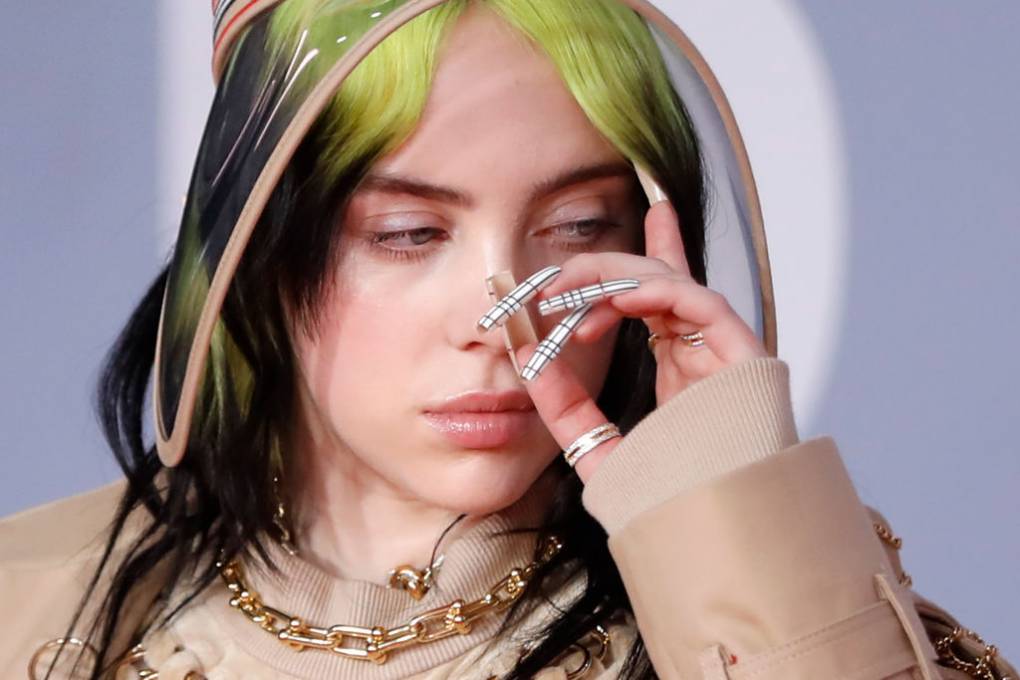
So Billie Eilish Took Her Shirt Off. What's to Celebrate?
Sony's Animated Short 'Hair Love' Hits YouTube at the Perfect Time
Is Beauty In The Eyes Of The Colonizer?
Sponsored
Player sponsored by
window.__IS_SSR__=true
window.__INITIAL_STATE__={
"attachmentsReducer": {
"audio_0": {
"type": "attachments",
"id": "audio_0",
"imgSizes": {
"kqedFullSize": {
"file": "https://ww2.kqed.org/news/wp-content/themes/KQED-unified/img/audio_bgs/background0.jpg"
}
}
},
"audio_1": {
"type": "attachments",
"id": "audio_1",
"imgSizes": {
"kqedFullSize": {
"file": "https://ww2.kqed.org/news/wp-content/themes/KQED-unified/img/audio_bgs/background1.jpg"
}
}
},
"audio_2": {
"type": "attachments",
"id": "audio_2",
"imgSizes": {
"kqedFullSize": {
"file": "https://ww2.kqed.org/news/wp-content/themes/KQED-unified/img/audio_bgs/background2.jpg"
}
}
},
"audio_3": {
"type": "attachments",
"id": "audio_3",
"imgSizes": {
"kqedFullSize": {
"file": "https://ww2.kqed.org/news/wp-content/themes/KQED-unified/img/audio_bgs/background3.jpg"
}
}
},
"audio_4": {
"type": "attachments",
"id": "audio_4",
"imgSizes": {
"kqedFullSize": {
"file": "https://ww2.kqed.org/news/wp-content/themes/KQED-unified/img/audio_bgs/background4.jpg"
}
}
},
"placeholder": {
"type": "attachments",
"id": "placeholder",
"imgSizes": {
"thumbnail": {
"file": "https://cdn.kqed.org/wp-content/uploads/2024/12/KQED-Default-Image-816638274-2000x1333-1-160x107.jpg",
"width": 160,
"height": 107,
"mimeType": "image/jpeg"
},
"medium": {
"file": "https://cdn.kqed.org/wp-content/uploads/2024/12/KQED-Default-Image-816638274-2000x1333-1-800x533.jpg",
"width": 800,
"height": 533,
"mimeType": "image/jpeg"
},
"medium_large": {
"file": "https://cdn.kqed.org/wp-content/uploads/2024/12/KQED-Default-Image-816638274-2000x1333-1-768x512.jpg",
"width": 768,
"height": 512,
"mimeType": "image/jpeg"
},
"large": {
"file": "https://cdn.kqed.org/wp-content/uploads/2024/12/KQED-Default-Image-816638274-2000x1333-1-1020x680.jpg",
"width": 1020,
"height": 680,
"mimeType": "image/jpeg"
},
"1536x1536": {
"file": "https://cdn.kqed.org/wp-content/uploads/2024/12/KQED-Default-Image-816638274-2000x1333-1-1536x1024.jpg",
"width": 1536,
"height": 1024,
"mimeType": "image/jpeg"
},
"fd-lrg": {
"file": "https://cdn.kqed.org/wp-content/uploads/2024/12/KQED-Default-Image-816638274-2000x1333-1-1536x1024.jpg",
"width": 1536,
"height": 1024,
"mimeType": "image/jpeg"
},
"fd-med": {
"file": "https://cdn.kqed.org/wp-content/uploads/2024/12/KQED-Default-Image-816638274-2000x1333-1-1020x680.jpg",
"width": 1020,
"height": 680,
"mimeType": "image/jpeg"
},
"fd-sm": {
"file": "https://cdn.kqed.org/wp-content/uploads/2024/12/KQED-Default-Image-816638274-2000x1333-1-800x533.jpg",
"width": 800,
"height": 533,
"mimeType": "image/jpeg"
},
"post-thumbnail": {
"file": "https://cdn.kqed.org/wp-content/uploads/2024/12/KQED-Default-Image-816638274-2000x1333-1-672x372.jpg",
"width": 672,
"height": 372,
"mimeType": "image/jpeg"
},
"twentyfourteen-full-width": {
"file": "https://cdn.kqed.org/wp-content/uploads/2024/12/KQED-Default-Image-816638274-2000x1333-1-1038x576.jpg",
"width": 1038,
"height": 576,
"mimeType": "image/jpeg"
},
"xxsmall": {
"file": "https://cdn.kqed.org/wp-content/uploads/2024/12/KQED-Default-Image-816638274-2000x1333-1-160x107.jpg",
"width": 160,
"height": 107,
"mimeType": "image/jpeg"
},
"xsmall": {
"file": "https://cdn.kqed.org/wp-content/uploads/2024/12/KQED-Default-Image-816638274-2000x1333-1-672x372.jpg",
"width": 672,
"height": 372,
"mimeType": "image/jpeg"
},
"small": {
"file": "https://cdn.kqed.org/wp-content/uploads/2024/12/KQED-Default-Image-816638274-2000x1333-1-672x372.jpg",
"width": 672,
"height": 372,
"mimeType": "image/jpeg"
},
"xlarge": {
"file": "https://cdn.kqed.org/wp-content/uploads/2024/12/KQED-Default-Image-816638274-2000x1333-1-1020x680.jpg",
"width": 1020,
"height": 680,
"mimeType": "image/jpeg"
},
"full-width": {
"file": "https://cdn.kqed.org/wp-content/uploads/2024/12/KQED-Default-Image-816638274-2000x1333-1-1920x1280.jpg",
"width": 1920,
"height": 1280,
"mimeType": "image/jpeg"
},
"guest-author-32": {
"file": "https://cdn.kqed.org/wp-content/uploads/2025/01/KQED-Default-Image-816638274-1333x1333-1-160x160.jpg",
"width": 32,
"height": 32,
"mimeType": "image/jpeg"
},
"guest-author-50": {
"file": "https://cdn.kqed.org/wp-content/uploads/2025/01/KQED-Default-Image-816638274-1333x1333-1-160x160.jpg",
"width": 50,
"height": 50,
"mimeType": "image/jpeg"
},
"guest-author-64": {
"file": "https://cdn.kqed.org/wp-content/uploads/2025/01/KQED-Default-Image-816638274-1333x1333-1-160x160.jpg",
"width": 64,
"height": 64,
"mimeType": "image/jpeg"
},
"guest-author-96": {
"file": "https://cdn.kqed.org/wp-content/uploads/2025/01/KQED-Default-Image-816638274-1333x1333-1-160x160.jpg",
"width": 96,
"height": 96,
"mimeType": "image/jpeg"
},
"guest-author-128": {
"file": "https://cdn.kqed.org/wp-content/uploads/2025/01/KQED-Default-Image-816638274-1333x1333-1-160x160.jpg",
"width": 128,
"height": 128,
"mimeType": "image/jpeg"
},
"detail": {
"file": "https://cdn.kqed.org/wp-content/uploads/2025/01/KQED-Default-Image-816638274-1333x1333-1-160x160.jpg",
"width": 160,
"height": 160,
"mimeType": "image/jpeg"
},
"kqedFullSize": {
"file": "https://cdn.kqed.org/wp-content/uploads/2024/12/KQED-Default-Image-816638274-2000x1333-1.jpg",
"width": 2000,
"height": 1333
}
}
},
"arts_13921849": {
"type": "attachments",
"id": "arts_13921849",
"meta": {
"index": "attachments_1716263798",
"site": "arts",
"id": "13921849",
"found": true
},
"parent": 13921830,
"imgSizes": {
"twentyfourteen-full-width": {
"file": "https://ww2.kqed.org/app/uploads/sites/2/2022/11/aesthetica-crop-1038x576.jpg",
"width": 1038,
"mimeType": "image/jpeg",
"height": 576
},
"thumbnail": {
"file": "https://ww2.kqed.org/app/uploads/sites/2/2022/11/aesthetica-crop-160x90.jpg",
"width": 160,
"mimeType": "image/jpeg",
"height": 90
},
"post-thumbnail": {
"file": "https://ww2.kqed.org/app/uploads/sites/2/2022/11/aesthetica-crop-672x372.jpg",
"width": 672,
"mimeType": "image/jpeg",
"height": 372
},
"kqedFullSize": {
"file": "https://ww2.kqed.org/app/uploads/sites/2/2022/11/aesthetica-crop.jpg",
"width": 2200,
"height": 1238
},
"2048x2048": {
"file": "https://ww2.kqed.org/app/uploads/sites/2/2022/11/aesthetica-crop-2048x1152.jpg",
"width": 2048,
"mimeType": "image/jpeg",
"height": 1152
},
"large": {
"file": "https://ww2.kqed.org/app/uploads/sites/2/2022/11/aesthetica-crop-1020x574.jpg",
"width": 1020,
"mimeType": "image/jpeg",
"height": 574
},
"1536x1536": {
"file": "https://ww2.kqed.org/app/uploads/sites/2/2022/11/aesthetica-crop-1536x864.jpg",
"width": 1536,
"mimeType": "image/jpeg",
"height": 864
},
"full-width": {
"file": "https://ww2.kqed.org/app/uploads/sites/2/2022/11/aesthetica-crop-1920x1080.jpg",
"width": 1920,
"mimeType": "image/jpeg",
"height": 1080
},
"medium": {
"file": "https://ww2.kqed.org/app/uploads/sites/2/2022/11/aesthetica-crop-800x450.jpg",
"width": 800,
"mimeType": "image/jpeg",
"height": 450
},
"medium_large": {
"file": "https://ww2.kqed.org/app/uploads/sites/2/2022/11/aesthetica-crop-768x432.jpg",
"width": 768,
"mimeType": "image/jpeg",
"height": 432
}
},
"publishDate": 1669139467,
"modified": 1669139942,
"caption": "'Aesthetica' by Allie Rowbottom. ",
"description": null,
"title": "aesthetica crop",
"credit": "Penguin Randomhouse",
"status": "inherit",
"altTag": null,
"fetchFailed": false,
"isLoading": false
},
"arts_13892430": {
"type": "attachments",
"id": "arts_13892430",
"meta": {
"index": "attachments_1716263798",
"site": "arts",
"id": "13892430",
"found": true
},
"parent": 13892418,
"imgSizes": {
"twentyfourteen-full-width": {
"file": "https://ww2.kqed.org/app/uploads/sites/2/2021/02/Bailey-1038x576.png",
"width": 1038,
"mimeType": "image/png",
"height": 576
},
"thumbnail": {
"file": "https://ww2.kqed.org/app/uploads/sites/2/2021/02/Bailey-160x88.png",
"width": 160,
"mimeType": "image/png",
"height": 88
},
"post-thumbnail": {
"file": "https://ww2.kqed.org/app/uploads/sites/2/2021/02/Bailey-672x372.png",
"width": 672,
"mimeType": "image/png",
"height": 372
},
"kqedFullSize": {
"file": "https://ww2.kqed.org/app/uploads/sites/2/2021/02/Bailey.png",
"width": 3334,
"height": 1844
},
"2048x2048": {
"file": "https://ww2.kqed.org/app/uploads/sites/2/2021/02/Bailey-2048x1133.png",
"width": 2048,
"mimeType": "image/png",
"height": 1133
},
"large": {
"file": "https://ww2.kqed.org/app/uploads/sites/2/2021/02/Bailey-1020x564.png",
"width": 1020,
"mimeType": "image/png",
"height": 564
},
"1536x1536": {
"file": "https://ww2.kqed.org/app/uploads/sites/2/2021/02/Bailey-1536x850.png",
"width": 1536,
"mimeType": "image/png",
"height": 850
},
"full-width": {
"file": "https://ww2.kqed.org/app/uploads/sites/2/2021/02/Bailey-1920x1062.png",
"width": 1920,
"mimeType": "image/png",
"height": 1062
},
"medium": {
"file": "https://ww2.kqed.org/app/uploads/sites/2/2021/02/Bailey-800x442.png",
"width": 800,
"mimeType": "image/png",
"height": 442
},
"medium_large": {
"file": "https://ww2.kqed.org/app/uploads/sites/2/2021/02/Bailey-768x425.png",
"width": 768,
"mimeType": "image/png",
"height": 425
}
},
"publishDate": 1612833366,
"modified": 1612833446,
"caption": "Bailey Sarian, mid-'Murder, Mystery & Makeup.'",
"description": "Bailey Sarian, mid-'Murder, Mystery & Makeup.'",
"title": "Bailey Sarian, mid-'Murder, Mystery & Makeup.'",
"credit": "YouTube/ Bailey Sarian",
"status": "inherit",
"altTag": "Bailey Sarian, mid-'Murder, Mystery & Makeup.'",
"fetchFailed": false,
"isLoading": false
},
"arts_13883468": {
"type": "attachments",
"id": "arts_13883468",
"meta": {
"index": "attachments_1716263798",
"site": "arts",
"id": "13883468",
"found": true
},
"parent": 13883244,
"imgSizes": {
"twentyfourteen-full-width": {
"file": "https://ww2.kqed.org/app/uploads/sites/2/2020/07/hair-norms-1038x576.jpg",
"width": 1038,
"mimeType": "image/jpeg",
"height": 576
},
"thumbnail": {
"file": "https://ww2.kqed.org/app/uploads/sites/2/2020/07/hair-norms-160x99.jpg",
"width": 160,
"mimeType": "image/jpeg",
"height": 99
},
"post-thumbnail": {
"file": "https://ww2.kqed.org/app/uploads/sites/2/2020/07/hair-norms-672x372.jpg",
"width": 672,
"mimeType": "image/jpeg",
"height": 372
},
"kqedFullSize": {
"file": "https://ww2.kqed.org/app/uploads/sites/2/2020/07/hair-norms.jpg",
"width": 2100,
"height": 1300
},
"2048x2048": {
"file": "https://ww2.kqed.org/app/uploads/sites/2/2020/07/hair-norms-2048x1268.jpg",
"width": 2048,
"mimeType": "image/jpeg",
"height": 1268
},
"large": {
"file": "https://ww2.kqed.org/app/uploads/sites/2/2020/07/hair-norms-1020x631.jpg",
"width": 1020,
"mimeType": "image/jpeg",
"height": 631
},
"1536x1536": {
"file": "https://ww2.kqed.org/app/uploads/sites/2/2020/07/hair-norms-1536x951.jpg",
"width": 1536,
"mimeType": "image/jpeg",
"height": 951
},
"full-width": {
"file": "https://ww2.kqed.org/app/uploads/sites/2/2020/07/hair-norms-1920x1189.jpg",
"width": 1920,
"mimeType": "image/jpeg",
"height": 1189
},
"medium": {
"file": "https://ww2.kqed.org/app/uploads/sites/2/2020/07/hair-norms-800x495.jpg",
"width": 800,
"mimeType": "image/jpeg",
"height": 495
},
"medium_large": {
"file": "https://ww2.kqed.org/app/uploads/sites/2/2020/07/hair-norms-768x475.jpg",
"width": 768,
"mimeType": "image/jpeg",
"height": 475
}
},
"publishDate": 1594924354,
"modified": 1594924448,
"caption": "Women on Instagram are showing off new grey roots and freshly shaved heads.",
"description": "Women on Instagram are showing off new grey roots and freshly shaved heads.",
"title": "Women on Instagram are showing off new grey roots and freshly shaved heads.",
"credit": "Instagram/ (L-R) @balay.mama, @jovishii, @adiosaltinte",
"status": "inherit",
"fetchFailed": false,
"isLoading": false
},
"arts_13882400": {
"type": "attachments",
"id": "arts_13882400",
"meta": {
"index": "attachments_1716263798",
"site": "arts",
"id": "13882400",
"found": true
},
"parent": 13881871,
"imgSizes": {
"twentyfourteen-full-width": {
"file": "https://ww2.kqed.org/app/uploads/sites/2/2020/06/whitening-3-1038x576.jpg",
"width": 1038,
"mimeType": "image/jpeg",
"height": 576
},
"thumbnail": {
"file": "https://ww2.kqed.org/app/uploads/sites/2/2020/06/whitening-3-160x99.jpg",
"width": 160,
"mimeType": "image/jpeg",
"height": 99
},
"post-thumbnail": {
"file": "https://ww2.kqed.org/app/uploads/sites/2/2020/06/whitening-3-672x372.jpg",
"width": 672,
"mimeType": "image/jpeg",
"height": 372
},
"kqedFullSize": {
"file": "https://ww2.kqed.org/app/uploads/sites/2/2020/06/whitening-3-scaled.jpg",
"width": 2560,
"height": 1584
},
"2048x2048": {
"file": "https://ww2.kqed.org/app/uploads/sites/2/2020/06/whitening-3-2048x1267.jpg",
"width": 2048,
"mimeType": "image/jpeg",
"height": 1267
},
"large": {
"file": "https://ww2.kqed.org/app/uploads/sites/2/2020/06/whitening-3-1020x631.jpg",
"width": 1020,
"mimeType": "image/jpeg",
"height": 631
},
"1536x1536": {
"file": "https://ww2.kqed.org/app/uploads/sites/2/2020/06/whitening-3-1536x951.jpg",
"width": 1536,
"mimeType": "image/jpeg",
"height": 951
},
"full-width": {
"file": "https://ww2.kqed.org/app/uploads/sites/2/2020/06/whitening-3-1920x1188.jpg",
"width": 1920,
"mimeType": "image/jpeg",
"height": 1188
},
"medium": {
"file": "https://ww2.kqed.org/app/uploads/sites/2/2020/06/whitening-3-800x495.jpg",
"width": 800,
"mimeType": "image/jpeg",
"height": 495
},
"medium_large": {
"file": "https://ww2.kqed.org/app/uploads/sites/2/2020/06/whitening-3-768x475.jpg",
"width": 768,
"mimeType": "image/jpeg",
"height": 475
}
},
"publishDate": 1592945739,
"modified": 1592945877,
"caption": "Major companies like L'Oréal, Garnier and Ponds are still making and marketing skin lightening products overseas.",
"description": "Major companies like L'Oréal, Garnier and Ponds are still making and marketing skin lightening products overseas.",
"title": "Major companies like L'Oréal, Garnier and Ponds are still making and marketing skin lightening products overseas.",
"credit": null,
"status": "inherit",
"fetchFailed": false,
"isLoading": false
},
"arts_13876304": {
"type": "attachments",
"id": "arts_13876304",
"meta": {
"index": "attachments_1716263798",
"site": "arts",
"id": "13876304",
"found": true
},
"parent": 13876299,
"imgSizes": {
"twentyfourteen-full-width": {
"file": "https://ww2.kqed.org/app/uploads/sites/2/2020/03/GettyImages-1201691171-1024x576.jpg",
"width": 1024,
"mimeType": "image/jpeg",
"height": 576
},
"thumbnail": {
"file": "https://ww2.kqed.org/app/uploads/sites/2/2020/03/GettyImages-1201691171-160x107.jpg",
"width": 160,
"mimeType": "image/jpeg",
"height": 107
},
"post-thumbnail": {
"file": "https://ww2.kqed.org/app/uploads/sites/2/2020/03/GettyImages-1201691171-672x372.jpg",
"width": 672,
"mimeType": "image/jpeg",
"height": 372
},
"kqedFullSize": {
"file": "https://ww2.kqed.org/app/uploads/sites/2/2020/03/GettyImages-1201691171.jpg",
"width": 1024,
"height": 683
},
"large": {
"file": "https://ww2.kqed.org/app/uploads/sites/2/2020/03/GettyImages-1201691171-1020x680.jpg",
"width": 1020,
"mimeType": "image/jpeg",
"height": 680
},
"medium": {
"file": "https://ww2.kqed.org/app/uploads/sites/2/2020/03/GettyImages-1201691171-800x534.jpg",
"width": 800,
"mimeType": "image/jpeg",
"height": 534
},
"medium_large": {
"file": "https://ww2.kqed.org/app/uploads/sites/2/2020/03/GettyImages-1201691171-768x512.jpg",
"width": 768,
"mimeType": "image/jpeg",
"height": 512
}
},
"publishDate": 1583876195,
"modified": 1583876466,
"caption": "Billie Eilish at the BRIT Awards in London, February 2020. ",
"description": "Billie Eilish at the BRIT Awards in London, February 2020. ",
"title": "Billie Eilish at the BRIT Awards in London, February 2020.",
"credit": "TOLGA AKMEN/AFP via Getty Images",
"status": "inherit",
"fetchFailed": false,
"isLoading": false
},
"arts_13871037": {
"type": "attachments",
"id": "arts_13871037",
"meta": {
"index": "attachments_1716263798",
"site": "arts",
"id": "13871037",
"found": true
},
"parent": 13871032,
"imgSizes": {
"twentyfourteen-full-width": {
"file": "https://ww2.kqed.org/app/uploads/sites/2/2019/12/Hair-Love-1038x576.jpg",
"width": 1038,
"mimeType": "image/jpeg",
"height": 576
},
"thumbnail": {
"file": "https://ww2.kqed.org/app/uploads/sites/2/2019/12/Hair-Love-160x90.jpg",
"width": 160,
"mimeType": "image/jpeg",
"height": 90
},
"post-thumbnail": {
"file": "https://ww2.kqed.org/app/uploads/sites/2/2019/12/Hair-Love-672x372.jpg",
"width": 672,
"mimeType": "image/jpeg",
"height": 372
},
"kqedFullSize": {
"file": "https://ww2.kqed.org/app/uploads/sites/2/2019/12/Hair-Love.jpg",
"width": 1296,
"height": 729
},
"large": {
"file": "https://ww2.kqed.org/app/uploads/sites/2/2019/12/Hair-Love-1020x574.jpg",
"width": 1020,
"mimeType": "image/jpeg",
"height": 574
},
"complete_open_graph": {
"file": "https://ww2.kqed.org/app/uploads/sites/2/2019/12/Hair-Love-1200x675.jpg",
"width": 1200,
"mimeType": "image/jpeg",
"height": 675
},
"medium": {
"file": "https://ww2.kqed.org/app/uploads/sites/2/2019/12/Hair-Love-800x450.jpg",
"width": 800,
"mimeType": "image/jpeg",
"height": 450
},
"medium_large": {
"file": "https://ww2.kqed.org/app/uploads/sites/2/2019/12/Hair-Love-768x432.jpg",
"width": 768,
"mimeType": "image/jpeg",
"height": 432
}
},
"publishDate": 1575661705,
"modified": 1575661757,
"caption": "'Hair Love'",
"description": "'Hair Love'",
"title": "'Hair Love'",
"credit": "Sony Animation Pictures",
"status": "inherit",
"fetchFailed": false,
"isLoading": false
},
"arts_13850247": {
"type": "attachments",
"id": "arts_13850247",
"meta": {
"index": "attachments_1716263798",
"site": "arts",
"id": "13850247",
"found": true
},
"parent": 13850246,
"imgSizes": {
"twentyfourteen-full-width": {
"file": "https://ww2.kqed.org/app/uploads/sites/2/2019/02/codeswitch-beautyideals-3_custom-c6e50dc1552e5ef2b23f86250f640f1650252214-1038x576.jpg",
"width": 1038,
"mimeType": "image/jpeg",
"height": 576
},
"thumbnail": {
"file": "https://ww2.kqed.org/app/uploads/sites/2/2019/02/codeswitch-beautyideals-3_custom-c6e50dc1552e5ef2b23f86250f640f1650252214-160x100.jpg",
"width": 160,
"mimeType": "image/jpeg",
"height": 100
},
"post-thumbnail": {
"file": "https://ww2.kqed.org/app/uploads/sites/2/2019/02/codeswitch-beautyideals-3_custom-c6e50dc1552e5ef2b23f86250f640f1650252214-672x372.jpg",
"width": 672,
"mimeType": "image/jpeg",
"height": 372
},
"kqedFullSize": {
"file": "https://ww2.kqed.org/app/uploads/sites/2/2019/02/codeswitch-beautyideals-3_custom-c6e50dc1552e5ef2b23f86250f640f1650252214-e1549482180149.jpg",
"width": 1920,
"height": 1198
},
"large": {
"file": "https://ww2.kqed.org/app/uploads/sites/2/2019/02/codeswitch-beautyideals-3_custom-c6e50dc1552e5ef2b23f86250f640f1650252214-1020x637.jpg",
"width": 1020,
"mimeType": "image/jpeg",
"height": 637
},
"complete_open_graph": {
"file": "https://ww2.kqed.org/app/uploads/sites/2/2019/02/codeswitch-beautyideals-3_custom-c6e50dc1552e5ef2b23f86250f640f1650252214-1200x749.jpg",
"width": 1200,
"mimeType": "image/jpeg",
"height": 749
},
"guest-author-50": {
"file": "https://ww2.kqed.org/app/uploads/sites/2/2019/02/codeswitch-beautyideals-3_custom-c6e50dc1552e5ef2b23f86250f640f1650252214-50x50.jpg",
"width": 50,
"mimeType": "image/jpeg",
"height": 50
},
"guest-author-96": {
"file": "https://ww2.kqed.org/app/uploads/sites/2/2019/02/codeswitch-beautyideals-3_custom-c6e50dc1552e5ef2b23f86250f640f1650252214-96x96.jpg",
"width": 96,
"mimeType": "image/jpeg",
"height": 96
},
"medium": {
"file": "https://ww2.kqed.org/app/uploads/sites/2/2019/02/codeswitch-beautyideals-3_custom-c6e50dc1552e5ef2b23f86250f640f1650252214-800x499.jpg",
"width": 800,
"mimeType": "image/jpeg",
"height": 499
},
"guest-author-64": {
"file": "https://ww2.kqed.org/app/uploads/sites/2/2019/02/codeswitch-beautyideals-3_custom-c6e50dc1552e5ef2b23f86250f640f1650252214-64x64.jpg",
"width": 64,
"mimeType": "image/jpeg",
"height": 64
},
"guest-author-32": {
"file": "https://ww2.kqed.org/app/uploads/sites/2/2019/02/codeswitch-beautyideals-3_custom-c6e50dc1552e5ef2b23f86250f640f1650252214-32x32.jpg",
"width": 32,
"mimeType": "image/jpeg",
"height": 32
},
"full-width": {
"file": "https://ww2.kqed.org/app/uploads/sites/2/2019/02/codeswitch-beautyideals-3_custom-c6e50dc1552e5ef2b23f86250f640f1650252214-1920x1198.jpg",
"width": 1920,
"mimeType": "image/jpeg",
"height": 1198
},
"detail": {
"file": "https://ww2.kqed.org/app/uploads/sites/2/2019/02/codeswitch-beautyideals-3_custom-c6e50dc1552e5ef2b23f86250f640f1650252214-150x150.jpg",
"width": 150,
"mimeType": "image/jpeg",
"height": 150
},
"medium_large": {
"file": "https://ww2.kqed.org/app/uploads/sites/2/2019/02/codeswitch-beautyideals-3_custom-c6e50dc1552e5ef2b23f86250f640f1650252214-768x479.jpg",
"width": 768,
"mimeType": "image/jpeg",
"height": 479
},
"guest-author-128": {
"file": "https://ww2.kqed.org/app/uploads/sites/2/2019/02/codeswitch-beautyideals-3_custom-c6e50dc1552e5ef2b23f86250f640f1650252214-128x128.jpg",
"width": 128,
"mimeType": "image/jpeg",
"height": 128
}
},
"publishDate": 1549479975,
"modified": 1549482203,
"caption": "It's not easy being beautiful. No matter what they say.",
"description": "It's not easy being beautiful. No matter what they say.",
"title": "It's not easy being beautiful. No matter what they say.",
"credit": "LA Johnson/NPR",
"status": "inherit",
"fetchFailed": false,
"isLoading": false
}
},
"audioPlayerReducer": {
"postId": "stream_live",
"isPaused": true,
"isPlaying": false,
"pfsActive": false,
"pledgeModalIsOpen": true,
"playerDrawerIsOpen": false
},
"authorsReducer": {
"byline_arts_13921830": {
"type": "authors",
"id": "byline_arts_13921830",
"meta": {
"override": true
},
"slug": "byline_arts_13921830",
"name": "Naomi Elias",
"isLoading": false
},
"byline_arts_13850246": {
"type": "authors",
"id": "byline_arts_13850246",
"meta": {
"override": true
},
"slug": "byline_arts_13850246",
"name": "Leah Donnella",
"isLoading": false
},
"ralexandra": {
"type": "authors",
"id": "11242",
"meta": {
"index": "authors_1716337520",
"id": "11242",
"found": true
},
"name": "Rae Alexandra",
"firstName": "Rae",
"lastName": "Alexandra",
"slug": "ralexandra",
"email": "ralexandra@kqed.org",
"display_author_email": true,
"staff_mastheads": [
"arts"
],
"title": "Reporter/Producer",
"bio": "Rae Alexandra is a Reporter/Producer for KQED Arts & Culture, and the creator/author of the \u003ca href=\"https://www.kqed.org/arts/program/rebel-girls-from-bay-area-history\">Rebel Girls From Bay Area History\u003c/a> and \u003ca href=\"https://www.kqed.org/bizarrebayarea\">Bizarre Bay Area\u003c/a> series. Her debut book, \u003ca href=\"https://citylights.com/politics-current-events-history/unsung-heroines35-women-who-changed/\">Unsung Heroines: 35 Women Who Changed the Bay Area\u003c/a> will be published by City Lights in Spring 2026. In 2023, Rae was awarded an SPJ Excellence in Journalism Award for Arts & Culture. Rae was born and raised in Wales and subsequently — even after two decades in Northern California — still uses phrases that regularly baffle her coworkers.",
"avatar": "https://secure.gravatar.com/avatar/d5ef3d663d9adae1345d06932a3951de?s=600&d=blank&r=g",
"twitter": null,
"facebook": null,
"instagram": null,
"linkedin": null,
"sites": [
{
"site": "arts",
"roles": [
"editor"
]
},
{
"site": "news",
"roles": [
"editor"
]
},
{
"site": "pop",
"roles": [
"editor"
]
},
{
"site": "bayareabites",
"roles": [
"editor"
]
},
{
"site": "science",
"roles": [
"editor"
]
}
],
"headData": {
"title": "Rae Alexandra | KQED",
"description": "Reporter/Producer",
"ogImgSrc": "https://secure.gravatar.com/avatar/d5ef3d663d9adae1345d06932a3951de?s=600&d=blank&r=g",
"twImgSrc": "https://secure.gravatar.com/avatar/d5ef3d663d9adae1345d06932a3951de?s=600&d=blank&r=g"
},
"isLoading": false,
"link": "/author/ralexandra"
}
},
"breakingNewsReducer": {},
"pagesReducer": {},
"postsReducer": {
"stream_live": {
"type": "live",
"id": "stream_live",
"audioUrl": "https://streams.kqed.org/kqedradio",
"title": "Live Stream",
"excerpt": "Live Stream information currently unavailable.",
"link": "/radio",
"featImg": "",
"label": {
"name": "KQED Live",
"link": "/"
}
},
"stream_kqedNewscast": {
"type": "posts",
"id": "stream_kqedNewscast",
"audioUrl": "https://www.kqed.org/.stream/anon/radio/RDnews/newscast.mp3?_=1",
"title": "KQED Newscast",
"featImg": "",
"label": {
"name": "88.5 FM",
"link": "/"
}
},
"arts_13921830": {
"type": "posts",
"id": "arts_13921830",
"meta": {
"index": "posts_1716263798",
"site": "arts",
"id": "13921830",
"score": null,
"sort": [
1669142097000
]
},
"parent": 0,
"labelTerm": {
"site": "arts"
},
"blocks": [],
"publishDate": 1669142097,
"format": "aside",
"title": "Plastic Surgery Meets Suspense in Allie Rowbottom’s ‘Aesthetica’",
"headTitle": "Plastic Surgery Meets Suspense in Allie Rowbottom’s ‘Aesthetica’ | KQED",
"content": "\u003cfigure id=\"attachment_13921853\" class=\"wp-caption aligncenter\" style=\"max-width: 800px\">\u003cimg loading=\"lazy\" decoding=\"async\" class=\"size-medium wp-image-13921853\" src=\"https://ww2.kqed.org/app/uploads/sites/2/2022/11/Aesthetica-comp-800x1200.jpg\" alt=\"The cover of Allie Rowbottom's 'Aesthetica' shows a distorted, surgically enhanced face.\" width=\"800\" height=\"1200\" srcset=\"https://cdn.kqed.org/wp-content/uploads/sites/2/2022/11/Aesthetica-comp-800x1200.jpg 800w, https://cdn.kqed.org/wp-content/uploads/sites/2/2022/11/Aesthetica-comp-1020x1530.jpg 1020w, https://cdn.kqed.org/wp-content/uploads/sites/2/2022/11/Aesthetica-comp-160x240.jpg 160w, https://cdn.kqed.org/wp-content/uploads/sites/2/2022/11/Aesthetica-comp-768x1152.jpg 768w, https://cdn.kqed.org/wp-content/uploads/sites/2/2022/11/Aesthetica-comp-1024x1536.jpg 1024w, https://cdn.kqed.org/wp-content/uploads/sites/2/2022/11/Aesthetica-comp-1365x2048.jpg 1365w, https://cdn.kqed.org/wp-content/uploads/sites/2/2022/11/Aesthetica-comp-1920x2880.jpg 1920w, https://cdn.kqed.org/wp-content/uploads/sites/2/2022/11/Aesthetica-comp-scaled.jpg 1707w\" sizes=\"(max-width: 800px) 100vw, 800px\">\u003cfigcaption class=\"wp-caption-text\">In Allie Rowbottom’s ‘Aesthetica,’ a former influencer wants to reverse her plastic surgery. \u003ccite>(Penguin Randomhouse)\u003c/cite>\u003c/figcaption>\u003c/figure>\n\u003cp>In Robert Zemeckis’ 1992 black comedy \u003cem>Death Becomes Her\u003c/em>, Meryl Streep plays Madeline Ashton, an aging Hollywood actress who pays a pretty penny for an elixir from a mysterious rejuvenation expert (Isabella Rossellini’s Lisle Von Rhuman). The elixir not only de-ages her, but also immortalizes her youth.\u003c/p>\n\u003cp>In the pivotal transformation scene, she drinks the glowing pink potion and her butt is instantly lifted to a perkier position. The liver spots on her hand disappear. The gap between her breasts closes. And the skin on her face tightens and is visibly more supple, as if the collagen she naturally lost as she aged was returned to her. In sheer elation she exclaims, “I’m a girl!”\u003c/p>\n\u003cfigure id=\"attachment_13921851\" class=\"wp-caption alignright\" style=\"max-width: 800px\">\u003cimg loading=\"lazy\" decoding=\"async\" class=\"size-medium wp-image-13921851\" src=\"https://ww2.kqed.org/app/uploads/sites/2/2022/11/Allie-Rowbottom_credit-Roeg-Cohen-800x998.jpg\" alt=\"\" width=\"800\" height=\"998\" srcset=\"https://cdn.kqed.org/wp-content/uploads/sites/2/2022/11/Allie-Rowbottom_credit-Roeg-Cohen-800x998.jpg 800w, https://cdn.kqed.org/wp-content/uploads/sites/2/2022/11/Allie-Rowbottom_credit-Roeg-Cohen-1020x1272.jpg 1020w, https://cdn.kqed.org/wp-content/uploads/sites/2/2022/11/Allie-Rowbottom_credit-Roeg-Cohen-160x200.jpg 160w, https://cdn.kqed.org/wp-content/uploads/sites/2/2022/11/Allie-Rowbottom_credit-Roeg-Cohen-768x958.jpg 768w, https://cdn.kqed.org/wp-content/uploads/sites/2/2022/11/Allie-Rowbottom_credit-Roeg-Cohen-1231x1536.jpg 1231w, https://cdn.kqed.org/wp-content/uploads/sites/2/2022/11/Allie-Rowbottom_credit-Roeg-Cohen-1642x2048.jpg 1642w, https://cdn.kqed.org/wp-content/uploads/sites/2/2022/11/Allie-Rowbottom_credit-Roeg-Cohen-1920x2395.jpg 1920w\" sizes=\"(max-width: 800px) 100vw, 800px\">\u003cfigcaption class=\"wp-caption-text\">Author Allie Rowbottom. \u003ccite>(Roeg Cohen)\u003c/cite>\u003c/figcaption>\u003c/figure>\n\u003cp>In 2022, these body transformations are possible through surgical lifts of the butt, breasts and face, or digitally through apps like Facetune, which has been downloaded upwards of 200 million times. In writer Allie Rowbottom’s debut novel, \u003cem>Aesthetica\u003c/em>, there is an equally desirable and dangerous inverse surgery, one that restores bodies by undoing previous procedures. In her fictional world, the magic potion is an edit button with the power to delete.\u003c/p>\n\u003cp>\u003cem>Aesthetica\u003c/em>’s protagonist, Anna Wrey, is a 35-year-old former Instagram influencer who has elected to have the Aesthetica surgery — a costly and experimental procedure that is only available in Los Angeles. That’s in the present day, in 2032. Back in 2017, she is a hungry but naive 19-year-old who gets wrapped up in Los Angeles’s influencer cult(ure) and is catapulted into mid-tier celebrity status with the help of a much older manager-boyfriend named Jake, who constantly uses and mispronounces the word “aesthetic.” The timing is a useful frame as Anna comes of age in a not-long-ago era, which \u003cem>The New Yorker\u003c/em>’s Jia Tolentino declared “\u003ca href=\"https://www.newyorker.com/culture/decade-in-review/the-age-of-instagram-face\" target=\"_blank\" rel=\"noopener noreferrer\">The Age of Instagram Face\u003c/a>” in a 2019 essay. Readers can readily remember the clashing cultural mores, aesthetic goals and feminist beliefs that we continue to grapple with today.\u003c/p>\n\u003cp>Media outlets that cover beauty constantly announce new trends as pathways to the ideal body. The Brazilian butt lift came to define the 2010s despite worryingly high mortality rates. And more recently, as \u003ca href=\"https://nypost.com/2022/11/02/heroin-chic-is-back-and-curvy-bodies-big-butts-are-out/\" target=\"_blank\" rel=\"noopener noreferrer\">\u003cem>The New York Post\u003c/em> noted crassly\u003c/a>, some celebrities have returned to the “heroin-chic” thinness of ’90s supermodels. The constant stream of new beauty and body trends, some cyclical, some diametrically opposed, are a reminder that the concept of an ideal body was only ever meant to be a marketing goldmine, not an achievable goal. On TikTok, videos tagged ‘plastic surgery’ have reached over 15 billion views and birthed a cottage industry of plastic surgeons analyzing people’s faces.\u003c/p>\n\u003cp>[ad fullwidth]\u003c/p>\n\u003cp>\u003cem>Aesthetica\u003c/em> opens with Anna — already scheduled for the surgery that’s going to “free” her — instinctively playing the same speculative game on young girls in her eyeline. This is the beauty industrial matrix.\u003c/p>\n\u003cp>The book moves fluidly between Anna’s last year as a teen and her present day, on the eve of surgery. Through flashbacks we learn how Jake helps her build a social following and her body (the modifications she will later want Aesthetica™ to reverse). We also learn that something bad happened, bad enough for a reporter to be presently sniffing around her seeking a quote. In a simpler novel, this would be the impetus for a standard but thin revenge narrative: A woman goes after the man who wronged her and gets a happy ending. But Rowbottom’s writing is more complex, less obvious and in accordance with Wes Craven’s ideology of horror: “Horror films don’t create fear, they release it.”\u003c/p>\n\u003cp>We know something bad happened — something to do with Jake, something traumatic enough to make her abandon Instagram as a platform and life path, and something involving other women — but not exactly what. Rowbottom releases fear into her novel using tried and true horror notes. Not cheap jump scares, but haunting ambiguity, psychological turmoil, the slow buildup and unfolding of information around the incident. This way of building up terror is horrendously effective. As I read, I felt uneasy, waiting for more information but also afraid to receive it — a credit to Alfred Hitchcock’s belief that “there is no terror in the bang, only in the anticipation of it.” [aside postid='arts_13921562']\u003c/p>\n\u003cp>This is what makes the book work so well: There are several undercurrents allowed to throb simultaneously. There’s the Jake storyline, which could reductively be referred to as a #MeToo plot; Anna’s relationship with her mother and her illness; early female bonding in Houston; and her post-Instagram retirement life working at a beauty counter in the days leading up to the surgery.\u003c/p>\n\u003cp>Rowbottom’s writing is not some cliché-ridden, girl-power critique of the global beauty industry. The industry is such an obvious villain that a moral argument against it would be an easy lay-up. \u003cem>Aesthetica\u003c/em>’s appeal is that it is difficult. It doesn’t critique Anna. Neither her desire nor her regret are pathologized, simply explored. \u003cem>Aesthetica\u003c/em> is concerned with showing you who the characters are, how they rub against each other, how their lives and purposes bleed into each other and create mess. It is interested in that mess and contradiction.\u003c/p>\n\u003cp>What Zemeckis’ film and Rowbottom’s book both understand is that the most interesting part of the beauty industrial matrix is the way it has altered women’s relationships to other women. In the film, Streep and Goldie Hawn (who plays Helen Sharp) portray two women whose intense personal rivalry has been the defining relationship in each of their lives. Ashton steals Sharp’s fiancé away, not because she is interested in him but because Sharp desires him. Through a complicated need to both best each other and be each other, Sharp’s desires become Ashton’s desires.\u003c/p>\n\u003cp>In Rowbottom’s book, Anna’s also self-aware enough to know, “it was always about the women…whether or not I was better than them. Sexier, but not sluttier, my wants smaller, my body smaller, though not too small.” Her relationships to the other women in the book are rendered with lacerating emotional precision. The strife is between Anna and her ailing mother, her childhood friend whose athletic body she envied, and other women she sees and consumes by the pool, on the street, on screens. She studies the exact way models adjust themselves to meet a camera’s eye or a man’s. “My body was the result of those other women’s bodies,” she thinks to herself. [aside postid='arts_13921805']\u003c/p>\n\u003cp>Many women want to look like girls, and the beauty-industrial complex sells the lie that girlhood is a commodity that can be returned to you. It has convinced us all to see our bodies as capital. When Ashton shouts “I’m a girl,” it’s with the same gusto someone would use to announce they won the lottery. Rowbottom’s protagonist sees influencing as a social ladder, a financial parachute that will help her escape and become as free as she imagines rich people to be. In one characteristically witty line from her internal monologue mid-coitus with Jake she muses, “I was close to power, but not fully in possession of it, neither a child nor a woman, and not yet a wolf.” A clever riff and escalation of Britney Spears’ iconic song lyric that encapsulates the teetering she does throughout the novel, a woman caught between the drive to invent herself and the cost of that reinvention.\u003c/p>\n\u003cp>The human body has so many needs. It feels hungry, cold, dry, love-starved. Our lives are spent attending to these needs. What makes the beauty-industrial complex so formidable is it long-ago determined which of those needs was the easiest to exploit. It’s a lucrative hamster wheel and even though it has been exposed — articles abound about the industry’s dystopian labor conditions, and studies show how social media is contributing to rising rates of depression in girls, its chief users — it continues to run apace.\u003c/p>\n\u003cp>[ad floatright]\u003c/p>\n\u003cp>When some people realize they’re on a hamster wheel, they run harder. Are they trying to escape? To convince themselves they have agency and are not trapped, but choosing to be part of it? \u003cem>Aesthetica\u003c/em> works because Rowbottom sees and understands the whole iceberg, or in this case, the whole wheel.\u003c/p>\n\n",
"stats": {
"hasVideo": false,
"hasChartOrMap": false,
"hasAudio": false,
"hasPolis": false,
"wordCount": 1501,
"hasGoogleForm": false,
"hasGallery": false,
"hasHearkenModule": false,
"iframeSrcs": [],
"paragraphCount": 17
},
"modified": 1705006137,
"excerpt": "With its haunting ambiguity and psychological turmoil, the novel examines the beauty industry beyond its surface. ",
"headData": {
"twImgId": "",
"twTitle": "Plastic Surgery Meets Suspense in Allie Rowbottom’s ‘Aesthetica’",
"socialTitle": "Review: Allie Rowbottom's Debut Novel 'Aesthetica' %%page%% %%sep%% KQED",
"ogTitle": "Plastic Surgery Meets Suspense in Allie Rowbottom’s ‘Aesthetica’",
"ogImgId": "",
"twDescription": "",
"description": "With its haunting ambiguity and psychological turmoil, the novel examines the beauty industry beyond its surface. ",
"title": "Review: Allie Rowbottom's Debut Novel 'Aesthetica' | KQED",
"ogDescription": "",
"schema": {
"@context": "https://schema.org",
"@type": "Article",
"headline": "Plastic Surgery Meets Suspense in Allie Rowbottom’s ‘Aesthetica’",
"datePublished": "2022-11-22T10:34:57-08:00",
"dateModified": "2024-01-11T12:48:57-08:00",
"image": "https://cdn.kqed.org/wp-content/uploads/2020/02/KQED-OG-Image@1x.png"
}
},
"guestAuthors": [],
"slug": "aesthetica-allie-rowbottom-novel-penguin-randomhouse",
"status": "publish",
"templateType": "standard",
"nprByline": "Naomi Elias",
"excludeFromSiteSearch": "Include",
"featuredImageType": "standard",
"sticky": false,
"showOnAuthorArchivePages": "No",
"path": "/arts/13921830/aesthetica-allie-rowbottom-novel-penguin-randomhouse",
"audioTrackLength": null,
"parsedContent": [
{
"type": "contentString",
"content": "\u003cdiv class=\"post-body\">\u003cp>\u003cfigure id=\"attachment_13921853\" class=\"wp-caption aligncenter\" style=\"max-width: 800px\">\u003cimg loading=\"lazy\" decoding=\"async\" class=\"size-medium wp-image-13921853\" src=\"https://ww2.kqed.org/app/uploads/sites/2/2022/11/Aesthetica-comp-800x1200.jpg\" alt=\"The cover of Allie Rowbottom's 'Aesthetica' shows a distorted, surgically enhanced face.\" width=\"800\" height=\"1200\" srcset=\"https://cdn.kqed.org/wp-content/uploads/sites/2/2022/11/Aesthetica-comp-800x1200.jpg 800w, https://cdn.kqed.org/wp-content/uploads/sites/2/2022/11/Aesthetica-comp-1020x1530.jpg 1020w, https://cdn.kqed.org/wp-content/uploads/sites/2/2022/11/Aesthetica-comp-160x240.jpg 160w, https://cdn.kqed.org/wp-content/uploads/sites/2/2022/11/Aesthetica-comp-768x1152.jpg 768w, https://cdn.kqed.org/wp-content/uploads/sites/2/2022/11/Aesthetica-comp-1024x1536.jpg 1024w, https://cdn.kqed.org/wp-content/uploads/sites/2/2022/11/Aesthetica-comp-1365x2048.jpg 1365w, https://cdn.kqed.org/wp-content/uploads/sites/2/2022/11/Aesthetica-comp-1920x2880.jpg 1920w, https://cdn.kqed.org/wp-content/uploads/sites/2/2022/11/Aesthetica-comp-scaled.jpg 1707w\" sizes=\"(max-width: 800px) 100vw, 800px\">\u003cfigcaption class=\"wp-caption-text\">In Allie Rowbottom’s ‘Aesthetica,’ a former influencer wants to reverse her plastic surgery. \u003ccite>(Penguin Randomhouse)\u003c/cite>\u003c/figcaption>\u003c/figure>\n\u003cp>In Robert Zemeckis’ 1992 black comedy \u003cem>Death Becomes Her\u003c/em>, Meryl Streep plays Madeline Ashton, an aging Hollywood actress who pays a pretty penny for an elixir from a mysterious rejuvenation expert (Isabella Rossellini’s Lisle Von Rhuman). The elixir not only de-ages her, but also immortalizes her youth.\u003c/p>\n\u003cp>In the pivotal transformation scene, she drinks the glowing pink potion and her butt is instantly lifted to a perkier position. The liver spots on her hand disappear. The gap between her breasts closes. And the skin on her face tightens and is visibly more supple, as if the collagen she naturally lost as she aged was returned to her. In sheer elation she exclaims, “I’m a girl!”\u003c/p>\n\u003cfigure id=\"attachment_13921851\" class=\"wp-caption alignright\" style=\"max-width: 800px\">\u003cimg loading=\"lazy\" decoding=\"async\" class=\"size-medium wp-image-13921851\" src=\"https://ww2.kqed.org/app/uploads/sites/2/2022/11/Allie-Rowbottom_credit-Roeg-Cohen-800x998.jpg\" alt=\"\" width=\"800\" height=\"998\" srcset=\"https://cdn.kqed.org/wp-content/uploads/sites/2/2022/11/Allie-Rowbottom_credit-Roeg-Cohen-800x998.jpg 800w, https://cdn.kqed.org/wp-content/uploads/sites/2/2022/11/Allie-Rowbottom_credit-Roeg-Cohen-1020x1272.jpg 1020w, https://cdn.kqed.org/wp-content/uploads/sites/2/2022/11/Allie-Rowbottom_credit-Roeg-Cohen-160x200.jpg 160w, https://cdn.kqed.org/wp-content/uploads/sites/2/2022/11/Allie-Rowbottom_credit-Roeg-Cohen-768x958.jpg 768w, https://cdn.kqed.org/wp-content/uploads/sites/2/2022/11/Allie-Rowbottom_credit-Roeg-Cohen-1231x1536.jpg 1231w, https://cdn.kqed.org/wp-content/uploads/sites/2/2022/11/Allie-Rowbottom_credit-Roeg-Cohen-1642x2048.jpg 1642w, https://cdn.kqed.org/wp-content/uploads/sites/2/2022/11/Allie-Rowbottom_credit-Roeg-Cohen-1920x2395.jpg 1920w\" sizes=\"(max-width: 800px) 100vw, 800px\">\u003cfigcaption class=\"wp-caption-text\">Author Allie Rowbottom. \u003ccite>(Roeg Cohen)\u003c/cite>\u003c/figcaption>\u003c/figure>\n\u003cp>In 2022, these body transformations are possible through surgical lifts of the butt, breasts and face, or digitally through apps like Facetune, which has been downloaded upwards of 200 million times. In writer Allie Rowbottom’s debut novel, \u003cem>Aesthetica\u003c/em>, there is an equally desirable and dangerous inverse surgery, one that restores bodies by undoing previous procedures. In her fictional world, the magic potion is an edit button with the power to delete.\u003c/p>\n\u003cp>\u003cem>Aesthetica\u003c/em>’s protagonist, Anna Wrey, is a 35-year-old former Instagram influencer who has elected to have the Aesthetica surgery — a costly and experimental procedure that is only available in Los Angeles. That’s in the present day, in 2032. Back in 2017, she is a hungry but naive 19-year-old who gets wrapped up in Los Angeles’s influencer cult(ure) and is catapulted into mid-tier celebrity status with the help of a much older manager-boyfriend named Jake, who constantly uses and mispronounces the word “aesthetic.” The timing is a useful frame as Anna comes of age in a not-long-ago era, which \u003cem>The New Yorker\u003c/em>’s Jia Tolentino declared “\u003ca href=\"https://www.newyorker.com/culture/decade-in-review/the-age-of-instagram-face\" target=\"_blank\" rel=\"noopener noreferrer\">The Age of Instagram Face\u003c/a>” in a 2019 essay. Readers can readily remember the clashing cultural mores, aesthetic goals and feminist beliefs that we continue to grapple with today.\u003c/p>\n\u003cp>Media outlets that cover beauty constantly announce new trends as pathways to the ideal body. The Brazilian butt lift came to define the 2010s despite worryingly high mortality rates. And more recently, as \u003ca href=\"https://nypost.com/2022/11/02/heroin-chic-is-back-and-curvy-bodies-big-butts-are-out/\" target=\"_blank\" rel=\"noopener noreferrer\">\u003cem>The New York Post\u003c/em> noted crassly\u003c/a>, some celebrities have returned to the “heroin-chic” thinness of ’90s supermodels. The constant stream of new beauty and body trends, some cyclical, some diametrically opposed, are a reminder that the concept of an ideal body was only ever meant to be a marketing goldmine, not an achievable goal. On TikTok, videos tagged ‘plastic surgery’ have reached over 15 billion views and birthed a cottage industry of plastic surgeons analyzing people’s faces.\u003c/p>\n\u003cp>\u003c/p>\u003c/div>",
"attributes": {
"named": {},
"numeric": []
}
},
{
"type": "component",
"content": "",
"name": "ad",
"attributes": {
"named": {
"label": "fullwidth"
},
"numeric": [
"fullwidth"
]
}
},
{
"type": "contentString",
"content": "\u003cdiv class=\"post-body\">\u003cp>\u003c/p>\n\u003cp>\u003cem>Aesthetica\u003c/em> opens with Anna — already scheduled for the surgery that’s going to “free” her — instinctively playing the same speculative game on young girls in her eyeline. This is the beauty industrial matrix.\u003c/p>\n\u003cp>The book moves fluidly between Anna’s last year as a teen and her present day, on the eve of surgery. Through flashbacks we learn how Jake helps her build a social following and her body (the modifications she will later want Aesthetica™ to reverse). We also learn that something bad happened, bad enough for a reporter to be presently sniffing around her seeking a quote. In a simpler novel, this would be the impetus for a standard but thin revenge narrative: A woman goes after the man who wronged her and gets a happy ending. But Rowbottom’s writing is more complex, less obvious and in accordance with Wes Craven’s ideology of horror: “Horror films don’t create fear, they release it.”\u003c/p>\n\u003cp>We know something bad happened — something to do with Jake, something traumatic enough to make her abandon Instagram as a platform and life path, and something involving other women — but not exactly what. Rowbottom releases fear into her novel using tried and true horror notes. Not cheap jump scares, but haunting ambiguity, psychological turmoil, the slow buildup and unfolding of information around the incident. This way of building up terror is horrendously effective. As I read, I felt uneasy, waiting for more information but also afraid to receive it — a credit to Alfred Hitchcock’s belief that “there is no terror in the bang, only in the anticipation of it.” \u003c/p>\u003c/div>",
"attributes": {
"named": {},
"numeric": []
}
},
{
"type": "component",
"content": "",
"name": "aside",
"attributes": {
"named": {
"postid": "arts_13921562",
"label": ""
},
"numeric": []
}
},
{
"type": "contentString",
"content": "\u003cdiv class=\"post-body\">\u003cp>\u003c/p>\n\u003cp>This is what makes the book work so well: There are several undercurrents allowed to throb simultaneously. There’s the Jake storyline, which could reductively be referred to as a #MeToo plot; Anna’s relationship with her mother and her illness; early female bonding in Houston; and her post-Instagram retirement life working at a beauty counter in the days leading up to the surgery.\u003c/p>\n\u003cp>Rowbottom’s writing is not some cliché-ridden, girl-power critique of the global beauty industry. The industry is such an obvious villain that a moral argument against it would be an easy lay-up. \u003cem>Aesthetica\u003c/em>’s appeal is that it is difficult. It doesn’t critique Anna. Neither her desire nor her regret are pathologized, simply explored. \u003cem>Aesthetica\u003c/em> is concerned with showing you who the characters are, how they rub against each other, how their lives and purposes bleed into each other and create mess. It is interested in that mess and contradiction.\u003c/p>\n\u003cp>What Zemeckis’ film and Rowbottom’s book both understand is that the most interesting part of the beauty industrial matrix is the way it has altered women’s relationships to other women. In the film, Streep and Goldie Hawn (who plays Helen Sharp) portray two women whose intense personal rivalry has been the defining relationship in each of their lives. Ashton steals Sharp’s fiancé away, not because she is interested in him but because Sharp desires him. Through a complicated need to both best each other and be each other, Sharp’s desires become Ashton’s desires.\u003c/p>\n\u003cp>In Rowbottom’s book, Anna’s also self-aware enough to know, “it was always about the women…whether or not I was better than them. Sexier, but not sluttier, my wants smaller, my body smaller, though not too small.” Her relationships to the other women in the book are rendered with lacerating emotional precision. The strife is between Anna and her ailing mother, her childhood friend whose athletic body she envied, and other women she sees and consumes by the pool, on the street, on screens. She studies the exact way models adjust themselves to meet a camera’s eye or a man’s. “My body was the result of those other women’s bodies,” she thinks to herself. \u003c/p>\u003c/div>",
"attributes": {
"named": {},
"numeric": []
}
},
{
"type": "component",
"content": "",
"name": "aside",
"attributes": {
"named": {
"postid": "arts_13921805",
"label": ""
},
"numeric": []
}
},
{
"type": "contentString",
"content": "\u003cdiv class=\"post-body\">\u003cp>\u003c/p>\n\u003cp>Many women want to look like girls, and the beauty-industrial complex sells the lie that girlhood is a commodity that can be returned to you. It has convinced us all to see our bodies as capital. When Ashton shouts “I’m a girl,” it’s with the same gusto someone would use to announce they won the lottery. Rowbottom’s protagonist sees influencing as a social ladder, a financial parachute that will help her escape and become as free as she imagines rich people to be. In one characteristically witty line from her internal monologue mid-coitus with Jake she muses, “I was close to power, but not fully in possession of it, neither a child nor a woman, and not yet a wolf.” A clever riff and escalation of Britney Spears’ iconic song lyric that encapsulates the teetering she does throughout the novel, a woman caught between the drive to invent herself and the cost of that reinvention.\u003c/p>\n\u003cp>The human body has so many needs. It feels hungry, cold, dry, love-starved. Our lives are spent attending to these needs. What makes the beauty-industrial complex so formidable is it long-ago determined which of those needs was the easiest to exploit. It’s a lucrative hamster wheel and even though it has been exposed — articles abound about the industry’s dystopian labor conditions, and studies show how social media is contributing to rising rates of depression in girls, its chief users — it continues to run apace.\u003c/p>\n\u003cp>\u003c/p>\u003c/div>",
"attributes": {
"named": {},
"numeric": []
}
},
{
"type": "component",
"content": "",
"name": "ad",
"attributes": {
"named": {
"label": "floatright"
},
"numeric": [
"floatright"
]
}
},
{
"type": "contentString",
"content": "\u003cdiv class=\"post-body\">\u003cp>\u003c/p>\n\u003cp>When some people realize they’re on a hamster wheel, they run harder. Are they trying to escape? To convince themselves they have agency and are not trapped, but choosing to be part of it? \u003cem>Aesthetica\u003c/em> works because Rowbottom sees and understands the whole iceberg, or in this case, the whole wheel.\u003c/p>\n\n\u003c/div>\u003c/p>",
"attributes": {
"named": {},
"numeric": []
}
}
],
"link": "/arts/13921830/aesthetica-allie-rowbottom-novel-penguin-randomhouse",
"authors": [
"byline_arts_13921830"
],
"categories": [
"arts_1",
"arts_73"
],
"tags": [
"arts_6612",
"arts_7446",
"arts_10278",
"arts_2305"
],
"featImg": "arts_13921849",
"label": "arts"
},
"arts_13892418": {
"type": "posts",
"id": "arts_13892418",
"meta": {
"index": "posts_1716263798",
"site": "arts",
"id": "13892418",
"score": null,
"sort": [
1613072810000
]
},
"parent": 0,
"labelTerm": {
"site": "arts",
"term": 140
},
"blocks": [],
"publishDate": 1613072810,
"format": "standard",
"title": "Bailey Sarian’s ‘Murder, Mystery & Makeup’ Series is (Surprisingly) Compulsive Viewing",
"headTitle": "Bailey Sarian’s ‘Murder, Mystery & Makeup’ Series is (Surprisingly) Compulsive Viewing | KQED",
"content": "\u003cp>Combining tales of true crime with makeup tutorials is not a format that should work. At all. In theory, the makeup part could trivialize the suffering of the people in the true crime story. And the true crime story could, in theory, be too dark and distracting to pay any attention to the makeup tutorial. But somehow, when \u003ca href=\"https://twitter.com/BaileySarian\" target=\"_blank\" rel=\"noopener noreferrer\">Bailey Sarian\u003c/a> does it—puts on a full face, while recounting real-life horrors—it doesn’t just make perfect sense, it’s compulsive viewing.\u003c/p>\n\u003cp>Sarian’s \u003cem>Murder, Mystery & Makeup\u003c/em> series is already enormously popular. On YouTube, the 31-year-old has almost 4 million subscribers, but her most successful videos rack up even more views than that. As far as content goes, she talks about everything from the most famous serial killers to obscure little murder mysteries most people have never heard of.\u003c/p>\n\u003cp>https://www.youtube.com/watch?v=P6z_WJgajSg\u003c/p>\n\u003cp>Sarian, previously an employee of both Sephora and Urban Decay, started out on YouTube in 2013, doing traditional makeup tutorials. Six years later, when she asked her subscribers if they’d like her to talk about news items in her videos, the response was overwhelmingly positive. And she quickly realized that true crime was what viewers wanted to see her talk about most of all. [aside postid='pop_97139']\u003c/p>\n\u003cp>The key to Sarian’s success is that everything she does on camera—the makeup, the story-telling, the engaging but empathetic demeanor—appears effortless. In fact, watching her videos feels a bit like getting ready for a night out with your favorite chatty girlfriend. And since so many of us haven’t shared that ritual with anyone since the pandemic started, right now, Sarian’s channel is a strange source of comfort, even when she’s talking about incredibly dark events.\u003c/p>\n\u003cp>[ad fullwidth]\u003c/p>\n\u003cp>The very first episode of \u003cem>Murder, Mystery & Makeup \u003c/em>concerned Chris Watts, who was convicted in 2018 of murdering his pregnant wife, Shanann, and their two daughters, Bella and Celeste. And even Sarian seemed skeptical about the new format at the start of her video.\u003c/p>\n\u003cp>https://www.youtube.com/watch?v=UbnulKZg3L8\u003c/p>\n\u003cp>Last year, the Los Angeles resident \u003ca href=\"https://www.allure.com/story/bailey-sarian-murder-mystery-makeup-interview\" target=\"_blank\" rel=\"noopener noreferrer\">told \u003cem>Allure\u003c/em>\u003c/a>: “I’ve heard from people before they started to watch that automatically they thought, ‘Oh my God, this is the most disrespectful trash I [will] ever see. But then they watch, and they’re like, ‘Oh, okay. I get what she was trying to do.’ I don’t ever want to come across as disrespectful toward the victims.”\u003c/p>\n\u003cp>\u003c/p>\n\u003cp>\u003cem>Bailey Sarian posts episodes of \u003c/em>Murder, Mystery & Makeup \u003cem>to \u003ca href=\"https://www.youtube.com/c/makeupbyBAILEYSARIAN\" target=\"_blank\" rel=\"noopener noreferrer\">her YouTube channel\u003c/a> most Mondays. \u003c/em>\u003c/p>\n\n",
"stats": {
"hasVideo": true,
"hasChartOrMap": false,
"hasAudio": false,
"hasPolis": false,
"wordCount": 456,
"hasGoogleForm": false,
"hasGallery": false,
"hasHearkenModule": false,
"iframeSrcs": [],
"paragraphCount": 9
},
"modified": 1705019492,
"excerpt": "The YouTube beauty vlogger tells tales of true crime while putting on her makeup. And millions of people tune in every week.",
"headData": {
"twImgId": "",
"twTitle": "",
"ogTitle": "",
"ogImgId": "",
"twDescription": "",
"description": "The YouTube beauty vlogger tells tales of true crime while putting on her makeup. And millions of people tune in every week.",
"title": "Bailey Sarian’s ‘Murder, Mystery & Makeup’ Series is (Surprisingly) Compulsive Viewing | KQED",
"ogDescription": "",
"schema": {
"@context": "https://schema.org",
"@type": "Article",
"headline": "Bailey Sarian’s ‘Murder, Mystery & Makeup’ Series is (Surprisingly) Compulsive Viewing",
"datePublished": "2021-02-11T11:46:50-08:00",
"dateModified": "2024-01-11T16:31:32-08:00",
"image": "https://cdn.kqed.org/wp-content/uploads/2020/02/KQED-OG-Image@1x.png"
}
},
"guestAuthors": [],
"slug": "bailey-sarians-murder-mystery-makeup-series-is-surprisingly-compulsive-viewing",
"status": "publish",
"templateType": "standard",
"featuredImageType": "standard",
"sticky": false,
"path": "/arts/13892418/bailey-sarians-murder-mystery-makeup-series-is-surprisingly-compulsive-viewing",
"audioTrackLength": null,
"parsedContent": [
{
"type": "contentString",
"content": "\u003cdiv class=\"post-body\">\u003cp>\u003cp>Combining tales of true crime with makeup tutorials is not a format that should work. At all. In theory, the makeup part could trivialize the suffering of the people in the true crime story. And the true crime story could, in theory, be too dark and distracting to pay any attention to the makeup tutorial. But somehow, when \u003ca href=\"https://twitter.com/BaileySarian\" target=\"_blank\" rel=\"noopener noreferrer\">Bailey Sarian\u003c/a> does it—puts on a full face, while recounting real-life horrors—it doesn’t just make perfect sense, it’s compulsive viewing.\u003c/p>\n\u003cp>Sarian’s \u003cem>Murder, Mystery & Makeup\u003c/em> series is already enormously popular. On YouTube, the 31-year-old has almost 4 million subscribers, but her most successful videos rack up even more views than that. As far as content goes, she talks about everything from the most famous serial killers to obscure little murder mysteries most people have never heard of.\u003c/p>\u003c/p>\u003cp>\u003cspan class='utils-parseShortcode-shortcodes-__youtubeShortcode__embedYoutube'>\n \u003cspan class='utils-parseShortcode-shortcodes-__youtubeShortcode__embedYoutubeInside'>\n \u003ciframe\n loading='lazy'\n class='utils-parseShortcode-shortcodes-__youtubeShortcode__youtubePlayer'\n type='text/html'\n src='//www.youtube.com/embed/P6z_WJgajSg'\n title='//www.youtube.com/embed/P6z_WJgajSg'\n allowfullscreen='true'\n style='border:0;'>\u003c/iframe>\n \u003c/span>\n \u003c/span>\u003c/p>\u003cp>\u003cp>Sarian, previously an employee of both Sephora and Urban Decay, started out on YouTube in 2013, doing traditional makeup tutorials. Six years later, when she asked her subscribers if they’d like her to talk about news items in her videos, the response was overwhelmingly positive. And she quickly realized that true crime was what viewers wanted to see her talk about most of all. \u003c/p>\u003c/div>",
"attributes": {
"named": {},
"numeric": []
}
},
{
"type": "component",
"content": "",
"name": "aside",
"attributes": {
"named": {
"postid": "pop_97139",
"label": ""
},
"numeric": []
}
},
{
"type": "contentString",
"content": "\u003cdiv class=\"post-body\">\u003cp>\u003c/p>\n\u003cp>The key to Sarian’s success is that everything she does on camera—the makeup, the story-telling, the engaging but empathetic demeanor—appears effortless. In fact, watching her videos feels a bit like getting ready for a night out with your favorite chatty girlfriend. And since so many of us haven’t shared that ritual with anyone since the pandemic started, right now, Sarian’s channel is a strange source of comfort, even when she’s talking about incredibly dark events.\u003c/p>\n\u003cp>\u003c/p>\u003c/div>",
"attributes": {
"named": {},
"numeric": []
}
},
{
"type": "component",
"content": "",
"name": "ad",
"attributes": {
"named": {
"label": "fullwidth"
},
"numeric": [
"fullwidth"
]
}
},
{
"type": "contentString",
"content": "\u003cdiv class=\"post-body\">\u003cp>\u003c/p>\n\u003cp>The very first episode of \u003cem>Murder, Mystery & Makeup \u003c/em>concerned Chris Watts, who was convicted in 2018 of murdering his pregnant wife, Shanann, and their two daughters, Bella and Celeste. And even Sarian seemed skeptical about the new format at the start of her video.\u003c/p>\u003c/p>\u003cp>\u003cspan class='utils-parseShortcode-shortcodes-__youtubeShortcode__embedYoutube'>\n \u003cspan class='utils-parseShortcode-shortcodes-__youtubeShortcode__embedYoutubeInside'>\n \u003ciframe\n loading='lazy'\n class='utils-parseShortcode-shortcodes-__youtubeShortcode__youtubePlayer'\n type='text/html'\n src='//www.youtube.com/embed/UbnulKZg3L8'\n title='//www.youtube.com/embed/UbnulKZg3L8'\n allowfullscreen='true'\n style='border:0;'>\u003c/iframe>\n \u003c/span>\n \u003c/span>\u003c/p>\u003cp>\u003cp>Last year, the Los Angeles resident \u003ca href=\"https://www.allure.com/story/bailey-sarian-murder-mystery-makeup-interview\" target=\"_blank\" rel=\"noopener noreferrer\">told \u003cem>Allure\u003c/em>\u003c/a>: “I’ve heard from people before they started to watch that automatically they thought, ‘Oh my God, this is the most disrespectful trash I [will] ever see. But then they watch, and they’re like, ‘Oh, okay. I get what she was trying to do.’ I don’t ever want to come across as disrespectful toward the victims.”\u003c/p>\n\u003cp>\u003c/p>\n\u003cp>\u003cem>Bailey Sarian posts episodes of \u003c/em>Murder, Mystery & Makeup \u003cem>to \u003ca href=\"https://www.youtube.com/c/makeupbyBAILEYSARIAN\" target=\"_blank\" rel=\"noopener noreferrer\">her YouTube channel\u003c/a> most Mondays. \u003c/em>\u003c/p>\n\n\u003c/div>\u003c/p>",
"attributes": {
"named": {},
"numeric": []
}
}
],
"link": "/arts/13892418/bailey-sarians-murder-mystery-makeup-series-is-surprisingly-compulsive-viewing",
"authors": [
"11242"
],
"programs": [
"arts_140"
],
"categories": [
"arts_1",
"arts_75"
],
"tags": [
"arts_6612",
"arts_10278",
"arts_585",
"arts_699",
"arts_8366",
"arts_4554"
],
"featImg": "arts_13892430",
"label": "arts_140"
},
"arts_13883244": {
"type": "posts",
"id": "arts_13883244",
"meta": {
"index": "posts_1716263798",
"site": "arts",
"id": "13883244",
"score": null,
"sort": [
1594947299000
]
},
"parent": 0,
"labelTerm": {
"site": "arts"
},
"blocks": [],
"publishDate": 1594947299,
"format": "standard",
"title": "How Sheltering in Place is Shifting Women’s Beauty Standards",
"headTitle": "How Sheltering in Place is Shifting Women’s Beauty Standards | KQED",
"content": "\u003cp>[dropcap]L[/dropcap]ast week, during a visit to the post office (snail mail has provided new realms of joy during shelter in place), I was approached by a woman.\u003c/p>\n\u003cp>“Hey,” she said in hushed tones from behind her mask. “Who did your hair?”\u003c/p>\n\u003cp>“No one’s cut it since February, but I do the color myself,” I replied.\u003c/p>\n\u003cp>\u003cimg loading=\"lazy\" decoding=\"async\" src=\"https://ww2.kqed.org/app/uploads/sites/2/2020/07/Rae-Alexandra-KQED_180_final.jpg\" alt=\"\" width=\"180\" height=\"198\" class=\"alignright size-full wp-image-13882786\" srcset=\"https://cdn.kqed.org/wp-content/uploads/sites/2/2020/07/Rae-Alexandra-KQED_180_final.jpg 180w, https://cdn.kqed.org/wp-content/uploads/sites/2/2020/07/Rae-Alexandra-KQED_180_final-160x176.jpg 160w\" sizes=\"(max-width: 180px) 100vw, 180px\">“Damn it!” the woman cursed. “I can’t find a stylist willing to break the rules. I thought you might know one. Last week, I got so desperate, I had my sister-in-law do my roots and she used too much bleach and now my hair is breaking off. Look!”\u003c/p>\n\u003cp>For anyone with a regular beauty routine that requires the assistance of paid professionals, coronavirus-related salon and spa closures have demanded new levels of personal creativity. And for those who can’t access their usual products and services, living with what God and DNA naturally gave us has simply become a requirement of the new normal.\u003c/p>\n\u003cp>In the middle of a global pandemic \u003cem>and\u003c/em> a movement for racial justice, even thinking about beauty can feel shamefully frivolous. After all, no one wants to be Karen at the rally holding up an “I NEED A HAIRCUT” sign. (Except for, you know, all of the Karens that actually did that.) Unfortunately, for most of the last century, women have been bombarded with messaging that tells them their beauty and worth are inextricably interwoven. That messaging can be a challenge to shake off, even in a crisis.\u003c/p>\n\u003cp>[ad fullwidth]\u003c/p>\n\u003cp>Last year, \u003ca href=\"https://www.glamourmagazine.co.uk/article/beauty-industry-mental-health-holistic-wellness\" target=\"_blank\" rel=\"noopener noreferrer\">\u003cem>Glamour\u003c/em> reported\u003c/a>: “Historically when we [feel] good, cleansing ourselves, grooming ourselves and doing makeup and hair serve to increase confidence and self-esteem. Conversely, if on a downhill spiral, many would stop doing basic things like washing themselves, wearing makeup and brushing their hair and teeth.”\u003c/p>\n\u003cp>In 2019, an assertion that not wearing makeup might indicate some sort of mental breakdown might slip by largely unnoticed. Fast forward to mid-2020 and women are publicly considering \u003ca href=\"https://www.cnet.com/news/life-in-quarantine-why-i-quit-wearing-makeup-2-months-ago/\" target=\"_blank\" rel=\"noopener noreferrer\">giving up makeup permanently\u003c/a>, while \u003ca href=\"https://www.harpersbazaar.com/fashion/trends/a32070316/bra-free-quarantine/\" target=\"_blank\" rel=\"noopener noreferrer\">\u003cem>Harper’s Bazaar\u003c/em> is asking\u003c/a> if we’ll ever wear bras again.\u003c/p>\n\u003cp>Up until the strangeness of the last few months—even in these Gen Z, gender neutral, natural eyebrow-embracing times—a woman proudly wearing her naturally gray hair remained a talking point. Just think about last year when Keanu Reeves and Alexandra Grant debuted their relationship at the LACMA Art and Film Gala. [aside postid='arts_13869451']\u003c/p>\n\u003cp>The 55-year-old actor’s decision to date a 46-year-old woman with gray hair was seen by a majority of commenters as confirmation that Reeves was a “\u003ca href=\"https://twitter.com/MissBrittHayes/status/1191515987566383104\" target=\"_blank\" rel=\"noopener noreferrer\">Good Man\u003c/a>.” As if dating a woman with non-colored hair was a penance of some sort. Grant later felt pressured enough to make \u003ca href=\"https://www.instagram.com/p/B5rNIa_lFBx/?utm_source=ig_embed\" target=\"_blank\" rel=\"noopener noreferrer\">a public statement\u003c/a> about her haircare decisions, citing the “toxicity of dyes” in her decision to go \u003cem>au naturel\u003c/em>.\u003c/p>\n\u003cp>Nine months later and—despite there still being no female equivalent of the “silver fox”—numerous women are embracing the salt in their pepper like never before. Celebrity examples have been set by the likes of \u003ca href=\"https://www.instagram.com/p/CAd_x3UjzeP/\" target=\"_blank\" rel=\"noopener noreferrer\">Kelly Ripa\u003c/a> (who has been doing regular “Root Watch” stories on Instagram since shelter in place began), \u003ca href=\"https://www.instagram.com/p/B-AoNZYJUxr/\" target=\"_blank\" rel=\"noopener noreferrer\">Tamera Mowry-Housley\u003c/a> and Lily Allen.\u003c/p>\n\u003cp>https://www.instagram.com/p/CB2j-YiJ5Vm/\u003c/p>\n\u003cp>For those not ready to take the plunge, box color kits are a fall back option—in April, research firm \u003ca href=\"https://abc7news.com/coronavirus-shopping-out-of-stock-hair-color-dye-items-selling/6095606/\" target=\"_blank\" rel=\"noopener noreferrer\">Nielsen reported\u003c/a> that hair dye sales were up 23% compared to the same time last year. Even more telling was the news that the sales of hair clippers increased by more than 160% in the same period. Shaving it all off during shelter in place has been embraced by both \u003ca href=\"https://www.today.com/style/people-are-shaving-their-heads-quarantine-here-s-why-t177502\" target=\"_blank\" rel=\"noopener noreferrer\">men\u003c/a> and \u003ca href=\"https://www.cosmopolitan.com/style-beauty/beauty/a32188285/women-shaving-head-covid-quarantine/\" target=\"_blank\" rel=\"noopener noreferrer\">women\u003c/a>.\u003c/p>\n\u003cp>https://www.instagram.com/p/B-70fF5gobs/\u003c/p>\n\u003cp>\u003ca href=\"http://www.hairetics-salon.com/lisa-swiss/\" target=\"_blank\" rel=\"noopener noreferrer\">Lisa Swiss\u003c/a>, a stylist at San Francisco’s \u003ca href=\"https://www.hairetics-salon.com/\" target=\"_blank\" rel=\"noopener noreferrer\">Hairetics\u003c/a> says her clients reflect the mixed reactions to salons being closed. While demand for Hairetics’ customized color kits, available for curbside pick-up, has been very high, a lot of clients are also rolling with new, natural looks—at least for the time being. Swiss has also been video conferencing to help people safely remove their hair extensions. [aside postid='pop_95111']\u003c/p>\n\u003cp>The stylist says it’s hard to know the lasting impacts of how people will treat their own beauty regimes when services are readily available again. “Maybe we will see more gray,” she says, “but I think the trends will be all over the place. I do think the majority of people are going to want a big change though—people have had too much time to stare at themselves. I also think people are going to value their hair stylist more than ever.”\u003c/p>\n\u003cp>Stephanie Reeder, practice manager at \u003ca href=\"https://bellemarin.com/\" target=\"_blank\" rel=\"noopener noreferrer\">Belle Marin Aesthetic Medicine\u003c/a> in Mill Valley, says that their clients are having a similarly mixed response to lack of access to beauty services. “I think a lot of people are getting creative with ways to keep up their beauty habits at home” she says. “Based on the amount of product we’ve been shipping, I’d say a lot of people are sticking to their skincare routines. But there are also plenty of people who’ve stopped caring as much now that they’re either wearing a mask, or at home all the time.”\u003c/p>\n\u003cp>In 1990 feminist classic \u003cem>\u003ca href=\"https://en.wikipedia.org/wiki/The_Beauty_Myth\" target=\"_blank\" rel=\"noopener noreferrer\">The Beauty Myth\u003c/a>\u003c/em>, Naomi Wolf made the argument that, as women made social and professional strides forward throughout the 20th century, they were bombarded with ever more impossible beauty standards to adhere to. “More women have more money and power and scope and legal recognition than we have ever had before,” Wolf wrote, “but in terms of how we feel about ourselves physically, we may actually be worse off than our unliberated grandmothers.”\u003c/p>\n\u003cp>The body positivity movement enabled by the arrival of social media has gone some way to undoing that structure. But not since World War II have women been denied access to hair and beauty treatments on this scale. Once the standards we were holding ourselves to became physically inaccessible, it actually opened up new realms of possibility for how we may treat self-care in the future. For many of us, things that once seemed essential no longer rank particularly high on the list of priorities.\u003c/p>\n\u003cp>In the course of our conversation, my new friend at the post office also confided that, having been hair-free for the entirety of her marriage, she is now learning to live with hairy legs. “It’s okay now that I’m used to not going to the waxer,” she shrugged. “Weirdly, I’m just now realizing my husband doesn’t care either. Who knew?”\u003c/p>\n\u003cp>[ad floatright]\u003c/p>\n",
"stats": {
"hasVideo": false,
"hasChartOrMap": false,
"hasAudio": false,
"hasPolis": false,
"wordCount": 1173,
"hasGoogleForm": false,
"hasGallery": false,
"hasHearkenModule": false,
"iframeSrcs": [],
"paragraphCount": 20
},
"modified": 1705020417,
"excerpt": "Growing accustomed to a world without access to hairstylists and beauticians may permanently alter how Americans treat self-care. ",
"headData": {
"twImgId": "",
"twTitle": "",
"ogTitle": "",
"ogImgId": "",
"twDescription": "",
"description": "Growing accustomed to a world without access to hairstylists and beauticians may permanently alter how Americans treat self-care. ",
"title": "How Sheltering in Place is Shifting Women’s Beauty Standards | KQED",
"ogDescription": "",
"schema": {
"@context": "https://schema.org",
"@type": "Article",
"headline": "How Sheltering in Place is Shifting Women’s Beauty Standards",
"datePublished": "2020-07-16T17:54:59-07:00",
"dateModified": "2024-01-11T16:46:57-08:00",
"image": "https://cdn.kqed.org/wp-content/uploads/2020/02/KQED-OG-Image@1x.png"
}
},
"guestAuthors": [],
"slug": "how-sheltering-in-place-is-shifting-womens-beauty-standards",
"status": "publish",
"templateType": "standard",
"featuredImageType": "standard",
"sticky": false,
"path": "/arts/13883244/how-sheltering-in-place-is-shifting-womens-beauty-standards",
"audioTrackLength": null,
"parsedContent": [
{
"type": "contentString",
"content": "\u003cdiv class=\"post-body\">\u003cp>\u003cp>\u003c/p>\u003cp>\u003cspan class=\"utils-parseShortcode-shortcodes-__dropcapShortcode__dropcap\">L\u003c/span>\u003c/p>\u003cp>ast week, during a visit to the post office (snail mail has provided new realms of joy during shelter in place), I was approached by a woman.\u003c/p>\n\u003cp>“Hey,” she said in hushed tones from behind her mask. “Who did your hair?”\u003c/p>\n\u003cp>“No one’s cut it since February, but I do the color myself,” I replied.\u003c/p>\n\u003cp>\u003cimg loading=\"lazy\" decoding=\"async\" src=\"https://ww2.kqed.org/app/uploads/sites/2/2020/07/Rae-Alexandra-KQED_180_final.jpg\" alt=\"\" width=\"180\" height=\"198\" class=\"alignright size-full wp-image-13882786\" srcset=\"https://cdn.kqed.org/wp-content/uploads/sites/2/2020/07/Rae-Alexandra-KQED_180_final.jpg 180w, https://cdn.kqed.org/wp-content/uploads/sites/2/2020/07/Rae-Alexandra-KQED_180_final-160x176.jpg 160w\" sizes=\"(max-width: 180px) 100vw, 180px\">“Damn it!” the woman cursed. “I can’t find a stylist willing to break the rules. I thought you might know one. Last week, I got so desperate, I had my sister-in-law do my roots and she used too much bleach and now my hair is breaking off. Look!”\u003c/p>\n\u003cp>For anyone with a regular beauty routine that requires the assistance of paid professionals, coronavirus-related salon and spa closures have demanded new levels of personal creativity. And for those who can’t access their usual products and services, living with what God and DNA naturally gave us has simply become a requirement of the new normal.\u003c/p>\n\u003cp>In the middle of a global pandemic \u003cem>and\u003c/em> a movement for racial justice, even thinking about beauty can feel shamefully frivolous. After all, no one wants to be Karen at the rally holding up an “I NEED A HAIRCUT” sign. (Except for, you know, all of the Karens that actually did that.) Unfortunately, for most of the last century, women have been bombarded with messaging that tells them their beauty and worth are inextricably interwoven. That messaging can be a challenge to shake off, even in a crisis.\u003c/p>\n\u003cp>\u003c/p>\u003c/div>",
"attributes": {
"named": {},
"numeric": []
}
},
{
"type": "component",
"content": "",
"name": "ad",
"attributes": {
"named": {
"label": "fullwidth"
},
"numeric": [
"fullwidth"
]
}
},
{
"type": "contentString",
"content": "\u003cdiv class=\"post-body\">\u003cp>\u003c/p>\n\u003cp>Last year, \u003ca href=\"https://www.glamourmagazine.co.uk/article/beauty-industry-mental-health-holistic-wellness\" target=\"_blank\" rel=\"noopener noreferrer\">\u003cem>Glamour\u003c/em> reported\u003c/a>: “Historically when we [feel] good, cleansing ourselves, grooming ourselves and doing makeup and hair serve to increase confidence and self-esteem. Conversely, if on a downhill spiral, many would stop doing basic things like washing themselves, wearing makeup and brushing their hair and teeth.”\u003c/p>\n\u003cp>In 2019, an assertion that not wearing makeup might indicate some sort of mental breakdown might slip by largely unnoticed. Fast forward to mid-2020 and women are publicly considering \u003ca href=\"https://www.cnet.com/news/life-in-quarantine-why-i-quit-wearing-makeup-2-months-ago/\" target=\"_blank\" rel=\"noopener noreferrer\">giving up makeup permanently\u003c/a>, while \u003ca href=\"https://www.harpersbazaar.com/fashion/trends/a32070316/bra-free-quarantine/\" target=\"_blank\" rel=\"noopener noreferrer\">\u003cem>Harper’s Bazaar\u003c/em> is asking\u003c/a> if we’ll ever wear bras again.\u003c/p>\n\u003cp>Up until the strangeness of the last few months—even in these Gen Z, gender neutral, natural eyebrow-embracing times—a woman proudly wearing her naturally gray hair remained a talking point. Just think about last year when Keanu Reeves and Alexandra Grant debuted their relationship at the LACMA Art and Film Gala. \u003c/p>\u003c/div>",
"attributes": {
"named": {},
"numeric": []
}
},
{
"type": "component",
"content": "",
"name": "aside",
"attributes": {
"named": {
"postid": "arts_13869451",
"label": ""
},
"numeric": []
}
},
{
"type": "contentString",
"content": "\u003cdiv class=\"post-body\">\u003cp>\u003c/p>\n\u003cp>The 55-year-old actor’s decision to date a 46-year-old woman with gray hair was seen by a majority of commenters as confirmation that Reeves was a “\u003ca href=\"https://twitter.com/MissBrittHayes/status/1191515987566383104\" target=\"_blank\" rel=\"noopener noreferrer\">Good Man\u003c/a>.” As if dating a woman with non-colored hair was a penance of some sort. Grant later felt pressured enough to make \u003ca href=\"https://www.instagram.com/p/B5rNIa_lFBx/?utm_source=ig_embed\" target=\"_blank\" rel=\"noopener noreferrer\">a public statement\u003c/a> about her haircare decisions, citing the “toxicity of dyes” in her decision to go \u003cem>au naturel\u003c/em>.\u003c/p>\n\u003cp>Nine months later and—despite there still being no female equivalent of the “silver fox”—numerous women are embracing the salt in their pepper like never before. Celebrity examples have been set by the likes of \u003ca href=\"https://www.instagram.com/p/CAd_x3UjzeP/\" target=\"_blank\" rel=\"noopener noreferrer\">Kelly Ripa\u003c/a> (who has been doing regular “Root Watch” stories on Instagram since shelter in place began), \u003ca href=\"https://www.instagram.com/p/B-AoNZYJUxr/\" target=\"_blank\" rel=\"noopener noreferrer\">Tamera Mowry-Housley\u003c/a> and Lily Allen.\u003c/p>\u003c/p>\u003c/div>",
"attributes": {
"named": {},
"numeric": []
}
},
{
"type": "component",
"content": "",
"name": "instagramLink",
"attributes": {
"named": {
"instagramUrl": "https://www.instagram.com/p/CB2j-YiJ5Vm/"
},
"numeric": []
}
},
{
"type": "contentString",
"content": "\u003cdiv class=\"post-body\">\u003cp>\u003cp>For those not ready to take the plunge, box color kits are a fall back option—in April, research firm \u003ca href=\"https://abc7news.com/coronavirus-shopping-out-of-stock-hair-color-dye-items-selling/6095606/\" target=\"_blank\" rel=\"noopener noreferrer\">Nielsen reported\u003c/a> that hair dye sales were up 23% compared to the same time last year. Even more telling was the news that the sales of hair clippers increased by more than 160% in the same period. Shaving it all off during shelter in place has been embraced by both \u003ca href=\"https://www.today.com/style/people-are-shaving-their-heads-quarantine-here-s-why-t177502\" target=\"_blank\" rel=\"noopener noreferrer\">men\u003c/a> and \u003ca href=\"https://www.cosmopolitan.com/style-beauty/beauty/a32188285/women-shaving-head-covid-quarantine/\" target=\"_blank\" rel=\"noopener noreferrer\">women\u003c/a>.\u003c/p>\u003c/p>\u003c/div>",
"attributes": {
"named": {},
"numeric": []
}
},
{
"type": "component",
"content": "",
"name": "instagramLink",
"attributes": {
"named": {
"instagramUrl": "https://www.instagram.com/p/B-70fF5gobs/"
},
"numeric": []
}
},
{
"type": "contentString",
"content": "\u003cdiv class=\"post-body\">\u003cp>\u003cp>\u003ca href=\"http://www.hairetics-salon.com/lisa-swiss/\" target=\"_blank\" rel=\"noopener noreferrer\">Lisa Swiss\u003c/a>, a stylist at San Francisco’s \u003ca href=\"https://www.hairetics-salon.com/\" target=\"_blank\" rel=\"noopener noreferrer\">Hairetics\u003c/a> says her clients reflect the mixed reactions to salons being closed. While demand for Hairetics’ customized color kits, available for curbside pick-up, has been very high, a lot of clients are also rolling with new, natural looks—at least for the time being. Swiss has also been video conferencing to help people safely remove their hair extensions. \u003c/p>\u003c/div>",
"attributes": {
"named": {},
"numeric": []
}
},
{
"type": "component",
"content": "",
"name": "aside",
"attributes": {
"named": {
"postid": "pop_95111",
"label": ""
},
"numeric": []
}
},
{
"type": "contentString",
"content": "\u003cdiv class=\"post-body\">\u003cp>\u003c/p>\n\u003cp>The stylist says it’s hard to know the lasting impacts of how people will treat their own beauty regimes when services are readily available again. “Maybe we will see more gray,” she says, “but I think the trends will be all over the place. I do think the majority of people are going to want a big change though—people have had too much time to stare at themselves. I also think people are going to value their hair stylist more than ever.”\u003c/p>\n\u003cp>Stephanie Reeder, practice manager at \u003ca href=\"https://bellemarin.com/\" target=\"_blank\" rel=\"noopener noreferrer\">Belle Marin Aesthetic Medicine\u003c/a> in Mill Valley, says that their clients are having a similarly mixed response to lack of access to beauty services. “I think a lot of people are getting creative with ways to keep up their beauty habits at home” she says. “Based on the amount of product we’ve been shipping, I’d say a lot of people are sticking to their skincare routines. But there are also plenty of people who’ve stopped caring as much now that they’re either wearing a mask, or at home all the time.”\u003c/p>\n\u003cp>In 1990 feminist classic \u003cem>\u003ca href=\"https://en.wikipedia.org/wiki/The_Beauty_Myth\" target=\"_blank\" rel=\"noopener noreferrer\">The Beauty Myth\u003c/a>\u003c/em>, Naomi Wolf made the argument that, as women made social and professional strides forward throughout the 20th century, they were bombarded with ever more impossible beauty standards to adhere to. “More women have more money and power and scope and legal recognition than we have ever had before,” Wolf wrote, “but in terms of how we feel about ourselves physically, we may actually be worse off than our unliberated grandmothers.”\u003c/p>\n\u003cp>The body positivity movement enabled by the arrival of social media has gone some way to undoing that structure. But not since World War II have women been denied access to hair and beauty treatments on this scale. Once the standards we were holding ourselves to became physically inaccessible, it actually opened up new realms of possibility for how we may treat self-care in the future. For many of us, things that once seemed essential no longer rank particularly high on the list of priorities.\u003c/p>\n\u003cp>In the course of our conversation, my new friend at the post office also confided that, having been hair-free for the entirety of her marriage, she is now learning to live with hairy legs. “It’s okay now that I’m used to not going to the waxer,” she shrugged. “Weirdly, I’m just now realizing my husband doesn’t care either. Who knew?”\u003c/p>\n\u003cp>\u003c/p>\u003c/div>",
"attributes": {
"named": {},
"numeric": []
}
},
{
"type": "component",
"content": "",
"name": "ad",
"attributes": {
"named": {
"label": "floatright"
},
"numeric": [
"floatright"
]
}
},
{
"type": "contentString",
"content": "\u003cdiv class=\"post-body\">\u003cp>\u003c/p>\n\u003c/div>\u003c/p>",
"attributes": {
"named": {},
"numeric": []
}
}
],
"link": "/arts/13883244/how-sheltering-in-place-is-shifting-womens-beauty-standards",
"authors": [
"11242"
],
"categories": [
"arts_1",
"arts_2303"
],
"tags": [
"arts_6612",
"arts_2767",
"arts_10127",
"arts_10342",
"arts_10416"
],
"featImg": "arts_13883468",
"label": "arts"
},
"arts_13881871": {
"type": "posts",
"id": "arts_13881871",
"meta": {
"index": "posts_1716263798",
"site": "arts",
"id": "13881871",
"score": null,
"sort": [
1593044443000
]
},
"parent": 0,
"labelTerm": {
"site": "arts"
},
"blocks": [],
"publishDate": 1593044443,
"format": "standard",
"title": "America’s Favorite Beauty Brands are Still Pushing Skin Lightening Overseas",
"headTitle": "America’s Favorite Beauty Brands are Still Pushing Skin Lightening Overseas | KQED",
"content": "\u003cp>Last weekend, Johnson & Johnson announced it would no longer sell skin-lightening products. The company will be axing Neutrogena’s Fine Fairness line and Clean & Clear’s Clear Fairness creams in Asia, the Middle East and India. “Some product names or claims on our dark spot reducer products represent fairness or white as better than your own unique skin tone,” the company said in \u003ca href=\"https://www.reuters.com/article/us-johnson-johnson-whitening/johnson-johnson-drops-skin-whitening-creams-idUSKBN23Q2BZ\" target=\"_blank\" rel=\"noopener noreferrer\">a statement\u003c/a>. “This was never our intention—healthy skin is beautiful skin.”\u003c/p>\n\u003cp>Johnson & Johnson’s commitment to discontinuing these products sets a much-needed precedent for the beauty industry. It comes just weeks after social media users called out Indian celebrities who had created social media posts in support of Black Lives Matter, but also previously endorsed skin-lightening creams. The actresses included \u003ca href=\"https://twitter.com/maXes_MB/status/1268311171691503617\" target=\"_blank\" rel=\"noopener noreferrer\">Priyanka Chopra\u003c/a>, \u003ca href=\"https://twitter.com/aluminiummaiden/status/1267060974810550272\" target=\"_blank\" rel=\"noopener noreferrer\">Sonam Kapoor\u003c/a>, \u003ca href=\"https://twitter.com/Man_isssh/status/1266963455736786945\" target=\"_blank\" rel=\"noopener noreferrer\">Disha Patani\u003c/a> and \u003ca href=\"https://twitter.com/DoctorLFC/status/1267902864606875655\" target=\"_blank\" rel=\"noopener noreferrer\">Kiara Advani\u003c/a>. All of them were advertising the creams of brands that are household names in America—L’Oréal, Ponds and Garnier.\u003c/p>\n\u003cp>Nivea—a company that came under fire in 2017 for a British ad campaign that featured the phrase “\u003ca href=\"https://www.nytimes.com/2017/04/04/business/media/nivea-ad-online-uproar-racism.html\" target=\"_blank\" rel=\"noopener noreferrer\">White is purity\u003c/a>”—is also a major player when it comes to \u003ca href=\"https://www.amazon.com/Nivea-Extra-Whitening-Lotion-200ml/dp/B00HRSRG9G\" target=\"_blank\" rel=\"noopener noreferrer\">skin-lightening products\u003c/a>. As is Unilever, the parent company of Dove—a brand known for pushing a message of inclusivity in the United States.\u003c/p>\n\u003cp>[aside postid='pop_102572']Unilever has been historically unrepentant about its Fair & Lovely brand and the accompanying marketing campaigns that have often equated romantic and professional success with lighter skin. In 2017, \u003ca href=\"https://www.buzzfeednews.com/article/scaachikoul/doves-gaffe-is-part-of-a-history-of-racist-beauty-marketing\" target=\"_blank\" rel=\"noopener noreferrer\">a statement\u003c/a> from Unilever defended its stance by saying: “Even-toned and lighter skin remains the most sought-after beauty desire across Asia and parts of Africa and Latin America.” Fair & Lovely remains one of the most commonly available skin-lightening brands in the United States.\u003c/p>\n\u003cp>In the last few weeks, some of these same companies have paid lip service to America’s racial justice movement.\u003c/p>\n\u003cp>[ad fullwidth]\u003c/p>\n\u003cp>https://twitter.com/garnierUSA/status/1267815470192668672\u003c/p>\n\u003cp>https://www.instagram.com/p/CA_Ph89HIWn/\u003c/p>\n\u003cp>https://twitter.com/LOrealParisUSA/status/1267449907880824832\u003c/p>\n\u003cp>(That last post from L’Oréal prompted a response from \u003ca href=\"https://twitter.com/MunroeBergdorf/status/1267460238678069249\" target=\"_blank\" rel=\"noopener noreferrer\">model Munroe Bergdorf\u003c/a> who claimed that in 2017, the company “dropped me from a campaign and threw me to the wolves for speaking out about racism and white supremacy.”)\u003c/p>\n\u003cp>For the beauty industry, promoting and selling lighter skin tones is a multi-billion dollar business—specifically, $8.3 billion in 2018. In 2009, Indian consumers alone spent $432 million in pursuit of lighter skin. And while America does not see the types of mainstream marketing used in other parts of the world, these kinds of products aren’t hard to find in local pharmacies and beauty shops. What’s more, the internet has made available a mind-boggling array of skin-lightening products.\u003c/p>\n\u003cp>A quick Google search sent me almost immediately to an Amazon page unabashedly titled “Skin Bleaching.” And while many of the items on the page are dressed up as dark spot correctors, scar reducers or “brightening” products, there are numerous other creams, serums and supplements that are more brazen about their raison d’être.\u003c/p>\n\u003cp>\u003cimg loading=\"lazy\" decoding=\"async\" class=\"alignnone size-medium wp-image-13882343\" src=\"https://ww2.kqed.org/app/uploads/sites/2/2020/06/whitening-1-800x800.jpg\" alt=\"\" width=\"800\" height=\"800\" srcset=\"https://cdn.kqed.org/wp-content/uploads/sites/2/2020/06/whitening-1-800x800.jpg 800w, https://cdn.kqed.org/wp-content/uploads/sites/2/2020/06/whitening-1-160x160.jpg 160w, https://cdn.kqed.org/wp-content/uploads/sites/2/2020/06/whitening-1-768x768.jpg 768w, https://cdn.kqed.org/wp-content/uploads/sites/2/2020/06/whitening-1-1020x1020.jpg 1020w, https://cdn.kqed.org/wp-content/uploads/sites/2/2020/06/whitening-1-1920x1920.jpg 1920w\" sizes=\"(max-width: 800px) 100vw, 800px\">\u003c/p>\n\u003cp>While some products are undoubtedly safer than others, America has known for decades that skin-lightening products can be dangerous. In 2010, the \u003ca href=\"https://www.nytimes.com/2010/01/16/health/16skin.html\" target=\"_blank\" rel=\"noopener noreferrer\">\u003cem>New York Times\u003c/em> reported\u003c/a> that: “Dermatologists nationwide are seeing women of Hispanic and African descent, among others, with severe side effects … from the misuse of skin-lightening creams, many with prescription-strength ingredients,” including steroids.\u003c/p>\n\u003cp>In that same article, one dermatologist, Dr. Eliot F. Battle Jr, stated: “It’s happening more because the internet has been a great source for these patients to get physician-strength or prescription-strength products.”\u003c/p>\n\u003cp>The fight against skin-lightening products has already started in other countries. In 2015, they were \u003ca href=\"https://www.theguardian.com/world/2015/may/07/ivory-coast-bans-potentially-deadly-skin-whitening-creams\" target=\"_blank\" rel=\"noopener noreferrer\">banned\u003c/a> on the Ivory Coast. In 2019, they were banned in Ghana, Rwanda, South Africa and Sudan. However, despite a Europe-wide ban on skin-lightening products containing dangerous ingredients (such as hydroquinone and mercury), consumers there are still seeking them out.\u003c/p>\n\u003cp>[aside postid='arts_13881748']Last year, Britain’s Local Government Association issued \u003ca href=\"https://www.bbc.com/news/health-49851669\" target=\"_blank\" rel=\"noopener noreferrer\">a warning\u003c/a> after seizing thousands of illegal skin-lightening products. Calling hydroquinone “the biological equivalent of paint stripper,” an LGA representative said: “Skin creams containing banned ingredients are very dangerous and could seriously damage your health, scar you for life and even kill you, so they should be avoided at all costs.”\u003c/p>\n\u003cp>While larger companies have the means to more rigorously test their products before they hit the shelves, the social implications of all skin-lightening brands are the same across the board. Not only do they have roots in colonial ideals around beauty and status, Hasan Minaj also recently highlighted the link between such products and racism towards the Black community.\u003c/p>\n\u003cp>In an impassioned \u003ca href=\"https://www.youtube.com/watch?v=i_FE78X-qdY\" target=\"_blank\" rel=\"noopener noreferrer\">June 3 monologue\u003c/a>, speaking specifically of the South Asian community, Minaj said:\u003c/p>\n\u003cblockquote>\u003cp>We love Black America on screen, in our living rooms. But if a Black man walks into your living room, or wants to date—God forbid, marry—your daughter? You’d call the cops! Do you know what we call Black people? We call them ‘Kala.’ It means black—not in a good way. If someone in your family is dark skinned, we clown them. We call them ‘Kallu.’ Our Bollywood stars do skin whitening commercials, so we don’t look Black. It is bad to be Black in Desi culture, even though we all wish we were Black. You don’t think that affects how we view Black people?\u003c/p>\u003c/blockquote>\n\u003cp>There are signs that skin-lightening fatigue amongst consumers is on the rise. Just this week, \u003ca href=\"https://www.shaadi.com/\" target=\"_blank\" rel=\"noopener noreferrer\">Shaadi\u003c/a>—a dating site popular with the Indian diaspora—\u003ca href=\"https://www.bbc.com/news/newsbeat-53146969?fbclid=IwAR3KTDTrBaO04-EwxzPaTgRR2TRHbhUyPJ9x_nCDt0e9eCq1RHP_r8iXlbs\" target=\"_blank\" rel=\"noopener noreferrer\">removed a feature\u003c/a> that asked its users to specify the lightness of their skin tone, using descriptors including ‘Fair,’ ‘Wheatish,’ and ‘Dark.’ The decision was made just two weeks after a \u003ca href=\"https://www.change.org/p/shaadi-com-remove-the-colour-filter-from-matrimonial-website?recruiter=1114601771&utm_source=share_petition&utm_medium=copylink&utm_campaign=share_petition\" target=\"_blank\" rel=\"noopener noreferrer\">petition\u003c/a> was set up, demanding the change.\u003c/p>\n\u003cp>[ad floatright]\u003c/p>\n\u003cp>At this moment of trying to exact systemic change at the highest levels, worrying about what the cosmetics industry is doing can seem somewhat inconsequential. But while \u003ca href=\"https://www.kqed.org/news/11825103/san-francisco-removes-controversial-christopher-columbus-statue-on-telegraph-hill\" target=\"_blank\" rel=\"noopener noreferrer\">statues\u003c/a> are being torn down, \u003ca href=\"https://www.kqed.org/arts/13881748/what-should-we-do-with-old-racist-movies-on-streaming-platforms\" target=\"_blank\" rel=\"noopener noreferrer\">old movies\u003c/a> are being reevaluated and \u003ca href=\"https://www.cnn.com/2020/06/23/entertainment/30-rock-episodes-blackface-trnd/index.html\" target=\"_blank\" rel=\"noopener noreferrer\">TV shows are being revised\u003c/a>, it would serve American consumers to understand just which companies continue to profit from, and push, beauty ideals that center white supremacy.\u003c/p>\n\n",
"stats": {
"hasVideo": false,
"hasChartOrMap": false,
"hasAudio": false,
"hasPolis": false,
"wordCount": 1101,
"hasGoogleForm": false,
"hasGallery": false,
"hasHearkenModule": false,
"iframeSrcs": [],
"paragraphCount": 20
},
"modified": 1705020524,
"excerpt": "Johnson & Johnson will discontinue skin-lightening products, but L'Oréal, Ponds, Garnier, Nivea and Unilever are still selling them.",
"headData": {
"twImgId": "",
"twTitle": "",
"ogTitle": "",
"ogImgId": "",
"twDescription": "",
"description": "Johnson & Johnson will discontinue skin-lightening products, but L'Oréal, Ponds, Garnier, Nivea and Unilever are still selling them.",
"title": "America’s Favorite Beauty Brands are Still Pushing Skin Lightening Overseas | KQED",
"ogDescription": "",
"schema": {
"@context": "https://schema.org",
"@type": "Article",
"headline": "America’s Favorite Beauty Brands are Still Pushing Skin Lightening Overseas",
"datePublished": "2020-06-24T17:20:43-07:00",
"dateModified": "2024-01-11T16:48:44-08:00",
"image": "https://cdn.kqed.org/wp-content/uploads/2020/02/KQED-OG-Image@1x.png"
}
},
"guestAuthors": [],
"slug": "americas-favorite-beauty-brands-are-still-pushing-skin-lightening-overseas",
"status": "publish",
"templateType": "standard",
"excludeFromSiteSearch": "Include",
"featuredImageType": "standard",
"sticky": false,
"path": "/arts/13881871/americas-favorite-beauty-brands-are-still-pushing-skin-lightening-overseas",
"audioTrackLength": null,
"parsedContent": [
{
"type": "contentString",
"content": "\u003cdiv class=\"post-body\">\u003cp>\u003cp>Last weekend, Johnson & Johnson announced it would no longer sell skin-lightening products. The company will be axing Neutrogena’s Fine Fairness line and Clean & Clear’s Clear Fairness creams in Asia, the Middle East and India. “Some product names or claims on our dark spot reducer products represent fairness or white as better than your own unique skin tone,” the company said in \u003ca href=\"https://www.reuters.com/article/us-johnson-johnson-whitening/johnson-johnson-drops-skin-whitening-creams-idUSKBN23Q2BZ\" target=\"_blank\" rel=\"noopener noreferrer\">a statement\u003c/a>. “This was never our intention—healthy skin is beautiful skin.”\u003c/p>\n\u003cp>Johnson & Johnson’s commitment to discontinuing these products sets a much-needed precedent for the beauty industry. It comes just weeks after social media users called out Indian celebrities who had created social media posts in support of Black Lives Matter, but also previously endorsed skin-lightening creams. The actresses included \u003ca href=\"https://twitter.com/maXes_MB/status/1268311171691503617\" target=\"_blank\" rel=\"noopener noreferrer\">Priyanka Chopra\u003c/a>, \u003ca href=\"https://twitter.com/aluminiummaiden/status/1267060974810550272\" target=\"_blank\" rel=\"noopener noreferrer\">Sonam Kapoor\u003c/a>, \u003ca href=\"https://twitter.com/Man_isssh/status/1266963455736786945\" target=\"_blank\" rel=\"noopener noreferrer\">Disha Patani\u003c/a> and \u003ca href=\"https://twitter.com/DoctorLFC/status/1267902864606875655\" target=\"_blank\" rel=\"noopener noreferrer\">Kiara Advani\u003c/a>. All of them were advertising the creams of brands that are household names in America—L’Oréal, Ponds and Garnier.\u003c/p>\n\u003cp>Nivea—a company that came under fire in 2017 for a British ad campaign that featured the phrase “\u003ca href=\"https://www.nytimes.com/2017/04/04/business/media/nivea-ad-online-uproar-racism.html\" target=\"_blank\" rel=\"noopener noreferrer\">White is purity\u003c/a>”—is also a major player when it comes to \u003ca href=\"https://www.amazon.com/Nivea-Extra-Whitening-Lotion-200ml/dp/B00HRSRG9G\" target=\"_blank\" rel=\"noopener noreferrer\">skin-lightening products\u003c/a>. As is Unilever, the parent company of Dove—a brand known for pushing a message of inclusivity in the United States.\u003c/p>\n\u003cp>\u003c/p>\u003c/div>",
"attributes": {
"named": {},
"numeric": []
}
},
{
"type": "component",
"content": "",
"name": "aside",
"attributes": {
"named": {
"postid": "pop_102572",
"label": ""
},
"numeric": []
}
},
{
"type": "contentString",
"content": "\u003cdiv class=\"post-body\">\u003cp>Unilever has been historically unrepentant about its Fair & Lovely brand and the accompanying marketing campaigns that have often equated romantic and professional success with lighter skin. In 2017, \u003ca href=\"https://www.buzzfeednews.com/article/scaachikoul/doves-gaffe-is-part-of-a-history-of-racist-beauty-marketing\" target=\"_blank\" rel=\"noopener noreferrer\">a statement\u003c/a> from Unilever defended its stance by saying: “Even-toned and lighter skin remains the most sought-after beauty desire across Asia and parts of Africa and Latin America.” Fair & Lovely remains one of the most commonly available skin-lightening brands in the United States.\u003c/p>\n\u003cp>In the last few weeks, some of these same companies have paid lip service to America’s racial justice movement.\u003c/p>\n\u003cp>\u003c/p>\u003c/div>",
"attributes": {
"named": {},
"numeric": []
}
},
{
"type": "component",
"content": "",
"name": "ad",
"attributes": {
"named": {
"label": "fullwidth"
},
"numeric": [
"fullwidth"
]
}
},
{
"type": "contentString",
"content": "\u003cdiv class=\"post-body\">\u003cp>\u003c/p>\u003c/p>\u003c/div>",
"attributes": {
"named": {},
"numeric": []
}
},
{
"type": "component",
"content": "",
"name": "singleTwitterStatus",
"attributes": {
"named": {
"id": "1267815470192668672"
},
"numeric": []
}
},
{
"type": "contentString",
"content": "\u003cdiv class=\"post-body\">\u003cp>\u003c/p>\u003c/div>",
"attributes": {
"named": {},
"numeric": []
}
},
{
"type": "component",
"content": "",
"name": "instagramLink",
"attributes": {
"named": {
"instagramUrl": "https://www.instagram.com/p/CA_Ph89HIWn/"
},
"numeric": []
}
},
{
"type": "contentString",
"content": "\u003cdiv class=\"post-body\">\u003cp>\u003c/p>\u003c/div>",
"attributes": {
"named": {},
"numeric": []
}
},
{
"type": "component",
"content": "",
"name": "singleTwitterStatus",
"attributes": {
"named": {
"id": "1267449907880824832"
},
"numeric": []
}
},
{
"type": "contentString",
"content": "\u003cdiv class=\"post-body\">\u003cp>\n\u003cp>(That last post from L’Oréal prompted a response from \u003ca href=\"https://twitter.com/MunroeBergdorf/status/1267460238678069249\" target=\"_blank\" rel=\"noopener noreferrer\">model Munroe Bergdorf\u003c/a> who claimed that in 2017, the company “dropped me from a campaign and threw me to the wolves for speaking out about racism and white supremacy.”)\u003c/p>\n\u003cp>For the beauty industry, promoting and selling lighter skin tones is a multi-billion dollar business—specifically, $8.3 billion in 2018. In 2009, Indian consumers alone spent $432 million in pursuit of lighter skin. And while America does not see the types of mainstream marketing used in other parts of the world, these kinds of products aren’t hard to find in local pharmacies and beauty shops. What’s more, the internet has made available a mind-boggling array of skin-lightening products.\u003c/p>\n\u003cp>A quick Google search sent me almost immediately to an Amazon page unabashedly titled “Skin Bleaching.” And while many of the items on the page are dressed up as dark spot correctors, scar reducers or “brightening” products, there are numerous other creams, serums and supplements that are more brazen about their raison d’être.\u003c/p>\n\u003cp>\u003cimg loading=\"lazy\" decoding=\"async\" class=\"alignnone size-medium wp-image-13882343\" src=\"https://ww2.kqed.org/app/uploads/sites/2/2020/06/whitening-1-800x800.jpg\" alt=\"\" width=\"800\" height=\"800\" srcset=\"https://cdn.kqed.org/wp-content/uploads/sites/2/2020/06/whitening-1-800x800.jpg 800w, https://cdn.kqed.org/wp-content/uploads/sites/2/2020/06/whitening-1-160x160.jpg 160w, https://cdn.kqed.org/wp-content/uploads/sites/2/2020/06/whitening-1-768x768.jpg 768w, https://cdn.kqed.org/wp-content/uploads/sites/2/2020/06/whitening-1-1020x1020.jpg 1020w, https://cdn.kqed.org/wp-content/uploads/sites/2/2020/06/whitening-1-1920x1920.jpg 1920w\" sizes=\"(max-width: 800px) 100vw, 800px\">\u003c/p>\n\u003cp>While some products are undoubtedly safer than others, America has known for decades that skin-lightening products can be dangerous. In 2010, the \u003ca href=\"https://www.nytimes.com/2010/01/16/health/16skin.html\" target=\"_blank\" rel=\"noopener noreferrer\">\u003cem>New York Times\u003c/em> reported\u003c/a> that: “Dermatologists nationwide are seeing women of Hispanic and African descent, among others, with severe side effects … from the misuse of skin-lightening creams, many with prescription-strength ingredients,” including steroids.\u003c/p>\n\u003cp>In that same article, one dermatologist, Dr. Eliot F. Battle Jr, stated: “It’s happening more because the internet has been a great source for these patients to get physician-strength or prescription-strength products.”\u003c/p>\n\u003cp>The fight against skin-lightening products has already started in other countries. In 2015, they were \u003ca href=\"https://www.theguardian.com/world/2015/may/07/ivory-coast-bans-potentially-deadly-skin-whitening-creams\" target=\"_blank\" rel=\"noopener noreferrer\">banned\u003c/a> on the Ivory Coast. In 2019, they were banned in Ghana, Rwanda, South Africa and Sudan. However, despite a Europe-wide ban on skin-lightening products containing dangerous ingredients (such as hydroquinone and mercury), consumers there are still seeking them out.\u003c/p>\n\u003cp>\u003c/p>\u003c/div>",
"attributes": {
"named": {},
"numeric": []
}
},
{
"type": "component",
"content": "",
"name": "aside",
"attributes": {
"named": {
"postid": "arts_13881748",
"label": ""
},
"numeric": []
}
},
{
"type": "contentString",
"content": "\u003cdiv class=\"post-body\">\u003cp>Last year, Britain’s Local Government Association issued \u003ca href=\"https://www.bbc.com/news/health-49851669\" target=\"_blank\" rel=\"noopener noreferrer\">a warning\u003c/a> after seizing thousands of illegal skin-lightening products. Calling hydroquinone “the biological equivalent of paint stripper,” an LGA representative said: “Skin creams containing banned ingredients are very dangerous and could seriously damage your health, scar you for life and even kill you, so they should be avoided at all costs.”\u003c/p>\n\u003cp>While larger companies have the means to more rigorously test their products before they hit the shelves, the social implications of all skin-lightening brands are the same across the board. Not only do they have roots in colonial ideals around beauty and status, Hasan Minaj also recently highlighted the link between such products and racism towards the Black community.\u003c/p>\n\u003cp>In an impassioned \u003ca href=\"https://www.youtube.com/watch?v=i_FE78X-qdY\" target=\"_blank\" rel=\"noopener noreferrer\">June 3 monologue\u003c/a>, speaking specifically of the South Asian community, Minaj said:\u003c/p>\n\u003cblockquote>\u003cp>We love Black America on screen, in our living rooms. But if a Black man walks into your living room, or wants to date—God forbid, marry—your daughter? You’d call the cops! Do you know what we call Black people? We call them ‘Kala.’ It means black—not in a good way. If someone in your family is dark skinned, we clown them. We call them ‘Kallu.’ Our Bollywood stars do skin whitening commercials, so we don’t look Black. It is bad to be Black in Desi culture, even though we all wish we were Black. You don’t think that affects how we view Black people?\u003c/p>\u003c/blockquote>\n\u003cp>There are signs that skin-lightening fatigue amongst consumers is on the rise. Just this week, \u003ca href=\"https://www.shaadi.com/\" target=\"_blank\" rel=\"noopener noreferrer\">Shaadi\u003c/a>—a dating site popular with the Indian diaspora—\u003ca href=\"https://www.bbc.com/news/newsbeat-53146969?fbclid=IwAR3KTDTrBaO04-EwxzPaTgRR2TRHbhUyPJ9x_nCDt0e9eCq1RHP_r8iXlbs\" target=\"_blank\" rel=\"noopener noreferrer\">removed a feature\u003c/a> that asked its users to specify the lightness of their skin tone, using descriptors including ‘Fair,’ ‘Wheatish,’ and ‘Dark.’ The decision was made just two weeks after a \u003ca href=\"https://www.change.org/p/shaadi-com-remove-the-colour-filter-from-matrimonial-website?recruiter=1114601771&utm_source=share_petition&utm_medium=copylink&utm_campaign=share_petition\" target=\"_blank\" rel=\"noopener noreferrer\">petition\u003c/a> was set up, demanding the change.\u003c/p>\n\u003cp>\u003c/p>\u003c/div>",
"attributes": {
"named": {},
"numeric": []
}
},
{
"type": "component",
"content": "",
"name": "ad",
"attributes": {
"named": {
"label": "floatright"
},
"numeric": [
"floatright"
]
}
},
{
"type": "contentString",
"content": "\u003cdiv class=\"post-body\">\u003cp>\u003c/p>\n\u003cp>At this moment of trying to exact systemic change at the highest levels, worrying about what the cosmetics industry is doing can seem somewhat inconsequential. But while \u003ca href=\"https://www.kqed.org/news/11825103/san-francisco-removes-controversial-christopher-columbus-statue-on-telegraph-hill\" target=\"_blank\" rel=\"noopener noreferrer\">statues\u003c/a> are being torn down, \u003ca href=\"https://www.kqed.org/arts/13881748/what-should-we-do-with-old-racist-movies-on-streaming-platforms\" target=\"_blank\" rel=\"noopener noreferrer\">old movies\u003c/a> are being reevaluated and \u003ca href=\"https://www.cnn.com/2020/06/23/entertainment/30-rock-episodes-blackface-trnd/index.html\" target=\"_blank\" rel=\"noopener noreferrer\">TV shows are being revised\u003c/a>, it would serve American consumers to understand just which companies continue to profit from, and push, beauty ideals that center white supremacy.\u003c/p>\n\n\u003c/div>\u003c/p>",
"attributes": {
"named": {},
"numeric": []
}
}
],
"link": "/arts/13881871/americas-favorite-beauty-brands-are-still-pushing-skin-lightening-overseas",
"authors": [
"11242"
],
"categories": [
"arts_1",
"arts_2303",
"arts_75"
],
"tags": [
"arts_6612",
"arts_2767",
"arts_3652"
],
"featImg": "arts_13882400",
"label": "arts"
},
"arts_13876299": {
"type": "posts",
"id": "arts_13876299",
"meta": {
"index": "posts_1716263798",
"site": "arts",
"id": "13876299",
"score": null,
"sort": [
1583880067000
]
},
"parent": 0,
"labelTerm": {
"site": "arts"
},
"blocks": [],
"publishDate": 1583880067,
"format": "standard",
"title": "So Billie Eilish Took Her Shirt Off. What's to Celebrate?",
"headTitle": "So Billie Eilish Took Her Shirt Off. What’s to Celebrate? | KQED",
"content": "\u003cp>Billie Eilish is being \u003ca href=\"https://twitter.com/i/events/1237401235562659841\" target=\"_blank\" rel=\"noopener noreferrer\">praised\u003c/a> for a new video in which she calls out those who criticize her appearance. The clip, which played during an interlude at her Monday night concert in Miami, shows the Grammy winner slowly shedding most of her clothes, before sinking beneath black water. Over the visuals, her voice can be heard dispassionately explaining that, when it comes to her appearance, she’s damned if she does and damned if she doesn’t. Its impact is undeniable.\u003c/p>\n\u003cp>“You have opinions—about my opinions, about my music, about my clothes, about my body,” she begins. “Some people hate what I wear, some people praise it, some people use it to shame others, some people use it to shame me, but I feel you watching—always—and nothing I do goes unseen.”\u003c/p>\n\u003cp>https://www.youtube.com/watch?v=cIpYrDHzYbs\u003c/p>\n\u003cp>She continues: “If I wear what is comfortable, I am not a woman. If I shed the layers, I’m a slut. Though you’ve never seen my body, you still judge it and judge me for it.” [aside postid='arts_13875462']\u003c/p>\n\u003cp>For Eilish, fashion has always been symbolic. Last year, in a video made for the #MYCALVINS campaign, the singer stated clearly why she favors loose-fitting clothing—she uses it as a form of protection. “I never want the world to know everything about me,” she says in the promo. “I mean, that’s why I wear big baggy clothes. Nobody can have an opinion because they haven’t seen what’s underneath.”\u003c/p>\n\u003cp>[ad fullwidth]\u003c/p>\n\u003cp>https://www.youtube.com/watch?v=JeMmUglv6wA\u003c/p>\n\u003cp>What happened in Miami—though undoubtedly a powerful middle-finger to critics—was a watershed moment. Essentially, we just witnessed the exact instant that Billie Eilish realized the one thing she’s been relying on to protect her, could no longer do so. [aside postid='arts_13875053']\u003c/p>\n\u003cp>Less than a month ago, Eilish spoke on British television about the bullying she has increasingly experienced, and how it has recently forced her offline. “The cooler the things you get to do are, the more people hate you,” she told \u003cem>BBC Breakfast\u003c/em>. “It’s way worse than it’s ever been right now… The internet is ruining my life.”\u003c/p>\n\u003cp>https://twitter.com/watticedis/status/1229872298515222528\u003c/p>\n\u003cp>Eilish’s dedication to wearing everything oversized has always been part of her allure. Her look was never anti-fashion, or just weird for the sake of it—it was Gucci and Burberry and Chanel in gender-defying forms that sought to carve out a new means of self-expression. It refused to succumb to old-fashioned beauty standards. Eilish has also been careful to always make sure her style wasn’t used to shame other women.\u003c/p>\n\u003cp>“The positive comments about how I dress have this slut-shaming element. Like, ‘I am so glad that you’re dressing like a boy, so other girls can dress like boys, so that they aren’t sluts’,” \u003ca href=\"https://vmagazine.com/article/v121-billie-eilish-by-pharrell-part-2/\" target=\"_blank\" rel=\"noopener noreferrer\">Eilish told \u003c/a>\u003cem>V Magazine\u003c/em> last year. “That’s basically what it sounds like to me. And I can’t overstate how strongly I do not appreciate that, at all.”\u003c/p>\n\u003cp>\u003c/p>\n\u003cp>Usually when a pop star performs a metamorphosis like this, they do so as part of a new album cycle. Eilish has done it out of the blue and just weeks after noting an increase in online hate directed at her. As such, it’s hard not to wonder if that was the motivation. Though, smart and tenacious as ever, she successfully managed to put an empowering spin on it, that doesn’t necessarily mean we should celebrate. Going by her own words, she essentially just threw her hands up and abandoned her security blanket.\u003c/p>\n\n",
"stats": {
"hasVideo": true,
"hasChartOrMap": false,
"hasAudio": false,
"hasPolis": false,
"wordCount": 660,
"hasGoogleForm": false,
"hasGallery": false,
"hasHearkenModule": false,
"iframeSrcs": [],
"paragraphCount": 11
},
"modified": 1705021128,
"excerpt": "The unconventional pop star has always used baggy clothes as a form of personal protection. Stripping down to silence trolls suggests she's lost all sense of safety.",
"headData": {
"twImgId": "",
"twTitle": "",
"ogTitle": "",
"ogImgId": "",
"twDescription": "",
"description": "The unconventional pop star has always used baggy clothes as a form of personal protection. Stripping down to silence trolls suggests she's lost all sense of safety.",
"title": "So Billie Eilish Took Her Shirt Off. What's to Celebrate? | KQED",
"ogDescription": "",
"schema": {
"@context": "https://schema.org",
"@type": "Article",
"headline": "So Billie Eilish Took Her Shirt Off. What's to Celebrate?",
"datePublished": "2020-03-10T15:41:07-07:00",
"dateModified": "2024-01-11T16:58:48-08:00",
"image": "https://cdn.kqed.org/wp-content/uploads/2020/02/KQED-OG-Image@1x.png"
}
},
"guestAuthors": [],
"slug": "so-billie-eilish-took-her-shirt-off-whats-to-celebrate",
"status": "publish",
"templateType": "standard",
"featuredImageType": "standard",
"sticky": false,
"path": "/arts/13876299/so-billie-eilish-took-her-shirt-off-whats-to-celebrate",
"audioTrackLength": null,
"parsedContent": [
{
"type": "contentString",
"content": "\u003cdiv class=\"post-body\">\u003cp>\u003cp>Billie Eilish is being \u003ca href=\"https://twitter.com/i/events/1237401235562659841\" target=\"_blank\" rel=\"noopener noreferrer\">praised\u003c/a> for a new video in which she calls out those who criticize her appearance. The clip, which played during an interlude at her Monday night concert in Miami, shows the Grammy winner slowly shedding most of her clothes, before sinking beneath black water. Over the visuals, her voice can be heard dispassionately explaining that, when it comes to her appearance, she’s damned if she does and damned if she doesn’t. Its impact is undeniable.\u003c/p>\n\u003cp>“You have opinions—about my opinions, about my music, about my clothes, about my body,” she begins. “Some people hate what I wear, some people praise it, some people use it to shame others, some people use it to shame me, but I feel you watching—always—and nothing I do goes unseen.”\u003c/p>\u003c/p>\u003cp>\u003cspan class='utils-parseShortcode-shortcodes-__youtubeShortcode__embedYoutube'>\n \u003cspan class='utils-parseShortcode-shortcodes-__youtubeShortcode__embedYoutubeInside'>\n \u003ciframe\n loading='lazy'\n class='utils-parseShortcode-shortcodes-__youtubeShortcode__youtubePlayer'\n type='text/html'\n src='//www.youtube.com/embed/cIpYrDHzYbs'\n title='//www.youtube.com/embed/cIpYrDHzYbs'\n allowfullscreen='true'\n style='border:0;'>\u003c/iframe>\n \u003c/span>\n \u003c/span>\u003c/p>\u003cp>\u003cp>She continues: “If I wear what is comfortable, I am not a woman. If I shed the layers, I’m a slut. Though you’ve never seen my body, you still judge it and judge me for it.” \u003c/p>\u003c/div>",
"attributes": {
"named": {},
"numeric": []
}
},
{
"type": "component",
"content": "",
"name": "aside",
"attributes": {
"named": {
"postid": "arts_13875462",
"label": ""
},
"numeric": []
}
},
{
"type": "contentString",
"content": "\u003cdiv class=\"post-body\">\u003cp>\u003c/p>\n\u003cp>For Eilish, fashion has always been symbolic. Last year, in a video made for the #MYCALVINS campaign, the singer stated clearly why she favors loose-fitting clothing—she uses it as a form of protection. “I never want the world to know everything about me,” she says in the promo. “I mean, that’s why I wear big baggy clothes. Nobody can have an opinion because they haven’t seen what’s underneath.”\u003c/p>\n\u003cp>\u003c/p>\u003c/div>",
"attributes": {
"named": {},
"numeric": []
}
},
{
"type": "component",
"content": "",
"name": "ad",
"attributes": {
"named": {
"label": "fullwidth"
},
"numeric": [
"fullwidth"
]
}
},
{
"type": "contentString",
"content": "\u003cdiv class=\"post-body\">\u003cp>\u003c/p>\u003c/p>\u003cp>\u003cspan class='utils-parseShortcode-shortcodes-__youtubeShortcode__embedYoutube'>\n \u003cspan class='utils-parseShortcode-shortcodes-__youtubeShortcode__embedYoutubeInside'>\n \u003ciframe\n loading='lazy'\n class='utils-parseShortcode-shortcodes-__youtubeShortcode__youtubePlayer'\n type='text/html'\n src='//www.youtube.com/embed/JeMmUglv6wA'\n title='//www.youtube.com/embed/JeMmUglv6wA'\n allowfullscreen='true'\n style='border:0;'>\u003c/iframe>\n \u003c/span>\n \u003c/span>\u003c/p>\u003cp>\u003cp>What happened in Miami—though undoubtedly a powerful middle-finger to critics—was a watershed moment. Essentially, we just witnessed the exact instant that Billie Eilish realized the one thing she’s been relying on to protect her, could no longer do so. \u003c/p>\u003c/div>",
"attributes": {
"named": {},
"numeric": []
}
},
{
"type": "component",
"content": "",
"name": "aside",
"attributes": {
"named": {
"postid": "arts_13875053",
"label": ""
},
"numeric": []
}
},
{
"type": "contentString",
"content": "\u003cdiv class=\"post-body\">\u003cp>\u003c/p>\n\u003cp>Less than a month ago, Eilish spoke on British television about the bullying she has increasingly experienced, and how it has recently forced her offline. “The cooler the things you get to do are, the more people hate you,” she told \u003cem>BBC Breakfast\u003c/em>. “It’s way worse than it’s ever been right now… The internet is ruining my life.”\u003c/p>\u003c/p>\u003c/div>",
"attributes": {
"named": {},
"numeric": []
}
},
{
"type": "component",
"content": "",
"name": "singleTwitterStatus",
"attributes": {
"named": {
"id": "1229872298515222528"
},
"numeric": []
}
},
{
"type": "contentString",
"content": "\u003cdiv class=\"post-body\">\u003cp>\n\u003cp>Eilish’s dedication to wearing everything oversized has always been part of her allure. Her look was never anti-fashion, or just weird for the sake of it—it was Gucci and Burberry and Chanel in gender-defying forms that sought to carve out a new means of self-expression. It refused to succumb to old-fashioned beauty standards. Eilish has also been careful to always make sure her style wasn’t used to shame other women.\u003c/p>\n\u003cp>“The positive comments about how I dress have this slut-shaming element. Like, ‘I am so glad that you’re dressing like a boy, so other girls can dress like boys, so that they aren’t sluts’,” \u003ca href=\"https://vmagazine.com/article/v121-billie-eilish-by-pharrell-part-2/\" target=\"_blank\" rel=\"noopener noreferrer\">Eilish told \u003c/a>\u003cem>V Magazine\u003c/em> last year. “That’s basically what it sounds like to me. And I can’t overstate how strongly I do not appreciate that, at all.”\u003c/p>\n\u003cp>\u003c/p>\n\u003cp>Usually when a pop star performs a metamorphosis like this, they do so as part of a new album cycle. Eilish has done it out of the blue and just weeks after noting an increase in online hate directed at her. As such, it’s hard not to wonder if that was the motivation. Though, smart and tenacious as ever, she successfully managed to put an empowering spin on it, that doesn’t necessarily mean we should celebrate. Going by her own words, she essentially just threw her hands up and abandoned her security blanket.\u003c/p>\n\n\u003c/div>\u003c/p>",
"attributes": {
"named": {},
"numeric": []
}
}
],
"link": "/arts/13876299/so-billie-eilish-took-her-shirt-off-whats-to-celebrate",
"authors": [
"11242"
],
"categories": [
"arts_2303",
"arts_76",
"arts_75"
],
"tags": [
"arts_6612",
"arts_7164",
"arts_2767",
"arts_7580"
],
"featImg": "arts_13876304",
"label": "arts"
},
"arts_13871032": {
"type": "posts",
"id": "arts_13871032",
"meta": {
"index": "posts_1716263798",
"site": "arts",
"id": "13871032",
"score": null,
"sort": [
1575664108000
]
},
"parent": 0,
"labelTerm": {
"site": "arts"
},
"blocks": [],
"publishDate": 1575664108,
"format": "standard",
"title": "Sony's Animated Short 'Hair Love' Hits YouTube at the Perfect Time",
"headTitle": "Sony’s Animated Short ‘Hair Love’ Hits YouTube at the Perfect Time | KQED",
"content": "\u003cp>Sony’s animated short film about the beauty of black hair, \u003ca href=\"https://www.youtube.com/watch?v=kNw8V_Fkw28&feature=youtu.be\" target=\"_blank\" rel=\"noopener noreferrer\">\u003cem>Hair Love\u003c/em>\u003c/a>, just got uploaded to YouTube—and it couldn’t be more timely.\u003c/p>\n\u003cp>In late November, \u003ca href=\"https://variety.com/2019/tv/news/americas-got-talent-gabrielle-union-julianne-hough-toxic-culture-ousted-judges-1203417447/\" target=\"_blank\" rel=\"noopener noreferrer\">\u003cem>Variety\u003c/em> reported\u003c/a> that Gabriel Union was told her hairstyles were “too black” while judging on \u003cem>America’s Got Talent. \u003c/em>And earlier this week, Senator Cory Booker introduced \u003ca href=\"https://www.thecrownact.com/\" target=\"_blank\" rel=\"noopener noreferrer\">a bill\u003c/a> to ban discrimination against non-white hairstyles.\u003c/p>\n\u003cp>\u003cem>Hair Love\u003c/em>, a seven-minute short by Matthew A. Cherry, tells the story of Zuri, a gorgeous little girl with a big Afro. She needs some styling help from her doting dad for the first time, but he struggles to tame her curls. \u003cem>Hair Love\u003c/em>—also starring Issa Rae as Zuri’s mom—is about beauty, family and being there for the ones we love, no matter the challenge.\u003c/p>\n\u003cp>You can see the heartwarming film, which first hit theaters in August, in full below.\u003c/p>\n\u003cp>https://www.youtube.com/watch?v=kNw8V_Fkw28&feature=youtu.be\u003c/p>\n\u003cp>[ad fullwidth]\u003c/p>\u003cp>\u003c/p>\n",
"stats": {
"hasVideo": true,
"hasChartOrMap": false,
"hasAudio": false,
"hasPolis": false,
"wordCount": 170,
"hasGoogleForm": false,
"hasGallery": false,
"hasHearkenModule": false,
"iframeSrcs": [],
"paragraphCount": 6
},
"modified": 1705021721,
"excerpt": "The heartwarming seven-minute animation, featuring Issa Rae, is about the beauty of black hair and the bonds of family.",
"headData": {
"twImgId": "",
"twTitle": "",
"ogTitle": "",
"ogImgId": "",
"twDescription": "",
"description": "The heartwarming seven-minute animation, featuring Issa Rae, is about the beauty of black hair and the bonds of family.",
"title": "Sony's Animated Short 'Hair Love' Hits YouTube at the Perfect Time | KQED",
"ogDescription": "",
"schema": {
"@context": "https://schema.org",
"@type": "Article",
"headline": "Sony's Animated Short 'Hair Love' Hits YouTube at the Perfect Time",
"datePublished": "2019-12-06T12:28:28-08:00",
"dateModified": "2024-01-11T17:08:41-08:00",
"image": "https://cdn.kqed.org/wp-content/uploads/2020/02/KQED-OG-Image@1x.png"
}
},
"guestAuthors": [],
"slug": "sonys-animated-short-hair-love-hits-youtube-at-the-perfect-time",
"status": "publish",
"templateType": "standard",
"featuredImageType": "standard",
"sticky": false,
"path": "/arts/13871032/sonys-animated-short-hair-love-hits-youtube-at-the-perfect-time",
"audioTrackLength": null,
"parsedContent": [
{
"type": "contentString",
"content": "\u003cdiv class=\"post-body\">\u003cp>\u003cp>Sony’s animated short film about the beauty of black hair, \u003ca href=\"https://www.youtube.com/watch?v=kNw8V_Fkw28&feature=youtu.be\" target=\"_blank\" rel=\"noopener noreferrer\">\u003cem>Hair Love\u003c/em>\u003c/a>, just got uploaded to YouTube—and it couldn’t be more timely.\u003c/p>\n\u003cp>In late November, \u003ca href=\"https://variety.com/2019/tv/news/americas-got-talent-gabrielle-union-julianne-hough-toxic-culture-ousted-judges-1203417447/\" target=\"_blank\" rel=\"noopener noreferrer\">\u003cem>Variety\u003c/em> reported\u003c/a> that Gabriel Union was told her hairstyles were “too black” while judging on \u003cem>America’s Got Talent. \u003c/em>And earlier this week, Senator Cory Booker introduced \u003ca href=\"https://www.thecrownact.com/\" target=\"_blank\" rel=\"noopener noreferrer\">a bill\u003c/a> to ban discrimination against non-white hairstyles.\u003c/p>\n\u003cp>\u003cem>Hair Love\u003c/em>, a seven-minute short by Matthew A. Cherry, tells the story of Zuri, a gorgeous little girl with a big Afro. She needs some styling help from her doting dad for the first time, but he struggles to tame her curls. \u003cem>Hair Love\u003c/em>—also starring Issa Rae as Zuri’s mom—is about beauty, family and being there for the ones we love, no matter the challenge.\u003c/p>\n\u003cp>You can see the heartwarming film, which first hit theaters in August, in full below.\u003c/p>\u003c/p>\u003cp>\u003cspan class='utils-parseShortcode-shortcodes-__youtubeShortcode__embedYoutube'>\n \u003cspan class='utils-parseShortcode-shortcodes-__youtubeShortcode__embedYoutubeInside'>\n \u003ciframe\n loading='lazy'\n class='utils-parseShortcode-shortcodes-__youtubeShortcode__youtubePlayer'\n type='text/html'\n src='//www.youtube.com/embed/kNw8V_Fkw28'\n title='//www.youtube.com/embed/kNw8V_Fkw28'\n allowfullscreen='true'\n style='border:0;'>\u003c/iframe>\n \u003c/span>\n \u003c/span>\u003c/p>\u003cp>\u003cp>\u003c/p>\u003c/div>",
"attributes": {
"named": {},
"numeric": []
}
},
{
"type": "component",
"content": "",
"name": "ad",
"attributes": {
"named": {
"label": "fullwidth"
},
"numeric": [
"fullwidth"
]
}
},
{
"type": "contentString",
"content": "\u003cdiv class=\"post-body\">\u003cp>\u003c/p>\u003cp>\u003c/p>\n\u003c/div>\u003c/p>",
"attributes": {
"named": {},
"numeric": []
}
}
],
"link": "/arts/13871032/sonys-animated-short-hair-love-hits-youtube-at-the-perfect-time",
"authors": [
"11242"
],
"categories": [
"arts_76",
"arts_74",
"arts_75"
],
"tags": [
"arts_4262",
"arts_6612",
"arts_1118",
"arts_5422"
],
"featImg": "arts_13871037",
"label": "arts"
},
"arts_13850246": {
"type": "posts",
"id": "arts_13850246",
"meta": {
"index": "posts_1716263798",
"site": "arts",
"id": "13850246",
"score": null,
"sort": [
1549482638000
]
},
"guestAuthors": [],
"slug": "is-beauty-in-the-eyes-of-the-colonizer",
"title": "Is Beauty In The Eyes Of The Colonizer?",
"publishDate": 1549482638,
"format": "standard",
"headTitle": "Is Beauty In The Eyes Of The Colonizer? | KQED",
"labelTerm": {
"term": 137,
"site": "arts"
},
"content": "\u003cp>Quick — think of the most beautiful person you know. Is it your partner? Your mother? Rihanna? (Wait, you know Rihanna? That’s amazing!)\u003c/p>\n\u003cp>There are a million different reasons we find certain people beautiful. But there’s no denying that a lot of current beauty standards in the U.S. are based on a particular type of beauty — one that centers a type of white femininity that’s only accessible to a select few.\u003c/p>\n\u003cp>So this week on \u003ca href=\"https://www.npr.org/sections/codeswitch/547538916/ask-code-switch\">Ask Code Switch\u003c/a>, we’re answering a question from Cecilia Fernandez, of Ann Arbor, Mich. She \u003ca href=\"https://twitter.com/cecihen/status/1070748668557488129\">tweeted at us\u003c/a> to ask: “Besides the natural hair movement, what other ways have women of color gone to decolonize their beauty routine?”\u003c/p>\n\u003cp>\u003c!-- iframe plugin v.4.3 wordpress.org/plugins/iframe/ -->\u003cbr>\n\u003ciframe loading=\"lazy\" src=\"https://www.npr.org/player/embed/685506578/690883289\" width=\"100%\" height=\"290\" frameborder=\"0\" scrolling=\"no\" class=\"iframe-class\">\u003c/iframe>\u003c/p>\n\u003chr>\n\u003cp>Cecilia — this is a really great question. As someone who spent years flat-ironing my curls and suffering through orthodontia — I was also quite curious about this.\u003c/p>\n\u003cp>[ad fullwidth]\u003c/p>\n\u003cp>So to begin, let’s talk about what it means when we say our notions of beauty are “colonized.”\u003c/p>\n\u003cp>Think about \u003cem>why \u003c/em>that person is beautiful. Is it because of their perfectly white teeth? Their thick, shiny hair? The fact that their features conform perfectly to Western beauty norms?\u003c/p>\n\u003cp>[contextly_sidebar id=”ac4Kc47KTVkNZrKGcBQPkpmIG5qZxLZy”]\u003c/p>\n\u003cp>To begin with, a lot of current Western beauty standards celebrate whiteness — not some objective, biological, evolutionary thing, but literally just being a white person. In fact, if you go back and look at the work of some early racial theorists — people like Christoph Meiners and Johann Blumenbach — they defined the category of “white,” or “Caucasian,” as being the most beautiful of the races.\u003c/p>\n\u003cp>“It was important for [those racial theorists] to be superior in all areas,” says \u003ca href=\"http://www.nellpainter.com/history.html\">Nell Irvin Painter\u003c/a>, an artist and historian who wrote \u003cem>The History Of White People. \u003c/em>She says the group of academics who first created these racial categories were white supremacists, so, “they not only wanted the people they called ‘their women’ to be the most beautiful, and ‘their men’ to be the most virile. They wanted ‘their countries’ to have the best politics. So they wanted to have \u003cem>everything \u003c/em>better. And that included beauty.”\u003c/p>\n\u003cp>That association between beauty and whiteness has proven hard to shake. There’s a reason that so many people still think of an “all-American beauty” as a thin, blonde, blue-eyed white woman. It wasn’t until 1940 that the rules were changed to allow women of color to enter the Miss America pageant. Before that, the \u003ca href=\"https://www.smithsonianmag.com/history/fifty-years-ago-protestors-took-on-miss-america-pageant-electrified-feminist-movement-180967504/\">official rules stated\u003c/a> that contestants had to be “of good health and of the white race.”\u003c/p>\n\u003cp>Decisions about who society holds up as beautiful also have a lot to do with class. Nell Irvin Painter notes that a lot of the things we consider beautiful are actually just proxies for wealth. Think of how much it costs to get cosmetic surgery, or braces, or even a facial.\u003c/p>\n\u003cp>(It’s worth noting that there’s a fair amount of overlap between beauty routines and health or grooming routines. People brush their teeth to prevent cavities, sure, but so many toothpastes also have whitening products. And you could be blowdrying your hair to get it dry, or to make sure it’s shiny and voluminous. In this context, we’re thinking of the purely aesthetic parts of a routine — not ones that have to do with health, functionality or hygiene.)\u003c/p>\n\u003cp>[contextly_sidebar id=”WlTBAZs0tNJxlDHMF17iYuCiO6fS5UZ3″]\u003c/p>\n\u003cp>So, how do you push back against all that? A lot people talk about the importance of buying makeup or fashion designed by women of color. But throughout history, a lot of the most effective movements have been about expanding our ideas of what it means to be beautiful.\u003c/p>\n\u003cp>Let’s come back to the natural hair movement for a moment. That came out of the broader \u003ca href=\"https://www.npr.org/sections/codeswitch/2014/03/10/287320160/stokely-carmichael-a-philosopher-behind-the-black-power-movement\">Black is Beautiful movement\u003c/a> in the 1960s and 70s. That movement — which came in the midst of the broader Black Power and civil rights movements — was about affirming aspects of blackness that had been considered ugly by white, colonial standards. Organizers of the movement started to embrace the political power behind the idea that all aspects of blackness were beautiful.\u003c/p>\n\u003cp>Nell Painter says the movement had a huge effect on both her and her family. She says she didn’t start to think of herself as beautiful until she was in her thirties, around the time “black is beautiful” sprung up. A similar thing happened to her mother, who was born in 1917:\u003c/p>\n\u003cblockquote>\u003cp>“My mother was very beautiful. But my mother was dark-skinned, so she never thought of herself as beautiful. … For black people, the idea of black as beautiful, that was a real breakthrough. And so my mother emerged as a beautiful person, and people told her she was beautiful, and it took her a long time to accept that. I don’t know if she ever really did.”\u003c/p>\u003c/blockquote>\n\u003cp>There are other movements that have tried to address beauty as a political force. There was the \u003ca href=\"https://www.yachana.org/research/indigenismo.html\">indigenismo movement\u003c/a> in Mexico. One of its icons was the artist Frida Kahlo. In her self-portraits, she painted herself dressed in pre-Columbian clothes and hairstyles, with visible facial hair and hair between her eyebrows. Many have described those artistic choices as being a radical rejection of white, colonial beauty standards.\u003c/p>\n\u003cp>[contextly_sidebar id=”j2W8GAu0oa3UKsgcOR1XmP9gZYYo1OyR”]\u003c/p>\n\u003cp>And these days, a lot of women push back on the idea that they should remove facial and body hair in order to be considered beautiful or hygienic or professional. The activist and model Harnaam Kaur has spoken about how her life changed once she decided to \u003ca href=\"https://www.vice.com/en_us/article/mgyj4n/model-harnaam-kaur-on-how-her-beard-is-a-blessing\">stop shaving her beard\u003c/a>: “I feel a lot stronger and liberated to be who I am and accept who I am freely. … I’m here as a woman who’s wearing something that’s supposed to be — in quotations “supposed to be” — a man’s feature.”\u003c/p>\n\u003cp> \u003c/p>\n\u003cp>The \u003ca href=\"https://www.thebodypositive.org/\">body positivity movement\u003c/a> and the \u003ca href=\"http://thisisthinprivilege.tumblr.com/faq#beautiful\">fat-acceptance movements\u003c/a> have also consistently pushed back on the idea that thin, young, white, able-bodied women are the epitome of beauty — or that beauty should be a precondition for respect to begin with.\u003c/p>\n\u003cp>One thing to keep in mind is that beauty is a facet of power. Being considered beautiful can help you gain access to certain spaces, or increase your power in certain settings. By the same token, a perceived lack of beauty, or a refusal or inability to conform to certain beauty standards, also has really tangible consequences.\u003c/p>\n\u003cp>Noliwe Rooks is a professor at Cornell University who \u003ca href=\"https://africana.cornell.edu/noliwe-rooks\">teaches about the politics of race and beauty\u003c/a>. She says that women are placed in different categories depending on “how they appear in the world,” and that attempts to decolonize one’s beauty routine often lead to pushback from the outside world — especially for black and brown people. She cited Hampton University in Virginia, as an example. The historically black institution \u003ca href=\"https://www.nydailynews.com/news/national/virginia-black-college-business-school-dean-stands-decade-old-ban-cornrows-dreadlocks-article-1.1142986\">made news \u003c/a>in 2012 for a policy in the business school that said male students couldn’t have dreadlocks, because they were considered unprofessional.\u003c/p>\n\u003cp>Rooks says, “If you’re someone who feels like for body positivity and self affirmation, and adornment, this is what I’m going to do, ‘I want dreadlocks’ — yes you \u003cem>can \u003c/em>do that. You \u003cem>can \u003c/em>decolonize that look in the way that you feel is important to you. But you can’t go to that school like it. … Until recently you couldn’t serve in the military. … There’s all manner of corporate jobs that if you’re decolonizing your body you can’t have.”\u003c/p>\n\u003cp>Keep in mind, Rooks says, that fighting against beauty norms is probably going to be really hard. Obese\u003ca href=\"https://www.nytimes.com/2017/08/21/well/live/fat-bias-starts-early-and-takes-a-serious-toll.html\"> women\u003c/a>, old women, queer women, women of color and all the intersections get particularly scrutinized, even when they’re trying to conform to beauty norms — let alone when they push back against them. “We can live in a world where we try to do battle with those overarching narratives,” Rooks adds. “But the forces pushing back against it in many parts of the world — it’s quite a headwind.”\u003c/p>\n\u003cp>When we’re talking about personal beauty, having a beauty routine at all means that you are, consciously or unconsciously, accepting the idea that you need to \u003cem>change\u003c/em>. The way your hair falls or the shininess of your skin or the curl of your eyelashes — it will be more beautiful if you spend time and money to make it different.\u003c/p>\n\u003cp>So back to the question at hand: How do you decolonize the idea that your natural self isn’t adequate?\u003c/p>\n\u003cp>You could argue that a profound way to decolonize your beauty routine would be to have none, and simply say, “My body and face and are valuable and beautiful without modification.”\u003c/p>\n\u003cp>The other really radical thing could be to try reject personal beauty as a measure of worth. Many have argued that beauty should not be a prerequisite, as it so often is, for being treated with respect, kindness or personal autonomy.\u003c/p>\n\u003cp>Any way you go about it, the process of decolonizing your beauty routine is probably going to result in a lot of people being uncomfortable with your appearance. It’s also the only way beauty norms have a chance of changing. So you have to know your politics. What are you trying to say with your beauty routine? And what ugly truths are you willing to deal with?\u003c/p>\n\u003chr>\n\u003cp>[ad floatright]\u003c/p>\n\u003cp>Do you have thoughts/questions/feelings about race? Need some racial advice in your own life? We want to hear from you! Email us at \u003ca href=\"mailto:CodeSwitch@npr.org\">CodeSwitch@npr.org\u003c/a>, with the subject line “Ask Code Switch,” or fill out \u003ca href=\"https://docs.google.com/forms/d/e/1FAIpQLSeZeFoLpWq-HbUBxMpiYGczjsuZJtCbIv8uMiNOoRWTFGDzWg/viewform\">this form\u003c/a> and tell us the deets.\u003c/p>\n\u003cdiv class=\"fullattribution\">Copyright 2019 NPR. To see more, visit \u003ca href=\"https://www.npr.org\" target=\"_blank\" rel=\"noopener noreferrer\">NPR.org\u003c/a>.\u003cimg decoding=\"async\" src=\"https://www.google-analytics.com/__utm.gif?utmac=UA-5828686-4&utmdt=Is+Beauty+In+The+Eyes+Of+The+Colonizer%3F&utme=8(APIKey)9(MDAxOTAwOTE4MDEyMTkxMDAzNjczZDljZA004)\">\u003c/div>\n\n",
"blocks": [],
"excerpt": "This week on \"Ask Code Switch,\" we're talking about who gets to define beauty norms — and what it means to push back on them.",
"status": "publish",
"parent": 0,
"modified": 1726767376,
"stats": {
"hasAudio": false,
"hasVideo": false,
"hasChartOrMap": false,
"iframeSrcs": [],
"hasGoogleForm": false,
"hasGallery": false,
"hasHearkenModule": false,
"hasPolis": false,
"paragraphCount": 34,
"wordCount": 1716
},
"headData": {
"title": "Is Beauty In The Eyes Of The Colonizer? | KQED",
"description": "This week on "Ask Code Switch," we're talking about who gets to define beauty norms — and what it means to push back on them.",
"ogTitle": "",
"ogDescription": "",
"ogImgId": "",
"twTitle": "",
"twDescription": "",
"twImgId": "",
"schema": {
"@context": "https://schema.org",
"@type": "Article",
"headline": "Is Beauty In The Eyes Of The Colonizer?",
"datePublished": "2019-02-06T11:50:38-08:00",
"dateModified": "2024-09-19T10:36:16-07:00",
"image": "https://cdn.kqed.org/wp-content/uploads/2020/02/KQED-OG-Image@1x.png"
}
},
"sticky": false,
"nprImageCredit": "LA Johnson",
"nprByline": "Leah Donnella",
"nprImageAgency": "NPR",
"nprStoryId": "685506578",
"nprApiLink": "http://api.npr.org/query?id=685506578&apiKey=MDAxOTAwOTE4MDEyMTkxMDAzNjczZDljZA004",
"nprHtmlLink": "https://www.npr.org/sections/codeswitch/2019/02/06/685506578/is-beauty-in-the-eyes-of-the-colonizer?ft=nprml&f=685506578",
"nprRetrievedStory": "1",
"nprPubDate": "Wed, 06 Feb 2019 13:16:00 -0500",
"nprStoryDate": "Wed, 06 Feb 2019 06:02:00 -0500",
"nprLastModifiedDate": "Wed, 06 Feb 2019 13:16:42 -0500",
"nprAudio": "https://ondemand.npr.org/anon.npr-mp3/npr/codeswitch/2019/01/20190130_codeswitch_csbeautyfinal.mp3?orgId=1&topicId=1015&d=2852&story=685506578&ft=nprml&f=685506578",
"nprAudioM3u": "http://api.npr.org/m3u/1690883289-273ab0.m3u?orgId=1&topicId=1015&d=2852&story=685506578&ft=nprml&f=685506578",
"audioTrackLength": 2852,
"excludeFromSiteSearch": "Include",
"showOnAuthorArchivePages": "No",
"articleAge": "0",
"path": "/arts/13850246/is-beauty-in-the-eyes-of-the-colonizer",
"audioUrl": "https://ondemand.npr.org/anon.npr-mp3/npr/codeswitch/2019/01/20190130_codeswitch_csbeautyfinal.mp3?orgId=1&topicId=1015&d=2852&story=685506578&ft=nprml&f=685506578",
"parsedContent": [
{
"type": "contentString",
"content": "\u003cdiv class=\"post-body\">\u003cp>\u003cp>Quick — think of the most beautiful person you know. Is it your partner? Your mother? Rihanna? (Wait, you know Rihanna? That’s amazing!)\u003c/p>\n\u003cp>There are a million different reasons we find certain people beautiful. But there’s no denying that a lot of current beauty standards in the U.S. are based on a particular type of beauty — one that centers a type of white femininity that’s only accessible to a select few.\u003c/p>\n\u003cp>So this week on \u003ca href=\"https://www.npr.org/sections/codeswitch/547538916/ask-code-switch\">Ask Code Switch\u003c/a>, we’re answering a question from Cecilia Fernandez, of Ann Arbor, Mich. She \u003ca href=\"https://twitter.com/cecihen/status/1070748668557488129\">tweeted at us\u003c/a> to ask: “Besides the natural hair movement, what other ways have women of color gone to decolonize their beauty routine?”\u003c/p>\n\u003cp>\u003c!-- iframe plugin v.4.3 wordpress.org/plugins/iframe/ -->\u003cbr>\n\u003ciframe loading=\"lazy\" src=\"https://www.npr.org/player/embed/685506578/690883289\" width=\"100%\" height=\"290\" frameborder=\"0\" scrolling=\"no\" class=\"iframe-class\">\u003c/iframe>\u003c/p>\n\u003chr>\n\u003cp>Cecilia — this is a really great question. As someone who spent years flat-ironing my curls and suffering through orthodontia — I was also quite curious about this.\u003c/p>\n\u003cp>\u003c/p>\u003c/div>",
"attributes": {
"named": {},
"numeric": []
}
},
{
"type": "component",
"content": "",
"name": "ad",
"attributes": {
"named": {
"label": "fullwidth"
},
"numeric": [
"fullwidth"
]
}
},
{
"type": "contentString",
"content": "\u003cdiv class=\"post-body\">\u003cp>\u003c/p>\n\u003cp>So to begin, let’s talk about what it means when we say our notions of beauty are “colonized.”\u003c/p>\n\u003cp>Think about \u003cem>why \u003c/em>that person is beautiful. Is it because of their perfectly white teeth? Their thick, shiny hair? The fact that their features conform perfectly to Western beauty norms?\u003c/p>\n\u003cp>\u003c/p>\u003cp>\u003c/p>\u003cp>\u003c/p>\n\u003cp>To begin with, a lot of current Western beauty standards celebrate whiteness — not some objective, biological, evolutionary thing, but literally just being a white person. In fact, if you go back and look at the work of some early racial theorists — people like Christoph Meiners and Johann Blumenbach — they defined the category of “white,” or “Caucasian,” as being the most beautiful of the races.\u003c/p>\n\u003cp>“It was important for [those racial theorists] to be superior in all areas,” says \u003ca href=\"http://www.nellpainter.com/history.html\">Nell Irvin Painter\u003c/a>, an artist and historian who wrote \u003cem>The History Of White People. \u003c/em>She says the group of academics who first created these racial categories were white supremacists, so, “they not only wanted the people they called ‘their women’ to be the most beautiful, and ‘their men’ to be the most virile. They wanted ‘their countries’ to have the best politics. So they wanted to have \u003cem>everything \u003c/em>better. And that included beauty.”\u003c/p>\n\u003cp>That association between beauty and whiteness has proven hard to shake. There’s a reason that so many people still think of an “all-American beauty” as a thin, blonde, blue-eyed white woman. It wasn’t until 1940 that the rules were changed to allow women of color to enter the Miss America pageant. Before that, the \u003ca href=\"https://www.smithsonianmag.com/history/fifty-years-ago-protestors-took-on-miss-america-pageant-electrified-feminist-movement-180967504/\">official rules stated\u003c/a> that contestants had to be “of good health and of the white race.”\u003c/p>\n\u003cp>Decisions about who society holds up as beautiful also have a lot to do with class. Nell Irvin Painter notes that a lot of the things we consider beautiful are actually just proxies for wealth. Think of how much it costs to get cosmetic surgery, or braces, or even a facial.\u003c/p>\n\u003cp>(It’s worth noting that there’s a fair amount of overlap between beauty routines and health or grooming routines. People brush their teeth to prevent cavities, sure, but so many toothpastes also have whitening products. And you could be blowdrying your hair to get it dry, or to make sure it’s shiny and voluminous. In this context, we’re thinking of the purely aesthetic parts of a routine — not ones that have to do with health, functionality or hygiene.)\u003c/p>\n\u003cp>\u003c/p>\u003cp>\u003c/p>\u003cp>\u003c/p>\n\u003cp>So, how do you push back against all that? A lot people talk about the importance of buying makeup or fashion designed by women of color. But throughout history, a lot of the most effective movements have been about expanding our ideas of what it means to be beautiful.\u003c/p>\n\u003cp>Let’s come back to the natural hair movement for a moment. That came out of the broader \u003ca href=\"https://www.npr.org/sections/codeswitch/2014/03/10/287320160/stokely-carmichael-a-philosopher-behind-the-black-power-movement\">Black is Beautiful movement\u003c/a> in the 1960s and 70s. That movement — which came in the midst of the broader Black Power and civil rights movements — was about affirming aspects of blackness that had been considered ugly by white, colonial standards. Organizers of the movement started to embrace the political power behind the idea that all aspects of blackness were beautiful.\u003c/p>\n\u003cp>Nell Painter says the movement had a huge effect on both her and her family. She says she didn’t start to think of herself as beautiful until she was in her thirties, around the time “black is beautiful” sprung up. A similar thing happened to her mother, who was born in 1917:\u003c/p>\n\u003cblockquote>\u003cp>“My mother was very beautiful. But my mother was dark-skinned, so she never thought of herself as beautiful. … For black people, the idea of black as beautiful, that was a real breakthrough. And so my mother emerged as a beautiful person, and people told her she was beautiful, and it took her a long time to accept that. I don’t know if she ever really did.”\u003c/p>\u003c/blockquote>\n\u003cp>There are other movements that have tried to address beauty as a political force. There was the \u003ca href=\"https://www.yachana.org/research/indigenismo.html\">indigenismo movement\u003c/a> in Mexico. One of its icons was the artist Frida Kahlo. In her self-portraits, she painted herself dressed in pre-Columbian clothes and hairstyles, with visible facial hair and hair between her eyebrows. Many have described those artistic choices as being a radical rejection of white, colonial beauty standards.\u003c/p>\n\u003cp>\u003c/p>\u003cp>\u003c/p>\u003cp>\u003c/p>\n\u003cp>And these days, a lot of women push back on the idea that they should remove facial and body hair in order to be considered beautiful or hygienic or professional. The activist and model Harnaam Kaur has spoken about how her life changed once she decided to \u003ca href=\"https://www.vice.com/en_us/article/mgyj4n/model-harnaam-kaur-on-how-her-beard-is-a-blessing\">stop shaving her beard\u003c/a>: “I feel a lot stronger and liberated to be who I am and accept who I am freely. … I’m here as a woman who’s wearing something that’s supposed to be — in quotations “supposed to be” — a man’s feature.”\u003c/p>\n\u003cp> \u003c/p>\n\u003cp>The \u003ca href=\"https://www.thebodypositive.org/\">body positivity movement\u003c/a> and the \u003ca href=\"http://thisisthinprivilege.tumblr.com/faq#beautiful\">fat-acceptance movements\u003c/a> have also consistently pushed back on the idea that thin, young, white, able-bodied women are the epitome of beauty — or that beauty should be a precondition for respect to begin with.\u003c/p>\n\u003cp>One thing to keep in mind is that beauty is a facet of power. Being considered beautiful can help you gain access to certain spaces, or increase your power in certain settings. By the same token, a perceived lack of beauty, or a refusal or inability to conform to certain beauty standards, also has really tangible consequences.\u003c/p>\n\u003cp>Noliwe Rooks is a professor at Cornell University who \u003ca href=\"https://africana.cornell.edu/noliwe-rooks\">teaches about the politics of race and beauty\u003c/a>. She says that women are placed in different categories depending on “how they appear in the world,” and that attempts to decolonize one’s beauty routine often lead to pushback from the outside world — especially for black and brown people. She cited Hampton University in Virginia, as an example. The historically black institution \u003ca href=\"https://www.nydailynews.com/news/national/virginia-black-college-business-school-dean-stands-decade-old-ban-cornrows-dreadlocks-article-1.1142986\">made news \u003c/a>in 2012 for a policy in the business school that said male students couldn’t have dreadlocks, because they were considered unprofessional.\u003c/p>\n\u003cp>Rooks says, “If you’re someone who feels like for body positivity and self affirmation, and adornment, this is what I’m going to do, ‘I want dreadlocks’ — yes you \u003cem>can \u003c/em>do that. You \u003cem>can \u003c/em>decolonize that look in the way that you feel is important to you. But you can’t go to that school like it. … Until recently you couldn’t serve in the military. … There’s all manner of corporate jobs that if you’re decolonizing your body you can’t have.”\u003c/p>\n\u003cp>Keep in mind, Rooks says, that fighting against beauty norms is probably going to be really hard. Obese\u003ca href=\"https://www.nytimes.com/2017/08/21/well/live/fat-bias-starts-early-and-takes-a-serious-toll.html\"> women\u003c/a>, old women, queer women, women of color and all the intersections get particularly scrutinized, even when they’re trying to conform to beauty norms — let alone when they push back against them. “We can live in a world where we try to do battle with those overarching narratives,” Rooks adds. “But the forces pushing back against it in many parts of the world — it’s quite a headwind.”\u003c/p>\n\u003cp>When we’re talking about personal beauty, having a beauty routine at all means that you are, consciously or unconsciously, accepting the idea that you need to \u003cem>change\u003c/em>. The way your hair falls or the shininess of your skin or the curl of your eyelashes — it will be more beautiful if you spend time and money to make it different.\u003c/p>\n\u003cp>So back to the question at hand: How do you decolonize the idea that your natural self isn’t adequate?\u003c/p>\n\u003cp>You could argue that a profound way to decolonize your beauty routine would be to have none, and simply say, “My body and face and are valuable and beautiful without modification.”\u003c/p>\n\u003cp>The other really radical thing could be to try reject personal beauty as a measure of worth. Many have argued that beauty should not be a prerequisite, as it so often is, for being treated with respect, kindness or personal autonomy.\u003c/p>\n\u003cp>Any way you go about it, the process of decolonizing your beauty routine is probably going to result in a lot of people being uncomfortable with your appearance. It’s also the only way beauty norms have a chance of changing. So you have to know your politics. What are you trying to say with your beauty routine? And what ugly truths are you willing to deal with?\u003c/p>\n\u003chr>\n\u003cp>\u003c/p>\u003c/div>",
"attributes": {
"named": {},
"numeric": []
}
},
{
"type": "component",
"content": "",
"name": "ad",
"attributes": {
"named": {
"label": "floatright"
},
"numeric": [
"floatright"
]
}
},
{
"type": "contentString",
"content": "\u003cdiv class=\"post-body\">\u003cp>\u003c/p>\n\u003cp>Do you have thoughts/questions/feelings about race? Need some racial advice in your own life? We want to hear from you! Email us at \u003ca href=\"mailto:CodeSwitch@npr.org\">CodeSwitch@npr.org\u003c/a>, with the subject line “Ask Code Switch,” or fill out \u003ca href=\"https://docs.google.com/forms/d/e/1FAIpQLSeZeFoLpWq-HbUBxMpiYGczjsuZJtCbIv8uMiNOoRWTFGDzWg/viewform\">this form\u003c/a> and tell us the deets.\u003c/p>\n\u003cdiv class=\"fullattribution\">Copyright 2019 NPR. To see more, visit \u003ca href=\"https://www.npr.org\" target=\"_blank\" rel=\"noopener noreferrer\">NPR.org\u003c/a>.\u003cimg decoding=\"async\" src=\"https://www.google-analytics.com/__utm.gif?utmac=UA-5828686-4&utmdt=Is+Beauty+In+The+Eyes+Of+The+Colonizer%3F&utme=8(APIKey)9(MDAxOTAwOTE4MDEyMTkxMDAzNjczZDljZA004)\">\u003c/div>\n\n\u003c/div>\u003c/p>",
"attributes": {
"named": {},
"numeric": []
}
}
],
"link": "/arts/13850246/is-beauty-in-the-eyes-of-the-colonizer",
"authors": [
"byline_arts_13850246"
],
"categories": [
"arts_2303"
],
"tags": [
"arts_6475",
"arts_6612",
"arts_2733",
"arts_2767",
"arts_4083"
],
"affiliates": [
"arts_137"
],
"featImg": "arts_13850247",
"label": "arts_137"
}
},
"programsReducer": {
"all-things-considered": {
"id": "all-things-considered",
"title": "All Things Considered",
"info": "Every weekday, \u003cem>All Things Considered\u003c/em> hosts Robert Siegel, Audie Cornish, Ari Shapiro, and Kelly McEvers present the program's trademark mix of news, interviews, commentaries, reviews, and offbeat features. Michel Martin hosts on the weekends.",
"airtime": "MON-FRI 1pm-2pm, 4:30pm-6:30pm\u003cbr />SAT-SUN 5pm-6pm",
"imageSrc": "https://cdn.kqed.org/wp-content/uploads/2024/04/All-Things-Considered-Podcast-Tile-360x360-1.jpg",
"officialWebsiteLink": "https://www.npr.org/programs/all-things-considered/",
"meta": {
"site": "news",
"source": "npr"
},
"link": "/radio/program/all-things-considered"
},
"american-suburb-podcast": {
"id": "american-suburb-podcast",
"title": "American Suburb: The Podcast",
"tagline": "The flip side of gentrification, told through one town",
"info": "Gentrification is changing cities across America, forcing people from neighborhoods they have long called home. Call them the displaced. Now those priced out of the Bay Area are looking for a better life in an unlikely place. American Suburb follows this migration to one California town along the Delta, 45 miles from San Francisco. But is this once sleepy suburb ready for them?",
"imageSrc": "https://cdn.kqed.org/wp-content/uploads/2024/04/American-Suburb-Podcast-Tile-703x703-1.jpg",
"officialWebsiteLink": "/news/series/american-suburb-podcast",
"meta": {
"site": "news",
"source": "kqed",
"order": 19
},
"link": "/news/series/american-suburb-podcast/",
"subscribe": {
"npr": "https://rpb3r.app.goo.gl/RBrW",
"apple": "https://itunes.apple.com/WebObjects/MZStore.woa/wa/viewPodcast?mt=2&id=1287748328",
"tuneIn": "https://tunein.com/radio/American-Suburb-p1086805/",
"rss": "https://ww2.kqed.org/news/series/american-suburb-podcast/feed/podcast",
"google": "https://podcasts.google.com/feed/aHR0cHM6Ly9mZWVkcy5tZWdhcGhvbmUuZm0vS1FJTkMzMDExODgxNjA5"
}
},
"baycurious": {
"id": "baycurious",
"title": "Bay Curious",
"tagline": "Exploring the Bay Area, one question at a time",
"info": "KQED’s new podcast, Bay Curious, gets to the bottom of the mysteries — both profound and peculiar — that give the Bay Area its unique identity. And we’ll do it with your help! You ask the questions. You decide what Bay Curious investigates. And you join us on the journey to find the answers.",
"imageSrc": "https://cdn.kqed.org/wp-content/uploads/2024/04/Bay-Curious-Podcast-Tile-703x703-1.jpg",
"imageAlt": "\"KQED Bay Curious",
"officialWebsiteLink": "/news/series/baycurious",
"meta": {
"site": "news",
"source": "kqed",
"order": 3
},
"link": "/podcasts/baycurious",
"subscribe": {
"apple": "https://podcasts.apple.com/us/podcast/bay-curious/id1172473406",
"npr": "https://www.npr.org/podcasts/500557090/bay-curious",
"rss": "https://ww2.kqed.org/news/category/bay-curious-podcast/feed/podcast",
"google": "https://podcasts.google.com/feed/aHR0cHM6Ly93dzIua3FlZC5vcmcvbmV3cy9jYXRlZ29yeS9iYXktY3VyaW91cy1wb2RjYXN0L2ZlZWQvcG9kY2FzdA",
"stitcher": "https://www.stitcher.com/podcast/kqed/bay-curious",
"spotify": "https://open.spotify.com/show/6O76IdmhixfijmhTZLIJ8k"
}
},
"bbc-world-service": {
"id": "bbc-world-service",
"title": "BBC World Service",
"info": "The day's top stories from BBC News compiled twice daily in the week, once at weekends.",
"airtime": "MON-FRI 9pm-10pm, TUE-FRI 1am-2am",
"imageSrc": "https://cdn.kqed.org/wp-content/uploads/2024/04/BBC-World-Service-Podcast-Tile-360x360-1.jpg",
"officialWebsiteLink": "https://www.bbc.co.uk/sounds/play/live:bbc_world_service",
"meta": {
"site": "news",
"source": "BBC World Service"
},
"link": "/radio/program/bbc-world-service",
"subscribe": {
"apple": "https://itunes.apple.com/us/podcast/global-news-podcast/id135067274?mt=2",
"tuneIn": "https://tunein.com/radio/BBC-World-Service-p455581/",
"rss": "https://podcasts.files.bbci.co.uk/p02nq0gn.rss"
}
},
"californiareport": {
"id": "californiareport",
"title": "The California Report",
"tagline": "California, day by day",
"info": "KQED’s statewide radio news program providing daily coverage of issues, trends and public policy decisions.",
"imageSrc": "https://cdn.kqed.org/wp-content/uploads/2024/04/The-California-Report-Podcast-Tile-703x703-1.jpg",
"imageAlt": "KQED The California Report",
"officialWebsiteLink": "/californiareport",
"meta": {
"site": "news",
"source": "kqed",
"order": 8
},
"link": "/californiareport",
"subscribe": {
"apple": "https://podcasts.apple.com/us/podcast/kqeds-the-california-report/id79681292",
"google": "https://podcasts.google.com/feed/aHR0cHM6Ly9mZWVkcy5tZWdhcGhvbmUuZm0vS1FJTkM1MDAyODE4NTgz",
"npr": "https://www.npr.org/podcasts/432285393/the-california-report",
"stitcher": "https://www.stitcher.com/podcast/kqedfm-kqeds-the-california-report-podcast-8838",
"rss": "https://ww2.kqed.org/news/tag/tcram/feed/podcast"
}
},
"californiareportmagazine": {
"id": "californiareportmagazine",
"title": "The California Report Magazine",
"tagline": "Your state, your stories",
"info": "Every week, The California Report Magazine takes you on a road trip for the ears: to visit the places and meet the people who make California unique. The in-depth storytelling podcast from the California Report.",
"airtime": "FRI 4:30pm-5pm, 6:30pm-7pm, 11pm-11:30pm",
"imageSrc": "https://cdn.kqed.org/wp-content/uploads/2024/04/The-California-Report-Magazine-Podcast-Tile-703x703-1.jpg",
"imageAlt": "KQED The California Report Magazine",
"officialWebsiteLink": "/californiareportmagazine",
"meta": {
"site": "news",
"source": "kqed",
"order": 10
},
"link": "/californiareportmagazine",
"subscribe": {
"apple": "https://podcasts.apple.com/us/podcast/the-california-report-magazine/id1314750545",
"google": "https://podcasts.google.com/feed/aHR0cHM6Ly9mZWVkcy5tZWdhcGhvbmUuZm0vS1FJTkM3NjkwNjk1OTAz",
"npr": "https://www.npr.org/podcasts/564733126/the-california-report-magazine",
"stitcher": "https://www.stitcher.com/podcast/kqed/the-california-report-magazine",
"rss": "https://ww2.kqed.org/news/tag/tcrmag/feed/podcast"
}
},
"city-arts": {
"id": "city-arts",
"title": "City Arts & Lectures",
"info": "A one-hour radio program to hear celebrated writers, artists and thinkers address contemporary ideas and values, often discussing the creative process. Please note: tapes or transcripts are not available",
"imageSrc": "https://ww2.kqed.org/radio/wp-content/uploads/sites/50/2018/05/cityartsandlecture-300x300.jpg",
"officialWebsiteLink": "https://www.cityarts.net/",
"airtime": "SUN 1pm-2pm, TUE 10pm, WED 1am",
"meta": {
"site": "news",
"source": "City Arts & Lectures"
},
"link": "https://www.cityarts.net",
"subscribe": {
"tuneIn": "https://tunein.com/radio/City-Arts-and-Lectures-p692/",
"rss": "https://www.cityarts.net/feed/"
}
},
"closealltabs": {
"id": "closealltabs",
"title": "Close All Tabs",
"tagline": "Your irreverent guide to the trends redefining our world",
"info": "Close All Tabs breaks down how digital culture shapes our world through thoughtful insights and irreverent humor.",
"imageSrc": "https://cdn.kqed.org/wp-content/uploads/2025/02/CAT_2_Tile-scaled.jpg",
"imageAlt": "\"KQED Close All Tabs",
"officialWebsiteLink": "/podcasts/closealltabs",
"meta": {
"site": "news",
"source": "kqed",
"order": 1
},
"link": "/podcasts/closealltabs",
"subscribe": {
"apple": "https://podcasts.apple.com/us/podcast/close-all-tabs/id214663465",
"rss": "https://feeds.megaphone.fm/KQINC6993880386",
"amazon": "https://music.amazon.com/podcasts/92d9d4ac-67a3-4eed-b10a-fb45d45b1ef2/close-all-tabs",
"spotify": "https://open.spotify.com/show/6LAJFHnGK1pYXYzv6SIol6?si=deb0cae19813417c"
}
},
"code-switch-life-kit": {
"id": "code-switch-life-kit",
"title": "Code Switch / Life Kit",
"info": "\u003cem>Code Switch\u003c/em>, which listeners will hear in the first part of the hour, has fearless and much-needed conversations about race. Hosted by journalists of color, the show tackles the subject of race head-on, exploring how it impacts every part of society — from politics and pop culture to history, sports and more.\u003cbr />\u003cbr />\u003cem>Life Kit\u003c/em>, which will be in the second part of the hour, guides you through spaces and feelings no one prepares you for — from finances to mental health, from workplace microaggressions to imposter syndrome, from relationships to parenting. The show features experts with real world experience and shares their knowledge. Because everyone needs a little help being human.\u003cbr />\u003cbr />\u003ca href=\"https://www.npr.org/podcasts/510312/codeswitch\">\u003cem>Code Switch\u003c/em> offical site and podcast\u003c/a>\u003cbr />\u003ca href=\"https://www.npr.org/lifekit\">\u003cem>Life Kit\u003c/em> offical site and podcast\u003c/a>\u003cbr />",
"airtime": "SUN 9pm-10pm",
"imageSrc": "https://cdn.kqed.org/wp-content/uploads/2024/04/Code-Switch-Life-Kit-Podcast-Tile-360x360-1.jpg",
"meta": {
"site": "radio",
"source": "npr"
},
"link": "/radio/program/code-switch-life-kit",
"subscribe": {
"apple": "https://podcasts.apple.com/podcast/1112190608?mt=2&at=11l79Y&ct=nprdirectory",
"google": "https://podcasts.google.com/feed/aHR0cHM6Ly93d3cubnByLm9yZy9yc3MvcG9kY2FzdC5waHA_aWQ9NTEwMzEy",
"spotify": "https://open.spotify.com/show/3bExJ9JQpkwNhoHvaIIuyV",
"rss": "https://feeds.npr.org/510312/podcast.xml"
}
},
"commonwealth-club": {
"id": "commonwealth-club",
"title": "Commonwealth Club of California Podcast",
"info": "The Commonwealth Club of California is the nation's oldest and largest public affairs forum. As a non-partisan forum, The Club brings to the public airwaves diverse viewpoints on important topics. The Club's weekly radio broadcast - the oldest in the U.S., dating back to 1924 - is carried across the nation on public radio stations and is now podcasting. Our website archive features audio of our recent programs, as well as selected speeches from our long and distinguished history. This podcast feed is usually updated twice a week and is always un-edited.",
"airtime": "THU 10pm, FRI 1am",
"imageSrc": "https://cdn.kqed.org/wp-content/uploads/2024/04/Commonwealth-Club-Podcast-Tile-360x360-1.jpg",
"officialWebsiteLink": "https://www.commonwealthclub.org/podcasts",
"meta": {
"site": "news",
"source": "Commonwealth Club of California"
},
"link": "/radio/program/commonwealth-club",
"subscribe": {
"apple": "https://itunes.apple.com/us/podcast/commonwealth-club-of-california-podcast/id976334034?mt=2",
"google": "https://podcasts.google.com/feed/aHR0cDovL3d3dy5jb21tb253ZWFsdGhjbHViLm9yZy9hdWRpby9wb2RjYXN0L3dlZWtseS54bWw",
"tuneIn": "https://tunein.com/radio/Commonwealth-Club-of-California-p1060/"
}
},
"forum": {
"id": "forum",
"title": "Forum",
"tagline": "The conversation starts here",
"info": "KQED’s live call-in program discussing local, state, national and international issues, as well as in-depth interviews.",
"airtime": "MON-FRI 9am-11am, 10pm-11pm",
"imageSrc": "https://cdn.kqed.org/wp-content/uploads/2024/04/Forum-Podcast-Tile-703x703-1.jpg",
"imageAlt": "KQED Forum with Mina Kim and Alexis Madrigal",
"officialWebsiteLink": "/forum",
"meta": {
"site": "news",
"source": "kqed",
"order": 9
},
"link": "/forum",
"subscribe": {
"apple": "https://podcasts.apple.com/us/podcast/kqeds-forum/id73329719",
"google": "https://podcasts.google.com/feed/aHR0cHM6Ly9mZWVkcy5tZWdhcGhvbmUuZm0vS1FJTkM5NTU3MzgxNjMz",
"npr": "https://www.npr.org/podcasts/432307980/forum",
"stitcher": "https://www.stitcher.com/podcast/kqedfm-kqeds-forum-podcast",
"rss": "https://feeds.megaphone.fm/KQINC9557381633"
}
},
"freakonomics-radio": {
"id": "freakonomics-radio",
"title": "Freakonomics Radio",
"info": "Freakonomics Radio is a one-hour award-winning podcast and public-radio project hosted by Stephen Dubner, with co-author Steve Levitt as a regular guest. It is produced in partnership with WNYC.",
"imageSrc": "https://ww2.kqed.org/news/wp-content/uploads/sites/10/2018/05/freakonomicsRadio.png",
"officialWebsiteLink": "http://freakonomics.com/",
"airtime": "SUN 1am-2am, SAT 3pm-4pm",
"meta": {
"site": "radio",
"source": "WNYC"
},
"link": "/radio/program/freakonomics-radio",
"subscribe": {
"npr": "https://rpb3r.app.goo.gl/4s8b",
"apple": "https://itunes.apple.com/us/podcast/freakonomics-radio/id354668519",
"tuneIn": "https://tunein.com/podcasts/WNYC-Podcasts/Freakonomics-Radio-p272293/",
"rss": "https://feeds.feedburner.com/freakonomicsradio"
}
},
"fresh-air": {
"id": "fresh-air",
"title": "Fresh Air",
"info": "Hosted by Terry Gross, \u003cem>Fresh Air from WHYY\u003c/em> is the Peabody Award-winning weekday magazine of contemporary arts and issues. One of public radio's most popular programs, Fresh Air features intimate conversations with today's biggest luminaries.",
"airtime": "MON-FRI 7pm-8pm",
"imageSrc": "https://cdn.kqed.org/wp-content/uploads/2024/04/Fresh-Air-Podcast-Tile-360x360-1.jpg",
"officialWebsiteLink": "https://www.npr.org/programs/fresh-air/",
"meta": {
"site": "radio",
"source": "npr"
},
"link": "/radio/program/fresh-air",
"subscribe": {
"npr": "https://rpb3r.app.goo.gl/4s8b",
"apple": "https://itunes.apple.com/WebObjects/MZStore.woa/wa/viewPodcast?s=143441&mt=2&id=214089682&at=11l79Y&ct=nprdirectory",
"tuneIn": "https://tunein.com/radio/Fresh-Air-p17/",
"rss": "https://feeds.npr.org/381444908/podcast.xml"
}
},
"here-and-now": {
"id": "here-and-now",
"title": "Here & Now",
"info": "A live production of NPR and WBUR Boston, in collaboration with stations across the country, Here & Now reflects the fluid world of news as it's happening in the middle of the day, with timely, in-depth news, interviews and conversation. Hosted by Robin Young, Jeremy Hobson and Tonya Mosley.",
"airtime": "MON-THU 11am-12pm",
"imageSrc": "https://cdn.kqed.org/wp-content/uploads/2024/04/Here-And-Now-Podcast-Tile-360x360-1.jpg",
"officialWebsiteLink": "http://www.wbur.org/hereandnow",
"meta": {
"site": "news",
"source": "npr"
},
"link": "/radio/program/here-and-now",
"subsdcribe": {
"apple": "https://itunes.apple.com/WebObjects/MZStore.woa/wa/viewPodcast?mt=2&id=426698661",
"tuneIn": "https://tunein.com/radio/Here--Now-p211/",
"rss": "https://feeds.npr.org/510051/podcast.xml"
}
},
"hidden-brain": {
"id": "hidden-brain",
"title": "Hidden Brain",
"info": "Shankar Vedantam uses science and storytelling to reveal the unconscious patterns that drive human behavior, shape our choices and direct our relationships.",
"imageSrc": "https://ww2.kqed.org/radio/wp-content/uploads/sites/50/2018/05/hiddenbrain.jpg",
"officialWebsiteLink": "https://www.npr.org/series/423302056/hidden-brain",
"airtime": "SUN 7pm-8pm",
"meta": {
"site": "news",
"source": "NPR"
},
"link": "/radio/program/hidden-brain",
"subscribe": {
"apple": "https://itunes.apple.com/us/podcast/hidden-brain/id1028908750?mt=2",
"tuneIn": "https://tunein.com/podcasts/Science-Podcasts/Hidden-Brain-p787503/",
"rss": "https://feeds.npr.org/510308/podcast.xml"
}
},
"how-i-built-this": {
"id": "how-i-built-this",
"title": "How I Built This with Guy Raz",
"info": "Guy Raz dives into the stories behind some of the world's best known companies. How I Built This weaves a narrative journey about innovators, entrepreneurs and idealists—and the movements they built.",
"imageSrc": "https://ww2.kqed.org/news/wp-content/uploads/sites/10/2018/05/howIBuiltThis.png",
"officialWebsiteLink": "https://www.npr.org/podcasts/510313/how-i-built-this",
"airtime": "SUN 7:30pm-8pm",
"meta": {
"site": "news",
"source": "npr"
},
"link": "/radio/program/how-i-built-this",
"subscribe": {
"npr": "https://rpb3r.app.goo.gl/3zxy",
"apple": "https://itunes.apple.com/us/podcast/how-i-built-this-with-guy-raz/id1150510297?mt=2",
"tuneIn": "https://tunein.com/podcasts/Arts--Culture-Podcasts/How-I-Built-This-p910896/",
"rss": "https://feeds.npr.org/510313/podcast.xml"
}
},
"hyphenacion": {
"id": "hyphenacion",
"title": "Hyphenación",
"tagline": "Where conversation and cultura meet",
"info": "What kind of no sabo word is Hyphenación? For us, it’s about living within a hyphenation. Like being a third-gen Mexican-American from the Texas border now living that Bay Area Chicano life. Like Xorje! Each week we bring together a couple of hyphenated Latinos to talk all about personal life choices: family, careers, relationships, belonging … everything is on the table. ",
"imageSrc": "https://cdn.kqed.org/wp-content/uploads/2025/03/Hyphenacion_FinalAssets_PodcastTile.png",
"imageAlt": "KQED Hyphenación",
"officialWebsiteLink": "/podcasts/hyphenacion",
"meta": {
"site": "news",
"source": "kqed",
"order": 15
},
"link": "/podcasts/hyphenacion",
"subscribe": {
"apple": "https://podcasts.apple.com/us/podcast/hyphenaci%C3%B3n/id1191591838",
"spotify": "https://open.spotify.com/show/2p3Fifq96nw9BPcmFdIq0o?si=39209f7b25774f38",
"youtube": "https://www.youtube.com/c/kqedarts",
"amazon": "https://music.amazon.com/podcasts/6c3dd23c-93fb-4aab-97ba-1725fa6315f1/hyphenaci%C3%B3n",
"rss": "https://feeds.megaphone.fm/KQINC2275451163"
}
},
"jerrybrown": {
"id": "jerrybrown",
"title": "The Political Mind of Jerry Brown",
"tagline": "Lessons from a lifetime in politics",
"info": "The Political Mind of Jerry Brown brings listeners the wisdom of the former Governor, Mayor, and presidential candidate. Scott Shafer interviewed Brown for more than 40 hours, covering the former governor's life and half-century in the political game – and Brown has some lessons he'd like to share. ",
"imageSrc": "https://cdn.kqed.org/wp-content/uploads/2024/04/The-Political-Mind-of-Jerry-Brown-Podcast-Tile-703x703-1.jpg",
"imageAlt": "KQED The Political Mind of Jerry Brown",
"officialWebsiteLink": "/podcasts/jerrybrown",
"meta": {
"site": "news",
"source": "kqed",
"order": 18
},
"link": "/podcasts/jerrybrown",
"subscribe": {
"npr": "https://www.npr.org/podcasts/790253322/the-political-mind-of-jerry-brown",
"apple": "https://itunes.apple.com/us/podcast/id1492194549",
"rss": "https://ww2.kqed.org/news/series/jerrybrown/feed/podcast/",
"tuneIn": "http://tun.in/pjGcK",
"stitcher": "https://www.stitcher.com/podcast/kqed/the-political-mind-of-jerry-brown",
"spotify": "https://open.spotify.com/show/54C1dmuyFyKMFttY6X2j6r?si=K8SgRCoISNK6ZbjpXrX5-w",
"google": "https://podcasts.google.com/feed/aHR0cHM6Ly93dzIua3FlZC5vcmcvbmV3cy9zZXJpZXMvamVycnlicm93bi9mZWVkL3BvZGNhc3Qv"
}
},
"latino-usa": {
"id": "latino-usa",
"title": "Latino USA",
"airtime": "MON 1am-2am, SUN 6pm-7pm",
"info": "Latino USA, the radio journal of news and culture, is the only national, English-language radio program produced from a Latino perspective.",
"imageSrc": "https://ww2.kqed.org/radio/wp-content/uploads/sites/50/2018/04/latinoUsa.jpg",
"officialWebsiteLink": "http://latinousa.org/",
"meta": {
"site": "news",
"source": "npr"
},
"link": "/radio/program/latino-usa",
"subscribe": {
"npr": "https://rpb3r.app.goo.gl/xtTd",
"apple": "https://itunes.apple.com/WebObjects/MZStore.woa/wa/viewPodcast?s=143441&mt=2&id=79681317&at=11l79Y&ct=nprdirectory",
"tuneIn": "https://tunein.com/radio/Latino-USA-p621/",
"rss": "https://feeds.npr.org/510016/podcast.xml"
}
},
"marketplace": {
"id": "marketplace",
"title": "Marketplace",
"info": "Our flagship program, helmed by Kai Ryssdal, examines what the day in money delivered, through stories, conversations, newsworthy numbers and more. Updated Monday through Friday at about 3:30 p.m. PT.",
"airtime": "MON-FRI 4pm-4:30pm, MON-WED 6:30pm-7pm",
"imageSrc": "https://cdn.kqed.org/wp-content/uploads/2024/04/Marketplace-Podcast-Tile-360x360-1.jpg",
"officialWebsiteLink": "https://www.marketplace.org/",
"meta": {
"site": "news",
"source": "American Public Media"
},
"link": "/radio/program/marketplace",
"subscribe": {
"apple": "https://itunes.apple.com/WebObjects/MZStore.woa/wa/viewPodcast?s=143441&mt=2&id=201853034&at=11l79Y&ct=nprdirectory",
"tuneIn": "https://tunein.com/radio/APM-Marketplace-p88/",
"rss": "https://feeds.publicradio.org/public_feeds/marketplace-pm/rss/rss"
}
},
"masters-of-scale": {
"id": "masters-of-scale",
"title": "Masters of Scale",
"info": "Masters of Scale is an original podcast in which LinkedIn co-founder and Greylock Partner Reid Hoffman sets out to describe and prove theories that explain how great entrepreneurs take their companies from zero to a gazillion in ingenious fashion.",
"airtime": "Every other Wednesday June 12 through October 16 at 8pm (repeats Thursdays at 2am)",
"imageSrc": "https://cdn.kqed.org/wp-content/uploads/2024/04/Masters-of-Scale-Podcast-Tile-360x360-1.jpg",
"officialWebsiteLink": "https://mastersofscale.com/",
"meta": {
"site": "radio",
"source": "WaitWhat"
},
"link": "/radio/program/masters-of-scale",
"subscribe": {
"apple": "http://mastersofscale.app.link/",
"rss": "https://rss.art19.com/masters-of-scale"
}
},
"mindshift": {
"id": "mindshift",
"title": "MindShift",
"tagline": "A podcast about the future of learning and how we raise our kids",
"info": "The MindShift podcast explores the innovations in education that are shaping how kids learn. Hosts Ki Sung and Katrina Schwartz introduce listeners to educators, researchers, parents and students who are developing effective ways to improve how kids learn. We cover topics like how fed-up administrators are developing surprising tactics to deal with classroom disruptions; how listening to podcasts are helping kids develop reading skills; the consequences of overparenting; and why interdisciplinary learning can engage students on all ends of the traditional achievement spectrum. This podcast is part of the MindShift education site, a division of KQED News. KQED is an NPR/PBS member station based in San Francisco. You can also visit the MindShift website for episodes and supplemental blog posts or tweet us \u003ca href=\"https://twitter.com/MindShiftKQED\">@MindShiftKQED\u003c/a> or visit us at \u003ca href=\"/mindshift\">MindShift.KQED.org\u003c/a>",
"imageSrc": "https://cdn.kqed.org/wp-content/uploads/2024/04/Mindshift-Podcast-Tile-703x703-1.jpg",
"imageAlt": "KQED MindShift: How We Will Learn",
"officialWebsiteLink": "/mindshift/",
"meta": {
"site": "news",
"source": "kqed",
"order": 12
},
"link": "/podcasts/mindshift",
"subscribe": {
"apple": "https://podcasts.apple.com/us/podcast/mindshift-podcast/id1078765985",
"google": "https://podcasts.google.com/feed/aHR0cHM6Ly9mZWVkcy5tZWdhcGhvbmUuZm0vS1FJTkM1NzY0NjAwNDI5",
"npr": "https://www.npr.org/podcasts/464615685/mind-shift-podcast",
"stitcher": "https://www.stitcher.com/podcast/kqed/stories-teachers-share",
"spotify": "https://open.spotify.com/show/0MxSpNYZKNprFLCl7eEtyx"
}
},
"morning-edition": {
"id": "morning-edition",
"title": "Morning Edition",
"info": "\u003cem>Morning Edition\u003c/em> takes listeners around the country and the world with multi-faceted stories and commentaries every weekday. Hosts Steve Inskeep, David Greene and Rachel Martin bring you the latest breaking news and features to prepare you for the day.",
"airtime": "MON-FRI 3am-9am",
"imageSrc": "https://cdn.kqed.org/wp-content/uploads/2024/04/Morning-Edition-Podcast-Tile-360x360-1.jpg",
"officialWebsiteLink": "https://www.npr.org/programs/morning-edition/",
"meta": {
"site": "news",
"source": "npr"
},
"link": "/radio/program/morning-edition"
},
"onourwatch": {
"id": "onourwatch",
"title": "On Our Watch",
"tagline": "Deeply-reported investigative journalism",
"info": "For decades, the process for how police police themselves has been inconsistent – if not opaque. In some states, like California, these proceedings were completely hidden. After a new police transparency law unsealed scores of internal affairs files, our reporters set out to examine these cases and the shadow world of police discipline. On Our Watch brings listeners into the rooms where officers are questioned and witnesses are interrogated to find out who this system is really protecting. Is it the officers, or the public they've sworn to serve?",
"imageSrc": "https://cdn.kqed.org/wp-content/uploads/2024/04/On-Our-Watch-Podcast-Tile-703x703-1.jpg",
"imageAlt": "On Our Watch from NPR and KQED",
"officialWebsiteLink": "/podcasts/onourwatch",
"meta": {
"site": "news",
"source": "kqed",
"order": 11
},
"link": "/podcasts/onourwatch",
"subscribe": {
"apple": "https://podcasts.apple.com/podcast/id1567098962",
"google": "https://podcasts.google.com/feed/aHR0cHM6Ly9mZWVkcy5ucHIub3JnLzUxMDM2MC9wb2RjYXN0LnhtbD9zYz1nb29nbGVwb2RjYXN0cw",
"npr": "https://rpb3r.app.goo.gl/onourwatch",
"spotify": "https://open.spotify.com/show/0OLWoyizopu6tY1XiuX70x",
"tuneIn": "https://tunein.com/radio/On-Our-Watch-p1436229/",
"stitcher": "https://www.stitcher.com/show/on-our-watch",
"rss": "https://feeds.npr.org/510360/podcast.xml"
}
},
"on-the-media": {
"id": "on-the-media",
"title": "On The Media",
"info": "Our weekly podcast explores how the media 'sausage' is made, casts an incisive eye on fluctuations in the marketplace of ideas, and examines threats to the freedom of information and expression in America and abroad. For one hour a week, the show tries to lift the veil from the process of \"making media,\" especially news media, because it's through that lens that we see the world and the world sees us",
"airtime": "SUN 2pm-3pm, MON 12am-1am",
"imageSrc": "https://ww2.kqed.org/radio/wp-content/uploads/sites/50/2018/04/onTheMedia.png",
"officialWebsiteLink": "https://www.wnycstudios.org/shows/otm",
"meta": {
"site": "news",
"source": "wnyc"
},
"link": "/radio/program/on-the-media",
"subscribe": {
"apple": "https://itunes.apple.com/us/podcast/on-the-media/id73330715?mt=2",
"tuneIn": "https://tunein.com/radio/On-the-Media-p69/",
"rss": "http://feeds.wnyc.org/onthemedia"
}
},
"pbs-newshour": {
"id": "pbs-newshour",
"title": "PBS NewsHour",
"info": "Analysis, background reports and updates from the PBS NewsHour putting today's news in context.",
"airtime": "MON-FRI 3pm-4pm",
"imageSrc": "https://cdn.kqed.org/wp-content/uploads/2024/04/PBS-News-Hour-Podcast-Tile-360x360-1.jpg",
"officialWebsiteLink": "https://www.pbs.org/newshour/",
"meta": {
"site": "news",
"source": "pbs"
},
"link": "/radio/program/pbs-newshour",
"subscribe": {
"apple": "https://itunes.apple.com/us/podcast/pbs-newshour-full-show/id394432287?mt=2",
"tuneIn": "https://tunein.com/radio/PBS-NewsHour---Full-Show-p425698/",
"rss": "https://www.pbs.org/newshour/feeds/rss/podcasts/show"
}
},
"perspectives": {
"id": "perspectives",
"title": "Perspectives",
"tagline": "KQED's series of daily listener commentaries since 1991",
"info": "KQED's series of daily listener commentaries since 1991.",
"imageSrc": "https://cdn.kqed.org/wp-content/uploads/2025/01/Perspectives_Tile_Final.jpg",
"officialWebsiteLink": "/perspectives/",
"meta": {
"site": "radio",
"source": "kqed",
"order": 14
},
"link": "/perspectives",
"subscribe": {
"apple": "https://podcasts.apple.com/us/podcast/id73801135",
"npr": "https://www.npr.org/podcasts/432309616/perspectives",
"rss": "https://ww2.kqed.org/perspectives/category/perspectives/feed/",
"google": "https://podcasts.google.com/feed/aHR0cHM6Ly93dzIua3FlZC5vcmcvcGVyc3BlY3RpdmVzL2NhdGVnb3J5L3BlcnNwZWN0aXZlcy9mZWVkLw"
}
},
"planet-money": {
"id": "planet-money",
"title": "Planet Money",
"info": "The economy explained. Imagine you could call up a friend and say, Meet me at the bar and tell me what's going on with the economy. Now imagine that's actually a fun evening.",
"airtime": "SUN 3pm-4pm",
"imageSrc": "https://ww2.kqed.org/radio/wp-content/uploads/sites/50/2018/04/planetmoney.jpg",
"officialWebsiteLink": "https://www.npr.org/sections/money/",
"meta": {
"site": "news",
"source": "npr"
},
"link": "/radio/program/planet-money",
"subscribe": {
"npr": "https://rpb3r.app.goo.gl/M4f5",
"apple": "https://itunes.apple.com/us/podcast/planet-money/id290783428?mt=2",
"tuneIn": "https://tunein.com/podcasts/Business--Economics-Podcasts/Planet-Money-p164680/",
"rss": "https://feeds.npr.org/510289/podcast.xml"
}
},
"politicalbreakdown": {
"id": "politicalbreakdown",
"title": "Political Breakdown",
"tagline": "Politics from a personal perspective",
"info": "Political Breakdown is a new series that explores the political intersection of California and the nation. Each week hosts Scott Shafer and Marisa Lagos are joined with a new special guest to unpack politics -- with personality — and offer an insider’s glimpse at how politics happens.",
"airtime": "THU 6:30pm-7pm",
"imageSrc": "https://cdn.kqed.org/wp-content/uploads/2024/04/Political-Breakdown-2024-Podcast-Tile-703x703-1.jpg",
"imageAlt": "KQED Political Breakdown",
"officialWebsiteLink": "/podcasts/politicalbreakdown",
"meta": {
"site": "radio",
"source": "kqed",
"order": 5
},
"link": "/podcasts/politicalbreakdown",
"subscribe": {
"apple": "https://podcasts.apple.com/us/podcast/political-breakdown/id1327641087",
"google": "https://podcasts.google.com/feed/aHR0cHM6Ly9mZWVkcy5tZWdhcGhvbmUuZm0vS1FJTkM5Nzk2MzI2MTEx",
"npr": "https://www.npr.org/podcasts/572155894/political-breakdown",
"stitcher": "https://www.stitcher.com/podcast/kqed/political-breakdown",
"spotify": "https://open.spotify.com/show/07RVyIjIdk2WDuVehvBMoN",
"rss": "https://ww2.kqed.org/news/tag/political-breakdown/feed/podcast"
}
},
"possible": {
"id": "possible",
"title": "Possible",
"info": "Possible is hosted by entrepreneur Reid Hoffman and writer Aria Finger. Together in Possible, Hoffman and Finger lead enlightening discussions about building a brighter collective future. The show features interviews with visionary guests like Trevor Noah, Sam Altman and Janette Sadik-Khan. Possible paints an optimistic portrait of the world we can create through science, policy, business, art and our shared humanity. It asks: What if everything goes right for once? How can we get there? Each episode also includes a short fiction story generated by advanced AI GPT-4, serving as a thought-provoking springboard to speculate how humanity could leverage technology for good.",
"airtime": "SUN 2pm",
"imageSrc": "https://cdn.kqed.org/wp-content/uploads/2024/04/Possible-Podcast-Tile-360x360-1.jpg",
"officialWebsiteLink": "https://www.possible.fm/",
"meta": {
"site": "news",
"source": "Possible"
},
"link": "/radio/program/possible",
"subscribe": {
"apple": "https://podcasts.apple.com/us/podcast/possible/id1677184070",
"spotify": "https://open.spotify.com/show/730YpdUSNlMyPQwNnyjp4k"
}
},
"pri-the-world": {
"id": "pri-the-world",
"title": "PRI's The World: Latest Edition",
"info": "Each weekday, host Marco Werman and his team of producers bring you the world's most interesting stories in an hour of radio that reminds us just how small our planet really is.",
"airtime": "MON-FRI 2pm-3pm",
"imageSrc": "https://cdn.kqed.org/wp-content/uploads/2024/04/The-World-Podcast-Tile-360x360-1.jpg",
"officialWebsiteLink": "https://www.pri.org/programs/the-world",
"meta": {
"site": "news",
"source": "PRI"
},
"link": "/radio/program/pri-the-world",
"subscribe": {
"apple": "https://itunes.apple.com/us/podcast/pris-the-world-latest-edition/id278196007?mt=2",
"tuneIn": "https://tunein.com/podcasts/News--Politics-Podcasts/PRIs-The-World-p24/",
"rss": "http://feeds.feedburner.com/pri/theworld"
}
},
"radiolab": {
"id": "radiolab",
"title": "Radiolab",
"info": "A two-time Peabody Award-winner, Radiolab is an investigation told through sounds and stories, and centered around one big idea. In the Radiolab world, information sounds like music and science and culture collide. Hosted by Jad Abumrad and Robert Krulwich, the show is designed for listeners who demand skepticism, but appreciate wonder. WNYC Studios is the producer of other leading podcasts including Freakonomics Radio, Death, Sex & Money, On the Media and many more.",
"airtime": "SUN 12am-1am, SAT 2pm-3pm",
"imageSrc": "https://ww2.kqed.org/radio/wp-content/uploads/sites/50/2018/04/radiolab1400.png",
"officialWebsiteLink": "https://www.wnycstudios.org/shows/radiolab/",
"meta": {
"site": "science",
"source": "WNYC"
},
"link": "/radio/program/radiolab",
"subscribe": {
"apple": "https://itunes.apple.com/us/podcast/radiolab/id152249110?mt=2",
"tuneIn": "https://tunein.com/radio/RadioLab-p68032/",
"rss": "https://feeds.wnyc.org/radiolab"
}
},
"reveal": {
"id": "reveal",
"title": "Reveal",
"info": "Created by The Center for Investigative Reporting and PRX, Reveal is public radios first one-hour weekly radio show and podcast dedicated to investigative reporting. Credible, fact based and without a partisan agenda, Reveal combines the power and artistry of driveway moment storytelling with data-rich reporting on critically important issues. The result is stories that inform and inspire, arming our listeners with information to right injustices, hold the powerful accountable and improve lives.Reveal is hosted by Al Letson and showcases the award-winning work of CIR and newsrooms large and small across the nation. In a radio and podcast market crowded with choices, Reveal focuses on important and often surprising stories that illuminate the world for our listeners.",
"airtime": "SAT 4pm-5pm",
"imageSrc": "https://ww2.kqed.org/radio/wp-content/uploads/sites/50/2018/04/reveal300px.png",
"officialWebsiteLink": "https://www.revealnews.org/episodes/",
"meta": {
"site": "news",
"source": "npr"
},
"link": "/radio/program/reveal",
"subscribe": {
"apple": "https://itunes.apple.com/us/podcast/reveal/id886009669",
"tuneIn": "https://tunein.com/radio/Reveal-p679597/",
"rss": "http://feeds.revealradio.org/revealpodcast"
}
},
"rightnowish": {
"id": "rightnowish",
"title": "Rightnowish",
"tagline": "Art is where you find it",
"info": "Rightnowish digs into life in the Bay Area right now… ish. Journalist Pendarvis Harshaw takes us to galleries painted on the sides of liquor stores in West Oakland. We'll dance in warehouses in the Bayview, make smoothies with kids in South Berkeley, and listen to classical music in a 1984 Cutlass Supreme in Richmond. Every week, Pen talks to movers and shakers about how the Bay Area shapes what they create, and how they shape the place we call home.",
"imageSrc": "https://cdn.kqed.org/wp-content/uploads/2024/04/Rightnowish-Podcast-Tile-500x500-1.jpg",
"imageAlt": "KQED Rightnowish with Pendarvis Harshaw",
"officialWebsiteLink": "/podcasts/rightnowish",
"meta": {
"site": "arts",
"source": "kqed",
"order": 16
},
"link": "/podcasts/rightnowish",
"subscribe": {
"npr": "https://www.npr.org/podcasts/721590300/rightnowish",
"rss": "https://ww2.kqed.org/arts/programs/rightnowish/feed/podcast",
"apple": "https://podcasts.apple.com/us/podcast/rightnowish/id1482187648",
"stitcher": "https://www.stitcher.com/podcast/kqed/rightnowish",
"google": "https://podcasts.google.com/feed/aHR0cHM6Ly9mZWVkcy5tZWdhcGhvbmUuZm0vS1FJTkMxMjU5MTY3NDc4",
"spotify": "https://open.spotify.com/show/7kEJuafTzTVan7B78ttz1I"
}
},
"science-friday": {
"id": "science-friday",
"title": "Science Friday",
"info": "Science Friday is a weekly science talk show, broadcast live over public radio stations nationwide. Each week, the show focuses on science topics that are in the news and tries to bring an educated, balanced discussion to bear on the scientific issues at hand. Panels of expert guests join host Ira Flatow, a veteran science journalist, to discuss science and to take questions from listeners during the call-in portion of the program.",
"airtime": "FRI 11am-1pm",
"imageSrc": "https://cdn.kqed.org/wp-content/uploads/2024/04/Science-Friday-Podcast-Tile-360x360-1.jpg",
"officialWebsiteLink": "https://www.wnycstudios.org/shows/science-friday",
"meta": {
"site": "news",
"source": "npr"
},
"link": "/radio/program/science-friday",
"subscribe": {
"apple": "https://itunes.apple.com/WebObjects/MZStore.woa/wa/viewPodcast?s=143441&mt=2&id=73329284&at=11l79Y&ct=nprdirectory",
"tuneIn": "https://tunein.com/radio/Science-Friday-p394/",
"rss": "http://feeds.wnyc.org/science-friday"
}
},
"snap-judgment": {
"id": "snap-judgment",
"title": "Snap Judgment",
"tagline": "Real stories with killer beats",
"info": "The Snap Judgment radio show and podcast mixes real stories with killer beats to produce cinematic, dramatic radio. Snap's musical brand of storytelling dares listeners to see the world through the eyes of another. This is storytelling... with a BEAT!! Snap first aired on public radio stations nationwide in July 2010. Today, Snap Judgment airs on over 450 public radio stations and is brought to the airwaves by KQED & PRX.",
"airtime": "SAT 1pm-2pm, 9pm-10pm",
"imageSrc": "https://cdn.kqed.org/wp-content/uploads/2024/05/Snap-Judgment-Podcast-Tile-703x703-1.jpg",
"officialWebsiteLink": "https://snapjudgment.org",
"meta": {
"site": "arts",
"source": "kqed",
"order": 4
},
"link": "https://snapjudgment.org",
"subscribe": {
"apple": "https://podcasts.apple.com/us/podcast/snap-judgment/id283657561",
"npr": "https://www.npr.org/podcasts/449018144/snap-judgment",
"stitcher": "https://www.pandora.com/podcast/snap-judgment/PC:241?source=stitcher-sunset",
"spotify": "https://open.spotify.com/show/3Cct7ZWmxHNAtLgBTqjC5v",
"rss": "https://snap.feed.snapjudgment.org/"
}
},
"soldout": {
"id": "soldout",
"title": "SOLD OUT: Rethinking Housing in America",
"tagline": "A new future for housing",
"info": "Sold Out: Rethinking Housing in America",
"imageSrc": "https://cdn.kqed.org/wp-content/uploads/2024/04/Sold-Out-Podcast-Tile-703x703-1.jpg",
"imageAlt": "KQED Sold Out: Rethinking Housing in America",
"officialWebsiteLink": "/podcasts/soldout",
"meta": {
"site": "news",
"source": "kqed",
"order": 13
},
"link": "/podcasts/soldout",
"subscribe": {
"npr": "https://www.npr.org/podcasts/911586047/s-o-l-d-o-u-t-a-new-future-for-housing",
"apple": "https://podcasts.apple.com/us/podcast/introducing-sold-out-rethinking-housing-in-america/id1531354937",
"rss": "https://feeds.megaphone.fm/soldout",
"spotify": "https://open.spotify.com/show/38dTBSk2ISFoPiyYNoKn1X",
"stitcher": "https://www.stitcher.com/podcast/kqed/sold-out-rethinking-housing-in-america",
"tunein": "https://tunein.com/radio/SOLD-OUT-Rethinking-Housing-in-America-p1365871/",
"google": "https://podcasts.google.com/feed/aHR0cHM6Ly9mZWVkcy5tZWdhcGhvbmUuZm0vc29sZG91dA"
}
},
"spooked": {
"id": "spooked",
"title": "Spooked",
"tagline": "True-life supernatural stories",
"info": "",
"imageSrc": "https://cdn.kqed.org/wp-content/uploads/2024/10/Spooked-Podcast-Tile-703x703-1.jpg",
"imageAlt": "",
"officialWebsiteLink": "https://spookedpodcast.org/",
"meta": {
"site": "news",
"source": "kqed",
"order": 7
},
"link": "https://spookedpodcast.org/",
"subscribe": {
"apple": "https://podcasts.apple.com/us/podcast/spooked/id1279361017",
"npr": "https://www.npr.org/podcasts/549547848/snap-judgment-presents-spooked",
"spotify": "https://open.spotify.com/show/76571Rfl3m7PLJQZKQIGCT",
"rss": "https://feeds.simplecast.com/TBotaapn"
}
},
"tech-nation": {
"id": "tech-nation",
"title": "Tech Nation Radio Podcast",
"info": "Tech Nation is a weekly public radio program, hosted by Dr. Moira Gunn. Founded in 1993, it has grown from a simple interview show to a multi-faceted production, featuring conversations with noted technology and science leaders, and a weekly science and technology-related commentary.",
"airtime": "FRI 10pm",
"imageSrc": "https://cdn.kqed.org/wp-content/uploads/2024/04/Tech-Nation-Radio-Podcast-Tile-360x360-1.jpg",
"officialWebsiteLink": "http://technation.podomatic.com/",
"meta": {
"site": "science",
"source": "Tech Nation Media"
},
"link": "/radio/program/tech-nation",
"subscribe": {
"rss": "https://technation.podomatic.com/rss2.xml"
}
},
"ted-radio-hour": {
"id": "ted-radio-hour",
"title": "TED Radio Hour",
"info": "The TED Radio Hour is a journey through fascinating ideas, astonishing inventions, fresh approaches to old problems, and new ways to think and create.",
"airtime": "SUN 3pm-4pm, SAT 10pm-11pm",
"imageSrc": "https://ww2.kqed.org/radio/wp-content/uploads/sites/50/2018/04/tedRadioHour.jpg",
"officialWebsiteLink": "https://www.npr.org/programs/ted-radio-hour/?showDate=2018-06-22",
"meta": {
"site": "news",
"source": "npr"
},
"link": "/radio/program/ted-radio-hour",
"subscribe": {
"npr": "https://rpb3r.app.goo.gl/8vsS",
"apple": "https://itunes.apple.com/WebObjects/MZStore.woa/wa/viewPodcast?s=143441&mt=2&id=523121474&at=11l79Y&ct=nprdirectory",
"tuneIn": "https://tunein.com/radio/TED-Radio-Hour-p418021/",
"rss": "https://feeds.npr.org/510298/podcast.xml"
}
},
"thebay": {
"id": "thebay",
"title": "The Bay",
"tagline": "Local news to keep you rooted",
"info": "Host Devin Katayama walks you through the biggest story of the day with reporters and newsmakers.",
"imageSrc": "https://cdn.kqed.org/wp-content/uploads/2024/04/The-Bay-Podcast-Tile-703x703-1.jpg",
"imageAlt": "KQED The Bay",
"officialWebsiteLink": "/podcasts/thebay",
"meta": {
"site": "radio",
"source": "kqed",
"order": 2
},
"link": "/podcasts/thebay",
"subscribe": {
"apple": "https://podcasts.apple.com/us/podcast/the-bay/id1350043452",
"google": "https://podcasts.google.com/feed/aHR0cHM6Ly9mZWVkcy5tZWdhcGhvbmUuZm0vS1FJTkM4MjU5Nzg2MzI3",
"npr": "https://www.npr.org/podcasts/586725995/the-bay",
"stitcher": "https://www.stitcher.com/podcast/kqed/the-bay",
"spotify": "https://open.spotify.com/show/4BIKBKIujizLHlIlBNaAqQ",
"rss": "https://feeds.megaphone.fm/KQINC8259786327"
}
},
"thelatest": {
"id": "thelatest",
"title": "The Latest",
"tagline": "Trusted local news in real time",
"info": "",
"imageSrc": "https://cdn.kqed.org/wp-content/uploads/2025/05/The-Latest-2025-Podcast-Tile-703x703-1.jpg",
"imageAlt": "KQED The Latest",
"officialWebsiteLink": "/thelatest",
"meta": {
"site": "news",
"source": "kqed",
"order": 6
},
"link": "/thelatest",
"subscribe": {
"apple": "https://podcasts.apple.com/us/podcast/the-latest-from-kqed/id1197721799",
"npr": "https://www.npr.org/podcasts/1257949365/the-latest-from-k-q-e-d",
"spotify": "https://open.spotify.com/show/5KIIXMgM9GTi5AepwOYvIZ?si=bd3053fec7244dba",
"rss": "https://feeds.megaphone.fm/KQINC9137121918"
}
},
"theleap": {
"id": "theleap",
"title": "The Leap",
"tagline": "What if you closed your eyes, and jumped?",
"info": "Stories about people making dramatic, risky changes, told by award-winning public radio reporter Judy Campbell.",
"imageSrc": "https://cdn.kqed.org/wp-content/uploads/2024/04/The-Leap-Podcast-Tile-703x703-1.jpg",
"imageAlt": "KQED The Leap",
"officialWebsiteLink": "/podcasts/theleap",
"meta": {
"site": "news",
"source": "kqed",
"order": 17
},
"link": "/podcasts/theleap",
"subscribe": {
"apple": "https://podcasts.apple.com/us/podcast/the-leap/id1046668171",
"google": "https://podcasts.google.com/feed/aHR0cHM6Ly9mZWVkcy5tZWdhcGhvbmUuZm0vS1FJTkM0NTcwODQ2MjY2",
"npr": "https://www.npr.org/podcasts/447248267/the-leap",
"stitcher": "https://www.stitcher.com/podcast/kqed/the-leap",
"spotify": "https://open.spotify.com/show/3sSlVHHzU0ytLwuGs1SD1U",
"rss": "https://ww2.kqed.org/news/programs/the-leap/feed/podcast"
}
},
"the-moth-radio-hour": {
"id": "the-moth-radio-hour",
"title": "The Moth Radio Hour",
"info": "Since its launch in 1997, The Moth has presented thousands of true stories, told live and without notes, to standing-room-only crowds worldwide. Moth storytellers stand alone, under a spotlight, with only a microphone and a roomful of strangers. The storyteller and the audience embark on a high-wire act of shared experience which is both terrifying and exhilarating. Since 2008, The Moth podcast has featured many of our favorite stories told live on Moth stages around the country. For information on all of our programs and live events, visit themoth.org.",
"airtime": "SAT 8pm-9pm and SUN 11am-12pm",
"imageSrc": "https://ww2.kqed.org/radio/wp-content/uploads/sites/50/2018/04/theMoth.jpg",
"officialWebsiteLink": "https://themoth.org/",
"meta": {
"site": "arts",
"source": "prx"
},
"link": "/radio/program/the-moth-radio-hour",
"subscribe": {
"apple": "https://itunes.apple.com/us/podcast/the-moth-podcast/id275699983?mt=2",
"tuneIn": "https://tunein.com/radio/The-Moth-p273888/",
"rss": "http://feeds.themoth.org/themothpodcast"
}
},
"the-new-yorker-radio-hour": {
"id": "the-new-yorker-radio-hour",
"title": "The New Yorker Radio Hour",
"info": "The New Yorker Radio Hour is a weekly program presented by the magazine's editor, David Remnick, and produced by WNYC Studios and The New Yorker. Each episode features a diverse mix of interviews, profiles, storytelling, and an occasional burst of humor inspired by the magazine, and shaped by its writers, artists, and editors. This isn't a radio version of a magazine, but something all its own, reflecting the rich possibilities of audio storytelling and conversation. Theme music for the show was composed and performed by Merrill Garbus of tUnE-YArDs.",
"airtime": "SAT 10am-11am",
"imageSrc": "https://cdn.kqed.org/wp-content/uploads/2024/04/The-New-Yorker-Podcast-Tile-360x360-1.jpg",
"officialWebsiteLink": "https://www.wnycstudios.org/shows/tnyradiohour",
"meta": {
"site": "arts",
"source": "WNYC"
},
"link": "/radio/program/the-new-yorker-radio-hour",
"subscribe": {
"apple": "https://itunes.apple.com/us/podcast/id1050430296",
"tuneIn": "https://tunein.com/podcasts/WNYC-Podcasts/New-Yorker-Radio-Hour-p803804/",
"rss": "https://feeds.feedburner.com/newyorkerradiohour"
}
},
"the-sam-sanders-show": {
"id": "the-sam-sanders-show",
"title": "The Sam Sanders Show",
"info": "One of public radio's most dynamic voices, Sam Sanders helped launch The NPR Politics Podcast and hosted NPR's hit show It's Been A Minute. Now, the award-winning host returns with something brand new, The Sam Sanders Show. Every week, Sam Sanders and friends dig into the culture that shapes our lives: what's driving the biggest trends, how artists really think, and even the memes you can't stop scrolling past. Sam is beloved for his way of unpacking the world and bringing you up close to fresh currents and engaging conversations. The Sam Sanders Show is smart, funny and always a good time.",
"airtime": "FRI 12-1pm AND SAT 11am-12pm",
"imageSrc": "https://cdn.kqed.org/wp-content/uploads/2025/11/The-Sam-Sanders-Show-Podcast-Tile-400x400-1.jpg",
"officialWebsiteLink": "https://www.kcrw.com/shows/the-sam-sanders-show/latest",
"meta": {
"site": "arts",
"source": "KCRW"
},
"link": "https://www.kcrw.com/shows/the-sam-sanders-show/latest",
"subscribe": {
"rss": "https://feed.cdnstream1.com/zjb/feed/download/ac/28/59/ac28594c-e1d0-4231-8728-61865cdc80e8.xml"
}
},
"the-splendid-table": {
"id": "the-splendid-table",
"title": "The Splendid Table",
"info": "\u003cem>The Splendid Table\u003c/em> hosts our nation's conversations about cooking, sustainability and food culture.",
"imageSrc": "https://cdn.kqed.org/wp-content/uploads/2024/04/The-Splendid-Table-Podcast-Tile-360x360-1.jpg",
"officialWebsiteLink": "https://www.splendidtable.org/",
"airtime": "SUN 10-11 pm",
"meta": {
"site": "radio",
"source": "npr"
},
"link": "/radio/program/the-splendid-table"
},
"this-american-life": {
"id": "this-american-life",
"title": "This American Life",
"info": "This American Life is a weekly public radio show, heard by 2.2 million people on more than 500 stations. Another 2.5 million people download the weekly podcast. It is hosted by Ira Glass, produced in collaboration with Chicago Public Media, delivered to stations by PRX The Public Radio Exchange, and has won all of the major broadcasting awards.",
"airtime": "SAT 12pm-1pm, 7pm-8pm",
"imageSrc": "https://ww2.kqed.org/radio/wp-content/uploads/sites/50/2018/04/thisAmericanLife.png",
"officialWebsiteLink": "https://www.thisamericanlife.org/",
"meta": {
"site": "news",
"source": "wbez"
},
"link": "/radio/program/this-american-life",
"subscribe": {
"apple": "https://itunes.apple.com/WebObjects/MZStore.woa/wa/viewPodcast?s=143441&mt=2&id=201671138&at=11l79Y&ct=nprdirectory",
"rss": "https://www.thisamericanlife.org/podcast/rss.xml"
}
},
"tinydeskradio": {
"id": "tinydeskradio",
"title": "Tiny Desk Radio",
"info": "We're bringing the best of Tiny Desk to the airwaves, only on public radio.",
"airtime": "SUN 8pm and SAT 9pm",
"imageSrc": "https://cdn.kqed.org/wp-content/uploads/2025/04/300x300-For-Member-Station-Logo-Tiny-Desk-Radio-@2x.png",
"officialWebsiteLink": "https://www.npr.org/series/g-s1-52030/tiny-desk-radio",
"meta": {
"site": "news",
"source": "npr"
},
"link": "/radio/program/tinydeskradio",
"subscribe": {
"rss": "https://feeds.npr.org/g-s1-52030/rss.xml"
}
},
"wait-wait-dont-tell-me": {
"id": "wait-wait-dont-tell-me",
"title": "Wait Wait... Don't Tell Me!",
"info": "Peter Sagal and Bill Kurtis host the weekly NPR News quiz show alongside some of the best and brightest news and entertainment personalities.",
"airtime": "SUN 10am-11am, SAT 11am-12pm, SAT 6pm-7pm",
"imageSrc": "https://cdn.kqed.org/wp-content/uploads/2024/04/Wait-Wait-Podcast-Tile-300x300-1.jpg",
"officialWebsiteLink": "https://www.npr.org/programs/wait-wait-dont-tell-me/",
"meta": {
"site": "news",
"source": "npr"
},
"link": "/radio/program/wait-wait-dont-tell-me",
"subscribe": {
"npr": "https://rpb3r.app.goo.gl/Xogv",
"apple": "https://itunes.apple.com/WebObjects/MZStore.woa/wa/viewPodcast?s=143441&mt=2&id=121493804&at=11l79Y&ct=nprdirectory",
"tuneIn": "https://tunein.com/radio/Wait-Wait-Dont-Tell-Me-p46/",
"rss": "https://feeds.npr.org/344098539/podcast.xml"
}
},
"weekend-edition-saturday": {
"id": "weekend-edition-saturday",
"title": "Weekend Edition Saturday",
"info": "Weekend Edition Saturday wraps up the week's news and offers a mix of analysis and features on a wide range of topics, including arts, sports, entertainment, and human interest stories. The two-hour program is hosted by NPR's Peabody Award-winning Scott Simon.",
"airtime": "SAT 5am-10am",
"imageSrc": "https://cdn.kqed.org/wp-content/uploads/2024/04/Weekend-Edition-Podcast-Tile-360x360-1.jpg",
"officialWebsiteLink": "https://www.npr.org/programs/weekend-edition-saturday/",
"meta": {
"site": "news",
"source": "npr"
},
"link": "/radio/program/weekend-edition-saturday"
},
"weekend-edition-sunday": {
"id": "weekend-edition-sunday",
"title": "Weekend Edition Sunday",
"info": "Weekend Edition Sunday features interviews with newsmakers, artists, scientists, politicians, musicians, writers, theologians and historians. The program has covered news events from Nelson Mandela's 1990 release from a South African prison to the capture of Saddam Hussein.",
"airtime": "SUN 5am-10am",
"imageSrc": "https://cdn.kqed.org/wp-content/uploads/2024/04/Weekend-Edition-Podcast-Tile-360x360-1.jpg",
"officialWebsiteLink": "https://www.npr.org/programs/weekend-edition-sunday/",
"meta": {
"site": "news",
"source": "npr"
},
"link": "/radio/program/weekend-edition-sunday"
}
},
"racesReducer": {},
"racesGenElectionReducer": {},
"radioSchedulesReducer": {},
"listsReducer": {
"posts/arts?tag=beauty": {
"isFetching": false,
"latestQuery": {
"from": 0,
"postsToRender": 9
},
"tag": null,
"vitalsOnly": true,
"totalRequested": 7,
"isLoading": false,
"isLoadingMore": true,
"total": {
"value": 7,
"relation": "eq"
},
"items": [
"arts_13921830",
"arts_13892418",
"arts_13883244",
"arts_13881871",
"arts_13876299",
"arts_13871032",
"arts_13850246"
]
}
},
"recallGuideReducer": {
"intros": {},
"policy": {},
"candidates": {}
},
"savedArticleReducer": {
"articles": [],
"status": {}
},
"pfsSessionReducer": {},
"subscriptionsReducer": {},
"termsReducer": {
"about": {
"name": "About",
"type": "terms",
"id": "about",
"slug": "about",
"link": "/about",
"taxonomy": "site"
},
"arts": {
"name": "Arts & Culture",
"grouping": [
"arts",
"pop",
"trulyca"
],
"description": "KQED Arts provides daily in-depth coverage of the Bay Area's music, art, film, performing arts, literature and arts news, as well as cultural commentary and criticism.",
"type": "terms",
"id": "arts",
"slug": "arts",
"link": "/arts",
"taxonomy": "site"
},
"artschool": {
"name": "Art School",
"parent": "arts",
"type": "terms",
"id": "artschool",
"slug": "artschool",
"link": "/artschool",
"taxonomy": "site"
},
"bayareabites": {
"name": "KQED food",
"grouping": [
"food",
"bayareabites",
"checkplease"
],
"parent": "food",
"type": "terms",
"id": "bayareabites",
"slug": "bayareabites",
"link": "/food",
"taxonomy": "site"
},
"bayareahiphop": {
"name": "Bay Area Hiphop",
"type": "terms",
"id": "bayareahiphop",
"slug": "bayareahiphop",
"link": "/bayareahiphop",
"taxonomy": "site"
},
"campaign21": {
"name": "Campaign 21",
"type": "terms",
"id": "campaign21",
"slug": "campaign21",
"link": "/campaign21",
"taxonomy": "site"
},
"checkplease": {
"name": "KQED food",
"grouping": [
"food",
"bayareabites",
"checkplease"
],
"parent": "food",
"type": "terms",
"id": "checkplease",
"slug": "checkplease",
"link": "/food",
"taxonomy": "site"
},
"education": {
"name": "Education",
"grouping": [
"education"
],
"type": "terms",
"id": "education",
"slug": "education",
"link": "/education",
"taxonomy": "site"
},
"elections": {
"name": "Elections",
"type": "terms",
"id": "elections",
"slug": "elections",
"link": "/elections",
"taxonomy": "site"
},
"events": {
"name": "Events",
"type": "terms",
"id": "events",
"slug": "events",
"link": "/events",
"taxonomy": "site"
},
"event": {
"name": "Event",
"alias": "events",
"type": "terms",
"id": "event",
"slug": "event",
"link": "/event",
"taxonomy": "site"
},
"filmschoolshorts": {
"name": "Film School Shorts",
"type": "terms",
"id": "filmschoolshorts",
"slug": "filmschoolshorts",
"link": "/filmschoolshorts",
"taxonomy": "site"
},
"food": {
"name": "KQED food",
"grouping": [
"food",
"bayareabites",
"checkplease"
],
"type": "terms",
"id": "food",
"slug": "food",
"link": "/food",
"taxonomy": "site"
},
"forum": {
"name": "Forum",
"relatedContentQuery": "posts/forum?",
"parent": "news",
"type": "terms",
"id": "forum",
"slug": "forum",
"link": "/forum",
"taxonomy": "site"
},
"futureofyou": {
"name": "Future of You",
"grouping": [
"science",
"futureofyou"
],
"parent": "science",
"type": "terms",
"id": "futureofyou",
"slug": "futureofyou",
"link": "/futureofyou",
"taxonomy": "site"
},
"jpepinheart": {
"name": "KQED food",
"relatedContentQuery": "posts/food,bayareabites,checkplease",
"parent": "food",
"type": "terms",
"id": "jpepinheart",
"slug": "jpepinheart",
"link": "/food",
"taxonomy": "site"
},
"liveblog": {
"name": "Live Blog",
"type": "terms",
"id": "liveblog",
"slug": "liveblog",
"link": "/liveblog",
"taxonomy": "site"
},
"livetv": {
"name": "Live TV",
"parent": "tv",
"type": "terms",
"id": "livetv",
"slug": "livetv",
"link": "/livetv",
"taxonomy": "site"
},
"lowdown": {
"name": "The Lowdown",
"relatedContentQuery": "posts/lowdown?",
"parent": "news",
"type": "terms",
"id": "lowdown",
"slug": "lowdown",
"link": "/lowdown",
"taxonomy": "site"
},
"mindshift": {
"name": "Mindshift",
"parent": "news",
"description": "MindShift explores the future of education by highlighting the innovative – and sometimes counterintuitive – ways educators and parents are helping all children succeed.",
"type": "terms",
"id": "mindshift",
"slug": "mindshift",
"link": "/mindshift",
"taxonomy": "site"
},
"news": {
"name": "News",
"grouping": [
"news",
"forum"
],
"type": "terms",
"id": "news",
"slug": "news",
"link": "/news",
"taxonomy": "site"
},
"perspectives": {
"name": "Perspectives",
"parent": "radio",
"type": "terms",
"id": "perspectives",
"slug": "perspectives",
"link": "/perspectives",
"taxonomy": "site"
},
"podcasts": {
"name": "Podcasts",
"type": "terms",
"id": "podcasts",
"slug": "podcasts",
"link": "/podcasts",
"taxonomy": "site"
},
"pop": {
"name": "Pop",
"parent": "arts",
"type": "terms",
"id": "pop",
"slug": "pop",
"link": "/pop",
"taxonomy": "site"
},
"pressroom": {
"name": "Pressroom",
"type": "terms",
"id": "pressroom",
"slug": "pressroom",
"link": "/pressroom",
"taxonomy": "site"
},
"quest": {
"name": "Quest",
"parent": "science",
"type": "terms",
"id": "quest",
"slug": "quest",
"link": "/quest",
"taxonomy": "site"
},
"radio": {
"name": "Radio",
"grouping": [
"forum",
"perspectives"
],
"description": "Listen to KQED Public Radio – home of Forum and The California Report – on 88.5 FM in San Francisco, 89.3 FM in Sacramento, 88.3 FM in Santa Rosa and 88.1 FM in Martinez.",
"type": "terms",
"id": "radio",
"slug": "radio",
"link": "/radio",
"taxonomy": "site"
},
"root": {
"name": "KQED",
"image": "https://ww2.kqed.org/app/uploads/2020/02/KQED-OG-Image@1x.png",
"imageWidth": 1200,
"imageHeight": 630,
"headData": {
"title": "KQED | News, Radio, Podcasts, TV | Public Media for Northern California",
"description": "KQED provides public radio, television, and independent reporting on issues that matter to the Bay Area. We’re the NPR and PBS member station for Northern California."
},
"type": "terms",
"id": "root",
"slug": "root",
"link": "/root",
"taxonomy": "site"
},
"science": {
"name": "Science",
"grouping": [
"science",
"futureofyou"
],
"description": "KQED Science brings you award-winning science and environment coverage from the Bay Area and beyond.",
"type": "terms",
"id": "science",
"slug": "science",
"link": "/science",
"taxonomy": "site"
},
"stateofhealth": {
"name": "State of Health",
"parent": "science",
"type": "terms",
"id": "stateofhealth",
"slug": "stateofhealth",
"link": "/stateofhealth",
"taxonomy": "site"
},
"support": {
"name": "Support",
"type": "terms",
"id": "support",
"slug": "support",
"link": "/support",
"taxonomy": "site"
},
"thedolist": {
"name": "The Do List",
"parent": "arts",
"type": "terms",
"id": "thedolist",
"slug": "thedolist",
"link": "/thedolist",
"taxonomy": "site"
},
"trulyca": {
"name": "Truly CA",
"grouping": [
"arts",
"pop",
"trulyca"
],
"parent": "arts",
"type": "terms",
"id": "trulyca",
"slug": "trulyca",
"link": "/trulyca",
"taxonomy": "site"
},
"tv": {
"name": "TV",
"type": "terms",
"id": "tv",
"slug": "tv",
"link": "/tv",
"taxonomy": "site"
},
"voterguide": {
"name": "Voter Guide",
"parent": "elections",
"alias": "elections",
"type": "terms",
"id": "voterguide",
"slug": "voterguide",
"link": "/voterguide",
"taxonomy": "site"
},
"guiaelectoral": {
"name": "Guia Electoral",
"parent": "elections",
"alias": "elections",
"type": "terms",
"id": "guiaelectoral",
"slug": "guiaelectoral",
"link": "/guiaelectoral",
"taxonomy": "site"
},
"arts_6612": {
"type": "terms",
"id": "arts_6612",
"meta": {
"index": "terms_1716263798",
"site": "arts",
"id": "6612",
"found": true
},
"relationships": {},
"featImg": null,
"name": "beauty",
"description": null,
"taxonomy": "tag",
"headData": {
"twImgId": null,
"twTitle": null,
"ogTitle": null,
"ogImgId": null,
"twDescription": null,
"description": null,
"title": "beauty Archives | KQED Arts",
"ogDescription": null,
"imageData": {
"ogImageSize": {
"file": "https://cdn.kqed.org/wp-content/uploads/2020/02/KQED-OG-Image@1x.png",
"width": 1200,
"height": 630
},
"twImageSize": {
"file": "https://cdn.kqed.org/wp-content/uploads/2020/02/KQED-OG-Image@1x.png"
},
"twitterCard": "summary_large_image"
}
},
"ttid": 6624,
"slug": "beauty",
"isLoading": false,
"link": "/arts/tag/beauty"
},
"arts_1": {
"type": "terms",
"id": "arts_1",
"meta": {
"index": "terms_1716263798",
"site": "arts",
"id": "1",
"found": true
},
"relationships": {},
"featImg": null,
"name": "Arts",
"description": null,
"taxonomy": "category",
"headData": {
"twImgId": null,
"twTitle": null,
"ogTitle": null,
"ogImgId": null,
"twDescription": null,
"description": null,
"title": "Arts Archives | KQED Arts",
"ogDescription": null
},
"ttid": 1,
"slug": "arts",
"isLoading": false,
"link": "/arts/category/arts"
},
"arts_73": {
"type": "terms",
"id": "arts_73",
"meta": {
"index": "terms_1716263798",
"site": "arts",
"id": "73",
"found": true
},
"relationships": {},
"featImg": null,
"name": "Books",
"description": null,
"taxonomy": "category",
"headData": {
"twImgId": null,
"twTitle": null,
"ogTitle": null,
"ogImgId": null,
"twDescription": null,
"description": null,
"title": "Books Archives | KQED Arts",
"ogDescription": null
},
"ttid": 74,
"slug": "literature",
"isLoading": false,
"link": "/arts/category/literature"
},
"arts_7446": {
"type": "terms",
"id": "arts_7446",
"meta": {
"index": "terms_1716263798",
"site": "arts",
"id": "7446",
"found": true
},
"relationships": {},
"featImg": null,
"name": "book review",
"description": null,
"taxonomy": "tag",
"headData": {
"twImgId": null,
"twTitle": null,
"socialTitle": "Bay Area's Literary Lens: KQED Unpacks Top Reads & Hidden Gems",
"ogTitle": null,
"ogImgId": null,
"twDescription": null,
"description": "Bay Area's literary scene comes alive on KQED! Dive into reviews of local authors, uncover regional voices, and explore themes that resonate with the Bay Area.",
"metaRobotsNoIndex": "index",
"title": "Bay Area's Literary Lens: KQED Unpacks Top Reads & Hidden Gems",
"ogDescription": null
},
"ttid": 7458,
"slug": "book-review",
"isLoading": false,
"link": "/arts/tag/book-review"
},
"arts_10278": {
"type": "terms",
"id": "arts_10278",
"meta": {
"index": "terms_1716263798",
"site": "arts",
"id": "10278",
"found": true
},
"relationships": {},
"featImg": null,
"name": "featured-arts",
"description": null,
"taxonomy": "tag",
"headData": {
"twImgId": null,
"twTitle": null,
"ogTitle": null,
"ogImgId": null,
"twDescription": null,
"description": null,
"title": "featured-arts Archives | KQED Arts",
"ogDescription": null
},
"ttid": 10290,
"slug": "featured-arts",
"isLoading": false,
"link": "/arts/tag/featured-arts"
},
"arts_2305": {
"type": "terms",
"id": "arts_2305",
"meta": {
"index": "terms_1716263798",
"site": "arts",
"id": "2305",
"found": true
},
"relationships": {},
"featImg": null,
"name": "internet",
"description": null,
"taxonomy": "tag",
"headData": {
"twImgId": null,
"twTitle": null,
"ogTitle": null,
"ogImgId": null,
"twDescription": null,
"description": null,
"title": "internet Archives | KQED Arts",
"ogDescription": null
},
"ttid": 2317,
"slug": "internet",
"isLoading": false,
"link": "/arts/tag/internet"
},
"arts_140": {
"type": "terms",
"id": "arts_140",
"meta": {
"index": "terms_1716263798",
"site": "arts",
"id": "140",
"found": true
},
"relationships": {},
"name": "The Do List",
"slug": "the-do-list",
"taxonomy": "program",
"description": null,
"featImg": "https://cdn.kqed.org/wp-content/uploads/sites/2/2015/11/The-Do-LIst-logo-2014-horizontal-015.png",
"headData": {
"title": "The Do List Archives | KQED Arts",
"description": null,
"ogTitle": null,
"ogDescription": null,
"ogImgId": null,
"twTitle": null,
"twDescription": null,
"twImgId": null
},
"ttid": 141,
"isLoading": false,
"link": "/arts/program/the-do-list"
},
"arts_75": {
"type": "terms",
"id": "arts_75",
"meta": {
"index": "terms_1716263798",
"site": "arts",
"id": "75",
"found": true
},
"relationships": {},
"featImg": null,
"name": "Pop Culture",
"description": null,
"taxonomy": "category",
"headData": {
"twImgId": null,
"twTitle": null,
"ogTitle": null,
"ogImgId": null,
"twDescription": null,
"description": null,
"title": "Pop Culture Archives | KQED Arts",
"ogDescription": null
},
"ttid": 76,
"slug": "popculture",
"isLoading": false,
"link": "/arts/category/popculture"
},
"arts_585": {
"type": "terms",
"id": "arts_585",
"meta": {
"index": "terms_1716263798",
"site": "arts",
"id": "585",
"found": true
},
"relationships": {},
"featImg": null,
"name": "thedolist",
"description": null,
"taxonomy": "tag",
"headData": {
"twImgId": null,
"twTitle": null,
"ogTitle": null,
"ogImgId": null,
"twDescription": null,
"description": null,
"title": "thedolist Archives | KQED Arts",
"ogDescription": null
},
"ttid": 590,
"slug": "thedolist",
"isLoading": false,
"link": "/arts/tag/thedolist"
},
"arts_699": {
"type": "terms",
"id": "arts_699",
"meta": {
"index": "terms_1716263798",
"site": "arts",
"id": "699",
"found": true
},
"relationships": {},
"featImg": null,
"name": "thedolist-featured",
"description": null,
"taxonomy": "tag",
"headData": {
"twImgId": null,
"twTitle": null,
"ogTitle": null,
"ogImgId": null,
"twDescription": null,
"description": null,
"title": "thedolist-featured Archives | KQED Arts",
"ogDescription": null
},
"ttid": 710,
"slug": "thedolist-featured",
"isLoading": false,
"link": "/arts/tag/thedolist-featured"
},
"arts_8366": {
"type": "terms",
"id": "arts_8366",
"meta": {
"index": "terms_1716263798",
"site": "arts",
"id": "8366",
"found": true
},
"relationships": {},
"featImg": null,
"name": "true crime",
"description": null,
"taxonomy": "tag",
"headData": {
"twImgId": null,
"twTitle": null,
"ogTitle": null,
"ogImgId": null,
"twDescription": null,
"description": null,
"title": "true crime Archives | KQED Arts",
"ogDescription": null
},
"ttid": 8378,
"slug": "true-crime",
"isLoading": false,
"link": "/arts/tag/true-crime"
},
"arts_4554": {
"type": "terms",
"id": "arts_4554",
"meta": {
"index": "terms_1716263798",
"site": "arts",
"id": "4554",
"found": true
},
"relationships": {},
"featImg": null,
"name": "youtube",
"description": null,
"taxonomy": "tag",
"headData": {
"twImgId": null,
"twTitle": null,
"ogTitle": null,
"ogImgId": null,
"twDescription": null,
"description": null,
"title": "youtube Archives | KQED Arts",
"ogDescription": null
},
"ttid": 4566,
"slug": "youtube",
"isLoading": false,
"link": "/arts/tag/youtube"
},
"arts_2303": {
"type": "terms",
"id": "arts_2303",
"meta": {
"index": "terms_1716263798",
"site": "arts",
"id": "2303",
"found": true
},
"relationships": {},
"featImg": null,
"name": "Commentary",
"description": null,
"taxonomy": "category",
"headData": {
"twImgId": null,
"twTitle": null,
"ogTitle": null,
"ogImgId": null,
"twDescription": null,
"description": null,
"title": "Commentary Archives | KQED Arts",
"ogDescription": null
},
"ttid": 2315,
"slug": "commentary",
"isLoading": false,
"link": "/arts/category/commentary"
},
"arts_2767": {
"type": "terms",
"id": "arts_2767",
"meta": {
"index": "terms_1716263798",
"site": "arts",
"id": "2767",
"found": true
},
"relationships": {},
"featImg": null,
"name": "commentary",
"description": null,
"taxonomy": "tag",
"headData": {
"twImgId": null,
"twTitle": null,
"ogTitle": null,
"ogImgId": null,
"twDescription": null,
"description": null,
"title": "commentary Archives | KQED Arts",
"ogDescription": null
},
"ttid": 2779,
"slug": "commentary",
"isLoading": false,
"link": "/arts/tag/commentary"
},
"arts_10127": {
"type": "terms",
"id": "arts_10127",
"meta": {
"index": "terms_1716263798",
"site": "arts",
"id": "10127",
"found": true
},
"relationships": {},
"featImg": null,
"name": "covid-19",
"description": null,
"taxonomy": "tag",
"headData": {
"twImgId": null,
"twTitle": null,
"ogTitle": null,
"ogImgId": null,
"twDescription": null,
"description": null,
"title": "covid-19 Archives | KQED Arts",
"ogDescription": null
},
"ttid": 10139,
"slug": "covid-19",
"isLoading": false,
"link": "/arts/tag/covid-19"
},
"arts_10342": {
"type": "terms",
"id": "arts_10342",
"meta": {
"index": "terms_1716263798",
"site": "arts",
"id": "10342",
"found": true
},
"relationships": {},
"featImg": null,
"name": "editorspick",
"description": null,
"taxonomy": "tag",
"headData": {
"twImgId": null,
"twTitle": null,
"ogTitle": null,
"ogImgId": null,
"twDescription": null,
"description": null,
"title": "editorspick Archives | KQED Arts",
"ogDescription": null
},
"ttid": 10354,
"slug": "editorspick",
"isLoading": false,
"link": "/arts/tag/editorspick"
},
"arts_10416": {
"type": "terms",
"id": "arts_10416",
"meta": {
"index": "terms_1716263798",
"site": "arts",
"id": "10416",
"found": true
},
"relationships": {},
"featImg": null,
"name": "shelter in place",
"description": null,
"taxonomy": "tag",
"headData": {
"twImgId": null,
"twTitle": null,
"ogTitle": null,
"ogImgId": null,
"twDescription": null,
"description": null,
"title": "shelter in place Archives | KQED Arts",
"ogDescription": null
},
"ttid": 10428,
"slug": "shelter-in-place",
"isLoading": false,
"link": "/arts/tag/shelter-in-place"
},
"arts_3652": {
"type": "terms",
"id": "arts_3652",
"meta": {
"index": "terms_1716263798",
"site": "arts",
"id": "3652",
"found": true
},
"relationships": {},
"featImg": null,
"name": "racism",
"description": null,
"taxonomy": "tag",
"headData": {
"twImgId": null,
"twTitle": null,
"ogTitle": null,
"ogImgId": null,
"twDescription": null,
"description": null,
"title": "racism Archives | KQED Arts",
"ogDescription": null
},
"ttid": 3664,
"slug": "racism",
"isLoading": false,
"link": "/arts/tag/racism"
},
"arts_76": {
"type": "terms",
"id": "arts_76",
"meta": {
"index": "terms_1716263798",
"site": "arts",
"id": "76",
"found": true
},
"relationships": {},
"featImg": null,
"name": "Fashion/Design",
"description": null,
"taxonomy": "category",
"headData": {
"twImgId": null,
"twTitle": null,
"ogTitle": null,
"ogImgId": null,
"twDescription": null,
"description": null,
"title": "Fashion/Design Archives | KQED Arts",
"ogDescription": null
},
"ttid": 77,
"slug": "design",
"isLoading": false,
"link": "/arts/category/design"
},
"arts_7164": {
"type": "terms",
"id": "arts_7164",
"meta": {
"index": "terms_1716263798",
"site": "arts",
"id": "7164",
"found": true
},
"relationships": {},
"featImg": null,
"name": "billie eilish",
"description": null,
"taxonomy": "tag",
"headData": {
"twImgId": null,
"twTitle": null,
"ogTitle": null,
"ogImgId": null,
"twDescription": null,
"description": null,
"title": "billie eilish Archives | KQED Arts",
"ogDescription": null
},
"ttid": 7176,
"slug": "billie-eilish",
"isLoading": false,
"link": "/arts/tag/billie-eilish"
},
"arts_7580": {
"type": "terms",
"id": "arts_7580",
"meta": {
"index": "terms_1716263798",
"site": "arts",
"id": "7580",
"found": true
},
"relationships": {},
"featImg": null,
"name": "sexism",
"description": null,
"taxonomy": "tag",
"headData": {
"twImgId": null,
"twTitle": null,
"ogTitle": null,
"ogImgId": null,
"twDescription": null,
"description": null,
"title": "sexism Archives | KQED Arts",
"ogDescription": null
},
"ttid": 7592,
"slug": "sexism",
"isLoading": false,
"link": "/arts/tag/sexism"
},
"arts_74": {
"type": "terms",
"id": "arts_74",
"meta": {
"index": "terms_1716263798",
"site": "arts",
"id": "74",
"found": true
},
"relationships": {},
"featImg": null,
"name": "Movies",
"description": null,
"taxonomy": "category",
"headData": {
"twImgId": null,
"twTitle": null,
"ogTitle": null,
"ogImgId": null,
"twDescription": null,
"description": null,
"title": "Movies Archives | KQED Arts",
"ogDescription": null
},
"ttid": 75,
"slug": "movies",
"isLoading": false,
"link": "/arts/category/movies"
},
"arts_4262": {
"type": "terms",
"id": "arts_4262",
"meta": {
"index": "terms_1716263798",
"site": "arts",
"id": "4262",
"found": true
},
"relationships": {},
"featImg": null,
"name": "animation",
"description": null,
"taxonomy": "tag",
"headData": {
"twImgId": null,
"twTitle": null,
"ogTitle": null,
"ogImgId": null,
"twDescription": null,
"description": null,
"title": "animation Archives | KQED Arts",
"ogDescription": null
},
"ttid": 4274,
"slug": "animation",
"isLoading": false,
"link": "/arts/tag/animation"
},
"arts_1118": {
"type": "terms",
"id": "arts_1118",
"meta": {
"index": "terms_1716263798",
"site": "arts",
"id": "1118",
"found": true
},
"relationships": {},
"featImg": null,
"name": "featured",
"description": null,
"taxonomy": "tag",
"headData": {
"twImgId": null,
"twTitle": null,
"ogTitle": null,
"ogImgId": null,
"twDescription": null,
"description": null,
"title": "featured Archives | KQED Arts",
"ogDescription": null
},
"ttid": 1135,
"slug": "featured",
"isLoading": false,
"link": "/arts/tag/featured"
},
"arts_5422": {
"type": "terms",
"id": "arts_5422",
"meta": {
"index": "terms_1716263798",
"site": "arts",
"id": "5422",
"found": true
},
"relationships": {},
"featImg": null,
"name": "television",
"description": null,
"taxonomy": "tag",
"headData": {
"twImgId": null,
"twTitle": null,
"ogTitle": null,
"ogImgId": null,
"twDescription": null,
"description": null,
"title": "television Archives | KQED Arts",
"ogDescription": null
},
"ttid": 5434,
"slug": "television",
"isLoading": false,
"link": "/arts/tag/television"
},
"arts_6475": {
"type": "terms",
"id": "arts_6475",
"meta": {
"index": "terms_1716263798",
"site": "arts",
"id": "6475",
"found": true
},
"relationships": {},
"featImg": null,
"name": "artspop",
"description": null,
"taxonomy": "tag",
"headData": {
"twImgId": null,
"twTitle": null,
"ogTitle": null,
"ogImgId": null,
"twDescription": null,
"description": null,
"title": "artspop Archives | KQED Arts",
"ogDescription": null
},
"ttid": 6487,
"slug": "artspop",
"isLoading": false,
"link": "/arts/tag/artspop"
},
"arts_2733": {
"type": "terms",
"id": "arts_2733",
"meta": {
"index": "terms_1716263798",
"site": "arts",
"id": "2733",
"found": true
},
"relationships": {},
"featImg": null,
"name": "civil rights",
"description": null,
"taxonomy": "tag",
"headData": {
"twImgId": null,
"twTitle": null,
"ogTitle": null,
"ogImgId": null,
"twDescription": null,
"description": null,
"title": "civil rights Archives | KQED Arts",
"ogDescription": null
},
"ttid": 2745,
"slug": "civil-rights",
"isLoading": false,
"link": "/arts/tag/civil-rights"
},
"arts_4083": {
"type": "terms",
"id": "arts_4083",
"meta": {
"index": "terms_1716263798",
"site": "arts",
"id": "4083",
"found": true
},
"relationships": {},
"featImg": null,
"name": "Frida Kahlo",
"description": null,
"taxonomy": "tag",
"headData": {
"twImgId": null,
"twTitle": null,
"ogTitle": null,
"ogImgId": null,
"twDescription": null,
"description": null,
"title": "Frida Kahlo Archives | KQED Arts",
"ogDescription": null
},
"ttid": 4095,
"slug": "frida-kahlo",
"isLoading": false,
"link": "/arts/tag/frida-kahlo"
},
"arts_137": {
"type": "terms",
"id": "arts_137",
"meta": {
"index": "terms_1716263798",
"site": "arts",
"id": "137",
"found": true
},
"relationships": {},
"featImg": "https://ww2.kqed.org/app/uploads/sites/2/2014/04/logo-npr-lg1.png",
"name": "NPR",
"description": null,
"taxonomy": "affiliate",
"headData": {
"twImgId": null,
"twTitle": null,
"ogTitle": null,
"ogImgId": null,
"twDescription": null,
"description": null,
"title": "NPR Archives | KQED Arts",
"ogDescription": null
},
"ttid": 138,
"slug": "npr",
"isLoading": false,
"link": "/arts/affiliate/npr"
}
},
"userAgentReducer": {
"userAgent": "Mozilla/5.0 AppleWebKit/537.36 (KHTML, like Gecko; compatible; ClaudeBot/1.0; +claudebot@anthropic.com)",
"isBot": true
},
"userPermissionsReducer": {
"wpLoggedIn": false
},
"localStorageReducer": {},
"browserHistoryReducer": [],
"eventsReducer": {},
"fssReducer": {},
"tvDailyScheduleReducer": {},
"tvWeeklyScheduleReducer": {},
"tvPrimetimeScheduleReducer": {},
"tvMonthlyScheduleReducer": {},
"userAccountReducer": {
"user": {
"email": null,
"emailStatus": "EMAIL_UNVALIDATED",
"loggedStatus": "LOGGED_OUT",
"loggingChecked": false,
"articles": [],
"firstName": null,
"lastName": null,
"phoneNumber": null,
"fetchingMembership": false,
"membershipError": false,
"memberships": [
{
"id": null,
"startDate": null,
"firstName": null,
"lastName": null,
"familyNumber": null,
"memberNumber": null,
"memberSince": null,
"expirationDate": null,
"pfsEligible": false,
"isSustaining": false,
"membershipLevel": "Prospect",
"membershipStatus": "Non Member",
"lastGiftDate": null,
"renewalDate": null,
"lastDonationAmount": null
}
]
},
"authModal": {
"isOpen": false,
"view": "LANDING_VIEW"
},
"error": null
},
"youthMediaReducer": {},
"checkPleaseReducer": {
"filterData": {},
"restaurantData": []
},
"location": {
"pathname": "/arts/tag/beauty",
"previousPathname": "/"
}
}