Liner Notes: Big Vibin' with Bassist Giulio Xavier Cetto
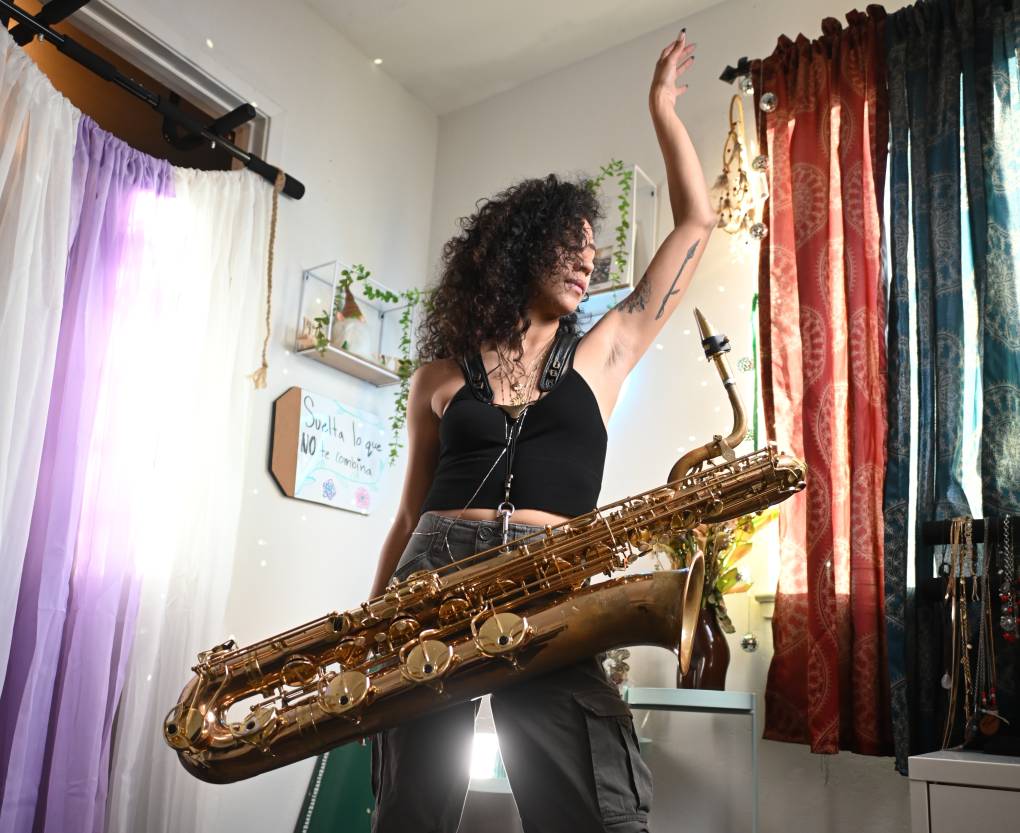
Liner Notes: Peace, Love, and Sax With Lidia Rodriguez
Liner Notes: Jazz Advocate, Greg Bridges
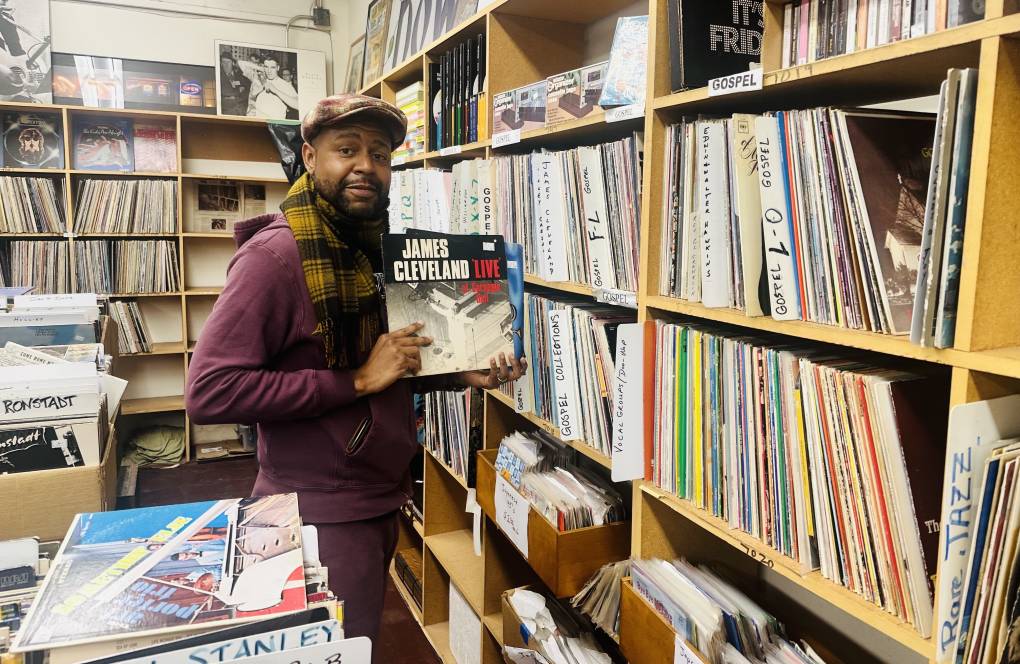
Crate Digging With Bay Area Jazz Saxophonist Howard Wiley
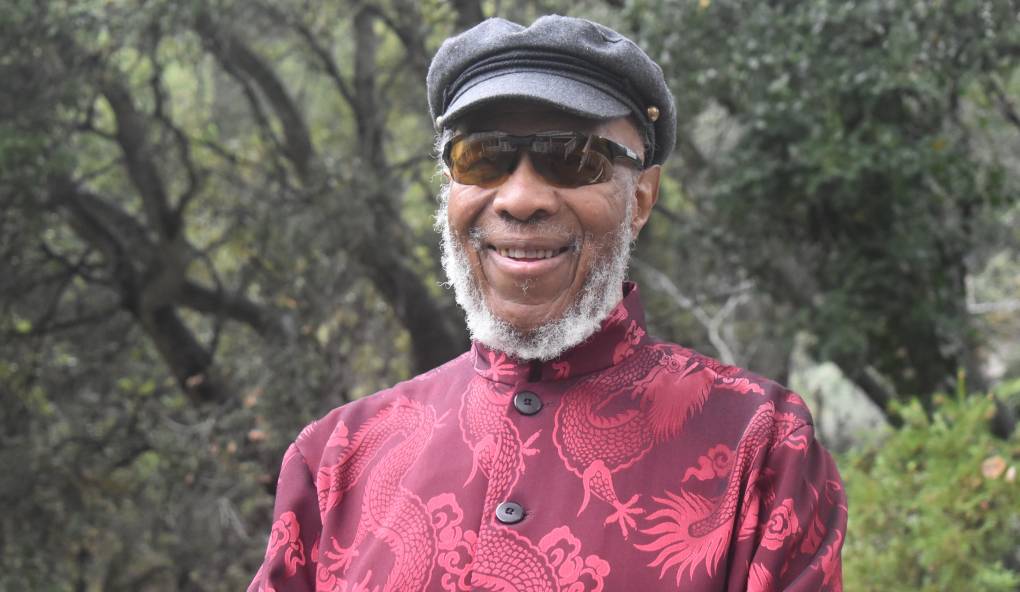
At 90, Bay Area Sax Great John Handy Is Still Composing His Legacy
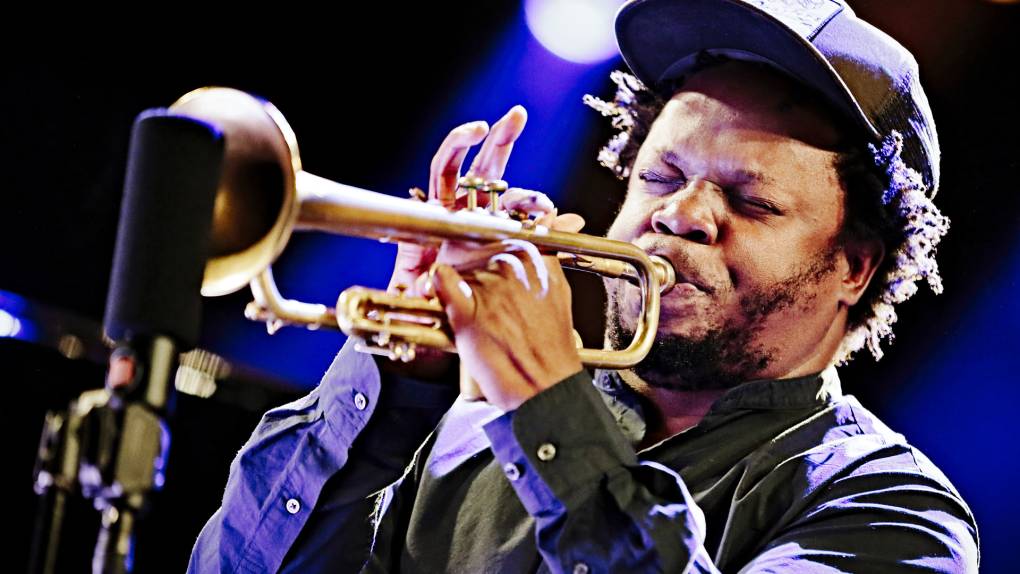
Ambrose Akinmusire Is Skipping the Grammys to Honor His Music Heroes
Since Bowie’s ‘Fame,’ Jean Fineberg Has Written Her Own Musical Rules
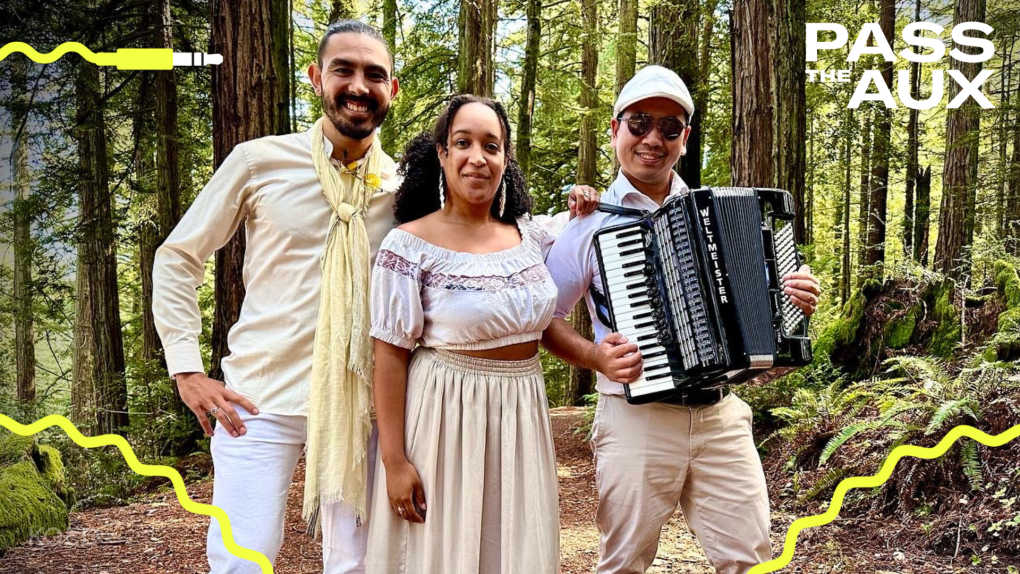
Pissed Off About Climate Change? ‘Green’ Is a Jazzy Rallying Cry
Jazz Vocalist Gretchen Parlato Is Ready to Blossom Again
Sponsored
Player sponsored by
window.__IS_SSR__=true
window.__INITIAL_STATE__={
"attachmentsReducer": {
"audio_0": {
"type": "attachments",
"id": "audio_0",
"imgSizes": {
"kqedFullSize": {
"file": "https://ww2.kqed.org/news/wp-content/themes/KQED-unified/img/audio_bgs/background0.jpg"
}
}
},
"audio_1": {
"type": "attachments",
"id": "audio_1",
"imgSizes": {
"kqedFullSize": {
"file": "https://ww2.kqed.org/news/wp-content/themes/KQED-unified/img/audio_bgs/background1.jpg"
}
}
},
"audio_2": {
"type": "attachments",
"id": "audio_2",
"imgSizes": {
"kqedFullSize": {
"file": "https://ww2.kqed.org/news/wp-content/themes/KQED-unified/img/audio_bgs/background2.jpg"
}
}
},
"audio_3": {
"type": "attachments",
"id": "audio_3",
"imgSizes": {
"kqedFullSize": {
"file": "https://ww2.kqed.org/news/wp-content/themes/KQED-unified/img/audio_bgs/background3.jpg"
}
}
},
"audio_4": {
"type": "attachments",
"id": "audio_4",
"imgSizes": {
"kqedFullSize": {
"file": "https://ww2.kqed.org/news/wp-content/themes/KQED-unified/img/audio_bgs/background4.jpg"
}
}
},
"placeholder": {
"type": "attachments",
"id": "placeholder",
"imgSizes": {
"thumbnail": {
"file": "https://cdn.kqed.org/wp-content/uploads/2024/12/KQED-Default-Image-816638274-2000x1333-1-160x107.jpg",
"width": 160,
"height": 107,
"mimeType": "image/jpeg"
},
"medium": {
"file": "https://cdn.kqed.org/wp-content/uploads/2024/12/KQED-Default-Image-816638274-2000x1333-1-800x533.jpg",
"width": 800,
"height": 533,
"mimeType": "image/jpeg"
},
"medium_large": {
"file": "https://cdn.kqed.org/wp-content/uploads/2024/12/KQED-Default-Image-816638274-2000x1333-1-768x512.jpg",
"width": 768,
"height": 512,
"mimeType": "image/jpeg"
},
"large": {
"file": "https://cdn.kqed.org/wp-content/uploads/2024/12/KQED-Default-Image-816638274-2000x1333-1-1020x680.jpg",
"width": 1020,
"height": 680,
"mimeType": "image/jpeg"
},
"1536x1536": {
"file": "https://cdn.kqed.org/wp-content/uploads/2024/12/KQED-Default-Image-816638274-2000x1333-1-1536x1024.jpg",
"width": 1536,
"height": 1024,
"mimeType": "image/jpeg"
},
"fd-lrg": {
"file": "https://cdn.kqed.org/wp-content/uploads/2024/12/KQED-Default-Image-816638274-2000x1333-1-1536x1024.jpg",
"width": 1536,
"height": 1024,
"mimeType": "image/jpeg"
},
"fd-med": {
"file": "https://cdn.kqed.org/wp-content/uploads/2024/12/KQED-Default-Image-816638274-2000x1333-1-1020x680.jpg",
"width": 1020,
"height": 680,
"mimeType": "image/jpeg"
},
"fd-sm": {
"file": "https://cdn.kqed.org/wp-content/uploads/2024/12/KQED-Default-Image-816638274-2000x1333-1-800x533.jpg",
"width": 800,
"height": 533,
"mimeType": "image/jpeg"
},
"post-thumbnail": {
"file": "https://cdn.kqed.org/wp-content/uploads/2024/12/KQED-Default-Image-816638274-2000x1333-1-672x372.jpg",
"width": 672,
"height": 372,
"mimeType": "image/jpeg"
},
"twentyfourteen-full-width": {
"file": "https://cdn.kqed.org/wp-content/uploads/2024/12/KQED-Default-Image-816638274-2000x1333-1-1038x576.jpg",
"width": 1038,
"height": 576,
"mimeType": "image/jpeg"
},
"xxsmall": {
"file": "https://cdn.kqed.org/wp-content/uploads/2024/12/KQED-Default-Image-816638274-2000x1333-1-160x107.jpg",
"width": 160,
"height": 107,
"mimeType": "image/jpeg"
},
"xsmall": {
"file": "https://cdn.kqed.org/wp-content/uploads/2024/12/KQED-Default-Image-816638274-2000x1333-1-672x372.jpg",
"width": 672,
"height": 372,
"mimeType": "image/jpeg"
},
"small": {
"file": "https://cdn.kqed.org/wp-content/uploads/2024/12/KQED-Default-Image-816638274-2000x1333-1-672x372.jpg",
"width": 672,
"height": 372,
"mimeType": "image/jpeg"
},
"xlarge": {
"file": "https://cdn.kqed.org/wp-content/uploads/2024/12/KQED-Default-Image-816638274-2000x1333-1-1020x680.jpg",
"width": 1020,
"height": 680,
"mimeType": "image/jpeg"
},
"full-width": {
"file": "https://cdn.kqed.org/wp-content/uploads/2024/12/KQED-Default-Image-816638274-2000x1333-1-1920x1280.jpg",
"width": 1920,
"height": 1280,
"mimeType": "image/jpeg"
},
"guest-author-32": {
"file": "https://cdn.kqed.org/wp-content/uploads/2025/01/KQED-Default-Image-816638274-1333x1333-1-160x160.jpg",
"width": 32,
"height": 32,
"mimeType": "image/jpeg"
},
"guest-author-50": {
"file": "https://cdn.kqed.org/wp-content/uploads/2025/01/KQED-Default-Image-816638274-1333x1333-1-160x160.jpg",
"width": 50,
"height": 50,
"mimeType": "image/jpeg"
},
"guest-author-64": {
"file": "https://cdn.kqed.org/wp-content/uploads/2025/01/KQED-Default-Image-816638274-1333x1333-1-160x160.jpg",
"width": 64,
"height": 64,
"mimeType": "image/jpeg"
},
"guest-author-96": {
"file": "https://cdn.kqed.org/wp-content/uploads/2025/01/KQED-Default-Image-816638274-1333x1333-1-160x160.jpg",
"width": 96,
"height": 96,
"mimeType": "image/jpeg"
},
"guest-author-128": {
"file": "https://cdn.kqed.org/wp-content/uploads/2025/01/KQED-Default-Image-816638274-1333x1333-1-160x160.jpg",
"width": 128,
"height": 128,
"mimeType": "image/jpeg"
},
"detail": {
"file": "https://cdn.kqed.org/wp-content/uploads/2025/01/KQED-Default-Image-816638274-1333x1333-1-160x160.jpg",
"width": 160,
"height": 160,
"mimeType": "image/jpeg"
},
"kqedFullSize": {
"file": "https://cdn.kqed.org/wp-content/uploads/2024/12/KQED-Default-Image-816638274-2000x1333-1.jpg",
"width": 2000,
"height": 1333
}
}
},
"arts_13931051": {
"type": "attachments",
"id": "arts_13931051",
"meta": {
"index": "attachments_1716263798",
"site": "arts",
"id": "13931051",
"found": true
},
"parent": 13931047,
"imgSizes": {
"twentyfourteen-full-width": {
"file": "https://ww2.kqed.org/app/uploads/sites/2/2023/06/photo-by-ivan-noble-1038x576.png",
"width": 1038,
"mimeType": "image/png",
"height": 576
},
"thumbnail": {
"file": "https://ww2.kqed.org/app/uploads/sites/2/2023/06/photo-by-ivan-noble-160x172.png",
"width": 160,
"mimeType": "image/png",
"height": 172
},
"post-thumbnail": {
"file": "https://ww2.kqed.org/app/uploads/sites/2/2023/06/photo-by-ivan-noble-672x372.png",
"width": 672,
"mimeType": "image/png",
"height": 372
},
"kqedFullSize": {
"file": "https://ww2.kqed.org/app/uploads/sites/2/2023/06/photo-by-ivan-noble.png",
"width": 1156,
"height": 1245
},
"large": {
"file": "https://ww2.kqed.org/app/uploads/sites/2/2023/06/photo-by-ivan-noble-1020x1099.png",
"width": 1020,
"mimeType": "image/png",
"height": 1099
},
"medium": {
"file": "https://ww2.kqed.org/app/uploads/sites/2/2023/06/photo-by-ivan-noble-800x862.png",
"width": 800,
"mimeType": "image/png",
"height": 862
},
"medium_large": {
"file": "https://ww2.kqed.org/app/uploads/sites/2/2023/06/photo-by-ivan-noble-768x827.png",
"width": 768,
"mimeType": "image/png",
"height": 827
}
},
"publishDate": 1688067849,
"modified": 1688067972,
"caption": "Giulio Xavier Cetto is influenced by his Venezuelan-Italian heritage, Bay Area rap music, and his jazz and classically-trained family. ",
"description": null,
"title": "photo by ivan noble",
"credit": "Ivan Noble",
"status": "inherit",
"altTag": "A black and white photo of Giulio Xavier Cetto playing the upright bass.",
"fetchFailed": false,
"isLoading": false
},
"arts_13930575": {
"type": "attachments",
"id": "arts_13930575",
"meta": {
"index": "attachments_1716263798",
"site": "arts",
"id": "13930575",
"found": true
},
"parent": 13930574,
"imgSizes": {
"twentyfourteen-full-width": {
"file": "https://ww2.kqed.org/app/uploads/sites/2/2023/06/Photo-2-by-Andrew-Peralta-@xt3chniqs-1038x576.jpeg",
"width": 1038,
"mimeType": "image/jpeg",
"height": 576
},
"thumbnail": {
"file": "https://ww2.kqed.org/app/uploads/sites/2/2023/06/Photo-2-by-Andrew-Peralta-@xt3chniqs-160x131.jpeg",
"width": 160,
"mimeType": "image/jpeg",
"height": 131
},
"post-thumbnail": {
"file": "https://ww2.kqed.org/app/uploads/sites/2/2023/06/Photo-2-by-Andrew-Peralta-@xt3chniqs-672x372.jpeg",
"width": 672,
"mimeType": "image/jpeg",
"height": 372
},
"kqedFullSize": {
"file": "https://ww2.kqed.org/app/uploads/sites/2/2023/06/Photo-2-by-Andrew-Peralta-@xt3chniqs-scaled.jpeg",
"width": 2560,
"height": 2091
},
"2048x2048": {
"file": "https://ww2.kqed.org/app/uploads/sites/2/2023/06/Photo-2-by-Andrew-Peralta-@xt3chniqs-2048x1673.jpeg",
"width": 2048,
"mimeType": "image/jpeg",
"height": 1673
},
"large": {
"file": "https://ww2.kqed.org/app/uploads/sites/2/2023/06/Photo-2-by-Andrew-Peralta-@xt3chniqs-1020x833.jpeg",
"width": 1020,
"mimeType": "image/jpeg",
"height": 833
},
"1536x1536": {
"file": "https://ww2.kqed.org/app/uploads/sites/2/2023/06/Photo-2-by-Andrew-Peralta-@xt3chniqs-1536x1255.jpeg",
"width": 1536,
"mimeType": "image/jpeg",
"height": 1255
},
"full-width": {
"file": "https://ww2.kqed.org/app/uploads/sites/2/2023/06/Photo-2-by-Andrew-Peralta-@xt3chniqs-1920x1568.jpeg",
"width": 1920,
"mimeType": "image/jpeg",
"height": 1568
},
"medium": {
"file": "https://ww2.kqed.org/app/uploads/sites/2/2023/06/Photo-2-by-Andrew-Peralta-@xt3chniqs-800x653.jpeg",
"width": 800,
"mimeType": "image/jpeg",
"height": 653
},
"medium_large": {
"file": "https://ww2.kqed.org/app/uploads/sites/2/2023/06/Photo-2-by-Andrew-Peralta-@xt3chniqs-768x627.jpeg",
"width": 768,
"mimeType": "image/jpeg",
"height": 627
}
},
"publishDate": 1686861590,
"modified": 1686861713,
"caption": "Lidia Rodriguez is a premiere baritone saxophonist based in San Jose by way of Stockton. ",
"description": null,
"title": "Photo 2 by Andrew Peralta @xt3chniqs",
"credit": "Andrew Peralta ",
"status": "inherit",
"altTag": "Lidia rodriguez poses with her baritone saxaphone hanging off her neck. Her right hand is raised and she looks off camera.",
"fetchFailed": false,
"isLoading": false
},
"arts_13930276": {
"type": "attachments",
"id": "arts_13930276",
"meta": {
"index": "attachments_1716263798",
"site": "arts",
"id": "13930276",
"found": true
},
"parent": 13930273,
"imgSizes": {
"twentyfourteen-full-width": {
"file": "https://ww2.kqed.org/app/uploads/sites/2/2023/06/Screenshot-2023-06-08-at-9.39.18-AM-1038x576.png",
"width": 1038,
"mimeType": "image/png",
"height": 576
},
"thumbnail": {
"file": "https://ww2.kqed.org/app/uploads/sites/2/2023/06/Screenshot-2023-06-08-at-9.39.18-AM-160x88.png",
"width": 160,
"mimeType": "image/png",
"height": 88
},
"post-thumbnail": {
"file": "https://ww2.kqed.org/app/uploads/sites/2/2023/06/Screenshot-2023-06-08-at-9.39.18-AM-672x372.png",
"width": 672,
"mimeType": "image/png",
"height": 372
},
"kqedFullSize": {
"file": "https://ww2.kqed.org/app/uploads/sites/2/2023/06/Screenshot-2023-06-08-at-9.39.18-AM.png",
"width": 2492,
"height": 1368
},
"2048x2048": {
"file": "https://ww2.kqed.org/app/uploads/sites/2/2023/06/Screenshot-2023-06-08-at-9.39.18-AM-2048x1124.png",
"width": 2048,
"mimeType": "image/png",
"height": 1124
},
"large": {
"file": "https://ww2.kqed.org/app/uploads/sites/2/2023/06/Screenshot-2023-06-08-at-9.39.18-AM-1020x560.png",
"width": 1020,
"mimeType": "image/png",
"height": 560
},
"1536x1536": {
"file": "https://ww2.kqed.org/app/uploads/sites/2/2023/06/Screenshot-2023-06-08-at-9.39.18-AM-1536x843.png",
"width": 1536,
"mimeType": "image/png",
"height": 843
},
"full-width": {
"file": "https://ww2.kqed.org/app/uploads/sites/2/2023/06/Screenshot-2023-06-08-at-9.39.18-AM-1920x1054.png",
"width": 1920,
"mimeType": "image/png",
"height": 1054
},
"medium": {
"file": "https://ww2.kqed.org/app/uploads/sites/2/2023/06/Screenshot-2023-06-08-at-9.39.18-AM-800x439.png",
"width": 800,
"mimeType": "image/png",
"height": 439
},
"medium_large": {
"file": "https://ww2.kqed.org/app/uploads/sites/2/2023/06/Screenshot-2023-06-08-at-9.39.18-AM-768x422.png",
"width": 768,
"mimeType": "image/png",
"height": 422
}
},
"publishDate": 1686242385,
"modified": 1686242412,
"caption": "Greg Bridges is photographed in black and white as he sits behind a microphone and soundboard at KPFA studios in Berkeley, while hosting a jazz radio show.",
"description": "Greg Bridges is photographed in black and white as he sits behind a microphone and soundboard at KPFA studios in Berkeley, while hosting a jazz radio show.",
"title": "Greg Bridges is photographed in black and white as he sits behind a microphone and soundboard at KPFA studios in Berkeley, while hosting a jazz radio show.",
"credit": "Pendarvis Harshaw",
"status": "inherit",
"altTag": "Greg Bridges is photographed in black and white as he sits behind a microphone and soundboard at KPFA studios in Berkeley, while hosting a jazz radio show.",
"fetchFailed": false,
"isLoading": false
},
"arts_13927953": {
"type": "attachments",
"id": "arts_13927953",
"meta": {
"index": "attachments_1716263798",
"site": "arts",
"id": "13927953",
"found": true
},
"parent": 13927947,
"imgSizes": {
"twentyfourteen-full-width": {
"file": "https://ww2.kqed.org/app/uploads/sites/2/2023/04/IMG_0349-1-1038x576.jpg",
"width": 1038,
"mimeType": "image/jpeg",
"height": 576
},
"thumbnail": {
"file": "https://ww2.kqed.org/app/uploads/sites/2/2023/04/IMG_0349-1-160x104.jpg",
"width": 160,
"mimeType": "image/jpeg",
"height": 104
},
"post-thumbnail": {
"file": "https://ww2.kqed.org/app/uploads/sites/2/2023/04/IMG_0349-1-672x372.jpg",
"width": 672,
"mimeType": "image/jpeg",
"height": 372
},
"kqedFullSize": {
"file": "https://ww2.kqed.org/app/uploads/sites/2/2023/04/IMG_0349-1-scaled.jpg",
"width": 2560,
"height": 1667
},
"2048x2048": {
"file": "https://ww2.kqed.org/app/uploads/sites/2/2023/04/IMG_0349-1-2048x1334.jpg",
"width": 2048,
"mimeType": "image/jpeg",
"height": 1334
},
"large": {
"file": "https://ww2.kqed.org/app/uploads/sites/2/2023/04/IMG_0349-1-1020x664.jpg",
"width": 1020,
"mimeType": "image/jpeg",
"height": 664
},
"1536x1536": {
"file": "https://ww2.kqed.org/app/uploads/sites/2/2023/04/IMG_0349-1-1536x1000.jpg",
"width": 1536,
"mimeType": "image/jpeg",
"height": 1000
},
"full-width": {
"file": "https://ww2.kqed.org/app/uploads/sites/2/2023/04/IMG_0349-1-1920x1251.jpg",
"width": 1920,
"mimeType": "image/jpeg",
"height": 1251
},
"medium": {
"file": "https://ww2.kqed.org/app/uploads/sites/2/2023/04/IMG_0349-1-800x521.jpg",
"width": 800,
"mimeType": "image/jpeg",
"height": 521
},
"medium_large": {
"file": "https://ww2.kqed.org/app/uploads/sites/2/2023/04/IMG_0349-1-768x500.jpg",
"width": 768,
"mimeType": "image/jpeg",
"height": 500
}
},
"publishDate": 1681849254,
"modified": 1681853265,
"caption": "Howard Wiley holds up a copy of James Cleveland's 'Live at Carnegie Hall' LP while shopping at Down Home Record Store in El Cerrito on April 7.",
"description": null,
"title": "IMG_0349 (1)",
"credit": "Ariana Proehl/KQED",
"status": "inherit",
"altTag": "a Black man in a purple jacket holds up a copy of a James Cleveland record while standing in a record store with shelves overflowing with vinyl",
"fetchFailed": false,
"isLoading": false
},
"arts_13924635": {
"type": "attachments",
"id": "arts_13924635",
"meta": {
"index": "attachments_1716263798",
"site": "arts",
"id": "13924635",
"found": true
},
"parent": 13924370,
"imgSizes": {
"twentyfourteen-full-width": {
"file": "https://ww2.kqed.org/app/uploads/sites/2/2023/02/DSC_0758-1038x576.jpg",
"width": 1038,
"mimeType": "image/jpeg",
"height": 576
},
"thumbnail": {
"file": "https://ww2.kqed.org/app/uploads/sites/2/2023/02/DSC_0758-160x93.jpg",
"width": 160,
"mimeType": "image/jpeg",
"height": 93
},
"post-thumbnail": {
"file": "https://ww2.kqed.org/app/uploads/sites/2/2023/02/DSC_0758-672x372.jpg",
"width": 672,
"mimeType": "image/jpeg",
"height": 372
},
"kqedFullSize": {
"file": "https://ww2.kqed.org/app/uploads/sites/2/2023/02/DSC_0758-scaled.jpg",
"width": 2560,
"height": 1486
},
"2048x2048": {
"file": "https://ww2.kqed.org/app/uploads/sites/2/2023/02/DSC_0758-2048x1189.jpg",
"width": 2048,
"mimeType": "image/jpeg",
"height": 1189
},
"large": {
"file": "https://ww2.kqed.org/app/uploads/sites/2/2023/02/DSC_0758-1020x592.jpg",
"width": 1020,
"mimeType": "image/jpeg",
"height": 592
},
"1536x1536": {
"file": "https://ww2.kqed.org/app/uploads/sites/2/2023/02/DSC_0758-1536x892.jpg",
"width": 1536,
"mimeType": "image/jpeg",
"height": 892
},
"full-width": {
"file": "https://ww2.kqed.org/app/uploads/sites/2/2023/02/DSC_0758-1920x1115.jpg",
"width": 1920,
"mimeType": "image/jpeg",
"height": 1115
},
"medium": {
"file": "https://ww2.kqed.org/app/uploads/sites/2/2023/02/DSC_0758-800x464.jpg",
"width": 800,
"mimeType": "image/jpeg",
"height": 464
},
"medium_large": {
"file": "https://ww2.kqed.org/app/uploads/sites/2/2023/02/DSC_0758-768x446.jpg",
"width": 768,
"mimeType": "image/jpeg",
"height": 446
}
},
"publishDate": 1675364191,
"modified": 1675364386,
"caption": "Bay Area sax legend John Handy, at the cusp of 90, is sharp as ever.",
"description": null,
"title": "DSC_0758",
"credit": "Andrew Gilbert",
"status": "inherit",
"altTag": "an older Black man with a gray beard dressed in a colorful red shirt and a hat smiles in an outdoor portrait with a large tree behind him",
"fetchFailed": false,
"isLoading": false
},
"arts_13924461": {
"type": "attachments",
"id": "arts_13924461",
"meta": {
"index": "attachments_1716263798",
"site": "arts",
"id": "13924461",
"found": true
},
"parent": 13924375,
"imgSizes": {
"twentyfourteen-full-width": {
"file": "https://ww2.kqed.org/app/uploads/sites/2/2023/01/GettyImages-1169733361-1038x576.jpg",
"width": 1038,
"mimeType": "image/jpeg",
"height": 576
},
"thumbnail": {
"file": "https://ww2.kqed.org/app/uploads/sites/2/2023/01/GettyImages-1169733361-160x90.jpg",
"width": 160,
"mimeType": "image/jpeg",
"height": 90
},
"post-thumbnail": {
"file": "https://ww2.kqed.org/app/uploads/sites/2/2023/01/GettyImages-1169733361-672x372.jpg",
"width": 672,
"mimeType": "image/jpeg",
"height": 372
},
"kqedFullSize": {
"file": "https://ww2.kqed.org/app/uploads/sites/2/2023/01/GettyImages-1169733361.jpg",
"width": 1920,
"height": 1080
},
"large": {
"file": "https://ww2.kqed.org/app/uploads/sites/2/2023/01/GettyImages-1169733361-1020x574.jpg",
"width": 1020,
"mimeType": "image/jpeg",
"height": 574
},
"1536x1536": {
"file": "https://ww2.kqed.org/app/uploads/sites/2/2023/01/GettyImages-1169733361-1536x864.jpg",
"width": 1536,
"mimeType": "image/jpeg",
"height": 864
},
"medium": {
"file": "https://ww2.kqed.org/app/uploads/sites/2/2023/01/GettyImages-1169733361-800x450.jpg",
"width": 800,
"mimeType": "image/jpeg",
"height": 450
},
"medium_large": {
"file": "https://ww2.kqed.org/app/uploads/sites/2/2023/01/GettyImages-1169733361-768x432.jpg",
"width": 768,
"mimeType": "image/jpeg",
"height": 432
}
},
"publishDate": 1675121182,
"modified": 1675121269,
"caption": "Ambrose Akinmusire pictured in 2019. Akinmusire, who received his second Grammy nomination in November, will be skipping the award show in favor of his own residency at SFJAZZ, Feb. 3–5 and Feb. 9 at Grace Cathedral in San Francisco.",
"description": null,
"title": "GettyImages-1169733361",
"credit": "Peter Van Breukelen/Redferns/Getty Images",
"status": "inherit",
"altTag": "Black man in baseball cap plays trumpet with eyes closed",
"fetchFailed": false,
"isLoading": false
},
"arts_13921592": {
"type": "attachments",
"id": "arts_13921592",
"meta": {
"index": "attachments_1716263798",
"site": "arts",
"id": "13921592",
"found": true
},
"parent": 13921584,
"imgSizes": {
"twentyfourteen-full-width": {
"file": "https://ww2.kqed.org/app/uploads/sites/2/2022/11/Jean-Fineberg-poto-by-Sandy-Morris-cropped-1038x576.jpg",
"width": 1038,
"mimeType": "image/jpeg",
"height": 576
},
"thumbnail": {
"file": "https://ww2.kqed.org/app/uploads/sites/2/2022/11/Jean-Fineberg-poto-by-Sandy-Morris-cropped-160x90.jpg",
"width": 160,
"mimeType": "image/jpeg",
"height": 90
},
"post-thumbnail": {
"file": "https://ww2.kqed.org/app/uploads/sites/2/2022/11/Jean-Fineberg-poto-by-Sandy-Morris-cropped-672x372.jpg",
"width": 672,
"mimeType": "image/jpeg",
"height": 372
},
"kqedFullSize": {
"file": "https://ww2.kqed.org/app/uploads/sites/2/2022/11/Jean-Fineberg-poto-by-Sandy-Morris-cropped.jpg",
"width": 1920,
"height": 1080
},
"large": {
"file": "https://ww2.kqed.org/app/uploads/sites/2/2022/11/Jean-Fineberg-poto-by-Sandy-Morris-cropped-1020x574.jpg",
"width": 1020,
"mimeType": "image/jpeg",
"height": 574
},
"1536x1536": {
"file": "https://ww2.kqed.org/app/uploads/sites/2/2022/11/Jean-Fineberg-poto-by-Sandy-Morris-cropped-1536x864.jpg",
"width": 1536,
"mimeType": "image/jpeg",
"height": 864
},
"medium": {
"file": "https://ww2.kqed.org/app/uploads/sites/2/2022/11/Jean-Fineberg-poto-by-Sandy-Morris-cropped-800x450.jpg",
"width": 800,
"mimeType": "image/jpeg",
"height": 450
},
"medium_large": {
"file": "https://ww2.kqed.org/app/uploads/sites/2/2022/11/Jean-Fineberg-poto-by-Sandy-Morris-cropped-768x432.jpg",
"width": 768,
"mimeType": "image/jpeg",
"height": 432
}
},
"publishDate": 1668474354,
"modified": 1668474945,
"caption": "In the 1970s, Jean Fineberg recorded with all-time greats like David Bowie and Chic. And in more recent years, she's been a force in the East Bay's jazz scene, connecting and creating opportunities for women players.",
"description": null,
"title": "Jean-Fineberg poto by Sandy Morris cropped",
"credit": "Sandy Morris",
"status": "inherit",
"altTag": "Saxophonist Jean Fineberg plays a solo.",
"fetchFailed": false,
"isLoading": false
},
"arts_13921315": {
"type": "attachments",
"id": "arts_13921315",
"meta": {
"index": "attachments_1716263798",
"site": "arts",
"id": "13921315",
"found": true
},
"parent": 13921311,
"imgSizes": {
"twentyfourteen-full-width": {
"file": "https://ww2.kqed.org/app/uploads/sites/2/2022/11/Copy-of-Pass-The-Aux-template-9-1038x576.png",
"width": 1038,
"mimeType": "image/png",
"height": 576
},
"thumbnail": {
"file": "https://ww2.kqed.org/app/uploads/sites/2/2022/11/Copy-of-Pass-The-Aux-template-9-160x90.png",
"width": 160,
"mimeType": "image/png",
"height": 90
},
"post-thumbnail": {
"file": "https://ww2.kqed.org/app/uploads/sites/2/2022/11/Copy-of-Pass-The-Aux-template-9-672x372.png",
"width": 672,
"mimeType": "image/png",
"height": 372
},
"kqedFullSize": {
"file": "https://ww2.kqed.org/app/uploads/sites/2/2022/11/Copy-of-Pass-The-Aux-template-9.png",
"width": 1920,
"height": 1080
},
"large": {
"file": "https://ww2.kqed.org/app/uploads/sites/2/2022/11/Copy-of-Pass-The-Aux-template-9-1020x574.png",
"width": 1020,
"mimeType": "image/png",
"height": 574
},
"1536x1536": {
"file": "https://ww2.kqed.org/app/uploads/sites/2/2022/11/Copy-of-Pass-The-Aux-template-9-1536x864.png",
"width": 1536,
"mimeType": "image/png",
"height": 864
},
"medium": {
"file": "https://ww2.kqed.org/app/uploads/sites/2/2022/11/Copy-of-Pass-The-Aux-template-9-800x450.png",
"width": 800,
"mimeType": "image/png",
"height": 450
},
"medium_large": {
"file": "https://ww2.kqed.org/app/uploads/sites/2/2022/11/Copy-of-Pass-The-Aux-template-9-768x432.png",
"width": 768,
"mimeType": "image/png",
"height": 432
}
},
"publishDate": 1667580206,
"modified": 1667580343,
"caption": "Guitarist and bassist Kevin Goldberg, singer Jackie Gage and accordionist Manny Junaedy teamed up for 'Green,' a tango-inspired track to channel their frustration with the state of our planet. ",
"description": null,
"title": "Jackie Gage and Kevin Goldberg",
"credit": "Kevin Goldberg and Manny Junaedy",
"status": "inherit",
"altTag": null,
"fetchFailed": false,
"isLoading": false
},
"arts_13913416": {
"type": "attachments",
"id": "arts_13913416",
"meta": {
"index": "attachments_1716263798",
"site": "arts",
"id": "13913416",
"found": true
},
"parent": 13913376,
"imgSizes": {
"twentyfourteen-full-width": {
"file": "https://ww2.kqed.org/app/uploads/sites/2/2022/05/gretchen-parlato-small-1-1038x576.jpg",
"width": 1038,
"mimeType": "image/jpeg",
"height": 576
},
"thumbnail": {
"file": "https://ww2.kqed.org/app/uploads/sites/2/2022/05/gretchen-parlato-small-1-160x90.jpg",
"width": 160,
"mimeType": "image/jpeg",
"height": 90
},
"post-thumbnail": {
"file": "https://ww2.kqed.org/app/uploads/sites/2/2022/05/gretchen-parlato-small-1-672x372.jpg",
"width": 672,
"mimeType": "image/jpeg",
"height": 372
},
"kqedFullSize": {
"file": "https://ww2.kqed.org/app/uploads/sites/2/2022/05/gretchen-parlato-small-1.jpg",
"width": 1920,
"height": 1080
},
"large": {
"file": "https://ww2.kqed.org/app/uploads/sites/2/2022/05/gretchen-parlato-small-1-1020x574.jpg",
"width": 1020,
"mimeType": "image/jpeg",
"height": 574
},
"1536x1536": {
"file": "https://ww2.kqed.org/app/uploads/sites/2/2022/05/gretchen-parlato-small-1-1536x864.jpg",
"width": 1536,
"mimeType": "image/jpeg",
"height": 864
},
"medium": {
"file": "https://ww2.kqed.org/app/uploads/sites/2/2022/05/gretchen-parlato-small-1-800x450.jpg",
"width": 800,
"mimeType": "image/jpeg",
"height": 450
},
"medium_large": {
"file": "https://ww2.kqed.org/app/uploads/sites/2/2022/05/gretchen-parlato-small-1-768x432.jpg",
"width": 768,
"mimeType": "image/jpeg",
"height": 432
}
},
"publishDate": 1652732684,
"modified": 1652732718,
"caption": "In the 2000s, Gretchen Parlato changed the sound of jazz with her singular voice. After receding from the spotlight to focus on motherhood and teaching, she's back with a solo album and two Bay Area headlining shows.",
"description": null,
"title": "gretchen parlato-small",
"credit": "Lauren Desberg",
"status": "inherit",
"altTag": null,
"fetchFailed": false,
"isLoading": false
}
},
"audioPlayerReducer": {
"postId": "stream_live",
"isPaused": true,
"isPlaying": false,
"pfsActive": false,
"pledgeModalIsOpen": true,
"playerDrawerIsOpen": false
},
"authorsReducer": {
"agilbert": {
"type": "authors",
"id": "86",
"meta": {
"index": "authors_1716337520",
"id": "86",
"found": true
},
"name": "Andrew Gilbert",
"firstName": "Andrew",
"lastName": "Gilbert",
"slug": "agilbert",
"email": "jazzscribe@aol.com",
"display_author_email": false,
"staff_mastheads": [],
"title": "KQED Contributor",
"bio": "A Los Angeles native based in the Berkeley area since 1996, Andrew Gilbert covers jazz, international music and dance for KQED's \u003ci>California Report, \u003c/i>the\u003ci> Mercury News\u003c/i>, \u003ci>San Francisco Chronicle\u003c/i>, \u003ci>Berkeleyside.com\u003c/i>, and other publications. He is available for weddings and bar and bat mitzvahs. #jazzscribe",
"avatar": "https://secure.gravatar.com/avatar/445e6fe4cc696bd39773e3c90f5108b6?s=600&d=blank&r=g",
"twitter": null,
"facebook": null,
"instagram": null,
"linkedin": null,
"sites": [
{
"site": "arts",
"roles": [
"Contributor",
"author"
]
},
{
"site": "news",
"roles": [
"author"
]
}
],
"headData": {
"title": "Andrew Gilbert | KQED",
"description": "KQED Contributor",
"ogImgSrc": "https://secure.gravatar.com/avatar/445e6fe4cc696bd39773e3c90f5108b6?s=600&d=blank&r=g",
"twImgSrc": "https://secure.gravatar.com/avatar/445e6fe4cc696bd39773e3c90f5108b6?s=600&d=blank&r=g"
},
"isLoading": false,
"link": "/author/agilbert"
},
"aproehl": {
"type": "authors",
"id": "11296",
"meta": {
"index": "authors_1716337520",
"id": "11296",
"found": true
},
"name": "Ariana Proehl",
"firstName": "Ariana",
"lastName": "Proehl",
"slug": "aproehl",
"email": "aproehl@KQED.org",
"display_author_email": true,
"staff_mastheads": [
"news"
],
"title": "Culture Reporter, KQED",
"bio": "Ariana Proehl is a Culture Reporter and Host.",
"avatar": "https://secure.gravatar.com/avatar/c96b24567eb5bb3a4f8bb295ed53e232?s=600&d=blank&r=g",
"twitter": "ArianaProehl",
"facebook": null,
"instagram": null,
"linkedin": null,
"sites": [
{
"site": "arts",
"roles": []
},
{
"site": "news",
"roles": []
},
{
"site": "education",
"roles": []
},
{
"site": "forum",
"roles": []
}
],
"headData": {
"title": "Ariana Proehl | KQED",
"description": "Culture Reporter, KQED",
"ogImgSrc": "https://secure.gravatar.com/avatar/c96b24567eb5bb3a4f8bb295ed53e232?s=600&d=blank&r=g",
"twImgSrc": "https://secure.gravatar.com/avatar/c96b24567eb5bb3a4f8bb295ed53e232?s=600&d=blank&r=g"
},
"isLoading": false,
"link": "/author/aproehl"
},
"nvoynovskaya": {
"type": "authors",
"id": "11387",
"meta": {
"index": "authors_1716337520",
"id": "11387",
"found": true
},
"name": "Nastia Voynovskaya",
"firstName": "Nastia",
"lastName": "Voynovskaya",
"slug": "nvoynovskaya",
"email": "nvoynovskaya@kqed.org",
"display_author_email": false,
"staff_mastheads": [
"arts"
],
"title": "Editor and reporter",
"bio": "Nastia Voynovskaya is a reporter and editor at KQED Arts & Culture. She's been covering the arts in the Bay Area for over a decade, with a focus on music, queer culture, labor issues and grassroots organizing. She has edited KQED story series such as Trans Bay: A History of San Francisco's Gender-Diverse Community, and co-created KQED's Bay Area hip-hop history project, That's My Word. Nastia's work has been recognized by the Society of Professional Journalists and San Francisco Press Club. She holds a BA in comparative literature from UC Berkeley.",
"avatar": "https://secure.gravatar.com/avatar/310649817772dd2a98e5dfecb6b24842?s=600&d=blank&r=g",
"twitter": null,
"facebook": null,
"instagram": "https://www.instagram.com/nananastia/",
"linkedin": null,
"sites": [
{
"site": "arts",
"roles": [
"administrator"
]
},
{
"site": "news",
"roles": [
"editor"
]
},
{
"site": "pop",
"roles": [
"administrator"
]
},
{
"site": "bayareabites",
"roles": [
"editor"
]
},
{
"site": "podcasts",
"roles": [
"editor"
]
},
{
"site": "hiphop",
"roles": [
"editor"
]
}
],
"headData": {
"title": "Nastia Voynovskaya | KQED",
"description": "Editor and reporter",
"ogImgSrc": "https://secure.gravatar.com/avatar/310649817772dd2a98e5dfecb6b24842?s=600&d=blank&r=g",
"twImgSrc": "https://secure.gravatar.com/avatar/310649817772dd2a98e5dfecb6b24842?s=600&d=blank&r=g"
},
"isLoading": false,
"link": "/author/nvoynovskaya"
},
"ogpenn": {
"type": "authors",
"id": "11491",
"meta": {
"index": "authors_1716337520",
"id": "11491",
"found": true
},
"name": "Pendarvis Harshaw",
"firstName": "Pendarvis",
"lastName": "Harshaw",
"slug": "ogpenn",
"email": "ogpenn@gmail.com",
"display_author_email": false,
"staff_mastheads": [
"arts"
],
"title": "Community Engagement Reporter",
"bio": "Pendarvis Harshaw is an educator, host and writer with KQED Arts.",
"avatar": "https://secure.gravatar.com/avatar/093d33baff5354890e29ad83d58d2c49?s=600&d=blank&r=g",
"twitter": null,
"facebook": null,
"instagram": "ogpenn",
"linkedin": null,
"sites": [
{
"site": "arts",
"roles": [
"editor"
]
},
{
"site": "news",
"roles": [
"editor"
]
},
{
"site": "bayareabites",
"roles": [
"author"
]
},
{
"site": "hiphop",
"roles": [
"editor"
]
}
],
"headData": {
"title": "Pendarvis Harshaw | KQED",
"description": "Community Engagement Reporter",
"ogImgSrc": "https://secure.gravatar.com/avatar/093d33baff5354890e29ad83d58d2c49?s=600&d=blank&r=g",
"twImgSrc": "https://secure.gravatar.com/avatar/093d33baff5354890e29ad83d58d2c49?s=600&d=blank&r=g"
},
"isLoading": false,
"link": "/author/ogpenn"
},
"mmedina": {
"type": "authors",
"id": "11528",
"meta": {
"index": "authors_1716337520",
"id": "11528",
"found": true
},
"name": "Marisol Medina-Cadena",
"firstName": "Marisol",
"lastName": "Medina-Cadena",
"slug": "mmedina",
"email": "mmedina@KQED.org",
"display_author_email": true,
"staff_mastheads": [],
"title": "Producer, Rightnowish Podcast",
"bio": "Marisol Medina-Cadena is a radio reporter and podcast producer. Before working at KQED, she produced for PBS member station, KCET, in Los Angeles. In 2017, Marisol won an Emmy Award for her work on the televised documentary, \u003cem>City Rising\u003c/em>, examining California's affordable housing crisis and the historical roots of gentrification.",
"avatar": "https://secure.gravatar.com/avatar/6c3db46a1cabb5e1fe9a365b5f4e681e?s=600&d=blank&r=g",
"twitter": "marisolreports",
"facebook": null,
"instagram": null,
"linkedin": null,
"sites": [
{
"site": "arts",
"roles": []
},
{
"site": "news",
"roles": [
"edit_others_posts"
]
}
],
"headData": {
"title": "Marisol Medina-Cadena | KQED",
"description": "Producer, Rightnowish Podcast",
"ogImgSrc": "https://secure.gravatar.com/avatar/6c3db46a1cabb5e1fe9a365b5f4e681e?s=600&d=blank&r=g",
"twImgSrc": "https://secure.gravatar.com/avatar/6c3db46a1cabb5e1fe9a365b5f4e681e?s=600&d=blank&r=g"
},
"isLoading": false,
"link": "/author/mmedina"
}
},
"breakingNewsReducer": {},
"pagesReducer": {},
"postsReducer": {
"stream_live": {
"type": "live",
"id": "stream_live",
"audioUrl": "https://streams.kqed.org/kqedradio",
"title": "Live Stream",
"excerpt": "Live Stream information currently unavailable.",
"link": "/radio",
"featImg": "",
"label": {
"name": "KQED Live",
"link": "/"
}
},
"stream_kqedNewscast": {
"type": "posts",
"id": "stream_kqedNewscast",
"audioUrl": "https://www.kqed.org/.stream/anon/radio/RDnews/newscast.mp3?_=1",
"title": "KQED Newscast",
"featImg": "",
"label": {
"name": "88.5 FM",
"link": "/"
}
},
"arts_13931047": {
"type": "posts",
"id": "arts_13931047",
"meta": {
"index": "posts_1716263798",
"site": "arts",
"id": "13931047",
"score": null,
"sort": [
1688119217000
]
},
"parent": 0,
"labelTerm": {
"site": "arts",
"term": 8720
},
"blocks": [],
"publishDate": 1688119217,
"format": "audio",
"title": "Liner Notes: Big Vibin' with Bassist Giulio Xavier Cetto",
"headTitle": "Liner Notes: Big Vibin’ with Bassist Giulio Xavier Cetto | KQED",
"content": "\u003cp>When bassist and composer \u003ca href=\"https://www.giulioxaviercetto.com/\">Giulio Xavier Cetto\u003c/a> hears jazz, he instinctually hears hip-hop. The same way he hears hip-hop when he hears jazz. There are no divisions between the two genres, each compliment and mirror the other.\u003c/p>\n\u003cp>The synergy between the styles permeate Giulio’s sound. Take for instance, the recent \u003ca href=\"https://www.youtube.com/watch?v=0kKct_AKz8s\">NPR Tiny Desk\u003c/a> show he performed with \u003ca href=\"https://www.kassaoverall.com/\">Kassa Overall\u003c/a> or the \u003ca href=\"https://blackcatsf.turntabletickets.com/shows/1074/?date=2023-07-09\">sundaySlap!\u003c/a>, a jazz infused hip hop jam session he regularly leads at the famed Black Cat Jazz Supper Club.\u003c/p>\n\u003cp>Drawing from his Venezuelan-Italian heritage, the San Francisco based musician has studied a range of music and can adapt with ease to any musical scenario on the upright bass and electric bass. He brings an energetic vibe to his performance style that beckons audiences to move.\u003c/p>\n\u003cp>“My main goal is to support as a bass player. I want to be like the floor for someone to stand on. I want to be the rock. So I’m going to just listen as best as I can, and be super honest with what I think the music needs best. Sometimes I need to go into a situation and kind of try to be a blank slate. Not think too much. Just kind of be a vessel.”\u003c/p>\n\u003cfigure id=\"attachment_13931053\" class=\"wp-caption aligncenter\" style=\"max-width: 769px\">\u003cimg loading=\"lazy\" decoding=\"async\" class=\"size-full wp-image-13931053\" src=\"https://ww2.kqed.org/app/uploads/sites/2/2023/06/photo-by-Donovan-Washington-1.jpg\" alt=\"In a black and white photo, Giulio Xavier Cetto holds his upright bass. The lighting casts a shadow over his face and arms. \" width=\"769\" height=\"1024\" srcset=\"https://cdn.kqed.org/wp-content/uploads/sites/2/2023/06/photo-by-Donovan-Washington-1.jpg 769w, https://cdn.kqed.org/wp-content/uploads/sites/2/2023/06/photo-by-Donovan-Washington-1-160x213.jpg 160w\" sizes=\"(max-width: 769px) 100vw, 769px\">\u003cfigcaption class=\"wp-caption-text\">Giulio Xavier Cetto curates weekly jazz shows at the Stow Lake Boathouse in Golden Gate Park. \u003ccite>(Donovan Washington)\u003c/cite>\u003c/figcaption>\u003c/figure>\n\u003cp>On this week’s Rightnowish, Giulio sits down to talk about his craft, his favorite bay area venue to play in, and what it’s like leading his band \u003ca href=\"https://www.instagram.com/bigtrippin__/\">Big Trippin\u003c/a> with former Mars Volta drummer Thomas Pridgen, saxophonist John Palowitch and pianist Javier Santiago.\u003c/p>\n\u003cp>\u003c!-- iframe plugin v.4.3 wordpress.org/plugins/iframe/ -->\u003cbr>\n\u003ciframe loading=\"lazy\" frameborder=\"0\" height=\"200\" scrolling=\"no\" src=\"https://playlist.megaphone.fm/?e=KQINC3420729776&light=true\" width=\"100%\" class=\"iframe-class\">\u003c/iframe>\u003c/p>\n\u003cp>\u003ca href=\"https://bit.ly/3r9uaHt\">Read the podcast transcript\u003c/a>\u003c/p>\n\u003cp>Below are lightly edited excerpts of my conversation with Giulio Xavier Cetto. Listen to the podcast for the full conversation.\u003c/p>\n\u003cp>MEDINA-CADENA: I first saw you two years ago perform. And I remember going up to and being like, “How can I keep up with you?” And you were like, “I’m on the Instagram, I’m at @thejazzthug.”\u003c/p>\n\u003cp>GIULIO XAVIER CETTO, GUEST: The jazz thug that’s my, my alias.\u003c/p>\n\u003cp>MEDINA-CADENA: Yeah. What’s the story behind the alias?\u003c/p>\n\u003cp>CETTO: It kind of just speaks on my love for hip hop and jazz music. My friend actually made it up one time, he said it and I was like, I like that. I want to go with it. It stuck. And people like it more than I do now. I get called that. I’ll see a flyer and they won’t even put my name. They put the jazz thug. And I’m like, well, I still want my name on there. But yeah, I thought about changing it recently and a bunch of people were like, No, don’t change it.\u003c/p>\n\u003cp>[aside tag ='liner-notes' label= 'More From the Liner Notes Series' num='5']\u003c/p>\n\u003cp>MEDINA-CADENA: A reoccurring show you sometimes lead at The Black Cat is called sundaySlap! It’s described as Dilla meets Coltrane.\u003c/p>\n\u003cp>CETTO: There’s a good chance we’re going to play some Dilla and a good chance we might do some Coltrane. But yeah, I’m constantly featuring different emcees, rappers, singers.\u003c/p>\n\u003cp>CETTO: We’ll play a jazz song and make it hip hop. We’ll do a hip hop song and make it jazz. Okay, we’re going to take the feel from this song, the bass line from this other song, and we get to play this jazz standard over it until it’s unrecognizable. We’ll do all that stuff and we’ll cover a lot of ground in sundaySlap! It’s usually with my band Big Trippin, and we can do anything.\u003c/p>\n\u003cp>MEDINA-CADENA: You play the upright bass and the electric bass. So like when folks approach you [to collaborate] how do you make that judgment call? Like, Oh, I think upright would\u003cbr>\ndo better or…\u003c/p>\n\u003cp>CETTO: Yeah, I’ll get asked just to play a gig and, they won’t say which one they want. They are just like, “Can you do this?'”And I’ll show up with both basses and then see what the music tells me to do. It’s usually clear to me like, this is this is an upright song or this is an electric song.\u003c/p>\n\u003cp>CETTO: Super different energies to both. One is just the sound of wood and has all that percussion behind it to the upright. Then with the electric bass, I hit one note that lasts for thirty seconds and just has that big, powerful guitar player kind of energy. It’s such an important part of the music that is easily looked over.\u003c/p>\n\u003cp>CETTO: I get people telling me all the time that, “Oh, I didn’t even think about the bass until I saw you play. Then I realize how much I like the bass and how important that is to the music.” I’m like yeah, it’s the heart of the music! It’s the dance floor!\u003cbr>\n\u003cimg loading=\"lazy\" decoding=\"async\" class=\"aligncenter size-full wp-image-12127869\" src=\"https://ww2.kqed.org/app/uploads/sites/2/2016/09/Q.Logo_.Break_.jpg\" alt=\"\" width=\"800\" height=\"78\" srcset=\"https://cdn.kqed.org/wp-content/uploads/sites/2/2016/09/Q.Logo_.Break_.jpg 800w, https://cdn.kqed.org/wp-content/uploads/sites/2/2016/09/Q.Logo_.Break_-400x39.jpg 400w, https://cdn.kqed.org/wp-content/uploads/sites/2/2016/09/Q.Logo_.Break_-768x75.jpg 768w\" sizes=\"(max-width: 800px) 100vw, 800px\">\u003c/p>\n\u003cp>\u003cstrong>\u003cem>Rightnowish is an arts and culture podcast produced at KQED. Listen to it wherever you get your podcasts or click the play button at the top of this page and subscribe to the show on \u003ca href=\"https://www.npr.org/podcasts/721590300/rightnowish\">NPR One\u003c/a>, \u003ca href=\"https://open.spotify.com/show/7kEJuafTzTVan7B78ttz1I\">Spotify\u003c/a>, \u003ca href=\"https://podcasts.apple.com/us/podcast/rightnowish/id1482187648\">Apple Podcasts\u003c/a>, \u003ca href=\"https://tunein.com/podcasts/Arts--Culture-Podcasts/Rightnowish-p1258245/\">TuneIn\u003c/a>, \u003ca href=\"https://www.stitcher.com/podcast/kqed/rightnowish\">Stitcher\u003c/a> or wherever you get your podcasts. \u003c/em>\u003c/strong>\u003c/p>\n\u003cp>[ad fullwidth]=\u003c/p>\n\u003cp>\u003c/p>\n",
"stats": {
"hasVideo": false,
"hasChartOrMap": false,
"hasAudio": true,
"hasPolis": false,
"wordCount": 936,
"hasGoogleForm": false,
"hasGallery": false,
"hasHearkenModule": false,
"iframeSrcs": [],
"paragraphCount": 23
},
"modified": 1710986497,
"excerpt": "Cetto talks about his craft, playing at Stow Lake, and leading his band Big Trippin from the bass chair. ",
"headData": {
"twImgId": "",
"twTitle": "",
"ogTitle": "",
"ogImgId": "",
"twDescription": "",
"description": "Giulio talks about his craft, his favorite bay area venue to play in, and what it's like leading his band Big Trippin from the bass chair.",
"socialDescription": "Giulio talks about his craft, his favorite bay area venue to play in, and what it's like leading his band Big Trippin from the bass chair.",
"title": "Liner Notes: Big Vibin' with Bassist Giulio Xavier Cetto | KQED",
"ogDescription": "",
"schema": {
"@context": "https://schema.org",
"@type": "Article",
"headline": "Liner Notes: Big Vibin' with Bassist Giulio Xavier Cetto",
"datePublished": "2023-06-30T03:00:17-07:00",
"dateModified": "2024-03-20T19:01:37-07:00",
"image": "https://cdn.kqed.org/wp-content/uploads/2020/02/KQED-OG-Image@1x.png"
}
},
"guestAuthors": [],
"slug": "liner-notes-big-vibin-with-bassist-giulio-xavier-cetto",
"status": "publish",
"audioUrl": "https://www.podtrac.com/pts/redirect.mp3/chrt.fm/track/G6C7C3/traffic.megaphone.fm/KQINC3420729776.mp3?updated=1688081708",
"excludeFromSiteSearch": "Include",
"sticky": false,
"articleAge": "0",
"path": "/arts/13931047/liner-notes-big-vibin-with-bassist-giulio-xavier-cetto",
"audioTrackLength": null,
"parsedContent": [
{
"type": "contentString",
"content": "\u003cdiv class=\"post-body\">\u003cp>\u003cp>When bassist and composer \u003ca href=\"https://www.giulioxaviercetto.com/\">Giulio Xavier Cetto\u003c/a> hears jazz, he instinctually hears hip-hop. The same way he hears hip-hop when he hears jazz. There are no divisions between the two genres, each compliment and mirror the other.\u003c/p>\n\u003cp>The synergy between the styles permeate Giulio’s sound. Take for instance, the recent \u003ca href=\"https://www.youtube.com/watch?v=0kKct_AKz8s\">NPR Tiny Desk\u003c/a> show he performed with \u003ca href=\"https://www.kassaoverall.com/\">Kassa Overall\u003c/a> or the \u003ca href=\"https://blackcatsf.turntabletickets.com/shows/1074/?date=2023-07-09\">sundaySlap!\u003c/a>, a jazz infused hip hop jam session he regularly leads at the famed Black Cat Jazz Supper Club.\u003c/p>\n\u003cp>Drawing from his Venezuelan-Italian heritage, the San Francisco based musician has studied a range of music and can adapt with ease to any musical scenario on the upright bass and electric bass. He brings an energetic vibe to his performance style that beckons audiences to move.\u003c/p>\n\u003cp>“My main goal is to support as a bass player. I want to be like the floor for someone to stand on. I want to be the rock. So I’m going to just listen as best as I can, and be super honest with what I think the music needs best. Sometimes I need to go into a situation and kind of try to be a blank slate. Not think too much. Just kind of be a vessel.”\u003c/p>\n\u003cfigure id=\"attachment_13931053\" class=\"wp-caption aligncenter\" style=\"max-width: 769px\">\u003cimg loading=\"lazy\" decoding=\"async\" class=\"size-full wp-image-13931053\" src=\"https://ww2.kqed.org/app/uploads/sites/2/2023/06/photo-by-Donovan-Washington-1.jpg\" alt=\"In a black and white photo, Giulio Xavier Cetto holds his upright bass. The lighting casts a shadow over his face and arms. \" width=\"769\" height=\"1024\" srcset=\"https://cdn.kqed.org/wp-content/uploads/sites/2/2023/06/photo-by-Donovan-Washington-1.jpg 769w, https://cdn.kqed.org/wp-content/uploads/sites/2/2023/06/photo-by-Donovan-Washington-1-160x213.jpg 160w\" sizes=\"(max-width: 769px) 100vw, 769px\">\u003cfigcaption class=\"wp-caption-text\">Giulio Xavier Cetto curates weekly jazz shows at the Stow Lake Boathouse in Golden Gate Park. \u003ccite>(Donovan Washington)\u003c/cite>\u003c/figcaption>\u003c/figure>\n\u003cp>On this week’s Rightnowish, Giulio sits down to talk about his craft, his favorite bay area venue to play in, and what it’s like leading his band \u003ca href=\"https://www.instagram.com/bigtrippin__/\">Big Trippin\u003c/a> with former Mars Volta drummer Thomas Pridgen, saxophonist John Palowitch and pianist Javier Santiago.\u003c/p>\n\u003cp>\u003c!-- iframe plugin v.4.3 wordpress.org/plugins/iframe/ -->\u003cbr>\n\u003ciframe loading=\"lazy\" frameborder=\"0\" height=\"200\" scrolling=\"no\" src=\"https://playlist.megaphone.fm/?e=KQINC3420729776&light=true\" width=\"100%\" class=\"iframe-class\">\u003c/iframe>\u003c/p>\n\u003cp>\u003ca href=\"https://bit.ly/3r9uaHt\">Read the podcast transcript\u003c/a>\u003c/p>\n\u003cp>Below are lightly edited excerpts of my conversation with Giulio Xavier Cetto. Listen to the podcast for the full conversation.\u003c/p>\n\u003cp>MEDINA-CADENA: I first saw you two years ago perform. And I remember going up to and being like, “How can I keep up with you?” And you were like, “I’m on the Instagram, I’m at @thejazzthug.”\u003c/p>\n\u003cp>GIULIO XAVIER CETTO, GUEST: The jazz thug that’s my, my alias.\u003c/p>\n\u003cp>MEDINA-CADENA: Yeah. What’s the story behind the alias?\u003c/p>\n\u003cp>CETTO: It kind of just speaks on my love for hip hop and jazz music. My friend actually made it up one time, he said it and I was like, I like that. I want to go with it. It stuck. And people like it more than I do now. I get called that. I’ll see a flyer and they won’t even put my name. They put the jazz thug. And I’m like, well, I still want my name on there. But yeah, I thought about changing it recently and a bunch of people were like, No, don’t change it.\u003c/p>\n\u003cp>\u003c/p>\u003c/div>",
"attributes": {
"named": {},
"numeric": []
}
},
{
"type": "component",
"content": "",
"name": "aside",
"attributes": {
"named": {
"tag": "liner-notes",
"label": "More From the Liner Notes Series ",
"num": "5"
},
"numeric": []
}
},
{
"type": "contentString",
"content": "\u003cdiv class=\"post-body\">\u003cp>\u003c/p>\n\u003cp>MEDINA-CADENA: A reoccurring show you sometimes lead at The Black Cat is called sundaySlap! It’s described as Dilla meets Coltrane.\u003c/p>\n\u003cp>CETTO: There’s a good chance we’re going to play some Dilla and a good chance we might do some Coltrane. But yeah, I’m constantly featuring different emcees, rappers, singers.\u003c/p>\n\u003cp>CETTO: We’ll play a jazz song and make it hip hop. We’ll do a hip hop song and make it jazz. Okay, we’re going to take the feel from this song, the bass line from this other song, and we get to play this jazz standard over it until it’s unrecognizable. We’ll do all that stuff and we’ll cover a lot of ground in sundaySlap! It’s usually with my band Big Trippin, and we can do anything.\u003c/p>\n\u003cp>MEDINA-CADENA: You play the upright bass and the electric bass. So like when folks approach you [to collaborate] how do you make that judgment call? Like, Oh, I think upright would\u003cbr>\ndo better or…\u003c/p>\n\u003cp>CETTO: Yeah, I’ll get asked just to play a gig and, they won’t say which one they want. They are just like, “Can you do this?'”And I’ll show up with both basses and then see what the music tells me to do. It’s usually clear to me like, this is this is an upright song or this is an electric song.\u003c/p>\n\u003cp>CETTO: Super different energies to both. One is just the sound of wood and has all that percussion behind it to the upright. Then with the electric bass, I hit one note that lasts for thirty seconds and just has that big, powerful guitar player kind of energy. It’s such an important part of the music that is easily looked over.\u003c/p>\n\u003cp>CETTO: I get people telling me all the time that, “Oh, I didn’t even think about the bass until I saw you play. Then I realize how much I like the bass and how important that is to the music.” I’m like yeah, it’s the heart of the music! It’s the dance floor!\u003cbr>\n\u003cimg loading=\"lazy\" decoding=\"async\" class=\"aligncenter size-full wp-image-12127869\" src=\"https://ww2.kqed.org/app/uploads/sites/2/2016/09/Q.Logo_.Break_.jpg\" alt=\"\" width=\"800\" height=\"78\" srcset=\"https://cdn.kqed.org/wp-content/uploads/sites/2/2016/09/Q.Logo_.Break_.jpg 800w, https://cdn.kqed.org/wp-content/uploads/sites/2/2016/09/Q.Logo_.Break_-400x39.jpg 400w, https://cdn.kqed.org/wp-content/uploads/sites/2/2016/09/Q.Logo_.Break_-768x75.jpg 768w\" sizes=\"(max-width: 800px) 100vw, 800px\">\u003c/p>\n\u003cp>\u003cstrong>\u003cem>Rightnowish is an arts and culture podcast produced at KQED. Listen to it wherever you get your podcasts or click the play button at the top of this page and subscribe to the show on \u003ca href=\"https://www.npr.org/podcasts/721590300/rightnowish\">NPR One\u003c/a>, \u003ca href=\"https://open.spotify.com/show/7kEJuafTzTVan7B78ttz1I\">Spotify\u003c/a>, \u003ca href=\"https://podcasts.apple.com/us/podcast/rightnowish/id1482187648\">Apple Podcasts\u003c/a>, \u003ca href=\"https://tunein.com/podcasts/Arts--Culture-Podcasts/Rightnowish-p1258245/\">TuneIn\u003c/a>, \u003ca href=\"https://www.stitcher.com/podcast/kqed/rightnowish\">Stitcher\u003c/a> or wherever you get your podcasts. \u003c/em>\u003c/strong>\u003c/p>\n\u003cp>\u003c/p>\u003c/div>",
"attributes": {
"named": {},
"numeric": []
}
},
{
"type": "component",
"content": "",
"name": "ad",
"attributes": {
"named": {
"label": "fullwidth"
},
"numeric": [
"fullwidth"
]
}
},
{
"type": "contentString",
"content": "\u003cdiv class=\"post-body\">\u003cp>=\u003c/p>\n\u003cp>\u003c/p>\n\u003c/div>\u003c/p>",
"attributes": {
"named": {},
"numeric": []
}
}
],
"link": "/arts/13931047/liner-notes-big-vibin-with-bassist-giulio-xavier-cetto",
"authors": [
"11528"
],
"programs": [
"arts_8720"
],
"categories": [
"arts_1",
"arts_21759"
],
"tags": [
"arts_8355",
"arts_1420",
"arts_22035",
"arts_1377"
],
"featImg": "arts_13931051",
"label": "arts_8720"
},
"arts_13930574": {
"type": "posts",
"id": "arts_13930574",
"meta": {
"index": "posts_1716263798",
"site": "arts",
"id": "13930574",
"score": null,
"sort": [
1686909632000
]
},
"parent": 0,
"labelTerm": {
"site": "arts",
"term": 8720
},
"blocks": [],
"publishDate": 1686909632,
"format": "audio",
"title": "Liner Notes: Peace, Love, and Sax With Lidia Rodriguez",
"headTitle": "Liner Notes: Peace, Love, and Sax With Lidia Rodriguez | KQED",
"content": "\u003cp>Dimming one’s light in the face of haters is not something \u003ca href=\"https://www.lidiapeacelovesax.com/\">Lidia Rodriguez\u003c/a> knows how to do. Whenever she gets comments from guys about her size or gender, the baritone player is quick to clap back with a joke and prove them wrong. \u003cspan style=\"font-weight: 400\">“When I’m playing my bari sax, I feel huge. I feel powerful. I feel seven feet tall. I feel like no one could tell me s**t. Like I feel so good about myself.”\u003c/span>\u003c/p>\n\u003cp>Lidia Rodriguez is a musical force performing and recording across genre. She gets down playing cumbia with \u003ca href=\"http://lamisanegra.squarespace.com/\">La Misa Negra\u003c/a>, rocks stages with electronic group \u003ca href=\"https://www.madamegandhi.com/\">Madame Gandhi\u003c/a>, and even goes dumb while performing with the Golden State Warriors brass band, the \u003ca href=\"https://www.instagram.com/baybluenotes/?hl=en\">Bay Blue Notes\u003c/a>.\u003c/p>\n\u003cp>Growing up in Mudville a.k.a Stockton, and later attending San Jose State, Lidia says she is a product of public music education. Now, as an educator herself, teaching bilingual music lessons, Lidia is not only training the next generation of musicians but also nurturing students to be self compassionate and authentically themselves.\u003c/p>\n\u003cp>On this week’s Rightnowish, Lidia Rodriguez talks about the power of showing up as her full self (a queer and Latina saxophonist) in music spaces and her mission to spread the power of “peace, love and sax.”\u003c/p>\n\u003cfigure id=\"attachment_13930578\" class=\"wp-caption alignnone\" style=\"max-width: 685px\">\u003cimg loading=\"lazy\" decoding=\"async\" class=\"wp-image-13930578 size-full\" style=\"background-color: transparent;font-weight: bold;color: #767676\" src=\"https://ww2.kqed.org/app/uploads/sites/2/2023/06/Photo-by-Patric-Carver-@pc.photo_.rock_.jpeg\" alt=\"Lidia is on stage in front of a mic stand with her flute and baritone saxophone on stands. Green stage light reflects off her curly hair\" width=\"685\" height=\"1023\" srcset=\"https://cdn.kqed.org/wp-content/uploads/sites/2/2023/06/Photo-by-Patric-Carver-@pc.photo_.rock_.jpeg 685w, https://cdn.kqed.org/wp-content/uploads/sites/2/2023/06/Photo-by-Patric-Carver-@pc.photo_.rock_-160x239.jpeg 160w\" sizes=\"(max-width: 685px) 100vw, 685px\">\u003cfigcaption class=\"wp-caption-text\">Lidia Rodriguez on stage performing with the band, Madame Gandhi. \u003ccite>(Patric Carver)\u003c/cite>\u003c/figcaption>\u003c/figure>\n\u003cp>\u003c!-- iframe plugin v.4.3 wordpress.org/plugins/iframe/ -->\u003cbr>\n\u003ciframe loading=\"lazy\" frameborder=\"0\" height=\"200\" scrolling=\"no\" src=\"https://playlist.megaphone.fm/?e=KQINC2510938176&light=true\" width=\"100%\" class=\"iframe-class\">\u003c/iframe>\u003c/p>\n\u003cp>\u003ca href=\"https://bit.ly/3Xi0oMz\">Read the transcript\u003c/a>\u003c/p>\n\u003cp>Below are lightly edited excerpts of my conversation with Lidia Rodriguez.\u003c/p>\n\u003cp>\u003cb>MEDINA-CADENA:\u003c/b>\u003cspan style=\"font-weight: 400\"> Yeah, the baritone sax is like such a unique instrument. For people who don’t know, it’s the biggest of all the saxophones. It’s like… plays the lower notes and it’s actually the heaviest. So like, why were you called to the baritone saxophone? \u003c/span>\u003c/p>\n\u003cp>\u003cb>RODRIGUEZ:\u003c/b>\u003cspan style=\"font-weight: 400\"> I can remember wanting to play it because I actually saw another female. She was playing bari sax while my sister was in a jazz band. And I always thought, Wow, she just sounds so big. Her sound is just so amazing. I always wanted to sound really big. So that was my first inspiration. \u003c/span>\u003c/p>\n\u003cp>\u003cb>MEDINA-CADENA:\u003c/b>\u003cspan style=\"font-weight: 400\"> Is that common within saxophone players to call the baritone, “bari?” I just think that’s such a cute nickname. \u003c/span>\u003c/p>\n\u003cp>\u003cb>RODRIGUEZ:\u003c/b> \u003cb> “\u003c/b>\u003cspan style=\"font-weight: 400\">Bari” sax is super common. And in high school, there was like actually a few of us, a few female bari sax players, and we call ourselves the ‘Bari Babes.’ Which I thought was super cute because it wasn’t very common to have female bari players, but in that one section of our city, of those high schools, it was pretty much only female bari sax players. \u003c/span>\u003c/p>\n\u003cp>\u003cspan style=\"font-weight: 400\">I had never seen a male bari sax player in a high school until I started to go to other high schools, like competitions and stuff. So it was almost kind of a club of us until I started to see the real world and notice there’s not a lot of us out there, actually. \u003c/span>\u003c/p>\n\u003cp>\u003cb>RODRIGUEZ:\u003c/b>\u003cspan style=\"font-weight: 400\"> For me, what makes you a bari sax player or what makes you a tenor and alto player if you choose to specialize in one, is the instrument that makes you feel the happiest. It’s the one that you feel like you can produce the best sound, the most controlled sound, the biggest, and even control it as much to get the smallest sound possible. And I just had the biggest skill set in my bari sax.\u003c/span>\u003cbr>\n[aside tag ='liner-notes' label= 'More From the Liner Notes Series' num='5']\u003c/p>\n\u003cp>\u003cb>MEDINA-CADENA: \u003c/b>\u003cspan style=\"font-weight: 400\">What it’s like to play for The Warriors and for a crowd like that? \u003c/span>\u003c/p>\n\u003cp>\u003cb>RODRIGUEZ:\u003c/b>\u003cspan style=\"font-weight: 400\"> Playing for The Warriors is just the funnest time! I actually broke my neck strap, the thing that holds your saxophone up around your neck. I was jumping around, playing my saxophone way too hard that I broke my neck strap twice. That’s how fun that gig is. Like, they let us jump, yell. They can we can literally yell “warriorsssss” like, as loud as we want to and it’s just the most beautiful energy. \u003c/span>\u003cspan style=\"font-weight: 400\">They have us playing Mac Dre. We play E-40. Like they have a really lovely repertoire that they give to us. \u003c/span>\u003c/p>\n\u003cp>\u003cb>MEDINA-CADENA\u003c/b>\u003cspan style=\"font-weight: 400\">: Outside of playing and recording and collaborating, you are teaching music as well to K through to 5th grade students. And I saw this like really sweet TikTok video you made and the caption said, “When you become the queer androgynous Latina teacher you needed as a kid,” and then like, you’re in the background just like rocking and like your curls are just like, shaking. Can you say more about this? \u003c/span>\u003c/p>\n\u003cp>\u003cb>RODRIGUEZ:\u003c/b>\u003cspan style=\"font-weight: 400\"> Yeah, so it was like a day where I was like, wow, you really have to take a step back and realize what you’re actually giving to the kids besides music, you know?\u003c/span> \u003cspan style=\"font-weight: 400\">One of the first classes I taught, I remember I went around in the name game was like, What’s your first name? And what is something you like about yourself? And I don’t I don’t actually remember anyone ever asking me that when I was little, “What’s something you love about yourself that you just, like, really dig? \u003c/span>\u003c/p>\n\u003cp>\u003cspan style=\"font-weight: 400\">So what I love about myself is I love that I am very kind and I love my big, messy hair. And then it’s kinda the way I teach, and kind of just give that positivity everywhere else. like once you grow that seed of self esteem, they’ll get a branch, and then later on, they’ll actually have a full tree of self-esteem instead of adults constantly cutting them down. And I feel like for me, I just want to have a whole, you know, generation of trees because I’ve been teaching since 2016.\u003c/span>\u003c/p>\n\u003cp>\u003cb>MEDINA-CADENA\u003c/b>\u003cspan style=\"font-weight: 400\">: What message are you communicating through the music you’re performing? \u003c/span>\u003c/p>\n\u003cp>\u003cb>RODRIGUEZ:\u003c/b>\u003cspan style=\"font-weight: 400\"> There is not a lot of bari sax players so I feel even more special and rare that I’m a female bari sax player. So that in itself gives me a lot of power and I feel like that’s what I like to exude when I’m playing. That’s the message is the power of being yourself so genuinely that it’s almost an act of revolution.\u003c/span>\u003c/p>\n\u003cp>\u003cimg loading=\"lazy\" decoding=\"async\" class=\"aligncenter size-full wp-image-12127869\" src=\"https://ww2.kqed.org/app/uploads/sites/2/2016/09/Q.Logo_.Break_.jpg\" alt=\"\" width=\"800\" height=\"78\" srcset=\"https://cdn.kqed.org/wp-content/uploads/sites/2/2016/09/Q.Logo_.Break_.jpg 800w, https://cdn.kqed.org/wp-content/uploads/sites/2/2016/09/Q.Logo_.Break_-400x39.jpg 400w, https://cdn.kqed.org/wp-content/uploads/sites/2/2016/09/Q.Logo_.Break_-768x75.jpg 768w\" sizes=\"(max-width: 800px) 100vw, 800px\">\u003c/p>\n\u003cp>\u003cstrong>\u003cem>Rightnowish is an arts and culture podcast produced at KQED. Listen to it wherever you get your podcasts or click the play button at the top of this page and subscribe to the show on \u003ca href=\"https://www.npr.org/podcasts/721590300/rightnowish\">NPR One\u003c/a>, \u003ca href=\"https://open.spotify.com/show/7kEJuafTzTVan7B78ttz1I\">Spotify\u003c/a>, \u003ca href=\"https://podcasts.apple.com/us/podcast/rightnowish/id1482187648\">Apple Podcasts\u003c/a>, \u003ca href=\"https://tunein.com/podcasts/Arts--Culture-Podcasts/Rightnowish-p1258245/\">TuneIn\u003c/a>, \u003ca href=\"https://www.stitcher.com/podcast/kqed/rightnowish\">Stitcher\u003c/a> or wherever you get your podcasts. \u003c/em>\u003c/strong>\u003c/p>\n\u003cp>[ad fullwidth]=\u003c/p>\n\u003cp>[ad floatright]\u003c/p>\n",
"stats": {
"hasVideo": false,
"hasChartOrMap": false,
"hasAudio": true,
"hasPolis": false,
"wordCount": 1176,
"hasGoogleForm": false,
"hasGallery": false,
"hasHearkenModule": false,
"iframeSrcs": [],
"paragraphCount": 24
},
"modified": 1710986612,
"excerpt": "Lidia Rodriguez is a baritone saxophonist and music educator who spreads peace and love through her sax.",
"headData": {
"twImgId": "",
"twTitle": "",
"ogTitle": "",
"ogImgId": "",
"twDescription": "",
"description": "Lidia Rodriguez talks about the power of showing up as her full self (a queer and Latina saxophonist) in music spaces and her mission to spread the power of "peace, love and sax."",
"socialDescription": "Lidia Rodriguez talks about the power of showing up as her full self (a queer and Latina saxophonist) in music spaces and her mission to spread the power of "peace, love and sax."",
"title": "Liner Notes: Peace, Love, and Sax With Lidia Rodriguez | KQED",
"ogDescription": "",
"schema": {
"@context": "https://schema.org",
"@type": "Article",
"headline": "Liner Notes: Peace, Love, and Sax With Lidia Rodriguez",
"datePublished": "2023-06-16T03:00:32-07:00",
"dateModified": "2024-03-20T19:03:32-07:00",
"image": "https://cdn.kqed.org/wp-content/uploads/2020/02/KQED-OG-Image@1x.png"
}
},
"guestAuthors": [],
"slug": "liner-notes-peace-love-and-sax-with-lidia-rodriguez",
"status": "publish",
"audioUrl": "https://www.podtrac.com/pts/redirect.mp3/chrt.fm/track/G6C7C3/traffic.megaphone.fm/KQINC2510938176.mp3?updated=1686879623",
"excludeFromSiteSearch": "Include",
"sticky": false,
"articleAge": "0",
"path": "/arts/13930574/liner-notes-peace-love-and-sax-with-lidia-rodriguez",
"audioTrackLength": null,
"parsedContent": [
{
"type": "contentString",
"content": "\u003cdiv class=\"post-body\">\u003cp>\u003cp>Dimming one’s light in the face of haters is not something \u003ca href=\"https://www.lidiapeacelovesax.com/\">Lidia Rodriguez\u003c/a> knows how to do. Whenever she gets comments from guys about her size or gender, the baritone player is quick to clap back with a joke and prove them wrong. \u003cspan style=\"font-weight: 400\">“When I’m playing my bari sax, I feel huge. I feel powerful. I feel seven feet tall. I feel like no one could tell me s**t. Like I feel so good about myself.”\u003c/span>\u003c/p>\n\u003cp>Lidia Rodriguez is a musical force performing and recording across genre. She gets down playing cumbia with \u003ca href=\"http://lamisanegra.squarespace.com/\">La Misa Negra\u003c/a>, rocks stages with electronic group \u003ca href=\"https://www.madamegandhi.com/\">Madame Gandhi\u003c/a>, and even goes dumb while performing with the Golden State Warriors brass band, the \u003ca href=\"https://www.instagram.com/baybluenotes/?hl=en\">Bay Blue Notes\u003c/a>.\u003c/p>\n\u003cp>Growing up in Mudville a.k.a Stockton, and later attending San Jose State, Lidia says she is a product of public music education. Now, as an educator herself, teaching bilingual music lessons, Lidia is not only training the next generation of musicians but also nurturing students to be self compassionate and authentically themselves.\u003c/p>\n\u003cp>On this week’s Rightnowish, Lidia Rodriguez talks about the power of showing up as her full self (a queer and Latina saxophonist) in music spaces and her mission to spread the power of “peace, love and sax.”\u003c/p>\n\u003cfigure id=\"attachment_13930578\" class=\"wp-caption alignnone\" style=\"max-width: 685px\">\u003cimg loading=\"lazy\" decoding=\"async\" class=\"wp-image-13930578 size-full\" style=\"background-color: transparent;font-weight: bold;color: #767676\" src=\"https://ww2.kqed.org/app/uploads/sites/2/2023/06/Photo-by-Patric-Carver-@pc.photo_.rock_.jpeg\" alt=\"Lidia is on stage in front of a mic stand with her flute and baritone saxophone on stands. Green stage light reflects off her curly hair\" width=\"685\" height=\"1023\" srcset=\"https://cdn.kqed.org/wp-content/uploads/sites/2/2023/06/Photo-by-Patric-Carver-@pc.photo_.rock_.jpeg 685w, https://cdn.kqed.org/wp-content/uploads/sites/2/2023/06/Photo-by-Patric-Carver-@pc.photo_.rock_-160x239.jpeg 160w\" sizes=\"(max-width: 685px) 100vw, 685px\">\u003cfigcaption class=\"wp-caption-text\">Lidia Rodriguez on stage performing with the band, Madame Gandhi. \u003ccite>(Patric Carver)\u003c/cite>\u003c/figcaption>\u003c/figure>\n\u003cp>\u003c!-- iframe plugin v.4.3 wordpress.org/plugins/iframe/ -->\u003cbr>\n\u003ciframe loading=\"lazy\" frameborder=\"0\" height=\"200\" scrolling=\"no\" src=\"https://playlist.megaphone.fm/?e=KQINC2510938176&light=true\" width=\"100%\" class=\"iframe-class\">\u003c/iframe>\u003c/p>\n\u003cp>\u003ca href=\"https://bit.ly/3Xi0oMz\">Read the transcript\u003c/a>\u003c/p>\n\u003cp>Below are lightly edited excerpts of my conversation with Lidia Rodriguez.\u003c/p>\n\u003cp>\u003cb>MEDINA-CADENA:\u003c/b>\u003cspan style=\"font-weight: 400\"> Yeah, the baritone sax is like such a unique instrument. For people who don’t know, it’s the biggest of all the saxophones. It’s like… plays the lower notes and it’s actually the heaviest. So like, why were you called to the baritone saxophone? \u003c/span>\u003c/p>\n\u003cp>\u003cb>RODRIGUEZ:\u003c/b>\u003cspan style=\"font-weight: 400\"> I can remember wanting to play it because I actually saw another female. She was playing bari sax while my sister was in a jazz band. And I always thought, Wow, she just sounds so big. Her sound is just so amazing. I always wanted to sound really big. So that was my first inspiration. \u003c/span>\u003c/p>\n\u003cp>\u003cb>MEDINA-CADENA:\u003c/b>\u003cspan style=\"font-weight: 400\"> Is that common within saxophone players to call the baritone, “bari?” I just think that’s such a cute nickname. \u003c/span>\u003c/p>\n\u003cp>\u003cb>RODRIGUEZ:\u003c/b> \u003cb> “\u003c/b>\u003cspan style=\"font-weight: 400\">Bari” sax is super common. And in high school, there was like actually a few of us, a few female bari sax players, and we call ourselves the ‘Bari Babes.’ Which I thought was super cute because it wasn’t very common to have female bari players, but in that one section of our city, of those high schools, it was pretty much only female bari sax players. \u003c/span>\u003c/p>\n\u003cp>\u003cspan style=\"font-weight: 400\">I had never seen a male bari sax player in a high school until I started to go to other high schools, like competitions and stuff. So it was almost kind of a club of us until I started to see the real world and notice there’s not a lot of us out there, actually. \u003c/span>\u003c/p>\n\u003cp>\u003cb>RODRIGUEZ:\u003c/b>\u003cspan style=\"font-weight: 400\"> For me, what makes you a bari sax player or what makes you a tenor and alto player if you choose to specialize in one, is the instrument that makes you feel the happiest. It’s the one that you feel like you can produce the best sound, the most controlled sound, the biggest, and even control it as much to get the smallest sound possible. And I just had the biggest skill set in my bari sax.\u003c/span>\u003cbr>\n\u003c/p>\u003c/div>",
"attributes": {
"named": {},
"numeric": []
}
},
{
"type": "component",
"content": "",
"name": "aside",
"attributes": {
"named": {
"tag": "liner-notes",
"label": "More From the Liner Notes Series ",
"num": "5"
},
"numeric": []
}
},
{
"type": "contentString",
"content": "\u003cdiv class=\"post-body\">\u003cp>\u003c/p>\n\u003cp>\u003cb>MEDINA-CADENA: \u003c/b>\u003cspan style=\"font-weight: 400\">What it’s like to play for The Warriors and for a crowd like that? \u003c/span>\u003c/p>\n\u003cp>\u003cb>RODRIGUEZ:\u003c/b>\u003cspan style=\"font-weight: 400\"> Playing for The Warriors is just the funnest time! I actually broke my neck strap, the thing that holds your saxophone up around your neck. I was jumping around, playing my saxophone way too hard that I broke my neck strap twice. That’s how fun that gig is. Like, they let us jump, yell. They can we can literally yell “warriorsssss” like, as loud as we want to and it’s just the most beautiful energy. \u003c/span>\u003cspan style=\"font-weight: 400\">They have us playing Mac Dre. We play E-40. Like they have a really lovely repertoire that they give to us. \u003c/span>\u003c/p>\n\u003cp>\u003cb>MEDINA-CADENA\u003c/b>\u003cspan style=\"font-weight: 400\">: Outside of playing and recording and collaborating, you are teaching music as well to K through to 5th grade students. And I saw this like really sweet TikTok video you made and the caption said, “When you become the queer androgynous Latina teacher you needed as a kid,” and then like, you’re in the background just like rocking and like your curls are just like, shaking. Can you say more about this? \u003c/span>\u003c/p>\n\u003cp>\u003cb>RODRIGUEZ:\u003c/b>\u003cspan style=\"font-weight: 400\"> Yeah, so it was like a day where I was like, wow, you really have to take a step back and realize what you’re actually giving to the kids besides music, you know?\u003c/span> \u003cspan style=\"font-weight: 400\">One of the first classes I taught, I remember I went around in the name game was like, What’s your first name? And what is something you like about yourself? And I don’t I don’t actually remember anyone ever asking me that when I was little, “What’s something you love about yourself that you just, like, really dig? \u003c/span>\u003c/p>\n\u003cp>\u003cspan style=\"font-weight: 400\">So what I love about myself is I love that I am very kind and I love my big, messy hair. And then it’s kinda the way I teach, and kind of just give that positivity everywhere else. like once you grow that seed of self esteem, they’ll get a branch, and then later on, they’ll actually have a full tree of self-esteem instead of adults constantly cutting them down. And I feel like for me, I just want to have a whole, you know, generation of trees because I’ve been teaching since 2016.\u003c/span>\u003c/p>\n\u003cp>\u003cb>MEDINA-CADENA\u003c/b>\u003cspan style=\"font-weight: 400\">: What message are you communicating through the music you’re performing? \u003c/span>\u003c/p>\n\u003cp>\u003cb>RODRIGUEZ:\u003c/b>\u003cspan style=\"font-weight: 400\"> There is not a lot of bari sax players so I feel even more special and rare that I’m a female bari sax player. So that in itself gives me a lot of power and I feel like that’s what I like to exude when I’m playing. That’s the message is the power of being yourself so genuinely that it’s almost an act of revolution.\u003c/span>\u003c/p>\n\u003cp>\u003cimg loading=\"lazy\" decoding=\"async\" class=\"aligncenter size-full wp-image-12127869\" src=\"https://ww2.kqed.org/app/uploads/sites/2/2016/09/Q.Logo_.Break_.jpg\" alt=\"\" width=\"800\" height=\"78\" srcset=\"https://cdn.kqed.org/wp-content/uploads/sites/2/2016/09/Q.Logo_.Break_.jpg 800w, https://cdn.kqed.org/wp-content/uploads/sites/2/2016/09/Q.Logo_.Break_-400x39.jpg 400w, https://cdn.kqed.org/wp-content/uploads/sites/2/2016/09/Q.Logo_.Break_-768x75.jpg 768w\" sizes=\"(max-width: 800px) 100vw, 800px\">\u003c/p>\n\u003cp>\u003cstrong>\u003cem>Rightnowish is an arts and culture podcast produced at KQED. Listen to it wherever you get your podcasts or click the play button at the top of this page and subscribe to the show on \u003ca href=\"https://www.npr.org/podcasts/721590300/rightnowish\">NPR One\u003c/a>, \u003ca href=\"https://open.spotify.com/show/7kEJuafTzTVan7B78ttz1I\">Spotify\u003c/a>, \u003ca href=\"https://podcasts.apple.com/us/podcast/rightnowish/id1482187648\">Apple Podcasts\u003c/a>, \u003ca href=\"https://tunein.com/podcasts/Arts--Culture-Podcasts/Rightnowish-p1258245/\">TuneIn\u003c/a>, \u003ca href=\"https://www.stitcher.com/podcast/kqed/rightnowish\">Stitcher\u003c/a> or wherever you get your podcasts. \u003c/em>\u003c/strong>\u003c/p>\n\u003cp>\u003c/p>\u003c/div>",
"attributes": {
"named": {},
"numeric": []
}
},
{
"type": "component",
"content": "",
"name": "ad",
"attributes": {
"named": {
"label": "fullwidth"
},
"numeric": [
"fullwidth"
]
}
},
{
"type": "contentString",
"content": "\u003cdiv class=\"post-body\">\u003cp>=\u003c/p>\n\u003cp>\u003c/p>\u003c/div>",
"attributes": {
"named": {},
"numeric": []
}
},
{
"type": "component",
"content": "",
"name": "ad",
"attributes": {
"named": {
"label": "floatright"
},
"numeric": [
"floatright"
]
}
},
{
"type": "contentString",
"content": "\u003cdiv class=\"post-body\">\u003cp>\u003c/p>\n\u003c/div>\u003c/p>",
"attributes": {
"named": {},
"numeric": []
}
}
],
"link": "/arts/13930574/liner-notes-peace-love-and-sax-with-lidia-rodriguez",
"authors": [
"11528"
],
"programs": [
"arts_8720"
],
"categories": [
"arts_1",
"arts_69",
"arts_21759"
],
"tags": [
"arts_8355",
"arts_1420",
"arts_2519",
"arts_5747",
"arts_22035",
"arts_4640",
"arts_1084"
],
"featImg": "arts_13930575",
"label": "arts_8720"
},
"arts_13930273": {
"type": "posts",
"id": "arts_13930273",
"meta": {
"index": "posts_1716263798",
"site": "arts",
"id": "13930273",
"score": null,
"sort": [
1686304828000
]
},
"parent": 0,
"labelTerm": {
"site": "arts",
"term": 8720
},
"blocks": [],
"publishDate": 1686304828,
"format": "audio",
"title": "Liner Notes: Jazz Advocate, Greg Bridges",
"headTitle": "Liner Notes: Jazz Advocate, Greg Bridges | KQED",
"content": "\u003cp>Welcome to the first episode of Liner Notes, the Rightnowish podcast series all about jazz in the Bay Area. We’re starting this off with a conversation with someone who has a wealth of knowledge, especially when it comes to jazz, \u003ca href=\"https://www.instagram.com/g1rhythm/\" target=\"_blank\" rel=\"noopener\">Greg Bridges.\u003c/a>\u003c/p>\n\u003cp>As a journalist and longtime radio host at Bay Area radio stations KCSM and KPFA, Greg is steeped in Bay Area jazz history. As a reoccurring host of events like the San Jose Jazz Festival, he also has his finger on the current pulse of the culture. But this isn’t just a career choice, he was born into the world of jazz.\u003c/p>\n\u003cfigure id=\"attachment_13930285\" class=\"wp-caption aligncenter\" style=\"max-width: 800px\">\u003cimg loading=\"lazy\" decoding=\"async\" class=\"wp-image-13930285 size-medium\" title=\"Pendarvis Harshaw\" src=\"https://ww2.kqed.org/app/uploads/sites/2/2023/06/GregBridges-800x534.jpg\" alt=\"Greg Bridges, out in community at the 2013 Life is Living Festival in West Oakland. \" width=\"800\" height=\"534\" srcset=\"https://cdn.kqed.org/wp-content/uploads/sites/2/2023/06/GregBridges-800x534.jpg 800w, https://cdn.kqed.org/wp-content/uploads/sites/2/2023/06/GregBridges-1020x680.jpg 1020w, https://cdn.kqed.org/wp-content/uploads/sites/2/2023/06/GregBridges-160x107.jpg 160w, https://cdn.kqed.org/wp-content/uploads/sites/2/2023/06/GregBridges-768x512.jpg 768w, https://cdn.kqed.org/wp-content/uploads/sites/2/2023/06/GregBridges-1536x1024.jpg 1536w, https://cdn.kqed.org/wp-content/uploads/sites/2/2023/06/GregBridges.jpg 1600w\" sizes=\"(max-width: 800px) 100vw, 800px\">\u003cfigcaption class=\"wp-caption-text\">Greg Bridges, out in community at the 2013 Life is Living Festival in West Oakland. \u003ccite>(Pendarvis Harshaw)\u003c/cite>\u003c/figcaption>\u003c/figure>\n\u003cp>His father, \u003cspan style=\"font-weight: 400\">Oliver Johnson, played the drums with other notable musicians like Bobby Hutcherson, Dexter Gordon and Pharaoh Sanders. \u003c/span>\u003cspan style=\"font-weight: 400\">Now the musical legacy continues as Greg’s \u003c/span>children, Simone a.k.a. \u003ca href=\"https://www.instagram.com/nappy_nina/?hl=en\" target=\"_blank\" rel=\"noopener\">Nappy Nina\u003c/a> is a hip-hop artist, and his son Miles a.k.a. Théo Mode is a guitarist in the grunge punk band \u003ca href=\"https://www.instagram.com/webabyfang/?hl=en\" target=\"_blank\" rel=\"noopener\">babyfang.\u003c/a>\u003c/p>\n\u003cp>In this episode, Greg shares some family history and gives us the lay of the land when it comes to jazz in the Bay, he also shares some of the stories behind key cultural institutions and the secret ingredient that makes the Bay Area’s jazz scene unique.\u003c/p>\n\u003cp>\u003c!-- iframe plugin v.4.3 wordpress.org/plugins/iframe/ -->\u003cbr>\n\u003ciframe loading=\"lazy\" frameborder=\"0\" height=\"200\" scrolling=\"no\" src=\"https://playlist.megaphone.fm/?e=KQINC4300364745&light=true\" width=\"100%\" class=\"iframe-class\">\u003c/iframe>\u003c/p>\n\u003cp>\u003ca href=\"https://bit.ly/3ChSR6M\">Read the transcript\u003c/a>\u003c/p>\n\u003cp>Below are lightly edited excerpts of my conversation with Greg Bridges\u003c/p>\n\u003cp>HARSHAW: The “jazz voice.” When did you know that you had the “jazz voice?”\u003c/p>\n\u003cp>GREG BRIDGES, GUEST: I didn’t really know that I had, like a “jazz voice” per say. When I was in high school, I’d get comments that maybe I sounded older than I was.\u003cbr>\nEven as a kid, I wanted to work in radio, and most of my heroes were cats that were on like KDIA, KBLX, the old KSOL, KSAN, things like that and I would hear them and try and imitate some of them. You know, cats like Nick Harper, “Big Daddy” Roy Lee Freeman.\u003c/p>\n\u003cp>You know, I guess through imitating them I kind of developed a little something.\u003c/p>\n\u003cp>HARSHAW: What is it that makes the Bay Area’s jazz scene unique?\u003c/p>\n\u003cp>BRIDGES: There’s a bit of everything here, you know, everything that goes into jazz. There is, of course, you know the Black and the African-American experience that’s here. There’s also the Cuban influences, the Latin Influences, the Asian-American influences. There’s so much, so many different flavors here in the Bay Area and it all comes together, to make its own individual space or to blend in and create something totally new.\u003c/p>\n\u003cp>[aside tag ='liner-notes' label= 'More From the Liner Notes Series' num='5']\u003c/p>\n\u003cp>HARSHAW: With that said, since there are so many different flavors and angles and ways people take this thing called “jazz,” what is your definition of jazz?\u003c/p>\n\u003cp>BRIDGES: Freedom. Because even though musicians, you know, they learn their instruments, they learn their craft, they learn the theory of music. There is still a freedom of expression that there aren’t real rules for. There aren’t real boundaries. For me, jazz and what It stands for is freedom.\u003c/p>\n\u003cp>HARSHAW: You as a DJ, as a host, as a journalist, what’s your responsibility to the Bay Area’s jazz scene?\u003c/p>\n\u003cp>BRIDGES: I feel that my responsibility is to make sure that artists get heard, to make sure that people know who these artists are that they’re listening to. To know how, when and where they can see them and pick up the music.\u003c/p>\n\u003cp>My responsibility is to continue talking about this music, man, you know?\u003c/p>\n\u003cp>HARSHAW: The old saying is, what’s that, beating the drum?\u003c/p>\n\u003cp>BRIDGES: Beating the drum\u003c/p>\n\u003cp>\u003cimg loading=\"lazy\" decoding=\"async\" class=\"aligncenter size-full wp-image-12127869\" src=\"https://ww2.kqed.org/app/uploads/sites/2/2016/09/Q.Logo_.Break_.jpg\" alt=\"\" width=\"800\" height=\"78\" srcset=\"https://cdn.kqed.org/wp-content/uploads/sites/2/2016/09/Q.Logo_.Break_.jpg 800w, https://cdn.kqed.org/wp-content/uploads/sites/2/2016/09/Q.Logo_.Break_-400x39.jpg 400w, https://cdn.kqed.org/wp-content/uploads/sites/2/2016/09/Q.Logo_.Break_-768x75.jpg 768w\" sizes=\"(max-width: 800px) 100vw, 800px\">\u003c/p>\n\u003cp>\u003cstrong>\u003cem>Rightnowish is an arts and culture podcast produced at KQED. Listen to it wherever you get your podcasts or click the play button at the top of this page and subscribe to the show on \u003ca href=\"https://www.npr.org/podcasts/721590300/rightnowish\">NPR One\u003c/a>, \u003ca href=\"https://open.spotify.com/show/7kEJuafTzTVan7B78ttz1I\">Spotify\u003c/a>, \u003ca href=\"https://podcasts.apple.com/us/podcast/rightnowish/id1482187648\">Apple Podcasts\u003c/a>, \u003ca href=\"https://tunein.com/podcasts/Arts--Culture-Podcasts/Rightnowish-p1258245/\">TuneIn\u003c/a>, \u003ca href=\"https://www.stitcher.com/podcast/kqed/rightnowish\">Stitcher\u003c/a> or wherever you get your podcasts. \u003c/em>\u003c/strong>\u003c/p>\n\u003cp>[ad fullwidth]=\u003c/p>\n\u003cp>\u003c/p>\n",
"stats": {
"hasVideo": false,
"hasChartOrMap": false,
"hasAudio": true,
"hasPolis": false,
"wordCount": 711,
"hasGoogleForm": false,
"hasGallery": false,
"hasHearkenModule": false,
"iframeSrcs": [],
"paragraphCount": 24
},
"modified": 1710986446,
"excerpt": "Journalist and longtime radio host,Greg Bridges talks about raising visibility on Bay Area Jazz culture.",
"headData": {
"twImgId": "",
"twTitle": "",
"ogTitle": "",
"ogImgId": "",
"twDescription": "",
"description": "Journalist and longtime radio host,Greg Bridges talks about raising visibility on Bay Area Jazz culture.",
"socialDescription": "Journalist and longtime radio host,Greg Bridges talks about raising visibility on Bay Area Jazz culture.",
"title": "Liner Notes: Jazz Advocate, Greg Bridges | KQED",
"ogDescription": "",
"schema": {
"@context": "https://schema.org",
"@type": "Article",
"headline": "Liner Notes: Jazz Advocate, Greg Bridges",
"datePublished": "2023-06-09T03:00:28-07:00",
"dateModified": "2024-03-20T19:00:46-07:00",
"image": "https://cdn.kqed.org/wp-content/uploads/2020/02/KQED-OG-Image@1x.png"
}
},
"guestAuthors": [],
"slug": "liner-notes-greg-bridges-and-the-jazz-voice",
"status": "publish",
"audioUrl": "https://www.podtrac.com/pts/redirect.mp3/chrt.fm/track/G6C7C3/traffic.megaphone.fm/KQINC4300364745.mp3?updated=1686266094",
"excludeFromSiteSearch": "Include",
"sticky": false,
"subhead": "Host Greg Bridges lays out the Bay Area's jazz landscape. ",
"articleAge": "0",
"path": "/arts/13930273/liner-notes-greg-bridges-and-the-jazz-voice",
"audioTrackLength": null,
"parsedContent": [
{
"type": "contentString",
"content": "\u003cdiv class=\"post-body\">\u003cp>\u003cp>Welcome to the first episode of Liner Notes, the Rightnowish podcast series all about jazz in the Bay Area. We’re starting this off with a conversation with someone who has a wealth of knowledge, especially when it comes to jazz, \u003ca href=\"https://www.instagram.com/g1rhythm/\" target=\"_blank\" rel=\"noopener\">Greg Bridges.\u003c/a>\u003c/p>\n\u003cp>As a journalist and longtime radio host at Bay Area radio stations KCSM and KPFA, Greg is steeped in Bay Area jazz history. As a reoccurring host of events like the San Jose Jazz Festival, he also has his finger on the current pulse of the culture. But this isn’t just a career choice, he was born into the world of jazz.\u003c/p>\n\u003cfigure id=\"attachment_13930285\" class=\"wp-caption aligncenter\" style=\"max-width: 800px\">\u003cimg loading=\"lazy\" decoding=\"async\" class=\"wp-image-13930285 size-medium\" title=\"Pendarvis Harshaw\" src=\"https://ww2.kqed.org/app/uploads/sites/2/2023/06/GregBridges-800x534.jpg\" alt=\"Greg Bridges, out in community at the 2013 Life is Living Festival in West Oakland. \" width=\"800\" height=\"534\" srcset=\"https://cdn.kqed.org/wp-content/uploads/sites/2/2023/06/GregBridges-800x534.jpg 800w, https://cdn.kqed.org/wp-content/uploads/sites/2/2023/06/GregBridges-1020x680.jpg 1020w, https://cdn.kqed.org/wp-content/uploads/sites/2/2023/06/GregBridges-160x107.jpg 160w, https://cdn.kqed.org/wp-content/uploads/sites/2/2023/06/GregBridges-768x512.jpg 768w, https://cdn.kqed.org/wp-content/uploads/sites/2/2023/06/GregBridges-1536x1024.jpg 1536w, https://cdn.kqed.org/wp-content/uploads/sites/2/2023/06/GregBridges.jpg 1600w\" sizes=\"(max-width: 800px) 100vw, 800px\">\u003cfigcaption class=\"wp-caption-text\">Greg Bridges, out in community at the 2013 Life is Living Festival in West Oakland. \u003ccite>(Pendarvis Harshaw)\u003c/cite>\u003c/figcaption>\u003c/figure>\n\u003cp>His father, \u003cspan style=\"font-weight: 400\">Oliver Johnson, played the drums with other notable musicians like Bobby Hutcherson, Dexter Gordon and Pharaoh Sanders. \u003c/span>\u003cspan style=\"font-weight: 400\">Now the musical legacy continues as Greg’s \u003c/span>children, Simone a.k.a. \u003ca href=\"https://www.instagram.com/nappy_nina/?hl=en\" target=\"_blank\" rel=\"noopener\">Nappy Nina\u003c/a> is a hip-hop artist, and his son Miles a.k.a. Théo Mode is a guitarist in the grunge punk band \u003ca href=\"https://www.instagram.com/webabyfang/?hl=en\" target=\"_blank\" rel=\"noopener\">babyfang.\u003c/a>\u003c/p>\n\u003cp>In this episode, Greg shares some family history and gives us the lay of the land when it comes to jazz in the Bay, he also shares some of the stories behind key cultural institutions and the secret ingredient that makes the Bay Area’s jazz scene unique.\u003c/p>\n\u003cp>\u003c!-- iframe plugin v.4.3 wordpress.org/plugins/iframe/ -->\u003cbr>\n\u003ciframe loading=\"lazy\" frameborder=\"0\" height=\"200\" scrolling=\"no\" src=\"https://playlist.megaphone.fm/?e=KQINC4300364745&light=true\" width=\"100%\" class=\"iframe-class\">\u003c/iframe>\u003c/p>\n\u003cp>\u003ca href=\"https://bit.ly/3ChSR6M\">Read the transcript\u003c/a>\u003c/p>\n\u003cp>Below are lightly edited excerpts of my conversation with Greg Bridges\u003c/p>\n\u003cp>HARSHAW: The “jazz voice.” When did you know that you had the “jazz voice?”\u003c/p>\n\u003cp>GREG BRIDGES, GUEST: I didn’t really know that I had, like a “jazz voice” per say. When I was in high school, I’d get comments that maybe I sounded older than I was.\u003cbr>\nEven as a kid, I wanted to work in radio, and most of my heroes were cats that were on like KDIA, KBLX, the old KSOL, KSAN, things like that and I would hear them and try and imitate some of them. You know, cats like Nick Harper, “Big Daddy” Roy Lee Freeman.\u003c/p>\n\u003cp>You know, I guess through imitating them I kind of developed a little something.\u003c/p>\n\u003cp>HARSHAW: What is it that makes the Bay Area’s jazz scene unique?\u003c/p>\n\u003cp>BRIDGES: There’s a bit of everything here, you know, everything that goes into jazz. There is, of course, you know the Black and the African-American experience that’s here. There’s also the Cuban influences, the Latin Influences, the Asian-American influences. There’s so much, so many different flavors here in the Bay Area and it all comes together, to make its own individual space or to blend in and create something totally new.\u003c/p>\n\u003cp>\u003c/p>\u003c/div>",
"attributes": {
"named": {},
"numeric": []
}
},
{
"type": "component",
"content": "",
"name": "aside",
"attributes": {
"named": {
"tag": "liner-notes",
"label": "More From the Liner Notes Series ",
"num": "5"
},
"numeric": []
}
},
{
"type": "contentString",
"content": "\u003cdiv class=\"post-body\">\u003cp>\u003c/p>\n\u003cp>HARSHAW: With that said, since there are so many different flavors and angles and ways people take this thing called “jazz,” what is your definition of jazz?\u003c/p>\n\u003cp>BRIDGES: Freedom. Because even though musicians, you know, they learn their instruments, they learn their craft, they learn the theory of music. There is still a freedom of expression that there aren’t real rules for. There aren’t real boundaries. For me, jazz and what It stands for is freedom.\u003c/p>\n\u003cp>HARSHAW: You as a DJ, as a host, as a journalist, what’s your responsibility to the Bay Area’s jazz scene?\u003c/p>\n\u003cp>BRIDGES: I feel that my responsibility is to make sure that artists get heard, to make sure that people know who these artists are that they’re listening to. To know how, when and where they can see them and pick up the music.\u003c/p>\n\u003cp>My responsibility is to continue talking about this music, man, you know?\u003c/p>\n\u003cp>HARSHAW: The old saying is, what’s that, beating the drum?\u003c/p>\n\u003cp>BRIDGES: Beating the drum\u003c/p>\n\u003cp>\u003cimg loading=\"lazy\" decoding=\"async\" class=\"aligncenter size-full wp-image-12127869\" src=\"https://ww2.kqed.org/app/uploads/sites/2/2016/09/Q.Logo_.Break_.jpg\" alt=\"\" width=\"800\" height=\"78\" srcset=\"https://cdn.kqed.org/wp-content/uploads/sites/2/2016/09/Q.Logo_.Break_.jpg 800w, https://cdn.kqed.org/wp-content/uploads/sites/2/2016/09/Q.Logo_.Break_-400x39.jpg 400w, https://cdn.kqed.org/wp-content/uploads/sites/2/2016/09/Q.Logo_.Break_-768x75.jpg 768w\" sizes=\"(max-width: 800px) 100vw, 800px\">\u003c/p>\n\u003cp>\u003cstrong>\u003cem>Rightnowish is an arts and culture podcast produced at KQED. Listen to it wherever you get your podcasts or click the play button at the top of this page and subscribe to the show on \u003ca href=\"https://www.npr.org/podcasts/721590300/rightnowish\">NPR One\u003c/a>, \u003ca href=\"https://open.spotify.com/show/7kEJuafTzTVan7B78ttz1I\">Spotify\u003c/a>, \u003ca href=\"https://podcasts.apple.com/us/podcast/rightnowish/id1482187648\">Apple Podcasts\u003c/a>, \u003ca href=\"https://tunein.com/podcasts/Arts--Culture-Podcasts/Rightnowish-p1258245/\">TuneIn\u003c/a>, \u003ca href=\"https://www.stitcher.com/podcast/kqed/rightnowish\">Stitcher\u003c/a> or wherever you get your podcasts. \u003c/em>\u003c/strong>\u003c/p>\n\u003cp>\u003c/p>\u003c/div>",
"attributes": {
"named": {},
"numeric": []
}
},
{
"type": "component",
"content": "",
"name": "ad",
"attributes": {
"named": {
"label": "fullwidth"
},
"numeric": [
"fullwidth"
]
}
},
{
"type": "contentString",
"content": "\u003cdiv class=\"post-body\">\u003cp>=\u003c/p>\n\u003cp>\u003c/p>\n\u003c/div>\u003c/p>",
"attributes": {
"named": {},
"numeric": []
}
}
],
"link": "/arts/13930273/liner-notes-greg-bridges-and-the-jazz-voice",
"authors": [
"11491",
"11528"
],
"programs": [
"arts_8720"
],
"categories": [
"arts_1",
"arts_69",
"arts_21759"
],
"tags": [
"arts_8355",
"arts_831",
"arts_1420",
"arts_22035",
"arts_6764"
],
"featImg": "arts_13930276",
"label": "arts_8720"
},
"arts_13927947": {
"type": "posts",
"id": "arts_13927947",
"meta": {
"index": "posts_1716263798",
"site": "arts",
"id": "13927947",
"score": null,
"sort": [
1681918252000
]
},
"guestAuthors": [],
"slug": "crate-digging-with-bay-area-jazz-saxophonist-howard-wiley",
"title": "Crate Digging With Bay Area Jazz Saxophonist Howard Wiley",
"publishDate": 1681918252,
"format": "standard",
"headTitle": "Crate Digging With Bay Area Jazz Saxophonist Howard Wiley | KQED",
"labelTerm": {
"site": "arts"
},
"content": "\u003cp>Howard Wiley is a record fanatic. Or, as Wiley puts it, “a bona fide jazz fanatic junkie.” He’s also an accomplished jazz musician who’s played tenor saxophone with a who’s-who of greats, including trumpeter Clark Terry, pianist Jason Moran and hip-hop icon Lauryn Hill, in addition to his \u003ca href=\"https://ybgfestival.org/event/howard-wiley-2023/\">regular gigs around the Bay\u003c/a>. He’s released several albums since 1995, including the acclaimed \u003ca href=\"https://music.apple.com/us/album/the-angola-project/267828625\">\u003ci>The Angola Project\u003c/i>\u003c/a>, and he’s got new music on the way this year (plus a soon-to-be-announced role as a resident artistic director at \u003ca href=\"https://www.sfjazz.org/\">SFJAZZ\u003c/a>, starting in 2024).\u003c/p>\n\u003cp>https://www.youtube.com/watch?v=jDYTyPEUMFc\u003c/p>\n\u003cp>I spoke to Wiley earlier this year for \u003ca href=\"https://www.kqed.org/arts/13924375/ambrose-akinmusire-jazz-trumpet-grammys-oakland-music\">a story about his pal and fellow jazz musician Ambrose Akinmusire\u003c/a>. Over the course of the conversation, I learned about Wiley’s massive record collection and his passion for crate digging. So as \u003ca href=\"https://recordstoreday.com/\">Record Store Day\u003c/a> approaches — an annual day designated to celebrate independent record stores, landing this year on April 22 — I asked Wiley to take me to some of his favorite local record shops and share his tips for finding classic records to start, or grow, one’s collection.\u003c/p>\n\u003cp>\u003cem>Interview has been edited for length and clarity.\u003c/em>\u003c/p>\n\u003cp>\u003cstrong>KQED Arts: Before we dig into the crates, tell us about your record collection.\u003c/strong>\u003c/p>\n\u003cp>[ad fullwidth]\u003c/p>\n\u003cp>\u003cstrong>Howard Wiley:\u003c/strong> I have about 10,000 records — about 7,000 collected on my own and 3,000 inherited from my mentor. Serious focus on the straight-ahead jazz. So I got all your favorite artists: all the Erroll Garner, all the Sarah Vaughan, all the Duke Ellington, all the Count Basie, all the Dexter Gordon, all the Charlie Parker, all the Miles Davis stuff. I have that and the artists who perform with them. \u003ca href=\"https://www.youtube.com/watch?v=lbpou3NLawM\">Johnny Hodges\u003c/a> played with Duke Ellington, so I got all the Johnny Hodges records. And all of the offshoots, the big bands.\u003c/p>\n\u003cp>I try to do regional stuff, [and] I like tenor [saxophone] players because I play tenor. I just love the music. I also have an incredibly large classical music collection. So all your major composers, all the major periods — not too much 20th century, though. Also got a lot of gospel. I’m working on gospel from the golden era [from the 1940s to 1950s], and, say, 1960 to 1990.\u003c/p>\n\u003cp>\u003cstrong>How do you approach digging for records? Do you have advice about what’s worth spending money on?\u003c/strong>\u003c/p>\n\u003cp>Streaming has a lot of the popular stuff. They got a lot of the hits and the top artists: Duke Ellington, Miles Davis, Charles Mingus, Thelonious Monk, John Coltrane, Charlie Parker, Dizzy Gillespie. \u003cspan style=\"font-weight: 400\">So if you see an original copy of Miles Davis’ \u003c/span>\u003ci>\u003cspan style=\"font-weight: 400\">Kind of Blue\u003c/span>\u003c/i>\u003cspan style=\"font-weight: 400\"> or of Dave Brubeck’s \u003c/span>\u003ci>\u003cspan style=\"font-weight: 400\">Time Out\u003c/span>\u003c/i>\u003cspan style=\"font-weight: 400\">…they printed millions of those. Getting a reissue on one of those throughout the years is just as good. \u003c/span>I’m looking for off-the-beaten-path type stuff. Those seminal jazz artists that we don’t tend to talk about. So, I’ll look for a \u003ca href=\"https://www.youtube.com/watch?v=VgusuGsEtRQ\">Wynton Kelly\u003c/a> album. I’m gonna look for some \u003ca href=\"https://www.youtube.com/watch?v=tAZTYX_zsQ8\">Red Garland\u003c/a> on Prestige [Records]. I’ll look for some \u003ca href=\"https://www.youtube.com/watch?v=zqJ_ho8hvLE\">Shirley Scott\u003c/a>.\u003c/p>\n\u003cfigure id=\"attachment_13927954\" class=\"wp-caption aligncenter\" style=\"max-width: 800px\">\u003ca href=\"https://ww2.kqed.org/app/uploads/sites/2/2023/04/IMG_0341-scaled.jpg\">\u003cimg loading=\"lazy\" decoding=\"async\" class=\"size-medium wp-image-13927954\" src=\"https://ww2.kqed.org/app/uploads/sites/2/2023/04/IMG_0341-800x600.jpg\" alt=\"a bin of records with a record by jazz artist J.J. Johnson called 'First Place' on top\" width=\"800\" height=\"600\" srcset=\"https://cdn.kqed.org/wp-content/uploads/sites/2/2023/04/IMG_0341-800x600.jpg 800w, https://cdn.kqed.org/wp-content/uploads/sites/2/2023/04/IMG_0341-1020x765.jpg 1020w, https://cdn.kqed.org/wp-content/uploads/sites/2/2023/04/IMG_0341-160x120.jpg 160w, https://cdn.kqed.org/wp-content/uploads/sites/2/2023/04/IMG_0341-768x576.jpg 768w, https://cdn.kqed.org/wp-content/uploads/sites/2/2023/04/IMG_0341-1536x1152.jpg 1536w, https://cdn.kqed.org/wp-content/uploads/sites/2/2023/04/IMG_0341-2048x1536.jpg 2048w, https://cdn.kqed.org/wp-content/uploads/sites/2/2023/04/IMG_0341-1920x1440.jpg 1920w\" sizes=\"(max-width: 800px) 100vw, 800px\">\u003c/a>\u003cfigcaption class=\"wp-caption-text\">The kind of record Wiley geeks out on — a Columbia Records “six-eye” original of ‘First Place’ by J.J. Johnson, seen at Noise Records in San Francisco on April 7. ‘J.J. was one of the foremost innovators of jazz trombone coming out of the bebop era,’ says Wiley. \u003ccite>(Ariana Proehl/KQED)\u003c/cite>\u003c/figcaption>\u003c/figure>\n\u003cp>\u003cstrong>How do you scope a quality record?\u003c/strong>\u003c/p>\n\u003cp>You can always tell by the thickness of the record. Once the ’80s hit, the vinyl got thinner. And just got thinner and thinner each decade.\u003c/p>\n\u003cp>You can also tell when you don’t have the big parent companies listed. If you’re looking for a good album – and it’s an old album – you won’t see any mention of parent companies. For example, if it’s a Verve album and it says Polygram on it, or Universal, you know that’s a reissue. If you see a Blue Note record and it says EMI on it, that’s a reissue. You want to look for the records where it’s just that [original] company.\u003c/p>\n\u003cp>Also, with Columbia Records — especially during their heyday in the Miles Davis \u003ci>Kind of Blue\u003c/i> period — you look at the record and you’ll see the Columbia logo, which is like an eye, and you’ll see three on each side of the hole. That means it’s an original. Then in the next phase, it was two eyes, one on each side of the hole. So if you get a copy of \u003ci>Kind of Blue\u003c/i> and it has a red label that says “Columbia Records” and no logos on either side of the hole, that means it’s a reissue that happened around the ’70s and later. I think they brought back the “six-eye” now, but those classic period albums all have six eyes. So if you see a \u003ca href=\"https://www.youtube.com/watch?v=RSzqhXJb-dA\">Patti Bown\u003c/a> record and it’s a “six-eye”? Absolutely. That’s a great find.\u003c/p>\n\u003cfigure id=\"attachment_13927955\" class=\"wp-caption aligncenter\" style=\"max-width: 800px\">\u003ca href=\"https://ww2.kqed.org/app/uploads/sites/2/2023/04/IMG_0388.jpg\">\u003cimg loading=\"lazy\" decoding=\"async\" class=\"size-medium wp-image-13927955\" src=\"https://ww2.kqed.org/app/uploads/sites/2/2023/04/IMG_0388-800x489.jpg\" alt=\"two vinyl records from Columbia, with red labels, seen out of their sleeves\" width=\"800\" height=\"489\" srcset=\"https://cdn.kqed.org/wp-content/uploads/sites/2/2023/04/IMG_0388-800x489.jpg 800w, https://cdn.kqed.org/wp-content/uploads/sites/2/2023/04/IMG_0388-1020x624.jpg 1020w, https://cdn.kqed.org/wp-content/uploads/sites/2/2023/04/IMG_0388-160x98.jpg 160w, https://cdn.kqed.org/wp-content/uploads/sites/2/2023/04/IMG_0388-768x470.jpg 768w, https://cdn.kqed.org/wp-content/uploads/sites/2/2023/04/IMG_0388-1536x939.jpg 1536w, https://cdn.kqed.org/wp-content/uploads/sites/2/2023/04/IMG_0388-1920x1174.jpg 1920w, https://cdn.kqed.org/wp-content/uploads/sites/2/2023/04/IMG_0388.jpg 2000w\" sizes=\"(max-width: 800px) 100vw, 800px\">\u003c/a>\u003cfigcaption class=\"wp-caption-text\">An example of an original Columbia “six-eye” record (left) and “two-eye” record. \u003ccite>(Ariana Proehl/KQED)\u003c/cite>\u003c/figcaption>\u003c/figure>\n\u003cp>\u003cstrong>What do you consider a reasonable price point for an average record — not a rare, “holy grail” type record?\u003c/strong>\u003c/p>\n\u003cp>You can find cool, good, original press records for $4 and $5. So you don’t have to necessarily break the bank and spend $20 and $30, like new records cost now. [At $4 or $5] you can have some incredibly good music, incredibly well recorded. And with somebody like \u003ca href=\"https://www.youtube.com/watch?v=yfIjj-wN93Y&t=59s\">James Cleveland\u003c/a>, a lot of the time it’s live. So you get \u003cem>that thang\u003c/em>, you know. And I grew up in church and I love and I miss and need \u003cem>that thang\u003c/em>. It’s nice to find that.\u003c/p>\n\u003ch2>\u003cstrong>Howard Wiley’s\u003c/strong> Recommended\u003cstrong> Record Shops\u003c/strong>\u003c/h2>\n\u003cp>If you want to trace Howard Wiley’s record-shopping steps, here are his top three stops in the Bay Area, with his “liner notes” on what he loves about them:\u003c/p>\n\u003ch2>\u003ca href=\"https://www.sanfrancisconoise.com/\">Noise\u003c/a>\u003c/h2>\n\u003cp>\u003cstrong>\u003cem>3427 Balboa St., San Francisco\u003c/em>\u003c/strong>\u003c/p>\n\u003cfigure id=\"attachment_13927956\" class=\"wp-caption aligncenter\" style=\"max-width: 800px\">\u003ca href=\"https://ww2.kqed.org/app/uploads/sites/2/2023/04/IMG_0338-scaled.jpg\">\u003cimg loading=\"lazy\" decoding=\"async\" class=\"size-medium wp-image-13927956\" src=\"https://ww2.kqed.org/app/uploads/sites/2/2023/04/IMG_0338-800x600.jpg\" alt=\"a man looks through vinyl records in a record store while an employee sits behind the desk\" width=\"800\" height=\"600\" srcset=\"https://cdn.kqed.org/wp-content/uploads/sites/2/2023/04/IMG_0338-800x600.jpg 800w, https://cdn.kqed.org/wp-content/uploads/sites/2/2023/04/IMG_0338-1020x765.jpg 1020w, https://cdn.kqed.org/wp-content/uploads/sites/2/2023/04/IMG_0338-160x120.jpg 160w, https://cdn.kqed.org/wp-content/uploads/sites/2/2023/04/IMG_0338-768x576.jpg 768w, https://cdn.kqed.org/wp-content/uploads/sites/2/2023/04/IMG_0338-1536x1152.jpg 1536w, https://cdn.kqed.org/wp-content/uploads/sites/2/2023/04/IMG_0338-2048x1536.jpg 2048w, https://cdn.kqed.org/wp-content/uploads/sites/2/2023/04/IMG_0338-1920x1440.jpg 1920w\" sizes=\"(max-width: 800px) 100vw, 800px\">\u003c/a>\u003cfigcaption class=\"wp-caption-text\">Howard Wiley shopping, while Sara Alison Johnson works, at Noise in San Francisco’s Outer Richmond neighborhood on April 7. \u003ccite>(Ariana Proehl/KQED)\u003c/cite>\u003c/figcaption>\u003c/figure>\n\u003cp>\u003cstrong>Wiley:\u003c/strong> I really love Noise. One, it’s family-owned and the owner is a saxophone player, as well. Not saying that musicians know more about records, but he just has a hunger for the music that is different. He wants to understand and he has an understanding of it. And he takes that same level of detail and study to the record store. And it’s still very organic. He runs it with his mother and his sister, and they really \u003cem>love\u003c/em> music.\u003c/p>\n\u003cp>There’s a lot of hipster used record stores and things that have been popping up, and it’s different coming from a place where somebody thinks it’s cool versus somebody who really loves music. And that’s what I get from Noise. And [the owner] Danny always has his ear to the ground for very special stuff, very special periods. And it goes across genres, too. I’m a big jazz head, big blues head, but they have all the rock and a lot of the pop stuff. It is very eclectic and very informed.\u003c/p>\n\u003ch2>\u003ca href=\"https://www.downhomemusic.com/\">Down Home Music Store\u003c/a>\u003c/h2>\n\u003cp>\u003cstrong>\u003cem>10341 San Pablo Ave, El Cerrito\u003c/em>\u003c/strong>\u003c/p>\n\u003cfigure id=\"attachment_13927957\" class=\"wp-caption aligncenter\" style=\"max-width: 800px\">\u003ca href=\"https://ww2.kqed.org/app/uploads/sites/2/2023/04/IMG_0353.jpg\">\u003cimg loading=\"lazy\" decoding=\"async\" class=\"size-medium wp-image-13927957\" src=\"https://ww2.kqed.org/app/uploads/sites/2/2023/04/IMG_0353-800x600.jpg\" alt=\"a man in a purple hoodie flips through records in a record store\" width=\"800\" height=\"600\" srcset=\"https://cdn.kqed.org/wp-content/uploads/sites/2/2023/04/IMG_0353-800x600.jpg 800w, https://cdn.kqed.org/wp-content/uploads/sites/2/2023/04/IMG_0353-1020x765.jpg 1020w, https://cdn.kqed.org/wp-content/uploads/sites/2/2023/04/IMG_0353-160x120.jpg 160w, https://cdn.kqed.org/wp-content/uploads/sites/2/2023/04/IMG_0353-768x576.jpg 768w, https://cdn.kqed.org/wp-content/uploads/sites/2/2023/04/IMG_0353-1536x1152.jpg 1536w, https://cdn.kqed.org/wp-content/uploads/sites/2/2023/04/IMG_0353-2048x1536.jpg 2048w, https://cdn.kqed.org/wp-content/uploads/sites/2/2023/04/IMG_0353-1920x1440.jpg 1920w\" sizes=\"(max-width: 800px) 100vw, 800px\">\u003c/a>\u003cfigcaption class=\"wp-caption-text\">Howard Wiley flips through records at Down Home Record Store in El Cerrito on April 7. \u003ccite>(Ariana Proehl/KQED)\u003c/cite>\u003c/figcaption>\u003c/figure>\n\u003cp>\u003cstrong>Wiley:\u003c/strong> At Down Home, I always hit the jazz section first, then I hit up the roots stuff. I try to see what the ethnomusicologists have done. I look for the \u003ca href=\"https://folkways.si.edu/arhoolie\">Arhoolie\u003c/a> things since this store was originally opened by Arhoolie Records founder Chris Strachwitz. I look for records and CDs that are from small or boutique presses — stuff that’s hard to find and that you only find in indie spots. They’ve got the Japanese 45s, and Japanese pressings are detailed to the max. Best sound quality.\u003c/p>\n\u003cp>This place has a lot of great CDs and video recordings, too. TV performances, live performances, stuff that you won’t find on YouTube – you find those gems here. I got a bunch of Thelonious Monk and Roots Americana videos here. A lot of regional stuff – how the music sounded in the Pacific Northwest in the ’30s during their first great migration. What it sounded like in Mississippi churches.\u003c/p>\n\u003ch2>Groove Yard\u003c/h2>\n\u003cp>\u003cstrong>\u003cem>5555 Claremont Ave, Oakland\u003c/em>\u003c/strong>\u003c/p>\n\u003cfigure id=\"attachment_13927960\" class=\"wp-caption aligncenter\" style=\"max-width: 800px\">\u003ca href=\"https://ww2.kqed.org/app/uploads/sites/2/2023/04/IMG_0367.jpg\">\u003cimg loading=\"lazy\" decoding=\"async\" class=\"size-medium wp-image-13927960\" src=\"https://ww2.kqed.org/app/uploads/sites/2/2023/04/IMG_0367-800x600.jpg\" alt=\"an older white man stands behind the counter in a cluttered record shop, laughing as he talks with a younger Black man in a purple hoodie and hat on the other side of the counter\" width=\"800\" height=\"600\" srcset=\"https://cdn.kqed.org/wp-content/uploads/sites/2/2023/04/IMG_0367-800x600.jpg 800w, https://cdn.kqed.org/wp-content/uploads/sites/2/2023/04/IMG_0367-1020x765.jpg 1020w, https://cdn.kqed.org/wp-content/uploads/sites/2/2023/04/IMG_0367-160x120.jpg 160w, https://cdn.kqed.org/wp-content/uploads/sites/2/2023/04/IMG_0367-768x576.jpg 768w, https://cdn.kqed.org/wp-content/uploads/sites/2/2023/04/IMG_0367-1536x1152.jpg 1536w, https://cdn.kqed.org/wp-content/uploads/sites/2/2023/04/IMG_0367-2048x1536.jpg 2048w, https://cdn.kqed.org/wp-content/uploads/sites/2/2023/04/IMG_0367-1920x1440.jpg 1920w\" sizes=\"(max-width: 800px) 100vw, 800px\">\u003c/a>\u003cfigcaption class=\"wp-caption-text\">Groove Yard owner Rick Ballard (left) and Wiley talk records at Groove Yard in Oakland on April 7. \u003ccite>(Ariana Proehl/KQED)\u003c/cite>\u003c/figcaption>\u003c/figure>\n\u003cp>\u003cstrong>Wiley:\u003c/strong> The “holy trinity” of record stores in the East Bay used to be this place called Berigan’s, a place called DBA Brown and the Groove Yard. Unfortunately, Berigan’s and DBA Brown are no longer with us, and the Groove Yard is the last of that. It’s a super, super great record shop. I would go to the Groove Yard as a teenager and just hang out and listen to all the record collectors talk about labels and producers, and brag about their collections.\u003c/p>\n\u003cp>I learned not only about the records, but about the music and the culture. That’s what I get from the Groove Yard. Plus [owner] Rick Ballard is one of these dudes who’s been in the game so long as a record store owner, as a record importer and as somebody who has a place that draws all the avid collectors. So you’ll see Rick talk about stuff you don’t ever hear anybody talk about, like \u003ca href=\"https://www.evereststereo.com/about/\">Everest Records\u003c/a>. So this place is super special — a great record store run by somebody who is cool and informative. It has a special place in my heart.\u003c/p>\n\u003cp>[ad floatright]\u003c/p>\n\u003cp>\u003cimg loading=\"lazy\" decoding=\"async\" class=\"aligncenter size-full wp-image-12127869\" src=\"https://ww2.kqed.org/app/uploads/sites/2/2016/09/Q.Logo_.Break_.jpg\" alt=\"\" width=\"800\" height=\"78\" srcset=\"https://cdn.kqed.org/wp-content/uploads/sites/2/2016/09/Q.Logo_.Break_.jpg 800w, https://cdn.kqed.org/wp-content/uploads/sites/2/2016/09/Q.Logo_.Break_-400x39.jpg 400w, https://cdn.kqed.org/wp-content/uploads/sites/2/2016/09/Q.Logo_.Break_-768x75.jpg 768w\" sizes=\"(max-width: 800px) 100vw, 800px\">\u003c/p>\n\n",
"blocks": [],
"excerpt": "The 'bona fide jazz fanatic junkie' leads a tour of three Bay Area record stores and shares his tips for collecting.",
"status": "publish",
"parent": 0,
"modified": 1726758750,
"stats": {
"hasAudio": false,
"hasVideo": true,
"hasChartOrMap": false,
"iframeSrcs": [],
"hasGoogleForm": false,
"hasGallery": false,
"hasHearkenModule": false,
"hasPolis": false,
"paragraphCount": 27,
"wordCount": 1725
},
"headData": {
"title": "Crate Digging With Bay Area Jazz Saxophonist Howard Wiley | KQED",
"description": "The 'bona fide jazz fanatic junkie' leads a tour of three Bay Area record stores and shares his tips for collecting.",
"ogTitle": "",
"ogDescription": "",
"ogImgId": "",
"twTitle": "",
"twDescription": "",
"twImgId": "",
"schema": {
"@context": "https://schema.org",
"@type": "Article",
"headline": "Crate Digging With Bay Area Jazz Saxophonist Howard Wiley",
"datePublished": "2023-04-19T08:30:52-07:00",
"dateModified": "2024-09-19T08:12:30-07:00",
"image": "https://cdn.kqed.org/wp-content/uploads/2020/02/KQED-OG-Image@1x.png"
}
},
"sticky": false,
"templateType": "standard",
"featuredImageType": "standard",
"excludeFromSiteSearch": "Include",
"articleAge": "0",
"path": "/arts/13927947/crate-digging-with-bay-area-jazz-saxophonist-howard-wiley",
"audioTrackLength": null,
"parsedContent": [
{
"type": "contentString",
"content": "\u003cdiv class=\"post-body\">\u003cp>\u003cp>Howard Wiley is a record fanatic. Or, as Wiley puts it, “a bona fide jazz fanatic junkie.” He’s also an accomplished jazz musician who’s played tenor saxophone with a who’s-who of greats, including trumpeter Clark Terry, pianist Jason Moran and hip-hop icon Lauryn Hill, in addition to his \u003ca href=\"https://ybgfestival.org/event/howard-wiley-2023/\">regular gigs around the Bay\u003c/a>. He’s released several albums since 1995, including the acclaimed \u003ca href=\"https://music.apple.com/us/album/the-angola-project/267828625\">\u003ci>The Angola Project\u003c/i>\u003c/a>, and he’s got new music on the way this year (plus a soon-to-be-announced role as a resident artistic director at \u003ca href=\"https://www.sfjazz.org/\">SFJAZZ\u003c/a>, starting in 2024).\u003c/p>\u003c/p>\u003cp>\u003cspan class='utils-parseShortcode-shortcodes-__youtubeShortcode__embedYoutube'>\n \u003cspan class='utils-parseShortcode-shortcodes-__youtubeShortcode__embedYoutubeInside'>\n \u003ciframe\n loading='lazy'\n class='utils-parseShortcode-shortcodes-__youtubeShortcode__youtubePlayer'\n type='text/html'\n src='//www.youtube.com/embed/jDYTyPEUMFc'\n title='//www.youtube.com/embed/jDYTyPEUMFc'\n allowfullscreen='true'\n style='border:0;'>\u003c/iframe>\n \u003c/span>\n \u003c/span>\u003c/p>\u003cp>\u003cp>I spoke to Wiley earlier this year for \u003ca href=\"https://www.kqed.org/arts/13924375/ambrose-akinmusire-jazz-trumpet-grammys-oakland-music\">a story about his pal and fellow jazz musician Ambrose Akinmusire\u003c/a>. Over the course of the conversation, I learned about Wiley’s massive record collection and his passion for crate digging. So as \u003ca href=\"https://recordstoreday.com/\">Record Store Day\u003c/a> approaches — an annual day designated to celebrate independent record stores, landing this year on April 22 — I asked Wiley to take me to some of his favorite local record shops and share his tips for finding classic records to start, or grow, one’s collection.\u003c/p>\n\u003cp>\u003cem>Interview has been edited for length and clarity.\u003c/em>\u003c/p>\n\u003cp>\u003cstrong>KQED Arts: Before we dig into the crates, tell us about your record collection.\u003c/strong>\u003c/p>\n\u003cp>\u003c/p>\u003c/div>",
"attributes": {
"named": {},
"numeric": []
}
},
{
"type": "component",
"content": "",
"name": "ad",
"attributes": {
"named": {
"label": "fullwidth"
},
"numeric": [
"fullwidth"
]
}
},
{
"type": "contentString",
"content": "\u003cdiv class=\"post-body\">\u003cp>\u003c/p>\n\u003cp>\u003cstrong>Howard Wiley:\u003c/strong> I have about 10,000 records — about 7,000 collected on my own and 3,000 inherited from my mentor. Serious focus on the straight-ahead jazz. So I got all your favorite artists: all the Erroll Garner, all the Sarah Vaughan, all the Duke Ellington, all the Count Basie, all the Dexter Gordon, all the Charlie Parker, all the Miles Davis stuff. I have that and the artists who perform with them. \u003ca href=\"https://www.youtube.com/watch?v=lbpou3NLawM\">Johnny Hodges\u003c/a> played with Duke Ellington, so I got all the Johnny Hodges records. And all of the offshoots, the big bands.\u003c/p>\n\u003cp>I try to do regional stuff, [and] I like tenor [saxophone] players because I play tenor. I just love the music. I also have an incredibly large classical music collection. So all your major composers, all the major periods — not too much 20th century, though. Also got a lot of gospel. I’m working on gospel from the golden era [from the 1940s to 1950s], and, say, 1960 to 1990.\u003c/p>\n\u003cp>\u003cstrong>How do you approach digging for records? Do you have advice about what’s worth spending money on?\u003c/strong>\u003c/p>\n\u003cp>Streaming has a lot of the popular stuff. They got a lot of the hits and the top artists: Duke Ellington, Miles Davis, Charles Mingus, Thelonious Monk, John Coltrane, Charlie Parker, Dizzy Gillespie. \u003cspan style=\"font-weight: 400\">So if you see an original copy of Miles Davis’ \u003c/span>\u003ci>\u003cspan style=\"font-weight: 400\">Kind of Blue\u003c/span>\u003c/i>\u003cspan style=\"font-weight: 400\"> or of Dave Brubeck’s \u003c/span>\u003ci>\u003cspan style=\"font-weight: 400\">Time Out\u003c/span>\u003c/i>\u003cspan style=\"font-weight: 400\">…they printed millions of those. Getting a reissue on one of those throughout the years is just as good. \u003c/span>I’m looking for off-the-beaten-path type stuff. Those seminal jazz artists that we don’t tend to talk about. So, I’ll look for a \u003ca href=\"https://www.youtube.com/watch?v=VgusuGsEtRQ\">Wynton Kelly\u003c/a> album. I’m gonna look for some \u003ca href=\"https://www.youtube.com/watch?v=tAZTYX_zsQ8\">Red Garland\u003c/a> on Prestige [Records]. I’ll look for some \u003ca href=\"https://www.youtube.com/watch?v=zqJ_ho8hvLE\">Shirley Scott\u003c/a>.\u003c/p>\n\u003cfigure id=\"attachment_13927954\" class=\"wp-caption aligncenter\" style=\"max-width: 800px\">\u003ca href=\"https://ww2.kqed.org/app/uploads/sites/2/2023/04/IMG_0341-scaled.jpg\">\u003cimg loading=\"lazy\" decoding=\"async\" class=\"size-medium wp-image-13927954\" src=\"https://ww2.kqed.org/app/uploads/sites/2/2023/04/IMG_0341-800x600.jpg\" alt=\"a bin of records with a record by jazz artist J.J. Johnson called 'First Place' on top\" width=\"800\" height=\"600\" srcset=\"https://cdn.kqed.org/wp-content/uploads/sites/2/2023/04/IMG_0341-800x600.jpg 800w, https://cdn.kqed.org/wp-content/uploads/sites/2/2023/04/IMG_0341-1020x765.jpg 1020w, https://cdn.kqed.org/wp-content/uploads/sites/2/2023/04/IMG_0341-160x120.jpg 160w, https://cdn.kqed.org/wp-content/uploads/sites/2/2023/04/IMG_0341-768x576.jpg 768w, https://cdn.kqed.org/wp-content/uploads/sites/2/2023/04/IMG_0341-1536x1152.jpg 1536w, https://cdn.kqed.org/wp-content/uploads/sites/2/2023/04/IMG_0341-2048x1536.jpg 2048w, https://cdn.kqed.org/wp-content/uploads/sites/2/2023/04/IMG_0341-1920x1440.jpg 1920w\" sizes=\"(max-width: 800px) 100vw, 800px\">\u003c/a>\u003cfigcaption class=\"wp-caption-text\">The kind of record Wiley geeks out on — a Columbia Records “six-eye” original of ‘First Place’ by J.J. Johnson, seen at Noise Records in San Francisco on April 7. ‘J.J. was one of the foremost innovators of jazz trombone coming out of the bebop era,’ says Wiley. \u003ccite>(Ariana Proehl/KQED)\u003c/cite>\u003c/figcaption>\u003c/figure>\n\u003cp>\u003cstrong>How do you scope a quality record?\u003c/strong>\u003c/p>\n\u003cp>You can always tell by the thickness of the record. Once the ’80s hit, the vinyl got thinner. And just got thinner and thinner each decade.\u003c/p>\n\u003cp>You can also tell when you don’t have the big parent companies listed. If you’re looking for a good album – and it’s an old album – you won’t see any mention of parent companies. For example, if it’s a Verve album and it says Polygram on it, or Universal, you know that’s a reissue. If you see a Blue Note record and it says EMI on it, that’s a reissue. You want to look for the records where it’s just that [original] company.\u003c/p>\n\u003cp>Also, with Columbia Records — especially during their heyday in the Miles Davis \u003ci>Kind of Blue\u003c/i> period — you look at the record and you’ll see the Columbia logo, which is like an eye, and you’ll see three on each side of the hole. That means it’s an original. Then in the next phase, it was two eyes, one on each side of the hole. So if you get a copy of \u003ci>Kind of Blue\u003c/i> and it has a red label that says “Columbia Records” and no logos on either side of the hole, that means it’s a reissue that happened around the ’70s and later. I think they brought back the “six-eye” now, but those classic period albums all have six eyes. So if you see a \u003ca href=\"https://www.youtube.com/watch?v=RSzqhXJb-dA\">Patti Bown\u003c/a> record and it’s a “six-eye”? Absolutely. That’s a great find.\u003c/p>\n\u003cfigure id=\"attachment_13927955\" class=\"wp-caption aligncenter\" style=\"max-width: 800px\">\u003ca href=\"https://ww2.kqed.org/app/uploads/sites/2/2023/04/IMG_0388.jpg\">\u003cimg loading=\"lazy\" decoding=\"async\" class=\"size-medium wp-image-13927955\" src=\"https://ww2.kqed.org/app/uploads/sites/2/2023/04/IMG_0388-800x489.jpg\" alt=\"two vinyl records from Columbia, with red labels, seen out of their sleeves\" width=\"800\" height=\"489\" srcset=\"https://cdn.kqed.org/wp-content/uploads/sites/2/2023/04/IMG_0388-800x489.jpg 800w, https://cdn.kqed.org/wp-content/uploads/sites/2/2023/04/IMG_0388-1020x624.jpg 1020w, https://cdn.kqed.org/wp-content/uploads/sites/2/2023/04/IMG_0388-160x98.jpg 160w, https://cdn.kqed.org/wp-content/uploads/sites/2/2023/04/IMG_0388-768x470.jpg 768w, https://cdn.kqed.org/wp-content/uploads/sites/2/2023/04/IMG_0388-1536x939.jpg 1536w, https://cdn.kqed.org/wp-content/uploads/sites/2/2023/04/IMG_0388-1920x1174.jpg 1920w, https://cdn.kqed.org/wp-content/uploads/sites/2/2023/04/IMG_0388.jpg 2000w\" sizes=\"(max-width: 800px) 100vw, 800px\">\u003c/a>\u003cfigcaption class=\"wp-caption-text\">An example of an original Columbia “six-eye” record (left) and “two-eye” record. \u003ccite>(Ariana Proehl/KQED)\u003c/cite>\u003c/figcaption>\u003c/figure>\n\u003cp>\u003cstrong>What do you consider a reasonable price point for an average record — not a rare, “holy grail” type record?\u003c/strong>\u003c/p>\n\u003cp>You can find cool, good, original press records for $4 and $5. So you don’t have to necessarily break the bank and spend $20 and $30, like new records cost now. [At $4 or $5] you can have some incredibly good music, incredibly well recorded. And with somebody like \u003ca href=\"https://www.youtube.com/watch?v=yfIjj-wN93Y&t=59s\">James Cleveland\u003c/a>, a lot of the time it’s live. So you get \u003cem>that thang\u003c/em>, you know. And I grew up in church and I love and I miss and need \u003cem>that thang\u003c/em>. It’s nice to find that.\u003c/p>\n\u003ch2>\u003cstrong>Howard Wiley’s\u003c/strong> Recommended\u003cstrong> Record Shops\u003c/strong>\u003c/h2>\n\u003cp>If you want to trace Howard Wiley’s record-shopping steps, here are his top three stops in the Bay Area, with his “liner notes” on what he loves about them:\u003c/p>\n\u003ch2>\u003ca href=\"https://www.sanfrancisconoise.com/\">Noise\u003c/a>\u003c/h2>\n\u003cp>\u003cstrong>\u003cem>3427 Balboa St., San Francisco\u003c/em>\u003c/strong>\u003c/p>\n\u003cfigure id=\"attachment_13927956\" class=\"wp-caption aligncenter\" style=\"max-width: 800px\">\u003ca href=\"https://ww2.kqed.org/app/uploads/sites/2/2023/04/IMG_0338-scaled.jpg\">\u003cimg loading=\"lazy\" decoding=\"async\" class=\"size-medium wp-image-13927956\" src=\"https://ww2.kqed.org/app/uploads/sites/2/2023/04/IMG_0338-800x600.jpg\" alt=\"a man looks through vinyl records in a record store while an employee sits behind the desk\" width=\"800\" height=\"600\" srcset=\"https://cdn.kqed.org/wp-content/uploads/sites/2/2023/04/IMG_0338-800x600.jpg 800w, https://cdn.kqed.org/wp-content/uploads/sites/2/2023/04/IMG_0338-1020x765.jpg 1020w, https://cdn.kqed.org/wp-content/uploads/sites/2/2023/04/IMG_0338-160x120.jpg 160w, https://cdn.kqed.org/wp-content/uploads/sites/2/2023/04/IMG_0338-768x576.jpg 768w, https://cdn.kqed.org/wp-content/uploads/sites/2/2023/04/IMG_0338-1536x1152.jpg 1536w, https://cdn.kqed.org/wp-content/uploads/sites/2/2023/04/IMG_0338-2048x1536.jpg 2048w, https://cdn.kqed.org/wp-content/uploads/sites/2/2023/04/IMG_0338-1920x1440.jpg 1920w\" sizes=\"(max-width: 800px) 100vw, 800px\">\u003c/a>\u003cfigcaption class=\"wp-caption-text\">Howard Wiley shopping, while Sara Alison Johnson works, at Noise in San Francisco’s Outer Richmond neighborhood on April 7. \u003ccite>(Ariana Proehl/KQED)\u003c/cite>\u003c/figcaption>\u003c/figure>\n\u003cp>\u003cstrong>Wiley:\u003c/strong> I really love Noise. One, it’s family-owned and the owner is a saxophone player, as well. Not saying that musicians know more about records, but he just has a hunger for the music that is different. He wants to understand and he has an understanding of it. And he takes that same level of detail and study to the record store. And it’s still very organic. He runs it with his mother and his sister, and they really \u003cem>love\u003c/em> music.\u003c/p>\n\u003cp>There’s a lot of hipster used record stores and things that have been popping up, and it’s different coming from a place where somebody thinks it’s cool versus somebody who really loves music. And that’s what I get from Noise. And [the owner] Danny always has his ear to the ground for very special stuff, very special periods. And it goes across genres, too. I’m a big jazz head, big blues head, but they have all the rock and a lot of the pop stuff. It is very eclectic and very informed.\u003c/p>\n\u003ch2>\u003ca href=\"https://www.downhomemusic.com/\">Down Home Music Store\u003c/a>\u003c/h2>\n\u003cp>\u003cstrong>\u003cem>10341 San Pablo Ave, El Cerrito\u003c/em>\u003c/strong>\u003c/p>\n\u003cfigure id=\"attachment_13927957\" class=\"wp-caption aligncenter\" style=\"max-width: 800px\">\u003ca href=\"https://ww2.kqed.org/app/uploads/sites/2/2023/04/IMG_0353.jpg\">\u003cimg loading=\"lazy\" decoding=\"async\" class=\"size-medium wp-image-13927957\" src=\"https://ww2.kqed.org/app/uploads/sites/2/2023/04/IMG_0353-800x600.jpg\" alt=\"a man in a purple hoodie flips through records in a record store\" width=\"800\" height=\"600\" srcset=\"https://cdn.kqed.org/wp-content/uploads/sites/2/2023/04/IMG_0353-800x600.jpg 800w, https://cdn.kqed.org/wp-content/uploads/sites/2/2023/04/IMG_0353-1020x765.jpg 1020w, https://cdn.kqed.org/wp-content/uploads/sites/2/2023/04/IMG_0353-160x120.jpg 160w, https://cdn.kqed.org/wp-content/uploads/sites/2/2023/04/IMG_0353-768x576.jpg 768w, https://cdn.kqed.org/wp-content/uploads/sites/2/2023/04/IMG_0353-1536x1152.jpg 1536w, https://cdn.kqed.org/wp-content/uploads/sites/2/2023/04/IMG_0353-2048x1536.jpg 2048w, https://cdn.kqed.org/wp-content/uploads/sites/2/2023/04/IMG_0353-1920x1440.jpg 1920w\" sizes=\"(max-width: 800px) 100vw, 800px\">\u003c/a>\u003cfigcaption class=\"wp-caption-text\">Howard Wiley flips through records at Down Home Record Store in El Cerrito on April 7. \u003ccite>(Ariana Proehl/KQED)\u003c/cite>\u003c/figcaption>\u003c/figure>\n\u003cp>\u003cstrong>Wiley:\u003c/strong> At Down Home, I always hit the jazz section first, then I hit up the roots stuff. I try to see what the ethnomusicologists have done. I look for the \u003ca href=\"https://folkways.si.edu/arhoolie\">Arhoolie\u003c/a> things since this store was originally opened by Arhoolie Records founder Chris Strachwitz. I look for records and CDs that are from small or boutique presses — stuff that’s hard to find and that you only find in indie spots. They’ve got the Japanese 45s, and Japanese pressings are detailed to the max. Best sound quality.\u003c/p>\n\u003cp>This place has a lot of great CDs and video recordings, too. TV performances, live performances, stuff that you won’t find on YouTube – you find those gems here. I got a bunch of Thelonious Monk and Roots Americana videos here. A lot of regional stuff – how the music sounded in the Pacific Northwest in the ’30s during their first great migration. What it sounded like in Mississippi churches.\u003c/p>\n\u003ch2>Groove Yard\u003c/h2>\n\u003cp>\u003cstrong>\u003cem>5555 Claremont Ave, Oakland\u003c/em>\u003c/strong>\u003c/p>\n\u003cfigure id=\"attachment_13927960\" class=\"wp-caption aligncenter\" style=\"max-width: 800px\">\u003ca href=\"https://ww2.kqed.org/app/uploads/sites/2/2023/04/IMG_0367.jpg\">\u003cimg loading=\"lazy\" decoding=\"async\" class=\"size-medium wp-image-13927960\" src=\"https://ww2.kqed.org/app/uploads/sites/2/2023/04/IMG_0367-800x600.jpg\" alt=\"an older white man stands behind the counter in a cluttered record shop, laughing as he talks with a younger Black man in a purple hoodie and hat on the other side of the counter\" width=\"800\" height=\"600\" srcset=\"https://cdn.kqed.org/wp-content/uploads/sites/2/2023/04/IMG_0367-800x600.jpg 800w, https://cdn.kqed.org/wp-content/uploads/sites/2/2023/04/IMG_0367-1020x765.jpg 1020w, https://cdn.kqed.org/wp-content/uploads/sites/2/2023/04/IMG_0367-160x120.jpg 160w, https://cdn.kqed.org/wp-content/uploads/sites/2/2023/04/IMG_0367-768x576.jpg 768w, https://cdn.kqed.org/wp-content/uploads/sites/2/2023/04/IMG_0367-1536x1152.jpg 1536w, https://cdn.kqed.org/wp-content/uploads/sites/2/2023/04/IMG_0367-2048x1536.jpg 2048w, https://cdn.kqed.org/wp-content/uploads/sites/2/2023/04/IMG_0367-1920x1440.jpg 1920w\" sizes=\"(max-width: 800px) 100vw, 800px\">\u003c/a>\u003cfigcaption class=\"wp-caption-text\">Groove Yard owner Rick Ballard (left) and Wiley talk records at Groove Yard in Oakland on April 7. \u003ccite>(Ariana Proehl/KQED)\u003c/cite>\u003c/figcaption>\u003c/figure>\n\u003cp>\u003cstrong>Wiley:\u003c/strong> The “holy trinity” of record stores in the East Bay used to be this place called Berigan’s, a place called DBA Brown and the Groove Yard. Unfortunately, Berigan’s and DBA Brown are no longer with us, and the Groove Yard is the last of that. It’s a super, super great record shop. I would go to the Groove Yard as a teenager and just hang out and listen to all the record collectors talk about labels and producers, and brag about their collections.\u003c/p>\n\u003cp>I learned not only about the records, but about the music and the culture. That’s what I get from the Groove Yard. Plus [owner] Rick Ballard is one of these dudes who’s been in the game so long as a record store owner, as a record importer and as somebody who has a place that draws all the avid collectors. So you’ll see Rick talk about stuff you don’t ever hear anybody talk about, like \u003ca href=\"https://www.evereststereo.com/about/\">Everest Records\u003c/a>. So this place is super special — a great record store run by somebody who is cool and informative. It has a special place in my heart.\u003c/p>\n\u003cp>\u003c/p>\u003c/div>",
"attributes": {
"named": {},
"numeric": []
}
},
{
"type": "component",
"content": "",
"name": "ad",
"attributes": {
"named": {
"label": "floatright"
},
"numeric": [
"floatright"
]
}
},
{
"type": "contentString",
"content": "\u003cdiv class=\"post-body\">\u003cp>\u003c/p>\n\u003cp>\u003cimg loading=\"lazy\" decoding=\"async\" class=\"aligncenter size-full wp-image-12127869\" src=\"https://ww2.kqed.org/app/uploads/sites/2/2016/09/Q.Logo_.Break_.jpg\" alt=\"\" width=\"800\" height=\"78\" srcset=\"https://cdn.kqed.org/wp-content/uploads/sites/2/2016/09/Q.Logo_.Break_.jpg 800w, https://cdn.kqed.org/wp-content/uploads/sites/2/2016/09/Q.Logo_.Break_-400x39.jpg 400w, https://cdn.kqed.org/wp-content/uploads/sites/2/2016/09/Q.Logo_.Break_-768x75.jpg 768w\" sizes=\"(max-width: 800px) 100vw, 800px\">\u003c/p>\n\n\u003c/div>\u003c/p>",
"attributes": {
"named": {},
"numeric": []
}
}
],
"link": "/arts/13927947/crate-digging-with-bay-area-jazz-saxophonist-howard-wiley",
"authors": [
"11296"
],
"categories": [
"arts_1",
"arts_69"
],
"tags": [
"arts_8355",
"arts_10278",
"arts_2415",
"arts_2683",
"arts_1420",
"arts_3741"
],
"featImg": "arts_13927953",
"label": "arts"
},
"arts_13924370": {
"type": "posts",
"id": "arts_13924370",
"meta": {
"index": "posts_1716263798",
"site": "arts",
"id": "13924370",
"score": null,
"sort": [
1675367865000
]
},
"guestAuthors": [],
"slug": "at-90-bay-area-sax-great-john-handy-is-still-composing-his-legacy",
"title": "At 90, Bay Area Sax Great John Handy Is Still Composing His Legacy",
"publishDate": 1675367865,
"format": "standard",
"headTitle": "At 90, Bay Area Sax Great John Handy Is Still Composing His Legacy | KQED",
"labelTerm": {
"site": "arts"
},
"content": "\u003cp>John Handy doesn’t need anyone to stick up for him.\u003c/p>\n\u003cp>A boxer as a young man, he still looks fit enough on the cusp of his 90th birthday to go a few rounds. But the alto and tenor saxophonist has never been one to blow his own horn, despite a body of work that bounds from one landmark recording to another.\u003c/p>\n\u003cp>An improviser, composer, bandleader and educator, Handy is a genre-defying musician of the highest order — yet his achievements are arguably underrecognized. The National Endowment for the Arts, for example, has yet to bestow upon Handy a Jazz Masters Fellowship, the nation’s highest honor for its quintessential art form. He’s not losing any sleep over it, but as he embarks on his 10th\u003csup> \u003c/sup>decade on Feb. 3, the time seemed ripe to take stock of one of American music’s most original minds.[aside label=\"Related Stories\" postID=\"arts_13912108,arts_13884458\"]\u003c/p>\n\u003cp>Handy has spent almost his entire adult life in the Bay Area — aside from being born and raised in Dallas until the age of 15, as well as a crucial late-1950s stint in New York City, when he contributed to a series of classic modern jazz recordings. Some have chalked up Handy’s lower profile to East Coast chauvinism, and it’s true if he’d stayed in New York he’d probably get name-checked more frequently in discussions about epochal improvisers.\u003c/p>\n\u003cp>But another factor is that Handy contains multitudes. His compositional concepts and unorthodox instrumentation, his pioneering collaborations with classical Hindustani masters and his 1976 R&B hit “Hard Work” make it impossible to sum up his creative pursuits in a neat package. In other words, he’s a quintessential Bay Area artist who has never paid much heed to prevailing fashions.\u003c/p>\n\u003cp>A recent visit to the sylvan Oakland Hills house that he shares with his wife Del Handy — the former City College of San Francisco chancellor, among other leadership positions in academia — found Handy looking regal and relaxed, despite some flooding in the garage from recent rains. They’ve been hunkered down since the advent of the pandemic, and Handy hasn’t played in public for several years, though he maintains his night-owl discipline, practicing in the wee hours while sitting in bed.\u003c/p>\n\u003cfigure id=\"attachment_13924640\" class=\"wp-caption aligncenter\" style=\"max-width: 800px\">\u003ca href=\"https://ww2.kqed.org/app/uploads/sites/2/2023/02/GettyImages-1408451603.jpg\">\u003cimg loading=\"lazy\" decoding=\"async\" class=\"size-medium wp-image-13924640\" src=\"https://ww2.kqed.org/app/uploads/sites/2/2023/02/GettyImages-1408451603-800x528.jpg\" alt=\"an older Black woman in a red shirt and an older Black man in a blue shirt and white ball cap smile while sitting on a beige couch; he is holding a saxophone and has his hand affectionately on her leg\" width=\"800\" height=\"528\" srcset=\"https://cdn.kqed.org/wp-content/uploads/sites/2/2023/02/GettyImages-1408451603-800x528.jpg 800w, https://cdn.kqed.org/wp-content/uploads/sites/2/2023/02/GettyImages-1408451603-1020x673.jpg 1020w, https://cdn.kqed.org/wp-content/uploads/sites/2/2023/02/GettyImages-1408451603-160x106.jpg 160w, https://cdn.kqed.org/wp-content/uploads/sites/2/2023/02/GettyImages-1408451603-768x507.jpg 768w, https://cdn.kqed.org/wp-content/uploads/sites/2/2023/02/GettyImages-1408451603.jpg 1024w\" sizes=\"(max-width: 800px) 100vw, 800px\">\u003c/a>\u003cfigcaption class=\"wp-caption-text\">Saxophonist John Handy (right) relaxes on the couch with his wife Del Anderson Handy in their home in Oakland in 2008. \u003ccite>(Paul Chinn/The San Francisco Chronicle via Getty Images)\u003c/cite>\u003c/figcaption>\u003c/figure>\n\u003cp>A minor stroke two years ago slowed him down a bit, but he’s steady on his feet and his mind is X-Acto sharp. Recalling a cryptic conversation more than 60 years ago with Thelonious Monk, Handy described in detail the ballet of the encounter as it unfolded within the tight confines of the Five Spot, the storied Bowery jazz club where he was working with piano great Randy Weston. It started with a summons from Baroness Pannonica de Koenigswarter, Monk’s boon patron and companion.\u003c/p>\n\u003cp>“She said, ‘Monk would like to speak to you’ as I’m coming off the bandstand, so I follow him into to kitchen, and Monk was a big man, his hat is almost touching the roof, and he kept walking, never turned around,” Handy recalled. “He kind of looks up, not at me, and says, ‘You play your motherfucking ass off. You think,’ or maybe, ‘You play your motherfucking ass off, you think.’ I’m not sure which one he meant. And then he walked around me and out. I’m still scratching my head.”\u003c/p>\n\u003cp>It’s entirely possible that Monk meant both versions. The intellectually exacting Handy was playing his ass off and he knew it. It wasn’t long after the chat with Monk that Charles Mingus heard him at the Five Spot sitting in with a band led by saxophonist Frank Foster and trumpeter Thad Jones, stars of the Count Basie Orchestra. The excitable bassist and composer was so moved by Handy’s alto solo on “There Will Never Be Another You” that he ran out of the club hollering “Bird’s back! Bird’s back!” likening the saxophonist to bebop legend Charlie Parker, who’d died about three years earlier. Mingus had a gig coming up at the Five Spot in a couple weeks, and when he’d calmed down a bit he hired Handy at the bar.\u003c/p>\n\u003cfigure id=\"attachment_13924642\" class=\"wp-caption aligncenter\" style=\"max-width: 800px\">\u003ca href=\"https://ww2.kqed.org/app/uploads/sites/2/2023/02/GettyImages-166983088.jpg\">\u003cimg loading=\"lazy\" decoding=\"async\" class=\"size-medium wp-image-13924642\" src=\"https://ww2.kqed.org/app/uploads/sites/2/2023/02/GettyImages-166983088-800x544.jpg\" alt=\"a young Black man in a suit plays the saxophone in the foreground while a white man in a dark suit plays the trumpet behind him in a black and white photo from 1987\" width=\"800\" height=\"544\" srcset=\"https://cdn.kqed.org/wp-content/uploads/sites/2/2023/02/GettyImages-166983088-800x544.jpg 800w, https://cdn.kqed.org/wp-content/uploads/sites/2/2023/02/GettyImages-166983088-1020x693.jpg 1020w, https://cdn.kqed.org/wp-content/uploads/sites/2/2023/02/GettyImages-166983088-160x109.jpg 160w, https://cdn.kqed.org/wp-content/uploads/sites/2/2023/02/GettyImages-166983088-768x522.jpg 768w, https://cdn.kqed.org/wp-content/uploads/sites/2/2023/02/GettyImages-166983088.jpg 1024w\" sizes=\"(max-width: 800px) 100vw, 800px\">\u003c/a>\u003cfigcaption class=\"wp-caption-text\">John Handy (right) performs live on stage with trombone player Jimmy Knepper and the Mingus Dynasty at the BIM Huis in Amsterdam, Netherlands in June 1987. \u003ccite>(Frans Schellekens/Redferns via Getty Images)\u003c/cite>\u003c/figcaption>\u003c/figure>\n\u003cp>He didn’t stay with Mingus long, but Handy’s 1959 stint in the bassist’s roiling workshop helped change the course of American music. On the companion Columbia albums \u003cem>Mingus Ah Um\u003c/em> and \u003cem>Mingus Dynasty\u003c/em>, he rides Mingus’s febrile emotional current, Holy Roller shouting on “\u003ca href=\"https://www.youtube.com/watch?v=J0FcKOfRgvE\">Better Git It in Your Soul\u003c/a>,” mourning the departure of beloved tenor saxophonist Lester Young on “\u003ca href=\"https://www.youtube.com/watch?v=CWWO_VcdnHY\">Goodbye Pork Pie Hat\u003c/a>,” and scorning Arkansas’s segregationist governor on “\u003ca href=\"https://www.youtube.com/watch?v=48eAYnfgrAo\">Fables of Faubus\u003c/a>.” The Atlantic album \u003cem>Blues and Roots\u003c/em> was equally epochal, an earthy, thickly textured nonet project entwining Handy’s bright-toned alto with the sweat-and-sour wail of Jackie McLean’s.\u003c/p>\n\u003cp>While those albums were recognized as classics upon their release, Handy’s best work was on the lesser known United Artists album \u003cem>Jazz Portraits: Mingus in Wonderland\u003c/em>, a live session with East Bay-reared pianist Richard Wyands. After playing a set at the Five Spot, Mingus led the quintet down the street to the Nonagon Art Gallery where they tore through a four-tune 45-minute show pairing Handy’s soaring alto in tandem with the huge Texas tenor of Booker Ervin (the only other musician featured on all of Handy’s Mingus albums). Upon finishing they returned to the Five Spot to relieve Sonny Rollins, who was playing the alternating set.\u003c/p>\n\u003cp>After recording four essential albums with Mingus in one year, Handy headed back to the Bay Area, where he’d started making a name for himself in the early 1950s at the Fillmore afterhours spot Jimbo’s Bop City. There, he shared the bandstand with leading modernists like tenor saxophonists Teddy Edwards, Frank Foster and Dexter Gordon. He was delving into modal improvisation, a stark contrast to the harmonic steeplechase of bebop, at a time when few of his peers understood the concept.\u003c/p>\n\u003cp>https://www.youtube.com/watch?v=PKnaCouBBUU\u003c/p>\n\u003cp>Nearly a decade later, those ideas fully flowered in 1965 when he became a star in his own right his Columbia album \u003cem>Recorded Live at the Monterey Jazz Festival\u003c/em>, which introduced his quintet with violinist Michael White, guitarist Jerry Hahn, and the Canadian rhythm section tandem of bassist Don Thompson and drummer Terry Clarke. Interestingly, Berkeley drummer Scott Amendola first gained renown about 35 years later leading a quintet with the same unusual instrumentation.\u003c/p>\n\u003cp>Handy went on to pioneer Indo-jazz collaborations in the late 1960s via his concerts with sarod legend Ali Akbar Khan, performances that marked the teenage tabla scion Zakir Hussain’s first stage encounters with a jazz artist. Their partnership was best captured on the 1975 album \u003cem>Karuna Supreme\u003c/em>. Handy had spent time with sitar star Ravi Shankar, and he connected the classical North Indian forms with music he grew hearing while attending the Church of God In Christ as a child with his grandmother.\u003c/p>\n\u003cp>“I could relate it to the stuff I’d been exposed to in the African American church,” Handy said. “At the first rehearsal with Ali Akbar Khan he said ‘Let’s just play,’ and I just understood it. I had met Ravi Shankar. He invited me to a concert in LA and gave me a couple of lessons. I did learn something from it, but I could always play it with my background in the blues.”\u003c/p>\n\u003cp>https://www.youtube.com/watch?v=zankM-vxag4\u003c/p>\n\u003cp>There’s definitely some Texas in Handy’s tenor sound, but his career was unmistakenly shaped by Oakland, where he moved with his family at 15; he graduated from McClymonds High School. He went on to study music at San Francisco State College (now San Francisco State University), though those studies were interrupted when he was drafted near the end of the Korean War. Returning to San Francisco in 1960 after his stint in New York, he said he found that his pursuit of a degree was being sabotaged from within.\u003c/p>\n\u003cp>“I had ‘incompletes’ on my transcript that I had already completed and they never gave me the grade,” Handy said. “This particular guy said in essence ‘You’re too raw.’ I took every took every course they had to get a B.A. and I finally graduated at 30.”\u003c/p>\n\u003cp>[ad fullwidth]\u003c/p>\n\u003cp>In a bittersweet twist, Handy ended up teaching the university’s first course on jazz (a result of the 1968 Black Student Union and Third World Liberation Front strike). As a longtime member of the faculty, he nurtured several generations of Bay Area jazz musicians, and not just students. When saxophonist Hafez Modirzadeh was hired to teach at SF State, Handy became a mentor whose embrace of non-Western musical traditions helped plant seeds that are just coming into fruition at the school now. Modirzadeh talks about Handy’s innovative composing and arranging, and his unparalleled command of his horn, particularly his control in the altisimo range.\u003c/p>\n\u003cp>But more than anything, he sees Handy as part of a tradition that requires first-hand experience to absorb. “It’s something that really connects him to jazz history, to Buddy Bolden and Louis Armstrong,” Modirzadeh said. “You had to be there to see these people play. There won’t be a technical book by John Handy describing how he does what he does, that fingering and embouchure. It’s mystical, completely John Handy’s, and we’ll never know how he did it.\u003c/p>\n\u003cp>“I’ve asked him once or twice, ‘Can I come over and you show me how to do something?’ Very graciously, he’ll say, ‘I’m still working out some things that Charlie Parker did.’”\u003c/p>\n\u003cp>[ad floatright]\u003c/p>\n",
"blocks": [],
"excerpt": "From his home in Oakland, the improviser, composer, bandleader and educator looks back at his multifaceted, rule-breaking career. ",
"status": "publish",
"parent": 0,
"modified": 1726758989,
"stats": {
"hasAudio": false,
"hasVideo": true,
"hasChartOrMap": false,
"iframeSrcs": [],
"hasGoogleForm": false,
"hasGallery": false,
"hasHearkenModule": false,
"hasPolis": false,
"paragraphCount": 22,
"wordCount": 1789
},
"headData": {
"title": "At 90, Bay Area Sax Great John Handy Is Still Composing His Legacy | KQED",
"description": "From his home in Oakland, the improviser, composer, bandleader and educator looks back at his multifaceted, rule-breaking career. ",
"ogTitle": "",
"ogDescription": "",
"ogImgId": "",
"twTitle": "",
"twDescription": "",
"twImgId": "",
"schema": {
"@context": "https://schema.org",
"@type": "Article",
"headline": "At 90, Bay Area Sax Great John Handy Is Still Composing His Legacy",
"datePublished": "2023-02-02T11:57:45-08:00",
"dateModified": "2024-09-19T08:16:29-07:00",
"image": "https://cdn.kqed.org/wp-content/uploads/2020/02/KQED-OG-Image@1x.png"
}
},
"sticky": false,
"templateType": "standard",
"featuredImageType": "standard",
"excludeFromSiteSearch": "Include",
"articleAge": "0",
"path": "/arts/13924370/at-90-bay-area-sax-great-john-handy-is-still-composing-his-legacy",
"audioTrackLength": null,
"parsedContent": [
{
"type": "contentString",
"content": "\u003cdiv class=\"post-body\">\u003cp>\u003cp>John Handy doesn’t need anyone to stick up for him.\u003c/p>\n\u003cp>A boxer as a young man, he still looks fit enough on the cusp of his 90th birthday to go a few rounds. But the alto and tenor saxophonist has never been one to blow his own horn, despite a body of work that bounds from one landmark recording to another.\u003c/p>\n\u003cp>An improviser, composer, bandleader and educator, Handy is a genre-defying musician of the highest order — yet his achievements are arguably underrecognized. The National Endowment for the Arts, for example, has yet to bestow upon Handy a Jazz Masters Fellowship, the nation’s highest honor for its quintessential art form. He’s not losing any sleep over it, but as he embarks on his 10th\u003csup> \u003c/sup>decade on Feb. 3, the time seemed ripe to take stock of one of American music’s most original minds.\u003c/p>\u003c/div>",
"attributes": {
"named": {},
"numeric": []
}
},
{
"type": "component",
"content": "",
"name": "aside",
"attributes": {
"named": {
"label": "Related Stories ",
"postid": "arts_13912108,arts_13884458"
},
"numeric": []
}
},
{
"type": "contentString",
"content": "\u003cdiv class=\"post-body\">\u003cp>\u003c/p>\n\u003cp>Handy has spent almost his entire adult life in the Bay Area — aside from being born and raised in Dallas until the age of 15, as well as a crucial late-1950s stint in New York City, when he contributed to a series of classic modern jazz recordings. Some have chalked up Handy’s lower profile to East Coast chauvinism, and it’s true if he’d stayed in New York he’d probably get name-checked more frequently in discussions about epochal improvisers.\u003c/p>\n\u003cp>But another factor is that Handy contains multitudes. His compositional concepts and unorthodox instrumentation, his pioneering collaborations with classical Hindustani masters and his 1976 R&B hit “Hard Work” make it impossible to sum up his creative pursuits in a neat package. In other words, he’s a quintessential Bay Area artist who has never paid much heed to prevailing fashions.\u003c/p>\n\u003cp>A recent visit to the sylvan Oakland Hills house that he shares with his wife Del Handy — the former City College of San Francisco chancellor, among other leadership positions in academia — found Handy looking regal and relaxed, despite some flooding in the garage from recent rains. They’ve been hunkered down since the advent of the pandemic, and Handy hasn’t played in public for several years, though he maintains his night-owl discipline, practicing in the wee hours while sitting in bed.\u003c/p>\n\u003cfigure id=\"attachment_13924640\" class=\"wp-caption aligncenter\" style=\"max-width: 800px\">\u003ca href=\"https://ww2.kqed.org/app/uploads/sites/2/2023/02/GettyImages-1408451603.jpg\">\u003cimg loading=\"lazy\" decoding=\"async\" class=\"size-medium wp-image-13924640\" src=\"https://ww2.kqed.org/app/uploads/sites/2/2023/02/GettyImages-1408451603-800x528.jpg\" alt=\"an older Black woman in a red shirt and an older Black man in a blue shirt and white ball cap smile while sitting on a beige couch; he is holding a saxophone and has his hand affectionately on her leg\" width=\"800\" height=\"528\" srcset=\"https://cdn.kqed.org/wp-content/uploads/sites/2/2023/02/GettyImages-1408451603-800x528.jpg 800w, https://cdn.kqed.org/wp-content/uploads/sites/2/2023/02/GettyImages-1408451603-1020x673.jpg 1020w, https://cdn.kqed.org/wp-content/uploads/sites/2/2023/02/GettyImages-1408451603-160x106.jpg 160w, https://cdn.kqed.org/wp-content/uploads/sites/2/2023/02/GettyImages-1408451603-768x507.jpg 768w, https://cdn.kqed.org/wp-content/uploads/sites/2/2023/02/GettyImages-1408451603.jpg 1024w\" sizes=\"(max-width: 800px) 100vw, 800px\">\u003c/a>\u003cfigcaption class=\"wp-caption-text\">Saxophonist John Handy (right) relaxes on the couch with his wife Del Anderson Handy in their home in Oakland in 2008. \u003ccite>(Paul Chinn/The San Francisco Chronicle via Getty Images)\u003c/cite>\u003c/figcaption>\u003c/figure>\n\u003cp>A minor stroke two years ago slowed him down a bit, but he’s steady on his feet and his mind is X-Acto sharp. Recalling a cryptic conversation more than 60 years ago with Thelonious Monk, Handy described in detail the ballet of the encounter as it unfolded within the tight confines of the Five Spot, the storied Bowery jazz club where he was working with piano great Randy Weston. It started with a summons from Baroness Pannonica de Koenigswarter, Monk’s boon patron and companion.\u003c/p>\n\u003cp>“She said, ‘Monk would like to speak to you’ as I’m coming off the bandstand, so I follow him into to kitchen, and Monk was a big man, his hat is almost touching the roof, and he kept walking, never turned around,” Handy recalled. “He kind of looks up, not at me, and says, ‘You play your motherfucking ass off. You think,’ or maybe, ‘You play your motherfucking ass off, you think.’ I’m not sure which one he meant. And then he walked around me and out. I’m still scratching my head.”\u003c/p>\n\u003cp>It’s entirely possible that Monk meant both versions. The intellectually exacting Handy was playing his ass off and he knew it. It wasn’t long after the chat with Monk that Charles Mingus heard him at the Five Spot sitting in with a band led by saxophonist Frank Foster and trumpeter Thad Jones, stars of the Count Basie Orchestra. The excitable bassist and composer was so moved by Handy’s alto solo on “There Will Never Be Another You” that he ran out of the club hollering “Bird’s back! Bird’s back!” likening the saxophonist to bebop legend Charlie Parker, who’d died about three years earlier. Mingus had a gig coming up at the Five Spot in a couple weeks, and when he’d calmed down a bit he hired Handy at the bar.\u003c/p>\n\u003cfigure id=\"attachment_13924642\" class=\"wp-caption aligncenter\" style=\"max-width: 800px\">\u003ca href=\"https://ww2.kqed.org/app/uploads/sites/2/2023/02/GettyImages-166983088.jpg\">\u003cimg loading=\"lazy\" decoding=\"async\" class=\"size-medium wp-image-13924642\" src=\"https://ww2.kqed.org/app/uploads/sites/2/2023/02/GettyImages-166983088-800x544.jpg\" alt=\"a young Black man in a suit plays the saxophone in the foreground while a white man in a dark suit plays the trumpet behind him in a black and white photo from 1987\" width=\"800\" height=\"544\" srcset=\"https://cdn.kqed.org/wp-content/uploads/sites/2/2023/02/GettyImages-166983088-800x544.jpg 800w, https://cdn.kqed.org/wp-content/uploads/sites/2/2023/02/GettyImages-166983088-1020x693.jpg 1020w, https://cdn.kqed.org/wp-content/uploads/sites/2/2023/02/GettyImages-166983088-160x109.jpg 160w, https://cdn.kqed.org/wp-content/uploads/sites/2/2023/02/GettyImages-166983088-768x522.jpg 768w, https://cdn.kqed.org/wp-content/uploads/sites/2/2023/02/GettyImages-166983088.jpg 1024w\" sizes=\"(max-width: 800px) 100vw, 800px\">\u003c/a>\u003cfigcaption class=\"wp-caption-text\">John Handy (right) performs live on stage with trombone player Jimmy Knepper and the Mingus Dynasty at the BIM Huis in Amsterdam, Netherlands in June 1987. \u003ccite>(Frans Schellekens/Redferns via Getty Images)\u003c/cite>\u003c/figcaption>\u003c/figure>\n\u003cp>He didn’t stay with Mingus long, but Handy’s 1959 stint in the bassist’s roiling workshop helped change the course of American music. On the companion Columbia albums \u003cem>Mingus Ah Um\u003c/em> and \u003cem>Mingus Dynasty\u003c/em>, he rides Mingus’s febrile emotional current, Holy Roller shouting on “\u003ca href=\"https://www.youtube.com/watch?v=J0FcKOfRgvE\">Better Git It in Your Soul\u003c/a>,” mourning the departure of beloved tenor saxophonist Lester Young on “\u003ca href=\"https://www.youtube.com/watch?v=CWWO_VcdnHY\">Goodbye Pork Pie Hat\u003c/a>,” and scorning Arkansas’s segregationist governor on “\u003ca href=\"https://www.youtube.com/watch?v=48eAYnfgrAo\">Fables of Faubus\u003c/a>.” The Atlantic album \u003cem>Blues and Roots\u003c/em> was equally epochal, an earthy, thickly textured nonet project entwining Handy’s bright-toned alto with the sweat-and-sour wail of Jackie McLean’s.\u003c/p>\n\u003cp>While those albums were recognized as classics upon their release, Handy’s best work was on the lesser known United Artists album \u003cem>Jazz Portraits: Mingus in Wonderland\u003c/em>, a live session with East Bay-reared pianist Richard Wyands. After playing a set at the Five Spot, Mingus led the quintet down the street to the Nonagon Art Gallery where they tore through a four-tune 45-minute show pairing Handy’s soaring alto in tandem with the huge Texas tenor of Booker Ervin (the only other musician featured on all of Handy’s Mingus albums). Upon finishing they returned to the Five Spot to relieve Sonny Rollins, who was playing the alternating set.\u003c/p>\n\u003cp>After recording four essential albums with Mingus in one year, Handy headed back to the Bay Area, where he’d started making a name for himself in the early 1950s at the Fillmore afterhours spot Jimbo’s Bop City. There, he shared the bandstand with leading modernists like tenor saxophonists Teddy Edwards, Frank Foster and Dexter Gordon. He was delving into modal improvisation, a stark contrast to the harmonic steeplechase of bebop, at a time when few of his peers understood the concept.\u003c/p>\u003c/p>\u003cp>\u003cspan class='utils-parseShortcode-shortcodes-__youtubeShortcode__embedYoutube'>\n \u003cspan class='utils-parseShortcode-shortcodes-__youtubeShortcode__embedYoutubeInside'>\n \u003ciframe\n loading='lazy'\n class='utils-parseShortcode-shortcodes-__youtubeShortcode__youtubePlayer'\n type='text/html'\n src='//www.youtube.com/embed/PKnaCouBBUU'\n title='//www.youtube.com/embed/PKnaCouBBUU'\n allowfullscreen='true'\n style='border:0;'>\u003c/iframe>\n \u003c/span>\n \u003c/span>\u003c/p>\u003cp>\u003cp>Nearly a decade later, those ideas fully flowered in 1965 when he became a star in his own right his Columbia album \u003cem>Recorded Live at the Monterey Jazz Festival\u003c/em>, which introduced his quintet with violinist Michael White, guitarist Jerry Hahn, and the Canadian rhythm section tandem of bassist Don Thompson and drummer Terry Clarke. Interestingly, Berkeley drummer Scott Amendola first gained renown about 35 years later leading a quintet with the same unusual instrumentation.\u003c/p>\n\u003cp>Handy went on to pioneer Indo-jazz collaborations in the late 1960s via his concerts with sarod legend Ali Akbar Khan, performances that marked the teenage tabla scion Zakir Hussain’s first stage encounters with a jazz artist. Their partnership was best captured on the 1975 album \u003cem>Karuna Supreme\u003c/em>. Handy had spent time with sitar star Ravi Shankar, and he connected the classical North Indian forms with music he grew hearing while attending the Church of God In Christ as a child with his grandmother.\u003c/p>\n\u003cp>“I could relate it to the stuff I’d been exposed to in the African American church,” Handy said. “At the first rehearsal with Ali Akbar Khan he said ‘Let’s just play,’ and I just understood it. I had met Ravi Shankar. He invited me to a concert in LA and gave me a couple of lessons. I did learn something from it, but I could always play it with my background in the blues.”\u003c/p>\u003c/p>\u003cp>\u003cspan class='utils-parseShortcode-shortcodes-__youtubeShortcode__embedYoutube'>\n \u003cspan class='utils-parseShortcode-shortcodes-__youtubeShortcode__embedYoutubeInside'>\n \u003ciframe\n loading='lazy'\n class='utils-parseShortcode-shortcodes-__youtubeShortcode__youtubePlayer'\n type='text/html'\n src='//www.youtube.com/embed/zankM-vxag4'\n title='//www.youtube.com/embed/zankM-vxag4'\n allowfullscreen='true'\n style='border:0;'>\u003c/iframe>\n \u003c/span>\n \u003c/span>\u003c/p>\u003cp>\u003cp>There’s definitely some Texas in Handy’s tenor sound, but his career was unmistakenly shaped by Oakland, where he moved with his family at 15; he graduated from McClymonds High School. He went on to study music at San Francisco State College (now San Francisco State University), though those studies were interrupted when he was drafted near the end of the Korean War. Returning to San Francisco in 1960 after his stint in New York, he said he found that his pursuit of a degree was being sabotaged from within.\u003c/p>\n\u003cp>“I had ‘incompletes’ on my transcript that I had already completed and they never gave me the grade,” Handy said. “This particular guy said in essence ‘You’re too raw.’ I took every took every course they had to get a B.A. and I finally graduated at 30.”\u003c/p>\n\u003cp>\u003c/p>\u003c/div>",
"attributes": {
"named": {},
"numeric": []
}
},
{
"type": "component",
"content": "",
"name": "ad",
"attributes": {
"named": {
"label": "fullwidth"
},
"numeric": [
"fullwidth"
]
}
},
{
"type": "contentString",
"content": "\u003cdiv class=\"post-body\">\u003cp>\u003c/p>\n\u003cp>In a bittersweet twist, Handy ended up teaching the university’s first course on jazz (a result of the 1968 Black Student Union and Third World Liberation Front strike). As a longtime member of the faculty, he nurtured several generations of Bay Area jazz musicians, and not just students. When saxophonist Hafez Modirzadeh was hired to teach at SF State, Handy became a mentor whose embrace of non-Western musical traditions helped plant seeds that are just coming into fruition at the school now. Modirzadeh talks about Handy’s innovative composing and arranging, and his unparalleled command of his horn, particularly his control in the altisimo range.\u003c/p>\n\u003cp>But more than anything, he sees Handy as part of a tradition that requires first-hand experience to absorb. “It’s something that really connects him to jazz history, to Buddy Bolden and Louis Armstrong,” Modirzadeh said. “You had to be there to see these people play. There won’t be a technical book by John Handy describing how he does what he does, that fingering and embouchure. It’s mystical, completely John Handy’s, and we’ll never know how he did it.\u003c/p>\n\u003cp>“I’ve asked him once or twice, ‘Can I come over and you show me how to do something?’ Very graciously, he’ll say, ‘I’m still working out some things that Charlie Parker did.’”\u003c/p>\n\u003cp>\u003c/p>\u003c/div>",
"attributes": {
"named": {},
"numeric": []
}
},
{
"type": "component",
"content": "",
"name": "ad",
"attributes": {
"named": {
"label": "floatright"
},
"numeric": [
"floatright"
]
}
},
{
"type": "contentString",
"content": "\u003cdiv class=\"post-body\">\u003cp>\u003c/p>\n\u003c/div>\u003c/p>",
"attributes": {
"named": {},
"numeric": []
}
}
],
"link": "/arts/13924370/at-90-bay-area-sax-great-john-handy-is-still-composing-his-legacy",
"authors": [
"86"
],
"categories": [
"arts_1",
"arts_69"
],
"tags": [
"arts_8355",
"arts_10342",
"arts_1420",
"arts_1401"
],
"featImg": "arts_13924635",
"label": "arts"
},
"arts_13924375": {
"type": "posts",
"id": "arts_13924375",
"meta": {
"index": "posts_1716263798",
"site": "arts",
"id": "13924375",
"score": null,
"sort": [
1675121290000
]
},
"guestAuthors": [],
"slug": "ambrose-akinmusire-jazz-trumpet-grammys-oakland-music",
"title": "Ambrose Akinmusire Is Skipping the Grammys to Honor His Music Heroes",
"publishDate": 1675121290,
"format": "standard",
"headTitle": "Ambrose Akinmusire Is Skipping the Grammys to Honor His Music Heroes | KQED",
"labelTerm": {
"term": 140,
"site": "arts"
},
"content": "\u003cp>Oakland-born jazz trumpeter \u003ca href=\"https://www.ambroseakinmusire.com/\">Ambrose Akinmusire\u003c/a> received the second Grammy nomination of his career in November. It was for Best Improvised Jazz Solo, with the song “Rounds (Live)” on Terri Lynne Carrington’s pivotal \u003cem>\u003ca href=\"https://www.npr.org/2022/09/21/1124362063/terri-lyne-carrington-addresses-womens-omission-from-jazz-canon-with-new-standar\">New Standards, Vol. 1\u003c/a>.\u003c/em>\u003c/p>\n\u003cp>But Akinmusire won’t be in Los Angeles on Feb. 5 for this year’s awards ceremony. Instead, the acclaimed musician will be in the Bay — where he’s based — paying tribute to his musical mentors, with a new residency Feb. 3–9 at SFJAZZ.\u003c/p>\n\u003cp>[aside label=\"Related Stories\" postID=\"arts_13887363\"]Described as possibly “the most distinctive, elusive and ultimately satisfying trumpeter of his generation,” by \u003ca href=\"https://www.nytimes.com/2018/10/10/arts/music/ambrose-akinmusire-origami-harvest-review.html\">the \u003ci>New York Times\u003c/i>\u003c/a>, Akinmusire is a master improviser whose original compositions blend influences beyond classical jazz, including poetry, blues and hip-hop. And while his talent and accomplishments regularly send him to venues all over the world, there’s still no place like home.\u003c/p>\n\u003cp>“I believe that Oakland, specifically, is sacred ground,” says Akinmusire. “I think it’s a place where you can come and replenish yourself. And that’s something that I see in the culture. It’s something I hear in the music. It’s something that I hear in the way we talk.”\u003c/p>\n\u003cp>The series of four performances will cap off his role as one of SFJAZZ’s 2022-23 resident artistic directors. “I told [SFJAZZ] I just wanted to find creative ways of saying ‘thank you.’ Showing gratitude,” says the musician of the opportunity.\u003c/p>\n\u003cp>https://www.youtube.com/watch?v=Dm2eK__EbUw\u003c/p>\n\u003cp>He kicked off the role last March with a residency titled “Porter,” after his first jazz trumpet teacher, the late Robert Porter, and featured guest performances by some of the Bay Area musicians and mentors who shaped him as an artist, like bassist \u003ca href=\"https://www.kqed.org/arts/tag/marcus-shelby\">Marcus Shelby\u003c/a>.\u003c/p>\n\u003cp>“There was a lot of older cats that were here that mentored me that nobody knows of. Like \u003ca href=\"https://www.eastbaytimes.com/2005/02/06/local-jazz-great-ed-kelly-69-dies/\">Ed Kelly\u003c/a> or Robert Porter or \u003ca href=\"https://www.sfgate.com/music/article/Khalil-Shaheed-noted-jazz-trumpet-player-dies-3439622.php\">Khalil Shaheed\u003c/a> … a drummer named Hi Fi — all these old-school cats who were just around,” says Akinmusire, who played in the jazz ensemble at Berkeley High School. “And some of them were ex-Black Panthers and all these other things. But they played jazz and they were really instrumental in developing me and a lot of the younger musicians.”\u003c/p>\n\u003cp>The tribute to his musical heroes continues with this new run of performances, which will feature artists like drummer Thomas Pridgen, formerly of the group Mars Volta, and saxophonist Joshua Redman, a fellow Berkeley High alum.\u003c/p>\n\u003cp>Akinmusire will perform as part of a quartet, trio and duo at the SFJAZZ Center’s Miner Auditorium and then conclude with a solo performance at San Francisco’s Grace Cathedral, giving a cool “countdown” structure to the performances — 4, 3, 2, 1 — for which Akinmusire gives credit to outgoing SFJAZZ founder and executive artistic director Randall Kline.\u003c/p>\n\u003cp>For the duo performance, Akinmusire will be joined by legendary double bassist Ron Carter — which is a dream come true for the trumpeter. “At a young age, I wanted to — and I still want to — be Ron Carter. I want to grow up and have the integrity that he has. I mean everything he says, every note he plays has so much integrity and beauty in it,” says the musician, pointing out that Carter doesn’t typically perform with artists of Akinmusire’s generation.\u003c/p>\n\u003cp>https://www.youtube.com/watch?v=86PPN1zVdZw\u003c/p>\n\u003cp>The final, solo performance at Grace Cathedral carries special meaning, says the musician, who notes that he recorded a solo album about a year and a half ago that has yet to be released.\u003c/p>\n\u003cp>“Playing solo has just been something that’s been in the back of my head,” he says. The appeal, he adds, is the beauty that lives in sitting with oneself — and that being enough.\u003c/p>\n\u003cp>“I think when you have a lot of technique and you can play almost everything that’s in your head, it’s hard to commit to beauty. It’s hard to not do the flashy stuff,” says Akinmusire. “So I wanted to do a solo project that is just about sitting in the center of the beauty. The center of self, which is, for me, beauty. And so that’s why I’m doing the Grace Cathedral [show].”\u003c/p>\n\u003cp>And that’s likely why so many music lovers will relish the opportunity to experience it with him.\u003c/p>\n\u003cp>\u003cimg loading=\"lazy\" decoding=\"async\" class=\"aligncenter size-full wp-image-12127869\" src=\"https://ww2.kqed.org/app/uploads/sites/2/2016/09/Q.Logo_.Break_.jpg\" alt=\"\" width=\"800\" height=\"78\" srcset=\"https://cdn.kqed.org/wp-content/uploads/sites/2/2016/09/Q.Logo_.Break_.jpg 800w, https://cdn.kqed.org/wp-content/uploads/sites/2/2016/09/Q.Logo_.Break_-400x39.jpg 400w, https://cdn.kqed.org/wp-content/uploads/sites/2/2016/09/Q.Logo_.Break_-768x75.jpg 768w\" sizes=\"(max-width: 800px) 100vw, 800px\">\u003c/p>\n\u003cp>\u003ci>Ambrose Akinmusire performs nightly from Feb. 3–5 at the SFJAZZ Center and Feb. 9 at Grace Cathedral in San Francisco. \u003ca href=\"https://www.sfjazz.org/calendar/?month=2.2023&series=50876\">Details here\u003c/a>.\u003c/i>\u003c/p>\n\u003cp>[ad fullwidth]\u003c/p>\n\u003cp>\u003c/p>\n",
"blocks": [],
"excerpt": "The acclaimed jazz trumpeter, who received his second nomination in November, performs at an SFJAZZ residency Feb. 3–9.",
"status": "publish",
"parent": 0,
"modified": 1726759056,
"stats": {
"hasAudio": false,
"hasVideo": true,
"hasChartOrMap": false,
"iframeSrcs": [],
"hasGoogleForm": false,
"hasGallery": false,
"hasHearkenModule": false,
"hasPolis": false,
"paragraphCount": 18,
"wordCount": 814
},
"headData": {
"title": "Ambrose Akinmusire Is Skipping the Grammys for Bay Area Shows | KQED",
"description": "The acclaimed jazz trumpeter, who received his second nomination in November, performs at an SFJAZZ residency Feb. 3–9.",
"ogTitle": "Ambrose Akinmusire Is Skipping the Grammys to Honor His Oakland Music Heroes",
"ogDescription": "",
"ogImgId": "",
"twTitle": "Ambrose Akinmusire Is Skipping the Grammys to Honor His Oakland Music Heroes",
"twDescription": "",
"twImgId": "",
"socialTitle": "Ambrose Akinmusire Is Skipping the Grammys for Bay Area Shows %%page%% %%sep%% KQED",
"schema": {
"@context": "https://schema.org",
"@type": "Article",
"headline": "Ambrose Akinmusire Is Skipping the Grammys to Honor His Music Heroes",
"datePublished": "2023-01-30T15:28:10-08:00",
"dateModified": "2024-09-19T08:17:36-07:00",
"image": "https://cdn.kqed.org/wp-content/uploads/2020/02/KQED-OG-Image@1x.png"
}
},
"audioUrl": "https://traffic.omny.fm/d/clips/0af137ef-751e-4b19-a055-aaef00d2d578/ffca7e9f-6831-4[…]f-aaef00f5a073/72b58c58-d7f5-4320-bb30-af9e014a1191/audio.mp3",
"sticky": false,
"templateType": "standard",
"featuredImageType": "standard",
"excludeFromSiteSearch": "Include",
"articleAge": "0",
"path": "/arts/13924375/ambrose-akinmusire-jazz-trumpet-grammys-oakland-music",
"audioTrackLength": null,
"parsedContent": [
{
"type": "contentString",
"content": "\u003cdiv class=\"post-body\">\u003cp>\u003cp>Oakland-born jazz trumpeter \u003ca href=\"https://www.ambroseakinmusire.com/\">Ambrose Akinmusire\u003c/a> received the second Grammy nomination of his career in November. It was for Best Improvised Jazz Solo, with the song “Rounds (Live)” on Terri Lynne Carrington’s pivotal \u003cem>\u003ca href=\"https://www.npr.org/2022/09/21/1124362063/terri-lyne-carrington-addresses-womens-omission-from-jazz-canon-with-new-standar\">New Standards, Vol. 1\u003c/a>.\u003c/em>\u003c/p>\n\u003cp>But Akinmusire won’t be in Los Angeles on Feb. 5 for this year’s awards ceremony. Instead, the acclaimed musician will be in the Bay — where he’s based — paying tribute to his musical mentors, with a new residency Feb. 3–9 at SFJAZZ.\u003c/p>\n\u003cp>\u003c/p>\u003c/div>",
"attributes": {
"named": {},
"numeric": []
}
},
{
"type": "component",
"content": "",
"name": "aside",
"attributes": {
"named": {
"label": "Related Stories ",
"postid": "arts_13887363"
},
"numeric": []
}
},
{
"type": "contentString",
"content": "\u003cdiv class=\"post-body\">\u003cp>Described as possibly “the most distinctive, elusive and ultimately satisfying trumpeter of his generation,” by \u003ca href=\"https://www.nytimes.com/2018/10/10/arts/music/ambrose-akinmusire-origami-harvest-review.html\">the \u003ci>New York Times\u003c/i>\u003c/a>, Akinmusire is a master improviser whose original compositions blend influences beyond classical jazz, including poetry, blues and hip-hop. And while his talent and accomplishments regularly send him to venues all over the world, there’s still no place like home.\u003c/p>\n\u003cp>“I believe that Oakland, specifically, is sacred ground,” says Akinmusire. “I think it’s a place where you can come and replenish yourself. And that’s something that I see in the culture. It’s something I hear in the music. It’s something that I hear in the way we talk.”\u003c/p>\n\u003cp>The series of four performances will cap off his role as one of SFJAZZ’s 2022-23 resident artistic directors. “I told [SFJAZZ] I just wanted to find creative ways of saying ‘thank you.’ Showing gratitude,” says the musician of the opportunity.\u003c/p>\u003c/p>\u003cp>\u003cspan class='utils-parseShortcode-shortcodes-__youtubeShortcode__embedYoutube'>\n \u003cspan class='utils-parseShortcode-shortcodes-__youtubeShortcode__embedYoutubeInside'>\n \u003ciframe\n loading='lazy'\n class='utils-parseShortcode-shortcodes-__youtubeShortcode__youtubePlayer'\n type='text/html'\n src='//www.youtube.com/embed/Dm2eK__EbUw'\n title='//www.youtube.com/embed/Dm2eK__EbUw'\n allowfullscreen='true'\n style='border:0;'>\u003c/iframe>\n \u003c/span>\n \u003c/span>\u003c/p>\u003cp>\u003cp>He kicked off the role last March with a residency titled “Porter,” after his first jazz trumpet teacher, the late Robert Porter, and featured guest performances by some of the Bay Area musicians and mentors who shaped him as an artist, like bassist \u003ca href=\"https://www.kqed.org/arts/tag/marcus-shelby\">Marcus Shelby\u003c/a>.\u003c/p>\n\u003cp>“There was a lot of older cats that were here that mentored me that nobody knows of. Like \u003ca href=\"https://www.eastbaytimes.com/2005/02/06/local-jazz-great-ed-kelly-69-dies/\">Ed Kelly\u003c/a> or Robert Porter or \u003ca href=\"https://www.sfgate.com/music/article/Khalil-Shaheed-noted-jazz-trumpet-player-dies-3439622.php\">Khalil Shaheed\u003c/a> … a drummer named Hi Fi — all these old-school cats who were just around,” says Akinmusire, who played in the jazz ensemble at Berkeley High School. “And some of them were ex-Black Panthers and all these other things. But they played jazz and they were really instrumental in developing me and a lot of the younger musicians.”\u003c/p>\n\u003cp>The tribute to his musical heroes continues with this new run of performances, which will feature artists like drummer Thomas Pridgen, formerly of the group Mars Volta, and saxophonist Joshua Redman, a fellow Berkeley High alum.\u003c/p>\n\u003cp>Akinmusire will perform as part of a quartet, trio and duo at the SFJAZZ Center’s Miner Auditorium and then conclude with a solo performance at San Francisco’s Grace Cathedral, giving a cool “countdown” structure to the performances — 4, 3, 2, 1 — for which Akinmusire gives credit to outgoing SFJAZZ founder and executive artistic director Randall Kline.\u003c/p>\n\u003cp>For the duo performance, Akinmusire will be joined by legendary double bassist Ron Carter — which is a dream come true for the trumpeter. “At a young age, I wanted to — and I still want to — be Ron Carter. I want to grow up and have the integrity that he has. I mean everything he says, every note he plays has so much integrity and beauty in it,” says the musician, pointing out that Carter doesn’t typically perform with artists of Akinmusire’s generation.\u003c/p>\u003c/p>\u003cp>\u003cspan class='utils-parseShortcode-shortcodes-__youtubeShortcode__embedYoutube'>\n \u003cspan class='utils-parseShortcode-shortcodes-__youtubeShortcode__embedYoutubeInside'>\n \u003ciframe\n loading='lazy'\n class='utils-parseShortcode-shortcodes-__youtubeShortcode__youtubePlayer'\n type='text/html'\n src='//www.youtube.com/embed/86PPN1zVdZw'\n title='//www.youtube.com/embed/86PPN1zVdZw'\n allowfullscreen='true'\n style='border:0;'>\u003c/iframe>\n \u003c/span>\n \u003c/span>\u003c/p>\u003cp>\u003cp>The final, solo performance at Grace Cathedral carries special meaning, says the musician, who notes that he recorded a solo album about a year and a half ago that has yet to be released.\u003c/p>\n\u003cp>“Playing solo has just been something that’s been in the back of my head,” he says. The appeal, he adds, is the beauty that lives in sitting with oneself — and that being enough.\u003c/p>\n\u003cp>“I think when you have a lot of technique and you can play almost everything that’s in your head, it’s hard to commit to beauty. It’s hard to not do the flashy stuff,” says Akinmusire. “So I wanted to do a solo project that is just about sitting in the center of the beauty. The center of self, which is, for me, beauty. And so that’s why I’m doing the Grace Cathedral [show].”\u003c/p>\n\u003cp>And that’s likely why so many music lovers will relish the opportunity to experience it with him.\u003c/p>\n\u003cp>\u003cimg loading=\"lazy\" decoding=\"async\" class=\"aligncenter size-full wp-image-12127869\" src=\"https://ww2.kqed.org/app/uploads/sites/2/2016/09/Q.Logo_.Break_.jpg\" alt=\"\" width=\"800\" height=\"78\" srcset=\"https://cdn.kqed.org/wp-content/uploads/sites/2/2016/09/Q.Logo_.Break_.jpg 800w, https://cdn.kqed.org/wp-content/uploads/sites/2/2016/09/Q.Logo_.Break_-400x39.jpg 400w, https://cdn.kqed.org/wp-content/uploads/sites/2/2016/09/Q.Logo_.Break_-768x75.jpg 768w\" sizes=\"(max-width: 800px) 100vw, 800px\">\u003c/p>\n\u003cp>\u003ci>Ambrose Akinmusire performs nightly from Feb. 3–5 at the SFJAZZ Center and Feb. 9 at Grace Cathedral in San Francisco. \u003ca href=\"https://www.sfjazz.org/calendar/?month=2.2023&series=50876\">Details here\u003c/a>.\u003c/i>\u003c/p>\n\u003cp>\u003c/p>\u003c/div>",
"attributes": {
"named": {},
"numeric": []
}
},
{
"type": "component",
"content": "",
"name": "ad",
"attributes": {
"named": {
"label": "fullwidth"
},
"numeric": [
"fullwidth"
]
}
},
{
"type": "contentString",
"content": "\u003cdiv class=\"post-body\">\u003cp>\u003c/p>\n\u003cp>\u003c/p>\n\u003c/div>\u003c/p>",
"attributes": {
"named": {},
"numeric": []
}
}
],
"link": "/arts/13924375/ambrose-akinmusire-jazz-trumpet-grammys-oakland-music",
"authors": [
"11296"
],
"programs": [
"arts_140"
],
"categories": [
"arts_1",
"arts_69"
],
"tags": [
"arts_4516",
"arts_8355",
"arts_1270",
"arts_1626",
"arts_1420",
"arts_1720",
"arts_1143",
"arts_2048",
"arts_585"
],
"featImg": "arts_13924461",
"label": "arts_140"
},
"arts_13921584": {
"type": "posts",
"id": "arts_13921584",
"meta": {
"index": "posts_1716263798",
"site": "arts",
"id": "13921584",
"score": null,
"sort": [
1668535580000
]
},
"parent": 0,
"labelTerm": {
"site": "arts"
},
"blocks": [],
"publishDate": 1668535580,
"format": "standard",
"title": "Since Bowie’s ‘Fame,’ Jean Fineberg Has Written Her Own Musical Rules",
"headTitle": "Since Bowie’s ‘Fame,’ Jean Fineberg Has Written Her Own Musical Rules | KQED",
"content": "\u003cp>Carry your horn with you and you never know where you might end up. For East Bay saxophonist and flutist \u003ca href=\"https://jeanfineberg.com/\" target=\"_blank\" rel=\"noopener noreferrer\">Jean Fineberg\u003c/a>, toting an instrument around has led to some memorable encounters, like the time she ended up at a drug-fueled Electric Ladyland Studios recording session with David Bowie and John Lennon, contributing backup vocals on the 1975 hit “Fame.”\u003c/p>\n\u003cp>A Bronx native who spent more than a decade on the New York music scene playing R&B, pop, jazz and fusion, Fineberg has been a creative force in the Bay Area since moving west in 1989 with trumpeter Ellen Seeling, her partner in music and life. A versatile and well-traveled performer with more than 50 albums to her credit, including recordings by Patti LaBelle, Bo Diddley and Laura Nyro, Fineberg also played on Sister Sledge’s iconic hit “We Are Family” and anchored the horn section on Chic’s influential albums \u003cem>C’est Chic\u003c/em> and \u003cem>Risqué\u003c/em>.\u003c/p>\n\u003cp>In the Bay Area she and Seeling have long co-led the \u003ca href=\"https://www.montclairwomensbigband.com/\" target=\"_blank\" rel=\"noopener noreferrer\">Montclair Women’s Big Band\u003c/a>, but in April of this year the saxophonist released her first album under her own name, \u003cem>Jean Fineberg & JAZZphoria. \u003c/em>Drawing from the Montclair band’s deep pool of talent, the eight-piece combo makes its \u003ca href=\"https://secure.thefreight.org/11707/jean-feinberg-and-jazzphoria\">Freight & Salvage debut Sunday, Nov. 20\u003c/a>. Featuring her original tunes and arrangements, the album reflects Fineberg’s love of improvisation and her conviction that music should be inextricably tied to dance and communal celebration, both of which served her well in her session with Bowie.\u003c/p>\n\u003cp>https://www.youtube.com/watch?v=VWjucGsfzg4\u003c/p>\n\u003cp>Fineberg drifted into Bowie’s orbit because a friend was dating him at the time, and she invited Fineberg to the studio. “I happened to have my flute with me and he asked if I wanted to play,” she recalls. “I ended up taking a solo on ‘Fame.’ And I sang on that too, and I’m not a singer! We all spent the night at his brownstone all coked up listening back to all the tracks. Philip Glass was there too, though I don’t know if he was doing coke. Two weeks later Bowie’s people called and asked for my info. I was in a 20-something daze and didn’t grasp the import. I was credited for vocals, but he cut most of the flute solo, which was totally fine. It’s an amazing song.”\u003c/p>\n\u003cp>[ad fullwidth]\u003c/p>\n\u003cp>Many years later, the track with \u003ca href=\"https://www.youtube.com/watch?v=BGbWQn7cXxc\">Fineberg’s flute work\u003c/a> surfaced online.\u003c/p>\n\u003cp>https://youtu.be/BGbWQn7cXxc\u003c/p>\n\u003cp>In making her own musical statement, Fineberg wanted to document a diverse program of her originals exploring a variety of forms and grooves. While her burly tenor sax guides the proceedings, she gives plenty of space to top-shelf players like trumpeter Marina Garza, guitarist Nancy Wenstrom and low-reed expert Carolyn Walter on baritone sax and bass clarinet\u003c/p>\n\u003cp>They’re all well-traveled veterans, but Fineberg always has her eye out for young talent. Handling acoustic and electric bass duties is Jodi Durst, a recent graduate of the California Jazz Conservatory. And \u003ca href=\"https://erikaoba.com/bio\" target=\"_blank\" rel=\"noopener noreferrer\">Erika Oba\u003c/a> is a rising composer with an Oberlin Conservatory jazz piano degree who serves as resident YouthStage musical director at Berkeley Playhouse. She holds down the JAZZphoria keyboard bench while also contributing on flute and piccolo.\u003c/p>\n\u003cp>Oba credits Fineberg and Seeling, who are devoted to championing rising female musicians, with hiring her for some of her first gigs when she moved back to the East Bay, starting with a faculty spot on the summer \u003ca href=\"https://cjc.edu/jazzschool/camps-and-intensives/summer-youth-programs/girls-jazz-blues-camp/\" target=\"_blank\" rel=\"noopener noreferrer\">Girls’ Jazz & Blues Camp\u003c/a> they’ve produced at the California Jazz Conservatory since 2011. Before long she was subbing in the Montclair Women’s Big Band for pianist \u003ca href=\"https://www.kqed.org/arts/13875256/a-solution-for-musicians-suffering-from-exposure-labor-organizing\" target=\"_blank\" rel=\"noopener noreferrer\">Tammy Hall\u003c/a>, “who was a great mentor for me,” says Oba. She also connected so well with new JAZZphoria drummer Jeremy Steinkoler that they’ve started performing in another trio (including a \u003ca href=\"https://erikaoba.com/calendar/erika-oba-trio-at-the-back-room-8a35j-jyklw\">Dec. 11 Outsound date\u003c/a> at Musicians Union in San Francisco). [aside postid='arts_13921184']\u003c/p>\n\u003cp>“Jeanie’s band is always a really good time,” Oba says. “All of her concerts feel like a party. Her music is really fun, and while a lot of it is pretty complicated with shifting meters, it still feels like party music. We love it when people dance.”\u003c/p>\n\u003cp>Fineberg also plays drums in \u003ca href=\"https://www.youtube.com/watch?v=a_vTKBxT8bk\">Party Monsters\u003c/a>, a five-women cover band that often gets booked at county fairs. She’s worked in lots of mixed-gender combos, and has found that she prefers the camaraderie of all- or majority-women ensembles, which is what she was looking for in JAZZphoria. As a composer and arranger, she puts a premium on good readers and multi-instrumentalists, “because the bigger the palette the better,” she says. “And I wanted team players, people who were into the music, not hired guns. If I found two players who met those criteria and one was a man and one was a woman, I went with the woman. I wanted these underrecognized to players to have more visibility, and it turned out to be seven women and one man.”\u003c/p>\n\u003cfigure id=\"attachment_13921593\" class=\"wp-caption aligncenter\" style=\"max-width: 800px\">\u003cimg loading=\"lazy\" decoding=\"async\" class=\"size-medium wp-image-13921593\" src=\"https://ww2.kqed.org/app/uploads/sites/2/2022/11/Jean-Fineberg-JAZZphoria-PHOTO-LoRes-Horizontal_Credit-Irene-Young-Copy-800x600.jpg\" alt=\"\" width=\"800\" height=\"600\" srcset=\"https://cdn.kqed.org/wp-content/uploads/sites/2/2022/11/Jean-Fineberg-JAZZphoria-PHOTO-LoRes-Horizontal_Credit-Irene-Young-Copy-800x600.jpg 800w, https://cdn.kqed.org/wp-content/uploads/sites/2/2022/11/Jean-Fineberg-JAZZphoria-PHOTO-LoRes-Horizontal_Credit-Irene-Young-Copy-1020x765.jpg 1020w, https://cdn.kqed.org/wp-content/uploads/sites/2/2022/11/Jean-Fineberg-JAZZphoria-PHOTO-LoRes-Horizontal_Credit-Irene-Young-Copy-160x120.jpg 160w, https://cdn.kqed.org/wp-content/uploads/sites/2/2022/11/Jean-Fineberg-JAZZphoria-PHOTO-LoRes-Horizontal_Credit-Irene-Young-Copy-768x576.jpg 768w, https://cdn.kqed.org/wp-content/uploads/sites/2/2022/11/Jean-Fineberg-JAZZphoria-PHOTO-LoRes-Horizontal_Credit-Irene-Young-Copy.jpg 1200w\" sizes=\"(max-width: 800px) 100vw, 800px\">\u003cfigcaption class=\"wp-caption-text\">Jean Fineberg & JAZZphoria. \u003ccite>(Irene Young)\u003c/cite>\u003c/figcaption>\u003c/figure>\n\u003cp>If Hollywood ever makes a film about women horn players, Fineberg and Seeling’s story could serve as a model for the romantic subplot. They met via the all-women band Isis, which Carol MacDonald and Ginger Bianco launched in 1972 when horn-driven bands like Chicago and Blood, Sweat and Tears were juggernauts. Fineberg was a founding member, and Seeling connected with the group several years later during the making of the third Isis album \u003cem>Breaking Through\u003c/em> “in Allen Toussaint’s studio in New Orleans,” Fineberg says.\u003c/p>\n\u003cp>Recommended by the great multi-instrumentalist Howard Johnson, Seeling arrived at the session “and we did \u003cem>not\u003c/em> get along at all,” Fineberg says. “I was a wild rock ‘n’ roll player, so here we were, me and trombonist Lolly Bienenfeld, and Ellen starts instructing us that the trumpet always leads the horn section. That’s what she learned in school.”\u003c/p>\n\u003cp>Whatever the tensions, Seeling joined the band for an East Coast tour, and somewhere along the Atlantic seaboard, their relationship changed. They both went on to tour and record with Laura Nyro, becoming close friends with her while the women in the band joined Nyro in the RV and the men flew to the next gig. Playing horn parts they created behind her vocals, they’re featured throughout her 1977 live album \u003cem>Season of Lights \u003c/em>(in a band that included jazz bass legend Richard Davis, vibraphonist Mike Mainieri and drummer Andy Newmark). [aside postid='arts_13921373']\u003c/p>\n\u003cp>“‘\u003ca href=\"https://www.youtube.com/watch?v=GBCfJ0MqqVY\">Upstairs By A Chinese Lamp\u003c/a>’ has some of my best flute work on record, and ‘I Am the Blues’ is some of Ellen’s best trumpet playing,” Fineberg says. “Laura didn’t have any charts and couldn’t tell you what chords you were playing. She’d say, ‘I want you to play palm trees on this section, or ocean waves.’”\u003c/p>\n\u003cp>Looking for an outlet for her songwriting, Fineberg and Seeling launched the Brecker Brothers-inspired fusion band \u003ca href=\"https://www.youtube.com/watch?v=xvvOAo1Z5qE\">DEUCE\u003c/a>, which performed at jazz festivals and clubs around the world in the 1980s while releasing several well-received albums. The band continued to tour and perform after they relocated to the East Bay in 1989, but when the opportunity arose to create the Montclair Women’s Big Band in 1997, they quickly established the 17-piece orchestra. Over the past decade or so Seeling has often taken a more visible role as an activist demanding equal opportunities for women instrumentalists, who are still often overlooked when it comes to major festivals. With JAZZphoria, Fineberg is making a potent musical statement that draws on her wealth of accumulated experience.\u003c/p>\n\u003cp>https://youtu.be/xvvOAo1Z5qE\u003c/p>\n\u003cp>“I’m coming from the blues essentially in everything I do,” she says. “I’m coming from rhythm. That’s how I start a tune, whether it’s blues, R&B or Latin music. I thought long and hard about calling it JAZZphoria because I didn’t want to typecast the group, that we’d be swinging all the time. But it is all improvised music. The tunes are vehicles for the soloists, but it’s very eclectic because I like so many different things. I’m tired of going to concerts where everything sounds the same.”\u003c/p>\n\u003cp>If there’s one thing that doesn’t seem to have changed much over the years it’s the predictable reaction to a woman with a horn. Fineberg recently posted on Facebook about a random encounter at a hotel in Wisconsin where “a 77-year-old lawyer and university professor, upon hearing that I’m a sax player, said ‘That’s a big instrument for a little girl.’” The post elicited more than 250 comments, with women bassists, drummers, saxophonists, percussionists and trombonists all describing similarly witless comments.\u003c/p>\n\u003cp>Fineberg has no time for fogies of any age. She’s looking to carry her horn into all the best places, bringing JAZZphoria to “the Monterey Jazz Festival, San Jose, Healdsburg, SFJAZZ, Yoshi’s. What everybody wants.”\u003c/p>\n\u003cp>\u003cimg loading=\"lazy\" decoding=\"async\" class=\"aligncenter size-medium wp-image-12127869\" src=\"https://ww2.kqed.org/app/uploads/sites/2/2016/09/Q.Logo_.Break_-800x78.jpg\" alt=\"\" width=\"800\" height=\"78\" srcset=\"https://cdn.kqed.org/wp-content/uploads/sites/2/2016/09/Q.Logo_.Break_.jpg 800w, https://cdn.kqed.org/wp-content/uploads/sites/2/2016/09/Q.Logo_.Break_-400x39.jpg 400w, https://cdn.kqed.org/wp-content/uploads/sites/2/2016/09/Q.Logo_.Break_-768x75.jpg 768w\" sizes=\"(max-width: 800px) 100vw, 800px\">\u003c/p>\n\u003cp>[ad floatright]\u003c/p>\n\u003cp>\u003cem>Jean Fineberg & JAZZphoria perform at \u003ca href=\"https://secure.thefreight.org/11707/jean-feinberg-and-jazzphoria\" target=\"_blank\" rel=\"noopener noreferrer\">Freight & Salvage in Berkeley on Nov. 20\u003c/a> at 7 p.m.\u003c/em>\u003c/p>\n\n",
"stats": {
"hasVideo": true,
"hasChartOrMap": false,
"hasAudio": false,
"hasPolis": false,
"wordCount": 1624,
"hasGoogleForm": false,
"hasGallery": false,
"hasHearkenModule": false,
"iframeSrcs": [],
"paragraphCount": 22
},
"modified": 1705006160,
"excerpt": "The esteemed saxophonist and flutist has dedicated much of her career to building up women musicians.",
"headData": {
"twImgId": "",
"twTitle": "",
"ogTitle": "",
"ogImgId": "",
"twDescription": "",
"description": "The esteemed saxophonist and flutist has dedicated much of her career to building up women musicians.",
"title": "Since Bowie’s ‘Fame,’ Jean Fineberg Has Written Her Own Musical Rules | KQED",
"ogDescription": "",
"schema": {
"@context": "https://schema.org",
"@type": "Article",
"headline": "Since Bowie’s ‘Fame,’ Jean Fineberg Has Written Her Own Musical Rules",
"datePublished": "2022-11-15T10:06:20-08:00",
"dateModified": "2024-01-11T12:49:20-08:00",
"image": "https://cdn.kqed.org/wp-content/uploads/2020/02/KQED-OG-Image@1x.png"
}
},
"guestAuthors": [],
"slug": "jean-fineberg-jazzphoria-montclair-womens-big-band-jazz",
"status": "publish",
"templateType": "standard",
"excludeFromSiteSearch": "Include",
"featuredImageType": "standard",
"sticky": false,
"path": "/arts/13921584/jean-fineberg-jazzphoria-montclair-womens-big-band-jazz",
"audioTrackLength": null,
"parsedContent": [
{
"type": "contentString",
"content": "\u003cdiv class=\"post-body\">\u003cp>\u003cp>Carry your horn with you and you never know where you might end up. For East Bay saxophonist and flutist \u003ca href=\"https://jeanfineberg.com/\" target=\"_blank\" rel=\"noopener noreferrer\">Jean Fineberg\u003c/a>, toting an instrument around has led to some memorable encounters, like the time she ended up at a drug-fueled Electric Ladyland Studios recording session with David Bowie and John Lennon, contributing backup vocals on the 1975 hit “Fame.”\u003c/p>\n\u003cp>A Bronx native who spent more than a decade on the New York music scene playing R&B, pop, jazz and fusion, Fineberg has been a creative force in the Bay Area since moving west in 1989 with trumpeter Ellen Seeling, her partner in music and life. A versatile and well-traveled performer with more than 50 albums to her credit, including recordings by Patti LaBelle, Bo Diddley and Laura Nyro, Fineberg also played on Sister Sledge’s iconic hit “We Are Family” and anchored the horn section on Chic’s influential albums \u003cem>C’est Chic\u003c/em> and \u003cem>Risqué\u003c/em>.\u003c/p>\n\u003cp>In the Bay Area she and Seeling have long co-led the \u003ca href=\"https://www.montclairwomensbigband.com/\" target=\"_blank\" rel=\"noopener noreferrer\">Montclair Women’s Big Band\u003c/a>, but in April of this year the saxophonist released her first album under her own name, \u003cem>Jean Fineberg & JAZZphoria. \u003c/em>Drawing from the Montclair band’s deep pool of talent, the eight-piece combo makes its \u003ca href=\"https://secure.thefreight.org/11707/jean-feinberg-and-jazzphoria\">Freight & Salvage debut Sunday, Nov. 20\u003c/a>. Featuring her original tunes and arrangements, the album reflects Fineberg’s love of improvisation and her conviction that music should be inextricably tied to dance and communal celebration, both of which served her well in her session with Bowie.\u003c/p>\u003c/p>\u003cp>\u003cspan class='utils-parseShortcode-shortcodes-__youtubeShortcode__embedYoutube'>\n \u003cspan class='utils-parseShortcode-shortcodes-__youtubeShortcode__embedYoutubeInside'>\n \u003ciframe\n loading='lazy'\n class='utils-parseShortcode-shortcodes-__youtubeShortcode__youtubePlayer'\n type='text/html'\n src='//www.youtube.com/embed/VWjucGsfzg4'\n title='//www.youtube.com/embed/VWjucGsfzg4'\n allowfullscreen='true'\n style='border:0;'>\u003c/iframe>\n \u003c/span>\n \u003c/span>\u003c/p>\u003cp>\u003cp>Fineberg drifted into Bowie’s orbit because a friend was dating him at the time, and she invited Fineberg to the studio. “I happened to have my flute with me and he asked if I wanted to play,” she recalls. “I ended up taking a solo on ‘Fame.’ And I sang on that too, and I’m not a singer! We all spent the night at his brownstone all coked up listening back to all the tracks. Philip Glass was there too, though I don’t know if he was doing coke. Two weeks later Bowie’s people called and asked for my info. I was in a 20-something daze and didn’t grasp the import. I was credited for vocals, but he cut most of the flute solo, which was totally fine. It’s an amazing song.”\u003c/p>\n\u003cp>\u003c/p>\u003c/div>",
"attributes": {
"named": {},
"numeric": []
}
},
{
"type": "component",
"content": "",
"name": "ad",
"attributes": {
"named": {
"label": "fullwidth"
},
"numeric": [
"fullwidth"
]
}
},
{
"type": "contentString",
"content": "\u003cdiv class=\"post-body\">\u003cp>\u003c/p>\n\u003cp>Many years later, the track with \u003ca href=\"https://www.youtube.com/watch?v=BGbWQn7cXxc\">Fineberg’s flute work\u003c/a> surfaced online.\u003c/p>\u003c/p>\u003cp>\u003cspan class='utils-parseShortcode-shortcodes-__youtubeShortcode__embedYoutube'>\n \u003cspan class='utils-parseShortcode-shortcodes-__youtubeShortcode__embedYoutubeInside'>\n \u003ciframe\n loading='lazy'\n class='utils-parseShortcode-shortcodes-__youtubeShortcode__youtubePlayer'\n type='text/html'\n src='//www.youtube.com/embed/BGbWQn7cXxc'\n title='//www.youtube.com/embed/BGbWQn7cXxc'\n allowfullscreen='true'\n style='border:0;'>\u003c/iframe>\n \u003c/span>\n \u003c/span>\u003c/p>\u003cp>\u003cp>In making her own musical statement, Fineberg wanted to document a diverse program of her originals exploring a variety of forms and grooves. While her burly tenor sax guides the proceedings, she gives plenty of space to top-shelf players like trumpeter Marina Garza, guitarist Nancy Wenstrom and low-reed expert Carolyn Walter on baritone sax and bass clarinet\u003c/p>\n\u003cp>They’re all well-traveled veterans, but Fineberg always has her eye out for young talent. Handling acoustic and electric bass duties is Jodi Durst, a recent graduate of the California Jazz Conservatory. And \u003ca href=\"https://erikaoba.com/bio\" target=\"_blank\" rel=\"noopener noreferrer\">Erika Oba\u003c/a> is a rising composer with an Oberlin Conservatory jazz piano degree who serves as resident YouthStage musical director at Berkeley Playhouse. She holds down the JAZZphoria keyboard bench while also contributing on flute and piccolo.\u003c/p>\n\u003cp>Oba credits Fineberg and Seeling, who are devoted to championing rising female musicians, with hiring her for some of her first gigs when she moved back to the East Bay, starting with a faculty spot on the summer \u003ca href=\"https://cjc.edu/jazzschool/camps-and-intensives/summer-youth-programs/girls-jazz-blues-camp/\" target=\"_blank\" rel=\"noopener noreferrer\">Girls’ Jazz & Blues Camp\u003c/a> they’ve produced at the California Jazz Conservatory since 2011. Before long she was subbing in the Montclair Women’s Big Band for pianist \u003ca href=\"https://www.kqed.org/arts/13875256/a-solution-for-musicians-suffering-from-exposure-labor-organizing\" target=\"_blank\" rel=\"noopener noreferrer\">Tammy Hall\u003c/a>, “who was a great mentor for me,” says Oba. She also connected so well with new JAZZphoria drummer Jeremy Steinkoler that they’ve started performing in another trio (including a \u003ca href=\"https://erikaoba.com/calendar/erika-oba-trio-at-the-back-room-8a35j-jyklw\">Dec. 11 Outsound date\u003c/a> at Musicians Union in San Francisco). \u003c/p>\u003c/div>",
"attributes": {
"named": {},
"numeric": []
}
},
{
"type": "component",
"content": "",
"name": "aside",
"attributes": {
"named": {
"postid": "arts_13921184",
"label": ""
},
"numeric": []
}
},
{
"type": "contentString",
"content": "\u003cdiv class=\"post-body\">\u003cp>\u003c/p>\n\u003cp>“Jeanie’s band is always a really good time,” Oba says. “All of her concerts feel like a party. Her music is really fun, and while a lot of it is pretty complicated with shifting meters, it still feels like party music. We love it when people dance.”\u003c/p>\n\u003cp>Fineberg also plays drums in \u003ca href=\"https://www.youtube.com/watch?v=a_vTKBxT8bk\">Party Monsters\u003c/a>, a five-women cover band that often gets booked at county fairs. She’s worked in lots of mixed-gender combos, and has found that she prefers the camaraderie of all- or majority-women ensembles, which is what she was looking for in JAZZphoria. As a composer and arranger, she puts a premium on good readers and multi-instrumentalists, “because the bigger the palette the better,” she says. “And I wanted team players, people who were into the music, not hired guns. If I found two players who met those criteria and one was a man and one was a woman, I went with the woman. I wanted these underrecognized to players to have more visibility, and it turned out to be seven women and one man.”\u003c/p>\n\u003cfigure id=\"attachment_13921593\" class=\"wp-caption aligncenter\" style=\"max-width: 800px\">\u003cimg loading=\"lazy\" decoding=\"async\" class=\"size-medium wp-image-13921593\" src=\"https://ww2.kqed.org/app/uploads/sites/2/2022/11/Jean-Fineberg-JAZZphoria-PHOTO-LoRes-Horizontal_Credit-Irene-Young-Copy-800x600.jpg\" alt=\"\" width=\"800\" height=\"600\" srcset=\"https://cdn.kqed.org/wp-content/uploads/sites/2/2022/11/Jean-Fineberg-JAZZphoria-PHOTO-LoRes-Horizontal_Credit-Irene-Young-Copy-800x600.jpg 800w, https://cdn.kqed.org/wp-content/uploads/sites/2/2022/11/Jean-Fineberg-JAZZphoria-PHOTO-LoRes-Horizontal_Credit-Irene-Young-Copy-1020x765.jpg 1020w, https://cdn.kqed.org/wp-content/uploads/sites/2/2022/11/Jean-Fineberg-JAZZphoria-PHOTO-LoRes-Horizontal_Credit-Irene-Young-Copy-160x120.jpg 160w, https://cdn.kqed.org/wp-content/uploads/sites/2/2022/11/Jean-Fineberg-JAZZphoria-PHOTO-LoRes-Horizontal_Credit-Irene-Young-Copy-768x576.jpg 768w, https://cdn.kqed.org/wp-content/uploads/sites/2/2022/11/Jean-Fineberg-JAZZphoria-PHOTO-LoRes-Horizontal_Credit-Irene-Young-Copy.jpg 1200w\" sizes=\"(max-width: 800px) 100vw, 800px\">\u003cfigcaption class=\"wp-caption-text\">Jean Fineberg & JAZZphoria. \u003ccite>(Irene Young)\u003c/cite>\u003c/figcaption>\u003c/figure>\n\u003cp>If Hollywood ever makes a film about women horn players, Fineberg and Seeling’s story could serve as a model for the romantic subplot. They met via the all-women band Isis, which Carol MacDonald and Ginger Bianco launched in 1972 when horn-driven bands like Chicago and Blood, Sweat and Tears were juggernauts. Fineberg was a founding member, and Seeling connected with the group several years later during the making of the third Isis album \u003cem>Breaking Through\u003c/em> “in Allen Toussaint’s studio in New Orleans,” Fineberg says.\u003c/p>\n\u003cp>Recommended by the great multi-instrumentalist Howard Johnson, Seeling arrived at the session “and we did \u003cem>not\u003c/em> get along at all,” Fineberg says. “I was a wild rock ‘n’ roll player, so here we were, me and trombonist Lolly Bienenfeld, and Ellen starts instructing us that the trumpet always leads the horn section. That’s what she learned in school.”\u003c/p>\n\u003cp>Whatever the tensions, Seeling joined the band for an East Coast tour, and somewhere along the Atlantic seaboard, their relationship changed. They both went on to tour and record with Laura Nyro, becoming close friends with her while the women in the band joined Nyro in the RV and the men flew to the next gig. Playing horn parts they created behind her vocals, they’re featured throughout her 1977 live album \u003cem>Season of Lights \u003c/em>(in a band that included jazz bass legend Richard Davis, vibraphonist Mike Mainieri and drummer Andy Newmark). \u003c/p>\u003c/div>",
"attributes": {
"named": {},
"numeric": []
}
},
{
"type": "component",
"content": "",
"name": "aside",
"attributes": {
"named": {
"postid": "arts_13921373",
"label": ""
},
"numeric": []
}
},
{
"type": "contentString",
"content": "\u003cdiv class=\"post-body\">\u003cp>\u003c/p>\n\u003cp>“‘\u003ca href=\"https://www.youtube.com/watch?v=GBCfJ0MqqVY\">Upstairs By A Chinese Lamp\u003c/a>’ has some of my best flute work on record, and ‘I Am the Blues’ is some of Ellen’s best trumpet playing,” Fineberg says. “Laura didn’t have any charts and couldn’t tell you what chords you were playing. She’d say, ‘I want you to play palm trees on this section, or ocean waves.’”\u003c/p>\n\u003cp>Looking for an outlet for her songwriting, Fineberg and Seeling launched the Brecker Brothers-inspired fusion band \u003ca href=\"https://www.youtube.com/watch?v=xvvOAo1Z5qE\">DEUCE\u003c/a>, which performed at jazz festivals and clubs around the world in the 1980s while releasing several well-received albums. The band continued to tour and perform after they relocated to the East Bay in 1989, but when the opportunity arose to create the Montclair Women’s Big Band in 1997, they quickly established the 17-piece orchestra. Over the past decade or so Seeling has often taken a more visible role as an activist demanding equal opportunities for women instrumentalists, who are still often overlooked when it comes to major festivals. With JAZZphoria, Fineberg is making a potent musical statement that draws on her wealth of accumulated experience.\u003c/p>\u003c/p>\u003cp>\u003cspan class='utils-parseShortcode-shortcodes-__youtubeShortcode__embedYoutube'>\n \u003cspan class='utils-parseShortcode-shortcodes-__youtubeShortcode__embedYoutubeInside'>\n \u003ciframe\n loading='lazy'\n class='utils-parseShortcode-shortcodes-__youtubeShortcode__youtubePlayer'\n type='text/html'\n src='//www.youtube.com/embed/xvvOAo1Z5qE'\n title='//www.youtube.com/embed/xvvOAo1Z5qE'\n allowfullscreen='true'\n style='border:0;'>\u003c/iframe>\n \u003c/span>\n \u003c/span>\u003c/p>\u003cp>\u003cp>“I’m coming from the blues essentially in everything I do,” she says. “I’m coming from rhythm. That’s how I start a tune, whether it’s blues, R&B or Latin music. I thought long and hard about calling it JAZZphoria because I didn’t want to typecast the group, that we’d be swinging all the time. But it is all improvised music. The tunes are vehicles for the soloists, but it’s very eclectic because I like so many different things. I’m tired of going to concerts where everything sounds the same.”\u003c/p>\n\u003cp>If there’s one thing that doesn’t seem to have changed much over the years it’s the predictable reaction to a woman with a horn. Fineberg recently posted on Facebook about a random encounter at a hotel in Wisconsin where “a 77-year-old lawyer and university professor, upon hearing that I’m a sax player, said ‘That’s a big instrument for a little girl.’” The post elicited more than 250 comments, with women bassists, drummers, saxophonists, percussionists and trombonists all describing similarly witless comments.\u003c/p>\n\u003cp>Fineberg has no time for fogies of any age. She’s looking to carry her horn into all the best places, bringing JAZZphoria to “the Monterey Jazz Festival, San Jose, Healdsburg, SFJAZZ, Yoshi’s. What everybody wants.”\u003c/p>\n\u003cp>\u003cimg loading=\"lazy\" decoding=\"async\" class=\"aligncenter size-medium wp-image-12127869\" src=\"https://ww2.kqed.org/app/uploads/sites/2/2016/09/Q.Logo_.Break_-800x78.jpg\" alt=\"\" width=\"800\" height=\"78\" srcset=\"https://cdn.kqed.org/wp-content/uploads/sites/2/2016/09/Q.Logo_.Break_.jpg 800w, https://cdn.kqed.org/wp-content/uploads/sites/2/2016/09/Q.Logo_.Break_-400x39.jpg 400w, https://cdn.kqed.org/wp-content/uploads/sites/2/2016/09/Q.Logo_.Break_-768x75.jpg 768w\" sizes=\"(max-width: 800px) 100vw, 800px\">\u003c/p>\n\u003cp>\u003c/p>\u003c/div>",
"attributes": {
"named": {},
"numeric": []
}
},
{
"type": "component",
"content": "",
"name": "ad",
"attributes": {
"named": {
"label": "floatright"
},
"numeric": [
"floatright"
]
}
},
{
"type": "contentString",
"content": "\u003cdiv class=\"post-body\">\u003cp>\u003c/p>\n\u003cp>\u003cem>Jean Fineberg & JAZZphoria perform at \u003ca href=\"https://secure.thefreight.org/11707/jean-feinberg-and-jazzphoria\" target=\"_blank\" rel=\"noopener noreferrer\">Freight & Salvage in Berkeley on Nov. 20\u003c/a> at 7 p.m.\u003c/em>\u003c/p>\n\n\u003c/div>\u003c/p>",
"attributes": {
"named": {},
"numeric": []
}
}
],
"link": "/arts/13921584/jean-fineberg-jazzphoria-montclair-womens-big-band-jazz",
"authors": [
"86"
],
"categories": [
"arts_1",
"arts_69"
],
"tags": [
"arts_8355",
"arts_1341",
"arts_10278",
"arts_1420",
"arts_585"
],
"featImg": "arts_13921592",
"label": "arts"
},
"arts_13921311": {
"type": "posts",
"id": "arts_13921311",
"meta": {
"index": "posts_1716263798",
"site": "arts",
"id": "13921311",
"score": null,
"sort": [
1667584152000
]
},
"guestAuthors": [],
"slug": "jackie-gage-kevin-goldberg-green",
"title": "Pissed Off About Climate Change? ‘Green’ Is a Jazzy Rallying Cry",
"publishDate": 1667584152,
"format": "standard",
"headTitle": "Pissed Off About Climate Change? ‘Green’ Is a Jazzy Rallying Cry | KQED",
"labelTerm": {},
"content": "\u003cp>\u003cem>Welcome to \u003ca href=\"http://kqed.org/passtheaux\">Pass the Aux\u003c/a>, where KQED Arts & Culture brings you our favorite new tracks by Bay Area artists.\u003c/em>\u003c/p>\n\u003cp>When jazz musicians \u003ca href=\"https://jackiegage.com/\" target=\"_blank\" rel=\"noopener noreferrer\">Jackie Gage\u003c/a> and \u003ca href=\"https://www.kevin-goldberg.com/\" target=\"_blank\" rel=\"noopener noreferrer\">Kevin Goldberg\u003c/a> wrote “Green,” they weren’t sure they would release it. But whenever they played the track live, they found their fans singing along by the end, even though they’d never heard it before. Maybe listeners were captivated by the steady strum of Goldberg’s tango-style guitar, or the intriguing way Gage sings “Tell me what you mean by green,” as if challenging the listener.\u003c/p>\n\u003cp>Or maybe their audiences were just as pissed off about climate change and corporate greed as Gage and Goldberg were.\u003c/p>\n\u003cp>“It felt like there was a community where I didn’t feel like we were alone in this anger,” says Gage. “[I realized] like, ‘OK, music is powerful, and this is another way that people can kind of discover the power they have in themselves, too.’”\u003c/p>\n\u003cp>https://youtu.be/SwWO7-1hYWY\u003c/p>\n\u003cp>[ad fullwidth]\u003c/p>\n\u003cp>Gage, an \u003ca href=\"https://www.kqed.org/arts/13910742/jc-smith-jackie-gage-san-jose-musicians-russia-war-ukraine\" target=\"_blank\" rel=\"noopener noreferrer\">internationally touring singer\u003c/a>, began writing the lyrics for “Green” earlier this year after witnessing the devastation of yet another California wildfire season, flooding in her family’s home state of Louisiana and a deadly hurricane in Florida. Meanwhile, as Americans continue to struggle with high gas prices, \u003ca href=\"https://www.pbs.org/newshour/show/oil-companies-post-massive-profits-as-consumers-feel-squeeze-from-high-gas-prices\" target=\"_blank\" rel=\"noopener noreferrer\">oil companies posted record profits\u003c/a> in the most recent quarter.\u003c/p>\n\u003cp>“It doesn’t make sense. It feels very predatory,” Gage says.\u003c/p>\n\u003cp>A sense of sadness drifted in after the indignation. “I think that I’ve experienced, at least in these last few years, a huge amount of grief,” says Goldberg. “Now our kids might not get the chance to experience this amazing redwood forest that we have in California because, you know, who knows what the future of the climate holds these next five, ten years?”\u003c/p>\n\u003cp>In the new music video for “Green,” out today, Gage, Goldberg and accordion player Imanuel Junaedy perform in Bay Area landmarks, contrasting oases of nature with the impacts of industrialization. Shots of the stunning Pacific coast cut to the trio playing in polluted areas like the former Mare Island military base and West Oakland underpasses.\u003c/p>\n\u003cp>With the e\u003ca href=\"https://www.kqed.org/voterguide\" target=\"_blank\" rel=\"noopener noreferrer\">lection approaching on Nov. 8\u003c/a>, Gage and Goldberg decided it was the perfect time to put climate on people’s minds.\u003c/p>\n\u003cp>\u003c/p>\n\u003cp>“I think for me it just feels it feels like an opportunity to make a little bit of a difference,” says Goldberg. “I think a lot of times it’s really easy to get to a feeling of powerlessness around climate change and around these forces that are spinning so wildly out of control.”\u003c/p>\n\n",
"blocks": [],
"excerpt": "Jackie Gage and Kevin Goldberg’s unexpected protest song reminds us to harness our collective power.",
"status": "publish",
"parent": 0,
"modified": 1729111676,
"stats": {
"hasAudio": false,
"hasVideo": false,
"hasChartOrMap": false,
"iframeSrcs": [],
"hasGoogleForm": false,
"hasGallery": false,
"hasHearkenModule": false,
"hasPolis": false,
"paragraphCount": 12,
"wordCount": 467
},
"headData": {
"title": "Pissed Off About Climate Change? ‘Green’ Is a Jazzy Rallying Cry | KQED",
"description": "Jackie Gage and Kevin Goldberg’s unexpected protest song reminds us to harness our collective power.",
"ogTitle": "",
"ogDescription": "",
"ogImgId": "",
"twTitle": "",
"twDescription": "",
"twImgId": "",
"schema": {
"@context": "https://schema.org",
"@type": "Article",
"headline": "Pissed Off About Climate Change? ‘Green’ Is a Jazzy Rallying Cry",
"datePublished": "2022-11-04T10:49:12-07:00",
"dateModified": "2024-10-16T13:47:56-07:00",
"image": "https://cdn.kqed.org/wp-content/uploads/2020/02/KQED-OG-Image@1x.png"
}
},
"source": "Pass the Aux",
"sourceUrl": "https://www.kqed.org/passtheaux",
"sticky": false,
"templateType": "standard",
"featuredImageType": "standard",
"excludeFromSiteSearch": "Include",
"path": "/arts/13921311/jackie-gage-kevin-goldberg-green",
"audioTrackLength": null,
"parsedContent": [
{
"type": "contentString",
"content": "\u003cdiv class=\"post-body\">\u003cp>\u003cp>\u003cem>Welcome to \u003ca href=\"http://kqed.org/passtheaux\">Pass the Aux\u003c/a>, where KQED Arts & Culture brings you our favorite new tracks by Bay Area artists.\u003c/em>\u003c/p>\n\u003cp>When jazz musicians \u003ca href=\"https://jackiegage.com/\" target=\"_blank\" rel=\"noopener noreferrer\">Jackie Gage\u003c/a> and \u003ca href=\"https://www.kevin-goldberg.com/\" target=\"_blank\" rel=\"noopener noreferrer\">Kevin Goldberg\u003c/a> wrote “Green,” they weren’t sure they would release it. But whenever they played the track live, they found their fans singing along by the end, even though they’d never heard it before. Maybe listeners were captivated by the steady strum of Goldberg’s tango-style guitar, or the intriguing way Gage sings “Tell me what you mean by green,” as if challenging the listener.\u003c/p>\n\u003cp>Or maybe their audiences were just as pissed off about climate change and corporate greed as Gage and Goldberg were.\u003c/p>\n\u003cp>“It felt like there was a community where I didn’t feel like we were alone in this anger,” says Gage. “[I realized] like, ‘OK, music is powerful, and this is another way that people can kind of discover the power they have in themselves, too.’”\u003c/p>\u003c/p>\u003cp>\u003cspan class='utils-parseShortcode-shortcodes-__youtubeShortcode__embedYoutube'>\n \u003cspan class='utils-parseShortcode-shortcodes-__youtubeShortcode__embedYoutubeInside'>\n \u003ciframe\n loading='lazy'\n class='utils-parseShortcode-shortcodes-__youtubeShortcode__youtubePlayer'\n type='text/html'\n src='//www.youtube.com/embed/SwWO7-1hYWY'\n title='//www.youtube.com/embed/SwWO7-1hYWY'\n allowfullscreen='true'\n style='border:0;'>\u003c/iframe>\n \u003c/span>\n \u003c/span>\u003c/p>\u003cp>\u003cp>\u003c/p>\u003c/div>",
"attributes": {
"named": {},
"numeric": []
}
},
{
"type": "component",
"content": "",
"name": "ad",
"attributes": {
"named": {
"label": "fullwidth"
},
"numeric": [
"fullwidth"
]
}
},
{
"type": "contentString",
"content": "\u003cdiv class=\"post-body\">\u003cp>\u003c/p>\n\u003cp>Gage, an \u003ca href=\"https://www.kqed.org/arts/13910742/jc-smith-jackie-gage-san-jose-musicians-russia-war-ukraine\" target=\"_blank\" rel=\"noopener noreferrer\">internationally touring singer\u003c/a>, began writing the lyrics for “Green” earlier this year after witnessing the devastation of yet another California wildfire season, flooding in her family’s home state of Louisiana and a deadly hurricane in Florida. Meanwhile, as Americans continue to struggle with high gas prices, \u003ca href=\"https://www.pbs.org/newshour/show/oil-companies-post-massive-profits-as-consumers-feel-squeeze-from-high-gas-prices\" target=\"_blank\" rel=\"noopener noreferrer\">oil companies posted record profits\u003c/a> in the most recent quarter.\u003c/p>\n\u003cp>“It doesn’t make sense. It feels very predatory,” Gage says.\u003c/p>\n\u003cp>A sense of sadness drifted in after the indignation. “I think that I’ve experienced, at least in these last few years, a huge amount of grief,” says Goldberg. “Now our kids might not get the chance to experience this amazing redwood forest that we have in California because, you know, who knows what the future of the climate holds these next five, ten years?”\u003c/p>\n\u003cp>In the new music video for “Green,” out today, Gage, Goldberg and accordion player Imanuel Junaedy perform in Bay Area landmarks, contrasting oases of nature with the impacts of industrialization. Shots of the stunning Pacific coast cut to the trio playing in polluted areas like the former Mare Island military base and West Oakland underpasses.\u003c/p>\n\u003cp>With the e\u003ca href=\"https://www.kqed.org/voterguide\" target=\"_blank\" rel=\"noopener noreferrer\">lection approaching on Nov. 8\u003c/a>, Gage and Goldberg decided it was the perfect time to put climate on people’s minds.\u003c/p>\n\u003cp>\u003c/p>\n\u003cp>“I think for me it just feels it feels like an opportunity to make a little bit of a difference,” says Goldberg. “I think a lot of times it’s really easy to get to a feeling of powerlessness around climate change and around these forces that are spinning so wildly out of control.”\u003c/p>\n\n\u003c/div>\u003c/p>",
"attributes": {
"named": {},
"numeric": []
}
}
],
"link": "/arts/13921311/jackie-gage-kevin-goldberg-green",
"authors": [
"11387"
],
"categories": [
"arts_1",
"arts_22351",
"arts_69"
],
"tags": [
"arts_8355",
"arts_1407",
"arts_10278",
"arts_13240"
],
"featImg": "arts_13921315",
"label": "source_arts_13921311"
},
"arts_13913376": {
"type": "posts",
"id": "arts_13913376",
"meta": {
"index": "posts_1716263798",
"site": "arts",
"id": "13913376",
"score": null,
"sort": [
1652738522000
]
},
"parent": 0,
"labelTerm": {
"site": "arts"
},
"blocks": [],
"publishDate": 1652738522,
"format": "standard",
"title": "Jazz Vocalist Gretchen Parlato Is Ready to Blossom Again",
"headTitle": "Jazz Vocalist Gretchen Parlato Is Ready to Blossom Again | KQED",
"content": "\u003cp>In the decade following Gretchen Parlato’s triumph at the 2004 Thelonious Monk Institute of Jazz International Vocals Competition, she changed the texture of the New York scene.\u003c/p>\n\u003cp>Although she only recorded a precious handful of albums under her own name, Parlato seemed to be everywhere. Her unmistakably lithe, silvery voice became one of the era’s defining sonic elements—no other jazz singer foregrounds their breath in quite the same way. Contributing to more than five dozen albums by a glittering constellation of composers, she found a multiplicity of aural avenues into an ensemble’s blend.\u003c/p>\n\u003cp>You can hear her on the recordings that made Esperanza Spalding a star (including 2010’s \u003cem>Chamber Music Society \u003c/em>and 2012’s\u003cem> Radio Music Society\u003c/em>). Veteran masters created imaginative settings for her sound, often on Brazilian-inflected material. (She sings on Terence Blanchard’s 2005 album \u003cem>Flow\u003c/em>, drummer Terri Lyne Carrington’s 2011 \u003cem>The Mosaic Project\u003c/em> and pianist Kenny Barron’s 2008 \u003cem>The Traveler.\u003c/em>) Younger colleagues looked to her for inspiration. (Parlato appears on pianist Gerald Clayton’s 2013 \u003cem>Life Forum\u003c/em>, vocalist Becca Stevens’ 2011 \u003cem>Weightless\u003c/em> and tenor saxophonist Walter Smith III’s 2006 \u003cem>Casually Introducing Walter Smith III.\u003c/em>)\u003c/p>\n\u003cp>Simply put, everyone wanted some of Parlato’s mojo.\u003c/p>\n\u003cp>After the birth of her and drummer Mark Guiliana’s son Marley in 2014, Parlato took herself out of heavy circulation, teaching at Manhattan School of Music and gigging a whole lot less.\u003c/p>\n\u003cp>[ad fullwidth]\u003c/p>\n\u003cp>At the end of 2019 the family relocated to Los Angeles, where she grew up. And then, of course, every performing artist got an involuntary, unfunded sabbatical thanks to COVID-19. Once a regular presence in the Bay Area, Parlato was conspicuous by her absence.\u003c/p>\n\u003cp>And now Parlato is back: Her first album in almost a decade, the 2021 Grammy-nominated \u003cem>Flor\u003c/em>, marked a glorious return. This week, she plays her first Bay Area headlining shows in more than five years with a concert at San Francisco’s \u003ca href=\"https://blackcatsf.com/event/parlato-2022-5-18/\">Black Cat on Wednesday\u003c/a>, May 18, and another at Santa Cruz’s \u003ca href=\"https://www.kuumbwajazz.org/calendar/gretchen-parlato/\">Kuumbwa Jazz Center\u003c/a> on Thursday, May 19. But she’s already reintroduced herself as an artist with a singular sound ready to tackle the most challenging settings.\u003c/p>\n\u003cp>https://www.youtube.com/watch?v=q5HS-5JL2rY\u003c/p>\n\u003cp> \u003c/p>\n\u003cp>Parlato stepped into the SFJAZZ Collective last fall under the direction of saxophonist Chris Potter, sharing vocal duties with charismatic San Francisco soul singer Martin Luther McCoy. (She was called in as a last-minute replacement for Lizz Wright in the newly configured nonet.) In March, the group released a politically engaged album of original arrangements and compositions, \u003cem>New Works Reflecting the Moment,\u003c/em> that includes Parlato’s song “\u003ca href=\"https://soundcloud.com/sfjazz-collective/all-there-inside-live\">All There Inside\u003c/a>.” The Collective finishes the season with a European tour this summer, and after that Parlato said her future with the group is uncertain.\u003c/p>\n\u003cp>“It was a great surprise to get that call a couple of weeks before they started,” says Parlato, 46. “The timing did make sense. It really helped push me back into working again, creating and playing. It was the first thing I had since COVID and it’s been a great few months.”\u003c/p>\n\u003cp>https://www.youtube.com/watch?v=iFOwC_SDpBg\u003c/p>\n\u003cp>She was back at the SFJAZZ Center again in March as the vocalist in Chris Potter’s ambitious orchestral song cycle \u003cem>Sing to Me.\u003c/em> At that concert, a 19-piece ensemble played his sumptuous settings for poetry by Paul Laurence Dunbar, Sapho, Edna St. Vincent Millay, and 15\u003csup>th\u003c/sup> century Indian mystic Kabir. He wrote the music with Parlato’s voice in mind, and she delivered the sinuous melodies amid the thick harmonies and densely lapidary brass and woodwinds.\u003c/p>\n\u003cp>“Chris is a genius and I loved my role,” she says. “I think he knew my voice could really shine. It was precise and contained in a way that other projects hadn’t touched.”\u003c/p>\n\u003cp>For her Black Cat and Kuumbwa gigs, Parlato is playing with a stellar band featuring rising Richmond-raised drummer Malachi Whitson, bassist/producer Ben Williams (a fellow Monk Competition winner who recorded a live album at Black Cat last month), and pianist/keyboardist Taylor Eigsti, who won a Grammy Award last month for his album \u003cem>Tree Falls\u003c/em> (which features Parlato on two tracks).\u003c/p>\n\u003cp>Eigsti is an accompanist hailed by vocal legends such as mezzo-soprano Frederica von Stade and Lisa Fischer, and he’s worked closely with Parlato for nearly two decades. Describing the experience as formative, the Menlo Park-raised pianist says, “Gretchen is one of the best bandleaders I’ve ever known, and the majority of anything I know about bandleading I learned from watching her. Musically, she has the best time of anybody I’ve ever played with, and a really unique way of phrasing.”\u003c/p>\n\u003cp>https://youtu.be/yyRh6hxTr9w\u003c/p>\n\u003cp>Parlato’s latest album, \u003cem>Flor\u003c/em>, is steeped in Brazilian influences. The project was built on a supple quartet led by São Paulo-born guitarist Marcel Camargo with Rio-reared percussionist/drummer Léo Costa. Rather than an anchoring bassist, the ensemble features Armenian cellist Artyom Manukyan as a textural and melodic foil for Parlato. (Mark Guiliana, Gerald Clayton and Brazilian percussion maestro Airto Moreira also make guest appearances.)\u003c/p>\n\u003cp>While motherhood is often cast as a barren expanse for women artists—a \u003ca href=\"https://www.theatlantic.com/books/archive/2022/05/unresolvable-tension-between-being-both-mother-and-artist/629793/\">book review\u003c/a> of Julie Phillips’ \u003cem>The Baby On The Fire Escape: Creativity, Motherhood, And The Mind-Baby Problem\u003c/em> in last week’s \u003cem>Atlantic\u003c/em> makes for depressing reading—Parlato embraced pregnancy and parenthood as a creative endeavor, with little doubt that the experience would feed her music.\u003c/p>\n\u003cp>Her music has often flowed from the emotional passages of her life. “And \u003cem>Flor\u003c/em> was a perfect platform to find music and write music and lyrics that reflected what it felt like to be a mom and a parent in general,” she says. “I’ve always found the easiest thing is find the honesty in my life and turn it into art and share it.” [aside postid='arts_13912444']\u003c/p>\n\u003cp>Which isn’t to say that the songs suddenly materialized. The music on \u003cem>Flor\u003c/em> gestated for years. What’s most impressive is the way her bossa-nova-and-beyond palette manifests on a disparate program, including the Anita Baker hit “\u003ca href=\"https://www.youtube.com/watch?v=IraM8U3CTNQ\" target=\"_blank\" rel=\"noopener noreferrer\">Sweet Love\u003c/a>,” Parlato’s original celebration of maternal insights, “Wonderful,” the lullaby “\u003ca href=\"https://www.youtube.com/watch?v=OZIP7XjsfsU\" target=\"_blank\" rel=\"noopener noreferrer\">Magnus\u003c/a>” and bassist Chris Morrissey’s incantatory “What Does a Lion Say.” Her garden flourishes, though the album closes with intimations of mortality on a stark, buzzy arrangement of David Bowie’s “No Plan,” the titular track from his posthumously released EP (that featured Mark Guiliana).\u003c/p>\n\u003cp>“Her music is so personal,” Eigsti says. “It’s not surprising that becoming a parent has influenced her so deeply.”\u003c/p>\n\u003cp>Driven by the internal impulse to create, Parlato lets the songs emerge when they were ready. “I hadn’t given myself any space, I was so focused on being a mother,” she says. “It took years to try to create again.”\u003c/p>\n\u003cp>[ad floatright]\u003c/p>\n\u003cp>She says she has no regret about the timing of things. “The whole theme of \u003cem>Flor\u003c/em> is a garden that’s dormant, that looks like nothing going on, then these amazing flowers sprout and grow and blossom.”\u003c/p>\n\n",
"stats": {
"hasVideo": true,
"hasChartOrMap": false,
"hasAudio": false,
"hasPolis": false,
"wordCount": 1266,
"hasGoogleForm": false,
"hasGallery": false,
"hasHearkenModule": false,
"iframeSrcs": [],
"paragraphCount": 22
},
"modified": 1705006846,
"excerpt": "The celebrated singer receded from the spotlight to focus on motherhood. Now, she's back with an album and two headlining concerts.",
"headData": {
"twImgId": "",
"twTitle": "",
"ogTitle": "",
"ogImgId": "",
"twDescription": "",
"description": "The celebrated singer receded from the spotlight to focus on motherhood. Now, she's back with an album and two headlining concerts.",
"title": "Jazz Vocalist Gretchen Parlato Is Ready to Blossom Again | KQED",
"ogDescription": "",
"schema": {
"@context": "https://schema.org",
"@type": "Article",
"headline": "Jazz Vocalist Gretchen Parlato Is Ready to Blossom Again",
"datePublished": "2022-05-16T15:02:02-07:00",
"dateModified": "2024-01-11T13:00:46-08:00",
"image": "https://cdn.kqed.org/wp-content/uploads/2020/02/KQED-OG-Image@1x.png"
}
},
"guestAuthors": [],
"slug": "jazz-vocalist-gretchen-parlato-is-ready-to-blossom-again",
"status": "publish",
"templateType": "standard",
"excludeFromSiteSearch": "Include",
"featuredImageType": "standard",
"sticky": false,
"path": "/arts/13913376/jazz-vocalist-gretchen-parlato-is-ready-to-blossom-again",
"audioTrackLength": null,
"parsedContent": [
{
"type": "contentString",
"content": "\u003cdiv class=\"post-body\">\u003cp>\u003cp>In the decade following Gretchen Parlato’s triumph at the 2004 Thelonious Monk Institute of Jazz International Vocals Competition, she changed the texture of the New York scene.\u003c/p>\n\u003cp>Although she only recorded a precious handful of albums under her own name, Parlato seemed to be everywhere. Her unmistakably lithe, silvery voice became one of the era’s defining sonic elements—no other jazz singer foregrounds their breath in quite the same way. Contributing to more than five dozen albums by a glittering constellation of composers, she found a multiplicity of aural avenues into an ensemble’s blend.\u003c/p>\n\u003cp>You can hear her on the recordings that made Esperanza Spalding a star (including 2010’s \u003cem>Chamber Music Society \u003c/em>and 2012’s\u003cem> Radio Music Society\u003c/em>). Veteran masters created imaginative settings for her sound, often on Brazilian-inflected material. (She sings on Terence Blanchard’s 2005 album \u003cem>Flow\u003c/em>, drummer Terri Lyne Carrington’s 2011 \u003cem>The Mosaic Project\u003c/em> and pianist Kenny Barron’s 2008 \u003cem>The Traveler.\u003c/em>) Younger colleagues looked to her for inspiration. (Parlato appears on pianist Gerald Clayton’s 2013 \u003cem>Life Forum\u003c/em>, vocalist Becca Stevens’ 2011 \u003cem>Weightless\u003c/em> and tenor saxophonist Walter Smith III’s 2006 \u003cem>Casually Introducing Walter Smith III.\u003c/em>)\u003c/p>\n\u003cp>Simply put, everyone wanted some of Parlato’s mojo.\u003c/p>\n\u003cp>After the birth of her and drummer Mark Guiliana’s son Marley in 2014, Parlato took herself out of heavy circulation, teaching at Manhattan School of Music and gigging a whole lot less.\u003c/p>\n\u003cp>\u003c/p>\u003c/div>",
"attributes": {
"named": {},
"numeric": []
}
},
{
"type": "component",
"content": "",
"name": "ad",
"attributes": {
"named": {
"label": "fullwidth"
},
"numeric": [
"fullwidth"
]
}
},
{
"type": "contentString",
"content": "\u003cdiv class=\"post-body\">\u003cp>\u003c/p>\n\u003cp>At the end of 2019 the family relocated to Los Angeles, where she grew up. And then, of course, every performing artist got an involuntary, unfunded sabbatical thanks to COVID-19. Once a regular presence in the Bay Area, Parlato was conspicuous by her absence.\u003c/p>\n\u003cp>And now Parlato is back: Her first album in almost a decade, the 2021 Grammy-nominated \u003cem>Flor\u003c/em>, marked a glorious return. This week, she plays her first Bay Area headlining shows in more than five years with a concert at San Francisco’s \u003ca href=\"https://blackcatsf.com/event/parlato-2022-5-18/\">Black Cat on Wednesday\u003c/a>, May 18, and another at Santa Cruz’s \u003ca href=\"https://www.kuumbwajazz.org/calendar/gretchen-parlato/\">Kuumbwa Jazz Center\u003c/a> on Thursday, May 19. But she’s already reintroduced herself as an artist with a singular sound ready to tackle the most challenging settings.\u003c/p>\u003c/p>\u003cp>\u003cspan class='utils-parseShortcode-shortcodes-__youtubeShortcode__embedYoutube'>\n \u003cspan class='utils-parseShortcode-shortcodes-__youtubeShortcode__embedYoutubeInside'>\n \u003ciframe\n loading='lazy'\n class='utils-parseShortcode-shortcodes-__youtubeShortcode__youtubePlayer'\n type='text/html'\n src='//www.youtube.com/embed/q5HS-5JL2rY'\n title='//www.youtube.com/embed/q5HS-5JL2rY'\n allowfullscreen='true'\n style='border:0;'>\u003c/iframe>\n \u003c/span>\n \u003c/span>\u003c/p>\u003cp>\u003cp> \u003c/p>\n\u003cp>Parlato stepped into the SFJAZZ Collective last fall under the direction of saxophonist Chris Potter, sharing vocal duties with charismatic San Francisco soul singer Martin Luther McCoy. (She was called in as a last-minute replacement for Lizz Wright in the newly configured nonet.) In March, the group released a politically engaged album of original arrangements and compositions, \u003cem>New Works Reflecting the Moment,\u003c/em> that includes Parlato’s song “\u003ca href=\"https://soundcloud.com/sfjazz-collective/all-there-inside-live\">All There Inside\u003c/a>.” The Collective finishes the season with a European tour this summer, and after that Parlato said her future with the group is uncertain.\u003c/p>\n\u003cp>“It was a great surprise to get that call a couple of weeks before they started,” says Parlato, 46. “The timing did make sense. It really helped push me back into working again, creating and playing. It was the first thing I had since COVID and it’s been a great few months.”\u003c/p>\u003c/p>\u003cp>\u003cspan class='utils-parseShortcode-shortcodes-__youtubeShortcode__embedYoutube'>\n \u003cspan class='utils-parseShortcode-shortcodes-__youtubeShortcode__embedYoutubeInside'>\n \u003ciframe\n loading='lazy'\n class='utils-parseShortcode-shortcodes-__youtubeShortcode__youtubePlayer'\n type='text/html'\n src='//www.youtube.com/embed/iFOwC_SDpBg'\n title='//www.youtube.com/embed/iFOwC_SDpBg'\n allowfullscreen='true'\n style='border:0;'>\u003c/iframe>\n \u003c/span>\n \u003c/span>\u003c/p>\u003cp>\u003cp>She was back at the SFJAZZ Center again in March as the vocalist in Chris Potter’s ambitious orchestral song cycle \u003cem>Sing to Me.\u003c/em> At that concert, a 19-piece ensemble played his sumptuous settings for poetry by Paul Laurence Dunbar, Sapho, Edna St. Vincent Millay, and 15\u003csup>th\u003c/sup> century Indian mystic Kabir. He wrote the music with Parlato’s voice in mind, and she delivered the sinuous melodies amid the thick harmonies and densely lapidary brass and woodwinds.\u003c/p>\n\u003cp>“Chris is a genius and I loved my role,” she says. “I think he knew my voice could really shine. It was precise and contained in a way that other projects hadn’t touched.”\u003c/p>\n\u003cp>For her Black Cat and Kuumbwa gigs, Parlato is playing with a stellar band featuring rising Richmond-raised drummer Malachi Whitson, bassist/producer Ben Williams (a fellow Monk Competition winner who recorded a live album at Black Cat last month), and pianist/keyboardist Taylor Eigsti, who won a Grammy Award last month for his album \u003cem>Tree Falls\u003c/em> (which features Parlato on two tracks).\u003c/p>\n\u003cp>Eigsti is an accompanist hailed by vocal legends such as mezzo-soprano Frederica von Stade and Lisa Fischer, and he’s worked closely with Parlato for nearly two decades. Describing the experience as formative, the Menlo Park-raised pianist says, “Gretchen is one of the best bandleaders I’ve ever known, and the majority of anything I know about bandleading I learned from watching her. Musically, she has the best time of anybody I’ve ever played with, and a really unique way of phrasing.”\u003c/p>\u003c/p>\u003cp>\u003cspan class='utils-parseShortcode-shortcodes-__youtubeShortcode__embedYoutube'>\n \u003cspan class='utils-parseShortcode-shortcodes-__youtubeShortcode__embedYoutubeInside'>\n \u003ciframe\n loading='lazy'\n class='utils-parseShortcode-shortcodes-__youtubeShortcode__youtubePlayer'\n type='text/html'\n src='//www.youtube.com/embed/yyRh6hxTr9w'\n title='//www.youtube.com/embed/yyRh6hxTr9w'\n allowfullscreen='true'\n style='border:0;'>\u003c/iframe>\n \u003c/span>\n \u003c/span>\u003c/p>\u003cp>\u003cp>Parlato’s latest album, \u003cem>Flor\u003c/em>, is steeped in Brazilian influences. The project was built on a supple quartet led by São Paulo-born guitarist Marcel Camargo with Rio-reared percussionist/drummer Léo Costa. Rather than an anchoring bassist, the ensemble features Armenian cellist Artyom Manukyan as a textural and melodic foil for Parlato. (Mark Guiliana, Gerald Clayton and Brazilian percussion maestro Airto Moreira also make guest appearances.)\u003c/p>\n\u003cp>While motherhood is often cast as a barren expanse for women artists—a \u003ca href=\"https://www.theatlantic.com/books/archive/2022/05/unresolvable-tension-between-being-both-mother-and-artist/629793/\">book review\u003c/a> of Julie Phillips’ \u003cem>The Baby On The Fire Escape: Creativity, Motherhood, And The Mind-Baby Problem\u003c/em> in last week’s \u003cem>Atlantic\u003c/em> makes for depressing reading—Parlato embraced pregnancy and parenthood as a creative endeavor, with little doubt that the experience would feed her music.\u003c/p>\n\u003cp>Her music has often flowed from the emotional passages of her life. “And \u003cem>Flor\u003c/em> was a perfect platform to find music and write music and lyrics that reflected what it felt like to be a mom and a parent in general,” she says. “I’ve always found the easiest thing is find the honesty in my life and turn it into art and share it.” \u003c/p>\u003c/div>",
"attributes": {
"named": {},
"numeric": []
}
},
{
"type": "component",
"content": "",
"name": "aside",
"attributes": {
"named": {
"postid": "arts_13912444",
"label": ""
},
"numeric": []
}
},
{
"type": "contentString",
"content": "\u003cdiv class=\"post-body\">\u003cp>\u003c/p>\n\u003cp>Which isn’t to say that the songs suddenly materialized. The music on \u003cem>Flor\u003c/em> gestated for years. What’s most impressive is the way her bossa-nova-and-beyond palette manifests on a disparate program, including the Anita Baker hit “\u003ca href=\"https://www.youtube.com/watch?v=IraM8U3CTNQ\" target=\"_blank\" rel=\"noopener noreferrer\">Sweet Love\u003c/a>,” Parlato’s original celebration of maternal insights, “Wonderful,” the lullaby “\u003ca href=\"https://www.youtube.com/watch?v=OZIP7XjsfsU\" target=\"_blank\" rel=\"noopener noreferrer\">Magnus\u003c/a>” and bassist Chris Morrissey’s incantatory “What Does a Lion Say.” Her garden flourishes, though the album closes with intimations of mortality on a stark, buzzy arrangement of David Bowie’s “No Plan,” the titular track from his posthumously released EP (that featured Mark Guiliana).\u003c/p>\n\u003cp>“Her music is so personal,” Eigsti says. “It’s not surprising that becoming a parent has influenced her so deeply.”\u003c/p>\n\u003cp>Driven by the internal impulse to create, Parlato lets the songs emerge when they were ready. “I hadn’t given myself any space, I was so focused on being a mother,” she says. “It took years to try to create again.”\u003c/p>\n\u003cp>\u003c/p>\u003c/div>",
"attributes": {
"named": {},
"numeric": []
}
},
{
"type": "component",
"content": "",
"name": "ad",
"attributes": {
"named": {
"label": "floatright"
},
"numeric": [
"floatright"
]
}
},
{
"type": "contentString",
"content": "\u003cdiv class=\"post-body\">\u003cp>\u003c/p>\n\u003cp>She says she has no regret about the timing of things. “The whole theme of \u003cem>Flor\u003c/em> is a garden that’s dormant, that looks like nothing going on, then these amazing flowers sprout and grow and blossom.”\u003c/p>\n\n\u003c/div>\u003c/p>",
"attributes": {
"named": {},
"numeric": []
}
}
],
"link": "/arts/13913376/jazz-vocalist-gretchen-parlato-is-ready-to-blossom-again",
"authors": [
"86"
],
"categories": [
"arts_1"
],
"tags": [
"arts_8355",
"arts_10278",
"arts_1420",
"arts_2048"
],
"featImg": "arts_13913416",
"label": "arts"
}
},
"programsReducer": {
"all-things-considered": {
"id": "all-things-considered",
"title": "All Things Considered",
"info": "Every weekday, \u003cem>All Things Considered\u003c/em> hosts Robert Siegel, Audie Cornish, Ari Shapiro, and Kelly McEvers present the program's trademark mix of news, interviews, commentaries, reviews, and offbeat features. Michel Martin hosts on the weekends.",
"airtime": "MON-FRI 1pm-2pm, 4:30pm-6:30pm\u003cbr />SAT-SUN 5pm-6pm",
"imageSrc": "https://cdn.kqed.org/wp-content/uploads/2024/04/All-Things-Considered-Podcast-Tile-360x360-1.jpg",
"officialWebsiteLink": "https://www.npr.org/programs/all-things-considered/",
"meta": {
"site": "news",
"source": "npr"
},
"link": "/radio/program/all-things-considered"
},
"american-suburb-podcast": {
"id": "american-suburb-podcast",
"title": "American Suburb: The Podcast",
"tagline": "The flip side of gentrification, told through one town",
"info": "Gentrification is changing cities across America, forcing people from neighborhoods they have long called home. Call them the displaced. Now those priced out of the Bay Area are looking for a better life in an unlikely place. American Suburb follows this migration to one California town along the Delta, 45 miles from San Francisco. But is this once sleepy suburb ready for them?",
"imageSrc": "https://cdn.kqed.org/wp-content/uploads/2024/04/American-Suburb-Podcast-Tile-703x703-1.jpg",
"officialWebsiteLink": "/news/series/american-suburb-podcast",
"meta": {
"site": "news",
"source": "kqed",
"order": 19
},
"link": "/news/series/american-suburb-podcast/",
"subscribe": {
"npr": "https://rpb3r.app.goo.gl/RBrW",
"apple": "https://itunes.apple.com/WebObjects/MZStore.woa/wa/viewPodcast?mt=2&id=1287748328",
"tuneIn": "https://tunein.com/radio/American-Suburb-p1086805/",
"rss": "https://ww2.kqed.org/news/series/american-suburb-podcast/feed/podcast",
"google": "https://podcasts.google.com/feed/aHR0cHM6Ly9mZWVkcy5tZWdhcGhvbmUuZm0vS1FJTkMzMDExODgxNjA5"
}
},
"baycurious": {
"id": "baycurious",
"title": "Bay Curious",
"tagline": "Exploring the Bay Area, one question at a time",
"info": "KQED’s new podcast, Bay Curious, gets to the bottom of the mysteries — both profound and peculiar — that give the Bay Area its unique identity. And we’ll do it with your help! You ask the questions. You decide what Bay Curious investigates. And you join us on the journey to find the answers.",
"imageSrc": "https://cdn.kqed.org/wp-content/uploads/2024/04/Bay-Curious-Podcast-Tile-703x703-1.jpg",
"imageAlt": "\"KQED Bay Curious",
"officialWebsiteLink": "/news/series/baycurious",
"meta": {
"site": "news",
"source": "kqed",
"order": 3
},
"link": "/podcasts/baycurious",
"subscribe": {
"apple": "https://podcasts.apple.com/us/podcast/bay-curious/id1172473406",
"npr": "https://www.npr.org/podcasts/500557090/bay-curious",
"rss": "https://ww2.kqed.org/news/category/bay-curious-podcast/feed/podcast",
"google": "https://podcasts.google.com/feed/aHR0cHM6Ly93dzIua3FlZC5vcmcvbmV3cy9jYXRlZ29yeS9iYXktY3VyaW91cy1wb2RjYXN0L2ZlZWQvcG9kY2FzdA",
"stitcher": "https://www.stitcher.com/podcast/kqed/bay-curious",
"spotify": "https://open.spotify.com/show/6O76IdmhixfijmhTZLIJ8k"
}
},
"bbc-world-service": {
"id": "bbc-world-service",
"title": "BBC World Service",
"info": "The day's top stories from BBC News compiled twice daily in the week, once at weekends.",
"airtime": "MON-FRI 9pm-10pm, TUE-FRI 1am-2am",
"imageSrc": "https://cdn.kqed.org/wp-content/uploads/2024/04/BBC-World-Service-Podcast-Tile-360x360-1.jpg",
"officialWebsiteLink": "https://www.bbc.co.uk/sounds/play/live:bbc_world_service",
"meta": {
"site": "news",
"source": "BBC World Service"
},
"link": "/radio/program/bbc-world-service",
"subscribe": {
"apple": "https://itunes.apple.com/us/podcast/global-news-podcast/id135067274?mt=2",
"tuneIn": "https://tunein.com/radio/BBC-World-Service-p455581/",
"rss": "https://podcasts.files.bbci.co.uk/p02nq0gn.rss"
}
},
"californiareport": {
"id": "californiareport",
"title": "The California Report",
"tagline": "California, day by day",
"info": "KQED’s statewide radio news program providing daily coverage of issues, trends and public policy decisions.",
"imageSrc": "https://cdn.kqed.org/wp-content/uploads/2024/04/The-California-Report-Podcast-Tile-703x703-1.jpg",
"imageAlt": "KQED The California Report",
"officialWebsiteLink": "/californiareport",
"meta": {
"site": "news",
"source": "kqed",
"order": 8
},
"link": "/californiareport",
"subscribe": {
"apple": "https://podcasts.apple.com/us/podcast/kqeds-the-california-report/id79681292",
"google": "https://podcasts.google.com/feed/aHR0cHM6Ly9mZWVkcy5tZWdhcGhvbmUuZm0vS1FJTkM1MDAyODE4NTgz",
"npr": "https://www.npr.org/podcasts/432285393/the-california-report",
"stitcher": "https://www.stitcher.com/podcast/kqedfm-kqeds-the-california-report-podcast-8838",
"rss": "https://ww2.kqed.org/news/tag/tcram/feed/podcast"
}
},
"californiareportmagazine": {
"id": "californiareportmagazine",
"title": "The California Report Magazine",
"tagline": "Your state, your stories",
"info": "Every week, The California Report Magazine takes you on a road trip for the ears: to visit the places and meet the people who make California unique. The in-depth storytelling podcast from the California Report.",
"airtime": "FRI 4:30pm-5pm, 6:30pm-7pm, 11pm-11:30pm",
"imageSrc": "https://cdn.kqed.org/wp-content/uploads/2024/04/The-California-Report-Magazine-Podcast-Tile-703x703-1.jpg",
"imageAlt": "KQED The California Report Magazine",
"officialWebsiteLink": "/californiareportmagazine",
"meta": {
"site": "news",
"source": "kqed",
"order": 10
},
"link": "/californiareportmagazine",
"subscribe": {
"apple": "https://podcasts.apple.com/us/podcast/the-california-report-magazine/id1314750545",
"google": "https://podcasts.google.com/feed/aHR0cHM6Ly9mZWVkcy5tZWdhcGhvbmUuZm0vS1FJTkM3NjkwNjk1OTAz",
"npr": "https://www.npr.org/podcasts/564733126/the-california-report-magazine",
"stitcher": "https://www.stitcher.com/podcast/kqed/the-california-report-magazine",
"rss": "https://ww2.kqed.org/news/tag/tcrmag/feed/podcast"
}
},
"city-arts": {
"id": "city-arts",
"title": "City Arts & Lectures",
"info": "A one-hour radio program to hear celebrated writers, artists and thinkers address contemporary ideas and values, often discussing the creative process. Please note: tapes or transcripts are not available",
"imageSrc": "https://ww2.kqed.org/radio/wp-content/uploads/sites/50/2018/05/cityartsandlecture-300x300.jpg",
"officialWebsiteLink": "https://www.cityarts.net/",
"airtime": "SUN 1pm-2pm, TUE 10pm, WED 1am",
"meta": {
"site": "news",
"source": "City Arts & Lectures"
},
"link": "https://www.cityarts.net",
"subscribe": {
"tuneIn": "https://tunein.com/radio/City-Arts-and-Lectures-p692/",
"rss": "https://www.cityarts.net/feed/"
}
},
"closealltabs": {
"id": "closealltabs",
"title": "Close All Tabs",
"tagline": "Your irreverent guide to the trends redefining our world",
"info": "Close All Tabs breaks down how digital culture shapes our world through thoughtful insights and irreverent humor.",
"imageSrc": "https://cdn.kqed.org/wp-content/uploads/2025/02/CAT_2_Tile-scaled.jpg",
"imageAlt": "\"KQED Close All Tabs",
"officialWebsiteLink": "/podcasts/closealltabs",
"meta": {
"site": "news",
"source": "kqed",
"order": 1
},
"link": "/podcasts/closealltabs",
"subscribe": {
"apple": "https://podcasts.apple.com/us/podcast/close-all-tabs/id214663465",
"rss": "https://feeds.megaphone.fm/KQINC6993880386",
"amazon": "https://music.amazon.com/podcasts/92d9d4ac-67a3-4eed-b10a-fb45d45b1ef2/close-all-tabs",
"spotify": "https://open.spotify.com/show/6LAJFHnGK1pYXYzv6SIol6?si=deb0cae19813417c"
}
},
"code-switch-life-kit": {
"id": "code-switch-life-kit",
"title": "Code Switch / Life Kit",
"info": "\u003cem>Code Switch\u003c/em>, which listeners will hear in the first part of the hour, has fearless and much-needed conversations about race. Hosted by journalists of color, the show tackles the subject of race head-on, exploring how it impacts every part of society — from politics and pop culture to history, sports and more.\u003cbr />\u003cbr />\u003cem>Life Kit\u003c/em>, which will be in the second part of the hour, guides you through spaces and feelings no one prepares you for — from finances to mental health, from workplace microaggressions to imposter syndrome, from relationships to parenting. The show features experts with real world experience and shares their knowledge. Because everyone needs a little help being human.\u003cbr />\u003cbr />\u003ca href=\"https://www.npr.org/podcasts/510312/codeswitch\">\u003cem>Code Switch\u003c/em> offical site and podcast\u003c/a>\u003cbr />\u003ca href=\"https://www.npr.org/lifekit\">\u003cem>Life Kit\u003c/em> offical site and podcast\u003c/a>\u003cbr />",
"airtime": "SUN 9pm-10pm",
"imageSrc": "https://cdn.kqed.org/wp-content/uploads/2024/04/Code-Switch-Life-Kit-Podcast-Tile-360x360-1.jpg",
"meta": {
"site": "radio",
"source": "npr"
},
"link": "/radio/program/code-switch-life-kit",
"subscribe": {
"apple": "https://podcasts.apple.com/podcast/1112190608?mt=2&at=11l79Y&ct=nprdirectory",
"google": "https://podcasts.google.com/feed/aHR0cHM6Ly93d3cubnByLm9yZy9yc3MvcG9kY2FzdC5waHA_aWQ9NTEwMzEy",
"spotify": "https://open.spotify.com/show/3bExJ9JQpkwNhoHvaIIuyV",
"rss": "https://feeds.npr.org/510312/podcast.xml"
}
},
"commonwealth-club": {
"id": "commonwealth-club",
"title": "Commonwealth Club of California Podcast",
"info": "The Commonwealth Club of California is the nation's oldest and largest public affairs forum. As a non-partisan forum, The Club brings to the public airwaves diverse viewpoints on important topics. The Club's weekly radio broadcast - the oldest in the U.S., dating back to 1924 - is carried across the nation on public radio stations and is now podcasting. Our website archive features audio of our recent programs, as well as selected speeches from our long and distinguished history. This podcast feed is usually updated twice a week and is always un-edited.",
"airtime": "THU 10pm, FRI 1am",
"imageSrc": "https://cdn.kqed.org/wp-content/uploads/2024/04/Commonwealth-Club-Podcast-Tile-360x360-1.jpg",
"officialWebsiteLink": "https://www.commonwealthclub.org/podcasts",
"meta": {
"site": "news",
"source": "Commonwealth Club of California"
},
"link": "/radio/program/commonwealth-club",
"subscribe": {
"apple": "https://itunes.apple.com/us/podcast/commonwealth-club-of-california-podcast/id976334034?mt=2",
"google": "https://podcasts.google.com/feed/aHR0cDovL3d3dy5jb21tb253ZWFsdGhjbHViLm9yZy9hdWRpby9wb2RjYXN0L3dlZWtseS54bWw",
"tuneIn": "https://tunein.com/radio/Commonwealth-Club-of-California-p1060/"
}
},
"forum": {
"id": "forum",
"title": "Forum",
"tagline": "The conversation starts here",
"info": "KQED’s live call-in program discussing local, state, national and international issues, as well as in-depth interviews.",
"airtime": "MON-FRI 9am-11am, 10pm-11pm",
"imageSrc": "https://cdn.kqed.org/wp-content/uploads/2024/04/Forum-Podcast-Tile-703x703-1.jpg",
"imageAlt": "KQED Forum with Mina Kim and Alexis Madrigal",
"officialWebsiteLink": "/forum",
"meta": {
"site": "news",
"source": "kqed",
"order": 9
},
"link": "/forum",
"subscribe": {
"apple": "https://podcasts.apple.com/us/podcast/kqeds-forum/id73329719",
"google": "https://podcasts.google.com/feed/aHR0cHM6Ly9mZWVkcy5tZWdhcGhvbmUuZm0vS1FJTkM5NTU3MzgxNjMz",
"npr": "https://www.npr.org/podcasts/432307980/forum",
"stitcher": "https://www.stitcher.com/podcast/kqedfm-kqeds-forum-podcast",
"rss": "https://feeds.megaphone.fm/KQINC9557381633"
}
},
"freakonomics-radio": {
"id": "freakonomics-radio",
"title": "Freakonomics Radio",
"info": "Freakonomics Radio is a one-hour award-winning podcast and public-radio project hosted by Stephen Dubner, with co-author Steve Levitt as a regular guest. It is produced in partnership with WNYC.",
"imageSrc": "https://ww2.kqed.org/news/wp-content/uploads/sites/10/2018/05/freakonomicsRadio.png",
"officialWebsiteLink": "http://freakonomics.com/",
"airtime": "SUN 1am-2am, SAT 3pm-4pm",
"meta": {
"site": "radio",
"source": "WNYC"
},
"link": "/radio/program/freakonomics-radio",
"subscribe": {
"npr": "https://rpb3r.app.goo.gl/4s8b",
"apple": "https://itunes.apple.com/us/podcast/freakonomics-radio/id354668519",
"tuneIn": "https://tunein.com/podcasts/WNYC-Podcasts/Freakonomics-Radio-p272293/",
"rss": "https://feeds.feedburner.com/freakonomicsradio"
}
},
"fresh-air": {
"id": "fresh-air",
"title": "Fresh Air",
"info": "Hosted by Terry Gross, \u003cem>Fresh Air from WHYY\u003c/em> is the Peabody Award-winning weekday magazine of contemporary arts and issues. One of public radio's most popular programs, Fresh Air features intimate conversations with today's biggest luminaries.",
"airtime": "MON-FRI 7pm-8pm",
"imageSrc": "https://cdn.kqed.org/wp-content/uploads/2024/04/Fresh-Air-Podcast-Tile-360x360-1.jpg",
"officialWebsiteLink": "https://www.npr.org/programs/fresh-air/",
"meta": {
"site": "radio",
"source": "npr"
},
"link": "/radio/program/fresh-air",
"subscribe": {
"npr": "https://rpb3r.app.goo.gl/4s8b",
"apple": "https://itunes.apple.com/WebObjects/MZStore.woa/wa/viewPodcast?s=143441&mt=2&id=214089682&at=11l79Y&ct=nprdirectory",
"tuneIn": "https://tunein.com/radio/Fresh-Air-p17/",
"rss": "https://feeds.npr.org/381444908/podcast.xml"
}
},
"here-and-now": {
"id": "here-and-now",
"title": "Here & Now",
"info": "A live production of NPR and WBUR Boston, in collaboration with stations across the country, Here & Now reflects the fluid world of news as it's happening in the middle of the day, with timely, in-depth news, interviews and conversation. Hosted by Robin Young, Jeremy Hobson and Tonya Mosley.",
"airtime": "MON-THU 11am-12pm",
"imageSrc": "https://cdn.kqed.org/wp-content/uploads/2024/04/Here-And-Now-Podcast-Tile-360x360-1.jpg",
"officialWebsiteLink": "http://www.wbur.org/hereandnow",
"meta": {
"site": "news",
"source": "npr"
},
"link": "/radio/program/here-and-now",
"subsdcribe": {
"apple": "https://itunes.apple.com/WebObjects/MZStore.woa/wa/viewPodcast?mt=2&id=426698661",
"tuneIn": "https://tunein.com/radio/Here--Now-p211/",
"rss": "https://feeds.npr.org/510051/podcast.xml"
}
},
"hidden-brain": {
"id": "hidden-brain",
"title": "Hidden Brain",
"info": "Shankar Vedantam uses science and storytelling to reveal the unconscious patterns that drive human behavior, shape our choices and direct our relationships.",
"imageSrc": "https://ww2.kqed.org/radio/wp-content/uploads/sites/50/2018/05/hiddenbrain.jpg",
"officialWebsiteLink": "https://www.npr.org/series/423302056/hidden-brain",
"airtime": "SUN 7pm-8pm",
"meta": {
"site": "news",
"source": "NPR"
},
"link": "/radio/program/hidden-brain",
"subscribe": {
"apple": "https://itunes.apple.com/us/podcast/hidden-brain/id1028908750?mt=2",
"tuneIn": "https://tunein.com/podcasts/Science-Podcasts/Hidden-Brain-p787503/",
"rss": "https://feeds.npr.org/510308/podcast.xml"
}
},
"how-i-built-this": {
"id": "how-i-built-this",
"title": "How I Built This with Guy Raz",
"info": "Guy Raz dives into the stories behind some of the world's best known companies. How I Built This weaves a narrative journey about innovators, entrepreneurs and idealists—and the movements they built.",
"imageSrc": "https://ww2.kqed.org/news/wp-content/uploads/sites/10/2018/05/howIBuiltThis.png",
"officialWebsiteLink": "https://www.npr.org/podcasts/510313/how-i-built-this",
"airtime": "SUN 7:30pm-8pm",
"meta": {
"site": "news",
"source": "npr"
},
"link": "/radio/program/how-i-built-this",
"subscribe": {
"npr": "https://rpb3r.app.goo.gl/3zxy",
"apple": "https://itunes.apple.com/us/podcast/how-i-built-this-with-guy-raz/id1150510297?mt=2",
"tuneIn": "https://tunein.com/podcasts/Arts--Culture-Podcasts/How-I-Built-This-p910896/",
"rss": "https://feeds.npr.org/510313/podcast.xml"
}
},
"hyphenacion": {
"id": "hyphenacion",
"title": "Hyphenación",
"tagline": "Where conversation and cultura meet",
"info": "What kind of no sabo word is Hyphenación? For us, it’s about living within a hyphenation. Like being a third-gen Mexican-American from the Texas border now living that Bay Area Chicano life. Like Xorje! Each week we bring together a couple of hyphenated Latinos to talk all about personal life choices: family, careers, relationships, belonging … everything is on the table. ",
"imageSrc": "https://cdn.kqed.org/wp-content/uploads/2025/03/Hyphenacion_FinalAssets_PodcastTile.png",
"imageAlt": "KQED Hyphenación",
"officialWebsiteLink": "/podcasts/hyphenacion",
"meta": {
"site": "news",
"source": "kqed",
"order": 15
},
"link": "/podcasts/hyphenacion",
"subscribe": {
"apple": "https://podcasts.apple.com/us/podcast/hyphenaci%C3%B3n/id1191591838",
"spotify": "https://open.spotify.com/show/2p3Fifq96nw9BPcmFdIq0o?si=39209f7b25774f38",
"youtube": "https://www.youtube.com/c/kqedarts",
"amazon": "https://music.amazon.com/podcasts/6c3dd23c-93fb-4aab-97ba-1725fa6315f1/hyphenaci%C3%B3n",
"rss": "https://feeds.megaphone.fm/KQINC2275451163"
}
},
"jerrybrown": {
"id": "jerrybrown",
"title": "The Political Mind of Jerry Brown",
"tagline": "Lessons from a lifetime in politics",
"info": "The Political Mind of Jerry Brown brings listeners the wisdom of the former Governor, Mayor, and presidential candidate. Scott Shafer interviewed Brown for more than 40 hours, covering the former governor's life and half-century in the political game – and Brown has some lessons he'd like to share. ",
"imageSrc": "https://cdn.kqed.org/wp-content/uploads/2024/04/The-Political-Mind-of-Jerry-Brown-Podcast-Tile-703x703-1.jpg",
"imageAlt": "KQED The Political Mind of Jerry Brown",
"officialWebsiteLink": "/podcasts/jerrybrown",
"meta": {
"site": "news",
"source": "kqed",
"order": 18
},
"link": "/podcasts/jerrybrown",
"subscribe": {
"npr": "https://www.npr.org/podcasts/790253322/the-political-mind-of-jerry-brown",
"apple": "https://itunes.apple.com/us/podcast/id1492194549",
"rss": "https://ww2.kqed.org/news/series/jerrybrown/feed/podcast/",
"tuneIn": "http://tun.in/pjGcK",
"stitcher": "https://www.stitcher.com/podcast/kqed/the-political-mind-of-jerry-brown",
"spotify": "https://open.spotify.com/show/54C1dmuyFyKMFttY6X2j6r?si=K8SgRCoISNK6ZbjpXrX5-w",
"google": "https://podcasts.google.com/feed/aHR0cHM6Ly93dzIua3FlZC5vcmcvbmV3cy9zZXJpZXMvamVycnlicm93bi9mZWVkL3BvZGNhc3Qv"
}
},
"latino-usa": {
"id": "latino-usa",
"title": "Latino USA",
"airtime": "MON 1am-2am, SUN 6pm-7pm",
"info": "Latino USA, the radio journal of news and culture, is the only national, English-language radio program produced from a Latino perspective.",
"imageSrc": "https://ww2.kqed.org/radio/wp-content/uploads/sites/50/2018/04/latinoUsa.jpg",
"officialWebsiteLink": "http://latinousa.org/",
"meta": {
"site": "news",
"source": "npr"
},
"link": "/radio/program/latino-usa",
"subscribe": {
"npr": "https://rpb3r.app.goo.gl/xtTd",
"apple": "https://itunes.apple.com/WebObjects/MZStore.woa/wa/viewPodcast?s=143441&mt=2&id=79681317&at=11l79Y&ct=nprdirectory",
"tuneIn": "https://tunein.com/radio/Latino-USA-p621/",
"rss": "https://feeds.npr.org/510016/podcast.xml"
}
},
"marketplace": {
"id": "marketplace",
"title": "Marketplace",
"info": "Our flagship program, helmed by Kai Ryssdal, examines what the day in money delivered, through stories, conversations, newsworthy numbers and more. Updated Monday through Friday at about 3:30 p.m. PT.",
"airtime": "MON-FRI 4pm-4:30pm, MON-WED 6:30pm-7pm",
"imageSrc": "https://cdn.kqed.org/wp-content/uploads/2024/04/Marketplace-Podcast-Tile-360x360-1.jpg",
"officialWebsiteLink": "https://www.marketplace.org/",
"meta": {
"site": "news",
"source": "American Public Media"
},
"link": "/radio/program/marketplace",
"subscribe": {
"apple": "https://itunes.apple.com/WebObjects/MZStore.woa/wa/viewPodcast?s=143441&mt=2&id=201853034&at=11l79Y&ct=nprdirectory",
"tuneIn": "https://tunein.com/radio/APM-Marketplace-p88/",
"rss": "https://feeds.publicradio.org/public_feeds/marketplace-pm/rss/rss"
}
},
"masters-of-scale": {
"id": "masters-of-scale",
"title": "Masters of Scale",
"info": "Masters of Scale is an original podcast in which LinkedIn co-founder and Greylock Partner Reid Hoffman sets out to describe and prove theories that explain how great entrepreneurs take their companies from zero to a gazillion in ingenious fashion.",
"airtime": "Every other Wednesday June 12 through October 16 at 8pm (repeats Thursdays at 2am)",
"imageSrc": "https://cdn.kqed.org/wp-content/uploads/2024/04/Masters-of-Scale-Podcast-Tile-360x360-1.jpg",
"officialWebsiteLink": "https://mastersofscale.com/",
"meta": {
"site": "radio",
"source": "WaitWhat"
},
"link": "/radio/program/masters-of-scale",
"subscribe": {
"apple": "http://mastersofscale.app.link/",
"rss": "https://rss.art19.com/masters-of-scale"
}
},
"mindshift": {
"id": "mindshift",
"title": "MindShift",
"tagline": "A podcast about the future of learning and how we raise our kids",
"info": "The MindShift podcast explores the innovations in education that are shaping how kids learn. Hosts Ki Sung and Katrina Schwartz introduce listeners to educators, researchers, parents and students who are developing effective ways to improve how kids learn. We cover topics like how fed-up administrators are developing surprising tactics to deal with classroom disruptions; how listening to podcasts are helping kids develop reading skills; the consequences of overparenting; and why interdisciplinary learning can engage students on all ends of the traditional achievement spectrum. This podcast is part of the MindShift education site, a division of KQED News. KQED is an NPR/PBS member station based in San Francisco. You can also visit the MindShift website for episodes and supplemental blog posts or tweet us \u003ca href=\"https://twitter.com/MindShiftKQED\">@MindShiftKQED\u003c/a> or visit us at \u003ca href=\"/mindshift\">MindShift.KQED.org\u003c/a>",
"imageSrc": "https://cdn.kqed.org/wp-content/uploads/2024/04/Mindshift-Podcast-Tile-703x703-1.jpg",
"imageAlt": "KQED MindShift: How We Will Learn",
"officialWebsiteLink": "/mindshift/",
"meta": {
"site": "news",
"source": "kqed",
"order": 12
},
"link": "/podcasts/mindshift",
"subscribe": {
"apple": "https://podcasts.apple.com/us/podcast/mindshift-podcast/id1078765985",
"google": "https://podcasts.google.com/feed/aHR0cHM6Ly9mZWVkcy5tZWdhcGhvbmUuZm0vS1FJTkM1NzY0NjAwNDI5",
"npr": "https://www.npr.org/podcasts/464615685/mind-shift-podcast",
"stitcher": "https://www.stitcher.com/podcast/kqed/stories-teachers-share",
"spotify": "https://open.spotify.com/show/0MxSpNYZKNprFLCl7eEtyx"
}
},
"morning-edition": {
"id": "morning-edition",
"title": "Morning Edition",
"info": "\u003cem>Morning Edition\u003c/em> takes listeners around the country and the world with multi-faceted stories and commentaries every weekday. Hosts Steve Inskeep, David Greene and Rachel Martin bring you the latest breaking news and features to prepare you for the day.",
"airtime": "MON-FRI 3am-9am",
"imageSrc": "https://cdn.kqed.org/wp-content/uploads/2024/04/Morning-Edition-Podcast-Tile-360x360-1.jpg",
"officialWebsiteLink": "https://www.npr.org/programs/morning-edition/",
"meta": {
"site": "news",
"source": "npr"
},
"link": "/radio/program/morning-edition"
},
"onourwatch": {
"id": "onourwatch",
"title": "On Our Watch",
"tagline": "Deeply-reported investigative journalism",
"info": "For decades, the process for how police police themselves has been inconsistent – if not opaque. In some states, like California, these proceedings were completely hidden. After a new police transparency law unsealed scores of internal affairs files, our reporters set out to examine these cases and the shadow world of police discipline. On Our Watch brings listeners into the rooms where officers are questioned and witnesses are interrogated to find out who this system is really protecting. Is it the officers, or the public they've sworn to serve?",
"imageSrc": "https://cdn.kqed.org/wp-content/uploads/2024/04/On-Our-Watch-Podcast-Tile-703x703-1.jpg",
"imageAlt": "On Our Watch from NPR and KQED",
"officialWebsiteLink": "/podcasts/onourwatch",
"meta": {
"site": "news",
"source": "kqed",
"order": 11
},
"link": "/podcasts/onourwatch",
"subscribe": {
"apple": "https://podcasts.apple.com/podcast/id1567098962",
"google": "https://podcasts.google.com/feed/aHR0cHM6Ly9mZWVkcy5ucHIub3JnLzUxMDM2MC9wb2RjYXN0LnhtbD9zYz1nb29nbGVwb2RjYXN0cw",
"npr": "https://rpb3r.app.goo.gl/onourwatch",
"spotify": "https://open.spotify.com/show/0OLWoyizopu6tY1XiuX70x",
"tuneIn": "https://tunein.com/radio/On-Our-Watch-p1436229/",
"stitcher": "https://www.stitcher.com/show/on-our-watch",
"rss": "https://feeds.npr.org/510360/podcast.xml"
}
},
"on-the-media": {
"id": "on-the-media",
"title": "On The Media",
"info": "Our weekly podcast explores how the media 'sausage' is made, casts an incisive eye on fluctuations in the marketplace of ideas, and examines threats to the freedom of information and expression in America and abroad. For one hour a week, the show tries to lift the veil from the process of \"making media,\" especially news media, because it's through that lens that we see the world and the world sees us",
"airtime": "SUN 2pm-3pm, MON 12am-1am",
"imageSrc": "https://ww2.kqed.org/radio/wp-content/uploads/sites/50/2018/04/onTheMedia.png",
"officialWebsiteLink": "https://www.wnycstudios.org/shows/otm",
"meta": {
"site": "news",
"source": "wnyc"
},
"link": "/radio/program/on-the-media",
"subscribe": {
"apple": "https://itunes.apple.com/us/podcast/on-the-media/id73330715?mt=2",
"tuneIn": "https://tunein.com/radio/On-the-Media-p69/",
"rss": "http://feeds.wnyc.org/onthemedia"
}
},
"pbs-newshour": {
"id": "pbs-newshour",
"title": "PBS NewsHour",
"info": "Analysis, background reports and updates from the PBS NewsHour putting today's news in context.",
"airtime": "MON-FRI 3pm-4pm",
"imageSrc": "https://cdn.kqed.org/wp-content/uploads/2024/04/PBS-News-Hour-Podcast-Tile-360x360-1.jpg",
"officialWebsiteLink": "https://www.pbs.org/newshour/",
"meta": {
"site": "news",
"source": "pbs"
},
"link": "/radio/program/pbs-newshour",
"subscribe": {
"apple": "https://itunes.apple.com/us/podcast/pbs-newshour-full-show/id394432287?mt=2",
"tuneIn": "https://tunein.com/radio/PBS-NewsHour---Full-Show-p425698/",
"rss": "https://www.pbs.org/newshour/feeds/rss/podcasts/show"
}
},
"perspectives": {
"id": "perspectives",
"title": "Perspectives",
"tagline": "KQED's series of daily listener commentaries since 1991",
"info": "KQED's series of daily listener commentaries since 1991.",
"imageSrc": "https://cdn.kqed.org/wp-content/uploads/2025/01/Perspectives_Tile_Final.jpg",
"officialWebsiteLink": "/perspectives/",
"meta": {
"site": "radio",
"source": "kqed",
"order": 14
},
"link": "/perspectives",
"subscribe": {
"apple": "https://podcasts.apple.com/us/podcast/id73801135",
"npr": "https://www.npr.org/podcasts/432309616/perspectives",
"rss": "https://ww2.kqed.org/perspectives/category/perspectives/feed/",
"google": "https://podcasts.google.com/feed/aHR0cHM6Ly93dzIua3FlZC5vcmcvcGVyc3BlY3RpdmVzL2NhdGVnb3J5L3BlcnNwZWN0aXZlcy9mZWVkLw"
}
},
"planet-money": {
"id": "planet-money",
"title": "Planet Money",
"info": "The economy explained. Imagine you could call up a friend and say, Meet me at the bar and tell me what's going on with the economy. Now imagine that's actually a fun evening.",
"airtime": "SUN 3pm-4pm",
"imageSrc": "https://ww2.kqed.org/radio/wp-content/uploads/sites/50/2018/04/planetmoney.jpg",
"officialWebsiteLink": "https://www.npr.org/sections/money/",
"meta": {
"site": "news",
"source": "npr"
},
"link": "/radio/program/planet-money",
"subscribe": {
"npr": "https://rpb3r.app.goo.gl/M4f5",
"apple": "https://itunes.apple.com/us/podcast/planet-money/id290783428?mt=2",
"tuneIn": "https://tunein.com/podcasts/Business--Economics-Podcasts/Planet-Money-p164680/",
"rss": "https://feeds.npr.org/510289/podcast.xml"
}
},
"politicalbreakdown": {
"id": "politicalbreakdown",
"title": "Political Breakdown",
"tagline": "Politics from a personal perspective",
"info": "Political Breakdown is a new series that explores the political intersection of California and the nation. Each week hosts Scott Shafer and Marisa Lagos are joined with a new special guest to unpack politics -- with personality — and offer an insider’s glimpse at how politics happens.",
"airtime": "THU 6:30pm-7pm",
"imageSrc": "https://cdn.kqed.org/wp-content/uploads/2024/04/Political-Breakdown-2024-Podcast-Tile-703x703-1.jpg",
"imageAlt": "KQED Political Breakdown",
"officialWebsiteLink": "/podcasts/politicalbreakdown",
"meta": {
"site": "radio",
"source": "kqed",
"order": 5
},
"link": "/podcasts/politicalbreakdown",
"subscribe": {
"apple": "https://podcasts.apple.com/us/podcast/political-breakdown/id1327641087",
"google": "https://podcasts.google.com/feed/aHR0cHM6Ly9mZWVkcy5tZWdhcGhvbmUuZm0vS1FJTkM5Nzk2MzI2MTEx",
"npr": "https://www.npr.org/podcasts/572155894/political-breakdown",
"stitcher": "https://www.stitcher.com/podcast/kqed/political-breakdown",
"spotify": "https://open.spotify.com/show/07RVyIjIdk2WDuVehvBMoN",
"rss": "https://ww2.kqed.org/news/tag/political-breakdown/feed/podcast"
}
},
"possible": {
"id": "possible",
"title": "Possible",
"info": "Possible is hosted by entrepreneur Reid Hoffman and writer Aria Finger. Together in Possible, Hoffman and Finger lead enlightening discussions about building a brighter collective future. The show features interviews with visionary guests like Trevor Noah, Sam Altman and Janette Sadik-Khan. Possible paints an optimistic portrait of the world we can create through science, policy, business, art and our shared humanity. It asks: What if everything goes right for once? How can we get there? Each episode also includes a short fiction story generated by advanced AI GPT-4, serving as a thought-provoking springboard to speculate how humanity could leverage technology for good.",
"airtime": "SUN 2pm",
"imageSrc": "https://cdn.kqed.org/wp-content/uploads/2024/04/Possible-Podcast-Tile-360x360-1.jpg",
"officialWebsiteLink": "https://www.possible.fm/",
"meta": {
"site": "news",
"source": "Possible"
},
"link": "/radio/program/possible",
"subscribe": {
"apple": "https://podcasts.apple.com/us/podcast/possible/id1677184070",
"spotify": "https://open.spotify.com/show/730YpdUSNlMyPQwNnyjp4k"
}
},
"pri-the-world": {
"id": "pri-the-world",
"title": "PRI's The World: Latest Edition",
"info": "Each weekday, host Marco Werman and his team of producers bring you the world's most interesting stories in an hour of radio that reminds us just how small our planet really is.",
"airtime": "MON-FRI 2pm-3pm",
"imageSrc": "https://cdn.kqed.org/wp-content/uploads/2024/04/The-World-Podcast-Tile-360x360-1.jpg",
"officialWebsiteLink": "https://www.pri.org/programs/the-world",
"meta": {
"site": "news",
"source": "PRI"
},
"link": "/radio/program/pri-the-world",
"subscribe": {
"apple": "https://itunes.apple.com/us/podcast/pris-the-world-latest-edition/id278196007?mt=2",
"tuneIn": "https://tunein.com/podcasts/News--Politics-Podcasts/PRIs-The-World-p24/",
"rss": "http://feeds.feedburner.com/pri/theworld"
}
},
"radiolab": {
"id": "radiolab",
"title": "Radiolab",
"info": "A two-time Peabody Award-winner, Radiolab is an investigation told through sounds and stories, and centered around one big idea. In the Radiolab world, information sounds like music and science and culture collide. Hosted by Jad Abumrad and Robert Krulwich, the show is designed for listeners who demand skepticism, but appreciate wonder. WNYC Studios is the producer of other leading podcasts including Freakonomics Radio, Death, Sex & Money, On the Media and many more.",
"airtime": "SUN 12am-1am, SAT 2pm-3pm",
"imageSrc": "https://ww2.kqed.org/radio/wp-content/uploads/sites/50/2018/04/radiolab1400.png",
"officialWebsiteLink": "https://www.wnycstudios.org/shows/radiolab/",
"meta": {
"site": "science",
"source": "WNYC"
},
"link": "/radio/program/radiolab",
"subscribe": {
"apple": "https://itunes.apple.com/us/podcast/radiolab/id152249110?mt=2",
"tuneIn": "https://tunein.com/radio/RadioLab-p68032/",
"rss": "https://feeds.wnyc.org/radiolab"
}
},
"reveal": {
"id": "reveal",
"title": "Reveal",
"info": "Created by The Center for Investigative Reporting and PRX, Reveal is public radios first one-hour weekly radio show and podcast dedicated to investigative reporting. Credible, fact based and without a partisan agenda, Reveal combines the power and artistry of driveway moment storytelling with data-rich reporting on critically important issues. The result is stories that inform and inspire, arming our listeners with information to right injustices, hold the powerful accountable and improve lives.Reveal is hosted by Al Letson and showcases the award-winning work of CIR and newsrooms large and small across the nation. In a radio and podcast market crowded with choices, Reveal focuses on important and often surprising stories that illuminate the world for our listeners.",
"airtime": "SAT 4pm-5pm",
"imageSrc": "https://ww2.kqed.org/radio/wp-content/uploads/sites/50/2018/04/reveal300px.png",
"officialWebsiteLink": "https://www.revealnews.org/episodes/",
"meta": {
"site": "news",
"source": "npr"
},
"link": "/radio/program/reveal",
"subscribe": {
"apple": "https://itunes.apple.com/us/podcast/reveal/id886009669",
"tuneIn": "https://tunein.com/radio/Reveal-p679597/",
"rss": "http://feeds.revealradio.org/revealpodcast"
}
},
"rightnowish": {
"id": "rightnowish",
"title": "Rightnowish",
"tagline": "Art is where you find it",
"info": "Rightnowish digs into life in the Bay Area right now… ish. Journalist Pendarvis Harshaw takes us to galleries painted on the sides of liquor stores in West Oakland. We'll dance in warehouses in the Bayview, make smoothies with kids in South Berkeley, and listen to classical music in a 1984 Cutlass Supreme in Richmond. Every week, Pen talks to movers and shakers about how the Bay Area shapes what they create, and how they shape the place we call home.",
"imageSrc": "https://cdn.kqed.org/wp-content/uploads/2024/04/Rightnowish-Podcast-Tile-500x500-1.jpg",
"imageAlt": "KQED Rightnowish with Pendarvis Harshaw",
"officialWebsiteLink": "/podcasts/rightnowish",
"meta": {
"site": "arts",
"source": "kqed",
"order": 16
},
"link": "/podcasts/rightnowish",
"subscribe": {
"npr": "https://www.npr.org/podcasts/721590300/rightnowish",
"rss": "https://ww2.kqed.org/arts/programs/rightnowish/feed/podcast",
"apple": "https://podcasts.apple.com/us/podcast/rightnowish/id1482187648",
"stitcher": "https://www.stitcher.com/podcast/kqed/rightnowish",
"google": "https://podcasts.google.com/feed/aHR0cHM6Ly9mZWVkcy5tZWdhcGhvbmUuZm0vS1FJTkMxMjU5MTY3NDc4",
"spotify": "https://open.spotify.com/show/7kEJuafTzTVan7B78ttz1I"
}
},
"science-friday": {
"id": "science-friday",
"title": "Science Friday",
"info": "Science Friday is a weekly science talk show, broadcast live over public radio stations nationwide. Each week, the show focuses on science topics that are in the news and tries to bring an educated, balanced discussion to bear on the scientific issues at hand. Panels of expert guests join host Ira Flatow, a veteran science journalist, to discuss science and to take questions from listeners during the call-in portion of the program.",
"airtime": "FRI 11am-1pm",
"imageSrc": "https://cdn.kqed.org/wp-content/uploads/2024/04/Science-Friday-Podcast-Tile-360x360-1.jpg",
"officialWebsiteLink": "https://www.wnycstudios.org/shows/science-friday",
"meta": {
"site": "news",
"source": "npr"
},
"link": "/radio/program/science-friday",
"subscribe": {
"apple": "https://itunes.apple.com/WebObjects/MZStore.woa/wa/viewPodcast?s=143441&mt=2&id=73329284&at=11l79Y&ct=nprdirectory",
"tuneIn": "https://tunein.com/radio/Science-Friday-p394/",
"rss": "http://feeds.wnyc.org/science-friday"
}
},
"snap-judgment": {
"id": "snap-judgment",
"title": "Snap Judgment",
"tagline": "Real stories with killer beats",
"info": "The Snap Judgment radio show and podcast mixes real stories with killer beats to produce cinematic, dramatic radio. Snap's musical brand of storytelling dares listeners to see the world through the eyes of another. This is storytelling... with a BEAT!! Snap first aired on public radio stations nationwide in July 2010. Today, Snap Judgment airs on over 450 public radio stations and is brought to the airwaves by KQED & PRX.",
"airtime": "SAT 1pm-2pm, 9pm-10pm",
"imageSrc": "https://cdn.kqed.org/wp-content/uploads/2024/05/Snap-Judgment-Podcast-Tile-703x703-1.jpg",
"officialWebsiteLink": "https://snapjudgment.org",
"meta": {
"site": "arts",
"source": "kqed",
"order": 4
},
"link": "https://snapjudgment.org",
"subscribe": {
"apple": "https://podcasts.apple.com/us/podcast/snap-judgment/id283657561",
"npr": "https://www.npr.org/podcasts/449018144/snap-judgment",
"stitcher": "https://www.pandora.com/podcast/snap-judgment/PC:241?source=stitcher-sunset",
"spotify": "https://open.spotify.com/show/3Cct7ZWmxHNAtLgBTqjC5v",
"rss": "https://snap.feed.snapjudgment.org/"
}
},
"soldout": {
"id": "soldout",
"title": "SOLD OUT: Rethinking Housing in America",
"tagline": "A new future for housing",
"info": "Sold Out: Rethinking Housing in America",
"imageSrc": "https://cdn.kqed.org/wp-content/uploads/2024/04/Sold-Out-Podcast-Tile-703x703-1.jpg",
"imageAlt": "KQED Sold Out: Rethinking Housing in America",
"officialWebsiteLink": "/podcasts/soldout",
"meta": {
"site": "news",
"source": "kqed",
"order": 13
},
"link": "/podcasts/soldout",
"subscribe": {
"npr": "https://www.npr.org/podcasts/911586047/s-o-l-d-o-u-t-a-new-future-for-housing",
"apple": "https://podcasts.apple.com/us/podcast/introducing-sold-out-rethinking-housing-in-america/id1531354937",
"rss": "https://feeds.megaphone.fm/soldout",
"spotify": "https://open.spotify.com/show/38dTBSk2ISFoPiyYNoKn1X",
"stitcher": "https://www.stitcher.com/podcast/kqed/sold-out-rethinking-housing-in-america",
"tunein": "https://tunein.com/radio/SOLD-OUT-Rethinking-Housing-in-America-p1365871/",
"google": "https://podcasts.google.com/feed/aHR0cHM6Ly9mZWVkcy5tZWdhcGhvbmUuZm0vc29sZG91dA"
}
},
"spooked": {
"id": "spooked",
"title": "Spooked",
"tagline": "True-life supernatural stories",
"info": "",
"imageSrc": "https://cdn.kqed.org/wp-content/uploads/2024/10/Spooked-Podcast-Tile-703x703-1.jpg",
"imageAlt": "",
"officialWebsiteLink": "https://spookedpodcast.org/",
"meta": {
"site": "news",
"source": "kqed",
"order": 7
},
"link": "https://spookedpodcast.org/",
"subscribe": {
"apple": "https://podcasts.apple.com/us/podcast/spooked/id1279361017",
"npr": "https://www.npr.org/podcasts/549547848/snap-judgment-presents-spooked",
"spotify": "https://open.spotify.com/show/76571Rfl3m7PLJQZKQIGCT",
"rss": "https://feeds.simplecast.com/TBotaapn"
}
},
"tech-nation": {
"id": "tech-nation",
"title": "Tech Nation Radio Podcast",
"info": "Tech Nation is a weekly public radio program, hosted by Dr. Moira Gunn. Founded in 1993, it has grown from a simple interview show to a multi-faceted production, featuring conversations with noted technology and science leaders, and a weekly science and technology-related commentary.",
"airtime": "FRI 10pm",
"imageSrc": "https://cdn.kqed.org/wp-content/uploads/2024/04/Tech-Nation-Radio-Podcast-Tile-360x360-1.jpg",
"officialWebsiteLink": "http://technation.podomatic.com/",
"meta": {
"site": "science",
"source": "Tech Nation Media"
},
"link": "/radio/program/tech-nation",
"subscribe": {
"rss": "https://technation.podomatic.com/rss2.xml"
}
},
"ted-radio-hour": {
"id": "ted-radio-hour",
"title": "TED Radio Hour",
"info": "The TED Radio Hour is a journey through fascinating ideas, astonishing inventions, fresh approaches to old problems, and new ways to think and create.",
"airtime": "SUN 3pm-4pm, SAT 10pm-11pm",
"imageSrc": "https://ww2.kqed.org/radio/wp-content/uploads/sites/50/2018/04/tedRadioHour.jpg",
"officialWebsiteLink": "https://www.npr.org/programs/ted-radio-hour/?showDate=2018-06-22",
"meta": {
"site": "news",
"source": "npr"
},
"link": "/radio/program/ted-radio-hour",
"subscribe": {
"npr": "https://rpb3r.app.goo.gl/8vsS",
"apple": "https://itunes.apple.com/WebObjects/MZStore.woa/wa/viewPodcast?s=143441&mt=2&id=523121474&at=11l79Y&ct=nprdirectory",
"tuneIn": "https://tunein.com/radio/TED-Radio-Hour-p418021/",
"rss": "https://feeds.npr.org/510298/podcast.xml"
}
},
"thebay": {
"id": "thebay",
"title": "The Bay",
"tagline": "Local news to keep you rooted",
"info": "Host Devin Katayama walks you through the biggest story of the day with reporters and newsmakers.",
"imageSrc": "https://cdn.kqed.org/wp-content/uploads/2024/04/The-Bay-Podcast-Tile-703x703-1.jpg",
"imageAlt": "KQED The Bay",
"officialWebsiteLink": "/podcasts/thebay",
"meta": {
"site": "radio",
"source": "kqed",
"order": 2
},
"link": "/podcasts/thebay",
"subscribe": {
"apple": "https://podcasts.apple.com/us/podcast/the-bay/id1350043452",
"google": "https://podcasts.google.com/feed/aHR0cHM6Ly9mZWVkcy5tZWdhcGhvbmUuZm0vS1FJTkM4MjU5Nzg2MzI3",
"npr": "https://www.npr.org/podcasts/586725995/the-bay",
"stitcher": "https://www.stitcher.com/podcast/kqed/the-bay",
"spotify": "https://open.spotify.com/show/4BIKBKIujizLHlIlBNaAqQ",
"rss": "https://feeds.megaphone.fm/KQINC8259786327"
}
},
"thelatest": {
"id": "thelatest",
"title": "The Latest",
"tagline": "Trusted local news in real time",
"info": "",
"imageSrc": "https://cdn.kqed.org/wp-content/uploads/2025/05/The-Latest-2025-Podcast-Tile-703x703-1.jpg",
"imageAlt": "KQED The Latest",
"officialWebsiteLink": "/thelatest",
"meta": {
"site": "news",
"source": "kqed",
"order": 6
},
"link": "/thelatest",
"subscribe": {
"apple": "https://podcasts.apple.com/us/podcast/the-latest-from-kqed/id1197721799",
"npr": "https://www.npr.org/podcasts/1257949365/the-latest-from-k-q-e-d",
"spotify": "https://open.spotify.com/show/5KIIXMgM9GTi5AepwOYvIZ?si=bd3053fec7244dba",
"rss": "https://feeds.megaphone.fm/KQINC9137121918"
}
},
"theleap": {
"id": "theleap",
"title": "The Leap",
"tagline": "What if you closed your eyes, and jumped?",
"info": "Stories about people making dramatic, risky changes, told by award-winning public radio reporter Judy Campbell.",
"imageSrc": "https://cdn.kqed.org/wp-content/uploads/2024/04/The-Leap-Podcast-Tile-703x703-1.jpg",
"imageAlt": "KQED The Leap",
"officialWebsiteLink": "/podcasts/theleap",
"meta": {
"site": "news",
"source": "kqed",
"order": 17
},
"link": "/podcasts/theleap",
"subscribe": {
"apple": "https://podcasts.apple.com/us/podcast/the-leap/id1046668171",
"google": "https://podcasts.google.com/feed/aHR0cHM6Ly9mZWVkcy5tZWdhcGhvbmUuZm0vS1FJTkM0NTcwODQ2MjY2",
"npr": "https://www.npr.org/podcasts/447248267/the-leap",
"stitcher": "https://www.stitcher.com/podcast/kqed/the-leap",
"spotify": "https://open.spotify.com/show/3sSlVHHzU0ytLwuGs1SD1U",
"rss": "https://ww2.kqed.org/news/programs/the-leap/feed/podcast"
}
},
"the-moth-radio-hour": {
"id": "the-moth-radio-hour",
"title": "The Moth Radio Hour",
"info": "Since its launch in 1997, The Moth has presented thousands of true stories, told live and without notes, to standing-room-only crowds worldwide. Moth storytellers stand alone, under a spotlight, with only a microphone and a roomful of strangers. The storyteller and the audience embark on a high-wire act of shared experience which is both terrifying and exhilarating. Since 2008, The Moth podcast has featured many of our favorite stories told live on Moth stages around the country. For information on all of our programs and live events, visit themoth.org.",
"airtime": "SAT 8pm-9pm and SUN 11am-12pm",
"imageSrc": "https://ww2.kqed.org/radio/wp-content/uploads/sites/50/2018/04/theMoth.jpg",
"officialWebsiteLink": "https://themoth.org/",
"meta": {
"site": "arts",
"source": "prx"
},
"link": "/radio/program/the-moth-radio-hour",
"subscribe": {
"apple": "https://itunes.apple.com/us/podcast/the-moth-podcast/id275699983?mt=2",
"tuneIn": "https://tunein.com/radio/The-Moth-p273888/",
"rss": "http://feeds.themoth.org/themothpodcast"
}
},
"the-new-yorker-radio-hour": {
"id": "the-new-yorker-radio-hour",
"title": "The New Yorker Radio Hour",
"info": "The New Yorker Radio Hour is a weekly program presented by the magazine's editor, David Remnick, and produced by WNYC Studios and The New Yorker. Each episode features a diverse mix of interviews, profiles, storytelling, and an occasional burst of humor inspired by the magazine, and shaped by its writers, artists, and editors. This isn't a radio version of a magazine, but something all its own, reflecting the rich possibilities of audio storytelling and conversation. Theme music for the show was composed and performed by Merrill Garbus of tUnE-YArDs.",
"airtime": "SAT 10am-11am",
"imageSrc": "https://cdn.kqed.org/wp-content/uploads/2024/04/The-New-Yorker-Podcast-Tile-360x360-1.jpg",
"officialWebsiteLink": "https://www.wnycstudios.org/shows/tnyradiohour",
"meta": {
"site": "arts",
"source": "WNYC"
},
"link": "/radio/program/the-new-yorker-radio-hour",
"subscribe": {
"apple": "https://itunes.apple.com/us/podcast/id1050430296",
"tuneIn": "https://tunein.com/podcasts/WNYC-Podcasts/New-Yorker-Radio-Hour-p803804/",
"rss": "https://feeds.feedburner.com/newyorkerradiohour"
}
},
"the-sam-sanders-show": {
"id": "the-sam-sanders-show",
"title": "The Sam Sanders Show",
"info": "One of public radio's most dynamic voices, Sam Sanders helped launch The NPR Politics Podcast and hosted NPR's hit show It's Been A Minute. Now, the award-winning host returns with something brand new, The Sam Sanders Show. Every week, Sam Sanders and friends dig into the culture that shapes our lives: what's driving the biggest trends, how artists really think, and even the memes you can't stop scrolling past. Sam is beloved for his way of unpacking the world and bringing you up close to fresh currents and engaging conversations. The Sam Sanders Show is smart, funny and always a good time.",
"airtime": "FRI 12-1pm AND SAT 11am-12pm",
"imageSrc": "https://cdn.kqed.org/wp-content/uploads/2025/11/The-Sam-Sanders-Show-Podcast-Tile-400x400-1.jpg",
"officialWebsiteLink": "https://www.kcrw.com/shows/the-sam-sanders-show/latest",
"meta": {
"site": "arts",
"source": "KCRW"
},
"link": "https://www.kcrw.com/shows/the-sam-sanders-show/latest",
"subscribe": {
"rss": "https://feed.cdnstream1.com/zjb/feed/download/ac/28/59/ac28594c-e1d0-4231-8728-61865cdc80e8.xml"
}
},
"the-splendid-table": {
"id": "the-splendid-table",
"title": "The Splendid Table",
"info": "\u003cem>The Splendid Table\u003c/em> hosts our nation's conversations about cooking, sustainability and food culture.",
"imageSrc": "https://cdn.kqed.org/wp-content/uploads/2024/04/The-Splendid-Table-Podcast-Tile-360x360-1.jpg",
"officialWebsiteLink": "https://www.splendidtable.org/",
"airtime": "SUN 10-11 pm",
"meta": {
"site": "radio",
"source": "npr"
},
"link": "/radio/program/the-splendid-table"
},
"this-american-life": {
"id": "this-american-life",
"title": "This American Life",
"info": "This American Life is a weekly public radio show, heard by 2.2 million people on more than 500 stations. Another 2.5 million people download the weekly podcast. It is hosted by Ira Glass, produced in collaboration with Chicago Public Media, delivered to stations by PRX The Public Radio Exchange, and has won all of the major broadcasting awards.",
"airtime": "SAT 12pm-1pm, 7pm-8pm",
"imageSrc": "https://ww2.kqed.org/radio/wp-content/uploads/sites/50/2018/04/thisAmericanLife.png",
"officialWebsiteLink": "https://www.thisamericanlife.org/",
"meta": {
"site": "news",
"source": "wbez"
},
"link": "/radio/program/this-american-life",
"subscribe": {
"apple": "https://itunes.apple.com/WebObjects/MZStore.woa/wa/viewPodcast?s=143441&mt=2&id=201671138&at=11l79Y&ct=nprdirectory",
"rss": "https://www.thisamericanlife.org/podcast/rss.xml"
}
},
"tinydeskradio": {
"id": "tinydeskradio",
"title": "Tiny Desk Radio",
"info": "We're bringing the best of Tiny Desk to the airwaves, only on public radio.",
"airtime": "SUN 8pm and SAT 9pm",
"imageSrc": "https://cdn.kqed.org/wp-content/uploads/2025/04/300x300-For-Member-Station-Logo-Tiny-Desk-Radio-@2x.png",
"officialWebsiteLink": "https://www.npr.org/series/g-s1-52030/tiny-desk-radio",
"meta": {
"site": "news",
"source": "npr"
},
"link": "/radio/program/tinydeskradio",
"subscribe": {
"rss": "https://feeds.npr.org/g-s1-52030/rss.xml"
}
},
"wait-wait-dont-tell-me": {
"id": "wait-wait-dont-tell-me",
"title": "Wait Wait... Don't Tell Me!",
"info": "Peter Sagal and Bill Kurtis host the weekly NPR News quiz show alongside some of the best and brightest news and entertainment personalities.",
"airtime": "SUN 10am-11am, SAT 11am-12pm, SAT 6pm-7pm",
"imageSrc": "https://cdn.kqed.org/wp-content/uploads/2024/04/Wait-Wait-Podcast-Tile-300x300-1.jpg",
"officialWebsiteLink": "https://www.npr.org/programs/wait-wait-dont-tell-me/",
"meta": {
"site": "news",
"source": "npr"
},
"link": "/radio/program/wait-wait-dont-tell-me",
"subscribe": {
"npr": "https://rpb3r.app.goo.gl/Xogv",
"apple": "https://itunes.apple.com/WebObjects/MZStore.woa/wa/viewPodcast?s=143441&mt=2&id=121493804&at=11l79Y&ct=nprdirectory",
"tuneIn": "https://tunein.com/radio/Wait-Wait-Dont-Tell-Me-p46/",
"rss": "https://feeds.npr.org/344098539/podcast.xml"
}
},
"weekend-edition-saturday": {
"id": "weekend-edition-saturday",
"title": "Weekend Edition Saturday",
"info": "Weekend Edition Saturday wraps up the week's news and offers a mix of analysis and features on a wide range of topics, including arts, sports, entertainment, and human interest stories. The two-hour program is hosted by NPR's Peabody Award-winning Scott Simon.",
"airtime": "SAT 5am-10am",
"imageSrc": "https://cdn.kqed.org/wp-content/uploads/2024/04/Weekend-Edition-Podcast-Tile-360x360-1.jpg",
"officialWebsiteLink": "https://www.npr.org/programs/weekend-edition-saturday/",
"meta": {
"site": "news",
"source": "npr"
},
"link": "/radio/program/weekend-edition-saturday"
},
"weekend-edition-sunday": {
"id": "weekend-edition-sunday",
"title": "Weekend Edition Sunday",
"info": "Weekend Edition Sunday features interviews with newsmakers, artists, scientists, politicians, musicians, writers, theologians and historians. The program has covered news events from Nelson Mandela's 1990 release from a South African prison to the capture of Saddam Hussein.",
"airtime": "SUN 5am-10am",
"imageSrc": "https://cdn.kqed.org/wp-content/uploads/2024/04/Weekend-Edition-Podcast-Tile-360x360-1.jpg",
"officialWebsiteLink": "https://www.npr.org/programs/weekend-edition-sunday/",
"meta": {
"site": "news",
"source": "npr"
},
"link": "/radio/program/weekend-edition-sunday"
}
},
"racesReducer": {},
"racesGenElectionReducer": {},
"radioSchedulesReducer": {},
"listsReducer": {
"posts/arts?tag=bay-area-jazz": {
"isFetching": false,
"latestQuery": {
"from": 0,
"postsToRender": 9
},
"tag": null,
"vitalsOnly": true,
"totalRequested": 9,
"isLoading": false,
"isLoadingMore": true,
"total": {
"value": 16,
"relation": "eq"
},
"items": [
"arts_13931047",
"arts_13930574",
"arts_13930273",
"arts_13927947",
"arts_13924370",
"arts_13924375",
"arts_13921584",
"arts_13921311",
"arts_13913376"
]
}
},
"recallGuideReducer": {
"intros": {},
"policy": {},
"candidates": {}
},
"savedArticleReducer": {
"articles": [],
"status": {}
},
"pfsSessionReducer": {},
"subscriptionsReducer": {},
"termsReducer": {
"about": {
"name": "About",
"type": "terms",
"id": "about",
"slug": "about",
"link": "/about",
"taxonomy": "site"
},
"arts": {
"name": "Arts & Culture",
"grouping": [
"arts",
"pop",
"trulyca"
],
"description": "KQED Arts provides daily in-depth coverage of the Bay Area's music, art, film, performing arts, literature and arts news, as well as cultural commentary and criticism.",
"type": "terms",
"id": "arts",
"slug": "arts",
"link": "/arts",
"taxonomy": "site"
},
"artschool": {
"name": "Art School",
"parent": "arts",
"type": "terms",
"id": "artschool",
"slug": "artschool",
"link": "/artschool",
"taxonomy": "site"
},
"bayareabites": {
"name": "KQED food",
"grouping": [
"food",
"bayareabites",
"checkplease"
],
"parent": "food",
"type": "terms",
"id": "bayareabites",
"slug": "bayareabites",
"link": "/food",
"taxonomy": "site"
},
"bayareahiphop": {
"name": "Bay Area Hiphop",
"type": "terms",
"id": "bayareahiphop",
"slug": "bayareahiphop",
"link": "/bayareahiphop",
"taxonomy": "site"
},
"campaign21": {
"name": "Campaign 21",
"type": "terms",
"id": "campaign21",
"slug": "campaign21",
"link": "/campaign21",
"taxonomy": "site"
},
"checkplease": {
"name": "KQED food",
"grouping": [
"food",
"bayareabites",
"checkplease"
],
"parent": "food",
"type": "terms",
"id": "checkplease",
"slug": "checkplease",
"link": "/food",
"taxonomy": "site"
},
"education": {
"name": "Education",
"grouping": [
"education"
],
"type": "terms",
"id": "education",
"slug": "education",
"link": "/education",
"taxonomy": "site"
},
"elections": {
"name": "Elections",
"type": "terms",
"id": "elections",
"slug": "elections",
"link": "/elections",
"taxonomy": "site"
},
"events": {
"name": "Events",
"type": "terms",
"id": "events",
"slug": "events",
"link": "/events",
"taxonomy": "site"
},
"event": {
"name": "Event",
"alias": "events",
"type": "terms",
"id": "event",
"slug": "event",
"link": "/event",
"taxonomy": "site"
},
"filmschoolshorts": {
"name": "Film School Shorts",
"type": "terms",
"id": "filmschoolshorts",
"slug": "filmschoolshorts",
"link": "/filmschoolshorts",
"taxonomy": "site"
},
"food": {
"name": "KQED food",
"grouping": [
"food",
"bayareabites",
"checkplease"
],
"type": "terms",
"id": "food",
"slug": "food",
"link": "/food",
"taxonomy": "site"
},
"forum": {
"name": "Forum",
"relatedContentQuery": "posts/forum?",
"parent": "news",
"type": "terms",
"id": "forum",
"slug": "forum",
"link": "/forum",
"taxonomy": "site"
},
"futureofyou": {
"name": "Future of You",
"grouping": [
"science",
"futureofyou"
],
"parent": "science",
"type": "terms",
"id": "futureofyou",
"slug": "futureofyou",
"link": "/futureofyou",
"taxonomy": "site"
},
"jpepinheart": {
"name": "KQED food",
"relatedContentQuery": "posts/food,bayareabites,checkplease",
"parent": "food",
"type": "terms",
"id": "jpepinheart",
"slug": "jpepinheart",
"link": "/food",
"taxonomy": "site"
},
"liveblog": {
"name": "Live Blog",
"type": "terms",
"id": "liveblog",
"slug": "liveblog",
"link": "/liveblog",
"taxonomy": "site"
},
"livetv": {
"name": "Live TV",
"parent": "tv",
"type": "terms",
"id": "livetv",
"slug": "livetv",
"link": "/livetv",
"taxonomy": "site"
},
"lowdown": {
"name": "The Lowdown",
"relatedContentQuery": "posts/lowdown?",
"parent": "news",
"type": "terms",
"id": "lowdown",
"slug": "lowdown",
"link": "/lowdown",
"taxonomy": "site"
},
"mindshift": {
"name": "Mindshift",
"parent": "news",
"description": "MindShift explores the future of education by highlighting the innovative – and sometimes counterintuitive – ways educators and parents are helping all children succeed.",
"type": "terms",
"id": "mindshift",
"slug": "mindshift",
"link": "/mindshift",
"taxonomy": "site"
},
"news": {
"name": "News",
"grouping": [
"news",
"forum"
],
"type": "terms",
"id": "news",
"slug": "news",
"link": "/news",
"taxonomy": "site"
},
"perspectives": {
"name": "Perspectives",
"parent": "radio",
"type": "terms",
"id": "perspectives",
"slug": "perspectives",
"link": "/perspectives",
"taxonomy": "site"
},
"podcasts": {
"name": "Podcasts",
"type": "terms",
"id": "podcasts",
"slug": "podcasts",
"link": "/podcasts",
"taxonomy": "site"
},
"pop": {
"name": "Pop",
"parent": "arts",
"type": "terms",
"id": "pop",
"slug": "pop",
"link": "/pop",
"taxonomy": "site"
},
"pressroom": {
"name": "Pressroom",
"type": "terms",
"id": "pressroom",
"slug": "pressroom",
"link": "/pressroom",
"taxonomy": "site"
},
"quest": {
"name": "Quest",
"parent": "science",
"type": "terms",
"id": "quest",
"slug": "quest",
"link": "/quest",
"taxonomy": "site"
},
"radio": {
"name": "Radio",
"grouping": [
"forum",
"perspectives"
],
"description": "Listen to KQED Public Radio – home of Forum and The California Report – on 88.5 FM in San Francisco, 89.3 FM in Sacramento, 88.3 FM in Santa Rosa and 88.1 FM in Martinez.",
"type": "terms",
"id": "radio",
"slug": "radio",
"link": "/radio",
"taxonomy": "site"
},
"root": {
"name": "KQED",
"image": "https://ww2.kqed.org/app/uploads/2020/02/KQED-OG-Image@1x.png",
"imageWidth": 1200,
"imageHeight": 630,
"headData": {
"title": "KQED | News, Radio, Podcasts, TV | Public Media for Northern California",
"description": "KQED provides public radio, television, and independent reporting on issues that matter to the Bay Area. We’re the NPR and PBS member station for Northern California."
},
"type": "terms",
"id": "root",
"slug": "root",
"link": "/root",
"taxonomy": "site"
},
"science": {
"name": "Science",
"grouping": [
"science",
"futureofyou"
],
"description": "KQED Science brings you award-winning science and environment coverage from the Bay Area and beyond.",
"type": "terms",
"id": "science",
"slug": "science",
"link": "/science",
"taxonomy": "site"
},
"stateofhealth": {
"name": "State of Health",
"parent": "science",
"type": "terms",
"id": "stateofhealth",
"slug": "stateofhealth",
"link": "/stateofhealth",
"taxonomy": "site"
},
"support": {
"name": "Support",
"type": "terms",
"id": "support",
"slug": "support",
"link": "/support",
"taxonomy": "site"
},
"thedolist": {
"name": "The Do List",
"parent": "arts",
"type": "terms",
"id": "thedolist",
"slug": "thedolist",
"link": "/thedolist",
"taxonomy": "site"
},
"trulyca": {
"name": "Truly CA",
"grouping": [
"arts",
"pop",
"trulyca"
],
"parent": "arts",
"type": "terms",
"id": "trulyca",
"slug": "trulyca",
"link": "/trulyca",
"taxonomy": "site"
},
"tv": {
"name": "TV",
"type": "terms",
"id": "tv",
"slug": "tv",
"link": "/tv",
"taxonomy": "site"
},
"voterguide": {
"name": "Voter Guide",
"parent": "elections",
"alias": "elections",
"type": "terms",
"id": "voterguide",
"slug": "voterguide",
"link": "/voterguide",
"taxonomy": "site"
},
"guiaelectoral": {
"name": "Guia Electoral",
"parent": "elections",
"alias": "elections",
"type": "terms",
"id": "guiaelectoral",
"slug": "guiaelectoral",
"link": "/guiaelectoral",
"taxonomy": "site"
},
"arts_8355": {
"type": "terms",
"id": "arts_8355",
"meta": {
"index": "terms_1716263798",
"site": "arts",
"id": "8355",
"found": true
},
"relationships": {},
"featImg": null,
"name": "bay area jazz",
"description": null,
"taxonomy": "tag",
"headData": {
"twImgId": null,
"twTitle": null,
"ogTitle": null,
"ogImgId": null,
"twDescription": null,
"description": null,
"title": "bay area jazz Archives | KQED Arts",
"ogDescription": null,
"imageData": {
"ogImageSize": {
"file": "https://cdn.kqed.org/wp-content/uploads/2020/02/KQED-OG-Image@1x.png",
"width": 1200,
"height": 630
},
"twImageSize": {
"file": "https://cdn.kqed.org/wp-content/uploads/2020/02/KQED-OG-Image@1x.png"
},
"twitterCard": "summary_large_image"
}
},
"ttid": 8367,
"slug": "bay-area-jazz",
"isLoading": false,
"link": "/arts/tag/bay-area-jazz"
},
"source_arts_13921311": {
"type": "terms",
"id": "source_arts_13921311",
"meta": {
"override": true
},
"name": "Pass the Aux",
"link": "https://www.kqed.org/passtheaux",
"isLoading": false
},
"arts_8720": {
"type": "terms",
"id": "arts_8720",
"meta": {
"index": "terms_1716263798",
"site": "arts",
"id": "8720",
"found": true
},
"relationships": {},
"featImg": null,
"name": "Rightnowish",
"description": null,
"taxonomy": "program",
"headData": {
"twImgId": null,
"twTitle": null,
"ogTitle": null,
"ogImgId": null,
"twDescription": null,
"description": null,
"title": "Rightnowish Archives | KQED Arts",
"ogDescription": null
},
"ttid": 8732,
"slug": "rightnowish",
"isLoading": false,
"link": "/arts/program/rightnowish"
},
"arts_1": {
"type": "terms",
"id": "arts_1",
"meta": {
"index": "terms_1716263798",
"site": "arts",
"id": "1",
"found": true
},
"relationships": {},
"featImg": null,
"name": "Arts",
"description": null,
"taxonomy": "category",
"headData": {
"twImgId": null,
"twTitle": null,
"ogTitle": null,
"ogImgId": null,
"twDescription": null,
"description": null,
"title": "Arts Archives | KQED Arts",
"ogDescription": null
},
"ttid": 1,
"slug": "arts",
"isLoading": false,
"link": "/arts/category/arts"
},
"arts_21759": {
"type": "terms",
"id": "arts_21759",
"meta": {
"index": "terms_1716263798",
"site": "arts",
"id": "21759",
"found": true
},
"relationships": {},
"featImg": null,
"name": "Podcast",
"description": null,
"taxonomy": "category",
"headData": {
"twImgId": null,
"twTitle": null,
"ogTitle": null,
"ogImgId": null,
"twDescription": null,
"description": null,
"title": "Podcast Archives | KQED Arts",
"ogDescription": null
},
"ttid": 21771,
"slug": "podcast",
"isLoading": false,
"link": "/arts/category/podcast"
},
"arts_1420": {
"type": "terms",
"id": "arts_1420",
"meta": {
"index": "terms_1716263798",
"site": "arts",
"id": "1420",
"found": true
},
"relationships": {},
"featImg": null,
"name": "jazz",
"description": null,
"taxonomy": "tag",
"headData": {
"twImgId": null,
"twTitle": null,
"ogTitle": null,
"ogImgId": null,
"twDescription": null,
"description": null,
"title": "jazz Archives | KQED Arts",
"ogDescription": null
},
"ttid": 1432,
"slug": "jazz",
"isLoading": false,
"link": "/arts/tag/jazz"
},
"arts_22035": {
"type": "terms",
"id": "arts_22035",
"meta": {
"index": "terms_1716263798",
"site": "arts",
"id": "22035",
"found": true
},
"relationships": {},
"featImg": null,
"name": "liner-notes",
"description": null,
"taxonomy": "tag",
"headData": {
"twImgId": null,
"twTitle": null,
"ogTitle": null,
"ogImgId": null,
"twDescription": null,
"description": null,
"title": "liner-notes Archives | KQED Arts",
"ogDescription": null
},
"ttid": 22047,
"slug": "liner-notes",
"isLoading": false,
"link": "/arts/tag/liner-notes"
},
"arts_1377": {
"type": "terms",
"id": "arts_1377",
"meta": {
"index": "terms_1716263798",
"site": "arts",
"id": "1377",
"found": true
},
"relationships": {},
"featImg": null,
"name": "NPR",
"description": null,
"taxonomy": "tag",
"headData": {
"twImgId": null,
"twTitle": null,
"ogTitle": null,
"ogImgId": null,
"twDescription": null,
"description": null,
"title": "NPR Archives | KQED Arts",
"ogDescription": null
},
"ttid": 1389,
"slug": "npr",
"isLoading": false,
"link": "/arts/tag/npr"
},
"arts_69": {
"type": "terms",
"id": "arts_69",
"meta": {
"index": "terms_1716263798",
"site": "arts",
"id": "69",
"found": true
},
"relationships": {},
"featImg": null,
"name": "Music",
"description": null,
"taxonomy": "category",
"headData": {
"twImgId": null,
"twTitle": null,
"ogTitle": null,
"ogImgId": null,
"twDescription": null,
"description": null,
"title": "Music Archives | KQED Arts",
"ogDescription": null
},
"ttid": 70,
"slug": "music",
"isLoading": false,
"link": "/arts/category/music"
},
"arts_2519": {
"type": "terms",
"id": "arts_2519",
"meta": {
"index": "terms_1716263798",
"site": "arts",
"id": "2519",
"found": true
},
"relationships": {},
"featImg": null,
"name": "Latin music",
"description": null,
"taxonomy": "tag",
"headData": {
"twImgId": null,
"twTitle": null,
"ogTitle": null,
"ogImgId": null,
"twDescription": null,
"description": null,
"title": "Latin music Archives | KQED Arts",
"ogDescription": null
},
"ttid": 2531,
"slug": "latin-music",
"isLoading": false,
"link": "/arts/tag/latin-music"
},
"arts_5747": {
"type": "terms",
"id": "arts_5747",
"meta": {
"index": "terms_1716263798",
"site": "arts",
"id": "5747",
"found": true
},
"relationships": {},
"featImg": null,
"name": "latinx",
"description": null,
"taxonomy": "tag",
"headData": {
"twImgId": null,
"twTitle": null,
"ogTitle": null,
"ogImgId": null,
"twDescription": null,
"description": null,
"title": "latinx Archives | KQED Arts",
"ogDescription": null
},
"ttid": 5759,
"slug": "latinx",
"isLoading": false,
"link": "/arts/tag/latinx"
},
"arts_4640": {
"type": "terms",
"id": "arts_4640",
"meta": {
"index": "terms_1716263798",
"site": "arts",
"id": "4640",
"found": true
},
"relationships": {},
"featImg": null,
"name": "queer",
"description": null,
"taxonomy": "tag",
"headData": {
"twImgId": null,
"twTitle": null,
"ogTitle": null,
"ogImgId": null,
"twDescription": null,
"description": null,
"title": "queer Archives | KQED Arts",
"ogDescription": null
},
"ttid": 4652,
"slug": "queer",
"isLoading": false,
"link": "/arts/tag/queer"
},
"arts_1084": {
"type": "terms",
"id": "arts_1084",
"meta": {
"index": "terms_1716263798",
"site": "arts",
"id": "1084",
"found": true
},
"relationships": {},
"featImg": null,
"name": "San Jose",
"description": null,
"taxonomy": "tag",
"headData": {
"twImgId": null,
"twTitle": null,
"ogTitle": null,
"ogImgId": null,
"twDescription": null,
"description": null,
"title": "San Jose Archives | KQED Arts",
"ogDescription": null
},
"ttid": 1101,
"slug": "san-jose",
"isLoading": false,
"link": "/arts/tag/san-jose"
},
"arts_831": {
"type": "terms",
"id": "arts_831",
"meta": {
"index": "terms_1716263798",
"site": "arts",
"id": "831",
"found": true
},
"relationships": {},
"featImg": null,
"name": "Hip Hop",
"description": null,
"taxonomy": "tag",
"headData": {
"twImgId": null,
"twTitle": null,
"socialTitle": "Fresh Off the Streets: Get Amped by the Bay's Hottest Hip-Hop Stories",
"ogTitle": null,
"ogImgId": null,
"twDescription": null,
"description": "Discover rising stars, hidden gems, and live events that'll keep your head nodding. Find your next favorite local hip hop artist right here.",
"metaRobotsNoIndex": "index",
"title": "Fresh Off the Streets: Get Amped by the Bay's Hottest Hip-Hop Stories",
"ogDescription": null
},
"ttid": 849,
"slug": "hip-hop",
"isLoading": false,
"link": "/arts/tag/hip-hop"
},
"arts_6764": {
"type": "terms",
"id": "arts_6764",
"meta": {
"index": "terms_1716263798",
"site": "arts",
"id": "6764",
"found": true
},
"relationships": {},
"featImg": "https://ww2.kqed.org/app/uploads/sites/2/2019/02/Rightnowish-Link-for-Social.jpg",
"name": "Rightnowish",
"description": "Art is where you find it. Each week, follow lifelong Oaklander, Pendarvis Harshaw, on a brief but memorable trip through the Bay Area’s creative hubs. ",
"taxonomy": "tag",
"headData": {
"twImgId": null,
"twTitle": null,
"ogTitle": null,
"ogImgId": null,
"twDescription": null,
"description": "Art is where you find it. Each week, follow lifelong Oaklander, Pendarvis Harshaw, on a brief but memorable trip through the Bay Area’s creative hubs.",
"title": "Rightnowish Archives | KQED Arts",
"ogDescription": null
},
"ttid": 6776,
"slug": "rightnowish",
"isLoading": false,
"link": "/arts/tag/rightnowish"
},
"arts_10278": {
"type": "terms",
"id": "arts_10278",
"meta": {
"index": "terms_1716263798",
"site": "arts",
"id": "10278",
"found": true
},
"relationships": {},
"featImg": null,
"name": "featured-arts",
"description": null,
"taxonomy": "tag",
"headData": {
"twImgId": null,
"twTitle": null,
"ogTitle": null,
"ogImgId": null,
"twDescription": null,
"description": null,
"title": "featured-arts Archives | KQED Arts",
"ogDescription": null
},
"ttid": 10290,
"slug": "featured-arts",
"isLoading": false,
"link": "/arts/tag/featured-arts"
},
"arts_2415": {
"type": "terms",
"id": "arts_2415",
"meta": {
"index": "terms_1716263798",
"site": "arts",
"id": "2415",
"found": true
},
"relationships": {},
"featImg": null,
"name": "folk music",
"description": null,
"taxonomy": "tag",
"headData": {
"twImgId": null,
"twTitle": null,
"ogTitle": null,
"ogImgId": null,
"twDescription": null,
"description": null,
"title": "folk music Archives | KQED Arts",
"ogDescription": null
},
"ttid": 2427,
"slug": "folk-music",
"isLoading": false,
"link": "/arts/tag/folk-music"
},
"arts_2683": {
"type": "terms",
"id": "arts_2683",
"meta": {
"index": "terms_1716263798",
"site": "arts",
"id": "2683",
"found": true
},
"relationships": {},
"featImg": null,
"name": "Howard Wiley",
"description": null,
"taxonomy": "tag",
"headData": {
"twImgId": null,
"twTitle": null,
"ogTitle": null,
"ogImgId": null,
"twDescription": null,
"description": null,
"title": "Howard Wiley Archives | KQED Arts",
"ogDescription": null
},
"ttid": 2695,
"slug": "howard-wiley",
"isLoading": false,
"link": "/arts/tag/howard-wiley"
},
"arts_3741": {
"type": "terms",
"id": "arts_3741",
"meta": {
"index": "terms_1716263798",
"site": "arts",
"id": "3741",
"found": true
},
"relationships": {},
"featImg": null,
"name": "Vinyl",
"description": null,
"taxonomy": "tag",
"headData": {
"twImgId": null,
"twTitle": null,
"ogTitle": null,
"ogImgId": null,
"twDescription": null,
"description": null,
"title": "Vinyl Archives | KQED Arts",
"ogDescription": null
},
"ttid": 3753,
"slug": "vinyl",
"isLoading": false,
"link": "/arts/tag/vinyl"
},
"arts_10342": {
"type": "terms",
"id": "arts_10342",
"meta": {
"index": "terms_1716263798",
"site": "arts",
"id": "10342",
"found": true
},
"relationships": {},
"featImg": null,
"name": "editorspick",
"description": null,
"taxonomy": "tag",
"headData": {
"twImgId": null,
"twTitle": null,
"ogTitle": null,
"ogImgId": null,
"twDescription": null,
"description": null,
"title": "editorspick Archives | KQED Arts",
"ogDescription": null
},
"ttid": 10354,
"slug": "editorspick",
"isLoading": false,
"link": "/arts/tag/editorspick"
},
"arts_1401": {
"type": "terms",
"id": "arts_1401",
"meta": {
"index": "terms_1716263798",
"site": "arts",
"id": "1401",
"found": true
},
"relationships": {},
"featImg": null,
"name": "profile",
"description": null,
"taxonomy": "tag",
"headData": {
"twImgId": null,
"twTitle": null,
"ogTitle": null,
"ogImgId": null,
"twDescription": null,
"description": null,
"title": "profile Archives | KQED Arts",
"ogDescription": null
},
"ttid": 1413,
"slug": "profile",
"isLoading": false,
"link": "/arts/tag/profile"
},
"arts_140": {
"type": "terms",
"id": "arts_140",
"meta": {
"index": "terms_1716263798",
"site": "arts",
"id": "140",
"found": true
},
"relationships": {},
"name": "The Do List",
"slug": "the-do-list",
"taxonomy": "program",
"description": null,
"featImg": "https://cdn.kqed.org/wp-content/uploads/sites/2/2015/11/The-Do-LIst-logo-2014-horizontal-015.png",
"headData": {
"title": "The Do List Archives | KQED Arts",
"description": null,
"ogTitle": null,
"ogDescription": null,
"ogImgId": null,
"twTitle": null,
"twDescription": null,
"twImgId": null
},
"ttid": 141,
"isLoading": false,
"link": "/arts/program/the-do-list"
},
"arts_4516": {
"type": "terms",
"id": "arts_4516",
"meta": {
"index": "terms_1716263798",
"site": "arts",
"id": "4516",
"found": true
},
"relationships": {},
"featImg": null,
"name": "bay area artists",
"description": null,
"taxonomy": "tag",
"headData": {
"twImgId": null,
"twTitle": null,
"ogTitle": null,
"ogImgId": null,
"twDescription": null,
"description": null,
"title": "bay area artists Archives | KQED Arts",
"ogDescription": null
},
"ttid": 4528,
"slug": "bay-area-artists",
"isLoading": false,
"link": "/arts/tag/bay-area-artists"
},
"arts_1270": {
"type": "terms",
"id": "arts_1270",
"meta": {
"index": "terms_1716263798",
"site": "arts",
"id": "1270",
"found": true
},
"relationships": {},
"featImg": null,
"name": "Berkeley",
"description": null,
"taxonomy": "tag",
"headData": {
"twImgId": null,
"twTitle": null,
"ogTitle": null,
"ogImgId": null,
"twDescription": null,
"description": null,
"title": "Berkeley Archives | KQED Arts",
"ogDescription": null
},
"ttid": 1282,
"slug": "berkeley",
"isLoading": false,
"link": "/arts/tag/berkeley"
},
"arts_1626": {
"type": "terms",
"id": "arts_1626",
"meta": {
"index": "terms_1716263798",
"site": "arts",
"id": "1626",
"found": true
},
"relationships": {},
"featImg": null,
"name": "Grace Cathedral",
"description": null,
"taxonomy": "tag",
"headData": {
"twImgId": null,
"twTitle": null,
"ogTitle": null,
"ogImgId": null,
"twDescription": null,
"description": null,
"title": "Grace Cathedral Archives | KQED Arts",
"ogDescription": null
},
"ttid": 1638,
"slug": "grace-cathedral",
"isLoading": false,
"link": "/arts/tag/grace-cathedral"
},
"arts_1720": {
"type": "terms",
"id": "arts_1720",
"meta": {
"index": "terms_1716263798",
"site": "arts",
"id": "1720",
"found": true
},
"relationships": {},
"featImg": null,
"name": "local music",
"description": null,
"taxonomy": "tag",
"headData": {
"twImgId": null,
"twTitle": null,
"ogTitle": null,
"ogImgId": null,
"twDescription": null,
"description": null,
"title": "local music Archives | KQED Arts",
"ogDescription": null
},
"ttid": 1732,
"slug": "local-music",
"isLoading": false,
"link": "/arts/tag/local-music"
},
"arts_1143": {
"type": "terms",
"id": "arts_1143",
"meta": {
"index": "terms_1716263798",
"site": "arts",
"id": "1143",
"found": true
},
"relationships": {},
"featImg": null,
"name": "Oakland",
"description": null,
"taxonomy": "tag",
"headData": {
"twImgId": null,
"twTitle": null,
"ogTitle": null,
"ogImgId": null,
"twDescription": null,
"description": null,
"title": "Oakland Archives | KQED Arts",
"ogDescription": null
},
"ttid": 692,
"slug": "oakland",
"isLoading": false,
"link": "/arts/tag/oakland"
},
"arts_2048": {
"type": "terms",
"id": "arts_2048",
"meta": {
"index": "terms_1716263798",
"site": "arts",
"id": "2048",
"found": true
},
"relationships": {},
"featImg": null,
"name": "SFJAZZ",
"description": null,
"taxonomy": "tag",
"headData": {
"twImgId": null,
"twTitle": null,
"ogTitle": null,
"ogImgId": null,
"twDescription": null,
"description": null,
"title": "SFJAZZ Archives | KQED Arts",
"ogDescription": null
},
"ttid": 2060,
"slug": "sfjazz",
"isLoading": false,
"link": "/arts/tag/sfjazz"
},
"arts_585": {
"type": "terms",
"id": "arts_585",
"meta": {
"index": "terms_1716263798",
"site": "arts",
"id": "585",
"found": true
},
"relationships": {},
"featImg": null,
"name": "thedolist",
"description": null,
"taxonomy": "tag",
"headData": {
"twImgId": null,
"twTitle": null,
"ogTitle": null,
"ogImgId": null,
"twDescription": null,
"description": null,
"title": "thedolist Archives | KQED Arts",
"ogDescription": null
},
"ttid": 590,
"slug": "thedolist",
"isLoading": false,
"link": "/arts/tag/thedolist"
},
"arts_1341": {
"type": "terms",
"id": "arts_1341",
"meta": {
"index": "terms_1716263798",
"site": "arts",
"id": "1341",
"found": true
},
"relationships": {},
"featImg": null,
"name": "David Bowie",
"description": null,
"taxonomy": "tag",
"headData": {
"twImgId": null,
"twTitle": null,
"ogTitle": null,
"ogImgId": null,
"twDescription": null,
"description": null,
"title": "David Bowie Archives | KQED Arts",
"ogDescription": null
},
"ttid": 1353,
"slug": "david-bowie",
"isLoading": false,
"link": "/arts/tag/david-bowie"
},
"arts_22351": {
"type": "terms",
"id": "arts_22351",
"meta": {
"index": "terms_1716263798",
"site": "arts",
"id": "22351",
"found": true
},
"relationships": {},
"name": "Climate",
"slug": "climate",
"taxonomy": "category",
"description": null,
"featImg": null,
"headData": {
"title": "Climate | KQED Arts",
"description": null,
"ogTitle": null,
"ogDescription": null,
"ogImgId": null,
"twTitle": null,
"twDescription": null,
"twImgId": null
},
"ttid": 22363,
"isLoading": false,
"link": "/arts/category/climate"
},
"arts_1407": {
"type": "terms",
"id": "arts_1407",
"meta": {
"index": "terms_1716263798",
"site": "arts",
"id": "1407",
"found": true
},
"relationships": {},
"featImg": null,
"name": "climate change",
"description": null,
"taxonomy": "tag",
"headData": {
"twImgId": null,
"twTitle": null,
"ogTitle": null,
"ogImgId": null,
"twDescription": null,
"description": null,
"title": "climate change Archives | KQED Arts",
"ogDescription": null
},
"ttid": 1419,
"slug": "climate-change",
"isLoading": false,
"link": "/arts/tag/climate-change"
},
"arts_13240": {
"type": "terms",
"id": "arts_13240",
"meta": {
"index": "terms_1716263798",
"site": "arts",
"id": "13240",
"found": true
},
"relationships": {},
"featImg": null,
"name": "Pass the Aux",
"description": null,
"taxonomy": "tag",
"headData": {
"twImgId": null,
"twTitle": null,
"socialTitle": "Bay Area Beats: Discover New Music with KQED's Pass the Aux",
"ogTitle": null,
"ogImgId": null,
"twDescription": null,
"description": "Discover rising stars, genre-bending gems, and local legends recommended by our music experts. Tune in, crank it up, and find your next musical obsession.",
"metaRobotsNoIndex": "index",
"title": "Bay Area Beats: Discover New Music with KQED's Pass the Aux",
"ogDescription": null
},
"ttid": 13252,
"slug": "pass-the-aux",
"isLoading": false,
"link": "/arts/tag/pass-the-aux"
}
},
"userAgentReducer": {
"userAgent": "Mozilla/5.0 AppleWebKit/537.36 (KHTML, like Gecko; compatible; ClaudeBot/1.0; +claudebot@anthropic.com)",
"isBot": true
},
"userPermissionsReducer": {
"wpLoggedIn": false
},
"localStorageReducer": {},
"browserHistoryReducer": [],
"eventsReducer": {},
"fssReducer": {},
"tvDailyScheduleReducer": {},
"tvWeeklyScheduleReducer": {},
"tvPrimetimeScheduleReducer": {},
"tvMonthlyScheduleReducer": {},
"userAccountReducer": {
"user": {
"email": null,
"emailStatus": "EMAIL_UNVALIDATED",
"loggedStatus": "LOGGED_OUT",
"loggingChecked": false,
"articles": [],
"firstName": null,
"lastName": null,
"phoneNumber": null,
"fetchingMembership": false,
"membershipError": false,
"memberships": [
{
"id": null,
"startDate": null,
"firstName": null,
"lastName": null,
"familyNumber": null,
"memberNumber": null,
"memberSince": null,
"expirationDate": null,
"pfsEligible": false,
"isSustaining": false,
"membershipLevel": "Prospect",
"membershipStatus": "Non Member",
"lastGiftDate": null,
"renewalDate": null,
"lastDonationAmount": null
}
]
},
"authModal": {
"isOpen": false,
"view": "LANDING_VIEW"
},
"error": null
},
"youthMediaReducer": {},
"checkPleaseReducer": {
"filterData": {},
"restaurantData": []
},
"location": {
"pathname": "/arts/tag/bay-area-jazz",
"previousPathname": "/"
}
}