These Are the Words, Movies and People That Americans Searched For on Google in 2022
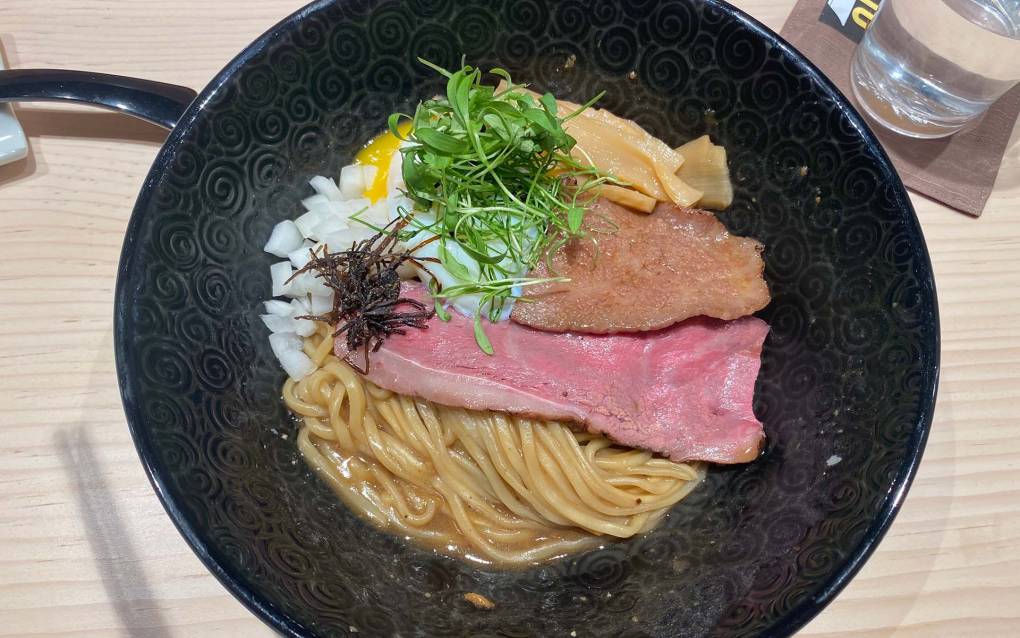
The Best Dishes I Ate in 2022
'A Strange Loop' Garners 11 Tony Nominations, Including Best Musical
6 Quick Takeaways From This Year's Oscar Nominations
New Year, New Art: What to See in the Bay Area This Month
What ‘Soylent Green,’ the Sweatiest Dystopia Ever, Tells Us About 2022
Prophesying the Future of Bay Area Theater is a Community Effort
Sponsored
Player sponsored by
window.__IS_SSR__=true
window.__INITIAL_STATE__={
"attachmentsReducer": {
"audio_0": {
"type": "attachments",
"id": "audio_0",
"imgSizes": {
"kqedFullSize": {
"file": "https://ww2.kqed.org/news/wp-content/themes/KQED-unified/img/audio_bgs/background0.jpg"
}
}
},
"audio_1": {
"type": "attachments",
"id": "audio_1",
"imgSizes": {
"kqedFullSize": {
"file": "https://ww2.kqed.org/news/wp-content/themes/KQED-unified/img/audio_bgs/background1.jpg"
}
}
},
"audio_2": {
"type": "attachments",
"id": "audio_2",
"imgSizes": {
"kqedFullSize": {
"file": "https://ww2.kqed.org/news/wp-content/themes/KQED-unified/img/audio_bgs/background2.jpg"
}
}
},
"audio_3": {
"type": "attachments",
"id": "audio_3",
"imgSizes": {
"kqedFullSize": {
"file": "https://ww2.kqed.org/news/wp-content/themes/KQED-unified/img/audio_bgs/background3.jpg"
}
}
},
"audio_4": {
"type": "attachments",
"id": "audio_4",
"imgSizes": {
"kqedFullSize": {
"file": "https://ww2.kqed.org/news/wp-content/themes/KQED-unified/img/audio_bgs/background4.jpg"
}
}
},
"placeholder": {
"type": "attachments",
"id": "placeholder",
"imgSizes": {
"thumbnail": {
"file": "https://cdn.kqed.org/wp-content/uploads/2024/12/KQED-Default-Image-816638274-2000x1333-1-160x107.jpg",
"width": 160,
"height": 107,
"mimeType": "image/jpeg"
},
"medium": {
"file": "https://cdn.kqed.org/wp-content/uploads/2024/12/KQED-Default-Image-816638274-2000x1333-1-800x533.jpg",
"width": 800,
"height": 533,
"mimeType": "image/jpeg"
},
"medium_large": {
"file": "https://cdn.kqed.org/wp-content/uploads/2024/12/KQED-Default-Image-816638274-2000x1333-1-768x512.jpg",
"width": 768,
"height": 512,
"mimeType": "image/jpeg"
},
"large": {
"file": "https://cdn.kqed.org/wp-content/uploads/2024/12/KQED-Default-Image-816638274-2000x1333-1-1020x680.jpg",
"width": 1020,
"height": 680,
"mimeType": "image/jpeg"
},
"1536x1536": {
"file": "https://cdn.kqed.org/wp-content/uploads/2024/12/KQED-Default-Image-816638274-2000x1333-1-1536x1024.jpg",
"width": 1536,
"height": 1024,
"mimeType": "image/jpeg"
},
"fd-lrg": {
"file": "https://cdn.kqed.org/wp-content/uploads/2024/12/KQED-Default-Image-816638274-2000x1333-1-1536x1024.jpg",
"width": 1536,
"height": 1024,
"mimeType": "image/jpeg"
},
"fd-med": {
"file": "https://cdn.kqed.org/wp-content/uploads/2024/12/KQED-Default-Image-816638274-2000x1333-1-1020x680.jpg",
"width": 1020,
"height": 680,
"mimeType": "image/jpeg"
},
"fd-sm": {
"file": "https://cdn.kqed.org/wp-content/uploads/2024/12/KQED-Default-Image-816638274-2000x1333-1-800x533.jpg",
"width": 800,
"height": 533,
"mimeType": "image/jpeg"
},
"post-thumbnail": {
"file": "https://cdn.kqed.org/wp-content/uploads/2024/12/KQED-Default-Image-816638274-2000x1333-1-672x372.jpg",
"width": 672,
"height": 372,
"mimeType": "image/jpeg"
},
"twentyfourteen-full-width": {
"file": "https://cdn.kqed.org/wp-content/uploads/2024/12/KQED-Default-Image-816638274-2000x1333-1-1038x576.jpg",
"width": 1038,
"height": 576,
"mimeType": "image/jpeg"
},
"xxsmall": {
"file": "https://cdn.kqed.org/wp-content/uploads/2024/12/KQED-Default-Image-816638274-2000x1333-1-160x107.jpg",
"width": 160,
"height": 107,
"mimeType": "image/jpeg"
},
"xsmall": {
"file": "https://cdn.kqed.org/wp-content/uploads/2024/12/KQED-Default-Image-816638274-2000x1333-1-672x372.jpg",
"width": 672,
"height": 372,
"mimeType": "image/jpeg"
},
"small": {
"file": "https://cdn.kqed.org/wp-content/uploads/2024/12/KQED-Default-Image-816638274-2000x1333-1-672x372.jpg",
"width": 672,
"height": 372,
"mimeType": "image/jpeg"
},
"xlarge": {
"file": "https://cdn.kqed.org/wp-content/uploads/2024/12/KQED-Default-Image-816638274-2000x1333-1-1020x680.jpg",
"width": 1020,
"height": 680,
"mimeType": "image/jpeg"
},
"full-width": {
"file": "https://cdn.kqed.org/wp-content/uploads/2024/12/KQED-Default-Image-816638274-2000x1333-1-1920x1280.jpg",
"width": 1920,
"height": 1280,
"mimeType": "image/jpeg"
},
"guest-author-32": {
"file": "https://cdn.kqed.org/wp-content/uploads/2025/01/KQED-Default-Image-816638274-1333x1333-1-160x160.jpg",
"width": 32,
"height": 32,
"mimeType": "image/jpeg"
},
"guest-author-50": {
"file": "https://cdn.kqed.org/wp-content/uploads/2025/01/KQED-Default-Image-816638274-1333x1333-1-160x160.jpg",
"width": 50,
"height": 50,
"mimeType": "image/jpeg"
},
"guest-author-64": {
"file": "https://cdn.kqed.org/wp-content/uploads/2025/01/KQED-Default-Image-816638274-1333x1333-1-160x160.jpg",
"width": 64,
"height": 64,
"mimeType": "image/jpeg"
},
"guest-author-96": {
"file": "https://cdn.kqed.org/wp-content/uploads/2025/01/KQED-Default-Image-816638274-1333x1333-1-160x160.jpg",
"width": 96,
"height": 96,
"mimeType": "image/jpeg"
},
"guest-author-128": {
"file": "https://cdn.kqed.org/wp-content/uploads/2025/01/KQED-Default-Image-816638274-1333x1333-1-160x160.jpg",
"width": 128,
"height": 128,
"mimeType": "image/jpeg"
},
"detail": {
"file": "https://cdn.kqed.org/wp-content/uploads/2025/01/KQED-Default-Image-816638274-1333x1333-1-160x160.jpg",
"width": 160,
"height": 160,
"mimeType": "image/jpeg"
},
"kqedFullSize": {
"file": "https://cdn.kqed.org/wp-content/uploads/2024/12/KQED-Default-Image-816638274-2000x1333-1.jpg",
"width": 2000,
"height": 1333
}
}
},
"arts_13922497": {
"type": "attachments",
"id": "arts_13922497",
"meta": {
"index": "attachments_1716263798",
"site": "arts",
"id": "13922497",
"found": true
},
"parent": 13922494,
"imgSizes": {
"twentyfourteen-full-width": {
"file": "https://ww2.kqed.org/app/uploads/sites/2/2022/12/Screen-Shot-2022-12-08-at-2.59.14-AM-1038x576.png",
"width": 1038,
"mimeType": "image/png",
"height": 576
},
"thumbnail": {
"file": "https://ww2.kqed.org/app/uploads/sites/2/2022/12/Screen-Shot-2022-12-08-at-2.59.14-AM-160x102.png",
"width": 160,
"mimeType": "image/png",
"height": 102
},
"post-thumbnail": {
"file": "https://ww2.kqed.org/app/uploads/sites/2/2022/12/Screen-Shot-2022-12-08-at-2.59.14-AM-672x372.png",
"width": 672,
"mimeType": "image/png",
"height": 372
},
"kqedFullSize": {
"file": "https://ww2.kqed.org/app/uploads/sites/2/2022/12/Screen-Shot-2022-12-08-at-2.59.14-AM.png",
"width": 1656,
"height": 1054
},
"large": {
"file": "https://ww2.kqed.org/app/uploads/sites/2/2022/12/Screen-Shot-2022-12-08-at-2.59.14-AM-1020x649.png",
"width": 1020,
"mimeType": "image/png",
"height": 649
},
"1536x1536": {
"file": "https://ww2.kqed.org/app/uploads/sites/2/2022/12/Screen-Shot-2022-12-08-at-2.59.14-AM-1536x978.png",
"width": 1536,
"mimeType": "image/png",
"height": 978
},
"medium": {
"file": "https://ww2.kqed.org/app/uploads/sites/2/2022/12/Screen-Shot-2022-12-08-at-2.59.14-AM-800x509.png",
"width": 800,
"mimeType": "image/png",
"height": 509
},
"medium_large": {
"file": "https://ww2.kqed.org/app/uploads/sites/2/2022/12/Screen-Shot-2022-12-08-at-2.59.14-AM-768x489.png",
"width": 768,
"mimeType": "image/png",
"height": 489
}
},
"publishDate": 1670497177,
"modified": 1670497347,
"caption": "Rue (Zendaya) and Jules (Hunter Schafer) in ‘Euphoria’ — the most searched TV show of 2022 on Google.",
"description": null,
"title": "Rue (Zendaya) and Jules (Hunter Schafer) in ‘Euphoria’ — the most searched TV show of 2022 on Google.",
"credit": "HBO Max",
"status": "inherit",
"altTag": "Two young women, bathed in purple light, gaze upwards smiling.",
"fetchFailed": false,
"isLoading": false
},
"arts_13921920": {
"type": "attachments",
"id": "arts_13921920",
"meta": {
"index": "attachments_1716263798",
"site": "arts",
"id": "13921920",
"found": true
},
"parent": 13921917,
"imgSizes": {
"twentyfourteen-full-width": {
"file": "https://ww2.kqed.org/app/uploads/sites/2/2022/11/noodle-in-a-haystack_abura-soba-cropped-1038x576.jpg",
"width": 1038,
"mimeType": "image/jpeg",
"height": 576
},
"thumbnail": {
"file": "https://ww2.kqed.org/app/uploads/sites/2/2022/11/noodle-in-a-haystack_abura-soba-cropped-160x100.jpg",
"width": 160,
"mimeType": "image/jpeg",
"height": 100
},
"post-thumbnail": {
"file": "https://ww2.kqed.org/app/uploads/sites/2/2022/11/noodle-in-a-haystack_abura-soba-cropped-672x372.jpg",
"width": 672,
"mimeType": "image/jpeg",
"height": 372
},
"kqedFullSize": {
"file": "https://ww2.kqed.org/app/uploads/sites/2/2022/11/noodle-in-a-haystack_abura-soba-cropped.jpg",
"width": 1920,
"height": 1200
},
"large": {
"file": "https://ww2.kqed.org/app/uploads/sites/2/2022/11/noodle-in-a-haystack_abura-soba-cropped-1020x638.jpg",
"width": 1020,
"mimeType": "image/jpeg",
"height": 638
},
"1536x1536": {
"file": "https://ww2.kqed.org/app/uploads/sites/2/2022/11/noodle-in-a-haystack_abura-soba-cropped-1536x960.jpg",
"width": 1536,
"mimeType": "image/jpeg",
"height": 960
},
"medium": {
"file": "https://ww2.kqed.org/app/uploads/sites/2/2022/11/noodle-in-a-haystack_abura-soba-cropped-800x500.jpg",
"width": 800,
"mimeType": "image/jpeg",
"height": 500
},
"medium_large": {
"file": "https://ww2.kqed.org/app/uploads/sites/2/2022/11/noodle-in-a-haystack_abura-soba-cropped-768x480.jpg",
"width": 768,
"mimeType": "image/jpeg",
"height": 480
}
},
"publishDate": 1669188444,
"modified": 1669188573,
"caption": "The wagyu abura soba at Noodle in a Haystack might be the best ramen dish in the Bay Area.",
"description": null,
"title": "noodle in a haystack_abura soba-cropped",
"credit": "Luke Tsai",
"status": "inherit",
"altTag": "A bowl of soup-less ramen, with thick noodles and a topping of two different cuts of wagyu beef.",
"fetchFailed": false,
"isLoading": false
},
"arts_13913062": {
"type": "attachments",
"id": "arts_13913062",
"meta": {
"index": "attachments_1716263798",
"site": "arts",
"id": "13913062",
"found": true
},
"parent": 13913061,
"imgSizes": {
"twentyfourteen-full-width": {
"file": "https://ww2.kqed.org/app/uploads/sites/2/2022/05/strange-loop-2_custom-7221a088d690673e535c53b668ea392d2899944d-1038x576.jpg",
"width": 1038,
"mimeType": "image/jpeg",
"height": 576
},
"thumbnail": {
"file": "https://ww2.kqed.org/app/uploads/sites/2/2022/05/strange-loop-2_custom-7221a088d690673e535c53b668ea392d2899944d-160x107.jpg",
"width": 160,
"mimeType": "image/jpeg",
"height": 107
},
"post-thumbnail": {
"file": "https://ww2.kqed.org/app/uploads/sites/2/2022/05/strange-loop-2_custom-7221a088d690673e535c53b668ea392d2899944d-672x372.jpg",
"width": 672,
"mimeType": "image/jpeg",
"height": 372
},
"kqedFullSize": {
"file": "https://ww2.kqed.org/app/uploads/sites/2/2022/05/strange-loop-2_custom-7221a088d690673e535c53b668ea392d2899944d-scaled-e1652124689604.jpg",
"width": 1920,
"height": 1285
},
"2048x2048": {
"file": "https://ww2.kqed.org/app/uploads/sites/2/2022/05/strange-loop-2_custom-7221a088d690673e535c53b668ea392d2899944d-2048x1370.jpg",
"width": 2048,
"mimeType": "image/jpeg",
"height": 1370
},
"large": {
"file": "https://ww2.kqed.org/app/uploads/sites/2/2022/05/strange-loop-2_custom-7221a088d690673e535c53b668ea392d2899944d-1020x682.jpg",
"width": 1020,
"mimeType": "image/jpeg",
"height": 682
},
"1536x1536": {
"file": "https://ww2.kqed.org/app/uploads/sites/2/2022/05/strange-loop-2_custom-7221a088d690673e535c53b668ea392d2899944d-1536x1028.jpg",
"width": 1536,
"mimeType": "image/jpeg",
"height": 1028
},
"full-width": {
"file": "https://ww2.kqed.org/app/uploads/sites/2/2022/05/strange-loop-2_custom-7221a088d690673e535c53b668ea392d2899944d-1920x1284.jpg",
"width": 1920,
"mimeType": "image/jpeg",
"height": 1284
},
"medium": {
"file": "https://ww2.kqed.org/app/uploads/sites/2/2022/05/strange-loop-2_custom-7221a088d690673e535c53b668ea392d2899944d-800x535.jpg",
"width": 800,
"mimeType": "image/jpeg",
"height": 535
},
"medium_large": {
"file": "https://ww2.kqed.org/app/uploads/sites/2/2022/05/strange-loop-2_custom-7221a088d690673e535c53b668ea392d2899944d-768x514.jpg",
"width": 768,
"mimeType": "image/jpeg",
"height": 514
}
},
"publishDate": 1652123510,
"modified": 1652124822,
"caption": "(l) Jason Veasey, James Jackson, Jr., Jaquel Spivey, L Morgan Lee and Antwayn Hopper in 'A Strange Loop.'",
"description": null,
"title": "(l) Jason Veasey, James Jackson, Jr., Jaquel Spivey, L Morgan Lee and Antwayn Hopper in 'A Strange Loop.'",
"credit": "Marc J. Franklin/A Strange Loop",
"status": "inherit",
"altTag": "A black man wearing jeans, T-shirt and casual flannel stands singing, finger pointed up to the ceiling. Behind him are four dancers wearing lilac and striking a theatrical pose.",
"fetchFailed": false,
"isLoading": false
},
"arts_13909101": {
"type": "attachments",
"id": "arts_13909101",
"meta": {
"index": "attachments_1716263798",
"site": "arts",
"id": "13909101",
"found": true
},
"parent": 13909100,
"imgSizes": {
"twentyfourteen-full-width": {
"file": "https://ww2.kqed.org/app/uploads/sites/2/2022/02/oscar-predictions-1-_wide-476fbb401cbf48f774176965969917ed465d5486-1038x576.jpg",
"width": 1038,
"mimeType": "image/jpeg",
"height": 576
},
"thumbnail": {
"file": "https://ww2.kqed.org/app/uploads/sites/2/2022/02/oscar-predictions-1-_wide-476fbb401cbf48f774176965969917ed465d5486-160x90.jpg",
"width": 160,
"mimeType": "image/jpeg",
"height": 90
},
"post-thumbnail": {
"file": "https://ww2.kqed.org/app/uploads/sites/2/2022/02/oscar-predictions-1-_wide-476fbb401cbf48f774176965969917ed465d5486-672x372.jpg",
"width": 672,
"mimeType": "image/jpeg",
"height": 372
},
"kqedFullSize": {
"file": "https://ww2.kqed.org/app/uploads/sites/2/2022/02/oscar-predictions-1-_wide-476fbb401cbf48f774176965969917ed465d5486-e1644353884747.jpg",
"width": 1920,
"height": 1079
},
"2048x2048": {
"file": "https://ww2.kqed.org/app/uploads/sites/2/2022/02/oscar-predictions-1-_wide-476fbb401cbf48f774176965969917ed465d5486-2048x1151.jpg",
"width": 2048,
"mimeType": "image/jpeg",
"height": 1151
},
"large": {
"file": "https://ww2.kqed.org/app/uploads/sites/2/2022/02/oscar-predictions-1-_wide-476fbb401cbf48f774176965969917ed465d5486-1020x573.jpg",
"width": 1020,
"mimeType": "image/jpeg",
"height": 573
},
"1536x1536": {
"file": "https://ww2.kqed.org/app/uploads/sites/2/2022/02/oscar-predictions-1-_wide-476fbb401cbf48f774176965969917ed465d5486-1536x864.jpg",
"width": 1536,
"mimeType": "image/jpeg",
"height": 864
},
"full-width": {
"file": "https://ww2.kqed.org/app/uploads/sites/2/2022/02/oscar-predictions-1-_wide-476fbb401cbf48f774176965969917ed465d5486-1920x1079.jpg",
"width": 1920,
"mimeType": "image/jpeg",
"height": 1079
},
"medium": {
"file": "https://ww2.kqed.org/app/uploads/sites/2/2022/02/oscar-predictions-1-_wide-476fbb401cbf48f774176965969917ed465d5486-800x450.jpg",
"width": 800,
"mimeType": "image/jpeg",
"height": 450
},
"medium_large": {
"file": "https://ww2.kqed.org/app/uploads/sites/2/2022/02/oscar-predictions-1-_wide-476fbb401cbf48f774176965969917ed465d5486-768x432.jpg",
"width": 768,
"mimeType": "image/jpeg",
"height": 432
}
},
"publishDate": 1644352424,
"modified": 1644353947,
"caption": "Kirsten Dunst ('The Power of the Dog'), Denzel Washington ('The Tragedy of Macbeth'), 'Flee' and 'Drive My Car' are among this year's Oscar nominations.",
"description": null,
"title": "Kirsten Dunst ('The Power of the Dog'), Denzel Washington ('The Tragedy of Macbeth'), 'Flee' and 'Drive My Car' are among this year's Oscar nominations.",
"credit": "Netflix; Apple TV+; NEON; Janus Films",
"status": "inherit",
"altTag": null,
"fetchFailed": false,
"isLoading": false
},
"arts_13907723": {
"type": "attachments",
"id": "arts_13907723",
"meta": {
"index": "attachments_1716263798",
"site": "arts",
"id": "13907723",
"found": true
},
"parent": 13907649,
"imgSizes": {
"twentyfourteen-full-width": {
"file": "https://ww2.kqed.org/app/uploads/sites/2/2022/01/Interior-Garden-1-1038x576.jpg",
"width": 1038,
"mimeType": "image/jpeg",
"height": 576
},
"thumbnail": {
"file": "https://ww2.kqed.org/app/uploads/sites/2/2022/01/Interior-Garden-1-160x115.jpg",
"width": 160,
"mimeType": "image/jpeg",
"height": 115
},
"post-thumbnail": {
"file": "https://ww2.kqed.org/app/uploads/sites/2/2022/01/Interior-Garden-1-672x372.jpg",
"width": 672,
"mimeType": "image/jpeg",
"height": 372
},
"kqedFullSize": {
"file": "https://ww2.kqed.org/app/uploads/sites/2/2022/01/Interior-Garden-1-scaled.jpg",
"width": 2560,
"height": 1846
},
"2048x2048": {
"file": "https://ww2.kqed.org/app/uploads/sites/2/2022/01/Interior-Garden-1-2048x1477.jpg",
"width": 2048,
"mimeType": "image/jpeg",
"height": 1477
},
"large": {
"file": "https://ww2.kqed.org/app/uploads/sites/2/2022/01/Interior-Garden-1-1020x736.jpg",
"width": 1020,
"mimeType": "image/jpeg",
"height": 736
},
"1536x1536": {
"file": "https://ww2.kqed.org/app/uploads/sites/2/2022/01/Interior-Garden-1-1536x1108.jpg",
"width": 1536,
"mimeType": "image/jpeg",
"height": 1108
},
"full-width": {
"file": "https://ww2.kqed.org/app/uploads/sites/2/2022/01/Interior-Garden-1-1920x1385.jpg",
"width": 1920,
"mimeType": "image/jpeg",
"height": 1385
},
"medium": {
"file": "https://ww2.kqed.org/app/uploads/sites/2/2022/01/Interior-Garden-1-800x577.jpg",
"width": 800,
"mimeType": "image/jpeg",
"height": 577
},
"medium_large": {
"file": "https://ww2.kqed.org/app/uploads/sites/2/2022/01/Interior-Garden-1-768x554.jpg",
"width": 768,
"mimeType": "image/jpeg",
"height": 554
}
},
"publishDate": 1641342414,
"modified": 1641342452,
"caption": "Cathy Lu, ‘Peripheral Visions,’ 2021. ",
"description": null,
"title": "Interior Garden 1",
"credit": "Courtesy the artist",
"status": "inherit",
"altTag": null,
"fetchFailed": false,
"isLoading": false
},
"arts_13907660": {
"type": "attachments",
"id": "arts_13907660",
"meta": {
"index": "attachments_1716263798",
"site": "arts",
"id": "13907660",
"found": true
},
"parent": 13907576,
"imgSizes": {
"twentyfourteen-full-width": {
"file": "https://ww2.kqed.org/app/uploads/sites/2/2022/01/Screen-Shot-2022-01-03-at-5.08.25-PM-1038x576.png",
"width": 1038,
"mimeType": "image/png",
"height": 576
},
"thumbnail": {
"file": "https://ww2.kqed.org/app/uploads/sites/2/2022/01/Screen-Shot-2022-01-03-at-5.08.25-PM-160x108.png",
"width": 160,
"mimeType": "image/png",
"height": 108
},
"post-thumbnail": {
"file": "https://ww2.kqed.org/app/uploads/sites/2/2022/01/Screen-Shot-2022-01-03-at-5.08.25-PM-672x372.png",
"width": 672,
"mimeType": "image/png",
"height": 372
},
"kqedFullSize": {
"file": "https://ww2.kqed.org/app/uploads/sites/2/2022/01/Screen-Shot-2022-01-03-at-5.08.25-PM-e1641258647639.png",
"width": 1920,
"height": 1295
},
"2048x2048": {
"file": "https://ww2.kqed.org/app/uploads/sites/2/2022/01/Screen-Shot-2022-01-03-at-5.08.25-PM-2048x1381.png",
"width": 2048,
"mimeType": "image/png",
"height": 1381
},
"large": {
"file": "https://ww2.kqed.org/app/uploads/sites/2/2022/01/Screen-Shot-2022-01-03-at-5.08.25-PM-1020x688.png",
"width": 1020,
"mimeType": "image/png",
"height": 688
},
"1536x1536": {
"file": "https://ww2.kqed.org/app/uploads/sites/2/2022/01/Screen-Shot-2022-01-03-at-5.08.25-PM-1536x1036.png",
"width": 1536,
"mimeType": "image/png",
"height": 1036
},
"full-width": {
"file": "https://ww2.kqed.org/app/uploads/sites/2/2022/01/Screen-Shot-2022-01-03-at-5.08.25-PM-1920x1295.png",
"width": 1920,
"mimeType": "image/png",
"height": 1295
},
"medium": {
"file": "https://ww2.kqed.org/app/uploads/sites/2/2022/01/Screen-Shot-2022-01-03-at-5.08.25-PM-800x540.png",
"width": 800,
"mimeType": "image/png",
"height": 540
},
"medium_large": {
"file": "https://ww2.kqed.org/app/uploads/sites/2/2022/01/Screen-Shot-2022-01-03-at-5.08.25-PM-768x518.png",
"width": 768,
"mimeType": "image/png",
"height": 518
}
},
"publishDate": 1641258544,
"modified": 1641329521,
"caption": "Charlton Heston is extra sweaty in 'Soylent Green' on account of the non-stop humidity of 2022.",
"description": null,
"title": "Charlton Heston is extra sweaty in 'Soylent Green' on account of the non-stop humidity of 2022.",
"credit": "'Soylent Green'",
"status": "inherit",
"altTag": "A close up of Charlton Heston gasping in horror at something on the horizon.",
"fetchFailed": false,
"isLoading": false
},
"arts_13907451": {
"type": "attachments",
"id": "arts_13907451",
"meta": {
"index": "attachments_1716263798",
"site": "arts",
"id": "13907451",
"found": true
},
"parent": 13907445,
"imgSizes": {
"twentyfourteen-full-width": {
"file": "https://ww2.kqed.org/app/uploads/sites/2/2021/12/BethWilmurt_closeup_TheCassandraSessions_photocredit_BenKrantz-1038x576.jpg",
"width": 1038,
"mimeType": "image/jpeg",
"height": 576
},
"thumbnail": {
"file": "https://ww2.kqed.org/app/uploads/sites/2/2021/12/BethWilmurt_closeup_TheCassandraSessions_photocredit_BenKrantz-160x106.jpg",
"width": 160,
"mimeType": "image/jpeg",
"height": 106
},
"post-thumbnail": {
"file": "https://ww2.kqed.org/app/uploads/sites/2/2021/12/BethWilmurt_closeup_TheCassandraSessions_photocredit_BenKrantz-672x372.jpg",
"width": 672,
"mimeType": "image/jpeg",
"height": 372
},
"kqedFullSize": {
"file": "https://ww2.kqed.org/app/uploads/sites/2/2021/12/BethWilmurt_closeup_TheCassandraSessions_photocredit_BenKrantz.jpg",
"width": 2000,
"height": 1331
},
"large": {
"file": "https://ww2.kqed.org/app/uploads/sites/2/2021/12/BethWilmurt_closeup_TheCassandraSessions_photocredit_BenKrantz-1020x679.jpg",
"width": 1020,
"mimeType": "image/jpeg",
"height": 679
},
"1536x1536": {
"file": "https://ww2.kqed.org/app/uploads/sites/2/2021/12/BethWilmurt_closeup_TheCassandraSessions_photocredit_BenKrantz-1536x1022.jpg",
"width": 1536,
"mimeType": "image/jpeg",
"height": 1022
},
"full-width": {
"file": "https://ww2.kqed.org/app/uploads/sites/2/2021/12/BethWilmurt_closeup_TheCassandraSessions_photocredit_BenKrantz-1920x1278.jpg",
"width": 1920,
"mimeType": "image/jpeg",
"height": 1278
},
"medium": {
"file": "https://ww2.kqed.org/app/uploads/sites/2/2021/12/BethWilmurt_closeup_TheCassandraSessions_photocredit_BenKrantz-800x532.jpg",
"width": 800,
"mimeType": "image/jpeg",
"height": 532
},
"medium_large": {
"file": "https://ww2.kqed.org/app/uploads/sites/2/2021/12/BethWilmurt_closeup_TheCassandraSessions_photocredit_BenKrantz-768x511.jpg",
"width": 768,
"mimeType": "image/jpeg",
"height": 511
}
},
"publishDate": 1640026373,
"modified": 1640122546,
"caption": "Beth Wilmurt in ‘The Cassandra Sessions’ at Shotgun Players.",
"description": null,
"title": "BethWilmurt_closeup_TheCassandraSessions_photocredit_BenKrantz",
"credit": "Ben Krantz",
"status": "inherit",
"altTag": "Woman strums guitar with mic in front of her.",
"fetchFailed": false,
"isLoading": false
}
},
"audioPlayerReducer": {
"postId": "stream_live",
"isPaused": true,
"isPlaying": false,
"pfsActive": false,
"pledgeModalIsOpen": true,
"playerDrawerIsOpen": false
},
"authorsReducer": {
"byline_arts_13922494": {
"type": "authors",
"id": "byline_arts_13922494",
"meta": {
"override": true
},
"slug": "byline_arts_13922494",
"name": "Ayana Archie",
"isLoading": false
},
"byline_arts_13913061": {
"type": "authors",
"id": "byline_arts_13913061",
"meta": {
"override": true
},
"slug": "byline_arts_13913061",
"name": "Jeff Lunden",
"isLoading": false
},
"byline_arts_13909100": {
"type": "authors",
"id": "byline_arts_13909100",
"meta": {
"override": true
},
"slug": "byline_arts_13909100",
"name": "Glen Weldon",
"isLoading": false
},
"shotchkiss": {
"type": "authors",
"id": "61",
"meta": {
"index": "authors_1716337520",
"id": "61",
"found": true
},
"name": "Sarah Hotchkiss",
"firstName": "Sarah",
"lastName": "Hotchkiss",
"slug": "shotchkiss",
"email": "shotchkiss@kqed.org",
"display_author_email": true,
"staff_mastheads": [
"arts"
],
"title": "Senior Editor",
"bio": "Sarah Hotchkiss is a San Francisco \u003ca href=\"http://www.sarahhotchkiss.com\">artist\u003c/a> and arts writer. In 2019, she received the Dorothea & Leo Rabkin Foundation grant for visual art journalism and in 2020 she received a Society of Professional Journalists, Northern California award for excellence in arts and culture reporting.",
"avatar": "https://secure.gravatar.com/avatar/ca38c7f54590856cd4947d26274f8a90?s=600&d=blank&r=g",
"twitter": null,
"facebook": null,
"instagram": null,
"linkedin": null,
"sites": [
{
"site": "",
"roles": [
"editor"
]
},
{
"site": "arts",
"roles": [
"Contributor",
"administrator"
]
},
{
"site": "artschool",
"roles": [
"administrator"
]
},
{
"site": "news",
"roles": [
"editor"
]
},
{
"site": "pop",
"roles": [
"administrator"
]
},
{
"site": "bayareabites",
"roles": [
"editor"
]
},
{
"site": "spark",
"roles": [
"editor"
]
},
{
"site": "checkplease",
"roles": [
"editor"
]
}
],
"headData": {
"title": "Sarah Hotchkiss | KQED",
"description": "Senior Editor",
"ogImgSrc": "https://secure.gravatar.com/avatar/ca38c7f54590856cd4947d26274f8a90?s=600&d=blank&r=g",
"twImgSrc": "https://secure.gravatar.com/avatar/ca38c7f54590856cd4947d26274f8a90?s=600&d=blank&r=g"
},
"isLoading": false,
"link": "/author/shotchkiss"
},
"ralexandra": {
"type": "authors",
"id": "11242",
"meta": {
"index": "authors_1716337520",
"id": "11242",
"found": true
},
"name": "Rae Alexandra",
"firstName": "Rae",
"lastName": "Alexandra",
"slug": "ralexandra",
"email": "ralexandra@kqed.org",
"display_author_email": true,
"staff_mastheads": [
"arts"
],
"title": "Reporter/Producer",
"bio": "Rae Alexandra is a Reporter/Producer for KQED Arts & Culture, and the creator/author of the \u003ca href=\"https://www.kqed.org/arts/program/rebel-girls-from-bay-area-history\">Rebel Girls From Bay Area History\u003c/a> and \u003ca href=\"https://www.kqed.org/bizarrebayarea\">Bizarre Bay Area\u003c/a> series. Her debut book, \u003ca href=\"https://citylights.com/politics-current-events-history/unsung-heroines35-women-who-changed/\">Unsung Heroines: 35 Women Who Changed the Bay Area\u003c/a> will be published by City Lights in Spring 2026. In 2023, Rae was awarded an SPJ Excellence in Journalism Award for Arts & Culture. Rae was born and raised in Wales and subsequently — even after two decades in Northern California — still uses phrases that regularly baffle her coworkers.",
"avatar": "https://secure.gravatar.com/avatar/d5ef3d663d9adae1345d06932a3951de?s=600&d=blank&r=g",
"twitter": null,
"facebook": null,
"instagram": null,
"linkedin": null,
"sites": [
{
"site": "arts",
"roles": [
"editor"
]
},
{
"site": "news",
"roles": [
"editor"
]
},
{
"site": "pop",
"roles": [
"editor"
]
},
{
"site": "bayareabites",
"roles": [
"editor"
]
},
{
"site": "science",
"roles": [
"editor"
]
}
],
"headData": {
"title": "Rae Alexandra | KQED",
"description": "Reporter/Producer",
"ogImgSrc": "https://secure.gravatar.com/avatar/d5ef3d663d9adae1345d06932a3951de?s=600&d=blank&r=g",
"twImgSrc": "https://secure.gravatar.com/avatar/d5ef3d663d9adae1345d06932a3951de?s=600&d=blank&r=g"
},
"isLoading": false,
"link": "/author/ralexandra"
},
"ngluckstern": {
"type": "authors",
"id": "11497",
"meta": {
"index": "authors_1716337520",
"id": "11497",
"found": true
},
"name": "Nicole Gluckstern",
"firstName": "Nicole",
"lastName": "Gluckstern",
"slug": "ngluckstern",
"email": "gluckstern.nicole@gmail.com",
"display_author_email": false,
"staff_mastheads": [],
"title": null,
"bio": null,
"avatar": "https://secure.gravatar.com/avatar/4fa7e0128404fc3d06ce5f9e27ab9e5a?s=600&d=blank&r=g",
"twitter": null,
"facebook": null,
"instagram": null,
"linkedin": null,
"sites": [
{
"site": "arts",
"roles": [
"author"
]
}
],
"headData": {
"title": "Nicole Gluckstern | KQED",
"description": null,
"ogImgSrc": "https://secure.gravatar.com/avatar/4fa7e0128404fc3d06ce5f9e27ab9e5a?s=600&d=blank&r=g",
"twImgSrc": "https://secure.gravatar.com/avatar/4fa7e0128404fc3d06ce5f9e27ab9e5a?s=600&d=blank&r=g"
},
"isLoading": false,
"link": "/author/ngluckstern"
},
"ltsai": {
"type": "authors",
"id": "11743",
"meta": {
"index": "authors_1716337520",
"id": "11743",
"found": true
},
"name": "Luke Tsai",
"firstName": "Luke",
"lastName": "Tsai",
"slug": "ltsai",
"email": "ltsai@kqed.org",
"display_author_email": true,
"staff_mastheads": [
"arts"
],
"title": "Food Editor",
"bio": "Luke Tsai is KQED's food editor and resident stinky tofu connoisseur. Prior to KQED, he was an editor at Eater SF, \u003cem>San Francisco \u003c/em>magazine, and the \u003cem>East Bay Express\u003c/em>, and his work has also appeared in TASTE, the \u003cem>San Francisco Chronicle\u003c/em>, and the \u003cem>Best Food Writing\u003c/em> anthology. When he isn't writing or editing, you'll find him eating most everything he can get his hands on.",
"avatar": "https://secure.gravatar.com/avatar/d1ff591a3047b143a0e23cf7f28fcac0?s=600&d=blank&r=g",
"twitter": "theluketsai",
"facebook": null,
"instagram": null,
"linkedin": null,
"sites": [
{
"site": "",
"roles": [
"editor"
]
},
{
"site": "arts",
"roles": [
"administrator"
]
},
{
"site": "bayareabites",
"roles": [
"editor"
]
},
{
"site": "food",
"roles": [
"editor"
]
}
],
"headData": {
"title": "Luke Tsai | KQED",
"description": "Food Editor",
"ogImgSrc": "https://secure.gravatar.com/avatar/d1ff591a3047b143a0e23cf7f28fcac0?s=600&d=blank&r=g",
"twImgSrc": "https://secure.gravatar.com/avatar/d1ff591a3047b143a0e23cf7f28fcac0?s=600&d=blank&r=g"
},
"isLoading": false,
"link": "/author/ltsai"
}
},
"breakingNewsReducer": {},
"pagesReducer": {},
"postsReducer": {
"stream_live": {
"type": "live",
"id": "stream_live",
"audioUrl": "https://streams.kqed.org/kqedradio",
"title": "Live Stream",
"excerpt": "Live Stream information currently unavailable.",
"link": "/radio",
"featImg": "",
"label": {
"name": "KQED Live",
"link": "/"
}
},
"stream_kqedNewscast": {
"type": "posts",
"id": "stream_kqedNewscast",
"audioUrl": "https://www.kqed.org/.stream/anon/radio/RDnews/newscast.mp3?_=1",
"title": "KQED Newscast",
"featImg": "",
"label": {
"name": "88.5 FM",
"link": "/"
}
},
"arts_13922494": {
"type": "posts",
"id": "arts_13922494",
"meta": {
"index": "posts_1716263798",
"site": "arts",
"id": "13922494",
"score": null,
"sort": [
1670508306000
]
},
"guestAuthors": [],
"slug": "these-are-the-words-movies-and-people-that-americans-searched-for-on-google-in-2022",
"title": "These Are the Words, Movies and People That Americans Searched For on Google in 2022",
"publishDate": 1670508306,
"format": "standard",
"headTitle": "These Are the Words, Movies and People That Americans Searched For on Google in 2022 | KQED",
"labelTerm": {
"term": 137,
"site": "arts"
},
"content": "\u003cp>The end of the year is nearing, and as usual, Google is recapping 2022’s current events and trends with the most popular searches made through the platform.\u003c/p>\n\u003cp>These are the terms Americans searched the most.\u003c/p>\n\u003ch3>Most popular searches overall\u003c/h3>\n\u003col>[aside postid='arts_13908066']\n\u003cli>Wordle\u003c/li>\n\u003cli>Election results\u003c/li>\n\u003cli>Betty White\u003c/li>\n\u003cli>Queen Elizabeth\u003c/li>\n\u003cli>Bob Saget\u003c/li>\n\u003cli>Ukraine\u003c/li>\n\u003cli>Mega Millions\u003c/li>\n\u003cli>Powerball numbers\u003c/li>\n\u003cli>Anne Heche\u003c/li>\n\u003cli>Jeffrey Dahmer\u003c/li>\n\u003c/ol>\n\u003ch3>\u003c/h3>\n\u003ch3>Most searched people\u003c/h3>\n\u003col>[aside postid='arts_13913533']\n\u003cli>Johnny Depp\u003c/li>\n\u003cli>Will Smith\u003c/li>\n\u003cli>Amber Heard\u003c/li>\n\u003cli>Antonio Brown\u003c/li>\n\u003cli>Kari Lake\u003c/li>\n\u003cli>Anna Sorokin (Delvey)\u003c/li>\n\u003cli>Chris Rock\u003c/li>\n\u003cli>Andrew Tate\u003c/li>\n\u003cli>Adam Levine\u003c/li>\n\u003cli>Serena Williams\u003c/li>\n\u003c/ol>\n\u003ch3>\u003c/h3>\n\u003ch3>Most searched current events\u003c/h3>\n\u003col>[aside postid='arts_13918870']\n\u003cli>Election results\u003c/li>\n\u003cli>Queen Elizabeth passing\u003c/li>\n\u003cli>Ukraine\u003c/li>\n\u003cli>Powerball numbers\u003c/li>\n\u003cli>Hurricane Ian\u003c/li>\n\u003cli>Monkeypox\u003c/li>\n\u003cli>Texas school shooting\u003c/li>\n\u003cli>Will Smith Oscars\u003c/li>\n\u003cli>Johnny Depp verdict\u003c/li>\n\u003cli>Roe v Wade\u003c/li>\n\u003c/ol>\n\u003ch3>\u003c/h3>\n\u003ch3>Most searched movies\u003c/h3>\n\u003col>[aside postid='arts_13915798']\n\u003cli>\u003cem>Encanto\u003c/em>\u003c/li>\n\u003cli>\u003cem>Thor: Love and Thunder\u003c/em>\u003c/li>\n\u003cli>\u003cem>Top Gun: Maverick\u003c/em>\u003c/li>\n\u003cli>\u003cem>The Batman\u003c/em>\u003c/li>\n\u003cli>\u003cem>Everything Everywhere All at Once\u003c/em>\u003c/li>\n\u003cli>\u003cem>Black Adam\u003c/em>\u003c/li>\n\u003cli>\u003cem>Jurassic World Dominion\u003c/em>\u003c/li>\n\u003cli>\u003cem>Black Panther: Wakanda Forever\u003c/em>\u003c/li>\n\u003cli>\u003cem>Morbius\u003c/em>\u003c/li>\n\u003cli>\u003cem>Turning Red\u003c/em>\u003c/li>\n\u003c/ol>\n\u003ch3>\u003c/h3>\n\u003ch3>Most searched TV shows\u003c/h3>\n\u003col>[aside postid='arts_13891785']\n\u003cli>\u003cem>Euphoria\u003c/em>\u003c/li>\n\u003cli>\u003cem>Stranger Things\u003c/em>\u003c/li>\n\u003cli>\u003cem>The Watcher\u003c/em>\u003c/li>\n\u003cli>\u003cem>Inventing Anna\u003c/em>\u003c/li>\n\u003cli>\u003cem>House of the Dragon\u003c/em>\u003c/li>\n\u003cli>\u003cem>Moon Knight\u003c/em>\u003c/li>\n\u003cli>\u003cem>Yellowstone\u003c/em>\u003c/li>\n\u003cli>\u003cem>The Summer I Turned Pretty\u003c/em>\u003c/li>\n\u003cli>\u003cem>Obi-Wan Kenobi\u003c/em>\u003c/li>\n\u003cli>\u003cem>She-Hulk: Attorney at Law\u003c/em>\u003c/li>\n\u003c/ol>\n\u003ch3>\u003c/h3>\n\u003ch3>Most searched songs\u003c/h3>\n\u003col>[aside postid='arts_13921777']\n\u003cli>“We Don’t Talk About Bruno” – Encanto\u003c/li>\n\u003cli>“Surface Pressure” – Encanto\u003c/li>\n\u003cli>“Jiggle Jiggle” – Duke & Jones and Louis Theroux\u003c/li>\n\u003cli>“Unholy” – Sam Smith and Kim Petras\u003c/li>\n\u003cli>“As It Was” – Harry Styles\u003c/li>\n\u003cli>“Running Up That Hill” – Kate Bush\u003c/li>\n\u003cli>“Glimpse of Us” – Joji\u003c/li>\n\u003cli>“About Damn Time” – Lizzo\u003c/li>\n\u003cli>“Anti-Hero” – Taylor Swift\u003c/li>\n\u003cli>“What Else Can I Do” – Encanto\u003c/li>\n\u003c/ol>\n\u003ch3>\u003c/h3>\n\u003ch3>Most searched definitions\u003c/h3>\n\u003col>\n\u003cli>Rupee\u003c/li>\n\u003cli>Oligarch\u003c/li>\n\u003cli>Cacao\u003c/li>\n\u003cli>Homer\u003c/li>\n\u003cli>Recession\u003c/li>\n\u003cli>Canny\u003c/li>\n\u003cli>Foray\u003c/li>\n\u003cli>Trove\u003c/li>\n\u003cli>Saute\u003c/li>\n\u003cli>Tacit\u003c/li>\n\u003c/ol>\n\u003cdiv class=\"fullattribution\">\u003cem>Copyright 2022 NPR. To see more,\u003ca href=\"https://www.npr.org\" target=\"_blank\" rel=\"noopener noreferrer\"> visit NPR\u003c/a>.\u003cimg decoding=\"async\" src=\"https://www.google-analytics.com/__utm.gif?utmac=UA-5828686-4&utmdt=These+are+the+words%2C+movies+and+people+that+Americans+searched+for+on+Google+in+2022&utme=8(APIKey)9(MDAxOTAwOTE4MDEyMTkxMDAzNjczZDljZA004)\">\u003c/em>\u003c/div>\n\u003cp>[ad fullwidth]\u003c/p>\u003cp>\u003c/p>\n",
"blocks": [],
"excerpt": "Google compiled data on the people, entertainment and current events that Americans searched for the most in 2022. ",
"status": "publish",
"parent": 0,
"modified": 1726759190,
"stats": {
"hasAudio": false,
"hasVideo": false,
"hasChartOrMap": false,
"iframeSrcs": [],
"hasGoogleForm": false,
"hasGallery": false,
"hasHearkenModule": false,
"hasPolis": false,
"paragraphCount": 4,
"wordCount": 299
},
"headData": {
"title": "These Are the Words, Movies and People That Americans Searched For on Google in 2022 | KQED",
"description": "Google compiled data on the people, entertainment and current events that Americans searched for the most in 2022. ",
"ogTitle": "",
"ogDescription": "",
"ogImgId": "",
"twTitle": "",
"twDescription": "",
"twImgId": "",
"schema": {
"@context": "https://schema.org",
"@type": "Article",
"headline": "These Are the Words, Movies and People That Americans Searched For on Google in 2022",
"datePublished": "2022-12-08T06:05:06-08:00",
"dateModified": "2024-09-19T08:19:50-07:00",
"image": "https://cdn.kqed.org/wp-content/uploads/2020/02/KQED-OG-Image@1x.png"
}
},
"sticky": false,
"nprImageCredit": "Jeff Chiu",
"nprByline": "Ayana Archie",
"nprImageAgency": "AP",
"nprStoryId": "1141485540",
"nprApiLink": "http://api.npr.org/query?id=1141485540&apiKey=MDAxOTAwOTE4MDEyMTkxMDAzNjczZDljZA004",
"nprHtmlLink": "https://www.npr.org/2022/12/08/1141485540/top-google-searches-2022?ft=nprml&f=1141485540",
"nprRetrievedStory": "1",
"nprPubDate": "Thu, 08 Dec 2022 01:47:00 -0500",
"nprStoryDate": "Thu, 08 Dec 2022 01:47:56 -0500",
"nprLastModifiedDate": "Thu, 08 Dec 2022 01:47:56 -0500",
"templateType": "standard",
"featuredImageType": "standard",
"excludeFromSiteSearch": "Include",
"showOnAuthorArchivePages": "No",
"path": "/arts/13922494/these-are-the-words-movies-and-people-that-americans-searched-for-on-google-in-2022",
"audioTrackLength": null,
"parsedContent": [
{
"type": "contentString",
"content": "\u003cdiv class=\"post-body\">\u003cp>\u003cp>The end of the year is nearing, and as usual, Google is recapping 2022’s current events and trends with the most popular searches made through the platform.\u003c/p>\n\u003cp>These are the terms Americans searched the most.\u003c/p>\n\u003ch3>Most popular searches overall\u003c/h3>\n\u003col>\u003c/p>\u003c/div>",
"attributes": {
"named": {},
"numeric": []
}
},
{
"type": "component",
"content": "",
"name": "aside",
"attributes": {
"named": {
"postid": "arts_13908066",
"label": ""
},
"numeric": []
}
},
{
"type": "contentString",
"content": "\u003cdiv class=\"post-body\">\u003cp>\n\u003cli>Wordle\u003c/li>\n\u003cli>Election results\u003c/li>\n\u003cli>Betty White\u003c/li>\n\u003cli>Queen Elizabeth\u003c/li>\n\u003cli>Bob Saget\u003c/li>\n\u003cli>Ukraine\u003c/li>\n\u003cli>Mega Millions\u003c/li>\n\u003cli>Powerball numbers\u003c/li>\n\u003cli>Anne Heche\u003c/li>\n\u003cli>Jeffrey Dahmer\u003c/li>\n\u003c/ol>\n\u003ch3>\u003c/h3>\n\u003ch3>Most searched people\u003c/h3>\n\u003col>\u003c/p>\u003c/div>",
"attributes": {
"named": {},
"numeric": []
}
},
{
"type": "component",
"content": "",
"name": "aside",
"attributes": {
"named": {
"postid": "arts_13913533",
"label": ""
},
"numeric": []
}
},
{
"type": "contentString",
"content": "\u003cdiv class=\"post-body\">\u003cp>\n\u003cli>Johnny Depp\u003c/li>\n\u003cli>Will Smith\u003c/li>\n\u003cli>Amber Heard\u003c/li>\n\u003cli>Antonio Brown\u003c/li>\n\u003cli>Kari Lake\u003c/li>\n\u003cli>Anna Sorokin (Delvey)\u003c/li>\n\u003cli>Chris Rock\u003c/li>\n\u003cli>Andrew Tate\u003c/li>\n\u003cli>Adam Levine\u003c/li>\n\u003cli>Serena Williams\u003c/li>\n\u003c/ol>\n\u003ch3>\u003c/h3>\n\u003ch3>Most searched current events\u003c/h3>\n\u003col>\u003c/p>\u003c/div>",
"attributes": {
"named": {},
"numeric": []
}
},
{
"type": "component",
"content": "",
"name": "aside",
"attributes": {
"named": {
"postid": "arts_13918870",
"label": ""
},
"numeric": []
}
},
{
"type": "contentString",
"content": "\u003cdiv class=\"post-body\">\u003cp>\n\u003cli>Election results\u003c/li>\n\u003cli>Queen Elizabeth passing\u003c/li>\n\u003cli>Ukraine\u003c/li>\n\u003cli>Powerball numbers\u003c/li>\n\u003cli>Hurricane Ian\u003c/li>\n\u003cli>Monkeypox\u003c/li>\n\u003cli>Texas school shooting\u003c/li>\n\u003cli>Will Smith Oscars\u003c/li>\n\u003cli>Johnny Depp verdict\u003c/li>\n\u003cli>Roe v Wade\u003c/li>\n\u003c/ol>\n\u003ch3>\u003c/h3>\n\u003ch3>Most searched movies\u003c/h3>\n\u003col>\u003c/p>\u003c/div>",
"attributes": {
"named": {},
"numeric": []
}
},
{
"type": "component",
"content": "",
"name": "aside",
"attributes": {
"named": {
"postid": "arts_13915798",
"label": ""
},
"numeric": []
}
},
{
"type": "contentString",
"content": "\u003cdiv class=\"post-body\">\u003cp>\n\u003cli>\u003cem>Encanto\u003c/em>\u003c/li>\n\u003cli>\u003cem>Thor: Love and Thunder\u003c/em>\u003c/li>\n\u003cli>\u003cem>Top Gun: Maverick\u003c/em>\u003c/li>\n\u003cli>\u003cem>The Batman\u003c/em>\u003c/li>\n\u003cli>\u003cem>Everything Everywhere All at Once\u003c/em>\u003c/li>\n\u003cli>\u003cem>Black Adam\u003c/em>\u003c/li>\n\u003cli>\u003cem>Jurassic World Dominion\u003c/em>\u003c/li>\n\u003cli>\u003cem>Black Panther: Wakanda Forever\u003c/em>\u003c/li>\n\u003cli>\u003cem>Morbius\u003c/em>\u003c/li>\n\u003cli>\u003cem>Turning Red\u003c/em>\u003c/li>\n\u003c/ol>\n\u003ch3>\u003c/h3>\n\u003ch3>Most searched TV shows\u003c/h3>\n\u003col>\u003c/p>\u003c/div>",
"attributes": {
"named": {},
"numeric": []
}
},
{
"type": "component",
"content": "",
"name": "aside",
"attributes": {
"named": {
"postid": "arts_13891785",
"label": ""
},
"numeric": []
}
},
{
"type": "contentString",
"content": "\u003cdiv class=\"post-body\">\u003cp>\n\u003cli>\u003cem>Euphoria\u003c/em>\u003c/li>\n\u003cli>\u003cem>Stranger Things\u003c/em>\u003c/li>\n\u003cli>\u003cem>The Watcher\u003c/em>\u003c/li>\n\u003cli>\u003cem>Inventing Anna\u003c/em>\u003c/li>\n\u003cli>\u003cem>House of the Dragon\u003c/em>\u003c/li>\n\u003cli>\u003cem>Moon Knight\u003c/em>\u003c/li>\n\u003cli>\u003cem>Yellowstone\u003c/em>\u003c/li>\n\u003cli>\u003cem>The Summer I Turned Pretty\u003c/em>\u003c/li>\n\u003cli>\u003cem>Obi-Wan Kenobi\u003c/em>\u003c/li>\n\u003cli>\u003cem>She-Hulk: Attorney at Law\u003c/em>\u003c/li>\n\u003c/ol>\n\u003ch3>\u003c/h3>\n\u003ch3>Most searched songs\u003c/h3>\n\u003col>\u003c/p>\u003c/div>",
"attributes": {
"named": {},
"numeric": []
}
},
{
"type": "component",
"content": "",
"name": "aside",
"attributes": {
"named": {
"postid": "arts_13921777",
"label": ""
},
"numeric": []
}
},
{
"type": "contentString",
"content": "\u003cdiv class=\"post-body\">\u003cp>\n\u003cli>“We Don’t Talk About Bruno” – Encanto\u003c/li>\n\u003cli>“Surface Pressure” – Encanto\u003c/li>\n\u003cli>“Jiggle Jiggle” – Duke & Jones and Louis Theroux\u003c/li>\n\u003cli>“Unholy” – Sam Smith and Kim Petras\u003c/li>\n\u003cli>“As It Was” – Harry Styles\u003c/li>\n\u003cli>“Running Up That Hill” – Kate Bush\u003c/li>\n\u003cli>“Glimpse of Us” – Joji\u003c/li>\n\u003cli>“About Damn Time” – Lizzo\u003c/li>\n\u003cli>“Anti-Hero” – Taylor Swift\u003c/li>\n\u003cli>“What Else Can I Do” – Encanto\u003c/li>\n\u003c/ol>\n\u003ch3>\u003c/h3>\n\u003ch3>Most searched definitions\u003c/h3>\n\u003col>\n\u003cli>Rupee\u003c/li>\n\u003cli>Oligarch\u003c/li>\n\u003cli>Cacao\u003c/li>\n\u003cli>Homer\u003c/li>\n\u003cli>Recession\u003c/li>\n\u003cli>Canny\u003c/li>\n\u003cli>Foray\u003c/li>\n\u003cli>Trove\u003c/li>\n\u003cli>Saute\u003c/li>\n\u003cli>Tacit\u003c/li>\n\u003c/ol>\n\u003cdiv class=\"fullattribution\">\u003cem>Copyright 2022 NPR. To see more,\u003ca href=\"https://www.npr.org\" target=\"_blank\" rel=\"noopener noreferrer\"> visit NPR\u003c/a>.\u003cimg decoding=\"async\" src=\"https://www.google-analytics.com/__utm.gif?utmac=UA-5828686-4&utmdt=These+are+the+words%2C+movies+and+people+that+Americans+searched+for+on+Google+in+2022&utme=8(APIKey)9(MDAxOTAwOTE4MDEyMTkxMDAzNjczZDljZA004)\">\u003c/em>\u003c/div>\n\u003cp>\u003c/p>\u003c/div>",
"attributes": {
"named": {},
"numeric": []
}
},
{
"type": "component",
"content": "",
"name": "ad",
"attributes": {
"named": {
"label": "fullwidth"
},
"numeric": [
"fullwidth"
]
}
},
{
"type": "contentString",
"content": "\u003cdiv class=\"post-body\">\u003cp>\u003c/p>\u003cp>\u003c/p>\n\u003c/div>\u003c/p>",
"attributes": {
"named": {},
"numeric": []
}
}
],
"link": "/arts/13922494/these-are-the-words-movies-and-people-that-americans-searched-for-on-google-in-2022",
"authors": [
"byline_arts_13922494"
],
"categories": [
"arts_1"
],
"tags": [
"arts_16340",
"arts_12226",
"arts_2304",
"arts_12724",
"arts_9748"
],
"affiliates": [
"arts_137"
],
"featImg": "arts_13922497",
"label": "arts_137"
},
"arts_13921917": {
"type": "posts",
"id": "arts_13921917",
"meta": {
"index": "posts_1716263798",
"site": "arts",
"id": "13921917",
"score": null,
"sort": [
1670275354000
]
},
"parent": 0,
"labelTerm": {},
"blocks": [],
"publishDate": 1670275354,
"format": "standard",
"title": "The Best Dishes I Ate in 2022",
"headTitle": "The Best Dishes I Ate in 2022 | KQED",
"content": "\u003cp>I used to think that deliciousness was something that could be measured in absolute terms — that, even with elements of subjectivity, a dish’s taste came down to some combination of the skill of the cook and the quality of the ingredients.\u003c/p>\n\u003cp>Lately, though, I’ve been thinking about how much external circumstance is tied to many of my fondest food memories. Sometimes the food tasted better because I’d eaten it standing up — the only proper way to eat street food, after all. Sometimes deliciousness snuck up on me in an unusual, unexpected place. Oftentimes a loved one or dear friend was involved.\u003c/p>\n\u003cp>This year, too, as I thought about the best dishes I ate, it really felt like I was compiling a list of my most memorable experiences of the year — not just the tastiest bowl of stew, but the one I ate in the park with my bare hands. Not just a good sandwich, but one that I devoured in quiet contemplation on one of the rare weekends I had to spend on my own, doing whatever I pleased.\u003c/p>\n\u003cp>With that caveat, here are the 10 best things I ate in 2022, presented in roughly chronological order. I think you’ll find them pretty delicious too.\u003c/p>\n\u003cfigure id=\"attachment_13921974\" class=\"wp-caption alignnone\" style=\"max-width: 1920px\">\u003cimg loading=\"lazy\" decoding=\"async\" class=\"size-full wp-image-13921974\" src=\"https://ww2.kqed.org/app/uploads/sites/2/2022/11/dgrobak_bakso.jpg\" alt=\"Overhead view of a bowl of noodle soup with a bone-in short rib.\" width=\"1920\" height=\"1440\" srcset=\"https://cdn.kqed.org/wp-content/uploads/sites/2/2022/11/dgrobak_bakso.jpg 1920w, https://cdn.kqed.org/wp-content/uploads/sites/2/2022/11/dgrobak_bakso-800x600.jpg 800w, https://cdn.kqed.org/wp-content/uploads/sites/2/2022/11/dgrobak_bakso-1020x765.jpg 1020w, https://cdn.kqed.org/wp-content/uploads/sites/2/2022/11/dgrobak_bakso-160x120.jpg 160w, https://cdn.kqed.org/wp-content/uploads/sites/2/2022/11/dgrobak_bakso-768x576.jpg 768w, https://cdn.kqed.org/wp-content/uploads/sites/2/2022/11/dgrobak_bakso-1536x1152.jpg 1536w\" sizes=\"(max-width: 1920px) 100vw, 1920px\">\u003cfigcaption class=\"wp-caption-text\">D’Grobak specializes in the Indonesian noodle soup known as bakso. \u003ccite>(Luke Tsai)\u003c/cite>\u003c/figcaption>\u003c/figure>\n\u003ch2>1. Bakso at D’Grobak\u003c/h2>\n\u003cp>\u003ci>865 Marina Bay Pkwy. #865, Richmond\u003c/i>\u003c/p>\n\u003cp>[ad fullwidth]\u003c/p>\n\u003cp>One of the pandemic’s silver linings has been the rise of the meal kit — a dish’s component parts packaged into neat compartments for you to assemble and heat up at home, avoiding the usual limp-tortilla and soggy-noodle pitfalls of takeout. In the case of \u003ca href=\"https://www.kqed.org/arts/13908798/bakso-indonesian-street-food-noodle-soup-dgrobak-richmond\">the Indonesian pop-up D’Grobak’s\u003c/a> bakso noodle soup, it’s like a magic trick transporting you to a street stall in Indonesia: the rich smell of beef fat and white pepper that wafts up as you warm the broth. The crisp, charred exterior of the bone-in short rib you’ve briefly reheated in the oven. The bounce of the signature bakso meatballs. The jiggle of soft tendon. What else is there to say? The dish tastes like home.\u003c/p>\n\u003cfigure id=\"attachment_13921973\" class=\"wp-caption aligncenter\" style=\"max-width: 640px\">\u003cimg loading=\"lazy\" decoding=\"async\" src=\"https://ww2.kqed.org/app/uploads/sites/2/2022/11/duc-huong_dac-biet-1020x1360.jpg\" alt=\"A banh mi sandwich held up with a drive-in theater movie screen in the background.\" width=\"640\" height=\"853\" class=\"size-large wp-image-13921973\" srcset=\"https://cdn.kqed.org/wp-content/uploads/sites/2/2022/11/duc-huong_dac-biet-1020x1360.jpg 1020w, https://cdn.kqed.org/wp-content/uploads/sites/2/2022/11/duc-huong_dac-biet-800x1067.jpg 800w, https://cdn.kqed.org/wp-content/uploads/sites/2/2022/11/duc-huong_dac-biet-160x213.jpg 160w, https://cdn.kqed.org/wp-content/uploads/sites/2/2022/11/duc-huong_dac-biet-768x1024.jpg 768w, https://cdn.kqed.org/wp-content/uploads/sites/2/2022/11/duc-huong_dac-biet-1152x1536.jpg 1152w, https://cdn.kqed.org/wp-content/uploads/sites/2/2022/11/duc-huong_dac-biet-1536x2048.jpg 1536w, https://cdn.kqed.org/wp-content/uploads/sites/2/2022/11/duc-huong_dac-biet.jpg 1920w\" sizes=\"(max-width: 640px) 100vw, 640px\">\u003cfigcaption class=\"wp-caption-text\">The ideal movie snack, courtesy of Duc Huong. \u003ccite>(Luke Tsai)\u003c/cite>\u003c/figcaption>\u003c/figure>\n\u003ch2>2. Banh mi dac biet at Duc Huong\u003c/h2>\n\u003cp>\u003ci>2345 McKee Road, San Jose\u003c/i>\u003c/p>\n\u003cp>Sometimes you want cloth napkins, “still or sparkling” and a dozen courses of beautifully composed plates with complicated garnishes. Other times (maybe even \u003ci>most \u003c/i>of the time), you just want to pull up to the drive-in theater and eat banh mi on the hood of your car while watching the latest Marvel movie with your kids. In that case, you might as well head to Duc Huong, which almost certainly deserves to be in the conversation for best banh mi in San Jose — and, therefore, the best banh mi in the Bay — even if it isn’t your personal pick. The local mini-chain has five locations, each with a briskly efficient line out the door and the kind of fresh-baked baguettes and masterfully constructed sandwiches that are well worth the wait.\u003c/p>\n\u003cp>I love how Duc Huong offers a small, half-size option that allows an indecisive banh mi orderer to try two or three different sandwiches. When in doubt, though, go for the dac biet, with its hefty slices of headcheese and other cold cuts, and the precise balance it strikes between its bright pickled veggies and earthy swipe of pâté. For me, it was more satisfying, even, than a big tub of buttered popcorn: The trailers had barely ended, and I’d already finished every last bite.\u003c/p>\n\u003cfigure id=\"attachment_13915379\" class=\"wp-caption alignnone\" style=\"max-width: 1920px\">\u003cimg loading=\"lazy\" decoding=\"async\" class=\"size-full wp-image-13915379\" src=\"https://ww2.kqed.org/app/uploads/sites/2/2022/06/038_KQEDArts_MongolianKhorkhog_05092022.jpg\" alt=\"A man lifts up the lid of a pressure cooker to reveal lamb and cabbage inside.\" width=\"1920\" height=\"1280\" srcset=\"https://cdn.kqed.org/wp-content/uploads/sites/2/2022/06/038_KQEDArts_MongolianKhorkhog_05092022.jpg 1920w, https://cdn.kqed.org/wp-content/uploads/sites/2/2022/06/038_KQEDArts_MongolianKhorkhog_05092022-800x533.jpg 800w, https://cdn.kqed.org/wp-content/uploads/sites/2/2022/06/038_KQEDArts_MongolianKhorkhog_05092022-1020x680.jpg 1020w, https://cdn.kqed.org/wp-content/uploads/sites/2/2022/06/038_KQEDArts_MongolianKhorkhog_05092022-160x107.jpg 160w, https://cdn.kqed.org/wp-content/uploads/sites/2/2022/06/038_KQEDArts_MongolianKhorkhog_05092022-768x512.jpg 768w, https://cdn.kqed.org/wp-content/uploads/sites/2/2022/06/038_KQEDArts_MongolianKhorkhog_05092022-1536x1024.jpg 1536w\" sizes=\"(max-width: 1920px) 100vw, 1920px\">\u003cfigcaption class=\"wp-caption-text\">Khorkhog, a Mongolian dish of pressure-cooked lamb, served at Wildcat Canyon Regional Park in Richmond. \u003ccite>(Beth LaBerge)\u003c/cite>\u003c/figcaption>\u003c/figure>\n\u003ch2>3. Khorkhog at Dumpling House Mongolian Cuisine\u003c/h2>\n\u003cp>\u003ci>2221 San Pablo Ave. #6, Richmond\u003c/i>\u003c/p>\n\u003cp>I’d wanted to try the dish that had been described to me as “\u003ca href=\"https://www.kqed.org/arts/13915312/real-mongolian-barbecue-khorkhog-richmond\">the real Mongolian barbecue\u003c/a>” for several years. Then, in June, the kind Mongolian family that runs Richmond’s Dumpling House brought me to a park in the East Bay hills and showed me how they make the slow-cooked whole lamb dish known as khorkhog the traditional way — over a live fire, inside a heavy-duty, old-school pressure cooker that’s been sealed tight and filled with blistering hot rocks. We tore off hunks of meat and ate with our bare hands, scooping up pieces of carrot, cabbage and rutabaga that had soaked up the same savory lamb juices that were dripping down our chins. And while I cannot promise you the exact same experience, I can tell you that you can, in fact, order an indoor version of khorkhog at the restaurant. All you need to do is call a few hours ahead and bring at least three or four hungry carnivores with you to share the bounty.\u003c/p>\n\u003cfigure id=\"attachment_13921972\" class=\"wp-caption alignnone\" style=\"max-width: 1920px\">\u003cimg loading=\"lazy\" decoding=\"async\" class=\"size-full wp-image-13921972\" src=\"https://ww2.kqed.org/app/uploads/sites/2/2022/11/rocky-island_oysters.jpg\" alt=\"A tray of oysters on ice.\" width=\"1920\" height=\"1440\" srcset=\"https://cdn.kqed.org/wp-content/uploads/sites/2/2022/11/rocky-island_oysters.jpg 1920w, https://cdn.kqed.org/wp-content/uploads/sites/2/2022/11/rocky-island_oysters-800x600.jpg 800w, https://cdn.kqed.org/wp-content/uploads/sites/2/2022/11/rocky-island_oysters-1020x765.jpg 1020w, https://cdn.kqed.org/wp-content/uploads/sites/2/2022/11/rocky-island_oysters-160x120.jpg 160w, https://cdn.kqed.org/wp-content/uploads/sites/2/2022/11/rocky-island_oysters-768x576.jpg 768w, https://cdn.kqed.org/wp-content/uploads/sites/2/2022/11/rocky-island_oysters-1536x1152.jpg 1536w\" sizes=\"(max-width: 1920px) 100vw, 1920px\">\u003cfigcaption class=\"wp-caption-text\">Rocky Island Oyster Co. puts the spotlight on East Coast oysters. \u003ccite>(Luke Tsai)\u003c/cite>\u003c/figcaption>\u003c/figure>\n\u003ch2>4. East Coast oysters at Rocky Island Oyster Co.\u003c/h2>\n\u003cp>\u003ci>1440 Harbour Way S., Richmond\u003c/i>\u003c/p>\n\u003cp>A freshly shucked Pacific oyster is a lovely thing. But when Rocky Island Oyster Co. \u003ca href=\"https://www.kqed.org/arts/13909648/rocky-island-oyster-bar-richmond-waterfront-view-lobster-roll\">opened in Richmond late last year\u003c/a>, it was with the express purpose of introducing Bay Area shellfish enthusiasts to a new love: the East Coast oyster. Specifically, oysters from the area near owner Danny Pirello’s hometown on the Massachusetts shoreline. And I must admit: It didn’t take more than a single slurp to turn me into a convert to the pleasures of these crisp, briny-sweet beauties (saltier and more substantial than, say, your typical Kumamoto), which I’d have happily made an entire meal of with no other addition than a lemon wedge and a little tub of mignonette. Of course, the waterfront outdoor seating area’s immaculate vibes and million-dollar view of Bay made everything taste even sweeter.\u003c/p>\n\u003cfigure id=\"attachment_13921976\" class=\"wp-caption alignnone\" style=\"max-width: 1920px\">\u003cimg loading=\"lazy\" decoding=\"async\" class=\"size-full wp-image-13921976\" src=\"https://ww2.kqed.org/app/uploads/sites/2/2022/11/wahpepahs_three-sisters.jpg\" alt=\"A salad with cooked grains, squash, nuts, heirloom corn and more.\" width=\"1920\" height=\"1440\" srcset=\"https://cdn.kqed.org/wp-content/uploads/sites/2/2022/11/wahpepahs_three-sisters.jpg 1920w, https://cdn.kqed.org/wp-content/uploads/sites/2/2022/11/wahpepahs_three-sisters-800x600.jpg 800w, https://cdn.kqed.org/wp-content/uploads/sites/2/2022/11/wahpepahs_three-sisters-1020x765.jpg 1020w, https://cdn.kqed.org/wp-content/uploads/sites/2/2022/11/wahpepahs_three-sisters-160x120.jpg 160w, https://cdn.kqed.org/wp-content/uploads/sites/2/2022/11/wahpepahs_three-sisters-768x576.jpg 768w, https://cdn.kqed.org/wp-content/uploads/sites/2/2022/11/wahpepahs_three-sisters-1536x1152.jpg 1536w\" sizes=\"(max-width: 1920px) 100vw, 1920px\">\u003cfigcaption class=\"wp-caption-text\">A salad featuring the “three sisters” (corn, squash and beans) that are traditional in several Native food cultures. \u003ccite>(Luke Tsai)\u003c/cite>\u003c/figcaption>\u003c/figure>\n\u003ch2>5a. Three Sisters’ Salad at Wahpepah’s Kitchen\u003c/h2>\n\u003cp>\u003ci>3301 E. 12th St. #133, Oakland\u003c/i>\u003c/p>\n\u003cp>I have said on the record many times that I do not, as a general rule, particularly care for salads. Maybe it’s more accurate to say I don’t like the kind of endlessly monotonous, Eurocentric salads made up of nothing but raw vegetables. Give me all the nuts, seeds and other assorted crunchy things! Mix in some cooked ingredients, fish sauce or fermented tea leaves, or big chunks of meat and cheese. The Three Sisters’ Salad at \u003ca href=\"https://www.kqed.org/arts/13903531/wahpepahs-kitchen-fruitvale-indigenous-restaurant\">Wahpepah’s Kitchen, a new indigenous-owned restaurant in Oakland’s Fruitvale neighborhood\u003c/a>, was the perfect antidote to my bland-salad doldrums. I loved all of the different textures from the variety of raw and cooked elements: the quinoa, amaranth, chopped nuts and, of course, the traditional “sisters” themselves (heirloom corn, beans and squash). And the dressing — a maple reduction mixed with chili oil — was such a memorable combination of sweet, spicy, smoky flavors that the only word that came to mind was one I almost never use to describe a salad: It was thrilling.\u003c/p>\n\u003cfigure id=\"attachment_13921980\" class=\"wp-caption alignnone\" style=\"max-width: 1920px\">\u003cimg loading=\"lazy\" decoding=\"async\" class=\"size-full wp-image-13921980\" src=\"https://ww2.kqed.org/app/uploads/sites/2/2022/11/2207_salad.jpg\" alt=\"Takeout box filled with grain salad.\" width=\"1920\" height=\"1440\" srcset=\"https://cdn.kqed.org/wp-content/uploads/sites/2/2022/11/2207_salad.jpg 1920w, https://cdn.kqed.org/wp-content/uploads/sites/2/2022/11/2207_salad-800x600.jpg 800w, https://cdn.kqed.org/wp-content/uploads/sites/2/2022/11/2207_salad-1020x765.jpg 1020w, https://cdn.kqed.org/wp-content/uploads/sites/2/2022/11/2207_salad-160x120.jpg 160w, https://cdn.kqed.org/wp-content/uploads/sites/2/2022/11/2207_salad-768x576.jpg 768w, https://cdn.kqed.org/wp-content/uploads/sites/2/2022/11/2207_salad-1536x1152.jpg 1536w\" sizes=\"(max-width: 1920px) 100vw, 1920px\">\u003cfigcaption class=\"wp-caption-text\">A salad that’s not just salad greens and other raw vegetables. \u003ccite>(Luke Tsai)\u003c/cite>\u003c/figcaption>\u003c/figure>\n\u003ch2>5b. Market grain salad with harissa grilled chicken at 2207\u003c/h2>\n\u003cp>\u003ci>2207 Macdonald Ave., Richmond\u003c/i>\u003c/p>\n\u003cp>No, no one has taken me hostage: I do in fact have (count ’em) \u003ci>two\u003c/i> salads in this top 10 list. This one’s an old favorite recently brought back into the rotation now that my neighborhood takeout lunch spot, 2207, has reopened — on a \u003ca href=\"https://twenty2zero7.square.site/?location=11eb70099aab40c6889eac1f6bbbd01e\">preorder-only basis\u003c/a> — after shutting down for the first two-plus years of the pandemic. The restaurant makes a fabulously beefy patty melt and some of my favorite fried chicken in the Bay, so it’s saying something that the one menu staple I keep coming back to is a \u003ci>market grain salad\u003c/i>. It comes loaded not just with your usual mixed greens, but also cooked grains, thick slabs of feta, chicken thigh meat with the impeccably crispy skin still attached and whatever gorgeous produce happens to be in season — pomegranate seeds and slices of persimmon, perhaps, or sweet corn and ripe stone fruit if you’re lucky enough to snag this during the summer months. The tahini-based dressing is a little bit sweet, a little bit spicy and, like everything else about this salad, \u003ci>just right\u003c/i>.\u003c/p>\n\u003cfigure id=\"attachment_13921975\" class=\"wp-caption alignnone\" style=\"max-width: 1920px\">\u003cimg loading=\"lazy\" decoding=\"async\" class=\"size-full wp-image-13921975\" src=\"https://ww2.kqed.org/app/uploads/sites/2/2022/11/noodle-in-a-haystack_abura-soba.jpg\" alt=\"A bowl of ramen with no soup, topped with a slice of wagyu beef.\" width=\"1920\" height=\"1440\" srcset=\"https://cdn.kqed.org/wp-content/uploads/sites/2/2022/11/noodle-in-a-haystack_abura-soba.jpg 1920w, https://cdn.kqed.org/wp-content/uploads/sites/2/2022/11/noodle-in-a-haystack_abura-soba-800x600.jpg 800w, https://cdn.kqed.org/wp-content/uploads/sites/2/2022/11/noodle-in-a-haystack_abura-soba-1020x765.jpg 1020w, https://cdn.kqed.org/wp-content/uploads/sites/2/2022/11/noodle-in-a-haystack_abura-soba-160x120.jpg 160w, https://cdn.kqed.org/wp-content/uploads/sites/2/2022/11/noodle-in-a-haystack_abura-soba-768x576.jpg 768w, https://cdn.kqed.org/wp-content/uploads/sites/2/2022/11/noodle-in-a-haystack_abura-soba-1536x1152.jpg 1536w\" sizes=\"(max-width: 1920px) 100vw, 1920px\">\u003cfigcaption class=\"wp-caption-text\">Hype-worthy noodles. \u003ccite>(Luke Tsai)\u003c/cite>\u003c/figcaption>\u003c/figure>\n\u003ch2>6. Wagyu beef abura soba at Noodle in a Haystack\u003c/h2>\n\u003cp>\u003ci>4601 Geary Blvd., San Francisco\u003c/i>\u003c/p>\n\u003cp>Noodle in a Haystack’s \u003ca href=\"https://www.kqed.org/arts/13898743/noodle-in-a-haystack-ramen-pop-up-sf-richmond\">legend preceded it\u003c/a>. From its roots as an underground supper club run out of its founders’ home kitchen, San Francisco’s most ambitious and eccentric ramen shop had acquired a reputation for serving \u003ca href=\"https://www.sfchronicle.com/food/article/noodle-haystack-ramen-17458157.php\">the Bay Area’s best ramen\u003c/a> by a wide margin — and, perhaps, some of the best you can find outside of Japan — years before its tiny Inner Richmond storefront debuted earlier this spring. I am simply here to tell you that the place lives up to all of the hype, even if the $175 price tag (for a 10-plus course tasting menu) isn’t for everyone.\u003c/p>\n\u003cp>I could write separate, well-deserved entries about the deviled egg opener (supercharged with fish powder, fish roe and crispy chicken skin), the crab and tofu soup or the fried pork belly. But suffice it to say that the ramen dish they were serving on the night of my visit — a soupless version featuring thick, springy noodles coated in a rich sauce made with rendered wagyu beef fat — was so delicious that it left me completely speechless.\u003c/p>\n\u003cfigure id=\"attachment_13921982\" class=\"wp-caption alignnone\" style=\"max-width: 1920px\">\u003cimg loading=\"lazy\" decoding=\"async\" class=\"size-full wp-image-13921982\" src=\"https://ww2.kqed.org/app/uploads/sites/2/2022/11/marvins_chicken-fried-steak.jpg\" alt=\"A plate of chicken fried steak, toast and hash browns.\" width=\"1920\" height=\"1440\" srcset=\"https://cdn.kqed.org/wp-content/uploads/sites/2/2022/11/marvins_chicken-fried-steak.jpg 1920w, https://cdn.kqed.org/wp-content/uploads/sites/2/2022/11/marvins_chicken-fried-steak-800x600.jpg 800w, https://cdn.kqed.org/wp-content/uploads/sites/2/2022/11/marvins_chicken-fried-steak-1020x765.jpg 1020w, https://cdn.kqed.org/wp-content/uploads/sites/2/2022/11/marvins_chicken-fried-steak-160x120.jpg 160w, https://cdn.kqed.org/wp-content/uploads/sites/2/2022/11/marvins_chicken-fried-steak-768x576.jpg 768w, https://cdn.kqed.org/wp-content/uploads/sites/2/2022/11/marvins_chicken-fried-steak-1536x1152.jpg 1536w\" sizes=\"(max-width: 1920px) 100vw, 1920px\">\u003cfigcaption class=\"wp-caption-text\">Marvin’s is the North Bay’s short-order breakfast king. \u003ccite>(Luke Tsai)\u003c/cite>\u003c/figcaption>\u003c/figure>\n\u003ch2>7. Chicken fried steak at Marvin’s Breakfast Club in Novato\u003c/h2>\n\u003cp>\u003ci>1112 Grant Ave., Novato\u003c/i>\u003c/p>\n\u003cp>Let us take a moment to praise the short-order breakfast cook, whose workmanlike ranks have probably brought as much pleasure to my life as any Michelin star–chasing chef. This was the year I discovered Marvin’s Breakfast Club, a Platonic ideal of the short-order breakfast genre in Marin County, with its dependably crispy hash browns and its classic roster of omelets and Benedicts, each item as steadfast as your most dependable old childhood friend. What I love best is going to Marvin’s as a solo diner on a lazy Sunday, sliding into a counter stool with a paperback and ordering the chicken fried steak. This is a monstrous, supremely comforting plate of food, piled high with crisp, battered steak, runny-yolked eggs, country gravy, hash browns and buttered toast. I’ve been known to (against all odds) finish the entire thing, cross the bridge back home to the East Bay and immediately curl up for a nice long nap.\u003c/p>\n\u003cfigure id=\"attachment_13921979\" class=\"wp-caption alignnone\" style=\"max-width: 1920px\">\u003cimg loading=\"lazy\" decoding=\"async\" class=\"size-full wp-image-13921979\" src=\"https://ww2.kqed.org/app/uploads/sites/2/2022/11/good-to-eat_bbq.jpg\" alt=\"Small bowl of lu rou fan next to a plate of grilled chicken.\" width=\"1920\" height=\"1440\" srcset=\"https://cdn.kqed.org/wp-content/uploads/sites/2/2022/11/good-to-eat_bbq.jpg 1920w, https://cdn.kqed.org/wp-content/uploads/sites/2/2022/11/good-to-eat_bbq-800x600.jpg 800w, https://cdn.kqed.org/wp-content/uploads/sites/2/2022/11/good-to-eat_bbq-1020x765.jpg 1020w, https://cdn.kqed.org/wp-content/uploads/sites/2/2022/11/good-to-eat_bbq-160x120.jpg 160w, https://cdn.kqed.org/wp-content/uploads/sites/2/2022/11/good-to-eat_bbq-768x576.jpg 768w, https://cdn.kqed.org/wp-content/uploads/sites/2/2022/11/good-to-eat_bbq-1536x1152.jpg 1536w\" sizes=\"(max-width: 1920px) 100vw, 1920px\">\u003cfigcaption class=\"wp-caption-text\">Lu rou fan and Taiwanese-style grilled chicken were just two of the offerings at Good-to-Eat Dumplings’ Mid-Autumn Festival event. \u003ccite>(Luke Tsai)\u003c/cite>\u003c/figcaption>\u003c/figure>\n\u003ch2>8. Taiwanese barbecue at Good-to-Eat Dumplings\u003c/h2>\n\u003cp>\u003ci>1298 65th St., Emeryville\u003c/i>\u003c/p>\n\u003cp>In Taiwan, Mid-Autumn Festival isn’t just an occasion to eat mooncakes; it has also become the unofficial national day of grilling, when folks young and old gather in riverside parks or \u003ca href=\"https://www.kqed.org/arts/13915306/bbq-in-the-bay-series-intro-multicultural-barbecue-bay-area\">crouch on the sidewalk over makeshift grill grates set over cement blocks or car tire rims\u003c/a>, gorging themselves on meat skewer after well-charred meat skewer. This year, newly opened Taiwanese hotspot Good-to-Eat Dumplings celebrated Mid-Autumn Festival by firing up the grill and bringing this tradition to its Emeryville back patio, serving a slew of oversized grilled chicken breasts, sweet Taiwanese-style sausages, corn on the cob slathered in Taiwanese barbecue sauce and big bowls of \u003ca href=\"https://www.kqed.org/arts/13897498/mama-liu-lu-rou-fan-taiwanese-food-comic\">lu rou fan\u003c/a> for good measure. Needless to say, all of the food was delicious — but beyond that, watching the long queue of diners waiting in line for Taiwanese barbecue in the restaurant’s little backyard, the smell of charcoal wafting in the air, I felt closer to my home country than I had at any other point of the pandemic.\u003c/p>\n\u003cfigure id=\"attachment_13921978\" class=\"wp-caption alignnone\" style=\"max-width: 1920px\">\u003cimg loading=\"lazy\" decoding=\"async\" class=\"size-full wp-image-13921978\" src=\"https://ww2.kqed.org/app/uploads/sites/2/2022/11/san-ho-won_galbi.jpg\" alt=\"Korean-style short ribs on a rack.\" width=\"1920\" height=\"1440\" srcset=\"https://cdn.kqed.org/wp-content/uploads/sites/2/2022/11/san-ho-won_galbi.jpg 1920w, https://cdn.kqed.org/wp-content/uploads/sites/2/2022/11/san-ho-won_galbi-800x600.jpg 800w, https://cdn.kqed.org/wp-content/uploads/sites/2/2022/11/san-ho-won_galbi-1020x765.jpg 1020w, https://cdn.kqed.org/wp-content/uploads/sites/2/2022/11/san-ho-won_galbi-160x120.jpg 160w, https://cdn.kqed.org/wp-content/uploads/sites/2/2022/11/san-ho-won_galbi-768x576.jpg 768w, https://cdn.kqed.org/wp-content/uploads/sites/2/2022/11/san-ho-won_galbi-1536x1152.jpg 1536w\" sizes=\"(max-width: 1920px) 100vw, 1920px\">\u003cfigcaption class=\"wp-caption-text\">The galbi at San Ho Won is as tender as butter. \u003ccite>(Luke Tsai)\u003c/cite>\u003c/figcaption>\u003c/figure>\n\u003ch2>9. Galbi and beef neck at San Ho Won\u003c/h2>\n\u003cp>\u003ci>2170 Bryant St., San Francisco\u003c/i>\u003c/p>\n\u003cp>[aside postID='arts_13907197']San Ho Won might be the most affordable among multiple-Michelin man Corey Lee’s fleet of San Francisco restaurants, but few diners would mistake it for an everyday kind of place. As a destination for celebrating that job promotion, or stimulus check, or unusually generous New Year’s red envelope? The \u003ca href=\"https://www.kqed.org/arts/13921461/san-ho-won-korean-lager-fort-point-beer-corey-lee-san-francisco\">charcoal barbecue spot\u003c/a> is pretty darn great — especially if grilled beef is your indulgence of choice. Here, even more than at your average Korean barbecue joint, each order of beef neck and thick, double-cut galbi is the product of literal sweat labor: The grill masters spend the whole night on their feet, toiling in the smoke in front of red-hot charcoal. The first time I ate at San Ho Won, it was to celebrate an unexpected windfall of my own — and so, every precisely cut, crisp-edged, impossibly tender piece of meat felt like the luckiest kind of gift.\u003c/p>\n\u003cfigure id=\"attachment_13921981\" class=\"wp-caption alignnone\" style=\"max-width: 1920px\">\u003cimg loading=\"lazy\" decoding=\"async\" class=\"size-full wp-image-13921981\" src=\"https://ww2.kqed.org/app/uploads/sites/2/2022/11/delirama_og.jpg\" alt=\"A massive sandwich overflowing with pastrami and slaw.\" width=\"1920\" height=\"1440\" srcset=\"https://cdn.kqed.org/wp-content/uploads/sites/2/2022/11/delirama_og.jpg 1920w, https://cdn.kqed.org/wp-content/uploads/sites/2/2022/11/delirama_og-800x600.jpg 800w, https://cdn.kqed.org/wp-content/uploads/sites/2/2022/11/delirama_og-1020x765.jpg 1020w, https://cdn.kqed.org/wp-content/uploads/sites/2/2022/11/delirama_og-160x120.jpg 160w, https://cdn.kqed.org/wp-content/uploads/sites/2/2022/11/delirama_og-768x576.jpg 768w, https://cdn.kqed.org/wp-content/uploads/sites/2/2022/11/delirama_og-1536x1152.jpg 1536w\" sizes=\"(max-width: 1920px) 100vw, 1920px\">\u003cfigcaption class=\"wp-caption-text\">The “OG.” \u003ccite>(Luke Tsai)\u003c/cite>\u003c/figcaption>\u003c/figure>\n\u003ch2>10. The ‘O.G.’ at Delirama\u003c/h2>\n\u003cp>\u003ci>1746 Solano Ave., Berkeley\u003c/i>\u003c/p>\n\u003cp>[ad floatright]\u003c/p>\n\u003cp>The best sandwich I ate in the Bay Area this year came on thick slices of fresh-baked rye bread griddled in enough butter to raise eyebrows. It was loaded with coleslaw (more mustardy than sweet), with Thousand Island dressing and gruyere cheese. And because I’d ordered the sandwich “husky,” with extra meat — since that’s the kind of sandwich eater I am — it came practically overflowing with Delirama’s claim to fame: house-made pastrami so flavorful, so lusciously fatty and crisp around the edges, that it set a new Bay Area standard for the deli classic \u003ca href=\"https://www.kqed.org/arts/13917120/delirama-pastrami-berkeley-opening-hella-hungry\">from the first day the restaurant opened\u003c/a>. This is a sandwich that commands your full attention — and requires short breaks to finish the whole thing. Let the record show: I was up to the task.\u003c/p>\n\n",
"stats": {
"hasVideo": false,
"hasChartOrMap": false,
"hasAudio": false,
"hasPolis": false,
"wordCount": 2425,
"hasGoogleForm": false,
"hasGallery": false,
"hasHearkenModule": false,
"iframeSrcs": [],
"paragraphCount": 30
},
"modified": 1705006091,
"excerpt": "My year in ad hoc barbecue, memorable salads and game-changing pastrami.",
"headData": {
"twImgId": "",
"twTitle": "The Best Dishes I Ate in 2022",
"socialTitle": "KQED Food Editor Luke Tsai's Best Dishes of 2022 %%page%% %%sep%% KQED",
"ogTitle": "The Best Dishes I Ate in 2022",
"ogImgId": "",
"twDescription": "",
"description": "My year in ad hoc barbecue, memorable salads and game-changing pastrami.",
"title": "KQED Food Editor Luke Tsai's Best Dishes of 2022 | KQED",
"ogDescription": "",
"schema": {
"@context": "https://schema.org",
"@type": "Article",
"headline": "The Best Dishes I Ate in 2022",
"datePublished": "2022-12-05T13:22:34-08:00",
"dateModified": "2024-01-11T12:48:11-08:00",
"image": "https://cdn.kqed.org/wp-content/uploads/2020/02/KQED-OG-Image@1x.png"
}
},
"guestAuthors": [],
"slug": "best-dishes-bay-area-2022",
"status": "publish",
"sourceUrl": "/food/",
"templateType": "standard",
"excludeFromSiteSearch": "Include",
"featuredImageType": "standard",
"sticky": false,
"source": "Food",
"path": "/arts/13921917/best-dishes-bay-area-2022",
"audioTrackLength": null,
"parsedContent": [
{
"type": "contentString",
"content": "\u003cdiv class=\"post-body\">\u003cp>\u003cp>I used to think that deliciousness was something that could be measured in absolute terms — that, even with elements of subjectivity, a dish’s taste came down to some combination of the skill of the cook and the quality of the ingredients.\u003c/p>\n\u003cp>Lately, though, I’ve been thinking about how much external circumstance is tied to many of my fondest food memories. Sometimes the food tasted better because I’d eaten it standing up — the only proper way to eat street food, after all. Sometimes deliciousness snuck up on me in an unusual, unexpected place. Oftentimes a loved one or dear friend was involved.\u003c/p>\n\u003cp>This year, too, as I thought about the best dishes I ate, it really felt like I was compiling a list of my most memorable experiences of the year — not just the tastiest bowl of stew, but the one I ate in the park with my bare hands. Not just a good sandwich, but one that I devoured in quiet contemplation on one of the rare weekends I had to spend on my own, doing whatever I pleased.\u003c/p>\n\u003cp>With that caveat, here are the 10 best things I ate in 2022, presented in roughly chronological order. I think you’ll find them pretty delicious too.\u003c/p>\n\u003cfigure id=\"attachment_13921974\" class=\"wp-caption alignnone\" style=\"max-width: 1920px\">\u003cimg loading=\"lazy\" decoding=\"async\" class=\"size-full wp-image-13921974\" src=\"https://ww2.kqed.org/app/uploads/sites/2/2022/11/dgrobak_bakso.jpg\" alt=\"Overhead view of a bowl of noodle soup with a bone-in short rib.\" width=\"1920\" height=\"1440\" srcset=\"https://cdn.kqed.org/wp-content/uploads/sites/2/2022/11/dgrobak_bakso.jpg 1920w, https://cdn.kqed.org/wp-content/uploads/sites/2/2022/11/dgrobak_bakso-800x600.jpg 800w, https://cdn.kqed.org/wp-content/uploads/sites/2/2022/11/dgrobak_bakso-1020x765.jpg 1020w, https://cdn.kqed.org/wp-content/uploads/sites/2/2022/11/dgrobak_bakso-160x120.jpg 160w, https://cdn.kqed.org/wp-content/uploads/sites/2/2022/11/dgrobak_bakso-768x576.jpg 768w, https://cdn.kqed.org/wp-content/uploads/sites/2/2022/11/dgrobak_bakso-1536x1152.jpg 1536w\" sizes=\"(max-width: 1920px) 100vw, 1920px\">\u003cfigcaption class=\"wp-caption-text\">D’Grobak specializes in the Indonesian noodle soup known as bakso. \u003ccite>(Luke Tsai)\u003c/cite>\u003c/figcaption>\u003c/figure>\n\u003ch2>1. Bakso at D’Grobak\u003c/h2>\n\u003cp>\u003ci>865 Marina Bay Pkwy. #865, Richmond\u003c/i>\u003c/p>\n\u003cp>\u003c/p>\u003c/div>",
"attributes": {
"named": {},
"numeric": []
}
},
{
"type": "component",
"content": "",
"name": "ad",
"attributes": {
"named": {
"label": "fullwidth"
},
"numeric": [
"fullwidth"
]
}
},
{
"type": "contentString",
"content": "\u003cdiv class=\"post-body\">\u003cp>\u003c/p>\n\u003cp>One of the pandemic’s silver linings has been the rise of the meal kit — a dish’s component parts packaged into neat compartments for you to assemble and heat up at home, avoiding the usual limp-tortilla and soggy-noodle pitfalls of takeout. In the case of \u003ca href=\"https://www.kqed.org/arts/13908798/bakso-indonesian-street-food-noodle-soup-dgrobak-richmond\">the Indonesian pop-up D’Grobak’s\u003c/a> bakso noodle soup, it’s like a magic trick transporting you to a street stall in Indonesia: the rich smell of beef fat and white pepper that wafts up as you warm the broth. The crisp, charred exterior of the bone-in short rib you’ve briefly reheated in the oven. The bounce of the signature bakso meatballs. The jiggle of soft tendon. What else is there to say? The dish tastes like home.\u003c/p>\n\u003cfigure id=\"attachment_13921973\" class=\"wp-caption aligncenter\" style=\"max-width: 640px\">\u003cimg loading=\"lazy\" decoding=\"async\" src=\"https://ww2.kqed.org/app/uploads/sites/2/2022/11/duc-huong_dac-biet-1020x1360.jpg\" alt=\"A banh mi sandwich held up with a drive-in theater movie screen in the background.\" width=\"640\" height=\"853\" class=\"size-large wp-image-13921973\" srcset=\"https://cdn.kqed.org/wp-content/uploads/sites/2/2022/11/duc-huong_dac-biet-1020x1360.jpg 1020w, https://cdn.kqed.org/wp-content/uploads/sites/2/2022/11/duc-huong_dac-biet-800x1067.jpg 800w, https://cdn.kqed.org/wp-content/uploads/sites/2/2022/11/duc-huong_dac-biet-160x213.jpg 160w, https://cdn.kqed.org/wp-content/uploads/sites/2/2022/11/duc-huong_dac-biet-768x1024.jpg 768w, https://cdn.kqed.org/wp-content/uploads/sites/2/2022/11/duc-huong_dac-biet-1152x1536.jpg 1152w, https://cdn.kqed.org/wp-content/uploads/sites/2/2022/11/duc-huong_dac-biet-1536x2048.jpg 1536w, https://cdn.kqed.org/wp-content/uploads/sites/2/2022/11/duc-huong_dac-biet.jpg 1920w\" sizes=\"(max-width: 640px) 100vw, 640px\">\u003cfigcaption class=\"wp-caption-text\">The ideal movie snack, courtesy of Duc Huong. \u003ccite>(Luke Tsai)\u003c/cite>\u003c/figcaption>\u003c/figure>\n\u003ch2>2. Banh mi dac biet at Duc Huong\u003c/h2>\n\u003cp>\u003ci>2345 McKee Road, San Jose\u003c/i>\u003c/p>\n\u003cp>Sometimes you want cloth napkins, “still or sparkling” and a dozen courses of beautifully composed plates with complicated garnishes. Other times (maybe even \u003ci>most \u003c/i>of the time), you just want to pull up to the drive-in theater and eat banh mi on the hood of your car while watching the latest Marvel movie with your kids. In that case, you might as well head to Duc Huong, which almost certainly deserves to be in the conversation for best banh mi in San Jose — and, therefore, the best banh mi in the Bay — even if it isn’t your personal pick. The local mini-chain has five locations, each with a briskly efficient line out the door and the kind of fresh-baked baguettes and masterfully constructed sandwiches that are well worth the wait.\u003c/p>\n\u003cp>I love how Duc Huong offers a small, half-size option that allows an indecisive banh mi orderer to try two or three different sandwiches. When in doubt, though, go for the dac biet, with its hefty slices of headcheese and other cold cuts, and the precise balance it strikes between its bright pickled veggies and earthy swipe of pâté. For me, it was more satisfying, even, than a big tub of buttered popcorn: The trailers had barely ended, and I’d already finished every last bite.\u003c/p>\n\u003cfigure id=\"attachment_13915379\" class=\"wp-caption alignnone\" style=\"max-width: 1920px\">\u003cimg loading=\"lazy\" decoding=\"async\" class=\"size-full wp-image-13915379\" src=\"https://ww2.kqed.org/app/uploads/sites/2/2022/06/038_KQEDArts_MongolianKhorkhog_05092022.jpg\" alt=\"A man lifts up the lid of a pressure cooker to reveal lamb and cabbage inside.\" width=\"1920\" height=\"1280\" srcset=\"https://cdn.kqed.org/wp-content/uploads/sites/2/2022/06/038_KQEDArts_MongolianKhorkhog_05092022.jpg 1920w, https://cdn.kqed.org/wp-content/uploads/sites/2/2022/06/038_KQEDArts_MongolianKhorkhog_05092022-800x533.jpg 800w, https://cdn.kqed.org/wp-content/uploads/sites/2/2022/06/038_KQEDArts_MongolianKhorkhog_05092022-1020x680.jpg 1020w, https://cdn.kqed.org/wp-content/uploads/sites/2/2022/06/038_KQEDArts_MongolianKhorkhog_05092022-160x107.jpg 160w, https://cdn.kqed.org/wp-content/uploads/sites/2/2022/06/038_KQEDArts_MongolianKhorkhog_05092022-768x512.jpg 768w, https://cdn.kqed.org/wp-content/uploads/sites/2/2022/06/038_KQEDArts_MongolianKhorkhog_05092022-1536x1024.jpg 1536w\" sizes=\"(max-width: 1920px) 100vw, 1920px\">\u003cfigcaption class=\"wp-caption-text\">Khorkhog, a Mongolian dish of pressure-cooked lamb, served at Wildcat Canyon Regional Park in Richmond. \u003ccite>(Beth LaBerge)\u003c/cite>\u003c/figcaption>\u003c/figure>\n\u003ch2>3. Khorkhog at Dumpling House Mongolian Cuisine\u003c/h2>\n\u003cp>\u003ci>2221 San Pablo Ave. #6, Richmond\u003c/i>\u003c/p>\n\u003cp>I’d wanted to try the dish that had been described to me as “\u003ca href=\"https://www.kqed.org/arts/13915312/real-mongolian-barbecue-khorkhog-richmond\">the real Mongolian barbecue\u003c/a>” for several years. Then, in June, the kind Mongolian family that runs Richmond’s Dumpling House brought me to a park in the East Bay hills and showed me how they make the slow-cooked whole lamb dish known as khorkhog the traditional way — over a live fire, inside a heavy-duty, old-school pressure cooker that’s been sealed tight and filled with blistering hot rocks. We tore off hunks of meat and ate with our bare hands, scooping up pieces of carrot, cabbage and rutabaga that had soaked up the same savory lamb juices that were dripping down our chins. And while I cannot promise you the exact same experience, I can tell you that you can, in fact, order an indoor version of khorkhog at the restaurant. All you need to do is call a few hours ahead and bring at least three or four hungry carnivores with you to share the bounty.\u003c/p>\n\u003cfigure id=\"attachment_13921972\" class=\"wp-caption alignnone\" style=\"max-width: 1920px\">\u003cimg loading=\"lazy\" decoding=\"async\" class=\"size-full wp-image-13921972\" src=\"https://ww2.kqed.org/app/uploads/sites/2/2022/11/rocky-island_oysters.jpg\" alt=\"A tray of oysters on ice.\" width=\"1920\" height=\"1440\" srcset=\"https://cdn.kqed.org/wp-content/uploads/sites/2/2022/11/rocky-island_oysters.jpg 1920w, https://cdn.kqed.org/wp-content/uploads/sites/2/2022/11/rocky-island_oysters-800x600.jpg 800w, https://cdn.kqed.org/wp-content/uploads/sites/2/2022/11/rocky-island_oysters-1020x765.jpg 1020w, https://cdn.kqed.org/wp-content/uploads/sites/2/2022/11/rocky-island_oysters-160x120.jpg 160w, https://cdn.kqed.org/wp-content/uploads/sites/2/2022/11/rocky-island_oysters-768x576.jpg 768w, https://cdn.kqed.org/wp-content/uploads/sites/2/2022/11/rocky-island_oysters-1536x1152.jpg 1536w\" sizes=\"(max-width: 1920px) 100vw, 1920px\">\u003cfigcaption class=\"wp-caption-text\">Rocky Island Oyster Co. puts the spotlight on East Coast oysters. \u003ccite>(Luke Tsai)\u003c/cite>\u003c/figcaption>\u003c/figure>\n\u003ch2>4. East Coast oysters at Rocky Island Oyster Co.\u003c/h2>\n\u003cp>\u003ci>1440 Harbour Way S., Richmond\u003c/i>\u003c/p>\n\u003cp>A freshly shucked Pacific oyster is a lovely thing. But when Rocky Island Oyster Co. \u003ca href=\"https://www.kqed.org/arts/13909648/rocky-island-oyster-bar-richmond-waterfront-view-lobster-roll\">opened in Richmond late last year\u003c/a>, it was with the express purpose of introducing Bay Area shellfish enthusiasts to a new love: the East Coast oyster. Specifically, oysters from the area near owner Danny Pirello’s hometown on the Massachusetts shoreline. And I must admit: It didn’t take more than a single slurp to turn me into a convert to the pleasures of these crisp, briny-sweet beauties (saltier and more substantial than, say, your typical Kumamoto), which I’d have happily made an entire meal of with no other addition than a lemon wedge and a little tub of mignonette. Of course, the waterfront outdoor seating area’s immaculate vibes and million-dollar view of Bay made everything taste even sweeter.\u003c/p>\n\u003cfigure id=\"attachment_13921976\" class=\"wp-caption alignnone\" style=\"max-width: 1920px\">\u003cimg loading=\"lazy\" decoding=\"async\" class=\"size-full wp-image-13921976\" src=\"https://ww2.kqed.org/app/uploads/sites/2/2022/11/wahpepahs_three-sisters.jpg\" alt=\"A salad with cooked grains, squash, nuts, heirloom corn and more.\" width=\"1920\" height=\"1440\" srcset=\"https://cdn.kqed.org/wp-content/uploads/sites/2/2022/11/wahpepahs_three-sisters.jpg 1920w, https://cdn.kqed.org/wp-content/uploads/sites/2/2022/11/wahpepahs_three-sisters-800x600.jpg 800w, https://cdn.kqed.org/wp-content/uploads/sites/2/2022/11/wahpepahs_three-sisters-1020x765.jpg 1020w, https://cdn.kqed.org/wp-content/uploads/sites/2/2022/11/wahpepahs_three-sisters-160x120.jpg 160w, https://cdn.kqed.org/wp-content/uploads/sites/2/2022/11/wahpepahs_three-sisters-768x576.jpg 768w, https://cdn.kqed.org/wp-content/uploads/sites/2/2022/11/wahpepahs_three-sisters-1536x1152.jpg 1536w\" sizes=\"(max-width: 1920px) 100vw, 1920px\">\u003cfigcaption class=\"wp-caption-text\">A salad featuring the “three sisters” (corn, squash and beans) that are traditional in several Native food cultures. \u003ccite>(Luke Tsai)\u003c/cite>\u003c/figcaption>\u003c/figure>\n\u003ch2>5a. Three Sisters’ Salad at Wahpepah’s Kitchen\u003c/h2>\n\u003cp>\u003ci>3301 E. 12th St. #133, Oakland\u003c/i>\u003c/p>\n\u003cp>I have said on the record many times that I do not, as a general rule, particularly care for salads. Maybe it’s more accurate to say I don’t like the kind of endlessly monotonous, Eurocentric salads made up of nothing but raw vegetables. Give me all the nuts, seeds and other assorted crunchy things! Mix in some cooked ingredients, fish sauce or fermented tea leaves, or big chunks of meat and cheese. The Three Sisters’ Salad at \u003ca href=\"https://www.kqed.org/arts/13903531/wahpepahs-kitchen-fruitvale-indigenous-restaurant\">Wahpepah’s Kitchen, a new indigenous-owned restaurant in Oakland’s Fruitvale neighborhood\u003c/a>, was the perfect antidote to my bland-salad doldrums. I loved all of the different textures from the variety of raw and cooked elements: the quinoa, amaranth, chopped nuts and, of course, the traditional “sisters” themselves (heirloom corn, beans and squash). And the dressing — a maple reduction mixed with chili oil — was such a memorable combination of sweet, spicy, smoky flavors that the only word that came to mind was one I almost never use to describe a salad: It was thrilling.\u003c/p>\n\u003cfigure id=\"attachment_13921980\" class=\"wp-caption alignnone\" style=\"max-width: 1920px\">\u003cimg loading=\"lazy\" decoding=\"async\" class=\"size-full wp-image-13921980\" src=\"https://ww2.kqed.org/app/uploads/sites/2/2022/11/2207_salad.jpg\" alt=\"Takeout box filled with grain salad.\" width=\"1920\" height=\"1440\" srcset=\"https://cdn.kqed.org/wp-content/uploads/sites/2/2022/11/2207_salad.jpg 1920w, https://cdn.kqed.org/wp-content/uploads/sites/2/2022/11/2207_salad-800x600.jpg 800w, https://cdn.kqed.org/wp-content/uploads/sites/2/2022/11/2207_salad-1020x765.jpg 1020w, https://cdn.kqed.org/wp-content/uploads/sites/2/2022/11/2207_salad-160x120.jpg 160w, https://cdn.kqed.org/wp-content/uploads/sites/2/2022/11/2207_salad-768x576.jpg 768w, https://cdn.kqed.org/wp-content/uploads/sites/2/2022/11/2207_salad-1536x1152.jpg 1536w\" sizes=\"(max-width: 1920px) 100vw, 1920px\">\u003cfigcaption class=\"wp-caption-text\">A salad that’s not just salad greens and other raw vegetables. \u003ccite>(Luke Tsai)\u003c/cite>\u003c/figcaption>\u003c/figure>\n\u003ch2>5b. Market grain salad with harissa grilled chicken at 2207\u003c/h2>\n\u003cp>\u003ci>2207 Macdonald Ave., Richmond\u003c/i>\u003c/p>\n\u003cp>No, no one has taken me hostage: I do in fact have (count ’em) \u003ci>two\u003c/i> salads in this top 10 list. This one’s an old favorite recently brought back into the rotation now that my neighborhood takeout lunch spot, 2207, has reopened — on a \u003ca href=\"https://twenty2zero7.square.site/?location=11eb70099aab40c6889eac1f6bbbd01e\">preorder-only basis\u003c/a> — after shutting down for the first two-plus years of the pandemic. The restaurant makes a fabulously beefy patty melt and some of my favorite fried chicken in the Bay, so it’s saying something that the one menu staple I keep coming back to is a \u003ci>market grain salad\u003c/i>. It comes loaded not just with your usual mixed greens, but also cooked grains, thick slabs of feta, chicken thigh meat with the impeccably crispy skin still attached and whatever gorgeous produce happens to be in season — pomegranate seeds and slices of persimmon, perhaps, or sweet corn and ripe stone fruit if you’re lucky enough to snag this during the summer months. The tahini-based dressing is a little bit sweet, a little bit spicy and, like everything else about this salad, \u003ci>just right\u003c/i>.\u003c/p>\n\u003cfigure id=\"attachment_13921975\" class=\"wp-caption alignnone\" style=\"max-width: 1920px\">\u003cimg loading=\"lazy\" decoding=\"async\" class=\"size-full wp-image-13921975\" src=\"https://ww2.kqed.org/app/uploads/sites/2/2022/11/noodle-in-a-haystack_abura-soba.jpg\" alt=\"A bowl of ramen with no soup, topped with a slice of wagyu beef.\" width=\"1920\" height=\"1440\" srcset=\"https://cdn.kqed.org/wp-content/uploads/sites/2/2022/11/noodle-in-a-haystack_abura-soba.jpg 1920w, https://cdn.kqed.org/wp-content/uploads/sites/2/2022/11/noodle-in-a-haystack_abura-soba-800x600.jpg 800w, https://cdn.kqed.org/wp-content/uploads/sites/2/2022/11/noodle-in-a-haystack_abura-soba-1020x765.jpg 1020w, https://cdn.kqed.org/wp-content/uploads/sites/2/2022/11/noodle-in-a-haystack_abura-soba-160x120.jpg 160w, https://cdn.kqed.org/wp-content/uploads/sites/2/2022/11/noodle-in-a-haystack_abura-soba-768x576.jpg 768w, https://cdn.kqed.org/wp-content/uploads/sites/2/2022/11/noodle-in-a-haystack_abura-soba-1536x1152.jpg 1536w\" sizes=\"(max-width: 1920px) 100vw, 1920px\">\u003cfigcaption class=\"wp-caption-text\">Hype-worthy noodles. \u003ccite>(Luke Tsai)\u003c/cite>\u003c/figcaption>\u003c/figure>\n\u003ch2>6. Wagyu beef abura soba at Noodle in a Haystack\u003c/h2>\n\u003cp>\u003ci>4601 Geary Blvd., San Francisco\u003c/i>\u003c/p>\n\u003cp>Noodle in a Haystack’s \u003ca href=\"https://www.kqed.org/arts/13898743/noodle-in-a-haystack-ramen-pop-up-sf-richmond\">legend preceded it\u003c/a>. From its roots as an underground supper club run out of its founders’ home kitchen, San Francisco’s most ambitious and eccentric ramen shop had acquired a reputation for serving \u003ca href=\"https://www.sfchronicle.com/food/article/noodle-haystack-ramen-17458157.php\">the Bay Area’s best ramen\u003c/a> by a wide margin — and, perhaps, some of the best you can find outside of Japan — years before its tiny Inner Richmond storefront debuted earlier this spring. I am simply here to tell you that the place lives up to all of the hype, even if the $175 price tag (for a 10-plus course tasting menu) isn’t for everyone.\u003c/p>\n\u003cp>I could write separate, well-deserved entries about the deviled egg opener (supercharged with fish powder, fish roe and crispy chicken skin), the crab and tofu soup or the fried pork belly. But suffice it to say that the ramen dish they were serving on the night of my visit — a soupless version featuring thick, springy noodles coated in a rich sauce made with rendered wagyu beef fat — was so delicious that it left me completely speechless.\u003c/p>\n\u003cfigure id=\"attachment_13921982\" class=\"wp-caption alignnone\" style=\"max-width: 1920px\">\u003cimg loading=\"lazy\" decoding=\"async\" class=\"size-full wp-image-13921982\" src=\"https://ww2.kqed.org/app/uploads/sites/2/2022/11/marvins_chicken-fried-steak.jpg\" alt=\"A plate of chicken fried steak, toast and hash browns.\" width=\"1920\" height=\"1440\" srcset=\"https://cdn.kqed.org/wp-content/uploads/sites/2/2022/11/marvins_chicken-fried-steak.jpg 1920w, https://cdn.kqed.org/wp-content/uploads/sites/2/2022/11/marvins_chicken-fried-steak-800x600.jpg 800w, https://cdn.kqed.org/wp-content/uploads/sites/2/2022/11/marvins_chicken-fried-steak-1020x765.jpg 1020w, https://cdn.kqed.org/wp-content/uploads/sites/2/2022/11/marvins_chicken-fried-steak-160x120.jpg 160w, https://cdn.kqed.org/wp-content/uploads/sites/2/2022/11/marvins_chicken-fried-steak-768x576.jpg 768w, https://cdn.kqed.org/wp-content/uploads/sites/2/2022/11/marvins_chicken-fried-steak-1536x1152.jpg 1536w\" sizes=\"(max-width: 1920px) 100vw, 1920px\">\u003cfigcaption class=\"wp-caption-text\">Marvin’s is the North Bay’s short-order breakfast king. \u003ccite>(Luke Tsai)\u003c/cite>\u003c/figcaption>\u003c/figure>\n\u003ch2>7. Chicken fried steak at Marvin’s Breakfast Club in Novato\u003c/h2>\n\u003cp>\u003ci>1112 Grant Ave., Novato\u003c/i>\u003c/p>\n\u003cp>Let us take a moment to praise the short-order breakfast cook, whose workmanlike ranks have probably brought as much pleasure to my life as any Michelin star–chasing chef. This was the year I discovered Marvin’s Breakfast Club, a Platonic ideal of the short-order breakfast genre in Marin County, with its dependably crispy hash browns and its classic roster of omelets and Benedicts, each item as steadfast as your most dependable old childhood friend. What I love best is going to Marvin’s as a solo diner on a lazy Sunday, sliding into a counter stool with a paperback and ordering the chicken fried steak. This is a monstrous, supremely comforting plate of food, piled high with crisp, battered steak, runny-yolked eggs, country gravy, hash browns and buttered toast. I’ve been known to (against all odds) finish the entire thing, cross the bridge back home to the East Bay and immediately curl up for a nice long nap.\u003c/p>\n\u003cfigure id=\"attachment_13921979\" class=\"wp-caption alignnone\" style=\"max-width: 1920px\">\u003cimg loading=\"lazy\" decoding=\"async\" class=\"size-full wp-image-13921979\" src=\"https://ww2.kqed.org/app/uploads/sites/2/2022/11/good-to-eat_bbq.jpg\" alt=\"Small bowl of lu rou fan next to a plate of grilled chicken.\" width=\"1920\" height=\"1440\" srcset=\"https://cdn.kqed.org/wp-content/uploads/sites/2/2022/11/good-to-eat_bbq.jpg 1920w, https://cdn.kqed.org/wp-content/uploads/sites/2/2022/11/good-to-eat_bbq-800x600.jpg 800w, https://cdn.kqed.org/wp-content/uploads/sites/2/2022/11/good-to-eat_bbq-1020x765.jpg 1020w, https://cdn.kqed.org/wp-content/uploads/sites/2/2022/11/good-to-eat_bbq-160x120.jpg 160w, https://cdn.kqed.org/wp-content/uploads/sites/2/2022/11/good-to-eat_bbq-768x576.jpg 768w, https://cdn.kqed.org/wp-content/uploads/sites/2/2022/11/good-to-eat_bbq-1536x1152.jpg 1536w\" sizes=\"(max-width: 1920px) 100vw, 1920px\">\u003cfigcaption class=\"wp-caption-text\">Lu rou fan and Taiwanese-style grilled chicken were just two of the offerings at Good-to-Eat Dumplings’ Mid-Autumn Festival event. \u003ccite>(Luke Tsai)\u003c/cite>\u003c/figcaption>\u003c/figure>\n\u003ch2>8. Taiwanese barbecue at Good-to-Eat Dumplings\u003c/h2>\n\u003cp>\u003ci>1298 65th St., Emeryville\u003c/i>\u003c/p>\n\u003cp>In Taiwan, Mid-Autumn Festival isn’t just an occasion to eat mooncakes; it has also become the unofficial national day of grilling, when folks young and old gather in riverside parks or \u003ca href=\"https://www.kqed.org/arts/13915306/bbq-in-the-bay-series-intro-multicultural-barbecue-bay-area\">crouch on the sidewalk over makeshift grill grates set over cement blocks or car tire rims\u003c/a>, gorging themselves on meat skewer after well-charred meat skewer. This year, newly opened Taiwanese hotspot Good-to-Eat Dumplings celebrated Mid-Autumn Festival by firing up the grill and bringing this tradition to its Emeryville back patio, serving a slew of oversized grilled chicken breasts, sweet Taiwanese-style sausages, corn on the cob slathered in Taiwanese barbecue sauce and big bowls of \u003ca href=\"https://www.kqed.org/arts/13897498/mama-liu-lu-rou-fan-taiwanese-food-comic\">lu rou fan\u003c/a> for good measure. Needless to say, all of the food was delicious — but beyond that, watching the long queue of diners waiting in line for Taiwanese barbecue in the restaurant’s little backyard, the smell of charcoal wafting in the air, I felt closer to my home country than I had at any other point of the pandemic.\u003c/p>\n\u003cfigure id=\"attachment_13921978\" class=\"wp-caption alignnone\" style=\"max-width: 1920px\">\u003cimg loading=\"lazy\" decoding=\"async\" class=\"size-full wp-image-13921978\" src=\"https://ww2.kqed.org/app/uploads/sites/2/2022/11/san-ho-won_galbi.jpg\" alt=\"Korean-style short ribs on a rack.\" width=\"1920\" height=\"1440\" srcset=\"https://cdn.kqed.org/wp-content/uploads/sites/2/2022/11/san-ho-won_galbi.jpg 1920w, https://cdn.kqed.org/wp-content/uploads/sites/2/2022/11/san-ho-won_galbi-800x600.jpg 800w, https://cdn.kqed.org/wp-content/uploads/sites/2/2022/11/san-ho-won_galbi-1020x765.jpg 1020w, https://cdn.kqed.org/wp-content/uploads/sites/2/2022/11/san-ho-won_galbi-160x120.jpg 160w, https://cdn.kqed.org/wp-content/uploads/sites/2/2022/11/san-ho-won_galbi-768x576.jpg 768w, https://cdn.kqed.org/wp-content/uploads/sites/2/2022/11/san-ho-won_galbi-1536x1152.jpg 1536w\" sizes=\"(max-width: 1920px) 100vw, 1920px\">\u003cfigcaption class=\"wp-caption-text\">The galbi at San Ho Won is as tender as butter. \u003ccite>(Luke Tsai)\u003c/cite>\u003c/figcaption>\u003c/figure>\n\u003ch2>9. Galbi and beef neck at San Ho Won\u003c/h2>\n\u003cp>\u003ci>2170 Bryant St., San Francisco\u003c/i>\u003c/p>\n\u003cp>\u003c/p>\u003c/div>",
"attributes": {
"named": {},
"numeric": []
}
},
{
"type": "component",
"content": "",
"name": "aside",
"attributes": {
"named": {
"postid": "arts_13907197",
"label": ""
},
"numeric": []
}
},
{
"type": "contentString",
"content": "\u003cdiv class=\"post-body\">\u003cp>San Ho Won might be the most affordable among multiple-Michelin man Corey Lee’s fleet of San Francisco restaurants, but few diners would mistake it for an everyday kind of place. As a destination for celebrating that job promotion, or stimulus check, or unusually generous New Year’s red envelope? The \u003ca href=\"https://www.kqed.org/arts/13921461/san-ho-won-korean-lager-fort-point-beer-corey-lee-san-francisco\">charcoal barbecue spot\u003c/a> is pretty darn great — especially if grilled beef is your indulgence of choice. Here, even more than at your average Korean barbecue joint, each order of beef neck and thick, double-cut galbi is the product of literal sweat labor: The grill masters spend the whole night on their feet, toiling in the smoke in front of red-hot charcoal. The first time I ate at San Ho Won, it was to celebrate an unexpected windfall of my own — and so, every precisely cut, crisp-edged, impossibly tender piece of meat felt like the luckiest kind of gift.\u003c/p>\n\u003cfigure id=\"attachment_13921981\" class=\"wp-caption alignnone\" style=\"max-width: 1920px\">\u003cimg loading=\"lazy\" decoding=\"async\" class=\"size-full wp-image-13921981\" src=\"https://ww2.kqed.org/app/uploads/sites/2/2022/11/delirama_og.jpg\" alt=\"A massive sandwich overflowing with pastrami and slaw.\" width=\"1920\" height=\"1440\" srcset=\"https://cdn.kqed.org/wp-content/uploads/sites/2/2022/11/delirama_og.jpg 1920w, https://cdn.kqed.org/wp-content/uploads/sites/2/2022/11/delirama_og-800x600.jpg 800w, https://cdn.kqed.org/wp-content/uploads/sites/2/2022/11/delirama_og-1020x765.jpg 1020w, https://cdn.kqed.org/wp-content/uploads/sites/2/2022/11/delirama_og-160x120.jpg 160w, https://cdn.kqed.org/wp-content/uploads/sites/2/2022/11/delirama_og-768x576.jpg 768w, https://cdn.kqed.org/wp-content/uploads/sites/2/2022/11/delirama_og-1536x1152.jpg 1536w\" sizes=\"(max-width: 1920px) 100vw, 1920px\">\u003cfigcaption class=\"wp-caption-text\">The “OG.” \u003ccite>(Luke Tsai)\u003c/cite>\u003c/figcaption>\u003c/figure>\n\u003ch2>10. The ‘O.G.’ at Delirama\u003c/h2>\n\u003cp>\u003ci>1746 Solano Ave., Berkeley\u003c/i>\u003c/p>\n\u003cp>\u003c/p>\u003c/div>",
"attributes": {
"named": {},
"numeric": []
}
},
{
"type": "component",
"content": "",
"name": "ad",
"attributes": {
"named": {
"label": "floatright"
},
"numeric": [
"floatright"
]
}
},
{
"type": "contentString",
"content": "\u003cdiv class=\"post-body\">\u003cp>\u003c/p>\n\u003cp>The best sandwich I ate in the Bay Area this year came on thick slices of fresh-baked rye bread griddled in enough butter to raise eyebrows. It was loaded with coleslaw (more mustardy than sweet), with Thousand Island dressing and gruyere cheese. And because I’d ordered the sandwich “husky,” with extra meat — since that’s the kind of sandwich eater I am — it came practically overflowing with Delirama’s claim to fame: house-made pastrami so flavorful, so lusciously fatty and crisp around the edges, that it set a new Bay Area standard for the deli classic \u003ca href=\"https://www.kqed.org/arts/13917120/delirama-pastrami-berkeley-opening-hella-hungry\">from the first day the restaurant opened\u003c/a>. This is a sandwich that commands your full attention — and requires short breaks to finish the whole thing. Let the record show: I was up to the task.\u003c/p>\n\n\u003c/div>\u003c/p>",
"attributes": {
"named": {},
"numeric": []
}
}
],
"link": "/arts/13921917/best-dishes-bay-area-2022",
"authors": [
"11743"
],
"categories": [
"arts_1",
"arts_12276"
],
"tags": [
"arts_16340",
"arts_1331",
"arts_17897",
"arts_10342",
"arts_10278",
"arts_1297",
"arts_15618"
],
"featImg": "arts_13921920",
"label": "source_arts_13921917"
},
"arts_13913061": {
"type": "posts",
"id": "arts_13913061",
"meta": {
"index": "posts_1716263798",
"site": "arts",
"id": "13913061",
"score": null,
"sort": [
1652125073000
]
},
"parent": 0,
"labelTerm": {
"site": "arts",
"term": 137
},
"blocks": [],
"publishDate": 1652125073,
"format": "standard",
"title": "'A Strange Loop' Garners 11 Tony Nominations, Including Best Musical",
"headTitle": "‘A Strange Loop’ Garners 11 Tony Nominations, Including Best Musical | KQED",
"content": "\u003cp>Monday morning, nominations for the 75\u003csup>th\u003c/sup> Annual Tony Awards were announced online. For the first time since the pandemic, Broadway presented a complete season—albeit one with many postponements and hiatuses, due to the Delta and Omicron variants of COVID-19—and 34 shows were in contention for Broadway’s highest honors.\u003c/p>\n\u003cp>[aside postid='arts_13910810']Leading the pack is Michael R. Jackson’s Pulitzer Prize-winning \u003cem>A Strange Loop\u003c/em>. The show, about a Black, queer, Broadway usher writing a musical about a Black, queer, Broadway usher, received 11 nominations, including best musical and best score and book for Mr. Jackson.\u003c/p>\n\u003cp>A different Michael Jackson—the king of pop—is another big contender. \u003cem>MJ\u003c/em>, the biographical musical about superstar Michael Jackson, has 10 nominations, including best musical. Lynn Nottage, who wrote the book for the show, is also nominated for best play, for \u003cem>Clyde’s\u003c/em>.\u003c/p>\n\u003cp>Rounding out the best musical category is \u003cem>Paradise Square\u003c/em>, a look at the Black and Irish communities in New York during the Civil War, with 10 nominations; \u003cem>SIX: The Musical\u003c/em>, a pop concert about Henry VIII’s wives, with eight nominations; \u003cem>Girl from the North Country\u003c/em>, a Bob Dylan jukebox show set during the Depression, with seven nominations; and \u003cem>Mr. Saturday Night\u003c/em>, Billy Crystal’s adaptation of his own film about an older comic trying to make a comeback, with five nominations. Crystal himself is up for two awards: best actor in a musical and best book of a musical. (Click for a \u003ca href=\"https://www.npr.org/2022/05/09/1097564500/list-of-the-2022-tony-nominations\" target=\"_blank\" rel=\"noopener noreferrer\">full list of the nominations\u003c/a>.)\u003c/p>\n\u003ch3>The best play leader is a tale of a financial empire\u003c/h3>\n\u003cfigure id=\"attachment_13913063\" class=\"wp-caption aligncenter\" style=\"max-width: 800px\">\u003cimg loading=\"lazy\" decoding=\"async\" class=\"size-medium wp-image-13913063\" src=\"https://ww2.kqed.org/app/uploads/sites/2/2022/05/211_adam-godley-simon-russell-beale-adrian-lester_photo-by-julieta-cervantes_custom-e12aed8cc1717889ed76134a84ef5f344cd13005-800x530.jpg\" alt=\"A plump white man in suit and top hat sits on filing boxes, looking satisfied. To his right a thinner, concerned looking white man sits, also wearing a top hat and suit. To his left, a Black man in smart black suit stands, hands clasped together in front of him, gazing off into the distance.\" width=\"800\" height=\"530\">\u003cfigcaption class=\"wp-caption-text\">(l) Adam Godley, Simon Russell Beale and Adrian Lester in ‘The Lehman Trilogy.’ \u003ccite>(Julieta Cervantes/The Lehman Trilogy)\u003c/cite>\u003c/figcaption>\u003c/figure>\n\u003cp>The front-runner for best play is Stefano Massimi’s \u003cem>The Lehman Trilogy\u003c/em>, adapted by Ben Power, which received eight nominations. The story of the Lehman Brothers, immigrants from 19\u003csup>th\u003c/sup> century Germany who built a financial empire, was a mini-epic, with three actors in a rotating glass box. It’s up for best play, and all three performers are up for best actor in a play.\u003c/p>\n\u003cp>[ad fullwidth]\u003c/p>\n\u003cp>[aside postid='arts_13911728']Other best play nominees include \u003cem>Clyde’s\u003c/em>, Lynn Nottage’s look at five formerly incarcerated people working in a sandwich shop, with five nominations; \u003cem>Hangmen\u003c/em>, Martin McDonagh’s black comedy about the last executioner in England, also with five; \u003cem>Skeleton Crew\u003c/em>, Dominique Morriseau’s look at auto workers in Detroit facing cutbacks, with three nominations; and Tracy Letts’ \u003cem>The Minutes\u003c/em>, a play about a contentious city council meeting, revealing some dark secrets.\u003c/p>\n\u003cp>Although four musicals were eligible to be nominated for best revival, only three got the nod. A revival of \u003cem>Funny Girl\u003c/em>, starring Beanie Feldstein was ignored, save for a featured actor nominee.\u003c/p>\n\u003cfigure id=\"attachment_13913064\" class=\"wp-caption aligncenter\" style=\"max-width: 800px\">\u003cimg loading=\"lazy\" decoding=\"async\" class=\"size-medium wp-image-13913064\" src=\"https://ww2.kqed.org/app/uploads/sites/2/2022/05/katrina-lenk-as-bobbie-in-company.-photo-by-matthew-murphy-scaled-1-_custom-f9ef03401085ecb0bbf45d9339420d807c82e891-800x526.jpg\" alt=\"A young woman wearing a red dress and red party hat sits behind a large birthday cake, looking quietly happy.\" width=\"800\" height=\"526\">\u003cfigcaption class=\"wp-caption-text\">Katrina Lenk in ‘Company.’ \u003ccite>(Matthew Murphy/Company)\u003c/cite>\u003c/figcaption>\u003c/figure>\n\u003cp>The gender-reversed revival of Stephen Sondheim and George Furth’s \u003cem>Company,\u003c/em> a groundbreaking 1970 musical about marriage and a 35-year-old singleton, received 9 nominations. The crowd-pleasing, sold-out revival of \u003cem>The Music Man\u003c/em>, starring Hugh Jackman and Sutton Foster, received six nominations, including for the two leads. Tony Kushner and Jeanine Tesori’s \u003cem>Caroline, or Change\u003c/em> is up for three awards.\u003c/p>\n\u003cp>Five plays are nominated for best revival. Ntozake Shange’s \u003cem>for colored girls who have considered suicide/when the rainbow is enuf \u003c/em>received seven nominations. Despite rave reviews, the 1975 choreopoem has struggled to find audiences and announced an early closing date.\u003c/p>\n\u003cfigure id=\"attachment_13913065\" class=\"wp-caption aligncenter\" style=\"max-width: 800px\">\u003cimg loading=\"lazy\" decoding=\"async\" class=\"size-medium wp-image-13913065\" src=\"https://ww2.kqed.org/app/uploads/sites/2/2022/05/68_for_colored_girls_broadway_production_photos_2022_hr_credit_marc_j_franklin_final_custom-3f50e2d8b80b250fe2aa53d697a451e16fd819c3-800x530.jpg\" alt=\"Seven women of color stands together in two rows, gesturing while singing. All are wearing brightly colored clothes.\" width=\"800\" height=\"530\">\u003cfigcaption class=\"wp-caption-text\">The cast of ‘For Colored Girls Who Have Considered Suicide/When the Rainbow is Enuf.’ \u003ccite>(Marc J. Franklin)\u003c/cite>\u003c/figcaption>\u003c/figure>\n\u003cp>Richard Greenberg’s \u003cem>Take Me Out\u003c/em>, about a baseball superstar who announces he’s gay, has four nominations, the same number as Alice Childress’ 1955 play \u003cem>Trouble in\u003c/em> \u003cem>Mind\u003c/em>, about racism in Broadway theater and David Mamet’s \u003cem>American Buffalo\u003c/em>, about three would-be thieves. Paula Vogel’s 1998 Pulitzer Prize-winning play about a girl who is sexually molested by her uncle, \u003cem>How I Learned to Drive\u003c/em>, received three nominations. Mary-Louise Parker and David Morse, reprising their roles from the original production, are both up for best acting awards.\u003c/p>\n\u003ch3>Several shows were overlooked entirely\u003c/h3>\n\u003cp>[aside postid='arts_13910614']Every year, shows and actors are snubbed. In addition to \u003cem>Funny Girl\u003c/em>, several other productions didn’t receive much love from the nominators. The musical adaptation of the film \u003cem>Mrs. Doubtfire\u003c/em> only received one nomination, for lead actor Rob McClure, while \u003cem>Flying Over Sunset\u003c/em>, the original musical about three 1950s celebrities experimenting with LSD, received four nominations but wasn’t up for best musical. Daniel Craig, who headlines a revival of \u003cem>Macbeth\u003c/em> didn’t receive a nod, though co-star Ruth Negga did. The sold-out revival of Neil Simon’s \u003cem>Plaza Suite\u003c/em> got a costume design nomination, but neither of its stars, Sarah Jessica Parker or Matthew Broderick, are up for an award. And several shows were overlooked entirely: the new plays \u003cem>Chicken & Biscuits\u003c/em>, \u003cem>Thoughts of a Colored Man\u003c/em>, \u003cem>Is This a Room\u003c/em>, \u003cem>Birthday Candles\u003c/em> and \u003cem>Pass Over\u003c/em>.\u003c/p>\n\u003cp>\u003c/p>\n\u003cp>In a sign that things are returning somewhat to normal, The Tony Awards ceremony will be held at Radio City Music Hall on June 12. Ariana DeBose, the Oscar-winning actress from West Side Story, and a veteran of several Broadway shows, will be the host. At 7 p.m. ET, exclusive content will be streamed on Paramount +. From 8 to 11 p.m. ET, the awards ceremony will be broadcast on CBS.\u003c/p>\n\u003cdiv class=\"fullattribution\">\u003cem>Copyright 2022 NPR. To see more, \u003ca href=\"https://www.npr.org.\" target=\"_blank\" rel=\"noopener noreferrer\">visit NPR\u003c/a>.\u003cimg decoding=\"async\" src=\"https://www.google-analytics.com/__utm.gif?utmac=UA-5828686-4&utmdt=%27A+Strange+Loop%27+garners+11+Tony+nominations%2C+including+Best+Musical&utme=8(APIKey)9(MDAxOTAwOTE4MDEyMTkxMDAzNjczZDljZA004)\">\u003c/em>\u003c/div>\n\n",
"stats": {
"hasVideo": false,
"hasChartOrMap": false,
"hasAudio": false,
"hasPolis": false,
"wordCount": 943,
"hasGoogleForm": false,
"hasGallery": false,
"hasHearkenModule": false,
"iframeSrcs": [],
"paragraphCount": 14
},
"modified": 1705006878,
"excerpt": "The Tony nominations announced this morning are for Broadway's first season after the 2020 COVID shutdown.",
"headData": {
"twImgId": "",
"twTitle": "",
"ogTitle": "",
"ogImgId": "",
"twDescription": "",
"description": "The Tony nominations announced this morning are for Broadway's first season after the 2020 COVID shutdown.",
"title": "'A Strange Loop' Garners 11 Tony Nominations, Including Best Musical | KQED",
"ogDescription": "",
"schema": {
"@context": "https://schema.org",
"@type": "Article",
"headline": "'A Strange Loop' Garners 11 Tony Nominations, Including Best Musical",
"datePublished": "2022-05-09T12:37:53-07:00",
"dateModified": "2024-01-11T13:01:18-08:00",
"image": "https://cdn.kqed.org/wp-content/uploads/2020/02/KQED-OG-Image@1x.png"
}
},
"guestAuthors": [],
"slug": "a-strange-loop-garners-11-tony-nominations-including-best-musical",
"status": "publish",
"nprApiLink": "http://api.npr.org/query?id=1097578311&apiKey=MDAxOTAwOTE4MDEyMTkxMDAzNjczZDljZA004",
"templateType": "standard",
"nprStoryDate": "Mon, 09 May 2022 12:34:06 -0400",
"excludeFromSiteSearch": "Include",
"nprLastModifiedDate": "Mon, 09 May 2022 13:49:27 -0400",
"featuredImageType": "standard",
"nprHtmlLink": "https://www.npr.org/2022/05/09/1097578311/a-strange-loop-garners-11-tony-nominations-including-best-musical?ft=nprml&f=1097578311",
"nprImageAgency": "A Strange Loop",
"nprStoryId": "1097578311",
"nprByline": "Jeff Lunden",
"sticky": false,
"nprImageCredit": "Marc J. Franklin",
"showOnAuthorArchivePages": "No",
"nprRetrievedStory": "1",
"nprPubDate": "Mon, 09 May 2022 13:49:00 -0400",
"path": "/arts/13913061/a-strange-loop-garners-11-tony-nominations-including-best-musical",
"audioTrackLength": null,
"parsedContent": [
{
"type": "contentString",
"content": "\u003cdiv class=\"post-body\">\u003cp>\u003cp>Monday morning, nominations for the 75\u003csup>th\u003c/sup> Annual Tony Awards were announced online. For the first time since the pandemic, Broadway presented a complete season—albeit one with many postponements and hiatuses, due to the Delta and Omicron variants of COVID-19—and 34 shows were in contention for Broadway’s highest honors.\u003c/p>\n\u003cp>\u003c/p>\u003c/div>",
"attributes": {
"named": {},
"numeric": []
}
},
{
"type": "component",
"content": "",
"name": "aside",
"attributes": {
"named": {
"postid": "arts_13910810",
"label": ""
},
"numeric": []
}
},
{
"type": "contentString",
"content": "\u003cdiv class=\"post-body\">\u003cp>Leading the pack is Michael R. Jackson’s Pulitzer Prize-winning \u003cem>A Strange Loop\u003c/em>. The show, about a Black, queer, Broadway usher writing a musical about a Black, queer, Broadway usher, received 11 nominations, including best musical and best score and book for Mr. Jackson.\u003c/p>\n\u003cp>A different Michael Jackson—the king of pop—is another big contender. \u003cem>MJ\u003c/em>, the biographical musical about superstar Michael Jackson, has 10 nominations, including best musical. Lynn Nottage, who wrote the book for the show, is also nominated for best play, for \u003cem>Clyde’s\u003c/em>.\u003c/p>\n\u003cp>Rounding out the best musical category is \u003cem>Paradise Square\u003c/em>, a look at the Black and Irish communities in New York during the Civil War, with 10 nominations; \u003cem>SIX: The Musical\u003c/em>, a pop concert about Henry VIII’s wives, with eight nominations; \u003cem>Girl from the North Country\u003c/em>, a Bob Dylan jukebox show set during the Depression, with seven nominations; and \u003cem>Mr. Saturday Night\u003c/em>, Billy Crystal’s adaptation of his own film about an older comic trying to make a comeback, with five nominations. Crystal himself is up for two awards: best actor in a musical and best book of a musical. (Click for a \u003ca href=\"https://www.npr.org/2022/05/09/1097564500/list-of-the-2022-tony-nominations\" target=\"_blank\" rel=\"noopener noreferrer\">full list of the nominations\u003c/a>.)\u003c/p>\n\u003ch3>The best play leader is a tale of a financial empire\u003c/h3>\n\u003cfigure id=\"attachment_13913063\" class=\"wp-caption aligncenter\" style=\"max-width: 800px\">\u003cimg loading=\"lazy\" decoding=\"async\" class=\"size-medium wp-image-13913063\" src=\"https://ww2.kqed.org/app/uploads/sites/2/2022/05/211_adam-godley-simon-russell-beale-adrian-lester_photo-by-julieta-cervantes_custom-e12aed8cc1717889ed76134a84ef5f344cd13005-800x530.jpg\" alt=\"A plump white man in suit and top hat sits on filing boxes, looking satisfied. To his right a thinner, concerned looking white man sits, also wearing a top hat and suit. To his left, a Black man in smart black suit stands, hands clasped together in front of him, gazing off into the distance.\" width=\"800\" height=\"530\">\u003cfigcaption class=\"wp-caption-text\">(l) Adam Godley, Simon Russell Beale and Adrian Lester in ‘The Lehman Trilogy.’ \u003ccite>(Julieta Cervantes/The Lehman Trilogy)\u003c/cite>\u003c/figcaption>\u003c/figure>\n\u003cp>The front-runner for best play is Stefano Massimi’s \u003cem>The Lehman Trilogy\u003c/em>, adapted by Ben Power, which received eight nominations. The story of the Lehman Brothers, immigrants from 19\u003csup>th\u003c/sup> century Germany who built a financial empire, was a mini-epic, with three actors in a rotating glass box. It’s up for best play, and all three performers are up for best actor in a play.\u003c/p>\n\u003cp>\u003c/p>\u003c/div>",
"attributes": {
"named": {},
"numeric": []
}
},
{
"type": "component",
"content": "",
"name": "ad",
"attributes": {
"named": {
"label": "fullwidth"
},
"numeric": [
"fullwidth"
]
}
},
{
"type": "contentString",
"content": "\u003cdiv class=\"post-body\">\u003cp>\u003c/p>\n\u003cp>\u003c/p>\u003c/div>",
"attributes": {
"named": {},
"numeric": []
}
},
{
"type": "component",
"content": "",
"name": "aside",
"attributes": {
"named": {
"postid": "arts_13911728",
"label": ""
},
"numeric": []
}
},
{
"type": "contentString",
"content": "\u003cdiv class=\"post-body\">\u003cp>Other best play nominees include \u003cem>Clyde’s\u003c/em>, Lynn Nottage’s look at five formerly incarcerated people working in a sandwich shop, with five nominations; \u003cem>Hangmen\u003c/em>, Martin McDonagh’s black comedy about the last executioner in England, also with five; \u003cem>Skeleton Crew\u003c/em>, Dominique Morriseau’s look at auto workers in Detroit facing cutbacks, with three nominations; and Tracy Letts’ \u003cem>The Minutes\u003c/em>, a play about a contentious city council meeting, revealing some dark secrets.\u003c/p>\n\u003cp>Although four musicals were eligible to be nominated for best revival, only three got the nod. A revival of \u003cem>Funny Girl\u003c/em>, starring Beanie Feldstein was ignored, save for a featured actor nominee.\u003c/p>\n\u003cfigure id=\"attachment_13913064\" class=\"wp-caption aligncenter\" style=\"max-width: 800px\">\u003cimg loading=\"lazy\" decoding=\"async\" class=\"size-medium wp-image-13913064\" src=\"https://ww2.kqed.org/app/uploads/sites/2/2022/05/katrina-lenk-as-bobbie-in-company.-photo-by-matthew-murphy-scaled-1-_custom-f9ef03401085ecb0bbf45d9339420d807c82e891-800x526.jpg\" alt=\"A young woman wearing a red dress and red party hat sits behind a large birthday cake, looking quietly happy.\" width=\"800\" height=\"526\">\u003cfigcaption class=\"wp-caption-text\">Katrina Lenk in ‘Company.’ \u003ccite>(Matthew Murphy/Company)\u003c/cite>\u003c/figcaption>\u003c/figure>\n\u003cp>The gender-reversed revival of Stephen Sondheim and George Furth’s \u003cem>Company,\u003c/em> a groundbreaking 1970 musical about marriage and a 35-year-old singleton, received 9 nominations. The crowd-pleasing, sold-out revival of \u003cem>The Music Man\u003c/em>, starring Hugh Jackman and Sutton Foster, received six nominations, including for the two leads. Tony Kushner and Jeanine Tesori’s \u003cem>Caroline, or Change\u003c/em> is up for three awards.\u003c/p>\n\u003cp>Five plays are nominated for best revival. Ntozake Shange’s \u003cem>for colored girls who have considered suicide/when the rainbow is enuf \u003c/em>received seven nominations. Despite rave reviews, the 1975 choreopoem has struggled to find audiences and announced an early closing date.\u003c/p>\n\u003cfigure id=\"attachment_13913065\" class=\"wp-caption aligncenter\" style=\"max-width: 800px\">\u003cimg loading=\"lazy\" decoding=\"async\" class=\"size-medium wp-image-13913065\" src=\"https://ww2.kqed.org/app/uploads/sites/2/2022/05/68_for_colored_girls_broadway_production_photos_2022_hr_credit_marc_j_franklin_final_custom-3f50e2d8b80b250fe2aa53d697a451e16fd819c3-800x530.jpg\" alt=\"Seven women of color stands together in two rows, gesturing while singing. All are wearing brightly colored clothes.\" width=\"800\" height=\"530\">\u003cfigcaption class=\"wp-caption-text\">The cast of ‘For Colored Girls Who Have Considered Suicide/When the Rainbow is Enuf.’ \u003ccite>(Marc J. Franklin)\u003c/cite>\u003c/figcaption>\u003c/figure>\n\u003cp>Richard Greenberg’s \u003cem>Take Me Out\u003c/em>, about a baseball superstar who announces he’s gay, has four nominations, the same number as Alice Childress’ 1955 play \u003cem>Trouble in\u003c/em> \u003cem>Mind\u003c/em>, about racism in Broadway theater and David Mamet’s \u003cem>American Buffalo\u003c/em>, about three would-be thieves. Paula Vogel’s 1998 Pulitzer Prize-winning play about a girl who is sexually molested by her uncle, \u003cem>How I Learned to Drive\u003c/em>, received three nominations. Mary-Louise Parker and David Morse, reprising their roles from the original production, are both up for best acting awards.\u003c/p>\n\u003ch3>Several shows were overlooked entirely\u003c/h3>\n\u003cp>\u003c/p>\u003c/div>",
"attributes": {
"named": {},
"numeric": []
}
},
{
"type": "component",
"content": "",
"name": "aside",
"attributes": {
"named": {
"postid": "arts_13910614",
"label": ""
},
"numeric": []
}
},
{
"type": "contentString",
"content": "\u003cdiv class=\"post-body\">\u003cp>Every year, shows and actors are snubbed. In addition to \u003cem>Funny Girl\u003c/em>, several other productions didn’t receive much love from the nominators. The musical adaptation of the film \u003cem>Mrs. Doubtfire\u003c/em> only received one nomination, for lead actor Rob McClure, while \u003cem>Flying Over Sunset\u003c/em>, the original musical about three 1950s celebrities experimenting with LSD, received four nominations but wasn’t up for best musical. Daniel Craig, who headlines a revival of \u003cem>Macbeth\u003c/em> didn’t receive a nod, though co-star Ruth Negga did. The sold-out revival of Neil Simon’s \u003cem>Plaza Suite\u003c/em> got a costume design nomination, but neither of its stars, Sarah Jessica Parker or Matthew Broderick, are up for an award. And several shows were overlooked entirely: the new plays \u003cem>Chicken & Biscuits\u003c/em>, \u003cem>Thoughts of a Colored Man\u003c/em>, \u003cem>Is This a Room\u003c/em>, \u003cem>Birthday Candles\u003c/em> and \u003cem>Pass Over\u003c/em>.\u003c/p>\n\u003cp>\u003c/p>\n\u003cp>In a sign that things are returning somewhat to normal, The Tony Awards ceremony will be held at Radio City Music Hall on June 12. Ariana DeBose, the Oscar-winning actress from West Side Story, and a veteran of several Broadway shows, will be the host. At 7 p.m. ET, exclusive content will be streamed on Paramount +. From 8 to 11 p.m. ET, the awards ceremony will be broadcast on CBS.\u003c/p>\n\u003cdiv class=\"fullattribution\">\u003cem>Copyright 2022 NPR. To see more, \u003ca href=\"https://www.npr.org.\" target=\"_blank\" rel=\"noopener noreferrer\">visit NPR\u003c/a>.\u003cimg decoding=\"async\" src=\"https://www.google-analytics.com/__utm.gif?utmac=UA-5828686-4&utmdt=%27A+Strange+Loop%27+garners+11+Tony+nominations%2C+including+Best+Musical&utme=8(APIKey)9(MDAxOTAwOTE4MDEyMTkxMDAzNjczZDljZA004)\">\u003c/em>\u003c/div>\n\n\u003c/div>\u003c/p>",
"attributes": {
"named": {},
"numeric": []
}
}
],
"link": "/arts/13913061/a-strange-loop-garners-11-tony-nominations-including-best-musical",
"authors": [
"byline_arts_13913061"
],
"categories": [
"arts_1",
"arts_967"
],
"tags": [
"arts_16340",
"arts_15673",
"arts_5092"
],
"affiliates": [
"arts_137"
],
"featImg": "arts_13913062",
"label": "arts_137"
},
"arts_13909100": {
"type": "posts",
"id": "arts_13909100",
"meta": {
"index": "posts_1716263798",
"site": "arts",
"id": "13909100",
"score": null,
"sort": [
1644354045000
]
},
"parent": 0,
"labelTerm": {
"site": "arts",
"term": 137
},
"blocks": [],
"publishDate": 1644354045,
"format": "standard",
"title": "6 Quick Takeaways From This Year's Oscar Nominations",
"headTitle": "6 Quick Takeaways From This Year’s Oscar Nominations | KQED",
"content": "\u003cp>No, the Oscars are not a true measure of merit; they never have been. Yes, they’re a popularity contest, thanks to a system that can and does get gamed by expensive media campaigns. And yes, they’re just an excuse for an industry teeming with self-congratulatory personalities to lavishly congratulate itself.\u003c/p>\n\u003cp>Given all that, at the end of the day—yes, they’re fun. They’re fun to gawk at, fun to argue over and capable, under the right circumstances, of doing some actual good. A nomination can help audiences find a smaller movie they might have otherwise overlooked.\u003c/p>\n\u003cp>Some of you might object to treating the Oscars like a horserace. Some of you are wrong; that’s all the Oscars are. And with this morning’s nominations, the race is on. Here’s six things that leapt out:\u003c/p>\n\u003ch3>1. More Oscar voters = more diversity\u003c/h3>\n\u003cp>Nearly 9,500 members of the Academy of Motion Picture Arts and Sciences are eligible to cast votes this year—that’s a more than 30% increase in voting membership since the 2016 #OscarsSoWhite movement drove AMPAS to take efforts to make its voting pool younger and more diverse.\u003c/p>\n\u003cp>[aside postid='arts_13901279']This year, of the acting categories, only supporting actor remains #Sowhite, with Ciarán Hinds (\u003cem>Belfast\u003c/em>), Troy Kotsur (\u003cem>CODA\u003c/em>), Jesse Plemmons (\u003cem>The Power of the Dog\u003c/em>), Kodi Smit-McPhee (\u003cem>The Power of the Dog\u003c/em>) and J.K. Simmons (\u003cem>Being the Ricardos\u003c/em>) nudging out, among others, the blistering, unpredictable performance of Colman Domingo in \u003cem>Zola\u003c/em>.\u003c/p>\n\u003cp>[ad fullwidth]\u003c/p>\n\u003cp>Simmons has won in this category before, for \u003cem>Whiplash\u003c/em>, but this is the first nomination for the other four. Smart money’s on Smit-McPhee, whose performance is an extended act of stealth warfare.\u003c/p>\n\u003cp>The lead actor category is dominated by people of color, including a surprising nomination for Javier Bardem (\u003cem>Being the Ricardos\u003c/em>), and much-less-surprising nods for Will Smith (\u003cem>King Richard\u003c/em>) and Denzel Washington (\u003cem>The Tragedy of Macbeth\u003c/em>). And although Benedict Cumberbatch (\u003cem>The Power of the Dog\u003c/em>) seemed an early lock-on favorite, and Andrew Garfield’s nomination for \u003cem>Tick, Tick … Boom! \u003c/em>warms the hearts of musical-lovers, this is Denzel’s category to lose.\u003c/p>\n\u003cp>https://www.youtube.com/watch?v=ptqe7s6pO7g\u003c/p>\n\u003cp>The actress categories are all over the map, and generated some of the true surprises of the morning.\u003c/p>\n\u003cp>For supporting actress, everyone has been talking about Ariana DeBose for \u003cem>West Side Story \u003c/em>and Kirsten Dunst for \u003cem>The Power of the Dog\u003c/em>. The Judi Dench nomination for \u003cem>Belfast\u003c/em>—making her the oldest woman ever nominated in the supporting actress category—testifies to the fact that the Oscar voting pool still contains some of the old guard. Jessie Buckley’s nomination for \u003cem>The Lost Daughter\u003c/em> hadn’t been seriously tossed around among Oscar watchers, but her performance as Olivia Colman’s younger self in that film is crucial to understanding how Colman’s character became as damaged as she is. And that sound you heard when Aunjanue Ellis’ name was announced for \u003cem>King Richard\u003c/em> was a vast number of people who’ve been watching this excellent actress putting in the work for decades shouting, “Finally!”\u003c/p>\n\u003cp>[aside postid='arts_13906968']The lead actress category was full of previous nominees—Jessica Chastain for \u003cem>The Eyes of Tammy Faye\u003c/em>, Olivia Colman for \u003cem>The Lost Daughter\u003c/em>, Nicole Kidman for \u003cem>Being the Ricardos\u003c/em>, and Penelope Cruz for \u003cem>Parallel Mothers\u003c/em>. But while the Cruz nod wasn’t widely predicted, she does provide Almodovar’s baby-switching melodrama with a grounded quality it otherwise lacks. Maybe the biggest surprise of the morning, (besides Ruth Negga’s snub for \u003cem>Passing\u003c/em>), came from the category’s sole never-before-nominated actress: Kristen Stewart for \u003cem>Spencer\u003c/em>.\u003c/p>\n\u003cp>Stewart’s (literally) haunted performance in Pablo Larrain’s Diana biopic had a lot of buzz early on, but when she got overlooked by the BAFTAs, which generally act as a kind of Oscars bellwether, all that buzz faded away. Turns out she got counted out too early. Nevertheless, look for Kidman to stomp on the competition like they’re so many grapes under Lucy Ricardo’s bare feet.\u003c/p>\n\u003cp>As for best picture, the Japanese film\u003cem> Drive My Car\u003c/em> made it into the running, in addition to its nominations for best international feature, best directing and best adapted screenplay—just as \u003cem>Parasite\u003c/em> did, two years ago. Though beloved by critics, its moody, introspective tone and three-hour running time will likely combine to preclude a repeat of \u003cem>Parasite\u003c/em>‘s singular success.\u003c/p>\n\u003ch3>2. The dog? Is powerful!\u003c/h3>\n\u003cp>https://www.youtube.com/watch?v=LRDPo0CHrko\u003c/p>\n\u003cp>Jane Campion’s \u003cem>The Power of the Dog \u003c/em>was the morning’s big winner, with 12 nominations, beating out \u003cem>Dune \u003c/em>(10 nominations), \u003cem>West Side Story \u003c/em>(8), \u003cem>Belfast \u003c/em>(7) and \u003cem>King Richard\u003c/em> (6).\u003c/p>\n\u003cp>Campion’s nomination for best director makes her the first woman who’s been nominated twice in that category. Should she win, as she is heavily favored to do, she will only be the third woman to do so.\u003c/p>\n\u003cp>It would also represent the first best picture win for Netflix—a major battle victory in the ongoing war between streaming and theaters.\u003c/p>\n\u003ch3>3. The big battle: Feelgood vs. Feeldark\u003c/h3>\n\u003cp>https://www.youtube.com/watch?v=Ja3PPOnJQ2k\u003c/p>\n\u003cp>In the race for best picture, it’s likely going to come down to a fight between two very different movies: Kenneth Branagh’s warmly nostalgic \u003cem>Belfast\u003c/em>, and Campion’s not-at-all-warm, acidic \u003cem>The Power of the Dog\u003c/em>.\u003c/p>\n\u003cp>Both Branagh’s semi-autobiographical, poignant remembrance of his youth during The Troubles in Northern Ireland, and Campion’s dispassionate autopsy of festering masculinity, prove deeply satisfying, albeit in widely divergent ways. \u003cem>Belfast \u003c/em>provides comfort, while \u003cem>The Power of the Dog\u003c/em> provides cathartic, steel-trap plotting.\u003c/p>\n\u003cp>Five years ago, Belfast’s strong performances, young narrator and feelgood quality would have combined to make it a shoe-in; the less generous among us would’ve tagged it as “Oscar bait.” But the love for \u003cem>The Power of the Dog \u003c/em>has proven consistently strong and hasn’t yet flagged.\u003c/p>\n\u003ch3>4. Could \u003cem>Flee \u003c/em>go three for three?\u003c/h3>\n\u003cp>https://www.youtube.com/watch?v=wgj7DUEtfg0\u003c/p>\n\u003cp>The moving Danish film \u003cem>Flee \u003c/em>is both a documentary and an animated feature. It’s the tale of a young man who fled Afghanistan with his family as a boy, and who has spent his life guarding various secrets ever since. This morning it received nods for best doc, best animated feature and best international feature.\u003c/p>\n\u003cp>While a sweep is unlikely, given the competition, the trifecta of noms at least means that more people will get to see this excellent film. The best shot it’s got of a win is in best documentary, but it’s up against the beautiful \u003cem>Summer of Soul.\u003c/em>\u003c/p>\n\u003ch3>5. How to get better Oscars ceremony ratings? Two words: Be. ‘Yoncé.\u003c/h3>\n\u003cp>https://www.youtube.com/watch?v=4wYdZi3tFJ4\u003c/p>\n\u003cp>It’s no secret that the Oscars telecast has gotten lousy viewership over the past few years. The nomination of “Be Alive” from \u003cem>King Richard\u003c/em> for best original song, however, raises the possibility of a live performance by Beyoncé. If even a small percentage of the Hive tunes in for that, and/or for a performance of “No Time to Die” by Billie Eilish—ratings will get a bump. (The other best song nominees include tunes by okay-boomer favorites like Diane Warren and Van Morrison.)\u003c/p>\n\u003cp>\u003cem>Encanto\u003c/em>‘s “Dos Oruguitas” got a nod, as well. While it’s a beautiful song, it likely won’t send the droves of TikTokers who’ve been lip-syncing to the movie’s other, earwormier songs to their TV sets on Oscar night. (Justice for “Surface Pressure”!)\u003c/p>\n\u003ch3>6. Don’t look now, but \u003cem>Don’t Look Up\u003c/em> did well\u003c/h3>\n\u003cp>[aside postid='arts_13909095']Critics split on Adam McKay’s broad, scattershot, omnidirectional satire that attempted to turn a meteor speeding toward Earth into a metaphor for the slow, inexorable and devastating cost of \u003cem>human-caused \u003c/em>climate change. But the Academy ate it up, and lavished it with 4 nominations, including best picture, best original screenplay, best editing and best original score. And while it joins the ranks of films nominated for best picture but not best director, the film’s makers and its fans will always be able to point to these nominations.\u003c/p>\n\u003cp>[ad floatright]\u003c/p>\n\u003cp>(See above, in re: Oscars’ status as measure of merit.)\u003c/p>\n\u003cdiv class=\"fullattribution\">\u003cem>Copyright 2022 NPR. To see more, \u003ca href=\"https://www.npr.org\" target=\"_blank\" rel=\"noopener noreferrer\">visit NPR\u003c/a>.\u003cimg decoding=\"async\" src=\"https://www.google-analytics.com/__utm.gif?utmac=UA-5828686-4&utmdt=6+quick+takeaways+from+this+year%27s+Oscar+nominations&utme=8(APIKey)9(MDAxOTAwOTE4MDEyMTkxMDAzNjczZDljZA004)\">\u003c/em>\u003c/div>\n\n",
"stats": {
"hasVideo": true,
"hasChartOrMap": false,
"hasAudio": false,
"hasPolis": false,
"wordCount": 1473,
"hasGoogleForm": false,
"hasGallery": false,
"hasHearkenModule": false,
"iframeSrcs": [],
"paragraphCount": 26
},
"modified": 1705007227,
"excerpt": "Fears of an #Oscarssowhite redux go mostly unfounded in 2022's acting nominations. The battle for best picture will be riveting.",
"headData": {
"twImgId": "",
"twTitle": "",
"ogTitle": "",
"ogImgId": "",
"twDescription": "",
"description": "Fears of an #Oscarssowhite redux go mostly unfounded in 2022's acting nominations. The battle for best picture will be riveting.",
"title": "6 Quick Takeaways From This Year's Oscar Nominations | KQED",
"ogDescription": "",
"schema": {
"@context": "https://schema.org",
"@type": "Article",
"headline": "6 Quick Takeaways From This Year's Oscar Nominations",
"datePublished": "2022-02-08T13:00:45-08:00",
"dateModified": "2024-01-11T13:07:07-08:00",
"image": "https://cdn.kqed.org/wp-content/uploads/2020/02/KQED-OG-Image@1x.png"
}
},
"guestAuthors": [],
"slug": "6-quick-takeaways-from-this-years-oscar-nominations",
"status": "publish",
"nprApiLink": "http://api.npr.org/query?id=1078829501&apiKey=MDAxOTAwOTE4MDEyMTkxMDAzNjczZDljZA004",
"templateType": "standard",
"nprStoryDate": "Tue, 08 Feb 2022 12:41:13 -0500",
"excludeFromSiteSearch": "Include",
"nprLastModifiedDate": "Tue, 08 Feb 2022 15:22:21 -0500",
"featuredImageType": "standard",
"nprHtmlLink": "https://www.npr.org/2022/02/08/1078829501/oscar-nominations-2022-analysis?ft=nprml&f=1078829501",
"nprImageAgency": "Netflix; Apple TV+; NEON; Janus Films",
"nprStoryId": "1078829501",
"nprByline": "Glen Weldon",
"sticky": false,
"showOnAuthorArchivePages": "No",
"nprRetrievedStory": "1",
"nprPubDate": "Tue, 08 Feb 2022 15:22:00 -0500",
"path": "/arts/13909100/6-quick-takeaways-from-this-years-oscar-nominations",
"audioTrackLength": null,
"parsedContent": [
{
"type": "contentString",
"content": "\u003cdiv class=\"post-body\">\u003cp>\u003cp>No, the Oscars are not a true measure of merit; they never have been. Yes, they’re a popularity contest, thanks to a system that can and does get gamed by expensive media campaigns. And yes, they’re just an excuse for an industry teeming with self-congratulatory personalities to lavishly congratulate itself.\u003c/p>\n\u003cp>Given all that, at the end of the day—yes, they’re fun. They’re fun to gawk at, fun to argue over and capable, under the right circumstances, of doing some actual good. A nomination can help audiences find a smaller movie they might have otherwise overlooked.\u003c/p>\n\u003cp>Some of you might object to treating the Oscars like a horserace. Some of you are wrong; that’s all the Oscars are. And with this morning’s nominations, the race is on. Here’s six things that leapt out:\u003c/p>\n\u003ch3>1. More Oscar voters = more diversity\u003c/h3>\n\u003cp>Nearly 9,500 members of the Academy of Motion Picture Arts and Sciences are eligible to cast votes this year—that’s a more than 30% increase in voting membership since the 2016 #OscarsSoWhite movement drove AMPAS to take efforts to make its voting pool younger and more diverse.\u003c/p>\n\u003cp>\u003c/p>\u003c/div>",
"attributes": {
"named": {},
"numeric": []
}
},
{
"type": "component",
"content": "",
"name": "aside",
"attributes": {
"named": {
"postid": "arts_13901279",
"label": ""
},
"numeric": []
}
},
{
"type": "contentString",
"content": "\u003cdiv class=\"post-body\">\u003cp>This year, of the acting categories, only supporting actor remains #Sowhite, with Ciarán Hinds (\u003cem>Belfast\u003c/em>), Troy Kotsur (\u003cem>CODA\u003c/em>), Jesse Plemmons (\u003cem>The Power of the Dog\u003c/em>), Kodi Smit-McPhee (\u003cem>The Power of the Dog\u003c/em>) and J.K. Simmons (\u003cem>Being the Ricardos\u003c/em>) nudging out, among others, the blistering, unpredictable performance of Colman Domingo in \u003cem>Zola\u003c/em>.\u003c/p>\n\u003cp>\u003c/p>\u003c/div>",
"attributes": {
"named": {},
"numeric": []
}
},
{
"type": "component",
"content": "",
"name": "ad",
"attributes": {
"named": {
"label": "fullwidth"
},
"numeric": [
"fullwidth"
]
}
},
{
"type": "contentString",
"content": "\u003cdiv class=\"post-body\">\u003cp>\u003c/p>\n\u003cp>Simmons has won in this category before, for \u003cem>Whiplash\u003c/em>, but this is the first nomination for the other four. Smart money’s on Smit-McPhee, whose performance is an extended act of stealth warfare.\u003c/p>\n\u003cp>The lead actor category is dominated by people of color, including a surprising nomination for Javier Bardem (\u003cem>Being the Ricardos\u003c/em>), and much-less-surprising nods for Will Smith (\u003cem>King Richard\u003c/em>) and Denzel Washington (\u003cem>The Tragedy of Macbeth\u003c/em>). And although Benedict Cumberbatch (\u003cem>The Power of the Dog\u003c/em>) seemed an early lock-on favorite, and Andrew Garfield’s nomination for \u003cem>Tick, Tick … Boom! \u003c/em>warms the hearts of musical-lovers, this is Denzel’s category to lose.\u003c/p>\u003c/p>\u003cp>\u003cspan class='utils-parseShortcode-shortcodes-__youtubeShortcode__embedYoutube'>\n \u003cspan class='utils-parseShortcode-shortcodes-__youtubeShortcode__embedYoutubeInside'>\n \u003ciframe\n loading='lazy'\n class='utils-parseShortcode-shortcodes-__youtubeShortcode__youtubePlayer'\n type='text/html'\n src='//www.youtube.com/embed/ptqe7s6pO7g'\n title='//www.youtube.com/embed/ptqe7s6pO7g'\n allowfullscreen='true'\n style='border:0;'>\u003c/iframe>\n \u003c/span>\n \u003c/span>\u003c/p>\u003cp>\u003cp>The actress categories are all over the map, and generated some of the true surprises of the morning.\u003c/p>\n\u003cp>For supporting actress, everyone has been talking about Ariana DeBose for \u003cem>West Side Story \u003c/em>and Kirsten Dunst for \u003cem>The Power of the Dog\u003c/em>. The Judi Dench nomination for \u003cem>Belfast\u003c/em>—making her the oldest woman ever nominated in the supporting actress category—testifies to the fact that the Oscar voting pool still contains some of the old guard. Jessie Buckley’s nomination for \u003cem>The Lost Daughter\u003c/em> hadn’t been seriously tossed around among Oscar watchers, but her performance as Olivia Colman’s younger self in that film is crucial to understanding how Colman’s character became as damaged as she is. And that sound you heard when Aunjanue Ellis’ name was announced for \u003cem>King Richard\u003c/em> was a vast number of people who’ve been watching this excellent actress putting in the work for decades shouting, “Finally!”\u003c/p>\n\u003cp>\u003c/p>\u003c/div>",
"attributes": {
"named": {},
"numeric": []
}
},
{
"type": "component",
"content": "",
"name": "aside",
"attributes": {
"named": {
"postid": "arts_13906968",
"label": ""
},
"numeric": []
}
},
{
"type": "contentString",
"content": "\u003cdiv class=\"post-body\">\u003cp>The lead actress category was full of previous nominees—Jessica Chastain for \u003cem>The Eyes of Tammy Faye\u003c/em>, Olivia Colman for \u003cem>The Lost Daughter\u003c/em>, Nicole Kidman for \u003cem>Being the Ricardos\u003c/em>, and Penelope Cruz for \u003cem>Parallel Mothers\u003c/em>. But while the Cruz nod wasn’t widely predicted, she does provide Almodovar’s baby-switching melodrama with a grounded quality it otherwise lacks. Maybe the biggest surprise of the morning, (besides Ruth Negga’s snub for \u003cem>Passing\u003c/em>), came from the category’s sole never-before-nominated actress: Kristen Stewart for \u003cem>Spencer\u003c/em>.\u003c/p>\n\u003cp>Stewart’s (literally) haunted performance in Pablo Larrain’s Diana biopic had a lot of buzz early on, but when she got overlooked by the BAFTAs, which generally act as a kind of Oscars bellwether, all that buzz faded away. Turns out she got counted out too early. Nevertheless, look for Kidman to stomp on the competition like they’re so many grapes under Lucy Ricardo’s bare feet.\u003c/p>\n\u003cp>As for best picture, the Japanese film\u003cem> Drive My Car\u003c/em> made it into the running, in addition to its nominations for best international feature, best directing and best adapted screenplay—just as \u003cem>Parasite\u003c/em> did, two years ago. Though beloved by critics, its moody, introspective tone and three-hour running time will likely combine to preclude a repeat of \u003cem>Parasite\u003c/em>‘s singular success.\u003c/p>\n\u003ch3>2. The dog? Is powerful!\u003c/h3>\u003c/p>\u003cp>\u003cspan class='utils-parseShortcode-shortcodes-__youtubeShortcode__embedYoutube'>\n \u003cspan class='utils-parseShortcode-shortcodes-__youtubeShortcode__embedYoutubeInside'>\n \u003ciframe\n loading='lazy'\n class='utils-parseShortcode-shortcodes-__youtubeShortcode__youtubePlayer'\n type='text/html'\n src='//www.youtube.com/embed/LRDPo0CHrko'\n title='//www.youtube.com/embed/LRDPo0CHrko'\n allowfullscreen='true'\n style='border:0;'>\u003c/iframe>\n \u003c/span>\n \u003c/span>\u003c/p>\u003cp>\u003cp>Jane Campion’s \u003cem>The Power of the Dog \u003c/em>was the morning’s big winner, with 12 nominations, beating out \u003cem>Dune \u003c/em>(10 nominations), \u003cem>West Side Story \u003c/em>(8), \u003cem>Belfast \u003c/em>(7) and \u003cem>King Richard\u003c/em> (6).\u003c/p>\n\u003cp>Campion’s nomination for best director makes her the first woman who’s been nominated twice in that category. Should she win, as she is heavily favored to do, she will only be the third woman to do so.\u003c/p>\n\u003cp>It would also represent the first best picture win for Netflix—a major battle victory in the ongoing war between streaming and theaters.\u003c/p>\n\u003ch3>3. The big battle: Feelgood vs. Feeldark\u003c/h3>\u003c/p>\u003cp>\u003cspan class='utils-parseShortcode-shortcodes-__youtubeShortcode__embedYoutube'>\n \u003cspan class='utils-parseShortcode-shortcodes-__youtubeShortcode__embedYoutubeInside'>\n \u003ciframe\n loading='lazy'\n class='utils-parseShortcode-shortcodes-__youtubeShortcode__youtubePlayer'\n type='text/html'\n src='//www.youtube.com/embed/Ja3PPOnJQ2k'\n title='//www.youtube.com/embed/Ja3PPOnJQ2k'\n allowfullscreen='true'\n style='border:0;'>\u003c/iframe>\n \u003c/span>\n \u003c/span>\u003c/p>\u003cp>\u003cp>In the race for best picture, it’s likely going to come down to a fight between two very different movies: Kenneth Branagh’s warmly nostalgic \u003cem>Belfast\u003c/em>, and Campion’s not-at-all-warm, acidic \u003cem>The Power of the Dog\u003c/em>.\u003c/p>\n\u003cp>Both Branagh’s semi-autobiographical, poignant remembrance of his youth during The Troubles in Northern Ireland, and Campion’s dispassionate autopsy of festering masculinity, prove deeply satisfying, albeit in widely divergent ways. \u003cem>Belfast \u003c/em>provides comfort, while \u003cem>The Power of the Dog\u003c/em> provides cathartic, steel-trap plotting.\u003c/p>\n\u003cp>Five years ago, Belfast’s strong performances, young narrator and feelgood quality would have combined to make it a shoe-in; the less generous among us would’ve tagged it as “Oscar bait.” But the love for \u003cem>The Power of the Dog \u003c/em>has proven consistently strong and hasn’t yet flagged.\u003c/p>\n\u003ch3>4. Could \u003cem>Flee \u003c/em>go three for three?\u003c/h3>\u003c/p>\u003cp>\u003cspan class='utils-parseShortcode-shortcodes-__youtubeShortcode__embedYoutube'>\n \u003cspan class='utils-parseShortcode-shortcodes-__youtubeShortcode__embedYoutubeInside'>\n \u003ciframe\n loading='lazy'\n class='utils-parseShortcode-shortcodes-__youtubeShortcode__youtubePlayer'\n type='text/html'\n src='//www.youtube.com/embed/wgj7DUEtfg0'\n title='//www.youtube.com/embed/wgj7DUEtfg0'\n allowfullscreen='true'\n style='border:0;'>\u003c/iframe>\n \u003c/span>\n \u003c/span>\u003c/p>\u003cp>\u003cp>The moving Danish film \u003cem>Flee \u003c/em>is both a documentary and an animated feature. It’s the tale of a young man who fled Afghanistan with his family as a boy, and who has spent his life guarding various secrets ever since. This morning it received nods for best doc, best animated feature and best international feature.\u003c/p>\n\u003cp>While a sweep is unlikely, given the competition, the trifecta of noms at least means that more people will get to see this excellent film. The best shot it’s got of a win is in best documentary, but it’s up against the beautiful \u003cem>Summer of Soul.\u003c/em>\u003c/p>\n\u003ch3>5. How to get better Oscars ceremony ratings? Two words: Be. ‘Yoncé.\u003c/h3>\u003c/p>\u003cp>\u003cspan class='utils-parseShortcode-shortcodes-__youtubeShortcode__embedYoutube'>\n \u003cspan class='utils-parseShortcode-shortcodes-__youtubeShortcode__embedYoutubeInside'>\n \u003ciframe\n loading='lazy'\n class='utils-parseShortcode-shortcodes-__youtubeShortcode__youtubePlayer'\n type='text/html'\n src='//www.youtube.com/embed/4wYdZi3tFJ4'\n title='//www.youtube.com/embed/4wYdZi3tFJ4'\n allowfullscreen='true'\n style='border:0;'>\u003c/iframe>\n \u003c/span>\n \u003c/span>\u003c/p>\u003cp>\u003cp>It’s no secret that the Oscars telecast has gotten lousy viewership over the past few years. The nomination of “Be Alive” from \u003cem>King Richard\u003c/em> for best original song, however, raises the possibility of a live performance by Beyoncé. If even a small percentage of the Hive tunes in for that, and/or for a performance of “No Time to Die” by Billie Eilish—ratings will get a bump. (The other best song nominees include tunes by okay-boomer favorites like Diane Warren and Van Morrison.)\u003c/p>\n\u003cp>\u003cem>Encanto\u003c/em>‘s “Dos Oruguitas” got a nod, as well. While it’s a beautiful song, it likely won’t send the droves of TikTokers who’ve been lip-syncing to the movie’s other, earwormier songs to their TV sets on Oscar night. (Justice for “Surface Pressure”!)\u003c/p>\n\u003ch3>6. Don’t look now, but \u003cem>Don’t Look Up\u003c/em> did well\u003c/h3>\n\u003cp>\u003c/p>\u003c/div>",
"attributes": {
"named": {},
"numeric": []
}
},
{
"type": "component",
"content": "",
"name": "aside",
"attributes": {
"named": {
"postid": "arts_13909095",
"label": ""
},
"numeric": []
}
},
{
"type": "contentString",
"content": "\u003cdiv class=\"post-body\">\u003cp>Critics split on Adam McKay’s broad, scattershot, omnidirectional satire that attempted to turn a meteor speeding toward Earth into a metaphor for the slow, inexorable and devastating cost of \u003cem>human-caused \u003c/em>climate change. But the Academy ate it up, and lavished it with 4 nominations, including best picture, best original screenplay, best editing and best original score. And while it joins the ranks of films nominated for best picture but not best director, the film’s makers and its fans will always be able to point to these nominations.\u003c/p>\n\u003cp>\u003c/p>\u003c/div>",
"attributes": {
"named": {},
"numeric": []
}
},
{
"type": "component",
"content": "",
"name": "ad",
"attributes": {
"named": {
"label": "floatright"
},
"numeric": [
"floatright"
]
}
},
{
"type": "contentString",
"content": "\u003cdiv class=\"post-body\">\u003cp>\u003c/p>\n\u003cp>(See above, in re: Oscars’ status as measure of merit.)\u003c/p>\n\u003cdiv class=\"fullattribution\">\u003cem>Copyright 2022 NPR. To see more, \u003ca href=\"https://www.npr.org\" target=\"_blank\" rel=\"noopener noreferrer\">visit NPR\u003c/a>.\u003cimg decoding=\"async\" src=\"https://www.google-analytics.com/__utm.gif?utmac=UA-5828686-4&utmdt=6+quick+takeaways+from+this+year%27s+Oscar+nominations&utme=8(APIKey)9(MDAxOTAwOTE4MDEyMTkxMDAzNjczZDljZA004)\">\u003c/em>\u003c/div>\n\n\u003c/div>\u003c/p>",
"attributes": {
"named": {},
"numeric": []
}
}
],
"link": "/arts/13909100/6-quick-takeaways-from-this-years-oscar-nominations",
"authors": [
"byline_arts_13909100"
],
"categories": [
"arts_1",
"arts_74",
"arts_75"
],
"tags": [
"arts_16340",
"arts_3701",
"arts_3698"
],
"affiliates": [
"arts_137"
],
"featImg": "arts_13909101",
"label": "arts_137"
},
"arts_13907649": {
"type": "posts",
"id": "arts_13907649",
"meta": {
"index": "posts_1716263798",
"site": "arts",
"id": "13907649",
"score": null,
"sort": [
1641342706000
]
},
"parent": 0,
"labelTerm": {
"site": "arts",
"term": 140
},
"blocks": [],
"publishDate": 1641342706,
"format": "standard",
"title": "New Year, New Art: What to See in the Bay Area This Month",
"headTitle": "New Year, New Art: What to See in the Bay Area This Month | KQED",
"content": "\u003cp>There’s not much good to say about the transition from 2021 to 2022, but I’m always looking for a silver lining. So while this has been a fraught and stressful holiday season, the new year means galleries and museums are back to their regular hours, with many of them opening shows in the weeks to come.\u003c/p>\n\u003cp>Even better: After a 2021 hiatus, January sees the return of the \u003ca href=\"https://www.fogfair.com/\" target=\"_blank\" rel=\"noopener noreferrer\">FOG Design+Art Fair\u003c/a>, and the Bay Area’s art spaces are putting out their best in anticipation of the out-of-towners’ arrival. Even if you’re not up for milling around Fort Mason’s Festival Pavilion, there’s plenty to see and experience (including remotely). Stay safe and enjoy!\u003c/p>\n\u003cfigure id=\"attachment_13907663\" class=\"wp-caption aligncenter\" style=\"max-width: 1200px\">\u003cimg loading=\"lazy\" decoding=\"async\" src=\"https://ww2.kqed.org/app/uploads/sites/2/2022/01/JF_01_1200.jpg\" alt=\"Yellow and black textile piece.\" width=\"1200\" height=\"800\" class=\"size-full wp-image-13907663\" srcset=\"https://cdn.kqed.org/wp-content/uploads/sites/2/2022/01/JF_01_1200.jpg 1200w, https://cdn.kqed.org/wp-content/uploads/sites/2/2022/01/JF_01_1200-800x533.jpg 800w, https://cdn.kqed.org/wp-content/uploads/sites/2/2022/01/JF_01_1200-1020x680.jpg 1020w, https://cdn.kqed.org/wp-content/uploads/sites/2/2022/01/JF_01_1200-160x107.jpg 160w, https://cdn.kqed.org/wp-content/uploads/sites/2/2022/01/JF_01_1200-768x512.jpg 768w\" sizes=\"(max-width: 1200px) 100vw, 1200px\">\u003cfigcaption class=\"wp-caption-text\">Josh Faught, ‘A Positive Light,’ 2019; Hand dyed, hand woven hemp and cotton; abstraction woven from a late 1980s AIDS vigil; textile paint and spray enamel on stretched linen, 92 x 64.5 x 2 inches. \u003ccite>(Photo: Patrick Jameson)\u003c/cite>\u003c/figcaption>\u003c/figure>\n\u003ch2>Josh Faught, ‘Look Across the Water Into the Darkness, Look for the Fog’\u003c/h2>\n\u003cp>\u003ci>Jan. 13–March 5\u003cbr>\n\u003ca href=\"https://wattis.org/our-program/on-view/josh-faught-solo-exhibition\" target=\"_blank\" rel=\"noopener noreferrer\">Wattis Institute for Contemporary Art\u003c/a>, San Francisco\u003c/i>\u003c/p>\n\u003cp>San Francisco artist Josh Faught uses textiles to tell stories—about high and low culture, about queer communities, about the objects that come to represent larger political and social histories. (Fittingly, the exhibition title is a quote from John Carpenter’s 1980 horror movie \u003ci>The Fog\u003c/i>, about a town haunted by the misdeeds of its past.) His assemblages, featuring hand-woven and hand-dyed textiles, often hold objects sourced from thrift stores or “queer identified internet sellers.” In this exhibition, references to the ’80s and ’90s connect the current environment to another era of illness and paranoia, creating a bridge between past coping mechanisms and present ones.\u003c/p>\n\u003cfigure id=\"attachment_13907769\" class=\"wp-caption aligncenter\" style=\"max-width: 960px\">\u003cimg loading=\"lazy\" decoding=\"async\" src=\"https://ww2.kqed.org/app/uploads/sites/2/2022/01/Julia-Couzens-Flip-the-Spin-2020.jpeg\" alt=\"Textile piece against brick wall, light green, peach and white colors.\" width=\"960\" height=\"960\" class=\"size-full wp-image-13907769\" srcset=\"https://cdn.kqed.org/wp-content/uploads/sites/2/2022/01/Julia-Couzens-Flip-the-Spin-2020.jpeg 960w, https://cdn.kqed.org/wp-content/uploads/sites/2/2022/01/Julia-Couzens-Flip-the-Spin-2020-800x800.jpeg 800w, https://cdn.kqed.org/wp-content/uploads/sites/2/2022/01/Julia-Couzens-Flip-the-Spin-2020-160x160.jpeg 160w, https://cdn.kqed.org/wp-content/uploads/sites/2/2022/01/Julia-Couzens-Flip-the-Spin-2020-768x768.jpeg 768w\" sizes=\"(max-width: 960px) 100vw, 960px\">\u003cfigcaption class=\"wp-caption-text\">Julia Couzens, ‘Flip the Spin,’ 2020. \u003ccite>(Diana Jahns Photography)\u003c/cite>\u003c/figcaption>\u003c/figure>\n\u003ch2>Julia Couzens\u003c/h2>\n\u003cp>\u003ci>Jan. 14–March 2\u003cbr>\n\u003ca href=\"http://www.rollupproject.com/\" target=\"_blank\" rel=\"noopener noreferrer\">Roll Up Project\u003c/a>, Oakland\u003c/i>\u003c/p>\n\u003cp>[ad fullwidth]\u003c/p>\n\u003cp>In 2017, artist Squeak Carnwath and community organizer Gary Knecht turned two windows on a Jack London Square warehouse into an alternative gallery space, exhibiting artists two slightly-above-street-level windows for about two months at a time. This low lift, heavy impact mode of exhibiting work was all the more important starting in March 2020, when opportunities for showing and seeing art became few and far between. There’s still time to catch paintings by Michael S. Moore through Jan. 12, then roll by two days later to see Julia Couzens’ textile-based constructions.\u003c/p>\n\u003cfigure id=\"attachment_13907713\" class=\"wp-caption aligncenter\" style=\"max-width: 1106px\">\u003cimg loading=\"lazy\" decoding=\"async\" class=\"size-full wp-image-13907713\" src=\"https://ww2.kqed.org/app/uploads/sites/2/2022/01/Marcel-Pardo-Ariza-Les-Hermanes-2021.jpeg\" alt=\"Two figures embrace, shirtless, heads turned away from camera\" width=\"1106\" height=\"1400\" srcset=\"https://cdn.kqed.org/wp-content/uploads/sites/2/2022/01/Marcel-Pardo-Ariza-Les-Hermanes-2021.jpeg 1106w, https://cdn.kqed.org/wp-content/uploads/sites/2/2022/01/Marcel-Pardo-Ariza-Les-Hermanes-2021-800x1013.jpeg 800w, https://cdn.kqed.org/wp-content/uploads/sites/2/2022/01/Marcel-Pardo-Ariza-Les-Hermanes-2021-1020x1291.jpeg 1020w, https://cdn.kqed.org/wp-content/uploads/sites/2/2022/01/Marcel-Pardo-Ariza-Les-Hermanes-2021-160x203.jpeg 160w, https://cdn.kqed.org/wp-content/uploads/sites/2/2022/01/Marcel-Pardo-Ariza-Les-Hermanes-2021-768x972.jpeg 768w\" sizes=\"(max-width: 1106px) 100vw, 1106px\">\u003cfigcaption class=\"wp-caption-text\">Marcel Pardo Ariza, ‘Les Hermanes,’ 2021. \u003ccite>(Courtesy of the artist and Ochi Projects)\u003c/cite>\u003c/figcaption>\u003c/figure>\n\u003ch2>‘Image Gardeners’\u003c/h2>\n\u003cp>\u003ci>Jan. 14–April 30\u003cbr>\n\u003ca href=\"https://www.mcevoyarts.org/exhibition/image-gardeners/\" target=\"_blank\" rel=\"noopener noreferrer\">McEvoy Foundation for the Arts\u003c/a>, San Francisco\u003c/i>\u003c/p>\n\u003cp>In this group show, “image gardeners” refers to artists who do not snap pictures and move on opportunistically, but cultivate relationships, preserve memories and collaborate with their subjects. Spanning eight decades of photographic work, the show includes portraits by Diane Arbus and Vivian Maier alongside newly commissioned work by locals like Marcel Pardo Ariza, Carolyn Drake and Chanell Stone. An accompanying short film program, curated by former SFMOMA film program manager Gina Basso, \u003ci>seen only, heard only through someone else’s description\u003c/i>, features work by and about women and non-binary artists.\u003c/p>\n\u003cfigure id=\"attachment_13907695\" class=\"wp-caption aligncenter\" style=\"max-width: 1200px\">\u003cimg loading=\"lazy\" decoding=\"async\" class=\"size-full wp-image-13907695\" src=\"https://ww2.kqed.org/app/uploads/sites/2/2022/01/KHO059_Khoury_1_combo_1200.jpg\" alt=\"Two sculptures with spindly supports\" width=\"1200\" height=\"765\" srcset=\"https://cdn.kqed.org/wp-content/uploads/sites/2/2022/01/KHO059_Khoury_1_combo_1200.jpg 1200w, https://cdn.kqed.org/wp-content/uploads/sites/2/2022/01/KHO059_Khoury_1_combo_1200-800x510.jpg 800w, https://cdn.kqed.org/wp-content/uploads/sites/2/2022/01/KHO059_Khoury_1_combo_1200-1020x650.jpg 1020w, https://cdn.kqed.org/wp-content/uploads/sites/2/2022/01/KHO059_Khoury_1_combo_1200-160x102.jpg 160w, https://cdn.kqed.org/wp-content/uploads/sites/2/2022/01/KHO059_Khoury_1_combo_1200-768x490.jpg 768w\" sizes=\"(max-width: 1200px) 100vw, 1200px\">\u003cfigcaption class=\"wp-caption-text\">Work by Sahar Khoury from ‘Orchard.’ \u003ccite>(Courtesy the artist and Rebecca Camacho Presents)\u003c/cite>\u003c/figcaption>\u003c/figure>\n\u003ch2>Sahar Khoury, ‘Orchard’\u003c/h2>\n\u003cp>\u003ci>Jan. 15–Feb. 18\u003cbr>\n\u003ca href=\"https://www.rebeccacamacho.com/exhibitions/profile/sahar-khoury-orchard\" target=\"_blank\" rel=\"noopener noreferrer\">Rebecca Camacho Presents\u003c/a>, San Francisco\u003c/i>\u003c/p>\n\u003cp>In Oakland sculptor Sahar Khoury’s second show in the Tenderloin gallery, the artist presents “landscapes” made of metal, ceramic, paper mâché and “wood pruned from the artists’ own walnut and apple trees.” Khoury’s richly textured multimedia works often incorporate surprising combinations of made and found materials, mingling various fasteners (hardware, belts) with glazed ceramic surfaces bearing satisfying traces of the artist’s hands.\u003c/p>\n\u003cfigure id=\"attachment_13907662\" class=\"wp-caption aligncenter\" style=\"max-width: 960px\">\u003cimg loading=\"lazy\" decoding=\"async\" class=\"size-full wp-image-13907662\" src=\"https://ww2.kqed.org/app/uploads/sites/2/2022/01/Delaney_Coffee-and-a-Sandwich-on-Union-Square-1985.jpeg\" alt=\"Man eating in a diner, light on his face.\" width=\"960\" height=\"960\" srcset=\"https://cdn.kqed.org/wp-content/uploads/sites/2/2022/01/Delaney_Coffee-and-a-Sandwich-on-Union-Square-1985.jpeg 960w, https://cdn.kqed.org/wp-content/uploads/sites/2/2022/01/Delaney_Coffee-and-a-Sandwich-on-Union-Square-1985-800x800.jpeg 800w, https://cdn.kqed.org/wp-content/uploads/sites/2/2022/01/Delaney_Coffee-and-a-Sandwich-on-Union-Square-1985-160x160.jpeg 160w, https://cdn.kqed.org/wp-content/uploads/sites/2/2022/01/Delaney_Coffee-and-a-Sandwich-on-Union-Square-1985-768x768.jpeg 768w\" sizes=\"(max-width: 960px) 100vw, 960px\">\u003cfigcaption class=\"wp-caption-text\">Janet Delaney, ‘Coffee and a Sandwich on Union Square,’ 1985; Archival pigment print, 20 x 20 inches. \u003ccite>(Courtesy of the artist and EUQINOM Gallery)\u003c/cite>\u003c/figcaption>\u003c/figure>\n\u003ch2>Janet Delaney, ‘New York in the 80s’\u003cbr>\nNick Lawrence, ‘Lower East Side Teenagers in the 1960s’\u003c/h2>\n\u003cp>\u003ci>Jan. 15–Feb. 26\u003cbr>\n\u003ca href=\"https://euqinomgallery.com/future-exhibitions\" target=\"_blank\" rel=\"noopener noreferrer\">EUQINOM\u003c/a>, San Francisco\u003c/i>\u003c/p>\n\u003cp>While Janet Delaney is perhaps best known as a prescient documentarian of San Francisco’s changing South of Market neighborhood in the ’70s and ’80s, but around the same time she also turned her lens to the early morning streets of New York—a place she visited while couriering for a local photo lab. Wandering through Chinatown into SoHo and further north, Delaney captured street life, architecture and fashion in beautiful medium-format color film, images now gathered in the new book \u003ci>\u003ca href=\"https://www.mackbooks.us/products/red-eye-to-new-york-br-janet-delaney\" target=\"_blank\" rel=\"noopener noreferrer\">Red Eye to New York\u003c/a>\u003c/i>. Alongside her own work, Delaney curates a show of black-and-white images by Berkeley artist Nick Lawrence, who photographed his students—Lower East Side junior high schoolers—in the 1960s.\u003c/p>\n\u003cfigure id=\"attachment_13907710\" class=\"wp-caption aligncenter\" style=\"max-width: 960px\">\u003cimg loading=\"lazy\" decoding=\"async\" class=\"size-full wp-image-13907710\" src=\"https://ww2.kqed.org/app/uploads/sites/2/2022/01/blatant-header-jan2022_crop.png\" alt=\"Headshots of three women\" width=\"960\" height=\"420\" srcset=\"https://cdn.kqed.org/wp-content/uploads/sites/2/2022/01/blatant-header-jan2022_crop.png 960w, https://cdn.kqed.org/wp-content/uploads/sites/2/2022/01/blatant-header-jan2022_crop-800x350.png 800w, https://cdn.kqed.org/wp-content/uploads/sites/2/2022/01/blatant-header-jan2022_crop-160x70.png 160w, https://cdn.kqed.org/wp-content/uploads/sites/2/2022/01/blatant-header-jan2022_crop-768x336.png 768w\" sizes=\"(max-width: 960px) 100vw, 960px\">\u003cfigcaption class=\"wp-caption-text\">Ricky Weaver, Ashara Ekundayo and Erica Deeman. \u003ccite>(Courtesy MoAD)\u003c/cite>\u003c/figcaption>\u003c/figure>\n\u003ch2>BLATANT: A Forum on Art, Joy and Rage\u003c/h2>\n\u003cp>\u003ci>Jan. 18, 4–5:30pm\u003cbr>\n\u003ca href=\"https://www.moadsf.org/event/blatant-a-forum-on-art-joy-and-rage-with-host-ashara-ekundayo-and-guests-erica-deeman-and-ricky-weaver/?instance_id=16177\" target=\"_blank\" rel=\"noopener noreferrer\">Museum of the African Diaspora\u003c/a> via Zoom\u003c/i>\u003c/p>\n\u003cp>This month, the “live zine series” hosted by curator Ashara Ekundayo features Bay Area artist Erica Deeman and Ypsilanti, Michigan-based artist Ricky Weaver in a conversation about their practices and experiences. At a moment when many Bay Area institutions have fully returned to in-person events, it’s great to see MoAD bringing a hybridized approach to their programming —and fully taking advantage of the virtual meeting space’s ability to bring disparately located people together for meaningful discussions.\u003c/p>\n\u003cfigure id=\"attachment_13907707\" class=\"wp-caption aligncenter\" style=\"max-width: 1240px\">\u003cimg loading=\"lazy\" decoding=\"async\" class=\"size-full wp-image-13907707\" src=\"https://ww2.kqed.org/app/uploads/sites/2/2022/01/02_American-Dream-Pillows.jpeg\" alt=\"Four ceramic sculptures.\" width=\"1240\" height=\"828\" srcset=\"https://cdn.kqed.org/wp-content/uploads/sites/2/2022/01/02_American-Dream-Pillows.jpeg 1240w, https://cdn.kqed.org/wp-content/uploads/sites/2/2022/01/02_American-Dream-Pillows-800x534.jpeg 800w, https://cdn.kqed.org/wp-content/uploads/sites/2/2022/01/02_American-Dream-Pillows-1020x681.jpeg 1020w, https://cdn.kqed.org/wp-content/uploads/sites/2/2022/01/02_American-Dream-Pillows-160x107.jpeg 160w, https://cdn.kqed.org/wp-content/uploads/sites/2/2022/01/02_American-Dream-Pillows-768x513.jpeg 768w\" sizes=\"(max-width: 1240px) 100vw, 1240px\">\u003cfigcaption class=\"wp-caption-text\">Cathy Lu, ‘American Dream Pillows.’ \u003ccite>(Photo: Cathy Lu)\u003c/cite>\u003c/figcaption>\u003c/figure>\n\u003ch2>Cathy Lu, ‘Interior Garden’\u003c/h2>\n\u003cp>\u003ci>Jan. 20–Dec. 17\u003cbr>\n\u003ca href=\"https://www.cccsf.us/post/xianrui-2022-interior-garden\" target=\"_blank\" rel=\"noopener noreferrer\">Chinese Culture Center\u003c/a>, San Francisco\u003c/i>\u003c/p>\n\u003cp>Richmond artist Cathy Lu presents a year-long exhibition of new, large-scale ceramics, referencing two creation myths: the Immortal Peach Garden and the Garden of Eden. The show promises to become a contemplative space—one where visitors can reflect on the promises versus the realities of life in the United States of immigrants and people of color. Given what Lu was able to accomplish in the very small space of Irving Street Projects for her steamy 2018 installation \u003ci>\u003ca href=\"https://www.kqed.org/arts/13841781/cathy-lus-peach-garden-steams-up-the-outer-sunset\" target=\"_blank\" rel=\"noopener noreferrer\">Peach Garden\u003c/a>\u003c/i>, the more expansive opportunities at the CCC won’t disappoint.\u003c/p>\n\u003cfigure id=\"attachment_13907682\" class=\"wp-caption aligncenter\" style=\"max-width: 2560px\">\u003cimg loading=\"lazy\" decoding=\"async\" class=\"size-full wp-image-13907682\" src=\"https://ww2.kqed.org/app/uploads/sites/2/2022/01/ICA-FLASH-scaled.jpg\" alt=\"Black-and-white graphic images\" width=\"2560\" height=\"2011\" srcset=\"https://cdn.kqed.org/wp-content/uploads/sites/2/2022/01/ICA-FLASH-scaled.jpg 2560w, https://cdn.kqed.org/wp-content/uploads/sites/2/2022/01/ICA-FLASH-800x629.jpg 800w, https://cdn.kqed.org/wp-content/uploads/sites/2/2022/01/ICA-FLASH-1020x801.jpg 1020w, https://cdn.kqed.org/wp-content/uploads/sites/2/2022/01/ICA-FLASH-160x126.jpg 160w, https://cdn.kqed.org/wp-content/uploads/sites/2/2022/01/ICA-FLASH-768x603.jpg 768w, https://cdn.kqed.org/wp-content/uploads/sites/2/2022/01/ICA-FLASH-1536x1207.jpg 1536w, https://cdn.kqed.org/wp-content/uploads/sites/2/2022/01/ICA-FLASH-2048x1609.jpg 2048w, https://cdn.kqed.org/wp-content/uploads/sites/2/2022/01/ICA-FLASH-1920x1509.jpg 1920w\" sizes=\"(max-width: 2560px) 100vw, 2560px\">\u003cfigcaption class=\"wp-caption-text\">Tattoo flash designed by Chris Martin. \u003ccite>(Courtesy the artist and ICA SF)\u003c/cite>\u003c/figcaption>\u003c/figure>\n\u003ch2>Chris Martin, ‘Ancient as Time’\u003c/h2>\n\u003cp>\u003ci>Jan. 22–April 16\u003cbr>\n\u003ca href=\"https://www.icasanfrancisco.org/programsandexhibitions\" target=\"_blank\" rel=\"noopener noreferrer\">ICA San Francisco\u003c/a>\u003c/i>\u003c/p>\n\u003cp>Before the new Institute of Contemporary Art San Francisco officially opens in the fall of 2022, the space will play host to a series of temporary programs called “Meantime.” Up first: an installation by Oakland artist Chris Martin of soft sculptures and hand-sewn banners. Those banners, which measure four to 15 feet long, feature black-and-white graphics that reference traditional tattoo designs. (Martin is also a tattoo artist; pandemic permitting, his project will end with a pop-up parlor later this year.) Familiar nautical motifs shift in scale from skin to cotton banners— becoming monumental illustrations—and reclamations—of the African American experience.\u003c/p>\n\u003cfigure id=\"attachment_13902045\" class=\"wp-caption aligncenter\" style=\"max-width: 1200px\">\u003cimg loading=\"lazy\" decoding=\"async\" class=\"size-full wp-image-13902045\" src=\"https://ww2.kqed.org/app/uploads/sites/2/2021/08/13-095-063_edit_1200.jpg\" alt=\"Light-skinned hands use a tool on a dark clay teacup.\" width=\"1200\" height=\"836\" srcset=\"https://cdn.kqed.org/wp-content/uploads/sites/2/2021/08/13-095-063_edit_1200.jpg 1200w, https://cdn.kqed.org/wp-content/uploads/sites/2/2021/08/13-095-063_edit_1200-800x557.jpg 800w, https://cdn.kqed.org/wp-content/uploads/sites/2/2021/08/13-095-063_edit_1200-1020x711.jpg 1020w, https://cdn.kqed.org/wp-content/uploads/sites/2/2021/08/13-095-063_edit_1200-160x111.jpg 160w, https://cdn.kqed.org/wp-content/uploads/sites/2/2021/08/13-095-063_edit_1200-768x535.jpg 768w\" sizes=\"(max-width: 1200px) 100vw, 1200px\">\u003cfigcaption class=\"wp-caption-text\">‘Untitled (Finishing a Teacup Edited),’ c. 1970; photographic print from the Edith and Brian Heath Collection in the Environmental Design Archives, UC Berkeley. \u003ccite>(Oakland Museum of California)\u003c/cite>\u003c/figcaption>\u003c/figure>\n\u003ch2>‘Edith Heath: A Life in Clay’\u003c/h2>\n\u003cp>\u003ci>Jan. 29–Oct. 30\u003cbr>\n\u003ca href=\"https://museumca.org/exhibit/edith-heath-life-clay\" target=\"_blank\" rel=\"noopener noreferrer\">Oakland Museum of California\u003c/a>\u003c/i>\u003c/p>\n\u003cp>OMCA was hit hard by the October 2021 rains, leading to weeks of closure and a further delay to their Edith Heath exhibition (a show that was originally supposed to open in 2020). I’ve recommended it before and I’m recommending it again, hoping that this time the forces of nature and the still pernicious pandemic won’t stand in the way of this well-deserved look back at Heath’s contributions to the field of ceramics.\u003c/p>\n\u003cp>[ad floatright]\u003c/p>\n\u003cp>\u003ci>This article has been updated to reflect changes in the ICA San Francisco’s programming.\u003c/i>\u003c/p>\n\n",
"stats": {
"hasVideo": false,
"hasChartOrMap": false,
"hasAudio": false,
"hasPolis": false,
"wordCount": 1358,
"hasGoogleForm": false,
"hasGallery": false,
"hasHearkenModule": false,
"iframeSrcs": [],
"paragraphCount": 23
},
"modified": 1705007353,
"excerpt": "Bay Area museums and galleries are rolling out fresh offerings—plus remote options for those staying home. ",
"headData": {
"twImgId": "",
"twTitle": "",
"socialTitle": "SF Bay Area Art Guide: What’s New in January 2022 %%sep%% KQED",
"ogTitle": "",
"ogImgId": "",
"twDescription": "",
"description": "Bay Area museums and galleries are rolling out fresh offerings—plus remote options for those staying home. ",
"title": "SF Bay Area Art Guide: What’s New in January 2022 | KQED",
"ogDescription": "",
"schema": {
"@context": "https://schema.org",
"@type": "Article",
"headline": "New Year, New Art: What to See in the Bay Area This Month",
"datePublished": "2022-01-04T16:31:46-08:00",
"dateModified": "2024-01-11T13:09:13-08:00",
"image": "https://cdn.kqed.org/wp-content/uploads/2020/02/KQED-OG-Image@1x.png"
}
},
"guestAuthors": [],
"slug": "january-2022-bay-area-art-guide",
"status": "publish",
"templateType": "standard",
"excludeFromSiteSearch": "Include",
"featuredImageType": "standard",
"sticky": false,
"path": "/arts/13907649/january-2022-bay-area-art-guide",
"audioTrackLength": null,
"parsedContent": [
{
"type": "contentString",
"content": "\u003cdiv class=\"post-body\">\u003cp>\u003cp>There’s not much good to say about the transition from 2021 to 2022, but I’m always looking for a silver lining. So while this has been a fraught and stressful holiday season, the new year means galleries and museums are back to their regular hours, with many of them opening shows in the weeks to come.\u003c/p>\n\u003cp>Even better: After a 2021 hiatus, January sees the return of the \u003ca href=\"https://www.fogfair.com/\" target=\"_blank\" rel=\"noopener noreferrer\">FOG Design+Art Fair\u003c/a>, and the Bay Area’s art spaces are putting out their best in anticipation of the out-of-towners’ arrival. Even if you’re not up for milling around Fort Mason’s Festival Pavilion, there’s plenty to see and experience (including remotely). Stay safe and enjoy!\u003c/p>\n\u003cfigure id=\"attachment_13907663\" class=\"wp-caption aligncenter\" style=\"max-width: 1200px\">\u003cimg loading=\"lazy\" decoding=\"async\" src=\"https://ww2.kqed.org/app/uploads/sites/2/2022/01/JF_01_1200.jpg\" alt=\"Yellow and black textile piece.\" width=\"1200\" height=\"800\" class=\"size-full wp-image-13907663\" srcset=\"https://cdn.kqed.org/wp-content/uploads/sites/2/2022/01/JF_01_1200.jpg 1200w, https://cdn.kqed.org/wp-content/uploads/sites/2/2022/01/JF_01_1200-800x533.jpg 800w, https://cdn.kqed.org/wp-content/uploads/sites/2/2022/01/JF_01_1200-1020x680.jpg 1020w, https://cdn.kqed.org/wp-content/uploads/sites/2/2022/01/JF_01_1200-160x107.jpg 160w, https://cdn.kqed.org/wp-content/uploads/sites/2/2022/01/JF_01_1200-768x512.jpg 768w\" sizes=\"(max-width: 1200px) 100vw, 1200px\">\u003cfigcaption class=\"wp-caption-text\">Josh Faught, ‘A Positive Light,’ 2019; Hand dyed, hand woven hemp and cotton; abstraction woven from a late 1980s AIDS vigil; textile paint and spray enamel on stretched linen, 92 x 64.5 x 2 inches. \u003ccite>(Photo: Patrick Jameson)\u003c/cite>\u003c/figcaption>\u003c/figure>\n\u003ch2>Josh Faught, ‘Look Across the Water Into the Darkness, Look for the Fog’\u003c/h2>\n\u003cp>\u003ci>Jan. 13–March 5\u003cbr>\n\u003ca href=\"https://wattis.org/our-program/on-view/josh-faught-solo-exhibition\" target=\"_blank\" rel=\"noopener noreferrer\">Wattis Institute for Contemporary Art\u003c/a>, San Francisco\u003c/i>\u003c/p>\n\u003cp>San Francisco artist Josh Faught uses textiles to tell stories—about high and low culture, about queer communities, about the objects that come to represent larger political and social histories. (Fittingly, the exhibition title is a quote from John Carpenter’s 1980 horror movie \u003ci>The Fog\u003c/i>, about a town haunted by the misdeeds of its past.) His assemblages, featuring hand-woven and hand-dyed textiles, often hold objects sourced from thrift stores or “queer identified internet sellers.” In this exhibition, references to the ’80s and ’90s connect the current environment to another era of illness and paranoia, creating a bridge between past coping mechanisms and present ones.\u003c/p>\n\u003cfigure id=\"attachment_13907769\" class=\"wp-caption aligncenter\" style=\"max-width: 960px\">\u003cimg loading=\"lazy\" decoding=\"async\" src=\"https://ww2.kqed.org/app/uploads/sites/2/2022/01/Julia-Couzens-Flip-the-Spin-2020.jpeg\" alt=\"Textile piece against brick wall, light green, peach and white colors.\" width=\"960\" height=\"960\" class=\"size-full wp-image-13907769\" srcset=\"https://cdn.kqed.org/wp-content/uploads/sites/2/2022/01/Julia-Couzens-Flip-the-Spin-2020.jpeg 960w, https://cdn.kqed.org/wp-content/uploads/sites/2/2022/01/Julia-Couzens-Flip-the-Spin-2020-800x800.jpeg 800w, https://cdn.kqed.org/wp-content/uploads/sites/2/2022/01/Julia-Couzens-Flip-the-Spin-2020-160x160.jpeg 160w, https://cdn.kqed.org/wp-content/uploads/sites/2/2022/01/Julia-Couzens-Flip-the-Spin-2020-768x768.jpeg 768w\" sizes=\"(max-width: 960px) 100vw, 960px\">\u003cfigcaption class=\"wp-caption-text\">Julia Couzens, ‘Flip the Spin,’ 2020. \u003ccite>(Diana Jahns Photography)\u003c/cite>\u003c/figcaption>\u003c/figure>\n\u003ch2>Julia Couzens\u003c/h2>\n\u003cp>\u003ci>Jan. 14–March 2\u003cbr>\n\u003ca href=\"http://www.rollupproject.com/\" target=\"_blank\" rel=\"noopener noreferrer\">Roll Up Project\u003c/a>, Oakland\u003c/i>\u003c/p>\n\u003cp>\u003c/p>\u003c/div>",
"attributes": {
"named": {},
"numeric": []
}
},
{
"type": "component",
"content": "",
"name": "ad",
"attributes": {
"named": {
"label": "fullwidth"
},
"numeric": [
"fullwidth"
]
}
},
{
"type": "contentString",
"content": "\u003cdiv class=\"post-body\">\u003cp>\u003c/p>\n\u003cp>In 2017, artist Squeak Carnwath and community organizer Gary Knecht turned two windows on a Jack London Square warehouse into an alternative gallery space, exhibiting artists two slightly-above-street-level windows for about two months at a time. This low lift, heavy impact mode of exhibiting work was all the more important starting in March 2020, when opportunities for showing and seeing art became few and far between. There’s still time to catch paintings by Michael S. Moore through Jan. 12, then roll by two days later to see Julia Couzens’ textile-based constructions.\u003c/p>\n\u003cfigure id=\"attachment_13907713\" class=\"wp-caption aligncenter\" style=\"max-width: 1106px\">\u003cimg loading=\"lazy\" decoding=\"async\" class=\"size-full wp-image-13907713\" src=\"https://ww2.kqed.org/app/uploads/sites/2/2022/01/Marcel-Pardo-Ariza-Les-Hermanes-2021.jpeg\" alt=\"Two figures embrace, shirtless, heads turned away from camera\" width=\"1106\" height=\"1400\" srcset=\"https://cdn.kqed.org/wp-content/uploads/sites/2/2022/01/Marcel-Pardo-Ariza-Les-Hermanes-2021.jpeg 1106w, https://cdn.kqed.org/wp-content/uploads/sites/2/2022/01/Marcel-Pardo-Ariza-Les-Hermanes-2021-800x1013.jpeg 800w, https://cdn.kqed.org/wp-content/uploads/sites/2/2022/01/Marcel-Pardo-Ariza-Les-Hermanes-2021-1020x1291.jpeg 1020w, https://cdn.kqed.org/wp-content/uploads/sites/2/2022/01/Marcel-Pardo-Ariza-Les-Hermanes-2021-160x203.jpeg 160w, https://cdn.kqed.org/wp-content/uploads/sites/2/2022/01/Marcel-Pardo-Ariza-Les-Hermanes-2021-768x972.jpeg 768w\" sizes=\"(max-width: 1106px) 100vw, 1106px\">\u003cfigcaption class=\"wp-caption-text\">Marcel Pardo Ariza, ‘Les Hermanes,’ 2021. \u003ccite>(Courtesy of the artist and Ochi Projects)\u003c/cite>\u003c/figcaption>\u003c/figure>\n\u003ch2>‘Image Gardeners’\u003c/h2>\n\u003cp>\u003ci>Jan. 14–April 30\u003cbr>\n\u003ca href=\"https://www.mcevoyarts.org/exhibition/image-gardeners/\" target=\"_blank\" rel=\"noopener noreferrer\">McEvoy Foundation for the Arts\u003c/a>, San Francisco\u003c/i>\u003c/p>\n\u003cp>In this group show, “image gardeners” refers to artists who do not snap pictures and move on opportunistically, but cultivate relationships, preserve memories and collaborate with their subjects. Spanning eight decades of photographic work, the show includes portraits by Diane Arbus and Vivian Maier alongside newly commissioned work by locals like Marcel Pardo Ariza, Carolyn Drake and Chanell Stone. An accompanying short film program, curated by former SFMOMA film program manager Gina Basso, \u003ci>seen only, heard only through someone else’s description\u003c/i>, features work by and about women and non-binary artists.\u003c/p>\n\u003cfigure id=\"attachment_13907695\" class=\"wp-caption aligncenter\" style=\"max-width: 1200px\">\u003cimg loading=\"lazy\" decoding=\"async\" class=\"size-full wp-image-13907695\" src=\"https://ww2.kqed.org/app/uploads/sites/2/2022/01/KHO059_Khoury_1_combo_1200.jpg\" alt=\"Two sculptures with spindly supports\" width=\"1200\" height=\"765\" srcset=\"https://cdn.kqed.org/wp-content/uploads/sites/2/2022/01/KHO059_Khoury_1_combo_1200.jpg 1200w, https://cdn.kqed.org/wp-content/uploads/sites/2/2022/01/KHO059_Khoury_1_combo_1200-800x510.jpg 800w, https://cdn.kqed.org/wp-content/uploads/sites/2/2022/01/KHO059_Khoury_1_combo_1200-1020x650.jpg 1020w, https://cdn.kqed.org/wp-content/uploads/sites/2/2022/01/KHO059_Khoury_1_combo_1200-160x102.jpg 160w, https://cdn.kqed.org/wp-content/uploads/sites/2/2022/01/KHO059_Khoury_1_combo_1200-768x490.jpg 768w\" sizes=\"(max-width: 1200px) 100vw, 1200px\">\u003cfigcaption class=\"wp-caption-text\">Work by Sahar Khoury from ‘Orchard.’ \u003ccite>(Courtesy the artist and Rebecca Camacho Presents)\u003c/cite>\u003c/figcaption>\u003c/figure>\n\u003ch2>Sahar Khoury, ‘Orchard’\u003c/h2>\n\u003cp>\u003ci>Jan. 15–Feb. 18\u003cbr>\n\u003ca href=\"https://www.rebeccacamacho.com/exhibitions/profile/sahar-khoury-orchard\" target=\"_blank\" rel=\"noopener noreferrer\">Rebecca Camacho Presents\u003c/a>, San Francisco\u003c/i>\u003c/p>\n\u003cp>In Oakland sculptor Sahar Khoury’s second show in the Tenderloin gallery, the artist presents “landscapes” made of metal, ceramic, paper mâché and “wood pruned from the artists’ own walnut and apple trees.” Khoury’s richly textured multimedia works often incorporate surprising combinations of made and found materials, mingling various fasteners (hardware, belts) with glazed ceramic surfaces bearing satisfying traces of the artist’s hands.\u003c/p>\n\u003cfigure id=\"attachment_13907662\" class=\"wp-caption aligncenter\" style=\"max-width: 960px\">\u003cimg loading=\"lazy\" decoding=\"async\" class=\"size-full wp-image-13907662\" src=\"https://ww2.kqed.org/app/uploads/sites/2/2022/01/Delaney_Coffee-and-a-Sandwich-on-Union-Square-1985.jpeg\" alt=\"Man eating in a diner, light on his face.\" width=\"960\" height=\"960\" srcset=\"https://cdn.kqed.org/wp-content/uploads/sites/2/2022/01/Delaney_Coffee-and-a-Sandwich-on-Union-Square-1985.jpeg 960w, https://cdn.kqed.org/wp-content/uploads/sites/2/2022/01/Delaney_Coffee-and-a-Sandwich-on-Union-Square-1985-800x800.jpeg 800w, https://cdn.kqed.org/wp-content/uploads/sites/2/2022/01/Delaney_Coffee-and-a-Sandwich-on-Union-Square-1985-160x160.jpeg 160w, https://cdn.kqed.org/wp-content/uploads/sites/2/2022/01/Delaney_Coffee-and-a-Sandwich-on-Union-Square-1985-768x768.jpeg 768w\" sizes=\"(max-width: 960px) 100vw, 960px\">\u003cfigcaption class=\"wp-caption-text\">Janet Delaney, ‘Coffee and a Sandwich on Union Square,’ 1985; Archival pigment print, 20 x 20 inches. \u003ccite>(Courtesy of the artist and EUQINOM Gallery)\u003c/cite>\u003c/figcaption>\u003c/figure>\n\u003ch2>Janet Delaney, ‘New York in the 80s’\u003cbr>\nNick Lawrence, ‘Lower East Side Teenagers in the 1960s’\u003c/h2>\n\u003cp>\u003ci>Jan. 15–Feb. 26\u003cbr>\n\u003ca href=\"https://euqinomgallery.com/future-exhibitions\" target=\"_blank\" rel=\"noopener noreferrer\">EUQINOM\u003c/a>, San Francisco\u003c/i>\u003c/p>\n\u003cp>While Janet Delaney is perhaps best known as a prescient documentarian of San Francisco’s changing South of Market neighborhood in the ’70s and ’80s, but around the same time she also turned her lens to the early morning streets of New York—a place she visited while couriering for a local photo lab. Wandering through Chinatown into SoHo and further north, Delaney captured street life, architecture and fashion in beautiful medium-format color film, images now gathered in the new book \u003ci>\u003ca href=\"https://www.mackbooks.us/products/red-eye-to-new-york-br-janet-delaney\" target=\"_blank\" rel=\"noopener noreferrer\">Red Eye to New York\u003c/a>\u003c/i>. Alongside her own work, Delaney curates a show of black-and-white images by Berkeley artist Nick Lawrence, who photographed his students—Lower East Side junior high schoolers—in the 1960s.\u003c/p>\n\u003cfigure id=\"attachment_13907710\" class=\"wp-caption aligncenter\" style=\"max-width: 960px\">\u003cimg loading=\"lazy\" decoding=\"async\" class=\"size-full wp-image-13907710\" src=\"https://ww2.kqed.org/app/uploads/sites/2/2022/01/blatant-header-jan2022_crop.png\" alt=\"Headshots of three women\" width=\"960\" height=\"420\" srcset=\"https://cdn.kqed.org/wp-content/uploads/sites/2/2022/01/blatant-header-jan2022_crop.png 960w, https://cdn.kqed.org/wp-content/uploads/sites/2/2022/01/blatant-header-jan2022_crop-800x350.png 800w, https://cdn.kqed.org/wp-content/uploads/sites/2/2022/01/blatant-header-jan2022_crop-160x70.png 160w, https://cdn.kqed.org/wp-content/uploads/sites/2/2022/01/blatant-header-jan2022_crop-768x336.png 768w\" sizes=\"(max-width: 960px) 100vw, 960px\">\u003cfigcaption class=\"wp-caption-text\">Ricky Weaver, Ashara Ekundayo and Erica Deeman. \u003ccite>(Courtesy MoAD)\u003c/cite>\u003c/figcaption>\u003c/figure>\n\u003ch2>BLATANT: A Forum on Art, Joy and Rage\u003c/h2>\n\u003cp>\u003ci>Jan. 18, 4–5:30pm\u003cbr>\n\u003ca href=\"https://www.moadsf.org/event/blatant-a-forum-on-art-joy-and-rage-with-host-ashara-ekundayo-and-guests-erica-deeman-and-ricky-weaver/?instance_id=16177\" target=\"_blank\" rel=\"noopener noreferrer\">Museum of the African Diaspora\u003c/a> via Zoom\u003c/i>\u003c/p>\n\u003cp>This month, the “live zine series” hosted by curator Ashara Ekundayo features Bay Area artist Erica Deeman and Ypsilanti, Michigan-based artist Ricky Weaver in a conversation about their practices and experiences. At a moment when many Bay Area institutions have fully returned to in-person events, it’s great to see MoAD bringing a hybridized approach to their programming —and fully taking advantage of the virtual meeting space’s ability to bring disparately located people together for meaningful discussions.\u003c/p>\n\u003cfigure id=\"attachment_13907707\" class=\"wp-caption aligncenter\" style=\"max-width: 1240px\">\u003cimg loading=\"lazy\" decoding=\"async\" class=\"size-full wp-image-13907707\" src=\"https://ww2.kqed.org/app/uploads/sites/2/2022/01/02_American-Dream-Pillows.jpeg\" alt=\"Four ceramic sculptures.\" width=\"1240\" height=\"828\" srcset=\"https://cdn.kqed.org/wp-content/uploads/sites/2/2022/01/02_American-Dream-Pillows.jpeg 1240w, https://cdn.kqed.org/wp-content/uploads/sites/2/2022/01/02_American-Dream-Pillows-800x534.jpeg 800w, https://cdn.kqed.org/wp-content/uploads/sites/2/2022/01/02_American-Dream-Pillows-1020x681.jpeg 1020w, https://cdn.kqed.org/wp-content/uploads/sites/2/2022/01/02_American-Dream-Pillows-160x107.jpeg 160w, https://cdn.kqed.org/wp-content/uploads/sites/2/2022/01/02_American-Dream-Pillows-768x513.jpeg 768w\" sizes=\"(max-width: 1240px) 100vw, 1240px\">\u003cfigcaption class=\"wp-caption-text\">Cathy Lu, ‘American Dream Pillows.’ \u003ccite>(Photo: Cathy Lu)\u003c/cite>\u003c/figcaption>\u003c/figure>\n\u003ch2>Cathy Lu, ‘Interior Garden’\u003c/h2>\n\u003cp>\u003ci>Jan. 20–Dec. 17\u003cbr>\n\u003ca href=\"https://www.cccsf.us/post/xianrui-2022-interior-garden\" target=\"_blank\" rel=\"noopener noreferrer\">Chinese Culture Center\u003c/a>, San Francisco\u003c/i>\u003c/p>\n\u003cp>Richmond artist Cathy Lu presents a year-long exhibition of new, large-scale ceramics, referencing two creation myths: the Immortal Peach Garden and the Garden of Eden. The show promises to become a contemplative space—one where visitors can reflect on the promises versus the realities of life in the United States of immigrants and people of color. Given what Lu was able to accomplish in the very small space of Irving Street Projects for her steamy 2018 installation \u003ci>\u003ca href=\"https://www.kqed.org/arts/13841781/cathy-lus-peach-garden-steams-up-the-outer-sunset\" target=\"_blank\" rel=\"noopener noreferrer\">Peach Garden\u003c/a>\u003c/i>, the more expansive opportunities at the CCC won’t disappoint.\u003c/p>\n\u003cfigure id=\"attachment_13907682\" class=\"wp-caption aligncenter\" style=\"max-width: 2560px\">\u003cimg loading=\"lazy\" decoding=\"async\" class=\"size-full wp-image-13907682\" src=\"https://ww2.kqed.org/app/uploads/sites/2/2022/01/ICA-FLASH-scaled.jpg\" alt=\"Black-and-white graphic images\" width=\"2560\" height=\"2011\" srcset=\"https://cdn.kqed.org/wp-content/uploads/sites/2/2022/01/ICA-FLASH-scaled.jpg 2560w, https://cdn.kqed.org/wp-content/uploads/sites/2/2022/01/ICA-FLASH-800x629.jpg 800w, https://cdn.kqed.org/wp-content/uploads/sites/2/2022/01/ICA-FLASH-1020x801.jpg 1020w, https://cdn.kqed.org/wp-content/uploads/sites/2/2022/01/ICA-FLASH-160x126.jpg 160w, https://cdn.kqed.org/wp-content/uploads/sites/2/2022/01/ICA-FLASH-768x603.jpg 768w, https://cdn.kqed.org/wp-content/uploads/sites/2/2022/01/ICA-FLASH-1536x1207.jpg 1536w, https://cdn.kqed.org/wp-content/uploads/sites/2/2022/01/ICA-FLASH-2048x1609.jpg 2048w, https://cdn.kqed.org/wp-content/uploads/sites/2/2022/01/ICA-FLASH-1920x1509.jpg 1920w\" sizes=\"(max-width: 2560px) 100vw, 2560px\">\u003cfigcaption class=\"wp-caption-text\">Tattoo flash designed by Chris Martin. \u003ccite>(Courtesy the artist and ICA SF)\u003c/cite>\u003c/figcaption>\u003c/figure>\n\u003ch2>Chris Martin, ‘Ancient as Time’\u003c/h2>\n\u003cp>\u003ci>Jan. 22–April 16\u003cbr>\n\u003ca href=\"https://www.icasanfrancisco.org/programsandexhibitions\" target=\"_blank\" rel=\"noopener noreferrer\">ICA San Francisco\u003c/a>\u003c/i>\u003c/p>\n\u003cp>Before the new Institute of Contemporary Art San Francisco officially opens in the fall of 2022, the space will play host to a series of temporary programs called “Meantime.” Up first: an installation by Oakland artist Chris Martin of soft sculptures and hand-sewn banners. Those banners, which measure four to 15 feet long, feature black-and-white graphics that reference traditional tattoo designs. (Martin is also a tattoo artist; pandemic permitting, his project will end with a pop-up parlor later this year.) Familiar nautical motifs shift in scale from skin to cotton banners— becoming monumental illustrations—and reclamations—of the African American experience.\u003c/p>\n\u003cfigure id=\"attachment_13902045\" class=\"wp-caption aligncenter\" style=\"max-width: 1200px\">\u003cimg loading=\"lazy\" decoding=\"async\" class=\"size-full wp-image-13902045\" src=\"https://ww2.kqed.org/app/uploads/sites/2/2021/08/13-095-063_edit_1200.jpg\" alt=\"Light-skinned hands use a tool on a dark clay teacup.\" width=\"1200\" height=\"836\" srcset=\"https://cdn.kqed.org/wp-content/uploads/sites/2/2021/08/13-095-063_edit_1200.jpg 1200w, https://cdn.kqed.org/wp-content/uploads/sites/2/2021/08/13-095-063_edit_1200-800x557.jpg 800w, https://cdn.kqed.org/wp-content/uploads/sites/2/2021/08/13-095-063_edit_1200-1020x711.jpg 1020w, https://cdn.kqed.org/wp-content/uploads/sites/2/2021/08/13-095-063_edit_1200-160x111.jpg 160w, https://cdn.kqed.org/wp-content/uploads/sites/2/2021/08/13-095-063_edit_1200-768x535.jpg 768w\" sizes=\"(max-width: 1200px) 100vw, 1200px\">\u003cfigcaption class=\"wp-caption-text\">‘Untitled (Finishing a Teacup Edited),’ c. 1970; photographic print from the Edith and Brian Heath Collection in the Environmental Design Archives, UC Berkeley. \u003ccite>(Oakland Museum of California)\u003c/cite>\u003c/figcaption>\u003c/figure>\n\u003ch2>‘Edith Heath: A Life in Clay’\u003c/h2>\n\u003cp>\u003ci>Jan. 29–Oct. 30\u003cbr>\n\u003ca href=\"https://museumca.org/exhibit/edith-heath-life-clay\" target=\"_blank\" rel=\"noopener noreferrer\">Oakland Museum of California\u003c/a>\u003c/i>\u003c/p>\n\u003cp>OMCA was hit hard by the October 2021 rains, leading to weeks of closure and a further delay to their Edith Heath exhibition (a show that was originally supposed to open in 2020). I’ve recommended it before and I’m recommending it again, hoping that this time the forces of nature and the still pernicious pandemic won’t stand in the way of this well-deserved look back at Heath’s contributions to the field of ceramics.\u003c/p>\n\u003cp>\u003c/p>\u003c/div>",
"attributes": {
"named": {},
"numeric": []
}
},
{
"type": "component",
"content": "",
"name": "ad",
"attributes": {
"named": {
"label": "floatright"
},
"numeric": [
"floatright"
]
}
},
{
"type": "contentString",
"content": "\u003cdiv class=\"post-body\">\u003cp>\u003c/p>\n\u003cp>\u003ci>This article has been updated to reflect changes in the ICA San Francisco’s programming.\u003c/i>\u003c/p>\n\n\u003c/div>\u003c/p>",
"attributes": {
"named": {},
"numeric": []
}
}
],
"link": "/arts/13907649/january-2022-bay-area-art-guide",
"authors": [
"61"
],
"programs": [
"arts_140"
],
"categories": [
"arts_1"
],
"tags": [
"arts_16340",
"arts_10278",
"arts_1006",
"arts_1987",
"arts_2755",
"arts_1334",
"arts_901"
],
"featImg": "arts_13907723",
"label": "arts_140"
},
"arts_13907576": {
"type": "posts",
"id": "arts_13907576",
"meta": {
"index": "posts_1716263798",
"site": "arts",
"id": "13907576",
"score": null,
"sort": [
1641331371000
]
},
"guestAuthors": [],
"slug": "soylent-green-2022-climate-change-charlton-heston-dystopia-apocalypse",
"title": "What ‘Soylent Green,’ the Sweatiest Dystopia Ever, Tells Us About 2022",
"publishDate": 1641331371,
"format": "standard",
"headTitle": "What ‘Soylent Green,’ the Sweatiest Dystopia Ever, Tells Us About 2022 | KQED",
"labelTerm": {
"term": 140,
"site": "arts"
},
"content": "\u003cp>THE YEAR: 2022\u003cbr>\nTHE PLACE: NEW YORK CITY\u003cbr>\nTHE POPULATION: 40,000,000\u003c/p>\n\u003cp>So begins the sweatiest dystopia in all of movie history, \u003cem>\u003ca href=\"https://www.imdb.com/title/tt0070723/?ref_=nv_sr_srsg_0\" target=\"_blank\" rel=\"noopener noreferrer\">Soylent Green\u003c/a>\u003c/em>. The 1973 movie starts as it means to go on: IN ALL CAPS AND YELLING AT YOU.\u003c/p>\n\u003cp>[aside postid='arts_13890789']It stars Charlton Heston, an actor you may remember from such apocalypse movies as 1968’s \u003cem>Planet of the Apes\u003c/em> (intelligent primates are coming to get us!) and 1971’s \u003cem>The Omega Man\u003c/em> (germ warfare and vampires are coming to get us!). Heston’s third stab at predicting the apocalypse is probably the most realistic, however, because \u003cem>Soylent Green\u003c/em> focuses on a hopeless, relentlessly grim world that’s been ravaged by climate change. Which shouldn’t be a stretch to imagine for any Bay Area residents who lived through \u003ca href=\"https://www.kqed.org/arts/13886045/people-are-surfing-under-smoky-orange-skies-in-san-francisco\" target=\"_blank\" rel=\"noopener noreferrer\">2020’s Orange Day\u003c/a>.\u003c/p>\n\u003cp>Based on Harry Harrison’s 1966 novel \u003ca href=\"https://www.goodreads.com/book/show/473850.Make_Room_Make_Room_\" target=\"_blank\" rel=\"noopener noreferrer\">\u003cem>Make Room! Make Room!\u003c/em>\u003c/a>, the movie presents modern day New York as an overpopulated hellscape. Here, a jar of strawberry jam costs $150, and the one percent hides out in penthouses, ignoring the plight of the everyday man. It’s a world in which everyone wears masks, the only people with reliable transport are sanitation workers, and it’s hard to get up to your crappy apartment through all the random people hanging out on your front steps. In short: an incredibly accurate depiction of New York (jk NYC, jk).\u003c/p>\n\u003cfigure id=\"attachment_13907646\" class=\"wp-caption aligncenter\" style=\"max-width: 800px\">\u003cimg loading=\"lazy\" decoding=\"async\" class=\"size-medium wp-image-13907646\" src=\"https://ww2.kqed.org/app/uploads/sites/2/2022/01/Screen-Shot-2022-01-03-at-2.05.57-PM-800x372.png\" alt='A crowd of people, all wearing beige bonnets, gather in front of shop windows painted with the words, \"Tuesday is soylent green day.\"' width=\"800\" height=\"372\" srcset=\"https://cdn.kqed.org/wp-content/uploads/sites/2/2022/01/Screen-Shot-2022-01-03-at-2.05.57-PM-800x372.png 800w, https://cdn.kqed.org/wp-content/uploads/sites/2/2022/01/Screen-Shot-2022-01-03-at-2.05.57-PM-1020x475.png 1020w, https://cdn.kqed.org/wp-content/uploads/sites/2/2022/01/Screen-Shot-2022-01-03-at-2.05.57-PM-160x74.png 160w, https://cdn.kqed.org/wp-content/uploads/sites/2/2022/01/Screen-Shot-2022-01-03-at-2.05.57-PM-768x357.png 768w, https://cdn.kqed.org/wp-content/uploads/sites/2/2022/01/Screen-Shot-2022-01-03-at-2.05.57-PM.png 1384w\" sizes=\"(max-width: 800px) 100vw, 800px\">\u003cfigcaption class=\"wp-caption-text\">If Green Day didn’t get their name from this scene in ‘Soylent Green,’ it is a terribly big coincidence… \u003ccite>('Soylent Green')\u003c/cite>\u003c/figcaption>\u003c/figure>\n\u003cp>The humans of \u003cem>Soylent Green\u003c/em> are all in competition for a very limited supply of unappetizing processed food, most of which is made from soybeans. (Ten bucks says Harry Harrison \u003cem>hated\u003c/em> tempeh.) Half the city is unemployed and living in poverty, so most have to make do with yellow soylent, soylent crumbs and soylent buns for sustenance. The thing everyone actually wants to eat is soylent green—a more nutritious product purportedly made from ocean plankton.\u003c/p>\n\u003cp>[ad fullwidth]\u003c/p>\n\u003cp>Soylent green comes in smooth flat squares and is distributed in the smogged-up city every Tuesday. When supplies run out, windows are smashed, yellow soylent is trampled underfoot and riots ensue. Police respond to this by scraping screaming people up into bulldozers and carting them away. This is the first thing I’d seen in a while that made those \u003ca href=\"https://www.npr.org/2020/07/17/892277592/federal-officers-use-unmarked-vehicles-to-grab-protesters-in-portland\" target=\"_blank\" rel=\"noopener noreferrer\">weird unmarked minivans\u003c/a> arresting people at the 2020 Portland protests seem slightly less outrageous.\u003c/p>\n\u003cfigure id=\"attachment_13907667\" class=\"wp-caption aligncenter\" style=\"max-width: 800px\">\u003cimg loading=\"lazy\" decoding=\"async\" class=\"size-full wp-image-13907667\" src=\"https://ww2.kqed.org/app/uploads/sites/2/2022/01/soylent-green-riot-truck.jpg\" alt=\"An orange bulldozer scoops up a large group of people while crowds and police officers in helmets fight it out below.\" width=\"800\" height=\"450\" srcset=\"https://cdn.kqed.org/wp-content/uploads/sites/2/2022/01/soylent-green-riot-truck.jpg 800w, https://cdn.kqed.org/wp-content/uploads/sites/2/2022/01/soylent-green-riot-truck-160x90.jpg 160w, https://cdn.kqed.org/wp-content/uploads/sites/2/2022/01/soylent-green-riot-truck-768x432.jpg 768w\" sizes=\"(max-width: 800px) 100vw, 800px\">\u003cfigcaption class=\"wp-caption-text\">In ‘Soylent Green,’ unruly citizens are removed via ‘scoops’ — bulldozers for humans. \u003ccite>('Soylent Green')\u003c/cite>\u003c/figcaption>\u003c/figure>\n\u003cp>The plot hinges on Heston’s grizzled investigator, Detective Thorn, trying to solve the murder of Simonson, an executive for the Soylent Corporation. Simonson was killed at home in “unit 2020” of a fancy building. (Definitive proof that 2020 has been where bad things happen since at least 1973.)\u003c/p>\n\u003cp>In life, Simonson lived with an indentured sex slave named Shirl, whose super-demeaning professional title is “furniture.” Shirl floats around the place in low cut maxi dresses, looking longingly at men who don’t deserve it, talking too softly through pouted lips, and gazing wistfully at walls.\u003c/p>\n\u003cp>I am 99% certain Shirl is what Lana Del Rey has based her entire personality on.\u003c/p>\n\u003cfigure id=\"attachment_13907647\" class=\"wp-caption alignnone\" style=\"max-width: 800px\">\u003cimg loading=\"lazy\" decoding=\"async\" class=\"size-medium wp-image-13907647\" src=\"https://ww2.kqed.org/app/uploads/sites/2/2022/01/Soylent-Green-14-800x334.jpg\" alt=\"A fresh-faced woman with long brown hair and a low cut blue tunic dress stands before a glass door.\" width=\"800\" height=\"334\" srcset=\"https://cdn.kqed.org/wp-content/uploads/sites/2/2022/01/Soylent-Green-14-800x334.jpg 800w, https://cdn.kqed.org/wp-content/uploads/sites/2/2022/01/Soylent-Green-14-1020x425.jpg 1020w, https://cdn.kqed.org/wp-content/uploads/sites/2/2022/01/Soylent-Green-14-160x67.jpg 160w, https://cdn.kqed.org/wp-content/uploads/sites/2/2022/01/Soylent-Green-14-768x320.jpg 768w, https://cdn.kqed.org/wp-content/uploads/sites/2/2022/01/Soylent-Green-14-1536x640.jpg 1536w, https://cdn.kqed.org/wp-content/uploads/sites/2/2022/01/Soylent-Green-14.jpg 1600w\" sizes=\"(max-width: 800px) 100vw, 800px\">\u003cfigcaption class=\"wp-caption-text\">Shirl, played by Leigh Taylor-Young is not, in fact, Lana Del Rey. But, damn. It is close. \u003ccite>('Soylent Green')\u003c/cite>\u003c/figcaption>\u003c/figure>\n\u003cp>Shirl and the other “furniture” she’s friends with get to spend their one day off a month lounging around together looking effortlessly hot, drinking cocktails, smoking, and reading each other’s tarot cards. (Fairly accurate Gen Z vibes, if I’m honest.) After Simonson’s murder, Thorn briefly questions Shirl, then demands she have sex with him. Shirl responds to this by falling in love with Thorn—because this movie was made by men in the 1970s.\u003c/p>\n\u003cp>Thorn’s roommate, Sol (Edward G. Robinson) is older, wiser and more depressed than Thorn on account of the fact that he remembers the world as it was before the “greenhouse effect” started “burning up” the planet. Sol eventually opts to get himself euthanized, lured in by the promise of a 20-minute nature video, nice lighting, and some classical music. But it is Sol who first discovers why Simonson was murdered, and it is Sol who first discovers the secret ingredient in soylent green. (Thorn is pretty useless imo…)\u003c/p>\n\u003cfigure id=\"attachment_13907669\" class=\"wp-caption aligncenter\" style=\"max-width: 800px\">\u003cimg loading=\"lazy\" decoding=\"async\" class=\"size-medium wp-image-13907669\" src=\"https://ww2.kqed.org/app/uploads/sites/2/2022/01/Screen-Shot-2022-01-04-at-10.52.54-AM-800x414.png\" alt=\"An old man lies on a twin bed under white sheets, watching a movie screen depicting fields of flowers. A younger man watches on from a nearby window.\" width=\"800\" height=\"414\" srcset=\"https://cdn.kqed.org/wp-content/uploads/sites/2/2022/01/Screen-Shot-2022-01-04-at-10.52.54-AM-800x414.png 800w, https://cdn.kqed.org/wp-content/uploads/sites/2/2022/01/Screen-Shot-2022-01-04-at-10.52.54-AM-1020x528.png 1020w, https://cdn.kqed.org/wp-content/uploads/sites/2/2022/01/Screen-Shot-2022-01-04-at-10.52.54-AM-160x83.png 160w, https://cdn.kqed.org/wp-content/uploads/sites/2/2022/01/Screen-Shot-2022-01-04-at-10.52.54-AM-768x397.png 768w, https://cdn.kqed.org/wp-content/uploads/sites/2/2022/01/Screen-Shot-2022-01-04-at-10.52.54-AM-1536x795.png 1536w, https://cdn.kqed.org/wp-content/uploads/sites/2/2022/01/Screen-Shot-2022-01-04-at-10.52.54-AM-2048x1060.png 2048w, https://cdn.kqed.org/wp-content/uploads/sites/2/2022/01/Screen-Shot-2022-01-04-at-10.52.54-AM-1920x993.png 1920w\" sizes=\"(max-width: 800px) 100vw, 800px\">\u003cfigcaption class=\"wp-caption-text\">Thorn finally sees Earth as it used to be, via Sol’s death chamber. \u003ccite>('Soylent Green')\u003c/cite>\u003c/figcaption>\u003c/figure>\n\u003cp>The grand finale of \u003cem>Soylent Green\u003c/em> comes as Thorn tries to tell everyone the secret ingredient of their favorite food, before it’s too late. “Soylent green is people!” he yells repeatedly in a very crowded room. “\u003cem>Soylent green is people!\u003c/em>” Unfortunately, that phrase sounds more like a philosophical concept than a warning about cannibalism, so it’s unclear if his message is received before he’s carted away on a stretcher.\u003c/p>\n\u003cp>[aside postid='pop_86219']Whether or not Thorn’s discovery changes anything in the world of \u003cem>Soylent Green\u003c/em> is not the point. The point is a warning about the exhaustion of Earth’s resources. The point is about the horrors of climate change. And the point is a 2022 in which 99% of humanity is without hope or help. And while a lot of us, two years into this relentless pandemic, think we can relate to that last point in particular, \u003cem>Soylent Green\u003c/em> is actually very good at making you grateful for what we \u003cem>do\u003c/em> have. Like places to hike and food not made of human flesh.\u003c/p>\n\u003cp>Happy 2022, everyone!\u003c/p>\n\u003cp>\u003cimg loading=\"lazy\" decoding=\"async\" class=\"aligncenter size-medium wp-image-12127869\" src=\"https://ww2.kqed.org/arts/wp-content/uploads/sites/2/2016/09/Q.Logo_.Break_-800x78.jpg\" alt=\"\" width=\"800\" height=\"78\" srcset=\"https://cdn.kqed.org/wp-content/uploads/sites/2/2016/09/Q.Logo_.Break_.jpg 800w, https://cdn.kqed.org/wp-content/uploads/sites/2/2016/09/Q.Logo_.Break_-400x39.jpg 400w, https://cdn.kqed.org/wp-content/uploads/sites/2/2016/09/Q.Logo_.Break_-768x75.jpg 768w\" sizes=\"(max-width: 800px) 100vw, 800px\">\u003c/p>\n\u003cp>\u003cem>‘Soylent Green’ is available to rent now via YouTube, Amazon Prime, Vudu and Apple TV.\u003c/em>\u003c/p>\n\u003cp>\u003c/p>\n\u003cp>https://www.youtube.com/watch?v=N_jGOKYHxaQ&t=102s\u003c/p>\n\n",
"blocks": [],
"excerpt": "In the 1973 film, the 1% hides in New York penthouses, ignoring the plight of the poor. So ... yes?",
"status": "publish",
"parent": 0,
"modified": 1729111683,
"stats": {
"hasAudio": false,
"hasVideo": true,
"hasChartOrMap": false,
"iframeSrcs": [],
"hasGoogleForm": false,
"hasGallery": false,
"hasHearkenModule": false,
"hasPolis": false,
"paragraphCount": 18,
"wordCount": 998
},
"headData": {
"title": "Happy 2022, the Year of Sci-Fi Dystopia ‘Soylent Green’ | KQED",
"description": "In the 1973 film, the 1% hides in New York penthouses, ignoring the plight of the poor. So ... yes?",
"ogTitle": "What ‘Soylent Green,’ the Sweatiest Dystopia Ever, Tells Us About 2022",
"ogDescription": "",
"ogImgId": "",
"twTitle": "What ‘Soylent Green,’ the Sweatiest Dystopia Ever, Tells Us About 2022",
"twDescription": "",
"twImgId": "",
"socialTitle": "Happy 2022, the Year of Sci-Fi Dystopia ‘Soylent Green’ %%page%% %%sep%% KQED",
"schema": {
"@context": "https://schema.org",
"@type": "Article",
"headline": "What ‘Soylent Green,’ the Sweatiest Dystopia Ever, Tells Us About 2022",
"datePublished": "2022-01-04T13:22:51-08:00",
"dateModified": "2024-10-16T13:48:03-07:00",
"image": "https://cdn.kqed.org/wp-content/uploads/2020/02/KQED-OG-Image@1x.png"
}
},
"sticky": false,
"templateType": "standard",
"featuredImageType": "standard",
"excludeFromSiteSearch": "Include",
"path": "/arts/13907576/soylent-green-2022-climate-change-charlton-heston-dystopia-apocalypse",
"audioTrackLength": null,
"parsedContent": [
{
"type": "contentString",
"content": "\u003cdiv class=\"post-body\">\u003cp>\u003cp>THE YEAR: 2022\u003cbr>\nTHE PLACE: NEW YORK CITY\u003cbr>\nTHE POPULATION: 40,000,000\u003c/p>\n\u003cp>So begins the sweatiest dystopia in all of movie history, \u003cem>\u003ca href=\"https://www.imdb.com/title/tt0070723/?ref_=nv_sr_srsg_0\" target=\"_blank\" rel=\"noopener noreferrer\">Soylent Green\u003c/a>\u003c/em>. The 1973 movie starts as it means to go on: IN ALL CAPS AND YELLING AT YOU.\u003c/p>\n\u003cp>\u003c/p>\u003c/div>",
"attributes": {
"named": {},
"numeric": []
}
},
{
"type": "component",
"content": "",
"name": "aside",
"attributes": {
"named": {
"postid": "arts_13890789",
"label": ""
},
"numeric": []
}
},
{
"type": "contentString",
"content": "\u003cdiv class=\"post-body\">\u003cp>It stars Charlton Heston, an actor you may remember from such apocalypse movies as 1968’s \u003cem>Planet of the Apes\u003c/em> (intelligent primates are coming to get us!) and 1971’s \u003cem>The Omega Man\u003c/em> (germ warfare and vampires are coming to get us!). Heston’s third stab at predicting the apocalypse is probably the most realistic, however, because \u003cem>Soylent Green\u003c/em> focuses on a hopeless, relentlessly grim world that’s been ravaged by climate change. Which shouldn’t be a stretch to imagine for any Bay Area residents who lived through \u003ca href=\"https://www.kqed.org/arts/13886045/people-are-surfing-under-smoky-orange-skies-in-san-francisco\" target=\"_blank\" rel=\"noopener noreferrer\">2020’s Orange Day\u003c/a>.\u003c/p>\n\u003cp>Based on Harry Harrison’s 1966 novel \u003ca href=\"https://www.goodreads.com/book/show/473850.Make_Room_Make_Room_\" target=\"_blank\" rel=\"noopener noreferrer\">\u003cem>Make Room! Make Room!\u003c/em>\u003c/a>, the movie presents modern day New York as an overpopulated hellscape. Here, a jar of strawberry jam costs $150, and the one percent hides out in penthouses, ignoring the plight of the everyday man. It’s a world in which everyone wears masks, the only people with reliable transport are sanitation workers, and it’s hard to get up to your crappy apartment through all the random people hanging out on your front steps. In short: an incredibly accurate depiction of New York (jk NYC, jk).\u003c/p>\n\u003cfigure id=\"attachment_13907646\" class=\"wp-caption aligncenter\" style=\"max-width: 800px\">\u003cimg loading=\"lazy\" decoding=\"async\" class=\"size-medium wp-image-13907646\" src=\"https://ww2.kqed.org/app/uploads/sites/2/2022/01/Screen-Shot-2022-01-03-at-2.05.57-PM-800x372.png\" alt='A crowd of people, all wearing beige bonnets, gather in front of shop windows painted with the words, \"Tuesday is soylent green day.\"' width=\"800\" height=\"372\" srcset=\"https://cdn.kqed.org/wp-content/uploads/sites/2/2022/01/Screen-Shot-2022-01-03-at-2.05.57-PM-800x372.png 800w, https://cdn.kqed.org/wp-content/uploads/sites/2/2022/01/Screen-Shot-2022-01-03-at-2.05.57-PM-1020x475.png 1020w, https://cdn.kqed.org/wp-content/uploads/sites/2/2022/01/Screen-Shot-2022-01-03-at-2.05.57-PM-160x74.png 160w, https://cdn.kqed.org/wp-content/uploads/sites/2/2022/01/Screen-Shot-2022-01-03-at-2.05.57-PM-768x357.png 768w, https://cdn.kqed.org/wp-content/uploads/sites/2/2022/01/Screen-Shot-2022-01-03-at-2.05.57-PM.png 1384w\" sizes=\"(max-width: 800px) 100vw, 800px\">\u003cfigcaption class=\"wp-caption-text\">If Green Day didn’t get their name from this scene in ‘Soylent Green,’ it is a terribly big coincidence… \u003ccite>('Soylent Green')\u003c/cite>\u003c/figcaption>\u003c/figure>\n\u003cp>The humans of \u003cem>Soylent Green\u003c/em> are all in competition for a very limited supply of unappetizing processed food, most of which is made from soybeans. (Ten bucks says Harry Harrison \u003cem>hated\u003c/em> tempeh.) Half the city is unemployed and living in poverty, so most have to make do with yellow soylent, soylent crumbs and soylent buns for sustenance. The thing everyone actually wants to eat is soylent green—a more nutritious product purportedly made from ocean plankton.\u003c/p>\n\u003cp>\u003c/p>\u003c/div>",
"attributes": {
"named": {},
"numeric": []
}
},
{
"type": "component",
"content": "",
"name": "ad",
"attributes": {
"named": {
"label": "fullwidth"
},
"numeric": [
"fullwidth"
]
}
},
{
"type": "contentString",
"content": "\u003cdiv class=\"post-body\">\u003cp>\u003c/p>\n\u003cp>Soylent green comes in smooth flat squares and is distributed in the smogged-up city every Tuesday. When supplies run out, windows are smashed, yellow soylent is trampled underfoot and riots ensue. Police respond to this by scraping screaming people up into bulldozers and carting them away. This is the first thing I’d seen in a while that made those \u003ca href=\"https://www.npr.org/2020/07/17/892277592/federal-officers-use-unmarked-vehicles-to-grab-protesters-in-portland\" target=\"_blank\" rel=\"noopener noreferrer\">weird unmarked minivans\u003c/a> arresting people at the 2020 Portland protests seem slightly less outrageous.\u003c/p>\n\u003cfigure id=\"attachment_13907667\" class=\"wp-caption aligncenter\" style=\"max-width: 800px\">\u003cimg loading=\"lazy\" decoding=\"async\" class=\"size-full wp-image-13907667\" src=\"https://ww2.kqed.org/app/uploads/sites/2/2022/01/soylent-green-riot-truck.jpg\" alt=\"An orange bulldozer scoops up a large group of people while crowds and police officers in helmets fight it out below.\" width=\"800\" height=\"450\" srcset=\"https://cdn.kqed.org/wp-content/uploads/sites/2/2022/01/soylent-green-riot-truck.jpg 800w, https://cdn.kqed.org/wp-content/uploads/sites/2/2022/01/soylent-green-riot-truck-160x90.jpg 160w, https://cdn.kqed.org/wp-content/uploads/sites/2/2022/01/soylent-green-riot-truck-768x432.jpg 768w\" sizes=\"(max-width: 800px) 100vw, 800px\">\u003cfigcaption class=\"wp-caption-text\">In ‘Soylent Green,’ unruly citizens are removed via ‘scoops’ — bulldozers for humans. \u003ccite>('Soylent Green')\u003c/cite>\u003c/figcaption>\u003c/figure>\n\u003cp>The plot hinges on Heston’s grizzled investigator, Detective Thorn, trying to solve the murder of Simonson, an executive for the Soylent Corporation. Simonson was killed at home in “unit 2020” of a fancy building. (Definitive proof that 2020 has been where bad things happen since at least 1973.)\u003c/p>\n\u003cp>In life, Simonson lived with an indentured sex slave named Shirl, whose super-demeaning professional title is “furniture.” Shirl floats around the place in low cut maxi dresses, looking longingly at men who don’t deserve it, talking too softly through pouted lips, and gazing wistfully at walls.\u003c/p>\n\u003cp>I am 99% certain Shirl is what Lana Del Rey has based her entire personality on.\u003c/p>\n\u003cfigure id=\"attachment_13907647\" class=\"wp-caption alignnone\" style=\"max-width: 800px\">\u003cimg loading=\"lazy\" decoding=\"async\" class=\"size-medium wp-image-13907647\" src=\"https://ww2.kqed.org/app/uploads/sites/2/2022/01/Soylent-Green-14-800x334.jpg\" alt=\"A fresh-faced woman with long brown hair and a low cut blue tunic dress stands before a glass door.\" width=\"800\" height=\"334\" srcset=\"https://cdn.kqed.org/wp-content/uploads/sites/2/2022/01/Soylent-Green-14-800x334.jpg 800w, https://cdn.kqed.org/wp-content/uploads/sites/2/2022/01/Soylent-Green-14-1020x425.jpg 1020w, https://cdn.kqed.org/wp-content/uploads/sites/2/2022/01/Soylent-Green-14-160x67.jpg 160w, https://cdn.kqed.org/wp-content/uploads/sites/2/2022/01/Soylent-Green-14-768x320.jpg 768w, https://cdn.kqed.org/wp-content/uploads/sites/2/2022/01/Soylent-Green-14-1536x640.jpg 1536w, https://cdn.kqed.org/wp-content/uploads/sites/2/2022/01/Soylent-Green-14.jpg 1600w\" sizes=\"(max-width: 800px) 100vw, 800px\">\u003cfigcaption class=\"wp-caption-text\">Shirl, played by Leigh Taylor-Young is not, in fact, Lana Del Rey. But, damn. It is close. \u003ccite>('Soylent Green')\u003c/cite>\u003c/figcaption>\u003c/figure>\n\u003cp>Shirl and the other “furniture” she’s friends with get to spend their one day off a month lounging around together looking effortlessly hot, drinking cocktails, smoking, and reading each other’s tarot cards. (Fairly accurate Gen Z vibes, if I’m honest.) After Simonson’s murder, Thorn briefly questions Shirl, then demands she have sex with him. Shirl responds to this by falling in love with Thorn—because this movie was made by men in the 1970s.\u003c/p>\n\u003cp>Thorn’s roommate, Sol (Edward G. Robinson) is older, wiser and more depressed than Thorn on account of the fact that he remembers the world as it was before the “greenhouse effect” started “burning up” the planet. Sol eventually opts to get himself euthanized, lured in by the promise of a 20-minute nature video, nice lighting, and some classical music. But it is Sol who first discovers why Simonson was murdered, and it is Sol who first discovers the secret ingredient in soylent green. (Thorn is pretty useless imo…)\u003c/p>\n\u003cfigure id=\"attachment_13907669\" class=\"wp-caption aligncenter\" style=\"max-width: 800px\">\u003cimg loading=\"lazy\" decoding=\"async\" class=\"size-medium wp-image-13907669\" src=\"https://ww2.kqed.org/app/uploads/sites/2/2022/01/Screen-Shot-2022-01-04-at-10.52.54-AM-800x414.png\" alt=\"An old man lies on a twin bed under white sheets, watching a movie screen depicting fields of flowers. A younger man watches on from a nearby window.\" width=\"800\" height=\"414\" srcset=\"https://cdn.kqed.org/wp-content/uploads/sites/2/2022/01/Screen-Shot-2022-01-04-at-10.52.54-AM-800x414.png 800w, https://cdn.kqed.org/wp-content/uploads/sites/2/2022/01/Screen-Shot-2022-01-04-at-10.52.54-AM-1020x528.png 1020w, https://cdn.kqed.org/wp-content/uploads/sites/2/2022/01/Screen-Shot-2022-01-04-at-10.52.54-AM-160x83.png 160w, https://cdn.kqed.org/wp-content/uploads/sites/2/2022/01/Screen-Shot-2022-01-04-at-10.52.54-AM-768x397.png 768w, https://cdn.kqed.org/wp-content/uploads/sites/2/2022/01/Screen-Shot-2022-01-04-at-10.52.54-AM-1536x795.png 1536w, https://cdn.kqed.org/wp-content/uploads/sites/2/2022/01/Screen-Shot-2022-01-04-at-10.52.54-AM-2048x1060.png 2048w, https://cdn.kqed.org/wp-content/uploads/sites/2/2022/01/Screen-Shot-2022-01-04-at-10.52.54-AM-1920x993.png 1920w\" sizes=\"(max-width: 800px) 100vw, 800px\">\u003cfigcaption class=\"wp-caption-text\">Thorn finally sees Earth as it used to be, via Sol’s death chamber. \u003ccite>('Soylent Green')\u003c/cite>\u003c/figcaption>\u003c/figure>\n\u003cp>The grand finale of \u003cem>Soylent Green\u003c/em> comes as Thorn tries to tell everyone the secret ingredient of their favorite food, before it’s too late. “Soylent green is people!” he yells repeatedly in a very crowded room. “\u003cem>Soylent green is people!\u003c/em>” Unfortunately, that phrase sounds more like a philosophical concept than a warning about cannibalism, so it’s unclear if his message is received before he’s carted away on a stretcher.\u003c/p>\n\u003cp>\u003c/p>\u003c/div>",
"attributes": {
"named": {},
"numeric": []
}
},
{
"type": "component",
"content": "",
"name": "aside",
"attributes": {
"named": {
"postid": "pop_86219",
"label": ""
},
"numeric": []
}
},
{
"type": "contentString",
"content": "\u003cdiv class=\"post-body\">\u003cp>Whether or not Thorn’s discovery changes anything in the world of \u003cem>Soylent Green\u003c/em> is not the point. The point is a warning about the exhaustion of Earth’s resources. The point is about the horrors of climate change. And the point is a 2022 in which 99% of humanity is without hope or help. And while a lot of us, two years into this relentless pandemic, think we can relate to that last point in particular, \u003cem>Soylent Green\u003c/em> is actually very good at making you grateful for what we \u003cem>do\u003c/em> have. Like places to hike and food not made of human flesh.\u003c/p>\n\u003cp>Happy 2022, everyone!\u003c/p>\n\u003cp>\u003cimg loading=\"lazy\" decoding=\"async\" class=\"aligncenter size-medium wp-image-12127869\" src=\"https://ww2.kqed.org/arts/wp-content/uploads/sites/2/2016/09/Q.Logo_.Break_-800x78.jpg\" alt=\"\" width=\"800\" height=\"78\" srcset=\"https://cdn.kqed.org/wp-content/uploads/sites/2/2016/09/Q.Logo_.Break_.jpg 800w, https://cdn.kqed.org/wp-content/uploads/sites/2/2016/09/Q.Logo_.Break_-400x39.jpg 400w, https://cdn.kqed.org/wp-content/uploads/sites/2/2016/09/Q.Logo_.Break_-768x75.jpg 768w\" sizes=\"(max-width: 800px) 100vw, 800px\">\u003c/p>\n\u003cp>\u003cem>‘Soylent Green’ is available to rent now via YouTube, Amazon Prime, Vudu and Apple TV.\u003c/em>\u003c/p>\n\u003cp>\u003c/p>\u003c/p>\u003cp>\u003cspan class='utils-parseShortcode-shortcodes-__youtubeShortcode__embedYoutube'>\n \u003cspan class='utils-parseShortcode-shortcodes-__youtubeShortcode__embedYoutubeInside'>\n \u003ciframe\n loading='lazy'\n class='utils-parseShortcode-shortcodes-__youtubeShortcode__youtubePlayer'\n type='text/html'\n src='//www.youtube.com/embed/N_jGOKYHxaQ'\n title='//www.youtube.com/embed/N_jGOKYHxaQ'\n allowfullscreen='true'\n style='border:0;'>\u003c/iframe>\n \u003c/span>\n \u003c/span>\u003c/p>\u003cp>\n\u003c/div>\u003c/p>",
"attributes": {
"named": {},
"numeric": []
}
}
],
"link": "/arts/13907576/soylent-green-2022-climate-change-charlton-heston-dystopia-apocalypse",
"authors": [
"11242"
],
"programs": [
"arts_140"
],
"categories": [
"arts_1",
"arts_22351",
"arts_7862",
"arts_74"
],
"tags": [
"arts_16340",
"arts_1407",
"arts_10278"
],
"featImg": "arts_13907660",
"label": "arts_140"
},
"arts_13907445": {
"type": "posts",
"id": "arts_13907445",
"meta": {
"index": "posts_1716263798",
"site": "arts",
"id": "13907445",
"score": null,
"sort": [
1640213973000
]
},
"parent": 0,
"labelTerm": {
"site": "arts"
},
"blocks": [],
"publishDate": 1640213973,
"format": "standard",
"title": "Prophesying the Future of Bay Area Theater is a Community Effort",
"headTitle": "Prophesying the Future of Bay Area Theater is a Community Effort | KQED",
"content": "\u003cp>In Greek mythology, Cassandra has the power to foretell the future, but is cursed by the fact that no one listens to her. In various renditions of the story she appears maddened, distraught, as only one who knows of an oncoming and unstoppable horror might.\u003c/p>\n\u003cp>In Beth Wilmurt’s \u003cem>\u003ca href=\"https://shotgunplayers.org/Online/default.asp?BOparam::WScontent::loadArticle::permalink=cassandra&BOparam::WScontent::loadArticle::context_id=\" target=\"_blank\" rel=\"noopener noreferrer\">The Cassandra Sessions\u003c/a>\u003c/em> at Shotgun Players, Wilmurt sits alone in a recording booth picking out Malvina Reynolds’ folk tunes on a keyboard and occasional ukulele. In Wilmurt’s unembellished vocals there’s no touch of madness, but there is an air of resignation. It is the voice of a seer who knows full well they will not be heard, but must continue to tell the truth, if only to rid themselves of its burden.\u003c/p>\n\u003cp>“There’s inflation and pollution / Everything’s been bought on credit / In this rotten institution … They’ve got the world in their pocket / But their pocket’s got a hole.”\u003c/p>\n\u003cp>Reynolds wrote those lyrics in 1974, but they could have been written yesterday. Or tomorrow. And like so many truth-tellers, Reynolds was, if not ignored, forgotten over time, even as her observations continue to resonate. It’s a familiar scenario for the culture workers and theater artists on and off our stages. Forever both mirroring and predicting the world around them; speaking truth to power, or working to reclaim it.\u003c/p>\n\u003cfigure id=\"attachment_13907452\" class=\"wp-caption aligncenter\" style=\"max-width: 800px\">\u003cimg loading=\"lazy\" decoding=\"async\" class=\"size-medium wp-image-13907452\" src=\"https://ww2.kqed.org/app/uploads/sites/2/2021/12/LisaRamirez_TheWasteland_OaklandTheatreProject_photocredit_CarsonFrench-800x595.jpg\" alt=\"Woman stands on stage in front of projected image of Black Lives Matter march.\" width=\"800\" height=\"595\" srcset=\"https://cdn.kqed.org/wp-content/uploads/sites/2/2021/12/LisaRamirez_TheWasteland_OaklandTheatreProject_photocredit_CarsonFrench-800x595.jpg 800w, https://cdn.kqed.org/wp-content/uploads/sites/2/2021/12/LisaRamirez_TheWasteland_OaklandTheatreProject_photocredit_CarsonFrench-1020x758.jpg 1020w, https://cdn.kqed.org/wp-content/uploads/sites/2/2021/12/LisaRamirez_TheWasteland_OaklandTheatreProject_photocredit_CarsonFrench-160x119.jpg 160w, https://cdn.kqed.org/wp-content/uploads/sites/2/2021/12/LisaRamirez_TheWasteland_OaklandTheatreProject_photocredit_CarsonFrench-768x571.jpg 768w, https://cdn.kqed.org/wp-content/uploads/sites/2/2021/12/LisaRamirez_TheWasteland_OaklandTheatreProject_photocredit_CarsonFrench.jpg 1200w\" sizes=\"(max-width: 800px) 100vw, 800px\">\u003cfigcaption class=\"wp-caption-text\">Lisa Ramirez performing in ‘The Wasteland’ with Oakland Theater Project. \u003ccite>(Carson French)\u003c/cite>\u003c/figcaption>\u003c/figure>\n\u003cp>Unlike Cassandra, or even Reynolds, I cannot predict the future of theater. Because even though our physical stage doors have mostly been shut there’s been so much creativity and conscientiousness and \u003cem>movement\u003c/em> happening in the performing arts it’s quite inadequate to call them closed. Rather, their energies have been directed into iteration. Trialing new ways to produce, present, and access work. Addressing long-standing barriers and inequitable structures. Prophesying the way forward to anyone within earshot.\u003c/p>\n\u003cp>[ad fullwidth]\u003c/p>\n\u003cp>So rather than try to predict the next year, I’d prefer to hand over the mic. Prompted to ruminate on what the year to come could (or should) look like for Bay Area theater, a multiplicity of voices weighed in. Expressing desire, ambition, and community care, they generously offered their thoughts about all of our possible futures. Within each: a kernel of hope.\u003c/p>\n\u003cfigure id=\"attachment_13907446\" class=\"wp-caption aligncenter\" style=\"max-width: 1000px\">\u003cimg loading=\"lazy\" decoding=\"async\" class=\"size-full wp-image-13907446\" src=\"https://ww2.kqed.org/app/uploads/sites/2/2021/12/RotimiAgbabiaka_photocredit_CodyWilliams.jpg\" alt=\"Man in collared shirt smiles.\" width=\"1000\" height=\"1119\" srcset=\"https://cdn.kqed.org/wp-content/uploads/sites/2/2021/12/RotimiAgbabiaka_photocredit_CodyWilliams.jpg 1000w, https://cdn.kqed.org/wp-content/uploads/sites/2/2021/12/RotimiAgbabiaka_photocredit_CodyWilliams-800x895.jpg 800w, https://cdn.kqed.org/wp-content/uploads/sites/2/2021/12/RotimiAgbabiaka_photocredit_CodyWilliams-160x179.jpg 160w, https://cdn.kqed.org/wp-content/uploads/sites/2/2021/12/RotimiAgbabiaka_photocredit_CodyWilliams-768x859.jpg 768w\" sizes=\"(max-width: 1000px) 100vw, 1000px\">\u003cfigcaption class=\"wp-caption-text\">Rotimi Agbabiaka is looking to the future. \u003ccite>(Cody Williams)\u003c/cite>\u003c/figcaption>\u003c/figure>\n\u003ch2>A challenge to the theater field\u003c/h2>\n\u003cp>After recently leading a \u003ca href=\"https://www.foolsfury.org/closing-ritual-letter\" rel=\"noopener noreferrer\" target=\"_blank\">“dismantling” ceremony\u003c/a> for foolsFURY, Artistic Director Debórah Eliezer hopes that public ritual can serve as a provocation for the field. “Let’s make visible, discuss and fund leadership succession plans for leaders of small organizations,” Eliezer says. “And let’s make space for the messy, vulnerable, and brave conversations that will ensue.”\u003c/p>\n\u003cp>Rotimi Agbabiaka, starring in Aladdin-inspired panto \u003cem>\u003ca href=\"https://www.presidiotheatre.org/show/2021themagiclamp/#foogallery-1508/i:1509\" target=\"_blank\" rel=\"noopener noreferrer\">The Magic Lamp\u003c/a>\u003c/em> at the Presidio Theatre, throws down a challenge of his own, saying, “I hope to be part of theater that embraces ambiguity, diversity of thought, pleasure for pleasure’s sake, and isn’t afraid to ask dangerous questions.”\u003c/p>\n\u003cfigure id=\"attachment_13907449\" class=\"wp-caption aligncenter\" style=\"max-width: 1200px\">\u003cimg loading=\"lazy\" decoding=\"async\" class=\"size-full wp-image-13907449\" src=\"https://ww2.kqed.org/app/uploads/sites/2/2021/12/Edna_TaterTatas_photocredit_TiffanyGalaxea.jpg\" alt=\"Person with long hair, crown and white dress sings into purple dildo.\" width=\"1200\" height=\"800\" srcset=\"https://cdn.kqed.org/wp-content/uploads/sites/2/2021/12/Edna_TaterTatas_photocredit_TiffanyGalaxea.jpg 1200w, https://cdn.kqed.org/wp-content/uploads/sites/2/2021/12/Edna_TaterTatas_photocredit_TiffanyGalaxea-800x533.jpg 800w, https://cdn.kqed.org/wp-content/uploads/sites/2/2021/12/Edna_TaterTatas_photocredit_TiffanyGalaxea-1020x680.jpg 1020w, https://cdn.kqed.org/wp-content/uploads/sites/2/2021/12/Edna_TaterTatas_photocredit_TiffanyGalaxea-160x107.jpg 160w, https://cdn.kqed.org/wp-content/uploads/sites/2/2021/12/Edna_TaterTatas_photocredit_TiffanyGalaxea-768x512.jpg 768w\" sizes=\"(max-width: 1200px) 100vw, 1200px\">\u003cfigcaption class=\"wp-caption-text\">Edna Mira Raia performing as drag persona, Tater Tatas, at ‘Polly’s Follies.’ \u003ccite>(Tiffany Galaxea)\u003c/cite>\u003c/figcaption>\u003c/figure>\n\u003ch2>‘Let us continue to heal’\u003c/h2>\n\u003cp>For local clown comedian and drag performer Edna Mira Raia, the impacts of the pandemic continue to loom large, even as comedy has helped to diffuse them. “Humanity needs to collectively heal from the extensive loss it has suffered,” Raia points out. “In a time when therapists are tied up for months and comforting partnerships are as precious as pearls, the artists will reign supreme in healing our shared wounds. Time to send in the clowns!”\u003c/p>\n\u003cp>Healing was a theme echoed by \u003ca href=\"https://oaklandtheaterproject.org/\" rel=\"noopener noreferrer\" target=\"_blank\">Oakland Theater Project\u003c/a>’s Associate Artistic Director Lisa Ramirez, who writes, “My hope is that we will continue to tell stories that reflect and resonate with the diverse population in the Bay Area. Seeing all of us reflected on stage is my mission as a playwright. Art heals. Stories heal. Let us continue to heal.”\u003c/p>\n\u003ch2>Stages that reflect communities\u003c/h2>\n\u003cp>\u003ca href=\"https://www.altertheater.org/\" rel=\"noopener noreferrer\" target=\"_blank\">AlterTheater\u003c/a>’s Artistic Director Jeanette Harrison weighs in on the continuing conversation on representation in the field, especially emphasizing the need for broader engagement and opportunities for Native artists and stories. “My hope is that more theaters will join AlterTheater in producing Native work in culturally competent ways,” Harrison says. “That means hiring Native artists—directors and designers, actors, playwrights, dramaturgs, graphic designers—and paying them a living wage.”\u003c/p>\n\u003cp>Performer and director Michelle Talgarow similarly reflects on representation, saying, “As I think upon this coming year, I want to uplift the artists from our richly diverse Bay Area. I want our stages to reflect these communities and tell their stories. Local BIPOC, LGBTQIA2S+ and Disabled artists should be front and center!”\u003c/p>\n\u003cfigure id=\"attachment_13907450\" class=\"wp-caption aligncenter\" style=\"max-width: 1176px\">\u003cimg loading=\"lazy\" decoding=\"async\" class=\"size-full wp-image-13907450\" src=\"https://ww2.kqed.org/app/uploads/sites/2/2021/12/DawnMoniqueWilliams_photocredit_.jpg\" alt=\"Woman in red jacket and glasses looks at camera.\" width=\"1176\" height=\"1175\" srcset=\"https://cdn.kqed.org/wp-content/uploads/sites/2/2021/12/DawnMoniqueWilliams_photocredit_.jpg 1176w, https://cdn.kqed.org/wp-content/uploads/sites/2/2021/12/DawnMoniqueWilliams_photocredit_-800x799.jpg 800w, https://cdn.kqed.org/wp-content/uploads/sites/2/2021/12/DawnMoniqueWilliams_photocredit_-1020x1019.jpg 1020w, https://cdn.kqed.org/wp-content/uploads/sites/2/2021/12/DawnMoniqueWilliams_photocredit_-160x160.jpg 160w, https://cdn.kqed.org/wp-content/uploads/sites/2/2021/12/DawnMoniqueWilliams_photocredit_-768x767.jpg 768w\" sizes=\"(max-width: 1176px) 100vw, 1176px\">\u003cfigcaption class=\"wp-caption-text\">Dawn Monique Williams, associate artistic director of Aurora Theatre. \u003ccite>(Courtesy of the artist)\u003c/cite>\u003c/figcaption>\u003c/figure>\n\u003ch2>Trying ‘something new’\u003c/h2>\n\u003cp>Both Dawn Monique Williams, the Associate Artistic Director of \u003ca href=\"https://www.auroratheatre.org/\" rel=\"noopener noreferrer\" target=\"_blank\">Aurora Theatre\u003c/a>, and playwright/director Stuart Bousel speak to the many innovations sparked by the pandemic that continue to be part of the discourse.\u003c/p>\n\u003cp>“As I look toward the future of theater, I am excited by two things: more hybrid, interactive, and immersive forms … and the radical takedown of oppressive systems,” Williams says. “I think embracing the digital can open live cultural events up to whole new audience demographics.”\u003c/p>\n\u003cp>Bousel also touches on how the pandemic shifted the status quo. “I think that we’ve all tried something new, and that’s the silver lining of the last two years,” he describes. “Whether that new thing was live-streaming performances, changing the way we organize and structure a rehearsal process, or actually taking time to step away from theater and focus somewhere else for a bit. … My hope is that we all take what we learned to heart and just go for it.”\u003c/p>\n\u003cfigure id=\"attachment_13907453\" class=\"wp-caption aligncenter\" style=\"max-width: 1200px\">\u003cimg loading=\"lazy\" decoding=\"async\" class=\"size-full wp-image-13907453\" src=\"https://ww2.kqed.org/app/uploads/sites/2/2021/12/BaruchPorras-Hernandez_photocredit_RobbieSweeny.jpg\" alt=\"Man posed in suit against graffiti-covered background\" width=\"1200\" height=\"800\" srcset=\"https://cdn.kqed.org/wp-content/uploads/sites/2/2021/12/BaruchPorras-Hernandez_photocredit_RobbieSweeny.jpg 1200w, https://cdn.kqed.org/wp-content/uploads/sites/2/2021/12/BaruchPorras-Hernandez_photocredit_RobbieSweeny-800x533.jpg 800w, https://cdn.kqed.org/wp-content/uploads/sites/2/2021/12/BaruchPorras-Hernandez_photocredit_RobbieSweeny-1020x680.jpg 1020w, https://cdn.kqed.org/wp-content/uploads/sites/2/2021/12/BaruchPorras-Hernandez_photocredit_RobbieSweeny-160x107.jpg 160w, https://cdn.kqed.org/wp-content/uploads/sites/2/2021/12/BaruchPorras-Hernandez_photocredit_RobbieSweeny-768x512.jpg 768w\" sizes=\"(max-width: 1200px) 100vw, 1200px\">\u003cfigcaption class=\"wp-caption-text\">Baruch Porras-Hernandez has big hopes for 2022. \u003ccite>(Robbie Sweeny)\u003c/cite>\u003c/figcaption>\u003c/figure>\n\u003ch2>‘Survive and shine’\u003c/h2>\n\u003cp>Looking ahead to 2022, writer, performer and comedian \u003ca href=\"https://baruchporrashernandez.wordpress.com/\" rel=\"noopener noreferrer\" target=\"_blank\">Baruch Porras-Hernandez\u003c/a> speaks to the year’s creative potential, particularly for the queer community. “The year to come I feel is going to test our ability to transform ourselves, artistically and emotionally. This next year we will be witness to an exciting renaissance of art and spirit. We will see queer artists do what we’ve always done, survive and shine.”\u003c/p>\n\u003cp>And as for Wilmurt, being immersed in the work of Malvina Reynolds for the past year has given her some insight into the cyclical nature of prophecy, and the importance of remaining open to its timeless messaging.\u003c/p>\n\u003cp>“A lyric that’s become a mantra for me is, ‘I don’t mind failing in this world,’” she shares. “If ‘success’ means things like stepping on other people to get ahead, allowing ourselves to be defined by those who don’t have our best interests in mind, or going along with the many binary thinking patterns that hold our society back from its full potential.”\u003c/p>\n\u003cp>\u003cimg loading=\"lazy\" decoding=\"async\" class=\"aligncenter size-full wp-image-12127869\" src=\"https://ww2.kqed.org/app/uploads/sites/2/2016/09/Q.Logo_.Break_.jpg\" alt=\"\" width=\"800\" height=\"78\" srcset=\"https://cdn.kqed.org/wp-content/uploads/sites/2/2016/09/Q.Logo_.Break_.jpg 800w, https://cdn.kqed.org/wp-content/uploads/sites/2/2016/09/Q.Logo_.Break_-400x39.jpg 400w, https://cdn.kqed.org/wp-content/uploads/sites/2/2016/09/Q.Logo_.Break_-768x75.jpg 768w\" sizes=\"(max-width: 800px) 100vw, 800px\">\u003c/p>\n\u003cp>\u003ci>‘The Cassandra Sessions’ plays at Shotgun Players (1901 Ashby Ave., Berkeley) through Jan. 2, 2022. \u003ca href=\"https://shotgunplayers.org/Online/default.asp?BOparam::WScontent::loadArticle::permalink=cassandra&BOparam::WScontent::loadArticle::context_id=\" target=\"_blank\" rel=\"noopener noreferrer\">Details here\u003c/a>.\u003c/i>\u003c/p>\n\u003cp>[ad floatright]\u003c/p>\n\u003cp>\u003cem>‘The Magic Lamp’ plays at the Presidio Theatre (99 Moraga Ave., San Francisco) through Dec. 30, 2021. \u003ca href=\"https://www.presidiotheatre.org/show/2021themagiclamp/#foogallery-1508/i:1509\" target=\"_blank\" rel=\"noopener noreferrer\">Details here\u003c/a>.\u003c/em>\u003c/p>\n\n",
"stats": {
"hasVideo": false,
"hasChartOrMap": false,
"hasAudio": false,
"hasPolis": false,
"wordCount": 1271,
"hasGoogleForm": false,
"hasGallery": false,
"hasHearkenModule": false,
"iframeSrcs": [],
"paragraphCount": 23
},
"modified": 1705007370,
"excerpt": "What will 2022 hold? We asked local theater-makers what they hope to see more of.",
"headData": {
"twImgId": "",
"twTitle": "",
"socialTitle": "What Should the Future of Bay Area Theater Look Like in 2022? %%sep%% KQED",
"ogTitle": "",
"ogImgId": "",
"twDescription": "",
"description": "What will 2022 hold? We asked local theater-makers what they hope to see more of.",
"title": "What Should the Future of Bay Area Theater Look Like in 2022? | KQED",
"ogDescription": "",
"schema": {
"@context": "https://schema.org",
"@type": "Article",
"headline": "Prophesying the Future of Bay Area Theater is a Community Effort",
"datePublished": "2021-12-22T14:59:33-08:00",
"dateModified": "2024-01-11T13:09:30-08:00",
"image": "https://cdn.kqed.org/wp-content/uploads/2020/02/KQED-OG-Image@1x.png"
}
},
"guestAuthors": [],
"slug": "sf-bay-area-theater-2022-prophesies",
"status": "publish",
"templateType": "standard",
"excludeFromSiteSearch": "Include",
"featuredImageType": "standard",
"sticky": false,
"path": "/arts/13907445/sf-bay-area-theater-2022-prophesies",
"audioTrackLength": null,
"parsedContent": [
{
"type": "contentString",
"content": "\u003cdiv class=\"post-body\">\u003cp>\u003cp>In Greek mythology, Cassandra has the power to foretell the future, but is cursed by the fact that no one listens to her. In various renditions of the story she appears maddened, distraught, as only one who knows of an oncoming and unstoppable horror might.\u003c/p>\n\u003cp>In Beth Wilmurt’s \u003cem>\u003ca href=\"https://shotgunplayers.org/Online/default.asp?BOparam::WScontent::loadArticle::permalink=cassandra&BOparam::WScontent::loadArticle::context_id=\" target=\"_blank\" rel=\"noopener noreferrer\">The Cassandra Sessions\u003c/a>\u003c/em> at Shotgun Players, Wilmurt sits alone in a recording booth picking out Malvina Reynolds’ folk tunes on a keyboard and occasional ukulele. In Wilmurt’s unembellished vocals there’s no touch of madness, but there is an air of resignation. It is the voice of a seer who knows full well they will not be heard, but must continue to tell the truth, if only to rid themselves of its burden.\u003c/p>\n\u003cp>“There’s inflation and pollution / Everything’s been bought on credit / In this rotten institution … They’ve got the world in their pocket / But their pocket’s got a hole.”\u003c/p>\n\u003cp>Reynolds wrote those lyrics in 1974, but they could have been written yesterday. Or tomorrow. And like so many truth-tellers, Reynolds was, if not ignored, forgotten over time, even as her observations continue to resonate. It’s a familiar scenario for the culture workers and theater artists on and off our stages. Forever both mirroring and predicting the world around them; speaking truth to power, or working to reclaim it.\u003c/p>\n\u003cfigure id=\"attachment_13907452\" class=\"wp-caption aligncenter\" style=\"max-width: 800px\">\u003cimg loading=\"lazy\" decoding=\"async\" class=\"size-medium wp-image-13907452\" src=\"https://ww2.kqed.org/app/uploads/sites/2/2021/12/LisaRamirez_TheWasteland_OaklandTheatreProject_photocredit_CarsonFrench-800x595.jpg\" alt=\"Woman stands on stage in front of projected image of Black Lives Matter march.\" width=\"800\" height=\"595\" srcset=\"https://cdn.kqed.org/wp-content/uploads/sites/2/2021/12/LisaRamirez_TheWasteland_OaklandTheatreProject_photocredit_CarsonFrench-800x595.jpg 800w, https://cdn.kqed.org/wp-content/uploads/sites/2/2021/12/LisaRamirez_TheWasteland_OaklandTheatreProject_photocredit_CarsonFrench-1020x758.jpg 1020w, https://cdn.kqed.org/wp-content/uploads/sites/2/2021/12/LisaRamirez_TheWasteland_OaklandTheatreProject_photocredit_CarsonFrench-160x119.jpg 160w, https://cdn.kqed.org/wp-content/uploads/sites/2/2021/12/LisaRamirez_TheWasteland_OaklandTheatreProject_photocredit_CarsonFrench-768x571.jpg 768w, https://cdn.kqed.org/wp-content/uploads/sites/2/2021/12/LisaRamirez_TheWasteland_OaklandTheatreProject_photocredit_CarsonFrench.jpg 1200w\" sizes=\"(max-width: 800px) 100vw, 800px\">\u003cfigcaption class=\"wp-caption-text\">Lisa Ramirez performing in ‘The Wasteland’ with Oakland Theater Project. \u003ccite>(Carson French)\u003c/cite>\u003c/figcaption>\u003c/figure>\n\u003cp>Unlike Cassandra, or even Reynolds, I cannot predict the future of theater. Because even though our physical stage doors have mostly been shut there’s been so much creativity and conscientiousness and \u003cem>movement\u003c/em> happening in the performing arts it’s quite inadequate to call them closed. Rather, their energies have been directed into iteration. Trialing new ways to produce, present, and access work. Addressing long-standing barriers and inequitable structures. Prophesying the way forward to anyone within earshot.\u003c/p>\n\u003cp>\u003c/p>\u003c/div>",
"attributes": {
"named": {},
"numeric": []
}
},
{
"type": "component",
"content": "",
"name": "ad",
"attributes": {
"named": {
"label": "fullwidth"
},
"numeric": [
"fullwidth"
]
}
},
{
"type": "contentString",
"content": "\u003cdiv class=\"post-body\">\u003cp>\u003c/p>\n\u003cp>So rather than try to predict the next year, I’d prefer to hand over the mic. Prompted to ruminate on what the year to come could (or should) look like for Bay Area theater, a multiplicity of voices weighed in. Expressing desire, ambition, and community care, they generously offered their thoughts about all of our possible futures. Within each: a kernel of hope.\u003c/p>\n\u003cfigure id=\"attachment_13907446\" class=\"wp-caption aligncenter\" style=\"max-width: 1000px\">\u003cimg loading=\"lazy\" decoding=\"async\" class=\"size-full wp-image-13907446\" src=\"https://ww2.kqed.org/app/uploads/sites/2/2021/12/RotimiAgbabiaka_photocredit_CodyWilliams.jpg\" alt=\"Man in collared shirt smiles.\" width=\"1000\" height=\"1119\" srcset=\"https://cdn.kqed.org/wp-content/uploads/sites/2/2021/12/RotimiAgbabiaka_photocredit_CodyWilliams.jpg 1000w, https://cdn.kqed.org/wp-content/uploads/sites/2/2021/12/RotimiAgbabiaka_photocredit_CodyWilliams-800x895.jpg 800w, https://cdn.kqed.org/wp-content/uploads/sites/2/2021/12/RotimiAgbabiaka_photocredit_CodyWilliams-160x179.jpg 160w, https://cdn.kqed.org/wp-content/uploads/sites/2/2021/12/RotimiAgbabiaka_photocredit_CodyWilliams-768x859.jpg 768w\" sizes=\"(max-width: 1000px) 100vw, 1000px\">\u003cfigcaption class=\"wp-caption-text\">Rotimi Agbabiaka is looking to the future. \u003ccite>(Cody Williams)\u003c/cite>\u003c/figcaption>\u003c/figure>\n\u003ch2>A challenge to the theater field\u003c/h2>\n\u003cp>After recently leading a \u003ca href=\"https://www.foolsfury.org/closing-ritual-letter\" rel=\"noopener noreferrer\" target=\"_blank\">“dismantling” ceremony\u003c/a> for foolsFURY, Artistic Director Debórah Eliezer hopes that public ritual can serve as a provocation for the field. “Let’s make visible, discuss and fund leadership succession plans for leaders of small organizations,” Eliezer says. “And let’s make space for the messy, vulnerable, and brave conversations that will ensue.”\u003c/p>\n\u003cp>Rotimi Agbabiaka, starring in Aladdin-inspired panto \u003cem>\u003ca href=\"https://www.presidiotheatre.org/show/2021themagiclamp/#foogallery-1508/i:1509\" target=\"_blank\" rel=\"noopener noreferrer\">The Magic Lamp\u003c/a>\u003c/em> at the Presidio Theatre, throws down a challenge of his own, saying, “I hope to be part of theater that embraces ambiguity, diversity of thought, pleasure for pleasure’s sake, and isn’t afraid to ask dangerous questions.”\u003c/p>\n\u003cfigure id=\"attachment_13907449\" class=\"wp-caption aligncenter\" style=\"max-width: 1200px\">\u003cimg loading=\"lazy\" decoding=\"async\" class=\"size-full wp-image-13907449\" src=\"https://ww2.kqed.org/app/uploads/sites/2/2021/12/Edna_TaterTatas_photocredit_TiffanyGalaxea.jpg\" alt=\"Person with long hair, crown and white dress sings into purple dildo.\" width=\"1200\" height=\"800\" srcset=\"https://cdn.kqed.org/wp-content/uploads/sites/2/2021/12/Edna_TaterTatas_photocredit_TiffanyGalaxea.jpg 1200w, https://cdn.kqed.org/wp-content/uploads/sites/2/2021/12/Edna_TaterTatas_photocredit_TiffanyGalaxea-800x533.jpg 800w, https://cdn.kqed.org/wp-content/uploads/sites/2/2021/12/Edna_TaterTatas_photocredit_TiffanyGalaxea-1020x680.jpg 1020w, https://cdn.kqed.org/wp-content/uploads/sites/2/2021/12/Edna_TaterTatas_photocredit_TiffanyGalaxea-160x107.jpg 160w, https://cdn.kqed.org/wp-content/uploads/sites/2/2021/12/Edna_TaterTatas_photocredit_TiffanyGalaxea-768x512.jpg 768w\" sizes=\"(max-width: 1200px) 100vw, 1200px\">\u003cfigcaption class=\"wp-caption-text\">Edna Mira Raia performing as drag persona, Tater Tatas, at ‘Polly’s Follies.’ \u003ccite>(Tiffany Galaxea)\u003c/cite>\u003c/figcaption>\u003c/figure>\n\u003ch2>‘Let us continue to heal’\u003c/h2>\n\u003cp>For local clown comedian and drag performer Edna Mira Raia, the impacts of the pandemic continue to loom large, even as comedy has helped to diffuse them. “Humanity needs to collectively heal from the extensive loss it has suffered,” Raia points out. “In a time when therapists are tied up for months and comforting partnerships are as precious as pearls, the artists will reign supreme in healing our shared wounds. Time to send in the clowns!”\u003c/p>\n\u003cp>Healing was a theme echoed by \u003ca href=\"https://oaklandtheaterproject.org/\" rel=\"noopener noreferrer\" target=\"_blank\">Oakland Theater Project\u003c/a>’s Associate Artistic Director Lisa Ramirez, who writes, “My hope is that we will continue to tell stories that reflect and resonate with the diverse population in the Bay Area. Seeing all of us reflected on stage is my mission as a playwright. Art heals. Stories heal. Let us continue to heal.”\u003c/p>\n\u003ch2>Stages that reflect communities\u003c/h2>\n\u003cp>\u003ca href=\"https://www.altertheater.org/\" rel=\"noopener noreferrer\" target=\"_blank\">AlterTheater\u003c/a>’s Artistic Director Jeanette Harrison weighs in on the continuing conversation on representation in the field, especially emphasizing the need for broader engagement and opportunities for Native artists and stories. “My hope is that more theaters will join AlterTheater in producing Native work in culturally competent ways,” Harrison says. “That means hiring Native artists—directors and designers, actors, playwrights, dramaturgs, graphic designers—and paying them a living wage.”\u003c/p>\n\u003cp>Performer and director Michelle Talgarow similarly reflects on representation, saying, “As I think upon this coming year, I want to uplift the artists from our richly diverse Bay Area. I want our stages to reflect these communities and tell their stories. Local BIPOC, LGBTQIA2S+ and Disabled artists should be front and center!”\u003c/p>\n\u003cfigure id=\"attachment_13907450\" class=\"wp-caption aligncenter\" style=\"max-width: 1176px\">\u003cimg loading=\"lazy\" decoding=\"async\" class=\"size-full wp-image-13907450\" src=\"https://ww2.kqed.org/app/uploads/sites/2/2021/12/DawnMoniqueWilliams_photocredit_.jpg\" alt=\"Woman in red jacket and glasses looks at camera.\" width=\"1176\" height=\"1175\" srcset=\"https://cdn.kqed.org/wp-content/uploads/sites/2/2021/12/DawnMoniqueWilliams_photocredit_.jpg 1176w, https://cdn.kqed.org/wp-content/uploads/sites/2/2021/12/DawnMoniqueWilliams_photocredit_-800x799.jpg 800w, https://cdn.kqed.org/wp-content/uploads/sites/2/2021/12/DawnMoniqueWilliams_photocredit_-1020x1019.jpg 1020w, https://cdn.kqed.org/wp-content/uploads/sites/2/2021/12/DawnMoniqueWilliams_photocredit_-160x160.jpg 160w, https://cdn.kqed.org/wp-content/uploads/sites/2/2021/12/DawnMoniqueWilliams_photocredit_-768x767.jpg 768w\" sizes=\"(max-width: 1176px) 100vw, 1176px\">\u003cfigcaption class=\"wp-caption-text\">Dawn Monique Williams, associate artistic director of Aurora Theatre. \u003ccite>(Courtesy of the artist)\u003c/cite>\u003c/figcaption>\u003c/figure>\n\u003ch2>Trying ‘something new’\u003c/h2>\n\u003cp>Both Dawn Monique Williams, the Associate Artistic Director of \u003ca href=\"https://www.auroratheatre.org/\" rel=\"noopener noreferrer\" target=\"_blank\">Aurora Theatre\u003c/a>, and playwright/director Stuart Bousel speak to the many innovations sparked by the pandemic that continue to be part of the discourse.\u003c/p>\n\u003cp>“As I look toward the future of theater, I am excited by two things: more hybrid, interactive, and immersive forms … and the radical takedown of oppressive systems,” Williams says. “I think embracing the digital can open live cultural events up to whole new audience demographics.”\u003c/p>\n\u003cp>Bousel also touches on how the pandemic shifted the status quo. “I think that we’ve all tried something new, and that’s the silver lining of the last two years,” he describes. “Whether that new thing was live-streaming performances, changing the way we organize and structure a rehearsal process, or actually taking time to step away from theater and focus somewhere else for a bit. … My hope is that we all take what we learned to heart and just go for it.”\u003c/p>\n\u003cfigure id=\"attachment_13907453\" class=\"wp-caption aligncenter\" style=\"max-width: 1200px\">\u003cimg loading=\"lazy\" decoding=\"async\" class=\"size-full wp-image-13907453\" src=\"https://ww2.kqed.org/app/uploads/sites/2/2021/12/BaruchPorras-Hernandez_photocredit_RobbieSweeny.jpg\" alt=\"Man posed in suit against graffiti-covered background\" width=\"1200\" height=\"800\" srcset=\"https://cdn.kqed.org/wp-content/uploads/sites/2/2021/12/BaruchPorras-Hernandez_photocredit_RobbieSweeny.jpg 1200w, https://cdn.kqed.org/wp-content/uploads/sites/2/2021/12/BaruchPorras-Hernandez_photocredit_RobbieSweeny-800x533.jpg 800w, https://cdn.kqed.org/wp-content/uploads/sites/2/2021/12/BaruchPorras-Hernandez_photocredit_RobbieSweeny-1020x680.jpg 1020w, https://cdn.kqed.org/wp-content/uploads/sites/2/2021/12/BaruchPorras-Hernandez_photocredit_RobbieSweeny-160x107.jpg 160w, https://cdn.kqed.org/wp-content/uploads/sites/2/2021/12/BaruchPorras-Hernandez_photocredit_RobbieSweeny-768x512.jpg 768w\" sizes=\"(max-width: 1200px) 100vw, 1200px\">\u003cfigcaption class=\"wp-caption-text\">Baruch Porras-Hernandez has big hopes for 2022. \u003ccite>(Robbie Sweeny)\u003c/cite>\u003c/figcaption>\u003c/figure>\n\u003ch2>‘Survive and shine’\u003c/h2>\n\u003cp>Looking ahead to 2022, writer, performer and comedian \u003ca href=\"https://baruchporrashernandez.wordpress.com/\" rel=\"noopener noreferrer\" target=\"_blank\">Baruch Porras-Hernandez\u003c/a> speaks to the year’s creative potential, particularly for the queer community. “The year to come I feel is going to test our ability to transform ourselves, artistically and emotionally. This next year we will be witness to an exciting renaissance of art and spirit. We will see queer artists do what we’ve always done, survive and shine.”\u003c/p>\n\u003cp>And as for Wilmurt, being immersed in the work of Malvina Reynolds for the past year has given her some insight into the cyclical nature of prophecy, and the importance of remaining open to its timeless messaging.\u003c/p>\n\u003cp>“A lyric that’s become a mantra for me is, ‘I don’t mind failing in this world,’” she shares. “If ‘success’ means things like stepping on other people to get ahead, allowing ourselves to be defined by those who don’t have our best interests in mind, or going along with the many binary thinking patterns that hold our society back from its full potential.”\u003c/p>\n\u003cp>\u003cimg loading=\"lazy\" decoding=\"async\" class=\"aligncenter size-full wp-image-12127869\" src=\"https://ww2.kqed.org/app/uploads/sites/2/2016/09/Q.Logo_.Break_.jpg\" alt=\"\" width=\"800\" height=\"78\" srcset=\"https://cdn.kqed.org/wp-content/uploads/sites/2/2016/09/Q.Logo_.Break_.jpg 800w, https://cdn.kqed.org/wp-content/uploads/sites/2/2016/09/Q.Logo_.Break_-400x39.jpg 400w, https://cdn.kqed.org/wp-content/uploads/sites/2/2016/09/Q.Logo_.Break_-768x75.jpg 768w\" sizes=\"(max-width: 800px) 100vw, 800px\">\u003c/p>\n\u003cp>\u003ci>‘The Cassandra Sessions’ plays at Shotgun Players (1901 Ashby Ave., Berkeley) through Jan. 2, 2022. \u003ca href=\"https://shotgunplayers.org/Online/default.asp?BOparam::WScontent::loadArticle::permalink=cassandra&BOparam::WScontent::loadArticle::context_id=\" target=\"_blank\" rel=\"noopener noreferrer\">Details here\u003c/a>.\u003c/i>\u003c/p>\n\u003cp>\u003c/p>\u003c/div>",
"attributes": {
"named": {},
"numeric": []
}
},
{
"type": "component",
"content": "",
"name": "ad",
"attributes": {
"named": {
"label": "floatright"
},
"numeric": [
"floatright"
]
}
},
{
"type": "contentString",
"content": "\u003cdiv class=\"post-body\">\u003cp>\u003c/p>\n\u003cp>\u003cem>‘The Magic Lamp’ plays at the Presidio Theatre (99 Moraga Ave., San Francisco) through Dec. 30, 2021. \u003ca href=\"https://www.presidiotheatre.org/show/2021themagiclamp/#foogallery-1508/i:1509\" target=\"_blank\" rel=\"noopener noreferrer\">Details here\u003c/a>.\u003c/em>\u003c/p>\n\n\u003c/div>\u003c/p>",
"attributes": {
"named": {},
"numeric": []
}
}
],
"link": "/arts/13907445/sf-bay-area-theater-2022-prophesies",
"authors": [
"11497"
],
"categories": [
"arts_1"
],
"tags": [
"arts_16340",
"arts_10278",
"arts_1072"
],
"featImg": "arts_13907451",
"label": "arts"
}
},
"programsReducer": {
"all-things-considered": {
"id": "all-things-considered",
"title": "All Things Considered",
"info": "Every weekday, \u003cem>All Things Considered\u003c/em> hosts Robert Siegel, Audie Cornish, Ari Shapiro, and Kelly McEvers present the program's trademark mix of news, interviews, commentaries, reviews, and offbeat features. Michel Martin hosts on the weekends.",
"airtime": "MON-FRI 1pm-2pm, 4:30pm-6:30pm\u003cbr />SAT-SUN 5pm-6pm",
"imageSrc": "https://cdn.kqed.org/wp-content/uploads/2024/04/All-Things-Considered-Podcast-Tile-360x360-1.jpg",
"officialWebsiteLink": "https://www.npr.org/programs/all-things-considered/",
"meta": {
"site": "news",
"source": "npr"
},
"link": "/radio/program/all-things-considered"
},
"american-suburb-podcast": {
"id": "american-suburb-podcast",
"title": "American Suburb: The Podcast",
"tagline": "The flip side of gentrification, told through one town",
"info": "Gentrification is changing cities across America, forcing people from neighborhoods they have long called home. Call them the displaced. Now those priced out of the Bay Area are looking for a better life in an unlikely place. American Suburb follows this migration to one California town along the Delta, 45 miles from San Francisco. But is this once sleepy suburb ready for them?",
"imageSrc": "https://cdn.kqed.org/wp-content/uploads/2024/04/American-Suburb-Podcast-Tile-703x703-1.jpg",
"officialWebsiteLink": "/news/series/american-suburb-podcast",
"meta": {
"site": "news",
"source": "kqed",
"order": 19
},
"link": "/news/series/american-suburb-podcast/",
"subscribe": {
"npr": "https://rpb3r.app.goo.gl/RBrW",
"apple": "https://itunes.apple.com/WebObjects/MZStore.woa/wa/viewPodcast?mt=2&id=1287748328",
"tuneIn": "https://tunein.com/radio/American-Suburb-p1086805/",
"rss": "https://ww2.kqed.org/news/series/american-suburb-podcast/feed/podcast",
"google": "https://podcasts.google.com/feed/aHR0cHM6Ly9mZWVkcy5tZWdhcGhvbmUuZm0vS1FJTkMzMDExODgxNjA5"
}
},
"baycurious": {
"id": "baycurious",
"title": "Bay Curious",
"tagline": "Exploring the Bay Area, one question at a time",
"info": "KQED’s new podcast, Bay Curious, gets to the bottom of the mysteries — both profound and peculiar — that give the Bay Area its unique identity. And we’ll do it with your help! You ask the questions. You decide what Bay Curious investigates. And you join us on the journey to find the answers.",
"imageSrc": "https://cdn.kqed.org/wp-content/uploads/2024/04/Bay-Curious-Podcast-Tile-703x703-1.jpg",
"imageAlt": "\"KQED Bay Curious",
"officialWebsiteLink": "/news/series/baycurious",
"meta": {
"site": "news",
"source": "kqed",
"order": 3
},
"link": "/podcasts/baycurious",
"subscribe": {
"apple": "https://podcasts.apple.com/us/podcast/bay-curious/id1172473406",
"npr": "https://www.npr.org/podcasts/500557090/bay-curious",
"rss": "https://ww2.kqed.org/news/category/bay-curious-podcast/feed/podcast",
"google": "https://podcasts.google.com/feed/aHR0cHM6Ly93dzIua3FlZC5vcmcvbmV3cy9jYXRlZ29yeS9iYXktY3VyaW91cy1wb2RjYXN0L2ZlZWQvcG9kY2FzdA",
"stitcher": "https://www.stitcher.com/podcast/kqed/bay-curious",
"spotify": "https://open.spotify.com/show/6O76IdmhixfijmhTZLIJ8k"
}
},
"bbc-world-service": {
"id": "bbc-world-service",
"title": "BBC World Service",
"info": "The day's top stories from BBC News compiled twice daily in the week, once at weekends.",
"airtime": "MON-FRI 9pm-10pm, TUE-FRI 1am-2am",
"imageSrc": "https://cdn.kqed.org/wp-content/uploads/2024/04/BBC-World-Service-Podcast-Tile-360x360-1.jpg",
"officialWebsiteLink": "https://www.bbc.co.uk/sounds/play/live:bbc_world_service",
"meta": {
"site": "news",
"source": "BBC World Service"
},
"link": "/radio/program/bbc-world-service",
"subscribe": {
"apple": "https://itunes.apple.com/us/podcast/global-news-podcast/id135067274?mt=2",
"tuneIn": "https://tunein.com/radio/BBC-World-Service-p455581/",
"rss": "https://podcasts.files.bbci.co.uk/p02nq0gn.rss"
}
},
"californiareport": {
"id": "californiareport",
"title": "The California Report",
"tagline": "California, day by day",
"info": "KQED’s statewide radio news program providing daily coverage of issues, trends and public policy decisions.",
"imageSrc": "https://cdn.kqed.org/wp-content/uploads/2024/04/The-California-Report-Podcast-Tile-703x703-1.jpg",
"imageAlt": "KQED The California Report",
"officialWebsiteLink": "/californiareport",
"meta": {
"site": "news",
"source": "kqed",
"order": 8
},
"link": "/californiareport",
"subscribe": {
"apple": "https://podcasts.apple.com/us/podcast/kqeds-the-california-report/id79681292",
"google": "https://podcasts.google.com/feed/aHR0cHM6Ly9mZWVkcy5tZWdhcGhvbmUuZm0vS1FJTkM1MDAyODE4NTgz",
"npr": "https://www.npr.org/podcasts/432285393/the-california-report",
"stitcher": "https://www.stitcher.com/podcast/kqedfm-kqeds-the-california-report-podcast-8838",
"rss": "https://ww2.kqed.org/news/tag/tcram/feed/podcast"
}
},
"californiareportmagazine": {
"id": "californiareportmagazine",
"title": "The California Report Magazine",
"tagline": "Your state, your stories",
"info": "Every week, The California Report Magazine takes you on a road trip for the ears: to visit the places and meet the people who make California unique. The in-depth storytelling podcast from the California Report.",
"airtime": "FRI 4:30pm-5pm, 6:30pm-7pm, 11pm-11:30pm",
"imageSrc": "https://cdn.kqed.org/wp-content/uploads/2024/04/The-California-Report-Magazine-Podcast-Tile-703x703-1.jpg",
"imageAlt": "KQED The California Report Magazine",
"officialWebsiteLink": "/californiareportmagazine",
"meta": {
"site": "news",
"source": "kqed",
"order": 10
},
"link": "/californiareportmagazine",
"subscribe": {
"apple": "https://podcasts.apple.com/us/podcast/the-california-report-magazine/id1314750545",
"google": "https://podcasts.google.com/feed/aHR0cHM6Ly9mZWVkcy5tZWdhcGhvbmUuZm0vS1FJTkM3NjkwNjk1OTAz",
"npr": "https://www.npr.org/podcasts/564733126/the-california-report-magazine",
"stitcher": "https://www.stitcher.com/podcast/kqed/the-california-report-magazine",
"rss": "https://ww2.kqed.org/news/tag/tcrmag/feed/podcast"
}
},
"city-arts": {
"id": "city-arts",
"title": "City Arts & Lectures",
"info": "A one-hour radio program to hear celebrated writers, artists and thinkers address contemporary ideas and values, often discussing the creative process. Please note: tapes or transcripts are not available",
"imageSrc": "https://ww2.kqed.org/radio/wp-content/uploads/sites/50/2018/05/cityartsandlecture-300x300.jpg",
"officialWebsiteLink": "https://www.cityarts.net/",
"airtime": "SUN 1pm-2pm, TUE 10pm, WED 1am",
"meta": {
"site": "news",
"source": "City Arts & Lectures"
},
"link": "https://www.cityarts.net",
"subscribe": {
"tuneIn": "https://tunein.com/radio/City-Arts-and-Lectures-p692/",
"rss": "https://www.cityarts.net/feed/"
}
},
"closealltabs": {
"id": "closealltabs",
"title": "Close All Tabs",
"tagline": "Your irreverent guide to the trends redefining our world",
"info": "Close All Tabs breaks down how digital culture shapes our world through thoughtful insights and irreverent humor.",
"imageSrc": "https://cdn.kqed.org/wp-content/uploads/2025/02/CAT_2_Tile-scaled.jpg",
"imageAlt": "\"KQED Close All Tabs",
"officialWebsiteLink": "/podcasts/closealltabs",
"meta": {
"site": "news",
"source": "kqed",
"order": 1
},
"link": "/podcasts/closealltabs",
"subscribe": {
"apple": "https://podcasts.apple.com/us/podcast/close-all-tabs/id214663465",
"rss": "https://feeds.megaphone.fm/KQINC6993880386",
"amazon": "https://music.amazon.com/podcasts/92d9d4ac-67a3-4eed-b10a-fb45d45b1ef2/close-all-tabs",
"spotify": "https://open.spotify.com/show/6LAJFHnGK1pYXYzv6SIol6?si=deb0cae19813417c"
}
},
"code-switch-life-kit": {
"id": "code-switch-life-kit",
"title": "Code Switch / Life Kit",
"info": "\u003cem>Code Switch\u003c/em>, which listeners will hear in the first part of the hour, has fearless and much-needed conversations about race. Hosted by journalists of color, the show tackles the subject of race head-on, exploring how it impacts every part of society — from politics and pop culture to history, sports and more.\u003cbr />\u003cbr />\u003cem>Life Kit\u003c/em>, which will be in the second part of the hour, guides you through spaces and feelings no one prepares you for — from finances to mental health, from workplace microaggressions to imposter syndrome, from relationships to parenting. The show features experts with real world experience and shares their knowledge. Because everyone needs a little help being human.\u003cbr />\u003cbr />\u003ca href=\"https://www.npr.org/podcasts/510312/codeswitch\">\u003cem>Code Switch\u003c/em> offical site and podcast\u003c/a>\u003cbr />\u003ca href=\"https://www.npr.org/lifekit\">\u003cem>Life Kit\u003c/em> offical site and podcast\u003c/a>\u003cbr />",
"airtime": "SUN 9pm-10pm",
"imageSrc": "https://cdn.kqed.org/wp-content/uploads/2024/04/Code-Switch-Life-Kit-Podcast-Tile-360x360-1.jpg",
"meta": {
"site": "radio",
"source": "npr"
},
"link": "/radio/program/code-switch-life-kit",
"subscribe": {
"apple": "https://podcasts.apple.com/podcast/1112190608?mt=2&at=11l79Y&ct=nprdirectory",
"google": "https://podcasts.google.com/feed/aHR0cHM6Ly93d3cubnByLm9yZy9yc3MvcG9kY2FzdC5waHA_aWQ9NTEwMzEy",
"spotify": "https://open.spotify.com/show/3bExJ9JQpkwNhoHvaIIuyV",
"rss": "https://feeds.npr.org/510312/podcast.xml"
}
},
"commonwealth-club": {
"id": "commonwealth-club",
"title": "Commonwealth Club of California Podcast",
"info": "The Commonwealth Club of California is the nation's oldest and largest public affairs forum. As a non-partisan forum, The Club brings to the public airwaves diverse viewpoints on important topics. The Club's weekly radio broadcast - the oldest in the U.S., dating back to 1924 - is carried across the nation on public radio stations and is now podcasting. Our website archive features audio of our recent programs, as well as selected speeches from our long and distinguished history. This podcast feed is usually updated twice a week and is always un-edited.",
"airtime": "THU 10pm, FRI 1am",
"imageSrc": "https://cdn.kqed.org/wp-content/uploads/2024/04/Commonwealth-Club-Podcast-Tile-360x360-1.jpg",
"officialWebsiteLink": "https://www.commonwealthclub.org/podcasts",
"meta": {
"site": "news",
"source": "Commonwealth Club of California"
},
"link": "/radio/program/commonwealth-club",
"subscribe": {
"apple": "https://itunes.apple.com/us/podcast/commonwealth-club-of-california-podcast/id976334034?mt=2",
"google": "https://podcasts.google.com/feed/aHR0cDovL3d3dy5jb21tb253ZWFsdGhjbHViLm9yZy9hdWRpby9wb2RjYXN0L3dlZWtseS54bWw",
"tuneIn": "https://tunein.com/radio/Commonwealth-Club-of-California-p1060/"
}
},
"forum": {
"id": "forum",
"title": "Forum",
"tagline": "The conversation starts here",
"info": "KQED’s live call-in program discussing local, state, national and international issues, as well as in-depth interviews.",
"airtime": "MON-FRI 9am-11am, 10pm-11pm",
"imageSrc": "https://cdn.kqed.org/wp-content/uploads/2024/04/Forum-Podcast-Tile-703x703-1.jpg",
"imageAlt": "KQED Forum with Mina Kim and Alexis Madrigal",
"officialWebsiteLink": "/forum",
"meta": {
"site": "news",
"source": "kqed",
"order": 9
},
"link": "/forum",
"subscribe": {
"apple": "https://podcasts.apple.com/us/podcast/kqeds-forum/id73329719",
"google": "https://podcasts.google.com/feed/aHR0cHM6Ly9mZWVkcy5tZWdhcGhvbmUuZm0vS1FJTkM5NTU3MzgxNjMz",
"npr": "https://www.npr.org/podcasts/432307980/forum",
"stitcher": "https://www.stitcher.com/podcast/kqedfm-kqeds-forum-podcast",
"rss": "https://feeds.megaphone.fm/KQINC9557381633"
}
},
"freakonomics-radio": {
"id": "freakonomics-radio",
"title": "Freakonomics Radio",
"info": "Freakonomics Radio is a one-hour award-winning podcast and public-radio project hosted by Stephen Dubner, with co-author Steve Levitt as a regular guest. It is produced in partnership with WNYC.",
"imageSrc": "https://ww2.kqed.org/news/wp-content/uploads/sites/10/2018/05/freakonomicsRadio.png",
"officialWebsiteLink": "http://freakonomics.com/",
"airtime": "SUN 1am-2am, SAT 3pm-4pm",
"meta": {
"site": "radio",
"source": "WNYC"
},
"link": "/radio/program/freakonomics-radio",
"subscribe": {
"npr": "https://rpb3r.app.goo.gl/4s8b",
"apple": "https://itunes.apple.com/us/podcast/freakonomics-radio/id354668519",
"tuneIn": "https://tunein.com/podcasts/WNYC-Podcasts/Freakonomics-Radio-p272293/",
"rss": "https://feeds.feedburner.com/freakonomicsradio"
}
},
"fresh-air": {
"id": "fresh-air",
"title": "Fresh Air",
"info": "Hosted by Terry Gross, \u003cem>Fresh Air from WHYY\u003c/em> is the Peabody Award-winning weekday magazine of contemporary arts and issues. One of public radio's most popular programs, Fresh Air features intimate conversations with today's biggest luminaries.",
"airtime": "MON-FRI 7pm-8pm",
"imageSrc": "https://cdn.kqed.org/wp-content/uploads/2024/04/Fresh-Air-Podcast-Tile-360x360-1.jpg",
"officialWebsiteLink": "https://www.npr.org/programs/fresh-air/",
"meta": {
"site": "radio",
"source": "npr"
},
"link": "/radio/program/fresh-air",
"subscribe": {
"npr": "https://rpb3r.app.goo.gl/4s8b",
"apple": "https://itunes.apple.com/WebObjects/MZStore.woa/wa/viewPodcast?s=143441&mt=2&id=214089682&at=11l79Y&ct=nprdirectory",
"tuneIn": "https://tunein.com/radio/Fresh-Air-p17/",
"rss": "https://feeds.npr.org/381444908/podcast.xml"
}
},
"here-and-now": {
"id": "here-and-now",
"title": "Here & Now",
"info": "A live production of NPR and WBUR Boston, in collaboration with stations across the country, Here & Now reflects the fluid world of news as it's happening in the middle of the day, with timely, in-depth news, interviews and conversation. Hosted by Robin Young, Jeremy Hobson and Tonya Mosley.",
"airtime": "MON-THU 11am-12pm",
"imageSrc": "https://cdn.kqed.org/wp-content/uploads/2024/04/Here-And-Now-Podcast-Tile-360x360-1.jpg",
"officialWebsiteLink": "http://www.wbur.org/hereandnow",
"meta": {
"site": "news",
"source": "npr"
},
"link": "/radio/program/here-and-now",
"subsdcribe": {
"apple": "https://itunes.apple.com/WebObjects/MZStore.woa/wa/viewPodcast?mt=2&id=426698661",
"tuneIn": "https://tunein.com/radio/Here--Now-p211/",
"rss": "https://feeds.npr.org/510051/podcast.xml"
}
},
"hidden-brain": {
"id": "hidden-brain",
"title": "Hidden Brain",
"info": "Shankar Vedantam uses science and storytelling to reveal the unconscious patterns that drive human behavior, shape our choices and direct our relationships.",
"imageSrc": "https://ww2.kqed.org/radio/wp-content/uploads/sites/50/2018/05/hiddenbrain.jpg",
"officialWebsiteLink": "https://www.npr.org/series/423302056/hidden-brain",
"airtime": "SUN 7pm-8pm",
"meta": {
"site": "news",
"source": "NPR"
},
"link": "/radio/program/hidden-brain",
"subscribe": {
"apple": "https://itunes.apple.com/us/podcast/hidden-brain/id1028908750?mt=2",
"tuneIn": "https://tunein.com/podcasts/Science-Podcasts/Hidden-Brain-p787503/",
"rss": "https://feeds.npr.org/510308/podcast.xml"
}
},
"how-i-built-this": {
"id": "how-i-built-this",
"title": "How I Built This with Guy Raz",
"info": "Guy Raz dives into the stories behind some of the world's best known companies. How I Built This weaves a narrative journey about innovators, entrepreneurs and idealists—and the movements they built.",
"imageSrc": "https://ww2.kqed.org/news/wp-content/uploads/sites/10/2018/05/howIBuiltThis.png",
"officialWebsiteLink": "https://www.npr.org/podcasts/510313/how-i-built-this",
"airtime": "SUN 7:30pm-8pm",
"meta": {
"site": "news",
"source": "npr"
},
"link": "/radio/program/how-i-built-this",
"subscribe": {
"npr": "https://rpb3r.app.goo.gl/3zxy",
"apple": "https://itunes.apple.com/us/podcast/how-i-built-this-with-guy-raz/id1150510297?mt=2",
"tuneIn": "https://tunein.com/podcasts/Arts--Culture-Podcasts/How-I-Built-This-p910896/",
"rss": "https://feeds.npr.org/510313/podcast.xml"
}
},
"hyphenacion": {
"id": "hyphenacion",
"title": "Hyphenación",
"tagline": "Where conversation and cultura meet",
"info": "What kind of no sabo word is Hyphenación? For us, it’s about living within a hyphenation. Like being a third-gen Mexican-American from the Texas border now living that Bay Area Chicano life. Like Xorje! Each week we bring together a couple of hyphenated Latinos to talk all about personal life choices: family, careers, relationships, belonging … everything is on the table. ",
"imageSrc": "https://cdn.kqed.org/wp-content/uploads/2025/03/Hyphenacion_FinalAssets_PodcastTile.png",
"imageAlt": "KQED Hyphenación",
"officialWebsiteLink": "/podcasts/hyphenacion",
"meta": {
"site": "news",
"source": "kqed",
"order": 15
},
"link": "/podcasts/hyphenacion",
"subscribe": {
"apple": "https://podcasts.apple.com/us/podcast/hyphenaci%C3%B3n/id1191591838",
"spotify": "https://open.spotify.com/show/2p3Fifq96nw9BPcmFdIq0o?si=39209f7b25774f38",
"youtube": "https://www.youtube.com/c/kqedarts",
"amazon": "https://music.amazon.com/podcasts/6c3dd23c-93fb-4aab-97ba-1725fa6315f1/hyphenaci%C3%B3n",
"rss": "https://feeds.megaphone.fm/KQINC2275451163"
}
},
"jerrybrown": {
"id": "jerrybrown",
"title": "The Political Mind of Jerry Brown",
"tagline": "Lessons from a lifetime in politics",
"info": "The Political Mind of Jerry Brown brings listeners the wisdom of the former Governor, Mayor, and presidential candidate. Scott Shafer interviewed Brown for more than 40 hours, covering the former governor's life and half-century in the political game – and Brown has some lessons he'd like to share. ",
"imageSrc": "https://cdn.kqed.org/wp-content/uploads/2024/04/The-Political-Mind-of-Jerry-Brown-Podcast-Tile-703x703-1.jpg",
"imageAlt": "KQED The Political Mind of Jerry Brown",
"officialWebsiteLink": "/podcasts/jerrybrown",
"meta": {
"site": "news",
"source": "kqed",
"order": 18
},
"link": "/podcasts/jerrybrown",
"subscribe": {
"npr": "https://www.npr.org/podcasts/790253322/the-political-mind-of-jerry-brown",
"apple": "https://itunes.apple.com/us/podcast/id1492194549",
"rss": "https://ww2.kqed.org/news/series/jerrybrown/feed/podcast/",
"tuneIn": "http://tun.in/pjGcK",
"stitcher": "https://www.stitcher.com/podcast/kqed/the-political-mind-of-jerry-brown",
"spotify": "https://open.spotify.com/show/54C1dmuyFyKMFttY6X2j6r?si=K8SgRCoISNK6ZbjpXrX5-w",
"google": "https://podcasts.google.com/feed/aHR0cHM6Ly93dzIua3FlZC5vcmcvbmV3cy9zZXJpZXMvamVycnlicm93bi9mZWVkL3BvZGNhc3Qv"
}
},
"latino-usa": {
"id": "latino-usa",
"title": "Latino USA",
"airtime": "MON 1am-2am, SUN 6pm-7pm",
"info": "Latino USA, the radio journal of news and culture, is the only national, English-language radio program produced from a Latino perspective.",
"imageSrc": "https://ww2.kqed.org/radio/wp-content/uploads/sites/50/2018/04/latinoUsa.jpg",
"officialWebsiteLink": "http://latinousa.org/",
"meta": {
"site": "news",
"source": "npr"
},
"link": "/radio/program/latino-usa",
"subscribe": {
"npr": "https://rpb3r.app.goo.gl/xtTd",
"apple": "https://itunes.apple.com/WebObjects/MZStore.woa/wa/viewPodcast?s=143441&mt=2&id=79681317&at=11l79Y&ct=nprdirectory",
"tuneIn": "https://tunein.com/radio/Latino-USA-p621/",
"rss": "https://feeds.npr.org/510016/podcast.xml"
}
},
"marketplace": {
"id": "marketplace",
"title": "Marketplace",
"info": "Our flagship program, helmed by Kai Ryssdal, examines what the day in money delivered, through stories, conversations, newsworthy numbers and more. Updated Monday through Friday at about 3:30 p.m. PT.",
"airtime": "MON-FRI 4pm-4:30pm, MON-WED 6:30pm-7pm",
"imageSrc": "https://cdn.kqed.org/wp-content/uploads/2024/04/Marketplace-Podcast-Tile-360x360-1.jpg",
"officialWebsiteLink": "https://www.marketplace.org/",
"meta": {
"site": "news",
"source": "American Public Media"
},
"link": "/radio/program/marketplace",
"subscribe": {
"apple": "https://itunes.apple.com/WebObjects/MZStore.woa/wa/viewPodcast?s=143441&mt=2&id=201853034&at=11l79Y&ct=nprdirectory",
"tuneIn": "https://tunein.com/radio/APM-Marketplace-p88/",
"rss": "https://feeds.publicradio.org/public_feeds/marketplace-pm/rss/rss"
}
},
"masters-of-scale": {
"id": "masters-of-scale",
"title": "Masters of Scale",
"info": "Masters of Scale is an original podcast in which LinkedIn co-founder and Greylock Partner Reid Hoffman sets out to describe and prove theories that explain how great entrepreneurs take their companies from zero to a gazillion in ingenious fashion.",
"airtime": "Every other Wednesday June 12 through October 16 at 8pm (repeats Thursdays at 2am)",
"imageSrc": "https://cdn.kqed.org/wp-content/uploads/2024/04/Masters-of-Scale-Podcast-Tile-360x360-1.jpg",
"officialWebsiteLink": "https://mastersofscale.com/",
"meta": {
"site": "radio",
"source": "WaitWhat"
},
"link": "/radio/program/masters-of-scale",
"subscribe": {
"apple": "http://mastersofscale.app.link/",
"rss": "https://rss.art19.com/masters-of-scale"
}
},
"mindshift": {
"id": "mindshift",
"title": "MindShift",
"tagline": "A podcast about the future of learning and how we raise our kids",
"info": "The MindShift podcast explores the innovations in education that are shaping how kids learn. Hosts Ki Sung and Katrina Schwartz introduce listeners to educators, researchers, parents and students who are developing effective ways to improve how kids learn. We cover topics like how fed-up administrators are developing surprising tactics to deal with classroom disruptions; how listening to podcasts are helping kids develop reading skills; the consequences of overparenting; and why interdisciplinary learning can engage students on all ends of the traditional achievement spectrum. This podcast is part of the MindShift education site, a division of KQED News. KQED is an NPR/PBS member station based in San Francisco. You can also visit the MindShift website for episodes and supplemental blog posts or tweet us \u003ca href=\"https://twitter.com/MindShiftKQED\">@MindShiftKQED\u003c/a> or visit us at \u003ca href=\"/mindshift\">MindShift.KQED.org\u003c/a>",
"imageSrc": "https://cdn.kqed.org/wp-content/uploads/2024/04/Mindshift-Podcast-Tile-703x703-1.jpg",
"imageAlt": "KQED MindShift: How We Will Learn",
"officialWebsiteLink": "/mindshift/",
"meta": {
"site": "news",
"source": "kqed",
"order": 12
},
"link": "/podcasts/mindshift",
"subscribe": {
"apple": "https://podcasts.apple.com/us/podcast/mindshift-podcast/id1078765985",
"google": "https://podcasts.google.com/feed/aHR0cHM6Ly9mZWVkcy5tZWdhcGhvbmUuZm0vS1FJTkM1NzY0NjAwNDI5",
"npr": "https://www.npr.org/podcasts/464615685/mind-shift-podcast",
"stitcher": "https://www.stitcher.com/podcast/kqed/stories-teachers-share",
"spotify": "https://open.spotify.com/show/0MxSpNYZKNprFLCl7eEtyx"
}
},
"morning-edition": {
"id": "morning-edition",
"title": "Morning Edition",
"info": "\u003cem>Morning Edition\u003c/em> takes listeners around the country and the world with multi-faceted stories and commentaries every weekday. Hosts Steve Inskeep, David Greene and Rachel Martin bring you the latest breaking news and features to prepare you for the day.",
"airtime": "MON-FRI 3am-9am",
"imageSrc": "https://cdn.kqed.org/wp-content/uploads/2024/04/Morning-Edition-Podcast-Tile-360x360-1.jpg",
"officialWebsiteLink": "https://www.npr.org/programs/morning-edition/",
"meta": {
"site": "news",
"source": "npr"
},
"link": "/radio/program/morning-edition"
},
"onourwatch": {
"id": "onourwatch",
"title": "On Our Watch",
"tagline": "Deeply-reported investigative journalism",
"info": "For decades, the process for how police police themselves has been inconsistent – if not opaque. In some states, like California, these proceedings were completely hidden. After a new police transparency law unsealed scores of internal affairs files, our reporters set out to examine these cases and the shadow world of police discipline. On Our Watch brings listeners into the rooms where officers are questioned and witnesses are interrogated to find out who this system is really protecting. Is it the officers, or the public they've sworn to serve?",
"imageSrc": "https://cdn.kqed.org/wp-content/uploads/2024/04/On-Our-Watch-Podcast-Tile-703x703-1.jpg",
"imageAlt": "On Our Watch from NPR and KQED",
"officialWebsiteLink": "/podcasts/onourwatch",
"meta": {
"site": "news",
"source": "kqed",
"order": 11
},
"link": "/podcasts/onourwatch",
"subscribe": {
"apple": "https://podcasts.apple.com/podcast/id1567098962",
"google": "https://podcasts.google.com/feed/aHR0cHM6Ly9mZWVkcy5ucHIub3JnLzUxMDM2MC9wb2RjYXN0LnhtbD9zYz1nb29nbGVwb2RjYXN0cw",
"npr": "https://rpb3r.app.goo.gl/onourwatch",
"spotify": "https://open.spotify.com/show/0OLWoyizopu6tY1XiuX70x",
"tuneIn": "https://tunein.com/radio/On-Our-Watch-p1436229/",
"stitcher": "https://www.stitcher.com/show/on-our-watch",
"rss": "https://feeds.npr.org/510360/podcast.xml"
}
},
"on-the-media": {
"id": "on-the-media",
"title": "On The Media",
"info": "Our weekly podcast explores how the media 'sausage' is made, casts an incisive eye on fluctuations in the marketplace of ideas, and examines threats to the freedom of information and expression in America and abroad. For one hour a week, the show tries to lift the veil from the process of \"making media,\" especially news media, because it's through that lens that we see the world and the world sees us",
"airtime": "SUN 2pm-3pm, MON 12am-1am",
"imageSrc": "https://ww2.kqed.org/radio/wp-content/uploads/sites/50/2018/04/onTheMedia.png",
"officialWebsiteLink": "https://www.wnycstudios.org/shows/otm",
"meta": {
"site": "news",
"source": "wnyc"
},
"link": "/radio/program/on-the-media",
"subscribe": {
"apple": "https://itunes.apple.com/us/podcast/on-the-media/id73330715?mt=2",
"tuneIn": "https://tunein.com/radio/On-the-Media-p69/",
"rss": "http://feeds.wnyc.org/onthemedia"
}
},
"pbs-newshour": {
"id": "pbs-newshour",
"title": "PBS NewsHour",
"info": "Analysis, background reports and updates from the PBS NewsHour putting today's news in context.",
"airtime": "MON-FRI 3pm-4pm",
"imageSrc": "https://cdn.kqed.org/wp-content/uploads/2024/04/PBS-News-Hour-Podcast-Tile-360x360-1.jpg",
"officialWebsiteLink": "https://www.pbs.org/newshour/",
"meta": {
"site": "news",
"source": "pbs"
},
"link": "/radio/program/pbs-newshour",
"subscribe": {
"apple": "https://itunes.apple.com/us/podcast/pbs-newshour-full-show/id394432287?mt=2",
"tuneIn": "https://tunein.com/radio/PBS-NewsHour---Full-Show-p425698/",
"rss": "https://www.pbs.org/newshour/feeds/rss/podcasts/show"
}
},
"perspectives": {
"id": "perspectives",
"title": "Perspectives",
"tagline": "KQED's series of daily listener commentaries since 1991",
"info": "KQED's series of daily listener commentaries since 1991.",
"imageSrc": "https://cdn.kqed.org/wp-content/uploads/2025/01/Perspectives_Tile_Final.jpg",
"officialWebsiteLink": "/perspectives/",
"meta": {
"site": "radio",
"source": "kqed",
"order": 14
},
"link": "/perspectives",
"subscribe": {
"apple": "https://podcasts.apple.com/us/podcast/id73801135",
"npr": "https://www.npr.org/podcasts/432309616/perspectives",
"rss": "https://ww2.kqed.org/perspectives/category/perspectives/feed/",
"google": "https://podcasts.google.com/feed/aHR0cHM6Ly93dzIua3FlZC5vcmcvcGVyc3BlY3RpdmVzL2NhdGVnb3J5L3BlcnNwZWN0aXZlcy9mZWVkLw"
}
},
"planet-money": {
"id": "planet-money",
"title": "Planet Money",
"info": "The economy explained. Imagine you could call up a friend and say, Meet me at the bar and tell me what's going on with the economy. Now imagine that's actually a fun evening.",
"airtime": "SUN 3pm-4pm",
"imageSrc": "https://ww2.kqed.org/radio/wp-content/uploads/sites/50/2018/04/planetmoney.jpg",
"officialWebsiteLink": "https://www.npr.org/sections/money/",
"meta": {
"site": "news",
"source": "npr"
},
"link": "/radio/program/planet-money",
"subscribe": {
"npr": "https://rpb3r.app.goo.gl/M4f5",
"apple": "https://itunes.apple.com/us/podcast/planet-money/id290783428?mt=2",
"tuneIn": "https://tunein.com/podcasts/Business--Economics-Podcasts/Planet-Money-p164680/",
"rss": "https://feeds.npr.org/510289/podcast.xml"
}
},
"politicalbreakdown": {
"id": "politicalbreakdown",
"title": "Political Breakdown",
"tagline": "Politics from a personal perspective",
"info": "Political Breakdown is a new series that explores the political intersection of California and the nation. Each week hosts Scott Shafer and Marisa Lagos are joined with a new special guest to unpack politics -- with personality — and offer an insider’s glimpse at how politics happens.",
"airtime": "THU 6:30pm-7pm",
"imageSrc": "https://cdn.kqed.org/wp-content/uploads/2024/04/Political-Breakdown-2024-Podcast-Tile-703x703-1.jpg",
"imageAlt": "KQED Political Breakdown",
"officialWebsiteLink": "/podcasts/politicalbreakdown",
"meta": {
"site": "radio",
"source": "kqed",
"order": 5
},
"link": "/podcasts/politicalbreakdown",
"subscribe": {
"apple": "https://podcasts.apple.com/us/podcast/political-breakdown/id1327641087",
"google": "https://podcasts.google.com/feed/aHR0cHM6Ly9mZWVkcy5tZWdhcGhvbmUuZm0vS1FJTkM5Nzk2MzI2MTEx",
"npr": "https://www.npr.org/podcasts/572155894/political-breakdown",
"stitcher": "https://www.stitcher.com/podcast/kqed/political-breakdown",
"spotify": "https://open.spotify.com/show/07RVyIjIdk2WDuVehvBMoN",
"rss": "https://ww2.kqed.org/news/tag/political-breakdown/feed/podcast"
}
},
"possible": {
"id": "possible",
"title": "Possible",
"info": "Possible is hosted by entrepreneur Reid Hoffman and writer Aria Finger. Together in Possible, Hoffman and Finger lead enlightening discussions about building a brighter collective future. The show features interviews with visionary guests like Trevor Noah, Sam Altman and Janette Sadik-Khan. Possible paints an optimistic portrait of the world we can create through science, policy, business, art and our shared humanity. It asks: What if everything goes right for once? How can we get there? Each episode also includes a short fiction story generated by advanced AI GPT-4, serving as a thought-provoking springboard to speculate how humanity could leverage technology for good.",
"airtime": "SUN 2pm",
"imageSrc": "https://cdn.kqed.org/wp-content/uploads/2024/04/Possible-Podcast-Tile-360x360-1.jpg",
"officialWebsiteLink": "https://www.possible.fm/",
"meta": {
"site": "news",
"source": "Possible"
},
"link": "/radio/program/possible",
"subscribe": {
"apple": "https://podcasts.apple.com/us/podcast/possible/id1677184070",
"spotify": "https://open.spotify.com/show/730YpdUSNlMyPQwNnyjp4k"
}
},
"pri-the-world": {
"id": "pri-the-world",
"title": "PRI's The World: Latest Edition",
"info": "Each weekday, host Marco Werman and his team of producers bring you the world's most interesting stories in an hour of radio that reminds us just how small our planet really is.",
"airtime": "MON-FRI 2pm-3pm",
"imageSrc": "https://cdn.kqed.org/wp-content/uploads/2024/04/The-World-Podcast-Tile-360x360-1.jpg",
"officialWebsiteLink": "https://www.pri.org/programs/the-world",
"meta": {
"site": "news",
"source": "PRI"
},
"link": "/radio/program/pri-the-world",
"subscribe": {
"apple": "https://itunes.apple.com/us/podcast/pris-the-world-latest-edition/id278196007?mt=2",
"tuneIn": "https://tunein.com/podcasts/News--Politics-Podcasts/PRIs-The-World-p24/",
"rss": "http://feeds.feedburner.com/pri/theworld"
}
},
"radiolab": {
"id": "radiolab",
"title": "Radiolab",
"info": "A two-time Peabody Award-winner, Radiolab is an investigation told through sounds and stories, and centered around one big idea. In the Radiolab world, information sounds like music and science and culture collide. Hosted by Jad Abumrad and Robert Krulwich, the show is designed for listeners who demand skepticism, but appreciate wonder. WNYC Studios is the producer of other leading podcasts including Freakonomics Radio, Death, Sex & Money, On the Media and many more.",
"airtime": "SUN 12am-1am, SAT 2pm-3pm",
"imageSrc": "https://ww2.kqed.org/radio/wp-content/uploads/sites/50/2018/04/radiolab1400.png",
"officialWebsiteLink": "https://www.wnycstudios.org/shows/radiolab/",
"meta": {
"site": "science",
"source": "WNYC"
},
"link": "/radio/program/radiolab",
"subscribe": {
"apple": "https://itunes.apple.com/us/podcast/radiolab/id152249110?mt=2",
"tuneIn": "https://tunein.com/radio/RadioLab-p68032/",
"rss": "https://feeds.wnyc.org/radiolab"
}
},
"reveal": {
"id": "reveal",
"title": "Reveal",
"info": "Created by The Center for Investigative Reporting and PRX, Reveal is public radios first one-hour weekly radio show and podcast dedicated to investigative reporting. Credible, fact based and without a partisan agenda, Reveal combines the power and artistry of driveway moment storytelling with data-rich reporting on critically important issues. The result is stories that inform and inspire, arming our listeners with information to right injustices, hold the powerful accountable and improve lives.Reveal is hosted by Al Letson and showcases the award-winning work of CIR and newsrooms large and small across the nation. In a radio and podcast market crowded with choices, Reveal focuses on important and often surprising stories that illuminate the world for our listeners.",
"airtime": "SAT 4pm-5pm",
"imageSrc": "https://ww2.kqed.org/radio/wp-content/uploads/sites/50/2018/04/reveal300px.png",
"officialWebsiteLink": "https://www.revealnews.org/episodes/",
"meta": {
"site": "news",
"source": "npr"
},
"link": "/radio/program/reveal",
"subscribe": {
"apple": "https://itunes.apple.com/us/podcast/reveal/id886009669",
"tuneIn": "https://tunein.com/radio/Reveal-p679597/",
"rss": "http://feeds.revealradio.org/revealpodcast"
}
},
"rightnowish": {
"id": "rightnowish",
"title": "Rightnowish",
"tagline": "Art is where you find it",
"info": "Rightnowish digs into life in the Bay Area right now… ish. Journalist Pendarvis Harshaw takes us to galleries painted on the sides of liquor stores in West Oakland. We'll dance in warehouses in the Bayview, make smoothies with kids in South Berkeley, and listen to classical music in a 1984 Cutlass Supreme in Richmond. Every week, Pen talks to movers and shakers about how the Bay Area shapes what they create, and how they shape the place we call home.",
"imageSrc": "https://cdn.kqed.org/wp-content/uploads/2024/04/Rightnowish-Podcast-Tile-500x500-1.jpg",
"imageAlt": "KQED Rightnowish with Pendarvis Harshaw",
"officialWebsiteLink": "/podcasts/rightnowish",
"meta": {
"site": "arts",
"source": "kqed",
"order": 16
},
"link": "/podcasts/rightnowish",
"subscribe": {
"npr": "https://www.npr.org/podcasts/721590300/rightnowish",
"rss": "https://ww2.kqed.org/arts/programs/rightnowish/feed/podcast",
"apple": "https://podcasts.apple.com/us/podcast/rightnowish/id1482187648",
"stitcher": "https://www.stitcher.com/podcast/kqed/rightnowish",
"google": "https://podcasts.google.com/feed/aHR0cHM6Ly9mZWVkcy5tZWdhcGhvbmUuZm0vS1FJTkMxMjU5MTY3NDc4",
"spotify": "https://open.spotify.com/show/7kEJuafTzTVan7B78ttz1I"
}
},
"science-friday": {
"id": "science-friday",
"title": "Science Friday",
"info": "Science Friday is a weekly science talk show, broadcast live over public radio stations nationwide. Each week, the show focuses on science topics that are in the news and tries to bring an educated, balanced discussion to bear on the scientific issues at hand. Panels of expert guests join host Ira Flatow, a veteran science journalist, to discuss science and to take questions from listeners during the call-in portion of the program.",
"airtime": "FRI 11am-1pm",
"imageSrc": "https://cdn.kqed.org/wp-content/uploads/2024/04/Science-Friday-Podcast-Tile-360x360-1.jpg",
"officialWebsiteLink": "https://www.wnycstudios.org/shows/science-friday",
"meta": {
"site": "news",
"source": "npr"
},
"link": "/radio/program/science-friday",
"subscribe": {
"apple": "https://itunes.apple.com/WebObjects/MZStore.woa/wa/viewPodcast?s=143441&mt=2&id=73329284&at=11l79Y&ct=nprdirectory",
"tuneIn": "https://tunein.com/radio/Science-Friday-p394/",
"rss": "http://feeds.wnyc.org/science-friday"
}
},
"snap-judgment": {
"id": "snap-judgment",
"title": "Snap Judgment",
"tagline": "Real stories with killer beats",
"info": "The Snap Judgment radio show and podcast mixes real stories with killer beats to produce cinematic, dramatic radio. Snap's musical brand of storytelling dares listeners to see the world through the eyes of another. This is storytelling... with a BEAT!! Snap first aired on public radio stations nationwide in July 2010. Today, Snap Judgment airs on over 450 public radio stations and is brought to the airwaves by KQED & PRX.",
"airtime": "SAT 1pm-2pm, 9pm-10pm",
"imageSrc": "https://cdn.kqed.org/wp-content/uploads/2024/05/Snap-Judgment-Podcast-Tile-703x703-1.jpg",
"officialWebsiteLink": "https://snapjudgment.org",
"meta": {
"site": "arts",
"source": "kqed",
"order": 4
},
"link": "https://snapjudgment.org",
"subscribe": {
"apple": "https://podcasts.apple.com/us/podcast/snap-judgment/id283657561",
"npr": "https://www.npr.org/podcasts/449018144/snap-judgment",
"stitcher": "https://www.pandora.com/podcast/snap-judgment/PC:241?source=stitcher-sunset",
"spotify": "https://open.spotify.com/show/3Cct7ZWmxHNAtLgBTqjC5v",
"rss": "https://snap.feed.snapjudgment.org/"
}
},
"soldout": {
"id": "soldout",
"title": "SOLD OUT: Rethinking Housing in America",
"tagline": "A new future for housing",
"info": "Sold Out: Rethinking Housing in America",
"imageSrc": "https://cdn.kqed.org/wp-content/uploads/2024/04/Sold-Out-Podcast-Tile-703x703-1.jpg",
"imageAlt": "KQED Sold Out: Rethinking Housing in America",
"officialWebsiteLink": "/podcasts/soldout",
"meta": {
"site": "news",
"source": "kqed",
"order": 13
},
"link": "/podcasts/soldout",
"subscribe": {
"npr": "https://www.npr.org/podcasts/911586047/s-o-l-d-o-u-t-a-new-future-for-housing",
"apple": "https://podcasts.apple.com/us/podcast/introducing-sold-out-rethinking-housing-in-america/id1531354937",
"rss": "https://feeds.megaphone.fm/soldout",
"spotify": "https://open.spotify.com/show/38dTBSk2ISFoPiyYNoKn1X",
"stitcher": "https://www.stitcher.com/podcast/kqed/sold-out-rethinking-housing-in-america",
"tunein": "https://tunein.com/radio/SOLD-OUT-Rethinking-Housing-in-America-p1365871/",
"google": "https://podcasts.google.com/feed/aHR0cHM6Ly9mZWVkcy5tZWdhcGhvbmUuZm0vc29sZG91dA"
}
},
"spooked": {
"id": "spooked",
"title": "Spooked",
"tagline": "True-life supernatural stories",
"info": "",
"imageSrc": "https://cdn.kqed.org/wp-content/uploads/2024/10/Spooked-Podcast-Tile-703x703-1.jpg",
"imageAlt": "",
"officialWebsiteLink": "https://spookedpodcast.org/",
"meta": {
"site": "news",
"source": "kqed",
"order": 7
},
"link": "https://spookedpodcast.org/",
"subscribe": {
"apple": "https://podcasts.apple.com/us/podcast/spooked/id1279361017",
"npr": "https://www.npr.org/podcasts/549547848/snap-judgment-presents-spooked",
"spotify": "https://open.spotify.com/show/76571Rfl3m7PLJQZKQIGCT",
"rss": "https://feeds.simplecast.com/TBotaapn"
}
},
"tech-nation": {
"id": "tech-nation",
"title": "Tech Nation Radio Podcast",
"info": "Tech Nation is a weekly public radio program, hosted by Dr. Moira Gunn. Founded in 1993, it has grown from a simple interview show to a multi-faceted production, featuring conversations with noted technology and science leaders, and a weekly science and technology-related commentary.",
"airtime": "FRI 10pm",
"imageSrc": "https://cdn.kqed.org/wp-content/uploads/2024/04/Tech-Nation-Radio-Podcast-Tile-360x360-1.jpg",
"officialWebsiteLink": "http://technation.podomatic.com/",
"meta": {
"site": "science",
"source": "Tech Nation Media"
},
"link": "/radio/program/tech-nation",
"subscribe": {
"rss": "https://technation.podomatic.com/rss2.xml"
}
},
"ted-radio-hour": {
"id": "ted-radio-hour",
"title": "TED Radio Hour",
"info": "The TED Radio Hour is a journey through fascinating ideas, astonishing inventions, fresh approaches to old problems, and new ways to think and create.",
"airtime": "SUN 3pm-4pm, SAT 10pm-11pm",
"imageSrc": "https://ww2.kqed.org/radio/wp-content/uploads/sites/50/2018/04/tedRadioHour.jpg",
"officialWebsiteLink": "https://www.npr.org/programs/ted-radio-hour/?showDate=2018-06-22",
"meta": {
"site": "news",
"source": "npr"
},
"link": "/radio/program/ted-radio-hour",
"subscribe": {
"npr": "https://rpb3r.app.goo.gl/8vsS",
"apple": "https://itunes.apple.com/WebObjects/MZStore.woa/wa/viewPodcast?s=143441&mt=2&id=523121474&at=11l79Y&ct=nprdirectory",
"tuneIn": "https://tunein.com/radio/TED-Radio-Hour-p418021/",
"rss": "https://feeds.npr.org/510298/podcast.xml"
}
},
"thebay": {
"id": "thebay",
"title": "The Bay",
"tagline": "Local news to keep you rooted",
"info": "Host Devin Katayama walks you through the biggest story of the day with reporters and newsmakers.",
"imageSrc": "https://cdn.kqed.org/wp-content/uploads/2024/04/The-Bay-Podcast-Tile-703x703-1.jpg",
"imageAlt": "KQED The Bay",
"officialWebsiteLink": "/podcasts/thebay",
"meta": {
"site": "radio",
"source": "kqed",
"order": 2
},
"link": "/podcasts/thebay",
"subscribe": {
"apple": "https://podcasts.apple.com/us/podcast/the-bay/id1350043452",
"google": "https://podcasts.google.com/feed/aHR0cHM6Ly9mZWVkcy5tZWdhcGhvbmUuZm0vS1FJTkM4MjU5Nzg2MzI3",
"npr": "https://www.npr.org/podcasts/586725995/the-bay",
"stitcher": "https://www.stitcher.com/podcast/kqed/the-bay",
"spotify": "https://open.spotify.com/show/4BIKBKIujizLHlIlBNaAqQ",
"rss": "https://feeds.megaphone.fm/KQINC8259786327"
}
},
"thelatest": {
"id": "thelatest",
"title": "The Latest",
"tagline": "Trusted local news in real time",
"info": "",
"imageSrc": "https://cdn.kqed.org/wp-content/uploads/2025/05/The-Latest-2025-Podcast-Tile-703x703-1.jpg",
"imageAlt": "KQED The Latest",
"officialWebsiteLink": "/thelatest",
"meta": {
"site": "news",
"source": "kqed",
"order": 6
},
"link": "/thelatest",
"subscribe": {
"apple": "https://podcasts.apple.com/us/podcast/the-latest-from-kqed/id1197721799",
"npr": "https://www.npr.org/podcasts/1257949365/the-latest-from-k-q-e-d",
"spotify": "https://open.spotify.com/show/5KIIXMgM9GTi5AepwOYvIZ?si=bd3053fec7244dba",
"rss": "https://feeds.megaphone.fm/KQINC9137121918"
}
},
"theleap": {
"id": "theleap",
"title": "The Leap",
"tagline": "What if you closed your eyes, and jumped?",
"info": "Stories about people making dramatic, risky changes, told by award-winning public radio reporter Judy Campbell.",
"imageSrc": "https://cdn.kqed.org/wp-content/uploads/2024/04/The-Leap-Podcast-Tile-703x703-1.jpg",
"imageAlt": "KQED The Leap",
"officialWebsiteLink": "/podcasts/theleap",
"meta": {
"site": "news",
"source": "kqed",
"order": 17
},
"link": "/podcasts/theleap",
"subscribe": {
"apple": "https://podcasts.apple.com/us/podcast/the-leap/id1046668171",
"google": "https://podcasts.google.com/feed/aHR0cHM6Ly9mZWVkcy5tZWdhcGhvbmUuZm0vS1FJTkM0NTcwODQ2MjY2",
"npr": "https://www.npr.org/podcasts/447248267/the-leap",
"stitcher": "https://www.stitcher.com/podcast/kqed/the-leap",
"spotify": "https://open.spotify.com/show/3sSlVHHzU0ytLwuGs1SD1U",
"rss": "https://ww2.kqed.org/news/programs/the-leap/feed/podcast"
}
},
"the-moth-radio-hour": {
"id": "the-moth-radio-hour",
"title": "The Moth Radio Hour",
"info": "Since its launch in 1997, The Moth has presented thousands of true stories, told live and without notes, to standing-room-only crowds worldwide. Moth storytellers stand alone, under a spotlight, with only a microphone and a roomful of strangers. The storyteller and the audience embark on a high-wire act of shared experience which is both terrifying and exhilarating. Since 2008, The Moth podcast has featured many of our favorite stories told live on Moth stages around the country. For information on all of our programs and live events, visit themoth.org.",
"airtime": "SAT 8pm-9pm and SUN 11am-12pm",
"imageSrc": "https://ww2.kqed.org/radio/wp-content/uploads/sites/50/2018/04/theMoth.jpg",
"officialWebsiteLink": "https://themoth.org/",
"meta": {
"site": "arts",
"source": "prx"
},
"link": "/radio/program/the-moth-radio-hour",
"subscribe": {
"apple": "https://itunes.apple.com/us/podcast/the-moth-podcast/id275699983?mt=2",
"tuneIn": "https://tunein.com/radio/The-Moth-p273888/",
"rss": "http://feeds.themoth.org/themothpodcast"
}
},
"the-new-yorker-radio-hour": {
"id": "the-new-yorker-radio-hour",
"title": "The New Yorker Radio Hour",
"info": "The New Yorker Radio Hour is a weekly program presented by the magazine's editor, David Remnick, and produced by WNYC Studios and The New Yorker. Each episode features a diverse mix of interviews, profiles, storytelling, and an occasional burst of humor inspired by the magazine, and shaped by its writers, artists, and editors. This isn't a radio version of a magazine, but something all its own, reflecting the rich possibilities of audio storytelling and conversation. Theme music for the show was composed and performed by Merrill Garbus of tUnE-YArDs.",
"airtime": "SAT 10am-11am",
"imageSrc": "https://cdn.kqed.org/wp-content/uploads/2024/04/The-New-Yorker-Podcast-Tile-360x360-1.jpg",
"officialWebsiteLink": "https://www.wnycstudios.org/shows/tnyradiohour",
"meta": {
"site": "arts",
"source": "WNYC"
},
"link": "/radio/program/the-new-yorker-radio-hour",
"subscribe": {
"apple": "https://itunes.apple.com/us/podcast/id1050430296",
"tuneIn": "https://tunein.com/podcasts/WNYC-Podcasts/New-Yorker-Radio-Hour-p803804/",
"rss": "https://feeds.feedburner.com/newyorkerradiohour"
}
},
"the-sam-sanders-show": {
"id": "the-sam-sanders-show",
"title": "The Sam Sanders Show",
"info": "One of public radio's most dynamic voices, Sam Sanders helped launch The NPR Politics Podcast and hosted NPR's hit show It's Been A Minute. Now, the award-winning host returns with something brand new, The Sam Sanders Show. Every week, Sam Sanders and friends dig into the culture that shapes our lives: what's driving the biggest trends, how artists really think, and even the memes you can't stop scrolling past. Sam is beloved for his way of unpacking the world and bringing you up close to fresh currents and engaging conversations. The Sam Sanders Show is smart, funny and always a good time.",
"airtime": "FRI 12-1pm AND SAT 11am-12pm",
"imageSrc": "https://cdn.kqed.org/wp-content/uploads/2025/11/The-Sam-Sanders-Show-Podcast-Tile-400x400-1.jpg",
"officialWebsiteLink": "https://www.kcrw.com/shows/the-sam-sanders-show/latest",
"meta": {
"site": "arts",
"source": "KCRW"
},
"link": "https://www.kcrw.com/shows/the-sam-sanders-show/latest",
"subscribe": {
"rss": "https://feed.cdnstream1.com/zjb/feed/download/ac/28/59/ac28594c-e1d0-4231-8728-61865cdc80e8.xml"
}
},
"the-splendid-table": {
"id": "the-splendid-table",
"title": "The Splendid Table",
"info": "\u003cem>The Splendid Table\u003c/em> hosts our nation's conversations about cooking, sustainability and food culture.",
"imageSrc": "https://cdn.kqed.org/wp-content/uploads/2024/04/The-Splendid-Table-Podcast-Tile-360x360-1.jpg",
"officialWebsiteLink": "https://www.splendidtable.org/",
"airtime": "SUN 10-11 pm",
"meta": {
"site": "radio",
"source": "npr"
},
"link": "/radio/program/the-splendid-table"
},
"this-american-life": {
"id": "this-american-life",
"title": "This American Life",
"info": "This American Life is a weekly public radio show, heard by 2.2 million people on more than 500 stations. Another 2.5 million people download the weekly podcast. It is hosted by Ira Glass, produced in collaboration with Chicago Public Media, delivered to stations by PRX The Public Radio Exchange, and has won all of the major broadcasting awards.",
"airtime": "SAT 12pm-1pm, 7pm-8pm",
"imageSrc": "https://ww2.kqed.org/radio/wp-content/uploads/sites/50/2018/04/thisAmericanLife.png",
"officialWebsiteLink": "https://www.thisamericanlife.org/",
"meta": {
"site": "news",
"source": "wbez"
},
"link": "/radio/program/this-american-life",
"subscribe": {
"apple": "https://itunes.apple.com/WebObjects/MZStore.woa/wa/viewPodcast?s=143441&mt=2&id=201671138&at=11l79Y&ct=nprdirectory",
"rss": "https://www.thisamericanlife.org/podcast/rss.xml"
}
},
"tinydeskradio": {
"id": "tinydeskradio",
"title": "Tiny Desk Radio",
"info": "We're bringing the best of Tiny Desk to the airwaves, only on public radio.",
"airtime": "SUN 8pm and SAT 9pm",
"imageSrc": "https://cdn.kqed.org/wp-content/uploads/2025/04/300x300-For-Member-Station-Logo-Tiny-Desk-Radio-@2x.png",
"officialWebsiteLink": "https://www.npr.org/series/g-s1-52030/tiny-desk-radio",
"meta": {
"site": "news",
"source": "npr"
},
"link": "/radio/program/tinydeskradio",
"subscribe": {
"rss": "https://feeds.npr.org/g-s1-52030/rss.xml"
}
},
"wait-wait-dont-tell-me": {
"id": "wait-wait-dont-tell-me",
"title": "Wait Wait... Don't Tell Me!",
"info": "Peter Sagal and Bill Kurtis host the weekly NPR News quiz show alongside some of the best and brightest news and entertainment personalities.",
"airtime": "SUN 10am-11am, SAT 11am-12pm, SAT 6pm-7pm",
"imageSrc": "https://cdn.kqed.org/wp-content/uploads/2024/04/Wait-Wait-Podcast-Tile-300x300-1.jpg",
"officialWebsiteLink": "https://www.npr.org/programs/wait-wait-dont-tell-me/",
"meta": {
"site": "news",
"source": "npr"
},
"link": "/radio/program/wait-wait-dont-tell-me",
"subscribe": {
"npr": "https://rpb3r.app.goo.gl/Xogv",
"apple": "https://itunes.apple.com/WebObjects/MZStore.woa/wa/viewPodcast?s=143441&mt=2&id=121493804&at=11l79Y&ct=nprdirectory",
"tuneIn": "https://tunein.com/radio/Wait-Wait-Dont-Tell-Me-p46/",
"rss": "https://feeds.npr.org/344098539/podcast.xml"
}
},
"weekend-edition-saturday": {
"id": "weekend-edition-saturday",
"title": "Weekend Edition Saturday",
"info": "Weekend Edition Saturday wraps up the week's news and offers a mix of analysis and features on a wide range of topics, including arts, sports, entertainment, and human interest stories. The two-hour program is hosted by NPR's Peabody Award-winning Scott Simon.",
"airtime": "SAT 5am-10am",
"imageSrc": "https://cdn.kqed.org/wp-content/uploads/2024/04/Weekend-Edition-Podcast-Tile-360x360-1.jpg",
"officialWebsiteLink": "https://www.npr.org/programs/weekend-edition-saturday/",
"meta": {
"site": "news",
"source": "npr"
},
"link": "/radio/program/weekend-edition-saturday"
},
"weekend-edition-sunday": {
"id": "weekend-edition-sunday",
"title": "Weekend Edition Sunday",
"info": "Weekend Edition Sunday features interviews with newsmakers, artists, scientists, politicians, musicians, writers, theologians and historians. The program has covered news events from Nelson Mandela's 1990 release from a South African prison to the capture of Saddam Hussein.",
"airtime": "SUN 5am-10am",
"imageSrc": "https://cdn.kqed.org/wp-content/uploads/2024/04/Weekend-Edition-Podcast-Tile-360x360-1.jpg",
"officialWebsiteLink": "https://www.npr.org/programs/weekend-edition-sunday/",
"meta": {
"site": "news",
"source": "npr"
},
"link": "/radio/program/weekend-edition-sunday"
}
},
"racesReducer": {},
"racesGenElectionReducer": {},
"radioSchedulesReducer": {},
"listsReducer": {
"posts/arts?tag=2022": {
"isFetching": false,
"latestQuery": {
"from": 0,
"postsToRender": 9
},
"tag": null,
"vitalsOnly": true,
"totalRequested": 7,
"isLoading": false,
"isLoadingMore": true,
"total": {
"value": 7,
"relation": "eq"
},
"items": [
"arts_13922494",
"arts_13921917",
"arts_13913061",
"arts_13909100",
"arts_13907649",
"arts_13907576",
"arts_13907445"
]
}
},
"recallGuideReducer": {
"intros": {},
"policy": {},
"candidates": {}
},
"savedArticleReducer": {
"articles": [],
"status": {}
},
"pfsSessionReducer": {},
"subscriptionsReducer": {},
"termsReducer": {
"about": {
"name": "About",
"type": "terms",
"id": "about",
"slug": "about",
"link": "/about",
"taxonomy": "site"
},
"arts": {
"name": "Arts & Culture",
"grouping": [
"arts",
"pop",
"trulyca"
],
"description": "KQED Arts provides daily in-depth coverage of the Bay Area's music, art, film, performing arts, literature and arts news, as well as cultural commentary and criticism.",
"type": "terms",
"id": "arts",
"slug": "arts",
"link": "/arts",
"taxonomy": "site"
},
"artschool": {
"name": "Art School",
"parent": "arts",
"type": "terms",
"id": "artschool",
"slug": "artschool",
"link": "/artschool",
"taxonomy": "site"
},
"bayareabites": {
"name": "KQED food",
"grouping": [
"food",
"bayareabites",
"checkplease"
],
"parent": "food",
"type": "terms",
"id": "bayareabites",
"slug": "bayareabites",
"link": "/food",
"taxonomy": "site"
},
"bayareahiphop": {
"name": "Bay Area Hiphop",
"type": "terms",
"id": "bayareahiphop",
"slug": "bayareahiphop",
"link": "/bayareahiphop",
"taxonomy": "site"
},
"campaign21": {
"name": "Campaign 21",
"type": "terms",
"id": "campaign21",
"slug": "campaign21",
"link": "/campaign21",
"taxonomy": "site"
},
"checkplease": {
"name": "KQED food",
"grouping": [
"food",
"bayareabites",
"checkplease"
],
"parent": "food",
"type": "terms",
"id": "checkplease",
"slug": "checkplease",
"link": "/food",
"taxonomy": "site"
},
"education": {
"name": "Education",
"grouping": [
"education"
],
"type": "terms",
"id": "education",
"slug": "education",
"link": "/education",
"taxonomy": "site"
},
"elections": {
"name": "Elections",
"type": "terms",
"id": "elections",
"slug": "elections",
"link": "/elections",
"taxonomy": "site"
},
"events": {
"name": "Events",
"type": "terms",
"id": "events",
"slug": "events",
"link": "/events",
"taxonomy": "site"
},
"event": {
"name": "Event",
"alias": "events",
"type": "terms",
"id": "event",
"slug": "event",
"link": "/event",
"taxonomy": "site"
},
"filmschoolshorts": {
"name": "Film School Shorts",
"type": "terms",
"id": "filmschoolshorts",
"slug": "filmschoolshorts",
"link": "/filmschoolshorts",
"taxonomy": "site"
},
"food": {
"name": "KQED food",
"grouping": [
"food",
"bayareabites",
"checkplease"
],
"type": "terms",
"id": "food",
"slug": "food",
"link": "/food",
"taxonomy": "site"
},
"forum": {
"name": "Forum",
"relatedContentQuery": "posts/forum?",
"parent": "news",
"type": "terms",
"id": "forum",
"slug": "forum",
"link": "/forum",
"taxonomy": "site"
},
"futureofyou": {
"name": "Future of You",
"grouping": [
"science",
"futureofyou"
],
"parent": "science",
"type": "terms",
"id": "futureofyou",
"slug": "futureofyou",
"link": "/futureofyou",
"taxonomy": "site"
},
"jpepinheart": {
"name": "KQED food",
"relatedContentQuery": "posts/food,bayareabites,checkplease",
"parent": "food",
"type": "terms",
"id": "jpepinheart",
"slug": "jpepinheart",
"link": "/food",
"taxonomy": "site"
},
"liveblog": {
"name": "Live Blog",
"type": "terms",
"id": "liveblog",
"slug": "liveblog",
"link": "/liveblog",
"taxonomy": "site"
},
"livetv": {
"name": "Live TV",
"parent": "tv",
"type": "terms",
"id": "livetv",
"slug": "livetv",
"link": "/livetv",
"taxonomy": "site"
},
"lowdown": {
"name": "The Lowdown",
"relatedContentQuery": "posts/lowdown?",
"parent": "news",
"type": "terms",
"id": "lowdown",
"slug": "lowdown",
"link": "/lowdown",
"taxonomy": "site"
},
"mindshift": {
"name": "Mindshift",
"parent": "news",
"description": "MindShift explores the future of education by highlighting the innovative – and sometimes counterintuitive – ways educators and parents are helping all children succeed.",
"type": "terms",
"id": "mindshift",
"slug": "mindshift",
"link": "/mindshift",
"taxonomy": "site"
},
"news": {
"name": "News",
"grouping": [
"news",
"forum"
],
"type": "terms",
"id": "news",
"slug": "news",
"link": "/news",
"taxonomy": "site"
},
"perspectives": {
"name": "Perspectives",
"parent": "radio",
"type": "terms",
"id": "perspectives",
"slug": "perspectives",
"link": "/perspectives",
"taxonomy": "site"
},
"podcasts": {
"name": "Podcasts",
"type": "terms",
"id": "podcasts",
"slug": "podcasts",
"link": "/podcasts",
"taxonomy": "site"
},
"pop": {
"name": "Pop",
"parent": "arts",
"type": "terms",
"id": "pop",
"slug": "pop",
"link": "/pop",
"taxonomy": "site"
},
"pressroom": {
"name": "Pressroom",
"type": "terms",
"id": "pressroom",
"slug": "pressroom",
"link": "/pressroom",
"taxonomy": "site"
},
"quest": {
"name": "Quest",
"parent": "science",
"type": "terms",
"id": "quest",
"slug": "quest",
"link": "/quest",
"taxonomy": "site"
},
"radio": {
"name": "Radio",
"grouping": [
"forum",
"perspectives"
],
"description": "Listen to KQED Public Radio – home of Forum and The California Report – on 88.5 FM in San Francisco, 89.3 FM in Sacramento, 88.3 FM in Santa Rosa and 88.1 FM in Martinez.",
"type": "terms",
"id": "radio",
"slug": "radio",
"link": "/radio",
"taxonomy": "site"
},
"root": {
"name": "KQED",
"image": "https://ww2.kqed.org/app/uploads/2020/02/KQED-OG-Image@1x.png",
"imageWidth": 1200,
"imageHeight": 630,
"headData": {
"title": "KQED | News, Radio, Podcasts, TV | Public Media for Northern California",
"description": "KQED provides public radio, television, and independent reporting on issues that matter to the Bay Area. We’re the NPR and PBS member station for Northern California."
},
"type": "terms",
"id": "root",
"slug": "root",
"link": "/root",
"taxonomy": "site"
},
"science": {
"name": "Science",
"grouping": [
"science",
"futureofyou"
],
"description": "KQED Science brings you award-winning science and environment coverage from the Bay Area and beyond.",
"type": "terms",
"id": "science",
"slug": "science",
"link": "/science",
"taxonomy": "site"
},
"stateofhealth": {
"name": "State of Health",
"parent": "science",
"type": "terms",
"id": "stateofhealth",
"slug": "stateofhealth",
"link": "/stateofhealth",
"taxonomy": "site"
},
"support": {
"name": "Support",
"type": "terms",
"id": "support",
"slug": "support",
"link": "/support",
"taxonomy": "site"
},
"thedolist": {
"name": "The Do List",
"parent": "arts",
"type": "terms",
"id": "thedolist",
"slug": "thedolist",
"link": "/thedolist",
"taxonomy": "site"
},
"trulyca": {
"name": "Truly CA",
"grouping": [
"arts",
"pop",
"trulyca"
],
"parent": "arts",
"type": "terms",
"id": "trulyca",
"slug": "trulyca",
"link": "/trulyca",
"taxonomy": "site"
},
"tv": {
"name": "TV",
"type": "terms",
"id": "tv",
"slug": "tv",
"link": "/tv",
"taxonomy": "site"
},
"voterguide": {
"name": "Voter Guide",
"parent": "elections",
"alias": "elections",
"type": "terms",
"id": "voterguide",
"slug": "voterguide",
"link": "/voterguide",
"taxonomy": "site"
},
"guiaelectoral": {
"name": "Guia Electoral",
"parent": "elections",
"alias": "elections",
"type": "terms",
"id": "guiaelectoral",
"slug": "guiaelectoral",
"link": "/guiaelectoral",
"taxonomy": "site"
},
"arts_16340": {
"type": "terms",
"id": "arts_16340",
"meta": {
"index": "terms_1716263798",
"site": "arts",
"id": "16340",
"found": true
},
"relationships": {},
"featImg": null,
"name": "2022",
"description": null,
"taxonomy": "tag",
"headData": {
"twImgId": null,
"twTitle": null,
"ogTitle": null,
"ogImgId": null,
"twDescription": null,
"description": null,
"title": "2022 Archives | KQED Arts",
"ogDescription": null,
"imageData": {
"ogImageSize": {
"file": "https://cdn.kqed.org/wp-content/uploads/2020/02/KQED-OG-Image@1x.png",
"width": 1200,
"height": 630
},
"twImageSize": {
"file": "https://cdn.kqed.org/wp-content/uploads/2020/02/KQED-OG-Image@1x.png"
},
"twitterCard": "summary_large_image"
}
},
"ttid": 16352,
"slug": "2022",
"isLoading": false,
"link": "/arts/tag/2022"
},
"source_arts_13921917": {
"type": "terms",
"id": "source_arts_13921917",
"meta": {
"override": true
},
"name": "Food",
"link": "/food/",
"isLoading": false
},
"arts_1": {
"type": "terms",
"id": "arts_1",
"meta": {
"index": "terms_1716263798",
"site": "arts",
"id": "1",
"found": true
},
"relationships": {},
"featImg": null,
"name": "Arts",
"description": null,
"taxonomy": "category",
"headData": {
"twImgId": null,
"twTitle": null,
"ogTitle": null,
"ogImgId": null,
"twDescription": null,
"description": null,
"title": "Arts Archives | KQED Arts",
"ogDescription": null
},
"ttid": 1,
"slug": "arts",
"isLoading": false,
"link": "/arts/category/arts"
},
"arts_12226": {
"type": "terms",
"id": "arts_12226",
"meta": {
"index": "terms_1716263798",
"site": "arts",
"id": "12226",
"found": true
},
"relationships": {},
"featImg": null,
"name": "Euphoria",
"description": null,
"taxonomy": "tag",
"headData": {
"twImgId": null,
"twTitle": null,
"ogTitle": null,
"ogImgId": null,
"twDescription": null,
"description": null,
"title": "Euphoria Archives | KQED Arts",
"ogDescription": null
},
"ttid": 12238,
"slug": "euphoria",
"isLoading": false,
"link": "/arts/tag/euphoria"
},
"arts_2304": {
"type": "terms",
"id": "arts_2304",
"meta": {
"index": "terms_1716263798",
"site": "arts",
"id": "2304",
"found": true
},
"relationships": {},
"featImg": null,
"name": "Google",
"description": null,
"taxonomy": "tag",
"headData": {
"twImgId": null,
"twTitle": null,
"ogTitle": null,
"ogImgId": null,
"twDescription": null,
"description": null,
"title": "Google Archives | KQED Arts",
"ogDescription": null
},
"ttid": 2316,
"slug": "google",
"isLoading": false,
"link": "/arts/tag/google"
},
"arts_12724": {
"type": "terms",
"id": "arts_12724",
"meta": {
"index": "terms_1716263798",
"site": "arts",
"id": "12724",
"found": true
},
"relationships": {},
"featImg": null,
"name": "Johnny Depp",
"description": null,
"taxonomy": "tag",
"headData": {
"twImgId": null,
"twTitle": null,
"ogTitle": null,
"ogImgId": null,
"twDescription": null,
"description": null,
"title": "Johnny Depp Archives | KQED Arts",
"ogDescription": null
},
"ttid": 12736,
"slug": "johnny-depp",
"isLoading": false,
"link": "/arts/tag/johnny-depp"
},
"arts_9748": {
"type": "terms",
"id": "arts_9748",
"meta": {
"index": "terms_1716263798",
"site": "arts",
"id": "9748",
"found": true
},
"relationships": {},
"featImg": null,
"name": "Queen Elizabeth II",
"description": null,
"taxonomy": "tag",
"headData": {
"twImgId": null,
"twTitle": null,
"ogTitle": null,
"ogImgId": null,
"twDescription": null,
"description": null,
"title": "Queen Elizabeth II Archives | KQED Arts",
"ogDescription": null
},
"ttid": 9760,
"slug": "queen-elizabeth-ii",
"isLoading": false,
"link": "/arts/tag/queen-elizabeth-ii"
},
"arts_137": {
"type": "terms",
"id": "arts_137",
"meta": {
"index": "terms_1716263798",
"site": "arts",
"id": "137",
"found": true
},
"relationships": {},
"featImg": "https://ww2.kqed.org/app/uploads/sites/2/2014/04/logo-npr-lg1.png",
"name": "NPR",
"description": null,
"taxonomy": "affiliate",
"headData": {
"twImgId": null,
"twTitle": null,
"ogTitle": null,
"ogImgId": null,
"twDescription": null,
"description": null,
"title": "NPR Archives | KQED Arts",
"ogDescription": null
},
"ttid": 138,
"slug": "npr",
"isLoading": false,
"link": "/arts/affiliate/npr"
},
"arts_12276": {
"type": "terms",
"id": "arts_12276",
"meta": {
"index": "terms_1716263798",
"site": "arts",
"id": "12276",
"found": true
},
"relationships": {},
"featImg": null,
"name": "Food",
"description": null,
"taxonomy": "category",
"headData": {
"twImgId": null,
"twTitle": null,
"ogTitle": null,
"ogImgId": null,
"twDescription": null,
"description": "Explore the Bay Area culinary scene through KQED's food stories, recipes, dining experiences, and stories from the diverse tastemakers that define the Bay's cuisines.",
"title": "Bay Area Food Archives, Articles, News, and Reviews | KQED",
"ogDescription": null
},
"ttid": 12288,
"slug": "food",
"isLoading": false,
"link": "/arts/category/food"
},
"arts_1331": {
"type": "terms",
"id": "arts_1331",
"meta": {
"index": "terms_1716263798",
"site": "arts",
"id": "1331",
"found": true
},
"relationships": {},
"featImg": null,
"name": "bay area",
"description": null,
"taxonomy": "tag",
"headData": {
"twImgId": null,
"twTitle": null,
"ogTitle": null,
"ogImgId": null,
"twDescription": null,
"description": null,
"title": "bay area Archives | KQED Arts",
"ogDescription": null
},
"ttid": 1343,
"slug": "bay-area",
"isLoading": false,
"link": "/arts/tag/bay-area"
},
"arts_17897": {
"type": "terms",
"id": "arts_17897",
"meta": {
"index": "terms_1716263798",
"site": "arts",
"id": "17897",
"found": true
},
"relationships": {},
"featImg": null,
"name": "Dumpling House Mongolian Cuisine",
"description": null,
"taxonomy": "tag",
"headData": {
"twImgId": null,
"twTitle": null,
"ogTitle": null,
"ogImgId": null,
"twDescription": null,
"description": null,
"title": "Dumpling House Mongolian Cuisine Archives | KQED Arts",
"ogDescription": null
},
"ttid": 17909,
"slug": "dumpling-house-mongolian-cuisine",
"isLoading": false,
"link": "/arts/tag/dumpling-house-mongolian-cuisine"
},
"arts_10342": {
"type": "terms",
"id": "arts_10342",
"meta": {
"index": "terms_1716263798",
"site": "arts",
"id": "10342",
"found": true
},
"relationships": {},
"featImg": null,
"name": "editorspick",
"description": null,
"taxonomy": "tag",
"headData": {
"twImgId": null,
"twTitle": null,
"ogTitle": null,
"ogImgId": null,
"twDescription": null,
"description": null,
"title": "editorspick Archives | KQED Arts",
"ogDescription": null
},
"ttid": 10354,
"slug": "editorspick",
"isLoading": false,
"link": "/arts/tag/editorspick"
},
"arts_10278": {
"type": "terms",
"id": "arts_10278",
"meta": {
"index": "terms_1716263798",
"site": "arts",
"id": "10278",
"found": true
},
"relationships": {},
"featImg": null,
"name": "featured-arts",
"description": null,
"taxonomy": "tag",
"headData": {
"twImgId": null,
"twTitle": null,
"ogTitle": null,
"ogImgId": null,
"twDescription": null,
"description": null,
"title": "featured-arts Archives | KQED Arts",
"ogDescription": null
},
"ttid": 10290,
"slug": "featured-arts",
"isLoading": false,
"link": "/arts/tag/featured-arts"
},
"arts_1297": {
"type": "terms",
"id": "arts_1297",
"meta": {
"index": "terms_1716263798",
"site": "arts",
"id": "1297",
"found": true
},
"relationships": {},
"featImg": null,
"name": "food",
"description": null,
"taxonomy": "tag",
"headData": {
"twImgId": null,
"twTitle": null,
"ogTitle": null,
"ogImgId": null,
"twDescription": null,
"description": null,
"title": "food Archives | KQED Arts",
"ogDescription": null
},
"ttid": 1309,
"slug": "food",
"isLoading": false,
"link": "/arts/tag/food"
},
"arts_15618": {
"type": "terms",
"id": "arts_15618",
"meta": {
"index": "terms_1716263798",
"site": "arts",
"id": "15618",
"found": true
},
"relationships": {},
"featImg": null,
"name": "wahpepah's kitchen",
"description": null,
"taxonomy": "tag",
"headData": {
"twImgId": null,
"twTitle": null,
"ogTitle": null,
"ogImgId": null,
"twDescription": null,
"description": null,
"title": "wahpepah's kitchen Archives | KQED Arts",
"ogDescription": null
},
"ttid": 15630,
"slug": "wahpepahs-kitchen",
"isLoading": false,
"link": "/arts/tag/wahpepahs-kitchen"
},
"arts_967": {
"type": "terms",
"id": "arts_967",
"meta": {
"index": "terms_1716263798",
"site": "arts",
"id": "967",
"found": true
},
"relationships": {},
"featImg": null,
"name": "Theater",
"description": null,
"taxonomy": "category",
"headData": {
"twImgId": null,
"twTitle": null,
"ogTitle": null,
"ogImgId": null,
"twDescription": null,
"description": null,
"title": "Theater Archives | KQED Arts",
"ogDescription": null
},
"ttid": 985,
"slug": "theater",
"isLoading": false,
"link": "/arts/category/theater"
},
"arts_15673": {
"type": "terms",
"id": "arts_15673",
"meta": {
"index": "terms_1716263798",
"site": "arts",
"id": "15673",
"found": true
},
"relationships": {},
"featImg": null,
"name": "The Tonys",
"description": null,
"taxonomy": "tag",
"headData": {
"twImgId": null,
"twTitle": null,
"ogTitle": null,
"ogImgId": null,
"twDescription": null,
"description": null,
"title": "The Tonys Archives | KQED Arts",
"ogDescription": null
},
"ttid": 15685,
"slug": "the-tonys",
"isLoading": false,
"link": "/arts/tag/the-tonys"
},
"arts_5092": {
"type": "terms",
"id": "arts_5092",
"meta": {
"index": "terms_1716263798",
"site": "arts",
"id": "5092",
"found": true
},
"relationships": {},
"featImg": null,
"name": "tony awards",
"description": null,
"taxonomy": "tag",
"headData": {
"twImgId": null,
"twTitle": null,
"ogTitle": null,
"ogImgId": null,
"twDescription": null,
"description": null,
"title": "tony awards Archives | KQED Arts",
"ogDescription": null
},
"ttid": 5104,
"slug": "tony-awards",
"isLoading": false,
"link": "/arts/tag/tony-awards"
},
"arts_74": {
"type": "terms",
"id": "arts_74",
"meta": {
"index": "terms_1716263798",
"site": "arts",
"id": "74",
"found": true
},
"relationships": {},
"featImg": null,
"name": "Movies",
"description": null,
"taxonomy": "category",
"headData": {
"twImgId": null,
"twTitle": null,
"ogTitle": null,
"ogImgId": null,
"twDescription": null,
"description": null,
"title": "Movies Archives | KQED Arts",
"ogDescription": null
},
"ttid": 75,
"slug": "movies",
"isLoading": false,
"link": "/arts/category/movies"
},
"arts_75": {
"type": "terms",
"id": "arts_75",
"meta": {
"index": "terms_1716263798",
"site": "arts",
"id": "75",
"found": true
},
"relationships": {},
"featImg": null,
"name": "Pop Culture",
"description": null,
"taxonomy": "category",
"headData": {
"twImgId": null,
"twTitle": null,
"ogTitle": null,
"ogImgId": null,
"twDescription": null,
"description": null,
"title": "Pop Culture Archives | KQED Arts",
"ogDescription": null
},
"ttid": 76,
"slug": "popculture",
"isLoading": false,
"link": "/arts/category/popculture"
},
"arts_3701": {
"type": "terms",
"id": "arts_3701",
"meta": {
"index": "terms_1716263798",
"site": "arts",
"id": "3701",
"found": true
},
"relationships": {},
"featImg": null,
"name": "academy awards",
"description": null,
"taxonomy": "tag",
"headData": {
"twImgId": null,
"twTitle": null,
"ogTitle": null,
"ogImgId": null,
"twDescription": null,
"description": null,
"title": "academy awards Archives | KQED Arts",
"ogDescription": null
},
"ttid": 3713,
"slug": "academy-awards",
"isLoading": false,
"link": "/arts/tag/academy-awards"
},
"arts_3698": {
"type": "terms",
"id": "arts_3698",
"meta": {
"index": "terms_1716263798",
"site": "arts",
"id": "3698",
"found": true
},
"relationships": {},
"featImg": null,
"name": "oscars",
"description": null,
"taxonomy": "tag",
"headData": {
"twImgId": null,
"twTitle": null,
"ogTitle": null,
"ogImgId": null,
"twDescription": null,
"description": null,
"title": "oscars Archives | KQED Arts",
"ogDescription": null
},
"ttid": 3710,
"slug": "oscars",
"isLoading": false,
"link": "/arts/tag/oscars"
},
"arts_140": {
"type": "terms",
"id": "arts_140",
"meta": {
"index": "terms_1716263798",
"site": "arts",
"id": "140",
"found": true
},
"relationships": {},
"name": "The Do List",
"slug": "the-do-list",
"taxonomy": "program",
"description": null,
"featImg": "https://cdn.kqed.org/wp-content/uploads/sites/2/2015/11/The-Do-LIst-logo-2014-horizontal-015.png",
"headData": {
"title": "The Do List Archives | KQED Arts",
"description": null,
"ogTitle": null,
"ogDescription": null,
"ogImgId": null,
"twTitle": null,
"twDescription": null,
"twImgId": null
},
"ttid": 141,
"isLoading": false,
"link": "/arts/program/the-do-list"
},
"arts_1006": {
"type": "terms",
"id": "arts_1006",
"meta": {
"index": "terms_1716263798",
"site": "arts",
"id": "1006",
"found": true
},
"relationships": {},
"featImg": null,
"name": "guide",
"description": null,
"taxonomy": "tag",
"headData": {
"twImgId": null,
"twTitle": null,
"ogTitle": null,
"ogImgId": null,
"twDescription": null,
"description": null,
"title": "guide Archives | KQED Arts",
"ogDescription": null
},
"ttid": 1023,
"slug": "guide",
"isLoading": false,
"link": "/arts/tag/guide"
},
"arts_1987": {
"type": "terms",
"id": "arts_1987",
"meta": {
"index": "terms_1716263798",
"site": "arts",
"id": "1987",
"found": true
},
"relationships": {},
"featImg": null,
"name": "Museum of the African Diaspora",
"description": null,
"taxonomy": "tag",
"headData": {
"twImgId": null,
"twTitle": null,
"ogTitle": null,
"ogImgId": null,
"twDescription": null,
"description": null,
"title": "Museum of the African Diaspora Archives | KQED Arts",
"ogDescription": null
},
"ttid": 1999,
"slug": "museum-of-the-african-diaspora",
"isLoading": false,
"link": "/arts/tag/museum-of-the-african-diaspora"
},
"arts_2755": {
"type": "terms",
"id": "arts_2755",
"meta": {
"index": "terms_1716263798",
"site": "arts",
"id": "2755",
"found": true
},
"relationships": {},
"featImg": null,
"name": "Oakland Museum of California",
"description": null,
"taxonomy": "tag",
"headData": {
"twImgId": null,
"twTitle": null,
"ogTitle": null,
"ogImgId": null,
"twDescription": null,
"description": null,
"title": "Oakland Museum of California Archives | KQED Arts",
"ogDescription": null
},
"ttid": 2767,
"slug": "oakland-museum-of-california",
"isLoading": false,
"link": "/arts/tag/oakland-museum-of-california"
},
"arts_1334": {
"type": "terms",
"id": "arts_1334",
"meta": {
"index": "terms_1716263798",
"site": "arts",
"id": "1334",
"found": true
},
"relationships": {},
"featImg": null,
"name": "the do list",
"description": null,
"taxonomy": "tag",
"headData": {
"twImgId": null,
"twTitle": null,
"ogTitle": null,
"ogImgId": null,
"twDescription": null,
"description": null,
"title": "the do list Archives | KQED Arts",
"ogDescription": null
},
"ttid": 1346,
"slug": "the-do-list",
"isLoading": false,
"link": "/arts/tag/the-do-list"
},
"arts_901": {
"type": "terms",
"id": "arts_901",
"meta": {
"index": "terms_1716263798",
"site": "arts",
"id": "901",
"found": true
},
"relationships": {},
"featImg": null,
"name": "visual art",
"description": null,
"taxonomy": "tag",
"headData": {
"twImgId": null,
"twTitle": null,
"ogTitle": null,
"ogImgId": null,
"twDescription": null,
"description": null,
"title": "visual art Archives | KQED Arts",
"ogDescription": null
},
"ttid": 919,
"slug": "visual-art",
"isLoading": false,
"link": "/arts/tag/visual-art"
},
"arts_22351": {
"type": "terms",
"id": "arts_22351",
"meta": {
"index": "terms_1716263798",
"site": "arts",
"id": "22351",
"found": true
},
"relationships": {},
"name": "Climate",
"slug": "climate",
"taxonomy": "category",
"description": null,
"featImg": null,
"headData": {
"title": "Climate | KQED Arts",
"description": null,
"ogTitle": null,
"ogDescription": null,
"ogImgId": null,
"twTitle": null,
"twDescription": null,
"twImgId": null
},
"ttid": 22363,
"isLoading": false,
"link": "/arts/category/climate"
},
"arts_7862": {
"type": "terms",
"id": "arts_7862",
"meta": {
"index": "terms_1716263798",
"site": "arts",
"id": "7862",
"found": true
},
"relationships": {},
"featImg": null,
"name": "History",
"description": null,
"taxonomy": "category",
"headData": {
"twImgId": null,
"twTitle": null,
"ogTitle": null,
"ogImgId": null,
"twDescription": null,
"description": null,
"title": "History Archives | KQED Arts",
"ogDescription": null
},
"ttid": 7874,
"slug": "history",
"isLoading": false,
"link": "/arts/category/history"
},
"arts_1407": {
"type": "terms",
"id": "arts_1407",
"meta": {
"index": "terms_1716263798",
"site": "arts",
"id": "1407",
"found": true
},
"relationships": {},
"featImg": null,
"name": "climate change",
"description": null,
"taxonomy": "tag",
"headData": {
"twImgId": null,
"twTitle": null,
"ogTitle": null,
"ogImgId": null,
"twDescription": null,
"description": null,
"title": "climate change Archives | KQED Arts",
"ogDescription": null
},
"ttid": 1419,
"slug": "climate-change",
"isLoading": false,
"link": "/arts/tag/climate-change"
},
"arts_1072": {
"type": "terms",
"id": "arts_1072",
"meta": {
"index": "terms_1716263798",
"site": "arts",
"id": "1072",
"found": true
},
"relationships": {},
"featImg": null,
"name": "theater",
"description": null,
"taxonomy": "tag",
"headData": {
"twImgId": null,
"twTitle": null,
"ogTitle": null,
"ogImgId": null,
"twDescription": null,
"description": null,
"title": "theater Archives | KQED Arts",
"ogDescription": null
},
"ttid": 1089,
"slug": "theater",
"isLoading": false,
"link": "/arts/tag/theater"
}
},
"userAgentReducer": {
"userAgent": "Mozilla/5.0 AppleWebKit/537.36 (KHTML, like Gecko; compatible; ClaudeBot/1.0; +claudebot@anthropic.com)",
"isBot": true
},
"userPermissionsReducer": {
"wpLoggedIn": false
},
"localStorageReducer": {},
"browserHistoryReducer": [],
"eventsReducer": {},
"fssReducer": {},
"tvDailyScheduleReducer": {},
"tvWeeklyScheduleReducer": {},
"tvPrimetimeScheduleReducer": {},
"tvMonthlyScheduleReducer": {},
"userAccountReducer": {
"user": {
"email": null,
"emailStatus": "EMAIL_UNVALIDATED",
"loggedStatus": "LOGGED_OUT",
"loggingChecked": false,
"articles": [],
"firstName": null,
"lastName": null,
"phoneNumber": null,
"fetchingMembership": false,
"membershipError": false,
"memberships": [
{
"id": null,
"startDate": null,
"firstName": null,
"lastName": null,
"familyNumber": null,
"memberNumber": null,
"memberSince": null,
"expirationDate": null,
"pfsEligible": false,
"isSustaining": false,
"membershipLevel": "Prospect",
"membershipStatus": "Non Member",
"lastGiftDate": null,
"renewalDate": null,
"lastDonationAmount": null
}
]
},
"authModal": {
"isOpen": false,
"view": "LANDING_VIEW"
},
"error": null
},
"youthMediaReducer": {},
"checkPleaseReducer": {
"filterData": {},
"restaurantData": []
},
"location": {
"pathname": "/arts/tag/2022",
"previousPathname": "/"
}
}