Even When It Stays Still, Maren Hassinger’s Art Is Full of Movement
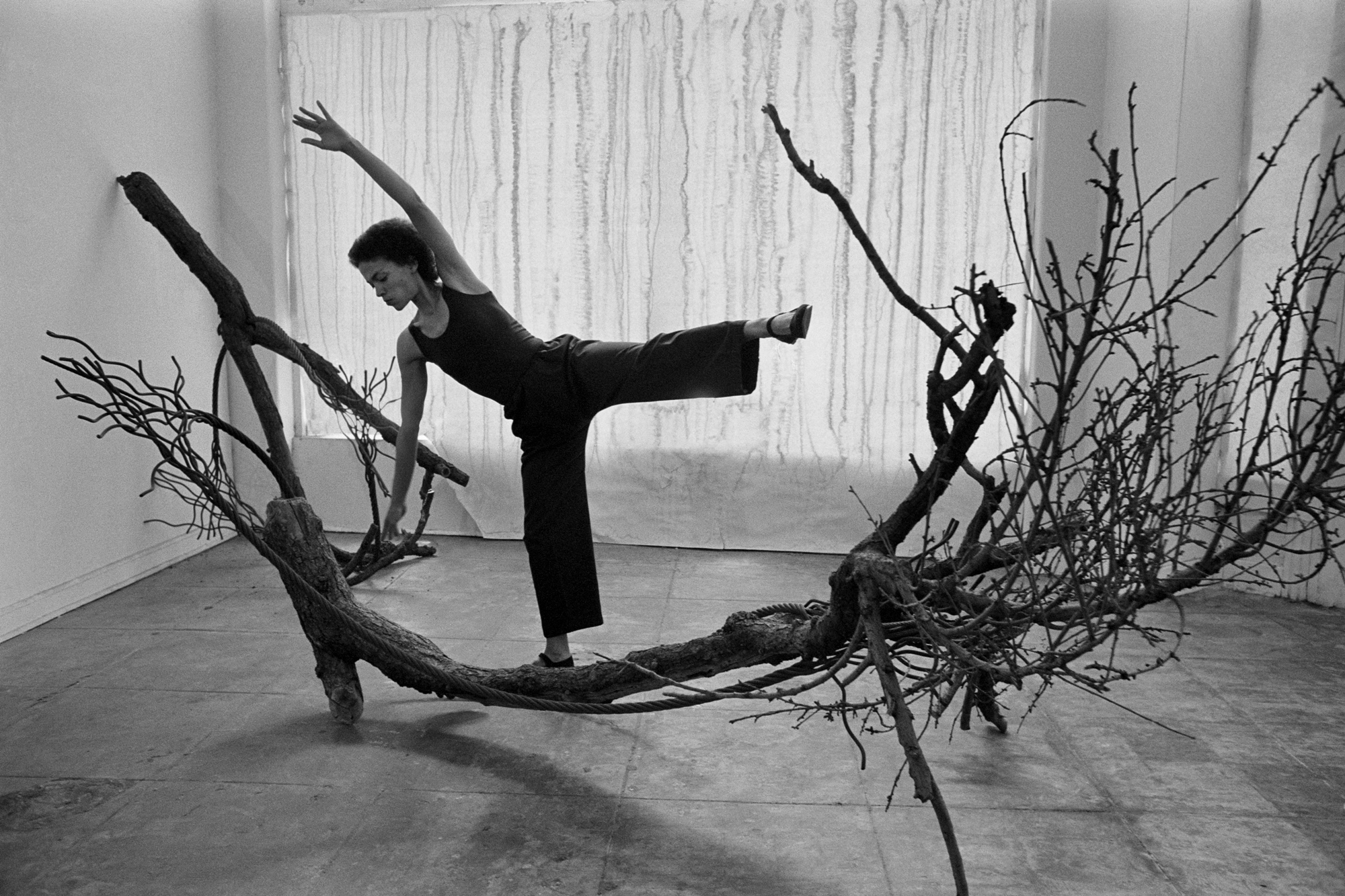
During the 55 years of her materially expansive art career, repetition has become one of Maren Hassinger’s most powerful tools.
She started multiplying elements of her sculptures early on. In 1972, while still in graduate school at UCLA, she placed four large, loosely tied knots of thick hemp rope on the floor. Eight years later, she made Leaning, 32 bundles of wire rope arranged at tottering angles. Consolation, from 1996, is a grid of over 100 sprays of even thinner wire rope, an orderly rendition of ready-to-burst-apart dandelions.
There could be something formulaic about repeating a gesture, of making a thing again and again. But in Living Moving Growing, Hassinger’s retrospective at the Berkeley Art Museum and Pacific Film Archive, her version of repetition is organic. What she captures is not the precision of mass-produced metal or plastic, but the proliferation of nature.
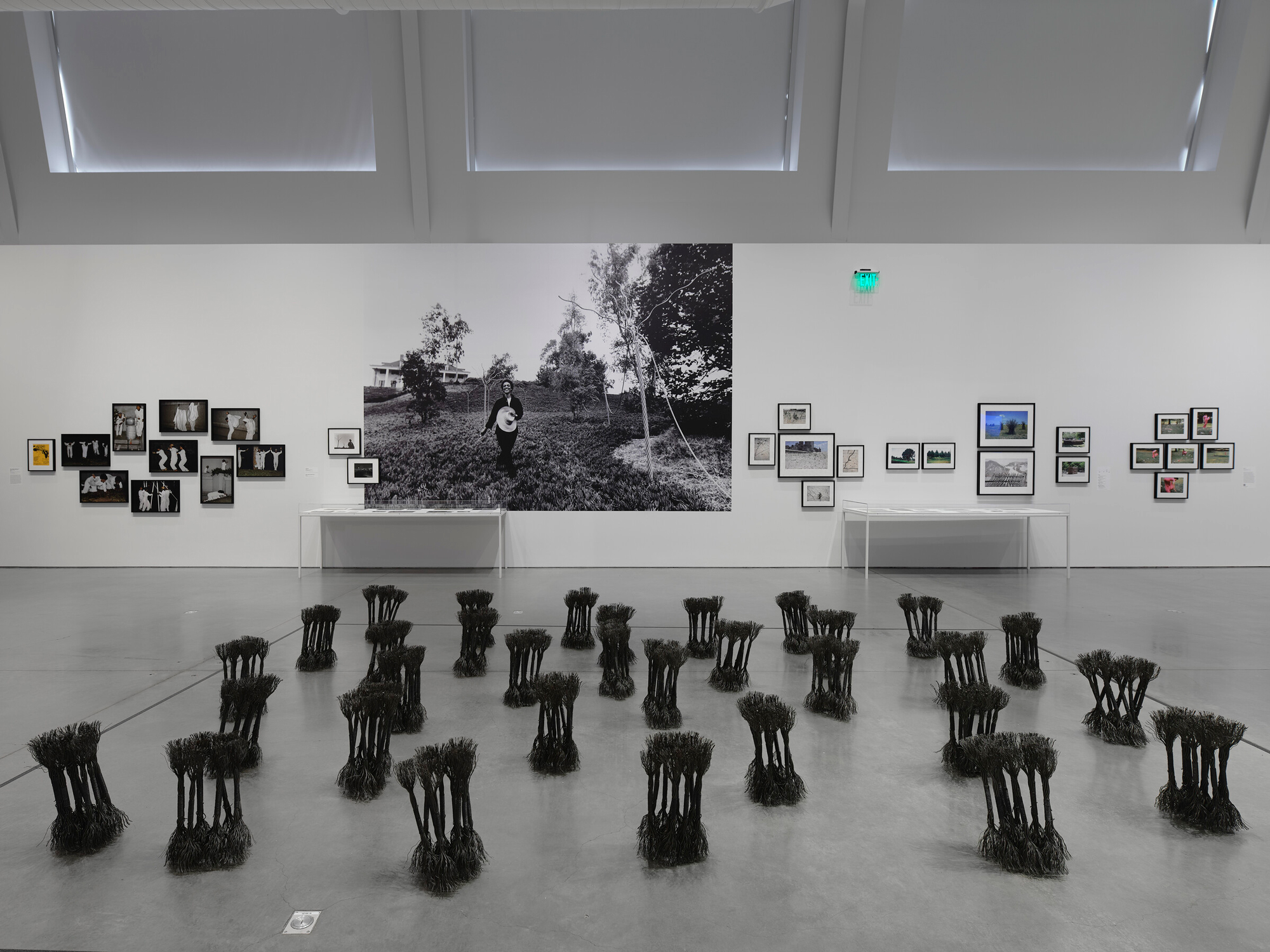
The exhibition, organized by BAMPFA curators Margot Norton and Anthony Graham, moves mostly chronologically from Hassinger’s early grad school work to the present day, presenting Hassinger’s fluid movement across sculpture, video, installation, performance and public art. The newest element, a participatory piece called Wrenching News — made from twisted and tied pages of The New York Times — will grow over the course of the exhibition.
In the hands of another artist, Hassinger’s materials (wire rope, tree branches, plastic bags) might feel cold and spare. But in pieces like River, a 1972 sculpture of steel chains entwined with nautical rope, the heft and scale of the industrial materials demonstrate the sheer physicality of Hassinger’s practice. You can’t see the art without seeing her, as photographed by her friend Adam Avila in the ’70s, unwinding thick cables of wire, crouching by rows of cast plaster, posing with her sculptures as if they’re dance partners.
Halfway through the show, duets abound. Recreations of three 1970s sculptures pair tree branches with wire rope. The silvery, bare bark blends with the slightly undulating wire, intermingling and simultaneously underlining their material contrasts. Movement — that the trees once experienced, that went into the making of this work — is never far away.
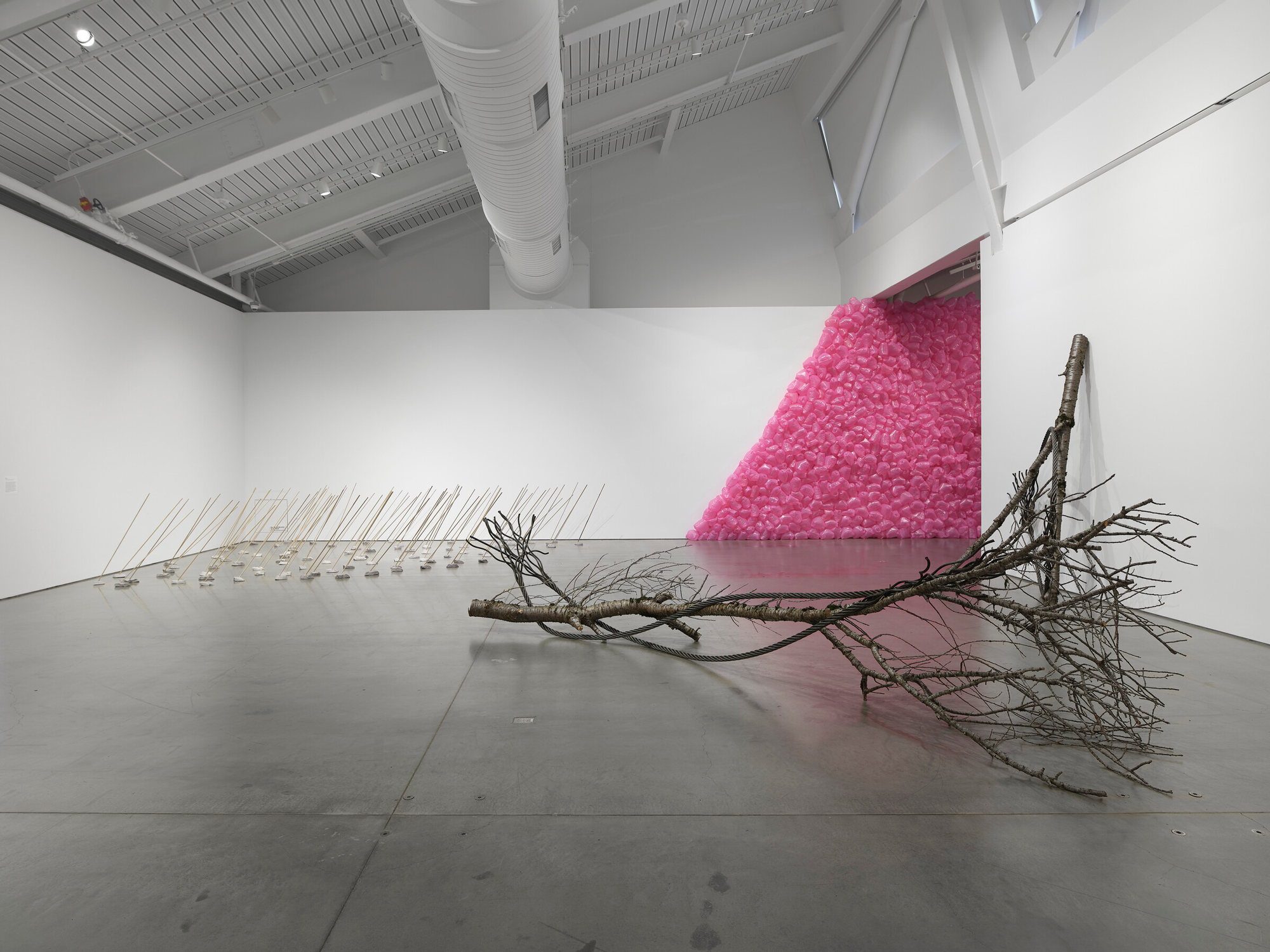
This is especially the case with Beach, a 1980 piece Hassinger first installed at Linda Goode Bryant’s Just Above Midtown Gallery in New York. A simple, repeated arrangement of angled wooden dowels and irregular plaster bases immediately conjures an image of long grasses blowing in the wind. At BAMPFA, the dowels point the way forward to the next gallery, and to Hassinger’s own move from Los Angeles to the East Coast.
Here, color enters Hassinger’s work in the form of pink plastic bags, red crosses made from tape and the dark green of rose leaves affixed, like wallpaper, across two walls of a gallery. Heaven serves as a backdrop for Beige (1992) and Green (1993), Hassinger’s first video works. The former documents the winter landscape seen on her commute across Long Island, the latter, the verdant images of summer.
In two other works, Hassinger turns the camera on herself and her family, examining the construction of race (the 16mm film Daily Mask) and her own complicated family tree (the video Birthright). The exhibition creates a dark, sequestered corner for visitors to watch these pieces, the pink plastic bags of Love warming the space.
As to lingering: Some of Hassinger’s sculptural works are so large, so stunning, it might be easy to breeze by the much-smaller photographs and ephemera in and around the show’s vitrines. These include images of her Malcolm X-quoting mosaics in the New York City subway; documentation of the 1982 performance Flying, Hassinger and her Studio Z collaborators smiling, arms spread; and pictures of the artist performing Pink Trash, dispersing pink-painted detritus across three New York City parks. (Hassinger will perform Pink Trash on the Crescent Lawn, across the street from BAMPFA, on Sept. 20, 2026.)
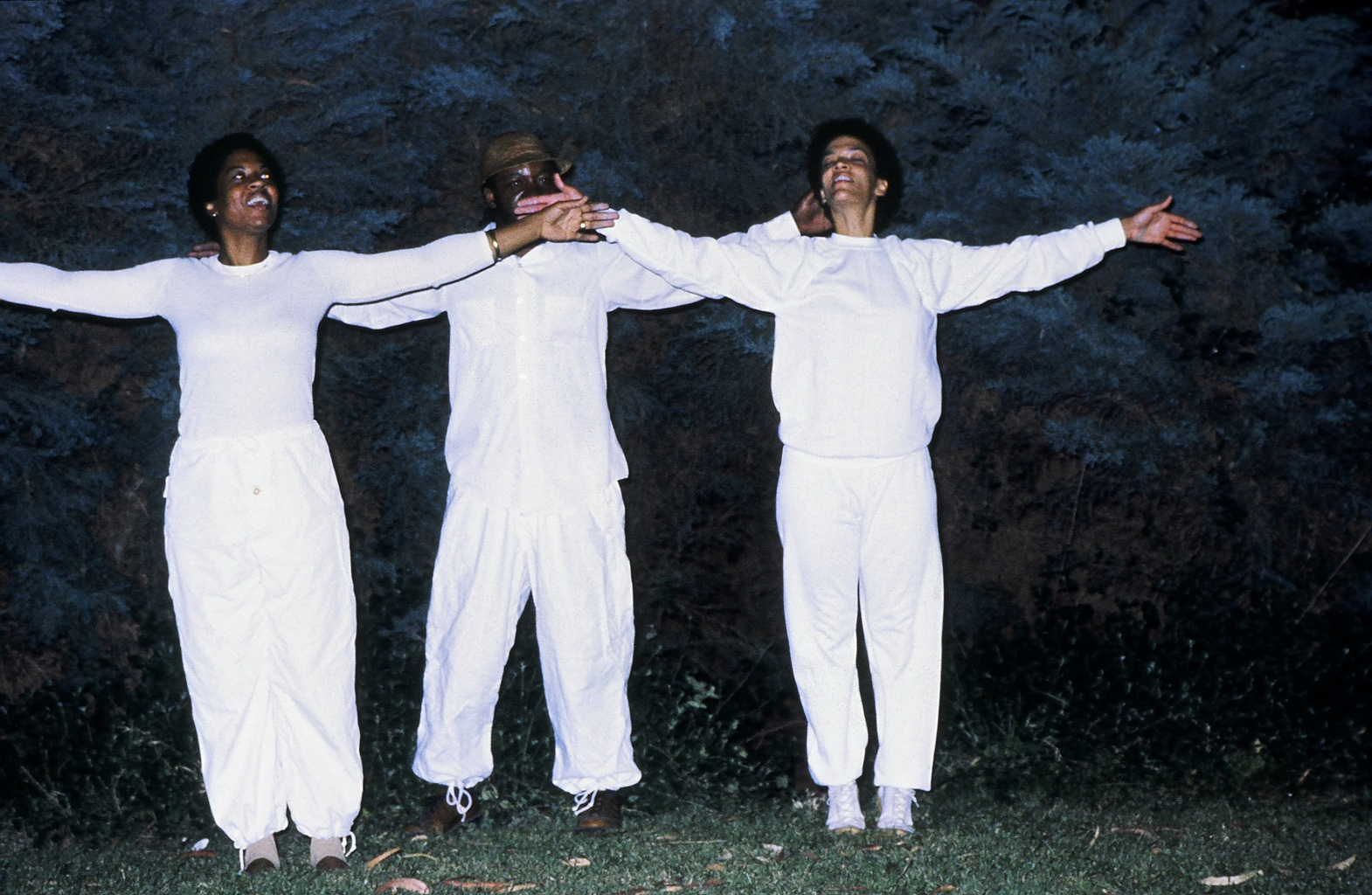
These pieces of documentation depict a deeply collaborative and joyful practice. Even when it’s Hassinger in the frame, we know there’s a photographer on the other side of the lens, making sure this moment — if not this object — is preserved as art history.
Living Moving Growing is the latest in a string of especially strong shows at BAMPFA. The museum is, as executive director Julie Rodrigues Widholm writes in the catalog that accompanies this exhibition, “[committed] to increasing the visibility of influential women artists and generating new scholarship on their work.”
The recent Theresa Hak Kyung Cha, Amalia Mesa-Bains and Alison Knowles retrospectives were all part of this effort. Even more exciting is the way these shows allow contemporary audiences to plot the connections between artists, thanks to the combined (if perhaps unintentional) efforts of multiple Bay Area institutions.
I was delighted, for instance, to see Suzanne Jackson’s name in Hassinger’s chronology. Jackson, the subject of a recent San Francisco Museum of Modern Art retrospective, selected Hassinger as one of 10 artists to receive a public art commission through the Comprehensive Employment and Training Act (CETA), a WPA-style employment program, in 1978.
Presenting histories like these highlights not just individual artists’ accomplishments, but their equally important networks of collaboration and support. So many of Hassinger’s works are the result of these types of relationships — artworks made by many bodies and with the help of many hands. Pais/Ascension (1976/2022) illustrates it perfectly: two wire ropes lean against a wall and towards each other, their ends splaying outward, overlapping and entwining.
‘Maren Hassinger: Living Moving Growing’ is on view at the Berkeley Art Museum and Pacific Film Archive (2155 Center St., Berkeley) through Nov. 29, 2026.