Suzanne Jackson leads with love and invites you to do the same. With her first major museum retrospective spanning six decades of work, the 81-year-old artist demonstrates how freeing an expansive approach to life and art can be.
What the World Needs Now Is Love — and Suzanne Jackson at SFMOMA
The artist’s six decades of prolific, exploratory work shine in her first major museum retrospective.
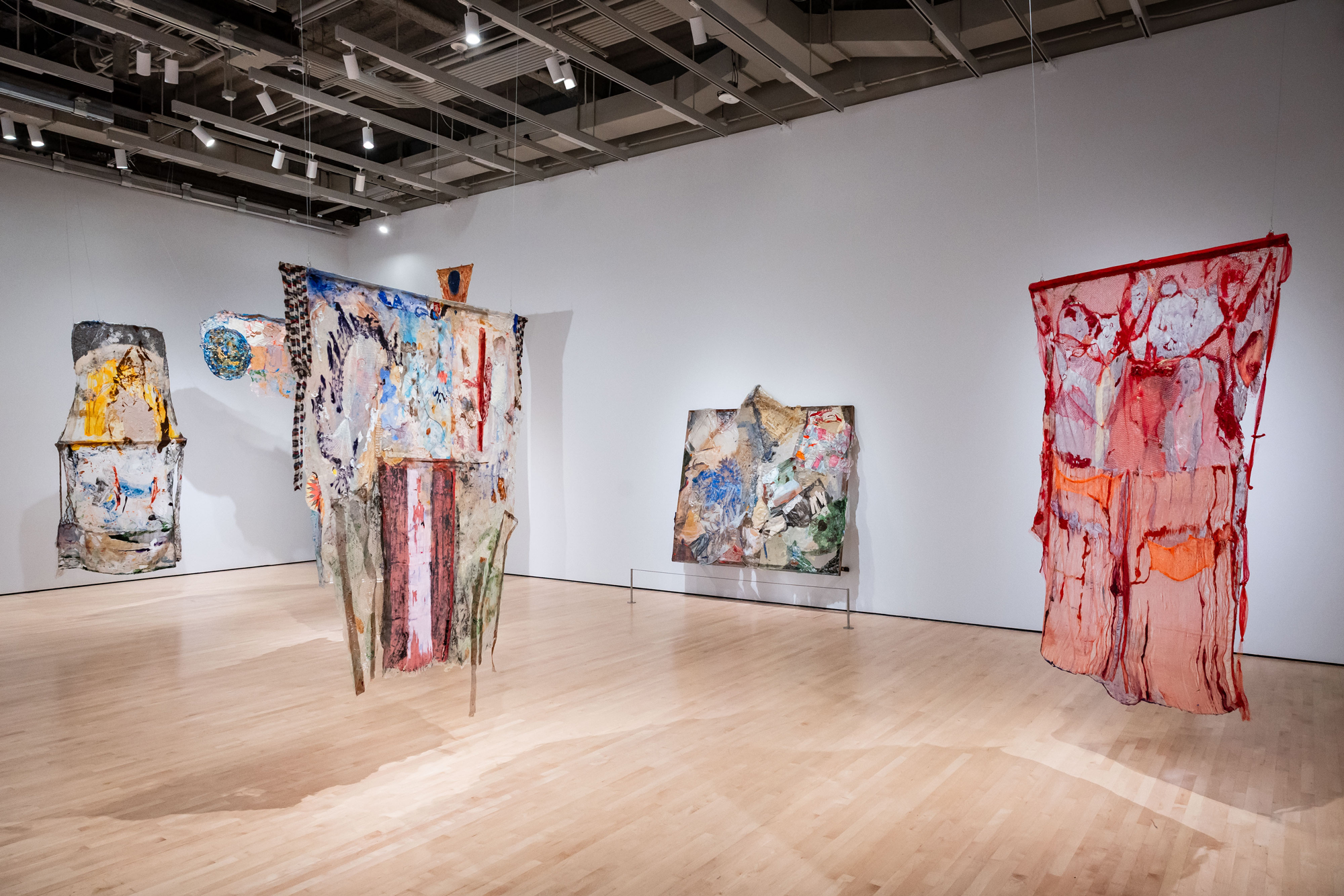
An installation view of 'Suzanne Jackson: What Is Love' at the San Francisco Museum of Modern Art. (Devlin Shand for Drew Altizer)
Related Article
Color and buoyant joy fill the galleries of the San Francisco Museum of Modern Art in Suzanne Jackson: What Is Love. Co-organized with the Minneapolis Walker Art Center, the exhibition proceeds chronologically. It’s a standard choice for a retrospective, but here the timeline discloses the sheer continuousness of Jackson’s work: prolific, exploratory, curious, and fascinated with material and light. Graceful undulating forms, gentle colors, and luminosity stay constant across a Jackson’s experiments in medium and form.
“I think people need to see something that is calm and that may touch their inner spirit,” Jackson tells KQED.
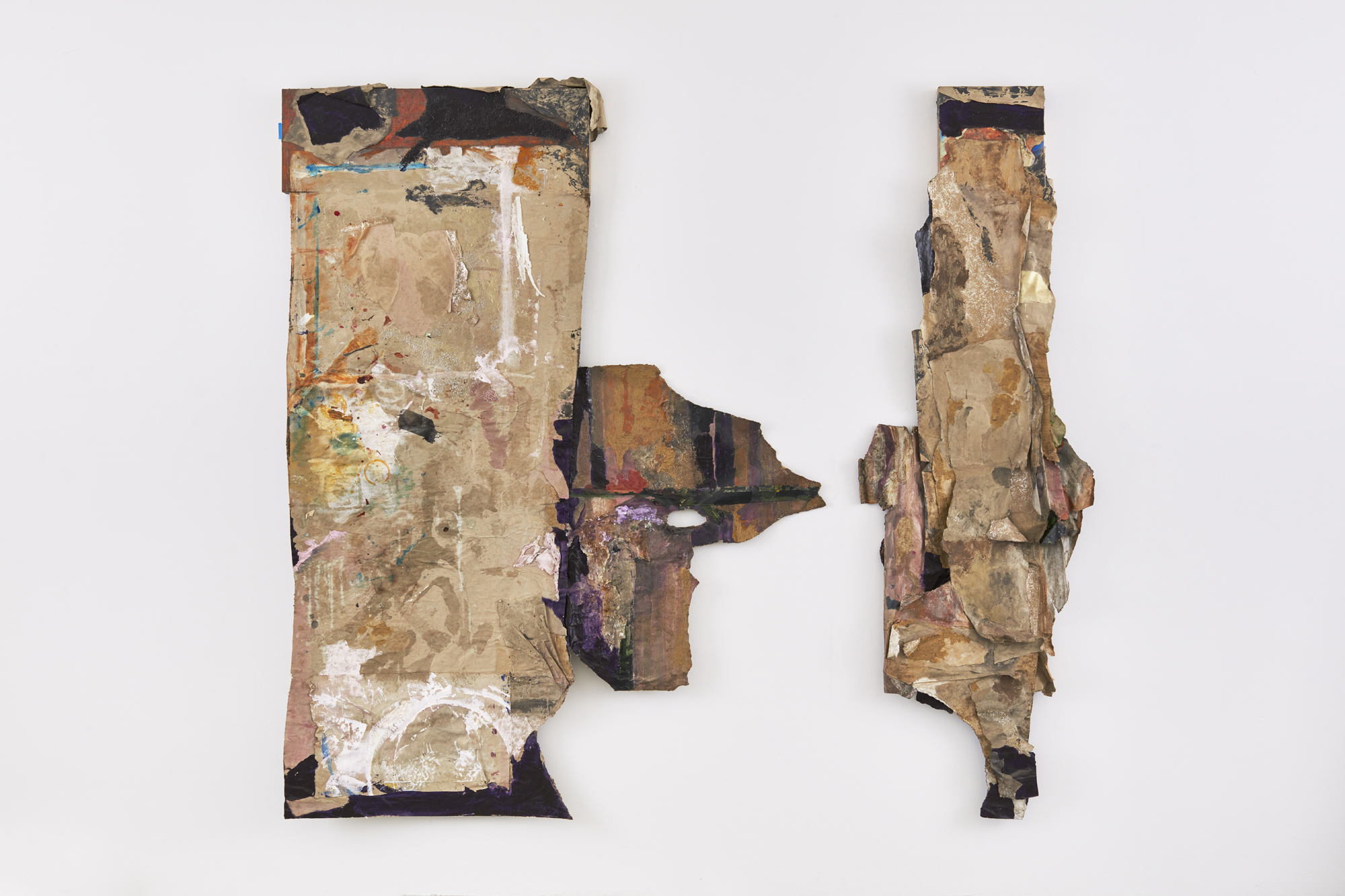
Over 80 paintings and drawings trace Jackson’s explorations from traditional acrylic on canvas paintings to more and more experimental forms. Her sculptural paintings on scenic bogus paper (a disposable paper used in set design) push away from the wall, leading to the translucent floating acrylic paintings that are entirely liberated from canvas or panel support. What Feeds Us?, a newly commissioned installation on environmentalism, is yet another addition to the artist’s sprawling oeuvre.
Jackson speaks with wonder about each stage of her life, noting how the places she has lived have piqued her curiosity. Born in 1944 in St. Louis, she moved to San Francisco with her family at just nine months old, where her father drove a trolley car. Jackson still can recollect her early childhood impressions of the fog, Golden Gate Park and the hills.
Jackson’s family moved to pre-statehood Alaska when she was eight. It was there she began to teach herself to paint local flowers with watercolors. She returned to California to study art and ballet at San Francisco State University in the 1960s. The city’s rich counterculture — which combined art, poetry, dance, theater and activism — stayed with Jackson as she moved around the country in the decades after.
“In many ways it’s a homecoming for her,” says exhibition curator Jenny Gheith.
“I still love San Francisco so much,” Jackson says. “There’s art everywhere.” Happening upon a free concert at Yerba Buena Gardens while exiting SFMOMA, Jackson says she observed San Franciscans “being with one another, peaceful and relaxed in a really wonderful way, very different from other cities.”
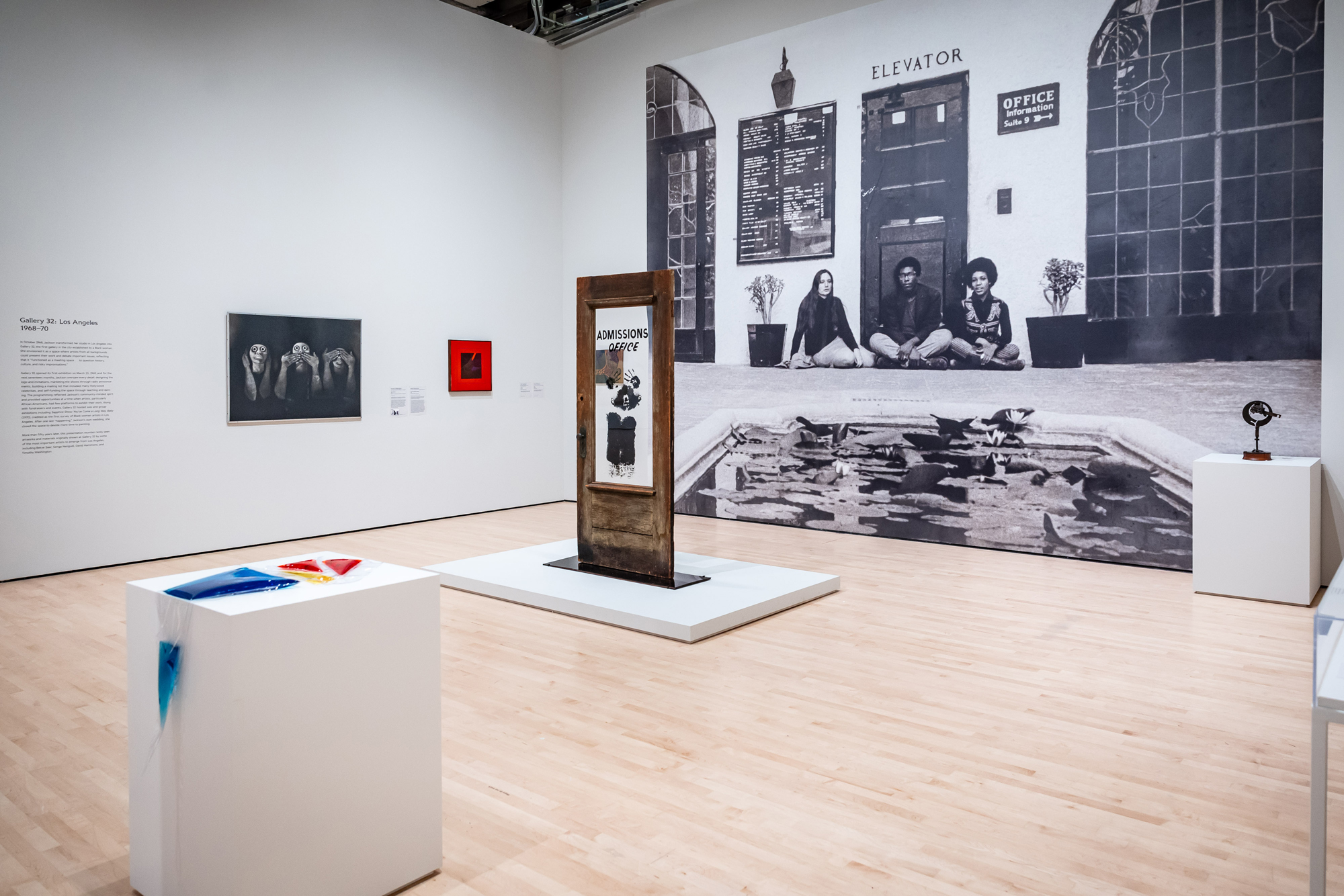
Cases of ephemera in each room testify to Jackson’s embrace of that eclectic San Francisco ethos. Here are traces of her poetry, a dance career, the gallery she ran, theater sets she designed (after an MFA at Yale in 1990), and activism. “I wanted to show a full picture of who Suzanne Jackson is,” Gheith says. There is no artificial separation of art and life in this retrospective.
To that end Gheith dedicated an entire room to Gallery 32, the exhibition space Jackson funded and ran in Los Angeles from 1968 to 1970 out of her own studio. The artists shown are now legendary: Betye Saar, Senga Nengudi, David Hammons, Timothy Washington.
“We were just artists trying to make our work as artists of color,” Jackson recalls. “Artists of color were not being shown in museums, so we organized our own exhibitions and our own poetry readings [and] dance companies.”
What Jackson calls “just being an advocate for other artists” also includes working as a coordinator at Brockman Gallery Productions distributing Comprehensive Employment and Training Act (CETA), a WPA-style employment program, to artists in Los Angeles in 1977. Later, Governor Jerry Brown appointed her to serve on the California Arts Council alongside Ruth Asawa.
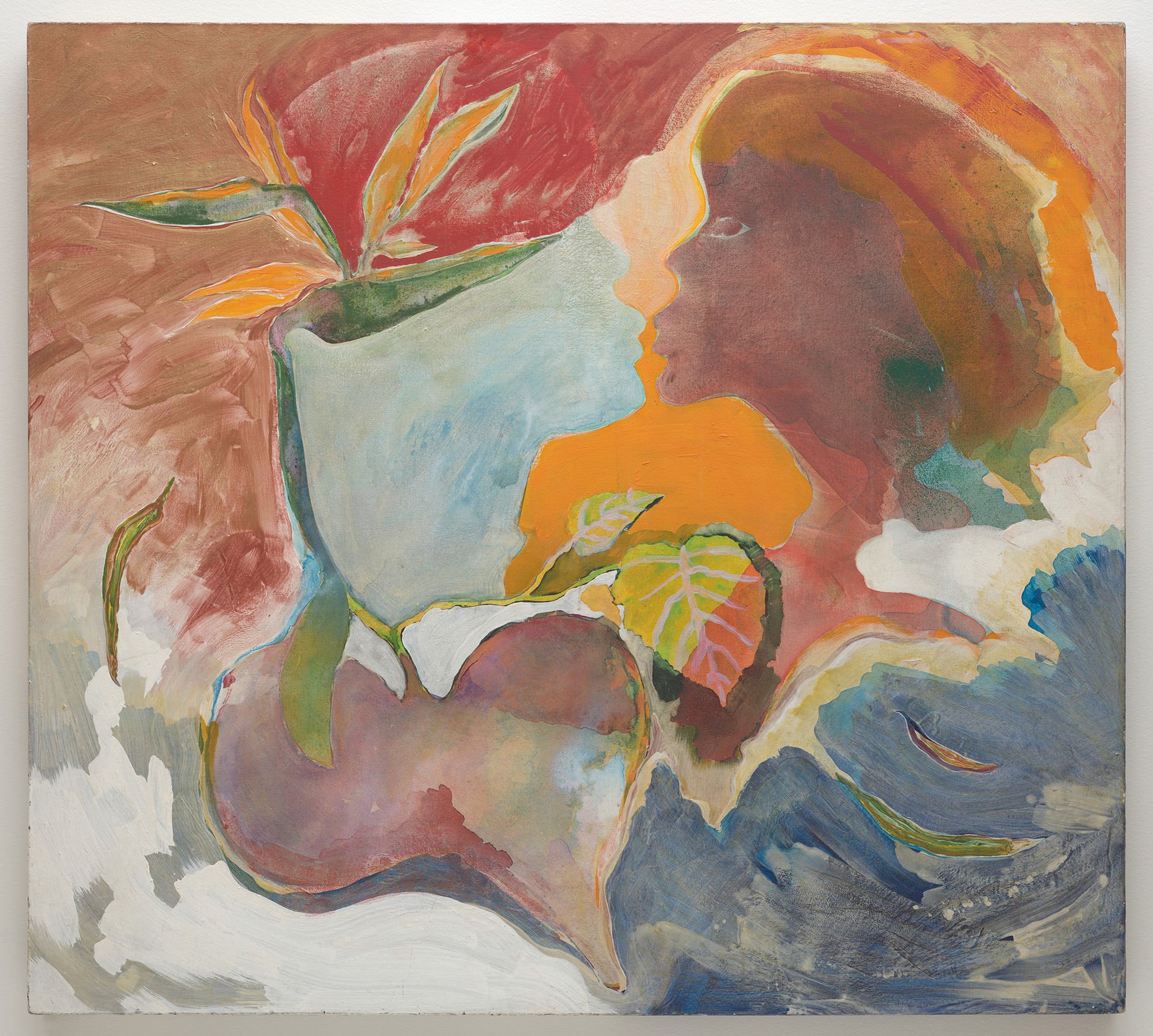
While Jackson was doing all the above and raising a son, she was also making art — really beautiful paintings. El Paradiso, the SFMOMA acquisition that inspired Gheith to mount a retrospective, fills the canvas with acrylic wash thin enough to mimic the translucencies of watercolor. Jackson marries free-floating forms à la Kara Walker with the variegated color fields of Helen Frankenthaler. Surrounded by the flora of California, two faces approach for a kiss silhouetted against glowing orange.
Of all Jackson’s innovations, her hanging acrylics may be the most arresting. They are certainly the form most associated with her. Gloriously, SFMOMA has dedicated a generous amount of gallery space to more of these floating unmounted paintings than I’d dared hope to see in one place.
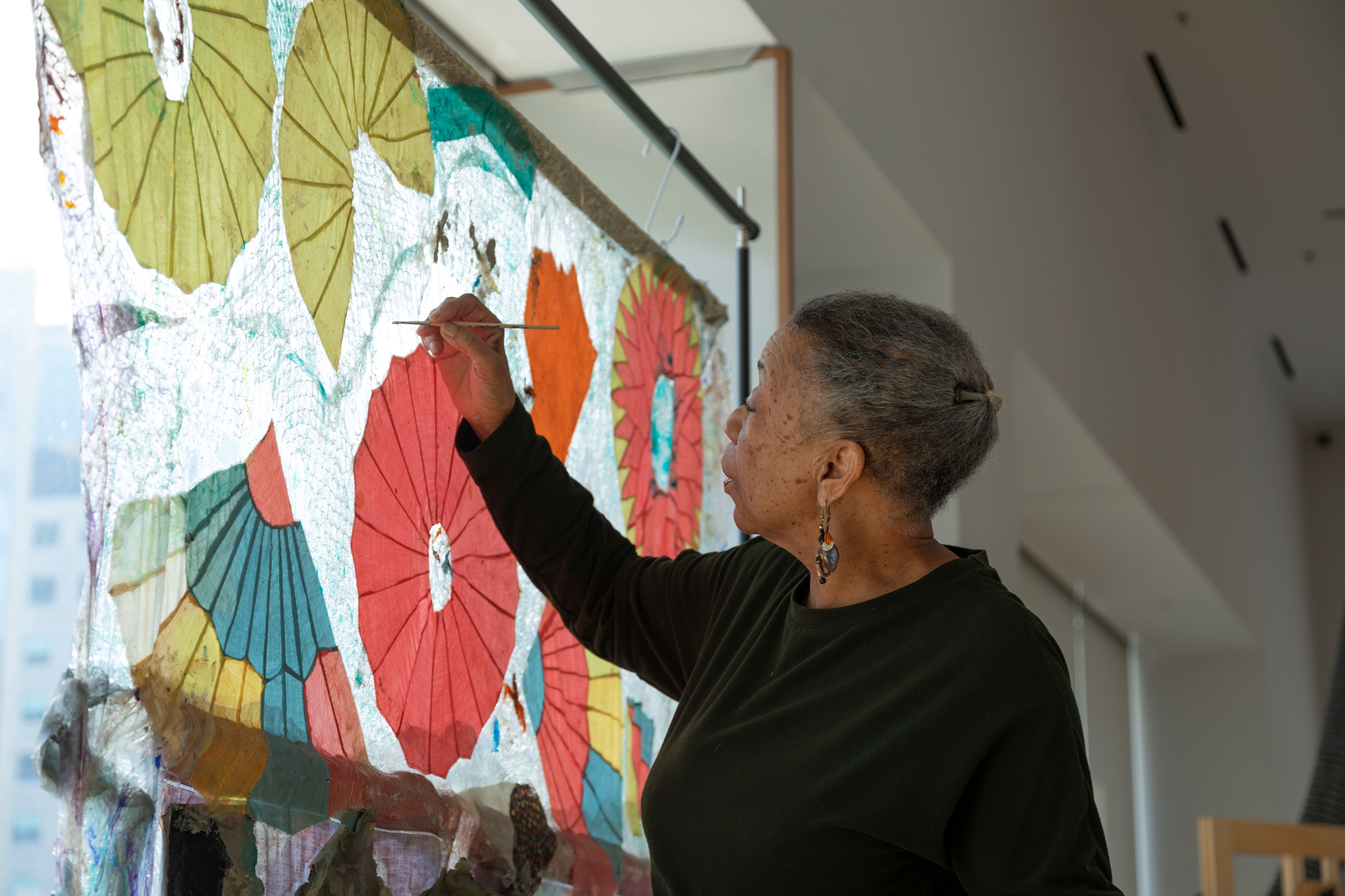
To produce the paintings, Jackson layers acrylic working on a flat table, embedding materials such as netting or paper in the paint, before peeling them free. The result is something akin to a crinkly piece of stained glass, if the stained glass were also an assemblage. Gallery lights shining through the sheer layers illuminate the works until they glisten. Standing next to them lifts gravity; one’s body lightens.
The exhibition title Suzanne Jackson: What Is Love revises What I Love, a book Jackson published in 1972. It also deliberately omits a question mark. “Everything we do is a sense, a kind of art, but it is [also] life,” says Jackson. “And what is love? That’s the question; it’s not a question. And that’s for people to choose themselves.”
‘Suzanne Jackson: What Is Love’ is on view at the San Francisco Museum of Modern Art (151 Third St., San Francisco) through March 1, 2026.