It’s been a year since the beloved UC Berkeley falcons disappeared from the campus campanile, probable victims of avian flu. For those of us who obsessed over resilient mom falcon Annie and her series of beaus (Grinnell, Alden, Archie and Lou) and offspring, there has been a giant bird of prey–shaped hole in our hearts ever since.
Missing the Cal Falcons? It’s Time to Watch the (Very Cute) Stockton Barn Owls
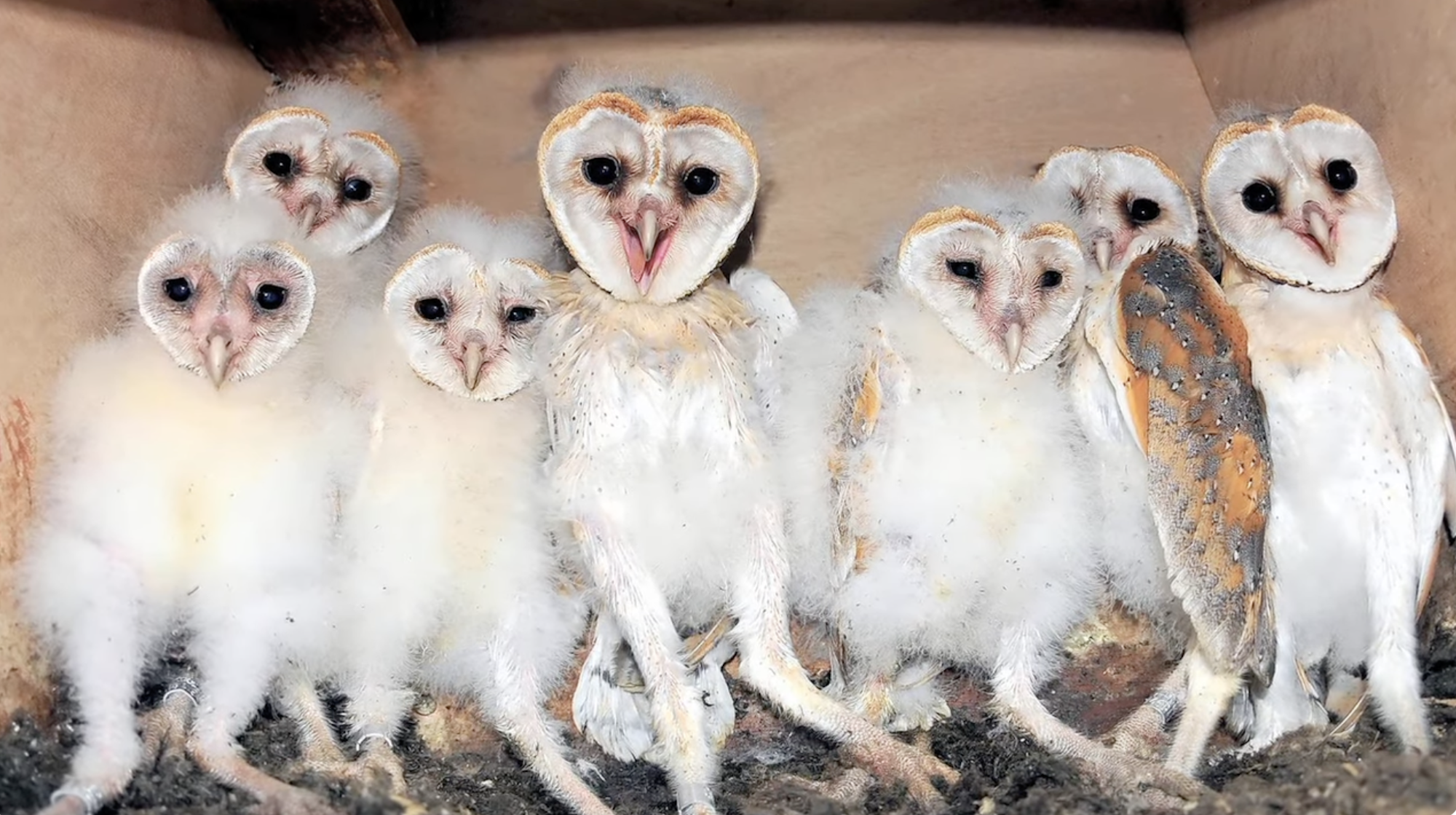
Owlets caught on camera by the Port of Stockton’s Barn Owl Cams. (Port of Stockton)
Related Article
Since no new falcons have taken residence on the clock tower, and an appropriate period of mourning has passed, it might be time to find a new bird-loving livestream. Which is where the Port of Stockton’s Barn Owl Cams come in.
Since 2006, the Delta Environmental Enhancement Program has been installing nest boxes around the port to increase owl numbers. The main goal was to keep rodent populations in check, in order to protect the port’s levees. There are now 20 nest boxes and they’re doing their job. The resident owls kill and eat around 40,000 rodents annually which has reduced the need for rodenticide use at the shoreline. (The rodent bait that’s still in use is safe for the owls to consume.)
The program offers more than pest control though, thanks to the infrared cameras that cover six nests, inside and out, day and night. The cameras even have sound so you can listen to the owls performing their signature screeching. (Unlike many other owl species, barn owls don’t hoot.)
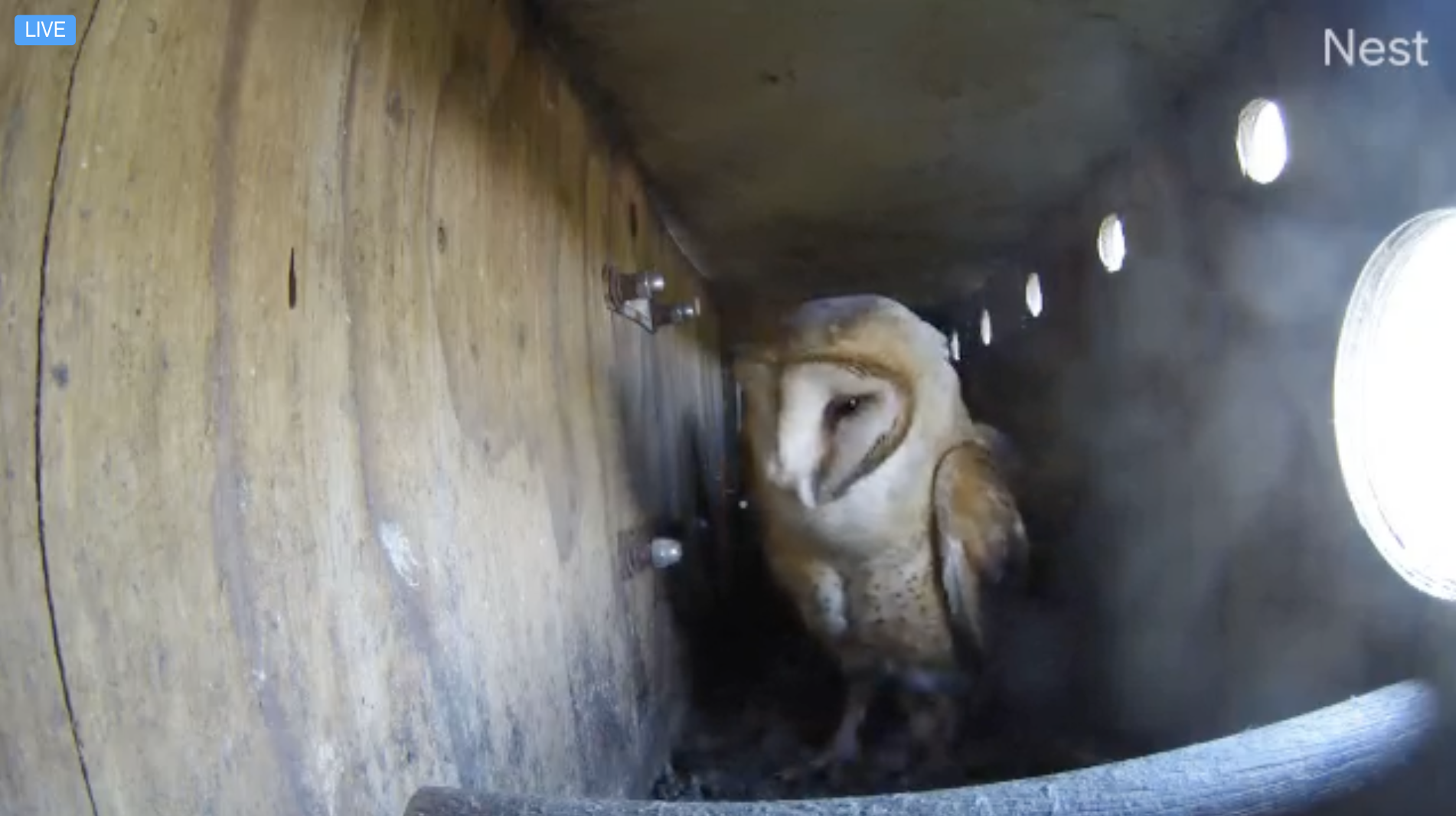
The barn owls begin nesting every November. Tune in to the live cams during the day and you’re likely to see the droopy faces of these majestic beasts inside their boxes, either sleeping or preening. Once the sun goes down, they wake up and go on the hunt for prey.
It’s during March and April that things get really exciting, however, with the owls laying and hatching their eggs. Barn owl pairs — which mate for life — typically produce five owlets at a time, but the port has seen broods of up to seven survive. Best of all? The offspring don’t typically leave the nest for two months, which means, come spring, there will be weeks of owlet entertainment coming our way.
In the meantime, there are plenty of chances to stare for hours at ridiculous, dainty owl legs in all of their skinny, righteous glory.
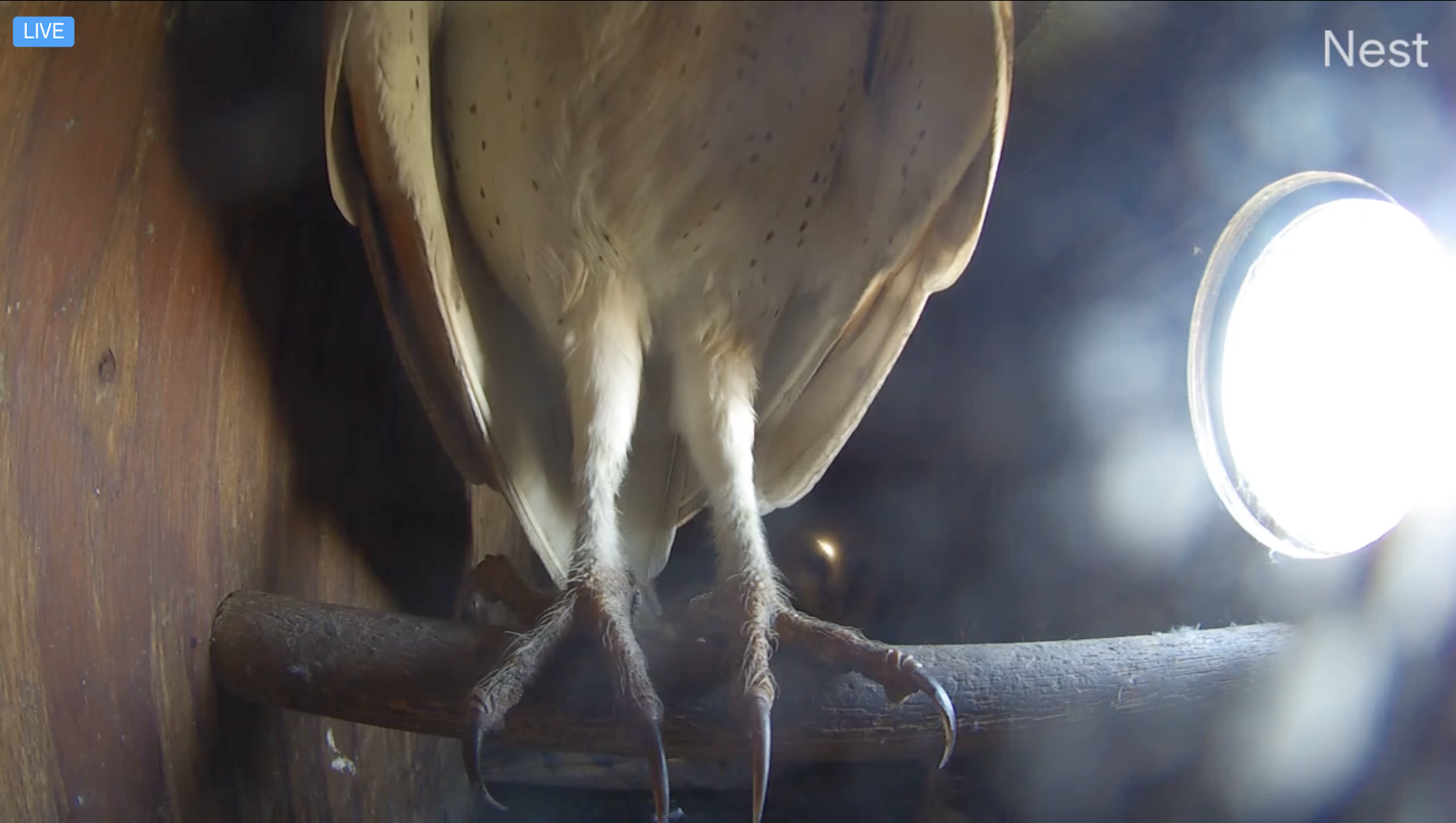
While nothing will ever replace the longterm bird soap opera that Annie the falcon bestowed upon us, the Stockton Barn Owl Cams offer a fascinating insight into nocturnal raptors we’d rarely see otherwise. Also … they’re pretty darned cute.
Happy 20th anniversary to the Port of Stockton Owl Cams, then. May the owlets we’re about to meet lift the spirits of California bird lovers everywhere.
The Port of Stockton’s Barn Owl Cams can be viewed here.