A
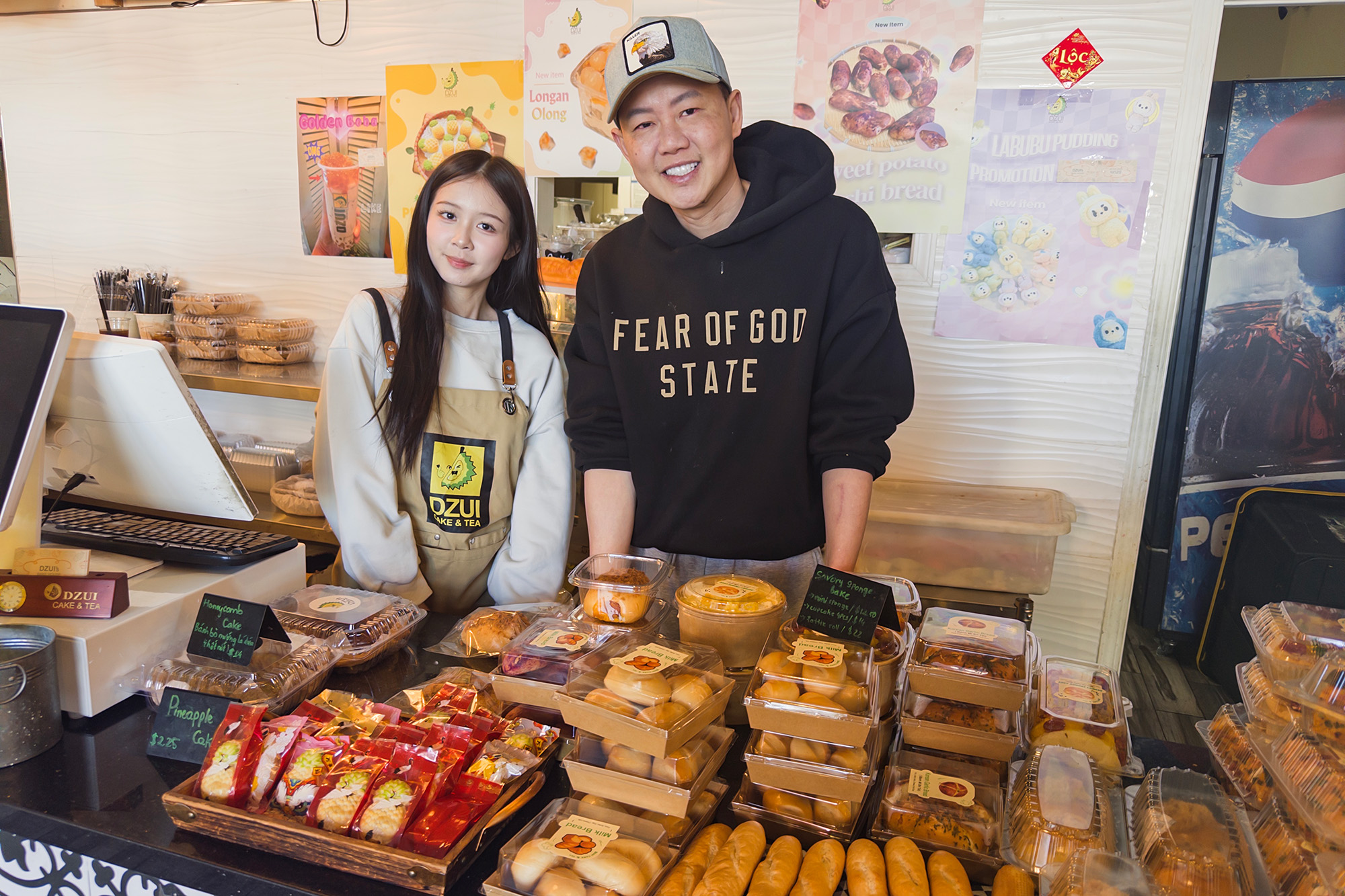
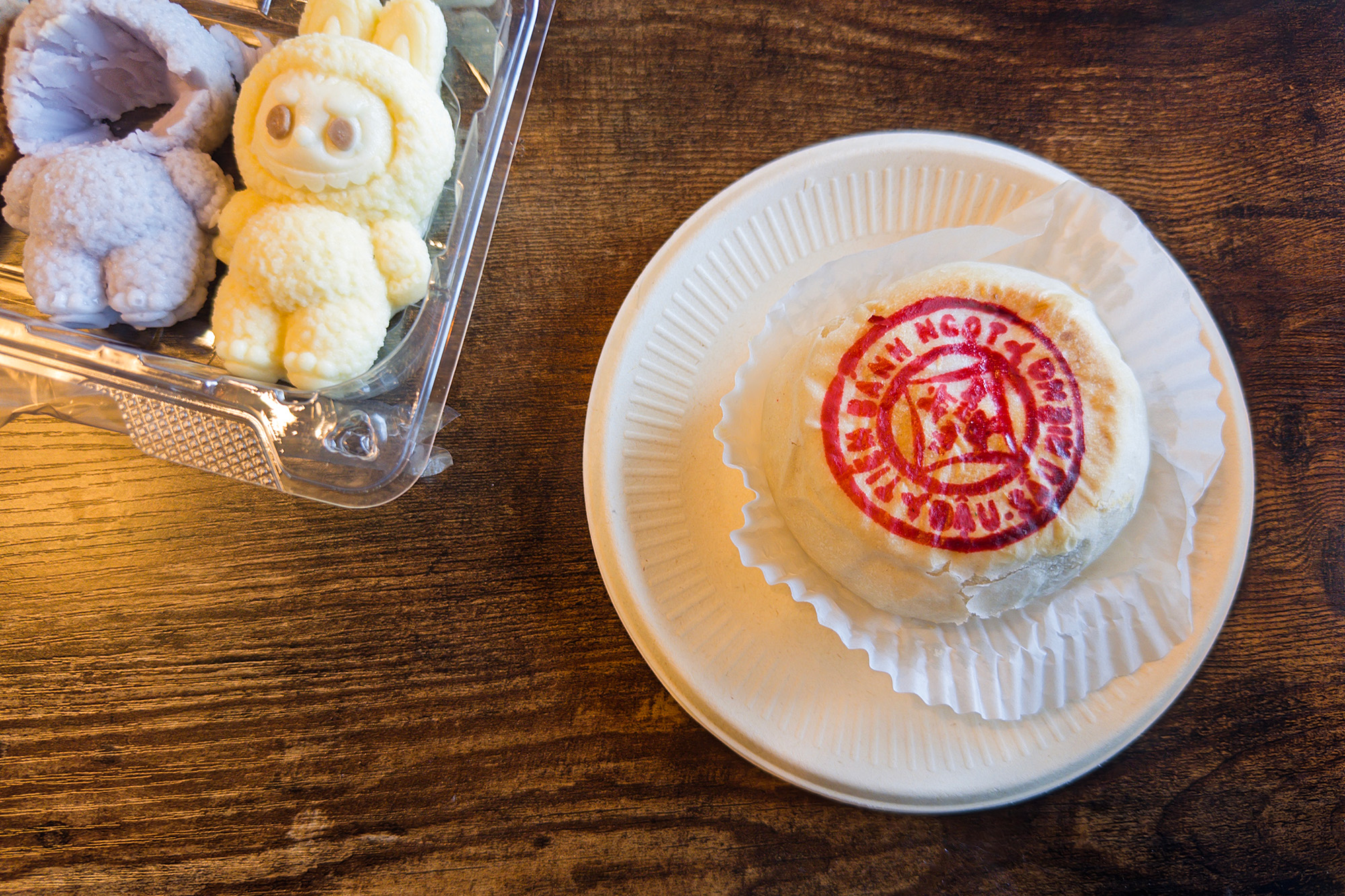
t Dzui’s, a snug Vietnamese dessert shop in Eastside San José, the display case is a cabinet of delectable mysteries. One side of the counter is piled high with flaky pastries and savory sponge cakes topped, variously, with pork floss and toasted seaweed. On the other, pillowy crepe rolls sit beside clamshell containers of rice pudding molded into the shape of Labubus (!) and a cluster of layer cakes resembling a snow-dusted, neon-green mountain range. Half the items in the case aren’t labeled.
Who needs a menu, though, when just about everything is mind-bogglingly tasty? Over the course of three recent visits, I hoovered up a refreshing tofu pudding drink packed with boba, pandan jellies and other assorted textural delights, and devoured a pot-pie-like ground pork pastry with boiled quailed eggs hidden inside.
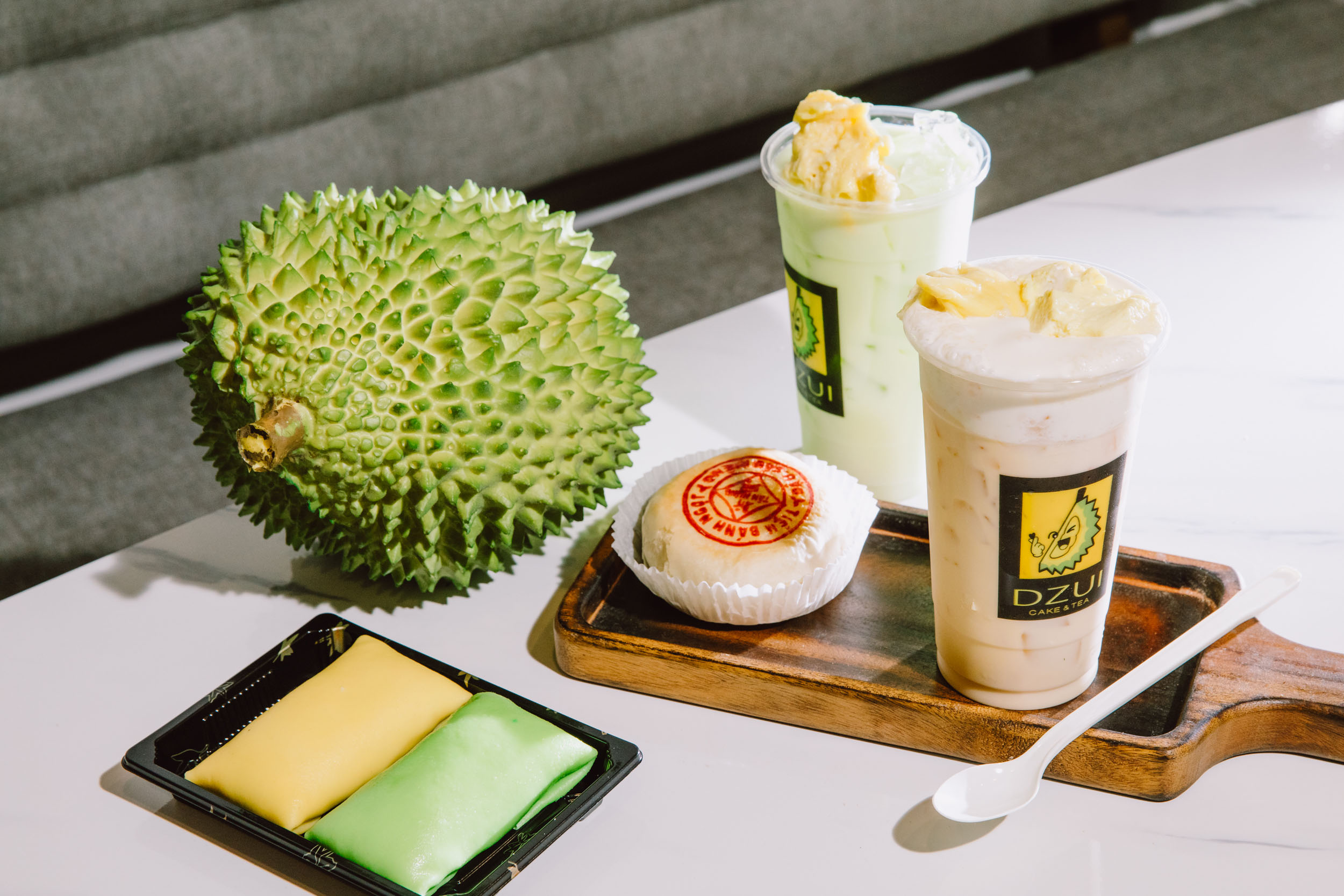
More than anything, I reveled in the rich, famously pungent flavor of durian. Plump, tender durian crepes crammed full of whipped cream that’s layered with chunks of the intoxicating fruit. A durian-and-salt-cream milk tea that only got more potent — and more delicious — the longer I drank it.
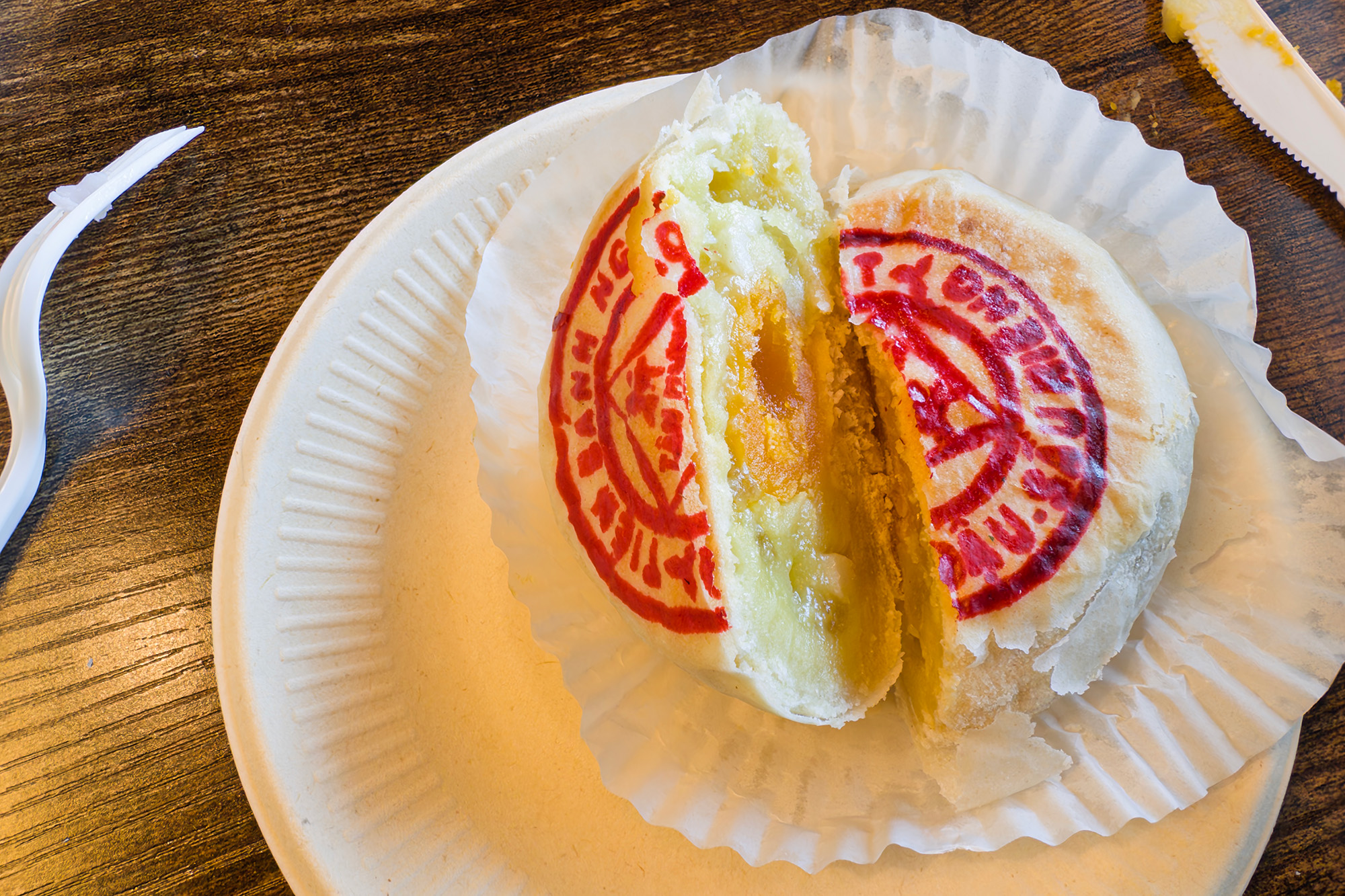
Most memorable of all was a treat I’d never tried before: a round, flaky pastry that looked like a mooncake or a Chinese wife cake. Inside, the filling was a mix of green mung beans, salted egg yolk, candied winter melon and, once again, that characteristic sweet funk of fresh, ripe durian — a delightful combination of textures and flavors.
The pastries are known as bánh pía. And, as I soon learned, they’re the product of a 40-plus-year family legacy.
A Chinese-Vietnamese legacy
As it turns out, the shop’s owner, Dzui Thai, comes from a long line of bánh pía makers. His aunt and uncle run Tân Hưng, one of the most famous bánh pía brands in Vietnam, adapting his grandfather’s four-decade-old original recipe.
The bánh pía pastries are a legacy of Vietnam’s Teochew (aka Chaozhou) people, an ethnic Chinese subgroup that mostly resettled in parts of Southeast Asia. Both sides of Thai’s family are Teochew who moved to Sóc Trăng, Vietnam, two generations ago. Thai himself is fluent in Mandarin. He says even after immigrating to Sóc Trăng, his paternal grandparents didn’t speak any Vietnamese at all.
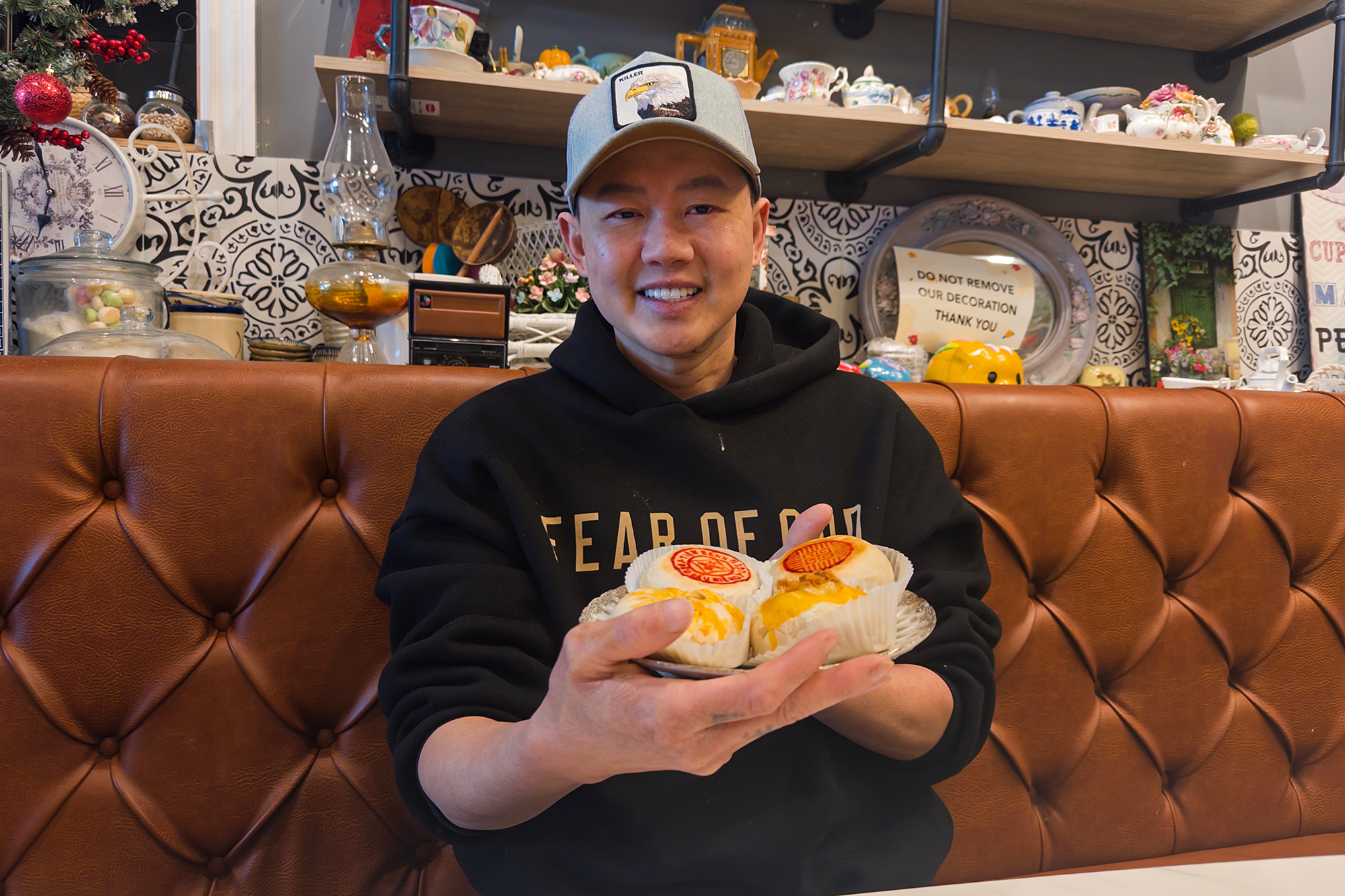
Bánh pía’s Chinese roots help explain why the pastries most closely resemble the kind of flaky, thin-skinned mooncakes that you’ll find in Chaozhou. In fact, Thai says, back in his hometown of Sóc Trăng, people were more likely to eat bánh pía to celebrate the Moon Festival than traditional mooncakes. As a kid, he remembers going to help out at his auntie’s factory each fall, right before the Moon Festival, and everyone would be exhausted from working almost nonstop for the whole month, making thousands upon thousands of bánh pía.
In fact, with his family’s blessing, the bánh pía at Dzui’s are also stamped with the Tân Hưng brand name — even though he produces the pastries independently here in San José, using the same laborious seven-step process that his family’s factories in Sóc Trăng employ. The branding caused some confusion when Thai first started selling the bánh pía, as some Vietnamese customers accused him of simply re-selling pastries he’d bought frozen from Vietnam.
“I respect my family, so that’s why I don’t change it,” Thai says of his decision to carry on the Tân Hưng name.
Thai’s own path to opening a food business was somewhat circuitous. Originally, he’d moved to California in the late 2000s to attend film school at USC, but wound up dropping out when he was diagnosed with leukemia. Then, seven or eight years later, whiles living in San José with his sister, the cancer returned, and he had to drop everything again.
“One day, I was lying in bed and didn’t know what to do. I was so craving my family’s [food], so I decided to make it,” Thai recalls. “And then I started to try and sell it at home.”
At first, Thai’s nascent home bakery business only sold one item — a savory sponge cake topped with pork floss, Chinese sausage and salted egg yolk. It was a hit, and remains one of Dzui’s best-selling items. Soon, he started selling bánh pía too. At the time, he says, no one else was baking those fresh in San José; you could only buy frozen pía cakes at Vietnamese markets.
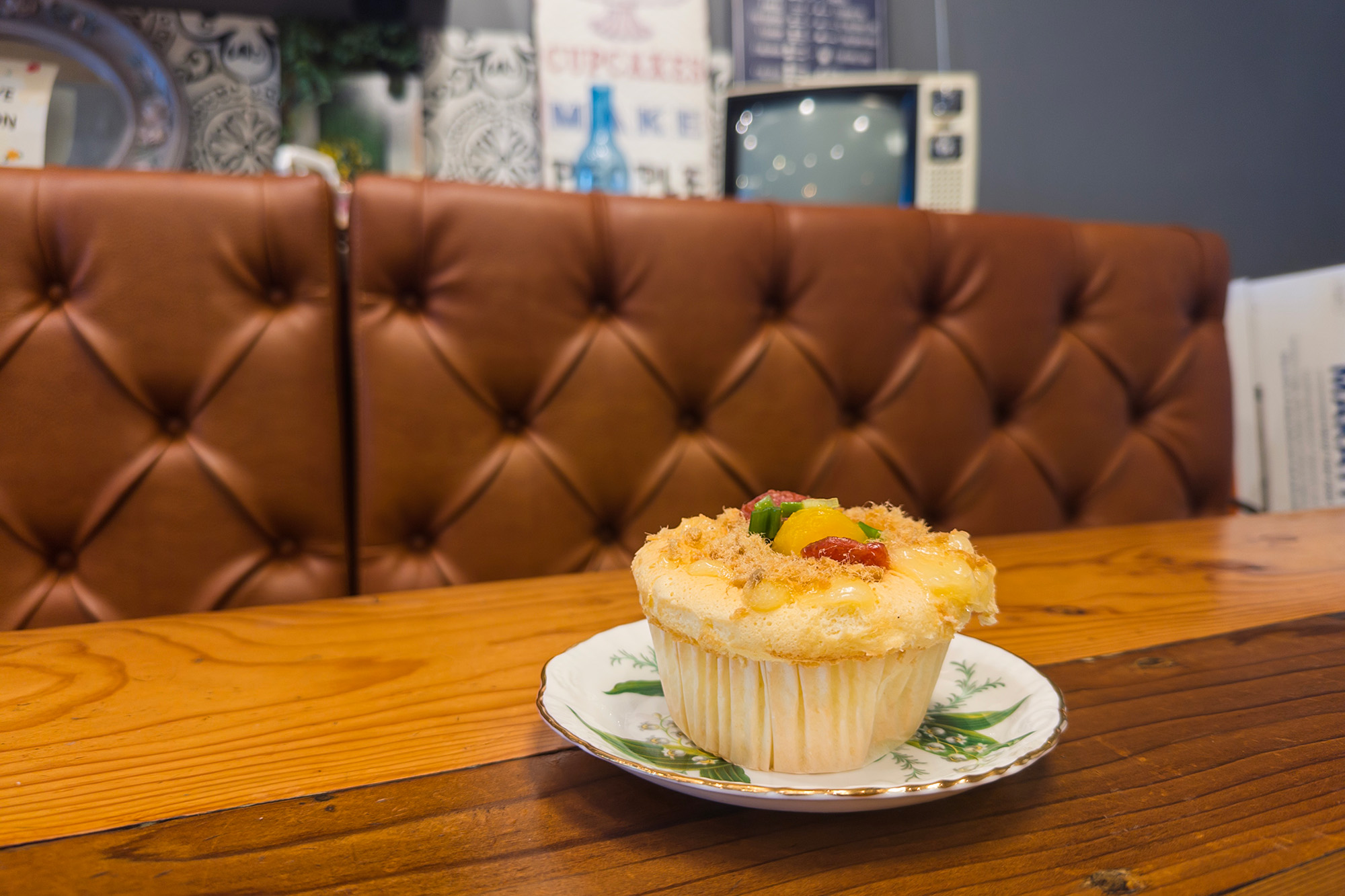
Thai says his family didn’t initially support him getting into the food business; they were too worried about his health. But his little home baking venture was so successful that they eventually relented and gave their approval. In 2017, when Thai was fully cancer-free, he opened Dzui’s Cakes & Desserts as a full-fledged Vietnamese bakery and snack shop. In the years since, Thai has expanded on his durian-forward beverage menu and added a cute cafe area bedecked with nostalgic, 1980s-era knicknacks, rebranding the shop as Dzui Cake & Tea.
A paradise for durian lovers
As Thai tells it, it’s no coincidence that Dzui’s wound up becoming the South Bay’s go-to destination for durian desserts. That was the vision from the very beginning, he says. After all, even the store’s logo is a jolly cartoon durian.
“When you open a business, you want to stand out — you want to be different,” Dzui says, pointing out the many other coffee shops and boba shops in San José that sell more or less the same selection of milk teas and fruit teas.
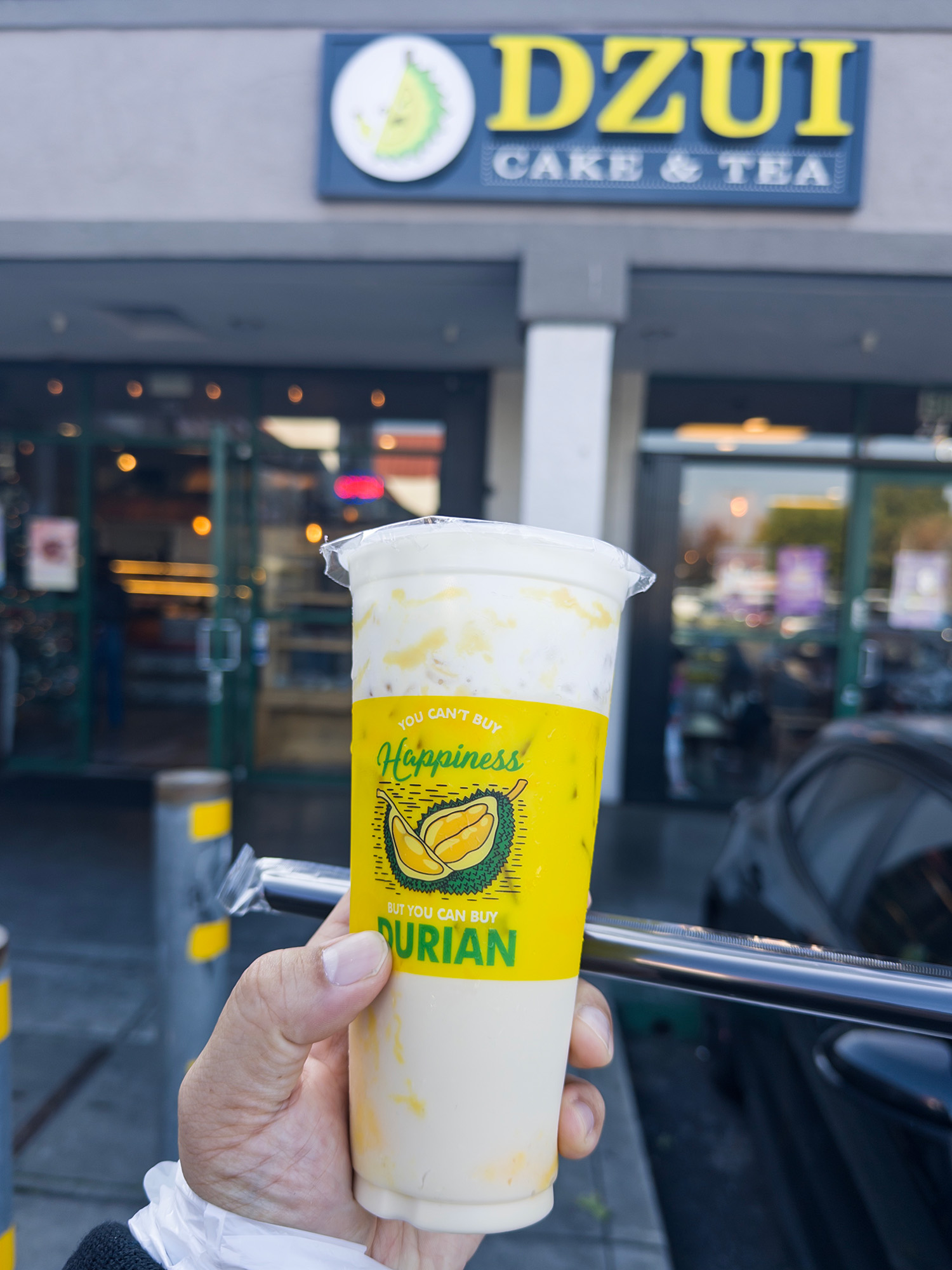
Of course, given the love-it-or-hate-it nature of durian itself, there was always a risk that the business would flop entirely. Instead, these days Dzui’s attracts large crowds of Asian (and some non-Asian) customers who come precisely because they’ve heard the shop is a kind of paradise for durian lovers.