window.__IS_SSR__=true
window.__INITIAL_STATE__={
"attachmentsReducer": {
"audio_0": {
"type": "attachments",
"id": "audio_0",
"imgSizes": {
"kqedFullSize": {
"file": "https://ww2.kqed.org/news/wp-content/themes/KQED-unified/img/audio_bgs/background0.jpg"
}
}
},
"audio_1": {
"type": "attachments",
"id": "audio_1",
"imgSizes": {
"kqedFullSize": {
"file": "https://ww2.kqed.org/news/wp-content/themes/KQED-unified/img/audio_bgs/background1.jpg"
}
}
},
"audio_2": {
"type": "attachments",
"id": "audio_2",
"imgSizes": {
"kqedFullSize": {
"file": "https://ww2.kqed.org/news/wp-content/themes/KQED-unified/img/audio_bgs/background2.jpg"
}
}
},
"audio_3": {
"type": "attachments",
"id": "audio_3",
"imgSizes": {
"kqedFullSize": {
"file": "https://ww2.kqed.org/news/wp-content/themes/KQED-unified/img/audio_bgs/background3.jpg"
}
}
},
"audio_4": {
"type": "attachments",
"id": "audio_4",
"imgSizes": {
"kqedFullSize": {
"file": "https://ww2.kqed.org/news/wp-content/themes/KQED-unified/img/audio_bgs/background4.jpg"
}
}
},
"placeholder": {
"type": "attachments",
"id": "placeholder",
"imgSizes": {
"thumbnail": {
"file": "https://cdn.kqed.org/wp-content/uploads/2024/12/KQED-Default-Image-816638274-2000x1333-1-160x107.jpg",
"width": 160,
"height": 107,
"mimeType": "image/jpeg"
},
"medium": {
"file": "https://cdn.kqed.org/wp-content/uploads/2024/12/KQED-Default-Image-816638274-2000x1333-1-800x533.jpg",
"width": 800,
"height": 533,
"mimeType": "image/jpeg"
},
"medium_large": {
"file": "https://cdn.kqed.org/wp-content/uploads/2024/12/KQED-Default-Image-816638274-2000x1333-1-768x512.jpg",
"width": 768,
"height": 512,
"mimeType": "image/jpeg"
},
"large": {
"file": "https://cdn.kqed.org/wp-content/uploads/2024/12/KQED-Default-Image-816638274-2000x1333-1-1020x680.jpg",
"width": 1020,
"height": 680,
"mimeType": "image/jpeg"
},
"1536x1536": {
"file": "https://cdn.kqed.org/wp-content/uploads/2024/12/KQED-Default-Image-816638274-2000x1333-1-1536x1024.jpg",
"width": 1536,
"height": 1024,
"mimeType": "image/jpeg"
},
"fd-lrg": {
"file": "https://cdn.kqed.org/wp-content/uploads/2024/12/KQED-Default-Image-816638274-2000x1333-1-1536x1024.jpg",
"width": 1536,
"height": 1024,
"mimeType": "image/jpeg"
},
"fd-med": {
"file": "https://cdn.kqed.org/wp-content/uploads/2024/12/KQED-Default-Image-816638274-2000x1333-1-1020x680.jpg",
"width": 1020,
"height": 680,
"mimeType": "image/jpeg"
},
"fd-sm": {
"file": "https://cdn.kqed.org/wp-content/uploads/2024/12/KQED-Default-Image-816638274-2000x1333-1-800x533.jpg",
"width": 800,
"height": 533,
"mimeType": "image/jpeg"
},
"post-thumbnail": {
"file": "https://cdn.kqed.org/wp-content/uploads/2024/12/KQED-Default-Image-816638274-2000x1333-1-672x372.jpg",
"width": 672,
"height": 372,
"mimeType": "image/jpeg"
},
"twentyfourteen-full-width": {
"file": "https://cdn.kqed.org/wp-content/uploads/2024/12/KQED-Default-Image-816638274-2000x1333-1-1038x576.jpg",
"width": 1038,
"height": 576,
"mimeType": "image/jpeg"
},
"xxsmall": {
"file": "https://cdn.kqed.org/wp-content/uploads/2024/12/KQED-Default-Image-816638274-2000x1333-1-160x107.jpg",
"width": 160,
"height": 107,
"mimeType": "image/jpeg"
},
"xsmall": {
"file": "https://cdn.kqed.org/wp-content/uploads/2024/12/KQED-Default-Image-816638274-2000x1333-1-672x372.jpg",
"width": 672,
"height": 372,
"mimeType": "image/jpeg"
},
"small": {
"file": "https://cdn.kqed.org/wp-content/uploads/2024/12/KQED-Default-Image-816638274-2000x1333-1-672x372.jpg",
"width": 672,
"height": 372,
"mimeType": "image/jpeg"
},
"xlarge": {
"file": "https://cdn.kqed.org/wp-content/uploads/2024/12/KQED-Default-Image-816638274-2000x1333-1-1020x680.jpg",
"width": 1020,
"height": 680,
"mimeType": "image/jpeg"
},
"full-width": {
"file": "https://cdn.kqed.org/wp-content/uploads/2024/12/KQED-Default-Image-816638274-2000x1333-1-1920x1280.jpg",
"width": 1920,
"height": 1280,
"mimeType": "image/jpeg"
},
"guest-author-32": {
"file": "https://cdn.kqed.org/wp-content/uploads/2025/01/KQED-Default-Image-816638274-1333x1333-1-160x160.jpg",
"width": 32,
"height": 32,
"mimeType": "image/jpeg"
},
"guest-author-50": {
"file": "https://cdn.kqed.org/wp-content/uploads/2025/01/KQED-Default-Image-816638274-1333x1333-1-160x160.jpg",
"width": 50,
"height": 50,
"mimeType": "image/jpeg"
},
"guest-author-64": {
"file": "https://cdn.kqed.org/wp-content/uploads/2025/01/KQED-Default-Image-816638274-1333x1333-1-160x160.jpg",
"width": 64,
"height": 64,
"mimeType": "image/jpeg"
},
"guest-author-96": {
"file": "https://cdn.kqed.org/wp-content/uploads/2025/01/KQED-Default-Image-816638274-1333x1333-1-160x160.jpg",
"width": 96,
"height": 96,
"mimeType": "image/jpeg"
},
"guest-author-128": {
"file": "https://cdn.kqed.org/wp-content/uploads/2025/01/KQED-Default-Image-816638274-1333x1333-1-160x160.jpg",
"width": 128,
"height": 128,
"mimeType": "image/jpeg"
},
"detail": {
"file": "https://cdn.kqed.org/wp-content/uploads/2025/01/KQED-Default-Image-816638274-1333x1333-1-160x160.jpg",
"width": 160,
"height": 160,
"mimeType": "image/jpeg"
},
"kqedFullSize": {
"file": "https://cdn.kqed.org/wp-content/uploads/2024/12/KQED-Default-Image-816638274-2000x1333-1.jpg",
"width": 2000,
"height": 1333
}
}
},
"arts_13993624": {
"type": "attachments",
"id": "arts_13993624",
"meta": {
"index": "attachments_1716263798",
"site": "arts",
"id": "13993624",
"found": true
},
"title": "PhoDuoiBo-crop",
"publishDate": 1788483677,
"status": "inherit",
"parent": 13993620,
"modified": 1788484060,
"caption": "While Phở Đuôi Bò is best known for its blowtorched wagyu beef, the East San José restaurant's phở itself is worth seeking out in its own right. ",
"credit": "Thien Pham",
"altTag": "Illustration: Two men devouring bowls of pho with a ferocity that verges on being frightening.",
"description": null,
"imgSizes": {
"thumbnail": {
"file": "https://cdn.kqed.org/wp-content/uploads/sites/2/2026/09/PhoDuoiBo-crop-160x107.jpg",
"width": 160,
"height": 107,
"mimeType": "image/jpeg"
},
"medium_large": {
"file": "https://cdn.kqed.org/wp-content/uploads/sites/2/2026/09/PhoDuoiBo-crop-768x512.jpg",
"width": 768,
"height": 512,
"mimeType": "image/jpeg"
},
"1536x1536": {
"file": "https://cdn.kqed.org/wp-content/uploads/sites/2/2026/09/PhoDuoiBo-crop-1536x1024.jpg",
"width": 1536,
"height": 1024,
"mimeType": "image/jpeg"
},
"post-thumbnail": {
"file": "https://cdn.kqed.org/wp-content/uploads/sites/2/2026/09/PhoDuoiBo-crop-672x372.jpg",
"width": 672,
"height": 372,
"mimeType": "image/jpeg"
},
"twentyfourteen-full-width": {
"file": "https://cdn.kqed.org/wp-content/uploads/sites/2/2026/09/PhoDuoiBo-crop-1038x576.jpg",
"width": 1038,
"height": 576,
"mimeType": "image/jpeg"
},
"npr-cds-wide": {
"file": "https://cdn.kqed.org/wp-content/uploads/sites/2/2026/09/PhoDuoiBo-crop-1200x675.jpg",
"width": 1200,
"height": 675,
"mimeType": "image/jpeg"
},
"npr-cds-square": {
"file": "https://cdn.kqed.org/wp-content/uploads/sites/2/2026/09/PhoDuoiBo-crop-600x600.jpg",
"width": 600,
"height": 600,
"mimeType": "image/jpeg"
},
"kqedFullSize": {
"file": "https://cdn.kqed.org/wp-content/uploads/sites/2/2026/09/PhoDuoiBo-crop.jpg",
"width": 1920,
"height": 1280
}
},
"isLoading": false,
"fetchFailed": false
},
"arts_13992491": {
"type": "attachments",
"id": "arts_13992491",
"meta": {
"index": "attachments_1716263798",
"site": "arts",
"id": "13992491",
"found": true
},
"title": "ClawsoftheMantis1-crop",
"publishDate": 1786062669,
"status": "inherit",
"parent": 13992488,
"modified": 1786062936,
"caption": "The Vietnamese-inspired dishes at Fat Cat x The Mantis are at once deeply nostalgic and like nothiing you've ever tasted.",
"credit": "Thien Pham",
"altTag": "Three men at a restaurant hunched over a huge spread of Vietnamese dishes.",
"description": null,
"imgSizes": {
"thumbnail": {
"file": "https://cdn.kqed.org/wp-content/uploads/sites/2/2026/08/ClawsoftheMantis1-crop-160x107.jpg",
"width": 160,
"height": 107,
"mimeType": "image/jpeg"
},
"medium_large": {
"file": "https://cdn.kqed.org/wp-content/uploads/sites/2/2026/08/ClawsoftheMantis1-crop-768x512.jpg",
"width": 768,
"height": 512,
"mimeType": "image/jpeg"
},
"1536x1536": {
"file": "https://cdn.kqed.org/wp-content/uploads/sites/2/2026/08/ClawsoftheMantis1-crop-1536x1024.jpg",
"width": 1536,
"height": 1024,
"mimeType": "image/jpeg"
},
"post-thumbnail": {
"file": "https://cdn.kqed.org/wp-content/uploads/sites/2/2026/08/ClawsoftheMantis1-crop-672x372.jpg",
"width": 672,
"height": 372,
"mimeType": "image/jpeg"
},
"twentyfourteen-full-width": {
"file": "https://cdn.kqed.org/wp-content/uploads/sites/2/2026/08/ClawsoftheMantis1-crop-1038x576.jpg",
"width": 1038,
"height": 576,
"mimeType": "image/jpeg"
},
"npr-cds-wide": {
"file": "https://cdn.kqed.org/wp-content/uploads/sites/2/2026/08/ClawsoftheMantis1-crop-1200x675.jpg",
"width": 1200,
"height": 675,
"mimeType": "image/jpeg"
},
"npr-cds-square": {
"file": "https://cdn.kqed.org/wp-content/uploads/sites/2/2026/08/ClawsoftheMantis1-crop-600x600.jpg",
"width": 600,
"height": 600,
"mimeType": "image/jpeg"
},
"kqedFullSize": {
"file": "https://cdn.kqed.org/wp-content/uploads/sites/2/2026/08/ClawsoftheMantis1-crop.jpg",
"width": 1920,
"height": 1280
}
},
"isLoading": false,
"fetchFailed": false
},
"arts_13986958": {
"type": "attachments",
"id": "arts_13986958",
"meta": {
"index": "attachments_1716263798",
"site": "arts",
"id": "13986958",
"found": true
},
"title": "turtle tower 1-crop",
"publishDate": 1771618433,
"status": "inherit",
"parent": 13986949,
"modified": 1771618570,
"caption": "Turtle Tower, one of San Francisco's most famous pho restaurants, has a new location in the Marina District. The restaurant is known for its northern-style chicken pho.",
"credit": "Thien Pham",
"altTag": "A man devouring a bowl of beef pho.",
"description": null,
"imgSizes": {
"thumbnail": {
"file": "https://cdn.kqed.org/wp-content/uploads/sites/2/2026/02/turtle-tower-1-crop-160x107.jpg",
"width": 160,
"height": 107,
"mimeType": "image/jpeg"
},
"medium_large": {
"file": "https://cdn.kqed.org/wp-content/uploads/sites/2/2026/02/turtle-tower-1-crop-768x512.jpg",
"width": 768,
"height": 512,
"mimeType": "image/jpeg"
},
"1536x1536": {
"file": "https://cdn.kqed.org/wp-content/uploads/sites/2/2026/02/turtle-tower-1-crop-1536x1024.jpg",
"width": 1536,
"height": 1024,
"mimeType": "image/jpeg"
},
"post-thumbnail": {
"file": "https://cdn.kqed.org/wp-content/uploads/sites/2/2026/02/turtle-tower-1-crop-672x372.jpg",
"width": 672,
"height": 372,
"mimeType": "image/jpeg"
},
"twentyfourteen-full-width": {
"file": "https://cdn.kqed.org/wp-content/uploads/sites/2/2026/02/turtle-tower-1-crop-1038x576.jpg",
"width": 1038,
"height": 576,
"mimeType": "image/jpeg"
},
"npr-cds-wide": {
"file": "https://cdn.kqed.org/wp-content/uploads/sites/2/2026/02/turtle-tower-1-crop-1200x675.jpg",
"width": 1200,
"height": 675,
"mimeType": "image/jpeg"
},
"kqedFullSize": {
"file": "https://cdn.kqed.org/wp-content/uploads/sites/2/2026/02/turtle-tower-1-crop.jpg",
"width": 1920,
"height": 1280
}
},
"isLoading": false,
"fetchFailed": false
},
"arts_13986823": {
"type": "attachments",
"id": "arts_13986823",
"meta": {
"index": "attachments_1716263798",
"site": "arts",
"id": "13986823",
"found": true
},
"title": "dzui banh pia",
"publishDate": 1771369545,
"status": "inherit",
"parent": 13986806,
"modified": 1771370389,
"caption": "A bánh pía pastry cut open to reveal its durian and salted egg yolk filling. The pastry is one of the signature items at Dzui Cake & Tea, a durian-focused dessert shop in East San José.",
"credit": "Luke Tsai/KQED",
"altTag": "A flaky Asian pastry cut in half to reveal its durian and salted egg yolk filling.",
"description": null,
"imgSizes": {
"thumbnail": {
"file": "https://cdn.kqed.org/wp-content/uploads/sites/2/2026/02/dzui-banh-pia-160x107.jpg",
"width": 160,
"height": 107,
"mimeType": "image/jpeg"
},
"medium_large": {
"file": "https://cdn.kqed.org/wp-content/uploads/sites/2/2026/02/dzui-banh-pia-768x512.jpg",
"width": 768,
"height": 512,
"mimeType": "image/jpeg"
},
"1536x1536": {
"file": "https://cdn.kqed.org/wp-content/uploads/sites/2/2026/02/dzui-banh-pia-1536x1024.jpg",
"width": 1536,
"height": 1024,
"mimeType": "image/jpeg"
},
"post-thumbnail": {
"file": "https://cdn.kqed.org/wp-content/uploads/sites/2/2026/02/dzui-banh-pia-672x372.jpg",
"width": 672,
"height": 372,
"mimeType": "image/jpeg"
},
"twentyfourteen-full-width": {
"file": "https://cdn.kqed.org/wp-content/uploads/sites/2/2026/02/dzui-banh-pia-1038x576.jpg",
"width": 1038,
"height": 576,
"mimeType": "image/jpeg"
},
"npr-cds-wide": {
"file": "https://cdn.kqed.org/wp-content/uploads/sites/2/2026/02/dzui-banh-pia-1200x675.jpg",
"width": 1200,
"height": 675,
"mimeType": "image/jpeg"
},
"kqedFullSize": {
"file": "https://cdn.kqed.org/wp-content/uploads/sites/2/2026/02/dzui-banh-pia.jpg",
"width": 2000,
"height": 1333
}
},
"isLoading": false,
"fetchFailed": false
},
"arts_13983633": {
"type": "attachments",
"id": "arts_13983633",
"meta": {
"index": "attachments_1716263798",
"site": "arts",
"id": "13983633",
"found": true
},
"title": "Classic Bot Chien 2",
"publishDate": 1762815592,
"status": "inherit",
"parent": 13983625,
"modified": 1762815753,
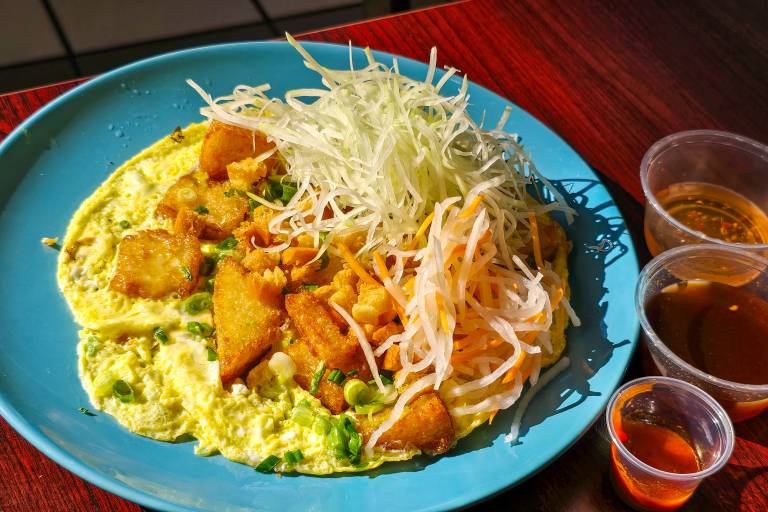
"caption": "A plate of traditional bột chiên, or Vietnamese rice cake omelettes, at Bột Chiên, a new stall in the food court at Lion Plaza in San José.",
"credit": "Octavio Peña",
"altTag": "An egg omelette topped with crispy rice cakes and pickled carrots and daikon.",
"description": null,
"imgSizes": {
"thumbnail": {
"file": "https://cdn.kqed.org/wp-content/uploads/sites/2/2025/11/Classic-Bot-Chien-2-160x107.jpg",
"width": 160,
"height": 107,
"mimeType": "image/jpeg"
},
"medium_large": {
"file": "https://cdn.kqed.org/wp-content/uploads/sites/2/2025/11/Classic-Bot-Chien-2-768x512.jpg",
"width": 768,
"height": 512,
"mimeType": "image/jpeg"
},
"1536x1536": {
"file": "https://cdn.kqed.org/wp-content/uploads/sites/2/2025/11/Classic-Bot-Chien-2-1536x1024.jpg",
"width": 1536,
"height": 1024,
"mimeType": "image/jpeg"
},
"post-thumbnail": {
"file": "https://cdn.kqed.org/wp-content/uploads/sites/2/2025/11/Classic-Bot-Chien-2-672x372.jpg",
"width": 672,
"height": 372,
"mimeType": "image/jpeg"
},
"twentyfourteen-full-width": {
"file": "https://cdn.kqed.org/wp-content/uploads/sites/2/2025/11/Classic-Bot-Chien-2-1038x576.jpg",
"width": 1038,
"height": 576,
"mimeType": "image/jpeg"
},
"npr-cds-wide": {
"file": "https://cdn.kqed.org/wp-content/uploads/sites/2/2025/11/Classic-Bot-Chien-2-1200x675.jpg",
"width": 1200,
"height": 675,
"mimeType": "image/jpeg"
},
"kqedFullSize": {
"file": "https://cdn.kqed.org/wp-content/uploads/sites/2/2025/11/Classic-Bot-Chien-2.jpg",
"width": 2000,
"height": 1333
}
},
"isLoading": false,
"fetchFailed": false
},
"arts_13975959": {
"type": "attachments",
"id": "arts_13975959",
"meta": {
"index": "attachments_1716263798",
"site": "arts",
"id": "13975959",
"found": true
},
"title": "pho vy exterior",
"publishDate": 1746823538,
"status": "inherit",
"parent": 13975954,
"modified": 1746823628,
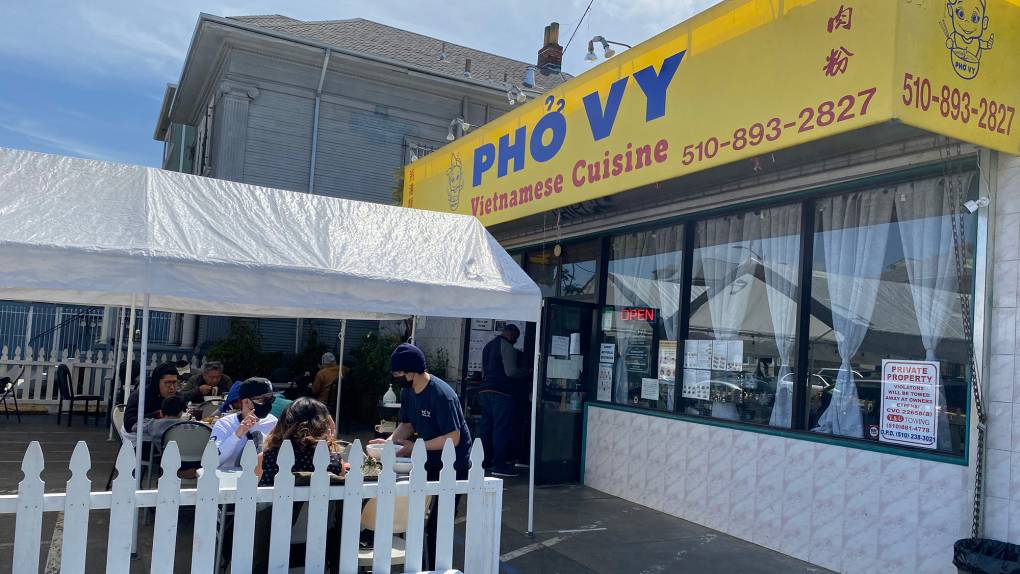
"caption": "Phở Vy has been an East Oakland staple since 2016. The restaurant's last day of business will be May 18, 2025.",
"credit": "Luke Tsai/KQED",
"altTag": "Exterior of a Vietnamese restaurant. The sign on the yellow awning reads, \"Pho Vy.\"",
"description": null,
"imgSizes": {
"medium": {
"file": "https://cdn.kqed.org/wp-content/uploads/sites/2/2025/05/pho-vy-exterior-800x450.jpg",
"width": 800,
"height": 450,
"mimeType": "image/jpeg"
},
"large": {
"file": "https://cdn.kqed.org/wp-content/uploads/sites/2/2025/05/pho-vy-exterior-1020x574.jpg",
"width": 1020,
"height": 574,
"mimeType": "image/jpeg"
},
"thumbnail": {
"file": "https://cdn.kqed.org/wp-content/uploads/sites/2/2025/05/pho-vy-exterior-160x90.jpg",
"width": 160,
"height": 90,
"mimeType": "image/jpeg"
},
"medium_large": {
"file": "https://cdn.kqed.org/wp-content/uploads/sites/2/2025/05/pho-vy-exterior-768x432.jpg",
"width": 768,
"height": 432,
"mimeType": "image/jpeg"
},
"1536x1536": {
"file": "https://cdn.kqed.org/wp-content/uploads/sites/2/2025/05/pho-vy-exterior-1536x864.jpg",
"width": 1536,
"height": 864,
"mimeType": "image/jpeg"
},
"post-thumbnail": {
"file": "https://cdn.kqed.org/wp-content/uploads/sites/2/2025/05/pho-vy-exterior-672x372.jpg",
"width": 672,
"height": 372,
"mimeType": "image/jpeg"
},
"twentyfourteen-full-width": {
"file": "https://cdn.kqed.org/wp-content/uploads/sites/2/2025/05/pho-vy-exterior-1038x576.jpg",
"width": 1038,
"height": 576,
"mimeType": "image/jpeg"
},
"full-width": {
"file": "https://cdn.kqed.org/wp-content/uploads/sites/2/2025/05/pho-vy-exterior-1920x1080.jpg",
"width": 1920,
"height": 1080,
"mimeType": "image/jpeg"
},
"kqedFullSize": {
"file": "https://cdn.kqed.org/wp-content/uploads/sites/2/2025/05/pho-vy-exterior.jpg",
"width": 2000,
"height": 1125
}
},
"isLoading": false,
"fetchFailed": false
},
"arts_13975436": {
"type": "attachments",
"id": "arts_13975436",
"meta": {
"index": "attachments_1716263798",
"site": "arts",
"id": "13975436",
"found": true
},
"title": "viet thanh nguyen featured",
"publishDate": 1745886498,
"status": "inherit",
"parent": 13975429,
"modified": 1745944402,
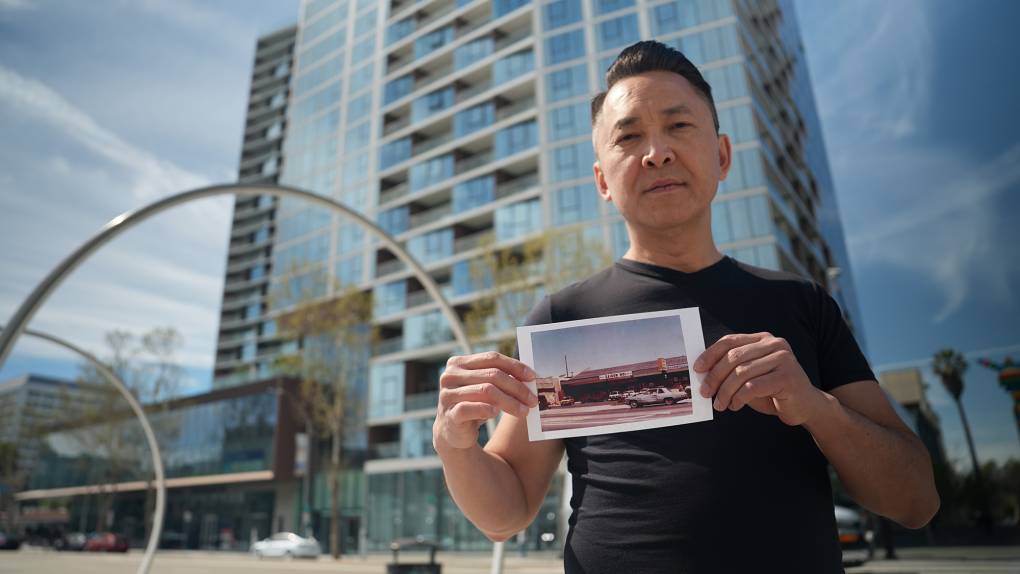
"caption": "Novelist Viet Thanh Nguyen holds up a photograph of his parents' old grocery store, Sàigòn Mới, in front of the sleek apartment complex that replaced it in downtown San Jose.",
"credit": "Alex Tran/KQED",
"altTag": "Portrait of Asian man holding an old photograph in front of a sleek apartment building.",
"description": null,
"imgSizes": {
"medium": {
"file": "https://cdn.kqed.org/wp-content/uploads/sites/2/2025/04/viet-thanh-nguyen-featured-800x450.jpg",
"width": 800,
"height": 450,
"mimeType": "image/jpeg"
},
"large": {
"file": "https://cdn.kqed.org/wp-content/uploads/sites/2/2025/04/viet-thanh-nguyen-featured-1020x574.jpg",
"width": 1020,
"height": 574,
"mimeType": "image/jpeg"
},
"thumbnail": {
"file": "https://cdn.kqed.org/wp-content/uploads/sites/2/2025/04/viet-thanh-nguyen-featured-160x90.jpg",
"width": 160,
"height": 90,
"mimeType": "image/jpeg"
},
"medium_large": {
"file": "https://cdn.kqed.org/wp-content/uploads/sites/2/2025/04/viet-thanh-nguyen-featured-768x432.jpg",
"width": 768,
"height": 432,
"mimeType": "image/jpeg"
},
"1536x1536": {
"file": "https://cdn.kqed.org/wp-content/uploads/sites/2/2025/04/viet-thanh-nguyen-featured-1536x864.jpg",
"width": 1536,
"height": 864,
"mimeType": "image/jpeg"
},
"post-thumbnail": {
"file": "https://cdn.kqed.org/wp-content/uploads/sites/2/2025/04/viet-thanh-nguyen-featured-672x372.jpg",
"width": 672,
"height": 372,
"mimeType": "image/jpeg"
},
"twentyfourteen-full-width": {
"file": "https://cdn.kqed.org/wp-content/uploads/sites/2/2025/04/viet-thanh-nguyen-featured-1038x576.jpg",
"width": 1038,
"height": 576,
"mimeType": "image/jpeg"
},
"full-width": {
"file": "https://cdn.kqed.org/wp-content/uploads/sites/2/2025/04/viet-thanh-nguyen-featured-1920x1080.jpg",
"width": 1920,
"height": 1080,
"mimeType": "image/jpeg"
},
"kqedFullSize": {
"file": "https://cdn.kqed.org/wp-content/uploads/sites/2/2025/04/viet-thanh-nguyen-featured.jpg",
"width": 2000,
"height": 1125
}
},
"isLoading": false,
"fetchFailed": false
},
"arts_13970540": {
"type": "attachments",
"id": "arts_13970540",
"meta": {
"index": "attachments_1716263798",
"site": "arts",
"id": "13970540",
"found": true
},
"title": "GettyImages-1321917915",
"publishDate": 1737506325,
"status": "inherit",
"parent": 0,
"modified": 1737506412,
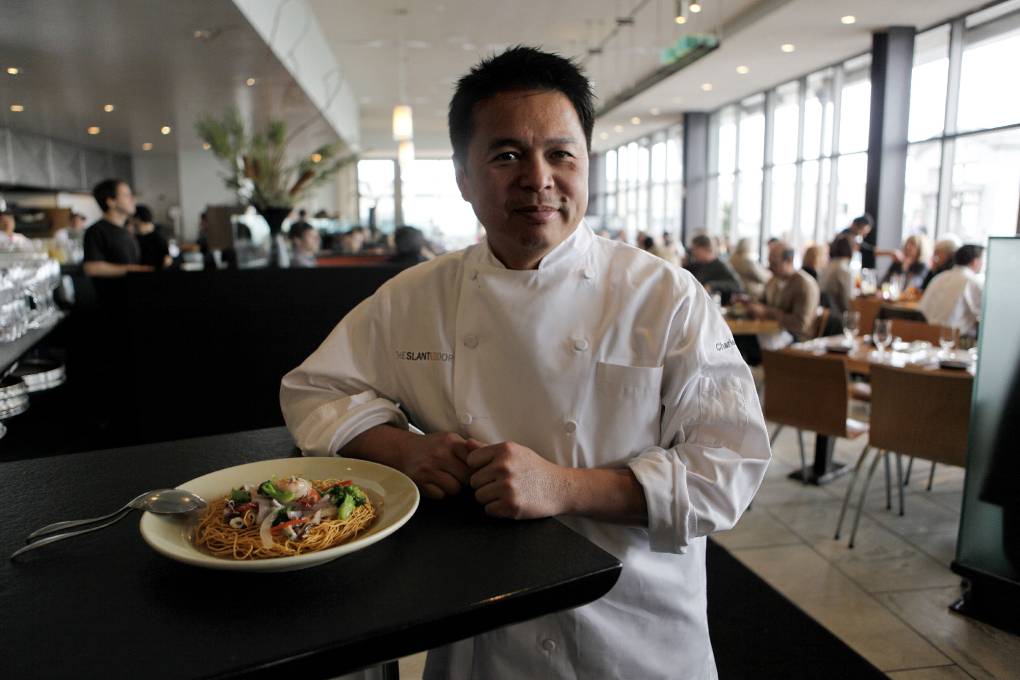
"caption": "Charles Phan in 2010, posing at Slanted Door next to a dish of seafood with crispy egg noodle.",
"credit": "Michael Macor/The San Francisco Chronicle via Getty Images",
"altTag": "man in chef jacket smiles with noodle dish displayed at elbow in large restaurant",
"description": null,
"imgSizes": {
"medium": {
"file": "https://cdn.kqed.org/wp-content/uploads/sites/2/2025/01/GettyImages-1321917915-800x533.jpg",
"width": 800,
"height": 533,
"mimeType": "image/jpeg"
},
"large": {
"file": "https://cdn.kqed.org/wp-content/uploads/sites/2/2025/01/GettyImages-1321917915-1020x680.jpg",
"width": 1020,
"height": 680,
"mimeType": "image/jpeg"
},
"thumbnail": {
"file": "https://cdn.kqed.org/wp-content/uploads/sites/2/2025/01/GettyImages-1321917915-160x107.jpg",
"width": 160,
"height": 107,
"mimeType": "image/jpeg"
},
"medium_large": {
"file": "https://cdn.kqed.org/wp-content/uploads/sites/2/2025/01/GettyImages-1321917915-768x512.jpg",
"width": 768,
"height": 512,
"mimeType": "image/jpeg"
},
"1536x1536": {
"file": "https://cdn.kqed.org/wp-content/uploads/sites/2/2025/01/GettyImages-1321917915-1536x1024.jpg",
"width": 1536,
"height": 1024,
"mimeType": "image/jpeg"
},
"post-thumbnail": {
"file": "https://cdn.kqed.org/wp-content/uploads/sites/2/2025/01/GettyImages-1321917915-672x372.jpg",
"width": 672,
"height": 372,
"mimeType": "image/jpeg"
},
"twentyfourteen-full-width": {
"file": "https://cdn.kqed.org/wp-content/uploads/sites/2/2025/01/GettyImages-1321917915-1038x576.jpg",
"width": 1038,
"height": 576,
"mimeType": "image/jpeg"
},
"full-width": {
"file": "https://cdn.kqed.org/wp-content/uploads/sites/2/2025/01/GettyImages-1321917915-1920x1280.jpg",
"width": 1920,
"height": 1280,
"mimeType": "image/jpeg"
},
"kqedFullSize": {
"file": "https://cdn.kqed.org/wp-content/uploads/sites/2/2025/01/GettyImages-1321917915.jpg",
"width": 2000,
"height": 1333
}
},
"isLoading": false,
"fetchFailed": false
},
"arts_13968425": {
"type": "attachments",
"id": "arts_13968425",
"meta": {
"index": "attachments_1716263798",
"site": "arts",
"id": "13968425",
"found": true
},
"title": "monster pho-lead",
"publishDate": 1732152973,
"status": "inherit",
"parent": 13968422,
"modified": 1732153104,
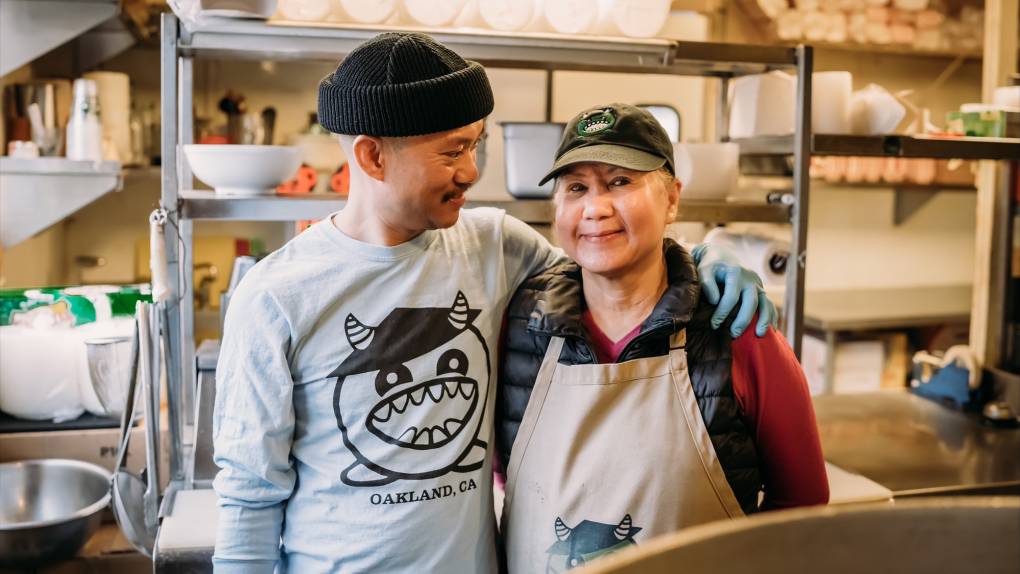
"caption": "Tee Tran (left) started Monster Pho along with his mother, Tina Le, in 2014. The Oakland restaurant is known for its annual pho giveaway event.",
"credit": "Lori Eanes",
"altTag": "A mother and son pose for a portrait inside their restaurant kitchen.",
"description": null,
"imgSizes": {
"medium": {
"file": "https://cdn.kqed.org/wp-content/uploads/sites/2/2024/11/monster-pho-lead-800x450.jpg",
"width": 800,
"height": 450,
"mimeType": "image/jpeg"
},
"large": {
"file": "https://cdn.kqed.org/wp-content/uploads/sites/2/2024/11/monster-pho-lead-1020x574.jpg",
"width": 1020,
"height": 574,
"mimeType": "image/jpeg"
},
"thumbnail": {
"file": "https://cdn.kqed.org/wp-content/uploads/sites/2/2024/11/monster-pho-lead-160x90.jpg",
"width": 160,
"height": 90,
"mimeType": "image/jpeg"
},
"medium_large": {
"file": "https://cdn.kqed.org/wp-content/uploads/sites/2/2024/11/monster-pho-lead-768x432.jpg",
"width": 768,
"height": 432,
"mimeType": "image/jpeg"
},
"1536x1536": {
"file": "https://cdn.kqed.org/wp-content/uploads/sites/2/2024/11/monster-pho-lead-1536x864.jpg",
"width": 1536,
"height": 864,
"mimeType": "image/jpeg"
},
"post-thumbnail": {
"file": "https://cdn.kqed.org/wp-content/uploads/sites/2/2024/11/monster-pho-lead-672x372.jpg",
"width": 672,
"height": 372,
"mimeType": "image/jpeg"
},
"twentyfourteen-full-width": {
"file": "https://cdn.kqed.org/wp-content/uploads/sites/2/2024/11/monster-pho-lead-1038x576.jpg",
"width": 1038,
"height": 576,
"mimeType": "image/jpeg"
},
"full-width": {
"file": "https://cdn.kqed.org/wp-content/uploads/sites/2/2024/11/monster-pho-lead-1920x1080.jpg",
"width": 1920,
"height": 1080,
"mimeType": "image/jpeg"
},
"kqedFullSize": {
"file": "https://cdn.kqed.org/wp-content/uploads/sites/2/2024/11/monster-pho-lead.jpg",
"width": 2000,
"height": 1125
}
},
"isLoading": false,
"fetchFailed": false
},
"arts_13957510": {
"type": "attachments",
"id": "arts_13957510",
"meta": {
"index": "attachments_1716263798",
"site": "arts",
"id": "13957510",
"found": true
},
"title": "20240506_NAILTECHFOODIE-16-KQED",
"publishDate": 1715207256,
"status": "inherit",
"parent": 0,
"modified": 1722297416,
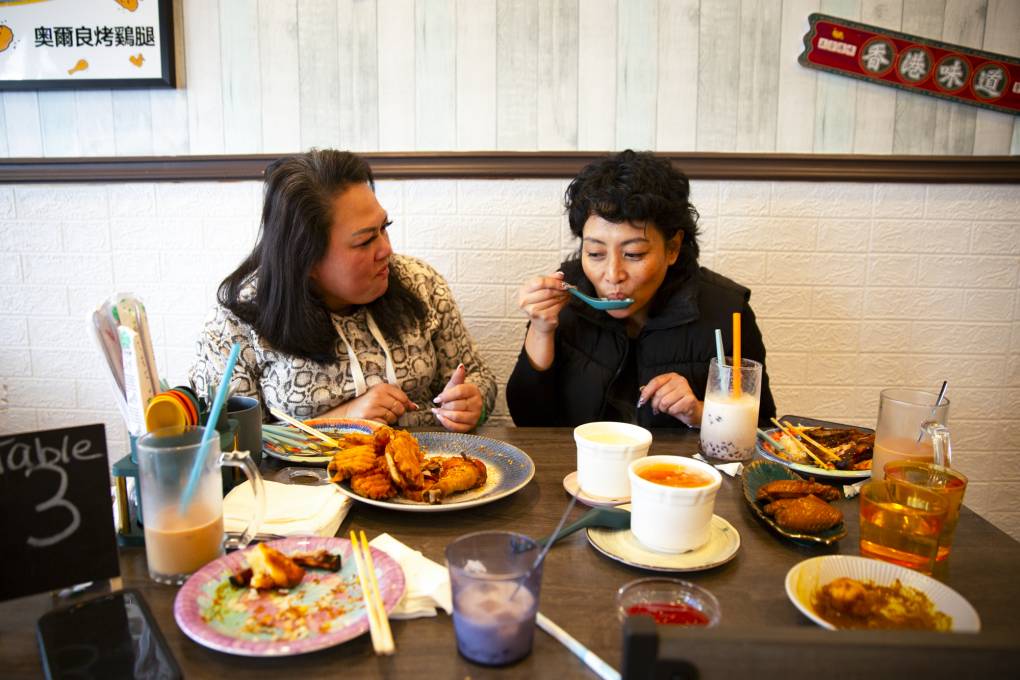
"caption": "Chris Phung, left, and Rocky Rivera, right, eat at Little Sweet, a restaurant serving Hong Kong-style dishes, on Monday, May 6, 2024.",
"credit": "Gina Castro/KQED",
"altTag": "Two women sit at a large round table inside a Chinese restaurant, a spread of chicken wings and other dishes in front of them.",
"description": null,
"imgSizes": {
"medium": {
"file": "https://cdn.kqed.org/wp-content/uploads/sites/2/2024/05/20240506_NAILTECHFOODIE-16-KQED-800x533.jpg",
"width": 800,
"height": 533,
"mimeType": "image/jpeg"
},
"large": {
"file": "https://cdn.kqed.org/wp-content/uploads/sites/2/2024/05/20240506_NAILTECHFOODIE-16-KQED-1020x680.jpg",
"width": 1020,
"height": 680,
"mimeType": "image/jpeg"
},
"thumbnail": {
"file": "https://cdn.kqed.org/wp-content/uploads/sites/2/2024/05/20240506_NAILTECHFOODIE-16-KQED-160x107.jpg",
"width": 160,
"height": 107,
"mimeType": "image/jpeg"
},
"medium_large": {
"file": "https://cdn.kqed.org/wp-content/uploads/sites/2/2024/05/20240506_NAILTECHFOODIE-16-KQED-768x512.jpg",
"width": 768,
"height": 512,
"mimeType": "image/jpeg"
},
"1536x1536": {
"file": "https://cdn.kqed.org/wp-content/uploads/sites/2/2024/05/20240506_NAILTECHFOODIE-16-KQED-1536x1024.jpg",
"width": 1536,
"height": 1024,
"mimeType": "image/jpeg"
},
"post-thumbnail": {
"file": "https://cdn.kqed.org/wp-content/uploads/sites/2/2024/05/20240506_NAILTECHFOODIE-16-KQED-672x372.jpg",
"width": 672,
"height": 372,
"mimeType": "image/jpeg"
},
"twentyfourteen-full-width": {
"file": "https://cdn.kqed.org/wp-content/uploads/sites/2/2024/05/20240506_NAILTECHFOODIE-16-KQED-1038x576.jpg",
"width": 1038,
"height": 576,
"mimeType": "image/jpeg"
},
"full-width": {
"file": "https://cdn.kqed.org/wp-content/uploads/sites/2/2024/05/20240506_NAILTECHFOODIE-16-KQED-1920x1280.jpg",
"width": 1920,
"height": 1280,
"mimeType": "image/jpeg"
},
"kqedFullSize": {
"file": "https://cdn.kqed.org/wp-content/uploads/sites/2/2024/05/20240506_NAILTECHFOODIE-16-KQED.jpg",
"width": 2000,
"height": 1333
}
},
"isLoading": false,
"fetchFailed": false
},
"arts_13961552": {
"type": "attachments",
"id": "arts_13961552",
"meta": {
"index": "attachments_1716263798",
"site": "arts",
"id": "13961552",
"found": true
},
"title": "230818-HetSayRestaurant-22-BL_qed",
"publishDate": 1721928320,
"status": "inherit",
"parent": 13961537,
"modified": 1721928586,
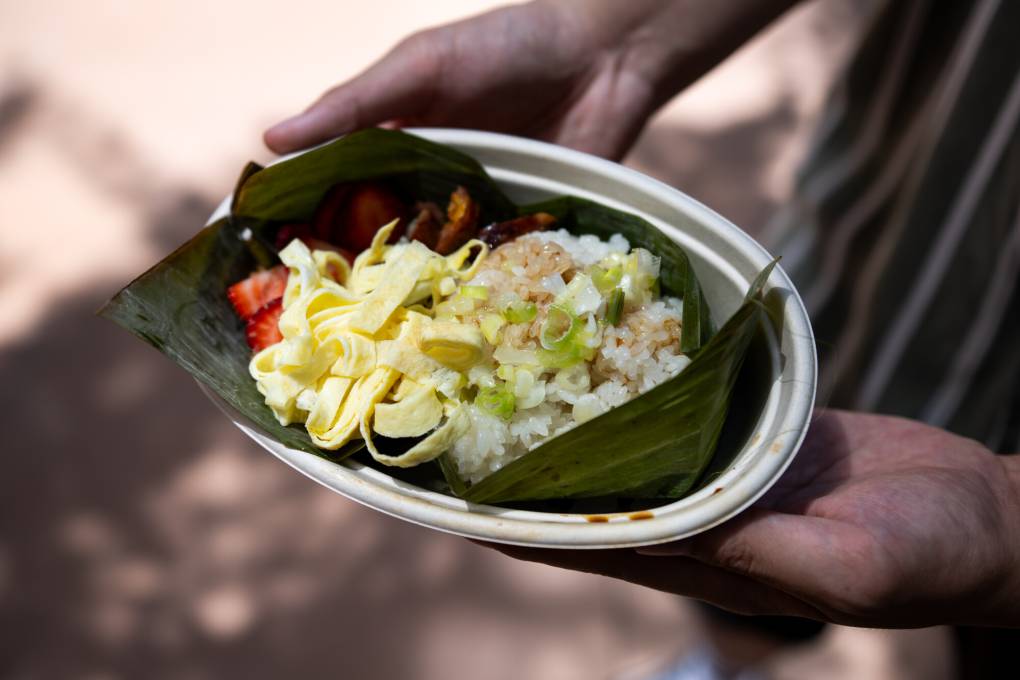
"caption": "A bowl of the Hết Sẩy savory sticky rice at the pop-up restaurant's Kaiser Farmers' Market booth in Santa Clara on Aug. 18, 2023. Hết Sẩy is one of the local Vietnames vendors that will be featured at San Jose's new Story Road Night Market.",
"credit": "Beth LaBerge/KQED",
"altTag": "A bowl of Vietnamese sticky rice wrapped in a banana leaf.",
"description": null,
"imgSizes": {
"medium": {
"file": "https://cdn.kqed.org/wp-content/uploads/sites/2/2024/07/230818-HetSayRestaurant-22-BL_qed-800x533.jpg",
"width": 800,
"height": 533,
"mimeType": "image/jpeg"
},
"large": {
"file": "https://cdn.kqed.org/wp-content/uploads/sites/2/2024/07/230818-HetSayRestaurant-22-BL_qed-1020x680.jpg",
"width": 1020,
"height": 680,
"mimeType": "image/jpeg"
},
"thumbnail": {
"file": "https://cdn.kqed.org/wp-content/uploads/sites/2/2024/07/230818-HetSayRestaurant-22-BL_qed-160x107.jpg",
"width": 160,
"height": 107,
"mimeType": "image/jpeg"
},
"medium_large": {
"file": "https://cdn.kqed.org/wp-content/uploads/sites/2/2024/07/230818-HetSayRestaurant-22-BL_qed-768x512.jpg",
"width": 768,
"height": 512,
"mimeType": "image/jpeg"
},
"1536x1536": {
"file": "https://cdn.kqed.org/wp-content/uploads/sites/2/2024/07/230818-HetSayRestaurant-22-BL_qed-1536x1024.jpg",
"width": 1536,
"height": 1024,
"mimeType": "image/jpeg"
},
"post-thumbnail": {
"file": "https://cdn.kqed.org/wp-content/uploads/sites/2/2024/07/230818-HetSayRestaurant-22-BL_qed-672x372.jpg",
"width": 672,
"height": 372,
"mimeType": "image/jpeg"
},
"twentyfourteen-full-width": {
"file": "https://cdn.kqed.org/wp-content/uploads/sites/2/2024/07/230818-HetSayRestaurant-22-BL_qed-1038x576.jpg",
"width": 1038,
"height": 576,
"mimeType": "image/jpeg"
},
"full-width": {
"file": "https://cdn.kqed.org/wp-content/uploads/sites/2/2024/07/230818-HetSayRestaurant-22-BL_qed-1920x1280.jpg",
"width": 1920,
"height": 1280,
"mimeType": "image/jpeg"
},
"kqedFullSize": {
"file": "https://cdn.kqed.org/wp-content/uploads/sites/2/2024/07/230818-HetSayRestaurant-22-BL_qed.jpg",
"width": 2000,
"height": 1333
}
},
"isLoading": false,
"fetchFailed": false
},
"arts_13960434": {
"type": "attachments",
"id": "arts_13960434",
"meta": {
"index": "attachments_1716263798",
"site": "arts",
"id": "13960434",
"found": true
},
"title": "SWEET GELATO-1_crop",
"publishDate": 1719534446,
"status": "inherit",
"parent": 13960432,
"modified": 1719534672,
"caption": "San Jose's Sweet Gelato Tea Lounge one of the Bay Area's priciest — and most unique — boba shops. The owner, Tony, runs the place by sheer force of his personality.",
"credit": "Thien Pham",
"altTag": "Illustration: A gray-haired man proudly holds up two boba drinks.",
"description": null,
"imgSizes": {
"medium": {
"file": "https://cdn.kqed.org/wp-content/uploads/sites/2/2024/06/SWEET-GELATO-1_crop-800x450.jpg",
"width": 800,
"height": 450,
"mimeType": "image/jpeg"
},
"large": {
"file": "https://cdn.kqed.org/wp-content/uploads/sites/2/2024/06/SWEET-GELATO-1_crop-1020x574.jpg",
"width": 1020,
"height": 574,
"mimeType": "image/jpeg"
},
"thumbnail": {
"file": "https://cdn.kqed.org/wp-content/uploads/sites/2/2024/06/SWEET-GELATO-1_crop-160x90.jpg",
"width": 160,
"height": 90,
"mimeType": "image/jpeg"
},
"medium_large": {
"file": "https://cdn.kqed.org/wp-content/uploads/sites/2/2024/06/SWEET-GELATO-1_crop-768x432.jpg",
"width": 768,
"height": 432,
"mimeType": "image/jpeg"
},
"1536x1536": {
"file": "https://cdn.kqed.org/wp-content/uploads/sites/2/2024/06/SWEET-GELATO-1_crop-1536x864.jpg",
"width": 1536,
"height": 864,
"mimeType": "image/jpeg"
},
"post-thumbnail": {
"file": "https://cdn.kqed.org/wp-content/uploads/sites/2/2024/06/SWEET-GELATO-1_crop-672x372.jpg",
"width": 672,
"height": 372,
"mimeType": "image/jpeg"
},
"twentyfourteen-full-width": {
"file": "https://cdn.kqed.org/wp-content/uploads/sites/2/2024/06/SWEET-GELATO-1_crop-1038x576.jpg",
"width": 1038,
"height": 576,
"mimeType": "image/jpeg"
},
"kqedFullSize": {
"file": "https://cdn.kqed.org/wp-content/uploads/sites/2/2024/06/SWEET-GELATO-1_crop.jpg",
"width": 1920,
"height": 1080
}
},
"isLoading": false,
"fetchFailed": false
}
},
"audioPlayerReducer": {
"postId": "stream_live",
"isPaused": true,
"isPlaying": false,
"pfsActive": false,
"pledgeModalIsOpen": true,
"playerDrawerIsOpen": false,
"liveAudioPlayStartedAt": 0,
"liveAudioPlayContext": ""
},
"authorsReducer": {
"ltsai": {
"type": "authors",
"id": "11743",
"meta": {
"index": "authors_1716337520",
"id": "11743",
"found": true
},
"name": "Luke Tsai",
"firstName": "Luke",
"lastName": "Tsai",
"slug": "ltsai",
"email": "ltsai@kqed.org",
"display_author_email": true,
"staff_mastheads": [
"arts"
],
"title": "Food Editor",
"bio": "Luke Tsai is KQED's food editor and resident stinky tofu connoisseur. Prior to KQED, he was an editor at Eater SF, \u003cem>San Francisco \u003c/em>magazine, and the \u003cem>East Bay Express\u003c/em>, and his work has also appeared in TASTE, the \u003cem>San Francisco Chronicle\u003c/em>, and the \u003cem>Best Food Writing\u003c/em> anthology. When he isn't writing or editing, you'll find him eating most everything he can get his hands on.",
"avatar": "https://secure.gravatar.com/avatar/1e59b45bf191526e7339d6ba46e33a57b2030d25c27660ecc64ea3cb863e34f7?s=600&d=blank&r=g",
"twitter": "theluketsai",
"bluesky": null,
"facebook": null,
"instagram": null,
"linkedin": null,
"sites": [
{
"site": "",
"roles": [
"editor"
]
},
{
"site": "arts",
"roles": [
"administrator"
]
},
{
"site": "news",
"roles": [
"editor",
"contributor"
]
},
{
"site": "bayareabites",
"roles": [
"editor"
]
},
{
"site": "food",
"roles": [
"editor"
]
}
],
"headData": {
"title": "Luke Tsai | KQED",
"description": "Food Editor",
"ogImgSrc": "https://secure.gravatar.com/avatar/1e59b45bf191526e7339d6ba46e33a57b2030d25c27660ecc64ea3cb863e34f7?s=600&d=blank&r=g",
"twImgSrc": "https://secure.gravatar.com/avatar/1e59b45bf191526e7339d6ba46e33a57b2030d25c27660ecc64ea3cb863e34f7?s=600&d=blank&r=g"
},
"isLoading": false,
"link": "/author/ltsai"
},
"tpham": {
"type": "authors",
"id": "11753",
"meta": {
"index": "authors_1716337520",
"id": "11753",
"found": true
},
"name": "Thien Pham",
"firstName": "Thien",
"lastName": "Pham",
"slug": "tpham",
"email": "thiendog@gmail.com",
"display_author_email": false,
"staff_mastheads": [],
"title": "KQED Contributor",
"bio": null,
"avatar": "https://secure.gravatar.com/avatar/a5b4729969ad46d88e7b9ec9dd4f3fa6af84dd0fa8fa91f01d8d9481694999bc?s=600&d=blank&r=g",
"twitter": null,
"bluesky": null,
"facebook": null,
"instagram": null,
"linkedin": null,
"sites": [
{
"site": "arts",
"roles": [
"contributor"
]
}
],
"headData": {
"title": "Thien Pham | KQED",
"description": "KQED Contributor",
"ogImgSrc": "https://secure.gravatar.com/avatar/a5b4729969ad46d88e7b9ec9dd4f3fa6af84dd0fa8fa91f01d8d9481694999bc?s=600&d=blank&r=g",
"twImgSrc": "https://secure.gravatar.com/avatar/a5b4729969ad46d88e7b9ec9dd4f3fa6af84dd0fa8fa91f01d8d9481694999bc?s=600&d=blank&r=g"
},
"isLoading": false,
"link": "/author/tpham"
},
"rockyrivera": {
"type": "authors",
"id": "11846",
"meta": {
"index": "authors_1716337520",
"id": "11846",
"found": true
},
"name": "Rocky Rivera",
"firstName": "Rocky",
"lastName": "Rivera",
"slug": "rockyrivera",
"email": "ms.rocky.rivera@gmail.com",
"display_author_email": false,
"staff_mastheads": [],
"title": "KQED Contributor",
"bio": "Rocky Rivera is a journalist, emcee, author and activist from San Francisco. She has released four albums through her label, Beatrock Music, and a ten-volume mixtape series with DJ Roza. She released her first book in 2021, entitled \u003cem>Snakeskin: Essays by Rocky Rivera\u003c/em>. Her latest album dropped in September 2024 and is called \"Long Kiss Goodnight\" with emcee/producer Otayo Dubb. She currently writes the Frisco Foodies column as a love letter to her hometown.",
"avatar": "https://secure.gravatar.com/avatar/946241ee2c59e6040607dfc75240d91b?s=600&d=blank&r=g",
"twitter": null,
"facebook": "https://m.facebook.com/rockyriveramusic",
"instagram": "https://instagram.com/rockyrivera",
"linkedin": "https://www.linkedin.com/in/krishtinedeleon/",
"sites": [
{
"site": "arts",
"roles": [
"author"
]
}
],
"headData": {
"title": "Rocky Rivera | KQED",
"description": "KQED Contributor",
"ogImgSrc": "https://secure.gravatar.com/avatar/946241ee2c59e6040607dfc75240d91b?s=600&d=blank&r=g",
"twImgSrc": "https://secure.gravatar.com/avatar/946241ee2c59e6040607dfc75240d91b?s=600&d=blank&r=g"
},
"isLoading": false,
"link": "/author/rockyrivera"
},
"opena": {
"type": "authors",
"id": "11903",
"meta": {
"index": "authors_1716337520",
"id": "11903",
"found": true
},
"name": "Octavio Peña",
"firstName": "Octavio",
"lastName": "Peña",
"slug": "opena",
"email": "octaviopenagutierrez@gmail.com",
"display_author_email": false,
"staff_mastheads": [],
"title": "KQED Contributor",
"bio": null,
"avatar": "https://secure.gravatar.com/avatar/62850791380238ea3945ee72a3d56056477904792b41daaf11effa8780bab75d?s=600&d=blank&r=g",
"twitter": null,
"bluesky": null,
"facebook": null,
"instagram": null,
"linkedin": null,
"sites": [
{
"site": "arts",
"roles": [
"contributor"
]
}
],
"headData": {
"title": "Octavio Peña | KQED",
"description": "KQED Contributor",
"ogImgSrc": "https://secure.gravatar.com/avatar/62850791380238ea3945ee72a3d56056477904792b41daaf11effa8780bab75d?s=600&d=blank&r=g",
"twImgSrc": "https://secure.gravatar.com/avatar/62850791380238ea3945ee72a3d56056477904792b41daaf11effa8780bab75d?s=600&d=blank&r=g"
},
"isLoading": false,
"link": "/author/opena"
}
},
"pagesReducer": {
"arts_tag_vietnamese-food": {
"type": "terms",
"id": "arts_15126",
"meta": {
"index": "terms_1716263798",
"site": "arts",
"id": "15126",
"score": 9.55735
},
"featImg": null,
"name": "vietnamese food",
"description": null,
"taxonomy": "tag",
"headData": {
"twImgId": null,
"twTitle": null,
"ogTitle": null,
"ogImgId": null,
"twDescription": null,
"description": null,
"title": "vietnamese food Archives | KQED Arts",
"ogDescription": null
},
"ttid": 15138,
"slug": "vietnamese-food",
"isLoading": false,
"title": "vietnamese food",
"pageMeta": {
"site": "arts",
"WpPageTemplate": "page-topic-editorial",
"currentPage": 1
},
"blocks": [
{
"blockName": "kqed/post-list",
"attrs": {
"layout": "cardArticle2",
"query": "posts/arts?tag=vietnamese-food",
"seeMore": false,
"paginated": true,
"page": 1
}
},
{
"blockName": "kqed/ad"
}
]
}
},
"pfsSessionReducer": {},
"postsReducer": {
"stream_live": {
"type": "live",
"id": "stream_live",
"audioUrl": "https://streams.kqed.org/kqedradio",
"title": "Live Stream",
"excerpt": "Live Stream information currently unavailable.",
"link": "/radio",
"featImg": "",
"label": {
"name": "KQED Live",
"link": "/"
}
},
"stream_kqedNewscast": {
"type": "posts",
"id": "stream_kqedNewscast",
"audioUrl": "https://www.kqed.org/.stream/anon/radio/RDnews/newscast.mp3?_=1",
"title": "KQED Newscast",
"featImg": "",
"label": {
"name": "88.5 FM",
"link": "/"
}
},
"arts_13993620": {
"type": "posts",
"id": "arts_13993620",
"meta": {
"index": "posts_1716263798",
"site": "arts",
"id": "13993620",
"score": null,
"sort": [
1788554320000
]
},
"guestAuthors": [],
"slug": "best-pho-san-jose-torched-kobe-wagyu-duoi-bo-oxtails",
"title": "One of San José’s Best Phở Restaurants Slings Flame-Torched Wagyu Past Midnight",
"publishDate": 1788554320,
"format": "standard",
"headTitle": "One of San José’s Best Phở Restaurants Slings Flame-Torched Wagyu Past Midnight | KQED",
"labelTerm": {},
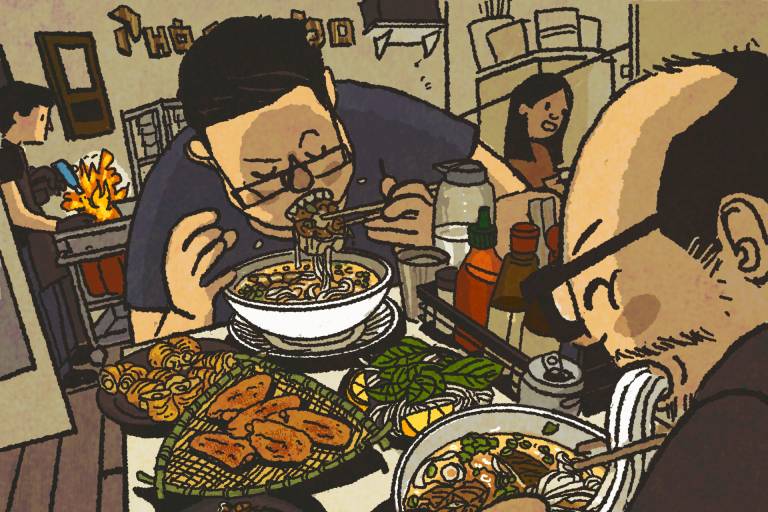
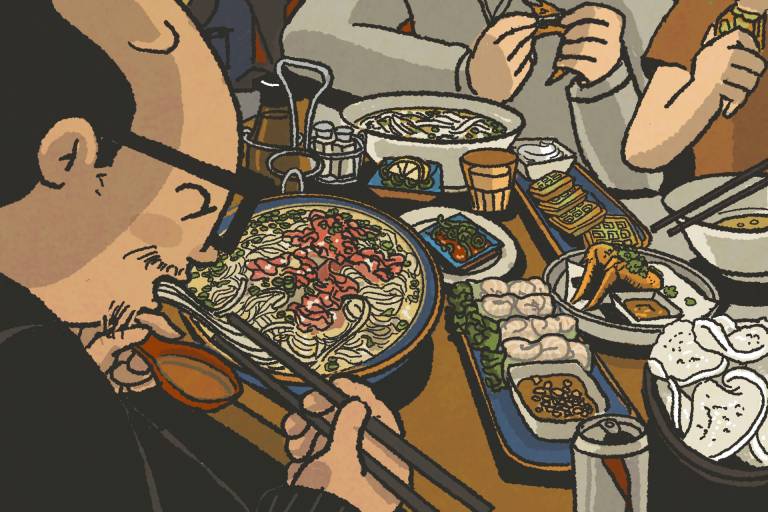
"content": "\n\u003cfigure class=\"wp-block-image size-full\">\u003cimg loading=\"lazy\" decoding=\"async\" width=\"1920\" height=\"1920\" src=\"https://cdn.kqed.org/wp-content/uploads/sites/2/2026/09/PhoDuoiBo.jpg\" alt=\"Illustration: Two men devouring bowls of pho with a ferocity that verges on being frightening.\" class=\"wp-image-13993627\" srcset=\"https://cdn.kqed.org/wp-content/uploads/sites/2/2026/09/PhoDuoiBo.jpg 1920w, https://cdn.kqed.org/wp-content/uploads/sites/2/2026/09/PhoDuoiBo-160x160.jpg 160w, https://cdn.kqed.org/wp-content/uploads/sites/2/2026/09/PhoDuoiBo-768x768.jpg 768w, https://cdn.kqed.org/wp-content/uploads/sites/2/2026/09/PhoDuoiBo-1536x1536.jpg 1536w, https://cdn.kqed.org/wp-content/uploads/sites/2/2026/09/PhoDuoiBo-600x600.jpg 600w\" sizes=\"auto, (max-width: 1920px) 100vw, 1920px\" />\u003cfigcaption class=\"wp-element-caption\">While Phở Đuôi Bò is best known for its blowtorched wagyu beef, the East San José restaurant’s phở itself is worth seeking out in its own right. (Thien Pham)\u003c/figcaption>\u003c/figure>\n\n\n\n\u003cp>\u003ca href=\"https://www.kqed.org/arts/tag/the-midnight-diners\">\u003cem>The Midnight Diners\u003c/em>\u003c/a>\u003cem> is a regular collaboration between KQED food editor Luke Tsai and graphic novelist \u003c/em>\u003ca href=\"https://www.instagram.com/thiendog/?hl=en\">\u003cem>Thien Pham\u003c/em>\u003c/a>\u003cem>. Follow them each week as they explore the hot pot restaurants, taco carts and 24-hour casino buffets that make up the Bay Area’s after-hours dining scene.\u003c/em>\u003c/p>\n\n\n\n\u003cp>When we pulled into the strip mall parking lot in Eastside \u003ca href=\"https://www.kqed.org/arts/tag/san-jose\">San José\u003c/a> at a little past 9 o’clock on a recent Friday night, the whole plaza had mostly shut down for the night: the beauty salon, the \u003ca href=\"https://www.kqed.org/arts/13986806/dzui-favorite-durian-dessert-shop-san-jose-banh-pia\">durian dessert shop\u003c/a>, the \u003ca href=\"https://www.kqed.org/arts/13905293/vietnamese-tofu-capital-san-jose\">vegan tofu deli\u003c/a>. The one restaurant still open, a neon-lit beacon in the night, was Phở Đuôi Bò, where about a dozen would-be diners mingled on the curb outside, waiting for a table.\u003c/p>\n\n\n\n\u003cp>Their goal? To snag one of the city’s most talked-about bowls of phở — and, especially, for its blowtorched wagyu beef, served on top.\u003c/p>\n\n\n\n\u003cp>Both of us had eaten at Đuôi Bò before and liked it enough to return on multiple occasions, families in tow. But the restaurant hit our radar again this summer when it put up a neon “LATE NIGHT EATS” sign and extended its hours past midnight — a rarity in a city whose excellent phở shops mostly close by 8 or 9 p.m. Đuôi Bò, on the other hand, is now open from 9 a.m. to 12:30 a.m. every day of the week: breakfast, lunch, dinner \u003cem>and \u003c/em>second dinner. The shop’s hours are so long, we got dizzy just imagining the size of their stock pot.\u003c/p>\n\n\n\n\u003cp>The crowd is largely Vietnamese (with other assorted Asians), but less overwhelmingly so than at many of San José’s other top phở spots. There were at least two or three tables’ worth of diverse, non-Asian twentysomethings who’d waited in line like everyone else — evidence, perhaps, of the restaurant’s recent popularity among the South Bay’s \u003ca href=\"https://www.instagram.com/phoduoibo/reels/\">food influencer class\u003c/a>. A lot of times you can tell how good an Asian restaurant is by its cross-generational appeal. Even at 9 p.m., there seemed to be as many 70-year-old Vietnamese aunties and uncles lining up for a hot bowl of phở as there were big groups of college kids. \u003c/p>\n\n\n\n\u003cp>When Phở Đuôi Bò first opened in 2024, the restaurant captured the attention of local phở lovers by offering flame-blasted Kobe beef as a topping option, sizzling the well-marbled slices of meat with a mini blowtorch tableside: the very definition of a gimmicky, Insta-viral offering. As it turns out, the torched beef (not really “\u003ca href=\"https://en.wikipedia.org/wiki/Kobe_beef\">Kobe\u003c/a>,” as it’s listed on the menu, but American wagyu from Snake River Farms) is delicious (more on that in a second). \u003c/p>\n\n\n\n\u003cp>But beyond the flashy pyrotechnics, the core of the restaurant is a lot more rustic and homey. During our visit, the soundtrack was a mix of smooth jazz and old Vietnamese love ballads. In this age of tacky AI-generated wall art, the handpainted murals that line Đuôi Bò’s dining room depict Vietnamese countryside scenes — a bull rearing up in a grassy plain, a resplendently garnished bowl of phở. Nothing about the place reads as overtly “cool” or trendy. And nothing tastes homier than the phở broth itself. \u003c/p>\n\n\n\n\u003cfigure class=\"wp-block-image size-full\">\u003cimg loading=\"lazy\" decoding=\"async\" width=\"1920\" height=\"1920\" src=\"https://cdn.kqed.org/wp-content/uploads/sites/2/2026/09/PhoDuoiBo2.jpg\" alt=\"Storefront of a pho restaurant lit up at night. Illustration: The yellow lettering of the sign overhead reads "Pho Duoi Bo."\" class=\"wp-image-13993629\" srcset=\"https://cdn.kqed.org/wp-content/uploads/sites/2/2026/09/PhoDuoiBo2.jpg 1920w, https://cdn.kqed.org/wp-content/uploads/sites/2/2026/09/PhoDuoiBo2-160x160.jpg 160w, https://cdn.kqed.org/wp-content/uploads/sites/2/2026/09/PhoDuoiBo2-768x768.jpg 768w, https://cdn.kqed.org/wp-content/uploads/sites/2/2026/09/PhoDuoiBo2-1536x1536.jpg 1536w, https://cdn.kqed.org/wp-content/uploads/sites/2/2026/09/PhoDuoiBo2-600x600.jpg 600w\" sizes=\"auto, (max-width: 1920px) 100vw, 1920px\" />\u003cfigcaption class=\"wp-element-caption\">The restaurant recently extended its hours, which means its phở is now available until 12;30 a.m. daily. (Thien Pham)\u003c/figcaption>\u003c/figure>\n\n\n\n\u003cp>The name “đuôi bò” means oxtail, so of course we decided to order the deluxe oxtail phở, which comes with all the meats you’d get in a bowl of đặc biệt (“special”) phở, plus a big, meaty tailbone that we happily gnawed clean. Here’s our pro tip, though: The reason the restaurant has that name is because it uses dozens of oxtails to make the broth itself, through hours upon hours of slow simmering. The end result is that those tails wind up rather chewy, and all of the flavor has gone into the broth, which is some of the richest and most flavorful we’ve had in the Bay. It’s loaded with collagen and big, glistening droplets of fat, but also clean and light on the palate. And that’s the same broth you get no matter which phở you order. \u003c/p>\n\n\n\n\u003cp>For our second bowl, then, we stuck with our usual favorites: raw steak (served on the side so we could poach it in the hot soup at the last minute), the soft tendons, the fatty brisket and bouncy meatballs. We opted for the wider, springier fresh noodles, and doctored up a little dipping sauce for our meats: some fish sauce and Sriracha, a clutch of vinegared onions (available as a $1 side), a squeeze of lime. Đuôi Bò also offers Chinese fried crullers as a side dish. Fresh out of the deep fryer, these make an excellent addition to a bowl of phở; the contrast between their crunchiness and the bit of sogginess they pick up after they’ve bobbed around in the soup for a minute is just sublime.\u003c/p>\n\n\n\n\n\n\u003cp>All of this adds up to something approaching our Platonic ideal for phở, easily ranking as one of our top two or three favorite bowls in the Bay. The fact that we could have it at midnight on a random Tuesday night almost seems too good to be true. And all that before we’ve even really talked about the restaurant’s claim to fame — that flame-torched wagyu. Which is definitely worth getting as a side order to share. (We found it too heavy for one person to finish on their own.)\u003c/p>\n\n\n\n\u003cp>If you’re a fan of dramatics, as we are, you can ask the staff to torch the meat at the table, but in our experience, these days they usually decline that request and instead wield the flameflower at the back of the dining room, right before bringing the meat to your table. What we love is how the torching gives the fatty meat these wonderfully crisp edges and infuses it with a deep smoky flavor, which adds a new dimension to the phở-slurping experience. You can dump the plate of torched wagyu directly into your soup, but we liked eating it on its own, between sips of broth, dunking the meat in our makeshift vinegar dip to cut into the richness.\u003c/p>\n\n\n\n\u003cp>The rest of Đuôi Bò’s menu is incredibly spare and basic — just some spring rolls and crispy chicken wings as appetizers. In a sign that they understand their audience, or maybe just the Instagram algorithm, they’ve also started blow-torching marrow bones, which were sold out during our visit. We couldn’t figure out how exactly those were meant to complement the phở — but we were here already, why wouldn’t we give it a try? \u003c/p>\n\n\n\n\u003cp>By the time we walked out of the restaurant, full beyond the point of comfort, it was close to 11 p.m., and the line of customers waiting outside showed no sign of diminishing. The crowd had started to skew a little bit younger and more fashionably dressed. But as we watched them staring longingly at the menu posted in the window, there was no mistake about it: They were here to \u003cem>eat\u003c/em>. \u003c/p>\n\n\n\n\u003chr class=\"wp-block-separator has-alpha-channel-opacity\" />\n\n\n\n\u003cp>\u003ca href=\"https://www.instagram.com/phoduoibo/\">\u003cem>Phở Đuôi Bò\u003c/em>\u003c/a>\u003cem> is open 9 a.m.–12:30 a.m. daily at 2465 Alvin Ave. in San José.\u003c/em>\u003c/p>\n",
"blocks": [
{
"blockName": "core/image",
"attrs": {
"id": 13993627,
"sizeSlug": "full",
"linkDestination": "none",
"alt": "Illustration: Two men devouring bowls of pho with a ferocity that verges on being frightening.",
"srcset": "https://cdn.kqed.org/wp-content/uploads/sites/2/2026/09/PhoDuoiBo.jpg 1920w, https://cdn.kqed.org/wp-content/uploads/sites/2/2026/09/PhoDuoiBo-160x160.jpg 160w, https://cdn.kqed.org/wp-content/uploads/sites/2/2026/09/PhoDuoiBo-768x768.jpg 768w, https://cdn.kqed.org/wp-content/uploads/sites/2/2026/09/PhoDuoiBo-1536x1536.jpg 1536w, https://cdn.kqed.org/wp-content/uploads/sites/2/2026/09/PhoDuoiBo-600x600.jpg 600w",
"sizes": "(min-width: 992px) min(100vw, 1536px), (min-width: 768px) min(100vw, 1280px), min(100vw, 1020px)"
},
"innerHTML": "\n\u003cfigure class=\"wp-block-image size-full\">\u003cimg src=\"https://cdn.kqed.org/wp-content/uploads/sites/2/2026/09/PhoDuoiBo.jpg\" alt=\"Illustration: Two men devouring bowls of pho with a ferocity that verges on being frightening.\" class=\"wp-image-13993627\" srcset=\"https://cdn.kqed.org/wp-content/uploads/sites/2/2026/09/PhoDuoiBo.jpg 1920w, https://cdn.kqed.org/wp-content/uploads/sites/2/2026/09/PhoDuoiBo-160x160.jpg 160w, https://cdn.kqed.org/wp-content/uploads/sites/2/2026/09/PhoDuoiBo-768x768.jpg 768w, https://cdn.kqed.org/wp-content/uploads/sites/2/2026/09/PhoDuoiBo-1536x1536.jpg 1536w, https://cdn.kqed.org/wp-content/uploads/sites/2/2026/09/PhoDuoiBo-600x600.jpg 600w\" sizes=\"(min-width: 992px) min(100vw, 1536px), (min-width: 768px) min(100vw, 1280px), min(100vw, 1020px)\" />\u003cfigcaption class=\"wp-element-caption\">While Phở Đuôi Bò is best known for its blowtorched wagyu beef, the East San José restaurant’s phở itself is worth seeking out in its own right. \u003ccite class=\"wp-inline-image-credit\"> (Thien Pham)\u003c/cite>\u003c/figcaption>\u003c/figure>\n",
"innerContent": [
"\n\u003cfigure class=\"wp-block-image size-full\">\u003cimg src=\"https://cdn.kqed.org/wp-content/uploads/sites/2/2026/09/PhoDuoiBo.jpg\" alt=\"Illustration: Two men devouring bowls of pho with a ferocity that verges on being frightening.\" class=\"wp-image-13993627\" />\u003cfigcaption class=\"wp-element-caption\">While Phở Đuôi Bò is best known for its blowtorched wagyu beef, the East San José restaurant’s phở itself is worth seeking out in its own right. \u003ccite class=\"wp-inline-image-credit\"> (Thien Pham)\u003c/cite>\u003c/figcaption>\u003c/figure>\n"
],
"innerBlocks": []
},
{
"blockName": "core/paragraph",
"attrs": {
"dropCap": false
},
"innerHTML": "\n\u003cp>\u003ca href=\"https://www.kqed.org/arts/tag/the-midnight-diners\">\u003cem>The Midnight Diners\u003c/em>\u003c/a>\u003cem> is a regular collaboration between KQED food editor Luke Tsai and graphic novelist \u003c/em>\u003ca href=\"https://www.instagram.com/thiendog/?hl=en\">\u003cem>Thien Pham\u003c/em>\u003c/a>\u003cem>. Follow them each week as they explore the hot pot restaurants, taco carts and 24-hour casino buffets that make up the Bay Area’s after-hours dining scene.\u003c/em>\u003c/p>\n",
"innerContent": [
"\n\u003cp>\u003ca href=\"https://www.kqed.org/arts/tag/the-midnight-diners\">\u003cem>The Midnight Diners\u003c/em>\u003c/a>\u003cem> is a regular collaboration between KQED food editor Luke Tsai and graphic novelist \u003c/em>\u003ca href=\"https://www.instagram.com/thiendog/?hl=en\">\u003cem>Thien Pham\u003c/em>\u003c/a>\u003cem>. Follow them each week as they explore the hot pot restaurants, taco carts and 24-hour casino buffets that make up the Bay Area’s after-hours dining scene.\u003c/em>\u003c/p>\n"
],
"innerBlocks": []
},
{
"blockName": "core/paragraph",
"attrs": {
"dropCap": false
},
"innerHTML": "\n\u003cp>When we pulled into the strip mall parking lot in Eastside \u003ca href=\"https://www.kqed.org/arts/tag/san-jose\">San José\u003c/a> at a little past 9 o’clock on a recent Friday night, the whole plaza had mostly shut down for the night: the beauty salon, the \u003ca href=\"https://www.kqed.org/arts/13986806/dzui-favorite-durian-dessert-shop-san-jose-banh-pia\">durian dessert shop\u003c/a>, the \u003ca href=\"https://www.kqed.org/arts/13905293/vietnamese-tofu-capital-san-jose\">vegan tofu deli\u003c/a>. The one restaurant still open, a neon-lit beacon in the night, was Phở Đuôi Bò, where about a dozen would-be diners mingled on the curb outside, waiting for a table.\u003c/p>\n",
"innerContent": [
"\n\u003cp>When we pulled into the strip mall parking lot in Eastside \u003ca href=\"https://www.kqed.org/arts/tag/san-jose\">San José\u003c/a> at a little past 9 o’clock on a recent Friday night, the whole plaza had mostly shut down for the night: the beauty salon, the \u003ca href=\"https://www.kqed.org/arts/13986806/dzui-favorite-durian-dessert-shop-san-jose-banh-pia\">durian dessert shop\u003c/a>, the \u003ca href=\"https://www.kqed.org/arts/13905293/vietnamese-tofu-capital-san-jose\">vegan tofu deli\u003c/a>. The one restaurant still open, a neon-lit beacon in the night, was Phở Đuôi Bò, where about a dozen would-be diners mingled on the curb outside, waiting for a table.\u003c/p>\n"
],
"innerBlocks": []
},
{
"blockName": "core/paragraph",
"attrs": {
"dropCap": false
},
"innerHTML": "\n\u003cp>Their goal? To snag one of the city’s most talked-about bowls of phở — and, especially, for its blowtorched wagyu beef, served on top.\u003c/p>\n",
"innerContent": [
"\n\u003cp>Their goal? To snag one of the city’s most talked-about bowls of phở — and, especially, for its blowtorched wagyu beef, served on top.\u003c/p>\n"
],
"innerBlocks": []
},
{
"blockName": "core/paragraph",
"attrs": {
"dropCap": false
},
"innerHTML": "\n\u003cp>Both of us had eaten at Đuôi Bò before and liked it enough to return on multiple occasions, families in tow. But the restaurant hit our radar again this summer when it put up a neon “LATE NIGHT EATS” sign and extended its hours past midnight — a rarity in a city whose excellent phở shops mostly close by 8 or 9 p.m. Đuôi Bò, on the other hand, is now open from 9 a.m. to 12:30 a.m. every day of the week: breakfast, lunch, dinner \u003cem>and \u003c/em>second dinner. The shop’s hours are so long, we got dizzy just imagining the size of their stock pot.\u003c/p>\n",
"innerContent": [
"\n\u003cp>Both of us had eaten at Đuôi Bò before and liked it enough to return on multiple occasions, families in tow. But the restaurant hit our radar again this summer when it put up a neon “LATE NIGHT EATS” sign and extended its hours past midnight — a rarity in a city whose excellent phở shops mostly close by 8 or 9 p.m. Đuôi Bò, on the other hand, is now open from 9 a.m. to 12:30 a.m. every day of the week: breakfast, lunch, dinner \u003cem>and \u003c/em>second dinner. The shop’s hours are so long, we got dizzy just imagining the size of their stock pot.\u003c/p>\n"
],
"innerBlocks": []
},
{
"blockName": "core/paragraph",
"attrs": {
"dropCap": false
},
"innerHTML": "\n\u003cp>The crowd is largely Vietnamese (with other assorted Asians), but less overwhelmingly so than at many of San José’s other top phở spots. There were at least two or three tables’ worth of diverse, non-Asian twentysomethings who’d waited in line like everyone else — evidence, perhaps, of the restaurant’s recent popularity among the South Bay’s \u003ca href=\"https://www.instagram.com/phoduoibo/reels/\">food influencer class\u003c/a>. A lot of times you can tell how good an Asian restaurant is by its cross-generational appeal. Even at 9 p.m., there seemed to be as many 70-year-old Vietnamese aunties and uncles lining up for a hot bowl of phở as there were big groups of college kids. \u003c/p>\n",
"innerContent": [
"\n\u003cp>The crowd is largely Vietnamese (with other assorted Asians), but less overwhelmingly so than at many of San José’s other top phở spots. There were at least two or three tables’ worth of diverse, non-Asian twentysomethings who’d waited in line like everyone else — evidence, perhaps, of the restaurant’s recent popularity among the South Bay’s \u003ca href=\"https://www.instagram.com/phoduoibo/reels/\">food influencer class\u003c/a>. A lot of times you can tell how good an Asian restaurant is by its cross-generational appeal. Even at 9 p.m., there seemed to be as many 70-year-old Vietnamese aunties and uncles lining up for a hot bowl of phở as there were big groups of college kids. \u003c/p>\n"
],
"innerBlocks": []
},
{
"blockName": "core/paragraph",
"attrs": {
"dropCap": false
},
"innerHTML": "\n\u003cp>When Phở Đuôi Bò first opened in 2024, the restaurant captured the attention of local phở lovers by offering flame-blasted Kobe beef as a topping option, sizzling the well-marbled slices of meat with a mini blowtorch tableside: the very definition of a gimmicky, Insta-viral offering. As it turns out, the torched beef (not really “\u003ca href=\"https://en.wikipedia.org/wiki/Kobe_beef\">Kobe\u003c/a>,” as it’s listed on the menu, but American wagyu from Snake River Farms) is delicious (more on that in a second). \u003c/p>\n",
"innerContent": [
"\n\u003cp>When Phở Đuôi Bò first opened in 2024, the restaurant captured the attention of local phở lovers by offering flame-blasted Kobe beef as a topping option, sizzling the well-marbled slices of meat with a mini blowtorch tableside: the very definition of a gimmicky, Insta-viral offering. As it turns out, the torched beef (not really “\u003ca href=\"https://en.wikipedia.org/wiki/Kobe_beef\">Kobe\u003c/a>,” as it’s listed on the menu, but American wagyu from Snake River Farms) is delicious (more on that in a second). \u003c/p>\n"
],
"innerBlocks": []
},
{
"blockName": "core/paragraph",
"attrs": {
"dropCap": false
},
"innerHTML": "\n\u003cp>But beyond the flashy pyrotechnics, the core of the restaurant is a lot more rustic and homey. During our visit, the soundtrack was a mix of smooth jazz and old Vietnamese love ballads. In this age of tacky AI-generated wall art, the handpainted murals that line Đuôi Bò’s dining room depict Vietnamese countryside scenes — a bull rearing up in a grassy plain, a resplendently garnished bowl of phở. Nothing about the place reads as overtly “cool” or trendy. And nothing tastes homier than the phở broth itself. \u003c/p>\n",
"innerContent": [
"\n\u003cp>But beyond the flashy pyrotechnics, the core of the restaurant is a lot more rustic and homey. During our visit, the soundtrack was a mix of smooth jazz and old Vietnamese love ballads. In this age of tacky AI-generated wall art, the handpainted murals that line Đuôi Bò’s dining room depict Vietnamese countryside scenes — a bull rearing up in a grassy plain, a resplendently garnished bowl of phở. Nothing about the place reads as overtly “cool” or trendy. And nothing tastes homier than the phở broth itself. \u003c/p>\n"
],
"innerBlocks": []
},
{
"blockName": "core/image",
"attrs": {
"id": 13993629,
"sizeSlug": "full",
"linkDestination": "none",
"alt": "Storefront of a pho restaurant lit up at night. Illustration: The yellow lettering of the sign overhead reads \"Pho Duoi Bo.\"",
"srcset": "https://cdn.kqed.org/wp-content/uploads/sites/2/2026/09/PhoDuoiBo2.jpg 1920w, https://cdn.kqed.org/wp-content/uploads/sites/2/2026/09/PhoDuoiBo2-160x160.jpg 160w, https://cdn.kqed.org/wp-content/uploads/sites/2/2026/09/PhoDuoiBo2-768x768.jpg 768w, https://cdn.kqed.org/wp-content/uploads/sites/2/2026/09/PhoDuoiBo2-1536x1536.jpg 1536w, https://cdn.kqed.org/wp-content/uploads/sites/2/2026/09/PhoDuoiBo2-600x600.jpg 600w",
"sizes": "(min-width: 992px) min(100vw, 1536px), (min-width: 768px) min(100vw, 1280px), min(100vw, 1020px)"
},
"innerHTML": "\n\u003cfigure class=\"wp-block-image size-full\">\u003cimg src=\"https://cdn.kqed.org/wp-content/uploads/sites/2/2026/09/PhoDuoiBo2.jpg\" alt=\"Storefront of a pho restaurant lit up at night. Illustration: The yellow lettering of the sign overhead reads "Pho Duoi Bo."\" class=\"wp-image-13993629\" srcset=\"https://cdn.kqed.org/wp-content/uploads/sites/2/2026/09/PhoDuoiBo2.jpg 1920w, https://cdn.kqed.org/wp-content/uploads/sites/2/2026/09/PhoDuoiBo2-160x160.jpg 160w, https://cdn.kqed.org/wp-content/uploads/sites/2/2026/09/PhoDuoiBo2-768x768.jpg 768w, https://cdn.kqed.org/wp-content/uploads/sites/2/2026/09/PhoDuoiBo2-1536x1536.jpg 1536w, https://cdn.kqed.org/wp-content/uploads/sites/2/2026/09/PhoDuoiBo2-600x600.jpg 600w\" sizes=\"(min-width: 992px) min(100vw, 1536px), (min-width: 768px) min(100vw, 1280px), min(100vw, 1020px)\" />\u003cfigcaption class=\"wp-element-caption\">The restaurant recently extended its hours, which means its phở is now available until 12;30 a.m. daily.\u003ccite class=\"wp-inline-image-credit\"> (Thien Pham)\u003c/cite>\u003c/figcaption>\u003c/figure>\n",
"innerContent": [
"\n\u003cfigure class=\"wp-block-image size-full\">\u003cimg src=\"https://cdn.kqed.org/wp-content/uploads/sites/2/2026/09/PhoDuoiBo2.jpg\" alt=\"Storefront of a pho restaurant lit up at night. Illustration: The yellow lettering of the sign overhead reads "Pho Duoi Bo."\" class=\"wp-image-13993629\" />\u003cfigcaption class=\"wp-element-caption\">The restaurant recently extended its hours, which means its phở is now available until 12;30 a.m. daily.\u003ccite class=\"wp-inline-image-credit\"> (Thien Pham)\u003c/cite>\u003c/figcaption>\u003c/figure>\n"
],
"innerBlocks": []
},
{
"blockName": "core/paragraph",
"attrs": {
"dropCap": false
},
"innerHTML": "\n\u003cp>The name “đuôi bò” means oxtail, so of course we decided to order the deluxe oxtail phở, which comes with all the meats you’d get in a bowl of đặc biệt (“special”) phở, plus a big, meaty tailbone that we happily gnawed clean. Here’s our pro tip, though: The reason the restaurant has that name is because it uses dozens of oxtails to make the broth itself, through hours upon hours of slow simmering. The end result is that those tails wind up rather chewy, and all of the flavor has gone into the broth, which is some of the richest and most flavorful we’ve had in the Bay. It’s loaded with collagen and big, glistening droplets of fat, but also clean and light on the palate. And that’s the same broth you get no matter which phở you order. \u003c/p>\n",
"innerContent": [
"\n\u003cp>The name “đuôi bò” means oxtail, so of course we decided to order the deluxe oxtail phở, which comes with all the meats you’d get in a bowl of đặc biệt (“special”) phở, plus a big, meaty tailbone that we happily gnawed clean. Here’s our pro tip, though: The reason the restaurant has that name is because it uses dozens of oxtails to make the broth itself, through hours upon hours of slow simmering. The end result is that those tails wind up rather chewy, and all of the flavor has gone into the broth, which is some of the richest and most flavorful we’ve had in the Bay. It’s loaded with collagen and big, glistening droplets of fat, but also clean and light on the palate. And that’s the same broth you get no matter which phở you order. \u003c/p>\n"
],
"innerBlocks": []
},
{
"blockName": "core/paragraph",
"attrs": {
"dropCap": false
},
"innerHTML": "\n\u003cp>For our second bowl, then, we stuck with our usual favorites: raw steak (served on the side so we could poach it in the hot soup at the last minute), the soft tendons, the fatty brisket and bouncy meatballs. We opted for the wider, springier fresh noodles, and doctored up a little dipping sauce for our meats: some fish sauce and Sriracha, a clutch of vinegared onions (available as a $1 side), a squeeze of lime. Đuôi Bò also offers Chinese fried crullers as a side dish. Fresh out of the deep fryer, these make an excellent addition to a bowl of phở; the contrast between their crunchiness and the bit of sogginess they pick up after they’ve bobbed around in the soup for a minute is just sublime.\u003c/p>\n",
"innerContent": [
"\n\u003cp>For our second bowl, then, we stuck with our usual favorites: raw steak (served on the side so we could poach it in the hot soup at the last minute), the soft tendons, the fatty brisket and bouncy meatballs. We opted for the wider, springier fresh noodles, and doctored up a little dipping sauce for our meats: some fish sauce and Sriracha, a clutch of vinegared onions (available as a $1 side), a squeeze of lime. Đuôi Bò also offers Chinese fried crullers as a side dish. Fresh out of the deep fryer, these make an excellent addition to a bowl of phở; the contrast between their crunchiness and the bit of sogginess they pick up after they’ve bobbed around in the soup for a minute is just sublime.\u003c/p>\n"
],
"innerBlocks": []
},
{
"blockName": "kqed-v2/related-articles",
"attrs": {
"postIds": [
"arts_13993073",
"arts_13992488",
"arts_13988444"
],
"labelWasCleared": true,
"query": "",
"label": "",
"maxPosts": 3,
"showImages": true,
"heroImage": "",
"heroImageAlt": "",
"heroImageLink": "",
"labelLink": "",
"alignment": "right",
"target": "_self",
"manualLinks": [],
"posts": []
},
"innerHTML": "",
"innerContent": [],
"innerBlocks": []
},
{
"blockName": "core/paragraph",
"attrs": {
"dropCap": false
},
"innerHTML": "\n\u003cp>All of this adds up to something approaching our Platonic ideal for phở, easily ranking as one of our top two or three favorite bowls in the Bay. The fact that we could have it at midnight on a random Tuesday night almost seems too good to be true. And all that before we’ve even really talked about the restaurant’s claim to fame — that flame-torched wagyu. Which is definitely worth getting as a side order to share. (We found it too heavy for one person to finish on their own.)\u003c/p>\n",
"innerContent": [
"\n\u003cp>All of this adds up to something approaching our Platonic ideal for phở, easily ranking as one of our top two or three favorite bowls in the Bay. The fact that we could have it at midnight on a random Tuesday night almost seems too good to be true. And all that before we’ve even really talked about the restaurant’s claim to fame — that flame-torched wagyu. Which is definitely worth getting as a side order to share. (We found it too heavy for one person to finish on their own.)\u003c/p>\n"
],
"innerBlocks": []
},
{
"blockName": "core/paragraph",
"attrs": {
"dropCap": false
},
"innerHTML": "\n\u003cp>If you’re a fan of dramatics, as we are, you can ask the staff to torch the meat at the table, but in our experience, these days they usually decline that request and instead wield the flameflower at the back of the dining room, right before bringing the meat to your table. What we love is how the torching gives the fatty meat these wonderfully crisp edges and infuses it with a deep smoky flavor, which adds a new dimension to the phở-slurping experience. You can dump the plate of torched wagyu directly into your soup, but we liked eating it on its own, between sips of broth, dunking the meat in our makeshift vinegar dip to cut into the richness.\u003c/p>\n",
"innerContent": [
"\n\u003cp>If you’re a fan of dramatics, as we are, you can ask the staff to torch the meat at the table, but in our experience, these days they usually decline that request and instead wield the flameflower at the back of the dining room, right before bringing the meat to your table. What we love is how the torching gives the fatty meat these wonderfully crisp edges and infuses it with a deep smoky flavor, which adds a new dimension to the phở-slurping experience. You can dump the plate of torched wagyu directly into your soup, but we liked eating it on its own, between sips of broth, dunking the meat in our makeshift vinegar dip to cut into the richness.\u003c/p>\n"
],
"innerBlocks": []
},
{
"blockName": "core/paragraph",
"attrs": {
"dropCap": false
},
"innerHTML": "\n\u003cp>The rest of Đuôi Bò’s menu is incredibly spare and basic — just some spring rolls and crispy chicken wings as appetizers. In a sign that they understand their audience, or maybe just the Instagram algorithm, they’ve also started blow-torching marrow bones, which were sold out during our visit. We couldn’t figure out how exactly those were meant to complement the phở — but we were here already, why wouldn’t we give it a try? \u003c/p>\n",
"innerContent": [
"\n\u003cp>The rest of Đuôi Bò’s menu is incredibly spare and basic — just some spring rolls and crispy chicken wings as appetizers. In a sign that they understand their audience, or maybe just the Instagram algorithm, they’ve also started blow-torching marrow bones, which were sold out during our visit. We couldn’t figure out how exactly those were meant to complement the phở — but we were here already, why wouldn’t we give it a try? \u003c/p>\n"
],
"innerBlocks": []
},
{
"blockName": "core/paragraph",
"attrs": {
"dropCap": false
},
"innerHTML": "\n\u003cp>By the time we walked out of the restaurant, full beyond the point of comfort, it was close to 11 p.m., and the line of customers waiting outside showed no sign of diminishing. The crowd had started to skew a little bit younger and more fashionably dressed. But as we watched them staring longingly at the menu posted in the window, there was no mistake about it: They were here to \u003cem>eat\u003c/em>. \u003c/p>\n",
"innerContent": [
"\n\u003cp>By the time we walked out of the restaurant, full beyond the point of comfort, it was close to 11 p.m., and the line of customers waiting outside showed no sign of diminishing. The crowd had started to skew a little bit younger and more fashionably dressed. But as we watched them staring longingly at the menu posted in the window, there was no mistake about it: They were here to \u003cem>eat\u003c/em>. \u003c/p>\n"
],
"innerBlocks": []
},
{
"blockName": "core/separator",
"attrs": {
"opacity": "alpha-channel",
"tagName": "hr"
},
"innerHTML": "\n\u003chr class=\"wp-block-separator has-alpha-channel-opacity\" />\n",
"innerContent": [
"\n\u003chr class=\"wp-block-separator has-alpha-channel-opacity\" />\n"
],
"innerBlocks": []
},
{
"blockName": "core/paragraph",
"attrs": {
"dropCap": false
},
"innerHTML": "\n\u003cp>\u003ca href=\"https://www.instagram.com/phoduoibo/\">\u003cem>Phở Đuôi Bò\u003c/em>\u003c/a>\u003cem> is open 9 a.m.–12:30 a.m. daily at 2465 Alvin Ave. in San José.\u003c/em>\u003c/p>\n",
"innerContent": [
"\n\u003cp>\u003ca href=\"https://www.instagram.com/phoduoibo/\">\u003cem>Phở Đuôi Bò\u003c/em>\u003c/a>\u003cem> is open 9 a.m.–12:30 a.m. daily at 2465 Alvin Ave. in San José.\u003c/em>\u003c/p>\n"
],
"innerBlocks": []
}
],
"excerpt": "Come to Phở Đuôi Bò for the flashy pyrotechnics. Stay for the soul-nourishing broth.",
"status": "publish",
"parent": 0,
"modified": 1788554328,
"stats": {
"hasAudio": false,
"hasVideo": false,
"hasChartOrMap": false,
"iframeSrcs": [],
"hasGoogleForm": false,
"hasGallery": false,
"hasHearkenModule": false,
"hasPolis": false,
"paragraphCount": 14,
"wordCount": 1274
},
"headData": {
"title": "One of San José’s Best Pho Restaurants Slings Flame-Torched Wagyu Past Midnight | KQED",
"description": "Come to Phở Đuôi Bò for the flashy pyrotechnics. Stay for the soul-nourishing broth.",
"ogTitle": "One of San José’s Best Phở Restaurants Slings Flame-Torched Wagyu Past Midnight",
"ogDescription": "",
"ogImgId": "",
"twTitle": "One of San José’s Best Phở Restaurants Slings Flame-Torched Wagyu Past Midnight",
"twDescription": "",
"twImgId": "",
"socialTitle": "One of San José’s Best Pho Restaurants Slings Flame-Torched Wagyu Past Midnight %%page%% %%sep%% KQED",
"schema": {
"@context": "https://schema.org",
"@type": "Article",
"headline": "One of San José’s Best Phở Restaurants Slings Flame-Torched Wagyu Past Midnight",
"datePublished": "2026-09-04T13:38:40-07:00",
"dateModified": "2026-09-04T13:38:48-07:00",
"image": "https://cdn.kqed.org/wp-content/uploads/2020/02/KQED-OG-Image@1x.png"
}
},
"primaryCategory": {
"termId": 12276,
"slug": "food",
"name": "Food"
},
"source": "The Midnight Diners",
"sourceUrl": "https://www.kqed.org/arts/tag/the-midnight-diners",
"sticky": false,
"nprStoryId": "kqed-13993620",
"templateType": "standard",
"featuredImageType": "none",
"excludeFromSiteSearch": "Include",
"articleAge": "0",
"path": "/arts/13993620/best-pho-san-jose-torched-kobe-wagyu-duoi-bo-oxtails",
"audioTrackLength": null,
"parsedContent": [
{
"type": "contentString",
"content": "\u003cdiv class=\"post-body\">\u003cp>\n\u003cfigure class=\"wp-block-image size-full\">\u003cimg loading=\"lazy\" decoding=\"async\" width=\"1920\" height=\"1920\" src=\"https://cdn.kqed.org/wp-content/uploads/sites/2/2026/09/PhoDuoiBo.jpg\" alt=\"Illustration: Two men devouring bowls of pho with a ferocity that verges on being frightening.\" class=\"wp-image-13993627\" srcset=\"https://cdn.kqed.org/wp-content/uploads/sites/2/2026/09/PhoDuoiBo.jpg 1920w, https://cdn.kqed.org/wp-content/uploads/sites/2/2026/09/PhoDuoiBo-160x160.jpg 160w, https://cdn.kqed.org/wp-content/uploads/sites/2/2026/09/PhoDuoiBo-768x768.jpg 768w, https://cdn.kqed.org/wp-content/uploads/sites/2/2026/09/PhoDuoiBo-1536x1536.jpg 1536w, https://cdn.kqed.org/wp-content/uploads/sites/2/2026/09/PhoDuoiBo-600x600.jpg 600w\" sizes=\"auto, (max-width: 1920px) 100vw, 1920px\" />\u003cfigcaption class=\"wp-element-caption\">While Phở Đuôi Bò is best known for its blowtorched wagyu beef, the East San José restaurant’s phở itself is worth seeking out in its own right. (Thien Pham)\u003c/figcaption>\u003c/figure>\n\n\n\n\u003cp>\u003ca href=\"https://www.kqed.org/arts/tag/the-midnight-diners\">\u003cem>The Midnight Diners\u003c/em>\u003c/a>\u003cem> is a regular collaboration between KQED food editor Luke Tsai and graphic novelist \u003c/em>\u003ca href=\"https://www.instagram.com/thiendog/?hl=en\">\u003cem>Thien Pham\u003c/em>\u003c/a>\u003cem>. Follow them each week as they explore the hot pot restaurants, taco carts and 24-hour casino buffets that make up the Bay Area’s after-hours dining scene.\u003c/em>\u003c/p>\n\n\n\n\u003cp>When we pulled into the strip mall parking lot in Eastside \u003ca href=\"https://www.kqed.org/arts/tag/san-jose\">San José\u003c/a> at a little past 9 o’clock on a recent Friday night, the whole plaza had mostly shut down for the night: the beauty salon, the \u003ca href=\"https://www.kqed.org/arts/13986806/dzui-favorite-durian-dessert-shop-san-jose-banh-pia\">durian dessert shop\u003c/a>, the \u003ca href=\"https://www.kqed.org/arts/13905293/vietnamese-tofu-capital-san-jose\">vegan tofu deli\u003c/a>. The one restaurant still open, a neon-lit beacon in the night, was Phở Đuôi Bò, where about a dozen would-be diners mingled on the curb outside, waiting for a table.\u003c/p>\n\n\n\n\u003cp>Their goal? To snag one of the city’s most talked-about bowls of phở — and, especially, for its blowtorched wagyu beef, served on top.\u003c/p>\n\n\n\n\u003cp>Both of us had eaten at Đuôi Bò before and liked it enough to return on multiple occasions, families in tow. But the restaurant hit our radar again this summer when it put up a neon “LATE NIGHT EATS” sign and extended its hours past midnight — a rarity in a city whose excellent phở shops mostly close by 8 or 9 p.m. Đuôi Bò, on the other hand, is now open from 9 a.m. to 12:30 a.m. every day of the week: breakfast, lunch, dinner \u003cem>and \u003c/em>second dinner. The shop’s hours are so long, we got dizzy just imagining the size of their stock pot.\u003c/p>\n\n\n\n\u003cp>The crowd is largely Vietnamese (with other assorted Asians), but less overwhelmingly so than at many of San José’s other top phở spots. There were at least two or three tables’ worth of diverse, non-Asian twentysomethings who’d waited in line like everyone else — evidence, perhaps, of the restaurant’s recent popularity among the South Bay’s \u003ca href=\"https://www.instagram.com/phoduoibo/reels/\">food influencer class\u003c/a>. A lot of times you can tell how good an Asian restaurant is by its cross-generational appeal. Even at 9 p.m., there seemed to be as many 70-year-old Vietnamese aunties and uncles lining up for a hot bowl of phở as there were big groups of college kids. \u003c/p>\n\n\n\n\u003cp>When Phở Đuôi Bò first opened in 2024, the restaurant captured the attention of local phở lovers by offering flame-blasted Kobe beef as a topping option, sizzling the well-marbled slices of meat with a mini blowtorch tableside: the very definition of a gimmicky, Insta-viral offering. As it turns out, the torched beef (not really “\u003ca href=\"https://en.wikipedia.org/wiki/Kobe_beef\">Kobe\u003c/a>,” as it’s listed on the menu, but American wagyu from Snake River Farms) is delicious (more on that in a second). \u003c/p>\n\n\n\n\u003cp>But beyond the flashy pyrotechnics, the core of the restaurant is a lot more rustic and homey. During our visit, the soundtrack was a mix of smooth jazz and old Vietnamese love ballads. In this age of tacky AI-generated wall art, the handpainted murals that line Đuôi Bò’s dining room depict Vietnamese countryside scenes — a bull rearing up in a grassy plain, a resplendently garnished bowl of phở. Nothing about the place reads as overtly “cool” or trendy. And nothing tastes homier than the phở broth itself. \u003c/p>\n\n\n\n\u003cfigure class=\"wp-block-image size-full\">\u003cimg loading=\"lazy\" decoding=\"async\" width=\"1920\" height=\"1920\" src=\"https://cdn.kqed.org/wp-content/uploads/sites/2/2026/09/PhoDuoiBo2.jpg\" alt=\"Storefront of a pho restaurant lit up at night. Illustration: The yellow lettering of the sign overhead reads "Pho Duoi Bo."\" class=\"wp-image-13993629\" srcset=\"https://cdn.kqed.org/wp-content/uploads/sites/2/2026/09/PhoDuoiBo2.jpg 1920w, https://cdn.kqed.org/wp-content/uploads/sites/2/2026/09/PhoDuoiBo2-160x160.jpg 160w, https://cdn.kqed.org/wp-content/uploads/sites/2/2026/09/PhoDuoiBo2-768x768.jpg 768w, https://cdn.kqed.org/wp-content/uploads/sites/2/2026/09/PhoDuoiBo2-1536x1536.jpg 1536w, https://cdn.kqed.org/wp-content/uploads/sites/2/2026/09/PhoDuoiBo2-600x600.jpg 600w\" sizes=\"auto, (max-width: 1920px) 100vw, 1920px\" />\u003cfigcaption class=\"wp-element-caption\">The restaurant recently extended its hours, which means its phở is now available until 12;30 a.m. daily. (Thien Pham)\u003c/figcaption>\u003c/figure>\n\n\n\n\u003cp>The name “đuôi bò” means oxtail, so of course we decided to order the deluxe oxtail phở, which comes with all the meats you’d get in a bowl of đặc biệt (“special”) phở, plus a big, meaty tailbone that we happily gnawed clean. Here’s our pro tip, though: The reason the restaurant has that name is because it uses dozens of oxtails to make the broth itself, through hours upon hours of slow simmering. The end result is that those tails wind up rather chewy, and all of the flavor has gone into the broth, which is some of the richest and most flavorful we’ve had in the Bay. It’s loaded with collagen and big, glistening droplets of fat, but also clean and light on the palate. And that’s the same broth you get no matter which phở you order. \u003c/p>\n\n\n\n\u003cp>For our second bowl, then, we stuck with our usual favorites: raw steak (served on the side so we could poach it in the hot soup at the last minute), the soft tendons, the fatty brisket and bouncy meatballs. We opted for the wider, springier fresh noodles, and doctored up a little dipping sauce for our meats: some fish sauce and Sriracha, a clutch of vinegared onions (available as a $1 side), a squeeze of lime. Đuôi Bò also offers Chinese fried crullers as a side dish. Fresh out of the deep fryer, these make an excellent addition to a bowl of phở; the contrast between their crunchiness and the bit of sogginess they pick up after they’ve bobbed around in the soup for a minute is just sublime.\u003c/p>\n\n\n\n\n\n\u003cp>All of this adds up to something approaching our Platonic ideal for phở, easily ranking as one of our top two or three favorite bowls in the Bay. The fact that we could have it at midnight on a random Tuesday night almost seems too good to be true. And all that before we’ve even really talked about the restaurant’s claim to fame — that flame-torched wagyu. Which is definitely worth getting as a side order to share. (We found it too heavy for one person to finish on their own.)\u003c/p>\n\n\n\n\u003cp>If you’re a fan of dramatics, as we are, you can ask the staff to torch the meat at the table, but in our experience, these days they usually decline that request and instead wield the flameflower at the back of the dining room, right before bringing the meat to your table. What we love is how the torching gives the fatty meat these wonderfully crisp edges and infuses it with a deep smoky flavor, which adds a new dimension to the phở-slurping experience. You can dump the plate of torched wagyu directly into your soup, but we liked eating it on its own, between sips of broth, dunking the meat in our makeshift vinegar dip to cut into the richness.\u003c/p>\n\n\n\n\u003cp>The rest of Đuôi Bò’s menu is incredibly spare and basic — just some spring rolls and crispy chicken wings as appetizers. In a sign that they understand their audience, or maybe just the Instagram algorithm, they’ve also started blow-torching marrow bones, which were sold out during our visit. We couldn’t figure out how exactly those were meant to complement the phở — but we were here already, why wouldn’t we give it a try? \u003c/p>\n\n\n\n\u003cp>By the time we walked out of the restaurant, full beyond the point of comfort, it was close to 11 p.m., and the line of customers waiting outside showed no sign of diminishing. The crowd had started to skew a little bit younger and more fashionably dressed. But as we watched them staring longingly at the menu posted in the window, there was no mistake about it: They were here to \u003cem>eat\u003c/em>. \u003c/p>\n\n\n\n\u003chr class=\"wp-block-separator has-alpha-channel-opacity\" />\n\n\n\n\u003cp>\u003ca href=\"https://www.instagram.com/phoduoibo/\">\u003cem>Phở Đuôi Bò\u003c/em>\u003c/a>\u003cem> is open 9 a.m.–12:30 a.m. daily at 2465 Alvin Ave. in San José.\u003c/em>\u003c/p>\n\u003c/div>\u003c/p>",
"attributes": {
"named": {},
"numeric": []
}
}
],
"link": "/arts/13993620/best-pho-san-jose-torched-kobe-wagyu-duoi-bo-oxtails",
"authors": [
"11743",
"11753"
],
"series": [
"arts_22316"
],
"categories": [
"arts_1",
"arts_12276",
"arts_235"
],
"tags": [
"arts_10278",
"arts_10422",
"arts_1297",
"arts_8805",
"arts_19019",
"arts_1084",
"arts_21928",
"arts_15126"
],
"featImg": "arts_13993624",
"label": "source_arts_13993620"
},
"arts_13992488": {
"type": "posts",
"id": "arts_13992488",
"meta": {
"index": "posts_1716263798",
"site": "arts",
"id": "13992488",
"score": null,
"sort": [
1786063460000
]
},
"guestAuthors": [],
"slug": "fat-cat-mantis-vietnamese-food-wine-bar-review-late-night-sf-bernal-heights",
"title": "Fat Cat x The Mantis Is Serving Up the Most Exciting Vietnamese Food in SF",
"publishDate": 1786063460,
"format": "standard",
"headTitle": "Fat Cat x The Mantis Is Serving Up the Most Exciting Vietnamese Food in SF | KQED",
"labelTerm": {},
"content": "\u003cfigure class=\"wp-block-image size-full\">\u003cimg loading=\"lazy\" decoding=\"async\" width=\"1920\" height=\"1920\" src=\"https://cdn.kqed.org/wp-content/uploads/sites/2/2026/08/ClawsoftheMantis1.jpg\" alt=\"Three men at a restaurant hunched over a huge spread of Vietnamese dishes.\" class=\"wp-image-13992493\" srcset=\"https://cdn.kqed.org/wp-content/uploads/sites/2/2026/08/ClawsoftheMantis1.jpg 1920w, https://cdn.kqed.org/wp-content/uploads/sites/2/2026/08/ClawsoftheMantis1-160x160.jpg 160w, https://cdn.kqed.org/wp-content/uploads/sites/2/2026/08/ClawsoftheMantis1-768x768.jpg 768w, https://cdn.kqed.org/wp-content/uploads/sites/2/2026/08/ClawsoftheMantis1-1536x1536.jpg 1536w, https://cdn.kqed.org/wp-content/uploads/sites/2/2026/08/ClawsoftheMantis1-600x600.jpg 600w\" sizes=\"auto, (max-width: 1920px) 100vw, 1920px\">\u003cfigcaption class=\"wp-element-caption\">The Vietnamese-inspired dishes at Fat Cat x The Mantis are at once deeply nostalgic and like nothiing you’ve ever tasted. (Thien Pham)\u003c/figcaption>\u003c/figure>\n\n\n\n\u003cp>\u003ca href=\"https://www.kqed.org/arts/tag/the-midnight-diners\">\u003cem>The Midnight Diners\u003c/em>\u003c/a>\u003cem> is a regular collaboration between KQED food editor Luke Tsai and graphic novelist \u003c/em>\u003ca href=\"https://www.instagram.com/thiendog/?hl=en\">\u003cem>Thien Pham\u003c/em>\u003c/a>\u003cem>. Follow them each week as they explore the hot pot restaurants, taco carts and 24-hour casino buffets that make up the Bay Area’s after-hours dining scene. \u003c/em>\u003c/p>\n\n\n\n\u003cp>\u003ca href=\"https://www.fatcatsf.com/\">Fat Cat\u003c/a> x \u003ca href=\"https://www.fatmantis.com/\">The Mantis\u003c/a> sounds like one of those deep-cut comic book crossovers — a collector’s edition for anyone who’s ever wondered how two of their favorite super-villains might fare against each other in an intergalactic fist fight. \u003c/p>\n\n\n\n\u003cp>If you’re a food lover in San Francisco, however, the real Fat Cat x The Mantis is something even better, and perhaps just as surprising: a wildly creative \u003ca href=\"https://www.kqed.org/arts/tag/vietnamese-food\">Vietnamese American restaurant\u003c/a> (The Mantis) that shares a space in Bernal Heights with one of the city’s friendliest and most accessible new wine bars (Fat Cat). \u003c/p>\n\n\n\n\u003cp>It’s a roommate situation that came about in part because of mundane San Francisco reasons (i.e. “\u003ca href=\"https://sfstandard.com/2026/03/19/buzzy-vietnamese-pop-cult-favorite-wine-club-take-former-pinball-bar/\">it’s so damn expensive out here\u003c/a>”). But the collaboration really works. The restaurant is serving some of the most thrilling, delicious Vietnamese food we’ve had in SF, and makes for one of the city’s most enjoyable late-night (ish) dining experiences.\u003c/p>\n\n\n\n\u003cp>To be clear, the wine bar isn’t necessarily oriented for the extreme night owl: The kitchen closes at 10 p.m., and servers usually put out a last call for food orders at around 9:30. Still, the bar itself is open until 11 on weekends, and during our visit, plenty of diners were still polishing off the last bites of their dessert at well past 10.\u003c/p>\n\n\n\n\u003cfigure class=\"wp-block-image size-full\">\u003cimg loading=\"lazy\" decoding=\"async\" width=\"1920\" height=\"1920\" src=\"https://cdn.kqed.org/wp-content/uploads/sites/2/2026/08/ClawsoftheMantis2.jpg\" alt=\"Neon-lit exterior of a restaurant at night time.\" class=\"wp-image-13992492\" srcset=\"https://cdn.kqed.org/wp-content/uploads/sites/2/2026/08/ClawsoftheMantis2.jpg 1920w, https://cdn.kqed.org/wp-content/uploads/sites/2/2026/08/ClawsoftheMantis2-160x160.jpg 160w, https://cdn.kqed.org/wp-content/uploads/sites/2/2026/08/ClawsoftheMantis2-768x768.jpg 768w, https://cdn.kqed.org/wp-content/uploads/sites/2/2026/08/ClawsoftheMantis2-1536x1536.jpg 1536w, https://cdn.kqed.org/wp-content/uploads/sites/2/2026/08/ClawsoftheMantis2-600x600.jpg 600w\" sizes=\"auto, (max-width: 1920px) 100vw, 1920px\">\u003cfigcaption class=\"wp-element-caption\">The wine bar is open until 11 p.m. on weekends, though the kitchen usually stops taking orders after 9:30. (Thien Pham)\u003c/figcaption>\u003c/figure>\n\n\n\n\u003cp>The moment we pull up on a recent Friday night, we get a clear sense of the aesthetic. Unlike the bulk of the city’s trendy bars, Fat Cat eschews dim mood lighting in favor of a cheerfully bright, pink-and-mint-green living room vibe. A bandana mounted on the wall depicts a skateboarding, rice-paddy-hat-wearing granny pulling an ollie. The chopstick caddy on our table features a photo of Tuan An, aka “\u003ca href=\"https://vietceleb.blogspot.com/2015/05/tuan-anh.html?m=1\">the Vietnamese Boy George\u003c/a>,” the flamboyantly coiffed icon from the ’80s and ’90s heyday of the \u003ca href=\"https://www.sfchronicle.com/entertainment/article/new-wave-elizabeth-ai-19847502.php\">Vietnamese New Wave\u003c/a> music scene. \u003c/p>\n\n\n\n\u003cp>[ad fullwidth]\u003c/p>\n\u003cp>The food straddles a similar line between nostalgia and envelope-pushing. We’d been fans of chef Kevin Tang’s inventive Vietnamese American cooking since his days at \u003ca href=\"https://www.kqed.org/arts/13962759/viridian-asian-american-cocktail-bar-late-night-food-oakland\">Viridian\u003c/a> in Oakland. At first glance, the menu at The Mantis doesn’t read as \u003cem>especially\u003c/em> Vietnamese. The dishes all sound like something you might find at a French wine bistro, with one or two Vietnamese ingredients added to every dish. There’s pâté, oysters on the half shell, a crudo, a big platter of steak frites. \u003c/p>\n\n\n\n\u003cp>All it took was our first slurp of a Miyagi oyster, though, for us to be astounded by just how distinctly Vietnamese — and also how new and unexpected — the food tasted. Each oyster came topped with a tangle of crispy fried shallots, a shiso leaf, diced pluot and, most amazing, a dab of green muối ớt xanh — a zippy, salsa-like sauce made by blending green chilies, lime leaves and sweet condensed milk that Vietnamese restaurants often serve with grilled seafood. Paired with the briny salinity of the raw oysters, the combination of flavors and textures were a delightful shock to our taste buds.\u003c/p>\n\n\n\n\n\n\u003cp>Dish after dish elicited a similar reaction. Ricotta and bún riêu tomato jam (!) spread on good sourdough. Confit chicken and taro croquettes topped with slivers of fish sauce–laced green mango, served over a smear of calamansi-chili aioli. (That one was like a Viet-coded take on dim sum taro dumplings. Or, as the table next to ours enthused, “like an egg roll and a crab cake had a son.”)\u003c/p>\n\n\n\n\u003cp>Meanwhile, a plate of fried eggplant came with butterbean miso, whipped tofu, Sungold tomatoes, Thai basil and lemongrass chili jam, according to the menu description. Just reading the list of ingredients set our heads to spinning. But once we bit in, we were sold. The eggplant was astonishingly crunchy on the outside, soft and creamy on the inside. Taken all together, the sweetness of the tomatoes, the creaminess of the tofu, and the subtle heat of the chili jam made for the perfect bite. We immediately declared the dish our favorite. \u003c/p>\n\n\n\n\u003cp>Our favorite, that is, until the server brought out the steak frites. This is the chef’s take on bò kho, or Vietnamese-style beef stew: thick slices of medium-rare strip loin drenched in a pool of velvety beef gravy that was so addictively savory, it begged for a big bowl of white rice (which our server was happy to supply). The dish is emblematic of the cooking at The Mantis — at once deeply nostalgic and like nothing you’ve had before. We couldn’t stop thinking about it — and that’s even before accounting for the side of extra-crispy, extra-fluffy double-fried Kennebec potato fries, which were amazing in their own right. \u003c/p>\n\n\n\n\u003cp>Service, meanwhile, was universally warm and enthusiastic. Never before have we received so much affirmation for ordering a Diet Coke — the ideal beverage to pair with Vietnamese food, we posited. (“Fucking bomb!” our server agreed.) On the night of our visit, the bar was packed from end to end, with diners and bar patrons spread out between the bar counter and the cluster of leather banquettes in the back. (There’d been a two-hour wait to get a seat a couple hours before we arrived, our server told us.) \u003c/p>\n\n\n\n\u003cp>The crowd skews a little bit young and maybe half Asian, and everyone’s a little smooshed together so it’s easy to wind up striking up conversations with your neighbors. Like us, the group of twenty- or thirty-somethings at the table next to ours had ordered nearly everything on the menu, so we spent the evening exchanging rave reviews and, at the end, a round of high fives. We’d been on something of a journey together, it felt like. And we couldn’t wait to do it again. \u003c/p>\n\n\n\n\u003chr class=\"wp-block-separator has-alpha-channel-opacity\">\n\n\n\n\u003cp>[ad floatright]\u003c/p>\n\u003cp>\u003ca href=\"https://www.fatmantis.com/\">\u003cem>Fat Cat x The Mantis\u003c/em>\u003c/a>\u003cem> is open for dinner service Friday to Monday 5–10 p.m. at 3215 Mission St. in San Francisco. Last call for food orders is typically at around 9:30 p.m. The wine bar itself is open until 11 p.m. on weekends, and serves hot dogs and cheese plates when The Mantis isn’t open. On Sundays and Mondays, The Mantis also offers a $75 tasting menu option. Walk-ins only.\u003c/em>\u003c/p>\n\n",
"blocks": [
{
"blockName": "core/image",
"attrs": {
"id": 13992493,
"sizeSlug": "full",
"linkDestination": "none",
"imageCredit": "Thien Pham",
"srcset": "https://cdn.kqed.org/wp-content/uploads/sites/2/2026/08/ClawsoftheMantis1.jpg 1920w, https://cdn.kqed.org/wp-content/uploads/sites/2/2026/08/ClawsoftheMantis1-160x160.jpg 160w, https://cdn.kqed.org/wp-content/uploads/sites/2/2026/08/ClawsoftheMantis1-768x768.jpg 768w, https://cdn.kqed.org/wp-content/uploads/sites/2/2026/08/ClawsoftheMantis1-1536x1536.jpg 1536w, https://cdn.kqed.org/wp-content/uploads/sites/2/2026/08/ClawsoftheMantis1-600x600.jpg 600w",
"sizes": "(min-width: 992px) min(100vw, 1536px), (min-width: 768px) min(100vw, 1280px), min(100vw, 1020px)"
},
"innerHTML": "\n\u003cfigure class=\"wp-block-image size-full\">\u003cimg src=\"https://cdn.kqed.org/wp-content/uploads/sites/2/2026/08/ClawsoftheMantis1.jpg\" alt=\"Three men at a restaurant hunched over a huge spread of Vietnamese dishes.\" class=\"wp-image-13992493\" srcset=\"https://cdn.kqed.org/wp-content/uploads/sites/2/2026/08/ClawsoftheMantis1.jpg 1920w, https://cdn.kqed.org/wp-content/uploads/sites/2/2026/08/ClawsoftheMantis1-160x160.jpg 160w, https://cdn.kqed.org/wp-content/uploads/sites/2/2026/08/ClawsoftheMantis1-768x768.jpg 768w, https://cdn.kqed.org/wp-content/uploads/sites/2/2026/08/ClawsoftheMantis1-1536x1536.jpg 1536w, https://cdn.kqed.org/wp-content/uploads/sites/2/2026/08/ClawsoftheMantis1-600x600.jpg 600w\" sizes=\"(min-width: 992px) min(100vw, 1536px), (min-width: 768px) min(100vw, 1280px), min(100vw, 1020px)\" />\u003cfigcaption class=\"wp-element-caption\">The Vietnamese-inspired dishes at Fat Cat x The Mantis are at once deeply nostalgic and like nothiing you’ve ever tasted.\u003c/figcaption>\u003c/figure>\n",
"innerContent": [
"\n\u003cfigure class=\"wp-block-image size-full\">\u003cimg src=\"https://cdn.kqed.org/wp-content/uploads/sites/2/2026/08/ClawsoftheMantis1.jpg\" alt=\"Three men at a restaurant hunched over a huge spread of Vietnamese dishes.\" class=\"wp-image-13992493\" />\u003cfigcaption class=\"wp-element-caption\">The Vietnamese-inspired dishes at Fat Cat x The Mantis are at once deeply nostalgic and like nothiing you’ve ever tasted.\u003c/figcaption>\u003c/figure>\n"
],
"innerBlocks": []
},
{
"blockName": "core/paragraph",
"attrs": [],
"innerHTML": "\n\u003cp>\u003ca href=\"https://www.kqed.org/arts/tag/the-midnight-diners\">\u003cem>The Midnight Diners\u003c/em>\u003c/a>\u003cem> is a regular collaboration between KQED food editor Luke Tsai and graphic novelist \u003c/em>\u003ca href=\"https://www.instagram.com/thiendog/?hl=en\">\u003cem>Thien Pham\u003c/em>\u003c/a>\u003cem>. Follow them each week as they explore the hot pot restaurants, taco carts and 24-hour casino buffets that make up the Bay Area’s after-hours dining scene. \u003c/em>\u003c/p>\n",
"innerContent": [
"\n\u003cp>\u003ca href=\"https://www.kqed.org/arts/tag/the-midnight-diners\">\u003cem>The Midnight Diners\u003c/em>\u003c/a>\u003cem> is a regular collaboration between KQED food editor Luke Tsai and graphic novelist \u003c/em>\u003ca href=\"https://www.instagram.com/thiendog/?hl=en\">\u003cem>Thien Pham\u003c/em>\u003c/a>\u003cem>. Follow them each week as they explore the hot pot restaurants, taco carts and 24-hour casino buffets that make up the Bay Area’s after-hours dining scene. \u003c/em>\u003c/p>\n"
],
"innerBlocks": []
},
{
"blockName": "core/paragraph",
"attrs": [],
"innerHTML": "\n\u003cp>\u003ca href=\"https://www.fatcatsf.com/\">Fat Cat\u003c/a> x \u003ca href=\"https://www.fatmantis.com/\">The Mantis\u003c/a> sounds like one of those deep-cut comic book crossovers — a collector’s edition for anyone who’s ever wondered how two of their favorite super-villains might fare against each other in an intergalactic fist fight. \u003c/p>\n",
"innerContent": [
"\n\u003cp>\u003ca href=\"https://www.fatcatsf.com/\">Fat Cat\u003c/a> x \u003ca href=\"https://www.fatmantis.com/\">The Mantis\u003c/a> sounds like one of those deep-cut comic book crossovers — a collector’s edition for anyone who’s ever wondered how two of their favorite super-villains might fare against each other in an intergalactic fist fight. \u003c/p>\n"
],
"innerBlocks": []
},
{
"blockName": "core/paragraph",
"attrs": [],
"innerHTML": "\n\u003cp>If you’re a food lover in San Francisco, however, the real Fat Cat x The Mantis is something even better, and perhaps just as surprising: a wildly creative \u003ca href=\"https://www.kqed.org/arts/tag/vietnamese-food\">Vietnamese American restaurant\u003c/a> (The Mantis) that shares a space in Bernal Heights with one of the city’s friendliest and most accessible new wine bars (Fat Cat). \u003c/p>\n",
"innerContent": [
"\n\u003cp>If you’re a food lover in San Francisco, however, the real Fat Cat x The Mantis is something even better, and perhaps just as surprising: a wildly creative \u003ca href=\"https://www.kqed.org/arts/tag/vietnamese-food\">Vietnamese American restaurant\u003c/a> (The Mantis) that shares a space in Bernal Heights with one of the city’s friendliest and most accessible new wine bars (Fat Cat). \u003c/p>\n"
],
"innerBlocks": []
},
{
"blockName": "core/paragraph",
"attrs": [],
"innerHTML": "\n\u003cp>It’s a roommate situation that came about in part because of mundane San Francisco reasons (i.e. “\u003ca href=\"https://sfstandard.com/2026/03/19/buzzy-vietnamese-pop-cult-favorite-wine-club-take-former-pinball-bar/\">it’s so damn expensive out here\u003c/a>”). But the collaboration really works. The restaurant is serving some of the most thrilling, delicious Vietnamese food we’ve had in SF, and makes for one of the city’s most enjoyable late-night (ish) dining experiences.\u003c/p>\n",
"innerContent": [
"\n\u003cp>It’s a roommate situation that came about in part because of mundane San Francisco reasons (i.e. “\u003ca href=\"https://sfstandard.com/2026/03/19/buzzy-vietnamese-pop-cult-favorite-wine-club-take-former-pinball-bar/\">it’s so damn expensive out here\u003c/a>”). But the collaboration really works. The restaurant is serving some of the most thrilling, delicious Vietnamese food we’ve had in SF, and makes for one of the city’s most enjoyable late-night (ish) dining experiences.\u003c/p>\n"
],
"innerBlocks": []
},
{
"blockName": "core/paragraph",
"attrs": [],
"innerHTML": "\n\u003cp>To be clear, the wine bar isn’t necessarily oriented for the extreme night owl: The kitchen closes at 10 p.m., and servers usually put out a last call for food orders at around 9:30. Still, the bar itself is open until 11 on weekends, and during our visit, plenty of diners were still polishing off the last bites of their dessert at well past 10.\u003c/p>\n",
"innerContent": [
"\n\u003cp>To be clear, the wine bar isn’t necessarily oriented for the extreme night owl: The kitchen closes at 10 p.m., and servers usually put out a last call for food orders at around 9:30. Still, the bar itself is open until 11 on weekends, and during our visit, plenty of diners were still polishing off the last bites of their dessert at well past 10.\u003c/p>\n"
],
"innerBlocks": []
},
{
"blockName": "core/image",
"attrs": {
"id": 13992492,
"sizeSlug": "full",
"linkDestination": "none",
"imageCredit": "Thien Pham",
"srcset": "https://cdn.kqed.org/wp-content/uploads/sites/2/2026/08/ClawsoftheMantis2.jpg 1920w, https://cdn.kqed.org/wp-content/uploads/sites/2/2026/08/ClawsoftheMantis2-160x160.jpg 160w, https://cdn.kqed.org/wp-content/uploads/sites/2/2026/08/ClawsoftheMantis2-768x768.jpg 768w, https://cdn.kqed.org/wp-content/uploads/sites/2/2026/08/ClawsoftheMantis2-1536x1536.jpg 1536w, https://cdn.kqed.org/wp-content/uploads/sites/2/2026/08/ClawsoftheMantis2-600x600.jpg 600w",
"sizes": "(min-width: 992px) min(100vw, 1536px), (min-width: 768px) min(100vw, 1280px), min(100vw, 1020px)"
},
"innerHTML": "\n\u003cfigure class=\"wp-block-image size-full\">\u003cimg src=\"https://cdn.kqed.org/wp-content/uploads/sites/2/2026/08/ClawsoftheMantis2.jpg\" alt=\"Neon-lit exterior of a restaurant at night time.\" class=\"wp-image-13992492\" srcset=\"https://cdn.kqed.org/wp-content/uploads/sites/2/2026/08/ClawsoftheMantis2.jpg 1920w, https://cdn.kqed.org/wp-content/uploads/sites/2/2026/08/ClawsoftheMantis2-160x160.jpg 160w, https://cdn.kqed.org/wp-content/uploads/sites/2/2026/08/ClawsoftheMantis2-768x768.jpg 768w, https://cdn.kqed.org/wp-content/uploads/sites/2/2026/08/ClawsoftheMantis2-1536x1536.jpg 1536w, https://cdn.kqed.org/wp-content/uploads/sites/2/2026/08/ClawsoftheMantis2-600x600.jpg 600w\" sizes=\"(min-width: 992px) min(100vw, 1536px), (min-width: 768px) min(100vw, 1280px), min(100vw, 1020px)\" />\u003cfigcaption class=\"wp-element-caption\">The wine bar is open until 11 p.m. on weekends, though the kitchen usually stops taking orders after 9:30.\u003c/figcaption>\u003c/figure>\n",
"innerContent": [
"\n\u003cfigure class=\"wp-block-image size-full\">\u003cimg src=\"https://cdn.kqed.org/wp-content/uploads/sites/2/2026/08/ClawsoftheMantis2.jpg\" alt=\"Neon-lit exterior of a restaurant at night time.\" class=\"wp-image-13992492\" />\u003cfigcaption class=\"wp-element-caption\">The wine bar is open until 11 p.m. on weekends, though the kitchen usually stops taking orders after 9:30.\u003c/figcaption>\u003c/figure>\n"
],
"innerBlocks": []
},
{
"blockName": "core/paragraph",
"attrs": [],
"innerHTML": "\n\u003cp>The moment we pull up on a recent Friday night, we get a clear sense of the aesthetic. Unlike the bulk of the city’s trendy bars, Fat Cat eschews dim mood lighting in favor of a cheerfully bright, pink-and-mint-green living room vibe. A bandana mounted on the wall depicts a skateboarding, rice-paddy-hat-wearing granny pulling an ollie. The chopstick caddy on our table features a photo of Tuan An, aka “\u003ca href=\"https://vietceleb.blogspot.com/2015/05/tuan-anh.html?m=1\">the Vietnamese Boy George\u003c/a>,” the flamboyantly coiffed icon from the ’80s and ’90s heyday of the \u003ca href=\"https://www.sfchronicle.com/entertainment/article/new-wave-elizabeth-ai-19847502.php\">Vietnamese New Wave\u003c/a> music scene. \u003c/p>\n",
"innerContent": [
"\n\u003cp>The moment we pull up on a recent Friday night, we get a clear sense of the aesthetic. Unlike the bulk of the city’s trendy bars, Fat Cat eschews dim mood lighting in favor of a cheerfully bright, pink-and-mint-green living room vibe. A bandana mounted on the wall depicts a skateboarding, rice-paddy-hat-wearing granny pulling an ollie. The chopstick caddy on our table features a photo of Tuan An, aka “\u003ca href=\"https://vietceleb.blogspot.com/2015/05/tuan-anh.html?m=1\">the Vietnamese Boy George\u003c/a>,” the flamboyantly coiffed icon from the ’80s and ’90s heyday of the \u003ca href=\"https://www.sfchronicle.com/entertainment/article/new-wave-elizabeth-ai-19847502.php\">Vietnamese New Wave\u003c/a> music scene. \u003c/p>\n"
],
"innerBlocks": []
},
{
"blockName": "kqed/ad",
"attrs": {
"format": "fullwidth"
},
"innerBlocks": [],
"innerHTML": "",
"innerContent": []
},
{
"blockName": "core/paragraph",
"attrs": [],
"innerHTML": "\n\u003cp>The food straddles a similar line between nostalgia and envelope-pushing. We’d been fans of chef Kevin Tang’s inventive Vietnamese American cooking since his days at \u003ca href=\"https://www.kqed.org/arts/13962759/viridian-asian-american-cocktail-bar-late-night-food-oakland\">Viridian\u003c/a> in Oakland. At first glance, the menu at The Mantis doesn’t read as \u003cem>especially\u003c/em> Vietnamese. The dishes all sound like something you might find at a French wine bistro, with one or two Vietnamese ingredients added to every dish. There’s pâté, oysters on the half shell, a crudo, a big platter of steak frites. \u003c/p>\n",
"innerContent": [
"\n\u003cp>The food straddles a similar line between nostalgia and envelope-pushing. We’d been fans of chef Kevin Tang’s inventive Vietnamese American cooking since his days at \u003ca href=\"https://www.kqed.org/arts/13962759/viridian-asian-american-cocktail-bar-late-night-food-oakland\">Viridian\u003c/a> in Oakland. At first glance, the menu at The Mantis doesn’t read as \u003cem>especially\u003c/em> Vietnamese. The dishes all sound like something you might find at a French wine bistro, with one or two Vietnamese ingredients added to every dish. There’s pâté, oysters on the half shell, a crudo, a big platter of steak frites. \u003c/p>\n"
],
"innerBlocks": []
},
{
"blockName": "core/paragraph",
"attrs": [],
"innerHTML": "\n\u003cp>All it took was our first slurp of a Miyagi oyster, though, for us to be astounded by just how distinctly Vietnamese — and also how new and unexpected — the food tasted. Each oyster came topped with a tangle of crispy fried shallots, a shiso leaf, diced pluot and, most amazing, a dab of green muối ớt xanh — a zippy, salsa-like sauce made by blending green chilies, lime leaves and sweet condensed milk that Vietnamese restaurants often serve with grilled seafood. Paired with the briny salinity of the raw oysters, the combination of flavors and textures were a delightful shock to our taste buds.\u003c/p>\n",
"innerContent": [
"\n\u003cp>All it took was our first slurp of a Miyagi oyster, though, for us to be astounded by just how distinctly Vietnamese — and also how new and unexpected — the food tasted. Each oyster came topped with a tangle of crispy fried shallots, a shiso leaf, diced pluot and, most amazing, a dab of green muối ớt xanh — a zippy, salsa-like sauce made by blending green chilies, lime leaves and sweet condensed milk that Vietnamese restaurants often serve with grilled seafood. Paired with the briny salinity of the raw oysters, the combination of flavors and textures were a delightful shock to our taste buds.\u003c/p>\n"
],
"innerBlocks": []
},
{
"blockName": "kqed-v2/related-articles",
"attrs": {
"postIds": [
"arts_13986949",
"arts_13991068",
"arts_13962759"
],
"labelWasCleared": true
},
"innerHTML": "",
"innerContent": [],
"innerBlocks": []
},
{
"blockName": "core/paragraph",
"attrs": [],
"innerHTML": "\n\u003cp>Dish after dish elicited a similar reaction. Ricotta and bún riêu tomato jam (!) spread on good sourdough. Confit chicken and taro croquettes topped with slivers of fish sauce–laced green mango, served over a smear of calamansi-chili aioli. (That one was like a Viet-coded take on dim sum taro dumplings. Or, as the table next to ours enthused, “like an egg roll and a crab cake had a son.”)\u003c/p>\n",
"innerContent": [
"\n\u003cp>Dish after dish elicited a similar reaction. Ricotta and bún riêu tomato jam (!) spread on good sourdough. Confit chicken and taro croquettes topped with slivers of fish sauce–laced green mango, served over a smear of calamansi-chili aioli. (That one was like a Viet-coded take on dim sum taro dumplings. Or, as the table next to ours enthused, “like an egg roll and a crab cake had a son.”)\u003c/p>\n"
],
"innerBlocks": []
},
{
"blockName": "core/paragraph",
"attrs": [],
"innerHTML": "\n\u003cp>Meanwhile, a plate of fried eggplant came with butterbean miso, whipped tofu, Sungold tomatoes, Thai basil and lemongrass chili jam, according to the menu description. Just reading the list of ingredients set our heads to spinning. But once we bit in, we were sold. The eggplant was astonishingly crunchy on the outside, soft and creamy on the inside. Taken all together, the sweetness of the tomatoes, the creaminess of the tofu, and the subtle heat of the chili jam made for the perfect bite. We immediately declared the dish our favorite. \u003c/p>\n",
"innerContent": [
"\n\u003cp>Meanwhile, a plate of fried eggplant came with butterbean miso, whipped tofu, Sungold tomatoes, Thai basil and lemongrass chili jam, according to the menu description. Just reading the list of ingredients set our heads to spinning. But once we bit in, we were sold. The eggplant was astonishingly crunchy on the outside, soft and creamy on the inside. Taken all together, the sweetness of the tomatoes, the creaminess of the tofu, and the subtle heat of the chili jam made for the perfect bite. We immediately declared the dish our favorite. \u003c/p>\n"
],
"innerBlocks": []
},
{
"blockName": "core/paragraph",
"attrs": [],
"innerHTML": "\n\u003cp>Our favorite, that is, until the server brought out the steak frites. This is the chef’s take on bò kho, or Vietnamese-style beef stew: thick slices of medium-rare strip loin drenched in a pool of velvety beef gravy that was so addictively savory, it begged for a big bowl of white rice (which our server was happy to supply). The dish is emblematic of the cooking at The Mantis — at once deeply nostalgic and like nothing you’ve had before. We couldn’t stop thinking about it — and that’s even before accounting for the side of extra-crispy, extra-fluffy double-fried Kennebec potato fries, which were amazing in their own right. \u003c/p>\n",
"innerContent": [
"\n\u003cp>Our favorite, that is, until the server brought out the steak frites. This is the chef’s take on bò kho, or Vietnamese-style beef stew: thick slices of medium-rare strip loin drenched in a pool of velvety beef gravy that was so addictively savory, it begged for a big bowl of white rice (which our server was happy to supply). The dish is emblematic of the cooking at The Mantis — at once deeply nostalgic and like nothing you’ve had before. We couldn’t stop thinking about it — and that’s even before accounting for the side of extra-crispy, extra-fluffy double-fried Kennebec potato fries, which were amazing in their own right. \u003c/p>\n"
],
"innerBlocks": []
},
{
"blockName": "core/paragraph",
"attrs": [],
"innerHTML": "\n\u003cp>Service, meanwhile, was universally warm and enthusiastic. Never before have we received so much affirmation for ordering a Diet Coke — the ideal beverage to pair with Vietnamese food, we posited. (“Fucking bomb!” our server agreed.) On the night of our visit, the bar was packed from end to end, with diners and bar patrons spread out between the bar counter and the cluster of leather banquettes in the back. (There’d been a two-hour wait to get a seat a couple hours before we arrived, our server told us.) \u003c/p>\n",
"innerContent": [
"\n\u003cp>Service, meanwhile, was universally warm and enthusiastic. Never before have we received so much affirmation for ordering a Diet Coke — the ideal beverage to pair with Vietnamese food, we posited. (“Fucking bomb!” our server agreed.) On the night of our visit, the bar was packed from end to end, with diners and bar patrons spread out between the bar counter and the cluster of leather banquettes in the back. (There’d been a two-hour wait to get a seat a couple hours before we arrived, our server told us.) \u003c/p>\n"
],
"innerBlocks": []
},
{
"blockName": "core/paragraph",
"attrs": [],
"innerHTML": "\n\u003cp>The crowd skews a little bit young and maybe half Asian, and everyone’s a little smooshed together so it’s easy to wind up striking up conversations with your neighbors. Like us, the group of twenty- or thirty-somethings at the table next to ours had ordered nearly everything on the menu, so we spent the evening exchanging rave reviews and, at the end, a round of high fives. We’d been on something of a journey together, it felt like. And we couldn’t wait to do it again. \u003c/p>\n",
"innerContent": [
"\n\u003cp>The crowd skews a little bit young and maybe half Asian, and everyone’s a little smooshed together so it’s easy to wind up striking up conversations with your neighbors. Like us, the group of twenty- or thirty-somethings at the table next to ours had ordered nearly everything on the menu, so we spent the evening exchanging rave reviews and, at the end, a round of high fives. We’d been on something of a journey together, it felt like. And we couldn’t wait to do it again. \u003c/p>\n"
],
"innerBlocks": []
},
{
"blockName": "core/separator",
"attrs": [],
"innerHTML": "\n\u003chr class=\"wp-block-separator has-alpha-channel-opacity\" />\n",
"innerContent": [
"\n\u003chr class=\"wp-block-separator has-alpha-channel-opacity\" />\n"
],
"innerBlocks": []
},
{
"blockName": "kqed/ad",
"attrs": {
"format": "floatright"
},
"innerBlocks": [],
"innerHTML": "",
"innerContent": []
},
{
"blockName": "core/paragraph",
"attrs": [],
"innerHTML": "\n\u003cp>\u003ca href=\"https://www.fatmantis.com/\">\u003cem>Fat Cat x The Mantis\u003c/em>\u003c/a>\u003cem> is open for dinner service Friday to Monday 5–10 p.m. at 3215 Mission St. in San Francisco. Last call for food orders is typically at around 9:30 p.m. The wine bar itself is open until 11 p.m. on weekends, and serves hot dogs and cheese plates when The Mantis isn’t open. On Sundays and Mondays, The Mantis also offers a $75 tasting menu option. Walk-ins only.\u003c/em>\u003c/p>\n",
"innerContent": [
"\n\u003cp>\u003ca href=\"https://www.fatmantis.com/\">\u003cem>Fat Cat x The Mantis\u003c/em>\u003c/a>\u003cem> is open for dinner service Friday to Monday 5–10 p.m. at 3215 Mission St. in San Francisco. Last call for food orders is typically at around 9:30 p.m. The wine bar itself is open until 11 p.m. on weekends, and serves hot dogs and cheese plates when The Mantis isn’t open. On Sundays and Mondays, The Mantis also offers a $75 tasting menu option. Walk-ins only.\u003c/em>\u003c/p>\n"
],
"innerBlocks": []
}
],
"excerpt": "The Bernal Heights wine bar’s steak frites and herb-topped oysters pack a flavorful wallop.",
"status": "publish",
"parent": 0,
"modified": 1786063468,
"stats": {
"hasAudio": false,
"hasVideo": false,
"hasChartOrMap": false,
"iframeSrcs": [],
"hasGoogleForm": false,
"hasGallery": false,
"hasHearkenModule": false,
"hasPolis": false,
"paragraphCount": 16,
"wordCount": 1216
},
"headData": {
"title": "Fat Cat x The Mantis Is Serving Up the Most Exciting Vietnamese Food in SF | KQED",
"description": "The Bernal Heights wine bar’s steak frites and herb-topped oysters pack a flavorful wallop.",
"ogTitle": "",
"ogDescription": "",
"ogImgId": "",
"twTitle": "",
"twDescription": "",
"twImgId": "",
"schema": {
"@context": "https://schema.org",
"@type": "Article",
"headline": "Fat Cat x The Mantis Is Serving Up the Most Exciting Vietnamese Food in SF",
"datePublished": "2026-08-06T17:44:20-07:00",
"dateModified": "2026-08-06T17:44:28-07:00",
"image": "https://cdn.kqed.org/wp-content/uploads/2020/02/KQED-OG-Image@1x.png"
}
},
"primaryCategory": {
"termId": 12276,
"slug": "food",
"name": "Food"
},
"source": "The Midnight Diners",
"sourceUrl": "https://www.kqed.org/arts/tag/the-midnight-diners",
"sticky": false,
"WpOldSlug": "fat-cat-mantis-vietnamese-food-review-late-night-sf-bernal-heights",
"nprStoryId": "kqed-13992488",
"templateType": "standard",
"featuredImageType": "none",
"excludeFromSiteSearch": "Include",
"articleAge": "0",
"path": "/arts/13992488/fat-cat-mantis-vietnamese-food-wine-bar-review-late-night-sf-bernal-heights",
"audioTrackLength": null,
"parsedContent": [
{
"type": "contentString",
"content": "\u003cdiv class=\"post-body\">\u003cp>\u003cfigure class=\"wp-block-image size-full\">\u003cimg loading=\"lazy\" decoding=\"async\" width=\"1920\" height=\"1920\" src=\"https://cdn.kqed.org/wp-content/uploads/sites/2/2026/08/ClawsoftheMantis1.jpg\" alt=\"Three men at a restaurant hunched over a huge spread of Vietnamese dishes.\" class=\"wp-image-13992493\" srcset=\"https://cdn.kqed.org/wp-content/uploads/sites/2/2026/08/ClawsoftheMantis1.jpg 1920w, https://cdn.kqed.org/wp-content/uploads/sites/2/2026/08/ClawsoftheMantis1-160x160.jpg 160w, https://cdn.kqed.org/wp-content/uploads/sites/2/2026/08/ClawsoftheMantis1-768x768.jpg 768w, https://cdn.kqed.org/wp-content/uploads/sites/2/2026/08/ClawsoftheMantis1-1536x1536.jpg 1536w, https://cdn.kqed.org/wp-content/uploads/sites/2/2026/08/ClawsoftheMantis1-600x600.jpg 600w\" sizes=\"auto, (max-width: 1920px) 100vw, 1920px\">\u003cfigcaption class=\"wp-element-caption\">The Vietnamese-inspired dishes at Fat Cat x The Mantis are at once deeply nostalgic and like nothiing you’ve ever tasted. (Thien Pham)\u003c/figcaption>\u003c/figure>\n\n\n\n\u003cp>\u003ca href=\"https://www.kqed.org/arts/tag/the-midnight-diners\">\u003cem>The Midnight Diners\u003c/em>\u003c/a>\u003cem> is a regular collaboration between KQED food editor Luke Tsai and graphic novelist \u003c/em>\u003ca href=\"https://www.instagram.com/thiendog/?hl=en\">\u003cem>Thien Pham\u003c/em>\u003c/a>\u003cem>. Follow them each week as they explore the hot pot restaurants, taco carts and 24-hour casino buffets that make up the Bay Area’s after-hours dining scene. \u003c/em>\u003c/p>\n\n\n\n\u003cp>\u003ca href=\"https://www.fatcatsf.com/\">Fat Cat\u003c/a> x \u003ca href=\"https://www.fatmantis.com/\">The Mantis\u003c/a> sounds like one of those deep-cut comic book crossovers — a collector’s edition for anyone who’s ever wondered how two of their favorite super-villains might fare against each other in an intergalactic fist fight. \u003c/p>\n\n\n\n\u003cp>If you’re a food lover in San Francisco, however, the real Fat Cat x The Mantis is something even better, and perhaps just as surprising: a wildly creative \u003ca href=\"https://www.kqed.org/arts/tag/vietnamese-food\">Vietnamese American restaurant\u003c/a> (The Mantis) that shares a space in Bernal Heights with one of the city’s friendliest and most accessible new wine bars (Fat Cat). \u003c/p>\n\n\n\n\u003cp>It’s a roommate situation that came about in part because of mundane San Francisco reasons (i.e. “\u003ca href=\"https://sfstandard.com/2026/03/19/buzzy-vietnamese-pop-cult-favorite-wine-club-take-former-pinball-bar/\">it’s so damn expensive out here\u003c/a>”). But the collaboration really works. The restaurant is serving some of the most thrilling, delicious Vietnamese food we’ve had in SF, and makes for one of the city’s most enjoyable late-night (ish) dining experiences.\u003c/p>\n\n\n\n\u003cp>To be clear, the wine bar isn’t necessarily oriented for the extreme night owl: The kitchen closes at 10 p.m., and servers usually put out a last call for food orders at around 9:30. Still, the bar itself is open until 11 on weekends, and during our visit, plenty of diners were still polishing off the last bites of their dessert at well past 10.\u003c/p>\n\n\n\n\u003cfigure class=\"wp-block-image size-full\">\u003cimg loading=\"lazy\" decoding=\"async\" width=\"1920\" height=\"1920\" src=\"https://cdn.kqed.org/wp-content/uploads/sites/2/2026/08/ClawsoftheMantis2.jpg\" alt=\"Neon-lit exterior of a restaurant at night time.\" class=\"wp-image-13992492\" srcset=\"https://cdn.kqed.org/wp-content/uploads/sites/2/2026/08/ClawsoftheMantis2.jpg 1920w, https://cdn.kqed.org/wp-content/uploads/sites/2/2026/08/ClawsoftheMantis2-160x160.jpg 160w, https://cdn.kqed.org/wp-content/uploads/sites/2/2026/08/ClawsoftheMantis2-768x768.jpg 768w, https://cdn.kqed.org/wp-content/uploads/sites/2/2026/08/ClawsoftheMantis2-1536x1536.jpg 1536w, https://cdn.kqed.org/wp-content/uploads/sites/2/2026/08/ClawsoftheMantis2-600x600.jpg 600w\" sizes=\"auto, (max-width: 1920px) 100vw, 1920px\">\u003cfigcaption class=\"wp-element-caption\">The wine bar is open until 11 p.m. on weekends, though the kitchen usually stops taking orders after 9:30. (Thien Pham)\u003c/figcaption>\u003c/figure>\n\n\n\n\u003cp>The moment we pull up on a recent Friday night, we get a clear sense of the aesthetic. Unlike the bulk of the city’s trendy bars, Fat Cat eschews dim mood lighting in favor of a cheerfully bright, pink-and-mint-green living room vibe. A bandana mounted on the wall depicts a skateboarding, rice-paddy-hat-wearing granny pulling an ollie. The chopstick caddy on our table features a photo of Tuan An, aka “\u003ca href=\"https://vietceleb.blogspot.com/2015/05/tuan-anh.html?m=1\">the Vietnamese Boy George\u003c/a>,” the flamboyantly coiffed icon from the ’80s and ’90s heyday of the \u003ca href=\"https://www.sfchronicle.com/entertainment/article/new-wave-elizabeth-ai-19847502.php\">Vietnamese New Wave\u003c/a> music scene. \u003c/p>\n\n\n\n\u003cp>\u003c/p>\u003c/div>",
"attributes": {
"named": {},
"numeric": []
}
},
{
"type": "component",
"content": "",
"name": "ad",
"attributes": {
"named": {
"label": "fullwidth"
},
"numeric": [
"fullwidth"
]
}
},
{
"type": "contentString",
"content": "\u003cdiv class=\"post-body\">\u003cp>\u003c/p>\n\u003cp>The food straddles a similar line between nostalgia and envelope-pushing. We’d been fans of chef Kevin Tang’s inventive Vietnamese American cooking since his days at \u003ca href=\"https://www.kqed.org/arts/13962759/viridian-asian-american-cocktail-bar-late-night-food-oakland\">Viridian\u003c/a> in Oakland. At first glance, the menu at The Mantis doesn’t read as \u003cem>especially\u003c/em> Vietnamese. The dishes all sound like something you might find at a French wine bistro, with one or two Vietnamese ingredients added to every dish. There’s pâté, oysters on the half shell, a crudo, a big platter of steak frites. \u003c/p>\n\n\n\n\u003cp>All it took was our first slurp of a Miyagi oyster, though, for us to be astounded by just how distinctly Vietnamese — and also how new and unexpected — the food tasted. Each oyster came topped with a tangle of crispy fried shallots, a shiso leaf, diced pluot and, most amazing, a dab of green muối ớt xanh — a zippy, salsa-like sauce made by blending green chilies, lime leaves and sweet condensed milk that Vietnamese restaurants often serve with grilled seafood. Paired with the briny salinity of the raw oysters, the combination of flavors and textures were a delightful shock to our taste buds.\u003c/p>\n\n\n\n\n\n\u003cp>Dish after dish elicited a similar reaction. Ricotta and bún riêu tomato jam (!) spread on good sourdough. Confit chicken and taro croquettes topped with slivers of fish sauce–laced green mango, served over a smear of calamansi-chili aioli. (That one was like a Viet-coded take on dim sum taro dumplings. Or, as the table next to ours enthused, “like an egg roll and a crab cake had a son.”)\u003c/p>\n\n\n\n\u003cp>Meanwhile, a plate of fried eggplant came with butterbean miso, whipped tofu, Sungold tomatoes, Thai basil and lemongrass chili jam, according to the menu description. Just reading the list of ingredients set our heads to spinning. But once we bit in, we were sold. The eggplant was astonishingly crunchy on the outside, soft and creamy on the inside. Taken all together, the sweetness of the tomatoes, the creaminess of the tofu, and the subtle heat of the chili jam made for the perfect bite. We immediately declared the dish our favorite. \u003c/p>\n\n\n\n\u003cp>Our favorite, that is, until the server brought out the steak frites. This is the chef’s take on bò kho, or Vietnamese-style beef stew: thick slices of medium-rare strip loin drenched in a pool of velvety beef gravy that was so addictively savory, it begged for a big bowl of white rice (which our server was happy to supply). The dish is emblematic of the cooking at The Mantis — at once deeply nostalgic and like nothing you’ve had before. We couldn’t stop thinking about it — and that’s even before accounting for the side of extra-crispy, extra-fluffy double-fried Kennebec potato fries, which were amazing in their own right. \u003c/p>\n\n\n\n\u003cp>Service, meanwhile, was universally warm and enthusiastic. Never before have we received so much affirmation for ordering a Diet Coke — the ideal beverage to pair with Vietnamese food, we posited. (“Fucking bomb!” our server agreed.) On the night of our visit, the bar was packed from end to end, with diners and bar patrons spread out between the bar counter and the cluster of leather banquettes in the back. (There’d been a two-hour wait to get a seat a couple hours before we arrived, our server told us.) \u003c/p>\n\n\n\n\u003cp>The crowd skews a little bit young and maybe half Asian, and everyone’s a little smooshed together so it’s easy to wind up striking up conversations with your neighbors. Like us, the group of twenty- or thirty-somethings at the table next to ours had ordered nearly everything on the menu, so we spent the evening exchanging rave reviews and, at the end, a round of high fives. We’d been on something of a journey together, it felt like. And we couldn’t wait to do it again. \u003c/p>\n\n\n\n\u003chr class=\"wp-block-separator has-alpha-channel-opacity\">\n\n\n\n\u003cp>\u003c/p>\u003c/div>",
"attributes": {
"named": {},
"numeric": []
}
},
{
"type": "component",
"content": "",
"name": "ad",
"attributes": {
"named": {
"label": "floatright"
},
"numeric": [
"floatright"
]
}
},
{
"type": "contentString",
"content": "\u003cdiv class=\"post-body\">\u003cp>\u003c/p>\n\u003cp>\u003ca href=\"https://www.fatmantis.com/\">\u003cem>Fat Cat x The Mantis\u003c/em>\u003c/a>\u003cem> is open for dinner service Friday to Monday 5–10 p.m. at 3215 Mission St. in San Francisco. Last call for food orders is typically at around 9:30 p.m. The wine bar itself is open until 11 p.m. on weekends, and serves hot dogs and cheese plates when The Mantis isn’t open. On Sundays and Mondays, The Mantis also offers a $75 tasting menu option. Walk-ins only.\u003c/em>\u003c/p>\n\n\u003c/div>\u003c/p>",
"attributes": {
"named": {},
"numeric": []
}
}
],
"link": "/arts/13992488/fat-cat-mantis-vietnamese-food-wine-bar-review-late-night-sf-bernal-heights",
"authors": [
"11743",
"11753"
],
"series": [
"arts_22316"
],
"categories": [
"arts_1",
"arts_12276"
],
"tags": [
"arts_22286",
"arts_10278",
"arts_1297",
"arts_8805",
"arts_1146",
"arts_21928",
"arts_15126",
"arts_22301"
],
"featImg": "arts_13992491",
"label": "source_arts_13992488"
},
"arts_13986949": {
"type": "posts",
"id": "arts_13986949",
"meta": {
"index": "posts_1716263798",
"site": "arts",
"id": "13986949",
"score": null,
"sort": [
1771619131000
]
},
"guestAuthors": [],
"slug": "turtle-tower-sf-chicken-pho-marina-late-night",
"title": "SF’s Most Legendary Chicken Phở Is Now Available Until 3 a.m.",
"publishDate": 1771619131,
"format": "aside",
"headTitle": "SF’s Most Legendary Chicken Phở Is Now Available Until 3 a.m. | KQED",
"labelTerm": {},
"content": "\u003cfigure id=\"attachment_13986960\" class=\"wp-caption alignnone\" style=\"max-width: 1920px\">\u003cimg loading=\"lazy\" decoding=\"async\" class=\"size-full wp-image-13986960\" src=\"https://cdn.kqed.org/wp-content/uploads/sites/2/2026/02/turtle-tower-1.jpg\" alt=\"A group of me devouring bowls of beef and chicken pho.\" width=\"1920\" height=\"1920\" srcset=\"https://cdn.kqed.org/wp-content/uploads/sites/2/2026/02/turtle-tower-1.jpg 1920w, https://cdn.kqed.org/wp-content/uploads/sites/2/2026/02/turtle-tower-1-160x160.jpg 160w, https://cdn.kqed.org/wp-content/uploads/sites/2/2026/02/turtle-tower-1-768x768.jpg 768w, https://cdn.kqed.org/wp-content/uploads/sites/2/2026/02/turtle-tower-1-1536x1536.jpg 1536w\" sizes=\"auto, (max-width: 1920px) 100vw, 1920px\">\u003cfigcaption class=\"wp-caption-text\">Turtle Tower, one of San Francisco’s most famous pho restaurants, has a new location in the Marina District. The restaurant is known for its northern-style chicken pho. \u003ccite>(Thien Pham)\u003c/cite>\u003c/figcaption>\u003c/figure>\n\u003cp>\u003ca href=\"https://www.kqed.org/arts/tag/the-midnight-diners\">\u003ci>The Midnight Diners\u003c/i>\u003c/a>\u003ci> is a regular collaboration between KQED food editor Luke Tsai and graphic novelist \u003c/i>\u003ca href=\"https://www.instagram.com/thiendog/?hl=en\">\u003ci>Thien Pham\u003c/i>\u003c/a>\u003ci>. Follow them each week as they explore the hot pot restaurants, taco carts and 24-hour casino buffets that make up the Bay Area’s after-hours dining scene.\u003c/i>\u003c/p>\n\u003cp>We’d made the mistake of coming to the Marina District at 10 o’clock on a Friday night, and on \u003ca href=\"https://www.kqed.org/arts/tag/super-bowl\">Super Bowl\u003c/a> weekend, no less. The intersection of Fillmore and Greenwich was even \u003ci>more\u003c/i> chaotic than usual — both sides of the street swarming with half-drunk twentysomething frat-boy and sorority-girl types traveling in packs of six or eight. Everyone was decked out in their tightest skirts and bro-iest muscle shirts to stand in line outside \u003ca href=\"https://www.sfchronicle.com/food/wine/article/balboa-cafe-bar-sf-19913258.php\">Balboa Cafe\u003c/a> or any of the half-dozen other bars that flank the block.\u003c/p>\n\u003cp>That’s the Marina in a nutshell. Depending on your \u003ca href=\"https://sfstandard.com/2025/07/21/best-restaurants-bars-marina-sf/\">point of view\u003c/a>, it’s either the best or most obnoxious neighborhood in San Francisco.\u003c/p>\n\u003cp>Maybe it goes without saying that our dowdy, middle-aged party did not trek to this corner of the Marina for espresso martinis or a night of sweaty, awkward flirtation. Instead, we’d come in search of much unlikelier treasure: the most wholesome bowl of chicken phở in the city.\u003c/p>\n\u003cp>That’s what we were hoping for, anyway, when we heard that \u003ca href=\"https://www.turtletowersf.com/\">Turtle Tower\u003c/a> had opened a \u003ca href=\"https://www.instagram.com/reels/DToVxp2kt29/\">brand new location on Fillmore\u003c/a> — and, just as exciting, that it was dishing out hot phở until 3 a.m. on weekends.\u003c/p>\n\u003cp>[ad fullwidth]\u003c/p>\n\u003cp>If you’re a serious phở slurper in San Francisco, you’re likely aware of Turtle Tower’s rise and fall and, now, rise again. Probably the most famous and widely beloved phở restaurant in San Francisco during its 25-year run, Turtle Tower operated four locations across the city at its peak. Regulars were understandably devastated, then, when the last location shut its doors in 2023 — and overjoyed when a new ownership group \u003ca href=\"https://sf.eater.com/2025/3/19/24389523/san-francisco-turtle-tower-pho-restaurant-returns\">revived the business\u003c/a> with a sleek, well-appointed restaurant in the Financial District last spring. Then came the surprise news that Turtle Tower 2.0’s second location would be in the Marina, of all places.\u003c/p>\n\u003cfigure id=\"attachment_13986959\" class=\"wp-caption alignnone\" style=\"max-width: 1920px\">\u003cimg loading=\"lazy\" decoding=\"async\" class=\"size-full wp-image-13986959\" src=\"https://cdn.kqed.org/wp-content/uploads/sites/2/2026/02/turtle-tower-2.jpg\" alt='Illustration: Exterior of a restaurant. The sign up top reads, \"Turtle Tower.\"' width=\"1920\" height=\"1920\" srcset=\"https://cdn.kqed.org/wp-content/uploads/sites/2/2026/02/turtle-tower-2.jpg 1920w, https://cdn.kqed.org/wp-content/uploads/sites/2/2026/02/turtle-tower-2-160x160.jpg 160w, https://cdn.kqed.org/wp-content/uploads/sites/2/2026/02/turtle-tower-2-768x768.jpg 768w, https://cdn.kqed.org/wp-content/uploads/sites/2/2026/02/turtle-tower-2-1536x1536.jpg 1536w\" sizes=\"auto, (max-width: 1920px) 100vw, 1920px\">\u003cfigcaption class=\"wp-caption-text\">Turtle Tower’s Marina location is open until 3 a.m. on weekends. \u003ccite>(Thien Pham)\u003c/cite>\u003c/figcaption>\u003c/figure>\n\u003cp>Open for about a month now, the new Fillmore Street restaurant has the look and feel of a swanky fusion restaurant, with low-pulsing electronic dance music and an abundance of stylishly backlit tropical greenery. A chic black-and-gold mural of what appears to be the Imperial Citadel of Thăng Long spans the back wall. All in all, it’s quite a makeover from the stripped-down, mom-and-pop vibe of the original Larkin Street restaurant, where I used to go for big weekend lunches with my family in the early aughts.\u003c/p>\n\u003cp>The worry, of course, with the opening of a “fancier” Turtle Tower in a non-Asian neighborhood, is that the food is going to get whitewashed and watered down. Indeed, the first thing we noticed is that the menu didn’t list the “deluxe” version of the restaurant’s famous chicken phở (listed as “phở gà lòng” in the old days), which came with giblets and skin for a boost of texture and earthy oomph. When we asked our server about it, she smiled sheepishly and explained that, at least for now, they weren’t offering that version. “We weren’t sure if ‘Marina people’ would eat giblets,” she said. Which is, well, fair enough. (She noted, though, that a lot of Asian customers had been asking for them.)\u003c/p>\n\u003cp>Throughout our meal, there were other small signs of the “Marina-fication” of the restaurant: the (non-Asian) waitstaff’s confusion when one of us asked for some vinegar to mix into his dipping sauce for the phở meats. The fact that the phở arrived with only a single lime wedge and the tiniest imaginable pile of sliced jalapeños. (Not-so-pro tip: You just have to ask for more.) And, no surprise, the phở was priced about $5 higher than it was in the Tenderloin days, just a few years ago.\u003c/p>\n\u003cp>But when we actually dug into the food, we put aside all our skepticism. We started with an order of the fresh spring rolls stuffed with both shrimp and thin slices of pork — very light and very delicious, in large part because of the smokiness of the grilled pork, which lingered in our mouths. We also ordered the house-made crab chips (a perfect snack under any circumstance) and a plate of “Hanoi”-style chicken wings, which none of us remembered from any of the previous incarnations of Turtle Tower. These were whole, two-joint wings that we pulled apart with our hands, juicy and succulent, and fried to an attractive, crackly sheen.\u003c/p>\n\u003cp>\u003cspan style=\"font-weight: 400\">\u003cspan style=\"color: #2b2b2b;font-weight: 400\">[aside postID='arts_13961997,arts_13954983,arts_13985780']\u003c/span>\u003c/span>Of course the main attraction was the phở itself. Turtle Tower has always specialized in northern-style phở — one of the purest distillations of the form that you can find in the Bay Area. That means the broth is less sweet and incorporates fewer spices and fresh herbs; instead of the giant plate of basil and bean sprouts that you get at southern-style joints, the soup comes topped with just a flurry of chopped scallions and cilantro. What you’re meant to taste is the pure flavor of the chicken or beef itself.\u003c/p>\n\u003cp>It had been too long since I’d eaten at the old Turtle Tower for me to say with certainty that the chicken phở was exactly the same. But all it took was one sip of that broth — clear, refined, intensely chicken-y with just a hint of ginger — to be fully satisfied. The noodles were wide and soft and highly slurpable, and even without my precious giblets, I could appreciate the silkiness of the shreds of both dark and white chicken meat.\u003c/p>\n\u003cp>The beef phở, which many of the restaurant’s Vietnamese regulars like even better than the chicken, is similarly minimalistic. Thin slices of rare beef come lightly pounded, in the northern style, for extra tenderness, and the broth, once again, homes in on the pure essence of beef flavor. Both phởs are the very embodiment of a soup that’ll cure what ails you.\u003c/p>\n\u003cp>When the new incarnation of Turtle Tower first opened in the Financial District, that location was also open late on weekends and ran a steeply discounted late-night happy hour menu starting at 11 p.m. — $2 oysters, $8 chicken wings, $4 beers and the like. Now that the Marina location is the only one keeping those late-night hours, the happy hour has been discontinued while the restaurant sorts out its liquor license. But once it does, a manager told us, they plan to start those deals up once again.\u003c/p>\n\u003cp>At the end of the night, we came away still a bit unsure of exactly what kind of “Marina person” the restaurant is hoping to attract, and how successful that effort has been. At least based on our visit, the crowd is a lot more restrained and low-key than we expected — no party people, just groups of two or three, mostly Asian Americans, quietly enjoying a bowl of phở at the end of the night.\u003c/p>\n\u003cp>Mostly, everyone just seemed pleased to have found this little oasis of home-cooked goodness — a shelter from all the blustery noise outside. Most of them, I’d dare to venture, seemed like they could handle a bowl of giblets.\u003c/p>\n\u003chr>\n\u003cp>[ad floatright]\u003c/p>\n\u003cp>\u003ca href=\"https://www.instagram.com/turtletower.sf/?hl=en\">\u003ci>Turtle Tower’s\u003c/i>\u003c/a>\u003ci> Marina location is open Sunday to Thursday 11 a.m.–9 p.m. and Friday and Saturday 11 a.m.–3 a.m. at 3145 Fillmore St. in San Francisco. The restaurant also has a location in the Financial District, at 220 California St., with shorter, non-late-night hours.\u003c/i>\u003c/p>\n\n",
"blocks": [],
"excerpt": "Turtle Tower does the Marina.",
"status": "publish",
"parent": 0,
"modified": 1772660482,
"stats": {
"hasAudio": false,
"hasVideo": false,
"hasChartOrMap": false,
"iframeSrcs": [],
"hasGoogleForm": false,
"hasGallery": false,
"hasHearkenModule": false,
"hasPolis": false,
"paragraphCount": 19,
"wordCount": 1423
},
"headData": {
"title": "Turtle Tower's Legendary Chicken Pho Now Available Until 3 a.m. | KQED",
"description": "Turtle Tower does the Marina.",
"ogTitle": "SF’s Most Legendary Chicken Phở Is Now Available Until 3 a.m.",
"ogDescription": "",
"ogImgId": "",
"twTitle": "SF’s Most Legendary Chicken Phở Is Now Available Until 3 a.m.",
"twDescription": "",
"twImgId": "",
"socialTitle": "Turtle Tower's Legendary Chicken Pho Now Available Until 3 a.m. %%page%% %%sep%% KQED",
"schema": {
"@context": "https://schema.org",
"@type": "Article",
"headline": "SF’s Most Legendary Chicken Phở Is Now Available Until 3 a.m.",
"datePublished": "2026-02-20T12:25:31-08:00",
"dateModified": "2026-03-04T13:41:22-08:00",
"image": "https://cdn.kqed.org/wp-content/uploads/2020/02/KQED-OG-Image@1x.png"
}
},
"primaryCategory": {
"termId": 12276,
"slug": "food",
"name": "Food"
},
"source": "The Midnight Diners",
"sourceUrl": "https://www.kqed.org/arts/tag/the-midnight-diners",
"sticky": false,
"nprStoryId": "kqed-13986949",
"templateType": "standard",
"featuredImageType": "standard",
"excludeFromSiteSearch": "Include",
"articleAge": "0",
"path": "/arts/13986949/turtle-tower-sf-chicken-pho-marina-late-night",
"audioTrackLength": null,
"parsedContent": [
{
"type": "contentString",
"content": "\u003cdiv class=\"post-body\">\u003cp>\u003cfigure id=\"attachment_13986960\" class=\"wp-caption alignnone\" style=\"max-width: 1920px\">\u003cimg loading=\"lazy\" decoding=\"async\" class=\"size-full wp-image-13986960\" src=\"https://cdn.kqed.org/wp-content/uploads/sites/2/2026/02/turtle-tower-1.jpg\" alt=\"A group of me devouring bowls of beef and chicken pho.\" width=\"1920\" height=\"1920\" srcset=\"https://cdn.kqed.org/wp-content/uploads/sites/2/2026/02/turtle-tower-1.jpg 1920w, https://cdn.kqed.org/wp-content/uploads/sites/2/2026/02/turtle-tower-1-160x160.jpg 160w, https://cdn.kqed.org/wp-content/uploads/sites/2/2026/02/turtle-tower-1-768x768.jpg 768w, https://cdn.kqed.org/wp-content/uploads/sites/2/2026/02/turtle-tower-1-1536x1536.jpg 1536w\" sizes=\"auto, (max-width: 1920px) 100vw, 1920px\">\u003cfigcaption class=\"wp-caption-text\">Turtle Tower, one of San Francisco’s most famous pho restaurants, has a new location in the Marina District. The restaurant is known for its northern-style chicken pho. \u003ccite>(Thien Pham)\u003c/cite>\u003c/figcaption>\u003c/figure>\n\u003cp>\u003ca href=\"https://www.kqed.org/arts/tag/the-midnight-diners\">\u003ci>The Midnight Diners\u003c/i>\u003c/a>\u003ci> is a regular collaboration between KQED food editor Luke Tsai and graphic novelist \u003c/i>\u003ca href=\"https://www.instagram.com/thiendog/?hl=en\">\u003ci>Thien Pham\u003c/i>\u003c/a>\u003ci>. Follow them each week as they explore the hot pot restaurants, taco carts and 24-hour casino buffets that make up the Bay Area’s after-hours dining scene.\u003c/i>\u003c/p>\n\u003cp>We’d made the mistake of coming to the Marina District at 10 o’clock on a Friday night, and on \u003ca href=\"https://www.kqed.org/arts/tag/super-bowl\">Super Bowl\u003c/a> weekend, no less. The intersection of Fillmore and Greenwich was even \u003ci>more\u003c/i> chaotic than usual — both sides of the street swarming with half-drunk twentysomething frat-boy and sorority-girl types traveling in packs of six or eight. Everyone was decked out in their tightest skirts and bro-iest muscle shirts to stand in line outside \u003ca href=\"https://www.sfchronicle.com/food/wine/article/balboa-cafe-bar-sf-19913258.php\">Balboa Cafe\u003c/a> or any of the half-dozen other bars that flank the block.\u003c/p>\n\u003cp>That’s the Marina in a nutshell. Depending on your \u003ca href=\"https://sfstandard.com/2025/07/21/best-restaurants-bars-marina-sf/\">point of view\u003c/a>, it’s either the best or most obnoxious neighborhood in San Francisco.\u003c/p>\n\u003cp>Maybe it goes without saying that our dowdy, middle-aged party did not trek to this corner of the Marina for espresso martinis or a night of sweaty, awkward flirtation. Instead, we’d come in search of much unlikelier treasure: the most wholesome bowl of chicken phở in the city.\u003c/p>\n\u003cp>That’s what we were hoping for, anyway, when we heard that \u003ca href=\"https://www.turtletowersf.com/\">Turtle Tower\u003c/a> had opened a \u003ca href=\"https://www.instagram.com/reels/DToVxp2kt29/\">brand new location on Fillmore\u003c/a> — and, just as exciting, that it was dishing out hot phở until 3 a.m. on weekends.\u003c/p>\n\u003cp>\u003c/p>\u003c/div>",
"attributes": {
"named": {},
"numeric": []
}
},
{
"type": "component",
"content": "",
"name": "ad",
"attributes": {
"named": {
"label": "fullwidth"
},
"numeric": [
"fullwidth"
]
}
},
{
"type": "contentString",
"content": "\u003cdiv class=\"post-body\">\u003cp>\u003c/p>\n\u003cp>If you’re a serious phở slurper in San Francisco, you’re likely aware of Turtle Tower’s rise and fall and, now, rise again. Probably the most famous and widely beloved phở restaurant in San Francisco during its 25-year run, Turtle Tower operated four locations across the city at its peak. Regulars were understandably devastated, then, when the last location shut its doors in 2023 — and overjoyed when a new ownership group \u003ca href=\"https://sf.eater.com/2025/3/19/24389523/san-francisco-turtle-tower-pho-restaurant-returns\">revived the business\u003c/a> with a sleek, well-appointed restaurant in the Financial District last spring. Then came the surprise news that Turtle Tower 2.0’s second location would be in the Marina, of all places.\u003c/p>\n\u003cfigure id=\"attachment_13986959\" class=\"wp-caption alignnone\" style=\"max-width: 1920px\">\u003cimg loading=\"lazy\" decoding=\"async\" class=\"size-full wp-image-13986959\" src=\"https://cdn.kqed.org/wp-content/uploads/sites/2/2026/02/turtle-tower-2.jpg\" alt='Illustration: Exterior of a restaurant. The sign up top reads, \"Turtle Tower.\"' width=\"1920\" height=\"1920\" srcset=\"https://cdn.kqed.org/wp-content/uploads/sites/2/2026/02/turtle-tower-2.jpg 1920w, https://cdn.kqed.org/wp-content/uploads/sites/2/2026/02/turtle-tower-2-160x160.jpg 160w, https://cdn.kqed.org/wp-content/uploads/sites/2/2026/02/turtle-tower-2-768x768.jpg 768w, https://cdn.kqed.org/wp-content/uploads/sites/2/2026/02/turtle-tower-2-1536x1536.jpg 1536w\" sizes=\"auto, (max-width: 1920px) 100vw, 1920px\">\u003cfigcaption class=\"wp-caption-text\">Turtle Tower’s Marina location is open until 3 a.m. on weekends. \u003ccite>(Thien Pham)\u003c/cite>\u003c/figcaption>\u003c/figure>\n\u003cp>Open for about a month now, the new Fillmore Street restaurant has the look and feel of a swanky fusion restaurant, with low-pulsing electronic dance music and an abundance of stylishly backlit tropical greenery. A chic black-and-gold mural of what appears to be the Imperial Citadel of Thăng Long spans the back wall. All in all, it’s quite a makeover from the stripped-down, mom-and-pop vibe of the original Larkin Street restaurant, where I used to go for big weekend lunches with my family in the early aughts.\u003c/p>\n\u003cp>The worry, of course, with the opening of a “fancier” Turtle Tower in a non-Asian neighborhood, is that the food is going to get whitewashed and watered down. Indeed, the first thing we noticed is that the menu didn’t list the “deluxe” version of the restaurant’s famous chicken phở (listed as “phở gà lòng” in the old days), which came with giblets and skin for a boost of texture and earthy oomph. When we asked our server about it, she smiled sheepishly and explained that, at least for now, they weren’t offering that version. “We weren’t sure if ‘Marina people’ would eat giblets,” she said. Which is, well, fair enough. (She noted, though, that a lot of Asian customers had been asking for them.)\u003c/p>\n\u003cp>Throughout our meal, there were other small signs of the “Marina-fication” of the restaurant: the (non-Asian) waitstaff’s confusion when one of us asked for some vinegar to mix into his dipping sauce for the phở meats. The fact that the phở arrived with only a single lime wedge and the tiniest imaginable pile of sliced jalapeños. (Not-so-pro tip: You just have to ask for more.) And, no surprise, the phở was priced about $5 higher than it was in the Tenderloin days, just a few years ago.\u003c/p>\n\u003cp>But when we actually dug into the food, we put aside all our skepticism. We started with an order of the fresh spring rolls stuffed with both shrimp and thin slices of pork — very light and very delicious, in large part because of the smokiness of the grilled pork, which lingered in our mouths. We also ordered the house-made crab chips (a perfect snack under any circumstance) and a plate of “Hanoi”-style chicken wings, which none of us remembered from any of the previous incarnations of Turtle Tower. These were whole, two-joint wings that we pulled apart with our hands, juicy and succulent, and fried to an attractive, crackly sheen.\u003c/p>\n\u003cp>\u003cspan style=\"font-weight: 400\">\u003cspan style=\"color: #2b2b2b;font-weight: 400\">\u003c/p>\u003c/div>",
"attributes": {
"named": {},
"numeric": []
}
},
{
"type": "component",
"content": "",
"name": "aside",
"attributes": {
"named": {
"postid": "arts_13961997,arts_13954983,arts_13985780",
"label": ""
},
"numeric": []
}
},
{
"type": "contentString",
"content": "\u003cdiv class=\"post-body\">\u003cp>\u003c/span>\u003c/span>Of course the main attraction was the phở itself. Turtle Tower has always specialized in northern-style phở — one of the purest distillations of the form that you can find in the Bay Area. That means the broth is less sweet and incorporates fewer spices and fresh herbs; instead of the giant plate of basil and bean sprouts that you get at southern-style joints, the soup comes topped with just a flurry of chopped scallions and cilantro. What you’re meant to taste is the pure flavor of the chicken or beef itself.\u003c/p>\n\u003cp>It had been too long since I’d eaten at the old Turtle Tower for me to say with certainty that the chicken phở was exactly the same. But all it took was one sip of that broth — clear, refined, intensely chicken-y with just a hint of ginger — to be fully satisfied. The noodles were wide and soft and highly slurpable, and even without my precious giblets, I could appreciate the silkiness of the shreds of both dark and white chicken meat.\u003c/p>\n\u003cp>The beef phở, which many of the restaurant’s Vietnamese regulars like even better than the chicken, is similarly minimalistic. Thin slices of rare beef come lightly pounded, in the northern style, for extra tenderness, and the broth, once again, homes in on the pure essence of beef flavor. Both phởs are the very embodiment of a soup that’ll cure what ails you.\u003c/p>\n\u003cp>When the new incarnation of Turtle Tower first opened in the Financial District, that location was also open late on weekends and ran a steeply discounted late-night happy hour menu starting at 11 p.m. — $2 oysters, $8 chicken wings, $4 beers and the like. Now that the Marina location is the only one keeping those late-night hours, the happy hour has been discontinued while the restaurant sorts out its liquor license. But once it does, a manager told us, they plan to start those deals up once again.\u003c/p>\n\u003cp>At the end of the night, we came away still a bit unsure of exactly what kind of “Marina person” the restaurant is hoping to attract, and how successful that effort has been. At least based on our visit, the crowd is a lot more restrained and low-key than we expected — no party people, just groups of two or three, mostly Asian Americans, quietly enjoying a bowl of phở at the end of the night.\u003c/p>\n\u003cp>Mostly, everyone just seemed pleased to have found this little oasis of home-cooked goodness — a shelter from all the blustery noise outside. Most of them, I’d dare to venture, seemed like they could handle a bowl of giblets.\u003c/p>\n\u003chr>\n\u003cp>\u003c/p>\u003c/div>",
"attributes": {
"named": {},
"numeric": []
}
},
{
"type": "component",
"content": "",
"name": "ad",
"attributes": {
"named": {
"label": "floatright"
},
"numeric": [
"floatright"
]
}
},
{
"type": "contentString",
"content": "\u003cdiv class=\"post-body\">\u003cp>\u003c/p>\n\u003cp>\u003ca href=\"https://www.instagram.com/turtletower.sf/?hl=en\">\u003ci>Turtle Tower’s\u003c/i>\u003c/a>\u003ci> Marina location is open Sunday to Thursday 11 a.m.–9 p.m. and Friday and Saturday 11 a.m.–3 a.m. at 3145 Fillmore St. in San Francisco. The restaurant also has a location in the Financial District, at 220 California St., with shorter, non-late-night hours.\u003c/i>\u003c/p>\n\n\u003c/div>\u003c/p>",
"attributes": {
"named": {},
"numeric": []
}
}
],
"link": "/arts/13986949/turtle-tower-sf-chicken-pho-marina-late-night",
"authors": [
"11743",
"11753"
],
"categories": [
"arts_1",
"arts_12276",
"arts_235"
],
"tags": [
"arts_10278",
"arts_1297",
"arts_8805",
"arts_19019",
"arts_1146",
"arts_21928",
"arts_15126"
],
"featImg": "arts_13986958",
"label": "source_arts_13986949"
},
"arts_13986806": {
"type": "posts",
"id": "arts_13986806",
"meta": {
"index": "posts_1716263798",
"site": "arts",
"id": "13986806",
"score": null,
"sort": [
1771371202000
]
},
"guestAuthors": [],
"slug": "dzui-favorite-durian-dessert-shop-san-jose-banh-pia",
"title": "How Dzui’s Became San José’s Favorite Durian Dessert Shop",
"publishDate": 1771371202,
"format": "standard",
"headTitle": "How Dzui’s Became San José’s Favorite Durian Dessert Shop | KQED",
"labelTerm": {},
"content": "\u003cp>[dropcap]A[/dropcap]t Dzui’s, a snug \u003ca href=\"https://www.kqed.org/arts/tag/vietnamese-food\">Vietnamese\u003c/a> dessert shop in Eastside San José, the display case is a cabinet of delectable mysteries. One side of the counter is piled high with flaky pastries and savory sponge cakes topped, variously, with pork floss and toasted seaweed. On the other, pillowy crepe rolls sit beside clamshell containers of rice pudding molded into the shape of Labubus (!) and a cluster of layer cakes resembling a snow-dusted, neon-green mountain range. Half the items in the case aren’t labeled.\u003c/p>\n\u003cp>[aside postID='arts_13925835,arts_13986607']Who needs a menu, though, when just about everything is mind-bogglingly tasty? Over the course of three recent visits, I hoovered up a refreshing tofu pudding drink packed with boba, pandan jellies and other assorted textural delights, and devoured a pot-pie-like ground pork pastry with boiled quailed eggs hidden inside.\u003c/p>\n\u003cp>More than anything, I reveled in the \u003ca href=\"https://www.kqed.org/arts/13925835/durian-bay-area-love-letter-singaporean-culture\">rich, famously pungent flavor of durian\u003c/a>. Plump, tender durian crepes crammed full of whipped cream that’s layered with chunks of the intoxicating fruit. A durian-and-salt-cream milk tea that only got more potent — and more delicious — the longer I drank it.\u003c/p>\n\u003cfigure id=\"attachment_13904916\" class=\"wp-caption alignnone\" style=\"max-width: 2500px\">\u003cimg loading=\"lazy\" decoding=\"async\" class=\"size-full wp-image-13904916\" src=\"https://cdn.kqed.org/wp-content/uploads/sites/2/2021/10/001_KQED100321_VietnameseSJDrinks_AndriaLo.jpg\" alt=\"Two Vietnamese milk tea drinks, a pastry and a spiky green durian fruit spread out on a countertop.\" width=\"2500\" height=\"1667\" srcset=\"https://cdn.kqed.org/wp-content/uploads/sites/2/2021/10/001_KQED100321_VietnameseSJDrinks_AndriaLo.jpg 2500w, https://cdn.kqed.org/wp-content/uploads/sites/2/2021/10/001_KQED100321_VietnameseSJDrinks_AndriaLo-800x533.jpg 800w, https://cdn.kqed.org/wp-content/uploads/sites/2/2021/10/001_KQED100321_VietnameseSJDrinks_AndriaLo-1020x680.jpg 1020w, https://cdn.kqed.org/wp-content/uploads/sites/2/2021/10/001_KQED100321_VietnameseSJDrinks_AndriaLo-160x107.jpg 160w, https://cdn.kqed.org/wp-content/uploads/sites/2/2021/10/001_KQED100321_VietnameseSJDrinks_AndriaLo-768x512.jpg 768w, https://cdn.kqed.org/wp-content/uploads/sites/2/2021/10/001_KQED100321_VietnameseSJDrinks_AndriaLo-1536x1024.jpg 1536w, https://cdn.kqed.org/wp-content/uploads/sites/2/2021/10/001_KQED100321_VietnameseSJDrinks_AndriaLo-2048x1366.jpg 2048w, https://cdn.kqed.org/wp-content/uploads/sites/2/2021/10/001_KQED100321_VietnameseSJDrinks_AndriaLo-1920x1280.jpg 1920w\" sizes=\"auto, (max-width: 2500px) 100vw, 2500px\" />\u003cfigcaption class=\"wp-caption-text\">An assortment of drinks and desserts highlighting the rich, pungent flavor of fresh durian. \u003ccite>(Andria Lo)\u003c/cite>\u003c/figcaption>\u003c/figure>\n\u003cp>Most memorable of all was a treat I’d never tried before: a round, flaky pastry that looked like a mooncake or a Chinese \u003ca href=\"https://thewoksoflife.com/wife-cake-lao-po-bing/\">wife cake\u003c/a>. Inside, the filling was a mix of green mung beans, salted egg yolk, candied winter melon and, once again, that characteristic sweet funk of fresh, ripe durian — a delightful combination of textures and flavors.\u003c/p>\n\u003cp>The pastries are known as bánh pía. And, as I soon learned, they’re the product of a 40-plus-year family legacy.\u003c/p>\n\u003ch3>\u003cb>A Chinese-Vietnamese legacy\u003c/b>\u003c/h3>\n\u003cp>As it turns out, the shop’s owner, Dzui Thai, comes from a long line of bánh pía makers. His aunt and uncle run \u003ca href=\"https://www.banhpiatanhung.vn/\">Tân Hưng\u003c/a>, one of the most famous bánh pía brands in Vietnam, adapting his grandfather’s four-decade-old original recipe.\u003c/p>\n\u003cp>The bánh pía pastries are a legacy of Vietnam’s Teochew (aka Chaozhou) people, an ethnic Chinese subgroup that mostly resettled in parts of Southeast Asia. Both sides of Thai’s family are Teochew who moved to Sóc Trăng, Vietnam, two generations ago. Thai himself is fluent in Mandarin. He says even after immigrating to Sóc Trăng, his paternal grandparents didn’t speak any Vietnamese at all.\u003c/p>\n\u003cfigure id=\"attachment_13986819\" class=\"wp-caption alignnone\" style=\"max-width: 2000px\">\u003cimg loading=\"lazy\" decoding=\"async\" class=\"size-full wp-image-13986819\" src=\"https://cdn.kqed.org/wp-content/uploads/sites/2/2026/02/dzui-thai.jpg\" alt=\"A man in a baseball cap poses for a portrait while holding a plate of pastries.\" width=\"2000\" height=\"1333\" srcset=\"https://cdn.kqed.org/wp-content/uploads/sites/2/2026/02/dzui-thai.jpg 2000w, https://cdn.kqed.org/wp-content/uploads/sites/2/2026/02/dzui-thai-160x107.jpg 160w, https://cdn.kqed.org/wp-content/uploads/sites/2/2026/02/dzui-thai-768x512.jpg 768w, https://cdn.kqed.org/wp-content/uploads/sites/2/2026/02/dzui-thai-1536x1024.jpg 1536w\" sizes=\"auto, (max-width: 2000px) 100vw, 2000px\" />\u003cfigcaption class=\"wp-caption-text\">The dessert shop’s owner, Dzui Thai, poses with an assortment of pastries. \u003ccite>(Luke Tsai/KQED)\u003c/cite>\u003c/figcaption>\u003c/figure>\n\u003cp>Bánh pía’s Chinese roots help explain why the pastries most closely resemble the kind of flaky, thin-skinned mooncakes that you’ll find in Chaozhou. In fact, Thai says, back in his hometown of Sóc Trăng, people were more likely to eat bánh pía to celebrate the Moon Festival than traditional mooncakes. As a kid, he remembers going to help out at his auntie’s factory each fall, right before the Moon Festival, and everyone would be exhausted from working almost nonstop for the whole month, making thousands upon thousands of bánh pía.\u003c/p>\n\u003cp>In fact, with his family’s blessing, the bánh pía at Dzui’s are also stamped with the Tân Hưng brand name — even though he produces the pastries independently here in San José, using the same laborious seven-step process that his family’s factories in Sóc Trăng employ. The branding caused some confusion when Thai first started selling the bánh pía, as some Vietnamese customers accused him of simply re-selling pastries he’d bought frozen from Vietnam.\u003c/p>\n\u003cp>“I respect my family, so that’s why I don’t change it,” Thai says of his decision to carry on the Tân Hưng name.\u003c/p>\n\u003cfigure id=\"attachment_13986822\" class=\"wp-caption alignnone\" style=\"max-width: 2000px\">\u003cimg loading=\"lazy\" decoding=\"async\" class=\"size-full wp-image-13986822\" src=\"https://cdn.kqed.org/wp-content/uploads/sites/2/2026/02/dzui-banh-pia-labubu.jpg\" alt=\"Overhead view of a round Asian pastry, with the name of the brand — Tân Hưng — stamped in red. Next to it, a container of Labubu-shaped desserts.\" width=\"2000\" height=\"1333\" srcset=\"https://cdn.kqed.org/wp-content/uploads/sites/2/2026/02/dzui-banh-pia-labubu.jpg 2000w, https://cdn.kqed.org/wp-content/uploads/sites/2/2026/02/dzui-banh-pia-labubu-160x107.jpg 160w, https://cdn.kqed.org/wp-content/uploads/sites/2/2026/02/dzui-banh-pia-labubu-768x512.jpg 768w, https://cdn.kqed.org/wp-content/uploads/sites/2/2026/02/dzui-banh-pia-labubu-1536x1024.jpg 1536w\" sizes=\"auto, (max-width: 2000px) 100vw, 2000px\" />\u003cfigcaption class=\"wp-caption-text\">Dzui’s traditional durian bánh pía, seen here alongside a container of Labubu-shaped rice pudding. \u003ccite>(Luke Tsai/KQED)\u003c/cite>\u003c/figcaption>\u003c/figure>\n\u003cp>Thai’s own path to opening a food business was somewhat circuitous. Originally, he’d moved to California in the late 2000s to attend film school at USC, but wound up dropping out when he was diagnosed with leukemia. Then, seven or eight years later, whiles living in San José with his sister, the cancer returned, and he had to drop everything again.\u003c/p>\n\u003cp>“One day, I was lying in bed and didn’t know what to do. I was so craving my family’s [food], so I decided to make it,” Thai recalls. “And then I started to try and sell it at home.”\u003c/p>\n\u003cp>At first, Thai’s nascent home bakery business only sold one item — a savory sponge cake topped with pork floss, Chinese sausage and salted egg yolk. It was a hit, and remains one of Dzui’s best-selling items. Soon, he started selling bánh pía too. At the time, he says, no one else was baking those fresh in San José; you could only buy frozen pía cakes at Vietnamese markets.\u003c/p>\n\u003cfigure id=\"attachment_13986820\" class=\"wp-caption alignnone\" style=\"max-width: 2000px\">\u003cimg loading=\"lazy\" decoding=\"async\" class=\"size-full wp-image-13986820\" src=\"https://cdn.kqed.org/wp-content/uploads/sites/2/2026/02/dzui-savory-sponge-cake.jpg\" alt=\"A savory sponge cake on a plate.\" width=\"2000\" height=\"1333\" srcset=\"https://cdn.kqed.org/wp-content/uploads/sites/2/2026/02/dzui-savory-sponge-cake.jpg 2000w, https://cdn.kqed.org/wp-content/uploads/sites/2/2026/02/dzui-savory-sponge-cake-160x107.jpg 160w, https://cdn.kqed.org/wp-content/uploads/sites/2/2026/02/dzui-savory-sponge-cake-768x512.jpg 768w, https://cdn.kqed.org/wp-content/uploads/sites/2/2026/02/dzui-savory-sponge-cake-1536x1024.jpg 1536w\" sizes=\"auto, (max-width: 2000px) 100vw, 2000px\" />\u003cfigcaption class=\"wp-caption-text\">The savory sponge cake remains one of the bakery’s best-selling items. \u003ccite>(Luke Tsai/KQED)\u003c/cite>\u003c/figcaption>\u003c/figure>\n\u003cp>Thai says his family didn’t initially support him getting into the food business; they were too worried about his health. But his little home baking venture was \u003ci>so \u003c/i>successful that they eventually relented and gave their approval. In 2017, when Thai was fully cancer-free, he opened Dzui’s Cakes & Desserts as a full-fledged Vietnamese bakery and snack shop. In the years since, Thai has expanded on his durian-forward beverage menu and added a cute cafe area bedecked with nostalgic, 1980s-era knicknacks, rebranding the shop as Dzui Cake & Tea.\u003c/p>\n\u003ch3>\u003cb>A paradise for durian lovers\u003c/b>\u003c/h3>\n\u003cp>As Thai tells it, it’s no coincidence that Dzui’s wound up becoming the South Bay’s go-to destination for durian desserts. That was the vision from the very beginning, he says. After all, even the store’s logo is a \u003ca href=\"https://www.facebook.com/photo/?fbid=506833571442967&set=a.506833548109636\">jolly cartoon durian\u003c/a>.\u003c/p>\n\u003cp>“When you open a business, you want to stand out — you want to be different,” Dzui says, pointing out the many other \u003ca href=\"https://www.kqed.org/arts/13904913/vietnamese-drinks-boba-che-guide-san-jose\">coffee shops and boba shops in San José\u003c/a> that sell more or less the same selection of milk teas and fruit teas.\u003c/p>\n\u003cfigure id=\"attachment_13986816\" class=\"wp-caption alignnone\" style=\"max-width: 1500px\">\u003cimg loading=\"lazy\" decoding=\"async\" class=\"size-full wp-image-13986816\" src=\"https://cdn.kqed.org/wp-content/uploads/sites/2/2026/02/dzui-drink.jpg\" alt=\"A hand holds a cup of milk tea. The label reads, "You can't buy happiness, but you can buy durian."\" width=\"1500\" height=\"2000\" srcset=\"https://cdn.kqed.org/wp-content/uploads/sites/2/2026/02/dzui-drink.jpg 1500w, https://cdn.kqed.org/wp-content/uploads/sites/2/2026/02/dzui-drink-160x213.jpg 160w, https://cdn.kqed.org/wp-content/uploads/sites/2/2026/02/dzui-drink-768x1024.jpg 768w, https://cdn.kqed.org/wp-content/uploads/sites/2/2026/02/dzui-drink-1152x1536.jpg 1152w\" sizes=\"auto, (max-width: 1500px) 100vw, 1500px\" />\u003cfigcaption class=\"wp-caption-text\">Dzui’s potent durian milk tea. The slogan on the label speaks to the shop’s overall ethos: “You can’t buy happiness, but you can buy durian.” \u003ccite>(Luke Tsai/KQED)\u003c/cite>\u003c/figcaption>\u003c/figure>\n\u003cp>Of course, given the love-it-or-hate-it nature of durian itself, there was always a risk that the business would flop entirely. Instead, these days Dzui’s attracts large crowds of Asian (and some non-Asian) customers who come precisely \u003ci>because\u003c/i> they’ve heard the shop is a kind of paradise for durian lovers.\u003c/p>\n\u003cp>[aside postID='arts_13904913,arts_13986360']As for his family’s famous bánh pía, Thai sells a few different variations on the treat, including a savory version that has a char siu pork filling with crunchy bits of candied winter melon that act as a wonderful counterpoint. But in his view, a truly traditional bánh pía never omits the durian.\u003c/p>\n\u003cp>For Vietnamese people, he says, “When you say, ‘I want a pía cake,’ it means you love durian. Because that cake has to have durian inside.”\u003c/p>\n\u003cp>As Tết, aka Vietnamese Lunar New Year, kicks off this week, Thai says bánh pía aren’t necessarily a traditional New Year’s treat, but many of his customers love them so much that they’ll still buy them for their festival celebrations. He includes an assortment of them in the various Lunar New Year gift boxes that he sells, along with another perennial customer favorite: Taiwanese-style pineapple cakes that he makes using fresh pineapples.\u003c/p>\n\u003cfigure id=\"attachment_13986818\" class=\"wp-caption alignnone\" style=\"max-width: 2000px\">\u003cimg loading=\"lazy\" decoding=\"async\" class=\"size-full wp-image-13986818\" src=\"https://cdn.kqed.org/wp-content/uploads/sites/2/2026/02/dzui-and-neice.jpg\" alt=\"A man and a young woman of Asian descent pose in front of a display of cakes and pastries.\" width=\"2000\" height=\"1333\" srcset=\"https://cdn.kqed.org/wp-content/uploads/sites/2/2026/02/dzui-and-neice.jpg 2000w, https://cdn.kqed.org/wp-content/uploads/sites/2/2026/02/dzui-and-neice-160x107.jpg 160w, https://cdn.kqed.org/wp-content/uploads/sites/2/2026/02/dzui-and-neice-768x512.jpg 768w, https://cdn.kqed.org/wp-content/uploads/sites/2/2026/02/dzui-and-neice-1536x1024.jpg 1536w\" sizes=\"auto, (max-width: 2000px) 100vw, 2000px\" />\u003cfigcaption class=\"wp-caption-text\">Thai and his niece, My Trang, pose in front of a counter stacked high with breads and pastries. \u003ccite>(Luke Tsai/KQED)\u003c/cite>\u003c/figcaption>\u003c/figure>\n\u003cp>In the meantime, Thai says he’s thinking of bringing even more of his family’s Teochew specialties here to San José. In particular, he says, some of his regulars keep clamoring for a type of Chinese sausage that he makes, about the size of a finger, with fresh shrimp inside. “Maybe this year,” he muses.\u003c/p>\n\u003cp>And of course there’s always a bevy of durian innovations, old and new, in the works. “Have you tried the durian egg tarts?” Thai asks. He’s thinking of putting them back on the menu soon.\u003c/p>\n\u003cp>“They’re really, really good,” he tells me. And I believe him.\u003c/p>\n\u003chr />\n\u003cp>\u003ca href=\"https://www.facebook.com/p/Dzuis-Cakes-Desserts-100063489853107/\">\u003ci>Dzui Cake & Tea\u003c/i>\u003c/a>\u003ci> is open Monday, Wednesday and Thursday from 10 a.m.–8:30 p.m., and Friday–Sunday from 10 a.m.–9 p.m. at 2451 Alvin Ave. in San José. The shop is closed on Tuesdays.\u003c/i>\u003c/p>\n",
"blocks": [],
"excerpt": "The bakery’s bánh pía pastries are a Chinese-Vietnamese family’s 40-year legacy.",
"status": "publish",
"parent": 0,
"modified": 1790197720,
"stats": {
"hasAudio": false,
"hasVideo": false,
"hasChartOrMap": false,
"iframeSrcs": [],
"hasGoogleForm": false,
"hasGallery": false,
"hasHearkenModule": false,
"hasPolis": false,
"paragraphCount": 24,
"wordCount": 1496
},
"headData": {
"title": "How Dzui’s Became San José’s Favorite Durian Dessert Shop | KQED",
"description": "The bakery’s bánh pía pastries are a Chinese-Vietnamese family’s 40-year legacy.",
"ogTitle": "",
"ogDescription": "",
"ogImgId": "",
"twTitle": "",
"twDescription": "",
"twImgId": "",
"schema": {
"@context": "https://schema.org",
"@type": "Article",
"headline": "How Dzui’s Became San José’s Favorite Durian Dessert Shop",
"datePublished": "2026-02-17T15:33:22-08:00",
"dateModified": "2026-09-23T14:08:40-07:00",
"image": "https://cdn.kqed.org/wp-content/uploads/2020/02/KQED-OG-Image@1x.png"
}
},
"primaryCategory": {
"termId": 12276,
"slug": "food",
"name": "Food"
},
"source": "Food",
"sourceUrl": "https://www.kqed.org/food",
"sticky": false,
"nprStoryId": "kqed-13986806",
"templateType": "standard",
"featuredImageType": "standard",
"excludeFromSiteSearch": "Include",
"articleAge": "0",
"path": "/arts/13986806/dzui-favorite-durian-dessert-shop-san-jose-banh-pia",
"audioTrackLength": null,
"parsedContent": [
{
"type": "contentString",
"content": "\u003cdiv class=\"post-body\">\u003cp>\u003cp>\u003c/p>\u003cp>\u003cspan class=\"utils-parseShortcode-shortcodes-__dropcapShortcode__dropcap\">A\u003c/span>\u003c/p>\u003cp>t Dzui’s, a snug \u003ca href=\"https://www.kqed.org/arts/tag/vietnamese-food\">Vietnamese\u003c/a> dessert shop in Eastside San José, the display case is a cabinet of delectable mysteries. One side of the counter is piled high with flaky pastries and savory sponge cakes topped, variously, with pork floss and toasted seaweed. On the other, pillowy crepe rolls sit beside clamshell containers of rice pudding molded into the shape of Labubus (!) and a cluster of layer cakes resembling a snow-dusted, neon-green mountain range. Half the items in the case aren’t labeled.\u003c/p>\n\u003cp>\u003c/p>\u003c/div>",
"attributes": {
"named": {},
"numeric": []
}
},
{
"type": "component",
"content": "",
"name": "aside",
"attributes": {
"named": {
"postid": "arts_13925835,arts_13986607",
"label": ""
},
"numeric": []
}
},
{
"type": "contentString",
"content": "\u003cdiv class=\"post-body\">\u003cp>Who needs a menu, though, when just about everything is mind-bogglingly tasty? Over the course of three recent visits, I hoovered up a refreshing tofu pudding drink packed with boba, pandan jellies and other assorted textural delights, and devoured a pot-pie-like ground pork pastry with boiled quailed eggs hidden inside.\u003c/p>\n\u003cp>More than anything, I reveled in the \u003ca href=\"https://www.kqed.org/arts/13925835/durian-bay-area-love-letter-singaporean-culture\">rich, famously pungent flavor of durian\u003c/a>. Plump, tender durian crepes crammed full of whipped cream that’s layered with chunks of the intoxicating fruit. A durian-and-salt-cream milk tea that only got more potent — and more delicious — the longer I drank it.\u003c/p>\n\u003cfigure id=\"attachment_13904916\" class=\"wp-caption alignnone\" style=\"max-width: 2500px\">\u003cimg loading=\"lazy\" decoding=\"async\" class=\"size-full wp-image-13904916\" src=\"https://cdn.kqed.org/wp-content/uploads/sites/2/2021/10/001_KQED100321_VietnameseSJDrinks_AndriaLo.jpg\" alt=\"Two Vietnamese milk tea drinks, a pastry and a spiky green durian fruit spread out on a countertop.\" width=\"2500\" height=\"1667\" srcset=\"https://cdn.kqed.org/wp-content/uploads/sites/2/2021/10/001_KQED100321_VietnameseSJDrinks_AndriaLo.jpg 2500w, https://cdn.kqed.org/wp-content/uploads/sites/2/2021/10/001_KQED100321_VietnameseSJDrinks_AndriaLo-800x533.jpg 800w, https://cdn.kqed.org/wp-content/uploads/sites/2/2021/10/001_KQED100321_VietnameseSJDrinks_AndriaLo-1020x680.jpg 1020w, https://cdn.kqed.org/wp-content/uploads/sites/2/2021/10/001_KQED100321_VietnameseSJDrinks_AndriaLo-160x107.jpg 160w, https://cdn.kqed.org/wp-content/uploads/sites/2/2021/10/001_KQED100321_VietnameseSJDrinks_AndriaLo-768x512.jpg 768w, https://cdn.kqed.org/wp-content/uploads/sites/2/2021/10/001_KQED100321_VietnameseSJDrinks_AndriaLo-1536x1024.jpg 1536w, https://cdn.kqed.org/wp-content/uploads/sites/2/2021/10/001_KQED100321_VietnameseSJDrinks_AndriaLo-2048x1366.jpg 2048w, https://cdn.kqed.org/wp-content/uploads/sites/2/2021/10/001_KQED100321_VietnameseSJDrinks_AndriaLo-1920x1280.jpg 1920w\" sizes=\"auto, (max-width: 2500px) 100vw, 2500px\" />\u003cfigcaption class=\"wp-caption-text\">An assortment of drinks and desserts highlighting the rich, pungent flavor of fresh durian. \u003ccite>(Andria Lo)\u003c/cite>\u003c/figcaption>\u003c/figure>\n\u003cp>Most memorable of all was a treat I’d never tried before: a round, flaky pastry that looked like a mooncake or a Chinese \u003ca href=\"https://thewoksoflife.com/wife-cake-lao-po-bing/\">wife cake\u003c/a>. Inside, the filling was a mix of green mung beans, salted egg yolk, candied winter melon and, once again, that characteristic sweet funk of fresh, ripe durian — a delightful combination of textures and flavors.\u003c/p>\n\u003cp>The pastries are known as bánh pía. And, as I soon learned, they’re the product of a 40-plus-year family legacy.\u003c/p>\n\u003ch3>\u003cb>A Chinese-Vietnamese legacy\u003c/b>\u003c/h3>\n\u003cp>As it turns out, the shop’s owner, Dzui Thai, comes from a long line of bánh pía makers. His aunt and uncle run \u003ca href=\"https://www.banhpiatanhung.vn/\">Tân Hưng\u003c/a>, one of the most famous bánh pía brands in Vietnam, adapting his grandfather’s four-decade-old original recipe.\u003c/p>\n\u003cp>The bánh pía pastries are a legacy of Vietnam’s Teochew (aka Chaozhou) people, an ethnic Chinese subgroup that mostly resettled in parts of Southeast Asia. Both sides of Thai’s family are Teochew who moved to Sóc Trăng, Vietnam, two generations ago. Thai himself is fluent in Mandarin. He says even after immigrating to Sóc Trăng, his paternal grandparents didn’t speak any Vietnamese at all.\u003c/p>\n\u003cfigure id=\"attachment_13986819\" class=\"wp-caption alignnone\" style=\"max-width: 2000px\">\u003cimg loading=\"lazy\" decoding=\"async\" class=\"size-full wp-image-13986819\" src=\"https://cdn.kqed.org/wp-content/uploads/sites/2/2026/02/dzui-thai.jpg\" alt=\"A man in a baseball cap poses for a portrait while holding a plate of pastries.\" width=\"2000\" height=\"1333\" srcset=\"https://cdn.kqed.org/wp-content/uploads/sites/2/2026/02/dzui-thai.jpg 2000w, https://cdn.kqed.org/wp-content/uploads/sites/2/2026/02/dzui-thai-160x107.jpg 160w, https://cdn.kqed.org/wp-content/uploads/sites/2/2026/02/dzui-thai-768x512.jpg 768w, https://cdn.kqed.org/wp-content/uploads/sites/2/2026/02/dzui-thai-1536x1024.jpg 1536w\" sizes=\"auto, (max-width: 2000px) 100vw, 2000px\" />\u003cfigcaption class=\"wp-caption-text\">The dessert shop’s owner, Dzui Thai, poses with an assortment of pastries. \u003ccite>(Luke Tsai/KQED)\u003c/cite>\u003c/figcaption>\u003c/figure>\n\u003cp>Bánh pía’s Chinese roots help explain why the pastries most closely resemble the kind of flaky, thin-skinned mooncakes that you’ll find in Chaozhou. In fact, Thai says, back in his hometown of Sóc Trăng, people were more likely to eat bánh pía to celebrate the Moon Festival than traditional mooncakes. As a kid, he remembers going to help out at his auntie’s factory each fall, right before the Moon Festival, and everyone would be exhausted from working almost nonstop for the whole month, making thousands upon thousands of bánh pía.\u003c/p>\n\u003cp>In fact, with his family’s blessing, the bánh pía at Dzui’s are also stamped with the Tân Hưng brand name — even though he produces the pastries independently here in San José, using the same laborious seven-step process that his family’s factories in Sóc Trăng employ. The branding caused some confusion when Thai first started selling the bánh pía, as some Vietnamese customers accused him of simply re-selling pastries he’d bought frozen from Vietnam.\u003c/p>\n\u003cp>“I respect my family, so that’s why I don’t change it,” Thai says of his decision to carry on the Tân Hưng name.\u003c/p>\n\u003cfigure id=\"attachment_13986822\" class=\"wp-caption alignnone\" style=\"max-width: 2000px\">\u003cimg loading=\"lazy\" decoding=\"async\" class=\"size-full wp-image-13986822\" src=\"https://cdn.kqed.org/wp-content/uploads/sites/2/2026/02/dzui-banh-pia-labubu.jpg\" alt=\"Overhead view of a round Asian pastry, with the name of the brand — Tân Hưng — stamped in red. Next to it, a container of Labubu-shaped desserts.\" width=\"2000\" height=\"1333\" srcset=\"https://cdn.kqed.org/wp-content/uploads/sites/2/2026/02/dzui-banh-pia-labubu.jpg 2000w, https://cdn.kqed.org/wp-content/uploads/sites/2/2026/02/dzui-banh-pia-labubu-160x107.jpg 160w, https://cdn.kqed.org/wp-content/uploads/sites/2/2026/02/dzui-banh-pia-labubu-768x512.jpg 768w, https://cdn.kqed.org/wp-content/uploads/sites/2/2026/02/dzui-banh-pia-labubu-1536x1024.jpg 1536w\" sizes=\"auto, (max-width: 2000px) 100vw, 2000px\" />\u003cfigcaption class=\"wp-caption-text\">Dzui’s traditional durian bánh pía, seen here alongside a container of Labubu-shaped rice pudding. \u003ccite>(Luke Tsai/KQED)\u003c/cite>\u003c/figcaption>\u003c/figure>\n\u003cp>Thai’s own path to opening a food business was somewhat circuitous. Originally, he’d moved to California in the late 2000s to attend film school at USC, but wound up dropping out when he was diagnosed with leukemia. Then, seven or eight years later, whiles living in San José with his sister, the cancer returned, and he had to drop everything again.\u003c/p>\n\u003cp>“One day, I was lying in bed and didn’t know what to do. I was so craving my family’s [food], so I decided to make it,” Thai recalls. “And then I started to try and sell it at home.”\u003c/p>\n\u003cp>At first, Thai’s nascent home bakery business only sold one item — a savory sponge cake topped with pork floss, Chinese sausage and salted egg yolk. It was a hit, and remains one of Dzui’s best-selling items. Soon, he started selling bánh pía too. At the time, he says, no one else was baking those fresh in San José; you could only buy frozen pía cakes at Vietnamese markets.\u003c/p>\n\u003cfigure id=\"attachment_13986820\" class=\"wp-caption alignnone\" style=\"max-width: 2000px\">\u003cimg loading=\"lazy\" decoding=\"async\" class=\"size-full wp-image-13986820\" src=\"https://cdn.kqed.org/wp-content/uploads/sites/2/2026/02/dzui-savory-sponge-cake.jpg\" alt=\"A savory sponge cake on a plate.\" width=\"2000\" height=\"1333\" srcset=\"https://cdn.kqed.org/wp-content/uploads/sites/2/2026/02/dzui-savory-sponge-cake.jpg 2000w, https://cdn.kqed.org/wp-content/uploads/sites/2/2026/02/dzui-savory-sponge-cake-160x107.jpg 160w, https://cdn.kqed.org/wp-content/uploads/sites/2/2026/02/dzui-savory-sponge-cake-768x512.jpg 768w, https://cdn.kqed.org/wp-content/uploads/sites/2/2026/02/dzui-savory-sponge-cake-1536x1024.jpg 1536w\" sizes=\"auto, (max-width: 2000px) 100vw, 2000px\" />\u003cfigcaption class=\"wp-caption-text\">The savory sponge cake remains one of the bakery’s best-selling items. \u003ccite>(Luke Tsai/KQED)\u003c/cite>\u003c/figcaption>\u003c/figure>\n\u003cp>Thai says his family didn’t initially support him getting into the food business; they were too worried about his health. But his little home baking venture was \u003ci>so \u003c/i>successful that they eventually relented and gave their approval. In 2017, when Thai was fully cancer-free, he opened Dzui’s Cakes & Desserts as a full-fledged Vietnamese bakery and snack shop. In the years since, Thai has expanded on his durian-forward beverage menu and added a cute cafe area bedecked with nostalgic, 1980s-era knicknacks, rebranding the shop as Dzui Cake & Tea.\u003c/p>\n\u003ch3>\u003cb>A paradise for durian lovers\u003c/b>\u003c/h3>\n\u003cp>As Thai tells it, it’s no coincidence that Dzui’s wound up becoming the South Bay’s go-to destination for durian desserts. That was the vision from the very beginning, he says. After all, even the store’s logo is a \u003ca href=\"https://www.facebook.com/photo/?fbid=506833571442967&set=a.506833548109636\">jolly cartoon durian\u003c/a>.\u003c/p>\n\u003cp>“When you open a business, you want to stand out — you want to be different,” Dzui says, pointing out the many other \u003ca href=\"https://www.kqed.org/arts/13904913/vietnamese-drinks-boba-che-guide-san-jose\">coffee shops and boba shops in San José\u003c/a> that sell more or less the same selection of milk teas and fruit teas.\u003c/p>\n\u003cfigure id=\"attachment_13986816\" class=\"wp-caption alignnone\" style=\"max-width: 1500px\">\u003cimg loading=\"lazy\" decoding=\"async\" class=\"size-full wp-image-13986816\" src=\"https://cdn.kqed.org/wp-content/uploads/sites/2/2026/02/dzui-drink.jpg\" alt=\"A hand holds a cup of milk tea. The label reads, "You can't buy happiness, but you can buy durian."\" width=\"1500\" height=\"2000\" srcset=\"https://cdn.kqed.org/wp-content/uploads/sites/2/2026/02/dzui-drink.jpg 1500w, https://cdn.kqed.org/wp-content/uploads/sites/2/2026/02/dzui-drink-160x213.jpg 160w, https://cdn.kqed.org/wp-content/uploads/sites/2/2026/02/dzui-drink-768x1024.jpg 768w, https://cdn.kqed.org/wp-content/uploads/sites/2/2026/02/dzui-drink-1152x1536.jpg 1152w\" sizes=\"auto, (max-width: 1500px) 100vw, 1500px\" />\u003cfigcaption class=\"wp-caption-text\">Dzui’s potent durian milk tea. The slogan on the label speaks to the shop’s overall ethos: “You can’t buy happiness, but you can buy durian.” \u003ccite>(Luke Tsai/KQED)\u003c/cite>\u003c/figcaption>\u003c/figure>\n\u003cp>Of course, given the love-it-or-hate-it nature of durian itself, there was always a risk that the business would flop entirely. Instead, these days Dzui’s attracts large crowds of Asian (and some non-Asian) customers who come precisely \u003ci>because\u003c/i> they’ve heard the shop is a kind of paradise for durian lovers.\u003c/p>\n\u003cp>\u003c/p>\u003c/div>",
"attributes": {
"named": {},
"numeric": []
}
},
{
"type": "component",
"content": "",
"name": "aside",
"attributes": {
"named": {
"postid": "arts_13904913,arts_13986360",
"label": ""
},
"numeric": []
}
},
{
"type": "contentString",
"content": "\u003cdiv class=\"post-body\">\u003cp>As for his family’s famous bánh pía, Thai sells a few different variations on the treat, including a savory version that has a char siu pork filling with crunchy bits of candied winter melon that act as a wonderful counterpoint. But in his view, a truly traditional bánh pía never omits the durian.\u003c/p>\n\u003cp>For Vietnamese people, he says, “When you say, ‘I want a pía cake,’ it means you love durian. Because that cake has to have durian inside.”\u003c/p>\n\u003cp>As Tết, aka Vietnamese Lunar New Year, kicks off this week, Thai says bánh pía aren’t necessarily a traditional New Year’s treat, but many of his customers love them so much that they’ll still buy them for their festival celebrations. He includes an assortment of them in the various Lunar New Year gift boxes that he sells, along with another perennial customer favorite: Taiwanese-style pineapple cakes that he makes using fresh pineapples.\u003c/p>\n\u003cfigure id=\"attachment_13986818\" class=\"wp-caption alignnone\" style=\"max-width: 2000px\">\u003cimg loading=\"lazy\" decoding=\"async\" class=\"size-full wp-image-13986818\" src=\"https://cdn.kqed.org/wp-content/uploads/sites/2/2026/02/dzui-and-neice.jpg\" alt=\"A man and a young woman of Asian descent pose in front of a display of cakes and pastries.\" width=\"2000\" height=\"1333\" srcset=\"https://cdn.kqed.org/wp-content/uploads/sites/2/2026/02/dzui-and-neice.jpg 2000w, https://cdn.kqed.org/wp-content/uploads/sites/2/2026/02/dzui-and-neice-160x107.jpg 160w, https://cdn.kqed.org/wp-content/uploads/sites/2/2026/02/dzui-and-neice-768x512.jpg 768w, https://cdn.kqed.org/wp-content/uploads/sites/2/2026/02/dzui-and-neice-1536x1024.jpg 1536w\" sizes=\"auto, (max-width: 2000px) 100vw, 2000px\" />\u003cfigcaption class=\"wp-caption-text\">Thai and his niece, My Trang, pose in front of a counter stacked high with breads and pastries. \u003ccite>(Luke Tsai/KQED)\u003c/cite>\u003c/figcaption>\u003c/figure>\n\u003cp>In the meantime, Thai says he’s thinking of bringing even more of his family’s Teochew specialties here to San José. In particular, he says, some of his regulars keep clamoring for a type of Chinese sausage that he makes, about the size of a finger, with fresh shrimp inside. “Maybe this year,” he muses.\u003c/p>\n\u003cp>And of course there’s always a bevy of durian innovations, old and new, in the works. “Have you tried the durian egg tarts?” Thai asks. He’s thinking of putting them back on the menu soon.\u003c/p>\n\u003cp>“They’re really, really good,” he tells me. And I believe him.\u003c/p>\n\u003chr />\n\u003cp>\u003ca href=\"https://www.facebook.com/p/Dzuis-Cakes-Desserts-100063489853107/\">\u003ci>Dzui Cake & Tea\u003c/i>\u003c/a>\u003ci> is open Monday, Wednesday and Thursday from 10 a.m.–8:30 p.m., and Friday–Sunday from 10 a.m.–9 p.m. at 2451 Alvin Ave. in San José. The shop is closed on Tuesdays.\u003c/i>\u003c/p>\n\u003c/div>\u003c/p>",
"attributes": {
"named": {},
"numeric": []
}
}
],
"link": "/arts/13986806/dzui-favorite-durian-dessert-shop-san-jose-banh-pia",
"authors": [
"11743"
],
"categories": [
"arts_1",
"arts_12276",
"arts_235"
],
"tags": [
"arts_21727",
"arts_22144",
"arts_10278",
"arts_13164",
"arts_1084",
"arts_15126"
],
"featImg": "arts_13986823",
"label": "source_arts_13986806"
},
"arts_13983625": {
"type": "posts",
"id": "arts_13983625",
"meta": {
"index": "posts_1716263798",
"site": "arts",
"id": "13983625",
"score": null,
"sort": [
1762816782000
]
},
"guestAuthors": [],
"slug": "bot-chien-san-jose-vietnamese-rice-cake-omelettes-lion-plaza",
"title": "A New San José Food Stall Specializes in Vietnamese Rice Cake Omelettes",
"publishDate": 1762816782,
"format": "standard",
"headTitle": "A New San José Food Stall Specializes in Vietnamese Rice Cake Omelettes | KQED",
"labelTerm": {},
"content": "\u003cp>Located at the intersection of Tully and King roads, the Lion Plaza shopping center is in many ways San José’s original Little Saigon — a hub for homesick Vietnamese Americans since the mid-’80s, though it’s since been eclipsed by trendier malls like \u003ca href=\"https://www.kqed.org/arts/13904835/san-jose-immigrant-food\">Grand Century and Vietnam Town\u003c/a>. But in the mornings, the supermarket’s food court still fills up with hungry diners getting their phở or bó nè fix. And since August, there’s been an exciting new addition: Bột Chiên, a stall specializing in its namesake dish — \u003ca href=\"https://www.kqed.org/arts/tag/vietnamese-food\">Vietnamese\u003c/a> omelettes topped with fried rice cakes.\u003c/p>\n\u003cp>Bột chiên isn’t strictly a breakfast dish, but at around 9 o’clock on a recent Sunday morning, the dining hall’s tables filled up with hungry diners feasting on the lacy, golden-brown omelettes heaped with pickled vegetables and, often, stretchy melted cheese.\u003c/p>\n\u003cp>Owner Tu Nguyen hadn’t always planned on getting into the restaurant business. He’d been an auto damage appraiser for State Farm for 15 years when he decided to buy CreAsian Bistro, a Vietnamese fusion spot in Pittsburg, from a friend in 2016. Soon after that, he invested $150,000 to transform a Quiznos into another Vietnamese restaurant called Anh’s Kitchen. But running the two restaurants at the same time turned out to be more intense than he’d bargained for.\u003c/p>\n\u003cfigure id=\"attachment_13983630\" class=\"wp-caption alignnone\" style=\"max-width: 2000px\">\u003cimg loading=\"lazy\" decoding=\"async\" class=\"size-full wp-image-13983630\" src=\"https://cdn.kqed.org/wp-content/uploads/sites/2/2025/11/Tu-Nguyen-left-and-Lan-Vi-Tang-right.jpg\" alt=\"Asian American man and woman pose for a portrait. The man's black T-shirt reads, "I'm the Nicest Asshole You'll Ever Meet."\" width=\"2000\" height=\"1333\" srcset=\"https://cdn.kqed.org/wp-content/uploads/sites/2/2025/11/Tu-Nguyen-left-and-Lan-Vi-Tang-right.jpg 2000w, https://cdn.kqed.org/wp-content/uploads/sites/2/2025/11/Tu-Nguyen-left-and-Lan-Vi-Tang-right-160x107.jpg 160w, https://cdn.kqed.org/wp-content/uploads/sites/2/2025/11/Tu-Nguyen-left-and-Lan-Vi-Tang-right-768x512.jpg 768w, https://cdn.kqed.org/wp-content/uploads/sites/2/2025/11/Tu-Nguyen-left-and-Lan-Vi-Tang-right-1536x1024.jpg 1536w\" sizes=\"auto, (max-width: 2000px) 100vw, 2000px\">\u003cfigcaption class=\"wp-caption-text\">Tu Nguyen (left) and Lan Vi Tang opened Bột Chiên in August of 2025. \u003ccite>(Octavio Peña)\u003c/cite>\u003c/figcaption>\u003c/figure>\n\u003cp>“I had a restaurant with 73 items,” says Nguyen. “I said, ‘What can I do to simplify this?’”\u003c/p>\n\u003cp>Nguyen decided to step away from his restaurants to focus on something simpler and more affordable. He and his wife, Lan Vi Tang, wound up opening the bột chiên stall because that had been Nguyen’s favorite childhood dish. His aunt had sold the rice cake omelettes while she was at a refugee camp in Malaysia in 1980, and he grew up eating her version of the dish, which he insists is better than what you can find at any restaurant.\u003c/p>\n\u003cp>[ad fullwidth]\u003c/p>\n\u003cp>Bột chiên is a simple dish, but Nguyen’s attention to the individual elements makes the process quite labor-intensive. While other Bay Area restaurants make bột chiên with packaged rice cakes, Nguyen commits two hours to make his from scratch. “The dough is where the money is,” he says, explaining that the starch in the rice cakes retrogrades rapidly when refrigerated or frozen. They’re noticeably more tender and chewy when freshly made.\u003c/p>\n\u003cfigure id=\"attachment_13983631\" class=\"wp-caption alignnone\" style=\"max-width: 2000px\">\u003cimg loading=\"lazy\" decoding=\"async\" class=\"size-full wp-image-13983631\" src=\"https://cdn.kqed.org/wp-content/uploads/sites/2/2025/11/Cheese-Bot-Chien-1.jpg\" alt=\"An omelette topped with fried rice cakes and melted mozzarella cheese.\" width=\"2000\" height=\"1333\" srcset=\"https://cdn.kqed.org/wp-content/uploads/sites/2/2025/11/Cheese-Bot-Chien-1.jpg 2000w, https://cdn.kqed.org/wp-content/uploads/sites/2/2025/11/Cheese-Bot-Chien-1-160x107.jpg 160w, https://cdn.kqed.org/wp-content/uploads/sites/2/2025/11/Cheese-Bot-Chien-1-768x512.jpg 768w, https://cdn.kqed.org/wp-content/uploads/sites/2/2025/11/Cheese-Bot-Chien-1-1536x1024.jpg 1536w\" sizes=\"auto, (max-width: 2000px) 100vw, 2000px\">\u003cfigcaption class=\"wp-caption-text\">Nguyen’s cheese bột chiên adds stretchy melted mozzarella to the mix. \u003ccite>(Octavio Peña)\u003c/cite>\u003c/figcaption>\u003c/figure>\n\u003cp>Nguyen’s rice cake recipe begins by hydrating rice flour and reducing the liquid on the stove over low heat while continuously stirring. Once the mixture transforms into a thick paste, it’s poured into a tray and steamed until it sets into a jiggly block. (An electric mixer would jam up as the batter thickened, so Nguyen does everything by hand.) The dough then gets cut into bite-size cubes, which are fried until they’re crispy on the outside yet chewy on the inside.\u003c/p>\n\u003cp>\u003cspan style=\"font-weight: 400\">[aside postID='arts_13981935,arts_13975429,arts_13954983']\u003c/span>A popular street food in Saigon, bột chiên may have been originally inspired by chai tow kway, a stir-fried radish cake and egg dish from the Teochow people, who \u003ca href=\"https://ccs.city/en/anthology-of-chinese-diasporas/migration-of-the-teochew#:~:text=In%20the%20migratory%20movement%20of,served%20as%20a%20business%20port.\">migrated to Vietnam\u003c/a> from China’s Eastern Guangdong province starting in the 18th century. Unlike a French omelette that requires low heat and gentle folding, the eggs for bột chiên are cracked directly into a blistering hot pan around the crispy rice cakes, then scrambled vigorously until the underside of the omelette gets lightly crunchy and golden-brown.\u003c/p>\n\u003cp>Eating the dish is mainly a textural experience. You start by clasping the crispiest rice cake between your chopsticks before anyone else at the table can call dibs. You chisel it out of the omelette like an archaeologist, then pile on some pickled carrots and daikon for brightness and crunch. A dash of the accompanying sweet-and-savory soy sauce concoction is the finishing touch.\u003c/p>\n\u003cp>Nguyen offers three variations of the dish: classic, mozzarella and taro. My favorite is the mozzarella bột chiên, in which the melted cheese binds the scallions, pickled vegetables, egg and rice cakes together into one harmonious bite.\u003c/p>\n\u003cfigure id=\"attachment_13983629\" class=\"wp-caption alignnone\" style=\"max-width: 2000px\">\u003cimg loading=\"lazy\" decoding=\"async\" class=\"size-full wp-image-13983629\" src=\"https://cdn.kqed.org/wp-content/uploads/sites/2/2025/11/Beef-Carpaccio.jpg\" alt=\"Vietnamese-style beef carpaccio — thin slices of rare beef topped with slices of onion and jalapeño.\" width=\"2000\" height=\"1333\" srcset=\"https://cdn.kqed.org/wp-content/uploads/sites/2/2025/11/Beef-Carpaccio.jpg 2000w, https://cdn.kqed.org/wp-content/uploads/sites/2/2025/11/Beef-Carpaccio-160x107.jpg 160w, https://cdn.kqed.org/wp-content/uploads/sites/2/2025/11/Beef-Carpaccio-768x512.jpg 768w, https://cdn.kqed.org/wp-content/uploads/sites/2/2025/11/Beef-Carpaccio-1536x1024.jpg 1536w\" sizes=\"auto, (max-width: 2000px) 100vw, 2000px\">\u003cfigcaption class=\"wp-caption-text\">Bột Chiên’s beef carpaccio is a holdover from Nguyen’s previous restaurant, CreaAsian Bistro. \u003ccite>(Octavio Peña)\u003c/cite>\u003c/figcaption>\u003c/figure>\n\u003cp>While most of the restaurants in Lion Plaza mainly serve full-sized entrees, Nguyen likes to think of Bột Chiên as an appetizer spot with a small, focused menu. “At first I had 12 items,” says Nguyen. “Now, I’m down to eight.” In addition to the assorted bột chiên, those items include calamari, chicken wings and beef jerky papaya salad. He’s also carried over customer favorites from CreAsian like his Vietnamese beef carpaccio — paper-thin slices of beef briefly marinated in lime juice and topped with roasted peanuts, sliced chiles, mint, basil and fried onions.\u003c/p>\n\u003cp>For Nguyen, the decision to open in the Lion Plaza food court was a personal one. Growing up in San Francisco, he had fond memories of visiting the plaza when it was one of the Bay Area’s very first Vietnamese food hubs. He’s excited to feed the community and has started brainstorming new dishes like garlic noodles and meatball stew with bánh mì.\u003c/p>\n\u003cfigure id=\"attachment_13983632\" class=\"wp-caption alignnone\" style=\"max-width: 2000px\">\u003cimg loading=\"lazy\" decoding=\"async\" class=\"size-full wp-image-13983632\" src=\"https://cdn.kqed.org/wp-content/uploads/sites/2/2025/11/Bot-Chien-storefront.jpg\" alt='Exterior of a food court kiosk. A yellow banner overhead reads, \"Bột Chiên.\"' width=\"2000\" height=\"1334\" srcset=\"https://cdn.kqed.org/wp-content/uploads/sites/2/2025/11/Bot-Chien-storefront.jpg 2000w, https://cdn.kqed.org/wp-content/uploads/sites/2/2025/11/Bot-Chien-storefront-160x107.jpg 160w, https://cdn.kqed.org/wp-content/uploads/sites/2/2025/11/Bot-Chien-storefront-768x512.jpg 768w, https://cdn.kqed.org/wp-content/uploads/sites/2/2025/11/Bot-Chien-storefront-1536x1025.jpg 1536w\" sizes=\"auto, (max-width: 2000px) 100vw, 2000px\">\u003cfigcaption class=\"wp-caption-text\">The Bột Chiên kiosk is located inside the food court at Lion Plaza, one of San José’s oldest Vietnamese food hubs. \u003ccite>(Octavio Peña)\u003c/cite>\u003c/figcaption>\u003c/figure>\n\u003cp>“I’m hoping that in the future people know we’re here,” Nguyen says.\u003c/p>\n\u003cp>So far, he says, people from as far away as Sacramento have made the journey to eat his bột chiên. A hundred-mile drive for an appetizer might seem like a lot, but that’s just the kind of dish it is. When the craving hits, you have to have it.\u003c/p>\n\u003chr>\n\u003cp>[ad floatright]\u003c/p>\n\u003cp>\u003cem>Bột Chiên is open Tuesday through Sunday 9 a.m.–5 p.m. inside the food court at Lion Plaza (1818 Tully Rd., San José).\u003c/em>\u003c/p>\n\n",
"blocks": [],
"excerpt": "Bot Chien is an exciting new addition to Lion Plaza.",
"status": "publish",
"parent": 0,
"modified": 1762816782,
"stats": {
"hasAudio": false,
"hasVideo": false,
"hasChartOrMap": false,
"iframeSrcs": [],
"hasGoogleForm": false,
"hasGallery": false,
"hasHearkenModule": false,
"hasPolis": false,
"paragraphCount": 17,
"wordCount": 1135
},
"headData": {
"title": "A New San José Food Stall Specializes in Vietnamese Rice Cake Omelettes | KQED",
"description": "Bot Chien is an exciting new addition to Lion Plaza.",
"ogTitle": "",
"ogDescription": "",
"ogImgId": "",
"twTitle": "",
"twDescription": "",
"twImgId": "",
"schema": {
"@context": "https://schema.org",
"@type": "Article",
"headline": "A New San José Food Stall Specializes in Vietnamese Rice Cake Omelettes",
"datePublished": "2025-11-10T15:19:42-08:00",
"dateModified": "2025-11-10T15:19:42-08:00",
"image": "https://cdn.kqed.org/wp-content/uploads/2020/02/KQED-OG-Image@1x.png"
}
},
"primaryCategory": {
"termId": 12276,
"slug": "food",
"name": "Food"
},
"source": "Food",
"sourceUrl": "https://www.kqed.org/food",
"sticky": false,
"nprStoryId": "kqed-13983625",
"templateType": "standard",
"featuredImageType": "standard",
"excludeFromSiteSearch": "Include",
"articleAge": "0",
"path": "/arts/13983625/bot-chien-san-jose-vietnamese-rice-cake-omelettes-lion-plaza",
"audioTrackLength": null,
"parsedContent": [
{
"type": "contentString",
"content": "\u003cdiv class=\"post-body\">\u003cp>\u003cp>Located at the intersection of Tully and King roads, the Lion Plaza shopping center is in many ways San José’s original Little Saigon — a hub for homesick Vietnamese Americans since the mid-’80s, though it’s since been eclipsed by trendier malls like \u003ca href=\"https://www.kqed.org/arts/13904835/san-jose-immigrant-food\">Grand Century and Vietnam Town\u003c/a>. But in the mornings, the supermarket’s food court still fills up with hungry diners getting their phở or bó nè fix. And since August, there’s been an exciting new addition: Bột Chiên, a stall specializing in its namesake dish — \u003ca href=\"https://www.kqed.org/arts/tag/vietnamese-food\">Vietnamese\u003c/a> omelettes topped with fried rice cakes.\u003c/p>\n\u003cp>Bột chiên isn’t strictly a breakfast dish, but at around 9 o’clock on a recent Sunday morning, the dining hall’s tables filled up with hungry diners feasting on the lacy, golden-brown omelettes heaped with pickled vegetables and, often, stretchy melted cheese.\u003c/p>\n\u003cp>Owner Tu Nguyen hadn’t always planned on getting into the restaurant business. He’d been an auto damage appraiser for State Farm for 15 years when he decided to buy CreAsian Bistro, a Vietnamese fusion spot in Pittsburg, from a friend in 2016. Soon after that, he invested $150,000 to transform a Quiznos into another Vietnamese restaurant called Anh’s Kitchen. But running the two restaurants at the same time turned out to be more intense than he’d bargained for.\u003c/p>\n\u003cfigure id=\"attachment_13983630\" class=\"wp-caption alignnone\" style=\"max-width: 2000px\">\u003cimg loading=\"lazy\" decoding=\"async\" class=\"size-full wp-image-13983630\" src=\"https://cdn.kqed.org/wp-content/uploads/sites/2/2025/11/Tu-Nguyen-left-and-Lan-Vi-Tang-right.jpg\" alt=\"Asian American man and woman pose for a portrait. The man's black T-shirt reads, "I'm the Nicest Asshole You'll Ever Meet."\" width=\"2000\" height=\"1333\" srcset=\"https://cdn.kqed.org/wp-content/uploads/sites/2/2025/11/Tu-Nguyen-left-and-Lan-Vi-Tang-right.jpg 2000w, https://cdn.kqed.org/wp-content/uploads/sites/2/2025/11/Tu-Nguyen-left-and-Lan-Vi-Tang-right-160x107.jpg 160w, https://cdn.kqed.org/wp-content/uploads/sites/2/2025/11/Tu-Nguyen-left-and-Lan-Vi-Tang-right-768x512.jpg 768w, https://cdn.kqed.org/wp-content/uploads/sites/2/2025/11/Tu-Nguyen-left-and-Lan-Vi-Tang-right-1536x1024.jpg 1536w\" sizes=\"auto, (max-width: 2000px) 100vw, 2000px\">\u003cfigcaption class=\"wp-caption-text\">Tu Nguyen (left) and Lan Vi Tang opened Bột Chiên in August of 2025. \u003ccite>(Octavio Peña)\u003c/cite>\u003c/figcaption>\u003c/figure>\n\u003cp>“I had a restaurant with 73 items,” says Nguyen. “I said, ‘What can I do to simplify this?’”\u003c/p>\n\u003cp>Nguyen decided to step away from his restaurants to focus on something simpler and more affordable. He and his wife, Lan Vi Tang, wound up opening the bột chiên stall because that had been Nguyen’s favorite childhood dish. His aunt had sold the rice cake omelettes while she was at a refugee camp in Malaysia in 1980, and he grew up eating her version of the dish, which he insists is better than what you can find at any restaurant.\u003c/p>\n\u003cp>\u003c/p>\u003c/div>",
"attributes": {
"named": {},
"numeric": []
}
},
{
"type": "component",
"content": "",
"name": "ad",
"attributes": {
"named": {
"label": "fullwidth"
},
"numeric": [
"fullwidth"
]
}
},
{
"type": "contentString",
"content": "\u003cdiv class=\"post-body\">\u003cp>\u003c/p>\n\u003cp>Bột chiên is a simple dish, but Nguyen’s attention to the individual elements makes the process quite labor-intensive. While other Bay Area restaurants make bột chiên with packaged rice cakes, Nguyen commits two hours to make his from scratch. “The dough is where the money is,” he says, explaining that the starch in the rice cakes retrogrades rapidly when refrigerated or frozen. They’re noticeably more tender and chewy when freshly made.\u003c/p>\n\u003cfigure id=\"attachment_13983631\" class=\"wp-caption alignnone\" style=\"max-width: 2000px\">\u003cimg loading=\"lazy\" decoding=\"async\" class=\"size-full wp-image-13983631\" src=\"https://cdn.kqed.org/wp-content/uploads/sites/2/2025/11/Cheese-Bot-Chien-1.jpg\" alt=\"An omelette topped with fried rice cakes and melted mozzarella cheese.\" width=\"2000\" height=\"1333\" srcset=\"https://cdn.kqed.org/wp-content/uploads/sites/2/2025/11/Cheese-Bot-Chien-1.jpg 2000w, https://cdn.kqed.org/wp-content/uploads/sites/2/2025/11/Cheese-Bot-Chien-1-160x107.jpg 160w, https://cdn.kqed.org/wp-content/uploads/sites/2/2025/11/Cheese-Bot-Chien-1-768x512.jpg 768w, https://cdn.kqed.org/wp-content/uploads/sites/2/2025/11/Cheese-Bot-Chien-1-1536x1024.jpg 1536w\" sizes=\"auto, (max-width: 2000px) 100vw, 2000px\">\u003cfigcaption class=\"wp-caption-text\">Nguyen’s cheese bột chiên adds stretchy melted mozzarella to the mix. \u003ccite>(Octavio Peña)\u003c/cite>\u003c/figcaption>\u003c/figure>\n\u003cp>Nguyen’s rice cake recipe begins by hydrating rice flour and reducing the liquid on the stove over low heat while continuously stirring. Once the mixture transforms into a thick paste, it’s poured into a tray and steamed until it sets into a jiggly block. (An electric mixer would jam up as the batter thickened, so Nguyen does everything by hand.) The dough then gets cut into bite-size cubes, which are fried until they’re crispy on the outside yet chewy on the inside.\u003c/p>\n\u003cp>\u003cspan style=\"font-weight: 400\">\u003c/p>\u003c/div>",
"attributes": {
"named": {},
"numeric": []
}
},
{
"type": "component",
"content": "",
"name": "aside",
"attributes": {
"named": {
"postid": "arts_13981935,arts_13975429,arts_13954983",
"label": ""
},
"numeric": []
}
},
{
"type": "contentString",
"content": "\u003cdiv class=\"post-body\">\u003cp>\u003c/span>A popular street food in Saigon, bột chiên may have been originally inspired by chai tow kway, a stir-fried radish cake and egg dish from the Teochow people, who \u003ca href=\"https://ccs.city/en/anthology-of-chinese-diasporas/migration-of-the-teochew#:~:text=In%20the%20migratory%20movement%20of,served%20as%20a%20business%20port.\">migrated to Vietnam\u003c/a> from China’s Eastern Guangdong province starting in the 18th century. Unlike a French omelette that requires low heat and gentle folding, the eggs for bột chiên are cracked directly into a blistering hot pan around the crispy rice cakes, then scrambled vigorously until the underside of the omelette gets lightly crunchy and golden-brown.\u003c/p>\n\u003cp>Eating the dish is mainly a textural experience. You start by clasping the crispiest rice cake between your chopsticks before anyone else at the table can call dibs. You chisel it out of the omelette like an archaeologist, then pile on some pickled carrots and daikon for brightness and crunch. A dash of the accompanying sweet-and-savory soy sauce concoction is the finishing touch.\u003c/p>\n\u003cp>Nguyen offers three variations of the dish: classic, mozzarella and taro. My favorite is the mozzarella bột chiên, in which the melted cheese binds the scallions, pickled vegetables, egg and rice cakes together into one harmonious bite.\u003c/p>\n\u003cfigure id=\"attachment_13983629\" class=\"wp-caption alignnone\" style=\"max-width: 2000px\">\u003cimg loading=\"lazy\" decoding=\"async\" class=\"size-full wp-image-13983629\" src=\"https://cdn.kqed.org/wp-content/uploads/sites/2/2025/11/Beef-Carpaccio.jpg\" alt=\"Vietnamese-style beef carpaccio — thin slices of rare beef topped with slices of onion and jalapeño.\" width=\"2000\" height=\"1333\" srcset=\"https://cdn.kqed.org/wp-content/uploads/sites/2/2025/11/Beef-Carpaccio.jpg 2000w, https://cdn.kqed.org/wp-content/uploads/sites/2/2025/11/Beef-Carpaccio-160x107.jpg 160w, https://cdn.kqed.org/wp-content/uploads/sites/2/2025/11/Beef-Carpaccio-768x512.jpg 768w, https://cdn.kqed.org/wp-content/uploads/sites/2/2025/11/Beef-Carpaccio-1536x1024.jpg 1536w\" sizes=\"auto, (max-width: 2000px) 100vw, 2000px\">\u003cfigcaption class=\"wp-caption-text\">Bột Chiên’s beef carpaccio is a holdover from Nguyen’s previous restaurant, CreaAsian Bistro. \u003ccite>(Octavio Peña)\u003c/cite>\u003c/figcaption>\u003c/figure>\n\u003cp>While most of the restaurants in Lion Plaza mainly serve full-sized entrees, Nguyen likes to think of Bột Chiên as an appetizer spot with a small, focused menu. “At first I had 12 items,” says Nguyen. “Now, I’m down to eight.” In addition to the assorted bột chiên, those items include calamari, chicken wings and beef jerky papaya salad. He’s also carried over customer favorites from CreAsian like his Vietnamese beef carpaccio — paper-thin slices of beef briefly marinated in lime juice and topped with roasted peanuts, sliced chiles, mint, basil and fried onions.\u003c/p>\n\u003cp>For Nguyen, the decision to open in the Lion Plaza food court was a personal one. Growing up in San Francisco, he had fond memories of visiting the plaza when it was one of the Bay Area’s very first Vietnamese food hubs. He’s excited to feed the community and has started brainstorming new dishes like garlic noodles and meatball stew with bánh mì.\u003c/p>\n\u003cfigure id=\"attachment_13983632\" class=\"wp-caption alignnone\" style=\"max-width: 2000px\">\u003cimg loading=\"lazy\" decoding=\"async\" class=\"size-full wp-image-13983632\" src=\"https://cdn.kqed.org/wp-content/uploads/sites/2/2025/11/Bot-Chien-storefront.jpg\" alt='Exterior of a food court kiosk. A yellow banner overhead reads, \"Bột Chiên.\"' width=\"2000\" height=\"1334\" srcset=\"https://cdn.kqed.org/wp-content/uploads/sites/2/2025/11/Bot-Chien-storefront.jpg 2000w, https://cdn.kqed.org/wp-content/uploads/sites/2/2025/11/Bot-Chien-storefront-160x107.jpg 160w, https://cdn.kqed.org/wp-content/uploads/sites/2/2025/11/Bot-Chien-storefront-768x512.jpg 768w, https://cdn.kqed.org/wp-content/uploads/sites/2/2025/11/Bot-Chien-storefront-1536x1025.jpg 1536w\" sizes=\"auto, (max-width: 2000px) 100vw, 2000px\">\u003cfigcaption class=\"wp-caption-text\">The Bột Chiên kiosk is located inside the food court at Lion Plaza, one of San José’s oldest Vietnamese food hubs. \u003ccite>(Octavio Peña)\u003c/cite>\u003c/figcaption>\u003c/figure>\n\u003cp>“I’m hoping that in the future people know we’re here,” Nguyen says.\u003c/p>\n\u003cp>So far, he says, people from as far away as Sacramento have made the journey to eat his bột chiên. A hundred-mile drive for an appetizer might seem like a lot, but that’s just the kind of dish it is. When the craving hits, you have to have it.\u003c/p>\n\u003chr>\n\u003cp>\u003c/p>\u003c/div>",
"attributes": {
"named": {},
"numeric": []
}
},
{
"type": "component",
"content": "",
"name": "ad",
"attributes": {
"named": {
"label": "floatright"
},
"numeric": [
"floatright"
]
}
},
{
"type": "contentString",
"content": "\u003cdiv class=\"post-body\">\u003cp>\u003c/p>\n\u003cp>\u003cem>Bột Chiên is open Tuesday through Sunday 9 a.m.–5 p.m. inside the food court at Lion Plaza (1818 Tully Rd., San José).\u003c/em>\u003c/p>\n\n\u003c/div>\u003c/p>",
"attributes": {
"named": {},
"numeric": []
}
}
],
"link": "/arts/13983625/bot-chien-san-jose-vietnamese-rice-cake-omelettes-lion-plaza",
"authors": [
"11903"
],
"categories": [
"arts_1",
"arts_12276"
],
"tags": [
"arts_10278",
"arts_1297",
"arts_1084",
"arts_15126"
],
"featImg": "arts_13983633",
"label": "source_arts_13983625"
},
"arts_13975954": {
"type": "posts",
"id": "arts_13975954",
"meta": {
"index": "posts_1716263798",
"site": "arts",
"id": "13975954",
"score": null,
"sort": [
1746824165000
]
},
"guestAuthors": [],
"slug": "pho-vy-oakland-vietnamese-restaurant-closing",
"title": "One of Oakland’s Most Popular Phở Restaurants Is Closing",
"publishDate": 1746824165,
"format": "standard",
"headTitle": "One of Oakland’s Most Popular Phở Restaurants Is Closing | KQED",
"labelTerm": {},
"content": "\u003cp>For the past nine years, Phở Vy has built a dedicated following for its soul-warming noodle soups and trendy fusion tacos. Many Vietnamese food connoisseurs regard it as the very best phở restaurant in Oakland and possibly the entire East Bay.\u003c/p>\n\u003cp>But now, the restaurant is closing, Phở Vy’s owners \u003ca href=\"https://www.instagram.com/p/DIcsdzkJ_Hq/?hl=en\">announced on Instagram\u003c/a> last month. Its last day of business will be May 18.\u003c/p>\n\u003cp>Tuan Nguyen and his wife, Trang Truong, opened Phở Vy in 2016 after closing the smaller phở shop they used to run in Livermore. The new restaurant’s name and \u003ca href=\"https://www.instagram.com/p/BiG9MJaFjQn/?__d=1\">logo\u003c/a> were inspired by the couple’s young niece, Vy, who, as a toddler, was a constant presence in the dining room during those early years. (Now 9, Vy — along with her mom — currently runs a \u003ca href=\"https://www.instagram.com/laniluvcakes/\">cupcake pop-up\u003c/a> out of the restaurant.)\u003c/p>\n\u003cp>As Nguyen recalls, the restaurant got off to a slow start but soon cultivated a loyal, diverse base of customers who appreciated Phở Vy’s family-friendly atmosphere and, of course, the delicious food. The phở alone was light years ahead of the vast majority of Vietnamese spots in Oakland, especially in terms of the richness and clear flavor of the broth. Phở Vy was also one of the only phở restaurants in the East Bay that offered nuoc beo, the scallion-infused rendered beef fat traditionally added to give the soup an extra boost of fattiness, by request.\u003c/p>\n\u003cfigure id=\"attachment_13975960\" class=\"wp-caption alignnone\" style=\"max-width: 2000px\">\u003cimg loading=\"lazy\" decoding=\"async\" class=\"size-full wp-image-13975960\" src=\"https://cdn.kqed.org/wp-content/uploads/sites/2/2025/05/PhoVy_SpecialCombination.jpg\" alt=\"Bowl of pho with accompanying herbs against a black background.\" width=\"2000\" height=\"1501\" srcset=\"https://cdn.kqed.org/wp-content/uploads/sites/2/2025/05/PhoVy_SpecialCombination.jpg 2000w, https://cdn.kqed.org/wp-content/uploads/sites/2/2025/05/PhoVy_SpecialCombination-800x600.jpg 800w, https://cdn.kqed.org/wp-content/uploads/sites/2/2025/05/PhoVy_SpecialCombination-1020x766.jpg 1020w, https://cdn.kqed.org/wp-content/uploads/sites/2/2025/05/PhoVy_SpecialCombination-160x120.jpg 160w, https://cdn.kqed.org/wp-content/uploads/sites/2/2025/05/PhoVy_SpecialCombination-768x576.jpg 768w, https://cdn.kqed.org/wp-content/uploads/sites/2/2025/05/PhoVy_SpecialCombination-1536x1153.jpg 1536w, https://cdn.kqed.org/wp-content/uploads/sites/2/2025/05/PhoVy_SpecialCombination-1920x1441.jpg 1920w\" sizes=\"auto, (max-width: 2000px) 100vw, 2000px\">\u003cfigcaption class=\"wp-caption-text\">The restaurant was known for serving one of the best versions of phở in the East Bay. \u003ccite>(Courtesy of Phở Vy)\u003c/cite>\u003c/figcaption>\u003c/figure>\n\u003cp>I’ve often said that Bay Area phở lovers \u003ca href=\"https://www.kqed.org/arts/13904835/san-jose-immigrant-food\">really need to drive down to San Jose\u003c/a> to get their hands on a truly excellent bowl of noodles. Phở Vy has the long been the one exception to that rule — the only phở spot in the East Bay I was willing to make a special trip for.\u003c/p>\n\u003cp>[ad fullwidth]\u003c/p>\n\u003cp>During the pandemic, Nguyen also started to experiment with fusion recipes inspired by the burgeoning \u003ca href=\"https://sf.eater.com/2019/11/21/20937687/el-garage-quesabirria-birria-taco-richmond-instagram\">quesabirria trend\u003c/a>, as well as his own lifelong love of Mexican food, born out of his childhood in Oakland. Eventually, he started serving \u003ca href=\"https://www.kqed.org/arts/13895488/pho-vy-oakland-vietnamese-tacos-quesabirria-bo-kho\">a riff on quesabirria\u003c/a> that incorporated the restaurant’s other signature dish: bò kho, or Vietnamese beef stew, made using a family recipe from his mother’s hometown of Mỹ Tho in Vietnam. Garnished with fresh herbs and the kind of sweet pickled vegetables you’d put on bánh mì, those beef stew tacos went on to become one of the restaurant’s \u003ca href=\"https://www.sfchronicle.com/food/article/bay-area-quesabirria-17073409.php\">most popular dishes\u003c/a>.\u003c/p>\n\u003cp>“There are times where people would order party trays of it with 300 to 400 tacos per order,” Nguyen says. “It’s been selling like crazy.”\u003c/p>\n\u003cfigure id=\"attachment_13895514\" class=\"wp-caption alignnone\" style=\"max-width: 2560px\">\u003cimg loading=\"lazy\" decoding=\"async\" class=\"size-full wp-image-13895514\" src=\"https://cdn.kqed.org/wp-content/uploads/sites/2/2021/04/PhyVyTaco_closeup-scaled.jpg\" alt=\"Closeup of a Vietnamese taco, with stewed beef and pickled carrot and daikon.\" width=\"2560\" height=\"1536\" srcset=\"https://cdn.kqed.org/wp-content/uploads/sites/2/2021/04/PhyVyTaco_closeup-scaled.jpg 2560w, https://cdn.kqed.org/wp-content/uploads/sites/2/2021/04/PhyVyTaco_closeup-800x480.jpg 800w, https://cdn.kqed.org/wp-content/uploads/sites/2/2021/04/PhyVyTaco_closeup-1020x612.jpg 1020w, https://cdn.kqed.org/wp-content/uploads/sites/2/2021/04/PhyVyTaco_closeup-160x96.jpg 160w, https://cdn.kqed.org/wp-content/uploads/sites/2/2021/04/PhyVyTaco_closeup-768x461.jpg 768w, https://cdn.kqed.org/wp-content/uploads/sites/2/2021/04/PhyVyTaco_closeup-1536x922.jpg 1536w, https://cdn.kqed.org/wp-content/uploads/sites/2/2021/04/PhyVyTaco_closeup-2048x1229.jpg 2048w, https://cdn.kqed.org/wp-content/uploads/sites/2/2021/04/PhyVyTaco_closeup-1920x1152.jpg 1920w\" sizes=\"auto, (max-width: 2560px) 100vw, 2560px\">\u003cfigcaption class=\"wp-caption-text\">A close-up view of the Phở Vy’s bo kho taco. \u003ccite>(Luke Tsai/KQED)\u003c/cite>\u003c/figcaption>\u003c/figure>\n\u003cp>Nguyen describes Phở Vy’s closure as “temporary” and says it was largely motivated by his family’s desire to slow down and take care of their aging parents. Apart from that, the decision was driven by the usual mélange of reasons that have caused other restaurants in Oakland to shut their doors in recent years. A lot of it, Nguyen says, was a growing sense that the stretch of International Boulevard where the restaurant sits might no longer be the best fit: The canopies on their outdoor patio keep getting stolen. The sex work trade on International Boulevard has crept closer to the outside of the restaurant, making some of the young families who dine there uncomfortable. And customers are always telling Nguyen they’re in a rush because they’re worried about car break-ins.\u003c/p>\n\u003cp>\u003cspan style=\"font-weight: 400\">\u003cspan style=\"color: #2b2b2b;font-weight: 400\">[aside postID='arts_13975870,arts_13895488,arts_13905293']\u003c/span>\u003c/span>“Everything adds up,” he says.\u003c/p>\n\u003cp>Through it all, Nguyen says the restaurant has continued to do brisk business — but even then, their margins have gotten thinner as ingredient prices have gone up. Meanwhile, the restaurant’s lease expired last month, and Nguyen and Truong haven’t been able to come to an agreement with the landlord on rent.\u003c/p>\n\u003cp>For now, Nguyen says he feels like they just need to take a break, reset, and then begin looking for a new location — ideally still in Oakland. While the shop is closed, he’ll probably still do some catering and pop-ups (maybe a bò kho taco side business?) to keep himself busy. All told, he imagines the restaurant will stay closed for a year or longer.\u003c/p>\n\u003cp>“It’s all about timing,” he says. “But I have a really good feeling that there’s going to be a reopening.”\u003c/p>\n\u003chr>\n\u003cp>\u003c/p>\n\u003cp>\u003ca href=\"https://www.instagram.com/phovyoakland/?hl=en\">\u003ci>Phở Vy\u003c/i>\u003c/a>\u003ci> is open 10 a.m.–8 p.m. every day except Thursdays, when the restaurant is closed, at 401 International Blvd. in Oakland. Its final day of business will be Sunday, May 18.\u003c/i>\u003c/p>\n\n",
"blocks": [],
"excerpt": "Phở Vy’s last day will be May 18, but its owners hope to find a new location.",
"status": "publish",
"parent": 0,
"modified": 1746824627,
"stats": {
"hasAudio": false,
"hasVideo": false,
"hasChartOrMap": false,
"iframeSrcs": [],
"hasGoogleForm": false,
"hasGallery": false,
"hasHearkenModule": false,
"hasPolis": false,
"paragraphCount": 15,
"wordCount": 850
},
"headData": {
"title": "Oakland's Best Pho Restaurant Is Closing | KQED",
"description": "Phở Vy’s last day will be May 18, but its owners hope to find a new location.",
"ogTitle": "One of Oakland’s Most Popular Phở Restaurants Is Closing",
"ogDescription": "",
"ogImgId": "",
"twTitle": "One of Oakland’s Most Popular Phở Restaurants Is Closing",
"twDescription": "",
"twImgId": "",
"socialTitle": "Oakland's Best Pho Restaurant Is Closing %%page%% %%sep%% KQED",
"schema": {
"@context": "https://schema.org",
"@type": "Article",
"headline": "One of Oakland’s Most Popular Phở Restaurants Is Closing",
"datePublished": "2025-05-09T13:56:05-07:00",
"dateModified": "2025-05-09T14:03:47-07:00",
"image": "https://cdn.kqed.org/wp-content/uploads/2020/02/KQED-OG-Image@1x.png"
}
},
"source": "Food",
"sticky": false,
"nprStoryId": "kqed-13975954",
"templateType": "standard",
"featuredImageType": "standard",
"excludeFromSiteSearch": "Include",
"articleAge": "0",
"path": "/arts/13975954/pho-vy-oakland-vietnamese-restaurant-closing",
"audioTrackLength": null,
"parsedContent": [
{
"type": "contentString",
"content": "\u003cdiv class=\"post-body\">\u003cp>\u003cp>For the past nine years, Phở Vy has built a dedicated following for its soul-warming noodle soups and trendy fusion tacos. Many Vietnamese food connoisseurs regard it as the very best phở restaurant in Oakland and possibly the entire East Bay.\u003c/p>\n\u003cp>But now, the restaurant is closing, Phở Vy’s owners \u003ca href=\"https://www.instagram.com/p/DIcsdzkJ_Hq/?hl=en\">announced on Instagram\u003c/a> last month. Its last day of business will be May 18.\u003c/p>\n\u003cp>Tuan Nguyen and his wife, Trang Truong, opened Phở Vy in 2016 after closing the smaller phở shop they used to run in Livermore. The new restaurant’s name and \u003ca href=\"https://www.instagram.com/p/BiG9MJaFjQn/?__d=1\">logo\u003c/a> were inspired by the couple’s young niece, Vy, who, as a toddler, was a constant presence in the dining room during those early years. (Now 9, Vy — along with her mom — currently runs a \u003ca href=\"https://www.instagram.com/laniluvcakes/\">cupcake pop-up\u003c/a> out of the restaurant.)\u003c/p>\n\u003cp>As Nguyen recalls, the restaurant got off to a slow start but soon cultivated a loyal, diverse base of customers who appreciated Phở Vy’s family-friendly atmosphere and, of course, the delicious food. The phở alone was light years ahead of the vast majority of Vietnamese spots in Oakland, especially in terms of the richness and clear flavor of the broth. Phở Vy was also one of the only phở restaurants in the East Bay that offered nuoc beo, the scallion-infused rendered beef fat traditionally added to give the soup an extra boost of fattiness, by request.\u003c/p>\n\u003cfigure id=\"attachment_13975960\" class=\"wp-caption alignnone\" style=\"max-width: 2000px\">\u003cimg loading=\"lazy\" decoding=\"async\" class=\"size-full wp-image-13975960\" src=\"https://cdn.kqed.org/wp-content/uploads/sites/2/2025/05/PhoVy_SpecialCombination.jpg\" alt=\"Bowl of pho with accompanying herbs against a black background.\" width=\"2000\" height=\"1501\" srcset=\"https://cdn.kqed.org/wp-content/uploads/sites/2/2025/05/PhoVy_SpecialCombination.jpg 2000w, https://cdn.kqed.org/wp-content/uploads/sites/2/2025/05/PhoVy_SpecialCombination-800x600.jpg 800w, https://cdn.kqed.org/wp-content/uploads/sites/2/2025/05/PhoVy_SpecialCombination-1020x766.jpg 1020w, https://cdn.kqed.org/wp-content/uploads/sites/2/2025/05/PhoVy_SpecialCombination-160x120.jpg 160w, https://cdn.kqed.org/wp-content/uploads/sites/2/2025/05/PhoVy_SpecialCombination-768x576.jpg 768w, https://cdn.kqed.org/wp-content/uploads/sites/2/2025/05/PhoVy_SpecialCombination-1536x1153.jpg 1536w, https://cdn.kqed.org/wp-content/uploads/sites/2/2025/05/PhoVy_SpecialCombination-1920x1441.jpg 1920w\" sizes=\"auto, (max-width: 2000px) 100vw, 2000px\">\u003cfigcaption class=\"wp-caption-text\">The restaurant was known for serving one of the best versions of phở in the East Bay. \u003ccite>(Courtesy of Phở Vy)\u003c/cite>\u003c/figcaption>\u003c/figure>\n\u003cp>I’ve often said that Bay Area phở lovers \u003ca href=\"https://www.kqed.org/arts/13904835/san-jose-immigrant-food\">really need to drive down to San Jose\u003c/a> to get their hands on a truly excellent bowl of noodles. Phở Vy has the long been the one exception to that rule — the only phở spot in the East Bay I was willing to make a special trip for.\u003c/p>\n\u003cp>\u003c/p>\u003c/div>",
"attributes": {
"named": {},
"numeric": []
}
},
{
"type": "component",
"content": "",
"name": "ad",
"attributes": {
"named": {
"label": "fullwidth"
},
"numeric": [
"fullwidth"
]
}
},
{
"type": "contentString",
"content": "\u003cdiv class=\"post-body\">\u003cp>\u003c/p>\n\u003cp>During the pandemic, Nguyen also started to experiment with fusion recipes inspired by the burgeoning \u003ca href=\"https://sf.eater.com/2019/11/21/20937687/el-garage-quesabirria-birria-taco-richmond-instagram\">quesabirria trend\u003c/a>, as well as his own lifelong love of Mexican food, born out of his childhood in Oakland. Eventually, he started serving \u003ca href=\"https://www.kqed.org/arts/13895488/pho-vy-oakland-vietnamese-tacos-quesabirria-bo-kho\">a riff on quesabirria\u003c/a> that incorporated the restaurant’s other signature dish: bò kho, or Vietnamese beef stew, made using a family recipe from his mother’s hometown of Mỹ Tho in Vietnam. Garnished with fresh herbs and the kind of sweet pickled vegetables you’d put on bánh mì, those beef stew tacos went on to become one of the restaurant’s \u003ca href=\"https://www.sfchronicle.com/food/article/bay-area-quesabirria-17073409.php\">most popular dishes\u003c/a>.\u003c/p>\n\u003cp>“There are times where people would order party trays of it with 300 to 400 tacos per order,” Nguyen says. “It’s been selling like crazy.”\u003c/p>\n\u003cfigure id=\"attachment_13895514\" class=\"wp-caption alignnone\" style=\"max-width: 2560px\">\u003cimg loading=\"lazy\" decoding=\"async\" class=\"size-full wp-image-13895514\" src=\"https://cdn.kqed.org/wp-content/uploads/sites/2/2021/04/PhyVyTaco_closeup-scaled.jpg\" alt=\"Closeup of a Vietnamese taco, with stewed beef and pickled carrot and daikon.\" width=\"2560\" height=\"1536\" srcset=\"https://cdn.kqed.org/wp-content/uploads/sites/2/2021/04/PhyVyTaco_closeup-scaled.jpg 2560w, https://cdn.kqed.org/wp-content/uploads/sites/2/2021/04/PhyVyTaco_closeup-800x480.jpg 800w, https://cdn.kqed.org/wp-content/uploads/sites/2/2021/04/PhyVyTaco_closeup-1020x612.jpg 1020w, https://cdn.kqed.org/wp-content/uploads/sites/2/2021/04/PhyVyTaco_closeup-160x96.jpg 160w, https://cdn.kqed.org/wp-content/uploads/sites/2/2021/04/PhyVyTaco_closeup-768x461.jpg 768w, https://cdn.kqed.org/wp-content/uploads/sites/2/2021/04/PhyVyTaco_closeup-1536x922.jpg 1536w, https://cdn.kqed.org/wp-content/uploads/sites/2/2021/04/PhyVyTaco_closeup-2048x1229.jpg 2048w, https://cdn.kqed.org/wp-content/uploads/sites/2/2021/04/PhyVyTaco_closeup-1920x1152.jpg 1920w\" sizes=\"auto, (max-width: 2560px) 100vw, 2560px\">\u003cfigcaption class=\"wp-caption-text\">A close-up view of the Phở Vy’s bo kho taco. \u003ccite>(Luke Tsai/KQED)\u003c/cite>\u003c/figcaption>\u003c/figure>\n\u003cp>Nguyen describes Phở Vy’s closure as “temporary” and says it was largely motivated by his family’s desire to slow down and take care of their aging parents. Apart from that, the decision was driven by the usual mélange of reasons that have caused other restaurants in Oakland to shut their doors in recent years. A lot of it, Nguyen says, was a growing sense that the stretch of International Boulevard where the restaurant sits might no longer be the best fit: The canopies on their outdoor patio keep getting stolen. The sex work trade on International Boulevard has crept closer to the outside of the restaurant, making some of the young families who dine there uncomfortable. And customers are always telling Nguyen they’re in a rush because they’re worried about car break-ins.\u003c/p>\n\u003cp>\u003cspan style=\"font-weight: 400\">\u003cspan style=\"color: #2b2b2b;font-weight: 400\">\u003c/p>\u003c/div>",
"attributes": {
"named": {},
"numeric": []
}
},
{
"type": "component",
"content": "",
"name": "aside",
"attributes": {
"named": {
"postid": "arts_13975870,arts_13895488,arts_13905293",
"label": ""
},
"numeric": []
}
},
{
"type": "contentString",
"content": "\u003cdiv class=\"post-body\">\u003cp>\u003c/span>\u003c/span>“Everything adds up,” he says.\u003c/p>\n\u003cp>Through it all, Nguyen says the restaurant has continued to do brisk business — but even then, their margins have gotten thinner as ingredient prices have gone up. Meanwhile, the restaurant’s lease expired last month, and Nguyen and Truong haven’t been able to come to an agreement with the landlord on rent.\u003c/p>\n\u003cp>For now, Nguyen says he feels like they just need to take a break, reset, and then begin looking for a new location — ideally still in Oakland. While the shop is closed, he’ll probably still do some catering and pop-ups (maybe a bò kho taco side business?) to keep himself busy. All told, he imagines the restaurant will stay closed for a year or longer.\u003c/p>\n\u003cp>“It’s all about timing,” he says. “But I have a really good feeling that there’s going to be a reopening.”\u003c/p>\n\u003chr>\n\u003cp>\u003c/p>\n\u003cp>\u003ca href=\"https://www.instagram.com/phovyoakland/?hl=en\">\u003ci>Phở Vy\u003c/i>\u003c/a>\u003ci> is open 10 a.m.–8 p.m. every day except Thursdays, when the restaurant is closed, at 401 International Blvd. in Oakland. Its final day of business will be Sunday, May 18.\u003c/i>\u003c/p>\n\n\u003c/div>\u003c/p>",
"attributes": {
"named": {},
"numeric": []
}
}
],
"link": "/arts/13975954/pho-vy-oakland-vietnamese-restaurant-closing",
"authors": [
"11743"
],
"categories": [
"arts_1",
"arts_12276"
],
"tags": [
"arts_10331",
"arts_5016",
"arts_10278",
"arts_1297",
"arts_1143",
"arts_19019",
"arts_14059",
"arts_10330",
"arts_4385",
"arts_15126"
],
"featImg": "arts_13975959",
"label": "source_arts_13975954"
},
"arts_13975429": {
"type": "posts",
"id": "arts_13975429",
"meta": {
"index": "posts_1716263798",
"site": "arts",
"id": "13975429",
"score": null,
"sort": [
1745935223000
]
},
"guestAuthors": [],
"slug": "viet-thanh-nguyen-vietnamese-grocery-store-san-jose",
"title": "Viet Thanh Nguyen on Growing Up at His Parents’ Grocery Store in San José",
"publishDate": 1745935223,
"format": "standard",
"headTitle": "Viet Thanh Nguyen on Growing Up at His Parents’ Grocery Store in San José | KQED",
"labelTerm": {},
"content": "\u003cp>Long before Viet Thanh Nguyen became a Pulitzer Prize–winning novelist, he was one of \u003ca href=\"https://www.kqed.org/news/12037680/san-jose-became-home-betty-duong-vietnamese-americans\">thousands of Vietnamese refugee kids\u003c/a> who grew up in \u003ca href=\"https://www.kqed.org/arts/tag/san-jose\">San José\u003c/a> during the 1970s and ’80s. On evenings and weekends, he’d help out at his parents’ grocery store in downtown San José, where his family moved in 1978 when he was seven years old. It was reportedly the second-ever Vietnamese grocery store in the city, and Nguyen’s experiences there helped inform his debut novel, \u003ci>The Sympathizer\u003c/i>, and subsequent works.\u003c/p>\n\u003cp>A few weeks before the anniversary of the end of the Vietnam War, KQED met with Nguyen — who now lives in Southern California — at the site of his parents’ old shop, currently occupied by an upscale apartment building across the street from City Hall. He reflected on the impact of his family’s store, his favorite childhood treats, and his memories of those early years for San José’s burgeoning Vietnamese community — decades before the flashy all-Vietnamese mega-malls and \u003ca href=\"https://www.kqed.org/sanjosefood\">nationally recognized food scene\u003c/a> the city is known for today.\u003c/p>\n\u003cp>\u003ci>This interview has been edited for length and clarity.\u003c/i>\u003c/p>\n\u003cp>\u003cb>KQED: Can you tell us about a little bit about your parents’ store in San José? \u003cspan style=\"font-weight: 400\">[aside postID='news_12037680']\u003c/span>\u003c/b>\u003c/p>\n\u003cp>\u003cb>Viet Thanh Nguyen:\u003c/b> My parents opened a grocery store on East Santa Clara Street in 1978 or 1979. That whole corner there, underneath [what’s now a] very big apartment complex, was the Sàigòn Mới. It was not much to look at: a single-story grocery store, perhaps the second Vietnamese grocery store in San José, California. My parents ran it for about a decade. It was one of the centers of Vietnamese life because people could go, speak Vietnamese, buy rice, buy all of the kinds of things Vietnamese people needed to cook. I still meet people today, four decades later, who remember coming to my parents’ store.\u003c/p>\n\u003cfigure id=\"attachment_13975437\" class=\"wp-caption alignnone\" style=\"max-width: 2000px\">\u003cimg loading=\"lazy\" decoding=\"async\" class=\"size-full wp-image-13975437\" src=\"https://cdn.kqed.org/wp-content/uploads/sites/2/2025/04/New-Saigon-Market-early-1980s.jpg\" alt=\"Old 1980s photograph of a Vietnamese grocery store with cars parked outside. The sign reads, 'Sàigòn Mới'. \" width=\"2000\" height=\"1358\" srcset=\"https://cdn.kqed.org/wp-content/uploads/sites/2/2025/04/New-Saigon-Market-early-1980s.jpg 2000w, https://cdn.kqed.org/wp-content/uploads/sites/2/2025/04/New-Saigon-Market-early-1980s-800x543.jpg 800w, https://cdn.kqed.org/wp-content/uploads/sites/2/2025/04/New-Saigon-Market-early-1980s-1020x693.jpg 1020w, https://cdn.kqed.org/wp-content/uploads/sites/2/2025/04/New-Saigon-Market-early-1980s-160x109.jpg 160w, https://cdn.kqed.org/wp-content/uploads/sites/2/2025/04/New-Saigon-Market-early-1980s-768x521.jpg 768w, https://cdn.kqed.org/wp-content/uploads/sites/2/2025/04/New-Saigon-Market-early-1980s-1536x1043.jpg 1536w, https://cdn.kqed.org/wp-content/uploads/sites/2/2025/04/New-Saigon-Market-early-1980s-1920x1304.jpg 1920w\" sizes=\"auto, (max-width: 2000px) 100vw, 2000px\">\u003cfigcaption class=\"wp-caption-text\">Nguyen’s parents opened the store in the late ’70s and ran it for about a decade. \u003ccite>(Courtesy of Viet Thanh Nguyen)\u003c/cite>\u003c/figcaption>\u003c/figure>\n\u003cp>Eventually, of course, what happened is that San José got so successful that the city forced all these Vietnamese businesses on Santa Clara Street to sell to them under eminent domain. So everything you see there now didn’t exist in the 1970s and 1980s. Now the new San José City Hall [is here], but way back then it was Winchell’s Donuts and the Kragen Auto Parts. On Sundays, we would go to Vietnamese mass down the street at St. Patrick’s, and then I would go help my parents at the store, buy a dozen donuts at Winchell’s and read the \u003ci>San Jose Mercury News\u003c/i>. And that’s how I spent my weekends.\u003c/p>\n\u003cp>[ad fullwidth]\u003c/p>\n\u003cp>Running a grocery store was not easy. My parents were working 12- to 14-hour days almost every day of the year, except for the Catholic holidays. \u003ca href=\"https://www.instagram.com/p/CEuckOVBcgf/\">They were shot in that store on Christmas Eve\u003c/a>. It was a hard life. And so the last thing I wanted to do was to work in a grocery store. And one way that we actually deviated from stereotype is that my parents didn’t make my brother and me work in the store very much. What I did is that after they got home from their long day, after dinner, I would help them do the accounting. I would stamp the checks, count the money, stamp the food stamps and the Aid to Families with Dependent Children coupons. This is how I knew that life was hard for the Vietnamese in San José because I think half my parents’ revenue was from food stamps. Vietnamese people really needed the social welfare.\u003c/p>\n\u003cp>My way of coping with this was to go to the Martin Luther King Jr. Public Library, and I just read a lot. That was how I escaped from the pressures of refugee life.\u003c/p>\n\u003cfigure id=\"attachment_13975439\" class=\"wp-caption alignnone\" style=\"max-width: 2000px\">\u003cimg loading=\"lazy\" decoding=\"async\" class=\"size-full wp-image-13975439\" src=\"https://cdn.kqed.org/wp-content/uploads/sites/2/2025/04/viet-car.jpg\" alt=\"Asian American teenager leans against a sporty white coupe in a photo taken during the 1980s.\" width=\"2000\" height=\"926\" srcset=\"https://cdn.kqed.org/wp-content/uploads/sites/2/2025/04/viet-car.jpg 2000w, https://cdn.kqed.org/wp-content/uploads/sites/2/2025/04/viet-car-800x370.jpg 800w, https://cdn.kqed.org/wp-content/uploads/sites/2/2025/04/viet-car-1020x472.jpg 1020w, https://cdn.kqed.org/wp-content/uploads/sites/2/2025/04/viet-car-160x74.jpg 160w, https://cdn.kqed.org/wp-content/uploads/sites/2/2025/04/viet-car-768x356.jpg 768w, https://cdn.kqed.org/wp-content/uploads/sites/2/2025/04/viet-car-1536x711.jpg 1536w, https://cdn.kqed.org/wp-content/uploads/sites/2/2025/04/viet-car-1920x889.jpg 1920w\" sizes=\"auto, (max-width: 2000px) 100vw, 2000px\">\u003cfigcaption class=\"wp-caption-text\">Nguyen as a teenager in the late ’80s, posing in front of his car. \u003ccite>(Courtesy of Viet Thanh Nguyen)\u003c/cite>\u003c/figcaption>\u003c/figure>\n\u003cp>\u003cb>KQED: Do you have any favorite memories of the store from when you were a kid?\u003c/b>\u003c/p>\n\u003cp>\u003cb>Nguyen: \u003c/b>The grocery store sold all kinds of things. Obviously it sold nuoc mam. There was a butcher in the back, so there was meat and fish. There were all kinds of canned goods, like canned lychees, and every kind of ingredient you would need to make Vietnamese food. Lots of rice — 20-pound sacks, 50-pound sacks of rice. We also had baked goods, Vietnamese pastries and lots of candy. Being the son of a grocery store owner, what that meant is I could eat all that as much as I wanted. So some of my best memories were ladyfinger cookies, Lu Petit Ecolier chocolate biscuits and, especially, chocolate-covered cherries.\u003c/p>\n\u003cp>\u003cb>KQED: How would you say Vietnamese refugees like your parents change San José and America as a whole?\u003c/b>\u003c/p>\n\u003cp>\u003cb>Nguyen: \u003c/b>You can drive through many streets here, see the Vietnamese businesses, and see how the Vietnamese have made themselves into a part of San José. And this is how immigrants and refugees stake their claim to this country: They buy property and they put their name on it, so that people know there are people of a particular group here. My parents, when they opened their store, they had a big sign [that said] “Sàigòn Mới.” But they never translated that, which I never understood. Why didn’t they just call it the New Saigon?\u003c/p>\n\u003cp>I think they called it the Sàigòn Mới because they weren’t trying to appeal to other Americans. They were trying to create a Vietnamese community — but because they and others created that Vietnamese community, they also created a Vietnamese American community. I’m not sure that was their ambition, but that’s what happened.\u003c/p>\n\u003cfigure id=\"attachment_13975442\" class=\"wp-caption alignnone\" style=\"max-width: 1828px\">\u003cimg loading=\"lazy\" decoding=\"async\" class=\"size-full wp-image-13975442\" src=\"https://cdn.kqed.org/wp-content/uploads/sites/2/2025/04/Tungs-family-1981-scaled.jpg\" alt=\"Photo of an Asian family — mother, father, and two sons — posing for a portrait.\" width=\"1828\" height=\"2560\" srcset=\"https://cdn.kqed.org/wp-content/uploads/sites/2/2025/04/Tungs-family-1981-scaled.jpg 1828w, https://cdn.kqed.org/wp-content/uploads/sites/2/2025/04/Tungs-family-1981-800x1120.jpg 800w, https://cdn.kqed.org/wp-content/uploads/sites/2/2025/04/Tungs-family-1981-1020x1429.jpg 1020w, https://cdn.kqed.org/wp-content/uploads/sites/2/2025/04/Tungs-family-1981-160x224.jpg 160w, https://cdn.kqed.org/wp-content/uploads/sites/2/2025/04/Tungs-family-1981-768x1076.jpg 768w, https://cdn.kqed.org/wp-content/uploads/sites/2/2025/04/Tungs-family-1981-1097x1536.jpg 1097w, https://cdn.kqed.org/wp-content/uploads/sites/2/2025/04/Tungs-family-1981-1462x2048.jpg 1462w, https://cdn.kqed.org/wp-content/uploads/sites/2/2025/04/Tungs-family-1981-1920x2689.jpg 1920w\" sizes=\"auto, (max-width: 1828px) 100vw, 1828px\">\u003cfigcaption class=\"wp-caption-text\">The Nguyen family in 1981. \u003ccite>(Courtesy of Viet Thanh Nguyen)\u003c/cite>\u003c/figcaption>\u003c/figure>\n\u003cp>\u003cb>KQED: During those early years for San José’s Vietnamese community, were there Vietnamese restaurants in the city that you would go to with your family?\u003c/b>\u003c/p>\n\u003cp>There was a whole Vietnamese restaurant scene in San José. Every Sunday we would go to Vietnamese Sunday mass at St. Patrick’s Church right down the street on Santa Clara Street, and then we’d go to Phở Hòa. This was a very important part of being Vietnamese. I learned how to use chopsticks and eat phở with both hands and all this kind of stuff.\u003c/p>\n\u003cp>Only later would I hear \u003ca href=\"https://www.latimes.com/archives/la-xpm-1991-04-24-mn-691-story.html\">the rumors\u003c/a> that Phở Hòa was supposedly part of this international phở chain where the profits were being used to support efforts to take Vietnam back through military measures. I have no idea if it was true, but this was the rumor, and I put it into my novel, \u003ci>The Sympathizer\u003c/i>.\u003c/p>\n\u003cp>\u003cb>KQED: Besides the pho, was there a favorite treat that you remember from when you were little that you would crave and that you seek out in the city?\u003c/b>\u003c/p>\n\u003cp>\u003cspan style=\"font-weight: 400\">[aside postID='arts_13904913,arts_13930458,arts_13905293']\u003c/span>The sweet treats were the chè and flan. Vietnamese flan is different from Mexican flan or Spanish flan. There’s no butter or cheese or goat’s milk or anything like that — just eggs and sugar. It was really, really sweet. My cousin would make some terrific flan.\u003c/p>\n\u003cp>And my parents would make chè at home. Unfortunately, they made the kinds I didn’t like because \u003ca href=\"https://www.kqed.org/arts/13904913/vietnamese-drinks-boba-che-guide-san-jose\">there are many different varieties\u003c/a>. But going to the restaurants, you could get stuff like sương sa hạt lựu, which was my favorite chè. That was our version of Baskin-Robbins’ 31 flavors, except we had maybe seven or eight.\u003c/p>\n\u003cp>\u003cb>KQED: What else do you think is important for people to know or remember about your family’s experiences as Vietnamese refugees living in San José?\u003c/b>\u003c/p>\n\u003cp>I have a very personal relationship to this area of downtown San José because I grew up here. And so I remember the way it was in the 1970s and the 1980s. Vietnamese Americans today, if they were born after that time period, won’t know that. So you can come here as a Vietnamese American, and you can see City Hall, you see Starbucks, you see this big apartment complex, and that’s just the way things are for you. But I can see what used to be here. And so, for me, there’s a personal sense of loss of what used to be that was where I spent my childhood, where my parents had worked and suffered so much, along with so many other Vietnamese people.\u003c/p>\n\u003cfigure id=\"attachment_13975441\" class=\"wp-caption alignnone\" style=\"max-width: 2000px\">\u003cimg loading=\"lazy\" decoding=\"async\" class=\"size-full wp-image-13975441\" src=\"https://cdn.kqed.org/wp-content/uploads/sites/2/2025/04/Mom-and-Dad.jpg\" alt=\"Black and white photo of an Asian couple.\" width=\"2000\" height=\"1423\" srcset=\"https://cdn.kqed.org/wp-content/uploads/sites/2/2025/04/Mom-and-Dad.jpg 2000w, https://cdn.kqed.org/wp-content/uploads/sites/2/2025/04/Mom-and-Dad-800x569.jpg 800w, https://cdn.kqed.org/wp-content/uploads/sites/2/2025/04/Mom-and-Dad-1020x726.jpg 1020w, https://cdn.kqed.org/wp-content/uploads/sites/2/2025/04/Mom-and-Dad-160x114.jpg 160w, https://cdn.kqed.org/wp-content/uploads/sites/2/2025/04/Mom-and-Dad-768x546.jpg 768w, https://cdn.kqed.org/wp-content/uploads/sites/2/2025/04/Mom-and-Dad-1536x1093.jpg 1536w, https://cdn.kqed.org/wp-content/uploads/sites/2/2025/04/Mom-and-Dad-1920x1366.jpg 1920w\" sizes=\"auto, (max-width: 2000px) 100vw, 2000px\">\u003cfigcaption class=\"wp-caption-text\">An early photo of Nguyen’s parents, who came to the United States as refugees in 1975. \u003ccite>(Courtesy of Viet Thanh Nguyen)\u003c/cite>\u003c/figcaption>\u003c/figure>\n\u003cp>Every country, including the United States, goes through historical change, goes through gentrification, and we are all stricken in different ways with amnesia. But for those of us who remember the way things used to be, I think there is an obligation to remember, to tell stories about that, to try to make sure other people know the history. And so that’s not just about the Sàigòn Mới, but it’s a metaphor for our relationship to history in general. If you grew up here as a Vietnamese American in San José, you may not have a sense of what your parents and your grandparents and your great-grandparents went through to provide you with this opportunity to go shopping in these \u003ca href=\"https://www.kqed.org/news/12009871/an-evening-at-san-joses-story-road-night-market\">sleek Vietnamese malls\u003c/a> and to have a good time in \u003ca href=\"https://www.kqed.org/arts/13904913/vietnamese-drinks-boba-che-guide-san-jose\">Vietnamese cafes\u003c/a>, but there was a lot of turmoil, a lot of suffering, a lot of angst and melancholy that goes into the making of the Vietnamese community, all of which has faded and is fading away.\u003c/p>\n\u003cp>That’s why it’s so crucial for those of us who were there to hang onto those feelings and to continue telling those stories for future generations.\u003c/p>\n\u003chr>\n\u003cblockquote class=\"tiktok-embed\" style=\"max-width: 605px;min-width: 325px\" cite=\"https://www.tiktok.com/@kqednews/video/7499231197927656750\" data-video-id=\"7499231197927656750\">\n\u003csection>\u003ca title=\"@kqednews\" href=\"https://www.tiktok.com/@kqednews?refer=embed\" target=\"_blank\" rel=\"noopener\">@kqednews\u003c/a>Long before Viet Thanh Nguyen became a Pulitzer Prize–winning novelist, he was one of thousands of Vietnamese refugee kids who grew up in San Jose during the 1970s and ’80s. On evenings and weekends, he’d help out at his parents’ grocery store in downtown San Jose, the second-ever Vietnamese grocery store in the city. Nguyen’s experiences there helped inform his debut novel, The Sympathizer, and subsequent works.\u003ca title=\"♬ original sound - KQED News\" href=\"https://www.tiktok.com/music/original-sound-7499231276847598379?refer=embed\" target=\"_blank\" rel=\"noopener\">♬ original sound – KQED News\u003c/a>\u003c/section>\n\u003c/blockquote>\n\u003cp>[ad floatright]\u003c/p>\n\u003cp>[tiktok]\u003c/p>\n\n",
"blocks": [],
"excerpt": "The Pulitzer Prize–winning novelist was one of thousands of Vietnamese refugee kids who grew up in SJ the ’70s and ’80s.",
"status": "publish",
"parent": 0,
"modified": 1746060238,
"stats": {
"hasAudio": false,
"hasVideo": false,
"hasChartOrMap": false,
"iframeSrcs": [],
"hasGoogleForm": false,
"hasGallery": false,
"hasHearkenModule": false,
"hasPolis": false,
"paragraphCount": 26,
"wordCount": 1829
},
"headData": {
"title": "Viet Thanh Nguyen on His Parents' Vietnamese Grocery Store in San Jose | KQED",
"description": "The Pulitzer Prize–winning novelist was one of thousands of Vietnamese refugee kids who grew up in SJ the ’70s and ’80s.",
"ogTitle": "Viet Thanh Nguyen on Growing Up at His Parents’ Grocery Store in San Jose",
"ogDescription": "",
"ogImgId": "",
"twTitle": "Viet Thanh Nguyen on Growing Up at His Parents’ Grocery Store in San Jose",
"twDescription": "",
"twImgId": "",
"socialTitle": "Viet Thanh Nguyen on His Parents' Vietnamese Grocery Store in San Jose %%page%% %%sep%% KQED",
"schema": {
"@context": "https://schema.org",
"@type": "Article",
"headline": "Viet Thanh Nguyen on Growing Up at His Parents’ Grocery Store in San José",
"datePublished": "2025-04-29T07:00:23-07:00",
"dateModified": "2025-04-30T17:43:58-07:00",
"image": "https://cdn.kqed.org/wp-content/uploads/2020/02/KQED-OG-Image@1x.png"
}
},
"source": "Food",
"sourceUrl": "https://www.kqed.org/food",
"sticky": false,
"nprStoryId": "kqed-13975429",
"templateType": "standard",
"featuredImageType": "standard",
"excludeFromSiteSearch": "Include",
"articleAge": "0",
"path": "/arts/13975429/viet-thanh-nguyen-vietnamese-grocery-store-san-jose",
"audioTrackLength": null,
"parsedContent": [
{
"type": "contentString",
"content": "\u003cdiv class=\"post-body\">\u003cp>\u003cp>Long before Viet Thanh Nguyen became a Pulitzer Prize–winning novelist, he was one of \u003ca href=\"https://www.kqed.org/news/12037680/san-jose-became-home-betty-duong-vietnamese-americans\">thousands of Vietnamese refugee kids\u003c/a> who grew up in \u003ca href=\"https://www.kqed.org/arts/tag/san-jose\">San José\u003c/a> during the 1970s and ’80s. On evenings and weekends, he’d help out at his parents’ grocery store in downtown San José, where his family moved in 1978 when he was seven years old. It was reportedly the second-ever Vietnamese grocery store in the city, and Nguyen’s experiences there helped inform his debut novel, \u003ci>The Sympathizer\u003c/i>, and subsequent works.\u003c/p>\n\u003cp>A few weeks before the anniversary of the end of the Vietnam War, KQED met with Nguyen — who now lives in Southern California — at the site of his parents’ old shop, currently occupied by an upscale apartment building across the street from City Hall. He reflected on the impact of his family’s store, his favorite childhood treats, and his memories of those early years for San José’s burgeoning Vietnamese community — decades before the flashy all-Vietnamese mega-malls and \u003ca href=\"https://www.kqed.org/sanjosefood\">nationally recognized food scene\u003c/a> the city is known for today.\u003c/p>\n\u003cp>\u003ci>This interview has been edited for length and clarity.\u003c/i>\u003c/p>\n\u003cp>\u003cb>KQED: Can you tell us about a little bit about your parents’ store in San José? \u003cspan style=\"font-weight: 400\">\u003c/p>\u003c/div>",
"attributes": {
"named": {},
"numeric": []
}
},
{
"type": "component",
"content": "",
"name": "aside",
"attributes": {
"named": {
"postid": "news_12037680",
"label": ""
},
"numeric": []
}
},
{
"type": "contentString",
"content": "\u003cdiv class=\"post-body\">\u003cp>\u003c/span>\u003c/b>\u003c/p>\n\u003cp>\u003cb>Viet Thanh Nguyen:\u003c/b> My parents opened a grocery store on East Santa Clara Street in 1978 or 1979. That whole corner there, underneath [what’s now a] very big apartment complex, was the Sàigòn Mới. It was not much to look at: a single-story grocery store, perhaps the second Vietnamese grocery store in San José, California. My parents ran it for about a decade. It was one of the centers of Vietnamese life because people could go, speak Vietnamese, buy rice, buy all of the kinds of things Vietnamese people needed to cook. I still meet people today, four decades later, who remember coming to my parents’ store.\u003c/p>\n\u003cfigure id=\"attachment_13975437\" class=\"wp-caption alignnone\" style=\"max-width: 2000px\">\u003cimg loading=\"lazy\" decoding=\"async\" class=\"size-full wp-image-13975437\" src=\"https://cdn.kqed.org/wp-content/uploads/sites/2/2025/04/New-Saigon-Market-early-1980s.jpg\" alt=\"Old 1980s photograph of a Vietnamese grocery store with cars parked outside. The sign reads, 'Sàigòn Mới'. \" width=\"2000\" height=\"1358\" srcset=\"https://cdn.kqed.org/wp-content/uploads/sites/2/2025/04/New-Saigon-Market-early-1980s.jpg 2000w, https://cdn.kqed.org/wp-content/uploads/sites/2/2025/04/New-Saigon-Market-early-1980s-800x543.jpg 800w, https://cdn.kqed.org/wp-content/uploads/sites/2/2025/04/New-Saigon-Market-early-1980s-1020x693.jpg 1020w, https://cdn.kqed.org/wp-content/uploads/sites/2/2025/04/New-Saigon-Market-early-1980s-160x109.jpg 160w, https://cdn.kqed.org/wp-content/uploads/sites/2/2025/04/New-Saigon-Market-early-1980s-768x521.jpg 768w, https://cdn.kqed.org/wp-content/uploads/sites/2/2025/04/New-Saigon-Market-early-1980s-1536x1043.jpg 1536w, https://cdn.kqed.org/wp-content/uploads/sites/2/2025/04/New-Saigon-Market-early-1980s-1920x1304.jpg 1920w\" sizes=\"auto, (max-width: 2000px) 100vw, 2000px\">\u003cfigcaption class=\"wp-caption-text\">Nguyen’s parents opened the store in the late ’70s and ran it for about a decade. \u003ccite>(Courtesy of Viet Thanh Nguyen)\u003c/cite>\u003c/figcaption>\u003c/figure>\n\u003cp>Eventually, of course, what happened is that San José got so successful that the city forced all these Vietnamese businesses on Santa Clara Street to sell to them under eminent domain. So everything you see there now didn’t exist in the 1970s and 1980s. Now the new San José City Hall [is here], but way back then it was Winchell’s Donuts and the Kragen Auto Parts. On Sundays, we would go to Vietnamese mass down the street at St. Patrick’s, and then I would go help my parents at the store, buy a dozen donuts at Winchell’s and read the \u003ci>San Jose Mercury News\u003c/i>. And that’s how I spent my weekends.\u003c/p>\n\u003cp>\u003c/p>\u003c/div>",
"attributes": {
"named": {},
"numeric": []
}
},
{
"type": "component",
"content": "",
"name": "ad",
"attributes": {
"named": {
"label": "fullwidth"
},
"numeric": [
"fullwidth"
]
}
},
{
"type": "contentString",
"content": "\u003cdiv class=\"post-body\">\u003cp>\u003c/p>\n\u003cp>Running a grocery store was not easy. My parents were working 12- to 14-hour days almost every day of the year, except for the Catholic holidays. \u003ca href=\"https://www.instagram.com/p/CEuckOVBcgf/\">They were shot in that store on Christmas Eve\u003c/a>. It was a hard life. And so the last thing I wanted to do was to work in a grocery store. And one way that we actually deviated from stereotype is that my parents didn’t make my brother and me work in the store very much. What I did is that after they got home from their long day, after dinner, I would help them do the accounting. I would stamp the checks, count the money, stamp the food stamps and the Aid to Families with Dependent Children coupons. This is how I knew that life was hard for the Vietnamese in San José because I think half my parents’ revenue was from food stamps. Vietnamese people really needed the social welfare.\u003c/p>\n\u003cp>My way of coping with this was to go to the Martin Luther King Jr. Public Library, and I just read a lot. That was how I escaped from the pressures of refugee life.\u003c/p>\n\u003cfigure id=\"attachment_13975439\" class=\"wp-caption alignnone\" style=\"max-width: 2000px\">\u003cimg loading=\"lazy\" decoding=\"async\" class=\"size-full wp-image-13975439\" src=\"https://cdn.kqed.org/wp-content/uploads/sites/2/2025/04/viet-car.jpg\" alt=\"Asian American teenager leans against a sporty white coupe in a photo taken during the 1980s.\" width=\"2000\" height=\"926\" srcset=\"https://cdn.kqed.org/wp-content/uploads/sites/2/2025/04/viet-car.jpg 2000w, https://cdn.kqed.org/wp-content/uploads/sites/2/2025/04/viet-car-800x370.jpg 800w, https://cdn.kqed.org/wp-content/uploads/sites/2/2025/04/viet-car-1020x472.jpg 1020w, https://cdn.kqed.org/wp-content/uploads/sites/2/2025/04/viet-car-160x74.jpg 160w, https://cdn.kqed.org/wp-content/uploads/sites/2/2025/04/viet-car-768x356.jpg 768w, https://cdn.kqed.org/wp-content/uploads/sites/2/2025/04/viet-car-1536x711.jpg 1536w, https://cdn.kqed.org/wp-content/uploads/sites/2/2025/04/viet-car-1920x889.jpg 1920w\" sizes=\"auto, (max-width: 2000px) 100vw, 2000px\">\u003cfigcaption class=\"wp-caption-text\">Nguyen as a teenager in the late ’80s, posing in front of his car. \u003ccite>(Courtesy of Viet Thanh Nguyen)\u003c/cite>\u003c/figcaption>\u003c/figure>\n\u003cp>\u003cb>KQED: Do you have any favorite memories of the store from when you were a kid?\u003c/b>\u003c/p>\n\u003cp>\u003cb>Nguyen: \u003c/b>The grocery store sold all kinds of things. Obviously it sold nuoc mam. There was a butcher in the back, so there was meat and fish. There were all kinds of canned goods, like canned lychees, and every kind of ingredient you would need to make Vietnamese food. Lots of rice — 20-pound sacks, 50-pound sacks of rice. We also had baked goods, Vietnamese pastries and lots of candy. Being the son of a grocery store owner, what that meant is I could eat all that as much as I wanted. So some of my best memories were ladyfinger cookies, Lu Petit Ecolier chocolate biscuits and, especially, chocolate-covered cherries.\u003c/p>\n\u003cp>\u003cb>KQED: How would you say Vietnamese refugees like your parents change San José and America as a whole?\u003c/b>\u003c/p>\n\u003cp>\u003cb>Nguyen: \u003c/b>You can drive through many streets here, see the Vietnamese businesses, and see how the Vietnamese have made themselves into a part of San José. And this is how immigrants and refugees stake their claim to this country: They buy property and they put their name on it, so that people know there are people of a particular group here. My parents, when they opened their store, they had a big sign [that said] “Sàigòn Mới.” But they never translated that, which I never understood. Why didn’t they just call it the New Saigon?\u003c/p>\n\u003cp>I think they called it the Sàigòn Mới because they weren’t trying to appeal to other Americans. They were trying to create a Vietnamese community — but because they and others created that Vietnamese community, they also created a Vietnamese American community. I’m not sure that was their ambition, but that’s what happened.\u003c/p>\n\u003cfigure id=\"attachment_13975442\" class=\"wp-caption alignnone\" style=\"max-width: 1828px\">\u003cimg loading=\"lazy\" decoding=\"async\" class=\"size-full wp-image-13975442\" src=\"https://cdn.kqed.org/wp-content/uploads/sites/2/2025/04/Tungs-family-1981-scaled.jpg\" alt=\"Photo of an Asian family — mother, father, and two sons — posing for a portrait.\" width=\"1828\" height=\"2560\" srcset=\"https://cdn.kqed.org/wp-content/uploads/sites/2/2025/04/Tungs-family-1981-scaled.jpg 1828w, https://cdn.kqed.org/wp-content/uploads/sites/2/2025/04/Tungs-family-1981-800x1120.jpg 800w, https://cdn.kqed.org/wp-content/uploads/sites/2/2025/04/Tungs-family-1981-1020x1429.jpg 1020w, https://cdn.kqed.org/wp-content/uploads/sites/2/2025/04/Tungs-family-1981-160x224.jpg 160w, https://cdn.kqed.org/wp-content/uploads/sites/2/2025/04/Tungs-family-1981-768x1076.jpg 768w, https://cdn.kqed.org/wp-content/uploads/sites/2/2025/04/Tungs-family-1981-1097x1536.jpg 1097w, https://cdn.kqed.org/wp-content/uploads/sites/2/2025/04/Tungs-family-1981-1462x2048.jpg 1462w, https://cdn.kqed.org/wp-content/uploads/sites/2/2025/04/Tungs-family-1981-1920x2689.jpg 1920w\" sizes=\"auto, (max-width: 1828px) 100vw, 1828px\">\u003cfigcaption class=\"wp-caption-text\">The Nguyen family in 1981. \u003ccite>(Courtesy of Viet Thanh Nguyen)\u003c/cite>\u003c/figcaption>\u003c/figure>\n\u003cp>\u003cb>KQED: During those early years for San José’s Vietnamese community, were there Vietnamese restaurants in the city that you would go to with your family?\u003c/b>\u003c/p>\n\u003cp>There was a whole Vietnamese restaurant scene in San José. Every Sunday we would go to Vietnamese Sunday mass at St. Patrick’s Church right down the street on Santa Clara Street, and then we’d go to Phở Hòa. This was a very important part of being Vietnamese. I learned how to use chopsticks and eat phở with both hands and all this kind of stuff.\u003c/p>\n\u003cp>Only later would I hear \u003ca href=\"https://www.latimes.com/archives/la-xpm-1991-04-24-mn-691-story.html\">the rumors\u003c/a> that Phở Hòa was supposedly part of this international phở chain where the profits were being used to support efforts to take Vietnam back through military measures. I have no idea if it was true, but this was the rumor, and I put it into my novel, \u003ci>The Sympathizer\u003c/i>.\u003c/p>\n\u003cp>\u003cb>KQED: Besides the pho, was there a favorite treat that you remember from when you were little that you would crave and that you seek out in the city?\u003c/b>\u003c/p>\n\u003cp>\u003cspan style=\"font-weight: 400\">\u003c/p>\u003c/div>",
"attributes": {
"named": {},
"numeric": []
}
},
{
"type": "component",
"content": "",
"name": "aside",
"attributes": {
"named": {
"postid": "arts_13904913,arts_13930458,arts_13905293",
"label": ""
},
"numeric": []
}
},
{
"type": "contentString",
"content": "\u003cdiv class=\"post-body\">\u003cp>\u003c/span>The sweet treats were the chè and flan. Vietnamese flan is different from Mexican flan or Spanish flan. There’s no butter or cheese or goat’s milk or anything like that — just eggs and sugar. It was really, really sweet. My cousin would make some terrific flan.\u003c/p>\n\u003cp>And my parents would make chè at home. Unfortunately, they made the kinds I didn’t like because \u003ca href=\"https://www.kqed.org/arts/13904913/vietnamese-drinks-boba-che-guide-san-jose\">there are many different varieties\u003c/a>. But going to the restaurants, you could get stuff like sương sa hạt lựu, which was my favorite chè. That was our version of Baskin-Robbins’ 31 flavors, except we had maybe seven or eight.\u003c/p>\n\u003cp>\u003cb>KQED: What else do you think is important for people to know or remember about your family’s experiences as Vietnamese refugees living in San José?\u003c/b>\u003c/p>\n\u003cp>I have a very personal relationship to this area of downtown San José because I grew up here. And so I remember the way it was in the 1970s and the 1980s. Vietnamese Americans today, if they were born after that time period, won’t know that. So you can come here as a Vietnamese American, and you can see City Hall, you see Starbucks, you see this big apartment complex, and that’s just the way things are for you. But I can see what used to be here. And so, for me, there’s a personal sense of loss of what used to be that was where I spent my childhood, where my parents had worked and suffered so much, along with so many other Vietnamese people.\u003c/p>\n\u003cfigure id=\"attachment_13975441\" class=\"wp-caption alignnone\" style=\"max-width: 2000px\">\u003cimg loading=\"lazy\" decoding=\"async\" class=\"size-full wp-image-13975441\" src=\"https://cdn.kqed.org/wp-content/uploads/sites/2/2025/04/Mom-and-Dad.jpg\" alt=\"Black and white photo of an Asian couple.\" width=\"2000\" height=\"1423\" srcset=\"https://cdn.kqed.org/wp-content/uploads/sites/2/2025/04/Mom-and-Dad.jpg 2000w, https://cdn.kqed.org/wp-content/uploads/sites/2/2025/04/Mom-and-Dad-800x569.jpg 800w, https://cdn.kqed.org/wp-content/uploads/sites/2/2025/04/Mom-and-Dad-1020x726.jpg 1020w, https://cdn.kqed.org/wp-content/uploads/sites/2/2025/04/Mom-and-Dad-160x114.jpg 160w, https://cdn.kqed.org/wp-content/uploads/sites/2/2025/04/Mom-and-Dad-768x546.jpg 768w, https://cdn.kqed.org/wp-content/uploads/sites/2/2025/04/Mom-and-Dad-1536x1093.jpg 1536w, https://cdn.kqed.org/wp-content/uploads/sites/2/2025/04/Mom-and-Dad-1920x1366.jpg 1920w\" sizes=\"auto, (max-width: 2000px) 100vw, 2000px\">\u003cfigcaption class=\"wp-caption-text\">An early photo of Nguyen’s parents, who came to the United States as refugees in 1975. \u003ccite>(Courtesy of Viet Thanh Nguyen)\u003c/cite>\u003c/figcaption>\u003c/figure>\n\u003cp>Every country, including the United States, goes through historical change, goes through gentrification, and we are all stricken in different ways with amnesia. But for those of us who remember the way things used to be, I think there is an obligation to remember, to tell stories about that, to try to make sure other people know the history. And so that’s not just about the Sàigòn Mới, but it’s a metaphor for our relationship to history in general. If you grew up here as a Vietnamese American in San José, you may not have a sense of what your parents and your grandparents and your great-grandparents went through to provide you with this opportunity to go shopping in these \u003ca href=\"https://www.kqed.org/news/12009871/an-evening-at-san-joses-story-road-night-market\">sleek Vietnamese malls\u003c/a> and to have a good time in \u003ca href=\"https://www.kqed.org/arts/13904913/vietnamese-drinks-boba-che-guide-san-jose\">Vietnamese cafes\u003c/a>, but there was a lot of turmoil, a lot of suffering, a lot of angst and melancholy that goes into the making of the Vietnamese community, all of which has faded and is fading away.\u003c/p>\n\u003cp>That’s why it’s so crucial for those of us who were there to hang onto those feelings and to continue telling those stories for future generations.\u003c/p>\n\u003chr>\n\u003cblockquote class=\"tiktok-embed\" style=\"max-width: 605px;min-width: 325px\" cite=\"https://www.tiktok.com/@kqednews/video/7499231197927656750\" data-video-id=\"7499231197927656750\">\n\u003csection>\u003ca title=\"@kqednews\" href=\"https://www.tiktok.com/@kqednews?refer=embed\" target=\"_blank\" rel=\"noopener\">@kqednews\u003c/a>Long before Viet Thanh Nguyen became a Pulitzer Prize–winning novelist, he was one of thousands of Vietnamese refugee kids who grew up in San Jose during the 1970s and ’80s. On evenings and weekends, he’d help out at his parents’ grocery store in downtown San Jose, the second-ever Vietnamese grocery store in the city. Nguyen’s experiences there helped inform his debut novel, The Sympathizer, and subsequent works.\u003ca title=\"♬ original sound - KQED News\" href=\"https://www.tiktok.com/music/original-sound-7499231276847598379?refer=embed\" target=\"_blank\" rel=\"noopener\">♬ original sound – KQED News\u003c/a>\u003c/section>\n\u003c/blockquote>\n\u003cp>\u003c/p>\u003c/div>",
"attributes": {
"named": {},
"numeric": []
}
},
{
"type": "component",
"content": "",
"name": "ad",
"attributes": {
"named": {
"label": "floatright"
},
"numeric": [
"floatright"
]
}
},
{
"type": "contentString",
"content": "\u003cdiv class=\"post-body\">\u003cp>\u003c/p>\n\u003cp>\u003c/p>\u003c/div>",
"attributes": {
"named": {},
"numeric": []
}
},
{
"type": "component",
"content": "",
"name": "tiktok",
"attributes": {
"named": {
"label": ""
},
"numeric": []
}
},
{
"type": "contentString",
"content": "\u003cdiv class=\"post-body\">\u003cp>\u003c/p>\n\n\u003c/div>\u003c/p>",
"attributes": {
"named": {},
"numeric": []
}
}
],
"link": "/arts/13975429/viet-thanh-nguyen-vietnamese-grocery-store-san-jose",
"authors": [
"11743"
],
"categories": [
"arts_1",
"arts_12276",
"arts_235"
],
"tags": [
"arts_10278",
"arts_1297",
"arts_1050",
"arts_746",
"arts_989",
"arts_1084",
"arts_4385",
"arts_15126"
],
"featImg": "arts_13975436",
"label": "source_arts_13975429"
},
"arts_13970535": {
"type": "posts",
"id": "arts_13970535",
"meta": {
"index": "posts_1716263798",
"site": "arts",
"id": "13970535",
"score": null,
"sort": [
1737506570000
]
},
"guestAuthors": [],
"slug": "charles-phan-the-innovative-chef-of-sfs-slanted-door-has-died",
"title": "Charles Phan, the Innovative Chef of SF’s Slanted Door, Has Died",
"publishDate": 1737506570,
"format": "audio",
"headTitle": "Charles Phan, the Innovative Chef of SF’s Slanted Door, Has Died | KQED",
"labelTerm": {},
"content": "\u003cp>Charles Phan, the influential chef who opened San Francisco’s \u003ca href=\"https://slanteddoor.com/\">Slanted Door\u003c/a> restaurant and popularized a new style of modern California-Vietnamese cuisine, died unexpectedly on Jan. 20. He was 62 years old.\u003c/p>\n\u003cp>This morning, Slanted Door’s Instagram account announced, “It is with profound sadness that we share the heartbreaking news of the unexpected passing of our beloved leader, visionary and friend, Chef Charles Phan, due to cardiac arrest.”\u003c/p>\n\u003cp>Born in Đà Lạt, Vietnam in 1962, Phan came to San Francisco as a refugee after the fall of Saigon, along with his family, at the age of 13. He studied at UC Berkeley for three years, \u003ca href=\"https://www.nytimes.com/2004/04/07/dining/the-chef-charles-phan-the-flavors-of-vietnam-captured-in-a-pot.html\">dabbling in architecture and clothing design\u003c/a>, before eventually deciding to open a Vietnamese restaurant — despite never having cooked professionally prior to that.\u003c/p>\n\u003cp>Before Phan opened the original Slanted Door on Valencia Street in 1995, the Bay Area had already established itself as a global destination for California cuisine — a food movement that grew out of restaurants like Berkeley’s Chez Panisse, with their focus on relatively simple preparations of seasonal ingredients sourced from local farmers. But while there was an abundance of Cal-Italian and Cal-French restaurants at the time, up until then no one else in the Bay Area had really applied that model to Vietnamese food — or any of the other non-European, so-called “ethnic” cuisines, really.\u003c/p>\n\u003cp>https://www.youtube.com/watch?v=2um-VO8rh2U\u003c/p>\n\u003cp>[ad fullwidth]\u003c/p>\n\u003cp>That was Phan’s real innovation. Inspired by restaurants like Chez Panisse and Zuni Cafe, the self-taught chef created now-iconic dishes like his cellophane noodles with Dungeness crab; \u003ca href=\"https://www.nytimes.com/2004/04/07/dining/the-chef-charles-phan-the-flavors-of-vietnam-captured-in-a-pot.html\">grapefruit and jicama salad\u003c/a>; and fish-sauce caramel claypot chicken, made with boneless, skinless cuts to \u003ca href=\"https://food52.com/recipes/82718-caramelized-black-pepper-chicken-recipe?srsltid=AfmBOoq5AXchy8LTn-_HvaW5Y7IS5b-XbWDo8cn_tMI12Sj-bJyNy8bW\">accommodate Western sensibilities\u003c/a>. The combination of Slanted Door’s very Bay Area farm-to-table approach to traditional Vietnamese comfort food dishes and its upscale, Westernized style of service was an immediate hit.\u003c/p>\n\u003cp>“I’ll always remember my early visits to the Slanted Door on Valencia,” Sylvan Mishima Brackett, the chef-owner of the Cal-Japanese izakaya Rintaro, \u003ca href=\"https://www.instagram.com/p/DFF_t-3Pnja/c/17886933588192156/\">wrote on Instagram\u003c/a>. “The energy was incredible and the food was exciting and fresh and new.”\u003c/p>\n\u003cp>And when Slanted Door moved to its grand waterfront location at the Ferry Building in 2004, it became one of the most famous restaurants in all of San Francisco — and, for a number of years, the city’s \u003ca href=\"https://sf.eater.com/2015/10/16/9556499/san-franciscos-top-grossing-restaurants-2014\">single most lucrative restaurant\u003c/a>.\u003c/p>\n\u003cp>In many ways, Slanted Door’s success paved the way for today’s diverse landscape of California cuisine — the thrilling array of Cal-Viet, Cal-Moroccan, Cal-Cantonese and Cal-Creole restaurants that help define the Bay Area dining scene, reinterpreting their respective cuisines through a Northern Californian lens.\u003c/p>\n\u003cp>In more recent years, Slanted Door may have fallen slightly out of fashion — the restaurant wasn’t written about quite as frequently, or as glowingly, by the local food media as it was during its heyday in the 2000s and 2010s. Its Ferry Building flagship restaurant never reopened after shutting down at the start of the pandemic. Still, Slanted Door’s remaining locations in Napa, San Ramon and Beaune, France, continue to draw crowds. During the pandemic, Phan also opened a casual sandwich shop, Chuck’s Takeaway, in the Mission. And, to bring the chef’s legacy full circle, Slanted Door was slated to \u003ca href=\"https://sf.eater.com/2024/8/27/24229731/slanted-door-returns-valencia-street-san-francisco\">move back to its much smaller original location\u003c/a> on Valencia Street later this spring.\u003c/p>\n\u003cp>\u003c/p>\n\u003cp>Meanwhile, Phan’s career continues to inspire a whole generation of younger Asian American chefs. As Oakland chef Tu David Phu \u003ca href=\"https://www.instagram.com/p/DFF_t-3Pnja/c/18030677216621318/?img_index=1\">posted on Instagram\u003c/a>, “I/we stand on the shoulders of Chef Charles. It was because [of] him it was possible for chefs like myself to find a way.”\u003c/p>\n\n",
"blocks": [],
"excerpt": "His wildly successful restaurants popularized ‘Cal-Vietnamese’ cuisine.",
"status": "publish",
"parent": 0,
"modified": 1737748429,
"stats": {
"hasAudio": false,
"hasVideo": true,
"hasChartOrMap": false,
"iframeSrcs": [],
"hasGoogleForm": false,
"hasGallery": false,
"hasHearkenModule": false,
"hasPolis": false,
"paragraphCount": 12,
"wordCount": 649
},
"headData": {
"title": "Charles Phan, the Innovative Chef of SF’s Slanted Door, Has Died | KQED",
"description": "His wildly successful restaurants popularized ‘Cal-Vietnamese’ cuisine.",
"ogTitle": "",
"ogDescription": "",
"ogImgId": "",
"twTitle": "",
"twDescription": "",
"twImgId": "",
"schema": {
"@context": "https://schema.org",
"@type": "Article",
"headline": "Charles Phan, the Innovative Chef of SF’s Slanted Door, Has Died",
"datePublished": "2025-01-21T16:42:50-08:00",
"dateModified": "2025-01-24T11:53:49-08:00",
"image": "https://cdn.kqed.org/wp-content/uploads/2020/02/KQED-OG-Image@1x.png"
}
},
"source": "Food",
"sourceUrl": "https://www.kqed.org/food",
"audioUrl": "https://traffic.omny.fm/d/clips/0af137ef-751e-4b19-a055-aaef00d2d578/ffca7e9f-6831-41c5-bcaf-aaef00f5a073/a60ae950-2237-4045-afc1-b26f01160f48/audio.mp3",
"sticky": false,
"nprStoryId": "kqed-13970535",
"excludeFromSiteSearch": "Include",
"articleAge": "0",
"path": "/arts/13970535/charles-phan-the-innovative-chef-of-sfs-slanted-door-has-died",
"audioTrackLength": null,
"parsedContent": [
{
"type": "contentString",
"content": "\u003cdiv class=\"post-body\">\u003cp>\u003cp>Charles Phan, the influential chef who opened San Francisco’s \u003ca href=\"https://slanteddoor.com/\">Slanted Door\u003c/a> restaurant and popularized a new style of modern California-Vietnamese cuisine, died unexpectedly on Jan. 20. He was 62 years old.\u003c/p>\n\u003cp>This morning, Slanted Door’s Instagram account announced, “It is with profound sadness that we share the heartbreaking news of the unexpected passing of our beloved leader, visionary and friend, Chef Charles Phan, due to cardiac arrest.”\u003c/p>\n\u003cp>Born in Đà Lạt, Vietnam in 1962, Phan came to San Francisco as a refugee after the fall of Saigon, along with his family, at the age of 13. He studied at UC Berkeley for three years, \u003ca href=\"https://www.nytimes.com/2004/04/07/dining/the-chef-charles-phan-the-flavors-of-vietnam-captured-in-a-pot.html\">dabbling in architecture and clothing design\u003c/a>, before eventually deciding to open a Vietnamese restaurant — despite never having cooked professionally prior to that.\u003c/p>\n\u003cp>Before Phan opened the original Slanted Door on Valencia Street in 1995, the Bay Area had already established itself as a global destination for California cuisine — a food movement that grew out of restaurants like Berkeley’s Chez Panisse, with their focus on relatively simple preparations of seasonal ingredients sourced from local farmers. But while there was an abundance of Cal-Italian and Cal-French restaurants at the time, up until then no one else in the Bay Area had really applied that model to Vietnamese food — or any of the other non-European, so-called “ethnic” cuisines, really.\u003c/p>\u003c/p>\u003cp>\u003cspan class='utils-parseShortcode-shortcodes-__youtubeShortcode__embedYoutube'>\n \u003cspan class='utils-parseShortcode-shortcodes-__youtubeShortcode__embedYoutubeInside'>\n \u003ciframe\n loading='lazy'\n class='utils-parseShortcode-shortcodes-__youtubeShortcode__youtubePlayer'\n type='text/html'\n src='//www.youtube.com/embed/2um-VO8rh2U'\n title='//www.youtube.com/embed/2um-VO8rh2U'\n allowfullscreen='true'\n style='border:0;'>\u003c/iframe>\n \u003c/span>\n \u003c/span>\u003c/p>\u003cp>\u003cp>\u003c/p>\u003c/div>",
"attributes": {
"named": {},
"numeric": []
}
},
{
"type": "component",
"content": "",
"name": "ad",
"attributes": {
"named": {
"label": "fullwidth"
},
"numeric": [
"fullwidth"
]
}
},
{
"type": "contentString",
"content": "\u003cdiv class=\"post-body\">\u003cp>\u003c/p>\n\u003cp>That was Phan’s real innovation. Inspired by restaurants like Chez Panisse and Zuni Cafe, the self-taught chef created now-iconic dishes like his cellophane noodles with Dungeness crab; \u003ca href=\"https://www.nytimes.com/2004/04/07/dining/the-chef-charles-phan-the-flavors-of-vietnam-captured-in-a-pot.html\">grapefruit and jicama salad\u003c/a>; and fish-sauce caramel claypot chicken, made with boneless, skinless cuts to \u003ca href=\"https://food52.com/recipes/82718-caramelized-black-pepper-chicken-recipe?srsltid=AfmBOoq5AXchy8LTn-_HvaW5Y7IS5b-XbWDo8cn_tMI12Sj-bJyNy8bW\">accommodate Western sensibilities\u003c/a>. The combination of Slanted Door’s very Bay Area farm-to-table approach to traditional Vietnamese comfort food dishes and its upscale, Westernized style of service was an immediate hit.\u003c/p>\n\u003cp>“I’ll always remember my early visits to the Slanted Door on Valencia,” Sylvan Mishima Brackett, the chef-owner of the Cal-Japanese izakaya Rintaro, \u003ca href=\"https://www.instagram.com/p/DFF_t-3Pnja/c/17886933588192156/\">wrote on Instagram\u003c/a>. “The energy was incredible and the food was exciting and fresh and new.”\u003c/p>\n\u003cp>And when Slanted Door moved to its grand waterfront location at the Ferry Building in 2004, it became one of the most famous restaurants in all of San Francisco — and, for a number of years, the city’s \u003ca href=\"https://sf.eater.com/2015/10/16/9556499/san-franciscos-top-grossing-restaurants-2014\">single most lucrative restaurant\u003c/a>.\u003c/p>\n\u003cp>In many ways, Slanted Door’s success paved the way for today’s diverse landscape of California cuisine — the thrilling array of Cal-Viet, Cal-Moroccan, Cal-Cantonese and Cal-Creole restaurants that help define the Bay Area dining scene, reinterpreting their respective cuisines through a Northern Californian lens.\u003c/p>\n\u003cp>In more recent years, Slanted Door may have fallen slightly out of fashion — the restaurant wasn’t written about quite as frequently, or as glowingly, by the local food media as it was during its heyday in the 2000s and 2010s. Its Ferry Building flagship restaurant never reopened after shutting down at the start of the pandemic. Still, Slanted Door’s remaining locations in Napa, San Ramon and Beaune, France, continue to draw crowds. During the pandemic, Phan also opened a casual sandwich shop, Chuck’s Takeaway, in the Mission. And, to bring the chef’s legacy full circle, Slanted Door was slated to \u003ca href=\"https://sf.eater.com/2024/8/27/24229731/slanted-door-returns-valencia-street-san-francisco\">move back to its much smaller original location\u003c/a> on Valencia Street later this spring.\u003c/p>\n\u003cp>\u003c/p>\n\u003cp>Meanwhile, Phan’s career continues to inspire a whole generation of younger Asian American chefs. As Oakland chef Tu David Phu \u003ca href=\"https://www.instagram.com/p/DFF_t-3Pnja/c/18030677216621318/?img_index=1\">posted on Instagram\u003c/a>, “I/we stand on the shoulders of Chef Charles. It was because [of] him it was possible for chefs like myself to find a way.”\u003c/p>\n\n\u003c/div>\u003c/p>",
"attributes": {
"named": {},
"numeric": []
}
}
],
"link": "/arts/13970535/charles-phan-the-innovative-chef-of-sfs-slanted-door-has-died",
"authors": [
"11743"
],
"categories": [
"arts_1",
"arts_12276",
"arts_235"
],
"tags": [
"arts_10278",
"arts_1297",
"arts_21789",
"arts_1146",
"arts_15126"
],
"featImg": "arts_13970540",
"label": "source_arts_13970535"
},
"arts_13968422": {
"type": "posts",
"id": "arts_13968422",
"meta": {
"index": "posts_1716263798",
"site": "arts",
"id": "13968422",
"score": null,
"sort": [
1732204846000
]
},
"guestAuthors": [],
"slug": "free-pho-oakland-monster-pho-seiji-oda",
"title": "This Oakland Restaurant Is Giving Away Free Phở",
"publishDate": 1732204846,
"format": "standard",
"headTitle": "This Oakland Restaurant Is Giving Away Free Phở | KQED",
"labelTerm": {},
"content": "\u003cp>Back in November of 2020, during those calamitous peak-pandemic days when nearly every Bay Area restaurant seemed to teeter on the brink of collapse, Tee Tran made one of the most consequential decisions of his cooking career: He decided that his Oakland restaurant, \u003ca href=\"https://www.instagram.com/monsterpho/\">Monster Phở\u003c/a>, would give away its phở for free.\u003c/p>\n\u003cp>For one day, anyway, Tran would serve free phở to regular customers, houseless folks, foodies, people who’d lost their jobs or were otherwise down on their luck, or anyone else whose day might be brightened by a free hot meal. No questions asked.\u003c/p>\n\u003cp>It should come as no surprise that free phở day, a.k.a. \u003ca href=\"https://www.instagram.com/p/DCGETnjpJwp/\">Phở for the People\u003c/a>, was a hit. And over the years, the giveaway has become Monster Phở’s signature event. The annual tradition heads into its fifth year this coming Monday, Nov. 25, from 10 a.m.–3 p.m. — this time featuring a guest performance by \u003ca href=\"https://www.instagram.com/p/DCXO6RqyU4p/\">Seiji Oda\u003c/a>, one of the Bay Area rap scene’s rising stars.\u003c/p>\n\u003cp>The event is the one day a year Tran believes most directly expresses his values as a restaurateur and a son of Oakland.\u003c/p>\n\u003cp>“I just open the doors to everybody,” Tran says. “We have people who’ve never tried us before who stop on by. Less fortunate people still show up — they take buses here or they share a car. They bring their cousins and their little sisters.”\u003c/p>\n\u003cp>[ad fullwidth]\u003c/p>\n\u003cp>“This is what Monster Phở is known for,” he says.\u003c/p>\n\u003cfigure id=\"attachment_13968426\" class=\"wp-caption alignnone\" style=\"max-width: 2000px\">\u003cimg loading=\"lazy\" decoding=\"async\" class=\"size-full wp-image-13968426\" src=\"https://cdn.kqed.org/wp-content/uploads/sites/2/2024/11/monster-pho-free-event.jpg\" alt='A man gestures toward a sign that reads, \"Pho for the People.\" An older woman next to him smiles for the camera.' width=\"2000\" height=\"1856\" srcset=\"https://cdn.kqed.org/wp-content/uploads/sites/2/2024/11/monster-pho-free-event.jpg 2000w, https://cdn.kqed.org/wp-content/uploads/sites/2/2024/11/monster-pho-free-event-800x742.jpg 800w, https://cdn.kqed.org/wp-content/uploads/sites/2/2024/11/monster-pho-free-event-1020x947.jpg 1020w, https://cdn.kqed.org/wp-content/uploads/sites/2/2024/11/monster-pho-free-event-160x148.jpg 160w, https://cdn.kqed.org/wp-content/uploads/sites/2/2024/11/monster-pho-free-event-768x713.jpg 768w, https://cdn.kqed.org/wp-content/uploads/sites/2/2024/11/monster-pho-free-event-1536x1425.jpg 1536w, https://cdn.kqed.org/wp-content/uploads/sites/2/2024/11/monster-pho-free-event-1920x1782.jpg 1920w\" sizes=\"(max-width: 2000px) 100vw, 2000px\">\u003cfigcaption class=\"wp-caption-text\">Tran (right) and his mother at the inaugural Phở for the People event, in November 2020. \u003ccite>(Lori Eanes)\u003c/cite>\u003c/figcaption>\u003c/figure>\n\u003cp>Of course, back during the seemingly endless restaurant shutdowns of 2020, Monster Phở itself had months where business shriveled down to almost nothing. It was during those hard times, however, that Tran says he remembered how his mother, Tina Le — whose recipes are the inspiration for Monster Phở — had raised him since their family \u003ca href=\"https://www.kqed.org/bayareabites/99879/tee-trans-monster-pho-conquers-oakland-with-traditional-vietnamese-cooking\">first settled in Oakland as refugees in 1989\u003c/a>, when Tran was five years old.\u003c/p>\n\u003cp>“She taught me to be grateful for what we have, and if we have extra, we have to help other people,” Tran says. “She’s like my boxing coach on the corner. She’s teaching me and training me to be a better human being.”\u003c/p>\n\u003cp>So, even as he struggled to keep Monster Phở afloat, Tran started looking for ways he could give back to the community — to all the people in Oakland who were hurting at that time. According to Tran, Monster Phở had always prided itself in being the kind of place that would welcome houseless folks in for a free meal or drink from time to time. Now, during the pandemic, he formalized those efforts. The restaurant started giving away bags of free produce to elderly and immunocompromised people who were isolated at home. And right around Thanksgiving time in 2020, it hosted its first phở giveaway.\u003c/p>\n\u003cp>At least two notable East Bay residents noticed Monster Phở’s extensive community work: In a moving \u003ca href=\"https://www.youtube.com/watch?v=PCbW0kKDTA0\">segment of the \u003ci>Tamron Hall Show\u003c/i>\u003c/a>, Steph and Ayesha Curry sang Tran’s praises and surprised him with a $25,000 check — ostensibly to help save his restaurant. Instead, Tran decided to use every cent of that money to give away even more phở. And so, over the course of about three weeks, Monster Phở gave away nearly 2,500 meals, many of them going to some of Oakland’s most vulnerable residents.\u003c/p>\n\u003cfigure id=\"attachment_13968429\" class=\"wp-caption alignnone\" style=\"max-width: 2000px\">\u003cimg loading=\"lazy\" decoding=\"async\" class=\"size-full wp-image-13968429\" src=\"https://cdn.kqed.org/wp-content/uploads/sites/2/2024/11/monster-pho-beef.jpg\" alt=\"A bowl of beef pho.\" width=\"2000\" height=\"1334\" srcset=\"https://cdn.kqed.org/wp-content/uploads/sites/2/2024/11/monster-pho-beef.jpg 2000w, https://cdn.kqed.org/wp-content/uploads/sites/2/2024/11/monster-pho-beef-800x534.jpg 800w, https://cdn.kqed.org/wp-content/uploads/sites/2/2024/11/monster-pho-beef-1020x680.jpg 1020w, https://cdn.kqed.org/wp-content/uploads/sites/2/2024/11/monster-pho-beef-160x107.jpg 160w, https://cdn.kqed.org/wp-content/uploads/sites/2/2024/11/monster-pho-beef-768x512.jpg 768w, https://cdn.kqed.org/wp-content/uploads/sites/2/2024/11/monster-pho-beef-1536x1025.jpg 1536w, https://cdn.kqed.org/wp-content/uploads/sites/2/2024/11/monster-pho-beef-1920x1281.jpg 1920w\" sizes=\"(max-width: 2000px) 100vw, 2000px\">\u003cfigcaption class=\"wp-caption-text\">The beef pho at Monster Pho. \u003ccite>(Courtesy of Monster Pho)\u003c/cite>\u003c/figcaption>\u003c/figure>\n\u003cp>It isn’t lost on Tran, either, that what he’s giving away isn’t just any food item. It’s phở, a soup that’s so deeply comforting and wholesome that many enthusiasts ascribe to it almost magical healing properties.\u003c/p>\n\u003cp>“I think about it every single day. The process to make phở can take up to 24 hours to do it correctly — to cook the bones thoroughly and clean them, to taste and retaste and get everything to the right temperature,” he says. “It’s a rare amenity. To give that away? Oh my God, it’s the best feeling in the world.”\u003c/p>\n\u003cp>\u003cspan style=\"font-weight: 400\">\u003cspan style=\"color: #2b2b2b;font-weight: 400\">[aside postID='arts_13967120,arts_13930458,arts_13957194']\u003c/span>\u003c/span>While $25,000 worth of free phở will be hard to ever top, Tran has looked for ways to make Phở for the People even more impactful with each passing year. This year, in addition to the phở giveaway, Tran is also hosting a \u003ca href=\"https://www.instagram.com/p/DB2UmnOyuq4/?img_index=1\">toy drive\u003c/a> at the restaurant during the entire month of November — inspired, he says, by the one he remembers from his first Christmas in the U.S., when his own parents didn’t have money to buy him presents.\u003c/p>\n\u003cp>Oakland rapper Seiji Oda was so inspired by the toy drive idea that he reached out to Tran and offered to help promote it. So, this year’s Phở for the People will be a concert too: The \u003ca href=\"https://www.kqed.org/arts/13957194/seiji-oda-bay-area-rap-lo-fi-minimalist-hyphy\">idiosyncratic, “lo-fi” hip-hop star\u003c/a> will take the stage for an outdoor performance at noon.\u003c/p>\n\u003cp>Meanwhile, the phở giveaway itself will be set up outside, takeaway style. Everyone in line will get their choice of beef, chicken or vegetarian phở packed up to go, plus a bottle of water. “There’s no judgment,” Tran says.\u003c/p>\n\u003cp>Tran acknowledges that the tenor of the public conversations around issues like homelessness and public safety in Oakland isn’t always characterized by a lot of empathy, but he says he tries not to get involved in the politics of today’s news cycle. Instead, his goal is just to do “one good deed” — and hopefully, in the process, to inspire others, especially young people, to do the same.\u003c/p>\n\u003cp>“I feel like it’s my calling, if I have an opportunity to help the community that helped raise me,” Tran says.\u003c/p>\n\u003chr>\n\u003cp>[ad floatright]\u003c/p>\n\u003cp>\u003ci>Phở for the People will take place on Monday, Nov. 25, 10 a.m.–3 p.m. (or as long as supplies last) at Monster Phở (360 40th St., Oakland). Monster Phở will be collecting toys through the end of November. To nominate a child to receive presents during the restaurant’s Christmas event, on Dec. 15, email care@monsterpho.com or send the restaurant an \u003c/i>\u003ca href=\"https://www.instagram.com/monsterpho/\">\u003ci>Instagram DM\u003c/i>\u003c/a>\u003ci>.\u003c/i>\u003c/p>\n\n",
"blocks": [],
"excerpt": "Monster Pho’s annual ‘Pho for the People’ event is on Monday, Nov. 25.",
"status": "publish",
"parent": 0,
"modified": 1732154212,
"stats": {
"hasAudio": false,
"hasVideo": false,
"hasChartOrMap": false,
"iframeSrcs": [],
"hasGoogleForm": false,
"hasGallery": false,
"hasHearkenModule": false,
"hasPolis": false,
"paragraphCount": 20,
"wordCount": 1115
},
"headData": {
"title": "Monster Pho in Oakland Is Giving Away Free Pho | KQED",
"description": "Monster Pho’s annual ‘Pho for the People’ event is on Monday, Nov. 25.",
"ogTitle": "This Oakland Restaurant Is Giving Away Free Pho",
"ogDescription": "",
"ogImgId": "",
"twTitle": "This Oakland Restaurant Is Giving Away Free Pho",
"twDescription": "",
"twImgId": "",
"socialTitle": "Monster Pho in Oakland Is Giving Away Free Pho %%page%% %%sep%% KQED",
"schema": {
"@context": "https://schema.org",
"@type": "Article",
"headline": "This Oakland Restaurant Is Giving Away Free Phở",
"datePublished": "2024-11-21T08:00:46-08:00",
"dateModified": "2024-11-20T17:56:52-08:00",
"image": "https://cdn.kqed.org/wp-content/uploads/2020/02/KQED-OG-Image@1x.png"
}
},
"source": "Food",
"sourceUrl": "https://www.kqed.org/food",
"sticky": false,
"excludeFromSiteSearch": "Include",
"articleAge": "0",
"path": "/arts/13968422/free-pho-oakland-monster-pho-seiji-oda",
"audioTrackLength": null,
"parsedContent": [
{
"type": "contentString",
"content": "\u003cdiv class=\"post-body\">\u003cp>\u003cp>Back in November of 2020, during those calamitous peak-pandemic days when nearly every Bay Area restaurant seemed to teeter on the brink of collapse, Tee Tran made one of the most consequential decisions of his cooking career: He decided that his Oakland restaurant, \u003ca href=\"https://www.instagram.com/monsterpho/\">Monster Phở\u003c/a>, would give away its phở for free.\u003c/p>\n\u003cp>For one day, anyway, Tran would serve free phở to regular customers, houseless folks, foodies, people who’d lost their jobs or were otherwise down on their luck, or anyone else whose day might be brightened by a free hot meal. No questions asked.\u003c/p>\n\u003cp>It should come as no surprise that free phở day, a.k.a. \u003ca href=\"https://www.instagram.com/p/DCGETnjpJwp/\">Phở for the People\u003c/a>, was a hit. And over the years, the giveaway has become Monster Phở’s signature event. The annual tradition heads into its fifth year this coming Monday, Nov. 25, from 10 a.m.–3 p.m. — this time featuring a guest performance by \u003ca href=\"https://www.instagram.com/p/DCXO6RqyU4p/\">Seiji Oda\u003c/a>, one of the Bay Area rap scene’s rising stars.\u003c/p>\n\u003cp>The event is the one day a year Tran believes most directly expresses his values as a restaurateur and a son of Oakland.\u003c/p>\n\u003cp>“I just open the doors to everybody,” Tran says. “We have people who’ve never tried us before who stop on by. Less fortunate people still show up — they take buses here or they share a car. They bring their cousins and their little sisters.”\u003c/p>\n\u003cp>\u003c/p>\u003c/div>",
"attributes": {
"named": {},
"numeric": []
}
},
{
"type": "component",
"content": "",
"name": "ad",
"attributes": {
"named": {
"label": "fullwidth"
},
"numeric": [
"fullwidth"
]
}
},
{
"type": "contentString",
"content": "\u003cdiv class=\"post-body\">\u003cp>\u003c/p>\n\u003cp>“This is what Monster Phở is known for,” he says.\u003c/p>\n\u003cfigure id=\"attachment_13968426\" class=\"wp-caption alignnone\" style=\"max-width: 2000px\">\u003cimg loading=\"lazy\" decoding=\"async\" class=\"size-full wp-image-13968426\" src=\"https://cdn.kqed.org/wp-content/uploads/sites/2/2024/11/monster-pho-free-event.jpg\" alt='A man gestures toward a sign that reads, \"Pho for the People.\" An older woman next to him smiles for the camera.' width=\"2000\" height=\"1856\" srcset=\"https://cdn.kqed.org/wp-content/uploads/sites/2/2024/11/monster-pho-free-event.jpg 2000w, https://cdn.kqed.org/wp-content/uploads/sites/2/2024/11/monster-pho-free-event-800x742.jpg 800w, https://cdn.kqed.org/wp-content/uploads/sites/2/2024/11/monster-pho-free-event-1020x947.jpg 1020w, https://cdn.kqed.org/wp-content/uploads/sites/2/2024/11/monster-pho-free-event-160x148.jpg 160w, https://cdn.kqed.org/wp-content/uploads/sites/2/2024/11/monster-pho-free-event-768x713.jpg 768w, https://cdn.kqed.org/wp-content/uploads/sites/2/2024/11/monster-pho-free-event-1536x1425.jpg 1536w, https://cdn.kqed.org/wp-content/uploads/sites/2/2024/11/monster-pho-free-event-1920x1782.jpg 1920w\" sizes=\"(max-width: 2000px) 100vw, 2000px\">\u003cfigcaption class=\"wp-caption-text\">Tran (right) and his mother at the inaugural Phở for the People event, in November 2020. \u003ccite>(Lori Eanes)\u003c/cite>\u003c/figcaption>\u003c/figure>\n\u003cp>Of course, back during the seemingly endless restaurant shutdowns of 2020, Monster Phở itself had months where business shriveled down to almost nothing. It was during those hard times, however, that Tran says he remembered how his mother, Tina Le — whose recipes are the inspiration for Monster Phở — had raised him since their family \u003ca href=\"https://www.kqed.org/bayareabites/99879/tee-trans-monster-pho-conquers-oakland-with-traditional-vietnamese-cooking\">first settled in Oakland as refugees in 1989\u003c/a>, when Tran was five years old.\u003c/p>\n\u003cp>“She taught me to be grateful for what we have, and if we have extra, we have to help other people,” Tran says. “She’s like my boxing coach on the corner. She’s teaching me and training me to be a better human being.”\u003c/p>\n\u003cp>So, even as he struggled to keep Monster Phở afloat, Tran started looking for ways he could give back to the community — to all the people in Oakland who were hurting at that time. According to Tran, Monster Phở had always prided itself in being the kind of place that would welcome houseless folks in for a free meal or drink from time to time. Now, during the pandemic, he formalized those efforts. The restaurant started giving away bags of free produce to elderly and immunocompromised people who were isolated at home. And right around Thanksgiving time in 2020, it hosted its first phở giveaway.\u003c/p>\n\u003cp>At least two notable East Bay residents noticed Monster Phở’s extensive community work: In a moving \u003ca href=\"https://www.youtube.com/watch?v=PCbW0kKDTA0\">segment of the \u003ci>Tamron Hall Show\u003c/i>\u003c/a>, Steph and Ayesha Curry sang Tran’s praises and surprised him with a $25,000 check — ostensibly to help save his restaurant. Instead, Tran decided to use every cent of that money to give away even more phở. And so, over the course of about three weeks, Monster Phở gave away nearly 2,500 meals, many of them going to some of Oakland’s most vulnerable residents.\u003c/p>\n\u003cfigure id=\"attachment_13968429\" class=\"wp-caption alignnone\" style=\"max-width: 2000px\">\u003cimg loading=\"lazy\" decoding=\"async\" class=\"size-full wp-image-13968429\" src=\"https://cdn.kqed.org/wp-content/uploads/sites/2/2024/11/monster-pho-beef.jpg\" alt=\"A bowl of beef pho.\" width=\"2000\" height=\"1334\" srcset=\"https://cdn.kqed.org/wp-content/uploads/sites/2/2024/11/monster-pho-beef.jpg 2000w, https://cdn.kqed.org/wp-content/uploads/sites/2/2024/11/monster-pho-beef-800x534.jpg 800w, https://cdn.kqed.org/wp-content/uploads/sites/2/2024/11/monster-pho-beef-1020x680.jpg 1020w, https://cdn.kqed.org/wp-content/uploads/sites/2/2024/11/monster-pho-beef-160x107.jpg 160w, https://cdn.kqed.org/wp-content/uploads/sites/2/2024/11/monster-pho-beef-768x512.jpg 768w, https://cdn.kqed.org/wp-content/uploads/sites/2/2024/11/monster-pho-beef-1536x1025.jpg 1536w, https://cdn.kqed.org/wp-content/uploads/sites/2/2024/11/monster-pho-beef-1920x1281.jpg 1920w\" sizes=\"(max-width: 2000px) 100vw, 2000px\">\u003cfigcaption class=\"wp-caption-text\">The beef pho at Monster Pho. \u003ccite>(Courtesy of Monster Pho)\u003c/cite>\u003c/figcaption>\u003c/figure>\n\u003cp>It isn’t lost on Tran, either, that what he’s giving away isn’t just any food item. It’s phở, a soup that’s so deeply comforting and wholesome that many enthusiasts ascribe to it almost magical healing properties.\u003c/p>\n\u003cp>“I think about it every single day. The process to make phở can take up to 24 hours to do it correctly — to cook the bones thoroughly and clean them, to taste and retaste and get everything to the right temperature,” he says. “It’s a rare amenity. To give that away? Oh my God, it’s the best feeling in the world.”\u003c/p>\n\u003cp>\u003cspan style=\"font-weight: 400\">\u003cspan style=\"color: #2b2b2b;font-weight: 400\">\u003c/p>\u003c/div>",
"attributes": {
"named": {},
"numeric": []
}
},
{
"type": "component",
"content": "",
"name": "aside",
"attributes": {
"named": {
"postid": "arts_13967120,arts_13930458,arts_13957194",
"label": ""
},
"numeric": []
}
},
{
"type": "contentString",
"content": "\u003cdiv class=\"post-body\">\u003cp>\u003c/span>\u003c/span>While $25,000 worth of free phở will be hard to ever top, Tran has looked for ways to make Phở for the People even more impactful with each passing year. This year, in addition to the phở giveaway, Tran is also hosting a \u003ca href=\"https://www.instagram.com/p/DB2UmnOyuq4/?img_index=1\">toy drive\u003c/a> at the restaurant during the entire month of November — inspired, he says, by the one he remembers from his first Christmas in the U.S., when his own parents didn’t have money to buy him presents.\u003c/p>\n\u003cp>Oakland rapper Seiji Oda was so inspired by the toy drive idea that he reached out to Tran and offered to help promote it. So, this year’s Phở for the People will be a concert too: The \u003ca href=\"https://www.kqed.org/arts/13957194/seiji-oda-bay-area-rap-lo-fi-minimalist-hyphy\">idiosyncratic, “lo-fi” hip-hop star\u003c/a> will take the stage for an outdoor performance at noon.\u003c/p>\n\u003cp>Meanwhile, the phở giveaway itself will be set up outside, takeaway style. Everyone in line will get their choice of beef, chicken or vegetarian phở packed up to go, plus a bottle of water. “There’s no judgment,” Tran says.\u003c/p>\n\u003cp>Tran acknowledges that the tenor of the public conversations around issues like homelessness and public safety in Oakland isn’t always characterized by a lot of empathy, but he says he tries not to get involved in the politics of today’s news cycle. Instead, his goal is just to do “one good deed” — and hopefully, in the process, to inspire others, especially young people, to do the same.\u003c/p>\n\u003cp>“I feel like it’s my calling, if I have an opportunity to help the community that helped raise me,” Tran says.\u003c/p>\n\u003chr>\n\u003cp>\u003c/p>\u003c/div>",
"attributes": {
"named": {},
"numeric": []
}
},
{
"type": "component",
"content": "",
"name": "ad",
"attributes": {
"named": {
"label": "floatright"
},
"numeric": [
"floatright"
]
}
},
{
"type": "contentString",
"content": "\u003cdiv class=\"post-body\">\u003cp>\u003c/p>\n\u003cp>\u003ci>Phở for the People will take place on Monday, Nov. 25, 10 a.m.–3 p.m. (or as long as supplies last) at Monster Phở (360 40th St., Oakland). Monster Phở will be collecting toys through the end of November. To nominate a child to receive presents during the restaurant’s Christmas event, on Dec. 15, email care@monsterpho.com or send the restaurant an \u003c/i>\u003ca href=\"https://www.instagram.com/monsterpho/\">\u003ci>Instagram DM\u003c/i>\u003c/a>\u003ci>.\u003c/i>\u003c/p>\n\n\u003c/div>\u003c/p>",
"attributes": {
"named": {},
"numeric": []
}
}
],
"link": "/arts/13968422/free-pho-oakland-monster-pho-seiji-oda",
"authors": [
"11743"
],
"programs": [
"arts_140"
],
"categories": [
"arts_1",
"arts_12276",
"arts_22313"
],
"tags": [
"arts_10278",
"arts_1297",
"arts_659",
"arts_1143",
"arts_10166",
"arts_19019",
"arts_15126"
],
"featImg": "arts_13968425",
"label": "source_arts_13968422"
},
"arts_13961723": {
"type": "posts",
"id": "arts_13961723",
"meta": {
"index": "posts_1716263798",
"site": "arts",
"id": "13961723",
"score": null,
"sort": [
1722367444000
]
},
"guestAuthors": [],
"slug": "nail-tech-foodie-sf-ingleside-vietnamese-bay-area",
"title": "Why My Nail Tech Is My Favorite Bay Area Foodie",
"publishDate": 1722367444,
"format": "standard",
"headTitle": "Why My Nail Tech Is My Favorite Bay Area Foodie | KQED",
"labelTerm": {},
"content": "\u003cp>\u003cstrong>\u003cem>Frisco Foodies is a recurring column in which a San Francisco local shares food memories of growing up in a now rapidly changing city.\u003c/em>\u003c/strong>\u003c/p>\n\u003cp>[dropcap]I[/dropcap] got my first set of acrylic nails at a Vietnamese-owned nail shop at the corner of Persia and Mission: They were long and slightly curved, painted a frosty royal blue and emblazoned with white airbrush flames more suited to a Monte Carlo than a manicure. In a world before touchscreen ruled our devices, I loved the clickety-clack of plastic on computer keys. It was like having tiny masterpieces on the tips of my fingers.\u003c/p>\n\u003cp>As a lover of hip-hop streetwear, it was a necessary luxury — $20 for a full set, back then — that dressed up the baggiest of sweatpants. But going to the shop was rough. You might run into a drunk from the liquor store next door or get “hood-checked” waiting outside for your BFF to arrive on the bus. The corner was active, and the inside of the shop was even more chaotic and fraught with conflict.\u003c/p>\n\u003cfigure id=\"attachment_13961773\" class=\"wp-caption alignleft\" style=\"max-width: 800px\">\u003cimg loading=\"lazy\" decoding=\"async\" class=\"size-medium wp-image-13961773\" src=\"https://cdn.kqed.org/wp-content/uploads/sites/2/2024/07/Burton-Sr-Prom-800x800.jpg\" alt=\"A young women with intricately designed painted nails poses for a portrait with a young man.\" width=\"800\" height=\"800\" srcset=\"https://cdn.kqed.org/wp-content/uploads/sites/2/2024/07/Burton-Sr-Prom-800x800.jpg 800w, https://cdn.kqed.org/wp-content/uploads/sites/2/2024/07/Burton-Sr-Prom-1020x1020.jpg 1020w, https://cdn.kqed.org/wp-content/uploads/sites/2/2024/07/Burton-Sr-Prom-160x160.jpg 160w, https://cdn.kqed.org/wp-content/uploads/sites/2/2024/07/Burton-Sr-Prom-768x768.jpg 768w, https://cdn.kqed.org/wp-content/uploads/sites/2/2024/07/Burton-Sr-Prom-1536x1536.jpg 1536w, https://cdn.kqed.org/wp-content/uploads/sites/2/2024/07/Burton-Sr-Prom.jpg 1920w\" sizes=\"(max-width: 800px) 100vw, 800px\">\u003cfigcaption class=\"wp-caption-text\">On prom night, a young Rocky Rivera (right) shows off her intricately designed acrylic nails. \u003ccite>(Courtesy of Rocky Rivera)\u003c/cite>\u003c/figcaption>\u003c/figure>\n\u003cp>When there was a dispute about the cost or design, Asian service workers and their clientele sometimes lashed out at each other, and the language barrier rarely allowed the communication it takes to describe an intricate design. It was no wonder that friendships between nail techs and their customers rarely blossomed.\u003c/p>\n\u003cp>Nowadays, I have a standing three-week appointment at Linda’s Ocean Nails on Ocean and Ashton Avenue — one I haven’t broken since the start of the pandemic, when owner Christine “Chris” Phung reopened her Ingleside district shop for her regulars, and the two of us became friends. Our relationship solidified when she recreated my favorite car’s logo: an ’87 Buick Grand National orange-and-yellow arrow that mimicked the car’s legendary turbocharged V6 engine. Since then, we’ve collaborated on the gorgeous turquoise of a San Francisco garter snake and, \u003ca href=\"https://www.google.com/maps/contrib/112733447121314366844?hl=en-US&ved=1t:31294&ictx=111\">my personal favorite\u003c/a>, a matte military desert camouflage design that matched my Air Max 1s.\u003c/p>\n\u003cp>[ad fullwidth]\u003c/p>\n\u003cp>Every new design becomes our new favorite until the next. And our love for San Francisco and shared background growing up here made it easy for us to get along.\u003c/p>\n\u003cp>“I gotta like you to hold your hand for two hours,” she always tells me. It’s not often that locals like me stop on Ocean Avenue, even though it’s a main thoroughfare linking the 280 freeway entrance in Mission Terrace to the beach. The Ingleside neighborhood’s meandering stoplights, double-parked grocery trucks and heavy traffic create a stop-and-go situation that requires patience, not to mention a deft lane change from time to time. It’s not a destination, though people like Chris want to change that.\u003c/p>\n\u003cfigure id=\"attachment_13957506\" class=\"wp-caption alignnone\" style=\"max-width: 2000px\">\u003cimg loading=\"lazy\" decoding=\"async\" class=\"size-full wp-image-13957506\" src=\"https://cdn.kqed.org/wp-content/uploads/sites/2/2024/05/20240506_NAILTECHFOODIE-2-KQED.jpg\" alt=\"A nail salon worker works on a client's nails.\" width=\"2000\" height=\"1333\" srcset=\"https://cdn.kqed.org/wp-content/uploads/sites/2/2024/05/20240506_NAILTECHFOODIE-2-KQED.jpg 2000w, https://cdn.kqed.org/wp-content/uploads/sites/2/2024/05/20240506_NAILTECHFOODIE-2-KQED-800x533.jpg 800w, https://cdn.kqed.org/wp-content/uploads/sites/2/2024/05/20240506_NAILTECHFOODIE-2-KQED-1020x680.jpg 1020w, https://cdn.kqed.org/wp-content/uploads/sites/2/2024/05/20240506_NAILTECHFOODIE-2-KQED-160x107.jpg 160w, https://cdn.kqed.org/wp-content/uploads/sites/2/2024/05/20240506_NAILTECHFOODIE-2-KQED-768x512.jpg 768w, https://cdn.kqed.org/wp-content/uploads/sites/2/2024/05/20240506_NAILTECHFOODIE-2-KQED-1536x1024.jpg 1536w, https://cdn.kqed.org/wp-content/uploads/sites/2/2024/05/20240506_NAILTECHFOODIE-2-KQED-1920x1280.jpg 1920w\" sizes=\"(max-width: 2000px) 100vw, 2000px\">\u003cfigcaption class=\"wp-caption-text\">Chris Phung, a nail tech for over 20 years, works on Rocky Rivera’s nails at Linda’s Ocean Nails, her salon in San Francisco’s Ingleside neighborhood. \u003ccite>(Gina Castro/KQED)\u003c/cite>\u003c/figcaption>\u003c/figure>\n\u003cp>Chris is the ultimate foodie, too, often choosing her mom’s home cooking over the myriad Vietnamese restaurants in the city. When she does eat out, it’s for specialties she can only get at some particular spot, her taste honed from her years growing up in the Sunset district. Whether it’s the latest boba spot or a hot new dumpling shop, I trust her opinion on whether it’s worth all the hype.\u003c/p>\n\u003cp>On sunny Monday in May, the shop is closed for the day, and Chris is only doing my nails so we can hang out afterward at her favorite places on Ocean — a privilege I never thought I’d experience with my nail tech. I pull up a photo from my nail inspo board on IG and show it to her; she laughs and tells me her sister sent the same video just the day before. It’s proof to us that we are usually on the same wavelength when it comes to trendy design choices. We settle on a snake-inspired holographic design. She carefully applies a builder gel to the length of my existing natural nail, an upgrade from the acrylic tips we started out with when I first came to the shop.\u003c/p>\n\u003cfigure id=\"attachment_13957507\" class=\"wp-caption alignnone\" style=\"max-width: 2000px\">\u003cimg loading=\"lazy\" decoding=\"async\" class=\"size-full wp-image-13957507\" src=\"https://cdn.kqed.org/wp-content/uploads/sites/2/2024/05/20240506_NAILTECHFOODIE-3-KQED.jpg\" alt=\"Close-up of nails being finished with a black dots on a pink design.\" width=\"2000\" height=\"1354\" srcset=\"https://cdn.kqed.org/wp-content/uploads/sites/2/2024/05/20240506_NAILTECHFOODIE-3-KQED.jpg 2000w, https://cdn.kqed.org/wp-content/uploads/sites/2/2024/05/20240506_NAILTECHFOODIE-3-KQED-800x542.jpg 800w, https://cdn.kqed.org/wp-content/uploads/sites/2/2024/05/20240506_NAILTECHFOODIE-3-KQED-1020x691.jpg 1020w, https://cdn.kqed.org/wp-content/uploads/sites/2/2024/05/20240506_NAILTECHFOODIE-3-KQED-160x108.jpg 160w, https://cdn.kqed.org/wp-content/uploads/sites/2/2024/05/20240506_NAILTECHFOODIE-3-KQED-768x520.jpg 768w, https://cdn.kqed.org/wp-content/uploads/sites/2/2024/05/20240506_NAILTECHFOODIE-3-KQED-1536x1040.jpg 1536w, https://cdn.kqed.org/wp-content/uploads/sites/2/2024/05/20240506_NAILTECHFOODIE-3-KQED-1920x1300.jpg 1920w\" sizes=\"(max-width: 2000px) 100vw, 2000px\">\u003cfigcaption class=\"wp-caption-text\">‘Every new design becomes our new favorite until the next,’ Rivera writes of her collaborative relationship with Phung. \u003ccite>(Gina Castro/KQED)\u003c/cite>\u003c/figcaption>\u003c/figure>\n\u003cp>After we finish our set, we grab a bite across the street at Little Sweet, a Hong Kong street food eatery (not affiliated with the boba chain of the same name) that wound up closing in June. Chris had become friends with chef-owner Zoe Mak as a nail client, and Mak brought Chris dishes to test out before the business officially opened this past February.\u003c/p>\n\u003cp>Born and raised in Hong Kong before immigrating to the U.S. when she was 12 years old, Mak started the restaurant together with her bestie and business partner Flora Lam, a former marketing specialist whose husband is also from Hong Kong. The name, like the shop’s homemade milk tea, is “not too sweet” — the ultimate compliment for an Asian dessert.\u003c/p>\n\u003cp>Much of the signage and menu was in Chinese, so Chris orders me her faves from Little Sweet’s menu of Hong Kong-style dishes: the curry fish balls, garlic spareribs over rice, sticky soy sauce wings and, for dessert, an interestingly chewy papaya-and-sweet-fungus dish with a texture akin to tripe. The food is somewhere between post-bar-hop late-night munchies and the kind of snacks you’d find at a boba shop. Chris orders a side of rice to pour the extra curry over — her favorite menu hack. And while Mak is in the back, Chris herself attends to customers walking in.\u003c/p>\n\u003cfigure id=\"attachment_13957508\" class=\"wp-caption alignnone\" style=\"max-width: 2000px\">\u003cimg loading=\"lazy\" decoding=\"async\" class=\"size-full wp-image-13957508\" src=\"https://cdn.kqed.org/wp-content/uploads/sites/2/2024/05/20240506_NAILTECHFOODIE-12-KQED.jpg\" alt=\"A plate of soy-glazed and a small dish of curry.\" width=\"2000\" height=\"1318\" srcset=\"https://cdn.kqed.org/wp-content/uploads/sites/2/2024/05/20240506_NAILTECHFOODIE-12-KQED.jpg 2000w, https://cdn.kqed.org/wp-content/uploads/sites/2/2024/05/20240506_NAILTECHFOODIE-12-KQED-800x527.jpg 800w, https://cdn.kqed.org/wp-content/uploads/sites/2/2024/05/20240506_NAILTECHFOODIE-12-KQED-1020x672.jpg 1020w, https://cdn.kqed.org/wp-content/uploads/sites/2/2024/05/20240506_NAILTECHFOODIE-12-KQED-160x105.jpg 160w, https://cdn.kqed.org/wp-content/uploads/sites/2/2024/05/20240506_NAILTECHFOODIE-12-KQED-768x506.jpg 768w, https://cdn.kqed.org/wp-content/uploads/sites/2/2024/05/20240506_NAILTECHFOODIE-12-KQED-1536x1012.jpg 1536w, https://cdn.kqed.org/wp-content/uploads/sites/2/2024/05/20240506_NAILTECHFOODIE-12-KQED-1920x1265.jpg 1920w\" sizes=\"(max-width: 2000px) 100vw, 2000px\">\u003cfigcaption class=\"wp-caption-text\">Curry fishballs and special honey-flavored soy sauce wings at Little Sweet. \u003ccite>(Gina Castro/KQED)\u003c/cite>\u003c/figcaption>\u003c/figure>\n\u003cp>“I think it’s really important to love your neighbor and support them,” Mak says. She wanted a cafe in the Ingleside just like the ones she grew up going to in Hong Kong. “Maybe people know more Mission, but not Ingleside. We’re a little bit lost. We’re like a mystery place for people.”\u003c/p>\n\u003cp>In the end, all the local support still couldn’t save Little Sweet. From the very beginning, the shop suffered many setbacks, including an overnight burglary that delayed its opening. It wound up closing after just four months — news that devastates Chris when she hears it.\u003c/p>\n\u003cp>“I feel that she’s so young and works so hard, and she’s so passionate about the restaurant business, you know? I just wanted to see her succeed.”\u003c/p>\n\u003cfigure id=\"attachment_13961767\" class=\"wp-caption alignnone\" style=\"max-width: 2000px\">\u003cimg loading=\"lazy\" decoding=\"async\" class=\"size-full wp-image-13961767\" src=\"https://cdn.kqed.org/wp-content/uploads/sites/2/2024/07/20240506_NailTechFoodie-18_qed.jpg\" alt=\"Two Asian women with long hair pose for a portrait inside a restaurant.\" width=\"2000\" height=\"1333\" srcset=\"https://cdn.kqed.org/wp-content/uploads/sites/2/2024/07/20240506_NailTechFoodie-18_qed.jpg 2000w, https://cdn.kqed.org/wp-content/uploads/sites/2/2024/07/20240506_NailTechFoodie-18_qed-800x533.jpg 800w, https://cdn.kqed.org/wp-content/uploads/sites/2/2024/07/20240506_NailTechFoodie-18_qed-1020x680.jpg 1020w, https://cdn.kqed.org/wp-content/uploads/sites/2/2024/07/20240506_NailTechFoodie-18_qed-160x107.jpg 160w, https://cdn.kqed.org/wp-content/uploads/sites/2/2024/07/20240506_NailTechFoodie-18_qed-768x512.jpg 768w, https://cdn.kqed.org/wp-content/uploads/sites/2/2024/07/20240506_NailTechFoodie-18_qed-1536x1024.jpg 1536w, https://cdn.kqed.org/wp-content/uploads/sites/2/2024/07/20240506_NailTechFoodie-18_qed-1920x1280.jpg 1920w\" sizes=\"(max-width: 2000px) 100vw, 2000px\">\u003cfigcaption class=\"wp-caption-text\">Zoe Mak, left, chef of Little Sweet, and her business partner Flora Lam pose for a portrait inside Little Sweet. The Ingleside restaurant closed in June 2024. \u003ccite>(Gina Castro/KQED)\u003c/cite>\u003c/figcaption>\u003c/figure>\n\u003cp>[dropcap]I[/dropcap] knew Chris was like family to me when once, during a power outage, she grabbed her tools and invited me to her house. She spread a plastic tarp and did my fill-in right there on her dining room table. “Only for you, Rocky!” she said.\u003c/p>\n\u003cp>Born in Vietnam, Chris left her birth country after the war because her father was of Chinese descent and was no longer welcome. They went from refugee camp to refugee camp, even living in the Philippines for a time, before finally coming to America.\u003c/p>\n\u003cp>She grew up in the Sunset district, attending Jefferson Elementary, Hoover Middle and Lincoln High before heading down the street to attend San Francisco State. “When we first came, everything was very difficult. We were on all sorts of [financial] assistance,” she recalls. Both of her parents worked at a sewing factory and were on welfare.\u003c/p>\n\u003cp>\u003cspan style=\"font-weight: 400\">[aside postID='arts_13959765,arts_13929836,arts_13961328']\u003c/span>Before she opened Linda’s Ocean Nails, Chris worked at another nail salon down the street for 10 years alongside her mom while also working part-time at Wells Fargo. After majoring in accounting at San Francisco State, she decided to open the nail salon instead of becoming an accountant so that her mom could work for her and get the treatment she deserved. “I came back here and I decided to run the place myself because, you know, with the language barrier, my mom’s English was not that well, and I see her struggling with the business she’s at,” she remembers. That was in 1998. Her younger sisters, Bella and Cindy, joined them later after both acquired their cosmetology licenses.\u003c/p>\n\u003cp>At the time of our meeting, her mom and dad were in Vietnam on holiday, visiting friends and family they once left behind. Though it took tremendous sacrifice for Chris to keep the salon running during the pandemic and through her sisters’ multiple maternity leaves — at one point she was the shop’s lone nail tech — she was able to raise her two kids with her husband, with one daughter graduating from Lowell High School and UC Davis, while purchasing a home in the adjacent Lakeview district.\u003c/p>\n\u003cfigure id=\"attachment_13957511\" class=\"wp-caption alignnone\" style=\"max-width: 2000px\">\u003cimg loading=\"lazy\" decoding=\"async\" class=\"size-full wp-image-13957511\" src=\"https://cdn.kqed.org/wp-content/uploads/sites/2/2024/05/20240506_NAILTECHFOODIE-20-KQED.jpg\" alt=\"Two women sit at a booth and sip tea inside a restaurant.\" width=\"2000\" height=\"1333\" srcset=\"https://cdn.kqed.org/wp-content/uploads/sites/2/2024/05/20240506_NAILTECHFOODIE-20-KQED.jpg 2000w, https://cdn.kqed.org/wp-content/uploads/sites/2/2024/05/20240506_NAILTECHFOODIE-20-KQED-800x533.jpg 800w, https://cdn.kqed.org/wp-content/uploads/sites/2/2024/05/20240506_NAILTECHFOODIE-20-KQED-1020x680.jpg 1020w, https://cdn.kqed.org/wp-content/uploads/sites/2/2024/05/20240506_NAILTECHFOODIE-20-KQED-160x107.jpg 160w, https://cdn.kqed.org/wp-content/uploads/sites/2/2024/05/20240506_NAILTECHFOODIE-20-KQED-768x512.jpg 768w, https://cdn.kqed.org/wp-content/uploads/sites/2/2024/05/20240506_NAILTECHFOODIE-20-KQED-1536x1024.jpg 1536w, https://cdn.kqed.org/wp-content/uploads/sites/2/2024/05/20240506_NAILTECHFOODIE-20-KQED-1920x1280.jpg 1920w\" sizes=\"(max-width: 2000px) 100vw, 2000px\">\u003cfigcaption class=\"wp-caption-text\">Phung and Rivera sit inside Pho Ha Tien, a Vietnamese restaurant in Ingleside. \u003ccite>(Gina Castro/KQED)\u003c/cite>\u003c/figcaption>\u003c/figure>\n\u003cp>After our first lunch stop, we cross back over Ocean to Pho Ha Tien, the Vietnamese eatery right next to Chris’s shop, to meet owner Steve Cheng. Though I’m already pretty full, I always have room for pho, and their chicken pho broth turns out to be perfectly clear and abundantly seasoned. But the standout dish is their special five-spice chicken thigh, which comes deboned and served with rice — an easy dinner that Chris orders for her family every time her mom is out of the country.\u003c/p>\n\u003cp>Cheng also is a City kid, graduating from Redding Elementary in the Tenderloin, Marina Middle School and a year before Chris at Lincoln High. Like Chris, he took over the family business to “semi-retire” his parents, who now come in whenever they want to help or just hang out. “You can tell them to stay home and they’re like, ‘What am I gonna do at home?’” Cheng laughs. With three kids of his own, and two in their twenties, I ask if he wants to pass the business on to them. “To be honest, I don’t want them anywhere near the restaurant business,” he responds, shaking his head.\u003c/p>\n\u003cp>“It’s tough,” Chris agrees. During the pandemic, her landlord didn’t give the nail salon much of a break in rent, saying that they had bills to pay, too. It took a long nine months for her to open back up. In the case of Cheng’s restaurant, it took two months. He owed back pay, and the landlord still added the yearly rental increase. Both businesses just barely survived their hardest year to date, and it’s still unclear whether things are getting better or worse. “It is what it is, you just gotta weather through it,” says Cheng.\u003c/p>\n\u003cfigure id=\"attachment_13957512\" class=\"wp-caption alignnone\" style=\"max-width: 2000px\">\u003cimg loading=\"lazy\" decoding=\"async\" class=\"size-full wp-image-13957512\" src=\"https://cdn.kqed.org/wp-content/uploads/sites/2/2024/05/20240506_NAILTECHFOODIE-22-KQED.jpg\" alt=\"A spread of Vietnamese dishes, include pho, shrimp over vermicelli noodles, and grilled chicken thighs.\" width=\"2000\" height=\"1333\" srcset=\"https://cdn.kqed.org/wp-content/uploads/sites/2/2024/05/20240506_NAILTECHFOODIE-22-KQED.jpg 2000w, https://cdn.kqed.org/wp-content/uploads/sites/2/2024/05/20240506_NAILTECHFOODIE-22-KQED-800x533.jpg 800w, https://cdn.kqed.org/wp-content/uploads/sites/2/2024/05/20240506_NAILTECHFOODIE-22-KQED-1020x680.jpg 1020w, https://cdn.kqed.org/wp-content/uploads/sites/2/2024/05/20240506_NAILTECHFOODIE-22-KQED-160x107.jpg 160w, https://cdn.kqed.org/wp-content/uploads/sites/2/2024/05/20240506_NAILTECHFOODIE-22-KQED-768x512.jpg 768w, https://cdn.kqed.org/wp-content/uploads/sites/2/2024/05/20240506_NAILTECHFOODIE-22-KQED-1536x1024.jpg 1536w, https://cdn.kqed.org/wp-content/uploads/sites/2/2024/05/20240506_NAILTECHFOODIE-22-KQED-1920x1280.jpg 1920w\" sizes=\"(max-width: 2000px) 100vw, 2000px\">\u003cfigcaption class=\"wp-caption-text\">From left, five-spice chicken, chicken pho and a charbroiled shrimp vermicelli bowl are some of Pho Ha Tien’s homey Vietnamese dishes. \u003ccite>(Gina Castro/KQED)\u003c/cite>\u003c/figcaption>\u003c/figure>\n\u003cp>Though San Francisco allowed businesses to get out of long-term leases during the pandemic, it never gave shops like Linda’s Ocean Nails and Pho Ha Tien an incentive to stay. Once the CVS down across the street closed, Cheng noticed the decrease in foot traffic, and even more so when the Target down the block followed suit. “It’s kind of like a domino effect. You see these small businesses and it’s like, if these big franchises closed down, what chance do we have? Now every single block that you go to, there’s a minimum of three to five places shut down. You see, I can count it from here,” he says, gesturing toward the window.\u003c/p>\n\u003cp>Before, all three businesses were open late, and Chris would often unwind after work by ordering food and patronizing the nearby shops. There even used to be live music playing across the street. But now she takes her last client at 6:30 p.m. for safety reasons, wondering if Little Sweet’s late hours and frequent break-ins contributed to its closing. “We need mom-and-pop stores around here, especially on Ocean Ave.,” she says. But the neighborhood’s recent challenges need specialized attention from the city that goes beyond pandemic measures that many immigrant-run businesses did not take full advantage of anyway.\u003c/p>\n\u003cfigure id=\"attachment_13961768\" class=\"wp-caption alignnone\" style=\"max-width: 2000px\">\u003cimg loading=\"lazy\" decoding=\"async\" class=\"size-full wp-image-13961768\" src=\"https://cdn.kqed.org/wp-content/uploads/sites/2/2024/07/20240506_NailTechFoodie-25_qed.jpg\" alt=\"Two women eating noodles with a spread of Vietnamese food on the table in front of them.\" width=\"2000\" height=\"1333\" srcset=\"https://cdn.kqed.org/wp-content/uploads/sites/2/2024/07/20240506_NailTechFoodie-25_qed.jpg 2000w, https://cdn.kqed.org/wp-content/uploads/sites/2/2024/07/20240506_NailTechFoodie-25_qed-800x533.jpg 800w, https://cdn.kqed.org/wp-content/uploads/sites/2/2024/07/20240506_NailTechFoodie-25_qed-1020x680.jpg 1020w, https://cdn.kqed.org/wp-content/uploads/sites/2/2024/07/20240506_NailTechFoodie-25_qed-160x107.jpg 160w, https://cdn.kqed.org/wp-content/uploads/sites/2/2024/07/20240506_NailTechFoodie-25_qed-768x512.jpg 768w, https://cdn.kqed.org/wp-content/uploads/sites/2/2024/07/20240506_NailTechFoodie-25_qed-1536x1024.jpg 1536w, https://cdn.kqed.org/wp-content/uploads/sites/2/2024/07/20240506_NailTechFoodie-25_qed-1920x1280.jpg 1920w\" sizes=\"(max-width: 2000px) 100vw, 2000px\">\u003cfigcaption class=\"wp-caption-text\">‘I always have room for pho,’ Rivera says. \u003ccite>(Gina Castro/KQED)\u003c/cite>\u003c/figcaption>\u003c/figure>\n\u003cp>There are some glimmers of hope on the block, however. Some places were able to pivot, like the cafe owned by two brothers that switched up to a pizza shop when business opened back up, and the jumpy house across the street that’s promoting a night market.\u003c/p>\n\u003cp>“A night market would be excellent. It would draw people into Ocean Ave. and let them know we exist,” Chris says. But the little things also help — like word-of-mouth from her clients and the string of lights that the city recently installed along the avenue over the holidays. “They put ’em up and it makes it feel so bright and safe and nice. Just being there all those years, those changes make a huge difference.” She wants Ingleside to be a neighborhood where residents mingle and get to know each other.\u003c/p>\n\u003cp>“Like the Sunset, I want to be able to sit outside, drink coffee, enjoy the weather — well maybe not enjoy the weather,” she laughs, knowing she has to be realistic.\u003c/p>\n\u003cp>Though I’m hardly around Ocean Ave. in the evenings, this day in Ingleside makes me wonder about the potential of this part of the City I love. I don’t live here or even work here, but every three weeks, I drive across the bridge and make it my destination, rain or shine. Whether it’s for a chromed-out set of reptilian talons or a delicious steaming bowl of pho, I know with Chris working her magic, I’m in good hands.\u003c/p>\n\u003cfigure id=\"attachment_13961774\" class=\"wp-caption alignnone\" style=\"max-width: 1911px\">\u003cimg loading=\"lazy\" decoding=\"async\" class=\"size-full wp-image-13961774\" src=\"https://cdn.kqed.org/wp-content/uploads/sites/2/2024/07/20240506_NailTechFoodie-8_qed.jpg\" alt=\"A woman poses for a portrait in front of a sign inside her nail salon that lists the prices for various services.\" width=\"1911\" height=\"1333\" srcset=\"https://cdn.kqed.org/wp-content/uploads/sites/2/2024/07/20240506_NailTechFoodie-8_qed.jpg 1911w, https://cdn.kqed.org/wp-content/uploads/sites/2/2024/07/20240506_NailTechFoodie-8_qed-800x558.jpg 800w, https://cdn.kqed.org/wp-content/uploads/sites/2/2024/07/20240506_NailTechFoodie-8_qed-1020x711.jpg 1020w, https://cdn.kqed.org/wp-content/uploads/sites/2/2024/07/20240506_NailTechFoodie-8_qed-160x112.jpg 160w, https://cdn.kqed.org/wp-content/uploads/sites/2/2024/07/20240506_NailTechFoodie-8_qed-768x536.jpg 768w, https://cdn.kqed.org/wp-content/uploads/sites/2/2024/07/20240506_NailTechFoodie-8_qed-1536x1071.jpg 1536w\" sizes=\"(max-width: 1911px) 100vw, 1911px\">\u003cfigcaption class=\"wp-caption-text\">Phung poses for a portrait inside her family-ran nail salon in Ingleside. \u003ccite>(Gina Castro/KQED)\u003c/cite>\u003c/figcaption>\u003c/figure>\n\u003chr>\n\u003cp>[ad floatright]\u003c/p>\n\u003cp>\u003cem>\u003ca href=\"https://www.kqed.org/arts/13921079/mom-tribute-dia-de-los-muertos-filipino-food-altar-frisco-foodies\">Rocky Rivera\u003c/a> is a journalist, emcee, author and activist from San Francisco. She has four musical projects out, three of those with her label Beatrock Music. She released her first book, entitled \u003c/em>Snakeskin: Essays by Rocky Rivera, \u003cem>in 2021\u003c/em>\u003cem>.\u003c/em>\u003c/p>\n\n",
"blocks": [],
"excerpt": "A delicious food tour of San Francisco's Ingleside neighborhood.",
"status": "publish",
"parent": 0,
"modified": 1722368391,
"stats": {
"hasAudio": false,
"hasVideo": false,
"hasChartOrMap": false,
"iframeSrcs": [],
"hasGoogleForm": false,
"hasGallery": false,
"hasHearkenModule": false,
"hasPolis": false,
"paragraphCount": 32,
"wordCount": 2525
},
"headData": {
"title": "My Favorite Bay Area Foodie Is a Vietnamese American Nail Tech | KQED",
"description": "A delicious food tour of San Francisco's Ingleside neighborhood.",
"ogTitle": "Why My Nail Tech Is My Favorite Bay Area Foodie",
"ogDescription": "",
"ogImgId": "",
"twTitle": "Why My Nail Tech Is My Favorite Bay Area Foodie",
"twDescription": "",
"twImgId": "",
"socialTitle": "My Favorite Bay Area Foodie Is a Vietnamese American Nail Tech%%page%% %%sep%% KQED",
"schema": {
"@context": "https://schema.org",
"@type": "Article",
"headline": "Why My Nail Tech Is My Favorite Bay Area Foodie",
"datePublished": "2024-07-30T12:24:04-07:00",
"dateModified": "2024-07-30T12:39:51-07:00",
"image": "https://cdn.kqed.org/wp-content/uploads/2020/02/KQED-OG-Image@1x.png"
}
},
"source": "Frisco Foodies",
"sourceUrl": "https://www.kqed.org/arts/tag/frisco-foodies",
"sticky": false,
"nprStoryId": "kqed-13961723",
"excludeFromSiteSearch": "Include",
"articleAge": "0",
"path": "/arts/13961723/nail-tech-foodie-sf-ingleside-vietnamese-bay-area",
"audioTrackLength": null,
"parsedContent": [
{
"type": "contentString",
"content": "\u003cdiv class=\"post-body\">\u003cp>\u003cp>\u003cstrong>\u003cem>Frisco Foodies is a recurring column in which a San Francisco local shares food memories of growing up in a now rapidly changing city.\u003c/em>\u003c/strong>\u003c/p>\n\u003cp>\u003c/p>\u003cp>\u003cspan class=\"utils-parseShortcode-shortcodes-__dropcapShortcode__dropcap\">I\u003c/span>\u003c/p>\u003cp> got my first set of acrylic nails at a Vietnamese-owned nail shop at the corner of Persia and Mission: They were long and slightly curved, painted a frosty royal blue and emblazoned with white airbrush flames more suited to a Monte Carlo than a manicure. In a world before touchscreen ruled our devices, I loved the clickety-clack of plastic on computer keys. It was like having tiny masterpieces on the tips of my fingers.\u003c/p>\n\u003cp>As a lover of hip-hop streetwear, it was a necessary luxury — $20 for a full set, back then — that dressed up the baggiest of sweatpants. But going to the shop was rough. You might run into a drunk from the liquor store next door or get “hood-checked” waiting outside for your BFF to arrive on the bus. The corner was active, and the inside of the shop was even more chaotic and fraught with conflict.\u003c/p>\n\u003cfigure id=\"attachment_13961773\" class=\"wp-caption alignleft\" style=\"max-width: 800px\">\u003cimg loading=\"lazy\" decoding=\"async\" class=\"size-medium wp-image-13961773\" src=\"https://cdn.kqed.org/wp-content/uploads/sites/2/2024/07/Burton-Sr-Prom-800x800.jpg\" alt=\"A young women with intricately designed painted nails poses for a portrait with a young man.\" width=\"800\" height=\"800\" srcset=\"https://cdn.kqed.org/wp-content/uploads/sites/2/2024/07/Burton-Sr-Prom-800x800.jpg 800w, https://cdn.kqed.org/wp-content/uploads/sites/2/2024/07/Burton-Sr-Prom-1020x1020.jpg 1020w, https://cdn.kqed.org/wp-content/uploads/sites/2/2024/07/Burton-Sr-Prom-160x160.jpg 160w, https://cdn.kqed.org/wp-content/uploads/sites/2/2024/07/Burton-Sr-Prom-768x768.jpg 768w, https://cdn.kqed.org/wp-content/uploads/sites/2/2024/07/Burton-Sr-Prom-1536x1536.jpg 1536w, https://cdn.kqed.org/wp-content/uploads/sites/2/2024/07/Burton-Sr-Prom.jpg 1920w\" sizes=\"(max-width: 800px) 100vw, 800px\">\u003cfigcaption class=\"wp-caption-text\">On prom night, a young Rocky Rivera (right) shows off her intricately designed acrylic nails. \u003ccite>(Courtesy of Rocky Rivera)\u003c/cite>\u003c/figcaption>\u003c/figure>\n\u003cp>When there was a dispute about the cost or design, Asian service workers and their clientele sometimes lashed out at each other, and the language barrier rarely allowed the communication it takes to describe an intricate design. It was no wonder that friendships between nail techs and their customers rarely blossomed.\u003c/p>\n\u003cp>Nowadays, I have a standing three-week appointment at Linda’s Ocean Nails on Ocean and Ashton Avenue — one I haven’t broken since the start of the pandemic, when owner Christine “Chris” Phung reopened her Ingleside district shop for her regulars, and the two of us became friends. Our relationship solidified when she recreated my favorite car’s logo: an ’87 Buick Grand National orange-and-yellow arrow that mimicked the car’s legendary turbocharged V6 engine. Since then, we’ve collaborated on the gorgeous turquoise of a San Francisco garter snake and, \u003ca href=\"https://www.google.com/maps/contrib/112733447121314366844?hl=en-US&ved=1t:31294&ictx=111\">my personal favorite\u003c/a>, a matte military desert camouflage design that matched my Air Max 1s.\u003c/p>\n\u003cp>\u003c/p>\u003c/div>",
"attributes": {
"named": {},
"numeric": []
}
},
{
"type": "component",
"content": "",
"name": "ad",
"attributes": {
"named": {
"label": "fullwidth"
},
"numeric": [
"fullwidth"
]
}
},
{
"type": "contentString",
"content": "\u003cdiv class=\"post-body\">\u003cp>\u003c/p>\n\u003cp>Every new design becomes our new favorite until the next. And our love for San Francisco and shared background growing up here made it easy for us to get along.\u003c/p>\n\u003cp>“I gotta like you to hold your hand for two hours,” she always tells me. It’s not often that locals like me stop on Ocean Avenue, even though it’s a main thoroughfare linking the 280 freeway entrance in Mission Terrace to the beach. The Ingleside neighborhood’s meandering stoplights, double-parked grocery trucks and heavy traffic create a stop-and-go situation that requires patience, not to mention a deft lane change from time to time. It’s not a destination, though people like Chris want to change that.\u003c/p>\n\u003cfigure id=\"attachment_13957506\" class=\"wp-caption alignnone\" style=\"max-width: 2000px\">\u003cimg loading=\"lazy\" decoding=\"async\" class=\"size-full wp-image-13957506\" src=\"https://cdn.kqed.org/wp-content/uploads/sites/2/2024/05/20240506_NAILTECHFOODIE-2-KQED.jpg\" alt=\"A nail salon worker works on a client's nails.\" width=\"2000\" height=\"1333\" srcset=\"https://cdn.kqed.org/wp-content/uploads/sites/2/2024/05/20240506_NAILTECHFOODIE-2-KQED.jpg 2000w, https://cdn.kqed.org/wp-content/uploads/sites/2/2024/05/20240506_NAILTECHFOODIE-2-KQED-800x533.jpg 800w, https://cdn.kqed.org/wp-content/uploads/sites/2/2024/05/20240506_NAILTECHFOODIE-2-KQED-1020x680.jpg 1020w, https://cdn.kqed.org/wp-content/uploads/sites/2/2024/05/20240506_NAILTECHFOODIE-2-KQED-160x107.jpg 160w, https://cdn.kqed.org/wp-content/uploads/sites/2/2024/05/20240506_NAILTECHFOODIE-2-KQED-768x512.jpg 768w, https://cdn.kqed.org/wp-content/uploads/sites/2/2024/05/20240506_NAILTECHFOODIE-2-KQED-1536x1024.jpg 1536w, https://cdn.kqed.org/wp-content/uploads/sites/2/2024/05/20240506_NAILTECHFOODIE-2-KQED-1920x1280.jpg 1920w\" sizes=\"(max-width: 2000px) 100vw, 2000px\">\u003cfigcaption class=\"wp-caption-text\">Chris Phung, a nail tech for over 20 years, works on Rocky Rivera’s nails at Linda’s Ocean Nails, her salon in San Francisco’s Ingleside neighborhood. \u003ccite>(Gina Castro/KQED)\u003c/cite>\u003c/figcaption>\u003c/figure>\n\u003cp>Chris is the ultimate foodie, too, often choosing her mom’s home cooking over the myriad Vietnamese restaurants in the city. When she does eat out, it’s for specialties she can only get at some particular spot, her taste honed from her years growing up in the Sunset district. Whether it’s the latest boba spot or a hot new dumpling shop, I trust her opinion on whether it’s worth all the hype.\u003c/p>\n\u003cp>On sunny Monday in May, the shop is closed for the day, and Chris is only doing my nails so we can hang out afterward at her favorite places on Ocean — a privilege I never thought I’d experience with my nail tech. I pull up a photo from my nail inspo board on IG and show it to her; she laughs and tells me her sister sent the same video just the day before. It’s proof to us that we are usually on the same wavelength when it comes to trendy design choices. We settle on a snake-inspired holographic design. She carefully applies a builder gel to the length of my existing natural nail, an upgrade from the acrylic tips we started out with when I first came to the shop.\u003c/p>\n\u003cfigure id=\"attachment_13957507\" class=\"wp-caption alignnone\" style=\"max-width: 2000px\">\u003cimg loading=\"lazy\" decoding=\"async\" class=\"size-full wp-image-13957507\" src=\"https://cdn.kqed.org/wp-content/uploads/sites/2/2024/05/20240506_NAILTECHFOODIE-3-KQED.jpg\" alt=\"Close-up of nails being finished with a black dots on a pink design.\" width=\"2000\" height=\"1354\" srcset=\"https://cdn.kqed.org/wp-content/uploads/sites/2/2024/05/20240506_NAILTECHFOODIE-3-KQED.jpg 2000w, https://cdn.kqed.org/wp-content/uploads/sites/2/2024/05/20240506_NAILTECHFOODIE-3-KQED-800x542.jpg 800w, https://cdn.kqed.org/wp-content/uploads/sites/2/2024/05/20240506_NAILTECHFOODIE-3-KQED-1020x691.jpg 1020w, https://cdn.kqed.org/wp-content/uploads/sites/2/2024/05/20240506_NAILTECHFOODIE-3-KQED-160x108.jpg 160w, https://cdn.kqed.org/wp-content/uploads/sites/2/2024/05/20240506_NAILTECHFOODIE-3-KQED-768x520.jpg 768w, https://cdn.kqed.org/wp-content/uploads/sites/2/2024/05/20240506_NAILTECHFOODIE-3-KQED-1536x1040.jpg 1536w, https://cdn.kqed.org/wp-content/uploads/sites/2/2024/05/20240506_NAILTECHFOODIE-3-KQED-1920x1300.jpg 1920w\" sizes=\"(max-width: 2000px) 100vw, 2000px\">\u003cfigcaption class=\"wp-caption-text\">‘Every new design becomes our new favorite until the next,’ Rivera writes of her collaborative relationship with Phung. \u003ccite>(Gina Castro/KQED)\u003c/cite>\u003c/figcaption>\u003c/figure>\n\u003cp>After we finish our set, we grab a bite across the street at Little Sweet, a Hong Kong street food eatery (not affiliated with the boba chain of the same name) that wound up closing in June. Chris had become friends with chef-owner Zoe Mak as a nail client, and Mak brought Chris dishes to test out before the business officially opened this past February.\u003c/p>\n\u003cp>Born and raised in Hong Kong before immigrating to the U.S. when she was 12 years old, Mak started the restaurant together with her bestie and business partner Flora Lam, a former marketing specialist whose husband is also from Hong Kong. The name, like the shop’s homemade milk tea, is “not too sweet” — the ultimate compliment for an Asian dessert.\u003c/p>\n\u003cp>Much of the signage and menu was in Chinese, so Chris orders me her faves from Little Sweet’s menu of Hong Kong-style dishes: the curry fish balls, garlic spareribs over rice, sticky soy sauce wings and, for dessert, an interestingly chewy papaya-and-sweet-fungus dish with a texture akin to tripe. The food is somewhere between post-bar-hop late-night munchies and the kind of snacks you’d find at a boba shop. Chris orders a side of rice to pour the extra curry over — her favorite menu hack. And while Mak is in the back, Chris herself attends to customers walking in.\u003c/p>\n\u003cfigure id=\"attachment_13957508\" class=\"wp-caption alignnone\" style=\"max-width: 2000px\">\u003cimg loading=\"lazy\" decoding=\"async\" class=\"size-full wp-image-13957508\" src=\"https://cdn.kqed.org/wp-content/uploads/sites/2/2024/05/20240506_NAILTECHFOODIE-12-KQED.jpg\" alt=\"A plate of soy-glazed and a small dish of curry.\" width=\"2000\" height=\"1318\" srcset=\"https://cdn.kqed.org/wp-content/uploads/sites/2/2024/05/20240506_NAILTECHFOODIE-12-KQED.jpg 2000w, https://cdn.kqed.org/wp-content/uploads/sites/2/2024/05/20240506_NAILTECHFOODIE-12-KQED-800x527.jpg 800w, https://cdn.kqed.org/wp-content/uploads/sites/2/2024/05/20240506_NAILTECHFOODIE-12-KQED-1020x672.jpg 1020w, https://cdn.kqed.org/wp-content/uploads/sites/2/2024/05/20240506_NAILTECHFOODIE-12-KQED-160x105.jpg 160w, https://cdn.kqed.org/wp-content/uploads/sites/2/2024/05/20240506_NAILTECHFOODIE-12-KQED-768x506.jpg 768w, https://cdn.kqed.org/wp-content/uploads/sites/2/2024/05/20240506_NAILTECHFOODIE-12-KQED-1536x1012.jpg 1536w, https://cdn.kqed.org/wp-content/uploads/sites/2/2024/05/20240506_NAILTECHFOODIE-12-KQED-1920x1265.jpg 1920w\" sizes=\"(max-width: 2000px) 100vw, 2000px\">\u003cfigcaption class=\"wp-caption-text\">Curry fishballs and special honey-flavored soy sauce wings at Little Sweet. \u003ccite>(Gina Castro/KQED)\u003c/cite>\u003c/figcaption>\u003c/figure>\n\u003cp>“I think it’s really important to love your neighbor and support them,” Mak says. She wanted a cafe in the Ingleside just like the ones she grew up going to in Hong Kong. “Maybe people know more Mission, but not Ingleside. We’re a little bit lost. We’re like a mystery place for people.”\u003c/p>\n\u003cp>In the end, all the local support still couldn’t save Little Sweet. From the very beginning, the shop suffered many setbacks, including an overnight burglary that delayed its opening. It wound up closing after just four months — news that devastates Chris when she hears it.\u003c/p>\n\u003cp>“I feel that she’s so young and works so hard, and she’s so passionate about the restaurant business, you know? I just wanted to see her succeed.”\u003c/p>\n\u003cfigure id=\"attachment_13961767\" class=\"wp-caption alignnone\" style=\"max-width: 2000px\">\u003cimg loading=\"lazy\" decoding=\"async\" class=\"size-full wp-image-13961767\" src=\"https://cdn.kqed.org/wp-content/uploads/sites/2/2024/07/20240506_NailTechFoodie-18_qed.jpg\" alt=\"Two Asian women with long hair pose for a portrait inside a restaurant.\" width=\"2000\" height=\"1333\" srcset=\"https://cdn.kqed.org/wp-content/uploads/sites/2/2024/07/20240506_NailTechFoodie-18_qed.jpg 2000w, https://cdn.kqed.org/wp-content/uploads/sites/2/2024/07/20240506_NailTechFoodie-18_qed-800x533.jpg 800w, https://cdn.kqed.org/wp-content/uploads/sites/2/2024/07/20240506_NailTechFoodie-18_qed-1020x680.jpg 1020w, https://cdn.kqed.org/wp-content/uploads/sites/2/2024/07/20240506_NailTechFoodie-18_qed-160x107.jpg 160w, https://cdn.kqed.org/wp-content/uploads/sites/2/2024/07/20240506_NailTechFoodie-18_qed-768x512.jpg 768w, https://cdn.kqed.org/wp-content/uploads/sites/2/2024/07/20240506_NailTechFoodie-18_qed-1536x1024.jpg 1536w, https://cdn.kqed.org/wp-content/uploads/sites/2/2024/07/20240506_NailTechFoodie-18_qed-1920x1280.jpg 1920w\" sizes=\"(max-width: 2000px) 100vw, 2000px\">\u003cfigcaption class=\"wp-caption-text\">Zoe Mak, left, chef of Little Sweet, and her business partner Flora Lam pose for a portrait inside Little Sweet. The Ingleside restaurant closed in June 2024. \u003ccite>(Gina Castro/KQED)\u003c/cite>\u003c/figcaption>\u003c/figure>\n\u003cp>\u003c/p>\u003cp>\u003cspan class=\"utils-parseShortcode-shortcodes-__dropcapShortcode__dropcap\">I\u003c/span>\u003c/p>\u003cp> knew Chris was like family to me when once, during a power outage, she grabbed her tools and invited me to her house. She spread a plastic tarp and did my fill-in right there on her dining room table. “Only for you, Rocky!” she said.\u003c/p>\n\u003cp>Born in Vietnam, Chris left her birth country after the war because her father was of Chinese descent and was no longer welcome. They went from refugee camp to refugee camp, even living in the Philippines for a time, before finally coming to America.\u003c/p>\n\u003cp>She grew up in the Sunset district, attending Jefferson Elementary, Hoover Middle and Lincoln High before heading down the street to attend San Francisco State. “When we first came, everything was very difficult. We were on all sorts of [financial] assistance,” she recalls. Both of her parents worked at a sewing factory and were on welfare.\u003c/p>\n\u003cp>\u003cspan style=\"font-weight: 400\">\u003c/p>\u003c/div>",
"attributes": {
"named": {},
"numeric": []
}
},
{
"type": "component",
"content": "",
"name": "aside",
"attributes": {
"named": {
"postid": "arts_13959765,arts_13929836,arts_13961328",
"label": ""
},
"numeric": []
}
},
{
"type": "contentString",
"content": "\u003cdiv class=\"post-body\">\u003cp>\u003c/span>Before she opened Linda’s Ocean Nails, Chris worked at another nail salon down the street for 10 years alongside her mom while also working part-time at Wells Fargo. After majoring in accounting at San Francisco State, she decided to open the nail salon instead of becoming an accountant so that her mom could work for her and get the treatment she deserved. “I came back here and I decided to run the place myself because, you know, with the language barrier, my mom’s English was not that well, and I see her struggling with the business she’s at,” she remembers. That was in 1998. Her younger sisters, Bella and Cindy, joined them later after both acquired their cosmetology licenses.\u003c/p>\n\u003cp>At the time of our meeting, her mom and dad were in Vietnam on holiday, visiting friends and family they once left behind. Though it took tremendous sacrifice for Chris to keep the salon running during the pandemic and through her sisters’ multiple maternity leaves — at one point she was the shop’s lone nail tech — she was able to raise her two kids with her husband, with one daughter graduating from Lowell High School and UC Davis, while purchasing a home in the adjacent Lakeview district.\u003c/p>\n\u003cfigure id=\"attachment_13957511\" class=\"wp-caption alignnone\" style=\"max-width: 2000px\">\u003cimg loading=\"lazy\" decoding=\"async\" class=\"size-full wp-image-13957511\" src=\"https://cdn.kqed.org/wp-content/uploads/sites/2/2024/05/20240506_NAILTECHFOODIE-20-KQED.jpg\" alt=\"Two women sit at a booth and sip tea inside a restaurant.\" width=\"2000\" height=\"1333\" srcset=\"https://cdn.kqed.org/wp-content/uploads/sites/2/2024/05/20240506_NAILTECHFOODIE-20-KQED.jpg 2000w, https://cdn.kqed.org/wp-content/uploads/sites/2/2024/05/20240506_NAILTECHFOODIE-20-KQED-800x533.jpg 800w, https://cdn.kqed.org/wp-content/uploads/sites/2/2024/05/20240506_NAILTECHFOODIE-20-KQED-1020x680.jpg 1020w, https://cdn.kqed.org/wp-content/uploads/sites/2/2024/05/20240506_NAILTECHFOODIE-20-KQED-160x107.jpg 160w, https://cdn.kqed.org/wp-content/uploads/sites/2/2024/05/20240506_NAILTECHFOODIE-20-KQED-768x512.jpg 768w, https://cdn.kqed.org/wp-content/uploads/sites/2/2024/05/20240506_NAILTECHFOODIE-20-KQED-1536x1024.jpg 1536w, https://cdn.kqed.org/wp-content/uploads/sites/2/2024/05/20240506_NAILTECHFOODIE-20-KQED-1920x1280.jpg 1920w\" sizes=\"(max-width: 2000px) 100vw, 2000px\">\u003cfigcaption class=\"wp-caption-text\">Phung and Rivera sit inside Pho Ha Tien, a Vietnamese restaurant in Ingleside. \u003ccite>(Gina Castro/KQED)\u003c/cite>\u003c/figcaption>\u003c/figure>\n\u003cp>After our first lunch stop, we cross back over Ocean to Pho Ha Tien, the Vietnamese eatery right next to Chris’s shop, to meet owner Steve Cheng. Though I’m already pretty full, I always have room for pho, and their chicken pho broth turns out to be perfectly clear and abundantly seasoned. But the standout dish is their special five-spice chicken thigh, which comes deboned and served with rice — an easy dinner that Chris orders for her family every time her mom is out of the country.\u003c/p>\n\u003cp>Cheng also is a City kid, graduating from Redding Elementary in the Tenderloin, Marina Middle School and a year before Chris at Lincoln High. Like Chris, he took over the family business to “semi-retire” his parents, who now come in whenever they want to help or just hang out. “You can tell them to stay home and they’re like, ‘What am I gonna do at home?’” Cheng laughs. With three kids of his own, and two in their twenties, I ask if he wants to pass the business on to them. “To be honest, I don’t want them anywhere near the restaurant business,” he responds, shaking his head.\u003c/p>\n\u003cp>“It’s tough,” Chris agrees. During the pandemic, her landlord didn’t give the nail salon much of a break in rent, saying that they had bills to pay, too. It took a long nine months for her to open back up. In the case of Cheng’s restaurant, it took two months. He owed back pay, and the landlord still added the yearly rental increase. Both businesses just barely survived their hardest year to date, and it’s still unclear whether things are getting better or worse. “It is what it is, you just gotta weather through it,” says Cheng.\u003c/p>\n\u003cfigure id=\"attachment_13957512\" class=\"wp-caption alignnone\" style=\"max-width: 2000px\">\u003cimg loading=\"lazy\" decoding=\"async\" class=\"size-full wp-image-13957512\" src=\"https://cdn.kqed.org/wp-content/uploads/sites/2/2024/05/20240506_NAILTECHFOODIE-22-KQED.jpg\" alt=\"A spread of Vietnamese dishes, include pho, shrimp over vermicelli noodles, and grilled chicken thighs.\" width=\"2000\" height=\"1333\" srcset=\"https://cdn.kqed.org/wp-content/uploads/sites/2/2024/05/20240506_NAILTECHFOODIE-22-KQED.jpg 2000w, https://cdn.kqed.org/wp-content/uploads/sites/2/2024/05/20240506_NAILTECHFOODIE-22-KQED-800x533.jpg 800w, https://cdn.kqed.org/wp-content/uploads/sites/2/2024/05/20240506_NAILTECHFOODIE-22-KQED-1020x680.jpg 1020w, https://cdn.kqed.org/wp-content/uploads/sites/2/2024/05/20240506_NAILTECHFOODIE-22-KQED-160x107.jpg 160w, https://cdn.kqed.org/wp-content/uploads/sites/2/2024/05/20240506_NAILTECHFOODIE-22-KQED-768x512.jpg 768w, https://cdn.kqed.org/wp-content/uploads/sites/2/2024/05/20240506_NAILTECHFOODIE-22-KQED-1536x1024.jpg 1536w, https://cdn.kqed.org/wp-content/uploads/sites/2/2024/05/20240506_NAILTECHFOODIE-22-KQED-1920x1280.jpg 1920w\" sizes=\"(max-width: 2000px) 100vw, 2000px\">\u003cfigcaption class=\"wp-caption-text\">From left, five-spice chicken, chicken pho and a charbroiled shrimp vermicelli bowl are some of Pho Ha Tien’s homey Vietnamese dishes. \u003ccite>(Gina Castro/KQED)\u003c/cite>\u003c/figcaption>\u003c/figure>\n\u003cp>Though San Francisco allowed businesses to get out of long-term leases during the pandemic, it never gave shops like Linda’s Ocean Nails and Pho Ha Tien an incentive to stay. Once the CVS down across the street closed, Cheng noticed the decrease in foot traffic, and even more so when the Target down the block followed suit. “It’s kind of like a domino effect. You see these small businesses and it’s like, if these big franchises closed down, what chance do we have? Now every single block that you go to, there’s a minimum of three to five places shut down. You see, I can count it from here,” he says, gesturing toward the window.\u003c/p>\n\u003cp>Before, all three businesses were open late, and Chris would often unwind after work by ordering food and patronizing the nearby shops. There even used to be live music playing across the street. But now she takes her last client at 6:30 p.m. for safety reasons, wondering if Little Sweet’s late hours and frequent break-ins contributed to its closing. “We need mom-and-pop stores around here, especially on Ocean Ave.,” she says. But the neighborhood’s recent challenges need specialized attention from the city that goes beyond pandemic measures that many immigrant-run businesses did not take full advantage of anyway.\u003c/p>\n\u003cfigure id=\"attachment_13961768\" class=\"wp-caption alignnone\" style=\"max-width: 2000px\">\u003cimg loading=\"lazy\" decoding=\"async\" class=\"size-full wp-image-13961768\" src=\"https://cdn.kqed.org/wp-content/uploads/sites/2/2024/07/20240506_NailTechFoodie-25_qed.jpg\" alt=\"Two women eating noodles with a spread of Vietnamese food on the table in front of them.\" width=\"2000\" height=\"1333\" srcset=\"https://cdn.kqed.org/wp-content/uploads/sites/2/2024/07/20240506_NailTechFoodie-25_qed.jpg 2000w, https://cdn.kqed.org/wp-content/uploads/sites/2/2024/07/20240506_NailTechFoodie-25_qed-800x533.jpg 800w, https://cdn.kqed.org/wp-content/uploads/sites/2/2024/07/20240506_NailTechFoodie-25_qed-1020x680.jpg 1020w, https://cdn.kqed.org/wp-content/uploads/sites/2/2024/07/20240506_NailTechFoodie-25_qed-160x107.jpg 160w, https://cdn.kqed.org/wp-content/uploads/sites/2/2024/07/20240506_NailTechFoodie-25_qed-768x512.jpg 768w, https://cdn.kqed.org/wp-content/uploads/sites/2/2024/07/20240506_NailTechFoodie-25_qed-1536x1024.jpg 1536w, https://cdn.kqed.org/wp-content/uploads/sites/2/2024/07/20240506_NailTechFoodie-25_qed-1920x1280.jpg 1920w\" sizes=\"(max-width: 2000px) 100vw, 2000px\">\u003cfigcaption class=\"wp-caption-text\">‘I always have room for pho,’ Rivera says. \u003ccite>(Gina Castro/KQED)\u003c/cite>\u003c/figcaption>\u003c/figure>\n\u003cp>There are some glimmers of hope on the block, however. Some places were able to pivot, like the cafe owned by two brothers that switched up to a pizza shop when business opened back up, and the jumpy house across the street that’s promoting a night market.\u003c/p>\n\u003cp>“A night market would be excellent. It would draw people into Ocean Ave. and let them know we exist,” Chris says. But the little things also help — like word-of-mouth from her clients and the string of lights that the city recently installed along the avenue over the holidays. “They put ’em up and it makes it feel so bright and safe and nice. Just being there all those years, those changes make a huge difference.” She wants Ingleside to be a neighborhood where residents mingle and get to know each other.\u003c/p>\n\u003cp>“Like the Sunset, I want to be able to sit outside, drink coffee, enjoy the weather — well maybe not enjoy the weather,” she laughs, knowing she has to be realistic.\u003c/p>\n\u003cp>Though I’m hardly around Ocean Ave. in the evenings, this day in Ingleside makes me wonder about the potential of this part of the City I love. I don’t live here or even work here, but every three weeks, I drive across the bridge and make it my destination, rain or shine. Whether it’s for a chromed-out set of reptilian talons or a delicious steaming bowl of pho, I know with Chris working her magic, I’m in good hands.\u003c/p>\n\u003cfigure id=\"attachment_13961774\" class=\"wp-caption alignnone\" style=\"max-width: 1911px\">\u003cimg loading=\"lazy\" decoding=\"async\" class=\"size-full wp-image-13961774\" src=\"https://cdn.kqed.org/wp-content/uploads/sites/2/2024/07/20240506_NailTechFoodie-8_qed.jpg\" alt=\"A woman poses for a portrait in front of a sign inside her nail salon that lists the prices for various services.\" width=\"1911\" height=\"1333\" srcset=\"https://cdn.kqed.org/wp-content/uploads/sites/2/2024/07/20240506_NailTechFoodie-8_qed.jpg 1911w, https://cdn.kqed.org/wp-content/uploads/sites/2/2024/07/20240506_NailTechFoodie-8_qed-800x558.jpg 800w, https://cdn.kqed.org/wp-content/uploads/sites/2/2024/07/20240506_NailTechFoodie-8_qed-1020x711.jpg 1020w, https://cdn.kqed.org/wp-content/uploads/sites/2/2024/07/20240506_NailTechFoodie-8_qed-160x112.jpg 160w, https://cdn.kqed.org/wp-content/uploads/sites/2/2024/07/20240506_NailTechFoodie-8_qed-768x536.jpg 768w, https://cdn.kqed.org/wp-content/uploads/sites/2/2024/07/20240506_NailTechFoodie-8_qed-1536x1071.jpg 1536w\" sizes=\"(max-width: 1911px) 100vw, 1911px\">\u003cfigcaption class=\"wp-caption-text\">Phung poses for a portrait inside her family-ran nail salon in Ingleside. \u003ccite>(Gina Castro/KQED)\u003c/cite>\u003c/figcaption>\u003c/figure>\n\u003chr>\n\u003cp>\u003c/p>\u003c/div>",
"attributes": {
"named": {},
"numeric": []
}
},
{
"type": "component",
"content": "",
"name": "ad",
"attributes": {
"named": {
"label": "floatright"
},
"numeric": [
"floatright"
]
}
},
{
"type": "contentString",
"content": "\u003cdiv class=\"post-body\">\u003cp>\u003c/p>\n\u003cp>\u003cem>\u003ca href=\"https://www.kqed.org/arts/13921079/mom-tribute-dia-de-los-muertos-filipino-food-altar-frisco-foodies\">Rocky Rivera\u003c/a> is a journalist, emcee, author and activist from San Francisco. She has four musical projects out, three of those with her label Beatrock Music. She released her first book, entitled \u003c/em>Snakeskin: Essays by Rocky Rivera, \u003cem>in 2021\u003c/em>\u003cem>.\u003c/em>\u003c/p>\n\n\u003c/div>\u003c/p>",
"attributes": {
"named": {},
"numeric": []
}
}
],
"link": "/arts/13961723/nail-tech-foodie-sf-ingleside-vietnamese-bay-area",
"authors": [
"11846"
],
"categories": [
"arts_1",
"arts_12276"
],
"tags": [
"arts_21727",
"arts_991",
"arts_1696",
"arts_10278",
"arts_1297",
"arts_18971",
"arts_10426",
"arts_1146",
"arts_15126"
],
"featImg": "arts_13957510",
"label": "source_arts_13961723"
},
"arts_13961537": {
"type": "posts",
"id": "arts_13961537",
"meta": {
"index": "posts_1716263798",
"site": "arts",
"id": "13961537",
"score": null,
"sort": [
1721931449000
]
},
"guestAuthors": [],
"slug": "san-jose-night-market-vietnamese-grand-century-mall",
"title": "San Jose’s Little Saigon Gets Its First Night Market",
"publishDate": 1721931449,
"format": "standard",
"headTitle": "San Jose’s Little Saigon Gets Its First Night Market | KQED",
"labelTerm": {},
"content": "\u003cp>For many Bay Area food lovers, it has been \u003ca href=\"https://www.kqed.org/arts/13957666/best-boba-shops-bay-area-berkeley-cupertino-sf\">cold boba summer\u003c/a>, a hot-dog-at-the-\u003ca href=\"https://www.kqed.org/arts/13960687/oakland-ballers-baseball-summertime-fans\">Ballers’-game\u003c/a> summer and, perhaps more than anything, a \u003ca href=\"https://www.sfchronicle.com/sf/article/night-markets-19497739.php\">summer of bustling outdoor night markets\u003c/a>. \u003ca href=\"https://oaklandside.org/2024/05/23/prescott-night-market-food-lineup-west-oakland/\">West Oakland\u003c/a> recently kicked off a food-centric, thrillingly multicultural monthly night market. San Francisco’s Sunset district will reprise a \u003ca href=\"https://www.sfchronicle.com/food/restaurants/article/sunset-night-market-vendors-19574731.php\">super-sized version\u003c/a> of its popular Irving Street night market in August and September, featuring as many as 150 vendors.\u003c/p>\n\u003cp>And now, for the first time, Eastside San Jose is getting its own night market: the \u003ca href=\"https://www.mvbl.co/storyroad/\">Story Road Night Market\u003c/a>, a heavily Vietnamese-focused event located in the Grand Century Mall parking lot. There, right in the heart of Little Saigon, food vendors will grill meat skewers and ladle out cups of cold chè while retail pop-ups sell trading cards, scented candles and handmade plushies — all amid a full lineup of cultural performances.\u003c/p>\n\u003cp>Co-produced by San Jose street food event organizer \u003ca href=\"https://www.mvbl.co/\">Moveable Feast\u003c/a>, the new night market will debut this weekend, July 26–27, with later editions scheduled for September and October.\u003c/p>\n\u003cp>Like many of the other Bay Area night market events, Story Road Night Market draws its inspiration from the lively late-night street markets that are a staple in cities throughout Asia. Ryan Sebastian, Moveable Feast’s founder and CEO, says his company’s night markets differ from its more standard, Off the Grid–style food truck events in terms of their larger scale and later hours, and also their inclusion of non-food retail vendors, many of which are part of San Jose’s vibrant pop-up maker community. It might not be \u003ci>quite\u003c/i> as sprawling and idiosyncratic as your average Taipei night market, but, as Sebastian puts it, “It’s not just eight food trucks in a parking lot.”\u003c/p>\n\u003cfigure id=\"attachment_13961555\" class=\"wp-caption alignnone\" style=\"max-width: 2000px\">\u003cimg loading=\"lazy\" decoding=\"async\" class=\"size-full wp-image-13961555\" src=\"https://cdn.kqed.org/wp-content/uploads/sites/2/2024/07/night-market-vendor.jpg\" alt=\"A market vendor sells plushies.\" width=\"2000\" height=\"1500\" srcset=\"https://cdn.kqed.org/wp-content/uploads/sites/2/2024/07/night-market-vendor.jpg 2000w, https://cdn.kqed.org/wp-content/uploads/sites/2/2024/07/night-market-vendor-800x600.jpg 800w, https://cdn.kqed.org/wp-content/uploads/sites/2/2024/07/night-market-vendor-1020x765.jpg 1020w, https://cdn.kqed.org/wp-content/uploads/sites/2/2024/07/night-market-vendor-160x120.jpg 160w, https://cdn.kqed.org/wp-content/uploads/sites/2/2024/07/night-market-vendor-768x576.jpg 768w, https://cdn.kqed.org/wp-content/uploads/sites/2/2024/07/night-market-vendor-1536x1152.jpg 1536w, https://cdn.kqed.org/wp-content/uploads/sites/2/2024/07/night-market-vendor-1920x1440.jpg 1920w\" sizes=\"(max-width: 2000px) 100vw, 2000px\">\u003cfigcaption class=\"wp-caption-text\">A vendor selling plushies at a past Moveable Feast night market event. \u003ccite>(Courtesy of Moveable Feast)\u003c/cite>\u003c/figcaption>\u003c/figure>\n\u003cp>Not all of the food vendors will be Vietnamese, or even Asian American, necessarily. There will also be food trucks slinging birria tacos and Nashville hot chicken sandwiches. But one of the virtues of the night market’s tighter cultural focus is the sheer variety of Vietnamese foods that will be on offer — not just the most famous dishes like phở and bánh mì, says Moveable Feast events manager Yaneth Lopez, but also other street food dishes that “go great with beer.” (There will be a beer garden on the premises, after all.)\u003c/p>\n\u003cp>[ad fullwidth]\u003c/p>\n\u003cp>\u003cspan style=\"font-weight: 400\">[aside postID='news_11963136,arts_13904913,arts_13954983']\u003c/span>Here’s where the location right outside \u003ca href=\"https://www.sanjose.org/attraction/grand-century-mall\">Grand Century\u003c/a> — a nearly all-Vietnamese shopping mall — really sets the night market apart. About a third of the food stalls will be occupied by traditional Vietnamese restaurants from the food court or the adjacent Vietnam Town shopping plaza.\u003c/p>\n\u003cp>So, on the one hand, Story Road Night Market visitors will be able to partake in the kind of trendy, hybridized food that you usually find at this kind of event: Portuguese egg tarts with Asian flavors like pandan and durian from \u003ca href=\"https://www.instagram.com/a.m.patisserie/?hl=en\">A&M Patisserie\u003c/a>, Filipino-Mexican fusion tacos from \u003ca href=\"https://www.instagram.com/loskuyas/?hl=en\">Los Kuyas\u003c/a> and, of course, \u003ca href=\"https://www.instagram.com/hotboichilioil/?hl=en\">artisanal chili crunch\u003c/a>.\u003c/p>\n\u003cp>At the same time, Grand Century food court staple Cháo Vịt Thanh Đa will be grilling skewered meat, snails and squid, perfuming the air with their enticing, smoky aroma. \u003ca href=\"https://www.instagram.com/anvatnhacam.sj/\">Ăn Vặt Nhà Cam\u003c/a>, a newcomer to Vietnam Town, will be on hand to sell, among other dishes, chicken feet in Thai sauce. Meanwhile, longtime farmers market pop-up darling \u003ca href=\"https://www.kqed.org/news/11963136/flavor-profile-beyond-banh-mi-san-jose-pop-up-plays-with-classics-of-vietnamese-cuisine\">Hết Sẩy\u003c/a> straddles the old and new, serving hard-to-find regional specialties from the Mekong River Delta, often with a Bay Area twist. At the night market, they’ll be serving their signature bánh mì thịt kho tàu, a sandwich filled with braised pork belly, chopped egg, pickled mustard greens and bird’s eye chilies. They’ll also be one of a couple vendors selling \u003ca href=\"https://www.kqed.org/arts/13904913/vietnamese-drinks-boba-che-guide-san-jose\">chè\u003c/a>, the dessert beverage made up of shaved ice and assorted fruits and jellies — the ideal summer refresher.\u003c/p>\n\u003cfigure id=\"attachment_13961557\" class=\"wp-caption alignnone\" style=\"max-width: 2000px\">\u003cimg loading=\"lazy\" decoding=\"async\" class=\"size-full wp-image-13961557\" src=\"https://cdn.kqed.org/wp-content/uploads/sites/2/2024/07/230818-HetSayRestaurant-05-BL_qed.jpg\" alt=\"A pop-up restaurant worker ladles broth over a banh mi sandwich.\" width=\"2000\" height=\"1333\" srcset=\"https://cdn.kqed.org/wp-content/uploads/sites/2/2024/07/230818-HetSayRestaurant-05-BL_qed.jpg 2000w, https://cdn.kqed.org/wp-content/uploads/sites/2/2024/07/230818-HetSayRestaurant-05-BL_qed-800x533.jpg 800w, https://cdn.kqed.org/wp-content/uploads/sites/2/2024/07/230818-HetSayRestaurant-05-BL_qed-1020x680.jpg 1020w, https://cdn.kqed.org/wp-content/uploads/sites/2/2024/07/230818-HetSayRestaurant-05-BL_qed-160x107.jpg 160w, https://cdn.kqed.org/wp-content/uploads/sites/2/2024/07/230818-HetSayRestaurant-05-BL_qed-768x512.jpg 768w, https://cdn.kqed.org/wp-content/uploads/sites/2/2024/07/230818-HetSayRestaurant-05-BL_qed-1536x1024.jpg 1536w, https://cdn.kqed.org/wp-content/uploads/sites/2/2024/07/230818-HetSayRestaurant-05-BL_qed-1920x1280.jpg 1920w\" sizes=\"(max-width: 2000px) 100vw, 2000px\">\u003cfigcaption class=\"wp-caption-text\">Hết Sẩy’s signature pork belly banh mi. \u003ccite>(Beth LaBerge/KQED)\u003c/cite>\u003c/figcaption>\u003c/figure>\n\u003cp>“The cool thing about having the vendors outside is you can actually see them making these things instead of just reading them on a menu,” says Natalie Truong, Moveable Feast’s catering and operations specialist. In other words, for visitors who aren’t already intimately familiar with Vietnamese cuisine, it will be a relatively unintimidating chance to try something new.\u003c/p>\n\u003cp>Sebastian says the Bay Area’s current night market renaissance can trace its roots back to the height of the pandemic, when all big community gatherings were shut down completely. As it turns out, night markets have been one of the best responses to the “need to establish community connection and combat loneliness,” he says. Meanwhile, as cities and neighborhoods launched successful night market events, everyone in the world of city economic development has been watching and learning. The upshot? Companies like Moveable Feast have been inundated with requests from cities that want to put money into launching a night market — more requests than they have the capacity to fulfill, Sebastian says.\u003c/p>\n\u003cfigure id=\"attachment_13961543\" class=\"wp-caption alignnone\" style=\"max-width: 1920px\">\u003cimg loading=\"lazy\" decoding=\"async\" class=\"size-full wp-image-13961543\" src=\"https://cdn.kqed.org/wp-content/uploads/sites/2/2024/07/moveable-night-market.jpg\" alt=\"Visitors to a night market. lit up against the darkness, eating and mingling at picnic tables.\" width=\"1920\" height=\"1081\" srcset=\"https://cdn.kqed.org/wp-content/uploads/sites/2/2024/07/moveable-night-market.jpg 1920w, https://cdn.kqed.org/wp-content/uploads/sites/2/2024/07/moveable-night-market-800x450.jpg 800w, https://cdn.kqed.org/wp-content/uploads/sites/2/2024/07/moveable-night-market-1020x574.jpg 1020w, https://cdn.kqed.org/wp-content/uploads/sites/2/2024/07/moveable-night-market-160x90.jpg 160w, https://cdn.kqed.org/wp-content/uploads/sites/2/2024/07/moveable-night-market-768x432.jpg 768w, https://cdn.kqed.org/wp-content/uploads/sites/2/2024/07/moveable-night-market-1536x865.jpg 1536w\" sizes=\"(max-width: 1920px) 100vw, 1920px\">\u003cfigcaption class=\"wp-caption-text\">The bustling scene after dark at one of Moveable Feast’s previous night market events. \u003ccite>(Courtesy of Moveable Feast)\u003c/cite>\u003c/figcaption>\u003c/figure>\n\u003cp>In fact, the Story Road Night Market series came about because of one such request: San Jose District 7 Councilmember Bien Doan reached out to Moveable Feast after raising some money to help fund the night market, and the newly formed Story Road Business Association also chipped in — all with the goal of building community, drawing new visitors to the district and creating some buzz.\u003c/p>\n\u003cp>“Little Saigon, it’s already known for its food,” Sebastian says. And if all goes according to plan, the night market should make a convincing case to newcomers for what most folks who live in San Jose already know — that this little half-mile stretch of Story Road has one of the greatest concentrations of delicious food in the entire Bay Area.\u003c/p>\n\u003chr>\n\u003cp>[ad floatright]\u003c/p>\n\u003cp>\u003ca href=\"https://www.mvbl.co/storyroad/#event-info\">\u003ci>Story Road Night Market\u003c/i>\u003c/a>\u003ci> will take place on Friday, July 26, and Saturday, July 27, from 4–10 p.m., in the Grand Century Mall’s (1111 Story Rd., San Jose) western parking lot — the side adjacent to Vietnam Town. Both parking and admission are free. The market will take place again Sept. 6–7 and Oct. 11–12.\u003c/i>\u003c/p>\n\n",
"blocks": [],
"excerpt": "Eastside San Jose’s debut Asian-style night market will have a strong focus on Vietnamese culture and food.",
"status": "publish",
"parent": 0,
"modified": 1728498839,
"stats": {
"hasAudio": false,
"hasVideo": false,
"hasChartOrMap": false,
"iframeSrcs": [],
"hasGoogleForm": false,
"hasGallery": false,
"hasHearkenModule": false,
"hasPolis": false,
"paragraphCount": 15,
"wordCount": 1124
},
"headData": {
"title": "San Jose’s Little Saigon Gets Its First Night Market | KQED",
"description": "Eastside San Jose’s debut Asian-style night market will have a strong focus on Vietnamese culture and food.",
"ogTitle": "",
"ogDescription": "",
"ogImgId": "",
"twTitle": "",
"twDescription": "",
"twImgId": "",
"schema": {
"@context": "https://schema.org",
"@type": "Article",
"headline": "San Jose’s Little Saigon Gets Its First Night Market",
"datePublished": "2024-07-25T11:17:29-07:00",
"dateModified": "2024-10-09T11:33:59-07:00",
"image": "https://cdn.kqed.org/wp-content/uploads/2020/02/KQED-OG-Image@1x.png"
}
},
"source": "Food",
"sourceUrl": "https://www.kqed.org/food/",
"sticky": false,
"nprStoryId": "kqed-13961537",
"templateType": "standard",
"featuredImageType": "standard",
"excludeFromSiteSearch": "Include",
"articleAge": "0",
"path": "/arts/13961537/san-jose-night-market-vietnamese-grand-century-mall",
"audioTrackLength": null,
"parsedContent": [
{
"type": "contentString",
"content": "\u003cdiv class=\"post-body\">\u003cp>\u003cp>For many Bay Area food lovers, it has been \u003ca href=\"https://www.kqed.org/arts/13957666/best-boba-shops-bay-area-berkeley-cupertino-sf\">cold boba summer\u003c/a>, a hot-dog-at-the-\u003ca href=\"https://www.kqed.org/arts/13960687/oakland-ballers-baseball-summertime-fans\">Ballers’-game\u003c/a> summer and, perhaps more than anything, a \u003ca href=\"https://www.sfchronicle.com/sf/article/night-markets-19497739.php\">summer of bustling outdoor night markets\u003c/a>. \u003ca href=\"https://oaklandside.org/2024/05/23/prescott-night-market-food-lineup-west-oakland/\">West Oakland\u003c/a> recently kicked off a food-centric, thrillingly multicultural monthly night market. San Francisco’s Sunset district will reprise a \u003ca href=\"https://www.sfchronicle.com/food/restaurants/article/sunset-night-market-vendors-19574731.php\">super-sized version\u003c/a> of its popular Irving Street night market in August and September, featuring as many as 150 vendors.\u003c/p>\n\u003cp>And now, for the first time, Eastside San Jose is getting its own night market: the \u003ca href=\"https://www.mvbl.co/storyroad/\">Story Road Night Market\u003c/a>, a heavily Vietnamese-focused event located in the Grand Century Mall parking lot. There, right in the heart of Little Saigon, food vendors will grill meat skewers and ladle out cups of cold chè while retail pop-ups sell trading cards, scented candles and handmade plushies — all amid a full lineup of cultural performances.\u003c/p>\n\u003cp>Co-produced by San Jose street food event organizer \u003ca href=\"https://www.mvbl.co/\">Moveable Feast\u003c/a>, the new night market will debut this weekend, July 26–27, with later editions scheduled for September and October.\u003c/p>\n\u003cp>Like many of the other Bay Area night market events, Story Road Night Market draws its inspiration from the lively late-night street markets that are a staple in cities throughout Asia. Ryan Sebastian, Moveable Feast’s founder and CEO, says his company’s night markets differ from its more standard, Off the Grid–style food truck events in terms of their larger scale and later hours, and also their inclusion of non-food retail vendors, many of which are part of San Jose’s vibrant pop-up maker community. It might not be \u003ci>quite\u003c/i> as sprawling and idiosyncratic as your average Taipei night market, but, as Sebastian puts it, “It’s not just eight food trucks in a parking lot.”\u003c/p>\n\u003cfigure id=\"attachment_13961555\" class=\"wp-caption alignnone\" style=\"max-width: 2000px\">\u003cimg loading=\"lazy\" decoding=\"async\" class=\"size-full wp-image-13961555\" src=\"https://cdn.kqed.org/wp-content/uploads/sites/2/2024/07/night-market-vendor.jpg\" alt=\"A market vendor sells plushies.\" width=\"2000\" height=\"1500\" srcset=\"https://cdn.kqed.org/wp-content/uploads/sites/2/2024/07/night-market-vendor.jpg 2000w, https://cdn.kqed.org/wp-content/uploads/sites/2/2024/07/night-market-vendor-800x600.jpg 800w, https://cdn.kqed.org/wp-content/uploads/sites/2/2024/07/night-market-vendor-1020x765.jpg 1020w, https://cdn.kqed.org/wp-content/uploads/sites/2/2024/07/night-market-vendor-160x120.jpg 160w, https://cdn.kqed.org/wp-content/uploads/sites/2/2024/07/night-market-vendor-768x576.jpg 768w, https://cdn.kqed.org/wp-content/uploads/sites/2/2024/07/night-market-vendor-1536x1152.jpg 1536w, https://cdn.kqed.org/wp-content/uploads/sites/2/2024/07/night-market-vendor-1920x1440.jpg 1920w\" sizes=\"(max-width: 2000px) 100vw, 2000px\">\u003cfigcaption class=\"wp-caption-text\">A vendor selling plushies at a past Moveable Feast night market event. \u003ccite>(Courtesy of Moveable Feast)\u003c/cite>\u003c/figcaption>\u003c/figure>\n\u003cp>Not all of the food vendors will be Vietnamese, or even Asian American, necessarily. There will also be food trucks slinging birria tacos and Nashville hot chicken sandwiches. But one of the virtues of the night market’s tighter cultural focus is the sheer variety of Vietnamese foods that will be on offer — not just the most famous dishes like phở and bánh mì, says Moveable Feast events manager Yaneth Lopez, but also other street food dishes that “go great with beer.” (There will be a beer garden on the premises, after all.)\u003c/p>\n\u003cp>\u003c/p>\u003c/div>",
"attributes": {
"named": {},
"numeric": []
}
},
{
"type": "component",
"content": "",
"name": "ad",
"attributes": {
"named": {
"label": "fullwidth"
},
"numeric": [
"fullwidth"
]
}
},
{
"type": "contentString",
"content": "\u003cdiv class=\"post-body\">\u003cp>\u003c/p>\n\u003cp>\u003cspan style=\"font-weight: 400\">\u003c/p>\u003c/div>",
"attributes": {
"named": {},
"numeric": []
}
},
{
"type": "component",
"content": "",
"name": "aside",
"attributes": {
"named": {
"postid": "news_11963136,arts_13904913,arts_13954983",
"label": ""
},
"numeric": []
}
},
{
"type": "contentString",
"content": "\u003cdiv class=\"post-body\">\u003cp>\u003c/span>Here’s where the location right outside \u003ca href=\"https://www.sanjose.org/attraction/grand-century-mall\">Grand Century\u003c/a> — a nearly all-Vietnamese shopping mall — really sets the night market apart. About a third of the food stalls will be occupied by traditional Vietnamese restaurants from the food court or the adjacent Vietnam Town shopping plaza.\u003c/p>\n\u003cp>So, on the one hand, Story Road Night Market visitors will be able to partake in the kind of trendy, hybridized food that you usually find at this kind of event: Portuguese egg tarts with Asian flavors like pandan and durian from \u003ca href=\"https://www.instagram.com/a.m.patisserie/?hl=en\">A&M Patisserie\u003c/a>, Filipino-Mexican fusion tacos from \u003ca href=\"https://www.instagram.com/loskuyas/?hl=en\">Los Kuyas\u003c/a> and, of course, \u003ca href=\"https://www.instagram.com/hotboichilioil/?hl=en\">artisanal chili crunch\u003c/a>.\u003c/p>\n\u003cp>At the same time, Grand Century food court staple Cháo Vịt Thanh Đa will be grilling skewered meat, snails and squid, perfuming the air with their enticing, smoky aroma. \u003ca href=\"https://www.instagram.com/anvatnhacam.sj/\">Ăn Vặt Nhà Cam\u003c/a>, a newcomer to Vietnam Town, will be on hand to sell, among other dishes, chicken feet in Thai sauce. Meanwhile, longtime farmers market pop-up darling \u003ca href=\"https://www.kqed.org/news/11963136/flavor-profile-beyond-banh-mi-san-jose-pop-up-plays-with-classics-of-vietnamese-cuisine\">Hết Sẩy\u003c/a> straddles the old and new, serving hard-to-find regional specialties from the Mekong River Delta, often with a Bay Area twist. At the night market, they’ll be serving their signature bánh mì thịt kho tàu, a sandwich filled with braised pork belly, chopped egg, pickled mustard greens and bird’s eye chilies. They’ll also be one of a couple vendors selling \u003ca href=\"https://www.kqed.org/arts/13904913/vietnamese-drinks-boba-che-guide-san-jose\">chè\u003c/a>, the dessert beverage made up of shaved ice and assorted fruits and jellies — the ideal summer refresher.\u003c/p>\n\u003cfigure id=\"attachment_13961557\" class=\"wp-caption alignnone\" style=\"max-width: 2000px\">\u003cimg loading=\"lazy\" decoding=\"async\" class=\"size-full wp-image-13961557\" src=\"https://cdn.kqed.org/wp-content/uploads/sites/2/2024/07/230818-HetSayRestaurant-05-BL_qed.jpg\" alt=\"A pop-up restaurant worker ladles broth over a banh mi sandwich.\" width=\"2000\" height=\"1333\" srcset=\"https://cdn.kqed.org/wp-content/uploads/sites/2/2024/07/230818-HetSayRestaurant-05-BL_qed.jpg 2000w, https://cdn.kqed.org/wp-content/uploads/sites/2/2024/07/230818-HetSayRestaurant-05-BL_qed-800x533.jpg 800w, https://cdn.kqed.org/wp-content/uploads/sites/2/2024/07/230818-HetSayRestaurant-05-BL_qed-1020x680.jpg 1020w, https://cdn.kqed.org/wp-content/uploads/sites/2/2024/07/230818-HetSayRestaurant-05-BL_qed-160x107.jpg 160w, https://cdn.kqed.org/wp-content/uploads/sites/2/2024/07/230818-HetSayRestaurant-05-BL_qed-768x512.jpg 768w, https://cdn.kqed.org/wp-content/uploads/sites/2/2024/07/230818-HetSayRestaurant-05-BL_qed-1536x1024.jpg 1536w, https://cdn.kqed.org/wp-content/uploads/sites/2/2024/07/230818-HetSayRestaurant-05-BL_qed-1920x1280.jpg 1920w\" sizes=\"(max-width: 2000px) 100vw, 2000px\">\u003cfigcaption class=\"wp-caption-text\">Hết Sẩy’s signature pork belly banh mi. \u003ccite>(Beth LaBerge/KQED)\u003c/cite>\u003c/figcaption>\u003c/figure>\n\u003cp>“The cool thing about having the vendors outside is you can actually see them making these things instead of just reading them on a menu,” says Natalie Truong, Moveable Feast’s catering and operations specialist. In other words, for visitors who aren’t already intimately familiar with Vietnamese cuisine, it will be a relatively unintimidating chance to try something new.\u003c/p>\n\u003cp>Sebastian says the Bay Area’s current night market renaissance can trace its roots back to the height of the pandemic, when all big community gatherings were shut down completely. As it turns out, night markets have been one of the best responses to the “need to establish community connection and combat loneliness,” he says. Meanwhile, as cities and neighborhoods launched successful night market events, everyone in the world of city economic development has been watching and learning. The upshot? Companies like Moveable Feast have been inundated with requests from cities that want to put money into launching a night market — more requests than they have the capacity to fulfill, Sebastian says.\u003c/p>\n\u003cfigure id=\"attachment_13961543\" class=\"wp-caption alignnone\" style=\"max-width: 1920px\">\u003cimg loading=\"lazy\" decoding=\"async\" class=\"size-full wp-image-13961543\" src=\"https://cdn.kqed.org/wp-content/uploads/sites/2/2024/07/moveable-night-market.jpg\" alt=\"Visitors to a night market. lit up against the darkness, eating and mingling at picnic tables.\" width=\"1920\" height=\"1081\" srcset=\"https://cdn.kqed.org/wp-content/uploads/sites/2/2024/07/moveable-night-market.jpg 1920w, https://cdn.kqed.org/wp-content/uploads/sites/2/2024/07/moveable-night-market-800x450.jpg 800w, https://cdn.kqed.org/wp-content/uploads/sites/2/2024/07/moveable-night-market-1020x574.jpg 1020w, https://cdn.kqed.org/wp-content/uploads/sites/2/2024/07/moveable-night-market-160x90.jpg 160w, https://cdn.kqed.org/wp-content/uploads/sites/2/2024/07/moveable-night-market-768x432.jpg 768w, https://cdn.kqed.org/wp-content/uploads/sites/2/2024/07/moveable-night-market-1536x865.jpg 1536w\" sizes=\"(max-width: 1920px) 100vw, 1920px\">\u003cfigcaption class=\"wp-caption-text\">The bustling scene after dark at one of Moveable Feast’s previous night market events. \u003ccite>(Courtesy of Moveable Feast)\u003c/cite>\u003c/figcaption>\u003c/figure>\n\u003cp>In fact, the Story Road Night Market series came about because of one such request: San Jose District 7 Councilmember Bien Doan reached out to Moveable Feast after raising some money to help fund the night market, and the newly formed Story Road Business Association also chipped in — all with the goal of building community, drawing new visitors to the district and creating some buzz.\u003c/p>\n\u003cp>“Little Saigon, it’s already known for its food,” Sebastian says. And if all goes according to plan, the night market should make a convincing case to newcomers for what most folks who live in San Jose already know — that this little half-mile stretch of Story Road has one of the greatest concentrations of delicious food in the entire Bay Area.\u003c/p>\n\u003chr>\n\u003cp>\u003c/p>\u003c/div>",
"attributes": {
"named": {},
"numeric": []
}
},
{
"type": "component",
"content": "",
"name": "ad",
"attributes": {
"named": {
"label": "floatright"
},
"numeric": [
"floatright"
]
}
},
{
"type": "contentString",
"content": "\u003cdiv class=\"post-body\">\u003cp>\u003c/p>\n\u003cp>\u003ca href=\"https://www.mvbl.co/storyroad/#event-info\">\u003ci>Story Road Night Market\u003c/i>\u003c/a>\u003ci> will take place on Friday, July 26, and Saturday, July 27, from 4–10 p.m., in the Grand Century Mall’s (1111 Story Rd., San Jose) western parking lot — the side adjacent to Vietnam Town. Both parking and admission are free. The market will take place again Sept. 6–7 and Oct. 11–12.\u003c/i>\u003c/p>\n\n\u003c/div>\u003c/p>",
"attributes": {
"named": {},
"numeric": []
}
}
],
"link": "/arts/13961537/san-jose-night-market-vietnamese-grand-century-mall",
"authors": [
"11743"
],
"programs": [
"arts_140"
],
"categories": [
"arts_1",
"arts_12276"
],
"tags": [
"arts_10278",
"arts_1297",
"arts_22196",
"arts_9773",
"arts_22344",
"arts_1084",
"arts_585",
"arts_4385",
"arts_15126"
],
"featImg": "arts_13961552",
"label": "source_arts_13961537"
},
"arts_13960432": {
"type": "posts",
"id": "arts_13960432",
"meta": {
"index": "posts_1716263798",
"site": "arts",
"id": "13960432",
"score": null,
"sort": [
1719534920000
]
},
"guestAuthors": [],
"slug": "late-night-boba-san-jose-sweet-gelato-tea-lounge",
"title": "San Jose’s Late-Night Boba Shop Is a One-of-a-Kind Experience",
"publishDate": 1719534920,
"format": "aside",
"headTitle": "San Jose’s Late-Night Boba Shop Is a One-of-a-Kind Experience | KQED",
"labelTerm": {},
"content": "\u003cfigure id=\"attachment_13960436\" class=\"wp-caption alignnone\" style=\"max-width: 1920px\">\u003cimg loading=\"lazy\" decoding=\"async\" class=\"size-full wp-image-13960436\" src=\"https://cdn.kqed.org/wp-content/uploads/sites/2/2024/06/SWEET-GELATO-1.jpg\" alt=\"Illustration: A gray-haired man proudly holds up two boba drinks while two customers scarf down a bowl of tiramisu.\" width=\"1920\" height=\"1920\" srcset=\"https://cdn.kqed.org/wp-content/uploads/sites/2/2024/06/SWEET-GELATO-1.jpg 1920w, https://cdn.kqed.org/wp-content/uploads/sites/2/2024/06/SWEET-GELATO-1-800x800.jpg 800w, https://cdn.kqed.org/wp-content/uploads/sites/2/2024/06/SWEET-GELATO-1-1020x1020.jpg 1020w, https://cdn.kqed.org/wp-content/uploads/sites/2/2024/06/SWEET-GELATO-1-160x160.jpg 160w, https://cdn.kqed.org/wp-content/uploads/sites/2/2024/06/SWEET-GELATO-1-768x768.jpg 768w, https://cdn.kqed.org/wp-content/uploads/sites/2/2024/06/SWEET-GELATO-1-1536x1536.jpg 1536w\" sizes=\"(max-width: 1920px) 100vw, 1920px\">\u003cfigcaption class=\"wp-caption-text\">San Jose’s Sweet Gelato Tea Lounge one of the Bay Area’s priciest — and most unique — boba shops. The owner, Tony, runs the place by sheer force of his personality.\u003c/figcaption>\u003c/figure>\n\u003cp>\u003ca href=\"https://www.kqed.org/arts/tag/the-midnight-diners\">\u003ci>The Midnight Diners\u003c/i>\u003c/a>\u003ci> is a regular collaboration between KQED food editor Luke Tsai and graphic novelist \u003c/i>\u003ca href=\"https://www.instagram.com/thiendog/?hl=en\">\u003ci>Thien Pham\u003c/i>\u003c/a>\u003ci>. Follow them each week as they explore the hot pot restaurants, taco carts and 24-hour casino buffets that make up the Bay Area’s after-hours dining scene.\u003c/i>\u003c/p>\n\u003cp>Before my first visit to San Jose’s \u003ca href=\"https://www.instagram.com/sweetgelatotealounge/\">Sweet Gelato Tea Lounge\u003c/a>, I had never gone out for boba past 11 o’clock — never even knew that was an option, really, when even boba shops in Taipei mostly call it a night by 8 p.m.\u003c/p>\n\u003cp>So when I walked into this little storefront in the Vietnam Town shopping complex on a recent Friday night, I had to take a minute to let it all soak in. The vibey lights bathing the shop in a dim neon purple. The groups of Asian Zoomers and younger Millennials lounging in leather booths. The pastel-hued digital menu board with its vaguely (and not-so-vaguely) inappropriate drink names: the Pop Her Cherry, the PMS (Please Make Sweet), the Don’t Be a Hater and, unbelievably, the Lil Pee Pee.\u003c/p>\n\u003cp>The shop is open until 2 a.m. every night, and yes, I do believe that was a red Porsche parked right out front.\u003c/p>\n\u003cp>When all was said and done, we’d paid $50 (!) for a dessert and two drinks, including one called the “Boba Virgin.” Was it worth it? Your mileage may vary, but at the end of a very, very long night, we couldn’t stop laughing at the ballsiness of the place, and how we’d just taken part in a truly only-in-San-Jose experience.\u003c/p>\n\u003cp>[ad fullwidth]\u003c/p>\n\u003cp>Indeed, few people embody the Vietnam Town mall’s boot-strappy, go-big-or-go-home ethic better than Sweet Gelato’s owner, who introduces himself as Tony. A trim, energetic older Vietnamese man with salt-and-pepper hair, Tony runs the shop by sheer force of his personality. As soon as we walk in, he pulls us over, gesturing toward the menu, and says, “Forget about this. It doesn’t matter. If you don’t like your drink, you don’t pay. Simple as that.”\u003c/p>\n\u003cp>Never mind that we’re already willing customers standing in line to order drinks. Tony holds up his phone to show us an article listing Sweet Gelato Tea Lounge as one of the top boba shops in San Jose. He pulls up the shop’s Yelp page. “Look at how many reviews,” he says. (There are \u003ca href=\"https://www.yelp.com/biz/sweet-gelato-tea-lounge-san-jose\">more than 2,000\u003c/a>, for what it’s worth.)\u003c/p>\n\u003cfigure id=\"attachment_13960437\" class=\"wp-caption alignnone\" style=\"max-width: 1920px\">\u003cimg loading=\"lazy\" decoding=\"async\" class=\"size-full wp-image-13960437\" src=\"https://cdn.kqed.org/wp-content/uploads/sites/2/2024/06/SWEEY-GELATO-2.jpg\" alt=\"Illustration: The brightly lit exterior of a boba shop called Sweet Gelato.\" width=\"1920\" height=\"1920\" srcset=\"https://cdn.kqed.org/wp-content/uploads/sites/2/2024/06/SWEEY-GELATO-2.jpg 1920w, https://cdn.kqed.org/wp-content/uploads/sites/2/2024/06/SWEEY-GELATO-2-800x800.jpg 800w, https://cdn.kqed.org/wp-content/uploads/sites/2/2024/06/SWEEY-GELATO-2-1020x1020.jpg 1020w, https://cdn.kqed.org/wp-content/uploads/sites/2/2024/06/SWEEY-GELATO-2-160x160.jpg 160w, https://cdn.kqed.org/wp-content/uploads/sites/2/2024/06/SWEEY-GELATO-2-768x768.jpg 768w, https://cdn.kqed.org/wp-content/uploads/sites/2/2024/06/SWEEY-GELATO-2-1536x1536.jpg 1536w\" sizes=\"(max-width: 1920px) 100vw, 1920px\">\u003cfigcaption class=\"wp-caption-text\">The shop is open until 2 a.m. every night. \u003ccite>(Thien Pham)\u003c/cite>\u003c/figcaption>\u003c/figure>\n\u003cp>What Tony likes to do, it seems, is to play boba sommelier, insisting that we not waste our time perusing the menu and instead just let him pick out something we’ll like based on our preferences. Do we like smoothies? Milk teas? Something fruity? How do we feel about strawberries? What about dragon fruit?\u003c/p>\n\u003cp>For someone like me, who’s prone to analyzing a menu for upwards of 10 minutes to engineer the ideal order, giving up control in this way feels more than a little bit stressful. But Tony seems so fired up about the dragon fruit that I warm up to the idea. And that’s how I wind up ordering the Boba Virgin, a vaguely tropical concoction of dragon fruit, pomegranate, basil seeds and both popping boba and the regular tapioca-based variety.\u003c/p>\n\u003cp>Tony decides to narrate my first sip. “Look at his face,” he says with palpable excitement. “Look at his face!” The drink is a bit sweet for my taste and doesn’t have any \u003ca href=\"https://www.kqed.org/arts/13957666/best-boba-shops-bay-area-berkeley-cupertino-sf\">discernible tea flavor\u003c/a>, but I feel too bad about letting Tony down to do anything but nod enthusiastically.\u003c/p>\n\u003cp>We also order a durian smoothie with boba, which costs $18 all by itself, and I’ve never seen anyone make a smoothie with as much vigor as Tony, putting his whole back and shoulders into it as he stirs with a spatula.\u003c/p>\n\u003cp>\u003cspan style=\"font-weight: 400\">\u003cspan style=\"color: #2b2b2b;font-weight: 400\">[aside postID='arts_13959808,arts_13958466,arts_13957666']\u003c/span>\u003c/span>My biggest piece of advice? Don’t come to Sweet Gelato unprepared, or you’ll be steamrolled by the force of Tony’s charisma and salesmanship. This man could sell me any car in the used car lot. If he sold vacation packages, I’d wind up letting him send me anywhere in the world, via a mode of transportation of his own choosing. We asked one tentative question about the shop’s gelato and other dessert offerings, and before we knew what was happening, he’d taken out two spoons, offered us a taste of tiramisu, and closed the sale.\u003c/p>\n\u003cp>Were the drinks amazing enough to merit the highest prices I’ve ever encountered in a boba shop? I suppose that’s in the eye of the beholder. The durian smoothie was delicious, rich and super-buttery, and loaded with the fruit’s characteristically bold, pungent flavor. Like Tony promised, it was made with 100% \u003ca href=\"https://www.kqed.org/arts/13925835/durian-bay-area-love-letter-singaporean-culture\">real durian\u003c/a>, and it showed.\u003c/p>\n\u003cp>Really, though, I think the reason the shop has garnered such a cult following (and \u003ca href=\"https://www.yelp.com/biz/sweet-gelato-tea-lounge-san-jose\">near-perfect Yelp rating\u003c/a>) has more to do with the shop’s odd quirks and Tony’s unique style of hospitality. A piece of paper taped to the display case previews not new drinks but simply new drink \u003ci>names \u003c/i>that he’s planning to release in the future. (A sample: LIFE (Living It Fiercely Everyday)”) And, in its own way, the entire process of ordering a drink and watching Tony make it (and then watching him watch you drink it!) is a kind of show in and of itself.\u003c/p>\n\u003cp>I haven’t encountered anything else like it in 30-plus years of boba drinking.\u003c/p>\n\u003chr>\n\u003cp>\u003c/p>\n\u003cp>\u003ca href=\"https://www.instagram.com/sweetgelatotealounge/\">\u003ci>Sweet Gelato Tea Lounge\u003c/i>\u003c/a>\u003ci> is open 5 p.m.–2 a.m. daily at 972 Green St. Unit 7084 in San Jose. \u003c/i>\u003c/p>\n\n",
"blocks": [],
"excerpt": "At Sweet Gelato Tea Lounge, the boba drinks and durian shakes come with a show. ",
"status": "publish",
"parent": 0,
"modified": 1726786308,
"stats": {
"hasAudio": false,
"hasVideo": false,
"hasChartOrMap": false,
"iframeSrcs": [],
"hasGoogleForm": false,
"hasGallery": false,
"hasHearkenModule": false,
"hasPolis": false,
"paragraphCount": 18,
"wordCount": 1059
},
"headData": {
"title": "San Jose’s Late-Night Boba Shop Is a One-of-a-Kind Experience | KQED",
"description": "At Sweet Gelato Tea Lounge, the boba drinks and durian shakes come with a show. ",
"ogTitle": "",
"ogDescription": "",
"ogImgId": "",
"twTitle": "",
"twDescription": "",
"twImgId": "",
"schema": {
"@context": "https://schema.org",
"@type": "Article",
"headline": "San Jose’s Late-Night Boba Shop Is a One-of-a-Kind Experience",
"datePublished": "2024-06-27T17:35:20-07:00",
"dateModified": "2024-09-19T15:51:48-07:00",
"image": "https://cdn.kqed.org/wp-content/uploads/2020/02/KQED-OG-Image@1x.png"
}
},
"source": "The Midnight Diners",
"sourceUrl": "https://www.kqed.org/arts/tag/the-midnight-diners",
"sticky": false,
"nprStoryId": "kqed-13960432",
"excludeFromSiteSearch": "Include",
"articleAge": "0",
"path": "/arts/13960432/late-night-boba-san-jose-sweet-gelato-tea-lounge",
"audioTrackLength": null,
"parsedContent": [
{
"type": "contentString",
"content": "\u003cdiv class=\"post-body\">\u003cp>\u003cfigure id=\"attachment_13960436\" class=\"wp-caption alignnone\" style=\"max-width: 1920px\">\u003cimg loading=\"lazy\" decoding=\"async\" class=\"size-full wp-image-13960436\" src=\"https://cdn.kqed.org/wp-content/uploads/sites/2/2024/06/SWEET-GELATO-1.jpg\" alt=\"Illustration: A gray-haired man proudly holds up two boba drinks while two customers scarf down a bowl of tiramisu.\" width=\"1920\" height=\"1920\" srcset=\"https://cdn.kqed.org/wp-content/uploads/sites/2/2024/06/SWEET-GELATO-1.jpg 1920w, https://cdn.kqed.org/wp-content/uploads/sites/2/2024/06/SWEET-GELATO-1-800x800.jpg 800w, https://cdn.kqed.org/wp-content/uploads/sites/2/2024/06/SWEET-GELATO-1-1020x1020.jpg 1020w, https://cdn.kqed.org/wp-content/uploads/sites/2/2024/06/SWEET-GELATO-1-160x160.jpg 160w, https://cdn.kqed.org/wp-content/uploads/sites/2/2024/06/SWEET-GELATO-1-768x768.jpg 768w, https://cdn.kqed.org/wp-content/uploads/sites/2/2024/06/SWEET-GELATO-1-1536x1536.jpg 1536w\" sizes=\"(max-width: 1920px) 100vw, 1920px\">\u003cfigcaption class=\"wp-caption-text\">San Jose’s Sweet Gelato Tea Lounge one of the Bay Area’s priciest — and most unique — boba shops. The owner, Tony, runs the place by sheer force of his personality.\u003c/figcaption>\u003c/figure>\n\u003cp>\u003ca href=\"https://www.kqed.org/arts/tag/the-midnight-diners\">\u003ci>The Midnight Diners\u003c/i>\u003c/a>\u003ci> is a regular collaboration between KQED food editor Luke Tsai and graphic novelist \u003c/i>\u003ca href=\"https://www.instagram.com/thiendog/?hl=en\">\u003ci>Thien Pham\u003c/i>\u003c/a>\u003ci>. Follow them each week as they explore the hot pot restaurants, taco carts and 24-hour casino buffets that make up the Bay Area’s after-hours dining scene.\u003c/i>\u003c/p>\n\u003cp>Before my first visit to San Jose’s \u003ca href=\"https://www.instagram.com/sweetgelatotealounge/\">Sweet Gelato Tea Lounge\u003c/a>, I had never gone out for boba past 11 o’clock — never even knew that was an option, really, when even boba shops in Taipei mostly call it a night by 8 p.m.\u003c/p>\n\u003cp>So when I walked into this little storefront in the Vietnam Town shopping complex on a recent Friday night, I had to take a minute to let it all soak in. The vibey lights bathing the shop in a dim neon purple. The groups of Asian Zoomers and younger Millennials lounging in leather booths. The pastel-hued digital menu board with its vaguely (and not-so-vaguely) inappropriate drink names: the Pop Her Cherry, the PMS (Please Make Sweet), the Don’t Be a Hater and, unbelievably, the Lil Pee Pee.\u003c/p>\n\u003cp>The shop is open until 2 a.m. every night, and yes, I do believe that was a red Porsche parked right out front.\u003c/p>\n\u003cp>When all was said and done, we’d paid $50 (!) for a dessert and two drinks, including one called the “Boba Virgin.” Was it worth it? Your mileage may vary, but at the end of a very, very long night, we couldn’t stop laughing at the ballsiness of the place, and how we’d just taken part in a truly only-in-San-Jose experience.\u003c/p>\n\u003cp>\u003c/p>\u003c/div>",
"attributes": {
"named": {},
"numeric": []
}
},
{
"type": "component",
"content": "",
"name": "ad",
"attributes": {
"named": {
"label": "fullwidth"
},
"numeric": [
"fullwidth"
]
}
},
{
"type": "contentString",
"content": "\u003cdiv class=\"post-body\">\u003cp>\u003c/p>\n\u003cp>Indeed, few people embody the Vietnam Town mall’s boot-strappy, go-big-or-go-home ethic better than Sweet Gelato’s owner, who introduces himself as Tony. A trim, energetic older Vietnamese man with salt-and-pepper hair, Tony runs the shop by sheer force of his personality. As soon as we walk in, he pulls us over, gesturing toward the menu, and says, “Forget about this. It doesn’t matter. If you don’t like your drink, you don’t pay. Simple as that.”\u003c/p>\n\u003cp>Never mind that we’re already willing customers standing in line to order drinks. Tony holds up his phone to show us an article listing Sweet Gelato Tea Lounge as one of the top boba shops in San Jose. He pulls up the shop’s Yelp page. “Look at how many reviews,” he says. (There are \u003ca href=\"https://www.yelp.com/biz/sweet-gelato-tea-lounge-san-jose\">more than 2,000\u003c/a>, for what it’s worth.)\u003c/p>\n\u003cfigure id=\"attachment_13960437\" class=\"wp-caption alignnone\" style=\"max-width: 1920px\">\u003cimg loading=\"lazy\" decoding=\"async\" class=\"size-full wp-image-13960437\" src=\"https://cdn.kqed.org/wp-content/uploads/sites/2/2024/06/SWEEY-GELATO-2.jpg\" alt=\"Illustration: The brightly lit exterior of a boba shop called Sweet Gelato.\" width=\"1920\" height=\"1920\" srcset=\"https://cdn.kqed.org/wp-content/uploads/sites/2/2024/06/SWEEY-GELATO-2.jpg 1920w, https://cdn.kqed.org/wp-content/uploads/sites/2/2024/06/SWEEY-GELATO-2-800x800.jpg 800w, https://cdn.kqed.org/wp-content/uploads/sites/2/2024/06/SWEEY-GELATO-2-1020x1020.jpg 1020w, https://cdn.kqed.org/wp-content/uploads/sites/2/2024/06/SWEEY-GELATO-2-160x160.jpg 160w, https://cdn.kqed.org/wp-content/uploads/sites/2/2024/06/SWEEY-GELATO-2-768x768.jpg 768w, https://cdn.kqed.org/wp-content/uploads/sites/2/2024/06/SWEEY-GELATO-2-1536x1536.jpg 1536w\" sizes=\"(max-width: 1920px) 100vw, 1920px\">\u003cfigcaption class=\"wp-caption-text\">The shop is open until 2 a.m. every night. \u003ccite>(Thien Pham)\u003c/cite>\u003c/figcaption>\u003c/figure>\n\u003cp>What Tony likes to do, it seems, is to play boba sommelier, insisting that we not waste our time perusing the menu and instead just let him pick out something we’ll like based on our preferences. Do we like smoothies? Milk teas? Something fruity? How do we feel about strawberries? What about dragon fruit?\u003c/p>\n\u003cp>For someone like me, who’s prone to analyzing a menu for upwards of 10 minutes to engineer the ideal order, giving up control in this way feels more than a little bit stressful. But Tony seems so fired up about the dragon fruit that I warm up to the idea. And that’s how I wind up ordering the Boba Virgin, a vaguely tropical concoction of dragon fruit, pomegranate, basil seeds and both popping boba and the regular tapioca-based variety.\u003c/p>\n\u003cp>Tony decides to narrate my first sip. “Look at his face,” he says with palpable excitement. “Look at his face!” The drink is a bit sweet for my taste and doesn’t have any \u003ca href=\"https://www.kqed.org/arts/13957666/best-boba-shops-bay-area-berkeley-cupertino-sf\">discernible tea flavor\u003c/a>, but I feel too bad about letting Tony down to do anything but nod enthusiastically.\u003c/p>\n\u003cp>We also order a durian smoothie with boba, which costs $18 all by itself, and I’ve never seen anyone make a smoothie with as much vigor as Tony, putting his whole back and shoulders into it as he stirs with a spatula.\u003c/p>\n\u003cp>\u003cspan style=\"font-weight: 400\">\u003cspan style=\"color: #2b2b2b;font-weight: 400\">\u003c/p>\u003c/div>",
"attributes": {
"named": {},
"numeric": []
}
},
{
"type": "component",
"content": "",
"name": "aside",
"attributes": {
"named": {
"postid": "arts_13959808,arts_13958466,arts_13957666",
"label": ""
},
"numeric": []
}
},
{
"type": "contentString",
"content": "\u003cdiv class=\"post-body\">\u003cp>\u003c/span>\u003c/span>My biggest piece of advice? Don’t come to Sweet Gelato unprepared, or you’ll be steamrolled by the force of Tony’s charisma and salesmanship. This man could sell me any car in the used car lot. If he sold vacation packages, I’d wind up letting him send me anywhere in the world, via a mode of transportation of his own choosing. We asked one tentative question about the shop’s gelato and other dessert offerings, and before we knew what was happening, he’d taken out two spoons, offered us a taste of tiramisu, and closed the sale.\u003c/p>\n\u003cp>Were the drinks amazing enough to merit the highest prices I’ve ever encountered in a boba shop? I suppose that’s in the eye of the beholder. The durian smoothie was delicious, rich and super-buttery, and loaded with the fruit’s characteristically bold, pungent flavor. Like Tony promised, it was made with 100% \u003ca href=\"https://www.kqed.org/arts/13925835/durian-bay-area-love-letter-singaporean-culture\">real durian\u003c/a>, and it showed.\u003c/p>\n\u003cp>Really, though, I think the reason the shop has garnered such a cult following (and \u003ca href=\"https://www.yelp.com/biz/sweet-gelato-tea-lounge-san-jose\">near-perfect Yelp rating\u003c/a>) has more to do with the shop’s odd quirks and Tony’s unique style of hospitality. A piece of paper taped to the display case previews not new drinks but simply new drink \u003ci>names \u003c/i>that he’s planning to release in the future. (A sample: LIFE (Living It Fiercely Everyday)”) And, in its own way, the entire process of ordering a drink and watching Tony make it (and then watching him watch you drink it!) is a kind of show in and of itself.\u003c/p>\n\u003cp>I haven’t encountered anything else like it in 30-plus years of boba drinking.\u003c/p>\n\u003chr>\n\u003cp>\u003c/p>\n\u003cp>\u003ca href=\"https://www.instagram.com/sweetgelatotealounge/\">\u003ci>Sweet Gelato Tea Lounge\u003c/i>\u003c/a>\u003ci> is open 5 p.m.–2 a.m. daily at 972 Green St. Unit 7084 in San Jose. \u003c/i>\u003c/p>\n\n\u003c/div>\u003c/p>",
"attributes": {
"named": {},
"numeric": []
}
}
],
"link": "/arts/13960432/late-night-boba-san-jose-sweet-gelato-tea-lounge",
"authors": [
"11743",
"11753"
],
"series": [
"arts_22316"
],
"categories": [
"arts_1",
"arts_12276"
],
"tags": [
"arts_14423",
"arts_10278",
"arts_22078",
"arts_8805",
"arts_1084",
"arts_21928",
"arts_4385",
"arts_15126"
],
"featImg": "arts_13960434",
"label": "source_arts_13960432"
}
},
"podcastsReducer": {
"isFetching": false,
"fetchFailed": false,
"hasFetched": false,
"podcasts": {}
},
"radioProgramsReducer": {
"isFetching": false,
"fetchFailed": false,
"hasFetched": false,
"radioPrograms": {}
},
"radioSearchSegmentsReducer": {},
"programsReducer": {
"all-things-considered": {
"id": "all-things-considered",
"title": "All Things Considered",
"info": "Every weekday, \u003cem>All Things Considered\u003c/em> hosts Robert Siegel, Audie Cornish, Ari Shapiro, and Kelly McEvers present the program's trademark mix of news, interviews, commentaries, reviews, and offbeat features. Michel Martin hosts on the weekends.",
"airtime": "MON-FRI 1pm-2pm, 4:30pm-6:30pm\u003cbr />SAT-SUN 5pm-6pm",
"imageSrc": "https://cdn.kqed.org/wp-content/uploads/2024/04/All-Things-Considered-Podcast-Tile-360x360-1.jpg",
"officialWebsiteLink": "https://www.npr.org/programs/all-things-considered/",
"meta": {
"site": "news",
"source": "npr"
},
"link": "/radio/program/all-things-considered"
},
"american-suburb-podcast": {
"id": "american-suburb-podcast",
"title": "American Suburb: The Podcast",
"tagline": "The flip side of gentrification, told through one town",
"info": "Gentrification is changing cities across America, forcing people from neighborhoods they have long called home. Call them the displaced. Now those priced out of the Bay Area are looking for a better life in an unlikely place. American Suburb follows this migration to one California town along the Delta, 45 miles from San Francisco. But is this once sleepy suburb ready for them?",
"imageSrc": "https://cdn.kqed.org/wp-content/uploads/2024/04/American-Suburb-Podcast-Tile-703x703-1.jpg",
"officialWebsiteLink": "/news/series/american-suburb-podcast",
"meta": {
"site": "news",
"source": "kqed",
"order": 19
},
"link": "/news/series/american-suburb-podcast/",
"subscribe": {
"npr": "https://rpb3r.app.goo.gl/RBrW",
"apple": "https://itunes.apple.com/WebObjects/MZStore.woa/wa/viewPodcast?mt=2&id=1287748328",
"tuneIn": "https://tunein.com/radio/American-Suburb-p1086805/",
"rss": "https://ww2.kqed.org/news/series/american-suburb-podcast/feed/podcast",
"google": "https://podcasts.google.com/feed/aHR0cHM6Ly9mZWVkcy5tZWdhcGhvbmUuZm0vS1FJTkMzMDExODgxNjA5"
}
},
"baycurious": {
"id": "baycurious",
"title": "Bay Curious",
"tagline": "Exploring the Bay Area, one question at a time",
"info": "KQED’s new podcast, Bay Curious, gets to the bottom of the mysteries — both profound and peculiar — that give the Bay Area its unique identity. And we’ll do it with your help! You ask the questions. You decide what Bay Curious investigates. And you join us on the journey to find the answers.",
"imageSrc": "https://cdn.kqed.org/wp-content/uploads/2024/04/Bay-Curious-Podcast-Tile-703x703-1.jpg",
"imageAlt": "KQED Bay Curious",
"officialWebsiteLink": "/news/series/baycurious",
"meta": {
"site": "news",
"source": "kqed",
"order": 3
},
"link": "/podcasts/baycurious",
"subscribe": {
"apple": "https://podcasts.apple.com/us/podcast/bay-curious/id1172473406",
"npr": "https://www.npr.org/podcasts/500557090/bay-curious",
"rss": "https://ww2.kqed.org/news/category/bay-curious-podcast/feed/podcast",
"amazon": "https://music.amazon.com/podcasts/9a90d476-aa04-455d-9a4c-0871ed6216d4/bay-curious",
"stitcher": "https://www.stitcher.com/podcast/kqed/bay-curious",
"spotify": "https://open.spotify.com/show/6O76IdmhixfijmhTZLIJ8k"
}
},
"bbc-world-service": {
"id": "bbc-world-service",
"title": "BBC World Service",
"info": "The day's top stories from BBC News compiled twice daily in the week, once at weekends.",
"airtime": "MON-FRI 9pm-10pm, TUE-FRI 1am-2am",
"imageSrc": "https://cdn.kqed.org/wp-content/uploads/2024/04/BBC-World-Service-Podcast-Tile-360x360-1.jpg",
"officialWebsiteLink": "https://www.bbc.co.uk/sounds/play/live:bbc_world_service",
"meta": {
"site": "news",
"source": "BBC World Service"
},
"link": "/radio/program/bbc-world-service",
"subscribe": {
"apple": "https://itunes.apple.com/us/podcast/global-news-podcast/id135067274?mt=2",
"tuneIn": "https://tunein.com/radio/BBC-World-Service-p455581/",
"rss": "https://podcasts.files.bbci.co.uk/p02nq0gn.rss"
}
},
"californiareport": {
"id": "californiareport",
"title": "The California Report",
"tagline": "California, day by day",
"info": "KQED’s statewide radio news program providing daily coverage of issues, trends and public policy decisions.",
"imageSrc": "https://cdn.kqed.org/wp-content/uploads/2024/04/The-California-Report-Podcast-Tile-703x703-1.jpg",
"imageAlt": "KQED The California Report",
"officialWebsiteLink": "/californiareport",
"meta": {
"site": "news",
"source": "kqed",
"order": 8
},
"link": "/californiareport",
"subscribe": {
"apple": "https://podcasts.apple.com/us/podcast/kqeds-the-california-report/id79681292",
"amazon": "https://music.amazon.com/podcasts/26099305-72af-4542-9dde-ac1807fe36d5/kqed-s-the-california-report",
"npr": "https://www.npr.org/podcasts/432285393/the-california-report",
"stitcher": "https://www.stitcher.com/podcast/kqedfm-kqeds-the-california-report-podcast-8838",
"rss": "https://ww2.kqed.org/news/tag/tcram/feed/podcast"
}
},
"californiareportmagazine": {
"id": "californiareportmagazine",
"title": "The California Report Magazine",
"tagline": "Your state, your stories",
"info": "Every week, The California Report Magazine takes you on a road trip for the ears: to visit the places and meet the people who make California unique. The in-depth storytelling podcast from the California Report.",
"airtime": "FRI 4:30pm-5pm, 6:30pm-7pm, 11pm-11:30pm",
"imageSrc": "https://cdn.kqed.org/wp-content/uploads/2024/04/The-California-Report-Magazine-Podcast-Tile-703x703-1.jpg",
"imageAlt": "KQED The California Report Magazine",
"officialWebsiteLink": "/californiareportmagazine",
"meta": {
"site": "news",
"source": "kqed",
"order": 10
},
"link": "/californiareportmagazine",
"subscribe": {
"apple": "https://podcasts.apple.com/us/podcast/the-california-report-magazine/id1314750545",
"google": "https://podcasts.google.com/feed/aHR0cHM6Ly9mZWVkcy5tZWdhcGhvbmUuZm0vS1FJTkM3NjkwNjk1OTAz",
"npr": "https://www.npr.org/podcasts/564733126/the-california-report-magazine",
"stitcher": "https://www.stitcher.com/podcast/kqed/the-california-report-magazine",
"rss": "https://ww2.kqed.org/news/tag/tcrmag/feed/podcast"
}
},
"city-arts": {
"id": "city-arts",
"title": "City Arts & Lectures",
"info": "A one-hour radio program to hear celebrated writers, artists and thinkers address contemporary ideas and values, often discussing the creative process. Please note: tapes or transcripts are not available",
"imageSrc": "https://ww2.kqed.org/radio/wp-content/uploads/sites/50/2018/05/cityartsandlecture-300x300.jpg",
"officialWebsiteLink": "https://www.cityarts.net/",
"airtime": "SUN 1pm-2pm, TUE 10pm, WED 1am",
"meta": {
"site": "news",
"source": "City Arts & Lectures"
},
"link": "https://www.cityarts.net",
"subscribe": {
"tuneIn": "https://tunein.com/radio/City-Arts-and-Lectures-p692/",
"rss": "https://www.cityarts.net/feed/"
}
},
"closealltabs": {
"id": "closealltabs",
"title": "Close All Tabs",
"tagline": "Your irreverent guide to the trends redefining our world",
"info": "Close All Tabs breaks down how digital culture shapes our world through thoughtful insights and irreverent humor.",
"imageSrc": "https://cdn.kqed.org/wp-content/uploads/2025/02/CAT_2_Tile-scaled.jpg",
"imageAlt": "KQED Close All Tabs",
"officialWebsiteLink": "/podcasts/closealltabs",
"meta": {
"site": "news",
"source": "kqed",
"order": 1
},
"link": "/podcasts/closealltabs",
"subscribe": {
"apple": "https://podcasts.apple.com/us/podcast/close-all-tabs/id214663465",
"rss": "https://feeds.megaphone.fm/KQINC6993880386",
"amazon": "https://music.amazon.com/podcasts/92d9d4ac-67a3-4eed-b10a-fb45d45b1ef2/close-all-tabs",
"spotify": "https://open.spotify.com/show/6LAJFHnGK1pYXYzv6SIol6?si=deb0cae19813417c"
}
},
"code-switch-life-kit": {
"id": "code-switch-life-kit",
"title": "Code Switch / Life Kit",
"info": "\u003cem>Code Switch\u003c/em>, which listeners will hear in the first part of the hour, has fearless and much-needed conversations about race. Hosted by journalists of color, the show tackles the subject of race head-on, exploring how it impacts every part of society — from politics and pop culture to history, sports and more.\u003cbr />\u003cbr />\u003cem>Life Kit\u003c/em>, which will be in the second part of the hour, guides you through spaces and feelings no one prepares you for — from finances to mental health, from workplace microaggressions to imposter syndrome, from relationships to parenting. The show features experts with real world experience and shares their knowledge. Because everyone needs a little help being human.\u003cbr />\u003cbr />\u003ca href=\"https://www.npr.org/podcasts/510312/codeswitch\">\u003cem>Code Switch\u003c/em> offical site and podcast\u003c/a>\u003cbr />\u003ca href=\"https://www.npr.org/lifekit\">\u003cem>Life Kit\u003c/em> offical site and podcast\u003c/a>\u003cbr />",
"airtime": "SUN 9pm-10pm",
"imageSrc": "https://cdn.kqed.org/wp-content/uploads/2024/04/Code-Switch-Life-Kit-Podcast-Tile-360x360-1.jpg",
"meta": {
"site": "radio",
"source": "npr"
},
"link": "/radio/program/code-switch-life-kit",
"subscribe": {
"apple": "https://podcasts.apple.com/podcast/1112190608?mt=2&at=11l79Y&ct=nprdirectory",
"google": "https://podcasts.google.com/feed/aHR0cHM6Ly93d3cubnByLm9yZy9yc3MvcG9kY2FzdC5waHA_aWQ9NTEwMzEy",
"spotify": "https://open.spotify.com/show/3bExJ9JQpkwNhoHvaIIuyV",
"rss": "https://feeds.npr.org/510312/podcast.xml"
}
},
"commonwealth-club": {
"id": "commonwealth-club",
"title": "Commonwealth Club of California Podcast",
"info": "The Commonwealth Club of California is the nation's oldest and largest public affairs forum. As a non-partisan forum, The Club brings to the public airwaves diverse viewpoints on important topics. The Club's weekly radio broadcast - the oldest in the U.S., dating back to 1924 - is carried across the nation on public radio stations and is now podcasting. Our website archive features audio of our recent programs, as well as selected speeches from our long and distinguished history. This podcast feed is usually updated twice a week and is always un-edited.",
"airtime": "THU 10pm, FRI 1am",
"imageSrc": "https://cdn.kqed.org/wp-content/uploads/2024/04/Commonwealth-Club-Podcast-Tile-360x360-1.jpg",
"officialWebsiteLink": "https://www.commonwealthclub.org/podcasts",
"meta": {
"site": "news",
"source": "Commonwealth Club of California"
},
"link": "/radio/program/commonwealth-club",
"subscribe": {
"apple": "https://itunes.apple.com/us/podcast/commonwealth-club-of-california-podcast/id976334034?mt=2",
"google": "https://podcasts.google.com/feed/aHR0cDovL3d3dy5jb21tb253ZWFsdGhjbHViLm9yZy9hdWRpby9wb2RjYXN0L3dlZWtseS54bWw",
"tuneIn": "https://tunein.com/radio/Commonwealth-Club-of-California-p1060/"
}
},
"forum": {
"id": "forum",
"title": "Forum",
"tagline": "The conversation starts here",
"info": "KQED’s live call-in program discussing local, state, national and international issues, as well as in-depth interviews.",
"airtime": "MON-FRI 9am-11am, 10pm-11pm",
"imageSrc": "https://cdn.kqed.org/wp-content/uploads/2024/04/Forum-Podcast-Tile-703x703-1.jpg",
"imageAlt": "KQED Forum with Mina Kim and Alexis Madrigal",
"officialWebsiteLink": "/forum",
"meta": {
"site": "news",
"source": "kqed",
"order": 9
},
"link": "/forum",
"subscribe": {
"apple": "https://podcasts.apple.com/us/podcast/kqeds-forum/id73329719",
"google": "https://podcasts.google.com/feed/aHR0cHM6Ly9mZWVkcy5tZWdhcGhvbmUuZm0vS1FJTkM5NTU3MzgxNjMz",
"npr": "https://www.npr.org/podcasts/432307980/forum",
"stitcher": "https://www.stitcher.com/podcast/kqedfm-kqeds-forum-podcast",
"rss": "https://feeds.megaphone.fm/KQINC9557381633"
}
},
"freakonomics-radio": {
"id": "freakonomics-radio",
"title": "Freakonomics Radio",
"info": "Freakonomics Radio is a one-hour award-winning podcast and public-radio project hosted by Stephen Dubner, with co-author Steve Levitt as a regular guest. It is produced in partnership with WNYC.",
"imageSrc": "https://ww2.kqed.org/news/wp-content/uploads/sites/10/2018/05/freakonomicsRadio.png",
"officialWebsiteLink": "http://freakonomics.com/",
"airtime": "SUN 1am-2am, SAT 3pm-4pm",
"meta": {
"site": "radio",
"source": "WNYC"
},
"link": "/radio/program/freakonomics-radio",
"subscribe": {
"npr": "https://rpb3r.app.goo.gl/4s8b",
"apple": "https://itunes.apple.com/us/podcast/freakonomics-radio/id354668519",
"tuneIn": "https://tunein.com/podcasts/WNYC-Podcasts/Freakonomics-Radio-p272293/",
"rss": "https://feeds.feedburner.com/freakonomicsradio"
}
},
"fresh-air": {
"id": "fresh-air",
"title": "Fresh Air",
"info": "Hosted by Terry Gross, \u003cem>Fresh Air from WHYY\u003c/em> is the Peabody Award-winning weekday magazine of contemporary arts and issues. One of public radio's most popular programs, Fresh Air features intimate conversations with today's biggest luminaries.",
"airtime": "MON-FRI 7pm-8pm",
"imageSrc": "https://cdn.kqed.org/wp-content/uploads/2024/04/Fresh-Air-Podcast-Tile-360x360-1.jpg",
"officialWebsiteLink": "https://www.npr.org/programs/fresh-air/",
"meta": {
"site": "radio",
"source": "npr"
},
"link": "/radio/program/fresh-air",
"subscribe": {
"npr": "https://rpb3r.app.goo.gl/4s8b",
"apple": "https://itunes.apple.com/WebObjects/MZStore.woa/wa/viewPodcast?s=143441&mt=2&id=214089682&at=11l79Y&ct=nprdirectory",
"tuneIn": "https://tunein.com/radio/Fresh-Air-p17/",
"rss": "https://feeds.npr.org/381444908/podcast.xml"
}
},
"here-and-now": {
"id": "here-and-now",
"title": "Here & Now",
"info": "A live production of NPR and WBUR Boston, in collaboration with stations across the country, Here & Now reflects the fluid world of news as it's happening in the middle of the day, with timely, in-depth news, interviews and conversation. Hosted by Robin Young, Jeremy Hobson and Tonya Mosley.",
"airtime": "MON-THU 11am-12pm",
"imageSrc": "https://cdn.kqed.org/wp-content/uploads/2024/04/Here-And-Now-Podcast-Tile-360x360-1.jpg",
"officialWebsiteLink": "http://www.wbur.org/hereandnow",
"meta": {
"site": "news",
"source": "npr"
},
"link": "/radio/program/here-and-now",
"subsdcribe": {
"apple": "https://itunes.apple.com/WebObjects/MZStore.woa/wa/viewPodcast?mt=2&id=426698661",
"tuneIn": "https://tunein.com/radio/Here--Now-p211/",
"rss": "https://feeds.npr.org/510051/podcast.xml"
}
},
"hidden-brain": {
"id": "hidden-brain",
"title": "Hidden Brain",
"info": "Shankar Vedantam uses science and storytelling to reveal the unconscious patterns that drive human behavior, shape our choices and direct our relationships.",
"imageSrc": "https://ww2.kqed.org/radio/wp-content/uploads/sites/50/2018/05/hiddenbrain.jpg",
"officialWebsiteLink": "https://www.npr.org/series/423302056/hidden-brain",
"airtime": "SUN 7pm-8pm",
"meta": {
"site": "news",
"source": "NPR"
},
"link": "/radio/program/hidden-brain",
"subscribe": {
"apple": "https://itunes.apple.com/us/podcast/hidden-brain/id1028908750?mt=2",
"tuneIn": "https://tunein.com/podcasts/Science-Podcasts/Hidden-Brain-p787503/",
"rss": "https://feeds.npr.org/510308/podcast.xml"
}
},
"how-i-built-this": {
"id": "how-i-built-this",
"title": "How I Built This with Guy Raz",
"info": "Guy Raz dives into the stories behind some of the world's best known companies. How I Built This weaves a narrative journey about innovators, entrepreneurs and idealists—and the movements they built.",
"imageSrc": "https://ww2.kqed.org/news/wp-content/uploads/sites/10/2018/05/howIBuiltThis.png",
"officialWebsiteLink": "https://www.npr.org/podcasts/510313/how-i-built-this",
"airtime": "SUN 7:30pm-8pm",
"meta": {
"site": "news",
"source": "npr"
},
"link": "/radio/program/how-i-built-this",
"subscribe": {
"npr": "https://rpb3r.app.goo.gl/3zxy",
"apple": "https://itunes.apple.com/us/podcast/how-i-built-this-with-guy-raz/id1150510297?mt=2",
"tuneIn": "https://tunein.com/podcasts/Arts--Culture-Podcasts/How-I-Built-This-p910896/",
"rss": "https://feeds.npr.org/510313/podcast.xml"
}
},
"hyphenacion": {
"id": "hyphenacion",
"title": "Hyphenación",
"tagline": "Where conversation and cultura meet",
"info": "What kind of no sabo word is Hyphenación? For us, it’s about living within a hyphenation. Like being a third-gen Mexican-American from the Texas border now living that Bay Area Chicano life. Like Xorje! Each week we bring together a couple of hyphenated Latinos to talk all about personal life choices: family, careers, relationships, belonging … everything is on the table. ",
"imageSrc": "https://cdn.kqed.org/wp-content/uploads/2025/03/Hyphenacion_FinalAssets_PodcastTile.png",
"imageAlt": "KQED Hyphenación",
"officialWebsiteLink": "/podcasts/hyphenacion",
"meta": {
"site": "news",
"source": "kqed",
"order": 15
},
"link": "/podcasts/hyphenacion",
"subscribe": {
"apple": "https://podcasts.apple.com/us/podcast/hyphenaci%C3%B3n/id1191591838",
"spotify": "https://open.spotify.com/show/2p3Fifq96nw9BPcmFdIq0o?si=39209f7b25774f38",
"youtube": "https://www.youtube.com/c/kqedarts",
"amazon": "https://music.amazon.com/podcasts/6c3dd23c-93fb-4aab-97ba-1725fa6315f1/hyphenaci%C3%B3n",
"rss": "https://feeds.megaphone.fm/KQINC2275451163"
}
},
"jerrybrown": {
"id": "jerrybrown",
"title": "The Political Mind of Jerry Brown",
"tagline": "Lessons from a lifetime in politics",
"info": "The Political Mind of Jerry Brown brings listeners the wisdom of the former Governor, Mayor, and presidential candidate. Scott Shafer interviewed Brown for more than 40 hours, covering the former governor's life and half-century in the political game – and Brown has some lessons he'd like to share. ",
"imageSrc": "https://cdn.kqed.org/wp-content/uploads/2024/04/The-Political-Mind-of-Jerry-Brown-Podcast-Tile-703x703-1.jpg",
"imageAlt": "KQED The Political Mind of Jerry Brown",
"officialWebsiteLink": "/podcasts/jerrybrown",
"meta": {
"site": "news",
"source": "kqed",
"order": 18
},
"link": "/podcasts/jerrybrown",
"subscribe": {
"npr": "https://www.npr.org/podcasts/790253322/the-political-mind-of-jerry-brown",
"apple": "https://itunes.apple.com/us/podcast/id1492194549",
"rss": "https://ww2.kqed.org/news/series/jerrybrown/feed/podcast/",
"tuneIn": "http://tun.in/pjGcK",
"stitcher": "https://www.stitcher.com/podcast/kqed/the-political-mind-of-jerry-brown",
"spotify": "https://open.spotify.com/show/54C1dmuyFyKMFttY6X2j6r?si=K8SgRCoISNK6ZbjpXrX5-w",
"amazon": "https://music.amazon.com/podcasts/44420f75-3b0e-4301-ab3b-16da6b09e543/the-political-mind-of-jerry-brown"
}
},
"latino-usa": {
"id": "latino-usa",
"title": "Latino USA",
"airtime": "MON 1am-2am, SUN 6pm-7pm",
"info": "Latino USA, the radio journal of news and culture, is the only national, English-language radio program produced from a Latino perspective.",
"imageSrc": "https://ww2.kqed.org/radio/wp-content/uploads/sites/50/2018/04/latinoUsa.jpg",
"officialWebsiteLink": "http://latinousa.org/",
"meta": {
"site": "news",
"source": "npr"
},
"link": "/radio/program/latino-usa",
"subscribe": {
"npr": "https://rpb3r.app.goo.gl/xtTd",
"apple": "https://itunes.apple.com/WebObjects/MZStore.woa/wa/viewPodcast?s=143441&mt=2&id=79681317&at=11l79Y&ct=nprdirectory",
"tuneIn": "https://tunein.com/radio/Latino-USA-p621/",
"rss": "https://feeds.npr.org/510016/podcast.xml"
}
},
"marketplace": {
"id": "marketplace",
"title": "Marketplace",
"info": "Our flagship program, helmed by Kai Ryssdal, examines what the day in money delivered, through stories, conversations, newsworthy numbers and more. Updated Monday through Friday at about 3:30 p.m. PT.",
"airtime": "MON-FRI 4pm-4:30pm, MON-WED 6:30pm-7pm",
"imageSrc": "https://cdn.kqed.org/wp-content/uploads/2024/04/Marketplace-Podcast-Tile-360x360-1.jpg",
"officialWebsiteLink": "https://www.marketplace.org/",
"meta": {
"site": "news",
"source": "American Public Media"
},
"link": "/radio/program/marketplace",
"subscribe": {
"apple": "https://itunes.apple.com/WebObjects/MZStore.woa/wa/viewPodcast?s=143441&mt=2&id=201853034&at=11l79Y&ct=nprdirectory",
"tuneIn": "https://tunein.com/radio/APM-Marketplace-p88/",
"rss": "https://feeds.publicradio.org/public_feeds/marketplace-pm/rss/rss"
}
},
"masters-of-scale": {
"id": "masters-of-scale",
"title": "Masters of Scale",
"info": "Masters of Scale is an original podcast in which LinkedIn co-founder and Greylock Partner Reid Hoffman sets out to describe and prove theories that explain how great entrepreneurs take their companies from zero to a gazillion in ingenious fashion.",
"airtime": "Every other Wednesday June 12 through October 16 at 8pm (repeats Thursdays at 2am)",
"imageSrc": "https://cdn.kqed.org/wp-content/uploads/2024/04/Masters-of-Scale-Podcast-Tile-360x360-1.jpg",
"officialWebsiteLink": "https://mastersofscale.com/",
"meta": {
"site": "radio",
"source": "WaitWhat"
},
"link": "/radio/program/masters-of-scale",
"subscribe": {
"apple": "http://mastersofscale.app.link/",
"rss": "https://rss.art19.com/masters-of-scale"
}
},
"mindshift": {
"id": "mindshift",
"title": "MindShift",
"tagline": "A podcast about the future of learning and how we raise our kids",
"info": "The MindShift podcast explores the innovations in education that are shaping how kids learn. Hosts Ki Sung and Katrina Schwartz introduce listeners to educators, researchers, parents and students who are developing effective ways to improve how kids learn. We cover topics like how fed-up administrators are developing surprising tactics to deal with classroom disruptions; how listening to podcasts are helping kids develop reading skills; the consequences of overparenting; and why interdisciplinary learning can engage students on all ends of the traditional achievement spectrum. This podcast is part of the MindShift education site, a division of KQED News. KQED is an NPR/PBS member station based in San Francisco. You can also visit the MindShift website for episodes and supplemental blog posts or tweet us \u003ca href=\"https://twitter.com/MindShiftKQED\">@MindShiftKQED\u003c/a> or visit us at \u003ca href=\"/mindshift\">MindShift.KQED.org\u003c/a>",
"imageSrc": "https://cdn.kqed.org/wp-content/uploads/2024/04/Mindshift-Podcast-Tile-703x703-1.jpg",
"imageAlt": "KQED MindShift: How We Will Learn",
"officialWebsiteLink": "/mindshift/",
"meta": {
"site": "news",
"source": "kqed",
"order": 12
},
"link": "/podcasts/mindshift",
"subscribe": {
"apple": "https://podcasts.apple.com/us/podcast/mindshift-podcast/id1078765985",
"google": "https://podcasts.google.com/feed/aHR0cHM6Ly9mZWVkcy5tZWdhcGhvbmUuZm0vS1FJTkM1NzY0NjAwNDI5",
"npr": "https://www.npr.org/podcasts/464615685/mind-shift-podcast",
"stitcher": "https://www.stitcher.com/podcast/kqed/stories-teachers-share",
"spotify": "https://open.spotify.com/show/0MxSpNYZKNprFLCl7eEtyx"
}
},
"morning-edition": {
"id": "morning-edition",
"title": "Morning Edition",
"info": "\u003cem>Morning Edition\u003c/em> takes listeners around the country and the world with multi-faceted stories and commentaries every weekday. Hosts Steve Inskeep, David Greene and Rachel Martin bring you the latest breaking news and features to prepare you for the day.",
"airtime": "MON-FRI 3am-9am",
"imageSrc": "https://cdn.kqed.org/wp-content/uploads/2024/04/Morning-Edition-Podcast-Tile-360x360-1.jpg",
"officialWebsiteLink": "https://www.npr.org/programs/morning-edition/",
"meta": {
"site": "news",
"source": "npr"
},
"link": "/radio/program/morning-edition"
},
"onourwatch": {
"id": "onourwatch",
"title": "On Our Watch",
"tagline": "Deeply-reported investigative journalism",
"info": "For decades, the process for how police police themselves has been inconsistent – if not opaque. In some states, like California, these proceedings were completely hidden. After a new police transparency law unsealed scores of internal affairs files, our reporters set out to examine these cases and the shadow world of police discipline. On Our Watch brings listeners into the rooms where officers are questioned and witnesses are interrogated to find out who this system is really protecting. Is it the officers, or the public they've sworn to serve?",
"imageSrc": "https://cdn.kqed.org/wp-content/uploads/2024/04/On-Our-Watch-Podcast-Tile-703x703-1.jpg",
"imageAlt": "On Our Watch from NPR and KQED",
"officialWebsiteLink": "/podcasts/onourwatch",
"meta": {
"site": "news",
"source": "kqed",
"order": 11
},
"link": "/podcasts/onourwatch",
"subscribe": {
"apple": "https://podcasts.apple.com/podcast/id1567098962",
"google": "https://podcasts.google.com/feed/aHR0cHM6Ly9mZWVkcy5ucHIub3JnLzUxMDM2MC9wb2RjYXN0LnhtbD9zYz1nb29nbGVwb2RjYXN0cw",
"npr": "https://rpb3r.app.goo.gl/onourwatch",
"spotify": "https://open.spotify.com/show/0OLWoyizopu6tY1XiuX70x",
"tuneIn": "https://tunein.com/radio/On-Our-Watch-p1436229/",
"stitcher": "https://www.stitcher.com/show/on-our-watch",
"rss": "https://feeds.npr.org/510360/podcast.xml"
}
},
"on-the-media": {
"id": "on-the-media",
"title": "On The Media",
"info": "Our weekly podcast explores how the media 'sausage' is made, casts an incisive eye on fluctuations in the marketplace of ideas, and examines threats to the freedom of information and expression in America and abroad. For one hour a week, the show tries to lift the veil from the process of \"making media,\" especially news media, because it's through that lens that we see the world and the world sees us",
"airtime": "SUN 2pm-3pm, MON 12am-1am",
"imageSrc": "https://ww2.kqed.org/radio/wp-content/uploads/sites/50/2018/04/onTheMedia.png",
"officialWebsiteLink": "https://www.wnycstudios.org/shows/otm",
"meta": {
"site": "news",
"source": "wnyc"
},
"link": "/radio/program/on-the-media",
"subscribe": {
"apple": "https://itunes.apple.com/us/podcast/on-the-media/id73330715?mt=2",
"tuneIn": "https://tunein.com/radio/On-the-Media-p69/",
"rss": "http://feeds.wnyc.org/onthemedia"
}
},
"pbs-newshour": {
"id": "pbs-newshour",
"title": "PBS NewsHour",
"info": "Analysis, background reports and updates from the PBS NewsHour putting today's news in context.",
"airtime": "MON-FRI 3pm-4pm",
"imageSrc": "https://cdn.kqed.org/wp-content/uploads/2024/04/PBS-News-Hour-Podcast-Tile-360x360-1.jpg",
"officialWebsiteLink": "https://www.pbs.org/newshour/",
"meta": {
"site": "news",
"source": "pbs"
},
"link": "/radio/program/pbs-newshour",
"subscribe": {
"apple": "https://itunes.apple.com/us/podcast/pbs-newshour-full-show/id394432287?mt=2",
"tuneIn": "https://tunein.com/radio/PBS-NewsHour---Full-Show-p425698/",
"rss": "https://www.pbs.org/newshour/feeds/rss/podcasts/show"
}
},
"perspectives": {
"id": "perspectives",
"title": "Perspectives",
"tagline": "KQED's series of daily listener commentaries since 1991",
"info": "KQED's series of daily listener commentaries since 1991.",
"imageSrc": "https://cdn.kqed.org/wp-content/uploads/2025/01/Perspectives_Tile_Final.jpg",
"imageAlt": "KQED Perspectives",
"officialWebsiteLink": "/perspectives/",
"meta": {
"site": "radio",
"source": "kqed",
"order": 14
},
"link": "/perspectives",
"subscribe": {
"apple": "https://podcasts.apple.com/us/podcast/id73801135",
"npr": "https://www.npr.org/podcasts/432309616/perspectives",
"rss": "https://ww2.kqed.org/perspectives/category/perspectives/feed/",
"google": "https://podcasts.google.com/feed/aHR0cHM6Ly93dzIua3FlZC5vcmcvcGVyc3BlY3RpdmVzL2NhdGVnb3J5L3BlcnNwZWN0aXZlcy9mZWVkLw"
}
},
"planet-money": {
"id": "planet-money",
"title": "Planet Money",
"info": "The economy explained. Imagine you could call up a friend and say, Meet me at the bar and tell me what's going on with the economy. Now imagine that's actually a fun evening.",
"airtime": "SUN 3pm-4pm",
"imageSrc": "https://ww2.kqed.org/radio/wp-content/uploads/sites/50/2018/04/planetmoney.jpg",
"officialWebsiteLink": "https://www.npr.org/sections/money/",
"meta": {
"site": "news",
"source": "npr"
},
"link": "/radio/program/planet-money",
"subscribe": {
"npr": "https://rpb3r.app.goo.gl/M4f5",
"apple": "https://itunes.apple.com/us/podcast/planet-money/id290783428?mt=2",
"tuneIn": "https://tunein.com/podcasts/Business--Economics-Podcasts/Planet-Money-p164680/",
"rss": "https://feeds.npr.org/510289/podcast.xml"
}
},
"politicalbreakdown": {
"id": "politicalbreakdown",
"title": "Political Breakdown",
"tagline": "Politics from a personal perspective",
"info": "Political Breakdown is a new series that explores the political intersection of California and the nation. Each week hosts Scott Shafer and Marisa Lagos are joined with a new special guest to unpack politics -- with personality — and offer an insider’s glimpse at how politics happens.",
"airtime": "THU 6:30pm-7pm",
"imageSrc": "https://cdn.kqed.org/wp-content/uploads/2024/04/Political-Breakdown-2024-Podcast-Tile-703x703-1.jpg",
"imageAlt": "KQED Political Breakdown",
"officialWebsiteLink": "/podcasts/politicalbreakdown",
"meta": {
"site": "radio",
"source": "kqed",
"order": 5
},
"link": "/podcasts/politicalbreakdown",
"subscribe": {
"apple": "https://podcasts.apple.com/us/podcast/political-breakdown/id1327641087",
"amazon": "https://music.amazon.com/podcasts/e0c2d153-ad36-4c8d-901d-f1da6a724824/political-breakdown",
"npr": "https://www.npr.org/podcasts/572155894/political-breakdown",
"stitcher": "https://www.stitcher.com/podcast/kqed/political-breakdown",
"spotify": "https://open.spotify.com/show/07RVyIjIdk2WDuVehvBMoN",
"rss": "https://ww2.kqed.org/news/tag/political-breakdown/feed/podcast"
}
},
"possible": {
"id": "possible",
"title": "Possible",
"info": "Possible is hosted by entrepreneur Reid Hoffman and writer Aria Finger. Together in Possible, Hoffman and Finger lead enlightening discussions about building a brighter collective future. The show features interviews with visionary guests like Trevor Noah, Sam Altman and Janette Sadik-Khan. Possible paints an optimistic portrait of the world we can create through science, policy, business, art and our shared humanity. It asks: What if everything goes right for once? How can we get there? Each episode also includes a short fiction story generated by advanced AI GPT-4, serving as a thought-provoking springboard to speculate how humanity could leverage technology for good.",
"airtime": "SUN 2pm",
"imageSrc": "https://cdn.kqed.org/wp-content/uploads/2024/04/Possible-Podcast-Tile-360x360-1.jpg",
"officialWebsiteLink": "https://www.possible.fm/",
"meta": {
"site": "news",
"source": "Possible"
},
"link": "/radio/program/possible",
"subscribe": {
"apple": "https://podcasts.apple.com/us/podcast/possible/id1677184070",
"spotify": "https://open.spotify.com/show/730YpdUSNlMyPQwNnyjp4k"
}
},
"pri-the-world": {
"id": "pri-the-world",
"title": "PRI's The World: Latest Edition",
"info": "Each weekday, host Marco Werman and his team of producers bring you the world's most interesting stories in an hour of radio that reminds us just how small our planet really is.",
"airtime": "MON-FRI 2pm-3pm",
"imageSrc": "https://cdn.kqed.org/wp-content/uploads/2024/04/The-World-Podcast-Tile-360x360-1.jpg",
"officialWebsiteLink": "https://www.pri.org/programs/the-world",
"meta": {
"site": "news",
"source": "PRI"
},
"link": "/radio/program/pri-the-world",
"subscribe": {
"apple": "https://itunes.apple.com/us/podcast/pris-the-world-latest-edition/id278196007?mt=2",
"tuneIn": "https://tunein.com/podcasts/News--Politics-Podcasts/PRIs-The-World-p24/",
"rss": "http://feeds.feedburner.com/pri/theworld"
}
},
"radiolab": {
"id": "radiolab",
"title": "Radiolab",
"info": "A two-time Peabody Award-winner, Radiolab is an investigation told through sounds and stories, and centered around one big idea. In the Radiolab world, information sounds like music and science and culture collide. Hosted by Jad Abumrad and Robert Krulwich, the show is designed for listeners who demand skepticism, but appreciate wonder. WNYC Studios is the producer of other leading podcasts including Freakonomics Radio, Death, Sex & Money, On the Media and many more.",
"airtime": "SUN 12am-1am, SAT 2pm-3pm",
"imageSrc": "https://ww2.kqed.org/radio/wp-content/uploads/sites/50/2018/04/radiolab1400.png",
"officialWebsiteLink": "https://www.wnycstudios.org/shows/radiolab/",
"meta": {
"site": "science",
"source": "WNYC"
},
"link": "/radio/program/radiolab",
"subscribe": {
"apple": "https://itunes.apple.com/us/podcast/radiolab/id152249110?mt=2",
"tuneIn": "https://tunein.com/radio/RadioLab-p68032/",
"rss": "https://feeds.wnyc.org/radiolab"
}
},
"reveal": {
"id": "reveal",
"title": "Reveal",
"info": "Created by The Center for Investigative Reporting and PRX, Reveal is public radios first one-hour weekly radio show and podcast dedicated to investigative reporting. Credible, fact based and without a partisan agenda, Reveal combines the power and artistry of driveway moment storytelling with data-rich reporting on critically important issues. The result is stories that inform and inspire, arming our listeners with information to right injustices, hold the powerful accountable and improve lives.Reveal is hosted by Al Letson and showcases the award-winning work of CIR and newsrooms large and small across the nation. In a radio and podcast market crowded with choices, Reveal focuses on important and often surprising stories that illuminate the world for our listeners.",
"airtime": "SAT 4pm-5pm",
"imageSrc": "https://ww2.kqed.org/radio/wp-content/uploads/sites/50/2018/04/reveal300px.png",
"officialWebsiteLink": "https://www.revealnews.org/episodes/",
"meta": {
"site": "news",
"source": "npr"
},
"link": "/radio/program/reveal",
"subscribe": {
"apple": "https://itunes.apple.com/us/podcast/reveal/id886009669",
"tuneIn": "https://tunein.com/radio/Reveal-p679597/",
"rss": "http://feeds.revealradio.org/revealpodcast"
}
},
"rightnowish": {
"id": "rightnowish",
"title": "Rightnowish",
"tagline": "Art is where you find it",
"info": "Rightnowish digs into life in the Bay Area right now… ish. Journalist Pendarvis Harshaw takes us to galleries painted on the sides of liquor stores in West Oakland. We'll dance in warehouses in the Bayview, make smoothies with kids in South Berkeley, and listen to classical music in a 1984 Cutlass Supreme in Richmond. Every week, Pen talks to movers and shakers about how the Bay Area shapes what they create, and how they shape the place we call home.",
"imageSrc": "https://cdn.kqed.org/wp-content/uploads/2024/04/Rightnowish-Podcast-Tile-500x500-1.jpg",
"imageAlt": "KQED Rightnowish with Pendarvis Harshaw",
"officialWebsiteLink": "/podcasts/rightnowish",
"meta": {
"site": "arts",
"source": "kqed",
"order": 16
},
"link": "/podcasts/rightnowish",
"subscribe": {
"npr": "https://www.npr.org/podcasts/721590300/rightnowish",
"rss": "https://ww2.kqed.org/arts/programs/rightnowish/feed/podcast",
"apple": "https://podcasts.apple.com/us/podcast/rightnowish/id1482187648",
"stitcher": "https://www.stitcher.com/podcast/kqed/rightnowish",
"google": "https://podcasts.google.com/feed/aHR0cHM6Ly9mZWVkcy5tZWdhcGhvbmUuZm0vS1FJTkMxMjU5MTY3NDc4",
"spotify": "https://open.spotify.com/show/7kEJuafTzTVan7B78ttz1I"
}
},
"science-friday": {
"id": "science-friday",
"title": "Science Friday",
"info": "Science Friday is a weekly science talk show, broadcast live over public radio stations nationwide. Each week, the show focuses on science topics that are in the news and tries to bring an educated, balanced discussion to bear on the scientific issues at hand. Panels of expert guests join host Ira Flatow, a veteran science journalist, to discuss science and to take questions from listeners during the call-in portion of the program.",
"airtime": "FRI 11am-1pm",
"imageSrc": "https://cdn.kqed.org/wp-content/uploads/2024/04/Science-Friday-Podcast-Tile-360x360-1.jpg",
"officialWebsiteLink": "https://www.wnycstudios.org/shows/science-friday",
"meta": {
"site": "news",
"source": "npr"
},
"link": "/radio/program/science-friday",
"subscribe": {
"apple": "https://itunes.apple.com/WebObjects/MZStore.woa/wa/viewPodcast?s=143441&mt=2&id=73329284&at=11l79Y&ct=nprdirectory",
"tuneIn": "https://tunein.com/radio/Science-Friday-p394/",
"rss": "http://feeds.wnyc.org/science-friday"
}
},
"snap-judgment": {
"id": "snap-judgment",
"title": "Snap Judgment",
"tagline": "Real stories with killer beats",
"info": "The Snap Judgment radio show and podcast mixes real stories with killer beats to produce cinematic, dramatic radio. Snap's musical brand of storytelling dares listeners to see the world through the eyes of another. This is storytelling... with a BEAT!! Snap first aired on public radio stations nationwide in July 2010. Today, Snap Judgment airs on over 450 public radio stations and is brought to the airwaves by KQED & PRX.",
"airtime": "SAT 1pm-2pm, 9pm-10pm",
"imageSrc": "https://cdn.kqed.org/wp-content/uploads/2024/05/Snap-Judgment-Podcast-Tile-703x703-1.jpg",
"imageAlt": "KQED Snap Judgment",
"officialWebsiteLink": "https://snapjudgment.org",
"meta": {
"site": "arts",
"source": "kqed",
"order": 4
},
"link": "https://snapjudgment.org",
"subscribe": {
"apple": "https://podcasts.apple.com/us/podcast/snap-judgment/id283657561",
"npr": "https://www.npr.org/podcasts/449018144/snap-judgment",
"stitcher": "https://www.pandora.com/podcast/snap-judgment/PC:241?source=stitcher-sunset",
"spotify": "https://open.spotify.com/show/3Cct7ZWmxHNAtLgBTqjC5v",
"rss": "https://snap.feed.snapjudgment.org/"
}
},
"soldout": {
"id": "soldout",
"title": "SOLD OUT: Rethinking Housing in America",
"tagline": "A new future for housing",
"info": "Sold Out: Rethinking Housing in America",
"imageSrc": "https://cdn.kqed.org/wp-content/uploads/2024/04/Sold-Out-Podcast-Tile-703x703-1.jpg",
"imageAlt": "KQED Sold Out: Rethinking Housing in America",
"officialWebsiteLink": "/podcasts/soldout",
"meta": {
"site": "news",
"source": "kqed",
"order": 13
},
"link": "/podcasts/soldout",
"subscribe": {
"npr": "https://www.npr.org/podcasts/911586047/s-o-l-d-o-u-t-a-new-future-for-housing",
"apple": "https://podcasts.apple.com/us/podcast/introducing-sold-out-rethinking-housing-in-america/id1531354937",
"rss": "https://feeds.megaphone.fm/soldout",
"spotify": "https://open.spotify.com/show/38dTBSk2ISFoPiyYNoKn1X",
"stitcher": "https://www.stitcher.com/podcast/kqed/sold-out-rethinking-housing-in-america",
"tunein": "https://tunein.com/radio/SOLD-OUT-Rethinking-Housing-in-America-p1365871/"
}
},
"spooked": {
"id": "spooked",
"title": "Spooked",
"tagline": "True-life supernatural stories",
"info": "",
"imageSrc": "https://cdn.kqed.org/wp-content/uploads/2024/10/Spooked-Podcast-Tile-703x703-1.jpg",
"imageAlt": "KQED Spooked",
"officialWebsiteLink": "https://spookedpodcast.org/",
"meta": {
"site": "news",
"source": "kqed",
"order": 7
},
"link": "https://spookedpodcast.org/",
"subscribe": {
"apple": "https://podcasts.apple.com/us/podcast/spooked/id1279361017",
"npr": "https://www.npr.org/podcasts/549547848/snap-judgment-presents-spooked",
"spotify": "https://open.spotify.com/show/76571Rfl3m7PLJQZKQIGCT",
"rss": "https://feeds.simplecast.com/TBotaapn"
}
},
"tech-nation": {
"id": "tech-nation",
"title": "Tech Nation Radio Podcast",
"info": "Tech Nation is a weekly public radio program, hosted by Dr. Moira Gunn. Founded in 1993, it has grown from a simple interview show to a multi-faceted production, featuring conversations with noted technology and science leaders, and a weekly science and technology-related commentary.",
"airtime": "FRI 10pm",
"imageSrc": "https://cdn.kqed.org/wp-content/uploads/2024/04/Tech-Nation-Radio-Podcast-Tile-360x360-1.jpg",
"officialWebsiteLink": "http://technation.podomatic.com/",
"meta": {
"site": "science",
"source": "Tech Nation Media"
},
"link": "/radio/program/tech-nation",
"subscribe": {
"rss": "https://technation.podomatic.com/rss2.xml"
}
},
"ted-radio-hour": {
"id": "ted-radio-hour",
"title": "TED Radio Hour",
"info": "The TED Radio Hour is a journey through fascinating ideas, astonishing inventions, fresh approaches to old problems, and new ways to think and create.",
"airtime": "SUN 3pm-4pm, SAT 10pm-11pm",
"imageSrc": "https://ww2.kqed.org/radio/wp-content/uploads/sites/50/2018/04/tedRadioHour.jpg",
"officialWebsiteLink": "https://www.npr.org/programs/ted-radio-hour/?showDate=2018-06-22",
"meta": {
"site": "news",
"source": "npr"
},
"link": "/radio/program/ted-radio-hour",
"subscribe": {
"npr": "https://rpb3r.app.goo.gl/8vsS",
"apple": "https://itunes.apple.com/WebObjects/MZStore.woa/wa/viewPodcast?s=143441&mt=2&id=523121474&at=11l79Y&ct=nprdirectory",
"tuneIn": "https://tunein.com/radio/TED-Radio-Hour-p418021/",
"rss": "https://feeds.npr.org/510298/podcast.xml"
}
},
"thebay": {
"id": "thebay",
"title": "The Bay",
"tagline": "Local news to keep you rooted",
"info": "Host Devin Katayama walks you through the biggest story of the day with reporters and newsmakers.",
"imageSrc": "https://cdn.kqed.org/wp-content/uploads/2024/04/The-Bay-Podcast-Tile-703x703-1.jpg",
"imageAlt": "KQED The Bay",
"officialWebsiteLink": "/podcasts/thebay",
"meta": {
"site": "radio",
"source": "kqed",
"order": 2
},
"link": "/podcasts/thebay",
"subscribe": {
"apple": "https://podcasts.apple.com/us/podcast/the-bay/id1350043452",
"amazon": "https://music.amazon.com/podcasts/d800ea4c-7a2c-42f2-b861-edaf78a5db0b/the-bay",
"npr": "https://www.npr.org/podcasts/586725995/the-bay",
"stitcher": "https://www.stitcher.com/podcast/kqed/the-bay",
"spotify": "https://open.spotify.com/show/4BIKBKIujizLHlIlBNaAqQ",
"rss": "https://feeds.megaphone.fm/KQINC8259786327"
}
},
"thelatest": {
"id": "thelatest",
"title": "The Latest",
"tagline": "Trusted local news in real time",
"info": "",
"imageSrc": "https://cdn.kqed.org/wp-content/uploads/2025/05/The-Latest-2025-Podcast-Tile-703x703-1.jpg",
"imageAlt": "KQED The Latest",
"officialWebsiteLink": "/thelatest",
"meta": {
"site": "news",
"source": "kqed",
"order": 6
},
"link": "/thelatest",
"subscribe": {
"apple": "https://podcasts.apple.com/us/podcast/the-latest-from-kqed/id1197721799",
"npr": "https://www.npr.org/podcasts/1257949365/the-latest-from-k-q-e-d",
"spotify": "https://open.spotify.com/show/5KIIXMgM9GTi5AepwOYvIZ?si=bd3053fec7244dba",
"rss": "https://feeds.megaphone.fm/KQINC9137121918"
}
},
"theleap": {
"id": "theleap",
"title": "The Leap",
"tagline": "What if you closed your eyes, and jumped?",
"info": "Stories about people making dramatic, risky changes, told by award-winning public radio reporter Judy Campbell.",
"imageSrc": "https://cdn.kqed.org/wp-content/uploads/2024/04/The-Leap-Podcast-Tile-703x703-1.jpg",
"imageAlt": "KQED The Leap",
"officialWebsiteLink": "/podcasts/theleap",
"meta": {
"site": "news",
"source": "kqed",
"order": 17
},
"link": "/podcasts/theleap",
"subscribe": {
"apple": "https://podcasts.apple.com/us/podcast/the-leap/id1046668171",
"npr": "https://www.npr.org/podcasts/447248267/the-leap",
"stitcher": "https://www.stitcher.com/podcast/kqed/the-leap",
"spotify": "https://open.spotify.com/show/3sSlVHHzU0ytLwuGs1SD1U",
"rss": "https://ww2.kqed.org/news/programs/the-leap/feed/podcast"
}
},
"the-moth-radio-hour": {
"id": "the-moth-radio-hour",
"title": "The Moth Radio Hour",
"info": "Since its launch in 1997, The Moth has presented thousands of true stories, told live and without notes, to standing-room-only crowds worldwide. Moth storytellers stand alone, under a spotlight, with only a microphone and a roomful of strangers. The storyteller and the audience embark on a high-wire act of shared experience which is both terrifying and exhilarating. Since 2008, The Moth podcast has featured many of our favorite stories told live on Moth stages around the country. For information on all of our programs and live events, visit themoth.org.",
"airtime": "SAT 8pm-9pm and SUN 11am-12pm",
"imageSrc": "https://ww2.kqed.org/radio/wp-content/uploads/sites/50/2018/04/theMoth.jpg",
"officialWebsiteLink": "https://themoth.org/",
"meta": {
"site": "arts",
"source": "prx"
},
"link": "/radio/program/the-moth-radio-hour",
"subscribe": {
"apple": "https://itunes.apple.com/us/podcast/the-moth-podcast/id275699983?mt=2",
"tuneIn": "https://tunein.com/radio/The-Moth-p273888/",
"rss": "http://feeds.themoth.org/themothpodcast"
}
},
"the-new-yorker-radio-hour": {
"id": "the-new-yorker-radio-hour",
"title": "The New Yorker Radio Hour",
"info": "The New Yorker Radio Hour is a weekly program presented by the magazine's editor, David Remnick, and produced by WNYC Studios and The New Yorker. Each episode features a diverse mix of interviews, profiles, storytelling, and an occasional burst of humor inspired by the magazine, and shaped by its writers, artists, and editors. This isn't a radio version of a magazine, but something all its own, reflecting the rich possibilities of audio storytelling and conversation. Theme music for the show was composed and performed by Merrill Garbus of tUnE-YArDs.",
"airtime": "SAT 10am-11am",
"imageSrc": "https://cdn.kqed.org/wp-content/uploads/2024/04/The-New-Yorker-Podcast-Tile-360x360-1.jpg",
"officialWebsiteLink": "https://www.wnycstudios.org/shows/tnyradiohour",
"meta": {
"site": "arts",
"source": "WNYC"
},
"link": "/radio/program/the-new-yorker-radio-hour",
"subscribe": {
"apple": "https://itunes.apple.com/us/podcast/id1050430296",
"tuneIn": "https://tunein.com/podcasts/WNYC-Podcasts/New-Yorker-Radio-Hour-p803804/",
"rss": "https://feeds.feedburner.com/newyorkerradiohour"
}
},
"the-sam-sanders-show": {
"id": "the-sam-sanders-show",
"title": "The Sam Sanders Show",
"info": "One of public radio's most dynamic voices, Sam Sanders helped launch The NPR Politics Podcast and hosted NPR's hit show It's Been A Minute. Now, the award-winning host returns with something brand new, The Sam Sanders Show. Every week, Sam Sanders and friends dig into the culture that shapes our lives: what's driving the biggest trends, how artists really think, and even the memes you can't stop scrolling past. Sam is beloved for his way of unpacking the world and bringing you up close to fresh currents and engaging conversations. The Sam Sanders Show is smart, funny and always a good time.",
"airtime": "FRI 12-1pm AND SAT 11am-12pm",
"imageSrc": "https://cdn.kqed.org/wp-content/uploads/2025/11/The-Sam-Sanders-Show-Podcast-Tile-400x400-1.jpg",
"officialWebsiteLink": "https://www.kcrw.com/shows/the-sam-sanders-show/latest",
"meta": {
"site": "arts",
"source": "KCRW"
},
"link": "https://www.kcrw.com/shows/the-sam-sanders-show/latest",
"subscribe": {
"rss": "https://feed.cdnstream1.com/zjb/feed/download/ac/28/59/ac28594c-e1d0-4231-8728-61865cdc80e8.xml"
}
},
"the-splendid-table": {
"id": "the-splendid-table",
"title": "The Splendid Table",
"info": "\u003cem>The Splendid Table\u003c/em> hosts our nation's conversations about cooking, sustainability and food culture.",
"imageSrc": "https://cdn.kqed.org/wp-content/uploads/2024/04/The-Splendid-Table-Podcast-Tile-360x360-1.jpg",
"officialWebsiteLink": "https://www.splendidtable.org/",
"airtime": "SUN 10-11 pm",
"meta": {
"site": "radio",
"source": "npr"
},
"link": "/radio/program/the-splendid-table"
},
"this-american-life": {
"id": "this-american-life",
"title": "This American Life",
"info": "This American Life is a weekly public radio show, heard by 2.2 million people on more than 500 stations. Another 2.5 million people download the weekly podcast. It is hosted by Ira Glass, produced in collaboration with Chicago Public Media, delivered to stations by PRX The Public Radio Exchange, and has won all of the major broadcasting awards.",
"airtime": "SAT 12pm-1pm, 7pm-8pm",
"imageSrc": "https://ww2.kqed.org/radio/wp-content/uploads/sites/50/2018/04/thisAmericanLife.png",
"officialWebsiteLink": "https://www.thisamericanlife.org/",
"meta": {
"site": "news",
"source": "wbez"
},
"link": "/radio/program/this-american-life",
"subscribe": {
"apple": "https://itunes.apple.com/WebObjects/MZStore.woa/wa/viewPodcast?s=143441&mt=2&id=201671138&at=11l79Y&ct=nprdirectory",
"rss": "https://www.thisamericanlife.org/podcast/rss.xml"
}
},
"tinydeskradio": {
"id": "tinydeskradio",
"title": "Tiny Desk Radio",
"info": "We're bringing the best of Tiny Desk to the airwaves, only on public radio.",
"airtime": "SUN 8pm and SAT 9pm",
"imageSrc": "https://cdn.kqed.org/wp-content/uploads/2025/04/300x300-For-Member-Station-Logo-Tiny-Desk-Radio-@2x.png",
"officialWebsiteLink": "https://www.npr.org/series/g-s1-52030/tiny-desk-radio",
"meta": {
"site": "news",
"source": "npr"
},
"link": "/radio/program/tinydeskradio",
"subscribe": {
"rss": "https://feeds.npr.org/g-s1-52030/rss.xml"
}
},
"wait-wait-dont-tell-me": {
"id": "wait-wait-dont-tell-me",
"title": "Wait Wait... Don't Tell Me!",
"info": "Peter Sagal and Bill Kurtis host the weekly NPR News quiz show alongside some of the best and brightest news and entertainment personalities.",
"airtime": "SUN 10am-11am, SAT 11am-12pm, SAT 6pm-7pm",
"imageSrc": "https://cdn.kqed.org/wp-content/uploads/2024/04/Wait-Wait-Podcast-Tile-300x300-1.jpg",
"officialWebsiteLink": "https://www.npr.org/programs/wait-wait-dont-tell-me/",
"meta": {
"site": "news",
"source": "npr"
},
"link": "/radio/program/wait-wait-dont-tell-me",
"subscribe": {
"npr": "https://rpb3r.app.goo.gl/Xogv",
"apple": "https://itunes.apple.com/WebObjects/MZStore.woa/wa/viewPodcast?s=143441&mt=2&id=121493804&at=11l79Y&ct=nprdirectory",
"tuneIn": "https://tunein.com/radio/Wait-Wait-Dont-Tell-Me-p46/",
"rss": "https://feeds.npr.org/344098539/podcast.xml"
}
},
"weekend-edition-saturday": {
"id": "weekend-edition-saturday",
"title": "Weekend Edition Saturday",
"info": "Weekend Edition Saturday wraps up the week's news and offers a mix of analysis and features on a wide range of topics, including arts, sports, entertainment, and human interest stories. The two-hour program is hosted by NPR's Peabody Award-winning Scott Simon.",
"airtime": "SAT 5am-10am",
"imageSrc": "https://cdn.kqed.org/wp-content/uploads/2024/04/Weekend-Edition-Podcast-Tile-360x360-1.jpg",
"officialWebsiteLink": "https://www.npr.org/programs/weekend-edition-saturday/",
"meta": {
"site": "news",
"source": "npr"
},
"link": "/radio/program/weekend-edition-saturday"
},
"weekend-edition-sunday": {
"id": "weekend-edition-sunday",
"title": "Weekend Edition Sunday",
"info": "Weekend Edition Sunday features interviews with newsmakers, artists, scientists, politicians, musicians, writers, theologians and historians. The program has covered news events from Nelson Mandela's 1990 release from a South African prison to the capture of Saddam Hussein.",
"airtime": "SUN 5am-10am",
"imageSrc": "https://cdn.kqed.org/wp-content/uploads/2024/04/Weekend-Edition-Podcast-Tile-360x360-1.jpg",
"officialWebsiteLink": "https://www.npr.org/programs/weekend-edition-sunday/",
"meta": {
"site": "news",
"source": "npr"
},
"link": "/radio/program/weekend-edition-sunday"
}
},
"racesReducer": {},
"racesGenElectionReducer": {},
"racesGenElection2026Reducer": {},
"racesGenElection2026PresidentialReducer": {},
"radioSchedulesReducer": {},
"listsReducer": {
"posts/arts?tag=vietnamese-food": {
"isFetching": false,
"latestQuery": {
"from": 0,
"size": 12
},
"vitalsOnly": false,
"totalRequested": 12,
"isLoading": false,
"isLoadingMore": true,
"total": {
"value": 23,
"relation": "eq"
},
"items": [
"arts_13993620",
"arts_13992488",
"arts_13986949",
"arts_13986806",
"arts_13983625",
"arts_13975954",
"arts_13975429",
"arts_13970535",
"arts_13968422",
"arts_13961723",
"arts_13961537",
"arts_13960432"
],
"complete": true
}
},
"recallGuideReducer": {
"intros": {},
"policy": {},
"candidates": {}
},
"savedArticleReducer": {
"articles": [],
"status": {}
},
"newslettersReducer": {
"isFetching": false,
"fetchFailed": false,
"hasFetched": false,
"newsletters": {},
"isSubscribing": false,
"isUnsubscribing": false,
"subscribedNewsletters": {}
},
"termsReducer": {
"about": {
"name": "About",
"type": "terms",
"id": "about",
"slug": "about",
"link": "/about",
"taxonomy": "site"
},
"arts": {
"name": "Arts & Culture",
"grouping": [
"arts",
"pop",
"trulyca"
],
"description": "KQED Arts provides daily in-depth coverage of the Bay Area's music, art, film, performing arts, literature and arts news, as well as cultural commentary and criticism.",
"type": "terms",
"id": "arts",
"slug": "arts",
"link": "/arts",
"taxonomy": "site"
},
"artschool": {
"name": "Art School",
"parent": "arts",
"type": "terms",
"id": "artschool",
"slug": "artschool",
"link": "/artschool",
"taxonomy": "site"
},
"bayareabites": {
"name": "KQED food",
"grouping": [
"food",
"bayareabites",
"checkplease"
],
"parent": "food",
"type": "terms",
"id": "bayareabites",
"slug": "bayareabites",
"link": "/food",
"taxonomy": "site"
},
"bayareahiphop": {
"name": "Bay Area Hiphop",
"type": "terms",
"id": "bayareahiphop",
"slug": "bayareahiphop",
"link": "/bayareahiphop",
"taxonomy": "site"
},
"campaign21": {
"name": "Campaign 21",
"type": "terms",
"id": "campaign21",
"slug": "campaign21",
"link": "/campaign21",
"taxonomy": "site"
},
"careers": {
"name": "Careers",
"type": "terms",
"id": "careers",
"slug": "careers",
"link": "/careers",
"taxonomy": "site"
},
"checkplease": {
"name": "KQED food",
"grouping": [
"food",
"bayareabites",
"checkplease"
],
"parent": "food",
"type": "terms",
"id": "checkplease",
"slug": "checkplease",
"link": "/food",
"taxonomy": "site"
},
"education": {
"name": "Education",
"grouping": [
"education"
],
"type": "terms",
"id": "education",
"slug": "education",
"link": "/education",
"taxonomy": "site"
},
"elections": {
"name": "Elections",
"type": "terms",
"id": "elections",
"slug": "elections",
"link": "/elections",
"taxonomy": "site"
},
"events": {
"name": "Events",
"type": "terms",
"id": "events",
"slug": "events",
"link": "/events",
"taxonomy": "site"
},
"event": {
"name": "Event",
"alias": "events",
"type": "terms",
"id": "event",
"slug": "event",
"link": "/event",
"taxonomy": "site"
},
"filmschoolshorts": {
"name": "Film School Shorts",
"type": "terms",
"id": "filmschoolshorts",
"slug": "filmschoolshorts",
"link": "/filmschoolshorts",
"taxonomy": "site"
},
"food": {
"name": "KQED food",
"grouping": [
"food",
"bayareabites",
"checkplease"
],
"type": "terms",
"id": "food",
"slug": "food",
"link": "/food",
"taxonomy": "site"
},
"forum": {
"name": "Forum",
"relatedContentQuery": "posts/forum?",
"parent": "news",
"type": "terms",
"id": "forum",
"slug": "forum",
"link": "/forum",
"taxonomy": "site"
},
"futureofyou": {
"name": "Future of You",
"grouping": [
"science",
"futureofyou"
],
"parent": "science",
"type": "terms",
"id": "futureofyou",
"slug": "futureofyou",
"link": "/futureofyou",
"taxonomy": "site"
},
"jpepinheart": {
"name": "KQED food",
"relatedContentQuery": "posts/food,bayareabites,checkplease",
"parent": "food",
"type": "terms",
"id": "jpepinheart",
"slug": "jpepinheart",
"link": "/food",
"taxonomy": "site"
},
"liveblog": {
"name": "Live Blog",
"type": "terms",
"id": "liveblog",
"slug": "liveblog",
"link": "/liveblog",
"taxonomy": "site"
},
"livetv": {
"name": "Live TV",
"parent": "tv",
"type": "terms",
"id": "livetv",
"slug": "livetv",
"link": "/livetv",
"taxonomy": "site"
},
"lowdown": {
"name": "The Lowdown",
"relatedContentQuery": "posts/lowdown?",
"parent": "news",
"type": "terms",
"id": "lowdown",
"slug": "lowdown",
"link": "/lowdown",
"taxonomy": "site"
},
"mindshift": {
"name": "Mindshift",
"parent": "news",
"description": "MindShift explores the future of education by highlighting the innovative – and sometimes counterintuitive – ways educators and parents are helping all children succeed.",
"type": "terms",
"id": "mindshift",
"slug": "mindshift",
"link": "/mindshift",
"taxonomy": "site"
},
"news": {
"name": "News",
"grouping": [
"news",
"forum"
],
"type": "terms",
"id": "news",
"slug": "news",
"link": "/news",
"taxonomy": "site"
},
"newsletters": {
"name": "newsletters",
"type": "terms",
"id": "newsletters",
"slug": "newsletters",
"link": "/newsletters",
"taxonomy": "site"
},
"perspectives": {
"name": "Perspectives",
"parent": "radio",
"type": "terms",
"id": "perspectives",
"slug": "perspectives",
"link": "/perspectives",
"taxonomy": "site"
},
"podcasts": {
"name": "Podcasts",
"type": "terms",
"id": "podcasts",
"slug": "podcasts",
"link": "/podcasts",
"taxonomy": "site"
},
"pop": {
"name": "Pop",
"parent": "arts",
"type": "terms",
"id": "pop",
"slug": "pop",
"link": "/pop",
"taxonomy": "site"
},
"pressroom": {
"name": "Pressroom",
"type": "terms",
"id": "pressroom",
"slug": "pressroom",
"link": "/pressroom",
"taxonomy": "site"
},
"quest": {
"name": "Quest",
"parent": "science",
"type": "terms",
"id": "quest",
"slug": "quest",
"link": "/quest",
"taxonomy": "site"
},
"radio": {
"name": "Radio",
"grouping": [
"forum",
"perspectives"
],
"description": "Listen to KQED Public Radio – home of Forum and The California Report – on 88.5 FM in San Francisco, 89.3 FM in Sacramento, 88.3 FM in Santa Rosa and 88.1 FM in Martinez.",
"type": "terms",
"id": "radio",
"slug": "radio",
"link": "/radio",
"taxonomy": "site"
},
"root": {
"name": "KQED",
"image": "https://ww2.kqed.org/app/uploads/2020/02/KQED-OG-Image@1x.png",
"imageWidth": 1200,
"imageHeight": 630,
"headData": {
"title": "KQED | News, Radio, Podcasts, TV | Public Media for Northern California",
"description": "KQED provides public radio, television, and independent reporting on issues that matter to the Bay Area. We’re the NPR and PBS member station for Northern California."
},
"type": "terms",
"id": "root",
"slug": "root",
"link": "/root",
"taxonomy": "site"
},
"science": {
"name": "Science",
"grouping": [
"science",
"futureofyou"
],
"description": "KQED Science brings you award-winning science and environment coverage from the Bay Area and beyond.",
"type": "terms",
"id": "science",
"slug": "science",
"link": "/science",
"taxonomy": "site"
},
"stateofhealth": {
"name": "State of Health",
"parent": "science",
"type": "terms",
"id": "stateofhealth",
"slug": "stateofhealth",
"link": "/stateofhealth",
"taxonomy": "site"
},
"support": {
"name": "Support",
"type": "terms",
"id": "support",
"slug": "support",
"link": "/support",
"taxonomy": "site"
},
"thedolist": {
"name": "The Do List",
"parent": "arts",
"type": "terms",
"id": "thedolist",
"slug": "thedolist",
"link": "/thedolist",
"taxonomy": "site"
},
"trulyca": {
"name": "Truly CA",
"grouping": [
"arts",
"pop",
"trulyca"
],
"parent": "arts",
"type": "terms",
"id": "trulyca",
"slug": "trulyca",
"link": "/trulyca",
"taxonomy": "site"
},
"tv": {
"name": "TV",
"type": "terms",
"id": "tv",
"slug": "tv",
"link": "/tv",
"taxonomy": "site"
},
"voterguide": {
"name": "Voter Guide",
"parent": "elections",
"alias": "elections",
"type": "terms",
"id": "voterguide",
"slug": "voterguide",
"link": "/voterguide",
"taxonomy": "site"
},
"guiaelectoral": {
"name": "Guia Electoral",
"parent": "elections",
"alias": "elections",
"type": "terms",
"id": "guiaelectoral",
"slug": "guiaelectoral",
"link": "/guiaelectoral",
"taxonomy": "site"
},
"arts_tag_vietnamese-food": {
"isLoading": true
},
"arts_15126": {
"type": "terms",
"id": "arts_15126",
"meta": {
"index": "terms_1716263798",
"site": "arts",
"id": "15126",
"found": true
},
"relationships": {},
"featImg": null,
"name": "vietnamese food",
"description": null,
"taxonomy": "tag",
"headData": {
"twImgId": null,
"twTitle": null,
"ogTitle": null,
"ogImgId": null,
"twDescription": null,
"description": null,
"title": "vietnamese food Archives | KQED Arts",
"ogDescription": null
},
"ttid": 15138,
"slug": "vietnamese-food",
"isLoading": false,
"link": "/arts/tag/vietnamese-food"
},
"source_arts_13993620": {
"type": "terms",
"id": "source_arts_13993620",
"meta": {
"override": true
},
"name": "The Midnight Diners",
"link": "https://www.kqed.org/arts/tag/the-midnight-diners",
"isLoading": false
},
"source_arts_13992488": {
"type": "terms",
"id": "source_arts_13992488",
"meta": {
"override": true
},
"name": "The Midnight Diners",
"link": "https://www.kqed.org/arts/tag/the-midnight-diners",
"isLoading": false
},
"source_arts_13986949": {
"type": "terms",
"id": "source_arts_13986949",
"meta": {
"override": true
},
"name": "The Midnight Diners",
"link": "https://www.kqed.org/arts/tag/the-midnight-diners",
"isLoading": false
},
"source_arts_13986806": {
"type": "terms",
"id": "source_arts_13986806",
"meta": {
"override": true
},
"name": "Food",
"link": "https://www.kqed.org/food",
"isLoading": false
},
"source_arts_13983625": {
"type": "terms",
"id": "source_arts_13983625",
"meta": {
"override": true
},
"name": "Food",
"link": "https://www.kqed.org/food",
"isLoading": false
},
"source_arts_13975954": {
"type": "terms",
"id": "source_arts_13975954",
"meta": {
"override": true
},
"name": "Food",
"isLoading": false
},
"source_arts_13975429": {
"type": "terms",
"id": "source_arts_13975429",
"meta": {
"override": true
},
"name": "Food",
"link": "https://www.kqed.org/food",
"isLoading": false
},
"source_arts_13970535": {
"type": "terms",
"id": "source_arts_13970535",
"meta": {
"override": true
},
"name": "Food",
"link": "https://www.kqed.org/food",
"isLoading": false
},
"source_arts_13968422": {
"type": "terms",
"id": "source_arts_13968422",
"meta": {
"override": true
},
"name": "Food",
"link": "https://www.kqed.org/food",
"isLoading": false
},
"source_arts_13961723": {
"type": "terms",
"id": "source_arts_13961723",
"meta": {
"override": true
},
"name": "Frisco Foodies",
"link": "https://www.kqed.org/arts/tag/frisco-foodies",
"isLoading": false
},
"source_arts_13961537": {
"type": "terms",
"id": "source_arts_13961537",
"meta": {
"override": true
},
"name": "Food",
"link": "https://www.kqed.org/food/",
"isLoading": false
},
"source_arts_13960432": {
"type": "terms",
"id": "source_arts_13960432",
"meta": {
"override": true
},
"name": "The Midnight Diners",
"link": "https://www.kqed.org/arts/tag/the-midnight-diners",
"isLoading": false
},
"arts_22316": {
"type": "terms",
"id": "arts_22316",
"meta": {
"index": "terms_1716263798",
"site": "arts",
"id": "22316",
"found": true
},
"relationships": {},
"name": "The Midnight Diners",
"slug": "midnight-diners",
"taxonomy": "series",
"description": null,
"featImg": null,
"headData": {
"title": "The Midnight Diners | KQED Arts",
"description": null,
"ogTitle": null,
"ogDescription": null,
"ogImgId": null,
"twTitle": null,
"twDescription": null,
"twImgId": null
},
"ttid": 22328,
"isLoading": false,
"link": "/arts/series/midnight-diners"
},
"arts_1": {
"type": "terms",
"id": "arts_1",
"meta": {
"index": "terms_1716263798",
"site": "arts",
"id": "1",
"found": true
},
"relationships": {},
"featImg": null,
"name": "Arts",
"description": null,
"taxonomy": "category",
"headData": {
"twImgId": null,
"twTitle": null,
"ogTitle": null,
"ogImgId": null,
"twDescription": null,
"description": null,
"title": "Arts Archives | KQED Arts",
"ogDescription": null
},
"ttid": 1,
"slug": "arts",
"isLoading": false,
"link": "/arts/category/arts"
},
"arts_12276": {
"type": "terms",
"id": "arts_12276",
"meta": {
"index": "terms_1716263798",
"site": "arts",
"id": "12276",
"found": true
},
"relationships": {},
"featImg": null,
"name": "Food",
"description": null,
"taxonomy": "category",
"headData": {
"twImgId": null,
"twTitle": null,
"ogTitle": null,
"ogImgId": null,
"twDescription": null,
"description": "Explore the Bay Area culinary scene through KQED's food stories, recipes, dining experiences, and stories from the diverse tastemakers that define the Bay's cuisines.",
"title": "Bay Area Food Archives, Articles, News, and Reviews | KQED",
"ogDescription": null
},
"ttid": 12288,
"slug": "food",
"isLoading": false,
"link": "/arts/category/food"
},
"arts_235": {
"type": "terms",
"id": "arts_235",
"meta": {
"index": "terms_1716263798",
"site": "arts",
"id": "235",
"found": true
},
"relationships": {},
"featImg": null,
"name": "News",
"description": null,
"taxonomy": "category",
"headData": {
"twImgId": null,
"twTitle": null,
"ogTitle": null,
"ogImgId": null,
"twDescription": null,
"description": null,
"title": "News Archives | KQED Arts",
"ogDescription": null
},
"ttid": 236,
"slug": "news",
"isLoading": false,
"link": "/arts/category/news"
},
"arts_10278": {
"type": "terms",
"id": "arts_10278",
"meta": {
"index": "terms_1716263798",
"site": "arts",
"id": "10278",
"found": true
},
"relationships": {},
"featImg": null,
"name": "featured-arts",
"description": null,
"taxonomy": "tag",
"headData": {
"twImgId": null,
"twTitle": null,
"ogTitle": null,
"ogImgId": null,
"twDescription": null,
"description": null,
"title": "featured-arts Archives | KQED Arts",
"ogDescription": null
},
"ttid": 10290,
"slug": "featured-arts",
"isLoading": false,
"link": "/arts/tag/featured-arts"
},
"arts_10422": {
"type": "terms",
"id": "arts_10422",
"meta": {
"index": "terms_1716263798",
"site": "arts",
"id": "10422",
"found": true
},
"relationships": {},
"featImg": null,
"name": "featured-news",
"description": null,
"taxonomy": "tag",
"headData": {
"twImgId": null,
"twTitle": null,
"ogTitle": null,
"ogImgId": null,
"twDescription": null,
"description": null,
"title": "featured-news Archives | KQED Arts",
"ogDescription": null
},
"ttid": 10434,
"slug": "featured-news",
"isLoading": false,
"link": "/arts/tag/featured-news"
},
"arts_1297": {
"type": "terms",
"id": "arts_1297",
"meta": {
"index": "terms_1716263798",
"site": "arts",
"id": "1297",
"found": true
},
"relationships": {},
"featImg": null,
"name": "food",
"description": null,
"taxonomy": "tag",
"headData": {
"twImgId": null,
"twTitle": null,
"ogTitle": null,
"ogImgId": null,
"twDescription": null,
"description": null,
"title": "food Archives | KQED Arts",
"ogDescription": null
},
"ttid": 1309,
"slug": "food",
"isLoading": false,
"link": "/arts/tag/food"
},
"arts_8805": {
"type": "terms",
"id": "arts_8805",
"meta": {
"index": "terms_1716263798",
"site": "arts",
"id": "8805",
"found": true
},
"relationships": {},
"featImg": null,
"name": "late night",
"description": null,
"taxonomy": "tag",
"headData": {
"twImgId": null,
"twTitle": null,
"ogTitle": null,
"ogImgId": null,
"twDescription": null,
"description": null,
"title": "late night Archives | KQED Arts",
"ogDescription": null
},
"ttid": 8817,
"slug": "late-night",
"isLoading": false,
"link": "/arts/tag/late-night"
},
"arts_19019": {
"type": "terms",
"id": "arts_19019",
"meta": {
"index": "terms_1716263798",
"site": "arts",
"id": "19019",
"found": true
},
"relationships": {},
"featImg": null,
"name": "pho",
"description": null,
"taxonomy": "tag",
"headData": {
"twImgId": null,
"twTitle": null,
"ogTitle": null,
"ogImgId": null,
"twDescription": null,
"description": null,
"title": "pho Archives | KQED Arts",
"ogDescription": null
},
"ttid": 19031,
"slug": "pho",
"isLoading": false,
"link": "/arts/tag/pho"
},
"arts_1084": {
"type": "terms",
"id": "arts_1084",
"meta": {
"index": "terms_1716263798",
"site": "arts",
"id": "1084",
"found": true
},
"relationships": {},
"featImg": null,
"name": "San Jose",
"description": null,
"taxonomy": "tag",
"headData": {
"twImgId": null,
"twTitle": null,
"ogTitle": null,
"ogImgId": null,
"twDescription": null,
"description": null,
"title": "San Jose Archives | KQED Arts",
"ogDescription": null
},
"ttid": 1101,
"slug": "san-jose",
"isLoading": false,
"link": "/arts/tag/san-jose"
},
"arts_21928": {
"type": "terms",
"id": "arts_21928",
"meta": {
"index": "terms_1716263798",
"site": "arts",
"id": "21928",
"found": true
},
"relationships": {},
"featImg": null,
"name": "The Midnight Diners",
"description": "The Midnight Diners is a regular collaboration between KQED food editor Luke Tsai and artist Thien Pham. Follow them each week as they explore the hot pot restaurants, taco carts and 24-hour casino buffets that make up the Bay Area’s after-hours dining scene.",
"taxonomy": "tag",
"headData": {
"twImgId": null,
"twTitle": null,
"ogTitle": null,
"ogImgId": null,
"twDescription": null,
"description": "The Midnight Diners is a regular collaboration between KQED food editor Luke Tsai and artist Thien Pham. Follow them each week as they explore the hot pot restaurants, taco carts and 24-hour casino buffets that make up the Bay Area’s after-hours dining scene.",
"title": "The Midnight Diners Archives | KQED Arts",
"ogDescription": null
},
"ttid": 21940,
"slug": "the-midnight-diners",
"isLoading": false,
"link": "/arts/tag/the-midnight-diners"
},
"arts_21866": {
"type": "terms",
"id": "arts_21866",
"meta": {
"index": "terms_1716263798",
"site": "arts",
"id": "21866",
"found": true
},
"relationships": {},
"featImg": null,
"name": "Arts and Culture",
"description": null,
"taxonomy": "interest",
"headData": {
"twImgId": null,
"twTitle": null,
"ogTitle": null,
"ogImgId": null,
"twDescription": null,
"description": null,
"title": "Arts and Culture Archives | KQED Arts",
"ogDescription": null
},
"ttid": 21878,
"slug": "arts-and-culture",
"isLoading": false,
"link": "/arts/interest/arts-and-culture"
},
"arts_21865": {
"type": "terms",
"id": "arts_21865",
"meta": {
"index": "terms_1716263798",
"site": "arts",
"id": "21865",
"found": true
},
"relationships": {},
"featImg": null,
"name": "Food and Drink",
"description": null,
"taxonomy": "interest",
"headData": {
"twImgId": null,
"twTitle": null,
"ogTitle": null,
"ogImgId": null,
"twDescription": null,
"description": null,
"title": "Food and Drink Archives | KQED Arts",
"ogDescription": null
},
"ttid": 21877,
"slug": "food-and-drink",
"isLoading": false,
"link": "/arts/interest/food-and-drink"
},
"arts_21861": {
"type": "terms",
"id": "arts_21861",
"meta": {
"index": "terms_1716263798",
"site": "arts",
"id": "21861",
"found": true
},
"relationships": {},
"featImg": null,
"name": "South Bay",
"description": null,
"taxonomy": "interest",
"headData": {
"twImgId": null,
"twTitle": null,
"ogTitle": null,
"ogImgId": null,
"twDescription": null,
"description": null,
"title": "South Bay Archives | KQED Arts",
"ogDescription": null
},
"ttid": 21873,
"slug": "south-bay",
"isLoading": false,
"link": "/arts/interest/south-bay"
},
"arts_22286": {
"type": "terms",
"id": "arts_22286",
"meta": {
"index": "terms_1716263798",
"site": "arts",
"id": "22286",
"found": true
},
"relationships": {},
"name": "Bernal Heights",
"slug": "bernal-heights",
"taxonomy": "tag",
"description": null,
"featImg": null,
"headData": {
"title": "Bernal Heights | KQED Arts",
"description": null,
"ogTitle": null,
"ogDescription": null,
"ogImgId": null,
"twTitle": null,
"twDescription": null,
"twImgId": null
},
"ttid": 22298,
"isLoading": false,
"link": "/arts/tag/bernal-heights"
},
"arts_1146": {
"type": "terms",
"id": "arts_1146",
"meta": {
"index": "terms_1716263798",
"site": "arts",
"id": "1146",
"found": true
},
"relationships": {},
"featImg": null,
"name": "San Francisco",
"description": null,
"taxonomy": "tag",
"headData": {
"twImgId": null,
"twTitle": null,
"ogTitle": null,
"ogImgId": null,
"twDescription": null,
"description": null,
"title": "San Francisco Archives | KQED Arts",
"ogDescription": null
},
"ttid": 701,
"slug": "san-francisco",
"isLoading": false,
"link": "/arts/tag/san-francisco"
},
"arts_22301": {
"type": "terms",
"id": "arts_22301",
"meta": {
"index": "terms_1716263798",
"site": "arts",
"id": "22301",
"found": true
},
"relationships": {},
"name": "wine",
"slug": "wine",
"taxonomy": "tag",
"description": null,
"featImg": null,
"headData": {
"title": "wine | KQED Arts",
"description": null,
"ogTitle": null,
"ogDescription": null,
"ogImgId": null,
"twTitle": null,
"twDescription": null,
"twImgId": null
},
"ttid": 22313,
"isLoading": false,
"link": "/arts/tag/wine"
},
"arts_21859": {
"type": "terms",
"id": "arts_21859",
"meta": {
"index": "terms_1716263798",
"site": "arts",
"id": "21859",
"found": true
},
"relationships": {},
"featImg": null,
"name": "San Francisco",
"description": null,
"taxonomy": "interest",
"headData": {
"twImgId": null,
"twTitle": null,
"ogTitle": null,
"ogImgId": null,
"twDescription": null,
"description": null,
"title": "San Francisco Archives | KQED Arts",
"ogDescription": null
},
"ttid": 21871,
"slug": "san-francisco",
"isLoading": false,
"link": "/arts/interest/san-francisco"
},
"arts_21727": {
"type": "terms",
"id": "arts_21727",
"meta": {
"index": "terms_1716263798",
"site": "arts",
"id": "21727",
"found": true
},
"relationships": {},
"featImg": null,
"name": "chinese food",
"description": null,
"taxonomy": "tag",
"headData": {
"twImgId": null,
"twTitle": null,
"ogTitle": null,
"ogImgId": null,
"twDescription": null,
"description": null,
"title": "chinese food Archives | KQED Arts",
"ogDescription": null
},
"ttid": 21739,
"slug": "chinese-food",
"isLoading": false,
"link": "/arts/tag/chinese-food"
},
"arts_22144": {
"type": "terms",
"id": "arts_22144",
"meta": {
"index": "terms_1716263798",
"site": "arts",
"id": "22144",
"found": true
},
"relationships": {},
"featImg": null,
"name": "dessert",
"description": null,
"taxonomy": "tag",
"headData": {
"twImgId": null,
"twTitle": null,
"ogTitle": null,
"ogImgId": null,
"twDescription": null,
"description": null,
"title": "dessert Archives | KQED Arts",
"ogDescription": null
},
"ttid": 22156,
"slug": "dessert",
"isLoading": false,
"link": "/arts/tag/dessert"
},
"arts_13164": {
"type": "terms",
"id": "arts_13164",
"meta": {
"index": "terms_1716263798",
"site": "arts",
"id": "13164",
"found": true
},
"relationships": {},
"featImg": null,
"name": "Lunar New Year",
"description": null,
"taxonomy": "tag",
"headData": {
"twImgId": null,
"twTitle": null,
"ogTitle": null,
"ogImgId": null,
"twDescription": null,
"description": null,
"title": "Lunar New Year Archives | KQED Arts",
"ogDescription": null
},
"ttid": 13176,
"slug": "lunar-new-year",
"isLoading": false,
"link": "/arts/tag/lunar-new-year"
},
"arts_10331": {
"type": "terms",
"id": "arts_10331",
"meta": {
"index": "terms_1716263798",
"site": "arts",
"id": "10331",
"found": true
},
"relationships": {},
"featImg": null,
"name": "closures",
"description": null,
"taxonomy": "tag",
"headData": {
"twImgId": null,
"twTitle": null,
"ogTitle": null,
"ogImgId": null,
"twDescription": null,
"description": null,
"title": "closures Archives | KQED Arts",
"ogDescription": null
},
"ttid": 10343,
"slug": "closures",
"isLoading": false,
"link": "/arts/tag/closures"
},
"arts_5016": {
"type": "terms",
"id": "arts_5016",
"meta": {
"index": "terms_1716263798",
"site": "arts",
"id": "5016",
"found": true
},
"relationships": {},
"featImg": null,
"name": "east oakland",
"description": null,
"taxonomy": "tag",
"headData": {
"twImgId": null,
"twTitle": null,
"ogTitle": null,
"ogImgId": null,
"twDescription": null,
"description": null,
"title": "east oakland Archives | KQED Arts",
"ogDescription": null
},
"ttid": 5028,
"slug": "east-oakland",
"isLoading": false,
"link": "/arts/tag/east-oakland"
},
"arts_1143": {
"type": "terms",
"id": "arts_1143",
"meta": {
"index": "terms_1716263798",
"site": "arts",
"id": "1143",
"found": true
},
"relationships": {},
"featImg": null,
"name": "Oakland",
"description": null,
"taxonomy": "tag",
"headData": {
"twImgId": null,
"twTitle": null,
"ogTitle": null,
"ogImgId": null,
"twDescription": null,
"description": null,
"title": "Oakland Archives | KQED Arts",
"ogDescription": null
},
"ttid": 692,
"slug": "oakland",
"isLoading": false,
"link": "/arts/tag/oakland"
},
"arts_14059": {
"type": "terms",
"id": "arts_14059",
"meta": {
"index": "terms_1716263798",
"site": "arts",
"id": "14059",
"found": true
},
"relationships": {},
"featImg": null,
"name": "pho vy",
"description": null,
"taxonomy": "tag",
"headData": {
"twImgId": null,
"twTitle": null,
"ogTitle": null,
"ogImgId": null,
"twDescription": null,
"description": null,
"title": "pho vy Archives | KQED Arts",
"ogDescription": null
},
"ttid": 14071,
"slug": "pho-vy",
"isLoading": false,
"link": "/arts/tag/pho-vy"
},
"arts_10330": {
"type": "terms",
"id": "arts_10330",
"meta": {
"index": "terms_1716263798",
"site": "arts",
"id": "10330",
"found": true
},
"relationships": {},
"featImg": null,
"name": "restaurants closed",
"description": null,
"taxonomy": "tag",
"headData": {
"twImgId": null,
"twTitle": null,
"ogTitle": null,
"ogImgId": null,
"twDescription": null,
"description": null,
"title": "restaurants closed Archives | KQED Arts",
"ogDescription": null
},
"ttid": 10342,
"slug": "restaurants-closed",
"isLoading": false,
"link": "/arts/tag/restaurants-closed"
},
"arts_4385": {
"type": "terms",
"id": "arts_4385",
"meta": {
"index": "terms_1716263798",
"site": "arts",
"id": "4385",
"found": true
},
"relationships": {},
"featImg": null,
"name": "Vietnamese",
"description": null,
"taxonomy": "tag",
"headData": {
"twImgId": null,
"twTitle": null,
"ogTitle": null,
"ogImgId": null,
"twDescription": null,
"description": null,
"title": "Vietnamese Archives | KQED Arts",
"ogDescription": null
},
"ttid": 4397,
"slug": "vietnamese",
"isLoading": false,
"link": "/arts/tag/vietnamese"
},
"arts_21871": {
"type": "terms",
"id": "arts_21871",
"meta": {
"index": "terms_1716263798",
"site": "arts",
"id": "21871",
"found": true
},
"relationships": {},
"featImg": null,
"name": "East Bay",
"description": null,
"taxonomy": "interest",
"headData": {
"twImgId": null,
"twTitle": null,
"ogTitle": null,
"ogImgId": null,
"twDescription": null,
"description": null,
"title": "East Bay Archives | KQED Arts",
"ogDescription": null
},
"ttid": 21883,
"slug": "east-bay",
"isLoading": false,
"link": "/arts/interest/east-bay"
},
"arts_21863": {
"type": "terms",
"id": "arts_21863",
"meta": {
"index": "terms_1716263798",
"site": "arts",
"id": "21863",
"found": true
},
"relationships": {},
"featImg": null,
"name": "News",
"description": null,
"taxonomy": "interest",
"headData": {
"twImgId": null,
"twTitle": null,
"ogTitle": null,
"ogImgId": null,
"twDescription": null,
"description": null,
"title": "News Archives | KQED Arts",
"ogDescription": null
},
"ttid": 21875,
"slug": "news",
"isLoading": false,
"link": "/arts/interest/news"
},
"arts_21860": {
"type": "terms",
"id": "arts_21860",
"meta": {
"index": "terms_1716263798",
"site": "arts",
"id": "21860",
"found": true
},
"relationships": {},
"featImg": null,
"name": "Oakland",
"description": null,
"taxonomy": "interest",
"headData": {
"twImgId": null,
"twTitle": null,
"ogTitle": null,
"ogImgId": null,
"twDescription": null,
"description": null,
"title": "Oakland Archives | KQED Arts",
"ogDescription": null
},
"ttid": 21872,
"slug": "oakland",
"isLoading": false,
"link": "/arts/interest/oakland"
},
"arts_1050": {
"type": "terms",
"id": "arts_1050",
"meta": {
"index": "terms_1716263798",
"site": "arts",
"id": "1050",
"found": true
},
"relationships": {},
"featImg": null,
"name": "interview",
"description": null,
"taxonomy": "tag",
"headData": {
"twImgId": null,
"twTitle": null,
"ogTitle": null,
"ogImgId": null,
"twDescription": null,
"description": null,
"title": "interview Archives | KQED Arts",
"ogDescription": null
},
"ttid": 1067,
"slug": "interview",
"isLoading": false,
"link": "/arts/tag/interview"
},
"arts_746": {
"type": "terms",
"id": "arts_746",
"meta": {
"index": "terms_1716263798",
"site": "arts",
"id": "746",
"found": true
},
"relationships": {},
"featImg": null,
"name": "news",
"description": null,
"taxonomy": "tag",
"headData": {
"twImgId": null,
"twTitle": null,
"ogTitle": null,
"ogImgId": null,
"twDescription": null,
"description": null,
"title": "news Archives | KQED Arts",
"ogDescription": null
},
"ttid": 764,
"slug": "news-2",
"isLoading": false,
"link": "/arts/tag/news-2"
},
"arts_989": {
"type": "terms",
"id": "arts_989",
"meta": {
"index": "terms_1716263798",
"site": "arts",
"id": "989",
"found": true
},
"relationships": {},
"featImg": null,
"name": "Q&A",
"description": null,
"taxonomy": "tag",
"headData": {
"twImgId": null,
"twTitle": null,
"ogTitle": null,
"ogImgId": null,
"twDescription": null,
"description": null,
"title": "Q&A Archives | KQED Arts",
"ogDescription": null
},
"ttid": 1007,
"slug": "qa",
"isLoading": false,
"link": "/arts/tag/qa"
},
"arts_21868": {
"type": "terms",
"id": "arts_21868",
"meta": {
"index": "terms_1716263798",
"site": "arts",
"id": "21868",
"found": true
},
"relationships": {},
"featImg": null,
"name": "California",
"description": null,
"taxonomy": "interest",
"headData": {
"twImgId": null,
"twTitle": null,
"ogTitle": null,
"ogImgId": null,
"twDescription": null,
"description": null,
"title": "California Archives | KQED Arts",
"ogDescription": null
},
"ttid": 21880,
"slug": "california",
"isLoading": false,
"link": "/arts/interest/california"
},
"arts_21878": {
"type": "terms",
"id": "arts_21878",
"meta": {
"index": "terms_1716263798",
"site": "arts",
"id": "21878",
"found": true
},
"relationships": {},
"featImg": null,
"name": "Immigration",
"description": null,
"taxonomy": "interest",
"headData": {
"twImgId": null,
"twTitle": null,
"ogTitle": null,
"ogImgId": null,
"twDescription": null,
"description": null,
"title": "Immigration Archives | KQED Arts",
"ogDescription": null
},
"ttid": 21890,
"slug": "immigration",
"isLoading": false,
"link": "/arts/interest/immigration"
},
"arts_21789": {
"type": "terms",
"id": "arts_21789",
"meta": {
"index": "terms_1716263798",
"site": "arts",
"id": "21789",
"found": true
},
"relationships": {},
"featImg": null,
"name": "obituary",
"description": null,
"taxonomy": "tag",
"headData": {
"twImgId": null,
"twTitle": null,
"ogTitle": null,
"ogImgId": null,
"twDescription": null,
"description": null,
"title": "obituary Archives | KQED Arts",
"ogDescription": null
},
"ttid": 21801,
"slug": "obituary",
"isLoading": false,
"link": "/arts/tag/obituary"
},
"arts_140": {
"type": "terms",
"id": "arts_140",
"meta": {
"index": "terms_1716263798",
"site": "arts",
"id": "140",
"found": true
},
"relationships": {},
"name": "The Do List",
"slug": "the-do-list",
"taxonomy": "program",
"description": null,
"featImg": "https://cdn.kqed.org/wp-content/uploads/sites/2/2015/11/The-Do-LIst-logo-2014-horizontal-015.png",
"headData": {
"title": "The Do List Archives | KQED Arts",
"description": null,
"ogTitle": null,
"ogDescription": null,
"ogImgId": null,
"twTitle": null,
"twDescription": null,
"twImgId": null
},
"ttid": 141,
"isLoading": false,
"link": "/arts/program/the-do-list"
},
"arts_22313": {
"type": "terms",
"id": "arts_22313",
"meta": {
"index": "terms_1716263798",
"site": "arts",
"id": "22313",
"found": true
},
"relationships": {},
"name": "The Do List",
"slug": "the-do-list",
"taxonomy": "category",
"description": null,
"featImg": null,
"headData": {
"title": "The Do List | KQED Arts",
"description": null,
"ogTitle": null,
"ogDescription": null,
"ogImgId": null,
"twTitle": null,
"twDescription": null,
"twImgId": null
},
"ttid": 22325,
"isLoading": false,
"link": "/arts/category/the-do-list"
},
"arts_659": {
"type": "terms",
"id": "arts_659",
"meta": {
"index": "terms_1716263798",
"site": "arts",
"id": "659",
"found": true
},
"relationships": {},
"featImg": null,
"name": "free",
"description": null,
"taxonomy": "tag",
"headData": {
"twImgId": null,
"twTitle": null,
"ogTitle": null,
"ogImgId": null,
"twDescription": null,
"description": null,
"title": "free Archives | KQED Arts",
"ogDescription": null
},
"ttid": 668,
"slug": "free",
"isLoading": false,
"link": "/arts/tag/free"
},
"arts_10166": {
"type": "terms",
"id": "arts_10166",
"meta": {
"index": "terms_1716263798",
"site": "arts",
"id": "10166",
"found": true
},
"relationships": {},
"featImg": null,
"name": "pandemic",
"description": null,
"taxonomy": "tag",
"headData": {
"twImgId": null,
"twTitle": null,
"ogTitle": null,
"ogImgId": null,
"twDescription": null,
"description": null,
"title": "pandemic Archives | KQED Arts",
"ogDescription": null
},
"ttid": 10178,
"slug": "pandemic",
"isLoading": false,
"link": "/arts/tag/pandemic"
},
"arts_21870": {
"type": "terms",
"id": "arts_21870",
"meta": {
"index": "terms_1716263798",
"site": "arts",
"id": "21870",
"found": true
},
"relationships": {},
"featImg": null,
"name": "Events",
"description": null,
"taxonomy": "interest",
"headData": {
"twImgId": null,
"twTitle": null,
"ogTitle": null,
"ogImgId": null,
"twDescription": null,
"description": null,
"title": "Events Archives | KQED Arts",
"ogDescription": null
},
"ttid": 21882,
"slug": "events",
"isLoading": false,
"link": "/arts/interest/events"
},
"arts_991": {
"type": "terms",
"id": "arts_991",
"meta": {
"index": "terms_1716263798",
"site": "arts",
"id": "991",
"found": true
},
"relationships": {},
"featImg": null,
"name": "Essay",
"description": null,
"taxonomy": "tag",
"headData": {
"twImgId": null,
"twTitle": null,
"ogTitle": null,
"ogImgId": null,
"twDescription": null,
"description": null,
"title": "Essay Archives | KQED Arts",
"ogDescription": null
},
"ttid": 1009,
"slug": "essay",
"isLoading": false,
"link": "/arts/tag/essay"
},
"arts_1696": {
"type": "terms",
"id": "arts_1696",
"meta": {
"index": "terms_1716263798",
"site": "arts",
"id": "1696",
"found": true
},
"relationships": {},
"featImg": null,
"name": "fashion",
"description": null,
"taxonomy": "tag",
"headData": {
"twImgId": null,
"twTitle": null,
"ogTitle": null,
"ogImgId": null,
"twDescription": null,
"description": null,
"title": "fashion Archives | KQED Arts",
"ogDescription": null
},
"ttid": 1708,
"slug": "fashion",
"isLoading": false,
"link": "/arts/tag/fashion"
},
"arts_18971": {
"type": "terms",
"id": "arts_18971",
"meta": {
"index": "terms_1716263798",
"site": "arts",
"id": "18971",
"found": true
},
"relationships": {},
"featImg": null,
"name": "frisco foodies",
"description": null,
"taxonomy": "tag",
"headData": {
"twImgId": null,
"twTitle": null,
"ogTitle": null,
"ogImgId": null,
"twDescription": null,
"description": null,
"title": "frisco foodies Archives | KQED Arts",
"ogDescription": null
},
"ttid": 18983,
"slug": "frisco-foodies",
"isLoading": false,
"link": "/arts/tag/frisco-foodies"
},
"arts_10426": {
"type": "terms",
"id": "arts_10426",
"meta": {
"index": "terms_1716263798",
"site": "arts",
"id": "10426",
"found": true
},
"relationships": {},
"featImg": null,
"name": "personal essay",
"description": null,
"taxonomy": "tag",
"headData": {
"twImgId": null,
"twTitle": null,
"ogTitle": null,
"ogImgId": null,
"twDescription": null,
"description": null,
"title": "personal essay Archives | KQED Arts",
"ogDescription": null
},
"ttid": 10438,
"slug": "personal-essay",
"isLoading": false,
"link": "/arts/tag/personal-essay"
},
"arts_22196": {
"type": "terms",
"id": "arts_22196",
"meta": {
"index": "terms_1716263798",
"site": "arts",
"id": "22196",
"found": true
},
"relationships": {},
"name": "food truck",
"slug": "food-truck",
"taxonomy": "tag",
"description": null,
"featImg": null,
"headData": {
"title": "food truck Archives | KQED Arts",
"description": null,
"ogTitle": null,
"ogDescription": null,
"ogImgId": null,
"twTitle": null,
"twDescription": null,
"twImgId": null
},
"ttid": 22208,
"isLoading": false,
"link": "/arts/tag/food-truck"
},
"arts_9773": {
"type": "terms",
"id": "arts_9773",
"meta": {
"index": "terms_1716263798",
"site": "arts",
"id": "9773",
"found": true
},
"relationships": {},
"featImg": null,
"name": "Little Saigon",
"description": null,
"taxonomy": "tag",
"headData": {
"twImgId": null,
"twTitle": null,
"ogTitle": null,
"ogImgId": null,
"twDescription": null,
"description": null,
"title": "Little Saigon Archives | KQED Arts",
"ogDescription": null
},
"ttid": 9785,
"slug": "little-saigon",
"isLoading": false,
"link": "/arts/tag/little-saigon"
},
"arts_22344": {
"type": "terms",
"id": "arts_22344",
"meta": {
"index": "terms_1716263798",
"site": "arts",
"id": "22344",
"found": true
},
"relationships": {},
"name": "night market",
"slug": "night-market",
"taxonomy": "tag",
"description": null,
"featImg": null,
"headData": {
"title": "night market | KQED Arts",
"description": null,
"ogTitle": null,
"ogDescription": null,
"ogImgId": null,
"twTitle": null,
"twDescription": null,
"twImgId": null
},
"ttid": 22356,
"isLoading": false,
"link": "/arts/tag/night-market"
},
"arts_585": {
"type": "terms",
"id": "arts_585",
"meta": {
"index": "terms_1716263798",
"site": "arts",
"id": "585",
"found": true
},
"relationships": {},
"featImg": null,
"name": "thedolist",
"description": null,
"taxonomy": "tag",
"headData": {
"twImgId": null,
"twTitle": null,
"ogTitle": null,
"ogImgId": null,
"twDescription": null,
"description": null,
"title": "thedolist Archives | KQED Arts",
"ogDescription": null
},
"ttid": 590,
"slug": "thedolist",
"isLoading": false,
"link": "/arts/tag/thedolist"
},
"arts_21879": {
"type": "terms",
"id": "arts_21879",
"meta": {
"index": "terms_1716263798",
"site": "arts",
"id": "21879",
"found": true
},
"relationships": {},
"featImg": null,
"name": "Entertainment",
"description": null,
"taxonomy": "interest",
"headData": {
"twImgId": null,
"twTitle": null,
"ogTitle": null,
"ogImgId": null,
"twDescription": null,
"description": null,
"title": "Entertainment Archives | KQED Arts",
"ogDescription": null
},
"ttid": 21891,
"slug": "entertainment",
"isLoading": false,
"link": "/arts/interest/entertainment"
},
"arts_14423": {
"type": "terms",
"id": "arts_14423",
"meta": {
"index": "terms_1716263798",
"site": "arts",
"id": "14423",
"found": true
},
"relationships": {},
"featImg": null,
"name": "boba",
"description": null,
"taxonomy": "tag",
"headData": {
"twImgId": null,
"twTitle": null,
"ogTitle": null,
"ogImgId": null,
"twDescription": null,
"description": null,
"title": "boba Archives | KQED Arts",
"ogDescription": null
},
"ttid": 14435,
"slug": "boba",
"isLoading": false,
"link": "/arts/tag/boba"
},
"arts_22078": {
"type": "terms",
"id": "arts_22078",
"meta": {
"index": "terms_1716263798",
"site": "arts",
"id": "22078",
"found": true
},
"relationships": {},
"featImg": null,
"name": "ice cream",
"description": null,
"taxonomy": "tag",
"headData": {
"twImgId": null,
"twTitle": null,
"ogTitle": null,
"ogImgId": null,
"twDescription": null,
"description": null,
"title": "ice cream Archives | KQED Arts",
"ogDescription": null
},
"ttid": 22090,
"slug": "ice-cream",
"isLoading": false,
"link": "/arts/tag/ice-cream"
}
},
"userPermissionsReducer": {
"wpLoggedIn": false
},
"eventsReducer": {},
"fssReducer": {},
"tvDailyScheduleReducer": {},
"tvWeeklyScheduleReducer": {},
"tvPrimetimeScheduleReducer": {},
"tvMonthlyScheduleReducer": {},
"userAccountReducer": {
"user": {
"email": null,
"emailStatus": "EMAIL_UNVALIDATED",
"loggedStatus": "LOGGED_OUT",
"loggingChecked": false,
"articles": [],
"firstName": null,
"lastName": null,
"phoneNumber": null,
"fetchingMembership": false,
"membershipError": false,
"memberships": [
{
"id": null,
"startDate": null,
"firstName": null,
"lastName": null,
"familyNumber": null,
"memberNumber": null,
"memberSince": null,
"expirationDate": null,
"pfsEligible": false,
"isSustaining": false,
"membershipLevel": "Prospect",
"membershipStatus": "Non Member",
"lastGiftDate": null,
"renewalDate": null,
"lastDonationAmount": null
}
]
},
"authModal": {
"isOpen": false,
"view": "LANDING_VIEW"
},
"error": null
},
"youthMediaReducer": {},
"checkPleaseReducer": {
"filterData": {
"region": {
"key": "Restaurant Region",
"filters": [
"Any Region"
]
},
"cuisine": {
"key": "Restaurant Cuisine",
"filters": [
"Any Cuisine"
]
}
},
"restaurantDataById": {},
"restaurantIdsSorted": [],
"error": null
},
"userAgentReducer": {
"userAgent": "Mozilla/5.0 AppleWebKit/537.36 (KHTML, like Gecko; compatible; ClaudeBot/1.0; +claudebot@anthropic.com)",
"isBot": true
},
"requestOutcomesReducer": {
"notFound": []
}
}