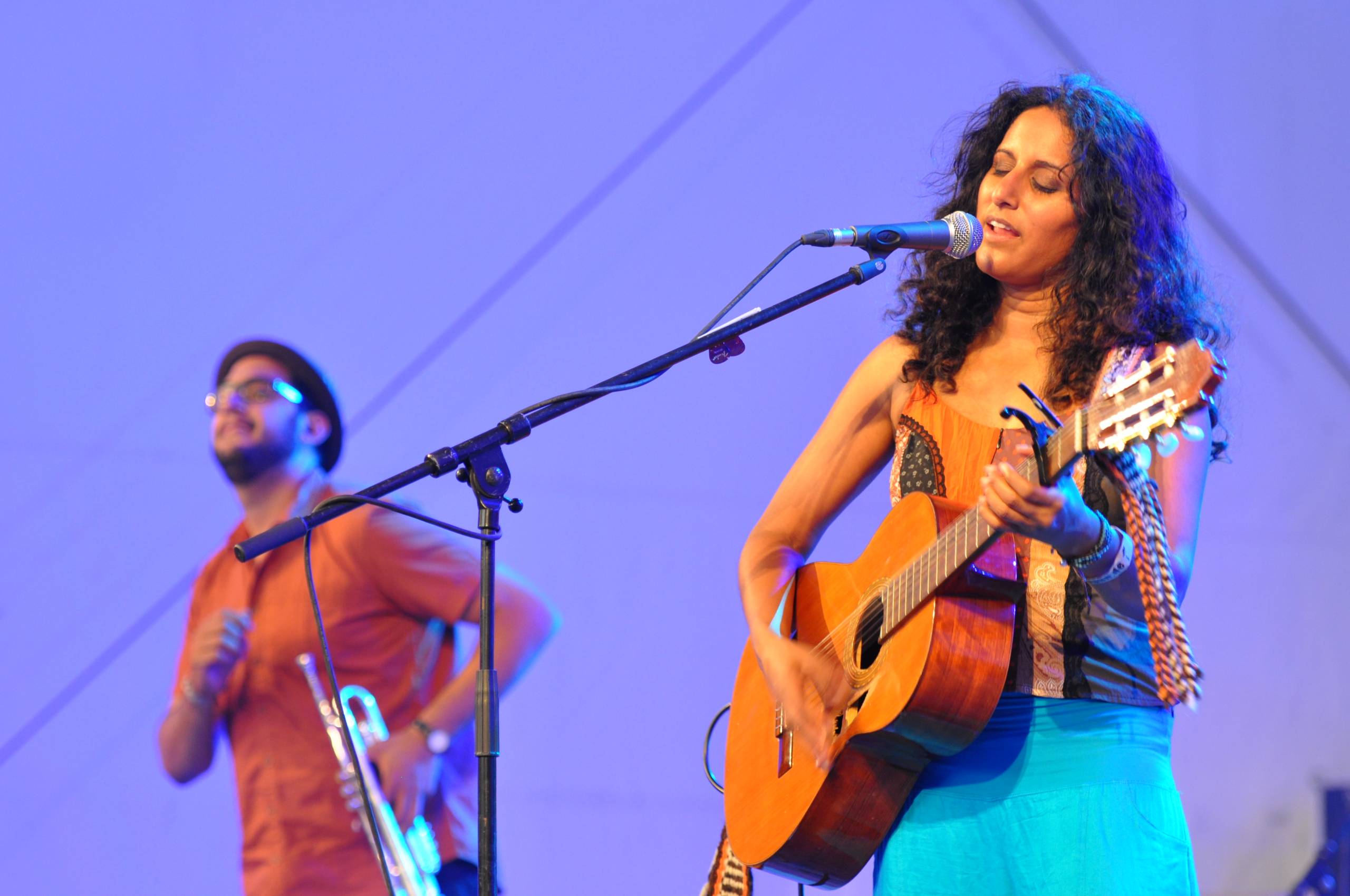
If you hang around San Francisco’s indie folk scene, it will not take you long to run into singer and promoter Jessie Woletz. As an individual, she’s warm and soft-spoken, having worked as a nanny for over a decade. But as Seaweed Sway, the moniker for her DIY music and event-production project that’s hosted shows around the Bay Area since 2007, she’s a veritable force of nature. She gets things done. And she knows a lot of people.
Both of these attributes came in handy last month, when Woletz — feeling helpless while taking in images of the devastation in Gaza — decided to contact artists she knew with a simple request: “Do you want to donate a song to support relief in Palestine?”
The result is a compilation, clocking in at 87 songs and counting, that has already raised more than $5000 for the Middle East Children’s Alliance since its release on Jan. 1. Mixtape for Palestine, available for download via Bandcamp with a donation to MECA, is a sprawling patchwork of songs — some originals, some previously released, some covers — by artists across a wide variety of genres.
Emerging local artists appear alongside names with wider recognition, including Jolie Holland, Little Wings, field medic, C.J. Boyd (with a song featuring Bonnie “Prince” Billy), Ayla Nereo, Meklit and more. Veteran Bay Area musicians turned out in droves, including Rupa & the April Fishes, Brian Belknap, Diana Gameros, Sean Hayes, Kelly McFarling, Chelsea Coleman, Whiskerman, Megan Keely, Ezra Lipp and Amina Shareef Ali.
A handful of the tracks directly address the current death toll in Palestine, like Maia “MJoy” Wiitala’s “Watermelon Nights,” and B. Hamilton’s “That God Damn Paul McCartney Christmas Song.” (While the very first track, Nora Roman and the Border Busters’ “Song For Palestine,” could have been written last week, the group actually released it in 2011.) Others are protest songs originally inspired by other causes or oppressed communities; still others speak more generally on themes of heartbreak and grief. Woletz welcomed them all.
“I wasn’t sure anyone would want to do it,” she says of her initial trepidation. “I know different artists have different views [on the war] … but my hope was, ‘OK, let’s find where we align.’ I think we can have different views and still come together to support people who are not getting resources.”
