San Francisco has long positioned itself as a progressive foil for the rest of the country, especially in the realm of LGBTQ+ rights. And while red states scramble to pass increasingly hateful anti-trans laws, California has become a sanctuary state for trans youth healthcare.
LGBTQ+ culture and history is rich and deep here. We have San Francisco’s Transgender Cultural District, the first of its kind in the world, tons of trans-inclusive nightlife spaces and a number of beloved, influential queer and trans folks in politics and the arts.
But undercutting all of that is a sheer disregard — and sometimes utter disdain — for this city’s poorest residents, a disproportionate number of whom are LGBTQ+. If San Francisco wants to live up to its progressive ideals, Banko Brown’s life must be treated like it actually mattered.

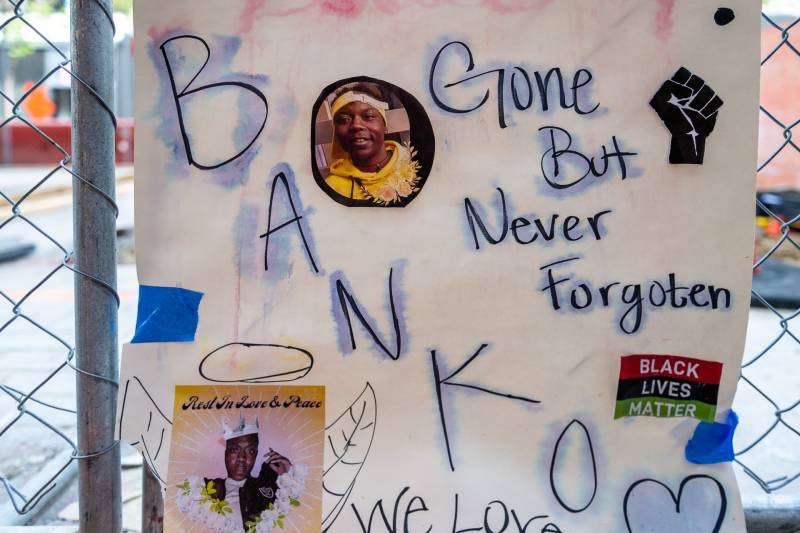
Brown was a 24-year-old trans man shot and killed by a downtown Walgreens security guard, Michael Earle-Wayne Anthony, on April 27 on Market Street. San Francisco police have told reporters that Brown was suspected of shoplifting, and that he was unarmed.
Anthony was arrested, jailed and released three days later, when District Attorney Brooke Jenkins declined to file charges, claiming that the security guard acted in self-defense. But given the fact that Brown had no weapons on him, and that a witness told Mission Local that Anthony followed Brown outside and shot him in the chest, Jenkins’ decision has come under public scrutiny. On Monday, after pressure grew stronger, the DA asked the San Francisco Police Department to reopen the investigation.
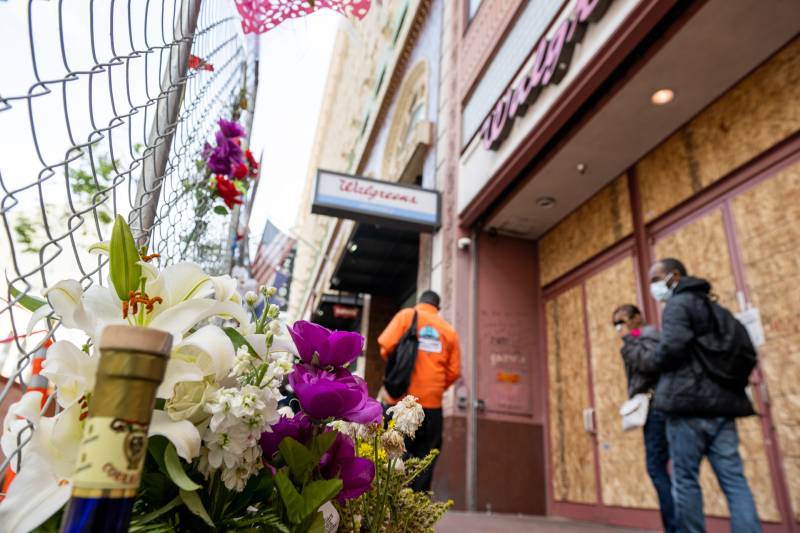
Brown’s family and supporters are urging Jenkins to release the video of the shooting. (On May 9, San Francisco’s Board of Supervisors unanimously passed a resolution asking Jenkins to release evidence.)
Brown’s death is a gross illustration of the cruelty permeating San Francisco, a supposedly inclusive beacon. Brown was said to be homeless or housing insecure for the past 10 years, since he was 14 years old. This is a sadly common predicament for LGBTQ+ youth, especially trans youth, whose homelessness rates hover at close to 40%, often because of family rejection, according to a 2021 national survey from the Trevor Project. According to Mayor London Breed’s office, trans and gender-nonconforming people are 18 times more likely to experience homelessness than the rest of the population.

Sleeping on the street, as Brown — himself an advocate for trans rights at the Young Women’s Freedom Center — was said to have done recently, puts individuals in grave danger of violence. And being in moment-to-moment survival mode makes it incredibly challenging to access the labyrinthian bureaucracy of social services, let alone earn enough income to rent a room in San Francisco or the greater Bay Area.
Despite enormous structural problems — primarily the astronomical gap between the average rent and minimum wage — that make it difficult for poor San Franciscans to hold on to their housing, there’s a pervasively condescending attitude towards homelessness among the public. Many otherwise thoughtful people view this visible suffering as an inconvenience to the housed, rather than a human rights violation we step over and shun everyday.