Snap Judgment Presents: Spooked from KQED and PRX KQED is helping to make Spooked, the acclaimed podcast from Snap Judgment, and its catalog of heart-pounding episodes available free to listeners across all major podcast platforms
Spooked features true-life supernatural stories, told first-hand by people who can barely believe it happened themselves. Spooked challenges skeptics of the supernatural, daring listeners to confront the unknown. These stories demand listeners question their own map of reality. Be afraid.
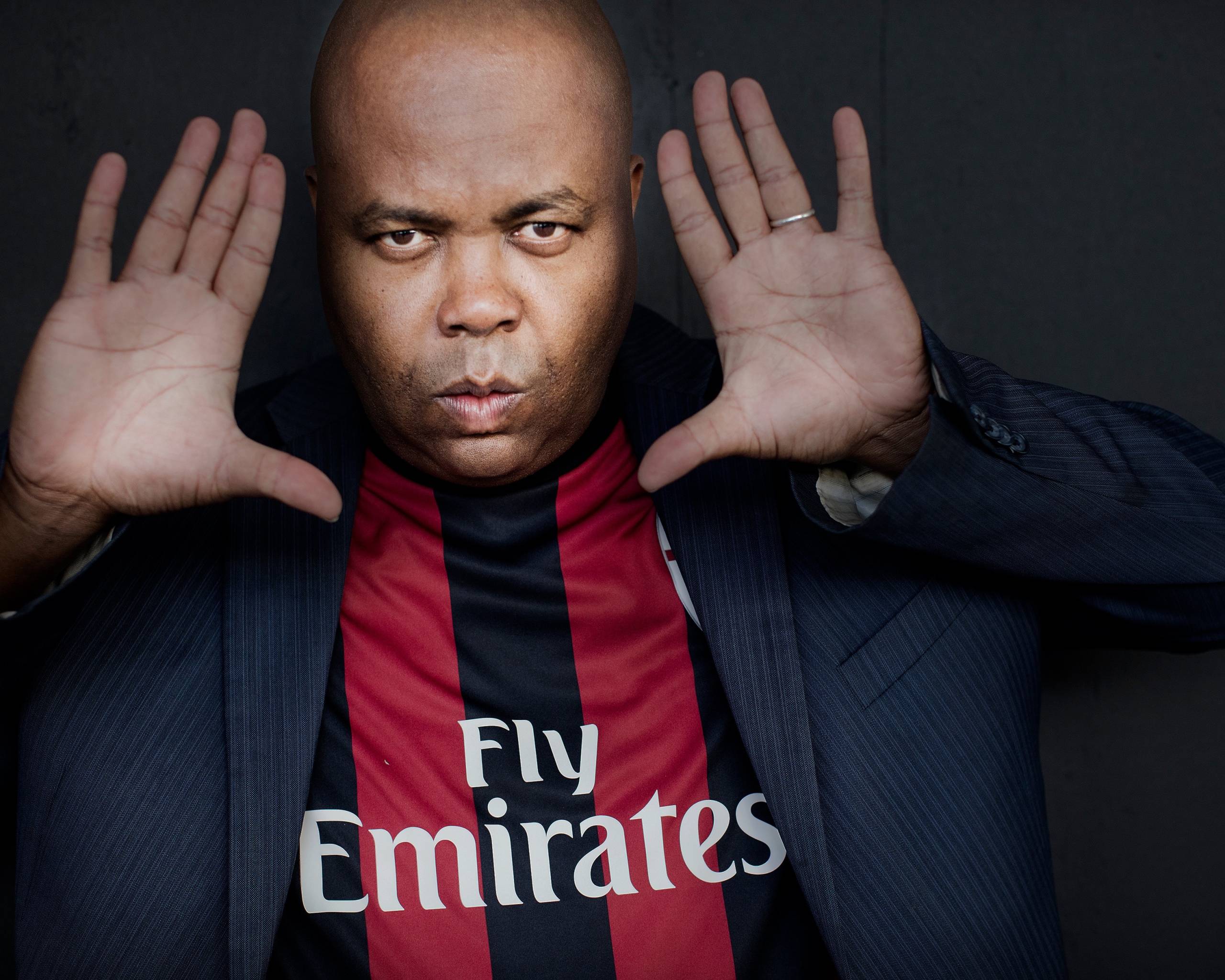
Spooked is made in partnership with KQED and PRX, and is hosted by Glynn Washington.
Before creating the Snap Judgment radio show, Glynn worked as an educator, diplomat, community activist, actor, political strategist, fist-shaker, mountain-hollerer, and foot stomper.
Glynn composed music for the Kunst Stoff dance performances in San Francisco, rocked live spoken word poetry in Detroit, joined a band in Indonesia, wrote several screenplays, painted a daring series of self portraits, released a blues album, and thinks his stories are best served with cocktails.
We Also Recommend
Player sponsored by
window.__IS_SSR__=true
window.__INITIAL_STATE__={
"attachmentsReducer": {
"audio_0": {
"type": "attachments",
"id": "audio_0",
"imgSizes": {
"kqedFullSize": {
"file": "https://ww2.kqed.org/news/wp-content/themes/KQED-unified/img/audio_bgs/background0.jpg"
}
}
},
"audio_1": {
"type": "attachments",
"id": "audio_1",
"imgSizes": {
"kqedFullSize": {
"file": "https://ww2.kqed.org/news/wp-content/themes/KQED-unified/img/audio_bgs/background1.jpg"
}
}
},
"audio_2": {
"type": "attachments",
"id": "audio_2",
"imgSizes": {
"kqedFullSize": {
"file": "https://ww2.kqed.org/news/wp-content/themes/KQED-unified/img/audio_bgs/background2.jpg"
}
}
},
"audio_3": {
"type": "attachments",
"id": "audio_3",
"imgSizes": {
"kqedFullSize": {
"file": "https://ww2.kqed.org/news/wp-content/themes/KQED-unified/img/audio_bgs/background3.jpg"
}
}
},
"audio_4": {
"type": "attachments",
"id": "audio_4",
"imgSizes": {
"kqedFullSize": {
"file": "https://ww2.kqed.org/news/wp-content/themes/KQED-unified/img/audio_bgs/background4.jpg"
}
}
},
"placeholder": {
"type": "attachments",
"id": "placeholder",
"imgSizes": {
"thumbnail": {
"file": "https://cdn.kqed.org/wp-content/uploads/2024/12/KQED-Default-Image-816638274-2000x1333-1-160x107.jpg",
"width": 160,
"height": 107,
"mimeType": "image/jpeg"
},
"medium": {
"file": "https://cdn.kqed.org/wp-content/uploads/2024/12/KQED-Default-Image-816638274-2000x1333-1-800x533.jpg",
"width": 800,
"height": 533,
"mimeType": "image/jpeg"
},
"medium_large": {
"file": "https://cdn.kqed.org/wp-content/uploads/2024/12/KQED-Default-Image-816638274-2000x1333-1-768x512.jpg",
"width": 768,
"height": 512,
"mimeType": "image/jpeg"
},
"large": {
"file": "https://cdn.kqed.org/wp-content/uploads/2024/12/KQED-Default-Image-816638274-2000x1333-1-1020x680.jpg",
"width": 1020,
"height": 680,
"mimeType": "image/jpeg"
},
"1536x1536": {
"file": "https://cdn.kqed.org/wp-content/uploads/2024/12/KQED-Default-Image-816638274-2000x1333-1-1536x1024.jpg",
"width": 1536,
"height": 1024,
"mimeType": "image/jpeg"
},
"fd-lrg": {
"file": "https://cdn.kqed.org/wp-content/uploads/2024/12/KQED-Default-Image-816638274-2000x1333-1-1536x1024.jpg",
"width": 1536,
"height": 1024,
"mimeType": "image/jpeg"
},
"fd-med": {
"file": "https://cdn.kqed.org/wp-content/uploads/2024/12/KQED-Default-Image-816638274-2000x1333-1-1020x680.jpg",
"width": 1020,
"height": 680,
"mimeType": "image/jpeg"
},
"fd-sm": {
"file": "https://cdn.kqed.org/wp-content/uploads/2024/12/KQED-Default-Image-816638274-2000x1333-1-800x533.jpg",
"width": 800,
"height": 533,
"mimeType": "image/jpeg"
},
"post-thumbnail": {
"file": "https://cdn.kqed.org/wp-content/uploads/2024/12/KQED-Default-Image-816638274-2000x1333-1-672x372.jpg",
"width": 672,
"height": 372,
"mimeType": "image/jpeg"
},
"twentyfourteen-full-width": {
"file": "https://cdn.kqed.org/wp-content/uploads/2024/12/KQED-Default-Image-816638274-2000x1333-1-1038x576.jpg",
"width": 1038,
"height": 576,
"mimeType": "image/jpeg"
},
"xxsmall": {
"file": "https://cdn.kqed.org/wp-content/uploads/2024/12/KQED-Default-Image-816638274-2000x1333-1-160x107.jpg",
"width": 160,
"height": 107,
"mimeType": "image/jpeg"
},
"xsmall": {
"file": "https://cdn.kqed.org/wp-content/uploads/2024/12/KQED-Default-Image-816638274-2000x1333-1-672x372.jpg",
"width": 672,
"height": 372,
"mimeType": "image/jpeg"
},
"small": {
"file": "https://cdn.kqed.org/wp-content/uploads/2024/12/KQED-Default-Image-816638274-2000x1333-1-672x372.jpg",
"width": 672,
"height": 372,
"mimeType": "image/jpeg"
},
"xlarge": {
"file": "https://cdn.kqed.org/wp-content/uploads/2024/12/KQED-Default-Image-816638274-2000x1333-1-1020x680.jpg",
"width": 1020,
"height": 680,
"mimeType": "image/jpeg"
},
"full-width": {
"file": "https://cdn.kqed.org/wp-content/uploads/2024/12/KQED-Default-Image-816638274-2000x1333-1-1920x1280.jpg",
"width": 1920,
"height": 1280,
"mimeType": "image/jpeg"
},
"guest-author-32": {
"file": "https://cdn.kqed.org/wp-content/uploads/2025/01/KQED-Default-Image-816638274-1333x1333-1-160x160.jpg",
"width": 32,
"height": 32,
"mimeType": "image/jpeg"
},
"guest-author-50": {
"file": "https://cdn.kqed.org/wp-content/uploads/2025/01/KQED-Default-Image-816638274-1333x1333-1-160x160.jpg",
"width": 50,
"height": 50,
"mimeType": "image/jpeg"
},
"guest-author-64": {
"file": "https://cdn.kqed.org/wp-content/uploads/2025/01/KQED-Default-Image-816638274-1333x1333-1-160x160.jpg",
"width": 64,
"height": 64,
"mimeType": "image/jpeg"
},
"guest-author-96": {
"file": "https://cdn.kqed.org/wp-content/uploads/2025/01/KQED-Default-Image-816638274-1333x1333-1-160x160.jpg",
"width": 96,
"height": 96,
"mimeType": "image/jpeg"
},
"guest-author-128": {
"file": "https://cdn.kqed.org/wp-content/uploads/2025/01/KQED-Default-Image-816638274-1333x1333-1-160x160.jpg",
"width": 128,
"height": 128,
"mimeType": "image/jpeg"
},
"detail": {
"file": "https://cdn.kqed.org/wp-content/uploads/2025/01/KQED-Default-Image-816638274-1333x1333-1-160x160.jpg",
"width": 160,
"height": 160,
"mimeType": "image/jpeg"
},
"kqedFullSize": {
"file": "https://cdn.kqed.org/wp-content/uploads/2024/12/KQED-Default-Image-816638274-2000x1333-1.jpg",
"width": 2000,
"height": 1333
}
}
},
"root-site_22215": {
"type": "attachments",
"id": "root-site_22215",
"meta": {
"index": "attachments_1716263798",
"site": "root-site",
"id": "22215",
"found": true
},
"parent": 0,
"imgSizes": {
"twentyfourteen-full-width": {
"file": "https://cdn.kqed.org/wp-content/uploads/2023/05/Spooked_8_Logo_PRX_KQED-900x900-1-900x576.png",
"width": 900,
"mimeType": "image/png",
"height": 576
},
"thumbnail": {
"file": "https://cdn.kqed.org/wp-content/uploads/2023/05/Spooked_8_Logo_PRX_KQED-900x900-1-160x160.png",
"width": 160,
"mimeType": "image/png",
"height": 160
},
"post-thumbnail": {
"file": "https://cdn.kqed.org/wp-content/uploads/2023/05/Spooked_8_Logo_PRX_KQED-900x900-1-672x372.png",
"width": 672,
"mimeType": "image/png",
"height": 372
},
"kqedFullSize": {
"file": "https://cdn.kqed.org/wp-content/uploads/2023/05/Spooked_8_Logo_PRX_KQED-900x900-1.png",
"width": 900,
"height": 900
},
"medium": {
"file": "https://cdn.kqed.org/wp-content/uploads/2023/05/Spooked_8_Logo_PRX_KQED-900x900-1-800x800.png",
"width": 800,
"mimeType": "image/png",
"height": 800
},
"medium_large": {
"file": "https://cdn.kqed.org/wp-content/uploads/2023/05/Spooked_8_Logo_PRX_KQED-900x900-1-768x768.png",
"width": 768,
"mimeType": "image/png",
"height": 768
}
},
"publishDate": 1683764700,
"modified": 1683764700,
"caption": null,
"description": null,
"title": "Spooked_8_Logo_PRX_KQED-900x900",
"credit": null,
"status": "inherit",
"altTag": null,
"isLoading": false,
"fetchFailed": false
},
"root-site_22287": {
"type": "attachments",
"id": "root-site_22287",
"meta": {
"index": "attachments_1716263798",
"site": "root-site",
"id": "22287",
"found": true
},
"parent": 21919,
"imgSizes": {
"twentyfourteen-full-width": {
"file": "https://cdn.kqed.org/wp-content/uploads/2023/05/Spooked-1200X600-SOCIAL-SHARE-1038x576.png",
"width": 1038,
"mimeType": "image/png",
"height": 576
},
"thumbnail": {
"file": "https://cdn.kqed.org/wp-content/uploads/2023/05/Spooked-1200X600-SOCIAL-SHARE-160x84.png",
"width": 160,
"mimeType": "image/png",
"height": 84
},
"post-thumbnail": {
"file": "https://cdn.kqed.org/wp-content/uploads/2023/05/Spooked-1200X600-SOCIAL-SHARE-672x372.png",
"width": 672,
"mimeType": "image/png",
"height": 372
},
"kqedFullSize": {
"file": "https://cdn.kqed.org/wp-content/uploads/2023/05/Spooked-1200X600-SOCIAL-SHARE.png",
"width": 1200,
"height": 630
},
"large": {
"file": "https://cdn.kqed.org/wp-content/uploads/2023/05/Spooked-1200X600-SOCIAL-SHARE-1020x536.png",
"width": 1020,
"mimeType": "image/png",
"height": 536
},
"medium": {
"file": "https://cdn.kqed.org/wp-content/uploads/2023/05/Spooked-1200X600-SOCIAL-SHARE-800x420.png",
"width": 800,
"mimeType": "image/png",
"height": 420
},
"medium_large": {
"file": "https://cdn.kqed.org/wp-content/uploads/2023/05/Spooked-1200X600-SOCIAL-SHARE-768x403.png",
"width": 768,
"mimeType": "image/png",
"height": 403
}
},
"publishDate": 1684182344,
"modified": 1684182344,
"caption": null,
"description": null,
"title": "Spooked - 1200X600 SOCIAL SHARE",
"credit": null,
"status": "inherit",
"altTag": null,
"isLoading": false,
"fetchFailed": false
},
"news_11964950": {
"type": "attachments",
"id": "news_11964950",
"meta": {
"index": "attachments_1716263798",
"site": "news",
"id": "11964950",
"found": true
},
"parent": 11964949,
"imgSizes": {
"twentyfourteen-full-width": {
"file": "https://ww2.kqed.org/app/uploads/sites/10/2023/10/GettyImages-515103210-scaled-e1697737890511-1038x576.jpg",
"width": 1038,
"mimeType": "image/jpeg",
"height": 576
},
"thumbnail": {
"file": "https://ww2.kqed.org/app/uploads/sites/10/2023/10/GettyImages-515103210-scaled-e1697737890511-160x114.jpg",
"width": 160,
"mimeType": "image/jpeg",
"height": 114
},
"post-thumbnail": {
"file": "https://ww2.kqed.org/app/uploads/sites/10/2023/10/GettyImages-515103210-scaled-e1697737890511-672x372.jpg",
"width": 672,
"mimeType": "image/jpeg",
"height": 372
},
"kqedFullSize": {
"file": "https://ww2.kqed.org/app/uploads/sites/10/2023/10/GettyImages-515103210-scaled-e1697737890511.jpg",
"width": 1920,
"height": 1371
},
"2048x2048": {
"file": "https://ww2.kqed.org/app/uploads/sites/10/2023/10/GettyImages-515103210-2048x1462.jpg",
"width": 2048,
"mimeType": "image/jpeg",
"height": 1462
},
"large": {
"file": "https://ww2.kqed.org/app/uploads/sites/10/2023/10/GettyImages-515103210-scaled-e1697737890511-1020x728.jpg",
"width": 1020,
"mimeType": "image/jpeg",
"height": 728
},
"1536x1536": {
"file": "https://ww2.kqed.org/app/uploads/sites/10/2023/10/GettyImages-515103210-scaled-e1697737890511-1536x1097.jpg",
"width": 1536,
"mimeType": "image/jpeg",
"height": 1097
},
"full-width": {
"file": "https://ww2.kqed.org/app/uploads/sites/10/2023/10/GettyImages-515103210-1920x1371.jpg",
"width": 1920,
"mimeType": "image/jpeg",
"height": 1371
},
"medium": {
"file": "https://ww2.kqed.org/app/uploads/sites/10/2023/10/GettyImages-515103210-scaled-e1697737890511-800x571.jpg",
"width": 800,
"mimeType": "image/jpeg",
"height": 571
}
},
"publishDate": 1697737869,
"modified": 1697763119,
"caption": "Anton Szandor LaVey, head of the First Satanic Church, is assisted by his partner, Diane, as they go through a satanic ceremony in 1970.",
"description": null,
"title": "A Satanic Ceremony",
"credit": "Bettmann/Getty",
"status": "inherit",
"altTag": "A black-and-white image of a man with a polished bald head wearing all black and a large cloak stands center, holding a chalice in one hand. To his right, a woman with long blonde hair holds a candle aloft. The pair are illuminated by candlelight in an otherwise dark room.",
"isLoading": false,
"fetchFailed": false
},
"news_12060904": {
"type": "attachments",
"id": "news_12060904",
"meta": {
"index": "attachments_1716263798",
"site": "news",
"id": "12060904",
"found": true
},
"title": "Flying bats",
"publishDate": 1761082354,
"status": "inherit",
"parent": 12060830,
"modified": 1761082590,
"caption": "Flying bats",
"credit": "Photo by Johner Images/Getty",
"altTag": null,
"description": null,
"imgSizes": {
"medium": {
"file": "https://cdn.kqed.org/wp-content/uploads/sites/10/2025/10/GettyImages-763168441-2000x1333.jpg",
"width": 2000,
"height": 1333,
"mimeType": "image/jpeg"
},
"large": {
"file": "https://cdn.kqed.org/wp-content/uploads/sites/10/2025/10/GettyImages-763168441-2000x1333.jpg",
"width": 2000,
"height": 1333,
"mimeType": "image/jpeg"
},
"thumbnail": {
"file": "https://cdn.kqed.org/wp-content/uploads/sites/10/2025/10/GettyImages-763168441-160x107.jpg",
"width": 160,
"height": 107,
"mimeType": "image/jpeg"
},
"1536x1536": {
"file": "https://cdn.kqed.org/wp-content/uploads/sites/10/2025/10/GettyImages-763168441-1536x1024.jpg",
"width": 1536,
"height": 1024,
"mimeType": "image/jpeg"
},
"2048x2048": {
"file": "https://cdn.kqed.org/wp-content/uploads/sites/10/2025/10/GettyImages-763168441-2048x1365.jpg",
"width": 2048,
"height": 1365,
"mimeType": "image/jpeg"
},
"post-thumbnail": {
"file": "https://cdn.kqed.org/wp-content/uploads/sites/10/2025/10/GettyImages-763168441-672x372.jpg",
"width": 672,
"height": 372,
"mimeType": "image/jpeg"
},
"twentyfourteen-full-width": {
"file": "https://cdn.kqed.org/wp-content/uploads/sites/10/2025/10/GettyImages-763168441-1038x576.jpg",
"width": 1038,
"height": 576,
"mimeType": "image/jpeg"
},
"full-width": {
"file": "https://cdn.kqed.org/wp-content/uploads/sites/10/2025/10/GettyImages-763168441-2000x1333.jpg",
"width": 2000,
"height": 1333,
"mimeType": "image/jpeg"
},
"kqedFullSize": {
"file": "https://cdn.kqed.org/wp-content/uploads/sites/10/2025/10/GettyImages-763168441-scaled.jpg",
"width": 2560,
"height": 1707
}
},
"isLoading": false,
"fetchFailed": false
},
"news_11962645": {
"type": "attachments",
"id": "news_11962645",
"meta": {
"index": "attachments_1716263798",
"site": "news",
"id": "11962645",
"found": true
},
"parent": 11962628,
"imgSizes": {
"twentyfourteen-full-width": {
"file": "https://ww2.kqed.org/app/uploads/sites/10/2023/09/Ghost-in-classroom-1038x576.jpg",
"width": 1038,
"mimeType": "image/jpeg",
"height": 576
},
"thumbnail": {
"file": "https://ww2.kqed.org/app/uploads/sites/10/2023/09/Ghost-in-classroom-160x96.jpg",
"width": 160,
"mimeType": "image/jpeg",
"height": 96
},
"post-thumbnail": {
"file": "https://ww2.kqed.org/app/uploads/sites/10/2023/09/Ghost-in-classroom-672x372.jpg",
"width": 672,
"mimeType": "image/jpeg",
"height": 372
},
"kqedFullSize": {
"file": "https://ww2.kqed.org/app/uploads/sites/10/2023/09/Ghost-in-classroom.jpg",
"width": 1920,
"height": 1152
},
"large": {
"file": "https://ww2.kqed.org/app/uploads/sites/10/2023/09/Ghost-in-classroom-1020x612.jpg",
"width": 1020,
"mimeType": "image/jpeg",
"height": 612
},
"1536x1536": {
"file": "https://ww2.kqed.org/app/uploads/sites/10/2023/09/Ghost-in-classroom-1536x922.jpg",
"width": 1536,
"mimeType": "image/jpeg",
"height": 922
},
"medium": {
"file": "https://ww2.kqed.org/app/uploads/sites/10/2023/09/Ghost-in-classroom-800x480.jpg",
"width": 800,
"mimeType": "image/jpeg",
"height": 480
}
},
"publishDate": 1695854856,
"modified": 1695854856,
"caption": null,
"description": null,
"title": "Ghost in classroom",
"credit": null,
"status": "inherit",
"altTag": null,
"isLoading": false,
"fetchFailed": false
},
"news_11940130": {
"type": "attachments",
"id": "news_11940130",
"meta": {
"index": "attachments_1716263798",
"site": "news",
"id": "11940130",
"found": true
},
"parent": 11940118,
"imgSizes": {
"twentyfourteen-full-width": {
"file": "https://ww2.kqed.org/app/uploads/sites/10/2023/02/GettyImages-157677589-1038x576.jpg",
"width": 1038,
"mimeType": "image/jpeg",
"height": 576
},
"thumbnail": {
"file": "https://ww2.kqed.org/app/uploads/sites/10/2023/02/GettyImages-157677589-160x116.jpg",
"width": 160,
"mimeType": "image/jpeg",
"height": 116
},
"post-thumbnail": {
"file": "https://ww2.kqed.org/app/uploads/sites/10/2023/02/GettyImages-157677589-672x372.jpg",
"width": 672,
"mimeType": "image/jpeg",
"height": 372
},
"kqedFullSize": {
"file": "https://ww2.kqed.org/app/uploads/sites/10/2023/02/GettyImages-157677589.jpg",
"width": 1920,
"height": 1388
},
"large": {
"file": "https://ww2.kqed.org/app/uploads/sites/10/2023/02/GettyImages-157677589-1020x737.jpg",
"width": 1020,
"mimeType": "image/jpeg",
"height": 737
},
"1536x1536": {
"file": "https://ww2.kqed.org/app/uploads/sites/10/2023/02/GettyImages-157677589-1536x1110.jpg",
"width": 1536,
"mimeType": "image/jpeg",
"height": 1110
},
"medium": {
"file": "https://ww2.kqed.org/app/uploads/sites/10/2023/02/GettyImages-157677589-800x578.jpg",
"width": 800,
"mimeType": "image/jpeg",
"height": 578
}
},
"publishDate": 1675465856,
"modified": 1675465923,
"caption": "Fresh Winter Snow near where the Donner Party saga unfolded. ",
"description": null,
"title": "Snowy Cascade Creek In Lake Tahoe, California",
"credit": "Ron and Patty Thomas/Getty Images",
"status": "inherit",
"altTag": "A creek running through a forest where trees are covered in snow.",
"isLoading": false,
"fetchFailed": false
},
"news_11689988": {
"type": "attachments",
"id": "news_11689988",
"meta": {
"index": "attachments_1716263798",
"site": "news",
"id": "11689988",
"found": true
},
"parent": 11689504,
"imgSizes": {
"small": {
"file": "https://ww2.kqed.org/app/uploads/sites/10/2018/08/RS32665_19025042463_9119852fb9_o-qut-520x337.jpg",
"width": 520,
"mimeType": "image/jpeg",
"height": 337
},
"twentyfourteen-full-width": {
"file": "https://ww2.kqed.org/app/uploads/sites/10/2018/08/RS32665_19025042463_9119852fb9_o-qut-1038x576.jpg",
"width": 1038,
"mimeType": "image/jpeg",
"height": 576
},
"thumbnail": {
"file": "https://ww2.kqed.org/app/uploads/sites/10/2018/08/RS32665_19025042463_9119852fb9_o-qut-160x104.jpg",
"width": 160,
"mimeType": "image/jpeg",
"height": 104
},
"fd-sm": {
"file": "https://ww2.kqed.org/app/uploads/sites/10/2018/08/RS32665_19025042463_9119852fb9_o-qut-960x623.jpg",
"width": 960,
"mimeType": "image/jpeg",
"height": 623
},
"post-thumbnail": {
"file": "https://ww2.kqed.org/app/uploads/sites/10/2018/08/RS32665_19025042463_9119852fb9_o-qut-672x372.jpg",
"width": 672,
"mimeType": "image/jpeg",
"height": 372
},
"xsmall": {
"file": "https://ww2.kqed.org/app/uploads/sites/10/2018/08/RS32665_19025042463_9119852fb9_o-qut-375x243.jpg",
"width": 375,
"mimeType": "image/jpeg",
"height": 243
},
"kqedFullSize": {
"file": "https://ww2.kqed.org/app/uploads/sites/10/2018/08/RS32665_19025042463_9119852fb9_o-qut.jpg",
"width": 1920,
"height": 1245
},
"large": {
"file": "https://ww2.kqed.org/app/uploads/sites/10/2018/08/RS32665_19025042463_9119852fb9_o-qut-1020x661.jpg",
"width": 1020,
"mimeType": "image/jpeg",
"height": 661
},
"xlarge": {
"file": "https://ww2.kqed.org/app/uploads/sites/10/2018/08/RS32665_19025042463_9119852fb9_o-qut-1180x765.jpg",
"width": 1180,
"mimeType": "image/jpeg",
"height": 765
},
"complete_open_graph": {
"file": "https://ww2.kqed.org/app/uploads/sites/10/2018/08/RS32665_19025042463_9119852fb9_o-qut-1200x778.jpg",
"width": 1200,
"mimeType": "image/jpeg",
"height": 778
},
"guest-author-50": {
"file": "https://ww2.kqed.org/app/uploads/sites/10/2018/08/RS32665_19025042463_9119852fb9_o-qut-50x50.jpg",
"width": 50,
"mimeType": "image/jpeg",
"height": 50
},
"guest-author-96": {
"file": "https://ww2.kqed.org/app/uploads/sites/10/2018/08/RS32665_19025042463_9119852fb9_o-qut-96x96.jpg",
"width": 96,
"mimeType": "image/jpeg",
"height": 96
},
"medium": {
"file": "https://ww2.kqed.org/app/uploads/sites/10/2018/08/RS32665_19025042463_9119852fb9_o-qut-800x519.jpg",
"width": 800,
"mimeType": "image/jpeg",
"height": 519
},
"guest-author-64": {
"file": "https://ww2.kqed.org/app/uploads/sites/10/2018/08/RS32665_19025042463_9119852fb9_o-qut-64x64.jpg",
"width": 64,
"mimeType": "image/jpeg",
"height": 64
},
"guest-author-32": {
"file": "https://ww2.kqed.org/app/uploads/sites/10/2018/08/RS32665_19025042463_9119852fb9_o-qut-32x32.jpg",
"width": 32,
"mimeType": "image/jpeg",
"height": 32
},
"fd-lrg": {
"file": "https://ww2.kqed.org/app/uploads/sites/10/2018/08/RS32665_19025042463_9119852fb9_o-qut-1920x1245.jpg",
"width": 1920,
"mimeType": "image/jpeg",
"height": 1245
},
"fd-med": {
"file": "https://ww2.kqed.org/app/uploads/sites/10/2018/08/RS32665_19025042463_9119852fb9_o-qut-1180x765.jpg",
"width": 1180,
"mimeType": "image/jpeg",
"height": 765
},
"full-width": {
"file": "https://ww2.kqed.org/app/uploads/sites/10/2018/08/RS32665_19025042463_9119852fb9_o-qut-1920x1245.jpg",
"width": 1920,
"mimeType": "image/jpeg",
"height": 1245
},
"detail": {
"file": "https://ww2.kqed.org/app/uploads/sites/10/2018/08/RS32665_19025042463_9119852fb9_o-qut-150x150.jpg",
"width": 150,
"mimeType": "image/jpeg",
"height": 150
},
"guest-author-128": {
"file": "https://ww2.kqed.org/app/uploads/sites/10/2018/08/RS32665_19025042463_9119852fb9_o-qut-128x128.jpg",
"width": 128,
"mimeType": "image/jpeg",
"height": 128
},
"xxsmall": {
"file": "https://ww2.kqed.org/app/uploads/sites/10/2018/08/RS32665_19025042463_9119852fb9_o-qut-240x156.jpg",
"width": 240,
"mimeType": "image/jpeg",
"height": 156
}
},
"publishDate": 1535774810,
"modified": 1535774840,
"caption": "Segments of stone walls, like these on Monument Peak, in Ed Levin County Park near Milpitas, can be found throughout the hills of the East Bay.",
"description": "Segments of stone walls, like these on Monument Peak, in Ed Levin County Park near Milpitas, can be found throughout the hills of the East Bay.",
"title": "RS32665_19025042463_9119852fb9_o-qut",
"credit": "Dan Brekke/KQED",
"status": "inherit",
"isLoading": false,
"fetchFailed": false
},
"news_11930138": {
"type": "attachments",
"id": "news_11930138",
"meta": {
"index": "attachments_1716263798",
"site": "news",
"id": "11930138",
"found": true
},
"parent": 11930135,
"imgSizes": {
"twentyfourteen-full-width": {
"file": "https://ww2.kqed.org/app/uploads/sites/10/2022/10/TheRachelOuijaBd2-1038x576.jpg",
"width": 1038,
"mimeType": "image/jpeg",
"height": 576
},
"thumbnail": {
"file": "https://ww2.kqed.org/app/uploads/sites/10/2022/10/TheRachelOuijaBd2-160x115.jpg",
"width": 160,
"mimeType": "image/jpeg",
"height": 115
},
"post-thumbnail": {
"file": "https://ww2.kqed.org/app/uploads/sites/10/2022/10/TheRachelOuijaBd2-672x372.jpg",
"width": 672,
"mimeType": "image/jpeg",
"height": 372
},
"kqedFullSize": {
"file": "https://ww2.kqed.org/app/uploads/sites/10/2022/10/TheRachelOuijaBd2-scaled-e1666736330805.jpg",
"width": 1920,
"height": 1385
},
"2048x2048": {
"file": "https://ww2.kqed.org/app/uploads/sites/10/2022/10/TheRachelOuijaBd2-2048x1477.jpg",
"width": 2048,
"mimeType": "image/jpeg",
"height": 1477
},
"large": {
"file": "https://ww2.kqed.org/app/uploads/sites/10/2022/10/TheRachelOuijaBd2-1020x736.jpg",
"width": 1020,
"mimeType": "image/jpeg",
"height": 736
},
"1536x1536": {
"file": "https://ww2.kqed.org/app/uploads/sites/10/2022/10/TheRachelOuijaBd2-1536x1108.jpg",
"width": 1536,
"mimeType": "image/jpeg",
"height": 1108
},
"full-width": {
"file": "https://ww2.kqed.org/app/uploads/sites/10/2022/10/TheRachelOuijaBd2-1920x1385.jpg",
"width": 1920,
"mimeType": "image/jpeg",
"height": 1385
},
"medium": {
"file": "https://ww2.kqed.org/app/uploads/sites/10/2022/10/TheRachelOuijaBd2-800x577.jpg",
"width": 800,
"mimeType": "image/jpeg",
"height": 577
}
},
"publishDate": 1666736302,
"modified": 1666816112,
"caption": "Jon Brooks' Ouija board, which sat unused in its box for 27 years until recently. In 1995, the board was used to contact the spirit of a friend's great-grandmother ... maybe.",
"description": null,
"title": "TheRachelOuijaBd2",
"credit": "Courtesy of Jon Brooks",
"status": "inherit",
"altTag": "A Ouija board featuring the alphabet, numbers zero through nine, yes, no, and goodbye. It sits on a blue wooden deck, with the white planchette placed on the board over the letter M.",
"isLoading": false,
"fetchFailed": false
}
},
"audioPlayerReducer": {
"postId": "stream_live",
"isPaused": true,
"isPlaying": false,
"pfsActive": false,
"pledgeModalIsOpen": true,
"playerDrawerIsOpen": false,
"liveAudioPlayStartedAt": 0,
"liveAudioPlayContext": ""
},
"authorsReducer": {
"jbrooks": {
"type": "authors",
"id": "80",
"meta": {
"index": "authors_1716337520",
"id": "80",
"found": true
},
"name": "Jon Brooks",
"firstName": "Jon",
"lastName": "Brooks",
"slug": "jbrooks",
"email": "jbrooks@kqed.org",
"display_author_email": true,
"staff_mastheads": [
"science"
],
"title": "Digital Editor",
"bio": "Jon Brooks is a former Digital Editor for KQED Science. He is the former editor of KQED’s daily news blog, News Fix. In 2014, he won a California Journalism Award for his coverage of ride services like Uber and Lyft and the taxi industry. A veteran blogger, he previously worked for Yahoo! in various news writing and editing roles. Jon is also a playwright whose work has been produced in San Francisco, New York, Italy, and around the U.S. He has written about film for his own blog and studied film at Boston University.",
"avatar": "https://secure.gravatar.com/avatar/98887f7ed1c876ed414d4c915e969584?s=600&d=blank&r=g",
"twitter": "jbrooksfoy",
"facebook": null,
"instagram": null,
"linkedin": null,
"sites": [
{
"site": "arts",
"roles": [
"Contributor",
"editor"
]
},
{
"site": "news",
"roles": [
"author"
]
},
{
"site": "futureofyou",
"roles": [
"administrator"
]
},
{
"site": "mindshift",
"roles": [
"editor"
]
},
{
"site": "stateofhealth",
"roles": [
"editor"
]
},
{
"site": "science",
"roles": [
"administrator"
]
},
{
"site": "quest",
"roles": [
"editor"
]
}
],
"headData": {
"title": "Jon Brooks | KQED",
"description": "Digital Editor",
"ogImgSrc": "https://secure.gravatar.com/avatar/98887f7ed1c876ed414d4c915e969584?s=600&d=blank&r=g",
"twImgSrc": "https://secure.gravatar.com/avatar/98887f7ed1c876ed414d4c915e969584?s=600&d=blank&r=g"
},
"isLoading": false,
"link": "/author/jbrooks"
},
"ohubertallen": {
"type": "authors",
"id": "102",
"meta": {
"index": "authors_1716337520",
"id": "102",
"found": true
},
"name": "Olivia Allen-Price",
"firstName": "Olivia",
"lastName": "Allen-Price",
"slug": "ohubertallen",
"email": "oallenprice@kqed.org",
"display_author_email": false,
"staff_mastheads": [
"news"
],
"title": "Senior Editor",
"bio": "Olivia Allen-Price is senior editor and host of the award-winning Bay Curious podcast. Prior to joining KQED in 2013, Olivia worked at The Baltimore Sun and The Virginian-Pilot in Norfolk, Va. She holds degrees in journalism and political science from Elon University. Her work has earned awards from the Society of Professional Journalists, the Hearst Foundation and Hearken. She loves to talk about running and curly hair.\r\n\r\nFollow: \u003ca href=\"https://twitter.com/oallenprice\">@oallenprice\u003c/a>\r\nEmail: \u003ca href=\"mailto:oallenprice@kqed.org\">oallenprice@kqed.org\u003c/a>",
"avatar": "https://secure.gravatar.com/avatar/07f7803c1f6be56f3be58ef276dfa64dce898502e0554408ef4858451a8294f7?s=600&d=blank&r=g",
"twitter": "oallenprice",
"bluesky": null,
"facebook": null,
"instagram": null,
"linkedin": null,
"sites": [
{
"site": "",
"roles": [
"editor"
]
},
{
"site": "arts",
"roles": [
"subscriber"
]
},
{
"site": "news",
"roles": [
"administrator"
]
},
{
"site": "pop",
"roles": [
"administrator"
]
},
{
"site": "bayareabites",
"roles": [
"contributor"
]
},
{
"site": "stateofhealth",
"roles": [
"administrator"
]
},
{
"site": "science",
"roles": [
"editor"
]
}
],
"headData": {
"title": "Olivia Allen-Price | KQED",
"description": "Senior Editor",
"ogImgSrc": "https://secure.gravatar.com/avatar/07f7803c1f6be56f3be58ef276dfa64dce898502e0554408ef4858451a8294f7?s=600&d=blank&r=g",
"twImgSrc": "https://secure.gravatar.com/avatar/07f7803c1f6be56f3be58ef276dfa64dce898502e0554408ef4858451a8294f7?s=600&d=blank&r=g"
},
"isLoading": false,
"link": "/author/ohubertallen"
},
"danbrekke": {
"type": "authors",
"id": "222",
"meta": {
"index": "authors_1716337520",
"id": "222",
"found": true
},
"name": "Dan Brekke",
"firstName": "Dan",
"lastName": "Brekke",
"slug": "danbrekke",
"email": "dbrekke@kqed.org",
"display_author_email": true,
"staff_mastheads": [
"news",
"science"
],
"title": "KQED Editor and Reporter",
"bio": "Dan Brekke is a reporter and editor for KQED News, responsible for coverage of topics ranging from California water issues to the Bay Area's transportation challenges. In a newsroom career that began in Chicago in 1972, Dan has worked for \u003cem>The San Francisco Examiner,\u003c/em> Wired and TechTV and has been published in The New York Times, The New York Times Magazine, Business 2.0, Salon and elsewhere.\r\n\r\nSince joining KQED in 2007, Dan has reported, edited and produced both radio and online features and breaking news pieces. He has shared as both editor and reporter in four Society of Professional Journalists Norcal Excellence in Journalism awards and one Edward R. Murrow regional award. He was chosen for a spring 2017 residency at the Mesa Refuge to advance his research on California salmon.\r\n\r\nEmail Dan at: \u003ca href=\"mailto:dbrekke@kqed.org\">dbrekke@kqed.org\u003c/a>\r\n\r\n\u003cstrong>Twitter:\u003c/strong> \u003ca href=\"https://twitter.com/danbrekke\" rel=\"noopener noreferrer\">twitter.com/danbrekke\u003c/a>\r\n\u003cstrong>Facebook:\u003c/strong> \u003ca href=\"https://www.facebook.com/danbrekke\" rel=\"noopener noreferrer\">www.facebook.com/danbrekke\u003c/a>\r\n\u003cstrong>LinkedIn:\u003c/strong> \u003ca href=\"https://www.linkedin.com/in/danbrekke\" rel=\"noopener noreferrer\">www.linkedin.com/in/danbrekke\u003c/a>",
"avatar": "https://secure.gravatar.com/avatar/8f1f0d2a978fb3b23426c922c7e2af558fa36905b49c4ce76a97dc3c72d27226?s=600&d=mm&r=g",
"twitter": "danbrekke",
"bluesky": null,
"facebook": null,
"instagram": "https://www.instagram.com/dan.brekke/",
"linkedin": "https://www.linkedin.com/in/danbrekke/",
"sites": [
{
"site": "news",
"roles": [
"administrator",
"create_posts"
]
},
{
"site": "stateofhealth",
"roles": [
"editor"
]
},
{
"site": "science",
"roles": [
"editor"
]
},
{
"site": "quest",
"roles": [
"contributor"
]
},
{
"site": "food",
"roles": [
"contributor"
]
},
{
"site": "forum",
"roles": [
"contributor"
]
},
{
"site": "elections",
"roles": [
"editor"
]
},
{
"site": "liveblog",
"roles": [
"editor"
]
}
],
"headData": {
"title": "Dan Brekke | KQED",
"description": "KQED Editor and Reporter",
"ogImgSrc": "https://secure.gravatar.com/avatar/8f1f0d2a978fb3b23426c922c7e2af558fa36905b49c4ce76a97dc3c72d27226?s=600&d=mm&r=g",
"twImgSrc": "https://secure.gravatar.com/avatar/8f1f0d2a978fb3b23426c922c7e2af558fa36905b49c4ce76a97dc3c72d27226?s=600&d=mm&r=g"
},
"isLoading": false,
"link": "/author/danbrekke"
},
"afont": {
"type": "authors",
"id": "8637",
"meta": {
"index": "authors_1716337520",
"id": "8637",
"found": true
},
"name": "Amanda Font",
"firstName": "Amanda",
"lastName": "Font",
"slug": "afont",
"email": "afont@kqed.org",
"display_author_email": false,
"staff_mastheads": [],
"title": "KQED Contributor",
"bio": "Amanda Font is a producer on \u003cem>The Latest\u003c/em> podcast, and the host and co-producer of the series \u003cem>Audible Cosmos\u003c/em>. She has previously worked as a producer and reporter on the \u003cem>Bay Curious\u003c/em> podcast, and director of \u003cem>The California Report Magazine\u003c/em>. She grew up in the deserts of Southern California and moved north for the trees. Amanda earned a B.A. from the BECA program at San Francisco State, where she worked in the university's radio station. Amanda Font is represented by SAG-AFTRA.",
"avatar": "https://secure.gravatar.com/avatar/d9e81cf0117d5849b9cfb7ab4b1422f1?s=600&d=blank&r=g",
"twitter": null,
"facebook": null,
"instagram": null,
"linkedin": null,
"sites": [
{
"site": "news",
"roles": [
"add_users",
"create_users"
]
},
{
"site": "science",
"roles": []
},
{
"site": "forum",
"roles": [
"administrator"
]
},
{
"site": "perspectives",
"roles": [
"administrator"
]
},
{
"site": "radio",
"roles": [
"administrator"
]
}
],
"headData": {
"title": "Amanda Font | KQED",
"description": "KQED Contributor",
"ogImgSrc": "https://secure.gravatar.com/avatar/d9e81cf0117d5849b9cfb7ab4b1422f1?s=600&d=blank&r=g",
"twImgSrc": "https://secure.gravatar.com/avatar/d9e81cf0117d5849b9cfb7ab4b1422f1?s=600&d=blank&r=g"
},
"isLoading": false,
"link": "/author/afont"
},
"sarahwright": {
"type": "authors",
"id": "11956",
"meta": {
"index": "authors_1716337520",
"id": "11956",
"found": true
},
"name": "Sarah Wright",
"firstName": "Sarah",
"lastName": "Wright",
"slug": "sarahwright",
"email": "swright@kqed.org",
"display_author_email": true,
"staff_mastheads": [],
"title": "Outdoors Engagement Reporter",
"bio": "Sarah Wright is KQED's Outdoors Engagement Reporter. Originally from Lake Tahoe, she completed a thru-hike of the Pacific Crest Trail in 2019 and was a U.S. Fulbright Program grantee to Argentina in 2023. Her journalism has appeared in The Guardian, The San Francisco Standard, The Palo Alto Weekly and the Half Moon Bay Review.",
"avatar": "https://secure.gravatar.com/avatar/c161a3d6441865cba25e6db4fa561099ad665799e9432e34da2b84d7e371524c?s=600&d=blank&r=g",
"twitter": null,
"bluesky": null,
"facebook": null,
"instagram": null,
"linkedin": null,
"sites": [
{
"site": "arts",
"roles": [
"editor"
]
},
{
"site": "news",
"roles": [
"editor"
]
},
{
"site": "science",
"roles": [
"contributor",
"author"
]
},
{
"site": "forum",
"roles": [
"editor"
]
}
],
"headData": {
"title": "Sarah Wright | KQED",
"description": "Outdoors Engagement Reporter",
"ogImgSrc": "https://secure.gravatar.com/avatar/c161a3d6441865cba25e6db4fa561099ad665799e9432e34da2b84d7e371524c?s=600&d=blank&r=g",
"twImgSrc": "https://secure.gravatar.com/avatar/c161a3d6441865cba25e6db4fa561099ad665799e9432e34da2b84d7e371524c?s=600&d=blank&r=g"
},
"isLoading": false,
"link": "/author/sarahwright"
}
},
"pagesReducer": {
"root-site_spooked": {
"type": "pages",
"id": "root-site_21919",
"meta": {
"index": "pages_1716337520",
"site": "root-site",
"id": "21919",
"score": 0
},
"parent": 0,
"pageMeta": {
"excludeFromSiteSearch": "Include",
"sticky": false,
"adSlotOverride": "300x250_news",
"WpPageTemplate": "page-podcast"
},
"labelTerm": {
"site": ""
},
"blocks": [
{
"innerHTML": "",
"blockName": "kqed/hero",
"innerContent": [],
"innerBlocks": [],
"attrs": {
"backgroundImageAlt": "Spooked",
"titleLayout": "svg",
"titleSVG": "https://cdn.kqed.org/wp-content/uploads/2023/05/spooked-logo@2x.png",
"hasSponsorLogo": false,
"blurbImageUrl": "https://cdn.kqed.org/wp-content/uploads/2023/05/Spooked_8_Logo_PRX_KQED-900x900-1.png",
"blurb": "\u003cbr>\u003cstrong>Snap Judgment Presents: Spooked from KQED and PRX\u003cbr>\u003c/strong>KQED is helping to make \u003cem>Spooked\u003c/em>\u003cstrong>,\u003c/strong> the acclaimed podcast from \u003cem>Snap Judgment, \u003c/em>and its catalog of heart-pounding episodes available free to listeners across all major podcast platforms\u003cbr>\u003cbr>\u003cem>Spooked\u003c/em> features true-life supernatural stories, told first-hand by people who can barely believe it happened themselves. \u003cem>Spooked \u003c/em>challenges skeptics of the supernatural, daring listeners to confront the unknown. These stories demand listeners question their own map of reality. Be afraid.\u003cbr>\u003cbr>\u003cem>Spooked \u003c/em>is made in partnership with KQED and PRX, and is hosted by Glynn Washington.\u003cbr>\u003cbr>Listen to \u003cem>Spooked\u003c/em> wherever you get your podcasts… if you dare. \u003cbr>\u003ca href=\"https://podcasts.apple.com/us/podcast/snap-judgment-presents-spooked/id1279361017\">Apple Podcasts\u003c/a>\u003cbr>\u003ca href=\"https://podcasts.google.com/feed/aHR0cDovL2ZlZWRzLndueWMub3JnL3NuYXAtanVkZ21lbnQtc3Bvb2tlZA\">Google Podcasts\u003c/a>\u003cbr>\u003ca href=\"https://www.stitcher.com/show/snap-judgment-presents-spooked\" target=\"_blank\" rel=\"noreferrer noopener\">Stitcher\u003c/a>\u003cbr>\u003ca href=\"https://open.spotify.com/show/76571Rfl3m7PLJQZKQIGCT?si=9c6946aa624b4703\">Spotify\u003cbr>\u003c/a>\u003cbr>",
"previewID": "",
"blurbImageAlt": "Spooked",
"backgroundImageUrl": "https://cdn.kqed.org/wp-content/uploads/2023/05/Spooked-Landing-Page-Branding3.png"
}
},
{
"innerHTML": "",
"blockName": "kqed/email-signup",
"innerContent": [],
"innerBlocks": [],
"attrs": {
"newsletterSlug": "spooked"
}
},
{
"innerHTML": "",
"blockName": "kqed/post-list",
"innerContent": [],
"innerBlocks": [],
"attrs": {
"layout": "cardsRecent",
"sizeBase": 6,
"seeMore": true,
"sizeSeeMore": 6,
"query": "posts?tag=spooky&queryId=815b56c7f1",
"title": "Spooky Stories From KQED"
}
},
{
"innerHTML": "\n\u003cdiv class=\"wp-block-kqed-biographies\">\u003c/div>\n",
"blockName": "kqed/biographies",
"innerContent": [
"\n\u003cdiv class=\"wp-block-kqed-biographies\">",
null,
"\u003c/div>\n"
],
"innerBlocks": [
{
"innerHTML": "",
"blockName": "kqed/biographies-item",
"innerContent": [],
"innerBlocks": [],
"attrs": {
"mediaURL": "https://cdn.kqed.org/wp-content/uploads/2023/05/Glynn_portrait-for-bio-scaled.jpg",
"name": "Glynn Washington",
"link": "",
"bio": "Before creating the \u003cem>Snap Judgment\u003c/em> radio show, Glynn worked as an educator, diplomat, community activist, actor, political strategist, fist-shaker, mountain-hollerer, and foot stomper.\u003cbr>\u003cbr>Glynn composed music for the Kunst Stoff dance performances in San Francisco, rocked live spoken word poetry in Detroit, joined a band in Indonesia, wrote several screenplays, painted a daring series of self portraits, released a blues album, and thinks his stories are best served with cocktails.\u003cbr>",
"mediaAlt": "Glynn Washington",
"position": "Host"
}
}
],
"attrs": {
"bioType": "white",
"heading": "Spooked Team"
}
},
{
"innerHTML": "",
"blockName": "kqed/programs",
"innerContent": [],
"innerBlocks": [],
"attrs": {
"programIDs": [
"baycurious",
"mindshift",
"politicalbreakdown",
"soldout",
"thebay",
"forum"
],
"title": "We Also Recommend"
}
}
],
"publishDate": 1683766010,
"title": "Spooked | Podcasts",
"pagePath": "spooked",
"headTitle": "Spooked | Podcasts | KQED",
"content": "\u003cdiv class=\"wp-block-kqed-biographies\">\u003c/div>\n\n\n\u003cp>[ad fullwidth]\u003c/p>\u003cp>\u003c/p>\n",
"modified": 1694121074,
"headData": {
"twImgId": "root-site_22287",
"twTitle": "Spooked | Podcasts | KQED",
"socialTitle": "Spooked - A Collection of Supernatural and Haunted Stories | KQED",
"canonicalUrl": "https://www.kqed.org/spooked",
"ogTitle": "Spooked | Podcasts | KQED",
"ogImgId": "root-site_22287",
"twDescription": "KQED is helping to make Spooked, the acclaimed podcast from Snap Judgment, and its catalog of heart-pounding episodes available free to listeners across all major podcast platforms.",
"description": "Spooked challenges skeptics of the supernatural, daring listeners to confront the unknown. These stories demand listeners question their own map of reality. Be afraid.",
"socialDescription": "Spooked challenges skeptics of the supernatural, daring listeners to confront the unknown. These stories demand listeners question their own map of reality. Be afraid.",
"title": "Spooked - A Collection of Supernatural and Haunted Stories | KQED",
"ogDescription": "KQED is helping to make Spooked, the acclaimed podcast from Snap Judgment, and its catalog of heart-pounding episodes available free to listeners across all major podcast platforms.",
"schema": {
"@context": "https://schema.org",
"@type": "PodcastSeries",
"name": "Spooked | Podcasts",
"description": "Spooked challenges skeptics of the supernatural, daring listeners to confront the unknown. These stories demand listeners question their own map of reality. Be afraid.",
"url": "https://www.kqed.org/spooked",
"image": "https://cdn.kqed.org/wp-content/uploads/2023/05/Spooked_8_Logo_PRX_KQED-900x900-1.png",
"inLanguage": "en-US",
"publisher": {
"@type": "NewsMediaOrganization",
"@id": "https://www.kqed.org/#organization",
"name": "KQED",
"logo": "https://cdn.kqed.org/wp-content/uploads/2020/02/KQED-OG-Image@1x.png",
"url": "https://www.kqed.org",
"sameAs": [
"https://www.facebook.com/KQED",
"https://twitter.com/KQED",
"https://www.instagram.com/kqed/",
"https://www.tiktok.com/@kqedofficial",
"https://www.linkedin.com/company/kqed",
"https://www.youtube.com/channel/UCeC0IOo7i1P_61zVUWbJ4nw"
]
}
}
},
"slug": "spooked",
"status": "publish",
"format": "standard",
"path": "/spooked",
"redirect": {
"type": "internal",
"url": "/spooked"
},
"audioTrackLength": null,
"parsedContent": [
{
"type": "contentString",
"content": "\u003cdiv class=\"post-body\">\u003cp>\u003cdiv class=\"wp-block-kqed-biographies\">\u003c/div>\n\n\n\u003cp>\u003c/p>\u003c/div>",
"attributes": {
"named": {},
"numeric": []
}
},
{
"type": "component",
"content": "",
"name": "ad",
"attributes": {
"named": {
"label": "fullwidth"
},
"numeric": [
"fullwidth"
]
}
},
{
"type": "contentString",
"content": "\u003cdiv class=\"post-body\">\u003cp>\u003c/p>\u003cp>\u003c/p>\n\u003c/div>\u003c/p>",
"attributes": {
"named": {},
"numeric": []
}
}
],
"featImg": "root-site_22215",
"label": "root-site",
"isLoading": false
}
},
"pfsSessionReducer": {},
"postsReducer": {
"stream_live": {
"type": "live",
"id": "stream_live",
"audioUrl": "https://streams.kqed.org/kqedradio",
"title": "Live Stream",
"excerpt": "Live Stream information currently unavailable.",
"link": "/radio",
"featImg": "",
"label": {
"name": "KQED Live",
"link": "/"
}
},
"stream_kqedNewscast": {
"type": "posts",
"id": "stream_kqedNewscast",
"audioUrl": "https://www.kqed.org/.stream/anon/radio/RDnews/newscast.mp3?_=1",
"title": "KQED Newscast",
"featImg": "",
"label": {
"name": "88.5 FM",
"link": "/"
}
},
"news_11964949": {
"type": "posts",
"id": "news_11964949",
"meta": {
"index": "posts_1716263798",
"site": "news",
"id": "11964949",
"score": null,
"sort": [
1790676002000
]
},
"guestAuthors": [],
"slug": "how-the-church-of-satan-was-born-in-san-francisco",
"title": "How the Church of Satan Was Born in San Francisco",
"publishDate": 1790676002,
"format": "standard",
"headTitle": "How the Church of Satan Was Born in San Francisco | KQED",
"labelTerm": {
"term": 28779,
"site": "news"
},
"content": "\u003cp>\u003ca href=\"#episode-transcript\">\u003cem>Read a transcript of this episode.\u003c/em>\u003c/a>\u003c/p>\n\u003cp>\u003cem>This story was first published October 20, 2023. We’re bringing it back for spooky season.\u003c/em>\u003c/p>\n\u003cp>The Bay Area has long been associated with countercultural movements — whether it was the Beats of the 1950s, the hippies of the 1960s or the Black Panthers of the 1970s. But often overlooked in that long tradition of local subcultures is the emergence of America’s first official satanic church, which was founded right here in San Francisco.\u003c/p>\n\u003cp>From its beginnings in a black Victorian house in the Richmond District, to its rapid growth that may have helped kick off a wave of “satanic panic” across the country, the story of the Church of Satan is filled with lust, intrigue and a fair amount of theatrics.\u003c/p>\n\u003ch2>\u003cb>A born showman\u003c/b>\u003c/h2>\n\u003cp>You can’t describe the \u003ca href=\"https://www.churchofsatan.com/\">Church of Satan\u003c/a> without talking about the man who was its founder and central figure for decades, and who even posthumously is probably still the most iconic Satanist. Anton Szandor LaVey was born Howard Stanton Levey in Chicago in 1930. His family moved to the Bay Area when he was still a child, and he \u003ca href=\"https://web.archive.org/web/20120314024245/http://www.pacificsun.com/story.php?story_id=2313\">supposedly attended Tamalpais High School\u003c/a> in Mill Valley.\u003c/p>\n\u003cp>From a young age, LaVey had an interest in magic, the supernatural, and the idea of trickery. In a 1993 documentary about him called “\u003ca href=\"https://mubi.com/en/us/films/speak-of-the-devil\">Speak of the Devil\u003c/a>,” LaVey describes how fascinated he was as a little kid when a friend showed him a copy of the Johnson and Smith Company’s \u003ca href=\"https://en.wikipedia.org/wiki/Johnson_Smith_Company\">novelty catalog\u003c/a>.\u003c/p>\n\u003cp>“[It was] filled with all of these jokes, tricks, and books on forbidden subjects,” LaVey said. “It had all the most horrid examples of man’s inhumanity to man, all of course presented in the form of good fun and entertainment.”\u003c/p>\n\u003cp>LaVey got his own copy of the catalog, and ordered several novelty trick toys from it, including a ‘recorder box’ that would stab a sharp needle into the finger of an unsuspecting victim when a button was pushed. LaVey said he felt the trick was too mean to play on his own friends, but he didn’t feel bad about handing the toy over to a bully. That distinction was perhaps a precursor to the later development of his satanic philosophy, which advocates for bestowing kindness on those who deserve it, but seeking revenge on those who wrong you.\u003c/p>\n\u003cp>That curious nature led LaVey to pursue somewhat unusual jobs. He claimed to have joined the circus at 16, where he said he’d worked with the big cats as a “cage boy.” Likewise, he said he’d done stints as a psychic investigator, paranormal researcher, and hypnotist. He also claimed to have briefly been a crime scene photographer for the SFPD, although there are no official records to back that up.[pullquote align=\"right\" size=\"medium\" citation=\"Anton Szandor LaVey, founder of the Church of Satan\"]‘All religions are based on abstinence instead of indulgence. All religions therefore have to be based on fear. Well, we don’t feel that fear is necessary to base a religion on.’[/pullquote]Some have suggested that LaVey may have embellished some details of his early life, but \u003ca href=\"https://www.churchofsatan.com/history-anton-szandor-lavey/\">The Church of Satan, on its site, contends it has evidence\u003c/a> to support his claims.\u003c/p>\n\u003cp>LaVey is also known to have worked as an organist and musician and performed at clubs around San Francisco beginning in the late 1940s.\u003c/p>\n\u003cp>By the early 1950s, he was already cultivating the kind of dark aesthetic and occult interests that would lead him to found his church. In 1956, he purchased a Victorian house at 6114 California Street, a few blocks from the edge of the Presidio near the center of San Francisco’s Richmond neighborhood, and painted it black. The house had a brick staircase leading up to the front door, with a parlor and a bar downstairs. The room that would become the primary ritual chamber contained a large mantle piece, one that would be featured prominently in future ceremonies.\u003c/p>\n\u003cp>“The Church of Satan sort of grew out of what he called the Magic Circle,” said Blanche Barton, who is the current \u003ca href=\"https://www.churchofsatan.com/history-blanche-barton/\">Magistra Templi Rex\u003c/a> — a ranking member — of the Church of Satan, and one of \u003ca href=\"https://www.amazon.com/Secret-Life-Satanist-Authorized-Biography/dp/1627310029/churchofsatan\">LaVey’s biographers\u003c/a> and a former lover, with whom he had his only son: Satan Xerxes Carnacki LaVey.\u003c/p>\n\u003cp>Barton says LaVey surrounded himself with friends who shared similar interests. “They were all intrigued by the weird and the unexplained. They started having soirées and that sort of led into ritualizing to see, practically, what happens or if anything happens,” she said. “[LaVey] started presenting seminars on the various topics that he was interested in, from vampires to cannibalism — everything weird and wonderful.”\u003c/p>\n\u003cfigure id=\"attachment_11964952\" class=\"wp-caption alignnone\" style=\"max-width: 800px\">\u003ca href=\"https://ww2.kqed.org/app/uploads/sites/10/2023/10/GettyImages-515098328-scaled.jpg\">\u003cimg loading=\"lazy\" decoding=\"async\" class=\"wp-image-11964952 size-medium\" src=\"https://ww2.kqed.org/app/uploads/sites/10/2023/10/GettyImages-515098328-800x535.jpg\" alt=\"Black and white close up image of a man wearing a hooded cloak with devil horns. He is holding the point of a sword in front of his face. He casts a shadow onto the wall behind him, which features a large pentagram.\" width=\"800\" height=\"535\" srcset=\"https://cdn.kqed.org/wp-content/uploads/sites/10/2023/10/GettyImages-515098328-800x535.jpg 800w, https://cdn.kqed.org/wp-content/uploads/sites/10/2023/10/GettyImages-515098328-1020x683.jpg 1020w, https://cdn.kqed.org/wp-content/uploads/sites/10/2023/10/GettyImages-515098328-160x107.jpg 160w, https://cdn.kqed.org/wp-content/uploads/sites/10/2023/10/GettyImages-515098328-1536x1028.jpg 1536w, https://cdn.kqed.org/wp-content/uploads/sites/10/2023/10/GettyImages-515098328-2048x1370.jpg 2048w, https://cdn.kqed.org/wp-content/uploads/sites/10/2023/10/GettyImages-515098328-1920x1285.jpg 1920w\" sizes=\"auto, (max-width: 800px) 100vw, 800px\" />\u003c/a>\u003cfigcaption class=\"wp-caption-text\">Anton LaVey poses in his Black House in 1967. \u003ccite>(Bettmann/Getty)\u003c/cite>\u003c/figcaption>\u003c/figure>\n\u003ch2>\u003cb>‘First year of the reign of Satan’\u003c/b>\u003c/h2>\n\u003cp>In the spring of 1966, the Church of Satan was officially launched and its congregation was comprised of a handful of people in LaVey’s inner circle. They gathered in his home — which was by then known as “The Black House” — on the night of April 30 to celebrate Walpurgisnacht, a German holiday with pagan origins that’s sometimes called the “night of the witches.” The holiday is, ironically, on the eve of the Christian feast day of Saint Walpurga, which commemorates the saint who is believed to offer protection from witchcraft.\u003c/p>\n\u003cp>LaVey ritualistically shaved his head in the tradition of medieval executioners and dark magicians and declared 1966 to be the “first year of the reign of Satan.”\u003c/p>\n\u003cp>To attract followers to the church outside of his exclusive group of like-minded parishioners, LaVey quickly began spreading word of his satanic philosophy through public speaking engagements and by inviting reporters — and whoever else had interest — into his Black House to witness satanic rituals and masses.\u003c/p>\n\u003cp>The rituals themselves were a highly theatrical affair, akin to performance art, featuring satanic iconography and moody organ music. LaVey would wear a hooded cloak with devil horns and a pentagram medallion while invoking the many names of the devil. He’d often wield a sword or sometimes a large snake while a nude woman was draped over an altar in the house’s ritual chamber.\u003c/p>\n\u003cp>Blanche Barton says the aesthetics of Satanism were rooted in LaVey’s artistic nature: He was a painter, sculptor and musician, who just happened to have a penchant for dark things.\u003c/p>\n\u003cp>Examples of the early rituals he led can be seen in the 1970 documentary, “\u003ca href=\"https://archive.org/details/satanis-the-devils-mass-1970\">Satanis: The Devil’s Mass,\u003c/a>” which chronicles the early years of the church.\u003c/p>\n\u003cp>“One of the most amusing parts of the film, almost endearing, is when they go out and talk to the neighbors,” Barton said. “And it’s pretty funny. You know, they say that they see the nude people dancing around in the front. And they saw the lion … eating something! Really quite devilish and intriguing.”\u003c/p>\n\u003cfigure id=\"attachment_11964956\" class=\"wp-caption alignnone\" style=\"max-width: 800px\">\u003ca href=\"https://ww2.kqed.org/app/uploads/sites/10/2023/10/GettyImages-1310361512-scaled-e1697739531621.jpg\">\u003cimg loading=\"lazy\" decoding=\"async\" class=\"size-medium wp-image-11964956\" src=\"https://ww2.kqed.org/app/uploads/sites/10/2023/10/GettyImages-1310361512-scaled-e1697739531621-800x759.jpg\" alt=\"Black and white image of a man with dark curly hair and a goatee seated cross legged on the floor of a room. In front of him is a lion cub, which looks at the camera.\" width=\"800\" height=\"759\" srcset=\"https://cdn.kqed.org/wp-content/uploads/sites/10/2023/10/GettyImages-1310361512-scaled-e1697739531621-800x759.jpg 800w, https://cdn.kqed.org/wp-content/uploads/sites/10/2023/10/GettyImages-1310361512-scaled-e1697739531621-1020x967.jpg 1020w, https://cdn.kqed.org/wp-content/uploads/sites/10/2023/10/GettyImages-1310361512-scaled-e1697739531621-160x152.jpg 160w, https://cdn.kqed.org/wp-content/uploads/sites/10/2023/10/GettyImages-1310361512-scaled-e1697739531621-1536x1457.jpg 1536w, https://cdn.kqed.org/wp-content/uploads/sites/10/2023/10/GettyImages-1310361512-scaled-e1697739531621.jpg 1920w\" sizes=\"auto, (max-width: 800px) 100vw, 800px\" />\u003c/a>\u003cfigcaption class=\"wp-caption-text\">Anton LaVey, founder and self-proclaimed high priest of the Church of Satan, is photographed at home in San Francisco with his pet lion on June 26, 1964. \u003ccite>(Art Frisch/The San Francisco Chronicle via Getty Images)\u003c/cite>\u003c/figcaption>\u003c/figure>\n\u003cp>That’s right — LaVey actually owned a 500-pound pet lion named Togare, who he’d raised from a cub, and who lived with him in the Black House and slept in his bedroom at night. In the late 1960s, when his neighbors successfully petitioned to have the lion removed, Lavey ended up giving his oversized pet to actress Tippi Hedren, who starred in “The Birds,” and had founded (and apparently still lives on) \u003ca href=\"https://www.shambala.org/about.htm\">a big cat sanctuary\u003c/a> in Southern California.\u003c/p>\n\u003cp>LaVey soon became a well-known personality throughout California and increasingly nationwide, largely supporting himself by collecting church initiation fees and doing paid public speaking engagements. He was frequently interviewed in print publications and on TV, including on \u003cem>The Tonight Show\u003c/em>. Even people who seemed to despise his ideology wanted to talk to him — as is evident in this interview with antagonistic talk show host Joe Pyne:\u003c/p>\n\u003cp>https://youtu.be/Kqb54soKU8M?si=mX0JQztCFy7tjOj2\u003c/p>\n\u003cp> \u003c/p>\n\u003cp>A wide variety of people were drawn to LaVey’s dark charm and hedonistic philosophy that promoted a guilt-free, indulgent lifestyle. The church is rumored to have drawn in several notable celebrities in its early years, including Sammy Davis Jr. and Liberace.\u003c/p>\n\u003cp>LaVey also \u003ca href=\"https://www.dailymail.co.uk/news/article-4718112/Hollywood-Satanist-Bizarre-Jayne-Mansfield-Anton-LaVey.html\">developed a friendship\u003c/a> with blonde bombshell Jayne Mansfield, an actress, nightclub entertainer and Playboy playmate, and the mother of Law and Order: Special Victims Unit star Mariska Hargitay. There was even speculation that Mansfield’s death in 1967, a year after meeting LaVey, was the result of a curse he is believed to have placed on the driver of the car.\u003c/p>\n\u003cp>Not surprisingly, LaVey openly courted controversy. In 1967, he \u003ca href=\"https://www.facebook.com/SFGate/videos/anton-lavey-oversees-a-satanic-wedding-ceremony-in-san-francisco/10156878589425594/\">publicized and officiated a satanic wedding\u003c/a> between a New York socialite and a journalist. He also performed satanic funerals for servicemen in the Bay Area, at the request of their families.\u003c/p>\n\u003cp>By the time he started the church, LaVey had divorced his first wife and became involved with another woman, with whom he had a daughter, his second child. In 1967, he baptized the 3-year-old girl into the church, dedicating her to Satan as she sat in a hooded robe next to the nude altar.\u003c/p>\n\u003cfigure id=\"attachment_11964962\" class=\"wp-caption alignright\" style=\"max-width: 800px\">\u003ca href=\"https://ww2.kqed.org/app/uploads/sites/10/2023/10/GettyImages-515036094-scaled-e1697741210672.jpg\">\u003cimg loading=\"lazy\" decoding=\"async\" class=\"size-medium wp-image-11964962\" src=\"https://ww2.kqed.org/app/uploads/sites/10/2023/10/GettyImages-515036094-scaled-e1697741210672-800x923.jpg\" alt=\"A man in a hooded devil costume kneels in front of a large brick fireplace. A blonde woman kneels to his right. They are both reaching up towards a small girl wearing a hooded robe, who sits on the edge of the mantle, over which is draped a nude woman. A large pentagram featuring the head of Baphomet is painted on the wall behind them.\" width=\"800\" height=\"923\" srcset=\"https://cdn.kqed.org/wp-content/uploads/sites/10/2023/10/GettyImages-515036094-scaled-e1697741210672-800x923.jpg 800w, https://cdn.kqed.org/wp-content/uploads/sites/10/2023/10/GettyImages-515036094-scaled-e1697741210672-1020x1176.jpg 1020w, https://cdn.kqed.org/wp-content/uploads/sites/10/2023/10/GettyImages-515036094-scaled-e1697741210672-160x185.jpg 160w, https://cdn.kqed.org/wp-content/uploads/sites/10/2023/10/GettyImages-515036094-scaled-e1697741210672-1332x1536.jpg 1332w, https://cdn.kqed.org/wp-content/uploads/sites/10/2023/10/GettyImages-515036094-scaled-e1697741210672-1776x2048.jpg 1776w, https://cdn.kqed.org/wp-content/uploads/sites/10/2023/10/GettyImages-515036094-scaled-e1697741210672.jpg 1920w\" sizes=\"auto, (max-width: 800px) 100vw, 800px\" />\u003c/a>\u003cfigcaption class=\"wp-caption-text\">Anton Szandor LaVey, the leader of the First Church of Satan, taps his gum-chewing 3-year-old daughter, Zeena Galatea LaVey, on the head with a sword during “baptism ceremonies” in San Francisco on May 23, 1967. A naked woman reclines on the altar during the anti-religious ceremony. \u003ccite>(Bettmann/Getty)\u003c/cite>\u003c/figcaption>\u003c/figure>\n\u003ch2>\u003cb>The Satanic Bible\u003c/b>\u003c/h2>\n\u003cp>In 1969, LaVey published \u003ca href=\"https://www.harvard.com/book/the_satanic_bible/\">The Satanic Bible\u003c/a>, outlining his philosophy and detailing the official tenets of his church. At the core are \u003ca href=\"https://www.churchofsatan.com/nine-satanic-statements/\">the 9 Satanic Statements\u003c/a>, the last of which is: “Satan has been the best friend the Church has ever had, as He has kept it in business all these years!”\u003c/p>\n\u003cp>Here LaVey refers to the Christian Church, which he said he found hypocritical for its denial of human nature. “No religion had ever been based on man’s carnal needs or his fleshly pursuits,” he said, in a 1970 interview. “All religions are based on abstinence instead of indulgence. All religions therefore have to be based on fear. Well, we don’t feel that fear is necessary to base a religion on.”\u003c/p>\n\u003cp>The word Satan means adversary, he explained. “I’m supplying a much-needed opposition.”\u003c/p>\n\u003cp>Most of the nine statements begin with “Satan represents…” Many people incorrectly assume that Satanists worship the devil. In fact, the Church of Satan’s official position is that the devil doesn’t exist at all. It’s an atheistic religion — really more like a philosophy.\u003c/p>\n\u003cp>“What the Satanic Bible tries to advocate is independent study, not worship,” Blanche Barton, his biographer and former lover, said. “There is no dogma.”\u003c/p>\n\u003cp>LaVey’s philosophy grew in popularity throughout the 1970s. But even as the church continued to openly insist that it didn’t worship or believe in the devil, a centuries-old fear inevitably came bubbling to the surface.\u003c/p>\n\u003ch2>\u003cb>The satanic panic\u003c/b>\u003c/h2>\n\u003cp>Beginning in the 1980s, and lasting through the 1990s, LaVey’s church spurred a national wave of fear and conspiracy theories around “satanic cults,” resulting in over 12,000 unsubstantiated claims of satanic ritual abuse and crimes, many centered around children, \u003ca href=\"https://www.nytimes.com/2021/03/31/us/satanic-panic.html\">according to the New York Times\u003c/a>.\u003c/p>\n\u003cp>A series of high-profile court cases drew national headlines during this period of “satanic panic.” One notorious case in the early 1980s — the \u003ca href=\"https://famous-trials.com/mcmartin/902-home\">McMartin Preschool trial\u003c/a> in Manhattan Beach in Southern California — originated from a mother’s claim that her son had been sexually abused by his preschool, which she accused of being run by Satanists.[pullquote align=\"right\" size=\"medium\" citation=\"Blanche Barton, LaVey's biographer (and former lover)\"]‘What the Satanic Bible tries to advocate is independent study, not worship. There is no dogma.’[/pullquote]That incited a set of increasingly bizarre claims of satanic child abuse and led to hundreds of children being interrogated by state investigators over allegations that they had been forced to do things like drink the blood of sacrificed animals or dig up graves. The mother who made the initial claim was later found to be prone to schizophrenic delusions.\u003c/p>\n\u003cp>Tapes of the children’s interviews were reviewed by a clinical psychologist who said they were coercive and extremely suggestive, leading children to give the answers the interviewers wanted to hear.\u003c/p>\n\u003cp>Two separate trials over the course of seven years resulted in no convictions. And at a cost of $15 million, it became the most expensive criminal trial in U.S. history.\u003c/p>\n\u003cp>Other similar cases resulted in actual convictions, a large number of them in the state of Texas. Most, however, were ultimately \u003ca href=\"https://www.washingtonpost.com/news/acts-of-faith/wp/2017/08/24/accused-of-satanism-they-spent-21-years-in-prison-they-were-just-declared-innocent-and-were-paid-millions/\">overturned\u003c/a> due to lack of evidence, sometimes \u003ca href=\"https://www.ksat.com/news/local/2022/10/26/how-satanic-panic-led-a-10-year-old-son-to-falsely-accuse-his-father/\">decades later\u003c/a> after the convicted parties had served \u003ca href=\"https://www.tpr.org/criminal-justice/2023-04-11/after-30-years-a-father-is-exonerated-in-satanic-panic-case\">years in prison\u003c/a>.\u003c/p>\n\u003cp>Accusations weren’t lobbed directly at the Church of Satan, but the group was sometimes cited by police as having an influence on the spread of the ideology — as is the case in this \u003ca href=\"https://archive.org/details/LawEnforcementGuideToSatanicCults1994VHSOccultHilarity\">police training video\u003c/a>. Filmed in San Francisco in the early 1990s, the video includes stereotypical claims about crimes Satanists might commit, from cannibalism and necrophilia to corpse theft and black market baby sales — despite any evidence of the church ever doing or condoning such things.\u003c/p>\n\u003ch2>\u003cb>The Fate of the Black House\u003c/b>\u003c/h2>\n\u003cp>Blanche Barton moved to San Francisco in 1984 at the age of 22 and became romantically involved with LaVey that same year. Five years later, Barton moved into the Black House with LaVey, who sold it to pay off debts, but continued renting it.\u003c/p>\n\u003cp>Barton says, like so many other San Francisco Victorians, the house itself had a long and interesting history dating back to its construction in 1887.\u003c/p>\n\u003cp>“It had trapdoors and it had been used as a [brothel] and a speakeasy,” she said, “It had a bar downstairs. It had secret passageways.”\u003c/p>\n\u003cfigure id=\"attachment_11964959\" class=\"wp-caption alignnone\" style=\"max-width: 800px\">\u003ca href=\"https://ww2.kqed.org/app/uploads/sites/10/2023/10/GettyImages-515098326-scaled-e1697741191291.jpg\">\u003cimg loading=\"lazy\" decoding=\"async\" class=\"size-medium wp-image-11964959\" src=\"https://ww2.kqed.org/app/uploads/sites/10/2023/10/GettyImages-515098326-scaled-e1697741191291-800x532.jpg\" alt=\"A mean in a hooded devil costume and cloak emerges from a secret passage way in the fireplace of a a room in his house. There are bookshelves above hi, and a human skeleton mounted in a large display case on the wall to the right.\" width=\"800\" height=\"532\" srcset=\"https://cdn.kqed.org/wp-content/uploads/sites/10/2023/10/GettyImages-515098326-scaled-e1697741191291-800x532.jpg 800w, https://cdn.kqed.org/wp-content/uploads/sites/10/2023/10/GettyImages-515098326-scaled-e1697741191291-1020x678.jpg 1020w, https://cdn.kqed.org/wp-content/uploads/sites/10/2023/10/GettyImages-515098326-scaled-e1697741191291-160x106.jpg 160w, https://cdn.kqed.org/wp-content/uploads/sites/10/2023/10/GettyImages-515098326-scaled-e1697741191291-1536x1022.jpg 1536w, https://cdn.kqed.org/wp-content/uploads/sites/10/2023/10/GettyImages-515098326-scaled-e1697741191291.jpg 1920w\" sizes=\"auto, (max-width: 800px) 100vw, 800px\" />\u003c/a>\u003cfigcaption class=\"wp-caption-text\">Anton LaVey, founder of the Church of Satan, rises out from a hidden corridor behind a false fireplace in his study in 1967. \u003ccite>(Bettmann/Getty)\u003c/cite>\u003c/figcaption>\u003c/figure>\n\u003cp>LaVey died from heart disease on Oct. 29, 1997, at the age of 67, although according to an \u003ca href=\"https://www.washingtonpost.com/archive/local/1997/11/09/anton-s-lavey-dies-at-67/c546b323-acb9-463e-ad96-7da298f9e4d8/\">obituary in \u003cem>The Washington Post\u003c/em>\u003c/a>, his death certificate listed him as dying several days later, on Halloween. He left behind three children, all from different women.\u003c/p>\n\u003cp>Leadership of the church was eventually turned over to longtime church member Peter Gilmore, who still serves as its high priest. The church’s headquarters have since been moved to New York state, where Gilmore and his partner Peggy Nadramia built a new “Black House.”\u003c/p>\n\u003cp>Barton said she and a group of followers attempted to raise money to buy LaVey’s house back so that it could be preserved as a museum, but those efforts ultimately failed, and the house was eventually sold and torn down in 2001.\u003c/p>\n\u003cp>“It was so much a part of his soul,” said Barton, “And as he said, ‘The roots went all the way to hell.’ So he was able to be there until the last, which was great.”\u003c/p>\n\u003cp>What now stands in its place is a rather normal-looking beige apartment building, devoid of any signs that it was once the site of a satanic sanctuary.\u003c/p>\n\u003cp>[baycuriousquestion]\u003c/p>\n\u003ch2 id=\"episode-transcript\">Episode Transcript\u003c/h2>\n\u003cp>\u003ci>This is a computer-generated transcript. While our team has reviewed it, there may be errors.\u003c/i>\u003c/p>\n\u003cp>\u003cb>Olivia Allen-Price: \u003c/b>If you visited San Francisco’s Richmond District before 2001, and made your way to 6114 California Street, you would have found yourself facing a tall Victorian house that was entirely \u003ci>black.\u003c/i>\u003c/p>\n\u003cp>An attention grabbing paint scheme for sure. But it’s what happened inside The Black House that truly intrigued curious San Francsicans.\u003c/p>\n\u003cp>It was the first headquarters of the Church of Satan … and the personal home of its founder Anton LaVey. His theatrical nature, and controversial beliefs, turned him into a kind of celebrity… here he is in an interview in 1970…\u003c/p>\n\u003cp>\u003cb>Joe Pyne:\u003c/b> Who ordained you a atanic priest?\u003c/p>\n\u003cp>\u003cb>Anton LaVey:\u003c/b> I would say, probably, I received the call. Just as any fundamentalist—\u003c/p>\n\u003cp>\u003cb>Pyne:\u003c/b> Well most of us do, but we fight it.\u003c/p>\n\u003cp>\u003cb>LaVey:\u003c/b> Why fight it? This is, of course, the whole principle of my religion. All—\u003c/p>\n\u003cp>\u003cb>Pyne:\u003c/b> What do you mean you received the call? You mean one day the devil said “Go out, Anton Szandor LaVey, and give people hell!” [audience laughs]\u003c/p>\n\u003cp>\u003cb>LaVey:\u003c/b> That’s about it. That’s about it. Because people like to have a hell of a time, don’t they?\u003c/p>\n\u003cp>[Spooky music]\u003c/p>\n\u003cp>\u003cb>Olivia Allen-Price:\u003c/b> \u003cspan style=\"font-weight: 400;\">OAP: This is Bay Curious, I’m Olivia Allen-Price. Should I say it? I have to say it. Spooky season is here… and if you’ve been listening to the show for a while you know we love to bring you stories with a certain vibe around this time of year. Today, we are dusting off an episode from 2023 that explores what was going on inside that Black House. And who, really, was Anton LaVey? \u003c/span>\u003cspan style=\"font-weight: 400;\">\u003cbr />\n\u003c/span>\u003c/p>\n\u003cp>[spooky laugh]\u003c/p>\n\u003cp>\u003cb>Olivia Allen-Price: \u003c/b> We sent producer Amanda Font to make a deal with the devil…\u003c/p>\n\u003cp>\u003cb>Amanda Font: \u003c/b>The Bay Area is often associated with countercultural movements. You had the beat poets of the 1950s getting arrested for protesting censorship, the free-loving hippies of the 1960s dropping acid in the park, and the Black Panthers in the 1970s fighting back against institutional racism. What you don’t often hear about alongside those other cultural phenomena is that the late 1960s in San Francisco also gave rise to the notorious, indulgent, and wickedly provocative Church of Satan. [\u003ci>demonic vocal effect on “Church of Satan”]\u003c/i>\u003c/p>\n\u003cp>\u003cb>Amanda Font: \u003c/b>In this case, when we use the word “church,” it might not be exactly what you’re picturing. They do describe themselves as a religious organization, but there aren’t a lot of physical church buildings associated with Satanism. It’s more like an organization of like-minded people.\u003c/p>\n\u003cp>For decades, the black heart of the church, and perhaps still the most recognizable Satanist, was its founder Anton Szandor LaVey. He was born Howard Stanton Levey in Chicago in 1930, and later his family moved to the Bay Area. From a young age, he had a fascination with the supernatural, magic and the idea of trickery.\u003c/p>\n\u003cp>\u003cb>Anton LaVey [archival]: \u003c/b>When I was about 5 years old, I had a friend that had a catalog from the Johnson and Smith company, filled with all of these jokes, tricks, and books on forbidden subjects.\u003c/p>\n\u003cp>\u003cb>Amanda Font: \u003c/b>This is a clip of LaVey from a 1993 documentary about him called “Speak of the Devil.”\u003c/p>\n\u003cp>\u003cb>Anton LaVey [archival]:\u003c/b> It had all the most horrid examples of man’s inhumanity to man, all of course presented in the form of good fun and entertainment.\u003c/p>\n\u003cp>\u003cb>Amanda Font: \u003c/b>Like a toy “recorder box,” that, when you pushed a button, would stab a sharp needle into the finger of an unsuspecting victim. LaVey recalls he didn’t want to play such a mean trick on his friends… but he didn’t mind if it was a kid who was a bully. A similar thought came into play later, when he developed his satanic philosophy. It’s big on the idea of being kind to those who deserve it, but seeking revenge on those who wrong you.\u003c/p>\n\u003cp>As he got older, LaVey’s curious nature led him to pursue somewhat unusual jobs. In his early life, he claimed to have worked in a circus with big cats, as a psychic investigator, an organist, a hypnotist, and to have been a police photographer for the SFPD (although there are no official records to back that last one.)\u003c/p>\n\u003cp>In 1956, a decade before he officially created the Church of Satan, he was already cultivating the kind of dark aesthetic that people would come to know him for. LaVey bought the Victorian house at 6114 California Street and painted it black.\u003c/p>\n\u003cp>\u003cb>Blanche Barton:\u003c/b> And as he said, the roots went all The way to hell.\u003c/p>\n\u003cp>\u003cb>Amanda Font: \u003c/b> This is Blanche Barton…\u003c/p>\n\u003cp>\u003cb>Blanche Barton:\u003c/b> I am the current Magistra Templi Rex of the Church of Satan. I’ve been a member of the organization. Wow, almost 50 years now. And I was a high priestess for a time.\u003c/p>\n\u003cp>\u003cb>Amanda Font: \u003c/b>She also was Anton LaVey’s romantic partner for 13 years, and they had a child together. Blanche, or Magistra Barton has written two books about the Church of Satan, including a biography of Anton LaVey called “The Secret Life of a Satanist,” and “The Church of Satan: A History of the World’s Most Notorious Religion.” Blanche says even before the house became a satanic sanctuary, like so many old San Francisco Victorians, the house itself had an interesting history.\u003c/p>\n\u003cp>\u003cb>Blanche Barton:\u003c/b> It was Built in 1887, as far as the stories go, by a Scottish sea captain. And there were timbers in the lower levels that had come to San Francisco During the gold rush, and it had trapdoors and it had been used as a whorehouse and a speakeasy. It had a bar downstairs. It had secret passageways.\u003c/p>\n\u003cp>\u003cb>Amanda Font: \u003c/b>When he purchased the house in ‘56, LaVey lived there with his first wife and their young daughter, Karla. And as his interests in the supernatural deepened, he surrounded himself with a group of friends who were curious about the same things.\u003c/p>\n\u003cp>\u003cb>Blanche Barton: \u003c/b>The Church of Satan, sort of grew out of what he called the Magic Circle. They were all intrigued by the weird and the unexplained. They started sort of having soirees and that sort of led into ritualizing, to see, practically, what happens or if anything happens. He started presenting seminars on the various topics that he was interested in from, vampires to cannibalism. Everything weird and wonderful.\u003c/p>\n\u003cp>[spooky music]\u003c/p>\n\u003cp>\u003cb>Amanda Font:\u003c/b> And in 1966, the people in that magic circle became the first members of the Church of Satan… picture it… a dark night, April 30th, Walpurgisnacht — a German holiday with Pagan origins, sometimes called “The night of the witches.” On that night Anton LaVey ritualistically shaved his head in the tradition of medieval executioners and dark magicians, adopting the look he’d have for the rest of his life, and declared 1966 to be the first year of the reign of Satan, thus founding America’s first official Satanic church.\u003c/p>\n\u003cp>And from there, it became a kind of hit…\u003c/p>\n\u003cp>[swinging music]\u003c/p>\n\u003cp>LaVey claimed that the church had hundreds of members in San Francisco and thousands throughout the world. He was a natural showman, with his shiny polished bald head, black goatee, and intense eyes. He wore all black, a long cloak, large rings, a pentagram medallion, and would make appearances wearing a hooded devil costume with little horns.\u003c/p>\n\u003cp>He had a 500-pound pet lion named Togare who he’d raised from a cub, that slept in his bedroom at night. He invited reporters and the public inside the Black House to attend Satanic Mass…\u003c/p>\n\u003cp>\u003cstrong>[Archival recording of Satanic Mass]\u003c/strong>\u003c/p>\n\u003cp>…Where he’d invoke the devil while wielding a large sword or sometimes a boa constrictor while a nude woman was draped across the altar in the ritual chamber. He even married people.\u003c/p>\n\u003cp>\u003cb>News clip of LaVey marrying couple:\u003c/b> “Former New York socialite Judith Chase and John Raymond were joined in unholy wedlock before a live altar, a nude redhead. Self-ordained sorcerer/minister Anton Levey presided at the San Francisco ceremony.”\u003c/p>\n\u003cp>\u003cb>Amanda Font: \u003c/b>The media absolutely ate it up. They started calling him the Black Pope.\u003c/p>\n\u003cp>\u003cb>News clip of LaVey marrying couple:\u003c/b> “As the worst man looks on, the blessings of Lucifer and Beelzebub are invoked. The elaborate rite smacked of publicity, because next day the bride and groom secured a conventional wedding license”\u003c/p>\n\u003cp>\u003cb>Amanda Font: \u003c/b>LaVey was charismatic and people seemed to gravitate to him. He became a kind of overnight celebrity. He was interviewed on national television, in magazines, people across the country were seeing his face. Even people who seemed to \u003ci>hate\u003c/i> him wanted to interview him… Like talk show host Joe Pyne…\u003c/p>\n\u003cp>\u003cb>Pyne:\u003c/b> Are you married?\u003c/p>\n\u003cp>\u003cb>LaVey:\u003c/b> Oh yes\u003c/p>\n\u003cp>\u003cb>Pyne:\u003c/b> You have any little devils?\u003c/p>\n\u003cp>\u003cb>LaVey:\u003c/b> Oh yes. I have two.\u003c/p>\n\u003cp>\u003cb> Pyne: \u003c/b>Are you gonna raise them as satanic kids?\u003c/p>\n\u003cp>\u003cb>LaVey:\u003c/b> Certainly, but not to go around chopping people up as sacrificing human beings just to—\u003c/p>\n\u003cp>\u003cb>Pyne: \u003c/b> That would be the greatest reward of all. If your kids some night would creep in and set fire to you and your lion, then dance around with pitchforks saying “Hey look at daddy, look at daddy!” (audience laughs)\u003c/p>\n\u003cp>\u003cb>Amanda Font: \u003c/b>But it seemed like all kinds of people were at least curious about the church. At one time, Sammy Davis Jr. and Liberace were linked to the Church of Satan. In 1966 the actress Jayne Mansfield met LaVey at a film festival in San Francisco and they began an unlikely friendship. There are numerous photos of them together, even performing a ritual at Mansfield’s home, though Mansfield said she was a Catholic and simply found LaVey intriguing. Some people blame her untimely death in a car crash a year later on an alleged curse LaVey put on the driver of the car… but who’s to say?\u003c/p>\n\u003cp>\u003cspan style=\"font-weight: 400;\">\u003cstrong>Olivia Allen-Price:\u003c/strong> When we return, more controversy for Anton LeVey and the Satanic Panic… stay with us.\u003c/span>\u003c/p>\n\u003cp>\u003cem>Sponsor messages\u003c/em>\u003c/p>\n\u003cp>\u003cspan style=\"font-weight: 400;\">\u003cstrong>Olivia Allen-Price: \u003c/strong>\u003c/span>\u003cspan style=\"font-weight: 400;\">Anton LeVey was no stranger to bad press. The media was infatuated with his dark styling and outlandish comments … and LeVey seemed to relish the attention. Here’s Amanda Font again…\u003c/span>\u003c/p>\n\u003cp>Famously, in 1967 he baptized his then 3-year-old daughter Zeena into the church, dedicating her to Satan while her mother, LaVey’s 2nd partner Diane Hegarty, looked on.\u003c/p>\n\u003cp>\u003cb>Archival clip of LaVey baptizing Zeena: \u003c/b>In the name of our great god, Satan Lucifer, I command thee to come forth an bestow these blessings upon us…(fades down and LaVey continues)\u003c/p>\n\u003cp>\u003cb>Amanda Font: \u003c/b>So how much of LaVey’s highly theatrical image was serious? Well, while much of the ritualizing was akin to performance art, he was sincere in his philosophy. LaVey published “The Satanic Bible,” which by now has sold over a million copies, outlining his beliefs. The number one sin in Satanism is stupidity or willful ignorance. Herd conformity is also up there. He founded the Church of Satan as an alternative to what he saw as the repression of many other mainstream religions. Denying human nature, he said, was the real sin. Indulgence is key.\u003c/p>\n\u003cp>\u003cb>Anton LaVey [archival]:\u003c/b> No religion had ever been based on man’s carnal needs or his fleshly pursuits.\u003c/p>\n\u003cp>\u003cb>Amanda Font: \u003c/b>This is a clip of LaVey from a documentary filmed in those first few years of the church called “Satanis: The Devil’s Mass”\u003c/p>\n\u003cp>\u003cb>Anton LaVey [archival]:\u003c/b> All religions are based on abstinence instead of indulgence. All religions therefore have to be based on fear. Well, we don’t feel that fear is necessary to base a religion on.\u003c/p>\n\u003cp>\u003cb>Amanda Font: \u003c/b>Not everyone was a fan, of course. He was telling people to embrace their animal nature… give in to their dark and lustful desires. Christian groups were appalled, obviously, and what about the neighbors? Here’s Blanche Barton again…\u003c/p>\n\u003cp>\u003cb>Blanche Barton:\u003c/b> One of the most amusing parts of the film, almost endearing, is when they go out and talk to the neighbors. And it’s pretty funny. You know, they say that they see the nude people dancing around in the front. And they saw the lion — eating something! Really quite, quite devilish and intriguing. (laughs)\u003c/p>\n\u003cp>\u003cb>[Clip from ‘Satanis: The Devil’s Mass]\u003c/b>\u003c/p>\n\u003cp>\u003cb>Neighbor 1:\u003c/b> He’s been in the neighborhood about 14 years and I always knew him as Tony. Just a nice ordinary — well — a little more dramatic than most men in the neighborhood, perhaps.\u003c/p>\n\u003cp>\u003cb>Neighbor 2:\u003c/b> Actually I don’t know what kind of man he is. As soon as you meet him, you think he’s a very very nice man, you know. I just had a feeling I can trust him.\u003c/p>\n\u003cp>\u003cb>Neighbor 3:\u003c/b> (grumbling) A very undesirable type of a neighbor.\u003c/p>\n\u003cp>\u003cb>Amanda Font: \u003c/b>Neighbors successfully petitioned to have LaVey’s pet lion relocated in the late 60s. He first landed in a zoo, then ended up at a big cat sanctuary in Southern California.\u003c/p>\n\u003cp>As for the goings on at the church, the nude rituals, wild events, blaspheming…well, freedom of religion! They weren’t doing anything illegal. Still, by the 70s, LaVey had stopped inviting the press in for all the rituals, instead focusing more on cultivating new members. He was living in a world of his own aesthetic making, which is a primary tenet of his satanic philosophy.\u003c/p>\n\u003cp>\u003cb>Blanche Barton:\u003c/b> Anton Levey was first and foremost an artist. He felt that aesthetics, whatever you are most drawn to, is what you should use. If you’re really excited about Frankenstein or if you are very drawn to technology. Because what you do in the ritual chamber is you’re evoking your emotions. Nothing comes from outside. It’s not coming from Satan or demons or anything. But we know the power that Humans have for creating a world and a life for yourself.\u003c/p>\n\u003cp>\u003cb>Amanda Font: \u003c/b>LaVey was making a living through the church, taking speaking engagements and charging initiation fees for new members. He also sometimes worked as an organist at local clubs. He spent more of his time making art, and music, another passion.\u003c/p>\n\u003cp>\u003cb>Blanche Barton: \u003c/b>He got the most joy out of playing. Keyboards because he could control the entire orchestra.\u003c/p>\n\u003cp>[Clip of Anton LaVey playing keyboards]\u003c/p>\n\u003cp>\u003cb>Amanda Font: \u003c/b>He even pressed a record. Much of it includes recordings of early satanic masses, but also just, you know, some songs…\u003c/p>\n\u003cp>[Anton LaVey singing a song called ‘Honolulu Baby’]\u003c/p>\n\u003cp>\u003cb>Blanche Barton: \u003c/b>His specific aesthetics were very much in the forties. A lot of the precepts of Satanism that he developed are very much, sort of, grounded in his creative self.\u003c/p>\n\u003cp>[Anton LaVey singing, music fades out]\u003c/p>\n\u003cp>\u003cb>Blanche Barton:\u003c/b> And then in the Eighties, there was the Satanic Panic going on.\u003c/p>\n\u003cp>\u003cb>Amanda Font:\u003c/b> In the 1980s and through the 90s there was a national wave of fear that “Satanic Cults” were taking over.\u003c/p>\n\u003cp>\u003cb>Clip from training video: \u003c/b>Anton LaVey, perhaps the best-known Satanist in America compiled his years of cult knowledge into two books: the Satanic Bible, and the Satanic Rituals.\u003c/p>\n\u003cp>\u003cb>Amanda Font: \u003c/b>This is from an hourlong police training video from 1993, filmed in San Francisco, that was created to teach law enforcement how to spot satanic symbols and investigate “satanic crimes.”\u003c/p>\n\u003cp>\u003cb>Clip from training video:\u003c/b> Now remember, not all satanic people commit crimes. Some of their activities may be perfectly legal.\u003c/p>\n\u003cp>\u003cb>Amanda Font: \u003c/b>It has all the highly stereotypical suggestions about what kinds of \u003ci>illegal\u003c/i> activities Satanists might engage in….\u003c/p>\n\u003cp>\u003cb>Clip from training video: \u003c/b>Murder, which might include human sacrifice, or mass murders or cannibalism…(fade under)\u003c/p>\n\u003cp>\u003cb>Amanda Font: \u003c/b>Some of them, frankly, are pretty macabre.\u003c/p>\n\u003cp>\u003cb>Clip from training video:\u003c/b> Corpse theft, cemetery vandalism, black market sales of bones and skulls, black market baby selling…(fade under)\u003c/p>\n\u003cp>[Dramatic music]\u003c/p>\n\u003cp>\u003cb>Amanda Font: \u003c/b>To be clear, these things weren’t happening. It’s kind of funny now, especially set to\u003ci> that \u003c/i>music, but at that time the fear that these things \u003ci>were actually\u003c/i> happening was intense. Through the 80s and 90s upwards of 10-thousand unsubstantiated claims of ritualistic abuse by supposed satanic cults were made, though not directly against the Church of Satan.\u003c/p>\n\u003cp>This was happening in California, and all over the United States. It was like the witch trials all over again. There were numerous high-profile cases where people were convicted of satanic crimes, only to be exonerated after serving years, sometimes decades, in prison.\u003c/p>\n\u003cp>\u003cb>Blanche Barton:\u003c/b> But at the same time, there was a real excitement. From younger people who were. Sort of discovering Satanism because of the satanic. Panic. You know, people were jumping up and down and. Saying, “Oh, this is so evil, this is so. Bad.” And yet they would. Publish the satanic statements and the young kids would say, Well, that seems pretty sensible. To me.\u003c/p>\n\u003cp>\u003cb>Amanda Font: \u003c/b>Because, here’s the thing a lot of people get wrong about The Church of Satan. Satanists don’t worship the devil. They don’t drink blood, sacrifice babies or animals. They don’t even believe in the literal devil. They’re atheists. Satanism is more of a philosophy.\u003c/p>\n\u003cp>\u003cb>Blanche Barton: \u003c/b>What the Satanic Bible tries to advocate is independent study, not worship. There is no dogma. You know, we honor animals. We honor children. It’s against self-deceit, kindness to those who deserve it rather than love wasted on ingrates. And the last one, of course, people get a chuckle out of because we say, we recognize that Satan is the best friend that the church has ever had…\u003c/p>\n\u003cp>\u003cb>Anton LaVey [archival]:\u003c/b> The devil is the guy that’s kept the church in business for many many years. Without him, and the concept of evil, where would the church be?\u003c/p>\n\u003cp>\u003cb>Amanda Font:\u003c/b> Using a satanic adversary to represent an ideology of personal freedom and indulging without guilt… Blanche says it’s really more of a style choice. That’s what drew her in…She wanted to embrace her dark and sensual side.\u003c/p>\n\u003cp>\u003cb>Blanche Barton:\u003c/b> I was looking for a philosophy that really represented women and a freedom for women and their lust. And their desires and their habits and their beauty and their wisdom. And I felt that most organized religions just did not have a voice for me.\u003c/p>\n\u003cp>\u003cb>Amanda Font: \u003c/b>Blanche had been following the Church of Satan through her teenage years and early 20s in Southern California, even coming to San Francisco to meet Anton LaVey.\u003c/p>\n\u003cp>\u003cb>Blanche Barton:\u003c/b> From our first meeting we felt a draw to each other. And from that time we spent a lot of time on the phone and corresponding back and forth.\u003c/p>\n\u003cp>\u003cb>Amanda Font: \u003c/b>Less than a year later in 1984, just after graduating college, she moves to San Francisco at the age of 22. Shortly thereafter they became romantically involved. Blanche moved into the Black House in 1989.\u003c/p>\n\u003cp>\u003cb>Blanche Barton: \u003c/b>We had a wonderful life together. It had a rhythm. Of course, he was very nocturnal. So a lot of times we would get up at four or five in the evening and meet people. Play music, converse, maybe watch a Movie And then we would go to sleep around dawn.\u003c/p>\n\u003cp>\u003cb>Amanda Font: \u003c/b>Rituals were no longer public, but occasional private events. LaVey wasn’t willing to present the Church of Satan as just a curiosity anymore. In 1993, Blanche gave birth to their son, his third child, Satan Xerxes. At that point, LaVey was 63 years old.\u003c/p>\n\u003cp>MUSIC\u003c/p>\n\u003cp>\u003cb>Joe Pyne:\u003c/b> So is it necessary to drive a stake through your heart to kill you, or would an ordinary knock on the head do it?\u003c/p>\n\u003cp>\u003cb>LaVey:\u003c/b> I will never die.\u003c/p>\n\u003cp>\u003cb>Pyne:\u003c/b> You won’t?\u003c/p>\n\u003cp>\u003cb>LaVey:\u003c/b> No, of course not. I’ve made arrangements. (audience ooohs)\u003c/p>\n\u003cp>\u003cb>Amanda Font: \u003c/b>Anton LaVey died from heart disease at St. Mary’s in San Francisco on October 29th, 1997. Although his official death certificate lists his expiration date as Halloween.\u003c/p>\n\u003cp>So what happens when the core of the Church of Satan, the man who was its central flame, gets snuffed out?\u003c/p>\n\u003cp>Well, Blanche served as high priestess, the top leadership position, for a few years, before stepping down and handing the reins over to longtime member Peter Gilmore, who is still its high priest. The church left San Francisco and now has a new ‘Black House’ in New York state.\u003c/p>\n\u003cp>LaVey’s oldest daughter, Karla, was also high-priestess for a time but left the Church of Satan to start her own “First Satanic Church” in San Francisco. It’s a lot more exclusive and is known for throwing a great Black X-Mass concert in the city every year for the last couple decades.\u003c/p>\n\u003cp>Zeena, who was dedicated to Satan as a toddler, left Satanism entirely and became a Tantric Buddhist.\u003c/p>\n\u003cp>His son, Satan Xerxes, isn’t involved at all and lives a private life.\u003c/p>\n\u003cp>As for the infamous Black House…\u003c/p>\n\u003cp>\u003cb>Blanche Barton:\u003c/b> It was an amazing house and it should have been preserved. And we did try.\u003c/p>\n\u003cp>\u003cb>Amanda Font: \u003c/b>LaVey had been forced to sell the house to a friend in the early 90s though he was allowed to live there until his death. But the house was in disrepair, and the land was just too valuable. When efforts to find a preservation group willing to take it on failed, the property was sold and torn down in 2001.\u003c/p>\n\u003cp>What stands there now is a very normal-looking apartment building. No lingering signs that it was once a raucous den of sin.\u003c/p>\n\u003cp>\u003cspan style=\"font-weight: 400;\">\u003cstrong>Olivia Allen-Price:\u003c/strong> That was Bay Curious producer Amanda Font.\u003cbr />\n\u003c/span>\u003cspan style=\"font-weight: 400;\">\u003cbr />\n\u003c/span>\u003cspan style=\"font-weight: 400;\">This episode was produced by Amanda Font, Christopher Beale, Brendan Willard, and me, Olivia Allen-Price. Additional support from Katrina Schwartz, Anna Casalme, Jen Chien, Katie Sprenger, Maha Sanad, Ethan Toven-Lindsey and the whole KQED family.\u003c/span>\u003c/p>\n\u003cp>\u003cspan style=\"font-weight: 400;\">Some members of the KQED podcast team are represented by The Screen Actors Guild, American Federation of Television and Radio Artists, San Francisco Northern California Local.\u003c/span>\u003c/p>\n\u003cp>\u003cspan style=\"font-weight: 400;\">I’m Olivia Allen-Price. Have a great week!\u003c/span>\u003c/p>\n",
"blocks": [],
"excerpt": "From its humble beginnings in a black Victorian house in the Richmond District, to its rapid growth that helped kick off a wave of “satanic panic” across the country, the story of the Church of Satan is filled with lust, intrigue and a fair amount of theatrics.",
"status": "publish",
"parent": 0,
"modified": 1790711582,
"stats": {
"hasAudio": false,
"hasVideo": false,
"hasChartOrMap": false,
"iframeSrcs": [],
"hasGoogleForm": false,
"hasGallery": false,
"hasHearkenModule": true,
"hasPolis": false,
"paragraphCount": 163,
"wordCount": 6252
},
"headData": {
"title": "How the Church of Satan Was Born in San Francisco | KQED",
"description": "From its humble beginnings in a black Victorian house in the Richmond District, to its rapid growth that helped kick off a wave of “satanic panic” across the country, the story of the Church of Satan is filled with lust, intrigue and a fair amount of theatrics.",
"ogTitle": "",
"ogDescription": "",
"ogImgId": "",
"twTitle": "",
"twDescription": "",
"twImgId": "",
"schema": {
"@context": "https://schema.org",
"@type": "NewsArticle",
"headline": "How the Church of Satan Was Born in San Francisco",
"datePublished": "2026-09-29T03:00:02-07:00",
"dateModified": "2026-09-29T12:53:02-07:00",
"image": "https://cdn.kqed.org/wp-content/uploads/2020/02/KQED-OG-Image@1x.png",
"isAccessibleForFree": "True",
"publisher": {
"@type": "NewsMediaOrganization",
"@id": "https://www.kqed.org/#organization",
"name": "KQED",
"logo": "https://cdn.kqed.org/wp-content/uploads/2020/02/KQED-OG-Image@1x.png",
"url": "https://www.kqed.org",
"sameAs": [
"https://www.facebook.com/KQED",
"https://twitter.com/KQED",
"https://www.instagram.com/kqed/",
"https://www.tiktok.com/@kqedofficial",
"https://www.linkedin.com/company/kqed",
"https://www.youtube.com/channel/UCeC0IOo7i1P_61zVUWbJ4nw"
]
}
}
},
"primaryCategory": {
"termId": 8,
"slug": "news",
"name": "News"
},
"sticky": false,
"templateType": "standard",
"featuredImageType": "standard",
"excludeFromSiteSearch": "Include",
"articleAge": "0",
"path": "/news/11964949/how-the-church-of-satan-was-born-in-san-francisco",
"audioTrackLength": null,
"parsedContent": [
{
"type": "contentString",
"content": "\u003cdiv class=\"post-body\">\u003cp>\u003cp>\u003ca href=\"#episode-transcript\">\u003cem>Read a transcript of this episode.\u003c/em>\u003c/a>\u003c/p>\n\u003cp>\u003cem>This story was first published October 20, 2023. We’re bringing it back for spooky season.\u003c/em>\u003c/p>\n\u003cp>The Bay Area has long been associated with countercultural movements — whether it was the Beats of the 1950s, the hippies of the 1960s or the Black Panthers of the 1970s. But often overlooked in that long tradition of local subcultures is the emergence of America’s first official satanic church, which was founded right here in San Francisco.\u003c/p>\n\u003cp>From its beginnings in a black Victorian house in the Richmond District, to its rapid growth that may have helped kick off a wave of “satanic panic” across the country, the story of the Church of Satan is filled with lust, intrigue and a fair amount of theatrics.\u003c/p>\n\u003ch2>\u003cb>A born showman\u003c/b>\u003c/h2>\n\u003cp>You can’t describe the \u003ca href=\"https://www.churchofsatan.com/\">Church of Satan\u003c/a> without talking about the man who was its founder and central figure for decades, and who even posthumously is probably still the most iconic Satanist. Anton Szandor LaVey was born Howard Stanton Levey in Chicago in 1930. His family moved to the Bay Area when he was still a child, and he \u003ca href=\"https://web.archive.org/web/20120314024245/http://www.pacificsun.com/story.php?story_id=2313\">supposedly attended Tamalpais High School\u003c/a> in Mill Valley.\u003c/p>\n\u003cp>From a young age, LaVey had an interest in magic, the supernatural, and the idea of trickery. In a 1993 documentary about him called “\u003ca href=\"https://mubi.com/en/us/films/speak-of-the-devil\">Speak of the Devil\u003c/a>,” LaVey describes how fascinated he was as a little kid when a friend showed him a copy of the Johnson and Smith Company’s \u003ca href=\"https://en.wikipedia.org/wiki/Johnson_Smith_Company\">novelty catalog\u003c/a>.\u003c/p>\n\u003cp>“[It was] filled with all of these jokes, tricks, and books on forbidden subjects,” LaVey said. “It had all the most horrid examples of man’s inhumanity to man, all of course presented in the form of good fun and entertainment.”\u003c/p>\n\u003cp>LaVey got his own copy of the catalog, and ordered several novelty trick toys from it, including a ‘recorder box’ that would stab a sharp needle into the finger of an unsuspecting victim when a button was pushed. LaVey said he felt the trick was too mean to play on his own friends, but he didn’t feel bad about handing the toy over to a bully. That distinction was perhaps a precursor to the later development of his satanic philosophy, which advocates for bestowing kindness on those who deserve it, but seeking revenge on those who wrong you.\u003c/p>\n\u003cp>That curious nature led LaVey to pursue somewhat unusual jobs. He claimed to have joined the circus at 16, where he said he’d worked with the big cats as a “cage boy.” Likewise, he said he’d done stints as a psychic investigator, paranormal researcher, and hypnotist. He also claimed to have briefly been a crime scene photographer for the SFPD, although there are no official records to back that up.\u003c/p>\u003c/div>",
"attributes": {
"named": {},
"numeric": []
}
},
{
"type": "component",
"content": "‘All religions are based on abstinence instead of indulgence. All religions therefore have to be based on fear. Well, we don’t feel that fear is necessary to base a religion on.’",
"name": "pullquote",
"attributes": {
"named": {
"align": "right",
"size": "medium",
"citation": "Anton Szandor LaVey, founder of the Church of Satan",
"label": ""
},
"numeric": []
}
},
{
"type": "contentString",
"content": "\u003cdiv class=\"post-body\">\u003cp>Some have suggested that LaVey may have embellished some details of his early life, but \u003ca href=\"https://www.churchofsatan.com/history-anton-szandor-lavey/\">The Church of Satan, on its site, contends it has evidence\u003c/a> to support his claims.\u003c/p>\n\u003cp>LaVey is also known to have worked as an organist and musician and performed at clubs around San Francisco beginning in the late 1940s.\u003c/p>\n\u003cp>By the early 1950s, he was already cultivating the kind of dark aesthetic and occult interests that would lead him to found his church. In 1956, he purchased a Victorian house at 6114 California Street, a few blocks from the edge of the Presidio near the center of San Francisco’s Richmond neighborhood, and painted it black. The house had a brick staircase leading up to the front door, with a parlor and a bar downstairs. The room that would become the primary ritual chamber contained a large mantle piece, one that would be featured prominently in future ceremonies.\u003c/p>\n\u003cp>“The Church of Satan sort of grew out of what he called the Magic Circle,” said Blanche Barton, who is the current \u003ca href=\"https://www.churchofsatan.com/history-blanche-barton/\">Magistra Templi Rex\u003c/a> — a ranking member — of the Church of Satan, and one of \u003ca href=\"https://www.amazon.com/Secret-Life-Satanist-Authorized-Biography/dp/1627310029/churchofsatan\">LaVey’s biographers\u003c/a> and a former lover, with whom he had his only son: Satan Xerxes Carnacki LaVey.\u003c/p>\n\u003cp>Barton says LaVey surrounded himself with friends who shared similar interests. “They were all intrigued by the weird and the unexplained. They started having soirées and that sort of led into ritualizing to see, practically, what happens or if anything happens,” she said. “[LaVey] started presenting seminars on the various topics that he was interested in, from vampires to cannibalism — everything weird and wonderful.”\u003c/p>\n\u003cfigure id=\"attachment_11964952\" class=\"wp-caption alignnone\" style=\"max-width: 800px\">\u003ca href=\"https://ww2.kqed.org/app/uploads/sites/10/2023/10/GettyImages-515098328-scaled.jpg\">\u003cimg loading=\"lazy\" decoding=\"async\" class=\"wp-image-11964952 size-medium\" src=\"https://ww2.kqed.org/app/uploads/sites/10/2023/10/GettyImages-515098328-800x535.jpg\" alt=\"Black and white close up image of a man wearing a hooded cloak with devil horns. He is holding the point of a sword in front of his face. He casts a shadow onto the wall behind him, which features a large pentagram.\" width=\"800\" height=\"535\" srcset=\"https://cdn.kqed.org/wp-content/uploads/sites/10/2023/10/GettyImages-515098328-800x535.jpg 800w, https://cdn.kqed.org/wp-content/uploads/sites/10/2023/10/GettyImages-515098328-1020x683.jpg 1020w, https://cdn.kqed.org/wp-content/uploads/sites/10/2023/10/GettyImages-515098328-160x107.jpg 160w, https://cdn.kqed.org/wp-content/uploads/sites/10/2023/10/GettyImages-515098328-1536x1028.jpg 1536w, https://cdn.kqed.org/wp-content/uploads/sites/10/2023/10/GettyImages-515098328-2048x1370.jpg 2048w, https://cdn.kqed.org/wp-content/uploads/sites/10/2023/10/GettyImages-515098328-1920x1285.jpg 1920w\" sizes=\"auto, (max-width: 800px) 100vw, 800px\" />\u003c/a>\u003cfigcaption class=\"wp-caption-text\">Anton LaVey poses in his Black House in 1967. \u003ccite>(Bettmann/Getty)\u003c/cite>\u003c/figcaption>\u003c/figure>\n\u003ch2>\u003cb>‘First year of the reign of Satan’\u003c/b>\u003c/h2>\n\u003cp>In the spring of 1966, the Church of Satan was officially launched and its congregation was comprised of a handful of people in LaVey’s inner circle. They gathered in his home — which was by then known as “The Black House” — on the night of April 30 to celebrate Walpurgisnacht, a German holiday with pagan origins that’s sometimes called the “night of the witches.” The holiday is, ironically, on the eve of the Christian feast day of Saint Walpurga, which commemorates the saint who is believed to offer protection from witchcraft.\u003c/p>\n\u003cp>LaVey ritualistically shaved his head in the tradition of medieval executioners and dark magicians and declared 1966 to be the “first year of the reign of Satan.”\u003c/p>\n\u003cp>To attract followers to the church outside of his exclusive group of like-minded parishioners, LaVey quickly began spreading word of his satanic philosophy through public speaking engagements and by inviting reporters — and whoever else had interest — into his Black House to witness satanic rituals and masses.\u003c/p>\n\u003cp>The rituals themselves were a highly theatrical affair, akin to performance art, featuring satanic iconography and moody organ music. LaVey would wear a hooded cloak with devil horns and a pentagram medallion while invoking the many names of the devil. He’d often wield a sword or sometimes a large snake while a nude woman was draped over an altar in the house’s ritual chamber.\u003c/p>\n\u003cp>Blanche Barton says the aesthetics of Satanism were rooted in LaVey’s artistic nature: He was a painter, sculptor and musician, who just happened to have a penchant for dark things.\u003c/p>\n\u003cp>Examples of the early rituals he led can be seen in the 1970 documentary, “\u003ca href=\"https://archive.org/details/satanis-the-devils-mass-1970\">Satanis: The Devil’s Mass,\u003c/a>” which chronicles the early years of the church.\u003c/p>\n\u003cp>“One of the most amusing parts of the film, almost endearing, is when they go out and talk to the neighbors,” Barton said. “And it’s pretty funny. You know, they say that they see the nude people dancing around in the front. And they saw the lion … eating something! Really quite devilish and intriguing.”\u003c/p>\n\u003cfigure id=\"attachment_11964956\" class=\"wp-caption alignnone\" style=\"max-width: 800px\">\u003ca href=\"https://ww2.kqed.org/app/uploads/sites/10/2023/10/GettyImages-1310361512-scaled-e1697739531621.jpg\">\u003cimg loading=\"lazy\" decoding=\"async\" class=\"size-medium wp-image-11964956\" src=\"https://ww2.kqed.org/app/uploads/sites/10/2023/10/GettyImages-1310361512-scaled-e1697739531621-800x759.jpg\" alt=\"Black and white image of a man with dark curly hair and a goatee seated cross legged on the floor of a room. In front of him is a lion cub, which looks at the camera.\" width=\"800\" height=\"759\" srcset=\"https://cdn.kqed.org/wp-content/uploads/sites/10/2023/10/GettyImages-1310361512-scaled-e1697739531621-800x759.jpg 800w, https://cdn.kqed.org/wp-content/uploads/sites/10/2023/10/GettyImages-1310361512-scaled-e1697739531621-1020x967.jpg 1020w, https://cdn.kqed.org/wp-content/uploads/sites/10/2023/10/GettyImages-1310361512-scaled-e1697739531621-160x152.jpg 160w, https://cdn.kqed.org/wp-content/uploads/sites/10/2023/10/GettyImages-1310361512-scaled-e1697739531621-1536x1457.jpg 1536w, https://cdn.kqed.org/wp-content/uploads/sites/10/2023/10/GettyImages-1310361512-scaled-e1697739531621.jpg 1920w\" sizes=\"auto, (max-width: 800px) 100vw, 800px\" />\u003c/a>\u003cfigcaption class=\"wp-caption-text\">Anton LaVey, founder and self-proclaimed high priest of the Church of Satan, is photographed at home in San Francisco with his pet lion on June 26, 1964. \u003ccite>(Art Frisch/The San Francisco Chronicle via Getty Images)\u003c/cite>\u003c/figcaption>\u003c/figure>\n\u003cp>That’s right — LaVey actually owned a 500-pound pet lion named Togare, who he’d raised from a cub, and who lived with him in the Black House and slept in his bedroom at night. In the late 1960s, when his neighbors successfully petitioned to have the lion removed, Lavey ended up giving his oversized pet to actress Tippi Hedren, who starred in “The Birds,” and had founded (and apparently still lives on) \u003ca href=\"https://www.shambala.org/about.htm\">a big cat sanctuary\u003c/a> in Southern California.\u003c/p>\n\u003cp>LaVey soon became a well-known personality throughout California and increasingly nationwide, largely supporting himself by collecting church initiation fees and doing paid public speaking engagements. He was frequently interviewed in print publications and on TV, including on \u003cem>The Tonight Show\u003c/em>. Even people who seemed to despise his ideology wanted to talk to him — as is evident in this interview with antagonistic talk show host Joe Pyne:\u003c/p>\u003c/p>\u003cp>\u003cspan class='utils-parseShortcode-shortcodes-__youtubeShortcode__embedYoutube'>\n \u003cspan class='utils-parseShortcode-shortcodes-__youtubeShortcode__embedYoutubeInside'>\n \u003ciframe\n loading='lazy'\n class='utils-parseShortcode-shortcodes-__youtubeShortcode__youtubePlayer'\n type='text/html'\n src='//www.youtube.com/embed/Kqb54soKU8M'\n title='//www.youtube.com/embed/Kqb54soKU8M'\n allowfullscreen='true'\n style='border:0;'>\u003c/iframe>\n \u003c/span>\n \u003c/span>\u003c/p>\u003cp>\u003cp> \u003c/p>\n\u003cp>A wide variety of people were drawn to LaVey’s dark charm and hedonistic philosophy that promoted a guilt-free, indulgent lifestyle. The church is rumored to have drawn in several notable celebrities in its early years, including Sammy Davis Jr. and Liberace.\u003c/p>\n\u003cp>LaVey also \u003ca href=\"https://www.dailymail.co.uk/news/article-4718112/Hollywood-Satanist-Bizarre-Jayne-Mansfield-Anton-LaVey.html\">developed a friendship\u003c/a> with blonde bombshell Jayne Mansfield, an actress, nightclub entertainer and Playboy playmate, and the mother of Law and Order: Special Victims Unit star Mariska Hargitay. There was even speculation that Mansfield’s death in 1967, a year after meeting LaVey, was the result of a curse he is believed to have placed on the driver of the car.\u003c/p>\n\u003cp>Not surprisingly, LaVey openly courted controversy. In 1967, he \u003ca href=\"https://www.facebook.com/SFGate/videos/anton-lavey-oversees-a-satanic-wedding-ceremony-in-san-francisco/10156878589425594/\">publicized and officiated a satanic wedding\u003c/a> between a New York socialite and a journalist. He also performed satanic funerals for servicemen in the Bay Area, at the request of their families.\u003c/p>\n\u003cp>By the time he started the church, LaVey had divorced his first wife and became involved with another woman, with whom he had a daughter, his second child. In 1967, he baptized the 3-year-old girl into the church, dedicating her to Satan as she sat in a hooded robe next to the nude altar.\u003c/p>\n\u003cfigure id=\"attachment_11964962\" class=\"wp-caption alignright\" style=\"max-width: 800px\">\u003ca href=\"https://ww2.kqed.org/app/uploads/sites/10/2023/10/GettyImages-515036094-scaled-e1697741210672.jpg\">\u003cimg loading=\"lazy\" decoding=\"async\" class=\"size-medium wp-image-11964962\" src=\"https://ww2.kqed.org/app/uploads/sites/10/2023/10/GettyImages-515036094-scaled-e1697741210672-800x923.jpg\" alt=\"A man in a hooded devil costume kneels in front of a large brick fireplace. A blonde woman kneels to his right. They are both reaching up towards a small girl wearing a hooded robe, who sits on the edge of the mantle, over which is draped a nude woman. A large pentagram featuring the head of Baphomet is painted on the wall behind them.\" width=\"800\" height=\"923\" srcset=\"https://cdn.kqed.org/wp-content/uploads/sites/10/2023/10/GettyImages-515036094-scaled-e1697741210672-800x923.jpg 800w, https://cdn.kqed.org/wp-content/uploads/sites/10/2023/10/GettyImages-515036094-scaled-e1697741210672-1020x1176.jpg 1020w, https://cdn.kqed.org/wp-content/uploads/sites/10/2023/10/GettyImages-515036094-scaled-e1697741210672-160x185.jpg 160w, https://cdn.kqed.org/wp-content/uploads/sites/10/2023/10/GettyImages-515036094-scaled-e1697741210672-1332x1536.jpg 1332w, https://cdn.kqed.org/wp-content/uploads/sites/10/2023/10/GettyImages-515036094-scaled-e1697741210672-1776x2048.jpg 1776w, https://cdn.kqed.org/wp-content/uploads/sites/10/2023/10/GettyImages-515036094-scaled-e1697741210672.jpg 1920w\" sizes=\"auto, (max-width: 800px) 100vw, 800px\" />\u003c/a>\u003cfigcaption class=\"wp-caption-text\">Anton Szandor LaVey, the leader of the First Church of Satan, taps his gum-chewing 3-year-old daughter, Zeena Galatea LaVey, on the head with a sword during “baptism ceremonies” in San Francisco on May 23, 1967. A naked woman reclines on the altar during the anti-religious ceremony. \u003ccite>(Bettmann/Getty)\u003c/cite>\u003c/figcaption>\u003c/figure>\n\u003ch2>\u003cb>The Satanic Bible\u003c/b>\u003c/h2>\n\u003cp>In 1969, LaVey published \u003ca href=\"https://www.harvard.com/book/the_satanic_bible/\">The Satanic Bible\u003c/a>, outlining his philosophy and detailing the official tenets of his church. At the core are \u003ca href=\"https://www.churchofsatan.com/nine-satanic-statements/\">the 9 Satanic Statements\u003c/a>, the last of which is: “Satan has been the best friend the Church has ever had, as He has kept it in business all these years!”\u003c/p>\n\u003cp>Here LaVey refers to the Christian Church, which he said he found hypocritical for its denial of human nature. “No religion had ever been based on man’s carnal needs or his fleshly pursuits,” he said, in a 1970 interview. “All religions are based on abstinence instead of indulgence. All religions therefore have to be based on fear. Well, we don’t feel that fear is necessary to base a religion on.”\u003c/p>\n\u003cp>The word Satan means adversary, he explained. “I’m supplying a much-needed opposition.”\u003c/p>\n\u003cp>Most of the nine statements begin with “Satan represents…” Many people incorrectly assume that Satanists worship the devil. In fact, the Church of Satan’s official position is that the devil doesn’t exist at all. It’s an atheistic religion — really more like a philosophy.\u003c/p>\n\u003cp>“What the Satanic Bible tries to advocate is independent study, not worship,” Blanche Barton, his biographer and former lover, said. “There is no dogma.”\u003c/p>\n\u003cp>LaVey’s philosophy grew in popularity throughout the 1970s. But even as the church continued to openly insist that it didn’t worship or believe in the devil, a centuries-old fear inevitably came bubbling to the surface.\u003c/p>\n\u003ch2>\u003cb>The satanic panic\u003c/b>\u003c/h2>\n\u003cp>Beginning in the 1980s, and lasting through the 1990s, LaVey’s church spurred a national wave of fear and conspiracy theories around “satanic cults,” resulting in over 12,000 unsubstantiated claims of satanic ritual abuse and crimes, many centered around children, \u003ca href=\"https://www.nytimes.com/2021/03/31/us/satanic-panic.html\">according to the New York Times\u003c/a>.\u003c/p>\n\u003cp>A series of high-profile court cases drew national headlines during this period of “satanic panic.” One notorious case in the early 1980s — the \u003ca href=\"https://famous-trials.com/mcmartin/902-home\">McMartin Preschool trial\u003c/a> in Manhattan Beach in Southern California — originated from a mother’s claim that her son had been sexually abused by his preschool, which she accused of being run by Satanists.\u003c/p>\u003c/div>",
"attributes": {
"named": {},
"numeric": []
}
},
{
"type": "component",
"content": "‘What the Satanic Bible tries to advocate is independent study, not worship. There is no dogma.’",
"name": "pullquote",
"attributes": {
"named": {
"align": "right",
"size": "medium",
"citation": "Blanche Barton, LaVey's biographer (and former lover)",
"label": ""
},
"numeric": []
}
},
{
"type": "contentString",
"content": "\u003cdiv class=\"post-body\">\u003cp>That incited a set of increasingly bizarre claims of satanic child abuse and led to hundreds of children being interrogated by state investigators over allegations that they had been forced to do things like drink the blood of sacrificed animals or dig up graves. The mother who made the initial claim was later found to be prone to schizophrenic delusions.\u003c/p>\n\u003cp>Tapes of the children’s interviews were reviewed by a clinical psychologist who said they were coercive and extremely suggestive, leading children to give the answers the interviewers wanted to hear.\u003c/p>\n\u003cp>Two separate trials over the course of seven years resulted in no convictions. And at a cost of $15 million, it became the most expensive criminal trial in U.S. history.\u003c/p>\n\u003cp>Other similar cases resulted in actual convictions, a large number of them in the state of Texas. Most, however, were ultimately \u003ca href=\"https://www.washingtonpost.com/news/acts-of-faith/wp/2017/08/24/accused-of-satanism-they-spent-21-years-in-prison-they-were-just-declared-innocent-and-were-paid-millions/\">overturned\u003c/a> due to lack of evidence, sometimes \u003ca href=\"https://www.ksat.com/news/local/2022/10/26/how-satanic-panic-led-a-10-year-old-son-to-falsely-accuse-his-father/\">decades later\u003c/a> after the convicted parties had served \u003ca href=\"https://www.tpr.org/criminal-justice/2023-04-11/after-30-years-a-father-is-exonerated-in-satanic-panic-case\">years in prison\u003c/a>.\u003c/p>\n\u003cp>Accusations weren’t lobbed directly at the Church of Satan, but the group was sometimes cited by police as having an influence on the spread of the ideology — as is the case in this \u003ca href=\"https://archive.org/details/LawEnforcementGuideToSatanicCults1994VHSOccultHilarity\">police training video\u003c/a>. Filmed in San Francisco in the early 1990s, the video includes stereotypical claims about crimes Satanists might commit, from cannibalism and necrophilia to corpse theft and black market baby sales — despite any evidence of the church ever doing or condoning such things.\u003c/p>\n\u003ch2>\u003cb>The Fate of the Black House\u003c/b>\u003c/h2>\n\u003cp>Blanche Barton moved to San Francisco in 1984 at the age of 22 and became romantically involved with LaVey that same year. Five years later, Barton moved into the Black House with LaVey, who sold it to pay off debts, but continued renting it.\u003c/p>\n\u003cp>Barton says, like so many other San Francisco Victorians, the house itself had a long and interesting history dating back to its construction in 1887.\u003c/p>\n\u003cp>“It had trapdoors and it had been used as a [brothel] and a speakeasy,” she said, “It had a bar downstairs. It had secret passageways.”\u003c/p>\n\u003cfigure id=\"attachment_11964959\" class=\"wp-caption alignnone\" style=\"max-width: 800px\">\u003ca href=\"https://ww2.kqed.org/app/uploads/sites/10/2023/10/GettyImages-515098326-scaled-e1697741191291.jpg\">\u003cimg loading=\"lazy\" decoding=\"async\" class=\"size-medium wp-image-11964959\" src=\"https://ww2.kqed.org/app/uploads/sites/10/2023/10/GettyImages-515098326-scaled-e1697741191291-800x532.jpg\" alt=\"A mean in a hooded devil costume and cloak emerges from a secret passage way in the fireplace of a a room in his house. There are bookshelves above hi, and a human skeleton mounted in a large display case on the wall to the right.\" width=\"800\" height=\"532\" srcset=\"https://cdn.kqed.org/wp-content/uploads/sites/10/2023/10/GettyImages-515098326-scaled-e1697741191291-800x532.jpg 800w, https://cdn.kqed.org/wp-content/uploads/sites/10/2023/10/GettyImages-515098326-scaled-e1697741191291-1020x678.jpg 1020w, https://cdn.kqed.org/wp-content/uploads/sites/10/2023/10/GettyImages-515098326-scaled-e1697741191291-160x106.jpg 160w, https://cdn.kqed.org/wp-content/uploads/sites/10/2023/10/GettyImages-515098326-scaled-e1697741191291-1536x1022.jpg 1536w, https://cdn.kqed.org/wp-content/uploads/sites/10/2023/10/GettyImages-515098326-scaled-e1697741191291.jpg 1920w\" sizes=\"auto, (max-width: 800px) 100vw, 800px\" />\u003c/a>\u003cfigcaption class=\"wp-caption-text\">Anton LaVey, founder of the Church of Satan, rises out from a hidden corridor behind a false fireplace in his study in 1967. \u003ccite>(Bettmann/Getty)\u003c/cite>\u003c/figcaption>\u003c/figure>\n\u003cp>LaVey died from heart disease on Oct. 29, 1997, at the age of 67, although according to an \u003ca href=\"https://www.washingtonpost.com/archive/local/1997/11/09/anton-s-lavey-dies-at-67/c546b323-acb9-463e-ad96-7da298f9e4d8/\">obituary in \u003cem>The Washington Post\u003c/em>\u003c/a>, his death certificate listed him as dying several days later, on Halloween. He left behind three children, all from different women.\u003c/p>\n\u003cp>Leadership of the church was eventually turned over to longtime church member Peter Gilmore, who still serves as its high priest. The church’s headquarters have since been moved to New York state, where Gilmore and his partner Peggy Nadramia built a new “Black House.”\u003c/p>\n\u003cp>Barton said she and a group of followers attempted to raise money to buy LaVey’s house back so that it could be preserved as a museum, but those efforts ultimately failed, and the house was eventually sold and torn down in 2001.\u003c/p>\n\u003cp>“It was so much a part of his soul,” said Barton, “And as he said, ‘The roots went all the way to hell.’ So he was able to be there until the last, which was great.”\u003c/p>\n\u003cp>What now stands in its place is a rather normal-looking beige apartment building, devoid of any signs that it was once the site of a satanic sanctuary.\u003c/p>\n\u003cp>\u003c/p>\u003c/div>",
"attributes": {
"named": {},
"numeric": []
}
},
{
"type": "component",
"content": "",
"name": "baycuriousquestion",
"attributes": {
"named": {
"label": ""
},
"numeric": []
}
},
{
"type": "contentString",
"content": "\u003cdiv class=\"post-body\">\u003c/div>",
"attributes": {
"named": {},
"numeric": []
}
},
{
"type": "contentString",
"content": "\u003cdiv class=\"post-content post-body\">\u003ch2 id=\"episode-transcript\">Episode Transcript\u003c/h2>\n\u003cp>\u003ci>This is a computer-generated transcript. While our team has reviewed it, there may be errors.\u003c/i>\u003c/p>\n\u003cp>\u003cb>Olivia Allen-Price: \u003c/b>If you visited San Francisco’s Richmond District before 2001, and made your way to 6114 California Street, you would have found yourself facing a tall Victorian house that was entirely \u003ci>black.\u003c/i>\u003c/p>\n\u003cp>An attention grabbing paint scheme for sure. But it’s what happened inside The Black House that truly intrigued curious San Francsicans.\u003c/p>\n\u003cp>It was the first headquarters of the Church of Satan … and the personal home of its founder Anton LaVey. His theatrical nature, and controversial beliefs, turned him into a kind of celebrity… here he is in an interview in 1970…\u003c/p>\n\u003cp>\u003cb>Joe Pyne:\u003c/b> Who ordained you a atanic priest?\u003c/p>\n\u003cp>\u003cb>Anton LaVey:\u003c/b> I would say, probably, I received the call. Just as any fundamentalist—\u003c/p>\n\u003cp>\u003cb>Pyne:\u003c/b> Well most of us do, but we fight it.\u003c/p>\n\u003cp>\u003cb>LaVey:\u003c/b> Why fight it? This is, of course, the whole principle of my religion. All—\u003c/p>\n\u003cp>\u003cb>Pyne:\u003c/b> What do you mean you received the call? You mean one day the devil said “Go out, Anton Szandor LaVey, and give people hell!” [audience laughs]\u003c/p>\n\u003cp>\u003cb>LaVey:\u003c/b> That’s about it. That’s about it. Because people like to have a hell of a time, don’t they?\u003c/p>\n\u003cp>[Spooky music]\u003c/p>\n\u003cp>\u003cb>Olivia Allen-Price:\u003c/b> \u003cspan style=\"font-weight: 400;\">OAP: This is Bay Curious, I’m Olivia Allen-Price. Should I say it? I have to say it. Spooky season is here… and if you’ve been listening to the show for a while you know we love to bring you stories with a certain vibe around this time of year. Today, we are dusting off an episode from 2023 that explores what was going on inside that Black House. And who, really, was Anton LaVey? \u003c/span>\u003cspan style=\"font-weight: 400;\">\u003cbr />\n\u003c/span>\u003c/p>\n\u003cp>[spooky laugh]\u003c/p>\n\u003cp>\u003cb>Olivia Allen-Price: \u003c/b> We sent producer Amanda Font to make a deal with the devil…\u003c/p>\n\u003cp>\u003cb>Amanda Font: \u003c/b>The Bay Area is often associated with countercultural movements. You had the beat poets of the 1950s getting arrested for protesting censorship, the free-loving hippies of the 1960s dropping acid in the park, and the Black Panthers in the 1970s fighting back against institutional racism. What you don’t often hear about alongside those other cultural phenomena is that the late 1960s in San Francisco also gave rise to the notorious, indulgent, and wickedly provocative Church of Satan. [\u003ci>demonic vocal effect on “Church of Satan”]\u003c/i>\u003c/p>\n\u003cp>\u003cb>Amanda Font: \u003c/b>In this case, when we use the word “church,” it might not be exactly what you’re picturing. They do describe themselves as a religious organization, but there aren’t a lot of physical church buildings associated with Satanism. It’s more like an organization of like-minded people.\u003c/p>\n\u003cp>For decades, the black heart of the church, and perhaps still the most recognizable Satanist, was its founder Anton Szandor LaVey. He was born Howard Stanton Levey in Chicago in 1930, and later his family moved to the Bay Area. From a young age, he had a fascination with the supernatural, magic and the idea of trickery.\u003c/p>\n\u003cp>\u003cb>Anton LaVey [archival]: \u003c/b>When I was about 5 years old, I had a friend that had a catalog from the Johnson and Smith company, filled with all of these jokes, tricks, and books on forbidden subjects.\u003c/p>\n\u003cp>\u003cb>Amanda Font: \u003c/b>This is a clip of LaVey from a 1993 documentary about him called “Speak of the Devil.”\u003c/p>\n\u003cp>\u003cb>Anton LaVey [archival]:\u003c/b> It had all the most horrid examples of man’s inhumanity to man, all of course presented in the form of good fun and entertainment.\u003c/p>\n\u003cp>\u003cb>Amanda Font: \u003c/b>Like a toy “recorder box,” that, when you pushed a button, would stab a sharp needle into the finger of an unsuspecting victim. LaVey recalls he didn’t want to play such a mean trick on his friends… but he didn’t mind if it was a kid who was a bully. A similar thought came into play later, when he developed his satanic philosophy. It’s big on the idea of being kind to those who deserve it, but seeking revenge on those who wrong you.\u003c/p>\n\u003cp>As he got older, LaVey’s curious nature led him to pursue somewhat unusual jobs. In his early life, he claimed to have worked in a circus with big cats, as a psychic investigator, an organist, a hypnotist, and to have been a police photographer for the SFPD (although there are no official records to back that last one.)\u003c/p>\n\u003cp>In 1956, a decade before he officially created the Church of Satan, he was already cultivating the kind of dark aesthetic that people would come to know him for. LaVey bought the Victorian house at 6114 California Street and painted it black.\u003c/p>\n\u003cp>\u003cb>Blanche Barton:\u003c/b> And as he said, the roots went all The way to hell.\u003c/p>\n\u003cp>\u003cb>Amanda Font: \u003c/b> This is Blanche Barton…\u003c/p>\n\u003cp>\u003cb>Blanche Barton:\u003c/b> I am the current Magistra Templi Rex of the Church of Satan. I’ve been a member of the organization. Wow, almost 50 years now. And I was a high priestess for a time.\u003c/p>\n\u003cp>\u003cb>Amanda Font: \u003c/b>She also was Anton LaVey’s romantic partner for 13 years, and they had a child together. Blanche, or Magistra Barton has written two books about the Church of Satan, including a biography of Anton LaVey called “The Secret Life of a Satanist,” and “The Church of Satan: A History of the World’s Most Notorious Religion.” Blanche says even before the house became a satanic sanctuary, like so many old San Francisco Victorians, the house itself had an interesting history.\u003c/p>\n\u003cp>\u003cb>Blanche Barton:\u003c/b> It was Built in 1887, as far as the stories go, by a Scottish sea captain. And there were timbers in the lower levels that had come to San Francisco During the gold rush, and it had trapdoors and it had been used as a whorehouse and a speakeasy. It had a bar downstairs. It had secret passageways.\u003c/p>\n\u003cp>\u003cb>Amanda Font: \u003c/b>When he purchased the house in ‘56, LaVey lived there with his first wife and their young daughter, Karla. And as his interests in the supernatural deepened, he surrounded himself with a group of friends who were curious about the same things.\u003c/p>\n\u003cp>\u003cb>Blanche Barton: \u003c/b>The Church of Satan, sort of grew out of what he called the Magic Circle. They were all intrigued by the weird and the unexplained. They started sort of having soirees and that sort of led into ritualizing, to see, practically, what happens or if anything happens. He started presenting seminars on the various topics that he was interested in from, vampires to cannibalism. Everything weird and wonderful.\u003c/p>\n\u003cp>[spooky music]\u003c/p>\n\u003cp>\u003cb>Amanda Font:\u003c/b> And in 1966, the people in that magic circle became the first members of the Church of Satan… picture it… a dark night, April 30th, Walpurgisnacht — a German holiday with Pagan origins, sometimes called “The night of the witches.” On that night Anton LaVey ritualistically shaved his head in the tradition of medieval executioners and dark magicians, adopting the look he’d have for the rest of his life, and declared 1966 to be the first year of the reign of Satan, thus founding America’s first official Satanic church.\u003c/p>\n\u003cp>And from there, it became a kind of hit…\u003c/p>\n\u003cp>[swinging music]\u003c/p>\n\u003cp>LaVey claimed that the church had hundreds of members in San Francisco and thousands throughout the world. He was a natural showman, with his shiny polished bald head, black goatee, and intense eyes. He wore all black, a long cloak, large rings, a pentagram medallion, and would make appearances wearing a hooded devil costume with little horns.\u003c/p>\n\u003cp>He had a 500-pound pet lion named Togare who he’d raised from a cub, that slept in his bedroom at night. He invited reporters and the public inside the Black House to attend Satanic Mass…\u003c/p>\n\u003cp>\u003cstrong>[Archival recording of Satanic Mass]\u003c/strong>\u003c/p>\n\u003cp>…Where he’d invoke the devil while wielding a large sword or sometimes a boa constrictor while a nude woman was draped across the altar in the ritual chamber. He even married people.\u003c/p>\n\u003cp>\u003cb>News clip of LaVey marrying couple:\u003c/b> “Former New York socialite Judith Chase and John Raymond were joined in unholy wedlock before a live altar, a nude redhead. Self-ordained sorcerer/minister Anton Levey presided at the San Francisco ceremony.”\u003c/p>\n\u003cp>\u003cb>Amanda Font: \u003c/b>The media absolutely ate it up. They started calling him the Black Pope.\u003c/p>\n\u003cp>\u003cb>News clip of LaVey marrying couple:\u003c/b> “As the worst man looks on, the blessings of Lucifer and Beelzebub are invoked. The elaborate rite smacked of publicity, because next day the bride and groom secured a conventional wedding license”\u003c/p>\n\u003cp>\u003cb>Amanda Font: \u003c/b>LaVey was charismatic and people seemed to gravitate to him. He became a kind of overnight celebrity. He was interviewed on national television, in magazines, people across the country were seeing his face. Even people who seemed to \u003ci>hate\u003c/i> him wanted to interview him… Like talk show host Joe Pyne…\u003c/p>\n\u003cp>\u003cb>Pyne:\u003c/b> Are you married?\u003c/p>\n\u003cp>\u003cb>LaVey:\u003c/b> Oh yes\u003c/p>\n\u003cp>\u003cb>Pyne:\u003c/b> You have any little devils?\u003c/p>\n\u003cp>\u003cb>LaVey:\u003c/b> Oh yes. I have two.\u003c/p>\n\u003cp>\u003cb> Pyne: \u003c/b>Are you gonna raise them as satanic kids?\u003c/p>\n\u003cp>\u003cb>LaVey:\u003c/b> Certainly, but not to go around chopping people up as sacrificing human beings just to—\u003c/p>\n\u003cp>\u003cb>Pyne: \u003c/b> That would be the greatest reward of all. If your kids some night would creep in and set fire to you and your lion, then dance around with pitchforks saying “Hey look at daddy, look at daddy!” (audience laughs)\u003c/p>\n\u003cp>\u003cb>Amanda Font: \u003c/b>But it seemed like all kinds of people were at least curious about the church. At one time, Sammy Davis Jr. and Liberace were linked to the Church of Satan. In 1966 the actress Jayne Mansfield met LaVey at a film festival in San Francisco and they began an unlikely friendship. There are numerous photos of them together, even performing a ritual at Mansfield’s home, though Mansfield said she was a Catholic and simply found LaVey intriguing. Some people blame her untimely death in a car crash a year later on an alleged curse LaVey put on the driver of the car… but who’s to say?\u003c/p>\n\u003cp>\u003cspan style=\"font-weight: 400;\">\u003cstrong>Olivia Allen-Price:\u003c/strong> When we return, more controversy for Anton LeVey and the Satanic Panic… stay with us.\u003c/span>\u003c/p>\n\u003cp>\u003cem>Sponsor messages\u003c/em>\u003c/p>\n\u003cp>\u003cspan style=\"font-weight: 400;\">\u003cstrong>Olivia Allen-Price: \u003c/strong>\u003c/span>\u003cspan style=\"font-weight: 400;\">Anton LeVey was no stranger to bad press. The media was infatuated with his dark styling and outlandish comments … and LeVey seemed to relish the attention. Here’s Amanda Font again…\u003c/span>\u003c/p>\n\u003cp>Famously, in 1967 he baptized his then 3-year-old daughter Zeena into the church, dedicating her to Satan while her mother, LaVey’s 2nd partner Diane Hegarty, looked on.\u003c/p>\n\u003cp>\u003cb>Archival clip of LaVey baptizing Zeena: \u003c/b>In the name of our great god, Satan Lucifer, I command thee to come forth an bestow these blessings upon us…(fades down and LaVey continues)\u003c/p>\n\u003cp>\u003cb>Amanda Font: \u003c/b>So how much of LaVey’s highly theatrical image was serious? Well, while much of the ritualizing was akin to performance art, he was sincere in his philosophy. LaVey published “The Satanic Bible,” which by now has sold over a million copies, outlining his beliefs. The number one sin in Satanism is stupidity or willful ignorance. Herd conformity is also up there. He founded the Church of Satan as an alternative to what he saw as the repression of many other mainstream religions. Denying human nature, he said, was the real sin. Indulgence is key.\u003c/p>\n\u003cp>\u003cb>Anton LaVey [archival]:\u003c/b> No religion had ever been based on man’s carnal needs or his fleshly pursuits.\u003c/p>\n\u003cp>\u003cb>Amanda Font: \u003c/b>This is a clip of LaVey from a documentary filmed in those first few years of the church called “Satanis: The Devil’s Mass”\u003c/p>\n\u003cp>\u003cb>Anton LaVey [archival]:\u003c/b> All religions are based on abstinence instead of indulgence. All religions therefore have to be based on fear. Well, we don’t feel that fear is necessary to base a religion on.\u003c/p>\n\u003cp>\u003cb>Amanda Font: \u003c/b>Not everyone was a fan, of course. He was telling people to embrace their animal nature… give in to their dark and lustful desires. Christian groups were appalled, obviously, and what about the neighbors? Here’s Blanche Barton again…\u003c/p>\n\u003cp>\u003cb>Blanche Barton:\u003c/b> One of the most amusing parts of the film, almost endearing, is when they go out and talk to the neighbors. And it’s pretty funny. You know, they say that they see the nude people dancing around in the front. And they saw the lion — eating something! Really quite, quite devilish and intriguing. (laughs)\u003c/p>\n\u003cp>\u003cb>[Clip from ‘Satanis: The Devil’s Mass]\u003c/b>\u003c/p>\n\u003cp>\u003cb>Neighbor 1:\u003c/b> He’s been in the neighborhood about 14 years and I always knew him as Tony. Just a nice ordinary — well — a little more dramatic than most men in the neighborhood, perhaps.\u003c/p>\n\u003cp>\u003cb>Neighbor 2:\u003c/b> Actually I don’t know what kind of man he is. As soon as you meet him, you think he’s a very very nice man, you know. I just had a feeling I can trust him.\u003c/p>\n\u003cp>\u003cb>Neighbor 3:\u003c/b> (grumbling) A very undesirable type of a neighbor.\u003c/p>\n\u003cp>\u003cb>Amanda Font: \u003c/b>Neighbors successfully petitioned to have LaVey’s pet lion relocated in the late 60s. He first landed in a zoo, then ended up at a big cat sanctuary in Southern California.\u003c/p>\n\u003cp>As for the goings on at the church, the nude rituals, wild events, blaspheming…well, freedom of religion! They weren’t doing anything illegal. Still, by the 70s, LaVey had stopped inviting the press in for all the rituals, instead focusing more on cultivating new members. He was living in a world of his own aesthetic making, which is a primary tenet of his satanic philosophy.\u003c/p>\n\u003cp>\u003cb>Blanche Barton:\u003c/b> Anton Levey was first and foremost an artist. He felt that aesthetics, whatever you are most drawn to, is what you should use. If you’re really excited about Frankenstein or if you are very drawn to technology. Because what you do in the ritual chamber is you’re evoking your emotions. Nothing comes from outside. It’s not coming from Satan or demons or anything. But we know the power that Humans have for creating a world and a life for yourself.\u003c/p>\n\u003cp>\u003cb>Amanda Font: \u003c/b>LaVey was making a living through the church, taking speaking engagements and charging initiation fees for new members. He also sometimes worked as an organist at local clubs. He spent more of his time making art, and music, another passion.\u003c/p>\n\u003cp>\u003cb>Blanche Barton: \u003c/b>He got the most joy out of playing. Keyboards because he could control the entire orchestra.\u003c/p>\n\u003cp>[Clip of Anton LaVey playing keyboards]\u003c/p>\n\u003cp>\u003cb>Amanda Font: \u003c/b>He even pressed a record. Much of it includes recordings of early satanic masses, but also just, you know, some songs…\u003c/p>\n\u003cp>[Anton LaVey singing a song called ‘Honolulu Baby’]\u003c/p>\n\u003cp>\u003cb>Blanche Barton: \u003c/b>His specific aesthetics were very much in the forties. A lot of the precepts of Satanism that he developed are very much, sort of, grounded in his creative self.\u003c/p>\n\u003cp>[Anton LaVey singing, music fades out]\u003c/p>\n\u003cp>\u003cb>Blanche Barton:\u003c/b> And then in the Eighties, there was the Satanic Panic going on.\u003c/p>\n\u003cp>\u003cb>Amanda Font:\u003c/b> In the 1980s and through the 90s there was a national wave of fear that “Satanic Cults” were taking over.\u003c/p>\n\u003cp>\u003cb>Clip from training video: \u003c/b>Anton LaVey, perhaps the best-known Satanist in America compiled his years of cult knowledge into two books: the Satanic Bible, and the Satanic Rituals.\u003c/p>\n\u003cp>\u003cb>Amanda Font: \u003c/b>This is from an hourlong police training video from 1993, filmed in San Francisco, that was created to teach law enforcement how to spot satanic symbols and investigate “satanic crimes.”\u003c/p>\n\u003cp>\u003cb>Clip from training video:\u003c/b> Now remember, not all satanic people commit crimes. Some of their activities may be perfectly legal.\u003c/p>\n\u003cp>\u003cb>Amanda Font: \u003c/b>It has all the highly stereotypical suggestions about what kinds of \u003ci>illegal\u003c/i> activities Satanists might engage in….\u003c/p>\n\u003cp>\u003cb>Clip from training video: \u003c/b>Murder, which might include human sacrifice, or mass murders or cannibalism…(fade under)\u003c/p>\n\u003cp>\u003cb>Amanda Font: \u003c/b>Some of them, frankly, are pretty macabre.\u003c/p>\n\u003cp>\u003cb>Clip from training video:\u003c/b> Corpse theft, cemetery vandalism, black market sales of bones and skulls, black market baby selling…(fade under)\u003c/p>\n\u003cp>[Dramatic music]\u003c/p>\n\u003cp>\u003cb>Amanda Font: \u003c/b>To be clear, these things weren’t happening. It’s kind of funny now, especially set to\u003ci> that \u003c/i>music, but at that time the fear that these things \u003ci>were actually\u003c/i> happening was intense. Through the 80s and 90s upwards of 10-thousand unsubstantiated claims of ritualistic abuse by supposed satanic cults were made, though not directly against the Church of Satan.\u003c/p>\n\u003cp>This was happening in California, and all over the United States. It was like the witch trials all over again. There were numerous high-profile cases where people were convicted of satanic crimes, only to be exonerated after serving years, sometimes decades, in prison.\u003c/p>\n\u003cp>\u003cb>Blanche Barton:\u003c/b> But at the same time, there was a real excitement. From younger people who were. Sort of discovering Satanism because of the satanic. Panic. You know, people were jumping up and down and. Saying, “Oh, this is so evil, this is so. Bad.” And yet they would. Publish the satanic statements and the young kids would say, Well, that seems pretty sensible. To me.\u003c/p>\n\u003cp>\u003cb>Amanda Font: \u003c/b>Because, here’s the thing a lot of people get wrong about The Church of Satan. Satanists don’t worship the devil. They don’t drink blood, sacrifice babies or animals. They don’t even believe in the literal devil. They’re atheists. Satanism is more of a philosophy.\u003c/p>\n\u003cp>\u003cb>Blanche Barton: \u003c/b>What the Satanic Bible tries to advocate is independent study, not worship. There is no dogma. You know, we honor animals. We honor children. It’s against self-deceit, kindness to those who deserve it rather than love wasted on ingrates. And the last one, of course, people get a chuckle out of because we say, we recognize that Satan is the best friend that the church has ever had…\u003c/p>\n\u003cp>\u003cb>Anton LaVey [archival]:\u003c/b> The devil is the guy that’s kept the church in business for many many years. Without him, and the concept of evil, where would the church be?\u003c/p>\n\u003cp>\u003cb>Amanda Font:\u003c/b> Using a satanic adversary to represent an ideology of personal freedom and indulging without guilt… Blanche says it’s really more of a style choice. That’s what drew her in…She wanted to embrace her dark and sensual side.\u003c/p>\n\u003cp>\u003cb>Blanche Barton:\u003c/b> I was looking for a philosophy that really represented women and a freedom for women and their lust. And their desires and their habits and their beauty and their wisdom. And I felt that most organized religions just did not have a voice for me.\u003c/p>\n\u003cp>\u003cb>Amanda Font: \u003c/b>Blanche had been following the Church of Satan through her teenage years and early 20s in Southern California, even coming to San Francisco to meet Anton LaVey.\u003c/p>\n\u003cp>\u003cb>Blanche Barton:\u003c/b> From our first meeting we felt a draw to each other. And from that time we spent a lot of time on the phone and corresponding back and forth.\u003c/p>\n\u003cp>\u003cb>Amanda Font: \u003c/b>Less than a year later in 1984, just after graduating college, she moves to San Francisco at the age of 22. Shortly thereafter they became romantically involved. Blanche moved into the Black House in 1989.\u003c/p>\n\u003cp>\u003cb>Blanche Barton: \u003c/b>We had a wonderful life together. It had a rhythm. Of course, he was very nocturnal. So a lot of times we would get up at four or five in the evening and meet people. Play music, converse, maybe watch a Movie And then we would go to sleep around dawn.\u003c/p>\n\u003cp>\u003cb>Amanda Font: \u003c/b>Rituals were no longer public, but occasional private events. LaVey wasn’t willing to present the Church of Satan as just a curiosity anymore. In 1993, Blanche gave birth to their son, his third child, Satan Xerxes. At that point, LaVey was 63 years old.\u003c/p>\n\u003cp>MUSIC\u003c/p>\n\u003cp>\u003cb>Joe Pyne:\u003c/b> So is it necessary to drive a stake through your heart to kill you, or would an ordinary knock on the head do it?\u003c/p>\n\u003cp>\u003cb>LaVey:\u003c/b> I will never die.\u003c/p>\n\u003cp>\u003cb>Pyne:\u003c/b> You won’t?\u003c/p>\n\u003cp>\u003cb>LaVey:\u003c/b> No, of course not. I’ve made arrangements. (audience ooohs)\u003c/p>\n\u003cp>\u003cb>Amanda Font: \u003c/b>Anton LaVey died from heart disease at St. Mary’s in San Francisco on October 29th, 1997. Although his official death certificate lists his expiration date as Halloween.\u003c/p>\n\u003cp>So what happens when the core of the Church of Satan, the man who was its central flame, gets snuffed out?\u003c/p>\n\u003cp>Well, Blanche served as high priestess, the top leadership position, for a few years, before stepping down and handing the reins over to longtime member Peter Gilmore, who is still its high priest. The church left San Francisco and now has a new ‘Black House’ in New York state.\u003c/p>\n\u003cp>LaVey’s oldest daughter, Karla, was also high-priestess for a time but left the Church of Satan to start her own “First Satanic Church” in San Francisco. It’s a lot more exclusive and is known for throwing a great Black X-Mass concert in the city every year for the last couple decades.\u003c/p>\n\u003cp>Zeena, who was dedicated to Satan as a toddler, left Satanism entirely and became a Tantric Buddhist.\u003c/p>\n\u003cp>His son, Satan Xerxes, isn’t involved at all and lives a private life.\u003c/p>\n\u003cp>As for the infamous Black House…\u003c/p>\n\u003cp>\u003cb>Blanche Barton:\u003c/b> It was an amazing house and it should have been preserved. And we did try.\u003c/p>\n\u003cp>\u003cb>Amanda Font: \u003c/b>LaVey had been forced to sell the house to a friend in the early 90s though he was allowed to live there until his death. But the house was in disrepair, and the land was just too valuable. When efforts to find a preservation group willing to take it on failed, the property was sold and torn down in 2001.\u003c/p>\n\u003cp>What stands there now is a very normal-looking apartment building. No lingering signs that it was once a raucous den of sin.\u003c/p>\n\u003cp>\u003cspan style=\"font-weight: 400;\">\u003cstrong>Olivia Allen-Price:\u003c/strong> That was Bay Curious producer Amanda Font.\u003cbr />\n\u003c/span>\u003cspan style=\"font-weight: 400;\">\u003cbr />\n\u003c/span>\u003cspan style=\"font-weight: 400;\">This episode was produced by Amanda Font, Christopher Beale, Brendan Willard, and me, Olivia Allen-Price. Additional support from Katrina Schwartz, Anna Casalme, Jen Chien, Katie Sprenger, Maha Sanad, Ethan Toven-Lindsey and the whole KQED family.\u003c/span>\u003c/p>\n\u003cp>\u003cspan style=\"font-weight: 400;\">Some members of the KQED podcast team are represented by The Screen Actors Guild, American Federation of Television and Radio Artists, San Francisco Northern California Local.\u003c/span>\u003c/p>\n\u003cp>\u003cspan style=\"font-weight: 400;\">I’m Olivia Allen-Price. Have a great week!\u003c/span>\u003c/p>\n\u003c/div>"
}
],
"link": "/news/11964949/how-the-church-of-satan-was-born-in-san-francisco",
"authors": [
"8637"
],
"programs": [
"news_33523",
"news_34552",
"news_28779"
],
"series": [
"news_17986"
],
"categories": [
"news_8",
"news_33520"
],
"tags": [
"news_856",
"news_38",
"news_32749"
],
"featImg": "news_11964950",
"label": "news_28779"
},
"news_12060830": {
"type": "posts",
"id": "news_12060830",
"meta": {
"index": "posts_1716263798",
"site": "news",
"id": "12060830",
"score": null,
"sort": [
1761130846000
]
},
"guestAuthors": [],
"slug": "halloween-things-to-do-october-bay-area-outdoors-hikes-spooky-season",
"title": "Tunnels, Ghosts, Bats and Boats: 6 Ideas for Spooky Season Outdoors in the Bay",
"publishDate": 1761130846,
"format": "standard",
"headTitle": "Tunnels, Ghosts, Bats and Boats: 6 Ideas for Spooky Season Outdoors in the Bay | KQED",
"labelTerm": {
"site": "news"
},
"content": "\u003cp>With Halloween around the corner, and spooky season in full swing, now is the best time to explore the Bay Area’s darkest, eeriest and downright scariest spots outdoors that might make you squirm — or at least elicit some pleasing chills.\u003c/p>\n\u003cp>From haunted-feeling hikes and tunnels to neighborhood ghost tours and creepy critters, keep reading for our pre-Halloween outdoor recommendations for making the most of the season.\u003c/p>\n\u003cp>\u003cstrong>Jump straight to where to discover:\u003c/strong>\u003c/p>\n\u003cul>\n\u003cli>\u003cstrong>\u003ca href=\"#Localcemeteries\">Local cemeteries\u003c/a>\u003c/strong>\u003c/li>\n\u003cli>\u003cstrong>\u003ca href=\"#Batsinnature\">Bats in nature\u003c/a>\u003c/strong>\u003c/li>\n\u003cli>\u003cstrong>\u003ca href=\"#Tunnelsandcaves\">Tunnels and caves\u003c/a>\u003c/strong>\u003c/li>\n\u003cli>\u003cstrong>\u003ca href=\"#Bayareaghosts\">Bay Area ghosts\u003c/a>\u003c/strong>\u003c/li>\n\u003cli>\u003cstrong>\u003ca href=\"#Localcritters\">Local critters\u003c/a>\u003c/strong>\u003c/li>\n\u003cli>\u003cstrong>\u003ca href=\"#Spookyphotoshootopportunities\">Spooky photoshoot opportunities\u003c/a>\u003c/strong>\u003c/li>\n\u003c/ul>\n\u003cp>[ad fullwidth]\u003c/p>\n\u003ch2>\u003ca id=\"Batsinnature\">\u003c/a>Go bat watching\u003c/h2>\n\u003cp>While this year’s UC Berkeley Botanical Garden’s “\u003ca href=\"https://botanicalgarden.berkeley.edu/event/bay-area-bats/\">Bay Area Bats” event\u003c/a> is already full, you still have the chance to see the spooky creatures yourself in the wild.\u003c/p>\n\u003cp>The closest place to spot bats is near Livermore at \u003ca href=\"https://www.kqed.org/science/7130/habitats-for-bats-kids-build-homes-for-east-bays-thriving-bat-population\">Del Valle Regional Park\u003c/a>, where hundreds of these animals munch on insects all night long. \u003ca href=\"https://www.7x7.com/where-to-go-bat-watching-in-the-bay-area-2096256783.html\">Some say\u003c/a> they can even be spotted in San Francisco, in Golden Gate Park at Blue Heron Lake or even at Lake Merced.[aside postID=arts_13979698 hero='https://cdn.kqed.org/wp-content/uploads/sites/2/2025/09/UCB-hike-1536x1054.png']And while \u003ca href=\"https://www.parks.ca.gov/?page_id=465\">Olompali State Historic Park\u003c/a> in Novato is known for its annual “\u003ca href=\"https://visitnovato.com/event/olompali-bat-night/\">Bat Night\u003c/a>” event in summer, with eight types of bats living in the park, you stand a good chance of seeing them here in the fall too.\u003cbr>\nAnd don’t forget about the \u003ca href=\"https://www.kqed.org/quest/22006/science-on-the-spot-bats-beneath-us\">iconic bats of Yolo County\u003c/a> near Davis, where the animals take flight at sunset every evening from underneath the Yolo Causeway bridge.\u003c/p>\n\u003cp>If you’re willing to travel even further into true bat territory, consider making the trip to \u003ca href=\"https://www.nps.gov/pinn/learn/nature/bats.htm\">Pinnacles National Park\u003c/a> in the Central Valley. There, you can explore caves where bats hibernate and raise their young. Just be sure to \u003ca href=\"https://www.nps.gov/pinn/planyourvisit/cavestatus.htm\">check on the status\u003c/a> of the caves before you go, as they close seasonally to protect the creatures.\u003c/p>\n\u003cp>Pro tip: To maximize your chances of seeing bats, remember they’re nocturnal and love water (especially the insects that lakes attract). But don’t ever touch the animals: not only are they a \u003ca href=\"https://www.smcmvcd.org/bats\">protected species in California\u003c/a>, they’re more likely than other animals to \u003ca href=\"https://www.science.org/content/article/bats-really-do-harbor-more-dangerous-viruses-other-species\">carry diseases\u003c/a> that are dangerous to humans.\u003c/p>\n\u003ch2>\u003ca id=\"Localcemeteries\">\u003c/a>Visit a cemetery (respectfully)\u003c/h2>\n\u003cp>The Bay Area is home to the city of Colma, known affectionately as the “City of Souls,” owing to the fact that \u003ca href=\"https://www.kqed.org/news/10779164/why-are-so-many-dead-people-in-colma-and-so-few-in-san-francisco\">most of San Francisco’s graves were relocated there \u003c/a>in the late 19th and early 20th centuries. So if you’re looking to roam and reflect among the headstones, head to any one of the city’s \u003ca href=\"https://www.colma.ca.gov/cemetery-contacts-locations/\">16 cemeteries\u003c/a>: the oldest and largest of which is the \u003ca href=\"https://sfcathcems.org/holy-cross-colma/\">Holy Cross Catholic Cemetery\u003c/a>, spanning 300 acres.\u003c/p>\n\u003cp>There are also a number of other atmospheric and unique cemeteries across the city and Bay Area. In the city proper, you can still visit the \u003ca href=\"https://www.cem.va.gov/cems/nchp/sanfrancisco.asp\">San Francisco National Cemetery\u003c/a> in the Presidio. Or, for a birds-eye view, head to \u003ca href=\"https://www.kqed.org/news/12054079/best-hikes-san-francisco-presidio-views-trails-hiking\">Cemetery Overlook\u003c/a> for unobstructed views of the Golden Gate Bridge — a perfect hike on a foggy evening at dusk, even when the bridge itself is shrouded by mist. There’s also a \u003ca href=\"https://www.kqed.org/news/12009656/the-presidio-pet-cemetery-a-resting-place-for-furry-friends\">pet cemetery in the Presidio\u003c/a>, where you can visit with companions of the past.\u003c/p>\n\u003cfigure id=\"attachment_12009678\" class=\"wp-caption aligncenter\" style=\"max-width: 2000px\">\u003ca href=\"https://cdn.kqed.org/wp-content/uploads/sites/10/2024/10/241016-PRESIDIO-PET-CEMETERY-MD-05-KQED.jpg\">\u003cimg loading=\"lazy\" decoding=\"async\" class=\"size-full wp-image-12009678\" src=\"https://cdn.kqed.org/wp-content/uploads/sites/10/2024/10/241016-PRESIDIO-PET-CEMETERY-MD-05-KQED.jpg\" alt=\"Tombstones in a cemetery.\" width=\"2000\" height=\"1333\" srcset=\"https://cdn.kqed.org/wp-content/uploads/sites/10/2024/10/241016-PRESIDIO-PET-CEMETERY-MD-05-KQED.jpg 2000w, https://cdn.kqed.org/wp-content/uploads/sites/10/2024/10/241016-PRESIDIO-PET-CEMETERY-MD-05-KQED-800x533.jpg 800w, https://cdn.kqed.org/wp-content/uploads/sites/10/2024/10/241016-PRESIDIO-PET-CEMETERY-MD-05-KQED-1020x680.jpg 1020w, https://cdn.kqed.org/wp-content/uploads/sites/10/2024/10/241016-PRESIDIO-PET-CEMETERY-MD-05-KQED-160x107.jpg 160w, https://cdn.kqed.org/wp-content/uploads/sites/10/2024/10/241016-PRESIDIO-PET-CEMETERY-MD-05-KQED-1536x1024.jpg 1536w, https://cdn.kqed.org/wp-content/uploads/sites/10/2024/10/241016-PRESIDIO-PET-CEMETERY-MD-05-KQED-1920x1280.jpg 1920w\" sizes=\"auto, (max-width: 2000px) 100vw, 2000px\">\u003c/a>\u003cfigcaption class=\"wp-caption-text\">Tombstones at the Presidio of San Francisco Pet Cemetery in San Francisco on Oct. 16, 2024. \u003ccite>(Martin do Nascimento/KQED)\u003c/cite>\u003c/figcaption>\u003c/figure>\n\u003cp>\u003ca href=\"https://www.kqed.org/news/11914175/the-only-place-you-can-leave-your-heart-forever-in-san-francisco-the-inner-richmonds-palace-of-ashes\">The San Francisco Columbarium\u003c/a> in the Laurel Heights neighborhood is open to the public and adorned with stained glass, a soaring rotunda and several sculptures and fountains. More than 8,000 people are interned there, including gay rights leader and politician \u003ca href=\"https://www.kqed.org/news/tag/harvey-milk\">Harvey Milk\u003c/a>.\u003c/p>\n\u003cp>For more cemeteries with views, try the \u003ca href=\"https://www.mountainviewcemetery.org/\">Piedmont cemetery\u003c/a> or \u003ca href=\"https://www.skylawnmemorialpark.com/?utm_source=google&utm_medium=cpc&utm_ven=ib&utm_kw=brand&campid=22372724787&agid=175776669583&adid=741873217167&term=kwd-2225399559821&network=g&gad_source=1&gad_campaignid=22372724787&gbraid=0AAAAACxqlIXDxxpsVl-S54TzMxp5sMZWT&gclid=CjwKCAjwu9fHBhAWEiwAzGRC_804iEaFlkxth5pB8aHaZsNpBmsawf4sH87kIv6tDzSrAbbp2xV0ARoCNP8QAvD_BwE\">Skylawn Memorial Park\u003c/a> on Skyline Drive near Half Moon Bay. Or, if you’re feeling more adventurous, \u003ca href=\"https://www.alltrails.com/trail/us/california/nortonville-and-black-diamond-loop\">take an almost-6-mile hike\u003c/a> to \u003ca href=\"https://www.ebparks.org/sites/default/files/black_diamond_rose_hill_brochure.pdf\">Rose Hill Cemetery\u003c/a> in the \u003ca href=\"https://www.ebparks.org/parks/black-diamond\">Black Diamond Mines Regional Preserve\u003c/a> in Antioch.\u003c/p>\n\u003cp>Just remember: If you’re planning on visiting any of these cemeteries, be sure to respect the sanctity of these spaces — these are the resting places of peoples’ loved ones, after all. In that vein, make sure you’re aware of other visitors who may be visiting to honor passed family and friends.\u003c/p>\n\u003ch2>\u003ca id=\"Tunnelsandcaves\">\u003c/a>Explore local tunnels — safely\u003c/h2>\n\u003cp>Eager to go underground? And no — we’re not talking about the BART or Muni tunnels (which you should obviously never venture into, except while riding transit).\u003c/p>\n\u003cp>While the Bay Area has fewer mysterious tunnels than \u003ca href=\"https://www.theguardian.com/cities/gallery/2014/may/30/underground-cities-in-pictures\">other, older metropolitan areas\u003c/a>, what we \u003cem>do \u003c/em>have are coastlines — with cliff areas where tunnels open up seasonally, like those that tend to \u003ca href=\"https://www.kqed.org/news/12041355/what-is-that-massive-tunnel-on-the-beach-south-of-fort-funston\">crop up around Fort Funston\u003c/a> and \u003ca href=\"https://www.sfgate.com/obscuresf/article/historic-tunnel-at-SF-Sutro-Baths-16988820.php\">Sutro Baths\u003c/a>.\u003c/p>\n\u003cfigure id=\"attachment_10936320\" class=\"wp-caption aligncenter\" style=\"max-width: 3000px\">\u003ca href=\"https://cdn.kqed.org/wp-content/uploads/sites/10/2016/04/23992229385_6dd9eac96c_o-e1761074667713.jpg\">\u003cimg loading=\"lazy\" decoding=\"async\" class=\"size-full wp-image-10936320\" src=\"https://cdn.kqed.org/wp-content/uploads/sites/10/2016/04/23992229385_6dd9eac96c_o-e1761074667713.jpg\" alt=\"\" width=\"3000\" height=\"2000\">\u003c/a>\u003cfigcaption class=\"wp-caption-text\">Once a thriving water park, the Sutro Baths are now just ruins. \u003ccite>(Derek Bruff )\u003c/cite>\u003c/figcaption>\u003c/figure>\n\u003cp>If you’re looking for a longer hike, in the East Bay, check out the \u003ca href=\"https://www.ebparks.org/sites/default/files/indian-joe-nature-trail-to-flag-hilltrail-sunol-regional-wilderness.pdf\">Indian Joe Cave Rocks\u003c/a> at \u003ca href=\"https://www.ebparks.org/parks/sunol\">Sunol Wilderness Regional Preserve,\u003c/a> popular with hikers and climbers for their basalt rocks that tower overhead.\u003c/p>\n\u003cp>Or head to the Marin Headlands, where old bunkers like \u003ca href=\"https://www.nps.gov/goga/learn/historyculture/battery-townsley.htm\">Battery Townsley\u003c/a> hid top-secret guns during World War I. The battery is open to the public for tours from 12 p.m. to 4 p.m. on the first Sunday of every month.\u003c/p>\n\u003cp>We cannot emphasize this enough — if you’re going to go tunnel exploring, be safe. If you’re on the coast, always research the tides beforehand, as you don’t want to ever get stuck in or near a tunnel. Always bring a light and don’t trespass — \u003cem>especially \u003c/em>into \u003ca href=\"https://www.kqed.org/news/11782405/tunnels-under-san-francisco-inside-the-dark-dangerous-world-of-the-sewers\">San Francisco’s vast sewer network\u003c/a>, which can contain lethal levels of toxic gases.\u003c/p>\n\u003ch2>\u003ca id=\"Bayareaghosts\">\u003c/a>Find ghosts\u003c/h2>\n\u003cp>\u003ca href=\"https://www.kqed.org/arts/13936965/san-francisco-ghost-tours-true-crime-history-halloween\">Ghost tours in the Bay Area are aplenty,\u003c/a> but this one in \u003ca href=\"https://www.sfghosthunt.com/\">San Francisco’s Pacific Heights\u003c/a> neighborhood is especially apt for those who want their ghosts with a hefty side of history.[aside postID=arts_13982172 hero='https://cdn.kqed.org/wp-content/uploads/sites/10/2025/10/carrie.jpg']You won’t just learn about \u003ca href=\"https://www.kqed.org/news/11700225/the-ghost-of-a-legend-how-a-san-francisco-civil-rights-icon-was-made-a-monster\">the supposed hauntings of the area \u003c/a>— you’ll also become immersed in the complex lives of the early San Franciscans who are rumored to still occupy the neighborhood.\u003c/p>\n\u003cp>You could also opt to make contact with the spirit world all by yourself. The \u003ca href=\"https://uss-hornet.org/\">USS Hornet\u003c/a>, once a World War II Navy aircraft carrier that was also used to recover the Apollo 11 and 12 crafts, is now a museum docked in Alameda, \u003ca href=\"https://www.kqed.org/news/12011685/the-uss-hornet-in-alameda-is-a-destination-for-paranormal-enthusiasts-and-you-can-spend-the-night-there\">which is also apparently quite haunted\u003c/a>. You can also stay inside it overnight … if you dare.\u003c/p>\n\u003cp>\u003ca href=\"https://www.kqed.org/arts/13879301/5-haunted-bay-area-locations-to-scare-people-into-social-distancing\">Another possible haunted stay\u003c/a>? \u003ca href=\"https://sfstandard.com/2023/09/21/berkeley-claremont-hotel-ghost-tour-halloween/\">The Claremont Hotel\u003c/a> in Berkeley, where \u003ca href=\"https://www.hauntedrooms.com/california/haunted-places/haunted-hotels/claremont-hotel-berkeley\">reports \u003c/a>of children crying, smells of smoke rumored to be from \u003ca href=\"https://www.mercurynews.com/2011/11/04/claremont-hotel-is-a-towering-east-bay-landmark/\">the 1901 fire that burned down the original hotel structure\u003c/a> and ghostly apparitions have all been reported. The Claremont is now offering \u003ca href=\"https://claremontresortandclub.com/claremont_event/haunted-history-tours/\">haunted tours\u003c/a> during the month of October.\u003c/p>\n\u003ch2>\u003ca id=\"Localcritters\">\u003c/a>Hang out with spooky critters\u003c/h2>\n\u003cp>Eager to spend the fall season with some uncanny creatures? The \u003ca href=\"https://www.eastbayvivarium.org/\">East Bay Vivarium\u003c/a> is your best bet for reptiles and other creepy crawlers. While their \u003ca href=\"https://www.kqed.org/arts/13977949/two-headed-kingsnake-berkeley-east-bay-vivarium-angel-zeke-birthday\">two-headed kingsnake recently passed away,\u003c/a> there are plenty of other snakes and slithery animals to behold at the Berkeley reptile shop.\u003c/p>\n\u003cp>Out in the wild, \u003ca href=\"https://lindsaywildlife.org/events/tarantula-scorpion-hike-2/\">hikers recommend Mt. Diablo\u003c/a> for tarantula, scorpion and reptile viewing. Mid-October is the peak of \u003ca href=\"https://www.kqed.org/science/1984392/its-tarantula-mating-season-in-the-bay-area-heres-where-to-see-some-fuzzy-friends\">tarantula mating season\u003c/a>, so head to grassy oak woodlands like Del Valle, Sunol or \u003ca href=\"https://www.parks.ca.gov/?page_id=561\">Henry Coe State Park\u003c/a> to catch a glimpse of the creepy crawlies.\u003c/p>\n\u003cfigure id=\"attachment_11702084\" class=\"wp-caption aligncenter\" style=\"max-width: 1200px\">\u003ca href=\"https://cdn.kqed.org/wp-content/uploads/sites/10/2018/10/RS33468_bat-wide-usgs.jpg\">\u003cimg loading=\"lazy\" decoding=\"async\" class=\"size-full wp-image-11702084\" src=\"https://cdn.kqed.org/wp-content/uploads/sites/10/2018/10/RS33468_bat-wide-usgs.jpg\" alt=\"\" width=\"1200\" height=\"380\" srcset=\"https://cdn.kqed.org/wp-content/uploads/sites/10/2018/10/RS33468_bat-wide-usgs.jpg 1200w, https://cdn.kqed.org/wp-content/uploads/sites/10/2018/10/RS33468_bat-wide-usgs-160x51.jpg 160w, https://cdn.kqed.org/wp-content/uploads/sites/10/2018/10/RS33468_bat-wide-usgs-800x253.jpg 800w, https://cdn.kqed.org/wp-content/uploads/sites/10/2018/10/RS33468_bat-wide-usgs-1020x323.jpg 1020w, https://cdn.kqed.org/wp-content/uploads/sites/10/2018/10/RS33468_bat-wide-usgs-1180x374.jpg 1180w, https://cdn.kqed.org/wp-content/uploads/sites/10/2018/10/RS33468_bat-wide-usgs-960x304.jpg 960w, https://cdn.kqed.org/wp-content/uploads/sites/10/2018/10/RS33468_bat-wide-usgs-240x76.jpg 240w, https://cdn.kqed.org/wp-content/uploads/sites/10/2018/10/RS33468_bat-wide-usgs-375x119.jpg 375w, https://cdn.kqed.org/wp-content/uploads/sites/10/2018/10/RS33468_bat-wide-usgs-520x165.jpg 520w\" sizes=\"auto, (max-width: 1200px) 100vw, 1200px\">\u003c/a>\u003cfigcaption class=\"wp-caption-text\">Bats flying over Marin County. Novato is known for its annual Bat Night event in summer, but with eight types of bats living in the park you stand a good chance of seeing them there in the fall too. \u003ccite>(USGS)\u003c/cite>\u003c/figcaption>\u003c/figure>\n\u003cp>\u003ca href=\"https://www.kqed.org/science/1996099/best-bay-area-hikes-for-spotting-banana-slugs-newts-and-ladybugs-after-the-rain\">Looking for newts, slugs or ladybugs\u003c/a>? These creatures are more active in the spring, but can be seen after any rainstorm at nearby parks like \u003ca href=\"https://www.ebparks.org/parks/tilden\">Tilden Regional Park\u003c/a> and \u003ca href=\"https://www.parks.ca.gov/?page_id=546\">Henry Cowell Redwoods State Park.\u003c/a>\u003c/p>\n\u003ch2>\u003ca id=\"Spookyphotoshootopportunities\">\u003c/a>And finally… Get some good spooky photos\u003c/h2>\n\u003cp>Just want to get an Instagram-worthy photo of the Bay Area in its prime during spooky season? Don’t worry, \u003ca href=\"https://www.kqed.org/news/12049568/best-bay-area-hikes-for-cold-gloomy-weather\">we’ve got you covered\u003c/a>: We’ve got a roundup of \u003ca href=\"https://www.kqed.org/news/12049568/best-bay-area-hikes-for-cold-gloomy-weather\">best-seen-in-the-gloom spots,\u003c/a> including the eerie abandoned boat rotting in Tomales Bay, the towering eucalyptus trees of Quarry Park in El Granada and the daring cliffsides of Devil’s Slide.\u003c/p>\n\u003cp>Not on the list, but still worth a visit for their atmospheric vibes: The \u003ca href=\"https://www.nps.gov/places/point-reyes-cypress-tree-tunnel.htm\">Cypress Tree Tunnel \u003c/a>in Point Reyes and the \u003ca href=\"https://www.nps.gov/goga/learn/historyculture/sutro-baths.htm\">ruins at Sutro Baths\u003c/a> — both of which are Bay Area outdoor highlights, no matter the season.\u003c/p>\n\u003cp>[ad floatright]\u003c/p>\n",
"blocks": [],
"excerpt": "Looking for fall activities to get into a Halloween mood in the Bay Area? We have several ideas for things to do in the last days of October.",
"status": "publish",
"parent": 0,
"modified": 1764966138,
"stats": {
"hasAudio": false,
"hasVideo": false,
"hasChartOrMap": false,
"iframeSrcs": [],
"hasGoogleForm": false,
"hasGallery": false,
"hasHearkenModule": false,
"hasPolis": false,
"paragraphCount": 27,
"wordCount": 1459
},
"headData": {
"title": "Tunnels, Ghosts, Bats and Boats: 6 Ideas for Spooky Season Outdoors in the Bay | KQED",
"description": "Looking for fall activities to get into a Halloween mood in the Bay Area? We have several ideas for things to do in the last days of October.",
"ogTitle": "",
"ogDescription": "",
"ogImgId": "",
"twTitle": "",
"twDescription": "",
"twImgId": "",
"schema": {
"@context": "https://schema.org",
"@type": "NewsArticle",
"headline": "Tunnels, Ghosts, Bats and Boats: 6 Ideas for Spooky Season Outdoors in the Bay",
"datePublished": "2025-10-22T04:00:46-07:00",
"dateModified": "2025-12-05T12:22:18-08:00",
"image": "https://cdn.kqed.org/wp-content/uploads/2020/02/KQED-OG-Image@1x.png",
"isAccessibleForFree": "True",
"publisher": {
"@type": "NewsMediaOrganization",
"@id": "https://www.kqed.org/#organization",
"name": "KQED",
"logo": "https://cdn.kqed.org/wp-content/uploads/2020/02/KQED-OG-Image@1x.png",
"url": "https://www.kqed.org",
"sameAs": [
"https://www.facebook.com/KQED",
"https://twitter.com/KQED",
"https://www.instagram.com/kqed/",
"https://www.tiktok.com/@kqedofficial",
"https://www.linkedin.com/company/kqed",
"https://www.youtube.com/channel/UCeC0IOo7i1P_61zVUWbJ4nw"
]
}
}
},
"primaryCategory": {
"termId": 19906,
"slug": "environment",
"name": "Environment"
},
"sticky": false,
"nprStoryId": "kqed-12060830",
"templateType": "standard",
"featuredImageType": "standard",
"excludeFromSiteSearch": "Include",
"articleAge": "0",
"path": "/news/12060830/halloween-things-to-do-october-bay-area-outdoors-hikes-spooky-season",
"audioTrackLength": null,
"parsedContent": [
{
"type": "contentString",
"content": "\u003cdiv class=\"post-body\">\u003cp>\u003cp>With Halloween around the corner, and spooky season in full swing, now is the best time to explore the Bay Area’s darkest, eeriest and downright scariest spots outdoors that might make you squirm — or at least elicit some pleasing chills.\u003c/p>\n\u003cp>From haunted-feeling hikes and tunnels to neighborhood ghost tours and creepy critters, keep reading for our pre-Halloween outdoor recommendations for making the most of the season.\u003c/p>\n\u003cp>\u003cstrong>Jump straight to where to discover:\u003c/strong>\u003c/p>\n\u003cul>\n\u003cli>\u003cstrong>\u003ca href=\"#Localcemeteries\">Local cemeteries\u003c/a>\u003c/strong>\u003c/li>\n\u003cli>\u003cstrong>\u003ca href=\"#Batsinnature\">Bats in nature\u003c/a>\u003c/strong>\u003c/li>\n\u003cli>\u003cstrong>\u003ca href=\"#Tunnelsandcaves\">Tunnels and caves\u003c/a>\u003c/strong>\u003c/li>\n\u003cli>\u003cstrong>\u003ca href=\"#Bayareaghosts\">Bay Area ghosts\u003c/a>\u003c/strong>\u003c/li>\n\u003cli>\u003cstrong>\u003ca href=\"#Localcritters\">Local critters\u003c/a>\u003c/strong>\u003c/li>\n\u003cli>\u003cstrong>\u003ca href=\"#Spookyphotoshootopportunities\">Spooky photoshoot opportunities\u003c/a>\u003c/strong>\u003c/li>\n\u003c/ul>\n\u003cp>\u003c/p>\u003c/div>",
"attributes": {
"named": {},
"numeric": []
}
},
{
"type": "component",
"content": "",
"name": "ad",
"attributes": {
"named": {
"label": "fullwidth"
},
"numeric": [
"fullwidth"
]
}
},
{
"type": "contentString",
"content": "\u003cdiv class=\"post-body\">\u003cp>\u003c/p>\n\u003ch2>\u003ca id=\"Batsinnature\">\u003c/a>Go bat watching\u003c/h2>\n\u003cp>While this year’s UC Berkeley Botanical Garden’s “\u003ca href=\"https://botanicalgarden.berkeley.edu/event/bay-area-bats/\">Bay Area Bats” event\u003c/a> is already full, you still have the chance to see the spooky creatures yourself in the wild.\u003c/p>\n\u003cp>The closest place to spot bats is near Livermore at \u003ca href=\"https://www.kqed.org/science/7130/habitats-for-bats-kids-build-homes-for-east-bays-thriving-bat-population\">Del Valle Regional Park\u003c/a>, where hundreds of these animals munch on insects all night long. \u003ca href=\"https://www.7x7.com/where-to-go-bat-watching-in-the-bay-area-2096256783.html\">Some say\u003c/a> they can even be spotted in San Francisco, in Golden Gate Park at Blue Heron Lake or even at Lake Merced.\u003c/p>\u003c/div>",
"attributes": {
"named": {},
"numeric": []
}
},
{
"type": "component",
"content": "",
"name": "aside",
"attributes": {
"named": {
"postid": "arts_13979698",
"hero": "https://cdn.kqed.org/wp-content/uploads/sites/2/2025/09/UCB-hike-1536x1054.png",
"label": ""
},
"numeric": []
}
},
{
"type": "contentString",
"content": "\u003cdiv class=\"post-body\">\u003cp>And while \u003ca href=\"https://www.parks.ca.gov/?page_id=465\">Olompali State Historic Park\u003c/a> in Novato is known for its annual “\u003ca href=\"https://visitnovato.com/event/olompali-bat-night/\">Bat Night\u003c/a>” event in summer, with eight types of bats living in the park, you stand a good chance of seeing them here in the fall too.\u003cbr>\nAnd don’t forget about the \u003ca href=\"https://www.kqed.org/quest/22006/science-on-the-spot-bats-beneath-us\">iconic bats of Yolo County\u003c/a> near Davis, where the animals take flight at sunset every evening from underneath the Yolo Causeway bridge.\u003c/p>\n\u003cp>If you’re willing to travel even further into true bat territory, consider making the trip to \u003ca href=\"https://www.nps.gov/pinn/learn/nature/bats.htm\">Pinnacles National Park\u003c/a> in the Central Valley. There, you can explore caves where bats hibernate and raise their young. Just be sure to \u003ca href=\"https://www.nps.gov/pinn/planyourvisit/cavestatus.htm\">check on the status\u003c/a> of the caves before you go, as they close seasonally to protect the creatures.\u003c/p>\n\u003cp>Pro tip: To maximize your chances of seeing bats, remember they’re nocturnal and love water (especially the insects that lakes attract). But don’t ever touch the animals: not only are they a \u003ca href=\"https://www.smcmvcd.org/bats\">protected species in California\u003c/a>, they’re more likely than other animals to \u003ca href=\"https://www.science.org/content/article/bats-really-do-harbor-more-dangerous-viruses-other-species\">carry diseases\u003c/a> that are dangerous to humans.\u003c/p>\n\u003ch2>\u003ca id=\"Localcemeteries\">\u003c/a>Visit a cemetery (respectfully)\u003c/h2>\n\u003cp>The Bay Area is home to the city of Colma, known affectionately as the “City of Souls,” owing to the fact that \u003ca href=\"https://www.kqed.org/news/10779164/why-are-so-many-dead-people-in-colma-and-so-few-in-san-francisco\">most of San Francisco’s graves were relocated there \u003c/a>in the late 19th and early 20th centuries. So if you’re looking to roam and reflect among the headstones, head to any one of the city’s \u003ca href=\"https://www.colma.ca.gov/cemetery-contacts-locations/\">16 cemeteries\u003c/a>: the oldest and largest of which is the \u003ca href=\"https://sfcathcems.org/holy-cross-colma/\">Holy Cross Catholic Cemetery\u003c/a>, spanning 300 acres.\u003c/p>\n\u003cp>There are also a number of other atmospheric and unique cemeteries across the city and Bay Area. In the city proper, you can still visit the \u003ca href=\"https://www.cem.va.gov/cems/nchp/sanfrancisco.asp\">San Francisco National Cemetery\u003c/a> in the Presidio. Or, for a birds-eye view, head to \u003ca href=\"https://www.kqed.org/news/12054079/best-hikes-san-francisco-presidio-views-trails-hiking\">Cemetery Overlook\u003c/a> for unobstructed views of the Golden Gate Bridge — a perfect hike on a foggy evening at dusk, even when the bridge itself is shrouded by mist. There’s also a \u003ca href=\"https://www.kqed.org/news/12009656/the-presidio-pet-cemetery-a-resting-place-for-furry-friends\">pet cemetery in the Presidio\u003c/a>, where you can visit with companions of the past.\u003c/p>\n\u003cfigure id=\"attachment_12009678\" class=\"wp-caption aligncenter\" style=\"max-width: 2000px\">\u003ca href=\"https://cdn.kqed.org/wp-content/uploads/sites/10/2024/10/241016-PRESIDIO-PET-CEMETERY-MD-05-KQED.jpg\">\u003cimg loading=\"lazy\" decoding=\"async\" class=\"size-full wp-image-12009678\" src=\"https://cdn.kqed.org/wp-content/uploads/sites/10/2024/10/241016-PRESIDIO-PET-CEMETERY-MD-05-KQED.jpg\" alt=\"Tombstones in a cemetery.\" width=\"2000\" height=\"1333\" srcset=\"https://cdn.kqed.org/wp-content/uploads/sites/10/2024/10/241016-PRESIDIO-PET-CEMETERY-MD-05-KQED.jpg 2000w, https://cdn.kqed.org/wp-content/uploads/sites/10/2024/10/241016-PRESIDIO-PET-CEMETERY-MD-05-KQED-800x533.jpg 800w, https://cdn.kqed.org/wp-content/uploads/sites/10/2024/10/241016-PRESIDIO-PET-CEMETERY-MD-05-KQED-1020x680.jpg 1020w, https://cdn.kqed.org/wp-content/uploads/sites/10/2024/10/241016-PRESIDIO-PET-CEMETERY-MD-05-KQED-160x107.jpg 160w, https://cdn.kqed.org/wp-content/uploads/sites/10/2024/10/241016-PRESIDIO-PET-CEMETERY-MD-05-KQED-1536x1024.jpg 1536w, https://cdn.kqed.org/wp-content/uploads/sites/10/2024/10/241016-PRESIDIO-PET-CEMETERY-MD-05-KQED-1920x1280.jpg 1920w\" sizes=\"auto, (max-width: 2000px) 100vw, 2000px\">\u003c/a>\u003cfigcaption class=\"wp-caption-text\">Tombstones at the Presidio of San Francisco Pet Cemetery in San Francisco on Oct. 16, 2024. \u003ccite>(Martin do Nascimento/KQED)\u003c/cite>\u003c/figcaption>\u003c/figure>\n\u003cp>\u003ca href=\"https://www.kqed.org/news/11914175/the-only-place-you-can-leave-your-heart-forever-in-san-francisco-the-inner-richmonds-palace-of-ashes\">The San Francisco Columbarium\u003c/a> in the Laurel Heights neighborhood is open to the public and adorned with stained glass, a soaring rotunda and several sculptures and fountains. More than 8,000 people are interned there, including gay rights leader and politician \u003ca href=\"https://www.kqed.org/news/tag/harvey-milk\">Harvey Milk\u003c/a>.\u003c/p>\n\u003cp>For more cemeteries with views, try the \u003ca href=\"https://www.mountainviewcemetery.org/\">Piedmont cemetery\u003c/a> or \u003ca href=\"https://www.skylawnmemorialpark.com/?utm_source=google&utm_medium=cpc&utm_ven=ib&utm_kw=brand&campid=22372724787&agid=175776669583&adid=741873217167&term=kwd-2225399559821&network=g&gad_source=1&gad_campaignid=22372724787&gbraid=0AAAAACxqlIXDxxpsVl-S54TzMxp5sMZWT&gclid=CjwKCAjwu9fHBhAWEiwAzGRC_804iEaFlkxth5pB8aHaZsNpBmsawf4sH87kIv6tDzSrAbbp2xV0ARoCNP8QAvD_BwE\">Skylawn Memorial Park\u003c/a> on Skyline Drive near Half Moon Bay. Or, if you’re feeling more adventurous, \u003ca href=\"https://www.alltrails.com/trail/us/california/nortonville-and-black-diamond-loop\">take an almost-6-mile hike\u003c/a> to \u003ca href=\"https://www.ebparks.org/sites/default/files/black_diamond_rose_hill_brochure.pdf\">Rose Hill Cemetery\u003c/a> in the \u003ca href=\"https://www.ebparks.org/parks/black-diamond\">Black Diamond Mines Regional Preserve\u003c/a> in Antioch.\u003c/p>\n\u003cp>Just remember: If you’re planning on visiting any of these cemeteries, be sure to respect the sanctity of these spaces — these are the resting places of peoples’ loved ones, after all. In that vein, make sure you’re aware of other visitors who may be visiting to honor passed family and friends.\u003c/p>\n\u003ch2>\u003ca id=\"Tunnelsandcaves\">\u003c/a>Explore local tunnels — safely\u003c/h2>\n\u003cp>Eager to go underground? And no — we’re not talking about the BART or Muni tunnels (which you should obviously never venture into, except while riding transit).\u003c/p>\n\u003cp>While the Bay Area has fewer mysterious tunnels than \u003ca href=\"https://www.theguardian.com/cities/gallery/2014/may/30/underground-cities-in-pictures\">other, older metropolitan areas\u003c/a>, what we \u003cem>do \u003c/em>have are coastlines — with cliff areas where tunnels open up seasonally, like those that tend to \u003ca href=\"https://www.kqed.org/news/12041355/what-is-that-massive-tunnel-on-the-beach-south-of-fort-funston\">crop up around Fort Funston\u003c/a> and \u003ca href=\"https://www.sfgate.com/obscuresf/article/historic-tunnel-at-SF-Sutro-Baths-16988820.php\">Sutro Baths\u003c/a>.\u003c/p>\n\u003cfigure id=\"attachment_10936320\" class=\"wp-caption aligncenter\" style=\"max-width: 3000px\">\u003ca href=\"https://cdn.kqed.org/wp-content/uploads/sites/10/2016/04/23992229385_6dd9eac96c_o-e1761074667713.jpg\">\u003cimg loading=\"lazy\" decoding=\"async\" class=\"size-full wp-image-10936320\" src=\"https://cdn.kqed.org/wp-content/uploads/sites/10/2016/04/23992229385_6dd9eac96c_o-e1761074667713.jpg\" alt=\"\" width=\"3000\" height=\"2000\">\u003c/a>\u003cfigcaption class=\"wp-caption-text\">Once a thriving water park, the Sutro Baths are now just ruins. \u003ccite>(Derek Bruff )\u003c/cite>\u003c/figcaption>\u003c/figure>\n\u003cp>If you’re looking for a longer hike, in the East Bay, check out the \u003ca href=\"https://www.ebparks.org/sites/default/files/indian-joe-nature-trail-to-flag-hilltrail-sunol-regional-wilderness.pdf\">Indian Joe Cave Rocks\u003c/a> at \u003ca href=\"https://www.ebparks.org/parks/sunol\">Sunol Wilderness Regional Preserve,\u003c/a> popular with hikers and climbers for their basalt rocks that tower overhead.\u003c/p>\n\u003cp>Or head to the Marin Headlands, where old bunkers like \u003ca href=\"https://www.nps.gov/goga/learn/historyculture/battery-townsley.htm\">Battery Townsley\u003c/a> hid top-secret guns during World War I. The battery is open to the public for tours from 12 p.m. to 4 p.m. on the first Sunday of every month.\u003c/p>\n\u003cp>We cannot emphasize this enough — if you’re going to go tunnel exploring, be safe. If you’re on the coast, always research the tides beforehand, as you don’t want to ever get stuck in or near a tunnel. Always bring a light and don’t trespass — \u003cem>especially \u003c/em>into \u003ca href=\"https://www.kqed.org/news/11782405/tunnels-under-san-francisco-inside-the-dark-dangerous-world-of-the-sewers\">San Francisco’s vast sewer network\u003c/a>, which can contain lethal levels of toxic gases.\u003c/p>\n\u003ch2>\u003ca id=\"Bayareaghosts\">\u003c/a>Find ghosts\u003c/h2>\n\u003cp>\u003ca href=\"https://www.kqed.org/arts/13936965/san-francisco-ghost-tours-true-crime-history-halloween\">Ghost tours in the Bay Area are aplenty,\u003c/a> but this one in \u003ca href=\"https://www.sfghosthunt.com/\">San Francisco’s Pacific Heights\u003c/a> neighborhood is especially apt for those who want their ghosts with a hefty side of history.\u003c/p>\u003c/div>",
"attributes": {
"named": {},
"numeric": []
}
},
{
"type": "component",
"content": "",
"name": "aside",
"attributes": {
"named": {
"postid": "arts_13982172",
"hero": "https://cdn.kqed.org/wp-content/uploads/sites/10/2025/10/carrie.jpg",
"label": ""
},
"numeric": []
}
},
{
"type": "contentString",
"content": "\u003cdiv class=\"post-body\">\u003cp>You won’t just learn about \u003ca href=\"https://www.kqed.org/news/11700225/the-ghost-of-a-legend-how-a-san-francisco-civil-rights-icon-was-made-a-monster\">the supposed hauntings of the area \u003c/a>— you’ll also become immersed in the complex lives of the early San Franciscans who are rumored to still occupy the neighborhood.\u003c/p>\n\u003cp>You could also opt to make contact with the spirit world all by yourself. The \u003ca href=\"https://uss-hornet.org/\">USS Hornet\u003c/a>, once a World War II Navy aircraft carrier that was also used to recover the Apollo 11 and 12 crafts, is now a museum docked in Alameda, \u003ca href=\"https://www.kqed.org/news/12011685/the-uss-hornet-in-alameda-is-a-destination-for-paranormal-enthusiasts-and-you-can-spend-the-night-there\">which is also apparently quite haunted\u003c/a>. You can also stay inside it overnight … if you dare.\u003c/p>\n\u003cp>\u003ca href=\"https://www.kqed.org/arts/13879301/5-haunted-bay-area-locations-to-scare-people-into-social-distancing\">Another possible haunted stay\u003c/a>? \u003ca href=\"https://sfstandard.com/2023/09/21/berkeley-claremont-hotel-ghost-tour-halloween/\">The Claremont Hotel\u003c/a> in Berkeley, where \u003ca href=\"https://www.hauntedrooms.com/california/haunted-places/haunted-hotels/claremont-hotel-berkeley\">reports \u003c/a>of children crying, smells of smoke rumored to be from \u003ca href=\"https://www.mercurynews.com/2011/11/04/claremont-hotel-is-a-towering-east-bay-landmark/\">the 1901 fire that burned down the original hotel structure\u003c/a> and ghostly apparitions have all been reported. The Claremont is now offering \u003ca href=\"https://claremontresortandclub.com/claremont_event/haunted-history-tours/\">haunted tours\u003c/a> during the month of October.\u003c/p>\n\u003ch2>\u003ca id=\"Localcritters\">\u003c/a>Hang out with spooky critters\u003c/h2>\n\u003cp>Eager to spend the fall season with some uncanny creatures? The \u003ca href=\"https://www.eastbayvivarium.org/\">East Bay Vivarium\u003c/a> is your best bet for reptiles and other creepy crawlers. While their \u003ca href=\"https://www.kqed.org/arts/13977949/two-headed-kingsnake-berkeley-east-bay-vivarium-angel-zeke-birthday\">two-headed kingsnake recently passed away,\u003c/a> there are plenty of other snakes and slithery animals to behold at the Berkeley reptile shop.\u003c/p>\n\u003cp>Out in the wild, \u003ca href=\"https://lindsaywildlife.org/events/tarantula-scorpion-hike-2/\">hikers recommend Mt. Diablo\u003c/a> for tarantula, scorpion and reptile viewing. Mid-October is the peak of \u003ca href=\"https://www.kqed.org/science/1984392/its-tarantula-mating-season-in-the-bay-area-heres-where-to-see-some-fuzzy-friends\">tarantula mating season\u003c/a>, so head to grassy oak woodlands like Del Valle, Sunol or \u003ca href=\"https://www.parks.ca.gov/?page_id=561\">Henry Coe State Park\u003c/a> to catch a glimpse of the creepy crawlies.\u003c/p>\n\u003cfigure id=\"attachment_11702084\" class=\"wp-caption aligncenter\" style=\"max-width: 1200px\">\u003ca href=\"https://cdn.kqed.org/wp-content/uploads/sites/10/2018/10/RS33468_bat-wide-usgs.jpg\">\u003cimg loading=\"lazy\" decoding=\"async\" class=\"size-full wp-image-11702084\" src=\"https://cdn.kqed.org/wp-content/uploads/sites/10/2018/10/RS33468_bat-wide-usgs.jpg\" alt=\"\" width=\"1200\" height=\"380\" srcset=\"https://cdn.kqed.org/wp-content/uploads/sites/10/2018/10/RS33468_bat-wide-usgs.jpg 1200w, https://cdn.kqed.org/wp-content/uploads/sites/10/2018/10/RS33468_bat-wide-usgs-160x51.jpg 160w, https://cdn.kqed.org/wp-content/uploads/sites/10/2018/10/RS33468_bat-wide-usgs-800x253.jpg 800w, https://cdn.kqed.org/wp-content/uploads/sites/10/2018/10/RS33468_bat-wide-usgs-1020x323.jpg 1020w, https://cdn.kqed.org/wp-content/uploads/sites/10/2018/10/RS33468_bat-wide-usgs-1180x374.jpg 1180w, https://cdn.kqed.org/wp-content/uploads/sites/10/2018/10/RS33468_bat-wide-usgs-960x304.jpg 960w, https://cdn.kqed.org/wp-content/uploads/sites/10/2018/10/RS33468_bat-wide-usgs-240x76.jpg 240w, https://cdn.kqed.org/wp-content/uploads/sites/10/2018/10/RS33468_bat-wide-usgs-375x119.jpg 375w, https://cdn.kqed.org/wp-content/uploads/sites/10/2018/10/RS33468_bat-wide-usgs-520x165.jpg 520w\" sizes=\"auto, (max-width: 1200px) 100vw, 1200px\">\u003c/a>\u003cfigcaption class=\"wp-caption-text\">Bats flying over Marin County. Novato is known for its annual Bat Night event in summer, but with eight types of bats living in the park you stand a good chance of seeing them there in the fall too. \u003ccite>(USGS)\u003c/cite>\u003c/figcaption>\u003c/figure>\n\u003cp>\u003ca href=\"https://www.kqed.org/science/1996099/best-bay-area-hikes-for-spotting-banana-slugs-newts-and-ladybugs-after-the-rain\">Looking for newts, slugs or ladybugs\u003c/a>? These creatures are more active in the spring, but can be seen after any rainstorm at nearby parks like \u003ca href=\"https://www.ebparks.org/parks/tilden\">Tilden Regional Park\u003c/a> and \u003ca href=\"https://www.parks.ca.gov/?page_id=546\">Henry Cowell Redwoods State Park.\u003c/a>\u003c/p>\n\u003ch2>\u003ca id=\"Spookyphotoshootopportunities\">\u003c/a>And finally… Get some good spooky photos\u003c/h2>\n\u003cp>Just want to get an Instagram-worthy photo of the Bay Area in its prime during spooky season? Don’t worry, \u003ca href=\"https://www.kqed.org/news/12049568/best-bay-area-hikes-for-cold-gloomy-weather\">we’ve got you covered\u003c/a>: We’ve got a roundup of \u003ca href=\"https://www.kqed.org/news/12049568/best-bay-area-hikes-for-cold-gloomy-weather\">best-seen-in-the-gloom spots,\u003c/a> including the eerie abandoned boat rotting in Tomales Bay, the towering eucalyptus trees of Quarry Park in El Granada and the daring cliffsides of Devil’s Slide.\u003c/p>\n\u003cp>Not on the list, but still worth a visit for their atmospheric vibes: The \u003ca href=\"https://www.nps.gov/places/point-reyes-cypress-tree-tunnel.htm\">Cypress Tree Tunnel \u003c/a>in Point Reyes and the \u003ca href=\"https://www.nps.gov/goga/learn/historyculture/sutro-baths.htm\">ruins at Sutro Baths\u003c/a> — both of which are Bay Area outdoor highlights, no matter the season.\u003c/p>\n\u003cp>\u003c/p>\u003c/div>",
"attributes": {
"named": {},
"numeric": []
}
},
{
"type": "component",
"content": "",
"name": "ad",
"attributes": {
"named": {
"label": "floatright"
},
"numeric": [
"floatright"
]
}
},
{
"type": "contentString",
"content": "\u003cdiv class=\"post-body\">\u003cp>\u003c/p>\n\u003c/div>\u003c/p>",
"attributes": {
"named": {},
"numeric": []
}
}
],
"link": "/news/12060830/halloween-things-to-do-october-bay-area-outdoors-hikes-spooky-season",
"authors": [
"11956"
],
"categories": [
"news_223",
"news_31795",
"news_19906",
"news_34168",
"news_8"
],
"tags": [
"news_32707",
"news_1386",
"news_18538",
"news_34081",
"news_18816",
"news_26702",
"news_32749"
],
"featImg": "news_12060904",
"label": "news"
},
"news_11962628": {
"type": "posts",
"id": "news_11962628",
"meta": {
"index": "posts_1716263798",
"site": "news",
"id": "11962628",
"score": null,
"sort": [
1695895211000
]
},
"guestAuthors": [],
"slug": "bay-curious-presents-spooked-teachers-pet",
"title": "Bay Curious Presents Spooked: Teacher's Pet",
"publishDate": 1695895211,
"format": "audio",
"headTitle": "Bay Curious Presents Spooked: Teacher’s Pet | KQED",
"labelTerm": {},
"content": "\u003cp>\u003cem>\u003ca href=\"#episode-transcript\">Read a transcript of this episode.\u003c/a>\u003c/em>\u003c/p>\n\u003cp>Starting next week, we’ve got a whole month of stories about creepy, eerie and potentially haunted places in the Bay Area planned for you, as part of a series we’re calling BOO Curious! To get you in the mood for spooky season, we thought we’d share a ghost story from our friends over at the \u003ca href=\"https://snapjudgment.org/spooked/\">Spooked\u003c/a> podcast, from Snap Judgment Studios and KQED. [baycuriousbug]\u003c/p>\n\u003cp>The show is hosted by Glynn Washington, and if you’re one of those people who really enjoys feeling the goosebumps then Spooked has got you covered with year-round chills.\u003c/p>\n\u003cp>Kristen Cortez is a new teacher in beautiful Los Gatos, California. From her classroom window, she can see rolling, golden hills. Redwood trees. The sun is almost always shining. And yet … something lurks.\u003c/p>\n\u003cp>[baycuriousquestion]\u003c/p>\n\u003ch2 id=\"episode-transcript\">Episode Transcript\u003c/h2>\n\u003cp>\u003ci>This is a computer-generated transcript. While our team has reviewed it, there may be errors.\u003c/i>\u003c/p>\n\u003cp>[ad fullwidth]\u003c/p>\n\u003cp>\u003cb>Olivia Allen-Price: \u003c/b>Have you been to the grocery store in the last week or two? There are pumpkins out front as you walk in. Brown jugs of apple cider are hanging out in the produce aisle, pretending to be nutritious. And it seems like at the end of every aisle is a display of pumpkin spice something or another. Happy Pumpkin Spice season to those of you who celebrate.\u003c/p>\n\u003cp>For us here at Bay Curious, the change of the seasons means it’s time to start preparing for our annual Halloween episode. And this year, we just had too many ideas. We couldn’t decide what to do. So we did them all! We’re taking over the entire month of October for a series we’re calling … Wait for it … Boo Curious. It will be an eerie tour of the San Francisco Bay Area, made with love by your friends at Bay Curious.\u003c/p>\n\u003cp>To get you in that spooky season spirit, today we’re going to share an episode from the Spooked podcast. If you like scary stories — the kind you might hear around a campfire — Spooked will be a year-round delight for your listening pleasure. The episode we’ll hear today, takes place right here in the Bay Area.\u003c/p>\n\u003cp>I’m Olivia Allen-Price. Today, Bay Curious presents: Spooked. We’ll be right back.\u003c/p>\n\u003cp>\u003cb>\u003c/b>If you want to lean into this listening experience. Turn off the lights. And turn up the sound.\u003c/p>\n\u003cp>\u003cb>Kristin Cortez:\u003c/b> I had just got my first teaching job as an 11th grade English teacher, and I was really excited about it. The building was a two story old fashioned building with rolling green lawns in the front. I was put in a room in the main building which overlooked the front lawn, and it was in a room upstairs that you could see from the street. I also was going to graduate school in the evenings so I would stay late and work until after dark and then I would leave to go to my night class.\u003c/p>\n\u003cp>When I was working in my classroom in the evenings, sometimes I would be overwhelmed with a feeling of melancholy and sadness.\u003c/p>\n\u003cp>I started getting the sensation that somebody was watching me. The little hairs on the back of my neck would stand up like sort of a feeling of static.\u003c/p>\n\u003cp>And I would feel like I could see something out of the periphery of my vision, like a shadow, like a smoky shadow. And then whenever I looked, there would be nothing there. But I kept having this sense that someone was standing there hovering over me at my desk.\u003c/p>\n\u003cp>It would give me this feeling of wanting to leave the room as fast as possible. But I would often convince myself that I must be delusional or I must be tired. It was under a lot of stress as a new teacher, then, I definitely wasn’t getting enough sleep. So when I began to notice strange things happening in the classroom, I tended to discount what was going on.\u003c/p>\n\u003cp>I would go into the classroom early in the morning and I started to notice things that were out of place. In particular, the chalk from the chalkboard tray, this is back when we had blackboards that covered the wall, the chalk would be removed and in a pile in the middle of the room and sometimes look like somebody had stepped on them and crushed them. The chalkboard erasers would be in different places than where I had left them in the chalkboard tray.\u003c/p>\n\u003cp>As a new teacher, kids play pranks on you. And I just assumed that maybe I hadn’t noticed the night before that kids had messed with my classroom. One morning, I walked in and again the chalk was on the floor in the middle of the room, there was a message written on the board. It was in the lower right corner and it was somewhat small in kind of a cryptic old fashioned handwriting.\u003c/p>\n\u003cp>Was the word help written in chalk? Even though I was sure I had raised it the night before, I convinced myself that maybe I hadn’t noticed it the night before and maybe the kids had done it, but it didn’t look like a typical student’s handwriting. It was cursive, like old fashioned cursive. I couldn’t think of any student who had that kind of handwriting. I had a rowdy seventh period class, they were notorious for blurting out and asking questions and try to side rail, whatever it was that I was talking about, they used to call me by my last name.\u003c/p>\n\u003cp>One day, one of them said, “Hey Sandoval, what were you doing here last night, like, so late?”\u003c/p>\n\u003cp>And I said, What are you talking about?\u003c/p>\n\u003cp>And the student said, “I was walking my dog by the school right out on Main Street. And I looked up and I saw that you were still in your classroom. What were you doing?”\u003c/p>\n\u003cp>And I said, well, I was working.\u003c/p>\n\u003cp>And then the student said, “Well, if you’re working, why were you standing at the window and staring out?” I said, I don’t remember standing at the window and looking out. They said that they couldn’t see my face or my facial expressions, but they tried to wave to me to get my attention. But I was just standing there. Stock still, staring out the window. Again, I discounted it, I didn’t think too much of it, but then one night I had night class and I didn’t have time to pick up dinner and my husband had offered to swing by the high school to drop off food.\u003c/p>\n\u003cp>We picked a time for him to meet me down in this court. That was right next to the corner of the front of the school. And from that court, you could see the window of my classroom. I went downstairs and I went up to the side of his car on the driver’s side, and his back was turned to me because he was looking up at the building where my classroom was. And so I knocked on the window. And when he turned to look at me, he jumped and he looked so startled.\u003c/p>\n\u003cp>So he rolled down the window and he said, I could have sworn I just saw you in the window looking down. And I was wondering why you weren’t coming down to meet me and why you were standing there staring at me in the window. And we both looked back up together and there was nothing there. At that point, I was getting scared to be in the classroom, that very oppressive feeling, the classroom started to grow heavier and heavier with time, I began to sense that somebody was in the room with me.\u003c/p>\n\u003cp>And that must be the figure that other people have seen standing in the window. I was really nervous about asking around or reporting the feelings that I had because it was a new teacher.\u003c/p>\n\u003cp>I wasn’t sure, you know, if people would think I was crazy and I just — I didn’t want to destroy people’s confidence in me. It was working on a Friday night, it was mid-October. I realized that it was Friday the 13th. I was working very late grading papers and trying to get my work done. I noticed the scent of smoke like a campfire, and at that moment I started to hear whispers. It sounded like they were coming from the vents up above in the ceiling.\u003c/p>\n\u003cp>I heard the whisper get louder and it started to build up.\u003c/p>\n\u003cp>And then all of a sudden I heard get. I could feel my whole body just clam up with tension, I could feel my heart thudding, I felt a combination of both dread and absolute terror and the feeling of urgency that I needed to just drop everything that I was doing and get out of that room. Nothing was as important as getting out of that room. I left without taking the papers home with me. They were scattered and spread out on my desk and I wasn’t about to take the time to gather them up and get them organized.\u003c/p>\n\u003cp>I just left the room. I decided at that point I wasn’t going to stay and work in my classroom late anymore and I wasn’t going to get there early. I was just going to figure out ways to get my work done, go home in between, or go to a coffee shop.\u003c/p>\n\u003cp>There was an older teacher who had been there for decades, she had been there so long that she had taught some of the teachers that I was teaching with. So I asked her, has there ever been a fire in the school? I didn’t have the courage to tell her why I was asking. I just told her it smelled like something burning in my room. And she said, oh, well, there was a fire that devastated the entire town way back when.\u003c/p>\n\u003cp>And it was so big that it burned pretty much everything on Main Street where the high school is located. When I looked up the fire that the senior teacher had told me about, I learned that the fire had occurred on October 13th. This building wasn’t even here when it happened, even though the fire had never touched the walls of this building. I started to wonder if maybe there was something, some residue of some kind of tragedy or something that was left over from that time.\u003c/p>\n\u003cp>So the school year went by in the spring, we had our annual Sadie Hawkins dance, the dances where the girls asked the boys to the dance. I, of course, was assigned to chaperone and it involved me staying late until after the dance shut down at like midnight. I realized after I’d finished chaperoning the dance that I needed to go back to my room to grab my things. You know, most of the teachers, as soon as the administrators release us from our chaperone duties, everybody makes themselves scarce and they take off as fast as they can.\u003c/p>\n\u003cp>So I couldn’t find anybody to go back up there with me. When I went back into the building, it was dark. The only light was the green and red exit signs near each of the main double doors. It felt as if once I entered that building, I was sort of cut off from the rest of the world and cut off from other human contact. I was scared. I was really nervous. And if I didn’t have to get my purse, I would not go back into that building or into my room.\u003c/p>\n\u003cp>I opened up my classroom door. It was dark in the room and the only light that was coming in was from the front windows which faced the street. I looked to the right of the door and in front of the blackboard there was a woman. She was standing with her face, almost touching the blackboard, and all I could see was her back. Her hair was pulled up in an old fashioned kind of hairdo and she had a high color, dark dress.\u003c/p>\n\u003cp>It was kind of like a charcoal gray color and it looked like an old period dress. I could not see her shoes because the bottom half was faded out, almost as if her feet had disappeared. At that moment when I saw her, I felt a shot of cold going through the core of me, I knew it was whoever I had felt in that room. I was trying to talk myself into believing that it was somebody who had gotten into the room and not what I thought it was.\u003c/p>\n\u003cp>And so very tentatively, I said, excuse me, you’re not supposed to be in my room. You need to leave now.\u003c/p>\n\u003cp>And there was this weird, awkward pause and the woman didn’t move at first. And then all of a sudden she started to turn her head. And I saw the side of her face looked like her face was burnt. She looked at me out of the corner of her eyes when they locked with mine. It was a strange and overwhelming feeling of recognition, as if I knew her and she knew me. I was just filled with that sense of dread, mixed with terror, mixed with sorrow.\u003c/p>\n\u003cp>It was a horrible feeling. I just turned and I left as fast as I could. I started calling to see if anybody was in the building. Is anybody here? Is anybody still here? Help me help. I needed to be with another human being and I did not want to be alone. I found the janitor locking up the theater in the main building downstairs. I said, I think there’s somebody in my room. Can you come with me?\u003c/p>\n\u003cp>When we went back in the room, there was nothing there. I was shaking all over. I grabbed my purse and my keys and whatever papers I was going to great over the weekend and I bolted from the room. I had trouble getting my work done that weekend. I had trouble sleeping, I couldn’t stop thinking about that, that vision, that face — the side of her face, the way she looked at me out of the corner of her eye.\u003c/p>\n\u003cp>I really tried hard not to go or stay in my classroom after the bell rang, I didn’t go there in the early morning anymore. I just avoided being in the room as much as possible. Years went by, and I never told that story to anybody until 12 or 13 years later. A lot of things that happened between those years, there wasn’t a new teacher anymore. I had had babies. I had gone through life. It was just a much better, happier time.\u003c/p>\n\u003cp>I felt safe enough and confident enough to start researching, I went to the library and I went through all the historical photo files of Los Gatos and read some of the stories about the fire that destroyed all of the buildings that were on Main Street. I looked at lots and lots of old photos. I searched and searched for a face that might have matched the one that I saw. I became kind of obsessed for a while. I found this old photo of a teacher at an old desk with a blackboard behind her.\u003c/p>\n\u003cp>And to the left of the desk was a window that looked very much like the windows of my classroom. I felt like that picture wanted me to find it. The woman looked just like the woman that I saw. I think that woman who I saw was an old school marm, old in the sense that she had been a school teacher maybe a century prior. I feel like she might have died in that location by fire. When I think of a schoolmarm, I think of a woman whose entire life is devoted to teaching children. Maybe she had spent too long working too long, late at night at school. And maybe that’s why, you know, if there had been a fire in that location and took her life, maybe it was because she was there when she wasn’t teaching. Maybe she had spent extra hours there and had subjected herself to something that could have been avoided if she had been working only the hours that she should be working.\u003c/p>\n\u003cp>During my first year of teaching, I was easily working 16 hour days. I didn’t have any free time. I didn’t even see my new husband very much.\u003c/p>\n\u003cp>I felt very alone. Maybe whatever was there was commiserating with me, it was less of like scaring me out, more of protecting me. I thought maybe there was a warning in there that I shouldn’t be working that much or that late in the building. But maybe that’s why she had decided to show herself to me. And, you know, I think that later on in life, maybe one of the reasons why I didn’t get the same feeling in that room was because I had learned more of a work life balance.\u003c/p>\n\u003cp>I used to have students always ask me for stories about the school, and eventually I decided to tell that story of the presence in the room that I had come face to face with. By about the third year of telling this story, I started thinking about the woman and how she looked, and what was odd is that she looked like me, a little bit. She was about the same size, very similar stature. Her coloring was very similar. She had dark hair, dark eyes.\u003c/p>\n\u003cp>And I started thinking it would be fun to dress up as her and show my students what she looked like. So I went down to the Haight-Ashbury district in San Francisco and went to my favorite vintage clothing store, where they have clothes from every single era. I described to the owner what I was looking for. And of course, I didn’t want to tell her. This was the dress that I thought I saw on a ghost, but I described exactly what it was.\u003c/p>\n\u003cp>And she pulled out a dress out of the back that looked exactly like the one that I had seen on the woman in my classroom. I went and looked at some hair tutorials and did my hair exactly like that, that era. And I remember when my students walked in the door, my back was facing them. When they came in the room, they kind of freaked out because they said it looked so realistic. I worried around all day, and then I started to get kind of creeped out about wearing it because it smells a 100 years old.\u003c/p>\n\u003cp>It smells like history. I think I might have worn it twice, two different years in a row. I have not worn it for a few years, but I will keep it forever. When I retire from teaching, I should probably leave the dress in the room.\u003c/p>\n\u003cp>\u003cb>Glynn Washington: \u003c/b>Thank you, Kristin, for sharing your story with Spooked but you should know that Kristin is a Spooked listener, she reached out to tell us her story and we want you to do the same thing if you have a truly terrifying tale.\u003c/p>\n\u003cp>Be sure to drop us a line at spooked@snapjudgement.org. The original score for that story was by Richard Haig. Was produced by Zoë Ferrigno.\u003c/p>\n\u003cp>\u003cb>Olivia Allen-Price:\u003c/b> That was an episode of Spooked, hosted by Glynn Washington. If you love what you just heard, be sure to subscribe to Spooked wherever you listen.\u003c/p>\n\u003cp>You can also come out to Spooked Live, Presented by Snap Judgement and KQED Live. It’s a night of true-life supernatural stories from people who can scarcely believe they lived them. And it all comes to life on stage at the Fox Theatre in Oakland on, of course, Friday the 13th. More details and tickets at KQED.org/live.\u003c/p>\n\u003cp>Another event coming up, this one by Bay Curious. We’re doing a theatrical walking tour of the AIDS Memorial Grove in Golden Gate Park. Learn about the history of this amazing space from the people who helped create it. Plus live music, dance and The Sisters of Perpetual Indulgence. Space is limited. Learn more at KQED.org/live.\u003c/p>\n\u003cp>Bay Curious is made in San Francisco at member-supported KQED. Our show is made by Amanda Font, Christopher Beale and me, Olivia Allen-Price. Additional support from Jen Chien, Katie Sprenger, Cesar Saldana, Maha Sanad and Holly Kernan.\u003c/p>\n\u003cp>[ad floatright]\u003c/p>\n\u003cp>I’m Olivia Allen-Price. Have a great week.\u003c/p>\n\n",
"blocks": [],
"excerpt": "Kristen Cortez is a teacher in beautiful Los Gatos, California. From her classroom window, she can see rolling, golden hills. And yet… something lurks.",
"status": "publish",
"parent": 0,
"modified": 1721157985,
"stats": {
"hasAudio": false,
"hasVideo": false,
"hasChartOrMap": false,
"iframeSrcs": [],
"hasGoogleForm": false,
"hasGallery": false,
"hasHearkenModule": true,
"hasPolis": false,
"paragraphCount": 59,
"wordCount": 3588
},
"headData": {
"title": "Bay Curious Presents Spooked: Teacher's Pet | KQED",
"description": "Kristen Cortez is a teacher in beautiful Los Gatos, California. From her classroom window, she can see rolling, golden hills. And yet… something lurks.",
"ogTitle": "",
"ogDescription": "",
"ogImgId": "",
"twTitle": "",
"twDescription": "",
"twImgId": "",
"schema": {
"@context": "https://schema.org",
"@type": "NewsArticle",
"headline": "Bay Curious Presents Spooked: Teacher's Pet",
"datePublished": "2023-09-28T03:00:11-07:00",
"dateModified": "2024-07-16T12:26:25-07:00",
"image": "https://cdn.kqed.org/wp-content/uploads/2020/02/KQED-OG-Image@1x.png",
"isAccessibleForFree": "True",
"publisher": {
"@type": "NewsMediaOrganization",
"@id": "https://www.kqed.org/#organization",
"name": "KQED",
"logo": "https://cdn.kqed.org/wp-content/uploads/2020/02/KQED-OG-Image@1x.png",
"url": "https://www.kqed.org",
"sameAs": [
"https://www.facebook.com/KQED",
"https://twitter.com/KQED",
"https://www.instagram.com/kqed/",
"https://www.tiktok.com/@kqedofficial",
"https://www.linkedin.com/company/kqed",
"https://www.youtube.com/channel/UCeC0IOo7i1P_61zVUWbJ4nw"
]
}
}
},
"source": "Bay Curious",
"audioUrl": "https://www.podtrac.com/pts/redirect.mp3/pdst.fm/e/chrt.fm/track/G6C7C3/traffic.megaphone.fm/KQINC8753698940.mp3?updated=1695856163",
"sticky": false,
"excludeFromSiteSearch": "Include",
"articleAge": "0",
"path": "/news/11962628/bay-curious-presents-spooked-teachers-pet",
"audioTrackLength": null,
"parsedContent": [
{
"type": "contentString",
"content": "\u003cdiv class=\"post-body\">\u003cp>\u003cp>\u003cem>\u003ca href=\"#episode-transcript\">Read a transcript of this episode.\u003c/a>\u003c/em>\u003c/p>\n\u003cp>Starting next week, we’ve got a whole month of stories about creepy, eerie and potentially haunted places in the Bay Area planned for you, as part of a series we’re calling BOO Curious! To get you in the mood for spooky season, we thought we’d share a ghost story from our friends over at the \u003ca href=\"https://snapjudgment.org/spooked/\">Spooked\u003c/a> podcast, from Snap Judgment Studios and KQED. \u003c/p>\u003cp>\u003caside class=\"alignleft utils-parseShortcode-shortcodes-__bayCuriousPodcastShortcode__bayCurious\">\u003cimg src=https://cdn.kqed.org/wp-content/uploads/2023/02/bayCuriousLogo.png alt=\"Bay Curious Podcast\" loading=\"lazy\" />\n What do you wonder about the Bay Area, its culture or people that you want KQED to investigate?\n \u003ca href=\"/news/series/baycurious\">Ask Bay Curious.\u003c/a>\u003c/aside>\u003c/p>\u003cp>\u003c/p>\n\u003cp>The show is hosted by Glynn Washington, and if you’re one of those people who really enjoys feeling the goosebumps then Spooked has got you covered with year-round chills.\u003c/p>\n\u003cp>Kristen Cortez is a new teacher in beautiful Los Gatos, California. From her classroom window, she can see rolling, golden hills. Redwood trees. The sun is almost always shining. And yet … something lurks.\u003c/p>\n\u003cp>\u003c/p>\u003c/div>",
"attributes": {
"named": {},
"numeric": []
}
},
{
"type": "component",
"content": "",
"name": "baycuriousquestion",
"attributes": {
"named": {
"label": ""
},
"numeric": []
}
},
{
"type": "contentString",
"content": "\u003cdiv class=\"post-body\">\u003c/div>",
"attributes": {
"named": {},
"numeric": []
}
},
{
"type": "contentString",
"content": "\u003cdiv class=\"post-content post-body\">\u003ch2 id=\"episode-transcript\">Episode Transcript\u003c/h2>\n\u003cp>\u003ci>This is a computer-generated transcript. While our team has reviewed it, there may be errors.\u003c/i>\u003c/p>\n\u003cp>\u003c/p>\n\u003cp>\u003cb>Olivia Allen-Price: \u003c/b>Have you been to the grocery store in the last week or two? There are pumpkins out front as you walk in. Brown jugs of apple cider are hanging out in the produce aisle, pretending to be nutritious. And it seems like at the end of every aisle is a display of pumpkin spice something or another. Happy Pumpkin Spice season to those of you who celebrate.\u003c/p>\n\u003cp>For us here at Bay Curious, the change of the seasons means it’s time to start preparing for our annual Halloween episode. And this year, we just had too many ideas. We couldn’t decide what to do. So we did them all! We’re taking over the entire month of October for a series we’re calling … Wait for it … Boo Curious. It will be an eerie tour of the San Francisco Bay Area, made with love by your friends at Bay Curious.\u003c/p>\n\u003cp>To get you in that spooky season spirit, today we’re going to share an episode from the Spooked podcast. If you like scary stories — the kind you might hear around a campfire — Spooked will be a year-round delight for your listening pleasure. The episode we’ll hear today, takes place right here in the Bay Area.\u003c/p>\n\u003cp>I’m Olivia Allen-Price. Today, Bay Curious presents: Spooked. We’ll be right back.\u003c/p>\n\u003cp>\u003cb>\u003c/b>If you want to lean into this listening experience. Turn off the lights. And turn up the sound.\u003c/p>\n\u003cp>\u003cb>Kristin Cortez:\u003c/b> I had just got my first teaching job as an 11th grade English teacher, and I was really excited about it. The building was a two story old fashioned building with rolling green lawns in the front. I was put in a room in the main building which overlooked the front lawn, and it was in a room upstairs that you could see from the street. I also was going to graduate school in the evenings so I would stay late and work until after dark and then I would leave to go to my night class.\u003c/p>\n\u003cp>When I was working in my classroom in the evenings, sometimes I would be overwhelmed with a feeling of melancholy and sadness.\u003c/p>\n\u003cp>I started getting the sensation that somebody was watching me. The little hairs on the back of my neck would stand up like sort of a feeling of static.\u003c/p>\n\u003cp>And I would feel like I could see something out of the periphery of my vision, like a shadow, like a smoky shadow. And then whenever I looked, there would be nothing there. But I kept having this sense that someone was standing there hovering over me at my desk.\u003c/p>\n\u003cp>It would give me this feeling of wanting to leave the room as fast as possible. But I would often convince myself that I must be delusional or I must be tired. It was under a lot of stress as a new teacher, then, I definitely wasn’t getting enough sleep. So when I began to notice strange things happening in the classroom, I tended to discount what was going on.\u003c/p>\n\u003cp>I would go into the classroom early in the morning and I started to notice things that were out of place. In particular, the chalk from the chalkboard tray, this is back when we had blackboards that covered the wall, the chalk would be removed and in a pile in the middle of the room and sometimes look like somebody had stepped on them and crushed them. The chalkboard erasers would be in different places than where I had left them in the chalkboard tray.\u003c/p>\n\u003cp>As a new teacher, kids play pranks on you. And I just assumed that maybe I hadn’t noticed the night before that kids had messed with my classroom. One morning, I walked in and again the chalk was on the floor in the middle of the room, there was a message written on the board. It was in the lower right corner and it was somewhat small in kind of a cryptic old fashioned handwriting.\u003c/p>\n\u003cp>Was the word help written in chalk? Even though I was sure I had raised it the night before, I convinced myself that maybe I hadn’t noticed it the night before and maybe the kids had done it, but it didn’t look like a typical student’s handwriting. It was cursive, like old fashioned cursive. I couldn’t think of any student who had that kind of handwriting. I had a rowdy seventh period class, they were notorious for blurting out and asking questions and try to side rail, whatever it was that I was talking about, they used to call me by my last name.\u003c/p>\n\u003cp>One day, one of them said, “Hey Sandoval, what were you doing here last night, like, so late?”\u003c/p>\n\u003cp>And I said, What are you talking about?\u003c/p>\n\u003cp>And the student said, “I was walking my dog by the school right out on Main Street. And I looked up and I saw that you were still in your classroom. What were you doing?”\u003c/p>\n\u003cp>And I said, well, I was working.\u003c/p>\n\u003cp>And then the student said, “Well, if you’re working, why were you standing at the window and staring out?” I said, I don’t remember standing at the window and looking out. They said that they couldn’t see my face or my facial expressions, but they tried to wave to me to get my attention. But I was just standing there. Stock still, staring out the window. Again, I discounted it, I didn’t think too much of it, but then one night I had night class and I didn’t have time to pick up dinner and my husband had offered to swing by the high school to drop off food.\u003c/p>\n\u003cp>We picked a time for him to meet me down in this court. That was right next to the corner of the front of the school. And from that court, you could see the window of my classroom. I went downstairs and I went up to the side of his car on the driver’s side, and his back was turned to me because he was looking up at the building where my classroom was. And so I knocked on the window. And when he turned to look at me, he jumped and he looked so startled.\u003c/p>\n\u003cp>So he rolled down the window and he said, I could have sworn I just saw you in the window looking down. And I was wondering why you weren’t coming down to meet me and why you were standing there staring at me in the window. And we both looked back up together and there was nothing there. At that point, I was getting scared to be in the classroom, that very oppressive feeling, the classroom started to grow heavier and heavier with time, I began to sense that somebody was in the room with me.\u003c/p>\n\u003cp>And that must be the figure that other people have seen standing in the window. I was really nervous about asking around or reporting the feelings that I had because it was a new teacher.\u003c/p>\n\u003cp>I wasn’t sure, you know, if people would think I was crazy and I just — I didn’t want to destroy people’s confidence in me. It was working on a Friday night, it was mid-October. I realized that it was Friday the 13th. I was working very late grading papers and trying to get my work done. I noticed the scent of smoke like a campfire, and at that moment I started to hear whispers. It sounded like they were coming from the vents up above in the ceiling.\u003c/p>\n\u003cp>I heard the whisper get louder and it started to build up.\u003c/p>\n\u003cp>And then all of a sudden I heard get. I could feel my whole body just clam up with tension, I could feel my heart thudding, I felt a combination of both dread and absolute terror and the feeling of urgency that I needed to just drop everything that I was doing and get out of that room. Nothing was as important as getting out of that room. I left without taking the papers home with me. They were scattered and spread out on my desk and I wasn’t about to take the time to gather them up and get them organized.\u003c/p>\n\u003cp>I just left the room. I decided at that point I wasn’t going to stay and work in my classroom late anymore and I wasn’t going to get there early. I was just going to figure out ways to get my work done, go home in between, or go to a coffee shop.\u003c/p>\n\u003cp>There was an older teacher who had been there for decades, she had been there so long that she had taught some of the teachers that I was teaching with. So I asked her, has there ever been a fire in the school? I didn’t have the courage to tell her why I was asking. I just told her it smelled like something burning in my room. And she said, oh, well, there was a fire that devastated the entire town way back when.\u003c/p>\n\u003cp>And it was so big that it burned pretty much everything on Main Street where the high school is located. When I looked up the fire that the senior teacher had told me about, I learned that the fire had occurred on October 13th. This building wasn’t even here when it happened, even though the fire had never touched the walls of this building. I started to wonder if maybe there was something, some residue of some kind of tragedy or something that was left over from that time.\u003c/p>\n\u003cp>So the school year went by in the spring, we had our annual Sadie Hawkins dance, the dances where the girls asked the boys to the dance. I, of course, was assigned to chaperone and it involved me staying late until after the dance shut down at like midnight. I realized after I’d finished chaperoning the dance that I needed to go back to my room to grab my things. You know, most of the teachers, as soon as the administrators release us from our chaperone duties, everybody makes themselves scarce and they take off as fast as they can.\u003c/p>\n\u003cp>So I couldn’t find anybody to go back up there with me. When I went back into the building, it was dark. The only light was the green and red exit signs near each of the main double doors. It felt as if once I entered that building, I was sort of cut off from the rest of the world and cut off from other human contact. I was scared. I was really nervous. And if I didn’t have to get my purse, I would not go back into that building or into my room.\u003c/p>\n\u003cp>I opened up my classroom door. It was dark in the room and the only light that was coming in was from the front windows which faced the street. I looked to the right of the door and in front of the blackboard there was a woman. She was standing with her face, almost touching the blackboard, and all I could see was her back. Her hair was pulled up in an old fashioned kind of hairdo and she had a high color, dark dress.\u003c/p>\n\u003cp>It was kind of like a charcoal gray color and it looked like an old period dress. I could not see her shoes because the bottom half was faded out, almost as if her feet had disappeared. At that moment when I saw her, I felt a shot of cold going through the core of me, I knew it was whoever I had felt in that room. I was trying to talk myself into believing that it was somebody who had gotten into the room and not what I thought it was.\u003c/p>\n\u003cp>And so very tentatively, I said, excuse me, you’re not supposed to be in my room. You need to leave now.\u003c/p>\n\u003cp>And there was this weird, awkward pause and the woman didn’t move at first. And then all of a sudden she started to turn her head. And I saw the side of her face looked like her face was burnt. She looked at me out of the corner of her eyes when they locked with mine. It was a strange and overwhelming feeling of recognition, as if I knew her and she knew me. I was just filled with that sense of dread, mixed with terror, mixed with sorrow.\u003c/p>\n\u003cp>It was a horrible feeling. I just turned and I left as fast as I could. I started calling to see if anybody was in the building. Is anybody here? Is anybody still here? Help me help. I needed to be with another human being and I did not want to be alone. I found the janitor locking up the theater in the main building downstairs. I said, I think there’s somebody in my room. Can you come with me?\u003c/p>\n\u003cp>When we went back in the room, there was nothing there. I was shaking all over. I grabbed my purse and my keys and whatever papers I was going to great over the weekend and I bolted from the room. I had trouble getting my work done that weekend. I had trouble sleeping, I couldn’t stop thinking about that, that vision, that face — the side of her face, the way she looked at me out of the corner of her eye.\u003c/p>\n\u003cp>I really tried hard not to go or stay in my classroom after the bell rang, I didn’t go there in the early morning anymore. I just avoided being in the room as much as possible. Years went by, and I never told that story to anybody until 12 or 13 years later. A lot of things that happened between those years, there wasn’t a new teacher anymore. I had had babies. I had gone through life. It was just a much better, happier time.\u003c/p>\n\u003cp>I felt safe enough and confident enough to start researching, I went to the library and I went through all the historical photo files of Los Gatos and read some of the stories about the fire that destroyed all of the buildings that were on Main Street. I looked at lots and lots of old photos. I searched and searched for a face that might have matched the one that I saw. I became kind of obsessed for a while. I found this old photo of a teacher at an old desk with a blackboard behind her.\u003c/p>\n\u003cp>And to the left of the desk was a window that looked very much like the windows of my classroom. I felt like that picture wanted me to find it. The woman looked just like the woman that I saw. I think that woman who I saw was an old school marm, old in the sense that she had been a school teacher maybe a century prior. I feel like she might have died in that location by fire. When I think of a schoolmarm, I think of a woman whose entire life is devoted to teaching children. Maybe she had spent too long working too long, late at night at school. And maybe that’s why, you know, if there had been a fire in that location and took her life, maybe it was because she was there when she wasn’t teaching. Maybe she had spent extra hours there and had subjected herself to something that could have been avoided if she had been working only the hours that she should be working.\u003c/p>\n\u003cp>During my first year of teaching, I was easily working 16 hour days. I didn’t have any free time. I didn’t even see my new husband very much.\u003c/p>\n\u003cp>I felt very alone. Maybe whatever was there was commiserating with me, it was less of like scaring me out, more of protecting me. I thought maybe there was a warning in there that I shouldn’t be working that much or that late in the building. But maybe that’s why she had decided to show herself to me. And, you know, I think that later on in life, maybe one of the reasons why I didn’t get the same feeling in that room was because I had learned more of a work life balance.\u003c/p>\n\u003cp>I used to have students always ask me for stories about the school, and eventually I decided to tell that story of the presence in the room that I had come face to face with. By about the third year of telling this story, I started thinking about the woman and how she looked, and what was odd is that she looked like me, a little bit. She was about the same size, very similar stature. Her coloring was very similar. She had dark hair, dark eyes.\u003c/p>\n\u003cp>And I started thinking it would be fun to dress up as her and show my students what she looked like. So I went down to the Haight-Ashbury district in San Francisco and went to my favorite vintage clothing store, where they have clothes from every single era. I described to the owner what I was looking for. And of course, I didn’t want to tell her. This was the dress that I thought I saw on a ghost, but I described exactly what it was.\u003c/p>\n\u003cp>And she pulled out a dress out of the back that looked exactly like the one that I had seen on the woman in my classroom. I went and looked at some hair tutorials and did my hair exactly like that, that era. And I remember when my students walked in the door, my back was facing them. When they came in the room, they kind of freaked out because they said it looked so realistic. I worried around all day, and then I started to get kind of creeped out about wearing it because it smells a 100 years old.\u003c/p>\n\u003cp>It smells like history. I think I might have worn it twice, two different years in a row. I have not worn it for a few years, but I will keep it forever. When I retire from teaching, I should probably leave the dress in the room.\u003c/p>\n\u003cp>\u003cb>Glynn Washington: \u003c/b>Thank you, Kristin, for sharing your story with Spooked but you should know that Kristin is a Spooked listener, she reached out to tell us her story and we want you to do the same thing if you have a truly terrifying tale.\u003c/p>\n\u003cp>Be sure to drop us a line at spooked@snapjudgement.org. The original score for that story was by Richard Haig. Was produced by Zoë Ferrigno.\u003c/p>\n\u003cp>\u003cb>Olivia Allen-Price:\u003c/b> That was an episode of Spooked, hosted by Glynn Washington. If you love what you just heard, be sure to subscribe to Spooked wherever you listen.\u003c/p>\n\u003cp>You can also come out to Spooked Live, Presented by Snap Judgement and KQED Live. It’s a night of true-life supernatural stories from people who can scarcely believe they lived them. And it all comes to life on stage at the Fox Theatre in Oakland on, of course, Friday the 13th. More details and tickets at KQED.org/live.\u003c/p>\n\u003cp>Another event coming up, this one by Bay Curious. We’re doing a theatrical walking tour of the AIDS Memorial Grove in Golden Gate Park. Learn about the history of this amazing space from the people who helped create it. Plus live music, dance and The Sisters of Perpetual Indulgence. Space is limited. Learn more at KQED.org/live.\u003c/p>\n\u003cp>Bay Curious is made in San Francisco at member-supported KQED. Our show is made by Amanda Font, Christopher Beale and me, Olivia Allen-Price. Additional support from Jen Chien, Katie Sprenger, Cesar Saldana, Maha Sanad and Holly Kernan.\u003c/p>\n\u003cp>\u003c/p>\n\u003cp>I’m Olivia Allen-Price. Have a great week.\u003c/p>\n\n\u003c/div>"
}
],
"link": "/news/11962628/bay-curious-presents-spooked-teachers-pet",
"authors": [
"8637"
],
"programs": [
"news_33523"
],
"series": [
"news_17986"
],
"categories": [
"news_8",
"news_33520"
],
"tags": [
"news_18816",
"news_32749"
],
"featImg": "news_11962645",
"label": "source_news_11962628"
},
"news_11940118": {
"type": "posts",
"id": "news_11940118",
"meta": {
"index": "posts_1716263798",
"site": "news",
"id": "11940118",
"score": null,
"sort": [
1675335615000
]
},
"parent": 0,
"labelTerm": {},
"blocks": [],
"publishDate": 1675335615,
"format": "standard",
"title": "The Real Story of the Donner Party",
"headTitle": "The Real Story of the Donner Party | KQED",
"content": "\u003cp>You probably know the broad strokes of the Donner Party Saga: In 1846, a group of migrants traveling to California got stuck in a surprise October snow storm. After exhausting all their resources, they turn to \u003cem>cannibalism\u003c/em> to survive.\u003c/p>\n\u003cp>It’s a grisly tale … but the way it’s often told is incomplete.\u003c/p>\n\u003cp>[baycuriousbug]\u003c/p>\n\u003cp>In this Bay Curious podcast episode, we’ll delve into the details many leave behind, and explore what happened to the Donner Party survivors after they escaped the snowy Sierra. This notorious disaster struck deep at the heart of everything California held dear — and came to represent everything it wanted to forget.\u003c/p>\n\u003cp>\u003c!-- iframe plugin v.4.3 wordpress.org/plugins/iframe/ -->\u003cbr>\n\u003ciframe loading=\"lazy\" frameborder=\"0\" height=\"200\" scrolling=\"no\" src=\"https://playlist.megaphone.fm/?e=KQINC7257734226&light=true\" width=\"100%\" class=\"iframe-class\">\u003c/iframe>\u003c/p>\n\u003cp>[ad fullwidth]\u003c/p>\n\u003cp>This story originally aired on Bay Curious in 2020 in two parts. This version has been re-cut and condensed into one part.\u003c/p>\n\u003cp>\u003c/p>\n\u003cp>We’re re-airing it because on Feb. 23 we’re hosting a live event at KQED’s headquarters called \u003ca href=\"https://www.kqed.org/event/2792\">Endless Winter: Inside the Donner Party Disaster\u003c/a>. It will be an atmospheric night of immersive storytelling that takes audiences deep inside the Donner Party saga step-by-step and casts this disaster in a new light.\u003c/p>\n\n",
"stats": {
"hasVideo": false,
"hasChartOrMap": false,
"hasAudio": true,
"hasPolis": false,
"wordCount": 195,
"hasGoogleForm": false,
"hasGallery": false,
"hasHearkenModule": false,
"iframeSrcs": [],
"paragraphCount": 9
},
"modified": 1700531862,
"excerpt": "The story told in popular culture about the Donner Party leaves out quite a bit. ",
"headData": {
"twImgId": "",
"twTitle": "",
"ogTitle": "",
"ogImgId": "",
"twDescription": "",
"description": "The story told in popular culture about the Donner Party leaves out quite a bit. ",
"title": "The Real Story of the Donner Party | KQED",
"ogDescription": "",
"schema": {
"@context": "https://schema.org",
"@type": "NewsArticle",
"headline": "The Real Story of the Donner Party",
"datePublished": "2023-02-02T03:00:15-08:00",
"dateModified": "2023-11-20T17:57:42-08:00",
"image": "https://cdn.kqed.org/wp-content/uploads/2020/02/KQED-OG-Image@1x.png",
"isAccessibleForFree": "True",
"publisher": {
"@type": "NewsMediaOrganization",
"@id": "https://www.kqed.org/#organization",
"name": "KQED",
"logo": "https://cdn.kqed.org/wp-content/uploads/2020/02/KQED-OG-Image@1x.png",
"url": "https://www.kqed.org",
"sameAs": [
"https://www.facebook.com/KQED",
"https://twitter.com/KQED",
"https://www.instagram.com/kqed/",
"https://www.tiktok.com/@kqedofficial",
"https://www.linkedin.com/company/kqed",
"https://www.youtube.com/channel/UCeC0IOo7i1P_61zVUWbJ4nw"
]
}
}
},
"guestAuthors": [],
"slug": "the-real-story-of-the-donner-party",
"status": "publish",
"sourceUrl": "https://baycurious.org/",
"audioUrl": "https://www.podtrac.com/pts/redirect.mp3/chrt.fm/track/EBCBFA/traffic.megaphone.fm/KQINC7257734226.mp3?updated=1675465609",
"excludeFromSiteSearch": "Include",
"source": "Bay Curious",
"articleAge": "0",
"path": "/news/11940118/the-real-story-of-the-donner-party",
"audioTrackLength": null,
"parsedContent": [
{
"type": "contentString",
"content": "\u003cdiv class=\"post-body\">\u003cp>\u003cp>You probably know the broad strokes of the Donner Party Saga: In 1846, a group of migrants traveling to California got stuck in a surprise October snow storm. After exhausting all their resources, they turn to \u003cem>cannibalism\u003c/em> to survive.\u003c/p>\n\u003cp>It’s a grisly tale … but the way it’s often told is incomplete.\u003c/p>\n\u003cp>\u003c/p>\u003cp>\u003caside class=\"alignleft utils-parseShortcode-shortcodes-__bayCuriousPodcastShortcode__bayCurious\">\u003cimg src=https://cdn.kqed.org/wp-content/uploads/2023/02/bayCuriousLogo.png alt=\"Bay Curious Podcast\" loading=\"lazy\" />\n What do you wonder about the Bay Area, its culture or people that you want KQED to investigate?\n \u003ca href=\"/news/series/baycurious\">Ask Bay Curious.\u003c/a>\u003c/aside>\u003c/p>\u003cp>\u003c/p>\n\u003cp>In this Bay Curious podcast episode, we’ll delve into the details many leave behind, and explore what happened to the Donner Party survivors after they escaped the snowy Sierra. This notorious disaster struck deep at the heart of everything California held dear — and came to represent everything it wanted to forget.\u003c/p>\n\u003cp>\u003c!-- iframe plugin v.4.3 wordpress.org/plugins/iframe/ -->\u003cbr>\n\u003ciframe loading=\"lazy\" frameborder=\"0\" height=\"200\" scrolling=\"no\" src=\"https://playlist.megaphone.fm/?e=KQINC7257734226&light=true\" width=\"100%\" class=\"iframe-class\">\u003c/iframe>\u003c/p>\n\u003cp>\u003c/p>\u003c/div>",
"attributes": {
"named": {},
"numeric": []
}
},
{
"type": "component",
"content": "",
"name": "ad",
"attributes": {
"named": {
"label": "fullwidth"
},
"numeric": [
"fullwidth"
]
}
},
{
"type": "contentString",
"content": "\u003cdiv class=\"post-body\">\u003cp>\u003c/p>\n\u003cp>This story originally aired on Bay Curious in 2020 in two parts. This version has been re-cut and condensed into one part.\u003c/p>\n\u003cp>\u003c/p>\n\u003cp>We’re re-airing it because on Feb. 23 we’re hosting a live event at KQED’s headquarters called \u003ca href=\"https://www.kqed.org/event/2792\">Endless Winter: Inside the Donner Party Disaster\u003c/a>. It will be an atmospheric night of immersive storytelling that takes audiences deep inside the Donner Party saga step-by-step and casts this disaster in a new light.\u003c/p>\n\n\u003c/div>\u003c/p>",
"attributes": {
"named": {},
"numeric": []
}
}
],
"link": "/news/11940118/the-real-story-of-the-donner-party",
"authors": [
"102"
],
"programs": [
"news_33523"
],
"series": [
"news_17986"
],
"categories": [
"news_8",
"news_33520"
],
"tags": [
"news_32749"
],
"featImg": "news_11940130",
"label": "source_news_11940118"
},
"news_11689504": {
"type": "posts",
"id": "news_11689504",
"meta": {
"index": "posts_1716263798",
"site": "news",
"id": "11689504",
"score": null,
"sort": [
1673546407000
]
},
"parent": 0,
"labelTerm": {},
"blocks": [],
"publishDate": 1673546407,
"format": "video",
"title": "Uncovering the Real Story Behind the 'East Bay Mystery Walls'",
"headTitle": "Uncovering the Real Story Behind the ‘East Bay Mystery Walls’ | KQED",
"content": "\u003cp>\u003cem>This story was first published on Aug 31, 2018. \u003c/em>\u003c/p>\n\u003cp>[dropcap]F[/dropcap]or more than a century, people in the Bay Area — and especially the East Bay — have puzzled over the existence of stone walls scattered on ridges from near San Jose north through the Berkeley Hills.\u003c/p>\n\u003cp>Sometimes the walls are built in long straight lines. Sometimes they form angles. Occasionally you’ll find rectangular or circular constructions.\u003cbr>\n[baycuriouspodcastinfo]\u003cbr>\nWho built these things? How long ago? And why?\u003c/p>\n\u003cp>Maybe voyagers from a lost continent built them. Or visitors from outer space. Or a vanished tribe of “superior” Native Americans.\u003c/p>\n\u003cp>People have suggested these walls could have been meant for defense. Or as navigational aids for extraterrestrials.\u003c/p>\n\u003cp>[ad fullwidth]\u003c/p>\n\u003cp>We started getting “mystery walls” questions almost as soon as Bay Curious opened for business, including one from Eric Haven. He’s an artist — he writes and draws graphic novels — and he’s been a producer on “MythBusters” as well as the reboot, “Mythbusters Jr.” So he’s someone who wants to get to the bottom of things.\u003c/p>\n\u003cp>His query was pretty straightforward: “Who built the East Bay mystery walls? They appear to be ancient, many hundreds or even thousands of years old.”\u003c/p>\n\u003cp>Eric came to the Bay Area in 1989. As we hiked up a steep, rocky trail in the Berkeley Hills to visit a wall segment there, he told me that’s when he first heard about a nearby “mystery wall.”\u003c/p>\n\u003cp>“And the way it was relayed to me was very much like urban myth or urban legend,” he said. “There are certain signifiers of that conversation — you know, the vagueness of it — and yet certain things are very specific. ‘No one knows who built it. No one knows why they built it.’ ”\u003c/p>\n\u003cfigure id=\"attachment_11689988\" class=\"wp-caption aligncenter\" style=\"max-width: 800px\">\u003cimg decoding=\"async\" loading=\"lazy\" class=\"size-medium wp-image-11689988\" src=\"https://ww2.kqed.org/news/wp-content/uploads/sites/10/2018/08/RS32665_19025042463_9119852fb9_o-qut-800x519.jpg\" alt=\"Segments of stone walls, like these on Monument Peak, in Ed Levin County Park near Milpitas, can be found throughout the hills of the East Bay.\" width=\"800\" height=\"519\" srcset=\"https://ww2.kqed.org/app/uploads/sites/10/2018/08/RS32665_19025042463_9119852fb9_o-qut-800x519.jpg 800w, https://ww2.kqed.org/app/uploads/sites/10/2018/08/RS32665_19025042463_9119852fb9_o-qut-160x104.jpg 160w, https://ww2.kqed.org/app/uploads/sites/10/2018/08/RS32665_19025042463_9119852fb9_o-qut-1020x661.jpg 1020w, https://ww2.kqed.org/app/uploads/sites/10/2018/08/RS32665_19025042463_9119852fb9_o-qut-1200x778.jpg 1200w, https://ww2.kqed.org/app/uploads/sites/10/2018/08/RS32665_19025042463_9119852fb9_o-qut.jpg 1920w, https://ww2.kqed.org/app/uploads/sites/10/2018/08/RS32665_19025042463_9119852fb9_o-qut-1180x765.jpg 1180w, https://ww2.kqed.org/app/uploads/sites/10/2018/08/RS32665_19025042463_9119852fb9_o-qut-960x623.jpg 960w, https://ww2.kqed.org/app/uploads/sites/10/2018/08/RS32665_19025042463_9119852fb9_o-qut-240x156.jpg 240w, https://ww2.kqed.org/app/uploads/sites/10/2018/08/RS32665_19025042463_9119852fb9_o-qut-375x243.jpg 375w, https://ww2.kqed.org/app/uploads/sites/10/2018/08/RS32665_19025042463_9119852fb9_o-qut-520x337.jpg 520w\" sizes=\"(max-width: 800px) 100vw, 800px\">\u003cfigcaption class=\"wp-caption-text\">Segments of stone walls, like these on Monument Peak, in Ed Levin County Park near Milpitas, can be found throughout the hills of the East Bay. \u003ccite>(Dan Brekke/KQED)\u003c/cite>\u003c/figcaption>\u003c/figure>\n\u003cp>[dropcap]T[/dropcap]hat “no one knows” refrain is a constant in the story of the walls from the beginning.\u003c/p>\n\u003cp>It’s hard to say precisely when locals might have started gossiping about the walls — or if they ever did — but the oldest published mention of the “mystery” appears to be \u003ca href=\"https://flic.kr/p/2aywx85\" target=\"_blank\" rel=\"noopener noreferrer\">March 8, 1896,\u003c/a> in the Sunday San Francisco Chronicle.\u003c/p>\n\u003cp>“Half a mile east of Grizzly Peak stand the remnants of stone walls which have long baffled the researches and curiosity of antiquarians,” the unbylined story said. “By whom they were erected, when and why is an unsolved mystery.”\u003c/p>\n\u003cp>The same little essay goes on to drop a theory or two: that perhaps the walls were the work of what it called “a long forgotten race,” or maybe the Aztecs of Mexico, who might have used the walls for defense.\u003c/p>\n\u003cp>For structures that have excited such feverish speculation for so long, most of them look pretty modest. The section Eric Haven and I tramped up to is actually kind of nondescript: about 100 feet long and just 2 or 3 feet high. The rocks used for construction — local limestone — are stacked or piled, not mortared or cut to fit. Most of the stones are small enough that one person could place them easily; some would have required a crew to put in place. Most are covered with lichens.\u003c/p>\n\u003cp>As we soaked in the atmosphere of the place — a spot with a sweeping view, but one we promised the property owners we wouldn’t disclose — Eric shared a friend’s idea about the origins of the walls. It’s a variation on the notion that Native Americans built these walls for a mystical purpose.\u003cbr>\n[baycuriousbug]\u003cbr>\n“His theory was that there was an earthquake here, and it opened up fissures in the ground,” Eric said. “And he thought these were purely ceremonial. They were here to appease whatever gods they thought were angered, or spirits, and this was a way to mark those fissures and to show those spirits they’d do whatever it takes so the earthquake doesn’t happen again.”\u003c/p>\n\u003cp>Before we headed back down the trail from the wall, we observed that the wall runs parallel to a modern barbed-wire fence that pretty clearly marks a property boundary. So this wall, perhaps, was built as part of a property line.\u003c/p>\n\u003cfigure id=\"attachment_11690201\" class=\"wp-caption aligncenter\" style=\"max-width: 800px\">\u003cimg decoding=\"async\" loading=\"lazy\" class=\"wp-image-11690201 size-medium\" src=\"https://ww2.kqed.org/news/wp-content/uploads/sites/10/2018/08/RS32679_19023508794_fb75164909_o-qut-1-800x504.jpg\" alt=\"A portion of walls with the Diablo Range in the background.\" width=\"800\" height=\"504\" srcset=\"https://ww2.kqed.org/app/uploads/sites/10/2018/08/RS32679_19023508794_fb75164909_o-qut-1-800x504.jpg 800w, https://ww2.kqed.org/app/uploads/sites/10/2018/08/RS32679_19023508794_fb75164909_o-qut-1-160x101.jpg 160w, https://ww2.kqed.org/app/uploads/sites/10/2018/08/RS32679_19023508794_fb75164909_o-qut-1-1020x642.jpg 1020w, https://ww2.kqed.org/app/uploads/sites/10/2018/08/RS32679_19023508794_fb75164909_o-qut-1-1200x756.jpg 1200w, https://ww2.kqed.org/app/uploads/sites/10/2018/08/RS32679_19023508794_fb75164909_o-qut-1.jpg 1920w, https://ww2.kqed.org/app/uploads/sites/10/2018/08/RS32679_19023508794_fb75164909_o-qut-1-1180x743.jpg 1180w, https://ww2.kqed.org/app/uploads/sites/10/2018/08/RS32679_19023508794_fb75164909_o-qut-1-960x605.jpg 960w, https://ww2.kqed.org/app/uploads/sites/10/2018/08/RS32679_19023508794_fb75164909_o-qut-1-240x151.jpg 240w, https://ww2.kqed.org/app/uploads/sites/10/2018/08/RS32679_19023508794_fb75164909_o-qut-1-375x236.jpg 375w, https://ww2.kqed.org/app/uploads/sites/10/2018/08/RS32679_19023508794_fb75164909_o-qut-1-520x327.jpg 520w\" sizes=\"(max-width: 800px) 100vw, 800px\">\u003cfigcaption class=\"wp-caption-text\">A portion of walls with the Diablo Range in the background. \u003ccite>(Dan Brekke/KQED)\u003c/cite>\u003c/figcaption>\u003c/figure>\n\u003cp>[dropcap]L[/dropcap]ooking for an answer meant going through old newspaper stories, tracking down amateur sleuths’ accounts of the walls, searching old maps for evidence of the structures and finding out whether real live archaeologists had ever studied the walls.\u003c/p>\n\u003cp>There have been many newspaper pieces over the years, starting with the Chronicle’s in 1896. Most have repeated the original article’s conclusion that the walls are an impenetrable enigma.\u003c/p>\n\u003cp>For instance, in August 1904, the Chronicle ran another story on the walls, this time, as a big spread in the Sunday paper. It featured a dramatic illustration of stereotype savage fighting with spear and bow and arrow and hurling big rocks.\u003c/p>\n\u003cp>It was written by a guy named Harold French — a hiker, writer and clerk at \u003ca href=\"https://www.kqed.org/news/11667314/this-s-f-fortress-is-full-of-money-that-will-never-be-spent\" target=\"_blank\" rel=\"noopener noreferrer\">San Francisco’s U.S. Mint\u003c/a>. The prose sounds a lot like that in the 1896 piece.\u003c/p>\n\u003cp>“Did a colony from lost Atlantis once populate the Berkeley hills?” the story asked. “Are the ancient rock walls which crown the Contra Costa ridges remnants of a Toltec or a pre-Toltec civilization? Are these remarkable walls really relics of the Stone Age?”\u003c/p>\n\u003cp>A few weeks later, the Chronicle was back with another dramatic Sunday spread, announcing an amazing find unearthed by a University of California chemistry professor named Henry Coffinberry Myers.\u003c/p>\n\u003cp>The headline declared that “stone age relics discovered in the Berkeley Hills … seem to change the accepted history of the Western world.”\u003c/p>\n\u003cp>The objects Myers said he’d uncovered during forays into the hills included a “five-faced stone image,” stone axes and pieces of pottery. Myers said that mineral deposits on the carved stone image proved it was 1,000 to 10,000 years old.\u003c/p>\n\u003cp>Myers and other experts the Chronicle contacted said the artifacts and the walls in the hills were evidence that early hill dwellers — perhaps giants who had gained immense strength by lifting big rocks — had migrated from China.\u003c/p>\n\u003cp>Myers’ find was almost certainly a hoax. The Chronicle doesn’t appear to have said another word about the professor and his world-shattering discoveries. Myers left Berkeley shortly afterward to manage a sugar refinery in Hawaii. He eventually donated his artifacts — telling \u003ca href=\"http://kaga.wsulibs.wsu.edu/cdm4/item_viewer.php?CISOROOT=%2Fclipping&CISOPTR=10799&DMSCALE=100.00000&DMWIDTH=600&DMHEIGHT=600&DMMODE=viewer&DMFULL=0&DMOLDSCALE=16.35769&DMX=0&DMY=0&DMTEXT=&DMTHUMB=1&REC=1&DMROTATE=0&x=42&y=146\" target=\"_blank\" rel=\"noopener noreferrer\">a different story\u003c/a> about where they’d come from — to a \u003ca href=\"http://spokanehistorical.org/items/show/536\" target=\"_blank\" rel=\"noopener noreferrer\">Bible college\u003c/a> in Spokane, Washington.\u003c/p>\n\u003cp>In 1908, the Berkeley Hills walls were back in the news. “Professor” Joseph Voyle, president of the Berkeley Society for Psychical Research, identified some of the walls as \u003ca href=\"http://cdnc.ucr.edu/cgi-bin/cdnc?a=d&d=SFC19080622.2.60.11\" target=\"_blank\" rel=\"noopener noreferrer\">remains of a prehistoric civilization\u003c/a>. He was led to the site by a kind of divining rod, and newspapers delighted in telling the tale of Voyle leading a group on an expedition into the wilds.\u003c/p>\n\u003cp>(Voyle also claimed to have discovered a radium mine beneath San Francisco and reported he had invented an earthquake detector and figured out how to make non-intoxicating alcohol. He died an indigent in Alameda County’s public hospital in 1915, having succumbed to what one paper called “an infirmity of which he had long been a sufferer.”)\u003c/p>\n\u003cfigure id=\"attachment_11690204\" class=\"wp-caption aligncenter\" style=\"max-width: 800px\">\u003cimg decoding=\"async\" loading=\"lazy\" class=\"size-medium wp-image-11690204\" src=\"https://ww2.kqed.org/news/wp-content/uploads/sites/10/2018/08/RS32677_19597532225_92ce855207_o-qut-800x600.jpg\" alt=\"The stone walls wind through the landscape on Monument Peak.\" width=\"800\" height=\"600\" srcset=\"https://ww2.kqed.org/app/uploads/sites/10/2018/08/RS32677_19597532225_92ce855207_o-qut-800x600.jpg 800w, https://ww2.kqed.org/app/uploads/sites/10/2018/08/RS32677_19597532225_92ce855207_o-qut-160x120.jpg 160w, https://ww2.kqed.org/app/uploads/sites/10/2018/08/RS32677_19597532225_92ce855207_o-qut-1020x765.jpg 1020w, https://ww2.kqed.org/app/uploads/sites/10/2018/08/RS32677_19597532225_92ce855207_o-qut-1200x900.jpg 1200w, https://ww2.kqed.org/app/uploads/sites/10/2018/08/RS32677_19597532225_92ce855207_o-qut.jpg 1920w, https://ww2.kqed.org/app/uploads/sites/10/2018/08/RS32677_19597532225_92ce855207_o-qut-1180x885.jpg 1180w, https://ww2.kqed.org/app/uploads/sites/10/2018/08/RS32677_19597532225_92ce855207_o-qut-960x720.jpg 960w, https://ww2.kqed.org/app/uploads/sites/10/2018/08/RS32677_19597532225_92ce855207_o-qut-240x180.jpg 240w, https://ww2.kqed.org/app/uploads/sites/10/2018/08/RS32677_19597532225_92ce855207_o-qut-375x281.jpg 375w, https://ww2.kqed.org/app/uploads/sites/10/2018/08/RS32677_19597532225_92ce855207_o-qut-520x390.jpg 520w\" sizes=\"(max-width: 800px) 100vw, 800px\">\u003cfigcaption class=\"wp-caption-text\">The stone walls wind through the landscape on Monument Peak. \u003ccite>(Dan Brekke/KQED)\u003c/cite>\u003c/figcaption>\u003c/figure>\n\u003cp>[dropcap]W[/dropcap]hile Myers and Voyle departed the scene, Harold French showed up again and again in print over the years promoting the legend of the walls.\u003c/p>\n\u003cp>I say “legend” advisedly. In published writings through the early 1920s, French never failed to describe the walls as “prehistoric” or “ancient.” But beyond the walls’ mere presence, the only evidence he ever cited was the testimony of unnamed old-timers who, he said, had told him that the walls had been a puzzle to both Native Americans and early settlers alike.\u003c/p>\n\u003cp>It’s not clear if trained archaeologists ever seriously studied the walls at the time French was writing. At one point, French reported he had spoken to a “certain teacher of anthropology” at the University of California about the walls’ origins. The anthropologist reportedly responded:\u003c/p>\n\u003cp>“From time to time my students have come and told me about these walls … but I never took them seriously enough to climb way up there in that ‘Beanstalk Land’ to see them. I suppose they are either old sheep corrals or ranch boundaries.”\u003c/p>\n\u003cfigure id=\"attachment_11689477\" class=\"wp-caption alignleft\" style=\"max-width: 640px\">\u003ca href=\"https://ww2.kqed.org/news/wp-content/uploads/sites/10/2018/08/Screen-Shot-2018-08-29-at-4.16.31-PM.png\">\u003cimg decoding=\"async\" loading=\"lazy\" class=\"size-large wp-image-11689477\" src=\"https://ww2.kqed.org/news/wp-content/uploads/sites/10/2018/08/Screen-Shot-2018-08-29-at-4.16.31-PM-1020x1172.png\" alt=\"\" width=\"640\" height=\"735\">\u003c/a>\u003cfigcaption class=\"wp-caption-text\">An Oakland Tribune feature article on the East Bay Walls by writer and hiker Harold French.\u003c/figcaption>\u003c/figure>\n\u003cp>Eventually, though, amateur researchers started trying to decipher the walls.\u003c/p>\n\u003cp>One was Seth Simpson, who spent years documenting the presence of the walls and puzzling over their origins. His conclusion, \u003ca href=\"https://assets.documentcloud.org/documents/4807539/East-Bay-Walls-Simpson-Pursuit.pdf\" target=\"_blank\" rel=\"noopener noreferrer\">summarized\u003c/a> in a 1972 number of Pursuit, the Journal of the Society for the Investigation of the Unexplained, is classic.\u003c/p>\n\u003cp>Simpson said there was a possibility some of the walls had been erected by local tribes to trap and kill game. But for the rest, he said, “All I can suggest is that they were built by unknown persons, in an unknown year, for an unknown purpose … and very possibly they will remain a puzzle for the indefinite future.”\u003c/p>\n\u003cp>[dropcap]O[/dropcap]ther wall fanatics were exploring the hills, too. Robert Fisher, a physician from Fremont, and a friend from Berkeley, Russell Swanson, took a lively interest in the walls, especially those in the hills near the south end of the bay.\u003c/p>\n\u003cp>Fisher and Swanson were inclined to see massive rock formations on the ridges and highlands as the work of unknown ancients they called “the Earliers.” The meaning of the walls, massive standing stones and outcroppings, was baffling. Fisher suggested some of the stone work could have served as navigational aids for extraterrestrials.\u003c/p>\n\u003cp>At least one real live archaeologist joined Fisher to tour one area of the hills — Monument Peak, above Milpitas in Santa Clara County’s Ed Levin Park. It’s a dramatic site, with wonderful stretches of walls snaking along ridges about 2,000 feet above the bay.\u003c/p>\n\u003cp>In an answer to an email query relayed through the Society for California Archaeology, Breck Parkman, a now-retired state parks archeologist, said that in the late 1980s a friend prevailed upon him to visit Monument Peak with Fisher.\u003c/p>\n\u003cp>Fisher “wanted me to come and authenticate what he was finding,” Parkman said in an email. “… I said, show me the best you have. He did.”\u003c/p>\n\u003cp>Parkman said the area featured “lots and lots of stone walls” he believed dated to sometime in the 1800s. Most were built, he felt, in the later years of the century, perhaps by Chinese workers, perhaps by Basque sheep herders.\u003c/p>\n\u003cp>But he found a handful of structures — possible hunting blinds and prayer circles — he thought could have been Native American in origin.\u003c/p>\n\u003cp>“It was these features that convinced me that among the many late 19th century rock features in the East Bay Hills, we might find a few older features of importance,” Parkman wrote. “It would be worth checking out, but I don’t know who’d be interested in taking a systematic look at this.”\u003c/p>\n\u003cp>One reason that professionals may have stayed away from the walls, Parkman added, is “not wanting to be associated with the fringe element” responsible for the many wild wall hypotheses over the years.\u003c/p>\n\u003cfigure id=\"attachment_11690202\" class=\"wp-caption aligncenter\" style=\"max-width: 800px\">\u003cimg decoding=\"async\" loading=\"lazy\" class=\"size-medium wp-image-11690202\" src=\"https://ww2.kqed.org/news/wp-content/uploads/sites/10/2018/08/RS32680_Screen-Shot-2018-09-02-at-12.40.56-PM-qut-800x450.jpg\" alt=\"A portion of the stone walls found throughout the Berkeley Hills.\" width=\"800\" height=\"450\" srcset=\"https://ww2.kqed.org/app/uploads/sites/10/2018/08/RS32680_Screen-Shot-2018-09-02-at-12.40.56-PM-qut-800x450.jpg 800w, https://ww2.kqed.org/app/uploads/sites/10/2018/08/RS32680_Screen-Shot-2018-09-02-at-12.40.56-PM-qut-160x90.jpg 160w, https://ww2.kqed.org/app/uploads/sites/10/2018/08/RS32680_Screen-Shot-2018-09-02-at-12.40.56-PM-qut-1020x574.jpg 1020w, https://ww2.kqed.org/app/uploads/sites/10/2018/08/RS32680_Screen-Shot-2018-09-02-at-12.40.56-PM-qut-1200x675.jpg 1200w, https://ww2.kqed.org/app/uploads/sites/10/2018/08/RS32680_Screen-Shot-2018-09-02-at-12.40.56-PM-qut.jpg 1920w, https://ww2.kqed.org/app/uploads/sites/10/2018/08/RS32680_Screen-Shot-2018-09-02-at-12.40.56-PM-qut-1180x664.jpg 1180w, https://ww2.kqed.org/app/uploads/sites/10/2018/08/RS32680_Screen-Shot-2018-09-02-at-12.40.56-PM-qut-960x540.jpg 960w, https://ww2.kqed.org/app/uploads/sites/10/2018/08/RS32680_Screen-Shot-2018-09-02-at-12.40.56-PM-qut-240x135.jpg 240w, https://ww2.kqed.org/app/uploads/sites/10/2018/08/RS32680_Screen-Shot-2018-09-02-at-12.40.56-PM-qut-375x211.jpg 375w, https://ww2.kqed.org/app/uploads/sites/10/2018/08/RS32680_Screen-Shot-2018-09-02-at-12.40.56-PM-qut-520x293.jpg 520w\" sizes=\"(max-width: 800px) 100vw, 800px\">\u003cfigcaption class=\"wp-caption-text\">A portion of the stone walls found throughout the Berkeley Hills. \u003ccite>(Adam Grossberg/KQED)\u003c/cite>\u003c/figcaption>\u003c/figure>\n\u003cp>[dropcap]A[/dropcap]nother archaeologist, Jeff Fentress, went up into the Berkeley Hills with me to look at the same section of wall I visited with our question asker, Eric Haven.\u003c/p>\n\u003cp>Fentress, now retired from his position as a professor of archaeology at San Francisco State University, was raised nearby and said he’d been hearing stories about the walls since his boyhood.\u003c/p>\n\u003cp>“When I was growing up in Berkeley here, we were told the Lemurians built the walls, and the Lemurians were the inhabitants of the lost continent of Mu,” Fentress said.\u003c/p>\n\u003cp>\u003ca href=\"http://www.crystalinks.com/lemuria.html\" target=\"_blank\" rel=\"noopener noreferrer\">Mu\u003c/a> is said to have existed out in the Pacific Ocean somewhere. And Fentress said stories like that are still coming up. The History Channel asked him whether a Chinese admiral might have erected the rock walls, and British TV interviewed him about whether the West African adventurers might have put up the walls during a visit 30,000 years ago.\u003c/p>\n\u003cp>Fentress said the problem with all of those theories — Lemurians, Chinese, West Africans and extraterrestrials — is that there’s simply no evidence any of those real or imagined groups ever landed here.\u003c/p>\n\u003cp>“So I think you have to look at the walls in the context of who was actually here in the Bay Area,” he said.\u003c/p>\n\u003cfigure id=\"attachment_11690203\" class=\"wp-caption aligncenter\" style=\"max-width: 800px\">\u003cimg decoding=\"async\" loading=\"lazy\" class=\"size-medium wp-image-11690203\" src=\"https://ww2.kqed.org/news/wp-content/uploads/sites/10/2018/08/RS32682_Screen-Shot-2018-09-02-at-12.41.59-PM-qut-800x446.jpg\" alt=\"Archaeologist Jeff Fentress says it would take a lot of time and money to definitively determine when the stone walls were built and by whom.\" width=\"800\" height=\"446\" srcset=\"https://ww2.kqed.org/app/uploads/sites/10/2018/08/RS32682_Screen-Shot-2018-09-02-at-12.41.59-PM-qut-800x446.jpg 800w, https://ww2.kqed.org/app/uploads/sites/10/2018/08/RS32682_Screen-Shot-2018-09-02-at-12.41.59-PM-qut-160x89.jpg 160w, https://ww2.kqed.org/app/uploads/sites/10/2018/08/RS32682_Screen-Shot-2018-09-02-at-12.41.59-PM-qut-1020x569.jpg 1020w, https://ww2.kqed.org/app/uploads/sites/10/2018/08/RS32682_Screen-Shot-2018-09-02-at-12.41.59-PM-qut-1200x669.jpg 1200w, https://ww2.kqed.org/app/uploads/sites/10/2018/08/RS32682_Screen-Shot-2018-09-02-at-12.41.59-PM-qut.jpg 1920w, https://ww2.kqed.org/app/uploads/sites/10/2018/08/RS32682_Screen-Shot-2018-09-02-at-12.41.59-PM-qut-1180x658.jpg 1180w, https://ww2.kqed.org/app/uploads/sites/10/2018/08/RS32682_Screen-Shot-2018-09-02-at-12.41.59-PM-qut-960x536.jpg 960w, https://ww2.kqed.org/app/uploads/sites/10/2018/08/RS32682_Screen-Shot-2018-09-02-at-12.41.59-PM-qut-240x134.jpg 240w, https://ww2.kqed.org/app/uploads/sites/10/2018/08/RS32682_Screen-Shot-2018-09-02-at-12.41.59-PM-qut-375x209.jpg 375w, https://ww2.kqed.org/app/uploads/sites/10/2018/08/RS32682_Screen-Shot-2018-09-02-at-12.41.59-PM-qut-520x290.jpg 520w\" sizes=\"(max-width: 800px) 100vw, 800px\">\u003cfigcaption class=\"wp-caption-text\">Archaeologist Jeff Fentress says it would take a lot of time and money to definitively determine when the stone walls were built and by whom. \u003ccite>(Adam Grossberg/KQED)\u003c/cite>\u003c/figcaption>\u003c/figure>\n\u003cp>Native American tribes have populated the Bay Area for about 10,000 years, according to the latest estimates. They were here long before the arrival of Spanish and Mexican colonists and the Gold Rush-era invasion of Americans.\u003c/p>\n\u003cp>But Fentress said “there is no indication that Native American people built rock walls that extended for hundreds or thousands of feet. There are no accounts of them building massive wall structures or corrals or any of the other sort of rock features we see in the East Bay here.”\u003c/p>\n\u003cp>Fentress and other archaeologists who have studied and recorded the walls agree that there is an explanation, though.\u003c/p>\n\u003cp>The rock walls were the work of us — the people who pushed the native tribes off the land.\u003c/p>\n\u003cp>Fentress said some wall building may have begun in the Mission period, and walls like the ones in the hills followed. Some were likely built to mark property lines. Many others were put up as part of ranching and farming operations, such as those that were known to have existed both in the Berkeley Hills and the Monument Peak area.\u003c/p>\n\u003cp>He also points to the many European immigrant groups known to have ranched and farmed in the hills.\u003c/p>\n\u003cp>“Did these people make rock walls in their countries?” Fentress asks. “Look at them all — Portugal, Spain, Ireland, Germany, Switzerland and so on. \u003cem>Of course\u003c/em> they made rock walls.”\u003c/p>\n\u003cfigure id=\"attachment_11689494\" class=\"wp-caption aligncenter\" style=\"max-width: 800px\">\u003cimg decoding=\"async\" loading=\"lazy\" class=\"size-medium wp-image-11689494\" src=\"https://ww2.kqed.org/news/wp-content/uploads/sites/10/2018/08/Screen-Shot-2018-08-29-at-10.05.19-PM-800x487.png\" alt=\"Fentress says the most likely answer is that European immigrants built the walls as functional parts of their lives that didn't rise to the level of recording their purpose.\" width=\"800\" height=\"487\">\u003cfigcaption class=\"wp-caption-text\">Fentress says the most likely answer is that European immigrants built the walls as functional parts of their lives that didn’t rise to the level of recording their purpose. \u003ccite>(Dan Brekke/KQED)\u003c/cite>\u003c/figcaption>\u003c/figure>\n\u003cp>Fentress and others also point out there was no shortage of labor — provided either willingly or unwillingly. Chinese crews, paid as little as a penny a linear foot, were hired to build ranch walls in Mariposa and Tehama counties, for instance. And many Native Americans, displaced from their lands and denied basic civil rights, were forced into indentured servitude to provide labor.\u003c/p>\n\u003cp>But Fentress concedes his explanations for the walls are speculative and said you’d want to search for more evidence to back up what he and other researchers have observed and been told in the field.\u003c/p>\n\u003cp>“The main thing to do would be to systematically record and map all the walls,” he said. Once the walls were mapped, researchers could compare their locations to older maps showing historic property lines and other features.\u003c/p>\n\u003cp>He also said it could be useful to dig along the base of walls to study their construction and to look for artifacts. It would also help to study the rocks used in the structures to confirm what most people assume — that they come from the same area as the walls themselves.\u003c/p>\n\u003cp>Dating techniques could be useful, too. \u003ca href=\"https://assets.documentcloud.org/documents/4807533/Proceedings-of-the-Society-for-California.pdf\" target=\"_blank\" rel=\"noopener noreferrer\">One experimental study\u003c/a> that used the growth of lichens as a dating technique estimated that the surviving wall segment in the Berkeley Hills may have been built between 1850 and 1880.\u003c/p>\n\u003cp>Fentress said you’d want to do a more systematic study — a hundred lichen sites, say — to really come to a firm conclusion.\u003c/p>\n\u003cp>Historical records — written accounts — could be important, too. But those are in short supply.\u003c/p>\n\u003cp>“And really the reason is that, you know, we’re looking at — you could call it the archaeology of the common people, the archeology of the working class,” he said. “Back in 1850, if Mr. McGillicuddy cleared his fields and he built a wall between his property and Mr. Sousa next door, no one’s going to write a newspaper article about that. It’s not going to get in the history books. So all we have is the remains of these people showing their hard work and their ingenuity.”\u003c/p>\n\u003cfigure id=\"attachment_11690200\" class=\"wp-caption aligncenter\" style=\"max-width: 800px\">\u003cimg decoding=\"async\" loading=\"lazy\" class=\"size-medium wp-image-11690200\" src=\"https://ww2.kqed.org/news/wp-content/uploads/sites/10/2018/08/RS32678_19457917600_a0745537be_o-qut-1-800x533.jpg\" alt=\"Downtown San Jose rises in the distance behind a small collection of stones seen from Monument Peak.\" width=\"800\" height=\"533\" srcset=\"https://ww2.kqed.org/app/uploads/sites/10/2018/08/RS32678_19457917600_a0745537be_o-qut-1-800x533.jpg 800w, https://ww2.kqed.org/app/uploads/sites/10/2018/08/RS32678_19457917600_a0745537be_o-qut-1-160x107.jpg 160w, https://ww2.kqed.org/app/uploads/sites/10/2018/08/RS32678_19457917600_a0745537be_o-qut-1-1020x680.jpg 1020w, https://ww2.kqed.org/app/uploads/sites/10/2018/08/RS32678_19457917600_a0745537be_o-qut-1-1200x800.jpg 1200w, https://ww2.kqed.org/app/uploads/sites/10/2018/08/RS32678_19457917600_a0745537be_o-qut-1.jpg 1920w, https://ww2.kqed.org/app/uploads/sites/10/2018/08/RS32678_19457917600_a0745537be_o-qut-1-1180x787.jpg 1180w, https://ww2.kqed.org/app/uploads/sites/10/2018/08/RS32678_19457917600_a0745537be_o-qut-1-960x640.jpg 960w, https://ww2.kqed.org/app/uploads/sites/10/2018/08/RS32678_19457917600_a0745537be_o-qut-1-240x160.jpg 240w, https://ww2.kqed.org/app/uploads/sites/10/2018/08/RS32678_19457917600_a0745537be_o-qut-1-375x250.jpg 375w, https://ww2.kqed.org/app/uploads/sites/10/2018/08/RS32678_19457917600_a0745537be_o-qut-1-520x347.jpg 520w\" sizes=\"(max-width: 800px) 100vw, 800px\">\u003cfigcaption class=\"wp-caption-text\">Downtown San Jose rises in the distance behind a small collection of stones seen from Monument Peak. \u003ccite>(Dan Brekke/KQED)\u003c/cite>\u003c/figcaption>\u003c/figure>\n\u003cp>[dropcap]S[/dropcap]o, at the end of all this, there is still some mystery left in the walls and more work to be done to come to definitive answers. Eric Haven, who prompted our own investigation, said he’s OK with that.\u003c/p>\n\u003cp>“People love a mystery,” he said. “And since this is an unsolved mystery, it’s naturally evocative and compelling. I still think about it — a lot. And part of me somewhat hopes that we never find the answers, so that the Berkeley walls can always be a mystery.”\u003c/p>\n\u003cp>[ad floatright]\u003c/p>\n\u003cp>[baycuriousquestion]\u003c/p>\n\n",
"stats": {
"hasVideo": false,
"hasChartOrMap": false,
"hasAudio": false,
"hasPolis": false,
"wordCount": 3050,
"hasGoogleForm": false,
"hasGallery": false,
"hasHearkenModule": true,
"iframeSrcs": [],
"paragraphCount": 70
},
"modified": 1700531888,
"excerpt": "Extraordinary structures of the ancient past? Or completely mundane piles of rock?",
"headData": {
"twImgId": "",
"twTitle": "",
"ogTitle": "",
"ogImgId": "",
"twDescription": "",
"description": "Extraordinary structures of the ancient past? Or completely mundane piles of rock?",
"title": "Uncovering the Real Story Behind the 'East Bay Mystery Walls' | KQED",
"ogDescription": "",
"schema": {
"@context": "https://schema.org",
"@type": "NewsArticle",
"headline": "Uncovering the Real Story Behind the 'East Bay Mystery Walls'",
"datePublished": "2023-01-12T10:00:07-08:00",
"dateModified": "2023-11-20T17:58:08-08:00",
"image": "https://cdn.kqed.org/wp-content/uploads/2020/02/KQED-OG-Image@1x.png",
"isAccessibleForFree": "True",
"publisher": {
"@type": "NewsMediaOrganization",
"@id": "https://www.kqed.org/#organization",
"name": "KQED",
"logo": "https://cdn.kqed.org/wp-content/uploads/2020/02/KQED-OG-Image@1x.png",
"url": "https://www.kqed.org",
"sameAs": [
"https://www.facebook.com/KQED",
"https://twitter.com/KQED",
"https://www.instagram.com/kqed/",
"https://www.tiktok.com/@kqedofficial",
"https://www.linkedin.com/company/kqed",
"https://www.youtube.com/channel/UCeC0IOo7i1P_61zVUWbJ4nw"
]
}
}
},
"guestAuthors": [],
"slug": "uncovering-the-real-story-behind-the-mysterious-east-bay-walls",
"status": "publish",
"sourceUrl": "https://www.kqed.org/news/series/baycurious",
"videoEmbed": "https://www.youtube.com/watch?v=OMISe8MKVC4&feature=youtu.be",
"excludeFromSiteSearch": "Include",
"audioTrackLength": 627,
"source": "Bay Curious",
"articleAge": "0",
"path": "/news/11689504/uncovering-the-real-story-behind-the-mysterious-east-bay-walls",
"audioUrl": "https://www.kqed.org/.stream/anon/radio/new-bay-curious/2018/08/EastBayWalls.mp3",
"audioDuration": 630000,
"parsedContent": [
{
"type": "contentString",
"content": "\u003cdiv class=\"post-body\">\u003cp>\u003cp>\u003cem>This story was first published on Aug 31, 2018. \u003c/em>\u003c/p>\n\u003cp>\u003c/p>\u003cp>\u003cspan class=\"utils-parseShortcode-shortcodes-__dropcapShortcode__dropcap\">F\u003c/span>\u003c/p>\u003cp>or more than a century, people in the Bay Area — and especially the East Bay — have puzzled over the existence of stone walls scattered on ridges from near San Jose north through the Berkeley Hills.\u003c/p>\n\u003cp>Sometimes the walls are built in long straight lines. Sometimes they form angles. Occasionally you’ll find rectangular or circular constructions.\u003cbr>\n\u003c/p>\u003cp>\u003caside class=\"alignleft utils-parseShortcode-shortcodes-__bayCuriousPodcastShortcode__bayCurious\">\u003cimg src=https://cdn.kqed.org/wp-content/uploads/2023/02/bayCuriousLogo.png alt=\"Bay Curious Podcast\" loading=\"lazy\" />\n \u003ca href=\"/news/series/baycurious\">Bay Curious\u003c/a> is a podcast that answers your questions about the Bay Area.\n Subscribe on \u003ca href=\"https://itunes.apple.com/us/podcast/bay-curious/id1172473406\" target=\"_blank\" rel=\"noopener noreferrer\">Apple Podcasts\u003c/a>,\n \u003ca href=\"http://www.npr.org/podcasts/500557090/bay-curious\" target=\"_blank\" rel=\"noopener noreferrer\">NPR One\u003c/a> or your favorite podcast platform.\u003c/aside>\u003c/p>\u003cp>\u003cbr>\nWho built these things? How long ago? And why?\u003c/p>\n\u003cp>Maybe voyagers from a lost continent built them. Or visitors from outer space. Or a vanished tribe of “superior” Native Americans.\u003c/p>\n\u003cp>People have suggested these walls could have been meant for defense. Or as navigational aids for extraterrestrials.\u003c/p>\n\u003cp>\u003c/p>\u003c/div>",
"attributes": {
"named": {},
"numeric": []
}
},
{
"type": "component",
"content": "",
"name": "ad",
"attributes": {
"named": {
"label": "fullwidth"
},
"numeric": [
"fullwidth"
]
}
},
{
"type": "contentString",
"content": "\u003cdiv class=\"post-body\">\u003cp>\u003c/p>\n\u003cp>We started getting “mystery walls” questions almost as soon as Bay Curious opened for business, including one from Eric Haven. He’s an artist — he writes and draws graphic novels — and he’s been a producer on “MythBusters” as well as the reboot, “Mythbusters Jr.” So he’s someone who wants to get to the bottom of things.\u003c/p>\n\u003cp>His query was pretty straightforward: “Who built the East Bay mystery walls? They appear to be ancient, many hundreds or even thousands of years old.”\u003c/p>\n\u003cp>Eric came to the Bay Area in 1989. As we hiked up a steep, rocky trail in the Berkeley Hills to visit a wall segment there, he told me that’s when he first heard about a nearby “mystery wall.”\u003c/p>\n\u003cp>“And the way it was relayed to me was very much like urban myth or urban legend,” he said. “There are certain signifiers of that conversation — you know, the vagueness of it — and yet certain things are very specific. ‘No one knows who built it. No one knows why they built it.’ ”\u003c/p>\n\u003cfigure id=\"attachment_11689988\" class=\"wp-caption aligncenter\" style=\"max-width: 800px\">\u003cimg decoding=\"async\" loading=\"lazy\" class=\"size-medium wp-image-11689988\" src=\"https://ww2.kqed.org/news/wp-content/uploads/sites/10/2018/08/RS32665_19025042463_9119852fb9_o-qut-800x519.jpg\" alt=\"Segments of stone walls, like these on Monument Peak, in Ed Levin County Park near Milpitas, can be found throughout the hills of the East Bay.\" width=\"800\" height=\"519\" srcset=\"https://ww2.kqed.org/app/uploads/sites/10/2018/08/RS32665_19025042463_9119852fb9_o-qut-800x519.jpg 800w, https://ww2.kqed.org/app/uploads/sites/10/2018/08/RS32665_19025042463_9119852fb9_o-qut-160x104.jpg 160w, https://ww2.kqed.org/app/uploads/sites/10/2018/08/RS32665_19025042463_9119852fb9_o-qut-1020x661.jpg 1020w, https://ww2.kqed.org/app/uploads/sites/10/2018/08/RS32665_19025042463_9119852fb9_o-qut-1200x778.jpg 1200w, https://ww2.kqed.org/app/uploads/sites/10/2018/08/RS32665_19025042463_9119852fb9_o-qut.jpg 1920w, https://ww2.kqed.org/app/uploads/sites/10/2018/08/RS32665_19025042463_9119852fb9_o-qut-1180x765.jpg 1180w, https://ww2.kqed.org/app/uploads/sites/10/2018/08/RS32665_19025042463_9119852fb9_o-qut-960x623.jpg 960w, https://ww2.kqed.org/app/uploads/sites/10/2018/08/RS32665_19025042463_9119852fb9_o-qut-240x156.jpg 240w, https://ww2.kqed.org/app/uploads/sites/10/2018/08/RS32665_19025042463_9119852fb9_o-qut-375x243.jpg 375w, https://ww2.kqed.org/app/uploads/sites/10/2018/08/RS32665_19025042463_9119852fb9_o-qut-520x337.jpg 520w\" sizes=\"(max-width: 800px) 100vw, 800px\">\u003cfigcaption class=\"wp-caption-text\">Segments of stone walls, like these on Monument Peak, in Ed Levin County Park near Milpitas, can be found throughout the hills of the East Bay. \u003ccite>(Dan Brekke/KQED)\u003c/cite>\u003c/figcaption>\u003c/figure>\n\u003cp>\u003c/p>\u003cp>\u003cspan class=\"utils-parseShortcode-shortcodes-__dropcapShortcode__dropcap\">T\u003c/span>\u003c/p>\u003cp>hat “no one knows” refrain is a constant in the story of the walls from the beginning.\u003c/p>\n\u003cp>It’s hard to say precisely when locals might have started gossiping about the walls — or if they ever did — but the oldest published mention of the “mystery” appears to be \u003ca href=\"https://flic.kr/p/2aywx85\" target=\"_blank\" rel=\"noopener noreferrer\">March 8, 1896,\u003c/a> in the Sunday San Francisco Chronicle.\u003c/p>\n\u003cp>“Half a mile east of Grizzly Peak stand the remnants of stone walls which have long baffled the researches and curiosity of antiquarians,” the unbylined story said. “By whom they were erected, when and why is an unsolved mystery.”\u003c/p>\n\u003cp>The same little essay goes on to drop a theory or two: that perhaps the walls were the work of what it called “a long forgotten race,” or maybe the Aztecs of Mexico, who might have used the walls for defense.\u003c/p>\n\u003cp>For structures that have excited such feverish speculation for so long, most of them look pretty modest. The section Eric Haven and I tramped up to is actually kind of nondescript: about 100 feet long and just 2 or 3 feet high. The rocks used for construction — local limestone — are stacked or piled, not mortared or cut to fit. Most of the stones are small enough that one person could place them easily; some would have required a crew to put in place. Most are covered with lichens.\u003c/p>\n\u003cp>As we soaked in the atmosphere of the place — a spot with a sweeping view, but one we promised the property owners we wouldn’t disclose — Eric shared a friend’s idea about the origins of the walls. It’s a variation on the notion that Native Americans built these walls for a mystical purpose.\u003cbr>\n\u003c/p>\u003cp>\u003caside class=\"alignleft utils-parseShortcode-shortcodes-__bayCuriousPodcastShortcode__bayCurious\">\u003cimg src=https://cdn.kqed.org/wp-content/uploads/2023/02/bayCuriousLogo.png alt=\"Bay Curious Podcast\" loading=\"lazy\" />\n What do you wonder about the Bay Area, its culture or people that you want KQED to investigate?\n \u003ca href=\"/news/series/baycurious\">Ask Bay Curious.\u003c/a>\u003c/aside>\u003c/p>\u003cp>\u003cbr>\n“His theory was that there was an earthquake here, and it opened up fissures in the ground,” Eric said. “And he thought these were purely ceremonial. They were here to appease whatever gods they thought were angered, or spirits, and this was a way to mark those fissures and to show those spirits they’d do whatever it takes so the earthquake doesn’t happen again.”\u003c/p>\n\u003cp>Before we headed back down the trail from the wall, we observed that the wall runs parallel to a modern barbed-wire fence that pretty clearly marks a property boundary. So this wall, perhaps, was built as part of a property line.\u003c/p>\n\u003cfigure id=\"attachment_11690201\" class=\"wp-caption aligncenter\" style=\"max-width: 800px\">\u003cimg decoding=\"async\" loading=\"lazy\" class=\"wp-image-11690201 size-medium\" src=\"https://ww2.kqed.org/news/wp-content/uploads/sites/10/2018/08/RS32679_19023508794_fb75164909_o-qut-1-800x504.jpg\" alt=\"A portion of walls with the Diablo Range in the background.\" width=\"800\" height=\"504\" srcset=\"https://ww2.kqed.org/app/uploads/sites/10/2018/08/RS32679_19023508794_fb75164909_o-qut-1-800x504.jpg 800w, https://ww2.kqed.org/app/uploads/sites/10/2018/08/RS32679_19023508794_fb75164909_o-qut-1-160x101.jpg 160w, https://ww2.kqed.org/app/uploads/sites/10/2018/08/RS32679_19023508794_fb75164909_o-qut-1-1020x642.jpg 1020w, https://ww2.kqed.org/app/uploads/sites/10/2018/08/RS32679_19023508794_fb75164909_o-qut-1-1200x756.jpg 1200w, https://ww2.kqed.org/app/uploads/sites/10/2018/08/RS32679_19023508794_fb75164909_o-qut-1.jpg 1920w, https://ww2.kqed.org/app/uploads/sites/10/2018/08/RS32679_19023508794_fb75164909_o-qut-1-1180x743.jpg 1180w, https://ww2.kqed.org/app/uploads/sites/10/2018/08/RS32679_19023508794_fb75164909_o-qut-1-960x605.jpg 960w, https://ww2.kqed.org/app/uploads/sites/10/2018/08/RS32679_19023508794_fb75164909_o-qut-1-240x151.jpg 240w, https://ww2.kqed.org/app/uploads/sites/10/2018/08/RS32679_19023508794_fb75164909_o-qut-1-375x236.jpg 375w, https://ww2.kqed.org/app/uploads/sites/10/2018/08/RS32679_19023508794_fb75164909_o-qut-1-520x327.jpg 520w\" sizes=\"(max-width: 800px) 100vw, 800px\">\u003cfigcaption class=\"wp-caption-text\">A portion of walls with the Diablo Range in the background. \u003ccite>(Dan Brekke/KQED)\u003c/cite>\u003c/figcaption>\u003c/figure>\n\u003cp>\u003c/p>\u003cp>\u003cspan class=\"utils-parseShortcode-shortcodes-__dropcapShortcode__dropcap\">L\u003c/span>\u003c/p>\u003cp>ooking for an answer meant going through old newspaper stories, tracking down amateur sleuths’ accounts of the walls, searching old maps for evidence of the structures and finding out whether real live archaeologists had ever studied the walls.\u003c/p>\n\u003cp>There have been many newspaper pieces over the years, starting with the Chronicle’s in 1896. Most have repeated the original article’s conclusion that the walls are an impenetrable enigma.\u003c/p>\n\u003cp>For instance, in August 1904, the Chronicle ran another story on the walls, this time, as a big spread in the Sunday paper. It featured a dramatic illustration of stereotype savage fighting with spear and bow and arrow and hurling big rocks.\u003c/p>\n\u003cp>It was written by a guy named Harold French — a hiker, writer and clerk at \u003ca href=\"https://www.kqed.org/news/11667314/this-s-f-fortress-is-full-of-money-that-will-never-be-spent\" target=\"_blank\" rel=\"noopener noreferrer\">San Francisco’s U.S. Mint\u003c/a>. The prose sounds a lot like that in the 1896 piece.\u003c/p>\n\u003cp>“Did a colony from lost Atlantis once populate the Berkeley hills?” the story asked. “Are the ancient rock walls which crown the Contra Costa ridges remnants of a Toltec or a pre-Toltec civilization? Are these remarkable walls really relics of the Stone Age?”\u003c/p>\n\u003cp>A few weeks later, the Chronicle was back with another dramatic Sunday spread, announcing an amazing find unearthed by a University of California chemistry professor named Henry Coffinberry Myers.\u003c/p>\n\u003cp>The headline declared that “stone age relics discovered in the Berkeley Hills … seem to change the accepted history of the Western world.”\u003c/p>\n\u003cp>The objects Myers said he’d uncovered during forays into the hills included a “five-faced stone image,” stone axes and pieces of pottery. Myers said that mineral deposits on the carved stone image proved it was 1,000 to 10,000 years old.\u003c/p>\n\u003cp>Myers and other experts the Chronicle contacted said the artifacts and the walls in the hills were evidence that early hill dwellers — perhaps giants who had gained immense strength by lifting big rocks — had migrated from China.\u003c/p>\n\u003cp>Myers’ find was almost certainly a hoax. The Chronicle doesn’t appear to have said another word about the professor and his world-shattering discoveries. Myers left Berkeley shortly afterward to manage a sugar refinery in Hawaii. He eventually donated his artifacts — telling \u003ca href=\"http://kaga.wsulibs.wsu.edu/cdm4/item_viewer.php?CISOROOT=%2Fclipping&CISOPTR=10799&DMSCALE=100.00000&DMWIDTH=600&DMHEIGHT=600&DMMODE=viewer&DMFULL=0&DMOLDSCALE=16.35769&DMX=0&DMY=0&DMTEXT=&DMTHUMB=1&REC=1&DMROTATE=0&x=42&y=146\" target=\"_blank\" rel=\"noopener noreferrer\">a different story\u003c/a> about where they’d come from — to a \u003ca href=\"http://spokanehistorical.org/items/show/536\" target=\"_blank\" rel=\"noopener noreferrer\">Bible college\u003c/a> in Spokane, Washington.\u003c/p>\n\u003cp>In 1908, the Berkeley Hills walls were back in the news. “Professor” Joseph Voyle, president of the Berkeley Society for Psychical Research, identified some of the walls as \u003ca href=\"http://cdnc.ucr.edu/cgi-bin/cdnc?a=d&d=SFC19080622.2.60.11\" target=\"_blank\" rel=\"noopener noreferrer\">remains of a prehistoric civilization\u003c/a>. He was led to the site by a kind of divining rod, and newspapers delighted in telling the tale of Voyle leading a group on an expedition into the wilds.\u003c/p>\n\u003cp>(Voyle also claimed to have discovered a radium mine beneath San Francisco and reported he had invented an earthquake detector and figured out how to make non-intoxicating alcohol. He died an indigent in Alameda County’s public hospital in 1915, having succumbed to what one paper called “an infirmity of which he had long been a sufferer.”)\u003c/p>\n\u003cfigure id=\"attachment_11690204\" class=\"wp-caption aligncenter\" style=\"max-width: 800px\">\u003cimg decoding=\"async\" loading=\"lazy\" class=\"size-medium wp-image-11690204\" src=\"https://ww2.kqed.org/news/wp-content/uploads/sites/10/2018/08/RS32677_19597532225_92ce855207_o-qut-800x600.jpg\" alt=\"The stone walls wind through the landscape on Monument Peak.\" width=\"800\" height=\"600\" srcset=\"https://ww2.kqed.org/app/uploads/sites/10/2018/08/RS32677_19597532225_92ce855207_o-qut-800x600.jpg 800w, https://ww2.kqed.org/app/uploads/sites/10/2018/08/RS32677_19597532225_92ce855207_o-qut-160x120.jpg 160w, https://ww2.kqed.org/app/uploads/sites/10/2018/08/RS32677_19597532225_92ce855207_o-qut-1020x765.jpg 1020w, https://ww2.kqed.org/app/uploads/sites/10/2018/08/RS32677_19597532225_92ce855207_o-qut-1200x900.jpg 1200w, https://ww2.kqed.org/app/uploads/sites/10/2018/08/RS32677_19597532225_92ce855207_o-qut.jpg 1920w, https://ww2.kqed.org/app/uploads/sites/10/2018/08/RS32677_19597532225_92ce855207_o-qut-1180x885.jpg 1180w, https://ww2.kqed.org/app/uploads/sites/10/2018/08/RS32677_19597532225_92ce855207_o-qut-960x720.jpg 960w, https://ww2.kqed.org/app/uploads/sites/10/2018/08/RS32677_19597532225_92ce855207_o-qut-240x180.jpg 240w, https://ww2.kqed.org/app/uploads/sites/10/2018/08/RS32677_19597532225_92ce855207_o-qut-375x281.jpg 375w, https://ww2.kqed.org/app/uploads/sites/10/2018/08/RS32677_19597532225_92ce855207_o-qut-520x390.jpg 520w\" sizes=\"(max-width: 800px) 100vw, 800px\">\u003cfigcaption class=\"wp-caption-text\">The stone walls wind through the landscape on Monument Peak. \u003ccite>(Dan Brekke/KQED)\u003c/cite>\u003c/figcaption>\u003c/figure>\n\u003cp>\u003c/p>\u003cp>\u003cspan class=\"utils-parseShortcode-shortcodes-__dropcapShortcode__dropcap\">W\u003c/span>\u003c/p>\u003cp>hile Myers and Voyle departed the scene, Harold French showed up again and again in print over the years promoting the legend of the walls.\u003c/p>\n\u003cp>I say “legend” advisedly. In published writings through the early 1920s, French never failed to describe the walls as “prehistoric” or “ancient.” But beyond the walls’ mere presence, the only evidence he ever cited was the testimony of unnamed old-timers who, he said, had told him that the walls had been a puzzle to both Native Americans and early settlers alike.\u003c/p>\n\u003cp>It’s not clear if trained archaeologists ever seriously studied the walls at the time French was writing. At one point, French reported he had spoken to a “certain teacher of anthropology” at the University of California about the walls’ origins. The anthropologist reportedly responded:\u003c/p>\n\u003cp>“From time to time my students have come and told me about these walls … but I never took them seriously enough to climb way up there in that ‘Beanstalk Land’ to see them. I suppose they are either old sheep corrals or ranch boundaries.”\u003c/p>\n\u003cfigure id=\"attachment_11689477\" class=\"wp-caption alignleft\" style=\"max-width: 640px\">\u003ca href=\"https://ww2.kqed.org/news/wp-content/uploads/sites/10/2018/08/Screen-Shot-2018-08-29-at-4.16.31-PM.png\">\u003cimg decoding=\"async\" loading=\"lazy\" class=\"size-large wp-image-11689477\" src=\"https://ww2.kqed.org/news/wp-content/uploads/sites/10/2018/08/Screen-Shot-2018-08-29-at-4.16.31-PM-1020x1172.png\" alt=\"\" width=\"640\" height=\"735\">\u003c/a>\u003cfigcaption class=\"wp-caption-text\">An Oakland Tribune feature article on the East Bay Walls by writer and hiker Harold French.\u003c/figcaption>\u003c/figure>\n\u003cp>Eventually, though, amateur researchers started trying to decipher the walls.\u003c/p>\n\u003cp>One was Seth Simpson, who spent years documenting the presence of the walls and puzzling over their origins. His conclusion, \u003ca href=\"https://assets.documentcloud.org/documents/4807539/East-Bay-Walls-Simpson-Pursuit.pdf\" target=\"_blank\" rel=\"noopener noreferrer\">summarized\u003c/a> in a 1972 number of Pursuit, the Journal of the Society for the Investigation of the Unexplained, is classic.\u003c/p>\n\u003cp>Simpson said there was a possibility some of the walls had been erected by local tribes to trap and kill game. But for the rest, he said, “All I can suggest is that they were built by unknown persons, in an unknown year, for an unknown purpose … and very possibly they will remain a puzzle for the indefinite future.”\u003c/p>\n\u003cp>\u003c/p>\u003cp>\u003cspan class=\"utils-parseShortcode-shortcodes-__dropcapShortcode__dropcap\">O\u003c/span>\u003c/p>\u003cp>ther wall fanatics were exploring the hills, too. Robert Fisher, a physician from Fremont, and a friend from Berkeley, Russell Swanson, took a lively interest in the walls, especially those in the hills near the south end of the bay.\u003c/p>\n\u003cp>Fisher and Swanson were inclined to see massive rock formations on the ridges and highlands as the work of unknown ancients they called “the Earliers.” The meaning of the walls, massive standing stones and outcroppings, was baffling. Fisher suggested some of the stone work could have served as navigational aids for extraterrestrials.\u003c/p>\n\u003cp>At least one real live archaeologist joined Fisher to tour one area of the hills — Monument Peak, above Milpitas in Santa Clara County’s Ed Levin Park. It’s a dramatic site, with wonderful stretches of walls snaking along ridges about 2,000 feet above the bay.\u003c/p>\n\u003cp>In an answer to an email query relayed through the Society for California Archaeology, Breck Parkman, a now-retired state parks archeologist, said that in the late 1980s a friend prevailed upon him to visit Monument Peak with Fisher.\u003c/p>\n\u003cp>Fisher “wanted me to come and authenticate what he was finding,” Parkman said in an email. “… I said, show me the best you have. He did.”\u003c/p>\n\u003cp>Parkman said the area featured “lots and lots of stone walls” he believed dated to sometime in the 1800s. Most were built, he felt, in the later years of the century, perhaps by Chinese workers, perhaps by Basque sheep herders.\u003c/p>\n\u003cp>But he found a handful of structures — possible hunting blinds and prayer circles — he thought could have been Native American in origin.\u003c/p>\n\u003cp>“It was these features that convinced me that among the many late 19th century rock features in the East Bay Hills, we might find a few older features of importance,” Parkman wrote. “It would be worth checking out, but I don’t know who’d be interested in taking a systematic look at this.”\u003c/p>\n\u003cp>One reason that professionals may have stayed away from the walls, Parkman added, is “not wanting to be associated with the fringe element” responsible for the many wild wall hypotheses over the years.\u003c/p>\n\u003cfigure id=\"attachment_11690202\" class=\"wp-caption aligncenter\" style=\"max-width: 800px\">\u003cimg decoding=\"async\" loading=\"lazy\" class=\"size-medium wp-image-11690202\" src=\"https://ww2.kqed.org/news/wp-content/uploads/sites/10/2018/08/RS32680_Screen-Shot-2018-09-02-at-12.40.56-PM-qut-800x450.jpg\" alt=\"A portion of the stone walls found throughout the Berkeley Hills.\" width=\"800\" height=\"450\" srcset=\"https://ww2.kqed.org/app/uploads/sites/10/2018/08/RS32680_Screen-Shot-2018-09-02-at-12.40.56-PM-qut-800x450.jpg 800w, https://ww2.kqed.org/app/uploads/sites/10/2018/08/RS32680_Screen-Shot-2018-09-02-at-12.40.56-PM-qut-160x90.jpg 160w, https://ww2.kqed.org/app/uploads/sites/10/2018/08/RS32680_Screen-Shot-2018-09-02-at-12.40.56-PM-qut-1020x574.jpg 1020w, https://ww2.kqed.org/app/uploads/sites/10/2018/08/RS32680_Screen-Shot-2018-09-02-at-12.40.56-PM-qut-1200x675.jpg 1200w, https://ww2.kqed.org/app/uploads/sites/10/2018/08/RS32680_Screen-Shot-2018-09-02-at-12.40.56-PM-qut.jpg 1920w, https://ww2.kqed.org/app/uploads/sites/10/2018/08/RS32680_Screen-Shot-2018-09-02-at-12.40.56-PM-qut-1180x664.jpg 1180w, https://ww2.kqed.org/app/uploads/sites/10/2018/08/RS32680_Screen-Shot-2018-09-02-at-12.40.56-PM-qut-960x540.jpg 960w, https://ww2.kqed.org/app/uploads/sites/10/2018/08/RS32680_Screen-Shot-2018-09-02-at-12.40.56-PM-qut-240x135.jpg 240w, https://ww2.kqed.org/app/uploads/sites/10/2018/08/RS32680_Screen-Shot-2018-09-02-at-12.40.56-PM-qut-375x211.jpg 375w, https://ww2.kqed.org/app/uploads/sites/10/2018/08/RS32680_Screen-Shot-2018-09-02-at-12.40.56-PM-qut-520x293.jpg 520w\" sizes=\"(max-width: 800px) 100vw, 800px\">\u003cfigcaption class=\"wp-caption-text\">A portion of the stone walls found throughout the Berkeley Hills. \u003ccite>(Adam Grossberg/KQED)\u003c/cite>\u003c/figcaption>\u003c/figure>\n\u003cp>\u003c/p>\u003cp>\u003cspan class=\"utils-parseShortcode-shortcodes-__dropcapShortcode__dropcap\">A\u003c/span>\u003c/p>\u003cp>nother archaeologist, Jeff Fentress, went up into the Berkeley Hills with me to look at the same section of wall I visited with our question asker, Eric Haven.\u003c/p>\n\u003cp>Fentress, now retired from his position as a professor of archaeology at San Francisco State University, was raised nearby and said he’d been hearing stories about the walls since his boyhood.\u003c/p>\n\u003cp>“When I was growing up in Berkeley here, we were told the Lemurians built the walls, and the Lemurians were the inhabitants of the lost continent of Mu,” Fentress said.\u003c/p>\n\u003cp>\u003ca href=\"http://www.crystalinks.com/lemuria.html\" target=\"_blank\" rel=\"noopener noreferrer\">Mu\u003c/a> is said to have existed out in the Pacific Ocean somewhere. And Fentress said stories like that are still coming up. The History Channel asked him whether a Chinese admiral might have erected the rock walls, and British TV interviewed him about whether the West African adventurers might have put up the walls during a visit 30,000 years ago.\u003c/p>\n\u003cp>Fentress said the problem with all of those theories — Lemurians, Chinese, West Africans and extraterrestrials — is that there’s simply no evidence any of those real or imagined groups ever landed here.\u003c/p>\n\u003cp>“So I think you have to look at the walls in the context of who was actually here in the Bay Area,” he said.\u003c/p>\n\u003cfigure id=\"attachment_11690203\" class=\"wp-caption aligncenter\" style=\"max-width: 800px\">\u003cimg decoding=\"async\" loading=\"lazy\" class=\"size-medium wp-image-11690203\" src=\"https://ww2.kqed.org/news/wp-content/uploads/sites/10/2018/08/RS32682_Screen-Shot-2018-09-02-at-12.41.59-PM-qut-800x446.jpg\" alt=\"Archaeologist Jeff Fentress says it would take a lot of time and money to definitively determine when the stone walls were built and by whom.\" width=\"800\" height=\"446\" srcset=\"https://ww2.kqed.org/app/uploads/sites/10/2018/08/RS32682_Screen-Shot-2018-09-02-at-12.41.59-PM-qut-800x446.jpg 800w, https://ww2.kqed.org/app/uploads/sites/10/2018/08/RS32682_Screen-Shot-2018-09-02-at-12.41.59-PM-qut-160x89.jpg 160w, https://ww2.kqed.org/app/uploads/sites/10/2018/08/RS32682_Screen-Shot-2018-09-02-at-12.41.59-PM-qut-1020x569.jpg 1020w, https://ww2.kqed.org/app/uploads/sites/10/2018/08/RS32682_Screen-Shot-2018-09-02-at-12.41.59-PM-qut-1200x669.jpg 1200w, https://ww2.kqed.org/app/uploads/sites/10/2018/08/RS32682_Screen-Shot-2018-09-02-at-12.41.59-PM-qut.jpg 1920w, https://ww2.kqed.org/app/uploads/sites/10/2018/08/RS32682_Screen-Shot-2018-09-02-at-12.41.59-PM-qut-1180x658.jpg 1180w, https://ww2.kqed.org/app/uploads/sites/10/2018/08/RS32682_Screen-Shot-2018-09-02-at-12.41.59-PM-qut-960x536.jpg 960w, https://ww2.kqed.org/app/uploads/sites/10/2018/08/RS32682_Screen-Shot-2018-09-02-at-12.41.59-PM-qut-240x134.jpg 240w, https://ww2.kqed.org/app/uploads/sites/10/2018/08/RS32682_Screen-Shot-2018-09-02-at-12.41.59-PM-qut-375x209.jpg 375w, https://ww2.kqed.org/app/uploads/sites/10/2018/08/RS32682_Screen-Shot-2018-09-02-at-12.41.59-PM-qut-520x290.jpg 520w\" sizes=\"(max-width: 800px) 100vw, 800px\">\u003cfigcaption class=\"wp-caption-text\">Archaeologist Jeff Fentress says it would take a lot of time and money to definitively determine when the stone walls were built and by whom. \u003ccite>(Adam Grossberg/KQED)\u003c/cite>\u003c/figcaption>\u003c/figure>\n\u003cp>Native American tribes have populated the Bay Area for about 10,000 years, according to the latest estimates. They were here long before the arrival of Spanish and Mexican colonists and the Gold Rush-era invasion of Americans.\u003c/p>\n\u003cp>But Fentress said “there is no indication that Native American people built rock walls that extended for hundreds or thousands of feet. There are no accounts of them building massive wall structures or corrals or any of the other sort of rock features we see in the East Bay here.”\u003c/p>\n\u003cp>Fentress and other archaeologists who have studied and recorded the walls agree that there is an explanation, though.\u003c/p>\n\u003cp>The rock walls were the work of us — the people who pushed the native tribes off the land.\u003c/p>\n\u003cp>Fentress said some wall building may have begun in the Mission period, and walls like the ones in the hills followed. Some were likely built to mark property lines. Many others were put up as part of ranching and farming operations, such as those that were known to have existed both in the Berkeley Hills and the Monument Peak area.\u003c/p>\n\u003cp>He also points to the many European immigrant groups known to have ranched and farmed in the hills.\u003c/p>\n\u003cp>“Did these people make rock walls in their countries?” Fentress asks. “Look at them all — Portugal, Spain, Ireland, Germany, Switzerland and so on. \u003cem>Of course\u003c/em> they made rock walls.”\u003c/p>\n\u003cfigure id=\"attachment_11689494\" class=\"wp-caption aligncenter\" style=\"max-width: 800px\">\u003cimg decoding=\"async\" loading=\"lazy\" class=\"size-medium wp-image-11689494\" src=\"https://ww2.kqed.org/news/wp-content/uploads/sites/10/2018/08/Screen-Shot-2018-08-29-at-10.05.19-PM-800x487.png\" alt=\"Fentress says the most likely answer is that European immigrants built the walls as functional parts of their lives that didn't rise to the level of recording their purpose.\" width=\"800\" height=\"487\">\u003cfigcaption class=\"wp-caption-text\">Fentress says the most likely answer is that European immigrants built the walls as functional parts of their lives that didn’t rise to the level of recording their purpose. \u003ccite>(Dan Brekke/KQED)\u003c/cite>\u003c/figcaption>\u003c/figure>\n\u003cp>Fentress and others also point out there was no shortage of labor — provided either willingly or unwillingly. Chinese crews, paid as little as a penny a linear foot, were hired to build ranch walls in Mariposa and Tehama counties, for instance. And many Native Americans, displaced from their lands and denied basic civil rights, were forced into indentured servitude to provide labor.\u003c/p>\n\u003cp>But Fentress concedes his explanations for the walls are speculative and said you’d want to search for more evidence to back up what he and other researchers have observed and been told in the field.\u003c/p>\n\u003cp>“The main thing to do would be to systematically record and map all the walls,” he said. Once the walls were mapped, researchers could compare their locations to older maps showing historic property lines and other features.\u003c/p>\n\u003cp>He also said it could be useful to dig along the base of walls to study their construction and to look for artifacts. It would also help to study the rocks used in the structures to confirm what most people assume — that they come from the same area as the walls themselves.\u003c/p>\n\u003cp>Dating techniques could be useful, too. \u003ca href=\"https://assets.documentcloud.org/documents/4807533/Proceedings-of-the-Society-for-California.pdf\" target=\"_blank\" rel=\"noopener noreferrer\">One experimental study\u003c/a> that used the growth of lichens as a dating technique estimated that the surviving wall segment in the Berkeley Hills may have been built between 1850 and 1880.\u003c/p>\n\u003cp>Fentress said you’d want to do a more systematic study — a hundred lichen sites, say — to really come to a firm conclusion.\u003c/p>\n\u003cp>Historical records — written accounts — could be important, too. But those are in short supply.\u003c/p>\n\u003cp>“And really the reason is that, you know, we’re looking at — you could call it the archaeology of the common people, the archeology of the working class,” he said. “Back in 1850, if Mr. McGillicuddy cleared his fields and he built a wall between his property and Mr. Sousa next door, no one’s going to write a newspaper article about that. It’s not going to get in the history books. So all we have is the remains of these people showing their hard work and their ingenuity.”\u003c/p>\n\u003cfigure id=\"attachment_11690200\" class=\"wp-caption aligncenter\" style=\"max-width: 800px\">\u003cimg decoding=\"async\" loading=\"lazy\" class=\"size-medium wp-image-11690200\" src=\"https://ww2.kqed.org/news/wp-content/uploads/sites/10/2018/08/RS32678_19457917600_a0745537be_o-qut-1-800x533.jpg\" alt=\"Downtown San Jose rises in the distance behind a small collection of stones seen from Monument Peak.\" width=\"800\" height=\"533\" srcset=\"https://ww2.kqed.org/app/uploads/sites/10/2018/08/RS32678_19457917600_a0745537be_o-qut-1-800x533.jpg 800w, https://ww2.kqed.org/app/uploads/sites/10/2018/08/RS32678_19457917600_a0745537be_o-qut-1-160x107.jpg 160w, https://ww2.kqed.org/app/uploads/sites/10/2018/08/RS32678_19457917600_a0745537be_o-qut-1-1020x680.jpg 1020w, https://ww2.kqed.org/app/uploads/sites/10/2018/08/RS32678_19457917600_a0745537be_o-qut-1-1200x800.jpg 1200w, https://ww2.kqed.org/app/uploads/sites/10/2018/08/RS32678_19457917600_a0745537be_o-qut-1.jpg 1920w, https://ww2.kqed.org/app/uploads/sites/10/2018/08/RS32678_19457917600_a0745537be_o-qut-1-1180x787.jpg 1180w, https://ww2.kqed.org/app/uploads/sites/10/2018/08/RS32678_19457917600_a0745537be_o-qut-1-960x640.jpg 960w, https://ww2.kqed.org/app/uploads/sites/10/2018/08/RS32678_19457917600_a0745537be_o-qut-1-240x160.jpg 240w, https://ww2.kqed.org/app/uploads/sites/10/2018/08/RS32678_19457917600_a0745537be_o-qut-1-375x250.jpg 375w, https://ww2.kqed.org/app/uploads/sites/10/2018/08/RS32678_19457917600_a0745537be_o-qut-1-520x347.jpg 520w\" sizes=\"(max-width: 800px) 100vw, 800px\">\u003cfigcaption class=\"wp-caption-text\">Downtown San Jose rises in the distance behind a small collection of stones seen from Monument Peak. \u003ccite>(Dan Brekke/KQED)\u003c/cite>\u003c/figcaption>\u003c/figure>\n\u003cp>\u003c/p>\u003cp>\u003cspan class=\"utils-parseShortcode-shortcodes-__dropcapShortcode__dropcap\">S\u003c/span>\u003c/p>\u003cp>o, at the end of all this, there is still some mystery left in the walls and more work to be done to come to definitive answers. Eric Haven, who prompted our own investigation, said he’s OK with that.\u003c/p>\n\u003cp>“People love a mystery,” he said. “And since this is an unsolved mystery, it’s naturally evocative and compelling. I still think about it — a lot. And part of me somewhat hopes that we never find the answers, so that the Berkeley walls can always be a mystery.”\u003c/p>\n\u003cp>\u003c/p>\u003c/div>",
"attributes": {
"named": {},
"numeric": []
}
},
{
"type": "component",
"content": "",
"name": "ad",
"attributes": {
"named": {
"label": "floatright"
},
"numeric": [
"floatright"
]
}
},
{
"type": "contentString",
"content": "\u003cdiv class=\"post-body\">\u003cp>\u003c/p>\n\u003cp>\u003c/p>\u003c/div>",
"attributes": {
"named": {},
"numeric": []
}
},
{
"type": "component",
"content": "",
"name": "baycuriousquestion",
"attributes": {
"named": {
"label": ""
},
"numeric": []
}
},
{
"type": "contentString",
"content": "\u003cdiv class=\"post-body\">\u003cp>\u003c/p>\n\n\u003c/div>\u003c/p>",
"attributes": {
"named": {},
"numeric": []
}
}
],
"link": "/news/11689504/uncovering-the-real-story-behind-the-mysterious-east-bay-walls",
"authors": [
"222"
],
"programs": [
"news_33523"
],
"series": [
"news_17986"
],
"categories": [
"news_8",
"news_33520"
],
"tags": [
"news_18426",
"news_24620",
"news_32749"
],
"featImg": "news_11689988",
"label": "source_news_11689504"
},
"news_11930135": {
"type": "posts",
"id": "news_11930135",
"meta": {
"index": "posts_1716263798",
"site": "news",
"id": "11930135",
"score": null,
"sort": [
1666864835000
]
},
"guestAuthors": [],
"slug": "did-i-actually-contact-a-dead-person-a-science-editor-in-search-of-his-mothers-ghost-2",
"title": "This Science Editor Has a Real Ghost Story and It's Still Freaking Him Out",
"publishDate": 1666864835,
"format": "standard",
"headTitle": "This Science Editor Has a Real Ghost Story and It’s Still Freaking Him Out | KQED",
"labelTerm": {},
"content": "\u003cp>\u003ca href=\"https://bit.ly/3Wa2cGG\">\u003cem>Read a transcript of this episode here\u003c/em>\u003c/a>\u003c/p>\n\u003cp>Pretend for a moment you’re a journalist. A former science editor. Someone who drove reporters to distraction with constant requests to double- and triple-check their interpretations of facts and data.\u003c/p>\n\u003cp>Now pretend you’re harboring a secret. Not that you participated in an intensely odd and unexplainable event many years ago — but that you still don’t know what to make of it and are mulling whether it might be indicative of something most rational people reject: life after death.\u003c/p>\n\u003cp>[baycuriouspodcastinfo]\u003c/p>\n\u003cp>Last year my mother died, right in front of me, in a horrific accidental death. But because of something that occurred almost 30 years ago, I could not shake this strange sense that it wasn’t the end of our relationship. And now I want to test this unlikely possibility out.\u003c/p>\n\u003cp>[ad fullwidth]\u003c/p>\n\u003cp>Which brings me to the fact that I have a ghost story.\u003c/p>\n\u003cp>I mean, a real one.\u003c/p>\n\u003ch2>\u003cstrong>The Ouija board\u003c/strong>\u003c/h2>\n\u003cp>In the 1990s I was living in a small, one-bedroom apartment in San Francisco. Among my possessions was something I had picked up on a whim at a flea market — a Ouija board.\u003c/p>\n\u003cp>You may have come across one of these things, either as a kid or in horror movies like “The Exorcist.”\u003c/p>\n\u003cp>https://www.youtube.com/watch?v=_bxE-0b9pxk\u003c/p>\n\u003cp>The board displays all the letters of the alphabet plus the numbers one through nine, and it comes with a heart-shaped piece of plastic with a translucent window, called a planchette, which two people are supposed to lightly touch in hopes a spirit will move it across the board so individual letters are displayed through the window. If enough of the right letters in a row come up, you’ve got yourself a message from a dead person.\u003c/p>\n\u003cp>While I didn’t believe in ghosts or other entities who might hang around and surreptitiously steal a peek at me in my underwear, I wouldn’t say I was \u003cem>unmovable\u003c/em> on the issue. I’d been wanting to try the board out, but my friends weren’t much interested, mostly because they thought it was, you know, stupid. The board’s patent was then owned by Parker Brothers, which also made the games Monopoly and Clue. I mean, who did I think I was going to contact, Colonel Mustard? Even the box the board came in made no claims of being a conduit to the dead: “Explore the mysteries of mental telepathy and the subconscious with this time tested favorite,” it advised.\u003c/p>\n\u003cp>Still, when my friend Mark and his girlfriend, whom I will call Kim, came for a visit, I thought I might have snared a couple of live ones. They’d shown up with big news: Mark had just proposed, and they were now engaged. High spirits ensued. When I suggested we give the board a go, they were game.\u003c/p>\n\u003cp>So there we are, in my living room, with Kim and I sitting on the floor across the board from each other. We both close our eyes and tilt our heads toward the ceiling. Mark’s on the couch, watching. I start calling out to any spirits in the vicinity. “Hello? Anybody out there?” — that kind of thing.\u003c/p>\n\u003cp>At some point, I feel the planchette start to move under my fingers. I’m not aware I’m applying pressure to it; it just feels like my fingers really know where they want to go. Move, stop, repeat. And while this is happening, Mark starts to talk, intermittently interjecting comments: “Uh-huh.” “OK.” “Got it.” It’s like he’s on the phone and I can only hear his side of the conversation.\u003c/p>\n\u003cp>After maybe 20 minutes, we end the session, and I open my eyes.\u003c/p>\n\u003cp>And there is Mark. \u003cem>In tears.\u003c/em> He is, like, really rattled. He \u003cem>collapses\u003c/em> into Kim’s arms and, still crying, says with a shaky voice, “I think I just talked to a dead relative.”\u003c/p>\n\u003cp>To which Kim and I are all, “Wha?” You know, because our eyes had been closed.\u003c/p>\n\u003cp>[emailsignup newslettername=\"baycurious\" align=\"right\"]\u003c/p>\n\u003ch2>‘Say hello to Raymond’\u003c/h2>\n\u003cp>Since this event, Mark has never wavered from his account of what occurred. Here’s what he said.\u003c/p>\n\u003cp>When Kim’s and my fingers were darting around the board, we spelled out, three times in a row, M-O-I-S-H-E.\u003c/p>\n\u003cp>Moishe is the Yiddish name Mark was called at his bar mitzvah.\u003c/p>\n\u003cp>So he responded with, “What do you want to say?”\u003c/p>\n\u003cp>The letters “W-E-D R-E-B-B-E” followed. Rebbe means rabbi in Yiddish. Mark interpreted that as an instruction to use a rabbi for his upcoming nuptials.\u003c/p>\n\u003cp>Next on the board’s mind was a warning about his brother’s driving, notoriously substandard: “Danger car brother,” it spelled. Followed by — all of this \u003cem>letter for letter\u003c/em>, mind you — “Watch over him always.”\u003c/p>\n\u003cp>Then Kim and I spelled out the thing that sent Mark over the edge: “Say hello to Raymond.”\u003c/p>\n\u003cp>Raymond is Mark’s father.\u003c/p>\n\u003cp>Now truly freaked, he tried to end the session. “OK, goodbye,” he said. To which we and/or it spelled out: “W-H-Y.” So Mark answered — and I’ll never forget, with my eyes closed, hearing this — “\u003cem>Because I’m scared\u003c/em>.” And to that the board replied, “Friend.”\u003c/p>\n\u003cp>So Mark asked, “Who \u003cem>is\u003c/em> this?”\u003c/p>\n\u003cp>R-A-C-H-E-L.\u003c/p>\n\u003cp>Rachel was Mark’s great-grandmother.\u003c/p>\n\u003cp>I know, it sounds unlikely, to understate the obvious. Go ahead, make fun. But I can tell you, you couldn’t be in that room without feeling a sense of \u003cem>eerie awe\u003c/em>.\u003c/p>\n\u003cp>The event had a profound effect on Mark.\u003c/p>\n\u003cp>“I was a real skeptic,” he told me recently. “Like, you die and you just shut off like a f—ing machine. But after, it changed everything for me permanently.”\u003c/p>\n\u003cp>The incident prompted Mark and Kim to name their daughter Rachel. And when Mark would get into an argument with his brother, Kim would say, “Remember, watch over him always.”\u003c/p>\n\u003cp>“I used to just say, ‘No, that’s all bullshit,’” Mark said. “And now I feel strongly … there’s nothing to explain it other than there’s something to it.”\u003c/p>\n\u003cfigure id=\"attachment_11930152\" class=\"wp-caption aligncenter\" style=\"max-width: 800px\">\u003ca href=\"https://ww2.kqed.org/app/uploads/sites/10/2022/10/Alice-Burton-e1666743222604.jpg\">\u003cimg loading=\"lazy\" decoding=\"async\" class=\"size-medium wp-image-11930152\" src=\"https://ww2.kqed.org/app/uploads/sites/10/2022/10/Alice-Burton-e1666743222604-800x1067.jpg\" alt=\"An aged photograph of a young woman with dark wavy hair in a dark green shirt. She stands sideways with a hand on one hip, looking at the camera. There are plants around her and a lyre on the wall.\" width=\"800\" height=\"1067\" srcset=\"https://cdn.kqed.org/wp-content/uploads/sites/10/2022/10/Alice-Burton-e1666743222604-800x1067.jpg 800w, https://cdn.kqed.org/wp-content/uploads/sites/10/2022/10/Alice-Burton-e1666743222604-1020x1360.jpg 1020w, https://cdn.kqed.org/wp-content/uploads/sites/10/2022/10/Alice-Burton-e1666743222604-160x213.jpg 160w, https://cdn.kqed.org/wp-content/uploads/sites/10/2022/10/Alice-Burton-e1666743222604-1152x1536.jpg 1152w, https://cdn.kqed.org/wp-content/uploads/sites/10/2022/10/Alice-Burton-e1666743222604-1536x2048.jpg 1536w, https://cdn.kqed.org/wp-content/uploads/sites/10/2022/10/Alice-Burton-e1666743222604.jpg 1920w\" sizes=\"(max-width: 800px) 100vw, 800px\">\u003c/a>\u003cfigcaption class=\"wp-caption-text\">Alice Burton, mother of Jon Brooks, who died in 2021 at the age of 80. \u003ccite>(Courtesy of Jon Brooks)\u003c/cite>\u003c/figcaption>\u003c/figure>\n\u003ch2>Subjugated by grief\u003c/h2>\n\u003cp>The Ouija board incident has been one of my go-to stories at bars and parties ever since, and from time to time, I liked to mull over alternatives to the dead-great-grandmother explanation.\u003c/p>\n\u003cp>But after my mother died, I couldn’t stop thinking about it.\u003c/p>\n\u003cp>After many decades obsessing over worst-case scenarios, my anxiety finally came to fruition last year. A mere two feet from me, my mother fell to the floor in a restaurant, clinically dead. Her heart was restarted by paramedics, but she never regained consciousness.\u003c/p>\n\u003cp>Eighty and increasingly frail, she had suffocated to death on a piece of steak. My mom had Parkinson’s, a known risk factor for choking. We tried the Heimlich, naturally, but to no avail.\u003c/p>\n\u003cp>When you’re practically subjugated by grief, you find yourself entertaining some strange ideas. I kept returning to my experience with the Ouija board.\u003c/p>\n\u003cp>Can we actually communicate with dead people?\u003c/p>\n\u003ch2>Calling in a ghostbuster\u003c/h2>\n\u003cp>I knew Mark as a grounded person. A cynical Brooklynite, he was professionally successful, irreligious and decidedly unspiritual. Could he have been lying all these years? Not a chance; those tears were real. Was he grossly mistaken? Possibly. Had Kim been secretly guiding our fingers to form particularly relevant messages? Perhaps.\u003c/p>\n\u003cp>If a reporter came to me with this account, claiming it was proof of something paranormal, I’d ask them for the video and a release form from the deceased. I mean, it would not fly.\u003c/p>\n\u003cp>When you have a paranormal story like this, who you gonna call? A ghostbuster like Michael Shermer, founding publisher of \u003ca href=\"https://www.skeptic.com/magazine/\">Skeptic magazine\u003c/a>, who teaches a course called “Skepticism 101: How to Think Like a Scientist” at Chapman University.\u003c/p>\n\u003cp>“So here we’re kind of faced with a ‘What’s more likely?’ question. I call it \u003ca href=\"https://iep.utm.edu/hume-causation/\">Hume’s challenge\u003c/a>,” Shermer said. “What’s more likely: the miracle happened, or the person misremembered or exaggerated what they \u003cem>think\u003c/em> happened?”\u003c/p>\n\u003cp>He quickly cited the most well-documented explanation for mysterious incidents involving the Ouija board. Discovered in the 1850s, the \u003ca href=\"https://www.skepdic.com/ideomotor.html\">ideomotor effect\u003c/a> is routinely responsible for people affecting the movement of objects without realizing it.\u003c/p>\n\u003cp>“You can swear up and down you’re not intentionally moving anything,” Shermer said, “but subconsciously you may be.”\u003c/p>\n\u003cp>This common explanation for Ouija board messages would hold that Kim and I, unaware of our own agency, were unwittingly moving the planchette to letters that formed cogent messages dictated by our subconscious.\u003c/p>\n\u003cp>As Shermer acknowledged, this only pertains to participants who can see the board; research has shown it doesn’t apply when they can’t. This National Geographic program demonstrated how Ouija board users can produce coherent answers to specific questions when the letters are in plain sight, but not when they are blindfolded:\u003c/p>\n\u003cp>https://www.youtube.com/watch?v=PRo8TytvIDw\u003c/p>\n\u003cp>This common explanation doesn’t faze Mark. He said he was on the lookout for the ideomotor effect, even if he didn’t know to call it by that name. He reaffirmed for me his belief in the reality of what occurred.\u003c/p>\n\u003cp>“This absolutely happened,” he said. “It’s not even questionable. It’s \u003cem>100%\u003c/em>. There was no peeking your head. You and Kim weren’t even facing forward. You were facing the ceiling the whole time. Your eyes were shut tight. I was monitoring you guys as much as I was looking at the board.”\u003c/p>\n\u003cp>He added: “It spoke to me. \u003cem>Silently\u003c/em>.”\u003c/p>\n\u003cp>All right. Then what about this:\u003c/p>\n\u003cp>“How far away was he from the board?” asked Shermer. “You’d have to be pretty close to be sure you are on the letter A and not the letter B, for example, or if you’re in between those.”\u003c/p>\n\u003cp>Nope, said Mark.\u003c/p>\n\u003cp>“Because I was actually keeping up with the letters … It was fluidly writing. It wasn’t floating. It wasn’t near the W in the air. It was like swish, swish, swish, swish, swish. Like \u003ca href=\"https://youtu.be/LvS4Y9dGOGg?t=51\">air hockey\u003c/a>. I mean, its movements and what I saw — it was magical.”\u003c/p>\n\u003cp>I \u003cem>know\u003c/em> I couldn’t see the letters. But what about Kim? Maybe she’d been pulling our leg? (They are now divorced, and I was unable to speak with her.)\u003c/p>\n\u003cp>No chance, Mark said, because she would not have produced those specific messages\u003c/p>\n\u003cp>“She doesn’t know Yiddish from a hole in the wall,” he said. He asserts Kim has always been “absolutely certain” the experience was genuine, and that she couldn’t see the letters.\u003c/p>\n\u003cp>Mark hasn’t gone anywhere near a Ouija board since.\u003c/p>\n\u003cp>“I have a fear of Ouija boards,” he said. “Because I believe that they do what they’re expected to do.”\u003c/p>\n\u003ch2>Spirit communication devices\u003c/h2>\n\u003cp>You can buy a Ouija board at a toy store or online for about $15. Not bad if you can manage to hook up with a dead person.\u003c/p>\n\u003cp>The board is now marketed as a game for children, but its pedigree actually harkens back to the last half of the 19th century, when people were seeking out ghosts in the confines of their own homes like we watch Netflix. As I learned from Brandon Hodge, an expert on the history of what’s known in the trade as \u003ca href=\"http://www.mysteriousplanchette.com/History/history1.html\">spirit communication devices\u003c/a>, the board was invented by two Maryland businessmen and patented in 1891 as part of a long evolution of contraptions growing out of the \u003ca href=\"https://archive.org/details/encyclopediaofoc0002unse_h4m2/page/1464/mode/1up\">spiritualism movement\u003c/a>, which holds that demonstrable communication with the dead is possible.\u003c/p>\n\u003cfigure id=\"attachment_11930153\" class=\"wp-caption aligncenter\" style=\"max-width: 800px\">\u003ca href=\"https://ww2.kqed.org/app/uploads/sites/10/2022/10/Ouija-Patent-Drawing-1891.png\">\u003cimg loading=\"lazy\" decoding=\"async\" class=\"size-medium wp-image-11930153\" src=\"https://ww2.kqed.org/app/uploads/sites/10/2022/10/Ouija-Patent-Drawing-1891-800x1053.png\" alt=\"Black and white illustration demonstrating the use of a Ouija board\" width=\"800\" height=\"1053\" srcset=\"https://cdn.kqed.org/wp-content/uploads/sites/10/2022/10/Ouija-Patent-Drawing-1891-800x1053.png 800w, https://cdn.kqed.org/wp-content/uploads/sites/10/2022/10/Ouija-Patent-Drawing-1891-1020x1342.png 1020w, https://cdn.kqed.org/wp-content/uploads/sites/10/2022/10/Ouija-Patent-Drawing-1891-160x211.png 160w, https://cdn.kqed.org/wp-content/uploads/sites/10/2022/10/Ouija-Patent-Drawing-1891-1167x1536.png 1167w, https://cdn.kqed.org/wp-content/uploads/sites/10/2022/10/Ouija-Patent-Drawing-1891-1557x2048.png 1557w, https://cdn.kqed.org/wp-content/uploads/sites/10/2022/10/Ouija-Patent-Drawing-1891-1920x2526.png 1920w\" sizes=\"(max-width: 800px) 100vw, 800px\">\u003c/a>\u003cfigcaption class=\"wp-caption-text\">The patent for the original Ouija board.\u003c/figcaption>\u003c/figure>\n\u003cp>“It’s hard to really overstate how incredibly popular and how big of a fad these devices, sort of in turn, were,” Hodge said. Initially, ghost seekers used \u003ca href=\"http://www.mysteriousplanchette.com/Gallery/gallery.html\">automatic writing planchettes\u003c/a>, heart-shaped wooden planks sitting atop two wheels, with a pencil sticking up through an aperture so spirits could write messages through an operator. Eventually alphabetic-based means like the Ouija board supplanted these.\u003c/p>\n\u003cp>The spiritualism bubble began to deflate after the legendary escape artist Harry Houdini started exposing psychics and mediums as frauds in the 1920s.\u003c/p>\n\u003cp>“Many of them tended to fall on the con artist side of things,” Hodge said. “And so it’s not a good look when you have a religion that’s largely based on taking advantage of people.”\u003c/p>\n\u003cp>Despite — or because of — his study of spiritualism, Hodge doesn’t believe there’s anything paranormal going on with the Ouija board. He thinks stories like mine can be explained by the ideomotor response interacting with the subconscious.\u003c/p>\n\u003cp>OK. But what about Mark’s testimony? “\u003cem>Say hello to Raymond\u003c/em>”?\u003c/p>\n\u003cp>“That account just rings so familiar to so many of the accounts that I have studied historically over the years,” Hodge said.\u003c/p>\n\u003cp>He has sat through some odd sessions with the board himself.\u003c/p>\n\u003cp>“It wasn’t until my own personal experience that I began to take these sorts of experiences and these stories and these anecdotes at closer to face value,” he said.\u003c/p>\n\u003cp>But he stops short of believing in forces at work outside of the participants.\u003c/p>\n\u003cp>“I don’t underestimate what the human mind and body is capable of and capable of doing when we’re not even aware of those actions and those thoughts,” he said.\u003c/p>\n\u003cp>His theory of the Rachel encounter is that Mark, Kim and I were unconsciously collaborating on the narrative of Mark’s kindly, Jewish great-grandmother.\u003c/p>\n\u003cp>“Your friend was caught up in a paranormal moment, and you were in there facilitating that,” he said.\u003c/p>\n\u003ch2>Looking at the research\u003c/h2>\n\u003cp>Personally, if there’s life after death, I hope it’s optional. But I wanted very much to know: Is there \u003cem>any\u003c/em> evidence we continue on long after we have completed our last Wordle?\u003c/p>\n\u003cp>Leslie Kean thinks so. She’s the journalist who is arguably most responsible for making UFOs a\u003ca href=\"https://www.nytimes.com/2019/05/26/us/politics/ufo-sightings-navy-pilots.html\"> legitimate topic\u003c/a> for the \u003ca href=\"https://www.nytimes.com/2017/12/16/us/politics/pentagon-program-ufo-harry-reid.html\">media\u003c/a>, not to mention the \u003ca href=\"https://www.washingtonpost.com/national-security/2022/05/17/ufo-hearing-congress/\">United States government\u003c/a>.\u003c/p>\n\u003cp>Her most recent book, “\u003ca href=\"https://www.penguinrandomhouse.com/books/246583/surviving-death-by-leslie-kean/\">Surviving Death: A Journalist Investigates Evidence for an Afterlife\u003c/a>,” spawned a Netflix \u003ca href=\"https://www.youtube.com/watch?v=Cq5V9SgO1_A\">series\u003c/a>.\u003c/p>\n\u003cp>“I know the scientific position, the materialist position, that none of these extraordinary events happen, ever, because they can’t happen,” she told me. “I know that that’s not true because I’ve witnessed them myself.”\u003c/p>\n\u003cp>She said “volumes of research” validating paranormal phenomena have been conducted. Some of these reports, 100 years or more old, were produced by such luminaries as \u003ca href=\"https://skepticalinquirer.org/exclusive/william-james-and-the-psychics/\">William James\u003c/a>, a major American philosopher and psychologist, and \u003ca href=\"https://psi-encyclopedia.spr.ac.uk/articles/william-crookes\">William Crookes\u003c/a>, an eminent British chemist and physicist.\u003c/p>\n\u003cp>That such research constitutes proof is a minority opinion.\u003c/p>\n\u003cp>“I know all that literature, and I know what scientists think, and they’re skeptical for a good reason,” said Michael Shermer. “The evidence doesn’t … rise to the level of the extraordinariness of the claim.”\u003c/p>\n\u003cp>Still, even a professional skeptic like Shermer says you can’t rule anything out. He’s even got \u003ca href=\"https://michaelshermer.com/tag/ghosts/\">his own story\u003c/a> that shook his entrenched skepticism.\u003c/p>\n\u003cp>“It’s always good to keep an open mind,” he said, surprising me a little. “We’re not omniscient. We don’t know for sure that these things aren’t true.”\u003c/p>\n\u003ch2>Trying to contact my mom\u003c/h2>\n\u003cp>\u003cem>“We don’t know for sure that these things aren’t true.”\u003c/em>\u003c/p>\n\u003cp>A thin reed to cling to if you’re trying to prove something entirely irrational, but a veritable lifeline if you are in the throes of grief.\u003c/p>\n\u003cp>I decided to go back to my old apartment building, where Mark, Kim and I had Ouija-ed back in 1995. My idea was to try it again in the same place. I slipped a note hinting at what I wanted to do under the door of the present occupant, but when I rang him from outside the building, he hung up. Inviting a stranger into his home to contact a dead woman during a pandemic was not on his bucket list, apparently.\u003c/p>\n\u003cp>But I did have a plan B: do it at my place, with my own handpicked team of Let’s-Discredit-Public-Media ghost hunters. One nifty idea I had was to rope in my pal \u003ca href=\"https://www.kqed.org/author/kevinstark\">Kevin Stark\u003c/a>, senior editor of KQED Science, to work the board with me. If something unexplainable happened, what better participant than the guy who must soberly preside over Bay Area climate change coverage? Also in attendance: Olivia Allen-Price, senior editor of Bay Curious, and my old friend Julie-Anne.\u003c/p>\n\u003cp>To rule out the ideomotor effect, the people on the board were going to be saddled with blindfolds (sleep masks, actually). Leslie Kean had suggested I meditate before the event and ask my mom to “come through,” so before people arrived I spent a half hour looking at old photos, lapsing into tears, naturally.\u003c/p>\n\u003cp>In my back room, I present to the team that same Ouija board on which great-grandma Rachel made such a splash decades ago. Unused since then, it looks decidedly unspooky.\u003c/p>\n\u003cfigure id=\"attachment_11930155\" class=\"wp-caption aligncenter\" style=\"max-width: 800px\">\u003ca href=\"https://ww2.kqed.org/app/uploads/sites/10/2022/10/TheRachelOuijaBoardWithCat-scaled-e1666744401703.jpg\">\u003cimg loading=\"lazy\" decoding=\"async\" class=\"size-medium wp-image-11930155\" src=\"https://ww2.kqed.org/app/uploads/sites/10/2022/10/TheRachelOuijaBoardWithCat-800x600.jpg\" alt=\"An aged box with the words 'Ouija: Mystifying Oracle' on it, with an image of hands on a planchette. A black and white cat is gingerly sniffing the side of the box.\" width=\"800\" height=\"600\">\u003c/a>\u003cfigcaption class=\"wp-caption-text\">The box containing Jon Brooks’ Ouija board, which sat unused for 27 years until recently. In 1995, the board was used to contact the spirit of a friend’s great-grandmother … maybe. (Also pictured: Jon Brooks’ cat, Zoey.) \u003ccite>(Courtesy of Jon Brooks)\u003c/cite>\u003c/figcaption>\u003c/figure>\n\u003cp>Kevin and I start on the board, blindfolds in place. Julie-Anne is watching; Olivia is recording for our podcast.\u003c/p>\n\u003cp>“Anyone who’s out there, who’s passed away, who wants to speak with us?” I begin, with a punctuating chuckle. This is, after all, kind of embarrassing. “Anyone from the dead population?”\u003c/p>\n\u003cp>I can tell I’m not fully committed. And yet, beneath my fingers, the planchette starts to \u003cem>move\u003c/em>. I ask Julie-Anne if we’re spelling anything that makes sense. Nothing that’s forming words, she says.\u003c/p>\n\u003cp>Kevin, at least, is impressed by one thing.\u003c/p>\n\u003cp>“There’s some kind of sensation where it starts pulling you in one direction or another,” he says. “I would think, like, ‘OK, now stop.’ But it wouldn’t stop.”\u003c/p>\n\u003cp>We transfer callout duties to Julie-Anne, who has met my mom.\u003c/p>\n\u003cp>“Is there anyone out there that wants to speak to us?” she says. “We’re open to hear from you.”\u003c/p>\n\u003cp>And there goes the planchette again. Its light scratching against the board at least \u003cem>sounds\u003c/em> like it’s trying to say something.\u003c/p>\n\u003cp>“Just give us a sign. Anything,” says Julie-Anne, after the planchette has slid around the board a few times. “We need a few vowels … that might help.”\u003c/p>\n\u003cp>Nothing. It’s time to bring in the big guns. Olivia’s voice has reached hundreds of thousands if not millions of people, so why not a few more who are dead?\u003c/p>\n\u003cp>“Spirits come join us, we want to speak with you,” she says. “Come into this room. It’s a friendly room. With people who have open minds and hearts.”\u003c/p>\n\u003cp>The planchette again coaxes my fingers this way and that.\u003c/p>\n\u003cp>“That’s a letter,” says Olivia. ”We can work with that.”\u003c/p>\n\u003cp>And up comes another one.\u003c/p>\n\u003cp>“Good. We’re listening. We’re listening really closely. You can do it. You can give us another letter.”\u003c/p>\n\u003cp>The planchette shuffles along the board’s surface.\u003c/p>\n\u003cp>\u003cem>Mom?\u003c/em>\u003c/p>\n\u003cp>But after a couple of minutes…\u003c/p>\n\u003cp>“We’re not getting much, guys,” Olivia reports.\u003c/p>\n\u003cp>Reluctantly, she gives up the ghost.\u003c/p>\n\u003cp>We have failed to make contact. Nothing left to do but the postmortem, so to speak. I make a little speech to my ghost crew: We gave it a fair shot but didn’t get back anything even close to what Mark reported seeing. It doesn’t prove that experience wasn’t real, just that we couldn’t replicate it.\u003c/p>\n\u003cp>“We can only say that we were unable to come up with a result that was anything other than what the skeptics would say we would come up with, which is, basically, nothing,” I say.\u003c/p>\n\u003cp>Listening to the tape, I can hear the desolation of that last word, the rolling tumbleweeds and whistling wind of all our futures — just as I can hear in our vain attempts to conjure up a miracle how much we wanted to witness something transcendent, something remarkable — something, like Mark said, magical.\u003c/p>\n\u003cp>“We’ll make the scientists happy in the audience,” I glumly summarize. “We’ll make everyone else sad.”\u003c/p>\n\u003cp>Why did we fail? Well, maybe the departed didn’t want to talk to our particular group. Maybe the house wasn’t right. Maybe such manifestations occur only at times of great emotion, like on the day two people have decided to get married.\u003c/p>\n\u003cp>Or, maybe, just maybe, we did not contact my mom … because she is \u003cem>dead\u003c/em>. She is gone. Shut off like a f—ing machine, in Mark’s words. Maybe my mother will never know how sorry I am about her last moments, because she can’t know \u003cem>anything\u003c/em> anymore.\u003c/p>\n\u003cp>I envy Mark’s certainty about messages from a dead relative that night so long ago. I would never begrudge them to him. I just wish I’d seen them, too.\u003c/p>\n\u003cp>I am going to have to come to terms with my mother’s death without her help. I wish I had been able to save her life. I wish our last, silent exchange had been one filled with love and not the panic of imminent death. But wishes are only those.\u003c/p>\n\u003cp>The author Umberto Eco once wrote something about the futility of mourning a happy time as something lost, and not celebrating it as something once possessed.\u003c/p>\n\u003cp>This is helpful.\u003c/p>\n\u003cp>Mom, if you can hear me, and even if you can’t, I love you.\u003c/p>\n\u003cp>That is not paranormal. That is as real as it gets.\u003c/p>\n\u003cfigure id=\"attachment_11930174\" class=\"wp-caption aligncenter\" style=\"max-width: 800px\">\u003ca href=\"https://ww2.kqed.org/app/uploads/sites/10/2022/10/JonsMomWithCat-scaled-e1666803559487.jpg\">\u003cimg loading=\"lazy\" decoding=\"async\" class=\"wp-image-11930174 size-medium\" src=\"https://ww2.kqed.org/app/uploads/sites/10/2022/10/JonsMomWithCat-scaled-e1666803559487-800x1067.jpg\" alt=\"An aged color photograph of a woman with wavy brown hair. She is holding a grey and white striped cat. They are both looking at the camera. \" width=\"800\" height=\"1067\" srcset=\"https://cdn.kqed.org/wp-content/uploads/sites/10/2022/10/JonsMomWithCat-scaled-e1666803559487-800x1067.jpg 800w, https://cdn.kqed.org/wp-content/uploads/sites/10/2022/10/JonsMomWithCat-scaled-e1666803559487-1020x1360.jpg 1020w, https://cdn.kqed.org/wp-content/uploads/sites/10/2022/10/JonsMomWithCat-scaled-e1666803559487-160x213.jpg 160w, https://cdn.kqed.org/wp-content/uploads/sites/10/2022/10/JonsMomWithCat-scaled-e1666803559487-1152x1536.jpg 1152w, https://cdn.kqed.org/wp-content/uploads/sites/10/2022/10/JonsMomWithCat-scaled-e1666803559487.jpg 1440w\" sizes=\"(max-width: 800px) 100vw, 800px\">\u003c/a>\u003cfigcaption class=\"wp-caption-text\">Alice Burton, mother of Jon Brooks, who died in 2021 at the age of 80. \u003ccite>(Courtesy of Jon Brooks)\u003c/cite>\u003c/figcaption>\u003c/figure>\n\u003cp>[ad floatright]\u003c/p>\n\u003cp>[baycuriousquestion]\u003c/p>\n\n",
"blocks": [],
"excerpt": "Twenty-seven years after an uncanny experience with a Ouija board, science editor Jon Brooks attempts to get in contact with his mother's spirit using the same device.",
"status": "publish",
"parent": 0,
"modified": 1721157998,
"stats": {
"hasAudio": false,
"hasVideo": true,
"hasChartOrMap": false,
"iframeSrcs": [],
"hasGoogleForm": false,
"hasGallery": false,
"hasHearkenModule": true,
"hasPolis": false,
"paragraphCount": 125,
"wordCount": 3964
},
"headData": {
"title": "This Science Editor Has a Real Ghost Story and It's Still Freaking Him Out | KQED",
"description": "Twenty-seven years after an uncanny experience with a Ouija board, science editor Jon Brooks attempts to get in contact with his mother's spirit using the same device.",
"ogTitle": "",
"ogDescription": "",
"ogImgId": "",
"twTitle": "",
"twDescription": "",
"twImgId": "",
"schema": {
"@context": "https://schema.org",
"@type": "NewsArticle",
"headline": "This Science Editor Has a Real Ghost Story and It's Still Freaking Him Out",
"datePublished": "2022-10-27T03:00:35-07:00",
"dateModified": "2024-07-16T12:26:38-07:00",
"image": "https://cdn.kqed.org/wp-content/uploads/2020/02/KQED-OG-Image@1x.png",
"isAccessibleForFree": "True",
"publisher": {
"@type": "NewsMediaOrganization",
"@id": "https://www.kqed.org/#organization",
"name": "KQED",
"logo": "https://cdn.kqed.org/wp-content/uploads/2020/02/KQED-OG-Image@1x.png",
"url": "https://www.kqed.org",
"sameAs": [
"https://www.facebook.com/KQED",
"https://twitter.com/KQED",
"https://www.instagram.com/kqed/",
"https://www.tiktok.com/@kqedofficial",
"https://www.linkedin.com/company/kqed",
"https://www.youtube.com/channel/UCeC0IOo7i1P_61zVUWbJ4nw"
]
}
}
},
"source": "Bay Curious",
"sourceUrl": "https://kqed.org/baycurious",
"audioUrl": "https://www.podtrac.com/pts/redirect.mp3/traffic.megaphone.fm/KQINC2249536676.mp3?updated=1666811573",
"sticky": false,
"excludeFromSiteSearch": "Include",
"articleAge": "0",
"path": "/news/11930135/did-i-actually-contact-a-dead-person-a-science-editor-in-search-of-his-mothers-ghost-2",
"audioTrackLength": null,
"parsedContent": [
{
"type": "contentString",
"content": "\u003cdiv class=\"post-body\">\u003cp>\u003cp>\u003ca href=\"https://bit.ly/3Wa2cGG\">\u003cem>Read a transcript of this episode here\u003c/em>\u003c/a>\u003c/p>\n\u003cp>Pretend for a moment you’re a journalist. A former science editor. Someone who drove reporters to distraction with constant requests to double- and triple-check their interpretations of facts and data.\u003c/p>\n\u003cp>Now pretend you’re harboring a secret. Not that you participated in an intensely odd and unexplainable event many years ago — but that you still don’t know what to make of it and are mulling whether it might be indicative of something most rational people reject: life after death.\u003c/p>\n\u003cp>\u003c/p>\u003cp>\u003caside class=\"alignleft utils-parseShortcode-shortcodes-__bayCuriousPodcastShortcode__bayCurious\">\u003cimg src=https://cdn.kqed.org/wp-content/uploads/2023/02/bayCuriousLogo.png alt=\"Bay Curious Podcast\" loading=\"lazy\" />\n \u003ca href=\"/news/series/baycurious\">Bay Curious\u003c/a> is a podcast that answers your questions about the Bay Area.\n Subscribe on \u003ca href=\"https://itunes.apple.com/us/podcast/bay-curious/id1172473406\" target=\"_blank\" rel=\"noopener noreferrer\">Apple Podcasts\u003c/a>,\n \u003ca href=\"http://www.npr.org/podcasts/500557090/bay-curious\" target=\"_blank\" rel=\"noopener noreferrer\">NPR One\u003c/a> or your favorite podcast platform.\u003c/aside>\u003c/p>\u003cp>\u003c/p>\n\u003cp>Last year my mother died, right in front of me, in a horrific accidental death. But because of something that occurred almost 30 years ago, I could not shake this strange sense that it wasn’t the end of our relationship. And now I want to test this unlikely possibility out.\u003c/p>\n\u003cp>\u003c/p>\u003c/div>",
"attributes": {
"named": {},
"numeric": []
}
},
{
"type": "component",
"content": "",
"name": "ad",
"attributes": {
"named": {
"label": "fullwidth"
},
"numeric": [
"fullwidth"
]
}
},
{
"type": "contentString",
"content": "\u003cdiv class=\"post-body\">\u003cp>\u003c/p>\n\u003cp>Which brings me to the fact that I have a ghost story.\u003c/p>\n\u003cp>I mean, a real one.\u003c/p>\n\u003ch2>\u003cstrong>The Ouija board\u003c/strong>\u003c/h2>\n\u003cp>In the 1990s I was living in a small, one-bedroom apartment in San Francisco. Among my possessions was something I had picked up on a whim at a flea market — a Ouija board.\u003c/p>\n\u003cp>You may have come across one of these things, either as a kid or in horror movies like “The Exorcist.”\u003c/p>\u003c/p>\u003cp>\u003cspan class='utils-parseShortcode-shortcodes-__youtubeShortcode__embedYoutube'>\n \u003cspan class='utils-parseShortcode-shortcodes-__youtubeShortcode__embedYoutubeInside'>\n \u003ciframe\n loading='lazy'\n class='utils-parseShortcode-shortcodes-__youtubeShortcode__youtubePlayer'\n type='text/html'\n src='//www.youtube.com/embed/_bxE-0b9pxk'\n title='//www.youtube.com/embed/_bxE-0b9pxk'\n allowfullscreen='true'\n style='border:0;'>\u003c/iframe>\n \u003c/span>\n \u003c/span>\u003c/p>\u003cp>\u003cp>The board displays all the letters of the alphabet plus the numbers one through nine, and it comes with a heart-shaped piece of plastic with a translucent window, called a planchette, which two people are supposed to lightly touch in hopes a spirit will move it across the board so individual letters are displayed through the window. If enough of the right letters in a row come up, you’ve got yourself a message from a dead person.\u003c/p>\n\u003cp>While I didn’t believe in ghosts or other entities who might hang around and surreptitiously steal a peek at me in my underwear, I wouldn’t say I was \u003cem>unmovable\u003c/em> on the issue. I’d been wanting to try the board out, but my friends weren’t much interested, mostly because they thought it was, you know, stupid. The board’s patent was then owned by Parker Brothers, which also made the games Monopoly and Clue. I mean, who did I think I was going to contact, Colonel Mustard? Even the box the board came in made no claims of being a conduit to the dead: “Explore the mysteries of mental telepathy and the subconscious with this time tested favorite,” it advised.\u003c/p>\n\u003cp>Still, when my friend Mark and his girlfriend, whom I will call Kim, came for a visit, I thought I might have snared a couple of live ones. They’d shown up with big news: Mark had just proposed, and they were now engaged. High spirits ensued. When I suggested we give the board a go, they were game.\u003c/p>\n\u003cp>So there we are, in my living room, with Kim and I sitting on the floor across the board from each other. We both close our eyes and tilt our heads toward the ceiling. Mark’s on the couch, watching. I start calling out to any spirits in the vicinity. “Hello? Anybody out there?” — that kind of thing.\u003c/p>\n\u003cp>At some point, I feel the planchette start to move under my fingers. I’m not aware I’m applying pressure to it; it just feels like my fingers really know where they want to go. Move, stop, repeat. And while this is happening, Mark starts to talk, intermittently interjecting comments: “Uh-huh.” “OK.” “Got it.” It’s like he’s on the phone and I can only hear his side of the conversation.\u003c/p>\n\u003cp>After maybe 20 minutes, we end the session, and I open my eyes.\u003c/p>\n\u003cp>And there is Mark. \u003cem>In tears.\u003c/em> He is, like, really rattled. He \u003cem>collapses\u003c/em> into Kim’s arms and, still crying, says with a shaky voice, “I think I just talked to a dead relative.”\u003c/p>\n\u003cp>To which Kim and I are all, “Wha?” You know, because our eyes had been closed.\u003c/p>\n\u003cp>\u003c/p>\u003c/div>",
"attributes": {
"named": {},
"numeric": []
}
},
{
"type": "component",
"content": "",
"name": "emailsignup",
"attributes": {
"named": {
"newslettername": "baycurious",
"align": "right",
"label": ""
},
"numeric": []
}
},
{
"type": "contentString",
"content": "\u003cdiv class=\"post-body\">\u003cp>\u003c/p>\n\u003ch2>‘Say hello to Raymond’\u003c/h2>\n\u003cp>Since this event, Mark has never wavered from his account of what occurred. Here’s what he said.\u003c/p>\n\u003cp>When Kim’s and my fingers were darting around the board, we spelled out, three times in a row, M-O-I-S-H-E.\u003c/p>\n\u003cp>Moishe is the Yiddish name Mark was called at his bar mitzvah.\u003c/p>\n\u003cp>So he responded with, “What do you want to say?”\u003c/p>\n\u003cp>The letters “W-E-D R-E-B-B-E” followed. Rebbe means rabbi in Yiddish. Mark interpreted that as an instruction to use a rabbi for his upcoming nuptials.\u003c/p>\n\u003cp>Next on the board’s mind was a warning about his brother’s driving, notoriously substandard: “Danger car brother,” it spelled. Followed by — all of this \u003cem>letter for letter\u003c/em>, mind you — “Watch over him always.”\u003c/p>\n\u003cp>Then Kim and I spelled out the thing that sent Mark over the edge: “Say hello to Raymond.”\u003c/p>\n\u003cp>Raymond is Mark’s father.\u003c/p>\n\u003cp>Now truly freaked, he tried to end the session. “OK, goodbye,” he said. To which we and/or it spelled out: “W-H-Y.” So Mark answered — and I’ll never forget, with my eyes closed, hearing this — “\u003cem>Because I’m scared\u003c/em>.” And to that the board replied, “Friend.”\u003c/p>\n\u003cp>So Mark asked, “Who \u003cem>is\u003c/em> this?”\u003c/p>\n\u003cp>R-A-C-H-E-L.\u003c/p>\n\u003cp>Rachel was Mark’s great-grandmother.\u003c/p>\n\u003cp>I know, it sounds unlikely, to understate the obvious. Go ahead, make fun. But I can tell you, you couldn’t be in that room without feeling a sense of \u003cem>eerie awe\u003c/em>.\u003c/p>\n\u003cp>The event had a profound effect on Mark.\u003c/p>\n\u003cp>“I was a real skeptic,” he told me recently. “Like, you die and you just shut off like a f—ing machine. But after, it changed everything for me permanently.”\u003c/p>\n\u003cp>The incident prompted Mark and Kim to name their daughter Rachel. And when Mark would get into an argument with his brother, Kim would say, “Remember, watch over him always.”\u003c/p>\n\u003cp>“I used to just say, ‘No, that’s all bullshit,’” Mark said. “And now I feel strongly … there’s nothing to explain it other than there’s something to it.”\u003c/p>\n\u003cfigure id=\"attachment_11930152\" class=\"wp-caption aligncenter\" style=\"max-width: 800px\">\u003ca href=\"https://ww2.kqed.org/app/uploads/sites/10/2022/10/Alice-Burton-e1666743222604.jpg\">\u003cimg loading=\"lazy\" decoding=\"async\" class=\"size-medium wp-image-11930152\" src=\"https://ww2.kqed.org/app/uploads/sites/10/2022/10/Alice-Burton-e1666743222604-800x1067.jpg\" alt=\"An aged photograph of a young woman with dark wavy hair in a dark green shirt. She stands sideways with a hand on one hip, looking at the camera. There are plants around her and a lyre on the wall.\" width=\"800\" height=\"1067\" srcset=\"https://cdn.kqed.org/wp-content/uploads/sites/10/2022/10/Alice-Burton-e1666743222604-800x1067.jpg 800w, https://cdn.kqed.org/wp-content/uploads/sites/10/2022/10/Alice-Burton-e1666743222604-1020x1360.jpg 1020w, https://cdn.kqed.org/wp-content/uploads/sites/10/2022/10/Alice-Burton-e1666743222604-160x213.jpg 160w, https://cdn.kqed.org/wp-content/uploads/sites/10/2022/10/Alice-Burton-e1666743222604-1152x1536.jpg 1152w, https://cdn.kqed.org/wp-content/uploads/sites/10/2022/10/Alice-Burton-e1666743222604-1536x2048.jpg 1536w, https://cdn.kqed.org/wp-content/uploads/sites/10/2022/10/Alice-Burton-e1666743222604.jpg 1920w\" sizes=\"(max-width: 800px) 100vw, 800px\">\u003c/a>\u003cfigcaption class=\"wp-caption-text\">Alice Burton, mother of Jon Brooks, who died in 2021 at the age of 80. \u003ccite>(Courtesy of Jon Brooks)\u003c/cite>\u003c/figcaption>\u003c/figure>\n\u003ch2>Subjugated by grief\u003c/h2>\n\u003cp>The Ouija board incident has been one of my go-to stories at bars and parties ever since, and from time to time, I liked to mull over alternatives to the dead-great-grandmother explanation.\u003c/p>\n\u003cp>But after my mother died, I couldn’t stop thinking about it.\u003c/p>\n\u003cp>After many decades obsessing over worst-case scenarios, my anxiety finally came to fruition last year. A mere two feet from me, my mother fell to the floor in a restaurant, clinically dead. Her heart was restarted by paramedics, but she never regained consciousness.\u003c/p>\n\u003cp>Eighty and increasingly frail, she had suffocated to death on a piece of steak. My mom had Parkinson’s, a known risk factor for choking. We tried the Heimlich, naturally, but to no avail.\u003c/p>\n\u003cp>When you’re practically subjugated by grief, you find yourself entertaining some strange ideas. I kept returning to my experience with the Ouija board.\u003c/p>\n\u003cp>Can we actually communicate with dead people?\u003c/p>\n\u003ch2>Calling in a ghostbuster\u003c/h2>\n\u003cp>I knew Mark as a grounded person. A cynical Brooklynite, he was professionally successful, irreligious and decidedly unspiritual. Could he have been lying all these years? Not a chance; those tears were real. Was he grossly mistaken? Possibly. Had Kim been secretly guiding our fingers to form particularly relevant messages? Perhaps.\u003c/p>\n\u003cp>If a reporter came to me with this account, claiming it was proof of something paranormal, I’d ask them for the video and a release form from the deceased. I mean, it would not fly.\u003c/p>\n\u003cp>When you have a paranormal story like this, who you gonna call? A ghostbuster like Michael Shermer, founding publisher of \u003ca href=\"https://www.skeptic.com/magazine/\">Skeptic magazine\u003c/a>, who teaches a course called “Skepticism 101: How to Think Like a Scientist” at Chapman University.\u003c/p>\n\u003cp>“So here we’re kind of faced with a ‘What’s more likely?’ question. I call it \u003ca href=\"https://iep.utm.edu/hume-causation/\">Hume’s challenge\u003c/a>,” Shermer said. “What’s more likely: the miracle happened, or the person misremembered or exaggerated what they \u003cem>think\u003c/em> happened?”\u003c/p>\n\u003cp>He quickly cited the most well-documented explanation for mysterious incidents involving the Ouija board. Discovered in the 1850s, the \u003ca href=\"https://www.skepdic.com/ideomotor.html\">ideomotor effect\u003c/a> is routinely responsible for people affecting the movement of objects without realizing it.\u003c/p>\n\u003cp>“You can swear up and down you’re not intentionally moving anything,” Shermer said, “but subconsciously you may be.”\u003c/p>\n\u003cp>This common explanation for Ouija board messages would hold that Kim and I, unaware of our own agency, were unwittingly moving the planchette to letters that formed cogent messages dictated by our subconscious.\u003c/p>\n\u003cp>As Shermer acknowledged, this only pertains to participants who can see the board; research has shown it doesn’t apply when they can’t. This National Geographic program demonstrated how Ouija board users can produce coherent answers to specific questions when the letters are in plain sight, but not when they are blindfolded:\u003c/p>\u003c/p>\u003cp>\u003cspan class='utils-parseShortcode-shortcodes-__youtubeShortcode__embedYoutube'>\n \u003cspan class='utils-parseShortcode-shortcodes-__youtubeShortcode__embedYoutubeInside'>\n \u003ciframe\n loading='lazy'\n class='utils-parseShortcode-shortcodes-__youtubeShortcode__youtubePlayer'\n type='text/html'\n src='//www.youtube.com/embed/PRo8TytvIDw'\n title='//www.youtube.com/embed/PRo8TytvIDw'\n allowfullscreen='true'\n style='border:0;'>\u003c/iframe>\n \u003c/span>\n \u003c/span>\u003c/p>\u003cp>\u003cp>This common explanation doesn’t faze Mark. He said he was on the lookout for the ideomotor effect, even if he didn’t know to call it by that name. He reaffirmed for me his belief in the reality of what occurred.\u003c/p>\n\u003cp>“This absolutely happened,” he said. “It’s not even questionable. It’s \u003cem>100%\u003c/em>. There was no peeking your head. You and Kim weren’t even facing forward. You were facing the ceiling the whole time. Your eyes were shut tight. I was monitoring you guys as much as I was looking at the board.”\u003c/p>\n\u003cp>He added: “It spoke to me. \u003cem>Silently\u003c/em>.”\u003c/p>\n\u003cp>All right. Then what about this:\u003c/p>\n\u003cp>“How far away was he from the board?” asked Shermer. “You’d have to be pretty close to be sure you are on the letter A and not the letter B, for example, or if you’re in between those.”\u003c/p>\n\u003cp>Nope, said Mark.\u003c/p>\n\u003cp>“Because I was actually keeping up with the letters … It was fluidly writing. It wasn’t floating. It wasn’t near the W in the air. It was like swish, swish, swish, swish, swish. Like \u003ca href=\"https://youtu.be/LvS4Y9dGOGg?t=51\">air hockey\u003c/a>. I mean, its movements and what I saw — it was magical.”\u003c/p>\n\u003cp>I \u003cem>know\u003c/em> I couldn’t see the letters. But what about Kim? Maybe she’d been pulling our leg? (They are now divorced, and I was unable to speak with her.)\u003c/p>\n\u003cp>No chance, Mark said, because she would not have produced those specific messages\u003c/p>\n\u003cp>“She doesn’t know Yiddish from a hole in the wall,” he said. He asserts Kim has always been “absolutely certain” the experience was genuine, and that she couldn’t see the letters.\u003c/p>\n\u003cp>Mark hasn’t gone anywhere near a Ouija board since.\u003c/p>\n\u003cp>“I have a fear of Ouija boards,” he said. “Because I believe that they do what they’re expected to do.”\u003c/p>\n\u003ch2>Spirit communication devices\u003c/h2>\n\u003cp>You can buy a Ouija board at a toy store or online for about $15. Not bad if you can manage to hook up with a dead person.\u003c/p>\n\u003cp>The board is now marketed as a game for children, but its pedigree actually harkens back to the last half of the 19th century, when people were seeking out ghosts in the confines of their own homes like we watch Netflix. As I learned from Brandon Hodge, an expert on the history of what’s known in the trade as \u003ca href=\"http://www.mysteriousplanchette.com/History/history1.html\">spirit communication devices\u003c/a>, the board was invented by two Maryland businessmen and patented in 1891 as part of a long evolution of contraptions growing out of the \u003ca href=\"https://archive.org/details/encyclopediaofoc0002unse_h4m2/page/1464/mode/1up\">spiritualism movement\u003c/a>, which holds that demonstrable communication with the dead is possible.\u003c/p>\n\u003cfigure id=\"attachment_11930153\" class=\"wp-caption aligncenter\" style=\"max-width: 800px\">\u003ca href=\"https://ww2.kqed.org/app/uploads/sites/10/2022/10/Ouija-Patent-Drawing-1891.png\">\u003cimg loading=\"lazy\" decoding=\"async\" class=\"size-medium wp-image-11930153\" src=\"https://ww2.kqed.org/app/uploads/sites/10/2022/10/Ouija-Patent-Drawing-1891-800x1053.png\" alt=\"Black and white illustration demonstrating the use of a Ouija board\" width=\"800\" height=\"1053\" srcset=\"https://cdn.kqed.org/wp-content/uploads/sites/10/2022/10/Ouija-Patent-Drawing-1891-800x1053.png 800w, https://cdn.kqed.org/wp-content/uploads/sites/10/2022/10/Ouija-Patent-Drawing-1891-1020x1342.png 1020w, https://cdn.kqed.org/wp-content/uploads/sites/10/2022/10/Ouija-Patent-Drawing-1891-160x211.png 160w, https://cdn.kqed.org/wp-content/uploads/sites/10/2022/10/Ouija-Patent-Drawing-1891-1167x1536.png 1167w, https://cdn.kqed.org/wp-content/uploads/sites/10/2022/10/Ouija-Patent-Drawing-1891-1557x2048.png 1557w, https://cdn.kqed.org/wp-content/uploads/sites/10/2022/10/Ouija-Patent-Drawing-1891-1920x2526.png 1920w\" sizes=\"(max-width: 800px) 100vw, 800px\">\u003c/a>\u003cfigcaption class=\"wp-caption-text\">The patent for the original Ouija board.\u003c/figcaption>\u003c/figure>\n\u003cp>“It’s hard to really overstate how incredibly popular and how big of a fad these devices, sort of in turn, were,” Hodge said. Initially, ghost seekers used \u003ca href=\"http://www.mysteriousplanchette.com/Gallery/gallery.html\">automatic writing planchettes\u003c/a>, heart-shaped wooden planks sitting atop two wheels, with a pencil sticking up through an aperture so spirits could write messages through an operator. Eventually alphabetic-based means like the Ouija board supplanted these.\u003c/p>\n\u003cp>The spiritualism bubble began to deflate after the legendary escape artist Harry Houdini started exposing psychics and mediums as frauds in the 1920s.\u003c/p>\n\u003cp>“Many of them tended to fall on the con artist side of things,” Hodge said. “And so it’s not a good look when you have a religion that’s largely based on taking advantage of people.”\u003c/p>\n\u003cp>Despite — or because of — his study of spiritualism, Hodge doesn’t believe there’s anything paranormal going on with the Ouija board. He thinks stories like mine can be explained by the ideomotor response interacting with the subconscious.\u003c/p>\n\u003cp>OK. But what about Mark’s testimony? “\u003cem>Say hello to Raymond\u003c/em>”?\u003c/p>\n\u003cp>“That account just rings so familiar to so many of the accounts that I have studied historically over the years,” Hodge said.\u003c/p>\n\u003cp>He has sat through some odd sessions with the board himself.\u003c/p>\n\u003cp>“It wasn’t until my own personal experience that I began to take these sorts of experiences and these stories and these anecdotes at closer to face value,” he said.\u003c/p>\n\u003cp>But he stops short of believing in forces at work outside of the participants.\u003c/p>\n\u003cp>“I don’t underestimate what the human mind and body is capable of and capable of doing when we’re not even aware of those actions and those thoughts,” he said.\u003c/p>\n\u003cp>His theory of the Rachel encounter is that Mark, Kim and I were unconsciously collaborating on the narrative of Mark’s kindly, Jewish great-grandmother.\u003c/p>\n\u003cp>“Your friend was caught up in a paranormal moment, and you were in there facilitating that,” he said.\u003c/p>\n\u003ch2>Looking at the research\u003c/h2>\n\u003cp>Personally, if there’s life after death, I hope it’s optional. But I wanted very much to know: Is there \u003cem>any\u003c/em> evidence we continue on long after we have completed our last Wordle?\u003c/p>\n\u003cp>Leslie Kean thinks so. She’s the journalist who is arguably most responsible for making UFOs a\u003ca href=\"https://www.nytimes.com/2019/05/26/us/politics/ufo-sightings-navy-pilots.html\"> legitimate topic\u003c/a> for the \u003ca href=\"https://www.nytimes.com/2017/12/16/us/politics/pentagon-program-ufo-harry-reid.html\">media\u003c/a>, not to mention the \u003ca href=\"https://www.washingtonpost.com/national-security/2022/05/17/ufo-hearing-congress/\">United States government\u003c/a>.\u003c/p>\n\u003cp>Her most recent book, “\u003ca href=\"https://www.penguinrandomhouse.com/books/246583/surviving-death-by-leslie-kean/\">Surviving Death: A Journalist Investigates Evidence for an Afterlife\u003c/a>,” spawned a Netflix \u003ca href=\"https://www.youtube.com/watch?v=Cq5V9SgO1_A\">series\u003c/a>.\u003c/p>\n\u003cp>“I know the scientific position, the materialist position, that none of these extraordinary events happen, ever, because they can’t happen,” she told me. “I know that that’s not true because I’ve witnessed them myself.”\u003c/p>\n\u003cp>She said “volumes of research” validating paranormal phenomena have been conducted. Some of these reports, 100 years or more old, were produced by such luminaries as \u003ca href=\"https://skepticalinquirer.org/exclusive/william-james-and-the-psychics/\">William James\u003c/a>, a major American philosopher and psychologist, and \u003ca href=\"https://psi-encyclopedia.spr.ac.uk/articles/william-crookes\">William Crookes\u003c/a>, an eminent British chemist and physicist.\u003c/p>\n\u003cp>That such research constitutes proof is a minority opinion.\u003c/p>\n\u003cp>“I know all that literature, and I know what scientists think, and they’re skeptical for a good reason,” said Michael Shermer. “The evidence doesn’t … rise to the level of the extraordinariness of the claim.”\u003c/p>\n\u003cp>Still, even a professional skeptic like Shermer says you can’t rule anything out. He’s even got \u003ca href=\"https://michaelshermer.com/tag/ghosts/\">his own story\u003c/a> that shook his entrenched skepticism.\u003c/p>\n\u003cp>“It’s always good to keep an open mind,” he said, surprising me a little. “We’re not omniscient. We don’t know for sure that these things aren’t true.”\u003c/p>\n\u003ch2>Trying to contact my mom\u003c/h2>\n\u003cp>\u003cem>“We don’t know for sure that these things aren’t true.”\u003c/em>\u003c/p>\n\u003cp>A thin reed to cling to if you’re trying to prove something entirely irrational, but a veritable lifeline if you are in the throes of grief.\u003c/p>\n\u003cp>I decided to go back to my old apartment building, where Mark, Kim and I had Ouija-ed back in 1995. My idea was to try it again in the same place. I slipped a note hinting at what I wanted to do under the door of the present occupant, but when I rang him from outside the building, he hung up. Inviting a stranger into his home to contact a dead woman during a pandemic was not on his bucket list, apparently.\u003c/p>\n\u003cp>But I did have a plan B: do it at my place, with my own handpicked team of Let’s-Discredit-Public-Media ghost hunters. One nifty idea I had was to rope in my pal \u003ca href=\"https://www.kqed.org/author/kevinstark\">Kevin Stark\u003c/a>, senior editor of KQED Science, to work the board with me. If something unexplainable happened, what better participant than the guy who must soberly preside over Bay Area climate change coverage? Also in attendance: Olivia Allen-Price, senior editor of Bay Curious, and my old friend Julie-Anne.\u003c/p>\n\u003cp>To rule out the ideomotor effect, the people on the board were going to be saddled with blindfolds (sleep masks, actually). Leslie Kean had suggested I meditate before the event and ask my mom to “come through,” so before people arrived I spent a half hour looking at old photos, lapsing into tears, naturally.\u003c/p>\n\u003cp>In my back room, I present to the team that same Ouija board on which great-grandma Rachel made such a splash decades ago. Unused since then, it looks decidedly unspooky.\u003c/p>\n\u003cfigure id=\"attachment_11930155\" class=\"wp-caption aligncenter\" style=\"max-width: 800px\">\u003ca href=\"https://ww2.kqed.org/app/uploads/sites/10/2022/10/TheRachelOuijaBoardWithCat-scaled-e1666744401703.jpg\">\u003cimg loading=\"lazy\" decoding=\"async\" class=\"size-medium wp-image-11930155\" src=\"https://ww2.kqed.org/app/uploads/sites/10/2022/10/TheRachelOuijaBoardWithCat-800x600.jpg\" alt=\"An aged box with the words 'Ouija: Mystifying Oracle' on it, with an image of hands on a planchette. A black and white cat is gingerly sniffing the side of the box.\" width=\"800\" height=\"600\">\u003c/a>\u003cfigcaption class=\"wp-caption-text\">The box containing Jon Brooks’ Ouija board, which sat unused for 27 years until recently. In 1995, the board was used to contact the spirit of a friend’s great-grandmother … maybe. (Also pictured: Jon Brooks’ cat, Zoey.) \u003ccite>(Courtesy of Jon Brooks)\u003c/cite>\u003c/figcaption>\u003c/figure>\n\u003cp>Kevin and I start on the board, blindfolds in place. Julie-Anne is watching; Olivia is recording for our podcast.\u003c/p>\n\u003cp>“Anyone who’s out there, who’s passed away, who wants to speak with us?” I begin, with a punctuating chuckle. This is, after all, kind of embarrassing. “Anyone from the dead population?”\u003c/p>\n\u003cp>I can tell I’m not fully committed. And yet, beneath my fingers, the planchette starts to \u003cem>move\u003c/em>. I ask Julie-Anne if we’re spelling anything that makes sense. Nothing that’s forming words, she says.\u003c/p>\n\u003cp>Kevin, at least, is impressed by one thing.\u003c/p>\n\u003cp>“There’s some kind of sensation where it starts pulling you in one direction or another,” he says. “I would think, like, ‘OK, now stop.’ But it wouldn’t stop.”\u003c/p>\n\u003cp>We transfer callout duties to Julie-Anne, who has met my mom.\u003c/p>\n\u003cp>“Is there anyone out there that wants to speak to us?” she says. “We’re open to hear from you.”\u003c/p>\n\u003cp>And there goes the planchette again. Its light scratching against the board at least \u003cem>sounds\u003c/em> like it’s trying to say something.\u003c/p>\n\u003cp>“Just give us a sign. Anything,” says Julie-Anne, after the planchette has slid around the board a few times. “We need a few vowels … that might help.”\u003c/p>\n\u003cp>Nothing. It’s time to bring in the big guns. Olivia’s voice has reached hundreds of thousands if not millions of people, so why not a few more who are dead?\u003c/p>\n\u003cp>“Spirits come join us, we want to speak with you,” she says. “Come into this room. It’s a friendly room. With people who have open minds and hearts.”\u003c/p>\n\u003cp>The planchette again coaxes my fingers this way and that.\u003c/p>\n\u003cp>“That’s a letter,” says Olivia. ”We can work with that.”\u003c/p>\n\u003cp>And up comes another one.\u003c/p>\n\u003cp>“Good. We’re listening. We’re listening really closely. You can do it. You can give us another letter.”\u003c/p>\n\u003cp>The planchette shuffles along the board’s surface.\u003c/p>\n\u003cp>\u003cem>Mom?\u003c/em>\u003c/p>\n\u003cp>But after a couple of minutes…\u003c/p>\n\u003cp>“We’re not getting much, guys,” Olivia reports.\u003c/p>\n\u003cp>Reluctantly, she gives up the ghost.\u003c/p>\n\u003cp>We have failed to make contact. Nothing left to do but the postmortem, so to speak. I make a little speech to my ghost crew: We gave it a fair shot but didn’t get back anything even close to what Mark reported seeing. It doesn’t prove that experience wasn’t real, just that we couldn’t replicate it.\u003c/p>\n\u003cp>“We can only say that we were unable to come up with a result that was anything other than what the skeptics would say we would come up with, which is, basically, nothing,” I say.\u003c/p>\n\u003cp>Listening to the tape, I can hear the desolation of that last word, the rolling tumbleweeds and whistling wind of all our futures — just as I can hear in our vain attempts to conjure up a miracle how much we wanted to witness something transcendent, something remarkable — something, like Mark said, magical.\u003c/p>\n\u003cp>“We’ll make the scientists happy in the audience,” I glumly summarize. “We’ll make everyone else sad.”\u003c/p>\n\u003cp>Why did we fail? Well, maybe the departed didn’t want to talk to our particular group. Maybe the house wasn’t right. Maybe such manifestations occur only at times of great emotion, like on the day two people have decided to get married.\u003c/p>\n\u003cp>Or, maybe, just maybe, we did not contact my mom … because she is \u003cem>dead\u003c/em>. She is gone. Shut off like a f—ing machine, in Mark’s words. Maybe my mother will never know how sorry I am about her last moments, because she can’t know \u003cem>anything\u003c/em> anymore.\u003c/p>\n\u003cp>I envy Mark’s certainty about messages from a dead relative that night so long ago. I would never begrudge them to him. I just wish I’d seen them, too.\u003c/p>\n\u003cp>I am going to have to come to terms with my mother’s death without her help. I wish I had been able to save her life. I wish our last, silent exchange had been one filled with love and not the panic of imminent death. But wishes are only those.\u003c/p>\n\u003cp>The author Umberto Eco once wrote something about the futility of mourning a happy time as something lost, and not celebrating it as something once possessed.\u003c/p>\n\u003cp>This is helpful.\u003c/p>\n\u003cp>Mom, if you can hear me, and even if you can’t, I love you.\u003c/p>\n\u003cp>That is not paranormal. That is as real as it gets.\u003c/p>\n\u003cfigure id=\"attachment_11930174\" class=\"wp-caption aligncenter\" style=\"max-width: 800px\">\u003ca href=\"https://ww2.kqed.org/app/uploads/sites/10/2022/10/JonsMomWithCat-scaled-e1666803559487.jpg\">\u003cimg loading=\"lazy\" decoding=\"async\" class=\"wp-image-11930174 size-medium\" src=\"https://ww2.kqed.org/app/uploads/sites/10/2022/10/JonsMomWithCat-scaled-e1666803559487-800x1067.jpg\" alt=\"An aged color photograph of a woman with wavy brown hair. She is holding a grey and white striped cat. They are both looking at the camera. \" width=\"800\" height=\"1067\" srcset=\"https://cdn.kqed.org/wp-content/uploads/sites/10/2022/10/JonsMomWithCat-scaled-e1666803559487-800x1067.jpg 800w, https://cdn.kqed.org/wp-content/uploads/sites/10/2022/10/JonsMomWithCat-scaled-e1666803559487-1020x1360.jpg 1020w, https://cdn.kqed.org/wp-content/uploads/sites/10/2022/10/JonsMomWithCat-scaled-e1666803559487-160x213.jpg 160w, https://cdn.kqed.org/wp-content/uploads/sites/10/2022/10/JonsMomWithCat-scaled-e1666803559487-1152x1536.jpg 1152w, https://cdn.kqed.org/wp-content/uploads/sites/10/2022/10/JonsMomWithCat-scaled-e1666803559487.jpg 1440w\" sizes=\"(max-width: 800px) 100vw, 800px\">\u003c/a>\u003cfigcaption class=\"wp-caption-text\">Alice Burton, mother of Jon Brooks, who died in 2021 at the age of 80. \u003ccite>(Courtesy of Jon Brooks)\u003c/cite>\u003c/figcaption>\u003c/figure>\n\u003cp>\u003c/p>\u003c/div>",
"attributes": {
"named": {},
"numeric": []
}
},
{
"type": "component",
"content": "",
"name": "ad",
"attributes": {
"named": {
"label": "floatright"
},
"numeric": [
"floatright"
]
}
},
{
"type": "contentString",
"content": "\u003cdiv class=\"post-body\">\u003cp>\u003c/p>\n\u003cp>\u003c/p>\u003c/div>",
"attributes": {
"named": {},
"numeric": []
}
},
{
"type": "component",
"content": "",
"name": "baycuriousquestion",
"attributes": {
"named": {
"label": ""
},
"numeric": []
}
},
{
"type": "contentString",
"content": "\u003cdiv class=\"post-body\">\u003cp>\u003c/p>\n\n\u003c/div>\u003c/p>",
"attributes": {
"named": {},
"numeric": []
}
}
],
"link": "/news/11930135/did-i-actually-contact-a-dead-person-a-science-editor-in-search-of-his-mothers-ghost-2",
"authors": [
"80"
],
"programs": [
"news_33523"
],
"series": [
"news_17986"
],
"categories": [
"news_8",
"news_33520"
],
"tags": [
"news_856",
"news_32749",
"news_30162"
],
"featImg": "news_11930138",
"label": "source_news_11930135"
}
},
"podcastsReducer": {
"isFetching": false,
"fetchFailed": false,
"hasFetched": false,
"podcasts": {}
},
"radioProgramsReducer": {
"isFetching": false,
"fetchFailed": false,
"hasFetched": false,
"radioPrograms": {}
},
"radioSearchSegmentsReducer": {},
"programsReducer": {
"all-things-considered": {
"id": "all-things-considered",
"title": "All Things Considered",
"info": "Every weekday, \u003cem>All Things Considered\u003c/em> hosts Robert Siegel, Audie Cornish, Ari Shapiro, and Kelly McEvers present the program's trademark mix of news, interviews, commentaries, reviews, and offbeat features. Michel Martin hosts on the weekends.",
"airtime": "MON-FRI 1pm-2pm, 4:30pm-6:30pm\u003cbr />SAT-SUN 5pm-6pm",
"imageSrc": "https://cdn.kqed.org/wp-content/uploads/2024/04/All-Things-Considered-Podcast-Tile-360x360-1.jpg",
"officialWebsiteLink": "https://www.npr.org/programs/all-things-considered/",
"meta": {
"site": "news",
"source": "npr"
},
"link": "/radio/program/all-things-considered"
},
"american-suburb-podcast": {
"id": "american-suburb-podcast",
"title": "American Suburb: The Podcast",
"tagline": "The flip side of gentrification, told through one town",
"info": "Gentrification is changing cities across America, forcing people from neighborhoods they have long called home. Call them the displaced. Now those priced out of the Bay Area are looking for a better life in an unlikely place. American Suburb follows this migration to one California town along the Delta, 45 miles from San Francisco. But is this once sleepy suburb ready for them?",
"imageSrc": "https://cdn.kqed.org/wp-content/uploads/2024/04/American-Suburb-Podcast-Tile-703x703-1.jpg",
"officialWebsiteLink": "/news/series/american-suburb-podcast",
"meta": {
"site": "news",
"source": "kqed",
"order": 19
},
"link": "/news/series/american-suburb-podcast/",
"subscribe": {
"npr": "https://rpb3r.app.goo.gl/RBrW",
"apple": "https://itunes.apple.com/WebObjects/MZStore.woa/wa/viewPodcast?mt=2&id=1287748328",
"tuneIn": "https://tunein.com/radio/American-Suburb-p1086805/",
"rss": "https://ww2.kqed.org/news/series/american-suburb-podcast/feed/podcast",
"google": "https://podcasts.google.com/feed/aHR0cHM6Ly9mZWVkcy5tZWdhcGhvbmUuZm0vS1FJTkMzMDExODgxNjA5"
}
},
"baycurious": {
"id": "baycurious",
"title": "Bay Curious",
"tagline": "Exploring the Bay Area, one question at a time",
"info": "KQED’s new podcast, Bay Curious, gets to the bottom of the mysteries — both profound and peculiar — that give the Bay Area its unique identity. And we’ll do it with your help! You ask the questions. You decide what Bay Curious investigates. And you join us on the journey to find the answers.",
"imageSrc": "https://cdn.kqed.org/wp-content/uploads/2024/04/Bay-Curious-Podcast-Tile-703x703-1.jpg",
"imageAlt": "KQED Bay Curious",
"officialWebsiteLink": "/news/series/baycurious",
"meta": {
"site": "news",
"source": "kqed",
"order": 3
},
"link": "/podcasts/baycurious",
"subscribe": {
"apple": "https://podcasts.apple.com/us/podcast/bay-curious/id1172473406",
"npr": "https://www.npr.org/podcasts/500557090/bay-curious",
"rss": "https://ww2.kqed.org/news/category/bay-curious-podcast/feed/podcast",
"amazon": "https://music.amazon.com/podcasts/9a90d476-aa04-455d-9a4c-0871ed6216d4/bay-curious",
"stitcher": "https://www.stitcher.com/podcast/kqed/bay-curious",
"spotify": "https://open.spotify.com/show/6O76IdmhixfijmhTZLIJ8k"
}
},
"bbc-world-service": {
"id": "bbc-world-service",
"title": "BBC World Service",
"info": "The day's top stories from BBC News compiled twice daily in the week, once at weekends.",
"airtime": "MON-FRI 9pm-10pm, TUE-FRI 1am-2am",
"imageSrc": "https://cdn.kqed.org/wp-content/uploads/2024/04/BBC-World-Service-Podcast-Tile-360x360-1.jpg",
"officialWebsiteLink": "https://www.bbc.co.uk/sounds/play/live:bbc_world_service",
"meta": {
"site": "news",
"source": "BBC World Service"
},
"link": "/radio/program/bbc-world-service",
"subscribe": {
"apple": "https://itunes.apple.com/us/podcast/global-news-podcast/id135067274?mt=2",
"tuneIn": "https://tunein.com/radio/BBC-World-Service-p455581/",
"rss": "https://podcasts.files.bbci.co.uk/p02nq0gn.rss"
}
},
"californiareport": {
"id": "californiareport",
"title": "The California Report",
"tagline": "California, day by day",
"info": "KQED’s statewide radio news program providing daily coverage of issues, trends and public policy decisions.",
"imageSrc": "https://cdn.kqed.org/wp-content/uploads/2024/04/The-California-Report-Podcast-Tile-703x703-1.jpg",
"imageAlt": "KQED The California Report",
"officialWebsiteLink": "/californiareport",
"meta": {
"site": "news",
"source": "kqed",
"order": 8
},
"link": "/californiareport",
"subscribe": {
"apple": "https://podcasts.apple.com/us/podcast/kqeds-the-california-report/id79681292",
"amazon": "https://music.amazon.com/podcasts/26099305-72af-4542-9dde-ac1807fe36d5/kqed-s-the-california-report",
"npr": "https://www.npr.org/podcasts/432285393/the-california-report",
"stitcher": "https://www.stitcher.com/podcast/kqedfm-kqeds-the-california-report-podcast-8838",
"rss": "https://ww2.kqed.org/news/tag/tcram/feed/podcast"
}
},
"californiareportmagazine": {
"id": "californiareportmagazine",
"title": "The California Report Magazine",
"tagline": "Your state, your stories",
"info": "Every week, The California Report Magazine takes you on a road trip for the ears: to visit the places and meet the people who make California unique. The in-depth storytelling podcast from the California Report.",
"airtime": "FRI 4:30pm-5pm, 6:30pm-7pm, 11pm-11:30pm",
"imageSrc": "https://cdn.kqed.org/wp-content/uploads/2024/04/The-California-Report-Magazine-Podcast-Tile-703x703-1.jpg",
"imageAlt": "KQED The California Report Magazine",
"officialWebsiteLink": "/californiareportmagazine",
"meta": {
"site": "news",
"source": "kqed",
"order": 10
},
"link": "/californiareportmagazine",
"subscribe": {
"apple": "https://podcasts.apple.com/us/podcast/the-california-report-magazine/id1314750545",
"google": "https://podcasts.google.com/feed/aHR0cHM6Ly9mZWVkcy5tZWdhcGhvbmUuZm0vS1FJTkM3NjkwNjk1OTAz",
"npr": "https://www.npr.org/podcasts/564733126/the-california-report-magazine",
"stitcher": "https://www.stitcher.com/podcast/kqed/the-california-report-magazine",
"rss": "https://ww2.kqed.org/news/tag/tcrmag/feed/podcast"
}
},
"city-arts": {
"id": "city-arts",
"title": "City Arts & Lectures",
"info": "A one-hour radio program to hear celebrated writers, artists and thinkers address contemporary ideas and values, often discussing the creative process. Please note: tapes or transcripts are not available",
"imageSrc": "https://ww2.kqed.org/radio/wp-content/uploads/sites/50/2018/05/cityartsandlecture-300x300.jpg",
"officialWebsiteLink": "https://www.cityarts.net/",
"airtime": "SUN 1pm-2pm, TUE 10pm, WED 1am",
"meta": {
"site": "news",
"source": "City Arts & Lectures"
},
"link": "https://www.cityarts.net",
"subscribe": {
"tuneIn": "https://tunein.com/radio/City-Arts-and-Lectures-p692/",
"rss": "https://www.cityarts.net/feed/"
}
},
"closealltabs": {
"id": "closealltabs",
"title": "Close All Tabs",
"tagline": "Your irreverent guide to the trends redefining our world",
"info": "Close All Tabs breaks down how digital culture shapes our world through thoughtful insights and irreverent humor.",
"imageSrc": "https://cdn.kqed.org/wp-content/uploads/2025/02/CAT_2_Tile-scaled.jpg",
"imageAlt": "KQED Close All Tabs",
"officialWebsiteLink": "/podcasts/closealltabs",
"meta": {
"site": "news",
"source": "kqed",
"order": 1
},
"link": "/podcasts/closealltabs",
"subscribe": {
"apple": "https://podcasts.apple.com/us/podcast/close-all-tabs/id214663465",
"rss": "https://feeds.megaphone.fm/KQINC6993880386",
"amazon": "https://music.amazon.com/podcasts/92d9d4ac-67a3-4eed-b10a-fb45d45b1ef2/close-all-tabs",
"spotify": "https://open.spotify.com/show/6LAJFHnGK1pYXYzv6SIol6?si=deb0cae19813417c"
}
},
"code-switch-life-kit": {
"id": "code-switch-life-kit",
"title": "Code Switch / Life Kit",
"info": "\u003cem>Code Switch\u003c/em>, which listeners will hear in the first part of the hour, has fearless and much-needed conversations about race. Hosted by journalists of color, the show tackles the subject of race head-on, exploring how it impacts every part of society — from politics and pop culture to history, sports and more.\u003cbr />\u003cbr />\u003cem>Life Kit\u003c/em>, which will be in the second part of the hour, guides you through spaces and feelings no one prepares you for — from finances to mental health, from workplace microaggressions to imposter syndrome, from relationships to parenting. The show features experts with real world experience and shares their knowledge. Because everyone needs a little help being human.\u003cbr />\u003cbr />\u003ca href=\"https://www.npr.org/podcasts/510312/codeswitch\">\u003cem>Code Switch\u003c/em> offical site and podcast\u003c/a>\u003cbr />\u003ca href=\"https://www.npr.org/lifekit\">\u003cem>Life Kit\u003c/em> offical site and podcast\u003c/a>\u003cbr />",
"airtime": "SUN 9pm-10pm",
"imageSrc": "https://cdn.kqed.org/wp-content/uploads/2024/04/Code-Switch-Life-Kit-Podcast-Tile-360x360-1.jpg",
"meta": {
"site": "radio",
"source": "npr"
},
"link": "/radio/program/code-switch-life-kit",
"subscribe": {
"apple": "https://podcasts.apple.com/podcast/1112190608?mt=2&at=11l79Y&ct=nprdirectory",
"google": "https://podcasts.google.com/feed/aHR0cHM6Ly93d3cubnByLm9yZy9yc3MvcG9kY2FzdC5waHA_aWQ9NTEwMzEy",
"spotify": "https://open.spotify.com/show/3bExJ9JQpkwNhoHvaIIuyV",
"rss": "https://feeds.npr.org/510312/podcast.xml"
}
},
"commonwealth-club": {
"id": "commonwealth-club",
"title": "Commonwealth Club of California Podcast",
"info": "The Commonwealth Club of California is the nation's oldest and largest public affairs forum. As a non-partisan forum, The Club brings to the public airwaves diverse viewpoints on important topics. The Club's weekly radio broadcast - the oldest in the U.S., dating back to 1924 - is carried across the nation on public radio stations and is now podcasting. Our website archive features audio of our recent programs, as well as selected speeches from our long and distinguished history. This podcast feed is usually updated twice a week and is always un-edited.",
"airtime": "THU 10pm, FRI 1am",
"imageSrc": "https://cdn.kqed.org/wp-content/uploads/2024/04/Commonwealth-Club-Podcast-Tile-360x360-1.jpg",
"officialWebsiteLink": "https://www.commonwealthclub.org/podcasts",
"meta": {
"site": "news",
"source": "Commonwealth Club of California"
},
"link": "/radio/program/commonwealth-club",
"subscribe": {
"apple": "https://itunes.apple.com/us/podcast/commonwealth-club-of-california-podcast/id976334034?mt=2",
"google": "https://podcasts.google.com/feed/aHR0cDovL3d3dy5jb21tb253ZWFsdGhjbHViLm9yZy9hdWRpby9wb2RjYXN0L3dlZWtseS54bWw",
"tuneIn": "https://tunein.com/radio/Commonwealth-Club-of-California-p1060/"
}
},
"forum": {
"id": "forum",
"title": "Forum",
"tagline": "The conversation starts here",
"info": "KQED’s live call-in program discussing local, state, national and international issues, as well as in-depth interviews.",
"airtime": "MON-FRI 9am-11am, 10pm-11pm",
"imageSrc": "https://cdn.kqed.org/wp-content/uploads/2024/04/Forum-Podcast-Tile-703x703-1.jpg",
"imageAlt": "KQED Forum with Mina Kim and Alexis Madrigal",
"officialWebsiteLink": "/forum",
"meta": {
"site": "news",
"source": "kqed",
"order": 9
},
"link": "/forum",
"subscribe": {
"apple": "https://podcasts.apple.com/us/podcast/kqeds-forum/id73329719",
"google": "https://podcasts.google.com/feed/aHR0cHM6Ly9mZWVkcy5tZWdhcGhvbmUuZm0vS1FJTkM5NTU3MzgxNjMz",
"npr": "https://www.npr.org/podcasts/432307980/forum",
"stitcher": "https://www.stitcher.com/podcast/kqedfm-kqeds-forum-podcast",
"rss": "https://feeds.megaphone.fm/KQINC9557381633"
}
},
"freakonomics-radio": {
"id": "freakonomics-radio",
"title": "Freakonomics Radio",
"info": "Freakonomics Radio is a one-hour award-winning podcast and public-radio project hosted by Stephen Dubner, with co-author Steve Levitt as a regular guest. It is produced in partnership with WNYC.",
"imageSrc": "https://ww2.kqed.org/news/wp-content/uploads/sites/10/2018/05/freakonomicsRadio.png",
"officialWebsiteLink": "http://freakonomics.com/",
"airtime": "SUN 1am-2am, SAT 3pm-4pm",
"meta": {
"site": "radio",
"source": "WNYC"
},
"link": "/radio/program/freakonomics-radio",
"subscribe": {
"npr": "https://rpb3r.app.goo.gl/4s8b",
"apple": "https://itunes.apple.com/us/podcast/freakonomics-radio/id354668519",
"tuneIn": "https://tunein.com/podcasts/WNYC-Podcasts/Freakonomics-Radio-p272293/",
"rss": "https://feeds.feedburner.com/freakonomicsradio"
}
},
"fresh-air": {
"id": "fresh-air",
"title": "Fresh Air",
"info": "Hosted by Terry Gross, \u003cem>Fresh Air from WHYY\u003c/em> is the Peabody Award-winning weekday magazine of contemporary arts and issues. One of public radio's most popular programs, Fresh Air features intimate conversations with today's biggest luminaries.",
"airtime": "MON-FRI 7pm-8pm",
"imageSrc": "https://cdn.kqed.org/wp-content/uploads/2024/04/Fresh-Air-Podcast-Tile-360x360-1.jpg",
"officialWebsiteLink": "https://www.npr.org/programs/fresh-air/",
"meta": {
"site": "radio",
"source": "npr"
},
"link": "/radio/program/fresh-air",
"subscribe": {
"npr": "https://rpb3r.app.goo.gl/4s8b",
"apple": "https://itunes.apple.com/WebObjects/MZStore.woa/wa/viewPodcast?s=143441&mt=2&id=214089682&at=11l79Y&ct=nprdirectory",
"tuneIn": "https://tunein.com/radio/Fresh-Air-p17/",
"rss": "https://feeds.npr.org/381444908/podcast.xml"
}
},
"here-and-now": {
"id": "here-and-now",
"title": "Here & Now",
"info": "A live production of NPR and WBUR Boston, in collaboration with stations across the country, Here & Now reflects the fluid world of news as it's happening in the middle of the day, with timely, in-depth news, interviews and conversation. Hosted by Robin Young, Jeremy Hobson and Tonya Mosley.",
"airtime": "MON-THU 11am-12pm",
"imageSrc": "https://cdn.kqed.org/wp-content/uploads/2024/04/Here-And-Now-Podcast-Tile-360x360-1.jpg",
"officialWebsiteLink": "http://www.wbur.org/hereandnow",
"meta": {
"site": "news",
"source": "npr"
},
"link": "/radio/program/here-and-now",
"subsdcribe": {
"apple": "https://itunes.apple.com/WebObjects/MZStore.woa/wa/viewPodcast?mt=2&id=426698661",
"tuneIn": "https://tunein.com/radio/Here--Now-p211/",
"rss": "https://feeds.npr.org/510051/podcast.xml"
}
},
"hidden-brain": {
"id": "hidden-brain",
"title": "Hidden Brain",
"info": "Shankar Vedantam uses science and storytelling to reveal the unconscious patterns that drive human behavior, shape our choices and direct our relationships.",
"imageSrc": "https://ww2.kqed.org/radio/wp-content/uploads/sites/50/2018/05/hiddenbrain.jpg",
"officialWebsiteLink": "https://www.npr.org/series/423302056/hidden-brain",
"airtime": "SUN 7pm-8pm",
"meta": {
"site": "news",
"source": "NPR"
},
"link": "/radio/program/hidden-brain",
"subscribe": {
"apple": "https://itunes.apple.com/us/podcast/hidden-brain/id1028908750?mt=2",
"tuneIn": "https://tunein.com/podcasts/Science-Podcasts/Hidden-Brain-p787503/",
"rss": "https://feeds.npr.org/510308/podcast.xml"
}
},
"how-i-built-this": {
"id": "how-i-built-this",
"title": "How I Built This with Guy Raz",
"info": "Guy Raz dives into the stories behind some of the world's best known companies. How I Built This weaves a narrative journey about innovators, entrepreneurs and idealists—and the movements they built.",
"imageSrc": "https://ww2.kqed.org/news/wp-content/uploads/sites/10/2018/05/howIBuiltThis.png",
"officialWebsiteLink": "https://www.npr.org/podcasts/510313/how-i-built-this",
"airtime": "SUN 7:30pm-8pm",
"meta": {
"site": "news",
"source": "npr"
},
"link": "/radio/program/how-i-built-this",
"subscribe": {
"npr": "https://rpb3r.app.goo.gl/3zxy",
"apple": "https://itunes.apple.com/us/podcast/how-i-built-this-with-guy-raz/id1150510297?mt=2",
"tuneIn": "https://tunein.com/podcasts/Arts--Culture-Podcasts/How-I-Built-This-p910896/",
"rss": "https://feeds.npr.org/510313/podcast.xml"
}
},
"hyphenacion": {
"id": "hyphenacion",
"title": "Hyphenación",
"tagline": "Where conversation and cultura meet",
"info": "What kind of no sabo word is Hyphenación? For us, it’s about living within a hyphenation. Like being a third-gen Mexican-American from the Texas border now living that Bay Area Chicano life. Like Xorje! Each week we bring together a couple of hyphenated Latinos to talk all about personal life choices: family, careers, relationships, belonging … everything is on the table. ",
"imageSrc": "https://cdn.kqed.org/wp-content/uploads/2025/03/Hyphenacion_FinalAssets_PodcastTile.png",
"imageAlt": "KQED Hyphenación",
"officialWebsiteLink": "/podcasts/hyphenacion",
"meta": {
"site": "news",
"source": "kqed",
"order": 15
},
"link": "/podcasts/hyphenacion",
"subscribe": {
"apple": "https://podcasts.apple.com/us/podcast/hyphenaci%C3%B3n/id1191591838",
"spotify": "https://open.spotify.com/show/2p3Fifq96nw9BPcmFdIq0o?si=39209f7b25774f38",
"youtube": "https://www.youtube.com/c/kqedarts",
"amazon": "https://music.amazon.com/podcasts/6c3dd23c-93fb-4aab-97ba-1725fa6315f1/hyphenaci%C3%B3n",
"rss": "https://feeds.megaphone.fm/KQINC2275451163"
}
},
"jerrybrown": {
"id": "jerrybrown",
"title": "The Political Mind of Jerry Brown",
"tagline": "Lessons from a lifetime in politics",
"info": "The Political Mind of Jerry Brown brings listeners the wisdom of the former Governor, Mayor, and presidential candidate. Scott Shafer interviewed Brown for more than 40 hours, covering the former governor's life and half-century in the political game – and Brown has some lessons he'd like to share. ",
"imageSrc": "https://cdn.kqed.org/wp-content/uploads/2024/04/The-Political-Mind-of-Jerry-Brown-Podcast-Tile-703x703-1.jpg",
"imageAlt": "KQED The Political Mind of Jerry Brown",
"officialWebsiteLink": "/podcasts/jerrybrown",
"meta": {
"site": "news",
"source": "kqed",
"order": 18
},
"link": "/podcasts/jerrybrown",
"subscribe": {
"npr": "https://www.npr.org/podcasts/790253322/the-political-mind-of-jerry-brown",
"apple": "https://itunes.apple.com/us/podcast/id1492194549",
"rss": "https://ww2.kqed.org/news/series/jerrybrown/feed/podcast/",
"tuneIn": "http://tun.in/pjGcK",
"stitcher": "https://www.stitcher.com/podcast/kqed/the-political-mind-of-jerry-brown",
"spotify": "https://open.spotify.com/show/54C1dmuyFyKMFttY6X2j6r?si=K8SgRCoISNK6ZbjpXrX5-w",
"amazon": "https://music.amazon.com/podcasts/44420f75-3b0e-4301-ab3b-16da6b09e543/the-political-mind-of-jerry-brown"
}
},
"latino-usa": {
"id": "latino-usa",
"title": "Latino USA",
"airtime": "MON 1am-2am, SUN 6pm-7pm",
"info": "Latino USA, the radio journal of news and culture, is the only national, English-language radio program produced from a Latino perspective.",
"imageSrc": "https://ww2.kqed.org/radio/wp-content/uploads/sites/50/2018/04/latinoUsa.jpg",
"officialWebsiteLink": "http://latinousa.org/",
"meta": {
"site": "news",
"source": "npr"
},
"link": "/radio/program/latino-usa",
"subscribe": {
"npr": "https://rpb3r.app.goo.gl/xtTd",
"apple": "https://itunes.apple.com/WebObjects/MZStore.woa/wa/viewPodcast?s=143441&mt=2&id=79681317&at=11l79Y&ct=nprdirectory",
"tuneIn": "https://tunein.com/radio/Latino-USA-p621/",
"rss": "https://feeds.npr.org/510016/podcast.xml"
}
},
"marketplace": {
"id": "marketplace",
"title": "Marketplace",
"info": "Our flagship program, helmed by Kai Ryssdal, examines what the day in money delivered, through stories, conversations, newsworthy numbers and more. Updated Monday through Friday at about 3:30 p.m. PT.",
"airtime": "MON-FRI 4pm-4:30pm, MON-WED 6:30pm-7pm",
"imageSrc": "https://cdn.kqed.org/wp-content/uploads/2024/04/Marketplace-Podcast-Tile-360x360-1.jpg",
"officialWebsiteLink": "https://www.marketplace.org/",
"meta": {
"site": "news",
"source": "American Public Media"
},
"link": "/radio/program/marketplace",
"subscribe": {
"apple": "https://itunes.apple.com/WebObjects/MZStore.woa/wa/viewPodcast?s=143441&mt=2&id=201853034&at=11l79Y&ct=nprdirectory",
"tuneIn": "https://tunein.com/radio/APM-Marketplace-p88/",
"rss": "https://feeds.publicradio.org/public_feeds/marketplace-pm/rss/rss"
}
},
"masters-of-scale": {
"id": "masters-of-scale",
"title": "Masters of Scale",
"info": "Masters of Scale is an original podcast in which LinkedIn co-founder and Greylock Partner Reid Hoffman sets out to describe and prove theories that explain how great entrepreneurs take their companies from zero to a gazillion in ingenious fashion.",
"airtime": "Every other Wednesday June 12 through October 16 at 8pm (repeats Thursdays at 2am)",
"imageSrc": "https://cdn.kqed.org/wp-content/uploads/2024/04/Masters-of-Scale-Podcast-Tile-360x360-1.jpg",
"officialWebsiteLink": "https://mastersofscale.com/",
"meta": {
"site": "radio",
"source": "WaitWhat"
},
"link": "/radio/program/masters-of-scale",
"subscribe": {
"apple": "http://mastersofscale.app.link/",
"rss": "https://rss.art19.com/masters-of-scale"
}
},
"mindshift": {
"id": "mindshift",
"title": "MindShift",
"tagline": "A podcast about the future of learning and how we raise our kids",
"info": "The MindShift podcast explores the innovations in education that are shaping how kids learn. Hosts Ki Sung and Katrina Schwartz introduce listeners to educators, researchers, parents and students who are developing effective ways to improve how kids learn. We cover topics like how fed-up administrators are developing surprising tactics to deal with classroom disruptions; how listening to podcasts are helping kids develop reading skills; the consequences of overparenting; and why interdisciplinary learning can engage students on all ends of the traditional achievement spectrum. This podcast is part of the MindShift education site, a division of KQED News. KQED is an NPR/PBS member station based in San Francisco. You can also visit the MindShift website for episodes and supplemental blog posts or tweet us \u003ca href=\"https://twitter.com/MindShiftKQED\">@MindShiftKQED\u003c/a> or visit us at \u003ca href=\"/mindshift\">MindShift.KQED.org\u003c/a>",
"imageSrc": "https://cdn.kqed.org/wp-content/uploads/2024/04/Mindshift-Podcast-Tile-703x703-1.jpg",
"imageAlt": "KQED MindShift: How We Will Learn",
"officialWebsiteLink": "/mindshift/",
"meta": {
"site": "news",
"source": "kqed",
"order": 12
},
"link": "/podcasts/mindshift",
"subscribe": {
"apple": "https://podcasts.apple.com/us/podcast/mindshift-podcast/id1078765985",
"google": "https://podcasts.google.com/feed/aHR0cHM6Ly9mZWVkcy5tZWdhcGhvbmUuZm0vS1FJTkM1NzY0NjAwNDI5",
"npr": "https://www.npr.org/podcasts/464615685/mind-shift-podcast",
"stitcher": "https://www.stitcher.com/podcast/kqed/stories-teachers-share",
"spotify": "https://open.spotify.com/show/0MxSpNYZKNprFLCl7eEtyx"
}
},
"morning-edition": {
"id": "morning-edition",
"title": "Morning Edition",
"info": "\u003cem>Morning Edition\u003c/em> takes listeners around the country and the world with multi-faceted stories and commentaries every weekday. Hosts Steve Inskeep, David Greene and Rachel Martin bring you the latest breaking news and features to prepare you for the day.",
"airtime": "MON-FRI 3am-9am",
"imageSrc": "https://cdn.kqed.org/wp-content/uploads/2024/04/Morning-Edition-Podcast-Tile-360x360-1.jpg",
"officialWebsiteLink": "https://www.npr.org/programs/morning-edition/",
"meta": {
"site": "news",
"source": "npr"
},
"link": "/radio/program/morning-edition"
},
"onourwatch": {
"id": "onourwatch",
"title": "On Our Watch",
"tagline": "Deeply-reported investigative journalism",
"info": "For decades, the process for how police police themselves has been inconsistent – if not opaque. In some states, like California, these proceedings were completely hidden. After a new police transparency law unsealed scores of internal affairs files, our reporters set out to examine these cases and the shadow world of police discipline. On Our Watch brings listeners into the rooms where officers are questioned and witnesses are interrogated to find out who this system is really protecting. Is it the officers, or the public they've sworn to serve?",
"imageSrc": "https://cdn.kqed.org/wp-content/uploads/2024/04/On-Our-Watch-Podcast-Tile-703x703-1.jpg",
"imageAlt": "On Our Watch from NPR and KQED",
"officialWebsiteLink": "/podcasts/onourwatch",
"meta": {
"site": "news",
"source": "kqed",
"order": 11
},
"link": "/podcasts/onourwatch",
"subscribe": {
"apple": "https://podcasts.apple.com/podcast/id1567098962",
"google": "https://podcasts.google.com/feed/aHR0cHM6Ly9mZWVkcy5ucHIub3JnLzUxMDM2MC9wb2RjYXN0LnhtbD9zYz1nb29nbGVwb2RjYXN0cw",
"npr": "https://rpb3r.app.goo.gl/onourwatch",
"spotify": "https://open.spotify.com/show/0OLWoyizopu6tY1XiuX70x",
"tuneIn": "https://tunein.com/radio/On-Our-Watch-p1436229/",
"stitcher": "https://www.stitcher.com/show/on-our-watch",
"rss": "https://feeds.npr.org/510360/podcast.xml"
}
},
"on-the-media": {
"id": "on-the-media",
"title": "On The Media",
"info": "Our weekly podcast explores how the media 'sausage' is made, casts an incisive eye on fluctuations in the marketplace of ideas, and examines threats to the freedom of information and expression in America and abroad. For one hour a week, the show tries to lift the veil from the process of \"making media,\" especially news media, because it's through that lens that we see the world and the world sees us",
"airtime": "SUN 2pm-3pm, MON 12am-1am",
"imageSrc": "https://ww2.kqed.org/radio/wp-content/uploads/sites/50/2018/04/onTheMedia.png",
"officialWebsiteLink": "https://www.wnycstudios.org/shows/otm",
"meta": {
"site": "news",
"source": "wnyc"
},
"link": "/radio/program/on-the-media",
"subscribe": {
"apple": "https://itunes.apple.com/us/podcast/on-the-media/id73330715?mt=2",
"tuneIn": "https://tunein.com/radio/On-the-Media-p69/",
"rss": "http://feeds.wnyc.org/onthemedia"
}
},
"pbs-newshour": {
"id": "pbs-newshour",
"title": "PBS NewsHour",
"info": "Analysis, background reports and updates from the PBS NewsHour putting today's news in context.",
"airtime": "MON-FRI 3pm-4pm",
"imageSrc": "https://cdn.kqed.org/wp-content/uploads/2024/04/PBS-News-Hour-Podcast-Tile-360x360-1.jpg",
"officialWebsiteLink": "https://www.pbs.org/newshour/",
"meta": {
"site": "news",
"source": "pbs"
},
"link": "/radio/program/pbs-newshour",
"subscribe": {
"apple": "https://itunes.apple.com/us/podcast/pbs-newshour-full-show/id394432287?mt=2",
"tuneIn": "https://tunein.com/radio/PBS-NewsHour---Full-Show-p425698/",
"rss": "https://www.pbs.org/newshour/feeds/rss/podcasts/show"
}
},
"perspectives": {
"id": "perspectives",
"title": "Perspectives",
"tagline": "KQED's series of daily listener commentaries since 1991",
"info": "KQED's series of daily listener commentaries since 1991.",
"imageSrc": "https://cdn.kqed.org/wp-content/uploads/2025/01/Perspectives_Tile_Final.jpg",
"imageAlt": "KQED Perspectives",
"officialWebsiteLink": "/perspectives/",
"meta": {
"site": "radio",
"source": "kqed",
"order": 14
},
"link": "/perspectives",
"subscribe": {
"apple": "https://podcasts.apple.com/us/podcast/id73801135",
"npr": "https://www.npr.org/podcasts/432309616/perspectives",
"rss": "https://ww2.kqed.org/perspectives/category/perspectives/feed/",
"google": "https://podcasts.google.com/feed/aHR0cHM6Ly93dzIua3FlZC5vcmcvcGVyc3BlY3RpdmVzL2NhdGVnb3J5L3BlcnNwZWN0aXZlcy9mZWVkLw"
}
},
"planet-money": {
"id": "planet-money",
"title": "Planet Money",
"info": "The economy explained. Imagine you could call up a friend and say, Meet me at the bar and tell me what's going on with the economy. Now imagine that's actually a fun evening.",
"airtime": "SUN 3pm-4pm",
"imageSrc": "https://ww2.kqed.org/radio/wp-content/uploads/sites/50/2018/04/planetmoney.jpg",
"officialWebsiteLink": "https://www.npr.org/sections/money/",
"meta": {
"site": "news",
"source": "npr"
},
"link": "/radio/program/planet-money",
"subscribe": {
"npr": "https://rpb3r.app.goo.gl/M4f5",
"apple": "https://itunes.apple.com/us/podcast/planet-money/id290783428?mt=2",
"tuneIn": "https://tunein.com/podcasts/Business--Economics-Podcasts/Planet-Money-p164680/",
"rss": "https://feeds.npr.org/510289/podcast.xml"
}
},
"politicalbreakdown": {
"id": "politicalbreakdown",
"title": "Political Breakdown",
"tagline": "Politics from a personal perspective",
"info": "Political Breakdown is a new series that explores the political intersection of California and the nation. Each week hosts Scott Shafer and Marisa Lagos are joined with a new special guest to unpack politics -- with personality — and offer an insider’s glimpse at how politics happens.",
"airtime": "THU 6:30pm-7pm",
"imageSrc": "https://cdn.kqed.org/wp-content/uploads/2024/04/Political-Breakdown-2024-Podcast-Tile-703x703-1.jpg",
"imageAlt": "KQED Political Breakdown",
"officialWebsiteLink": "/podcasts/politicalbreakdown",
"meta": {
"site": "radio",
"source": "kqed",
"order": 5
},
"link": "/podcasts/politicalbreakdown",
"subscribe": {
"apple": "https://podcasts.apple.com/us/podcast/political-breakdown/id1327641087",
"amazon": "https://music.amazon.com/podcasts/e0c2d153-ad36-4c8d-901d-f1da6a724824/political-breakdown",
"npr": "https://www.npr.org/podcasts/572155894/political-breakdown",
"stitcher": "https://www.stitcher.com/podcast/kqed/political-breakdown",
"spotify": "https://open.spotify.com/show/07RVyIjIdk2WDuVehvBMoN",
"rss": "https://ww2.kqed.org/news/tag/political-breakdown/feed/podcast"
}
},
"possible": {
"id": "possible",
"title": "Possible",
"info": "Possible is hosted by entrepreneur Reid Hoffman and writer Aria Finger. Together in Possible, Hoffman and Finger lead enlightening discussions about building a brighter collective future. The show features interviews with visionary guests like Trevor Noah, Sam Altman and Janette Sadik-Khan. Possible paints an optimistic portrait of the world we can create through science, policy, business, art and our shared humanity. It asks: What if everything goes right for once? How can we get there? Each episode also includes a short fiction story generated by advanced AI GPT-4, serving as a thought-provoking springboard to speculate how humanity could leverage technology for good.",
"airtime": "SUN 2pm",
"imageSrc": "https://cdn.kqed.org/wp-content/uploads/2024/04/Possible-Podcast-Tile-360x360-1.jpg",
"officialWebsiteLink": "https://www.possible.fm/",
"meta": {
"site": "news",
"source": "Possible"
},
"link": "/radio/program/possible",
"subscribe": {
"apple": "https://podcasts.apple.com/us/podcast/possible/id1677184070",
"spotify": "https://open.spotify.com/show/730YpdUSNlMyPQwNnyjp4k"
}
},
"pri-the-world": {
"id": "pri-the-world",
"title": "PRI's The World: Latest Edition",
"info": "Each weekday, host Marco Werman and his team of producers bring you the world's most interesting stories in an hour of radio that reminds us just how small our planet really is.",
"airtime": "MON-FRI 2pm-3pm",
"imageSrc": "https://cdn.kqed.org/wp-content/uploads/2024/04/The-World-Podcast-Tile-360x360-1.jpg",
"officialWebsiteLink": "https://www.pri.org/programs/the-world",
"meta": {
"site": "news",
"source": "PRI"
},
"link": "/radio/program/pri-the-world",
"subscribe": {
"apple": "https://itunes.apple.com/us/podcast/pris-the-world-latest-edition/id278196007?mt=2",
"tuneIn": "https://tunein.com/podcasts/News--Politics-Podcasts/PRIs-The-World-p24/",
"rss": "http://feeds.feedburner.com/pri/theworld"
}
},
"radiolab": {
"id": "radiolab",
"title": "Radiolab",
"info": "A two-time Peabody Award-winner, Radiolab is an investigation told through sounds and stories, and centered around one big idea. In the Radiolab world, information sounds like music and science and culture collide. Hosted by Jad Abumrad and Robert Krulwich, the show is designed for listeners who demand skepticism, but appreciate wonder. WNYC Studios is the producer of other leading podcasts including Freakonomics Radio, Death, Sex & Money, On the Media and many more.",
"airtime": "SUN 12am-1am, SAT 2pm-3pm",
"imageSrc": "https://ww2.kqed.org/radio/wp-content/uploads/sites/50/2018/04/radiolab1400.png",
"officialWebsiteLink": "https://www.wnycstudios.org/shows/radiolab/",
"meta": {
"site": "science",
"source": "WNYC"
},
"link": "/radio/program/radiolab",
"subscribe": {
"apple": "https://itunes.apple.com/us/podcast/radiolab/id152249110?mt=2",
"tuneIn": "https://tunein.com/radio/RadioLab-p68032/",
"rss": "https://feeds.wnyc.org/radiolab"
}
},
"reveal": {
"id": "reveal",
"title": "Reveal",
"info": "Created by The Center for Investigative Reporting and PRX, Reveal is public radios first one-hour weekly radio show and podcast dedicated to investigative reporting. Credible, fact based and without a partisan agenda, Reveal combines the power and artistry of driveway moment storytelling with data-rich reporting on critically important issues. The result is stories that inform and inspire, arming our listeners with information to right injustices, hold the powerful accountable and improve lives.Reveal is hosted by Al Letson and showcases the award-winning work of CIR and newsrooms large and small across the nation. In a radio and podcast market crowded with choices, Reveal focuses on important and often surprising stories that illuminate the world for our listeners.",
"airtime": "SAT 4pm-5pm",
"imageSrc": "https://ww2.kqed.org/radio/wp-content/uploads/sites/50/2018/04/reveal300px.png",
"officialWebsiteLink": "https://www.revealnews.org/episodes/",
"meta": {
"site": "news",
"source": "npr"
},
"link": "/radio/program/reveal",
"subscribe": {
"apple": "https://itunes.apple.com/us/podcast/reveal/id886009669",
"tuneIn": "https://tunein.com/radio/Reveal-p679597/",
"rss": "http://feeds.revealradio.org/revealpodcast"
}
},
"rightnowish": {
"id": "rightnowish",
"title": "Rightnowish",
"tagline": "Art is where you find it",
"info": "Rightnowish digs into life in the Bay Area right now… ish. Journalist Pendarvis Harshaw takes us to galleries painted on the sides of liquor stores in West Oakland. We'll dance in warehouses in the Bayview, make smoothies with kids in South Berkeley, and listen to classical music in a 1984 Cutlass Supreme in Richmond. Every week, Pen talks to movers and shakers about how the Bay Area shapes what they create, and how they shape the place we call home.",
"imageSrc": "https://cdn.kqed.org/wp-content/uploads/2024/04/Rightnowish-Podcast-Tile-500x500-1.jpg",
"imageAlt": "KQED Rightnowish with Pendarvis Harshaw",
"officialWebsiteLink": "/podcasts/rightnowish",
"meta": {
"site": "arts",
"source": "kqed",
"order": 16
},
"link": "/podcasts/rightnowish",
"subscribe": {
"npr": "https://www.npr.org/podcasts/721590300/rightnowish",
"rss": "https://ww2.kqed.org/arts/programs/rightnowish/feed/podcast",
"apple": "https://podcasts.apple.com/us/podcast/rightnowish/id1482187648",
"stitcher": "https://www.stitcher.com/podcast/kqed/rightnowish",
"google": "https://podcasts.google.com/feed/aHR0cHM6Ly9mZWVkcy5tZWdhcGhvbmUuZm0vS1FJTkMxMjU5MTY3NDc4",
"spotify": "https://open.spotify.com/show/7kEJuafTzTVan7B78ttz1I"
}
},
"science-friday": {
"id": "science-friday",
"title": "Science Friday",
"info": "Science Friday is a weekly science talk show, broadcast live over public radio stations nationwide. Each week, the show focuses on science topics that are in the news and tries to bring an educated, balanced discussion to bear on the scientific issues at hand. Panels of expert guests join host Ira Flatow, a veteran science journalist, to discuss science and to take questions from listeners during the call-in portion of the program.",
"airtime": "FRI 11am-1pm",
"imageSrc": "https://cdn.kqed.org/wp-content/uploads/2024/04/Science-Friday-Podcast-Tile-360x360-1.jpg",
"officialWebsiteLink": "https://www.wnycstudios.org/shows/science-friday",
"meta": {
"site": "news",
"source": "npr"
},
"link": "/radio/program/science-friday",
"subscribe": {
"apple": "https://itunes.apple.com/WebObjects/MZStore.woa/wa/viewPodcast?s=143441&mt=2&id=73329284&at=11l79Y&ct=nprdirectory",
"tuneIn": "https://tunein.com/radio/Science-Friday-p394/",
"rss": "http://feeds.wnyc.org/science-friday"
}
},
"snap-judgment": {
"id": "snap-judgment",
"title": "Snap Judgment",
"tagline": "Real stories with killer beats",
"info": "The Snap Judgment radio show and podcast mixes real stories with killer beats to produce cinematic, dramatic radio. Snap's musical brand of storytelling dares listeners to see the world through the eyes of another. This is storytelling... with a BEAT!! Snap first aired on public radio stations nationwide in July 2010. Today, Snap Judgment airs on over 450 public radio stations and is brought to the airwaves by KQED & PRX.",
"airtime": "SAT 1pm-2pm, 9pm-10pm",
"imageSrc": "https://cdn.kqed.org/wp-content/uploads/2024/05/Snap-Judgment-Podcast-Tile-703x703-1.jpg",
"imageAlt": "KQED Snap Judgment",
"officialWebsiteLink": "https://snapjudgment.org",
"meta": {
"site": "arts",
"source": "kqed",
"order": 4
},
"link": "https://snapjudgment.org",
"subscribe": {
"apple": "https://podcasts.apple.com/us/podcast/snap-judgment/id283657561",
"npr": "https://www.npr.org/podcasts/449018144/snap-judgment",
"stitcher": "https://www.pandora.com/podcast/snap-judgment/PC:241?source=stitcher-sunset",
"spotify": "https://open.spotify.com/show/3Cct7ZWmxHNAtLgBTqjC5v",
"rss": "https://snap.feed.snapjudgment.org/"
}
},
"soldout": {
"id": "soldout",
"title": "SOLD OUT: Rethinking Housing in America",
"tagline": "A new future for housing",
"info": "Sold Out: Rethinking Housing in America",
"imageSrc": "https://cdn.kqed.org/wp-content/uploads/2024/04/Sold-Out-Podcast-Tile-703x703-1.jpg",
"imageAlt": "KQED Sold Out: Rethinking Housing in America",
"officialWebsiteLink": "/podcasts/soldout",
"meta": {
"site": "news",
"source": "kqed",
"order": 13
},
"link": "/podcasts/soldout",
"subscribe": {
"npr": "https://www.npr.org/podcasts/911586047/s-o-l-d-o-u-t-a-new-future-for-housing",
"apple": "https://podcasts.apple.com/us/podcast/introducing-sold-out-rethinking-housing-in-america/id1531354937",
"rss": "https://feeds.megaphone.fm/soldout",
"spotify": "https://open.spotify.com/show/38dTBSk2ISFoPiyYNoKn1X",
"stitcher": "https://www.stitcher.com/podcast/kqed/sold-out-rethinking-housing-in-america",
"tunein": "https://tunein.com/radio/SOLD-OUT-Rethinking-Housing-in-America-p1365871/"
}
},
"spooked": {
"id": "spooked",
"title": "Spooked",
"tagline": "True-life supernatural stories",
"info": "",
"imageSrc": "https://cdn.kqed.org/wp-content/uploads/2024/10/Spooked-Podcast-Tile-703x703-1.jpg",
"imageAlt": "KQED Spooked",
"officialWebsiteLink": "https://spookedpodcast.org/",
"meta": {
"site": "news",
"source": "kqed",
"order": 7
},
"link": "https://spookedpodcast.org/",
"subscribe": {
"apple": "https://podcasts.apple.com/us/podcast/spooked/id1279361017",
"npr": "https://www.npr.org/podcasts/549547848/snap-judgment-presents-spooked",
"spotify": "https://open.spotify.com/show/76571Rfl3m7PLJQZKQIGCT",
"rss": "https://feeds.simplecast.com/TBotaapn"
}
},
"tech-nation": {
"id": "tech-nation",
"title": "Tech Nation Radio Podcast",
"info": "Tech Nation is a weekly public radio program, hosted by Dr. Moira Gunn. Founded in 1993, it has grown from a simple interview show to a multi-faceted production, featuring conversations with noted technology and science leaders, and a weekly science and technology-related commentary.",
"airtime": "FRI 10pm",
"imageSrc": "https://cdn.kqed.org/wp-content/uploads/2024/04/Tech-Nation-Radio-Podcast-Tile-360x360-1.jpg",
"officialWebsiteLink": "http://technation.podomatic.com/",
"meta": {
"site": "science",
"source": "Tech Nation Media"
},
"link": "/radio/program/tech-nation",
"subscribe": {
"rss": "https://technation.podomatic.com/rss2.xml"
}
},
"ted-radio-hour": {
"id": "ted-radio-hour",
"title": "TED Radio Hour",
"info": "The TED Radio Hour is a journey through fascinating ideas, astonishing inventions, fresh approaches to old problems, and new ways to think and create.",
"airtime": "SUN 3pm-4pm, SAT 10pm-11pm",
"imageSrc": "https://ww2.kqed.org/radio/wp-content/uploads/sites/50/2018/04/tedRadioHour.jpg",
"officialWebsiteLink": "https://www.npr.org/programs/ted-radio-hour/?showDate=2018-06-22",
"meta": {
"site": "news",
"source": "npr"
},
"link": "/radio/program/ted-radio-hour",
"subscribe": {
"npr": "https://rpb3r.app.goo.gl/8vsS",
"apple": "https://itunes.apple.com/WebObjects/MZStore.woa/wa/viewPodcast?s=143441&mt=2&id=523121474&at=11l79Y&ct=nprdirectory",
"tuneIn": "https://tunein.com/radio/TED-Radio-Hour-p418021/",
"rss": "https://feeds.npr.org/510298/podcast.xml"
}
},
"thebay": {
"id": "thebay",
"title": "The Bay",
"tagline": "Local news to keep you rooted",
"info": "Host Devin Katayama walks you through the biggest story of the day with reporters and newsmakers.",
"imageSrc": "https://cdn.kqed.org/wp-content/uploads/2024/04/The-Bay-Podcast-Tile-703x703-1.jpg",
"imageAlt": "KQED The Bay",
"officialWebsiteLink": "/podcasts/thebay",
"meta": {
"site": "radio",
"source": "kqed",
"order": 2
},
"link": "/podcasts/thebay",
"subscribe": {
"apple": "https://podcasts.apple.com/us/podcast/the-bay/id1350043452",
"amazon": "https://music.amazon.com/podcasts/d800ea4c-7a2c-42f2-b861-edaf78a5db0b/the-bay",
"npr": "https://www.npr.org/podcasts/586725995/the-bay",
"stitcher": "https://www.stitcher.com/podcast/kqed/the-bay",
"spotify": "https://open.spotify.com/show/4BIKBKIujizLHlIlBNaAqQ",
"rss": "https://feeds.megaphone.fm/KQINC8259786327"
}
},
"thelatest": {
"id": "thelatest",
"title": "The Latest",
"tagline": "Trusted local news in real time",
"info": "",
"imageSrc": "https://cdn.kqed.org/wp-content/uploads/2025/05/The-Latest-2025-Podcast-Tile-703x703-1.jpg",
"imageAlt": "KQED The Latest",
"officialWebsiteLink": "/thelatest",
"meta": {
"site": "news",
"source": "kqed",
"order": 6
},
"link": "/thelatest",
"subscribe": {
"apple": "https://podcasts.apple.com/us/podcast/the-latest-from-kqed/id1197721799",
"npr": "https://www.npr.org/podcasts/1257949365/the-latest-from-k-q-e-d",
"spotify": "https://open.spotify.com/show/5KIIXMgM9GTi5AepwOYvIZ?si=bd3053fec7244dba",
"rss": "https://feeds.megaphone.fm/KQINC9137121918"
}
},
"theleap": {
"id": "theleap",
"title": "The Leap",
"tagline": "What if you closed your eyes, and jumped?",
"info": "Stories about people making dramatic, risky changes, told by award-winning public radio reporter Judy Campbell.",
"imageSrc": "https://cdn.kqed.org/wp-content/uploads/2024/04/The-Leap-Podcast-Tile-703x703-1.jpg",
"imageAlt": "KQED The Leap",
"officialWebsiteLink": "/podcasts/theleap",
"meta": {
"site": "news",
"source": "kqed",
"order": 17
},
"link": "/podcasts/theleap",
"subscribe": {
"apple": "https://podcasts.apple.com/us/podcast/the-leap/id1046668171",
"npr": "https://www.npr.org/podcasts/447248267/the-leap",
"stitcher": "https://www.stitcher.com/podcast/kqed/the-leap",
"spotify": "https://open.spotify.com/show/3sSlVHHzU0ytLwuGs1SD1U",
"rss": "https://ww2.kqed.org/news/programs/the-leap/feed/podcast"
}
},
"the-moth-radio-hour": {
"id": "the-moth-radio-hour",
"title": "The Moth Radio Hour",
"info": "Since its launch in 1997, The Moth has presented thousands of true stories, told live and without notes, to standing-room-only crowds worldwide. Moth storytellers stand alone, under a spotlight, with only a microphone and a roomful of strangers. The storyteller and the audience embark on a high-wire act of shared experience which is both terrifying and exhilarating. Since 2008, The Moth podcast has featured many of our favorite stories told live on Moth stages around the country. For information on all of our programs and live events, visit themoth.org.",
"airtime": "SAT 8pm-9pm and SUN 11am-12pm",
"imageSrc": "https://ww2.kqed.org/radio/wp-content/uploads/sites/50/2018/04/theMoth.jpg",
"officialWebsiteLink": "https://themoth.org/",
"meta": {
"site": "arts",
"source": "prx"
},
"link": "/radio/program/the-moth-radio-hour",
"subscribe": {
"apple": "https://itunes.apple.com/us/podcast/the-moth-podcast/id275699983?mt=2",
"tuneIn": "https://tunein.com/radio/The-Moth-p273888/",
"rss": "http://feeds.themoth.org/themothpodcast"
}
},
"the-new-yorker-radio-hour": {
"id": "the-new-yorker-radio-hour",
"title": "The New Yorker Radio Hour",
"info": "The New Yorker Radio Hour is a weekly program presented by the magazine's editor, David Remnick, and produced by WNYC Studios and The New Yorker. Each episode features a diverse mix of interviews, profiles, storytelling, and an occasional burst of humor inspired by the magazine, and shaped by its writers, artists, and editors. This isn't a radio version of a magazine, but something all its own, reflecting the rich possibilities of audio storytelling and conversation. Theme music for the show was composed and performed by Merrill Garbus of tUnE-YArDs.",
"airtime": "SAT 10am-11am",
"imageSrc": "https://cdn.kqed.org/wp-content/uploads/2024/04/The-New-Yorker-Podcast-Tile-360x360-1.jpg",
"officialWebsiteLink": "https://www.wnycstudios.org/shows/tnyradiohour",
"meta": {
"site": "arts",
"source": "WNYC"
},
"link": "/radio/program/the-new-yorker-radio-hour",
"subscribe": {
"apple": "https://itunes.apple.com/us/podcast/id1050430296",
"tuneIn": "https://tunein.com/podcasts/WNYC-Podcasts/New-Yorker-Radio-Hour-p803804/",
"rss": "https://feeds.feedburner.com/newyorkerradiohour"
}
},
"the-sam-sanders-show": {
"id": "the-sam-sanders-show",
"title": "The Sam Sanders Show",
"info": "One of public radio's most dynamic voices, Sam Sanders helped launch The NPR Politics Podcast and hosted NPR's hit show It's Been A Minute. Now, the award-winning host returns with something brand new, The Sam Sanders Show. Every week, Sam Sanders and friends dig into the culture that shapes our lives: what's driving the biggest trends, how artists really think, and even the memes you can't stop scrolling past. Sam is beloved for his way of unpacking the world and bringing you up close to fresh currents and engaging conversations. The Sam Sanders Show is smart, funny and always a good time.",
"airtime": "FRI 12-1pm AND SAT 11am-12pm",
"imageSrc": "https://cdn.kqed.org/wp-content/uploads/2025/11/The-Sam-Sanders-Show-Podcast-Tile-400x400-1.jpg",
"officialWebsiteLink": "https://www.kcrw.com/shows/the-sam-sanders-show/latest",
"meta": {
"site": "arts",
"source": "KCRW"
},
"link": "https://www.kcrw.com/shows/the-sam-sanders-show/latest",
"subscribe": {
"rss": "https://feed.cdnstream1.com/zjb/feed/download/ac/28/59/ac28594c-e1d0-4231-8728-61865cdc80e8.xml"
}
},
"the-splendid-table": {
"id": "the-splendid-table",
"title": "The Splendid Table",
"info": "\u003cem>The Splendid Table\u003c/em> hosts our nation's conversations about cooking, sustainability and food culture.",
"imageSrc": "https://cdn.kqed.org/wp-content/uploads/2024/04/The-Splendid-Table-Podcast-Tile-360x360-1.jpg",
"officialWebsiteLink": "https://www.splendidtable.org/",
"airtime": "SUN 10-11 pm",
"meta": {
"site": "radio",
"source": "npr"
},
"link": "/radio/program/the-splendid-table"
},
"this-american-life": {
"id": "this-american-life",
"title": "This American Life",
"info": "This American Life is a weekly public radio show, heard by 2.2 million people on more than 500 stations. Another 2.5 million people download the weekly podcast. It is hosted by Ira Glass, produced in collaboration with Chicago Public Media, delivered to stations by PRX The Public Radio Exchange, and has won all of the major broadcasting awards.",
"airtime": "SAT 12pm-1pm, 7pm-8pm",
"imageSrc": "https://ww2.kqed.org/radio/wp-content/uploads/sites/50/2018/04/thisAmericanLife.png",
"officialWebsiteLink": "https://www.thisamericanlife.org/",
"meta": {
"site": "news",
"source": "wbez"
},
"link": "/radio/program/this-american-life",
"subscribe": {
"apple": "https://itunes.apple.com/WebObjects/MZStore.woa/wa/viewPodcast?s=143441&mt=2&id=201671138&at=11l79Y&ct=nprdirectory",
"rss": "https://www.thisamericanlife.org/podcast/rss.xml"
}
},
"tinydeskradio": {
"id": "tinydeskradio",
"title": "Tiny Desk Radio",
"info": "We're bringing the best of Tiny Desk to the airwaves, only on public radio.",
"airtime": "SUN 8pm and SAT 9pm",
"imageSrc": "https://cdn.kqed.org/wp-content/uploads/2025/04/300x300-For-Member-Station-Logo-Tiny-Desk-Radio-@2x.png",
"officialWebsiteLink": "https://www.npr.org/series/g-s1-52030/tiny-desk-radio",
"meta": {
"site": "news",
"source": "npr"
},
"link": "/radio/program/tinydeskradio",
"subscribe": {
"rss": "https://feeds.npr.org/g-s1-52030/rss.xml"
}
},
"wait-wait-dont-tell-me": {
"id": "wait-wait-dont-tell-me",
"title": "Wait Wait... Don't Tell Me!",
"info": "Peter Sagal and Bill Kurtis host the weekly NPR News quiz show alongside some of the best and brightest news and entertainment personalities.",
"airtime": "SUN 10am-11am, SAT 11am-12pm, SAT 6pm-7pm",
"imageSrc": "https://cdn.kqed.org/wp-content/uploads/2024/04/Wait-Wait-Podcast-Tile-300x300-1.jpg",
"officialWebsiteLink": "https://www.npr.org/programs/wait-wait-dont-tell-me/",
"meta": {
"site": "news",
"source": "npr"
},
"link": "/radio/program/wait-wait-dont-tell-me",
"subscribe": {
"npr": "https://rpb3r.app.goo.gl/Xogv",
"apple": "https://itunes.apple.com/WebObjects/MZStore.woa/wa/viewPodcast?s=143441&mt=2&id=121493804&at=11l79Y&ct=nprdirectory",
"tuneIn": "https://tunein.com/radio/Wait-Wait-Dont-Tell-Me-p46/",
"rss": "https://feeds.npr.org/344098539/podcast.xml"
}
},
"weekend-edition-saturday": {
"id": "weekend-edition-saturday",
"title": "Weekend Edition Saturday",
"info": "Weekend Edition Saturday wraps up the week's news and offers a mix of analysis and features on a wide range of topics, including arts, sports, entertainment, and human interest stories. The two-hour program is hosted by NPR's Peabody Award-winning Scott Simon.",
"airtime": "SAT 5am-10am",
"imageSrc": "https://cdn.kqed.org/wp-content/uploads/2024/04/Weekend-Edition-Podcast-Tile-360x360-1.jpg",
"officialWebsiteLink": "https://www.npr.org/programs/weekend-edition-saturday/",
"meta": {
"site": "news",
"source": "npr"
},
"link": "/radio/program/weekend-edition-saturday"
},
"weekend-edition-sunday": {
"id": "weekend-edition-sunday",
"title": "Weekend Edition Sunday",
"info": "Weekend Edition Sunday features interviews with newsmakers, artists, scientists, politicians, musicians, writers, theologians and historians. The program has covered news events from Nelson Mandela's 1990 release from a South African prison to the capture of Saddam Hussein.",
"airtime": "SUN 5am-10am",
"imageSrc": "https://cdn.kqed.org/wp-content/uploads/2024/04/Weekend-Edition-Podcast-Tile-360x360-1.jpg",
"officialWebsiteLink": "https://www.npr.org/programs/weekend-edition-sunday/",
"meta": {
"site": "news",
"source": "npr"
},
"link": "/radio/program/weekend-edition-sunday"
}
},
"racesReducer": {},
"racesGenElectionReducer": {},
"racesGenElection2026Reducer": {},
"racesGenElection2026PresidentialReducer": {},
"radioSchedulesReducer": {},
"listsReducer": {
"posts?tag=spooky&queryId=815b56c7f1": {
"isFetching": false,
"latestQuery": {
"from": 0,
"size": 6
},
"vitalsOnly": false,
"totalRequested": 6,
"isLoading": false,
"isLoadingMore": true,
"total": {
"value": 10,
"relation": "eq"
},
"items": [
"news_11964949",
"news_12060830",
"news_11962628",
"news_11940118",
"news_11689504",
"news_11930135"
],
"complete": true
}
},
"recallGuideReducer": {
"intros": {},
"policy": {},
"candidates": {}
},
"savedArticleReducer": {
"articles": [],
"status": {}
},
"newslettersReducer": {
"isFetching": false,
"fetchFailed": false,
"hasFetched": false,
"newsletters": {},
"isSubscribing": false,
"isUnsubscribing": false,
"subscribedNewsletters": {}
},
"termsReducer": {
"about": {
"name": "About",
"type": "terms",
"id": "about",
"slug": "about",
"link": "/about",
"taxonomy": "site"
},
"arts": {
"name": "Arts & Culture",
"grouping": [
"arts",
"pop",
"trulyca"
],
"description": "KQED Arts provides daily in-depth coverage of the Bay Area's music, art, film, performing arts, literature and arts news, as well as cultural commentary and criticism.",
"type": "terms",
"id": "arts",
"slug": "arts",
"link": "/arts",
"taxonomy": "site"
},
"artschool": {
"name": "Art School",
"parent": "arts",
"type": "terms",
"id": "artschool",
"slug": "artschool",
"link": "/artschool",
"taxonomy": "site"
},
"bayareabites": {
"name": "KQED food",
"grouping": [
"food",
"bayareabites",
"checkplease"
],
"parent": "food",
"type": "terms",
"id": "bayareabites",
"slug": "bayareabites",
"link": "/food",
"taxonomy": "site"
},
"bayareahiphop": {
"name": "Bay Area Hiphop",
"type": "terms",
"id": "bayareahiphop",
"slug": "bayareahiphop",
"link": "/bayareahiphop",
"taxonomy": "site"
},
"campaign21": {
"name": "Campaign 21",
"type": "terms",
"id": "campaign21",
"slug": "campaign21",
"link": "/campaign21",
"taxonomy": "site"
},
"careers": {
"name": "Careers",
"type": "terms",
"id": "careers",
"slug": "careers",
"link": "/careers",
"taxonomy": "site"
},
"checkplease": {
"name": "KQED food",
"grouping": [
"food",
"bayareabites",
"checkplease"
],
"parent": "food",
"type": "terms",
"id": "checkplease",
"slug": "checkplease",
"link": "/food",
"taxonomy": "site"
},
"education": {
"name": "Education",
"grouping": [
"education"
],
"type": "terms",
"id": "education",
"slug": "education",
"link": "/education",
"taxonomy": "site"
},
"elections": {
"name": "Elections",
"type": "terms",
"id": "elections",
"slug": "elections",
"link": "/elections",
"taxonomy": "site"
},
"events": {
"name": "Events",
"type": "terms",
"id": "events",
"slug": "events",
"link": "/events",
"taxonomy": "site"
},
"event": {
"name": "Event",
"alias": "events",
"type": "terms",
"id": "event",
"slug": "event",
"link": "/event",
"taxonomy": "site"
},
"filmschoolshorts": {
"name": "Film School Shorts",
"type": "terms",
"id": "filmschoolshorts",
"slug": "filmschoolshorts",
"link": "/filmschoolshorts",
"taxonomy": "site"
},
"food": {
"name": "KQED food",
"grouping": [
"food",
"bayareabites",
"checkplease"
],
"type": "terms",
"id": "food",
"slug": "food",
"link": "/food",
"taxonomy": "site"
},
"forum": {
"name": "Forum",
"relatedContentQuery": "posts/forum?",
"parent": "news",
"type": "terms",
"id": "forum",
"slug": "forum",
"link": "/forum",
"taxonomy": "site"
},
"futureofyou": {
"name": "Future of You",
"grouping": [
"science",
"futureofyou"
],
"parent": "science",
"type": "terms",
"id": "futureofyou",
"slug": "futureofyou",
"link": "/futureofyou",
"taxonomy": "site"
},
"jpepinheart": {
"name": "KQED food",
"relatedContentQuery": "posts/food,bayareabites,checkplease",
"parent": "food",
"type": "terms",
"id": "jpepinheart",
"slug": "jpepinheart",
"link": "/food",
"taxonomy": "site"
},
"liveblog": {
"name": "Live Blog",
"type": "terms",
"id": "liveblog",
"slug": "liveblog",
"link": "/liveblog",
"taxonomy": "site"
},
"livetv": {
"name": "Live TV",
"parent": "tv",
"type": "terms",
"id": "livetv",
"slug": "livetv",
"link": "/livetv",
"taxonomy": "site"
},
"lowdown": {
"name": "The Lowdown",
"relatedContentQuery": "posts/lowdown?",
"parent": "news",
"type": "terms",
"id": "lowdown",
"slug": "lowdown",
"link": "/lowdown",
"taxonomy": "site"
},
"mindshift": {
"name": "Mindshift",
"parent": "news",
"description": "MindShift explores the future of education by highlighting the innovative – and sometimes counterintuitive – ways educators and parents are helping all children succeed.",
"type": "terms",
"id": "mindshift",
"slug": "mindshift",
"link": "/mindshift",
"taxonomy": "site"
},
"news": {
"name": "News",
"grouping": [
"news",
"forum"
],
"type": "terms",
"id": "news",
"slug": "news",
"link": "/news",
"taxonomy": "site"
},
"newsletters": {
"name": "newsletters",
"type": "terms",
"id": "newsletters",
"slug": "newsletters",
"link": "/newsletters",
"taxonomy": "site"
},
"perspectives": {
"name": "Perspectives",
"parent": "radio",
"type": "terms",
"id": "perspectives",
"slug": "perspectives",
"link": "/perspectives",
"taxonomy": "site"
},
"podcasts": {
"name": "Podcasts",
"type": "terms",
"id": "podcasts",
"slug": "podcasts",
"link": "/podcasts",
"taxonomy": "site"
},
"pop": {
"name": "Pop",
"parent": "arts",
"type": "terms",
"id": "pop",
"slug": "pop",
"link": "/pop",
"taxonomy": "site"
},
"pressroom": {
"name": "Pressroom",
"type": "terms",
"id": "pressroom",
"slug": "pressroom",
"link": "/pressroom",
"taxonomy": "site"
},
"quest": {
"name": "Quest",
"parent": "science",
"type": "terms",
"id": "quest",
"slug": "quest",
"link": "/quest",
"taxonomy": "site"
},
"radio": {
"name": "Radio",
"grouping": [
"forum",
"perspectives"
],
"description": "Listen to KQED Public Radio – home of Forum and The California Report – on 88.5 FM in San Francisco, 89.3 FM in Sacramento, 88.3 FM in Santa Rosa and 88.1 FM in Martinez.",
"type": "terms",
"id": "radio",
"slug": "radio",
"link": "/radio",
"taxonomy": "site"
},
"root": {
"name": "KQED",
"image": "https://ww2.kqed.org/app/uploads/2020/02/KQED-OG-Image@1x.png",
"imageWidth": 1200,
"imageHeight": 630,
"headData": {
"title": "KQED | News, Radio, Podcasts, TV | Public Media for Northern California",
"description": "KQED provides public radio, television, and independent reporting on issues that matter to the Bay Area. We’re the NPR and PBS member station for Northern California."
},
"type": "terms",
"id": "root",
"slug": "root",
"link": "/root",
"taxonomy": "site"
},
"science": {
"name": "Science",
"grouping": [
"science",
"futureofyou"
],
"description": "KQED Science brings you award-winning science and environment coverage from the Bay Area and beyond.",
"type": "terms",
"id": "science",
"slug": "science",
"link": "/science",
"taxonomy": "site"
},
"stateofhealth": {
"name": "State of Health",
"parent": "science",
"type": "terms",
"id": "stateofhealth",
"slug": "stateofhealth",
"link": "/stateofhealth",
"taxonomy": "site"
},
"support": {
"name": "Support",
"type": "terms",
"id": "support",
"slug": "support",
"link": "/support",
"taxonomy": "site"
},
"thedolist": {
"name": "The Do List",
"parent": "arts",
"type": "terms",
"id": "thedolist",
"slug": "thedolist",
"link": "/thedolist",
"taxonomy": "site"
},
"trulyca": {
"name": "Truly CA",
"grouping": [
"arts",
"pop",
"trulyca"
],
"parent": "arts",
"type": "terms",
"id": "trulyca",
"slug": "trulyca",
"link": "/trulyca",
"taxonomy": "site"
},
"tv": {
"name": "TV",
"type": "terms",
"id": "tv",
"slug": "tv",
"link": "/tv",
"taxonomy": "site"
},
"voterguide": {
"name": "Voter Guide",
"parent": "elections",
"alias": "elections",
"type": "terms",
"id": "voterguide",
"slug": "voterguide",
"link": "/voterguide",
"taxonomy": "site"
},
"guiaelectoral": {
"name": "Guia Electoral",
"parent": "elections",
"alias": "elections",
"type": "terms",
"id": "guiaelectoral",
"slug": "guiaelectoral",
"link": "/guiaelectoral",
"taxonomy": "site"
},
"source_news_11962628": {
"type": "terms",
"id": "source_news_11962628",
"meta": {
"override": true
},
"name": "Bay Curious",
"isLoading": false
},
"source_news_11940118": {
"type": "terms",
"id": "source_news_11940118",
"meta": {
"override": true
},
"name": "Bay Curious",
"link": "https://baycurious.org/",
"isLoading": false
},
"source_news_11689504": {
"type": "terms",
"id": "source_news_11689504",
"meta": {
"override": true
},
"name": "Bay Curious",
"link": "https://www.kqed.org/news/series/baycurious",
"isLoading": false
},
"source_news_11930135": {
"type": "terms",
"id": "source_news_11930135",
"meta": {
"override": true
},
"name": "Bay Curious",
"link": "https://kqed.org/baycurious",
"isLoading": false
},
"news_33523": {
"type": "terms",
"id": "news_33523",
"meta": {
"index": "terms_1716263798",
"site": "news",
"id": "33523",
"found": true
},
"relationships": {},
"featImg": null,
"name": "Bay Curious",
"description": null,
"taxonomy": "program",
"headData": {
"twImgId": null,
"twTitle": null,
"ogTitle": null,
"ogImgId": null,
"twDescription": null,
"description": null,
"title": "Bay Curious Archives | KQED News",
"ogDescription": null
},
"ttid": 33540,
"slug": "bay-curious",
"isLoading": false,
"link": "/news/program/bay-curious"
},
"news_34552": {
"type": "terms",
"id": "news_34552",
"meta": {
"index": "terms_1716263798",
"site": "news",
"id": "34552",
"found": true
},
"relationships": {},
"name": "baycurious",
"slug": "baycurious",
"taxonomy": "program",
"description": null,
"featImg": null,
"headData": {
"title": "baycurious | KQED News",
"description": null,
"ogTitle": null,
"ogDescription": null,
"ogImgId": null,
"twTitle": null,
"twDescription": null,
"twImgId": null
},
"ttid": 34569,
"isLoading": false,
"link": "/news/program/baycurious"
},
"news_28779": {
"type": "terms",
"id": "news_28779",
"meta": {
"index": "terms_1716263798",
"site": "news",
"id": "28779",
"found": true
},
"relationships": {},
"featImg": null,
"name": "The Bay",
"description": null,
"taxonomy": "program",
"headData": {
"twImgId": null,
"twTitle": null,
"ogTitle": null,
"ogImgId": null,
"twDescription": null,
"description": "The Bay is a daily news and culture program from KQED that covers the latest headlines, trends, and stories that matter to the Bay Area.",
"title": "The Bay Area Archives | KQED",
"ogDescription": null
},
"ttid": 28796,
"slug": "the-bay",
"isLoading": false,
"link": "/news/program/the-bay"
},
"news_17986": {
"type": "terms",
"id": "news_17986",
"meta": {
"index": "terms_1716263798",
"site": "news",
"id": "17986",
"found": true
},
"relationships": {},
"featImg": "https://ww2.kqed.org/app/uploads/sites/10/2016/11/BayCuriousLogoFinal01-e1493662037229.png",
"name": "Bay Curious",
"description": "\u003ch2>A podcast exploring the Bay Area one question at a time\u003c/h2>\r\n\r\n\u003caside>\r\n\u003cdiv style=\"width: 100%; padding-right: 20px;\">\r\n\r\nKQED’s \u003cstrong>Bay Curious\u003c/strong> gets to the bottom of the mysteries — both profound and peculiar — that give the Bay Area its unique identity. And we’ll do it with your help! You ask the questions. You decide what Bay Curious investigates. And you join us on the journey to find the answers.\r\n\u003cbr />\r\n\u003cspan class=\"alignleft\">\u003ca href=\"https://itunes.apple.com/us/podcast/id1172473406\">\u003cimg width=\"75px\" src=\"https://ww2.kqed.org/news/wp-content/uploads/sites/10/2016/11/DownloadOniTunes_100x100.png\">\u003c/a> \u003ca href=\"https://goo.gl/app/playmusic?ibi=com.google.PlayMusic&isi=691797987&ius=googleplaymusic&link=https://play.google.com/music/m/Ipi2mc5aqfen4nr2daayiziiyuy?t%3DBay_Curious\">\u003cimg width=\"75px\" src=\"https://ww2.kqed.org/news/wp-content/uploads/sites/10/2016/11/Google_Play_100x100.png\">\u003c/a>\u003c/span>\u003c/div>\r\n\u003c/aside> \r\n\u003ch2>What's your question?\u003c/h2>\r\n\u003cdiv id=\"huxq6\" class=\"curiosity-module\" data-pym-src=\"//modules.wearehearken.com/kqed/curiosity_modules/133\">\u003c/div>\r\n\u003cscript src=\"//assets.wearehearken.com/production/thirdparty/p.m.js\">\u003c/script>\r\n\u003ch2>Bay Curious monthly newsletter\u003c/h2>\r\nWe're launching it soon! \u003ca href=\"https://docs.google.com/forms/d/e/1FAIpQLSdEtzbyNbSQkRHCCAkKhoGiAl3Bd0zWxhk0ZseJ1KH_o_ZDjQ/viewform\" target=\"_blank\">Sign up\u003c/a> so you don't miss it when it drops.\r\n",
"taxonomy": "series",
"headData": {
"twImgId": null,
"twTitle": null,
"ogTitle": null,
"ogImgId": null,
"twDescription": null,
"description": "A podcast exploring the Bay Area one question at a time KQED’s Bay Curious gets to the bottom of the mysteries — both profound and peculiar — that give the Bay Area its unique identity. And we’ll do it with your help! You ask the questions. You decide what Bay Curious investigates. And you join us on the journey to find the answers. What's your question? Bay Curious monthly newsletter We're launching it soon! Sign up so you don't miss it when it drops.",
"title": "Bay Curious Archives | KQED News",
"ogDescription": null
},
"ttid": 18020,
"slug": "baycurious",
"isLoading": false,
"link": "/news/series/baycurious"
},
"news_8": {
"type": "terms",
"id": "news_8",
"meta": {
"index": "terms_1716263798",
"site": "news",
"id": "8",
"found": true
},
"relationships": {},
"featImg": null,
"name": "News",
"description": null,
"taxonomy": "category",
"headData": {
"twImgId": null,
"twTitle": null,
"ogTitle": null,
"ogImgId": null,
"twDescription": null,
"description": null,
"title": "News Archives | KQED News",
"ogDescription": null
},
"ttid": 8,
"slug": "news",
"isLoading": false,
"link": "/news/category/news"
},
"news_33520": {
"type": "terms",
"id": "news_33520",
"meta": {
"index": "terms_1716263798",
"site": "news",
"id": "33520",
"found": true
},
"relationships": {},
"featImg": null,
"name": "Podcast",
"description": null,
"taxonomy": "category",
"headData": {
"twImgId": null,
"twTitle": null,
"ogTitle": null,
"ogImgId": null,
"twDescription": null,
"description": null,
"title": "Podcast Archives | KQED News",
"ogDescription": null
},
"ttid": 33537,
"slug": "podcast",
"isLoading": false,
"link": "/news/category/podcast"
},
"news_856": {
"type": "terms",
"id": "news_856",
"meta": {
"index": "terms_1716263798",
"site": "news",
"id": "856",
"found": true
},
"relationships": {},
"featImg": null,
"name": "Religion",
"description": null,
"taxonomy": "tag",
"headData": {
"twImgId": null,
"twTitle": null,
"ogTitle": null,
"ogImgId": null,
"twDescription": null,
"description": null,
"title": "Religion Archives | KQED News",
"ogDescription": null
},
"ttid": 866,
"slug": "religion",
"isLoading": false,
"link": "/news/tag/religion"
},
"news_38": {
"type": "terms",
"id": "news_38",
"meta": {
"index": "terms_1716263798",
"site": "news",
"id": "38",
"found": true
},
"relationships": {},
"featImg": null,
"name": "San Francisco",
"description": null,
"taxonomy": "tag",
"headData": {
"twImgId": null,
"twTitle": null,
"ogTitle": null,
"ogImgId": null,
"twDescription": null,
"description": null,
"title": "San Francisco Archives | KQED News",
"ogDescription": null
},
"ttid": 58,
"slug": "san-francisco",
"isLoading": false,
"link": "/news/tag/san-francisco"
},
"news_32749": {
"type": "terms",
"id": "news_32749",
"meta": {
"index": "terms_1716263798",
"site": "news",
"id": "32749",
"found": true
},
"relationships": {},
"featImg": null,
"name": "spooky",
"description": null,
"taxonomy": "tag",
"headData": {
"twImgId": null,
"twTitle": null,
"ogTitle": null,
"ogImgId": null,
"twDescription": null,
"description": null,
"title": "spooky Archives | KQED News",
"ogDescription": null
},
"ttid": 32766,
"slug": "spooky",
"isLoading": false,
"link": "/news/tag/spooky"
},
"news_223": {
"type": "terms",
"id": "news_223",
"meta": {
"index": "terms_1716263798",
"site": "news",
"id": "223",
"found": true
},
"relationships": {},
"featImg": null,
"name": "Arts and Culture",
"description": null,
"taxonomy": "category",
"headData": {
"twImgId": null,
"twTitle": null,
"ogTitle": null,
"ogImgId": null,
"twDescription": null,
"description": null,
"title": "Arts and Culture Archives | KQED News",
"ogDescription": null
},
"ttid": 231,
"slug": "arts-and-culture",
"isLoading": false,
"link": "/news/category/arts-and-culture"
},
"news_31795": {
"type": "terms",
"id": "news_31795",
"meta": {
"index": "terms_1716263798",
"site": "news",
"id": "31795",
"found": true
},
"relationships": {},
"featImg": null,
"name": "California",
"description": null,
"taxonomy": "category",
"headData": {
"twImgId": null,
"twTitle": null,
"ogTitle": null,
"ogImgId": null,
"twDescription": null,
"description": null,
"title": "California Archives | KQED News",
"ogDescription": null
},
"ttid": 31812,
"slug": "california",
"isLoading": false,
"link": "/news/category/california"
},
"news_19906": {
"type": "terms",
"id": "news_19906",
"meta": {
"index": "terms_1716263798",
"site": "news",
"id": "19906",
"found": true
},
"relationships": {},
"featImg": null,
"name": "Environment",
"description": null,
"taxonomy": "category",
"headData": {
"twImgId": null,
"twTitle": null,
"ogTitle": null,
"ogImgId": null,
"twDescription": null,
"description": null,
"title": "Environment Archives | KQED News",
"ogDescription": null
},
"ttid": 19923,
"slug": "environment",
"isLoading": false,
"link": "/news/category/environment"
},
"news_34168": {
"type": "terms",
"id": "news_34168",
"meta": {
"index": "terms_1716263798",
"site": "news",
"id": "34168",
"found": true
},
"relationships": {},
"name": "Guides and Explainers",
"slug": "guides-and-explainers",
"taxonomy": "category",
"description": null,
"featImg": null,
"headData": {
"title": "Guides and Explainers Archives | KQED News",
"description": null,
"ogTitle": null,
"ogDescription": null,
"ogImgId": null,
"twTitle": null,
"twDescription": null,
"twImgId": null
},
"ttid": 34185,
"isLoading": false,
"link": "/news/category/guides-and-explainers"
},
"news_32707": {
"type": "terms",
"id": "news_32707",
"meta": {
"index": "terms_1716263798",
"site": "news",
"id": "32707",
"found": true
},
"relationships": {},
"featImg": null,
"name": "audience-news",
"description": null,
"taxonomy": "tag",
"headData": {
"twImgId": null,
"twTitle": null,
"ogTitle": null,
"ogImgId": null,
"twDescription": null,
"description": null,
"title": "audience-news Archives | KQED News",
"ogDescription": null
},
"ttid": 32724,
"slug": "audience-news",
"isLoading": false,
"link": "/news/tag/audience-news"
},
"news_1386": {
"type": "terms",
"id": "news_1386",
"meta": {
"index": "terms_1716263798",
"site": "news",
"id": "1386",
"found": true
},
"relationships": {},
"featImg": null,
"name": "Bay Area",
"description": null,
"taxonomy": "tag",
"headData": {
"twImgId": null,
"twTitle": null,
"ogTitle": null,
"ogImgId": null,
"twDescription": null,
"description": null,
"title": "Bay Area Archives | KQED News",
"ogDescription": null
},
"ttid": 1398,
"slug": "bay-area",
"isLoading": false,
"link": "/news/tag/bay-area"
},
"news_18538": {
"type": "terms",
"id": "news_18538",
"meta": {
"index": "terms_1716263798",
"site": "news",
"id": "18538",
"found": true
},
"relationships": {},
"featImg": null,
"name": "California",
"description": null,
"taxonomy": "tag",
"headData": {
"twImgId": null,
"twTitle": null,
"ogTitle": null,
"ogImgId": null,
"twDescription": null,
"description": null,
"title": "California Archives | KQED News",
"ogDescription": null
},
"ttid": 31,
"slug": "california",
"isLoading": false,
"link": "/news/tag/california"
},
"news_34081": {
"type": "terms",
"id": "news_34081",
"meta": {
"index": "terms_1716263798",
"site": "news",
"id": "34081",
"found": true
},
"relationships": {},
"featImg": null,
"name": "events",
"description": null,
"taxonomy": "tag",
"headData": {
"twImgId": null,
"twTitle": null,
"ogTitle": null,
"ogImgId": null,
"twDescription": null,
"description": null,
"title": "events Archives | KQED News",
"ogDescription": null
},
"ttid": 34098,
"slug": "events",
"isLoading": false,
"link": "/news/tag/events"
},
"news_18816": {
"type": "terms",
"id": "news_18816",
"meta": {
"index": "terms_1716263798",
"site": "news",
"id": "18816",
"found": true
},
"relationships": {},
"featImg": null,
"name": "Halloween",
"description": null,
"taxonomy": "tag",
"headData": {
"twImgId": null,
"twTitle": null,
"ogTitle": null,
"ogImgId": null,
"twDescription": null,
"description": null,
"title": "Halloween Archives | KQED News",
"ogDescription": null
},
"ttid": 18833,
"slug": "halloween",
"isLoading": false,
"link": "/news/tag/halloween"
},
"news_26702": {
"type": "terms",
"id": "news_26702",
"meta": {
"index": "terms_1716263798",
"site": "news",
"id": "26702",
"found": true
},
"relationships": {},
"featImg": null,
"name": "KQED guides",
"description": null,
"taxonomy": "tag",
"headData": {
"twImgId": null,
"twTitle": null,
"ogTitle": null,
"ogImgId": null,
"twDescription": null,
"description": null,
"title": "KQED guides Archives | KQED News",
"ogDescription": null
},
"ttid": 26719,
"slug": "kqed-guides",
"isLoading": false,
"link": "/news/tag/kqed-guides"
},
"news_33738": {
"type": "terms",
"id": "news_33738",
"meta": {
"index": "terms_1716263798",
"site": "news",
"id": "33738",
"found": true
},
"relationships": {},
"featImg": null,
"name": "California",
"description": null,
"taxonomy": "interest",
"headData": {
"twImgId": null,
"twTitle": null,
"ogTitle": null,
"ogImgId": null,
"twDescription": null,
"description": null,
"title": "California Archives | KQED News",
"ogDescription": null
},
"ttid": 33755,
"slug": "california",
"isLoading": false,
"link": "/news/interest/california"
},
"news_33749": {
"type": "terms",
"id": "news_33749",
"meta": {
"index": "terms_1716263798",
"site": "news",
"id": "33749",
"found": true
},
"relationships": {},
"featImg": null,
"name": "Entertainment",
"description": null,
"taxonomy": "interest",
"headData": {
"twImgId": null,
"twTitle": null,
"ogTitle": null,
"ogImgId": null,
"twDescription": null,
"description": null,
"title": "Entertainment Archives | KQED News",
"ogDescription": null
},
"ttid": 33766,
"slug": "entertainment",
"isLoading": false,
"link": "/news/interest/entertainment"
},
"news_33733": {
"type": "terms",
"id": "news_33733",
"meta": {
"index": "terms_1716263798",
"site": "news",
"id": "33733",
"found": true
},
"relationships": {},
"featImg": null,
"name": "News",
"description": null,
"taxonomy": "interest",
"headData": {
"twImgId": null,
"twTitle": null,
"ogTitle": null,
"ogImgId": null,
"twDescription": null,
"description": null,
"title": "News Archives | KQED News",
"ogDescription": null
},
"ttid": 33750,
"slug": "news",
"isLoading": false,
"link": "/news/interest/news"
},
"news_18426": {
"type": "terms",
"id": "news_18426",
"meta": {
"index": "terms_1716263798",
"site": "news",
"id": "18426",
"found": true
},
"relationships": {},
"featImg": null,
"name": "Bay Curious",
"description": null,
"taxonomy": "tag",
"headData": {
"twImgId": null,
"twTitle": null,
"ogTitle": null,
"ogImgId": null,
"twDescription": null,
"description": null,
"title": "Bay Curious Archives | KQED News",
"ogDescription": null
},
"ttid": 18460,
"slug": "bay-curious",
"isLoading": false,
"link": "/news/tag/bay-curious"
},
"news_24620": {
"type": "terms",
"id": "news_24620",
"meta": {
"index": "terms_1716263798",
"site": "news",
"id": "24620",
"found": true
},
"relationships": {},
"featImg": null,
"name": "Dan Brekke",
"description": null,
"taxonomy": "tag",
"headData": {
"twImgId": null,
"twTitle": null,
"ogTitle": null,
"ogImgId": null,
"twDescription": null,
"description": null,
"title": "Dan Brekke Archives | KQED News",
"ogDescription": null
},
"ttid": 24637,
"slug": "dan-brekke",
"isLoading": false,
"link": "/news/tag/dan-brekke"
},
"news_30162": {
"type": "terms",
"id": "news_30162",
"meta": {
"index": "terms_1716263798",
"site": "news",
"id": "30162",
"found": true
},
"relationships": {},
"featImg": null,
"name": "The California Report Magazine",
"description": null,
"taxonomy": "tag",
"headData": {
"twImgId": null,
"twTitle": null,
"ogTitle": null,
"ogImgId": null,
"twDescription": null,
"description": null,
"title": "The California Report Magazine Archives | KQED News",
"ogDescription": null
},
"ttid": 30179,
"slug": "the-california-report-magazine",
"isLoading": false,
"link": "/news/tag/the-california-report-magazine"
}
},
"userPermissionsReducer": {
"wpLoggedIn": false
},
"eventsReducer": {},
"fssReducer": {},
"tvDailyScheduleReducer": {},
"tvWeeklyScheduleReducer": {},
"tvPrimetimeScheduleReducer": {},
"tvMonthlyScheduleReducer": {},
"userAccountReducer": {
"user": {
"email": null,
"emailStatus": "EMAIL_UNVALIDATED",
"loggedStatus": "LOGGED_OUT",
"loggingChecked": false,
"articles": [],
"firstName": null,
"lastName": null,
"phoneNumber": null,
"fetchingMembership": false,
"membershipError": false,
"memberships": [
{
"id": null,
"startDate": null,
"firstName": null,
"lastName": null,
"familyNumber": null,
"memberNumber": null,
"memberSince": null,
"expirationDate": null,
"pfsEligible": false,
"isSustaining": false,
"membershipLevel": "Prospect",
"membershipStatus": "Non Member",
"lastGiftDate": null,
"renewalDate": null,
"lastDonationAmount": null
}
]
},
"authModal": {
"isOpen": false,
"view": "LANDING_VIEW"
},
"error": null
},
"youthMediaReducer": {},
"checkPleaseReducer": {
"filterData": {
"region": {
"key": "Restaurant Region",
"filters": [
"Any Region"
]
},
"cuisine": {
"key": "Restaurant Cuisine",
"filters": [
"Any Cuisine"
]
}
},
"restaurantDataById": {},
"restaurantIdsSorted": [],
"error": null
},
"userAgentReducer": {
"userAgent": "Mozilla/5.0 AppleWebKit/537.36 (KHTML, like Gecko; compatible; ClaudeBot/1.0; +claudebot@anthropic.com)",
"isBot": true
},
"requestOutcomesReducer": {
"notFound": []
},
"navPromosReducer": {
"isFetching": false,
"fetchFailed": false,
"hasFetched": true,
"promos": {
"news": {
"name": "2026 Voter Guide",
"link": "/voterguide",
"imageURL": "https://cdn.kqed.org/wp-content/uploads/2026/10/Nav-News-Nov2026ElectionCoverage@2x-7bd4aad4.png",
"description": "Get informed in minutes with our Voter Guide for California’s November 3 election."
},
"podcasts-radio": {},
"video-tv": {},
"events": {},
"support": {}
}
}
}