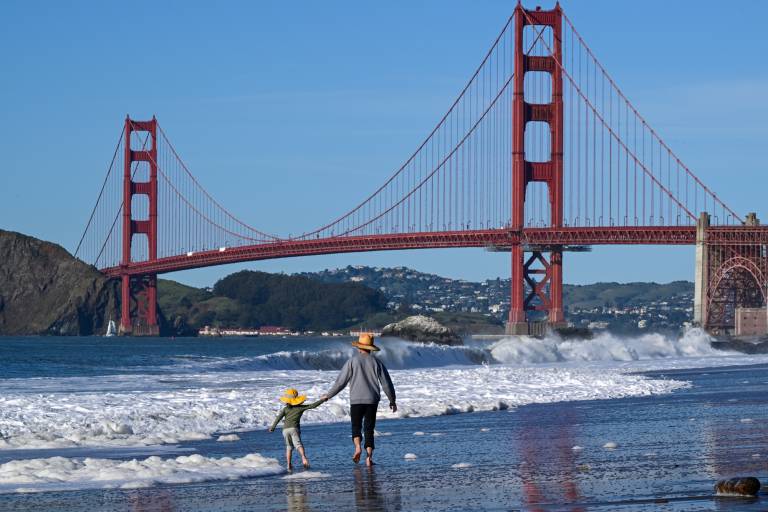
The Bay Area Basks in the Sun, Before an Atmospheric River Rolls in This Week
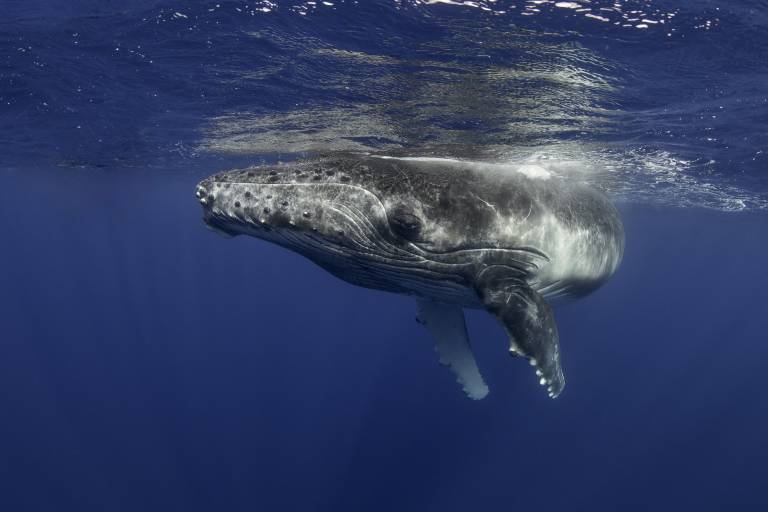
Humpback Whales Blow Bubble ‘Smoke’ Rings to Communicate With Humans
Rising Tides, Tough Choices: Pacifica Allowed to Bolster Seawalls as a Stopgap Plan
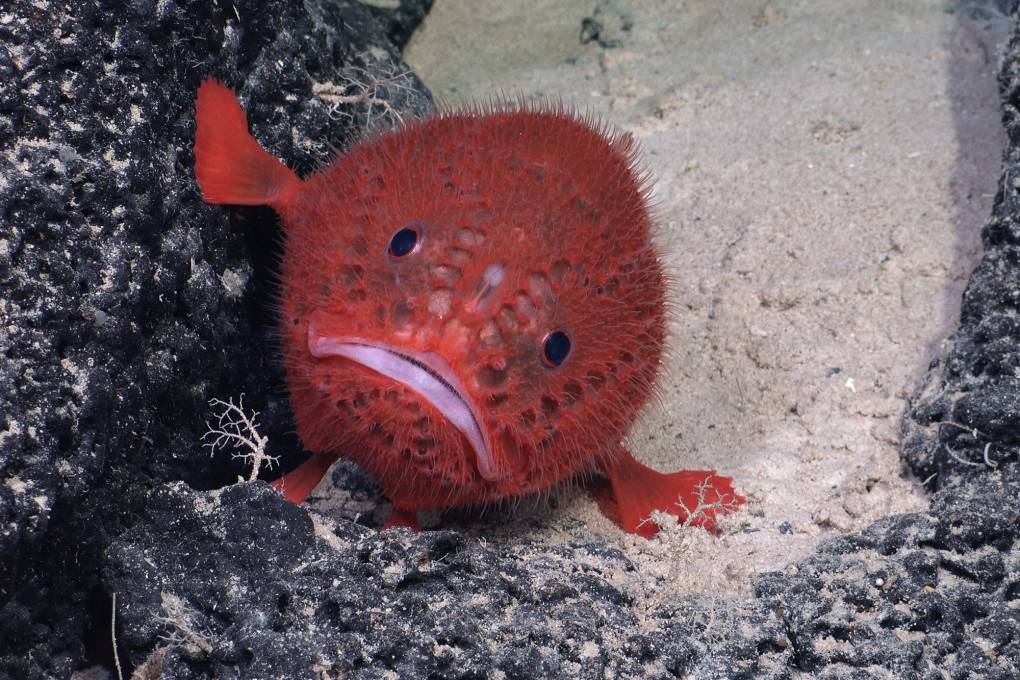
Take a Look at New Species of Marine Life Discovered by Bay Area Scientists
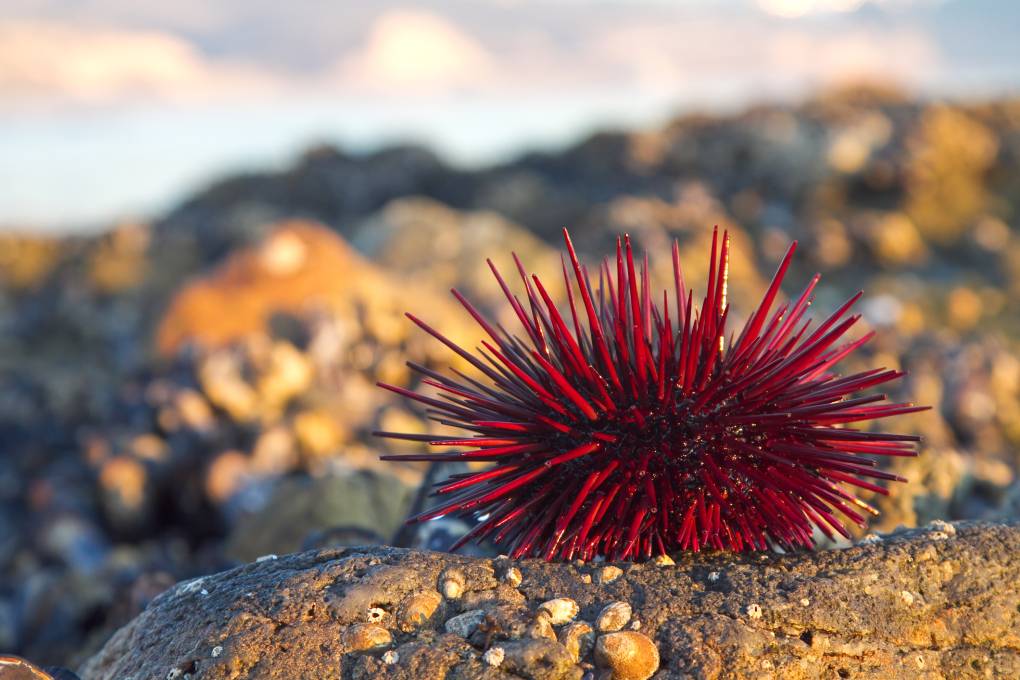
Where to Explore Tide Pools Along the Bay Area Coast
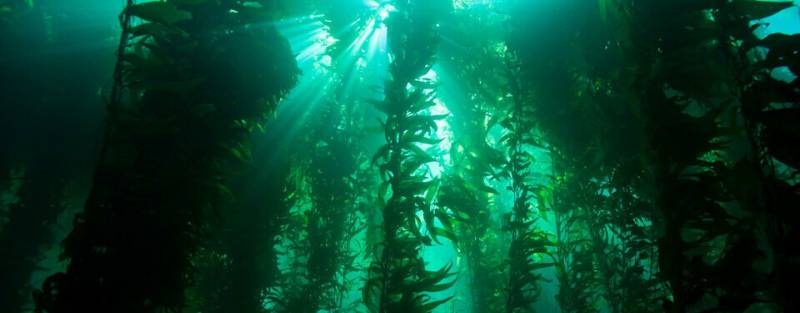
New Fossils Suggest Kelp Forests Have Swayed in the Seas for at Least 32 Million Years
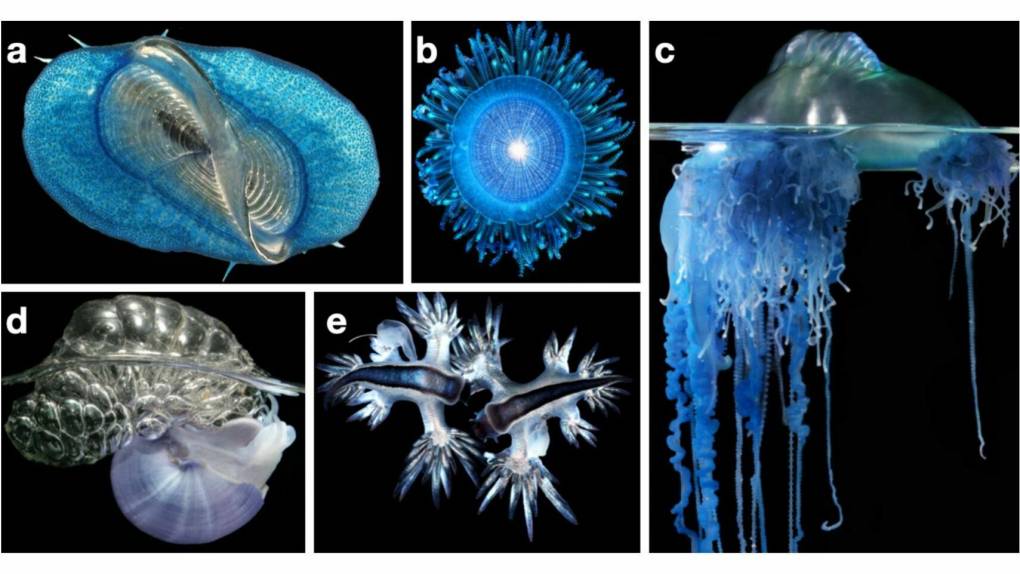
Meet the Floating Animals That Call the Great Pacific Garbage Patch Home
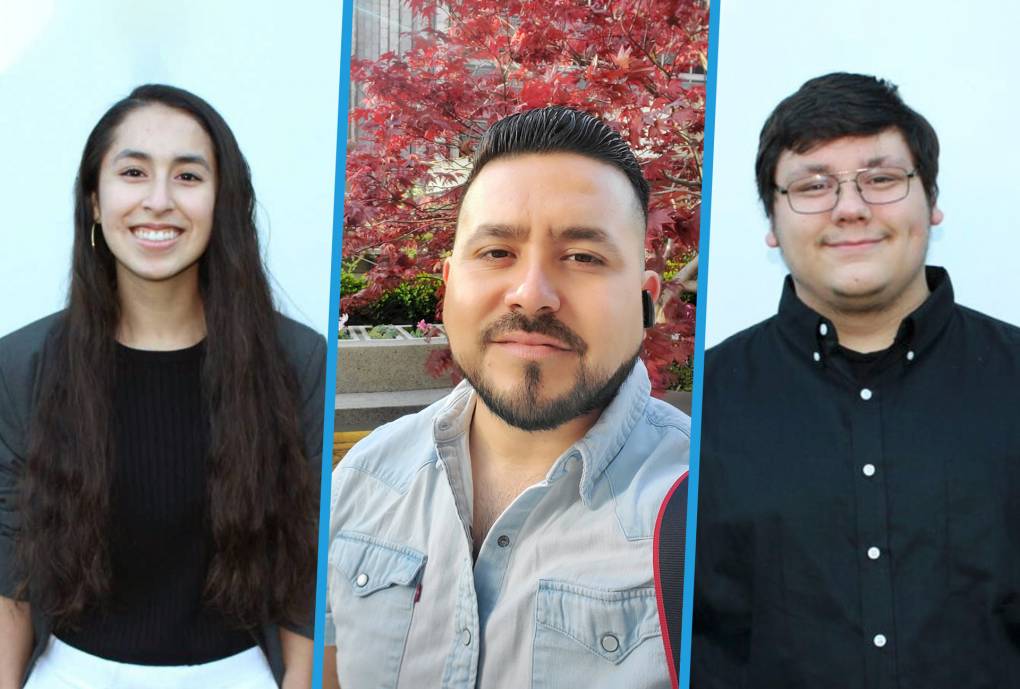
En sus propias palabras: Los residentes de la ciudad del Este de Palo Alto responden al aumento del nivel del mar que se avecina
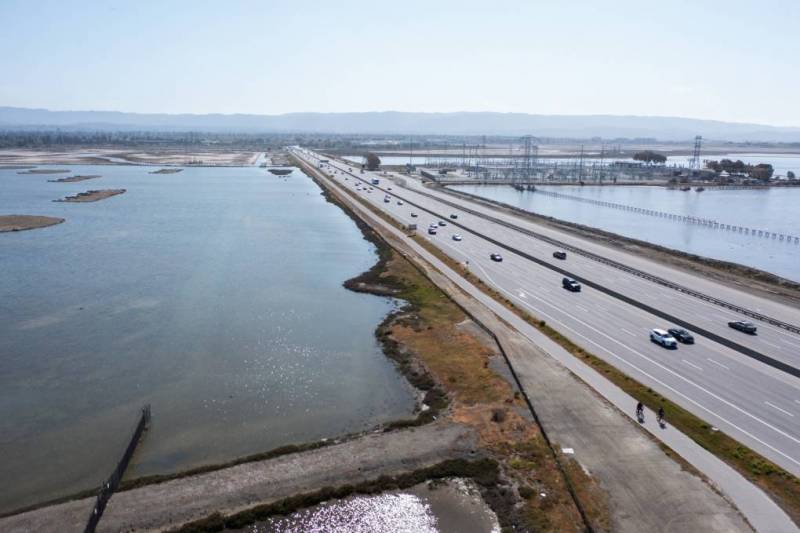
¿Qué puede hacer el Área de la Bahía ante el aumento del nivel del mar? El Este de Palo Alto ya está proponiendo algunas soluciones
Player sponsored by
window.__IS_SSR__=true
window.__INITIAL_STATE__={
"attachmentsReducer": {
"audio_0": {
"type": "attachments",
"id": "audio_0",
"imgSizes": {
"kqedFullSize": {
"file": "https://ww2.kqed.org/news/wp-content/themes/KQED-unified/img/audio_bgs/background0.jpg"
}
}
},
"audio_1": {
"type": "attachments",
"id": "audio_1",
"imgSizes": {
"kqedFullSize": {
"file": "https://ww2.kqed.org/news/wp-content/themes/KQED-unified/img/audio_bgs/background1.jpg"
}
}
},
"audio_2": {
"type": "attachments",
"id": "audio_2",
"imgSizes": {
"kqedFullSize": {
"file": "https://ww2.kqed.org/news/wp-content/themes/KQED-unified/img/audio_bgs/background2.jpg"
}
}
},
"audio_3": {
"type": "attachments",
"id": "audio_3",
"imgSizes": {
"kqedFullSize": {
"file": "https://ww2.kqed.org/news/wp-content/themes/KQED-unified/img/audio_bgs/background3.jpg"
}
}
},
"audio_4": {
"type": "attachments",
"id": "audio_4",
"imgSizes": {
"kqedFullSize": {
"file": "https://ww2.kqed.org/news/wp-content/themes/KQED-unified/img/audio_bgs/background4.jpg"
}
}
},
"placeholder": {
"type": "attachments",
"id": "placeholder",
"imgSizes": {
"thumbnail": {
"file": "https://cdn.kqed.org/wp-content/uploads/2024/12/KQED-Default-Image-816638274-2000x1333-1-160x107.jpg",
"width": 160,
"height": 107,
"mimeType": "image/jpeg"
},
"medium": {
"file": "https://cdn.kqed.org/wp-content/uploads/2024/12/KQED-Default-Image-816638274-2000x1333-1-800x533.jpg",
"width": 800,
"height": 533,
"mimeType": "image/jpeg"
},
"medium_large": {
"file": "https://cdn.kqed.org/wp-content/uploads/2024/12/KQED-Default-Image-816638274-2000x1333-1-768x512.jpg",
"width": 768,
"height": 512,
"mimeType": "image/jpeg"
},
"large": {
"file": "https://cdn.kqed.org/wp-content/uploads/2024/12/KQED-Default-Image-816638274-2000x1333-1-1020x680.jpg",
"width": 1020,
"height": 680,
"mimeType": "image/jpeg"
},
"1536x1536": {
"file": "https://cdn.kqed.org/wp-content/uploads/2024/12/KQED-Default-Image-816638274-2000x1333-1-1536x1024.jpg",
"width": 1536,
"height": 1024,
"mimeType": "image/jpeg"
},
"fd-lrg": {
"file": "https://cdn.kqed.org/wp-content/uploads/2024/12/KQED-Default-Image-816638274-2000x1333-1-1536x1024.jpg",
"width": 1536,
"height": 1024,
"mimeType": "image/jpeg"
},
"fd-med": {
"file": "https://cdn.kqed.org/wp-content/uploads/2024/12/KQED-Default-Image-816638274-2000x1333-1-1020x680.jpg",
"width": 1020,
"height": 680,
"mimeType": "image/jpeg"
},
"fd-sm": {
"file": "https://cdn.kqed.org/wp-content/uploads/2024/12/KQED-Default-Image-816638274-2000x1333-1-800x533.jpg",
"width": 800,
"height": 533,
"mimeType": "image/jpeg"
},
"post-thumbnail": {
"file": "https://cdn.kqed.org/wp-content/uploads/2024/12/KQED-Default-Image-816638274-2000x1333-1-672x372.jpg",
"width": 672,
"height": 372,
"mimeType": "image/jpeg"
},
"twentyfourteen-full-width": {
"file": "https://cdn.kqed.org/wp-content/uploads/2024/12/KQED-Default-Image-816638274-2000x1333-1-1038x576.jpg",
"width": 1038,
"height": 576,
"mimeType": "image/jpeg"
},
"xxsmall": {
"file": "https://cdn.kqed.org/wp-content/uploads/2024/12/KQED-Default-Image-816638274-2000x1333-1-160x107.jpg",
"width": 160,
"height": 107,
"mimeType": "image/jpeg"
},
"xsmall": {
"file": "https://cdn.kqed.org/wp-content/uploads/2024/12/KQED-Default-Image-816638274-2000x1333-1-672x372.jpg",
"width": 672,
"height": 372,
"mimeType": "image/jpeg"
},
"small": {
"file": "https://cdn.kqed.org/wp-content/uploads/2024/12/KQED-Default-Image-816638274-2000x1333-1-672x372.jpg",
"width": 672,
"height": 372,
"mimeType": "image/jpeg"
},
"xlarge": {
"file": "https://cdn.kqed.org/wp-content/uploads/2024/12/KQED-Default-Image-816638274-2000x1333-1-1020x680.jpg",
"width": 1020,
"height": 680,
"mimeType": "image/jpeg"
},
"full-width": {
"file": "https://cdn.kqed.org/wp-content/uploads/2024/12/KQED-Default-Image-816638274-2000x1333-1-1920x1280.jpg",
"width": 1920,
"height": 1280,
"mimeType": "image/jpeg"
},
"guest-author-32": {
"file": "https://cdn.kqed.org/wp-content/uploads/2025/01/KQED-Default-Image-816638274-1333x1333-1-160x160.jpg",
"width": 32,
"height": 32,
"mimeType": "image/jpeg"
},
"guest-author-50": {
"file": "https://cdn.kqed.org/wp-content/uploads/2025/01/KQED-Default-Image-816638274-1333x1333-1-160x160.jpg",
"width": 50,
"height": 50,
"mimeType": "image/jpeg"
},
"guest-author-64": {
"file": "https://cdn.kqed.org/wp-content/uploads/2025/01/KQED-Default-Image-816638274-1333x1333-1-160x160.jpg",
"width": 64,
"height": 64,
"mimeType": "image/jpeg"
},
"guest-author-96": {
"file": "https://cdn.kqed.org/wp-content/uploads/2025/01/KQED-Default-Image-816638274-1333x1333-1-160x160.jpg",
"width": 96,
"height": 96,
"mimeType": "image/jpeg"
},
"guest-author-128": {
"file": "https://cdn.kqed.org/wp-content/uploads/2025/01/KQED-Default-Image-816638274-1333x1333-1-160x160.jpg",
"width": 128,
"height": 128,
"mimeType": "image/jpeg"
},
"detail": {
"file": "https://cdn.kqed.org/wp-content/uploads/2025/01/KQED-Default-Image-816638274-1333x1333-1-160x160.jpg",
"width": 160,
"height": 160,
"mimeType": "image/jpeg"
},
"kqedFullSize": {
"file": "https://cdn.kqed.org/wp-content/uploads/2024/12/KQED-Default-Image-816638274-2000x1333-1.jpg",
"width": 2000,
"height": 1333
}
}
},
"science_1999185": {
"type": "attachments",
"id": "science_1999185",
"meta": {
"index": "attachments_1716263798",
"site": "science",
"id": "1999185",
"found": true
},
"title": "People enjoy at beaches during warm weather in San Francisco",
"publishDate": 1762804968,
"status": "inherit",
"parent": 1999178,
"modified": 1762806020,
"caption": "People enjoy Baker Beach near the Golden Gate Bridge during warm weather in San Francisco, California, on Feb. 26, 2025. After a streak of sunshine, forecasters said the skies will turn dramatically, with a 20% chance of thunderstorms across the entire Bay Area on Wednesday.",
"credit": "Tayfun Coskun/Anadolu via Getty Images",
"altTag": null,
"description": null,
"imgSizes": {
"thumbnail": {
"file": "https://cdn.kqed.org/wp-content/uploads/sites/35/2025/11/SFBakerBeachGetty1-160x107.jpg",
"width": 160,
"height": 107,
"mimeType": "image/jpeg"
},
"medium_large": {
"file": "https://cdn.kqed.org/wp-content/uploads/sites/35/2025/11/SFBakerBeachGetty1-768x512.jpg",
"width": 768,
"height": 512,
"mimeType": "image/jpeg"
},
"1536x1536": {
"file": "https://cdn.kqed.org/wp-content/uploads/sites/35/2025/11/SFBakerBeachGetty1-1536x1024.jpg",
"width": 1536,
"height": 1024,
"mimeType": "image/jpeg"
},
"post-thumbnail": {
"file": "https://cdn.kqed.org/wp-content/uploads/sites/35/2025/11/SFBakerBeachGetty1-672x372.jpg",
"width": 672,
"height": 372,
"mimeType": "image/jpeg"
},
"twentyfourteen-full-width": {
"file": "https://cdn.kqed.org/wp-content/uploads/sites/35/2025/11/SFBakerBeachGetty1-1038x576.jpg",
"width": 1038,
"height": 576,
"mimeType": "image/jpeg"
},
"npr-cds-wide": {
"file": "https://cdn.kqed.org/wp-content/uploads/sites/35/2025/11/SFBakerBeachGetty1-1200x675.jpg",
"width": 1200,
"height": 675,
"mimeType": "image/jpeg"
},
"kqedFullSize": {
"file": "https://cdn.kqed.org/wp-content/uploads/sites/35/2025/11/SFBakerBeachGetty1.jpg",
"width": 2000,
"height": 1333
}
},
"isLoading": false,
"fetchFailed": false
},
"science_1997358": {
"type": "attachments",
"id": "science_1997358",
"meta": {
"index": "attachments_1716263798",
"site": "science",
"id": "1997358",
"found": true
},
"title": "Humpback whale calf, Kingdom of Tonga.",
"publishDate": 1749767509,
"status": "inherit",
"parent": 1997307,
"modified": 1749769156,
"caption": "A humpback whale calf is seen here off the coast of Tonga in the Pacific Ocean. Bay Area researchers from SETI and UC Davis captured a rare sight: humpback whales blowing bubble rings — like smoke rings — while calmly approaching humans. It’s the first time scientists have documented this playful, possibly communicative behavior in the wild.",
"credit": "Wildest Animal/Getty Images",
"altTag": null,
"description": null,
"imgSizes": {
"thumbnail": {
"file": "https://cdn.kqed.org/wp-content/uploads/sites/35/2025/06/WhalesBubblesGetty-160x107.jpg",
"width": 160,
"height": 107,
"mimeType": "image/jpeg"
},
"medium_large": {
"file": "https://cdn.kqed.org/wp-content/uploads/sites/35/2025/06/WhalesBubblesGetty-768x512.jpg",
"width": 768,
"height": 512,
"mimeType": "image/jpeg"
},
"1536x1536": {
"file": "https://cdn.kqed.org/wp-content/uploads/sites/35/2025/06/WhalesBubblesGetty-1536x1024.jpg",
"width": 1536,
"height": 1024,
"mimeType": "image/jpeg"
},
"post-thumbnail": {
"file": "https://cdn.kqed.org/wp-content/uploads/sites/35/2025/06/WhalesBubblesGetty-672x372.jpg",
"width": 672,
"height": 372,
"mimeType": "image/jpeg"
},
"twentyfourteen-full-width": {
"file": "https://cdn.kqed.org/wp-content/uploads/sites/35/2025/06/WhalesBubblesGetty-1038x576.jpg",
"width": 1038,
"height": 576,
"mimeType": "image/jpeg"
},
"kqedFullSize": {
"file": "https://cdn.kqed.org/wp-content/uploads/sites/35/2025/06/WhalesBubblesGetty.jpg",
"width": 2000,
"height": 1333
}
},
"isLoading": false,
"fetchFailed": false
},
"science_1973377": {
"type": "attachments",
"id": "science_1973377",
"meta": {
"index": "attachments_1716263798",
"site": "science",
"id": "1973377",
"found": true
},
"parent": 1973372,
"imgSizes": {
"twentyfourteen-full-width": {
"file": "https://ww2.kqed.org/app/uploads/sites/35/2021/03/RS48091_GettyImages-507138914-qut-1038x576.jpg",
"width": 1038,
"mimeType": "image/jpeg",
"height": 576
},
"thumbnail": {
"file": "https://ww2.kqed.org/app/uploads/sites/35/2021/03/RS48091_GettyImages-507138914-qut-160x108.jpg",
"width": 160,
"mimeType": "image/jpeg",
"height": 108
},
"post-thumbnail": {
"file": "https://ww2.kqed.org/app/uploads/sites/35/2021/03/RS48091_GettyImages-507138914-qut-672x372.jpg",
"width": 672,
"mimeType": "image/jpeg",
"height": 372
},
"kqedFullSize": {
"file": "https://ww2.kqed.org/app/uploads/sites/35/2021/03/RS48091_GettyImages-507138914-qut.jpg",
"width": 1920,
"height": 1291
},
"large": {
"file": "https://ww2.kqed.org/app/uploads/sites/35/2021/03/RS48091_GettyImages-507138914-qut-1020x686.jpg",
"width": 1020,
"mimeType": "image/jpeg",
"height": 686
},
"1536x1536": {
"file": "https://ww2.kqed.org/app/uploads/sites/35/2021/03/RS48091_GettyImages-507138914-qut-1536x1033.jpg",
"width": 1536,
"mimeType": "image/jpeg",
"height": 1033
},
"medium": {
"file": "https://ww2.kqed.org/app/uploads/sites/35/2021/03/RS48091_GettyImages-507138914-qut-800x538.jpg",
"width": 800,
"mimeType": "image/jpeg",
"height": 538
},
"medium_large": {
"file": "https://ww2.kqed.org/app/uploads/sites/35/2021/03/RS48091_GettyImages-507138914-qut-768x516.jpg",
"width": 768,
"mimeType": "image/jpeg",
"height": 516
}
},
"publishDate": 1616692723,
"modified": 1616714564,
"caption": "Houses hang on the edge of an eroding cliff in Pacifica, California, on Jan. 27, 2016.\nStorms and powerful waves caused by El Nino have been intensifying erosion along nearby coastal bluffs and beaches in the area. ",
"description": null,
"title": "RS48091_GettyImages-507138914-qut",
"credit": "Josh Edelson/AFP via Getty Images)",
"status": "inherit",
"altTag": null,
"isLoading": false,
"fetchFailed": false
},
"science_1994010": {
"type": "attachments",
"id": "science_1994010",
"meta": {
"index": "attachments_1716263798",
"site": "science",
"id": "1994010",
"found": true
},
"title": "Chaunacops coloratus (sea toad) \"standing\" on fins",
"publishDate": 1724792811,
"status": "inherit",
"parent": 0,
"modified": 1724794153,
"caption": "A Chaunacops coloratus, commonly known as a sea toad, using its pectoral fins braced against both rock and sand.",
"credit": "Courtesy of Schmidt Ocean Institute",
"altTag": null,
"description": null,
"imgSizes": {
"medium": {
"file": "https://cdn.kqed.org/wp-content/uploads/sites/35/2024/08/240827-MARINE-DISCOVERY-14-KQED-800x533.jpg",
"width": 800,
"height": 533,
"mimeType": "image/jpeg"
},
"large": {
"file": "https://cdn.kqed.org/wp-content/uploads/sites/35/2024/08/240827-MARINE-DISCOVERY-14-KQED-1020x680.jpg",
"width": 1020,
"height": 680,
"mimeType": "image/jpeg"
},
"thumbnail": {
"file": "https://cdn.kqed.org/wp-content/uploads/sites/35/2024/08/240827-MARINE-DISCOVERY-14-KQED-160x107.jpg",
"width": 160,
"height": 107,
"mimeType": "image/jpeg"
},
"medium_large": {
"file": "https://cdn.kqed.org/wp-content/uploads/sites/35/2024/08/240827-MARINE-DISCOVERY-14-KQED-768x512.jpg",
"width": 768,
"height": 512,
"mimeType": "image/jpeg"
},
"1536x1536": {
"file": "https://cdn.kqed.org/wp-content/uploads/sites/35/2024/08/240827-MARINE-DISCOVERY-14-KQED-1536x1024.jpg",
"width": 1536,
"height": 1024,
"mimeType": "image/jpeg"
},
"post-thumbnail": {
"file": "https://cdn.kqed.org/wp-content/uploads/sites/35/2024/08/240827-MARINE-DISCOVERY-14-KQED-672x372.jpg",
"width": 672,
"height": 372,
"mimeType": "image/jpeg"
},
"twentyfourteen-full-width": {
"file": "https://cdn.kqed.org/wp-content/uploads/sites/35/2024/08/240827-MARINE-DISCOVERY-14-KQED-1038x576.jpg",
"width": 1038,
"height": 576,
"mimeType": "image/jpeg"
},
"full-width": {
"file": "https://cdn.kqed.org/wp-content/uploads/sites/35/2024/08/240827-MARINE-DISCOVERY-14-KQED-1920x1280.jpg",
"width": 1920,
"height": 1280,
"mimeType": "image/jpeg"
},
"kqedFullSize": {
"file": "https://cdn.kqed.org/wp-content/uploads/sites/35/2024/08/240827-MARINE-DISCOVERY-14-KQED.jpg",
"width": 2000,
"height": 1333
}
},
"isLoading": false,
"fetchFailed": false
},
"science_1991712": {
"type": "attachments",
"id": "science_1991712",
"meta": {
"index": "attachments_1716263798",
"site": "science",
"id": "1991712",
"found": true
},
"parent": 1991709,
"imgSizes": {
"twentyfourteen-full-width": {
"file": "https://cdn.kqed.org/wp-content/uploads/sites/35/2024/03/iStock-149125297-1038x576.jpg",
"width": 1038,
"mimeType": "image/jpeg",
"height": 576
},
"thumbnail": {
"file": "https://cdn.kqed.org/wp-content/uploads/sites/35/2024/03/iStock-149125297-160x107.jpg",
"width": 160,
"mimeType": "image/jpeg",
"height": 107
},
"post-thumbnail": {
"file": "https://cdn.kqed.org/wp-content/uploads/sites/35/2024/03/iStock-149125297-672x372.jpg",
"width": 672,
"mimeType": "image/jpeg",
"height": 372
},
"kqedFullSize": {
"file": "https://cdn.kqed.org/wp-content/uploads/sites/35/2024/03/iStock-149125297.jpg",
"width": 2121,
"height": 1414
},
"2048x2048": {
"file": "https://cdn.kqed.org/wp-content/uploads/sites/35/2024/03/iStock-149125297-2048x1365.jpg",
"width": 2048,
"mimeType": "image/jpeg",
"height": 1365
},
"large": {
"file": "https://cdn.kqed.org/wp-content/uploads/sites/35/2024/03/iStock-149125297-1020x680.jpg",
"width": 1020,
"mimeType": "image/jpeg",
"height": 680
},
"1536x1536": {
"file": "https://cdn.kqed.org/wp-content/uploads/sites/35/2024/03/iStock-149125297-1536x1024.jpg",
"width": 1536,
"mimeType": "image/jpeg",
"height": 1024
},
"full-width": {
"file": "https://cdn.kqed.org/wp-content/uploads/sites/35/2024/03/iStock-149125297-1920x1280.jpg",
"width": 1920,
"mimeType": "image/jpeg",
"height": 1280
},
"medium": {
"file": "https://cdn.kqed.org/wp-content/uploads/sites/35/2024/03/iStock-149125297-800x533.jpg",
"width": 800,
"mimeType": "image/jpeg",
"height": 533
},
"medium_large": {
"file": "https://cdn.kqed.org/wp-content/uploads/sites/35/2024/03/iStock-149125297-768x512.jpg",
"width": 768,
"mimeType": "image/jpeg",
"height": 512
}
},
"publishDate": 1709663439,
"modified": 1709663472,
"caption": "Red sea urchin on a rock at tide pools in Crystal Cove, California.",
"description": null,
"title": "California Red Sea Urchin",
"credit": "aaronnystrom/iStock",
"status": "inherit",
"altTag": null,
"isLoading": false,
"fetchFailed": false
},
"science_1991213": {
"type": "attachments",
"id": "science_1991213",
"meta": {
"index": "attachments_1716263798",
"site": "science",
"id": "1991213",
"found": true
},
"parent": 1991212,
"imgSizes": {
"thumbnail": {
"file": "https://cdn.kqed.org/wp-content/uploads/sites/35/2024/01/26972424160_9285ef31ed_b_custom-c1c4497b82e8dcdad49474b35457fd4b1600ac98-160x63.jpg",
"width": 160,
"mimeType": "image/jpeg",
"height": 63
},
"post-thumbnail": {
"file": "https://cdn.kqed.org/wp-content/uploads/sites/35/2024/01/26972424160_9285ef31ed_b_custom-c1c4497b82e8dcdad49474b35457fd4b1600ac98-672x372.jpg",
"width": 672,
"mimeType": "image/jpeg",
"height": 372
},
"kqedFullSize": {
"file": "https://cdn.kqed.org/wp-content/uploads/sites/35/2024/01/26972424160_9285ef31ed_b_custom-c1c4497b82e8dcdad49474b35457fd4b1600ac98.jpg",
"width": 960,
"height": 375
},
"medium": {
"file": "https://cdn.kqed.org/wp-content/uploads/sites/35/2024/01/26972424160_9285ef31ed_b_custom-c1c4497b82e8dcdad49474b35457fd4b1600ac98-800x313.jpg",
"width": 800,
"mimeType": "image/jpeg",
"height": 313
},
"medium_large": {
"file": "https://cdn.kqed.org/wp-content/uploads/sites/35/2024/01/26972424160_9285ef31ed_b_custom-c1c4497b82e8dcdad49474b35457fd4b1600ac98-768x300.jpg",
"width": 768,
"mimeType": "image/jpeg",
"height": 300
}
},
"publishDate": 1706031321,
"modified": 1706031446,
"caption": "Kelp forests are tiered like terrestrial rainforests and serve as key habitats for many marine animals.",
"description": null,
"title": "Kelp forests",
"credit": "NOAA",
"status": "inherit",
"altTag": null,
"isLoading": false,
"fetchFailed": false
},
"science_1983513": {
"type": "attachments",
"id": "science_1983513",
"meta": {
"index": "attachments_1716263798",
"site": "science",
"id": "1983513",
"found": true
},
"parent": 1983512,
"imgSizes": {
"twentyfourteen-full-width": {
"file": "https://ww2.kqed.org/app/uploads/sites/35/2023/07/figure-1-w-border-2_wide-16ce37e7905a1e56eb5348300df5c23fa5168d18-1038x576.jpg",
"width": 1038,
"mimeType": "image/jpeg",
"height": 576
},
"thumbnail": {
"file": "https://ww2.kqed.org/app/uploads/sites/35/2023/07/figure-1-w-border-2_wide-16ce37e7905a1e56eb5348300df5c23fa5168d18-160x90.jpg",
"width": 160,
"mimeType": "image/jpeg",
"height": 90
},
"post-thumbnail": {
"file": "https://ww2.kqed.org/app/uploads/sites/35/2023/07/figure-1-w-border-2_wide-16ce37e7905a1e56eb5348300df5c23fa5168d18-672x372.jpg",
"width": 672,
"mimeType": "image/jpeg",
"height": 372
},
"kqedFullSize": {
"file": "https://ww2.kqed.org/app/uploads/sites/35/2023/07/figure-1-w-border-2_wide-16ce37e7905a1e56eb5348300df5c23fa5168d18.jpg",
"width": 1709,
"height": 961
},
"large": {
"file": "https://ww2.kqed.org/app/uploads/sites/35/2023/07/figure-1-w-border-2_wide-16ce37e7905a1e56eb5348300df5c23fa5168d18-1020x574.jpg",
"width": 1020,
"mimeType": "image/jpeg",
"height": 574
},
"1536x1536": {
"file": "https://ww2.kqed.org/app/uploads/sites/35/2023/07/figure-1-w-border-2_wide-16ce37e7905a1e56eb5348300df5c23fa5168d18-1536x864.jpg",
"width": 1536,
"mimeType": "image/jpeg",
"height": 864
},
"medium": {
"file": "https://ww2.kqed.org/app/uploads/sites/35/2023/07/figure-1-w-border-2_wide-16ce37e7905a1e56eb5348300df5c23fa5168d18-800x450.jpg",
"width": 800,
"mimeType": "image/jpeg",
"height": 450
},
"medium_large": {
"file": "https://ww2.kqed.org/app/uploads/sites/35/2023/07/figure-1-w-border-2_wide-16ce37e7905a1e56eb5348300df5c23fa5168d18-768x432.jpg",
"width": 768,
"mimeType": "image/jpeg",
"height": 432
}
},
"publishDate": 1689634662,
"modified": 1689634859,
"caption": "Images of the neustonic life found in the Great Pacific Garbage Patch, including Velella (A), Porpita (B), Physalia (C), Janthina (D) and Glaucus (E). The study was published in PLOS Biology earlier this year.",
"description": null,
"title": "Images of the neustonic life found in the Great Pacific Garbage Patch, including Velella (A), Porpita (B), Physalia (C), Janthina (D) and Glaucus (E). The study was published in PLOS Biology earlier this year.",
"credit": "Denis Riek",
"status": "inherit",
"altTag": "(a) Top-down view of by-the-wind sailor Velella sp. (b) Top-down view of blue button Porpita sp. (c) Side view of Portuguese man-o-war Physalia sp. (d) Side view of violet snail Janthina sp. (e) Top-down view of the blue sea dragons Glaucus sp.",
"isLoading": false,
"fetchFailed": false
},
"science_1973766": {
"type": "attachments",
"id": "science_1973766",
"meta": {
"index": "attachments_1716263798",
"site": "science",
"id": "1973766",
"found": true
},
"parent": 1973645,
"imgSizes": {
"twentyfourteen-full-width": {
"file": "https://ww2.kqed.org/app/uploads/sites/35/2029/04/RS48532_collage2-qut-1038x576.jpg",
"width": 1038,
"mimeType": "image/jpeg",
"height": 576
},
"thumbnail": {
"file": "https://ww2.kqed.org/app/uploads/sites/35/2029/04/RS48532_collage2-qut-160x108.jpg",
"width": 160,
"mimeType": "image/jpeg",
"height": 108
},
"post-thumbnail": {
"file": "https://ww2.kqed.org/app/uploads/sites/35/2029/04/RS48532_collage2-qut-672x372.jpg",
"width": 672,
"mimeType": "image/jpeg",
"height": 372
},
"kqedFullSize": {
"file": "https://ww2.kqed.org/app/uploads/sites/35/2029/04/RS48532_collage2-qut.jpg",
"width": 1920,
"height": 1296
},
"large": {
"file": "https://ww2.kqed.org/app/uploads/sites/35/2029/04/RS48532_collage2-qut-1020x689.jpg",
"width": 1020,
"mimeType": "image/jpeg",
"height": 689
},
"1536x1536": {
"file": "https://ww2.kqed.org/app/uploads/sites/35/2029/04/RS48532_collage2-qut-1536x1037.jpg",
"width": 1536,
"mimeType": "image/jpeg",
"height": 1037
},
"medium": {
"file": "https://ww2.kqed.org/app/uploads/sites/35/2029/04/RS48532_collage2-qut-800x540.jpg",
"width": 800,
"mimeType": "image/jpeg",
"height": 540
},
"medium_large": {
"file": "https://ww2.kqed.org/app/uploads/sites/35/2029/04/RS48532_collage2-qut-768x518.jpg",
"width": 768,
"mimeType": "image/jpeg",
"height": 518
}
},
"publishDate": 1618507150,
"modified": 1619057580,
"caption": "East Palo Alto residents Cristina Becerra, left, Ulises Barbosa and Filiberto Zaragoza.",
"description": "East Palo Alto residents Cristina Becerra, Ulises Barbosa, and Filiberto Zaragoza (L-R).",
"title": "RS48532_collage2-qut",
"credit": "Photos courtesy Cristina Becerra, Ulises Barbosa, and Filiberto Zaragoza",
"status": "inherit",
"altTag": "East Palo Alto residents Cristina Becerra, Ulises Barbosa, and Filiberto Zaragoza (L-R).",
"isLoading": false,
"fetchFailed": false
},
"science_1974227": {
"type": "attachments",
"id": "science_1974227",
"meta": {
"index": "attachments_1716263798",
"site": "science",
"id": "1974227",
"found": true
},
"parent": 1974191,
"imgSizes": {
"twentyfourteen-full-width": {
"file": "https://ww2.kqed.org/app/uploads/sites/35/2021/04/East-Palo-Alto-sea-level-1020x679-1-1020x576.jpg",
"width": 1020,
"mimeType": "image/jpeg",
"height": 576
},
"thumbnail": {
"file": "https://ww2.kqed.org/app/uploads/sites/35/2021/04/East-Palo-Alto-sea-level-1020x679-1-160x107.jpg",
"width": 160,
"mimeType": "image/jpeg",
"height": 107
},
"post-thumbnail": {
"file": "https://ww2.kqed.org/app/uploads/sites/35/2021/04/East-Palo-Alto-sea-level-1020x679-1-672x372.jpg",
"width": 672,
"mimeType": "image/jpeg",
"height": 372
},
"kqedFullSize": {
"file": "https://ww2.kqed.org/app/uploads/sites/35/2021/04/East-Palo-Alto-sea-level-1020x679-1.jpg",
"width": 1020,
"height": 679
},
"medium": {
"file": "https://ww2.kqed.org/app/uploads/sites/35/2021/04/East-Palo-Alto-sea-level-1020x679-1-800x533.jpg",
"width": 800,
"mimeType": "image/jpeg",
"height": 533
},
"medium_large": {
"file": "https://ww2.kqed.org/app/uploads/sites/35/2021/04/East-Palo-Alto-sea-level-1020x679-1-768x511.jpg",
"width": 768,
"mimeType": "image/jpeg",
"height": 511
}
},
"publishDate": 1619511758,
"modified": 1619512087,
"caption": "El puente Dumbarton, ubicado cerca del Este de Palo Alto, es tan solo una infraestructura del Área de la Bahía que corre un gran riesgo de inundarse en el futuro a medida que aumenta el nivel del mar.",
"description": "El puente Dumbarton, ubicado cerca del Este de Palo Alto, es tan solo una infraestructura del Área de la Bahía que corre un gran riesgo de inundarse en el futuro a medida que aumenta el nivel del mar.",
"title": "East-Palo-Alto-sea-level-1020x679",
"credit": "JJ Harris - Techboogie/KQED",
"status": "inherit",
"altTag": "Una imagen aérea del puente Dumbarton en el Área de la Bahía.",
"isLoading": false,
"fetchFailed": false
}
},
"audioPlayerReducer": {
"postId": "stream_live",
"isPaused": true,
"isPlaying": false,
"pfsActive": false,
"pledgeModalIsOpen": true,
"playerDrawerIsOpen": false
},
"authorsReducer": {
"byline_science_1991212": {
"type": "authors",
"id": "byline_science_1991212",
"meta": {
"override": true
},
"slug": "byline_science_1991212",
"name": "\u003ca href=\"https://www.npr.org/people/297147967/ari-daniel\">Ari Daniel\u003c/a>",
"isLoading": false
},
"byline_science_1983512": {
"type": "authors",
"id": "byline_science_1983512",
"meta": {
"override": true
},
"slug": "byline_science_1983512",
"name": "\u003ca href=\"https://www.npr.org/people/785481294/rebecca-ramirez\">Rebecca Ramirez\u003c/a>, \u003ca href=\"https://www.npr.org/people/767284140/emily-kwong\">Emily Kwong\u003c/a>, \u003ca href=\"https://www.npr.org/people/1119266451/carly-rubin\">Carly Rubin\u003c/a>, \u003ca href=\"https://www.npr.org/people/985775371/berly-mccoy\">Berly McCoy\u003c/a>",
"isLoading": false
},
"lklivans": {
"type": "authors",
"id": "8648",
"meta": {
"index": "authors_1716337520",
"id": "8648",
"found": true
},
"name": "Laura Klivans",
"firstName": "Laura",
"lastName": "Klivans",
"slug": "lklivans",
"email": "lklivans@kqed.org",
"display_author_email": true,
"staff_mastheads": [
"news",
"science"
],
"title": "Reporter",
"bio": "Laura Klivans is an award-winning science reporter for KQED News, where she covers climate change with an eye on both groundbreaking progress and gaps in action. She is the former host of KQED's blockbuster video series about tiny, amazing animals, \u003cem>Deep Look\u003c/em>. Her work reaches national audiences through NPR, \u003cem>Here & Now, \u003c/em>PRI, and other major outlets. \r\n\r\nLaura’s won five Northern California Area Emmy Awards for Deep Look and First Place in the Greater Bay Area Journalism Awards for a podcast exploring how one Oakland neighborhood teamed up to reduce planet-heating pollution.\r\n\r\nBeyond her reporting, she hosts and moderates events. In the past, she taught audio storytelling at the UC Berkeley Graduate School of Journalism, led international education programs, worked with immigrants and refugees along the Thai-Burmese border, taught high schoolers sex ed, and was an actress. \r\n\r\nShe's a former UC Berkeley Human Rights Fellow, USC Center for Health Journalism's California Fellow and Coro Fellow in Public Affairs. Laura has a master’s in journalism from UC Berkeley, a master’s in education from Harvard, and an undergraduate degree from Northwestern University.\r\n\r\nShe loves trying to riddle the meaning out of vanity license plates.",
"avatar": "https://secure.gravatar.com/avatar/af8e757bb8ce7b7fee6160ba66e37327?s=600&d=blank&r=g",
"twitter": "lauraklivans",
"facebook": null,
"instagram": null,
"linkedin": null,
"sites": [
{
"site": "news",
"roles": [
"editor"
]
},
{
"site": "stateofhealth",
"roles": [
"contributor",
"editor"
]
},
{
"site": "science",
"roles": [
"editor"
]
},
{
"site": "forum",
"roles": [
"editor"
]
}
],
"headData": {
"title": "Laura Klivans | KQED",
"description": "Reporter",
"ogImgSrc": "https://secure.gravatar.com/avatar/af8e757bb8ce7b7fee6160ba66e37327?s=600&d=blank&r=g",
"twImgSrc": "https://secure.gravatar.com/avatar/af8e757bb8ce7b7fee6160ba66e37327?s=600&d=blank&r=g"
},
"isLoading": false,
"link": "/author/lklivans"
},
"kevinstark": {
"type": "authors",
"id": "11608",
"meta": {
"index": "authors_1716337520",
"id": "11608",
"found": true
},
"name": "Kevin Stark",
"firstName": "Kevin",
"lastName": "Stark",
"slug": "kevinstark",
"email": "kstark@kqed.org",
"display_author_email": true,
"staff_mastheads": [
"science"
],
"title": "Senior Editor",
"bio": "Kevin is a senior editor for KQED Science, managing the station's health and climate desks. His journalism career began in the Pacific Northwest, and he later became a lead reporter for the San Francisco Public Press. His work has appeared in Pacific Standard magazine, the Energy News Network, the Center for Investigative Reporting's Reveal and WBEZ in Chicago. Kevin joined KQED in 2019, and has covered issues related to energy, wildfire, climate change and the environment.",
"avatar": "https://secure.gravatar.com/avatar/1f646bf546a63d638e04ff23b52b0e79?s=600&d=blank&r=g",
"twitter": "starkkev",
"facebook": null,
"instagram": null,
"linkedin": null,
"sites": [
{
"site": "",
"roles": [
"editor"
]
},
{
"site": "news",
"roles": [
"editor"
]
},
{
"site": "science",
"roles": [
"administrator"
]
}
],
"headData": {
"title": "Kevin Stark | KQED",
"description": "Senior Editor",
"ogImgSrc": "https://secure.gravatar.com/avatar/1f646bf546a63d638e04ff23b52b0e79?s=600&d=blank&r=g",
"twImgSrc": "https://secure.gravatar.com/avatar/1f646bf546a63d638e04ff23b52b0e79?s=600&d=blank&r=g"
},
"isLoading": false,
"link": "/author/kevinstark"
},
"smohamad": {
"type": "authors",
"id": "11631",
"meta": {
"index": "authors_1716337520",
"id": "11631",
"found": true
},
"name": "Sarah Mohamad",
"firstName": "Sarah",
"lastName": "Mohamad",
"slug": "smohamad",
"email": "smohamad@KQED.org",
"display_author_email": true,
"staff_mastheads": [],
"title": "Engagement Producer and Reporter, KQED Science",
"bio": "Sarah Mohamad is an audience engagement reporter and producer for KQED Science. She reports on audience-focused science and environment stories and manages the team's social media, newsletter, and engagement efforts. Prior to this role, she played a key role as project manager for NSF's \u003ca href=\"https://www.kqed.org/crackingthecode\">\u003cem>Cracking the Code: Influencing Millennial Science Engagement\u003c/em> \u003c/a>audience research.",
"avatar": "https://secure.gravatar.com/avatar/085f65bb82616965f87e3d12f8550931?s=600&d=blank&r=g",
"twitter": "sarahkmohamad",
"facebook": null,
"instagram": null,
"linkedin": null,
"sites": [
{
"site": "arts",
"roles": [
"editor"
]
},
{
"site": "news",
"roles": [
"editor"
]
},
{
"site": "about",
"roles": [
"editor"
]
},
{
"site": "science",
"roles": [
"editor"
]
}
],
"headData": {
"title": "Sarah Mohamad | KQED",
"description": "Engagement Producer and Reporter, KQED Science",
"ogImgSrc": "https://secure.gravatar.com/avatar/085f65bb82616965f87e3d12f8550931?s=600&d=blank&r=g",
"twImgSrc": "https://secure.gravatar.com/avatar/085f65bb82616965f87e3d12f8550931?s=600&d=blank&r=g"
},
"isLoading": false,
"link": "/author/smohamad"
},
"eromero": {
"type": "authors",
"id": "11746",
"meta": {
"index": "authors_1716337520",
"id": "11746",
"found": true
},
"name": "Ezra David Romero",
"firstName": "Ezra David",
"lastName": "Romero",
"slug": "eromero",
"email": "eromero@kqed.org",
"display_author_email": true,
"staff_mastheads": [
"news",
"science"
],
"title": "Climate Reporter",
"bio": "Ezra David Romero is a climate reporter for KQED News. He covers the absence and excess of water in the Bay Area — think sea level rise, flooding and drought. For nearly a decade he’s covered how warming temperatures are altering the lives of Californians. He’s reported on farmers worried their pistachio trees aren’t getting enough sleep, families desperate for water, scientists studying dying giant sequoias, and alongside firefighters containing wildfires. His work has appeared on local stations across California and nationally on public radio shows like Morning Edition, Here and Now, All Things Considered and Science Friday. ",
"avatar": "https://secure.gravatar.com/avatar/9c15bb8bab267e058708a9eeaeef16bf?s=600&d=blank&r=g",
"twitter": "ezraromero",
"bluesky": null,
"facebook": null,
"instagram": null,
"linkedin": null,
"sites": [
{
"site": "arts",
"roles": [
"editor"
]
},
{
"site": "news",
"roles": [
"editor"
]
},
{
"site": "science",
"roles": [
"editor"
]
},
{
"site": "liveblog",
"roles": [
"author"
]
}
],
"headData": {
"title": "Ezra David Romero | KQED",
"description": "Climate Reporter",
"ogImgSrc": "https://secure.gravatar.com/avatar/9c15bb8bab267e058708a9eeaeef16bf?s=600&d=blank&r=g",
"twImgSrc": "https://secure.gravatar.com/avatar/9c15bb8bab267e058708a9eeaeef16bf?s=600&d=blank&r=g"
},
"isLoading": false,
"link": "/author/eromero"
}
},
"breakingNewsReducer": {},
"pagesReducer": {},
"postsReducer": {
"stream_live": {
"type": "live",
"id": "stream_live",
"audioUrl": "https://streams.kqed.org/kqedradio",
"title": "Live Stream",
"excerpt": "Live Stream information currently unavailable.",
"link": "/radio",
"featImg": "",
"label": {
"name": "KQED Live",
"link": "/"
}
},
"stream_kqedNewscast": {
"type": "posts",
"id": "stream_kqedNewscast",
"audioUrl": "https://www.kqed.org/.stream/anon/radio/RDnews/newscast.mp3?_=1",
"title": "KQED Newscast",
"featImg": "",
"label": {
"name": "88.5 FM",
"link": "/"
}
},
"science_1999178": {
"type": "posts",
"id": "science_1999178",
"meta": {
"index": "posts_1716263798",
"site": "science",
"id": "1999178",
"score": null,
"sort": [
1762805166000
]
},
"guestAuthors": [],
"slug": "the-bay-area-basks-in-the-sun-before-an-atmospheric-river-rolls-in-this-week",
"title": "The Bay Area Basks in the Sun, Before an Atmospheric River Rolls in This Week",
"publishDate": 1762805166,
"format": "standard",
"headTitle": "The Bay Area Basks in the Sun, Before an Atmospheric River Rolls in This Week | KQED",
"labelTerm": {},
"content": "\u003cp>The \u003ca href=\"https://www.kqed.org/news/tag/bay-area\">Bay Area\u003c/a>’s weather this week is a tale of two extremes: warm sunny days and an \u003ca href=\"https://www.kqed.org/science/1935067/rivers-in-the-sky-what-you-need-to-know-about-atmospheric-river-storms\">atmospheric river\u003c/a> storm that could bring multiple inches of rain.\u003c/p>\n\u003cp>San Francisco could reach nearly 80 degrees on Monday, before temperatures drop off by as much as 5 degrees on Veterans Day, still above seasonal averages. By Wednesday, forecasters expect a storm to roll in from the Pacific Ocean, bringing a range of rain possibilities.\u003c/p>\n\u003cp>“My friends, this is an atmospheric river, but we aren`t expecting days of intense rainfall,” Bay Area National Weather Service meteorologists wrote Monday in their daily forecast discussion. “Tuesday is really the last day to make any preparations to prevent roadway flooding or water damage.”\u003c/p>\n\u003cp>[ad fullwidth]\u003c/p>\n\u003cp>On the low end, the region’s bout of \u003ca href=\"https://www.kqed.org/science/1995420/climate-scientists-warn-of-growing-whiplash-effect-on-weather-patterns\">weather whiplash\u003c/a> could bring less than an inch of rain across most of the region. But on the high end, meteorologists said nearly 2 inches of rain could fall from Santa Rosa to San Francisco. The highest peaks could see almost 3 inches of rain.\u003c/p>\n\u003cp>“We could see the higher end, especially if the frontal system were to stall,” said Roger Gass, a meteorologist with the weather service’s Bay Area Office. “That’s not out of the question.”\u003c/p>\n\u003cp>https://twitter.com/nwsbayarea/status/1987680029841510643?s=46&t=8L9OHVE58oUXKjH2wCBDtA\u003c/p>\n\u003cp>Forecasters wrote in an email update on Monday that the “bulk of this rain will fall on Thursday with minor urban and small stream flooding possible.” They noted that there’s a 5% chance of excessive rainfall for the coastal North Bay on Wednesday and up to a 20% chance of thunderstorms across the entire Bay Area on Wednesday into Thursday.\u003c/p>\n\u003cp>“Folks should be prepared for a wet system,” Gass said. “But we’re only expecting minor flooding concerns, especially in low-lying areas and flood-prone areas. We don’t anticipate any major river flooding.”\u003c/p>\n\u003cp>Weather experts measure the intensity of atmospheric rivers on a scale from 0 to 5. This week’s storm could reach a 3 across the entire Bay Area, according to atmospheric river-scale modeling by the Center for Western Weather and Water Extremes at UC San Diego’s Scripps Institution of Oceanography.[aside postID=science_1999037 hero='https://cdn.kqed.org/wp-content/uploads/sites/35/2025/11/251103-BAY-BIRDS-05-KQED.jpg']“It looks like it will be a fairly short-duration event, maybe less than forty-eight hours total,” said Chad Hecht, a CW3E meteorologist based in Sacramento. “But that’s not to say that we won’t see some potential for flash flooding or some urban roadways that pond, which could lead to some difficult travel.”\u003c/p>\n\u003cp>Wind is supposed to be the most significant factor during this atmospheric river storm. Forecasters expect gusts of up to 40 mph at most locations, and up to 50 mph at the highest peaks and the coastline.\u003c/p>\n\u003cp>Hecht also said the Sierra Nevada could get up to 4 inches of precipitation, with the highest elevations seeing some snowfall. Snow could “make travel across the passes quite difficult.”\u003c/p>\n\u003cp>Forecasters expect the storm to die down on Friday. Hecht said outside of lingering showers this weekend, there isn’t a “very strong signal for another atmospheric river right on the heels of this event.”\u003c/p>\n\u003cp>He said some models suggest activity could pick up around Nov. 22, but “with forecast models, anything can pop up in the long-term.”\u003c/p>\n\u003cp>\u003c/p>\n",
"blocks": [],
"excerpt": "After a streak of sunshine, forecasters said the skies will turn dramatically, with a 20% chance of thunderstorms across the entire Bay Area on Wednesday.",
"status": "publish",
"parent": 0,
"modified": 1762806170,
"stats": {
"hasAudio": false,
"hasVideo": false,
"hasChartOrMap": false,
"iframeSrcs": [],
"hasGoogleForm": false,
"hasGallery": false,
"hasHearkenModule": false,
"hasPolis": false,
"paragraphCount": 14,
"wordCount": 606
},
"headData": {
"title": "The Bay Area Basks in the Sun, Before an Atmospheric River Rolls in This Week | KQED",
"description": "After a streak of sunshine, forecasters said the skies will turn dramatically, with a 20% chance of thunderstorms across the entire Bay Area on Wednesday.",
"ogTitle": "",
"ogDescription": "",
"ogImgId": "",
"twTitle": "",
"twDescription": "",
"twImgId": "",
"schema": {
"@context": "https://schema.org",
"@type": "Article",
"headline": "The Bay Area Basks in the Sun, Before an Atmospheric River Rolls in This Week",
"datePublished": "2025-11-10T12:06:06-08:00",
"dateModified": "2025-11-10T12:22:50-08:00",
"image": "https://cdn.kqed.org/wp-content/uploads/2020/02/KQED-OG-Image@1x.png"
}
},
"primaryCategory": {
"termId": 31,
"slug": "climate",
"name": "Climate"
},
"source": "News",
"sticky": false,
"nprStoryId": "kqed-1999178",
"templateType": "standard",
"featuredImageType": "standard",
"excludeFromSiteSearch": "Include",
"articleAge": "0",
"path": "/science/1999178/the-bay-area-basks-in-the-sun-before-an-atmospheric-river-rolls-in-this-week",
"audioTrackLength": null,
"parsedContent": [
{
"type": "contentString",
"content": "\u003cdiv class=\"post-body\">\u003cp>\u003cp>The \u003ca href=\"https://www.kqed.org/news/tag/bay-area\">Bay Area\u003c/a>’s weather this week is a tale of two extremes: warm sunny days and an \u003ca href=\"https://www.kqed.org/science/1935067/rivers-in-the-sky-what-you-need-to-know-about-atmospheric-river-storms\">atmospheric river\u003c/a> storm that could bring multiple inches of rain.\u003c/p>\n\u003cp>San Francisco could reach nearly 80 degrees on Monday, before temperatures drop off by as much as 5 degrees on Veterans Day, still above seasonal averages. By Wednesday, forecasters expect a storm to roll in from the Pacific Ocean, bringing a range of rain possibilities.\u003c/p>\n\u003cp>“My friends, this is an atmospheric river, but we aren`t expecting days of intense rainfall,” Bay Area National Weather Service meteorologists wrote Monday in their daily forecast discussion. “Tuesday is really the last day to make any preparations to prevent roadway flooding or water damage.”\u003c/p>\n\u003cp>\u003c/p>\u003c/div>",
"attributes": {
"named": {},
"numeric": []
}
},
{
"type": "component",
"content": "",
"name": "ad",
"attributes": {
"named": {
"label": "fullwidth"
},
"numeric": [
"fullwidth"
]
}
},
{
"type": "contentString",
"content": "\u003cdiv class=\"post-body\">\u003cp>\u003c/p>\n\u003cp>On the low end, the region’s bout of \u003ca href=\"https://www.kqed.org/science/1995420/climate-scientists-warn-of-growing-whiplash-effect-on-weather-patterns\">weather whiplash\u003c/a> could bring less than an inch of rain across most of the region. But on the high end, meteorologists said nearly 2 inches of rain could fall from Santa Rosa to San Francisco. The highest peaks could see almost 3 inches of rain.\u003c/p>\n\u003cp>“We could see the higher end, especially if the frontal system were to stall,” said Roger Gass, a meteorologist with the weather service’s Bay Area Office. “That’s not out of the question.”\u003c/p>\u003c/p>\u003c/div>",
"attributes": {
"named": {},
"numeric": []
}
},
{
"type": "component",
"content": "",
"name": "singleTwitterStatus",
"attributes": {
"named": {
"id": "1987680029841510643"
},
"numeric": []
}
},
{
"type": "contentString",
"content": "\u003cdiv class=\"post-body\">\u003cp>\n\u003cp>Forecasters wrote in an email update on Monday that the “bulk of this rain will fall on Thursday with minor urban and small stream flooding possible.” They noted that there’s a 5% chance of excessive rainfall for the coastal North Bay on Wednesday and up to a 20% chance of thunderstorms across the entire Bay Area on Wednesday into Thursday.\u003c/p>\n\u003cp>“Folks should be prepared for a wet system,” Gass said. “But we’re only expecting minor flooding concerns, especially in low-lying areas and flood-prone areas. We don’t anticipate any major river flooding.”\u003c/p>\n\u003cp>Weather experts measure the intensity of atmospheric rivers on a scale from 0 to 5. This week’s storm could reach a 3 across the entire Bay Area, according to atmospheric river-scale modeling by the Center for Western Weather and Water Extremes at UC San Diego’s Scripps Institution of Oceanography.\u003c/p>\u003c/div>",
"attributes": {
"named": {},
"numeric": []
}
},
{
"type": "component",
"content": "",
"name": "aside",
"attributes": {
"named": {
"postid": "science_1999037",
"hero": "https://cdn.kqed.org/wp-content/uploads/sites/35/2025/11/251103-BAY-BIRDS-05-KQED.jpg",
"label": ""
},
"numeric": []
}
},
{
"type": "contentString",
"content": "\u003cdiv class=\"post-body\">\u003cp>“It looks like it will be a fairly short-duration event, maybe less than forty-eight hours total,” said Chad Hecht, a CW3E meteorologist based in Sacramento. “But that’s not to say that we won’t see some potential for flash flooding or some urban roadways that pond, which could lead to some difficult travel.”\u003c/p>\n\u003cp>Wind is supposed to be the most significant factor during this atmospheric river storm. Forecasters expect gusts of up to 40 mph at most locations, and up to 50 mph at the highest peaks and the coastline.\u003c/p>\n\u003cp>Hecht also said the Sierra Nevada could get up to 4 inches of precipitation, with the highest elevations seeing some snowfall. Snow could “make travel across the passes quite difficult.”\u003c/p>\n\u003cp>Forecasters expect the storm to die down on Friday. Hecht said outside of lingering showers this weekend, there isn’t a “very strong signal for another atmospheric river right on the heels of this event.”\u003c/p>\n\u003cp>He said some models suggest activity could pick up around Nov. 22, but “with forecast models, anything can pop up in the long-term.”\u003c/p>\n\u003cp>\u003c/p>\n\u003c/div>\u003c/p>",
"attributes": {
"named": {},
"numeric": []
}
}
],
"link": "/science/1999178/the-bay-area-basks-in-the-sun-before-an-atmospheric-river-rolls-in-this-week",
"authors": [
"11746"
],
"categories": [
"science_31",
"science_4550",
"science_40"
],
"tags": [
"science_2227",
"science_856",
"science_2924",
"science_182",
"science_4414",
"science_2184",
"science_383",
"science_1155",
"science_1126",
"science_5183",
"science_2878",
"science_365"
],
"featImg": "science_1999185",
"label": "source_science_1999178"
},
"science_1997307": {
"type": "posts",
"id": "science_1997307",
"meta": {
"index": "posts_1716263798",
"site": "science",
"id": "1997307",
"score": null,
"sort": [
1749819635000
]
},
"guestAuthors": [],
"slug": "humpback-whales-blow-bubble-smoke-rings-to-communicate-with-humans",
"title": "Humpback Whales Blow Bubble ‘Smoke’ Rings to Communicate With Humans",
"publishDate": 1749819635,
"format": "standard",
"headTitle": "Humpback Whales Blow Bubble ‘Smoke’ Rings to Communicate With Humans | KQED",
"labelTerm": {
"site": "science"
},
"content": "\u003cp>Humpback whales may be trying to communicate with us, using bubbles.\u003c/p>\n\u003cp>For the first time, scientists from the \u003ca href=\"https://www.seti.org/\">SETI Institute\u003c/a> and UC Davis have documented humpback whales \u003ca href=\"https://www.instagram.com/reel/DJ4TAHpOW13/?utm_source=ig_embed&ig_rid=5fdccdfe-f7fa-47d7-a128-3a6506f1ee37\">blowing large “vortex bubble rings”\u003c/a> that resemble “smoke” rings during calm, voluntary interactions with humans — behavior that appears unrelated to feeding, mating or defense.\u003c/p>\n\u003cp>“Humpback whales often exhibit inquisitive, friendly behavior towards boats and human swimmers,” said Jodi Frediani, a marine wildlife photographer and UC Davis affiliate, in a \u003ca href=\"https://www.seti.org/press-release/whaleseti-curious-humpback-whales-approach-humans-and-blow-bubble-smoke-rings\">press release\u003c/a>.\u003c/p>\n\u003cp>[ad fullwidth]\u003c/p>\n\u003cp>The team observed 12 separate bubble ring episodes involving 11 whales and 39 rings across the Pacific and Atlantic Oceans. Researchers say the bubble rings differ from other whale behaviors involving bubbles.\u003c/p>\n\u003cp>While humpbacks commonly use bubble nets to trap prey and bubble trails during mating, these bubble rings seemed to occur only during relaxed, voluntary encounters with humans — not while hunting or competing for mates.\u003c/p>\n\u003cp>https://www.youtube.com/watch?v=GuEBTbMtIY0\u003c/p>\n\u003cp>“We did not see aggression, and the whales were approaching boats where people were present, and they were engaging in what we call kind of relaxed or slow movements,” said \u003ca href=\"https://www.researchgate.net/profile/Josephine-Hubbard-2\">Josephine Hubbard\u003c/a>, postdoctoral researcher at UC Davis and co-author on the paper. “Often this was combined with a kind of slowly rolling around in the water … and then they produce a bubble ring right next to the boat with humans on it.”\u003c/p>\n\u003cp>[aside postID=science_1997157 hero='https://cdn.kqed.org/wp-content/uploads/sites/35/2025/06/20250530_SOUTHBAYOBSERVATORY_GC-31-KQED-1020x680.jpg']\u003c/p>\n\u003cp>To better understand whether humans influenced the behavior, the team reviewed hundreds of hours of drone footage from other whale studies. They found no examples of these bubble “smoke” rings when humans weren’t present.\u003c/p>\n\u003cp>“That suggests that perhaps they’re doing it only when humans are close by,” Hubbard said.\u003c/p>\n\u003cp>The \u003ca href=\"https://onlinelibrary.wiley.com/doi/10.1111/mms.70026\">study\u003c/a>, published in Marine Mammal Science, is part of \u003ca href=\"https://bmccowanlab.com/current-research/humpback-whale-research/\">WhaleSETI\u003c/a> — a long-running research collaboration that explores nonhuman intelligence on Earth to help refine how we search for intelligence beyond it.\u003c/p>\n\u003cp>“It certainly seems like the humpback whale is playing,” said Dr. Laurance Doyle, SETI Institute scientist and co-author on the paper. “It’s kind of like a dog inviting you to play when they put a ball in front of you and then frisk around it.”\u003c/p>\n\u003cp>Doyle said that studying the structure of the rings themselves can offer insight into the whales’ nonhuman intelligence. He said that making a bubble ring is not simple and requires precise energy and control. “What is the technical intelligence required [for a humpback whale] to make a bubble ring?” Doyle said.\u003c/p>\n\u003cfigure id=\"attachment_1997311\" class=\"wp-caption aligncenter\" style=\"max-width: 2128px\">\u003cimg loading=\"lazy\" decoding=\"async\" class=\"size-full wp-image-1997311\" src=\"https://cdn.kqed.org/wp-content/uploads/sites/35/2025/06/Composite-image-of-at-least-one-bubble-ring-from-each-episode.-Photo-attributions_-a-D.-Knaub-b-F.-Nicklen-c-D.-Perrine-d-W.-Davis-e-G.-Flipse-f-A.-Henry-g-M.-Gaughan-h-H.-Romanchik-i.jpg\" alt=\"\" width=\"2128\" height=\"1241\" srcset=\"https://cdn.kqed.org/wp-content/uploads/sites/35/2025/06/Composite-image-of-at-least-one-bubble-ring-from-each-episode.-Photo-attributions_-a-D.-Knaub-b-F.-Nicklen-c-D.-Perrine-d-W.-Davis-e-G.-Flipse-f-A.-Henry-g-M.-Gaughan-h-H.-Romanchik-i.jpg 2128w, https://cdn.kqed.org/wp-content/uploads/sites/35/2025/06/Composite-image-of-at-least-one-bubble-ring-from-each-episode.-Photo-attributions_-a-D.-Knaub-b-F.-Nicklen-c-D.-Perrine-d-W.-Davis-e-G.-Flipse-f-A.-Henry-g-M.-Gaughan-h-H.-Romanchik-i-2000x1166.jpg 2000w, https://cdn.kqed.org/wp-content/uploads/sites/35/2025/06/Composite-image-of-at-least-one-bubble-ring-from-each-episode.-Photo-attributions_-a-D.-Knaub-b-F.-Nicklen-c-D.-Perrine-d-W.-Davis-e-G.-Flipse-f-A.-Henry-g-M.-Gaughan-h-H.-Romanchik-i-160x93.jpg 160w, https://cdn.kqed.org/wp-content/uploads/sites/35/2025/06/Composite-image-of-at-least-one-bubble-ring-from-each-episode.-Photo-attributions_-a-D.-Knaub-b-F.-Nicklen-c-D.-Perrine-d-W.-Davis-e-G.-Flipse-f-A.-Henry-g-M.-Gaughan-h-H.-Romanchik-i-768x448.jpg 768w, https://cdn.kqed.org/wp-content/uploads/sites/35/2025/06/Composite-image-of-at-least-one-bubble-ring-from-each-episode.-Photo-attributions_-a-D.-Knaub-b-F.-Nicklen-c-D.-Perrine-d-W.-Davis-e-G.-Flipse-f-A.-Henry-g-M.-Gaughan-h-H.-Romanchik-i-1536x896.jpg 1536w, https://cdn.kqed.org/wp-content/uploads/sites/35/2025/06/Composite-image-of-at-least-one-bubble-ring-from-each-episode.-Photo-attributions_-a-D.-Knaub-b-F.-Nicklen-c-D.-Perrine-d-W.-Davis-e-G.-Flipse-f-A.-Henry-g-M.-Gaughan-h-H.-Romanchik-i-2048x1194.jpg 2048w\" sizes=\"auto, (max-width: 2128px) 100vw, 2128px\">\u003cfigcaption class=\"wp-caption-text\">Composite image of at least one bubble ring from each episode. \u003ccite>(Courtesy of SETI Institute)\u003c/cite>\u003c/figcaption>\u003c/figure>\n\u003cp>“Humpback whales live in complex societies, are acoustically diverse, use bubble tools and assist other species being harassed by predators,” said co-lead author Dr. Fred Sharpe, UC Davis affiliate, in a \u003ca href=\"https://www.seti.org/press-release/whaleseti-curious-humpback-whales-approach-humans-and-blow-bubble-smoke-rings\">press release\u003c/a>. “Now, akin to a candidate signal, we show they are blowing bubble rings in our direction in an apparent attempt to playfully interact, observe our response, and/or engage in some form of communication.”\u003c/p>\n\u003cp>The WhaleSETI team has been exploring marine mammal communication for years. In 2021, researchers published findings of a “conversation” with a humpback whale named \u003ca href=\"https://bmccowanlab.com/current-research/humpback-whale-research/\">Twain\u003c/a>, using recorded whale calls played through an underwater speaker.\u003c/p>\n\u003cp>Earlier this year, a separate study from the University of Southern Denmark investigated how baleen whales are able to \u003ca href=\"https://abcnews.go.com/International/scientists-discover-whales-sing-water-shipping-noise-disrupt/story?id=107342344\">sing underwater\u003c/a>. Last year, researchers at the \u003ca href=\"https://www.ucdavis.edu/news/podcasts-and-shows/unfold/whale-communication-aliens\">SETI Institute\u003c/a> found that the sounds whales make during bubble feeding events are used to communicate instructions to the group.\u003c/p>\n\u003cp>The bubble ring behavior adds a new layer to those findings.\u003c/p>\n\u003cp>In studying curious, communicative humpbacks, the researchers aren’t just decoding whale behavior. They’re building a roadmap for recognizing intelligent life, whether it’s swimming in our oceans or drifting somewhere among the stars.\u003c/p>\n\u003cp>\u003c/p>\n",
"blocks": [],
"excerpt": "Bay Area researchers from SETI and UC Davis captured a rare sight: humpback whales blowing bubble rings — like smoke rings — while calmly approaching humans. It’s the first time scientists have documented this playful, possibly communicative behavior in the wild.",
"status": "publish",
"parent": 0,
"modified": 1749774493,
"stats": {
"hasAudio": false,
"hasVideo": true,
"hasChartOrMap": false,
"iframeSrcs": [],
"hasGoogleForm": false,
"hasGallery": false,
"hasHearkenModule": false,
"hasPolis": false,
"paragraphCount": 19,
"wordCount": 673
},
"headData": {
"title": "Humpback Whales Blow Bubble ‘Smoke’ Rings to Communicate With Humans | KQED",
"description": "Bay Area researchers from SETI and UC Davis captured a rare sight: humpback whales blowing bubble rings — like smoke rings — while calmly approaching humans. It’s the first time scientists have documented this playful, possibly communicative behavior in the wild.",
"ogTitle": "",
"ogDescription": "",
"ogImgId": "",
"twTitle": "",
"twDescription": "",
"twImgId": "",
"schema": {
"@context": "https://schema.org",
"@type": "Article",
"headline": "Humpback Whales Blow Bubble ‘Smoke’ Rings to Communicate With Humans",
"datePublished": "2025-06-13T06:00:35-07:00",
"dateModified": "2025-06-12T17:28:13-07:00",
"image": "https://cdn.kqed.org/wp-content/uploads/2020/02/KQED-OG-Image@1x.png"
}
},
"sticky": false,
"templateType": "standard",
"featuredImageType": "standard",
"excludeFromSiteSearch": "Include",
"articleAge": "0",
"path": "/science/1997307/humpback-whales-blow-bubble-smoke-rings-to-communicate-with-humans",
"audioTrackLength": null,
"parsedContent": [
{
"type": "contentString",
"content": "\u003cdiv class=\"post-body\">\u003cp>\u003cp>Humpback whales may be trying to communicate with us, using bubbles.\u003c/p>\n\u003cp>For the first time, scientists from the \u003ca href=\"https://www.seti.org/\">SETI Institute\u003c/a> and UC Davis have documented humpback whales \u003ca href=\"https://www.instagram.com/reel/DJ4TAHpOW13/?utm_source=ig_embed&ig_rid=5fdccdfe-f7fa-47d7-a128-3a6506f1ee37\">blowing large “vortex bubble rings”\u003c/a> that resemble “smoke” rings during calm, voluntary interactions with humans — behavior that appears unrelated to feeding, mating or defense.\u003c/p>\n\u003cp>“Humpback whales often exhibit inquisitive, friendly behavior towards boats and human swimmers,” said Jodi Frediani, a marine wildlife photographer and UC Davis affiliate, in a \u003ca href=\"https://www.seti.org/press-release/whaleseti-curious-humpback-whales-approach-humans-and-blow-bubble-smoke-rings\">press release\u003c/a>.\u003c/p>\n\u003cp>\u003c/p>\u003c/div>",
"attributes": {
"named": {},
"numeric": []
}
},
{
"type": "component",
"content": "",
"name": "ad",
"attributes": {
"named": {
"label": "fullwidth"
},
"numeric": [
"fullwidth"
]
}
},
{
"type": "contentString",
"content": "\u003cdiv class=\"post-body\">\u003cp>\u003c/p>\n\u003cp>The team observed 12 separate bubble ring episodes involving 11 whales and 39 rings across the Pacific and Atlantic Oceans. Researchers say the bubble rings differ from other whale behaviors involving bubbles.\u003c/p>\n\u003cp>While humpbacks commonly use bubble nets to trap prey and bubble trails during mating, these bubble rings seemed to occur only during relaxed, voluntary encounters with humans — not while hunting or competing for mates.\u003c/p>\u003c/p>\u003cp>\u003cspan class='utils-parseShortcode-shortcodes-__youtubeShortcode__embedYoutube'>\n \u003cspan class='utils-parseShortcode-shortcodes-__youtubeShortcode__embedYoutubeInside'>\n \u003ciframe\n loading='lazy'\n class='utils-parseShortcode-shortcodes-__youtubeShortcode__youtubePlayer'\n type='text/html'\n src='//www.youtube.com/embed/GuEBTbMtIY0'\n title='//www.youtube.com/embed/GuEBTbMtIY0'\n allowfullscreen='true'\n style='border:0;'>\u003c/iframe>\n \u003c/span>\n \u003c/span>\u003c/p>\u003cp>\u003cp>“We did not see aggression, and the whales were approaching boats where people were present, and they were engaging in what we call kind of relaxed or slow movements,” said \u003ca href=\"https://www.researchgate.net/profile/Josephine-Hubbard-2\">Josephine Hubbard\u003c/a>, postdoctoral researcher at UC Davis and co-author on the paper. “Often this was combined with a kind of slowly rolling around in the water … and then they produce a bubble ring right next to the boat with humans on it.”\u003c/p>\n\u003cp>\u003c/p>\u003c/div>",
"attributes": {
"named": {},
"numeric": []
}
},
{
"type": "component",
"content": "",
"name": "aside",
"attributes": {
"named": {
"postid": "science_1997157",
"hero": "https://cdn.kqed.org/wp-content/uploads/sites/35/2025/06/20250530_SOUTHBAYOBSERVATORY_GC-31-KQED-1020x680.jpg",
"label": ""
},
"numeric": []
}
},
{
"type": "contentString",
"content": "\u003cdiv class=\"post-body\">\u003cp>\u003c/p>\n\u003cp>To better understand whether humans influenced the behavior, the team reviewed hundreds of hours of drone footage from other whale studies. They found no examples of these bubble “smoke” rings when humans weren’t present.\u003c/p>\n\u003cp>“That suggests that perhaps they’re doing it only when humans are close by,” Hubbard said.\u003c/p>\n\u003cp>The \u003ca href=\"https://onlinelibrary.wiley.com/doi/10.1111/mms.70026\">study\u003c/a>, published in Marine Mammal Science, is part of \u003ca href=\"https://bmccowanlab.com/current-research/humpback-whale-research/\">WhaleSETI\u003c/a> — a long-running research collaboration that explores nonhuman intelligence on Earth to help refine how we search for intelligence beyond it.\u003c/p>\n\u003cp>“It certainly seems like the humpback whale is playing,” said Dr. Laurance Doyle, SETI Institute scientist and co-author on the paper. “It’s kind of like a dog inviting you to play when they put a ball in front of you and then frisk around it.”\u003c/p>\n\u003cp>Doyle said that studying the structure of the rings themselves can offer insight into the whales’ nonhuman intelligence. He said that making a bubble ring is not simple and requires precise energy and control. “What is the technical intelligence required [for a humpback whale] to make a bubble ring?” Doyle said.\u003c/p>\n\u003cfigure id=\"attachment_1997311\" class=\"wp-caption aligncenter\" style=\"max-width: 2128px\">\u003cimg loading=\"lazy\" decoding=\"async\" class=\"size-full wp-image-1997311\" src=\"https://cdn.kqed.org/wp-content/uploads/sites/35/2025/06/Composite-image-of-at-least-one-bubble-ring-from-each-episode.-Photo-attributions_-a-D.-Knaub-b-F.-Nicklen-c-D.-Perrine-d-W.-Davis-e-G.-Flipse-f-A.-Henry-g-M.-Gaughan-h-H.-Romanchik-i.jpg\" alt=\"\" width=\"2128\" height=\"1241\" srcset=\"https://cdn.kqed.org/wp-content/uploads/sites/35/2025/06/Composite-image-of-at-least-one-bubble-ring-from-each-episode.-Photo-attributions_-a-D.-Knaub-b-F.-Nicklen-c-D.-Perrine-d-W.-Davis-e-G.-Flipse-f-A.-Henry-g-M.-Gaughan-h-H.-Romanchik-i.jpg 2128w, https://cdn.kqed.org/wp-content/uploads/sites/35/2025/06/Composite-image-of-at-least-one-bubble-ring-from-each-episode.-Photo-attributions_-a-D.-Knaub-b-F.-Nicklen-c-D.-Perrine-d-W.-Davis-e-G.-Flipse-f-A.-Henry-g-M.-Gaughan-h-H.-Romanchik-i-2000x1166.jpg 2000w, https://cdn.kqed.org/wp-content/uploads/sites/35/2025/06/Composite-image-of-at-least-one-bubble-ring-from-each-episode.-Photo-attributions_-a-D.-Knaub-b-F.-Nicklen-c-D.-Perrine-d-W.-Davis-e-G.-Flipse-f-A.-Henry-g-M.-Gaughan-h-H.-Romanchik-i-160x93.jpg 160w, https://cdn.kqed.org/wp-content/uploads/sites/35/2025/06/Composite-image-of-at-least-one-bubble-ring-from-each-episode.-Photo-attributions_-a-D.-Knaub-b-F.-Nicklen-c-D.-Perrine-d-W.-Davis-e-G.-Flipse-f-A.-Henry-g-M.-Gaughan-h-H.-Romanchik-i-768x448.jpg 768w, https://cdn.kqed.org/wp-content/uploads/sites/35/2025/06/Composite-image-of-at-least-one-bubble-ring-from-each-episode.-Photo-attributions_-a-D.-Knaub-b-F.-Nicklen-c-D.-Perrine-d-W.-Davis-e-G.-Flipse-f-A.-Henry-g-M.-Gaughan-h-H.-Romanchik-i-1536x896.jpg 1536w, https://cdn.kqed.org/wp-content/uploads/sites/35/2025/06/Composite-image-of-at-least-one-bubble-ring-from-each-episode.-Photo-attributions_-a-D.-Knaub-b-F.-Nicklen-c-D.-Perrine-d-W.-Davis-e-G.-Flipse-f-A.-Henry-g-M.-Gaughan-h-H.-Romanchik-i-2048x1194.jpg 2048w\" sizes=\"auto, (max-width: 2128px) 100vw, 2128px\">\u003cfigcaption class=\"wp-caption-text\">Composite image of at least one bubble ring from each episode. \u003ccite>(Courtesy of SETI Institute)\u003c/cite>\u003c/figcaption>\u003c/figure>\n\u003cp>“Humpback whales live in complex societies, are acoustically diverse, use bubble tools and assist other species being harassed by predators,” said co-lead author Dr. Fred Sharpe, UC Davis affiliate, in a \u003ca href=\"https://www.seti.org/press-release/whaleseti-curious-humpback-whales-approach-humans-and-blow-bubble-smoke-rings\">press release\u003c/a>. “Now, akin to a candidate signal, we show they are blowing bubble rings in our direction in an apparent attempt to playfully interact, observe our response, and/or engage in some form of communication.”\u003c/p>\n\u003cp>The WhaleSETI team has been exploring marine mammal communication for years. In 2021, researchers published findings of a “conversation” with a humpback whale named \u003ca href=\"https://bmccowanlab.com/current-research/humpback-whale-research/\">Twain\u003c/a>, using recorded whale calls played through an underwater speaker.\u003c/p>\n\u003cp>Earlier this year, a separate study from the University of Southern Denmark investigated how baleen whales are able to \u003ca href=\"https://abcnews.go.com/International/scientists-discover-whales-sing-water-shipping-noise-disrupt/story?id=107342344\">sing underwater\u003c/a>. Last year, researchers at the \u003ca href=\"https://www.ucdavis.edu/news/podcasts-and-shows/unfold/whale-communication-aliens\">SETI Institute\u003c/a> found that the sounds whales make during bubble feeding events are used to communicate instructions to the group.\u003c/p>\n\u003cp>The bubble ring behavior adds a new layer to those findings.\u003c/p>\n\u003cp>In studying curious, communicative humpbacks, the researchers aren’t just decoding whale behavior. They’re building a roadmap for recognizing intelligent life, whether it’s swimming in our oceans or drifting somewhere among the stars.\u003c/p>\n\u003cp>\u003c/p>\n\u003c/div>\u003c/p>",
"attributes": {
"named": {},
"numeric": []
}
}
],
"link": "/science/1997307/humpback-whales-blow-bubble-smoke-rings-to-communicate-with-humans",
"authors": [
"11631"
],
"categories": [
"science_40",
"science_2873",
"science_4450"
],
"tags": [
"science_1120",
"science_5178",
"science_4414",
"science_2549",
"science_2409",
"science_2688",
"science_1396",
"science_324",
"science_1155",
"science_255",
"science_804"
],
"featImg": "science_1997358",
"label": "science"
},
"science_1996746": {
"type": "posts",
"id": "science_1996746",
"meta": {
"index": "posts_1716263798",
"site": "science",
"id": "1996746",
"score": null,
"sort": [
1746826202000
]
},
"guestAuthors": [],
"slug": "rising-tides-tough-choices-pacifica-allowed-bolster-seawalls-stopgap-plan",
"title": "Rising Tides, Tough Choices: Pacifica Allowed to Bolster Seawalls as a Stopgap Plan",
"publishDate": 1746826202,
"format": "standard",
"headTitle": "Rising Tides, Tough Choices: Pacifica Allowed to Bolster Seawalls as a Stopgap Plan | KQED",
"labelTerm": {
"site": "science"
},
"content": "\u003cp>Pacifica can continue using old seawalls and reinforce or expand them to protect the city from crashing waves, erosion and \u003ca href=\"https://www.kqed.org/news/12016813/bay-area-now-has-first-ever-regional-sea-level-rise-plan\">sea level rise\u003c/a> over the next two decades, the California Coastal Commission ruled Thursday.\u003c/p>\n\u003cp>The controversial ruling serves as a stopgap so the city can develop a long-term strategy to deal with sea level rise, which was \u003ca href=\"https://www.kqed.org/science/1984830/california-mandates-coastal-cities-plan-for-future-sea-level-rise\">mandated by a state law\u003c/a> passed in 2023.\u003c/p>\n\u003cp>The city is known for its sweeping beach, homes with views of the Pacific Ocean, big waves for surfing, a shoreline Taco Bell and hiking trails. However, many of the reasons people love and live in Pacifica are at risk from the effects of climate change, primarily rising seas and flooding from intensifying storms.\u003c/p>\n\u003cp>[ad fullwidth]\u003c/p>\n\u003cp>Pacifica’s push to improve and continue to use its old seawalls, backed by local elected officials and developers, was part of updating its more than 40-year-old local coastal program land use plan.\u003c/p>\n\u003cp>“That plan is no longer sufficient to address the challenging conditions we face in Pacifica: significant bluff erosion impacts from intensifying weather events, flooding from storm surges, rising sea levels and other effects of climate change,” Mayor Sue Beckmeyer said.\u003c/p>\n\u003cfigure id=\"attachment_1915665\" class=\"wp-caption aligncenter\" style=\"max-width: 2000px\">\u003cimg loading=\"lazy\" decoding=\"async\" class=\"size-full wp-image-1915665\" src=\"https://cdn.kqed.org/wp-content/uploads/sites/35/2017/09/Fig4-9_PacificaCliff_Griggs.jpeg\" alt=\"Eroding sea cliffs have forced the demolition of several apartment buildings in Pacifica.\" width=\"2000\" height=\"1500\" srcset=\"https://cdn.kqed.org/wp-content/uploads/sites/35/2017/09/Fig4-9_PacificaCliff_Griggs.jpeg 2000w, https://cdn.kqed.org/wp-content/uploads/sites/35/2017/09/Fig4-9_PacificaCliff_Griggs-160x120.jpeg 160w, https://cdn.kqed.org/wp-content/uploads/sites/35/2017/09/Fig4-9_PacificaCliff_Griggs-800x600.jpeg 800w, https://cdn.kqed.org/wp-content/uploads/sites/35/2017/09/Fig4-9_PacificaCliff_Griggs-768x576.jpeg 768w, https://cdn.kqed.org/wp-content/uploads/sites/35/2017/09/Fig4-9_PacificaCliff_Griggs-1020x765.jpeg 1020w, https://cdn.kqed.org/wp-content/uploads/sites/35/2017/09/Fig4-9_PacificaCliff_Griggs-1920x1440.jpeg 1920w, https://cdn.kqed.org/wp-content/uploads/sites/35/2017/09/Fig4-9_PacificaCliff_Griggs-1180x885.jpeg 1180w, https://cdn.kqed.org/wp-content/uploads/sites/35/2017/09/Fig4-9_PacificaCliff_Griggs-960x720.jpeg 960w, https://cdn.kqed.org/wp-content/uploads/sites/35/2017/09/Fig4-9_PacificaCliff_Griggs-240x180.jpeg 240w, https://cdn.kqed.org/wp-content/uploads/sites/35/2017/09/Fig4-9_PacificaCliff_Griggs-375x281.jpeg 375w, https://cdn.kqed.org/wp-content/uploads/sites/35/2017/09/Fig4-9_PacificaCliff_Griggs-520x390.jpeg 520w\" sizes=\"auto, (max-width: 2000px) 100vw, 2000px\">\u003cfigcaption class=\"wp-caption-text\">Eroding sea cliffs have forced the demolition of several apartment buildings in Pacifica. \u003ccite>(Gary Griggs/Getty Images)\u003c/cite>\u003c/figcaption>\u003c/figure>\n\u003cp>Under the new plan approved by the commission, Pacifica can continue to armor its shoreline at Beach Boulevard near Pacifica Pier and Rockaway Beach. Existing seawalls and riprap can be rebuilt or expanded.\u003c/p>\n\u003cp>Environmental groups, residents and other elected officials who opposed the seawall plan said it would make it more difficult to protect the coastline.\u003c/p>\n\u003cp>Both Gov. Gavin Newsom and the Trump administration are closely watching the decisions of the Coastal Commission, which the president has called for dismantling as federal lawmakers aim to weaken its purview.\u003c/p>\n\u003cp>Justin Cummings, chair of the commission, commended Pacifica for being one of the first cities to begin to adapt to sea level rise as part of the state’s mandate, in the face of a long history of erosion and the need to prepare for more in the future.[aside postID=science_1996728 hero='https://cdn.kqed.org/wp-content/uploads/sites/35/2025/05/SanFranciscoSinkingGetty-1020x680.jpg']“The fact that there is tension shows this has been made very public,” Cummings said. “Our coastline is not the same, and there is no one-size-fits-all approach to dealing with sea level rise.”\u003c/p>\n\u003cp>The ruling attempts to balance developers’ needs with coastal protection, but opponents argue the plan to upgrade seawalls violates the Coastal Act, is short-sighted and will make it more complicated in the long run to adapt to sea level rise.\u003c/p>\n\u003cp>“When large-scale seawalls are built or rebuilt or reinforced, and the new development goes in behind it, long-term solutions like relocating out of harm’s way will fall by the wayside and seawalls will remain,” said Mandy Sackett, California policy manager for the Surfrider Foundation. “But in truth, it’s giving away our leverage now with no guarantee of results later.”\u003c/p>\n\u003cp>Opponents also argue that seawalls cause beaches to erode and can exacerbate flooding or the loss of coastal homes, roads and infrastructure in the long run. They said continuing to armor Pacifica’s coastline will ultimately lock the city into using seawalls as long-term strategies and sacrifice more of the city to the rising ocean.\u003c/p>\n\u003cp>Catalina Gomes, founder of the Muchia Te’ Indigenous Land Trust and descendant of a Ramaytush Ohlone settlement village in Pacifica, opposes the plan and said the commission declined her tribal consultation, although it agreed to work with tribes on any new projects.\u003c/p>\n\u003cfigure id=\"attachment_1996757\" class=\"wp-caption aligncenter\" style=\"max-width: 1777px\">\u003cimg loading=\"lazy\" decoding=\"async\" class=\"size-full wp-image-1996757\" src=\"https://cdn.kqed.org/wp-content/uploads/sites/35/2025/05/LindaMar_qed.jpg\" alt=\"\" width=\"1777\" height=\"1333\" srcset=\"https://cdn.kqed.org/wp-content/uploads/sites/35/2025/05/LindaMar_qed.jpg 1777w, https://cdn.kqed.org/wp-content/uploads/sites/35/2025/05/LindaMar_qed-800x600.jpg 800w, https://cdn.kqed.org/wp-content/uploads/sites/35/2025/05/LindaMar_qed-1020x765.jpg 1020w, https://cdn.kqed.org/wp-content/uploads/sites/35/2025/05/LindaMar_qed-160x120.jpg 160w, https://cdn.kqed.org/wp-content/uploads/sites/35/2025/05/LindaMar_qed-768x576.jpg 768w, https://cdn.kqed.org/wp-content/uploads/sites/35/2025/05/LindaMar_qed-1536x1152.jpg 1536w\" sizes=\"auto, (max-width: 1777px) 100vw, 1777px\">\u003cfigcaption class=\"wp-caption-text\">Linda Mar Beach in Pacifica is a common surf spot, and for many, just a great place to relax. \u003ccite>(Courtesy of Bill Zeller)\u003c/cite>\u003c/figcaption>\u003c/figure>\n\u003cp>“This is a culturally sensitive area for us. This is sacred land,” she said. “It’s a very short-sighted approach, and science proves that restoration of wetlands, marshes and dunes is the best solution to dealing with sea level rise.”\u003c/p>\n\u003cp>Surfers worry that more seawalls will eventually limit beach access, and some residents said that coastal hazards like erosion have already caused the city to tear down homes over the decades to prevent them from collapsing into the ocean.\u003c/p>\n\u003cp>Cindy Abbott, who has lived in Pacifica for decades, said intense storms and strong waves have resulted in “the end of her street being closed off every year and multiple times.” She asked the commission to denounce the plan and instead “honor the coast.”\u003c/p>\n\u003cp>However, Kate Huckelbridge, executive director of the Coastal Commission, emphasized that the 20-year seawall plan is a temporary solution for the “existential threat” from the long-term effects of sea level rise brought about by human-caused climate change.\u003c/p>\n\u003cp>“The scope and scale of that challenge here in Pacifica, but also for the rest of our coastal communities, is daunting,” she said. “Our beaches will disappear if we do not change how we live, work and play on our coastline. If we want to avoid that future, we need to get serious about planning for the future that we do want.”\u003c/p>\n\u003cp>\u003c/p>\n",
"blocks": [],
"excerpt": "In a controversial ruling, the California Coastal Commission allowed Pacifica to use seawalls to protect its shoreline for two decades but emphasized that a long-term solution is needed.",
"status": "publish",
"parent": 0,
"modified": 1746828838,
"stats": {
"hasAudio": false,
"hasVideo": false,
"hasChartOrMap": false,
"iframeSrcs": [],
"hasGoogleForm": false,
"hasGallery": false,
"hasHearkenModule": false,
"hasPolis": false,
"paragraphCount": 20,
"wordCount": 888
},
"headData": {
"title": "Rising Tides, Tough Choices: Pacifica Allowed to Bolster Seawalls as a Stopgap Plan | KQED",
"description": "In a controversial ruling, the California Coastal Commission allowed Pacifica to use seawalls to protect its shoreline for two decades but emphasized that a long-term solution is needed.",
"ogTitle": "",
"ogDescription": "",
"ogImgId": "",
"twTitle": "",
"twDescription": "",
"twImgId": "",
"schema": {
"@context": "https://schema.org",
"@type": "Article",
"headline": "Rising Tides, Tough Choices: Pacifica Allowed to Bolster Seawalls as a Stopgap Plan",
"datePublished": "2025-05-09T14:30:02-07:00",
"dateModified": "2025-05-09T15:13:58-07:00",
"image": "https://cdn.kqed.org/wp-content/uploads/2020/02/KQED-OG-Image@1x.png"
}
},
"sticky": false,
"nprStoryId": "kqed-1996746",
"templateType": "standard",
"featuredImageType": "standard",
"excludeFromSiteSearch": "Include",
"articleAge": "0",
"path": "/science/1996746/rising-tides-tough-choices-pacifica-allowed-bolster-seawalls-stopgap-plan",
"audioTrackLength": null,
"parsedContent": [
{
"type": "contentString",
"content": "\u003cdiv class=\"post-body\">\u003cp>\u003cp>Pacifica can continue using old seawalls and reinforce or expand them to protect the city from crashing waves, erosion and \u003ca href=\"https://www.kqed.org/news/12016813/bay-area-now-has-first-ever-regional-sea-level-rise-plan\">sea level rise\u003c/a> over the next two decades, the California Coastal Commission ruled Thursday.\u003c/p>\n\u003cp>The controversial ruling serves as a stopgap so the city can develop a long-term strategy to deal with sea level rise, which was \u003ca href=\"https://www.kqed.org/science/1984830/california-mandates-coastal-cities-plan-for-future-sea-level-rise\">mandated by a state law\u003c/a> passed in 2023.\u003c/p>\n\u003cp>The city is known for its sweeping beach, homes with views of the Pacific Ocean, big waves for surfing, a shoreline Taco Bell and hiking trails. However, many of the reasons people love and live in Pacifica are at risk from the effects of climate change, primarily rising seas and flooding from intensifying storms.\u003c/p>\n\u003cp>\u003c/p>\u003c/div>",
"attributes": {
"named": {},
"numeric": []
}
},
{
"type": "component",
"content": "",
"name": "ad",
"attributes": {
"named": {
"label": "fullwidth"
},
"numeric": [
"fullwidth"
]
}
},
{
"type": "contentString",
"content": "\u003cdiv class=\"post-body\">\u003cp>\u003c/p>\n\u003cp>Pacifica’s push to improve and continue to use its old seawalls, backed by local elected officials and developers, was part of updating its more than 40-year-old local coastal program land use plan.\u003c/p>\n\u003cp>“That plan is no longer sufficient to address the challenging conditions we face in Pacifica: significant bluff erosion impacts from intensifying weather events, flooding from storm surges, rising sea levels and other effects of climate change,” Mayor Sue Beckmeyer said.\u003c/p>\n\u003cfigure id=\"attachment_1915665\" class=\"wp-caption aligncenter\" style=\"max-width: 2000px\">\u003cimg loading=\"lazy\" decoding=\"async\" class=\"size-full wp-image-1915665\" src=\"https://cdn.kqed.org/wp-content/uploads/sites/35/2017/09/Fig4-9_PacificaCliff_Griggs.jpeg\" alt=\"Eroding sea cliffs have forced the demolition of several apartment buildings in Pacifica.\" width=\"2000\" height=\"1500\" srcset=\"https://cdn.kqed.org/wp-content/uploads/sites/35/2017/09/Fig4-9_PacificaCliff_Griggs.jpeg 2000w, https://cdn.kqed.org/wp-content/uploads/sites/35/2017/09/Fig4-9_PacificaCliff_Griggs-160x120.jpeg 160w, https://cdn.kqed.org/wp-content/uploads/sites/35/2017/09/Fig4-9_PacificaCliff_Griggs-800x600.jpeg 800w, https://cdn.kqed.org/wp-content/uploads/sites/35/2017/09/Fig4-9_PacificaCliff_Griggs-768x576.jpeg 768w, https://cdn.kqed.org/wp-content/uploads/sites/35/2017/09/Fig4-9_PacificaCliff_Griggs-1020x765.jpeg 1020w, https://cdn.kqed.org/wp-content/uploads/sites/35/2017/09/Fig4-9_PacificaCliff_Griggs-1920x1440.jpeg 1920w, https://cdn.kqed.org/wp-content/uploads/sites/35/2017/09/Fig4-9_PacificaCliff_Griggs-1180x885.jpeg 1180w, https://cdn.kqed.org/wp-content/uploads/sites/35/2017/09/Fig4-9_PacificaCliff_Griggs-960x720.jpeg 960w, https://cdn.kqed.org/wp-content/uploads/sites/35/2017/09/Fig4-9_PacificaCliff_Griggs-240x180.jpeg 240w, https://cdn.kqed.org/wp-content/uploads/sites/35/2017/09/Fig4-9_PacificaCliff_Griggs-375x281.jpeg 375w, https://cdn.kqed.org/wp-content/uploads/sites/35/2017/09/Fig4-9_PacificaCliff_Griggs-520x390.jpeg 520w\" sizes=\"auto, (max-width: 2000px) 100vw, 2000px\">\u003cfigcaption class=\"wp-caption-text\">Eroding sea cliffs have forced the demolition of several apartment buildings in Pacifica. \u003ccite>(Gary Griggs/Getty Images)\u003c/cite>\u003c/figcaption>\u003c/figure>\n\u003cp>Under the new plan approved by the commission, Pacifica can continue to armor its shoreline at Beach Boulevard near Pacifica Pier and Rockaway Beach. Existing seawalls and riprap can be rebuilt or expanded.\u003c/p>\n\u003cp>Environmental groups, residents and other elected officials who opposed the seawall plan said it would make it more difficult to protect the coastline.\u003c/p>\n\u003cp>Both Gov. Gavin Newsom and the Trump administration are closely watching the decisions of the Coastal Commission, which the president has called for dismantling as federal lawmakers aim to weaken its purview.\u003c/p>\n\u003cp>Justin Cummings, chair of the commission, commended Pacifica for being one of the first cities to begin to adapt to sea level rise as part of the state’s mandate, in the face of a long history of erosion and the need to prepare for more in the future.\u003c/p>\u003c/div>",
"attributes": {
"named": {},
"numeric": []
}
},
{
"type": "component",
"content": "",
"name": "aside",
"attributes": {
"named": {
"postid": "science_1996728",
"hero": "https://cdn.kqed.org/wp-content/uploads/sites/35/2025/05/SanFranciscoSinkingGetty-1020x680.jpg",
"label": ""
},
"numeric": []
}
},
{
"type": "contentString",
"content": "\u003cdiv class=\"post-body\">\u003cp>“The fact that there is tension shows this has been made very public,” Cummings said. “Our coastline is not the same, and there is no one-size-fits-all approach to dealing with sea level rise.”\u003c/p>\n\u003cp>The ruling attempts to balance developers’ needs with coastal protection, but opponents argue the plan to upgrade seawalls violates the Coastal Act, is short-sighted and will make it more complicated in the long run to adapt to sea level rise.\u003c/p>\n\u003cp>“When large-scale seawalls are built or rebuilt or reinforced, and the new development goes in behind it, long-term solutions like relocating out of harm’s way will fall by the wayside and seawalls will remain,” said Mandy Sackett, California policy manager for the Surfrider Foundation. “But in truth, it’s giving away our leverage now with no guarantee of results later.”\u003c/p>\n\u003cp>Opponents also argue that seawalls cause beaches to erode and can exacerbate flooding or the loss of coastal homes, roads and infrastructure in the long run. They said continuing to armor Pacifica’s coastline will ultimately lock the city into using seawalls as long-term strategies and sacrifice more of the city to the rising ocean.\u003c/p>\n\u003cp>Catalina Gomes, founder of the Muchia Te’ Indigenous Land Trust and descendant of a Ramaytush Ohlone settlement village in Pacifica, opposes the plan and said the commission declined her tribal consultation, although it agreed to work with tribes on any new projects.\u003c/p>\n\u003cfigure id=\"attachment_1996757\" class=\"wp-caption aligncenter\" style=\"max-width: 1777px\">\u003cimg loading=\"lazy\" decoding=\"async\" class=\"size-full wp-image-1996757\" src=\"https://cdn.kqed.org/wp-content/uploads/sites/35/2025/05/LindaMar_qed.jpg\" alt=\"\" width=\"1777\" height=\"1333\" srcset=\"https://cdn.kqed.org/wp-content/uploads/sites/35/2025/05/LindaMar_qed.jpg 1777w, https://cdn.kqed.org/wp-content/uploads/sites/35/2025/05/LindaMar_qed-800x600.jpg 800w, https://cdn.kqed.org/wp-content/uploads/sites/35/2025/05/LindaMar_qed-1020x765.jpg 1020w, https://cdn.kqed.org/wp-content/uploads/sites/35/2025/05/LindaMar_qed-160x120.jpg 160w, https://cdn.kqed.org/wp-content/uploads/sites/35/2025/05/LindaMar_qed-768x576.jpg 768w, https://cdn.kqed.org/wp-content/uploads/sites/35/2025/05/LindaMar_qed-1536x1152.jpg 1536w\" sizes=\"auto, (max-width: 1777px) 100vw, 1777px\">\u003cfigcaption class=\"wp-caption-text\">Linda Mar Beach in Pacifica is a common surf spot, and for many, just a great place to relax. \u003ccite>(Courtesy of Bill Zeller)\u003c/cite>\u003c/figcaption>\u003c/figure>\n\u003cp>“This is a culturally sensitive area for us. This is sacred land,” she said. “It’s a very short-sighted approach, and science proves that restoration of wetlands, marshes and dunes is the best solution to dealing with sea level rise.”\u003c/p>\n\u003cp>Surfers worry that more seawalls will eventually limit beach access, and some residents said that coastal hazards like erosion have already caused the city to tear down homes over the decades to prevent them from collapsing into the ocean.\u003c/p>\n\u003cp>Cindy Abbott, who has lived in Pacifica for decades, said intense storms and strong waves have resulted in “the end of her street being closed off every year and multiple times.” She asked the commission to denounce the plan and instead “honor the coast.”\u003c/p>\n\u003cp>However, Kate Huckelbridge, executive director of the Coastal Commission, emphasized that the 20-year seawall plan is a temporary solution for the “existential threat” from the long-term effects of sea level rise brought about by human-caused climate change.\u003c/p>\n\u003cp>“The scope and scale of that challenge here in Pacifica, but also for the rest of our coastal communities, is daunting,” she said. “Our beaches will disappear if we do not change how we live, work and play on our coastline. If we want to avoid that future, we need to get serious about planning for the future that we do want.”\u003c/p>\n\u003cp>\u003c/p>\n\u003c/div>\u003c/p>",
"attributes": {
"named": {},
"numeric": []
}
}
],
"link": "/science/1996746/rising-tides-tough-choices-pacifica-allowed-bolster-seawalls-stopgap-plan",
"authors": [
"11746"
],
"categories": [
"science_31",
"science_40",
"science_4450"
],
"tags": [
"science_856",
"science_5178",
"science_715",
"science_182",
"science_194",
"science_4414",
"science_1155",
"science_309",
"science_206"
],
"featImg": "science_1973377",
"label": "science"
},
"science_1994038": {
"type": "posts",
"id": "science_1994038",
"meta": {
"index": "posts_1716263798",
"site": "science",
"id": "1994038",
"score": null,
"sort": [
1725015613000
]
},
"guestAuthors": [],
"slug": "take-a-look-at-new-species-of-marine-life-discovered-by-bay-area-scientists",
"title": "Take a Look at New Species of Marine Life Discovered by Bay Area Scientists",
"publishDate": 1725015613,
"format": "standard",
"headTitle": "Take a Look at New Species of Marine Life Discovered by Bay Area Scientists | KQED",
"labelTerm": {
"site": "science"
},
"content": "\u003cp>A team of oceanographers led by Palo Alto-based Schmidt Ocean Institute discovered twenty possible new species of ocean life across ten seamounts during an ocean expedition on the \u003ca href=\"https://schmidtocean.org/cruise/journey-to-the-nazca-ridge/\">Nazca Ridge\u003c/a> in the Pacific Ocean, 900 miles off the coast of Chile.\u003c/p>\n\u003cp>One of the newly discovered and mapped seamounts located on the southern part of the Nazca Ridge underwater mountain chain is over two miles tall and supports a thriving deep-sea ecosystem, including sponge and coral gardens. The coral garden is the size of three tennis courts and harbors diverse marine life, including rockfish, brittle stars, and king crabs.\u003c/p>\n\u003cfigure id=\"attachment_1994002\" class=\"wp-caption aligncenter\" style=\"max-width: 2000px\">\u003cimg loading=\"lazy\" decoding=\"async\" class=\"size-full wp-image-1994002\" src=\"https://cdn.kqed.org/wp-content/uploads/sites/35/2024/08/240827-MARINE-DISCOVERY-06-KQED.jpg\" alt=\"\" width=\"2000\" height=\"1333\" srcset=\"https://cdn.kqed.org/wp-content/uploads/sites/35/2024/08/240827-MARINE-DISCOVERY-06-KQED.jpg 2000w, https://cdn.kqed.org/wp-content/uploads/sites/35/2024/08/240827-MARINE-DISCOVERY-06-KQED-800x533.jpg 800w, https://cdn.kqed.org/wp-content/uploads/sites/35/2024/08/240827-MARINE-DISCOVERY-06-KQED-1020x680.jpg 1020w, https://cdn.kqed.org/wp-content/uploads/sites/35/2024/08/240827-MARINE-DISCOVERY-06-KQED-160x107.jpg 160w, https://cdn.kqed.org/wp-content/uploads/sites/35/2024/08/240827-MARINE-DISCOVERY-06-KQED-768x512.jpg 768w, https://cdn.kqed.org/wp-content/uploads/sites/35/2024/08/240827-MARINE-DISCOVERY-06-KQED-1536x1024.jpg 1536w, https://cdn.kqed.org/wp-content/uploads/sites/35/2024/08/240827-MARINE-DISCOVERY-06-KQED-1920x1280.jpg 1920w\" sizes=\"(max-width: 2000px) 100vw, 2000px\">\u003cfigcaption class=\"wp-caption-text\">A Neolithodes sp. (king crab) with epibiont (Poecilasma sp.) growth was documented on Dive 691 at Shorygin Guyot along the Nazca Ridge off the coast of Chile. \u003ccite>(Courtesy of Schmidt Ocean Institute)\u003c/cite>\u003c/figcaption>\u003c/figure>\n\u003cp>In addition to discovering and mapping the new seamount, the team also captured the first-ever live footage of a rare Promachoteuthis squid, a rare species previously known only from dead specimens found in nets. They also documented a ghostly white Casper octopus, a species seen for the first time in the Southern Pacific, and two rare Bathyphysa siphonophores, commonly known as flying spaghetti monsters.\u003c/p>\n\u003cfigure id=\"attachment_1994003\" class=\"wp-caption aligncenter\" style=\"max-width: 2000px\">\u003cimg loading=\"lazy\" decoding=\"async\" class=\"size-full wp-image-1994003\" src=\"https://cdn.kqed.org/wp-content/uploads/sites/35/2024/08/240827-MARINE-DISCOVERY-07-KQED.jpg\" alt=\"\" width=\"2000\" height=\"1333\" srcset=\"https://cdn.kqed.org/wp-content/uploads/sites/35/2024/08/240827-MARINE-DISCOVERY-07-KQED.jpg 2000w, https://cdn.kqed.org/wp-content/uploads/sites/35/2024/08/240827-MARINE-DISCOVERY-07-KQED-800x533.jpg 800w, https://cdn.kqed.org/wp-content/uploads/sites/35/2024/08/240827-MARINE-DISCOVERY-07-KQED-1020x680.jpg 1020w, https://cdn.kqed.org/wp-content/uploads/sites/35/2024/08/240827-MARINE-DISCOVERY-07-KQED-160x107.jpg 160w, https://cdn.kqed.org/wp-content/uploads/sites/35/2024/08/240827-MARINE-DISCOVERY-07-KQED-768x512.jpg 768w, https://cdn.kqed.org/wp-content/uploads/sites/35/2024/08/240827-MARINE-DISCOVERY-07-KQED-1536x1024.jpg 1536w, https://cdn.kqed.org/wp-content/uploads/sites/35/2024/08/240827-MARINE-DISCOVERY-07-KQED-1920x1280.jpg 1920w\" sizes=\"(max-width: 2000px) 100vw, 2000px\">\u003cfigcaption class=\"wp-caption-text\">A rarely seen Bathyphysa conifera, commonly known as flying spaghetti monster, was documented on Dive 692 while the research team was surveying an unnamed and unexplored seamount (internally designated as T06) along the Nazca Ridge off the coast of Chile. \u003ccite>(Courtesy of Schmidt Ocean Institute)\u003c/cite>\u003c/figcaption>\u003c/figure>\n\u003cp>“There is so much diversity and richness below the ocean surface, specifically on the seafloor, that we’re unaware of,” said Tomer Ketter, co-chief scientist and Schmidt Ocean Institute marine technician.\u003c/p>\n\u003cp>Researchers aboard the \u003ca href=\"https://schmidtocean.org/education/falkor-too-qa/\">R/V Falkor (too)\u003c/a> research vessel used a remotely operated vehicle named SuBastian to capture high-quality footage and collect samples during the deep sea exploration.\u003c/p>\n\u003cfigure id=\"attachment_1994001\" class=\"wp-caption aligncenter\" style=\"max-width: 2000px\">\u003cimg loading=\"lazy\" decoding=\"async\" class=\"size-full wp-image-1994001\" src=\"https://cdn.kqed.org/wp-content/uploads/sites/35/2024/08/240827-MARINE-DISCOVERY-05-KQED.jpg\" alt=\"\" width=\"2000\" height=\"1333\" srcset=\"https://cdn.kqed.org/wp-content/uploads/sites/35/2024/08/240827-MARINE-DISCOVERY-05-KQED.jpg 2000w, https://cdn.kqed.org/wp-content/uploads/sites/35/2024/08/240827-MARINE-DISCOVERY-05-KQED-800x533.jpg 800w, https://cdn.kqed.org/wp-content/uploads/sites/35/2024/08/240827-MARINE-DISCOVERY-05-KQED-1020x680.jpg 1020w, https://cdn.kqed.org/wp-content/uploads/sites/35/2024/08/240827-MARINE-DISCOVERY-05-KQED-160x107.jpg 160w, https://cdn.kqed.org/wp-content/uploads/sites/35/2024/08/240827-MARINE-DISCOVERY-05-KQED-768x512.jpg 768w, https://cdn.kqed.org/wp-content/uploads/sites/35/2024/08/240827-MARINE-DISCOVERY-05-KQED-1536x1024.jpg 1536w, https://cdn.kqed.org/wp-content/uploads/sites/35/2024/08/240827-MARINE-DISCOVERY-05-KQED-1920x1280.jpg 1920w\" sizes=\"(max-width: 2000px) 100vw, 2000px\">\u003cfigcaption class=\"wp-caption-text\">This is the first time this rare octopus species, informally named the Casper octopus, has been seen in the Southern Pacific. \u003ccite>(Courtesy of Schmidt Ocean Institute)\u003c/cite>\u003c/figcaption>\u003c/figure>\n\u003cp>Most seamounts are remnants of extinct volcanoes and are vital ocean structures that provide habitat for abundant marine life. Less than 1% of the Earth’s seamounts have been thoroughly mapped and sampled, and those of the Southeast Pacific remain some of the least explored.\u003c/p>\n\u003cp>[ad fullwidth]\u003c/p>\n\u003cp>The UN is considering the Nazca and Salas y Gómez ridges for designation as a \u003ca href=\"https://www.un.org/bbnjagreement/en\">high-seas marine protected area\u003c/a>.\u003c/p>\n\u003cp>The expedition was the third exploration this year of the Salas y Gómez and Nazca ridges conducted on the Schmidt Ocean Institute. Two previous expeditions in January and February documented over \u003ca href=\"https://schmidtocean.org/scientists-find-pristine-ecosystems-on-high-seas-seamounts/\">150 previously unknown species\u003c/a> and numerous others not previously known to live on the ridge. Twenty more new species were collected during this most recent expedition that concluded in August.\u003c/p>\n\u003cfigure id=\"attachment_1994005\" class=\"wp-caption aligncenter\" style=\"max-width: 2000px\">\u003cimg loading=\"lazy\" decoding=\"async\" class=\"size-full wp-image-1994005\" src=\"https://cdn.kqed.org/wp-content/uploads/sites/35/2024/08/240827-MARINE-DISCOVERY-09-KQED.jpg\" alt=\"\" width=\"2000\" height=\"1333\" srcset=\"https://cdn.kqed.org/wp-content/uploads/sites/35/2024/08/240827-MARINE-DISCOVERY-09-KQED.jpg 2000w, https://cdn.kqed.org/wp-content/uploads/sites/35/2024/08/240827-MARINE-DISCOVERY-09-KQED-800x533.jpg 800w, https://cdn.kqed.org/wp-content/uploads/sites/35/2024/08/240827-MARINE-DISCOVERY-09-KQED-1020x680.jpg 1020w, https://cdn.kqed.org/wp-content/uploads/sites/35/2024/08/240827-MARINE-DISCOVERY-09-KQED-160x107.jpg 160w, https://cdn.kqed.org/wp-content/uploads/sites/35/2024/08/240827-MARINE-DISCOVERY-09-KQED-768x512.jpg 768w, https://cdn.kqed.org/wp-content/uploads/sites/35/2024/08/240827-MARINE-DISCOVERY-09-KQED-1536x1024.jpg 1536w, https://cdn.kqed.org/wp-content/uploads/sites/35/2024/08/240827-MARINE-DISCOVERY-09-KQED-1920x1280.jpg 1920w\" sizes=\"(max-width: 2000px) 100vw, 2000px\">\u003cfigcaption class=\"wp-caption-text\">An image from the first footage of a live Promachoteuthis squid. Until now, the squid genus has only been characterized from dead samples found in nets. The squid was documented on Dive 693 while exploring an unnamed seamount (internally designated as T06) along the Nazca Ridge off the coast of Chile. \u003ccite>(Courtesy of Schmidt Ocean Institute)\u003c/cite>\u003c/figcaption>\u003c/figure>\n\u003cp>These underwater mountains harbor remarkable biodiversity, and the data gathered will help establish the baseline scientific knowledge needed to inform conservation and protection efforts, which many experts believe is critical to the overall health of the ocean. “The data gathered from these expeditions are expected to inform future policies to safeguard these pristine environments,” Ketter added.\u003c/p>\n\u003cfigure id=\"attachment_1994011\" class=\"wp-caption aligncenter\" style=\"max-width: 2000px\">\u003cimg loading=\"lazy\" decoding=\"async\" class=\"size-full wp-image-1994011\" src=\"https://cdn.kqed.org/wp-content/uploads/sites/35/2024/08/240827-MARINE-DISCOVERY-15-KQED.jpg\" alt=\"\" width=\"2000\" height=\"1333\" srcset=\"https://cdn.kqed.org/wp-content/uploads/sites/35/2024/08/240827-MARINE-DISCOVERY-15-KQED.jpg 2000w, https://cdn.kqed.org/wp-content/uploads/sites/35/2024/08/240827-MARINE-DISCOVERY-15-KQED-800x533.jpg 800w, https://cdn.kqed.org/wp-content/uploads/sites/35/2024/08/240827-MARINE-DISCOVERY-15-KQED-1020x680.jpg 1020w, https://cdn.kqed.org/wp-content/uploads/sites/35/2024/08/240827-MARINE-DISCOVERY-15-KQED-160x107.jpg 160w, https://cdn.kqed.org/wp-content/uploads/sites/35/2024/08/240827-MARINE-DISCOVERY-15-KQED-768x512.jpg 768w, https://cdn.kqed.org/wp-content/uploads/sites/35/2024/08/240827-MARINE-DISCOVERY-15-KQED-1536x1024.jpg 1536w, https://cdn.kqed.org/wp-content/uploads/sites/35/2024/08/240827-MARINE-DISCOVERY-15-KQED-1920x1280.jpg 1920w\" sizes=\"(max-width: 2000px) 100vw, 2000px\">\u003cfigcaption class=\"wp-caption-text\">Not only do seamounts have a rocky substrate for these sessile (immobile) animals to cling to, but they also offer a place for gathering nutrients carried by the currents so these slow-growing animals are able to establish lush deep sea gardens that support a host of wildlife. This scene was documented during Dive 697 while exploring a newly mapped seamount (designated internally as T08) of the Nazca Ridge off the coast of Chile. \u003ccite>(Courtesy of Schmidt Ocean Institute)\u003c/cite>\u003c/figcaption>\u003c/figure>\n\u003cp>“This was the first mission led by the staff and crew of Schmidt Ocean Institute, with wonderful colleagues from a number of organizations on board, and I was privileged to be among the scientists joining the research vessel remotely,” said Dr. Jyotika Virmani, co-chief scientist and Schmidt Ocean Institute executive director in a statement.\u003c/p>\n\u003cp>The discovery of the new seamount, which is about 2 miles tall — almost four times the height of the tallest skyscraper in the world, the Burj Khalifa — with a vibrant ecosystem was very exciting, Virmani added.\u003c/p>\n\u003cp>\u003c/p>\n\u003cp>“Only 26% of the seafloor has been mapped to this high resolution and each expedition on Falkor (too) brings into focus a little more of the unknown seabed and life on our home planet.”\u003c/p>\n\n",
"blocks": [],
"excerpt": "Schmidt Ocean Institute scientists discovered twenty possible new species across ten seamounts, the first-ever recording of a rare squid, and thriving deep-sea coral reefs during an expedition to international waters of the Nazca Ridge, 900 miles off the coast of Chile. ",
"status": "publish",
"parent": 0,
"modified": 1725038351,
"stats": {
"hasAudio": false,
"hasVideo": false,
"hasChartOrMap": false,
"iframeSrcs": [],
"hasGoogleForm": false,
"hasGallery": false,
"hasHearkenModule": false,
"hasPolis": false,
"paragraphCount": 14,
"wordCount": 790
},
"headData": {
"title": "Take a Look at New Species of Marine Life Discovered by Bay Area Scientists | KQED",
"description": "Schmidt Ocean Institute scientists discovered twenty possible new species across ten seamounts, the first-ever recording of a rare squid, and thriving deep-sea coral reefs during an expedition to international waters of the Nazca Ridge, 900 miles off the coast of Chile. ",
"ogTitle": "",
"ogDescription": "",
"ogImgId": "",
"twTitle": "",
"twDescription": "",
"twImgId": "",
"schema": {
"@context": "https://schema.org",
"@type": "Article",
"headline": "Take a Look at New Species of Marine Life Discovered by Bay Area Scientists",
"datePublished": "2024-08-30T04:00:13-07:00",
"dateModified": "2024-08-30T10:19:11-07:00",
"image": "https://cdn.kqed.org/wp-content/uploads/2020/02/KQED-OG-Image@1x.png"
}
},
"sticky": false,
"nprStoryId": "kqed-1994038",
"excludeFromSiteSearch": "Include",
"articleAge": "0",
"path": "/science/1994038/take-a-look-at-new-species-of-marine-life-discovered-by-bay-area-scientists",
"audioTrackLength": null,
"parsedContent": [
{
"type": "contentString",
"content": "\u003cdiv class=\"post-body\">\u003cp>\u003cp>A team of oceanographers led by Palo Alto-based Schmidt Ocean Institute discovered twenty possible new species of ocean life across ten seamounts during an ocean expedition on the \u003ca href=\"https://schmidtocean.org/cruise/journey-to-the-nazca-ridge/\">Nazca Ridge\u003c/a> in the Pacific Ocean, 900 miles off the coast of Chile.\u003c/p>\n\u003cp>One of the newly discovered and mapped seamounts located on the southern part of the Nazca Ridge underwater mountain chain is over two miles tall and supports a thriving deep-sea ecosystem, including sponge and coral gardens. The coral garden is the size of three tennis courts and harbors diverse marine life, including rockfish, brittle stars, and king crabs.\u003c/p>\n\u003cfigure id=\"attachment_1994002\" class=\"wp-caption aligncenter\" style=\"max-width: 2000px\">\u003cimg loading=\"lazy\" decoding=\"async\" class=\"size-full wp-image-1994002\" src=\"https://cdn.kqed.org/wp-content/uploads/sites/35/2024/08/240827-MARINE-DISCOVERY-06-KQED.jpg\" alt=\"\" width=\"2000\" height=\"1333\" srcset=\"https://cdn.kqed.org/wp-content/uploads/sites/35/2024/08/240827-MARINE-DISCOVERY-06-KQED.jpg 2000w, https://cdn.kqed.org/wp-content/uploads/sites/35/2024/08/240827-MARINE-DISCOVERY-06-KQED-800x533.jpg 800w, https://cdn.kqed.org/wp-content/uploads/sites/35/2024/08/240827-MARINE-DISCOVERY-06-KQED-1020x680.jpg 1020w, https://cdn.kqed.org/wp-content/uploads/sites/35/2024/08/240827-MARINE-DISCOVERY-06-KQED-160x107.jpg 160w, https://cdn.kqed.org/wp-content/uploads/sites/35/2024/08/240827-MARINE-DISCOVERY-06-KQED-768x512.jpg 768w, https://cdn.kqed.org/wp-content/uploads/sites/35/2024/08/240827-MARINE-DISCOVERY-06-KQED-1536x1024.jpg 1536w, https://cdn.kqed.org/wp-content/uploads/sites/35/2024/08/240827-MARINE-DISCOVERY-06-KQED-1920x1280.jpg 1920w\" sizes=\"(max-width: 2000px) 100vw, 2000px\">\u003cfigcaption class=\"wp-caption-text\">A Neolithodes sp. (king crab) with epibiont (Poecilasma sp.) growth was documented on Dive 691 at Shorygin Guyot along the Nazca Ridge off the coast of Chile. \u003ccite>(Courtesy of Schmidt Ocean Institute)\u003c/cite>\u003c/figcaption>\u003c/figure>\n\u003cp>In addition to discovering and mapping the new seamount, the team also captured the first-ever live footage of a rare Promachoteuthis squid, a rare species previously known only from dead specimens found in nets. They also documented a ghostly white Casper octopus, a species seen for the first time in the Southern Pacific, and two rare Bathyphysa siphonophores, commonly known as flying spaghetti monsters.\u003c/p>\n\u003cfigure id=\"attachment_1994003\" class=\"wp-caption aligncenter\" style=\"max-width: 2000px\">\u003cimg loading=\"lazy\" decoding=\"async\" class=\"size-full wp-image-1994003\" src=\"https://cdn.kqed.org/wp-content/uploads/sites/35/2024/08/240827-MARINE-DISCOVERY-07-KQED.jpg\" alt=\"\" width=\"2000\" height=\"1333\" srcset=\"https://cdn.kqed.org/wp-content/uploads/sites/35/2024/08/240827-MARINE-DISCOVERY-07-KQED.jpg 2000w, https://cdn.kqed.org/wp-content/uploads/sites/35/2024/08/240827-MARINE-DISCOVERY-07-KQED-800x533.jpg 800w, https://cdn.kqed.org/wp-content/uploads/sites/35/2024/08/240827-MARINE-DISCOVERY-07-KQED-1020x680.jpg 1020w, https://cdn.kqed.org/wp-content/uploads/sites/35/2024/08/240827-MARINE-DISCOVERY-07-KQED-160x107.jpg 160w, https://cdn.kqed.org/wp-content/uploads/sites/35/2024/08/240827-MARINE-DISCOVERY-07-KQED-768x512.jpg 768w, https://cdn.kqed.org/wp-content/uploads/sites/35/2024/08/240827-MARINE-DISCOVERY-07-KQED-1536x1024.jpg 1536w, https://cdn.kqed.org/wp-content/uploads/sites/35/2024/08/240827-MARINE-DISCOVERY-07-KQED-1920x1280.jpg 1920w\" sizes=\"(max-width: 2000px) 100vw, 2000px\">\u003cfigcaption class=\"wp-caption-text\">A rarely seen Bathyphysa conifera, commonly known as flying spaghetti monster, was documented on Dive 692 while the research team was surveying an unnamed and unexplored seamount (internally designated as T06) along the Nazca Ridge off the coast of Chile. \u003ccite>(Courtesy of Schmidt Ocean Institute)\u003c/cite>\u003c/figcaption>\u003c/figure>\n\u003cp>“There is so much diversity and richness below the ocean surface, specifically on the seafloor, that we’re unaware of,” said Tomer Ketter, co-chief scientist and Schmidt Ocean Institute marine technician.\u003c/p>\n\u003cp>Researchers aboard the \u003ca href=\"https://schmidtocean.org/education/falkor-too-qa/\">R/V Falkor (too)\u003c/a> research vessel used a remotely operated vehicle named SuBastian to capture high-quality footage and collect samples during the deep sea exploration.\u003c/p>\n\u003cfigure id=\"attachment_1994001\" class=\"wp-caption aligncenter\" style=\"max-width: 2000px\">\u003cimg loading=\"lazy\" decoding=\"async\" class=\"size-full wp-image-1994001\" src=\"https://cdn.kqed.org/wp-content/uploads/sites/35/2024/08/240827-MARINE-DISCOVERY-05-KQED.jpg\" alt=\"\" width=\"2000\" height=\"1333\" srcset=\"https://cdn.kqed.org/wp-content/uploads/sites/35/2024/08/240827-MARINE-DISCOVERY-05-KQED.jpg 2000w, https://cdn.kqed.org/wp-content/uploads/sites/35/2024/08/240827-MARINE-DISCOVERY-05-KQED-800x533.jpg 800w, https://cdn.kqed.org/wp-content/uploads/sites/35/2024/08/240827-MARINE-DISCOVERY-05-KQED-1020x680.jpg 1020w, https://cdn.kqed.org/wp-content/uploads/sites/35/2024/08/240827-MARINE-DISCOVERY-05-KQED-160x107.jpg 160w, https://cdn.kqed.org/wp-content/uploads/sites/35/2024/08/240827-MARINE-DISCOVERY-05-KQED-768x512.jpg 768w, https://cdn.kqed.org/wp-content/uploads/sites/35/2024/08/240827-MARINE-DISCOVERY-05-KQED-1536x1024.jpg 1536w, https://cdn.kqed.org/wp-content/uploads/sites/35/2024/08/240827-MARINE-DISCOVERY-05-KQED-1920x1280.jpg 1920w\" sizes=\"(max-width: 2000px) 100vw, 2000px\">\u003cfigcaption class=\"wp-caption-text\">This is the first time this rare octopus species, informally named the Casper octopus, has been seen in the Southern Pacific. \u003ccite>(Courtesy of Schmidt Ocean Institute)\u003c/cite>\u003c/figcaption>\u003c/figure>\n\u003cp>Most seamounts are remnants of extinct volcanoes and are vital ocean structures that provide habitat for abundant marine life. Less than 1% of the Earth’s seamounts have been thoroughly mapped and sampled, and those of the Southeast Pacific remain some of the least explored.\u003c/p>\n\u003cp>\u003c/p>\u003c/div>",
"attributes": {
"named": {},
"numeric": []
}
},
{
"type": "component",
"content": "",
"name": "ad",
"attributes": {
"named": {
"label": "fullwidth"
},
"numeric": [
"fullwidth"
]
}
},
{
"type": "contentString",
"content": "\u003cdiv class=\"post-body\">\u003cp>\u003c/p>\n\u003cp>The UN is considering the Nazca and Salas y Gómez ridges for designation as a \u003ca href=\"https://www.un.org/bbnjagreement/en\">high-seas marine protected area\u003c/a>.\u003c/p>\n\u003cp>The expedition was the third exploration this year of the Salas y Gómez and Nazca ridges conducted on the Schmidt Ocean Institute. Two previous expeditions in January and February documented over \u003ca href=\"https://schmidtocean.org/scientists-find-pristine-ecosystems-on-high-seas-seamounts/\">150 previously unknown species\u003c/a> and numerous others not previously known to live on the ridge. Twenty more new species were collected during this most recent expedition that concluded in August.\u003c/p>\n\u003cfigure id=\"attachment_1994005\" class=\"wp-caption aligncenter\" style=\"max-width: 2000px\">\u003cimg loading=\"lazy\" decoding=\"async\" class=\"size-full wp-image-1994005\" src=\"https://cdn.kqed.org/wp-content/uploads/sites/35/2024/08/240827-MARINE-DISCOVERY-09-KQED.jpg\" alt=\"\" width=\"2000\" height=\"1333\" srcset=\"https://cdn.kqed.org/wp-content/uploads/sites/35/2024/08/240827-MARINE-DISCOVERY-09-KQED.jpg 2000w, https://cdn.kqed.org/wp-content/uploads/sites/35/2024/08/240827-MARINE-DISCOVERY-09-KQED-800x533.jpg 800w, https://cdn.kqed.org/wp-content/uploads/sites/35/2024/08/240827-MARINE-DISCOVERY-09-KQED-1020x680.jpg 1020w, https://cdn.kqed.org/wp-content/uploads/sites/35/2024/08/240827-MARINE-DISCOVERY-09-KQED-160x107.jpg 160w, https://cdn.kqed.org/wp-content/uploads/sites/35/2024/08/240827-MARINE-DISCOVERY-09-KQED-768x512.jpg 768w, https://cdn.kqed.org/wp-content/uploads/sites/35/2024/08/240827-MARINE-DISCOVERY-09-KQED-1536x1024.jpg 1536w, https://cdn.kqed.org/wp-content/uploads/sites/35/2024/08/240827-MARINE-DISCOVERY-09-KQED-1920x1280.jpg 1920w\" sizes=\"(max-width: 2000px) 100vw, 2000px\">\u003cfigcaption class=\"wp-caption-text\">An image from the first footage of a live Promachoteuthis squid. Until now, the squid genus has only been characterized from dead samples found in nets. The squid was documented on Dive 693 while exploring an unnamed seamount (internally designated as T06) along the Nazca Ridge off the coast of Chile. \u003ccite>(Courtesy of Schmidt Ocean Institute)\u003c/cite>\u003c/figcaption>\u003c/figure>\n\u003cp>These underwater mountains harbor remarkable biodiversity, and the data gathered will help establish the baseline scientific knowledge needed to inform conservation and protection efforts, which many experts believe is critical to the overall health of the ocean. “The data gathered from these expeditions are expected to inform future policies to safeguard these pristine environments,” Ketter added.\u003c/p>\n\u003cfigure id=\"attachment_1994011\" class=\"wp-caption aligncenter\" style=\"max-width: 2000px\">\u003cimg loading=\"lazy\" decoding=\"async\" class=\"size-full wp-image-1994011\" src=\"https://cdn.kqed.org/wp-content/uploads/sites/35/2024/08/240827-MARINE-DISCOVERY-15-KQED.jpg\" alt=\"\" width=\"2000\" height=\"1333\" srcset=\"https://cdn.kqed.org/wp-content/uploads/sites/35/2024/08/240827-MARINE-DISCOVERY-15-KQED.jpg 2000w, https://cdn.kqed.org/wp-content/uploads/sites/35/2024/08/240827-MARINE-DISCOVERY-15-KQED-800x533.jpg 800w, https://cdn.kqed.org/wp-content/uploads/sites/35/2024/08/240827-MARINE-DISCOVERY-15-KQED-1020x680.jpg 1020w, https://cdn.kqed.org/wp-content/uploads/sites/35/2024/08/240827-MARINE-DISCOVERY-15-KQED-160x107.jpg 160w, https://cdn.kqed.org/wp-content/uploads/sites/35/2024/08/240827-MARINE-DISCOVERY-15-KQED-768x512.jpg 768w, https://cdn.kqed.org/wp-content/uploads/sites/35/2024/08/240827-MARINE-DISCOVERY-15-KQED-1536x1024.jpg 1536w, https://cdn.kqed.org/wp-content/uploads/sites/35/2024/08/240827-MARINE-DISCOVERY-15-KQED-1920x1280.jpg 1920w\" sizes=\"(max-width: 2000px) 100vw, 2000px\">\u003cfigcaption class=\"wp-caption-text\">Not only do seamounts have a rocky substrate for these sessile (immobile) animals to cling to, but they also offer a place for gathering nutrients carried by the currents so these slow-growing animals are able to establish lush deep sea gardens that support a host of wildlife. This scene was documented during Dive 697 while exploring a newly mapped seamount (designated internally as T08) of the Nazca Ridge off the coast of Chile. \u003ccite>(Courtesy of Schmidt Ocean Institute)\u003c/cite>\u003c/figcaption>\u003c/figure>\n\u003cp>“This was the first mission led by the staff and crew of Schmidt Ocean Institute, with wonderful colleagues from a number of organizations on board, and I was privileged to be among the scientists joining the research vessel remotely,” said Dr. Jyotika Virmani, co-chief scientist and Schmidt Ocean Institute executive director in a statement.\u003c/p>\n\u003cp>The discovery of the new seamount, which is about 2 miles tall — almost four times the height of the tallest skyscraper in the world, the Burj Khalifa — with a vibrant ecosystem was very exciting, Virmani added.\u003c/p>\n\u003cp>\u003c/p>\n\u003cp>“Only 26% of the seafloor has been mapped to this high resolution and each expedition on Falkor (too) brings into focus a little more of the unknown seabed and life on our home planet.”\u003c/p>\n\n\u003c/div>\u003c/p>",
"attributes": {
"named": {},
"numeric": []
}
}
],
"link": "/science/1994038/take-a-look-at-new-species-of-marine-life-discovered-by-bay-area-scientists",
"authors": [
"11631"
],
"categories": [
"science_40",
"science_2873",
"science_4450"
],
"tags": [
"science_4414",
"science_843",
"science_324",
"science_1155"
],
"featImg": "science_1994010",
"label": "science"
},
"science_1991709": {
"type": "posts",
"id": "science_1991709",
"meta": {
"index": "posts_1716263798",
"site": "science",
"id": "1991709",
"score": null,
"sort": [
1709899248000
]
},
"guestAuthors": [],
"slug": "the-best-places-to-go-tide-pooling-in-the-bay-area",
"title": "Where to Explore Tide Pools Along the Bay Area Coast",
"publishDate": 1709899248,
"format": "standard",
"headTitle": "Where to Explore Tide Pools Along the Bay Area Coast | KQED",
"labelTerm": {
"site": "science"
},
"content": "\u003cp>If you love discovering the Bay Area’s beautiful coastline, then tide pooling — exploring the tiny basins of seawater and marine life that stud the shore — is one of the most enjoyable things to do out in nature.\u003c/p>\n\u003cp>Sea stars, mussels, barnacles, seaweed, urchins, hermit crabs and \u003ca href=\"https://www.nationalgeographic.com/animals/invertebrates/facts/nudibranchs-1\">nudibranchs\u003c/a> are just a few examples of the many inhabitants hanging out in Bay Area tide pools. The best way to see tide pools — these little pockets of seawater in the ocean’s \u003ca href=\"https://oceanservice.noaa.gov/facts/intertidal-zone.html\">intertidal zones\u003c/a> where the ocean meets the land — is during low tide. This is when some of the most fascinating marine wildlife becomes visible to those who pay close attention.\u003c/p>\n\u003cp>Keep reading for what to know about tide pooling in the Bay Area.\u003c/p>\n\u003cul>\n\u003cli>\u003ca href=\"#tidepool\">\u003cstrong>Jump straight to: The best places for tide pooling\u003c/strong>\u003c/a>\u003c/li>\n\u003c/ul>\n\u003ch2>Intertidal zones are home to ‘the most beautiful organisms’\u003c/h2>\n\u003cp>\u003ca href=\"https://education.nationalgeographic.org/resource/intertidal-zone/\">The intertidal zone, where the ocean meets the land, is an extreme ecosystem that experiences drastic changes. Organisms living in these places are exposed to air during low tides and submerged in seawater during high tides.\u003c/a>\u003c/p>\n\u003cp>So, marine life living in the intertidal zone are usually hardy and tough, which is great for them given how regularly they’re exposed to rough weather conditions, said Allison Gong, marine biologist and biology teacher at Cabrillo College in Aptos. “They are also some of the most beautiful and extraordinary organisms we have on the planet,” she added.[aside postID='science_1985496,science_1983841,science_1602625' label='Related coverage']\u003c/p>\n\u003cp>While seeing marine creatures out in the wild is a rewarding experience on its own, tide pooling is also a great way to learn about our local environment. “It’s a way to understand the connection between global phenomena like climate change and atmospheric rivers and how they impact the environment,” said Sarah Cohen, professor of biology at San Francisco State University.\u003c/p>\n\u003cp>Before going out tide pooling, remember to always be respectful of the ocean and its inhabitants. When you go tide pooling, you are actually temporarily invading these creatures’ homes, Gong said. “The marine animals did not evolve to have people stepping on them or prying them off of rocks,” Gong said. “Visiting the tide pools is a privilege. We need to be nice visitors.”\u003c/p>\n\u003ch2>How to start tide pooling\u003c/h2>\n\u003cp>Tides occur during the rise and fall of the ocean’s waters, caused by \u003ca href=\"https://science.nasa.gov/moon/tides/\">the gravitational pull of the moon and the sun on Earth\u003c/a>. “It’s a beautiful cycle,” Cohen said.\u003c/p>\n\u003cp>Because you want to go tide pooling at the right time — low tide — Cohen said you should plan to be at your desired location an hour before the low tide arrives. This will ensure that you have enough time to get your bearings, plan your visit and enjoy the tide pools before the sea fills back in.\u003c/p>\n\u003cfigure id=\"attachment_1991714\" class=\"wp-caption alignnone\" style=\"max-width: 1024px\">\u003cimg loading=\"lazy\" decoding=\"async\" class=\"size-full wp-image-1991714\" src=\"https://cdn.kqed.org/wp-content/uploads/sites/35/2024/03/gravity-and-bulges.gif\" alt=\"\" width=\"1024\" height=\"600\">\u003cfigcaption class=\"wp-caption-text\">The Moon and Earth exert a gravitational pull on each other. On Earth, the Moon’s gravitational pull causes the oceans to bulge out on both the side closest to the Moon and the side farthest from the Moon. These bulges create high tides. The low points are where low tides occur. \u003ccite>(NASA/Vi Nguyen)\u003c/cite>\u003c/figcaption>\u003c/figure>\n\u003cp>For an optimal experience, look for low tides between -1.0 feet and -1.4 feet on tide charts like \u003ca href=\"https://www.saltwatertides.com/\">Saltwater Tides\u003c/a> or \u003ca href=\"https://tidesandcurrents.noaa.gov/tide_predictions.html\">NOAA Tide Predictions.\u003c/a> And remember, as the days get shorter during the year, the low tides occur later in the day. For example, you’ll find that in the summer, low tides are much earlier than in the winter. So “if you are not an early riser, I recommend making it out to the tide pools in November to April,” said Alison Young, co-director of the Center for Biodiversity and Community Science at the California Academy of Sciences.\u003c/p>\n\u003ch2>How to stay safe while tide pooling\u003c/h2>\n\u003cfigure id=\"attachment_1991726\" class=\"wp-caption alignright\" style=\"max-width: 300px\">\u003cimg loading=\"lazy\" decoding=\"async\" class=\"wp-image-1991726\" src=\"https://cdn.kqed.org/wp-content/uploads/sites/35/2024/03/iStock-1491052469.jpg\" alt=\"\" width=\"300\" height=\"450\" srcset=\"https://cdn.kqed.org/wp-content/uploads/sites/35/2024/03/iStock-1491052469.jpg 1414w, https://cdn.kqed.org/wp-content/uploads/sites/35/2024/03/iStock-1491052469-800x1200.jpg 800w, https://cdn.kqed.org/wp-content/uploads/sites/35/2024/03/iStock-1491052469-1020x1530.jpg 1020w, https://cdn.kqed.org/wp-content/uploads/sites/35/2024/03/iStock-1491052469-160x240.jpg 160w, https://cdn.kqed.org/wp-content/uploads/sites/35/2024/03/iStock-1491052469-768x1152.jpg 768w, https://cdn.kqed.org/wp-content/uploads/sites/35/2024/03/iStock-1491052469-1024x1536.jpg 1024w, https://cdn.kqed.org/wp-content/uploads/sites/35/2024/03/iStock-1491052469-1365x2048.jpg 1365w\" sizes=\"auto, (max-width: 300px) 100vw, 300px\">\u003cfigcaption class=\"wp-caption-text\">Image of a tide pool on California coast filled with vibrant green sea anemone. \u003ccite>(Nicholas Klein/iStock)\u003c/cite>\u003c/figcaption>\u003c/figure>\n\u003cp>The coast is a beautiful place, but \u003ca href=\"https://www.kqed.org/science/1978061/after-their-son-was-swept-into-the-ocean-this-fremont-family-turned-their-grief-into-advocacy\">the ocean can always be dangerous\u003c/a> — even on a calm day.\u003c/p>\n\u003cp>Don’t forget to check with the \u003ca href=\"https://www.weather.gov/mtr/\">National Weather Service’s Bay Area office\u003c/a> for swells, surf warnings, and beach flooding warnings before heading out for your tide pool adventure. For safety reasons, it’s also best to avoid tide pooling during storms and high winds and never keep your back to the ocean.\u003c/p>\n\u003cp>Marine biologist Gong recommended bringing a friend when you’re out tide pooling, especially if it’s your first time. “It’s also more fun to share your discoveries with other people,” she said.\u003c/p>\n\u003cp>Along the coast, you can find organisms attached to rocks or living in the pools that they form. These rocks along Bay Area’’s tide pools can be wet and slick from the surging waves and algae growth, so appropriate footwear like rubber boots with treads can help you from slipping and falling, Young said.\u003c/p>\n\u003cp>[ad fullwidth]\u003c/p>\n\u003ch2>How to keep wildlife safe when tide pooling\u003c/h2>\n\u003cp>While it might be highly tempting to touch the marine creatures, you should always be careful not to harm them. The organisms inhabiting these tide pools are delicate and vulnerable; even a gentle touch or wrong step, however well-intentioned, could disrupt their ecosystem.\u003c/p>\n\u003cp>Sea stars and sea urchins, for example, have a very thin layer of skin over their entire bodies, including their spines. “When you put your hands all over them, you’re kind of smothering them,” SFSU’s Cohen said. They can’t breathe because they breathe through that skin. What’s more, oils and moisturizers that might be on your hands could irritate them, she said.\u003c/p>\n\u003cfigure id=\"attachment_1991710\" class=\"wp-caption alignnone\" style=\"max-width: 2124px\">\u003cimg loading=\"lazy\" decoding=\"async\" class=\"size-full wp-image-1991710\" src=\"https://cdn.kqed.org/wp-content/uploads/sites/35/2024/03/iStock-184909560.jpg\" alt=\"A yellow star fish is seen inside a tide pool against rocks covered in seaweed.\" width=\"2124\" height=\"1411\" srcset=\"https://cdn.kqed.org/wp-content/uploads/sites/35/2024/03/iStock-184909560.jpg 2124w, https://cdn.kqed.org/wp-content/uploads/sites/35/2024/03/iStock-184909560-800x531.jpg 800w, https://cdn.kqed.org/wp-content/uploads/sites/35/2024/03/iStock-184909560-1020x678.jpg 1020w, https://cdn.kqed.org/wp-content/uploads/sites/35/2024/03/iStock-184909560-160x106.jpg 160w, https://cdn.kqed.org/wp-content/uploads/sites/35/2024/03/iStock-184909560-768x510.jpg 768w, https://cdn.kqed.org/wp-content/uploads/sites/35/2024/03/iStock-184909560-1536x1020.jpg 1536w, https://cdn.kqed.org/wp-content/uploads/sites/35/2024/03/iStock-184909560-2048x1361.jpg 2048w, https://cdn.kqed.org/wp-content/uploads/sites/35/2024/03/iStock-184909560-1920x1275.jpg 1920w\" sizes=\"auto, (max-width: 2124px) 100vw, 2124px\">\u003cfigcaption class=\"wp-caption-text\">Close-up of starfish in Pacific Coast tide pool. Taken at Santa Cruz, California. \u003ccite>(GomezDavid/iStock)\u003c/cite>\u003c/figcaption>\u003c/figure>\n\u003cp>Not only are sea stars delicate creatures, but they have also experienced a massive die-off in 2013 due to \u003ca href=\"https://marine.ucsc.edu/data-products/sea-star-wasting/\">“sea star wasting syndrome” (SSWS)\u003c/a>. “Sea stars on our coast have suffered a very large disease event, the largest ever documented in the marine realm,” Cohen said. Some sea star populations are decimated or even locally extinct — which is why it’s especially important to be careful around this particular species, Cohen said. Even if you see a location that seems to have a lot of sea stars, know that their former populations were much greater — and they have an important role in marine ecosystems.\u003c/p>\n\u003cp>The general advice is to admire from afar, take pictures, upload them on \u003ca href=\"https://www.inaturalist.org/\">the iNaturalist app\u003c/a>, and learn more about the species you see in the intertidal. By adding data on iNaturalist, you’re helping scientists and marine biologists to get a snapshot of coastal biodiversity year over year to see how species are moving with warmer waters up the coast, Young said.\u003c/p>\n\u003cp>Another rule of thumb when tide pooling is not to take anything home with you, especially if they are still alive.\u003c/p>\n\u003ch2>\u003ca id=\"tidepool\">\u003c/a>The best places to go tide pooling in or near the Bay Area\u003c/h2>\n\u003cp>During low tides, you can enjoy tide pooling anywhere along the rocky areas of the Bay Area coast. Be sure to check the location’s website for the latest information on weather and beach conditions before heading out. To be with others and learn about the intertidal zone in the summer, you can \u003ca href=\"https://www.calacademy.org/calcoast\">join a BioBlitz organized by the California Academy of Sciences.\u003c/a>\u003c/p>\n\u003cp>Here are some of the more popular tide pooling destinations in and near the Bay Area:\u003c/p>\n\u003cp>\u003cstrong>San Francisco\u003c/strong>\u003c/p>\n\u003cul>\n\u003cli>\u003ca href=\"https://www.parksconservancy.org/parks/china-beach\">China Beach\u003c/a> between Land’s End and Baker Beach\u003c/li>\n\u003cli>\u003ca href=\"https://www.parksconservancy.org/parks/ocean-beach\">Ocean Beach\u003c/a>\u003c/li>\n\u003c/ul>\n\u003cp>\u003cstrong>North Bay\u003c/strong>\u003c/p>\n\u003cul>\n\u003cli>\u003ca href=\"https://www.parks.ca.gov/pages/448/files/SaltPointKruseWebBrochure2010.pdf\">Salt Point State Park, Sonoma County\u003c/a>\u003c/li>\n\u003cli>\u003ca href=\"https://www.bodegabay.com/tide-pools/exploring-the-tide-pools-of-the-sonoma-coast/\">Bodega Bay, Sonoma County\u003c/a>\u003c/li>\n\u003cli>\u003ca href=\"https://www.nps.gov/thingstodo/point-reyes-tidepooling.htm\">Sculptured Beach and Duxbury Reef, Point Reyes National Seashore\u003c/a>\u003c/li>\n\u003cli>\u003ca href=\"https://parks.sonomacounty.ca.gov/visit/find-a-park/shell-beach-coastal-access-trail\">Shell Beach, Sonoma Coast State Park, Sonoma County\u003c/a>\u003c/li>\n\u003cli>\u003ca href=\"https://www.alltrails.com/trail/us/california/palomarin-beach-trail\">Palomarin Beach, Point Reyes National Seashore\u003c/a>\u003c/li>\n\u003c/ul>\n\u003cp>\u003cstrong>East Bay\u003c/strong>\u003c/p>\n\u003cul>\n\u003cli>\u003ca href=\"https://www.ebparks.org/parks/crown-beach\">Crown Memorial State Beach, Alameda County\u003c/a>\u003c/li>\n\u003cli>\u003ca href=\"https://www.ebparks.org/recreation/swimming/keller-beach\">Keller Beach in Richmond, Contra Costa County\u003c/a>\u003c/li>\n\u003c/ul>\n\u003cp>\u003cstrong>Peninsula\u003c/strong>\u003c/p>\n\u003cul>\n\u003cli>\u003ca href=\"https://www.smcgov.org/parks/fitzgerald-marine-reserve\">Fitzgerald Marine Reserve, San Mateo County\u003c/a>\u003c/li>\n\u003cli>\u003ca href=\"https://www.parks.ca.gov/?page_id=524\">Pacifica State Beach, San Mateo County\u003c/a>\u003c/li>\n\u003cli>\u003ca href=\"https://www.parks.ca.gov/?page_id=533%20\">Pigeon Point Lighthouse, San Mateo County\u003c/a>\u003c/li>\n\u003cli>\u003ca href=\"https://www.smcgov.org/parks/pillar-point-bluff\">Pillar Point Bluff, San Mateo County\u003c/a>\u003c/li>\n\u003c/ul>\n\u003cp>\u003cstrong>Others near the Bay Area\u003c/strong>\u003c/p>\n\u003cul>\n\u003cli>\u003ca href=\"http://www.parks.ca.gov/?page_id=541\">Natural Bridges State Beach, Santa Cruz\u003c/a>\u003c/li>\n\u003cli>\u003ca href=\"https://www.californiabeaches.com/beach/davenport-landing-beach/\">Davenport Landing Beach, Davenport\u003c/a>\u003c/li>\n\u003cli>\u003ca href=\"http://www.parks.ca.gov/default.asp?page_id=566\">Asilomar State Beach, Monterey\u003c/a>\u003c/li>\n\u003cli>\u003ca href=\"http://www.parks.ca.gov/?page_id=571\">Point Lobos State Reserve, Monterey\u003c/a>\u003c/li>\n\u003cli>\u003ca href=\"http://www.parks.ca.gov/?page_id=589\">William Randolph Hearst Memorial Beach, San Luis Obispo County\u003c/a>\u003c/li>\n\u003cli>\u003ca href=\"http://www.parks.ca.gov/?page_id=590\">Leffingwell Landing Day Use Area, Hearst San Simeon State Park. San Luis Obispo County\u003c/a>\u003c/li>\n\u003cli>\u003ca href=\"https://www.parks.ca.gov/?page_id=436\">Mackerricher State Park, Mendocino\u003c/a>\u003c/li>\n\u003c/ul>\n\u003cp>[ad floatright]\u003c/p>\n",
"blocks": [],
"excerpt": "The best places to go tide pooling in the Bay Area, with ways to make sure you keep our wildlife (and yourself) safe.",
"status": "publish",
"parent": 0,
"modified": 1749125829,
"stats": {
"hasAudio": false,
"hasVideo": false,
"hasChartOrMap": false,
"iframeSrcs": [],
"hasGoogleForm": false,
"hasGallery": false,
"hasHearkenModule": false,
"hasPolis": false,
"paragraphCount": 28,
"wordCount": 1420
},
"headData": {
"title": "Top Tide Pooling Spots in the Bay Area | KQED",
"description": "Plan your next tide pooling trip along the Bay Area coast. Spot marine life like sea stars and crabs at the best beaches during low tide.",
"ogTitle": "",
"ogDescription": "",
"ogImgId": "",
"twTitle": "",
"twDescription": "",
"twImgId": "",
"socialTitle": "Top Tide Pooling Spots in the Bay Area | KQED",
"socialDescription": "Plan your next tide pooling trip along the Bay Area coast. Spot marine life like sea stars and crabs at the best beaches during low tide.",
"schema": {
"@context": "https://schema.org",
"@type": "Article",
"headline": "Where to Explore Tide Pools Along the Bay Area Coast",
"datePublished": "2024-03-08T04:00:48-08:00",
"dateModified": "2025-06-05T05:17:09-07:00",
"image": "https://cdn.kqed.org/wp-content/uploads/2020/02/KQED-OG-Image@1x.png"
}
},
"sticky": false,
"templateType": "standard",
"featuredImageType": "standard",
"excludeFromSiteSearch": "Include",
"articleAge": "0",
"path": "/science/1991709/the-best-places-to-go-tide-pooling-in-the-bay-area",
"audioTrackLength": null,
"parsedContent": [
{
"type": "contentString",
"content": "\u003cdiv class=\"post-body\">\u003cp>\u003cp>If you love discovering the Bay Area’s beautiful coastline, then tide pooling — exploring the tiny basins of seawater and marine life that stud the shore — is one of the most enjoyable things to do out in nature.\u003c/p>\n\u003cp>Sea stars, mussels, barnacles, seaweed, urchins, hermit crabs and \u003ca href=\"https://www.nationalgeographic.com/animals/invertebrates/facts/nudibranchs-1\">nudibranchs\u003c/a> are just a few examples of the many inhabitants hanging out in Bay Area tide pools. The best way to see tide pools — these little pockets of seawater in the ocean’s \u003ca href=\"https://oceanservice.noaa.gov/facts/intertidal-zone.html\">intertidal zones\u003c/a> where the ocean meets the land — is during low tide. This is when some of the most fascinating marine wildlife becomes visible to those who pay close attention.\u003c/p>\n\u003cp>Keep reading for what to know about tide pooling in the Bay Area.\u003c/p>\n\u003cul>\n\u003cli>\u003ca href=\"#tidepool\">\u003cstrong>Jump straight to: The best places for tide pooling\u003c/strong>\u003c/a>\u003c/li>\n\u003c/ul>\n\u003ch2>Intertidal zones are home to ‘the most beautiful organisms’\u003c/h2>\n\u003cp>\u003ca href=\"https://education.nationalgeographic.org/resource/intertidal-zone/\">The intertidal zone, where the ocean meets the land, is an extreme ecosystem that experiences drastic changes. Organisms living in these places are exposed to air during low tides and submerged in seawater during high tides.\u003c/a>\u003c/p>\n\u003cp>So, marine life living in the intertidal zone are usually hardy and tough, which is great for them given how regularly they’re exposed to rough weather conditions, said Allison Gong, marine biologist and biology teacher at Cabrillo College in Aptos. “They are also some of the most beautiful and extraordinary organisms we have on the planet,” she added.\u003c/p>\u003c/div>",
"attributes": {
"named": {},
"numeric": []
}
},
{
"type": "component",
"content": "",
"name": "aside",
"attributes": {
"named": {
"postid": "science_1985496,science_1983841,science_1602625",
"label": "Related coverage "
},
"numeric": []
}
},
{
"type": "contentString",
"content": "\u003cdiv class=\"post-body\">\u003cp>\u003c/p>\n\u003cp>While seeing marine creatures out in the wild is a rewarding experience on its own, tide pooling is also a great way to learn about our local environment. “It’s a way to understand the connection between global phenomena like climate change and atmospheric rivers and how they impact the environment,” said Sarah Cohen, professor of biology at San Francisco State University.\u003c/p>\n\u003cp>Before going out tide pooling, remember to always be respectful of the ocean and its inhabitants. When you go tide pooling, you are actually temporarily invading these creatures’ homes, Gong said. “The marine animals did not evolve to have people stepping on them or prying them off of rocks,” Gong said. “Visiting the tide pools is a privilege. We need to be nice visitors.”\u003c/p>\n\u003ch2>How to start tide pooling\u003c/h2>\n\u003cp>Tides occur during the rise and fall of the ocean’s waters, caused by \u003ca href=\"https://science.nasa.gov/moon/tides/\">the gravitational pull of the moon and the sun on Earth\u003c/a>. “It’s a beautiful cycle,” Cohen said.\u003c/p>\n\u003cp>Because you want to go tide pooling at the right time — low tide — Cohen said you should plan to be at your desired location an hour before the low tide arrives. This will ensure that you have enough time to get your bearings, plan your visit and enjoy the tide pools before the sea fills back in.\u003c/p>\n\u003cfigure id=\"attachment_1991714\" class=\"wp-caption alignnone\" style=\"max-width: 1024px\">\u003cimg loading=\"lazy\" decoding=\"async\" class=\"size-full wp-image-1991714\" src=\"https://cdn.kqed.org/wp-content/uploads/sites/35/2024/03/gravity-and-bulges.gif\" alt=\"\" width=\"1024\" height=\"600\">\u003cfigcaption class=\"wp-caption-text\">The Moon and Earth exert a gravitational pull on each other. On Earth, the Moon’s gravitational pull causes the oceans to bulge out on both the side closest to the Moon and the side farthest from the Moon. These bulges create high tides. The low points are where low tides occur. \u003ccite>(NASA/Vi Nguyen)\u003c/cite>\u003c/figcaption>\u003c/figure>\n\u003cp>For an optimal experience, look for low tides between -1.0 feet and -1.4 feet on tide charts like \u003ca href=\"https://www.saltwatertides.com/\">Saltwater Tides\u003c/a> or \u003ca href=\"https://tidesandcurrents.noaa.gov/tide_predictions.html\">NOAA Tide Predictions.\u003c/a> And remember, as the days get shorter during the year, the low tides occur later in the day. For example, you’ll find that in the summer, low tides are much earlier than in the winter. So “if you are not an early riser, I recommend making it out to the tide pools in November to April,” said Alison Young, co-director of the Center for Biodiversity and Community Science at the California Academy of Sciences.\u003c/p>\n\u003ch2>How to stay safe while tide pooling\u003c/h2>\n\u003cfigure id=\"attachment_1991726\" class=\"wp-caption alignright\" style=\"max-width: 300px\">\u003cimg loading=\"lazy\" decoding=\"async\" class=\"wp-image-1991726\" src=\"https://cdn.kqed.org/wp-content/uploads/sites/35/2024/03/iStock-1491052469.jpg\" alt=\"\" width=\"300\" height=\"450\" srcset=\"https://cdn.kqed.org/wp-content/uploads/sites/35/2024/03/iStock-1491052469.jpg 1414w, https://cdn.kqed.org/wp-content/uploads/sites/35/2024/03/iStock-1491052469-800x1200.jpg 800w, https://cdn.kqed.org/wp-content/uploads/sites/35/2024/03/iStock-1491052469-1020x1530.jpg 1020w, https://cdn.kqed.org/wp-content/uploads/sites/35/2024/03/iStock-1491052469-160x240.jpg 160w, https://cdn.kqed.org/wp-content/uploads/sites/35/2024/03/iStock-1491052469-768x1152.jpg 768w, https://cdn.kqed.org/wp-content/uploads/sites/35/2024/03/iStock-1491052469-1024x1536.jpg 1024w, https://cdn.kqed.org/wp-content/uploads/sites/35/2024/03/iStock-1491052469-1365x2048.jpg 1365w\" sizes=\"auto, (max-width: 300px) 100vw, 300px\">\u003cfigcaption class=\"wp-caption-text\">Image of a tide pool on California coast filled with vibrant green sea anemone. \u003ccite>(Nicholas Klein/iStock)\u003c/cite>\u003c/figcaption>\u003c/figure>\n\u003cp>The coast is a beautiful place, but \u003ca href=\"https://www.kqed.org/science/1978061/after-their-son-was-swept-into-the-ocean-this-fremont-family-turned-their-grief-into-advocacy\">the ocean can always be dangerous\u003c/a> — even on a calm day.\u003c/p>\n\u003cp>Don’t forget to check with the \u003ca href=\"https://www.weather.gov/mtr/\">National Weather Service’s Bay Area office\u003c/a> for swells, surf warnings, and beach flooding warnings before heading out for your tide pool adventure. For safety reasons, it’s also best to avoid tide pooling during storms and high winds and never keep your back to the ocean.\u003c/p>\n\u003cp>Marine biologist Gong recommended bringing a friend when you’re out tide pooling, especially if it’s your first time. “It’s also more fun to share your discoveries with other people,” she said.\u003c/p>\n\u003cp>Along the coast, you can find organisms attached to rocks or living in the pools that they form. These rocks along Bay Area’’s tide pools can be wet and slick from the surging waves and algae growth, so appropriate footwear like rubber boots with treads can help you from slipping and falling, Young said.\u003c/p>\n\u003cp>\u003c/p>\u003c/div>",
"attributes": {
"named": {},
"numeric": []
}
},
{
"type": "component",
"content": "",
"name": "ad",
"attributes": {
"named": {
"label": "fullwidth"
},
"numeric": [
"fullwidth"
]
}
},
{
"type": "contentString",
"content": "\u003cdiv class=\"post-body\">\u003cp>\u003c/p>\n\u003ch2>How to keep wildlife safe when tide pooling\u003c/h2>\n\u003cp>While it might be highly tempting to touch the marine creatures, you should always be careful not to harm them. The organisms inhabiting these tide pools are delicate and vulnerable; even a gentle touch or wrong step, however well-intentioned, could disrupt their ecosystem.\u003c/p>\n\u003cp>Sea stars and sea urchins, for example, have a very thin layer of skin over their entire bodies, including their spines. “When you put your hands all over them, you’re kind of smothering them,” SFSU’s Cohen said. They can’t breathe because they breathe through that skin. What’s more, oils and moisturizers that might be on your hands could irritate them, she said.\u003c/p>\n\u003cfigure id=\"attachment_1991710\" class=\"wp-caption alignnone\" style=\"max-width: 2124px\">\u003cimg loading=\"lazy\" decoding=\"async\" class=\"size-full wp-image-1991710\" src=\"https://cdn.kqed.org/wp-content/uploads/sites/35/2024/03/iStock-184909560.jpg\" alt=\"A yellow star fish is seen inside a tide pool against rocks covered in seaweed.\" width=\"2124\" height=\"1411\" srcset=\"https://cdn.kqed.org/wp-content/uploads/sites/35/2024/03/iStock-184909560.jpg 2124w, https://cdn.kqed.org/wp-content/uploads/sites/35/2024/03/iStock-184909560-800x531.jpg 800w, https://cdn.kqed.org/wp-content/uploads/sites/35/2024/03/iStock-184909560-1020x678.jpg 1020w, https://cdn.kqed.org/wp-content/uploads/sites/35/2024/03/iStock-184909560-160x106.jpg 160w, https://cdn.kqed.org/wp-content/uploads/sites/35/2024/03/iStock-184909560-768x510.jpg 768w, https://cdn.kqed.org/wp-content/uploads/sites/35/2024/03/iStock-184909560-1536x1020.jpg 1536w, https://cdn.kqed.org/wp-content/uploads/sites/35/2024/03/iStock-184909560-2048x1361.jpg 2048w, https://cdn.kqed.org/wp-content/uploads/sites/35/2024/03/iStock-184909560-1920x1275.jpg 1920w\" sizes=\"auto, (max-width: 2124px) 100vw, 2124px\">\u003cfigcaption class=\"wp-caption-text\">Close-up of starfish in Pacific Coast tide pool. Taken at Santa Cruz, California. \u003ccite>(GomezDavid/iStock)\u003c/cite>\u003c/figcaption>\u003c/figure>\n\u003cp>Not only are sea stars delicate creatures, but they have also experienced a massive die-off in 2013 due to \u003ca href=\"https://marine.ucsc.edu/data-products/sea-star-wasting/\">“sea star wasting syndrome” (SSWS)\u003c/a>. “Sea stars on our coast have suffered a very large disease event, the largest ever documented in the marine realm,” Cohen said. Some sea star populations are decimated or even locally extinct — which is why it’s especially important to be careful around this particular species, Cohen said. Even if you see a location that seems to have a lot of sea stars, know that their former populations were much greater — and they have an important role in marine ecosystems.\u003c/p>\n\u003cp>The general advice is to admire from afar, take pictures, upload them on \u003ca href=\"https://www.inaturalist.org/\">the iNaturalist app\u003c/a>, and learn more about the species you see in the intertidal. By adding data on iNaturalist, you’re helping scientists and marine biologists to get a snapshot of coastal biodiversity year over year to see how species are moving with warmer waters up the coast, Young said.\u003c/p>\n\u003cp>Another rule of thumb when tide pooling is not to take anything home with you, especially if they are still alive.\u003c/p>\n\u003ch2>\u003ca id=\"tidepool\">\u003c/a>The best places to go tide pooling in or near the Bay Area\u003c/h2>\n\u003cp>During low tides, you can enjoy tide pooling anywhere along the rocky areas of the Bay Area coast. Be sure to check the location’s website for the latest information on weather and beach conditions before heading out. To be with others and learn about the intertidal zone in the summer, you can \u003ca href=\"https://www.calacademy.org/calcoast\">join a BioBlitz organized by the California Academy of Sciences.\u003c/a>\u003c/p>\n\u003cp>Here are some of the more popular tide pooling destinations in and near the Bay Area:\u003c/p>\n\u003cp>\u003cstrong>San Francisco\u003c/strong>\u003c/p>\n\u003cul>\n\u003cli>\u003ca href=\"https://www.parksconservancy.org/parks/china-beach\">China Beach\u003c/a> between Land’s End and Baker Beach\u003c/li>\n\u003cli>\u003ca href=\"https://www.parksconservancy.org/parks/ocean-beach\">Ocean Beach\u003c/a>\u003c/li>\n\u003c/ul>\n\u003cp>\u003cstrong>North Bay\u003c/strong>\u003c/p>\n\u003cul>\n\u003cli>\u003ca href=\"https://www.parks.ca.gov/pages/448/files/SaltPointKruseWebBrochure2010.pdf\">Salt Point State Park, Sonoma County\u003c/a>\u003c/li>\n\u003cli>\u003ca href=\"https://www.bodegabay.com/tide-pools/exploring-the-tide-pools-of-the-sonoma-coast/\">Bodega Bay, Sonoma County\u003c/a>\u003c/li>\n\u003cli>\u003ca href=\"https://www.nps.gov/thingstodo/point-reyes-tidepooling.htm\">Sculptured Beach and Duxbury Reef, Point Reyes National Seashore\u003c/a>\u003c/li>\n\u003cli>\u003ca href=\"https://parks.sonomacounty.ca.gov/visit/find-a-park/shell-beach-coastal-access-trail\">Shell Beach, Sonoma Coast State Park, Sonoma County\u003c/a>\u003c/li>\n\u003cli>\u003ca href=\"https://www.alltrails.com/trail/us/california/palomarin-beach-trail\">Palomarin Beach, Point Reyes National Seashore\u003c/a>\u003c/li>\n\u003c/ul>\n\u003cp>\u003cstrong>East Bay\u003c/strong>\u003c/p>\n\u003cul>\n\u003cli>\u003ca href=\"https://www.ebparks.org/parks/crown-beach\">Crown Memorial State Beach, Alameda County\u003c/a>\u003c/li>\n\u003cli>\u003ca href=\"https://www.ebparks.org/recreation/swimming/keller-beach\">Keller Beach in Richmond, Contra Costa County\u003c/a>\u003c/li>\n\u003c/ul>\n\u003cp>\u003cstrong>Peninsula\u003c/strong>\u003c/p>\n\u003cul>\n\u003cli>\u003ca href=\"https://www.smcgov.org/parks/fitzgerald-marine-reserve\">Fitzgerald Marine Reserve, San Mateo County\u003c/a>\u003c/li>\n\u003cli>\u003ca href=\"https://www.parks.ca.gov/?page_id=524\">Pacifica State Beach, San Mateo County\u003c/a>\u003c/li>\n\u003cli>\u003ca href=\"https://www.parks.ca.gov/?page_id=533%20\">Pigeon Point Lighthouse, San Mateo County\u003c/a>\u003c/li>\n\u003cli>\u003ca href=\"https://www.smcgov.org/parks/pillar-point-bluff\">Pillar Point Bluff, San Mateo County\u003c/a>\u003c/li>\n\u003c/ul>\n\u003cp>\u003cstrong>Others near the Bay Area\u003c/strong>\u003c/p>\n\u003cul>\n\u003cli>\u003ca href=\"http://www.parks.ca.gov/?page_id=541\">Natural Bridges State Beach, Santa Cruz\u003c/a>\u003c/li>\n\u003cli>\u003ca href=\"https://www.californiabeaches.com/beach/davenport-landing-beach/\">Davenport Landing Beach, Davenport\u003c/a>\u003c/li>\n\u003cli>\u003ca href=\"http://www.parks.ca.gov/default.asp?page_id=566\">Asilomar State Beach, Monterey\u003c/a>\u003c/li>\n\u003cli>\u003ca href=\"http://www.parks.ca.gov/?page_id=571\">Point Lobos State Reserve, Monterey\u003c/a>\u003c/li>\n\u003cli>\u003ca href=\"http://www.parks.ca.gov/?page_id=589\">William Randolph Hearst Memorial Beach, San Luis Obispo County\u003c/a>\u003c/li>\n\u003cli>\u003ca href=\"http://www.parks.ca.gov/?page_id=590\">Leffingwell Landing Day Use Area, Hearst San Simeon State Park. San Luis Obispo County\u003c/a>\u003c/li>\n\u003cli>\u003ca href=\"https://www.parks.ca.gov/?page_id=436\">Mackerricher State Park, Mendocino\u003c/a>\u003c/li>\n\u003c/ul>\n\u003cp>\u003c/p>\u003c/div>",
"attributes": {
"named": {},
"numeric": []
}
},
{
"type": "component",
"content": "",
"name": "ad",
"attributes": {
"named": {
"label": "floatright"
},
"numeric": [
"floatright"
]
}
},
{
"type": "contentString",
"content": "\u003cdiv class=\"post-body\">\u003cp>\u003c/p>\n\u003c/div>\u003c/p>",
"attributes": {
"named": {},
"numeric": []
}
}
],
"link": "/science/1991709/the-best-places-to-go-tide-pooling-in-the-bay-area",
"authors": [
"11631"
],
"categories": [
"science_2874",
"science_40",
"science_4450"
],
"tags": [
"science_4992",
"science_4417",
"science_2549",
"science_2409",
"science_2688",
"science_179",
"science_324",
"science_1155"
],
"featImg": "science_1991712",
"label": "science"
},
"science_1991212": {
"type": "posts",
"id": "science_1991212",
"meta": {
"index": "posts_1716263798",
"site": "science",
"id": "1991212",
"score": null,
"sort": [
1706040351000
]
},
"parent": 0,
"labelTerm": {},
"blocks": [],
"publishDate": 1706040351,
"format": "standard",
"title": "New Fossils Suggest Kelp Forests Have Swayed in the Seas for at Least 32 Million Years",
"headTitle": "New Fossils Suggest Kelp Forests Have Swayed in the Seas for at Least 32 Million Years | KQED",
"content": "\u003cp>The kelp forests that hug the Pacific coastline are an underwater jungle. They’re a thicket of colossal algae intermixed with a pageant of life that includes snails, urchins, sea lions, sea otters, and a host of seabirds.\u003c/p>\n\u003cp>“The current Pacific kelp forests are the base of very rich shallow marine ecosystems,” says \u003ca href=\"https://ib.berkeley.edu/labs/looy/\">Cindy Looy\u003c/a>, a paleobotanist at the University of California at Berkeley.\u003c/p>\n\u003cp>A study published in \u003ca href=\"https://www.pnas.org/doi/10.1073/pnas.2317054121\">\u003cem>PNAS\u003c/em>\u003c/a> presents new evidence that the first kelps were much older than we once suspected, dating back 32 million years — well before the arrival of many of their present-day animal inhabitants.[aside postID='science_1973217,science_1976045,science_1952335' label='Related coverage']\u003c/p>\n\u003cp>This means that kelp was likely available as a food source for ancient marine mammals. And that the foundation of the ecosystem was already in place when kelp later evolved and grew dramatically in height, providing an even greater range of habitats to the ancestors of the animals we associate with them today.\u003c/p>\n\u003cp>When Looy gazes out at the Pacific Ocean from Point Lobos State Natural Reserve in Monterey, California, she knows the kelp forest with all its attendant species pulsates just below the surface.\u003c/p>\n\u003cp>“Just to think,” she says, “that we now added a little tiny piece of the puzzle of when [the kelps] started and how the ecosystem diversified — that makes me very proud.”\u003c/p>\n\u003ch2>A lucky find at the beach\u003c/h2>\n\u003cp>Jim Goedert is a retired railroad signal inspector. He lives outside of Tacoma, Washington where, for years, he’s regularly driven up to the north side of the Olympic Peninsula to walk along the rocky shoreline.\u003c/p>\n\u003cp>“Gray whales and seals come in, and occasionally orcas,” he says. “There are kelp beds offshore.” At low tide, when large swaths of the beach become exposed, Goedert goes in search of fossils including hard, round masses called concretions.\u003c/p>\n\u003cp>“We would crack these open,” he says. “And sometimes there’s a crab or some other fossil in these rocks. But I would find these little squiggly veins or roots. I couldn’t really tell what they were.”\u003c/p>\n\u003cp>One day, during a break on one of his beach walks, Goedert came across a mound that had washed ashore of kelp holdfasts — the root-like structures that fasten the towering algae to the seafloor.\u003c/p>\n\u003cp>“And I thought, ‘That’s what that thing is — kelp,'” he says. “It was just an aha moment.”\u003c/p>\n\u003cp>Goedert packed up some of his best specimens, drove to the post office, and shipped them to Stockholm to a professional.\u003c/p>\n\u003cp>“He just kept sending me holdfasts,” recounts \u003ca href=\"https://www.nrm.se/english/researchandcollections/palaeobiology/staffandcontacts/steffenkiel.9003235.html\">Steffen Kiel\u003c/a>, a senior curator at the Swedish Museum of Natural History and a collaborator and friend of Goedert’s. Some of the fossils weren’t that impressive but “sometimes they were, like, wow,” he says. Still, “I just left it alone for a few years because, as usual, I had other things to do.”\u003c/p>\n\u003cfigure id=\"attachment_1991214\" class=\"wp-caption alignnone\" style=\"max-width: 2288px\">\u003cimg loading=\"lazy\" decoding=\"async\" class=\"size-full wp-image-1991214\" src=\"https://cdn.kqed.org/wp-content/uploads/sites/35/2024/01/s169277_fossil_kelp_holdfast_custom-de5c315f6055f703f989b0c2da4d52bba05252a2.jpg\" alt=\"\" width=\"2288\" height=\"1626\" srcset=\"https://cdn.kqed.org/wp-content/uploads/sites/35/2024/01/s169277_fossil_kelp_holdfast_custom-de5c315f6055f703f989b0c2da4d52bba05252a2.jpg 2288w, https://cdn.kqed.org/wp-content/uploads/sites/35/2024/01/s169277_fossil_kelp_holdfast_custom-de5c315f6055f703f989b0c2da4d52bba05252a2-800x569.jpg 800w, https://cdn.kqed.org/wp-content/uploads/sites/35/2024/01/s169277_fossil_kelp_holdfast_custom-de5c315f6055f703f989b0c2da4d52bba05252a2-1020x725.jpg 1020w, https://cdn.kqed.org/wp-content/uploads/sites/35/2024/01/s169277_fossil_kelp_holdfast_custom-de5c315f6055f703f989b0c2da4d52bba05252a2-160x114.jpg 160w, https://cdn.kqed.org/wp-content/uploads/sites/35/2024/01/s169277_fossil_kelp_holdfast_custom-de5c315f6055f703f989b0c2da4d52bba05252a2-768x546.jpg 768w, https://cdn.kqed.org/wp-content/uploads/sites/35/2024/01/s169277_fossil_kelp_holdfast_custom-de5c315f6055f703f989b0c2da4d52bba05252a2-1536x1092.jpg 1536w, https://cdn.kqed.org/wp-content/uploads/sites/35/2024/01/s169277_fossil_kelp_holdfast_custom-de5c315f6055f703f989b0c2da4d52bba05252a2-2048x1455.jpg 2048w, https://cdn.kqed.org/wp-content/uploads/sites/35/2024/01/s169277_fossil_kelp_holdfast_custom-de5c315f6055f703f989b0c2da4d52bba05252a2-1920x1364.jpg 1920w\" sizes=\"(max-width: 2288px) 100vw, 2288px\">\u003cfigcaption class=\"wp-caption-text\">A fossil showing kelp ‘holdfasts,’ the root-like structures that serve to tether the algae to the seafloor. \u003ccite>(Steffen Kiel)\u003c/cite>\u003c/figcaption>\u003c/figure>\n\u003ch2>Asking a fossil how old it is\u003c/h2>\n\u003cp>Kelp fossils are exceedingly rare. “We all know things fossilize — big vertebrates, dinosaurs, things with bones and hard parts,” says \u003ca href=\"https://www.ceridwenfraser.com/\">Ceridwyn Fraser\u003c/a>, a marine scientist at the University of Otago in New Zealand. “But kelp is a very squidgy organism.” Plus, says Kiel, “they quickly rot away because they are eaten up by microbes and various animals. Kelps are essential[ly] edible, nutritious soft tissue.” It all adds up to very little kelp making it into the fossil record.\u003c/p>\n\u003cp>Years ago, researchers used a single specimen from California to estimate that complex kelps emerged at least 13 or 14 million years ago. (Complex kelps differ from simple kelps in a few ways, including that they have distinct stems and leaves.) More recently, genetics helped push that date back to at least \u003ca href=\"https://www.sciencedirect.com/science/article/abs/pii/S1055790319300892\">30 million years\u003c/a>. But there was no fossil evidence to back that number up, which made Kiel wonder whether the samples he’d received from Goedert might offer some insight. So eventually, he took a closer look, cutting into them and polishing their surfaces.\u003c/p>\n\u003cp>On one, a splotch of root-like tendrils appears to be draped across the rock. “That’s the holdfast,” Kiel says, pointing. “I have various specimens where they were sitting on a bivalve shell, on a clamshell or especially often on barnacles.”\u003c/p>\n\u003cp>He took one of those fossilized shells that the kelp had glued itself to and performed a chemical analysis involving strontium isotopes to determine its age.\u003c/p>\n\u003cp>“We then knew exactly, pretty much exactly, that these fossils were 32 million years old,” Kiel says. “No doubt about it.”\u003c/p>\n\u003cp>This result confirms the earlier genetics work, but the fossils are stronger proof that complex kelp dates back to the early Oligocene, a time of dramatic global cooling.\u003c/p>\n\u003cp>“The whole world’s oceans got a hell [of a] lot colder right at that time,” Kiel says. “Kelp like it cold. So that was a perfect fit.”\u003c/p>\n\u003cp>[ad fullwidth]\u003c/p>\n\u003ch2>Why the earlier arrival of kelp matters\u003c/h2>\n\u003cp>The fact that complex kelp has been around for so long means a couple of things. First, it helps resolve a puzzle about an ancient vegetarian marine mammal related to today’s manatees called the desmostylian.\u003c/p>\n\u003cp>“People were wondering what they were actually feeding on 30 million years ago,” Kiel says. “What kind of green fresh food would there be? And now, our kelp fossils show, yeah, hippo-sized desmostylians most likely were happily feeding on this kelp.”\u003c/p>\n\u003cp>It’s logical, Looy says: “Kelps can grow incredibly fast, and those desmostylians are relatively big, and they have to eat a lot to stay alive.” Now that the researchers know that both kelp and desmostylians were alive at the same time, “we can more or less rewrite the history of the kelp ecosystems,” she says.\u003c/p>\n\u003cp>Here’s the second insight: “This whole rich ecosystem that we know now must have gradually evolved,” Looy says.\u003c/p>\n\u003cp>That is, for millions of years, the kelp ecosystem was quite simple, with the kelps themselves being somewhat short, maybe a few feet tall. Then, around 14 million years ago, much taller kelps evolved, forming the underwater forests we know today. And that’s when a thriving hub of biodiversity slowly began to materialize in this new wealth of vertical habitat — “all these animals that characterize modern kelp ecosystems — full with all sorts of life,” says Kiel, from invertebrates to larger grazers.\u003c/p>\n\u003cp>Fraser, the marine scientist, says the findings are exciting.\u003c/p>\n\u003cp>“I have been approached before by people who thought they had kelp fossils, and I wasn’t convinced,” says Fraser, who wasn’t involved in the study. “But what we’re looking at are very clearly kelp.”\u003c/p>\n\u003cp>Fraser studies kelp evolution and how its DNA mutates, something she anchors in time using the fossil record.\u003c/p>\n\u003cp>“And the annoying thing about kelp is there’s hardly anything known from the fossil record,” Fraser says. “So this will be a tool that I can use now to better understand how kelps are evolving and what’s happened through time.”\u003c/p>\n\u003cp>Kiel says he’s delighted that, once again, fossils have taught him a familiar yet fundamental lesson about our world.\u003c/p>\n\u003cp>To him, they’re an archive of life throughout Earth’s history — an archive that sometimes washes ashore where all you have to do is look for it.\u003c/p>\n\u003cdiv class=\"fullattribution\">\u003cem>Copyright 2024 NPR. To see more, visit https://www.npr.org.\u003cimg decoding=\"async\" src=\"https://www.google-analytics.com/__utm.gif?utmac=UA-5828686-4&utmdt=New+fossils+suggest+kelp+forests+have+swayed+in+the+seas+for+at+least+32+million+years&utme=8(APIKey)9(MDAxOTAwOTE4MDEyMTkxMDAzNjczZDljZA004)\">\u003c/em>\u003c/div>\n\u003cp>[ad floatright]\u003c/p>\n",
"stats": {
"hasVideo": false,
"hasChartOrMap": false,
"hasAudio": false,
"hasPolis": false,
"wordCount": 1332,
"hasGoogleForm": false,
"hasGallery": false,
"hasHearkenModule": false,
"iframeSrcs": [],
"paragraphCount": 33
},
"modified": 1706040142,
"excerpt": "A new study of kelp forests from the coast of Washington state show that kelp forests, which host all manner of marine life, developed tens of millions of years ago. ",
"headData": {
"twImgId": "",
"twTitle": "",
"ogTitle": "",
"ogImgId": "",
"twDescription": "",
"description": "A new study of kelp forests from the coast of Washington state show that kelp forests, which host all manner of marine life, developed tens of millions of years ago. ",
"title": "New Fossils Suggest Kelp Forests Have Swayed in the Seas for at Least 32 Million Years | KQED",
"ogDescription": "",
"schema": {
"@context": "https://schema.org",
"@type": "Article",
"headline": "New Fossils Suggest Kelp Forests Have Swayed in the Seas for at Least 32 Million Years",
"datePublished": "2024-01-23T12:05:51-08:00",
"dateModified": "2024-01-23T12:02:22-08:00",
"image": "https://cdn.kqed.org/wp-content/uploads/2020/02/KQED-OG-Image@1x.png"
}
},
"guestAuthors": [],
"slug": "new-fossils-suggest-kelp-forests-have-swayed-in-the-seas-for-at-least-32-million-years",
"status": "publish",
"nprApiLink": "http://api.npr.org/query?id=1226146217&apiKey=MDAxOTAwOTE4MDEyMTkxMDAzNjczZDljZA004",
"nprStoryDate": "Tue, 23 Jan 2024 05:00:13 -0500",
"excludeFromSiteSearch": "Include",
"nprLastModifiedDate": "Tue, 23 Jan 2024 05:00:13 -0500",
"nprHtmlLink": "https://www.npr.org/2024/01/23/1226146217/new-fossils-suggest-kelp-forests-have-swayed-in-the-seas-for-at-least-32-million?ft=nprml&f=1226146217",
"nprImageAgency": "NOAA",
"source": "NPR",
"nprStoryId": "1226146217",
"nprByline": "\u003ca href=\"https://www.npr.org/people/297147967/ari-daniel\">Ari Daniel\u003c/a>",
"sticky": false,
"showOnAuthorArchivePages": "No",
"articleAge": "0",
"nprRetrievedStory": "1",
"nprPubDate": "Tue, 23 Jan 2024 05:00:00 -0500",
"path": "/science/1991212/new-fossils-suggest-kelp-forests-have-swayed-in-the-seas-for-at-least-32-million-years",
"audioTrackLength": null,
"parsedContent": [
{
"type": "contentString",
"content": "\u003cdiv class=\"post-body\">\u003cp>\u003cp>The kelp forests that hug the Pacific coastline are an underwater jungle. They’re a thicket of colossal algae intermixed with a pageant of life that includes snails, urchins, sea lions, sea otters, and a host of seabirds.\u003c/p>\n\u003cp>“The current Pacific kelp forests are the base of very rich shallow marine ecosystems,” says \u003ca href=\"https://ib.berkeley.edu/labs/looy/\">Cindy Looy\u003c/a>, a paleobotanist at the University of California at Berkeley.\u003c/p>\n\u003cp>A study published in \u003ca href=\"https://www.pnas.org/doi/10.1073/pnas.2317054121\">\u003cem>PNAS\u003c/em>\u003c/a> presents new evidence that the first kelps were much older than we once suspected, dating back 32 million years — well before the arrival of many of their present-day animal inhabitants.\u003c/p>\u003c/div>",
"attributes": {
"named": {},
"numeric": []
}
},
{
"type": "component",
"content": "",
"name": "aside",
"attributes": {
"named": {
"postid": "science_1973217,science_1976045,science_1952335",
"label": "Related coverage "
},
"numeric": []
}
},
{
"type": "contentString",
"content": "\u003cdiv class=\"post-body\">\u003cp>\u003c/p>\n\u003cp>This means that kelp was likely available as a food source for ancient marine mammals. And that the foundation of the ecosystem was already in place when kelp later evolved and grew dramatically in height, providing an even greater range of habitats to the ancestors of the animals we associate with them today.\u003c/p>\n\u003cp>When Looy gazes out at the Pacific Ocean from Point Lobos State Natural Reserve in Monterey, California, she knows the kelp forest with all its attendant species pulsates just below the surface.\u003c/p>\n\u003cp>“Just to think,” she says, “that we now added a little tiny piece of the puzzle of when [the kelps] started and how the ecosystem diversified — that makes me very proud.”\u003c/p>\n\u003ch2>A lucky find at the beach\u003c/h2>\n\u003cp>Jim Goedert is a retired railroad signal inspector. He lives outside of Tacoma, Washington where, for years, he’s regularly driven up to the north side of the Olympic Peninsula to walk along the rocky shoreline.\u003c/p>\n\u003cp>“Gray whales and seals come in, and occasionally orcas,” he says. “There are kelp beds offshore.” At low tide, when large swaths of the beach become exposed, Goedert goes in search of fossils including hard, round masses called concretions.\u003c/p>\n\u003cp>“We would crack these open,” he says. “And sometimes there’s a crab or some other fossil in these rocks. But I would find these little squiggly veins or roots. I couldn’t really tell what they were.”\u003c/p>\n\u003cp>One day, during a break on one of his beach walks, Goedert came across a mound that had washed ashore of kelp holdfasts — the root-like structures that fasten the towering algae to the seafloor.\u003c/p>\n\u003cp>“And I thought, ‘That’s what that thing is — kelp,'” he says. “It was just an aha moment.”\u003c/p>\n\u003cp>Goedert packed up some of his best specimens, drove to the post office, and shipped them to Stockholm to a professional.\u003c/p>\n\u003cp>“He just kept sending me holdfasts,” recounts \u003ca href=\"https://www.nrm.se/english/researchandcollections/palaeobiology/staffandcontacts/steffenkiel.9003235.html\">Steffen Kiel\u003c/a>, a senior curator at the Swedish Museum of Natural History and a collaborator and friend of Goedert’s. Some of the fossils weren’t that impressive but “sometimes they were, like, wow,” he says. Still, “I just left it alone for a few years because, as usual, I had other things to do.”\u003c/p>\n\u003cfigure id=\"attachment_1991214\" class=\"wp-caption alignnone\" style=\"max-width: 2288px\">\u003cimg loading=\"lazy\" decoding=\"async\" class=\"size-full wp-image-1991214\" src=\"https://cdn.kqed.org/wp-content/uploads/sites/35/2024/01/s169277_fossil_kelp_holdfast_custom-de5c315f6055f703f989b0c2da4d52bba05252a2.jpg\" alt=\"\" width=\"2288\" height=\"1626\" srcset=\"https://cdn.kqed.org/wp-content/uploads/sites/35/2024/01/s169277_fossil_kelp_holdfast_custom-de5c315f6055f703f989b0c2da4d52bba05252a2.jpg 2288w, https://cdn.kqed.org/wp-content/uploads/sites/35/2024/01/s169277_fossil_kelp_holdfast_custom-de5c315f6055f703f989b0c2da4d52bba05252a2-800x569.jpg 800w, https://cdn.kqed.org/wp-content/uploads/sites/35/2024/01/s169277_fossil_kelp_holdfast_custom-de5c315f6055f703f989b0c2da4d52bba05252a2-1020x725.jpg 1020w, https://cdn.kqed.org/wp-content/uploads/sites/35/2024/01/s169277_fossil_kelp_holdfast_custom-de5c315f6055f703f989b0c2da4d52bba05252a2-160x114.jpg 160w, https://cdn.kqed.org/wp-content/uploads/sites/35/2024/01/s169277_fossil_kelp_holdfast_custom-de5c315f6055f703f989b0c2da4d52bba05252a2-768x546.jpg 768w, https://cdn.kqed.org/wp-content/uploads/sites/35/2024/01/s169277_fossil_kelp_holdfast_custom-de5c315f6055f703f989b0c2da4d52bba05252a2-1536x1092.jpg 1536w, https://cdn.kqed.org/wp-content/uploads/sites/35/2024/01/s169277_fossil_kelp_holdfast_custom-de5c315f6055f703f989b0c2da4d52bba05252a2-2048x1455.jpg 2048w, https://cdn.kqed.org/wp-content/uploads/sites/35/2024/01/s169277_fossil_kelp_holdfast_custom-de5c315f6055f703f989b0c2da4d52bba05252a2-1920x1364.jpg 1920w\" sizes=\"(max-width: 2288px) 100vw, 2288px\">\u003cfigcaption class=\"wp-caption-text\">A fossil showing kelp ‘holdfasts,’ the root-like structures that serve to tether the algae to the seafloor. \u003ccite>(Steffen Kiel)\u003c/cite>\u003c/figcaption>\u003c/figure>\n\u003ch2>Asking a fossil how old it is\u003c/h2>\n\u003cp>Kelp fossils are exceedingly rare. “We all know things fossilize — big vertebrates, dinosaurs, things with bones and hard parts,” says \u003ca href=\"https://www.ceridwenfraser.com/\">Ceridwyn Fraser\u003c/a>, a marine scientist at the University of Otago in New Zealand. “But kelp is a very squidgy organism.” Plus, says Kiel, “they quickly rot away because they are eaten up by microbes and various animals. Kelps are essential[ly] edible, nutritious soft tissue.” It all adds up to very little kelp making it into the fossil record.\u003c/p>\n\u003cp>Years ago, researchers used a single specimen from California to estimate that complex kelps emerged at least 13 or 14 million years ago. (Complex kelps differ from simple kelps in a few ways, including that they have distinct stems and leaves.) More recently, genetics helped push that date back to at least \u003ca href=\"https://www.sciencedirect.com/science/article/abs/pii/S1055790319300892\">30 million years\u003c/a>. But there was no fossil evidence to back that number up, which made Kiel wonder whether the samples he’d received from Goedert might offer some insight. So eventually, he took a closer look, cutting into them and polishing their surfaces.\u003c/p>\n\u003cp>On one, a splotch of root-like tendrils appears to be draped across the rock. “That’s the holdfast,” Kiel says, pointing. “I have various specimens where they were sitting on a bivalve shell, on a clamshell or especially often on barnacles.”\u003c/p>\n\u003cp>He took one of those fossilized shells that the kelp had glued itself to and performed a chemical analysis involving strontium isotopes to determine its age.\u003c/p>\n\u003cp>“We then knew exactly, pretty much exactly, that these fossils were 32 million years old,” Kiel says. “No doubt about it.”\u003c/p>\n\u003cp>This result confirms the earlier genetics work, but the fossils are stronger proof that complex kelp dates back to the early Oligocene, a time of dramatic global cooling.\u003c/p>\n\u003cp>“The whole world’s oceans got a hell [of a] lot colder right at that time,” Kiel says. “Kelp like it cold. So that was a perfect fit.”\u003c/p>\n\u003cp>\u003c/p>\u003c/div>",
"attributes": {
"named": {},
"numeric": []
}
},
{
"type": "component",
"content": "",
"name": "ad",
"attributes": {
"named": {
"label": "fullwidth"
},
"numeric": [
"fullwidth"
]
}
},
{
"type": "contentString",
"content": "\u003cdiv class=\"post-body\">\u003cp>\u003c/p>\n\u003ch2>Why the earlier arrival of kelp matters\u003c/h2>\n\u003cp>The fact that complex kelp has been around for so long means a couple of things. First, it helps resolve a puzzle about an ancient vegetarian marine mammal related to today’s manatees called the desmostylian.\u003c/p>\n\u003cp>“People were wondering what they were actually feeding on 30 million years ago,” Kiel says. “What kind of green fresh food would there be? And now, our kelp fossils show, yeah, hippo-sized desmostylians most likely were happily feeding on this kelp.”\u003c/p>\n\u003cp>It’s logical, Looy says: “Kelps can grow incredibly fast, and those desmostylians are relatively big, and they have to eat a lot to stay alive.” Now that the researchers know that both kelp and desmostylians were alive at the same time, “we can more or less rewrite the history of the kelp ecosystems,” she says.\u003c/p>\n\u003cp>Here’s the second insight: “This whole rich ecosystem that we know now must have gradually evolved,” Looy says.\u003c/p>\n\u003cp>That is, for millions of years, the kelp ecosystem was quite simple, with the kelps themselves being somewhat short, maybe a few feet tall. Then, around 14 million years ago, much taller kelps evolved, forming the underwater forests we know today. And that’s when a thriving hub of biodiversity slowly began to materialize in this new wealth of vertical habitat — “all these animals that characterize modern kelp ecosystems — full with all sorts of life,” says Kiel, from invertebrates to larger grazers.\u003c/p>\n\u003cp>Fraser, the marine scientist, says the findings are exciting.\u003c/p>\n\u003cp>“I have been approached before by people who thought they had kelp fossils, and I wasn’t convinced,” says Fraser, who wasn’t involved in the study. “But what we’re looking at are very clearly kelp.”\u003c/p>\n\u003cp>Fraser studies kelp evolution and how its DNA mutates, something she anchors in time using the fossil record.\u003c/p>\n\u003cp>“And the annoying thing about kelp is there’s hardly anything known from the fossil record,” Fraser says. “So this will be a tool that I can use now to better understand how kelps are evolving and what’s happened through time.”\u003c/p>\n\u003cp>Kiel says he’s delighted that, once again, fossils have taught him a familiar yet fundamental lesson about our world.\u003c/p>\n\u003cp>To him, they’re an archive of life throughout Earth’s history — an archive that sometimes washes ashore where all you have to do is look for it.\u003c/p>\n\u003cdiv class=\"fullattribution\">\u003cem>Copyright 2024 NPR. To see more, visit https://www.npr.org.\u003cimg decoding=\"async\" src=\"https://www.google-analytics.com/__utm.gif?utmac=UA-5828686-4&utmdt=New+fossils+suggest+kelp+forests+have+swayed+in+the+seas+for+at+least+32+million+years&utme=8(APIKey)9(MDAxOTAwOTE4MDEyMTkxMDAzNjczZDljZA004)\">\u003c/em>\u003c/div>\n\u003cp>\u003c/p>\u003c/div>",
"attributes": {
"named": {},
"numeric": []
}
},
{
"type": "component",
"content": "",
"name": "ad",
"attributes": {
"named": {
"label": "floatright"
},
"numeric": [
"floatright"
]
}
},
{
"type": "contentString",
"content": "\u003cdiv class=\"post-body\">\u003cp>\u003c/p>\n\u003c/div>\u003c/p>",
"attributes": {
"named": {},
"numeric": []
}
}
],
"link": "/science/1991212/new-fossils-suggest-kelp-forests-have-swayed-in-the-seas-for-at-least-32-million-years",
"authors": [
"byline_science_1991212"
],
"categories": [
"science_2874",
"science_31",
"science_35",
"science_40",
"science_4450"
],
"tags": [
"science_323",
"science_5196",
"science_349",
"science_3265",
"science_2549",
"science_843",
"science_1155"
],
"featImg": "science_1991213",
"label": "source_science_1991212"
},
"science_1983512": {
"type": "posts",
"id": "science_1983512",
"meta": {
"index": "posts_1716263798",
"site": "science",
"id": "1983512",
"score": null,
"sort": [
1689678768000
]
},
"parent": 0,
"labelTerm": {},
"blocks": [],
"publishDate": 1689678768,
"format": "standard",
"title": "Meet the Floating Animals That Call the Great Pacific Garbage Patch Home",
"headTitle": "Meet the Floating Animals That Call the Great Pacific Garbage Patch Home | KQED",
"content": "\u003cp>Trash from humans is constantly spilling into the ocean — so much so that there are five gigantic garbage patches in the seas. They hang out at the nexus of the world’s ocean currents, changing shape with the waves. The largest is the North Pacific Garbage Patch, known colloquially as the \u003ca href=\"https://oceanservice.noaa.gov/facts/garbagepatch.html\">Great Pacific Garbage Patch\u003c/a>.\u003c/p>\n\u003cp>These areas were long thought to have been uninhabited, the plastics and fishing gear too harmful to marine life. But researchers have recently uncovered a whole ecosystem of life in this largest collection of trash. “This research has shown me that there is more life than we expected there … a whole ecosystem that are in the middle of the patch,” says marine biologist Fiona Chong.\u003c/p>\n\u003cdiv class=\"twitter-tweet\">\n\u003cblockquote class=\"twitter-tweet\" data-lang=\"en\">\n\u003cp lang=\"en\" dir=\"ltr\">OMG it literally took someone SWIMMING FROM HAWAII TO CALIFORNIA to discover this, but wow did we find something shocking in the Great Pacific Garbage Patch... [a thread 🧵]…\u003cbr>New study: \u003ca href=\"https://t.co/kcbKyYJbXv\">https://t.co/kcbKyYJbXv\u003c/a> \u003ca href=\"https://t.co/1hVL0YFbDp\">pic.twitter.com/1hVL0YFbDp\u003c/a>\u003c/p>\n\u003cp>— Open Ocean Exploration (@RebeccaRHelm) \u003ca href=\"https://twitter.com/RebeccaRHelm/status/1654536756493156357?ref_src=twsrc%5Etfw\">May 5, 2023\u003c/a>\u003c/p>\u003c/blockquote>\n\u003c/div>\n\u003cp>Fiona is part of a team of researchers that \u003ca href=\"https://journals.plos.org/plosbiology/article?id=10.1371/journal.pbio.3001646#\">published a paper in \u003cem>PLOS Biology\u003c/em>\u003c/a> documenting the inhabitants of the Great Pacific Garbage Patch earlier this year. Their most common inhabitants include: \u003ca href=\"https://oceanexplorer.noaa.gov/explorations/02sab/logs/aug15/media/porpida_post.html\">\u003cem>Porpita\u003c/em>\u003c/a> (also called “blue button”), a small disc-like animal with “tentacles” radiating outward, closely related to jellyfish; \u003ca href=\"https://sio-legacy.ucsd.edu/zooplanktonguide/species/velella-velella\">\u003cem>Velella \u003c/em>\u003c/a>(also called the “by-the-wind-sailor”), which looks like a flat disc with a kind of “sail” running across the top; and \u003ca href=\"http://sio-legacy.ucsd.edu/zooplanktonguide/species/janthina-janthina\">\u003cem>Janthina\u003c/em>\u003c/a> a violet sea snail that traps bubbles to stay afloat. These and other organisms that float freely atop the water are called \u003ca href=\"https://journals.plos.org/plosbiology/article?id=10.1371/journal.pbio.3001046\">neuston\u003c/a>.\u003c/p>\n\u003cp>Neuston form an \u003ca href=\"https://www.britannica.com/science/ecosystem\">ecosystem\u003c/a> and food web amongst themselves. \u003cem>Janthina\u003c/em> are known to eat both \u003cem>Velella \u003c/em>and \u003cem>Porpita. \u003c/em>\u003ca href=\"https://www.marinespecies.org/aphia.php?p=taxdetails&id=140022\">\u003cem>Glaucus atlanticus\u003c/em>\u003c/a>\u003cem>, \u003c/em>another neuston observed in very small quantities in the patch, is another predator. Known as the “blue sea dragon,” it prefers to snack on the Portuguese man o’war but has been known to chomp on both \u003cem>Porpita \u003c/em>and \u003cem>Velella\u003c/em>.\u003c/p>\n\u003cp>These marine animals are also are part of a larger ecosystem. Fiona notes that \u003cem>Porpita\u003c/em> are known to sometimes form symbiotic partnerships with small, juvenile fish that are stressed when removed from their individual \u003cem>Porpita\u003c/em>. Plus, animals like the ocean sunfish, seabirds and sea turtles are known to munch on neuston.\u003c/p>\n\u003cp>[ad fullwidth]\u003c/p>\n\u003cp>“It’s a shame that us humans have such large impacts in the ocean that, you know, our footprint is so far out,” she laments. “Plastic being in the patch could be harmful for other marine organisms.”\u003c/p>\n\u003cp>For Fiona, the realization that animals call the Great Pacific Garbage Patch home has made her reconsider efforts aim at indiscriminately cleaning up the trash. She also hopes that the findings will make people and the fishing industry more aware of their footprint and lead to better waste management systems. That’s because for her, one of the most ideal solutions to the ocean debris problem is curbing plastic use. If less is used in the first place, less will eventually make its way to the ocean.\u003c/p>\n\u003cp>“That is probably quite difficult, but we should try it,” she says.\u003c/p>\n\u003cp>\u003cem>Read Fiona and her collaborators’ paper, \u003c/em>\u003ca href=\"https://journals.plos.org/plosbiology/article?id=10.1371/journal.pbio.3001646#\">\u003cem>High concentrations of floating neustonic life in the plastic-rich North Pacific Garbage Patch\u003c/em>\u003c/a>\u003c/p>\n\u003cp>\u003cem>Listen to Short Wave on \u003c/em>\u003ca href=\"https://open.spotify.com/show/2rTT1klKUoQNuaW2Ah19Pa?si=71edcf9163d848f7&nd=1\">\u003cem>Spotify\u003c/em>\u003c/a>\u003cem>, \u003c/em>\u003ca href=\"https://podcasts.google.com/feed/aHR0cHM6Ly9mZWVkcy5ucHIub3JnLzUxMDM1MS9wb2RjYXN0LnhtbA?utm_campaign=Digital+to+Shortwave&utm_medium=bitly&utm_source=NPRorg+Story+Page\">\u003cem>Apple Podcasts\u003c/em>\u003c/a>\u003cem> and \u003c/em>\u003ca href=\"https://podcasts.apple.com/us/podcast/short-wave/id1482575855\">\u003cem>Google Podcasts\u003c/em>\u003c/a>\u003cem>.\u003c/em>\u003c/p>\n\u003cp>\u003c/p>\n\u003cp>\u003cem>This episode was produced by Carly Rubin and Berly McCoy. It was edited by Rebecca Ramirez. The audio engineer was Maggie Luthar.\u003c/em>\u003c/p>\n\u003cdiv class=\"fullattribution\">Copyright 2023 NPR. To see more, visit https://www.npr.org.\u003cimg decoding=\"async\" src=\"https://www.google-analytics.com/__utm.gif?utmac=UA-5828686-4&utmdt=Meet+the+floating+animals+that+call+the+Great+Pacific+Garbage+Patch+home&utme=8(APIKey)9(MDAxOTAwOTE4MDEyMTkxMDAzNjczZDljZA004)\">\u003c/div>\n\n",
"stats": {
"hasVideo": false,
"hasChartOrMap": false,
"hasAudio": false,
"hasPolis": false,
"wordCount": 604,
"hasGoogleForm": false,
"hasGallery": false,
"hasHearkenModule": false,
"iframeSrcs": [],
"paragraphCount": 14
},
"modified": 1704845954,
"excerpt": "Trash from humans is constantly spilling into the ocean — so much so that there are five gigantic garbage patches in the seas. They hang out at the nexus of the world's ocean currents, changing shape with the waves.",
"headData": {
"twImgId": "",
"twTitle": "",
"ogTitle": "",
"ogImgId": "",
"twDescription": "",
"description": "Trash from humans is constantly spilling into the ocean — so much so that there are five gigantic garbage patches in the seas. They hang out at the nexus of the world's ocean currents, changing shape with the waves.",
"title": "Meet the Floating Animals That Call the Great Pacific Garbage Patch Home | KQED",
"ogDescription": "",
"schema": {
"@context": "https://schema.org",
"@type": "Article",
"headline": "Meet the Floating Animals That Call the Great Pacific Garbage Patch Home",
"datePublished": "2023-07-18T04:12:48-07:00",
"dateModified": "2024-01-09T16:19:14-08:00",
"image": "https://cdn.kqed.org/wp-content/uploads/2020/02/KQED-OG-Image@1x.png"
}
},
"guestAuthors": [],
"slug": "meet-the-floating-animals-that-call-the-great-pacific-garbage-patch-home",
"status": "publish",
"nprApiLink": "http://api.npr.org/query?id=1187761733&profileTypeId=15&apiKey=MDAxOTAwOTE4MDEyMTkxMDAzNjczZDljZA004",
"nprStoryDate": "Mon, 17 Jul 2023 00:10:48 -0400",
"excludeFromSiteSearch": "Include",
"nprLastModifiedDate": "Mon, 17 Jul 2023 00:10:53 -0400",
"nprHtmlLink": "https://www.npr.org/2023/07/14/1187761733/great-pacific-garbage-patch-neuston-by-the-wind-sailor-velella-porpita?ft=nprml&f=1187761733",
"nprAudio": "https://ondemand.npr.org/anon.npr-mp3/npr/dailyscience/2023/07/20230717_dailyscience_d901fc5b-3f64-4781-bccb-dba9471ea428.mp3?orgId=1&topicId=1007&d=883&p=510351&story=1187761733&t=podcast&e=1187761733&ft=nprml&f=1187761733,https://ondemand.npr.org/anon.npr-mp3/npr/dailyscience/2023/07/20230717_dailyscience_07aa916b-7641-4c3d-b2e6-88a9d77b6149_noad.mp3?orgId=1&topicId=1007&d=883&p=510351&story=1187761733&t=podcast&e=1187761733&ft=nprml&f=1187761733",
"nprImageAgency": "Denis Riek",
"source": "NPR",
"nprAudioM3u": "http://api.npr.org/m3u/11187911989-b9a0b9.m3u?orgId=1&topicId=1007&d=883&p=510351&story=1187761733&t=podcast&e=1187761733&ft=nprml&f=1187761733,http://api.npr.org/m3u/11187917309-b639be.m3u?orgId=1&topicId=1007&d=883&p=510351&story=1187761733&t=podcast&e=1187761733&ft=nprml&f=1187761733",
"nprStoryId": "1187761733",
"nprByline": "\u003ca href=\"https://www.npr.org/people/785481294/rebecca-ramirez\">Rebecca Ramirez\u003c/a>, \u003ca href=\"https://www.npr.org/people/767284140/emily-kwong\">Emily Kwong\u003c/a>, \u003ca href=\"https://www.npr.org/people/1119266451/carly-rubin\">Carly Rubin\u003c/a>, \u003ca href=\"https://www.npr.org/people/985775371/berly-mccoy\">Berly McCoy\u003c/a>",
"sticky": false,
"showOnAuthorArchivePages": "No",
"articleAge": "0",
"nprRetrievedStory": "1",
"nprPubDate": "Mon, 17 Jul 2023 00:10:00 -0400",
"path": "/science/1983512/meet-the-floating-animals-that-call-the-great-pacific-garbage-patch-home",
"audioUrl": "https://ondemand.npr.org/anon.npr-mp3/npr/dailyscience/2023/07/20230717_dailyscience_d901fc5b-3f64-4781-bccb-dba9471ea428.mp3?orgId=1&topicId=1007&d=883&p=510351&story=1187761733&t=podcast&e=1187761733&ft=nprml&f=1187761733,https://ondemand.npr.org/anon.npr-mp3/npr/dailyscience/2023/07/20230717_dailyscience_07aa916b-7641-4c3d-b2e6-88a9d77b6149_noad.mp3?orgId=1&topicId=1007&d=883&p=510351&story=1187761733&t=podcast&e=1187761733&ft=nprml&f=1187761733",
"audioTrackLength": null,
"parsedContent": [
{
"type": "contentString",
"content": "\u003cdiv class=\"post-body\">\u003cp>\u003cp>Trash from humans is constantly spilling into the ocean — so much so that there are five gigantic garbage patches in the seas. They hang out at the nexus of the world’s ocean currents, changing shape with the waves. The largest is the North Pacific Garbage Patch, known colloquially as the \u003ca href=\"https://oceanservice.noaa.gov/facts/garbagepatch.html\">Great Pacific Garbage Patch\u003c/a>.\u003c/p>\n\u003cp>These areas were long thought to have been uninhabited, the plastics and fishing gear too harmful to marine life. But researchers have recently uncovered a whole ecosystem of life in this largest collection of trash. “This research has shown me that there is more life than we expected there … a whole ecosystem that are in the middle of the patch,” says marine biologist Fiona Chong.\u003c/p>\n\u003cdiv class=\"twitter-tweet\">\n\u003cblockquote class=\"twitter-tweet\" data-lang=\"en\">\n\u003cp lang=\"en\" dir=\"ltr\">OMG it literally took someone SWIMMING FROM HAWAII TO CALIFORNIA to discover this, but wow did we find something shocking in the Great Pacific Garbage Patch... [a thread 🧵]…\u003cbr>New study: \u003ca href=\"https://t.co/kcbKyYJbXv\">https://t.co/kcbKyYJbXv\u003c/a> \u003ca href=\"https://t.co/1hVL0YFbDp\">pic.twitter.com/1hVL0YFbDp\u003c/a>\u003c/p>\n\u003cp>— Open Ocean Exploration (@RebeccaRHelm) \u003ca href=\"https://twitter.com/RebeccaRHelm/status/1654536756493156357?ref_src=twsrc%5Etfw\">May 5, 2023\u003c/a>\u003c/p>\u003c/blockquote>\n\u003c/div>\n\u003cp>Fiona is part of a team of researchers that \u003ca href=\"https://journals.plos.org/plosbiology/article?id=10.1371/journal.pbio.3001646#\">published a paper in \u003cem>PLOS Biology\u003c/em>\u003c/a> documenting the inhabitants of the Great Pacific Garbage Patch earlier this year. Their most common inhabitants include: \u003ca href=\"https://oceanexplorer.noaa.gov/explorations/02sab/logs/aug15/media/porpida_post.html\">\u003cem>Porpita\u003c/em>\u003c/a> (also called “blue button”), a small disc-like animal with “tentacles” radiating outward, closely related to jellyfish; \u003ca href=\"https://sio-legacy.ucsd.edu/zooplanktonguide/species/velella-velella\">\u003cem>Velella \u003c/em>\u003c/a>(also called the “by-the-wind-sailor”), which looks like a flat disc with a kind of “sail” running across the top; and \u003ca href=\"http://sio-legacy.ucsd.edu/zooplanktonguide/species/janthina-janthina\">\u003cem>Janthina\u003c/em>\u003c/a> a violet sea snail that traps bubbles to stay afloat. These and other organisms that float freely atop the water are called \u003ca href=\"https://journals.plos.org/plosbiology/article?id=10.1371/journal.pbio.3001046\">neuston\u003c/a>.\u003c/p>\n\u003cp>Neuston form an \u003ca href=\"https://www.britannica.com/science/ecosystem\">ecosystem\u003c/a> and food web amongst themselves. \u003cem>Janthina\u003c/em> are known to eat both \u003cem>Velella \u003c/em>and \u003cem>Porpita. \u003c/em>\u003ca href=\"https://www.marinespecies.org/aphia.php?p=taxdetails&id=140022\">\u003cem>Glaucus atlanticus\u003c/em>\u003c/a>\u003cem>, \u003c/em>another neuston observed in very small quantities in the patch, is another predator. Known as the “blue sea dragon,” it prefers to snack on the Portuguese man o’war but has been known to chomp on both \u003cem>Porpita \u003c/em>and \u003cem>Velella\u003c/em>.\u003c/p>\n\u003cp>These marine animals are also are part of a larger ecosystem. Fiona notes that \u003cem>Porpita\u003c/em> are known to sometimes form symbiotic partnerships with small, juvenile fish that are stressed when removed from their individual \u003cem>Porpita\u003c/em>. Plus, animals like the ocean sunfish, seabirds and sea turtles are known to munch on neuston.\u003c/p>\n\u003cp>\u003c/p>\u003c/div>",
"attributes": {
"named": {},
"numeric": []
}
},
{
"type": "component",
"content": "",
"name": "ad",
"attributes": {
"named": {
"label": "fullwidth"
},
"numeric": [
"fullwidth"
]
}
},
{
"type": "contentString",
"content": "\u003cdiv class=\"post-body\">\u003cp>\u003c/p>\n\u003cp>“It’s a shame that us humans have such large impacts in the ocean that, you know, our footprint is so far out,” she laments. “Plastic being in the patch could be harmful for other marine organisms.”\u003c/p>\n\u003cp>For Fiona, the realization that animals call the Great Pacific Garbage Patch home has made her reconsider efforts aim at indiscriminately cleaning up the trash. She also hopes that the findings will make people and the fishing industry more aware of their footprint and lead to better waste management systems. That’s because for her, one of the most ideal solutions to the ocean debris problem is curbing plastic use. If less is used in the first place, less will eventually make its way to the ocean.\u003c/p>\n\u003cp>“That is probably quite difficult, but we should try it,” she says.\u003c/p>\n\u003cp>\u003cem>Read Fiona and her collaborators’ paper, \u003c/em>\u003ca href=\"https://journals.plos.org/plosbiology/article?id=10.1371/journal.pbio.3001646#\">\u003cem>High concentrations of floating neustonic life in the plastic-rich North Pacific Garbage Patch\u003c/em>\u003c/a>\u003c/p>\n\u003cp>\u003cem>Listen to Short Wave on \u003c/em>\u003ca href=\"https://open.spotify.com/show/2rTT1klKUoQNuaW2Ah19Pa?si=71edcf9163d848f7&nd=1\">\u003cem>Spotify\u003c/em>\u003c/a>\u003cem>, \u003c/em>\u003ca href=\"https://podcasts.google.com/feed/aHR0cHM6Ly9mZWVkcy5ucHIub3JnLzUxMDM1MS9wb2RjYXN0LnhtbA?utm_campaign=Digital+to+Shortwave&utm_medium=bitly&utm_source=NPRorg+Story+Page\">\u003cem>Apple Podcasts\u003c/em>\u003c/a>\u003cem> and \u003c/em>\u003ca href=\"https://podcasts.apple.com/us/podcast/short-wave/id1482575855\">\u003cem>Google Podcasts\u003c/em>\u003c/a>\u003cem>.\u003c/em>\u003c/p>\n\u003cp>\u003c/p>\n\u003cp>\u003cem>This episode was produced by Carly Rubin and Berly McCoy. It was edited by Rebecca Ramirez. The audio engineer was Maggie Luthar.\u003c/em>\u003c/p>\n\u003cdiv class=\"fullattribution\">Copyright 2023 NPR. To see more, visit https://www.npr.org.\u003cimg decoding=\"async\" src=\"https://www.google-analytics.com/__utm.gif?utmac=UA-5828686-4&utmdt=Meet+the+floating+animals+that+call+the+Great+Pacific+Garbage+Patch+home&utme=8(APIKey)9(MDAxOTAwOTE4MDEyMTkxMDAzNjczZDljZA004)\">\u003c/div>\n\n\u003c/div>\u003c/p>",
"attributes": {
"named": {},
"numeric": []
}
}
],
"link": "/science/1983512/meet-the-floating-animals-that-call-the-great-pacific-garbage-patch-home",
"authors": [
"byline_science_1983512"
],
"categories": [
"science_2874",
"science_30",
"science_40",
"science_4450"
],
"tags": [
"science_5196",
"science_2549",
"science_2409",
"science_843",
"science_1155"
],
"featImg": "science_1983513",
"label": "source_science_1983512"
},
"science_1974232": {
"type": "posts",
"id": "science_1974232",
"meta": {
"index": "posts_1716263798",
"site": "science",
"id": "1974232",
"score": null,
"sort": [
1619712047000
]
},
"parent": 0,
"labelTerm": {},
"blocks": [],
"publishDate": 1619712047,
"format": "aside",
"title": "En sus propias palabras: Los residentes de la ciudad del Este de Palo Alto responden al aumento del nivel del mar que se avecina",
"headTitle": "En sus propias palabras: Los residentes de la ciudad del Este de Palo Alto responden al aumento del nivel del mar que se avecina | KQED",
"content": "\u003cp>\u003cem>Esta serie es parte de la iniciativa nacional de periodismo ‘\u003ca href=\"http://connected-coastlines.pulitzercenter.org/\" target=\"_blank\" rel=\"noopener noreferrer\">Connected Coastlines\u003c/a>‘ del Centro Pulitzer.\u003c/em>\u003c/p>\n\u003cp>\u003ca href=\"https://www.kqed.org/science/1973645/in-their-own-words-east-palo-alto-residents-on-the-coming-rise-in-sea-level\" target=\"_blank\" rel=\"noopener noreferrer\">\u003cem>Read in English\u003c/em>\u003c/a>\u003c/p>\n\u003cp>El creciente nivel del mar a causa del cambio climático no afectará a todos por igual.\u003c/p>\n\u003cp>En el Área de la Bahía, la ciudad del Este de Palo Alto \u003ca href=\"https://www.kqed.org/science/1974191\" target=\"_blank\" rel=\"noopener noreferrer\">corre un mayor riesgo\u003c/a> ante el aumento del nivel del mar: está rodeada de agua por tres lados y se encuentra junto a la zona sur de la bahía, donde las mareas son las más altas.\u003c/p>\n\u003cp>[aside postID=\"science_1974191,science_1974195\"]Infraestructuras críticas como el puente Dumbarton y la autopista 101 se encuentran dentro o a lado del Este de Palo Alto, y el ascendente nivel del mar en el litoral de la ciudad alterará la vida de muchos en el Área de la Bahía.\u003c/p>\n\u003cp>Pero para las personas con un hogar en esta ciudad, que frecuentan las tiendas y parques del barrio, quienes tienen familia y amistades por todo el vecindario, la posibilidad de que siga subiendo el nivel del mar es algo mucho más estremecedor.\u003c/p>\n\u003cp>A continuación, tres residentes comparten sus perspectivas sobre cómo luchan para proteger a la gente y los lugares que están cerca de sus corazones a medida que el mundo sigue calentándose.\u003c/p>\n\u003cp>Los siguientes testimonios han sido editados para mayor claridad y duración.\u003c/p>\n\u003ch3>Filiberto Zaragoza, de 18 años, estudiante de cuarto año en el bachillerato Menlo-Atherton\u003c/h3>\n\u003cp>Cuando me enteré de lo que es el cambio climático, no sabía cómo procesar esa información. Aún era joven y pensaba, “ah, todo está bien en el mundo”. Pero aprender sobre el tema me hizo cuestionar, ¿qué en verdad está haciendo la gente para ayudarnos?\u003c/p>\n\u003cp>\u003ca href=\"https://ww2.kqed.org/app/uploads/sites/35/2029/04/OwnWordsPhoto1.png\">\u003cimg loading=\"lazy\" decoding=\"async\" class=\"alignright wp-image-1973715 \" src=\"https://ww2.kqed.org/app/uploads/sites/35/2029/04/OwnWordsPhoto1-1020x639.png\" alt=\"\" width=\"426\" height=\"268\" srcset=\"https://cdn.kqed.org/wp-content/uploads/sites/35/2029/04/OwnWordsPhoto1-1020x639.png 1020w, https://cdn.kqed.org/wp-content/uploads/sites/35/2029/04/OwnWordsPhoto1-800x501.png 800w, https://cdn.kqed.org/wp-content/uploads/sites/35/2029/04/OwnWordsPhoto1-160x100.png 160w, https://cdn.kqed.org/wp-content/uploads/sites/35/2029/04/OwnWordsPhoto1-768x481.png 768w, https://cdn.kqed.org/wp-content/uploads/sites/35/2029/04/OwnWordsPhoto1.png 1424w\" sizes=\"(max-width: 426px) 100vw, 426px\">\u003c/a>He vivido en el Este de Palo Alto toda mi vida. Vivimos a lado de la bahía, rodeados de agua. Mi mayor temor es que en el futuro regrese aquí y vea que sólo permanecen ciertas partes de mi ciudad y que los vecindarios que conozco estén sumergidos bajo el agua o inundados.\u003c/p>\n\u003cp>Pero tengo mucha esperanza por el cambio. Soy un integrante principal del grupo ‘Youth United for Community Action’, donde luchamos a favor de la vivienda, la justicia ecológica y la justicia restaurativa. Sé que en el futuro, a medida que las cosas empeoren, YUCA seguirá aquí en el Este de Palo Alto protegiendo a la ciudad.\u003c/p>\n\u003cp>*Nota editorial: ‘Youth United for Community Action’ en español significa: Jóvenes Unidos para Acción Comunitaria y también es conocido como YUCA por sus siglas en inglés.\u003c/p>\n\u003ch3>Ulises Barbosa, de 34 años, trabaja en la construcción\u003c/h3>\n\u003cp>\u003cimg loading=\"lazy\" decoding=\"async\" class=\"alignright wp-image-1973718\" src=\"https://ww2.kqed.org/app/uploads/sites/35/2029/04/Ulises-scaled-e1618344888530-800x1141.jpeg\" alt=\"\" width=\"275\" height=\"392\" srcset=\"https://cdn.kqed.org/wp-content/uploads/sites/35/2029/04/Ulises-scaled-e1618344888530-800x1141.jpeg 800w, https://cdn.kqed.org/wp-content/uploads/sites/35/2029/04/Ulises-scaled-e1618344888530-1020x1455.jpeg 1020w, https://cdn.kqed.org/wp-content/uploads/sites/35/2029/04/Ulises-scaled-e1618344888530-160x228.jpeg 160w, https://cdn.kqed.org/wp-content/uploads/sites/35/2029/04/Ulises-scaled-e1618344888530-768x1095.jpeg 768w, https://cdn.kqed.org/wp-content/uploads/sites/35/2029/04/Ulises-scaled-e1618344888530-1077x1536.jpeg 1077w, https://cdn.kqed.org/wp-content/uploads/sites/35/2029/04/Ulises-scaled-e1618344888530-1436x2048.jpeg 1436w, https://cdn.kqed.org/wp-content/uploads/sites/35/2029/04/Ulises-scaled-e1618344888530.jpeg 1440w\" sizes=\"(max-width: 275px) 100vw, 275px\">\u003c/p>\n\u003cp>La primera vez que me enteré del cambio climático fue algo agridulce. Tuve sentimientos encontrados. Me interesó saber más sobre este tema, pero me di cuenta de que, de una manera inconsciente estábamos dañando nuestro planeta. Y eso me me hizo sentir muy triste e impotente, porque no sabía qué hacer.\u003c/p>\n\u003cp>Los que vivimos aquí en el Este de Palo Alto tenemos miedo porque sabemos que ya hemos sido afectados y que si no ponemos manos a la obra, no seguirá afectando. Nos gustaría tener más conocimiento sobre el cambio climático. Actualmente la mayoría de mis amigos y yo hemos estado asistiendo a una clase de concientización ambiental, en la que se habla mucho del cambio del clima.\u003c/p>\n\u003cp>Vivimos a orillas del mar. El cambio climático puede afectar el nivel del mar lo suficiente como para que este cubra gran parte del Este de Palo Alto, prácticamente tapando todas nuestras viviendas.\u003c/p>\n\u003cp>Pues yo espero que no solamente seamos nosotros, sino que gran parte de la comunidad, los políticos y todo el mundo también se unan para contrarrestar este problema. Mientras tanto, aquí seguiremos poniendo nuestro granito de arena cada día, poco a poco.\u003c/p>\n\u003ch3>Cristina Becerra, de 16 años, estudiante de tercer año en el bachillerato Palo Alto\u003c/h3>\n\u003cp>Me siento muy triste pero también con mucha esperanza y con un sentido de urgencia, hay que hacer esto ahora. Siento que debo de decirles a cuantas personas sea posible de lo que está pasando y lo que pueden hacer para ayudar. Siempre le digo a mi papá que debemos de utilizar la energía solar y que quiero plantar árboles.\u003c/p>\n\u003cp>\u003ca href=\"https://ww2.kqed.org/app/uploads/sites/35/2029/04/Cristina.jpeg\">\u003cimg loading=\"lazy\" decoding=\"async\" class=\"alignright wp-image-1973716\" src=\"https://ww2.kqed.org/app/uploads/sites/35/2029/04/Cristina-1020x680.jpeg\" alt=\"\" width=\"417\" height=\"279\" srcset=\"https://cdn.kqed.org/wp-content/uploads/sites/35/2029/04/Cristina-1020x680.jpeg 1020w, https://cdn.kqed.org/wp-content/uploads/sites/35/2029/04/Cristina-800x533.jpeg 800w, https://cdn.kqed.org/wp-content/uploads/sites/35/2029/04/Cristina-160x107.jpeg 160w, https://cdn.kqed.org/wp-content/uploads/sites/35/2029/04/Cristina-768x512.jpeg 768w, https://cdn.kqed.org/wp-content/uploads/sites/35/2029/04/Cristina.jpeg 1280w\" sizes=\"(max-width: 417px) 100vw, 417px\">\u003c/a>Mi mayor miedo es que si no se hace nada y llegue el día en que todas estas casas se inunden, mucha gente no tendrá un lugar a donde ir, o tenga que vivir con agua en sus pisos. Simplemente no será una situación segura.\u003c/p>\n\u003cp>Y también la preocupación de tener que pagar el alquiler y reparar su hogar, ¿qué se supone que van hacer? ¿A dónde va ir toda esa gente?\u003c/p>\n\u003cp>Mi esperanza es que se logren algunos cambios. Cambios a pequeña escala, como por ejemplo que toda la ciudad del Este de Palo Alto comenzara a usar energía solar. Esto en verdad motivaría a otras ciudades: “Ah, mira lo que ellos están haciendo. Deberíamos hacer eso también”.\u003c/p>\n\u003cp>Espero que el Este de Palo Alto tome medidas preventivas, construyendo diques o simplemente asegurándose de que todas las viviendas, especialmente las que están cercas de las zonas propensas a inundaciones, estén preparadas.\u003c/p>\n\u003cp>\u003cem>Este artículo fue traducido por el periodista, \u003ca href=\"https://www.kqed.org/author/ccabreralomeli\" target=\"_blank\" rel=\"noopener noreferrer\">Carlos Cabrera-Lomelí \u003c/a>y editado por la periodista \u003ca href=\"https://twitter.com/soytapatia\" target=\"_blank\" rel=\"noopener noreferrer\">María Peña\u003c/a> del equipo de \u003ca href=\"https://www.kqed.org/kqedenespanol\" target=\"_blank\" rel=\"noopener noreferrer\">KQED en Español\u003c/a>.\u003c/em>\u003cbr>\n[ad fullwidth]\u003c/p>\n\u003cp>\u003c/p>\n",
"stats": {
"hasVideo": false,
"hasChartOrMap": false,
"hasAudio": false,
"hasPolis": false,
"wordCount": 1041,
"hasGoogleForm": false,
"hasGallery": false,
"hasHearkenModule": false,
"iframeSrcs": [],
"paragraphCount": 24
},
"modified": 1704846643,
"excerpt": "Tres residentes de East Palo Alto hablan sobre lo que es vivir con la amenaza de inundaciones a medida que sube el nivel del mar a causa del cambio climático y lo que están haciendo al respecto.",
"headData": {
"twImgId": "",
"twTitle": "",
"ogTitle": "",
"ogImgId": "",
"twDescription": "",
"description": "Tres residentes de East Palo Alto hablan sobre lo que es vivir con la amenaza de inundaciones a medida que sube el nivel del mar a causa del cambio climático y lo que están haciendo al respecto.",
"title": "En sus propias palabras: Los residentes de la ciudad del Este de Palo Alto responden al aumento del nivel del mar que se avecina | KQED",
"ogDescription": "",
"schema": {
"@context": "https://schema.org",
"@type": "Article",
"headline": "En sus propias palabras: Los residentes de la ciudad del Este de Palo Alto responden al aumento del nivel del mar que se avecina",
"datePublished": "2021-04-29T09:00:47-07:00",
"dateModified": "2024-01-09T16:30:43-08:00",
"image": "https://cdn.kqed.org/wp-content/uploads/2020/02/KQED-OG-Image@1x.png"
}
},
"guestAuthors": [],
"slug": "en-sus-propias-palabras-los-residentes-de-la-ciudad-del-este-de-palo-alto-responden-al-aumento-del-nivel-del-mar-que-se-avecina",
"status": "publish",
"sourceUrl": "https://www.kqed.org/kqedenespanol",
"audioUrl": "https://traffic.omny.fm/d/clips/0af137ef-751e-4b19-a055-aaef00d2d578/ffca7e9f-6831-4[…]f-aaef00f5a073/bcb8dc0d-d1ed-4496-bb0e-ad1701254f79/audio.mp3",
"sticky": false,
"source": "KQED en Español",
"path": "/science/1974232/en-sus-propias-palabras-los-residentes-de-la-ciudad-del-este-de-palo-alto-responden-al-aumento-del-nivel-del-mar-que-se-avecina",
"audioTrackLength": null,
"parsedContent": [
{
"type": "contentString",
"content": "\u003cdiv class=\"post-body\">\u003cp>\u003cp>\u003cem>Esta serie es parte de la iniciativa nacional de periodismo ‘\u003ca href=\"http://connected-coastlines.pulitzercenter.org/\" target=\"_blank\" rel=\"noopener noreferrer\">Connected Coastlines\u003c/a>‘ del Centro Pulitzer.\u003c/em>\u003c/p>\n\u003cp>\u003ca href=\"https://www.kqed.org/science/1973645/in-their-own-words-east-palo-alto-residents-on-the-coming-rise-in-sea-level\" target=\"_blank\" rel=\"noopener noreferrer\">\u003cem>Read in English\u003c/em>\u003c/a>\u003c/p>\n\u003cp>El creciente nivel del mar a causa del cambio climático no afectará a todos por igual.\u003c/p>\n\u003cp>En el Área de la Bahía, la ciudad del Este de Palo Alto \u003ca href=\"https://www.kqed.org/science/1974191\" target=\"_blank\" rel=\"noopener noreferrer\">corre un mayor riesgo\u003c/a> ante el aumento del nivel del mar: está rodeada de agua por tres lados y se encuentra junto a la zona sur de la bahía, donde las mareas son las más altas.\u003c/p>\n\u003cp>\u003c/p>\u003c/div>",
"attributes": {
"named": {},
"numeric": []
}
},
{
"type": "component",
"content": "",
"name": "aside",
"attributes": {
"named": {
"postid": "science_1974191,science_1974195",
"label": ""
},
"numeric": []
}
},
{
"type": "contentString",
"content": "\u003cdiv class=\"post-body\">\u003cp>Infraestructuras críticas como el puente Dumbarton y la autopista 101 se encuentran dentro o a lado del Este de Palo Alto, y el ascendente nivel del mar en el litoral de la ciudad alterará la vida de muchos en el Área de la Bahía.\u003c/p>\n\u003cp>Pero para las personas con un hogar en esta ciudad, que frecuentan las tiendas y parques del barrio, quienes tienen familia y amistades por todo el vecindario, la posibilidad de que siga subiendo el nivel del mar es algo mucho más estremecedor.\u003c/p>\n\u003cp>A continuación, tres residentes comparten sus perspectivas sobre cómo luchan para proteger a la gente y los lugares que están cerca de sus corazones a medida que el mundo sigue calentándose.\u003c/p>\n\u003cp>Los siguientes testimonios han sido editados para mayor claridad y duración.\u003c/p>\n\u003ch3>Filiberto Zaragoza, de 18 años, estudiante de cuarto año en el bachillerato Menlo-Atherton\u003c/h3>\n\u003cp>Cuando me enteré de lo que es el cambio climático, no sabía cómo procesar esa información. Aún era joven y pensaba, “ah, todo está bien en el mundo”. Pero aprender sobre el tema me hizo cuestionar, ¿qué en verdad está haciendo la gente para ayudarnos?\u003c/p>\n\u003cp>\u003ca href=\"https://ww2.kqed.org/app/uploads/sites/35/2029/04/OwnWordsPhoto1.png\">\u003cimg loading=\"lazy\" decoding=\"async\" class=\"alignright wp-image-1973715 \" src=\"https://ww2.kqed.org/app/uploads/sites/35/2029/04/OwnWordsPhoto1-1020x639.png\" alt=\"\" width=\"426\" height=\"268\" srcset=\"https://cdn.kqed.org/wp-content/uploads/sites/35/2029/04/OwnWordsPhoto1-1020x639.png 1020w, https://cdn.kqed.org/wp-content/uploads/sites/35/2029/04/OwnWordsPhoto1-800x501.png 800w, https://cdn.kqed.org/wp-content/uploads/sites/35/2029/04/OwnWordsPhoto1-160x100.png 160w, https://cdn.kqed.org/wp-content/uploads/sites/35/2029/04/OwnWordsPhoto1-768x481.png 768w, https://cdn.kqed.org/wp-content/uploads/sites/35/2029/04/OwnWordsPhoto1.png 1424w\" sizes=\"(max-width: 426px) 100vw, 426px\">\u003c/a>He vivido en el Este de Palo Alto toda mi vida. Vivimos a lado de la bahía, rodeados de agua. Mi mayor temor es que en el futuro regrese aquí y vea que sólo permanecen ciertas partes de mi ciudad y que los vecindarios que conozco estén sumergidos bajo el agua o inundados.\u003c/p>\n\u003cp>Pero tengo mucha esperanza por el cambio. Soy un integrante principal del grupo ‘Youth United for Community Action’, donde luchamos a favor de la vivienda, la justicia ecológica y la justicia restaurativa. Sé que en el futuro, a medida que las cosas empeoren, YUCA seguirá aquí en el Este de Palo Alto protegiendo a la ciudad.\u003c/p>\n\u003cp>*Nota editorial: ‘Youth United for Community Action’ en español significa: Jóvenes Unidos para Acción Comunitaria y también es conocido como YUCA por sus siglas en inglés.\u003c/p>\n\u003ch3>Ulises Barbosa, de 34 años, trabaja en la construcción\u003c/h3>\n\u003cp>\u003cimg loading=\"lazy\" decoding=\"async\" class=\"alignright wp-image-1973718\" src=\"https://ww2.kqed.org/app/uploads/sites/35/2029/04/Ulises-scaled-e1618344888530-800x1141.jpeg\" alt=\"\" width=\"275\" height=\"392\" srcset=\"https://cdn.kqed.org/wp-content/uploads/sites/35/2029/04/Ulises-scaled-e1618344888530-800x1141.jpeg 800w, https://cdn.kqed.org/wp-content/uploads/sites/35/2029/04/Ulises-scaled-e1618344888530-1020x1455.jpeg 1020w, https://cdn.kqed.org/wp-content/uploads/sites/35/2029/04/Ulises-scaled-e1618344888530-160x228.jpeg 160w, https://cdn.kqed.org/wp-content/uploads/sites/35/2029/04/Ulises-scaled-e1618344888530-768x1095.jpeg 768w, https://cdn.kqed.org/wp-content/uploads/sites/35/2029/04/Ulises-scaled-e1618344888530-1077x1536.jpeg 1077w, https://cdn.kqed.org/wp-content/uploads/sites/35/2029/04/Ulises-scaled-e1618344888530-1436x2048.jpeg 1436w, https://cdn.kqed.org/wp-content/uploads/sites/35/2029/04/Ulises-scaled-e1618344888530.jpeg 1440w\" sizes=\"(max-width: 275px) 100vw, 275px\">\u003c/p>\n\u003cp>La primera vez que me enteré del cambio climático fue algo agridulce. Tuve sentimientos encontrados. Me interesó saber más sobre este tema, pero me di cuenta de que, de una manera inconsciente estábamos dañando nuestro planeta. Y eso me me hizo sentir muy triste e impotente, porque no sabía qué hacer.\u003c/p>\n\u003cp>Los que vivimos aquí en el Este de Palo Alto tenemos miedo porque sabemos que ya hemos sido afectados y que si no ponemos manos a la obra, no seguirá afectando. Nos gustaría tener más conocimiento sobre el cambio climático. Actualmente la mayoría de mis amigos y yo hemos estado asistiendo a una clase de concientización ambiental, en la que se habla mucho del cambio del clima.\u003c/p>\n\u003cp>Vivimos a orillas del mar. El cambio climático puede afectar el nivel del mar lo suficiente como para que este cubra gran parte del Este de Palo Alto, prácticamente tapando todas nuestras viviendas.\u003c/p>\n\u003cp>Pues yo espero que no solamente seamos nosotros, sino que gran parte de la comunidad, los políticos y todo el mundo también se unan para contrarrestar este problema. Mientras tanto, aquí seguiremos poniendo nuestro granito de arena cada día, poco a poco.\u003c/p>\n\u003ch3>Cristina Becerra, de 16 años, estudiante de tercer año en el bachillerato Palo Alto\u003c/h3>\n\u003cp>Me siento muy triste pero también con mucha esperanza y con un sentido de urgencia, hay que hacer esto ahora. Siento que debo de decirles a cuantas personas sea posible de lo que está pasando y lo que pueden hacer para ayudar. Siempre le digo a mi papá que debemos de utilizar la energía solar y que quiero plantar árboles.\u003c/p>\n\u003cp>\u003ca href=\"https://ww2.kqed.org/app/uploads/sites/35/2029/04/Cristina.jpeg\">\u003cimg loading=\"lazy\" decoding=\"async\" class=\"alignright wp-image-1973716\" src=\"https://ww2.kqed.org/app/uploads/sites/35/2029/04/Cristina-1020x680.jpeg\" alt=\"\" width=\"417\" height=\"279\" srcset=\"https://cdn.kqed.org/wp-content/uploads/sites/35/2029/04/Cristina-1020x680.jpeg 1020w, https://cdn.kqed.org/wp-content/uploads/sites/35/2029/04/Cristina-800x533.jpeg 800w, https://cdn.kqed.org/wp-content/uploads/sites/35/2029/04/Cristina-160x107.jpeg 160w, https://cdn.kqed.org/wp-content/uploads/sites/35/2029/04/Cristina-768x512.jpeg 768w, https://cdn.kqed.org/wp-content/uploads/sites/35/2029/04/Cristina.jpeg 1280w\" sizes=\"(max-width: 417px) 100vw, 417px\">\u003c/a>Mi mayor miedo es que si no se hace nada y llegue el día en que todas estas casas se inunden, mucha gente no tendrá un lugar a donde ir, o tenga que vivir con agua en sus pisos. Simplemente no será una situación segura.\u003c/p>\n\u003cp>Y también la preocupación de tener que pagar el alquiler y reparar su hogar, ¿qué se supone que van hacer? ¿A dónde va ir toda esa gente?\u003c/p>\n\u003cp>Mi esperanza es que se logren algunos cambios. Cambios a pequeña escala, como por ejemplo que toda la ciudad del Este de Palo Alto comenzara a usar energía solar. Esto en verdad motivaría a otras ciudades: “Ah, mira lo que ellos están haciendo. Deberíamos hacer eso también”.\u003c/p>\n\u003cp>Espero que el Este de Palo Alto tome medidas preventivas, construyendo diques o simplemente asegurándose de que todas las viviendas, especialmente las que están cercas de las zonas propensas a inundaciones, estén preparadas.\u003c/p>\n\u003cp>\u003cem>Este artículo fue traducido por el periodista, \u003ca href=\"https://www.kqed.org/author/ccabreralomeli\" target=\"_blank\" rel=\"noopener noreferrer\">Carlos Cabrera-Lomelí \u003c/a>y editado por la periodista \u003ca href=\"https://twitter.com/soytapatia\" target=\"_blank\" rel=\"noopener noreferrer\">María Peña\u003c/a> del equipo de \u003ca href=\"https://www.kqed.org/kqedenespanol\" target=\"_blank\" rel=\"noopener noreferrer\">KQED en Español\u003c/a>.\u003c/em>\u003cbr>\n\u003c/p>\u003c/div>",
"attributes": {
"named": {},
"numeric": []
}
},
{
"type": "component",
"content": "",
"name": "ad",
"attributes": {
"named": {
"label": "fullwidth"
},
"numeric": [
"fullwidth"
]
}
},
{
"type": "contentString",
"content": "\u003cdiv class=\"post-body\">\u003cp>\u003c/p>\n\u003cp>\u003c/p>\n\u003c/div>\u003c/p>",
"attributes": {
"named": {},
"numeric": []
}
}
],
"link": "/science/1974232/en-sus-propias-palabras-los-residentes-de-la-ciudad-del-este-de-palo-alto-responden-al-aumento-del-nivel-del-mar-que-se-avecina",
"authors": [
"8648"
],
"categories": [
"science_31",
"science_35",
"science_4550",
"science_40",
"science_2873",
"science_4450",
"science_98"
],
"tags": [
"science_2943",
"science_5184",
"science_843",
"science_1155",
"science_206"
],
"featImg": "science_1973766",
"label": "source_science_1974232"
},
"science_1974191": {
"type": "posts",
"id": "science_1974191",
"meta": {
"index": "posts_1716263798",
"site": "science",
"id": "1974191",
"score": null,
"sort": [
1619712029000
]
},
"parent": 0,
"labelTerm": {},
"blocks": [],
"publishDate": 1619712029,
"format": "image",
"title": "¿Qué puede hacer el Área de la Bahía ante el aumento del nivel del mar? El Este de Palo Alto ya está proponiendo algunas soluciones",
"headTitle": "¿Qué puede hacer el Área de la Bahía ante el aumento del nivel del mar? El Este de Palo Alto ya está proponiendo algunas soluciones | KQED",
"content": "\u003cp>\u003cem>Esta serie es parte de la iniciativa nacional de periodismo ‘\u003ca href=\"http://connected-coastlines.pulitzercenter.org/\" target=\"_blank\" rel=\"noopener noreferrer\">Connected Coastlines\u003c/a>‘ del Centro Pulitzer.\u003c/em>\u003c/p>\n\u003cp>\u003ca href=\"https://www.kqed.org/science/1973805/climate-solutions-in-east-palo-alto\" target=\"_blank\" rel=\"noopener noreferrer\">\u003cem>Read in English\u003c/em>\u003c/a>\u003c/p>\n\u003cp>\u003cspan style=\"font-size: 4.6875em;float: left;line-height: 0.733em;padding: 0.05em 0.1em 0 0;font-family: times, serif, georgia\">L\u003c/span>a primera vez que las calles se inundaron, Appollonia Grey ‘Uhilamoelangi, mejor conocida como ‘Mamá Dee’ en su comunidad del Este de Palo Alto, recordó el clima de su natal Samoa, pese a que estas lluvias eran más frías y severas.\u003c/p>\n\u003cp>“Yo me sentía muy feliz esa vez”, dijo ‘Uhilamoelangi, refiriéndose a su primer gran diluvio en el Área de la Bahía. “Yo estaba afuera nadando en la lluvia, jugando en la lluvia. Había agua por todas partes”, agregó.\u003c/p>\n\u003cp>[pullquote]Según las proyecciones, dentro de unos 10 años hasta dos tercios del Este de Palo Alto podrían sufrir inundaciones con regularidad, lo que podría desencadenar un efecto domino de varias crisis alrededor del Área de la Bahía. Ahora, el gobierno, las empresas y los residentes se han unido para intentar prepararse.[/pullquote]Pero la ciudad del Este de Palo Alto es propensa a inundaciones, y en tres instancias en los últimos treinta años, las lluvias torrenciales han devastado a esta localidad que cuenta con alrededor de 30 mil habitantes.\u003c/p>\n\u003cp>“En las dos últimas inundaciones, la pregunta era, ¿dónde está Dios?”, dijo ella. “No me malinterpreten. Yo creo en el poder de la oración. Pero he sobrevivido muchas catástrofes”.\u003c/p>\n\u003cp>Ahora, el nivel del mar en la bahía de San Francisco está subiendo por los efectos del cambio climático, lo cual representa una amenaza existencial para esta pequeña comunidad, compuesta por lo general de familias de color.\u003c/p>\n\u003cp>No es una exageración. El Este de Palo Alto se encuentra situado entre las ciudades de San Francisco y San José, al extremo occidental del puente Dumbarton. De todos los condados del Área de la Bahía, el condado San Mateo es el que corre más riesgo por el aumento del nivel del mar. Y de todas las poblaciones en el condado, el Este de Palo Alto es la más vulnerable a las inundaciones provocadas por el clima.\u003c/p>\n\u003ch5>Una proyección del aumento del nivel del mar en el Área de la Bahía hasta el 2050\u003c/h5>\n\u003cp style=\"line-height: 90%\">\u003cspan style=\"font-size: small\">\u003cem>Puede mover su mouse para explorar las direcciones del mapa. Puede usar los signos (+) y (-) para acercarse o alejarse. Selecciona la lupa para buscar una dirección específica. Para esconder la leyenda, selecciona la flecha hacia abajo que está ubicada al lado derecho de la leyenda del mapa. Fuentes: USGS, OCOF, Pacific Institute\u003c/em>\u003c/span>\u003cbr>\n\u003c!-- iframe plugin v.4.3 wordpress.org/plugins/iframe/ -->\u003cbr>\n\u003ciframe loading=\"lazy\" src=\"https://kqed.carto.com/u/kqednews/builder/13e1ca7c-3df3-4f40-bcd3-8072f22d9e6c/embed\" width=\"100%\" height=\"500\" scrolling=\"yes\" class=\"iframe-class\" frameborder=\"0\">\u003c/iframe>\n\u003c/p>\n\u003cp>Con un área de 2.5 millas cuadradas y repleta de árboles de cítricos y casas estilo rancho, la ciudad está rodeada de agua por sus tres lados: el arroyo San Francisquito que serpentea a lo largo del extremo sur y la bahía, al norte y al este.\u003c/p>\n\u003cp>La mitad del Este de Palo Alto ya ha sido \u003ca href=\"https://www.cityofepa.org/sites/default/files/fileattachments/community_amp_economic_development/page/2531/fema_maps_2015_201509011239377956.pdf\" target=\"_blank\" rel=\"noopener noreferrer\">designada como una zona de inundación\u003c/a> por el gobierno federal. Según las proyecciones, en alrededor de 10 años, hasta dos tercios del terreno dentro de los límites de la ciudad podrían sufrir inundados con regularidad. A mediados del siglo, esas zonas podrían quedar frecuentemente bajo el agua durante las altas mareas.\u003c/p>\n\u003cp>Los efectos del cambio climático están impactando de manera desproporcionada a las comunidades de color como el Este de Palo Alto.\u003c/p>\n\u003cp>[aside postID=\"science_1974232,science_1974195\"]El aburguesamiento (conocido comunmente como ‘gentrificación’) y la afluencia de los gigantes de la tecnología como Facebook, Google y Amazon ha transformado a la ciudad pero aún así, sigue siendo una comunidad mayormente compuesta por personas no blancas. El 66% de la población se identifica como Latina y muchas personas provenientes de las islas del Pacífico, como ‘Uhilamoelangi, viven aquí.\u003c/p>\n\u003cp>Cuando las lluvias son fuertes, el arroyo se desborda e inunda las partes al este de la ciudad y un nivel de mar elevado agravará el problema aún más, complicando la viabilidad de que el Este de Palo Alto siga siendo el hogar para familias obreras, dijo Derek Ouyang académico y gerente de programas con \u003cem>\u003ca href=\"https://www.cityofepa.org/sites/default/files/fileattachments/community_amp_economic_development/page/2531/fema_maps_2015_201509011239377956.pdf\" target=\"_blank\" rel=\"noopener noreferrer\">Stanford Future Bay Initiative\u003c/a>\u003c/em> (o la Iniciativa por el Futuro de la Bahía de Stanford), que trabaja con líderes comunitarios de la ciudad.\u003c/p>\n\u003cp>“Si conocieras a 100 familias del el Este de Palo Alto, quizás 50 de ellas ya han llegado al punto en que sus ahorros son tan bajos…que una inundación…podría ser su límite”, dijo Ouyang.\u003c/p>\n\u003cp>En 1998, las aguas de una inundación \u003ca href=\"https://www.paloaltoonline.com/news/2018/02/03/a-flood-next-time\" target=\"_blank\" rel=\"noopener noreferrer\">anegaron a más de mil hogares\u003c/a>. Y en el 2012, el arroyo se desbordó, resultando en evacuaciones de las zonas afectadas. Para mitigar el riesgo, la ciudad, en colaboración con otras localidades cercanas a través de la oficina de \u003cem>San Francisquito Creek Joint Powers Authority\u003c/em> (o la Autoridad de Poderes Conjuntos del Arroyo San Francisquito) rediseñó partes de su costa.\u003c/p>\n\u003cfigure id=\"attachment_1974199\" class=\"wp-caption alignnone\" style=\"max-width: 1020px\">\u003cimg loading=\"lazy\" decoding=\"async\" class=\"size-full wp-image-1974199\" src=\"https://ww2.kqed.org/app/uploads/sites/35/2021/04/East-Palo-Alto-Flood-1998-1-1020x574-1.jpg\" alt=\"Varias partes del Este de Palo Alto se inundaron en 1998.\" width=\"1020\" height=\"574\" srcset=\"https://cdn.kqed.org/wp-content/uploads/sites/35/2021/04/East-Palo-Alto-Flood-1998-1-1020x574-1.jpg 1020w, https://cdn.kqed.org/wp-content/uploads/sites/35/2021/04/East-Palo-Alto-Flood-1998-1-1020x574-1-800x450.jpg 800w, https://cdn.kqed.org/wp-content/uploads/sites/35/2021/04/East-Palo-Alto-Flood-1998-1-1020x574-1-160x90.jpg 160w, https://cdn.kqed.org/wp-content/uploads/sites/35/2021/04/East-Palo-Alto-Flood-1998-1-1020x574-1-768x432.jpg 768w\" sizes=\"(max-width: 1020px) 100vw, 1020px\">\u003cfigcaption class=\"wp-caption-text\">Varias partes del Este de Palo Alto se inundaron en 1998. \u003ccite>(Teodros Hailye/KQED)\u003c/cite>\u003c/figcaption>\u003c/figure>\n\u003cp>Para algunos residentes del Este de Palo Alto, no es la primera vez que las inundaciones y el cambio climático amenazan a sus hogares.\u003c/p>\n\u003cp>Aquí viven refugiados que huyeron de una crisis ambiental en las islas del Pacífico, donde el nivel del mar aún sigue creciendo. Y ahora, a pesar de que se encuentran a miles de millas de distancia en un nuevo hogar, nuevamente enfrentan amenazas similares.\u003c/p>\n\u003cp>Muchos están colaborando con científicos, la ciudad y la autoridad de poderes conjuntos para salvar hogares restaurando y creando un nuevo humedal que se encuentra en la orilla de la bahía.\u003c/p>\n\u003cp>Y pese a que \u003ca href=\"https://www.cityofepa.org/sites/default/files/fileattachments/finance/page/4321/adopted_fy_2020-21_budget.pdf\" target=\"_blank\" rel=\"noopener noreferrer\">el presupuesto del Este de Palo Alto\u003c/a> (que equivale $41.8 millones) es 325 veces menor que el de San Francisco, la ciudad se está desempeñando muy por encima de su capacidad en términos de planificación para un aumento en la marea.\u003c/p>\n\u003cfigure id=\"attachment_1974211\" class=\"wp-caption alignleft\" style=\"max-width: 480px\">\u003cimg loading=\"lazy\" decoding=\"async\" class=\"size-full wp-image-1974211\" src=\"https://ww2.kqed.org/app/uploads/sites/35/2021/04/RS48667_IMG_2781-sfi-1.jpg\" alt=\"Heleine Grewe, de 17 años, y Leia Grewe, su madre, están afuera en un día soleado.\" width=\"480\" height=\"360\" srcset=\"https://cdn.kqed.org/wp-content/uploads/sites/35/2021/04/RS48667_IMG_2781-sfi-1.jpg 480w, https://cdn.kqed.org/wp-content/uploads/sites/35/2021/04/RS48667_IMG_2781-sfi-1-160x120.jpg 160w\" sizes=\"(max-width: 480px) 100vw, 480px\">\u003cfigcaption class=\"wp-caption-text\">Heleine Grewe, de 17 años con su madre, Leia Grewe, en el Este de Palo Alto. \u003ccite>(Kevin Stark/KQED)\u003c/cite>\u003c/figcaption>\u003c/figure>\n\u003cp>Sin embargo, puede ser no suficiente. Los ecosistemas y la infraestructura del Área de la Bahía están profundamente interconectados, lo que significa que sin un plan regional que incluya a todas las comunidades a lo largo de la bahía, los esfuerzos de los residentes del Este de Palo Alto podrían tener un impacto muy limitado.\u003c/p>\n\u003cp>Tanto los líderes políticos como los activistas comunitarios de la ciudad, muchos quienes son adolescentes frustrados por el hecho de heredar los peores efectos del aumento en el nivel del océano y el derretimiento de las capas de hielo, entienden la importancia de este hecho.\u003c/p>\n\u003cp>“Sólo quiero un plan para el futuro, porque si esto pasa y hay inundaciones por todas partes, la gente debe de saber cómo responder”, dijo Heleine Grewe, una estudiante de 17 años en el último año de la preparatoria Menlo-Atherton.\u003c/p>\n\u003cp>[pullquote align=\"right\" size=\"medium\" citation=\"Leía Grewe, residente del Este de Palo Alto\"]‘Me acuerdo de todos los lugares que no estaban listos…Como lo que pasó con [el huracán] Katrina. Eso nos podría pasar en algunos años.’[/pullquote]Los abuelos maternos de Grewe emigraron de Tonga y la familia de su papá llegó al Este de Palo Alto como parte de una migración más grande de familias afroamericanas a la ciudad a mediados del siglo pasado. Muchos experimentaron \u003ca href=\"https://bos.smcgov.org/history-east-palo-alto#:~:text=East%20Palo%20Alto%20became%20one,in%201983%3A%201%2C782%20to%201%2C767\" target=\"_blank\" rel=\"noopener noreferrer\">acoso inmobiliario\u003c/a> y otras \u003ca href=\"https://www.google.com/books/edition/Hearings_Before_the_United_States_Commis/fUXVAAAAMAAJ?hl=en&gbpv=1&bsq=East%20Palo%20Alto\" target=\"_blank\" rel=\"noopener noreferrer\">tácticas de vivienda discriminatorias\u003c/a>, el resultado de décadas de políticas basadas en la segregación racial.\u003c/p>\n\u003cp>Leia, su madre, teme que el agua llegará con toda su furia a su puerta.\u003c/p>\n\u003cp>“Me acuerdo de todos los lugares que no estaban listos”, dijo ella. “Como lo que pasó con [el hurac\u003cspan style=\"font-weight: 400\">án]\u003c/span> Katrina. Eso nos podría pasar en algunos años”.\u003c/p>\n\u003ch3>Los vínculos del cambio climático\u003c/h3>\n\u003cp>‘Uhilamoelangi emigró de Samoa junto a su esposo Senita (quien también lo conocen como ‘Papá Senter’) a mediados de la década de los 70 debido a que en ese entonces, los huracanes y tsunamis comenzaron a llegar con mayor frecuencia.\u003c/p>\n\u003cp>“Todo los isleños…nunca tenemos una conversación casual sobre la lluvia, las inundaciones”, explicó ella, y agregó, “Cada vez que llega un tsunami a nuestra isla, o cualquiera de las islas, todos nosotros sentimos una conexión y es muy emotivo”.\u003c/p>\n\u003cp>Pero no fue hasta mediados de los años 2010 que ella entendió el vínculo entre estas tormentas tropicales y el calentamiento del planeta.\u003c/p>\n\u003cp>“Yo no sabía lo que era el cambio climático”, dijo ‘Uhilamoelangi.\u003c/p>\n\u003cp>[aside label=\"Aquí puedes escuchar los reportajes que salieron en la radio de esta investigación, en inglés\" link1=\"https://traffic.omny.fm/d/clips/0af137ef-751e-4b19-a055-aaef00d2d578/ffca7e9f-6831-41c5-bcaf-aaef00f5a073/9781a65a-2213-47f8-8203-ad1201221d2f/audio.mp3,Parte 1\" link2=\"https://traffic.omny.fm/d/clips/0af137ef-751e-4b19-a055-aaef00d2d578/ffca7e9f-6831-41c5-bcaf-aaef00f5a073/eceb8c18-f067-4a06-97d7-ad13011a189e/audio.mp3,Parte 2\"]\u003c/p>\n\u003cp>Las inundaciones en el Este de Palo Alto, el clima extremo en Samoa y él aumento del nivel del mar, para ‘Uhilamoelangi, todo esto está conectado.\u003c/p>\n\u003cp>Ella logró entender cómo las inundaciones en el Este de Palo Alto, el clima extremo en Samoa y la subida del nivel del mar están todos interconectados luego de conocer a Violet Saena del grupo \u003ca href=\"https://www.acterra.org/climate-resilient-communities\" target=\"_blank\" rel=\"noopener noreferrer\">\u003cem>Climate Resilient Communities\u003c/em>\u003c/a> (o las ‘Comunidades Resistentes al Clima’), el cual se dedica a proteger los residentes de la península que no están respresentandos en la crisis climática.\u003c/p>\n\u003cp>“Puedo hacer preguntas que parezcan estúpidas, pero Violet siempre me da una respuesta “, dijo Mamá Dee.\u003c/p>\n\u003cp>Saena fue la primera en dirigir los esfuerzos para enfrentar el cambio climático en Samoa, creando el primer plan de resistencia del país . Cuando acompañó a su marido al Área de la Bahía, ella vio cómo esta comunidad también necesitaba entender más sobre este riesgo que se avecina.\u003c/p>\n\u003cp>Con el apoyo de algunos estudiantes de Stanford, ella fue de puerta en puerta en el Este de Palo Alto, preguntando a los residentes qué sabían sobre los efectos del aumento del nivel del mar.\u003c/p>\n\u003cp>“Para mí, esto es algo fácil ya que soy una persona de color y porque vengo de la isla”, dijo ella. “Ellos ven eso y piensan, ‘Ah sí, ella es como nosotros’ “.\u003c/p>\n\u003cfigure id=\"attachment_1974212\" class=\"wp-caption alignright\" style=\"max-width: 1020px\">\u003cimg loading=\"lazy\" decoding=\"async\" class=\"size-full wp-image-1974212\" src=\"https://ww2.kqed.org/app/uploads/sites/35/2021/04/RS48288_014_EastPaloAlto_SeaLevelRise_03292021-qut-1020x680-1.jpg\" alt=\"Violet Saena, directora ejecutiva del grupo 'Comunidades resistentes al clima' en el parque Cooley Landing del Este de Palo Alto.\" width=\"1020\" height=\"680\" srcset=\"https://cdn.kqed.org/wp-content/uploads/sites/35/2021/04/RS48288_014_EastPaloAlto_SeaLevelRise_03292021-qut-1020x680-1.jpg 1020w, https://cdn.kqed.org/wp-content/uploads/sites/35/2021/04/RS48288_014_EastPaloAlto_SeaLevelRise_03292021-qut-1020x680-1-800x533.jpg 800w, https://cdn.kqed.org/wp-content/uploads/sites/35/2021/04/RS48288_014_EastPaloAlto_SeaLevelRise_03292021-qut-1020x680-1-160x107.jpg 160w, https://cdn.kqed.org/wp-content/uploads/sites/35/2021/04/RS48288_014_EastPaloAlto_SeaLevelRise_03292021-qut-1020x680-1-768x512.jpg 768w\" sizes=\"(max-width: 1020px) 100vw, 1020px\">\u003cfigcaption class=\"wp-caption-text\">Violet Saena, directora ejecutiva del grupo ‘Comunidades resistentes al clima’ en el parque Cooley Landing del Este de Palo Alto. \u003ccite>(Beth LaBerge/KQED)\u003c/cite>\u003c/figcaption>\u003c/figure>\n\u003cp>Algo que surgió a raíz de esas pláticas fue la creación de grupos climáticos comunitarios destinados a involucrar y educar a residentes en los planes de adaptación del Este de Palo Alto, así como a ayudarles en sus necesidades básicas.\u003c/p>\n\u003cp>La gente quiere formar parte de “estrategias reales”, dijo Saena. “No sólo les interesa el dique. También quieren saber qué pueden hacer ellos mismos, como manejar cisternas de agua o sistemas de precipitación en sus jardines”, explicó.\u003c/p>\n\u003cp>Ella reconoce que el número de residentes de bajos ingresos que necesitarán ayuda es alto. “No tendrán los medios para comprar otro carro si el que tienen lo pierden en una inundación. Entonces, ¿qué programas podemos desarrollar que puedan ayudar a todos?”\u003c/p>\n\u003cp>Si toda el Área de la Bahía adoptara esta filosofía, la región podría ser mucho más resistente al cambio climático, afirma \u003ca href=\"https://www.elizabethallisonphd.com/\" target=\"_blank\" rel=\"noopener noreferrer\">Elizabeth Allison\u003c/a>, que estudia la intersección entre la religion y la ecología en el Instituto de Estudios Integrales de California.\u003c/p>\n\u003cp>“Creo que debemos adoptar una cierta especie de ética integral de cuidado cuando consideramos el cambio climático”, dijo ella. Esto incluye ser consciente de todo el planeta, incluyendo a las generaciones por venir “de la misma manera que nos importa nuestros vecinos, amistades y familiares”.\u003c/p>\n\u003cp>[pullquote align=\"right\" size=\"medium\" citation=\"Appollonia Grey ‘Uhilamoelangi, o 'Mamá Dee', residente del Este de Palo Alto y líder comunitaria\"]‘Si queremos impedir otro desastre, ¿a dónde iremos?.’[/pullquote]Este tipo de cuidado está en el corazón de \u003ca href=\"https://anamatangi.org/\" target=\"_blank\" rel=\"noopener noreferrer\">\u003cem>Anamantangi Polynesian Voices\u003c/em>\u003c/a> (o ‘Voces polinesias anamantangi’), la organización creada por los ‘Uhilamoelangi, la cual provee asistencia a los inmigrantes recién llegados con escasos recursos. Esto incluye a la educación, algo que motiva mucho a la pareja.\u003c/p>\n\u003cp>“Somos voluntarios de tiempo completo en los esfuerzos para detener el cambio climático”, dijo Mamá Dee, “si queremos impedir otro desastre, ¿a dónde iremos?”\u003c/p>\n\u003cp>No escapando a otra localidad posiblemente más segura, dice ella. La pareja está decidida a quedarse en el Este de Palo Alto, pese a la doble amenaza de la subida del nivel del mar y la gentrificación. Se mantendrán firmes hasta el final.\u003c/p>\n\u003cp>[ad fullwidth]\u003c/p>\n\u003ch3>Un semicírculo de protección\u003c/h3>\n\u003cp>Actualmente existe en desarrollo un proyecto para proteger parte del Este de Palo Alto: un nuevo dique que separaría un segmento de la ciudad y el arroyo de San Francisquito, el cual está conectado a la bahía.\u003c/p>\n\u003cp>“Este proyecto, que ya lleva más de 20 años, comenzó luego de la inundación del 1998”, dijo el alcalde Carlos Romero, parado encima del dique con vista a un vecindario repleto de casas de una planta y calles repletas de carros. “Todo esto estaba inundado. Tenía amigos aquí que sus salas se llenaron con cuatro pies de agua”.\u003c/p>\n\u003cp>Teme que otra inundación arremeta contra el Este de Palo Alto, lo que podría devastar a la ciudad de la misma manera que le pasó a Nueva Orleáns luego del huracán Katrina.\u003c/p>\n\u003cp>“Si te fijas y miras por encima del dique, puedes ver que algunos de los techos están por debajo de ese dique”, dijo el alcalde, “básicamente sería una repetición de lo que le pasó al noveno distrito [de Nuevo Orleáns]”.\u003c/p>\n\u003cfigure id=\"attachment_1974213\" class=\"wp-caption alignright\" style=\"max-width: 1020px\">\u003cimg loading=\"lazy\" decoding=\"async\" class=\"size-full wp-image-1974213\" src=\"https://ww2.kqed.org/app/uploads/sites/35/2021/04/RS48549_Image-from-iOS-12-qut-1020x764-1.jpg\" alt=\"El alcalde del Este de Palo Alto, Carlos Romero, con su bicicleta en el nuevo dique que rodea partes de su ciudad. Las casas a la izquierda se encuentran a un extremo de la ciudad y a la derecha hay un arroyo que conduce a la bahía.\" width=\"1020\" height=\"764\" srcset=\"https://cdn.kqed.org/wp-content/uploads/sites/35/2021/04/RS48549_Image-from-iOS-12-qut-1020x764-1.jpg 1020w, https://cdn.kqed.org/wp-content/uploads/sites/35/2021/04/RS48549_Image-from-iOS-12-qut-1020x764-1-800x599.jpg 800w, https://cdn.kqed.org/wp-content/uploads/sites/35/2021/04/RS48549_Image-from-iOS-12-qut-1020x764-1-160x120.jpg 160w, https://cdn.kqed.org/wp-content/uploads/sites/35/2021/04/RS48549_Image-from-iOS-12-qut-1020x764-1-768x575.jpg 768w\" sizes=\"(max-width: 1020px) 100vw, 1020px\">\u003cfigcaption class=\"wp-caption-text\">El alcalde del Este de Palo Alto, Carlos Romero, con su bicicleta en el nuevo dique que rodea partes de su ciudad. Las casas a la izquierda se encuentran a un extremo de la ciudad y a la derecha hay un arroyo que conduce a la bahía. \u003ccite>(Ezra David Romero/KQED)\u003c/cite>\u003c/figcaption>\u003c/figure>\n\u003cp>Aparte de este nuevo dique, también existe la estructura de otra presa, pero esta es mucho más vieja y “ofrece un poco de protección, pero no mucho”, dijo Tess Byler, directora de proyecto con \u003ca href=\"https://www.sfcjpa.org/\" target=\"_blank\" rel=\"noopener noreferrer\">\u003cem>San Francisquito Creek Joint Powers Authority\u003c/em>\u003c/a>. Ella maneja el programa encargado de proteger a la región de la subida del nivel del mar.\u003c/p>\n\u003cp>La meta es completamente reemplazar el antiguo dique antes del 2030. Este proyecto se ha formalizado en el plan \u003cem>Strategy to Advance Flood Protection, Ecosystems and Recreation along San Francisco Bay\u003c/em> (o la Estrategia para Avanzar en la Protección Contra Inundaciones, Ecosistemas y Recreación a lo largo de la Bahía de San Francisco), mejor conocido como \u003ca href=\"https://www.sfcjpa.org/safer-bay-project\" target=\"_blank\" rel=\"noopener noreferrer\">\u003cem>SAFER Bay\u003c/em>\u003c/a>.\u003c/p>\n\u003cp>Diseñado para soportar simultáneamente una inundación centenal, marea alta y hasta un aumento de 3.5 pies en el nivel del mar, este sistema de arcilla e ingeniería que también incluye pantanos y diques, llegará desde la frontera entre Redwood City y Menlo Park en el norte hasta el límite entre Palo Alto y Mountain View en el sur.\u003c/p>\n\u003cp>En total, este sistema tendrá que contener una proyección adicional de 10 pies en el promedio actual de la altura máxima del agua.\u003c/p>\n\u003cp>Este proyecto se divide en nueve fases, con la primera abarcando Menlo Park y el Este de Palo Alto. La finalización del tramo inicial, prevista para 2024, protegerá cerca de mil 600 inmuebles, la mayoría de las viviendas del Este de Palo Alto cerca de las ciénagas gestionadas por el Servicio de Pesca y Vida Silvestre de los Estados Unidos. En Menlo Park, el plan propone restaurar más de 550 acres de estanques de sal y pantanos.\u003c/p>\n\u003cp>Para lograr formar un círculo de protección en torno a esta parte de la bahía se necesitará cooperación y los fondos de varios propietarios privados y gubernamentales tan diversos como Caltrans, Facebook, varias empresas de servicios públicos y municipios, dice Byler, agregando que también hay que tomar en cuenta la fauna con estatus especial.\u003c/p>\n\u003cp>“Hay varios factores que debemos considerar, por ejemplo, las cosas que no podemos ver, como el posicionamiento de los sistemas de alcantarillado, y las cosas que sí podemos ver como las torres eléctricas”, explicó ella. “Y además debemos de ser conscientes de proteger el marjal que es hogar de muchas maravillosas especies de aves y animales”, dijo.\u003c/p>\n\u003cp>[aside label ='Más en español' tag='kqed-en-espanol']Todavía falta mucho que se debe resolver, dice Byler, incluyendo decidir quién va a construir los diques y cómo se va a limpiar la contaminación de arsénico en la tierra, los restos de una vieja planta procesadora de residuos peligrosos.\u003c/p>\n\u003cp>Aún así, ella está segura que el proyecto seguirá adelante, no sólo por el amplio compromiso de la comunidad, pero también porque muchas entidades parecen estar trabajando juntas, pero quizás no todas a la misma velocidad. Ella dice que fondos estatales podrían ayudar a completar el presupuesto para el proyecto.\u003c/p>\n\u003cp>“Ya tenemos los fondos para el Este de Palo Alto, entonces ese será nuestra primer prioridad”, dijo ella.\u003c/p>\n\u003cp>Pero el sistema de diques es tan solo una solución de ámbito reducido. Para proteger la infraestructura crítica del Área de la Bahía como la autopista 101 se requerirá un enfoque regional que involucre a cada condado de la región, afirma \u003ca href=\"https://oneshoreline.org/staff/\" target=\"_blank\" rel=\"noopener noreferrer\">Len Materman\u003c/a>, director ejecutivo de la dependencia \u003cem>San Mateo County Flood and Sea Level Rise Resiliency District\u003c/em> (o el ‘Distrito para la Resistencia a las Inundaciones y la Subida del Nivel del Mar del Condado de San Mateo’).\u003c/p>\n\u003cp>“Aún no lo logramos, todos los nueve condados”, dijo él e indicó, “cuanto antes se incorporen todos, mejor”.\u003c/p>\n\u003ch3>Una reacción en cadena\u003c/h3>\n\u003cp>Una razón por la cual funcionarios y líderes comunitarios les interesa incluir a toda el Área de la Bahía cuando hablan de soluciones a la crisis climática es que lo que ocurre en el Este de Palo Alto no se va a quedar sólo en esa localidad. Una catástrofe aquí provocará una reacción en cadena la cual podría impactar a millones de habitantes en decenas de ciudades, poniendo en mayor riesgo a quienes viven cerca de la costa.\u003c/p>\n\u003cp>La casa de la familia Grewe, ubicada en una zona de alto riesgo, está situada a la misma altura por encima del nivel del mar, que las salidas y entradas del puente Dumbarton. Si se inundaran estas secciones del puente, una de las arterias de transporte más importantes del sur y el este de la Bahía fallaría, y el sistema de transporte vial de la región se podría convertir rápidamente en un caos total.\u003c/p>\n\u003cp>https://www.youtube.com/watch?v=2KTNaQmeCxY\u003c/p>\n\u003cp>\u003cem>Un vídeo publicado originalmente por la dependencia del agua del valle de Santa Clara que demuestra varios momentos durante la inundación que afectó al Este de Palo Alto luego de que el arroyo de San Francisquito se desbordara.\u003c/em>\u003c/p>\n\u003cp>Lo mismo podría ocurrir para las cadenas de distribución de agua y combustible y las redes de electricidad y comunicaciones, dijo Mark Stacey, un ingeniero ambiental con la Universidad de California en Berkeley. Él explica que el Área de la Bahía es un ecosistema interconectado y que cada rompeolas, cada dique, cada cambio a la costa de la bahía podría tener un gran impacto.\u003c/p>\n\u003cp>En el Este de Palo Alto, una inundación podría provocar una serie de crisis a lo largo de la región.\u003c/p>\n\u003cp>“A medida que nosotros transformamos nuestras costas o a medida que nuestras costas son transformadas por la subida del nivel del mar, las dinámicas de las corrientes en la bahía cambian también”, dijo Stacey. “Cambios a nivel local en el litoral pueden tener impactos regionales en el nivel del mar”, indicó.\u003c/p>\n\u003cp>[pullquote]A medida que distintas comunidades fortalecen sus riberas ante la subida del nivel del mar, las corrientes por venir rebotarán en contra de estos rompeolas. Cuando esto ocurre, la fuerza de estas mismas corrientes irá creciendo en otras partes de la bahía.[/pullquote]Cuando las corrientes marinas entran del Pacífico a la bahía de San Francisco, la desembocadura más grande en la costa oeste, a veces se dispersan a lo largo de los humedales que se encuentran en varios puntos de la bahía y en otras ocasiones suman al nivel del mar cuando rebotan contra los rompeolas ubicados junto la costa, dice Stacey.\u003c/p>\n\u003cp>A medida que distintas comunidades fortalecen sus riberas ante la subida del nivel del mar, las corrientes por venir rebotarán en contra de estos rompeolas. Cuando esto ocurre, la fuerza de estas mismas corrientes irá creciendo en otras partes de la bahía y formaría un ciclo de acción y reacción que podría sumar unas pulgadas adicionales al nivel del mar.\u003c/p>\n\u003cp>Millones de residentes del Área de la Bahía se podrían ver afectados por esto. El sur de la bahía, donde se encuentra el Este de Palo Alto, es la zona más vulnerable a este fenómeno de “amplificación”.\u003c/p>\n\u003cp>Jessica Fain, directora de planeación para la oficina Bay Conservation and Development Commission (en español, la ‘Comisión de Conservación y Desarrollo de la Bahía’ o BCDC por sus siglas en inglés), dice que el Este de Palo Alto es el punto óptimo para abordar en un solo lugar todos los retos relacionados al aumento del nivel del mar.\u003c/p>\n\u003cp>“Aquí se unen todos los puntos”, dijo ella.\u003c/p>\n\u003cfigure id=\"attachment_1974220\" class=\"wp-caption alignnone\" style=\"max-width: 1020px\">\u003cimg loading=\"lazy\" decoding=\"async\" class=\"size-full wp-image-1974220\" src=\"https://ww2.kqed.org/app/uploads/sites/35/2021/04/RS48685_EPA_image_selects_websize-2-1020x680-1.jpg\" alt=\"Una imagen aérea tomada por un drone del puente Dumbarton cerca de la costa del Este de Palo Alto.\" width=\"1020\" height=\"680\" srcset=\"https://cdn.kqed.org/wp-content/uploads/sites/35/2021/04/RS48685_EPA_image_selects_websize-2-1020x680-1.jpg 1020w, https://cdn.kqed.org/wp-content/uploads/sites/35/2021/04/RS48685_EPA_image_selects_websize-2-1020x680-1-800x533.jpg 800w, https://cdn.kqed.org/wp-content/uploads/sites/35/2021/04/RS48685_EPA_image_selects_websize-2-1020x680-1-160x107.jpg 160w, https://cdn.kqed.org/wp-content/uploads/sites/35/2021/04/RS48685_EPA_image_selects_websize-2-1020x680-1-768x512.jpg 768w\" sizes=\"(max-width: 1020px) 100vw, 1020px\">\u003cfigcaption class=\"wp-caption-text\">Una imagen aérea tomada por un drone del puente Dumbarton cerca de la costa del Este de Palo Alto. \u003ccite>(JJ Harris - Techboogie/KQED)\u003c/cite>\u003c/figcaption>\u003c/figure>\n\u003cp>Detrás de la estrategia regional que Fain está ayudando a diseñar, llamada \u003ca href=\"https://www.bayadapt.org/\">\u003cem>Bay Adapt\u003c/em>\u003c/a> (o ‘la Bahía se adapta’), está la convicción de que el aumento del nivel del mar afectará a cada aspecto de la vida. La función original de la dependencia no incluía responder al aumento del nivel del mar pero ha evolucionado para formar nexos entre ciudades, condados, negocios y la gente.\u003c/p>\n\u003cp>Entre las herramientas a la disposición de la BCDC, existen por ejemplo las subvenciones que pueden incluir lineamientos para alentar el cumplimiento de las metas regionales. O también pueden recaudar apoyo para fomentar los buenos proyectos y rechazar aquellos que no son útiles.\u003c/p>\n\u003cp>“Pero todavía no llegamos a ese punto”, dijo Fain.\u003c/p>\n\u003cp>[pullquote align=\"right\" size=\"medium\" citation=\"Julio García, miembro de 'Nuestra Casa'\"]‘Sin mencionar la situación del COVID-19, el [cambio climático] es la crisis número uno que estamos enfrentando ahora.’[/pullquote]Lo que le falta es la autoridad para forzar a ciudades y condados a coordinar su programa de diques y otras soluciones. Por ahora, la BCDC está trabajando con grupos comunitarios por toda el Área de la Bahía para seguir desarrollando un compromiso con las metas de la dependencia.\u003c/p>\n\u003cp>Uno de estos grupos es ‘\u003ca href=\"https://nuestracasa.org/es/\" target=\"_blank\" rel=\"noopener noreferrer\">Nuestra Casa\u003c/a>‘ en el Este de Palo Alto. Julio García dirige clases, talleres y grupos de sondeo para asegurar que se escuche la voz de los residentes en el proceso en que se forman los planes de la BCDC.\u003c/p>\n\u003cp>“Sin mencionar la situación del COVID-19, el [cambio climático] es la crisis número uno que estamos enfrentando ahora”, dijo García. “Como una comunidad de personas de color, como personas que trabajan, esto es algo muy importante. Porque si las casas comienzan a inundarse, ¿a donde nos vamos a ir?”\u003c/p>\n\u003cp>La familia Grewe forman parte de este grupo, donde Heleine enseña una clase de justicia ambiental.\u003c/p>\n\u003cp>“En verdad me encantaría si más ciudades aledañas se unieran para proteger a nuestra pequeña ciudad”, dijo Leía Grewe, durante una junta reciente del grupo.\u003c/p>\n\u003cp>Lo que le preocupa a García, y también a Heleine y Leía, es que si se extienden los marjales con el fin de proteger a las zonas residenciales, esto podría resultar en que suba el costo de la vivienda.\u003c/p>\n\u003cp>“Tendremos que mudarnos a Stockton, a Sacramento”, dijo Leía. “Y detesto eso porque cuando te pones a pensar en el Este de Palo Alto, tenemos a muchos familiares que no pueden regresar. Una propiedad aquí ya está fuera de su alcance”, agregó.\u003c/p>\n\u003cp>Con 27 años de edad, Antonio López es el concejal más joven del Este de San José y él dice que entiende la preocupación que siente la familia Grewe acerca del aburguesamiento.\u003c/p>\n\u003cfigure id=\"attachment_1974216\" class=\"wp-caption alignright\" style=\"max-width: 1020px\">\u003cimg loading=\"lazy\" decoding=\"async\" class=\"size-full wp-image-1974216\" src=\"https://ww2.kqed.org/app/uploads/sites/35/2021/04/RS48562_Image-from-iOS-30-qut-1020x765-1.jpg\" alt=\"Antonio López, concejal de la ciudad del Este de Palo Alto, se recarga sobre un barendal cerca del arroyo de San Francisquito.\" width=\"1020\" height=\"765\" srcset=\"https://cdn.kqed.org/wp-content/uploads/sites/35/2021/04/RS48562_Image-from-iOS-30-qut-1020x765-1.jpg 1020w, https://cdn.kqed.org/wp-content/uploads/sites/35/2021/04/RS48562_Image-from-iOS-30-qut-1020x765-1-800x600.jpg 800w, https://cdn.kqed.org/wp-content/uploads/sites/35/2021/04/RS48562_Image-from-iOS-30-qut-1020x765-1-160x120.jpg 160w, https://cdn.kqed.org/wp-content/uploads/sites/35/2021/04/RS48562_Image-from-iOS-30-qut-1020x765-1-768x576.jpg 768w\" sizes=\"(max-width: 1020px) 100vw, 1020px\">\u003cfigcaption class=\"wp-caption-text\">Antonio López, concejal de la ciudad del Este de Palo Alto, se recarga sobre un barendal cerca del arroyo de San Francisquito. \u003ccite>(Ezra David Romero/KQED)\u003c/cite>\u003c/figcaption>\u003c/figure>\n\u003cp>“Nosotros quienes trabajamos con la ciudad luchamos para que tú puedas seguir aquí y que se escuche tu voz”, dijo él y mantiene que “los diques tan sólo son un símbolo de que todavía tenemos una oportunidad de permanecer aquí”.\u003c/p>\n\u003cp>López guarda una fotografía del arroyo de San Francisquito en su teléfono móvil, la cual demuestra un momento cuando el arroyo, de color café se desbordó, llegando a una pulgada por debajo de las calles.\u003c/p>\n\u003cp>En el mismo lugar que se tomó esta foto ahora existe un dique verde de acero que abraza la figura del arroyo, una \u003ca href=\"https://www.sfcjpa.org/reach-1-downstream-project\" target=\"_blank\" rel=\"noopener noreferrer\">sección del proyecto\u003c/a> fue completada por \u003cem>San Francisquito Creek Joint Powers Authority\u003c/em> en el 2019. En colaboración con esta dependencia, la ciudad del Este de Palo Alto amplió el arroyo, reconstruyó los salares y desarrolló un dique.\u003c/p>\n\u003cp>Contemplando la foto, “veo la ansiedad causada por las inundaciones, pero también veo una oportunidad y un recordatorio de dónde tenemos que estar”, dijo López.\u003c/p>\n\u003cp>\u003cem>Este artículo fue traducido por el periodista, \u003ca href=\"https://www.kqed.org/author/ccabreralomeli\" target=\"_blank\" rel=\"noopener noreferrer\">Carlos Cabrera-Lomelí \u003c/a>y editado por la periodista \u003ca href=\"https://twitter.com/soytapatia\" target=\"_blank\" rel=\"noopener noreferrer\">María Peña\u003c/a> del equipo de \u003ca href=\"https://www.kqed.org/kqedenespanol\" target=\"_blank\" rel=\"noopener noreferrer\">KQED en Español\u003c/a>.\u003c/em>\u003cbr>\n[ad fullwidth]\u003c/p>\n\u003cp>[ad floatright]\u003c/p>\n",
"stats": {
"hasVideo": true,
"hasChartOrMap": true,
"hasAudio": false,
"hasPolis": false,
"wordCount": 5002,
"hasGoogleForm": false,
"hasGallery": false,
"hasHearkenModule": false,
"iframeSrcs": [
"https://kqed.carto.com/u/kqednews/builder/13e1ca7c-3df3-4f40-bcd3-8072f22d9e6c/embed"
],
"paragraphCount": 89
},
"modified": 1704846647,
"excerpt": "East Palo Alto, o el 'Este de Palo Alto' es una pequeña ciudad costeña que enfrenta el reto de inundaciones a medida que sube el nivel del mar a causa del cambio climático. Sin embargo, la comunidad está tomando acción.\r\n",
"headData": {
"twImgId": "",
"twTitle": "",
"ogTitle": "",
"ogImgId": "",
"twDescription": "",
"description": "East Palo Alto, o el 'Este de Palo Alto' es una pequeña ciudad costeña que enfrenta el reto de inundaciones a medida que sube el nivel del mar a causa del cambio climático. Sin embargo, la comunidad está tomando acción.\r\n",
"title": "¿Qué puede hacer el Área de la Bahía ante el aumento del nivel del mar? El Este de Palo Alto ya está proponiendo algunas soluciones | KQED",
"ogDescription": "",
"schema": {
"@context": "https://schema.org",
"@type": "Article",
"headline": "¿Qué puede hacer el Área de la Bahía ante el aumento del nivel del mar? El Este de Palo Alto ya está proponiendo algunas soluciones",
"datePublished": "2021-04-29T09:00:29-07:00",
"dateModified": "2024-01-09T16:30:47-08:00",
"image": "https://cdn.kqed.org/wp-content/uploads/2020/02/KQED-OG-Image@1x.png"
}
},
"guestAuthors": [],
"slug": "que-puede-hacer-el-area-de-la-bahia-ante-el-aumento-del-nivel-del-mar-el-este-de-palo-alto-ya-esta-proponiendo-algunas-soluciones",
"status": "publish",
"sourceUrl": "https://www.kqed.org/kqedenespanol",
"audioUrl": "https://traffic.omny.fm/d/clips/0af137ef-751e-4b19-a055-aaef00d2d578/ffca7e9f-6831-4[…]f-aaef00f5a073/9781a65a-2213-47f8-8203-ad1201221d2f/audio.mp3",
"sticky": false,
"source": "KQED en Español",
"path": "/science/1974191/que-puede-hacer-el-area-de-la-bahia-ante-el-aumento-del-nivel-del-mar-el-este-de-palo-alto-ya-esta-proponiendo-algunas-soluciones",
"audioTrackLength": null,
"parsedContent": [
{
"type": "contentString",
"content": "\u003cdiv class=\"post-body\">\u003cp>\u003cp>\u003cem>Esta serie es parte de la iniciativa nacional de periodismo ‘\u003ca href=\"http://connected-coastlines.pulitzercenter.org/\" target=\"_blank\" rel=\"noopener noreferrer\">Connected Coastlines\u003c/a>‘ del Centro Pulitzer.\u003c/em>\u003c/p>\n\u003cp>\u003ca href=\"https://www.kqed.org/science/1973805/climate-solutions-in-east-palo-alto\" target=\"_blank\" rel=\"noopener noreferrer\">\u003cem>Read in English\u003c/em>\u003c/a>\u003c/p>\n\u003cp>\u003cspan style=\"font-size: 4.6875em;float: left;line-height: 0.733em;padding: 0.05em 0.1em 0 0;font-family: times, serif, georgia\">L\u003c/span>a primera vez que las calles se inundaron, Appollonia Grey ‘Uhilamoelangi, mejor conocida como ‘Mamá Dee’ en su comunidad del Este de Palo Alto, recordó el clima de su natal Samoa, pese a que estas lluvias eran más frías y severas.\u003c/p>\n\u003cp>“Yo me sentía muy feliz esa vez”, dijo ‘Uhilamoelangi, refiriéndose a su primer gran diluvio en el Área de la Bahía. “Yo estaba afuera nadando en la lluvia, jugando en la lluvia. Había agua por todas partes”, agregó.\u003c/p>\n\u003cp>\u003c/p>\u003c/div>",
"attributes": {
"named": {},
"numeric": []
}
},
{
"type": "component",
"content": "Según las proyecciones, dentro de unos 10 años hasta dos tercios del Este de Palo Alto podrían sufrir inundaciones con regularidad, lo que podría desencadenar un efecto domino de varias crisis alrededor del Área de la Bahía. Ahora, el gobierno, las empresas y los residentes se han unido para intentar prepararse.",
"name": "pullquote",
"attributes": {
"named": {
"label": ""
},
"numeric": []
}
},
{
"type": "contentString",
"content": "\u003cdiv class=\"post-body\">\u003cp>Pero la ciudad del Este de Palo Alto es propensa a inundaciones, y en tres instancias en los últimos treinta años, las lluvias torrenciales han devastado a esta localidad que cuenta con alrededor de 30 mil habitantes.\u003c/p>\n\u003cp>“En las dos últimas inundaciones, la pregunta era, ¿dónde está Dios?”, dijo ella. “No me malinterpreten. Yo creo en el poder de la oración. Pero he sobrevivido muchas catástrofes”.\u003c/p>\n\u003cp>Ahora, el nivel del mar en la bahía de San Francisco está subiendo por los efectos del cambio climático, lo cual representa una amenaza existencial para esta pequeña comunidad, compuesta por lo general de familias de color.\u003c/p>\n\u003cp>No es una exageración. El Este de Palo Alto se encuentra situado entre las ciudades de San Francisco y San José, al extremo occidental del puente Dumbarton. De todos los condados del Área de la Bahía, el condado San Mateo es el que corre más riesgo por el aumento del nivel del mar. Y de todas las poblaciones en el condado, el Este de Palo Alto es la más vulnerable a las inundaciones provocadas por el clima.\u003c/p>\n\u003ch5>Una proyección del aumento del nivel del mar en el Área de la Bahía hasta el 2050\u003c/h5>\n\u003cp style=\"line-height: 90%\">\u003cspan style=\"font-size: small\">\u003cem>Puede mover su mouse para explorar las direcciones del mapa. Puede usar los signos (+) y (-) para acercarse o alejarse. Selecciona la lupa para buscar una dirección específica. Para esconder la leyenda, selecciona la flecha hacia abajo que está ubicada al lado derecho de la leyenda del mapa. Fuentes: USGS, OCOF, Pacific Institute\u003c/em>\u003c/span>\u003cbr>\n\u003c!-- iframe plugin v.4.3 wordpress.org/plugins/iframe/ -->\u003cbr>\n\u003ciframe loading=\"lazy\" src=\"https://kqed.carto.com/u/kqednews/builder/13e1ca7c-3df3-4f40-bcd3-8072f22d9e6c/embed\" width=\"100%\" height=\"500\" scrolling=\"yes\" class=\"iframe-class\" frameborder=\"0\">\u003c/iframe>\n\u003c/p>\n\u003cp>Con un área de 2.5 millas cuadradas y repleta de árboles de cítricos y casas estilo rancho, la ciudad está rodeada de agua por sus tres lados: el arroyo San Francisquito que serpentea a lo largo del extremo sur y la bahía, al norte y al este.\u003c/p>\n\u003cp>La mitad del Este de Palo Alto ya ha sido \u003ca href=\"https://www.cityofepa.org/sites/default/files/fileattachments/community_amp_economic_development/page/2531/fema_maps_2015_201509011239377956.pdf\" target=\"_blank\" rel=\"noopener noreferrer\">designada como una zona de inundación\u003c/a> por el gobierno federal. Según las proyecciones, en alrededor de 10 años, hasta dos tercios del terreno dentro de los límites de la ciudad podrían sufrir inundados con regularidad. A mediados del siglo, esas zonas podrían quedar frecuentemente bajo el agua durante las altas mareas.\u003c/p>\n\u003cp>Los efectos del cambio climático están impactando de manera desproporcionada a las comunidades de color como el Este de Palo Alto.\u003c/p>\n\u003cp>\u003c/p>\u003c/div>",
"attributes": {
"named": {},
"numeric": []
}
},
{
"type": "component",
"content": "",
"name": "aside",
"attributes": {
"named": {
"postid": "science_1974232,science_1974195",
"label": ""
},
"numeric": []
}
},
{
"type": "contentString",
"content": "\u003cdiv class=\"post-body\">\u003cp>El aburguesamiento (conocido comunmente como ‘gentrificación’) y la afluencia de los gigantes de la tecnología como Facebook, Google y Amazon ha transformado a la ciudad pero aún así, sigue siendo una comunidad mayormente compuesta por personas no blancas. El 66% de la población se identifica como Latina y muchas personas provenientes de las islas del Pacífico, como ‘Uhilamoelangi, viven aquí.\u003c/p>\n\u003cp>Cuando las lluvias son fuertes, el arroyo se desborda e inunda las partes al este de la ciudad y un nivel de mar elevado agravará el problema aún más, complicando la viabilidad de que el Este de Palo Alto siga siendo el hogar para familias obreras, dijo Derek Ouyang académico y gerente de programas con \u003cem>\u003ca href=\"https://www.cityofepa.org/sites/default/files/fileattachments/community_amp_economic_development/page/2531/fema_maps_2015_201509011239377956.pdf\" target=\"_blank\" rel=\"noopener noreferrer\">Stanford Future Bay Initiative\u003c/a>\u003c/em> (o la Iniciativa por el Futuro de la Bahía de Stanford), que trabaja con líderes comunitarios de la ciudad.\u003c/p>\n\u003cp>“Si conocieras a 100 familias del el Este de Palo Alto, quizás 50 de ellas ya han llegado al punto en que sus ahorros son tan bajos…que una inundación…podría ser su límite”, dijo Ouyang.\u003c/p>\n\u003cp>En 1998, las aguas de una inundación \u003ca href=\"https://www.paloaltoonline.com/news/2018/02/03/a-flood-next-time\" target=\"_blank\" rel=\"noopener noreferrer\">anegaron a más de mil hogares\u003c/a>. Y en el 2012, el arroyo se desbordó, resultando en evacuaciones de las zonas afectadas. Para mitigar el riesgo, la ciudad, en colaboración con otras localidades cercanas a través de la oficina de \u003cem>San Francisquito Creek Joint Powers Authority\u003c/em> (o la Autoridad de Poderes Conjuntos del Arroyo San Francisquito) rediseñó partes de su costa.\u003c/p>\n\u003cfigure id=\"attachment_1974199\" class=\"wp-caption alignnone\" style=\"max-width: 1020px\">\u003cimg loading=\"lazy\" decoding=\"async\" class=\"size-full wp-image-1974199\" src=\"https://ww2.kqed.org/app/uploads/sites/35/2021/04/East-Palo-Alto-Flood-1998-1-1020x574-1.jpg\" alt=\"Varias partes del Este de Palo Alto se inundaron en 1998.\" width=\"1020\" height=\"574\" srcset=\"https://cdn.kqed.org/wp-content/uploads/sites/35/2021/04/East-Palo-Alto-Flood-1998-1-1020x574-1.jpg 1020w, https://cdn.kqed.org/wp-content/uploads/sites/35/2021/04/East-Palo-Alto-Flood-1998-1-1020x574-1-800x450.jpg 800w, https://cdn.kqed.org/wp-content/uploads/sites/35/2021/04/East-Palo-Alto-Flood-1998-1-1020x574-1-160x90.jpg 160w, https://cdn.kqed.org/wp-content/uploads/sites/35/2021/04/East-Palo-Alto-Flood-1998-1-1020x574-1-768x432.jpg 768w\" sizes=\"(max-width: 1020px) 100vw, 1020px\">\u003cfigcaption class=\"wp-caption-text\">Varias partes del Este de Palo Alto se inundaron en 1998. \u003ccite>(Teodros Hailye/KQED)\u003c/cite>\u003c/figcaption>\u003c/figure>\n\u003cp>Para algunos residentes del Este de Palo Alto, no es la primera vez que las inundaciones y el cambio climático amenazan a sus hogares.\u003c/p>\n\u003cp>Aquí viven refugiados que huyeron de una crisis ambiental en las islas del Pacífico, donde el nivel del mar aún sigue creciendo. Y ahora, a pesar de que se encuentran a miles de millas de distancia en un nuevo hogar, nuevamente enfrentan amenazas similares.\u003c/p>\n\u003cp>Muchos están colaborando con científicos, la ciudad y la autoridad de poderes conjuntos para salvar hogares restaurando y creando un nuevo humedal que se encuentra en la orilla de la bahía.\u003c/p>\n\u003cp>Y pese a que \u003ca href=\"https://www.cityofepa.org/sites/default/files/fileattachments/finance/page/4321/adopted_fy_2020-21_budget.pdf\" target=\"_blank\" rel=\"noopener noreferrer\">el presupuesto del Este de Palo Alto\u003c/a> (que equivale $41.8 millones) es 325 veces menor que el de San Francisco, la ciudad se está desempeñando muy por encima de su capacidad en términos de planificación para un aumento en la marea.\u003c/p>\n\u003cfigure id=\"attachment_1974211\" class=\"wp-caption alignleft\" style=\"max-width: 480px\">\u003cimg loading=\"lazy\" decoding=\"async\" class=\"size-full wp-image-1974211\" src=\"https://ww2.kqed.org/app/uploads/sites/35/2021/04/RS48667_IMG_2781-sfi-1.jpg\" alt=\"Heleine Grewe, de 17 años, y Leia Grewe, su madre, están afuera en un día soleado.\" width=\"480\" height=\"360\" srcset=\"https://cdn.kqed.org/wp-content/uploads/sites/35/2021/04/RS48667_IMG_2781-sfi-1.jpg 480w, https://cdn.kqed.org/wp-content/uploads/sites/35/2021/04/RS48667_IMG_2781-sfi-1-160x120.jpg 160w\" sizes=\"(max-width: 480px) 100vw, 480px\">\u003cfigcaption class=\"wp-caption-text\">Heleine Grewe, de 17 años con su madre, Leia Grewe, en el Este de Palo Alto. \u003ccite>(Kevin Stark/KQED)\u003c/cite>\u003c/figcaption>\u003c/figure>\n\u003cp>Sin embargo, puede ser no suficiente. Los ecosistemas y la infraestructura del Área de la Bahía están profundamente interconectados, lo que significa que sin un plan regional que incluya a todas las comunidades a lo largo de la bahía, los esfuerzos de los residentes del Este de Palo Alto podrían tener un impacto muy limitado.\u003c/p>\n\u003cp>Tanto los líderes políticos como los activistas comunitarios de la ciudad, muchos quienes son adolescentes frustrados por el hecho de heredar los peores efectos del aumento en el nivel del océano y el derretimiento de las capas de hielo, entienden la importancia de este hecho.\u003c/p>\n\u003cp>“Sólo quiero un plan para el futuro, porque si esto pasa y hay inundaciones por todas partes, la gente debe de saber cómo responder”, dijo Heleine Grewe, una estudiante de 17 años en el último año de la preparatoria Menlo-Atherton.\u003c/p>\n\u003cp>\u003c/p>\u003c/div>",
"attributes": {
"named": {},
"numeric": []
}
},
{
"type": "component",
"content": "‘Me acuerdo de todos los lugares que no estaban listos…Como lo que pasó con [el huracán] Katrina. Eso nos podría pasar en algunos años.’",
"name": "pullquote",
"attributes": {
"named": {
"align": "right",
"size": "medium",
"citation": "Leía Grewe, residente del Este de Palo Alto",
"label": ""
},
"numeric": []
}
},
{
"type": "contentString",
"content": "\u003cdiv class=\"post-body\">\u003cp>Los abuelos maternos de Grewe emigraron de Tonga y la familia de su papá llegó al Este de Palo Alto como parte de una migración más grande de familias afroamericanas a la ciudad a mediados del siglo pasado. Muchos experimentaron \u003ca href=\"https://bos.smcgov.org/history-east-palo-alto#:~:text=East%20Palo%20Alto%20became%20one,in%201983%3A%201%2C782%20to%201%2C767\" target=\"_blank\" rel=\"noopener noreferrer\">acoso inmobiliario\u003c/a> y otras \u003ca href=\"https://www.google.com/books/edition/Hearings_Before_the_United_States_Commis/fUXVAAAAMAAJ?hl=en&gbpv=1&bsq=East%20Palo%20Alto\" target=\"_blank\" rel=\"noopener noreferrer\">tácticas de vivienda discriminatorias\u003c/a>, el resultado de décadas de políticas basadas en la segregación racial.\u003c/p>\n\u003cp>Leia, su madre, teme que el agua llegará con toda su furia a su puerta.\u003c/p>\n\u003cp>“Me acuerdo de todos los lugares que no estaban listos”, dijo ella. “Como lo que pasó con [el hurac\u003cspan style=\"font-weight: 400\">án]\u003c/span> Katrina. Eso nos podría pasar en algunos años”.\u003c/p>\n\u003ch3>Los vínculos del cambio climático\u003c/h3>\n\u003cp>‘Uhilamoelangi emigró de Samoa junto a su esposo Senita (quien también lo conocen como ‘Papá Senter’) a mediados de la década de los 70 debido a que en ese entonces, los huracanes y tsunamis comenzaron a llegar con mayor frecuencia.\u003c/p>\n\u003cp>“Todo los isleños…nunca tenemos una conversación casual sobre la lluvia, las inundaciones”, explicó ella, y agregó, “Cada vez que llega un tsunami a nuestra isla, o cualquiera de las islas, todos nosotros sentimos una conexión y es muy emotivo”.\u003c/p>\n\u003cp>Pero no fue hasta mediados de los años 2010 que ella entendió el vínculo entre estas tormentas tropicales y el calentamiento del planeta.\u003c/p>\n\u003cp>“Yo no sabía lo que era el cambio climático”, dijo ‘Uhilamoelangi.\u003c/p>\n\u003cp>\u003c/p>\u003c/div>",
"attributes": {
"named": {},
"numeric": []
}
},
{
"type": "component",
"content": "",
"name": "aside",
"attributes": {
"named": {
"label": "Aquí puedes escuchar los reportajes que salieron en la radio de esta investigación, en inglés ",
"link1": "https://traffic.omny.fm/d/clips/0af137ef-751e-4b19-a055-aaef00d2d578/ffca7e9f-6831-41c5-bcaf-aaef00f5a073/9781a65a-2213-47f8-8203-ad1201221d2f/audio.mp3,Parte 1",
"link2": "https://traffic.omny.fm/d/clips/0af137ef-751e-4b19-a055-aaef00d2d578/ffca7e9f-6831-41c5-bcaf-aaef00f5a073/eceb8c18-f067-4a06-97d7-ad13011a189e/audio.mp3,Parte 2"
},
"numeric": []
}
},
{
"type": "contentString",
"content": "\u003cdiv class=\"post-body\">\u003cp>\u003c/p>\n\u003cp>Las inundaciones en el Este de Palo Alto, el clima extremo en Samoa y él aumento del nivel del mar, para ‘Uhilamoelangi, todo esto está conectado.\u003c/p>\n\u003cp>Ella logró entender cómo las inundaciones en el Este de Palo Alto, el clima extremo en Samoa y la subida del nivel del mar están todos interconectados luego de conocer a Violet Saena del grupo \u003ca href=\"https://www.acterra.org/climate-resilient-communities\" target=\"_blank\" rel=\"noopener noreferrer\">\u003cem>Climate Resilient Communities\u003c/em>\u003c/a> (o las ‘Comunidades Resistentes al Clima’), el cual se dedica a proteger los residentes de la península que no están respresentandos en la crisis climática.\u003c/p>\n\u003cp>“Puedo hacer preguntas que parezcan estúpidas, pero Violet siempre me da una respuesta “, dijo Mamá Dee.\u003c/p>\n\u003cp>Saena fue la primera en dirigir los esfuerzos para enfrentar el cambio climático en Samoa, creando el primer plan de resistencia del país . Cuando acompañó a su marido al Área de la Bahía, ella vio cómo esta comunidad también necesitaba entender más sobre este riesgo que se avecina.\u003c/p>\n\u003cp>Con el apoyo de algunos estudiantes de Stanford, ella fue de puerta en puerta en el Este de Palo Alto, preguntando a los residentes qué sabían sobre los efectos del aumento del nivel del mar.\u003c/p>\n\u003cp>“Para mí, esto es algo fácil ya que soy una persona de color y porque vengo de la isla”, dijo ella. “Ellos ven eso y piensan, ‘Ah sí, ella es como nosotros’ “.\u003c/p>\n\u003cfigure id=\"attachment_1974212\" class=\"wp-caption alignright\" style=\"max-width: 1020px\">\u003cimg loading=\"lazy\" decoding=\"async\" class=\"size-full wp-image-1974212\" src=\"https://ww2.kqed.org/app/uploads/sites/35/2021/04/RS48288_014_EastPaloAlto_SeaLevelRise_03292021-qut-1020x680-1.jpg\" alt=\"Violet Saena, directora ejecutiva del grupo 'Comunidades resistentes al clima' en el parque Cooley Landing del Este de Palo Alto.\" width=\"1020\" height=\"680\" srcset=\"https://cdn.kqed.org/wp-content/uploads/sites/35/2021/04/RS48288_014_EastPaloAlto_SeaLevelRise_03292021-qut-1020x680-1.jpg 1020w, https://cdn.kqed.org/wp-content/uploads/sites/35/2021/04/RS48288_014_EastPaloAlto_SeaLevelRise_03292021-qut-1020x680-1-800x533.jpg 800w, https://cdn.kqed.org/wp-content/uploads/sites/35/2021/04/RS48288_014_EastPaloAlto_SeaLevelRise_03292021-qut-1020x680-1-160x107.jpg 160w, https://cdn.kqed.org/wp-content/uploads/sites/35/2021/04/RS48288_014_EastPaloAlto_SeaLevelRise_03292021-qut-1020x680-1-768x512.jpg 768w\" sizes=\"(max-width: 1020px) 100vw, 1020px\">\u003cfigcaption class=\"wp-caption-text\">Violet Saena, directora ejecutiva del grupo ‘Comunidades resistentes al clima’ en el parque Cooley Landing del Este de Palo Alto. \u003ccite>(Beth LaBerge/KQED)\u003c/cite>\u003c/figcaption>\u003c/figure>\n\u003cp>Algo que surgió a raíz de esas pláticas fue la creación de grupos climáticos comunitarios destinados a involucrar y educar a residentes en los planes de adaptación del Este de Palo Alto, así como a ayudarles en sus necesidades básicas.\u003c/p>\n\u003cp>La gente quiere formar parte de “estrategias reales”, dijo Saena. “No sólo les interesa el dique. También quieren saber qué pueden hacer ellos mismos, como manejar cisternas de agua o sistemas de precipitación en sus jardines”, explicó.\u003c/p>\n\u003cp>Ella reconoce que el número de residentes de bajos ingresos que necesitarán ayuda es alto. “No tendrán los medios para comprar otro carro si el que tienen lo pierden en una inundación. Entonces, ¿qué programas podemos desarrollar que puedan ayudar a todos?”\u003c/p>\n\u003cp>Si toda el Área de la Bahía adoptara esta filosofía, la región podría ser mucho más resistente al cambio climático, afirma \u003ca href=\"https://www.elizabethallisonphd.com/\" target=\"_blank\" rel=\"noopener noreferrer\">Elizabeth Allison\u003c/a>, que estudia la intersección entre la religion y la ecología en el Instituto de Estudios Integrales de California.\u003c/p>\n\u003cp>“Creo que debemos adoptar una cierta especie de ética integral de cuidado cuando consideramos el cambio climático”, dijo ella. Esto incluye ser consciente de todo el planeta, incluyendo a las generaciones por venir “de la misma manera que nos importa nuestros vecinos, amistades y familiares”.\u003c/p>\n\u003cp>\u003c/p>\u003c/div>",
"attributes": {
"named": {},
"numeric": []
}
},
{
"type": "component",
"content": "‘Si queremos impedir otro desastre, ¿a dónde iremos?.’",
"name": "pullquote",
"attributes": {
"named": {
"align": "right",
"size": "medium",
"citation": "Appollonia Grey ‘Uhilamoelangi, o 'Mamá Dee', residente del Este de Palo Alto y líder comunitaria",
"label": ""
},
"numeric": []
}
},
{
"type": "contentString",
"content": "\u003cdiv class=\"post-body\">\u003cp>Este tipo de cuidado está en el corazón de \u003ca href=\"https://anamatangi.org/\" target=\"_blank\" rel=\"noopener noreferrer\">\u003cem>Anamantangi Polynesian Voices\u003c/em>\u003c/a> (o ‘Voces polinesias anamantangi’), la organización creada por los ‘Uhilamoelangi, la cual provee asistencia a los inmigrantes recién llegados con escasos recursos. Esto incluye a la educación, algo que motiva mucho a la pareja.\u003c/p>\n\u003cp>“Somos voluntarios de tiempo completo en los esfuerzos para detener el cambio climático”, dijo Mamá Dee, “si queremos impedir otro desastre, ¿a dónde iremos?”\u003c/p>\n\u003cp>No escapando a otra localidad posiblemente más segura, dice ella. La pareja está decidida a quedarse en el Este de Palo Alto, pese a la doble amenaza de la subida del nivel del mar y la gentrificación. Se mantendrán firmes hasta el final.\u003c/p>\n\u003cp>\u003c/p>\u003c/div>",
"attributes": {
"named": {},
"numeric": []
}
},
{
"type": "component",
"content": "",
"name": "ad",
"attributes": {
"named": {
"label": "fullwidth"
},
"numeric": [
"fullwidth"
]
}
},
{
"type": "contentString",
"content": "\u003cdiv class=\"post-body\">\u003cp>\u003c/p>\n\u003ch3>Un semicírculo de protección\u003c/h3>\n\u003cp>Actualmente existe en desarrollo un proyecto para proteger parte del Este de Palo Alto: un nuevo dique que separaría un segmento de la ciudad y el arroyo de San Francisquito, el cual está conectado a la bahía.\u003c/p>\n\u003cp>“Este proyecto, que ya lleva más de 20 años, comenzó luego de la inundación del 1998”, dijo el alcalde Carlos Romero, parado encima del dique con vista a un vecindario repleto de casas de una planta y calles repletas de carros. “Todo esto estaba inundado. Tenía amigos aquí que sus salas se llenaron con cuatro pies de agua”.\u003c/p>\n\u003cp>Teme que otra inundación arremeta contra el Este de Palo Alto, lo que podría devastar a la ciudad de la misma manera que le pasó a Nueva Orleáns luego del huracán Katrina.\u003c/p>\n\u003cp>“Si te fijas y miras por encima del dique, puedes ver que algunos de los techos están por debajo de ese dique”, dijo el alcalde, “básicamente sería una repetición de lo que le pasó al noveno distrito [de Nuevo Orleáns]”.\u003c/p>\n\u003cfigure id=\"attachment_1974213\" class=\"wp-caption alignright\" style=\"max-width: 1020px\">\u003cimg loading=\"lazy\" decoding=\"async\" class=\"size-full wp-image-1974213\" src=\"https://ww2.kqed.org/app/uploads/sites/35/2021/04/RS48549_Image-from-iOS-12-qut-1020x764-1.jpg\" alt=\"El alcalde del Este de Palo Alto, Carlos Romero, con su bicicleta en el nuevo dique que rodea partes de su ciudad. Las casas a la izquierda se encuentran a un extremo de la ciudad y a la derecha hay un arroyo que conduce a la bahía.\" width=\"1020\" height=\"764\" srcset=\"https://cdn.kqed.org/wp-content/uploads/sites/35/2021/04/RS48549_Image-from-iOS-12-qut-1020x764-1.jpg 1020w, https://cdn.kqed.org/wp-content/uploads/sites/35/2021/04/RS48549_Image-from-iOS-12-qut-1020x764-1-800x599.jpg 800w, https://cdn.kqed.org/wp-content/uploads/sites/35/2021/04/RS48549_Image-from-iOS-12-qut-1020x764-1-160x120.jpg 160w, https://cdn.kqed.org/wp-content/uploads/sites/35/2021/04/RS48549_Image-from-iOS-12-qut-1020x764-1-768x575.jpg 768w\" sizes=\"(max-width: 1020px) 100vw, 1020px\">\u003cfigcaption class=\"wp-caption-text\">El alcalde del Este de Palo Alto, Carlos Romero, con su bicicleta en el nuevo dique que rodea partes de su ciudad. Las casas a la izquierda se encuentran a un extremo de la ciudad y a la derecha hay un arroyo que conduce a la bahía. \u003ccite>(Ezra David Romero/KQED)\u003c/cite>\u003c/figcaption>\u003c/figure>\n\u003cp>Aparte de este nuevo dique, también existe la estructura de otra presa, pero esta es mucho más vieja y “ofrece un poco de protección, pero no mucho”, dijo Tess Byler, directora de proyecto con \u003ca href=\"https://www.sfcjpa.org/\" target=\"_blank\" rel=\"noopener noreferrer\">\u003cem>San Francisquito Creek Joint Powers Authority\u003c/em>\u003c/a>. Ella maneja el programa encargado de proteger a la región de la subida del nivel del mar.\u003c/p>\n\u003cp>La meta es completamente reemplazar el antiguo dique antes del 2030. Este proyecto se ha formalizado en el plan \u003cem>Strategy to Advance Flood Protection, Ecosystems and Recreation along San Francisco Bay\u003c/em> (o la Estrategia para Avanzar en la Protección Contra Inundaciones, Ecosistemas y Recreación a lo largo de la Bahía de San Francisco), mejor conocido como \u003ca href=\"https://www.sfcjpa.org/safer-bay-project\" target=\"_blank\" rel=\"noopener noreferrer\">\u003cem>SAFER Bay\u003c/em>\u003c/a>.\u003c/p>\n\u003cp>Diseñado para soportar simultáneamente una inundación centenal, marea alta y hasta un aumento de 3.5 pies en el nivel del mar, este sistema de arcilla e ingeniería que también incluye pantanos y diques, llegará desde la frontera entre Redwood City y Menlo Park en el norte hasta el límite entre Palo Alto y Mountain View en el sur.\u003c/p>\n\u003cp>En total, este sistema tendrá que contener una proyección adicional de 10 pies en el promedio actual de la altura máxima del agua.\u003c/p>\n\u003cp>Este proyecto se divide en nueve fases, con la primera abarcando Menlo Park y el Este de Palo Alto. La finalización del tramo inicial, prevista para 2024, protegerá cerca de mil 600 inmuebles, la mayoría de las viviendas del Este de Palo Alto cerca de las ciénagas gestionadas por el Servicio de Pesca y Vida Silvestre de los Estados Unidos. En Menlo Park, el plan propone restaurar más de 550 acres de estanques de sal y pantanos.\u003c/p>\n\u003cp>Para lograr formar un círculo de protección en torno a esta parte de la bahía se necesitará cooperación y los fondos de varios propietarios privados y gubernamentales tan diversos como Caltrans, Facebook, varias empresas de servicios públicos y municipios, dice Byler, agregando que también hay que tomar en cuenta la fauna con estatus especial.\u003c/p>\n\u003cp>“Hay varios factores que debemos considerar, por ejemplo, las cosas que no podemos ver, como el posicionamiento de los sistemas de alcantarillado, y las cosas que sí podemos ver como las torres eléctricas”, explicó ella. “Y además debemos de ser conscientes de proteger el marjal que es hogar de muchas maravillosas especies de aves y animales”, dijo.\u003c/p>\n\u003cp>\u003c/p>\u003c/div>",
"attributes": {
"named": {},
"numeric": []
}
},
{
"type": "component",
"content": "",
"name": "aside",
"attributes": {
"named": {
"label": "Más en español ",
"tag": "kqed-en-espanol"
},
"numeric": []
}
},
{
"type": "contentString",
"content": "\u003cdiv class=\"post-body\">\u003cp>Todavía falta mucho que se debe resolver, dice Byler, incluyendo decidir quién va a construir los diques y cómo se va a limpiar la contaminación de arsénico en la tierra, los restos de una vieja planta procesadora de residuos peligrosos.\u003c/p>\n\u003cp>Aún así, ella está segura que el proyecto seguirá adelante, no sólo por el amplio compromiso de la comunidad, pero también porque muchas entidades parecen estar trabajando juntas, pero quizás no todas a la misma velocidad. Ella dice que fondos estatales podrían ayudar a completar el presupuesto para el proyecto.\u003c/p>\n\u003cp>“Ya tenemos los fondos para el Este de Palo Alto, entonces ese será nuestra primer prioridad”, dijo ella.\u003c/p>\n\u003cp>Pero el sistema de diques es tan solo una solución de ámbito reducido. Para proteger la infraestructura crítica del Área de la Bahía como la autopista 101 se requerirá un enfoque regional que involucre a cada condado de la región, afirma \u003ca href=\"https://oneshoreline.org/staff/\" target=\"_blank\" rel=\"noopener noreferrer\">Len Materman\u003c/a>, director ejecutivo de la dependencia \u003cem>San Mateo County Flood and Sea Level Rise Resiliency District\u003c/em> (o el ‘Distrito para la Resistencia a las Inundaciones y la Subida del Nivel del Mar del Condado de San Mateo’).\u003c/p>\n\u003cp>“Aún no lo logramos, todos los nueve condados”, dijo él e indicó, “cuanto antes se incorporen todos, mejor”.\u003c/p>\n\u003ch3>Una reacción en cadena\u003c/h3>\n\u003cp>Una razón por la cual funcionarios y líderes comunitarios les interesa incluir a toda el Área de la Bahía cuando hablan de soluciones a la crisis climática es que lo que ocurre en el Este de Palo Alto no se va a quedar sólo en esa localidad. Una catástrofe aquí provocará una reacción en cadena la cual podría impactar a millones de habitantes en decenas de ciudades, poniendo en mayor riesgo a quienes viven cerca de la costa.\u003c/p>\n\u003cp>La casa de la familia Grewe, ubicada en una zona de alto riesgo, está situada a la misma altura por encima del nivel del mar, que las salidas y entradas del puente Dumbarton. Si se inundaran estas secciones del puente, una de las arterias de transporte más importantes del sur y el este de la Bahía fallaría, y el sistema de transporte vial de la región se podría convertir rápidamente en un caos total.\u003c/p>\u003c/p>\u003cp>\u003cspan class='utils-parseShortcode-shortcodes-__youtubeShortcode__embedYoutube'>\n \u003cspan class='utils-parseShortcode-shortcodes-__youtubeShortcode__embedYoutubeInside'>\n \u003ciframe\n loading='lazy'\n class='utils-parseShortcode-shortcodes-__youtubeShortcode__youtubePlayer'\n type='text/html'\n src='//www.youtube.com/embed/2KTNaQmeCxY'\n title='//www.youtube.com/embed/2KTNaQmeCxY'\n allowfullscreen='true'\n style='border:0;'>\u003c/iframe>\n \u003c/span>\n \u003c/span>\u003c/p>\u003cp>\u003cp>\u003cem>Un vídeo publicado originalmente por la dependencia del agua del valle de Santa Clara que demuestra varios momentos durante la inundación que afectó al Este de Palo Alto luego de que el arroyo de San Francisquito se desbordara.\u003c/em>\u003c/p>\n\u003cp>Lo mismo podría ocurrir para las cadenas de distribución de agua y combustible y las redes de electricidad y comunicaciones, dijo Mark Stacey, un ingeniero ambiental con la Universidad de California en Berkeley. Él explica que el Área de la Bahía es un ecosistema interconectado y que cada rompeolas, cada dique, cada cambio a la costa de la bahía podría tener un gran impacto.\u003c/p>\n\u003cp>En el Este de Palo Alto, una inundación podría provocar una serie de crisis a lo largo de la región.\u003c/p>\n\u003cp>“A medida que nosotros transformamos nuestras costas o a medida que nuestras costas son transformadas por la subida del nivel del mar, las dinámicas de las corrientes en la bahía cambian también”, dijo Stacey. “Cambios a nivel local en el litoral pueden tener impactos regionales en el nivel del mar”, indicó.\u003c/p>\n\u003cp>\u003c/p>\u003c/div>",
"attributes": {
"named": {},
"numeric": []
}
},
{
"type": "component",
"content": "A medida que distintas comunidades fortalecen sus riberas ante la subida del nivel del mar, las corrientes por venir rebotarán en contra de estos rompeolas. Cuando esto ocurre, la fuerza de estas mismas corrientes irá creciendo en otras partes de la bahía.",
"name": "pullquote",
"attributes": {
"named": {
"label": ""
},
"numeric": []
}
},
{
"type": "contentString",
"content": "\u003cdiv class=\"post-body\">\u003cp>Cuando las corrientes marinas entran del Pacífico a la bahía de San Francisco, la desembocadura más grande en la costa oeste, a veces se dispersan a lo largo de los humedales que se encuentran en varios puntos de la bahía y en otras ocasiones suman al nivel del mar cuando rebotan contra los rompeolas ubicados junto la costa, dice Stacey.\u003c/p>\n\u003cp>A medida que distintas comunidades fortalecen sus riberas ante la subida del nivel del mar, las corrientes por venir rebotarán en contra de estos rompeolas. Cuando esto ocurre, la fuerza de estas mismas corrientes irá creciendo en otras partes de la bahía y formaría un ciclo de acción y reacción que podría sumar unas pulgadas adicionales al nivel del mar.\u003c/p>\n\u003cp>Millones de residentes del Área de la Bahía se podrían ver afectados por esto. El sur de la bahía, donde se encuentra el Este de Palo Alto, es la zona más vulnerable a este fenómeno de “amplificación”.\u003c/p>\n\u003cp>Jessica Fain, directora de planeación para la oficina Bay Conservation and Development Commission (en español, la ‘Comisión de Conservación y Desarrollo de la Bahía’ o BCDC por sus siglas en inglés), dice que el Este de Palo Alto es el punto óptimo para abordar en un solo lugar todos los retos relacionados al aumento del nivel del mar.\u003c/p>\n\u003cp>“Aquí se unen todos los puntos”, dijo ella.\u003c/p>\n\u003cfigure id=\"attachment_1974220\" class=\"wp-caption alignnone\" style=\"max-width: 1020px\">\u003cimg loading=\"lazy\" decoding=\"async\" class=\"size-full wp-image-1974220\" src=\"https://ww2.kqed.org/app/uploads/sites/35/2021/04/RS48685_EPA_image_selects_websize-2-1020x680-1.jpg\" alt=\"Una imagen aérea tomada por un drone del puente Dumbarton cerca de la costa del Este de Palo Alto.\" width=\"1020\" height=\"680\" srcset=\"https://cdn.kqed.org/wp-content/uploads/sites/35/2021/04/RS48685_EPA_image_selects_websize-2-1020x680-1.jpg 1020w, https://cdn.kqed.org/wp-content/uploads/sites/35/2021/04/RS48685_EPA_image_selects_websize-2-1020x680-1-800x533.jpg 800w, https://cdn.kqed.org/wp-content/uploads/sites/35/2021/04/RS48685_EPA_image_selects_websize-2-1020x680-1-160x107.jpg 160w, https://cdn.kqed.org/wp-content/uploads/sites/35/2021/04/RS48685_EPA_image_selects_websize-2-1020x680-1-768x512.jpg 768w\" sizes=\"(max-width: 1020px) 100vw, 1020px\">\u003cfigcaption class=\"wp-caption-text\">Una imagen aérea tomada por un drone del puente Dumbarton cerca de la costa del Este de Palo Alto. \u003ccite>(JJ Harris - Techboogie/KQED)\u003c/cite>\u003c/figcaption>\u003c/figure>\n\u003cp>Detrás de la estrategia regional que Fain está ayudando a diseñar, llamada \u003ca href=\"https://www.bayadapt.org/\">\u003cem>Bay Adapt\u003c/em>\u003c/a> (o ‘la Bahía se adapta’), está la convicción de que el aumento del nivel del mar afectará a cada aspecto de la vida. La función original de la dependencia no incluía responder al aumento del nivel del mar pero ha evolucionado para formar nexos entre ciudades, condados, negocios y la gente.\u003c/p>\n\u003cp>Entre las herramientas a la disposición de la BCDC, existen por ejemplo las subvenciones que pueden incluir lineamientos para alentar el cumplimiento de las metas regionales. O también pueden recaudar apoyo para fomentar los buenos proyectos y rechazar aquellos que no son útiles.\u003c/p>\n\u003cp>“Pero todavía no llegamos a ese punto”, dijo Fain.\u003c/p>\n\u003cp>\u003c/p>\u003c/div>",
"attributes": {
"named": {},
"numeric": []
}
},
{
"type": "component",
"content": "‘Sin mencionar la situación del COVID-19, el [cambio climático] es la crisis número uno que estamos enfrentando ahora.’",
"name": "pullquote",
"attributes": {
"named": {
"align": "right",
"size": "medium",
"citation": "Julio García, miembro de 'Nuestra Casa'",
"label": ""
},
"numeric": []
}
},
{
"type": "contentString",
"content": "\u003cdiv class=\"post-body\">\u003cp>Lo que le falta es la autoridad para forzar a ciudades y condados a coordinar su programa de diques y otras soluciones. Por ahora, la BCDC está trabajando con grupos comunitarios por toda el Área de la Bahía para seguir desarrollando un compromiso con las metas de la dependencia.\u003c/p>\n\u003cp>Uno de estos grupos es ‘\u003ca href=\"https://nuestracasa.org/es/\" target=\"_blank\" rel=\"noopener noreferrer\">Nuestra Casa\u003c/a>‘ en el Este de Palo Alto. Julio García dirige clases, talleres y grupos de sondeo para asegurar que se escuche la voz de los residentes en el proceso en que se forman los planes de la BCDC.\u003c/p>\n\u003cp>“Sin mencionar la situación del COVID-19, el [cambio climático] es la crisis número uno que estamos enfrentando ahora”, dijo García. “Como una comunidad de personas de color, como personas que trabajan, esto es algo muy importante. Porque si las casas comienzan a inundarse, ¿a donde nos vamos a ir?”\u003c/p>\n\u003cp>La familia Grewe forman parte de este grupo, donde Heleine enseña una clase de justicia ambiental.\u003c/p>\n\u003cp>“En verdad me encantaría si más ciudades aledañas se unieran para proteger a nuestra pequeña ciudad”, dijo Leía Grewe, durante una junta reciente del grupo.\u003c/p>\n\u003cp>Lo que le preocupa a García, y también a Heleine y Leía, es que si se extienden los marjales con el fin de proteger a las zonas residenciales, esto podría resultar en que suba el costo de la vivienda.\u003c/p>\n\u003cp>“Tendremos que mudarnos a Stockton, a Sacramento”, dijo Leía. “Y detesto eso porque cuando te pones a pensar en el Este de Palo Alto, tenemos a muchos familiares que no pueden regresar. Una propiedad aquí ya está fuera de su alcance”, agregó.\u003c/p>\n\u003cp>Con 27 años de edad, Antonio López es el concejal más joven del Este de San José y él dice que entiende la preocupación que siente la familia Grewe acerca del aburguesamiento.\u003c/p>\n\u003cfigure id=\"attachment_1974216\" class=\"wp-caption alignright\" style=\"max-width: 1020px\">\u003cimg loading=\"lazy\" decoding=\"async\" class=\"size-full wp-image-1974216\" src=\"https://ww2.kqed.org/app/uploads/sites/35/2021/04/RS48562_Image-from-iOS-30-qut-1020x765-1.jpg\" alt=\"Antonio López, concejal de la ciudad del Este de Palo Alto, se recarga sobre un barendal cerca del arroyo de San Francisquito.\" width=\"1020\" height=\"765\" srcset=\"https://cdn.kqed.org/wp-content/uploads/sites/35/2021/04/RS48562_Image-from-iOS-30-qut-1020x765-1.jpg 1020w, https://cdn.kqed.org/wp-content/uploads/sites/35/2021/04/RS48562_Image-from-iOS-30-qut-1020x765-1-800x600.jpg 800w, https://cdn.kqed.org/wp-content/uploads/sites/35/2021/04/RS48562_Image-from-iOS-30-qut-1020x765-1-160x120.jpg 160w, https://cdn.kqed.org/wp-content/uploads/sites/35/2021/04/RS48562_Image-from-iOS-30-qut-1020x765-1-768x576.jpg 768w\" sizes=\"(max-width: 1020px) 100vw, 1020px\">\u003cfigcaption class=\"wp-caption-text\">Antonio López, concejal de la ciudad del Este de Palo Alto, se recarga sobre un barendal cerca del arroyo de San Francisquito. \u003ccite>(Ezra David Romero/KQED)\u003c/cite>\u003c/figcaption>\u003c/figure>\n\u003cp>“Nosotros quienes trabajamos con la ciudad luchamos para que tú puedas seguir aquí y que se escuche tu voz”, dijo él y mantiene que “los diques tan sólo son un símbolo de que todavía tenemos una oportunidad de permanecer aquí”.\u003c/p>\n\u003cp>López guarda una fotografía del arroyo de San Francisquito en su teléfono móvil, la cual demuestra un momento cuando el arroyo, de color café se desbordó, llegando a una pulgada por debajo de las calles.\u003c/p>\n\u003cp>En el mismo lugar que se tomó esta foto ahora existe un dique verde de acero que abraza la figura del arroyo, una \u003ca href=\"https://www.sfcjpa.org/reach-1-downstream-project\" target=\"_blank\" rel=\"noopener noreferrer\">sección del proyecto\u003c/a> fue completada por \u003cem>San Francisquito Creek Joint Powers Authority\u003c/em> en el 2019. En colaboración con esta dependencia, la ciudad del Este de Palo Alto amplió el arroyo, reconstruyó los salares y desarrolló un dique.\u003c/p>\n\u003cp>Contemplando la foto, “veo la ansiedad causada por las inundaciones, pero también veo una oportunidad y un recordatorio de dónde tenemos que estar”, dijo López.\u003c/p>\n\u003cp>\u003cem>Este artículo fue traducido por el periodista, \u003ca href=\"https://www.kqed.org/author/ccabreralomeli\" target=\"_blank\" rel=\"noopener noreferrer\">Carlos Cabrera-Lomelí \u003c/a>y editado por la periodista \u003ca href=\"https://twitter.com/soytapatia\" target=\"_blank\" rel=\"noopener noreferrer\">María Peña\u003c/a> del equipo de \u003ca href=\"https://www.kqed.org/kqedenespanol\" target=\"_blank\" rel=\"noopener noreferrer\">KQED en Español\u003c/a>.\u003c/em>\u003cbr>\n\u003c/p>\u003c/div>",
"attributes": {
"named": {},
"numeric": []
}
},
{
"type": "component",
"content": "",
"name": "ad",
"attributes": {
"named": {
"label": "fullwidth"
},
"numeric": [
"fullwidth"
]
}
},
{
"type": "contentString",
"content": "\u003cdiv class=\"post-body\">\u003cp>\u003c/p>\n\u003cp>\u003c/p>\u003c/div>",
"attributes": {
"named": {},
"numeric": []
}
},
{
"type": "component",
"content": "",
"name": "ad",
"attributes": {
"named": {
"label": "floatright"
},
"numeric": [
"floatright"
]
}
},
{
"type": "contentString",
"content": "\u003cdiv class=\"post-body\">\u003cp>\u003c/p>\n\u003c/div>\u003c/p>",
"attributes": {
"named": {},
"numeric": []
}
}
],
"link": "/science/1974191/que-puede-hacer-el-area-de-la-bahia-ante-el-aumento-del-nivel-del-mar-el-este-de-palo-alto-ya-esta-proponiendo-algunas-soluciones",
"authors": [
"11608",
"11746"
],
"categories": [
"science_31",
"science_35",
"science_4550",
"science_40",
"science_2873",
"science_4450",
"science_98"
],
"tags": [
"science_194",
"science_1461",
"science_2943",
"science_5184",
"science_843",
"science_1155",
"science_206"
],
"featImg": "science_1974227",
"label": "source_science_1974191"
}
},
"programsReducer": {
"all-things-considered": {
"id": "all-things-considered",
"title": "All Things Considered",
"info": "Every weekday, \u003cem>All Things Considered\u003c/em> hosts Robert Siegel, Audie Cornish, Ari Shapiro, and Kelly McEvers present the program's trademark mix of news, interviews, commentaries, reviews, and offbeat features. Michel Martin hosts on the weekends.",
"airtime": "MON-FRI 1pm-2pm, 4:30pm-6:30pm\u003cbr />SAT-SUN 5pm-6pm",
"imageSrc": "https://cdn.kqed.org/wp-content/uploads/2024/04/All-Things-Considered-Podcast-Tile-360x360-1.jpg",
"officialWebsiteLink": "https://www.npr.org/programs/all-things-considered/",
"meta": {
"site": "news",
"source": "npr"
},
"link": "/radio/program/all-things-considered"
},
"american-suburb-podcast": {
"id": "american-suburb-podcast",
"title": "American Suburb: The Podcast",
"tagline": "The flip side of gentrification, told through one town",
"info": "Gentrification is changing cities across America, forcing people from neighborhoods they have long called home. Call them the displaced. Now those priced out of the Bay Area are looking for a better life in an unlikely place. American Suburb follows this migration to one California town along the Delta, 45 miles from San Francisco. But is this once sleepy suburb ready for them?",
"imageSrc": "https://cdn.kqed.org/wp-content/uploads/2024/04/American-Suburb-Podcast-Tile-703x703-1.jpg",
"officialWebsiteLink": "/news/series/american-suburb-podcast",
"meta": {
"site": "news",
"source": "kqed",
"order": 19
},
"link": "/news/series/american-suburb-podcast/",
"subscribe": {
"npr": "https://rpb3r.app.goo.gl/RBrW",
"apple": "https://itunes.apple.com/WebObjects/MZStore.woa/wa/viewPodcast?mt=2&id=1287748328",
"tuneIn": "https://tunein.com/radio/American-Suburb-p1086805/",
"rss": "https://ww2.kqed.org/news/series/american-suburb-podcast/feed/podcast",
"google": "https://podcasts.google.com/feed/aHR0cHM6Ly9mZWVkcy5tZWdhcGhvbmUuZm0vS1FJTkMzMDExODgxNjA5"
}
},
"baycurious": {
"id": "baycurious",
"title": "Bay Curious",
"tagline": "Exploring the Bay Area, one question at a time",
"info": "KQED’s new podcast, Bay Curious, gets to the bottom of the mysteries — both profound and peculiar — that give the Bay Area its unique identity. And we’ll do it with your help! You ask the questions. You decide what Bay Curious investigates. And you join us on the journey to find the answers.",
"imageSrc": "https://cdn.kqed.org/wp-content/uploads/2024/04/Bay-Curious-Podcast-Tile-703x703-1.jpg",
"imageAlt": "KQED Bay Curious",
"officialWebsiteLink": "/news/series/baycurious",
"meta": {
"site": "news",
"source": "kqed",
"order": 3
},
"link": "/podcasts/baycurious",
"subscribe": {
"apple": "https://podcasts.apple.com/us/podcast/bay-curious/id1172473406",
"npr": "https://www.npr.org/podcasts/500557090/bay-curious",
"rss": "https://ww2.kqed.org/news/category/bay-curious-podcast/feed/podcast",
"amazon": "https://music.amazon.com/podcasts/9a90d476-aa04-455d-9a4c-0871ed6216d4/bay-curious",
"stitcher": "https://www.stitcher.com/podcast/kqed/bay-curious",
"spotify": "https://open.spotify.com/show/6O76IdmhixfijmhTZLIJ8k"
}
},
"bbc-world-service": {
"id": "bbc-world-service",
"title": "BBC World Service",
"info": "The day's top stories from BBC News compiled twice daily in the week, once at weekends.",
"airtime": "MON-FRI 9pm-10pm, TUE-FRI 1am-2am",
"imageSrc": "https://cdn.kqed.org/wp-content/uploads/2024/04/BBC-World-Service-Podcast-Tile-360x360-1.jpg",
"officialWebsiteLink": "https://www.bbc.co.uk/sounds/play/live:bbc_world_service",
"meta": {
"site": "news",
"source": "BBC World Service"
},
"link": "/radio/program/bbc-world-service",
"subscribe": {
"apple": "https://itunes.apple.com/us/podcast/global-news-podcast/id135067274?mt=2",
"tuneIn": "https://tunein.com/radio/BBC-World-Service-p455581/",
"rss": "https://podcasts.files.bbci.co.uk/p02nq0gn.rss"
}
},
"californiareport": {
"id": "californiareport",
"title": "The California Report",
"tagline": "California, day by day",
"info": "KQED’s statewide radio news program providing daily coverage of issues, trends and public policy decisions.",
"imageSrc": "https://cdn.kqed.org/wp-content/uploads/2024/04/The-California-Report-Podcast-Tile-703x703-1.jpg",
"imageAlt": "KQED The California Report",
"officialWebsiteLink": "/californiareport",
"meta": {
"site": "news",
"source": "kqed",
"order": 8
},
"link": "/californiareport",
"subscribe": {
"apple": "https://podcasts.apple.com/us/podcast/kqeds-the-california-report/id79681292",
"amazon": "https://music.amazon.com/podcasts/26099305-72af-4542-9dde-ac1807fe36d5/kqed-s-the-california-report",
"npr": "https://www.npr.org/podcasts/432285393/the-california-report",
"stitcher": "https://www.stitcher.com/podcast/kqedfm-kqeds-the-california-report-podcast-8838",
"rss": "https://ww2.kqed.org/news/tag/tcram/feed/podcast"
}
},
"californiareportmagazine": {
"id": "californiareportmagazine",
"title": "The California Report Magazine",
"tagline": "Your state, your stories",
"info": "Every week, The California Report Magazine takes you on a road trip for the ears: to visit the places and meet the people who make California unique. The in-depth storytelling podcast from the California Report.",
"airtime": "FRI 4:30pm-5pm, 6:30pm-7pm, 11pm-11:30pm",
"imageSrc": "https://cdn.kqed.org/wp-content/uploads/2024/04/The-California-Report-Magazine-Podcast-Tile-703x703-1.jpg",
"imageAlt": "KQED The California Report Magazine",
"officialWebsiteLink": "/californiareportmagazine",
"meta": {
"site": "news",
"source": "kqed",
"order": 10
},
"link": "/californiareportmagazine",
"subscribe": {
"apple": "https://podcasts.apple.com/us/podcast/the-california-report-magazine/id1314750545",
"google": "https://podcasts.google.com/feed/aHR0cHM6Ly9mZWVkcy5tZWdhcGhvbmUuZm0vS1FJTkM3NjkwNjk1OTAz",
"npr": "https://www.npr.org/podcasts/564733126/the-california-report-magazine",
"stitcher": "https://www.stitcher.com/podcast/kqed/the-california-report-magazine",
"rss": "https://ww2.kqed.org/news/tag/tcrmag/feed/podcast"
}
},
"city-arts": {
"id": "city-arts",
"title": "City Arts & Lectures",
"info": "A one-hour radio program to hear celebrated writers, artists and thinkers address contemporary ideas and values, often discussing the creative process. Please note: tapes or transcripts are not available",
"imageSrc": "https://ww2.kqed.org/radio/wp-content/uploads/sites/50/2018/05/cityartsandlecture-300x300.jpg",
"officialWebsiteLink": "https://www.cityarts.net/",
"airtime": "SUN 1pm-2pm, TUE 10pm, WED 1am",
"meta": {
"site": "news",
"source": "City Arts & Lectures"
},
"link": "https://www.cityarts.net",
"subscribe": {
"tuneIn": "https://tunein.com/radio/City-Arts-and-Lectures-p692/",
"rss": "https://www.cityarts.net/feed/"
}
},
"closealltabs": {
"id": "closealltabs",
"title": "Close All Tabs",
"tagline": "Your irreverent guide to the trends redefining our world",
"info": "Close All Tabs breaks down how digital culture shapes our world through thoughtful insights and irreverent humor.",
"imageSrc": "https://cdn.kqed.org/wp-content/uploads/2025/02/CAT_2_Tile-scaled.jpg",
"imageAlt": "KQED Close All Tabs",
"officialWebsiteLink": "/podcasts/closealltabs",
"meta": {
"site": "news",
"source": "kqed",
"order": 1
},
"link": "/podcasts/closealltabs",
"subscribe": {
"apple": "https://podcasts.apple.com/us/podcast/close-all-tabs/id214663465",
"rss": "https://feeds.megaphone.fm/KQINC6993880386",
"amazon": "https://music.amazon.com/podcasts/92d9d4ac-67a3-4eed-b10a-fb45d45b1ef2/close-all-tabs",
"spotify": "https://open.spotify.com/show/6LAJFHnGK1pYXYzv6SIol6?si=deb0cae19813417c"
}
},
"code-switch-life-kit": {
"id": "code-switch-life-kit",
"title": "Code Switch / Life Kit",
"info": "\u003cem>Code Switch\u003c/em>, which listeners will hear in the first part of the hour, has fearless and much-needed conversations about race. Hosted by journalists of color, the show tackles the subject of race head-on, exploring how it impacts every part of society — from politics and pop culture to history, sports and more.\u003cbr />\u003cbr />\u003cem>Life Kit\u003c/em>, which will be in the second part of the hour, guides you through spaces and feelings no one prepares you for — from finances to mental health, from workplace microaggressions to imposter syndrome, from relationships to parenting. The show features experts with real world experience and shares their knowledge. Because everyone needs a little help being human.\u003cbr />\u003cbr />\u003ca href=\"https://www.npr.org/podcasts/510312/codeswitch\">\u003cem>Code Switch\u003c/em> offical site and podcast\u003c/a>\u003cbr />\u003ca href=\"https://www.npr.org/lifekit\">\u003cem>Life Kit\u003c/em> offical site and podcast\u003c/a>\u003cbr />",
"airtime": "SUN 9pm-10pm",
"imageSrc": "https://cdn.kqed.org/wp-content/uploads/2024/04/Code-Switch-Life-Kit-Podcast-Tile-360x360-1.jpg",
"meta": {
"site": "radio",
"source": "npr"
},
"link": "/radio/program/code-switch-life-kit",
"subscribe": {
"apple": "https://podcasts.apple.com/podcast/1112190608?mt=2&at=11l79Y&ct=nprdirectory",
"google": "https://podcasts.google.com/feed/aHR0cHM6Ly93d3cubnByLm9yZy9yc3MvcG9kY2FzdC5waHA_aWQ9NTEwMzEy",
"spotify": "https://open.spotify.com/show/3bExJ9JQpkwNhoHvaIIuyV",
"rss": "https://feeds.npr.org/510312/podcast.xml"
}
},
"commonwealth-club": {
"id": "commonwealth-club",
"title": "Commonwealth Club of California Podcast",
"info": "The Commonwealth Club of California is the nation's oldest and largest public affairs forum. As a non-partisan forum, The Club brings to the public airwaves diverse viewpoints on important topics. The Club's weekly radio broadcast - the oldest in the U.S., dating back to 1924 - is carried across the nation on public radio stations and is now podcasting. Our website archive features audio of our recent programs, as well as selected speeches from our long and distinguished history. This podcast feed is usually updated twice a week and is always un-edited.",
"airtime": "THU 10pm, FRI 1am",
"imageSrc": "https://cdn.kqed.org/wp-content/uploads/2024/04/Commonwealth-Club-Podcast-Tile-360x360-1.jpg",
"officialWebsiteLink": "https://www.commonwealthclub.org/podcasts",
"meta": {
"site": "news",
"source": "Commonwealth Club of California"
},
"link": "/radio/program/commonwealth-club",
"subscribe": {
"apple": "https://itunes.apple.com/us/podcast/commonwealth-club-of-california-podcast/id976334034?mt=2",
"google": "https://podcasts.google.com/feed/aHR0cDovL3d3dy5jb21tb253ZWFsdGhjbHViLm9yZy9hdWRpby9wb2RjYXN0L3dlZWtseS54bWw",
"tuneIn": "https://tunein.com/radio/Commonwealth-Club-of-California-p1060/"
}
},
"forum": {
"id": "forum",
"title": "Forum",
"tagline": "The conversation starts here",
"info": "KQED’s live call-in program discussing local, state, national and international issues, as well as in-depth interviews.",
"airtime": "MON-FRI 9am-11am, 10pm-11pm",
"imageSrc": "https://cdn.kqed.org/wp-content/uploads/2024/04/Forum-Podcast-Tile-703x703-1.jpg",
"imageAlt": "KQED Forum with Mina Kim and Alexis Madrigal",
"officialWebsiteLink": "/forum",
"meta": {
"site": "news",
"source": "kqed",
"order": 9
},
"link": "/forum",
"subscribe": {
"apple": "https://podcasts.apple.com/us/podcast/kqeds-forum/id73329719",
"google": "https://podcasts.google.com/feed/aHR0cHM6Ly9mZWVkcy5tZWdhcGhvbmUuZm0vS1FJTkM5NTU3MzgxNjMz",
"npr": "https://www.npr.org/podcasts/432307980/forum",
"stitcher": "https://www.stitcher.com/podcast/kqedfm-kqeds-forum-podcast",
"rss": "https://feeds.megaphone.fm/KQINC9557381633"
}
},
"freakonomics-radio": {
"id": "freakonomics-radio",
"title": "Freakonomics Radio",
"info": "Freakonomics Radio is a one-hour award-winning podcast and public-radio project hosted by Stephen Dubner, with co-author Steve Levitt as a regular guest. It is produced in partnership with WNYC.",
"imageSrc": "https://ww2.kqed.org/news/wp-content/uploads/sites/10/2018/05/freakonomicsRadio.png",
"officialWebsiteLink": "http://freakonomics.com/",
"airtime": "SUN 1am-2am, SAT 3pm-4pm",
"meta": {
"site": "radio",
"source": "WNYC"
},
"link": "/radio/program/freakonomics-radio",
"subscribe": {
"npr": "https://rpb3r.app.goo.gl/4s8b",
"apple": "https://itunes.apple.com/us/podcast/freakonomics-radio/id354668519",
"tuneIn": "https://tunein.com/podcasts/WNYC-Podcasts/Freakonomics-Radio-p272293/",
"rss": "https://feeds.feedburner.com/freakonomicsradio"
}
},
"fresh-air": {
"id": "fresh-air",
"title": "Fresh Air",
"info": "Hosted by Terry Gross, \u003cem>Fresh Air from WHYY\u003c/em> is the Peabody Award-winning weekday magazine of contemporary arts and issues. One of public radio's most popular programs, Fresh Air features intimate conversations with today's biggest luminaries.",
"airtime": "MON-FRI 7pm-8pm",
"imageSrc": "https://cdn.kqed.org/wp-content/uploads/2024/04/Fresh-Air-Podcast-Tile-360x360-1.jpg",
"officialWebsiteLink": "https://www.npr.org/programs/fresh-air/",
"meta": {
"site": "radio",
"source": "npr"
},
"link": "/radio/program/fresh-air",
"subscribe": {
"npr": "https://rpb3r.app.goo.gl/4s8b",
"apple": "https://itunes.apple.com/WebObjects/MZStore.woa/wa/viewPodcast?s=143441&mt=2&id=214089682&at=11l79Y&ct=nprdirectory",
"tuneIn": "https://tunein.com/radio/Fresh-Air-p17/",
"rss": "https://feeds.npr.org/381444908/podcast.xml"
}
},
"here-and-now": {
"id": "here-and-now",
"title": "Here & Now",
"info": "A live production of NPR and WBUR Boston, in collaboration with stations across the country, Here & Now reflects the fluid world of news as it's happening in the middle of the day, with timely, in-depth news, interviews and conversation. Hosted by Robin Young, Jeremy Hobson and Tonya Mosley.",
"airtime": "MON-THU 11am-12pm",
"imageSrc": "https://cdn.kqed.org/wp-content/uploads/2024/04/Here-And-Now-Podcast-Tile-360x360-1.jpg",
"officialWebsiteLink": "http://www.wbur.org/hereandnow",
"meta": {
"site": "news",
"source": "npr"
},
"link": "/radio/program/here-and-now",
"subsdcribe": {
"apple": "https://itunes.apple.com/WebObjects/MZStore.woa/wa/viewPodcast?mt=2&id=426698661",
"tuneIn": "https://tunein.com/radio/Here--Now-p211/",
"rss": "https://feeds.npr.org/510051/podcast.xml"
}
},
"hidden-brain": {
"id": "hidden-brain",
"title": "Hidden Brain",
"info": "Shankar Vedantam uses science and storytelling to reveal the unconscious patterns that drive human behavior, shape our choices and direct our relationships.",
"imageSrc": "https://ww2.kqed.org/radio/wp-content/uploads/sites/50/2018/05/hiddenbrain.jpg",
"officialWebsiteLink": "https://www.npr.org/series/423302056/hidden-brain",
"airtime": "SUN 7pm-8pm",
"meta": {
"site": "news",
"source": "NPR"
},
"link": "/radio/program/hidden-brain",
"subscribe": {
"apple": "https://itunes.apple.com/us/podcast/hidden-brain/id1028908750?mt=2",
"tuneIn": "https://tunein.com/podcasts/Science-Podcasts/Hidden-Brain-p787503/",
"rss": "https://feeds.npr.org/510308/podcast.xml"
}
},
"how-i-built-this": {
"id": "how-i-built-this",
"title": "How I Built This with Guy Raz",
"info": "Guy Raz dives into the stories behind some of the world's best known companies. How I Built This weaves a narrative journey about innovators, entrepreneurs and idealists—and the movements they built.",
"imageSrc": "https://ww2.kqed.org/news/wp-content/uploads/sites/10/2018/05/howIBuiltThis.png",
"officialWebsiteLink": "https://www.npr.org/podcasts/510313/how-i-built-this",
"airtime": "SUN 7:30pm-8pm",
"meta": {
"site": "news",
"source": "npr"
},
"link": "/radio/program/how-i-built-this",
"subscribe": {
"npr": "https://rpb3r.app.goo.gl/3zxy",
"apple": "https://itunes.apple.com/us/podcast/how-i-built-this-with-guy-raz/id1150510297?mt=2",
"tuneIn": "https://tunein.com/podcasts/Arts--Culture-Podcasts/How-I-Built-This-p910896/",
"rss": "https://feeds.npr.org/510313/podcast.xml"
}
},
"hyphenacion": {
"id": "hyphenacion",
"title": "Hyphenación",
"tagline": "Where conversation and cultura meet",
"info": "What kind of no sabo word is Hyphenación? For us, it’s about living within a hyphenation. Like being a third-gen Mexican-American from the Texas border now living that Bay Area Chicano life. Like Xorje! Each week we bring together a couple of hyphenated Latinos to talk all about personal life choices: family, careers, relationships, belonging … everything is on the table. ",
"imageSrc": "https://cdn.kqed.org/wp-content/uploads/2025/03/Hyphenacion_FinalAssets_PodcastTile.png",
"imageAlt": "KQED Hyphenación",
"officialWebsiteLink": "/podcasts/hyphenacion",
"meta": {
"site": "news",
"source": "kqed",
"order": 15
},
"link": "/podcasts/hyphenacion",
"subscribe": {
"apple": "https://podcasts.apple.com/us/podcast/hyphenaci%C3%B3n/id1191591838",
"spotify": "https://open.spotify.com/show/2p3Fifq96nw9BPcmFdIq0o?si=39209f7b25774f38",
"youtube": "https://www.youtube.com/c/kqedarts",
"amazon": "https://music.amazon.com/podcasts/6c3dd23c-93fb-4aab-97ba-1725fa6315f1/hyphenaci%C3%B3n",
"rss": "https://feeds.megaphone.fm/KQINC2275451163"
}
},
"jerrybrown": {
"id": "jerrybrown",
"title": "The Political Mind of Jerry Brown",
"tagline": "Lessons from a lifetime in politics",
"info": "The Political Mind of Jerry Brown brings listeners the wisdom of the former Governor, Mayor, and presidential candidate. Scott Shafer interviewed Brown for more than 40 hours, covering the former governor's life and half-century in the political game – and Brown has some lessons he'd like to share. ",
"imageSrc": "https://cdn.kqed.org/wp-content/uploads/2024/04/The-Political-Mind-of-Jerry-Brown-Podcast-Tile-703x703-1.jpg",
"imageAlt": "KQED The Political Mind of Jerry Brown",
"officialWebsiteLink": "/podcasts/jerrybrown",
"meta": {
"site": "news",
"source": "kqed",
"order": 18
},
"link": "/podcasts/jerrybrown",
"subscribe": {
"npr": "https://www.npr.org/podcasts/790253322/the-political-mind-of-jerry-brown",
"apple": "https://itunes.apple.com/us/podcast/id1492194549",
"rss": "https://ww2.kqed.org/news/series/jerrybrown/feed/podcast/",
"tuneIn": "http://tun.in/pjGcK",
"stitcher": "https://www.stitcher.com/podcast/kqed/the-political-mind-of-jerry-brown",
"spotify": "https://open.spotify.com/show/54C1dmuyFyKMFttY6X2j6r?si=K8SgRCoISNK6ZbjpXrX5-w",
"amazon": "https://music.amazon.com/podcasts/44420f75-3b0e-4301-ab3b-16da6b09e543/the-political-mind-of-jerry-brown"
}
},
"latino-usa": {
"id": "latino-usa",
"title": "Latino USA",
"airtime": "MON 1am-2am, SUN 6pm-7pm",
"info": "Latino USA, the radio journal of news and culture, is the only national, English-language radio program produced from a Latino perspective.",
"imageSrc": "https://ww2.kqed.org/radio/wp-content/uploads/sites/50/2018/04/latinoUsa.jpg",
"officialWebsiteLink": "http://latinousa.org/",
"meta": {
"site": "news",
"source": "npr"
},
"link": "/radio/program/latino-usa",
"subscribe": {
"npr": "https://rpb3r.app.goo.gl/xtTd",
"apple": "https://itunes.apple.com/WebObjects/MZStore.woa/wa/viewPodcast?s=143441&mt=2&id=79681317&at=11l79Y&ct=nprdirectory",
"tuneIn": "https://tunein.com/radio/Latino-USA-p621/",
"rss": "https://feeds.npr.org/510016/podcast.xml"
}
},
"marketplace": {
"id": "marketplace",
"title": "Marketplace",
"info": "Our flagship program, helmed by Kai Ryssdal, examines what the day in money delivered, through stories, conversations, newsworthy numbers and more. Updated Monday through Friday at about 3:30 p.m. PT.",
"airtime": "MON-FRI 4pm-4:30pm, MON-WED 6:30pm-7pm",
"imageSrc": "https://cdn.kqed.org/wp-content/uploads/2024/04/Marketplace-Podcast-Tile-360x360-1.jpg",
"officialWebsiteLink": "https://www.marketplace.org/",
"meta": {
"site": "news",
"source": "American Public Media"
},
"link": "/radio/program/marketplace",
"subscribe": {
"apple": "https://itunes.apple.com/WebObjects/MZStore.woa/wa/viewPodcast?s=143441&mt=2&id=201853034&at=11l79Y&ct=nprdirectory",
"tuneIn": "https://tunein.com/radio/APM-Marketplace-p88/",
"rss": "https://feeds.publicradio.org/public_feeds/marketplace-pm/rss/rss"
}
},
"masters-of-scale": {
"id": "masters-of-scale",
"title": "Masters of Scale",
"info": "Masters of Scale is an original podcast in which LinkedIn co-founder and Greylock Partner Reid Hoffman sets out to describe and prove theories that explain how great entrepreneurs take their companies from zero to a gazillion in ingenious fashion.",
"airtime": "Every other Wednesday June 12 through October 16 at 8pm (repeats Thursdays at 2am)",
"imageSrc": "https://cdn.kqed.org/wp-content/uploads/2024/04/Masters-of-Scale-Podcast-Tile-360x360-1.jpg",
"officialWebsiteLink": "https://mastersofscale.com/",
"meta": {
"site": "radio",
"source": "WaitWhat"
},
"link": "/radio/program/masters-of-scale",
"subscribe": {
"apple": "http://mastersofscale.app.link/",
"rss": "https://rss.art19.com/masters-of-scale"
}
},
"mindshift": {
"id": "mindshift",
"title": "MindShift",
"tagline": "A podcast about the future of learning and how we raise our kids",
"info": "The MindShift podcast explores the innovations in education that are shaping how kids learn. Hosts Ki Sung and Katrina Schwartz introduce listeners to educators, researchers, parents and students who are developing effective ways to improve how kids learn. We cover topics like how fed-up administrators are developing surprising tactics to deal with classroom disruptions; how listening to podcasts are helping kids develop reading skills; the consequences of overparenting; and why interdisciplinary learning can engage students on all ends of the traditional achievement spectrum. This podcast is part of the MindShift education site, a division of KQED News. KQED is an NPR/PBS member station based in San Francisco. You can also visit the MindShift website for episodes and supplemental blog posts or tweet us \u003ca href=\"https://twitter.com/MindShiftKQED\">@MindShiftKQED\u003c/a> or visit us at \u003ca href=\"/mindshift\">MindShift.KQED.org\u003c/a>",
"imageSrc": "https://cdn.kqed.org/wp-content/uploads/2024/04/Mindshift-Podcast-Tile-703x703-1.jpg",
"imageAlt": "KQED MindShift: How We Will Learn",
"officialWebsiteLink": "/mindshift/",
"meta": {
"site": "news",
"source": "kqed",
"order": 12
},
"link": "/podcasts/mindshift",
"subscribe": {
"apple": "https://podcasts.apple.com/us/podcast/mindshift-podcast/id1078765985",
"google": "https://podcasts.google.com/feed/aHR0cHM6Ly9mZWVkcy5tZWdhcGhvbmUuZm0vS1FJTkM1NzY0NjAwNDI5",
"npr": "https://www.npr.org/podcasts/464615685/mind-shift-podcast",
"stitcher": "https://www.stitcher.com/podcast/kqed/stories-teachers-share",
"spotify": "https://open.spotify.com/show/0MxSpNYZKNprFLCl7eEtyx"
}
},
"morning-edition": {
"id": "morning-edition",
"title": "Morning Edition",
"info": "\u003cem>Morning Edition\u003c/em> takes listeners around the country and the world with multi-faceted stories and commentaries every weekday. Hosts Steve Inskeep, David Greene and Rachel Martin bring you the latest breaking news and features to prepare you for the day.",
"airtime": "MON-FRI 3am-9am",
"imageSrc": "https://cdn.kqed.org/wp-content/uploads/2024/04/Morning-Edition-Podcast-Tile-360x360-1.jpg",
"officialWebsiteLink": "https://www.npr.org/programs/morning-edition/",
"meta": {
"site": "news",
"source": "npr"
},
"link": "/radio/program/morning-edition"
},
"onourwatch": {
"id": "onourwatch",
"title": "On Our Watch",
"tagline": "Deeply-reported investigative journalism",
"info": "For decades, the process for how police police themselves has been inconsistent – if not opaque. In some states, like California, these proceedings were completely hidden. After a new police transparency law unsealed scores of internal affairs files, our reporters set out to examine these cases and the shadow world of police discipline. On Our Watch brings listeners into the rooms where officers are questioned and witnesses are interrogated to find out who this system is really protecting. Is it the officers, or the public they've sworn to serve?",
"imageSrc": "https://cdn.kqed.org/wp-content/uploads/2024/04/On-Our-Watch-Podcast-Tile-703x703-1.jpg",
"imageAlt": "On Our Watch from NPR and KQED",
"officialWebsiteLink": "/podcasts/onourwatch",
"meta": {
"site": "news",
"source": "kqed",
"order": 11
},
"link": "/podcasts/onourwatch",
"subscribe": {
"apple": "https://podcasts.apple.com/podcast/id1567098962",
"google": "https://podcasts.google.com/feed/aHR0cHM6Ly9mZWVkcy5ucHIub3JnLzUxMDM2MC9wb2RjYXN0LnhtbD9zYz1nb29nbGVwb2RjYXN0cw",
"npr": "https://rpb3r.app.goo.gl/onourwatch",
"spotify": "https://open.spotify.com/show/0OLWoyizopu6tY1XiuX70x",
"tuneIn": "https://tunein.com/radio/On-Our-Watch-p1436229/",
"stitcher": "https://www.stitcher.com/show/on-our-watch",
"rss": "https://feeds.npr.org/510360/podcast.xml"
}
},
"on-the-media": {
"id": "on-the-media",
"title": "On The Media",
"info": "Our weekly podcast explores how the media 'sausage' is made, casts an incisive eye on fluctuations in the marketplace of ideas, and examines threats to the freedom of information and expression in America and abroad. For one hour a week, the show tries to lift the veil from the process of \"making media,\" especially news media, because it's through that lens that we see the world and the world sees us",
"airtime": "SUN 2pm-3pm, MON 12am-1am",
"imageSrc": "https://ww2.kqed.org/radio/wp-content/uploads/sites/50/2018/04/onTheMedia.png",
"officialWebsiteLink": "https://www.wnycstudios.org/shows/otm",
"meta": {
"site": "news",
"source": "wnyc"
},
"link": "/radio/program/on-the-media",
"subscribe": {
"apple": "https://itunes.apple.com/us/podcast/on-the-media/id73330715?mt=2",
"tuneIn": "https://tunein.com/radio/On-the-Media-p69/",
"rss": "http://feeds.wnyc.org/onthemedia"
}
},
"pbs-newshour": {
"id": "pbs-newshour",
"title": "PBS NewsHour",
"info": "Analysis, background reports and updates from the PBS NewsHour putting today's news in context.",
"airtime": "MON-FRI 3pm-4pm",
"imageSrc": "https://cdn.kqed.org/wp-content/uploads/2024/04/PBS-News-Hour-Podcast-Tile-360x360-1.jpg",
"officialWebsiteLink": "https://www.pbs.org/newshour/",
"meta": {
"site": "news",
"source": "pbs"
},
"link": "/radio/program/pbs-newshour",
"subscribe": {
"apple": "https://itunes.apple.com/us/podcast/pbs-newshour-full-show/id394432287?mt=2",
"tuneIn": "https://tunein.com/radio/PBS-NewsHour---Full-Show-p425698/",
"rss": "https://www.pbs.org/newshour/feeds/rss/podcasts/show"
}
},
"perspectives": {
"id": "perspectives",
"title": "Perspectives",
"tagline": "KQED's series of daily listener commentaries since 1991",
"info": "KQED's series of daily listener commentaries since 1991.",
"imageSrc": "https://cdn.kqed.org/wp-content/uploads/2025/01/Perspectives_Tile_Final.jpg",
"imageAlt": "KQED Perspectives",
"officialWebsiteLink": "/perspectives/",
"meta": {
"site": "radio",
"source": "kqed",
"order": 14
},
"link": "/perspectives",
"subscribe": {
"apple": "https://podcasts.apple.com/us/podcast/id73801135",
"npr": "https://www.npr.org/podcasts/432309616/perspectives",
"rss": "https://ww2.kqed.org/perspectives/category/perspectives/feed/",
"google": "https://podcasts.google.com/feed/aHR0cHM6Ly93dzIua3FlZC5vcmcvcGVyc3BlY3RpdmVzL2NhdGVnb3J5L3BlcnNwZWN0aXZlcy9mZWVkLw"
}
},
"planet-money": {
"id": "planet-money",
"title": "Planet Money",
"info": "The economy explained. Imagine you could call up a friend and say, Meet me at the bar and tell me what's going on with the economy. Now imagine that's actually a fun evening.",
"airtime": "SUN 3pm-4pm",
"imageSrc": "https://ww2.kqed.org/radio/wp-content/uploads/sites/50/2018/04/planetmoney.jpg",
"officialWebsiteLink": "https://www.npr.org/sections/money/",
"meta": {
"site": "news",
"source": "npr"
},
"link": "/radio/program/planet-money",
"subscribe": {
"npr": "https://rpb3r.app.goo.gl/M4f5",
"apple": "https://itunes.apple.com/us/podcast/planet-money/id290783428?mt=2",
"tuneIn": "https://tunein.com/podcasts/Business--Economics-Podcasts/Planet-Money-p164680/",
"rss": "https://feeds.npr.org/510289/podcast.xml"
}
},
"politicalbreakdown": {
"id": "politicalbreakdown",
"title": "Political Breakdown",
"tagline": "Politics from a personal perspective",
"info": "Political Breakdown is a new series that explores the political intersection of California and the nation. Each week hosts Scott Shafer and Marisa Lagos are joined with a new special guest to unpack politics -- with personality — and offer an insider’s glimpse at how politics happens.",
"airtime": "THU 6:30pm-7pm",
"imageSrc": "https://cdn.kqed.org/wp-content/uploads/2024/04/Political-Breakdown-2024-Podcast-Tile-703x703-1.jpg",
"imageAlt": "KQED Political Breakdown",
"officialWebsiteLink": "/podcasts/politicalbreakdown",
"meta": {
"site": "radio",
"source": "kqed",
"order": 5
},
"link": "/podcasts/politicalbreakdown",
"subscribe": {
"apple": "https://podcasts.apple.com/us/podcast/political-breakdown/id1327641087",
"amazon": "https://music.amazon.com/podcasts/e0c2d153-ad36-4c8d-901d-f1da6a724824/political-breakdown",
"npr": "https://www.npr.org/podcasts/572155894/political-breakdown",
"stitcher": "https://www.stitcher.com/podcast/kqed/political-breakdown",
"spotify": "https://open.spotify.com/show/07RVyIjIdk2WDuVehvBMoN",
"rss": "https://ww2.kqed.org/news/tag/political-breakdown/feed/podcast"
}
},
"possible": {
"id": "possible",
"title": "Possible",
"info": "Possible is hosted by entrepreneur Reid Hoffman and writer Aria Finger. Together in Possible, Hoffman and Finger lead enlightening discussions about building a brighter collective future. The show features interviews with visionary guests like Trevor Noah, Sam Altman and Janette Sadik-Khan. Possible paints an optimistic portrait of the world we can create through science, policy, business, art and our shared humanity. It asks: What if everything goes right for once? How can we get there? Each episode also includes a short fiction story generated by advanced AI GPT-4, serving as a thought-provoking springboard to speculate how humanity could leverage technology for good.",
"airtime": "SUN 2pm",
"imageSrc": "https://cdn.kqed.org/wp-content/uploads/2024/04/Possible-Podcast-Tile-360x360-1.jpg",
"officialWebsiteLink": "https://www.possible.fm/",
"meta": {
"site": "news",
"source": "Possible"
},
"link": "/radio/program/possible",
"subscribe": {
"apple": "https://podcasts.apple.com/us/podcast/possible/id1677184070",
"spotify": "https://open.spotify.com/show/730YpdUSNlMyPQwNnyjp4k"
}
},
"pri-the-world": {
"id": "pri-the-world",
"title": "PRI's The World: Latest Edition",
"info": "Each weekday, host Marco Werman and his team of producers bring you the world's most interesting stories in an hour of radio that reminds us just how small our planet really is.",
"airtime": "MON-FRI 2pm-3pm",
"imageSrc": "https://cdn.kqed.org/wp-content/uploads/2024/04/The-World-Podcast-Tile-360x360-1.jpg",
"officialWebsiteLink": "https://www.pri.org/programs/the-world",
"meta": {
"site": "news",
"source": "PRI"
},
"link": "/radio/program/pri-the-world",
"subscribe": {
"apple": "https://itunes.apple.com/us/podcast/pris-the-world-latest-edition/id278196007?mt=2",
"tuneIn": "https://tunein.com/podcasts/News--Politics-Podcasts/PRIs-The-World-p24/",
"rss": "http://feeds.feedburner.com/pri/theworld"
}
},
"radiolab": {
"id": "radiolab",
"title": "Radiolab",
"info": "A two-time Peabody Award-winner, Radiolab is an investigation told through sounds and stories, and centered around one big idea. In the Radiolab world, information sounds like music and science and culture collide. Hosted by Jad Abumrad and Robert Krulwich, the show is designed for listeners who demand skepticism, but appreciate wonder. WNYC Studios is the producer of other leading podcasts including Freakonomics Radio, Death, Sex & Money, On the Media and many more.",
"airtime": "SUN 12am-1am, SAT 2pm-3pm",
"imageSrc": "https://ww2.kqed.org/radio/wp-content/uploads/sites/50/2018/04/radiolab1400.png",
"officialWebsiteLink": "https://www.wnycstudios.org/shows/radiolab/",
"meta": {
"site": "science",
"source": "WNYC"
},
"link": "/radio/program/radiolab",
"subscribe": {
"apple": "https://itunes.apple.com/us/podcast/radiolab/id152249110?mt=2",
"tuneIn": "https://tunein.com/radio/RadioLab-p68032/",
"rss": "https://feeds.wnyc.org/radiolab"
}
},
"reveal": {
"id": "reveal",
"title": "Reveal",
"info": "Created by The Center for Investigative Reporting and PRX, Reveal is public radios first one-hour weekly radio show and podcast dedicated to investigative reporting. Credible, fact based and without a partisan agenda, Reveal combines the power and artistry of driveway moment storytelling with data-rich reporting on critically important issues. The result is stories that inform and inspire, arming our listeners with information to right injustices, hold the powerful accountable and improve lives.Reveal is hosted by Al Letson and showcases the award-winning work of CIR and newsrooms large and small across the nation. In a radio and podcast market crowded with choices, Reveal focuses on important and often surprising stories that illuminate the world for our listeners.",
"airtime": "SAT 4pm-5pm",
"imageSrc": "https://ww2.kqed.org/radio/wp-content/uploads/sites/50/2018/04/reveal300px.png",
"officialWebsiteLink": "https://www.revealnews.org/episodes/",
"meta": {
"site": "news",
"source": "npr"
},
"link": "/radio/program/reveal",
"subscribe": {
"apple": "https://itunes.apple.com/us/podcast/reveal/id886009669",
"tuneIn": "https://tunein.com/radio/Reveal-p679597/",
"rss": "http://feeds.revealradio.org/revealpodcast"
}
},
"rightnowish": {
"id": "rightnowish",
"title": "Rightnowish",
"tagline": "Art is where you find it",
"info": "Rightnowish digs into life in the Bay Area right now… ish. Journalist Pendarvis Harshaw takes us to galleries painted on the sides of liquor stores in West Oakland. We'll dance in warehouses in the Bayview, make smoothies with kids in South Berkeley, and listen to classical music in a 1984 Cutlass Supreme in Richmond. Every week, Pen talks to movers and shakers about how the Bay Area shapes what they create, and how they shape the place we call home.",
"imageSrc": "https://cdn.kqed.org/wp-content/uploads/2024/04/Rightnowish-Podcast-Tile-500x500-1.jpg",
"imageAlt": "KQED Rightnowish with Pendarvis Harshaw",
"officialWebsiteLink": "/podcasts/rightnowish",
"meta": {
"site": "arts",
"source": "kqed",
"order": 16
},
"link": "/podcasts/rightnowish",
"subscribe": {
"npr": "https://www.npr.org/podcasts/721590300/rightnowish",
"rss": "https://ww2.kqed.org/arts/programs/rightnowish/feed/podcast",
"apple": "https://podcasts.apple.com/us/podcast/rightnowish/id1482187648",
"stitcher": "https://www.stitcher.com/podcast/kqed/rightnowish",
"google": "https://podcasts.google.com/feed/aHR0cHM6Ly9mZWVkcy5tZWdhcGhvbmUuZm0vS1FJTkMxMjU5MTY3NDc4",
"spotify": "https://open.spotify.com/show/7kEJuafTzTVan7B78ttz1I"
}
},
"science-friday": {
"id": "science-friday",
"title": "Science Friday",
"info": "Science Friday is a weekly science talk show, broadcast live over public radio stations nationwide. Each week, the show focuses on science topics that are in the news and tries to bring an educated, balanced discussion to bear on the scientific issues at hand. Panels of expert guests join host Ira Flatow, a veteran science journalist, to discuss science and to take questions from listeners during the call-in portion of the program.",
"airtime": "FRI 11am-1pm",
"imageSrc": "https://cdn.kqed.org/wp-content/uploads/2024/04/Science-Friday-Podcast-Tile-360x360-1.jpg",
"officialWebsiteLink": "https://www.wnycstudios.org/shows/science-friday",
"meta": {
"site": "news",
"source": "npr"
},
"link": "/radio/program/science-friday",
"subscribe": {
"apple": "https://itunes.apple.com/WebObjects/MZStore.woa/wa/viewPodcast?s=143441&mt=2&id=73329284&at=11l79Y&ct=nprdirectory",
"tuneIn": "https://tunein.com/radio/Science-Friday-p394/",
"rss": "http://feeds.wnyc.org/science-friday"
}
},
"snap-judgment": {
"id": "snap-judgment",
"title": "Snap Judgment",
"tagline": "Real stories with killer beats",
"info": "The Snap Judgment radio show and podcast mixes real stories with killer beats to produce cinematic, dramatic radio. Snap's musical brand of storytelling dares listeners to see the world through the eyes of another. This is storytelling... with a BEAT!! Snap first aired on public radio stations nationwide in July 2010. Today, Snap Judgment airs on over 450 public radio stations and is brought to the airwaves by KQED & PRX.",
"airtime": "SAT 1pm-2pm, 9pm-10pm",
"imageSrc": "https://cdn.kqed.org/wp-content/uploads/2024/05/Snap-Judgment-Podcast-Tile-703x703-1.jpg",
"imageAlt": "KQED Snap Judgment",
"officialWebsiteLink": "https://snapjudgment.org",
"meta": {
"site": "arts",
"source": "kqed",
"order": 4
},
"link": "https://snapjudgment.org",
"subscribe": {
"apple": "https://podcasts.apple.com/us/podcast/snap-judgment/id283657561",
"npr": "https://www.npr.org/podcasts/449018144/snap-judgment",
"stitcher": "https://www.pandora.com/podcast/snap-judgment/PC:241?source=stitcher-sunset",
"spotify": "https://open.spotify.com/show/3Cct7ZWmxHNAtLgBTqjC5v",
"rss": "https://snap.feed.snapjudgment.org/"
}
},
"soldout": {
"id": "soldout",
"title": "SOLD OUT: Rethinking Housing in America",
"tagline": "A new future for housing",
"info": "Sold Out: Rethinking Housing in America",
"imageSrc": "https://cdn.kqed.org/wp-content/uploads/2024/04/Sold-Out-Podcast-Tile-703x703-1.jpg",
"imageAlt": "KQED Sold Out: Rethinking Housing in America",
"officialWebsiteLink": "/podcasts/soldout",
"meta": {
"site": "news",
"source": "kqed",
"order": 13
},
"link": "/podcasts/soldout",
"subscribe": {
"npr": "https://www.npr.org/podcasts/911586047/s-o-l-d-o-u-t-a-new-future-for-housing",
"apple": "https://podcasts.apple.com/us/podcast/introducing-sold-out-rethinking-housing-in-america/id1531354937",
"rss": "https://feeds.megaphone.fm/soldout",
"spotify": "https://open.spotify.com/show/38dTBSk2ISFoPiyYNoKn1X",
"stitcher": "https://www.stitcher.com/podcast/kqed/sold-out-rethinking-housing-in-america",
"tunein": "https://tunein.com/radio/SOLD-OUT-Rethinking-Housing-in-America-p1365871/"
}
},
"spooked": {
"id": "spooked",
"title": "Spooked",
"tagline": "True-life supernatural stories",
"info": "",
"imageSrc": "https://cdn.kqed.org/wp-content/uploads/2024/10/Spooked-Podcast-Tile-703x703-1.jpg",
"imageAlt": "KQED Spooked",
"officialWebsiteLink": "https://spookedpodcast.org/",
"meta": {
"site": "news",
"source": "kqed",
"order": 7
},
"link": "https://spookedpodcast.org/",
"subscribe": {
"apple": "https://podcasts.apple.com/us/podcast/spooked/id1279361017",
"npr": "https://www.npr.org/podcasts/549547848/snap-judgment-presents-spooked",
"spotify": "https://open.spotify.com/show/76571Rfl3m7PLJQZKQIGCT",
"rss": "https://feeds.simplecast.com/TBotaapn"
}
},
"tech-nation": {
"id": "tech-nation",
"title": "Tech Nation Radio Podcast",
"info": "Tech Nation is a weekly public radio program, hosted by Dr. Moira Gunn. Founded in 1993, it has grown from a simple interview show to a multi-faceted production, featuring conversations with noted technology and science leaders, and a weekly science and technology-related commentary.",
"airtime": "FRI 10pm",
"imageSrc": "https://cdn.kqed.org/wp-content/uploads/2024/04/Tech-Nation-Radio-Podcast-Tile-360x360-1.jpg",
"officialWebsiteLink": "http://technation.podomatic.com/",
"meta": {
"site": "science",
"source": "Tech Nation Media"
},
"link": "/radio/program/tech-nation",
"subscribe": {
"rss": "https://technation.podomatic.com/rss2.xml"
}
},
"ted-radio-hour": {
"id": "ted-radio-hour",
"title": "TED Radio Hour",
"info": "The TED Radio Hour is a journey through fascinating ideas, astonishing inventions, fresh approaches to old problems, and new ways to think and create.",
"airtime": "SUN 3pm-4pm, SAT 10pm-11pm",
"imageSrc": "https://ww2.kqed.org/radio/wp-content/uploads/sites/50/2018/04/tedRadioHour.jpg",
"officialWebsiteLink": "https://www.npr.org/programs/ted-radio-hour/?showDate=2018-06-22",
"meta": {
"site": "news",
"source": "npr"
},
"link": "/radio/program/ted-radio-hour",
"subscribe": {
"npr": "https://rpb3r.app.goo.gl/8vsS",
"apple": "https://itunes.apple.com/WebObjects/MZStore.woa/wa/viewPodcast?s=143441&mt=2&id=523121474&at=11l79Y&ct=nprdirectory",
"tuneIn": "https://tunein.com/radio/TED-Radio-Hour-p418021/",
"rss": "https://feeds.npr.org/510298/podcast.xml"
}
},
"thebay": {
"id": "thebay",
"title": "The Bay",
"tagline": "Local news to keep you rooted",
"info": "Host Devin Katayama walks you through the biggest story of the day with reporters and newsmakers.",
"imageSrc": "https://cdn.kqed.org/wp-content/uploads/2024/04/The-Bay-Podcast-Tile-703x703-1.jpg",
"imageAlt": "KQED The Bay",
"officialWebsiteLink": "/podcasts/thebay",
"meta": {
"site": "radio",
"source": "kqed",
"order": 2
},
"link": "/podcasts/thebay",
"subscribe": {
"apple": "https://podcasts.apple.com/us/podcast/the-bay/id1350043452",
"amazon": "https://music.amazon.com/podcasts/d800ea4c-7a2c-42f2-b861-edaf78a5db0b/the-bay",
"npr": "https://www.npr.org/podcasts/586725995/the-bay",
"stitcher": "https://www.stitcher.com/podcast/kqed/the-bay",
"spotify": "https://open.spotify.com/show/4BIKBKIujizLHlIlBNaAqQ",
"rss": "https://feeds.megaphone.fm/KQINC8259786327"
}
},
"thelatest": {
"id": "thelatest",
"title": "The Latest",
"tagline": "Trusted local news in real time",
"info": "",
"imageSrc": "https://cdn.kqed.org/wp-content/uploads/2025/05/The-Latest-2025-Podcast-Tile-703x703-1.jpg",
"imageAlt": "KQED The Latest",
"officialWebsiteLink": "/thelatest",
"meta": {
"site": "news",
"source": "kqed",
"order": 6
},
"link": "/thelatest",
"subscribe": {
"apple": "https://podcasts.apple.com/us/podcast/the-latest-from-kqed/id1197721799",
"npr": "https://www.npr.org/podcasts/1257949365/the-latest-from-k-q-e-d",
"spotify": "https://open.spotify.com/show/5KIIXMgM9GTi5AepwOYvIZ?si=bd3053fec7244dba",
"rss": "https://feeds.megaphone.fm/KQINC9137121918"
}
},
"theleap": {
"id": "theleap",
"title": "The Leap",
"tagline": "What if you closed your eyes, and jumped?",
"info": "Stories about people making dramatic, risky changes, told by award-winning public radio reporter Judy Campbell.",
"imageSrc": "https://cdn.kqed.org/wp-content/uploads/2024/04/The-Leap-Podcast-Tile-703x703-1.jpg",
"imageAlt": "KQED The Leap",
"officialWebsiteLink": "/podcasts/theleap",
"meta": {
"site": "news",
"source": "kqed",
"order": 17
},
"link": "/podcasts/theleap",
"subscribe": {
"apple": "https://podcasts.apple.com/us/podcast/the-leap/id1046668171",
"npr": "https://www.npr.org/podcasts/447248267/the-leap",
"stitcher": "https://www.stitcher.com/podcast/kqed/the-leap",
"spotify": "https://open.spotify.com/show/3sSlVHHzU0ytLwuGs1SD1U",
"rss": "https://ww2.kqed.org/news/programs/the-leap/feed/podcast"
}
},
"the-moth-radio-hour": {
"id": "the-moth-radio-hour",
"title": "The Moth Radio Hour",
"info": "Since its launch in 1997, The Moth has presented thousands of true stories, told live and without notes, to standing-room-only crowds worldwide. Moth storytellers stand alone, under a spotlight, with only a microphone and a roomful of strangers. The storyteller and the audience embark on a high-wire act of shared experience which is both terrifying and exhilarating. Since 2008, The Moth podcast has featured many of our favorite stories told live on Moth stages around the country. For information on all of our programs and live events, visit themoth.org.",
"airtime": "SAT 8pm-9pm and SUN 11am-12pm",
"imageSrc": "https://ww2.kqed.org/radio/wp-content/uploads/sites/50/2018/04/theMoth.jpg",
"officialWebsiteLink": "https://themoth.org/",
"meta": {
"site": "arts",
"source": "prx"
},
"link": "/radio/program/the-moth-radio-hour",
"subscribe": {
"apple": "https://itunes.apple.com/us/podcast/the-moth-podcast/id275699983?mt=2",
"tuneIn": "https://tunein.com/radio/The-Moth-p273888/",
"rss": "http://feeds.themoth.org/themothpodcast"
}
},
"the-new-yorker-radio-hour": {
"id": "the-new-yorker-radio-hour",
"title": "The New Yorker Radio Hour",
"info": "The New Yorker Radio Hour is a weekly program presented by the magazine's editor, David Remnick, and produced by WNYC Studios and The New Yorker. Each episode features a diverse mix of interviews, profiles, storytelling, and an occasional burst of humor inspired by the magazine, and shaped by its writers, artists, and editors. This isn't a radio version of a magazine, but something all its own, reflecting the rich possibilities of audio storytelling and conversation. Theme music for the show was composed and performed by Merrill Garbus of tUnE-YArDs.",
"airtime": "SAT 10am-11am",
"imageSrc": "https://cdn.kqed.org/wp-content/uploads/2024/04/The-New-Yorker-Podcast-Tile-360x360-1.jpg",
"officialWebsiteLink": "https://www.wnycstudios.org/shows/tnyradiohour",
"meta": {
"site": "arts",
"source": "WNYC"
},
"link": "/radio/program/the-new-yorker-radio-hour",
"subscribe": {
"apple": "https://itunes.apple.com/us/podcast/id1050430296",
"tuneIn": "https://tunein.com/podcasts/WNYC-Podcasts/New-Yorker-Radio-Hour-p803804/",
"rss": "https://feeds.feedburner.com/newyorkerradiohour"
}
},
"the-sam-sanders-show": {
"id": "the-sam-sanders-show",
"title": "The Sam Sanders Show",
"info": "One of public radio's most dynamic voices, Sam Sanders helped launch The NPR Politics Podcast and hosted NPR's hit show It's Been A Minute. Now, the award-winning host returns with something brand new, The Sam Sanders Show. Every week, Sam Sanders and friends dig into the culture that shapes our lives: what's driving the biggest trends, how artists really think, and even the memes you can't stop scrolling past. Sam is beloved for his way of unpacking the world and bringing you up close to fresh currents and engaging conversations. The Sam Sanders Show is smart, funny and always a good time.",
"airtime": "FRI 12-1pm AND SAT 11am-12pm",
"imageSrc": "https://cdn.kqed.org/wp-content/uploads/2025/11/The-Sam-Sanders-Show-Podcast-Tile-400x400-1.jpg",
"officialWebsiteLink": "https://www.kcrw.com/shows/the-sam-sanders-show/latest",
"meta": {
"site": "arts",
"source": "KCRW"
},
"link": "https://www.kcrw.com/shows/the-sam-sanders-show/latest",
"subscribe": {
"rss": "https://feed.cdnstream1.com/zjb/feed/download/ac/28/59/ac28594c-e1d0-4231-8728-61865cdc80e8.xml"
}
},
"the-splendid-table": {
"id": "the-splendid-table",
"title": "The Splendid Table",
"info": "\u003cem>The Splendid Table\u003c/em> hosts our nation's conversations about cooking, sustainability and food culture.",
"imageSrc": "https://cdn.kqed.org/wp-content/uploads/2024/04/The-Splendid-Table-Podcast-Tile-360x360-1.jpg",
"officialWebsiteLink": "https://www.splendidtable.org/",
"airtime": "SUN 10-11 pm",
"meta": {
"site": "radio",
"source": "npr"
},
"link": "/radio/program/the-splendid-table"
},
"this-american-life": {
"id": "this-american-life",
"title": "This American Life",
"info": "This American Life is a weekly public radio show, heard by 2.2 million people on more than 500 stations. Another 2.5 million people download the weekly podcast. It is hosted by Ira Glass, produced in collaboration with Chicago Public Media, delivered to stations by PRX The Public Radio Exchange, and has won all of the major broadcasting awards.",
"airtime": "SAT 12pm-1pm, 7pm-8pm",
"imageSrc": "https://ww2.kqed.org/radio/wp-content/uploads/sites/50/2018/04/thisAmericanLife.png",
"officialWebsiteLink": "https://www.thisamericanlife.org/",
"meta": {
"site": "news",
"source": "wbez"
},
"link": "/radio/program/this-american-life",
"subscribe": {
"apple": "https://itunes.apple.com/WebObjects/MZStore.woa/wa/viewPodcast?s=143441&mt=2&id=201671138&at=11l79Y&ct=nprdirectory",
"rss": "https://www.thisamericanlife.org/podcast/rss.xml"
}
},
"tinydeskradio": {
"id": "tinydeskradio",
"title": "Tiny Desk Radio",
"info": "We're bringing the best of Tiny Desk to the airwaves, only on public radio.",
"airtime": "SUN 8pm and SAT 9pm",
"imageSrc": "https://cdn.kqed.org/wp-content/uploads/2025/04/300x300-For-Member-Station-Logo-Tiny-Desk-Radio-@2x.png",
"officialWebsiteLink": "https://www.npr.org/series/g-s1-52030/tiny-desk-radio",
"meta": {
"site": "news",
"source": "npr"
},
"link": "/radio/program/tinydeskradio",
"subscribe": {
"rss": "https://feeds.npr.org/g-s1-52030/rss.xml"
}
},
"wait-wait-dont-tell-me": {
"id": "wait-wait-dont-tell-me",
"title": "Wait Wait... Don't Tell Me!",
"info": "Peter Sagal and Bill Kurtis host the weekly NPR News quiz show alongside some of the best and brightest news and entertainment personalities.",
"airtime": "SUN 10am-11am, SAT 11am-12pm, SAT 6pm-7pm",
"imageSrc": "https://cdn.kqed.org/wp-content/uploads/2024/04/Wait-Wait-Podcast-Tile-300x300-1.jpg",
"officialWebsiteLink": "https://www.npr.org/programs/wait-wait-dont-tell-me/",
"meta": {
"site": "news",
"source": "npr"
},
"link": "/radio/program/wait-wait-dont-tell-me",
"subscribe": {
"npr": "https://rpb3r.app.goo.gl/Xogv",
"apple": "https://itunes.apple.com/WebObjects/MZStore.woa/wa/viewPodcast?s=143441&mt=2&id=121493804&at=11l79Y&ct=nprdirectory",
"tuneIn": "https://tunein.com/radio/Wait-Wait-Dont-Tell-Me-p46/",
"rss": "https://feeds.npr.org/344098539/podcast.xml"
}
},
"weekend-edition-saturday": {
"id": "weekend-edition-saturday",
"title": "Weekend Edition Saturday",
"info": "Weekend Edition Saturday wraps up the week's news and offers a mix of analysis and features on a wide range of topics, including arts, sports, entertainment, and human interest stories. The two-hour program is hosted by NPR's Peabody Award-winning Scott Simon.",
"airtime": "SAT 5am-10am",
"imageSrc": "https://cdn.kqed.org/wp-content/uploads/2024/04/Weekend-Edition-Podcast-Tile-360x360-1.jpg",
"officialWebsiteLink": "https://www.npr.org/programs/weekend-edition-saturday/",
"meta": {
"site": "news",
"source": "npr"
},
"link": "/radio/program/weekend-edition-saturday"
},
"weekend-edition-sunday": {
"id": "weekend-edition-sunday",
"title": "Weekend Edition Sunday",
"info": "Weekend Edition Sunday features interviews with newsmakers, artists, scientists, politicians, musicians, writers, theologians and historians. The program has covered news events from Nelson Mandela's 1990 release from a South African prison to the capture of Saddam Hussein.",
"airtime": "SUN 5am-10am",
"imageSrc": "https://cdn.kqed.org/wp-content/uploads/2024/04/Weekend-Edition-Podcast-Tile-360x360-1.jpg",
"officialWebsiteLink": "https://www.npr.org/programs/weekend-edition-sunday/",
"meta": {
"site": "news",
"source": "npr"
},
"link": "/radio/program/weekend-edition-sunday"
}
},
"racesReducer": {},
"racesGenElectionReducer": {},
"racesGenElection2026Reducer": {},
"radioSchedulesReducer": {},
"listsReducer": {
"posts/science?tag=pacific-ocean": {
"isFetching": false,
"latestQuery": {
"from": 0,
"postsToRender": 9
},
"tag": null,
"vitalsOnly": true,
"totalRequested": 9,
"isLoading": false,
"isLoadingMore": true,
"total": {
"value": 21,
"relation": "eq"
},
"items": [
"science_1999178",
"science_1997307",
"science_1996746",
"science_1994038",
"science_1991709",
"science_1991212",
"science_1983512",
"science_1974232",
"science_1974191"
]
}
},
"recallGuideReducer": {
"intros": {},
"policy": {},
"candidates": {}
},
"savedArticleReducer": {
"articles": [],
"status": {}
},
"pfsSessionReducer": {},
"subscriptionsReducer": {},
"termsReducer": {
"about": {
"name": "About",
"type": "terms",
"id": "about",
"slug": "about",
"link": "/about",
"taxonomy": "site"
},
"arts": {
"name": "Arts & Culture",
"grouping": [
"arts",
"pop",
"trulyca"
],
"description": "KQED Arts provides daily in-depth coverage of the Bay Area's music, art, film, performing arts, literature and arts news, as well as cultural commentary and criticism.",
"type": "terms",
"id": "arts",
"slug": "arts",
"link": "/arts",
"taxonomy": "site"
},
"artschool": {
"name": "Art School",
"parent": "arts",
"type": "terms",
"id": "artschool",
"slug": "artschool",
"link": "/artschool",
"taxonomy": "site"
},
"bayareabites": {
"name": "KQED food",
"grouping": [
"food",
"bayareabites",
"checkplease"
],
"parent": "food",
"type": "terms",
"id": "bayareabites",
"slug": "bayareabites",
"link": "/food",
"taxonomy": "site"
},
"bayareahiphop": {
"name": "Bay Area Hiphop",
"type": "terms",
"id": "bayareahiphop",
"slug": "bayareahiphop",
"link": "/bayareahiphop",
"taxonomy": "site"
},
"campaign21": {
"name": "Campaign 21",
"type": "terms",
"id": "campaign21",
"slug": "campaign21",
"link": "/campaign21",
"taxonomy": "site"
},
"checkplease": {
"name": "KQED food",
"grouping": [
"food",
"bayareabites",
"checkplease"
],
"parent": "food",
"type": "terms",
"id": "checkplease",
"slug": "checkplease",
"link": "/food",
"taxonomy": "site"
},
"education": {
"name": "Education",
"grouping": [
"education"
],
"type": "terms",
"id": "education",
"slug": "education",
"link": "/education",
"taxonomy": "site"
},
"elections": {
"name": "Elections",
"type": "terms",
"id": "elections",
"slug": "elections",
"link": "/elections",
"taxonomy": "site"
},
"events": {
"name": "Events",
"type": "terms",
"id": "events",
"slug": "events",
"link": "/events",
"taxonomy": "site"
},
"event": {
"name": "Event",
"alias": "events",
"type": "terms",
"id": "event",
"slug": "event",
"link": "/event",
"taxonomy": "site"
},
"filmschoolshorts": {
"name": "Film School Shorts",
"type": "terms",
"id": "filmschoolshorts",
"slug": "filmschoolshorts",
"link": "/filmschoolshorts",
"taxonomy": "site"
},
"food": {
"name": "KQED food",
"grouping": [
"food",
"bayareabites",
"checkplease"
],
"type": "terms",
"id": "food",
"slug": "food",
"link": "/food",
"taxonomy": "site"
},
"forum": {
"name": "Forum",
"relatedContentQuery": "posts/forum?",
"parent": "news",
"type": "terms",
"id": "forum",
"slug": "forum",
"link": "/forum",
"taxonomy": "site"
},
"futureofyou": {
"name": "Future of You",
"grouping": [
"science",
"futureofyou"
],
"parent": "science",
"type": "terms",
"id": "futureofyou",
"slug": "futureofyou",
"link": "/futureofyou",
"taxonomy": "site"
},
"jpepinheart": {
"name": "KQED food",
"relatedContentQuery": "posts/food,bayareabites,checkplease",
"parent": "food",
"type": "terms",
"id": "jpepinheart",
"slug": "jpepinheart",
"link": "/food",
"taxonomy": "site"
},
"liveblog": {
"name": "Live Blog",
"type": "terms",
"id": "liveblog",
"slug": "liveblog",
"link": "/liveblog",
"taxonomy": "site"
},
"livetv": {
"name": "Live TV",
"parent": "tv",
"type": "terms",
"id": "livetv",
"slug": "livetv",
"link": "/livetv",
"taxonomy": "site"
},
"lowdown": {
"name": "The Lowdown",
"relatedContentQuery": "posts/lowdown?",
"parent": "news",
"type": "terms",
"id": "lowdown",
"slug": "lowdown",
"link": "/lowdown",
"taxonomy": "site"
},
"mindshift": {
"name": "Mindshift",
"parent": "news",
"description": "MindShift explores the future of education by highlighting the innovative – and sometimes counterintuitive – ways educators and parents are helping all children succeed.",
"type": "terms",
"id": "mindshift",
"slug": "mindshift",
"link": "/mindshift",
"taxonomy": "site"
},
"news": {
"name": "News",
"grouping": [
"news",
"forum"
],
"type": "terms",
"id": "news",
"slug": "news",
"link": "/news",
"taxonomy": "site"
},
"perspectives": {
"name": "Perspectives",
"parent": "radio",
"type": "terms",
"id": "perspectives",
"slug": "perspectives",
"link": "/perspectives",
"taxonomy": "site"
},
"podcasts": {
"name": "Podcasts",
"type": "terms",
"id": "podcasts",
"slug": "podcasts",
"link": "/podcasts",
"taxonomy": "site"
},
"pop": {
"name": "Pop",
"parent": "arts",
"type": "terms",
"id": "pop",
"slug": "pop",
"link": "/pop",
"taxonomy": "site"
},
"pressroom": {
"name": "Pressroom",
"type": "terms",
"id": "pressroom",
"slug": "pressroom",
"link": "/pressroom",
"taxonomy": "site"
},
"quest": {
"name": "Quest",
"parent": "science",
"type": "terms",
"id": "quest",
"slug": "quest",
"link": "/quest",
"taxonomy": "site"
},
"radio": {
"name": "Radio",
"grouping": [
"forum",
"perspectives"
],
"description": "Listen to KQED Public Radio – home of Forum and The California Report – on 88.5 FM in San Francisco, 89.3 FM in Sacramento, 88.3 FM in Santa Rosa and 88.1 FM in Martinez.",
"type": "terms",
"id": "radio",
"slug": "radio",
"link": "/radio",
"taxonomy": "site"
},
"root": {
"name": "KQED",
"image": "https://ww2.kqed.org/app/uploads/2020/02/KQED-OG-Image@1x.png",
"imageWidth": 1200,
"imageHeight": 630,
"headData": {
"title": "KQED | News, Radio, Podcasts, TV | Public Media for Northern California",
"description": "KQED provides public radio, television, and independent reporting on issues that matter to the Bay Area. We’re the NPR and PBS member station for Northern California."
},
"type": "terms",
"id": "root",
"slug": "root",
"link": "/root",
"taxonomy": "site"
},
"science": {
"name": "Science",
"grouping": [
"science",
"futureofyou"
],
"description": "KQED Science brings you award-winning science and environment coverage from the Bay Area and beyond.",
"type": "terms",
"id": "science",
"slug": "science",
"link": "/science",
"taxonomy": "site"
},
"stateofhealth": {
"name": "State of Health",
"parent": "science",
"type": "terms",
"id": "stateofhealth",
"slug": "stateofhealth",
"link": "/stateofhealth",
"taxonomy": "site"
},
"support": {
"name": "Support",
"type": "terms",
"id": "support",
"slug": "support",
"link": "/support",
"taxonomy": "site"
},
"thedolist": {
"name": "The Do List",
"parent": "arts",
"type": "terms",
"id": "thedolist",
"slug": "thedolist",
"link": "/thedolist",
"taxonomy": "site"
},
"trulyca": {
"name": "Truly CA",
"grouping": [
"arts",
"pop",
"trulyca"
],
"parent": "arts",
"type": "terms",
"id": "trulyca",
"slug": "trulyca",
"link": "/trulyca",
"taxonomy": "site"
},
"tv": {
"name": "TV",
"type": "terms",
"id": "tv",
"slug": "tv",
"link": "/tv",
"taxonomy": "site"
},
"voterguide": {
"name": "Voter Guide",
"parent": "elections",
"alias": "elections",
"type": "terms",
"id": "voterguide",
"slug": "voterguide",
"link": "/voterguide",
"taxonomy": "site"
},
"guiaelectoral": {
"name": "Guia Electoral",
"parent": "elections",
"alias": "elections",
"type": "terms",
"id": "guiaelectoral",
"slug": "guiaelectoral",
"link": "/guiaelectoral",
"taxonomy": "site"
},
"science_1155": {
"type": "terms",
"id": "science_1155",
"meta": {
"index": "terms_1716263798",
"site": "science",
"id": "1155",
"found": true
},
"relationships": {},
"featImg": null,
"name": "pacific ocean",
"description": null,
"taxonomy": "tag",
"headData": {
"twImgId": null,
"twTitle": null,
"ogTitle": null,
"ogImgId": null,
"twDescription": null,
"description": null,
"title": "pacific ocean Archives | KQED Science",
"ogDescription": null,
"imageData": {
"ogImageSize": {
"file": "https://cdn.kqed.org/wp-content/uploads/2020/02/KQED-OG-Image@1x.png",
"width": 1200,
"height": 630
},
"twImageSize": {
"file": "https://cdn.kqed.org/wp-content/uploads/2020/02/KQED-OG-Image@1x.png"
},
"twitterCard": "summary_large_image"
}
},
"ttid": 1164,
"slug": "pacific-ocean",
"isLoading": false,
"link": "/science/tag/pacific-ocean"
},
"source_science_1999178": {
"type": "terms",
"id": "source_science_1999178",
"meta": {
"override": true
},
"name": "News",
"isLoading": false
},
"source_science_1991212": {
"type": "terms",
"id": "source_science_1991212",
"meta": {
"override": true
},
"name": "NPR",
"isLoading": false
},
"source_science_1983512": {
"type": "terms",
"id": "source_science_1983512",
"meta": {
"override": true
},
"name": "NPR",
"isLoading": false
},
"source_science_1974232": {
"type": "terms",
"id": "source_science_1974232",
"meta": {
"override": true
},
"name": "KQED en Español",
"link": "https://www.kqed.org/kqedenespanol",
"isLoading": false
},
"source_science_1974191": {
"type": "terms",
"id": "source_science_1974191",
"meta": {
"override": true
},
"name": "KQED en Español",
"link": "https://www.kqed.org/kqedenespanol",
"isLoading": false
},
"science_31": {
"type": "terms",
"id": "science_31",
"meta": {
"index": "terms_1716263798",
"site": "science",
"id": "31",
"found": true
},
"relationships": {},
"featImg": null,
"name": "Climate",
"description": null,
"taxonomy": "category",
"headData": {
"twImgId": null,
"twTitle": null,
"ogTitle": null,
"ogImgId": null,
"twDescription": null,
"description": null,
"title": "Climate Archives | KQED Science",
"ogDescription": null
},
"ttid": 33,
"slug": "climate",
"isLoading": false,
"link": "/science/category/climate"
},
"science_4550": {
"type": "terms",
"id": "science_4550",
"meta": {
"index": "terms_1716263798",
"site": "science",
"id": "4550",
"found": true
},
"relationships": {},
"featImg": null,
"name": "Local",
"description": null,
"taxonomy": "category",
"headData": {
"twImgId": null,
"twTitle": null,
"ogTitle": null,
"ogImgId": null,
"twDescription": null,
"description": null,
"title": "Local Archives | KQED Science",
"ogDescription": null
},
"ttid": 4550,
"slug": "local",
"isLoading": false,
"link": "/science/category/local"
},
"science_40": {
"type": "terms",
"id": "science_40",
"meta": {
"index": "terms_1716263798",
"site": "science",
"id": "40",
"found": true
},
"relationships": {},
"featImg": null,
"name": "News",
"description": null,
"taxonomy": "category",
"headData": {
"twImgId": null,
"twTitle": null,
"ogTitle": null,
"ogImgId": null,
"twDescription": null,
"description": null,
"title": "News Archives | KQED Science",
"ogDescription": null
},
"ttid": 42,
"slug": "news",
"isLoading": false,
"link": "/science/category/news"
},
"science_2227": {
"type": "terms",
"id": "science_2227",
"meta": {
"index": "terms_1716263798",
"site": "science",
"id": "2227",
"found": true
},
"relationships": {},
"featImg": null,
"name": "atmospheric river",
"description": null,
"taxonomy": "tag",
"headData": {
"twImgId": null,
"twTitle": null,
"ogTitle": null,
"ogImgId": null,
"twDescription": null,
"description": null,
"title": "atmospheric river Archives | KQED Science",
"ogDescription": null
},
"ttid": 2239,
"slug": "atmospheric-river",
"isLoading": false,
"link": "/science/tag/atmospheric-river"
},
"science_856": {
"type": "terms",
"id": "science_856",
"meta": {
"index": "terms_1716263798",
"site": "science",
"id": "856",
"found": true
},
"relationships": {},
"featImg": null,
"name": "bay area",
"description": null,
"taxonomy": "tag",
"headData": {
"twImgId": null,
"twTitle": null,
"ogTitle": null,
"ogImgId": null,
"twDescription": null,
"description": null,
"title": "bay area Archives | KQED Science",
"ogDescription": null
},
"ttid": 862,
"slug": "bay-area",
"isLoading": false,
"link": "/science/tag/bay-area"
},
"science_2924": {
"type": "terms",
"id": "science_2924",
"meta": {
"index": "terms_1716263798",
"site": "science",
"id": "2924",
"found": true
},
"relationships": {},
"featImg": null,
"name": "Bay Area weather",
"description": null,
"taxonomy": "tag",
"headData": {
"twImgId": null,
"twTitle": null,
"ogTitle": null,
"ogImgId": null,
"twDescription": null,
"description": null,
"title": "Bay Area weather Archives | KQED Science",
"ogDescription": null
},
"ttid": 2924,
"slug": "bay-area-weather",
"isLoading": false,
"link": "/science/tag/bay-area-weather"
},
"science_182": {
"type": "terms",
"id": "science_182",
"meta": {
"index": "terms_1716263798",
"site": "science",
"id": "182",
"found": true
},
"relationships": {},
"featImg": null,
"name": "climate",
"description": null,
"taxonomy": "tag",
"headData": {
"twImgId": null,
"twTitle": null,
"ogTitle": null,
"ogImgId": null,
"twDescription": null,
"description": null,
"title": "climate Archives | KQED Science",
"ogDescription": null
},
"ttid": 186,
"slug": "climate-2",
"isLoading": false,
"link": "/science/tag/climate-2"
},
"science_4414": {
"type": "terms",
"id": "science_4414",
"meta": {
"index": "terms_1716263798",
"site": "science",
"id": "4414",
"found": true
},
"relationships": {},
"featImg": null,
"name": "featured-science",
"description": null,
"taxonomy": "tag",
"headData": {
"twImgId": null,
"twTitle": null,
"ogTitle": null,
"ogImgId": null,
"twDescription": null,
"description": null,
"title": "featured-science Archives | KQED Science",
"ogDescription": null
},
"ttid": 4414,
"slug": "featured-science",
"isLoading": false,
"link": "/science/tag/featured-science"
},
"science_2184": {
"type": "terms",
"id": "science_2184",
"meta": {
"index": "terms_1716263798",
"site": "science",
"id": "2184",
"found": true
},
"relationships": {},
"featImg": null,
"name": "heat",
"description": null,
"taxonomy": "tag",
"headData": {
"twImgId": null,
"twTitle": null,
"ogTitle": null,
"ogImgId": null,
"twDescription": null,
"description": null,
"title": "heat Archives | KQED Science",
"ogDescription": null
},
"ttid": 2196,
"slug": "heat",
"isLoading": false,
"link": "/science/tag/heat"
},
"science_383": {
"type": "terms",
"id": "science_383",
"meta": {
"index": "terms_1716263798",
"site": "science",
"id": "383",
"found": true
},
"relationships": {},
"featImg": null,
"name": "heat wave",
"description": null,
"taxonomy": "tag",
"headData": {
"twImgId": null,
"twTitle": null,
"ogTitle": null,
"ogImgId": null,
"twDescription": null,
"description": null,
"title": "heat wave Archives | KQED Science",
"ogDescription": null
},
"ttid": 389,
"slug": "heat-wave",
"isLoading": false,
"link": "/science/tag/heat-wave"
},
"science_1126": {
"type": "terms",
"id": "science_1126",
"meta": {
"index": "terms_1716263798",
"site": "science",
"id": "1126",
"found": true
},
"relationships": {},
"featImg": null,
"name": "rainfall",
"description": null,
"taxonomy": "tag",
"headData": {
"twImgId": null,
"twTitle": null,
"ogTitle": null,
"ogImgId": null,
"twDescription": null,
"description": null,
"title": "rainfall Archives | KQED Science",
"ogDescription": null
},
"ttid": 1134,
"slug": "rainfall",
"isLoading": false,
"link": "/science/tag/rainfall"
},
"science_5183": {
"type": "terms",
"id": "science_5183",
"meta": {
"index": "terms_1716263798",
"site": "science",
"id": "5183",
"found": true
},
"relationships": {},
"featImg": null,
"name": "San Francisco",
"description": null,
"taxonomy": "tag",
"headData": {
"twImgId": null,
"twTitle": null,
"ogTitle": null,
"ogImgId": null,
"twDescription": null,
"description": null,
"title": "San Francisco Archives | KQED Science",
"ogDescription": null
},
"ttid": 5183,
"slug": "san-francisco",
"isLoading": false,
"link": "/science/tag/san-francisco"
},
"science_2878": {
"type": "terms",
"id": "science_2878",
"meta": {
"index": "terms_1716263798",
"site": "science",
"id": "2878",
"found": true
},
"relationships": {},
"featImg": null,
"name": "storms",
"description": null,
"taxonomy": "tag",
"headData": {
"twImgId": null,
"twTitle": null,
"ogTitle": null,
"ogImgId": null,
"twDescription": null,
"description": null,
"title": "storms Archives | KQED Science",
"ogDescription": null
},
"ttid": 2878,
"slug": "storms",
"isLoading": false,
"link": "/science/tag/storms"
},
"science_365": {
"type": "terms",
"id": "science_365",
"meta": {
"index": "terms_1716263798",
"site": "science",
"id": "365",
"found": true
},
"relationships": {},
"featImg": null,
"name": "weather",
"description": null,
"taxonomy": "tag",
"headData": {
"twImgId": null,
"twTitle": null,
"ogTitle": null,
"ogImgId": null,
"twDescription": null,
"description": null,
"title": "weather Archives | KQED Science",
"ogDescription": null
},
"ttid": 371,
"slug": "weather",
"isLoading": false,
"link": "/science/tag/weather"
},
"science_5217": {
"type": "terms",
"id": "science_5217",
"meta": {
"index": "terms_1716263798",
"site": "science",
"id": "5217",
"found": true
},
"relationships": {},
"featImg": null,
"name": "California",
"description": null,
"taxonomy": "interest",
"headData": {
"twImgId": null,
"twTitle": null,
"ogTitle": null,
"ogImgId": null,
"twDescription": null,
"description": null,
"title": "California Archives | KQED Science",
"ogDescription": null
},
"ttid": 5217,
"slug": "california",
"isLoading": false,
"link": "/science/interest/california"
},
"science_5229": {
"type": "terms",
"id": "science_5229",
"meta": {
"index": "terms_1716263798",
"site": "science",
"id": "5229",
"found": true
},
"relationships": {},
"featImg": null,
"name": "Climate",
"description": null,
"taxonomy": "interest",
"headData": {
"twImgId": null,
"twTitle": null,
"ogTitle": null,
"ogImgId": null,
"twDescription": null,
"description": null,
"title": "Climate Archives | KQED Science",
"ogDescription": null
},
"ttid": 5229,
"slug": "climate",
"isLoading": false,
"link": "/science/interest/climate"
},
"science_5212": {
"type": "terms",
"id": "science_5212",
"meta": {
"index": "terms_1716263798",
"site": "science",
"id": "5212",
"found": true
},
"relationships": {},
"featImg": null,
"name": "News",
"description": null,
"taxonomy": "interest",
"headData": {
"twImgId": null,
"twTitle": null,
"ogTitle": null,
"ogImgId": null,
"twDescription": null,
"description": null,
"title": "News Archives | KQED Science",
"ogDescription": null
},
"ttid": 5212,
"slug": "news",
"isLoading": false,
"link": "/science/interest/news"
},
"science_2873": {
"type": "terms",
"id": "science_2873",
"meta": {
"index": "terms_1716263798",
"site": "science",
"id": "2873",
"found": true
},
"relationships": {},
"featImg": null,
"name": "Oceans",
"description": null,
"taxonomy": "category",
"headData": {
"twImgId": null,
"twTitle": null,
"ogTitle": null,
"ogImgId": null,
"twDescription": null,
"description": null,
"title": "Oceans Archives | KQED Science",
"ogDescription": null
},
"ttid": 2873,
"slug": "oceans",
"isLoading": false,
"link": "/science/category/oceans"
},
"science_4450": {
"type": "terms",
"id": "science_4450",
"meta": {
"index": "terms_1716263798",
"site": "science",
"id": "4450",
"found": true
},
"relationships": {},
"featImg": null,
"name": "Science",
"description": null,
"taxonomy": "category",
"headData": {
"twImgId": null,
"twTitle": null,
"ogTitle": null,
"ogImgId": null,
"twDescription": null,
"description": null,
"title": "Science Archives | KQED Science",
"ogDescription": null
},
"ttid": 4450,
"slug": "science",
"isLoading": false,
"link": "/science/category/science"
},
"science_1120": {
"type": "terms",
"id": "science_1120",
"meta": {
"index": "terms_1716263798",
"site": "science",
"id": "1120",
"found": true
},
"relationships": {},
"featImg": null,
"name": "animals",
"description": null,
"taxonomy": "tag",
"headData": {
"twImgId": null,
"twTitle": null,
"ogTitle": null,
"ogImgId": null,
"twDescription": null,
"description": null,
"title": "animals Archives | KQED Science",
"ogDescription": null
},
"ttid": 1128,
"slug": "animals",
"isLoading": false,
"link": "/science/tag/animals"
},
"science_5178": {
"type": "terms",
"id": "science_5178",
"meta": {
"index": "terms_1716263798",
"site": "science",
"id": "5178",
"found": true
},
"relationships": {},
"featImg": null,
"name": "California",
"description": null,
"taxonomy": "tag",
"headData": {
"twImgId": null,
"twTitle": null,
"ogTitle": null,
"ogImgId": null,
"twDescription": null,
"description": null,
"title": "California Archives | KQED Science",
"ogDescription": null
},
"ttid": 5178,
"slug": "california",
"isLoading": false,
"link": "/science/tag/california"
},
"science_2549": {
"type": "terms",
"id": "science_2549",
"meta": {
"index": "terms_1716263798",
"site": "science",
"id": "2549",
"found": true
},
"relationships": {},
"featImg": null,
"name": "marine animals",
"description": null,
"taxonomy": "tag",
"headData": {
"twImgId": null,
"twTitle": null,
"ogTitle": null,
"ogImgId": null,
"twDescription": null,
"description": null,
"title": "marine animals Archives | KQED Science",
"ogDescription": null
},
"ttid": 2561,
"slug": "marine-animals",
"isLoading": false,
"link": "/science/tag/marine-animals"
},
"science_2409": {
"type": "terms",
"id": "science_2409",
"meta": {
"index": "terms_1716263798",
"site": "science",
"id": "2409",
"found": true
},
"relationships": {},
"featImg": null,
"name": "marine biology",
"description": null,
"taxonomy": "tag",
"headData": {
"twImgId": null,
"twTitle": null,
"ogTitle": null,
"ogImgId": null,
"twDescription": null,
"description": null,
"title": "marine biology Archives | KQED Science",
"ogDescription": null
},
"ttid": 2421,
"slug": "marine-biology",
"isLoading": false,
"link": "/science/tag/marine-biology"
},
"science_2688": {
"type": "terms",
"id": "science_2688",
"meta": {
"index": "terms_1716263798",
"site": "science",
"id": "2688",
"found": true
},
"relationships": {},
"featImg": null,
"name": "marine life",
"description": null,
"taxonomy": "tag",
"headData": {
"twImgId": null,
"twTitle": null,
"ogTitle": null,
"ogImgId": null,
"twDescription": null,
"description": null,
"title": "marine life Archives | KQED Science",
"ogDescription": null
},
"ttid": 2700,
"slug": "marine-life",
"isLoading": false,
"link": "/science/tag/marine-life"
},
"science_1396": {
"type": "terms",
"id": "science_1396",
"meta": {
"index": "terms_1716263798",
"site": "science",
"id": "1396",
"found": true
},
"relationships": {},
"featImg": null,
"name": "marine mammals",
"description": null,
"taxonomy": "tag",
"headData": {
"twImgId": null,
"twTitle": null,
"ogTitle": null,
"ogImgId": null,
"twDescription": null,
"description": null,
"title": "marine mammals Archives | KQED Science",
"ogDescription": null
},
"ttid": 1405,
"slug": "marine-mammals",
"isLoading": false,
"link": "/science/tag/marine-mammals"
},
"science_324": {
"type": "terms",
"id": "science_324",
"meta": {
"index": "terms_1716263798",
"site": "science",
"id": "324",
"found": true
},
"relationships": {},
"featImg": null,
"name": "oceans",
"description": null,
"taxonomy": "tag",
"headData": {
"twImgId": null,
"twTitle": null,
"ogTitle": null,
"ogImgId": null,
"twDescription": null,
"description": null,
"title": "oceans Archives | KQED Science",
"ogDescription": null
},
"ttid": 330,
"slug": "oceans",
"isLoading": false,
"link": "/science/tag/oceans"
},
"science_255": {
"type": "terms",
"id": "science_255",
"meta": {
"index": "terms_1716263798",
"site": "science",
"id": "255",
"found": true
},
"relationships": {},
"featImg": null,
"name": "whales",
"description": null,
"taxonomy": "tag",
"headData": {
"twImgId": null,
"twTitle": null,
"ogTitle": null,
"ogImgId": null,
"twDescription": null,
"description": null,
"title": "whales Archives | KQED Science",
"ogDescription": null
},
"ttid": 259,
"slug": "whales",
"isLoading": false,
"link": "/science/tag/whales"
},
"science_804": {
"type": "terms",
"id": "science_804",
"meta": {
"index": "terms_1716263798",
"site": "science",
"id": "804",
"found": true
},
"relationships": {},
"featImg": null,
"name": "wildlife",
"description": null,
"taxonomy": "tag",
"headData": {
"twImgId": null,
"twTitle": null,
"ogTitle": null,
"ogImgId": null,
"twDescription": null,
"description": null,
"title": "wildlife Archives | KQED Science",
"ogDescription": null
},
"ttid": 811,
"slug": "wildlife",
"isLoading": false,
"link": "/science/tag/wildlife"
},
"science_5216": {
"type": "terms",
"id": "science_5216",
"meta": {
"index": "terms_1716263798",
"site": "science",
"id": "5216",
"found": true
},
"relationships": {},
"featImg": null,
"name": "Science",
"description": null,
"taxonomy": "interest",
"headData": {
"twImgId": null,
"twTitle": null,
"ogTitle": null,
"ogImgId": null,
"twDescription": null,
"description": null,
"title": "Science Archives | KQED Science",
"ogDescription": null
},
"ttid": 5216,
"slug": "science",
"isLoading": false,
"link": "/science/interest/science"
},
"science_715": {
"type": "terms",
"id": "science_715",
"meta": {
"index": "terms_1716263798",
"site": "science",
"id": "715",
"found": true
},
"relationships": {},
"featImg": null,
"name": "California Coastal Commission",
"description": null,
"taxonomy": "tag",
"headData": {
"twImgId": null,
"twTitle": null,
"ogTitle": null,
"ogImgId": null,
"twDescription": null,
"description": null,
"title": "California Coastal Commission Archives | KQED Science",
"ogDescription": null
},
"ttid": 722,
"slug": "california-coastal-commission",
"isLoading": false,
"link": "/science/tag/california-coastal-commission"
},
"science_194": {
"type": "terms",
"id": "science_194",
"meta": {
"index": "terms_1716263798",
"site": "science",
"id": "194",
"found": true
},
"relationships": {},
"featImg": null,
"name": "climate change",
"description": null,
"taxonomy": "tag",
"headData": {
"twImgId": null,
"twTitle": null,
"ogTitle": null,
"ogImgId": null,
"twDescription": null,
"description": null,
"title": "climate change Archives | KQED Science",
"ogDescription": null
},
"ttid": 198,
"slug": "climate-change",
"isLoading": false,
"link": "/science/tag/climate-change"
},
"science_309": {
"type": "terms",
"id": "science_309",
"meta": {
"index": "terms_1716263798",
"site": "science",
"id": "309",
"found": true
},
"relationships": {},
"featImg": null,
"name": "science",
"description": null,
"taxonomy": "tag",
"headData": {
"twImgId": null,
"twTitle": null,
"ogTitle": null,
"ogImgId": null,
"twDescription": null,
"description": null,
"title": "science Archives | KQED Science",
"ogDescription": null
},
"ttid": 314,
"slug": "science",
"isLoading": false,
"link": "/science/tag/science"
},
"science_206": {
"type": "terms",
"id": "science_206",
"meta": {
"index": "terms_1716263798",
"site": "science",
"id": "206",
"found": true
},
"relationships": {},
"featImg": null,
"name": "sea level rise",
"description": null,
"taxonomy": "tag",
"headData": {
"twImgId": null,
"twTitle": null,
"ogTitle": null,
"ogImgId": null,
"twDescription": null,
"description": null,
"title": "sea level rise Archives | KQED Science",
"ogDescription": null
},
"ttid": 210,
"slug": "sea-level-rise",
"isLoading": false,
"link": "/science/tag/sea-level-rise"
},
"science_843": {
"type": "terms",
"id": "science_843",
"meta": {
"index": "terms_1716263798",
"site": "science",
"id": "843",
"found": true
},
"relationships": {},
"featImg": null,
"name": "ocean",
"description": null,
"taxonomy": "tag",
"headData": {
"twImgId": null,
"twTitle": null,
"ogTitle": null,
"ogImgId": null,
"twDescription": null,
"description": null,
"title": "ocean Archives | KQED Science",
"ogDescription": null
},
"ttid": 849,
"slug": "ocean",
"isLoading": false,
"link": "/science/tag/ocean"
},
"science_2874": {
"type": "terms",
"id": "science_2874",
"meta": {
"index": "terms_1716263798",
"site": "science",
"id": "2874",
"found": true
},
"relationships": {},
"featImg": null,
"name": "Animals",
"description": null,
"taxonomy": "category",
"headData": {
"twImgId": null,
"twTitle": null,
"ogTitle": null,
"ogImgId": null,
"twDescription": null,
"description": null,
"title": "Animals Archives | KQED Science",
"ogDescription": null
},
"ttid": 2874,
"slug": "animals",
"isLoading": false,
"link": "/science/category/animals"
},
"science_4992": {
"type": "terms",
"id": "science_4992",
"meta": {
"index": "terms_1716263798",
"site": "science",
"id": "4992",
"found": true
},
"relationships": {},
"featImg": null,
"name": "audience-news",
"description": null,
"taxonomy": "tag",
"headData": {
"twImgId": null,
"twTitle": null,
"ogTitle": null,
"ogImgId": null,
"twDescription": null,
"description": null,
"title": "audience-news Archives | KQED Science",
"ogDescription": null
},
"ttid": 4992,
"slug": "audience-news",
"isLoading": false,
"link": "/science/tag/audience-news"
},
"science_4417": {
"type": "terms",
"id": "science_4417",
"meta": {
"index": "terms_1716263798",
"site": "science",
"id": "4417",
"found": true
},
"relationships": {},
"featImg": null,
"name": "featured-news",
"description": null,
"taxonomy": "tag",
"headData": {
"twImgId": null,
"twTitle": null,
"ogTitle": null,
"ogImgId": null,
"twDescription": null,
"description": null,
"title": "featured-news Archives | KQED Science",
"ogDescription": null
},
"ttid": 4417,
"slug": "featured-news",
"isLoading": false,
"link": "/science/tag/featured-news"
},
"science_179": {
"type": "terms",
"id": "science_179",
"meta": {
"index": "terms_1716263798",
"site": "science",
"id": "179",
"found": true
},
"relationships": {},
"featImg": null,
"name": "nature",
"description": null,
"taxonomy": "tag",
"headData": {
"twImgId": null,
"twTitle": null,
"ogTitle": null,
"ogImgId": null,
"twDescription": null,
"description": null,
"title": "nature Archives | KQED Science",
"ogDescription": null
},
"ttid": 183,
"slug": "nature",
"isLoading": false,
"link": "/science/tag/nature"
},
"science_35": {
"type": "terms",
"id": "science_35",
"meta": {
"index": "terms_1716263798",
"site": "science",
"id": "35",
"found": true
},
"relationships": {},
"featImg": null,
"name": "Environment",
"description": null,
"taxonomy": "category",
"headData": {
"twImgId": null,
"twTitle": null,
"ogTitle": null,
"ogImgId": null,
"twDescription": null,
"description": null,
"title": "Environment Archives | KQED Science",
"ogDescription": null
},
"ttid": 37,
"slug": "environment",
"isLoading": false,
"link": "/science/category/environment"
},
"science_323": {
"type": "terms",
"id": "science_323",
"meta": {
"index": "terms_1716263798",
"site": "science",
"id": "323",
"found": true
},
"relationships": {},
"featImg": null,
"name": "algae",
"description": null,
"taxonomy": "tag",
"headData": {
"twImgId": null,
"twTitle": null,
"ogTitle": null,
"ogImgId": null,
"twDescription": null,
"description": null,
"title": "algae Archives | KQED Science",
"ogDescription": null
},
"ttid": 329,
"slug": "algae",
"isLoading": false,
"link": "/science/tag/algae"
},
"science_5196": {
"type": "terms",
"id": "science_5196",
"meta": {
"index": "terms_1716263798",
"site": "science",
"id": "5196",
"found": true
},
"relationships": {},
"featImg": null,
"name": "biology",
"description": null,
"taxonomy": "tag",
"headData": {
"twImgId": null,
"twTitle": null,
"ogTitle": null,
"ogImgId": null,
"twDescription": null,
"description": null,
"title": "biology Archives | KQED Science",
"ogDescription": null
},
"ttid": 5196,
"slug": "biology",
"isLoading": false,
"link": "/science/tag/biology"
},
"science_349": {
"type": "terms",
"id": "science_349",
"meta": {
"index": "terms_1716263798",
"site": "science",
"id": "349",
"found": true
},
"relationships": {},
"featImg": null,
"name": "fossils",
"description": null,
"taxonomy": "tag",
"headData": {
"twImgId": null,
"twTitle": null,
"ogTitle": null,
"ogImgId": null,
"twDescription": null,
"description": null,
"title": "fossils Archives | KQED Science",
"ogDescription": null
},
"ttid": 355,
"slug": "fossils",
"isLoading": false,
"link": "/science/tag/fossils"
},
"science_3265": {
"type": "terms",
"id": "science_3265",
"meta": {
"index": "terms_1716263798",
"site": "science",
"id": "3265",
"found": true
},
"relationships": {},
"featImg": null,
"name": "kelp forest",
"description": null,
"taxonomy": "tag",
"headData": {
"twImgId": null,
"twTitle": null,
"ogTitle": null,
"ogImgId": null,
"twDescription": null,
"description": null,
"title": "kelp forest Archives | KQED Science",
"ogDescription": null
},
"ttid": 3265,
"slug": "kelp-forest",
"isLoading": false,
"link": "/science/tag/kelp-forest"
},
"science_30": {
"type": "terms",
"id": "science_30",
"meta": {
"index": "terms_1716263798",
"site": "science",
"id": "30",
"found": true
},
"relationships": {},
"featImg": null,
"name": "Biology",
"description": null,
"taxonomy": "category",
"headData": {
"twImgId": null,
"twTitle": null,
"ogTitle": null,
"ogImgId": null,
"twDescription": null,
"description": null,
"title": "Biology Archives | KQED Science",
"ogDescription": null
},
"ttid": 32,
"slug": "biology",
"isLoading": false,
"link": "/science/category/biology"
},
"science_98": {
"type": "terms",
"id": "science_98",
"meta": {
"index": "terms_1716263798",
"site": "science",
"id": "98",
"found": true
},
"relationships": {},
"featImg": null,
"name": "Water",
"description": null,
"taxonomy": "category",
"headData": {
"twImgId": null,
"twTitle": null,
"ogTitle": null,
"ogImgId": null,
"twDescription": null,
"description": null,
"title": "Water Archives | KQED Science",
"ogDescription": null
},
"ttid": 102,
"slug": "water",
"isLoading": false,
"link": "/science/category/water"
},
"science_2943": {
"type": "terms",
"id": "science_2943",
"meta": {
"index": "terms_1716263798",
"site": "science",
"id": "2943",
"found": true
},
"relationships": {},
"featImg": null,
"name": "East Palo Alto",
"description": null,
"taxonomy": "tag",
"headData": {
"twImgId": null,
"twTitle": null,
"ogTitle": null,
"ogImgId": null,
"twDescription": null,
"description": null,
"title": "East Palo Alto Archives | KQED Science",
"ogDescription": null
},
"ttid": 2943,
"slug": "east-palo-alto",
"isLoading": false,
"link": "/science/tag/east-palo-alto"
},
"science_5184": {
"type": "terms",
"id": "science_5184",
"meta": {
"index": "terms_1716263798",
"site": "science",
"id": "5184",
"found": true
},
"relationships": {},
"featImg": null,
"name": "KQED en español",
"description": null,
"taxonomy": "tag",
"headData": {
"twImgId": null,
"twTitle": null,
"ogTitle": null,
"ogImgId": null,
"twDescription": null,
"description": null,
"title": "KQED en español Archives | KQED Science",
"ogDescription": null
},
"ttid": 5184,
"slug": "kqed-en-espanol",
"isLoading": false,
"link": "/science/tag/kqed-en-espanol"
},
"science_1461": {
"type": "terms",
"id": "science_1461",
"meta": {
"index": "terms_1716263798",
"site": "science",
"id": "1461",
"found": true
},
"relationships": {},
"featImg": null,
"name": "climate change adaptation",
"description": null,
"taxonomy": "tag",
"headData": {
"twImgId": null,
"twTitle": null,
"ogTitle": null,
"ogImgId": null,
"twDescription": null,
"description": null,
"title": "climate change adaptation Archives | KQED Science",
"ogDescription": null
},
"ttid": 1470,
"slug": "climate-change-adaptation",
"isLoading": false,
"link": "/science/tag/climate-change-adaptation"
}
},
"userAgentReducer": {
"userAgent": "Mozilla/5.0 AppleWebKit/537.36 (KHTML, like Gecko; compatible; ClaudeBot/1.0; +claudebot@anthropic.com)",
"isBot": true
},
"userPermissionsReducer": {
"wpLoggedIn": false
},
"localStorageReducer": {},
"browserHistoryReducer": [],
"eventsReducer": {},
"fssReducer": {},
"tvDailyScheduleReducer": {},
"tvWeeklyScheduleReducer": {},
"tvPrimetimeScheduleReducer": {},
"tvMonthlyScheduleReducer": {},
"userAccountReducer": {
"user": {
"email": null,
"emailStatus": "EMAIL_UNVALIDATED",
"loggedStatus": "LOGGED_OUT",
"loggingChecked": false,
"articles": [],
"firstName": null,
"lastName": null,
"phoneNumber": null,
"fetchingMembership": false,
"membershipError": false,
"memberships": [
{
"id": null,
"startDate": null,
"firstName": null,
"lastName": null,
"familyNumber": null,
"memberNumber": null,
"memberSince": null,
"expirationDate": null,
"pfsEligible": false,
"isSustaining": false,
"membershipLevel": "Prospect",
"membershipStatus": "Non Member",
"lastGiftDate": null,
"renewalDate": null,
"lastDonationAmount": null
}
]
},
"authModal": {
"isOpen": false,
"view": "LANDING_VIEW"
},
"error": null
},
"youthMediaReducer": {},
"checkPleaseReducer": {
"filterData": {
"region": {
"key": "Restaurant Region",
"filters": [
"Any Region"
]
},
"cuisine": {
"key": "Restaurant Cuisine",
"filters": [
"Any Cuisine"
]
}
},
"restaurantDataById": {},
"restaurantIdsSorted": [],
"error": null
},
"location": {
"pathname": "/science/tag/pacific-ocean",
"previousPathname": "/"
}
}