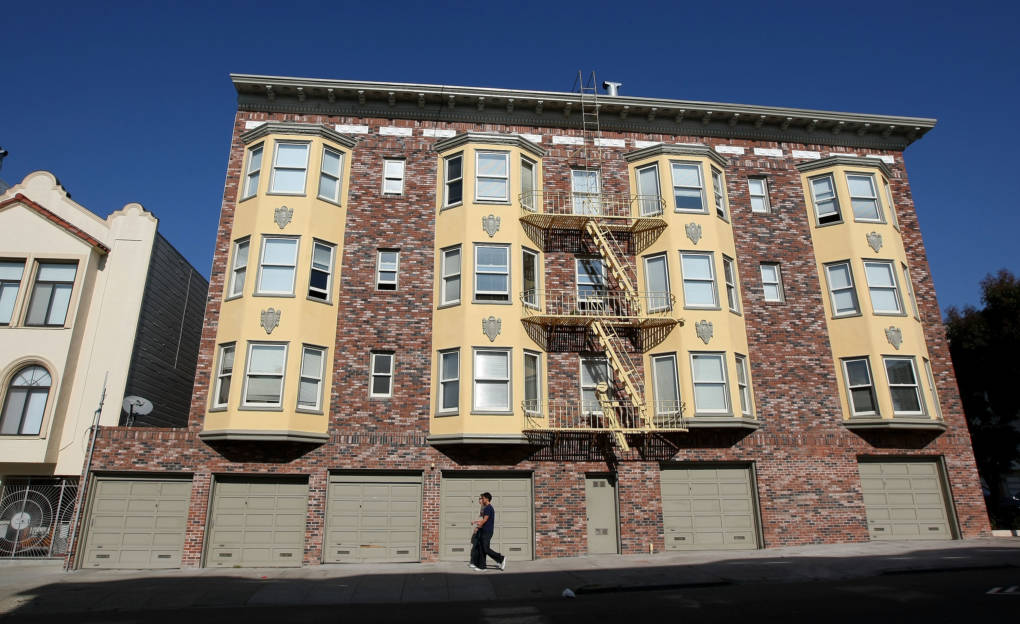
window.__IS_SSR__=true
window.__INITIAL_STATE__={
"attachmentsReducer": {
"audio_0": {
"type": "attachments",
"id": "audio_0",
"imgSizes": {
"kqedFullSize": {
"file": "https://ww2.kqed.org/news/wp-content/themes/KQED-unified/img/audio_bgs/background0.jpg"
}
}
},
"audio_1": {
"type": "attachments",
"id": "audio_1",
"imgSizes": {
"kqedFullSize": {
"file": "https://ww2.kqed.org/news/wp-content/themes/KQED-unified/img/audio_bgs/background1.jpg"
}
}
},
"audio_2": {
"type": "attachments",
"id": "audio_2",
"imgSizes": {
"kqedFullSize": {
"file": "https://ww2.kqed.org/news/wp-content/themes/KQED-unified/img/audio_bgs/background2.jpg"
}
}
},
"audio_3": {
"type": "attachments",
"id": "audio_3",
"imgSizes": {
"kqedFullSize": {
"file": "https://ww2.kqed.org/news/wp-content/themes/KQED-unified/img/audio_bgs/background3.jpg"
}
}
},
"audio_4": {
"type": "attachments",
"id": "audio_4",
"imgSizes": {
"kqedFullSize": {
"file": "https://ww2.kqed.org/news/wp-content/themes/KQED-unified/img/audio_bgs/background4.jpg"
}
}
},
"placeholder": {
"type": "attachments",
"id": "placeholder",
"imgSizes": {
"thumbnail": {
"file": "https://cdn.kqed.org/wp-content/uploads/2024/12/KQED-Default-Image-816638274-2000x1333-1-160x107.jpg",
"width": 160,
"height": 107,
"mimeType": "image/jpeg"
},
"medium": {
"file": "https://cdn.kqed.org/wp-content/uploads/2024/12/KQED-Default-Image-816638274-2000x1333-1-800x533.jpg",
"width": 800,
"height": 533,
"mimeType": "image/jpeg"
},
"medium_large": {
"file": "https://cdn.kqed.org/wp-content/uploads/2024/12/KQED-Default-Image-816638274-2000x1333-1-768x512.jpg",
"width": 768,
"height": 512,
"mimeType": "image/jpeg"
},
"large": {
"file": "https://cdn.kqed.org/wp-content/uploads/2024/12/KQED-Default-Image-816638274-2000x1333-1-1020x680.jpg",
"width": 1020,
"height": 680,
"mimeType": "image/jpeg"
},
"1536x1536": {
"file": "https://cdn.kqed.org/wp-content/uploads/2024/12/KQED-Default-Image-816638274-2000x1333-1-1536x1024.jpg",
"width": 1536,
"height": 1024,
"mimeType": "image/jpeg"
},
"fd-lrg": {
"file": "https://cdn.kqed.org/wp-content/uploads/2024/12/KQED-Default-Image-816638274-2000x1333-1-1536x1024.jpg",
"width": 1536,
"height": 1024,
"mimeType": "image/jpeg"
},
"fd-med": {
"file": "https://cdn.kqed.org/wp-content/uploads/2024/12/KQED-Default-Image-816638274-2000x1333-1-1020x680.jpg",
"width": 1020,
"height": 680,
"mimeType": "image/jpeg"
},
"fd-sm": {
"file": "https://cdn.kqed.org/wp-content/uploads/2024/12/KQED-Default-Image-816638274-2000x1333-1-800x533.jpg",
"width": 800,
"height": 533,
"mimeType": "image/jpeg"
},
"post-thumbnail": {
"file": "https://cdn.kqed.org/wp-content/uploads/2024/12/KQED-Default-Image-816638274-2000x1333-1-672x372.jpg",
"width": 672,
"height": 372,
"mimeType": "image/jpeg"
},
"twentyfourteen-full-width": {
"file": "https://cdn.kqed.org/wp-content/uploads/2024/12/KQED-Default-Image-816638274-2000x1333-1-1038x576.jpg",
"width": 1038,
"height": 576,
"mimeType": "image/jpeg"
},
"xxsmall": {
"file": "https://cdn.kqed.org/wp-content/uploads/2024/12/KQED-Default-Image-816638274-2000x1333-1-160x107.jpg",
"width": 160,
"height": 107,
"mimeType": "image/jpeg"
},
"xsmall": {
"file": "https://cdn.kqed.org/wp-content/uploads/2024/12/KQED-Default-Image-816638274-2000x1333-1-672x372.jpg",
"width": 672,
"height": 372,
"mimeType": "image/jpeg"
},
"small": {
"file": "https://cdn.kqed.org/wp-content/uploads/2024/12/KQED-Default-Image-816638274-2000x1333-1-672x372.jpg",
"width": 672,
"height": 372,
"mimeType": "image/jpeg"
},
"xlarge": {
"file": "https://cdn.kqed.org/wp-content/uploads/2024/12/KQED-Default-Image-816638274-2000x1333-1-1020x680.jpg",
"width": 1020,
"height": 680,
"mimeType": "image/jpeg"
},
"full-width": {
"file": "https://cdn.kqed.org/wp-content/uploads/2024/12/KQED-Default-Image-816638274-2000x1333-1-1920x1280.jpg",
"width": 1920,
"height": 1280,
"mimeType": "image/jpeg"
},
"guest-author-32": {
"file": "https://cdn.kqed.org/wp-content/uploads/2025/01/KQED-Default-Image-816638274-1333x1333-1-160x160.jpg",
"width": 32,
"height": 32,
"mimeType": "image/jpeg"
},
"guest-author-50": {
"file": "https://cdn.kqed.org/wp-content/uploads/2025/01/KQED-Default-Image-816638274-1333x1333-1-160x160.jpg",
"width": 50,
"height": 50,
"mimeType": "image/jpeg"
},
"guest-author-64": {
"file": "https://cdn.kqed.org/wp-content/uploads/2025/01/KQED-Default-Image-816638274-1333x1333-1-160x160.jpg",
"width": 64,
"height": 64,
"mimeType": "image/jpeg"
},
"guest-author-96": {
"file": "https://cdn.kqed.org/wp-content/uploads/2025/01/KQED-Default-Image-816638274-1333x1333-1-160x160.jpg",
"width": 96,
"height": 96,
"mimeType": "image/jpeg"
},
"guest-author-128": {
"file": "https://cdn.kqed.org/wp-content/uploads/2025/01/KQED-Default-Image-816638274-1333x1333-1-160x160.jpg",
"width": 128,
"height": 128,
"mimeType": "image/jpeg"
},
"detail": {
"file": "https://cdn.kqed.org/wp-content/uploads/2025/01/KQED-Default-Image-816638274-1333x1333-1-160x160.jpg",
"width": 160,
"height": 160,
"mimeType": "image/jpeg"
},
"kqedFullSize": {
"file": "https://cdn.kqed.org/wp-content/uploads/2024/12/KQED-Default-Image-816638274-2000x1333-1.jpg",
"width": 2000,
"height": 1333
}
}
},
"science_1949473": {
"type": "attachments",
"id": "science_1949473",
"meta": {
"index": "attachments_1716263798",
"site": "science",
"id": "1949473",
"found": true
},
"title": "New Report Finds That S.F. Infrastructure Unprepared For Major Earthquake",
"publishDate": 1571413858,
"status": "inherit",
"parent": 1949350,
"modified": 1776804151,
"caption": "Pedestrians walk by a \"soft-story building\" on Feb. 2, 2009 in the Marina district of San Francisco. Over the years, San Francisco has made progress toward earthquake-safe buildings. But the city still isn’t fully prepared for the next big one, experts said. ",
"credit": "Justin Sullivan/Getty Images",
"altTag": "A picture of a soft-story building in San Francisco.",
"description": "SAN FRANCISCO - FEBRUARY 02: Pedestrians walk by a \"soft-story building\" February 2, 2009 in the Marina district of San Francisco, California. A report by the San Francisco Planning & Urban Research Association concluded that the city's infrastructure and buildings are unpreapred for a major earthquake. The study suggests that owners of nearly 2,800 so-called \"soft-story buildings\" be forced to retrofit their property to avoid an estimated $1.5 billion in damages should a big quake happen. (Photo by Justin Sullivan/Getty Images)",
"imgSizes": {
"thumbnail": {
"file": "https://cdn.kqed.org/wp-content/uploads/sites/35/2019/10/Soft-Story-Buildings-Earthquake-160x98.jpg",
"width": 160,
"height": 98,
"mimeType": "image/jpeg"
},
"medium": {
"file": "https://cdn.kqed.org/wp-content/uploads/sites/35/2019/10/Soft-Story-Buildings-Earthquake-800x489.jpg",
"width": 800,
"height": 489,
"mimeType": "image/jpeg"
},
"medium_large": {
"file": "https://cdn.kqed.org/wp-content/uploads/sites/35/2019/10/Soft-Story-Buildings-Earthquake-768x470.jpg",
"width": 768,
"height": 470,
"mimeType": "image/jpeg"
},
"large": {
"file": "https://cdn.kqed.org/wp-content/uploads/sites/35/2019/10/Soft-Story-Buildings-Earthquake-1020x624.jpg",
"width": 1020,
"height": 624,
"mimeType": "image/jpeg"
},
"complete_open_graph": {
"file": "https://cdn.kqed.org/wp-content/uploads/sites/35/2019/10/Soft-Story-Buildings-Earthquake-1200x734.jpg",
"width": 1200,
"height": 734,
"mimeType": "image/jpeg"
},
"post-thumbnail": {
"file": "https://cdn.kqed.org/wp-content/uploads/sites/35/2019/10/Soft-Story-Buildings-Earthquake-672x372.jpg",
"width": 672,
"height": 372,
"mimeType": "image/jpeg"
},
"twentyfourteen-full-width": {
"file": "https://cdn.kqed.org/wp-content/uploads/sites/35/2019/10/Soft-Story-Buildings-Earthquake-1038x576.jpg",
"width": 1038,
"height": 576,
"mimeType": "image/jpeg"
},
"full-width": {
"file": "https://cdn.kqed.org/wp-content/uploads/sites/35/2019/10/Soft-Story-Buildings-Earthquake-1920x1174.jpg",
"width": 1920,
"height": 1174,
"mimeType": "image/jpeg"
},
"kqedFullSize": {
"file": "https://cdn.kqed.org/wp-content/uploads/sites/35/2019/10/Soft-Story-Buildings-Earthquake-e1571413875578.jpg",
"width": 1920,
"height": 1174
}
},
"fetchFailed": false,
"isLoading": false
},
"science_1994778": {
"type": "attachments",
"id": "science_1994778",
"meta": {
"index": "attachments_1716263798",
"site": "science",
"id": "1994778",
"found": true
},
"title": "I'm typing something important",
"publishDate": 1729028765,
"status": "inherit",
"parent": 1994754,
"modified": 1729029363,
"caption": "If you have the MyShake earthquake warning app installed on your phone, you'll get an emergency alert test on Thursday morning.",
"credit": "Getty Images",
"altTag": null,
"description": null,
"imgSizes": {
"medium": {
"file": "https://cdn.kqed.org/wp-content/uploads/sites/35/2024/10/GettyImages-1391696700-800x533.jpg",
"width": 800,
"height": 533,
"mimeType": "image/jpeg"
},
"large": {
"file": "https://cdn.kqed.org/wp-content/uploads/sites/35/2024/10/GettyImages-1391696700-1020x680.jpg",
"width": 1020,
"height": 680,
"mimeType": "image/jpeg"
},
"thumbnail": {
"file": "https://cdn.kqed.org/wp-content/uploads/sites/35/2024/10/GettyImages-1391696700-160x107.jpg",
"width": 160,
"height": 107,
"mimeType": "image/jpeg"
},
"medium_large": {
"file": "https://cdn.kqed.org/wp-content/uploads/sites/35/2024/10/GettyImages-1391696700-768x512.jpg",
"width": 768,
"height": 512,
"mimeType": "image/jpeg"
},
"1536x1536": {
"file": "https://cdn.kqed.org/wp-content/uploads/sites/35/2024/10/GettyImages-1391696700-1536x1024.jpg",
"width": 1536,
"height": 1024,
"mimeType": "image/jpeg"
},
"2048x2048": {
"file": "https://cdn.kqed.org/wp-content/uploads/sites/35/2024/10/GettyImages-1391696700-2048x1365.jpg",
"width": 2048,
"height": 1365,
"mimeType": "image/jpeg"
},
"post-thumbnail": {
"file": "https://cdn.kqed.org/wp-content/uploads/sites/35/2024/10/GettyImages-1391696700-672x372.jpg",
"width": 672,
"height": 372,
"mimeType": "image/jpeg"
},
"twentyfourteen-full-width": {
"file": "https://cdn.kqed.org/wp-content/uploads/sites/35/2024/10/GettyImages-1391696700-1038x576.jpg",
"width": 1038,
"height": 576,
"mimeType": "image/jpeg"
},
"full-width": {
"file": "https://cdn.kqed.org/wp-content/uploads/sites/35/2024/10/GettyImages-1391696700-1920x1280.jpg",
"width": 1920,
"height": 1280,
"mimeType": "image/jpeg"
},
"kqedFullSize": {
"file": "https://cdn.kqed.org/wp-content/uploads/sites/35/2024/10/GettyImages-1391696700-scaled-e1775153140799.jpg",
"width": 2000,
"height": 1334
}
},
"fetchFailed": false,
"isLoading": false
},
"science_2000433": {
"type": "attachments",
"id": "science_2000433",
"meta": {
"index": "attachments_1716263798",
"site": "science",
"id": "2000433",
"found": true
},
"title": "260317-SANRAMONEARTHQUAKES00337_TV-KQED",
"publishDate": 1774273214,
"status": "inherit",
"parent": 0,
"modified": 1774273272,
"caption": "Luther Strayer (left), a structural geologist professor at Cal State East Bay, and Rufus Catchings (right), a seismologist from USGS, demonstrate how to install a seismometer at Memorial Park in San Ramon on March 17, 2026.",
"credit": "Tâm Vũ/KQED",
"altTag": null,
"description": null,
"imgSizes": {
"thumbnail": {
"file": "https://cdn.kqed.org/wp-content/uploads/sites/35/2026/03/260317-SANRAMONEARTHQUAKES00337_TV-KQED-160x107.jpg",
"width": 160,
"height": 107,
"mimeType": "image/jpeg"
},
"medium_large": {
"file": "https://cdn.kqed.org/wp-content/uploads/sites/35/2026/03/260317-SANRAMONEARTHQUAKES00337_TV-KQED-768x512.jpg",
"width": 768,
"height": 512,
"mimeType": "image/jpeg"
},
"1536x1536": {
"file": "https://cdn.kqed.org/wp-content/uploads/sites/35/2026/03/260317-SANRAMONEARTHQUAKES00337_TV-KQED-1536x1024.jpg",
"width": 1536,
"height": 1024,
"mimeType": "image/jpeg"
},
"post-thumbnail": {
"file": "https://cdn.kqed.org/wp-content/uploads/sites/35/2026/03/260317-SANRAMONEARTHQUAKES00337_TV-KQED-672x372.jpg",
"width": 672,
"height": 372,
"mimeType": "image/jpeg"
},
"twentyfourteen-full-width": {
"file": "https://cdn.kqed.org/wp-content/uploads/sites/35/2026/03/260317-SANRAMONEARTHQUAKES00337_TV-KQED-1038x576.jpg",
"width": 1038,
"height": 576,
"mimeType": "image/jpeg"
},
"npr-cds-wide": {
"file": "https://cdn.kqed.org/wp-content/uploads/sites/35/2026/03/260317-SANRAMONEARTHQUAKES00337_TV-KQED-1200x675.jpg",
"width": 1200,
"height": 675,
"mimeType": "image/jpeg"
},
"kqedFullSize": {
"file": "https://cdn.kqed.org/wp-content/uploads/sites/35/2026/03/260317-SANRAMONEARTHQUAKES00337_TV-KQED.jpg",
"width": 2000,
"height": 1333
}
},
"fetchFailed": false,
"isLoading": false
},
"science_1999656": {
"type": "attachments",
"id": "science_1999656",
"meta": {
"index": "attachments_1716263798",
"site": "science",
"id": "1999656",
"found": true
},
"title": "251215-EARTHQUAKESWARMS-12-BL-KQED",
"publishDate": 1765839038,
"status": "inherit",
"parent": 0,
"modified": 1775170245,
"caption": "Apartment buildings and homes line Deerwood Road in San Ramon on Dec. 15, 2025. The area sits near the Calaveras Fault, an active fault that runs underground through the East Bay.",
"credit": "Beth LaBerge/KQED",
"altTag": null,
"description": null,
"imgSizes": {
"thumbnail": {
"file": "https://cdn.kqed.org/wp-content/uploads/sites/35/2025/12/251215-EARTHQUAKESWARMS-12-BL-KQED-160x107.jpg",
"width": 160,
"height": 107,
"mimeType": "image/jpeg"
},
"medium_large": {
"file": "https://cdn.kqed.org/wp-content/uploads/sites/35/2025/12/251215-EARTHQUAKESWARMS-12-BL-KQED-768x512.jpg",
"width": 768,
"height": 512,
"mimeType": "image/jpeg"
},
"1536x1536": {
"file": "https://cdn.kqed.org/wp-content/uploads/sites/35/2025/12/251215-EARTHQUAKESWARMS-12-BL-KQED-1536x1024.jpg",
"width": 1536,
"height": 1024,
"mimeType": "image/jpeg"
},
"post-thumbnail": {
"file": "https://cdn.kqed.org/wp-content/uploads/sites/35/2025/12/251215-EARTHQUAKESWARMS-12-BL-KQED-672x372.jpg",
"width": 672,
"height": 372,
"mimeType": "image/jpeg"
},
"twentyfourteen-full-width": {
"file": "https://cdn.kqed.org/wp-content/uploads/sites/35/2025/12/251215-EARTHQUAKESWARMS-12-BL-KQED-1038x576.jpg",
"width": 1038,
"height": 576,
"mimeType": "image/jpeg"
},
"npr-cds-wide": {
"file": "https://cdn.kqed.org/wp-content/uploads/sites/35/2025/12/251215-EARTHQUAKESWARMS-12-BL-KQED-1200x675.jpg",
"width": 1200,
"height": 675,
"mimeType": "image/jpeg"
},
"kqedFullSize": {
"file": "https://cdn.kqed.org/wp-content/uploads/sites/35/2025/12/251215-EARTHQUAKESWARMS-12-BL-KQED.jpg",
"width": 2000,
"height": 1333
}
},
"fetchFailed": false,
"isLoading": false
},
"science_1998635": {
"type": "attachments",
"id": "science_1998635",
"meta": {
"index": "attachments_1716263798",
"site": "science",
"id": "1998635",
"found": true
},
"title": "Fiber optic network of the company GlobalConnect",
"publishDate": 1758820898,
"status": "inherit",
"parent": 1998623,
"modified": 1758821013,
"caption": "A fiber optic cable was brought ashore from the cable-laying ship Pleijel at the entrance to the port of Sassnitz on Nov. 29, 2023.",
"credit": "Stefan Sauer/Picture Alliance via Getty Images",
"altTag": null,
"description": null,
"imgSizes": {
"thumbnail": {
"file": "https://cdn.kqed.org/wp-content/uploads/sites/35/2025/09/EarthquakeScienceGetty-160x98.jpg",
"width": 160,
"height": 98,
"mimeType": "image/jpeg"
},
"medium_large": {
"file": "https://cdn.kqed.org/wp-content/uploads/sites/35/2025/09/EarthquakeScienceGetty-768x470.jpg",
"width": 768,
"height": 470,
"mimeType": "image/jpeg"
},
"1536x1536": {
"file": "https://cdn.kqed.org/wp-content/uploads/sites/35/2025/09/EarthquakeScienceGetty-1536x940.jpg",
"width": 1536,
"height": 940,
"mimeType": "image/jpeg"
},
"post-thumbnail": {
"file": "https://cdn.kqed.org/wp-content/uploads/sites/35/2025/09/EarthquakeScienceGetty-672x372.jpg",
"width": 672,
"height": 372,
"mimeType": "image/jpeg"
},
"twentyfourteen-full-width": {
"file": "https://cdn.kqed.org/wp-content/uploads/sites/35/2025/09/EarthquakeScienceGetty-1038x576.jpg",
"width": 1038,
"height": 576,
"mimeType": "image/jpeg"
},
"kqedFullSize": {
"file": "https://cdn.kqed.org/wp-content/uploads/sites/35/2025/09/EarthquakeScienceGetty.jpg",
"width": 2000,
"height": 1224
}
},
"fetchFailed": false,
"isLoading": false
},
"science_1937339": {
"type": "attachments",
"id": "science_1937339",
"meta": {
"index": "attachments_1716263798",
"site": "science",
"id": "1937339",
"found": true
},
"parent": 1936949,
"imgSizes": {
"twentyfourteen-full-width": {
"file": "https://ww2.kqed.org/app/uploads/sites/35/2019/01/05-1038x576.jpg",
"width": 1038,
"mimeType": "image/jpeg",
"height": 576
},
"thumbnail": {
"file": "https://ww2.kqed.org/app/uploads/sites/35/2019/01/05-160x90.jpg",
"width": 160,
"mimeType": "image/jpeg",
"height": 90
},
"post-thumbnail": {
"file": "https://ww2.kqed.org/app/uploads/sites/35/2019/01/05-672x372.jpg",
"width": 672,
"mimeType": "image/jpeg",
"height": 372
},
"kqedFullSize": {
"file": "https://ww2.kqed.org/app/uploads/sites/35/2019/01/05.jpg",
"width": 1920,
"height": 1080
},
"large": {
"file": "https://ww2.kqed.org/app/uploads/sites/35/2019/01/05-1020x574.jpg",
"width": 1020,
"mimeType": "image/jpeg",
"height": 574
},
"complete_open_graph": {
"file": "https://ww2.kqed.org/app/uploads/sites/35/2019/01/05-1200x675.jpg",
"width": 1200,
"mimeType": "image/jpeg",
"height": 675
},
"guest-author-50": {
"file": "https://ww2.kqed.org/app/uploads/sites/35/2019/01/05-50x50.jpg",
"width": 50,
"mimeType": "image/jpeg",
"height": 50
},
"guest-author-96": {
"file": "https://ww2.kqed.org/app/uploads/sites/35/2019/01/05-96x96.jpg",
"width": 96,
"mimeType": "image/jpeg",
"height": 96
},
"medium": {
"file": "https://ww2.kqed.org/app/uploads/sites/35/2019/01/05-800x450.jpg",
"width": 800,
"mimeType": "image/jpeg",
"height": 450
},
"guest-author-64": {
"file": "https://ww2.kqed.org/app/uploads/sites/35/2019/01/05-64x64.jpg",
"width": 64,
"mimeType": "image/jpeg",
"height": 64
},
"guest-author-32": {
"file": "https://ww2.kqed.org/app/uploads/sites/35/2019/01/05-32x32.jpg",
"width": 32,
"mimeType": "image/jpeg",
"height": 32
},
"full-width": {
"file": "https://ww2.kqed.org/app/uploads/sites/35/2019/01/05-1920x1080.jpg",
"width": 1920,
"mimeType": "image/jpeg",
"height": 1080
},
"detail": {
"file": "https://ww2.kqed.org/app/uploads/sites/35/2019/01/05-150x150.jpg",
"width": 150,
"mimeType": "image/jpeg",
"height": 150
},
"medium_large": {
"file": "https://ww2.kqed.org/app/uploads/sites/35/2019/01/05-768x432.jpg",
"width": 768,
"mimeType": "image/jpeg",
"height": 432
},
"guest-author-128": {
"file": "https://ww2.kqed.org/app/uploads/sites/35/2019/01/05-128x128.jpg",
"width": 128,
"mimeType": "image/jpeg",
"height": 128
}
},
"publishDate": 1548719601,
"modified": 1548719732,
"caption": "Scientists say the Hayward Fault is due for another major earthquake.",
"description": "Scientists say the Hayward Fault is due for another major earthquake.",
"title": "05",
"credit": "Teodros Hailye",
"status": "inherit",
"fetchFailed": false,
"isLoading": false
},
"science_1997997": {
"type": "attachments",
"id": "science_1997997",
"meta": {
"index": "attachments_1716263798",
"site": "science",
"id": "1997997",
"found": true
},
"title": "A home in the Berkeley hills on April 15, 2025.",
"publishDate": 1753982613,
"status": "inherit",
"parent": 1997994,
"modified": 1753982624,
"caption": "A home in the Berkeley hills on April 15, 2025.",
"credit": "Martin do Nascimento/KQED",
"altTag": null,
"description": null,
"imgSizes": {
"thumbnail": {
"file": "https://cdn.kqed.org/wp-content/uploads/sites/35/2025/07/250415-BERKELEY-PLANTS-MD-05_qed-160x107.jpg",
"width": 160,
"height": 107,
"mimeType": "image/jpeg"
},
"medium_large": {
"file": "https://cdn.kqed.org/wp-content/uploads/sites/35/2025/07/250415-BERKELEY-PLANTS-MD-05_qed-768x512.jpg",
"width": 768,
"height": 512,
"mimeType": "image/jpeg"
},
"1536x1536": {
"file": "https://cdn.kqed.org/wp-content/uploads/sites/35/2025/07/250415-BERKELEY-PLANTS-MD-05_qed-1536x1024.jpg",
"width": 1536,
"height": 1024,
"mimeType": "image/jpeg"
},
"post-thumbnail": {
"file": "https://cdn.kqed.org/wp-content/uploads/sites/35/2025/07/250415-BERKELEY-PLANTS-MD-05_qed-672x372.jpg",
"width": 672,
"height": 372,
"mimeType": "image/jpeg"
},
"twentyfourteen-full-width": {
"file": "https://cdn.kqed.org/wp-content/uploads/sites/35/2025/07/250415-BERKELEY-PLANTS-MD-05_qed-1038x576.jpg",
"width": 1038,
"height": 576,
"mimeType": "image/jpeg"
},
"kqedFullSize": {
"file": "https://cdn.kqed.org/wp-content/uploads/sites/35/2025/07/250415-BERKELEY-PLANTS-MD-05_qed.jpg",
"width": 1999,
"height": 1333
}
},
"fetchFailed": false,
"isLoading": false
},
"science_1997639": {
"type": "attachments",
"id": "science_1997639",
"meta": {
"index": "attachments_1716263798",
"site": "science",
"id": "1997639",
"found": true
},
"title": "APTOPIX Extreme Weather Texas",
"publishDate": 1752002381,
"status": "inherit",
"parent": 1997633,
"modified": 1752003293,
"caption": "A Sheriff's deputy pauses while combing through the banks of the Guadalupe River near Camp Mystic, on Saturday, July 5, 2025, in Hunt, Texas, after a flash flood swept through the area. ",
"credit": "Julio Cortez/AP Photo",
"altTag": null,
"description": null,
"imgSizes": {
"thumbnail": {
"file": "https://cdn.kqed.org/wp-content/uploads/sites/35/2025/07/CampMysticAP2-160x107.jpg",
"width": 160,
"height": 107,
"mimeType": "image/jpeg"
},
"medium_large": {
"file": "https://cdn.kqed.org/wp-content/uploads/sites/35/2025/07/CampMysticAP2-768x512.jpg",
"width": 768,
"height": 512,
"mimeType": "image/jpeg"
},
"1536x1536": {
"file": "https://cdn.kqed.org/wp-content/uploads/sites/35/2025/07/CampMysticAP2-1536x1024.jpg",
"width": 1536,
"height": 1024,
"mimeType": "image/jpeg"
},
"post-thumbnail": {
"file": "https://cdn.kqed.org/wp-content/uploads/sites/35/2025/07/CampMysticAP2-672x372.jpg",
"width": 672,
"height": 372,
"mimeType": "image/jpeg"
},
"twentyfourteen-full-width": {
"file": "https://cdn.kqed.org/wp-content/uploads/sites/35/2025/07/CampMysticAP2-1038x576.jpg",
"width": 1038,
"height": 576,
"mimeType": "image/jpeg"
},
"kqedFullSize": {
"file": "https://cdn.kqed.org/wp-content/uploads/sites/35/2025/07/CampMysticAP2.jpg",
"width": 2000,
"height": 1333
}
},
"fetchFailed": false,
"isLoading": false
}
},
"audioPlayerReducer": {
"postId": "stream_live",
"isPaused": true,
"isPlaying": false,
"pfsActive": false,
"pledgeModalIsOpen": true,
"playerDrawerIsOpen": false
},
"authorsReducer": {
"carlysevern": {
"type": "authors",
"id": "3243",
"meta": {
"index": "authors_1716337520",
"id": "3243",
"found": true
},
"name": "Carly Severn",
"firstName": "Carly",
"lastName": "Severn",
"slug": "carlysevern",
"email": "csevern@kqed.org",
"display_author_email": false,
"staff_mastheads": [
"news"
],
"title": "Senior Editor, Audience News ",
"bio": "Carly is KQED's Senior Editor of Audience News on the Digital News team, and has reported for the California Report Magazine, Bay Curious and KQED Arts. She's formerly the host of \u003ca href=\"http://ww2.kqed.org/pop/category/the-cooler/\" rel=\"noopener noreferrer\">The Cooler\u003c/a> podcast.",
"avatar": "https://secure.gravatar.com/avatar/2d8d6765f186e64c798cf7f0c8088a41?s=600&d=blank&r=g",
"twitter": "teacupinthebay",
"facebook": null,
"instagram": null,
"linkedin": null,
"sites": [
{
"site": "",
"roles": [
"editor"
]
},
{
"site": "arts",
"roles": [
"editor"
]
},
{
"site": "news",
"roles": [
"administrator"
]
},
{
"site": "pop",
"roles": [
"editor"
]
},
{
"site": "futureofyou",
"roles": [
"editor"
]
},
{
"site": "about",
"roles": [
"administrator"
]
},
{
"site": "mindshift",
"roles": [
"editor"
]
},
{
"site": "bayareabites",
"roles": [
"editor"
]
},
{
"site": "stateofhealth",
"roles": [
"editor"
]
},
{
"site": "science",
"roles": [
"editor"
]
},
{
"site": "food",
"roles": [
"contributor"
]
},
{
"site": "forum",
"roles": [
"editor"
]
},
{
"site": "perspectives",
"roles": [
"administrator"
]
},
{
"site": "liveblog",
"roles": [
"editor"
]
}
],
"headData": {
"title": "Carly Severn | KQED",
"description": "Senior Editor, Audience News ",
"ogImgSrc": "https://secure.gravatar.com/avatar/2d8d6765f186e64c798cf7f0c8088a41?s=600&d=blank&r=g",
"twImgSrc": "https://secure.gravatar.com/avatar/2d8d6765f186e64c798cf7f0c8088a41?s=600&d=blank&r=g"
},
"isLoading": false,
"link": "/author/carlysevern"
},
"dventon": {
"type": "authors",
"id": "11088",
"meta": {
"index": "authors_1716337520",
"id": "11088",
"found": true
},
"name": "Danielle Venton",
"firstName": "Danielle",
"lastName": "Venton",
"slug": "dventon",
"email": "dventon@kqed.org",
"display_author_email": true,
"staff_mastheads": [
"science"
],
"title": "Science reporter",
"bio": "Danielle Venton is a reporter for KQED Science. She covers wildfires, space and oceans (though she is prone to sea sickness).\r\n\r\nBefore joining KQED in 2015, Danielle was a staff reporter at KRCB in Sonoma County and a freelancer. She studied science communication at UC Santa Cruz and formerly worked at CERN in Geneva, Switzerland where she wrote about computing. She lives in Sonoma County and enjoys backpacking.",
"avatar": "https://secure.gravatar.com/avatar/ebaf11ee6cfb7bb40329a143d463829e?s=600&d=blank&r=g",
"twitter": "DanielleVenton",
"facebook": null,
"instagram": null,
"linkedin": null,
"sites": [
{
"site": "arts",
"roles": [
"contributor"
]
},
{
"site": "news",
"roles": [
"editor"
]
},
{
"site": "futureofyou",
"roles": [
"editor"
]
},
{
"site": "science",
"roles": [
"editor"
]
},
{
"site": "liveblog",
"roles": [
"contributor"
]
}
],
"headData": {
"title": "Danielle Venton | KQED",
"description": "Science reporter",
"ogImgSrc": "https://secure.gravatar.com/avatar/ebaf11ee6cfb7bb40329a143d463829e?s=600&d=blank&r=g",
"twImgSrc": "https://secure.gravatar.com/avatar/ebaf11ee6cfb7bb40329a143d463829e?s=600&d=blank&r=g"
},
"isLoading": false,
"link": "/author/dventon"
},
"dcronin": {
"type": "authors",
"id": "11362",
"meta": {
"index": "authors_1716337520",
"id": "11362",
"found": true
},
"name": "Dana Cronin",
"firstName": "Dana",
"lastName": "Cronin",
"slug": "dcronin",
"email": "dcronin@KQED.org",
"display_author_email": true,
"staff_mastheads": [],
"title": "KQED Contributor",
"bio": "Dana Cronin is a reporter for KQED News. She loves writing stories about climate change, environmental issues, food and agriculture. She's reported across the country, from Colorado to Washington D.C. to Illinois, and has won numerous awards for her coverage. Her work is regularly featured on national broadcasts, including NPR’s Morning Edition, All Things Considered, PBS Newshour and Science Friday. She lives in Oakland and has an avocado tree in her back yard.",
"avatar": "https://secure.gravatar.com/avatar/bcf89e3455ff7235f96ab6fa7258dd95?s=600&d=blank&r=g",
"twitter": "DanaHCronin",
"facebook": null,
"instagram": null,
"linkedin": null,
"sites": [
{
"site": "arts",
"roles": [
"author"
]
},
{
"site": "news",
"roles": [
"editor"
]
},
{
"site": "science",
"roles": [
"author"
]
},
{
"site": "liveblog",
"roles": [
"author"
]
}
],
"headData": {
"title": "Dana Cronin | KQED",
"description": "KQED Contributor",
"ogImgSrc": "https://secure.gravatar.com/avatar/bcf89e3455ff7235f96ab6fa7258dd95?s=600&d=blank&r=g",
"twImgSrc": "https://secure.gravatar.com/avatar/bcf89e3455ff7235f96ab6fa7258dd95?s=600&d=blank&r=g"
},
"isLoading": false,
"link": "/author/dcronin"
},
"parcuni": {
"type": "authors",
"id": "11368",
"meta": {
"index": "authors_1716337520",
"id": "11368",
"found": true
},
"name": "Peter Arcuni",
"firstName": "Peter",
"lastName": "Arcuni",
"slug": "parcuni",
"email": "parcuni@KQED.org",
"display_author_email": false,
"staff_mastheads": [
"science"
],
"title": "Reporter",
"bio": "Peter reports radio and online stories for \u003cem>KQED Science\u003c/em>. His work has also appeared on the \u003cem>The California Report\u003c/em> morning show and \u003cem>KQED News\u003c/em>. His production credits include \u003cem>The California Report, The California Report Magazine\u003c/em> and KQED's local news podcast \u003cem>The Bay\u003c/em>. Other credits include NPR's \u003cem>All Things Considered\u003c/em>, WNYC's \u003cem>Science Friday\u003c/em>, WBUR's \u003cem>Here & Now\u003c/em>, WIRED and SFGate. Peter graduated from Brown University and earned a master's degree in journalism from Stanford. He's covered everything from homelessness to wildfires, health, the environment, arts and Thanksgiving in San Quentin prison. In other lives, he played rock n roll music and studied neuroscience. You can email him at: parcuni@kqed.org",
"avatar": "https://secure.gravatar.com/avatar/d5032f6f27199d478af34ad2e1d98732?s=600&d=blank&r=g",
"twitter": "peterarcuni",
"facebook": null,
"instagram": null,
"linkedin": null,
"sites": [
{
"site": "news",
"roles": [
"editor"
]
},
{
"site": "science",
"roles": [
"editor"
]
}
],
"headData": {
"title": "Peter Arcuni | KQED",
"description": "Reporter",
"ogImgSrc": "https://secure.gravatar.com/avatar/d5032f6f27199d478af34ad2e1d98732?s=600&d=blank&r=g",
"twImgSrc": "https://secure.gravatar.com/avatar/d5032f6f27199d478af34ad2e1d98732?s=600&d=blank&r=g"
},
"isLoading": false,
"link": "/author/parcuni"
},
"smohamad": {
"type": "authors",
"id": "11631",
"meta": {
"index": "authors_1716337520",
"id": "11631",
"found": true
},
"name": "Sarah Mohamad",
"firstName": "Sarah",
"lastName": "Mohamad",
"slug": "smohamad",
"email": "smohamad@KQED.org",
"display_author_email": true,
"staff_mastheads": [],
"title": "Engagement Producer and Reporter, KQED Science",
"bio": "Sarah Mohamad is an audience engagement reporter and producer for KQED Science. She reports on audience-focused science and environment stories and manages the team's social media, newsletter, and engagement efforts. Prior to this role, she played a key role as project manager for NSF's \u003ca href=\"https://www.kqed.org/crackingthecode\">\u003cem>Cracking the Code: Influencing Millennial Science Engagement\u003c/em> \u003c/a>audience research.",
"avatar": "https://secure.gravatar.com/avatar/085f65bb82616965f87e3d12f8550931?s=600&d=blank&r=g",
"twitter": "sarahkmohamad",
"facebook": null,
"instagram": null,
"linkedin": null,
"sites": [
{
"site": "arts",
"roles": [
"editor"
]
},
{
"site": "news",
"roles": [
"editor"
]
},
{
"site": "about",
"roles": [
"editor"
]
},
{
"site": "science",
"roles": [
"editor"
]
}
],
"headData": {
"title": "Sarah Mohamad | KQED",
"description": "Engagement Producer and Reporter, KQED Science",
"ogImgSrc": "https://secure.gravatar.com/avatar/085f65bb82616965f87e3d12f8550931?s=600&d=blank&r=g",
"twImgSrc": "https://secure.gravatar.com/avatar/085f65bb82616965f87e3d12f8550931?s=600&d=blank&r=g"
},
"isLoading": false,
"link": "/author/smohamad"
},
"eromero": {
"type": "authors",
"id": "11746",
"meta": {
"index": "authors_1716337520",
"id": "11746",
"found": true
},
"name": "Ezra David Romero",
"firstName": "Ezra David",
"lastName": "Romero",
"slug": "eromero",
"email": "eromero@kqed.org",
"display_author_email": true,
"staff_mastheads": [
"news",
"science"
],
"title": "Climate Reporter",
"bio": "Ezra David Romero is a climate reporter for KQED News. He covers the absence and excess of water in the Bay Area — think sea level rise, flooding and drought. For nearly a decade he’s covered how warming temperatures are altering the lives of Californians. He’s reported on farmers worried their pistachio trees aren’t getting enough sleep, families desperate for water, scientists studying dying giant sequoias, and alongside firefighters containing wildfires. His work has appeared on local stations across California and nationally on public radio shows like Morning Edition, Here and Now, All Things Considered and Science Friday. ",
"avatar": "https://secure.gravatar.com/avatar/9c15bb8bab267e058708a9eeaeef16bf?s=600&d=blank&r=g",
"twitter": "ezraromero",
"bluesky": null,
"facebook": null,
"instagram": null,
"linkedin": null,
"sites": [
{
"site": "arts",
"roles": [
"editor"
]
},
{
"site": "news",
"roles": [
"editor"
]
},
{
"site": "science",
"roles": [
"editor"
]
},
{
"site": "liveblog",
"roles": [
"author"
]
}
],
"headData": {
"title": "Ezra David Romero | KQED",
"description": "Climate Reporter",
"ogImgSrc": "https://secure.gravatar.com/avatar/9c15bb8bab267e058708a9eeaeef16bf?s=600&d=blank&r=g",
"twImgSrc": "https://secure.gravatar.com/avatar/9c15bb8bab267e058708a9eeaeef16bf?s=600&d=blank&r=g"
},
"isLoading": false,
"link": "/author/eromero"
}
},
"breakingNewsReducer": {},
"pagesReducer": {},
"postsReducer": {
"stream_live": {
"type": "live",
"id": "stream_live",
"audioUrl": "https://streams.kqed.org/kqedradio",
"title": "Live Stream",
"excerpt": "Live Stream information currently unavailable.",
"link": "/radio",
"featImg": "",
"label": {
"name": "KQED Live",
"link": "/"
}
},
"stream_kqedNewscast": {
"type": "posts",
"id": "stream_kqedNewscast",
"audioUrl": "https://www.kqed.org/.stream/anon/radio/RDnews/newscast.mp3?_=1",
"title": "KQED Newscast",
"featImg": "",
"label": {
"name": "88.5 FM",
"link": "/"
}
},
"science_2000795": {
"type": "posts",
"id": "science_2000795",
"meta": {
"index": "posts_1716263798",
"site": "science",
"id": "2000795",
"score": null,
"sort": [
1776949256000
]
},
"guestAuthors": [],
"slug": "in-june-san-francisco-will-vote-on-a-535m-earthquake-bond-heres-whats-in-it",
"title": "In June, San Francisco Will Vote on a $535M Earthquake Bond. Here’s What’s in It",
"publishDate": 1776949256,
"format": "standard",
"headTitle": "In June, San Francisco Will Vote on a $535M Earthquake Bond. Here’s What’s in It | KQED",
"labelTerm": {},
"content": "\u003cp>Experts have long agreed that San Francisco is due for a \u003ca href=\"https://www.kqed.org/news/12080455/san-franciscos-skyline-shines-but-earthquake-risk-remains-120-years-after-1906\">big earthquake\u003c/a> at any moment on any day. But the city isn’t quite ready for a massive shaking, like the 1989 Loma Prieta or the \u003ca href=\"https://www.kqed.org/news/11983182/stunning-archival-photos-of-the-1906-earthquake-and-fire\">1906 earthquake\u003c/a> that leveled much of the city.\u003c/p>\n\u003cp>City leaders have asked residents to approve a \u003ca href=\"https://sfpublicworks.org/eser-2026\">$535 million \u003c/a>earthquake bond in June, which would fund major seismic upgrades to public infrastructure. The goal is to improve the city’s capacity to respond quickly after a major earthquake and to aid in the aftermath.\u003c/p>\n\u003cp>Federal seismologists said back in 2014 that there’s \u003ca href=\"https://www.usgs.gov/faqs/what-probability-earthquake-will-occur-los-angeles-area-san-francisco-bay-area#:~:text=San%20Francisco%20Bay%20area%3A,an%20earthquake%20measuring%20magnitude%207.5\">nearly a three-in-four chance\u003c/a> of a 6.7-magnitude quake by 2044, and we’re already more than a decade into that timeline.\u003c/p>\n\u003cp>[ad fullwidth]\u003c/p>\n\u003cp>“By passing this bond, we are taking steps to keep San Francisco safe by giving our neighborhoods the tools they need to withstand emergency events and ensuring our city is ready to respond quickly when disaster strikes,” Mayor Daniel Lurie said in a \u003ca href=\"https://www.sf.gov/news-mayor-lurie-and-president-mandelman-announce-2026-earthquake-safety-and-emergency-response-bond-to-modernize-infrastructure-and-support-public-safety\">press release\u003c/a>.\u003c/p>\n\u003cp>The entire Bay Area rests on multiple faultlines — including the San Andreas and the Hayward faults. Earthquake impacts could “cascade across shared infrastructure, housing, and lifelines” throughout San Francisco, according to a \u003ca href=\"https://www.spur.org/publications/policy-brief/2026-04-09/120-years-after-1906\">recent report\u003c/a> from the nonprofit think tank SPUR. The report concludes that large portions of the city are potentially ill-prepared for a major earthquake. Namely, some 3,700 concrete buildings that could potentially pancake in a tremor.\u003c/p>\n\u003cfigure id=\"attachment_2000800\" class=\"wp-caption aligncenter\" style=\"max-width: 1999px\">\u003cimg loading=\"lazy\" decoding=\"async\" class=\"size-full wp-image-2000800\" src=\"https://cdn.kqed.org/wp-content/uploads/sites/35/2026/04/260115-SOTC-30-BL_qed.jpg\" alt=\"\" width=\"1999\" height=\"1333\" srcset=\"https://cdn.kqed.org/wp-content/uploads/sites/35/2026/04/260115-SOTC-30-BL_qed.jpg 1999w, https://cdn.kqed.org/wp-content/uploads/sites/35/2026/04/260115-SOTC-30-BL_qed-160x107.jpg 160w, https://cdn.kqed.org/wp-content/uploads/sites/35/2026/04/260115-SOTC-30-BL_qed-768x512.jpg 768w, https://cdn.kqed.org/wp-content/uploads/sites/35/2026/04/260115-SOTC-30-BL_qed-1536x1024.jpg 1536w\" sizes=\"auto, (max-width: 1999px) 100vw, 1999px\">\u003cfigcaption class=\"wp-caption-text\">Mayor Daniel Lurie speaks to the press after giving a State of the City address at Rossi Park Ball Field in the Richmond neighborhood of San Francisco on Jan. 15, 2026. \u003ccite>(Beth LaBerge/KQED)\u003c/cite>\u003c/figcaption>\u003c/figure>\n\u003cp>Brian Strong, the city’s chief resilience officer, said San Francisco spent more than $20 billion on seismic upgrades over the past several decades, but more needs to be done.\u003c/p>\n\u003cp>“We’ve touched every neighborhood in the city, and we still have a lot of work to do, which is why another bond is coming up,” Strong said.\u003c/p>\n\u003cp>Voters approved similar bonds in 2010, 2014, and 2020 as part of a so-called phased approach in shoring up the city’s seismic risk.\u003c/p>\n\u003cp>Mary Ellen Carroll, executive director of the San Francisco Department of Emergency Management, said the bond would pay for “big ticket items” that need updating. That includes making the city’s 911 call center “secure from a seismic perspective, so we’re functioning after an emergency,” Carroll said.[aside postID=news_12080455 hero='https://cdn.kqed.org/wp-content/uploads/sites/10/2026/04/260415-SPUREARTHQUAKE-06-BL-KQED.jpg']The bond will focus on five areas: renovating the city’s aging emergency firefighting water system, potentially repairing five unsafe fire stations, updating police stations and support facilities and updating public safety buildings\u003c/p>\n\u003cp>At $200 million, the largest pot of funds would go to retrofitting and replacing Muni’s more-than-a-century-old Potrero Bus Yard with a seismically safe facility. Some \u003ca href=\"https://westsideobserver.com/26/4-prop-a-eser-bond-slush-fund-no-vote-george-wooding.php\">criticized\u003c/a> the move as a transportation spending item. But city officials said Potrero Yard is important for “enabling evacuation services following an earthquake.”\u003c/p>\n\u003cp>“Potrero Yard is at serious risk in a major earthquake,” said Julie Kirschbaum, San Francisco Municipal Transportation Agency director of transportation, in a release. “We have to protect our buses and, more importantly, the lives of the staff who maintain and operate them.\u003c/p>\n\u003cp>The second-highest dollar amount is $130 million to expand the city’s emergency firefighting water system “into underserved areas on the west side,” which, city officials said, “lack adequate firefighting water infrastructure.” The updates could include extending high-pressure water pipelines, adding fire hydrants, and other infrastructure.\u003c/p>\n\u003cp>Some people have \u003ca href=\"https://www.sfexaminer.com/forum/expand-the-city-s-emergency-water-system-before-its-too-late/article_19b70ccb-99e6-4dac-928d-297996a80939.html\">suggested\u003c/a> that relying on the Pacific Ocean’s copious water would be a better use of the funds. The plan would also update infrastructure at Fort Mason to pump water from the bay during an event.\u003c/p>\n\u003cp>“Many west side facilities, including fire stations, the Taraval Police Station, and our emergency water system, are older and more vulnerable in a major quake,” District 4 Supervisor Alan Wong said in a release. “This bond is an important step toward making sure the Sunset is not an afterthought and that our communities have the infrastructure they need to stay safe and recover.”\u003c/p>\n\u003cp>\u003c/p>\n",
"blocks": [],
"excerpt": "Over the years, San Francisco has made progress toward earthquake-safe buildings. But the city still isn’t fully prepared for the next big one, experts said. ",
"status": "publish",
"parent": 0,
"modified": 1776804831,
"stats": {
"hasAudio": false,
"hasVideo": false,
"hasChartOrMap": false,
"iframeSrcs": [],
"hasGoogleForm": false,
"hasGallery": false,
"hasHearkenModule": false,
"hasPolis": false,
"paragraphCount": 16,
"wordCount": 743
},
"headData": {
"title": "In June, San Francisco Will Vote on a $535M Earthquake Bond. Here’s What’s in It | KQED",
"description": "Over the years, San Francisco has made progress toward earthquake-safe buildings. But the city still isn’t fully prepared for the next big one, experts said. ",
"ogTitle": "",
"ogDescription": "",
"ogImgId": "",
"twTitle": "",
"twDescription": "",
"twImgId": "",
"schema": {
"@context": "https://schema.org",
"@type": "Article",
"headline": "In June, San Francisco Will Vote on a $535M Earthquake Bond. Here’s What’s in It",
"datePublished": "2026-04-23T06:00:56-07:00",
"dateModified": "2026-04-21T13:53:51-07:00",
"image": "https://cdn.kqed.org/wp-content/uploads/2020/02/KQED-OG-Image@1x.png"
}
},
"primaryCategory": {
"termId": 4550,
"slug": "local",
"name": "Local"
},
"source": "News",
"sticky": false,
"templateType": "standard",
"featuredImageType": "standard",
"excludeFromSiteSearch": "Include",
"articleAge": "0",
"path": "/science/2000795/in-june-san-francisco-will-vote-on-a-535m-earthquake-bond-heres-whats-in-it",
"audioTrackLength": null,
"parsedContent": [
{
"type": "contentString",
"content": "\u003cdiv class=\"post-body\">\u003cp>\u003cp>Experts have long agreed that San Francisco is due for a \u003ca href=\"https://www.kqed.org/news/12080455/san-franciscos-skyline-shines-but-earthquake-risk-remains-120-years-after-1906\">big earthquake\u003c/a> at any moment on any day. But the city isn’t quite ready for a massive shaking, like the 1989 Loma Prieta or the \u003ca href=\"https://www.kqed.org/news/11983182/stunning-archival-photos-of-the-1906-earthquake-and-fire\">1906 earthquake\u003c/a> that leveled much of the city.\u003c/p>\n\u003cp>City leaders have asked residents to approve a \u003ca href=\"https://sfpublicworks.org/eser-2026\">$535 million \u003c/a>earthquake bond in June, which would fund major seismic upgrades to public infrastructure. The goal is to improve the city’s capacity to respond quickly after a major earthquake and to aid in the aftermath.\u003c/p>\n\u003cp>Federal seismologists said back in 2014 that there’s \u003ca href=\"https://www.usgs.gov/faqs/what-probability-earthquake-will-occur-los-angeles-area-san-francisco-bay-area#:~:text=San%20Francisco%20Bay%20area%3A,an%20earthquake%20measuring%20magnitude%207.5\">nearly a three-in-four chance\u003c/a> of a 6.7-magnitude quake by 2044, and we’re already more than a decade into that timeline.\u003c/p>\n\u003cp>\u003c/p>\u003c/div>",
"attributes": {
"named": {},
"numeric": []
}
},
{
"type": "component",
"content": "",
"name": "ad",
"attributes": {
"named": {
"label": "fullwidth"
},
"numeric": [
"fullwidth"
]
}
},
{
"type": "contentString",
"content": "\u003cdiv class=\"post-body\">\u003cp>\u003c/p>\n\u003cp>“By passing this bond, we are taking steps to keep San Francisco safe by giving our neighborhoods the tools they need to withstand emergency events and ensuring our city is ready to respond quickly when disaster strikes,” Mayor Daniel Lurie said in a \u003ca href=\"https://www.sf.gov/news-mayor-lurie-and-president-mandelman-announce-2026-earthquake-safety-and-emergency-response-bond-to-modernize-infrastructure-and-support-public-safety\">press release\u003c/a>.\u003c/p>\n\u003cp>The entire Bay Area rests on multiple faultlines — including the San Andreas and the Hayward faults. Earthquake impacts could “cascade across shared infrastructure, housing, and lifelines” throughout San Francisco, according to a \u003ca href=\"https://www.spur.org/publications/policy-brief/2026-04-09/120-years-after-1906\">recent report\u003c/a> from the nonprofit think tank SPUR. The report concludes that large portions of the city are potentially ill-prepared for a major earthquake. Namely, some 3,700 concrete buildings that could potentially pancake in a tremor.\u003c/p>\n\u003cfigure id=\"attachment_2000800\" class=\"wp-caption aligncenter\" style=\"max-width: 1999px\">\u003cimg loading=\"lazy\" decoding=\"async\" class=\"size-full wp-image-2000800\" src=\"https://cdn.kqed.org/wp-content/uploads/sites/35/2026/04/260115-SOTC-30-BL_qed.jpg\" alt=\"\" width=\"1999\" height=\"1333\" srcset=\"https://cdn.kqed.org/wp-content/uploads/sites/35/2026/04/260115-SOTC-30-BL_qed.jpg 1999w, https://cdn.kqed.org/wp-content/uploads/sites/35/2026/04/260115-SOTC-30-BL_qed-160x107.jpg 160w, https://cdn.kqed.org/wp-content/uploads/sites/35/2026/04/260115-SOTC-30-BL_qed-768x512.jpg 768w, https://cdn.kqed.org/wp-content/uploads/sites/35/2026/04/260115-SOTC-30-BL_qed-1536x1024.jpg 1536w\" sizes=\"auto, (max-width: 1999px) 100vw, 1999px\">\u003cfigcaption class=\"wp-caption-text\">Mayor Daniel Lurie speaks to the press after giving a State of the City address at Rossi Park Ball Field in the Richmond neighborhood of San Francisco on Jan. 15, 2026. \u003ccite>(Beth LaBerge/KQED)\u003c/cite>\u003c/figcaption>\u003c/figure>\n\u003cp>Brian Strong, the city’s chief resilience officer, said San Francisco spent more than $20 billion on seismic upgrades over the past several decades, but more needs to be done.\u003c/p>\n\u003cp>“We’ve touched every neighborhood in the city, and we still have a lot of work to do, which is why another bond is coming up,” Strong said.\u003c/p>\n\u003cp>Voters approved similar bonds in 2010, 2014, and 2020 as part of a so-called phased approach in shoring up the city’s seismic risk.\u003c/p>\n\u003cp>Mary Ellen Carroll, executive director of the San Francisco Department of Emergency Management, said the bond would pay for “big ticket items” that need updating. That includes making the city’s 911 call center “secure from a seismic perspective, so we’re functioning after an emergency,” Carroll said.\u003c/p>\u003c/div>",
"attributes": {
"named": {},
"numeric": []
}
},
{
"type": "component",
"content": "",
"name": "aside",
"attributes": {
"named": {
"postid": "news_12080455",
"hero": "https://cdn.kqed.org/wp-content/uploads/sites/10/2026/04/260415-SPUREARTHQUAKE-06-BL-KQED.jpg",
"label": ""
},
"numeric": []
}
},
{
"type": "contentString",
"content": "\u003cdiv class=\"post-body\">\u003cp>The bond will focus on five areas: renovating the city’s aging emergency firefighting water system, potentially repairing five unsafe fire stations, updating police stations and support facilities and updating public safety buildings\u003c/p>\n\u003cp>At $200 million, the largest pot of funds would go to retrofitting and replacing Muni’s more-than-a-century-old Potrero Bus Yard with a seismically safe facility. Some \u003ca href=\"https://westsideobserver.com/26/4-prop-a-eser-bond-slush-fund-no-vote-george-wooding.php\">criticized\u003c/a> the move as a transportation spending item. But city officials said Potrero Yard is important for “enabling evacuation services following an earthquake.”\u003c/p>\n\u003cp>“Potrero Yard is at serious risk in a major earthquake,” said Julie Kirschbaum, San Francisco Municipal Transportation Agency director of transportation, in a release. “We have to protect our buses and, more importantly, the lives of the staff who maintain and operate them.\u003c/p>\n\u003cp>The second-highest dollar amount is $130 million to expand the city’s emergency firefighting water system “into underserved areas on the west side,” which, city officials said, “lack adequate firefighting water infrastructure.” The updates could include extending high-pressure water pipelines, adding fire hydrants, and other infrastructure.\u003c/p>\n\u003cp>Some people have \u003ca href=\"https://www.sfexaminer.com/forum/expand-the-city-s-emergency-water-system-before-its-too-late/article_19b70ccb-99e6-4dac-928d-297996a80939.html\">suggested\u003c/a> that relying on the Pacific Ocean’s copious water would be a better use of the funds. The plan would also update infrastructure at Fort Mason to pump water from the bay during an event.\u003c/p>\n\u003cp>“Many west side facilities, including fire stations, the Taraval Police Station, and our emergency water system, are older and more vulnerable in a major quake,” District 4 Supervisor Alan Wong said in a release. “This bond is an important step toward making sure the Sunset is not an afterthought and that our communities have the infrastructure they need to stay safe and recover.”\u003c/p>\n\u003cp>\u003c/p>\n\u003c/div>\u003c/p>",
"attributes": {
"named": {},
"numeric": []
}
}
],
"link": "/science/2000795/in-june-san-francisco-will-vote-on-a-535m-earthquake-bond-heres-whats-in-it",
"authors": [
"11746"
],
"categories": [
"science_35",
"science_4550",
"science_40",
"science_4450"
],
"tags": [
"science_856",
"science_1888",
"science_427",
"science_192",
"science_4414",
"science_1842",
"science_5183",
"science_309"
],
"featImg": "science_1949473",
"label": "source_science_2000795"
},
"science_2000568": {
"type": "posts",
"id": "science_2000568",
"meta": {
"index": "posts_1716263798",
"site": "science",
"id": "2000568",
"score": null,
"sort": [
1775170472000
]
},
"guestAuthors": [],
"slug": "after-4-6-earthquake-jolts-santa-cruz-seismologists-double-down-on-myshake-alerts",
"title": "After 4.6 Earthquake Jolts Santa Cruz, Seismologists Double Down on MyShake Alerts",
"publishDate": 1775170472,
"format": "standard",
"headTitle": "After 4.6 Earthquake Jolts Santa Cruz, Seismologists Double Down on MyShake Alerts | KQED",
"labelTerm": {},
"content": "\u003cp>A blaring alarm woke Cian Dawson early Thursday morning. It was the MyShake phone app, alerting him to a 5.1 magnitude \u003ca href=\"https://www.kqed.org/news/12078438/4-6-magnitude-earthquake-in-santa-cruz-mountains-shakes-bay-area-awake\">earthquake\u003c/a> about to rock the region.\u003c/p>\n\u003cp>Dawson stayed in bed, thinking he wouldn’t have enough time to get under a table.\u003c/p>\n\u003cp>A few seconds later, the Berkeley resident’s room began to shake. “It made more sense to me to stay where I was,” Dawson told KQED.\u003c/p>\n\u003cp>The tremor \u003ca href=\"https://earthquake.usgs.gov/earthquakes/eventpage/nc75337442/dyfi/responses\">near Boulder Creek\u003c/a> prompted the \u003ca href=\"https://myshake.berkeley.edu/\">MyShake phone app\u003c/a> and local agencies to alert hundreds of thousands of residents across the greater Bay Area and Central Coast. The USGS later downgraded the quake to a 4.6. More than 10,000 people reported the quake in the app, saying they felt light to moderate shaking, and there were two reports of destroyed buildings.\u003c/p>\n\u003cp>[ad fullwidth]\u003c/p>\n\u003cp>In light of the relatively moderate-sized quake and a \u003ca href=\"https://www.kqed.org/news/12066087/the-m5-9-earthquake-alert-that-startled-the-bay-area-this-morning-was-a-false-alarm\">false alarm issued by the app\u003c/a> last year, some Bay Area residents have questioned whether agencies issue too many warnings and whether these alerts really make us safer. But seismologists argue they are important for protecting the public in the long run.\u003c/p>\n\u003cp>Dawson said there needs to be more outreach about how seriously to take the messaging, because people are beginning to train themselves to ignore the alerts.\u003c/p>\n\u003cp>“The ‘boy who cries wolf’ is a great way to describe people’s response when they don’t understand what the alert actually means,” Dawson said.\u003c/p>\n\u003cfigure id=\"attachment_2000581\" class=\"wp-caption aligncenter\" style=\"max-width: 2000px\">\u003cimg loading=\"lazy\" decoding=\"async\" class=\"wp-image-2000581 size-full\" src=\"https://cdn.kqed.org/wp-content/uploads/sites/35/2026/04/BoulderCreekSantaCruzGetty.jpg\" alt=\"\" width=\"2000\" height=\"1333\" srcset=\"https://cdn.kqed.org/wp-content/uploads/sites/35/2026/04/BoulderCreekSantaCruzGetty.jpg 2000w, https://cdn.kqed.org/wp-content/uploads/sites/35/2026/04/BoulderCreekSantaCruzGetty-160x107.jpg 160w, https://cdn.kqed.org/wp-content/uploads/sites/35/2026/04/BoulderCreekSantaCruzGetty-768x512.jpg 768w, https://cdn.kqed.org/wp-content/uploads/sites/35/2026/04/BoulderCreekSantaCruzGetty-1536x1024.jpg 1536w\" sizes=\"auto, (max-width: 2000px) 100vw, 2000px\">\u003cfigcaption class=\"wp-caption-text\">Big Basin Redwoods State Park on Nov. 5, 2020. \u003ccite>(Carolyn Cole/Los Angeles Times via Getty Images)\u003c/cite>\u003c/figcaption>\u003c/figure>\n\u003cp>Angie Lux, a scientist specializing in earthquake early warnings at the UC Berkeley Seismological Laboratory, said she thought the alert worked well, as it reached its ultimate goal of protecting lives and reducing injuries. Lux said the alert is sent to everyone at once, and the further you are away from the epicenter, the longer you will have to act.\u003c/p>\n\u003cp>“For the people that are right next to the epicenter, they’re not going to receive much warning,” Lux said.\u003c/p>\n\u003cp>Evan Hirakawa lives in Scott’s Valley, just a few miles away from the source of Thursday’s quake. The USGS research geophysicist said he felt the quake first, then his phone pinged.[aside postID=news_11999982 hero='https://cdn.kqed.org/wp-content/uploads/sites/10/2024/08/MyShakeUCBerkeley-1020x679.jpg']“It was pretty intense at my house,” Hirakawa said. “The shake alert kind of worked, but it was too close for it to really benefit me.”\u003c/p>\n\u003cp>Hirakawa said there’s evidence that indicates the earthquake likely took place on a fault that hasn’t ruptured in a long time — the Zayante Fault in Santa Cruz County, which sits roughly between two major fault systems: the San Andreas and the San Gregorio.\u003c/p>\n\u003cp>“We have [Zayante] labeled in our databases as maybe it’s inactive now,” Hirakawa said. “It was active thousands of years ago, but we haven’t seen a lot of historical earthquakes on it.\u003cem>”\u003c/em>\u003c/p>\n\u003cp>While this shaking may seem like an outlier, Hirakawa said he doesn’t think Thursday’s quake “is a foreshock to something bigger.” But, he said, it’s still worth paying attention to early warning messages, because doing so might just be “life-saving.”\u003c/p>\n\u003cp>“The fact that so many people who felt the earthquake got the alert this morning is a good sign that the early warning stuff is at least working,” Hirakwa said. “It will be unfortunate when it happens, but the system will only be tested when there’s a large, destructive earthquake. That’s when it’s going to matter.”\u003c/p>\n\u003cp>San Francisco resident Anthony Costello slept through the alert but woke to the jostling.\u003c/p>\n\u003cp>“I was just like, ‘Oh, girl, shut up, and just rolled over,’” Costello said, who has lived in the region for eight years. “I think my sensitivity to quakes is starting to increase a little bit and also my general anxiety with quakes.”\u003c/p>\n\u003cfigure id=\"attachment_524199\" class=\"wp-caption aligncenter\" style=\"max-width: 1373px\">\u003cimg loading=\"lazy\" decoding=\"async\" class=\"wp-image-524199 size-full\" src=\"https://cdn.kqed.org/wp-content/uploads/sites/35/2016/02/MyShake_scrgrab_featured.png\" alt=\"U.C. Berkeley's MyShake app could be the first step toward earthquake warnings on your phone.\" width=\"1373\" height=\"795\" srcset=\"https://cdn.kqed.org/wp-content/uploads/sites/35/2016/02/MyShake_scrgrab_featured.png 1373w, https://cdn.kqed.org/wp-content/uploads/sites/35/2016/02/MyShake_scrgrab_featured-400x232.png 400w, https://cdn.kqed.org/wp-content/uploads/sites/35/2016/02/MyShake_scrgrab_featured-800x463.png 800w, https://cdn.kqed.org/wp-content/uploads/sites/35/2016/02/MyShake_scrgrab_featured-768x445.png 768w, https://cdn.kqed.org/wp-content/uploads/sites/35/2016/02/MyShake_scrgrab_featured-1180x683.png 1180w, https://cdn.kqed.org/wp-content/uploads/sites/35/2016/02/MyShake_scrgrab_featured-960x556.png 960w\" sizes=\"auto, (max-width: 1373px) 100vw, 1373px\">\u003cfigcaption class=\"wp-caption-text\">MyShake alerts users to earthquakes of magnitude 4.5 or higher, though residents in places like San Ramon have reported feeling smaller quakes during a swarm that has persisted for months. \u003ccite>(Berkeley Seismological Laboratory)\u003c/cite>\u003c/figcaption>\u003c/figure>\n\u003cp>Even still, Costello said early warnings are so important because the larger the quake, the more time you’re going to need to make sure you’re safe.\u003c/p>\n\u003cp>Menlo Park resident Stephanie Lucianovic also went back to sleep after a local warning prompted her phone to go off. In the morning, she discussed the quakes with her kids. She’s considering downloading the MyShake app, she said.\u003c/p>\n\u003cp>“I’m interested in knowing all the information, but I don’t think I’d want to have it be a loud warning every time there was some minor earthquake,” Lucianovic said.\u003c/p>\n\u003cp>Luckily, MyShake alerts users when there’s a 4.5-magnitude earthquake or higher, which doesn’t discount the experience of people who feel smaller quakes, like in \u003ca href=\"https://www.kqed.org/science/2000505/new-web-of-sensors-aims-to-pinpoint-san-ramon-earthquake-source\">San Ramon\u003c/a>, where a swarm of smaller quakes has been occurring for months.\u003c/p>\n\u003cp>“We can’t make everybody happy,” Lux said. “Some people are going to feel it, some people may not, but we’re there to help.”\u003c/p>\n\u003cp>https://docs.google.com/forms/d/e/1FAIpQLSeeeKhyuk-_odJH80iw5eAlpLBF-YWJnOi_Yqs4BEN9fY1YJA/viewform?usp=publish-editor\u003c/p>\n\u003cp>\u003c/p>\n",
"blocks": [],
"excerpt": "A 4.6 magnitude earthquake near Boulder Creek prompted alerts across Northern California, but mixed reactions reveal skepticism about early warning systems.\r\n",
"status": "publish",
"parent": 0,
"modified": 1775599840,
"stats": {
"hasAudio": false,
"hasVideo": false,
"hasChartOrMap": false,
"iframeSrcs": [],
"hasGoogleForm": true,
"hasGallery": false,
"hasHearkenModule": false,
"hasPolis": false,
"paragraphCount": 23,
"wordCount": 930
},
"headData": {
"title": "After 4.6 Earthquake Jolts Santa Cruz, Seismologists Double Down on MyShake Alerts | KQED",
"description": "A 4.6 magnitude earthquake near Boulder Creek prompted alerts across Northern California, but mixed reactions reveal skepticism about early warning systems.\r\n",
"ogTitle": "",
"ogDescription": "",
"ogImgId": "",
"twTitle": "",
"twDescription": "",
"twImgId": "",
"schema": {
"@context": "https://schema.org",
"@type": "Article",
"headline": "After 4.6 Earthquake Jolts Santa Cruz, Seismologists Double Down on MyShake Alerts",
"datePublished": "2026-04-02T15:54:32-07:00",
"dateModified": "2026-04-07T15:10:40-07:00",
"image": "https://cdn.kqed.org/wp-content/uploads/2020/02/KQED-OG-Image@1x.png"
}
},
"primaryCategory": {
"termId": 35,
"slug": "environment",
"name": "Environment"
},
"source": "News",
"sticky": false,
"nprStoryId": "kqed-2000568",
"templateType": "standard",
"featuredImageType": "standard",
"excludeFromSiteSearch": "Include",
"articleAge": "0",
"path": "/science/2000568/after-4-6-earthquake-jolts-santa-cruz-seismologists-double-down-on-myshake-alerts",
"audioTrackLength": null,
"parsedContent": [
{
"type": "contentString",
"content": "\u003cdiv class=\"post-body\">\u003cp>\u003cp>A blaring alarm woke Cian Dawson early Thursday morning. It was the MyShake phone app, alerting him to a 5.1 magnitude \u003ca href=\"https://www.kqed.org/news/12078438/4-6-magnitude-earthquake-in-santa-cruz-mountains-shakes-bay-area-awake\">earthquake\u003c/a> about to rock the region.\u003c/p>\n\u003cp>Dawson stayed in bed, thinking he wouldn’t have enough time to get under a table.\u003c/p>\n\u003cp>A few seconds later, the Berkeley resident’s room began to shake. “It made more sense to me to stay where I was,” Dawson told KQED.\u003c/p>\n\u003cp>The tremor \u003ca href=\"https://earthquake.usgs.gov/earthquakes/eventpage/nc75337442/dyfi/responses\">near Boulder Creek\u003c/a> prompted the \u003ca href=\"https://myshake.berkeley.edu/\">MyShake phone app\u003c/a> and local agencies to alert hundreds of thousands of residents across the greater Bay Area and Central Coast. The USGS later downgraded the quake to a 4.6. More than 10,000 people reported the quake in the app, saying they felt light to moderate shaking, and there were two reports of destroyed buildings.\u003c/p>\n\u003cp>\u003c/p>\u003c/div>",
"attributes": {
"named": {},
"numeric": []
}
},
{
"type": "component",
"content": "",
"name": "ad",
"attributes": {
"named": {
"label": "fullwidth"
},
"numeric": [
"fullwidth"
]
}
},
{
"type": "contentString",
"content": "\u003cdiv class=\"post-body\">\u003cp>\u003c/p>\n\u003cp>In light of the relatively moderate-sized quake and a \u003ca href=\"https://www.kqed.org/news/12066087/the-m5-9-earthquake-alert-that-startled-the-bay-area-this-morning-was-a-false-alarm\">false alarm issued by the app\u003c/a> last year, some Bay Area residents have questioned whether agencies issue too many warnings and whether these alerts really make us safer. But seismologists argue they are important for protecting the public in the long run.\u003c/p>\n\u003cp>Dawson said there needs to be more outreach about how seriously to take the messaging, because people are beginning to train themselves to ignore the alerts.\u003c/p>\n\u003cp>“The ‘boy who cries wolf’ is a great way to describe people’s response when they don’t understand what the alert actually means,” Dawson said.\u003c/p>\n\u003cfigure id=\"attachment_2000581\" class=\"wp-caption aligncenter\" style=\"max-width: 2000px\">\u003cimg loading=\"lazy\" decoding=\"async\" class=\"wp-image-2000581 size-full\" src=\"https://cdn.kqed.org/wp-content/uploads/sites/35/2026/04/BoulderCreekSantaCruzGetty.jpg\" alt=\"\" width=\"2000\" height=\"1333\" srcset=\"https://cdn.kqed.org/wp-content/uploads/sites/35/2026/04/BoulderCreekSantaCruzGetty.jpg 2000w, https://cdn.kqed.org/wp-content/uploads/sites/35/2026/04/BoulderCreekSantaCruzGetty-160x107.jpg 160w, https://cdn.kqed.org/wp-content/uploads/sites/35/2026/04/BoulderCreekSantaCruzGetty-768x512.jpg 768w, https://cdn.kqed.org/wp-content/uploads/sites/35/2026/04/BoulderCreekSantaCruzGetty-1536x1024.jpg 1536w\" sizes=\"auto, (max-width: 2000px) 100vw, 2000px\">\u003cfigcaption class=\"wp-caption-text\">Big Basin Redwoods State Park on Nov. 5, 2020. \u003ccite>(Carolyn Cole/Los Angeles Times via Getty Images)\u003c/cite>\u003c/figcaption>\u003c/figure>\n\u003cp>Angie Lux, a scientist specializing in earthquake early warnings at the UC Berkeley Seismological Laboratory, said she thought the alert worked well, as it reached its ultimate goal of protecting lives and reducing injuries. Lux said the alert is sent to everyone at once, and the further you are away from the epicenter, the longer you will have to act.\u003c/p>\n\u003cp>“For the people that are right next to the epicenter, they’re not going to receive much warning,” Lux said.\u003c/p>\n\u003cp>Evan Hirakawa lives in Scott’s Valley, just a few miles away from the source of Thursday’s quake. The USGS research geophysicist said he felt the quake first, then his phone pinged.\u003c/p>\u003c/div>",
"attributes": {
"named": {},
"numeric": []
}
},
{
"type": "component",
"content": "",
"name": "aside",
"attributes": {
"named": {
"postid": "news_11999982",
"hero": "https://cdn.kqed.org/wp-content/uploads/sites/10/2024/08/MyShakeUCBerkeley-1020x679.jpg",
"label": ""
},
"numeric": []
}
},
{
"type": "contentString",
"content": "\u003cdiv class=\"post-body\">\u003cp>“It was pretty intense at my house,” Hirakawa said. “The shake alert kind of worked, but it was too close for it to really benefit me.”\u003c/p>\n\u003cp>Hirakawa said there’s evidence that indicates the earthquake likely took place on a fault that hasn’t ruptured in a long time — the Zayante Fault in Santa Cruz County, which sits roughly between two major fault systems: the San Andreas and the San Gregorio.\u003c/p>\n\u003cp>“We have [Zayante] labeled in our databases as maybe it’s inactive now,” Hirakawa said. “It was active thousands of years ago, but we haven’t seen a lot of historical earthquakes on it.\u003cem>”\u003c/em>\u003c/p>\n\u003cp>While this shaking may seem like an outlier, Hirakawa said he doesn’t think Thursday’s quake “is a foreshock to something bigger.” But, he said, it’s still worth paying attention to early warning messages, because doing so might just be “life-saving.”\u003c/p>\n\u003cp>“The fact that so many people who felt the earthquake got the alert this morning is a good sign that the early warning stuff is at least working,” Hirakwa said. “It will be unfortunate when it happens, but the system will only be tested when there’s a large, destructive earthquake. That’s when it’s going to matter.”\u003c/p>\n\u003cp>San Francisco resident Anthony Costello slept through the alert but woke to the jostling.\u003c/p>\n\u003cp>“I was just like, ‘Oh, girl, shut up, and just rolled over,’” Costello said, who has lived in the region for eight years. “I think my sensitivity to quakes is starting to increase a little bit and also my general anxiety with quakes.”\u003c/p>\n\u003cfigure id=\"attachment_524199\" class=\"wp-caption aligncenter\" style=\"max-width: 1373px\">\u003cimg loading=\"lazy\" decoding=\"async\" class=\"wp-image-524199 size-full\" src=\"https://cdn.kqed.org/wp-content/uploads/sites/35/2016/02/MyShake_scrgrab_featured.png\" alt=\"U.C. Berkeley's MyShake app could be the first step toward earthquake warnings on your phone.\" width=\"1373\" height=\"795\" srcset=\"https://cdn.kqed.org/wp-content/uploads/sites/35/2016/02/MyShake_scrgrab_featured.png 1373w, https://cdn.kqed.org/wp-content/uploads/sites/35/2016/02/MyShake_scrgrab_featured-400x232.png 400w, https://cdn.kqed.org/wp-content/uploads/sites/35/2016/02/MyShake_scrgrab_featured-800x463.png 800w, https://cdn.kqed.org/wp-content/uploads/sites/35/2016/02/MyShake_scrgrab_featured-768x445.png 768w, https://cdn.kqed.org/wp-content/uploads/sites/35/2016/02/MyShake_scrgrab_featured-1180x683.png 1180w, https://cdn.kqed.org/wp-content/uploads/sites/35/2016/02/MyShake_scrgrab_featured-960x556.png 960w\" sizes=\"auto, (max-width: 1373px) 100vw, 1373px\">\u003cfigcaption class=\"wp-caption-text\">MyShake alerts users to earthquakes of magnitude 4.5 or higher, though residents in places like San Ramon have reported feeling smaller quakes during a swarm that has persisted for months. \u003ccite>(Berkeley Seismological Laboratory)\u003c/cite>\u003c/figcaption>\u003c/figure>\n\u003cp>Even still, Costello said early warnings are so important because the larger the quake, the more time you’re going to need to make sure you’re safe.\u003c/p>\n\u003cp>Menlo Park resident Stephanie Lucianovic also went back to sleep after a local warning prompted her phone to go off. In the morning, she discussed the quakes with her kids. She’s considering downloading the MyShake app, she said.\u003c/p>\n\u003cp>“I’m interested in knowing all the information, but I don’t think I’d want to have it be a loud warning every time there was some minor earthquake,” Lucianovic said.\u003c/p>\n\u003cp>Luckily, MyShake alerts users when there’s a 4.5-magnitude earthquake or higher, which doesn’t discount the experience of people who feel smaller quakes, like in \u003ca href=\"https://www.kqed.org/science/2000505/new-web-of-sensors-aims-to-pinpoint-san-ramon-earthquake-source\">San Ramon\u003c/a>, where a swarm of smaller quakes has been occurring for months.\u003c/p>\n\u003cp>“We can’t make everybody happy,” Lux said. “Some people are going to feel it, some people may not, but we’re there to help.”\u003c/p>\u003c/p>\u003cp>\u003cdiv class='utils-parseShortcode-shortcodes-__shortcodes__shortcodeWrapper'>\n \u003ciframe\n src='https://docs.google.com/forms/d/e/1FAIpQLSeeeKhyuk-_odJH80iw5eAlpLBF-YWJnOi_Yqs4BEN9fY1YJA/viewform?usp=publish-editor?embedded=true'\n title='https://docs.google.com/forms/d/e/1FAIpQLSeeeKhyuk-_odJH80iw5eAlpLBF-YWJnOi_Yqs4BEN9fY1YJA/viewform?usp=publish-editor'\n width='760' height='500'\n frameborder='0'\n marginheight='0' marginwidth='0'>\u003c/iframe>\u003c/div>\u003c/p>\u003cp>\u003cp>\u003c/p>\n\u003c/div>\u003c/p>",
"attributes": {
"named": {},
"numeric": []
}
}
],
"link": "/science/2000568/after-4-6-earthquake-jolts-santa-cruz-seismologists-double-down-on-myshake-alerts",
"authors": [
"11746"
],
"categories": [
"science_31",
"science_35",
"science_4550",
"science_40",
"science_4450"
],
"tags": [
"science_856",
"science_5178",
"science_182",
"science_2254",
"science_427",
"science_192",
"science_4417",
"science_4414",
"science_218",
"science_309",
"science_461"
],
"featImg": "science_1994778",
"label": "source_science_2000568"
},
"science_2000505": {
"type": "posts",
"id": "science_2000505",
"meta": {
"index": "posts_1716263798",
"site": "science",
"id": "2000505",
"score": null,
"sort": [
1774965640000
]
},
"guestAuthors": [],
"slug": "new-web-of-sensors-aims-to-pinpoint-san-ramon-earthquake-source",
"title": "What’s Causing Hundreds of San Ramon Earthquakes? New Sensors Seek Answers",
"publishDate": 1774965640,
"format": "standard",
"headTitle": "What’s Causing Hundreds of San Ramon Earthquakes? New Sensors Seek Answers | KQED",
"labelTerm": {},
"content": "\u003cp>Mona Epstein thought the violent shaking that woke her was just a nightmare. But when she checked her phone, she saw that an \u003ca href=\"https://earthquake.usgs.gov/earthquakes/eventpage/nc75331762/executive\">earthquake \u003c/a>had struck the San Ramon Valley.\u003c/p>\n\u003cp>“Earthquakes have infiltrated my dreams,” Epstein said. “It’s really nerve-wracking.”\u003c/p>\n\u003cp>Epstein lives in \u003ca href=\"https://www.kqed.org/science/1999633/scientists-say-san-ramons-latest-earthquake-swarm-is-normal-but-residents-are-on-edge\">San Ramon\u003c/a>, a typically quiet Bay Area suburb that has been jolted by 162 earthquakes of a magnitude 2.0 or higher since November. Three dozen small tremors shook her home \u003ca href=\"https://www.kqed.org/news/12071884/earthquake-swarm-in-san-ramon-is-felt-around-bay-area-with-over-20-small-quakes\">in early February\u003c/a>, popping open cabinet doors.\u003c/p>\n\u003cp>“It just won’t stop,” Epstein said. “It’s like the new normal, I’ve become accustomed to it.”\u003c/p>\n\u003cp>[ad fullwidth]\u003c/p>\n\u003cp>Seismologists call the sequence of small earthquakes a “swarm” and say it is normal for this part of the Bay Area, which lies atop a spiderweb of active faults.\u003c/p>\n\u003cp>They don’t know exactly how or why they’re happening, or whether they are occurring on a major fault — which may hint at the risk of a larger earthquake coming — or on one of the many smaller cracks nearby.\u003c/p>\n\u003cfigure id=\"attachment_2000504\" class=\"wp-caption aligncenter\" style=\"max-width: 2560px\">\u003cimg loading=\"lazy\" decoding=\"async\" class=\"size-full wp-image-2000504\" src=\"https://cdn.kqed.org/wp-content/uploads/sites/35/2026/03/faults-5.jpg\" alt=\"\" width=\"2560\" height=\"1920\" srcset=\"https://cdn.kqed.org/wp-content/uploads/sites/35/2026/03/faults-5.jpg 2560w, https://cdn.kqed.org/wp-content/uploads/sites/35/2026/03/faults-5-2000x1500.jpg 2000w, https://cdn.kqed.org/wp-content/uploads/sites/35/2026/03/faults-5-160x120.jpg 160w, https://cdn.kqed.org/wp-content/uploads/sites/35/2026/03/faults-5-768x576.jpg 768w, https://cdn.kqed.org/wp-content/uploads/sites/35/2026/03/faults-5-1536x1152.jpg 1536w, https://cdn.kqed.org/wp-content/uploads/sites/35/2026/03/faults-5-2048x1536.jpg 2048w\" sizes=\"auto, (max-width: 2560px) 100vw, 2560px\">\u003cfigcaption class=\"wp-caption-text\">San Ramon sits atop a complex network of faults, making it prone to earthquake swarms. \u003ccite>(Anna Vignet/KQED)\u003c/cite>\u003c/figcaption>\u003c/figure>\n\u003cp>That’s why in mid-March, a group of United States Geological Survey seismologists and volunteers buried a network of 78 blue and grey toaster-sized seismometers across San Ramon and Danville.\u003c/p>\n\u003cp>“I don’t have any preconceived notions, I just want to find out what’s going on,” said Rufus Catchings, a research geophysicist with USGS, who is leading the work. “The data will hopefully tell us a lot more detail, like which faults are involved and whether earthquakes are happening on major faults.”\u003c/p>\n\u003cp>Catchings said a swarm on a smaller fault is “unlikely to generate a very large earthquake. But if it is connected, say, to the Calaveras or to one of the thrust faults, it could be very significant, and we need to know that.”\u003c/p>\n\u003cfigure id=\"attachment_2000437\" class=\"wp-caption aligncenter\" style=\"max-width: 2000px\">\u003cimg loading=\"lazy\" decoding=\"async\" class=\"size-full wp-image-2000437\" src=\"https://cdn.kqed.org/wp-content/uploads/sites/35/2026/03/260317-SANRAMONEARTHQUAKES00566_TV-KQED.jpg\" alt=\"\" width=\"2000\" height=\"1333\" srcset=\"https://cdn.kqed.org/wp-content/uploads/sites/35/2026/03/260317-SANRAMONEARTHQUAKES00566_TV-KQED.jpg 2000w, https://cdn.kqed.org/wp-content/uploads/sites/35/2026/03/260317-SANRAMONEARTHQUAKES00566_TV-KQED-160x107.jpg 160w, https://cdn.kqed.org/wp-content/uploads/sites/35/2026/03/260317-SANRAMONEARTHQUAKES00566_TV-KQED-768x512.jpg 768w, https://cdn.kqed.org/wp-content/uploads/sites/35/2026/03/260317-SANRAMONEARTHQUAKES00566_TV-KQED-1536x1024.jpg 1536w\" sizes=\"auto, (max-width: 2000px) 100vw, 2000px\">\u003cfigcaption class=\"wp-caption-text\">Rufus Catchings, a seismologist from USGS, installs a seismometer at a home in San Ramon on March 17, 2026. \u003ccite>(Tâm Vũ/KQED)\u003c/cite>\u003c/figcaption>\u003c/figure>\n\u003cp>San Ramon sits in a part of Contra Costa County that is prone to swarms and has experienced them a handful of times since the 1970s due to a complex system of faults in the region, including the Calaveras, Concord-Green Valley, Pleasanton, Mt. Diablo Thrust, Greenville and Sherburne Hills Thrust.\u003c/p>\n\u003cp>Epstein has lived in San Ramon for 12 years and experienced multiple swarms. The latest quakes have left her with a mountain of unanswered questions.\u003c/p>\n\u003cp>“I read as much as I could to understand whether or not this means that [a big one] is coming,” Epstein said. “I don’t think there is any solid answer. That’s why they’re putting all those little sensors everywhere.”\u003c/p>\n\u003ch2>A web of sensors\u003c/h2>\n\u003cp>The grid of sensors will track movement underground for the next six months, and afterward, seismologists will dig them up and analyze their readings.\u003c/p>\n\u003cp>“We know for sure that we’re going to catch some really small earthquakes because they’re just going on all the time, and if the swarm does pick up again, then we’ll definitely catch that,” said Annemarie Baltay, a research geophysicist with USGS.\u003c/p>\n\u003cfigure id=\"attachment_2000438\" class=\"wp-caption aligncenter\" style=\"max-width: 2000px\">\u003cimg loading=\"lazy\" decoding=\"async\" class=\"size-full wp-image-2000438\" src=\"https://cdn.kqed.org/wp-content/uploads/sites/35/2026/03/260317-SANRAMONEARTHQUAKES00574_TV-KQED.jpg\" alt=\"\" width=\"2000\" height=\"1333\" srcset=\"https://cdn.kqed.org/wp-content/uploads/sites/35/2026/03/260317-SANRAMONEARTHQUAKES00574_TV-KQED.jpg 2000w, https://cdn.kqed.org/wp-content/uploads/sites/35/2026/03/260317-SANRAMONEARTHQUAKES00574_TV-KQED-160x107.jpg 160w, https://cdn.kqed.org/wp-content/uploads/sites/35/2026/03/260317-SANRAMONEARTHQUAKES00574_TV-KQED-768x512.jpg 768w, https://cdn.kqed.org/wp-content/uploads/sites/35/2026/03/260317-SANRAMONEARTHQUAKES00574_TV-KQED-1536x1024.jpg 1536w\" sizes=\"auto, (max-width: 2000px) 100vw, 2000px\">\u003cfigcaption class=\"wp-caption-text\">Annemarie Baltay (left), a geophysicist researcher from USGS, and Rufus Catchings (right), a seismologist from USGS, install a seismometer at a home in San Ramon on March 17, 2026. \u003ccite>(Tâm Vũ/KQED)\u003c/cite>\u003c/figcaption>\u003c/figure>\n\u003cp>The battery-operated seismometers gather data around 200 times per second, Catchings said.\u003c/p>\n\u003cp>“We know that eventually there’s gonna be a big earthquake here,” Catchings said. “You can look at these mountains and see how they popped up through the tectonic forces.”\u003c/p>\n\u003cp>The researchers theorize that the swarm occurred along smaller sub-faults or due to liquid moving around these marginal cracks. But it’s hard to know exactly what’s happening five to 10 miles underground, Baltay said.[aside postID=news_12071884 hero='https://cdn.kqed.org/wp-content/uploads/sites/10/2026/02/251215-EarthquakeSwarms-14-BL_qed.jpg']“It’s very likely that the fault goes down, turns, dips and moves around,” Baltay said. “This will help us sort of understand that fault structure at depth.”\u003c/p>\n\u003cp>Baltay said the findings could also show how different soils affect how waves travel through the earth. What researchers learn might require adjustments to the USGS’s National Seismic Hazard Model, which informs local building codes and insurance risk models.\u003c/p>\n\u003cp>Mark Armstrong, mayor of San Ramon, lives in a two-story home smack dab in the epicenter of the recent swarm of quakes. He said the shaking he feels is a reminder that he lives in earthquake country.\u003c/p>\n\u003cp>“A couple of earthquakes were literally in my backyard or across the street,” Armstrong said, recalling rumblings that shook pictures off his bookshelves. The USGS scientists installed a seismometer in his backyard. “There’s a little bit of excitement when you get one of the big ones.”\u003c/p>\n\u003cp>Armstrong said residents have one burning question: “When is it going to stop?”\u003c/p>\n\u003cp>Armstrong said the city is planning an emergency exercise with the American Red Cross, in collaboration with the City of Danville and Contra Costa County. The run-through will likely include activating an emergency operations center and shelters.\u003c/p>\n\u003cfigure id=\"attachment_2000436\" class=\"wp-caption aligncenter\" style=\"max-width: 2000px\">\u003cimg loading=\"lazy\" decoding=\"async\" class=\"size-full wp-image-2000436\" src=\"https://cdn.kqed.org/wp-content/uploads/sites/35/2026/03/260317-SANRAMONEARTHQUAKES00523_TV-KQED.jpg\" alt=\"\" width=\"2000\" height=\"1333\" srcset=\"https://cdn.kqed.org/wp-content/uploads/sites/35/2026/03/260317-SANRAMONEARTHQUAKES00523_TV-KQED.jpg 2000w, https://cdn.kqed.org/wp-content/uploads/sites/35/2026/03/260317-SANRAMONEARTHQUAKES00523_TV-KQED-160x107.jpg 160w, https://cdn.kqed.org/wp-content/uploads/sites/35/2026/03/260317-SANRAMONEARTHQUAKES00523_TV-KQED-768x512.jpg 768w, https://cdn.kqed.org/wp-content/uploads/sites/35/2026/03/260317-SANRAMONEARTHQUAKES00523_TV-KQED-1536x1024.jpg 1536w\" sizes=\"auto, (max-width: 2000px) 100vw, 2000px\">\u003cfigcaption class=\"wp-caption-text\">Rufus Catchings, a seismologist from USGS, installs a seismometer at a home in San Ramon on March 17, 2026. \u003ccite>(Tâm Vũ/KQED)\u003c/cite>\u003c/figcaption>\u003c/figure>\n\u003cp>USGS seismologists also buried a sensor in Gina Veazey’s front yard. The Danville resident can tell an earthquake is going to shake her home when her dog, Stinky, goes “absolutely crazy” and “jumps off the bed.”\u003c/p>\n\u003cp>“Then all of a sudden we feel the tremor, so she’s a good indicator that something’s coming,” Veazey said.\u003c/p>\n\u003cp>Every time Veazey hears the groan of an earthquake, and then the rock and sway that follow, it’s a reminder that “Mother Nature is telling us we just got to roll with the punches that she throws. That’s all we can do.”\u003c/p>\n\u003cp>https://docs.google.com/forms/d/e/1FAIpQLSeeeKhyuk-_odJH80iw5eAlpLBF-YWJnOi_Yqs4BEN9fY1YJA/viewform?usp=publish-editor\u003c/p>\n\u003cp>\u003c/p>\n",
"blocks": [],
"excerpt": "Small earthquakes have rattled San Ramon regularly for months. Federal seismologists buried dozens of sensors this month to learn why.",
"status": "publish",
"parent": 0,
"modified": 1775592299,
"stats": {
"hasAudio": false,
"hasVideo": false,
"hasChartOrMap": false,
"iframeSrcs": [],
"hasGoogleForm": true,
"hasGallery": false,
"hasHearkenModule": false,
"hasPolis": false,
"paragraphCount": 27,
"wordCount": 1086
},
"headData": {
"title": "What’s Causing Hundreds of San Ramon Earthquakes? New Sensors Seek Answers | KQED",
"description": "Small earthquakes have rattled San Ramon regularly for months. Federal seismologists buried dozens of sensors this month to learn why.",
"ogTitle": "",
"ogDescription": "",
"ogImgId": "",
"twTitle": "",
"twDescription": "",
"twImgId": "",
"schema": {
"@context": "https://schema.org",
"@type": "Article",
"headline": "What’s Causing Hundreds of San Ramon Earthquakes? New Sensors Seek Answers",
"datePublished": "2026-03-31T07:00:40-07:00",
"dateModified": "2026-04-07T13:04:59-07:00",
"image": "https://cdn.kqed.org/wp-content/uploads/2020/02/KQED-OG-Image@1x.png"
}
},
"primaryCategory": {
"termId": 35,
"slug": "environment",
"name": "Environment"
},
"source": "News",
"sticky": false,
"nprStoryId": "kqed-2000505",
"templateType": "standard",
"featuredImageType": "standard",
"excludeFromSiteSearch": "Include",
"articleAge": "0",
"path": "/science/2000505/new-web-of-sensors-aims-to-pinpoint-san-ramon-earthquake-source",
"audioTrackLength": null,
"parsedContent": [
{
"type": "contentString",
"content": "\u003cdiv class=\"post-body\">\u003cp>\u003cp>Mona Epstein thought the violent shaking that woke her was just a nightmare. But when she checked her phone, she saw that an \u003ca href=\"https://earthquake.usgs.gov/earthquakes/eventpage/nc75331762/executive\">earthquake \u003c/a>had struck the San Ramon Valley.\u003c/p>\n\u003cp>“Earthquakes have infiltrated my dreams,” Epstein said. “It’s really nerve-wracking.”\u003c/p>\n\u003cp>Epstein lives in \u003ca href=\"https://www.kqed.org/science/1999633/scientists-say-san-ramons-latest-earthquake-swarm-is-normal-but-residents-are-on-edge\">San Ramon\u003c/a>, a typically quiet Bay Area suburb that has been jolted by 162 earthquakes of a magnitude 2.0 or higher since November. Three dozen small tremors shook her home \u003ca href=\"https://www.kqed.org/news/12071884/earthquake-swarm-in-san-ramon-is-felt-around-bay-area-with-over-20-small-quakes\">in early February\u003c/a>, popping open cabinet doors.\u003c/p>\n\u003cp>“It just won’t stop,” Epstein said. “It’s like the new normal, I’ve become accustomed to it.”\u003c/p>\n\u003cp>\u003c/p>\u003c/div>",
"attributes": {
"named": {},
"numeric": []
}
},
{
"type": "component",
"content": "",
"name": "ad",
"attributes": {
"named": {
"label": "fullwidth"
},
"numeric": [
"fullwidth"
]
}
},
{
"type": "contentString",
"content": "\u003cdiv class=\"post-body\">\u003cp>\u003c/p>\n\u003cp>Seismologists call the sequence of small earthquakes a “swarm” and say it is normal for this part of the Bay Area, which lies atop a spiderweb of active faults.\u003c/p>\n\u003cp>They don’t know exactly how or why they’re happening, or whether they are occurring on a major fault — which may hint at the risk of a larger earthquake coming — or on one of the many smaller cracks nearby.\u003c/p>\n\u003cfigure id=\"attachment_2000504\" class=\"wp-caption aligncenter\" style=\"max-width: 2560px\">\u003cimg loading=\"lazy\" decoding=\"async\" class=\"size-full wp-image-2000504\" src=\"https://cdn.kqed.org/wp-content/uploads/sites/35/2026/03/faults-5.jpg\" alt=\"\" width=\"2560\" height=\"1920\" srcset=\"https://cdn.kqed.org/wp-content/uploads/sites/35/2026/03/faults-5.jpg 2560w, https://cdn.kqed.org/wp-content/uploads/sites/35/2026/03/faults-5-2000x1500.jpg 2000w, https://cdn.kqed.org/wp-content/uploads/sites/35/2026/03/faults-5-160x120.jpg 160w, https://cdn.kqed.org/wp-content/uploads/sites/35/2026/03/faults-5-768x576.jpg 768w, https://cdn.kqed.org/wp-content/uploads/sites/35/2026/03/faults-5-1536x1152.jpg 1536w, https://cdn.kqed.org/wp-content/uploads/sites/35/2026/03/faults-5-2048x1536.jpg 2048w\" sizes=\"auto, (max-width: 2560px) 100vw, 2560px\">\u003cfigcaption class=\"wp-caption-text\">San Ramon sits atop a complex network of faults, making it prone to earthquake swarms. \u003ccite>(Anna Vignet/KQED)\u003c/cite>\u003c/figcaption>\u003c/figure>\n\u003cp>That’s why in mid-March, a group of United States Geological Survey seismologists and volunteers buried a network of 78 blue and grey toaster-sized seismometers across San Ramon and Danville.\u003c/p>\n\u003cp>“I don’t have any preconceived notions, I just want to find out what’s going on,” said Rufus Catchings, a research geophysicist with USGS, who is leading the work. “The data will hopefully tell us a lot more detail, like which faults are involved and whether earthquakes are happening on major faults.”\u003c/p>\n\u003cp>Catchings said a swarm on a smaller fault is “unlikely to generate a very large earthquake. But if it is connected, say, to the Calaveras or to one of the thrust faults, it could be very significant, and we need to know that.”\u003c/p>\n\u003cfigure id=\"attachment_2000437\" class=\"wp-caption aligncenter\" style=\"max-width: 2000px\">\u003cimg loading=\"lazy\" decoding=\"async\" class=\"size-full wp-image-2000437\" src=\"https://cdn.kqed.org/wp-content/uploads/sites/35/2026/03/260317-SANRAMONEARTHQUAKES00566_TV-KQED.jpg\" alt=\"\" width=\"2000\" height=\"1333\" srcset=\"https://cdn.kqed.org/wp-content/uploads/sites/35/2026/03/260317-SANRAMONEARTHQUAKES00566_TV-KQED.jpg 2000w, https://cdn.kqed.org/wp-content/uploads/sites/35/2026/03/260317-SANRAMONEARTHQUAKES00566_TV-KQED-160x107.jpg 160w, https://cdn.kqed.org/wp-content/uploads/sites/35/2026/03/260317-SANRAMONEARTHQUAKES00566_TV-KQED-768x512.jpg 768w, https://cdn.kqed.org/wp-content/uploads/sites/35/2026/03/260317-SANRAMONEARTHQUAKES00566_TV-KQED-1536x1024.jpg 1536w\" sizes=\"auto, (max-width: 2000px) 100vw, 2000px\">\u003cfigcaption class=\"wp-caption-text\">Rufus Catchings, a seismologist from USGS, installs a seismometer at a home in San Ramon on March 17, 2026. \u003ccite>(Tâm Vũ/KQED)\u003c/cite>\u003c/figcaption>\u003c/figure>\n\u003cp>San Ramon sits in a part of Contra Costa County that is prone to swarms and has experienced them a handful of times since the 1970s due to a complex system of faults in the region, including the Calaveras, Concord-Green Valley, Pleasanton, Mt. Diablo Thrust, Greenville and Sherburne Hills Thrust.\u003c/p>\n\u003cp>Epstein has lived in San Ramon for 12 years and experienced multiple swarms. The latest quakes have left her with a mountain of unanswered questions.\u003c/p>\n\u003cp>“I read as much as I could to understand whether or not this means that [a big one] is coming,” Epstein said. “I don’t think there is any solid answer. That’s why they’re putting all those little sensors everywhere.”\u003c/p>\n\u003ch2>A web of sensors\u003c/h2>\n\u003cp>The grid of sensors will track movement underground for the next six months, and afterward, seismologists will dig them up and analyze their readings.\u003c/p>\n\u003cp>“We know for sure that we’re going to catch some really small earthquakes because they’re just going on all the time, and if the swarm does pick up again, then we’ll definitely catch that,” said Annemarie Baltay, a research geophysicist with USGS.\u003c/p>\n\u003cfigure id=\"attachment_2000438\" class=\"wp-caption aligncenter\" style=\"max-width: 2000px\">\u003cimg loading=\"lazy\" decoding=\"async\" class=\"size-full wp-image-2000438\" src=\"https://cdn.kqed.org/wp-content/uploads/sites/35/2026/03/260317-SANRAMONEARTHQUAKES00574_TV-KQED.jpg\" alt=\"\" width=\"2000\" height=\"1333\" srcset=\"https://cdn.kqed.org/wp-content/uploads/sites/35/2026/03/260317-SANRAMONEARTHQUAKES00574_TV-KQED.jpg 2000w, https://cdn.kqed.org/wp-content/uploads/sites/35/2026/03/260317-SANRAMONEARTHQUAKES00574_TV-KQED-160x107.jpg 160w, https://cdn.kqed.org/wp-content/uploads/sites/35/2026/03/260317-SANRAMONEARTHQUAKES00574_TV-KQED-768x512.jpg 768w, https://cdn.kqed.org/wp-content/uploads/sites/35/2026/03/260317-SANRAMONEARTHQUAKES00574_TV-KQED-1536x1024.jpg 1536w\" sizes=\"auto, (max-width: 2000px) 100vw, 2000px\">\u003cfigcaption class=\"wp-caption-text\">Annemarie Baltay (left), a geophysicist researcher from USGS, and Rufus Catchings (right), a seismologist from USGS, install a seismometer at a home in San Ramon on March 17, 2026. \u003ccite>(Tâm Vũ/KQED)\u003c/cite>\u003c/figcaption>\u003c/figure>\n\u003cp>The battery-operated seismometers gather data around 200 times per second, Catchings said.\u003c/p>\n\u003cp>“We know that eventually there’s gonna be a big earthquake here,” Catchings said. “You can look at these mountains and see how they popped up through the tectonic forces.”\u003c/p>\n\u003cp>The researchers theorize that the swarm occurred along smaller sub-faults or due to liquid moving around these marginal cracks. But it’s hard to know exactly what’s happening five to 10 miles underground, Baltay said.\u003c/p>\u003c/div>",
"attributes": {
"named": {},
"numeric": []
}
},
{
"type": "component",
"content": "",
"name": "aside",
"attributes": {
"named": {
"postid": "news_12071884",
"hero": "https://cdn.kqed.org/wp-content/uploads/sites/10/2026/02/251215-EarthquakeSwarms-14-BL_qed.jpg",
"label": ""
},
"numeric": []
}
},
{
"type": "contentString",
"content": "\u003cdiv class=\"post-body\">\u003cp>“It’s very likely that the fault goes down, turns, dips and moves around,” Baltay said. “This will help us sort of understand that fault structure at depth.”\u003c/p>\n\u003cp>Baltay said the findings could also show how different soils affect how waves travel through the earth. What researchers learn might require adjustments to the USGS’s National Seismic Hazard Model, which informs local building codes and insurance risk models.\u003c/p>\n\u003cp>Mark Armstrong, mayor of San Ramon, lives in a two-story home smack dab in the epicenter of the recent swarm of quakes. He said the shaking he feels is a reminder that he lives in earthquake country.\u003c/p>\n\u003cp>“A couple of earthquakes were literally in my backyard or across the street,” Armstrong said, recalling rumblings that shook pictures off his bookshelves. The USGS scientists installed a seismometer in his backyard. “There’s a little bit of excitement when you get one of the big ones.”\u003c/p>\n\u003cp>Armstrong said residents have one burning question: “When is it going to stop?”\u003c/p>\n\u003cp>Armstrong said the city is planning an emergency exercise with the American Red Cross, in collaboration with the City of Danville and Contra Costa County. The run-through will likely include activating an emergency operations center and shelters.\u003c/p>\n\u003cfigure id=\"attachment_2000436\" class=\"wp-caption aligncenter\" style=\"max-width: 2000px\">\u003cimg loading=\"lazy\" decoding=\"async\" class=\"size-full wp-image-2000436\" src=\"https://cdn.kqed.org/wp-content/uploads/sites/35/2026/03/260317-SANRAMONEARTHQUAKES00523_TV-KQED.jpg\" alt=\"\" width=\"2000\" height=\"1333\" srcset=\"https://cdn.kqed.org/wp-content/uploads/sites/35/2026/03/260317-SANRAMONEARTHQUAKES00523_TV-KQED.jpg 2000w, https://cdn.kqed.org/wp-content/uploads/sites/35/2026/03/260317-SANRAMONEARTHQUAKES00523_TV-KQED-160x107.jpg 160w, https://cdn.kqed.org/wp-content/uploads/sites/35/2026/03/260317-SANRAMONEARTHQUAKES00523_TV-KQED-768x512.jpg 768w, https://cdn.kqed.org/wp-content/uploads/sites/35/2026/03/260317-SANRAMONEARTHQUAKES00523_TV-KQED-1536x1024.jpg 1536w\" sizes=\"auto, (max-width: 2000px) 100vw, 2000px\">\u003cfigcaption class=\"wp-caption-text\">Rufus Catchings, a seismologist from USGS, installs a seismometer at a home in San Ramon on March 17, 2026. \u003ccite>(Tâm Vũ/KQED)\u003c/cite>\u003c/figcaption>\u003c/figure>\n\u003cp>USGS seismologists also buried a sensor in Gina Veazey’s front yard. The Danville resident can tell an earthquake is going to shake her home when her dog, Stinky, goes “absolutely crazy” and “jumps off the bed.”\u003c/p>\n\u003cp>“Then all of a sudden we feel the tremor, so she’s a good indicator that something’s coming,” Veazey said.\u003c/p>\n\u003cp>Every time Veazey hears the groan of an earthquake, and then the rock and sway that follow, it’s a reminder that “Mother Nature is telling us we just got to roll with the punches that she throws. That’s all we can do.”\u003c/p>\u003c/p>\u003cp>\u003cdiv class='utils-parseShortcode-shortcodes-__shortcodes__shortcodeWrapper'>\n \u003ciframe\n src='https://docs.google.com/forms/d/e/1FAIpQLSeeeKhyuk-_odJH80iw5eAlpLBF-YWJnOi_Yqs4BEN9fY1YJA/viewform?usp=publish-editor?embedded=true'\n title='https://docs.google.com/forms/d/e/1FAIpQLSeeeKhyuk-_odJH80iw5eAlpLBF-YWJnOi_Yqs4BEN9fY1YJA/viewform?usp=publish-editor'\n width='760' height='500'\n frameborder='0'\n marginheight='0' marginwidth='0'>\u003c/iframe>\u003c/div>\u003c/p>\u003cp>\u003cp>\u003c/p>\n\u003c/div>\u003c/p>",
"attributes": {
"named": {},
"numeric": []
}
}
],
"link": "/science/2000505/new-web-of-sensors-aims-to-pinpoint-san-ramon-earthquake-source",
"authors": [
"11746"
],
"categories": [
"science_31",
"science_35",
"science_4550",
"science_40",
"science_4450"
],
"tags": [
"science_856",
"science_5178",
"science_427",
"science_4414",
"science_309"
],
"featImg": "science_2000433",
"label": "source_science_2000505"
},
"science_1999633": {
"type": "posts",
"id": "science_1999633",
"meta": {
"index": "posts_1716263798",
"site": "science",
"id": "1999633",
"score": null,
"sort": [
1765904412000
]
},
"guestAuthors": [],
"slug": "scientists-say-san-ramons-latest-earthquake-swarm-is-normal-but-residents-are-on-edge",
"title": "Scientists Say San Ramon’s Latest Earthquake Swarm Is Normal, but Residents Are on Edge",
"publishDate": 1765904412,
"format": "standard",
"headTitle": "Scientists Say San Ramon’s Latest Earthquake Swarm Is Normal, but Residents Are on Edge | KQED",
"labelTerm": {},
"content": "\u003cp>Two \u003ca href=\"https://www.kqed.org/science/1936949/do-little-quakes-mean-the-big-one-is-close-at-hand\">earthquakes\u003c/a> shook Mona Epstein awake in the middle of the night, long before she crawled out of bed on the morning of Dec. 8.\u003c/p>\n\u003cp>But it was the rocking from the magnitude 3.6 quake just after 9 a.m. that caused the San Ramon resident to scream.\u003c/p>\n\u003cp>“There was a loud rumble,” said Epstein, who lives about a mile from where the quake hit. “The cupboard doors opened, my armoire door popped open and things popped out of the closet.”\u003c/p>\n\u003cp>[ad fullwidth]\u003c/p>\n\u003cp>Epstein said she hesitated to even shower afterward for fear of another earthquake. “If it was the big one,” then she didn’t want to “be naked and have to run out.”\u003c/p>\n\u003cp>Nearly 1,600 people as far away as San José reported they felt the quake, which occurred along the Calaveras Fault, the United States Geological Survey \u003ca href=\"https://earthquake.usgs.gov/earthquakes/eventpage/nc75276661/impact\">reported\u003c/a>.\u003c/p>\n\u003cp>Over the last month, more than 150 earthquakes jolted the San Ramon area — including \u003ca href=\"https://earthquake.usgs.gov/earthquakes/map/?currentFeatureId=nc75276661&extent=37.73196,-121.97116&extent=37.77139,-121.91623&range=week&settings=true\">10 earthquakes at or above a magnitude 2.5\u003c/a> on Dec. 8, according to Amy Williamson, a research seismologist at the \u003ca href=\"https://earthquakes.berkeley.edu/seismo.real.time.map.html\">UC Berkeley Seismology Lab\u003c/a>. On Friday, an additional half dozen quakes rocked San Ramon, including a \u003ca href=\"https://earthquake.usgs.gov/earthquakes/map/?extent=37.70936,-121.99236&extent=37.78822,-121.8825&range=week&settings=true\">magnitude 4.0 earthquake\u003c/a> just before 8 p.m.\u003c/p>\n\u003cfigure id=\"attachment_1999667\" class=\"wp-caption aligncenter\" style=\"max-width: 2000px\">\u003cimg loading=\"lazy\" decoding=\"async\" class=\"size-full wp-image-1999667\" src=\"https://cdn.kqed.org/wp-content/uploads/sites/35/2025/12/251215-EarthquakeSwarms-15-BL_qed.jpg\" alt=\"\" width=\"2000\" height=\"1333\" srcset=\"https://cdn.kqed.org/wp-content/uploads/sites/35/2025/12/251215-EarthquakeSwarms-15-BL_qed.jpg 2000w, https://cdn.kqed.org/wp-content/uploads/sites/35/2025/12/251215-EarthquakeSwarms-15-BL_qed-160x107.jpg 160w, https://cdn.kqed.org/wp-content/uploads/sites/35/2025/12/251215-EarthquakeSwarms-15-BL_qed-768x512.jpg 768w, https://cdn.kqed.org/wp-content/uploads/sites/35/2025/12/251215-EarthquakeSwarms-15-BL_qed-1536x1024.jpg 1536w\" sizes=\"auto, (max-width: 2000px) 100vw, 2000px\">\u003cfigcaption class=\"wp-caption-text\">Mona Epstein stands in her apartment in San Ramon on Dec. 15, 2025. She experienced a recent swarm of small earthquakes in the area. \u003ccite>(Beth LaBerge/KQED)\u003c/cite>\u003c/figcaption>\u003c/figure>\n\u003cp>This part of Contra Costa County is prone to earthquake swarms and has experienced these events a handful of times since the 1970s, due to a complex system of faults.\u003c/p>\n\u003cp>“They’ve had these sorts of swarms for decades now,” Williamson said. “For San Ramon to the Danville area, it’s really common.”\u003c/p>\n\u003cp>Epstein experienced an earlier swarm back in 2018 while living in San Ramon, a city with a population of nearly 80,000.\u003c/p>\n\u003cp>While these earthquake clusters aren’t out of the ordinary, they can still come as a surprise, especially if you live right above the jolt, like Rachael Heys, whose street in San Ramon is located right over the epicenter of last week’s swarm.\u003c/p>\n\u003cfigure id=\"attachment_1999657\" class=\"wp-caption aligncenter\" style=\"max-width: 2000px\">\u003cimg loading=\"lazy\" decoding=\"async\" class=\"size-full wp-image-1999657\" src=\"https://cdn.kqed.org/wp-content/uploads/sites/35/2025/12/251215-EARTHQUAKESWARMS-16-BL-KQED.jpg\" alt=\"\" width=\"2000\" height=\"1333\" srcset=\"https://cdn.kqed.org/wp-content/uploads/sites/35/2025/12/251215-EARTHQUAKESWARMS-16-BL-KQED.jpg 2000w, https://cdn.kqed.org/wp-content/uploads/sites/35/2025/12/251215-EARTHQUAKESWARMS-16-BL-KQED-160x107.jpg 160w, https://cdn.kqed.org/wp-content/uploads/sites/35/2025/12/251215-EARTHQUAKESWARMS-16-BL-KQED-768x512.jpg 768w, https://cdn.kqed.org/wp-content/uploads/sites/35/2025/12/251215-EARTHQUAKESWARMS-16-BL-KQED-1536x1024.jpg 1536w\" sizes=\"auto, (max-width: 2000px) 100vw, 2000px\">\u003cfigcaption class=\"wp-caption-text\">Mona Epstein keeps a weather radio and flashlight on her kitchen counter in her apartment in San Ramon on Dec. 15, 2025. A recent swarm of small earthquakes in the area motivated her to prepare for emergencies. \u003ccite>(Beth LaBerge/KQED)\u003c/cite>\u003c/figcaption>\u003c/figure>\n\u003cp>She credits her cat, Marshall — named after rapper Eminem — for warning her that an earthquake was about to hit in the middle of the night. He made “weird little noises” and hid under a table.\u003c/p>\n\u003cp>“Within seconds of him yelling this big loud meow, there was a big earthquake,” Heys said. “It really shook me. It sounded like a dresser hit the wall. It was like this one big bang.”\u003c/p>\n\u003cp>Heys and her boyfriend felt at least two other quakes that morning.\u003c/p>\n\u003cp>“We had all of these mini ones mostly in that one day,” Heys said. “This is insane.”\u003c/p>\n\u003cfigure id=\"attachment_1999655\" class=\"wp-caption aligncenter\" style=\"max-width: 2000px\">\u003cimg loading=\"lazy\" decoding=\"async\" class=\"size-full wp-image-1999655\" src=\"https://cdn.kqed.org/wp-content/uploads/sites/35/2025/12/251215-EARTHQUAKESWARMS-04-BL-KQED.jpg\" alt=\"\" width=\"2000\" height=\"1333\" srcset=\"https://cdn.kqed.org/wp-content/uploads/sites/35/2025/12/251215-EARTHQUAKESWARMS-04-BL-KQED.jpg 2000w, https://cdn.kqed.org/wp-content/uploads/sites/35/2025/12/251215-EARTHQUAKESWARMS-04-BL-KQED-160x107.jpg 160w, https://cdn.kqed.org/wp-content/uploads/sites/35/2025/12/251215-EARTHQUAKESWARMS-04-BL-KQED-768x512.jpg 768w, https://cdn.kqed.org/wp-content/uploads/sites/35/2025/12/251215-EARTHQUAKESWARMS-04-BL-KQED-1536x1024.jpg 1536w\" sizes=\"auto, (max-width: 2000px) 100vw, 2000px\">\u003cfigcaption class=\"wp-caption-text\">Rachael Heys holds her cat Marshall outside her apartment building in San Ramon on Dec. 15, 2025. The area recently experienced a sequence of small earthquakes that residents reported feeling over several days. \u003ccite>(Beth LaBerge/KQED)\u003c/cite>\u003c/figcaption>\u003c/figure>\n\u003cp>Earthquake swarms differ from a typical earthquake sequence, where there’s one main shock and then a series of small aftershocks, Williamson said. Swarms don’t usually have a dominant earthquake. Instead, a cluster of tiny or minor earthquakes takes place over a more extended period of time, and then the fault quiets down.\u003c/p>\n\u003cp>“The fact that there’s a swarm here doesn’t make it any more or less likely for the big one that people are always talking about in the Bay Area,” Williamson said.\u003c/p>\n\u003cp>Earthquake swarms typically occur due to changes in the liquid around a fault. They’re common in places near volcanoes and geothermal areas. But Williamson said what makes the San Ramon area “a little bit unique” is that the area isn’t volcanic or hydrothermal.[aside postID=news_12060130 hero='https://cdn.kqed.org/wp-content/uploads/sites/10/2025/10/SFFireDeptLomaPrieta1.jpg']San Ramon sits over a complex geologic environment, which is one theory, Williamson said, for why the area gets swarms every few years. The Calaveras Fault runs underneath the city in a transition zone.\u003c/p>\n\u003cp>It is part of the San Andreas Fault system and is \u003ca href=\"https://pubs.usgs.gov/publication/fs20153009\">capable of a magnitude 6.7 earthquake\u003c/a>. To the east, the Mount Diablo Thrust Fault begins.\u003c/p>\n\u003cp>“All these earthquakes happen in that transition area,” Williamson said. “Any small changes kind of cause that area to preferentially get more earthquakes.”\u003c/p>\n\u003cp>The last big quake the Calaveras Fault produced was in 1984 in Morgan Hill with a magnitude of 6.2. But if the Hayward Fault and the Calaveras Fault, which UC Berkeley scientists found are \u003ca href=\"https://www.universityofcalifornia.edu/news/calaveras-hayward-fault-link-means-potentially-larger-quakes\">connected\u003c/a>, rock simultaneously, that could result in a magnitude 7.3 earthquake.\u003c/p>\n\u003cp>Faults contain liquid that lubricates the earth, making it easier to move and causing earthquakes. Similar to a person wetting their hands and sliding them together, the fluid reduces the friction, and the rock “can slide more freely,” Williamson said.\u003c/p>\n\u003cp>Williamson said the liquid is usually a mix of water and minerals, and that there isn’t a “great model” to say exactly how it moves through cracks within the fault system. That movement can cause the quakes.\u003c/p>\n\u003cp>Williamson said the “constant rattle” should serve as a reminder that Bay Area residents live in a “really seismically active area.” She recommended \u003ca href=\"https://www.kqed.org/science/1949019/its-about-time-how-to-get-ready-for-the-next-emergency\">preparing a go bag\u003c/a> with clothes, food and water.\u003c/p>\n\u003cfigure id=\"attachment_1999661\" class=\"wp-caption aligncenter\" style=\"max-width: 2000px\">\u003cimg loading=\"lazy\" decoding=\"async\" class=\"size-full wp-image-1999661\" src=\"https://cdn.kqed.org/wp-content/uploads/sites/35/2025/12/251215-EARTHQUAKESWARMS-19-BL-KQED.jpg\" alt=\"\" width=\"2000\" height=\"1333\" srcset=\"https://cdn.kqed.org/wp-content/uploads/sites/35/2025/12/251215-EARTHQUAKESWARMS-19-BL-KQED.jpg 2000w, https://cdn.kqed.org/wp-content/uploads/sites/35/2025/12/251215-EARTHQUAKESWARMS-19-BL-KQED-160x107.jpg 160w, https://cdn.kqed.org/wp-content/uploads/sites/35/2025/12/251215-EARTHQUAKESWARMS-19-BL-KQED-768x512.jpg 768w, https://cdn.kqed.org/wp-content/uploads/sites/35/2025/12/251215-EARTHQUAKESWARMS-19-BL-KQED-1536x1024.jpg 1536w\" sizes=\"auto, (max-width: 2000px) 100vw, 2000px\">\u003cfigcaption class=\"wp-caption-text\">A sign for apartments on Deerwood Road in San Ramon on Dec. 15, 2025. The area sits near the Calaveras Fault, an active fault that runs underground through the East Bay. \u003ccite>(Beth LaBerge/KQED)\u003c/cite>\u003c/figcaption>\u003c/figure>\n\u003cp>Epstein, who is retired, said she’s started to prepare for a larger earthquake, collecting masks, gloves, water, tools, and canned food — although she needs to double-check the expiration dates to make sure the food is still good to eat.\u003c/p>\n\u003cp>“I’m not to the point where I’m gonna sleep with my shoes on or anything,” Epstein said. “I just hope if the worst happens that I can get to the bag in the closet.”\u003c/p>\n\u003cp>Heys, who works as a server in Danville, on the other hand, is very prepared. She has a supply of perishable food, flashlights, portable chargers that also act as flashlights, mini candles, gallons of water and a case of water in her car.\u003c/p>\n\u003cp>She’s talked with her friends and neighbors about the quakes and how they’ve prepared, but they don’t seem as concerned.\u003c/p>\n\u003cp>“Nobody really has any major concerns as of now,” Heys said. “I think that’s because none of us has experienced a huge one yet.”\u003c/p>\n\u003cp>[ad floatright]\u003c/p>\n",
"blocks": [],
"excerpt": "A swarm of small earthquakes jolted San Ramon over the last month. Scientists said the earthquakes are normal and aren’t indicative of the big one. ",
"status": "publish",
"parent": 0,
"modified": 1766517030,
"stats": {
"hasAudio": false,
"hasVideo": false,
"hasChartOrMap": false,
"iframeSrcs": [],
"hasGoogleForm": false,
"hasGallery": false,
"hasHearkenModule": false,
"hasPolis": false,
"paragraphCount": 30,
"wordCount": 1187
},
"headData": {
"title": "Scientists Say San Ramon’s Latest Earthquake Swarm Is Normal, but Residents Are on Edge | KQED",
"description": "A swarm of small earthquakes jolted San Ramon over the last month. Scientists said the earthquakes are normal and aren’t indicative of the big one. ",
"ogTitle": "",
"ogDescription": "",
"ogImgId": "",
"twTitle": "",
"twDescription": "",
"twImgId": "",
"schema": {
"@context": "https://schema.org",
"@type": "Article",
"headline": "Scientists Say San Ramon’s Latest Earthquake Swarm Is Normal, but Residents Are on Edge",
"datePublished": "2025-12-16T09:00:12-08:00",
"dateModified": "2025-12-23T11:10:30-08:00",
"image": "https://cdn.kqed.org/wp-content/uploads/2020/02/KQED-OG-Image@1x.png"
}
},
"primaryCategory": {
"termId": 35,
"slug": "environment",
"name": "Environment"
},
"source": "News",
"audioUrl": "https://traffic.omny.fm/d/clips/0af137ef-751e-4b19-a055-aaef00d2d578/ffca7e9f-6831-4[…]f-aaef00f5a073/4d9a1a00-9992-4f85-bebb-b3bb012b54ee/audio.mp3",
"sticky": false,
"nprStoryId": "kqed-1999633",
"templateType": "standard",
"featuredImageType": "standard",
"excludeFromSiteSearch": "Include",
"articleAge": "0",
"path": "/science/1999633/scientists-say-san-ramons-latest-earthquake-swarm-is-normal-but-residents-are-on-edge",
"audioTrackLength": null,
"parsedContent": [
{
"type": "contentString",
"content": "\u003cdiv class=\"post-body\">\u003cp>\u003cp>Two \u003ca href=\"https://www.kqed.org/science/1936949/do-little-quakes-mean-the-big-one-is-close-at-hand\">earthquakes\u003c/a> shook Mona Epstein awake in the middle of the night, long before she crawled out of bed on the morning of Dec. 8.\u003c/p>\n\u003cp>But it was the rocking from the magnitude 3.6 quake just after 9 a.m. that caused the San Ramon resident to scream.\u003c/p>\n\u003cp>“There was a loud rumble,” said Epstein, who lives about a mile from where the quake hit. “The cupboard doors opened, my armoire door popped open and things popped out of the closet.”\u003c/p>\n\u003cp>\u003c/p>\u003c/div>",
"attributes": {
"named": {},
"numeric": []
}
},
{
"type": "component",
"content": "",
"name": "ad",
"attributes": {
"named": {
"label": "fullwidth"
},
"numeric": [
"fullwidth"
]
}
},
{
"type": "contentString",
"content": "\u003cdiv class=\"post-body\">\u003cp>\u003c/p>\n\u003cp>Epstein said she hesitated to even shower afterward for fear of another earthquake. “If it was the big one,” then she didn’t want to “be naked and have to run out.”\u003c/p>\n\u003cp>Nearly 1,600 people as far away as San José reported they felt the quake, which occurred along the Calaveras Fault, the United States Geological Survey \u003ca href=\"https://earthquake.usgs.gov/earthquakes/eventpage/nc75276661/impact\">reported\u003c/a>.\u003c/p>\n\u003cp>Over the last month, more than 150 earthquakes jolted the San Ramon area — including \u003ca href=\"https://earthquake.usgs.gov/earthquakes/map/?currentFeatureId=nc75276661&extent=37.73196,-121.97116&extent=37.77139,-121.91623&range=week&settings=true\">10 earthquakes at or above a magnitude 2.5\u003c/a> on Dec. 8, according to Amy Williamson, a research seismologist at the \u003ca href=\"https://earthquakes.berkeley.edu/seismo.real.time.map.html\">UC Berkeley Seismology Lab\u003c/a>. On Friday, an additional half dozen quakes rocked San Ramon, including a \u003ca href=\"https://earthquake.usgs.gov/earthquakes/map/?extent=37.70936,-121.99236&extent=37.78822,-121.8825&range=week&settings=true\">magnitude 4.0 earthquake\u003c/a> just before 8 p.m.\u003c/p>\n\u003cfigure id=\"attachment_1999667\" class=\"wp-caption aligncenter\" style=\"max-width: 2000px\">\u003cimg loading=\"lazy\" decoding=\"async\" class=\"size-full wp-image-1999667\" src=\"https://cdn.kqed.org/wp-content/uploads/sites/35/2025/12/251215-EarthquakeSwarms-15-BL_qed.jpg\" alt=\"\" width=\"2000\" height=\"1333\" srcset=\"https://cdn.kqed.org/wp-content/uploads/sites/35/2025/12/251215-EarthquakeSwarms-15-BL_qed.jpg 2000w, https://cdn.kqed.org/wp-content/uploads/sites/35/2025/12/251215-EarthquakeSwarms-15-BL_qed-160x107.jpg 160w, https://cdn.kqed.org/wp-content/uploads/sites/35/2025/12/251215-EarthquakeSwarms-15-BL_qed-768x512.jpg 768w, https://cdn.kqed.org/wp-content/uploads/sites/35/2025/12/251215-EarthquakeSwarms-15-BL_qed-1536x1024.jpg 1536w\" sizes=\"auto, (max-width: 2000px) 100vw, 2000px\">\u003cfigcaption class=\"wp-caption-text\">Mona Epstein stands in her apartment in San Ramon on Dec. 15, 2025. She experienced a recent swarm of small earthquakes in the area. \u003ccite>(Beth LaBerge/KQED)\u003c/cite>\u003c/figcaption>\u003c/figure>\n\u003cp>This part of Contra Costa County is prone to earthquake swarms and has experienced these events a handful of times since the 1970s, due to a complex system of faults.\u003c/p>\n\u003cp>“They’ve had these sorts of swarms for decades now,” Williamson said. “For San Ramon to the Danville area, it’s really common.”\u003c/p>\n\u003cp>Epstein experienced an earlier swarm back in 2018 while living in San Ramon, a city with a population of nearly 80,000.\u003c/p>\n\u003cp>While these earthquake clusters aren’t out of the ordinary, they can still come as a surprise, especially if you live right above the jolt, like Rachael Heys, whose street in San Ramon is located right over the epicenter of last week’s swarm.\u003c/p>\n\u003cfigure id=\"attachment_1999657\" class=\"wp-caption aligncenter\" style=\"max-width: 2000px\">\u003cimg loading=\"lazy\" decoding=\"async\" class=\"size-full wp-image-1999657\" src=\"https://cdn.kqed.org/wp-content/uploads/sites/35/2025/12/251215-EARTHQUAKESWARMS-16-BL-KQED.jpg\" alt=\"\" width=\"2000\" height=\"1333\" srcset=\"https://cdn.kqed.org/wp-content/uploads/sites/35/2025/12/251215-EARTHQUAKESWARMS-16-BL-KQED.jpg 2000w, https://cdn.kqed.org/wp-content/uploads/sites/35/2025/12/251215-EARTHQUAKESWARMS-16-BL-KQED-160x107.jpg 160w, https://cdn.kqed.org/wp-content/uploads/sites/35/2025/12/251215-EARTHQUAKESWARMS-16-BL-KQED-768x512.jpg 768w, https://cdn.kqed.org/wp-content/uploads/sites/35/2025/12/251215-EARTHQUAKESWARMS-16-BL-KQED-1536x1024.jpg 1536w\" sizes=\"auto, (max-width: 2000px) 100vw, 2000px\">\u003cfigcaption class=\"wp-caption-text\">Mona Epstein keeps a weather radio and flashlight on her kitchen counter in her apartment in San Ramon on Dec. 15, 2025. A recent swarm of small earthquakes in the area motivated her to prepare for emergencies. \u003ccite>(Beth LaBerge/KQED)\u003c/cite>\u003c/figcaption>\u003c/figure>\n\u003cp>She credits her cat, Marshall — named after rapper Eminem — for warning her that an earthquake was about to hit in the middle of the night. He made “weird little noises” and hid under a table.\u003c/p>\n\u003cp>“Within seconds of him yelling this big loud meow, there was a big earthquake,” Heys said. “It really shook me. It sounded like a dresser hit the wall. It was like this one big bang.”\u003c/p>\n\u003cp>Heys and her boyfriend felt at least two other quakes that morning.\u003c/p>\n\u003cp>“We had all of these mini ones mostly in that one day,” Heys said. “This is insane.”\u003c/p>\n\u003cfigure id=\"attachment_1999655\" class=\"wp-caption aligncenter\" style=\"max-width: 2000px\">\u003cimg loading=\"lazy\" decoding=\"async\" class=\"size-full wp-image-1999655\" src=\"https://cdn.kqed.org/wp-content/uploads/sites/35/2025/12/251215-EARTHQUAKESWARMS-04-BL-KQED.jpg\" alt=\"\" width=\"2000\" height=\"1333\" srcset=\"https://cdn.kqed.org/wp-content/uploads/sites/35/2025/12/251215-EARTHQUAKESWARMS-04-BL-KQED.jpg 2000w, https://cdn.kqed.org/wp-content/uploads/sites/35/2025/12/251215-EARTHQUAKESWARMS-04-BL-KQED-160x107.jpg 160w, https://cdn.kqed.org/wp-content/uploads/sites/35/2025/12/251215-EARTHQUAKESWARMS-04-BL-KQED-768x512.jpg 768w, https://cdn.kqed.org/wp-content/uploads/sites/35/2025/12/251215-EARTHQUAKESWARMS-04-BL-KQED-1536x1024.jpg 1536w\" sizes=\"auto, (max-width: 2000px) 100vw, 2000px\">\u003cfigcaption class=\"wp-caption-text\">Rachael Heys holds her cat Marshall outside her apartment building in San Ramon on Dec. 15, 2025. The area recently experienced a sequence of small earthquakes that residents reported feeling over several days. \u003ccite>(Beth LaBerge/KQED)\u003c/cite>\u003c/figcaption>\u003c/figure>\n\u003cp>Earthquake swarms differ from a typical earthquake sequence, where there’s one main shock and then a series of small aftershocks, Williamson said. Swarms don’t usually have a dominant earthquake. Instead, a cluster of tiny or minor earthquakes takes place over a more extended period of time, and then the fault quiets down.\u003c/p>\n\u003cp>“The fact that there’s a swarm here doesn’t make it any more or less likely for the big one that people are always talking about in the Bay Area,” Williamson said.\u003c/p>\n\u003cp>Earthquake swarms typically occur due to changes in the liquid around a fault. They’re common in places near volcanoes and geothermal areas. But Williamson said what makes the San Ramon area “a little bit unique” is that the area isn’t volcanic or hydrothermal.\u003c/p>\u003c/div>",
"attributes": {
"named": {},
"numeric": []
}
},
{
"type": "component",
"content": "",
"name": "aside",
"attributes": {
"named": {
"postid": "news_12060130",
"hero": "https://cdn.kqed.org/wp-content/uploads/sites/10/2025/10/SFFireDeptLomaPrieta1.jpg",
"label": ""
},
"numeric": []
}
},
{
"type": "contentString",
"content": "\u003cdiv class=\"post-body\">\u003cp>San Ramon sits over a complex geologic environment, which is one theory, Williamson said, for why the area gets swarms every few years. The Calaveras Fault runs underneath the city in a transition zone.\u003c/p>\n\u003cp>It is part of the San Andreas Fault system and is \u003ca href=\"https://pubs.usgs.gov/publication/fs20153009\">capable of a magnitude 6.7 earthquake\u003c/a>. To the east, the Mount Diablo Thrust Fault begins.\u003c/p>\n\u003cp>“All these earthquakes happen in that transition area,” Williamson said. “Any small changes kind of cause that area to preferentially get more earthquakes.”\u003c/p>\n\u003cp>The last big quake the Calaveras Fault produced was in 1984 in Morgan Hill with a magnitude of 6.2. But if the Hayward Fault and the Calaveras Fault, which UC Berkeley scientists found are \u003ca href=\"https://www.universityofcalifornia.edu/news/calaveras-hayward-fault-link-means-potentially-larger-quakes\">connected\u003c/a>, rock simultaneously, that could result in a magnitude 7.3 earthquake.\u003c/p>\n\u003cp>Faults contain liquid that lubricates the earth, making it easier to move and causing earthquakes. Similar to a person wetting their hands and sliding them together, the fluid reduces the friction, and the rock “can slide more freely,” Williamson said.\u003c/p>\n\u003cp>Williamson said the liquid is usually a mix of water and minerals, and that there isn’t a “great model” to say exactly how it moves through cracks within the fault system. That movement can cause the quakes.\u003c/p>\n\u003cp>Williamson said the “constant rattle” should serve as a reminder that Bay Area residents live in a “really seismically active area.” She recommended \u003ca href=\"https://www.kqed.org/science/1949019/its-about-time-how-to-get-ready-for-the-next-emergency\">preparing a go bag\u003c/a> with clothes, food and water.\u003c/p>\n\u003cfigure id=\"attachment_1999661\" class=\"wp-caption aligncenter\" style=\"max-width: 2000px\">\u003cimg loading=\"lazy\" decoding=\"async\" class=\"size-full wp-image-1999661\" src=\"https://cdn.kqed.org/wp-content/uploads/sites/35/2025/12/251215-EARTHQUAKESWARMS-19-BL-KQED.jpg\" alt=\"\" width=\"2000\" height=\"1333\" srcset=\"https://cdn.kqed.org/wp-content/uploads/sites/35/2025/12/251215-EARTHQUAKESWARMS-19-BL-KQED.jpg 2000w, https://cdn.kqed.org/wp-content/uploads/sites/35/2025/12/251215-EARTHQUAKESWARMS-19-BL-KQED-160x107.jpg 160w, https://cdn.kqed.org/wp-content/uploads/sites/35/2025/12/251215-EARTHQUAKESWARMS-19-BL-KQED-768x512.jpg 768w, https://cdn.kqed.org/wp-content/uploads/sites/35/2025/12/251215-EARTHQUAKESWARMS-19-BL-KQED-1536x1024.jpg 1536w\" sizes=\"auto, (max-width: 2000px) 100vw, 2000px\">\u003cfigcaption class=\"wp-caption-text\">A sign for apartments on Deerwood Road in San Ramon on Dec. 15, 2025. The area sits near the Calaveras Fault, an active fault that runs underground through the East Bay. \u003ccite>(Beth LaBerge/KQED)\u003c/cite>\u003c/figcaption>\u003c/figure>\n\u003cp>Epstein, who is retired, said she’s started to prepare for a larger earthquake, collecting masks, gloves, water, tools, and canned food — although she needs to double-check the expiration dates to make sure the food is still good to eat.\u003c/p>\n\u003cp>“I’m not to the point where I’m gonna sleep with my shoes on or anything,” Epstein said. “I just hope if the worst happens that I can get to the bag in the closet.”\u003c/p>\n\u003cp>Heys, who works as a server in Danville, on the other hand, is very prepared. She has a supply of perishable food, flashlights, portable chargers that also act as flashlights, mini candles, gallons of water and a case of water in her car.\u003c/p>\n\u003cp>She’s talked with her friends and neighbors about the quakes and how they’ve prepared, but they don’t seem as concerned.\u003c/p>\n\u003cp>“Nobody really has any major concerns as of now,” Heys said. “I think that’s because none of us has experienced a huge one yet.”\u003c/p>\n\u003cp>\u003c/p>\u003c/div>",
"attributes": {
"named": {},
"numeric": []
}
},
{
"type": "component",
"content": "",
"name": "ad",
"attributes": {
"named": {
"label": "floatright"
},
"numeric": [
"floatright"
]
}
},
{
"type": "contentString",
"content": "\u003cdiv class=\"post-body\">\u003cp>\u003c/p>\n\u003c/div>\u003c/p>",
"attributes": {
"named": {},
"numeric": []
}
}
],
"link": "/science/1999633/scientists-say-san-ramons-latest-earthquake-swarm-is-normal-but-residents-are-on-edge",
"authors": [
"11746"
],
"categories": [
"science_31",
"science_35",
"science_4550",
"science_40"
],
"tags": [
"science_856",
"science_5178",
"science_427",
"science_192",
"science_4417",
"science_4414",
"science_5183"
],
"featImg": "science_1999656",
"label": "source_science_1999633"
},
"science_1998623": {
"type": "posts",
"id": "science_1998623",
"meta": {
"index": "posts_1716263798",
"site": "science",
"id": "1998623",
"score": null,
"sort": [
1758823202000
]
},
"guestAuthors": [],
"slug": "fiber-optic-cables-could-revolutionize-earthquake-detection-and-monitoring",
"title": "Fiber Optic Cables Could Revolutionize Earthquake Detection and Monitoring",
"publishDate": 1758823202,
"format": "standard",
"headTitle": "Fiber Optic Cables Could Revolutionize Earthquake Detection and Monitoring | KQED",
"labelTerm": {},
"content": "\u003cp>Many of the world’s largest and most devastating \u003ca href=\"https://www.kqed.org/news/tag/earthquake\">earthquakes\u003c/a> strike beneath the ocean, where the lack of sensors makes quick warnings difficult. Most monitoring stations are on land.\u003c/p>\n\u003cp>“If we have a big earthquake under the water, like that Kamchatka earthquake [this summer], our sensors that tell us an earthquake just happened are really quite far away,” said \u003ca href=\"https://seismo.sites.ucsc.edu/emily-brodsky/\">Emily Brodsky\u003c/a>, a geophysicist at UC Santa Cruz. “And so we’re sort of looking through this very fuzzy pair of glasses at the earthquake and making our best guess on what it’s gonna mean in terms of tsunamis or anything else.”\u003c/p>\n\u003cp>New \u003ca href=\"https://www.science.org/doi/10.1126/science.adx6858\">research published Thursday\u003c/a> suggests fiber optic cables on the ocean floor could serve as earthquake sensors, Brodsky said. She \u003ca href=\"https://www.science.org/doi/10.1126/science.aeb1414\">co-authored a commentary\u003c/a> accompanying the paper.\u003c/p>\n\u003cp>[ad fullwidth]\u003c/p>\n\u003cp>With 70% of the planet covered by water, using telecommunications infrastructure as seismometers could fill major blind spots in earthquake detection in a relatively affordable and scientifically robust way.\u003c/p>\n\u003cp>While this is not the first paper describing the technique, it pushes the technology to new limits, focusing on how faults rupture underwater. That’s important because researchers could see that the fault was rupturing super fast, casting new light on the physics of earthquakes.\u003c/p>\n\u003cp>To use fiber optic cables this way, researchers partner with a company running the cables — in this case, \u003ca href=\"https://www.verofiber.com/\">Vero Fiber Networks\u003c/a> — and attach a box containing a laser and a computer. The laser sends pulses into the fiber that echo all along its length.[aside postID=news_12057001 hero='https://cdn.kqed.org/wp-content/uploads/sites/10/2025/09/250922-BERKELEY-EARTHQUAKE-KQED-1.jpg']If the cable stretches due to earthquake movements, the light echoes change. The changes can be converted into measurements, giving a fine-grained view of the event. Even in California, which is relatively well-covered by seismometers, stations are spaced several miles apart. Fiber optic sensing allows measurements down to the scale of feet.\u003c/p>\n\u003cp>With this higher resolution, earthquake early warning alerts, like \u003ca href=\"https://www.kqed.org/science/1994754/emergency-alert-phone-earthquake-test-2024-myshake\">Californians receive through MyShake\u003c/a>, could improve.\u003c/p>\n\u003cp>“Traditionally, it’s very, very hard to see for big earthquakes, how long is the fault that’s rupturing, in what direction is it going?” said \u003ca href=\"https://www.usgs.gov/staff-profiles/james-w-atterholt\">James Atterholt\u003c/a>, a seismologist with the U.S. Geological Survey and author on the research paper. “And this technology shows that with modifications, with advancements, that this could be done in real time.”\u003c/p>\n\u003cp>Some experts are skeptical that predicting earthquakes is possible. Others, including Brodsky, are cautiously optimistic.\u003c/p>\n\u003cp>“Just to be clear, no, we do not know how to predict earthquakes. But we do want to study whether or not they’re predictable,” she said. “We are in a totally different place than we were 15 years ago.”\u003c/p>\n\u003cp>Scientists now have better hypotheses for how prediction could work, Brodsky said, but “to a large extent, we’re instrumentally limited and we need the investment. And it’s kind of that simple.”\u003c/p>\n\u003cp>\u003c/p>\n",
"blocks": [],
"excerpt": "A new study suggests using fiber optic cables on the ocean floor could track underwater fault ruptures and improve earthquake early warning systems.",
"status": "publish",
"parent": 0,
"modified": 1758826432,
"stats": {
"hasAudio": false,
"hasVideo": false,
"hasChartOrMap": false,
"iframeSrcs": [],
"hasGoogleForm": false,
"hasGallery": false,
"hasHearkenModule": false,
"hasPolis": false,
"paragraphCount": 13,
"wordCount": 511
},
"headData": {
"title": "Fiber Optic Cables Could Revolutionize Earthquake Detection and Monitoring | KQED",
"description": "A new study suggests using fiber optic cables on the ocean floor could track underwater fault ruptures and improve earthquake early warning systems.",
"ogTitle": "",
"ogDescription": "",
"ogImgId": "",
"twTitle": "",
"twDescription": "",
"twImgId": "",
"schema": {
"@context": "https://schema.org",
"@type": "Article",
"headline": "Fiber Optic Cables Could Revolutionize Earthquake Detection and Monitoring",
"datePublished": "2025-09-25T11:00:02-07:00",
"dateModified": "2025-09-25T11:53:52-07:00",
"image": "https://cdn.kqed.org/wp-content/uploads/2020/02/KQED-OG-Image@1x.png"
}
},
"primaryCategory": {
"termId": 31,
"slug": "climate",
"name": "Climate"
},
"source": "News",
"sticky": false,
"nprStoryId": "kqed-1998623",
"templateType": "standard",
"featuredImageType": "standard",
"excludeFromSiteSearch": "Include",
"articleAge": "0",
"path": "/science/1998623/fiber-optic-cables-could-revolutionize-earthquake-detection-and-monitoring",
"audioTrackLength": null,
"parsedContent": [
{
"type": "contentString",
"content": "\u003cdiv class=\"post-body\">\u003cp>\u003cp>Many of the world’s largest and most devastating \u003ca href=\"https://www.kqed.org/news/tag/earthquake\">earthquakes\u003c/a> strike beneath the ocean, where the lack of sensors makes quick warnings difficult. Most monitoring stations are on land.\u003c/p>\n\u003cp>“If we have a big earthquake under the water, like that Kamchatka earthquake [this summer], our sensors that tell us an earthquake just happened are really quite far away,” said \u003ca href=\"https://seismo.sites.ucsc.edu/emily-brodsky/\">Emily Brodsky\u003c/a>, a geophysicist at UC Santa Cruz. “And so we’re sort of looking through this very fuzzy pair of glasses at the earthquake and making our best guess on what it’s gonna mean in terms of tsunamis or anything else.”\u003c/p>\n\u003cp>New \u003ca href=\"https://www.science.org/doi/10.1126/science.adx6858\">research published Thursday\u003c/a> suggests fiber optic cables on the ocean floor could serve as earthquake sensors, Brodsky said. She \u003ca href=\"https://www.science.org/doi/10.1126/science.aeb1414\">co-authored a commentary\u003c/a> accompanying the paper.\u003c/p>\n\u003cp>\u003c/p>\u003c/div>",
"attributes": {
"named": {},
"numeric": []
}
},
{
"type": "component",
"content": "",
"name": "ad",
"attributes": {
"named": {
"label": "fullwidth"
},
"numeric": [
"fullwidth"
]
}
},
{
"type": "contentString",
"content": "\u003cdiv class=\"post-body\">\u003cp>\u003c/p>\n\u003cp>With 70% of the planet covered by water, using telecommunications infrastructure as seismometers could fill major blind spots in earthquake detection in a relatively affordable and scientifically robust way.\u003c/p>\n\u003cp>While this is not the first paper describing the technique, it pushes the technology to new limits, focusing on how faults rupture underwater. That’s important because researchers could see that the fault was rupturing super fast, casting new light on the physics of earthquakes.\u003c/p>\n\u003cp>To use fiber optic cables this way, researchers partner with a company running the cables — in this case, \u003ca href=\"https://www.verofiber.com/\">Vero Fiber Networks\u003c/a> — and attach a box containing a laser and a computer. The laser sends pulses into the fiber that echo all along its length.\u003c/p>\u003c/div>",
"attributes": {
"named": {},
"numeric": []
}
},
{
"type": "component",
"content": "",
"name": "aside",
"attributes": {
"named": {
"postid": "news_12057001",
"hero": "https://cdn.kqed.org/wp-content/uploads/sites/10/2025/09/250922-BERKELEY-EARTHQUAKE-KQED-1.jpg",
"label": ""
},
"numeric": []
}
},
{
"type": "contentString",
"content": "\u003cdiv class=\"post-body\">\u003cp>If the cable stretches due to earthquake movements, the light echoes change. The changes can be converted into measurements, giving a fine-grained view of the event. Even in California, which is relatively well-covered by seismometers, stations are spaced several miles apart. Fiber optic sensing allows measurements down to the scale of feet.\u003c/p>\n\u003cp>With this higher resolution, earthquake early warning alerts, like \u003ca href=\"https://www.kqed.org/science/1994754/emergency-alert-phone-earthquake-test-2024-myshake\">Californians receive through MyShake\u003c/a>, could improve.\u003c/p>\n\u003cp>“Traditionally, it’s very, very hard to see for big earthquakes, how long is the fault that’s rupturing, in what direction is it going?” said \u003ca href=\"https://www.usgs.gov/staff-profiles/james-w-atterholt\">James Atterholt\u003c/a>, a seismologist with the U.S. Geological Survey and author on the research paper. “And this technology shows that with modifications, with advancements, that this could be done in real time.”\u003c/p>\n\u003cp>Some experts are skeptical that predicting earthquakes is possible. Others, including Brodsky, are cautiously optimistic.\u003c/p>\n\u003cp>“Just to be clear, no, we do not know how to predict earthquakes. But we do want to study whether or not they’re predictable,” she said. “We are in a totally different place than we were 15 years ago.”\u003c/p>\n\u003cp>Scientists now have better hypotheses for how prediction could work, Brodsky said, but “to a large extent, we’re instrumentally limited and we need the investment. And it’s kind of that simple.”\u003c/p>\n\u003cp>\u003c/p>\n\u003c/div>\u003c/p>",
"attributes": {
"named": {},
"numeric": []
}
}
],
"link": "/science/1998623/fiber-optic-cables-could-revolutionize-earthquake-detection-and-monitoring",
"authors": [
"11088"
],
"categories": [
"science_31",
"science_35",
"science_40",
"science_4450"
],
"tags": [
"science_856",
"science_5178",
"science_182",
"science_3253",
"science_257",
"science_529",
"science_427",
"science_4414",
"science_309"
],
"featImg": "science_1998635",
"label": "source_science_1998623"
},
"science_1936949": {
"type": "posts",
"id": "science_1936949",
"meta": {
"index": "posts_1716263798",
"site": "science",
"id": "1936949",
"score": null,
"sort": [
1758567111000
]
},
"guestAuthors": [],
"slug": "do-little-quakes-mean-the-big-one-is-close-at-hand",
"title": "Do Little Earthquakes Mean the Big One Is Close at Hand?",
"publishDate": 1758567111,
"format": "standard",
"headTitle": "Do Little Earthquakes Mean the Big One Is Close at Hand? | KQED",
"labelTerm": {},
"content": "\u003cp>\u003cem>This story was originally published in January 2019. It is being republished after a magnitude 4.3 earthquake centered near Berkeley rattled the Bay Area on Monday morning. Read more\u003ca href=\"https://www.kqed.org/news/12057001/bay-area-earthquake-was-near-fault-thats-overdue-for-intense-quake\"> here\u003c/a>.\u003c/em>\u003c/p>\n\u003cp>On two straight mornings in January 2019, residents awoke to the familiar rock and roll from a\u003ca href=\"https://www.kqed.org/news/11718873/another-morning-another-wake-up-quake-in-the-east-bay-hills\" target=\"_blank\" rel=\"noopener noreferrer\"> cluster of relatively small earthquakes\u003c/a> along the Hayward Fault, across the bay from San Francisco. It’s not the first time, nor will it be the last.\u003c/p>\n\u003cp>While neither the magnitude 3.4 nor 3.5 quakes broke the seismograph, the two events struck in essentially the same spot. Both had epicenters nestled in the Oakland-Berkeley Hills, just a few miles from the UC Berkeley campus.\u003c/p>\n\u003cp>Such cluster quakes always get people wondering if they mean more than the usual random jiggling. To get a read on this, we spoke to earthquake experts with UC Berkeley’s \u003ca href=\"http://earthquakes.berkeley.edu/blog/2015/10/13/weak-stresses-strong-earthquakes.html\" target=\"_blank\" rel=\"noopener noreferrer\">Seismology Lab\u003c/a> about what it means, if anything, when it comes to forecasting the next Big One.\u003c/p>\n\u003cp>According to Peggy Hellweg with UC Berkeley’s Seismology Lab, there’s minor earthquake activity occurring almost continuously along the Hayward Fault, though most of it goes unnoticed.\u003c/p>\n\u003cp>And while January’s “felt quakes” were reported as individual events, they can be thought of as belonging to the same sequence of earthquakes.\u003c/p>\n\u003cp>“I would actually group them together since they’re so close together on the fault and call one the foreshock, and then the one from Thursday morning, the main shock,” Hellweg says.\u003c/p>\n\u003cp>\u003cstrong>What Kind of Fault?\u003c/strong>\u003c/p>\n\u003cp>The trouble with terms like “foreshock” and “aftershock” is that scientists never know how to categorize one or the other until after the shaking settles down.\u003c/p>\n\u003cp>Hellweg says she wouldn’t have been surprised to see tiny quakes or even another of similar size in the days following to finish out the sequence.\u003c/p>\n\u003cp>“If you look at the history of earthquakes along this section of the Hayward Fault, there can be from one to four earthquakes felt by the people who live here,” Hellweg says.\u003c/p>\n\u003cp>\u003cstrong>What do minor “felt quakes” foretell about the likelihood of the next Big One hitting the Hayward Fault?\u003c/strong>\u003c/p>\n\u003cp>Short answer: There’s no way to know for sure.\u003c/p>\n\u003cp>On the one hand, Hellweg says, in the last 20 to 30 years, “no big earthquake has happened on the Hayward Fault associated with one of these little sequences of earthquakes.”\u003c/p>\n\u003cp>But here’s the bad news: pressure has been building up on the Hayward Fault. It’s been more than 150 years since the\u003ca href=\"https://www.kqed.org/science/1933064/map-are-you-in-the-severe-damage-zone-for-the-bay-areas-next-big-earthquake\" target=\"_blank\" rel=\"noopener noreferrer\"> last major earthquake\u003c/a> to rattle the fault, which stretches through the most \u003ca href=\"http://seismo.berkeley.edu/hayward/\">densely populated\u003c/a> stretch of the East Bay.\u003c/p>\n\u003cp>Geological studies put the average interval between big quakes on the Hayward Fault at about 140 years, give or take 50 years. Meaning the Big One could happen any day now or not in the lifetime of many middle-aged residents. Scientists who developed the \u003ca href=\"https://pubs.usgs.gov/fs/2016/3020/fs20163020.pdf\" target=\"_blank\" rel=\"noopener noreferrer\">HayWired\u003c/a>\u003ca href=\"https://pubs.usgs.gov/fs/2016/3020/fs20163020.pdf\" target=\"_blank\" rel=\"noopener noreferrer\"> modeling scenario\u003c/a> estimate that there’s about a one-in-three chance of a magnitude-7 quake on the Hayward within the next 30 years.\u003c/p>\n\u003cp>And here’s the other bad news: the oft-repeated idea that minor temblors serve to relieve pressure on the fault and lessen the chances of a major event, is a myth.\u003c/p>\n\u003cp>On the question of whether it happens tomorrow, Hellweg says, “Do I expect it? No. Would I be surprised? No.”\u003c/p>\n\u003cp>https://twitter.com/thepaintgrammer/status/1085905639077928969\u003c/p>\n\u003cp>\u003cstrong>Where does that leave the current state of the Hayward Fault?\u003c/strong>\u003c/p>\n\u003cp>Reports from the U.S. Geological Survey suggest that damage caused by the next major quake along the Hayward Fault could be \u003ca href=\"https://www.latimes.com/local/lanow/la-me-hayward-fault-20180417-htmlstory.html\" target=\"_blank\" rel=\"noopener noreferrer\">catastrophic\u003c/a>.\u003c/p>\n\u003cp>What concerns UC Berkeley seismologist Roland Burgmann is where recent small quakes occurred on the fault line.\u003c/p>\n\u003cp>“They’re right next to part of the Hayward Fault that — from the kind of research we do here at Berkeley — we know to be the part that’s fully locked,” Burgman says. “That’s the part that, when a really big earthquake — magnitude 7 or so — happens again on the Hayward Fault, it will likely rupture.”\u003c/p>\n\u003cp>Fault lines — or different portions of the same fault — can be classified as \u003ca href=\"https://geomaps.wr.usgs.gov/sfgeo/quaternary/stories/hayward_creep.html\" target=\"_blank\" rel=\"noopener noreferrer\">locked or creeping\u003c/a>. Creeping faults shift slowly over time, and may undergo smaller quakes like the ones observed this week. Locked faults, however, don’t move, causing pressure to build until a large-magnitude earthquake releases it. The Hayward Fault is considered a mixed fault line, with sections that creep and ones that don’t. The ones that don’t pose the biggest danger.\u003c/p>\n\u003cp>“This [latest] pair of events is small, but they’re right next to the sleeping beast of the Hayward Fault that we know is essentially ready to have a big earthquake today or in a couple of decades.”\u003c/p>\n\u003cp>The danger, according to Burgmann, is that a cluster of small quakes adjacent to the locked portion of the fault could be “possible foreshocks” to a major quake. Unfortunately, he says, there’s no real way to predict this scenario.\u003c/p>\n\u003cp>\u003cstrong>Get those earthquake kits ready\u003c/strong>\u003c/p>\n\u003cp>The takeaway here is probably already clear; Burgmann says small quakes are a good signal to get prepared — that whenever we have one, it boosts the probability of another occurring within a week by about 10 percent.\u003c/p>\n\u003cp>“Essentially what that means for people is whenever you feel an earthquake, that’s a good time to check on your earthquake kit.” Burgmann says. “It shouldn’t be a cause for true alarm, but it should be a reason to reassess.”\u003c/p>\n\u003cp>And for what it’s worth: Burgmann muses that after years of studying the fault, a recent series of small shakers on the Hayward finally prompted him to buy earthquake insurance himself.\u003c/p>\n\u003cp>\u003cem>KQED Science Editor Craig Miller contributed to this post.\u003c/em>\u003c/p>\n\u003cp>[ad fullwidth]\u003c/p>\n\u003cp>\u003c/p>\n",
"blocks": [],
"excerpt": "When smaller earthquakes strike, how does it affect forecasting the next 'Big One'?",
"status": "publish",
"parent": 0,
"modified": 1759338865,
"stats": {
"hasAudio": false,
"hasVideo": false,
"hasChartOrMap": false,
"iframeSrcs": [],
"hasGoogleForm": false,
"hasGallery": false,
"hasHearkenModule": false,
"hasPolis": false,
"paragraphCount": 32,
"wordCount": 1017
},
"headData": {
"title": "Do Little Earthquakes Mean the Big One Is Close at Hand? | KQED",
"description": "When smaller earthquakes strike, how does it affect forecasting the next 'Big One'?",
"ogTitle": "",
"ogDescription": "",
"ogImgId": "",
"twTitle": "",
"twDescription": "",
"twImgId": "",
"schema": {
"@context": "https://schema.org",
"@type": "Article",
"headline": "Do Little Earthquakes Mean the Big One Is Close at Hand?",
"datePublished": "2025-09-22T11:51:51-07:00",
"dateModified": "2025-10-01T10:14:25-07:00",
"image": "https://cdn.kqed.org/wp-content/uploads/2020/02/KQED-OG-Image@1x.png"
}
},
"primaryCategory": {
"termId": 35,
"slug": "environment",
"name": "Environment"
},
"source": "Science",
"sticky": false,
"templateType": "standard",
"featuredImageType": "standard",
"excludeFromSiteSearch": "Include",
"articleAge": "0",
"path": "/science/1936949/do-little-quakes-mean-the-big-one-is-close-at-hand",
"audioTrackLength": null,
"parsedContent": [
{
"type": "contentString",
"content": "\u003cdiv class=\"post-body\">\u003cp>\u003cp>\u003cem>This story was originally published in January 2019. It is being republished after a magnitude 4.3 earthquake centered near Berkeley rattled the Bay Area on Monday morning. Read more\u003ca href=\"https://www.kqed.org/news/12057001/bay-area-earthquake-was-near-fault-thats-overdue-for-intense-quake\"> here\u003c/a>.\u003c/em>\u003c/p>\n\u003cp>On two straight mornings in January 2019, residents awoke to the familiar rock and roll from a\u003ca href=\"https://www.kqed.org/news/11718873/another-morning-another-wake-up-quake-in-the-east-bay-hills\" target=\"_blank\" rel=\"noopener noreferrer\"> cluster of relatively small earthquakes\u003c/a> along the Hayward Fault, across the bay from San Francisco. It’s not the first time, nor will it be the last.\u003c/p>\n\u003cp>While neither the magnitude 3.4 nor 3.5 quakes broke the seismograph, the two events struck in essentially the same spot. Both had epicenters nestled in the Oakland-Berkeley Hills, just a few miles from the UC Berkeley campus.\u003c/p>\n\u003cp>Such cluster quakes always get people wondering if they mean more than the usual random jiggling. To get a read on this, we spoke to earthquake experts with UC Berkeley’s \u003ca href=\"http://earthquakes.berkeley.edu/blog/2015/10/13/weak-stresses-strong-earthquakes.html\" target=\"_blank\" rel=\"noopener noreferrer\">Seismology Lab\u003c/a> about what it means, if anything, when it comes to forecasting the next Big One.\u003c/p>\n\u003cp>According to Peggy Hellweg with UC Berkeley’s Seismology Lab, there’s minor earthquake activity occurring almost continuously along the Hayward Fault, though most of it goes unnoticed.\u003c/p>\n\u003cp>And while January’s “felt quakes” were reported as individual events, they can be thought of as belonging to the same sequence of earthquakes.\u003c/p>\n\u003cp>“I would actually group them together since they’re so close together on the fault and call one the foreshock, and then the one from Thursday morning, the main shock,” Hellweg says.\u003c/p>\n\u003cp>\u003cstrong>What Kind of Fault?\u003c/strong>\u003c/p>\n\u003cp>The trouble with terms like “foreshock” and “aftershock” is that scientists never know how to categorize one or the other until after the shaking settles down.\u003c/p>\n\u003cp>Hellweg says she wouldn’t have been surprised to see tiny quakes or even another of similar size in the days following to finish out the sequence.\u003c/p>\n\u003cp>“If you look at the history of earthquakes along this section of the Hayward Fault, there can be from one to four earthquakes felt by the people who live here,” Hellweg says.\u003c/p>\n\u003cp>\u003cstrong>What do minor “felt quakes” foretell about the likelihood of the next Big One hitting the Hayward Fault?\u003c/strong>\u003c/p>\n\u003cp>Short answer: There’s no way to know for sure.\u003c/p>\n\u003cp>On the one hand, Hellweg says, in the last 20 to 30 years, “no big earthquake has happened on the Hayward Fault associated with one of these little sequences of earthquakes.”\u003c/p>\n\u003cp>But here’s the bad news: pressure has been building up on the Hayward Fault. It’s been more than 150 years since the\u003ca href=\"https://www.kqed.org/science/1933064/map-are-you-in-the-severe-damage-zone-for-the-bay-areas-next-big-earthquake\" target=\"_blank\" rel=\"noopener noreferrer\"> last major earthquake\u003c/a> to rattle the fault, which stretches through the most \u003ca href=\"http://seismo.berkeley.edu/hayward/\">densely populated\u003c/a> stretch of the East Bay.\u003c/p>\n\u003cp>Geological studies put the average interval between big quakes on the Hayward Fault at about 140 years, give or take 50 years. Meaning the Big One could happen any day now or not in the lifetime of many middle-aged residents. Scientists who developed the \u003ca href=\"https://pubs.usgs.gov/fs/2016/3020/fs20163020.pdf\" target=\"_blank\" rel=\"noopener noreferrer\">HayWired\u003c/a>\u003ca href=\"https://pubs.usgs.gov/fs/2016/3020/fs20163020.pdf\" target=\"_blank\" rel=\"noopener noreferrer\"> modeling scenario\u003c/a> estimate that there’s about a one-in-three chance of a magnitude-7 quake on the Hayward within the next 30 years.\u003c/p>\n\u003cp>And here’s the other bad news: the oft-repeated idea that minor temblors serve to relieve pressure on the fault and lessen the chances of a major event, is a myth.\u003c/p>\n\u003cp>On the question of whether it happens tomorrow, Hellweg says, “Do I expect it? No. Would I be surprised? No.”\u003c/p>\u003c/p>\u003c/div>",
"attributes": {
"named": {},
"numeric": []
}
},
{
"type": "component",
"content": "",
"name": "singleTwitterStatus",
"attributes": {
"named": {
"id": "1085905639077928969"
},
"numeric": []
}
},
{
"type": "contentString",
"content": "\u003cdiv class=\"post-body\">\u003cp>\n\u003cp>\u003cstrong>Where does that leave the current state of the Hayward Fault?\u003c/strong>\u003c/p>\n\u003cp>Reports from the U.S. Geological Survey suggest that damage caused by the next major quake along the Hayward Fault could be \u003ca href=\"https://www.latimes.com/local/lanow/la-me-hayward-fault-20180417-htmlstory.html\" target=\"_blank\" rel=\"noopener noreferrer\">catastrophic\u003c/a>.\u003c/p>\n\u003cp>What concerns UC Berkeley seismologist Roland Burgmann is where recent small quakes occurred on the fault line.\u003c/p>\n\u003cp>“They’re right next to part of the Hayward Fault that — from the kind of research we do here at Berkeley — we know to be the part that’s fully locked,” Burgman says. “That’s the part that, when a really big earthquake — magnitude 7 or so — happens again on the Hayward Fault, it will likely rupture.”\u003c/p>\n\u003cp>Fault lines — or different portions of the same fault — can be classified as \u003ca href=\"https://geomaps.wr.usgs.gov/sfgeo/quaternary/stories/hayward_creep.html\" target=\"_blank\" rel=\"noopener noreferrer\">locked or creeping\u003c/a>. Creeping faults shift slowly over time, and may undergo smaller quakes like the ones observed this week. Locked faults, however, don’t move, causing pressure to build until a large-magnitude earthquake releases it. The Hayward Fault is considered a mixed fault line, with sections that creep and ones that don’t. The ones that don’t pose the biggest danger.\u003c/p>\n\u003cp>“This [latest] pair of events is small, but they’re right next to the sleeping beast of the Hayward Fault that we know is essentially ready to have a big earthquake today or in a couple of decades.”\u003c/p>\n\u003cp>The danger, according to Burgmann, is that a cluster of small quakes adjacent to the locked portion of the fault could be “possible foreshocks” to a major quake. Unfortunately, he says, there’s no real way to predict this scenario.\u003c/p>\n\u003cp>\u003cstrong>Get those earthquake kits ready\u003c/strong>\u003c/p>\n\u003cp>The takeaway here is probably already clear; Burgmann says small quakes are a good signal to get prepared — that whenever we have one, it boosts the probability of another occurring within a week by about 10 percent.\u003c/p>\n\u003cp>“Essentially what that means for people is whenever you feel an earthquake, that’s a good time to check on your earthquake kit.” Burgmann says. “It shouldn’t be a cause for true alarm, but it should be a reason to reassess.”\u003c/p>\n\u003cp>And for what it’s worth: Burgmann muses that after years of studying the fault, a recent series of small shakers on the Hayward finally prompted him to buy earthquake insurance himself.\u003c/p>\n\u003cp>\u003cem>KQED Science Editor Craig Miller contributed to this post.\u003c/em>\u003c/p>\n\u003cp>\u003c/p>\u003c/div>",
"attributes": {
"named": {},
"numeric": []
}
},
{
"type": "component",
"content": "",
"name": "ad",
"attributes": {
"named": {
"label": "fullwidth"
},
"numeric": [
"fullwidth"
]
}
},
{
"type": "contentString",
"content": "\u003cdiv class=\"post-body\">\u003cp>\u003c/p>\n\u003cp>\u003c/p>\n\u003c/div>\u003c/p>",
"attributes": {
"named": {},
"numeric": []
}
}
],
"link": "/science/1936949/do-little-quakes-mean-the-big-one-is-close-at-hand",
"authors": [
"11368"
],
"categories": [
"science_31",
"science_35",
"science_38",
"science_40",
"science_4450"
],
"tags": [
"science_257",
"science_427",
"science_192",
"science_3832",
"science_3834",
"science_654"
],
"featImg": "science_1937339",
"label": "source_science_1936949"
},
"science_1997994": {
"type": "posts",
"id": "science_1997994",
"meta": {
"index": "posts_1716263798",
"site": "science",
"id": "1997994",
"score": null,
"sort": [
1754053205000
]
},
"guestAuthors": [],
"slug": "wildfire-evacuation-from-berkeley-hills-could-take-over-4-hours-study-finds",
"title": "Wildfire Evacuation From Berkeley Hills Could Take Over 4 Hours, Study Finds",
"publishDate": 1754053205,
"format": "standard",
"headTitle": "Wildfire Evacuation From Berkeley Hills Could Take Over 4 Hours, Study Finds | KQED",
"labelTerm": {},
"content": "\u003cp>\u003ca href=\"https://www.kqed.org/news/tag/berkeley\">Berkeley\u003c/a>’s roadways don’t have the capacity for large-scale evacuation and, as a result, fleeing from the hills during a wildfire could take longer than four hours, according to a new study commissioned by the city.\u003c/p>\n\u003cp>\u003ca href=\"https://berkeleyca.gov/sites/default/files/documents/Evacuation%20Time%20Study.pdf\">The study conducted by KLD Associates mapped evacuation patterns\u003c/a> and simulated escape times based on a repeat of the \u003ca href=\"https://www.berkeleypubliclibrary.org/sites/default/files/files/inline/bplhstrm_979.467_st76_the_story_of_the_berkeley_fire.pdf\">1923 Berkeley Fire\u003c/a>, which burned north of the UC Berkeley campus, destroying over 600 structures and displacing thousands of residents. Depending on where a fire ignites, researchers identified specific chokepoints on busy intersections and freeway onramps, where cars would likely gridlock in an urgent evacuation.\u003c/p>\n\u003cp>“The streets were built a long time ago,” said Keith May, deputy fire chief of the Berkeley Fire Department. “So the road capacity is tight already. And then when you factor in evacuating residents out and also getting emergency vehicles in to fight the fire or to do evacuations, that’s a tight network.”\u003c/p>\n\u003cp>[ad fullwidth]\u003c/p>\n\u003cp>\u003ca href=\"https://www.kqed.org/news/12020808/as-la-fires-rage-harrowing-evacuations-play-out-on-traffic-choked-roads\">Harrowing evacuations through traffic-choked roads\u003c/a> are unfortunately common in California, with its many hillside communities that often only have one or a handful of roads in and out. That has led to some of the state’s most deadly fires, including the Camp Fire, when over 25,000 Paradise residents attempted to evacuate the area only to get caught in a massive traffic jam. Eighty-five people were killed.\u003c/p>\n\u003cp>The Berkeley study also estimated how long it would take residents to evacuate during large-scale tsunamis, which exceeded two hours for residents fleeing low-lying coastal areas in the middle of the day.\u003c/p>\n\u003cfigure id=\"attachment_1997999\" class=\"wp-caption aligncenter\" style=\"max-width: 2000px\">\u003cimg loading=\"lazy\" decoding=\"async\" class=\"size-full wp-image-1997999\" src=\"https://cdn.kqed.org/wp-content/uploads/sites/35/2025/07/drought_3_140115.jpg\" alt=\"\" width=\"2000\" height=\"1333\" srcset=\"https://cdn.kqed.org/wp-content/uploads/sites/35/2025/07/drought_3_140115.jpg 2000w, https://cdn.kqed.org/wp-content/uploads/sites/35/2025/07/drought_3_140115-160x107.jpg 160w, https://cdn.kqed.org/wp-content/uploads/sites/35/2025/07/drought_3_140115-768x512.jpg 768w, https://cdn.kqed.org/wp-content/uploads/sites/35/2025/07/drought_3_140115-1536x1024.jpg 1536w\" sizes=\"auto, (max-width: 2000px) 100vw, 2000px\">\u003cfigcaption class=\"wp-caption-text\">Fire warning signs in the Berkeley and Oakland Hills. \u003ccite>(Mark Andrew Boyer/KQED)\u003c/cite>\u003c/figcaption>\u003c/figure>\n\u003cp>In the case of both wildfires and tsunamis, the report emphasized the need for residents to evacuate as early as possible.\u003c/p>\n\u003cp>“Leave early if you can,” May said. He suggested residents leave the hills even before a fire ignites on red flag days. “Just get out of the hills so you’re not part of that evacuation problem. The less cars on the roadway, the faster the evacuation time will go.”\u003c/p>\n\u003cp>The evacuation times laid out in the study could be a dramatic underestimate, according to Stanford wildfire researcher Michael Wara, who was not involved in the Berkeley study.[aside postID=news_12035866 hero='https://cdn.kqed.org/wp-content/uploads/sites/10/2025/04/250415-BERKELEY-PLANTS-MD-04-KQED-1020x680.jpg']“I would interpret this study as an absolute minimum on the evacuation time,” he said. “I would say this is the floor, and in reality, things would be worse.”\u003c/p>\n\u003cp>That’s because researchers only took into consideration the outflow of traffic from the hills, Wara said, and not the inflow of emergency response vehicles.\u003c/p>\n\u003cp>“If you pretend in your model that the fire trucks aren’t there, you’re gonna miss the places where it may be most significant because it’s really hard to get fire trucks up the hill and people down the hill at the same time,” he said.\u003c/p>\n\u003cp>Still, Wara said, knowing where the traffic chokepoints will be during a rapid evacuation is critical for getting people out safely. He pointed to the emergency response during the Palisades Fire in Los Angeles earlier this year, including the use of bulldozers to push abandoned vehicles to the sides of the roads.\u003c/p>\n\u003cp>“That was a remarkable display of evacuation preparedness and acumen on the part of the fire department in Los Angeles,” he said. “If those bulldozers had not been prepositioned at the places where the city thought there would be a gridlock, who knows what would have happened?”\u003c/p>\n\u003cfigure id=\"attachment_1998006\" class=\"wp-caption aligncenter\" style=\"max-width: 2000px\">\u003cimg loading=\"lazy\" decoding=\"async\" class=\"size-full wp-image-1998006\" src=\"https://cdn.kqed.org/wp-content/uploads/sites/35/2025/07/250415-BERKELEY-PLANTS-MD-03_qed.jpg\" alt=\"\" width=\"2000\" height=\"1333\" srcset=\"https://cdn.kqed.org/wp-content/uploads/sites/35/2025/07/250415-BERKELEY-PLANTS-MD-03_qed.jpg 2000w, https://cdn.kqed.org/wp-content/uploads/sites/35/2025/07/250415-BERKELEY-PLANTS-MD-03_qed-160x107.jpg 160w, https://cdn.kqed.org/wp-content/uploads/sites/35/2025/07/250415-BERKELEY-PLANTS-MD-03_qed-768x512.jpg 768w, https://cdn.kqed.org/wp-content/uploads/sites/35/2025/07/250415-BERKELEY-PLANTS-MD-03_qed-1536x1024.jpg 1536w\" sizes=\"auto, (max-width: 2000px) 100vw, 2000px\">\u003cfigcaption class=\"wp-caption-text\">A home in the Berkeley hills on April 15, 2025. \u003ccite>(Martin do Nascimento/KQED)\u003c/cite>\u003c/figcaption>\u003c/figure>\n\u003cp>Another potentially helpful tool, Wara said, is implementing parking restrictions on certain roadways to open them up as evacuation routes.\u003c/p>\n\u003cp>In Mill Valley, for example, parking is limited on certain streets during high fire danger days.\u003c/p>\n\u003cp>Berkeley has similar restrictions on the Fourth of July, but May said the city is looking to expand those restrictions.\u003c/p>\n\u003cp>“Right now we’re trying to get every one of our county partners in sync with the idea,” he said. “And then we have to socialize it and get it out to the public, because they are the ones that are gonna be directly affected from the enforcement side of it.”\u003c/p>\n\u003cp>In the meantime, May said Berkeley residents should \u003ca href=\"https://member.everbridge.net/453003085612570/new\">sign up for emergency alerts\u003c/a> and \u003ca href=\"https://protect.genasys.com/download\">download the city’s evacuation map\u003c/a> to plan out their routes. He advises familiarizing yourself with your neighborhood and having at least two different evacuation routes in mind.\u003c/p>\n\u003cp>The city will also hold \u003ca href=\"https://berkeleyca.gov/community-recreation/news/study-stresses-need-household-fire-and-evacuation-plans\">a series of workshops\u003c/a> beginning in August for residents to get help in their evacuation preparations.\u003c/p>\n\u003cp>\u003c/p>\n",
"blocks": [],
"excerpt": "The study highlights the need for residents to have an evacuation plan and to leave early in case of emergency. ",
"status": "publish",
"parent": 0,
"modified": 1754510489,
"stats": {
"hasAudio": false,
"hasVideo": false,
"hasChartOrMap": false,
"iframeSrcs": [],
"hasGoogleForm": false,
"hasGallery": false,
"hasHearkenModule": false,
"hasPolis": false,
"paragraphCount": 20,
"wordCount": 815
},
"headData": {
"title": "Wildfire Evacuation From Berkeley Hills Could Take Over 4 Hours, Study Finds | KQED",
"description": "The study highlights the need for residents to have an evacuation plan and to leave early in case of emergency. ",
"ogTitle": "",
"ogDescription": "",
"ogImgId": "",
"twTitle": "",
"twDescription": "",
"twImgId": "",
"schema": {
"@context": "https://schema.org",
"@type": "Article",
"headline": "Wildfire Evacuation From Berkeley Hills Could Take Over 4 Hours, Study Finds",
"datePublished": "2025-08-01T06:00:05-07:00",
"dateModified": "2025-08-06T13:01:29-07:00",
"image": "https://cdn.kqed.org/wp-content/uploads/2020/02/KQED-OG-Image@1x.png"
}
},
"primaryCategory": {
"termId": 40,
"slug": "news",
"name": "News"
},
"source": "News",
"audioUrl": "https://traffic.omny.fm/d/clips/0af137ef-751e-4b19-a055-aaef00d2d578/ffca7e9f-6831-4[…]f-aaef00f5a073/1be0f8d7-45a6-4f3d-9e53-b3300108a097/audio.mp3",
"sticky": false,
"nprStoryId": "kqed-1997994",
"templateType": "standard",
"featuredImageType": "standard",
"excludeFromSiteSearch": "Include",
"articleAge": "0",
"path": "/science/1997994/wildfire-evacuation-from-berkeley-hills-could-take-over-4-hours-study-finds",
"audioTrackLength": null,
"parsedContent": [
{
"type": "contentString",
"content": "\u003cdiv class=\"post-body\">\u003cp>\u003cp>\u003ca href=\"https://www.kqed.org/news/tag/berkeley\">Berkeley\u003c/a>’s roadways don’t have the capacity for large-scale evacuation and, as a result, fleeing from the hills during a wildfire could take longer than four hours, according to a new study commissioned by the city.\u003c/p>\n\u003cp>\u003ca href=\"https://berkeleyca.gov/sites/default/files/documents/Evacuation%20Time%20Study.pdf\">The study conducted by KLD Associates mapped evacuation patterns\u003c/a> and simulated escape times based on a repeat of the \u003ca href=\"https://www.berkeleypubliclibrary.org/sites/default/files/files/inline/bplhstrm_979.467_st76_the_story_of_the_berkeley_fire.pdf\">1923 Berkeley Fire\u003c/a>, which burned north of the UC Berkeley campus, destroying over 600 structures and displacing thousands of residents. Depending on where a fire ignites, researchers identified specific chokepoints on busy intersections and freeway onramps, where cars would likely gridlock in an urgent evacuation.\u003c/p>\n\u003cp>“The streets were built a long time ago,” said Keith May, deputy fire chief of the Berkeley Fire Department. “So the road capacity is tight already. And then when you factor in evacuating residents out and also getting emergency vehicles in to fight the fire or to do evacuations, that’s a tight network.”\u003c/p>\n\u003cp>\u003c/p>\u003c/div>",
"attributes": {
"named": {},
"numeric": []
}
},
{
"type": "component",
"content": "",
"name": "ad",
"attributes": {
"named": {
"label": "fullwidth"
},
"numeric": [
"fullwidth"
]
}
},
{
"type": "contentString",
"content": "\u003cdiv class=\"post-body\">\u003cp>\u003c/p>\n\u003cp>\u003ca href=\"https://www.kqed.org/news/12020808/as-la-fires-rage-harrowing-evacuations-play-out-on-traffic-choked-roads\">Harrowing evacuations through traffic-choked roads\u003c/a> are unfortunately common in California, with its many hillside communities that often only have one or a handful of roads in and out. That has led to some of the state’s most deadly fires, including the Camp Fire, when over 25,000 Paradise residents attempted to evacuate the area only to get caught in a massive traffic jam. Eighty-five people were killed.\u003c/p>\n\u003cp>The Berkeley study also estimated how long it would take residents to evacuate during large-scale tsunamis, which exceeded two hours for residents fleeing low-lying coastal areas in the middle of the day.\u003c/p>\n\u003cfigure id=\"attachment_1997999\" class=\"wp-caption aligncenter\" style=\"max-width: 2000px\">\u003cimg loading=\"lazy\" decoding=\"async\" class=\"size-full wp-image-1997999\" src=\"https://cdn.kqed.org/wp-content/uploads/sites/35/2025/07/drought_3_140115.jpg\" alt=\"\" width=\"2000\" height=\"1333\" srcset=\"https://cdn.kqed.org/wp-content/uploads/sites/35/2025/07/drought_3_140115.jpg 2000w, https://cdn.kqed.org/wp-content/uploads/sites/35/2025/07/drought_3_140115-160x107.jpg 160w, https://cdn.kqed.org/wp-content/uploads/sites/35/2025/07/drought_3_140115-768x512.jpg 768w, https://cdn.kqed.org/wp-content/uploads/sites/35/2025/07/drought_3_140115-1536x1024.jpg 1536w\" sizes=\"auto, (max-width: 2000px) 100vw, 2000px\">\u003cfigcaption class=\"wp-caption-text\">Fire warning signs in the Berkeley and Oakland Hills. \u003ccite>(Mark Andrew Boyer/KQED)\u003c/cite>\u003c/figcaption>\u003c/figure>\n\u003cp>In the case of both wildfires and tsunamis, the report emphasized the need for residents to evacuate as early as possible.\u003c/p>\n\u003cp>“Leave early if you can,” May said. He suggested residents leave the hills even before a fire ignites on red flag days. “Just get out of the hills so you’re not part of that evacuation problem. The less cars on the roadway, the faster the evacuation time will go.”\u003c/p>\n\u003cp>The evacuation times laid out in the study could be a dramatic underestimate, according to Stanford wildfire researcher Michael Wara, who was not involved in the Berkeley study.\u003c/p>\u003c/div>",
"attributes": {
"named": {},
"numeric": []
}
},
{
"type": "component",
"content": "",
"name": "aside",
"attributes": {
"named": {
"postid": "news_12035866",
"hero": "https://cdn.kqed.org/wp-content/uploads/sites/10/2025/04/250415-BERKELEY-PLANTS-MD-04-KQED-1020x680.jpg",
"label": ""
},
"numeric": []
}
},
{
"type": "contentString",
"content": "\u003cdiv class=\"post-body\">\u003cp>“I would interpret this study as an absolute minimum on the evacuation time,” he said. “I would say this is the floor, and in reality, things would be worse.”\u003c/p>\n\u003cp>That’s because researchers only took into consideration the outflow of traffic from the hills, Wara said, and not the inflow of emergency response vehicles.\u003c/p>\n\u003cp>“If you pretend in your model that the fire trucks aren’t there, you’re gonna miss the places where it may be most significant because it’s really hard to get fire trucks up the hill and people down the hill at the same time,” he said.\u003c/p>\n\u003cp>Still, Wara said, knowing where the traffic chokepoints will be during a rapid evacuation is critical for getting people out safely. He pointed to the emergency response during the Palisades Fire in Los Angeles earlier this year, including the use of bulldozers to push abandoned vehicles to the sides of the roads.\u003c/p>\n\u003cp>“That was a remarkable display of evacuation preparedness and acumen on the part of the fire department in Los Angeles,” he said. “If those bulldozers had not been prepositioned at the places where the city thought there would be a gridlock, who knows what would have happened?”\u003c/p>\n\u003cfigure id=\"attachment_1998006\" class=\"wp-caption aligncenter\" style=\"max-width: 2000px\">\u003cimg loading=\"lazy\" decoding=\"async\" class=\"size-full wp-image-1998006\" src=\"https://cdn.kqed.org/wp-content/uploads/sites/35/2025/07/250415-BERKELEY-PLANTS-MD-03_qed.jpg\" alt=\"\" width=\"2000\" height=\"1333\" srcset=\"https://cdn.kqed.org/wp-content/uploads/sites/35/2025/07/250415-BERKELEY-PLANTS-MD-03_qed.jpg 2000w, https://cdn.kqed.org/wp-content/uploads/sites/35/2025/07/250415-BERKELEY-PLANTS-MD-03_qed-160x107.jpg 160w, https://cdn.kqed.org/wp-content/uploads/sites/35/2025/07/250415-BERKELEY-PLANTS-MD-03_qed-768x512.jpg 768w, https://cdn.kqed.org/wp-content/uploads/sites/35/2025/07/250415-BERKELEY-PLANTS-MD-03_qed-1536x1024.jpg 1536w\" sizes=\"auto, (max-width: 2000px) 100vw, 2000px\">\u003cfigcaption class=\"wp-caption-text\">A home in the Berkeley hills on April 15, 2025. \u003ccite>(Martin do Nascimento/KQED)\u003c/cite>\u003c/figcaption>\u003c/figure>\n\u003cp>Another potentially helpful tool, Wara said, is implementing parking restrictions on certain roadways to open them up as evacuation routes.\u003c/p>\n\u003cp>In Mill Valley, for example, parking is limited on certain streets during high fire danger days.\u003c/p>\n\u003cp>Berkeley has similar restrictions on the Fourth of July, but May said the city is looking to expand those restrictions.\u003c/p>\n\u003cp>“Right now we’re trying to get every one of our county partners in sync with the idea,” he said. “And then we have to socialize it and get it out to the public, because they are the ones that are gonna be directly affected from the enforcement side of it.”\u003c/p>\n\u003cp>In the meantime, May said Berkeley residents should \u003ca href=\"https://member.everbridge.net/453003085612570/new\">sign up for emergency alerts\u003c/a> and \u003ca href=\"https://protect.genasys.com/download\">download the city’s evacuation map\u003c/a> to plan out their routes. He advises familiarizing yourself with your neighborhood and having at least two different evacuation routes in mind.\u003c/p>\n\u003cp>The city will also hold \u003ca href=\"https://berkeleyca.gov/community-recreation/news/study-stresses-need-household-fire-and-evacuation-plans\">a series of workshops\u003c/a> beginning in August for residents to get help in their evacuation preparations.\u003c/p>\n\u003cp>\u003c/p>\n\u003c/div>\u003c/p>",
"attributes": {
"named": {},
"numeric": []
}
}
],
"link": "/science/1997994/wildfire-evacuation-from-berkeley-hills-could-take-over-4-hours-study-finds",
"authors": [
"11362"
],
"categories": [
"science_31",
"science_35",
"science_4550",
"science_40",
"science_4450"
],
"tags": [
"science_2924",
"science_1665",
"science_182",
"science_194",
"science_1888",
"science_257",
"science_529",
"science_427",
"science_4414",
"science_258",
"science_365"
],
"featImg": "science_1997997",
"label": "source_science_1997994"
},
"science_1997633": {
"type": "posts",
"id": "science_1997633",
"meta": {
"index": "posts_1716263798",
"site": "science",
"id": "1997633",
"score": null,
"sort": [
1752004642000
]
},
"guestAuthors": [],
"slug": "california-could-flood-like-texas-but-thunderstorms-likely-wont-be-to-blame",
"title": "California Could Flood Like Texas. But Thunderstorms Likely Won’t Be to Blame",
"publishDate": 1752004642,
"format": "standard",
"headTitle": "California Could Flood Like Texas. But Thunderstorms Likely Won’t Be to Blame | KQED",
"labelTerm": {},
"content": "\u003cp>A major thunderstorm like the one that produced devastating flash flooding in Texas over the holiday weekend is not likely in the Bay Area or most of California, but climate scientists say that if the \u003ca href=\"https://www.kqed.org/science/1935067/rivers-in-the-sky-what-you-need-to-know-about-atmospheric-river-storms\">perfect weather\u003c/a> at the right time of year and geography align, serious flooding can still wreak havoc here.\u003c/p>\n\u003cp>There are several significant differences between the recent deluge in Texas, which has killed \u003ca href=\"https://www.keranews.org/texas-news/2025-07-07/texas-floods-deaths-guadalupe-river-flooding\">more than 100 people\u003c/a>, and the type of flooding that happens in California. First, in the Golden State, it’s the cold winter months that bring flooding, often from \u003ca href=\"https://www.kqed.org/news/12025352/atmospheric-rivers-deliver-strong-bay-area-rain-sierra-snow\">back-to-back atmospheric river storms\u003c/a>. The instability caused by these rainstorms, which douse the region in water, can generate thunderstorms of varying intensity and trigger flooding.\u003c/p>\n\u003cp>California typically doesn’t experience massive warm summertime storms because of its Mediterranean climate. The disastrous Texas flooding is a reminder that the ferocity of Mother Nature isn’t always predictable. As the climate continues to warm, \u003ca href=\"https://www.kqed.org/science/1982079/this-winters-floods-may-be-only-a-taste-of-the-megafloods-to-come-climate-scientists-warn\">resulting in wetter storms\u003c/a>, Californians living near waterways need to be prepared for more extreme weather events.\u003c/p>\n\u003cp>[ad fullwidth]\u003c/p>\n\u003cp>When California floods in the winter, there’s always the possibility of a deadly event depending on where a storm makes landfall. For instance, last November, an atmospheric river parked over the North Bay, causing localized flooding, \u003ca href=\"https://www.kqed.org/news/12015534/bay-area-record-breaking-rainfall-deluge-surprises-forecasters\">killing two in Santa Rosa\u003c/a>.\u003c/p>\n\u003cp>“The magnitude of the severity of the flooding absolutely could happen in California, and it is the kind of flooding that we are very concerned about,” said Daniel Swain, a UC Agriculture and Natural Resources climate scientist. “But the physical meteorology involved would be very different.”\u003c/p>\n\u003ch2>How weather messaging works\u003c/h2>\n\u003cp>In Texas, the National Weather Service issued multiple warnings, including its highest level of alert for once-in-a-generation flooding, Swain said. However, the timing of some of the alerts — in the middle of the night — and the regularity of the warnings may have caused people to either miss them or not take them seriously.\u003c/p>\n\u003cp>Jay Lund, professor emeritus of civil and environmental engineering at UC Davis, likened the immediacy of flash floods to earthquakes.\u003c/p>\n\u003cfigure id=\"attachment_1970392\" class=\"wp-caption aligncenter\" style=\"max-width: 1920px\">\u003cimg loading=\"lazy\" decoding=\"async\" class=\"size-full wp-image-1970392\" src=\"https://cdn.kqed.org/wp-content/uploads/sites/35/2020/10/napa-earthquake-scaled-e1602798338426.jpg\" alt=\"\" width=\"1920\" height=\"1294\">\u003cfigcaption class=\"wp-caption-text\">A pedestrian walks by a mobile home that shifted off its foundation at a mobile home park following a reported 6.0 earthquake on Aug. 24, 2014, in Napa, California. \u003ccite>(Justin Sullivan/Getty Images)\u003c/cite>\u003c/figcaption>\u003c/figure>\n\u003cp>“They happen right away and with almost no warning,” he said. “You have to have an excellent warning system because if it happens in the middle of the night, most people aren’t going to hear it because they’ll be asleep.”\u003c/p>\n\u003cp>With the Bay Area’s diverse microclimates, it’s challenging for meteorologists to precisely predict where an atmospheric river will drop the most rain. However, forecasters will alert the public to the possibility of flash flooding and update their messaging as new information becomes available. The National Weather Service’s Bay Area office has issued flash flood warnings for San Francisco during atmospheric rivers.\u003c/p>\n\u003cp>“For urban areas like San Francisco, if we’re getting 1 to 3 inches an hour rain rates, we can pile up water very fast because that overwhelms storm drains and can cause some pretty significant localized flooding,” said Brian Garcia, warning coordination meteorologist for the weather service’s Bay Area office.[aside postID=science_1997565 hero='https://cdn.kqed.org/wp-content/uploads/sites/35/2025/07/GavinNewsomGetty.jpg']Like in Kerr County in Texas, most California localities don’t use sirens to alert the public about flooding, “because our flooding kind of builds and we can see what is coming in,” state climatologist Michael Anderson said. However, some do, like the Marin County communities of Fairfax, Ross and San Anselmo, which \u003ca href=\"https://rossvalleyfire.org/services/creek-levels-weather#:~:text=San%20Anselmo%20Flood%20Horn,sound%20or%20maintain%20the%20horn.\">maintain flood horns or sirens\u003c/a> that they sound when flooding is imminent. \u003cspan style=\"text-decoration: line-through\">\u003cbr>\n\u003c/span>\u003cbr>\nCalifornia relies heavily on the weather service for messaging about potential flooding from storms. For instance, last December, San Franciscans were startled awake by a blaring weather alert on their phones warning them of a \u003ca href=\"https://www.kqed.org/news/12018477/why-did-sf-get-tornado-warning-but-not-scotts-valley-where-twister-hit\">potential tornado\u003c/a>.\u003c/p>\n\u003cp>When it comes to flooding, the weather service issues watches, warnings and advisories. Flash flood warnings also have three different levels, ranging from the base level to catastrophic. Beyond the alerts, the weather service leans on traditional radio broadcasts, local authorities and news outlets to get the word out.\u003c/p>\n\u003cp>Garcia said the difference between a warning and an advisory is that a warning suggests “there could be trouble,” but an advisory means “the trouble is coming to you.” He recommends that all Bay Area residents sign up for text emergency alerts at \u003ca href=\"http://alertthebay.org\">alertthebay.org\u003c/a> and pay attention to any “action statements” within the message.\u003c/p>\n\u003cp>“If the action statement says something like get to high ground immediately, that is a cue to take immediate action,” Garcia said. “Whether it’s moving to higher floors, going to the top of a hill, or moving yourself to higher ground.”\u003c/p>\n\u003ch2>Flooding from thunderstorms is possible in California\u003c/h2>\n\u003cp>What distinguishes the Bay Area’s localized flash flooding events from those in Texas is the duration of the atmospheric river, its geographic location and the level of wetness in the system. Atmospheric rivers in California can last for days and arrive in a succession train, while thunderstorms last for a few hours at most.\u003c/p>\n\u003cp>“Texas can get these systems that consist of thunderstorms that don’t move very much over a period of time, producing an enormous amount of rainfall,” said John Monteverdi, emeritus professor of meteorology at San Francisco State University. “That’s different from the kind of flooding that happens when the Russian River floods, maybe once every two or three years.”\u003c/p>\n\u003cfigure id=\"attachment_1980754\" class=\"wp-caption aligncenter\" style=\"max-width: 1920px\">\u003cimg loading=\"lazy\" decoding=\"async\" class=\"size-full wp-image-1980754\" src=\"https://cdn.kqed.org/wp-content/uploads/sites/35/2022/11/RS59853_GettyImages-1128158019-qut.jpg\" alt=\"A kayaker in a red boat paddles down a flooded street alongside shops.\" width=\"1920\" height=\"1281\" srcset=\"https://cdn.kqed.org/wp-content/uploads/sites/35/2022/11/RS59853_GettyImages-1128158019-qut.jpg 1920w, https://cdn.kqed.org/wp-content/uploads/sites/35/2022/11/RS59853_GettyImages-1128158019-qut-800x534.jpg 800w, https://cdn.kqed.org/wp-content/uploads/sites/35/2022/11/RS59853_GettyImages-1128158019-qut-1020x681.jpg 1020w, https://cdn.kqed.org/wp-content/uploads/sites/35/2022/11/RS59853_GettyImages-1128158019-qut-160x107.jpg 160w, https://cdn.kqed.org/wp-content/uploads/sites/35/2022/11/RS59853_GettyImages-1128158019-qut-768x512.jpg 768w, https://cdn.kqed.org/wp-content/uploads/sites/35/2022/11/RS59853_GettyImages-1128158019-qut-1536x1025.jpg 1536w\" sizes=\"auto, (max-width: 1920px) 100vw, 1920px\">\u003cfigcaption class=\"wp-caption-text\">A Sebastopol resident encounters fellow paddlers in a canoe as he paddles in the floodwaters surrounding the market district, The Barlow, after the Russian River crested its banks on Feb. 28, 2019, in Sebastopol, California. \u003ccite>(Gina Ferazzi/Los Angeles Times via Getty Images)\u003c/cite>\u003c/figcaption>\u003c/figure>\n\u003cp>Still, a big flash-flood-producing thunderstorm in California isn’t entirely out of the picture and can occur during the summertime in the Sierra Nevada or the deserts across the southeastern part of the state.\u003c/p>\n\u003cp>“The kind of thing that happened in Texas could also happen in California,” said Nicholas Pinter, associate director of the UC Davis Center for Watershed Sciences. “Anyone out hiking in confined, rugged topography needs to be aware that we have this risk of flash flooding in California, kind of similar to Texas.”\u003c/p>\n\u003cp>While the Texas thunderstorm covering a broad geographic area and producing a wall of water is “not typical of California,” the “wettest precipitation events are getting wetter” and in turn elevating flood risk, which is in line with the effects of human-caused climate change on storms in both states, said Noah Diffenbaugh, a climate scientist at Stanford University.[aside postID=news_12046061 hero='https://cdn.kqed.org/wp-content/uploads/sites/10/2025/06/Tahoe1.jpg']“We know we’re in a climate where the kind of intense precipitation that leads to flooding is more likely overall for a given storm,” he said. “Our infrastructure in many cases was not designed and built for the most intense conditions that are now occurring.”\u003c/p>\n\u003cp>California has experienced numerous wet years that resulted in flooding, including the Great Flood of 1862 and other extreme events in 1955, 1964, 1986 and 1997, as well as more recent occurrences such as 2017 and 2023.\u003c/p>\n\u003cp>For a major flood to occur anywhere in California, a specific set of ingredients — geographic location, soil moisture and storm intensity — is required, according to Anderson, the state climatologist. He pointed to the winter of 2023, when nine atmospheric rivers hit the state over 18 days.\u003c/p>\n\u003cp>“That’s almost one every other day, and that led to substantial flooding across the state,” he said. “So, what we look for is different than what Texas has to look out for\u003cem>.”\u003c/em>\u003c/p>\n\u003cp>The primary issue is that during a series of winter storms, the soil across the region can become oversaturated, leading to flooding in Santa Rosa, the Russian River watershed, and the \u003ca href=\"https://www.kqed.org/science/1994168/the-pajaro-flood-forced-them-to-flee-californias-high-rents-forced-them-to-return\">Pajaro Valley\u003c/a>, among other areas. Last November, a weeklong atmospheric river “embedded with thunderstorms” hammered parts of the Russian River watershed with “40% of [its] annual rainfall out of that one storm,” Anderson said.\u003c/p>\n\u003cfigure id=\"attachment_1997638\" class=\"wp-caption aligncenter\" style=\"max-width: 2000px\">\u003cimg loading=\"lazy\" decoding=\"async\" class=\"size-full wp-image-1997638\" src=\"https://cdn.kqed.org/wp-content/uploads/sites/35/2025/07/CampMysticAP1.jpg\" alt=\"\" width=\"2000\" height=\"1333\" srcset=\"https://cdn.kqed.org/wp-content/uploads/sites/35/2025/07/CampMysticAP1.jpg 2000w, https://cdn.kqed.org/wp-content/uploads/sites/35/2025/07/CampMysticAP1-160x107.jpg 160w, https://cdn.kqed.org/wp-content/uploads/sites/35/2025/07/CampMysticAP1-768x512.jpg 768w, https://cdn.kqed.org/wp-content/uploads/sites/35/2025/07/CampMysticAP1-1536x1024.jpg 1536w\" sizes=\"auto, (max-width: 2000px) 100vw, 2000px\">\u003cfigcaption class=\"wp-caption-text\">Camp Mystic stands next to a creek that feeds into the Guadalupe River, on Monday, July 7, 2025, in Hunt, Texas, after flash flooding swept through the area. \u003ccite>(Eli Hartman/AP Photo)\u003c/cite>\u003c/figcaption>\u003c/figure>\n\u003cp>Wildfire-scorched areas are also susceptible to flooding during atmospheric rivers or heavy rains that fall during a monsoon.\u003c/p>\n\u003cp>“Fire creates a hydrophobic layer on the soil that magnifies the impact of flooding because the water cannot infiltrate it,” said Anna Serra-Llobet, a researcher at the Center for Catastrophic Risk Management at UC Berkeley.\u003c/p>\n\u003cp>Serra-Llobet said she worries about flooding next winter across wildfire burn scars, especially in Southern California and the Sierra Nevada, as those areas will be primed for flash floods full of ash and debris. In the case of the Los Angeles fires, those floodwaters could hit urban areas.\u003c/p>\n\u003cp>She said there needs to be more public outreach on how to respond during a flood.\u003c/p>\n\u003cp>“People don’t understand the risk where they live, and I think we need more drills to be more prepared,” she said. “Creating a risk culture could help many communities to be more proactive and effective in acting during a disaster.”\u003c/p>\n\u003cp>[ad floatright]\u003c/p>\n",
"blocks": [],
"excerpt": "Deadly floods like Texas’ are rare in California, but climate change-fueled storms could make them more likely, climate scientists say — even in the Bay Area.\r\n",
"status": "publish",
"parent": 0,
"modified": 1752006739,
"stats": {
"hasAudio": false,
"hasVideo": false,
"hasChartOrMap": false,
"iframeSrcs": [],
"hasGoogleForm": false,
"hasGallery": false,
"hasHearkenModule": false,
"hasPolis": false,
"paragraphCount": 29,
"wordCount": 1631
},
"headData": {
"title": "California Could Flood Like Texas. But Thunderstorms Likely Won’t Be to Blame | KQED",
"description": "Deadly floods like Texas’ are rare in California, but climate change-fueled storms could make them more likely, climate scientists say — even in the Bay Area.\r\n",
"ogTitle": "",
"ogDescription": "",
"ogImgId": "",
"twTitle": "",
"twDescription": "",
"twImgId": "",
"schema": {
"@context": "https://schema.org",
"@type": "Article",
"headline": "California Could Flood Like Texas. But Thunderstorms Likely Won’t Be to Blame",
"datePublished": "2025-07-08T12:57:22-07:00",
"dateModified": "2025-07-08T13:32:19-07:00",
"image": "https://cdn.kqed.org/wp-content/uploads/2020/02/KQED-OG-Image@1x.png"
}
},
"primaryCategory": {
"termId": 40,
"slug": "news",
"name": "News"
},
"source": "News",
"sticky": false,
"nprStoryId": "kqed-1997633",
"templateType": "standard",
"featuredImageType": "standard",
"excludeFromSiteSearch": "Include",
"articleAge": "0",
"path": "/science/1997633/california-could-flood-like-texas-but-thunderstorms-likely-wont-be-to-blame",
"audioTrackLength": null,
"parsedContent": [
{
"type": "contentString",
"content": "\u003cdiv class=\"post-body\">\u003cp>\u003cp>A major thunderstorm like the one that produced devastating flash flooding in Texas over the holiday weekend is not likely in the Bay Area or most of California, but climate scientists say that if the \u003ca href=\"https://www.kqed.org/science/1935067/rivers-in-the-sky-what-you-need-to-know-about-atmospheric-river-storms\">perfect weather\u003c/a> at the right time of year and geography align, serious flooding can still wreak havoc here.\u003c/p>\n\u003cp>There are several significant differences between the recent deluge in Texas, which has killed \u003ca href=\"https://www.keranews.org/texas-news/2025-07-07/texas-floods-deaths-guadalupe-river-flooding\">more than 100 people\u003c/a>, and the type of flooding that happens in California. First, in the Golden State, it’s the cold winter months that bring flooding, often from \u003ca href=\"https://www.kqed.org/news/12025352/atmospheric-rivers-deliver-strong-bay-area-rain-sierra-snow\">back-to-back atmospheric river storms\u003c/a>. The instability caused by these rainstorms, which douse the region in water, can generate thunderstorms of varying intensity and trigger flooding.\u003c/p>\n\u003cp>California typically doesn’t experience massive warm summertime storms because of its Mediterranean climate. The disastrous Texas flooding is a reminder that the ferocity of Mother Nature isn’t always predictable. As the climate continues to warm, \u003ca href=\"https://www.kqed.org/science/1982079/this-winters-floods-may-be-only-a-taste-of-the-megafloods-to-come-climate-scientists-warn\">resulting in wetter storms\u003c/a>, Californians living near waterways need to be prepared for more extreme weather events.\u003c/p>\n\u003cp>\u003c/p>\u003c/div>",
"attributes": {
"named": {},
"numeric": []
}
},
{
"type": "component",
"content": "",
"name": "ad",
"attributes": {
"named": {
"label": "fullwidth"
},
"numeric": [
"fullwidth"
]
}
},
{
"type": "contentString",
"content": "\u003cdiv class=\"post-body\">\u003cp>\u003c/p>\n\u003cp>When California floods in the winter, there’s always the possibility of a deadly event depending on where a storm makes landfall. For instance, last November, an atmospheric river parked over the North Bay, causing localized flooding, \u003ca href=\"https://www.kqed.org/news/12015534/bay-area-record-breaking-rainfall-deluge-surprises-forecasters\">killing two in Santa Rosa\u003c/a>.\u003c/p>\n\u003cp>“The magnitude of the severity of the flooding absolutely could happen in California, and it is the kind of flooding that we are very concerned about,” said Daniel Swain, a UC Agriculture and Natural Resources climate scientist. “But the physical meteorology involved would be very different.”\u003c/p>\n\u003ch2>How weather messaging works\u003c/h2>\n\u003cp>In Texas, the National Weather Service issued multiple warnings, including its highest level of alert for once-in-a-generation flooding, Swain said. However, the timing of some of the alerts — in the middle of the night — and the regularity of the warnings may have caused people to either miss them or not take them seriously.\u003c/p>\n\u003cp>Jay Lund, professor emeritus of civil and environmental engineering at UC Davis, likened the immediacy of flash floods to earthquakes.\u003c/p>\n\u003cfigure id=\"attachment_1970392\" class=\"wp-caption aligncenter\" style=\"max-width: 1920px\">\u003cimg loading=\"lazy\" decoding=\"async\" class=\"size-full wp-image-1970392\" src=\"https://cdn.kqed.org/wp-content/uploads/sites/35/2020/10/napa-earthquake-scaled-e1602798338426.jpg\" alt=\"\" width=\"1920\" height=\"1294\">\u003cfigcaption class=\"wp-caption-text\">A pedestrian walks by a mobile home that shifted off its foundation at a mobile home park following a reported 6.0 earthquake on Aug. 24, 2014, in Napa, California. \u003ccite>(Justin Sullivan/Getty Images)\u003c/cite>\u003c/figcaption>\u003c/figure>\n\u003cp>“They happen right away and with almost no warning,” he said. “You have to have an excellent warning system because if it happens in the middle of the night, most people aren’t going to hear it because they’ll be asleep.”\u003c/p>\n\u003cp>With the Bay Area’s diverse microclimates, it’s challenging for meteorologists to precisely predict where an atmospheric river will drop the most rain. However, forecasters will alert the public to the possibility of flash flooding and update their messaging as new information becomes available. The National Weather Service’s Bay Area office has issued flash flood warnings for San Francisco during atmospheric rivers.\u003c/p>\n\u003cp>“For urban areas like San Francisco, if we’re getting 1 to 3 inches an hour rain rates, we can pile up water very fast because that overwhelms storm drains and can cause some pretty significant localized flooding,” said Brian Garcia, warning coordination meteorologist for the weather service’s Bay Area office.\u003c/p>\u003c/div>",
"attributes": {
"named": {},
"numeric": []
}
},
{
"type": "component",
"content": "",
"name": "aside",
"attributes": {
"named": {
"postid": "science_1997565",
"hero": "https://cdn.kqed.org/wp-content/uploads/sites/35/2025/07/GavinNewsomGetty.jpg",
"label": ""
},
"numeric": []
}
},
{
"type": "contentString",
"content": "\u003cdiv class=\"post-body\">\u003cp>Like in Kerr County in Texas, most California localities don’t use sirens to alert the public about flooding, “because our flooding kind of builds and we can see what is coming in,” state climatologist Michael Anderson said. However, some do, like the Marin County communities of Fairfax, Ross and San Anselmo, which \u003ca href=\"https://rossvalleyfire.org/services/creek-levels-weather#:~:text=San%20Anselmo%20Flood%20Horn,sound%20or%20maintain%20the%20horn.\">maintain flood horns or sirens\u003c/a> that they sound when flooding is imminent. \u003cspan style=\"text-decoration: line-through\">\u003cbr>\n\u003c/span>\u003cbr>\nCalifornia relies heavily on the weather service for messaging about potential flooding from storms. For instance, last December, San Franciscans were startled awake by a blaring weather alert on their phones warning them of a \u003ca href=\"https://www.kqed.org/news/12018477/why-did-sf-get-tornado-warning-but-not-scotts-valley-where-twister-hit\">potential tornado\u003c/a>.\u003c/p>\n\u003cp>When it comes to flooding, the weather service issues watches, warnings and advisories. Flash flood warnings also have three different levels, ranging from the base level to catastrophic. Beyond the alerts, the weather service leans on traditional radio broadcasts, local authorities and news outlets to get the word out.\u003c/p>\n\u003cp>Garcia said the difference between a warning and an advisory is that a warning suggests “there could be trouble,” but an advisory means “the trouble is coming to you.” He recommends that all Bay Area residents sign up for text emergency alerts at \u003ca href=\"http://alertthebay.org\">alertthebay.org\u003c/a> and pay attention to any “action statements” within the message.\u003c/p>\n\u003cp>“If the action statement says something like get to high ground immediately, that is a cue to take immediate action,” Garcia said. “Whether it’s moving to higher floors, going to the top of a hill, or moving yourself to higher ground.”\u003c/p>\n\u003ch2>Flooding from thunderstorms is possible in California\u003c/h2>\n\u003cp>What distinguishes the Bay Area’s localized flash flooding events from those in Texas is the duration of the atmospheric river, its geographic location and the level of wetness in the system. Atmospheric rivers in California can last for days and arrive in a succession train, while thunderstorms last for a few hours at most.\u003c/p>\n\u003cp>“Texas can get these systems that consist of thunderstorms that don’t move very much over a period of time, producing an enormous amount of rainfall,” said John Monteverdi, emeritus professor of meteorology at San Francisco State University. “That’s different from the kind of flooding that happens when the Russian River floods, maybe once every two or three years.”\u003c/p>\n\u003cfigure id=\"attachment_1980754\" class=\"wp-caption aligncenter\" style=\"max-width: 1920px\">\u003cimg loading=\"lazy\" decoding=\"async\" class=\"size-full wp-image-1980754\" src=\"https://cdn.kqed.org/wp-content/uploads/sites/35/2022/11/RS59853_GettyImages-1128158019-qut.jpg\" alt=\"A kayaker in a red boat paddles down a flooded street alongside shops.\" width=\"1920\" height=\"1281\" srcset=\"https://cdn.kqed.org/wp-content/uploads/sites/35/2022/11/RS59853_GettyImages-1128158019-qut.jpg 1920w, https://cdn.kqed.org/wp-content/uploads/sites/35/2022/11/RS59853_GettyImages-1128158019-qut-800x534.jpg 800w, https://cdn.kqed.org/wp-content/uploads/sites/35/2022/11/RS59853_GettyImages-1128158019-qut-1020x681.jpg 1020w, https://cdn.kqed.org/wp-content/uploads/sites/35/2022/11/RS59853_GettyImages-1128158019-qut-160x107.jpg 160w, https://cdn.kqed.org/wp-content/uploads/sites/35/2022/11/RS59853_GettyImages-1128158019-qut-768x512.jpg 768w, https://cdn.kqed.org/wp-content/uploads/sites/35/2022/11/RS59853_GettyImages-1128158019-qut-1536x1025.jpg 1536w\" sizes=\"auto, (max-width: 1920px) 100vw, 1920px\">\u003cfigcaption class=\"wp-caption-text\">A Sebastopol resident encounters fellow paddlers in a canoe as he paddles in the floodwaters surrounding the market district, The Barlow, after the Russian River crested its banks on Feb. 28, 2019, in Sebastopol, California. \u003ccite>(Gina Ferazzi/Los Angeles Times via Getty Images)\u003c/cite>\u003c/figcaption>\u003c/figure>\n\u003cp>Still, a big flash-flood-producing thunderstorm in California isn’t entirely out of the picture and can occur during the summertime in the Sierra Nevada or the deserts across the southeastern part of the state.\u003c/p>\n\u003cp>“The kind of thing that happened in Texas could also happen in California,” said Nicholas Pinter, associate director of the UC Davis Center for Watershed Sciences. “Anyone out hiking in confined, rugged topography needs to be aware that we have this risk of flash flooding in California, kind of similar to Texas.”\u003c/p>\n\u003cp>While the Texas thunderstorm covering a broad geographic area and producing a wall of water is “not typical of California,” the “wettest precipitation events are getting wetter” and in turn elevating flood risk, which is in line with the effects of human-caused climate change on storms in both states, said Noah Diffenbaugh, a climate scientist at Stanford University.\u003c/p>\u003c/div>",
"attributes": {
"named": {},
"numeric": []
}
},
{
"type": "component",
"content": "",
"name": "aside",
"attributes": {
"named": {
"postid": "news_12046061",
"hero": "https://cdn.kqed.org/wp-content/uploads/sites/10/2025/06/Tahoe1.jpg",
"label": ""
},
"numeric": []
}
},
{
"type": "contentString",
"content": "\u003cdiv class=\"post-body\">\u003cp>“We know we’re in a climate where the kind of intense precipitation that leads to flooding is more likely overall for a given storm,” he said. “Our infrastructure in many cases was not designed and built for the most intense conditions that are now occurring.”\u003c/p>\n\u003cp>California has experienced numerous wet years that resulted in flooding, including the Great Flood of 1862 and other extreme events in 1955, 1964, 1986 and 1997, as well as more recent occurrences such as 2017 and 2023.\u003c/p>\n\u003cp>For a major flood to occur anywhere in California, a specific set of ingredients — geographic location, soil moisture and storm intensity — is required, according to Anderson, the state climatologist. He pointed to the winter of 2023, when nine atmospheric rivers hit the state over 18 days.\u003c/p>\n\u003cp>“That’s almost one every other day, and that led to substantial flooding across the state,” he said. “So, what we look for is different than what Texas has to look out for\u003cem>.”\u003c/em>\u003c/p>\n\u003cp>The primary issue is that during a series of winter storms, the soil across the region can become oversaturated, leading to flooding in Santa Rosa, the Russian River watershed, and the \u003ca href=\"https://www.kqed.org/science/1994168/the-pajaro-flood-forced-them-to-flee-californias-high-rents-forced-them-to-return\">Pajaro Valley\u003c/a>, among other areas. Last November, a weeklong atmospheric river “embedded with thunderstorms” hammered parts of the Russian River watershed with “40% of [its] annual rainfall out of that one storm,” Anderson said.\u003c/p>\n\u003cfigure id=\"attachment_1997638\" class=\"wp-caption aligncenter\" style=\"max-width: 2000px\">\u003cimg loading=\"lazy\" decoding=\"async\" class=\"size-full wp-image-1997638\" src=\"https://cdn.kqed.org/wp-content/uploads/sites/35/2025/07/CampMysticAP1.jpg\" alt=\"\" width=\"2000\" height=\"1333\" srcset=\"https://cdn.kqed.org/wp-content/uploads/sites/35/2025/07/CampMysticAP1.jpg 2000w, https://cdn.kqed.org/wp-content/uploads/sites/35/2025/07/CampMysticAP1-160x107.jpg 160w, https://cdn.kqed.org/wp-content/uploads/sites/35/2025/07/CampMysticAP1-768x512.jpg 768w, https://cdn.kqed.org/wp-content/uploads/sites/35/2025/07/CampMysticAP1-1536x1024.jpg 1536w\" sizes=\"auto, (max-width: 2000px) 100vw, 2000px\">\u003cfigcaption class=\"wp-caption-text\">Camp Mystic stands next to a creek that feeds into the Guadalupe River, on Monday, July 7, 2025, in Hunt, Texas, after flash flooding swept through the area. \u003ccite>(Eli Hartman/AP Photo)\u003c/cite>\u003c/figcaption>\u003c/figure>\n\u003cp>Wildfire-scorched areas are also susceptible to flooding during atmospheric rivers or heavy rains that fall during a monsoon.\u003c/p>\n\u003cp>“Fire creates a hydrophobic layer on the soil that magnifies the impact of flooding because the water cannot infiltrate it,” said Anna Serra-Llobet, a researcher at the Center for Catastrophic Risk Management at UC Berkeley.\u003c/p>\n\u003cp>Serra-Llobet said she worries about flooding next winter across wildfire burn scars, especially in Southern California and the Sierra Nevada, as those areas will be primed for flash floods full of ash and debris. In the case of the Los Angeles fires, those floodwaters could hit urban areas.\u003c/p>\n\u003cp>She said there needs to be more public outreach on how to respond during a flood.\u003c/p>\n\u003cp>“People don’t understand the risk where they live, and I think we need more drills to be more prepared,” she said. “Creating a risk culture could help many communities to be more proactive and effective in acting during a disaster.”\u003c/p>\n\u003cp>\u003c/p>\u003c/div>",
"attributes": {
"named": {},
"numeric": []
}
},
{
"type": "component",
"content": "",
"name": "ad",
"attributes": {
"named": {
"label": "floatright"
},
"numeric": [
"floatright"
]
}
},
{
"type": "contentString",
"content": "\u003cdiv class=\"post-body\">\u003cp>\u003c/p>\n\u003c/div>\u003c/p>",
"attributes": {
"named": {},
"numeric": []
}
}
],
"link": "/science/1997633/california-could-flood-like-texas-but-thunderstorms-likely-wont-be-to-blame",
"authors": [
"11746"
],
"categories": [
"science_31",
"science_35",
"science_4550",
"science_40",
"science_98"
],
"tags": [
"science_2924",
"science_5178",
"science_2455",
"science_182",
"science_194",
"science_603",
"science_3221",
"science_529",
"science_427",
"science_4417",
"science_4414",
"science_3448",
"science_1548",
"science_2114",
"science_2828",
"science_5375",
"science_365",
"science_5347"
],
"featImg": "science_1997639",
"label": "source_science_1997633"
},
"science_1994754": {
"type": "posts",
"id": "science_1994754",
"meta": {
"index": "posts_1716263798",
"site": "science",
"id": "1994754",
"score": null,
"sort": [
1729076420000
]
},
"guestAuthors": [],
"slug": "emergency-alert-phone-earthquake-test-2024-myshake",
"title": "How the MyShake App Helps You Stay Prepared for Earthquakes",
"publishDate": 1729076420,
"format": "standard",
"headTitle": "How the MyShake App Helps You Stay Prepared for Earthquakes | KQED",
"labelTerm": {
"site": "science"
},
"content": "\u003cp>\u003cem>Updated, 4:15 p.m. Wednesday\u003c/em>\u003c/p>\n\u003cp>Do you have the \u003ca href=\"https://www.kqed.org/science/1977213/heres-where-to-download-californias-earthquake-early-warning-app\">MyShake earthquake warning app \u003c/a>downloaded on your cellphone?\u003c/p>\n\u003cp>If you’re one of the 3.7 million Californians who do, you’ll be getting a loud earthquake test alert on Thursday morning as part of the \u003ca href=\"https://www.shakeout.org/faq/#:~:text=In%202023%2C%20International%20ShakeOut%20Day,participate%20%2D%20ShakeOut%20is%20for%20everyone.&text=You%20or%20your%20organization%2C%20however,that%20you%20find%20most%20convenient.\">Annual Great ShakeOut\u003c/a> quake preparedness drill that takes place across the globe.\u003c/p>\n\u003cp>The MyShake app, developed by UC Berkeley seismologists and engineers as an earthquake early warning system, gets its quake data from the \u003ca href=\"https://www.shakealert.org/media-kit/\">U.S. Geological Services (USGS) ShakeAlert system\u003c/a> and sends an alert to phones that have the app based on whether they’re in the affected location.\u003c/p>\n\u003cp>This year, the timing of these test alerts and drills is particularly resonant, as Oct. 17 is also the 35th anniversary of \u003ca href=\"https://www.kqed.org/news/11780552/when-the-big-one-hit-unearthed-images-of-loma-prieta\">the devastating Loma Prieta earthquake of 1989\u003c/a>. This 6.9 magnitude quake killed 63 people and injured nearly 3,800 around the Bay Area, causing an estimated $6 billion in damage to the San Francisco-Oakland Bay Bridge, freeways and homes.\u003c/p>\n\u003cp>Thursday’s test alert also marks the fifth year for MyShake alerts, said Richard Allen, director of the Berkeley Seismology Lab — who noted that it’s also coming after two sizable earthquakes in Southern California.\u003c/p>\n\u003cp>\u003ca href=\"https://www.gov.ca.gov/2024/08/07/californias-first-in-the-nation-earthquake-warning-system-notified-millions-ahead-of-quake/\">Ahead of the 5.2 magnitude Lamont earthquake on Aug. 7, over half a million MyShake users received an alert.\u003c/a> On Sept. 12, 425,000 people were alerted ahead of time when \u003ca href=\"https://www.reuters.com/world/us/earthquake-magnitude-47-shakes-malibu-southern-california-usgs-2024-09-12/\">a 4.7 magnitude quake hit Malibu\u003c/a>, said Allen.\u003c/p>\n\u003cp>Keep reading for what you need to know about this latest test alert — and more ways to get these earthquake warnings for real.\u003c/p>\n\u003cul>\n\u003cli>\u003cstrong>Jump straight to: \u003ca href=\"#emergency-alert-phone\">I didn’t get the MyShake test alert. What happened?\u003c/a>\u003c/strong>\u003c/li>\n\u003c/ul>\n\u003ch2>When will the MyShake earthquake test alert happen?\u003c/h2>\n\u003cp>The \u003ca href=\"https://www.kqed.org/science/1977213/heres-where-to-download-californias-earthquake-early-warning-app\">MyShake app\u003c/a> will send the test alert on Thursday, Oct. 17, at 10:17 a.m. PDT.\u003c/p>\n\u003cp>This phone alert will only apply to people with the MyShake app who live in California, Oregon and Washington.\u003c/p>\n\u003ch2>What will the alert look and sound like?\u003c/h2>\n\u003cp>The MyShake test alert will be in the form of an image that will tell people to \u003ca href=\"https://www.shakeout.org/dropcoverholdon/\">“Drop, Cover, and Hold On.”\u003c/a> You’ll also get an audio alert that will signify that this is a test.\u003c/p>\n\u003cp>[aside postID='science_1977213,science_1936949,science_1949019' label='Related coverage']\u003c/p>\n\u003ch2>How can I get the MyShake app if I don’t already have it?\u003c/h2>\n\u003cp>If you have an iPhone, you can \u003ca href=\"https://apps.apple.com/us/app/myshake/id1467058529\">download the MyShake app from the Apple app store\u003c/a>.\u003c/p>\n\u003cp>If you have an Android phone, you can \u003ca href=\"https://play.google.com/store/apps/details?id=edu.berkeley.bsl.myshake&pli=1\">download MyShake from the Google Play store\u003c/a> — but Android phones will also get these alerts automatically through the Android operating system (more on this below.)\u003c/p>\n\u003cp>\u003ca href=\"https://www.kqed.org/science/1977213/heres-where-to-download-californias-earthquake-early-warning-app\">Read more about the evolution of the MyShake app.\u003c/a>\u003c/p>\n\u003ch2>How will this system be used when a real earthquake is detected?\u003c/h2>\n\u003cp>When an earthquake happens, multiple earthquake stations will detect the shaking of the ground. Algorithms then estimate the earthquake’s location and expected magnitude.\u003c/p>\n\u003cp>\u003ca href=\"https://myshake.berkeley.edu/faq.html#troubleshooting\">If the earthquake is estimated to be magnitude 4.5 or greater,\u003c/a> MyShake will send an alert to phones in the affected area.\u003c/p>\n\u003cp>Christina Valen, a data analyst at UC Berkeley Seismological Laboratory, told KQED in 2023 that if someone is far enough from the earthquake’s epicenter, they will receive the alert a few seconds before the ground shaking gets more intense. These seconds of warning can be used to take protective action such as \u003ca href=\"https://www.shakeout.org/dropcoverholdon/\">Drop, Cover, and Hold On\u003c/a>, she said.\u003c/p>\n\u003cp>[ad fullwidth]\u003c/p>\n\u003ch2>\u003ca id=\"emergency-alert-phone\">\u003c/a>I have the app, but what if I don’t get the test alert?\u003c/h2>\n\u003cp>If you have the MyShake app, and you don’t get the alert on your phone on Thursday, don’t worry: It might be due to a few reasons.\u003c/p>\n\u003cp>Your alerts and notifications might be disabled for the MyShake app, or MyShake may not have permission to run in your phone’s background. Since the alert will be sent to phones in California, Oregon and Washington, the app will rely on your location data in order to send you the test alert.\u003c/p>\n\u003cp>This means that if you have your location services turned off, you might not be able to receive the alert. You can \u003ca href=\"myshake-info@berkeley.edu\">contact MyShake support\u003c/a> if you think you’ve encountered a problem with the app.\u003c/p>\n\u003cp>There’s also another reason that people don’t receive MyShake alerts when they’re expecting them, said the Berkeley Seismology Lab’s Allen: They don’t actually have the app installed on their phone when they thought they did. And with other kinds of earthquake and emergency alerts in the mix (more on this below), “People get confused because there are different pathways for them to get alerts,” Allen said.\u003c/p>\n\u003cp>(If you did install MyShake in the past on your iPhone but you still don’t receive the alert, check that you don’t have the “Offload Unused Apps” turned on. This feature could have automatically uninstalled MyShake to save storage space if you haven’t used it in a while.)\u003c/p>\n\u003ch2>If my phone is off or on airplane mode, will I receive the alert?\u003c/h2>\n\u003cp>Just like a normal alert, MyShake is unable to send test alerts to phones that are off or in airplane mode.\u003c/p>\n\u003cp>For people who have the MyShake app and prefer not to receive the alerts on Thursday, \u003ca href=\"https://myshake.berkeley.edu/faq.html#shakeout\">MyShake advises people to silence their phones \u003c/a>from 10:00 a.m. to 11:00 a.m. on the day.\u003c/p>\n\u003cp>\u003ca href=\"https://myshake.berkeley.edu/faq.html#shakeout\">Find more frequently asked questions about MyShake here\u003c/a>.\u003c/p>\n\u003ch2>What are other ways than MyShake to get an alert if a real earthquake hits?\u003c/h2>\n\u003cp>The ShakeAlert Earthquake Early Warning System (EEW) from USGS and the Federal Emergency Management Agency (FEMA) sends \u003ca href=\"https://www.usgs.gov/faqs/how-do-i-sign-shakealertr-earthquake-early-warning-system\">earthquake alerts to people’s phones in multiple ways.\u003c/a>\u003c/p>\n\u003cp>The most widespread way is through Wireless Emergency Alerts (WEA), which sends loud alerts to all cellphones. If an earthquake is expected to be magnitude 5 or greater, \u003ca href=\"https://earthquake.ca.gov/wireless-emergency-alerts/#:~:text=WEA%20alerts%20will%20be%20sent,5.0%20with%20shaking%20intensity%204.\">USGS and FEMA will send a WEA to all capable devices. \u003c/a>(This, by the way, was\u003ca href=\"https://www.kqed.org/news/11963137/fema-fcc-emergency-alert\"> the kind of emergency test alert that was sent out last fall\u003c/a>.)\u003c/p>\n\u003cp>ShakeAlert also powers other systems like MyShake alerts and \u003ca href=\"https://www.readysandiego.org/SDEmergencyApp/\">the ShakeReadySD app for San Diego residents. \u003c/a>\u003c/p>\n\u003cp>Since 2020, \u003ca href=\"https://www.kqed.org/science/1968352/android-phones-will-now-automatically-receive-california-earthquake-warnings\">Android phones have also been capable of receiving earthquake early warning alerts\u003c/a> through Google’s Android operating system — though users should still check their settings to make sure that earthquake alerts are enabled.\u003c/p>\n\u003cp>MyShake differs from other alert delivery tools in that it collects user experience reports for earthquakes greater than magnitude 3.5 and uses motion data captured by phones for research purposes, UC Berkeley’s Valen said.\u003c/p>\n\u003cp>The hope for this test alert is that when people receive it, they Drop, Cover, and Hold On.\u003c/p>\n\u003cp>“It may feel a little silly waiting under a table while nothing happens, but ShakeOut is meant to be an opportunity to practice and build muscle memory for when we experience actual earthquakes,” Valen said.\u003c/p>\n\u003cp>“Also, ShakeOut is a great opportunity to make a disaster plan, build an emergency supplies kit and identify potential hazards that could cause injury when an earthquake happens,” she said.\u003c/p>\n\u003cp>\u003cem>\u003ca href=\"https://www.kqed.org/science/1984781/myshake-earthquake-alert-test-thursday\">An earlier version of this story\u003c/a> originally published on Oct. 13, 2023.\u003c/em>\u003c/p>\n\u003cp>[ad floatright]\u003c/p>\n",
"blocks": [],
"excerpt": "If you have the MyShake earthquake warning app installed on your phone, you'll be getting an emergency alert test Thursday morning. Here's what you need to know.",
"status": "publish",
"parent": 0,
"modified": 1747764813,
"stats": {
"hasAudio": false,
"hasVideo": false,
"hasChartOrMap": false,
"iframeSrcs": [],
"hasGoogleForm": false,
"hasGallery": false,
"hasHearkenModule": false,
"hasPolis": false,
"paragraphCount": 37,
"wordCount": 1229
},
"headData": {
"title": "Role of MyShake in Earthquake Alerts and Safety | KQED",
"description": "Find out how California’s MyShake earthquake app works, what to expect from emergency test alerts, and how to set up your phone for early earthquake warnings.",
"ogTitle": "",
"ogDescription": "",
"ogImgId": "",
"twTitle": "",
"twDescription": "",
"twImgId": "",
"socialTitle": "Role of MyShake in Earthquake Alerts and Safety | KQED",
"socialDescription": "Find out how California’s MyShake earthquake app works, what to expect from emergency test alerts, and how to set up your phone for early earthquake warnings.",
"schema": {
"@context": "https://schema.org",
"@type": "Article",
"headline": "How the MyShake App Helps You Stay Prepared for Earthquakes",
"datePublished": "2024-10-16T04:00:20-07:00",
"dateModified": "2025-05-20T11:13:33-07:00",
"image": "https://cdn.kqed.org/wp-content/uploads/2020/02/KQED-OG-Image@1x.png"
}
},
"sticky": false,
"templateType": "standard",
"featuredImageType": "standard",
"excludeFromSiteSearch": "Include",
"articleAge": "0",
"path": "/science/1994754/emergency-alert-phone-earthquake-test-2024-myshake",
"audioTrackLength": null,
"parsedContent": [
{
"type": "contentString",
"content": "\u003cdiv class=\"post-body\">\u003cp>\u003cp>\u003cem>Updated, 4:15 p.m. Wednesday\u003c/em>\u003c/p>\n\u003cp>Do you have the \u003ca href=\"https://www.kqed.org/science/1977213/heres-where-to-download-californias-earthquake-early-warning-app\">MyShake earthquake warning app \u003c/a>downloaded on your cellphone?\u003c/p>\n\u003cp>If you’re one of the 3.7 million Californians who do, you’ll be getting a loud earthquake test alert on Thursday morning as part of the \u003ca href=\"https://www.shakeout.org/faq/#:~:text=In%202023%2C%20International%20ShakeOut%20Day,participate%20%2D%20ShakeOut%20is%20for%20everyone.&text=You%20or%20your%20organization%2C%20however,that%20you%20find%20most%20convenient.\">Annual Great ShakeOut\u003c/a> quake preparedness drill that takes place across the globe.\u003c/p>\n\u003cp>The MyShake app, developed by UC Berkeley seismologists and engineers as an earthquake early warning system, gets its quake data from the \u003ca href=\"https://www.shakealert.org/media-kit/\">U.S. Geological Services (USGS) ShakeAlert system\u003c/a> and sends an alert to phones that have the app based on whether they’re in the affected location.\u003c/p>\n\u003cp>This year, the timing of these test alerts and drills is particularly resonant, as Oct. 17 is also the 35th anniversary of \u003ca href=\"https://www.kqed.org/news/11780552/when-the-big-one-hit-unearthed-images-of-loma-prieta\">the devastating Loma Prieta earthquake of 1989\u003c/a>. This 6.9 magnitude quake killed 63 people and injured nearly 3,800 around the Bay Area, causing an estimated $6 billion in damage to the San Francisco-Oakland Bay Bridge, freeways and homes.\u003c/p>\n\u003cp>Thursday’s test alert also marks the fifth year for MyShake alerts, said Richard Allen, director of the Berkeley Seismology Lab — who noted that it’s also coming after two sizable earthquakes in Southern California.\u003c/p>\n\u003cp>\u003ca href=\"https://www.gov.ca.gov/2024/08/07/californias-first-in-the-nation-earthquake-warning-system-notified-millions-ahead-of-quake/\">Ahead of the 5.2 magnitude Lamont earthquake on Aug. 7, over half a million MyShake users received an alert.\u003c/a> On Sept. 12, 425,000 people were alerted ahead of time when \u003ca href=\"https://www.reuters.com/world/us/earthquake-magnitude-47-shakes-malibu-southern-california-usgs-2024-09-12/\">a 4.7 magnitude quake hit Malibu\u003c/a>, said Allen.\u003c/p>\n\u003cp>Keep reading for what you need to know about this latest test alert — and more ways to get these earthquake warnings for real.\u003c/p>\n\u003cul>\n\u003cli>\u003cstrong>Jump straight to: \u003ca href=\"#emergency-alert-phone\">I didn’t get the MyShake test alert. What happened?\u003c/a>\u003c/strong>\u003c/li>\n\u003c/ul>\n\u003ch2>When will the MyShake earthquake test alert happen?\u003c/h2>\n\u003cp>The \u003ca href=\"https://www.kqed.org/science/1977213/heres-where-to-download-californias-earthquake-early-warning-app\">MyShake app\u003c/a> will send the test alert on Thursday, Oct. 17, at 10:17 a.m. PDT.\u003c/p>\n\u003cp>This phone alert will only apply to people with the MyShake app who live in California, Oregon and Washington.\u003c/p>\n\u003ch2>What will the alert look and sound like?\u003c/h2>\n\u003cp>The MyShake test alert will be in the form of an image that will tell people to \u003ca href=\"https://www.shakeout.org/dropcoverholdon/\">“Drop, Cover, and Hold On.”\u003c/a> You’ll also get an audio alert that will signify that this is a test.\u003c/p>\n\u003cp>\u003c/p>\u003c/div>",
"attributes": {
"named": {},
"numeric": []
}
},
{
"type": "component",
"content": "",
"name": "aside",
"attributes": {
"named": {
"postid": "science_1977213,science_1936949,science_1949019",
"label": "Related coverage "
},
"numeric": []
}
},
{
"type": "contentString",
"content": "\u003cdiv class=\"post-body\">\u003cp>\u003c/p>\n\u003ch2>How can I get the MyShake app if I don’t already have it?\u003c/h2>\n\u003cp>If you have an iPhone, you can \u003ca href=\"https://apps.apple.com/us/app/myshake/id1467058529\">download the MyShake app from the Apple app store\u003c/a>.\u003c/p>\n\u003cp>If you have an Android phone, you can \u003ca href=\"https://play.google.com/store/apps/details?id=edu.berkeley.bsl.myshake&pli=1\">download MyShake from the Google Play store\u003c/a> — but Android phones will also get these alerts automatically through the Android operating system (more on this below.)\u003c/p>\n\u003cp>\u003ca href=\"https://www.kqed.org/science/1977213/heres-where-to-download-californias-earthquake-early-warning-app\">Read more about the evolution of the MyShake app.\u003c/a>\u003c/p>\n\u003ch2>How will this system be used when a real earthquake is detected?\u003c/h2>\n\u003cp>When an earthquake happens, multiple earthquake stations will detect the shaking of the ground. Algorithms then estimate the earthquake’s location and expected magnitude.\u003c/p>\n\u003cp>\u003ca href=\"https://myshake.berkeley.edu/faq.html#troubleshooting\">If the earthquake is estimated to be magnitude 4.5 or greater,\u003c/a> MyShake will send an alert to phones in the affected area.\u003c/p>\n\u003cp>Christina Valen, a data analyst at UC Berkeley Seismological Laboratory, told KQED in 2023 that if someone is far enough from the earthquake’s epicenter, they will receive the alert a few seconds before the ground shaking gets more intense. These seconds of warning can be used to take protective action such as \u003ca href=\"https://www.shakeout.org/dropcoverholdon/\">Drop, Cover, and Hold On\u003c/a>, she said.\u003c/p>\n\u003cp>\u003c/p>\u003c/div>",
"attributes": {
"named": {},
"numeric": []
}
},
{
"type": "component",
"content": "",
"name": "ad",
"attributes": {
"named": {
"label": "fullwidth"
},
"numeric": [
"fullwidth"
]
}
},
{
"type": "contentString",
"content": "\u003cdiv class=\"post-body\">\u003cp>\u003c/p>\n\u003ch2>\u003ca id=\"emergency-alert-phone\">\u003c/a>I have the app, but what if I don’t get the test alert?\u003c/h2>\n\u003cp>If you have the MyShake app, and you don’t get the alert on your phone on Thursday, don’t worry: It might be due to a few reasons.\u003c/p>\n\u003cp>Your alerts and notifications might be disabled for the MyShake app, or MyShake may not have permission to run in your phone’s background. Since the alert will be sent to phones in California, Oregon and Washington, the app will rely on your location data in order to send you the test alert.\u003c/p>\n\u003cp>This means that if you have your location services turned off, you might not be able to receive the alert. You can \u003ca href=\"myshake-info@berkeley.edu\">contact MyShake support\u003c/a> if you think you’ve encountered a problem with the app.\u003c/p>\n\u003cp>There’s also another reason that people don’t receive MyShake alerts when they’re expecting them, said the Berkeley Seismology Lab’s Allen: They don’t actually have the app installed on their phone when they thought they did. And with other kinds of earthquake and emergency alerts in the mix (more on this below), “People get confused because there are different pathways for them to get alerts,” Allen said.\u003c/p>\n\u003cp>(If you did install MyShake in the past on your iPhone but you still don’t receive the alert, check that you don’t have the “Offload Unused Apps” turned on. This feature could have automatically uninstalled MyShake to save storage space if you haven’t used it in a while.)\u003c/p>\n\u003ch2>If my phone is off or on airplane mode, will I receive the alert?\u003c/h2>\n\u003cp>Just like a normal alert, MyShake is unable to send test alerts to phones that are off or in airplane mode.\u003c/p>\n\u003cp>For people who have the MyShake app and prefer not to receive the alerts on Thursday, \u003ca href=\"https://myshake.berkeley.edu/faq.html#shakeout\">MyShake advises people to silence their phones \u003c/a>from 10:00 a.m. to 11:00 a.m. on the day.\u003c/p>\n\u003cp>\u003ca href=\"https://myshake.berkeley.edu/faq.html#shakeout\">Find more frequently asked questions about MyShake here\u003c/a>.\u003c/p>\n\u003ch2>What are other ways than MyShake to get an alert if a real earthquake hits?\u003c/h2>\n\u003cp>The ShakeAlert Earthquake Early Warning System (EEW) from USGS and the Federal Emergency Management Agency (FEMA) sends \u003ca href=\"https://www.usgs.gov/faqs/how-do-i-sign-shakealertr-earthquake-early-warning-system\">earthquake alerts to people’s phones in multiple ways.\u003c/a>\u003c/p>\n\u003cp>The most widespread way is through Wireless Emergency Alerts (WEA), which sends loud alerts to all cellphones. If an earthquake is expected to be magnitude 5 or greater, \u003ca href=\"https://earthquake.ca.gov/wireless-emergency-alerts/#:~:text=WEA%20alerts%20will%20be%20sent,5.0%20with%20shaking%20intensity%204.\">USGS and FEMA will send a WEA to all capable devices. \u003c/a>(This, by the way, was\u003ca href=\"https://www.kqed.org/news/11963137/fema-fcc-emergency-alert\"> the kind of emergency test alert that was sent out last fall\u003c/a>.)\u003c/p>\n\u003cp>ShakeAlert also powers other systems like MyShake alerts and \u003ca href=\"https://www.readysandiego.org/SDEmergencyApp/\">the ShakeReadySD app for San Diego residents. \u003c/a>\u003c/p>\n\u003cp>Since 2020, \u003ca href=\"https://www.kqed.org/science/1968352/android-phones-will-now-automatically-receive-california-earthquake-warnings\">Android phones have also been capable of receiving earthquake early warning alerts\u003c/a> through Google’s Android operating system — though users should still check their settings to make sure that earthquake alerts are enabled.\u003c/p>\n\u003cp>MyShake differs from other alert delivery tools in that it collects user experience reports for earthquakes greater than magnitude 3.5 and uses motion data captured by phones for research purposes, UC Berkeley’s Valen said.\u003c/p>\n\u003cp>The hope for this test alert is that when people receive it, they Drop, Cover, and Hold On.\u003c/p>\n\u003cp>“It may feel a little silly waiting under a table while nothing happens, but ShakeOut is meant to be an opportunity to practice and build muscle memory for when we experience actual earthquakes,” Valen said.\u003c/p>\n\u003cp>“Also, ShakeOut is a great opportunity to make a disaster plan, build an emergency supplies kit and identify potential hazards that could cause injury when an earthquake happens,” she said.\u003c/p>\n\u003cp>\u003cem>\u003ca href=\"https://www.kqed.org/science/1984781/myshake-earthquake-alert-test-thursday\">An earlier version of this story\u003c/a> originally published on Oct. 13, 2023.\u003c/em>\u003c/p>\n\u003cp>\u003c/p>\u003c/div>",
"attributes": {
"named": {},
"numeric": []
}
},
{
"type": "component",
"content": "",
"name": "ad",
"attributes": {
"named": {
"label": "floatright"
},
"numeric": [
"floatright"
]
}
},
{
"type": "contentString",
"content": "\u003cdiv class=\"post-body\">\u003cp>\u003c/p>\n\u003c/div>\u003c/p>",
"attributes": {
"named": {},
"numeric": []
}
}
],
"link": "/science/1994754/emergency-alert-phone-earthquake-test-2024-myshake",
"authors": [
"11631",
"3243"
],
"categories": [
"science_40",
"science_4450"
],
"tags": [
"science_4992",
"science_257",
"science_427",
"science_218",
"science_2677"
],
"featImg": "science_1994778",
"label": "science"
}
},
"programsReducer": {
"all-things-considered": {
"id": "all-things-considered",
"title": "All Things Considered",
"info": "Every weekday, \u003cem>All Things Considered\u003c/em> hosts Robert Siegel, Audie Cornish, Ari Shapiro, and Kelly McEvers present the program's trademark mix of news, interviews, commentaries, reviews, and offbeat features. Michel Martin hosts on the weekends.",
"airtime": "MON-FRI 1pm-2pm, 4:30pm-6:30pm\u003cbr />SAT-SUN 5pm-6pm",
"imageSrc": "https://cdn.kqed.org/wp-content/uploads/2024/04/All-Things-Considered-Podcast-Tile-360x360-1.jpg",
"officialWebsiteLink": "https://www.npr.org/programs/all-things-considered/",
"meta": {
"site": "news",
"source": "npr"
},
"link": "/radio/program/all-things-considered"
},
"american-suburb-podcast": {
"id": "american-suburb-podcast",
"title": "American Suburb: The Podcast",
"tagline": "The flip side of gentrification, told through one town",
"info": "Gentrification is changing cities across America, forcing people from neighborhoods they have long called home. Call them the displaced. Now those priced out of the Bay Area are looking for a better life in an unlikely place. American Suburb follows this migration to one California town along the Delta, 45 miles from San Francisco. But is this once sleepy suburb ready for them?",
"imageSrc": "https://cdn.kqed.org/wp-content/uploads/2024/04/American-Suburb-Podcast-Tile-703x703-1.jpg",
"officialWebsiteLink": "/news/series/american-suburb-podcast",
"meta": {
"site": "news",
"source": "kqed",
"order": 19
},
"link": "/news/series/american-suburb-podcast/",
"subscribe": {
"npr": "https://rpb3r.app.goo.gl/RBrW",
"apple": "https://itunes.apple.com/WebObjects/MZStore.woa/wa/viewPodcast?mt=2&id=1287748328",
"tuneIn": "https://tunein.com/radio/American-Suburb-p1086805/",
"rss": "https://ww2.kqed.org/news/series/american-suburb-podcast/feed/podcast",
"google": "https://podcasts.google.com/feed/aHR0cHM6Ly9mZWVkcy5tZWdhcGhvbmUuZm0vS1FJTkMzMDExODgxNjA5"
}
},
"baycurious": {
"id": "baycurious",
"title": "Bay Curious",
"tagline": "Exploring the Bay Area, one question at a time",
"info": "KQED’s new podcast, Bay Curious, gets to the bottom of the mysteries — both profound and peculiar — that give the Bay Area its unique identity. And we’ll do it with your help! You ask the questions. You decide what Bay Curious investigates. And you join us on the journey to find the answers.",
"imageSrc": "https://cdn.kqed.org/wp-content/uploads/2024/04/Bay-Curious-Podcast-Tile-703x703-1.jpg",
"imageAlt": "KQED Bay Curious",
"officialWebsiteLink": "/news/series/baycurious",
"meta": {
"site": "news",
"source": "kqed",
"order": 3
},
"link": "/podcasts/baycurious",
"subscribe": {
"apple": "https://podcasts.apple.com/us/podcast/bay-curious/id1172473406",
"npr": "https://www.npr.org/podcasts/500557090/bay-curious",
"rss": "https://ww2.kqed.org/news/category/bay-curious-podcast/feed/podcast",
"amazon": "https://music.amazon.com/podcasts/9a90d476-aa04-455d-9a4c-0871ed6216d4/bay-curious",
"stitcher": "https://www.stitcher.com/podcast/kqed/bay-curious",
"spotify": "https://open.spotify.com/show/6O76IdmhixfijmhTZLIJ8k"
}
},
"bbc-world-service": {
"id": "bbc-world-service",
"title": "BBC World Service",
"info": "The day's top stories from BBC News compiled twice daily in the week, once at weekends.",
"airtime": "MON-FRI 9pm-10pm, TUE-FRI 1am-2am",
"imageSrc": "https://cdn.kqed.org/wp-content/uploads/2024/04/BBC-World-Service-Podcast-Tile-360x360-1.jpg",
"officialWebsiteLink": "https://www.bbc.co.uk/sounds/play/live:bbc_world_service",
"meta": {
"site": "news",
"source": "BBC World Service"
},
"link": "/radio/program/bbc-world-service",
"subscribe": {
"apple": "https://itunes.apple.com/us/podcast/global-news-podcast/id135067274?mt=2",
"tuneIn": "https://tunein.com/radio/BBC-World-Service-p455581/",
"rss": "https://podcasts.files.bbci.co.uk/p02nq0gn.rss"
}
},
"californiareport": {
"id": "californiareport",
"title": "The California Report",
"tagline": "California, day by day",
"info": "KQED’s statewide radio news program providing daily coverage of issues, trends and public policy decisions.",
"imageSrc": "https://cdn.kqed.org/wp-content/uploads/2024/04/The-California-Report-Podcast-Tile-703x703-1.jpg",
"imageAlt": "KQED The California Report",
"officialWebsiteLink": "/californiareport",
"meta": {
"site": "news",
"source": "kqed",
"order": 8
},
"link": "/californiareport",
"subscribe": {
"apple": "https://podcasts.apple.com/us/podcast/kqeds-the-california-report/id79681292",
"google": "https://podcasts.google.com/feed/aHR0cHM6Ly9mZWVkcy5tZWdhcGhvbmUuZm0vS1FJTkM1MDAyODE4NTgz",
"npr": "https://www.npr.org/podcasts/432285393/the-california-report",
"stitcher": "https://www.stitcher.com/podcast/kqedfm-kqeds-the-california-report-podcast-8838",
"rss": "https://ww2.kqed.org/news/tag/tcram/feed/podcast"
}
},
"californiareportmagazine": {
"id": "californiareportmagazine",
"title": "The California Report Magazine",
"tagline": "Your state, your stories",
"info": "Every week, The California Report Magazine takes you on a road trip for the ears: to visit the places and meet the people who make California unique. The in-depth storytelling podcast from the California Report.",
"airtime": "FRI 4:30pm-5pm, 6:30pm-7pm, 11pm-11:30pm",
"imageSrc": "https://cdn.kqed.org/wp-content/uploads/2024/04/The-California-Report-Magazine-Podcast-Tile-703x703-1.jpg",
"imageAlt": "KQED The California Report Magazine",
"officialWebsiteLink": "/californiareportmagazine",
"meta": {
"site": "news",
"source": "kqed",
"order": 10
},
"link": "/californiareportmagazine",
"subscribe": {
"apple": "https://podcasts.apple.com/us/podcast/the-california-report-magazine/id1314750545",
"google": "https://podcasts.google.com/feed/aHR0cHM6Ly9mZWVkcy5tZWdhcGhvbmUuZm0vS1FJTkM3NjkwNjk1OTAz",
"npr": "https://www.npr.org/podcasts/564733126/the-california-report-magazine",
"stitcher": "https://www.stitcher.com/podcast/kqed/the-california-report-magazine",
"rss": "https://ww2.kqed.org/news/tag/tcrmag/feed/podcast"
}
},
"city-arts": {
"id": "city-arts",
"title": "City Arts & Lectures",
"info": "A one-hour radio program to hear celebrated writers, artists and thinkers address contemporary ideas and values, often discussing the creative process. Please note: tapes or transcripts are not available",
"imageSrc": "https://ww2.kqed.org/radio/wp-content/uploads/sites/50/2018/05/cityartsandlecture-300x300.jpg",
"officialWebsiteLink": "https://www.cityarts.net/",
"airtime": "SUN 1pm-2pm, TUE 10pm, WED 1am",
"meta": {
"site": "news",
"source": "City Arts & Lectures"
},
"link": "https://www.cityarts.net",
"subscribe": {
"tuneIn": "https://tunein.com/radio/City-Arts-and-Lectures-p692/",
"rss": "https://www.cityarts.net/feed/"
}
},
"closealltabs": {
"id": "closealltabs",
"title": "Close All Tabs",
"tagline": "Your irreverent guide to the trends redefining our world",
"info": "Close All Tabs breaks down how digital culture shapes our world through thoughtful insights and irreverent humor.",
"imageSrc": "https://cdn.kqed.org/wp-content/uploads/2025/02/CAT_2_Tile-scaled.jpg",
"imageAlt": "KQED Close All Tabs",
"officialWebsiteLink": "/podcasts/closealltabs",
"meta": {
"site": "news",
"source": "kqed",
"order": 1
},
"link": "/podcasts/closealltabs",
"subscribe": {
"apple": "https://podcasts.apple.com/us/podcast/close-all-tabs/id214663465",
"rss": "https://feeds.megaphone.fm/KQINC6993880386",
"amazon": "https://music.amazon.com/podcasts/92d9d4ac-67a3-4eed-b10a-fb45d45b1ef2/close-all-tabs",
"spotify": "https://open.spotify.com/show/6LAJFHnGK1pYXYzv6SIol6?si=deb0cae19813417c"
}
},
"code-switch-life-kit": {
"id": "code-switch-life-kit",
"title": "Code Switch / Life Kit",
"info": "\u003cem>Code Switch\u003c/em>, which listeners will hear in the first part of the hour, has fearless and much-needed conversations about race. Hosted by journalists of color, the show tackles the subject of race head-on, exploring how it impacts every part of society — from politics and pop culture to history, sports and more.\u003cbr />\u003cbr />\u003cem>Life Kit\u003c/em>, which will be in the second part of the hour, guides you through spaces and feelings no one prepares you for — from finances to mental health, from workplace microaggressions to imposter syndrome, from relationships to parenting. The show features experts with real world experience and shares their knowledge. Because everyone needs a little help being human.\u003cbr />\u003cbr />\u003ca href=\"https://www.npr.org/podcasts/510312/codeswitch\">\u003cem>Code Switch\u003c/em> offical site and podcast\u003c/a>\u003cbr />\u003ca href=\"https://www.npr.org/lifekit\">\u003cem>Life Kit\u003c/em> offical site and podcast\u003c/a>\u003cbr />",
"airtime": "SUN 9pm-10pm",
"imageSrc": "https://cdn.kqed.org/wp-content/uploads/2024/04/Code-Switch-Life-Kit-Podcast-Tile-360x360-1.jpg",
"meta": {
"site": "radio",
"source": "npr"
},
"link": "/radio/program/code-switch-life-kit",
"subscribe": {
"apple": "https://podcasts.apple.com/podcast/1112190608?mt=2&at=11l79Y&ct=nprdirectory",
"google": "https://podcasts.google.com/feed/aHR0cHM6Ly93d3cubnByLm9yZy9yc3MvcG9kY2FzdC5waHA_aWQ9NTEwMzEy",
"spotify": "https://open.spotify.com/show/3bExJ9JQpkwNhoHvaIIuyV",
"rss": "https://feeds.npr.org/510312/podcast.xml"
}
},
"commonwealth-club": {
"id": "commonwealth-club",
"title": "Commonwealth Club of California Podcast",
"info": "The Commonwealth Club of California is the nation's oldest and largest public affairs forum. As a non-partisan forum, The Club brings to the public airwaves diverse viewpoints on important topics. The Club's weekly radio broadcast - the oldest in the U.S., dating back to 1924 - is carried across the nation on public radio stations and is now podcasting. Our website archive features audio of our recent programs, as well as selected speeches from our long and distinguished history. This podcast feed is usually updated twice a week and is always un-edited.",
"airtime": "THU 10pm, FRI 1am",
"imageSrc": "https://cdn.kqed.org/wp-content/uploads/2024/04/Commonwealth-Club-Podcast-Tile-360x360-1.jpg",
"officialWebsiteLink": "https://www.commonwealthclub.org/podcasts",
"meta": {
"site": "news",
"source": "Commonwealth Club of California"
},
"link": "/radio/program/commonwealth-club",
"subscribe": {
"apple": "https://itunes.apple.com/us/podcast/commonwealth-club-of-california-podcast/id976334034?mt=2",
"google": "https://podcasts.google.com/feed/aHR0cDovL3d3dy5jb21tb253ZWFsdGhjbHViLm9yZy9hdWRpby9wb2RjYXN0L3dlZWtseS54bWw",
"tuneIn": "https://tunein.com/radio/Commonwealth-Club-of-California-p1060/"
}
},
"forum": {
"id": "forum",
"title": "Forum",
"tagline": "The conversation starts here",
"info": "KQED’s live call-in program discussing local, state, national and international issues, as well as in-depth interviews.",
"airtime": "MON-FRI 9am-11am, 10pm-11pm",
"imageSrc": "https://cdn.kqed.org/wp-content/uploads/2024/04/Forum-Podcast-Tile-703x703-1.jpg",
"imageAlt": "KQED Forum with Mina Kim and Alexis Madrigal",
"officialWebsiteLink": "/forum",
"meta": {
"site": "news",
"source": "kqed",
"order": 9
},
"link": "/forum",
"subscribe": {
"apple": "https://podcasts.apple.com/us/podcast/kqeds-forum/id73329719",
"google": "https://podcasts.google.com/feed/aHR0cHM6Ly9mZWVkcy5tZWdhcGhvbmUuZm0vS1FJTkM5NTU3MzgxNjMz",
"npr": "https://www.npr.org/podcasts/432307980/forum",
"stitcher": "https://www.stitcher.com/podcast/kqedfm-kqeds-forum-podcast",
"rss": "https://feeds.megaphone.fm/KQINC9557381633"
}
},
"freakonomics-radio": {
"id": "freakonomics-radio",
"title": "Freakonomics Radio",
"info": "Freakonomics Radio is a one-hour award-winning podcast and public-radio project hosted by Stephen Dubner, with co-author Steve Levitt as a regular guest. It is produced in partnership with WNYC.",
"imageSrc": "https://ww2.kqed.org/news/wp-content/uploads/sites/10/2018/05/freakonomicsRadio.png",
"officialWebsiteLink": "http://freakonomics.com/",
"airtime": "SUN 1am-2am, SAT 3pm-4pm",
"meta": {
"site": "radio",
"source": "WNYC"
},
"link": "/radio/program/freakonomics-radio",
"subscribe": {
"npr": "https://rpb3r.app.goo.gl/4s8b",
"apple": "https://itunes.apple.com/us/podcast/freakonomics-radio/id354668519",
"tuneIn": "https://tunein.com/podcasts/WNYC-Podcasts/Freakonomics-Radio-p272293/",
"rss": "https://feeds.feedburner.com/freakonomicsradio"
}
},
"fresh-air": {
"id": "fresh-air",
"title": "Fresh Air",
"info": "Hosted by Terry Gross, \u003cem>Fresh Air from WHYY\u003c/em> is the Peabody Award-winning weekday magazine of contemporary arts and issues. One of public radio's most popular programs, Fresh Air features intimate conversations with today's biggest luminaries.",
"airtime": "MON-FRI 7pm-8pm",
"imageSrc": "https://cdn.kqed.org/wp-content/uploads/2024/04/Fresh-Air-Podcast-Tile-360x360-1.jpg",
"officialWebsiteLink": "https://www.npr.org/programs/fresh-air/",
"meta": {
"site": "radio",
"source": "npr"
},
"link": "/radio/program/fresh-air",
"subscribe": {
"npr": "https://rpb3r.app.goo.gl/4s8b",
"apple": "https://itunes.apple.com/WebObjects/MZStore.woa/wa/viewPodcast?s=143441&mt=2&id=214089682&at=11l79Y&ct=nprdirectory",
"tuneIn": "https://tunein.com/radio/Fresh-Air-p17/",
"rss": "https://feeds.npr.org/381444908/podcast.xml"
}
},
"here-and-now": {
"id": "here-and-now",
"title": "Here & Now",
"info": "A live production of NPR and WBUR Boston, in collaboration with stations across the country, Here & Now reflects the fluid world of news as it's happening in the middle of the day, with timely, in-depth news, interviews and conversation. Hosted by Robin Young, Jeremy Hobson and Tonya Mosley.",
"airtime": "MON-THU 11am-12pm",
"imageSrc": "https://cdn.kqed.org/wp-content/uploads/2024/04/Here-And-Now-Podcast-Tile-360x360-1.jpg",
"officialWebsiteLink": "http://www.wbur.org/hereandnow",
"meta": {
"site": "news",
"source": "npr"
},
"link": "/radio/program/here-and-now",
"subsdcribe": {
"apple": "https://itunes.apple.com/WebObjects/MZStore.woa/wa/viewPodcast?mt=2&id=426698661",
"tuneIn": "https://tunein.com/radio/Here--Now-p211/",
"rss": "https://feeds.npr.org/510051/podcast.xml"
}
},
"hidden-brain": {
"id": "hidden-brain",
"title": "Hidden Brain",
"info": "Shankar Vedantam uses science and storytelling to reveal the unconscious patterns that drive human behavior, shape our choices and direct our relationships.",
"imageSrc": "https://ww2.kqed.org/radio/wp-content/uploads/sites/50/2018/05/hiddenbrain.jpg",
"officialWebsiteLink": "https://www.npr.org/series/423302056/hidden-brain",
"airtime": "SUN 7pm-8pm",
"meta": {
"site": "news",
"source": "NPR"
},
"link": "/radio/program/hidden-brain",
"subscribe": {
"apple": "https://itunes.apple.com/us/podcast/hidden-brain/id1028908750?mt=2",
"tuneIn": "https://tunein.com/podcasts/Science-Podcasts/Hidden-Brain-p787503/",
"rss": "https://feeds.npr.org/510308/podcast.xml"
}
},
"how-i-built-this": {
"id": "how-i-built-this",
"title": "How I Built This with Guy Raz",
"info": "Guy Raz dives into the stories behind some of the world's best known companies. How I Built This weaves a narrative journey about innovators, entrepreneurs and idealists—and the movements they built.",
"imageSrc": "https://ww2.kqed.org/news/wp-content/uploads/sites/10/2018/05/howIBuiltThis.png",
"officialWebsiteLink": "https://www.npr.org/podcasts/510313/how-i-built-this",
"airtime": "SUN 7:30pm-8pm",
"meta": {
"site": "news",
"source": "npr"
},
"link": "/radio/program/how-i-built-this",
"subscribe": {
"npr": "https://rpb3r.app.goo.gl/3zxy",
"apple": "https://itunes.apple.com/us/podcast/how-i-built-this-with-guy-raz/id1150510297?mt=2",
"tuneIn": "https://tunein.com/podcasts/Arts--Culture-Podcasts/How-I-Built-This-p910896/",
"rss": "https://feeds.npr.org/510313/podcast.xml"
}
},
"hyphenacion": {
"id": "hyphenacion",
"title": "Hyphenación",
"tagline": "Where conversation and cultura meet",
"info": "What kind of no sabo word is Hyphenación? For us, it’s about living within a hyphenation. Like being a third-gen Mexican-American from the Texas border now living that Bay Area Chicano life. Like Xorje! Each week we bring together a couple of hyphenated Latinos to talk all about personal life choices: family, careers, relationships, belonging … everything is on the table. ",
"imageSrc": "https://cdn.kqed.org/wp-content/uploads/2025/03/Hyphenacion_FinalAssets_PodcastTile.png",
"imageAlt": "KQED Hyphenación",
"officialWebsiteLink": "/podcasts/hyphenacion",
"meta": {
"site": "news",
"source": "kqed",
"order": 15
},
"link": "/podcasts/hyphenacion",
"subscribe": {
"apple": "https://podcasts.apple.com/us/podcast/hyphenaci%C3%B3n/id1191591838",
"spotify": "https://open.spotify.com/show/2p3Fifq96nw9BPcmFdIq0o?si=39209f7b25774f38",
"youtube": "https://www.youtube.com/c/kqedarts",
"amazon": "https://music.amazon.com/podcasts/6c3dd23c-93fb-4aab-97ba-1725fa6315f1/hyphenaci%C3%B3n",
"rss": "https://feeds.megaphone.fm/KQINC2275451163"
}
},
"jerrybrown": {
"id": "jerrybrown",
"title": "The Political Mind of Jerry Brown",
"tagline": "Lessons from a lifetime in politics",
"info": "The Political Mind of Jerry Brown brings listeners the wisdom of the former Governor, Mayor, and presidential candidate. Scott Shafer interviewed Brown for more than 40 hours, covering the former governor's life and half-century in the political game – and Brown has some lessons he'd like to share. ",
"imageSrc": "https://cdn.kqed.org/wp-content/uploads/2024/04/The-Political-Mind-of-Jerry-Brown-Podcast-Tile-703x703-1.jpg",
"imageAlt": "KQED The Political Mind of Jerry Brown",
"officialWebsiteLink": "/podcasts/jerrybrown",
"meta": {
"site": "news",
"source": "kqed",
"order": 18
},
"link": "/podcasts/jerrybrown",
"subscribe": {
"npr": "https://www.npr.org/podcasts/790253322/the-political-mind-of-jerry-brown",
"apple": "https://itunes.apple.com/us/podcast/id1492194549",
"rss": "https://ww2.kqed.org/news/series/jerrybrown/feed/podcast/",
"tuneIn": "http://tun.in/pjGcK",
"stitcher": "https://www.stitcher.com/podcast/kqed/the-political-mind-of-jerry-brown",
"spotify": "https://open.spotify.com/show/54C1dmuyFyKMFttY6X2j6r?si=K8SgRCoISNK6ZbjpXrX5-w",
"google": "https://podcasts.google.com/feed/aHR0cHM6Ly93dzIua3FlZC5vcmcvbmV3cy9zZXJpZXMvamVycnlicm93bi9mZWVkL3BvZGNhc3Qv"
}
},
"latino-usa": {
"id": "latino-usa",
"title": "Latino USA",
"airtime": "MON 1am-2am, SUN 6pm-7pm",
"info": "Latino USA, the radio journal of news and culture, is the only national, English-language radio program produced from a Latino perspective.",
"imageSrc": "https://ww2.kqed.org/radio/wp-content/uploads/sites/50/2018/04/latinoUsa.jpg",
"officialWebsiteLink": "http://latinousa.org/",
"meta": {
"site": "news",
"source": "npr"
},
"link": "/radio/program/latino-usa",
"subscribe": {
"npr": "https://rpb3r.app.goo.gl/xtTd",
"apple": "https://itunes.apple.com/WebObjects/MZStore.woa/wa/viewPodcast?s=143441&mt=2&id=79681317&at=11l79Y&ct=nprdirectory",
"tuneIn": "https://tunein.com/radio/Latino-USA-p621/",
"rss": "https://feeds.npr.org/510016/podcast.xml"
}
},
"marketplace": {
"id": "marketplace",
"title": "Marketplace",
"info": "Our flagship program, helmed by Kai Ryssdal, examines what the day in money delivered, through stories, conversations, newsworthy numbers and more. Updated Monday through Friday at about 3:30 p.m. PT.",
"airtime": "MON-FRI 4pm-4:30pm, MON-WED 6:30pm-7pm",
"imageSrc": "https://cdn.kqed.org/wp-content/uploads/2024/04/Marketplace-Podcast-Tile-360x360-1.jpg",
"officialWebsiteLink": "https://www.marketplace.org/",
"meta": {
"site": "news",
"source": "American Public Media"
},
"link": "/radio/program/marketplace",
"subscribe": {
"apple": "https://itunes.apple.com/WebObjects/MZStore.woa/wa/viewPodcast?s=143441&mt=2&id=201853034&at=11l79Y&ct=nprdirectory",
"tuneIn": "https://tunein.com/radio/APM-Marketplace-p88/",
"rss": "https://feeds.publicradio.org/public_feeds/marketplace-pm/rss/rss"
}
},
"masters-of-scale": {
"id": "masters-of-scale",
"title": "Masters of Scale",
"info": "Masters of Scale is an original podcast in which LinkedIn co-founder and Greylock Partner Reid Hoffman sets out to describe and prove theories that explain how great entrepreneurs take their companies from zero to a gazillion in ingenious fashion.",
"airtime": "Every other Wednesday June 12 through October 16 at 8pm (repeats Thursdays at 2am)",
"imageSrc": "https://cdn.kqed.org/wp-content/uploads/2024/04/Masters-of-Scale-Podcast-Tile-360x360-1.jpg",
"officialWebsiteLink": "https://mastersofscale.com/",
"meta": {
"site": "radio",
"source": "WaitWhat"
},
"link": "/radio/program/masters-of-scale",
"subscribe": {
"apple": "http://mastersofscale.app.link/",
"rss": "https://rss.art19.com/masters-of-scale"
}
},
"mindshift": {
"id": "mindshift",
"title": "MindShift",
"tagline": "A podcast about the future of learning and how we raise our kids",
"info": "The MindShift podcast explores the innovations in education that are shaping how kids learn. Hosts Ki Sung and Katrina Schwartz introduce listeners to educators, researchers, parents and students who are developing effective ways to improve how kids learn. We cover topics like how fed-up administrators are developing surprising tactics to deal with classroom disruptions; how listening to podcasts are helping kids develop reading skills; the consequences of overparenting; and why interdisciplinary learning can engage students on all ends of the traditional achievement spectrum. This podcast is part of the MindShift education site, a division of KQED News. KQED is an NPR/PBS member station based in San Francisco. You can also visit the MindShift website for episodes and supplemental blog posts or tweet us \u003ca href=\"https://twitter.com/MindShiftKQED\">@MindShiftKQED\u003c/a> or visit us at \u003ca href=\"/mindshift\">MindShift.KQED.org\u003c/a>",
"imageSrc": "https://cdn.kqed.org/wp-content/uploads/2024/04/Mindshift-Podcast-Tile-703x703-1.jpg",
"imageAlt": "KQED MindShift: How We Will Learn",
"officialWebsiteLink": "/mindshift/",
"meta": {
"site": "news",
"source": "kqed",
"order": 12
},
"link": "/podcasts/mindshift",
"subscribe": {
"apple": "https://podcasts.apple.com/us/podcast/mindshift-podcast/id1078765985",
"google": "https://podcasts.google.com/feed/aHR0cHM6Ly9mZWVkcy5tZWdhcGhvbmUuZm0vS1FJTkM1NzY0NjAwNDI5",
"npr": "https://www.npr.org/podcasts/464615685/mind-shift-podcast",
"stitcher": "https://www.stitcher.com/podcast/kqed/stories-teachers-share",
"spotify": "https://open.spotify.com/show/0MxSpNYZKNprFLCl7eEtyx"
}
},
"morning-edition": {
"id": "morning-edition",
"title": "Morning Edition",
"info": "\u003cem>Morning Edition\u003c/em> takes listeners around the country and the world with multi-faceted stories and commentaries every weekday. Hosts Steve Inskeep, David Greene and Rachel Martin bring you the latest breaking news and features to prepare you for the day.",
"airtime": "MON-FRI 3am-9am",
"imageSrc": "https://cdn.kqed.org/wp-content/uploads/2024/04/Morning-Edition-Podcast-Tile-360x360-1.jpg",
"officialWebsiteLink": "https://www.npr.org/programs/morning-edition/",
"meta": {
"site": "news",
"source": "npr"
},
"link": "/radio/program/morning-edition"
},
"onourwatch": {
"id": "onourwatch",
"title": "On Our Watch",
"tagline": "Deeply-reported investigative journalism",
"info": "For decades, the process for how police police themselves has been inconsistent – if not opaque. In some states, like California, these proceedings were completely hidden. After a new police transparency law unsealed scores of internal affairs files, our reporters set out to examine these cases and the shadow world of police discipline. On Our Watch brings listeners into the rooms where officers are questioned and witnesses are interrogated to find out who this system is really protecting. Is it the officers, or the public they've sworn to serve?",
"imageSrc": "https://cdn.kqed.org/wp-content/uploads/2024/04/On-Our-Watch-Podcast-Tile-703x703-1.jpg",
"imageAlt": "On Our Watch from NPR and KQED",
"officialWebsiteLink": "/podcasts/onourwatch",
"meta": {
"site": "news",
"source": "kqed",
"order": 11
},
"link": "/podcasts/onourwatch",
"subscribe": {
"apple": "https://podcasts.apple.com/podcast/id1567098962",
"google": "https://podcasts.google.com/feed/aHR0cHM6Ly9mZWVkcy5ucHIub3JnLzUxMDM2MC9wb2RjYXN0LnhtbD9zYz1nb29nbGVwb2RjYXN0cw",
"npr": "https://rpb3r.app.goo.gl/onourwatch",
"spotify": "https://open.spotify.com/show/0OLWoyizopu6tY1XiuX70x",
"tuneIn": "https://tunein.com/radio/On-Our-Watch-p1436229/",
"stitcher": "https://www.stitcher.com/show/on-our-watch",
"rss": "https://feeds.npr.org/510360/podcast.xml"
}
},
"on-the-media": {
"id": "on-the-media",
"title": "On The Media",
"info": "Our weekly podcast explores how the media 'sausage' is made, casts an incisive eye on fluctuations in the marketplace of ideas, and examines threats to the freedom of information and expression in America and abroad. For one hour a week, the show tries to lift the veil from the process of \"making media,\" especially news media, because it's through that lens that we see the world and the world sees us",
"airtime": "SUN 2pm-3pm, MON 12am-1am",
"imageSrc": "https://ww2.kqed.org/radio/wp-content/uploads/sites/50/2018/04/onTheMedia.png",
"officialWebsiteLink": "https://www.wnycstudios.org/shows/otm",
"meta": {
"site": "news",
"source": "wnyc"
},
"link": "/radio/program/on-the-media",
"subscribe": {
"apple": "https://itunes.apple.com/us/podcast/on-the-media/id73330715?mt=2",
"tuneIn": "https://tunein.com/radio/On-the-Media-p69/",
"rss": "http://feeds.wnyc.org/onthemedia"
}
},
"pbs-newshour": {
"id": "pbs-newshour",
"title": "PBS NewsHour",
"info": "Analysis, background reports and updates from the PBS NewsHour putting today's news in context.",
"airtime": "MON-FRI 3pm-4pm",
"imageSrc": "https://cdn.kqed.org/wp-content/uploads/2024/04/PBS-News-Hour-Podcast-Tile-360x360-1.jpg",
"officialWebsiteLink": "https://www.pbs.org/newshour/",
"meta": {
"site": "news",
"source": "pbs"
},
"link": "/radio/program/pbs-newshour",
"subscribe": {
"apple": "https://itunes.apple.com/us/podcast/pbs-newshour-full-show/id394432287?mt=2",
"tuneIn": "https://tunein.com/radio/PBS-NewsHour---Full-Show-p425698/",
"rss": "https://www.pbs.org/newshour/feeds/rss/podcasts/show"
}
},
"perspectives": {
"id": "perspectives",
"title": "Perspectives",
"tagline": "KQED's series of daily listener commentaries since 1991",
"info": "KQED's series of daily listener commentaries since 1991.",
"imageSrc": "https://cdn.kqed.org/wp-content/uploads/2025/01/Perspectives_Tile_Final.jpg",
"imageAlt": "KQED Perspectives",
"officialWebsiteLink": "/perspectives/",
"meta": {
"site": "radio",
"source": "kqed",
"order": 14
},
"link": "/perspectives",
"subscribe": {
"apple": "https://podcasts.apple.com/us/podcast/id73801135",
"npr": "https://www.npr.org/podcasts/432309616/perspectives",
"rss": "https://ww2.kqed.org/perspectives/category/perspectives/feed/",
"google": "https://podcasts.google.com/feed/aHR0cHM6Ly93dzIua3FlZC5vcmcvcGVyc3BlY3RpdmVzL2NhdGVnb3J5L3BlcnNwZWN0aXZlcy9mZWVkLw"
}
},
"planet-money": {
"id": "planet-money",
"title": "Planet Money",
"info": "The economy explained. Imagine you could call up a friend and say, Meet me at the bar and tell me what's going on with the economy. Now imagine that's actually a fun evening.",
"airtime": "SUN 3pm-4pm",
"imageSrc": "https://ww2.kqed.org/radio/wp-content/uploads/sites/50/2018/04/planetmoney.jpg",
"officialWebsiteLink": "https://www.npr.org/sections/money/",
"meta": {
"site": "news",
"source": "npr"
},
"link": "/radio/program/planet-money",
"subscribe": {
"npr": "https://rpb3r.app.goo.gl/M4f5",
"apple": "https://itunes.apple.com/us/podcast/planet-money/id290783428?mt=2",
"tuneIn": "https://tunein.com/podcasts/Business--Economics-Podcasts/Planet-Money-p164680/",
"rss": "https://feeds.npr.org/510289/podcast.xml"
}
},
"politicalbreakdown": {
"id": "politicalbreakdown",
"title": "Political Breakdown",
"tagline": "Politics from a personal perspective",
"info": "Political Breakdown is a new series that explores the political intersection of California and the nation. Each week hosts Scott Shafer and Marisa Lagos are joined with a new special guest to unpack politics -- with personality — and offer an insider’s glimpse at how politics happens.",
"airtime": "THU 6:30pm-7pm",
"imageSrc": "https://cdn.kqed.org/wp-content/uploads/2024/04/Political-Breakdown-2024-Podcast-Tile-703x703-1.jpg",
"imageAlt": "KQED Political Breakdown",
"officialWebsiteLink": "/podcasts/politicalbreakdown",
"meta": {
"site": "radio",
"source": "kqed",
"order": 5
},
"link": "/podcasts/politicalbreakdown",
"subscribe": {
"apple": "https://podcasts.apple.com/us/podcast/political-breakdown/id1327641087",
"google": "https://podcasts.google.com/feed/aHR0cHM6Ly9mZWVkcy5tZWdhcGhvbmUuZm0vS1FJTkM5Nzk2MzI2MTEx",
"npr": "https://www.npr.org/podcasts/572155894/political-breakdown",
"stitcher": "https://www.stitcher.com/podcast/kqed/political-breakdown",
"spotify": "https://open.spotify.com/show/07RVyIjIdk2WDuVehvBMoN",
"rss": "https://ww2.kqed.org/news/tag/political-breakdown/feed/podcast"
}
},
"possible": {
"id": "possible",
"title": "Possible",
"info": "Possible is hosted by entrepreneur Reid Hoffman and writer Aria Finger. Together in Possible, Hoffman and Finger lead enlightening discussions about building a brighter collective future. The show features interviews with visionary guests like Trevor Noah, Sam Altman and Janette Sadik-Khan. Possible paints an optimistic portrait of the world we can create through science, policy, business, art and our shared humanity. It asks: What if everything goes right for once? How can we get there? Each episode also includes a short fiction story generated by advanced AI GPT-4, serving as a thought-provoking springboard to speculate how humanity could leverage technology for good.",
"airtime": "SUN 2pm",
"imageSrc": "https://cdn.kqed.org/wp-content/uploads/2024/04/Possible-Podcast-Tile-360x360-1.jpg",
"officialWebsiteLink": "https://www.possible.fm/",
"meta": {
"site": "news",
"source": "Possible"
},
"link": "/radio/program/possible",
"subscribe": {
"apple": "https://podcasts.apple.com/us/podcast/possible/id1677184070",
"spotify": "https://open.spotify.com/show/730YpdUSNlMyPQwNnyjp4k"
}
},
"pri-the-world": {
"id": "pri-the-world",
"title": "PRI's The World: Latest Edition",
"info": "Each weekday, host Marco Werman and his team of producers bring you the world's most interesting stories in an hour of radio that reminds us just how small our planet really is.",
"airtime": "MON-FRI 2pm-3pm",
"imageSrc": "https://cdn.kqed.org/wp-content/uploads/2024/04/The-World-Podcast-Tile-360x360-1.jpg",
"officialWebsiteLink": "https://www.pri.org/programs/the-world",
"meta": {
"site": "news",
"source": "PRI"
},
"link": "/radio/program/pri-the-world",
"subscribe": {
"apple": "https://itunes.apple.com/us/podcast/pris-the-world-latest-edition/id278196007?mt=2",
"tuneIn": "https://tunein.com/podcasts/News--Politics-Podcasts/PRIs-The-World-p24/",
"rss": "http://feeds.feedburner.com/pri/theworld"
}
},
"radiolab": {
"id": "radiolab",
"title": "Radiolab",
"info": "A two-time Peabody Award-winner, Radiolab is an investigation told through sounds and stories, and centered around one big idea. In the Radiolab world, information sounds like music and science and culture collide. Hosted by Jad Abumrad and Robert Krulwich, the show is designed for listeners who demand skepticism, but appreciate wonder. WNYC Studios is the producer of other leading podcasts including Freakonomics Radio, Death, Sex & Money, On the Media and many more.",
"airtime": "SUN 12am-1am, SAT 2pm-3pm",
"imageSrc": "https://ww2.kqed.org/radio/wp-content/uploads/sites/50/2018/04/radiolab1400.png",
"officialWebsiteLink": "https://www.wnycstudios.org/shows/radiolab/",
"meta": {
"site": "science",
"source": "WNYC"
},
"link": "/radio/program/radiolab",
"subscribe": {
"apple": "https://itunes.apple.com/us/podcast/radiolab/id152249110?mt=2",
"tuneIn": "https://tunein.com/radio/RadioLab-p68032/",
"rss": "https://feeds.wnyc.org/radiolab"
}
},
"reveal": {
"id": "reveal",
"title": "Reveal",
"info": "Created by The Center for Investigative Reporting and PRX, Reveal is public radios first one-hour weekly radio show and podcast dedicated to investigative reporting. Credible, fact based and without a partisan agenda, Reveal combines the power and artistry of driveway moment storytelling with data-rich reporting on critically important issues. The result is stories that inform and inspire, arming our listeners with information to right injustices, hold the powerful accountable and improve lives.Reveal is hosted by Al Letson and showcases the award-winning work of CIR and newsrooms large and small across the nation. In a radio and podcast market crowded with choices, Reveal focuses on important and often surprising stories that illuminate the world for our listeners.",
"airtime": "SAT 4pm-5pm",
"imageSrc": "https://ww2.kqed.org/radio/wp-content/uploads/sites/50/2018/04/reveal300px.png",
"officialWebsiteLink": "https://www.revealnews.org/episodes/",
"meta": {
"site": "news",
"source": "npr"
},
"link": "/radio/program/reveal",
"subscribe": {
"apple": "https://itunes.apple.com/us/podcast/reveal/id886009669",
"tuneIn": "https://tunein.com/radio/Reveal-p679597/",
"rss": "http://feeds.revealradio.org/revealpodcast"
}
},
"rightnowish": {
"id": "rightnowish",
"title": "Rightnowish",
"tagline": "Art is where you find it",
"info": "Rightnowish digs into life in the Bay Area right now… ish. Journalist Pendarvis Harshaw takes us to galleries painted on the sides of liquor stores in West Oakland. We'll dance in warehouses in the Bayview, make smoothies with kids in South Berkeley, and listen to classical music in a 1984 Cutlass Supreme in Richmond. Every week, Pen talks to movers and shakers about how the Bay Area shapes what they create, and how they shape the place we call home.",
"imageSrc": "https://cdn.kqed.org/wp-content/uploads/2024/04/Rightnowish-Podcast-Tile-500x500-1.jpg",
"imageAlt": "KQED Rightnowish with Pendarvis Harshaw",
"officialWebsiteLink": "/podcasts/rightnowish",
"meta": {
"site": "arts",
"source": "kqed",
"order": 16
},
"link": "/podcasts/rightnowish",
"subscribe": {
"npr": "https://www.npr.org/podcasts/721590300/rightnowish",
"rss": "https://ww2.kqed.org/arts/programs/rightnowish/feed/podcast",
"apple": "https://podcasts.apple.com/us/podcast/rightnowish/id1482187648",
"stitcher": "https://www.stitcher.com/podcast/kqed/rightnowish",
"google": "https://podcasts.google.com/feed/aHR0cHM6Ly9mZWVkcy5tZWdhcGhvbmUuZm0vS1FJTkMxMjU5MTY3NDc4",
"spotify": "https://open.spotify.com/show/7kEJuafTzTVan7B78ttz1I"
}
},
"science-friday": {
"id": "science-friday",
"title": "Science Friday",
"info": "Science Friday is a weekly science talk show, broadcast live over public radio stations nationwide. Each week, the show focuses on science topics that are in the news and tries to bring an educated, balanced discussion to bear on the scientific issues at hand. Panels of expert guests join host Ira Flatow, a veteran science journalist, to discuss science and to take questions from listeners during the call-in portion of the program.",
"airtime": "FRI 11am-1pm",
"imageSrc": "https://cdn.kqed.org/wp-content/uploads/2024/04/Science-Friday-Podcast-Tile-360x360-1.jpg",
"officialWebsiteLink": "https://www.wnycstudios.org/shows/science-friday",
"meta": {
"site": "news",
"source": "npr"
},
"link": "/radio/program/science-friday",
"subscribe": {
"apple": "https://itunes.apple.com/WebObjects/MZStore.woa/wa/viewPodcast?s=143441&mt=2&id=73329284&at=11l79Y&ct=nprdirectory",
"tuneIn": "https://tunein.com/radio/Science-Friday-p394/",
"rss": "http://feeds.wnyc.org/science-friday"
}
},
"snap-judgment": {
"id": "snap-judgment",
"title": "Snap Judgment",
"tagline": "Real stories with killer beats",
"info": "The Snap Judgment radio show and podcast mixes real stories with killer beats to produce cinematic, dramatic radio. Snap's musical brand of storytelling dares listeners to see the world through the eyes of another. This is storytelling... with a BEAT!! Snap first aired on public radio stations nationwide in July 2010. Today, Snap Judgment airs on over 450 public radio stations and is brought to the airwaves by KQED & PRX.",
"airtime": "SAT 1pm-2pm, 9pm-10pm",
"imageSrc": "https://cdn.kqed.org/wp-content/uploads/2024/05/Snap-Judgment-Podcast-Tile-703x703-1.jpg",
"imageAlt": "KQED Snap Judgment",
"officialWebsiteLink": "https://snapjudgment.org",
"meta": {
"site": "arts",
"source": "kqed",
"order": 4
},
"link": "https://snapjudgment.org",
"subscribe": {
"apple": "https://podcasts.apple.com/us/podcast/snap-judgment/id283657561",
"npr": "https://www.npr.org/podcasts/449018144/snap-judgment",
"stitcher": "https://www.pandora.com/podcast/snap-judgment/PC:241?source=stitcher-sunset",
"spotify": "https://open.spotify.com/show/3Cct7ZWmxHNAtLgBTqjC5v",
"rss": "https://snap.feed.snapjudgment.org/"
}
},
"soldout": {
"id": "soldout",
"title": "SOLD OUT: Rethinking Housing in America",
"tagline": "A new future for housing",
"info": "Sold Out: Rethinking Housing in America",
"imageSrc": "https://cdn.kqed.org/wp-content/uploads/2024/04/Sold-Out-Podcast-Tile-703x703-1.jpg",
"imageAlt": "KQED Sold Out: Rethinking Housing in America",
"officialWebsiteLink": "/podcasts/soldout",
"meta": {
"site": "news",
"source": "kqed",
"order": 13
},
"link": "/podcasts/soldout",
"subscribe": {
"npr": "https://www.npr.org/podcasts/911586047/s-o-l-d-o-u-t-a-new-future-for-housing",
"apple": "https://podcasts.apple.com/us/podcast/introducing-sold-out-rethinking-housing-in-america/id1531354937",
"rss": "https://feeds.megaphone.fm/soldout",
"spotify": "https://open.spotify.com/show/38dTBSk2ISFoPiyYNoKn1X",
"stitcher": "https://www.stitcher.com/podcast/kqed/sold-out-rethinking-housing-in-america",
"tunein": "https://tunein.com/radio/SOLD-OUT-Rethinking-Housing-in-America-p1365871/",
"google": "https://podcasts.google.com/feed/aHR0cHM6Ly9mZWVkcy5tZWdhcGhvbmUuZm0vc29sZG91dA"
}
},
"spooked": {
"id": "spooked",
"title": "Spooked",
"tagline": "True-life supernatural stories",
"info": "",
"imageSrc": "https://cdn.kqed.org/wp-content/uploads/2024/10/Spooked-Podcast-Tile-703x703-1.jpg",
"imageAlt": "KQED Spooked",
"officialWebsiteLink": "https://spookedpodcast.org/",
"meta": {
"site": "news",
"source": "kqed",
"order": 7
},
"link": "https://spookedpodcast.org/",
"subscribe": {
"apple": "https://podcasts.apple.com/us/podcast/spooked/id1279361017",
"npr": "https://www.npr.org/podcasts/549547848/snap-judgment-presents-spooked",
"spotify": "https://open.spotify.com/show/76571Rfl3m7PLJQZKQIGCT",
"rss": "https://feeds.simplecast.com/TBotaapn"
}
},
"tech-nation": {
"id": "tech-nation",
"title": "Tech Nation Radio Podcast",
"info": "Tech Nation is a weekly public radio program, hosted by Dr. Moira Gunn. Founded in 1993, it has grown from a simple interview show to a multi-faceted production, featuring conversations with noted technology and science leaders, and a weekly science and technology-related commentary.",
"airtime": "FRI 10pm",
"imageSrc": "https://cdn.kqed.org/wp-content/uploads/2024/04/Tech-Nation-Radio-Podcast-Tile-360x360-1.jpg",
"officialWebsiteLink": "http://technation.podomatic.com/",
"meta": {
"site": "science",
"source": "Tech Nation Media"
},
"link": "/radio/program/tech-nation",
"subscribe": {
"rss": "https://technation.podomatic.com/rss2.xml"
}
},
"ted-radio-hour": {
"id": "ted-radio-hour",
"title": "TED Radio Hour",
"info": "The TED Radio Hour is a journey through fascinating ideas, astonishing inventions, fresh approaches to old problems, and new ways to think and create.",
"airtime": "SUN 3pm-4pm, SAT 10pm-11pm",
"imageSrc": "https://ww2.kqed.org/radio/wp-content/uploads/sites/50/2018/04/tedRadioHour.jpg",
"officialWebsiteLink": "https://www.npr.org/programs/ted-radio-hour/?showDate=2018-06-22",
"meta": {
"site": "news",
"source": "npr"
},
"link": "/radio/program/ted-radio-hour",
"subscribe": {
"npr": "https://rpb3r.app.goo.gl/8vsS",
"apple": "https://itunes.apple.com/WebObjects/MZStore.woa/wa/viewPodcast?s=143441&mt=2&id=523121474&at=11l79Y&ct=nprdirectory",
"tuneIn": "https://tunein.com/radio/TED-Radio-Hour-p418021/",
"rss": "https://feeds.npr.org/510298/podcast.xml"
}
},
"thebay": {
"id": "thebay",
"title": "The Bay",
"tagline": "Local news to keep you rooted",
"info": "Host Devin Katayama walks you through the biggest story of the day with reporters and newsmakers.",
"imageSrc": "https://cdn.kqed.org/wp-content/uploads/2024/04/The-Bay-Podcast-Tile-703x703-1.jpg",
"imageAlt": "KQED The Bay",
"officialWebsiteLink": "/podcasts/thebay",
"meta": {
"site": "radio",
"source": "kqed",
"order": 2
},
"link": "/podcasts/thebay",
"subscribe": {
"apple": "https://podcasts.apple.com/us/podcast/the-bay/id1350043452",
"google": "https://podcasts.google.com/feed/aHR0cHM6Ly9mZWVkcy5tZWdhcGhvbmUuZm0vS1FJTkM4MjU5Nzg2MzI3",
"npr": "https://www.npr.org/podcasts/586725995/the-bay",
"stitcher": "https://www.stitcher.com/podcast/kqed/the-bay",
"spotify": "https://open.spotify.com/show/4BIKBKIujizLHlIlBNaAqQ",
"rss": "https://feeds.megaphone.fm/KQINC8259786327"
}
},
"thelatest": {
"id": "thelatest",
"title": "The Latest",
"tagline": "Trusted local news in real time",
"info": "",
"imageSrc": "https://cdn.kqed.org/wp-content/uploads/2025/05/The-Latest-2025-Podcast-Tile-703x703-1.jpg",
"imageAlt": "KQED The Latest",
"officialWebsiteLink": "/thelatest",
"meta": {
"site": "news",
"source": "kqed",
"order": 6
},
"link": "/thelatest",
"subscribe": {
"apple": "https://podcasts.apple.com/us/podcast/the-latest-from-kqed/id1197721799",
"npr": "https://www.npr.org/podcasts/1257949365/the-latest-from-k-q-e-d",
"spotify": "https://open.spotify.com/show/5KIIXMgM9GTi5AepwOYvIZ?si=bd3053fec7244dba",
"rss": "https://feeds.megaphone.fm/KQINC9137121918"
}
},
"theleap": {
"id": "theleap",
"title": "The Leap",
"tagline": "What if you closed your eyes, and jumped?",
"info": "Stories about people making dramatic, risky changes, told by award-winning public radio reporter Judy Campbell.",
"imageSrc": "https://cdn.kqed.org/wp-content/uploads/2024/04/The-Leap-Podcast-Tile-703x703-1.jpg",
"imageAlt": "KQED The Leap",
"officialWebsiteLink": "/podcasts/theleap",
"meta": {
"site": "news",
"source": "kqed",
"order": 17
},
"link": "/podcasts/theleap",
"subscribe": {
"apple": "https://podcasts.apple.com/us/podcast/the-leap/id1046668171",
"google": "https://podcasts.google.com/feed/aHR0cHM6Ly9mZWVkcy5tZWdhcGhvbmUuZm0vS1FJTkM0NTcwODQ2MjY2",
"npr": "https://www.npr.org/podcasts/447248267/the-leap",
"stitcher": "https://www.stitcher.com/podcast/kqed/the-leap",
"spotify": "https://open.spotify.com/show/3sSlVHHzU0ytLwuGs1SD1U",
"rss": "https://ww2.kqed.org/news/programs/the-leap/feed/podcast"
}
},
"the-moth-radio-hour": {
"id": "the-moth-radio-hour",
"title": "The Moth Radio Hour",
"info": "Since its launch in 1997, The Moth has presented thousands of true stories, told live and without notes, to standing-room-only crowds worldwide. Moth storytellers stand alone, under a spotlight, with only a microphone and a roomful of strangers. The storyteller and the audience embark on a high-wire act of shared experience which is both terrifying and exhilarating. Since 2008, The Moth podcast has featured many of our favorite stories told live on Moth stages around the country. For information on all of our programs and live events, visit themoth.org.",
"airtime": "SAT 8pm-9pm and SUN 11am-12pm",
"imageSrc": "https://ww2.kqed.org/radio/wp-content/uploads/sites/50/2018/04/theMoth.jpg",
"officialWebsiteLink": "https://themoth.org/",
"meta": {
"site": "arts",
"source": "prx"
},
"link": "/radio/program/the-moth-radio-hour",
"subscribe": {
"apple": "https://itunes.apple.com/us/podcast/the-moth-podcast/id275699983?mt=2",
"tuneIn": "https://tunein.com/radio/The-Moth-p273888/",
"rss": "http://feeds.themoth.org/themothpodcast"
}
},
"the-new-yorker-radio-hour": {
"id": "the-new-yorker-radio-hour",
"title": "The New Yorker Radio Hour",
"info": "The New Yorker Radio Hour is a weekly program presented by the magazine's editor, David Remnick, and produced by WNYC Studios and The New Yorker. Each episode features a diverse mix of interviews, profiles, storytelling, and an occasional burst of humor inspired by the magazine, and shaped by its writers, artists, and editors. This isn't a radio version of a magazine, but something all its own, reflecting the rich possibilities of audio storytelling and conversation. Theme music for the show was composed and performed by Merrill Garbus of tUnE-YArDs.",
"airtime": "SAT 10am-11am",
"imageSrc": "https://cdn.kqed.org/wp-content/uploads/2024/04/The-New-Yorker-Podcast-Tile-360x360-1.jpg",
"officialWebsiteLink": "https://www.wnycstudios.org/shows/tnyradiohour",
"meta": {
"site": "arts",
"source": "WNYC"
},
"link": "/radio/program/the-new-yorker-radio-hour",
"subscribe": {
"apple": "https://itunes.apple.com/us/podcast/id1050430296",
"tuneIn": "https://tunein.com/podcasts/WNYC-Podcasts/New-Yorker-Radio-Hour-p803804/",
"rss": "https://feeds.feedburner.com/newyorkerradiohour"
}
},
"the-sam-sanders-show": {
"id": "the-sam-sanders-show",
"title": "The Sam Sanders Show",
"info": "One of public radio's most dynamic voices, Sam Sanders helped launch The NPR Politics Podcast and hosted NPR's hit show It's Been A Minute. Now, the award-winning host returns with something brand new, The Sam Sanders Show. Every week, Sam Sanders and friends dig into the culture that shapes our lives: what's driving the biggest trends, how artists really think, and even the memes you can't stop scrolling past. Sam is beloved for his way of unpacking the world and bringing you up close to fresh currents and engaging conversations. The Sam Sanders Show is smart, funny and always a good time.",
"airtime": "FRI 12-1pm AND SAT 11am-12pm",
"imageSrc": "https://cdn.kqed.org/wp-content/uploads/2025/11/The-Sam-Sanders-Show-Podcast-Tile-400x400-1.jpg",
"officialWebsiteLink": "https://www.kcrw.com/shows/the-sam-sanders-show/latest",
"meta": {
"site": "arts",
"source": "KCRW"
},
"link": "https://www.kcrw.com/shows/the-sam-sanders-show/latest",
"subscribe": {
"rss": "https://feed.cdnstream1.com/zjb/feed/download/ac/28/59/ac28594c-e1d0-4231-8728-61865cdc80e8.xml"
}
},
"the-splendid-table": {
"id": "the-splendid-table",
"title": "The Splendid Table",
"info": "\u003cem>The Splendid Table\u003c/em> hosts our nation's conversations about cooking, sustainability and food culture.",
"imageSrc": "https://cdn.kqed.org/wp-content/uploads/2024/04/The-Splendid-Table-Podcast-Tile-360x360-1.jpg",
"officialWebsiteLink": "https://www.splendidtable.org/",
"airtime": "SUN 10-11 pm",
"meta": {
"site": "radio",
"source": "npr"
},
"link": "/radio/program/the-splendid-table"
},
"this-american-life": {
"id": "this-american-life",
"title": "This American Life",
"info": "This American Life is a weekly public radio show, heard by 2.2 million people on more than 500 stations. Another 2.5 million people download the weekly podcast. It is hosted by Ira Glass, produced in collaboration with Chicago Public Media, delivered to stations by PRX The Public Radio Exchange, and has won all of the major broadcasting awards.",
"airtime": "SAT 12pm-1pm, 7pm-8pm",
"imageSrc": "https://ww2.kqed.org/radio/wp-content/uploads/sites/50/2018/04/thisAmericanLife.png",
"officialWebsiteLink": "https://www.thisamericanlife.org/",
"meta": {
"site": "news",
"source": "wbez"
},
"link": "/radio/program/this-american-life",
"subscribe": {
"apple": "https://itunes.apple.com/WebObjects/MZStore.woa/wa/viewPodcast?s=143441&mt=2&id=201671138&at=11l79Y&ct=nprdirectory",
"rss": "https://www.thisamericanlife.org/podcast/rss.xml"
}
},
"tinydeskradio": {
"id": "tinydeskradio",
"title": "Tiny Desk Radio",
"info": "We're bringing the best of Tiny Desk to the airwaves, only on public radio.",
"airtime": "SUN 8pm and SAT 9pm",
"imageSrc": "https://cdn.kqed.org/wp-content/uploads/2025/04/300x300-For-Member-Station-Logo-Tiny-Desk-Radio-@2x.png",
"officialWebsiteLink": "https://www.npr.org/series/g-s1-52030/tiny-desk-radio",
"meta": {
"site": "news",
"source": "npr"
},
"link": "/radio/program/tinydeskradio",
"subscribe": {
"rss": "https://feeds.npr.org/g-s1-52030/rss.xml"
}
},
"wait-wait-dont-tell-me": {
"id": "wait-wait-dont-tell-me",
"title": "Wait Wait... Don't Tell Me!",
"info": "Peter Sagal and Bill Kurtis host the weekly NPR News quiz show alongside some of the best and brightest news and entertainment personalities.",
"airtime": "SUN 10am-11am, SAT 11am-12pm, SAT 6pm-7pm",
"imageSrc": "https://cdn.kqed.org/wp-content/uploads/2024/04/Wait-Wait-Podcast-Tile-300x300-1.jpg",
"officialWebsiteLink": "https://www.npr.org/programs/wait-wait-dont-tell-me/",
"meta": {
"site": "news",
"source": "npr"
},
"link": "/radio/program/wait-wait-dont-tell-me",
"subscribe": {
"npr": "https://rpb3r.app.goo.gl/Xogv",
"apple": "https://itunes.apple.com/WebObjects/MZStore.woa/wa/viewPodcast?s=143441&mt=2&id=121493804&at=11l79Y&ct=nprdirectory",
"tuneIn": "https://tunein.com/radio/Wait-Wait-Dont-Tell-Me-p46/",
"rss": "https://feeds.npr.org/344098539/podcast.xml"
}
},
"weekend-edition-saturday": {
"id": "weekend-edition-saturday",
"title": "Weekend Edition Saturday",
"info": "Weekend Edition Saturday wraps up the week's news and offers a mix of analysis and features on a wide range of topics, including arts, sports, entertainment, and human interest stories. The two-hour program is hosted by NPR's Peabody Award-winning Scott Simon.",
"airtime": "SAT 5am-10am",
"imageSrc": "https://cdn.kqed.org/wp-content/uploads/2024/04/Weekend-Edition-Podcast-Tile-360x360-1.jpg",
"officialWebsiteLink": "https://www.npr.org/programs/weekend-edition-saturday/",
"meta": {
"site": "news",
"source": "npr"
},
"link": "/radio/program/weekend-edition-saturday"
},
"weekend-edition-sunday": {
"id": "weekend-edition-sunday",
"title": "Weekend Edition Sunday",
"info": "Weekend Edition Sunday features interviews with newsmakers, artists, scientists, politicians, musicians, writers, theologians and historians. The program has covered news events from Nelson Mandela's 1990 release from a South African prison to the capture of Saddam Hussein.",
"airtime": "SUN 5am-10am",
"imageSrc": "https://cdn.kqed.org/wp-content/uploads/2024/04/Weekend-Edition-Podcast-Tile-360x360-1.jpg",
"officialWebsiteLink": "https://www.npr.org/programs/weekend-edition-sunday/",
"meta": {
"site": "news",
"source": "npr"
},
"link": "/radio/program/weekend-edition-sunday"
}
},
"racesReducer": {},
"racesGenElectionReducer": {},
"radioSchedulesReducer": {},
"listsReducer": {
"posts/science?tag=earthquakes": {
"isFetching": false,
"latestQuery": {
"from": 0,
"postsToRender": 9
},
"tag": null,
"vitalsOnly": true,
"totalRequested": 9,
"isLoading": false,
"isLoadingMore": true,
"total": {
"value": 60,
"relation": "eq"
},
"items": [
"science_2000795",
"science_2000568",
"science_2000505",
"science_1999633",
"science_1998623",
"science_1936949",
"science_1997994",
"science_1997633",
"science_1994754"
]
}
},
"recallGuideReducer": {
"intros": {},
"policy": {},
"candidates": {}
},
"savedArticleReducer": {
"articles": [],
"status": {}
},
"pfsSessionReducer": {},
"subscriptionsReducer": {},
"termsReducer": {
"about": {
"name": "About",
"type": "terms",
"id": "about",
"slug": "about",
"link": "/about",
"taxonomy": "site"
},
"arts": {
"name": "Arts & Culture",
"grouping": [
"arts",
"pop",
"trulyca"
],
"description": "KQED Arts provides daily in-depth coverage of the Bay Area's music, art, film, performing arts, literature and arts news, as well as cultural commentary and criticism.",
"type": "terms",
"id": "arts",
"slug": "arts",
"link": "/arts",
"taxonomy": "site"
},
"artschool": {
"name": "Art School",
"parent": "arts",
"type": "terms",
"id": "artschool",
"slug": "artschool",
"link": "/artschool",
"taxonomy": "site"
},
"bayareabites": {
"name": "KQED food",
"grouping": [
"food",
"bayareabites",
"checkplease"
],
"parent": "food",
"type": "terms",
"id": "bayareabites",
"slug": "bayareabites",
"link": "/food",
"taxonomy": "site"
},
"bayareahiphop": {
"name": "Bay Area Hiphop",
"type": "terms",
"id": "bayareahiphop",
"slug": "bayareahiphop",
"link": "/bayareahiphop",
"taxonomy": "site"
},
"campaign21": {
"name": "Campaign 21",
"type": "terms",
"id": "campaign21",
"slug": "campaign21",
"link": "/campaign21",
"taxonomy": "site"
},
"checkplease": {
"name": "KQED food",
"grouping": [
"food",
"bayareabites",
"checkplease"
],
"parent": "food",
"type": "terms",
"id": "checkplease",
"slug": "checkplease",
"link": "/food",
"taxonomy": "site"
},
"education": {
"name": "Education",
"grouping": [
"education"
],
"type": "terms",
"id": "education",
"slug": "education",
"link": "/education",
"taxonomy": "site"
},
"elections": {
"name": "Elections",
"type": "terms",
"id": "elections",
"slug": "elections",
"link": "/elections",
"taxonomy": "site"
},
"events": {
"name": "Events",
"type": "terms",
"id": "events",
"slug": "events",
"link": "/events",
"taxonomy": "site"
},
"event": {
"name": "Event",
"alias": "events",
"type": "terms",
"id": "event",
"slug": "event",
"link": "/event",
"taxonomy": "site"
},
"filmschoolshorts": {
"name": "Film School Shorts",
"type": "terms",
"id": "filmschoolshorts",
"slug": "filmschoolshorts",
"link": "/filmschoolshorts",
"taxonomy": "site"
},
"food": {
"name": "KQED food",
"grouping": [
"food",
"bayareabites",
"checkplease"
],
"type": "terms",
"id": "food",
"slug": "food",
"link": "/food",
"taxonomy": "site"
},
"forum": {
"name": "Forum",
"relatedContentQuery": "posts/forum?",
"parent": "news",
"type": "terms",
"id": "forum",
"slug": "forum",
"link": "/forum",
"taxonomy": "site"
},
"futureofyou": {
"name": "Future of You",
"grouping": [
"science",
"futureofyou"
],
"parent": "science",
"type": "terms",
"id": "futureofyou",
"slug": "futureofyou",
"link": "/futureofyou",
"taxonomy": "site"
},
"jpepinheart": {
"name": "KQED food",
"relatedContentQuery": "posts/food,bayareabites,checkplease",
"parent": "food",
"type": "terms",
"id": "jpepinheart",
"slug": "jpepinheart",
"link": "/food",
"taxonomy": "site"
},
"liveblog": {
"name": "Live Blog",
"type": "terms",
"id": "liveblog",
"slug": "liveblog",
"link": "/liveblog",
"taxonomy": "site"
},
"livetv": {
"name": "Live TV",
"parent": "tv",
"type": "terms",
"id": "livetv",
"slug": "livetv",
"link": "/livetv",
"taxonomy": "site"
},
"lowdown": {
"name": "The Lowdown",
"relatedContentQuery": "posts/lowdown?",
"parent": "news",
"type": "terms",
"id": "lowdown",
"slug": "lowdown",
"link": "/lowdown",
"taxonomy": "site"
},
"mindshift": {
"name": "Mindshift",
"parent": "news",
"description": "MindShift explores the future of education by highlighting the innovative – and sometimes counterintuitive – ways educators and parents are helping all children succeed.",
"type": "terms",
"id": "mindshift",
"slug": "mindshift",
"link": "/mindshift",
"taxonomy": "site"
},
"news": {
"name": "News",
"grouping": [
"news",
"forum"
],
"type": "terms",
"id": "news",
"slug": "news",
"link": "/news",
"taxonomy": "site"
},
"perspectives": {
"name": "Perspectives",
"parent": "radio",
"type": "terms",
"id": "perspectives",
"slug": "perspectives",
"link": "/perspectives",
"taxonomy": "site"
},
"podcasts": {
"name": "Podcasts",
"type": "terms",
"id": "podcasts",
"slug": "podcasts",
"link": "/podcasts",
"taxonomy": "site"
},
"pop": {
"name": "Pop",
"parent": "arts",
"type": "terms",
"id": "pop",
"slug": "pop",
"link": "/pop",
"taxonomy": "site"
},
"pressroom": {
"name": "Pressroom",
"type": "terms",
"id": "pressroom",
"slug": "pressroom",
"link": "/pressroom",
"taxonomy": "site"
},
"quest": {
"name": "Quest",
"parent": "science",
"type": "terms",
"id": "quest",
"slug": "quest",
"link": "/quest",
"taxonomy": "site"
},
"radio": {
"name": "Radio",
"grouping": [
"forum",
"perspectives"
],
"description": "Listen to KQED Public Radio – home of Forum and The California Report – on 88.5 FM in San Francisco, 89.3 FM in Sacramento, 88.3 FM in Santa Rosa and 88.1 FM in Martinez.",
"type": "terms",
"id": "radio",
"slug": "radio",
"link": "/radio",
"taxonomy": "site"
},
"root": {
"name": "KQED",
"image": "https://ww2.kqed.org/app/uploads/2020/02/KQED-OG-Image@1x.png",
"imageWidth": 1200,
"imageHeight": 630,
"headData": {
"title": "KQED | News, Radio, Podcasts, TV | Public Media for Northern California",
"description": "KQED provides public radio, television, and independent reporting on issues that matter to the Bay Area. We’re the NPR and PBS member station for Northern California."
},
"type": "terms",
"id": "root",
"slug": "root",
"link": "/root",
"taxonomy": "site"
},
"science": {
"name": "Science",
"grouping": [
"science",
"futureofyou"
],
"description": "KQED Science brings you award-winning science and environment coverage from the Bay Area and beyond.",
"type": "terms",
"id": "science",
"slug": "science",
"link": "/science",
"taxonomy": "site"
},
"stateofhealth": {
"name": "State of Health",
"parent": "science",
"type": "terms",
"id": "stateofhealth",
"slug": "stateofhealth",
"link": "/stateofhealth",
"taxonomy": "site"
},
"support": {
"name": "Support",
"type": "terms",
"id": "support",
"slug": "support",
"link": "/support",
"taxonomy": "site"
},
"thedolist": {
"name": "The Do List",
"parent": "arts",
"type": "terms",
"id": "thedolist",
"slug": "thedolist",
"link": "/thedolist",
"taxonomy": "site"
},
"trulyca": {
"name": "Truly CA",
"grouping": [
"arts",
"pop",
"trulyca"
],
"parent": "arts",
"type": "terms",
"id": "trulyca",
"slug": "trulyca",
"link": "/trulyca",
"taxonomy": "site"
},
"tv": {
"name": "TV",
"type": "terms",
"id": "tv",
"slug": "tv",
"link": "/tv",
"taxonomy": "site"
},
"voterguide": {
"name": "Voter Guide",
"parent": "elections",
"alias": "elections",
"type": "terms",
"id": "voterguide",
"slug": "voterguide",
"link": "/voterguide",
"taxonomy": "site"
},
"guiaelectoral": {
"name": "Guia Electoral",
"parent": "elections",
"alias": "elections",
"type": "terms",
"id": "guiaelectoral",
"slug": "guiaelectoral",
"link": "/guiaelectoral",
"taxonomy": "site"
},
"science_427": {
"type": "terms",
"id": "science_427",
"meta": {
"index": "terms_1716263798",
"site": "science",
"id": "427",
"found": true
},
"relationships": {},
"featImg": null,
"name": "earthquakes",
"description": null,
"taxonomy": "tag",
"headData": {
"twImgId": null,
"twTitle": null,
"ogTitle": null,
"ogImgId": null,
"twDescription": null,
"description": null,
"title": "earthquakes Archives | KQED Science",
"ogDescription": null,
"imageData": {
"ogImageSize": {
"file": "https://cdn.kqed.org/wp-content/uploads/2020/02/KQED-OG-Image@1x.png",
"width": 1200,
"height": 630
},
"twImageSize": {
"file": "https://cdn.kqed.org/wp-content/uploads/2020/02/KQED-OG-Image@1x.png"
},
"twitterCard": "summary_large_image"
}
},
"ttid": 433,
"slug": "earthquakes",
"isLoading": false,
"link": "/science/tag/earthquakes"
},
"source_science_2000795": {
"type": "terms",
"id": "source_science_2000795",
"meta": {
"override": true
},
"name": "News",
"isLoading": false
},
"source_science_2000568": {
"type": "terms",
"id": "source_science_2000568",
"meta": {
"override": true
},
"name": "News",
"isLoading": false
},
"source_science_2000505": {
"type": "terms",
"id": "source_science_2000505",
"meta": {
"override": true
},
"name": "News",
"isLoading": false
},
"source_science_1999633": {
"type": "terms",
"id": "source_science_1999633",
"meta": {
"override": true
},
"name": "News",
"isLoading": false
},
"source_science_1998623": {
"type": "terms",
"id": "source_science_1998623",
"meta": {
"override": true
},
"name": "News",
"isLoading": false
},
"source_science_1936949": {
"type": "terms",
"id": "source_science_1936949",
"meta": {
"override": true
},
"name": "Science",
"isLoading": false
},
"source_science_1997994": {
"type": "terms",
"id": "source_science_1997994",
"meta": {
"override": true
},
"name": "News",
"isLoading": false
},
"source_science_1997633": {
"type": "terms",
"id": "source_science_1997633",
"meta": {
"override": true
},
"name": "News",
"isLoading": false
},
"science_35": {
"type": "terms",
"id": "science_35",
"meta": {
"index": "terms_1716263798",
"site": "science",
"id": "35",
"found": true
},
"relationships": {},
"featImg": null,
"name": "Environment",
"description": null,
"taxonomy": "category",
"headData": {
"twImgId": null,
"twTitle": null,
"ogTitle": null,
"ogImgId": null,
"twDescription": null,
"description": null,
"title": "Environment Archives | KQED Science",
"ogDescription": null
},
"ttid": 37,
"slug": "environment",
"isLoading": false,
"link": "/science/category/environment"
},
"science_4550": {
"type": "terms",
"id": "science_4550",
"meta": {
"index": "terms_1716263798",
"site": "science",
"id": "4550",
"found": true
},
"relationships": {},
"featImg": null,
"name": "Local",
"description": null,
"taxonomy": "category",
"headData": {
"twImgId": null,
"twTitle": null,
"ogTitle": null,
"ogImgId": null,
"twDescription": null,
"description": null,
"title": "Local Archives | KQED Science",
"ogDescription": null
},
"ttid": 4550,
"slug": "local",
"isLoading": false,
"link": "/science/category/local"
},
"science_40": {
"type": "terms",
"id": "science_40",
"meta": {
"index": "terms_1716263798",
"site": "science",
"id": "40",
"found": true
},
"relationships": {},
"featImg": null,
"name": "News",
"description": null,
"taxonomy": "category",
"headData": {
"twImgId": null,
"twTitle": null,
"ogTitle": null,
"ogImgId": null,
"twDescription": null,
"description": null,
"title": "News Archives | KQED Science",
"ogDescription": null
},
"ttid": 42,
"slug": "news",
"isLoading": false,
"link": "/science/category/news"
},
"science_4450": {
"type": "terms",
"id": "science_4450",
"meta": {
"index": "terms_1716263798",
"site": "science",
"id": "4450",
"found": true
},
"relationships": {},
"featImg": null,
"name": "Science",
"description": null,
"taxonomy": "category",
"headData": {
"twImgId": null,
"twTitle": null,
"ogTitle": null,
"ogImgId": null,
"twDescription": null,
"description": null,
"title": "Science Archives | KQED Science",
"ogDescription": null
},
"ttid": 4450,
"slug": "science",
"isLoading": false,
"link": "/science/category/science"
},
"science_856": {
"type": "terms",
"id": "science_856",
"meta": {
"index": "terms_1716263798",
"site": "science",
"id": "856",
"found": true
},
"relationships": {},
"featImg": null,
"name": "bay area",
"description": null,
"taxonomy": "tag",
"headData": {
"twImgId": null,
"twTitle": null,
"ogTitle": null,
"ogImgId": null,
"twDescription": null,
"description": null,
"title": "bay area Archives | KQED Science",
"ogDescription": null
},
"ttid": 862,
"slug": "bay-area",
"isLoading": false,
"link": "/science/tag/bay-area"
},
"science_1888": {
"type": "terms",
"id": "science_1888",
"meta": {
"index": "terms_1716263798",
"site": "science",
"id": "1888",
"found": true
},
"relationships": {},
"featImg": null,
"name": "disaster preparedness",
"description": null,
"taxonomy": "tag",
"headData": {
"twImgId": null,
"twTitle": null,
"ogTitle": null,
"ogImgId": null,
"twDescription": null,
"description": null,
"title": "disaster preparedness Archives | KQED Science",
"ogDescription": null
},
"ttid": 1899,
"slug": "disaster-preparedness",
"isLoading": false,
"link": "/science/tag/disaster-preparedness"
},
"science_192": {
"type": "terms",
"id": "science_192",
"meta": {
"index": "terms_1716263798",
"site": "science",
"id": "192",
"found": true
},
"relationships": {},
"featImg": null,
"name": "environment",
"description": null,
"taxonomy": "tag",
"headData": {
"twImgId": null,
"twTitle": null,
"ogTitle": null,
"ogImgId": null,
"twDescription": null,
"description": null,
"title": "environment Archives | KQED Science",
"ogDescription": null
},
"ttid": 196,
"slug": "environment-2",
"isLoading": false,
"link": "/science/tag/environment-2"
},
"science_4414": {
"type": "terms",
"id": "science_4414",
"meta": {
"index": "terms_1716263798",
"site": "science",
"id": "4414",
"found": true
},
"relationships": {},
"featImg": null,
"name": "featured-science",
"description": null,
"taxonomy": "tag",
"headData": {
"twImgId": null,
"twTitle": null,
"ogTitle": null,
"ogImgId": null,
"twDescription": null,
"description": null,
"title": "featured-science Archives | KQED Science",
"ogDescription": null
},
"ttid": 4414,
"slug": "featured-science",
"isLoading": false,
"link": "/science/tag/featured-science"
},
"science_1842": {
"type": "terms",
"id": "science_1842",
"meta": {
"index": "terms_1716263798",
"site": "science",
"id": "1842",
"found": true
},
"relationships": {},
"featImg": null,
"name": "loma prieta earthquake",
"description": null,
"taxonomy": "tag",
"headData": {
"twImgId": null,
"twTitle": null,
"ogTitle": null,
"ogImgId": null,
"twDescription": null,
"description": null,
"title": "loma prieta earthquake Archives | KQED Science",
"ogDescription": null
},
"ttid": 1853,
"slug": "loma-prieta-earthquake",
"isLoading": false,
"link": "/science/tag/loma-prieta-earthquake"
},
"science_5183": {
"type": "terms",
"id": "science_5183",
"meta": {
"index": "terms_1716263798",
"site": "science",
"id": "5183",
"found": true
},
"relationships": {},
"featImg": null,
"name": "San Francisco",
"description": null,
"taxonomy": "tag",
"headData": {
"twImgId": null,
"twTitle": null,
"ogTitle": null,
"ogImgId": null,
"twDescription": null,
"description": null,
"title": "San Francisco Archives | KQED Science",
"ogDescription": null
},
"ttid": 5183,
"slug": "san-francisco",
"isLoading": false,
"link": "/science/tag/san-francisco"
},
"science_309": {
"type": "terms",
"id": "science_309",
"meta": {
"index": "terms_1716263798",
"site": "science",
"id": "309",
"found": true
},
"relationships": {},
"featImg": null,
"name": "science",
"description": null,
"taxonomy": "tag",
"headData": {
"twImgId": null,
"twTitle": null,
"ogTitle": null,
"ogImgId": null,
"twDescription": null,
"description": null,
"title": "science Archives | KQED Science",
"ogDescription": null
},
"ttid": 314,
"slug": "science",
"isLoading": false,
"link": "/science/tag/science"
},
"science_5229": {
"type": "terms",
"id": "science_5229",
"meta": {
"index": "terms_1716263798",
"site": "science",
"id": "5229",
"found": true
},
"relationships": {},
"featImg": null,
"name": "Climate",
"description": null,
"taxonomy": "interest",
"headData": {
"twImgId": null,
"twTitle": null,
"ogTitle": null,
"ogImgId": null,
"twDescription": null,
"description": null,
"title": "Climate Archives | KQED Science",
"ogDescription": null
},
"ttid": 5229,
"slug": "climate",
"isLoading": false,
"link": "/science/interest/climate"
},
"science_5212": {
"type": "terms",
"id": "science_5212",
"meta": {
"index": "terms_1716263798",
"site": "science",
"id": "5212",
"found": true
},
"relationships": {},
"featImg": null,
"name": "News",
"description": null,
"taxonomy": "interest",
"headData": {
"twImgId": null,
"twTitle": null,
"ogTitle": null,
"ogImgId": null,
"twDescription": null,
"description": null,
"title": "News Archives | KQED Science",
"ogDescription": null
},
"ttid": 5212,
"slug": "news",
"isLoading": false,
"link": "/science/interest/news"
},
"science_5208": {
"type": "terms",
"id": "science_5208",
"meta": {
"index": "terms_1716263798",
"site": "science",
"id": "5208",
"found": true
},
"relationships": {},
"featImg": null,
"name": "San Francisco",
"description": null,
"taxonomy": "interest",
"headData": {
"twImgId": null,
"twTitle": null,
"ogTitle": null,
"ogImgId": null,
"twDescription": null,
"description": null,
"title": "San Francisco Archives | KQED Science",
"ogDescription": null
},
"ttid": 5208,
"slug": "san-francisco",
"isLoading": false,
"link": "/science/interest/san-francisco"
},
"science_31": {
"type": "terms",
"id": "science_31",
"meta": {
"index": "terms_1716263798",
"site": "science",
"id": "31",
"found": true
},
"relationships": {},
"featImg": null,
"name": "Climate",
"description": null,
"taxonomy": "category",
"headData": {
"twImgId": null,
"twTitle": null,
"ogTitle": null,
"ogImgId": null,
"twDescription": null,
"description": null,
"title": "Climate Archives | KQED Science",
"ogDescription": null
},
"ttid": 33,
"slug": "climate",
"isLoading": false,
"link": "/science/category/climate"
},
"science_5178": {
"type": "terms",
"id": "science_5178",
"meta": {
"index": "terms_1716263798",
"site": "science",
"id": "5178",
"found": true
},
"relationships": {},
"featImg": null,
"name": "California",
"description": null,
"taxonomy": "tag",
"headData": {
"twImgId": null,
"twTitle": null,
"ogTitle": null,
"ogImgId": null,
"twDescription": null,
"description": null,
"title": "California Archives | KQED Science",
"ogDescription": null
},
"ttid": 5178,
"slug": "california",
"isLoading": false,
"link": "/science/tag/california"
},
"science_182": {
"type": "terms",
"id": "science_182",
"meta": {
"index": "terms_1716263798",
"site": "science",
"id": "182",
"found": true
},
"relationships": {},
"featImg": null,
"name": "climate",
"description": null,
"taxonomy": "tag",
"headData": {
"twImgId": null,
"twTitle": null,
"ogTitle": null,
"ogImgId": null,
"twDescription": null,
"description": null,
"title": "climate Archives | KQED Science",
"ogDescription": null
},
"ttid": 186,
"slug": "climate-2",
"isLoading": false,
"link": "/science/tag/climate-2"
},
"science_2254": {
"type": "terms",
"id": "science_2254",
"meta": {
"index": "terms_1716263798",
"site": "science",
"id": "2254",
"found": true
},
"relationships": {},
"featImg": null,
"name": "digital technology",
"description": null,
"taxonomy": "tag",
"headData": {
"twImgId": null,
"twTitle": null,
"ogTitle": null,
"ogImgId": null,
"twDescription": null,
"description": null,
"title": "digital technology Archives | KQED Science",
"ogDescription": null
},
"ttid": 2266,
"slug": "digital-technology",
"isLoading": false,
"link": "/science/tag/digital-technology"
},
"science_4417": {
"type": "terms",
"id": "science_4417",
"meta": {
"index": "terms_1716263798",
"site": "science",
"id": "4417",
"found": true
},
"relationships": {},
"featImg": null,
"name": "featured-news",
"description": null,
"taxonomy": "tag",
"headData": {
"twImgId": null,
"twTitle": null,
"ogTitle": null,
"ogImgId": null,
"twDescription": null,
"description": null,
"title": "featured-news Archives | KQED Science",
"ogDescription": null
},
"ttid": 4417,
"slug": "featured-news",
"isLoading": false,
"link": "/science/tag/featured-news"
},
"science_218": {
"type": "terms",
"id": "science_218",
"meta": {
"index": "terms_1716263798",
"site": "science",
"id": "218",
"found": true
},
"relationships": {},
"featImg": null,
"name": "geology",
"description": null,
"taxonomy": "tag",
"headData": {
"twImgId": null,
"twTitle": null,
"ogTitle": null,
"ogImgId": null,
"twDescription": null,
"description": null,
"title": "geology Archives | KQED Science",
"ogDescription": null
},
"ttid": 222,
"slug": "geology-2",
"isLoading": false,
"link": "/science/tag/geology-2"
},
"science_461": {
"type": "terms",
"id": "science_461",
"meta": {
"index": "terms_1716263798",
"site": "science",
"id": "461",
"found": true
},
"relationships": {},
"featImg": null,
"name": "technology",
"description": null,
"taxonomy": "tag",
"headData": {
"twImgId": null,
"twTitle": null,
"ogTitle": null,
"ogImgId": null,
"twDescription": null,
"description": null,
"title": "technology Archives | KQED Science",
"ogDescription": null
},
"ttid": 467,
"slug": "technology",
"isLoading": false,
"link": "/science/tag/technology"
},
"science_5211": {
"type": "terms",
"id": "science_5211",
"meta": {
"index": "terms_1716263798",
"site": "science",
"id": "5211",
"found": true
},
"relationships": {},
"featImg": null,
"name": "Technology",
"description": null,
"taxonomy": "interest",
"headData": {
"twImgId": null,
"twTitle": null,
"ogTitle": null,
"ogImgId": null,
"twDescription": null,
"description": null,
"title": "Technology Archives | KQED Science",
"ogDescription": null
},
"ttid": 5211,
"slug": "technology",
"isLoading": false,
"link": "/science/interest/technology"
},
"science_5217": {
"type": "terms",
"id": "science_5217",
"meta": {
"index": "terms_1716263798",
"site": "science",
"id": "5217",
"found": true
},
"relationships": {},
"featImg": null,
"name": "California",
"description": null,
"taxonomy": "interest",
"headData": {
"twImgId": null,
"twTitle": null,
"ogTitle": null,
"ogImgId": null,
"twDescription": null,
"description": null,
"title": "California Archives | KQED Science",
"ogDescription": null
},
"ttid": 5217,
"slug": "california",
"isLoading": false,
"link": "/science/interest/california"
},
"science_5216": {
"type": "terms",
"id": "science_5216",
"meta": {
"index": "terms_1716263798",
"site": "science",
"id": "5216",
"found": true
},
"relationships": {},
"featImg": null,
"name": "Science",
"description": null,
"taxonomy": "interest",
"headData": {
"twImgId": null,
"twTitle": null,
"ogTitle": null,
"ogImgId": null,
"twDescription": null,
"description": null,
"title": "Science Archives | KQED Science",
"ogDescription": null
},
"ttid": 5216,
"slug": "science",
"isLoading": false,
"link": "/science/interest/science"
},
"science_3253": {
"type": "terms",
"id": "science_3253",
"meta": {
"index": "terms_1716263798",
"site": "science",
"id": "3253",
"found": true
},
"relationships": {},
"featImg": null,
"name": "climate science",
"description": null,
"taxonomy": "tag",
"headData": {
"twImgId": null,
"twTitle": null,
"ogTitle": null,
"ogImgId": null,
"twDescription": null,
"description": null,
"title": "climate science Archives | KQED Science",
"ogDescription": null
},
"ttid": 3253,
"slug": "climate-science",
"isLoading": false,
"link": "/science/tag/climate-science"
},
"science_257": {
"type": "terms",
"id": "science_257",
"meta": {
"index": "terms_1716263798",
"site": "science",
"id": "257",
"found": true
},
"relationships": {},
"featImg": null,
"name": "earthquake",
"description": null,
"taxonomy": "tag",
"headData": {
"twImgId": null,
"twTitle": null,
"ogTitle": null,
"ogImgId": null,
"twDescription": null,
"description": null,
"title": "earthquake Archives | KQED Science",
"ogDescription": null
},
"ttid": 261,
"slug": "earthquake",
"isLoading": false,
"link": "/science/tag/earthquake"
},
"science_529": {
"type": "terms",
"id": "science_529",
"meta": {
"index": "terms_1716263798",
"site": "science",
"id": "529",
"found": true
},
"relationships": {},
"featImg": null,
"name": "earthquake prediction",
"description": null,
"taxonomy": "tag",
"headData": {
"twImgId": null,
"twTitle": null,
"ogTitle": null,
"ogImgId": null,
"twDescription": null,
"description": null,
"title": "earthquake prediction Archives | KQED Science",
"ogDescription": null
},
"ttid": 535,
"slug": "earthquake-prediction",
"isLoading": false,
"link": "/science/tag/earthquake-prediction"
},
"science_38": {
"type": "terms",
"id": "science_38",
"meta": {
"index": "terms_1716263798",
"site": "science",
"id": "38",
"found": true
},
"relationships": {},
"featImg": null,
"name": "Geology",
"description": null,
"taxonomy": "category",
"headData": {
"twImgId": null,
"twTitle": null,
"ogTitle": null,
"ogImgId": null,
"twDescription": null,
"description": null,
"title": "Geology Archives | KQED Science",
"ogDescription": null
},
"ttid": 40,
"slug": "geology",
"isLoading": false,
"link": "/science/category/geology"
},
"science_3832": {
"type": "terms",
"id": "science_3832",
"meta": {
"index": "terms_1716263798",
"site": "science",
"id": "3832",
"found": true
},
"relationships": {},
"featImg": null,
"name": "FeatureText",
"description": null,
"taxonomy": "tag",
"headData": {
"twImgId": null,
"twTitle": null,
"ogTitle": null,
"ogImgId": null,
"twDescription": null,
"description": null,
"title": "FeatureText Archives | KQED Science",
"ogDescription": null
},
"ttid": 3832,
"slug": "featuretext",
"isLoading": false,
"link": "/science/tag/featuretext"
},
"science_3834": {
"type": "terms",
"id": "science_3834",
"meta": {
"index": "terms_1716263798",
"site": "science",
"id": "3834",
"found": true
},
"relationships": {},
"featImg": null,
"name": "Freelance",
"description": null,
"taxonomy": "tag",
"headData": {
"twImgId": null,
"twTitle": null,
"ogTitle": null,
"ogImgId": null,
"twDescription": null,
"description": null,
"title": "Freelance Archives | KQED Science",
"ogDescription": null
},
"ttid": 3834,
"slug": "freelance",
"isLoading": false,
"link": "/science/tag/freelance"
},
"science_654": {
"type": "terms",
"id": "science_654",
"meta": {
"index": "terms_1716263798",
"site": "science",
"id": "654",
"found": true
},
"relationships": {},
"featImg": null,
"name": "hayward fault",
"description": null,
"taxonomy": "tag",
"headData": {
"twImgId": null,
"twTitle": null,
"ogTitle": null,
"ogImgId": null,
"twDescription": null,
"description": null,
"title": "hayward fault Archives | KQED Science",
"ogDescription": null
},
"ttid": 660,
"slug": "hayward-fault",
"isLoading": false,
"link": "/science/tag/hayward-fault"
},
"science_5221": {
"type": "terms",
"id": "science_5221",
"meta": {
"index": "terms_1716263798",
"site": "science",
"id": "5221",
"found": true
},
"relationships": {},
"featImg": null,
"name": "Berkeley",
"description": null,
"taxonomy": "interest",
"headData": {
"twImgId": null,
"twTitle": null,
"ogTitle": null,
"ogImgId": null,
"twDescription": null,
"description": null,
"title": "Berkeley Archives | KQED Science",
"ogDescription": null
},
"ttid": 5221,
"slug": "berkeley",
"isLoading": false,
"link": "/science/interest/berkeley"
},
"science_2924": {
"type": "terms",
"id": "science_2924",
"meta": {
"index": "terms_1716263798",
"site": "science",
"id": "2924",
"found": true
},
"relationships": {},
"featImg": null,
"name": "Bay Area weather",
"description": null,
"taxonomy": "tag",
"headData": {
"twImgId": null,
"twTitle": null,
"ogTitle": null,
"ogImgId": null,
"twDescription": null,
"description": null,
"title": "Bay Area weather Archives | KQED Science",
"ogDescription": null
},
"ttid": 2924,
"slug": "bay-area-weather",
"isLoading": false,
"link": "/science/tag/bay-area-weather"
},
"science_1665": {
"type": "terms",
"id": "science_1665",
"meta": {
"index": "terms_1716263798",
"site": "science",
"id": "1665",
"found": true
},
"relationships": {},
"featImg": null,
"name": "Berkeley",
"description": null,
"taxonomy": "tag",
"headData": {
"twImgId": null,
"twTitle": null,
"ogTitle": null,
"ogImgId": null,
"twDescription": null,
"description": null,
"title": "Berkeley Archives | KQED Science",
"ogDescription": null
},
"ttid": 1674,
"slug": "berkeley",
"isLoading": false,
"link": "/science/tag/berkeley"
},
"science_194": {
"type": "terms",
"id": "science_194",
"meta": {
"index": "terms_1716263798",
"site": "science",
"id": "194",
"found": true
},
"relationships": {},
"featImg": null,
"name": "climate change",
"description": null,
"taxonomy": "tag",
"headData": {
"twImgId": null,
"twTitle": null,
"ogTitle": null,
"ogImgId": null,
"twDescription": null,
"description": null,
"title": "climate change Archives | KQED Science",
"ogDescription": null
},
"ttid": 198,
"slug": "climate-change",
"isLoading": false,
"link": "/science/tag/climate-change"
},
"science_258": {
"type": "terms",
"id": "science_258",
"meta": {
"index": "terms_1716263798",
"site": "science",
"id": "258",
"found": true
},
"relationships": {},
"featImg": null,
"name": "tsunami",
"description": null,
"taxonomy": "tag",
"headData": {
"twImgId": null,
"twTitle": null,
"ogTitle": null,
"ogImgId": null,
"twDescription": null,
"description": null,
"title": "tsunami Archives | KQED Science",
"ogDescription": null
},
"ttid": 262,
"slug": "tsunami",
"isLoading": false,
"link": "/science/tag/tsunami"
},
"science_365": {
"type": "terms",
"id": "science_365",
"meta": {
"index": "terms_1716263798",
"site": "science",
"id": "365",
"found": true
},
"relationships": {},
"featImg": null,
"name": "weather",
"description": null,
"taxonomy": "tag",
"headData": {
"twImgId": null,
"twTitle": null,
"ogTitle": null,
"ogImgId": null,
"twDescription": null,
"description": null,
"title": "weather Archives | KQED Science",
"ogDescription": null
},
"ttid": 371,
"slug": "weather",
"isLoading": false,
"link": "/science/tag/weather"
},
"science_98": {
"type": "terms",
"id": "science_98",
"meta": {
"index": "terms_1716263798",
"site": "science",
"id": "98",
"found": true
},
"relationships": {},
"featImg": null,
"name": "Water",
"description": null,
"taxonomy": "category",
"headData": {
"twImgId": null,
"twTitle": null,
"ogTitle": null,
"ogImgId": null,
"twDescription": null,
"description": null,
"title": "Water Archives | KQED Science",
"ogDescription": null
},
"ttid": 102,
"slug": "water",
"isLoading": false,
"link": "/science/category/water"
},
"science_2455": {
"type": "terms",
"id": "science_2455",
"meta": {
"index": "terms_1716263798",
"site": "science",
"id": "2455",
"found": true
},
"relationships": {},
"featImg": null,
"name": "California climate",
"description": null,
"taxonomy": "tag",
"headData": {
"twImgId": null,
"twTitle": null,
"ogTitle": null,
"ogImgId": null,
"twDescription": null,
"description": null,
"title": "California climate Archives | KQED Science",
"ogDescription": null
},
"ttid": 2467,
"slug": "california-climate",
"isLoading": false,
"link": "/science/tag/california-climate"
},
"science_603": {
"type": "terms",
"id": "science_603",
"meta": {
"index": "terms_1716263798",
"site": "science",
"id": "603",
"found": true
},
"relationships": {},
"featImg": null,
"name": "climate change impacts",
"description": null,
"taxonomy": "tag",
"headData": {
"twImgId": null,
"twTitle": null,
"ogTitle": null,
"ogImgId": null,
"twDescription": null,
"description": null,
"title": "climate change impacts Archives | KQED Science",
"ogDescription": null
},
"ttid": 609,
"slug": "climate-change-impacts",
"isLoading": false,
"link": "/science/tag/climate-change-impacts"
},
"science_3221": {
"type": "terms",
"id": "science_3221",
"meta": {
"index": "terms_1716263798",
"site": "science",
"id": "3221",
"found": true
},
"relationships": {},
"featImg": null,
"name": "Donald Trump",
"description": null,
"taxonomy": "tag",
"headData": {
"twImgId": null,
"twTitle": null,
"ogTitle": null,
"ogImgId": null,
"twDescription": null,
"description": null,
"title": "Donald Trump Archives | KQED Science",
"ogDescription": null
},
"ttid": 3221,
"slug": "donald-trump",
"isLoading": false,
"link": "/science/tag/donald-trump"
},
"science_3448": {
"type": "terms",
"id": "science_3448",
"meta": {
"index": "terms_1716263798",
"site": "science",
"id": "3448",
"found": true
},
"relationships": {},
"featImg": null,
"name": "flood",
"description": null,
"taxonomy": "tag",
"headData": {
"twImgId": null,
"twTitle": null,
"ogTitle": null,
"ogImgId": null,
"twDescription": null,
"description": null,
"title": "flood Archives | KQED Science",
"ogDescription": null
},
"ttid": 3448,
"slug": "flood",
"isLoading": false,
"link": "/science/tag/flood"
},
"science_1548": {
"type": "terms",
"id": "science_1548",
"meta": {
"index": "terms_1716263798",
"site": "science",
"id": "1548",
"found": true
},
"relationships": {},
"featImg": null,
"name": "flood control",
"description": null,
"taxonomy": "tag",
"headData": {
"twImgId": null,
"twTitle": null,
"ogTitle": null,
"ogImgId": null,
"twDescription": null,
"description": null,
"title": "flood control Archives | KQED Science",
"ogDescription": null
},
"ttid": 1557,
"slug": "flood-control",
"isLoading": false,
"link": "/science/tag/flood-control"
},
"science_2114": {
"type": "terms",
"id": "science_2114",
"meta": {
"index": "terms_1716263798",
"site": "science",
"id": "2114",
"found": true
},
"relationships": {},
"featImg": null,
"name": "flooding",
"description": null,
"taxonomy": "tag",
"headData": {
"twImgId": null,
"twTitle": null,
"ogTitle": null,
"ogImgId": null,
"twDescription": null,
"description": null,
"title": "flooding Archives | KQED Science",
"ogDescription": null
},
"ttid": 2125,
"slug": "flooding",
"isLoading": false,
"link": "/science/tag/flooding"
},
"science_2828": {
"type": "terms",
"id": "science_2828",
"meta": {
"index": "terms_1716263798",
"site": "science",
"id": "2828",
"found": true
},
"relationships": {},
"featImg": null,
"name": "floods",
"description": null,
"taxonomy": "tag",
"headData": {
"twImgId": null,
"twTitle": null,
"ogTitle": null,
"ogImgId": null,
"twDescription": null,
"description": null,
"title": "floods Archives | KQED Science",
"ogDescription": null
},
"ttid": 2828,
"slug": "floods",
"isLoading": false,
"link": "/science/tag/floods"
},
"science_5375": {
"type": "terms",
"id": "science_5375",
"meta": {
"index": "terms_1716263798",
"site": "science",
"id": "5375",
"found": true
},
"relationships": {},
"name": "politics",
"slug": "politics",
"taxonomy": "tag",
"description": null,
"featImg": null,
"headData": {
"title": "politics | KQED Science",
"description": null,
"ogTitle": null,
"ogDescription": null,
"ogImgId": null,
"twTitle": null,
"twDescription": null,
"twImgId": null
},
"ttid": 5375,
"isLoading": false,
"link": "/science/tag/politics"
},
"science_5347": {
"type": "terms",
"id": "science_5347",
"meta": {
"index": "terms_1716263798",
"site": "science",
"id": "5347",
"found": true
},
"relationships": {},
"name": "wildfires",
"slug": "wildfires",
"taxonomy": "tag",
"description": null,
"featImg": null,
"headData": {
"title": "wildfires Archives | KQED Science",
"description": null,
"ogTitle": null,
"ogDescription": null,
"ogImgId": null,
"twTitle": null,
"twDescription": null,
"twImgId": null
},
"ttid": 5347,
"isLoading": false,
"link": "/science/tag/wildfires"
},
"science_4992": {
"type": "terms",
"id": "science_4992",
"meta": {
"index": "terms_1716263798",
"site": "science",
"id": "4992",
"found": true
},
"relationships": {},
"featImg": null,
"name": "audience-news",
"description": null,
"taxonomy": "tag",
"headData": {
"twImgId": null,
"twTitle": null,
"ogTitle": null,
"ogImgId": null,
"twDescription": null,
"description": null,
"title": "audience-news Archives | KQED Science",
"ogDescription": null
},
"ttid": 4992,
"slug": "audience-news",
"isLoading": false,
"link": "/science/tag/audience-news"
},
"science_2677": {
"type": "terms",
"id": "science_2677",
"meta": {
"index": "terms_1716263798",
"site": "science",
"id": "2677",
"found": true
},
"relationships": {},
"featImg": null,
"name": "ShakeAlert",
"description": null,
"taxonomy": "tag",
"headData": {
"twImgId": null,
"twTitle": null,
"ogTitle": null,
"ogImgId": null,
"twDescription": null,
"description": null,
"title": "ShakeAlert Archives | KQED Science",
"ogDescription": null
},
"ttid": 2689,
"slug": "shakealert",
"isLoading": false,
"link": "/science/tag/shakealert"
}
},
"userAgentReducer": {
"userAgent": "Mozilla/5.0 AppleWebKit/537.36 (KHTML, like Gecko; compatible; ClaudeBot/1.0; +claudebot@anthropic.com)",
"isBot": true
},
"userPermissionsReducer": {
"wpLoggedIn": false
},
"localStorageReducer": {},
"browserHistoryReducer": [],
"eventsReducer": {},
"fssReducer": {},
"tvDailyScheduleReducer": {},
"tvWeeklyScheduleReducer": {},
"tvPrimetimeScheduleReducer": {},
"tvMonthlyScheduleReducer": {},
"userAccountReducer": {
"user": {
"email": null,
"emailStatus": "EMAIL_UNVALIDATED",
"loggedStatus": "LOGGED_OUT",
"loggingChecked": false,
"articles": [],
"firstName": null,
"lastName": null,
"phoneNumber": null,
"fetchingMembership": false,
"membershipError": false,
"memberships": [
{
"id": null,
"startDate": null,
"firstName": null,
"lastName": null,
"familyNumber": null,
"memberNumber": null,
"memberSince": null,
"expirationDate": null,
"pfsEligible": false,
"isSustaining": false,
"membershipLevel": "Prospect",
"membershipStatus": "Non Member",
"lastGiftDate": null,
"renewalDate": null,
"lastDonationAmount": null
}
]
},
"authModal": {
"isOpen": false,
"view": "LANDING_VIEW"
},
"error": null
},
"youthMediaReducer": {},
"checkPleaseReducer": {
"filterData": {
"region": {
"key": "Restaurant Region",
"filters": [
"Any Region"
]
},
"cuisine": {
"key": "Restaurant Cuisine",
"filters": [
"Any Cuisine"
]
}
},
"restaurantDataById": {},
"restaurantIdsSorted": [],
"error": null
},
"location": {
"pathname": "/science/tag/earthquakes",
"previousPathname": "/"
}
}