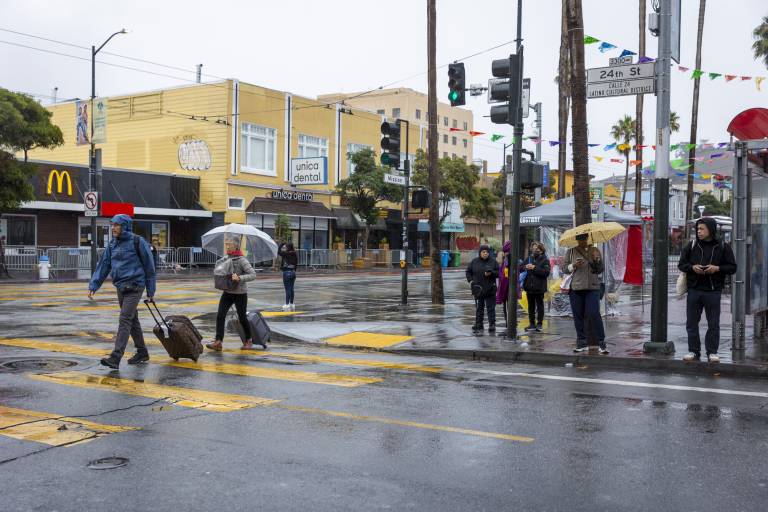
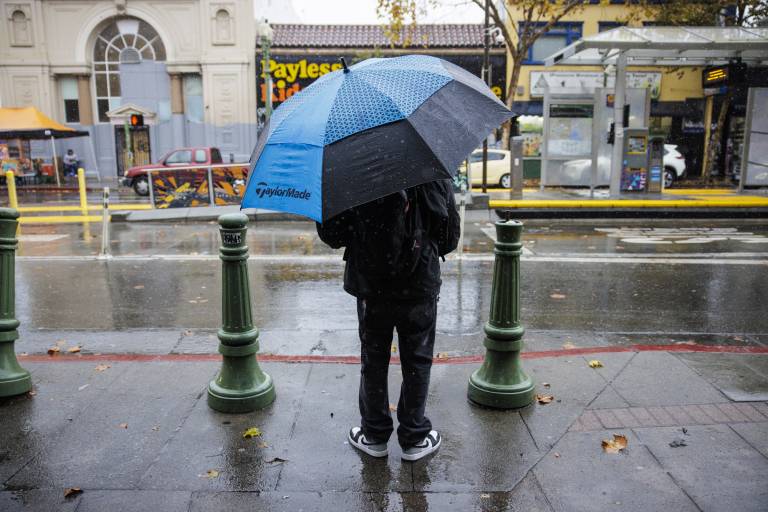
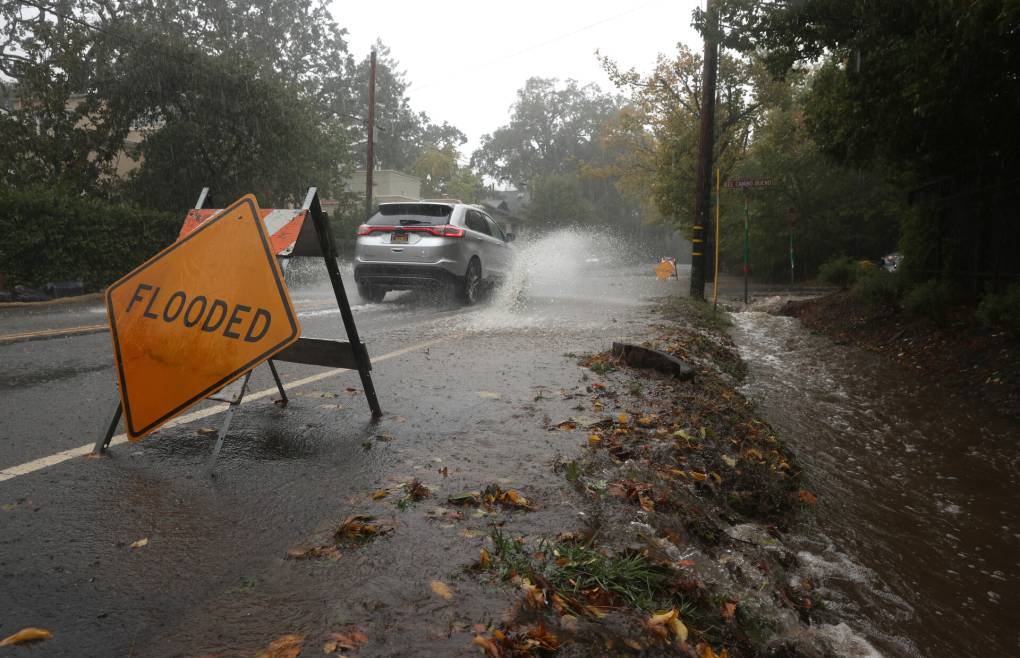
3 Storms Will Bring Much-Needed Rain to Bay Area and Snow in the Sierras
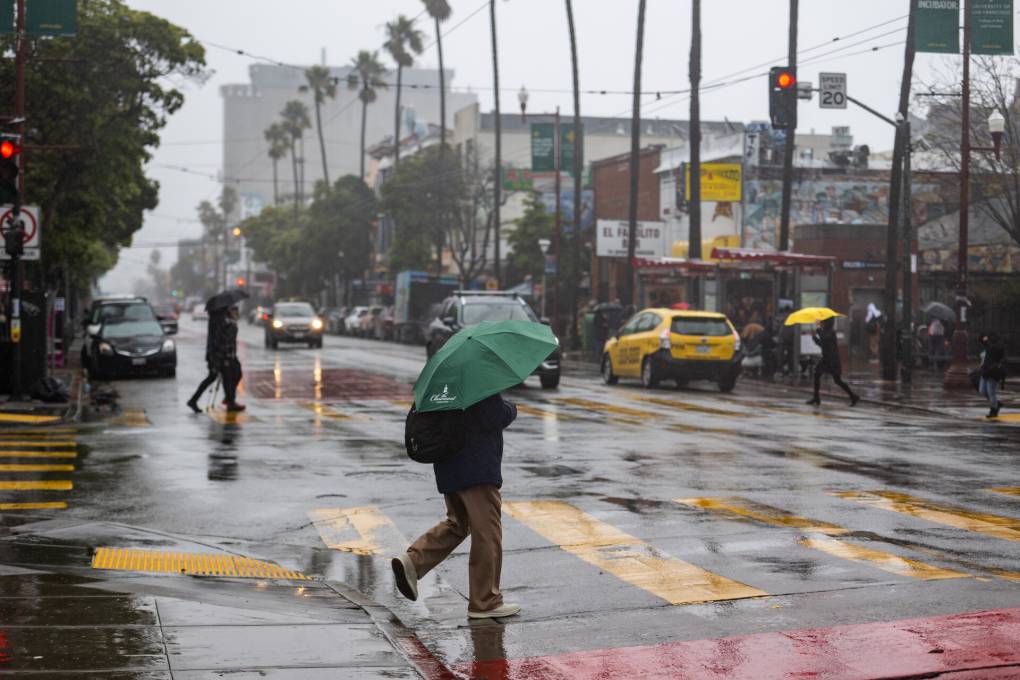
Bay Area Storm Brings Winds Up to 80 MPH as Atmospheric River Sweeps Region
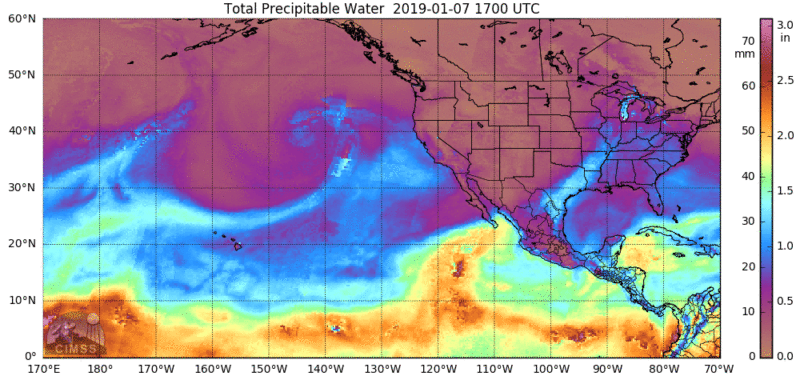
Rivers in the Sky: What You Need to Know About Atmospheric River Storms
Bay Area Braces for Heavy Rain, Fierce Winds During Thursday Morning Commute
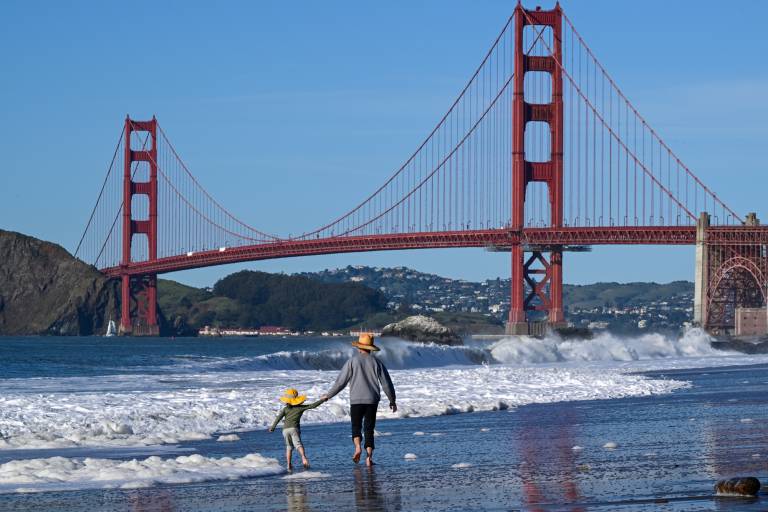
The Bay Area Basks in the Sun, Before an Atmospheric River Rolls in This Week
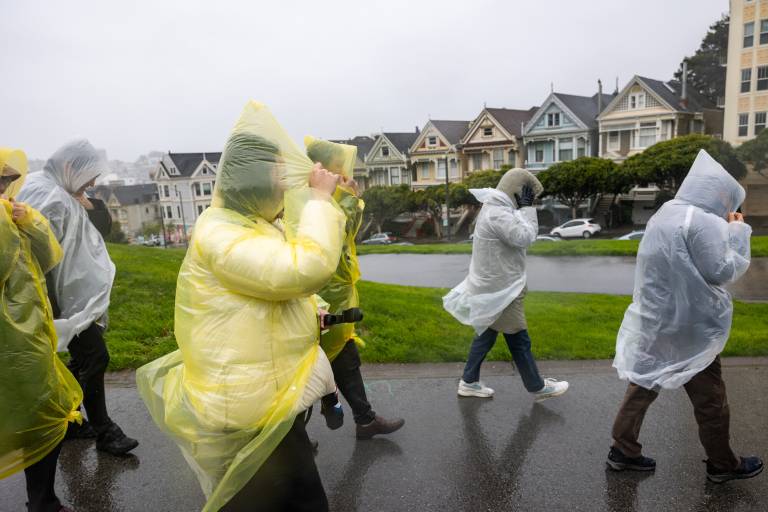
Hold on to Your Hat: Bay Area Feels More Gusty Winds After Atmospheric River Subsides
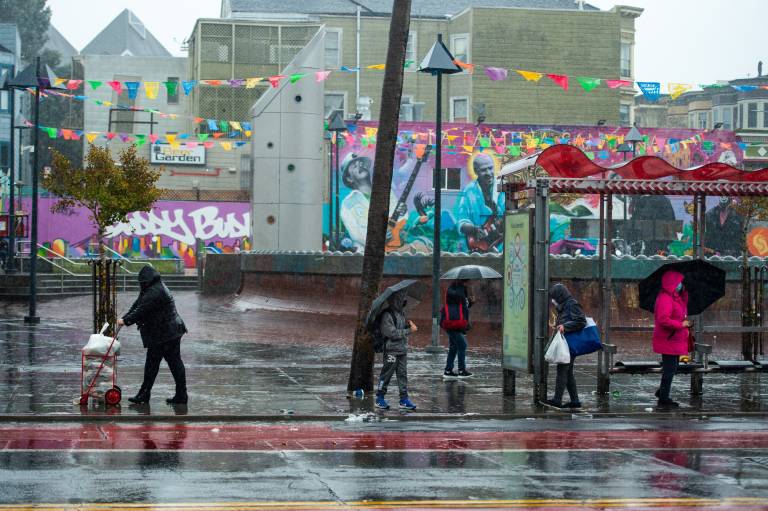
Rain on Me: Bay Area Braces for a Wet and Windy Atmospheric River Storm
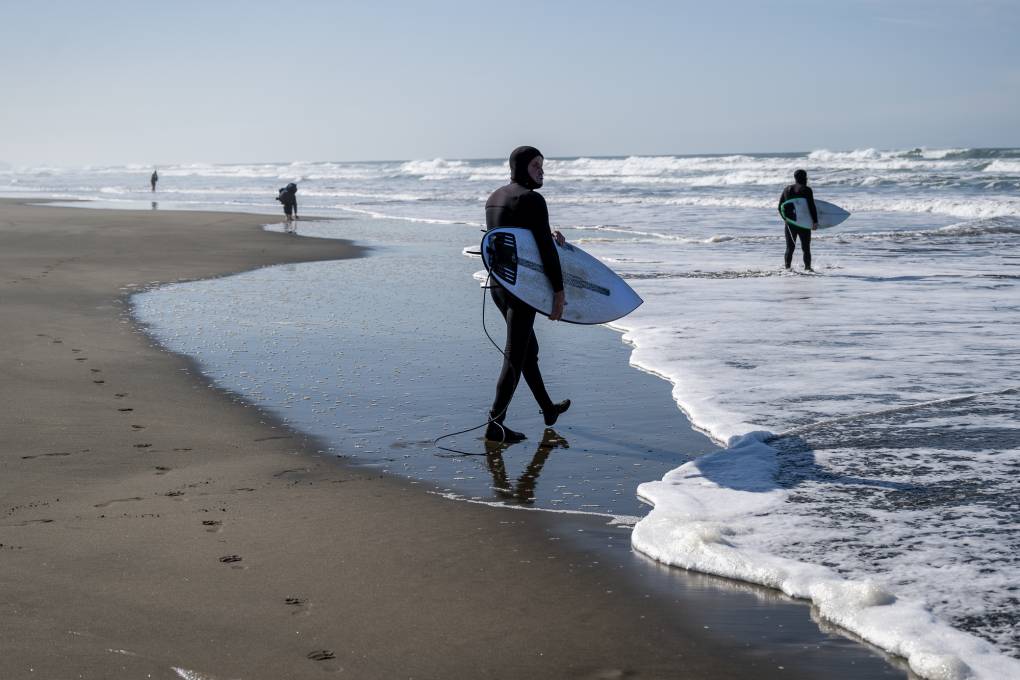
SF Dumps Millions of Gallons of Sewage During Big Storms. Surfers Say That Needs to Stop
Atmospheric Rivers in California’s Ancient Past Exceeded Modern Storms
Sponsored
Player sponsored by
window.__IS_SSR__=true
window.__INITIAL_STATE__={
"attachmentsReducer": {
"audio_0": {
"type": "attachments",
"id": "audio_0",
"imgSizes": {
"kqedFullSize": {
"file": "https://ww2.kqed.org/news/wp-content/themes/KQED-unified/img/audio_bgs/background0.jpg"
}
}
},
"audio_1": {
"type": "attachments",
"id": "audio_1",
"imgSizes": {
"kqedFullSize": {
"file": "https://ww2.kqed.org/news/wp-content/themes/KQED-unified/img/audio_bgs/background1.jpg"
}
}
},
"audio_2": {
"type": "attachments",
"id": "audio_2",
"imgSizes": {
"kqedFullSize": {
"file": "https://ww2.kqed.org/news/wp-content/themes/KQED-unified/img/audio_bgs/background2.jpg"
}
}
},
"audio_3": {
"type": "attachments",
"id": "audio_3",
"imgSizes": {
"kqedFullSize": {
"file": "https://ww2.kqed.org/news/wp-content/themes/KQED-unified/img/audio_bgs/background3.jpg"
}
}
},
"audio_4": {
"type": "attachments",
"id": "audio_4",
"imgSizes": {
"kqedFullSize": {
"file": "https://ww2.kqed.org/news/wp-content/themes/KQED-unified/img/audio_bgs/background4.jpg"
}
}
},
"placeholder": {
"type": "attachments",
"id": "placeholder",
"imgSizes": {
"thumbnail": {
"file": "https://cdn.kqed.org/wp-content/uploads/2024/12/KQED-Default-Image-816638274-2000x1333-1-160x107.jpg",
"width": 160,
"height": 107,
"mimeType": "image/jpeg"
},
"medium": {
"file": "https://cdn.kqed.org/wp-content/uploads/2024/12/KQED-Default-Image-816638274-2000x1333-1-800x533.jpg",
"width": 800,
"height": 533,
"mimeType": "image/jpeg"
},
"medium_large": {
"file": "https://cdn.kqed.org/wp-content/uploads/2024/12/KQED-Default-Image-816638274-2000x1333-1-768x512.jpg",
"width": 768,
"height": 512,
"mimeType": "image/jpeg"
},
"large": {
"file": "https://cdn.kqed.org/wp-content/uploads/2024/12/KQED-Default-Image-816638274-2000x1333-1-1020x680.jpg",
"width": 1020,
"height": 680,
"mimeType": "image/jpeg"
},
"1536x1536": {
"file": "https://cdn.kqed.org/wp-content/uploads/2024/12/KQED-Default-Image-816638274-2000x1333-1-1536x1024.jpg",
"width": 1536,
"height": 1024,
"mimeType": "image/jpeg"
},
"fd-lrg": {
"file": "https://cdn.kqed.org/wp-content/uploads/2024/12/KQED-Default-Image-816638274-2000x1333-1-1536x1024.jpg",
"width": 1536,
"height": 1024,
"mimeType": "image/jpeg"
},
"fd-med": {
"file": "https://cdn.kqed.org/wp-content/uploads/2024/12/KQED-Default-Image-816638274-2000x1333-1-1020x680.jpg",
"width": 1020,
"height": 680,
"mimeType": "image/jpeg"
},
"fd-sm": {
"file": "https://cdn.kqed.org/wp-content/uploads/2024/12/KQED-Default-Image-816638274-2000x1333-1-800x533.jpg",
"width": 800,
"height": 533,
"mimeType": "image/jpeg"
},
"post-thumbnail": {
"file": "https://cdn.kqed.org/wp-content/uploads/2024/12/KQED-Default-Image-816638274-2000x1333-1-672x372.jpg",
"width": 672,
"height": 372,
"mimeType": "image/jpeg"
},
"twentyfourteen-full-width": {
"file": "https://cdn.kqed.org/wp-content/uploads/2024/12/KQED-Default-Image-816638274-2000x1333-1-1038x576.jpg",
"width": 1038,
"height": 576,
"mimeType": "image/jpeg"
},
"xxsmall": {
"file": "https://cdn.kqed.org/wp-content/uploads/2024/12/KQED-Default-Image-816638274-2000x1333-1-160x107.jpg",
"width": 160,
"height": 107,
"mimeType": "image/jpeg"
},
"xsmall": {
"file": "https://cdn.kqed.org/wp-content/uploads/2024/12/KQED-Default-Image-816638274-2000x1333-1-672x372.jpg",
"width": 672,
"height": 372,
"mimeType": "image/jpeg"
},
"small": {
"file": "https://cdn.kqed.org/wp-content/uploads/2024/12/KQED-Default-Image-816638274-2000x1333-1-672x372.jpg",
"width": 672,
"height": 372,
"mimeType": "image/jpeg"
},
"xlarge": {
"file": "https://cdn.kqed.org/wp-content/uploads/2024/12/KQED-Default-Image-816638274-2000x1333-1-1020x680.jpg",
"width": 1020,
"height": 680,
"mimeType": "image/jpeg"
},
"full-width": {
"file": "https://cdn.kqed.org/wp-content/uploads/2024/12/KQED-Default-Image-816638274-2000x1333-1-1920x1280.jpg",
"width": 1920,
"height": 1280,
"mimeType": "image/jpeg"
},
"guest-author-32": {
"file": "https://cdn.kqed.org/wp-content/uploads/2025/01/KQED-Default-Image-816638274-1333x1333-1-160x160.jpg",
"width": 32,
"height": 32,
"mimeType": "image/jpeg"
},
"guest-author-50": {
"file": "https://cdn.kqed.org/wp-content/uploads/2025/01/KQED-Default-Image-816638274-1333x1333-1-160x160.jpg",
"width": 50,
"height": 50,
"mimeType": "image/jpeg"
},
"guest-author-64": {
"file": "https://cdn.kqed.org/wp-content/uploads/2025/01/KQED-Default-Image-816638274-1333x1333-1-160x160.jpg",
"width": 64,
"height": 64,
"mimeType": "image/jpeg"
},
"guest-author-96": {
"file": "https://cdn.kqed.org/wp-content/uploads/2025/01/KQED-Default-Image-816638274-1333x1333-1-160x160.jpg",
"width": 96,
"height": 96,
"mimeType": "image/jpeg"
},
"guest-author-128": {
"file": "https://cdn.kqed.org/wp-content/uploads/2025/01/KQED-Default-Image-816638274-1333x1333-1-160x160.jpg",
"width": 128,
"height": 128,
"mimeType": "image/jpeg"
},
"detail": {
"file": "https://cdn.kqed.org/wp-content/uploads/2025/01/KQED-Default-Image-816638274-1333x1333-1-160x160.jpg",
"width": 160,
"height": 160,
"mimeType": "image/jpeg"
},
"kqedFullSize": {
"file": "https://cdn.kqed.org/wp-content/uploads/2024/12/KQED-Default-Image-816638274-2000x1333-1.jpg",
"width": 2000,
"height": 1333
}
}
},
"science_1999718": {
"type": "attachments",
"id": "science_1999718",
"meta": {
"index": "attachments_1716263798",
"site": "science",
"id": "1999718",
"found": true
},
"title": "251113-rainfile00398_TV_qed",
"publishDate": 1766179907,
"status": "inherit",
"parent": 1999695,
"modified": 1766179916,
"caption": "Pedestrians wait at a bus stop in the rain in the Mission district in San Francisco on Nov. 13, 2025. Thanks to a week-long atmospheric river, forecasters are predicting a rainy Christmas Day across Northern California and potentially snow in the Sierra Nevada.",
"credit": "Tâm Vũ/KQED",
"altTag": null,
"description": null,
"imgSizes": {
"thumbnail": {
"file": "https://cdn.kqed.org/wp-content/uploads/sites/35/2025/12/251113-rainfile00398_TV_qed-160x107.jpg",
"width": 160,
"height": 107,
"mimeType": "image/jpeg"
},
"medium_large": {
"file": "https://cdn.kqed.org/wp-content/uploads/sites/35/2025/12/251113-rainfile00398_TV_qed-768x512.jpg",
"width": 768,
"height": 512,
"mimeType": "image/jpeg"
},
"1536x1536": {
"file": "https://cdn.kqed.org/wp-content/uploads/sites/35/2025/12/251113-rainfile00398_TV_qed-1536x1024.jpg",
"width": 1536,
"height": 1024,
"mimeType": "image/jpeg"
},
"post-thumbnail": {
"file": "https://cdn.kqed.org/wp-content/uploads/sites/35/2025/12/251113-rainfile00398_TV_qed-672x372.jpg",
"width": 672,
"height": 372,
"mimeType": "image/jpeg"
},
"twentyfourteen-full-width": {
"file": "https://cdn.kqed.org/wp-content/uploads/sites/35/2025/12/251113-rainfile00398_TV_qed-1038x576.jpg",
"width": 1038,
"height": 576,
"mimeType": "image/jpeg"
},
"npr-cds-wide": {
"file": "https://cdn.kqed.org/wp-content/uploads/sites/35/2025/12/251113-rainfile00398_TV_qed-1200x675.jpg",
"width": 1200,
"height": 675,
"mimeType": "image/jpeg"
},
"kqedFullSize": {
"file": "https://cdn.kqed.org/wp-content/uploads/sites/35/2025/12/251113-rainfile00398_TV_qed.jpg",
"width": 2000,
"height": 1333
}
},
"fetchFailed": false,
"isLoading": false
},
"science_1999260": {
"type": "attachments",
"id": "science_1999260",
"meta": {
"index": "attachments_1716263798",
"site": "science",
"id": "1999260",
"found": true
},
"title": "251113-RAIN-FILE-MD-04-KQED",
"publishDate": 1763063037,
"status": "inherit",
"parent": 1999254,
"modified": 1763063071,
"caption": "A person waits to cross the street in the Fruitvale neighborhood of Oakland on Nov. 13, 2025.",
"credit": "Martin do Nascimento/KQED",
"altTag": null,
"description": null,
"imgSizes": {
"thumbnail": {
"file": "https://cdn.kqed.org/wp-content/uploads/sites/35/2025/11/251113-RAIN-FILE-MD-04-KQED-160x107.jpg",
"width": 160,
"height": 107,
"mimeType": "image/jpeg"
},
"medium_large": {
"file": "https://cdn.kqed.org/wp-content/uploads/sites/35/2025/11/251113-RAIN-FILE-MD-04-KQED-768x512.jpg",
"width": 768,
"height": 512,
"mimeType": "image/jpeg"
},
"1536x1536": {
"file": "https://cdn.kqed.org/wp-content/uploads/sites/35/2025/11/251113-RAIN-FILE-MD-04-KQED-1536x1025.jpg",
"width": 1536,
"height": 1025,
"mimeType": "image/jpeg"
},
"post-thumbnail": {
"file": "https://cdn.kqed.org/wp-content/uploads/sites/35/2025/11/251113-RAIN-FILE-MD-04-KQED-672x372.jpg",
"width": 672,
"height": 372,
"mimeType": "image/jpeg"
},
"twentyfourteen-full-width": {
"file": "https://cdn.kqed.org/wp-content/uploads/sites/35/2025/11/251113-RAIN-FILE-MD-04-KQED-1038x576.jpg",
"width": 1038,
"height": 576,
"mimeType": "image/jpeg"
},
"npr-cds-wide": {
"file": "https://cdn.kqed.org/wp-content/uploads/sites/35/2025/11/251113-RAIN-FILE-MD-04-KQED-1200x675.jpg",
"width": 1200,
"height": 675,
"mimeType": "image/jpeg"
},
"kqedFullSize": {
"file": "https://cdn.kqed.org/wp-content/uploads/sites/35/2025/11/251113-RAIN-FILE-MD-04-KQED-e1763063927294.jpg",
"width": 2000,
"height": 1334
}
},
"fetchFailed": false,
"isLoading": false
},
"science_1936848": {
"type": "attachments",
"id": "science_1936848",
"meta": {
"index": "attachments_1716263798",
"site": "science",
"id": "1936848",
"found": true
},
"parent": 1935067,
"imgSizes": {
"small": {
"file": "https://ww2.kqed.org/app/uploads/sites/35/2019/01/ARstormcurrent-520x244.gif",
"width": 520,
"mimeType": "image/gif",
"height": 244
},
"thumbnail": {
"file": "https://ww2.kqed.org/app/uploads/sites/35/2019/01/ARstormcurrent-160x75.gif",
"width": 160,
"mimeType": "image/gif",
"height": 75
},
"fd-sm": {
"file": "https://ww2.kqed.org/app/uploads/sites/35/2019/01/ARstormcurrent-960x451.gif",
"width": 960,
"mimeType": "image/gif",
"height": 451
},
"post-thumbnail": {
"file": "https://ww2.kqed.org/app/uploads/sites/35/2019/01/ARstormcurrent-672x372.gif",
"width": 672,
"mimeType": "image/gif",
"height": 372
},
"xsmall": {
"file": "https://ww2.kqed.org/app/uploads/sites/35/2019/01/ARstormcurrent-375x176.gif",
"width": 375,
"mimeType": "image/gif",
"height": 176
},
"kqedFullSize": {
"file": "https://ww2.kqed.org/app/uploads/sites/35/2019/01/ARstormcurrent.gif",
"width": 1000,
"height": 470
},
"guest-author-50": {
"file": "https://ww2.kqed.org/app/uploads/sites/35/2019/01/ARstormcurrent-50x50.gif",
"width": 50,
"mimeType": "image/gif",
"height": 50
},
"guest-author-96": {
"file": "https://ww2.kqed.org/app/uploads/sites/35/2019/01/ARstormcurrent-96x96.gif",
"width": 96,
"mimeType": "image/gif",
"height": 96
},
"medium": {
"file": "https://ww2.kqed.org/app/uploads/sites/35/2019/01/ARstormcurrent-800x376.gif",
"width": 800,
"mimeType": "image/gif",
"height": 376
},
"guest-author-64": {
"file": "https://ww2.kqed.org/app/uploads/sites/35/2019/01/ARstormcurrent-64x64.gif",
"width": 64,
"mimeType": "image/gif",
"height": 64
},
"guest-author-32": {
"file": "https://ww2.kqed.org/app/uploads/sites/35/2019/01/ARstormcurrent-32x32.gif",
"width": 32,
"mimeType": "image/gif",
"height": 32
},
"detail": {
"file": "https://ww2.kqed.org/app/uploads/sites/35/2019/01/ARstormcurrent-150x150.gif",
"width": 150,
"mimeType": "image/gif",
"height": 150
},
"medium_large": {
"file": "https://ww2.kqed.org/app/uploads/sites/35/2019/01/ARstormcurrent-768x361.gif",
"width": 768,
"mimeType": "image/gif",
"height": 361
},
"guest-author-128": {
"file": "https://ww2.kqed.org/app/uploads/sites/35/2019/01/ARstormcurrent-128x128.gif",
"width": 128,
"mimeType": "image/gif",
"height": 128
},
"xxsmall": {
"file": "https://ww2.kqed.org/app/uploads/sites/35/2019/01/ARstormcurrent-240x113.gif",
"width": 240,
"mimeType": "image/gif",
"height": 113
}
},
"publishDate": 1547666355,
"modified": 1547666506,
"caption": "Total precipitable water from Morphed Integrated Microwave Imagery at Cooperative Institute for Meteorological Satellite Studies.",
"description": null,
"title": "ARstormcurrent",
"credit": "Center for Western Weather and Water Extremes",
"status": "inherit",
"fetchFailed": false,
"isLoading": false
},
"science_1977202": {
"type": "attachments",
"id": "science_1977202",
"meta": {
"index": "attachments_1716263798",
"site": "science",
"id": "1977202",
"found": true
},
"parent": 1935067,
"imgSizes": {
"thumbnail": {
"file": "https://ww2.kqed.org/app/uploads/sites/35/2019/01/atmosphericrivers-160x76.png",
"width": 160,
"mimeType": "image/png",
"height": 76
},
"post-thumbnail": {
"file": "https://ww2.kqed.org/app/uploads/sites/35/2019/01/atmosphericrivers-672x372.png",
"width": 672,
"mimeType": "image/png",
"height": 372
},
"kqedFullSize": {
"file": "https://ww2.kqed.org/app/uploads/sites/35/2019/01/atmosphericrivers.png",
"width": 998,
"height": 471
},
"medium": {
"file": "https://ww2.kqed.org/app/uploads/sites/35/2019/01/atmosphericrivers-800x378.png",
"width": 800,
"mimeType": "image/png",
"height": 378
},
"medium_large": {
"file": "https://ww2.kqed.org/app/uploads/sites/35/2019/01/atmosphericrivers-768x362.png",
"width": 768,
"mimeType": "image/png",
"height": 362
}
},
"publishDate": 1634754133,
"modified": 1634754153,
"caption": null,
"description": null,
"title": "Atmospheric Rivers",
"credit": null,
"status": "inherit",
"altTag": "Atmospheric Rivers",
"fetchFailed": false,
"isLoading": false
},
"science_1999213": {
"type": "attachments",
"id": "science_1999213",
"meta": {
"index": "attachments_1716263798",
"site": "science",
"id": "1999213",
"found": true
},
"title": "People wait at a Muni stop on Mission Street in the rain on Dec. 13, 2021.",
"publishDate": 1762976207,
"status": "inherit",
"parent": 1999200,
"modified": 1762976216,
"caption": "People wait at a Muni stop on Mission Street in the rain on Dec. 13, 2021.",
"credit": "Beth LaBerge/KQED",
"altTag": null,
"description": null,
"imgSizes": {
"thumbnail": {
"file": "https://cdn.kqed.org/wp-content/uploads/sites/35/2025/11/007_SanFrancisco_AtmosphericRiver_12132021_qed-160x106.jpg",
"width": 160,
"height": 106,
"mimeType": "image/jpeg"
},
"medium_large": {
"file": "https://cdn.kqed.org/wp-content/uploads/sites/35/2025/11/007_SanFrancisco_AtmosphericRiver_12132021_qed-768x511.jpg",
"width": 768,
"height": 511,
"mimeType": "image/jpeg"
},
"1536x1536": {
"file": "https://cdn.kqed.org/wp-content/uploads/sites/35/2025/11/007_SanFrancisco_AtmosphericRiver_12132021_qed-1536x1022.jpg",
"width": 1536,
"height": 1022,
"mimeType": "image/jpeg"
},
"post-thumbnail": {
"file": "https://cdn.kqed.org/wp-content/uploads/sites/35/2025/11/007_SanFrancisco_AtmosphericRiver_12132021_qed-672x372.jpg",
"width": 672,
"height": 372,
"mimeType": "image/jpeg"
},
"twentyfourteen-full-width": {
"file": "https://cdn.kqed.org/wp-content/uploads/sites/35/2025/11/007_SanFrancisco_AtmosphericRiver_12132021_qed-1038x576.jpg",
"width": 1038,
"height": 576,
"mimeType": "image/jpeg"
},
"npr-cds-wide": {
"file": "https://cdn.kqed.org/wp-content/uploads/sites/35/2025/11/007_SanFrancisco_AtmosphericRiver_12132021_qed-1200x675.jpg",
"width": 1200,
"height": 675,
"mimeType": "image/jpeg"
},
"kqedFullSize": {
"file": "https://cdn.kqed.org/wp-content/uploads/sites/35/2025/11/007_SanFrancisco_AtmosphericRiver_12132021_qed.jpg",
"width": 2000,
"height": 1331
}
},
"fetchFailed": false,
"isLoading": false
},
"science_1999185": {
"type": "attachments",
"id": "science_1999185",
"meta": {
"index": "attachments_1716263798",
"site": "science",
"id": "1999185",
"found": true
},
"title": "People enjoy at beaches during warm weather in San Francisco",
"publishDate": 1762804968,
"status": "inherit",
"parent": 1999178,
"modified": 1762806020,
"caption": "People enjoy at Baker Beach near the Golden Gate Bridge during warm weather in San Francisco, California, on Feb. 26, 2025.",
"credit": "Tayfun Coskun/Anadolu via Getty Images",
"altTag": null,
"description": null,
"imgSizes": {
"thumbnail": {
"file": "https://cdn.kqed.org/wp-content/uploads/sites/35/2025/11/SFBakerBeachGetty1-160x107.jpg",
"width": 160,
"height": 107,
"mimeType": "image/jpeg"
},
"medium_large": {
"file": "https://cdn.kqed.org/wp-content/uploads/sites/35/2025/11/SFBakerBeachGetty1-768x512.jpg",
"width": 768,
"height": 512,
"mimeType": "image/jpeg"
},
"1536x1536": {
"file": "https://cdn.kqed.org/wp-content/uploads/sites/35/2025/11/SFBakerBeachGetty1-1536x1024.jpg",
"width": 1536,
"height": 1024,
"mimeType": "image/jpeg"
},
"post-thumbnail": {
"file": "https://cdn.kqed.org/wp-content/uploads/sites/35/2025/11/SFBakerBeachGetty1-672x372.jpg",
"width": 672,
"height": 372,
"mimeType": "image/jpeg"
},
"twentyfourteen-full-width": {
"file": "https://cdn.kqed.org/wp-content/uploads/sites/35/2025/11/SFBakerBeachGetty1-1038x576.jpg",
"width": 1038,
"height": 576,
"mimeType": "image/jpeg"
},
"npr-cds-wide": {
"file": "https://cdn.kqed.org/wp-content/uploads/sites/35/2025/11/SFBakerBeachGetty1-1200x675.jpg",
"width": 1200,
"height": 675,
"mimeType": "image/jpeg"
},
"kqedFullSize": {
"file": "https://cdn.kqed.org/wp-content/uploads/sites/35/2025/11/SFBakerBeachGetty1.jpg",
"width": 2000,
"height": 1333
}
},
"fetchFailed": false,
"isLoading": false
},
"science_1999133": {
"type": "attachments",
"id": "science_1999133",
"meta": {
"index": "attachments_1716263798",
"site": "science",
"id": "1999133",
"found": true
},
"title": "240204-Storm-16-BL_qed",
"publishDate": 1762369685,
"status": "inherit",
"parent": 1999130,
"modified": 1762369730,
"caption": "A group of tourists walk through Alamo Square Park during a storm in San Francisco on Feb. 4, 2024.",
"credit": "Beth LaBerge/KQED",
"altTag": null,
"description": null,
"imgSizes": {
"thumbnail": {
"file": "https://cdn.kqed.org/wp-content/uploads/sites/35/2025/11/240204-Storm-16-BL_qed-160x107.jpg",
"width": 160,
"height": 107,
"mimeType": "image/jpeg"
},
"medium_large": {
"file": "https://cdn.kqed.org/wp-content/uploads/sites/35/2025/11/240204-Storm-16-BL_qed-768x512.jpg",
"width": 768,
"height": 512,
"mimeType": "image/jpeg"
},
"1536x1536": {
"file": "https://cdn.kqed.org/wp-content/uploads/sites/35/2025/11/240204-Storm-16-BL_qed-1536x1024.jpg",
"width": 1536,
"height": 1024,
"mimeType": "image/jpeg"
},
"post-thumbnail": {
"file": "https://cdn.kqed.org/wp-content/uploads/sites/35/2025/11/240204-Storm-16-BL_qed-672x372.jpg",
"width": 672,
"height": 372,
"mimeType": "image/jpeg"
},
"twentyfourteen-full-width": {
"file": "https://cdn.kqed.org/wp-content/uploads/sites/35/2025/11/240204-Storm-16-BL_qed-1038x576.jpg",
"width": 1038,
"height": 576,
"mimeType": "image/jpeg"
},
"npr-cds-wide": {
"file": "https://cdn.kqed.org/wp-content/uploads/sites/35/2025/11/240204-Storm-16-BL_qed-1200x675.jpg",
"width": 1200,
"height": 675,
"mimeType": "image/jpeg"
},
"kqedFullSize": {
"file": "https://cdn.kqed.org/wp-content/uploads/sites/35/2025/11/240204-Storm-16-BL_qed.jpg",
"width": 2000,
"height": 1333
}
},
"fetchFailed": false,
"isLoading": false
},
"science_1985854": {
"type": "attachments",
"id": "science_1985854",
"meta": {
"index": "attachments_1716263798",
"site": "science",
"id": "1985854",
"found": true
},
"title": "002_KQED_AtmosphericRiver_03142023-qut",
"publishDate": 1702591654,
"status": "inherit",
"parent": 0,
"modified": 1762209865,
"caption": "A storm moves through San Francisco in the afternoon of March 14, 2023, bringing high winds and rain.",
"credit": "Beth LaBerge/KQED",
"altTag": "A person with a green umbrella crosses a rain-soaked street.",
"description": null,
"imgSizes": {
"medium": {
"file": "https://cdn.kqed.org/wp-content/uploads/sites/35/2023/12/002_KQED_AtmosphericRiver_03142023-qut-800x533.jpg",
"width": 800,
"height": 533,
"mimeType": "image/jpeg"
},
"large": {
"file": "https://cdn.kqed.org/wp-content/uploads/sites/35/2023/12/002_KQED_AtmosphericRiver_03142023-qut-1020x680.jpg",
"width": 1020,
"height": 680,
"mimeType": "image/jpeg"
},
"thumbnail": {
"file": "https://cdn.kqed.org/wp-content/uploads/sites/35/2023/12/002_KQED_AtmosphericRiver_03142023-qut-160x107.jpg",
"width": 160,
"height": 107,
"mimeType": "image/jpeg"
},
"medium_large": {
"file": "https://cdn.kqed.org/wp-content/uploads/sites/35/2023/12/002_KQED_AtmosphericRiver_03142023-qut-768x512.jpg",
"width": 768,
"height": 512,
"mimeType": "image/jpeg"
},
"1536x1536": {
"file": "https://cdn.kqed.org/wp-content/uploads/sites/35/2023/12/002_KQED_AtmosphericRiver_03142023-qut-1536x1024.jpg",
"width": 1536,
"height": 1024,
"mimeType": "image/jpeg"
},
"post-thumbnail": {
"file": "https://cdn.kqed.org/wp-content/uploads/sites/35/2023/12/002_KQED_AtmosphericRiver_03142023-qut-672x372.jpg",
"width": 672,
"height": 372,
"mimeType": "image/jpeg"
},
"twentyfourteen-full-width": {
"file": "https://cdn.kqed.org/wp-content/uploads/sites/35/2023/12/002_KQED_AtmosphericRiver_03142023-qut-1038x576.jpg",
"width": 1038,
"height": 576,
"mimeType": "image/jpeg"
},
"kqedFullSize": {
"file": "https://cdn.kqed.org/wp-content/uploads/sites/35/2023/12/002_KQED_AtmosphericRiver_03142023-qut.jpg",
"width": 1920,
"height": 1280
}
},
"fetchFailed": false,
"isLoading": false
},
"science_1996156": {
"type": "attachments",
"id": "science_1996156",
"meta": {
"index": "attachments_1716263798",
"site": "science",
"id": "1996156",
"found": true
},
"title": "250210-SurferSewage-05-BL",
"publishDate": 1739402225,
"status": "inherit",
"parent": 1996145,
"modified": 1739402352,
"caption": "Nick Heldfond heads into the water to surf at Ocean Beach in San Francisco on Feb. 10, 2025.",
"credit": "Beth LaBerge/KQED",
"altTag": "A person in a full body wetsuit, with hood, holding a surfboard under his arm, walks into the ocean.",
"description": null,
"imgSizes": {
"medium": {
"file": "https://cdn.kqed.org/wp-content/uploads/sites/35/2025/02/250210-SurferSewage-05-BL-800x533.jpg",
"width": 800,
"height": 533,
"mimeType": "image/jpeg"
},
"large": {
"file": "https://cdn.kqed.org/wp-content/uploads/sites/35/2025/02/250210-SurferSewage-05-BL-1020x680.jpg",
"width": 1020,
"height": 680,
"mimeType": "image/jpeg"
},
"thumbnail": {
"file": "https://cdn.kqed.org/wp-content/uploads/sites/35/2025/02/250210-SurferSewage-05-BL-160x107.jpg",
"width": 160,
"height": 107,
"mimeType": "image/jpeg"
},
"medium_large": {
"file": "https://cdn.kqed.org/wp-content/uploads/sites/35/2025/02/250210-SurferSewage-05-BL-768x512.jpg",
"width": 768,
"height": 512,
"mimeType": "image/jpeg"
},
"1536x1536": {
"file": "https://cdn.kqed.org/wp-content/uploads/sites/35/2025/02/250210-SurferSewage-05-BL-1536x1024.jpg",
"width": 1536,
"height": 1024,
"mimeType": "image/jpeg"
},
"post-thumbnail": {
"file": "https://cdn.kqed.org/wp-content/uploads/sites/35/2025/02/250210-SurferSewage-05-BL-672x372.jpg",
"width": 672,
"height": 372,
"mimeType": "image/jpeg"
},
"twentyfourteen-full-width": {
"file": "https://cdn.kqed.org/wp-content/uploads/sites/35/2025/02/250210-SurferSewage-05-BL-1038x576.jpg",
"width": 1038,
"height": 576,
"mimeType": "image/jpeg"
},
"full-width": {
"file": "https://cdn.kqed.org/wp-content/uploads/sites/35/2025/02/250210-SurferSewage-05-BL-1920x1280.jpg",
"width": 1920,
"height": 1280,
"mimeType": "image/jpeg"
},
"kqedFullSize": {
"file": "https://cdn.kqed.org/wp-content/uploads/sites/35/2025/02/250210-SurferSewage-05-BL.jpg",
"width": 2000,
"height": 1333
}
},
"fetchFailed": false,
"isLoading": false
},
"science_1992516": {
"type": "attachments",
"id": "science_1992516",
"meta": {
"index": "attachments_1716263798",
"site": "science",
"id": "1992516",
"found": true
},
"parent": 1992513,
"imgSizes": {
"twentyfourteen-full-width": {
"file": "https://cdn.kqed.org/wp-content/uploads/sites/35/2024/04/GettyImages-1348746232_qut-1038x576.jpg",
"width": 1038,
"mimeType": "image/jpeg",
"height": 576
},
"thumbnail": {
"file": "https://cdn.kqed.org/wp-content/uploads/sites/35/2024/04/GettyImages-1348746232_qut-160x103.jpg",
"width": 160,
"mimeType": "image/jpeg",
"height": 103
},
"post-thumbnail": {
"file": "https://cdn.kqed.org/wp-content/uploads/sites/35/2024/04/GettyImages-1348746232_qut-672x372.jpg",
"width": 672,
"mimeType": "image/jpeg",
"height": 372
},
"kqedFullSize": {
"file": "https://cdn.kqed.org/wp-content/uploads/sites/35/2024/04/GettyImages-1348746232_qut.jpg",
"width": 1920,
"height": 1238
},
"large": {
"file": "https://cdn.kqed.org/wp-content/uploads/sites/35/2024/04/GettyImages-1348746232_qut-1020x658.jpg",
"width": 1020,
"mimeType": "image/jpeg",
"height": 658
},
"1536x1536": {
"file": "https://cdn.kqed.org/wp-content/uploads/sites/35/2024/04/GettyImages-1348746232_qut-1536x990.jpg",
"width": 1536,
"mimeType": "image/jpeg",
"height": 990
},
"medium": {
"file": "https://cdn.kqed.org/wp-content/uploads/sites/35/2024/04/GettyImages-1348746232_qut-800x516.jpg",
"width": 800,
"mimeType": "image/jpeg",
"height": 516
},
"medium_large": {
"file": "https://cdn.kqed.org/wp-content/uploads/sites/35/2024/04/GettyImages-1348746232_qut-768x495.jpg",
"width": 768,
"mimeType": "image/jpeg",
"height": 495
}
},
"publishDate": 1714511665,
"modified": 1714519104,
"caption": " A car drives along a flooded street in Ross on Oct. 24, 2021. ",
"description": null,
"title": "\"Bomb Cyclone\" Brings Heavy Precipitation To Northwest United States",
"credit": "Justin Sullivan/Getty Images",
"status": "inherit",
"altTag": "A car drives through water on a road, causing a splash with a sign that says 'Flooded' to the right.",
"fetchFailed": false,
"isLoading": false
}
},
"audioPlayerReducer": {
"postId": "stream_live",
"isPaused": true,
"isPlaying": false,
"pfsActive": false,
"pledgeModalIsOpen": true,
"playerDrawerIsOpen": false
},
"authorsReducer": {
"parcuni": {
"type": "authors",
"id": "11368",
"meta": {
"index": "authors_1716337520",
"id": "11368",
"found": true
},
"name": "Peter Arcuni",
"firstName": "Peter",
"lastName": "Arcuni",
"slug": "parcuni",
"email": "parcuni@KQED.org",
"display_author_email": false,
"staff_mastheads": [
"science"
],
"title": "Reporter",
"bio": "Peter reports radio and online stories for \u003cem>KQED Science\u003c/em>. His work has also appeared on the \u003cem>The California Report\u003c/em> morning show and \u003cem>KQED News\u003c/em>. His production credits include \u003cem>The California Report, The California Report Magazine\u003c/em> and KQED's local news podcast \u003cem>The Bay\u003c/em>. Other credits include NPR's \u003cem>All Things Considered\u003c/em>, WNYC's \u003cem>Science Friday\u003c/em>, WBUR's \u003cem>Here & Now\u003c/em>, WIRED and SFGate. Peter graduated from Brown University and earned a master's degree in journalism from Stanford. He's covered everything from homelessness to wildfires, health, the environment, arts and Thanksgiving in San Quentin prison. In other lives, he played rock n roll music and studied neuroscience. You can email him at: parcuni@kqed.org",
"avatar": "https://secure.gravatar.com/avatar/d5032f6f27199d478af34ad2e1d98732?s=600&d=blank&r=g",
"twitter": "peterarcuni",
"facebook": null,
"instagram": null,
"linkedin": null,
"sites": [
{
"site": "news",
"roles": [
"editor"
]
},
{
"site": "science",
"roles": [
"editor"
]
}
],
"headData": {
"title": "Peter Arcuni | KQED",
"description": "Reporter",
"ogImgSrc": "https://secure.gravatar.com/avatar/d5032f6f27199d478af34ad2e1d98732?s=600&d=blank&r=g",
"twImgSrc": "https://secure.gravatar.com/avatar/d5032f6f27199d478af34ad2e1d98732?s=600&d=blank&r=g"
},
"isLoading": false,
"link": "/author/parcuni"
},
"eromero": {
"type": "authors",
"id": "11746",
"meta": {
"index": "authors_1716337520",
"id": "11746",
"found": true
},
"name": "Ezra David Romero",
"firstName": "Ezra David",
"lastName": "Romero",
"slug": "eromero",
"email": "eromero@kqed.org",
"display_author_email": true,
"staff_mastheads": [
"news",
"science"
],
"title": "Climate Reporter",
"bio": "Ezra David Romero is a climate reporter for KQED News. He covers the absence and excess of water in the Bay Area — think sea level rise, flooding and drought. For nearly a decade he’s covered how warming temperatures are altering the lives of Californians. He’s reported on farmers worried their pistachio trees aren’t getting enough sleep, families desperate for water, scientists studying dying giant sequoias, and alongside firefighters containing wildfires. His work has appeared on local stations across California and nationally on public radio shows like Morning Edition, Here and Now, All Things Considered and Science Friday. ",
"avatar": "https://secure.gravatar.com/avatar/9c15bb8bab267e058708a9eeaeef16bf?s=600&d=blank&r=g",
"twitter": "ezraromero",
"facebook": null,
"instagram": null,
"linkedin": null,
"sites": [
{
"site": "arts",
"roles": [
"editor"
]
},
{
"site": "news",
"roles": [
"editor"
]
},
{
"site": "science",
"roles": [
"editor"
]
},
{
"site": "liveblog",
"roles": [
"author"
]
}
],
"headData": {
"title": "Ezra David Romero | KQED",
"description": "Climate Reporter",
"ogImgSrc": "https://secure.gravatar.com/avatar/9c15bb8bab267e058708a9eeaeef16bf?s=600&d=blank&r=g",
"twImgSrc": "https://secure.gravatar.com/avatar/9c15bb8bab267e058708a9eeaeef16bf?s=600&d=blank&r=g"
},
"isLoading": false,
"link": "/author/eromero"
}
},
"breakingNewsReducer": {},
"pagesReducer": {},
"postsReducer": {
"stream_live": {
"type": "live",
"id": "stream_live",
"audioUrl": "https://streams.kqed.org/kqedradio",
"title": "Live Stream",
"excerpt": "Live Stream information currently unavailable.",
"link": "/radio",
"featImg": "",
"label": {
"name": "KQED Live",
"link": "/"
}
},
"stream_kqedNewscast": {
"type": "posts",
"id": "stream_kqedNewscast",
"audioUrl": "https://www.kqed.org/.stream/anon/radio/RDnews/newscast.mp3?_=1",
"title": "KQED Newscast",
"featImg": "",
"label": {
"name": "88.5 FM",
"link": "/"
}
},
"science_1999695": {
"type": "posts",
"id": "science_1999695",
"meta": {
"index": "posts_1716263798",
"site": "science",
"id": "1999695",
"score": null,
"sort": [
1766180171000
]
},
"guestAuthors": [],
"slug": "3-storms-will-bring-much-needed-rain-to-bay-area-and-snow-in-the-sierras",
"title": "3 Storms Will Bring Much-Needed Rain to Bay Area and Snow in the Sierras",
"publishDate": 1766180171,
"format": "standard",
"headTitle": "3 Storms Will Bring Much-Needed Rain to Bay Area and Snow in the Sierras | KQED",
"labelTerm": {},
"content": "\u003cp>The Bay Area could get “a December’s worth of rain” over the next week, with \u003ca href=\"https://www.kqed.org/science/1999678/bay-area-you-just-might-have-yourself-a-soggy-rainy-christmas\">a rainy Christmas Day \u003c/a>and a Sierra Nevada \u003ca href=\"https://www.kqed.org/news/12066608/lake-tahoe-things-to-do-that-arent-skiing-or-snowboarding-weather-snow-sierra\">blanketed with white\u003c/a>, the National Weather Service said Friday.\u003c/p>\n\u003cp>Forecasters said they expect a weeklong \u003ca href=\"https://www.kqed.org/science/1935067/rivers-in-the-sky-what-you-need-to-know-about-atmospheric-river-storms\">atmospheric river\u003c/a> with three distinct storms to move over Northern California next week.\u003c/p>\n\u003cp>Joe Merchant, a meteorologist with the weather service’s Bay Area office, said the first wave of precipitation will begin Friday afternoon and last through Saturday, bringing much-needed rain after around six weeks of mostly dry conditions, especially in the North Bay.\u003c/p>\n\u003cp>[ad fullwidth]\u003c/p>\n\u003cp>“What we’re seeing now is just sort of setting the stage for potential problems later in the latter half of next week, which unfortunately does include Christmas Day,” Merchant said.\u003c/p>\n\u003cp>The second wave is set to crash over the Bay Area between Saturday and next Tuesday, potentially bringing 1 to 3 inches of rain in the North Bay and the possibility of flash flooding in low-lying areas. San Francisco could receive several inches by Sunday night.\u003c/p>\n\u003cp>Forecasters wrote in their daily weather \u003ca href=\"https://forecast.weather.gov/product.php?site=mtr&issuedby=MTR&product=AFD\">discussion\u003c/a> that they expect the heaviest rain on Sunday into Monday along the North Bay coast, Santa Cruz mountains and the Big Sur coast, with winds up to 40 mph and a 15% chance of thunderstorms.\u003c/p>\n\u003cfigure id=\"attachment_1999213\" class=\"wp-caption aligncenter\" style=\"max-width: 2000px\">\u003cimg loading=\"lazy\" decoding=\"async\" class=\"size-full wp-image-1999213\" src=\"https://cdn.kqed.org/wp-content/uploads/sites/35/2025/11/007_SanFrancisco_AtmosphericRiver_12132021_qed.jpg\" alt=\"\" width=\"2000\" height=\"1331\" data-wp-editing=\"1\" srcset=\"https://cdn.kqed.org/wp-content/uploads/sites/35/2025/11/007_SanFrancisco_AtmosphericRiver_12132021_qed.jpg 2000w, https://cdn.kqed.org/wp-content/uploads/sites/35/2025/11/007_SanFrancisco_AtmosphericRiver_12132021_qed-160x106.jpg 160w, https://cdn.kqed.org/wp-content/uploads/sites/35/2025/11/007_SanFrancisco_AtmosphericRiver_12132021_qed-768x511.jpg 768w, https://cdn.kqed.org/wp-content/uploads/sites/35/2025/11/007_SanFrancisco_AtmosphericRiver_12132021_qed-1536x1022.jpg 1536w\" sizes=\"auto, (max-width: 2000px) 100vw, 2000px\">\u003cfigcaption class=\"wp-caption-text\">People wait at a Muni stop on Mission Street in the rain on Dec. 13, 2021. \u003ccite>(Beth LaBerge/KQED)\u003c/cite>\u003c/figcaption>\u003c/figure>\n\u003cp>The weather service has not yet issued a flood watch, warning or advisory. Flooding depends heavily on where the storm stalls or moves over the region, but meteorologists said urban areas and low-lying areas with poor drainage are most at risk. Flashy streams, such as Mark West Creek in Sonoma County, are also susceptible to flooding, especially as soils become saturated.\u003c/p>\n\u003cp>Forecasters said they expect the third and potentially most potent wave to make landfall on Tuesday afternoon and last through next Friday. The storm is likely to bring moderate to heavy rain, which could cause larger rivers to flood late next week.\u003c/p>\n\u003cp>“It’s not going to be raining steadily for seven days straight or anything like that,” Merchant said. “But you will have to pay attention and know when these rounds of more impactful rainfall come through your area.”[aside postID=news_12066736 hero='https://cdn.kqed.org/wp-content/uploads/sites/10/2025/12/TuleFogGetty.jpg']While it is unclear where, or even if, the atmospheric river will stall over the Bay Area, these weather systems can act like a fire hose, absolutely drenching wherever they park. In recent history, they’ve \u003ca href=\"https://www.kqed.org/science/1994168/the-pajaro-flood-forced-them-to-flee-californias-high-rents-forced-them-to-return\">caused significant flooding\u003c/a> from Guerneville to San Francisco to Watsonville.\u003c/p>\n\u003cp>Merchant said the first two waves of rain are progressive and don’t look like they’ll stick around, but it is too early to say what the third storm will bring.\u003c/p>\n\u003cp>“By Thursday, that’s where we’re going to have a little more concern about possibly more widespread impacts like fallen trees and power lines,” Merchant said. “But to be honest, it’s too far out at this point to know exactly the timing of those impacts.”\u003c/p>\n\u003cp>Because of all the wind and rain, people should allow “more time to travel through our area basically over the next week,” he said.\u003c/p>\n\u003cp>At the moment, the massive river in the sky headed towards us is building from Hawaii to the Pacific Coast. Weather experts measure the intensity of atmospheric rivers on a scale from 0 to 5. This system could reach a 3 across the North Bay and a 4 across the San Francisco peninsula and South Bay, according to \u003ca href=\"https://cw3e.ucsd.edu/arscale/\">atmospheric river-scale modeling\u003c/a> by the Center for Western Weather and Water Extremes at UC San Diego’s Scripps Institution of Oceanography.\u003c/p>\n\u003cfigure id=\"attachment_1984920\" class=\"wp-caption aligncenter\" style=\"max-width: 2000px\">\u003cimg loading=\"lazy\" decoding=\"async\" class=\"wp-image-1984920 size-full\" src=\"https://cdn.kqed.org/wp-content/uploads/sites/35/2023/10/GettyImages-1482972333-scaled-e1766179697716.jpg\" alt=\"Snow storm falls on the Sierras.\" width=\"2000\" height=\"1330\">\u003cfigcaption class=\"wp-caption-text\">Snow blows in the Sierra Nevada after yet another storm brought heavy snowfall, raising the snowpack on March 29, 2023, in Mammoth Lakes, California. \u003ccite>(Mario Tama/Getty Images)\u003c/cite>\u003c/figcaption>\u003c/figure>\n\u003cp>As for the Sierra Nevada, forecasters said the first two waves will bring mostly rain at elevations lower than 8,000 feet. But they expect the snowline to drop to around 6,000 feet during the third system, starting Tuesday afternoon. Heavy snow will likely complicate travel on Christmas Eve and Christmas Day.\u003c/p>\n\u003cp>“We’re talking multiple feet of snow above pass level and even at pass level for the Christmas holiday,” said Scott Rowe, senior service hydrologist and meteorologist with the weather service’s Sacramento office.\u003c/p>\n\u003cp>The determination of whether mountain residents or visitors will have a white Christmas depends on elevation, Rowe said. People staying in cabins above 6,000 feet in elevation will likely see snow, while those staying below about 5,500 feet will likely experience rain all week.\u003c/p>\n\u003cp>\u003c/p>\n",
"blocks": [],
"excerpt": "Thanks to a week-long atmospheric river, forecasters are predicting a rainy Christmas Day across Northern California and potentially snow in the Sierra Nevada.",
"status": "publish",
"parent": 0,
"modified": 1766183739,
"stats": {
"hasAudio": false,
"hasVideo": false,
"hasChartOrMap": false,
"iframeSrcs": [],
"hasGoogleForm": false,
"hasGallery": false,
"hasHearkenModule": false,
"hasPolis": false,
"paragraphCount": 18,
"wordCount": 813
},
"headData": {
"title": "3 Storms Will Bring Much-Needed Rain to Bay Area and Snow in the Sierras | KQED",
"description": "Thanks to a week-long atmospheric river, forecasters are predicting a rainy Christmas Day across Northern California and potentially snow in the Sierra Nevada.",
"ogTitle": "",
"ogDescription": "",
"ogImgId": "",
"twTitle": "",
"twDescription": "",
"twImgId": "",
"schema": {
"@context": "https://schema.org",
"@type": "Article",
"headline": "3 Storms Will Bring Much-Needed Rain to Bay Area and Snow in the Sierras",
"datePublished": "2025-12-19T13:36:11-08:00",
"dateModified": "2025-12-19T14:35:39-08:00",
"image": "https://cdn.kqed.org/wp-content/uploads/2020/02/KQED-OG-Image@1x.png"
}
},
"primaryCategory": {
"termId": 31,
"slug": "climate",
"name": "Climate"
},
"source": "News",
"sticky": false,
"nprStoryId": "kqed-1999695",
"templateType": "standard",
"featuredImageType": "standard",
"excludeFromSiteSearch": "Include",
"articleAge": "0",
"path": "/science/1999695/3-storms-will-bring-much-needed-rain-to-bay-area-and-snow-in-the-sierras",
"audioTrackLength": null,
"parsedContent": [
{
"type": "contentString",
"content": "\u003cdiv class=\"post-body\">\u003cp>\u003cp>The Bay Area could get “a December’s worth of rain” over the next week, with \u003ca href=\"https://www.kqed.org/science/1999678/bay-area-you-just-might-have-yourself-a-soggy-rainy-christmas\">a rainy Christmas Day \u003c/a>and a Sierra Nevada \u003ca href=\"https://www.kqed.org/news/12066608/lake-tahoe-things-to-do-that-arent-skiing-or-snowboarding-weather-snow-sierra\">blanketed with white\u003c/a>, the National Weather Service said Friday.\u003c/p>\n\u003cp>Forecasters said they expect a weeklong \u003ca href=\"https://www.kqed.org/science/1935067/rivers-in-the-sky-what-you-need-to-know-about-atmospheric-river-storms\">atmospheric river\u003c/a> with three distinct storms to move over Northern California next week.\u003c/p>\n\u003cp>Joe Merchant, a meteorologist with the weather service’s Bay Area office, said the first wave of precipitation will begin Friday afternoon and last through Saturday, bringing much-needed rain after around six weeks of mostly dry conditions, especially in the North Bay.\u003c/p>\n\u003cp>\u003c/p>\u003c/div>",
"attributes": {
"named": {},
"numeric": []
}
},
{
"type": "component",
"content": "",
"name": "ad",
"attributes": {
"named": {
"label": "fullwidth"
},
"numeric": [
"fullwidth"
]
}
},
{
"type": "contentString",
"content": "\u003cdiv class=\"post-body\">\u003cp>\u003c/p>\n\u003cp>“What we’re seeing now is just sort of setting the stage for potential problems later in the latter half of next week, which unfortunately does include Christmas Day,” Merchant said.\u003c/p>\n\u003cp>The second wave is set to crash over the Bay Area between Saturday and next Tuesday, potentially bringing 1 to 3 inches of rain in the North Bay and the possibility of flash flooding in low-lying areas. San Francisco could receive several inches by Sunday night.\u003c/p>\n\u003cp>Forecasters wrote in their daily weather \u003ca href=\"https://forecast.weather.gov/product.php?site=mtr&issuedby=MTR&product=AFD\">discussion\u003c/a> that they expect the heaviest rain on Sunday into Monday along the North Bay coast, Santa Cruz mountains and the Big Sur coast, with winds up to 40 mph and a 15% chance of thunderstorms.\u003c/p>\n\u003cfigure id=\"attachment_1999213\" class=\"wp-caption aligncenter\" style=\"max-width: 2000px\">\u003cimg loading=\"lazy\" decoding=\"async\" class=\"size-full wp-image-1999213\" src=\"https://cdn.kqed.org/wp-content/uploads/sites/35/2025/11/007_SanFrancisco_AtmosphericRiver_12132021_qed.jpg\" alt=\"\" width=\"2000\" height=\"1331\" data-wp-editing=\"1\" srcset=\"https://cdn.kqed.org/wp-content/uploads/sites/35/2025/11/007_SanFrancisco_AtmosphericRiver_12132021_qed.jpg 2000w, https://cdn.kqed.org/wp-content/uploads/sites/35/2025/11/007_SanFrancisco_AtmosphericRiver_12132021_qed-160x106.jpg 160w, https://cdn.kqed.org/wp-content/uploads/sites/35/2025/11/007_SanFrancisco_AtmosphericRiver_12132021_qed-768x511.jpg 768w, https://cdn.kqed.org/wp-content/uploads/sites/35/2025/11/007_SanFrancisco_AtmosphericRiver_12132021_qed-1536x1022.jpg 1536w\" sizes=\"auto, (max-width: 2000px) 100vw, 2000px\">\u003cfigcaption class=\"wp-caption-text\">People wait at a Muni stop on Mission Street in the rain on Dec. 13, 2021. \u003ccite>(Beth LaBerge/KQED)\u003c/cite>\u003c/figcaption>\u003c/figure>\n\u003cp>The weather service has not yet issued a flood watch, warning or advisory. Flooding depends heavily on where the storm stalls or moves over the region, but meteorologists said urban areas and low-lying areas with poor drainage are most at risk. Flashy streams, such as Mark West Creek in Sonoma County, are also susceptible to flooding, especially as soils become saturated.\u003c/p>\n\u003cp>Forecasters said they expect the third and potentially most potent wave to make landfall on Tuesday afternoon and last through next Friday. The storm is likely to bring moderate to heavy rain, which could cause larger rivers to flood late next week.\u003c/p>\n\u003cp>“It’s not going to be raining steadily for seven days straight or anything like that,” Merchant said. “But you will have to pay attention and know when these rounds of more impactful rainfall come through your area.”\u003c/p>\u003c/div>",
"attributes": {
"named": {},
"numeric": []
}
},
{
"type": "component",
"content": "",
"name": "aside",
"attributes": {
"named": {
"postid": "news_12066736",
"hero": "https://cdn.kqed.org/wp-content/uploads/sites/10/2025/12/TuleFogGetty.jpg",
"label": ""
},
"numeric": []
}
},
{
"type": "contentString",
"content": "\u003cdiv class=\"post-body\">\u003cp>While it is unclear where, or even if, the atmospheric river will stall over the Bay Area, these weather systems can act like a fire hose, absolutely drenching wherever they park. In recent history, they’ve \u003ca href=\"https://www.kqed.org/science/1994168/the-pajaro-flood-forced-them-to-flee-californias-high-rents-forced-them-to-return\">caused significant flooding\u003c/a> from Guerneville to San Francisco to Watsonville.\u003c/p>\n\u003cp>Merchant said the first two waves of rain are progressive and don’t look like they’ll stick around, but it is too early to say what the third storm will bring.\u003c/p>\n\u003cp>“By Thursday, that’s where we’re going to have a little more concern about possibly more widespread impacts like fallen trees and power lines,” Merchant said. “But to be honest, it’s too far out at this point to know exactly the timing of those impacts.”\u003c/p>\n\u003cp>Because of all the wind and rain, people should allow “more time to travel through our area basically over the next week,” he said.\u003c/p>\n\u003cp>At the moment, the massive river in the sky headed towards us is building from Hawaii to the Pacific Coast. Weather experts measure the intensity of atmospheric rivers on a scale from 0 to 5. This system could reach a 3 across the North Bay and a 4 across the San Francisco peninsula and South Bay, according to \u003ca href=\"https://cw3e.ucsd.edu/arscale/\">atmospheric river-scale modeling\u003c/a> by the Center for Western Weather and Water Extremes at UC San Diego’s Scripps Institution of Oceanography.\u003c/p>\n\u003cfigure id=\"attachment_1984920\" class=\"wp-caption aligncenter\" style=\"max-width: 2000px\">\u003cimg loading=\"lazy\" decoding=\"async\" class=\"wp-image-1984920 size-full\" src=\"https://cdn.kqed.org/wp-content/uploads/sites/35/2023/10/GettyImages-1482972333-scaled-e1766179697716.jpg\" alt=\"Snow storm falls on the Sierras.\" width=\"2000\" height=\"1330\">\u003cfigcaption class=\"wp-caption-text\">Snow blows in the Sierra Nevada after yet another storm brought heavy snowfall, raising the snowpack on March 29, 2023, in Mammoth Lakes, California. \u003ccite>(Mario Tama/Getty Images)\u003c/cite>\u003c/figcaption>\u003c/figure>\n\u003cp>As for the Sierra Nevada, forecasters said the first two waves will bring mostly rain at elevations lower than 8,000 feet. But they expect the snowline to drop to around 6,000 feet during the third system, starting Tuesday afternoon. Heavy snow will likely complicate travel on Christmas Eve and Christmas Day.\u003c/p>\n\u003cp>“We’re talking multiple feet of snow above pass level and even at pass level for the Christmas holiday,” said Scott Rowe, senior service hydrologist and meteorologist with the weather service’s Sacramento office.\u003c/p>\n\u003cp>The determination of whether mountain residents or visitors will have a white Christmas depends on elevation, Rowe said. People staying in cabins above 6,000 feet in elevation will likely see snow, while those staying below about 5,500 feet will likely experience rain all week.\u003c/p>\n\u003cp>\u003c/p>\n\u003c/div>\u003c/p>",
"attributes": {
"named": {},
"numeric": []
}
}
],
"link": "/science/1999695/3-storms-will-bring-much-needed-rain-to-bay-area-and-snow-in-the-sierras",
"authors": [
"11746"
],
"categories": [
"science_31",
"science_4550",
"science_40"
],
"tags": [
"science_2227",
"science_856",
"science_2924",
"science_182",
"science_4414",
"science_1213",
"science_1126",
"science_5183",
"science_109",
"science_1462",
"science_107",
"science_365"
],
"featImg": "science_1999718",
"label": "source_science_1999695"
},
"science_1999254": {
"type": "posts",
"id": "science_1999254",
"meta": {
"index": "posts_1716263798",
"site": "science",
"id": "1999254",
"score": null,
"sort": [
1763063111000
]
},
"guestAuthors": [],
"slug": "bay-area-storm-brings-winds-up-to-80-mph-as-atmospheric-river-sweeps-region",
"title": "Bay Area Storm Brings Winds Up to 80 MPH as Atmospheric River Sweeps Region",
"publishDate": 1763063111,
"format": "standard",
"headTitle": "Bay Area Storm Brings Winds Up to 80 MPH as Atmospheric River Sweeps Region | KQED",
"labelTerm": {},
"content": "\u003cp>Thousands were without power Thursday and hundreds of flights were delayed or canceled as a \u003ca href=\"https://www.kqed.org/science/1999200/bay-area-braces-for-heavy-rain-fierce-winds-during-thursday-morning-commute\">windy and rainy storm\u003c/a> fueled by an \u003ca href=\"https://www.kqed.org/science/1935067/rivers-in-the-sky-what-you-need-to-know-about-atmospheric-river-storms\">atmospheric river\u003c/a> engulfed the entire Bay Area.\u003c/p>\n\u003cp>At the height of the storm, more than 3,500 PG&E customers had \u003ca href=\"https://pgealerts.alerts.pge.com/outage-tools/outage-map/\">lost power\u003c/a> amid powerful gusts and intense rain. Now fewer than 1,000 are without power due to storm damage. At least one gust of 80 mph was recorded in the Marin Headlands, according to the National Weather Service.\u003c/p>\n\u003cp>“Very strong winds brought down some limbs, trees and some power poles,” said Matt Mehle, lead meteorologist with the weather service’s Bay Area office.\u003c/p>\n\u003cp>[ad fullwidth]\u003c/p>\n\u003cp>A wind advisory is in effect through 4 p.m. Thursday for the East Bay and San Francisco. But the good news is the “widespread rain is over for the heart of the Bay Area,” Mehle said. “The stronger stuff is shifting down towards Monterey.”\u003c/p>\n\u003cp>Airports across the region grounded planes due to the weather. Nearly 350 flights were delayed and 54 were canceled so far Thursday at San Francisco International Airport due to weather, a spokesperson said.\u003c/p>\n\u003cp>There were far fewer cancellations out of Oakland San Francisco Bay Airport, where 10 flights were canceled and nine delayed, an airport spokesperson told KQED. There were no delays or cancellations out of San José Mineta International Airport.\u003c/p>\n\u003cfigure id=\"attachment_1999268\" class=\"wp-caption aligncenter\" style=\"max-width: 2000px\">\u003cimg loading=\"lazy\" decoding=\"async\" class=\"size-full wp-image-1999268\" src=\"https://cdn.kqed.org/wp-content/uploads/sites/35/2025/11/250211-SkyDaddy-06-BL_qed-1.jpg\" alt=\"\" width=\"2000\" height=\"1333\" srcset=\"https://cdn.kqed.org/wp-content/uploads/sites/35/2025/11/250211-SkyDaddy-06-BL_qed-1.jpg 2000w, https://cdn.kqed.org/wp-content/uploads/sites/35/2025/11/250211-SkyDaddy-06-BL_qed-1-160x107.jpg 160w, https://cdn.kqed.org/wp-content/uploads/sites/35/2025/11/250211-SkyDaddy-06-BL_qed-1-768x512.jpg 768w, https://cdn.kqed.org/wp-content/uploads/sites/35/2025/11/250211-SkyDaddy-06-BL_qed-1-1536x1024.jpg 1536w\" sizes=\"auto, (max-width: 2000px) 100vw, 2000px\">\u003cfigcaption class=\"wp-caption-text\">A United Airlines plane is parked at the gate at San Francisco International Airport on Feb. 11, 2025. \u003ccite>(Beth LaBerge/KQED)\u003c/cite>\u003c/figcaption>\u003c/figure>\n\u003cp>Minor flooding hit urban areas including San Francisco, San José and parts of the East Bay, according to the weather service, which issued flood advisories that have since been lifted for low-lying areas in San Francisco, San Mateo and northwestern Santa Clara counties, as well as parts of Marin and Sonoma counties.\u003c/p>\n\u003cp>Behringer said there was flooding “up and down Highway 101” through Santa Clara, as well as in Morgan Hill, the Santa Cruz area and in Marin County.\u003c/p>\n\u003cp>Caltrans’ map of partial road closures and hazards was lit up in \u003ca href=\"https://511.org/?lid=Events&mid=1421629\">yellow and black exclamation marks\u003c/a> Thursday afternoon, with flooding and wind issues affecting some lanes and ramps on major highways across the region, from Sonoma to San Francisco to San José.\u003c/p>\n\u003cp>https://twitter.com/nwsbayarea/status/1989018223862235338?s=46&t=8L9OHVE58oUXKjH2wCBDtA\u003c/p>\n\u003cp>“We did get reports of some minor flooding and a few trees down across roadways,” said Dalton Behringer, a meteorologist with the weather service’s Bay Area office.\u003c/p>\n\u003cp>Over the last 24 hours, coastal mountains in the North Bay and the Santa Cruz Mountains have received 2 to 4 inches of rain, Mehle said. More than 4 inches of rain fell in Venado, in Sonoma County. Parts of the North Bay could see up to 6 inches by the time the storm is over.\u003c/p>\n\u003cp>Around 1.20 inches fell in downtown San Francisco and 1.5 inches at San Francisco International Airport. Oakland received around 1.5 inches of rain, and there was less than an inch in San José, Mehle said.[aside postID=science_1935067 hero='https://cdn.kqed.org/wp-content/uploads/sites/35/2019/01/ARstormcurrent-672x372.gif']San Francisco Public Works offers residents and businesses \u003ca href=\"https://sfpublicworks.org/services/sandbags\">10 free sandbags\u003c/a>, and the San Francisco Public Utilities Commission offers an \u003ca href=\"https://www.sfpuc.gov/learning/emergency-preparedness/flood-maps\">online map\u003c/a> of the most flood-prone parts of the city.\u003c/p>\n\u003cp>For the rest of Thursday and through Saturday, forecasters expect the tail end of the same system to cause showers and possible sporadic thunderstorms. Behringer said Friday might offer a break from the rain.\u003c/p>\n\u003cp>“We may actually have a sunny afternoon on Friday,” Behringer said. “Saturday, it’s going to be more like a dreary day.”\u003c/p>\n\u003cp>The service has also issued a beach hazards statement for increased risk of sneaker waves and rip currents along the coast. Waves could reach up to 23 feet at some locations.\u003c/p>\n\u003cp>Forecasters said the region will remain in an active weather pattern over the next week, and daytime temperatures will be in the 50s. The rain is expected to continue into the weekend, and there’s a chance of rain later next week.\u003c/p>\n\u003cp>“The uncertainty really balloons past Tuesday, though, so don’t give up all hope for nicer weather next week,” forecasters wrote in their daily forecast discussion.\u003c/p>\n\u003cp>\u003c/p>\n",
"blocks": [],
"excerpt": "Thousands lost power and urban streets flooded as an atmospheric river brought powerful winds and several inches of rain across the region on Thursday. ",
"status": "publish",
"parent": 0,
"modified": 1763077141,
"stats": {
"hasAudio": false,
"hasVideo": false,
"hasChartOrMap": false,
"iframeSrcs": [],
"hasGoogleForm": false,
"hasGallery": false,
"hasHearkenModule": false,
"hasPolis": false,
"paragraphCount": 19,
"wordCount": 733
},
"headData": {
"title": "Bay Area Storm Brings Winds Up to 80 MPH as Atmospheric River Sweeps Region | KQED",
"description": "Thousands lost power and urban streets flooded as an atmospheric river brought powerful winds and several inches of rain across the region on Thursday. ",
"ogTitle": "",
"ogDescription": "",
"ogImgId": "",
"twTitle": "",
"twDescription": "",
"twImgId": "",
"schema": {
"@context": "https://schema.org",
"@type": "Article",
"headline": "Bay Area Storm Brings Winds Up to 80 MPH as Atmospheric River Sweeps Region",
"datePublished": "2025-11-13T11:45:11-08:00",
"dateModified": "2025-11-13T15:39:01-08:00",
"image": "https://cdn.kqed.org/wp-content/uploads/2020/02/KQED-OG-Image@1x.png"
}
},
"primaryCategory": {
"termId": 31,
"slug": "climate",
"name": "Climate"
},
"source": "News",
"sticky": false,
"nprStoryId": "kqed-1999254",
"templateType": "standard",
"featuredImageType": "standard",
"excludeFromSiteSearch": "Include",
"articleAge": "0",
"path": "/science/1999254/bay-area-storm-brings-winds-up-to-80-mph-as-atmospheric-river-sweeps-region",
"audioTrackLength": null,
"parsedContent": [
{
"type": "contentString",
"content": "\u003cdiv class=\"post-body\">\u003cp>\u003cp>Thousands were without power Thursday and hundreds of flights were delayed or canceled as a \u003ca href=\"https://www.kqed.org/science/1999200/bay-area-braces-for-heavy-rain-fierce-winds-during-thursday-morning-commute\">windy and rainy storm\u003c/a> fueled by an \u003ca href=\"https://www.kqed.org/science/1935067/rivers-in-the-sky-what-you-need-to-know-about-atmospheric-river-storms\">atmospheric river\u003c/a> engulfed the entire Bay Area.\u003c/p>\n\u003cp>At the height of the storm, more than 3,500 PG&E customers had \u003ca href=\"https://pgealerts.alerts.pge.com/outage-tools/outage-map/\">lost power\u003c/a> amid powerful gusts and intense rain. Now fewer than 1,000 are without power due to storm damage. At least one gust of 80 mph was recorded in the Marin Headlands, according to the National Weather Service.\u003c/p>\n\u003cp>“Very strong winds brought down some limbs, trees and some power poles,” said Matt Mehle, lead meteorologist with the weather service’s Bay Area office.\u003c/p>\n\u003cp>\u003c/p>\u003c/div>",
"attributes": {
"named": {},
"numeric": []
}
},
{
"type": "component",
"content": "",
"name": "ad",
"attributes": {
"named": {
"label": "fullwidth"
},
"numeric": [
"fullwidth"
]
}
},
{
"type": "contentString",
"content": "\u003cdiv class=\"post-body\">\u003cp>\u003c/p>\n\u003cp>A wind advisory is in effect through 4 p.m. Thursday for the East Bay and San Francisco. But the good news is the “widespread rain is over for the heart of the Bay Area,” Mehle said. “The stronger stuff is shifting down towards Monterey.”\u003c/p>\n\u003cp>Airports across the region grounded planes due to the weather. Nearly 350 flights were delayed and 54 were canceled so far Thursday at San Francisco International Airport due to weather, a spokesperson said.\u003c/p>\n\u003cp>There were far fewer cancellations out of Oakland San Francisco Bay Airport, where 10 flights were canceled and nine delayed, an airport spokesperson told KQED. There were no delays or cancellations out of San José Mineta International Airport.\u003c/p>\n\u003cfigure id=\"attachment_1999268\" class=\"wp-caption aligncenter\" style=\"max-width: 2000px\">\u003cimg loading=\"lazy\" decoding=\"async\" class=\"size-full wp-image-1999268\" src=\"https://cdn.kqed.org/wp-content/uploads/sites/35/2025/11/250211-SkyDaddy-06-BL_qed-1.jpg\" alt=\"\" width=\"2000\" height=\"1333\" srcset=\"https://cdn.kqed.org/wp-content/uploads/sites/35/2025/11/250211-SkyDaddy-06-BL_qed-1.jpg 2000w, https://cdn.kqed.org/wp-content/uploads/sites/35/2025/11/250211-SkyDaddy-06-BL_qed-1-160x107.jpg 160w, https://cdn.kqed.org/wp-content/uploads/sites/35/2025/11/250211-SkyDaddy-06-BL_qed-1-768x512.jpg 768w, https://cdn.kqed.org/wp-content/uploads/sites/35/2025/11/250211-SkyDaddy-06-BL_qed-1-1536x1024.jpg 1536w\" sizes=\"auto, (max-width: 2000px) 100vw, 2000px\">\u003cfigcaption class=\"wp-caption-text\">A United Airlines plane is parked at the gate at San Francisco International Airport on Feb. 11, 2025. \u003ccite>(Beth LaBerge/KQED)\u003c/cite>\u003c/figcaption>\u003c/figure>\n\u003cp>Minor flooding hit urban areas including San Francisco, San José and parts of the East Bay, according to the weather service, which issued flood advisories that have since been lifted for low-lying areas in San Francisco, San Mateo and northwestern Santa Clara counties, as well as parts of Marin and Sonoma counties.\u003c/p>\n\u003cp>Behringer said there was flooding “up and down Highway 101” through Santa Clara, as well as in Morgan Hill, the Santa Cruz area and in Marin County.\u003c/p>\n\u003cp>Caltrans’ map of partial road closures and hazards was lit up in \u003ca href=\"https://511.org/?lid=Events&mid=1421629\">yellow and black exclamation marks\u003c/a> Thursday afternoon, with flooding and wind issues affecting some lanes and ramps on major highways across the region, from Sonoma to San Francisco to San José.\u003c/p>\u003c/p>\u003c/div>",
"attributes": {
"named": {},
"numeric": []
}
},
{
"type": "component",
"content": "",
"name": "singleTwitterStatus",
"attributes": {
"named": {
"id": "1989018223862235338"
},
"numeric": []
}
},
{
"type": "contentString",
"content": "\u003cdiv class=\"post-body\">\u003cp>\n\u003cp>“We did get reports of some minor flooding and a few trees down across roadways,” said Dalton Behringer, a meteorologist with the weather service’s Bay Area office.\u003c/p>\n\u003cp>Over the last 24 hours, coastal mountains in the North Bay and the Santa Cruz Mountains have received 2 to 4 inches of rain, Mehle said. More than 4 inches of rain fell in Venado, in Sonoma County. Parts of the North Bay could see up to 6 inches by the time the storm is over.\u003c/p>\n\u003cp>Around 1.20 inches fell in downtown San Francisco and 1.5 inches at San Francisco International Airport. Oakland received around 1.5 inches of rain, and there was less than an inch in San José, Mehle said.\u003c/p>\u003c/div>",
"attributes": {
"named": {},
"numeric": []
}
},
{
"type": "component",
"content": "",
"name": "aside",
"attributes": {
"named": {
"postid": "science_1935067",
"hero": "https://cdn.kqed.org/wp-content/uploads/sites/35/2019/01/ARstormcurrent-672x372.gif",
"label": ""
},
"numeric": []
}
},
{
"type": "contentString",
"content": "\u003cdiv class=\"post-body\">\u003cp>San Francisco Public Works offers residents and businesses \u003ca href=\"https://sfpublicworks.org/services/sandbags\">10 free sandbags\u003c/a>, and the San Francisco Public Utilities Commission offers an \u003ca href=\"https://www.sfpuc.gov/learning/emergency-preparedness/flood-maps\">online map\u003c/a> of the most flood-prone parts of the city.\u003c/p>\n\u003cp>For the rest of Thursday and through Saturday, forecasters expect the tail end of the same system to cause showers and possible sporadic thunderstorms. Behringer said Friday might offer a break from the rain.\u003c/p>\n\u003cp>“We may actually have a sunny afternoon on Friday,” Behringer said. “Saturday, it’s going to be more like a dreary day.”\u003c/p>\n\u003cp>The service has also issued a beach hazards statement for increased risk of sneaker waves and rip currents along the coast. Waves could reach up to 23 feet at some locations.\u003c/p>\n\u003cp>Forecasters said the region will remain in an active weather pattern over the next week, and daytime temperatures will be in the 50s. The rain is expected to continue into the weekend, and there’s a chance of rain later next week.\u003c/p>\n\u003cp>“The uncertainty really balloons past Tuesday, though, so don’t give up all hope for nicer weather next week,” forecasters wrote in their daily forecast discussion.\u003c/p>\n\u003cp>\u003c/p>\n\u003c/div>\u003c/p>",
"attributes": {
"named": {},
"numeric": []
}
}
],
"link": "/science/1999254/bay-area-storm-brings-winds-up-to-80-mph-as-atmospheric-river-sweeps-region",
"authors": [
"11746"
],
"categories": [
"science_31",
"science_4550",
"science_40"
],
"tags": [
"science_2227",
"science_856",
"science_2924",
"science_5178",
"science_182",
"science_4414",
"science_2114",
"science_1213",
"science_1126",
"science_5183",
"science_2878",
"science_365"
],
"featImg": "science_1999260",
"label": "source_science_1999254"
},
"science_1935067": {
"type": "posts",
"id": "science_1935067",
"meta": {
"index": "posts_1716263798",
"site": "science",
"id": "1935067",
"score": null,
"sort": [
1762987301000
]
},
"guestAuthors": [],
"slug": "rivers-in-the-sky-what-you-need-to-know-about-atmospheric-river-storms",
"title": "Rivers in the Sky: What You Need to Know About Atmospheric River Storms",
"publishDate": 1762987301,
"format": "image",
"headTitle": "Rivers in the Sky: What You Need to Know About Atmospheric River Storms | KQED",
"labelTerm": {
"site": "science"
},
"content": "\u003cp>If you live in \u003ca href=\"https://www.kqed.org/news/tag/california\">California\u003c/a>, you’ve likely heard the term “\u003ca href=\"https://www.noaa.gov/stories/what-are-atmospheric-rivers\">atmospheric river\u003c/a>” thrown around recently. The West Coast is slammed by an onslaught of these massive, fast-moving storm systems every winter, and the Bay Area and much of California are now bracing \u003ca href=\"https://www.kqed.org/science/1999200/bay-area-braces-for-heavy-rain-fierce-winds-during-thursday-morning-commute\">for another soaking\u003c/a> over the next few days.\u003c/p>\n\u003cp>These storms can transport more than \u003ca href=\"https://cw3e.ucsd.edu/wp-content/uploads/2017/07/Ralphetal2017-JHMDropsondes.pdf\">25 times\u003c/a> the moisture that flows through the mouth of the Mississippi River.\u003c/p>\n\u003cp>Atmospheric rivers are a normal winter weather pattern for California, which relies on them to replenish its water supply. Strong or extreme atmospheric rivers can trigger heavy rainfall and major flooding.\u003c/p>\n\u003cp>[ad fullwidth]\u003c/p>\n\u003cp>For example, in 2022, a family of atmospheric rivers dumped so much rain over California that \u003ca href=\"https://www.kqed.org/science/1984643/reluctant-retreat-one-familys-fight-against-climate-induced-flooding\">levees crumbled\u003c/a> from the force and intensity of the water, destroying hundreds of homes and disrupting life for thousands of people.\u003c/p>\n\u003cp>But \u003ca href=\"https://weatherwest.com/about\">Daniel Swain\u003c/a>, a climate scientist with UC Agriculture and Natural Resources, said their intensity doesn’t always translate into big rain or snowfall totals or flooding.\u003c/p>\n\u003cfigure id=\"attachment_1999210\" class=\"wp-caption aligncenter\" style=\"max-width: 2000px\">\u003cimg loading=\"lazy\" decoding=\"async\" class=\"size-full wp-image-1999210\" src=\"https://cdn.kqed.org/wp-content/uploads/sites/35/2025/11/016_SanFrancisco_AtmosphericRiver_12132021_qed.jpg\" alt=\"\" width=\"2000\" height=\"1331\" srcset=\"https://cdn.kqed.org/wp-content/uploads/sites/35/2025/11/016_SanFrancisco_AtmosphericRiver_12132021_qed.jpg 2000w, https://cdn.kqed.org/wp-content/uploads/sites/35/2025/11/016_SanFrancisco_AtmosphericRiver_12132021_qed-160x106.jpg 160w, https://cdn.kqed.org/wp-content/uploads/sites/35/2025/11/016_SanFrancisco_AtmosphericRiver_12132021_qed-768x511.jpg 768w, https://cdn.kqed.org/wp-content/uploads/sites/35/2025/11/016_SanFrancisco_AtmosphericRiver_12132021_qed-1536x1022.jpg 1536w\" sizes=\"auto, (max-width: 2000px) 100vw, 2000px\">\u003cfigcaption class=\"wp-caption-text\">A person holds an umbrella while walking along the Embarcadero in San Francisco on Dec. 13, 2021. \u003ccite>(Beth LaBerge/KQED)\u003c/cite>\u003c/figcaption>\u003c/figure>\n\u003cp>“Sometimes, people conflate [that] atmospheric rivers equal a big bad storm,” Swain explained in his weekly \u003ca href=\"https://www.youtube.com/watch?time_continue=1&v=4i3IzkVKxis&embeds_referring_euri=https%3A%2F%2Fx.com%2F&source_ve_path=Mjg2NjY\">livestream\u003c/a>. “That’s not always going to be true. Sometimes they’re quite gentle, gradual or beneficial. Sometimes, though, they can be a big problem.”\u003c/p>\n\u003cp>As you’re breaking out those rain slickers, boots and umbrellas, here’s what you need to know about atmospheric rivers — sometimes referred to as “ARs.”\u003c/p>\n\u003ch2>So what are atmospheric rivers?\u003c/h2>\n\u003cp>“Giant rivers of water vapor in the sky with strong winds pushing them along.”\u003c/p>\n\u003cp>That’s how \u003ca href=\"http://scrippsscholars.ucsd.edu/mralph\">Marty Ralph\u003c/a>, a leading AR researcher and director of the \u003ca href=\"http://cw3e.ucsd.edu/\">Center for Western Weather and Water Extremes\u003c/a>, or CW3E, in La Jolla, describes them. A typical AR can be 300 miles wide, a mile deep and more than 1,000 miles long.[aside postID=science_1999200 hero='https://cdn.kqed.org/wp-content/uploads/sites/35/2016/01/RS17955_IMG_2112-qut-1440x1080.jpg']“They’re the biggest freshwater rivers on Earth,” Ralph says.\u003c/p>\n\u003cp>In addition to being long, fast and packed with moisture, ARs can behave erratically, changing direction unpredictably.\u003c/p>\n\u003ch2>How do they happen?\u003c/h2>\n\u003cp>Atmospheric rivers commonly begin as warm water storms over the Pacific Ocean, where evaporation creates a high concentration of moisture in the air.\u003c/p>\n\u003cp>Prevailing winds give ARs their distinctive shape and probably helped give rise to their comparisons to a fire hose, pointed at California.\u003c/p>\n\u003cp>When ARs are blown over land, the giant streams of moisture they contain cool and condense, causing heavy snow or downpours, depending on the elevation. The term “\u003ca href=\"https://oceanservice.noaa.gov/facts/pineapple-express.html\">Pineapple Express\u003c/a>” (not \u003ca href=\"https://www.youtube.com/watch?v=BWZt4v6b1hI\">this \u003cem>Pineapple Express\u003c/em>\u003c/a>) refers to ARs that form in tropical regions of the Pacific, often around Hawaii.\u003c/p>\n\u003cp>These can pound the west coast of North America from California to Canada with intense storms.\u003c/p>\n\u003ch2>But what makes ARs different from other storms?\u003c/h2>\n\u003cp>Atmospheric rivers are categorized by a unit of measurement called Integrated Water Vapor Transport (IVT). IVT takes into account both the amount of water vapor in the system and the wind that moves it around, making it flow like a, well, giant river in the atmosphere.\u003c/p>\n\u003cp>For a storm to be classified as an AR, it must reach an IVT threshold of 250 units. An atmospheric river with IVT of 1,000 or more is considered “extreme.” ARs fall into five categories, from “weak” to “exceptional.” \u003ca class=\"c-link\" href=\"https://twitter.com/PaulKPIX/status/1610048056329920512/photo/1\" target=\"_blank\" rel=\"noopener noreferrer\" data-stringify-link=\"https://twitter.com/PaulKPIX/status/1610048056329920512/photo/1\" data-sk=\"tooltip_parent\" data-remove-tab-index=\"true\">Wednesday’s storm is expected to be a Category 3\u003c/a>, or “strong,” according to data from CW3E.\u003c/p>\n\u003ch2>Are atmospheric rivers good or bad?\u003c/h2>\n\u003cp>Atmospheric rivers produce up to \u003ca href=\"https://scripps.ucsd.edu/news/californias-climate-future-suggests-more-volatility-and-key-role-atmospheric-rivers\">50% of California’s precipitation annually\u003c/a> and \u003ca href=\"http://cw3e.ucsd.edu/wp-content/uploads/2017/08/Gershunov_et_al-2017-Geophysical_Research_Letters.pdf\">65% seasonally (PDF)\u003c/a>. According to Ralph, the state gets one to two dozen AR storms per year. When we have fewer, we get … yes, that would be drought.\u003c/p>\n\u003cp>“Atmospheric rivers \u003ca href=\"https://escholarship.org/uc/item/1hq3504j\">make or break our water year in California\u003c/a>,” Ralph says.\u003c/p>\n\u003cp>However, when we get too much AR storm activity, look out.\u003c/p>\n\u003cfigure id=\"attachment_1981243\" class=\"wp-caption aligncenter\" style=\"max-width: 2000px\">\u003cimg loading=\"lazy\" decoding=\"async\" class=\"size-full wp-image-1981243\" src=\"https://cdn.kqed.org/wp-content/uploads/sites/35/2023/01/view-from-g-iv-flying-over-ar-system-during-mission-010923-credit-rich-henning-noaa_custom-87334cc6caa619682ee57703124d39d5e27efe25-scaled-e1762987716825.jpg\" alt=\"The NOAA Hurricane Hunters plane wing seen above clouds in the clear sky.\" width=\"2000\" height=\"1308\">\u003cfigcaption class=\"wp-caption-text\">The NOAA Hurricane Hunters fly above an atmospheric river on January 9th, 2023, preparing to drop instruments into the storm to aid with weather forecasts. \u003ccite>(Rich Henning/NOAA)\u003c/cite>\u003c/figcaption>\u003c/figure>\n\u003cp>A typical atmospheric river event lasts about a day. Problems begin when they last longer in duration or occur back-to-back. This can lead to \u003ca href=\"https://www.esrl.noaa.gov/psd/outreach/resources/handouts/atmos_rivers.pdf\">major hazards\u003c/a> like flooding, mudslides or ash flow in the aftermath of wildfires.\u003c/p>\n\u003cp>Research suggests that atmospheric rivers contributed to the \u003ca href=\"https://ghrc.nsstc.nasa.gov/home/content/atmospheric-rivers-and-lake-oroville-dam-stress\">collapse of both spillways at Oroville Dam\u003c/a> in February 2017.\u003c/p>\n\u003cp>ARs were also undoubtedly behind the worst floods in California’s history, when the state capital of \u003ca href=\"https://www.scientificamerican.com/article/atmospheric-rivers-california-megaflood-lessons-from-forgotten-catastrophe/\">Sacramento was inundated\u003c/a> during the winter of 1861–62.\u003c/p>\n\u003cp>\u003cem>Atmospheric rivers don’t just affect California. Here’s a quick Canadian take on them:\u003c/em>\u003c/p>\n\u003cp>[youtube https://www.youtube.com/watch?v=b9Rn7HhmV5E&w=560&h=315]\u003c/p>\n\u003ch2>Should I be worried?\u003c/h2>\n\u003cp>Though ARs don’t get assigned names, like hurricanes, they are the “900-pound gorilla” of West Coast weather.\u003c/p>\n\u003cp>“For the West Coast, they are really our big storms,” says \u003ca href=\"https://scripps.ucsd.edu/profiles/jkalansky\">Julie Kalansky\u003c/a>, operations manager at CW3E.\u003c/p>\n\u003cp>The problem in the past has been that atmospheric rivers have been hard to forecast. While satellites provide some information, ARs are relatively low-lying storm systems, which means they’re often obscured from space by higher altitude clouds.\u003c/p>\n\u003cfigure id=\"attachment_1999213\" class=\"wp-caption aligncenter\" style=\"max-width: 2000px\">\u003cimg loading=\"lazy\" decoding=\"async\" class=\"size-full wp-image-1999213\" src=\"https://cdn.kqed.org/wp-content/uploads/sites/35/2025/11/007_SanFrancisco_AtmosphericRiver_12132021_qed.jpg\" alt=\"\" width=\"2000\" height=\"1331\" srcset=\"https://cdn.kqed.org/wp-content/uploads/sites/35/2025/11/007_SanFrancisco_AtmosphericRiver_12132021_qed.jpg 2000w, https://cdn.kqed.org/wp-content/uploads/sites/35/2025/11/007_SanFrancisco_AtmosphericRiver_12132021_qed-160x106.jpg 160w, https://cdn.kqed.org/wp-content/uploads/sites/35/2025/11/007_SanFrancisco_AtmosphericRiver_12132021_qed-768x511.jpg 768w, https://cdn.kqed.org/wp-content/uploads/sites/35/2025/11/007_SanFrancisco_AtmosphericRiver_12132021_qed-1536x1022.jpg 1536w\" sizes=\"auto, (max-width: 2000px) 100vw, 2000px\">\u003cfigcaption class=\"wp-caption-text\">People wait at a Muni stop on Mission Street in the rain on Dec. 13, 2021. \u003ccite>(Beth LaBerge/KQED)\u003c/cite>\u003c/figcaption>\u003c/figure>\n\u003cp>Atmospheric rivers fall into five categories, from “weak” to “exceptional.” \u003ca class=\"c-link\" href=\"https://twitter.com/PaulKPIX/status/1610048056329920512/photo/1\" target=\"_blank\" rel=\"noopener noreferrer\" data-stringify-link=\"https://twitter.com/PaulKPIX/status/1610048056329920512/photo/1\" data-sk=\"tooltip_parent\" data-remove-tab-index=\"true\">Wednesday’s storm is expected to be a Category 3\u003c/a>, or “strong,” according to data from CW3E.\u003c/p>\n\u003cp>In recent years, Ralph and his colleagues at the Scripps Institution of Oceanography, as well as the Air Force and the National Oceanic and Atmospheric Administration, have been working to \u003ca href=\"https://scripps.ucsd.edu/news/scripps-institution-oceanography-air-force-noaa-poised-probe-atmospheric-rivers\">better understand AR phenomena\u003c/a>.\u003c/p>\n\u003cp>They’re using techniques like flying aircraft along the path of atmospheric rivers and dropping weather sensors called “dropsondes” directly into them from above.\u003c/p>\n\u003ch2>How is climate change affecting ARs?\u003c/h2>\n\u003cp>Ralph says there is still more research to be done, but atmospheric rivers are increasingly appearing in climate models. He notes that the recently released \u003ca href=\"https://www.kqed.org/science/1934809/federal-report-climate-change-already-hurting-u-s-communities\">National Climate Assessment\u003c/a> added ARs to the list of extreme weather threats.\u003c/p>\n\u003cp>One thing appears to be clear: The warmer the atmosphere, the more moisture an atmospheric river can contain.\u003c/p>\n\u003cp>Ralph says this may not increase the frequency of atmospheric rivers in the future, but will make them more intense.\u003c/p>\n\u003cp>“They will be stronger,” Ralph says, “That’s pretty much a consensus in the [scientific] community.”\u003c/p>\n\u003cp>\u003cem>A version of this story was originally published on Jan. 16, 2019.\u003c/em>\u003c/p>\n\u003cp>\u003cem>KQED’s Senior Science Editor Kevin Stark, Science Editor Craig Miller and Jenny Pritchett contributed to this post.\u003c/em>\u003c/p>\n\u003cp>[ad floatright]\u003c/p>\n",
"blocks": [],
"excerpt": "If you live in California, you've likely heard the term \"atmospheric river\" thrown around recently. These fast-moving storms produce up to 50% of the Golden State’s precipitation annually — and an atmospheric river is expected to bring strong winds and pouring rain to the West Coast this week.",
"status": "publish",
"parent": 0,
"modified": 1762989542,
"stats": {
"hasAudio": false,
"hasVideo": true,
"hasChartOrMap": false,
"iframeSrcs": [],
"hasGoogleForm": false,
"hasGallery": false,
"hasHearkenModule": false,
"hasPolis": false,
"paragraphCount": 38,
"wordCount": 1175
},
"headData": {
"title": "Rivers in the Sky: What You Need to Know About Atmospheric River Storms | KQED",
"description": "If you live in California, you've likely heard the term "atmospheric river" thrown around recently. These fast-moving storms produce up to 50% of the Golden State’s precipitation annually — and an atmospheric river is expected to bring strong winds and pouring rain to the West Coast this week.",
"ogTitle": "",
"ogDescription": "",
"ogImgId": "science_1977202",
"twTitle": "",
"twDescription": "",
"twImgId": "science_1977202",
"schema": {
"@context": "https://schema.org",
"@type": "Article",
"headline": "Rivers in the Sky: What You Need to Know About Atmospheric River Storms",
"datePublished": "2025-11-12T14:41:41-08:00",
"dateModified": "2025-11-12T15:19:02-08:00",
"image": "https://cdn.kqed.org/wp-content/uploads/2020/02/KQED-OG-Image@1x.png"
}
},
"primaryCategory": {
"termId": 31,
"slug": "climate",
"name": "Climate"
},
"sticky": false,
"templateType": "standard",
"featuredImageType": "standard",
"excludeFromSiteSearch": "Include",
"articleAge": "0",
"path": "/science/1935067/rivers-in-the-sky-what-you-need-to-know-about-atmospheric-river-storms",
"audioTrackLength": null,
"parsedContent": [
{
"type": "contentString",
"content": "\u003cdiv class=\"post-body\">\u003cp>\u003cp>If you live in \u003ca href=\"https://www.kqed.org/news/tag/california\">California\u003c/a>, you’ve likely heard the term “\u003ca href=\"https://www.noaa.gov/stories/what-are-atmospheric-rivers\">atmospheric river\u003c/a>” thrown around recently. The West Coast is slammed by an onslaught of these massive, fast-moving storm systems every winter, and the Bay Area and much of California are now bracing \u003ca href=\"https://www.kqed.org/science/1999200/bay-area-braces-for-heavy-rain-fierce-winds-during-thursday-morning-commute\">for another soaking\u003c/a> over the next few days.\u003c/p>\n\u003cp>These storms can transport more than \u003ca href=\"https://cw3e.ucsd.edu/wp-content/uploads/2017/07/Ralphetal2017-JHMDropsondes.pdf\">25 times\u003c/a> the moisture that flows through the mouth of the Mississippi River.\u003c/p>\n\u003cp>Atmospheric rivers are a normal winter weather pattern for California, which relies on them to replenish its water supply. Strong or extreme atmospheric rivers can trigger heavy rainfall and major flooding.\u003c/p>\n\u003cp>\u003c/p>\u003c/div>",
"attributes": {
"named": {},
"numeric": []
}
},
{
"type": "component",
"content": "",
"name": "ad",
"attributes": {
"named": {
"label": "fullwidth"
},
"numeric": [
"fullwidth"
]
}
},
{
"type": "contentString",
"content": "\u003cdiv class=\"post-body\">\u003cp>\u003c/p>\n\u003cp>For example, in 2022, a family of atmospheric rivers dumped so much rain over California that \u003ca href=\"https://www.kqed.org/science/1984643/reluctant-retreat-one-familys-fight-against-climate-induced-flooding\">levees crumbled\u003c/a> from the force and intensity of the water, destroying hundreds of homes and disrupting life for thousands of people.\u003c/p>\n\u003cp>But \u003ca href=\"https://weatherwest.com/about\">Daniel Swain\u003c/a>, a climate scientist with UC Agriculture and Natural Resources, said their intensity doesn’t always translate into big rain or snowfall totals or flooding.\u003c/p>\n\u003cfigure id=\"attachment_1999210\" class=\"wp-caption aligncenter\" style=\"max-width: 2000px\">\u003cimg loading=\"lazy\" decoding=\"async\" class=\"size-full wp-image-1999210\" src=\"https://cdn.kqed.org/wp-content/uploads/sites/35/2025/11/016_SanFrancisco_AtmosphericRiver_12132021_qed.jpg\" alt=\"\" width=\"2000\" height=\"1331\" srcset=\"https://cdn.kqed.org/wp-content/uploads/sites/35/2025/11/016_SanFrancisco_AtmosphericRiver_12132021_qed.jpg 2000w, https://cdn.kqed.org/wp-content/uploads/sites/35/2025/11/016_SanFrancisco_AtmosphericRiver_12132021_qed-160x106.jpg 160w, https://cdn.kqed.org/wp-content/uploads/sites/35/2025/11/016_SanFrancisco_AtmosphericRiver_12132021_qed-768x511.jpg 768w, https://cdn.kqed.org/wp-content/uploads/sites/35/2025/11/016_SanFrancisco_AtmosphericRiver_12132021_qed-1536x1022.jpg 1536w\" sizes=\"auto, (max-width: 2000px) 100vw, 2000px\">\u003cfigcaption class=\"wp-caption-text\">A person holds an umbrella while walking along the Embarcadero in San Francisco on Dec. 13, 2021. \u003ccite>(Beth LaBerge/KQED)\u003c/cite>\u003c/figcaption>\u003c/figure>\n\u003cp>“Sometimes, people conflate [that] atmospheric rivers equal a big bad storm,” Swain explained in his weekly \u003ca href=\"https://www.youtube.com/watch?time_continue=1&v=4i3IzkVKxis&embeds_referring_euri=https%3A%2F%2Fx.com%2F&source_ve_path=Mjg2NjY\">livestream\u003c/a>. “That’s not always going to be true. Sometimes they’re quite gentle, gradual or beneficial. Sometimes, though, they can be a big problem.”\u003c/p>\n\u003cp>As you’re breaking out those rain slickers, boots and umbrellas, here’s what you need to know about atmospheric rivers — sometimes referred to as “ARs.”\u003c/p>\n\u003ch2>So what are atmospheric rivers?\u003c/h2>\n\u003cp>“Giant rivers of water vapor in the sky with strong winds pushing them along.”\u003c/p>\n\u003cp>That’s how \u003ca href=\"http://scrippsscholars.ucsd.edu/mralph\">Marty Ralph\u003c/a>, a leading AR researcher and director of the \u003ca href=\"http://cw3e.ucsd.edu/\">Center for Western Weather and Water Extremes\u003c/a>, or CW3E, in La Jolla, describes them. A typical AR can be 300 miles wide, a mile deep and more than 1,000 miles long.\u003c/p>\u003c/div>",
"attributes": {
"named": {},
"numeric": []
}
},
{
"type": "component",
"content": "",
"name": "aside",
"attributes": {
"named": {
"postid": "science_1999200",
"hero": "https://cdn.kqed.org/wp-content/uploads/sites/35/2016/01/RS17955_IMG_2112-qut-1440x1080.jpg",
"label": ""
},
"numeric": []
}
},
{
"type": "contentString",
"content": "\u003cdiv class=\"post-body\">\u003cp>“They’re the biggest freshwater rivers on Earth,” Ralph says.\u003c/p>\n\u003cp>In addition to being long, fast and packed with moisture, ARs can behave erratically, changing direction unpredictably.\u003c/p>\n\u003ch2>How do they happen?\u003c/h2>\n\u003cp>Atmospheric rivers commonly begin as warm water storms over the Pacific Ocean, where evaporation creates a high concentration of moisture in the air.\u003c/p>\n\u003cp>Prevailing winds give ARs their distinctive shape and probably helped give rise to their comparisons to a fire hose, pointed at California.\u003c/p>\n\u003cp>When ARs are blown over land, the giant streams of moisture they contain cool and condense, causing heavy snow or downpours, depending on the elevation. The term “\u003ca href=\"https://oceanservice.noaa.gov/facts/pineapple-express.html\">Pineapple Express\u003c/a>” (not \u003ca href=\"https://www.youtube.com/watch?v=BWZt4v6b1hI\">this \u003cem>Pineapple Express\u003c/em>\u003c/a>) refers to ARs that form in tropical regions of the Pacific, often around Hawaii.\u003c/p>\n\u003cp>These can pound the west coast of North America from California to Canada with intense storms.\u003c/p>\n\u003ch2>But what makes ARs different from other storms?\u003c/h2>\n\u003cp>Atmospheric rivers are categorized by a unit of measurement called Integrated Water Vapor Transport (IVT). IVT takes into account both the amount of water vapor in the system and the wind that moves it around, making it flow like a, well, giant river in the atmosphere.\u003c/p>\n\u003cp>For a storm to be classified as an AR, it must reach an IVT threshold of 250 units. An atmospheric river with IVT of 1,000 or more is considered “extreme.” ARs fall into five categories, from “weak” to “exceptional.” \u003ca class=\"c-link\" href=\"https://twitter.com/PaulKPIX/status/1610048056329920512/photo/1\" target=\"_blank\" rel=\"noopener noreferrer\" data-stringify-link=\"https://twitter.com/PaulKPIX/status/1610048056329920512/photo/1\" data-sk=\"tooltip_parent\" data-remove-tab-index=\"true\">Wednesday’s storm is expected to be a Category 3\u003c/a>, or “strong,” according to data from CW3E.\u003c/p>\n\u003ch2>Are atmospheric rivers good or bad?\u003c/h2>\n\u003cp>Atmospheric rivers produce up to \u003ca href=\"https://scripps.ucsd.edu/news/californias-climate-future-suggests-more-volatility-and-key-role-atmospheric-rivers\">50% of California’s precipitation annually\u003c/a> and \u003ca href=\"http://cw3e.ucsd.edu/wp-content/uploads/2017/08/Gershunov_et_al-2017-Geophysical_Research_Letters.pdf\">65% seasonally (PDF)\u003c/a>. According to Ralph, the state gets one to two dozen AR storms per year. When we have fewer, we get … yes, that would be drought.\u003c/p>\n\u003cp>“Atmospheric rivers \u003ca href=\"https://escholarship.org/uc/item/1hq3504j\">make or break our water year in California\u003c/a>,” Ralph says.\u003c/p>\n\u003cp>However, when we get too much AR storm activity, look out.\u003c/p>\n\u003cfigure id=\"attachment_1981243\" class=\"wp-caption aligncenter\" style=\"max-width: 2000px\">\u003cimg loading=\"lazy\" decoding=\"async\" class=\"size-full wp-image-1981243\" src=\"https://cdn.kqed.org/wp-content/uploads/sites/35/2023/01/view-from-g-iv-flying-over-ar-system-during-mission-010923-credit-rich-henning-noaa_custom-87334cc6caa619682ee57703124d39d5e27efe25-scaled-e1762987716825.jpg\" alt=\"The NOAA Hurricane Hunters plane wing seen above clouds in the clear sky.\" width=\"2000\" height=\"1308\">\u003cfigcaption class=\"wp-caption-text\">The NOAA Hurricane Hunters fly above an atmospheric river on January 9th, 2023, preparing to drop instruments into the storm to aid with weather forecasts. \u003ccite>(Rich Henning/NOAA)\u003c/cite>\u003c/figcaption>\u003c/figure>\n\u003cp>A typical atmospheric river event lasts about a day. Problems begin when they last longer in duration or occur back-to-back. This can lead to \u003ca href=\"https://www.esrl.noaa.gov/psd/outreach/resources/handouts/atmos_rivers.pdf\">major hazards\u003c/a> like flooding, mudslides or ash flow in the aftermath of wildfires.\u003c/p>\n\u003cp>Research suggests that atmospheric rivers contributed to the \u003ca href=\"https://ghrc.nsstc.nasa.gov/home/content/atmospheric-rivers-and-lake-oroville-dam-stress\">collapse of both spillways at Oroville Dam\u003c/a> in February 2017.\u003c/p>\n\u003cp>ARs were also undoubtedly behind the worst floods in California’s history, when the state capital of \u003ca href=\"https://www.scientificamerican.com/article/atmospheric-rivers-california-megaflood-lessons-from-forgotten-catastrophe/\">Sacramento was inundated\u003c/a> during the winter of 1861–62.\u003c/p>\n\u003cp>\u003cem>Atmospheric rivers don’t just affect California. Here’s a quick Canadian take on them:\u003c/em>\u003c/p>\n\u003cp>\u003c/p>\u003cp>\u003cspan class='utils-parseShortcode-shortcodes-__youtubeShortcode__embedYoutube'>\n \u003cspan class='utils-parseShortcode-shortcodes-__youtubeShortcode__embedYoutubeInside'>\n \u003ciframe\n loading='lazy'\n class='utils-parseShortcode-shortcodes-__youtubeShortcode__youtubePlayer'\n type='text/html'\n src='//www.youtube.com/embed/b9Rn7HhmV5E'\n title='//www.youtube.com/embed/b9Rn7HhmV5E'\n allowfullscreen='true'\n style='border:0;'>\u003c/iframe>\n \u003c/span>\n \u003c/span>\u003c/p>\u003cp>\u003c/p>\n\u003ch2>Should I be worried?\u003c/h2>\n\u003cp>Though ARs don’t get assigned names, like hurricanes, they are the “900-pound gorilla” of West Coast weather.\u003c/p>\n\u003cp>“For the West Coast, they are really our big storms,” says \u003ca href=\"https://scripps.ucsd.edu/profiles/jkalansky\">Julie Kalansky\u003c/a>, operations manager at CW3E.\u003c/p>\n\u003cp>The problem in the past has been that atmospheric rivers have been hard to forecast. While satellites provide some information, ARs are relatively low-lying storm systems, which means they’re often obscured from space by higher altitude clouds.\u003c/p>\n\u003cfigure id=\"attachment_1999213\" class=\"wp-caption aligncenter\" style=\"max-width: 2000px\">\u003cimg loading=\"lazy\" decoding=\"async\" class=\"size-full wp-image-1999213\" src=\"https://cdn.kqed.org/wp-content/uploads/sites/35/2025/11/007_SanFrancisco_AtmosphericRiver_12132021_qed.jpg\" alt=\"\" width=\"2000\" height=\"1331\" srcset=\"https://cdn.kqed.org/wp-content/uploads/sites/35/2025/11/007_SanFrancisco_AtmosphericRiver_12132021_qed.jpg 2000w, https://cdn.kqed.org/wp-content/uploads/sites/35/2025/11/007_SanFrancisco_AtmosphericRiver_12132021_qed-160x106.jpg 160w, https://cdn.kqed.org/wp-content/uploads/sites/35/2025/11/007_SanFrancisco_AtmosphericRiver_12132021_qed-768x511.jpg 768w, https://cdn.kqed.org/wp-content/uploads/sites/35/2025/11/007_SanFrancisco_AtmosphericRiver_12132021_qed-1536x1022.jpg 1536w\" sizes=\"auto, (max-width: 2000px) 100vw, 2000px\">\u003cfigcaption class=\"wp-caption-text\">People wait at a Muni stop on Mission Street in the rain on Dec. 13, 2021. \u003ccite>(Beth LaBerge/KQED)\u003c/cite>\u003c/figcaption>\u003c/figure>\n\u003cp>Atmospheric rivers fall into five categories, from “weak” to “exceptional.” \u003ca class=\"c-link\" href=\"https://twitter.com/PaulKPIX/status/1610048056329920512/photo/1\" target=\"_blank\" rel=\"noopener noreferrer\" data-stringify-link=\"https://twitter.com/PaulKPIX/status/1610048056329920512/photo/1\" data-sk=\"tooltip_parent\" data-remove-tab-index=\"true\">Wednesday’s storm is expected to be a Category 3\u003c/a>, or “strong,” according to data from CW3E.\u003c/p>\n\u003cp>In recent years, Ralph and his colleagues at the Scripps Institution of Oceanography, as well as the Air Force and the National Oceanic and Atmospheric Administration, have been working to \u003ca href=\"https://scripps.ucsd.edu/news/scripps-institution-oceanography-air-force-noaa-poised-probe-atmospheric-rivers\">better understand AR phenomena\u003c/a>.\u003c/p>\n\u003cp>They’re using techniques like flying aircraft along the path of atmospheric rivers and dropping weather sensors called “dropsondes” directly into them from above.\u003c/p>\n\u003ch2>How is climate change affecting ARs?\u003c/h2>\n\u003cp>Ralph says there is still more research to be done, but atmospheric rivers are increasingly appearing in climate models. He notes that the recently released \u003ca href=\"https://www.kqed.org/science/1934809/federal-report-climate-change-already-hurting-u-s-communities\">National Climate Assessment\u003c/a> added ARs to the list of extreme weather threats.\u003c/p>\n\u003cp>One thing appears to be clear: The warmer the atmosphere, the more moisture an atmospheric river can contain.\u003c/p>\n\u003cp>Ralph says this may not increase the frequency of atmospheric rivers in the future, but will make them more intense.\u003c/p>\n\u003cp>“They will be stronger,” Ralph says, “That’s pretty much a consensus in the [scientific] community.”\u003c/p>\n\u003cp>\u003cem>A version of this story was originally published on Jan. 16, 2019.\u003c/em>\u003c/p>\n\u003cp>\u003cem>KQED’s Senior Science Editor Kevin Stark, Science Editor Craig Miller and Jenny Pritchett contributed to this post.\u003c/em>\u003c/p>\n\u003cp>\u003c/p>\u003c/div>",
"attributes": {
"named": {},
"numeric": []
}
},
{
"type": "component",
"content": "",
"name": "ad",
"attributes": {
"named": {
"label": "floatright"
},
"numeric": [
"floatright"
]
}
},
{
"type": "contentString",
"content": "\u003cdiv class=\"post-body\">\u003cp>\u003c/p>\n\u003c/div>\u003c/p>",
"attributes": {
"named": {},
"numeric": []
}
}
],
"link": "/science/1935067/rivers-in-the-sky-what-you-need-to-know-about-atmospheric-river-storms",
"authors": [
"11368",
"11746"
],
"categories": [
"science_31",
"science_40",
"science_2873",
"science_4450",
"science_98"
],
"tags": [
"science_2227",
"science_2924",
"science_182",
"science_3832",
"science_3834",
"science_1213"
],
"featImg": "science_1936848",
"label": "science"
},
"science_1999200": {
"type": "posts",
"id": "science_1999200",
"meta": {
"index": "posts_1716263798",
"site": "science",
"id": "1999200",
"score": null,
"sort": [
1762981859000
]
},
"guestAuthors": [],
"slug": "bay-area-braces-for-heavy-rain-fierce-winds-during-thursday-morning-commute",
"title": "Bay Area Braces for Heavy Rain, Fierce Winds During Thursday Morning Commute",
"publishDate": 1762981859,
"format": "standard",
"headTitle": "Bay Area Braces for Heavy Rain, Fierce Winds During Thursday Morning Commute | KQED",
"labelTerm": {},
"content": "\u003cp>Wind. Downpours. Thunderstorms. Potential power outages.\u003c/p>\n\u003cp>National Weather Service forecasters expect this week’s \u003ca href=\"https://www.kqed.org/science/1999178/the-bay-area-basks-in-the-sun-before-an-atmospheric-river-rolls-in-this-week\">atmospheric river\u003c/a> to bring heavy rain and fierce winds across the Bay Area late Wednesday evening into Thursday.\u003c/p>\n\u003cp>Meteorologists expect the North Bay to receive between 1.25 and 5 inches of rain, with more precipitation at higher elevations, such as Mount Tamalpais. The East Bay could receive under an inch to more than two inches of rain. Anywhere from an inch to 3.5 inches of rain could fall along the San Francisco peninsula, the South Bay and Santa Cruz.\u003c/p>\n\u003cp>[ad fullwidth]\u003c/p>\n\u003cp>Roger Gass, a meteorologist with the weather service’s Bay Area office, said he doesn’t expect the atmospheric river to stall, which typically would mean higher rainfall totals.\u003c/p>\n\u003cp>He said the heaviest rainfall could happen around commute time on Thursday morning.\u003c/p>\n\u003cp>Forecasters expect the system moving toward the region from the Pacific Ocean to “pack a punch” when it comes to winds along the coast. A high wind warning is in effect from 10 p.m. Wednesday through 10 a.m. Thursday morning for the coastal North Bay, the Marin hills and down the San Francisco Peninsula, with gusts potentially exceeding 60 mph.\u003c/p>\n\u003cfigure id=\"attachment_1999214\" class=\"wp-caption aligncenter\" style=\"max-width: 2000px\">\u003cimg loading=\"lazy\" decoding=\"async\" class=\"size-full wp-image-1999214\" src=\"https://cdn.kqed.org/wp-content/uploads/sites/35/2025/11/006_SanFrancisco_AtmosphericRiver_12132021_qed.jpg\" alt=\"\" width=\"2000\" height=\"1331\" srcset=\"https://cdn.kqed.org/wp-content/uploads/sites/35/2025/11/006_SanFrancisco_AtmosphericRiver_12132021_qed.jpg 2000w, https://cdn.kqed.org/wp-content/uploads/sites/35/2025/11/006_SanFrancisco_AtmosphericRiver_12132021_qed-160x106.jpg 160w, https://cdn.kqed.org/wp-content/uploads/sites/35/2025/11/006_SanFrancisco_AtmosphericRiver_12132021_qed-768x511.jpg 768w, https://cdn.kqed.org/wp-content/uploads/sites/35/2025/11/006_SanFrancisco_AtmosphericRiver_12132021_qed-1536x1022.jpg 1536w\" sizes=\"auto, (max-width: 2000px) 100vw, 2000px\">\u003cfigcaption class=\"wp-caption-text\">People hold umbrellas as they cross 24th and Mission streets in San Francisco on Dec. 13, 2021. \u003ccite>(Beth LaBerge/KQED)\u003c/cite>\u003c/figcaption>\u003c/figure>\n\u003cp>As for the rest of the region, the service issued a wind advisory for the same time period, with winds up to 25 mph and gusts up to 50 mph.\u003c/p>\n\u003cp>“Just be ready for isolated to widespread power outages as weaker trees and limbs fall in these wind speeds,” Gass said. “I would encourage folks to delay travel in the morning, if they don’t have to be anywhere, as it’ll be during the brunt of the rush hour traffic.”\u003c/p>\n\u003cp>An \u003ca href=\"https://www.kqed.org/science/1935067/rivers-in-the-sky-what-you-need-to-know-about-atmospheric-river-storms\">atmospheric river\u003c/a> is a massive corridor or “river” of concentrated water vapor in the atmosphere that can behave erratically, soaking a region when it stalls. Weather experts measure the intensity of atmospheric rivers on a scale from 0 to 5.[aside postID=science_1999095 hero='https://cdn.kqed.org/wp-content/uploads/sites/35/2023/02/RS60056_023_KQED_HomeElectrificationOakland_11072022-qut-1020x680.jpg']This week’s storm could reach a 3 across the entire Bay Area, according to atmospheric river-scale modeling by the Center for Western Weather and Water Extremes at UC San Diego’s Scripps Institution of Oceanography.\u003c/p>\n\u003cp>Daniel Swain, a climate scientist with UC Agriculture and Natural Resources, said in his weekly YouTube “\u003ca href=\"https://www.youtube.com/watch?time_continue=1&v=4i3IzkVKxis&embeds_referring_euri=https%3A%2F%2Fx.com%2F&source_ve_path=Mjg2NjY\">office hours\u003c/a>” that while the “storm looks pretty robust,” he doesn’t expect it “to be a huge precipitation event for the Bay Area.”\u003c/p>\n\u003cp>Swain said that frequent atmospheric rivers are normal for California, which relies on them to replenish its water supply.\u003c/p>\n\u003cp>But he said their intensity doesn’t always translate into big rainfall totals or flooding.\u003c/p>\n\u003cp>“Sometimes, people conflate [that] atmospheric rivers equal a big bad storm,” Swain said. “That’s not always going to be true. Sometimes they’re quite gentle, gradual, or beneficial. Sometimes, though, they can be a big problem.”\u003c/p>\n\u003cp>Forecasters expect another weak system to bring light rain across the region this weekend and early next week.\u003c/p>\n\u003cp>\u003c/p>\n",
"blocks": [],
"excerpt": "Meteorologists expect the heaviest rain to hit right around Thursday morning’s rush hour, with wind gusts up to 60 mph.",
"status": "publish",
"parent": 0,
"modified": 1762990966,
"stats": {
"hasAudio": false,
"hasVideo": false,
"hasChartOrMap": false,
"iframeSrcs": [],
"hasGoogleForm": false,
"hasGallery": false,
"hasHearkenModule": false,
"hasPolis": false,
"paragraphCount": 16,
"wordCount": 556
},
"headData": {
"title": "Bay Area Braces for Heavy Rain, Fierce Winds During Thursday Morning Commute | KQED",
"description": "Meteorologists expect the heaviest rain to hit right around Thursday morning’s rush hour, with wind gusts up to 60 mph.",
"ogTitle": "",
"ogDescription": "",
"ogImgId": "",
"twTitle": "",
"twDescription": "",
"twImgId": "",
"schema": {
"@context": "https://schema.org",
"@type": "Article",
"headline": "Bay Area Braces for Heavy Rain, Fierce Winds During Thursday Morning Commute",
"datePublished": "2025-11-12T13:10:59-08:00",
"dateModified": "2025-11-12T15:42:46-08:00",
"image": "https://cdn.kqed.org/wp-content/uploads/2020/02/KQED-OG-Image@1x.png"
}
},
"primaryCategory": {
"termId": 31,
"slug": "climate",
"name": "Climate"
},
"source": "News ",
"sticky": false,
"nprStoryId": "kqed-1999200",
"templateType": "standard",
"featuredImageType": "standard",
"excludeFromSiteSearch": "Include",
"articleAge": "0",
"path": "/science/1999200/bay-area-braces-for-heavy-rain-fierce-winds-during-thursday-morning-commute",
"audioTrackLength": null,
"parsedContent": [
{
"type": "contentString",
"content": "\u003cdiv class=\"post-body\">\u003cp>\u003cp>Wind. Downpours. Thunderstorms. Potential power outages.\u003c/p>\n\u003cp>National Weather Service forecasters expect this week’s \u003ca href=\"https://www.kqed.org/science/1999178/the-bay-area-basks-in-the-sun-before-an-atmospheric-river-rolls-in-this-week\">atmospheric river\u003c/a> to bring heavy rain and fierce winds across the Bay Area late Wednesday evening into Thursday.\u003c/p>\n\u003cp>Meteorologists expect the North Bay to receive between 1.25 and 5 inches of rain, with more precipitation at higher elevations, such as Mount Tamalpais. The East Bay could receive under an inch to more than two inches of rain. Anywhere from an inch to 3.5 inches of rain could fall along the San Francisco peninsula, the South Bay and Santa Cruz.\u003c/p>\n\u003cp>\u003c/p>\u003c/div>",
"attributes": {
"named": {},
"numeric": []
}
},
{
"type": "component",
"content": "",
"name": "ad",
"attributes": {
"named": {
"label": "fullwidth"
},
"numeric": [
"fullwidth"
]
}
},
{
"type": "contentString",
"content": "\u003cdiv class=\"post-body\">\u003cp>\u003c/p>\n\u003cp>Roger Gass, a meteorologist with the weather service’s Bay Area office, said he doesn’t expect the atmospheric river to stall, which typically would mean higher rainfall totals.\u003c/p>\n\u003cp>He said the heaviest rainfall could happen around commute time on Thursday morning.\u003c/p>\n\u003cp>Forecasters expect the system moving toward the region from the Pacific Ocean to “pack a punch” when it comes to winds along the coast. A high wind warning is in effect from 10 p.m. Wednesday through 10 a.m. Thursday morning for the coastal North Bay, the Marin hills and down the San Francisco Peninsula, with gusts potentially exceeding 60 mph.\u003c/p>\n\u003cfigure id=\"attachment_1999214\" class=\"wp-caption aligncenter\" style=\"max-width: 2000px\">\u003cimg loading=\"lazy\" decoding=\"async\" class=\"size-full wp-image-1999214\" src=\"https://cdn.kqed.org/wp-content/uploads/sites/35/2025/11/006_SanFrancisco_AtmosphericRiver_12132021_qed.jpg\" alt=\"\" width=\"2000\" height=\"1331\" srcset=\"https://cdn.kqed.org/wp-content/uploads/sites/35/2025/11/006_SanFrancisco_AtmosphericRiver_12132021_qed.jpg 2000w, https://cdn.kqed.org/wp-content/uploads/sites/35/2025/11/006_SanFrancisco_AtmosphericRiver_12132021_qed-160x106.jpg 160w, https://cdn.kqed.org/wp-content/uploads/sites/35/2025/11/006_SanFrancisco_AtmosphericRiver_12132021_qed-768x511.jpg 768w, https://cdn.kqed.org/wp-content/uploads/sites/35/2025/11/006_SanFrancisco_AtmosphericRiver_12132021_qed-1536x1022.jpg 1536w\" sizes=\"auto, (max-width: 2000px) 100vw, 2000px\">\u003cfigcaption class=\"wp-caption-text\">People hold umbrellas as they cross 24th and Mission streets in San Francisco on Dec. 13, 2021. \u003ccite>(Beth LaBerge/KQED)\u003c/cite>\u003c/figcaption>\u003c/figure>\n\u003cp>As for the rest of the region, the service issued a wind advisory for the same time period, with winds up to 25 mph and gusts up to 50 mph.\u003c/p>\n\u003cp>“Just be ready for isolated to widespread power outages as weaker trees and limbs fall in these wind speeds,” Gass said. “I would encourage folks to delay travel in the morning, if they don’t have to be anywhere, as it’ll be during the brunt of the rush hour traffic.”\u003c/p>\n\u003cp>An \u003ca href=\"https://www.kqed.org/science/1935067/rivers-in-the-sky-what-you-need-to-know-about-atmospheric-river-storms\">atmospheric river\u003c/a> is a massive corridor or “river” of concentrated water vapor in the atmosphere that can behave erratically, soaking a region when it stalls. Weather experts measure the intensity of atmospheric rivers on a scale from 0 to 5.\u003c/p>\u003c/div>",
"attributes": {
"named": {},
"numeric": []
}
},
{
"type": "component",
"content": "",
"name": "aside",
"attributes": {
"named": {
"postid": "science_1999095",
"hero": "https://cdn.kqed.org/wp-content/uploads/sites/35/2023/02/RS60056_023_KQED_HomeElectrificationOakland_11072022-qut-1020x680.jpg",
"label": ""
},
"numeric": []
}
},
{
"type": "contentString",
"content": "\u003cdiv class=\"post-body\">\u003cp>This week’s storm could reach a 3 across the entire Bay Area, according to atmospheric river-scale modeling by the Center for Western Weather and Water Extremes at UC San Diego’s Scripps Institution of Oceanography.\u003c/p>\n\u003cp>Daniel Swain, a climate scientist with UC Agriculture and Natural Resources, said in his weekly YouTube “\u003ca href=\"https://www.youtube.com/watch?time_continue=1&v=4i3IzkVKxis&embeds_referring_euri=https%3A%2F%2Fx.com%2F&source_ve_path=Mjg2NjY\">office hours\u003c/a>” that while the “storm looks pretty robust,” he doesn’t expect it “to be a huge precipitation event for the Bay Area.”\u003c/p>\n\u003cp>Swain said that frequent atmospheric rivers are normal for California, which relies on them to replenish its water supply.\u003c/p>\n\u003cp>But he said their intensity doesn’t always translate into big rainfall totals or flooding.\u003c/p>\n\u003cp>“Sometimes, people conflate [that] atmospheric rivers equal a big bad storm,” Swain said. “That’s not always going to be true. Sometimes they’re quite gentle, gradual, or beneficial. Sometimes, though, they can be a big problem.”\u003c/p>\n\u003cp>Forecasters expect another weak system to bring light rain across the region this weekend and early next week.\u003c/p>\n\u003cp>\u003c/p>\n\u003c/div>\u003c/p>",
"attributes": {
"named": {},
"numeric": []
}
}
],
"link": "/science/1999200/bay-area-braces-for-heavy-rain-fierce-winds-during-thursday-morning-commute",
"authors": [
"11746"
],
"categories": [
"science_31",
"science_4550",
"science_40"
],
"tags": [
"science_2227",
"science_856",
"science_2924",
"science_2455",
"science_182",
"science_4414",
"science_2114",
"science_1126",
"science_2878",
"science_365"
],
"featImg": "science_1999213",
"label": "source_science_1999200"
},
"science_1999178": {
"type": "posts",
"id": "science_1999178",
"meta": {
"index": "posts_1716263798",
"site": "science",
"id": "1999178",
"score": null,
"sort": [
1762805166000
]
},
"guestAuthors": [],
"slug": "the-bay-area-basks-in-the-sun-before-an-atmospheric-river-rolls-in-this-week",
"title": "The Bay Area Basks in the Sun, Before an Atmospheric River Rolls in This Week",
"publishDate": 1762805166,
"format": "standard",
"headTitle": "The Bay Area Basks in the Sun, Before an Atmospheric River Rolls in This Week | KQED",
"labelTerm": {},
"content": "\u003cp>The \u003ca href=\"https://www.kqed.org/news/tag/bay-area\">Bay Area\u003c/a>’s weather this week is a tale of two extremes: warm sunny days and an \u003ca href=\"https://www.kqed.org/science/1935067/rivers-in-the-sky-what-you-need-to-know-about-atmospheric-river-storms\">atmospheric river\u003c/a> storm that could bring multiple inches of rain.\u003c/p>\n\u003cp>San Francisco could reach nearly 80 degrees on Monday, before temperatures drop off by as much as 5 degrees on Veterans Day, still above seasonal averages. By Wednesday, forecasters expect a storm to roll in from the Pacific Ocean, bringing a range of rain possibilities.\u003c/p>\n\u003cp>“My friends, this is an atmospheric river, but we aren`t expecting days of intense rainfall,” Bay Area National Weather Service meteorologists wrote Monday in their daily forecast discussion. “Tuesday is really the last day to make any preparations to prevent roadway flooding or water damage.”\u003c/p>\n\u003cp>[ad fullwidth]\u003c/p>\n\u003cp>On the low end, the region’s bout of \u003ca href=\"https://www.kqed.org/science/1995420/climate-scientists-warn-of-growing-whiplash-effect-on-weather-patterns\">weather whiplash\u003c/a> could bring less than an inch of rain across most of the region. But on the high end, meteorologists said nearly 2 inches of rain could fall from Santa Rosa to San Francisco. The highest peaks could see almost 3 inches of rain.\u003c/p>\n\u003cp>“We could see the higher end, especially if the frontal system were to stall,” said Roger Gass, a meteorologist with the weather service’s Bay Area Office. “That’s not out of the question.”\u003c/p>\n\u003cp>https://twitter.com/nwsbayarea/status/1987680029841510643?s=46&t=8L9OHVE58oUXKjH2wCBDtA\u003c/p>\n\u003cp>Forecasters wrote in an email update on Monday that the “bulk of this rain will fall on Thursday with minor urban and small stream flooding possible.” They noted that there’s a 5% chance of excessive rainfall for the coastal North Bay on Wednesday and up to a 20% chance of thunderstorms across the entire Bay Area on Wednesday into Thursday.\u003c/p>\n\u003cp>“Folks should be prepared for a wet system,” Gass said. “But we’re only expecting minor flooding concerns, especially in low-lying areas and flood-prone areas. We don’t anticipate any major river flooding.”\u003c/p>\n\u003cp>Weather experts measure the intensity of atmospheric rivers on a scale from 0 to 5. This week’s storm could reach a 3 across the entire Bay Area, according to atmospheric river-scale modeling by the Center for Western Weather and Water Extremes at UC San Diego’s Scripps Institution of Oceanography.[aside postID=science_1999037 hero='https://cdn.kqed.org/wp-content/uploads/sites/35/2025/11/251103-BAY-BIRDS-05-KQED.jpg']“It looks like it will be a fairly short-duration event, maybe less than forty-eight hours total,” said Chad Hecht, a CW3E meteorologist based in Sacramento. “But that’s not to say that we won’t see some potential for flash flooding or some urban roadways that pond, which could lead to some difficult travel.”\u003c/p>\n\u003cp>Wind is supposed to be the most significant factor during this atmospheric river storm. Forecasters expect gusts of up to 40 mph at most locations, and up to 50 mph at the highest peaks and the coastline.\u003c/p>\n\u003cp>Hecht also said the Sierra Nevada could get up to 4 inches of precipitation, with the highest elevations seeing some snowfall. Snow could “make travel across the passes quite difficult.”\u003c/p>\n\u003cp>Forecasters expect the storm to die down on Friday. Hecht said outside of lingering showers this weekend, there isn’t a “very strong signal for another atmospheric river right on the heels of this event.”\u003c/p>\n\u003cp>He said some models suggest activity could pick up around Nov. 22, but “with forecast models, anything can pop up in the long-term.”\u003c/p>\n\u003cp>\u003c/p>\n",
"blocks": [],
"excerpt": "After a streak of sunshine, forecasters said the skies will turn dramatically, with a 20% chance of thunderstorms across the entire Bay Area on Wednesday.",
"status": "publish",
"parent": 0,
"modified": 1762806170,
"stats": {
"hasAudio": false,
"hasVideo": false,
"hasChartOrMap": false,
"iframeSrcs": [],
"hasGoogleForm": false,
"hasGallery": false,
"hasHearkenModule": false,
"hasPolis": false,
"paragraphCount": 14,
"wordCount": 606
},
"headData": {
"title": "The Bay Area Basks in the Sun, Before an Atmospheric River Rolls in This Week | KQED",
"description": "After a streak of sunshine, forecasters said the skies will turn dramatically, with a 20% chance of thunderstorms across the entire Bay Area on Wednesday.",
"ogTitle": "",
"ogDescription": "",
"ogImgId": "",
"twTitle": "",
"twDescription": "",
"twImgId": "",
"schema": {
"@context": "https://schema.org",
"@type": "Article",
"headline": "The Bay Area Basks in the Sun, Before an Atmospheric River Rolls in This Week",
"datePublished": "2025-11-10T12:06:06-08:00",
"dateModified": "2025-11-10T12:22:50-08:00",
"image": "https://cdn.kqed.org/wp-content/uploads/2020/02/KQED-OG-Image@1x.png"
}
},
"primaryCategory": {
"termId": 31,
"slug": "climate",
"name": "Climate"
},
"source": "News",
"sticky": false,
"nprStoryId": "kqed-1999178",
"templateType": "standard",
"featuredImageType": "standard",
"excludeFromSiteSearch": "Include",
"articleAge": "0",
"path": "/science/1999178/the-bay-area-basks-in-the-sun-before-an-atmospheric-river-rolls-in-this-week",
"audioTrackLength": null,
"parsedContent": [
{
"type": "contentString",
"content": "\u003cdiv class=\"post-body\">\u003cp>\u003cp>The \u003ca href=\"https://www.kqed.org/news/tag/bay-area\">Bay Area\u003c/a>’s weather this week is a tale of two extremes: warm sunny days and an \u003ca href=\"https://www.kqed.org/science/1935067/rivers-in-the-sky-what-you-need-to-know-about-atmospheric-river-storms\">atmospheric river\u003c/a> storm that could bring multiple inches of rain.\u003c/p>\n\u003cp>San Francisco could reach nearly 80 degrees on Monday, before temperatures drop off by as much as 5 degrees on Veterans Day, still above seasonal averages. By Wednesday, forecasters expect a storm to roll in from the Pacific Ocean, bringing a range of rain possibilities.\u003c/p>\n\u003cp>“My friends, this is an atmospheric river, but we aren`t expecting days of intense rainfall,” Bay Area National Weather Service meteorologists wrote Monday in their daily forecast discussion. “Tuesday is really the last day to make any preparations to prevent roadway flooding or water damage.”\u003c/p>\n\u003cp>\u003c/p>\u003c/div>",
"attributes": {
"named": {},
"numeric": []
}
},
{
"type": "component",
"content": "",
"name": "ad",
"attributes": {
"named": {
"label": "fullwidth"
},
"numeric": [
"fullwidth"
]
}
},
{
"type": "contentString",
"content": "\u003cdiv class=\"post-body\">\u003cp>\u003c/p>\n\u003cp>On the low end, the region’s bout of \u003ca href=\"https://www.kqed.org/science/1995420/climate-scientists-warn-of-growing-whiplash-effect-on-weather-patterns\">weather whiplash\u003c/a> could bring less than an inch of rain across most of the region. But on the high end, meteorologists said nearly 2 inches of rain could fall from Santa Rosa to San Francisco. The highest peaks could see almost 3 inches of rain.\u003c/p>\n\u003cp>“We could see the higher end, especially if the frontal system were to stall,” said Roger Gass, a meteorologist with the weather service’s Bay Area Office. “That’s not out of the question.”\u003c/p>\u003c/p>\u003c/div>",
"attributes": {
"named": {},
"numeric": []
}
},
{
"type": "component",
"content": "",
"name": "singleTwitterStatus",
"attributes": {
"named": {
"id": "1987680029841510643"
},
"numeric": []
}
},
{
"type": "contentString",
"content": "\u003cdiv class=\"post-body\">\u003cp>\n\u003cp>Forecasters wrote in an email update on Monday that the “bulk of this rain will fall on Thursday with minor urban and small stream flooding possible.” They noted that there’s a 5% chance of excessive rainfall for the coastal North Bay on Wednesday and up to a 20% chance of thunderstorms across the entire Bay Area on Wednesday into Thursday.\u003c/p>\n\u003cp>“Folks should be prepared for a wet system,” Gass said. “But we’re only expecting minor flooding concerns, especially in low-lying areas and flood-prone areas. We don’t anticipate any major river flooding.”\u003c/p>\n\u003cp>Weather experts measure the intensity of atmospheric rivers on a scale from 0 to 5. This week’s storm could reach a 3 across the entire Bay Area, according to atmospheric river-scale modeling by the Center for Western Weather and Water Extremes at UC San Diego’s Scripps Institution of Oceanography.\u003c/p>\u003c/div>",
"attributes": {
"named": {},
"numeric": []
}
},
{
"type": "component",
"content": "",
"name": "aside",
"attributes": {
"named": {
"postid": "science_1999037",
"hero": "https://cdn.kqed.org/wp-content/uploads/sites/35/2025/11/251103-BAY-BIRDS-05-KQED.jpg",
"label": ""
},
"numeric": []
}
},
{
"type": "contentString",
"content": "\u003cdiv class=\"post-body\">\u003cp>“It looks like it will be a fairly short-duration event, maybe less than forty-eight hours total,” said Chad Hecht, a CW3E meteorologist based in Sacramento. “But that’s not to say that we won’t see some potential for flash flooding or some urban roadways that pond, which could lead to some difficult travel.”\u003c/p>\n\u003cp>Wind is supposed to be the most significant factor during this atmospheric river storm. Forecasters expect gusts of up to 40 mph at most locations, and up to 50 mph at the highest peaks and the coastline.\u003c/p>\n\u003cp>Hecht also said the Sierra Nevada could get up to 4 inches of precipitation, with the highest elevations seeing some snowfall. Snow could “make travel across the passes quite difficult.”\u003c/p>\n\u003cp>Forecasters expect the storm to die down on Friday. Hecht said outside of lingering showers this weekend, there isn’t a “very strong signal for another atmospheric river right on the heels of this event.”\u003c/p>\n\u003cp>He said some models suggest activity could pick up around Nov. 22, but “with forecast models, anything can pop up in the long-term.”\u003c/p>\n\u003cp>\u003c/p>\n\u003c/div>\u003c/p>",
"attributes": {
"named": {},
"numeric": []
}
}
],
"link": "/science/1999178/the-bay-area-basks-in-the-sun-before-an-atmospheric-river-rolls-in-this-week",
"authors": [
"11746"
],
"categories": [
"science_31",
"science_4550",
"science_40"
],
"tags": [
"science_2227",
"science_856",
"science_2924",
"science_182",
"science_4414",
"science_2184",
"science_383",
"science_1155",
"science_1126",
"science_5183",
"science_2878",
"science_365"
],
"featImg": "science_1999185",
"label": "source_science_1999178"
},
"science_1999130": {
"type": "posts",
"id": "science_1999130",
"meta": {
"index": "posts_1716263798",
"site": "science",
"id": "1999130",
"score": null,
"sort": [
1762371734000
]
},
"guestAuthors": [],
"slug": "hold-on-to-your-hat-bay-area-feels-more-gusty-winds-after-atmospheric-river-subsides",
"title": "Hold on to Your Hat: Bay Area Feels More Gusty Winds After Atmospheric River Subsides",
"publishDate": 1762371734,
"format": "standard",
"headTitle": "Hold on to Your Hat: Bay Area Feels More Gusty Winds After Atmospheric River Subsides | KQED",
"labelTerm": {},
"content": "\u003cp>The bulk of the rain from this week’s\u003ca href=\"https://www.kqed.org/science/1999035/rain-on-me-bay-area-braces-for-a-wet-and-windy-atmospheric-river-storm\"> atmospheric river\u003c/a> has passed over the Bay Area, but forecasters expect high winds to remain through Wednesday evening.\u003c/p>\n\u003cp>Wind speeds reached 82 mph in the hills of Marin County. In Hayward, a tree toppled over, smashing a car, said Cynthia Palmer, a meteorologist with the National Weather Service’s Bay Area office.\u003c/p>\n\u003cp>Strong gusts knocked out power to several thousand PG&E customers in the Bay Area on Wednesday morning, most of them in Marin County. Minor nuisance flooding occurred across the region.\u003c/p>\n\u003cp>[ad fullwidth]\u003c/p>\n\u003cp>The National Weather Service said minor coastal flooding could occur today due to higher-than-normal tides this week, and “thanks to a supermoon” on Wednesday. Supermoons bring the highest and lowest tides and can result in flooding. The service has issued a coastal flood advisory through Saturday at 2 p.m.\u003c/p>\n\u003cp>In Mill Valley, as of Wednesday at 1 p.m., Miller Avenue was closed in both directions between Camino Alto and Almonte Boulevard because of significant flooding, according to the Mill Valley Police Department.\u003c/p>\n\u003cp>https://twitter.com/nwsbayarea/status/1986088038800204275?s=46&t=zgyOPOqDqd_FEcUp9l4Z0g\u003c/p>\n\u003cp>Forecasters noted that strong winds are still anticipated across the North Bay, the Pacific Coast and the Marin Headlands today. The service’s high wind warning will remain in effect until 4 p.m. Strong winds have “blown over trailers on the road, [downed] trees and power lines, and broken branches,” meteorologists reported.\u003c/p>\n\u003cp>“It’s a little late to clear storm drains and tie down loose objects and things like that, but just be cognizant if you’ve got loose things out there, that they could potentially blow away,” Palmer said.\u003c/p>\n\u003cp>As for rain totals, the North Bay got the brunt of the wet weather with an inch of rain or less. The big winners were the Marin Headlands with 2.25 inches of rain, and Sonoma County’s Venado, with 1.67 inches. Just under a tenth of an inch of rain fell in most areas from San Francisco to Oakland to San José.\u003c/p>\n\u003cp>For the rest of the day, Palmer said residents can expect scattered showers and possible thunderstorms north of the Golden Gate Bridge, with windy conditions to persist through Wednesday before the storm’s tail end moves beyond the region. People living in mountain valleys may experience patchy fog on Thursday morning.\u003c/p>\n\u003cp>However, a string of storms headed for the Pacific Northwest could dip into the region in the coming week, she added.\u003c/p>\n\u003cp>“We may get clipped by one Thursday night into Friday,” Palmer said. “The brunt of the rain, if we get anything, will stay in North Bay. Then, it looks like probably the more significant storm is going to really be next week.”\u003c/p>\n\u003cp>But it’s too early, she said, to forecast the strength of next week’s possible storm, and that Bay Area residents should enjoy a dry weekend before an active pattern turns up next week.\u003c/p>\n\u003cp>\u003c/p>\n",
"blocks": [],
"excerpt": "Forecasters said high winds will linger through Wednesday evening, keeping the Bay Area on alert even as the skies begin to clear.",
"status": "publish",
"parent": 0,
"modified": 1762378883,
"stats": {
"hasAudio": false,
"hasVideo": false,
"hasChartOrMap": false,
"iframeSrcs": [],
"hasGoogleForm": false,
"hasGallery": false,
"hasHearkenModule": false,
"hasPolis": false,
"paragraphCount": 14,
"wordCount": 516
},
"headData": {
"title": "Hold on to Your Hat: Bay Area Feels More Gusty Winds After Atmospheric River Subsides | KQED",
"description": "Forecasters said high winds will linger through Wednesday evening, keeping the Bay Area on alert even as the skies begin to clear.",
"ogTitle": "",
"ogDescription": "",
"ogImgId": "",
"twTitle": "",
"twDescription": "",
"twImgId": "",
"schema": {
"@context": "https://schema.org",
"@type": "Article",
"headline": "Hold on to Your Hat: Bay Area Feels More Gusty Winds After Atmospheric River Subsides",
"datePublished": "2025-11-05T11:42:14-08:00",
"dateModified": "2025-11-05T13:41:23-08:00",
"image": "https://cdn.kqed.org/wp-content/uploads/2020/02/KQED-OG-Image@1x.png"
}
},
"primaryCategory": {
"termId": 31,
"slug": "climate",
"name": "Climate"
},
"source": "News",
"sticky": false,
"nprStoryId": "kqed-1999130",
"templateType": "standard",
"featuredImageType": "standard",
"excludeFromSiteSearch": "Include",
"articleAge": "0",
"path": "/science/1999130/hold-on-to-your-hat-bay-area-feels-more-gusty-winds-after-atmospheric-river-subsides",
"audioTrackLength": null,
"parsedContent": [
{
"type": "contentString",
"content": "\u003cdiv class=\"post-body\">\u003cp>\u003cp>The bulk of the rain from this week’s\u003ca href=\"https://www.kqed.org/science/1999035/rain-on-me-bay-area-braces-for-a-wet-and-windy-atmospheric-river-storm\"> atmospheric river\u003c/a> has passed over the Bay Area, but forecasters expect high winds to remain through Wednesday evening.\u003c/p>\n\u003cp>Wind speeds reached 82 mph in the hills of Marin County. In Hayward, a tree toppled over, smashing a car, said Cynthia Palmer, a meteorologist with the National Weather Service’s Bay Area office.\u003c/p>\n\u003cp>Strong gusts knocked out power to several thousand PG&E customers in the Bay Area on Wednesday morning, most of them in Marin County. Minor nuisance flooding occurred across the region.\u003c/p>\n\u003cp>\u003c/p>\u003c/div>",
"attributes": {
"named": {},
"numeric": []
}
},
{
"type": "component",
"content": "",
"name": "ad",
"attributes": {
"named": {
"label": "fullwidth"
},
"numeric": [
"fullwidth"
]
}
},
{
"type": "contentString",
"content": "\u003cdiv class=\"post-body\">\u003cp>\u003c/p>\n\u003cp>The National Weather Service said minor coastal flooding could occur today due to higher-than-normal tides this week, and “thanks to a supermoon” on Wednesday. Supermoons bring the highest and lowest tides and can result in flooding. The service has issued a coastal flood advisory through Saturday at 2 p.m.\u003c/p>\n\u003cp>In Mill Valley, as of Wednesday at 1 p.m., Miller Avenue was closed in both directions between Camino Alto and Almonte Boulevard because of significant flooding, according to the Mill Valley Police Department.\u003c/p>\u003c/p>\u003c/div>",
"attributes": {
"named": {},
"numeric": []
}
},
{
"type": "component",
"content": "",
"name": "singleTwitterStatus",
"attributes": {
"named": {
"id": "1986088038800204275"
},
"numeric": []
}
},
{
"type": "contentString",
"content": "\u003cdiv class=\"post-body\">\u003cp>\n\u003cp>Forecasters noted that strong winds are still anticipated across the North Bay, the Pacific Coast and the Marin Headlands today. The service’s high wind warning will remain in effect until 4 p.m. Strong winds have “blown over trailers on the road, [downed] trees and power lines, and broken branches,” meteorologists reported.\u003c/p>\n\u003cp>“It’s a little late to clear storm drains and tie down loose objects and things like that, but just be cognizant if you’ve got loose things out there, that they could potentially blow away,” Palmer said.\u003c/p>\n\u003cp>As for rain totals, the North Bay got the brunt of the wet weather with an inch of rain or less. The big winners were the Marin Headlands with 2.25 inches of rain, and Sonoma County’s Venado, with 1.67 inches. Just under a tenth of an inch of rain fell in most areas from San Francisco to Oakland to San José.\u003c/p>\n\u003cp>For the rest of the day, Palmer said residents can expect scattered showers and possible thunderstorms north of the Golden Gate Bridge, with windy conditions to persist through Wednesday before the storm’s tail end moves beyond the region. People living in mountain valleys may experience patchy fog on Thursday morning.\u003c/p>\n\u003cp>However, a string of storms headed for the Pacific Northwest could dip into the region in the coming week, she added.\u003c/p>\n\u003cp>“We may get clipped by one Thursday night into Friday,” Palmer said. “The brunt of the rain, if we get anything, will stay in North Bay. Then, it looks like probably the more significant storm is going to really be next week.”\u003c/p>\n\u003cp>But it’s too early, she said, to forecast the strength of next week’s possible storm, and that Bay Area residents should enjoy a dry weekend before an active pattern turns up next week.\u003c/p>\n\u003cp>\u003c/p>\n\u003c/div>\u003c/p>",
"attributes": {
"named": {},
"numeric": []
}
}
],
"link": "/science/1999130/hold-on-to-your-hat-bay-area-feels-more-gusty-winds-after-atmospheric-river-subsides",
"authors": [
"11746"
],
"categories": [
"science_31",
"science_4550",
"science_40"
],
"tags": [
"science_2227",
"science_856",
"science_2924",
"science_5178",
"science_182",
"science_4414",
"science_2114",
"science_1126",
"science_2878",
"science_365",
"science_187"
],
"featImg": "science_1999133",
"label": "source_science_1999130"
},
"science_1999035": {
"type": "posts",
"id": "science_1999035",
"meta": {
"index": "posts_1716263798",
"site": "science",
"id": "1999035",
"score": null,
"sort": [
1762208863000
]
},
"guestAuthors": [],
"slug": "rain-on-me-bay-area-braces-for-a-wet-and-windy-atmospheric-river-storm",
"title": "Rain on Me: Bay Area Braces for a Wet and Windy Atmospheric River Storm",
"publishDate": 1762208863,
"format": "standard",
"headTitle": "Rain on Me: Bay Area Braces for a Wet and Windy Atmospheric River Storm | KQED",
"labelTerm": {
"site": "science"
},
"content": "\u003cp>The Bay Area is in for another \u003ca href=\"https://www.kqed.org/science/1935067/rivers-in-the-sky-what-you-need-to-know-about-atmospheric-river-storms\">atmospheric river\u003c/a> storm this week, and forecasters expect the North Bay to receive the bulk of the wet weather.\u003c/p>\n\u003cp>The National Weather Service forecasts that the atmospheric river, moving down the West Coast from the Gulf of Alaska, is likely to bring strong winds and a slight chance of thunderstorms across the region.\u003c/p>\n\u003cp>A wind advisory will be in effect for the entire area from 10 p.m. Tuesday to 4 p.m. Wednesday, with wind gusts expected up to 45 mph.\u003c/p>\n\u003cp>[ad fullwidth]\u003c/p>\n\u003cp>During a small window on Wednesday morning, meteorologists said, isolated gusts could reach above 55 mph at the highest peaks.\u003c/p>\n\u003cp>While the rain will mostly be beneficial, localized nuisance flooding is possible. Minor coastal flooding could also occur Tuesday through Saturday due to spring tides.\u003c/p>\n\u003cp>Forecasters expect the North Bay to receive up to 2.5 inches of rain starting Tuesday. Places including Venado and Mount Tamalpais could see higher-end rain totals.\u003c/p>\n\u003cfigure id=\"attachment_1999053\" class=\"wp-caption aligncenter\" style=\"max-width: 1968px\">\u003cimg loading=\"lazy\" decoding=\"async\" class=\"size-full wp-image-1999053\" src=\"https://cdn.kqed.org/wp-content/uploads/sites/35/2025/11/459889114_qed-1.jpg\" alt=\"\" width=\"1968\" height=\"1333\" srcset=\"https://cdn.kqed.org/wp-content/uploads/sites/35/2025/11/459889114_qed-1.jpg 1968w, https://cdn.kqed.org/wp-content/uploads/sites/35/2025/11/459889114_qed-1-160x108.jpg 160w, https://cdn.kqed.org/wp-content/uploads/sites/35/2025/11/459889114_qed-1-768x520.jpg 768w, https://cdn.kqed.org/wp-content/uploads/sites/35/2025/11/459889114_qed-1-1536x1040.jpg 1536w\" sizes=\"auto, (max-width: 1968px) 100vw, 1968px\">\u003cfigcaption class=\"wp-caption-text\">A sign is posted in a flooded section of roadway on Dec. 3, 2014, in Tiburon, California. \u003ccite>(Justin Sullivan/Getty Images)\u003c/cite>\u003c/figcaption>\u003c/figure>\n\u003cp>As the storm moves south, so do potential rain totals. The weather service forecasts the storm reaching San Francisco by early Wednesday morning, with up to an inch of rain in the city by the end of the day.\u003c/p>\n\u003cp>Places farther south, including San José, are expected to receive less than half an inch of rain.\u003c/p>\n\u003cp>“Treat this as a winter storm and make sure you clean out your gutters and make sure your drains are cleared out,” said Roger Gass, a meteorologist with the weather service’s Bay Area office.[aside postID=science_1998915 hero='https://cdn.kqed.org/wp-content/uploads/sites/35/2025/10/241122-StormHitsBayArea-10-BL_qed.jpg']The warm storm will push snow levels in the Sierra Nevada to above 7,500 feet, resulting in the bulk of the snowfall at higher elevations. Lassen National Park and the highest peaks of the Sierra could see some snowfall, and snow levels could dip below 7,000 feet on Wednesday night if temperatures fall.\u003c/p>\n\u003cp>Wet and slick roads will be the main concerns for the mountains, Sacramento-based forecasters wrote in the weather service’s daily forecast discussion for inland Northern California.\u003c/p>\n\u003cp>Weather experts measure the intensity of atmospheric rivers on a scale from 0 to 5. This week’s storm could reach as high as a 5 in the Guerneville area before decreasing to a 4 over Marin County and then to a 3 for the San Francisco area, according to the \u003ca href=\"https://cw3e.ucsd.edu/arscale/\">atmospheric river scale\u003c/a> modeling by the Center for Western Weather and Water Extremes at UC San Diego’s Scripps Institution of Oceanography.\u003c/p>\n\u003cp>When atmospheric rivers stall over an area, they can cause rivers to rise and create dangerous flooding.\u003c/p>\n\u003cfigure id=\"attachment_1999056\" class=\"wp-caption aligncenter\" style=\"max-width: 2000px\">\u003cimg loading=\"lazy\" decoding=\"async\" class=\"size-full wp-image-1999056\" src=\"https://cdn.kqed.org/wp-content/uploads/sites/35/2025/11/020_KQED_StormSanFrancisco_01102023_qed-1.jpg\" alt=\"\" width=\"2000\" height=\"1333\" srcset=\"https://cdn.kqed.org/wp-content/uploads/sites/35/2025/11/020_KQED_StormSanFrancisco_01102023_qed-1.jpg 2000w, https://cdn.kqed.org/wp-content/uploads/sites/35/2025/11/020_KQED_StormSanFrancisco_01102023_qed-1-160x107.jpg 160w, https://cdn.kqed.org/wp-content/uploads/sites/35/2025/11/020_KQED_StormSanFrancisco_01102023_qed-1-768x512.jpg 768w, https://cdn.kqed.org/wp-content/uploads/sites/35/2025/11/020_KQED_StormSanFrancisco_01102023_qed-1-1536x1024.jpg 1536w\" sizes=\"auto, (max-width: 2000px) 100vw, 2000px\">\u003cfigcaption class=\"wp-caption-text\">Two Mission District residents work to open a clogged drain on Mission and 21st Streets in San Francisco on Jan. 10, 2023. \u003ccite>(Beth LaBerge/KQED)\u003c/cite>\u003c/figcaption>\u003c/figure>\n\u003cp>In 2022, a family of atmospheric rivers dumped so much rain over California that multiple levees crumbled from the weight and intensity of the water, destroying hundreds of homes and disrupting life for thousands of people.\u003c/p>\n\u003cp>Other strong atmospheric rivers have caused flooding in parts of cities like San Francisco.\u003c/p>\n\u003cp>Gass said the good news, as of now, is that while this week’s atmospheric river “is expected to be a little bit stronger,” it does not look like it will park anywhere over the region.\u003c/p>\n\u003cp>“That’s the reason that we don’t have any flood watches out,” Gass said. “We would, if it were to show signs of stalling, but we’re not seeing any of that.”\u003c/p>\n\u003cp>\u003c/p>\n",
"blocks": [],
"excerpt": "Another atmospheric river will move over the Bay Area this week, with heavy North Bay rain and gusty winds across the region.",
"status": "publish",
"parent": 0,
"modified": 1762209867,
"stats": {
"hasAudio": false,
"hasVideo": false,
"hasChartOrMap": false,
"iframeSrcs": [],
"hasGoogleForm": false,
"hasGallery": false,
"hasHearkenModule": false,
"hasPolis": false,
"paragraphCount": 18,
"wordCount": 629
},
"headData": {
"title": "Rain on Me: Bay Area Braces for a Wet and Windy Atmospheric River Storm | KQED",
"description": "Another atmospheric river will move over the Bay Area this week, with heavy North Bay rain and gusty winds across the region.",
"ogTitle": "",
"ogDescription": "",
"ogImgId": "",
"twTitle": "",
"twDescription": "",
"twImgId": "",
"schema": {
"@context": "https://schema.org",
"@type": "Article",
"headline": "Rain on Me: Bay Area Braces for a Wet and Windy Atmospheric River Storm",
"datePublished": "2025-11-03T14:27:43-08:00",
"dateModified": "2025-11-03T14:44:27-08:00",
"image": "https://cdn.kqed.org/wp-content/uploads/2020/02/KQED-OG-Image@1x.png"
}
},
"primaryCategory": {
"termId": 4550,
"slug": "local",
"name": "Local"
},
"sticky": false,
"nprStoryId": "kqed-1999035",
"templateType": "standard",
"featuredImageType": "standard",
"excludeFromSiteSearch": "Include",
"articleAge": "0",
"path": "/science/1999035/rain-on-me-bay-area-braces-for-a-wet-and-windy-atmospheric-river-storm",
"audioTrackLength": null,
"parsedContent": [
{
"type": "contentString",
"content": "\u003cdiv class=\"post-body\">\u003cp>\u003cp>The Bay Area is in for another \u003ca href=\"https://www.kqed.org/science/1935067/rivers-in-the-sky-what-you-need-to-know-about-atmospheric-river-storms\">atmospheric river\u003c/a> storm this week, and forecasters expect the North Bay to receive the bulk of the wet weather.\u003c/p>\n\u003cp>The National Weather Service forecasts that the atmospheric river, moving down the West Coast from the Gulf of Alaska, is likely to bring strong winds and a slight chance of thunderstorms across the region.\u003c/p>\n\u003cp>A wind advisory will be in effect for the entire area from 10 p.m. Tuesday to 4 p.m. Wednesday, with wind gusts expected up to 45 mph.\u003c/p>\n\u003cp>\u003c/p>\u003c/div>",
"attributes": {
"named": {},
"numeric": []
}
},
{
"type": "component",
"content": "",
"name": "ad",
"attributes": {
"named": {
"label": "fullwidth"
},
"numeric": [
"fullwidth"
]
}
},
{
"type": "contentString",
"content": "\u003cdiv class=\"post-body\">\u003cp>\u003c/p>\n\u003cp>During a small window on Wednesday morning, meteorologists said, isolated gusts could reach above 55 mph at the highest peaks.\u003c/p>\n\u003cp>While the rain will mostly be beneficial, localized nuisance flooding is possible. Minor coastal flooding could also occur Tuesday through Saturday due to spring tides.\u003c/p>\n\u003cp>Forecasters expect the North Bay to receive up to 2.5 inches of rain starting Tuesday. Places including Venado and Mount Tamalpais could see higher-end rain totals.\u003c/p>\n\u003cfigure id=\"attachment_1999053\" class=\"wp-caption aligncenter\" style=\"max-width: 1968px\">\u003cimg loading=\"lazy\" decoding=\"async\" class=\"size-full wp-image-1999053\" src=\"https://cdn.kqed.org/wp-content/uploads/sites/35/2025/11/459889114_qed-1.jpg\" alt=\"\" width=\"1968\" height=\"1333\" srcset=\"https://cdn.kqed.org/wp-content/uploads/sites/35/2025/11/459889114_qed-1.jpg 1968w, https://cdn.kqed.org/wp-content/uploads/sites/35/2025/11/459889114_qed-1-160x108.jpg 160w, https://cdn.kqed.org/wp-content/uploads/sites/35/2025/11/459889114_qed-1-768x520.jpg 768w, https://cdn.kqed.org/wp-content/uploads/sites/35/2025/11/459889114_qed-1-1536x1040.jpg 1536w\" sizes=\"auto, (max-width: 1968px) 100vw, 1968px\">\u003cfigcaption class=\"wp-caption-text\">A sign is posted in a flooded section of roadway on Dec. 3, 2014, in Tiburon, California. \u003ccite>(Justin Sullivan/Getty Images)\u003c/cite>\u003c/figcaption>\u003c/figure>\n\u003cp>As the storm moves south, so do potential rain totals. The weather service forecasts the storm reaching San Francisco by early Wednesday morning, with up to an inch of rain in the city by the end of the day.\u003c/p>\n\u003cp>Places farther south, including San José, are expected to receive less than half an inch of rain.\u003c/p>\n\u003cp>“Treat this as a winter storm and make sure you clean out your gutters and make sure your drains are cleared out,” said Roger Gass, a meteorologist with the weather service’s Bay Area office.\u003c/p>\u003c/div>",
"attributes": {
"named": {},
"numeric": []
}
},
{
"type": "component",
"content": "",
"name": "aside",
"attributes": {
"named": {
"postid": "science_1998915",
"hero": "https://cdn.kqed.org/wp-content/uploads/sites/35/2025/10/241122-StormHitsBayArea-10-BL_qed.jpg",
"label": ""
},
"numeric": []
}
},
{
"type": "contentString",
"content": "\u003cdiv class=\"post-body\">\u003cp>The warm storm will push snow levels in the Sierra Nevada to above 7,500 feet, resulting in the bulk of the snowfall at higher elevations. Lassen National Park and the highest peaks of the Sierra could see some snowfall, and snow levels could dip below 7,000 feet on Wednesday night if temperatures fall.\u003c/p>\n\u003cp>Wet and slick roads will be the main concerns for the mountains, Sacramento-based forecasters wrote in the weather service’s daily forecast discussion for inland Northern California.\u003c/p>\n\u003cp>Weather experts measure the intensity of atmospheric rivers on a scale from 0 to 5. This week’s storm could reach as high as a 5 in the Guerneville area before decreasing to a 4 over Marin County and then to a 3 for the San Francisco area, according to the \u003ca href=\"https://cw3e.ucsd.edu/arscale/\">atmospheric river scale\u003c/a> modeling by the Center for Western Weather and Water Extremes at UC San Diego’s Scripps Institution of Oceanography.\u003c/p>\n\u003cp>When atmospheric rivers stall over an area, they can cause rivers to rise and create dangerous flooding.\u003c/p>\n\u003cfigure id=\"attachment_1999056\" class=\"wp-caption aligncenter\" style=\"max-width: 2000px\">\u003cimg loading=\"lazy\" decoding=\"async\" class=\"size-full wp-image-1999056\" src=\"https://cdn.kqed.org/wp-content/uploads/sites/35/2025/11/020_KQED_StormSanFrancisco_01102023_qed-1.jpg\" alt=\"\" width=\"2000\" height=\"1333\" srcset=\"https://cdn.kqed.org/wp-content/uploads/sites/35/2025/11/020_KQED_StormSanFrancisco_01102023_qed-1.jpg 2000w, https://cdn.kqed.org/wp-content/uploads/sites/35/2025/11/020_KQED_StormSanFrancisco_01102023_qed-1-160x107.jpg 160w, https://cdn.kqed.org/wp-content/uploads/sites/35/2025/11/020_KQED_StormSanFrancisco_01102023_qed-1-768x512.jpg 768w, https://cdn.kqed.org/wp-content/uploads/sites/35/2025/11/020_KQED_StormSanFrancisco_01102023_qed-1-1536x1024.jpg 1536w\" sizes=\"auto, (max-width: 2000px) 100vw, 2000px\">\u003cfigcaption class=\"wp-caption-text\">Two Mission District residents work to open a clogged drain on Mission and 21st Streets in San Francisco on Jan. 10, 2023. \u003ccite>(Beth LaBerge/KQED)\u003c/cite>\u003c/figcaption>\u003c/figure>\n\u003cp>In 2022, a family of atmospheric rivers dumped so much rain over California that multiple levees crumbled from the weight and intensity of the water, destroying hundreds of homes and disrupting life for thousands of people.\u003c/p>\n\u003cp>Other strong atmospheric rivers have caused flooding in parts of cities like San Francisco.\u003c/p>\n\u003cp>Gass said the good news, as of now, is that while this week’s atmospheric river “is expected to be a little bit stronger,” it does not look like it will park anywhere over the region.\u003c/p>\n\u003cp>“That’s the reason that we don’t have any flood watches out,” Gass said. “We would, if it were to show signs of stalling, but we’re not seeing any of that.”\u003c/p>\n\u003cp>\u003c/p>\n\u003c/div>\u003c/p>",
"attributes": {
"named": {},
"numeric": []
}
}
],
"link": "/science/1999035/rain-on-me-bay-area-braces-for-a-wet-and-windy-atmospheric-river-storm",
"authors": [
"11746"
],
"categories": [
"science_31",
"science_4550",
"science_40",
"science_4450"
],
"tags": [
"science_2227",
"science_856",
"science_2924",
"science_813",
"science_1213",
"science_5250",
"science_187"
],
"featImg": "science_1985854",
"label": "science"
},
"science_1996145": {
"type": "posts",
"id": "science_1996145",
"meta": {
"index": "posts_1716263798",
"site": "science",
"id": "1996145",
"score": null,
"sort": [
1739448001000
]
},
"guestAuthors": [],
"slug": "sf-dumps-millions-of-gallons-of-sewage-during-big-storms-surfers-say-that-needs-to-stop",
"title": "SF Dumps Millions of Gallons of Sewage During Big Storms. Surfers Say That Needs to Stop",
"publishDate": 1739448001,
"format": "standard",
"headTitle": "SF Dumps Millions of Gallons of Sewage During Big Storms. Surfers Say That Needs to Stop | KQED",
"labelTerm": {
"site": "science"
},
"content": "\u003cp>Nina Atkind loves surfing, but she’s also a detective of sorts. During storms — like the \u003ca href=\"https://www.kqed.org/news/12025572/storm-stalls-over-bay-area-raising-risk-flooding-potential-tornado-warning\">massive systems that recently rocked the Bay Area\u003c/a> — she cloaks herself in an apple-red rain jacket and pulls up her tan gaiters before wading out into the swirling water at San Francisco’s Ocean Beach.\u003c/p>\n\u003cp>During one recent storm in mid-December, Atkind dips a glass jar into the ocean as angry waves crash against the beach, frothy brown rollers pushing up towards the dunes at Vicente Street. The jar fills with the cloudy water, and she screws on a black cap.\u003c/p>\n\u003cp>“It looks yucky with a bunch of debris,” Atkind said. “I see microplastic in there.”\u003c/p>\n\u003cp>Atkind manages the Surfrider Foundation’s San Francisco chapter and delivers the water to a lab where it will be analyzed.\u003c/p>\n\u003cp>“We’re testing for poop in the water,” Atkind said. “The water is everything. It’s so important that those who want to go in the water can and not get sick from it. You don’t want to get sick from doing what you love.”\u003c/p>\n\u003cfigure id=\"attachment_1996159\" class=\"wp-caption alignnone\" style=\"max-width: 2000px\">\u003ca href=\"https://cdn.kqed.org/wp-content/uploads/sites/35/2025/02/250206-SurferSewage-18-BL.jpg\">\u003cimg loading=\"lazy\" decoding=\"async\" class=\"wp-image-1996159 size-full\" src=\"https://cdn.kqed.org/wp-content/uploads/sites/35/2025/02/250206-SurferSewage-18-BL.jpg\" alt=\"A man stands at a table, next to a seated man and woman, with a blue banner that says 'Surfrider Foundation' on the wall behind him.\" width=\"2000\" height=\"1333\" srcset=\"https://cdn.kqed.org/wp-content/uploads/sites/35/2025/02/250206-SurferSewage-18-BL.jpg 2000w, https://cdn.kqed.org/wp-content/uploads/sites/35/2025/02/250206-SurferSewage-18-BL-800x533.jpg 800w, https://cdn.kqed.org/wp-content/uploads/sites/35/2025/02/250206-SurferSewage-18-BL-1020x680.jpg 1020w, https://cdn.kqed.org/wp-content/uploads/sites/35/2025/02/250206-SurferSewage-18-BL-160x107.jpg 160w, https://cdn.kqed.org/wp-content/uploads/sites/35/2025/02/250206-SurferSewage-18-BL-768x512.jpg 768w, https://cdn.kqed.org/wp-content/uploads/sites/35/2025/02/250206-SurferSewage-18-BL-1536x1024.jpg 1536w, https://cdn.kqed.org/wp-content/uploads/sites/35/2025/02/250206-SurferSewage-18-BL-1920x1280.jpg 1920w\" sizes=\"auto, (max-width: 2000px) 100vw, 2000px\">\u003c/a>\u003cfigcaption class=\"wp-caption-text\">Drew Madsen (right), lead of the Blue Water Task Force, a volunteer water quality testing group, works with Justin James and Nina Atkind at the Surfrider Foundation’s lab in San Francisco’s Outer Sunset neighborhood on Feb. 6, 2025. \u003ccite>(Beth LaBerge/KQED)\u003c/cite>\u003c/figcaption>\u003c/figure>\n\u003ch2>An overwhelmed system\u003c/h2>\n\u003cp>Surfrider publishes the results to alert local surfers of pollution problems. The reporting also serves as a backstop to official tests conducted by the San Francisco Public Utilities Commission, which found that the microorganism enterococcus, a bacteria indicating fecal matter, was\u003ca href=\"https://webapps.sfpuc.org/sapps/beachesandbay.html\"> above the state’s posting threshold\u003c/a> in coastal waters on Dec. 14, 2024 — making water recreation that day inadvisable. Those levels subsided the following day, the agency noted.\u003c/p>\n\u003cp>[ad fullwidth]\u003c/p>\n\u003cp>Atmospheric rivers almost guarantee one thing for San Francisco: millions of gallons of stormwater and raw sewage will get poured into the Pacific Ocean and San Francisco Bay.\u003c/p>\n\u003cp>In San Francisco, sewage and stormwater flow through the same pipes as part of a combined system. The problem is that large enough storms cause the system to overflow, which the city said typically happens less than 10 times a year.\u003c/p>\n\u003cp>Back at her car, Atkind wipes the rain off her face before pulling her phone out to check if sewage water is spewing into waterways in any other spots. The SFPUC and the city’s Department of Public Health sample from more than 20 sites each week and monitor discharges from the sewer during storms. The results are posted on \u003ca href=\"https://webapps.sfpuc.org/sapps/beachesandbay.html\">a map on its website\u003c/a> — if sewage is discharged at any site, it’s indicated with a blinking triangle.\u003c/p>\n\u003cfigure id=\"attachment_1996158\" class=\"wp-caption alignnone\" style=\"max-width: 2000px\">\u003ca href=\"https://cdn.kqed.org/wp-content/uploads/sites/35/2025/02/250206-SurferSewage-32-BL.jpg\">\u003cimg loading=\"lazy\" decoding=\"async\" class=\"wp-image-1996158 size-full\" src=\"https://cdn.kqed.org/wp-content/uploads/sites/35/2025/02/250206-SurferSewage-32-BL.jpg\" alt=\"\" width=\"2000\" height=\"1333\" srcset=\"https://cdn.kqed.org/wp-content/uploads/sites/35/2025/02/250206-SurferSewage-32-BL.jpg 2000w, https://cdn.kqed.org/wp-content/uploads/sites/35/2025/02/250206-SurferSewage-32-BL-800x533.jpg 800w, https://cdn.kqed.org/wp-content/uploads/sites/35/2025/02/250206-SurferSewage-32-BL-1020x680.jpg 1020w, https://cdn.kqed.org/wp-content/uploads/sites/35/2025/02/250206-SurferSewage-32-BL-160x107.jpg 160w, https://cdn.kqed.org/wp-content/uploads/sites/35/2025/02/250206-SurferSewage-32-BL-768x512.jpg 768w, https://cdn.kqed.org/wp-content/uploads/sites/35/2025/02/250206-SurferSewage-32-BL-1536x1024.jpg 1536w, https://cdn.kqed.org/wp-content/uploads/sites/35/2025/02/250206-SurferSewage-32-BL-1920x1280.jpg 1920w\" sizes=\"auto, (max-width: 2000px) 100vw, 2000px\">\u003c/a>\u003cfigcaption class=\"wp-caption-text\">An overflow pipe near the Oceanside Water Pollution Control Plant, also known as the Oceanside Treatment Plant, at Ocean Beach in San Francisco on Feb. 10, 2025. Erosion is damaging the overflow pipes along Ocean Beach. \u003ccite>(Beth LaBerge/KQED)\u003c/cite>\u003c/figcaption>\u003c/figure>\n\u003cp>“Every single spot on the map is now flashing red with the little triangle,” Atkind said. “It’s definitely alarming to see this happen so many times per year, especially on the east side where the water doesn’t move as much as it does on the west side.”\u003c/p>\n\u003cp>Environmental groups and the state of California argue that the city is discharging too frequently and at such high volumes that it taints the waterways with bacteria that can cause illness if people come into contact with it.\u003c/p>\n\u003cp>“When their system is operating properly, it’s a very well-working system,” said Sejal Choksi-Chugh, executive director of San Francisco Baykeeper. “The problem is when we have heavy rains, their system is not built to hold all those flows. That means the system gets overwhelmed, creating contaminated spots that are harmful for public access.”\u003c/p>\n\u003cfigure id=\"attachment_1996153\" class=\"wp-caption alignnone\" style=\"max-width: 1075px\">\u003ca href=\"https://cdn.kqed.org/wp-content/uploads/sites/35/2025/02/Discharges.png\">\u003cimg loading=\"lazy\" decoding=\"async\" class=\"wp-image-1996153 size-full\" src=\"https://cdn.kqed.org/wp-content/uploads/sites/35/2025/02/Discharges.png\" alt=\"A map of SF showing sewage/wastewater discharge locations.\" width=\"1075\" height=\"744\" srcset=\"https://cdn.kqed.org/wp-content/uploads/sites/35/2025/02/Discharges.png 1075w, https://cdn.kqed.org/wp-content/uploads/sites/35/2025/02/Discharges-800x554.png 800w, https://cdn.kqed.org/wp-content/uploads/sites/35/2025/02/Discharges-1020x706.png 1020w, https://cdn.kqed.org/wp-content/uploads/sites/35/2025/02/Discharges-160x111.png 160w, https://cdn.kqed.org/wp-content/uploads/sites/35/2025/02/Discharges-768x532.png 768w\" sizes=\"auto, (max-width: 1075px) 100vw, 1075px\">\u003c/a>\u003cfigcaption class=\"wp-caption-text\">A screenshot of an \u003ca href=\"https://webapps.sfpuc.org/sapps/beachesandbay.html\">SFPUC map\u003c/a> from Feb. 5, 2025, showing stormwater discharges that happened over the previous 72 hours. \u003ccite>(SFPUC)\u003c/cite>\u003c/figcaption>\u003c/figure>\n\u003cp>Ryan Seelbach, who has surfed Ocean Beach for three decades, said he actively avoids the beach during and right after storms to prevent himself from getting sick, even though the curling waves he sees from the shore taunt him. He said surfers often develop cold symptoms and ear infections after swimming in the polluted water.\u003c/p>\n\u003ch2>‘It gets funky’\u003c/h2>\n\u003cp>“Where the water comes out during storm events, it gets funky and has a musty smell,” he said, wrinkling his nose.\u003c/p>\n\u003cp>Seelbach wants San Francisco to reduce the number of discharges so he can enjoy the more than 3-mile stretch of water that surfers worldwide flock to in the winter.\u003c/p>\n\u003cp>“I think every human deserves to be able to access and use a clean ocean,” he said.\u003c/p>\n\u003cp>But it’s not just surfers upset about water quality. The federal Environmental Protection Agency and California State Water Resources Control Board filed a civil complaint in federal court against San Francisco last May, \u003ca href=\"https://www.epa.gov/ca/city-and-county-san-francisco-complaint\">alleging numerous Clean Water Act violations\u003c/a> over the last decade. The agencies are seeking “financial penalties and improvements to remedy San Francisco’s repeated and widespread failures” in operating its sewer systems and water treatment plants.\u003c/p>\n\u003cp>The suit claims that since 2016, the city has annually discharged more than 1.8 billion gallons of untreated sewage into local waterways. That tainted water can contain pathogens like E. coli and cause severe illness if ingested.\u003c/p>\n\u003cp>A related but separate lawsuit recently reached the U.S. Supreme Court, which heard oral arguments in October. \u003ca href=\"https://www.supremecourt.gov/docket/docketfiles/html/public/23-753.html\">San Francisco sued the federal EPA\u003c/a>, claiming its discharge regulations were \u003ca href=\"https://www.kqed.org/science/1993067/amid-long-and-costly-legal-battles-sf-urged-to-update-wastewater-system-fix-sewage-discharges\">too vague\u003c/a> — an argument that the 9th U.S. Circuit Court of Appeals rejected. The Supreme Court could issue its decision by June.\u003c/p>\n\u003cp>In a letter to the city last September, environmentalists urged San Francisco to drop the case. They accused the city of trying to dismantle the Clean Water Act, which they argued would “permanently stain the city’s reputation as a protector of the public and the environment” if their effort was successful.\u003c/p>\n\u003cfigure id=\"attachment_1996157\" class=\"wp-caption alignnone\" style=\"max-width: 2000px\">\u003ca href=\"https://cdn.kqed.org/wp-content/uploads/sites/35/2025/02/250210-SurferSewage-16-BL.jpg\">\u003cimg loading=\"lazy\" decoding=\"async\" class=\"wp-image-1996157 size-full\" src=\"https://cdn.kqed.org/wp-content/uploads/sites/35/2025/02/250210-SurferSewage-16-BL.jpg\" alt=\"A surfer in a full-body wetsuit surfs a wave in the ocean.\" width=\"2000\" height=\"1333\" srcset=\"https://cdn.kqed.org/wp-content/uploads/sites/35/2025/02/250210-SurferSewage-16-BL.jpg 2000w, https://cdn.kqed.org/wp-content/uploads/sites/35/2025/02/250210-SurferSewage-16-BL-800x533.jpg 800w, https://cdn.kqed.org/wp-content/uploads/sites/35/2025/02/250210-SurferSewage-16-BL-1020x680.jpg 1020w, https://cdn.kqed.org/wp-content/uploads/sites/35/2025/02/250210-SurferSewage-16-BL-160x107.jpg 160w, https://cdn.kqed.org/wp-content/uploads/sites/35/2025/02/250210-SurferSewage-16-BL-768x512.jpg 768w, https://cdn.kqed.org/wp-content/uploads/sites/35/2025/02/250210-SurferSewage-16-BL-1536x1024.jpg 1536w, https://cdn.kqed.org/wp-content/uploads/sites/35/2025/02/250210-SurferSewage-16-BL-1920x1280.jpg 1920w\" sizes=\"auto, (max-width: 2000px) 100vw, 2000px\">\u003c/a>\u003cfigcaption class=\"wp-caption-text\">A surfer catches a wave at Ocean Beach in San Francisco on Feb. 10, 2025. \u003ccite>(Beth LaBerge/KQED)\u003c/cite>\u003c/figcaption>\u003c/figure>\n\u003cp>Wastewater experts believe a decision in San Francisco’s favor could have huge repercussions beyond the city’s borders.\u003c/p>\n\u003cp>“The folks who work for the city of San Francisco would tell you they’re just as committed to the environment as they ever were,” said David Sedlak, a water quality expert and professor of environmental engineering at UC Berkeley.\u003c/p>\n\u003cp>“But certainly to the outside world, if the case ends up overturning a lot of the approaches that are used now to protect our waters, people will wonder about San Francisco’s role in making that happen.”\u003c/p>\n\u003cp>[aside label=\"related coverage\" tag=\"wastewater\"]San Francisco City Attorney David Chiu pushed back on the criticism, arguing the permits don’t limit the number of discharges that can take place in a year. “This case was never about challenging or seeking any change to the Clean Water Act, nor disputing EPA’s ability to enforce environmental protections,” Chiu said in a statement. “I am confident we made the right choice to protect San Franciscans.”\u003c/p>\n\u003cp>The SFPUC argues that the exact amount of sewage that ends up in waterways varies based on each storm, and some of the pollution could come from other sources. Officials maintain that only a small percentage — less than 10% — of water discharged during storms is partially treated sewage. Most of the year, the system dispenses clean water, they say.\u003c/p>\n\u003cp>“I liken it to drinking a martini,” said Joel Prather, the SFPUC’s assistant general manager for wastewater enterprise. “I’m drinking the mixture of whatever alcohol I choose and the vermouth. And so, by the same token, there is a mix in there, but it’s designed to settle the solids out. And as it’s being discharged, it is primarily stormwater being discharged.”\u003c/p>\n\u003ch2>\u003cstrong>‘The problem has definitely grown worse’\u003c/strong>\u003c/h2>\n\u003cp>During last week’s storms, at least 20 sites discharged polluted water near Ocean Beach, Crissy Field, the Financial District, Mission Creek and Hunters Point, according to the \u003ca href=\"https://webapps.sfpuc.org/sapps/beachesandbay.html\">SFPUC’s beach water quality map\u003c/a>.\u003c/p>\n\u003cp>SF Baykeeper captured images of dirty water containing fecal matter and trash overflowing into Mission Creek on Feb. 4.\u003c/p>\n\u003cp>Choksi-Chugh said these areas are “sacrifice zones” where the city has nowhere else to release polluted water.\u003c/p>\n\u003cp>“The problem has definitely grown worse,” she said. “They’re not allowed to be discharging this much bacteria and pollution into the bay, yet they are doing it.”\u003c/p>\n\u003cp>The issue is deepening because storms are often more intense than they used to be and can easily overwhelm the system first established more than a century ago. Scientists predict storms could become up to \u003ca href=\"https://www.sciencedirect.com/science/article/pii/S2212094722000275\">37% wetter by the end of the century\u003c/a>.\u003c/p>\n\u003cp>“We are seeing significant storms, and we’re not alone here; the entire world is seeing stronger storms and having to deal with them,” Prather said. “We’re a combined system, so it’s designed to discharge before it floods on the street. But these large storms are overcoming everything.”\u003c/p>\n\u003cp>Entirely revamping the city’s aging sewage and stormwater infrastructure would cost San Francisco ratepayers well over $10 billion on the bayside alone, which “would require major increases to wastewater bills,” according to the SFPUC.\u003c/p>\n\u003cfigure id=\"attachment_1996155\" class=\"wp-caption alignnone\" style=\"max-width: 2000px\">\u003ca href=\"https://cdn.kqed.org/wp-content/uploads/sites/35/2025/02/250206-SurferSewage-01-BL.jpg\">\u003cimg loading=\"lazy\" decoding=\"async\" class=\"wp-image-1996155 size-full\" src=\"https://cdn.kqed.org/wp-content/uploads/sites/35/2025/02/250206-SurferSewage-01-BL.jpg\" alt=\"\" width=\"2000\" height=\"1333\" srcset=\"https://cdn.kqed.org/wp-content/uploads/sites/35/2025/02/250206-SurferSewage-01-BL.jpg 2000w, https://cdn.kqed.org/wp-content/uploads/sites/35/2025/02/250206-SurferSewage-01-BL-800x533.jpg 800w, https://cdn.kqed.org/wp-content/uploads/sites/35/2025/02/250206-SurferSewage-01-BL-1020x680.jpg 1020w, https://cdn.kqed.org/wp-content/uploads/sites/35/2025/02/250206-SurferSewage-01-BL-160x107.jpg 160w, https://cdn.kqed.org/wp-content/uploads/sites/35/2025/02/250206-SurferSewage-01-BL-768x512.jpg 768w, https://cdn.kqed.org/wp-content/uploads/sites/35/2025/02/250206-SurferSewage-01-BL-1536x1024.jpg 1536w, https://cdn.kqed.org/wp-content/uploads/sites/35/2025/02/250206-SurferSewage-01-BL-1920x1280.jpg 1920w\" sizes=\"auto, (max-width: 2000px) 100vw, 2000px\">\u003c/a>\u003cfigcaption class=\"wp-caption-text\">Drew Madsen, the head of Blue Water Task Force, a volunteer-run water quality testing program, holds water samples taken from India Basin at the Surfrider Foundation’s lab in San Francisco’s Outer Sunset neighborhood on Thursday, Feb. 6, 2025. The samples are mixed with a reagent, which gives them a yellow color and reacts with bacteria, causing the samples to glow under UV light. \u003ccite>(Beth LaBerge/KQED)\u003c/cite>\u003c/figcaption>\u003c/figure>\n\u003cp>Chicago significantly reduced its discharges by digging giant tunnels underground to catch stormwater in the days after a storm. However, Prather said digging under densely populated San Francisco is unrealistic and would not pencil out.\u003c/p>\n\u003cp>“You’re talking tens of billions of dollars. You’re also talking about ripping up every street in San Francisco and putting new plumbing in,” he said.\u003c/p>\n\u003cp>San Francisco has invested $2 billion to reduce discharges by 80% of the 7.6 billion gallons it released annually half a century ago, Prather said. The agency has planned for nearly $4.9 billion in wastewater projects in its \u003ca href=\"https://www.sfpuc.gov/sites/default/files/about-us/policies-reports/10yrCapBudget_FY2023-24_FY2032-33.pdf\">10-year capital plan\u003c/a>, approved in 2023, including sewer system improvements, treatment facility updates and a Treasure Island treatment plant.\u003c/p>\n\u003ch2>‘Best we can with the resources we have’\u003c/h2>\n\u003cp>“At the end of the day, it’s just doing the best we can with the resources we have right now to be prepared for those storms,” he said.\u003c/p>\n\u003cp>During regular rain storms, the city collects rainwater at its two plants. Collection boxes can hold 200 million gallons of water before spilling. The agency aims to capture a billion gallons of stormwater annually using green infrastructure by 2050.\u003c/p>\n\u003cp>“Rainwater or street runoff hits the green infrastructure and percolates into the ground before going on to either groundwater or our treatment facilities,” Prather said.\u003c/p>\n\u003cp>The agency also offers a grant program for \u003ca href=\"https://www.sfpuc.gov/programs/grants/floodwater-management-grant-program\">residents experiencing flooding\u003c/a> on their properties.\u003c/p>\n\u003cp>“We’re not sitting on our hands doing nothing,” he said.\u003c/p>\n\u003cp>Sedlak, of UC Berkeley, said San Francisco needs to prioritize its combined sewer overflow problem. “At this point, I’m not seeing the combined sewer overflow challenge as their highest priority,” he said.\u003c/p>\n\u003cp>He added that storms would only worsen with human-caused climate change, making hydroclimate whiplash — \u003ca href=\"https://www.kqed.org/science/1995420/climate-scientists-warn-of-growing-whiplash-effect-on-weather-patterns\">fast swings between alarmingly wet and seriously dry weather\u003c/a> — more intense, and said San Francisco would have to make some sort of compromise.\u003c/p>\n\u003cp>[ad floatright]\u003c/p>\n\u003cp>“The real question for San Franciscans and people who enjoy the bay is what are we willing to pay to reduce the number of combined sewer overflows?” he said. “Is it just the people who live in San Francisco who pay the water and sewer bills there? Or is it something the whole state is interested in taking care of?”\u003c/p>\n\n",
"blocks": [],
"excerpt": "Atmospheric rivers almost guarantee that San Francisco, with its sewage system, will dump millions of gallons of raw sewage into the Pacific Ocean and San Francisco Bay. That’s a big deal for surfers who love the giant waves that the storms create.",
"status": "publish",
"parent": 0,
"modified": 1741297455,
"stats": {
"hasAudio": false,
"hasVideo": false,
"hasChartOrMap": false,
"iframeSrcs": [],
"hasGoogleForm": false,
"hasGallery": false,
"hasHearkenModule": false,
"hasPolis": false,
"paragraphCount": 46,
"wordCount": 2101
},
"headData": {
"title": "SF Dumps Millions of Gallons of Sewage During Big Storms. Surfers Say That Needs to Stop | KQED",
"description": "Atmospheric rivers almost guarantee that San Francisco, with its sewage system, will dump millions of gallons of raw sewage into the Pacific Ocean and San Francisco Bay. That’s a big deal for surfers who love the giant waves that the storms create.",
"ogTitle": "",
"ogDescription": "",
"ogImgId": "",
"twTitle": "",
"twDescription": "",
"twImgId": "",
"schema": {
"@context": "https://schema.org",
"@type": "Article",
"headline": "SF Dumps Millions of Gallons of Sewage During Big Storms. Surfers Say That Needs to Stop",
"datePublished": "2025-02-13T04:00:01-08:00",
"dateModified": "2025-03-06T13:44:15-08:00",
"image": "https://cdn.kqed.org/wp-content/uploads/2020/02/KQED-OG-Image@1x.png"
}
},
"audioUrl": "https://traffic.omny.fm/d/clips/0af137ef-751e-4b19-a055-aaef00d2d578/ffca7e9f-6831-41c5-bcaf-aaef00f5a073/2aa890b2-d7d2-49ab-8831-b28301173d51/audio.mp3",
"sticky": false,
"nprStoryId": "kqed-1996145",
"templateType": "standard",
"featuredImageType": "standard",
"excludeFromSiteSearch": "Include",
"articleAge": "0",
"path": "/science/1996145/sf-dumps-millions-of-gallons-of-sewage-during-big-storms-surfers-say-that-needs-to-stop",
"audioTrackLength": null,
"parsedContent": [
{
"type": "contentString",
"content": "\u003cdiv class=\"post-body\">\u003cp>\u003cp>Nina Atkind loves surfing, but she’s also a detective of sorts. During storms — like the \u003ca href=\"https://www.kqed.org/news/12025572/storm-stalls-over-bay-area-raising-risk-flooding-potential-tornado-warning\">massive systems that recently rocked the Bay Area\u003c/a> — she cloaks herself in an apple-red rain jacket and pulls up her tan gaiters before wading out into the swirling water at San Francisco’s Ocean Beach.\u003c/p>\n\u003cp>During one recent storm in mid-December, Atkind dips a glass jar into the ocean as angry waves crash against the beach, frothy brown rollers pushing up towards the dunes at Vicente Street. The jar fills with the cloudy water, and she screws on a black cap.\u003c/p>\n\u003cp>“It looks yucky with a bunch of debris,” Atkind said. “I see microplastic in there.”\u003c/p>\n\u003cp>Atkind manages the Surfrider Foundation’s San Francisco chapter and delivers the water to a lab where it will be analyzed.\u003c/p>\n\u003cp>“We’re testing for poop in the water,” Atkind said. “The water is everything. It’s so important that those who want to go in the water can and not get sick from it. You don’t want to get sick from doing what you love.”\u003c/p>\n\u003cfigure id=\"attachment_1996159\" class=\"wp-caption alignnone\" style=\"max-width: 2000px\">\u003ca href=\"https://cdn.kqed.org/wp-content/uploads/sites/35/2025/02/250206-SurferSewage-18-BL.jpg\">\u003cimg loading=\"lazy\" decoding=\"async\" class=\"wp-image-1996159 size-full\" src=\"https://cdn.kqed.org/wp-content/uploads/sites/35/2025/02/250206-SurferSewage-18-BL.jpg\" alt=\"A man stands at a table, next to a seated man and woman, with a blue banner that says 'Surfrider Foundation' on the wall behind him.\" width=\"2000\" height=\"1333\" srcset=\"https://cdn.kqed.org/wp-content/uploads/sites/35/2025/02/250206-SurferSewage-18-BL.jpg 2000w, https://cdn.kqed.org/wp-content/uploads/sites/35/2025/02/250206-SurferSewage-18-BL-800x533.jpg 800w, https://cdn.kqed.org/wp-content/uploads/sites/35/2025/02/250206-SurferSewage-18-BL-1020x680.jpg 1020w, https://cdn.kqed.org/wp-content/uploads/sites/35/2025/02/250206-SurferSewage-18-BL-160x107.jpg 160w, https://cdn.kqed.org/wp-content/uploads/sites/35/2025/02/250206-SurferSewage-18-BL-768x512.jpg 768w, https://cdn.kqed.org/wp-content/uploads/sites/35/2025/02/250206-SurferSewage-18-BL-1536x1024.jpg 1536w, https://cdn.kqed.org/wp-content/uploads/sites/35/2025/02/250206-SurferSewage-18-BL-1920x1280.jpg 1920w\" sizes=\"auto, (max-width: 2000px) 100vw, 2000px\">\u003c/a>\u003cfigcaption class=\"wp-caption-text\">Drew Madsen (right), lead of the Blue Water Task Force, a volunteer water quality testing group, works with Justin James and Nina Atkind at the Surfrider Foundation’s lab in San Francisco’s Outer Sunset neighborhood on Feb. 6, 2025. \u003ccite>(Beth LaBerge/KQED)\u003c/cite>\u003c/figcaption>\u003c/figure>\n\u003ch2>An overwhelmed system\u003c/h2>\n\u003cp>Surfrider publishes the results to alert local surfers of pollution problems. The reporting also serves as a backstop to official tests conducted by the San Francisco Public Utilities Commission, which found that the microorganism enterococcus, a bacteria indicating fecal matter, was\u003ca href=\"https://webapps.sfpuc.org/sapps/beachesandbay.html\"> above the state’s posting threshold\u003c/a> in coastal waters on Dec. 14, 2024 — making water recreation that day inadvisable. Those levels subsided the following day, the agency noted.\u003c/p>\n\u003cp>\u003c/p>\u003c/div>",
"attributes": {
"named": {},
"numeric": []
}
},
{
"type": "component",
"content": "",
"name": "ad",
"attributes": {
"named": {
"label": "fullwidth"
},
"numeric": [
"fullwidth"
]
}
},
{
"type": "contentString",
"content": "\u003cdiv class=\"post-body\">\u003cp>\u003c/p>\n\u003cp>Atmospheric rivers almost guarantee one thing for San Francisco: millions of gallons of stormwater and raw sewage will get poured into the Pacific Ocean and San Francisco Bay.\u003c/p>\n\u003cp>In San Francisco, sewage and stormwater flow through the same pipes as part of a combined system. The problem is that large enough storms cause the system to overflow, which the city said typically happens less than 10 times a year.\u003c/p>\n\u003cp>Back at her car, Atkind wipes the rain off her face before pulling her phone out to check if sewage water is spewing into waterways in any other spots. The SFPUC and the city’s Department of Public Health sample from more than 20 sites each week and monitor discharges from the sewer during storms. The results are posted on \u003ca href=\"https://webapps.sfpuc.org/sapps/beachesandbay.html\">a map on its website\u003c/a> — if sewage is discharged at any site, it’s indicated with a blinking triangle.\u003c/p>\n\u003cfigure id=\"attachment_1996158\" class=\"wp-caption alignnone\" style=\"max-width: 2000px\">\u003ca href=\"https://cdn.kqed.org/wp-content/uploads/sites/35/2025/02/250206-SurferSewage-32-BL.jpg\">\u003cimg loading=\"lazy\" decoding=\"async\" class=\"wp-image-1996158 size-full\" src=\"https://cdn.kqed.org/wp-content/uploads/sites/35/2025/02/250206-SurferSewage-32-BL.jpg\" alt=\"\" width=\"2000\" height=\"1333\" srcset=\"https://cdn.kqed.org/wp-content/uploads/sites/35/2025/02/250206-SurferSewage-32-BL.jpg 2000w, https://cdn.kqed.org/wp-content/uploads/sites/35/2025/02/250206-SurferSewage-32-BL-800x533.jpg 800w, https://cdn.kqed.org/wp-content/uploads/sites/35/2025/02/250206-SurferSewage-32-BL-1020x680.jpg 1020w, https://cdn.kqed.org/wp-content/uploads/sites/35/2025/02/250206-SurferSewage-32-BL-160x107.jpg 160w, https://cdn.kqed.org/wp-content/uploads/sites/35/2025/02/250206-SurferSewage-32-BL-768x512.jpg 768w, https://cdn.kqed.org/wp-content/uploads/sites/35/2025/02/250206-SurferSewage-32-BL-1536x1024.jpg 1536w, https://cdn.kqed.org/wp-content/uploads/sites/35/2025/02/250206-SurferSewage-32-BL-1920x1280.jpg 1920w\" sizes=\"auto, (max-width: 2000px) 100vw, 2000px\">\u003c/a>\u003cfigcaption class=\"wp-caption-text\">An overflow pipe near the Oceanside Water Pollution Control Plant, also known as the Oceanside Treatment Plant, at Ocean Beach in San Francisco on Feb. 10, 2025. Erosion is damaging the overflow pipes along Ocean Beach. \u003ccite>(Beth LaBerge/KQED)\u003c/cite>\u003c/figcaption>\u003c/figure>\n\u003cp>“Every single spot on the map is now flashing red with the little triangle,” Atkind said. “It’s definitely alarming to see this happen so many times per year, especially on the east side where the water doesn’t move as much as it does on the west side.”\u003c/p>\n\u003cp>Environmental groups and the state of California argue that the city is discharging too frequently and at such high volumes that it taints the waterways with bacteria that can cause illness if people come into contact with it.\u003c/p>\n\u003cp>“When their system is operating properly, it’s a very well-working system,” said Sejal Choksi-Chugh, executive director of San Francisco Baykeeper. “The problem is when we have heavy rains, their system is not built to hold all those flows. That means the system gets overwhelmed, creating contaminated spots that are harmful for public access.”\u003c/p>\n\u003cfigure id=\"attachment_1996153\" class=\"wp-caption alignnone\" style=\"max-width: 1075px\">\u003ca href=\"https://cdn.kqed.org/wp-content/uploads/sites/35/2025/02/Discharges.png\">\u003cimg loading=\"lazy\" decoding=\"async\" class=\"wp-image-1996153 size-full\" src=\"https://cdn.kqed.org/wp-content/uploads/sites/35/2025/02/Discharges.png\" alt=\"A map of SF showing sewage/wastewater discharge locations.\" width=\"1075\" height=\"744\" srcset=\"https://cdn.kqed.org/wp-content/uploads/sites/35/2025/02/Discharges.png 1075w, https://cdn.kqed.org/wp-content/uploads/sites/35/2025/02/Discharges-800x554.png 800w, https://cdn.kqed.org/wp-content/uploads/sites/35/2025/02/Discharges-1020x706.png 1020w, https://cdn.kqed.org/wp-content/uploads/sites/35/2025/02/Discharges-160x111.png 160w, https://cdn.kqed.org/wp-content/uploads/sites/35/2025/02/Discharges-768x532.png 768w\" sizes=\"auto, (max-width: 1075px) 100vw, 1075px\">\u003c/a>\u003cfigcaption class=\"wp-caption-text\">A screenshot of an \u003ca href=\"https://webapps.sfpuc.org/sapps/beachesandbay.html\">SFPUC map\u003c/a> from Feb. 5, 2025, showing stormwater discharges that happened over the previous 72 hours. \u003ccite>(SFPUC)\u003c/cite>\u003c/figcaption>\u003c/figure>\n\u003cp>Ryan Seelbach, who has surfed Ocean Beach for three decades, said he actively avoids the beach during and right after storms to prevent himself from getting sick, even though the curling waves he sees from the shore taunt him. He said surfers often develop cold symptoms and ear infections after swimming in the polluted water.\u003c/p>\n\u003ch2>‘It gets funky’\u003c/h2>\n\u003cp>“Where the water comes out during storm events, it gets funky and has a musty smell,” he said, wrinkling his nose.\u003c/p>\n\u003cp>Seelbach wants San Francisco to reduce the number of discharges so he can enjoy the more than 3-mile stretch of water that surfers worldwide flock to in the winter.\u003c/p>\n\u003cp>“I think every human deserves to be able to access and use a clean ocean,” he said.\u003c/p>\n\u003cp>But it’s not just surfers upset about water quality. The federal Environmental Protection Agency and California State Water Resources Control Board filed a civil complaint in federal court against San Francisco last May, \u003ca href=\"https://www.epa.gov/ca/city-and-county-san-francisco-complaint\">alleging numerous Clean Water Act violations\u003c/a> over the last decade. The agencies are seeking “financial penalties and improvements to remedy San Francisco’s repeated and widespread failures” in operating its sewer systems and water treatment plants.\u003c/p>\n\u003cp>The suit claims that since 2016, the city has annually discharged more than 1.8 billion gallons of untreated sewage into local waterways. That tainted water can contain pathogens like E. coli and cause severe illness if ingested.\u003c/p>\n\u003cp>A related but separate lawsuit recently reached the U.S. Supreme Court, which heard oral arguments in October. \u003ca href=\"https://www.supremecourt.gov/docket/docketfiles/html/public/23-753.html\">San Francisco sued the federal EPA\u003c/a>, claiming its discharge regulations were \u003ca href=\"https://www.kqed.org/science/1993067/amid-long-and-costly-legal-battles-sf-urged-to-update-wastewater-system-fix-sewage-discharges\">too vague\u003c/a> — an argument that the 9th U.S. Circuit Court of Appeals rejected. The Supreme Court could issue its decision by June.\u003c/p>\n\u003cp>In a letter to the city last September, environmentalists urged San Francisco to drop the case. They accused the city of trying to dismantle the Clean Water Act, which they argued would “permanently stain the city’s reputation as a protector of the public and the environment” if their effort was successful.\u003c/p>\n\u003cfigure id=\"attachment_1996157\" class=\"wp-caption alignnone\" style=\"max-width: 2000px\">\u003ca href=\"https://cdn.kqed.org/wp-content/uploads/sites/35/2025/02/250210-SurferSewage-16-BL.jpg\">\u003cimg loading=\"lazy\" decoding=\"async\" class=\"wp-image-1996157 size-full\" src=\"https://cdn.kqed.org/wp-content/uploads/sites/35/2025/02/250210-SurferSewage-16-BL.jpg\" alt=\"A surfer in a full-body wetsuit surfs a wave in the ocean.\" width=\"2000\" height=\"1333\" srcset=\"https://cdn.kqed.org/wp-content/uploads/sites/35/2025/02/250210-SurferSewage-16-BL.jpg 2000w, https://cdn.kqed.org/wp-content/uploads/sites/35/2025/02/250210-SurferSewage-16-BL-800x533.jpg 800w, https://cdn.kqed.org/wp-content/uploads/sites/35/2025/02/250210-SurferSewage-16-BL-1020x680.jpg 1020w, https://cdn.kqed.org/wp-content/uploads/sites/35/2025/02/250210-SurferSewage-16-BL-160x107.jpg 160w, https://cdn.kqed.org/wp-content/uploads/sites/35/2025/02/250210-SurferSewage-16-BL-768x512.jpg 768w, https://cdn.kqed.org/wp-content/uploads/sites/35/2025/02/250210-SurferSewage-16-BL-1536x1024.jpg 1536w, https://cdn.kqed.org/wp-content/uploads/sites/35/2025/02/250210-SurferSewage-16-BL-1920x1280.jpg 1920w\" sizes=\"auto, (max-width: 2000px) 100vw, 2000px\">\u003c/a>\u003cfigcaption class=\"wp-caption-text\">A surfer catches a wave at Ocean Beach in San Francisco on Feb. 10, 2025. \u003ccite>(Beth LaBerge/KQED)\u003c/cite>\u003c/figcaption>\u003c/figure>\n\u003cp>Wastewater experts believe a decision in San Francisco’s favor could have huge repercussions beyond the city’s borders.\u003c/p>\n\u003cp>“The folks who work for the city of San Francisco would tell you they’re just as committed to the environment as they ever were,” said David Sedlak, a water quality expert and professor of environmental engineering at UC Berkeley.\u003c/p>\n\u003cp>“But certainly to the outside world, if the case ends up overturning a lot of the approaches that are used now to protect our waters, people will wonder about San Francisco’s role in making that happen.”\u003c/p>\n\u003cp>\u003c/p>\u003c/div>",
"attributes": {
"named": {},
"numeric": []
}
},
{
"type": "component",
"content": "",
"name": "aside",
"attributes": {
"named": {
"label": "related coverage ",
"tag": "wastewater"
},
"numeric": []
}
},
{
"type": "contentString",
"content": "\u003cdiv class=\"post-body\">\u003cp>San Francisco City Attorney David Chiu pushed back on the criticism, arguing the permits don’t limit the number of discharges that can take place in a year. “This case was never about challenging or seeking any change to the Clean Water Act, nor disputing EPA’s ability to enforce environmental protections,” Chiu said in a statement. “I am confident we made the right choice to protect San Franciscans.”\u003c/p>\n\u003cp>The SFPUC argues that the exact amount of sewage that ends up in waterways varies based on each storm, and some of the pollution could come from other sources. Officials maintain that only a small percentage — less than 10% — of water discharged during storms is partially treated sewage. Most of the year, the system dispenses clean water, they say.\u003c/p>\n\u003cp>“I liken it to drinking a martini,” said Joel Prather, the SFPUC’s assistant general manager for wastewater enterprise. “I’m drinking the mixture of whatever alcohol I choose and the vermouth. And so, by the same token, there is a mix in there, but it’s designed to settle the solids out. And as it’s being discharged, it is primarily stormwater being discharged.”\u003c/p>\n\u003ch2>\u003cstrong>‘The problem has definitely grown worse’\u003c/strong>\u003c/h2>\n\u003cp>During last week’s storms, at least 20 sites discharged polluted water near Ocean Beach, Crissy Field, the Financial District, Mission Creek and Hunters Point, according to the \u003ca href=\"https://webapps.sfpuc.org/sapps/beachesandbay.html\">SFPUC’s beach water quality map\u003c/a>.\u003c/p>\n\u003cp>SF Baykeeper captured images of dirty water containing fecal matter and trash overflowing into Mission Creek on Feb. 4.\u003c/p>\n\u003cp>Choksi-Chugh said these areas are “sacrifice zones” where the city has nowhere else to release polluted water.\u003c/p>\n\u003cp>“The problem has definitely grown worse,” she said. “They’re not allowed to be discharging this much bacteria and pollution into the bay, yet they are doing it.”\u003c/p>\n\u003cp>The issue is deepening because storms are often more intense than they used to be and can easily overwhelm the system first established more than a century ago. Scientists predict storms could become up to \u003ca href=\"https://www.sciencedirect.com/science/article/pii/S2212094722000275\">37% wetter by the end of the century\u003c/a>.\u003c/p>\n\u003cp>“We are seeing significant storms, and we’re not alone here; the entire world is seeing stronger storms and having to deal with them,” Prather said. “We’re a combined system, so it’s designed to discharge before it floods on the street. But these large storms are overcoming everything.”\u003c/p>\n\u003cp>Entirely revamping the city’s aging sewage and stormwater infrastructure would cost San Francisco ratepayers well over $10 billion on the bayside alone, which “would require major increases to wastewater bills,” according to the SFPUC.\u003c/p>\n\u003cfigure id=\"attachment_1996155\" class=\"wp-caption alignnone\" style=\"max-width: 2000px\">\u003ca href=\"https://cdn.kqed.org/wp-content/uploads/sites/35/2025/02/250206-SurferSewage-01-BL.jpg\">\u003cimg loading=\"lazy\" decoding=\"async\" class=\"wp-image-1996155 size-full\" src=\"https://cdn.kqed.org/wp-content/uploads/sites/35/2025/02/250206-SurferSewage-01-BL.jpg\" alt=\"\" width=\"2000\" height=\"1333\" srcset=\"https://cdn.kqed.org/wp-content/uploads/sites/35/2025/02/250206-SurferSewage-01-BL.jpg 2000w, https://cdn.kqed.org/wp-content/uploads/sites/35/2025/02/250206-SurferSewage-01-BL-800x533.jpg 800w, https://cdn.kqed.org/wp-content/uploads/sites/35/2025/02/250206-SurferSewage-01-BL-1020x680.jpg 1020w, https://cdn.kqed.org/wp-content/uploads/sites/35/2025/02/250206-SurferSewage-01-BL-160x107.jpg 160w, https://cdn.kqed.org/wp-content/uploads/sites/35/2025/02/250206-SurferSewage-01-BL-768x512.jpg 768w, https://cdn.kqed.org/wp-content/uploads/sites/35/2025/02/250206-SurferSewage-01-BL-1536x1024.jpg 1536w, https://cdn.kqed.org/wp-content/uploads/sites/35/2025/02/250206-SurferSewage-01-BL-1920x1280.jpg 1920w\" sizes=\"auto, (max-width: 2000px) 100vw, 2000px\">\u003c/a>\u003cfigcaption class=\"wp-caption-text\">Drew Madsen, the head of Blue Water Task Force, a volunteer-run water quality testing program, holds water samples taken from India Basin at the Surfrider Foundation’s lab in San Francisco’s Outer Sunset neighborhood on Thursday, Feb. 6, 2025. The samples are mixed with a reagent, which gives them a yellow color and reacts with bacteria, causing the samples to glow under UV light. \u003ccite>(Beth LaBerge/KQED)\u003c/cite>\u003c/figcaption>\u003c/figure>\n\u003cp>Chicago significantly reduced its discharges by digging giant tunnels underground to catch stormwater in the days after a storm. However, Prather said digging under densely populated San Francisco is unrealistic and would not pencil out.\u003c/p>\n\u003cp>“You’re talking tens of billions of dollars. You’re also talking about ripping up every street in San Francisco and putting new plumbing in,” he said.\u003c/p>\n\u003cp>San Francisco has invested $2 billion to reduce discharges by 80% of the 7.6 billion gallons it released annually half a century ago, Prather said. The agency has planned for nearly $4.9 billion in wastewater projects in its \u003ca href=\"https://www.sfpuc.gov/sites/default/files/about-us/policies-reports/10yrCapBudget_FY2023-24_FY2032-33.pdf\">10-year capital plan\u003c/a>, approved in 2023, including sewer system improvements, treatment facility updates and a Treasure Island treatment plant.\u003c/p>\n\u003ch2>‘Best we can with the resources we have’\u003c/h2>\n\u003cp>“At the end of the day, it’s just doing the best we can with the resources we have right now to be prepared for those storms,” he said.\u003c/p>\n\u003cp>During regular rain storms, the city collects rainwater at its two plants. Collection boxes can hold 200 million gallons of water before spilling. The agency aims to capture a billion gallons of stormwater annually using green infrastructure by 2050.\u003c/p>\n\u003cp>“Rainwater or street runoff hits the green infrastructure and percolates into the ground before going on to either groundwater or our treatment facilities,” Prather said.\u003c/p>\n\u003cp>The agency also offers a grant program for \u003ca href=\"https://www.sfpuc.gov/programs/grants/floodwater-management-grant-program\">residents experiencing flooding\u003c/a> on their properties.\u003c/p>\n\u003cp>“We’re not sitting on our hands doing nothing,” he said.\u003c/p>\n\u003cp>Sedlak, of UC Berkeley, said San Francisco needs to prioritize its combined sewer overflow problem. “At this point, I’m not seeing the combined sewer overflow challenge as their highest priority,” he said.\u003c/p>\n\u003cp>He added that storms would only worsen with human-caused climate change, making hydroclimate whiplash — \u003ca href=\"https://www.kqed.org/science/1995420/climate-scientists-warn-of-growing-whiplash-effect-on-weather-patterns\">fast swings between alarmingly wet and seriously dry weather\u003c/a> — more intense, and said San Francisco would have to make some sort of compromise.\u003c/p>\n\u003cp>\u003c/p>\u003c/div>",
"attributes": {
"named": {},
"numeric": []
}
},
{
"type": "component",
"content": "",
"name": "ad",
"attributes": {
"named": {
"label": "floatright"
},
"numeric": [
"floatright"
]
}
},
{
"type": "contentString",
"content": "\u003cdiv class=\"post-body\">\u003cp>\u003c/p>\n\u003cp>“The real question for San Franciscans and people who enjoy the bay is what are we willing to pay to reduce the number of combined sewer overflows?” he said. “Is it just the people who live in San Francisco who pay the water and sewer bills there? Or is it something the whole state is interested in taking care of?”\u003c/p>\n\n\u003c/div>\u003c/p>",
"attributes": {
"named": {},
"numeric": []
}
}
],
"link": "/science/1996145/sf-dumps-millions-of-gallons-of-sewage-during-big-storms-surfers-say-that-needs-to-stop",
"authors": [
"11746"
],
"categories": [
"science_35",
"science_40",
"science_4450"
],
"tags": [
"science_2227",
"science_194",
"science_4417",
"science_4414",
"science_5183",
"science_208",
"science_5399",
"science_2878"
],
"featImg": "science_1996156",
"label": "science"
},
"science_1992513": {
"type": "posts",
"id": "science_1992513",
"meta": {
"index": "posts_1716263798",
"site": "science",
"id": "1992513",
"score": null,
"sort": [
1714561229000
]
},
"parent": 0,
"labelTerm": {
"site": "science"
},
"blocks": [],
"publishDate": 1714561229,
"format": "standard",
"title": "Atmospheric Rivers in California’s Ancient Past Exceeded Modern Storms",
"headTitle": "Atmospheric Rivers in California’s Ancient Past Exceeded Modern Storms | KQED",
"content": "\u003cp>Clarke Knight studies just how far back in history, \u003ca href=\"https://www.kqed.org/science/1935067/rivers-in-the-sky-what-you-need-to-know-about-atmospheric-river-storms\">massive atmospheric river storms\u003c/a> wreaked havoc on California.\u003c/p>\n\u003cp>As \u003ca href=\"https://www.nature.com/articles/s43247-024-01357-z\">she reviewed her recent findings\u003c/a> on a computer at her then-home in Menlo Park, the power went out. The cause? An atmospheric river in February of last year.\u003c/p>\n\u003cp>“It was kind of an ironic moment to be thwarted by the very thing I’m trying to understand,” said Knight, a USGS research geographer who studies paleoclimatology — the effects of weather on Earth in the past.\u003c/p>\n\u003cp>By looking 3,200 years into the past, Knight extended atmospheric river knowledge significantly: twice in three millennia, atmospheric river activity exceeded anything in modern instrumental record keeping, deluging the state with widespread rainfall beyond what current Californians have ever experienced.\u003c/p>\n\u003cp>The 32 massive storms that drenched California last year pale in comparison to some of the storms in the state’s past. Climate scientists argue Knight’s data established a new baseline for understanding intensifying storms in today’s warming world because of human-caused climate change.\u003c/p>\n\u003cp>[ad fullwidth]\u003c/p>\n\u003cp>“Understanding what happened when we didn’t have this additional layer of climate change is important to consider as a baseline for what to expect,” she said.\u003c/p>\n\u003cfigure id=\"attachment_1992499\" class=\"wp-caption aligncenter\" style=\"max-width: 1500px\">\u003ca href=\"https://cdn.kqed.org/wp-content/uploads/sites/35/2024/04/DRILLINGCORE-KQED.jpg\">\u003cimg loading=\"lazy\" decoding=\"async\" class=\"size-full wp-image-1992499\" src=\"https://cdn.kqed.org/wp-content/uploads/sites/35/2024/04/DRILLINGCORE-KQED.jpg\" alt=\"Three women wearing puffy jackets hold a clear tube full of dark soil and brownish clear water above it.\" width=\"1500\" height=\"2000\" srcset=\"https://cdn.kqed.org/wp-content/uploads/sites/35/2024/04/DRILLINGCORE-KQED.jpg 1500w, https://cdn.kqed.org/wp-content/uploads/sites/35/2024/04/DRILLINGCORE-KQED-800x1067.jpg 800w, https://cdn.kqed.org/wp-content/uploads/sites/35/2024/04/DRILLINGCORE-KQED-1020x1360.jpg 1020w, https://cdn.kqed.org/wp-content/uploads/sites/35/2024/04/DRILLINGCORE-KQED-160x213.jpg 160w, https://cdn.kqed.org/wp-content/uploads/sites/35/2024/04/DRILLINGCORE-KQED-768x1024.jpg 768w, https://cdn.kqed.org/wp-content/uploads/sites/35/2024/04/DRILLINGCORE-KQED-1152x1536.jpg 1152w\" sizes=\"(max-width: 1500px) 100vw, 1500px\">\u003c/a>\u003cfigcaption class=\"wp-caption-text\">U.S. Geological Survey Scientists Clarke Knight, Lysanna Anderson, Marie Champagne hold an extracted sediment core. They later analyzed the cores to determine past atmospheric river activity.\u003c/figcaption>\u003c/figure>\n\u003cp>Knight and her colleagues extracted around 15-foot-deep sediment samples from the bottom of Leonard Lake, an almost entirely undisturbed lake in Mendocino County. Atmospheric rivers often hit the lake, causing sediment layers to settle on the lake floor, cementing things like titanium and silica into place. Using radiocarbon dating to determine the age of those organic materials, Knight compared that signal with current records. Once unearthed, the cores provided a more precise long-term history of atmospheric rivers in California.[aside postID=\"science_1991123,science_1991417,science_1985890\" label=\"Related Stories\"]\u003c/p>\n\u003cp>“We have provided some of the first direct physical evidence of atmospheric storms in California’s history that had not been previously known,” she said. “[It is] about 20 times longer than the information we had previously.”\u003c/p>\n\u003ch2>‘It sets the baseline’\u003c/h2>\n\u003cp>Widespread meteorology records in California began in the late 1940s, and for the longest time, historians viewed the wettest and most disastrous rain event in California as the Great Flood of 1862 — which killed at least 4,000 people and cost more than $3 billion in today’s dollars.\u003c/p>\n\u003cp>\u003ca href=\"https://scripps.ucsd.edu/profiles/cpoulsen\">Cody Poulsen\u003c/a>, who studies atmospheric rivers at the Scripps Institution of Oceanography, said Knight’s findings are one missing puzzle piece in our understanding of future weather patterns in a warming climate.\u003c/p>\n\u003cp>“It sets the baseline in the sense that it provides a logical connection regarding the importance of atmospheric rivers,” he said. “This study creates a sobering result that the things that we think are extreme, amplified via global warming and climate change, could be more extreme.”\u003c/p>\n\u003cfigure id=\"attachment_1992500\" class=\"wp-caption aligncenter\" style=\"max-width: 2406px\">\u003ca href=\"https://cdn.kqed.org/wp-content/uploads/sites/35/2024/04/LeonardLake_NatureComms-KQED.jpg\">\u003cimg loading=\"lazy\" decoding=\"async\" class=\"size-full wp-image-1992500\" src=\"https://cdn.kqed.org/wp-content/uploads/sites/35/2024/04/LeonardLake_NatureComms-KQED.jpg\" alt=\"A small glassy lake with hills, fog and trees reflect upon the surface of the lake. A small square wooden dock leads into the lake connected to a small aluminum boat and kayaks.\" width=\"2406\" height=\"1604\" srcset=\"https://cdn.kqed.org/wp-content/uploads/sites/35/2024/04/LeonardLake_NatureComms-KQED.jpg 2406w, https://cdn.kqed.org/wp-content/uploads/sites/35/2024/04/LeonardLake_NatureComms-KQED-800x533.jpg 800w, https://cdn.kqed.org/wp-content/uploads/sites/35/2024/04/LeonardLake_NatureComms-KQED-1020x680.jpg 1020w, https://cdn.kqed.org/wp-content/uploads/sites/35/2024/04/LeonardLake_NatureComms-KQED-160x107.jpg 160w, https://cdn.kqed.org/wp-content/uploads/sites/35/2024/04/LeonardLake_NatureComms-KQED-768x512.jpg 768w, https://cdn.kqed.org/wp-content/uploads/sites/35/2024/04/LeonardLake_NatureComms-KQED-1536x1024.jpg 1536w, https://cdn.kqed.org/wp-content/uploads/sites/35/2024/04/LeonardLake_NatureComms-KQED-2048x1365.jpg 2048w, https://cdn.kqed.org/wp-content/uploads/sites/35/2024/04/LeonardLake_NatureComms-KQED-1920x1280.jpg 1920w\" sizes=\"(max-width: 2406px) 100vw, 2406px\">\u003c/a>\u003cfigcaption class=\"wp-caption-text\">Clarke Knight studied Leonard Lake in Mendocino County because it sits relatively untouched and because atmospheric rivers often hit the body of water.\u003c/figcaption>\u003c/figure>\n\u003cp>Knight’s study does have limitations. First, it focused only on one lake. Poulsen said that samples from lakes across the state are needed to have a more comprehensive view of atmospheric rivers’ effect on California in the past.\u003c/p>\n\u003cp>“This is just the tip of the spear,” he said.\u003c/p>\n\u003cp>Also, the study doesn’t resolve individual storms or water years. Instead, each data point holds around 10 years of information, “which in our field is extremely high resolution,” Knight said.\u003c/p>\n\u003cp>\u003ca href=\"https://geography.berkeley.edu/professor-john-chiang\">John Chiang\u003c/a>, a UC Berkeley professor who studies atmospheric science, said Knight’s new record doesn’t accurately predict future storms in California.\u003c/p>\n\u003cp>“That being said, it does set a baseline in that this is a first of its kind to reconstruct the atmospheric activity in the past,” he said. “This data doesn’t corroborate the exact physics of what we think will happen in a future climate. Those variations occurred in the past when we didn’t have humanity.”\u003c/p>\n\u003ch2>‘The findings bolster our current efforts’\u003c/h2>\n\u003cp>Knight also selected Leonard Lake because water managers operate large regional reservoirs. More \u003ca href=\"https://cw3e.ucsd.edu/wp-content/uploads/2018/09/CW3E_RussianRiverDroughtReadinessReport.pdf\">than half of the water delivered to that watershed along the Russian River comes from atmospheric rivers\u003c/a>.\u003c/p>\n\u003cp>Knight hopes to expand her work to similar lakes across the coastal range and said learning from history “sets us up for a better conversation about risks.” She also would like her study to cause the state and water managers to “reassess the ability of existing infrastructure to handle these events.”\u003c/p>\n\u003cfigure id=\"attachment_1992501\" class=\"wp-caption aligncenter\" style=\"max-width: 1500px\">\u003ca href=\"https://cdn.kqed.org/wp-content/uploads/sites/35/2024/04/WHATCLAYLAYERSLOOKLIKE-KQED.jpg\">\u003cimg loading=\"lazy\" decoding=\"async\" class=\"size-full wp-image-1992501\" src=\"https://cdn.kqed.org/wp-content/uploads/sites/35/2024/04/WHATCLAYLAYERSLOOKLIKE-KQED.jpg\" alt=\"A light wood surface with two columns of layered black and grey soil. A pink colored hand with a wrist full of beaded bracelets sits next to them for scale.\" width=\"1500\" height=\"2000\" srcset=\"https://cdn.kqed.org/wp-content/uploads/sites/35/2024/04/WHATCLAYLAYERSLOOKLIKE-KQED.jpg 1500w, https://cdn.kqed.org/wp-content/uploads/sites/35/2024/04/WHATCLAYLAYERSLOOKLIKE-KQED-800x1067.jpg 800w, https://cdn.kqed.org/wp-content/uploads/sites/35/2024/04/WHATCLAYLAYERSLOOKLIKE-KQED-1020x1360.jpg 1020w, https://cdn.kqed.org/wp-content/uploads/sites/35/2024/04/WHATCLAYLAYERSLOOKLIKE-KQED-160x213.jpg 160w, https://cdn.kqed.org/wp-content/uploads/sites/35/2024/04/WHATCLAYLAYERSLOOKLIKE-KQED-768x1024.jpg 768w, https://cdn.kqed.org/wp-content/uploads/sites/35/2024/04/WHATCLAYLAYERSLOOKLIKE-KQED-1152x1536.jpg 1152w\" sizes=\"(max-width: 1500px) 100vw, 1500px\">\u003c/a>\u003cfigcaption class=\"wp-caption-text\">USGS research geologist Lysanna Anderson compares sediment samples from Leonard Lake in Mendocino County to her hand. Each layer of soil represents years of sediment deposited onto the lake floor.\u003c/figcaption>\u003c/figure>\n\u003cp>\u003ca href=\"https://www.linkedin.com/in/michael-anderson-a24a6310/\">Michael Anderson\u003c/a>, the state’s climatologist, is excited about the study because it takes computer model projections of future weather and turns them into “tangible” observations showing what happened in the past.\u003c/p>\n\u003cp>“That creates a stronger motivation to keep up the work we’re doing,” he said. “Our system is built to manage floods up to a certain size. Beyond that, the system can be overwhelmed.”\u003c/p>\n\u003cp>Anderson said the study is helpful in understanding “what makes extreme storms happen,” but more data is needed as the state prepares its reservoirs and waterways for extreme storms.\u003c/p>\n\u003cp>Along the Russian River in Sonoma and Mendocino counties, water managers track atmospheric rivers using radar units dispersed across mountaintops, flights during storms and the release of water from reservoirs when a big storm approaches.\u003c/p>\n\u003cp>“I think the findings bolster our current efforts to plan for the extremes that we’ve already been doing,” said \u003ca href=\"https://cw3e.ucsd.edu/cw3e-welcomes-chris-delaney/\">Chris Delaney\u003c/a>, principal engineer at Sonoma Water.\u003c/p>\n\u003cp>He said the agency might use Knight’s study in future planning because the new information means extreme events could extend beyond what the agency can handle.\u003c/p>\n\u003cp>“What we think is a 100-year event or a 500-year event now is probably not accurate if you were to look at the much longer period of climate like this study has done,” Delaney said.\u003c/p>\n\u003cp>Nathan Baskett, a hydrogeologist for Sonoma Water, said that having this new historical information about atmospheric rivers allows the agency to prepare for what could happen in the coming decades as the world continues to warm.\u003c/p>\n\u003cp>[ad floatright]\u003c/p>\n\u003cp>“It’s nice to see that they have actual physical evidence of it,” he said. “From where I’m sitting, the more data, the better because I think that having that kind of data helps us project for the future.”\u003c/p>\n\n",
"stats": {
"hasVideo": false,
"hasChartOrMap": false,
"hasAudio": false,
"hasPolis": false,
"wordCount": 1152,
"hasGoogleForm": false,
"hasGallery": false,
"hasHearkenModule": false,
"iframeSrcs": [],
"paragraphCount": 29
},
"modified": 1714778622,
"excerpt": "New research sets a new baseline for the intensity of atmospheric rivers in California and provides clues into storms the state will face as the world warms. ",
"headData": {
"twImgId": "",
"twTitle": "",
"ogTitle": "",
"ogImgId": "",
"twDescription": "",
"description": "New research sets a new baseline for the intensity of atmospheric rivers in California and provides clues into storms the state will face as the world warms. ",
"title": "Atmospheric Rivers in California’s Ancient Past Exceeded Modern Storms | KQED",
"ogDescription": "",
"schema": {
"@context": "https://schema.org",
"@type": "Article",
"headline": "Atmospheric Rivers in California’s Ancient Past Exceeded Modern Storms",
"datePublished": "2024-05-01T04:00:29-07:00",
"dateModified": "2024-05-03T16:23:42-07:00",
"image": "https://cdn.kqed.org/wp-content/uploads/2020/02/KQED-OG-Image@1x.png"
}
},
"guestAuthors": [],
"slug": "atmospheric-rivers-in-californias-ancient-past-exceeded-modern-storms",
"status": "publish",
"excludeFromSiteSearch": "Include",
"sticky": false,
"articleAge": "0",
"nprStoryId": "kqed-1992513",
"path": "/science/1992513/atmospheric-rivers-in-californias-ancient-past-exceeded-modern-storms",
"audioTrackLength": null,
"parsedContent": [
{
"type": "contentString",
"content": "\u003cdiv class=\"post-body\">\u003cp>\u003cp>Clarke Knight studies just how far back in history, \u003ca href=\"https://www.kqed.org/science/1935067/rivers-in-the-sky-what-you-need-to-know-about-atmospheric-river-storms\">massive atmospheric river storms\u003c/a> wreaked havoc on California.\u003c/p>\n\u003cp>As \u003ca href=\"https://www.nature.com/articles/s43247-024-01357-z\">she reviewed her recent findings\u003c/a> on a computer at her then-home in Menlo Park, the power went out. The cause? An atmospheric river in February of last year.\u003c/p>\n\u003cp>“It was kind of an ironic moment to be thwarted by the very thing I’m trying to understand,” said Knight, a USGS research geographer who studies paleoclimatology — the effects of weather on Earth in the past.\u003c/p>\n\u003cp>By looking 3,200 years into the past, Knight extended atmospheric river knowledge significantly: twice in three millennia, atmospheric river activity exceeded anything in modern instrumental record keeping, deluging the state with widespread rainfall beyond what current Californians have ever experienced.\u003c/p>\n\u003cp>The 32 massive storms that drenched California last year pale in comparison to some of the storms in the state’s past. Climate scientists argue Knight’s data established a new baseline for understanding intensifying storms in today’s warming world because of human-caused climate change.\u003c/p>\n\u003cp>\u003c/p>\u003c/div>",
"attributes": {
"named": {},
"numeric": []
}
},
{
"type": "component",
"content": "",
"name": "ad",
"attributes": {
"named": {
"label": "fullwidth"
},
"numeric": [
"fullwidth"
]
}
},
{
"type": "contentString",
"content": "\u003cdiv class=\"post-body\">\u003cp>\u003c/p>\n\u003cp>“Understanding what happened when we didn’t have this additional layer of climate change is important to consider as a baseline for what to expect,” she said.\u003c/p>\n\u003cfigure id=\"attachment_1992499\" class=\"wp-caption aligncenter\" style=\"max-width: 1500px\">\u003ca href=\"https://cdn.kqed.org/wp-content/uploads/sites/35/2024/04/DRILLINGCORE-KQED.jpg\">\u003cimg loading=\"lazy\" decoding=\"async\" class=\"size-full wp-image-1992499\" src=\"https://cdn.kqed.org/wp-content/uploads/sites/35/2024/04/DRILLINGCORE-KQED.jpg\" alt=\"Three women wearing puffy jackets hold a clear tube full of dark soil and brownish clear water above it.\" width=\"1500\" height=\"2000\" srcset=\"https://cdn.kqed.org/wp-content/uploads/sites/35/2024/04/DRILLINGCORE-KQED.jpg 1500w, https://cdn.kqed.org/wp-content/uploads/sites/35/2024/04/DRILLINGCORE-KQED-800x1067.jpg 800w, https://cdn.kqed.org/wp-content/uploads/sites/35/2024/04/DRILLINGCORE-KQED-1020x1360.jpg 1020w, https://cdn.kqed.org/wp-content/uploads/sites/35/2024/04/DRILLINGCORE-KQED-160x213.jpg 160w, https://cdn.kqed.org/wp-content/uploads/sites/35/2024/04/DRILLINGCORE-KQED-768x1024.jpg 768w, https://cdn.kqed.org/wp-content/uploads/sites/35/2024/04/DRILLINGCORE-KQED-1152x1536.jpg 1152w\" sizes=\"(max-width: 1500px) 100vw, 1500px\">\u003c/a>\u003cfigcaption class=\"wp-caption-text\">U.S. Geological Survey Scientists Clarke Knight, Lysanna Anderson, Marie Champagne hold an extracted sediment core. They later analyzed the cores to determine past atmospheric river activity.\u003c/figcaption>\u003c/figure>\n\u003cp>Knight and her colleagues extracted around 15-foot-deep sediment samples from the bottom of Leonard Lake, an almost entirely undisturbed lake in Mendocino County. Atmospheric rivers often hit the lake, causing sediment layers to settle on the lake floor, cementing things like titanium and silica into place. Using radiocarbon dating to determine the age of those organic materials, Knight compared that signal with current records. Once unearthed, the cores provided a more precise long-term history of atmospheric rivers in California.\u003c/p>\u003c/div>",
"attributes": {
"named": {},
"numeric": []
}
},
{
"type": "component",
"content": "",
"name": "aside",
"attributes": {
"named": {
"postid": "science_1991123,science_1991417,science_1985890",
"label": "Related Stories "
},
"numeric": []
}
},
{
"type": "contentString",
"content": "\u003cdiv class=\"post-body\">\u003cp>\u003c/p>\n\u003cp>“We have provided some of the first direct physical evidence of atmospheric storms in California’s history that had not been previously known,” she said. “[It is] about 20 times longer than the information we had previously.”\u003c/p>\n\u003ch2>‘It sets the baseline’\u003c/h2>\n\u003cp>Widespread meteorology records in California began in the late 1940s, and for the longest time, historians viewed the wettest and most disastrous rain event in California as the Great Flood of 1862 — which killed at least 4,000 people and cost more than $3 billion in today’s dollars.\u003c/p>\n\u003cp>\u003ca href=\"https://scripps.ucsd.edu/profiles/cpoulsen\">Cody Poulsen\u003c/a>, who studies atmospheric rivers at the Scripps Institution of Oceanography, said Knight’s findings are one missing puzzle piece in our understanding of future weather patterns in a warming climate.\u003c/p>\n\u003cp>“It sets the baseline in the sense that it provides a logical connection regarding the importance of atmospheric rivers,” he said. “This study creates a sobering result that the things that we think are extreme, amplified via global warming and climate change, could be more extreme.”\u003c/p>\n\u003cfigure id=\"attachment_1992500\" class=\"wp-caption aligncenter\" style=\"max-width: 2406px\">\u003ca href=\"https://cdn.kqed.org/wp-content/uploads/sites/35/2024/04/LeonardLake_NatureComms-KQED.jpg\">\u003cimg loading=\"lazy\" decoding=\"async\" class=\"size-full wp-image-1992500\" src=\"https://cdn.kqed.org/wp-content/uploads/sites/35/2024/04/LeonardLake_NatureComms-KQED.jpg\" alt=\"A small glassy lake with hills, fog and trees reflect upon the surface of the lake. A small square wooden dock leads into the lake connected to a small aluminum boat and kayaks.\" width=\"2406\" height=\"1604\" srcset=\"https://cdn.kqed.org/wp-content/uploads/sites/35/2024/04/LeonardLake_NatureComms-KQED.jpg 2406w, https://cdn.kqed.org/wp-content/uploads/sites/35/2024/04/LeonardLake_NatureComms-KQED-800x533.jpg 800w, https://cdn.kqed.org/wp-content/uploads/sites/35/2024/04/LeonardLake_NatureComms-KQED-1020x680.jpg 1020w, https://cdn.kqed.org/wp-content/uploads/sites/35/2024/04/LeonardLake_NatureComms-KQED-160x107.jpg 160w, https://cdn.kqed.org/wp-content/uploads/sites/35/2024/04/LeonardLake_NatureComms-KQED-768x512.jpg 768w, https://cdn.kqed.org/wp-content/uploads/sites/35/2024/04/LeonardLake_NatureComms-KQED-1536x1024.jpg 1536w, https://cdn.kqed.org/wp-content/uploads/sites/35/2024/04/LeonardLake_NatureComms-KQED-2048x1365.jpg 2048w, https://cdn.kqed.org/wp-content/uploads/sites/35/2024/04/LeonardLake_NatureComms-KQED-1920x1280.jpg 1920w\" sizes=\"(max-width: 2406px) 100vw, 2406px\">\u003c/a>\u003cfigcaption class=\"wp-caption-text\">Clarke Knight studied Leonard Lake in Mendocino County because it sits relatively untouched and because atmospheric rivers often hit the body of water.\u003c/figcaption>\u003c/figure>\n\u003cp>Knight’s study does have limitations. First, it focused only on one lake. Poulsen said that samples from lakes across the state are needed to have a more comprehensive view of atmospheric rivers’ effect on California in the past.\u003c/p>\n\u003cp>“This is just the tip of the spear,” he said.\u003c/p>\n\u003cp>Also, the study doesn’t resolve individual storms or water years. Instead, each data point holds around 10 years of information, “which in our field is extremely high resolution,” Knight said.\u003c/p>\n\u003cp>\u003ca href=\"https://geography.berkeley.edu/professor-john-chiang\">John Chiang\u003c/a>, a UC Berkeley professor who studies atmospheric science, said Knight’s new record doesn’t accurately predict future storms in California.\u003c/p>\n\u003cp>“That being said, it does set a baseline in that this is a first of its kind to reconstruct the atmospheric activity in the past,” he said. “This data doesn’t corroborate the exact physics of what we think will happen in a future climate. Those variations occurred in the past when we didn’t have humanity.”\u003c/p>\n\u003ch2>‘The findings bolster our current efforts’\u003c/h2>\n\u003cp>Knight also selected Leonard Lake because water managers operate large regional reservoirs. More \u003ca href=\"https://cw3e.ucsd.edu/wp-content/uploads/2018/09/CW3E_RussianRiverDroughtReadinessReport.pdf\">than half of the water delivered to that watershed along the Russian River comes from atmospheric rivers\u003c/a>.\u003c/p>\n\u003cp>Knight hopes to expand her work to similar lakes across the coastal range and said learning from history “sets us up for a better conversation about risks.” She also would like her study to cause the state and water managers to “reassess the ability of existing infrastructure to handle these events.”\u003c/p>\n\u003cfigure id=\"attachment_1992501\" class=\"wp-caption aligncenter\" style=\"max-width: 1500px\">\u003ca href=\"https://cdn.kqed.org/wp-content/uploads/sites/35/2024/04/WHATCLAYLAYERSLOOKLIKE-KQED.jpg\">\u003cimg loading=\"lazy\" decoding=\"async\" class=\"size-full wp-image-1992501\" src=\"https://cdn.kqed.org/wp-content/uploads/sites/35/2024/04/WHATCLAYLAYERSLOOKLIKE-KQED.jpg\" alt=\"A light wood surface with two columns of layered black and grey soil. A pink colored hand with a wrist full of beaded bracelets sits next to them for scale.\" width=\"1500\" height=\"2000\" srcset=\"https://cdn.kqed.org/wp-content/uploads/sites/35/2024/04/WHATCLAYLAYERSLOOKLIKE-KQED.jpg 1500w, https://cdn.kqed.org/wp-content/uploads/sites/35/2024/04/WHATCLAYLAYERSLOOKLIKE-KQED-800x1067.jpg 800w, https://cdn.kqed.org/wp-content/uploads/sites/35/2024/04/WHATCLAYLAYERSLOOKLIKE-KQED-1020x1360.jpg 1020w, https://cdn.kqed.org/wp-content/uploads/sites/35/2024/04/WHATCLAYLAYERSLOOKLIKE-KQED-160x213.jpg 160w, https://cdn.kqed.org/wp-content/uploads/sites/35/2024/04/WHATCLAYLAYERSLOOKLIKE-KQED-768x1024.jpg 768w, https://cdn.kqed.org/wp-content/uploads/sites/35/2024/04/WHATCLAYLAYERSLOOKLIKE-KQED-1152x1536.jpg 1152w\" sizes=\"(max-width: 1500px) 100vw, 1500px\">\u003c/a>\u003cfigcaption class=\"wp-caption-text\">USGS research geologist Lysanna Anderson compares sediment samples from Leonard Lake in Mendocino County to her hand. Each layer of soil represents years of sediment deposited onto the lake floor.\u003c/figcaption>\u003c/figure>\n\u003cp>\u003ca href=\"https://www.linkedin.com/in/michael-anderson-a24a6310/\">Michael Anderson\u003c/a>, the state’s climatologist, is excited about the study because it takes computer model projections of future weather and turns them into “tangible” observations showing what happened in the past.\u003c/p>\n\u003cp>“That creates a stronger motivation to keep up the work we’re doing,” he said. “Our system is built to manage floods up to a certain size. Beyond that, the system can be overwhelmed.”\u003c/p>\n\u003cp>Anderson said the study is helpful in understanding “what makes extreme storms happen,” but more data is needed as the state prepares its reservoirs and waterways for extreme storms.\u003c/p>\n\u003cp>Along the Russian River in Sonoma and Mendocino counties, water managers track atmospheric rivers using radar units dispersed across mountaintops, flights during storms and the release of water from reservoirs when a big storm approaches.\u003c/p>\n\u003cp>“I think the findings bolster our current efforts to plan for the extremes that we’ve already been doing,” said \u003ca href=\"https://cw3e.ucsd.edu/cw3e-welcomes-chris-delaney/\">Chris Delaney\u003c/a>, principal engineer at Sonoma Water.\u003c/p>\n\u003cp>He said the agency might use Knight’s study in future planning because the new information means extreme events could extend beyond what the agency can handle.\u003c/p>\n\u003cp>“What we think is a 100-year event or a 500-year event now is probably not accurate if you were to look at the much longer period of climate like this study has done,” Delaney said.\u003c/p>\n\u003cp>Nathan Baskett, a hydrogeologist for Sonoma Water, said that having this new historical information about atmospheric rivers allows the agency to prepare for what could happen in the coming decades as the world continues to warm.\u003c/p>\n\u003cp>\u003c/p>\u003c/div>",
"attributes": {
"named": {},
"numeric": []
}
},
{
"type": "component",
"content": "",
"name": "ad",
"attributes": {
"named": {
"label": "floatright"
},
"numeric": [
"floatright"
]
}
},
{
"type": "contentString",
"content": "\u003cdiv class=\"post-body\">\u003cp>\u003c/p>\n\u003cp>“It’s nice to see that they have actual physical evidence of it,” he said. “From where I’m sitting, the more data, the better because I think that having that kind of data helps us project for the future.”\u003c/p>\n\n\u003c/div>\u003c/p>",
"attributes": {
"named": {},
"numeric": []
}
}
],
"link": "/science/1992513/atmospheric-rivers-in-californias-ancient-past-exceeded-modern-storms",
"authors": [
"11746"
],
"categories": [
"science_40",
"science_4450"
],
"tags": [
"science_2227",
"science_4417",
"science_4414",
"science_5295",
"science_2878"
],
"featImg": "science_1992516",
"label": "science"
}
},
"programsReducer": {
"all-things-considered": {
"id": "all-things-considered",
"title": "All Things Considered",
"info": "Every weekday, \u003cem>All Things Considered\u003c/em> hosts Robert Siegel, Audie Cornish, Ari Shapiro, and Kelly McEvers present the program's trademark mix of news, interviews, commentaries, reviews, and offbeat features. Michel Martin hosts on the weekends.",
"airtime": "MON-FRI 1pm-2pm, 4:30pm-6:30pm\u003cbr />SAT-SUN 5pm-6pm",
"imageSrc": "https://cdn.kqed.org/wp-content/uploads/2024/04/All-Things-Considered-Podcast-Tile-360x360-1.jpg",
"officialWebsiteLink": "https://www.npr.org/programs/all-things-considered/",
"meta": {
"site": "news",
"source": "npr"
},
"link": "/radio/program/all-things-considered"
},
"american-suburb-podcast": {
"id": "american-suburb-podcast",
"title": "American Suburb: The Podcast",
"tagline": "The flip side of gentrification, told through one town",
"info": "Gentrification is changing cities across America, forcing people from neighborhoods they have long called home. Call them the displaced. Now those priced out of the Bay Area are looking for a better life in an unlikely place. American Suburb follows this migration to one California town along the Delta, 45 miles from San Francisco. But is this once sleepy suburb ready for them?",
"imageSrc": "https://cdn.kqed.org/wp-content/uploads/2024/04/American-Suburb-Podcast-Tile-703x703-1.jpg",
"officialWebsiteLink": "/news/series/american-suburb-podcast",
"meta": {
"site": "news",
"source": "kqed",
"order": 19
},
"link": "/news/series/american-suburb-podcast/",
"subscribe": {
"npr": "https://rpb3r.app.goo.gl/RBrW",
"apple": "https://itunes.apple.com/WebObjects/MZStore.woa/wa/viewPodcast?mt=2&id=1287748328",
"tuneIn": "https://tunein.com/radio/American-Suburb-p1086805/",
"rss": "https://ww2.kqed.org/news/series/american-suburb-podcast/feed/podcast",
"google": "https://podcasts.google.com/feed/aHR0cHM6Ly9mZWVkcy5tZWdhcGhvbmUuZm0vS1FJTkMzMDExODgxNjA5"
}
},
"baycurious": {
"id": "baycurious",
"title": "Bay Curious",
"tagline": "Exploring the Bay Area, one question at a time",
"info": "KQED’s new podcast, Bay Curious, gets to the bottom of the mysteries — both profound and peculiar — that give the Bay Area its unique identity. And we’ll do it with your help! You ask the questions. You decide what Bay Curious investigates. And you join us on the journey to find the answers.",
"imageSrc": "https://cdn.kqed.org/wp-content/uploads/2024/04/Bay-Curious-Podcast-Tile-703x703-1.jpg",
"imageAlt": "\"KQED Bay Curious",
"officialWebsiteLink": "/news/series/baycurious",
"meta": {
"site": "news",
"source": "kqed",
"order": 3
},
"link": "/podcasts/baycurious",
"subscribe": {
"apple": "https://podcasts.apple.com/us/podcast/bay-curious/id1172473406",
"npr": "https://www.npr.org/podcasts/500557090/bay-curious",
"rss": "https://ww2.kqed.org/news/category/bay-curious-podcast/feed/podcast",
"google": "https://podcasts.google.com/feed/aHR0cHM6Ly93dzIua3FlZC5vcmcvbmV3cy9jYXRlZ29yeS9iYXktY3VyaW91cy1wb2RjYXN0L2ZlZWQvcG9kY2FzdA",
"stitcher": "https://www.stitcher.com/podcast/kqed/bay-curious",
"spotify": "https://open.spotify.com/show/6O76IdmhixfijmhTZLIJ8k"
}
},
"bbc-world-service": {
"id": "bbc-world-service",
"title": "BBC World Service",
"info": "The day's top stories from BBC News compiled twice daily in the week, once at weekends.",
"airtime": "MON-FRI 9pm-10pm, TUE-FRI 1am-2am",
"imageSrc": "https://cdn.kqed.org/wp-content/uploads/2024/04/BBC-World-Service-Podcast-Tile-360x360-1.jpg",
"officialWebsiteLink": "https://www.bbc.co.uk/sounds/play/live:bbc_world_service",
"meta": {
"site": "news",
"source": "BBC World Service"
},
"link": "/radio/program/bbc-world-service",
"subscribe": {
"apple": "https://itunes.apple.com/us/podcast/global-news-podcast/id135067274?mt=2",
"tuneIn": "https://tunein.com/radio/BBC-World-Service-p455581/",
"rss": "https://podcasts.files.bbci.co.uk/p02nq0gn.rss"
}
},
"californiareport": {
"id": "californiareport",
"title": "The California Report",
"tagline": "California, day by day",
"info": "KQED’s statewide radio news program providing daily coverage of issues, trends and public policy decisions.",
"imageSrc": "https://cdn.kqed.org/wp-content/uploads/2024/04/The-California-Report-Podcast-Tile-703x703-1.jpg",
"imageAlt": "KQED The California Report",
"officialWebsiteLink": "/californiareport",
"meta": {
"site": "news",
"source": "kqed",
"order": 8
},
"link": "/californiareport",
"subscribe": {
"apple": "https://podcasts.apple.com/us/podcast/kqeds-the-california-report/id79681292",
"google": "https://podcasts.google.com/feed/aHR0cHM6Ly9mZWVkcy5tZWdhcGhvbmUuZm0vS1FJTkM1MDAyODE4NTgz",
"npr": "https://www.npr.org/podcasts/432285393/the-california-report",
"stitcher": "https://www.stitcher.com/podcast/kqedfm-kqeds-the-california-report-podcast-8838",
"rss": "https://ww2.kqed.org/news/tag/tcram/feed/podcast"
}
},
"californiareportmagazine": {
"id": "californiareportmagazine",
"title": "The California Report Magazine",
"tagline": "Your state, your stories",
"info": "Every week, The California Report Magazine takes you on a road trip for the ears: to visit the places and meet the people who make California unique. The in-depth storytelling podcast from the California Report.",
"airtime": "FRI 4:30pm-5pm, 6:30pm-7pm, 11pm-11:30pm",
"imageSrc": "https://cdn.kqed.org/wp-content/uploads/2024/04/The-California-Report-Magazine-Podcast-Tile-703x703-1.jpg",
"imageAlt": "KQED The California Report Magazine",
"officialWebsiteLink": "/californiareportmagazine",
"meta": {
"site": "news",
"source": "kqed",
"order": 10
},
"link": "/californiareportmagazine",
"subscribe": {
"apple": "https://podcasts.apple.com/us/podcast/the-california-report-magazine/id1314750545",
"google": "https://podcasts.google.com/feed/aHR0cHM6Ly9mZWVkcy5tZWdhcGhvbmUuZm0vS1FJTkM3NjkwNjk1OTAz",
"npr": "https://www.npr.org/podcasts/564733126/the-california-report-magazine",
"stitcher": "https://www.stitcher.com/podcast/kqed/the-california-report-magazine",
"rss": "https://ww2.kqed.org/news/tag/tcrmag/feed/podcast"
}
},
"city-arts": {
"id": "city-arts",
"title": "City Arts & Lectures",
"info": "A one-hour radio program to hear celebrated writers, artists and thinkers address contemporary ideas and values, often discussing the creative process. Please note: tapes or transcripts are not available",
"imageSrc": "https://ww2.kqed.org/radio/wp-content/uploads/sites/50/2018/05/cityartsandlecture-300x300.jpg",
"officialWebsiteLink": "https://www.cityarts.net/",
"airtime": "SUN 1pm-2pm, TUE 10pm, WED 1am",
"meta": {
"site": "news",
"source": "City Arts & Lectures"
},
"link": "https://www.cityarts.net",
"subscribe": {
"tuneIn": "https://tunein.com/radio/City-Arts-and-Lectures-p692/",
"rss": "https://www.cityarts.net/feed/"
}
},
"closealltabs": {
"id": "closealltabs",
"title": "Close All Tabs",
"tagline": "Your irreverent guide to the trends redefining our world",
"info": "Close All Tabs breaks down how digital culture shapes our world through thoughtful insights and irreverent humor.",
"imageSrc": "https://cdn.kqed.org/wp-content/uploads/2025/02/CAT_2_Tile-scaled.jpg",
"imageAlt": "\"KQED Close All Tabs",
"officialWebsiteLink": "/podcasts/closealltabs",
"meta": {
"site": "news",
"source": "kqed",
"order": 1
},
"link": "/podcasts/closealltabs",
"subscribe": {
"apple": "https://podcasts.apple.com/us/podcast/close-all-tabs/id214663465",
"rss": "https://feeds.megaphone.fm/KQINC6993880386",
"amazon": "https://music.amazon.com/podcasts/92d9d4ac-67a3-4eed-b10a-fb45d45b1ef2/close-all-tabs",
"spotify": "https://open.spotify.com/show/6LAJFHnGK1pYXYzv6SIol6?si=deb0cae19813417c"
}
},
"code-switch-life-kit": {
"id": "code-switch-life-kit",
"title": "Code Switch / Life Kit",
"info": "\u003cem>Code Switch\u003c/em>, which listeners will hear in the first part of the hour, has fearless and much-needed conversations about race. Hosted by journalists of color, the show tackles the subject of race head-on, exploring how it impacts every part of society — from politics and pop culture to history, sports and more.\u003cbr />\u003cbr />\u003cem>Life Kit\u003c/em>, which will be in the second part of the hour, guides you through spaces and feelings no one prepares you for — from finances to mental health, from workplace microaggressions to imposter syndrome, from relationships to parenting. The show features experts with real world experience and shares their knowledge. Because everyone needs a little help being human.\u003cbr />\u003cbr />\u003ca href=\"https://www.npr.org/podcasts/510312/codeswitch\">\u003cem>Code Switch\u003c/em> offical site and podcast\u003c/a>\u003cbr />\u003ca href=\"https://www.npr.org/lifekit\">\u003cem>Life Kit\u003c/em> offical site and podcast\u003c/a>\u003cbr />",
"airtime": "SUN 9pm-10pm",
"imageSrc": "https://cdn.kqed.org/wp-content/uploads/2024/04/Code-Switch-Life-Kit-Podcast-Tile-360x360-1.jpg",
"meta": {
"site": "radio",
"source": "npr"
},
"link": "/radio/program/code-switch-life-kit",
"subscribe": {
"apple": "https://podcasts.apple.com/podcast/1112190608?mt=2&at=11l79Y&ct=nprdirectory",
"google": "https://podcasts.google.com/feed/aHR0cHM6Ly93d3cubnByLm9yZy9yc3MvcG9kY2FzdC5waHA_aWQ9NTEwMzEy",
"spotify": "https://open.spotify.com/show/3bExJ9JQpkwNhoHvaIIuyV",
"rss": "https://feeds.npr.org/510312/podcast.xml"
}
},
"commonwealth-club": {
"id": "commonwealth-club",
"title": "Commonwealth Club of California Podcast",
"info": "The Commonwealth Club of California is the nation's oldest and largest public affairs forum. As a non-partisan forum, The Club brings to the public airwaves diverse viewpoints on important topics. The Club's weekly radio broadcast - the oldest in the U.S., dating back to 1924 - is carried across the nation on public radio stations and is now podcasting. Our website archive features audio of our recent programs, as well as selected speeches from our long and distinguished history. This podcast feed is usually updated twice a week and is always un-edited.",
"airtime": "THU 10pm, FRI 1am",
"imageSrc": "https://cdn.kqed.org/wp-content/uploads/2024/04/Commonwealth-Club-Podcast-Tile-360x360-1.jpg",
"officialWebsiteLink": "https://www.commonwealthclub.org/podcasts",
"meta": {
"site": "news",
"source": "Commonwealth Club of California"
},
"link": "/radio/program/commonwealth-club",
"subscribe": {
"apple": "https://itunes.apple.com/us/podcast/commonwealth-club-of-california-podcast/id976334034?mt=2",
"google": "https://podcasts.google.com/feed/aHR0cDovL3d3dy5jb21tb253ZWFsdGhjbHViLm9yZy9hdWRpby9wb2RjYXN0L3dlZWtseS54bWw",
"tuneIn": "https://tunein.com/radio/Commonwealth-Club-of-California-p1060/"
}
},
"forum": {
"id": "forum",
"title": "Forum",
"tagline": "The conversation starts here",
"info": "KQED’s live call-in program discussing local, state, national and international issues, as well as in-depth interviews.",
"airtime": "MON-FRI 9am-11am, 10pm-11pm",
"imageSrc": "https://cdn.kqed.org/wp-content/uploads/2024/04/Forum-Podcast-Tile-703x703-1.jpg",
"imageAlt": "KQED Forum with Mina Kim and Alexis Madrigal",
"officialWebsiteLink": "/forum",
"meta": {
"site": "news",
"source": "kqed",
"order": 9
},
"link": "/forum",
"subscribe": {
"apple": "https://podcasts.apple.com/us/podcast/kqeds-forum/id73329719",
"google": "https://podcasts.google.com/feed/aHR0cHM6Ly9mZWVkcy5tZWdhcGhvbmUuZm0vS1FJTkM5NTU3MzgxNjMz",
"npr": "https://www.npr.org/podcasts/432307980/forum",
"stitcher": "https://www.stitcher.com/podcast/kqedfm-kqeds-forum-podcast",
"rss": "https://feeds.megaphone.fm/KQINC9557381633"
}
},
"freakonomics-radio": {
"id": "freakonomics-radio",
"title": "Freakonomics Radio",
"info": "Freakonomics Radio is a one-hour award-winning podcast and public-radio project hosted by Stephen Dubner, with co-author Steve Levitt as a regular guest. It is produced in partnership with WNYC.",
"imageSrc": "https://ww2.kqed.org/news/wp-content/uploads/sites/10/2018/05/freakonomicsRadio.png",
"officialWebsiteLink": "http://freakonomics.com/",
"airtime": "SUN 1am-2am, SAT 3pm-4pm",
"meta": {
"site": "radio",
"source": "WNYC"
},
"link": "/radio/program/freakonomics-radio",
"subscribe": {
"npr": "https://rpb3r.app.goo.gl/4s8b",
"apple": "https://itunes.apple.com/us/podcast/freakonomics-radio/id354668519",
"tuneIn": "https://tunein.com/podcasts/WNYC-Podcasts/Freakonomics-Radio-p272293/",
"rss": "https://feeds.feedburner.com/freakonomicsradio"
}
},
"fresh-air": {
"id": "fresh-air",
"title": "Fresh Air",
"info": "Hosted by Terry Gross, \u003cem>Fresh Air from WHYY\u003c/em> is the Peabody Award-winning weekday magazine of contemporary arts and issues. One of public radio's most popular programs, Fresh Air features intimate conversations with today's biggest luminaries.",
"airtime": "MON-FRI 7pm-8pm",
"imageSrc": "https://cdn.kqed.org/wp-content/uploads/2024/04/Fresh-Air-Podcast-Tile-360x360-1.jpg",
"officialWebsiteLink": "https://www.npr.org/programs/fresh-air/",
"meta": {
"site": "radio",
"source": "npr"
},
"link": "/radio/program/fresh-air",
"subscribe": {
"npr": "https://rpb3r.app.goo.gl/4s8b",
"apple": "https://itunes.apple.com/WebObjects/MZStore.woa/wa/viewPodcast?s=143441&mt=2&id=214089682&at=11l79Y&ct=nprdirectory",
"tuneIn": "https://tunein.com/radio/Fresh-Air-p17/",
"rss": "https://feeds.npr.org/381444908/podcast.xml"
}
},
"here-and-now": {
"id": "here-and-now",
"title": "Here & Now",
"info": "A live production of NPR and WBUR Boston, in collaboration with stations across the country, Here & Now reflects the fluid world of news as it's happening in the middle of the day, with timely, in-depth news, interviews and conversation. Hosted by Robin Young, Jeremy Hobson and Tonya Mosley.",
"airtime": "MON-THU 11am-12pm",
"imageSrc": "https://cdn.kqed.org/wp-content/uploads/2024/04/Here-And-Now-Podcast-Tile-360x360-1.jpg",
"officialWebsiteLink": "http://www.wbur.org/hereandnow",
"meta": {
"site": "news",
"source": "npr"
},
"link": "/radio/program/here-and-now",
"subsdcribe": {
"apple": "https://itunes.apple.com/WebObjects/MZStore.woa/wa/viewPodcast?mt=2&id=426698661",
"tuneIn": "https://tunein.com/radio/Here--Now-p211/",
"rss": "https://feeds.npr.org/510051/podcast.xml"
}
},
"hidden-brain": {
"id": "hidden-brain",
"title": "Hidden Brain",
"info": "Shankar Vedantam uses science and storytelling to reveal the unconscious patterns that drive human behavior, shape our choices and direct our relationships.",
"imageSrc": "https://ww2.kqed.org/radio/wp-content/uploads/sites/50/2018/05/hiddenbrain.jpg",
"officialWebsiteLink": "https://www.npr.org/series/423302056/hidden-brain",
"airtime": "SUN 7pm-8pm",
"meta": {
"site": "news",
"source": "NPR"
},
"link": "/radio/program/hidden-brain",
"subscribe": {
"apple": "https://itunes.apple.com/us/podcast/hidden-brain/id1028908750?mt=2",
"tuneIn": "https://tunein.com/podcasts/Science-Podcasts/Hidden-Brain-p787503/",
"rss": "https://feeds.npr.org/510308/podcast.xml"
}
},
"how-i-built-this": {
"id": "how-i-built-this",
"title": "How I Built This with Guy Raz",
"info": "Guy Raz dives into the stories behind some of the world's best known companies. How I Built This weaves a narrative journey about innovators, entrepreneurs and idealists—and the movements they built.",
"imageSrc": "https://ww2.kqed.org/news/wp-content/uploads/sites/10/2018/05/howIBuiltThis.png",
"officialWebsiteLink": "https://www.npr.org/podcasts/510313/how-i-built-this",
"airtime": "SUN 7:30pm-8pm",
"meta": {
"site": "news",
"source": "npr"
},
"link": "/radio/program/how-i-built-this",
"subscribe": {
"npr": "https://rpb3r.app.goo.gl/3zxy",
"apple": "https://itunes.apple.com/us/podcast/how-i-built-this-with-guy-raz/id1150510297?mt=2",
"tuneIn": "https://tunein.com/podcasts/Arts--Culture-Podcasts/How-I-Built-This-p910896/",
"rss": "https://feeds.npr.org/510313/podcast.xml"
}
},
"hyphenacion": {
"id": "hyphenacion",
"title": "Hyphenación",
"tagline": "Where conversation and cultura meet",
"info": "What kind of no sabo word is Hyphenación? For us, it’s about living within a hyphenation. Like being a third-gen Mexican-American from the Texas border now living that Bay Area Chicano life. Like Xorje! Each week we bring together a couple of hyphenated Latinos to talk all about personal life choices: family, careers, relationships, belonging … everything is on the table. ",
"imageSrc": "https://cdn.kqed.org/wp-content/uploads/2025/03/Hyphenacion_FinalAssets_PodcastTile.png",
"imageAlt": "KQED Hyphenación",
"officialWebsiteLink": "/podcasts/hyphenacion",
"meta": {
"site": "news",
"source": "kqed",
"order": 15
},
"link": "/podcasts/hyphenacion",
"subscribe": {
"apple": "https://podcasts.apple.com/us/podcast/hyphenaci%C3%B3n/id1191591838",
"spotify": "https://open.spotify.com/show/2p3Fifq96nw9BPcmFdIq0o?si=39209f7b25774f38",
"youtube": "https://www.youtube.com/c/kqedarts",
"amazon": "https://music.amazon.com/podcasts/6c3dd23c-93fb-4aab-97ba-1725fa6315f1/hyphenaci%C3%B3n",
"rss": "https://feeds.megaphone.fm/KQINC2275451163"
}
},
"jerrybrown": {
"id": "jerrybrown",
"title": "The Political Mind of Jerry Brown",
"tagline": "Lessons from a lifetime in politics",
"info": "The Political Mind of Jerry Brown brings listeners the wisdom of the former Governor, Mayor, and presidential candidate. Scott Shafer interviewed Brown for more than 40 hours, covering the former governor's life and half-century in the political game – and Brown has some lessons he'd like to share. ",
"imageSrc": "https://cdn.kqed.org/wp-content/uploads/2024/04/The-Political-Mind-of-Jerry-Brown-Podcast-Tile-703x703-1.jpg",
"imageAlt": "KQED The Political Mind of Jerry Brown",
"officialWebsiteLink": "/podcasts/jerrybrown",
"meta": {
"site": "news",
"source": "kqed",
"order": 18
},
"link": "/podcasts/jerrybrown",
"subscribe": {
"npr": "https://www.npr.org/podcasts/790253322/the-political-mind-of-jerry-brown",
"apple": "https://itunes.apple.com/us/podcast/id1492194549",
"rss": "https://ww2.kqed.org/news/series/jerrybrown/feed/podcast/",
"tuneIn": "http://tun.in/pjGcK",
"stitcher": "https://www.stitcher.com/podcast/kqed/the-political-mind-of-jerry-brown",
"spotify": "https://open.spotify.com/show/54C1dmuyFyKMFttY6X2j6r?si=K8SgRCoISNK6ZbjpXrX5-w",
"google": "https://podcasts.google.com/feed/aHR0cHM6Ly93dzIua3FlZC5vcmcvbmV3cy9zZXJpZXMvamVycnlicm93bi9mZWVkL3BvZGNhc3Qv"
}
},
"latino-usa": {
"id": "latino-usa",
"title": "Latino USA",
"airtime": "MON 1am-2am, SUN 6pm-7pm",
"info": "Latino USA, the radio journal of news and culture, is the only national, English-language radio program produced from a Latino perspective.",
"imageSrc": "https://ww2.kqed.org/radio/wp-content/uploads/sites/50/2018/04/latinoUsa.jpg",
"officialWebsiteLink": "http://latinousa.org/",
"meta": {
"site": "news",
"source": "npr"
},
"link": "/radio/program/latino-usa",
"subscribe": {
"npr": "https://rpb3r.app.goo.gl/xtTd",
"apple": "https://itunes.apple.com/WebObjects/MZStore.woa/wa/viewPodcast?s=143441&mt=2&id=79681317&at=11l79Y&ct=nprdirectory",
"tuneIn": "https://tunein.com/radio/Latino-USA-p621/",
"rss": "https://feeds.npr.org/510016/podcast.xml"
}
},
"marketplace": {
"id": "marketplace",
"title": "Marketplace",
"info": "Our flagship program, helmed by Kai Ryssdal, examines what the day in money delivered, through stories, conversations, newsworthy numbers and more. Updated Monday through Friday at about 3:30 p.m. PT.",
"airtime": "MON-FRI 4pm-4:30pm, MON-WED 6:30pm-7pm",
"imageSrc": "https://cdn.kqed.org/wp-content/uploads/2024/04/Marketplace-Podcast-Tile-360x360-1.jpg",
"officialWebsiteLink": "https://www.marketplace.org/",
"meta": {
"site": "news",
"source": "American Public Media"
},
"link": "/radio/program/marketplace",
"subscribe": {
"apple": "https://itunes.apple.com/WebObjects/MZStore.woa/wa/viewPodcast?s=143441&mt=2&id=201853034&at=11l79Y&ct=nprdirectory",
"tuneIn": "https://tunein.com/radio/APM-Marketplace-p88/",
"rss": "https://feeds.publicradio.org/public_feeds/marketplace-pm/rss/rss"
}
},
"masters-of-scale": {
"id": "masters-of-scale",
"title": "Masters of Scale",
"info": "Masters of Scale is an original podcast in which LinkedIn co-founder and Greylock Partner Reid Hoffman sets out to describe and prove theories that explain how great entrepreneurs take their companies from zero to a gazillion in ingenious fashion.",
"airtime": "Every other Wednesday June 12 through October 16 at 8pm (repeats Thursdays at 2am)",
"imageSrc": "https://cdn.kqed.org/wp-content/uploads/2024/04/Masters-of-Scale-Podcast-Tile-360x360-1.jpg",
"officialWebsiteLink": "https://mastersofscale.com/",
"meta": {
"site": "radio",
"source": "WaitWhat"
},
"link": "/radio/program/masters-of-scale",
"subscribe": {
"apple": "http://mastersofscale.app.link/",
"rss": "https://rss.art19.com/masters-of-scale"
}
},
"mindshift": {
"id": "mindshift",
"title": "MindShift",
"tagline": "A podcast about the future of learning and how we raise our kids",
"info": "The MindShift podcast explores the innovations in education that are shaping how kids learn. Hosts Ki Sung and Katrina Schwartz introduce listeners to educators, researchers, parents and students who are developing effective ways to improve how kids learn. We cover topics like how fed-up administrators are developing surprising tactics to deal with classroom disruptions; how listening to podcasts are helping kids develop reading skills; the consequences of overparenting; and why interdisciplinary learning can engage students on all ends of the traditional achievement spectrum. This podcast is part of the MindShift education site, a division of KQED News. KQED is an NPR/PBS member station based in San Francisco. You can also visit the MindShift website for episodes and supplemental blog posts or tweet us \u003ca href=\"https://twitter.com/MindShiftKQED\">@MindShiftKQED\u003c/a> or visit us at \u003ca href=\"/mindshift\">MindShift.KQED.org\u003c/a>",
"imageSrc": "https://cdn.kqed.org/wp-content/uploads/2024/04/Mindshift-Podcast-Tile-703x703-1.jpg",
"imageAlt": "KQED MindShift: How We Will Learn",
"officialWebsiteLink": "/mindshift/",
"meta": {
"site": "news",
"source": "kqed",
"order": 12
},
"link": "/podcasts/mindshift",
"subscribe": {
"apple": "https://podcasts.apple.com/us/podcast/mindshift-podcast/id1078765985",
"google": "https://podcasts.google.com/feed/aHR0cHM6Ly9mZWVkcy5tZWdhcGhvbmUuZm0vS1FJTkM1NzY0NjAwNDI5",
"npr": "https://www.npr.org/podcasts/464615685/mind-shift-podcast",
"stitcher": "https://www.stitcher.com/podcast/kqed/stories-teachers-share",
"spotify": "https://open.spotify.com/show/0MxSpNYZKNprFLCl7eEtyx"
}
},
"morning-edition": {
"id": "morning-edition",
"title": "Morning Edition",
"info": "\u003cem>Morning Edition\u003c/em> takes listeners around the country and the world with multi-faceted stories and commentaries every weekday. Hosts Steve Inskeep, David Greene and Rachel Martin bring you the latest breaking news and features to prepare you for the day.",
"airtime": "MON-FRI 3am-9am",
"imageSrc": "https://cdn.kqed.org/wp-content/uploads/2024/04/Morning-Edition-Podcast-Tile-360x360-1.jpg",
"officialWebsiteLink": "https://www.npr.org/programs/morning-edition/",
"meta": {
"site": "news",
"source": "npr"
},
"link": "/radio/program/morning-edition"
},
"onourwatch": {
"id": "onourwatch",
"title": "On Our Watch",
"tagline": "Deeply-reported investigative journalism",
"info": "For decades, the process for how police police themselves has been inconsistent – if not opaque. In some states, like California, these proceedings were completely hidden. After a new police transparency law unsealed scores of internal affairs files, our reporters set out to examine these cases and the shadow world of police discipline. On Our Watch brings listeners into the rooms where officers are questioned and witnesses are interrogated to find out who this system is really protecting. Is it the officers, or the public they've sworn to serve?",
"imageSrc": "https://cdn.kqed.org/wp-content/uploads/2024/04/On-Our-Watch-Podcast-Tile-703x703-1.jpg",
"imageAlt": "On Our Watch from NPR and KQED",
"officialWebsiteLink": "/podcasts/onourwatch",
"meta": {
"site": "news",
"source": "kqed",
"order": 11
},
"link": "/podcasts/onourwatch",
"subscribe": {
"apple": "https://podcasts.apple.com/podcast/id1567098962",
"google": "https://podcasts.google.com/feed/aHR0cHM6Ly9mZWVkcy5ucHIub3JnLzUxMDM2MC9wb2RjYXN0LnhtbD9zYz1nb29nbGVwb2RjYXN0cw",
"npr": "https://rpb3r.app.goo.gl/onourwatch",
"spotify": "https://open.spotify.com/show/0OLWoyizopu6tY1XiuX70x",
"tuneIn": "https://tunein.com/radio/On-Our-Watch-p1436229/",
"stitcher": "https://www.stitcher.com/show/on-our-watch",
"rss": "https://feeds.npr.org/510360/podcast.xml"
}
},
"on-the-media": {
"id": "on-the-media",
"title": "On The Media",
"info": "Our weekly podcast explores how the media 'sausage' is made, casts an incisive eye on fluctuations in the marketplace of ideas, and examines threats to the freedom of information and expression in America and abroad. For one hour a week, the show tries to lift the veil from the process of \"making media,\" especially news media, because it's through that lens that we see the world and the world sees us",
"airtime": "SUN 2pm-3pm, MON 12am-1am",
"imageSrc": "https://ww2.kqed.org/radio/wp-content/uploads/sites/50/2018/04/onTheMedia.png",
"officialWebsiteLink": "https://www.wnycstudios.org/shows/otm",
"meta": {
"site": "news",
"source": "wnyc"
},
"link": "/radio/program/on-the-media",
"subscribe": {
"apple": "https://itunes.apple.com/us/podcast/on-the-media/id73330715?mt=2",
"tuneIn": "https://tunein.com/radio/On-the-Media-p69/",
"rss": "http://feeds.wnyc.org/onthemedia"
}
},
"pbs-newshour": {
"id": "pbs-newshour",
"title": "PBS NewsHour",
"info": "Analysis, background reports and updates from the PBS NewsHour putting today's news in context.",
"airtime": "MON-FRI 3pm-4pm",
"imageSrc": "https://cdn.kqed.org/wp-content/uploads/2024/04/PBS-News-Hour-Podcast-Tile-360x360-1.jpg",
"officialWebsiteLink": "https://www.pbs.org/newshour/",
"meta": {
"site": "news",
"source": "pbs"
},
"link": "/radio/program/pbs-newshour",
"subscribe": {
"apple": "https://itunes.apple.com/us/podcast/pbs-newshour-full-show/id394432287?mt=2",
"tuneIn": "https://tunein.com/radio/PBS-NewsHour---Full-Show-p425698/",
"rss": "https://www.pbs.org/newshour/feeds/rss/podcasts/show"
}
},
"perspectives": {
"id": "perspectives",
"title": "Perspectives",
"tagline": "KQED's series of daily listener commentaries since 1991",
"info": "KQED's series of daily listener commentaries since 1991.",
"imageSrc": "https://cdn.kqed.org/wp-content/uploads/2025/01/Perspectives_Tile_Final.jpg",
"officialWebsiteLink": "/perspectives/",
"meta": {
"site": "radio",
"source": "kqed",
"order": 14
},
"link": "/perspectives",
"subscribe": {
"apple": "https://podcasts.apple.com/us/podcast/id73801135",
"npr": "https://www.npr.org/podcasts/432309616/perspectives",
"rss": "https://ww2.kqed.org/perspectives/category/perspectives/feed/",
"google": "https://podcasts.google.com/feed/aHR0cHM6Ly93dzIua3FlZC5vcmcvcGVyc3BlY3RpdmVzL2NhdGVnb3J5L3BlcnNwZWN0aXZlcy9mZWVkLw"
}
},
"planet-money": {
"id": "planet-money",
"title": "Planet Money",
"info": "The economy explained. Imagine you could call up a friend and say, Meet me at the bar and tell me what's going on with the economy. Now imagine that's actually a fun evening.",
"airtime": "SUN 3pm-4pm",
"imageSrc": "https://ww2.kqed.org/radio/wp-content/uploads/sites/50/2018/04/planetmoney.jpg",
"officialWebsiteLink": "https://www.npr.org/sections/money/",
"meta": {
"site": "news",
"source": "npr"
},
"link": "/radio/program/planet-money",
"subscribe": {
"npr": "https://rpb3r.app.goo.gl/M4f5",
"apple": "https://itunes.apple.com/us/podcast/planet-money/id290783428?mt=2",
"tuneIn": "https://tunein.com/podcasts/Business--Economics-Podcasts/Planet-Money-p164680/",
"rss": "https://feeds.npr.org/510289/podcast.xml"
}
},
"politicalbreakdown": {
"id": "politicalbreakdown",
"title": "Political Breakdown",
"tagline": "Politics from a personal perspective",
"info": "Political Breakdown is a new series that explores the political intersection of California and the nation. Each week hosts Scott Shafer and Marisa Lagos are joined with a new special guest to unpack politics -- with personality — and offer an insider’s glimpse at how politics happens.",
"airtime": "THU 6:30pm-7pm",
"imageSrc": "https://cdn.kqed.org/wp-content/uploads/2024/04/Political-Breakdown-2024-Podcast-Tile-703x703-1.jpg",
"imageAlt": "KQED Political Breakdown",
"officialWebsiteLink": "/podcasts/politicalbreakdown",
"meta": {
"site": "radio",
"source": "kqed",
"order": 5
},
"link": "/podcasts/politicalbreakdown",
"subscribe": {
"apple": "https://podcasts.apple.com/us/podcast/political-breakdown/id1327641087",
"google": "https://podcasts.google.com/feed/aHR0cHM6Ly9mZWVkcy5tZWdhcGhvbmUuZm0vS1FJTkM5Nzk2MzI2MTEx",
"npr": "https://www.npr.org/podcasts/572155894/political-breakdown",
"stitcher": "https://www.stitcher.com/podcast/kqed/political-breakdown",
"spotify": "https://open.spotify.com/show/07RVyIjIdk2WDuVehvBMoN",
"rss": "https://ww2.kqed.org/news/tag/political-breakdown/feed/podcast"
}
},
"possible": {
"id": "possible",
"title": "Possible",
"info": "Possible is hosted by entrepreneur Reid Hoffman and writer Aria Finger. Together in Possible, Hoffman and Finger lead enlightening discussions about building a brighter collective future. The show features interviews with visionary guests like Trevor Noah, Sam Altman and Janette Sadik-Khan. Possible paints an optimistic portrait of the world we can create through science, policy, business, art and our shared humanity. It asks: What if everything goes right for once? How can we get there? Each episode also includes a short fiction story generated by advanced AI GPT-4, serving as a thought-provoking springboard to speculate how humanity could leverage technology for good.",
"airtime": "SUN 2pm",
"imageSrc": "https://cdn.kqed.org/wp-content/uploads/2024/04/Possible-Podcast-Tile-360x360-1.jpg",
"officialWebsiteLink": "https://www.possible.fm/",
"meta": {
"site": "news",
"source": "Possible"
},
"link": "/radio/program/possible",
"subscribe": {
"apple": "https://podcasts.apple.com/us/podcast/possible/id1677184070",
"spotify": "https://open.spotify.com/show/730YpdUSNlMyPQwNnyjp4k"
}
},
"pri-the-world": {
"id": "pri-the-world",
"title": "PRI's The World: Latest Edition",
"info": "Each weekday, host Marco Werman and his team of producers bring you the world's most interesting stories in an hour of radio that reminds us just how small our planet really is.",
"airtime": "MON-FRI 2pm-3pm",
"imageSrc": "https://cdn.kqed.org/wp-content/uploads/2024/04/The-World-Podcast-Tile-360x360-1.jpg",
"officialWebsiteLink": "https://www.pri.org/programs/the-world",
"meta": {
"site": "news",
"source": "PRI"
},
"link": "/radio/program/pri-the-world",
"subscribe": {
"apple": "https://itunes.apple.com/us/podcast/pris-the-world-latest-edition/id278196007?mt=2",
"tuneIn": "https://tunein.com/podcasts/News--Politics-Podcasts/PRIs-The-World-p24/",
"rss": "http://feeds.feedburner.com/pri/theworld"
}
},
"radiolab": {
"id": "radiolab",
"title": "Radiolab",
"info": "A two-time Peabody Award-winner, Radiolab is an investigation told through sounds and stories, and centered around one big idea. In the Radiolab world, information sounds like music and science and culture collide. Hosted by Jad Abumrad and Robert Krulwich, the show is designed for listeners who demand skepticism, but appreciate wonder. WNYC Studios is the producer of other leading podcasts including Freakonomics Radio, Death, Sex & Money, On the Media and many more.",
"airtime": "SUN 12am-1am, SAT 2pm-3pm",
"imageSrc": "https://ww2.kqed.org/radio/wp-content/uploads/sites/50/2018/04/radiolab1400.png",
"officialWebsiteLink": "https://www.wnycstudios.org/shows/radiolab/",
"meta": {
"site": "science",
"source": "WNYC"
},
"link": "/radio/program/radiolab",
"subscribe": {
"apple": "https://itunes.apple.com/us/podcast/radiolab/id152249110?mt=2",
"tuneIn": "https://tunein.com/radio/RadioLab-p68032/",
"rss": "https://feeds.wnyc.org/radiolab"
}
},
"reveal": {
"id": "reveal",
"title": "Reveal",
"info": "Created by The Center for Investigative Reporting and PRX, Reveal is public radios first one-hour weekly radio show and podcast dedicated to investigative reporting. Credible, fact based and without a partisan agenda, Reveal combines the power and artistry of driveway moment storytelling with data-rich reporting on critically important issues. The result is stories that inform and inspire, arming our listeners with information to right injustices, hold the powerful accountable and improve lives.Reveal is hosted by Al Letson and showcases the award-winning work of CIR and newsrooms large and small across the nation. In a radio and podcast market crowded with choices, Reveal focuses on important and often surprising stories that illuminate the world for our listeners.",
"airtime": "SAT 4pm-5pm",
"imageSrc": "https://ww2.kqed.org/radio/wp-content/uploads/sites/50/2018/04/reveal300px.png",
"officialWebsiteLink": "https://www.revealnews.org/episodes/",
"meta": {
"site": "news",
"source": "npr"
},
"link": "/radio/program/reveal",
"subscribe": {
"apple": "https://itunes.apple.com/us/podcast/reveal/id886009669",
"tuneIn": "https://tunein.com/radio/Reveal-p679597/",
"rss": "http://feeds.revealradio.org/revealpodcast"
}
},
"rightnowish": {
"id": "rightnowish",
"title": "Rightnowish",
"tagline": "Art is where you find it",
"info": "Rightnowish digs into life in the Bay Area right now… ish. Journalist Pendarvis Harshaw takes us to galleries painted on the sides of liquor stores in West Oakland. We'll dance in warehouses in the Bayview, make smoothies with kids in South Berkeley, and listen to classical music in a 1984 Cutlass Supreme in Richmond. Every week, Pen talks to movers and shakers about how the Bay Area shapes what they create, and how they shape the place we call home.",
"imageSrc": "https://cdn.kqed.org/wp-content/uploads/2024/04/Rightnowish-Podcast-Tile-500x500-1.jpg",
"imageAlt": "KQED Rightnowish with Pendarvis Harshaw",
"officialWebsiteLink": "/podcasts/rightnowish",
"meta": {
"site": "arts",
"source": "kqed",
"order": 16
},
"link": "/podcasts/rightnowish",
"subscribe": {
"npr": "https://www.npr.org/podcasts/721590300/rightnowish",
"rss": "https://ww2.kqed.org/arts/programs/rightnowish/feed/podcast",
"apple": "https://podcasts.apple.com/us/podcast/rightnowish/id1482187648",
"stitcher": "https://www.stitcher.com/podcast/kqed/rightnowish",
"google": "https://podcasts.google.com/feed/aHR0cHM6Ly9mZWVkcy5tZWdhcGhvbmUuZm0vS1FJTkMxMjU5MTY3NDc4",
"spotify": "https://open.spotify.com/show/7kEJuafTzTVan7B78ttz1I"
}
},
"science-friday": {
"id": "science-friday",
"title": "Science Friday",
"info": "Science Friday is a weekly science talk show, broadcast live over public radio stations nationwide. Each week, the show focuses on science topics that are in the news and tries to bring an educated, balanced discussion to bear on the scientific issues at hand. Panels of expert guests join host Ira Flatow, a veteran science journalist, to discuss science and to take questions from listeners during the call-in portion of the program.",
"airtime": "FRI 11am-1pm",
"imageSrc": "https://cdn.kqed.org/wp-content/uploads/2024/04/Science-Friday-Podcast-Tile-360x360-1.jpg",
"officialWebsiteLink": "https://www.wnycstudios.org/shows/science-friday",
"meta": {
"site": "news",
"source": "npr"
},
"link": "/radio/program/science-friday",
"subscribe": {
"apple": "https://itunes.apple.com/WebObjects/MZStore.woa/wa/viewPodcast?s=143441&mt=2&id=73329284&at=11l79Y&ct=nprdirectory",
"tuneIn": "https://tunein.com/radio/Science-Friday-p394/",
"rss": "http://feeds.wnyc.org/science-friday"
}
},
"snap-judgment": {
"id": "snap-judgment",
"title": "Snap Judgment",
"tagline": "Real stories with killer beats",
"info": "The Snap Judgment radio show and podcast mixes real stories with killer beats to produce cinematic, dramatic radio. Snap's musical brand of storytelling dares listeners to see the world through the eyes of another. This is storytelling... with a BEAT!! Snap first aired on public radio stations nationwide in July 2010. Today, Snap Judgment airs on over 450 public radio stations and is brought to the airwaves by KQED & PRX.",
"airtime": "SAT 1pm-2pm, 9pm-10pm",
"imageSrc": "https://cdn.kqed.org/wp-content/uploads/2024/05/Snap-Judgment-Podcast-Tile-703x703-1.jpg",
"officialWebsiteLink": "https://snapjudgment.org",
"meta": {
"site": "arts",
"source": "kqed",
"order": 4
},
"link": "https://snapjudgment.org",
"subscribe": {
"apple": "https://podcasts.apple.com/us/podcast/snap-judgment/id283657561",
"npr": "https://www.npr.org/podcasts/449018144/snap-judgment",
"stitcher": "https://www.pandora.com/podcast/snap-judgment/PC:241?source=stitcher-sunset",
"spotify": "https://open.spotify.com/show/3Cct7ZWmxHNAtLgBTqjC5v",
"rss": "https://snap.feed.snapjudgment.org/"
}
},
"soldout": {
"id": "soldout",
"title": "SOLD OUT: Rethinking Housing in America",
"tagline": "A new future for housing",
"info": "Sold Out: Rethinking Housing in America",
"imageSrc": "https://cdn.kqed.org/wp-content/uploads/2024/04/Sold-Out-Podcast-Tile-703x703-1.jpg",
"imageAlt": "KQED Sold Out: Rethinking Housing in America",
"officialWebsiteLink": "/podcasts/soldout",
"meta": {
"site": "news",
"source": "kqed",
"order": 13
},
"link": "/podcasts/soldout",
"subscribe": {
"npr": "https://www.npr.org/podcasts/911586047/s-o-l-d-o-u-t-a-new-future-for-housing",
"apple": "https://podcasts.apple.com/us/podcast/introducing-sold-out-rethinking-housing-in-america/id1531354937",
"rss": "https://feeds.megaphone.fm/soldout",
"spotify": "https://open.spotify.com/show/38dTBSk2ISFoPiyYNoKn1X",
"stitcher": "https://www.stitcher.com/podcast/kqed/sold-out-rethinking-housing-in-america",
"tunein": "https://tunein.com/radio/SOLD-OUT-Rethinking-Housing-in-America-p1365871/",
"google": "https://podcasts.google.com/feed/aHR0cHM6Ly9mZWVkcy5tZWdhcGhvbmUuZm0vc29sZG91dA"
}
},
"spooked": {
"id": "spooked",
"title": "Spooked",
"tagline": "True-life supernatural stories",
"info": "",
"imageSrc": "https://cdn.kqed.org/wp-content/uploads/2024/10/Spooked-Podcast-Tile-703x703-1.jpg",
"imageAlt": "",
"officialWebsiteLink": "https://spookedpodcast.org/",
"meta": {
"site": "news",
"source": "kqed",
"order": 7
},
"link": "https://spookedpodcast.org/",
"subscribe": {
"apple": "https://podcasts.apple.com/us/podcast/spooked/id1279361017",
"npr": "https://www.npr.org/podcasts/549547848/snap-judgment-presents-spooked",
"spotify": "https://open.spotify.com/show/76571Rfl3m7PLJQZKQIGCT",
"rss": "https://feeds.simplecast.com/TBotaapn"
}
},
"tech-nation": {
"id": "tech-nation",
"title": "Tech Nation Radio Podcast",
"info": "Tech Nation is a weekly public radio program, hosted by Dr. Moira Gunn. Founded in 1993, it has grown from a simple interview show to a multi-faceted production, featuring conversations with noted technology and science leaders, and a weekly science and technology-related commentary.",
"airtime": "FRI 10pm",
"imageSrc": "https://cdn.kqed.org/wp-content/uploads/2024/04/Tech-Nation-Radio-Podcast-Tile-360x360-1.jpg",
"officialWebsiteLink": "http://technation.podomatic.com/",
"meta": {
"site": "science",
"source": "Tech Nation Media"
},
"link": "/radio/program/tech-nation",
"subscribe": {
"rss": "https://technation.podomatic.com/rss2.xml"
}
},
"ted-radio-hour": {
"id": "ted-radio-hour",
"title": "TED Radio Hour",
"info": "The TED Radio Hour is a journey through fascinating ideas, astonishing inventions, fresh approaches to old problems, and new ways to think and create.",
"airtime": "SUN 3pm-4pm, SAT 10pm-11pm",
"imageSrc": "https://ww2.kqed.org/radio/wp-content/uploads/sites/50/2018/04/tedRadioHour.jpg",
"officialWebsiteLink": "https://www.npr.org/programs/ted-radio-hour/?showDate=2018-06-22",
"meta": {
"site": "news",
"source": "npr"
},
"link": "/radio/program/ted-radio-hour",
"subscribe": {
"npr": "https://rpb3r.app.goo.gl/8vsS",
"apple": "https://itunes.apple.com/WebObjects/MZStore.woa/wa/viewPodcast?s=143441&mt=2&id=523121474&at=11l79Y&ct=nprdirectory",
"tuneIn": "https://tunein.com/radio/TED-Radio-Hour-p418021/",
"rss": "https://feeds.npr.org/510298/podcast.xml"
}
},
"thebay": {
"id": "thebay",
"title": "The Bay",
"tagline": "Local news to keep you rooted",
"info": "Host Devin Katayama walks you through the biggest story of the day with reporters and newsmakers.",
"imageSrc": "https://cdn.kqed.org/wp-content/uploads/2024/04/The-Bay-Podcast-Tile-703x703-1.jpg",
"imageAlt": "KQED The Bay",
"officialWebsiteLink": "/podcasts/thebay",
"meta": {
"site": "radio",
"source": "kqed",
"order": 2
},
"link": "/podcasts/thebay",
"subscribe": {
"apple": "https://podcasts.apple.com/us/podcast/the-bay/id1350043452",
"google": "https://podcasts.google.com/feed/aHR0cHM6Ly9mZWVkcy5tZWdhcGhvbmUuZm0vS1FJTkM4MjU5Nzg2MzI3",
"npr": "https://www.npr.org/podcasts/586725995/the-bay",
"stitcher": "https://www.stitcher.com/podcast/kqed/the-bay",
"spotify": "https://open.spotify.com/show/4BIKBKIujizLHlIlBNaAqQ",
"rss": "https://feeds.megaphone.fm/KQINC8259786327"
}
},
"thelatest": {
"id": "thelatest",
"title": "The Latest",
"tagline": "Trusted local news in real time",
"info": "",
"imageSrc": "https://cdn.kqed.org/wp-content/uploads/2025/05/The-Latest-2025-Podcast-Tile-703x703-1.jpg",
"imageAlt": "KQED The Latest",
"officialWebsiteLink": "/thelatest",
"meta": {
"site": "news",
"source": "kqed",
"order": 6
},
"link": "/thelatest",
"subscribe": {
"apple": "https://podcasts.apple.com/us/podcast/the-latest-from-kqed/id1197721799",
"npr": "https://www.npr.org/podcasts/1257949365/the-latest-from-k-q-e-d",
"spotify": "https://open.spotify.com/show/5KIIXMgM9GTi5AepwOYvIZ?si=bd3053fec7244dba",
"rss": "https://feeds.megaphone.fm/KQINC9137121918"
}
},
"theleap": {
"id": "theleap",
"title": "The Leap",
"tagline": "What if you closed your eyes, and jumped?",
"info": "Stories about people making dramatic, risky changes, told by award-winning public radio reporter Judy Campbell.",
"imageSrc": "https://cdn.kqed.org/wp-content/uploads/2024/04/The-Leap-Podcast-Tile-703x703-1.jpg",
"imageAlt": "KQED The Leap",
"officialWebsiteLink": "/podcasts/theleap",
"meta": {
"site": "news",
"source": "kqed",
"order": 17
},
"link": "/podcasts/theleap",
"subscribe": {
"apple": "https://podcasts.apple.com/us/podcast/the-leap/id1046668171",
"google": "https://podcasts.google.com/feed/aHR0cHM6Ly9mZWVkcy5tZWdhcGhvbmUuZm0vS1FJTkM0NTcwODQ2MjY2",
"npr": "https://www.npr.org/podcasts/447248267/the-leap",
"stitcher": "https://www.stitcher.com/podcast/kqed/the-leap",
"spotify": "https://open.spotify.com/show/3sSlVHHzU0ytLwuGs1SD1U",
"rss": "https://ww2.kqed.org/news/programs/the-leap/feed/podcast"
}
},
"the-moth-radio-hour": {
"id": "the-moth-radio-hour",
"title": "The Moth Radio Hour",
"info": "Since its launch in 1997, The Moth has presented thousands of true stories, told live and without notes, to standing-room-only crowds worldwide. Moth storytellers stand alone, under a spotlight, with only a microphone and a roomful of strangers. The storyteller and the audience embark on a high-wire act of shared experience which is both terrifying and exhilarating. Since 2008, The Moth podcast has featured many of our favorite stories told live on Moth stages around the country. For information on all of our programs and live events, visit themoth.org.",
"airtime": "SAT 8pm-9pm and SUN 11am-12pm",
"imageSrc": "https://ww2.kqed.org/radio/wp-content/uploads/sites/50/2018/04/theMoth.jpg",
"officialWebsiteLink": "https://themoth.org/",
"meta": {
"site": "arts",
"source": "prx"
},
"link": "/radio/program/the-moth-radio-hour",
"subscribe": {
"apple": "https://itunes.apple.com/us/podcast/the-moth-podcast/id275699983?mt=2",
"tuneIn": "https://tunein.com/radio/The-Moth-p273888/",
"rss": "http://feeds.themoth.org/themothpodcast"
}
},
"the-new-yorker-radio-hour": {
"id": "the-new-yorker-radio-hour",
"title": "The New Yorker Radio Hour",
"info": "The New Yorker Radio Hour is a weekly program presented by the magazine's editor, David Remnick, and produced by WNYC Studios and The New Yorker. Each episode features a diverse mix of interviews, profiles, storytelling, and an occasional burst of humor inspired by the magazine, and shaped by its writers, artists, and editors. This isn't a radio version of a magazine, but something all its own, reflecting the rich possibilities of audio storytelling and conversation. Theme music for the show was composed and performed by Merrill Garbus of tUnE-YArDs.",
"airtime": "SAT 10am-11am",
"imageSrc": "https://cdn.kqed.org/wp-content/uploads/2024/04/The-New-Yorker-Podcast-Tile-360x360-1.jpg",
"officialWebsiteLink": "https://www.wnycstudios.org/shows/tnyradiohour",
"meta": {
"site": "arts",
"source": "WNYC"
},
"link": "/radio/program/the-new-yorker-radio-hour",
"subscribe": {
"apple": "https://itunes.apple.com/us/podcast/id1050430296",
"tuneIn": "https://tunein.com/podcasts/WNYC-Podcasts/New-Yorker-Radio-Hour-p803804/",
"rss": "https://feeds.feedburner.com/newyorkerradiohour"
}
},
"the-sam-sanders-show": {
"id": "the-sam-sanders-show",
"title": "The Sam Sanders Show",
"info": "One of public radio's most dynamic voices, Sam Sanders helped launch The NPR Politics Podcast and hosted NPR's hit show It's Been A Minute. Now, the award-winning host returns with something brand new, The Sam Sanders Show. Every week, Sam Sanders and friends dig into the culture that shapes our lives: what's driving the biggest trends, how artists really think, and even the memes you can't stop scrolling past. Sam is beloved for his way of unpacking the world and bringing you up close to fresh currents and engaging conversations. The Sam Sanders Show is smart, funny and always a good time.",
"airtime": "FRI 12-1pm AND SAT 11am-12pm",
"imageSrc": "https://cdn.kqed.org/wp-content/uploads/2025/11/The-Sam-Sanders-Show-Podcast-Tile-400x400-1.jpg",
"officialWebsiteLink": "https://www.kcrw.com/shows/the-sam-sanders-show/latest",
"meta": {
"site": "arts",
"source": "KCRW"
},
"link": "https://www.kcrw.com/shows/the-sam-sanders-show/latest",
"subscribe": {
"rss": "https://feed.cdnstream1.com/zjb/feed/download/ac/28/59/ac28594c-e1d0-4231-8728-61865cdc80e8.xml"
}
},
"the-splendid-table": {
"id": "the-splendid-table",
"title": "The Splendid Table",
"info": "\u003cem>The Splendid Table\u003c/em> hosts our nation's conversations about cooking, sustainability and food culture.",
"imageSrc": "https://cdn.kqed.org/wp-content/uploads/2024/04/The-Splendid-Table-Podcast-Tile-360x360-1.jpg",
"officialWebsiteLink": "https://www.splendidtable.org/",
"airtime": "SUN 10-11 pm",
"meta": {
"site": "radio",
"source": "npr"
},
"link": "/radio/program/the-splendid-table"
},
"this-american-life": {
"id": "this-american-life",
"title": "This American Life",
"info": "This American Life is a weekly public radio show, heard by 2.2 million people on more than 500 stations. Another 2.5 million people download the weekly podcast. It is hosted by Ira Glass, produced in collaboration with Chicago Public Media, delivered to stations by PRX The Public Radio Exchange, and has won all of the major broadcasting awards.",
"airtime": "SAT 12pm-1pm, 7pm-8pm",
"imageSrc": "https://ww2.kqed.org/radio/wp-content/uploads/sites/50/2018/04/thisAmericanLife.png",
"officialWebsiteLink": "https://www.thisamericanlife.org/",
"meta": {
"site": "news",
"source": "wbez"
},
"link": "/radio/program/this-american-life",
"subscribe": {
"apple": "https://itunes.apple.com/WebObjects/MZStore.woa/wa/viewPodcast?s=143441&mt=2&id=201671138&at=11l79Y&ct=nprdirectory",
"rss": "https://www.thisamericanlife.org/podcast/rss.xml"
}
},
"tinydeskradio": {
"id": "tinydeskradio",
"title": "Tiny Desk Radio",
"info": "We're bringing the best of Tiny Desk to the airwaves, only on public radio.",
"airtime": "SUN 8pm and SAT 9pm",
"imageSrc": "https://cdn.kqed.org/wp-content/uploads/2025/04/300x300-For-Member-Station-Logo-Tiny-Desk-Radio-@2x.png",
"officialWebsiteLink": "https://www.npr.org/series/g-s1-52030/tiny-desk-radio",
"meta": {
"site": "news",
"source": "npr"
},
"link": "/radio/program/tinydeskradio",
"subscribe": {
"rss": "https://feeds.npr.org/g-s1-52030/rss.xml"
}
},
"wait-wait-dont-tell-me": {
"id": "wait-wait-dont-tell-me",
"title": "Wait Wait... Don't Tell Me!",
"info": "Peter Sagal and Bill Kurtis host the weekly NPR News quiz show alongside some of the best and brightest news and entertainment personalities.",
"airtime": "SUN 10am-11am, SAT 11am-12pm, SAT 6pm-7pm",
"imageSrc": "https://cdn.kqed.org/wp-content/uploads/2024/04/Wait-Wait-Podcast-Tile-300x300-1.jpg",
"officialWebsiteLink": "https://www.npr.org/programs/wait-wait-dont-tell-me/",
"meta": {
"site": "news",
"source": "npr"
},
"link": "/radio/program/wait-wait-dont-tell-me",
"subscribe": {
"npr": "https://rpb3r.app.goo.gl/Xogv",
"apple": "https://itunes.apple.com/WebObjects/MZStore.woa/wa/viewPodcast?s=143441&mt=2&id=121493804&at=11l79Y&ct=nprdirectory",
"tuneIn": "https://tunein.com/radio/Wait-Wait-Dont-Tell-Me-p46/",
"rss": "https://feeds.npr.org/344098539/podcast.xml"
}
},
"weekend-edition-saturday": {
"id": "weekend-edition-saturday",
"title": "Weekend Edition Saturday",
"info": "Weekend Edition Saturday wraps up the week's news and offers a mix of analysis and features on a wide range of topics, including arts, sports, entertainment, and human interest stories. The two-hour program is hosted by NPR's Peabody Award-winning Scott Simon.",
"airtime": "SAT 5am-10am",
"imageSrc": "https://cdn.kqed.org/wp-content/uploads/2024/04/Weekend-Edition-Podcast-Tile-360x360-1.jpg",
"officialWebsiteLink": "https://www.npr.org/programs/weekend-edition-saturday/",
"meta": {
"site": "news",
"source": "npr"
},
"link": "/radio/program/weekend-edition-saturday"
},
"weekend-edition-sunday": {
"id": "weekend-edition-sunday",
"title": "Weekend Edition Sunday",
"info": "Weekend Edition Sunday features interviews with newsmakers, artists, scientists, politicians, musicians, writers, theologians and historians. The program has covered news events from Nelson Mandela's 1990 release from a South African prison to the capture of Saddam Hussein.",
"airtime": "SUN 5am-10am",
"imageSrc": "https://cdn.kqed.org/wp-content/uploads/2024/04/Weekend-Edition-Podcast-Tile-360x360-1.jpg",
"officialWebsiteLink": "https://www.npr.org/programs/weekend-edition-sunday/",
"meta": {
"site": "news",
"source": "npr"
},
"link": "/radio/program/weekend-edition-sunday"
}
},
"racesReducer": {},
"racesGenElectionReducer": {},
"radioSchedulesReducer": {},
"listsReducer": {
"posts/science?tag=atmospheric-river": {
"isFetching": false,
"latestQuery": {
"from": 0,
"postsToRender": 9
},
"tag": null,
"vitalsOnly": true,
"totalRequested": 9,
"isLoading": false,
"isLoadingMore": true,
"total": {
"value": 24,
"relation": "eq"
},
"items": [
"science_1999695",
"science_1999254",
"science_1935067",
"science_1999200",
"science_1999178",
"science_1999130",
"science_1999035",
"science_1996145",
"science_1992513"
]
}
},
"recallGuideReducer": {
"intros": {},
"policy": {},
"candidates": {}
},
"savedArticleReducer": {
"articles": [],
"status": {}
},
"pfsSessionReducer": {},
"subscriptionsReducer": {},
"termsReducer": {
"about": {
"name": "About",
"type": "terms",
"id": "about",
"slug": "about",
"link": "/about",
"taxonomy": "site"
},
"arts": {
"name": "Arts & Culture",
"grouping": [
"arts",
"pop",
"trulyca"
],
"description": "KQED Arts provides daily in-depth coverage of the Bay Area's music, art, film, performing arts, literature and arts news, as well as cultural commentary and criticism.",
"type": "terms",
"id": "arts",
"slug": "arts",
"link": "/arts",
"taxonomy": "site"
},
"artschool": {
"name": "Art School",
"parent": "arts",
"type": "terms",
"id": "artschool",
"slug": "artschool",
"link": "/artschool",
"taxonomy": "site"
},
"bayareabites": {
"name": "KQED food",
"grouping": [
"food",
"bayareabites",
"checkplease"
],
"parent": "food",
"type": "terms",
"id": "bayareabites",
"slug": "bayareabites",
"link": "/food",
"taxonomy": "site"
},
"bayareahiphop": {
"name": "Bay Area Hiphop",
"type": "terms",
"id": "bayareahiphop",
"slug": "bayareahiphop",
"link": "/bayareahiphop",
"taxonomy": "site"
},
"campaign21": {
"name": "Campaign 21",
"type": "terms",
"id": "campaign21",
"slug": "campaign21",
"link": "/campaign21",
"taxonomy": "site"
},
"checkplease": {
"name": "KQED food",
"grouping": [
"food",
"bayareabites",
"checkplease"
],
"parent": "food",
"type": "terms",
"id": "checkplease",
"slug": "checkplease",
"link": "/food",
"taxonomy": "site"
},
"education": {
"name": "Education",
"grouping": [
"education"
],
"type": "terms",
"id": "education",
"slug": "education",
"link": "/education",
"taxonomy": "site"
},
"elections": {
"name": "Elections",
"type": "terms",
"id": "elections",
"slug": "elections",
"link": "/elections",
"taxonomy": "site"
},
"events": {
"name": "Events",
"type": "terms",
"id": "events",
"slug": "events",
"link": "/events",
"taxonomy": "site"
},
"event": {
"name": "Event",
"alias": "events",
"type": "terms",
"id": "event",
"slug": "event",
"link": "/event",
"taxonomy": "site"
},
"filmschoolshorts": {
"name": "Film School Shorts",
"type": "terms",
"id": "filmschoolshorts",
"slug": "filmschoolshorts",
"link": "/filmschoolshorts",
"taxonomy": "site"
},
"food": {
"name": "KQED food",
"grouping": [
"food",
"bayareabites",
"checkplease"
],
"type": "terms",
"id": "food",
"slug": "food",
"link": "/food",
"taxonomy": "site"
},
"forum": {
"name": "Forum",
"relatedContentQuery": "posts/forum?",
"parent": "news",
"type": "terms",
"id": "forum",
"slug": "forum",
"link": "/forum",
"taxonomy": "site"
},
"futureofyou": {
"name": "Future of You",
"grouping": [
"science",
"futureofyou"
],
"parent": "science",
"type": "terms",
"id": "futureofyou",
"slug": "futureofyou",
"link": "/futureofyou",
"taxonomy": "site"
},
"jpepinheart": {
"name": "KQED food",
"relatedContentQuery": "posts/food,bayareabites,checkplease",
"parent": "food",
"type": "terms",
"id": "jpepinheart",
"slug": "jpepinheart",
"link": "/food",
"taxonomy": "site"
},
"liveblog": {
"name": "Live Blog",
"type": "terms",
"id": "liveblog",
"slug": "liveblog",
"link": "/liveblog",
"taxonomy": "site"
},
"livetv": {
"name": "Live TV",
"parent": "tv",
"type": "terms",
"id": "livetv",
"slug": "livetv",
"link": "/livetv",
"taxonomy": "site"
},
"lowdown": {
"name": "The Lowdown",
"relatedContentQuery": "posts/lowdown?",
"parent": "news",
"type": "terms",
"id": "lowdown",
"slug": "lowdown",
"link": "/lowdown",
"taxonomy": "site"
},
"mindshift": {
"name": "Mindshift",
"parent": "news",
"description": "MindShift explores the future of education by highlighting the innovative – and sometimes counterintuitive – ways educators and parents are helping all children succeed.",
"type": "terms",
"id": "mindshift",
"slug": "mindshift",
"link": "/mindshift",
"taxonomy": "site"
},
"news": {
"name": "News",
"grouping": [
"news",
"forum"
],
"type": "terms",
"id": "news",
"slug": "news",
"link": "/news",
"taxonomy": "site"
},
"perspectives": {
"name": "Perspectives",
"parent": "radio",
"type": "terms",
"id": "perspectives",
"slug": "perspectives",
"link": "/perspectives",
"taxonomy": "site"
},
"podcasts": {
"name": "Podcasts",
"type": "terms",
"id": "podcasts",
"slug": "podcasts",
"link": "/podcasts",
"taxonomy": "site"
},
"pop": {
"name": "Pop",
"parent": "arts",
"type": "terms",
"id": "pop",
"slug": "pop",
"link": "/pop",
"taxonomy": "site"
},
"pressroom": {
"name": "Pressroom",
"type": "terms",
"id": "pressroom",
"slug": "pressroom",
"link": "/pressroom",
"taxonomy": "site"
},
"quest": {
"name": "Quest",
"parent": "science",
"type": "terms",
"id": "quest",
"slug": "quest",
"link": "/quest",
"taxonomy": "site"
},
"radio": {
"name": "Radio",
"grouping": [
"forum",
"perspectives"
],
"description": "Listen to KQED Public Radio – home of Forum and The California Report – on 88.5 FM in San Francisco, 89.3 FM in Sacramento, 88.3 FM in Santa Rosa and 88.1 FM in Martinez.",
"type": "terms",
"id": "radio",
"slug": "radio",
"link": "/radio",
"taxonomy": "site"
},
"root": {
"name": "KQED",
"image": "https://ww2.kqed.org/app/uploads/2020/02/KQED-OG-Image@1x.png",
"imageWidth": 1200,
"imageHeight": 630,
"headData": {
"title": "KQED | News, Radio, Podcasts, TV | Public Media for Northern California",
"description": "KQED provides public radio, television, and independent reporting on issues that matter to the Bay Area. We’re the NPR and PBS member station for Northern California."
},
"type": "terms",
"id": "root",
"slug": "root",
"link": "/root",
"taxonomy": "site"
},
"science": {
"name": "Science",
"grouping": [
"science",
"futureofyou"
],
"description": "KQED Science brings you award-winning science and environment coverage from the Bay Area and beyond.",
"type": "terms",
"id": "science",
"slug": "science",
"link": "/science",
"taxonomy": "site"
},
"stateofhealth": {
"name": "State of Health",
"parent": "science",
"type": "terms",
"id": "stateofhealth",
"slug": "stateofhealth",
"link": "/stateofhealth",
"taxonomy": "site"
},
"support": {
"name": "Support",
"type": "terms",
"id": "support",
"slug": "support",
"link": "/support",
"taxonomy": "site"
},
"thedolist": {
"name": "The Do List",
"parent": "arts",
"type": "terms",
"id": "thedolist",
"slug": "thedolist",
"link": "/thedolist",
"taxonomy": "site"
},
"trulyca": {
"name": "Truly CA",
"grouping": [
"arts",
"pop",
"trulyca"
],
"parent": "arts",
"type": "terms",
"id": "trulyca",
"slug": "trulyca",
"link": "/trulyca",
"taxonomy": "site"
},
"tv": {
"name": "TV",
"type": "terms",
"id": "tv",
"slug": "tv",
"link": "/tv",
"taxonomy": "site"
},
"voterguide": {
"name": "Voter Guide",
"parent": "elections",
"alias": "elections",
"type": "terms",
"id": "voterguide",
"slug": "voterguide",
"link": "/voterguide",
"taxonomy": "site"
},
"guiaelectoral": {
"name": "Guia Electoral",
"parent": "elections",
"alias": "elections",
"type": "terms",
"id": "guiaelectoral",
"slug": "guiaelectoral",
"link": "/guiaelectoral",
"taxonomy": "site"
},
"science_2227": {
"type": "terms",
"id": "science_2227",
"meta": {
"index": "terms_1716263798",
"site": "science",
"id": "2227",
"found": true
},
"relationships": {},
"featImg": null,
"name": "atmospheric river",
"description": null,
"taxonomy": "tag",
"headData": {
"twImgId": null,
"twTitle": null,
"ogTitle": null,
"ogImgId": null,
"twDescription": null,
"description": null,
"title": "atmospheric river Archives | KQED Science",
"ogDescription": null,
"imageData": {
"ogImageSize": {
"file": "https://cdn.kqed.org/wp-content/uploads/2020/02/KQED-OG-Image@1x.png",
"width": 1200,
"height": 630
},
"twImageSize": {
"file": "https://cdn.kqed.org/wp-content/uploads/2020/02/KQED-OG-Image@1x.png"
},
"twitterCard": "summary_large_image"
}
},
"ttid": 2239,
"slug": "atmospheric-river",
"isLoading": false,
"link": "/science/tag/atmospheric-river"
},
"source_science_1999695": {
"type": "terms",
"id": "source_science_1999695",
"meta": {
"override": true
},
"name": "News",
"isLoading": false
},
"source_science_1999254": {
"type": "terms",
"id": "source_science_1999254",
"meta": {
"override": true
},
"name": "News",
"isLoading": false
},
"source_science_1999200": {
"type": "terms",
"id": "source_science_1999200",
"meta": {
"override": true
},
"name": "News ",
"isLoading": false
},
"source_science_1999178": {
"type": "terms",
"id": "source_science_1999178",
"meta": {
"override": true
},
"name": "News",
"isLoading": false
},
"source_science_1999130": {
"type": "terms",
"id": "source_science_1999130",
"meta": {
"override": true
},
"name": "News",
"isLoading": false
},
"science_31": {
"type": "terms",
"id": "science_31",
"meta": {
"index": "terms_1716263798",
"site": "science",
"id": "31",
"found": true
},
"relationships": {},
"featImg": null,
"name": "Climate",
"description": null,
"taxonomy": "category",
"headData": {
"twImgId": null,
"twTitle": null,
"ogTitle": null,
"ogImgId": null,
"twDescription": null,
"description": null,
"title": "Climate Archives | KQED Science",
"ogDescription": null
},
"ttid": 33,
"slug": "climate",
"isLoading": false,
"link": "/science/category/climate"
},
"science_4550": {
"type": "terms",
"id": "science_4550",
"meta": {
"index": "terms_1716263798",
"site": "science",
"id": "4550",
"found": true
},
"relationships": {},
"featImg": null,
"name": "Local",
"description": null,
"taxonomy": "category",
"headData": {
"twImgId": null,
"twTitle": null,
"ogTitle": null,
"ogImgId": null,
"twDescription": null,
"description": null,
"title": "Local Archives | KQED Science",
"ogDescription": null
},
"ttid": 4550,
"slug": "local",
"isLoading": false,
"link": "/science/category/local"
},
"science_40": {
"type": "terms",
"id": "science_40",
"meta": {
"index": "terms_1716263798",
"site": "science",
"id": "40",
"found": true
},
"relationships": {},
"featImg": null,
"name": "News",
"description": null,
"taxonomy": "category",
"headData": {
"twImgId": null,
"twTitle": null,
"ogTitle": null,
"ogImgId": null,
"twDescription": null,
"description": null,
"title": "News Archives | KQED Science",
"ogDescription": null
},
"ttid": 42,
"slug": "news",
"isLoading": false,
"link": "/science/category/news"
},
"science_856": {
"type": "terms",
"id": "science_856",
"meta": {
"index": "terms_1716263798",
"site": "science",
"id": "856",
"found": true
},
"relationships": {},
"featImg": null,
"name": "bay area",
"description": null,
"taxonomy": "tag",
"headData": {
"twImgId": null,
"twTitle": null,
"ogTitle": null,
"ogImgId": null,
"twDescription": null,
"description": null,
"title": "bay area Archives | KQED Science",
"ogDescription": null
},
"ttid": 862,
"slug": "bay-area",
"isLoading": false,
"link": "/science/tag/bay-area"
},
"science_2924": {
"type": "terms",
"id": "science_2924",
"meta": {
"index": "terms_1716263798",
"site": "science",
"id": "2924",
"found": true
},
"relationships": {},
"featImg": null,
"name": "Bay Area weather",
"description": null,
"taxonomy": "tag",
"headData": {
"twImgId": null,
"twTitle": null,
"ogTitle": null,
"ogImgId": null,
"twDescription": null,
"description": null,
"title": "Bay Area weather Archives | KQED Science",
"ogDescription": null
},
"ttid": 2924,
"slug": "bay-area-weather",
"isLoading": false,
"link": "/science/tag/bay-area-weather"
},
"science_182": {
"type": "terms",
"id": "science_182",
"meta": {
"index": "terms_1716263798",
"site": "science",
"id": "182",
"found": true
},
"relationships": {},
"featImg": null,
"name": "climate",
"description": null,
"taxonomy": "tag",
"headData": {
"twImgId": null,
"twTitle": null,
"ogTitle": null,
"ogImgId": null,
"twDescription": null,
"description": null,
"title": "climate Archives | KQED Science",
"ogDescription": null
},
"ttid": 186,
"slug": "climate-2",
"isLoading": false,
"link": "/science/tag/climate-2"
},
"science_4414": {
"type": "terms",
"id": "science_4414",
"meta": {
"index": "terms_1716263798",
"site": "science",
"id": "4414",
"found": true
},
"relationships": {},
"featImg": null,
"name": "featured-science",
"description": null,
"taxonomy": "tag",
"headData": {
"twImgId": null,
"twTitle": null,
"ogTitle": null,
"ogImgId": null,
"twDescription": null,
"description": null,
"title": "featured-science Archives | KQED Science",
"ogDescription": null
},
"ttid": 4414,
"slug": "featured-science",
"isLoading": false,
"link": "/science/tag/featured-science"
},
"science_1213": {
"type": "terms",
"id": "science_1213",
"meta": {
"index": "terms_1716263798",
"site": "science",
"id": "1213",
"found": true
},
"relationships": {},
"featImg": null,
"name": "rain",
"description": null,
"taxonomy": "tag",
"headData": {
"twImgId": null,
"twTitle": null,
"ogTitle": null,
"ogImgId": null,
"twDescription": null,
"description": null,
"title": "rain Archives | KQED Science",
"ogDescription": null
},
"ttid": 1222,
"slug": "rain",
"isLoading": false,
"link": "/science/tag/rain"
},
"science_1126": {
"type": "terms",
"id": "science_1126",
"meta": {
"index": "terms_1716263798",
"site": "science",
"id": "1126",
"found": true
},
"relationships": {},
"featImg": null,
"name": "rainfall",
"description": null,
"taxonomy": "tag",
"headData": {
"twImgId": null,
"twTitle": null,
"ogTitle": null,
"ogImgId": null,
"twDescription": null,
"description": null,
"title": "rainfall Archives | KQED Science",
"ogDescription": null
},
"ttid": 1134,
"slug": "rainfall",
"isLoading": false,
"link": "/science/tag/rainfall"
},
"science_5183": {
"type": "terms",
"id": "science_5183",
"meta": {
"index": "terms_1716263798",
"site": "science",
"id": "5183",
"found": true
},
"relationships": {},
"featImg": null,
"name": "San Francisco",
"description": null,
"taxonomy": "tag",
"headData": {
"twImgId": null,
"twTitle": null,
"ogTitle": null,
"ogImgId": null,
"twDescription": null,
"description": null,
"title": "San Francisco Archives | KQED Science",
"ogDescription": null
},
"ttid": 5183,
"slug": "san-francisco",
"isLoading": false,
"link": "/science/tag/san-francisco"
},
"science_109": {
"type": "terms",
"id": "science_109",
"meta": {
"index": "terms_1716263798",
"site": "science",
"id": "109",
"found": true
},
"relationships": {},
"featImg": null,
"name": "sierra nevada",
"description": null,
"taxonomy": "tag",
"headData": {
"twImgId": null,
"twTitle": null,
"ogTitle": null,
"ogImgId": null,
"twDescription": null,
"description": null,
"title": "sierra nevada Archives | KQED Science",
"ogDescription": null
},
"ttid": 113,
"slug": "sierra-nevada",
"isLoading": false,
"link": "/science/tag/sierra-nevada"
},
"science_1462": {
"type": "terms",
"id": "science_1462",
"meta": {
"index": "terms_1716263798",
"site": "science",
"id": "1462",
"found": true
},
"relationships": {},
"featImg": null,
"name": "Sierra snowpack",
"description": null,
"taxonomy": "tag",
"headData": {
"twImgId": null,
"twTitle": null,
"ogTitle": null,
"ogImgId": null,
"twDescription": null,
"description": null,
"title": "Sierra snowpack Archives | KQED Science",
"ogDescription": null
},
"ttid": 1471,
"slug": "sierra-snowpack",
"isLoading": false,
"link": "/science/tag/sierra-snowpack"
},
"science_107": {
"type": "terms",
"id": "science_107",
"meta": {
"index": "terms_1716263798",
"site": "science",
"id": "107",
"found": true
},
"relationships": {},
"featImg": null,
"name": "snow",
"description": null,
"taxonomy": "tag",
"headData": {
"twImgId": null,
"twTitle": null,
"ogTitle": null,
"ogImgId": null,
"twDescription": null,
"description": null,
"title": "snow Archives | KQED Science",
"ogDescription": null
},
"ttid": 111,
"slug": "snow",
"isLoading": false,
"link": "/science/tag/snow"
},
"science_365": {
"type": "terms",
"id": "science_365",
"meta": {
"index": "terms_1716263798",
"site": "science",
"id": "365",
"found": true
},
"relationships": {},
"featImg": null,
"name": "weather",
"description": null,
"taxonomy": "tag",
"headData": {
"twImgId": null,
"twTitle": null,
"ogTitle": null,
"ogImgId": null,
"twDescription": null,
"description": null,
"title": "weather Archives | KQED Science",
"ogDescription": null
},
"ttid": 371,
"slug": "weather",
"isLoading": false,
"link": "/science/tag/weather"
},
"science_5229": {
"type": "terms",
"id": "science_5229",
"meta": {
"index": "terms_1716263798",
"site": "science",
"id": "5229",
"found": true
},
"relationships": {},
"featImg": null,
"name": "Climate",
"description": null,
"taxonomy": "interest",
"headData": {
"twImgId": null,
"twTitle": null,
"ogTitle": null,
"ogImgId": null,
"twDescription": null,
"description": null,
"title": "Climate Archives | KQED Science",
"ogDescription": null
},
"ttid": 5229,
"slug": "climate",
"isLoading": false,
"link": "/science/interest/climate"
},
"science_5212": {
"type": "terms",
"id": "science_5212",
"meta": {
"index": "terms_1716263798",
"site": "science",
"id": "5212",
"found": true
},
"relationships": {},
"featImg": null,
"name": "News",
"description": null,
"taxonomy": "interest",
"headData": {
"twImgId": null,
"twTitle": null,
"ogTitle": null,
"ogImgId": null,
"twDescription": null,
"description": null,
"title": "News Archives | KQED Science",
"ogDescription": null
},
"ttid": 5212,
"slug": "news",
"isLoading": false,
"link": "/science/interest/news"
},
"science_5208": {
"type": "terms",
"id": "science_5208",
"meta": {
"index": "terms_1716263798",
"site": "science",
"id": "5208",
"found": true
},
"relationships": {},
"featImg": null,
"name": "San Francisco",
"description": null,
"taxonomy": "interest",
"headData": {
"twImgId": null,
"twTitle": null,
"ogTitle": null,
"ogImgId": null,
"twDescription": null,
"description": null,
"title": "San Francisco Archives | KQED Science",
"ogDescription": null
},
"ttid": 5208,
"slug": "san-francisco",
"isLoading": false,
"link": "/science/interest/san-francisco"
},
"science_5178": {
"type": "terms",
"id": "science_5178",
"meta": {
"index": "terms_1716263798",
"site": "science",
"id": "5178",
"found": true
},
"relationships": {},
"featImg": null,
"name": "California",
"description": null,
"taxonomy": "tag",
"headData": {
"twImgId": null,
"twTitle": null,
"ogTitle": null,
"ogImgId": null,
"twDescription": null,
"description": null,
"title": "California Archives | KQED Science",
"ogDescription": null
},
"ttid": 5178,
"slug": "california",
"isLoading": false,
"link": "/science/tag/california"
},
"science_2114": {
"type": "terms",
"id": "science_2114",
"meta": {
"index": "terms_1716263798",
"site": "science",
"id": "2114",
"found": true
},
"relationships": {},
"featImg": null,
"name": "flooding",
"description": null,
"taxonomy": "tag",
"headData": {
"twImgId": null,
"twTitle": null,
"ogTitle": null,
"ogImgId": null,
"twDescription": null,
"description": null,
"title": "flooding Archives | KQED Science",
"ogDescription": null
},
"ttid": 2125,
"slug": "flooding",
"isLoading": false,
"link": "/science/tag/flooding"
},
"science_2878": {
"type": "terms",
"id": "science_2878",
"meta": {
"index": "terms_1716263798",
"site": "science",
"id": "2878",
"found": true
},
"relationships": {},
"featImg": null,
"name": "storms",
"description": null,
"taxonomy": "tag",
"headData": {
"twImgId": null,
"twTitle": null,
"ogTitle": null,
"ogImgId": null,
"twDescription": null,
"description": null,
"title": "storms Archives | KQED Science",
"ogDescription": null
},
"ttid": 2878,
"slug": "storms",
"isLoading": false,
"link": "/science/tag/storms"
},
"science_2873": {
"type": "terms",
"id": "science_2873",
"meta": {
"index": "terms_1716263798",
"site": "science",
"id": "2873",
"found": true
},
"relationships": {},
"featImg": null,
"name": "Oceans",
"description": null,
"taxonomy": "category",
"headData": {
"twImgId": null,
"twTitle": null,
"ogTitle": null,
"ogImgId": null,
"twDescription": null,
"description": null,
"title": "Oceans Archives | KQED Science",
"ogDescription": null
},
"ttid": 2873,
"slug": "oceans",
"isLoading": false,
"link": "/science/category/oceans"
},
"science_4450": {
"type": "terms",
"id": "science_4450",
"meta": {
"index": "terms_1716263798",
"site": "science",
"id": "4450",
"found": true
},
"relationships": {},
"featImg": null,
"name": "Science",
"description": null,
"taxonomy": "category",
"headData": {
"twImgId": null,
"twTitle": null,
"ogTitle": null,
"ogImgId": null,
"twDescription": null,
"description": null,
"title": "Science Archives | KQED Science",
"ogDescription": null
},
"ttid": 4450,
"slug": "science",
"isLoading": false,
"link": "/science/category/science"
},
"science_98": {
"type": "terms",
"id": "science_98",
"meta": {
"index": "terms_1716263798",
"site": "science",
"id": "98",
"found": true
},
"relationships": {},
"featImg": null,
"name": "Water",
"description": null,
"taxonomy": "category",
"headData": {
"twImgId": null,
"twTitle": null,
"ogTitle": null,
"ogImgId": null,
"twDescription": null,
"description": null,
"title": "Water Archives | KQED Science",
"ogDescription": null
},
"ttid": 102,
"slug": "water",
"isLoading": false,
"link": "/science/category/water"
},
"science_3832": {
"type": "terms",
"id": "science_3832",
"meta": {
"index": "terms_1716263798",
"site": "science",
"id": "3832",
"found": true
},
"relationships": {},
"featImg": null,
"name": "FeatureText",
"description": null,
"taxonomy": "tag",
"headData": {
"twImgId": null,
"twTitle": null,
"ogTitle": null,
"ogImgId": null,
"twDescription": null,
"description": null,
"title": "FeatureText Archives | KQED Science",
"ogDescription": null
},
"ttid": 3832,
"slug": "featuretext",
"isLoading": false,
"link": "/science/tag/featuretext"
},
"science_3834": {
"type": "terms",
"id": "science_3834",
"meta": {
"index": "terms_1716263798",
"site": "science",
"id": "3834",
"found": true
},
"relationships": {},
"featImg": null,
"name": "Freelance",
"description": null,
"taxonomy": "tag",
"headData": {
"twImgId": null,
"twTitle": null,
"ogTitle": null,
"ogImgId": null,
"twDescription": null,
"description": null,
"title": "Freelance Archives | KQED Science",
"ogDescription": null
},
"ttid": 3834,
"slug": "freelance",
"isLoading": false,
"link": "/science/tag/freelance"
},
"science_5217": {
"type": "terms",
"id": "science_5217",
"meta": {
"index": "terms_1716263798",
"site": "science",
"id": "5217",
"found": true
},
"relationships": {},
"featImg": null,
"name": "California",
"description": null,
"taxonomy": "interest",
"headData": {
"twImgId": null,
"twTitle": null,
"ogTitle": null,
"ogImgId": null,
"twDescription": null,
"description": null,
"title": "California Archives | KQED Science",
"ogDescription": null
},
"ttid": 5217,
"slug": "california",
"isLoading": false,
"link": "/science/interest/california"
},
"science_2455": {
"type": "terms",
"id": "science_2455",
"meta": {
"index": "terms_1716263798",
"site": "science",
"id": "2455",
"found": true
},
"relationships": {},
"featImg": null,
"name": "California climate",
"description": null,
"taxonomy": "tag",
"headData": {
"twImgId": null,
"twTitle": null,
"ogTitle": null,
"ogImgId": null,
"twDescription": null,
"description": null,
"title": "California climate Archives | KQED Science",
"ogDescription": null
},
"ttid": 2467,
"slug": "california-climate",
"isLoading": false,
"link": "/science/tag/california-climate"
},
"science_2184": {
"type": "terms",
"id": "science_2184",
"meta": {
"index": "terms_1716263798",
"site": "science",
"id": "2184",
"found": true
},
"relationships": {},
"featImg": null,
"name": "heat",
"description": null,
"taxonomy": "tag",
"headData": {
"twImgId": null,
"twTitle": null,
"ogTitle": null,
"ogImgId": null,
"twDescription": null,
"description": null,
"title": "heat Archives | KQED Science",
"ogDescription": null
},
"ttid": 2196,
"slug": "heat",
"isLoading": false,
"link": "/science/tag/heat"
},
"science_383": {
"type": "terms",
"id": "science_383",
"meta": {
"index": "terms_1716263798",
"site": "science",
"id": "383",
"found": true
},
"relationships": {},
"featImg": null,
"name": "heat wave",
"description": null,
"taxonomy": "tag",
"headData": {
"twImgId": null,
"twTitle": null,
"ogTitle": null,
"ogImgId": null,
"twDescription": null,
"description": null,
"title": "heat wave Archives | KQED Science",
"ogDescription": null
},
"ttid": 389,
"slug": "heat-wave",
"isLoading": false,
"link": "/science/tag/heat-wave"
},
"science_1155": {
"type": "terms",
"id": "science_1155",
"meta": {
"index": "terms_1716263798",
"site": "science",
"id": "1155",
"found": true
},
"relationships": {},
"featImg": null,
"name": "pacific ocean",
"description": null,
"taxonomy": "tag",
"headData": {
"twImgId": null,
"twTitle": null,
"ogTitle": null,
"ogImgId": null,
"twDescription": null,
"description": null,
"title": "pacific ocean Archives | KQED Science",
"ogDescription": null
},
"ttid": 1164,
"slug": "pacific-ocean",
"isLoading": false,
"link": "/science/tag/pacific-ocean"
},
"science_187": {
"type": "terms",
"id": "science_187",
"meta": {
"index": "terms_1716263798",
"site": "science",
"id": "187",
"found": true
},
"relationships": {},
"featImg": null,
"name": "wind",
"description": null,
"taxonomy": "tag",
"headData": {
"twImgId": null,
"twTitle": null,
"ogTitle": null,
"ogImgId": null,
"twDescription": null,
"description": null,
"title": "wind Archives | KQED Science",
"ogDescription": null
},
"ttid": 191,
"slug": "wind",
"isLoading": false,
"link": "/science/tag/wind"
},
"science_813": {
"type": "terms",
"id": "science_813",
"meta": {
"index": "terms_1716263798",
"site": "science",
"id": "813",
"found": true
},
"relationships": {},
"featImg": null,
"name": "news",
"description": null,
"taxonomy": "tag",
"headData": {
"twImgId": null,
"twTitle": null,
"ogTitle": null,
"ogImgId": null,
"twDescription": null,
"description": null,
"title": "news Archives | KQED Science",
"ogDescription": null
},
"ttid": 820,
"slug": "news-2",
"isLoading": false,
"link": "/science/tag/news-2"
},
"science_5250": {
"type": "terms",
"id": "science_5250",
"meta": {
"index": "terms_1716263798",
"site": "science",
"id": "5250",
"found": true
},
"relationships": {},
"featImg": null,
"name": "storm",
"description": null,
"taxonomy": "tag",
"headData": {
"twImgId": null,
"twTitle": null,
"ogTitle": null,
"ogImgId": null,
"twDescription": null,
"description": null,
"title": "storm Archives | KQED Science",
"ogDescription": null
},
"ttid": 5250,
"slug": "storm",
"isLoading": false,
"link": "/science/tag/storm"
},
"science_5220": {
"type": "terms",
"id": "science_5220",
"meta": {
"index": "terms_1716263798",
"site": "science",
"id": "5220",
"found": true
},
"relationships": {},
"featImg": null,
"name": "East Bay",
"description": null,
"taxonomy": "interest",
"headData": {
"twImgId": null,
"twTitle": null,
"ogTitle": null,
"ogImgId": null,
"twDescription": null,
"description": null,
"title": "East Bay Archives | KQED Science",
"ogDescription": null
},
"ttid": 5220,
"slug": "east-bay",
"isLoading": false,
"link": "/science/interest/east-bay"
},
"science_5222": {
"type": "terms",
"id": "science_5222",
"meta": {
"index": "terms_1716263798",
"site": "science",
"id": "5222",
"found": true
},
"relationships": {},
"featImg": null,
"name": "North Bay",
"description": null,
"taxonomy": "interest",
"headData": {
"twImgId": null,
"twTitle": null,
"ogTitle": null,
"ogImgId": null,
"twDescription": null,
"description": null,
"title": "North Bay Archives | KQED Science",
"ogDescription": null
},
"ttid": 5222,
"slug": "north-bay",
"isLoading": false,
"link": "/science/interest/north-bay"
},
"science_5223": {
"type": "terms",
"id": "science_5223",
"meta": {
"index": "terms_1716263798",
"site": "science",
"id": "5223",
"found": true
},
"relationships": {},
"featImg": null,
"name": "Peninsula",
"description": null,
"taxonomy": "interest",
"headData": {
"twImgId": null,
"twTitle": null,
"ogTitle": null,
"ogImgId": null,
"twDescription": null,
"description": null,
"title": "Peninsula Archives | KQED Science",
"ogDescription": null
},
"ttid": 5223,
"slug": "peninsula",
"isLoading": false,
"link": "/science/interest/peninsula"
},
"science_35": {
"type": "terms",
"id": "science_35",
"meta": {
"index": "terms_1716263798",
"site": "science",
"id": "35",
"found": true
},
"relationships": {},
"featImg": null,
"name": "Environment",
"description": null,
"taxonomy": "category",
"headData": {
"twImgId": null,
"twTitle": null,
"ogTitle": null,
"ogImgId": null,
"twDescription": null,
"description": null,
"title": "Environment Archives | KQED Science",
"ogDescription": null
},
"ttid": 37,
"slug": "environment",
"isLoading": false,
"link": "/science/category/environment"
},
"science_194": {
"type": "terms",
"id": "science_194",
"meta": {
"index": "terms_1716263798",
"site": "science",
"id": "194",
"found": true
},
"relationships": {},
"featImg": null,
"name": "climate change",
"description": null,
"taxonomy": "tag",
"headData": {
"twImgId": null,
"twTitle": null,
"ogTitle": null,
"ogImgId": null,
"twDescription": null,
"description": null,
"title": "climate change Archives | KQED Science",
"ogDescription": null
},
"ttid": 198,
"slug": "climate-change",
"isLoading": false,
"link": "/science/tag/climate-change"
},
"science_4417": {
"type": "terms",
"id": "science_4417",
"meta": {
"index": "terms_1716263798",
"site": "science",
"id": "4417",
"found": true
},
"relationships": {},
"featImg": null,
"name": "featured-news",
"description": null,
"taxonomy": "tag",
"headData": {
"twImgId": null,
"twTitle": null,
"ogTitle": null,
"ogImgId": null,
"twDescription": null,
"description": null,
"title": "featured-news Archives | KQED Science",
"ogDescription": null
},
"ttid": 4417,
"slug": "featured-news",
"isLoading": false,
"link": "/science/tag/featured-news"
},
"science_208": {
"type": "terms",
"id": "science_208",
"meta": {
"index": "terms_1716263798",
"site": "science",
"id": "208",
"found": true
},
"relationships": {},
"featImg": null,
"name": "San Francisco Bay",
"description": null,
"taxonomy": "tag",
"headData": {
"twImgId": null,
"twTitle": null,
"ogTitle": null,
"ogImgId": null,
"twDescription": null,
"description": null,
"title": "San Francisco Bay Archives | KQED Science",
"ogDescription": null
},
"ttid": 212,
"slug": "san-francisco-bay",
"isLoading": false,
"link": "/science/tag/san-francisco-bay"
},
"science_5399": {
"type": "terms",
"id": "science_5399",
"meta": {
"index": "terms_1716263798",
"site": "science",
"id": "5399",
"found": true
},
"relationships": {},
"name": "sewage",
"slug": "sewage",
"taxonomy": "tag",
"description": null,
"featImg": null,
"headData": {
"title": "sewage | KQED Science",
"description": null,
"ogTitle": null,
"ogDescription": null,
"ogImgId": null,
"twTitle": null,
"twDescription": null,
"twImgId": null
},
"ttid": 5399,
"isLoading": false,
"link": "/science/tag/sewage"
},
"science_5295": {
"type": "terms",
"id": "science_5295",
"meta": {
"index": "terms_1716263798",
"site": "science",
"id": "5295",
"found": true
},
"relationships": {},
"featImg": null,
"name": "sediment",
"description": null,
"taxonomy": "tag",
"headData": {
"twImgId": null,
"twTitle": null,
"ogTitle": null,
"ogImgId": null,
"twDescription": null,
"description": null,
"title": "sediment Archives | KQED Science",
"ogDescription": null
},
"ttid": 5295,
"slug": "sediment",
"isLoading": false,
"link": "/science/tag/sediment"
}
},
"userAgentReducer": {
"userAgent": "Mozilla/5.0 AppleWebKit/537.36 (KHTML, like Gecko; compatible; ClaudeBot/1.0; +claudebot@anthropic.com)",
"isBot": true
},
"userPermissionsReducer": {
"wpLoggedIn": false
},
"localStorageReducer": {},
"browserHistoryReducer": [],
"eventsReducer": {},
"fssReducer": {},
"tvDailyScheduleReducer": {},
"tvWeeklyScheduleReducer": {},
"tvPrimetimeScheduleReducer": {},
"tvMonthlyScheduleReducer": {},
"userAccountReducer": {
"user": {
"email": null,
"emailStatus": "EMAIL_UNVALIDATED",
"loggedStatus": "LOGGED_OUT",
"loggingChecked": false,
"articles": [],
"firstName": null,
"lastName": null,
"phoneNumber": null,
"fetchingMembership": false,
"membershipError": false,
"memberships": [
{
"id": null,
"startDate": null,
"firstName": null,
"lastName": null,
"familyNumber": null,
"memberNumber": null,
"memberSince": null,
"expirationDate": null,
"pfsEligible": false,
"isSustaining": false,
"membershipLevel": "Prospect",
"membershipStatus": "Non Member",
"lastGiftDate": null,
"renewalDate": null,
"lastDonationAmount": null
}
]
},
"authModal": {
"isOpen": false,
"view": "LANDING_VIEW"
},
"error": null
},
"youthMediaReducer": {},
"checkPleaseReducer": {
"filterData": {},
"restaurantData": []
},
"location": {
"pathname": "/science/tag/atmospheric-river",
"previousPathname": "/"
}
}