A Japanese American Legacy: How a Bay Area Resident’s Family Inspired My Patriotism
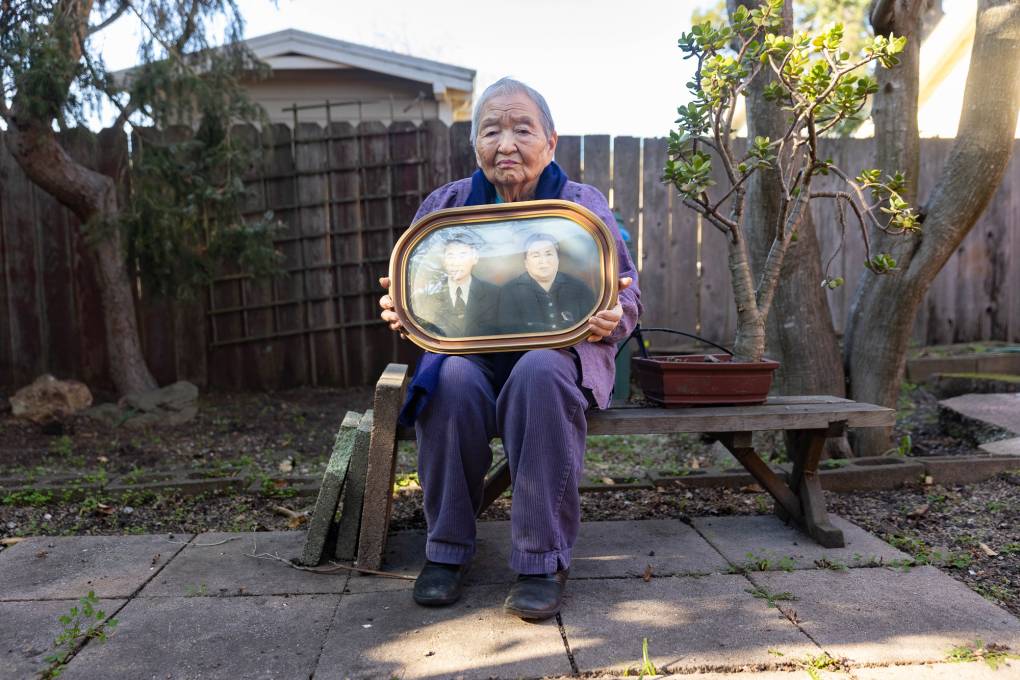
Bay Area Japanese Americans Draw on WWII Trauma to Resist Deportation Threats
California Delegation Has Reason For Hope At Republican National Convention
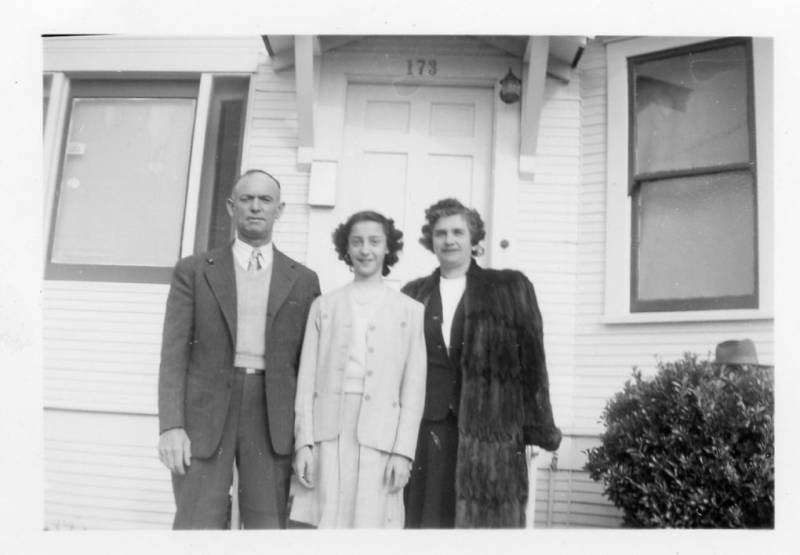
How Bay Area Italians Were Treated as 'Enemy Aliens' During WWII
Homes for All: Richmond's 1950s Attempt at Integrated Housing
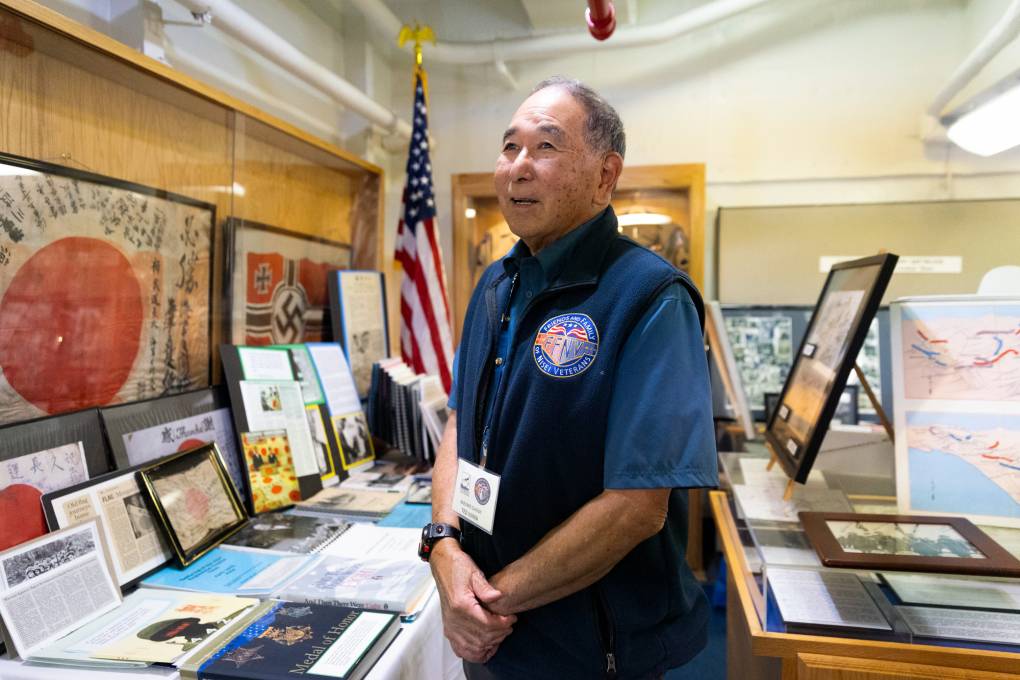
Ukraine Conflict | This Week in California News
Archie Williams: The Black Bay Area Gold Medalist, Pilot and Teacher Who Fought Racism Abroad and at Home
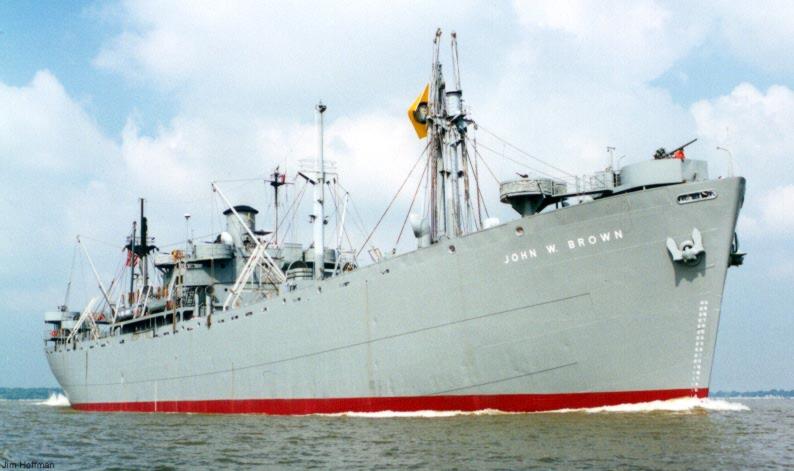
How Black Shipyard Workers in Marin Helped Win World War II
The Little-Known History of Japanese Internment on Angel Island
Sponsored
Player sponsored by
window.__IS_SSR__=true
window.__INITIAL_STATE__={
"attachmentsReducer": {
"audio_0": {
"type": "attachments",
"id": "audio_0",
"imgSizes": {
"kqedFullSize": {
"file": "https://ww2.kqed.org/news/wp-content/themes/KQED-unified/img/audio_bgs/background0.jpg"
}
}
},
"audio_1": {
"type": "attachments",
"id": "audio_1",
"imgSizes": {
"kqedFullSize": {
"file": "https://ww2.kqed.org/news/wp-content/themes/KQED-unified/img/audio_bgs/background1.jpg"
}
}
},
"audio_2": {
"type": "attachments",
"id": "audio_2",
"imgSizes": {
"kqedFullSize": {
"file": "https://ww2.kqed.org/news/wp-content/themes/KQED-unified/img/audio_bgs/background2.jpg"
}
}
},
"audio_3": {
"type": "attachments",
"id": "audio_3",
"imgSizes": {
"kqedFullSize": {
"file": "https://ww2.kqed.org/news/wp-content/themes/KQED-unified/img/audio_bgs/background3.jpg"
}
}
},
"audio_4": {
"type": "attachments",
"id": "audio_4",
"imgSizes": {
"kqedFullSize": {
"file": "https://ww2.kqed.org/news/wp-content/themes/KQED-unified/img/audio_bgs/background4.jpg"
}
}
},
"placeholder": {
"type": "attachments",
"id": "placeholder",
"imgSizes": {
"thumbnail": {
"file": "https://cdn.kqed.org/wp-content/uploads/2024/12/KQED-Default-Image-816638274-2000x1333-1-160x107.jpg",
"width": 160,
"height": 107,
"mimeType": "image/jpeg"
},
"medium": {
"file": "https://cdn.kqed.org/wp-content/uploads/2024/12/KQED-Default-Image-816638274-2000x1333-1-800x533.jpg",
"width": 800,
"height": 533,
"mimeType": "image/jpeg"
},
"medium_large": {
"file": "https://cdn.kqed.org/wp-content/uploads/2024/12/KQED-Default-Image-816638274-2000x1333-1-768x512.jpg",
"width": 768,
"height": 512,
"mimeType": "image/jpeg"
},
"large": {
"file": "https://cdn.kqed.org/wp-content/uploads/2024/12/KQED-Default-Image-816638274-2000x1333-1-1020x680.jpg",
"width": 1020,
"height": 680,
"mimeType": "image/jpeg"
},
"1536x1536": {
"file": "https://cdn.kqed.org/wp-content/uploads/2024/12/KQED-Default-Image-816638274-2000x1333-1-1536x1024.jpg",
"width": 1536,
"height": 1024,
"mimeType": "image/jpeg"
},
"fd-lrg": {
"file": "https://cdn.kqed.org/wp-content/uploads/2024/12/KQED-Default-Image-816638274-2000x1333-1-1536x1024.jpg",
"width": 1536,
"height": 1024,
"mimeType": "image/jpeg"
},
"fd-med": {
"file": "https://cdn.kqed.org/wp-content/uploads/2024/12/KQED-Default-Image-816638274-2000x1333-1-1020x680.jpg",
"width": 1020,
"height": 680,
"mimeType": "image/jpeg"
},
"fd-sm": {
"file": "https://cdn.kqed.org/wp-content/uploads/2024/12/KQED-Default-Image-816638274-2000x1333-1-800x533.jpg",
"width": 800,
"height": 533,
"mimeType": "image/jpeg"
},
"post-thumbnail": {
"file": "https://cdn.kqed.org/wp-content/uploads/2024/12/KQED-Default-Image-816638274-2000x1333-1-672x372.jpg",
"width": 672,
"height": 372,
"mimeType": "image/jpeg"
},
"twentyfourteen-full-width": {
"file": "https://cdn.kqed.org/wp-content/uploads/2024/12/KQED-Default-Image-816638274-2000x1333-1-1038x576.jpg",
"width": 1038,
"height": 576,
"mimeType": "image/jpeg"
},
"xxsmall": {
"file": "https://cdn.kqed.org/wp-content/uploads/2024/12/KQED-Default-Image-816638274-2000x1333-1-160x107.jpg",
"width": 160,
"height": 107,
"mimeType": "image/jpeg"
},
"xsmall": {
"file": "https://cdn.kqed.org/wp-content/uploads/2024/12/KQED-Default-Image-816638274-2000x1333-1-672x372.jpg",
"width": 672,
"height": 372,
"mimeType": "image/jpeg"
},
"small": {
"file": "https://cdn.kqed.org/wp-content/uploads/2024/12/KQED-Default-Image-816638274-2000x1333-1-672x372.jpg",
"width": 672,
"height": 372,
"mimeType": "image/jpeg"
},
"xlarge": {
"file": "https://cdn.kqed.org/wp-content/uploads/2024/12/KQED-Default-Image-816638274-2000x1333-1-1020x680.jpg",
"width": 1020,
"height": 680,
"mimeType": "image/jpeg"
},
"full-width": {
"file": "https://cdn.kqed.org/wp-content/uploads/2024/12/KQED-Default-Image-816638274-2000x1333-1-1920x1280.jpg",
"width": 1920,
"height": 1280,
"mimeType": "image/jpeg"
},
"guest-author-32": {
"file": "https://cdn.kqed.org/wp-content/uploads/2025/01/KQED-Default-Image-816638274-1333x1333-1-160x160.jpg",
"width": 32,
"height": 32,
"mimeType": "image/jpeg"
},
"guest-author-50": {
"file": "https://cdn.kqed.org/wp-content/uploads/2025/01/KQED-Default-Image-816638274-1333x1333-1-160x160.jpg",
"width": 50,
"height": 50,
"mimeType": "image/jpeg"
},
"guest-author-64": {
"file": "https://cdn.kqed.org/wp-content/uploads/2025/01/KQED-Default-Image-816638274-1333x1333-1-160x160.jpg",
"width": 64,
"height": 64,
"mimeType": "image/jpeg"
},
"guest-author-96": {
"file": "https://cdn.kqed.org/wp-content/uploads/2025/01/KQED-Default-Image-816638274-1333x1333-1-160x160.jpg",
"width": 96,
"height": 96,
"mimeType": "image/jpeg"
},
"guest-author-128": {
"file": "https://cdn.kqed.org/wp-content/uploads/2025/01/KQED-Default-Image-816638274-1333x1333-1-160x160.jpg",
"width": 128,
"height": 128,
"mimeType": "image/jpeg"
},
"detail": {
"file": "https://cdn.kqed.org/wp-content/uploads/2025/01/KQED-Default-Image-816638274-1333x1333-1-160x160.jpg",
"width": 160,
"height": 160,
"mimeType": "image/jpeg"
},
"kqedFullSize": {
"file": "https://cdn.kqed.org/wp-content/uploads/2024/12/KQED-Default-Image-816638274-2000x1333-1.jpg",
"width": 2000,
"height": 1333
}
}
},
"news_12039001": {
"type": "attachments",
"id": "news_12039001",
"meta": {
"index": "attachments_1716263798",
"site": "news",
"id": "12039001",
"found": true
},
"title": "20250505_YTCOMMENTARY_GC-6-KQED-2",
"publishDate": 1746573028,
"status": "inherit",
"parent": 0,
"modified": 1746573081,
"caption": "Ted Iijima, 75, stands in the Nisei exhibit at the USS Hornet Museum in Alameda on May 5, 2025.",
"credit": "Gina Castro/KQED",
"altTag": null,
"description": null,
"imgSizes": {
"medium": {
"file": "https://cdn.kqed.org/wp-content/uploads/sites/10/2025/05/20250505_YTCOMMENTARY_GC-6-KQED-2-800x533.jpg",
"width": 800,
"height": 533,
"mimeType": "image/jpeg"
},
"large": {
"file": "https://cdn.kqed.org/wp-content/uploads/sites/10/2025/05/20250505_YTCOMMENTARY_GC-6-KQED-2-1020x680.jpg",
"width": 1020,
"height": 680,
"mimeType": "image/jpeg"
},
"thumbnail": {
"file": "https://cdn.kqed.org/wp-content/uploads/sites/10/2025/05/20250505_YTCOMMENTARY_GC-6-KQED-2-160x107.jpg",
"width": 160,
"height": 107,
"mimeType": "image/jpeg"
},
"1536x1536": {
"file": "https://cdn.kqed.org/wp-content/uploads/sites/10/2025/05/20250505_YTCOMMENTARY_GC-6-KQED-2-1536x1024.jpg",
"width": 1536,
"height": 1024,
"mimeType": "image/jpeg"
},
"post-thumbnail": {
"file": "https://cdn.kqed.org/wp-content/uploads/sites/10/2025/05/20250505_YTCOMMENTARY_GC-6-KQED-2-672x372.jpg",
"width": 672,
"height": 372,
"mimeType": "image/jpeg"
},
"twentyfourteen-full-width": {
"file": "https://cdn.kqed.org/wp-content/uploads/sites/10/2025/05/20250505_YTCOMMENTARY_GC-6-KQED-2-1038x576.jpg",
"width": 1038,
"height": 576,
"mimeType": "image/jpeg"
},
"full-width": {
"file": "https://cdn.kqed.org/wp-content/uploads/sites/10/2025/05/20250505_YTCOMMENTARY_GC-6-KQED-2-1920x1280.jpg",
"width": 1920,
"height": 1280,
"mimeType": "image/jpeg"
},
"kqedFullSize": {
"file": "https://cdn.kqed.org/wp-content/uploads/sites/10/2025/05/20250505_YTCOMMENTARY_GC-6-KQED-2.jpg",
"width": 2000,
"height": 1333
}
},
"fetchFailed": false,
"isLoading": false
},
"news_12023317": {
"type": "attachments",
"id": "news_12023317",
"meta": {
"index": "attachments_1716263798",
"site": "news",
"id": "12023317",
"found": true
},
"title": "20250115_JapaneseAmericanActivism_GC-47",
"publishDate": 1737490923,
"status": "inherit",
"parent": 0,
"modified": 1737592311,
"caption": "Sadako Nimura Kashiwagi, 91, holds a photo of her parents, Juninhi Nimura and Shizuko Nimura, at her home in Berkeley on Jan. 15, 2025. Sadako was incarcerated at Tule Lake concentration camp at the age of 9, where she lived with her family for four years.",
"credit": "Gina Castro/KQED",
"altTag": null,
"description": null,
"imgSizes": {
"medium": {
"file": "https://cdn.kqed.org/wp-content/uploads/sites/10/2025/01/20250115_JapaneseAmericanActivism_GC-47-800x533.jpg",
"width": 800,
"height": 533,
"mimeType": "image/jpeg"
},
"large": {
"file": "https://cdn.kqed.org/wp-content/uploads/sites/10/2025/01/20250115_JapaneseAmericanActivism_GC-47-1020x680.jpg",
"width": 1020,
"height": 680,
"mimeType": "image/jpeg"
},
"thumbnail": {
"file": "https://cdn.kqed.org/wp-content/uploads/sites/10/2025/01/20250115_JapaneseAmericanActivism_GC-47-160x107.jpg",
"width": 160,
"height": 107,
"mimeType": "image/jpeg"
},
"1536x1536": {
"file": "https://cdn.kqed.org/wp-content/uploads/sites/10/2025/01/20250115_JapaneseAmericanActivism_GC-47-1536x1024.jpg",
"width": 1536,
"height": 1024,
"mimeType": "image/jpeg"
},
"post-thumbnail": {
"file": "https://cdn.kqed.org/wp-content/uploads/sites/10/2025/01/20250115_JapaneseAmericanActivism_GC-47-672x372.jpg",
"width": 672,
"height": 372,
"mimeType": "image/jpeg"
},
"twentyfourteen-full-width": {
"file": "https://cdn.kqed.org/wp-content/uploads/sites/10/2025/01/20250115_JapaneseAmericanActivism_GC-47-1038x576.jpg",
"width": 1038,
"height": 576,
"mimeType": "image/jpeg"
},
"full-width": {
"file": "https://cdn.kqed.org/wp-content/uploads/sites/10/2025/01/20250115_JapaneseAmericanActivism_GC-47-1920x1280.jpg",
"width": 1920,
"height": 1280,
"mimeType": "image/jpeg"
},
"kqedFullSize": {
"file": "https://cdn.kqed.org/wp-content/uploads/sites/10/2025/01/20250115_JapaneseAmericanActivism_GC-47.jpg",
"width": 2000,
"height": 1333
}
},
"fetchFailed": false,
"isLoading": false
},
"news_11994148": {
"type": "attachments",
"id": "news_11994148",
"meta": {
"index": "attachments_1716263798",
"site": "news",
"id": "11994148",
"found": true
},
"title": "RNCTrumpVance2024",
"publishDate": 1721078653,
"status": "inherit",
"parent": 11994136,
"modified": 1721082454,
"caption": "Attendees hold signs in support of former President Donald Trump at the Republican National Convention in Milwaukee, Wisconsin on July 15, 2024. ",
"credit": "Scott Shafer/KQED",
"altTag": null,
"description": null,
"imgSizes": {
"medium": {
"file": "https://cdn.kqed.org/wp-content/uploads/sites/10/2024/07/RNCTrumpVance2024-800x600.jpg",
"width": 800,
"height": 600,
"mimeType": "image/jpeg"
},
"large": {
"file": "https://cdn.kqed.org/wp-content/uploads/sites/10/2024/07/RNCTrumpVance2024-1020x765.jpg",
"width": 1020,
"height": 765,
"mimeType": "image/jpeg"
},
"thumbnail": {
"file": "https://cdn.kqed.org/wp-content/uploads/sites/10/2024/07/RNCTrumpVance2024-160x120.jpg",
"width": 160,
"height": 120,
"mimeType": "image/jpeg"
},
"1536x1536": {
"file": "https://cdn.kqed.org/wp-content/uploads/sites/10/2024/07/RNCTrumpVance2024-1536x1152.jpg",
"width": 1536,
"height": 1152,
"mimeType": "image/jpeg"
},
"post-thumbnail": {
"file": "https://cdn.kqed.org/wp-content/uploads/sites/10/2024/07/RNCTrumpVance2024-672x372.jpg",
"width": 672,
"height": 372,
"mimeType": "image/jpeg"
},
"twentyfourteen-full-width": {
"file": "https://cdn.kqed.org/wp-content/uploads/sites/10/2024/07/RNCTrumpVance2024-1038x576.jpg",
"width": 1038,
"height": 576,
"mimeType": "image/jpeg"
},
"full-width": {
"file": "https://cdn.kqed.org/wp-content/uploads/sites/10/2024/07/RNCTrumpVance2024-1920x1440.jpg",
"width": 1920,
"height": 1440,
"mimeType": "image/jpeg"
},
"kqedFullSize": {
"file": "https://cdn.kqed.org/wp-content/uploads/sites/10/2024/07/RNCTrumpVance2024.jpg",
"width": 2000,
"height": 1500
}
},
"fetchFailed": false,
"isLoading": false
},
"news_11969433": {
"type": "attachments",
"id": "news_11969433",
"meta": {
"index": "attachments_1716263798",
"site": "news",
"id": "11969433",
"found": true
},
"parent": 11969411,
"imgSizes": {
"twentyfourteen-full-width": {
"file": "https://cdn.kqed.org/wp-content/uploads/sites/10/2023/12/img105-1-1020x576.jpg",
"width": 1020,
"mimeType": "image/jpeg",
"height": 576
},
"thumbnail": {
"file": "https://cdn.kqed.org/wp-content/uploads/sites/10/2023/12/img105-1-160x111.jpg",
"width": 160,
"mimeType": "image/jpeg",
"height": 111
},
"post-thumbnail": {
"file": "https://cdn.kqed.org/wp-content/uploads/sites/10/2023/12/img105-1-672x372.jpg",
"width": 672,
"mimeType": "image/jpeg",
"height": 372
},
"kqedFullSize": {
"file": "https://cdn.kqed.org/wp-content/uploads/sites/10/2023/12/img105-1.jpg",
"width": 1020,
"height": 708
},
"medium": {
"file": "https://cdn.kqed.org/wp-content/uploads/sites/10/2023/12/img105-1-800x555.jpg",
"width": 800,
"mimeType": "image/jpeg",
"height": 555
}
},
"publishDate": 1702073532,
"modified": 1702073702,
"caption": " Laura Gularte (middle), at 15 years old, with her parents Quinto and Elvira Neri in front of their home in Santa Cruz, California. The family was forced to abandon the coastal home temporarily during World War 2 because Quinto was an Italian citizen. ",
"description": " Laura Gularte (middle), at 15 years old, with her parents Quinto and Elvira Neri in front of their home in Santa Cruz, California. The family was forced to abandon the coastal home temporarily during World War 2 because Quinto was an Italian citizen. ",
"title": "img105 (1)",
"credit": "Courtesy of Mark Gularte",
"status": "inherit",
"altTag": "A black and white photograph from the 1940s of man, woman and child in front of a home.",
"fetchFailed": false,
"isLoading": false
},
"news_11933654": {
"type": "attachments",
"id": "news_11933654",
"meta": {
"index": "attachments_1716263798",
"site": "news",
"id": "11933654",
"found": true
},
"parent": 11933439,
"imgSizes": {
"twentyfourteen-full-width": {
"file": "https://ww2.kqed.org/app/uploads/sites/10/2022/12/ParchesterVillage-1038x576.jpg",
"width": 1038,
"mimeType": "image/jpeg",
"height": 576
},
"thumbnail": {
"file": "https://ww2.kqed.org/app/uploads/sites/10/2022/12/ParchesterVillage-160x90.jpg",
"width": 160,
"mimeType": "image/jpeg",
"height": 90
},
"post-thumbnail": {
"file": "https://ww2.kqed.org/app/uploads/sites/10/2022/12/ParchesterVillage-672x372.jpg",
"width": 672,
"mimeType": "image/jpeg",
"height": 372
},
"kqedFullSize": {
"file": "https://ww2.kqed.org/app/uploads/sites/10/2022/12/ParchesterVillage.jpg",
"width": 1920,
"height": 1080
},
"large": {
"file": "https://ww2.kqed.org/app/uploads/sites/10/2022/12/ParchesterVillage-1020x574.jpg",
"width": 1020,
"mimeType": "image/jpeg",
"height": 574
},
"1536x1536": {
"file": "https://ww2.kqed.org/app/uploads/sites/10/2022/12/ParchesterVillage-1536x864.jpg",
"width": 1536,
"mimeType": "image/jpeg",
"height": 864
},
"medium": {
"file": "https://ww2.kqed.org/app/uploads/sites/10/2022/12/ParchesterVillage-800x450.jpg",
"width": 800,
"mimeType": "image/jpeg",
"height": 450
}
},
"publishDate": 1669852832,
"modified": 1669919606,
"caption": "The message on the Parchester Village Neighborhood Center mural, seen here on Nov. 30, 2022, encapsulates how many residents feel about the place they grew up.",
"description": null,
"title": "ParchesterVillage",
"credit": "Ariana Proehl/KQED",
"status": "inherit",
"altTag": "A colorful mural depicts Black children playing and a book with a hand holding a globe. It says, \"Parchester Village Touches the World.\"",
"fetchFailed": false,
"isLoading": false
},
"news_11906626": {
"type": "attachments",
"id": "news_11906626",
"meta": {
"index": "attachments_1716263798",
"site": "news",
"id": "11906626",
"found": true
},
"parent": 11906491,
"imgSizes": {
"twentyfourteen-full-width": {
"file": "https://ww2.kqed.org/app/uploads/sites/10/2022/02/RS53931_037_KQED_UkraineRally_02242022-qut-1-1038x576.jpg",
"width": 1038,
"mimeType": "image/jpeg",
"height": 576
},
"thumbnail": {
"file": "https://ww2.kqed.org/app/uploads/sites/10/2022/02/RS53931_037_KQED_UkraineRally_02242022-qut-1-160x107.jpg",
"width": 160,
"mimeType": "image/jpeg",
"height": 107
},
"post-thumbnail": {
"file": "https://ww2.kqed.org/app/uploads/sites/10/2022/02/RS53931_037_KQED_UkraineRally_02242022-qut-1-672x372.jpg",
"width": 672,
"mimeType": "image/jpeg",
"height": 372
},
"kqedFullSize": {
"file": "https://ww2.kqed.org/app/uploads/sites/10/2022/02/RS53931_037_KQED_UkraineRally_02242022-qut-1.jpg",
"width": 1920,
"height": 1280
},
"large": {
"file": "https://ww2.kqed.org/app/uploads/sites/10/2022/02/RS53931_037_KQED_UkraineRally_02242022-qut-1-1020x680.jpg",
"width": 1020,
"mimeType": "image/jpeg",
"height": 680
},
"1536x1536": {
"file": "https://ww2.kqed.org/app/uploads/sites/10/2022/02/RS53931_037_KQED_UkraineRally_02242022-qut-1-1536x1024.jpg",
"width": 1536,
"mimeType": "image/jpeg",
"height": 1024
},
"medium": {
"file": "https://ww2.kqed.org/app/uploads/sites/10/2022/02/RS53931_037_KQED_UkraineRally_02242022-qut-1-800x533.jpg",
"width": 800,
"mimeType": "image/jpeg",
"height": 533
}
},
"publishDate": 1645841882,
"modified": 1645841882,
"caption": "Hundreds of demonstrators gather in front of San Francisco City Hall on Feb. 24, 2022, to protest the Russian invasion of Ukraine.",
"description": null,
"title": "RS53931_037_KQED_UkraineRally_02242022-qut",
"credit": null,
"status": "inherit",
"altTag": null,
"fetchFailed": false,
"isLoading": false
},
"news_11905809": {
"type": "attachments",
"id": "news_11905809",
"meta": {
"index": "attachments_1716263798",
"site": "news",
"id": "11905809",
"found": true
},
"parent": 11905768,
"imgSizes": {
"twentyfourteen-full-width": {
"file": "https://ww2.kqed.org/app/uploads/sites/10/2022/02/archiewilliams_featured-1038x576.png",
"width": 1038,
"mimeType": "image/png",
"height": 576
},
"thumbnail": {
"file": "https://ww2.kqed.org/app/uploads/sites/10/2022/02/archiewilliams_featured-160x101.png",
"width": 160,
"mimeType": "image/png",
"height": 101
},
"post-thumbnail": {
"file": "https://ww2.kqed.org/app/uploads/sites/10/2022/02/archiewilliams_featured-672x372.png",
"width": 672,
"mimeType": "image/png",
"height": 372
},
"kqedFullSize": {
"file": "https://ww2.kqed.org/app/uploads/sites/10/2022/02/archiewilliams_featured.png",
"width": 1920,
"height": 1211
},
"large": {
"file": "https://ww2.kqed.org/app/uploads/sites/10/2022/02/archiewilliams_featured-1020x643.png",
"width": 1020,
"mimeType": "image/png",
"height": 643
},
"1536x1536": {
"file": "https://ww2.kqed.org/app/uploads/sites/10/2022/02/archiewilliams_featured-1536x969.png",
"width": 1536,
"mimeType": "image/png",
"height": 969
},
"medium": {
"file": "https://ww2.kqed.org/app/uploads/sites/10/2022/02/archiewilliams_featured-800x505.png",
"width": 800,
"mimeType": "image/png",
"height": 505
}
},
"publishDate": 1645222141,
"modified": 1645222203,
"caption": null,
"description": null,
"title": "archiewilliams_featured",
"credit": null,
"status": "inherit",
"altTag": "Cartoon: featuring Archie Williams, a Black Bay Area Olympic gold medalist standing with his gold medal under the Olympic rings.",
"fetchFailed": false,
"isLoading": false
},
"news_11898298": {
"type": "attachments",
"id": "news_11898298",
"meta": {
"index": "attachments_1716263798",
"site": "news",
"id": "11898298",
"found": true
},
"parent": 11898287,
"imgSizes": {
"thumbnail": {
"file": "https://ww2.kqed.org/app/uploads/sites/10/2021/12/SS_John_W_Brown-160x95.jpg",
"width": 160,
"mimeType": "image/jpeg",
"height": 95
},
"post-thumbnail": {
"file": "https://ww2.kqed.org/app/uploads/sites/10/2021/12/SS_John_W_Brown-672x372.jpg",
"width": 672,
"mimeType": "image/jpeg",
"height": 372
},
"kqedFullSize": {
"file": "https://ww2.kqed.org/app/uploads/sites/10/2021/12/SS_John_W_Brown.jpg",
"width": 794,
"height": 471
}
},
"publishDate": 1638905371,
"modified": 1640912541,
"caption": "SS John W. Brown on the Great Lakes in 2000. John W. Brown is one of only two surviving World War II liberty ships, the other being the SS Jeremiah O'Brien.",
"description": null,
"title": "SS_John_W_Brown",
"credit": "\u003ca href=\"https://commons.wikimedia.org/wiki/File:SS_John_W_Brown.jpg\">Wikimedia Commons\u003c/a>",
"status": "inherit",
"altTag": "Large ship with grey hull and a red strip at water level takes up the entire frame. Blue sky and clouds behind.",
"fetchFailed": false,
"isLoading": false
},
"news_11821307": {
"type": "attachments",
"id": "news_11821307",
"meta": {
"index": "attachments_1716263798",
"site": "news",
"id": "11821307",
"found": true
},
"parent": 11821133,
"imgSizes": {
"apple_news_ca_landscape_5_5": {
"file": "https://ww2.kqed.org/app/uploads/sites/10/2020/05/Pages-from-Kakuro-Shigenaga-File-1-NARA-San-Bruno-1044x783.jpg",
"width": 1044,
"mimeType": "image/jpeg",
"height": 783
},
"apple_news_ca_square_4_0": {
"file": "https://ww2.kqed.org/app/uploads/sites/10/2020/05/Pages-from-Kakuro-Shigenaga-File-1-NARA-San-Bruno-470x470.jpg",
"width": 470,
"mimeType": "image/jpeg",
"height": 470
},
"twentyfourteen-full-width": {
"file": "https://ww2.kqed.org/app/uploads/sites/10/2020/05/Pages-from-Kakuro-Shigenaga-File-1-NARA-San-Bruno-1038x576.jpg",
"width": 1038,
"mimeType": "image/jpeg",
"height": 576
},
"thumbnail": {
"file": "https://ww2.kqed.org/app/uploads/sites/10/2020/05/Pages-from-Kakuro-Shigenaga-File-1-NARA-San-Bruno-160x74.jpg",
"width": 160,
"mimeType": "image/jpeg",
"height": 74
},
"post-thumbnail": {
"file": "https://ww2.kqed.org/app/uploads/sites/10/2020/05/Pages-from-Kakuro-Shigenaga-File-1-NARA-San-Bruno-672x372.jpg",
"width": 672,
"mimeType": "image/jpeg",
"height": 372
},
"kqedFullSize": {
"file": "https://ww2.kqed.org/app/uploads/sites/10/2020/05/Pages-from-Kakuro-Shigenaga-File-1-NARA-San-Bruno.jpg",
"width": 1755,
"height": 807
},
"apple_news_ca_landscape_4_7": {
"file": "https://ww2.kqed.org/app/uploads/sites/10/2020/05/Pages-from-Kakuro-Shigenaga-File-1-NARA-San-Bruno-632x474.jpg",
"width": 632,
"mimeType": "image/jpeg",
"height": 474
},
"large": {
"file": "https://ww2.kqed.org/app/uploads/sites/10/2020/05/Pages-from-Kakuro-Shigenaga-File-1-NARA-San-Bruno-1020x469.jpg",
"width": 1020,
"mimeType": "image/jpeg",
"height": 469
},
"apple_news_ca_landscape_4_0": {
"file": "https://ww2.kqed.org/app/uploads/sites/10/2020/05/Pages-from-Kakuro-Shigenaga-File-1-NARA-San-Bruno-536x402.jpg",
"width": 536,
"mimeType": "image/jpeg",
"height": 402
},
"apple_news_ca_portrait_12_9": {
"file": "https://ww2.kqed.org/app/uploads/sites/10/2020/05/Pages-from-Kakuro-Shigenaga-File-1-NARA-San-Bruno-1122x807.jpg",
"width": 1122,
"mimeType": "image/jpeg",
"height": 807
},
"medium": {
"file": "https://ww2.kqed.org/app/uploads/sites/10/2020/05/Pages-from-Kakuro-Shigenaga-File-1-NARA-San-Bruno-800x368.jpg",
"width": 800,
"mimeType": "image/jpeg",
"height": 368
},
"apple_news_ca_portrait_4_0": {
"file": "https://ww2.kqed.org/app/uploads/sites/10/2020/05/Pages-from-Kakuro-Shigenaga-File-1-NARA-San-Bruno-354x472.jpg",
"width": 354,
"mimeType": "image/jpeg",
"height": 472
},
"apple_news_ca_portrait_9_7": {
"file": "https://ww2.kqed.org/app/uploads/sites/10/2020/05/Pages-from-Kakuro-Shigenaga-File-1-NARA-San-Bruno-840x807.jpg",
"width": 840,
"mimeType": "image/jpeg",
"height": 807
},
"apple_news_ca_square_9_7": {
"file": "https://ww2.kqed.org/app/uploads/sites/10/2020/05/Pages-from-Kakuro-Shigenaga-File-1-NARA-San-Bruno-1104x807.jpg",
"width": 1104,
"mimeType": "image/jpeg",
"height": 807
},
"apple_news_ca_portrait_4_7": {
"file": "https://ww2.kqed.org/app/uploads/sites/10/2020/05/Pages-from-Kakuro-Shigenaga-File-1-NARA-San-Bruno-414x552.jpg",
"width": 414,
"mimeType": "image/jpeg",
"height": 552
},
"apple_news_ca_square_12_9": {
"file": "https://ww2.kqed.org/app/uploads/sites/10/2020/05/Pages-from-Kakuro-Shigenaga-File-1-NARA-San-Bruno-1472x807.jpg",
"width": 1472,
"mimeType": "image/jpeg",
"height": 807
},
"apple_news_ca_portrait_5_5": {
"file": "https://ww2.kqed.org/app/uploads/sites/10/2020/05/Pages-from-Kakuro-Shigenaga-File-1-NARA-San-Bruno-687x807.jpg",
"width": 687,
"mimeType": "image/jpeg",
"height": 807
},
"apple_news_ca_square_4_7": {
"file": "https://ww2.kqed.org/app/uploads/sites/10/2020/05/Pages-from-Kakuro-Shigenaga-File-1-NARA-San-Bruno-550x550.jpg",
"width": 550,
"mimeType": "image/jpeg",
"height": 550
},
"apple_news_ca_landscape_9_7": {
"file": "https://ww2.kqed.org/app/uploads/sites/10/2020/05/Pages-from-Kakuro-Shigenaga-File-1-NARA-San-Bruno-1376x807.jpg",
"width": 1376,
"mimeType": "image/jpeg",
"height": 807
},
"apple_news_ca_square_5_5": {
"file": "https://ww2.kqed.org/app/uploads/sites/10/2020/05/Pages-from-Kakuro-Shigenaga-File-1-NARA-San-Bruno-912x807.jpg",
"width": 912,
"mimeType": "image/jpeg",
"height": 807
}
},
"publishDate": 1590643349,
"modified": 1593030896,
"caption": "Kakuro Shigenaga, aged 47, photographed and fingerprinted in an identification card. He was among the men who spent time on Angel Island before being sent to a number of inland internment camps. ",
"description": "Photograph and documents for Kakuro Shigenaga.",
"title": "Pages from Kakuro Shigenaga File 1 - NARA San Bruno",
"credit": "Courtesy of the Shigenaga family",
"status": "inherit",
"fetchFailed": false,
"isLoading": false
}
},
"audioPlayerReducer": {
"postId": "stream_live",
"isPaused": true,
"isPlaying": false,
"pfsActive": false,
"pledgeModalIsOpen": true,
"playerDrawerIsOpen": false
},
"authorsReducer": {
"byline_news_12038879": {
"type": "authors",
"id": "byline_news_12038879",
"meta": {
"override": true
},
"slug": "byline_news_12038879",
"name": "Kayla Ling",
"isLoading": false
},
"katrinaschwartz": {
"type": "authors",
"id": "234",
"meta": {
"index": "authors_1716337520",
"id": "234",
"found": true
},
"name": "Katrina Schwartz",
"firstName": "Katrina",
"lastName": "Schwartz",
"slug": "katrinaschwartz",
"email": "kschwartz@kqed.org",
"display_author_email": false,
"staff_mastheads": [
"news"
],
"title": "Producer",
"bio": "Katrina Schwartz is a journalist based in San Francisco. She's worked at KPCC public radio in LA and has reported on air and online for KQED since 2010. She covered how teaching and learning is changing for MindShift between 2012 and 2020. She is the co-host of the MindShift podcast and now produces KQED's Bay Curious podcast.",
"avatar": "https://secure.gravatar.com/avatar/a6a567574dafefa959593925eead665c?s=600&d=blank&r=g",
"twitter": "kschwart",
"facebook": null,
"instagram": null,
"linkedin": null,
"sites": [
{
"site": "news",
"roles": [
"editor"
]
},
{
"site": "mindshift",
"roles": [
"administrator"
]
},
{
"site": "stateofhealth",
"roles": [
"author"
]
},
{
"site": "science",
"roles": [
"editor"
]
}
],
"headData": {
"title": "Katrina Schwartz | KQED",
"description": "Producer",
"ogImgSrc": "https://secure.gravatar.com/avatar/a6a567574dafefa959593925eead665c?s=600&d=blank&r=g",
"twImgSrc": "https://secure.gravatar.com/avatar/a6a567574dafefa959593925eead665c?s=600&d=blank&r=g"
},
"isLoading": false,
"link": "/author/katrinaschwartz"
},
"kqed": {
"type": "authors",
"id": "236",
"meta": {
"index": "authors_1716337520",
"id": "236",
"found": true
},
"name": "KQED News Staff",
"firstName": "KQED News Staff",
"lastName": null,
"slug": "kqed",
"email": "faq@kqed.org",
"display_author_email": false,
"staff_mastheads": [],
"title": null,
"bio": null,
"avatar": "https://secure.gravatar.com/avatar/ef0e801a68c4c54afa9180db14084167?s=600&d=blank&r=g",
"twitter": null,
"facebook": null,
"instagram": null,
"linkedin": null,
"sites": [
{
"site": "arts",
"roles": [
"contributor"
]
},
{
"site": "news",
"roles": [
"editor"
]
},
{
"site": "futureofyou",
"roles": [
"author"
]
}
],
"headData": {
"title": "KQED News Staff | KQED",
"description": null,
"ogImgSrc": "https://secure.gravatar.com/avatar/ef0e801a68c4c54afa9180db14084167?s=600&d=blank&r=g",
"twImgSrc": "https://secure.gravatar.com/avatar/ef0e801a68c4c54afa9180db14084167?s=600&d=blank&r=g"
},
"isLoading": false,
"link": "/author/kqed"
},
"markfiore": {
"type": "authors",
"id": "3236",
"meta": {
"index": "authors_1716337520",
"id": "3236",
"found": true
},
"name": "Mark Fiore",
"firstName": "Mark",
"lastName": "Fiore",
"slug": "markfiore",
"email": "mark@markfiore.com",
"display_author_email": false,
"staff_mastheads": [
"news"
],
"title": "KQED News Cartoonist",
"bio": "\u003ca href=\"http://www.MarkFiore.com\">MarkFiore.com\u003c/a> | \u003ca href=\"https://twitter.com/markfiore\">Follow on Twitter\u003c/a> | \u003ca href=\"https://www.facebook.com/pages/Mark-Fiore-Animated-Political-Cartoons/94451707396?ref=bookmarks\">Facebook\u003c/a> | \u003ca href=\"mailto:mark@markfiore.com\">email\u003c/a>\r\n\r\nPulitzer Prize-winner, Mark Fiore, who the Wall Street Journal has called “the undisputed guru of the form,” creates animated political cartoons in San Francisco, where his work has been featured regularly on the San Francisco Chronicle’s web site, SFGate.com. His work has appeared on Newsweek.com, Slate.com, CBSNews.com, MotherJones.com, DailyKos.com and NPR’s web site. Fiore’s political animation has appeared on CNN, Frontline, Bill Moyers Journal, Salon.com and cable and broadcast outlets across the globe.\r\n\r\nBeginning his professional life by drawing traditional political cartoons for newspapers, Fiore’s work appeared in publications ranging from the Washington Post to the Los Angeles Times. In the late 1990s, he began to experiment with animating political cartoons and, after a short stint at the San Jose Mercury News as their staff cartoonist, Fiore devoted all his energies to animation.\r\nGrowing up in California, Fiore also spent a good portion of his life in the backwoods of Idaho. It was this combination that shaped him politically. Mark majored in political science at Colorado College, where, in a perfect send-off for a cartoonist, he received his diploma in 1991 as commencement speaker Dick Cheney smiled approvingly.\r\nMark Fiore was awarded the Pulitzer Prize for political cartooning in 2010, a Robert F. Kennedy Journalism Award in 2004 and has twice received an Online Journalism Award for commentary from the Online News Association (2002, 2008). Fiore has received two awards for his work in new media from the National Cartoonists Society (2001, 2002), and in 2006 received The James Madison Freedom of Information Award from The Society of Professional Journalists.",
"avatar": "https://secure.gravatar.com/avatar/fc4e2a612b15b67bad0c6f0e1db4ca9b?s=600&d=blank&r=g",
"twitter": "MarkFiore",
"facebook": null,
"instagram": "https://www.instagram.com/markfiore/?hl=en",
"linkedin": null,
"sites": [
{
"site": "arts",
"roles": [
"contributor"
]
},
{
"site": "news",
"roles": [
"editor"
]
},
{
"site": "futureofyou",
"roles": [
"editor"
]
},
{
"site": "science",
"roles": [
"editor"
]
}
],
"headData": {
"title": "Mark Fiore | KQED",
"description": "KQED News Cartoonist",
"ogImgSrc": "https://secure.gravatar.com/avatar/fc4e2a612b15b67bad0c6f0e1db4ca9b?s=600&d=blank&r=g",
"twImgSrc": "https://secure.gravatar.com/avatar/fc4e2a612b15b67bad0c6f0e1db4ca9b?s=600&d=blank&r=g"
},
"isLoading": false,
"link": "/author/markfiore"
},
"clei": {
"type": "authors",
"id": "8617",
"meta": {
"index": "authors_1716337520",
"id": "8617",
"found": true
},
"name": "Cecilia Lei",
"firstName": "Cecilia",
"lastName": "Lei",
"slug": "clei",
"email": "clei@KQED.org",
"display_author_email": false,
"staff_mastheads": [],
"title": "KQED Contributor",
"bio": "Cecilia Lei is an on-call host and producer for KQED News and Podcasts. Previously, she was the executive producer and host of the San Francisco Chronicle's daily news podcast, 'Fifth and Mission'. Cecilia is a graduate of UC Berkeley’s Graduate School of Journalism and the former president of the Asian American Journalists Association San Francisco Bay Area chapter.",
"avatar": "https://secure.gravatar.com/avatar/40975f1f88fccf628ee537bf6ffc2af8?s=600&d=blank&r=g",
"twitter": null,
"facebook": null,
"instagram": null,
"linkedin": null,
"sites": [
{
"site": "arts",
"roles": [
"contributor"
]
},
{
"site": "news",
"roles": [
"author",
"read_private_posts"
]
},
{
"site": "about",
"roles": [
"editor"
]
}
],
"headData": {
"title": "Cecilia Lei | KQED",
"description": "KQED Contributor",
"ogImgSrc": "https://secure.gravatar.com/avatar/40975f1f88fccf628ee537bf6ffc2af8?s=600&d=blank&r=g",
"twImgSrc": "https://secure.gravatar.com/avatar/40975f1f88fccf628ee537bf6ffc2af8?s=600&d=blank&r=g"
},
"isLoading": false,
"link": "/author/clei"
},
"aproehl": {
"type": "authors",
"id": "11296",
"meta": {
"index": "authors_1716337520",
"id": "11296",
"found": true
},
"name": "Ariana Proehl",
"firstName": "Ariana",
"lastName": "Proehl",
"slug": "aproehl",
"email": "aproehl@KQED.org",
"display_author_email": true,
"staff_mastheads": [
"news"
],
"title": "Culture Reporter, KQED",
"bio": "Ariana Proehl is a Culture Reporter and Host.",
"avatar": "https://secure.gravatar.com/avatar/c96b24567eb5bb3a4f8bb295ed53e232?s=600&d=blank&r=g",
"twitter": "ArianaProehl",
"facebook": null,
"instagram": null,
"linkedin": null,
"sites": [
{
"site": "arts",
"roles": []
},
{
"site": "news",
"roles": []
},
{
"site": "education",
"roles": []
},
{
"site": "forum",
"roles": []
}
],
"headData": {
"title": "Ariana Proehl | KQED",
"description": "Culture Reporter, KQED",
"ogImgSrc": "https://secure.gravatar.com/avatar/c96b24567eb5bb3a4f8bb295ed53e232?s=600&d=blank&r=g",
"twImgSrc": "https://secure.gravatar.com/avatar/c96b24567eb5bb3a4f8bb295ed53e232?s=600&d=blank&r=g"
},
"isLoading": false,
"link": "/author/aproehl"
},
"kmizuguchi": {
"type": "authors",
"id": "11739",
"meta": {
"index": "authors_1716337520",
"id": "11739",
"found": true
},
"name": "Keith Mizuguchi",
"firstName": "Keith",
"lastName": "Mizuguchi",
"slug": "kmizuguchi",
"email": "kmizuguchi@kqed.org",
"display_author_email": false,
"staff_mastheads": [],
"title": "KQED Contributor",
"bio": null,
"avatar": "https://secure.gravatar.com/avatar/ce1182f9924192ae5ea66d39a75cd7d1?s=600&d=blank&r=g",
"twitter": null,
"facebook": null,
"instagram": null,
"linkedin": null,
"sites": [
{
"site": "news",
"roles": [
"editor"
]
},
{
"site": "science",
"roles": [
"editor"
]
}
],
"headData": {
"title": "Keith Mizuguchi | KQED",
"description": "KQED Contributor",
"ogImgSrc": "https://secure.gravatar.com/avatar/ce1182f9924192ae5ea66d39a75cd7d1?s=600&d=blank&r=g",
"twImgSrc": "https://secure.gravatar.com/avatar/ce1182f9924192ae5ea66d39a75cd7d1?s=600&d=blank&r=g"
},
"isLoading": false,
"link": "/author/kmizuguchi"
},
"pbartolone": {
"type": "authors",
"id": "11879",
"meta": {
"index": "authors_1716337520",
"id": "11879",
"found": true
},
"name": "Pauline Bartolone",
"firstName": "Pauline",
"lastName": "Bartolone",
"slug": "pbartolone",
"email": "pbartolone@kqed.org",
"display_author_email": false,
"staff_mastheads": [],
"title": "KQED Contributor",
"bio": "Pauline Bartolone has been a journalist for two decades, specializing in longform audio storytelling. Before editing and producing for podcasts like Bay Curious, she was a health care journalist for public radio and print outlets such as CalMatters and Kaiser Health News. Her reporting has won several regional Edward R. Murrow awards, national recognition from the Society of Professional Journalists and a first-place prize from the Association of Health Care Journalists.\r\n\r\nPauline’s work has aired frequently on National Public Radio, and bylines have appeared in The Los Angeles Times, CNN.com, Washingtonpost.com, USA Today and Scientific American.\r\n\r\nPauline has lived in Northern California for 20 years. Her other passions are crafts (now done in collaboration with her daughter) and the Brazilian martial art of capoeira.",
"avatar": "https://secure.gravatar.com/avatar/95001c30374b0d3878007af9cf1e120a?s=600&d=blank&r=g",
"twitter": "pbartolone",
"facebook": null,
"instagram": null,
"linkedin": null,
"sites": [
{
"site": "news",
"roles": [
"editor"
]
},
{
"site": "podcasts",
"roles": [
"subscriber"
]
}
],
"headData": {
"title": "Pauline Bartolone | KQED",
"description": "KQED Contributor",
"ogImgSrc": "https://secure.gravatar.com/avatar/95001c30374b0d3878007af9cf1e120a?s=600&d=blank&r=g",
"twImgSrc": "https://secure.gravatar.com/avatar/95001c30374b0d3878007af9cf1e120a?s=600&d=blank&r=g"
},
"isLoading": false,
"link": "/author/pbartolone"
}
},
"breakingNewsReducer": {},
"pagesReducer": {},
"postsReducer": {
"stream_live": {
"type": "live",
"id": "stream_live",
"audioUrl": "https://streams.kqed.org/kqedradio",
"title": "Live Stream",
"excerpt": "Live Stream information currently unavailable.",
"link": "/radio",
"featImg": "",
"label": {
"name": "KQED Live",
"link": "/"
}
},
"stream_kqedNewscast": {
"type": "posts",
"id": "stream_kqedNewscast",
"audioUrl": "https://www.kqed.org/.stream/anon/radio/RDnews/newscast.mp3?_=1",
"title": "KQED Newscast",
"featImg": "",
"label": {
"name": "88.5 FM",
"link": "/"
}
},
"news_12038879": {
"type": "posts",
"id": "news_12038879",
"meta": {
"index": "posts_1716263798",
"site": "news",
"id": "12038879",
"score": null,
"sort": [
1747314043000
]
},
"guestAuthors": [],
"slug": "a-japanese-american-legacy-how-a-bay-area-residents-family-inspired-my-patriotism",
"title": "A Japanese American Legacy: How a Bay Area Resident’s Family Inspired My Patriotism",
"publishDate": 1747314043,
"format": "standard",
"headTitle": "A Japanese American Legacy: How a Bay Area Resident’s Family Inspired My Patriotism | KQED",
"labelTerm": {},
"content": "\u003cp>\u003cstrong>\u003cem>Editor’s note:\u003c/em>\u003c/strong>\u003cem> This story is part of \u003c/em>\u003ca href=\"https://www.kqed.org/youthtakeover\">\u003cem>KQED’s Youth Takeover\u003c/em>\u003c/a>\u003cem>. Throughout the month, we’re publishing content by high school students from all over the Bay Area.\u003c/em>\u003c/p>\n\u003cp>Ted Iijima presented me with two of the best gifts of my life in December.\u003c/p>\n\u003cp>First, a Ziploc bag of six \u003cem>hoshigaki,\u003c/em> which are candy-sweet, Japanese-style dried persimmons. Second, a rich history about how his Japanese American family has lived in — and served — the United States for generations.\u003c/p>\n\u003cp>Iijima is a third-generation Japanese American and son of Shori Iijima, a World War II veteran who served in the 442nd Regimental Combat Team, an infantry unit made up almost entirely of American-born sons of Japanese immigrants.\u003c/p>\n\u003cp>[ad fullwidth]\u003c/p>\n\u003cp>Four of Iijima’s uncles also served in the 442nd, and a fifth served in the top-secret \u003ca href=\"https://www.nationalww2museum.org/war/articles/military-intelligence-service-translators-interpreters\">Military Intelligence Service\u003c/a>. Iijima honors their service by volunteering as a docent at the USS Hornet’s 442nd Nisei Exhibit in Alameda.\u003c/p>\n\u003cp>Iijima, 75, guided me through the exhibit’s diverse artifacts. For example, the back room of the museum boasts six garlands of origami cranes folded from paper American flags. In Japanese culture, origami cranes came to symbolize peace, resilience and healing after a young survivor of the World War II atomic bombing developed leukemia and folded 1,300 paper birds before her death.\u003c/p>\n\u003cp>Sitting near the cranes for our interview, Iijima was decked out in an American battleship baseball cap and his Friends and Family of Nisei Veterans sweater vest. He spoke passionately about his family’s history with the 442nd Regimental Combat Team and the 100th Infantry Battalion that preceded it.\u003c/p>\n\u003cfigure id=\"attachment_12038997\" class=\"wp-caption aligncenter\" style=\"max-width: 2000px\">\u003cimg loading=\"lazy\" decoding=\"async\" class=\"size-full wp-image-12038997\" src=\"https://cdn.kqed.org/wp-content/uploads/sites/10/2025/05/20250505_YTCOMMENTARY_GC-34-KQED.jpg\" alt=\"\" width=\"2000\" height=\"1333\" srcset=\"https://cdn.kqed.org/wp-content/uploads/sites/10/2025/05/20250505_YTCOMMENTARY_GC-34-KQED.jpg 2000w, https://cdn.kqed.org/wp-content/uploads/sites/10/2025/05/20250505_YTCOMMENTARY_GC-34-KQED-800x533.jpg 800w, https://cdn.kqed.org/wp-content/uploads/sites/10/2025/05/20250505_YTCOMMENTARY_GC-34-KQED-1020x680.jpg 1020w, https://cdn.kqed.org/wp-content/uploads/sites/10/2025/05/20250505_YTCOMMENTARY_GC-34-KQED-160x107.jpg 160w, https://cdn.kqed.org/wp-content/uploads/sites/10/2025/05/20250505_YTCOMMENTARY_GC-34-KQED-1536x1024.jpg 1536w, https://cdn.kqed.org/wp-content/uploads/sites/10/2025/05/20250505_YTCOMMENTARY_GC-34-KQED-1920x1280.jpg 1920w\" sizes=\"auto, (max-width: 2000px) 100vw, 2000px\">\u003cfigcaption class=\"wp-caption-text\">The USS Hornet Museum in Alameda on May 5, 2025. \u003ccite>(Gina Castro/KQED)\u003c/cite>\u003c/figcaption>\u003c/figure>\n\u003cp>As he spoke and I listened, I was stunned to learn that 14,000 men became the most highly decorated military unit in U.S. history — according to the Army — in just four years.\u003c/p>\n\u003cp>The soldiers, who averaged 5-foot-3 and 125 pounds, were swift fighters and emerged victorious from battles once thought impossible.\u003c/p>\n\u003cp>Japanese American families like Iijima’s inspired me to create a documentary film that explored the unique past of the 100th and 442nd soldiers. I learned that the 100th was originally a segregated unit of second-generation Japanese American men, or \u003cem>Nisei\u003c/em>, from Hawaii.[aside postID=news_12021919 hero='https://cdn.kqed.org/wp-content/uploads/sites/10/2025/01/20250115_JapaneseAmericanActivism_GC-47-1020x680.jpg']After witnessing the success of the 100th, then-President Franklin Delano Roosevelt announced the formation of the 442nd, a larger unit of Nisei soldiers. As the Nisei fought, \u003ca href=\"https://www.kqed.org/news/12021919/bay-area-japanese-americans-draw-on-wwii-trauma-resist-deportation-threats\">over 120,000 people with Japanese ancestry were incarcerated\u003c/a>, mainly on the West Coast in remote camps with harsh climes.\u003c/p>\n\u003cp>Iijima’s Oakland-born father, as well as other Japanese Americans, were accused of spying for the Japanese Empire.\u003c/p>\n\u003cp>“The reality was all these places were terrible. They were miles from the closest town. It was below freezing in the winter. It was near 100 every day in the summertime, and there was dust everywhere,” Iijima said, describing what his parents had shared with him.\u003c/p>\n\u003cp>Many Japanese Americans felt blindsided and developed complex feelings about patriotism. Few Japanese American men initially volunteered for the 442nd Regimental Combat Team, so the U.S. military issued a loyalty questionnaire to second-generation Nisei.\u003c/p>\n\u003cp>“Are you willing to serve in the armed forces of the United States on combat duty, wherever ordered?” was question No. 27 on the survey. The subsequent question: “Will you swear unqualified allegiance to the United States of America and faithfully defend the United States from any and all attacks by foreign and domestic forces, and forswear any form of allegiance or disobedience to the Japanese Emperor, or any other foreign government, power, or organization?”\u003c/p>\n\u003cfigure id=\"attachment_12038994\" class=\"wp-caption aligncenter\" style=\"max-width: 2000px\">\u003cimg loading=\"lazy\" decoding=\"async\" class=\"size-full wp-image-12038994\" src=\"https://cdn.kqed.org/wp-content/uploads/sites/10/2025/05/20250505_YTCOMMENTARY_GC-16-KQED.jpg\" alt=\"\" width=\"2000\" height=\"1333\" srcset=\"https://cdn.kqed.org/wp-content/uploads/sites/10/2025/05/20250505_YTCOMMENTARY_GC-16-KQED.jpg 2000w, https://cdn.kqed.org/wp-content/uploads/sites/10/2025/05/20250505_YTCOMMENTARY_GC-16-KQED-800x533.jpg 800w, https://cdn.kqed.org/wp-content/uploads/sites/10/2025/05/20250505_YTCOMMENTARY_GC-16-KQED-1020x680.jpg 1020w, https://cdn.kqed.org/wp-content/uploads/sites/10/2025/05/20250505_YTCOMMENTARY_GC-16-KQED-160x107.jpg 160w, https://cdn.kqed.org/wp-content/uploads/sites/10/2025/05/20250505_YTCOMMENTARY_GC-16-KQED-1536x1024.jpg 1536w, https://cdn.kqed.org/wp-content/uploads/sites/10/2025/05/20250505_YTCOMMENTARY_GC-16-KQED-1920x1280.jpg 1920w\" sizes=\"auto, (max-width: 2000px) 100vw, 2000px\">\u003cfigcaption class=\"wp-caption-text\">Ted Iijima, 75, holds a photo of four out of the eight remaining soldiers of World War II’s 442nd Regimental Combat Team, a segregated Japanese American unit, in the Nisei exhibit at the USS Hornet Museum in Alameda on May 5, 2025. \u003ccite>(Gina Castro/KQED)\u003c/cite>\u003c/figcaption>\u003c/figure>\n\u003cp>According to Iijima, most Nisei were unaware of who the emperor of Japan even was.\u003c/p>\n\u003cp>Young men who answered “no” to questions No. 27 and 28 on the survey were dubbed the “\u003ca href=\"https://encyclopedia.densho.org/No-no_boys/\">no-no boys\u003c/a>” and sent to the Tule Lake Segregation Center, while those who answered “yes” were drafted into the military.\u003c/p>\n\u003cp>The 100th and 442nd fought with great intensity, demonstrating their loyalty and patriotism. Many, tragically, sacrificed their lives, earning the 100th the title of “The Purple Heart Battalion.”[aside postID=news_12037263 hero='https://cdn.kqed.org/wp-content/uploads/sites/10/2025/04/030_KQED_JFKHighSchoolRichmond_05182023_qed-1020x680.jpg']“Many of [the Japanese American soldiers] came back with either mental injuries or physical injuries that prevented them from living a full life. Today, we call it PTSD. Many of them [had] missing legs, arms, eyesight, ears, whatever the case may be,” Iijima told me.\u003c/p>\n\u003cp>“But that’s what it took to prove their loyalty.”\u003c/p>\n\u003cp>While working on my documentary, I interviewed several descendants of 100th Infantry Battalion and 442nd Regimental Combat Team soldiers. The Nisei soldiers’ service and sacrifice should be an inspirational story for all Americans.\u003c/p>\n\u003cp>But just days after finishing the first draft of my 10-minute film, President Donald Trump’s \u003ca href=\"https://www.kqed.org/news/12034699/racial-justice-advocates-stay-course-dei-faces-mounting-attacks\">anti-DEI executive order\u003c/a> resulted in the United States Army removing the Asian Americans & Pacific Islanders Heritage page from its website. The story of the 442nd seemed to have vanished from America’s official military history, including images and video clips that I had included in my film that were suddenly inaccessible online.\u003c/p>\n\u003cp>Thankfully, after advocacy work from Japanese American organizations and politicians from Hawaii, the page was restored a day later.\u003c/p>\n\u003cfigure id=\"attachment_12038999\" class=\"wp-caption aligncenter\" style=\"max-width: 2000px\">\u003cimg loading=\"lazy\" decoding=\"async\" class=\"wp-image-12038999 size-full\" src=\"https://cdn.kqed.org/wp-content/uploads/sites/10/2025/05/20250505_YTCOMMENTARY_GC-1-KQED-1.jpg\" alt=\"\" width=\"2000\" height=\"1333\" srcset=\"https://cdn.kqed.org/wp-content/uploads/sites/10/2025/05/20250505_YTCOMMENTARY_GC-1-KQED-1.jpg 2000w, https://cdn.kqed.org/wp-content/uploads/sites/10/2025/05/20250505_YTCOMMENTARY_GC-1-KQED-1-800x533.jpg 800w, https://cdn.kqed.org/wp-content/uploads/sites/10/2025/05/20250505_YTCOMMENTARY_GC-1-KQED-1-1020x680.jpg 1020w, https://cdn.kqed.org/wp-content/uploads/sites/10/2025/05/20250505_YTCOMMENTARY_GC-1-KQED-1-160x107.jpg 160w, https://cdn.kqed.org/wp-content/uploads/sites/10/2025/05/20250505_YTCOMMENTARY_GC-1-KQED-1-1536x1024.jpg 1536w, https://cdn.kqed.org/wp-content/uploads/sites/10/2025/05/20250505_YTCOMMENTARY_GC-1-KQED-1-1920x1280.jpg 1920w\" sizes=\"auto, (max-width: 2000px) 100vw, 2000px\">\u003cfigcaption class=\"wp-caption-text\">Ted Iijima, a docent with the Friends and Family of Nisei Veterans, walks onto the USS Hornet Museum in Alameda on May 5, 2025. \u003ccite>(Gina Castro/KQED)\u003c/cite>\u003c/figcaption>\u003c/figure>\n\u003cp>Deleting important history \u003cem>was\u003c/em> harmful — not just for Japanese Americans, but for all Americans. Not many know about the Nisei soldiers. As I worked on the documentary, I would tell people at my high school about my research, and just one person knew about the 100th or 442nd before I explained it to them.\u003c/p>\n\u003cp>It was my U.S. history teacher.\u003c/p>\n\u003cp>Because of how important diverse stories are for our nation, I am concerned about Trump’s attempt to criminalize and demonize DEI initiatives.\u003c/p>\n\u003cp>Though Trump has asserted that diversity, equity and inclusion efforts are discriminatory and problematic, I believe that my experience learning about the 442nd provides a counterexample.\u003c/p>\n\u003cp>Because of this story, I realized that being an American is more than waving a flag. As a young, third-generation American of Taiwanese descent, I sometimes feel disconnected from my American nationality. Yet, the 100th and 442nd have inspired me to demonstrate my deep love for my country by dedicating myself to tangible, serious actions that uplift my fellow citizens.\u003c/p>\n\u003cfigure id=\"attachment_12038990\" class=\"wp-caption aligncenter\" style=\"max-width: 2000px\">\u003cimg loading=\"lazy\" decoding=\"async\" class=\"size-full wp-image-12038990\" src=\"https://cdn.kqed.org/wp-content/uploads/sites/10/2025/05/20250505_YTCOMMENTARY_GC-5-KQED.jpg\" alt=\"\" width=\"2000\" height=\"1333\" srcset=\"https://cdn.kqed.org/wp-content/uploads/sites/10/2025/05/20250505_YTCOMMENTARY_GC-5-KQED.jpg 2000w, https://cdn.kqed.org/wp-content/uploads/sites/10/2025/05/20250505_YTCOMMENTARY_GC-5-KQED-800x533.jpg 800w, https://cdn.kqed.org/wp-content/uploads/sites/10/2025/05/20250505_YTCOMMENTARY_GC-5-KQED-1020x680.jpg 1020w, https://cdn.kqed.org/wp-content/uploads/sites/10/2025/05/20250505_YTCOMMENTARY_GC-5-KQED-160x107.jpg 160w, https://cdn.kqed.org/wp-content/uploads/sites/10/2025/05/20250505_YTCOMMENTARY_GC-5-KQED-1536x1024.jpg 1536w, https://cdn.kqed.org/wp-content/uploads/sites/10/2025/05/20250505_YTCOMMENTARY_GC-5-KQED-1920x1280.jpg 1920w\" sizes=\"auto, (max-width: 2000px) 100vw, 2000px\">\u003cfigcaption class=\"wp-caption-text\">Uniforms of soldiers with World War II’s 442nd Regimental Combat Team, a segregated Japanese American unit, are displayed at the Nisei exhibit inside the USS Hornet Museum in Alameda on May 5, 2025. \u003ccite>(Gina Castro/KQED)\u003c/cite>\u003c/figcaption>\u003c/figure>\n\u003cp>The most patriotic action, I have learned, is fighting for the American ideals of liberty and justice for all. For Iijima’s relatives, this fight meant physically putting themselves on the battlefields of Italy, France and Germany. Today, pursuing this task can take many forms — from volunteering and voting to self-education and social activism.\u003c/p>\n\u003cp>The men of the 100th and 442nd — and their families who stayed behind — remind me to love my country even when it doesn’t love me back, to serve when its leaders fail my loved ones and to trust that future generations may learn about today’s fight for social progress in a museum exhibit.\u003c/p>\n\u003cp>Iijima told me that his relatives dedicated themselves to defending America in spite of being stripped of their freedoms back home.\u003c/p>\n\u003cp>“You’re fighting for America, even if you don’t like what America has done to your people or to you personally,” he said. “You’re an American, and so you’re going to fight for America even if you don’t like [it]. It’s the only country that you have.”\u003c/p>\n\u003cp>[ad floatright]\u003c/p>\n",
"blocks": [],
"excerpt": "High school student Kayla Ling was inspired to create a documentary film by Japanese American families like that of Ted Iijima, a descendant of World War II veterans.\r\n",
"status": "publish",
"parent": 0,
"modified": 1750189929,
"stats": {
"hasAudio": false,
"hasVideo": false,
"hasChartOrMap": false,
"iframeSrcs": [],
"hasGoogleForm": false,
"hasGallery": false,
"hasHearkenModule": false,
"hasPolis": false,
"paragraphCount": 32,
"wordCount": 1425
},
"headData": {
"title": "A Japanese American Legacy: How a Bay Area Resident’s Family Inspired My Patriotism | KQED",
"description": "High school student Kayla Ling was inspired to create a documentary film by Japanese American families like that of Ted Iijima, a descendant of World War II veterans.\r\n",
"ogTitle": "",
"ogDescription": "",
"ogImgId": "",
"twTitle": "",
"twDescription": "",
"twImgId": "",
"schema": {
"@context": "https://schema.org",
"@type": "NewsArticle",
"headline": "A Japanese American Legacy: How a Bay Area Resident’s Family Inspired My Patriotism",
"datePublished": "2025-05-15T06:00:43-07:00",
"dateModified": "2025-06-17T12:52:09-07:00",
"image": "https://cdn.kqed.org/wp-content/uploads/2020/02/KQED-OG-Image@1x.png",
"isAccessibleForFree": "True",
"publisher": {
"@type": "NewsMediaOrganization",
"@id": "https://www.kqed.org/#organization",
"name": "KQED",
"logo": "https://cdn.kqed.org/wp-content/uploads/2020/02/KQED-OG-Image@1x.png",
"url": "https://www.kqed.org",
"sameAs": [
"https://www.facebook.com/KQED",
"https://twitter.com/KQED",
"https://www.instagram.com/kqed/",
"https://www.tiktok.com/@kqedofficial",
"https://www.linkedin.com/company/kqed",
"https://www.youtube.com/channel/UCeC0IOo7i1P_61zVUWbJ4nw"
]
}
}
},
"source": "Commentary",
"sticky": false,
"nprByline": "Kayla Ling",
"nprStoryId": "kqed-12038879",
"templateType": "standard",
"featuredImageType": "standard",
"excludeFromSiteSearch": "Include",
"showOnAuthorArchivePages": "No",
"articleAge": "0",
"path": "/news/12038879/a-japanese-american-legacy-how-a-bay-area-residents-family-inspired-my-patriotism",
"audioTrackLength": null,
"parsedContent": [
{
"type": "contentString",
"content": "\u003cdiv class=\"post-body\">\u003cp>\u003cp>\u003cstrong>\u003cem>Editor’s note:\u003c/em>\u003c/strong>\u003cem> This story is part of \u003c/em>\u003ca href=\"https://www.kqed.org/youthtakeover\">\u003cem>KQED’s Youth Takeover\u003c/em>\u003c/a>\u003cem>. Throughout the month, we’re publishing content by high school students from all over the Bay Area.\u003c/em>\u003c/p>\n\u003cp>Ted Iijima presented me with two of the best gifts of my life in December.\u003c/p>\n\u003cp>First, a Ziploc bag of six \u003cem>hoshigaki,\u003c/em> which are candy-sweet, Japanese-style dried persimmons. Second, a rich history about how his Japanese American family has lived in — and served — the United States for generations.\u003c/p>\n\u003cp>Iijima is a third-generation Japanese American and son of Shori Iijima, a World War II veteran who served in the 442nd Regimental Combat Team, an infantry unit made up almost entirely of American-born sons of Japanese immigrants.\u003c/p>\n\u003cp>\u003c/p>\u003c/div>",
"attributes": {
"named": {},
"numeric": []
}
},
{
"type": "component",
"content": "",
"name": "ad",
"attributes": {
"named": {
"label": "fullwidth"
},
"numeric": [
"fullwidth"
]
}
},
{
"type": "contentString",
"content": "\u003cdiv class=\"post-body\">\u003cp>\u003c/p>\n\u003cp>Four of Iijima’s uncles also served in the 442nd, and a fifth served in the top-secret \u003ca href=\"https://www.nationalww2museum.org/war/articles/military-intelligence-service-translators-interpreters\">Military Intelligence Service\u003c/a>. Iijima honors their service by volunteering as a docent at the USS Hornet’s 442nd Nisei Exhibit in Alameda.\u003c/p>\n\u003cp>Iijima, 75, guided me through the exhibit’s diverse artifacts. For example, the back room of the museum boasts six garlands of origami cranes folded from paper American flags. In Japanese culture, origami cranes came to symbolize peace, resilience and healing after a young survivor of the World War II atomic bombing developed leukemia and folded 1,300 paper birds before her death.\u003c/p>\n\u003cp>Sitting near the cranes for our interview, Iijima was decked out in an American battleship baseball cap and his Friends and Family of Nisei Veterans sweater vest. He spoke passionately about his family’s history with the 442nd Regimental Combat Team and the 100th Infantry Battalion that preceded it.\u003c/p>\n\u003cfigure id=\"attachment_12038997\" class=\"wp-caption aligncenter\" style=\"max-width: 2000px\">\u003cimg loading=\"lazy\" decoding=\"async\" class=\"size-full wp-image-12038997\" src=\"https://cdn.kqed.org/wp-content/uploads/sites/10/2025/05/20250505_YTCOMMENTARY_GC-34-KQED.jpg\" alt=\"\" width=\"2000\" height=\"1333\" srcset=\"https://cdn.kqed.org/wp-content/uploads/sites/10/2025/05/20250505_YTCOMMENTARY_GC-34-KQED.jpg 2000w, https://cdn.kqed.org/wp-content/uploads/sites/10/2025/05/20250505_YTCOMMENTARY_GC-34-KQED-800x533.jpg 800w, https://cdn.kqed.org/wp-content/uploads/sites/10/2025/05/20250505_YTCOMMENTARY_GC-34-KQED-1020x680.jpg 1020w, https://cdn.kqed.org/wp-content/uploads/sites/10/2025/05/20250505_YTCOMMENTARY_GC-34-KQED-160x107.jpg 160w, https://cdn.kqed.org/wp-content/uploads/sites/10/2025/05/20250505_YTCOMMENTARY_GC-34-KQED-1536x1024.jpg 1536w, https://cdn.kqed.org/wp-content/uploads/sites/10/2025/05/20250505_YTCOMMENTARY_GC-34-KQED-1920x1280.jpg 1920w\" sizes=\"auto, (max-width: 2000px) 100vw, 2000px\">\u003cfigcaption class=\"wp-caption-text\">The USS Hornet Museum in Alameda on May 5, 2025. \u003ccite>(Gina Castro/KQED)\u003c/cite>\u003c/figcaption>\u003c/figure>\n\u003cp>As he spoke and I listened, I was stunned to learn that 14,000 men became the most highly decorated military unit in U.S. history — according to the Army — in just four years.\u003c/p>\n\u003cp>The soldiers, who averaged 5-foot-3 and 125 pounds, were swift fighters and emerged victorious from battles once thought impossible.\u003c/p>\n\u003cp>Japanese American families like Iijima’s inspired me to create a documentary film that explored the unique past of the 100th and 442nd soldiers. I learned that the 100th was originally a segregated unit of second-generation Japanese American men, or \u003cem>Nisei\u003c/em>, from Hawaii.\u003c/p>\u003c/div>",
"attributes": {
"named": {},
"numeric": []
}
},
{
"type": "component",
"content": "",
"name": "aside",
"attributes": {
"named": {
"postid": "news_12021919",
"hero": "https://cdn.kqed.org/wp-content/uploads/sites/10/2025/01/20250115_JapaneseAmericanActivism_GC-47-1020x680.jpg",
"label": ""
},
"numeric": []
}
},
{
"type": "contentString",
"content": "\u003cdiv class=\"post-body\">\u003cp>After witnessing the success of the 100th, then-President Franklin Delano Roosevelt announced the formation of the 442nd, a larger unit of Nisei soldiers. As the Nisei fought, \u003ca href=\"https://www.kqed.org/news/12021919/bay-area-japanese-americans-draw-on-wwii-trauma-resist-deportation-threats\">over 120,000 people with Japanese ancestry were incarcerated\u003c/a>, mainly on the West Coast in remote camps with harsh climes.\u003c/p>\n\u003cp>Iijima’s Oakland-born father, as well as other Japanese Americans, were accused of spying for the Japanese Empire.\u003c/p>\n\u003cp>“The reality was all these places were terrible. They were miles from the closest town. It was below freezing in the winter. It was near 100 every day in the summertime, and there was dust everywhere,” Iijima said, describing what his parents had shared with him.\u003c/p>\n\u003cp>Many Japanese Americans felt blindsided and developed complex feelings about patriotism. Few Japanese American men initially volunteered for the 442nd Regimental Combat Team, so the U.S. military issued a loyalty questionnaire to second-generation Nisei.\u003c/p>\n\u003cp>“Are you willing to serve in the armed forces of the United States on combat duty, wherever ordered?” was question No. 27 on the survey. The subsequent question: “Will you swear unqualified allegiance to the United States of America and faithfully defend the United States from any and all attacks by foreign and domestic forces, and forswear any form of allegiance or disobedience to the Japanese Emperor, or any other foreign government, power, or organization?”\u003c/p>\n\u003cfigure id=\"attachment_12038994\" class=\"wp-caption aligncenter\" style=\"max-width: 2000px\">\u003cimg loading=\"lazy\" decoding=\"async\" class=\"size-full wp-image-12038994\" src=\"https://cdn.kqed.org/wp-content/uploads/sites/10/2025/05/20250505_YTCOMMENTARY_GC-16-KQED.jpg\" alt=\"\" width=\"2000\" height=\"1333\" srcset=\"https://cdn.kqed.org/wp-content/uploads/sites/10/2025/05/20250505_YTCOMMENTARY_GC-16-KQED.jpg 2000w, https://cdn.kqed.org/wp-content/uploads/sites/10/2025/05/20250505_YTCOMMENTARY_GC-16-KQED-800x533.jpg 800w, https://cdn.kqed.org/wp-content/uploads/sites/10/2025/05/20250505_YTCOMMENTARY_GC-16-KQED-1020x680.jpg 1020w, https://cdn.kqed.org/wp-content/uploads/sites/10/2025/05/20250505_YTCOMMENTARY_GC-16-KQED-160x107.jpg 160w, https://cdn.kqed.org/wp-content/uploads/sites/10/2025/05/20250505_YTCOMMENTARY_GC-16-KQED-1536x1024.jpg 1536w, https://cdn.kqed.org/wp-content/uploads/sites/10/2025/05/20250505_YTCOMMENTARY_GC-16-KQED-1920x1280.jpg 1920w\" sizes=\"auto, (max-width: 2000px) 100vw, 2000px\">\u003cfigcaption class=\"wp-caption-text\">Ted Iijima, 75, holds a photo of four out of the eight remaining soldiers of World War II’s 442nd Regimental Combat Team, a segregated Japanese American unit, in the Nisei exhibit at the USS Hornet Museum in Alameda on May 5, 2025. \u003ccite>(Gina Castro/KQED)\u003c/cite>\u003c/figcaption>\u003c/figure>\n\u003cp>According to Iijima, most Nisei were unaware of who the emperor of Japan even was.\u003c/p>\n\u003cp>Young men who answered “no” to questions No. 27 and 28 on the survey were dubbed the “\u003ca href=\"https://encyclopedia.densho.org/No-no_boys/\">no-no boys\u003c/a>” and sent to the Tule Lake Segregation Center, while those who answered “yes” were drafted into the military.\u003c/p>\n\u003cp>The 100th and 442nd fought with great intensity, demonstrating their loyalty and patriotism. Many, tragically, sacrificed their lives, earning the 100th the title of “The Purple Heart Battalion.”\u003c/p>\u003c/div>",
"attributes": {
"named": {},
"numeric": []
}
},
{
"type": "component",
"content": "",
"name": "aside",
"attributes": {
"named": {
"postid": "news_12037263",
"hero": "https://cdn.kqed.org/wp-content/uploads/sites/10/2025/04/030_KQED_JFKHighSchoolRichmond_05182023_qed-1020x680.jpg",
"label": ""
},
"numeric": []
}
},
{
"type": "contentString",
"content": "\u003cdiv class=\"post-body\">\u003cp>“Many of [the Japanese American soldiers] came back with either mental injuries or physical injuries that prevented them from living a full life. Today, we call it PTSD. Many of them [had] missing legs, arms, eyesight, ears, whatever the case may be,” Iijima told me.\u003c/p>\n\u003cp>“But that’s what it took to prove their loyalty.”\u003c/p>\n\u003cp>While working on my documentary, I interviewed several descendants of 100th Infantry Battalion and 442nd Regimental Combat Team soldiers. The Nisei soldiers’ service and sacrifice should be an inspirational story for all Americans.\u003c/p>\n\u003cp>But just days after finishing the first draft of my 10-minute film, President Donald Trump’s \u003ca href=\"https://www.kqed.org/news/12034699/racial-justice-advocates-stay-course-dei-faces-mounting-attacks\">anti-DEI executive order\u003c/a> resulted in the United States Army removing the Asian Americans & Pacific Islanders Heritage page from its website. The story of the 442nd seemed to have vanished from America’s official military history, including images and video clips that I had included in my film that were suddenly inaccessible online.\u003c/p>\n\u003cp>Thankfully, after advocacy work from Japanese American organizations and politicians from Hawaii, the page was restored a day later.\u003c/p>\n\u003cfigure id=\"attachment_12038999\" class=\"wp-caption aligncenter\" style=\"max-width: 2000px\">\u003cimg loading=\"lazy\" decoding=\"async\" class=\"wp-image-12038999 size-full\" src=\"https://cdn.kqed.org/wp-content/uploads/sites/10/2025/05/20250505_YTCOMMENTARY_GC-1-KQED-1.jpg\" alt=\"\" width=\"2000\" height=\"1333\" srcset=\"https://cdn.kqed.org/wp-content/uploads/sites/10/2025/05/20250505_YTCOMMENTARY_GC-1-KQED-1.jpg 2000w, https://cdn.kqed.org/wp-content/uploads/sites/10/2025/05/20250505_YTCOMMENTARY_GC-1-KQED-1-800x533.jpg 800w, https://cdn.kqed.org/wp-content/uploads/sites/10/2025/05/20250505_YTCOMMENTARY_GC-1-KQED-1-1020x680.jpg 1020w, https://cdn.kqed.org/wp-content/uploads/sites/10/2025/05/20250505_YTCOMMENTARY_GC-1-KQED-1-160x107.jpg 160w, https://cdn.kqed.org/wp-content/uploads/sites/10/2025/05/20250505_YTCOMMENTARY_GC-1-KQED-1-1536x1024.jpg 1536w, https://cdn.kqed.org/wp-content/uploads/sites/10/2025/05/20250505_YTCOMMENTARY_GC-1-KQED-1-1920x1280.jpg 1920w\" sizes=\"auto, (max-width: 2000px) 100vw, 2000px\">\u003cfigcaption class=\"wp-caption-text\">Ted Iijima, a docent with the Friends and Family of Nisei Veterans, walks onto the USS Hornet Museum in Alameda on May 5, 2025. \u003ccite>(Gina Castro/KQED)\u003c/cite>\u003c/figcaption>\u003c/figure>\n\u003cp>Deleting important history \u003cem>was\u003c/em> harmful — not just for Japanese Americans, but for all Americans. Not many know about the Nisei soldiers. As I worked on the documentary, I would tell people at my high school about my research, and just one person knew about the 100th or 442nd before I explained it to them.\u003c/p>\n\u003cp>It was my U.S. history teacher.\u003c/p>\n\u003cp>Because of how important diverse stories are for our nation, I am concerned about Trump’s attempt to criminalize and demonize DEI initiatives.\u003c/p>\n\u003cp>Though Trump has asserted that diversity, equity and inclusion efforts are discriminatory and problematic, I believe that my experience learning about the 442nd provides a counterexample.\u003c/p>\n\u003cp>Because of this story, I realized that being an American is more than waving a flag. As a young, third-generation American of Taiwanese descent, I sometimes feel disconnected from my American nationality. Yet, the 100th and 442nd have inspired me to demonstrate my deep love for my country by dedicating myself to tangible, serious actions that uplift my fellow citizens.\u003c/p>\n\u003cfigure id=\"attachment_12038990\" class=\"wp-caption aligncenter\" style=\"max-width: 2000px\">\u003cimg loading=\"lazy\" decoding=\"async\" class=\"size-full wp-image-12038990\" src=\"https://cdn.kqed.org/wp-content/uploads/sites/10/2025/05/20250505_YTCOMMENTARY_GC-5-KQED.jpg\" alt=\"\" width=\"2000\" height=\"1333\" srcset=\"https://cdn.kqed.org/wp-content/uploads/sites/10/2025/05/20250505_YTCOMMENTARY_GC-5-KQED.jpg 2000w, https://cdn.kqed.org/wp-content/uploads/sites/10/2025/05/20250505_YTCOMMENTARY_GC-5-KQED-800x533.jpg 800w, https://cdn.kqed.org/wp-content/uploads/sites/10/2025/05/20250505_YTCOMMENTARY_GC-5-KQED-1020x680.jpg 1020w, https://cdn.kqed.org/wp-content/uploads/sites/10/2025/05/20250505_YTCOMMENTARY_GC-5-KQED-160x107.jpg 160w, https://cdn.kqed.org/wp-content/uploads/sites/10/2025/05/20250505_YTCOMMENTARY_GC-5-KQED-1536x1024.jpg 1536w, https://cdn.kqed.org/wp-content/uploads/sites/10/2025/05/20250505_YTCOMMENTARY_GC-5-KQED-1920x1280.jpg 1920w\" sizes=\"auto, (max-width: 2000px) 100vw, 2000px\">\u003cfigcaption class=\"wp-caption-text\">Uniforms of soldiers with World War II’s 442nd Regimental Combat Team, a segregated Japanese American unit, are displayed at the Nisei exhibit inside the USS Hornet Museum in Alameda on May 5, 2025. \u003ccite>(Gina Castro/KQED)\u003c/cite>\u003c/figcaption>\u003c/figure>\n\u003cp>The most patriotic action, I have learned, is fighting for the American ideals of liberty and justice for all. For Iijima’s relatives, this fight meant physically putting themselves on the battlefields of Italy, France and Germany. Today, pursuing this task can take many forms — from volunteering and voting to self-education and social activism.\u003c/p>\n\u003cp>The men of the 100th and 442nd — and their families who stayed behind — remind me to love my country even when it doesn’t love me back, to serve when its leaders fail my loved ones and to trust that future generations may learn about today’s fight for social progress in a museum exhibit.\u003c/p>\n\u003cp>Iijima told me that his relatives dedicated themselves to defending America in spite of being stripped of their freedoms back home.\u003c/p>\n\u003cp>“You’re fighting for America, even if you don’t like what America has done to your people or to you personally,” he said. “You’re an American, and so you’re going to fight for America even if you don’t like [it]. It’s the only country that you have.”\u003c/p>\n\u003cp>\u003c/p>\u003c/div>",
"attributes": {
"named": {},
"numeric": []
}
},
{
"type": "component",
"content": "",
"name": "ad",
"attributes": {
"named": {
"label": "floatright"
},
"numeric": [
"floatright"
]
}
},
{
"type": "contentString",
"content": "\u003cdiv class=\"post-body\">\u003cp>\u003c/p>\n\u003c/div>\u003c/p>",
"attributes": {
"named": {},
"numeric": []
}
}
],
"link": "/news/12038879/a-japanese-american-legacy-how-a-bay-area-residents-family-inspired-my-patriotism",
"authors": [
"byline_news_12038879"
],
"categories": [
"news_34169",
"news_8",
"news_25641"
],
"tags": [
"news_18848",
"news_260",
"news_31116",
"news_17708",
"news_20202",
"news_17856",
"news_236",
"news_23013"
],
"featImg": "news_12039001",
"label": "source_news_12038879"
},
"news_12021919": {
"type": "posts",
"id": "news_12021919",
"meta": {
"index": "posts_1716263798",
"site": "news",
"id": "12021919",
"score": null,
"sort": [
1737640907000
]
},
"guestAuthors": [],
"slug": "bay-area-japanese-americans-draw-on-wwii-trauma-resist-deportation-threats",
"title": "Bay Area Japanese Americans Draw on WWII Trauma to Resist Deportation Threats",
"publishDate": 1737640907,
"format": "standard",
"headTitle": "Bay Area Japanese Americans Draw on WWII Trauma to Resist Deportation Threats | KQED",
"labelTerm": {
"site": "news"
},
"content": "\u003cp>Sadako Kashiwagi is haunted by the memory of her family scrambling to leave their home as her father discarded books.\u003c/p>\n\u003cp>“We could take only what we could carry. And I remember him pitching his books — he loved his books — into the fireplace because it had Japanese written on it,” said Kashiwagi, who was 8 when the Imperial Japanese Navy Air Service attacked Pearl Harbor.\u003c/p>\n\u003cp>The surprise bombing launched the United States into World War II. Beginning in December 1941, the U.S. government used the Alien Enemies Act of 1798 to authorize the immediate imprisonment of Japanese nationals, claiming that wartime incarceration was necessary to prevent sabotage and spying.\u003c/p>\n\u003cp>[ad fullwidth]\u003c/p>\n\u003cp>The law was used alongside \u003ca href=\"https://www.archives.gov/milestone-documents/executive-order-9066\">Executive Order 9066\u003c/a> to force the removal and relocation of an \u003ca href=\"https://www.kqed.org/news/11906015/how-japanese-americans-in-the-bay-area-are-carrying-forward-the-legacy-of-reparations\">estimated 120,000 people of Japanese descent\u003c/a>. Most of those incarcerated under the executive order were American citizens.\u003c/p>\n\u003cp>Under the Alien Enemies Act, a president can authorize the arrest, relocation or deportation of any citizen of a foreign country deemed an enemy. In addition to World War II, it has been used two other times in American history: the War of 1812 and World War I.\u003c/p>\n\u003cp>It could soon be used for massive deportation operations.\u003c/p>\n\u003cfigure id=\"attachment_12023316\" class=\"wp-caption aligncenter\" style=\"max-width: 2000px\">\u003cimg loading=\"lazy\" decoding=\"async\" class=\"size-full wp-image-12023316\" src=\"https://cdn.kqed.org/wp-content/uploads/sites/10/2025/01/20250115_JapaneseAmericanActivism_GC-30.jpg\" alt=\"\" width=\"2000\" height=\"1333\" srcset=\"https://cdn.kqed.org/wp-content/uploads/sites/10/2025/01/20250115_JapaneseAmericanActivism_GC-30.jpg 2000w, https://cdn.kqed.org/wp-content/uploads/sites/10/2025/01/20250115_JapaneseAmericanActivism_GC-30-800x533.jpg 800w, https://cdn.kqed.org/wp-content/uploads/sites/10/2025/01/20250115_JapaneseAmericanActivism_GC-30-1020x680.jpg 1020w, https://cdn.kqed.org/wp-content/uploads/sites/10/2025/01/20250115_JapaneseAmericanActivism_GC-30-160x107.jpg 160w, https://cdn.kqed.org/wp-content/uploads/sites/10/2025/01/20250115_JapaneseAmericanActivism_GC-30-1536x1024.jpg 1536w, https://cdn.kqed.org/wp-content/uploads/sites/10/2025/01/20250115_JapaneseAmericanActivism_GC-30-1920x1280.jpg 1920w\" sizes=\"auto, (max-width: 2000px) 100vw, 2000px\">\u003cfigcaption class=\"wp-caption-text\">A drawing of Tule Lake concentration camp, made by artist Jimmy Tsutomu Mirikitani, who was also incarcerated at Tule Lake, is displayed at Sadako Nimura Kashiwagi’s home in Berkeley on Jan. 15, 2025. \u003ccite>(Gina Castro/KQED)\u003c/cite>\u003c/figcaption>\u003c/figure>\n\u003cp>On the campaign trail, \u003ca href=\"https://www.kqed.org/news/tag/donald-trump\">President Donald Trump\u003c/a> vowed to use the centuries-old law to expedite the removal of undocumented migrants. During his inaugural speech on Monday, he said the obscure law would be used to target drug cartels.\u003c/p>\n\u003cp>“And by invoking the Alien Enemies Act of 1798, I will direct our government to use the full and immense power of federal and state law enforcement to eliminate the presence of all foreign gang criminal networks, bringing devastating crime to U.S. soil, including our cities and inner cities,” he said.\u003c/p>\n\u003cp>Trump’s anti-immigrant rhetoric has mobilized Japanese Americans in the Bay Area. They are forming a multigenerational resistance effort that includes building solidarity efforts with ally organizations, planning rapid response teams and doubling down on a campaign to educate the public about their community’s incarceration history.\u003c/p>\n\u003cp>“This brings back all kinds of memories, even tears,” said Kashiwagi, a 91-year-old Berkeley resident. “You don’t think I’d remember much, but it’s amazing how much I do remember.”\u003c/p>\n\u003cfigure id=\"attachment_12023312\" class=\"wp-caption aligncenter\" style=\"max-width: 2000px\">\u003cimg loading=\"lazy\" decoding=\"async\" class=\"size-full wp-image-12023312\" src=\"https://cdn.kqed.org/wp-content/uploads/sites/10/2025/01/20250115_JapaneseAmericanActivism_GC-1.jpg\" alt=\"\" width=\"2000\" height=\"1333\" srcset=\"https://cdn.kqed.org/wp-content/uploads/sites/10/2025/01/20250115_JapaneseAmericanActivism_GC-1.jpg 2000w, https://cdn.kqed.org/wp-content/uploads/sites/10/2025/01/20250115_JapaneseAmericanActivism_GC-1-800x533.jpg 800w, https://cdn.kqed.org/wp-content/uploads/sites/10/2025/01/20250115_JapaneseAmericanActivism_GC-1-1020x680.jpg 1020w, https://cdn.kqed.org/wp-content/uploads/sites/10/2025/01/20250115_JapaneseAmericanActivism_GC-1-160x107.jpg 160w, https://cdn.kqed.org/wp-content/uploads/sites/10/2025/01/20250115_JapaneseAmericanActivism_GC-1-1536x1024.jpg 1536w, https://cdn.kqed.org/wp-content/uploads/sites/10/2025/01/20250115_JapaneseAmericanActivism_GC-1-1920x1280.jpg 1920w\" sizes=\"auto, (max-width: 2000px) 100vw, 2000px\">\u003cfigcaption class=\"wp-caption-text\">Sadako Nimura Kashiwagi, 91, points to the bunker that her and her family lived in, at Tule Lake concentration camp, for four years, at her home in Berkeley on Jan. 15, 2025. Tule Lake became the largest of the 10 War Relocation Authority (WRA) camps. \u003ccite>(Gina Castro/KQED)\u003c/cite>\u003c/figcaption>\u003c/figure>\n\u003cp>One week before Inauguration Day, Kashiwagi and a group of Japanese American seniors gathered at J-Sei, a cultural center in Emeryville, to share musubis, baked goods and fruit — and discuss ways to prevent history from repeating. Since 2017, the group, mostly in their 80s and 90s, has met monthly as part of Let’s Talk.\u003c/p>\n\u003cp>Many, like Kashiwagi, are survivors of World War II incarceration.\u003c/p>\n\u003cp>As usual, they shared their families’ prison camp stories and the lasting impacts of family separations and detention.\u003c/p>\n\u003cp>Albany resident Geri Handa’s family, like many other families of Japanese ancestry, was separated during the war. She said family separation is relatable.\u003c/p>\n\u003cp>“That parents will be separated from their children, or they have to make the difficult decision of having to leave here and go back to Mexico, or wherever it may be, and start again,” Handa, 76, said.\u003c/p>\n\u003cfigure id=\"attachment_12023318\" class=\"wp-caption aligncenter\" style=\"max-width: 2000px\">\u003cimg loading=\"lazy\" decoding=\"async\" class=\"size-full wp-image-12023318\" src=\"https://cdn.kqed.org/wp-content/uploads/sites/10/2025/01/20250115_JapaneseAmericanActivism_GC-10.jpg\" alt=\"\" width=\"2000\" height=\"1333\" srcset=\"https://cdn.kqed.org/wp-content/uploads/sites/10/2025/01/20250115_JapaneseAmericanActivism_GC-10.jpg 2000w, https://cdn.kqed.org/wp-content/uploads/sites/10/2025/01/20250115_JapaneseAmericanActivism_GC-10-800x533.jpg 800w, https://cdn.kqed.org/wp-content/uploads/sites/10/2025/01/20250115_JapaneseAmericanActivism_GC-10-1020x680.jpg 1020w, https://cdn.kqed.org/wp-content/uploads/sites/10/2025/01/20250115_JapaneseAmericanActivism_GC-10-160x107.jpg 160w, https://cdn.kqed.org/wp-content/uploads/sites/10/2025/01/20250115_JapaneseAmericanActivism_GC-10-1536x1024.jpg 1536w, https://cdn.kqed.org/wp-content/uploads/sites/10/2025/01/20250115_JapaneseAmericanActivism_GC-10-1920x1280.jpg 1920w\" sizes=\"auto, (max-width: 2000px) 100vw, 2000px\">\u003cfigcaption class=\"wp-caption-text\">An altar of Sadako Nimura Kashiwagi’s family members at her home in Berkeley on Jan. 15, 2025. \u003ccite>(Gina Castro/KQED)\u003c/cite>\u003c/figcaption>\u003c/figure>\n\u003cp>Let’s Talk is led by Satsuki Ina, who was born at the Tule Lake Segregation Center, which was near the Oregon border and the largest of the 10 relocation camps.\u003c/p>\n\u003cp>In 2019, she co-founded \u003ca href=\"https://tsuruforsolidarity.org/\">Tsuru for Solidarity\u003c/a>, a Japanese American social justice advocacy group that works to end immigrant detention sites and support communities targeted by anti-immigration policies. The group started holding protests outside of immigrant detention centers during Trump’s first term.\u003c/p>\n\u003cp>The group, along with other Japanese American community advocates and organizers, has been vocal about the parallels between current-day anti-immigration rhetoric and wartime incarceration.\u003c/p>\n\u003cp>According to Ina, the incarceration of Japanese families burdened the community with long-lasting intergenerational trauma, something she specializes in as a licensed psychotherapist. A central part of her community work is helping Japanese American elders feel safe enough to unearth their family’s stories of detention, long a source of quiet shame.\u003c/p>\n\u003cfigure id=\"attachment_12023571\" class=\"wp-caption aligncenter\" style=\"max-width: 1024px\">\u003cimg loading=\"lazy\" decoding=\"async\" class=\"size-full wp-image-12023571\" src=\"https://cdn.kqed.org/wp-content/uploads/sites/10/2025/01/JapaneseActivism.jpg\" alt=\"\" width=\"1024\" height=\"848\" srcset=\"https://cdn.kqed.org/wp-content/uploads/sites/10/2025/01/JapaneseActivism.jpg 1024w, https://cdn.kqed.org/wp-content/uploads/sites/10/2025/01/JapaneseActivism-800x663.jpg 800w, https://cdn.kqed.org/wp-content/uploads/sites/10/2025/01/JapaneseActivism-1020x845.jpg 1020w, https://cdn.kqed.org/wp-content/uploads/sites/10/2025/01/JapaneseActivism-160x133.jpg 160w\" sizes=\"auto, (max-width: 1024px) 100vw, 1024px\">\u003cfigcaption class=\"wp-caption-text\">Shizuko Ina and others wait in line to register for relocation in April 1942 in San Francisco, California. Shizuko Ina is the mother of Bay Area resident Satsuki Ina, who was born in an incarceration camp. \u003ccite>(Dorothea Lange/Library of Congress 1942)\u003c/cite>\u003c/figcaption>\u003c/figure>\n\u003cp>Ina has \u003ca href=\"https://www.kqed.org/news/11979430/the-poet-and-the-silk-girl-a-japanese-american-story-of-love-imprisonment-and-protest\">published a memoir about her family’s survival\u003c/a>. Her mother was \u003ca href=\"https://blogs.loc.gov/picturethis/2021/05/her-name-is-shizuko-a-mothers-influence/\">photographed waiting in line\u003c/a> for a registration number by the famous documentary photographer Dorothea Lange.\u003c/p>\n\u003cp>“We’ve done many things to now get the fourth and fifth generation [of Japanese Americans] to recognize that there have been long-term impacts and that they have a stake in stopping the same injustice that was perpetrated against us back then,” said Ina, 80.\u003c/p>\n\u003cp>Carl Takei, a lawyer and program director of civil liberties and community safety at the Asian Law Caucus, a San Francisco-based legal nonprofit organization, said the Alien Enemies Act spurred the vilification of Japanese immigrants like his great-grandfather.\u003c/p>\n\u003cp>[aside postID=news_12015449 hero='https://cdn.kqed.org/wp-content/uploads/sites/10/2024/11/20241119_BirthrightCitizenshipExplainer_GC-16_qed-1020x680.jpg']\u003c/p>\n\u003cp>“The Alien Enemies Act was used to target the\u003cem> Issei \u003c/em>generation, the immigrant generation, who had come to the United States and raised families here,” Takei said. “It creates specific authority, under certain circumstances, to detain and deport people who are designated alien enemies based purely on their ancestry in the country that they were born in.”\u003c/p>\n\u003cp>A \u003ca href=\"https://www.brennancenter.org/our-work/policy-solutions/alien-enemies-act\">paper published in October\u003c/a> by the Brennan Center for Justice, a law and policy institute in New York, warned that the Alien Enemies Act is “an authority that permits summarily detaining and deporting civilians merely on the basis of their ancestry.” The paper argues that repealing the act “is crucial to preventing presidential overreach” and “ancestry-based internment and expulsion in the future.”\u003c/p>\n\u003cp>Repeated attempts to repeal it by civil rights groups and Democratic politicians have been unsuccessful. South Bay congressman Mike Honda introduced a bill in 2010 that stalled. In recent years, he has supported efforts by Rep. Ilhan Omar (D–Minnesota) and Sen. Mazie Hirano (D–Hawaii), though their bill hasn’t gained traction.\u003c/p>\n\u003cp>The Alien Enemies Act has only been used in the context of declared wars, but Takei said it is also permissible to use in the event of “any invasion or predatory incursion” against the United States. Legal experts told KQED that if it is invoked, it would be challenged in court.\u003c/p>\n\u003cfigure id=\"attachment_12023314\" class=\"wp-caption aligncenter\" style=\"max-width: 2000px\">\u003cimg loading=\"lazy\" decoding=\"async\" class=\"size-full wp-image-12023314\" src=\"https://cdn.kqed.org/wp-content/uploads/sites/10/2025/01/20250115_JapaneseAmericanActivism_GC-16.jpg\" alt=\"\" width=\"2000\" height=\"1333\" srcset=\"https://cdn.kqed.org/wp-content/uploads/sites/10/2025/01/20250115_JapaneseAmericanActivism_GC-16.jpg 2000w, https://cdn.kqed.org/wp-content/uploads/sites/10/2025/01/20250115_JapaneseAmericanActivism_GC-16-800x533.jpg 800w, https://cdn.kqed.org/wp-content/uploads/sites/10/2025/01/20250115_JapaneseAmericanActivism_GC-16-1020x680.jpg 1020w, https://cdn.kqed.org/wp-content/uploads/sites/10/2025/01/20250115_JapaneseAmericanActivism_GC-16-160x107.jpg 160w, https://cdn.kqed.org/wp-content/uploads/sites/10/2025/01/20250115_JapaneseAmericanActivism_GC-16-1536x1024.jpg 1536w, https://cdn.kqed.org/wp-content/uploads/sites/10/2025/01/20250115_JapaneseAmericanActivism_GC-16-1920x1280.jpg 1920w\" sizes=\"auto, (max-width: 2000px) 100vw, 2000px\">\u003cfigcaption class=\"wp-caption-text\">Hiroshi Kashiwagi, Sadako Nimura Kashiwagi’s husband’s ashes rest at her home in Berkeley on Jan. 15, 2025.\u003cbr>Hiroshi was also incarcerated at Tule Lake. \u003ccite>(Gina Castro/KQED)\u003c/cite>\u003c/figcaption>\u003c/figure>\n\u003cp>“A lot of this is centered around [Trump’s] rhetoric, where he talks about people coming to the United States — to build a better life here — as being invaders,” Takei said. “Whether or not it is a legally valid way of invoking the act, it certainly relies on the language of the Alien Enemy Act.”\u003c/p>\n\u003cp>Gabriel “Jack” Chin, a law professor at UC Davis, believes Trump’s reference to the Alien Enemies Act is a strategic move to rally his anti-immigration supporters.\u003c/p>\n\u003cp>“If you are trying to sell the message that immigrants are coming here and stealing your jobs or immigrants are coming here and eating your pets — if you’re trying to wave the bloody shirt, then it’s a good title to get people riled up,” he said. “The argument that we’re being invaded and we need to take war-like measures to respond seems to be the point.”\u003c/p>\n\u003cp>The inflammatory rhetoric has stirred strong emotions among many Japanese Americans, including Berkeley resident Alan Maeda. At Let’s Talk, he shared that learning more than half the country voted for such divisiveness left him fearful.\u003c/p>\n\u003cp>“I feel unsafe with people that don’t look like me,” Maeda, 77, said, as tears formed at the corner of his eyes.\u003c/p>\n\u003cp>Maeda’s grandfather was relocated because he was a religious leader. During his incarceration, his son — Maeda’s father — fought in the 100th Infantry Battalion, the first Japanese American soldiers to fight in World War II.\u003c/p>\n\u003cp>“It’s like dad had to prove himself, but that’s not enough,” Maeda said.\u003c/p>\n\u003cp>Japanese elders, who have stepped out of their comfort zones to speak up and protest during the late stages of their lives, have inspired young people such as KC Mukai, a Yonsei or fourth-generation Japanese American. Mukai, a volunteer with Tsuru for Solidarity, is also co-chair of the Japanese American Youth Alliance, which works to empower and unite young Japanese Americans in Northern California.\u003c/p>\n\u003cfigure id=\"attachment_12023190\" class=\"wp-caption aligncenter\" style=\"max-width: 2000px\">\u003cimg loading=\"lazy\" decoding=\"async\" class=\"size-full wp-image-12023190\" src=\"https://cdn.kqed.org/wp-content/uploads/sites/10/2025/01/20250118_Japanese-American-Activist_DMB_00535.jpg\" alt=\"\" width=\"2000\" height=\"1333\" srcset=\"https://cdn.kqed.org/wp-content/uploads/sites/10/2025/01/20250118_Japanese-American-Activist_DMB_00535.jpg 2000w, https://cdn.kqed.org/wp-content/uploads/sites/10/2025/01/20250118_Japanese-American-Activist_DMB_00535-800x533.jpg 800w, https://cdn.kqed.org/wp-content/uploads/sites/10/2025/01/20250118_Japanese-American-Activist_DMB_00535-1020x680.jpg 1020w, https://cdn.kqed.org/wp-content/uploads/sites/10/2025/01/20250118_Japanese-American-Activist_DMB_00535-160x107.jpg 160w, https://cdn.kqed.org/wp-content/uploads/sites/10/2025/01/20250118_Japanese-American-Activist_DMB_00535-1536x1024.jpg 1536w, https://cdn.kqed.org/wp-content/uploads/sites/10/2025/01/20250118_Japanese-American-Activist_DMB_00535-1920x1280.jpg 1920w\" sizes=\"auto, (max-width: 2000px) 100vw, 2000px\">\u003cfigcaption class=\"wp-caption-text\">KC Mukai, of Berkeley, a young Japanese American activist and organizer, poses at the Japan Center Malls in San Francisco’s Japantown on Jan. 18, 2025. \u003ccite>(David M. Barreda/KQED)\u003c/cite>\u003c/figcaption>\u003c/figure>\n\u003cp>“Our Bay Area hub has been hard at work, leaning into education and activation of our community here,” Mukai said. “We really want to rally all Japanese Americans to come together and educate themselves on know-your-rights training, how to be a sanctuary people or a sanctuary organization, and start really thinking about our role in this.”\u003c/p>\n\u003cp>Mukai is helping plan the National Japanese American Historical Society’s \u003ca href=\"https://www.njahs.org/events/dor25\">2025 Bay Area Day of Remembrance\u003c/a> event, the annual commemoration of World War II incarceration. Each year, the event takes place at the AMC Kabuki 8 theater in San Francisco’s Japantown, and this year’s theme is “Carrying the Light for Justice: Neighbors Not Enemies.”\u003c/p>\n\u003cp>Jeffery Matsuoka, chair of the event’s organizing committee, said the theme is a direct response to Trump’s threat to invoke the Alien Enemies Act.\u003c/p>\n\u003cp>“We wanted to play off of that, to indicate that immigrants are not our enemies … they’re our neighbors who are embedded throughout our society,” Matsuoka said. “The great majority of immigrants are trying to seek a better life, as did our ancestors who came from Japan.”\u003c/p>\n\u003cfigure id=\"attachment_12023193\" class=\"wp-caption aligncenter\" style=\"max-width: 2000px\">\u003cimg loading=\"lazy\" decoding=\"async\" class=\"size-full wp-image-12023193\" src=\"https://cdn.kqed.org/wp-content/uploads/sites/10/2025/01/20250118_Japanese-American-Activist_DMB_00664.jpg\" alt=\"\" width=\"2000\" height=\"1333\" srcset=\"https://cdn.kqed.org/wp-content/uploads/sites/10/2025/01/20250118_Japanese-American-Activist_DMB_00664.jpg 2000w, https://cdn.kqed.org/wp-content/uploads/sites/10/2025/01/20250118_Japanese-American-Activist_DMB_00664-800x533.jpg 800w, https://cdn.kqed.org/wp-content/uploads/sites/10/2025/01/20250118_Japanese-American-Activist_DMB_00664-1020x680.jpg 1020w, https://cdn.kqed.org/wp-content/uploads/sites/10/2025/01/20250118_Japanese-American-Activist_DMB_00664-160x107.jpg 160w, https://cdn.kqed.org/wp-content/uploads/sites/10/2025/01/20250118_Japanese-American-Activist_DMB_00664-1536x1024.jpg 1536w, https://cdn.kqed.org/wp-content/uploads/sites/10/2025/01/20250118_Japanese-American-Activist_DMB_00664-1920x1280.jpg 1920w\" sizes=\"auto, (max-width: 2000px) 100vw, 2000px\">\u003cfigcaption class=\"wp-caption-text\">KC Mukai, of Berkeley, organizes a Japanese American Youth Alliance conference at the Japan Center Malls in San Francisco’s Japantown, Jan. 18, 2025. \u003ccite>(David M. Barreda/KQED)\u003c/cite>\u003c/figcaption>\u003c/figure>\n\u003cp>Takei believes the demonization of immigrants is an American tradition that needs to be challenged.\u003c/p>\n\u003cp>“If we bend to this kind of xenophobic rhetoric — if we accept it — then it means that any ethnic group is at risk,” he said.\u003c/p>\n\u003cp>Tsuru for Solidarity is working with Latinx, Black and Indigenous community groups to prepare in case there’s an immediate call to action. In response to Trump’s day-one executive orders, group members are coordinating with local counties to ensure rapid response systems are in place. They are also offering their homes as safe spaces for undocumented immigrants during ICE raids and holding resiliency training to provide mental health strategies for activists and organizers.\u003c/p>\n\u003cp>[aside postID=news_12023560 hero='https://cdn.kqed.org/wp-content/uploads/sites/10/2025/01/250122-OaklandImmigrants-28-BL-1020x680.jpg']\u003c/p>\n\u003cp>In March, Tsuru for Solidarity and the Japanese Community Youth Council will host a gathering in San Francisco’s Japantown to equip Japanese Americans with concrete strategies to protect vulnerable immigrants.\u003c/p>\n\u003cp>“We’re talking about connecting with people ahead of time so that …if we need a rapid response, we already have an established communication process,” Ina said. “What often happens is the administration makes efforts to divide us and to work against each other.”\u003c/p>\n\u003cp>Tsuru for Solidarity is also working with other Bay Area organizations, including the Interfaith Movement for Human Integrity, the Center for Empowering Refugees and Immigrants and New Light Wellness.\u003c/p>\n\u003cp>“When we started, we lit the flame, and the flame’s been burning since,” Ina said, recalling Trump’s first administration when many Japanese Americans were reluctant to protest because of cultural taboos. “When us old folk showed up with our canes and hearing aids and walkers and all of our necessary equipment that drew the press, it gave us an opportunity to say why this is so important.”\u003c/p>\n\u003cp>For the past couple of years, Kashiwagi, a former librarian, has visited students at Oakland’s Roosevelt Middle School to share her family’s history. She told KQED that being vulnerable and telling her family’s incarceration story in public isn’t easy, but she wants to continue her family’s legacy of activism.\u003c/p>\n\u003cfigure id=\"attachment_12023315\" class=\"wp-caption aligncenter\" style=\"max-width: 2000px\">\u003cimg loading=\"lazy\" decoding=\"async\" class=\"size-full wp-image-12023315\" src=\"https://cdn.kqed.org/wp-content/uploads/sites/10/2025/01/20250115_JapaneseAmericanActivism_GC-28.jpg\" alt=\"\" width=\"2000\" height=\"1333\" srcset=\"https://cdn.kqed.org/wp-content/uploads/sites/10/2025/01/20250115_JapaneseAmericanActivism_GC-28.jpg 2000w, https://cdn.kqed.org/wp-content/uploads/sites/10/2025/01/20250115_JapaneseAmericanActivism_GC-28-800x533.jpg 800w, https://cdn.kqed.org/wp-content/uploads/sites/10/2025/01/20250115_JapaneseAmericanActivism_GC-28-1020x680.jpg 1020w, https://cdn.kqed.org/wp-content/uploads/sites/10/2025/01/20250115_JapaneseAmericanActivism_GC-28-160x107.jpg 160w, https://cdn.kqed.org/wp-content/uploads/sites/10/2025/01/20250115_JapaneseAmericanActivism_GC-28-1536x1024.jpg 1536w, https://cdn.kqed.org/wp-content/uploads/sites/10/2025/01/20250115_JapaneseAmericanActivism_GC-28-1920x1280.jpg 1920w\" sizes=\"auto, (max-width: 2000px) 100vw, 2000px\">\u003cfigcaption class=\"wp-caption-text\">Sadako Nimura Kashiwagi, 91, poses for a photo at her home in Berkeley on Jan. 15, 2025. \u003ccite>(Gina Castro/KQED)\u003c/cite>\u003c/figcaption>\u003c/figure>\n\u003cp>During a recent visit to her Berkeley home, Kashiwagi walked carefully with a cane. She carries emotional and physical scars from being incarcerated. To prove it, she pulled up her shirt sleeve, revealing a scar on her wrist. It’s a reminder of when her hand accidentally went through a window while she played with her brothers during recess at Tule Lake.\u003c/p>\n\u003cp>She received 20 stitches.\u003c/p>\n\u003cp>“I look at it and I say, ‘Well, you know, don’t tell me I didn’t go to camp. I have proof that I did,’” she said.\u003c/p>\n\u003cp>Kashiwagi said it didn’t hurt much when she injured her wrist as a child but that her scar has become oddly sensitive.\u003c/p>\n\u003cp>“It’s starting to itch, and it just hurts through here,” she said, tracing the white lines against the paper-thin skin of her wrist.\u003c/p>\n\u003cp>“Here we go again,” she muttered. “Here we go again.”\u003c/p>\n\u003cp>[ad floatright]\u003c/p>\n",
"blocks": [],
"excerpt": "President Donald Trump’s campaign pledge to use the Alien Enemies Act of 1798 to expedite deportations has rekindled trauma for Japanese Americans who were relocated and imprisoned during World War II.",
"status": "publish",
"parent": 0,
"modified": 1739900310,
"stats": {
"hasAudio": false,
"hasVideo": false,
"hasChartOrMap": false,
"iframeSrcs": [],
"hasGoogleForm": false,
"hasGallery": false,
"hasHearkenModule": false,
"hasPolis": false,
"paragraphCount": 56,
"wordCount": 2457
},
"headData": {
"title": "Bay Area Japanese Americans Draw on WWII Trauma to Resist Deportation Threats | KQED",
"description": "President Donald Trump’s campaign pledge to use the Alien Enemies Act of 1798 to expedite deportations has rekindled trauma for Japanese Americans who were relocated and imprisoned during World War II.",
"ogTitle": "",
"ogDescription": "",
"ogImgId": "",
"twTitle": "",
"twDescription": "",
"twImgId": "",
"schema": {
"@context": "https://schema.org",
"@type": "NewsArticle",
"headline": "Bay Area Japanese Americans Draw on WWII Trauma to Resist Deportation Threats",
"datePublished": "2025-01-23T06:01:47-08:00",
"dateModified": "2025-02-18T09:38:30-08:00",
"image": "https://cdn.kqed.org/wp-content/uploads/2020/02/KQED-OG-Image@1x.png",
"isAccessibleForFree": "True",
"publisher": {
"@type": "NewsMediaOrganization",
"@id": "https://www.kqed.org/#organization",
"name": "KQED",
"logo": "https://cdn.kqed.org/wp-content/uploads/2020/02/KQED-OG-Image@1x.png",
"url": "https://www.kqed.org",
"sameAs": [
"https://www.facebook.com/KQED",
"https://twitter.com/KQED",
"https://www.instagram.com/kqed/",
"https://www.tiktok.com/@kqedofficial",
"https://www.linkedin.com/company/kqed",
"https://www.youtube.com/channel/UCeC0IOo7i1P_61zVUWbJ4nw"
]
}
}
},
"audioUrl": "https://traffic.omny.fm/d/clips/0af137ef-751e-4b19-a055-aaef00d2d578/ffca7e9f-6831-41c5-bcaf-aaef00f5a073/13615e1a-f347-4e3a-bb88-b26e011a3058/audio.mp3",
"sticky": false,
"nprStoryId": "kqed-12021919",
"excludeFromSiteSearch": "Include",
"showOnAuthorArchivePages": "No",
"articleAge": "0",
"path": "/news/12021919/bay-area-japanese-americans-draw-on-wwii-trauma-resist-deportation-threats",
"audioTrackLength": null,
"parsedContent": [
{
"type": "contentString",
"content": "\u003cdiv class=\"post-body\">\u003cp>\u003cp>Sadako Kashiwagi is haunted by the memory of her family scrambling to leave their home as her father discarded books.\u003c/p>\n\u003cp>“We could take only what we could carry. And I remember him pitching his books — he loved his books — into the fireplace because it had Japanese written on it,” said Kashiwagi, who was 8 when the Imperial Japanese Navy Air Service attacked Pearl Harbor.\u003c/p>\n\u003cp>The surprise bombing launched the United States into World War II. Beginning in December 1941, the U.S. government used the Alien Enemies Act of 1798 to authorize the immediate imprisonment of Japanese nationals, claiming that wartime incarceration was necessary to prevent sabotage and spying.\u003c/p>\n\u003cp>\u003c/p>\u003c/div>",
"attributes": {
"named": {},
"numeric": []
}
},
{
"type": "component",
"content": "",
"name": "ad",
"attributes": {
"named": {
"label": "fullwidth"
},
"numeric": [
"fullwidth"
]
}
},
{
"type": "contentString",
"content": "\u003cdiv class=\"post-body\">\u003cp>\u003c/p>\n\u003cp>The law was used alongside \u003ca href=\"https://www.archives.gov/milestone-documents/executive-order-9066\">Executive Order 9066\u003c/a> to force the removal and relocation of an \u003ca href=\"https://www.kqed.org/news/11906015/how-japanese-americans-in-the-bay-area-are-carrying-forward-the-legacy-of-reparations\">estimated 120,000 people of Japanese descent\u003c/a>. Most of those incarcerated under the executive order were American citizens.\u003c/p>\n\u003cp>Under the Alien Enemies Act, a president can authorize the arrest, relocation or deportation of any citizen of a foreign country deemed an enemy. In addition to World War II, it has been used two other times in American history: the War of 1812 and World War I.\u003c/p>\n\u003cp>It could soon be used for massive deportation operations.\u003c/p>\n\u003cfigure id=\"attachment_12023316\" class=\"wp-caption aligncenter\" style=\"max-width: 2000px\">\u003cimg loading=\"lazy\" decoding=\"async\" class=\"size-full wp-image-12023316\" src=\"https://cdn.kqed.org/wp-content/uploads/sites/10/2025/01/20250115_JapaneseAmericanActivism_GC-30.jpg\" alt=\"\" width=\"2000\" height=\"1333\" srcset=\"https://cdn.kqed.org/wp-content/uploads/sites/10/2025/01/20250115_JapaneseAmericanActivism_GC-30.jpg 2000w, https://cdn.kqed.org/wp-content/uploads/sites/10/2025/01/20250115_JapaneseAmericanActivism_GC-30-800x533.jpg 800w, https://cdn.kqed.org/wp-content/uploads/sites/10/2025/01/20250115_JapaneseAmericanActivism_GC-30-1020x680.jpg 1020w, https://cdn.kqed.org/wp-content/uploads/sites/10/2025/01/20250115_JapaneseAmericanActivism_GC-30-160x107.jpg 160w, https://cdn.kqed.org/wp-content/uploads/sites/10/2025/01/20250115_JapaneseAmericanActivism_GC-30-1536x1024.jpg 1536w, https://cdn.kqed.org/wp-content/uploads/sites/10/2025/01/20250115_JapaneseAmericanActivism_GC-30-1920x1280.jpg 1920w\" sizes=\"auto, (max-width: 2000px) 100vw, 2000px\">\u003cfigcaption class=\"wp-caption-text\">A drawing of Tule Lake concentration camp, made by artist Jimmy Tsutomu Mirikitani, who was also incarcerated at Tule Lake, is displayed at Sadako Nimura Kashiwagi’s home in Berkeley on Jan. 15, 2025. \u003ccite>(Gina Castro/KQED)\u003c/cite>\u003c/figcaption>\u003c/figure>\n\u003cp>On the campaign trail, \u003ca href=\"https://www.kqed.org/news/tag/donald-trump\">President Donald Trump\u003c/a> vowed to use the centuries-old law to expedite the removal of undocumented migrants. During his inaugural speech on Monday, he said the obscure law would be used to target drug cartels.\u003c/p>\n\u003cp>“And by invoking the Alien Enemies Act of 1798, I will direct our government to use the full and immense power of federal and state law enforcement to eliminate the presence of all foreign gang criminal networks, bringing devastating crime to U.S. soil, including our cities and inner cities,” he said.\u003c/p>\n\u003cp>Trump’s anti-immigrant rhetoric has mobilized Japanese Americans in the Bay Area. They are forming a multigenerational resistance effort that includes building solidarity efforts with ally organizations, planning rapid response teams and doubling down on a campaign to educate the public about their community’s incarceration history.\u003c/p>\n\u003cp>“This brings back all kinds of memories, even tears,” said Kashiwagi, a 91-year-old Berkeley resident. “You don’t think I’d remember much, but it’s amazing how much I do remember.”\u003c/p>\n\u003cfigure id=\"attachment_12023312\" class=\"wp-caption aligncenter\" style=\"max-width: 2000px\">\u003cimg loading=\"lazy\" decoding=\"async\" class=\"size-full wp-image-12023312\" src=\"https://cdn.kqed.org/wp-content/uploads/sites/10/2025/01/20250115_JapaneseAmericanActivism_GC-1.jpg\" alt=\"\" width=\"2000\" height=\"1333\" srcset=\"https://cdn.kqed.org/wp-content/uploads/sites/10/2025/01/20250115_JapaneseAmericanActivism_GC-1.jpg 2000w, https://cdn.kqed.org/wp-content/uploads/sites/10/2025/01/20250115_JapaneseAmericanActivism_GC-1-800x533.jpg 800w, https://cdn.kqed.org/wp-content/uploads/sites/10/2025/01/20250115_JapaneseAmericanActivism_GC-1-1020x680.jpg 1020w, https://cdn.kqed.org/wp-content/uploads/sites/10/2025/01/20250115_JapaneseAmericanActivism_GC-1-160x107.jpg 160w, https://cdn.kqed.org/wp-content/uploads/sites/10/2025/01/20250115_JapaneseAmericanActivism_GC-1-1536x1024.jpg 1536w, https://cdn.kqed.org/wp-content/uploads/sites/10/2025/01/20250115_JapaneseAmericanActivism_GC-1-1920x1280.jpg 1920w\" sizes=\"auto, (max-width: 2000px) 100vw, 2000px\">\u003cfigcaption class=\"wp-caption-text\">Sadako Nimura Kashiwagi, 91, points to the bunker that her and her family lived in, at Tule Lake concentration camp, for four years, at her home in Berkeley on Jan. 15, 2025. Tule Lake became the largest of the 10 War Relocation Authority (WRA) camps. \u003ccite>(Gina Castro/KQED)\u003c/cite>\u003c/figcaption>\u003c/figure>\n\u003cp>One week before Inauguration Day, Kashiwagi and a group of Japanese American seniors gathered at J-Sei, a cultural center in Emeryville, to share musubis, baked goods and fruit — and discuss ways to prevent history from repeating. Since 2017, the group, mostly in their 80s and 90s, has met monthly as part of Let’s Talk.\u003c/p>\n\u003cp>Many, like Kashiwagi, are survivors of World War II incarceration.\u003c/p>\n\u003cp>As usual, they shared their families’ prison camp stories and the lasting impacts of family separations and detention.\u003c/p>\n\u003cp>Albany resident Geri Handa’s family, like many other families of Japanese ancestry, was separated during the war. She said family separation is relatable.\u003c/p>\n\u003cp>“That parents will be separated from their children, or they have to make the difficult decision of having to leave here and go back to Mexico, or wherever it may be, and start again,” Handa, 76, said.\u003c/p>\n\u003cfigure id=\"attachment_12023318\" class=\"wp-caption aligncenter\" style=\"max-width: 2000px\">\u003cimg loading=\"lazy\" decoding=\"async\" class=\"size-full wp-image-12023318\" src=\"https://cdn.kqed.org/wp-content/uploads/sites/10/2025/01/20250115_JapaneseAmericanActivism_GC-10.jpg\" alt=\"\" width=\"2000\" height=\"1333\" srcset=\"https://cdn.kqed.org/wp-content/uploads/sites/10/2025/01/20250115_JapaneseAmericanActivism_GC-10.jpg 2000w, https://cdn.kqed.org/wp-content/uploads/sites/10/2025/01/20250115_JapaneseAmericanActivism_GC-10-800x533.jpg 800w, https://cdn.kqed.org/wp-content/uploads/sites/10/2025/01/20250115_JapaneseAmericanActivism_GC-10-1020x680.jpg 1020w, https://cdn.kqed.org/wp-content/uploads/sites/10/2025/01/20250115_JapaneseAmericanActivism_GC-10-160x107.jpg 160w, https://cdn.kqed.org/wp-content/uploads/sites/10/2025/01/20250115_JapaneseAmericanActivism_GC-10-1536x1024.jpg 1536w, https://cdn.kqed.org/wp-content/uploads/sites/10/2025/01/20250115_JapaneseAmericanActivism_GC-10-1920x1280.jpg 1920w\" sizes=\"auto, (max-width: 2000px) 100vw, 2000px\">\u003cfigcaption class=\"wp-caption-text\">An altar of Sadako Nimura Kashiwagi’s family members at her home in Berkeley on Jan. 15, 2025. \u003ccite>(Gina Castro/KQED)\u003c/cite>\u003c/figcaption>\u003c/figure>\n\u003cp>Let’s Talk is led by Satsuki Ina, who was born at the Tule Lake Segregation Center, which was near the Oregon border and the largest of the 10 relocation camps.\u003c/p>\n\u003cp>In 2019, she co-founded \u003ca href=\"https://tsuruforsolidarity.org/\">Tsuru for Solidarity\u003c/a>, a Japanese American social justice advocacy group that works to end immigrant detention sites and support communities targeted by anti-immigration policies. The group started holding protests outside of immigrant detention centers during Trump’s first term.\u003c/p>\n\u003cp>The group, along with other Japanese American community advocates and organizers, has been vocal about the parallels between current-day anti-immigration rhetoric and wartime incarceration.\u003c/p>\n\u003cp>According to Ina, the incarceration of Japanese families burdened the community with long-lasting intergenerational trauma, something she specializes in as a licensed psychotherapist. A central part of her community work is helping Japanese American elders feel safe enough to unearth their family’s stories of detention, long a source of quiet shame.\u003c/p>\n\u003cfigure id=\"attachment_12023571\" class=\"wp-caption aligncenter\" style=\"max-width: 1024px\">\u003cimg loading=\"lazy\" decoding=\"async\" class=\"size-full wp-image-12023571\" src=\"https://cdn.kqed.org/wp-content/uploads/sites/10/2025/01/JapaneseActivism.jpg\" alt=\"\" width=\"1024\" height=\"848\" srcset=\"https://cdn.kqed.org/wp-content/uploads/sites/10/2025/01/JapaneseActivism.jpg 1024w, https://cdn.kqed.org/wp-content/uploads/sites/10/2025/01/JapaneseActivism-800x663.jpg 800w, https://cdn.kqed.org/wp-content/uploads/sites/10/2025/01/JapaneseActivism-1020x845.jpg 1020w, https://cdn.kqed.org/wp-content/uploads/sites/10/2025/01/JapaneseActivism-160x133.jpg 160w\" sizes=\"auto, (max-width: 1024px) 100vw, 1024px\">\u003cfigcaption class=\"wp-caption-text\">Shizuko Ina and others wait in line to register for relocation in April 1942 in San Francisco, California. Shizuko Ina is the mother of Bay Area resident Satsuki Ina, who was born in an incarceration camp. \u003ccite>(Dorothea Lange/Library of Congress 1942)\u003c/cite>\u003c/figcaption>\u003c/figure>\n\u003cp>Ina has \u003ca href=\"https://www.kqed.org/news/11979430/the-poet-and-the-silk-girl-a-japanese-american-story-of-love-imprisonment-and-protest\">published a memoir about her family’s survival\u003c/a>. Her mother was \u003ca href=\"https://blogs.loc.gov/picturethis/2021/05/her-name-is-shizuko-a-mothers-influence/\">photographed waiting in line\u003c/a> for a registration number by the famous documentary photographer Dorothea Lange.\u003c/p>\n\u003cp>“We’ve done many things to now get the fourth and fifth generation [of Japanese Americans] to recognize that there have been long-term impacts and that they have a stake in stopping the same injustice that was perpetrated against us back then,” said Ina, 80.\u003c/p>\n\u003cp>Carl Takei, a lawyer and program director of civil liberties and community safety at the Asian Law Caucus, a San Francisco-based legal nonprofit organization, said the Alien Enemies Act spurred the vilification of Japanese immigrants like his great-grandfather.\u003c/p>\n\u003cp>\u003c/p>\u003c/div>",
"attributes": {
"named": {},
"numeric": []
}
},
{
"type": "component",
"content": "",
"name": "aside",
"attributes": {
"named": {
"postid": "news_12015449",
"hero": "https://cdn.kqed.org/wp-content/uploads/sites/10/2024/11/20241119_BirthrightCitizenshipExplainer_GC-16_qed-1020x680.jpg",
"label": ""
},
"numeric": []
}
},
{
"type": "contentString",
"content": "\u003cdiv class=\"post-body\">\u003cp>\u003c/p>\n\u003cp>“The Alien Enemies Act was used to target the\u003cem> Issei \u003c/em>generation, the immigrant generation, who had come to the United States and raised families here,” Takei said. “It creates specific authority, under certain circumstances, to detain and deport people who are designated alien enemies based purely on their ancestry in the country that they were born in.”\u003c/p>\n\u003cp>A \u003ca href=\"https://www.brennancenter.org/our-work/policy-solutions/alien-enemies-act\">paper published in October\u003c/a> by the Brennan Center for Justice, a law and policy institute in New York, warned that the Alien Enemies Act is “an authority that permits summarily detaining and deporting civilians merely on the basis of their ancestry.” The paper argues that repealing the act “is crucial to preventing presidential overreach” and “ancestry-based internment and expulsion in the future.”\u003c/p>\n\u003cp>Repeated attempts to repeal it by civil rights groups and Democratic politicians have been unsuccessful. South Bay congressman Mike Honda introduced a bill in 2010 that stalled. In recent years, he has supported efforts by Rep. Ilhan Omar (D–Minnesota) and Sen. Mazie Hirano (D–Hawaii), though their bill hasn’t gained traction.\u003c/p>\n\u003cp>The Alien Enemies Act has only been used in the context of declared wars, but Takei said it is also permissible to use in the event of “any invasion or predatory incursion” against the United States. Legal experts told KQED that if it is invoked, it would be challenged in court.\u003c/p>\n\u003cfigure id=\"attachment_12023314\" class=\"wp-caption aligncenter\" style=\"max-width: 2000px\">\u003cimg loading=\"lazy\" decoding=\"async\" class=\"size-full wp-image-12023314\" src=\"https://cdn.kqed.org/wp-content/uploads/sites/10/2025/01/20250115_JapaneseAmericanActivism_GC-16.jpg\" alt=\"\" width=\"2000\" height=\"1333\" srcset=\"https://cdn.kqed.org/wp-content/uploads/sites/10/2025/01/20250115_JapaneseAmericanActivism_GC-16.jpg 2000w, https://cdn.kqed.org/wp-content/uploads/sites/10/2025/01/20250115_JapaneseAmericanActivism_GC-16-800x533.jpg 800w, https://cdn.kqed.org/wp-content/uploads/sites/10/2025/01/20250115_JapaneseAmericanActivism_GC-16-1020x680.jpg 1020w, https://cdn.kqed.org/wp-content/uploads/sites/10/2025/01/20250115_JapaneseAmericanActivism_GC-16-160x107.jpg 160w, https://cdn.kqed.org/wp-content/uploads/sites/10/2025/01/20250115_JapaneseAmericanActivism_GC-16-1536x1024.jpg 1536w, https://cdn.kqed.org/wp-content/uploads/sites/10/2025/01/20250115_JapaneseAmericanActivism_GC-16-1920x1280.jpg 1920w\" sizes=\"auto, (max-width: 2000px) 100vw, 2000px\">\u003cfigcaption class=\"wp-caption-text\">Hiroshi Kashiwagi, Sadako Nimura Kashiwagi’s husband’s ashes rest at her home in Berkeley on Jan. 15, 2025.\u003cbr>Hiroshi was also incarcerated at Tule Lake. \u003ccite>(Gina Castro/KQED)\u003c/cite>\u003c/figcaption>\u003c/figure>\n\u003cp>“A lot of this is centered around [Trump’s] rhetoric, where he talks about people coming to the United States — to build a better life here — as being invaders,” Takei said. “Whether or not it is a legally valid way of invoking the act, it certainly relies on the language of the Alien Enemy Act.”\u003c/p>\n\u003cp>Gabriel “Jack” Chin, a law professor at UC Davis, believes Trump’s reference to the Alien Enemies Act is a strategic move to rally his anti-immigration supporters.\u003c/p>\n\u003cp>“If you are trying to sell the message that immigrants are coming here and stealing your jobs or immigrants are coming here and eating your pets — if you’re trying to wave the bloody shirt, then it’s a good title to get people riled up,” he said. “The argument that we’re being invaded and we need to take war-like measures to respond seems to be the point.”\u003c/p>\n\u003cp>The inflammatory rhetoric has stirred strong emotions among many Japanese Americans, including Berkeley resident Alan Maeda. At Let’s Talk, he shared that learning more than half the country voted for such divisiveness left him fearful.\u003c/p>\n\u003cp>“I feel unsafe with people that don’t look like me,” Maeda, 77, said, as tears formed at the corner of his eyes.\u003c/p>\n\u003cp>Maeda’s grandfather was relocated because he was a religious leader. During his incarceration, his son — Maeda’s father — fought in the 100th Infantry Battalion, the first Japanese American soldiers to fight in World War II.\u003c/p>\n\u003cp>“It’s like dad had to prove himself, but that’s not enough,” Maeda said.\u003c/p>\n\u003cp>Japanese elders, who have stepped out of their comfort zones to speak up and protest during the late stages of their lives, have inspired young people such as KC Mukai, a Yonsei or fourth-generation Japanese American. Mukai, a volunteer with Tsuru for Solidarity, is also co-chair of the Japanese American Youth Alliance, which works to empower and unite young Japanese Americans in Northern California.\u003c/p>\n\u003cfigure id=\"attachment_12023190\" class=\"wp-caption aligncenter\" style=\"max-width: 2000px\">\u003cimg loading=\"lazy\" decoding=\"async\" class=\"size-full wp-image-12023190\" src=\"https://cdn.kqed.org/wp-content/uploads/sites/10/2025/01/20250118_Japanese-American-Activist_DMB_00535.jpg\" alt=\"\" width=\"2000\" height=\"1333\" srcset=\"https://cdn.kqed.org/wp-content/uploads/sites/10/2025/01/20250118_Japanese-American-Activist_DMB_00535.jpg 2000w, https://cdn.kqed.org/wp-content/uploads/sites/10/2025/01/20250118_Japanese-American-Activist_DMB_00535-800x533.jpg 800w, https://cdn.kqed.org/wp-content/uploads/sites/10/2025/01/20250118_Japanese-American-Activist_DMB_00535-1020x680.jpg 1020w, https://cdn.kqed.org/wp-content/uploads/sites/10/2025/01/20250118_Japanese-American-Activist_DMB_00535-160x107.jpg 160w, https://cdn.kqed.org/wp-content/uploads/sites/10/2025/01/20250118_Japanese-American-Activist_DMB_00535-1536x1024.jpg 1536w, https://cdn.kqed.org/wp-content/uploads/sites/10/2025/01/20250118_Japanese-American-Activist_DMB_00535-1920x1280.jpg 1920w\" sizes=\"auto, (max-width: 2000px) 100vw, 2000px\">\u003cfigcaption class=\"wp-caption-text\">KC Mukai, of Berkeley, a young Japanese American activist and organizer, poses at the Japan Center Malls in San Francisco’s Japantown on Jan. 18, 2025. \u003ccite>(David M. Barreda/KQED)\u003c/cite>\u003c/figcaption>\u003c/figure>\n\u003cp>“Our Bay Area hub has been hard at work, leaning into education and activation of our community here,” Mukai said. “We really want to rally all Japanese Americans to come together and educate themselves on know-your-rights training, how to be a sanctuary people or a sanctuary organization, and start really thinking about our role in this.”\u003c/p>\n\u003cp>Mukai is helping plan the National Japanese American Historical Society’s \u003ca href=\"https://www.njahs.org/events/dor25\">2025 Bay Area Day of Remembrance\u003c/a> event, the annual commemoration of World War II incarceration. Each year, the event takes place at the AMC Kabuki 8 theater in San Francisco’s Japantown, and this year’s theme is “Carrying the Light for Justice: Neighbors Not Enemies.”\u003c/p>\n\u003cp>Jeffery Matsuoka, chair of the event’s organizing committee, said the theme is a direct response to Trump’s threat to invoke the Alien Enemies Act.\u003c/p>\n\u003cp>“We wanted to play off of that, to indicate that immigrants are not our enemies … they’re our neighbors who are embedded throughout our society,” Matsuoka said. “The great majority of immigrants are trying to seek a better life, as did our ancestors who came from Japan.”\u003c/p>\n\u003cfigure id=\"attachment_12023193\" class=\"wp-caption aligncenter\" style=\"max-width: 2000px\">\u003cimg loading=\"lazy\" decoding=\"async\" class=\"size-full wp-image-12023193\" src=\"https://cdn.kqed.org/wp-content/uploads/sites/10/2025/01/20250118_Japanese-American-Activist_DMB_00664.jpg\" alt=\"\" width=\"2000\" height=\"1333\" srcset=\"https://cdn.kqed.org/wp-content/uploads/sites/10/2025/01/20250118_Japanese-American-Activist_DMB_00664.jpg 2000w, https://cdn.kqed.org/wp-content/uploads/sites/10/2025/01/20250118_Japanese-American-Activist_DMB_00664-800x533.jpg 800w, https://cdn.kqed.org/wp-content/uploads/sites/10/2025/01/20250118_Japanese-American-Activist_DMB_00664-1020x680.jpg 1020w, https://cdn.kqed.org/wp-content/uploads/sites/10/2025/01/20250118_Japanese-American-Activist_DMB_00664-160x107.jpg 160w, https://cdn.kqed.org/wp-content/uploads/sites/10/2025/01/20250118_Japanese-American-Activist_DMB_00664-1536x1024.jpg 1536w, https://cdn.kqed.org/wp-content/uploads/sites/10/2025/01/20250118_Japanese-American-Activist_DMB_00664-1920x1280.jpg 1920w\" sizes=\"auto, (max-width: 2000px) 100vw, 2000px\">\u003cfigcaption class=\"wp-caption-text\">KC Mukai, of Berkeley, organizes a Japanese American Youth Alliance conference at the Japan Center Malls in San Francisco’s Japantown, Jan. 18, 2025. \u003ccite>(David M. Barreda/KQED)\u003c/cite>\u003c/figcaption>\u003c/figure>\n\u003cp>Takei believes the demonization of immigrants is an American tradition that needs to be challenged.\u003c/p>\n\u003cp>“If we bend to this kind of xenophobic rhetoric — if we accept it — then it means that any ethnic group is at risk,” he said.\u003c/p>\n\u003cp>Tsuru for Solidarity is working with Latinx, Black and Indigenous community groups to prepare in case there’s an immediate call to action. In response to Trump’s day-one executive orders, group members are coordinating with local counties to ensure rapid response systems are in place. They are also offering their homes as safe spaces for undocumented immigrants during ICE raids and holding resiliency training to provide mental health strategies for activists and organizers.\u003c/p>\n\u003cp>\u003c/p>\u003c/div>",
"attributes": {
"named": {},
"numeric": []
}
},
{
"type": "component",
"content": "",
"name": "aside",
"attributes": {
"named": {
"postid": "news_12023560",
"hero": "https://cdn.kqed.org/wp-content/uploads/sites/10/2025/01/250122-OaklandImmigrants-28-BL-1020x680.jpg",
"label": ""
},
"numeric": []
}
},
{
"type": "contentString",
"content": "\u003cdiv class=\"post-body\">\u003cp>\u003c/p>\n\u003cp>In March, Tsuru for Solidarity and the Japanese Community Youth Council will host a gathering in San Francisco’s Japantown to equip Japanese Americans with concrete strategies to protect vulnerable immigrants.\u003c/p>\n\u003cp>“We’re talking about connecting with people ahead of time so that …if we need a rapid response, we already have an established communication process,” Ina said. “What often happens is the administration makes efforts to divide us and to work against each other.”\u003c/p>\n\u003cp>Tsuru for Solidarity is also working with other Bay Area organizations, including the Interfaith Movement for Human Integrity, the Center for Empowering Refugees and Immigrants and New Light Wellness.\u003c/p>\n\u003cp>“When we started, we lit the flame, and the flame’s been burning since,” Ina said, recalling Trump’s first administration when many Japanese Americans were reluctant to protest because of cultural taboos. “When us old folk showed up with our canes and hearing aids and walkers and all of our necessary equipment that drew the press, it gave us an opportunity to say why this is so important.”\u003c/p>\n\u003cp>For the past couple of years, Kashiwagi, a former librarian, has visited students at Oakland’s Roosevelt Middle School to share her family’s history. She told KQED that being vulnerable and telling her family’s incarceration story in public isn’t easy, but she wants to continue her family’s legacy of activism.\u003c/p>\n\u003cfigure id=\"attachment_12023315\" class=\"wp-caption aligncenter\" style=\"max-width: 2000px\">\u003cimg loading=\"lazy\" decoding=\"async\" class=\"size-full wp-image-12023315\" src=\"https://cdn.kqed.org/wp-content/uploads/sites/10/2025/01/20250115_JapaneseAmericanActivism_GC-28.jpg\" alt=\"\" width=\"2000\" height=\"1333\" srcset=\"https://cdn.kqed.org/wp-content/uploads/sites/10/2025/01/20250115_JapaneseAmericanActivism_GC-28.jpg 2000w, https://cdn.kqed.org/wp-content/uploads/sites/10/2025/01/20250115_JapaneseAmericanActivism_GC-28-800x533.jpg 800w, https://cdn.kqed.org/wp-content/uploads/sites/10/2025/01/20250115_JapaneseAmericanActivism_GC-28-1020x680.jpg 1020w, https://cdn.kqed.org/wp-content/uploads/sites/10/2025/01/20250115_JapaneseAmericanActivism_GC-28-160x107.jpg 160w, https://cdn.kqed.org/wp-content/uploads/sites/10/2025/01/20250115_JapaneseAmericanActivism_GC-28-1536x1024.jpg 1536w, https://cdn.kqed.org/wp-content/uploads/sites/10/2025/01/20250115_JapaneseAmericanActivism_GC-28-1920x1280.jpg 1920w\" sizes=\"auto, (max-width: 2000px) 100vw, 2000px\">\u003cfigcaption class=\"wp-caption-text\">Sadako Nimura Kashiwagi, 91, poses for a photo at her home in Berkeley on Jan. 15, 2025. \u003ccite>(Gina Castro/KQED)\u003c/cite>\u003c/figcaption>\u003c/figure>\n\u003cp>During a recent visit to her Berkeley home, Kashiwagi walked carefully with a cane. She carries emotional and physical scars from being incarcerated. To prove it, she pulled up her shirt sleeve, revealing a scar on her wrist. It’s a reminder of when her hand accidentally went through a window while she played with her brothers during recess at Tule Lake.\u003c/p>\n\u003cp>She received 20 stitches.\u003c/p>\n\u003cp>“I look at it and I say, ‘Well, you know, don’t tell me I didn’t go to camp. I have proof that I did,’” she said.\u003c/p>\n\u003cp>Kashiwagi said it didn’t hurt much when she injured her wrist as a child but that her scar has become oddly sensitive.\u003c/p>\n\u003cp>“It’s starting to itch, and it just hurts through here,” she said, tracing the white lines against the paper-thin skin of her wrist.\u003c/p>\n\u003cp>“Here we go again,” she muttered. “Here we go again.”\u003c/p>\n\u003cp>\u003c/p>\u003c/div>",
"attributes": {
"named": {},
"numeric": []
}
},
{
"type": "component",
"content": "",
"name": "ad",
"attributes": {
"named": {
"label": "floatright"
},
"numeric": [
"floatright"
]
}
},
{
"type": "contentString",
"content": "\u003cdiv class=\"post-body\">\u003cp>\u003c/p>\n\u003c/div>\u003c/p>",
"attributes": {
"named": {},
"numeric": []
}
}
],
"link": "/news/12021919/bay-area-japanese-americans-draw-on-wwii-trauma-resist-deportation-threats",
"authors": [
"8617"
],
"categories": [
"news_31795",
"news_1169",
"news_8",
"news_13"
],
"tags": [
"news_30652",
"news_1323",
"news_32839",
"news_34377",
"news_20202",
"news_6431",
"news_17856",
"news_2267",
"news_17968",
"news_29111",
"news_6501",
"news_19216",
"news_236"
],
"featImg": "news_12023317",
"label": "news"
},
"news_11996204": {
"type": "posts",
"id": "news_11996204",
"meta": {
"index": "posts_1716263798",
"site": "news",
"id": "11996204",
"score": null,
"sort": [
1721327432000
]
},
"guestAuthors": [],
"slug": "california-delegation-has-reason-for-hope-at-republican-national-convention",
"title": "California Delegation Has Reason For Hope At Republican National Convention",
"publishDate": 1721327432,
"format": "standard",
"headTitle": "California Delegation Has Reason For Hope At Republican National Convention | KQED",
"labelTerm": {},
"content": "\u003cp>\u003cb>Here are the morning’s top stories on Thursday, July 18, 2024…\u003c/b>\u003c/p>\n\u003cul>\n\u003cli style=\"font-weight: 400\">\u003cspan style=\"font-weight: 400\">The Republican National Convention wraps up Thursday night in Milwaukee with a speech from former president Donald Trump. Some of the talk around the convention this week is the importance of \u003c/span>\u003ca href=\"https://www.kqed.org/news/11994004/after-trump-shooting-california-republicans-hope-to-turn-down-the-burner-at-convention\">\u003cspan style=\"font-weight: 400\">congressional races in California\u003c/span>\u003c/a>\u003cspan style=\"font-weight: 400\">, and how the state can be involved in the GOP’s national agenda.\u003c/span>\u003c/li>\n\u003cli style=\"font-weight: 400\">\u003cspan style=\"font-weight: 400\">A \u003c/span>\u003ca href=\"https://calmatters.org/justice/2024/07/minimum-wage-prisons/\">\u003cspan style=\"font-weight: 400\">state ballot measure\u003c/span>\u003c/a>\u003cspan style=\"font-weight: 400\"> set to go before voters this November could trigger a wage hike for California prisoners. If Proposition 6 passes, it would change the state Constitution to ban the practice of forced labor in jails and prisons.\u003c/span>\u003c/li>\n\u003cli>More than 250 Black sailors who were unjustly disciplined by the US Navy during World War II, have been \u003ca href=\"https://www.kqed.org/news/11996014/navy-exonerates-256-black-sailors-unjustly-punished-in-1944-after-a-deadly-california-port-explosion\">formally exonerated\u003c/a>. The Navy made the announcement Wednesday on the 80th anniversary of the explosion at Port Chicago in the Bay Area.\u003c/li>\n\u003c/ul>\n\u003ch2>\u003cb>Confidence Rising As Republican National Convention Concludes\u003c/b>\u003c/h2>\n\u003cp>\u003cspan style=\"font-weight: 400\">It’s the final day of \u003c/span>\u003ca href=\"https://www.npr.org/live-updates/trump-2024-rnc-milwaukee\">\u003cspan style=\"font-weight: 400\">the Republican National Convention\u003c/span>\u003c/a>\u003cspan style=\"font-weight: 400\"> in Milwaukee. Former President Donald Trump will accept the party’s nomination on Thursday night and address the convention.\u003c/span>\u003c/p>\n\u003cp>\u003cspan style=\"font-weight: 400\">The convention’s headliner on Wednesday night was Vice Presidential nominee J.D. Vance, who has already \u003c/span>\u003ca href=\"https://www.kqed.org/news/11994136/california-republicans-applaud-trumps-vp-pick-of-jd-vance-at-national-convention\">\u003cspan style=\"font-weight: 400\">gained support\u003c/span>\u003c/a>\u003cspan style=\"font-weight: 400\"> from California’s delegation. \u003c/span>\u003c/p>\n\u003cp>\u003cspan style=\"font-weight: 400\">Vance said that the country needs a “leader who fights for the workers in this country,” that it needs someone to “fight for working men, union and non-union alike.” He added that under a Trump-Vance administration, they would no longer fight for Wall Street, but for the working man — even as Trump told Bloomberg News he would consider JP Morgan Chase CEO Jamie Dimon his Treasury secretary.\u003c/span>\u003c/p>\n\u003cp>\u003cspan style=\"font-weight: 400\">California delegates in Milwaukee seem to be digging into the issue of public safety as a rallying cry. In speaking with KQED’s Guy Marzorati, many feel like \u003c/span>\u003ca href=\"https://www.kqed.org/news/11992997/here-are-the-state-ballot-measures-californians-will-vote-on-in-november\">\u003cspan style=\"font-weight: 400\">a public safety ballot measure\u003c/span>\u003c/a>\u003cspan style=\"font-weight: 400\"> on the November ballot could be used up and down the ticket, from congressional races to state legislative races as well.\u003c/span>\u003c/p>\n\u003ch2>\u003ca href=\"https://calmatters.org/justice/2024/07/minimum-wage-prisons/\">\u003cb>If Californians Vote To Ban Slavery This Fall, Will Prisoners Get A Raise?\u003c/b>\u003c/a>\u003c/h2>\n\u003cp>\u003cspan style=\"font-weight: 400\">Californians in the November election will vote on a ballot measure that would change the state Constitution to \u003c/span>\u003ca href=\"https://calmatters.org/politics/2024/06/anti-slavery-amendment/\">\u003cspan style=\"font-weight: 400\">ban the practice of forced labor\u003c/span>\u003c/a>\u003cspan style=\"font-weight: 400\"> in jails and prisons, a proposal advocates say would wipe out a legacy of enslavement that dates to the 19th century. \u003c/span>\u003c/p>\n\u003cp>[ad fullwidth]\u003c/p>\n\u003cp>\u003ca href=\"https://calmatters.org/explainers/california-ballot-measures-2024/\">\u003cspan style=\"font-weight: 400\">If Proposition 6 passes\u003c/span>\u003c/a>\u003cspan style=\"font-weight: 400\">, correctional officers could not order an inmate to work. What’s less clear is what might happen if an inmate wants to work in one of the thousands of prison jobs that allow them to earn small amounts of money or to build skills. \u003c/span>\u003c/p>\n\u003cp>\u003cspan style=\"font-weight: 400\">The legal precedent that allows California prisons to pay sub-minimum wage to inmates — less than 74 cents an hour for most — draws in part from the provision in the state Constitution that would be overturned if voters pass the anti-slavery amendment.\u003c/span>\u003c/p>\n\u003cp>\u003cspan style=\"font-weight: 400\">Deleting the provision that bans slavery except as punishment for a crime could open the door to higher pay for inmate labor depending on how courts interpret the ballot measure, according to experts and an analysis by the \u003c/span>\u003ca href=\"https://digitaldemocracy.calmatters.org/bills/ca_202320240ab628?slug=CA_202320240AB628\">\u003cspan style=\"font-weight: 400\">Senate Appropriations Committee\u003c/span>\u003c/a>\u003cspan style=\"font-weight: 400\">.\u003c/span>\u003c/p>\n\u003ch2>\u003ca href=\"https://www.kqed.org/news/11996014/navy-exonerates-256-black-sailors-unjustly-punished-in-1944-after-a-deadly-california-port-explosion\">\u003cb>Navy Exonerates 256 Black Sailors Unjustly Punished In 1944 After Deadly California Port Explosion\u003c/b>\u003c/a>\u003c/h2>\n\u003cp>\u003ca href=\"https://apnews.com/hub/us-navy\">\u003cspan style=\"font-weight: 400\">The U.S. Navy\u003c/span>\u003c/a>\u003cspan style=\"font-weight: 400\"> has exonerated 256 Black sailors who were found to be unjustly punished in 1944 following a \u003c/span>\u003ca href=\"https://www.kqed.org/arts/13960447/port-chicago-explosion-80-year-anniversary\">\u003cspan style=\"font-weight: 400\">horrific port explosion\u003c/span>\u003c/a>\u003cspan style=\"font-weight: 400\"> that killed hundreds of service members and exposed \u003c/span>\u003ca href=\"https://apnews.com/article/us-military-racism-discrimination-4e840e0acc7ef07fd635a312d9375413\">\u003cspan style=\"font-weight: 400\">racist double standards\u003c/span>\u003c/a>\u003cspan style=\"font-weight: 400\"> among the then-segregated ranks.\u003c/span>\u003c/p>\n\u003cp>\u003cspan style=\"font-weight: 400\">On July 17, 1944, munitions being loaded onto a cargo ship detonated, causing secondary blasts that ignited 5,000 tons of explosives at Port Chicago naval weapons station near San Francisco.\u003c/span>\u003c/p>\n\u003cp>\u003c/p>\n\u003cp>\u003cspan style=\"font-weight: 400\">The explosion killed 320 sailors and civilians, nearly 75% of whom were Black, and injured another 400 personnel. Surviving Black sailors had to pick up the human remains and clear the blast site while white officers were granted leave to recuperate.\u003c/span>\u003c/p>\n\n",
"blocks": [],
"excerpt": null,
"status": "publish",
"parent": 0,
"modified": 1721327432,
"stats": {
"hasAudio": false,
"hasVideo": false,
"hasChartOrMap": false,
"iframeSrcs": [],
"hasGoogleForm": false,
"hasGallery": false,
"hasHearkenModule": false,
"hasPolis": false,
"paragraphCount": 14,
"wordCount": 660
},
"headData": {
"title": "California Delegation Has Reason For Hope At Republican National Convention | KQED",
"description": "Here are the morning's top stories on Thursday, July 18, 2024… The Republican National Convention wraps up Thursday night in Milwaukee with a speech from former president Donald Trump. Some of the talk around the convention this week is the importance of congressional races in California, and how the state can be involved in the GOP's national agenda. A state ballot measure set to go before voters this November could trigger a wage hike for California prisoners. If Proposition 6 passes, it would change the state Constitution to ban the practice of forced labor in jails and prisons. More than",
"ogTitle": "",
"ogDescription": "",
"ogImgId": "",
"twTitle": "",
"twDescription": "",
"twImgId": "",
"schema": {
"@context": "https://schema.org",
"@type": "NewsArticle",
"headline": "California Delegation Has Reason For Hope At Republican National Convention",
"datePublished": "2024-07-18T11:30:32-07:00",
"dateModified": "2024-07-18T11:30:32-07:00",
"image": "https://cdn.kqed.org/wp-content/uploads/2020/02/KQED-OG-Image@1x.png",
"isAccessibleForFree": "True",
"publisher": {
"@type": "NewsMediaOrganization",
"@id": "https://www.kqed.org/#organization",
"name": "KQED",
"logo": "https://cdn.kqed.org/wp-content/uploads/2020/02/KQED-OG-Image@1x.png",
"url": "https://www.kqed.org",
"sameAs": [
"https://www.facebook.com/KQED",
"https://twitter.com/KQED",
"https://www.instagram.com/kqed/",
"https://www.tiktok.com/@kqedofficial",
"https://www.linkedin.com/company/kqed",
"https://www.youtube.com/channel/UCeC0IOo7i1P_61zVUWbJ4nw"
]
}
}
},
"source": "The California Report",
"sourceUrl": "https://www.kqed.org/news/tag/tcrarchive/",
"audioUrl": "https://www.podtrac.com/pts/redirect.mp3/chrt.fm/track/G6C7C3/traffic.megaphone.fm/KQINC1819302560.mp3?updated=1721314126",
"sticky": false,
"nprStoryId": "kqed-11996204",
"excludeFromSiteSearch": "Include",
"articleAge": "0",
"path": "/news/11996204/california-delegation-has-reason-for-hope-at-republican-national-convention",
"audioTrackLength": null,
"parsedContent": [
{
"type": "contentString",
"content": "\u003cdiv class=\"post-body\">\u003cp>\u003cp>\u003cb>Here are the morning’s top stories on Thursday, July 18, 2024…\u003c/b>\u003c/p>\n\u003cul>\n\u003cli style=\"font-weight: 400\">\u003cspan style=\"font-weight: 400\">The Republican National Convention wraps up Thursday night in Milwaukee with a speech from former president Donald Trump. Some of the talk around the convention this week is the importance of \u003c/span>\u003ca href=\"https://www.kqed.org/news/11994004/after-trump-shooting-california-republicans-hope-to-turn-down-the-burner-at-convention\">\u003cspan style=\"font-weight: 400\">congressional races in California\u003c/span>\u003c/a>\u003cspan style=\"font-weight: 400\">, and how the state can be involved in the GOP’s national agenda.\u003c/span>\u003c/li>\n\u003cli style=\"font-weight: 400\">\u003cspan style=\"font-weight: 400\">A \u003c/span>\u003ca href=\"https://calmatters.org/justice/2024/07/minimum-wage-prisons/\">\u003cspan style=\"font-weight: 400\">state ballot measure\u003c/span>\u003c/a>\u003cspan style=\"font-weight: 400\"> set to go before voters this November could trigger a wage hike for California prisoners. If Proposition 6 passes, it would change the state Constitution to ban the practice of forced labor in jails and prisons.\u003c/span>\u003c/li>\n\u003cli>More than 250 Black sailors who were unjustly disciplined by the US Navy during World War II, have been \u003ca href=\"https://www.kqed.org/news/11996014/navy-exonerates-256-black-sailors-unjustly-punished-in-1944-after-a-deadly-california-port-explosion\">formally exonerated\u003c/a>. The Navy made the announcement Wednesday on the 80th anniversary of the explosion at Port Chicago in the Bay Area.\u003c/li>\n\u003c/ul>\n\u003ch2>\u003cb>Confidence Rising As Republican National Convention Concludes\u003c/b>\u003c/h2>\n\u003cp>\u003cspan style=\"font-weight: 400\">It’s the final day of \u003c/span>\u003ca href=\"https://www.npr.org/live-updates/trump-2024-rnc-milwaukee\">\u003cspan style=\"font-weight: 400\">the Republican National Convention\u003c/span>\u003c/a>\u003cspan style=\"font-weight: 400\"> in Milwaukee. Former President Donald Trump will accept the party’s nomination on Thursday night and address the convention.\u003c/span>\u003c/p>\n\u003cp>\u003cspan style=\"font-weight: 400\">The convention’s headliner on Wednesday night was Vice Presidential nominee J.D. Vance, who has already \u003c/span>\u003ca href=\"https://www.kqed.org/news/11994136/california-republicans-applaud-trumps-vp-pick-of-jd-vance-at-national-convention\">\u003cspan style=\"font-weight: 400\">gained support\u003c/span>\u003c/a>\u003cspan style=\"font-weight: 400\"> from California’s delegation. \u003c/span>\u003c/p>\n\u003cp>\u003cspan style=\"font-weight: 400\">Vance said that the country needs a “leader who fights for the workers in this country,” that it needs someone to “fight for working men, union and non-union alike.” He added that under a Trump-Vance administration, they would no longer fight for Wall Street, but for the working man — even as Trump told Bloomberg News he would consider JP Morgan Chase CEO Jamie Dimon his Treasury secretary.\u003c/span>\u003c/p>\n\u003cp>\u003cspan style=\"font-weight: 400\">California delegates in Milwaukee seem to be digging into the issue of public safety as a rallying cry. In speaking with KQED’s Guy Marzorati, many feel like \u003c/span>\u003ca href=\"https://www.kqed.org/news/11992997/here-are-the-state-ballot-measures-californians-will-vote-on-in-november\">\u003cspan style=\"font-weight: 400\">a public safety ballot measure\u003c/span>\u003c/a>\u003cspan style=\"font-weight: 400\"> on the November ballot could be used up and down the ticket, from congressional races to state legislative races as well.\u003c/span>\u003c/p>\n\u003ch2>\u003ca href=\"https://calmatters.org/justice/2024/07/minimum-wage-prisons/\">\u003cb>If Californians Vote To Ban Slavery This Fall, Will Prisoners Get A Raise?\u003c/b>\u003c/a>\u003c/h2>\n\u003cp>\u003cspan style=\"font-weight: 400\">Californians in the November election will vote on a ballot measure that would change the state Constitution to \u003c/span>\u003ca href=\"https://calmatters.org/politics/2024/06/anti-slavery-amendment/\">\u003cspan style=\"font-weight: 400\">ban the practice of forced labor\u003c/span>\u003c/a>\u003cspan style=\"font-weight: 400\"> in jails and prisons, a proposal advocates say would wipe out a legacy of enslavement that dates to the 19th century. \u003c/span>\u003c/p>\n\u003cp>\u003c/p>\u003c/div>",
"attributes": {
"named": {},
"numeric": []
}
},
{
"type": "component",
"content": "",
"name": "ad",
"attributes": {
"named": {
"label": "fullwidth"
},
"numeric": [
"fullwidth"
]
}
},
{
"type": "contentString",
"content": "\u003cdiv class=\"post-body\">\u003cp>\u003c/p>\n\u003cp>\u003ca href=\"https://calmatters.org/explainers/california-ballot-measures-2024/\">\u003cspan style=\"font-weight: 400\">If Proposition 6 passes\u003c/span>\u003c/a>\u003cspan style=\"font-weight: 400\">, correctional officers could not order an inmate to work. What’s less clear is what might happen if an inmate wants to work in one of the thousands of prison jobs that allow them to earn small amounts of money or to build skills. \u003c/span>\u003c/p>\n\u003cp>\u003cspan style=\"font-weight: 400\">The legal precedent that allows California prisons to pay sub-minimum wage to inmates — less than 74 cents an hour for most — draws in part from the provision in the state Constitution that would be overturned if voters pass the anti-slavery amendment.\u003c/span>\u003c/p>\n\u003cp>\u003cspan style=\"font-weight: 400\">Deleting the provision that bans slavery except as punishment for a crime could open the door to higher pay for inmate labor depending on how courts interpret the ballot measure, according to experts and an analysis by the \u003c/span>\u003ca href=\"https://digitaldemocracy.calmatters.org/bills/ca_202320240ab628?slug=CA_202320240AB628\">\u003cspan style=\"font-weight: 400\">Senate Appropriations Committee\u003c/span>\u003c/a>\u003cspan style=\"font-weight: 400\">.\u003c/span>\u003c/p>\n\u003ch2>\u003ca href=\"https://www.kqed.org/news/11996014/navy-exonerates-256-black-sailors-unjustly-punished-in-1944-after-a-deadly-california-port-explosion\">\u003cb>Navy Exonerates 256 Black Sailors Unjustly Punished In 1944 After Deadly California Port Explosion\u003c/b>\u003c/a>\u003c/h2>\n\u003cp>\u003ca href=\"https://apnews.com/hub/us-navy\">\u003cspan style=\"font-weight: 400\">The U.S. Navy\u003c/span>\u003c/a>\u003cspan style=\"font-weight: 400\"> has exonerated 256 Black sailors who were found to be unjustly punished in 1944 following a \u003c/span>\u003ca href=\"https://www.kqed.org/arts/13960447/port-chicago-explosion-80-year-anniversary\">\u003cspan style=\"font-weight: 400\">horrific port explosion\u003c/span>\u003c/a>\u003cspan style=\"font-weight: 400\"> that killed hundreds of service members and exposed \u003c/span>\u003ca href=\"https://apnews.com/article/us-military-racism-discrimination-4e840e0acc7ef07fd635a312d9375413\">\u003cspan style=\"font-weight: 400\">racist double standards\u003c/span>\u003c/a>\u003cspan style=\"font-weight: 400\"> among the then-segregated ranks.\u003c/span>\u003c/p>\n\u003cp>\u003cspan style=\"font-weight: 400\">On July 17, 1944, munitions being loaded onto a cargo ship detonated, causing secondary blasts that ignited 5,000 tons of explosives at Port Chicago naval weapons station near San Francisco.\u003c/span>\u003c/p>\n\u003cp>\u003c/p>\n\u003cp>\u003cspan style=\"font-weight: 400\">The explosion killed 320 sailors and civilians, nearly 75% of whom were Black, and injured another 400 personnel. Surviving Black sailors had to pick up the human remains and clear the blast site while white officers were granted leave to recuperate.\u003c/span>\u003c/p>\n\n\u003c/div>\u003c/p>",
"attributes": {
"named": {},
"numeric": []
}
}
],
"link": "/news/11996204/california-delegation-has-reason-for-hope-at-republican-national-convention",
"authors": [
"11739"
],
"programs": [
"news_72"
],
"categories": [
"news_34018"
],
"tags": [
"news_34301",
"news_34300",
"news_3037",
"news_2069",
"news_6624",
"news_34277",
"news_21998",
"news_21268",
"news_236"
],
"featImg": "news_11994148",
"label": "source_news_11996204"
},
"news_11969411": {
"type": "posts",
"id": "news_11969411",
"meta": {
"index": "posts_1716263798",
"site": "news",
"id": "11969411",
"score": null,
"sort": [
1702551636000
]
},
"guestAuthors": [],
"slug": "how-bay-area-italians-were-treated-as-enemy-aliens-during-wwii",
"title": "How Bay Area Italians Were Treated as 'Enemy Aliens' During WWII",
"publishDate": 1702551636,
"format": "standard",
"headTitle": "How Bay Area Italians Were Treated as ‘Enemy Aliens’ During WWII | KQED",
"labelTerm": {
"term": 33523,
"site": "news"
},
"content": "\u003cp>\u003ca href=\"#episode-transcript\">\u003ci>\u003cspan style=\"font-weight: 400;\">View the full episode transcript\u003c/span>\u003c/i>\u003c/a>\u003c/p>\n\u003cp>\u003cspan style=\"font-weight: 400;\">[dropcap] D[/dropcap]uring a casual Christmas celebration with her 90-year-old grandmother last year, Becca Gularte, a self-proclaimed history buff and third-generation Californian, was rocked by a family story she had never heard before. \u003c/span>\u003c/p>\n\u003cp>\u003cspan style=\"font-weight: 400;\">In 1942, her grandma Laura Gularte, then an elementary school kid in Santa Cruz, was forced to leave her coastal home because her dad was an Italian citizen. \u003c/span>\u003c/p>\n\u003cp>\u003cspan style=\"font-weight: 400;\">Becca was taken aback. She peppered Laura with questions.\u003c/span>\u003c/p>\n\u003cp>“\u003cspan style=\"font-weight: 400;\">‘Why did you have to move across town? What do you mean it was because you were Italians?’” Becca remembers. “We had all heard so much about Japanese internment growing up. We were all just so surprised that this had happened to this whole other population.” \u003c/span>\u003c/p>\n\u003cp>[ad fullwidth]\u003c/p>\n\u003cp>\u003cspan style=\"font-weight: 400;\">Becca’s husband, James King, asked Bay Curious to investigate. \u003c/span>\u003c/p>\n\u003cp>\u003cspan style=\"font-weight: 400;\">And as we found out, Becca’s great-grandfather was one of roughly 10,000 Italian citizens living in California who were forced to leave their homes during World War II. It was just one of many government measures meant to protect the West Coast from an enemy invasion that never came. \u003c/span>\u003c/p>\n\u003ch2>\u003cb>Wartime security\u003c/b>\u003c/h2>\n\u003cp>\u003cspan style=\"font-weight: 400;\">Within months of the attack on Pearl Harbor in December 1941, as more than 100,000 Japanese Americans were being sent to incarceration camps, other ethnic groups also became the target of new wartime security measures. \u003c/span>\u003c/p>\n\u003cp>[baycuriouspodcastinfo]\u003c/p>\n\u003cp>\u003cspan style=\"font-weight: 400;\">Italian citizens living near California’s coastline and military sites — some 10,000 of them — were forced to leave their homes and find somewhere else to live.\u003c/span>\u003c/p>\n\u003cp>\u003cspan style=\"font-weight: 400;\">Laura Gularte’s father, Quinto Neri, was one of them. Neri left Tuscany in Northern Italy in 1911, eventually settling in Santa Cruz, California. He bought land on the coast and became a Brussels sprout farmer.\u003c/span>\u003c/p>\n\u003cp>\u003cspan style=\"font-weight: 400;\"> Laura was just 7 years old when her family had to move from their coastal home in Santa Cruz to just across town, which was outside of an area prohibited by the U.S. military. \u003c/span>\u003c/p>\n\u003cp>\u003cspan style=\"font-weight: 400;\">“It had a big impact on my father because he was farming rented land that was in the restricted area. So he had to give up his farming,” Laura Gularte remembers. \u003c/span>\u003c/p>\n\u003cfigure id=\"attachment_11969477\" class=\"wp-caption aligncenter\" style=\"max-width: 1920px\">\u003cimg loading=\"lazy\" decoding=\"async\" class=\"size-full wp-image-11969477\" src=\"https://cdn.kqed.org/wp-content/uploads/sites/10/2023/12/Gulartes_cropped.jpg\" alt=\"An elderly woman poses with six adult grandchildren at her 90th birthday party. \" width=\"1920\" height=\"1231\" srcset=\"https://cdn.kqed.org/wp-content/uploads/sites/10/2023/12/Gulartes_cropped.jpg 1920w, https://cdn.kqed.org/wp-content/uploads/sites/10/2023/12/Gulartes_cropped-800x513.jpg 800w, https://cdn.kqed.org/wp-content/uploads/sites/10/2023/12/Gulartes_cropped-1020x654.jpg 1020w, https://cdn.kqed.org/wp-content/uploads/sites/10/2023/12/Gulartes_cropped-160x103.jpg 160w, https://cdn.kqed.org/wp-content/uploads/sites/10/2023/12/Gulartes_cropped-1536x985.jpg 1536w\" sizes=\"(max-width: 1920px) 100vw, 1920px\">\u003cfigcaption class=\"wp-caption-text\">Laura Gularte, middle, at her 90th birthday party with all of her grandchildren. Bay Curious question-asker Becca Gularte is on the far left. \u003ccite>(Courtesy photo)\u003c/cite>\u003c/figcaption>\u003c/figure>\n\u003cp>\u003cspan style=\"font-weight: 400;\">After Italy and Germany declared war on the United States, President Franklin Roosevelt gave military commanders and other officials sweeping rights to protect the homeland. These new powers led to the mass incarceration of Japanese Americans as well as a slew of new rules on Italian and German citizens living in the U.S.\u003c/span>\u003c/p>\n\u003cp>\u003cspan style=\"font-weight: 400;\">“\u003c/span>\u003cspan style=\"font-weight: 400;\">This war is a new kind of war,” Roosevelt says in a February 1942 speech. \u003c/span>\u003cspan style=\"font-weight: 400;\">“\u003c/span>\u003cspan style=\"font-weight: 400;\">We shall give up conveniences and modify the routine of our lives if our country asks us to do so. We will do it cheerfully.”\u003c/span>\u003c/p>\n\u003cp>\u003cspan style=\"font-weight: 400;\">Italian citizens had to register as enemy aliens, and many were subject to an 8 p.m. curfew. They couldn’t travel more than 5 miles away from home. People’s houses were searched for “contraband,” including cameras and radios. So-called enemy aliens could be arrested if they violated the new rules.\u003c/span>\u003c/p>\n\u003cp>\u003cspan style=\"font-weight: 400;\">But the new security measures were applied differently across the United States, and General John DeWitt, who oversaw security for the West Coast, was much more draconian than his counterparts elsewhere. On the East Coast, for example, Italian citizens had travel restrictions, but they weren’t subject to curfew or the mass relocation ordered by General DeWitt, historians say.\u003c/span>\u003cspan style=\"font-weight: 400;\"> \u003c/span>\u003c/p>\n\u003cp>\u003cspan style=\"font-weight: 400;\">“\u003c/span>\u003cspan style=\"font-weight: 400;\">[DeWitt] was terrified that under his watch, the West Coast was going to be invaded,” says Lawrence DiStasi, author and editor of \u003c/span>\u003ca href=\"https://www.heydaybooks.com/catalog/una-storia-segreta-the-secret-history-of-italian-american-evacuation-and-internment-during-world-war-ii/\">\u003cspan style=\"font-weight: 400;\">\u003cem>Una Storia Segreta: The Secret History of Italian American Evacuation and Internment during World War II\u003c/em>\u003c/span>\u003c/a>\u003cspan style=\"font-weight: 400;\">.\u003c/span>\u003c/p>\n\u003cp>\u003cspan style=\"font-weight: 400;\">DiStasi says “paranoia” led General DeWitt to evict Italians from large swaths of the Pacific coast to avoid an enemy invasion. \u003c/span>\u003c/p>\n\u003cp>\u003cspan style=\"font-weight: 400;\">“It was partly hysteria, partly overkill, I think.”\u003c/span>\u003c/p>\n\u003ch2>\u003cb>Bay Area Italians in limbo\u003c/b>\u003c/h2>\n\u003cp>\u003cspan style=\"font-weight: 400;\">Millions of Italians came to the U.S. for a better life before World War II, many landing in urban centers like New York City. But others ventured to California, becoming fishermen, farmworkers and helping to grow the wine industry. \u003c/span>\u003c/p>\n\u003cp>\u003cspan style=\"font-weight: 400;\">Italians all around the San Francisco Bay Area were living in the newly declared prohibited zones, including thousands in the cities of Alameda, Richmond and Pittsburg. At least 1,500 Italians were relocated out of Pittsburg because of their proximity to a military site, says Vince Ferrante, president of the Pittsburg Italian American Club and historian for the Pittsburg Historical Society. \u003c/span>\u003c/p>\n\u003cp>\u003cspan style=\"font-weight: 400;\">“Some families lost their businesses, lost their livelihoods,” he says. \u003c/span>\u003c/p>\n\u003cp>\u003cspan style=\"font-weight: 400;\">To those who had to move, like Al Bruzzone, 92, in Richmond, the dividing line between what was restricted or not seemed pretty arbitrary. \u003c/span>\u003c/p>\n\u003cfigure id=\"attachment_11969474\" class=\"wp-caption aligncenter\" style=\"max-width: 1920px\">\u003cimg loading=\"lazy\" decoding=\"async\" class=\"size-full wp-image-11969474\" src=\"https://cdn.kqed.org/wp-content/uploads/sites/10/2023/12/Bruzzone.jpg\" alt=\"An elderly man sitting outside. \" width=\"1920\" height=\"1440\" srcset=\"https://cdn.kqed.org/wp-content/uploads/sites/10/2023/12/Bruzzone.jpg 1920w, https://cdn.kqed.org/wp-content/uploads/sites/10/2023/12/Bruzzone-800x600.jpg 800w, https://cdn.kqed.org/wp-content/uploads/sites/10/2023/12/Bruzzone-1020x765.jpg 1020w, https://cdn.kqed.org/wp-content/uploads/sites/10/2023/12/Bruzzone-160x120.jpg 160w, https://cdn.kqed.org/wp-content/uploads/sites/10/2023/12/Bruzzone-1536x1152.jpg 1536w\" sizes=\"(max-width: 1920px) 100vw, 1920px\">\u003cfigcaption class=\"wp-caption-text\">Al Bruzzone, 92, grew up in the East Bay city of Richmond and still lives there. When his parents were forced to relocate during World War II, he temporarily stayed in an Oakland apartment with his parents. \u003ccite>(Pauline Bartolone/KQED)\u003c/cite>\u003c/figcaption>\u003c/figure>\n\u003cp>\u003cspan style=\"font-weight: 400;\">“If you lived west of San Pablo Avenue, you had the move. If you lived east of San Pablo Avenue, you didn’t have to worry about it,” he says.\u003c/span>\u003cspan style=\"font-weight: 400;\">\u003cbr>\n\u003c/span>\u003cspan style=\"font-weight: 400;\">\u003cbr>\n\u003c/span>\u003cspan style=\"font-weight: 400;\">Bruzzone grew up on his family’s 40-acre lettuce farm in Richmond. He still remembers being 11 years old when the relocation orders came. It split his family up — he and his two younger siblings moved with his parents to a rented apartment in Oakland. But his siblings who were old enough to live by themselves, and American-born, stayed in Richmond and worked the farm.\u003c/span>\u003c/p>\n\u003cp>\u003cspan style=\"font-weight: 400;\">“On weekends, my brother Jim and I, we would go back. My brothers would pick us up, and we’d go back to where I was growing up,” remembers Bruzzone. \u003c/span>\u003c/p>\n\u003cp>\u003cspan style=\"font-weight: 400;\">Other Italians who didn’t have the money to rent homes when they were relocated moved in with friends or lived in substandard migrant housing. Bruzzone thought the whole ordeal was a big government mistake. \u003c/span>\u003c/p>\n\u003cp>\u003cspan style=\"font-weight: 400;\">“Most of the people came to this country because they were poor in Europe and they had a chance to accomplish something here,” he says. “They would never, never, never go fight against the country because they were doing so well here.” \u003c/span>\u003c/p>\n\u003ch2>\u003cb>Italian fisherman\u003c/b>\u003c/h2>\n\u003cp>\u003cspan style=\"font-weight: 400;\">At the onset of the war, 80% of California’s fishermen were Italian. In 1942, their boats were seized by the U.S. Coast Guard, as the late historian Rose Scherini recounts in her chapter of “Una Storia Segreta.” Italian citizens were not allowed to fish on coastal waters. \u003c/span>\u003c/p>\n\u003cp>\u003cspan style=\"font-weight: 400;\">That affected Italians working on San Francisco’s Fisherman’s Wharf, like Ken Borelli’s uncle Girolamo Cantatore. He lived in San Francisco and was a crab fisherman embarking off the now-famous tourist area. \u003c/span>\u003c/p>\n\u003cp>\u003cspan style=\"font-weight: 400;\">When Cantatore lost his vessel and his ability to fish during the war, he made a wooden replica of the boat, and his nephew, Borelli, still had it. \u003c/span>\u003c/p>\n\u003cfigure id=\"attachment_11969451\" class=\"wp-caption aligncenter\" style=\"max-width: 1920px\">\u003cimg loading=\"lazy\" decoding=\"async\" class=\"size-full wp-image-11969451\" src=\"https://cdn.kqed.org/wp-content/uploads/sites/10/2023/12/Borelli.jpg\" alt=\"A man looks at a model boat on a kitchen table.\" width=\"1920\" height=\"1440\" srcset=\"https://cdn.kqed.org/wp-content/uploads/sites/10/2023/12/Borelli.jpg 1920w, https://cdn.kqed.org/wp-content/uploads/sites/10/2023/12/Borelli-800x600.jpg 800w, https://cdn.kqed.org/wp-content/uploads/sites/10/2023/12/Borelli-1020x765.jpg 1020w, https://cdn.kqed.org/wp-content/uploads/sites/10/2023/12/Borelli-160x120.jpg 160w, https://cdn.kqed.org/wp-content/uploads/sites/10/2023/12/Borelli-1536x1152.jpg 1536w\" sizes=\"(max-width: 1920px) 100vw, 1920px\">\u003cfigcaption class=\"wp-caption-text\">Ken Borelli and the model boat his uncle Girolamo Cantatore made after the crab fishing boat he used was seized by US forces. \u003ccite>(Pauline Bartolone/KQED)\u003c/cite>\u003c/figcaption>\u003c/figure>\n\u003cp>\u003cspan style=\"font-weight: 400;\">“He was a very meticulous person,” Borelli says as he looks at the model boat, which is about two feet wide and is detailed with several deck levels and miniature lifeboats. \u003c/span>\u003c/p>\n\u003cp>\u003cspan style=\"font-weight: 400;\">Borelli says he doesn’t know whether his uncle was ever compensated or saw his boat again (although according to Scherini, fishermen were given monthly compensation for their seized boats).\u003c/span>\u003c/p>\n\u003cp>\u003cspan style=\"font-weight: 400;\">But the boat replica shows his uncle had idle hands and “a yearning to go back to sea,” Borelli says.\u003c/span>\u003c/p>\n\u003ch2>\u003cb>Italians in prison camps\u003c/b>\u003c/h2>\n\u003cp>\u003cspan style=\"font-weight: 400;\">Italian Americans didn’t just endure forced relocation, hundreds more were sent to prison camps too. As many as 300–400 Italians were incarcerated, DiStasi says. They were moved around from camp to camp around the country until they ultimately wound up in Fort Missoula, Montana. \u003c/span>\u003c/p>\n\u003cp>\u003cspan style=\"font-weight: 400;\">“A lot of people mistakenly assume that Japanese Americans were the only ones affected by national security fears,” says UC Santa Cruz historian Alice Yang, adding that Italians and Germans also had their civil liberties infringed upon. \u003c/span>\u003c/p>\n\u003cp>\u003cspan style=\"font-weight: 400;\">People were imprisoned for being journalists at Italian radio stations and newspapers, teaching the Italian language or simply being veterans of World War I. These activities were seen as promoting Italian pride, Yang says, and in the wartime era, that was considered subversive.\u003c/span>\u003c/p>\n\u003cp>\u003cspan style=\"font-weight: 400;\">“A lot of the assumptions about whether someone might be a security threat were based on prejudicial views of ethnicity,” Yang says. “Having ethnic pride, if your pride was associated with an axis power, could land you on one of these lists.” \u003c/span>\u003c/p>\n\u003cp>\u003cspan style=\"font-weight: 400;\">To be clear, DiStasi says a good portion of Italian immigrants in the U.S. at the time \u003c/span>\u003ci>\u003cspan style=\"font-weight: 400;\">were\u003c/span>\u003c/i>\u003cspan style=\"font-weight: 400;\"> supporters of Benito Mussolini, the Nazi-allied fascist leader of Italy. They may not have been in favor of what he did, DiStasi says, but they liked that he was creating a new image for Italy. \u003c/span>\u003c/p>\n\u003cp>\u003cspan style=\"font-weight: 400;\">“They felt that he had finally put Italy on the map and gained some respect for Italy and throughout the world,” DiStasi says. “But that didn’t mean that they were going to engage in any kind of anti-American activities.”\u003c/span>\u003c/p>\n\u003cp>\u003cspan style=\"font-weight: 400;\">Being “high profile” didn’t exempt Italian citizens from wartime security measures. New York-based opera singer \u003c/span>\u003ca href=\"https://www.italianhistorical.org/internment.html\">\u003cspan style=\"font-weight: 400;\">Ezio Pinza\u003c/span>\u003c/a>\u003cspan style=\"font-weight: 400;\"> was incarcerated without charge for three months, according to Yang. And baseball Hall of Famer Joe DiMaggio’s mother, who lived in San Francisco, \u003c/span>\u003ca href=\"https://www.nationalww2museum.org/war/articles/proclamation-2527-internment-italian-americans\">\u003cspan style=\"font-weight: 400;\">was arrested\u003c/span>\u003c/a>\u003cspan style=\"font-weight: 400;\">.\u003c/span>\u003cspan style=\"font-weight: 400;\"> \u003c/span>\u003c/p>\n\u003ch2>\u003cb>‘You have met the test’\u003c/b>\u003c/h2>\n\u003cp>\u003cspan style=\"font-weight: 400;\">Then, in October 1942, quite sharply, the American government changed its tune about Italians. \u003c/span>\u003ca href=\"https://www.justice.gov/sites/default/files/ag/legacy/2011/09/16/10-12-1942.pdf\">\u003cspan style=\"font-weight: 400;\">Attorney General Francis Biddle gave a speech at Carnegie Hall in New York City\u003c/span>\u003c/a>\u003cspan style=\"font-weight: 400;\">,\u003c/span>\u003cspan style=\"font-weight: 400;\"> applauding the high number of Italian Americans currently serving in the U.S. military.\u003c/span>\u003c/p>\n\u003cp>\u003cspan style=\"font-weight: 400;\">“Into the war against the Axis, they have sent their own sons,” Biddle proclaimed. “These Americans of Italian ancestry will help Italy again to become a free nation.”\u003c/span>\u003c/p>\n\u003cp>\u003cspan style=\"font-weight: 400;\">By the end of the month Biddle says, the restrictions on Italian citizens would end. \u003c/span>\u003c/p>\n\u003cp>\u003cspan style=\"font-weight: 400;\">“I say tonight: You have met the test. Your loyalty to the democracy which has given you this chance, you have proved and proved well. Make the most of it. See to it that all Italians remain loyal.” \u003c/span>\u003c/p>\n\u003cp>\u003cspan style=\"font-weight: 400;\">The Italians who were imprisoned stayed in camps until 1943, but the relocated Italian Americans in California, like Al Bruzzone and Laura Gularte, got to go home. In total, they’d endured five months of a relocation order and about eight months of curfews and travel restrictions. \u003c/span>\u003c/p>\n\u003cp>\u003cspan style=\"font-weight: 400;\">“Somebody finally realized they made a mistake,” Bruzzone says, pointing out the irony of Italian citizens in California being forced to move away from their homes while their children were being drafted to fight in the war. \u003c/span>\u003c/p>\n\u003cp>\u003cspan style=\"font-weight: 400;\">Laura Gularte, who now lives in Salinas, says it was hard for her dad to restart his Brussels sprouts farm after restrictions were lifted, so he went to work for others in the agricultural industry. \u003c/span>\u003c/p>\n\u003cp>\u003cspan style=\"font-weight: 400;\">She says her parents didn’t discuss their hardships with her, but she knows it was difficult for her father. At the same time, she says, “We were much luckier than the Japanese, who were encamped and lost everything.”\u003c/span>\u003c/p>\n\u003cp>\u003cspan style=\"font-weight: 400;\">Ferrante, of Pittsburg, says many elders in the Italian American community didn’t pass these stories down, and that’s why second and third-generation families don’t know much about this history. \u003c/span>\u003c/p>\n\u003cp>\u003cspan style=\"font-weight: 400;\">“There’s a stigma attached to it,” explained Ferrante, whose great-grandmother was relocated during World War II. The sentiment among them was, “‘We’re tax-paying citizens, we’re productive in our community, we work here, so what happened, what did we do wrong?’” \u003c/span>\u003c/p>\n\u003cp>\u003cspan style=\"font-weight: 400;\">But Historian Alice Yang says there are important reasons to remember this history. For the government: Not to use ethnicity to determine who is dangerous and not to let wartime fears subvert civil rights. \u003c/span>\u003c/p>\n\u003cp>Now that she knows more about what her great-grandfather went through, our question-asker, Becca Gularte, says, “It makes you realize … it’s a hard thing to be an immigrant.”\u003c/p>\n\u003cp>\u003cem>This story has been updated to reflect the fact that war time restrictions on Italians were issued through more than one government proclamation, not just Executive Order 9066.\u003c/em>\u003c/p>\n\u003cp>[baycuriousquestion]\u003c/p>\n\u003ch2 id=\"episode-transcript\">Episode Transcript\u003c/h2>\n\u003cp>\u003cb>Olivia Allen-Price:\u003c/b>\u003cspan style=\"font-weight: 400;\"> Around the holidays, family stories sometimes surface at the dinner table. Remember Grandma Joyce? She rode a motorcycle. Or Great Gran-Daddy Willie? He scrimped and saved long after the Depression was over.\u003c/span>\u003c/p>\n\u003cp>\u003cspan style=\"font-weight: 400;\">Then there are tales like Becca Gularte recently heard from her grandma … about how her family was forced from their California home during World War 2. She hadn’t heard that one before. \u003c/span>\u003c/p>\n\u003cp>\u003cb>Becca Gularte:\u003c/b>\u003cspan style=\"font-weight: 400;\"> It was, it was sort of with that, wait, why did you have to move across town kind of thing? And then she said, Oh, it was because we were Italians. And then we kept prompting her with questions to say, What do you mean It was because you were Italians?\u003c/span>\u003c/p>\n\u003cp>\u003cb>Olivia Allen-Price:\u003c/b>\u003cspan style=\"font-weight: 400;\"> In the early 1940s, as more than 100,000 Japanese Americans were being sent to incarceration camps, other ethnic groups were also being targeted. Italian citizens living in California — some 10,000 of them — were forced to relocate.\u003c/span>\u003c/p>\n\u003cp>\u003cb>Becca Gularte: \u003c/b>\u003cspan style=\"font-weight: 400;\">We had all heard so much about Japanese internment growing up and and just really that being sort of the story, especially in California. And I think we were all just so surprised that this had happened to this whole other population of people. \u003c/span>\u003c/p>\n\u003cp>\u003cb>Olivia Allen-Price:\u003c/b>\u003cspan style=\"font-weight: 400;\"> Becca and her husband wanted to know more, so they wrote to Bay Curious to find out how this bit of family history fits into California textbooks. \u003c/span>\u003c/p>\n\u003cp>\u003cb>Becca Gularte:\u003c/b>\u003cspan style=\"font-weight: 400;\"> What types of restrictions like this were placed on Italian Americans during World War Two and why don’t more people know about it? \u003c/span>\u003c/p>\n\u003cp>\u003cb>Olivia Allen-Price:\u003c/b>\u003cspan style=\"font-weight: 400;\"> Today on Bay Curious, we’re doing a deep dive into what Italians experienced in California during World War II and how it was different here from the rest of the country. I’m Olivia Allen-Price. \u003c/span>\u003c/p>\n\u003cp>\u003cspan style=\"font-weight: 400;\">Producer Pauline Bartolone picks up the story from here. \u003c/span>\u003c/p>\n\u003cp>\u003cb>Pauline Bartolone:\u003c/b>\u003cspan style=\"font-weight: 400;\"> To start investigating this question about how Italians were treated in California during World War two, we went straight to the source. Grandma… Our question-asker Becca Gularte’s grandma that is. \u003c/span>\u003c/p>\n\u003cp>\u003cb>Laura Gularte:\u003c/b>\u003cspan style=\"font-weight: 400;\"> My name is Laura Neri Gularte. I’m 90 years old. I was born and grew up in Santa Cruz, California.\u003c/span>\u003c/p>\n\u003cp>\u003cb>Pauline Bartolone: \u003c/b>\u003cspan style=\"font-weight: 400;\">Laura Gularte now lives in Salinas. It was her father, Quinto Neri, who came to California in 1911 from Tuscany in Northern Italy. He was one of millions of Italians who came to the U.S. for a better life. Many stayed in urban centers like New York City, but others ventured farther to California, becoming fishermen, working in agriculture and the wine industry. \u003c/span>\u003c/p>\n\u003cp>\u003cb>Laura Gularte:\u003c/b>\u003cspan style=\"font-weight: 400;\"> He came at age 17 because they were starving. It was a large family. And he knew some people in San Francisco who sponsored him. And so he went to work in Half Moon Bay.\u003c/span>\u003c/p>\n\u003cp>\u003cb>Pauline Bartolone: \u003c/b>\u003cspan style=\"font-weight: 400;\">Laura’s dad farmed Brussels sprouts and built a life for himself. He bought some land and a house. But then … the second World War hit and Italy declared war on the United States. Suddenly, Laura’s dad went from starting to achieve a middle-class life to being labeled ‘enemy alien.’\u003c/span>\u003c/p>\n\u003cp>\u003cb>Archival audio of President Franklin Roosevelt: \u003c/b>\u003cspan style=\"font-weight: 400;\">This war is a new kind of war. It is different from all other wars of the past…\u003c/span>\u003c/p>\n\u003cp>\u003cb>Pauline Bartolone: \u003c/b>\u003cspan style=\"font-weight: 400;\">The President of the United States at the time, Franklin Roosevelt gave military commanders sweeping rights to protect the homeland after the 1941 attack on Pearl Harbor. That’s what led to the mass incarceration of Japanese Americans. But since Italy and Germany had also declared war on the US, new restrictions applied to their citizens living here. \u003c/span>\u003c/p>\n\u003cp>\u003cb>Archival audio of President Franklin Roosevelt: \u003c/b>\u003cspan style=\"font-weight: 400;\">We shall give up conveniences and modify the routine of our lives if our country asks us to do so. We will do it cheerfully.\u003c/span>\u003c/p>\n\u003cp>\u003cb>Pauline Bartolone: \u003c/b>\u003cspan style=\"font-weight: 400;\">Italian citizens had to register as enemy aliens, and many were subject to an 8 p.m. curfew. They couldn’t travel more than 5 miles away from home. People’s houses were searched for so-called contraband, things like cameras and radios. People who violated the new rules could be arrested.\u003c/span>\u003c/p>\n\u003cp>\u003cb>Archival audio of President Franklin Roosevelt: …\u003c/b>\u003cspan style=\"font-weight: 400;\">remembering that the common enemy seeks to destroy every home and every freedom in every part of our land.\u003c/span>\u003c/p>\n\u003cp>\u003cb>Pauline Bartolone: \u003c/b>\u003cspan style=\"font-weight: 400;\">Italians on the West Coast were hit hardest by the new restrictions… The military forced Italian citizens, mostly living on the Pacific coastline, to find new homes. Defense commanders wanted to \u003c/span>\u003cspan style=\"font-weight: 400;\">protect the Western U.S. from an enemy invasion so they\u003c/span>\u003cspan style=\"font-weight: 400;\"> created ‘prohibited zones’ where enemy aliens could not live or work… It included a sliver of land along the Pacific Ocean and some inland areas around military bases.\u003c/span>\u003cspan style=\"font-weight: 400;\"> Laura’s father had to relocate. \u003c/span>\u003c/p>\n\u003cp>\u003cb>Laura Gularte\u003c/b>\u003cspan style=\"font-weight: 400;\">: It had a big impact on my father because he was farming rented land that was in the restricted area. So he had to give up his farming. The fact that…he felt that he would not do anything against the United States and still had to be evacuated was hard. \u003c/span>\u003c/p>\n\u003cp>\u003cb>Pauline Bartolone: \u003c/b>\u003cspan style=\"font-weight: 400;\">Laura’s family found a new place to rent, ironically, on the other side of town that was not within the prohibited zone. Her mom was born in Argentina, so she was able to travel freely, but her dad was stuck at home. Laura was only seven years old at the time, so she didn’t understand much about the stresses her parents were feeling.\u003c/span>\u003c/p>\n\u003cp>\u003cb>Laura Gularte:\u003c/b>\u003cspan style=\"font-weight: 400;\"> Parents did not discuss a lot of things with their children. I know they were upset because they had to leave their home. But they didn’t talk about it.\u003c/span>\u003c/p>\n\u003cp>\u003cb>Lawrence DiStasi:\u003c/b>\u003cspan style=\"font-weight: 400;\"> They thought that Mussolini’s Navy might attack the West Coast. Of course, Mussolini didn’t have much of a Navy.\u003c/span>\u003c/p>\n\u003cp>\u003cb>Pauline Bartolone: \u003c/b>\u003cspan style=\"font-weight: 400;\">Author Lawrence DiStasi helped write a book on Italian Americans during World War 2. He says the West Coast General, John DeWitt, used his military powers in a much more draconian way than generals in other parts of the nation. It was DeWitt who commanded the incarceration of tens of thousands of Japanese Americans and the relocation of Italians on the West Coast. On the east coast Italians did have travel restrictions, but they weren’t subject to curfew or mass relocation, says DiStasi. \u003c/span>\u003c/p>\n\u003cp>\u003cb>Lawrence DiStasi:\u003c/b>\u003cspan style=\"font-weight: 400;\"> The paranoia exhibited by the West Coast General, General John DeWitt…he was terrified that under his watch, the West Coast was going to be invaded. It never was, of course. It was partly hysteria, partly overkill.\u003c/span>\u003c/p>\n\u003cp>\u003cb>Pauline Bartolone: \u003c/b>\u003cspan style=\"font-weight: 400;\">Because of DeWitt’s relocation orders, Italians all around the Bay Area were in limbo — including thousands in the city of Alameda and Pittsburg. To those who had to move, the dividing line between what was restricted or not seemed pretty arbitrary. \u003c/span>\u003c/p>\n\u003cp>\u003cb>Al Bruzzone: \u003c/b>\u003cspan style=\"font-weight: 400;\">If you lived west of San Pablo Avenue, you had the move. If you lived east of San Pablo Avenue, you didn’t have to worry about it.\u003c/span>\u003c/p>\n\u003cp>\u003cb>Pauline Bartolone: \u003c/b>\u003cspan style=\"font-weight: 400;\">Al Bruzzone grew up in Richmond on a 40-acre lettuce farm. He’s 92 now but still remembers being 11 years old when the relocation orders came. It split his family up — he and his two younger siblings moved with his parents to Oakland. But his siblings, who were old enough to live by themselves and American-born, stayed in Richmond and worked the farm.\u003c/span>\u003c/p>\n\u003cp>\u003cb>Al Bruzzone: \u003c/b>\u003cspan style=\"font-weight: 400;\">On weekends, my brother Jim and I, we would go back. My brothers would pick us up, and we’d go back to where I was growing up. \u003c/span>\u003c/p>\n\u003cp>\u003cb>Pauline Bartolone: \u003c/b>\u003cspan style=\"font-weight: 400;\">Other Italians didn’t have the money to rent homes nearby after being forced to relocate. Many moved in with friends or lived in substandard migrant housing. Bruzzone thought the whole ordeal was a big government mistake. \u003c/span>\u003c/p>\n\u003cp>\u003cb>Al Bruzzone: \u003c/b>\u003cspan style=\"font-weight: 400;\">Most of the people came to this country because they were poor in Europe and they had a chance to accomplish something here. /// And they would never, never, never go fight against the country because they were doing so well here. \u003c/span>\u003c/p>\n\u003cp>\u003cb>Pauline Bartolone: \u003c/b>\u003cspan style=\"font-weight: 400;\">Italians who worked on the coast also suffered.. Eighty percent of California’s fishermen were Italian… and in 1942, their boats were seized by the coast guard. They were not allowed to fish on coastal waters. \u003c/span>\u003c/p>\n\u003cp>\u003ci>\u003cspan style=\"font-weight: 400;\">Sound of papers rustling\u003c/span>\u003c/i>\u003c/p>\n\u003cp>\u003cb>Pauline Bartolone: \u003c/b>\u003cspan style=\"font-weight: 400;\">That is a story that Ken Borelli knows personally. It happened to his uncle, Girolamo Cantatore. \u003c/span>\u003c/p>\n\u003cp>\u003cb>Ken Borelli:\u003c/b> \u003cspan style=\"font-weight: 400;\">We called him Uncle Jim, but his name was Girolamo. And he lived in San Francisco and was a crab fisherman. And they would fish out of Fisherman’s Wharf and go all up and down northern California. \u003c/span>\u003c/p>\n\u003cp>\u003cb>Pauline Bartolone: \u003c/b>\u003cspan style=\"font-weight: 400;\">After losing access to his vessel and the water during the war, Borelli’s uncle made a wooden replica of the boat. And Borelli still has it. \u003c/span>\u003c/p>\n\u003cp>\u003cb>Ken Borelli:\u003c/b>\u003cspan style=\"font-weight: 400;\"> It’s called the Teresa. You can see this back here… he wrote that….\u003c/span>\u003c/p>\n\u003cp>\u003cb>Pauline Bartolone: \u003c/b>\u003cspan style=\"font-weight: 400;\">He shows me the 2-foot-long model boat, it’s super detailed, there are even lifeboats. \u003c/span>\u003c/p>\n\u003cp>\u003cb>Ken Borelli:\u003c/b>\u003cspan style=\"font-weight: 400;\"> He was a very meticulous person.\u003c/span>\u003c/p>\n\u003cp>\u003cb>Pauline Bartolone: \u003c/b>\u003cspan style=\"font-weight: 400;\">Borelli wishes he could have asked his uncle how he felt back then. His family never told him the details about whether his uncle was compensated or saw the boat again. But Borelli says the boat replica shows his uncle had idle hands and a mind that needed to be occupied. \u003c/span>\u003c/p>\n\u003cp>\u003cb>Ken Borelli: \u003c/b>\u003cspan style=\"font-weight: 400;\">it was a yearning, as a yearning to go back to sea. \u003c/span>\u003c/p>\n\u003cp>\u003cb>Pauline Bartolone: \u003c/b>\u003cspan style=\"font-weight: 400;\">Italian Americans didn’t just endure forced relocation and lose property, hundreds more were sent to prison camps too. There, some slept in makeshift shelters like tents and were held with Japanese and German detainees, \u003c/span>\u003c/p>\n\u003cp>\u003cb>Alice Yang: \u003c/b>\u003cspan style=\"font-weight: 400;\">A lot of people mistakenly assume that Japanese Americans were the only ones affected by national security fears.\u003c/span>\u003c/p>\n\u003cp>\u003cb>Pauline Bartolone: \u003c/b>\u003cspan style=\"font-weight: 400;\">UC Santa Cruz historian Alice Yang says Italians and Germans living in the US also had their civil liberties infringed upon. People were imprisoned for being Italian journalists, teaching the Italian language or simply being veterans of World War 1.\u003c/span>\u003c/p>\n\u003cp>\u003cb>Alice Yang\u003c/b>\u003cspan style=\"font-weight: 400;\">: A lot of the assumptions about, you know, whether someone might be a security threat were based on prejudicial views of ethnicity…People who were part of organizations that were seen as promoting Italian pride. So in the pre-war period, that wasn’t considered dangerous or subversive, but in the wartime era. Right. Having ethnic pride, if your pride was associated with an axis power could land you on one of these lists. \u003c/span>\u003c/p>\n\u003cp>\u003cb>Pauline Bartolone: \u003c/b>\u003cspan style=\"font-weight: 400;\">To be clear, DiStasi says a good portion of Italian immigrants in the US at the time were supporters of Benito Mussolini, the Nazi-allied fascist leader of Italy. They may not have been in favor of what he did, but they liked that he was creating a new image for Italy. \u003c/span>\u003c/p>\n\u003cp>\u003cb>Lawrence DiStasi:\u003c/b>\u003cspan style=\"font-weight: 400;\"> They felt that he had finally put Italy on the map and gained some respect for Italy and throughout the world….But that didn’t mean that they were going to engage in any kind of anti-American activities.\u003c/span>\u003c/p>\n\u003cp>\u003ci>\u003cspan style=\"font-weight: 400;\">music of Ezio Pinza\u003c/span>\u003c/i>\u003c/p>\n\u003cp>\u003cb>Pauline Bartolone: \u003c/b>\u003cspan style=\"font-weight: 400;\">High-profile Italian immigrants were prey to the wartime security measures. New York-based opera singer Ezio Pinza was incarcerated without charge for 3 months. Baseball Hall of Famer Joe DiMaggio’s mother, who lived in San Francisco, was arrested. \u003c/span>\u003c/p>\n\u003cp>\u003cspan style=\"font-weight: 400;\">Imprisoned Italians were moved from camp to camp around the country, many winding up in Fort Missoula Montana. \u003c/span>\u003c/p>\n\u003cp>\u003cb>Pauline Bartolone: \u003c/b>\u003cspan style=\"font-weight: 400;\">Then, quite sharply, the American government changed its tune about Italians. In October 1942, Attorney General Francis Biddle gave a speech touting the contributions of Italians in the United States Army. \u003c/span>\u003c/p>\n\u003cp>\u003cb>Voice actor for Attorney General Francis Biddle:\u003c/b>\u003cspan style=\"font-weight: 400;\"> Into the war against the Axis they have sent their own sons. These Americans of Italian ancestry will help Italy again to become a free nation. In each division of the United States Army; nearly five hundred soldiers, on the average, are the sons of Italian immigrants to America.”\u003c/span>\u003c/p>\n\u003cp>\u003cb>Pauline Bartolone: \u003c/b>\u003cspan style=\"font-weight: 400;\">By the end of the month, the restrictions on Italian citizens would end. \u003c/span>\u003c/p>\n\u003cp>\u003cb>Voice actor for Attorney General Francis Biddle:\u003c/b>\u003cspan style=\"font-weight: 400;\"> To those who are affected by this change, ‘I say tonight:’You have met the test. Your loyalty to the democracy which has given you this chance, you have proved and proved well. Make the most of it. See to it that \u003c/span>\u003cspan style=\"font-weight: 400;\">all\u003c/span>\u003cspan style=\"font-weight: 400;\"> Italians remain loyal. \u003c/span>\u003c/p>\n\u003cp>\u003cb>Pauline Bartolone:\u003c/b>\u003cspan style=\"font-weight: 400;\"> Italians who were already in U.S. prisons stayed in camps for another year, but the relocated families in California, like Al Bruzzone and Laura Gularte — they got to go home. In total, they’d endured five months of a relocation order and about 8 months of curfews and travel restrictions. \u003c/span>\u003c/p>\n\u003cp>\u003cb>Al Bruzzone:\u003c/b>\u003cspan style=\"font-weight: 400;\"> Somebody finally realized they made a mistake and they sent everybody home because … the parents had to move away and they were drafting all their children. \u003c/span>\u003c/p>\n\u003cp>\u003cb>Pauline Bartolone:\u003c/b>\u003cspan style=\"font-weight: 400;\"> Laura Gularte says her dad lost his Brussels sprout farm near Santa Cruz. And it was hard to start all over again. \u003c/span>\u003c/p>\n\u003cp>\u003cb>Laura Gularte:\u003c/b>\u003cspan style=\"font-weight: 400;\"> After they were able to go home, he never did go back to the farm. and he went to work for others in the agricultural industry…As I look back. I think that we were much luckier than the Japanese. Who were encamped and lost everything. \u003c/span>\u003c/p>\n\u003cp>\u003cb>Pauline Bartolone: \u003c/b>\u003cspan style=\"font-weight: 400;\">Many Italian immigrants in California were like Laura Gularte’s parents… They didn’t feel a need to talk about hardships imposed on them to their kids or grandkids. But Historian Alice Yang says there are important things to learn from this history. For one, not to judge whether someone’s dangerous based on their ethnicity.\u003c/span>\u003c/p>\n\u003cp>\u003cb>Alice Yang: \u003c/b>\u003cspan style=\"font-weight: 400;\">And that especially when people are afraid. It is very easy for them to have irrational fears of entire groups based on race, religion, ethnicity.\u003c/span>\u003c/p>\n\u003cp>[ad floatright]\u003c/p>\n\u003cp>\u003cb>Pauline Bartolone:\u003c/b>\u003cspan style=\"font-weight: 400;\"> Americans let wartime fears subvert civil rights during World War II, Yang says. And that’s a lesson to learn from — and never repeat. \u003c/span>\u003c/p>\n\n",
"blocks": [],
"excerpt": "During World War II, roughly 10,000 Italian citizens living in California were forced to leave their homes. It was one of many war time security measures meant to protect the West Coast from an enemy invasion that never came. ",
"status": "publish",
"parent": 0,
"modified": 1721153518,
"stats": {
"hasAudio": false,
"hasVideo": false,
"hasChartOrMap": false,
"iframeSrcs": [],
"hasGoogleForm": false,
"hasGallery": false,
"hasHearkenModule": true,
"hasPolis": false,
"paragraphCount": 118,
"wordCount": 4647
},
"headData": {
"title": "How Bay Area Italians Were Treated as 'Enemy Aliens' During WWII | KQED",
"description": "During World War II, roughly 10,000 Italian citizens living in California were forced to leave their homes. It was one of many war time security measures meant to protect the West Coast from an enemy invasion that never came. ",
"ogTitle": "",
"ogDescription": "",
"ogImgId": "",
"twTitle": "",
"twDescription": "",
"twImgId": "",
"schema": {
"@context": "https://schema.org",
"@type": "NewsArticle",
"headline": "How Bay Area Italians Were Treated as 'Enemy Aliens' During WWII",
"datePublished": "2023-12-14T03:00:36-08:00",
"dateModified": "2024-07-16T11:11:58-07:00",
"image": "https://cdn.kqed.org/wp-content/uploads/2020/02/KQED-OG-Image@1x.png",
"isAccessibleForFree": "True",
"publisher": {
"@type": "NewsMediaOrganization",
"@id": "https://www.kqed.org/#organization",
"name": "KQED",
"logo": "https://cdn.kqed.org/wp-content/uploads/2020/02/KQED-OG-Image@1x.png",
"url": "https://www.kqed.org",
"sameAs": [
"https://www.facebook.com/KQED",
"https://twitter.com/KQED",
"https://www.instagram.com/kqed/",
"https://www.tiktok.com/@kqedofficial",
"https://www.linkedin.com/company/kqed",
"https://www.youtube.com/channel/UCeC0IOo7i1P_61zVUWbJ4nw"
]
}
}
},
"audioUrl": "https://www.podtrac.com/pts/redirect.mp3/pdst.fm/e/chrt.fm/track/G6C7C3/traffic.megaphone.fm/KQINC8253188898.mp3?updated=1702517616",
"sticky": false,
"subhead": "During World War II, roughly 10,000 Italian citizens living in California were forced to leave their homes. It was one of many war time security measures meant to protect the West Coast from an enemy invasion that never came. ",
"excludeFromSiteSearch": "Include",
"articleAge": "0",
"path": "/news/11969411/how-bay-area-italians-were-treated-as-enemy-aliens-during-wwii",
"audioTrackLength": null,
"parsedContent": [
{
"type": "contentString",
"content": "\u003cdiv class=\"post-body\">\u003cp>\u003cp>\u003ca href=\"#episode-transcript\">\u003ci>\u003cspan style=\"font-weight: 400;\">View the full episode transcript\u003c/span>\u003c/i>\u003c/a>\u003c/p>\n\u003cp>\u003cspan style=\"font-weight: 400;\">\u003c/p>\u003cp>\u003cspan class=\"utils-parseShortcode-shortcodes-__dropcapShortcode__dropcap\"> D\u003c/span>\u003c/p>\u003cp>uring a casual Christmas celebration with her 90-year-old grandmother last year, Becca Gularte, a self-proclaimed history buff and third-generation Californian, was rocked by a family story she had never heard before. \u003c/span>\u003c/p>\n\u003cp>\u003cspan style=\"font-weight: 400;\">In 1942, her grandma Laura Gularte, then an elementary school kid in Santa Cruz, was forced to leave her coastal home because her dad was an Italian citizen. \u003c/span>\u003c/p>\n\u003cp>\u003cspan style=\"font-weight: 400;\">Becca was taken aback. She peppered Laura with questions.\u003c/span>\u003c/p>\n\u003cp>“\u003cspan style=\"font-weight: 400;\">‘Why did you have to move across town? What do you mean it was because you were Italians?’” Becca remembers. “We had all heard so much about Japanese internment growing up. We were all just so surprised that this had happened to this whole other population.” \u003c/span>\u003c/p>\n\u003cp>\u003c/p>\u003c/div>",
"attributes": {
"named": {},
"numeric": []
}
},
{
"type": "component",
"content": "",
"name": "ad",
"attributes": {
"named": {
"label": "fullwidth"
},
"numeric": [
"fullwidth"
]
}
},
{
"type": "contentString",
"content": "\u003cdiv class=\"post-body\">\u003cp>\u003c/p>\n\u003cp>\u003cspan style=\"font-weight: 400;\">Becca’s husband, James King, asked Bay Curious to investigate. \u003c/span>\u003c/p>\n\u003cp>\u003cspan style=\"font-weight: 400;\">And as we found out, Becca’s great-grandfather was one of roughly 10,000 Italian citizens living in California who were forced to leave their homes during World War II. It was just one of many government measures meant to protect the West Coast from an enemy invasion that never came. \u003c/span>\u003c/p>\n\u003ch2>\u003cb>Wartime security\u003c/b>\u003c/h2>\n\u003cp>\u003cspan style=\"font-weight: 400;\">Within months of the attack on Pearl Harbor in December 1941, as more than 100,000 Japanese Americans were being sent to incarceration camps, other ethnic groups also became the target of new wartime security measures. \u003c/span>\u003c/p>\n\u003cp>\u003c/p>\u003cp>\u003caside class=\"alignleft utils-parseShortcode-shortcodes-__bayCuriousPodcastShortcode__bayCurious\">\u003cimg src=https://cdn.kqed.org/wp-content/uploads/2023/02/bayCuriousLogo.png alt=\"Bay Curious Podcast\" loading=\"lazy\" />\n \u003ca href=\"/news/series/baycurious\">Bay Curious\u003c/a> is a podcast that answers your questions about the Bay Area.\n Subscribe on \u003ca href=\"https://itunes.apple.com/us/podcast/bay-curious/id1172473406\" target=\"_blank\" rel=\"noopener noreferrer\">Apple Podcasts\u003c/a>,\n \u003ca href=\"http://www.npr.org/podcasts/500557090/bay-curious\" target=\"_blank\" rel=\"noopener noreferrer\">NPR One\u003c/a> or your favorite podcast platform.\u003c/aside>\u003c/p>\u003cp>\u003c/p>\n\u003cp>\u003cspan style=\"font-weight: 400;\">Italian citizens living near California’s coastline and military sites — some 10,000 of them — were forced to leave their homes and find somewhere else to live.\u003c/span>\u003c/p>\n\u003cp>\u003cspan style=\"font-weight: 400;\">Laura Gularte’s father, Quinto Neri, was one of them. Neri left Tuscany in Northern Italy in 1911, eventually settling in Santa Cruz, California. He bought land on the coast and became a Brussels sprout farmer.\u003c/span>\u003c/p>\n\u003cp>\u003cspan style=\"font-weight: 400;\"> Laura was just 7 years old when her family had to move from their coastal home in Santa Cruz to just across town, which was outside of an area prohibited by the U.S. military. \u003c/span>\u003c/p>\n\u003cp>\u003cspan style=\"font-weight: 400;\">“It had a big impact on my father because he was farming rented land that was in the restricted area. So he had to give up his farming,” Laura Gularte remembers. \u003c/span>\u003c/p>\n\u003cfigure id=\"attachment_11969477\" class=\"wp-caption aligncenter\" style=\"max-width: 1920px\">\u003cimg loading=\"lazy\" decoding=\"async\" class=\"size-full wp-image-11969477\" src=\"https://cdn.kqed.org/wp-content/uploads/sites/10/2023/12/Gulartes_cropped.jpg\" alt=\"An elderly woman poses with six adult grandchildren at her 90th birthday party. \" width=\"1920\" height=\"1231\" srcset=\"https://cdn.kqed.org/wp-content/uploads/sites/10/2023/12/Gulartes_cropped.jpg 1920w, https://cdn.kqed.org/wp-content/uploads/sites/10/2023/12/Gulartes_cropped-800x513.jpg 800w, https://cdn.kqed.org/wp-content/uploads/sites/10/2023/12/Gulartes_cropped-1020x654.jpg 1020w, https://cdn.kqed.org/wp-content/uploads/sites/10/2023/12/Gulartes_cropped-160x103.jpg 160w, https://cdn.kqed.org/wp-content/uploads/sites/10/2023/12/Gulartes_cropped-1536x985.jpg 1536w\" sizes=\"(max-width: 1920px) 100vw, 1920px\">\u003cfigcaption class=\"wp-caption-text\">Laura Gularte, middle, at her 90th birthday party with all of her grandchildren. Bay Curious question-asker Becca Gularte is on the far left. \u003ccite>(Courtesy photo)\u003c/cite>\u003c/figcaption>\u003c/figure>\n\u003cp>\u003cspan style=\"font-weight: 400;\">After Italy and Germany declared war on the United States, President Franklin Roosevelt gave military commanders and other officials sweeping rights to protect the homeland. These new powers led to the mass incarceration of Japanese Americans as well as a slew of new rules on Italian and German citizens living in the U.S.\u003c/span>\u003c/p>\n\u003cp>\u003cspan style=\"font-weight: 400;\">“\u003c/span>\u003cspan style=\"font-weight: 400;\">This war is a new kind of war,” Roosevelt says in a February 1942 speech. \u003c/span>\u003cspan style=\"font-weight: 400;\">“\u003c/span>\u003cspan style=\"font-weight: 400;\">We shall give up conveniences and modify the routine of our lives if our country asks us to do so. We will do it cheerfully.”\u003c/span>\u003c/p>\n\u003cp>\u003cspan style=\"font-weight: 400;\">Italian citizens had to register as enemy aliens, and many were subject to an 8 p.m. curfew. They couldn’t travel more than 5 miles away from home. People’s houses were searched for “contraband,” including cameras and radios. So-called enemy aliens could be arrested if they violated the new rules.\u003c/span>\u003c/p>\n\u003cp>\u003cspan style=\"font-weight: 400;\">But the new security measures were applied differently across the United States, and General John DeWitt, who oversaw security for the West Coast, was much more draconian than his counterparts elsewhere. On the East Coast, for example, Italian citizens had travel restrictions, but they weren’t subject to curfew or the mass relocation ordered by General DeWitt, historians say.\u003c/span>\u003cspan style=\"font-weight: 400;\"> \u003c/span>\u003c/p>\n\u003cp>\u003cspan style=\"font-weight: 400;\">“\u003c/span>\u003cspan style=\"font-weight: 400;\">[DeWitt] was terrified that under his watch, the West Coast was going to be invaded,” says Lawrence DiStasi, author and editor of \u003c/span>\u003ca href=\"https://www.heydaybooks.com/catalog/una-storia-segreta-the-secret-history-of-italian-american-evacuation-and-internment-during-world-war-ii/\">\u003cspan style=\"font-weight: 400;\">\u003cem>Una Storia Segreta: The Secret History of Italian American Evacuation and Internment during World War II\u003c/em>\u003c/span>\u003c/a>\u003cspan style=\"font-weight: 400;\">.\u003c/span>\u003c/p>\n\u003cp>\u003cspan style=\"font-weight: 400;\">DiStasi says “paranoia” led General DeWitt to evict Italians from large swaths of the Pacific coast to avoid an enemy invasion. \u003c/span>\u003c/p>\n\u003cp>\u003cspan style=\"font-weight: 400;\">“It was partly hysteria, partly overkill, I think.”\u003c/span>\u003c/p>\n\u003ch2>\u003cb>Bay Area Italians in limbo\u003c/b>\u003c/h2>\n\u003cp>\u003cspan style=\"font-weight: 400;\">Millions of Italians came to the U.S. for a better life before World War II, many landing in urban centers like New York City. But others ventured to California, becoming fishermen, farmworkers and helping to grow the wine industry. \u003c/span>\u003c/p>\n\u003cp>\u003cspan style=\"font-weight: 400;\">Italians all around the San Francisco Bay Area were living in the newly declared prohibited zones, including thousands in the cities of Alameda, Richmond and Pittsburg. At least 1,500 Italians were relocated out of Pittsburg because of their proximity to a military site, says Vince Ferrante, president of the Pittsburg Italian American Club and historian for the Pittsburg Historical Society. \u003c/span>\u003c/p>\n\u003cp>\u003cspan style=\"font-weight: 400;\">“Some families lost their businesses, lost their livelihoods,” he says. \u003c/span>\u003c/p>\n\u003cp>\u003cspan style=\"font-weight: 400;\">To those who had to move, like Al Bruzzone, 92, in Richmond, the dividing line between what was restricted or not seemed pretty arbitrary. \u003c/span>\u003c/p>\n\u003cfigure id=\"attachment_11969474\" class=\"wp-caption aligncenter\" style=\"max-width: 1920px\">\u003cimg loading=\"lazy\" decoding=\"async\" class=\"size-full wp-image-11969474\" src=\"https://cdn.kqed.org/wp-content/uploads/sites/10/2023/12/Bruzzone.jpg\" alt=\"An elderly man sitting outside. \" width=\"1920\" height=\"1440\" srcset=\"https://cdn.kqed.org/wp-content/uploads/sites/10/2023/12/Bruzzone.jpg 1920w, https://cdn.kqed.org/wp-content/uploads/sites/10/2023/12/Bruzzone-800x600.jpg 800w, https://cdn.kqed.org/wp-content/uploads/sites/10/2023/12/Bruzzone-1020x765.jpg 1020w, https://cdn.kqed.org/wp-content/uploads/sites/10/2023/12/Bruzzone-160x120.jpg 160w, https://cdn.kqed.org/wp-content/uploads/sites/10/2023/12/Bruzzone-1536x1152.jpg 1536w\" sizes=\"(max-width: 1920px) 100vw, 1920px\">\u003cfigcaption class=\"wp-caption-text\">Al Bruzzone, 92, grew up in the East Bay city of Richmond and still lives there. When his parents were forced to relocate during World War II, he temporarily stayed in an Oakland apartment with his parents. \u003ccite>(Pauline Bartolone/KQED)\u003c/cite>\u003c/figcaption>\u003c/figure>\n\u003cp>\u003cspan style=\"font-weight: 400;\">“If you lived west of San Pablo Avenue, you had the move. If you lived east of San Pablo Avenue, you didn’t have to worry about it,” he says.\u003c/span>\u003cspan style=\"font-weight: 400;\">\u003cbr>\n\u003c/span>\u003cspan style=\"font-weight: 400;\">\u003cbr>\n\u003c/span>\u003cspan style=\"font-weight: 400;\">Bruzzone grew up on his family’s 40-acre lettuce farm in Richmond. He still remembers being 11 years old when the relocation orders came. It split his family up — he and his two younger siblings moved with his parents to a rented apartment in Oakland. But his siblings who were old enough to live by themselves, and American-born, stayed in Richmond and worked the farm.\u003c/span>\u003c/p>\n\u003cp>\u003cspan style=\"font-weight: 400;\">“On weekends, my brother Jim and I, we would go back. My brothers would pick us up, and we’d go back to where I was growing up,” remembers Bruzzone. \u003c/span>\u003c/p>\n\u003cp>\u003cspan style=\"font-weight: 400;\">Other Italians who didn’t have the money to rent homes when they were relocated moved in with friends or lived in substandard migrant housing. Bruzzone thought the whole ordeal was a big government mistake. \u003c/span>\u003c/p>\n\u003cp>\u003cspan style=\"font-weight: 400;\">“Most of the people came to this country because they were poor in Europe and they had a chance to accomplish something here,” he says. “They would never, never, never go fight against the country because they were doing so well here.” \u003c/span>\u003c/p>\n\u003ch2>\u003cb>Italian fisherman\u003c/b>\u003c/h2>\n\u003cp>\u003cspan style=\"font-weight: 400;\">At the onset of the war, 80% of California’s fishermen were Italian. In 1942, their boats were seized by the U.S. Coast Guard, as the late historian Rose Scherini recounts in her chapter of “Una Storia Segreta.” Italian citizens were not allowed to fish on coastal waters. \u003c/span>\u003c/p>\n\u003cp>\u003cspan style=\"font-weight: 400;\">That affected Italians working on San Francisco’s Fisherman’s Wharf, like Ken Borelli’s uncle Girolamo Cantatore. He lived in San Francisco and was a crab fisherman embarking off the now-famous tourist area. \u003c/span>\u003c/p>\n\u003cp>\u003cspan style=\"font-weight: 400;\">When Cantatore lost his vessel and his ability to fish during the war, he made a wooden replica of the boat, and his nephew, Borelli, still had it. \u003c/span>\u003c/p>\n\u003cfigure id=\"attachment_11969451\" class=\"wp-caption aligncenter\" style=\"max-width: 1920px\">\u003cimg loading=\"lazy\" decoding=\"async\" class=\"size-full wp-image-11969451\" src=\"https://cdn.kqed.org/wp-content/uploads/sites/10/2023/12/Borelli.jpg\" alt=\"A man looks at a model boat on a kitchen table.\" width=\"1920\" height=\"1440\" srcset=\"https://cdn.kqed.org/wp-content/uploads/sites/10/2023/12/Borelli.jpg 1920w, https://cdn.kqed.org/wp-content/uploads/sites/10/2023/12/Borelli-800x600.jpg 800w, https://cdn.kqed.org/wp-content/uploads/sites/10/2023/12/Borelli-1020x765.jpg 1020w, https://cdn.kqed.org/wp-content/uploads/sites/10/2023/12/Borelli-160x120.jpg 160w, https://cdn.kqed.org/wp-content/uploads/sites/10/2023/12/Borelli-1536x1152.jpg 1536w\" sizes=\"(max-width: 1920px) 100vw, 1920px\">\u003cfigcaption class=\"wp-caption-text\">Ken Borelli and the model boat his uncle Girolamo Cantatore made after the crab fishing boat he used was seized by US forces. \u003ccite>(Pauline Bartolone/KQED)\u003c/cite>\u003c/figcaption>\u003c/figure>\n\u003cp>\u003cspan style=\"font-weight: 400;\">“He was a very meticulous person,” Borelli says as he looks at the model boat, which is about two feet wide and is detailed with several deck levels and miniature lifeboats. \u003c/span>\u003c/p>\n\u003cp>\u003cspan style=\"font-weight: 400;\">Borelli says he doesn’t know whether his uncle was ever compensated or saw his boat again (although according to Scherini, fishermen were given monthly compensation for their seized boats).\u003c/span>\u003c/p>\n\u003cp>\u003cspan style=\"font-weight: 400;\">But the boat replica shows his uncle had idle hands and “a yearning to go back to sea,” Borelli says.\u003c/span>\u003c/p>\n\u003ch2>\u003cb>Italians in prison camps\u003c/b>\u003c/h2>\n\u003cp>\u003cspan style=\"font-weight: 400;\">Italian Americans didn’t just endure forced relocation, hundreds more were sent to prison camps too. As many as 300–400 Italians were incarcerated, DiStasi says. They were moved around from camp to camp around the country until they ultimately wound up in Fort Missoula, Montana. \u003c/span>\u003c/p>\n\u003cp>\u003cspan style=\"font-weight: 400;\">“A lot of people mistakenly assume that Japanese Americans were the only ones affected by national security fears,” says UC Santa Cruz historian Alice Yang, adding that Italians and Germans also had their civil liberties infringed upon. \u003c/span>\u003c/p>\n\u003cp>\u003cspan style=\"font-weight: 400;\">People were imprisoned for being journalists at Italian radio stations and newspapers, teaching the Italian language or simply being veterans of World War I. These activities were seen as promoting Italian pride, Yang says, and in the wartime era, that was considered subversive.\u003c/span>\u003c/p>\n\u003cp>\u003cspan style=\"font-weight: 400;\">“A lot of the assumptions about whether someone might be a security threat were based on prejudicial views of ethnicity,” Yang says. “Having ethnic pride, if your pride was associated with an axis power, could land you on one of these lists.” \u003c/span>\u003c/p>\n\u003cp>\u003cspan style=\"font-weight: 400;\">To be clear, DiStasi says a good portion of Italian immigrants in the U.S. at the time \u003c/span>\u003ci>\u003cspan style=\"font-weight: 400;\">were\u003c/span>\u003c/i>\u003cspan style=\"font-weight: 400;\"> supporters of Benito Mussolini, the Nazi-allied fascist leader of Italy. They may not have been in favor of what he did, DiStasi says, but they liked that he was creating a new image for Italy. \u003c/span>\u003c/p>\n\u003cp>\u003cspan style=\"font-weight: 400;\">“They felt that he had finally put Italy on the map and gained some respect for Italy and throughout the world,” DiStasi says. “But that didn’t mean that they were going to engage in any kind of anti-American activities.”\u003c/span>\u003c/p>\n\u003cp>\u003cspan style=\"font-weight: 400;\">Being “high profile” didn’t exempt Italian citizens from wartime security measures. New York-based opera singer \u003c/span>\u003ca href=\"https://www.italianhistorical.org/internment.html\">\u003cspan style=\"font-weight: 400;\">Ezio Pinza\u003c/span>\u003c/a>\u003cspan style=\"font-weight: 400;\"> was incarcerated without charge for three months, according to Yang. And baseball Hall of Famer Joe DiMaggio’s mother, who lived in San Francisco, \u003c/span>\u003ca href=\"https://www.nationalww2museum.org/war/articles/proclamation-2527-internment-italian-americans\">\u003cspan style=\"font-weight: 400;\">was arrested\u003c/span>\u003c/a>\u003cspan style=\"font-weight: 400;\">.\u003c/span>\u003cspan style=\"font-weight: 400;\"> \u003c/span>\u003c/p>\n\u003ch2>\u003cb>‘You have met the test’\u003c/b>\u003c/h2>\n\u003cp>\u003cspan style=\"font-weight: 400;\">Then, in October 1942, quite sharply, the American government changed its tune about Italians. \u003c/span>\u003ca href=\"https://www.justice.gov/sites/default/files/ag/legacy/2011/09/16/10-12-1942.pdf\">\u003cspan style=\"font-weight: 400;\">Attorney General Francis Biddle gave a speech at Carnegie Hall in New York City\u003c/span>\u003c/a>\u003cspan style=\"font-weight: 400;\">,\u003c/span>\u003cspan style=\"font-weight: 400;\"> applauding the high number of Italian Americans currently serving in the U.S. military.\u003c/span>\u003c/p>\n\u003cp>\u003cspan style=\"font-weight: 400;\">“Into the war against the Axis, they have sent their own sons,” Biddle proclaimed. “These Americans of Italian ancestry will help Italy again to become a free nation.”\u003c/span>\u003c/p>\n\u003cp>\u003cspan style=\"font-weight: 400;\">By the end of the month Biddle says, the restrictions on Italian citizens would end. \u003c/span>\u003c/p>\n\u003cp>\u003cspan style=\"font-weight: 400;\">“I say tonight: You have met the test. Your loyalty to the democracy which has given you this chance, you have proved and proved well. Make the most of it. See to it that all Italians remain loyal.” \u003c/span>\u003c/p>\n\u003cp>\u003cspan style=\"font-weight: 400;\">The Italians who were imprisoned stayed in camps until 1943, but the relocated Italian Americans in California, like Al Bruzzone and Laura Gularte, got to go home. In total, they’d endured five months of a relocation order and about eight months of curfews and travel restrictions. \u003c/span>\u003c/p>\n\u003cp>\u003cspan style=\"font-weight: 400;\">“Somebody finally realized they made a mistake,” Bruzzone says, pointing out the irony of Italian citizens in California being forced to move away from their homes while their children were being drafted to fight in the war. \u003c/span>\u003c/p>\n\u003cp>\u003cspan style=\"font-weight: 400;\">Laura Gularte, who now lives in Salinas, says it was hard for her dad to restart his Brussels sprouts farm after restrictions were lifted, so he went to work for others in the agricultural industry. \u003c/span>\u003c/p>\n\u003cp>\u003cspan style=\"font-weight: 400;\">She says her parents didn’t discuss their hardships with her, but she knows it was difficult for her father. At the same time, she says, “We were much luckier than the Japanese, who were encamped and lost everything.”\u003c/span>\u003c/p>\n\u003cp>\u003cspan style=\"font-weight: 400;\">Ferrante, of Pittsburg, says many elders in the Italian American community didn’t pass these stories down, and that’s why second and third-generation families don’t know much about this history. \u003c/span>\u003c/p>\n\u003cp>\u003cspan style=\"font-weight: 400;\">“There’s a stigma attached to it,” explained Ferrante, whose great-grandmother was relocated during World War II. The sentiment among them was, “‘We’re tax-paying citizens, we’re productive in our community, we work here, so what happened, what did we do wrong?’” \u003c/span>\u003c/p>\n\u003cp>\u003cspan style=\"font-weight: 400;\">But Historian Alice Yang says there are important reasons to remember this history. For the government: Not to use ethnicity to determine who is dangerous and not to let wartime fears subvert civil rights. \u003c/span>\u003c/p>\n\u003cp>Now that she knows more about what her great-grandfather went through, our question-asker, Becca Gularte, says, “It makes you realize … it’s a hard thing to be an immigrant.”\u003c/p>\n\u003cp>\u003cem>This story has been updated to reflect the fact that war time restrictions on Italians were issued through more than one government proclamation, not just Executive Order 9066.\u003c/em>\u003c/p>\n\u003cp>\u003c/p>\u003c/div>",
"attributes": {
"named": {},
"numeric": []
}
},
{
"type": "component",
"content": "",
"name": "baycuriousquestion",
"attributes": {
"named": {
"label": ""
},
"numeric": []
}
},
{
"type": "contentString",
"content": "\u003cdiv class=\"post-body\">\u003cp>\u003c/p>\n\u003ch2 id=\"episode-transcript\">Episode Transcript\u003c/h2>\n\u003cp>\u003cb>Olivia Allen-Price:\u003c/b>\u003cspan style=\"font-weight: 400;\"> Around the holidays, family stories sometimes surface at the dinner table. Remember Grandma Joyce? She rode a motorcycle. Or Great Gran-Daddy Willie? He scrimped and saved long after the Depression was over.\u003c/span>\u003c/p>\n\u003cp>\u003cspan style=\"font-weight: 400;\">Then there are tales like Becca Gularte recently heard from her grandma … about how her family was forced from their California home during World War 2. She hadn’t heard that one before. \u003c/span>\u003c/p>\n\u003cp>\u003cb>Becca Gularte:\u003c/b>\u003cspan style=\"font-weight: 400;\"> It was, it was sort of with that, wait, why did you have to move across town kind of thing? And then she said, Oh, it was because we were Italians. And then we kept prompting her with questions to say, What do you mean It was because you were Italians?\u003c/span>\u003c/p>\n\u003cp>\u003cb>Olivia Allen-Price:\u003c/b>\u003cspan style=\"font-weight: 400;\"> In the early 1940s, as more than 100,000 Japanese Americans were being sent to incarceration camps, other ethnic groups were also being targeted. Italian citizens living in California — some 10,000 of them — were forced to relocate.\u003c/span>\u003c/p>\n\u003cp>\u003cb>Becca Gularte: \u003c/b>\u003cspan style=\"font-weight: 400;\">We had all heard so much about Japanese internment growing up and and just really that being sort of the story, especially in California. And I think we were all just so surprised that this had happened to this whole other population of people. \u003c/span>\u003c/p>\n\u003cp>\u003cb>Olivia Allen-Price:\u003c/b>\u003cspan style=\"font-weight: 400;\"> Becca and her husband wanted to know more, so they wrote to Bay Curious to find out how this bit of family history fits into California textbooks. \u003c/span>\u003c/p>\n\u003cp>\u003cb>Becca Gularte:\u003c/b>\u003cspan style=\"font-weight: 400;\"> What types of restrictions like this were placed on Italian Americans during World War Two and why don’t more people know about it? \u003c/span>\u003c/p>\n\u003cp>\u003cb>Olivia Allen-Price:\u003c/b>\u003cspan style=\"font-weight: 400;\"> Today on Bay Curious, we’re doing a deep dive into what Italians experienced in California during World War II and how it was different here from the rest of the country. I’m Olivia Allen-Price. \u003c/span>\u003c/p>\n\u003cp>\u003cspan style=\"font-weight: 400;\">Producer Pauline Bartolone picks up the story from here. \u003c/span>\u003c/p>\n\u003cp>\u003cb>Pauline Bartolone:\u003c/b>\u003cspan style=\"font-weight: 400;\"> To start investigating this question about how Italians were treated in California during World War two, we went straight to the source. Grandma… Our question-asker Becca Gularte’s grandma that is. \u003c/span>\u003c/p>\n\u003cp>\u003cb>Laura Gularte:\u003c/b>\u003cspan style=\"font-weight: 400;\"> My name is Laura Neri Gularte. I’m 90 years old. I was born and grew up in Santa Cruz, California.\u003c/span>\u003c/p>\n\u003cp>\u003cb>Pauline Bartolone: \u003c/b>\u003cspan style=\"font-weight: 400;\">Laura Gularte now lives in Salinas. It was her father, Quinto Neri, who came to California in 1911 from Tuscany in Northern Italy. He was one of millions of Italians who came to the U.S. for a better life. Many stayed in urban centers like New York City, but others ventured farther to California, becoming fishermen, working in agriculture and the wine industry. \u003c/span>\u003c/p>\n\u003cp>\u003cb>Laura Gularte:\u003c/b>\u003cspan style=\"font-weight: 400;\"> He came at age 17 because they were starving. It was a large family. And he knew some people in San Francisco who sponsored him. And so he went to work in Half Moon Bay.\u003c/span>\u003c/p>\n\u003cp>\u003cb>Pauline Bartolone: \u003c/b>\u003cspan style=\"font-weight: 400;\">Laura’s dad farmed Brussels sprouts and built a life for himself. He bought some land and a house. But then … the second World War hit and Italy declared war on the United States. Suddenly, Laura’s dad went from starting to achieve a middle-class life to being labeled ‘enemy alien.’\u003c/span>\u003c/p>\n\u003cp>\u003cb>Archival audio of President Franklin Roosevelt: \u003c/b>\u003cspan style=\"font-weight: 400;\">This war is a new kind of war. It is different from all other wars of the past…\u003c/span>\u003c/p>\n\u003cp>\u003cb>Pauline Bartolone: \u003c/b>\u003cspan style=\"font-weight: 400;\">The President of the United States at the time, Franklin Roosevelt gave military commanders sweeping rights to protect the homeland after the 1941 attack on Pearl Harbor. That’s what led to the mass incarceration of Japanese Americans. But since Italy and Germany had also declared war on the US, new restrictions applied to their citizens living here. \u003c/span>\u003c/p>\n\u003cp>\u003cb>Archival audio of President Franklin Roosevelt: \u003c/b>\u003cspan style=\"font-weight: 400;\">We shall give up conveniences and modify the routine of our lives if our country asks us to do so. We will do it cheerfully.\u003c/span>\u003c/p>\n\u003cp>\u003cb>Pauline Bartolone: \u003c/b>\u003cspan style=\"font-weight: 400;\">Italian citizens had to register as enemy aliens, and many were subject to an 8 p.m. curfew. They couldn’t travel more than 5 miles away from home. People’s houses were searched for so-called contraband, things like cameras and radios. People who violated the new rules could be arrested.\u003c/span>\u003c/p>\n\u003cp>\u003cb>Archival audio of President Franklin Roosevelt: …\u003c/b>\u003cspan style=\"font-weight: 400;\">remembering that the common enemy seeks to destroy every home and every freedom in every part of our land.\u003c/span>\u003c/p>\n\u003cp>\u003cb>Pauline Bartolone: \u003c/b>\u003cspan style=\"font-weight: 400;\">Italians on the West Coast were hit hardest by the new restrictions… The military forced Italian citizens, mostly living on the Pacific coastline, to find new homes. Defense commanders wanted to \u003c/span>\u003cspan style=\"font-weight: 400;\">protect the Western U.S. from an enemy invasion so they\u003c/span>\u003cspan style=\"font-weight: 400;\"> created ‘prohibited zones’ where enemy aliens could not live or work… It included a sliver of land along the Pacific Ocean and some inland areas around military bases.\u003c/span>\u003cspan style=\"font-weight: 400;\"> Laura’s father had to relocate. \u003c/span>\u003c/p>\n\u003cp>\u003cb>Laura Gularte\u003c/b>\u003cspan style=\"font-weight: 400;\">: It had a big impact on my father because he was farming rented land that was in the restricted area. So he had to give up his farming. The fact that…he felt that he would not do anything against the United States and still had to be evacuated was hard. \u003c/span>\u003c/p>\n\u003cp>\u003cb>Pauline Bartolone: \u003c/b>\u003cspan style=\"font-weight: 400;\">Laura’s family found a new place to rent, ironically, on the other side of town that was not within the prohibited zone. Her mom was born in Argentina, so she was able to travel freely, but her dad was stuck at home. Laura was only seven years old at the time, so she didn’t understand much about the stresses her parents were feeling.\u003c/span>\u003c/p>\n\u003cp>\u003cb>Laura Gularte:\u003c/b>\u003cspan style=\"font-weight: 400;\"> Parents did not discuss a lot of things with their children. I know they were upset because they had to leave their home. But they didn’t talk about it.\u003c/span>\u003c/p>\n\u003cp>\u003cb>Lawrence DiStasi:\u003c/b>\u003cspan style=\"font-weight: 400;\"> They thought that Mussolini’s Navy might attack the West Coast. Of course, Mussolini didn’t have much of a Navy.\u003c/span>\u003c/p>\n\u003cp>\u003cb>Pauline Bartolone: \u003c/b>\u003cspan style=\"font-weight: 400;\">Author Lawrence DiStasi helped write a book on Italian Americans during World War 2. He says the West Coast General, John DeWitt, used his military powers in a much more draconian way than generals in other parts of the nation. It was DeWitt who commanded the incarceration of tens of thousands of Japanese Americans and the relocation of Italians on the West Coast. On the east coast Italians did have travel restrictions, but they weren’t subject to curfew or mass relocation, says DiStasi. \u003c/span>\u003c/p>\n\u003cp>\u003cb>Lawrence DiStasi:\u003c/b>\u003cspan style=\"font-weight: 400;\"> The paranoia exhibited by the West Coast General, General John DeWitt…he was terrified that under his watch, the West Coast was going to be invaded. It never was, of course. It was partly hysteria, partly overkill.\u003c/span>\u003c/p>\n\u003cp>\u003cb>Pauline Bartolone: \u003c/b>\u003cspan style=\"font-weight: 400;\">Because of DeWitt’s relocation orders, Italians all around the Bay Area were in limbo — including thousands in the city of Alameda and Pittsburg. To those who had to move, the dividing line between what was restricted or not seemed pretty arbitrary. \u003c/span>\u003c/p>\n\u003cp>\u003cb>Al Bruzzone: \u003c/b>\u003cspan style=\"font-weight: 400;\">If you lived west of San Pablo Avenue, you had the move. If you lived east of San Pablo Avenue, you didn’t have to worry about it.\u003c/span>\u003c/p>\n\u003cp>\u003cb>Pauline Bartolone: \u003c/b>\u003cspan style=\"font-weight: 400;\">Al Bruzzone grew up in Richmond on a 40-acre lettuce farm. He’s 92 now but still remembers being 11 years old when the relocation orders came. It split his family up — he and his two younger siblings moved with his parents to Oakland. But his siblings, who were old enough to live by themselves and American-born, stayed in Richmond and worked the farm.\u003c/span>\u003c/p>\n\u003cp>\u003cb>Al Bruzzone: \u003c/b>\u003cspan style=\"font-weight: 400;\">On weekends, my brother Jim and I, we would go back. My brothers would pick us up, and we’d go back to where I was growing up. \u003c/span>\u003c/p>\n\u003cp>\u003cb>Pauline Bartolone: \u003c/b>\u003cspan style=\"font-weight: 400;\">Other Italians didn’t have the money to rent homes nearby after being forced to relocate. Many moved in with friends or lived in substandard migrant housing. Bruzzone thought the whole ordeal was a big government mistake. \u003c/span>\u003c/p>\n\u003cp>\u003cb>Al Bruzzone: \u003c/b>\u003cspan style=\"font-weight: 400;\">Most of the people came to this country because they were poor in Europe and they had a chance to accomplish something here. /// And they would never, never, never go fight against the country because they were doing so well here. \u003c/span>\u003c/p>\n\u003cp>\u003cb>Pauline Bartolone: \u003c/b>\u003cspan style=\"font-weight: 400;\">Italians who worked on the coast also suffered.. Eighty percent of California’s fishermen were Italian… and in 1942, their boats were seized by the coast guard. They were not allowed to fish on coastal waters. \u003c/span>\u003c/p>\n\u003cp>\u003ci>\u003cspan style=\"font-weight: 400;\">Sound of papers rustling\u003c/span>\u003c/i>\u003c/p>\n\u003cp>\u003cb>Pauline Bartolone: \u003c/b>\u003cspan style=\"font-weight: 400;\">That is a story that Ken Borelli knows personally. It happened to his uncle, Girolamo Cantatore. \u003c/span>\u003c/p>\n\u003cp>\u003cb>Ken Borelli:\u003c/b> \u003cspan style=\"font-weight: 400;\">We called him Uncle Jim, but his name was Girolamo. And he lived in San Francisco and was a crab fisherman. And they would fish out of Fisherman’s Wharf and go all up and down northern California. \u003c/span>\u003c/p>\n\u003cp>\u003cb>Pauline Bartolone: \u003c/b>\u003cspan style=\"font-weight: 400;\">After losing access to his vessel and the water during the war, Borelli’s uncle made a wooden replica of the boat. And Borelli still has it. \u003c/span>\u003c/p>\n\u003cp>\u003cb>Ken Borelli:\u003c/b>\u003cspan style=\"font-weight: 400;\"> It’s called the Teresa. You can see this back here… he wrote that….\u003c/span>\u003c/p>\n\u003cp>\u003cb>Pauline Bartolone: \u003c/b>\u003cspan style=\"font-weight: 400;\">He shows me the 2-foot-long model boat, it’s super detailed, there are even lifeboats. \u003c/span>\u003c/p>\n\u003cp>\u003cb>Ken Borelli:\u003c/b>\u003cspan style=\"font-weight: 400;\"> He was a very meticulous person.\u003c/span>\u003c/p>\n\u003cp>\u003cb>Pauline Bartolone: \u003c/b>\u003cspan style=\"font-weight: 400;\">Borelli wishes he could have asked his uncle how he felt back then. His family never told him the details about whether his uncle was compensated or saw the boat again. But Borelli says the boat replica shows his uncle had idle hands and a mind that needed to be occupied. \u003c/span>\u003c/p>\n\u003cp>\u003cb>Ken Borelli: \u003c/b>\u003cspan style=\"font-weight: 400;\">it was a yearning, as a yearning to go back to sea. \u003c/span>\u003c/p>\n\u003cp>\u003cb>Pauline Bartolone: \u003c/b>\u003cspan style=\"font-weight: 400;\">Italian Americans didn’t just endure forced relocation and lose property, hundreds more were sent to prison camps too. There, some slept in makeshift shelters like tents and were held with Japanese and German detainees, \u003c/span>\u003c/p>\n\u003cp>\u003cb>Alice Yang: \u003c/b>\u003cspan style=\"font-weight: 400;\">A lot of people mistakenly assume that Japanese Americans were the only ones affected by national security fears.\u003c/span>\u003c/p>\n\u003cp>\u003cb>Pauline Bartolone: \u003c/b>\u003cspan style=\"font-weight: 400;\">UC Santa Cruz historian Alice Yang says Italians and Germans living in the US also had their civil liberties infringed upon. People were imprisoned for being Italian journalists, teaching the Italian language or simply being veterans of World War 1.\u003c/span>\u003c/p>\n\u003cp>\u003cb>Alice Yang\u003c/b>\u003cspan style=\"font-weight: 400;\">: A lot of the assumptions about, you know, whether someone might be a security threat were based on prejudicial views of ethnicity…People who were part of organizations that were seen as promoting Italian pride. So in the pre-war period, that wasn’t considered dangerous or subversive, but in the wartime era. Right. Having ethnic pride, if your pride was associated with an axis power could land you on one of these lists. \u003c/span>\u003c/p>\n\u003cp>\u003cb>Pauline Bartolone: \u003c/b>\u003cspan style=\"font-weight: 400;\">To be clear, DiStasi says a good portion of Italian immigrants in the US at the time were supporters of Benito Mussolini, the Nazi-allied fascist leader of Italy. They may not have been in favor of what he did, but they liked that he was creating a new image for Italy. \u003c/span>\u003c/p>\n\u003cp>\u003cb>Lawrence DiStasi:\u003c/b>\u003cspan style=\"font-weight: 400;\"> They felt that he had finally put Italy on the map and gained some respect for Italy and throughout the world….But that didn’t mean that they were going to engage in any kind of anti-American activities.\u003c/span>\u003c/p>\n\u003cp>\u003ci>\u003cspan style=\"font-weight: 400;\">music of Ezio Pinza\u003c/span>\u003c/i>\u003c/p>\n\u003cp>\u003cb>Pauline Bartolone: \u003c/b>\u003cspan style=\"font-weight: 400;\">High-profile Italian immigrants were prey to the wartime security measures. New York-based opera singer Ezio Pinza was incarcerated without charge for 3 months. Baseball Hall of Famer Joe DiMaggio’s mother, who lived in San Francisco, was arrested. \u003c/span>\u003c/p>\n\u003cp>\u003cspan style=\"font-weight: 400;\">Imprisoned Italians were moved from camp to camp around the country, many winding up in Fort Missoula Montana. \u003c/span>\u003c/p>\n\u003cp>\u003cb>Pauline Bartolone: \u003c/b>\u003cspan style=\"font-weight: 400;\">Then, quite sharply, the American government changed its tune about Italians. In October 1942, Attorney General Francis Biddle gave a speech touting the contributions of Italians in the United States Army. \u003c/span>\u003c/p>\n\u003cp>\u003cb>Voice actor for Attorney General Francis Biddle:\u003c/b>\u003cspan style=\"font-weight: 400;\"> Into the war against the Axis they have sent their own sons. These Americans of Italian ancestry will help Italy again to become a free nation. In each division of the United States Army; nearly five hundred soldiers, on the average, are the sons of Italian immigrants to America.”\u003c/span>\u003c/p>\n\u003cp>\u003cb>Pauline Bartolone: \u003c/b>\u003cspan style=\"font-weight: 400;\">By the end of the month, the restrictions on Italian citizens would end. \u003c/span>\u003c/p>\n\u003cp>\u003cb>Voice actor for Attorney General Francis Biddle:\u003c/b>\u003cspan style=\"font-weight: 400;\"> To those who are affected by this change, ‘I say tonight:’You have met the test. Your loyalty to the democracy which has given you this chance, you have proved and proved well. Make the most of it. See to it that \u003c/span>\u003cspan style=\"font-weight: 400;\">all\u003c/span>\u003cspan style=\"font-weight: 400;\"> Italians remain loyal. \u003c/span>\u003c/p>\n\u003cp>\u003cb>Pauline Bartolone:\u003c/b>\u003cspan style=\"font-weight: 400;\"> Italians who were already in U.S. prisons stayed in camps for another year, but the relocated families in California, like Al Bruzzone and Laura Gularte — they got to go home. In total, they’d endured five months of a relocation order and about 8 months of curfews and travel restrictions. \u003c/span>\u003c/p>\n\u003cp>\u003cb>Al Bruzzone:\u003c/b>\u003cspan style=\"font-weight: 400;\"> Somebody finally realized they made a mistake and they sent everybody home because … the parents had to move away and they were drafting all their children. \u003c/span>\u003c/p>\n\u003cp>\u003cb>Pauline Bartolone:\u003c/b>\u003cspan style=\"font-weight: 400;\"> Laura Gularte says her dad lost his Brussels sprout farm near Santa Cruz. And it was hard to start all over again. \u003c/span>\u003c/p>\n\u003cp>\u003cb>Laura Gularte:\u003c/b>\u003cspan style=\"font-weight: 400;\"> After they were able to go home, he never did go back to the farm. and he went to work for others in the agricultural industry…As I look back. I think that we were much luckier than the Japanese. Who were encamped and lost everything. \u003c/span>\u003c/p>\n\u003cp>\u003cb>Pauline Bartolone: \u003c/b>\u003cspan style=\"font-weight: 400;\">Many Italian immigrants in California were like Laura Gularte’s parents… They didn’t feel a need to talk about hardships imposed on them to their kids or grandkids. But Historian Alice Yang says there are important things to learn from this history. For one, not to judge whether someone’s dangerous based on their ethnicity.\u003c/span>\u003c/p>\n\u003cp>\u003cb>Alice Yang: \u003c/b>\u003cspan style=\"font-weight: 400;\">And that especially when people are afraid. It is very easy for them to have irrational fears of entire groups based on race, religion, ethnicity.\u003c/span>\u003c/p>\n\u003cp>\u003c/p>\u003c/div>",
"attributes": {
"named": {},
"numeric": []
}
},
{
"type": "component",
"content": "",
"name": "ad",
"attributes": {
"named": {
"label": "floatright"
},
"numeric": [
"floatright"
]
}
},
{
"type": "contentString",
"content": "\u003cdiv class=\"post-body\">\u003cp>\u003c/p>\n\u003cp>\u003cb>Pauline Bartolone:\u003c/b>\u003cspan style=\"font-weight: 400;\"> Americans let wartime fears subvert civil rights during World War II, Yang says. And that’s a lesson to learn from — and never repeat. \u003c/span>\u003c/p>\n\n\u003c/div>\u003c/p>",
"attributes": {
"named": {},
"numeric": []
}
}
],
"link": "/news/11969411/how-bay-area-italians-were-treated-as-enemy-aliens-during-wwii",
"authors": [
"11879"
],
"programs": [
"news_33523"
],
"series": [
"news_17986"
],
"categories": [
"news_1169",
"news_8"
],
"tags": [
"news_3631",
"news_20397",
"news_22973",
"news_236"
],
"featImg": "news_11969433",
"label": "news_33523"
},
"news_11933439": {
"type": "posts",
"id": "news_11933439",
"meta": {
"index": "posts_1716263798",
"site": "news",
"id": "11933439",
"score": null,
"sort": [
1669892434000
]
},
"parent": 0,
"labelTerm": {},
"blocks": [],
"publishDate": 1669892434,
"format": "image",
"title": "Homes for All: Richmond's 1950s Attempt at Integrated Housing",
"headTitle": "Homes for All: Richmond’s 1950s Attempt at Integrated Housing | KQED",
"content": "\u003cp>\u003ca href=\"http://bit.ly/3GZjPUc\">\u003cem>Read the transcript here.\u003c/em>\u003c/a>\u003c/p>\n\u003cp>You would be hard-pressed to get lost in Parchester Village, a small neighborhood in North Richmond. There’s a big loop road encircling the neighborhood of some 400 homes — \u003ca href=\"https://www.eichlernetwork.com/article/king-flat-tops\">many of which feature the original flat-top roof design\u003c/a>.\u003c/p>\n\u003cp>“The idea [for Parchester Village] was spearheaded by a group of ministers,” said longtime Village resident Maxine Henagan. “And the streets are named after each one of those ministers that participated on the committee that would spearhead getting the land.” \u003cspan style=\"font-weight: 400\">Those ministers also organized to sell the homes.\u003c/span>\u003c/p>\n\u003cp>[baycuriouspodcastinfo]\u003c/p>\n\u003cp>One local minister in particular, Rev. Guthrie Williams, led the charge in brokering a deal with a local politician and a wealthy landowner to create quality housing for Black Americans at a time when racist lending and housing policies, like redlining, barred Black people from buying homes. The result was the first tract home development in Northern California explicitly open to Black residents.\u003c/p>\n\u003ch2>Wartime workers organize to demand rights\u003c/h2>\n\u003cp>During World War II, many Black Americans left the South and moved to Richmond for jobs in the shipyards. When the war ended, the wartime housing projects where they lived were scheduled to be torn down.\u003c/p>\n\u003cp>[ad fullwidth]\u003c/p>\n\u003cp>“The postwar period saw a real frenzy of building communities and homes and developments all around in the suburban areas,” said Shirley Ann Moore, professor emerita of history at \u003cspan style=\"font-weight: 400\">Sacramento State University\u003c/span>. “But those developments that were going up were restricted on a racial basis.”\u003c/p>\n\u003cp>Moore’s book, “\u003ca href=\"https://www.ucpress.edu/book/9780520229204/to-place-our-deeds\">To Place Our Deeds: The African American Community in Richmond, California, 1910–1963\u003c/a>,” details the Black community’s impact on Richmond before and after World War II. According to Moore, city officials hoped all newcomers who moved for the war industries, Black people especially, would go back to where they came from after the war. Instead, the working-class Black community in Richmond grew, becoming an influential political force in the area — a political force that was not only exercising its power in Richmond, but across the country, paving the road for the modern civil rights movement.\u003c/p>\n\u003cp>“Those working-class Black people took the lead,” said Moore. “People who had been presumed not to be aware of the political currents around them were really in the vanguard.” Enter Rev. Guthrie Williams, a carpenter by trade who, in 1949, started organizing to end housing and workplace discrimination in Richmond. A self-described “persistent, cantankerous cuss,” Williams created the small, Richmond-based Universal Non-Partisan League to help bridge the racial divide.\u003c/p>\n\u003cfigure id=\"attachment_11933547\" class=\"wp-caption aligncenter\" style=\"max-width: 800px\">\u003cimg decoding=\"async\" loading=\"lazy\" class=\"size-medium wp-image-11933547\" src=\"https://ww2.kqed.org/app/uploads/sites/10/2022/11/Guthrie-Williams-in-newspaper-800x532.jpg\" alt=\"A man wearing glasses next to a table with family photographs\" width=\"800\" height=\"532\" srcset=\"https://ww2.kqed.org/app/uploads/sites/10/2022/11/Guthrie-Williams-in-newspaper-800x532.jpg 800w, https://ww2.kqed.org/app/uploads/sites/10/2022/11/Guthrie-Williams-in-newspaper-1020x678.jpg 1020w, https://ww2.kqed.org/app/uploads/sites/10/2022/11/Guthrie-Williams-in-newspaper-160x106.jpg 160w, https://ww2.kqed.org/app/uploads/sites/10/2022/11/Guthrie-Williams-in-newspaper-1536x1021.jpg 1536w, https://ww2.kqed.org/app/uploads/sites/10/2022/11/Guthrie-Williams-in-newspaper-1920x1276.jpg 1920w, https://ww2.kqed.org/app/uploads/sites/10/2022/11/Guthrie-Williams-in-newspaper.jpg 1988w\" sizes=\"(max-width: 800px) 100vw, 800px\">\u003cfigcaption class=\"wp-caption-text\">Rev. Guthrie Williams in a photo featured in the Independent and Gazette in December 1980. \u003ccite>(Mike Musielski for the Independent and Gazette/Courtesy of Richmond Museum of History and Culture)\u003c/cite>\u003c/figcaption>\u003c/figure>\n\u003cp>“He garnered a lot of support from those people living in the housing projects, and they became very valuable voters. And white politicians began to see that, too,” Moore said.\u003c/p>\n\u003cp>Amos Hinkley was one of those white politicians, a City Council member running for reelection in 1949. He approached Williams and the League to support his campaign. Williams agreed in exchange for Hinkley’s commitment to create permanent housing for Black people.\u003c/p>\n\u003cp>Hinkley was backed by Fred Parr, a wealthy developer who was key in building the Richmond shipping terminal and Kaiser shipyards. Parr brought lots of industry to the Bay Area, like the Ford Motor Company plant in Richmond, and owned 800 acres of industrial land in North Richmond.\u003c/p>\n\u003cfigure id=\"attachment_11933530\" class=\"wp-caption aligncenter\" style=\"max-width: 246px\">\u003cimg decoding=\"async\" loading=\"lazy\" class=\" wp-image-11933530\" src=\"https://ww2.kqed.org/app/uploads/sites/10/2022/11/Fred-Parr-1.jpg\" alt=\"\" width=\"246\" height=\"317\" srcset=\"https://ww2.kqed.org/app/uploads/sites/10/2022/11/Fred-Parr-1.jpg 386w, https://ww2.kqed.org/app/uploads/sites/10/2022/11/Fred-Parr-1-160x206.jpg 160w\" sizes=\"(max-width: 246px) 100vw, 246px\">\u003cfigcaption class=\"wp-caption-text\">Portrait of Fred Parr in 1952. \u003ccite>(The Henry Ford)\u003c/cite>\u003c/figcaption>\u003c/figure>\n\u003cp>Hinkley arranged a meeting among Parr, Williams and another local minister to talk about how some of Parr’s land could be used for housing for the Black community.\u003c/p>\n\u003cp>In the 2002 documentary “\u003ca href=\"https://richmond.granicus.com/MediaPlayer.php?view_id=6&clip_id=312\">An Exploration of Our History: The Story of North Richmond\u003c/a>,” then-Richmond City Manager Isiah Turner, now deceased, recounted the deal: “[Parr] agreed that if the ministers could help them sell the homes for this land out here that he owned, that he would support working with the Black community so we could buy these homes.”\u003c/p>\n\u003cfigure id=\"attachment_11933536\" class=\"wp-caption aligncenter\" style=\"max-width: 800px\">\u003cimg decoding=\"async\" loading=\"lazy\" class=\"size-medium wp-image-11933536\" src=\"https://ww2.kqed.org/app/uploads/sites/10/2022/11/Mackay-John-and-Dick-and-Earl-Smith-1-cropped-800x533.jpg\" alt=\"\" width=\"800\" height=\"533\" srcset=\"https://ww2.kqed.org/app/uploads/sites/10/2022/11/Mackay-John-and-Dick-and-Earl-Smith-1-cropped-800x533.jpg 800w, https://ww2.kqed.org/app/uploads/sites/10/2022/11/Mackay-John-and-Dick-and-Earl-Smith-1-cropped-1020x680.jpg 1020w, https://ww2.kqed.org/app/uploads/sites/10/2022/11/Mackay-John-and-Dick-and-Earl-Smith-1-cropped-160x107.jpg 160w, https://ww2.kqed.org/app/uploads/sites/10/2022/11/Mackay-John-and-Dick-and-Earl-Smith-1-cropped-1536x1024.jpg 1536w, https://ww2.kqed.org/app/uploads/sites/10/2022/11/Mackay-John-and-Dick-and-Earl-Smith-1-cropped.jpg 1920w\" sizes=\"(max-width: 800px) 100vw, 800px\">\u003cfigcaption class=\"wp-caption-text\">Builder Earl W. ‘Flat Top’ Smith (fourth from left) with neighborhood ministers, including Rev. L. Thomas (fourth from right, rear) and other developers at Parchester Village in Richmond. Smith, famous for his modern, affordable home-building — with flat-top roofs — designed and built the homes for Parchester Village. \u003ccite>(Courtesy of the El Cerrito Historical Society)\u003c/cite>\u003c/figcaption>\u003c/figure>\n\u003cp>At the end of the meeting, Williams had a commitment from Parr to back the housing development that would become Parchester Village.\u003c/p>\n\u003ch2>Envisioning a community for ‘all Americans’\u003c/h2>\n\u003cp>When Parchester Village opened in 1950, it was advertised as “a home community for all Americans.” Early sales reflected that goal, with 30% of homes purchased by white buyers and the remaining 70% by Black and Asian Americans. That’s according to Fred Parr’s nephew, John Parr Cox, who recalled the housing project in a \u003ca href=\"https://oac.cdlib.org/view?docId=hb329005h7;NAAN=13030&doc.view=frames&chunk.id=0&toc.id=0&brand=oac4\">1986 interview with the UC Berkeley Oral History Project\u003c/a>. But “within a couple of years, the community changed completely to all Black,” Parr Cox said.\u003c/p>\n\u003cfigure id=\"attachment_11933533\" class=\"wp-caption aligncenter\" style=\"max-width: 278px\">\u003cimg decoding=\"async\" loading=\"lazy\" class=\" wp-image-11933533\" src=\"https://ww2.kqed.org/app/uploads/sites/10/2022/11/Parchester-Flyer-Yellow-scaled-e1669768391728-800x1067.jpg\" alt=\"\" width=\"278\" height=\"371\" srcset=\"https://ww2.kqed.org/app/uploads/sites/10/2022/11/Parchester-Flyer-Yellow-scaled-e1669768391728-800x1067.jpg 800w, https://ww2.kqed.org/app/uploads/sites/10/2022/11/Parchester-Flyer-Yellow-scaled-e1669768391728-1020x1360.jpg 1020w, https://ww2.kqed.org/app/uploads/sites/10/2022/11/Parchester-Flyer-Yellow-scaled-e1669768391728-160x213.jpg 160w, https://ww2.kqed.org/app/uploads/sites/10/2022/11/Parchester-Flyer-Yellow-scaled-e1669768391728-1152x1536.jpg 1152w, https://ww2.kqed.org/app/uploads/sites/10/2022/11/Parchester-Flyer-Yellow-scaled-e1669768391728-1536x2048.jpg 1536w, https://ww2.kqed.org/app/uploads/sites/10/2022/11/Parchester-Flyer-Yellow-scaled-e1669768391728.jpg 1920w\" sizes=\"(max-width: 278px) 100vw, 278px\">\u003cfigcaption class=\"wp-caption-text\">Archival partial photocopy of the original advertisement for the sale of Parchester Village homes. \u003ccite>(Courtesy of Richmond Public Library Richmond Collection)\u003c/cite>\u003c/figcaption>\u003c/figure>\n\u003cp>“White flight” was common at the time, wherein white families fled neighborhoods where people of color were moving in. Some Black Richmondites held the more cynical view that Fred Parr never intended for an integrated community to work out, said Moore, of \u003cspan style=\"font-weight: 400\">Sacramento State University\u003c/span>.\u003c/p>\n\u003cp>Regardless of the intentions of the white community, Rev. Williams told the Independent and Gazette in 1980 that he wanted Parchester to be an “All-American project.” He added, “We hoped to set a standard of perfection in fair play in housing for the Bay Area.”\u003c/p>\n\u003cp>While Williams’ dream of a racially integrated community didn’t work out, the Black people who moved in still created something special. The political pressure Williams and others placed on city leaders to build Parchester Village was just the beginning of what became an active, organized neighborhood association that supported a vibrant community known for its safety, high-achieving children and regular block-party barbecues.\u003c/p>\n\u003ch2>‘We never locked our doors’\u003c/h2>\n\u003cp>\u003cspan style=\"font-weight: 400\">“It was a village that everybody’s home was your home,” Charleszetta Pruitt remembered. Pruitt is a former resident whose family was one of the first to settle in Parchester. “You were cared about,” she said. “They provided for you.”\u003c/span>\u003c/p>\n\u003cfigure id=\"attachment_11933554\" class=\"wp-caption aligncenter\" style=\"max-width: 800px\">\u003cimg decoding=\"async\" loading=\"lazy\" class=\"wp-image-11933554 size-medium\" src=\"https://ww2.kqed.org/app/uploads/sites/10/2022/11/Charleszetta-Pruitt-family-1-800x516.jpg\" alt=\"\" width=\"800\" height=\"516\" srcset=\"https://ww2.kqed.org/app/uploads/sites/10/2022/11/Charleszetta-Pruitt-family-1-800x516.jpg 800w, https://ww2.kqed.org/app/uploads/sites/10/2022/11/Charleszetta-Pruitt-family-1-1020x658.jpg 1020w, https://ww2.kqed.org/app/uploads/sites/10/2022/11/Charleszetta-Pruitt-family-1-160x103.jpg 160w, https://ww2.kqed.org/app/uploads/sites/10/2022/11/Charleszetta-Pruitt-family-1-1536x991.jpg 1536w, https://ww2.kqed.org/app/uploads/sites/10/2022/11/Charleszetta-Pruitt-family-1-2048x1322.jpg 2048w, https://ww2.kqed.org/app/uploads/sites/10/2022/11/Charleszetta-Pruitt-family-1-1920x1239.jpg 1920w\" sizes=\"(max-width: 800px) 100vw, 800px\">\u003cfigcaption class=\"wp-caption-text\">Charleszetta Pruitt’s parents lounging on their lawn on Johnson Drive in Parchester Village while Pruitt, age 7, plays with a friend, circa 1954. \u003ccite>(Courtesy of Charleszetta Pruitt)\u003c/cite>\u003c/figcaption>\u003c/figure>\n\u003cp>“It felt like family, like a safe place,” recalled KQED announcer Michelle Henagan, who also grew up in Parchester Village. “Like coming home from school, you knew all your friends are going to be going around the neighborhood.”\u003c/p>\n\u003cp>Michelle’s mother, Maxine Henagan, has lived in the Village since 1974 and takes pride in its history. “I think it’s exciting to be part of that history and knowing that the neighborhood where I live is actually organized and spearheaded by African American people.”\u003c/p>\n\u003cfigure id=\"attachment_11933527\" class=\"wp-caption alignnone\" style=\"max-width: 800px\">\u003cimg decoding=\"async\" loading=\"lazy\" class=\"wp-image-11933527 size-medium\" src=\"https://ww2.kqed.org/app/uploads/sites/10/2022/11/Maxine-Henagan-cropped-800x559.jpg\" alt=\"\" width=\"800\" height=\"559\" srcset=\"https://ww2.kqed.org/app/uploads/sites/10/2022/11/Maxine-Henagan-cropped-800x559.jpg 800w, https://ww2.kqed.org/app/uploads/sites/10/2022/11/Maxine-Henagan-cropped-1020x713.jpg 1020w, https://ww2.kqed.org/app/uploads/sites/10/2022/11/Maxine-Henagan-cropped-160x112.jpg 160w, https://ww2.kqed.org/app/uploads/sites/10/2022/11/Maxine-Henagan-cropped-1536x1073.jpg 1536w, https://ww2.kqed.org/app/uploads/sites/10/2022/11/Maxine-Henagan-cropped-2048x1431.jpg 2048w, https://ww2.kqed.org/app/uploads/sites/10/2022/11/Maxine-Henagan-cropped-1920x1342.jpg 1920w\" sizes=\"(max-width: 800px) 100vw, 800px\">\u003cfigcaption class=\"wp-caption-text\">Parchester Village resident Maxine Henagan at home, holding up the T-shirt she designed for the Village’s 45th anniversary reunion celebration. \u003ccite>(Ariana Proehl/KQED)\u003c/cite>\u003c/figcaption>\u003c/figure>\n\u003cp>The political organizing that Rev. Williams exemplified continued as the community grew. Parchester Village was built on unincorporated land, so residents lobbied the county to get services like streetlights and sewage through nearby San Pablo. They also sued the city of Richmond in 1950 to give their children access to Richmond’s public schools. It was one of many battles residents fought and won over the years. Eventually, they petitioned to be formally incorporated into Richmond, which was approved in 1963.\u003c/p>\n\u003cp>Resident Goretha Johnson, who currently serves as the Parchester Village Neighborhood Council president, reflected on growing up in the Village during those early years.\u003c/p>\n\u003cp>“We were really self-contained,” she said. “We had our own store, our own gas station, our own nightclub. We were a community of many different professions because at that time they wouldn’t allow Black people to buy in other neighborhoods. So we had plumbers, laborers, teachers, doctors. Just everybody came together into one place. And everybody took pride in their property.”\u003c/p>\n\u003cfigure id=\"attachment_11933526\" class=\"wp-caption alignnone\" style=\"max-width: 800px\">\u003cimg decoding=\"async\" loading=\"lazy\" class=\"size-medium wp-image-11933526\" src=\"https://ww2.kqed.org/app/uploads/sites/10/2022/11/Hart-and-Johnson-edited-800x600.jpg\" alt=\"\" width=\"800\" height=\"600\" srcset=\"https://ww2.kqed.org/app/uploads/sites/10/2022/11/Hart-and-Johnson-edited-800x600.jpg 800w, https://ww2.kqed.org/app/uploads/sites/10/2022/11/Hart-and-Johnson-edited-1020x765.jpg 1020w, https://ww2.kqed.org/app/uploads/sites/10/2022/11/Hart-and-Johnson-edited-160x120.jpg 160w, https://ww2.kqed.org/app/uploads/sites/10/2022/11/Hart-and-Johnson-edited-1536x1152.jpg 1536w, https://ww2.kqed.org/app/uploads/sites/10/2022/11/Hart-and-Johnson-edited-2048x1536.jpg 2048w, https://ww2.kqed.org/app/uploads/sites/10/2022/11/Hart-and-Johnson-edited-1920x1440.jpg 1920w\" sizes=\"(max-width: 800px) 100vw, 800px\">\u003cfigcaption class=\"wp-caption-text\">Parchester Village residents Lori Hart (left) and Goretha Johnson at Johnson’s home. \u003ccite>(Ariana Proehl/KQED)\u003c/cite>\u003c/figcaption>\u003c/figure>\n\u003cp>Resident Lori Hart, a friend of Johnson’s, also grew up in Parchester Village and lives there now. She remembered the Village’s political prowess well: “We used to be extremely politically involved. I remember hearing about how they would go down to the City Council and raise some Cain if something was not right.”\u003c/p>\n\u003cp>Hart was a big fan of the neighborhood’s bookmobile, which came by regularly to lend books. “It was anticipated and expected you would be somebody growing up,” Hart said. “We were taught and encouraged to read and we were taught to respect one another.” She added that the Village “was a space of safety. We never locked our doors.”\u003c/p>\n\u003ch2>Change comes to Parchester\u003c/h2>\n\u003cp>Changes started creeping into the community in the 1970s. After the Fair Housing Act of 1968, more Bay Area neighborhoods started to integrate. The Village was no longer the only place in Richmond where Black families could buy, so they started branching out into other parts of the city. By the 1980s, many of the local businesses had long since closed. And then the crack epidemic hit the community hard.\u003c/p>\n\u003cp>[emailsignup newslettername=\"baycurious\" align=\"right\"]\u003c/p>\n\u003cp>“That’s when the landscape really changed,” Johnson said. “It just kind of wiped through everybody’s home. It’s like everybody was touched with somebody who had got involved with that.”\u003c/p>\n\u003cp>In the early 1990s, a neighborhood teenager was shot and killed in a drive-by shooting. His death rocked the Parchester community. In response, Marilyn Dillihant, then a county alcohol and drug prevention specialist who grew up in Parchester, reasserted the Village’s values and established a youth association to give young people positive things to do.\u003c/p>\n\u003cp>By the early 2000s, many original homeowners still called Parchester home, and the block-party barbecues were still in effect. But, like any neighborhood that evolves over time, it was becoming harder to hold onto its founding essence. It was also harder to hold onto homes.\u003c/p>\n\u003cp>High housing costs have pushed many Black families out of the Bay Area, putting \u003ca href=\"https://bayareaequityatlas.org/node/65531\">current Black homeownership rates at just 34%\u003c/a>, according to data analysis by Bay Area Equity Atlas. That’s a decline that’s mirrored in Parchester, where it’s now only 20% Black, according to the 2020 census. Twenty years ago, the population was almost 80% Black.\u003c/p>\n\u003cp>With fewer residents who have direct ties to the tight-knit, open-door community of Parchester’s heyday, the strong sense of community it once cultivated has waned.\u003c/p>\n\u003ch2>The Parchester spirit lives on\u003c/h2>\n\u003cp>Eli Moore, program director with \u003ca href=\"https://belonging.berkeley.edu/\">UC Berkeley’s Othering and Belonging Institute\u003c/a> who co-authored \u003ca href=\"https://belonging.berkeley.edu/sites/default/files/haasinstitute_housingandbelongingrichmond_psprint_jan11.pdf\">a 2017 housing study in Richmond (PDF)\u003c/a>, said recent community efforts in Richmond remind him of Parchester Village.\u003c/p>\n\u003cp>“I’m thinking about \u003ca href=\"https://www.richmondland.org/potowski-av\">Richmond Land\u003c/a> and the community land trust that they’ve set up and the way that they’re really working with residents to build new models for collectively owning and developing housing,” Moore said. “And in that way, becoming more self-sufficient and creating platforms for the community to take action — with city support or without city support — to meet their needs.”\u003c/p>\n\u003cp>Stories like Parchester’s also fuel conversations Moore and the institute have had around belonging in the Bay Area. “How do folks hold onto the place that they love and live in? It’s belonging to place — and that doesn’t just mean geography,” Moore said. “It means the connections to neighbors, to faith communities, to schools and elders and friends and community. It’s belonging to a collective, to a history, to a set of memories, as well.”\u003c/p>\n\u003cp>Despite all the changes, Hart and Johnson are committed to bringing back some of the classic Parchester Village spirit to the community and feeding that sense of belonging Moore described. The Neighborhood Center, one of the last standing original Parchester institutions, was recently renovated and can once again be a hub for meetings and events.\u003c/p>\n\u003cfigure id=\"attachment_11933523\" class=\"wp-caption alignnone\" style=\"max-width: 800px\">\u003cimg decoding=\"async\" loading=\"lazy\" class=\"size-medium wp-image-11933523\" src=\"https://ww2.kqed.org/app/uploads/sites/10/2022/11/Neighborhood-Center-800x450.jpg\" alt=\"\" width=\"800\" height=\"450\" srcset=\"https://ww2.kqed.org/app/uploads/sites/10/2022/11/Neighborhood-Center-800x450.jpg 800w, https://ww2.kqed.org/app/uploads/sites/10/2022/11/Neighborhood-Center-1020x574.jpg 1020w, https://ww2.kqed.org/app/uploads/sites/10/2022/11/Neighborhood-Center-160x90.jpg 160w, https://ww2.kqed.org/app/uploads/sites/10/2022/11/Neighborhood-Center-1536x864.jpg 1536w, https://ww2.kqed.org/app/uploads/sites/10/2022/11/Neighborhood-Center.jpg 1920w\" sizes=\"(max-width: 800px) 100vw, 800px\">\u003cfigcaption class=\"wp-caption-text\">The Parchester Village Neighborhood Center. \u003ccite>(Ariana Proehl/KQED)\u003c/cite>\u003c/figcaption>\u003c/figure>\n\u003cp>“We’re looking forward to that,” Hart said. “Trying to restore some of the glory of the old and just bring back some of the remembrance.” And, if Hart has her way, maybe bring a roller derby, too.\u003c/p>\n\u003cp>[ad floatright]\u003c/p>\n\u003cp>[baycuriousquestion]\u003c/p>\n\n",
"stats": {
"hasVideo": false,
"hasChartOrMap": false,
"hasAudio": false,
"hasPolis": false,
"wordCount": 2200,
"hasGoogleForm": false,
"hasGallery": false,
"hasHearkenModule": true,
"iframeSrcs": [],
"paragraphCount": 42
},
"modified": 1700768286,
"excerpt": "Richmond's Black community struck a deal with politicians to build integrated housing long before the Fair Housing Act. Instead, a thriving Black community grew.",
"headData": {
"twImgId": "",
"twTitle": "",
"ogTitle": "",
"ogImgId": "",
"twDescription": "",
"description": "Richmond's Black community struck a deal with politicians to build integrated housing long before the Fair Housing Act. Instead, a thriving Black community grew.",
"title": "Homes for All: Richmond's 1950s Attempt at Integrated Housing | KQED",
"ogDescription": "",
"schema": {
"@context": "https://schema.org",
"@type": "NewsArticle",
"headline": "Homes for All: Richmond's 1950s Attempt at Integrated Housing",
"datePublished": "2022-12-01T03:00:34-08:00",
"dateModified": "2023-11-23T11:38:06-08:00",
"image": "https://cdn.kqed.org/wp-content/uploads/2020/02/KQED-OG-Image@1x.png",
"isAccessibleForFree": "True",
"publisher": {
"@type": "NewsMediaOrganization",
"@id": "https://www.kqed.org/#organization",
"name": "KQED",
"logo": "https://cdn.kqed.org/wp-content/uploads/2020/02/KQED-OG-Image@1x.png",
"url": "https://www.kqed.org",
"sameAs": [
"https://www.facebook.com/KQED",
"https://twitter.com/KQED",
"https://www.instagram.com/kqed/",
"https://www.tiktok.com/@kqedofficial",
"https://www.linkedin.com/company/kqed",
"https://www.youtube.com/channel/UCeC0IOo7i1P_61zVUWbJ4nw"
]
}
}
},
"guestAuthors": [],
"slug": "homes-for-all-richmonds-1950s-attempt-at-integrated-housing",
"status": "publish",
"sourceUrl": "https://kqed.org/baycurious",
"audioUrl": "https://www.podtrac.com/pts/redirect.mp3/chrt.fm/track/EBCBFA/traffic.megaphone.fm/KQINC8366243996.mp3?updated=1669854238",
"excludeFromSiteSearch": "Include",
"subhead": "Parchester Village in Richmond, California tried to build integrated housing in the 1950s. Here's what happened.",
"source": "Bay Curious",
"articleAge": "0",
"path": "/news/11933439/homes-for-all-richmonds-1950s-attempt-at-integrated-housing",
"audioTrackLength": null,
"parsedContent": [
{
"type": "contentString",
"content": "\u003cdiv class=\"post-body\">\u003cp>\u003cp>\u003ca href=\"http://bit.ly/3GZjPUc\">\u003cem>Read the transcript here.\u003c/em>\u003c/a>\u003c/p>\n\u003cp>You would be hard-pressed to get lost in Parchester Village, a small neighborhood in North Richmond. There’s a big loop road encircling the neighborhood of some 400 homes — \u003ca href=\"https://www.eichlernetwork.com/article/king-flat-tops\">many of which feature the original flat-top roof design\u003c/a>.\u003c/p>\n\u003cp>“The idea [for Parchester Village] was spearheaded by a group of ministers,” said longtime Village resident Maxine Henagan. “And the streets are named after each one of those ministers that participated on the committee that would spearhead getting the land.” \u003cspan style=\"font-weight: 400\">Those ministers also organized to sell the homes.\u003c/span>\u003c/p>\n\u003cp>\u003c/p>\u003cp>\u003caside class=\"alignleft utils-parseShortcode-shortcodes-__bayCuriousPodcastShortcode__bayCurious\">\u003cimg src=https://cdn.kqed.org/wp-content/uploads/2023/02/bayCuriousLogo.png alt=\"Bay Curious Podcast\" loading=\"lazy\" />\n \u003ca href=\"/news/series/baycurious\">Bay Curious\u003c/a> is a podcast that answers your questions about the Bay Area.\n Subscribe on \u003ca href=\"https://itunes.apple.com/us/podcast/bay-curious/id1172473406\" target=\"_blank\" rel=\"noopener noreferrer\">Apple Podcasts\u003c/a>,\n \u003ca href=\"http://www.npr.org/podcasts/500557090/bay-curious\" target=\"_blank\" rel=\"noopener noreferrer\">NPR One\u003c/a> or your favorite podcast platform.\u003c/aside>\u003c/p>\u003cp>\u003c/p>\n\u003cp>One local minister in particular, Rev. Guthrie Williams, led the charge in brokering a deal with a local politician and a wealthy landowner to create quality housing for Black Americans at a time when racist lending and housing policies, like redlining, barred Black people from buying homes. The result was the first tract home development in Northern California explicitly open to Black residents.\u003c/p>\n\u003ch2>Wartime workers organize to demand rights\u003c/h2>\n\u003cp>During World War II, many Black Americans left the South and moved to Richmond for jobs in the shipyards. When the war ended, the wartime housing projects where they lived were scheduled to be torn down.\u003c/p>\n\u003cp>\u003c/p>\u003c/div>",
"attributes": {
"named": {},
"numeric": []
}
},
{
"type": "component",
"content": "",
"name": "ad",
"attributes": {
"named": {
"label": "fullwidth"
},
"numeric": [
"fullwidth"
]
}
},
{
"type": "contentString",
"content": "\u003cdiv class=\"post-body\">\u003cp>\u003c/p>\n\u003cp>“The postwar period saw a real frenzy of building communities and homes and developments all around in the suburban areas,” said Shirley Ann Moore, professor emerita of history at \u003cspan style=\"font-weight: 400\">Sacramento State University\u003c/span>. “But those developments that were going up were restricted on a racial basis.”\u003c/p>\n\u003cp>Moore’s book, “\u003ca href=\"https://www.ucpress.edu/book/9780520229204/to-place-our-deeds\">To Place Our Deeds: The African American Community in Richmond, California, 1910–1963\u003c/a>,” details the Black community’s impact on Richmond before and after World War II. According to Moore, city officials hoped all newcomers who moved for the war industries, Black people especially, would go back to where they came from after the war. Instead, the working-class Black community in Richmond grew, becoming an influential political force in the area — a political force that was not only exercising its power in Richmond, but across the country, paving the road for the modern civil rights movement.\u003c/p>\n\u003cp>“Those working-class Black people took the lead,” said Moore. “People who had been presumed not to be aware of the political currents around them were really in the vanguard.” Enter Rev. Guthrie Williams, a carpenter by trade who, in 1949, started organizing to end housing and workplace discrimination in Richmond. A self-described “persistent, cantankerous cuss,” Williams created the small, Richmond-based Universal Non-Partisan League to help bridge the racial divide.\u003c/p>\n\u003cfigure id=\"attachment_11933547\" class=\"wp-caption aligncenter\" style=\"max-width: 800px\">\u003cimg decoding=\"async\" loading=\"lazy\" class=\"size-medium wp-image-11933547\" src=\"https://ww2.kqed.org/app/uploads/sites/10/2022/11/Guthrie-Williams-in-newspaper-800x532.jpg\" alt=\"A man wearing glasses next to a table with family photographs\" width=\"800\" height=\"532\" srcset=\"https://ww2.kqed.org/app/uploads/sites/10/2022/11/Guthrie-Williams-in-newspaper-800x532.jpg 800w, https://ww2.kqed.org/app/uploads/sites/10/2022/11/Guthrie-Williams-in-newspaper-1020x678.jpg 1020w, https://ww2.kqed.org/app/uploads/sites/10/2022/11/Guthrie-Williams-in-newspaper-160x106.jpg 160w, https://ww2.kqed.org/app/uploads/sites/10/2022/11/Guthrie-Williams-in-newspaper-1536x1021.jpg 1536w, https://ww2.kqed.org/app/uploads/sites/10/2022/11/Guthrie-Williams-in-newspaper-1920x1276.jpg 1920w, https://ww2.kqed.org/app/uploads/sites/10/2022/11/Guthrie-Williams-in-newspaper.jpg 1988w\" sizes=\"(max-width: 800px) 100vw, 800px\">\u003cfigcaption class=\"wp-caption-text\">Rev. Guthrie Williams in a photo featured in the Independent and Gazette in December 1980. \u003ccite>(Mike Musielski for the Independent and Gazette/Courtesy of Richmond Museum of History and Culture)\u003c/cite>\u003c/figcaption>\u003c/figure>\n\u003cp>“He garnered a lot of support from those people living in the housing projects, and they became very valuable voters. And white politicians began to see that, too,” Moore said.\u003c/p>\n\u003cp>Amos Hinkley was one of those white politicians, a City Council member running for reelection in 1949. He approached Williams and the League to support his campaign. Williams agreed in exchange for Hinkley’s commitment to create permanent housing for Black people.\u003c/p>\n\u003cp>Hinkley was backed by Fred Parr, a wealthy developer who was key in building the Richmond shipping terminal and Kaiser shipyards. Parr brought lots of industry to the Bay Area, like the Ford Motor Company plant in Richmond, and owned 800 acres of industrial land in North Richmond.\u003c/p>\n\u003cfigure id=\"attachment_11933530\" class=\"wp-caption aligncenter\" style=\"max-width: 246px\">\u003cimg decoding=\"async\" loading=\"lazy\" class=\" wp-image-11933530\" src=\"https://ww2.kqed.org/app/uploads/sites/10/2022/11/Fred-Parr-1.jpg\" alt=\"\" width=\"246\" height=\"317\" srcset=\"https://ww2.kqed.org/app/uploads/sites/10/2022/11/Fred-Parr-1.jpg 386w, https://ww2.kqed.org/app/uploads/sites/10/2022/11/Fred-Parr-1-160x206.jpg 160w\" sizes=\"(max-width: 246px) 100vw, 246px\">\u003cfigcaption class=\"wp-caption-text\">Portrait of Fred Parr in 1952. \u003ccite>(The Henry Ford)\u003c/cite>\u003c/figcaption>\u003c/figure>\n\u003cp>Hinkley arranged a meeting among Parr, Williams and another local minister to talk about how some of Parr’s land could be used for housing for the Black community.\u003c/p>\n\u003cp>In the 2002 documentary “\u003ca href=\"https://richmond.granicus.com/MediaPlayer.php?view_id=6&clip_id=312\">An Exploration of Our History: The Story of North Richmond\u003c/a>,” then-Richmond City Manager Isiah Turner, now deceased, recounted the deal: “[Parr] agreed that if the ministers could help them sell the homes for this land out here that he owned, that he would support working with the Black community so we could buy these homes.”\u003c/p>\n\u003cfigure id=\"attachment_11933536\" class=\"wp-caption aligncenter\" style=\"max-width: 800px\">\u003cimg decoding=\"async\" loading=\"lazy\" class=\"size-medium wp-image-11933536\" src=\"https://ww2.kqed.org/app/uploads/sites/10/2022/11/Mackay-John-and-Dick-and-Earl-Smith-1-cropped-800x533.jpg\" alt=\"\" width=\"800\" height=\"533\" srcset=\"https://ww2.kqed.org/app/uploads/sites/10/2022/11/Mackay-John-and-Dick-and-Earl-Smith-1-cropped-800x533.jpg 800w, https://ww2.kqed.org/app/uploads/sites/10/2022/11/Mackay-John-and-Dick-and-Earl-Smith-1-cropped-1020x680.jpg 1020w, https://ww2.kqed.org/app/uploads/sites/10/2022/11/Mackay-John-and-Dick-and-Earl-Smith-1-cropped-160x107.jpg 160w, https://ww2.kqed.org/app/uploads/sites/10/2022/11/Mackay-John-and-Dick-and-Earl-Smith-1-cropped-1536x1024.jpg 1536w, https://ww2.kqed.org/app/uploads/sites/10/2022/11/Mackay-John-and-Dick-and-Earl-Smith-1-cropped.jpg 1920w\" sizes=\"(max-width: 800px) 100vw, 800px\">\u003cfigcaption class=\"wp-caption-text\">Builder Earl W. ‘Flat Top’ Smith (fourth from left) with neighborhood ministers, including Rev. L. Thomas (fourth from right, rear) and other developers at Parchester Village in Richmond. Smith, famous for his modern, affordable home-building — with flat-top roofs — designed and built the homes for Parchester Village. \u003ccite>(Courtesy of the El Cerrito Historical Society)\u003c/cite>\u003c/figcaption>\u003c/figure>\n\u003cp>At the end of the meeting, Williams had a commitment from Parr to back the housing development that would become Parchester Village.\u003c/p>\n\u003ch2>Envisioning a community for ‘all Americans’\u003c/h2>\n\u003cp>When Parchester Village opened in 1950, it was advertised as “a home community for all Americans.” Early sales reflected that goal, with 30% of homes purchased by white buyers and the remaining 70% by Black and Asian Americans. That’s according to Fred Parr’s nephew, John Parr Cox, who recalled the housing project in a \u003ca href=\"https://oac.cdlib.org/view?docId=hb329005h7;NAAN=13030&doc.view=frames&chunk.id=0&toc.id=0&brand=oac4\">1986 interview with the UC Berkeley Oral History Project\u003c/a>. But “within a couple of years, the community changed completely to all Black,” Parr Cox said.\u003c/p>\n\u003cfigure id=\"attachment_11933533\" class=\"wp-caption aligncenter\" style=\"max-width: 278px\">\u003cimg decoding=\"async\" loading=\"lazy\" class=\" wp-image-11933533\" src=\"https://ww2.kqed.org/app/uploads/sites/10/2022/11/Parchester-Flyer-Yellow-scaled-e1669768391728-800x1067.jpg\" alt=\"\" width=\"278\" height=\"371\" srcset=\"https://ww2.kqed.org/app/uploads/sites/10/2022/11/Parchester-Flyer-Yellow-scaled-e1669768391728-800x1067.jpg 800w, https://ww2.kqed.org/app/uploads/sites/10/2022/11/Parchester-Flyer-Yellow-scaled-e1669768391728-1020x1360.jpg 1020w, https://ww2.kqed.org/app/uploads/sites/10/2022/11/Parchester-Flyer-Yellow-scaled-e1669768391728-160x213.jpg 160w, https://ww2.kqed.org/app/uploads/sites/10/2022/11/Parchester-Flyer-Yellow-scaled-e1669768391728-1152x1536.jpg 1152w, https://ww2.kqed.org/app/uploads/sites/10/2022/11/Parchester-Flyer-Yellow-scaled-e1669768391728-1536x2048.jpg 1536w, https://ww2.kqed.org/app/uploads/sites/10/2022/11/Parchester-Flyer-Yellow-scaled-e1669768391728.jpg 1920w\" sizes=\"(max-width: 278px) 100vw, 278px\">\u003cfigcaption class=\"wp-caption-text\">Archival partial photocopy of the original advertisement for the sale of Parchester Village homes. \u003ccite>(Courtesy of Richmond Public Library Richmond Collection)\u003c/cite>\u003c/figcaption>\u003c/figure>\n\u003cp>“White flight” was common at the time, wherein white families fled neighborhoods where people of color were moving in. Some Black Richmondites held the more cynical view that Fred Parr never intended for an integrated community to work out, said Moore, of \u003cspan style=\"font-weight: 400\">Sacramento State University\u003c/span>.\u003c/p>\n\u003cp>Regardless of the intentions of the white community, Rev. Williams told the Independent and Gazette in 1980 that he wanted Parchester to be an “All-American project.” He added, “We hoped to set a standard of perfection in fair play in housing for the Bay Area.”\u003c/p>\n\u003cp>While Williams’ dream of a racially integrated community didn’t work out, the Black people who moved in still created something special. The political pressure Williams and others placed on city leaders to build Parchester Village was just the beginning of what became an active, organized neighborhood association that supported a vibrant community known for its safety, high-achieving children and regular block-party barbecues.\u003c/p>\n\u003ch2>‘We never locked our doors’\u003c/h2>\n\u003cp>\u003cspan style=\"font-weight: 400\">“It was a village that everybody’s home was your home,” Charleszetta Pruitt remembered. Pruitt is a former resident whose family was one of the first to settle in Parchester. “You were cared about,” she said. “They provided for you.”\u003c/span>\u003c/p>\n\u003cfigure id=\"attachment_11933554\" class=\"wp-caption aligncenter\" style=\"max-width: 800px\">\u003cimg decoding=\"async\" loading=\"lazy\" class=\"wp-image-11933554 size-medium\" src=\"https://ww2.kqed.org/app/uploads/sites/10/2022/11/Charleszetta-Pruitt-family-1-800x516.jpg\" alt=\"\" width=\"800\" height=\"516\" srcset=\"https://ww2.kqed.org/app/uploads/sites/10/2022/11/Charleszetta-Pruitt-family-1-800x516.jpg 800w, https://ww2.kqed.org/app/uploads/sites/10/2022/11/Charleszetta-Pruitt-family-1-1020x658.jpg 1020w, https://ww2.kqed.org/app/uploads/sites/10/2022/11/Charleszetta-Pruitt-family-1-160x103.jpg 160w, https://ww2.kqed.org/app/uploads/sites/10/2022/11/Charleszetta-Pruitt-family-1-1536x991.jpg 1536w, https://ww2.kqed.org/app/uploads/sites/10/2022/11/Charleszetta-Pruitt-family-1-2048x1322.jpg 2048w, https://ww2.kqed.org/app/uploads/sites/10/2022/11/Charleszetta-Pruitt-family-1-1920x1239.jpg 1920w\" sizes=\"(max-width: 800px) 100vw, 800px\">\u003cfigcaption class=\"wp-caption-text\">Charleszetta Pruitt’s parents lounging on their lawn on Johnson Drive in Parchester Village while Pruitt, age 7, plays with a friend, circa 1954. \u003ccite>(Courtesy of Charleszetta Pruitt)\u003c/cite>\u003c/figcaption>\u003c/figure>\n\u003cp>“It felt like family, like a safe place,” recalled KQED announcer Michelle Henagan, who also grew up in Parchester Village. “Like coming home from school, you knew all your friends are going to be going around the neighborhood.”\u003c/p>\n\u003cp>Michelle’s mother, Maxine Henagan, has lived in the Village since 1974 and takes pride in its history. “I think it’s exciting to be part of that history and knowing that the neighborhood where I live is actually organized and spearheaded by African American people.”\u003c/p>\n\u003cfigure id=\"attachment_11933527\" class=\"wp-caption alignnone\" style=\"max-width: 800px\">\u003cimg decoding=\"async\" loading=\"lazy\" class=\"wp-image-11933527 size-medium\" src=\"https://ww2.kqed.org/app/uploads/sites/10/2022/11/Maxine-Henagan-cropped-800x559.jpg\" alt=\"\" width=\"800\" height=\"559\" srcset=\"https://ww2.kqed.org/app/uploads/sites/10/2022/11/Maxine-Henagan-cropped-800x559.jpg 800w, https://ww2.kqed.org/app/uploads/sites/10/2022/11/Maxine-Henagan-cropped-1020x713.jpg 1020w, https://ww2.kqed.org/app/uploads/sites/10/2022/11/Maxine-Henagan-cropped-160x112.jpg 160w, https://ww2.kqed.org/app/uploads/sites/10/2022/11/Maxine-Henagan-cropped-1536x1073.jpg 1536w, https://ww2.kqed.org/app/uploads/sites/10/2022/11/Maxine-Henagan-cropped-2048x1431.jpg 2048w, https://ww2.kqed.org/app/uploads/sites/10/2022/11/Maxine-Henagan-cropped-1920x1342.jpg 1920w\" sizes=\"(max-width: 800px) 100vw, 800px\">\u003cfigcaption class=\"wp-caption-text\">Parchester Village resident Maxine Henagan at home, holding up the T-shirt she designed for the Village’s 45th anniversary reunion celebration. \u003ccite>(Ariana Proehl/KQED)\u003c/cite>\u003c/figcaption>\u003c/figure>\n\u003cp>The political organizing that Rev. Williams exemplified continued as the community grew. Parchester Village was built on unincorporated land, so residents lobbied the county to get services like streetlights and sewage through nearby San Pablo. They also sued the city of Richmond in 1950 to give their children access to Richmond’s public schools. It was one of many battles residents fought and won over the years. Eventually, they petitioned to be formally incorporated into Richmond, which was approved in 1963.\u003c/p>\n\u003cp>Resident Goretha Johnson, who currently serves as the Parchester Village Neighborhood Council president, reflected on growing up in the Village during those early years.\u003c/p>\n\u003cp>“We were really self-contained,” she said. “We had our own store, our own gas station, our own nightclub. We were a community of many different professions because at that time they wouldn’t allow Black people to buy in other neighborhoods. So we had plumbers, laborers, teachers, doctors. Just everybody came together into one place. And everybody took pride in their property.”\u003c/p>\n\u003cfigure id=\"attachment_11933526\" class=\"wp-caption alignnone\" style=\"max-width: 800px\">\u003cimg decoding=\"async\" loading=\"lazy\" class=\"size-medium wp-image-11933526\" src=\"https://ww2.kqed.org/app/uploads/sites/10/2022/11/Hart-and-Johnson-edited-800x600.jpg\" alt=\"\" width=\"800\" height=\"600\" srcset=\"https://ww2.kqed.org/app/uploads/sites/10/2022/11/Hart-and-Johnson-edited-800x600.jpg 800w, https://ww2.kqed.org/app/uploads/sites/10/2022/11/Hart-and-Johnson-edited-1020x765.jpg 1020w, https://ww2.kqed.org/app/uploads/sites/10/2022/11/Hart-and-Johnson-edited-160x120.jpg 160w, https://ww2.kqed.org/app/uploads/sites/10/2022/11/Hart-and-Johnson-edited-1536x1152.jpg 1536w, https://ww2.kqed.org/app/uploads/sites/10/2022/11/Hart-and-Johnson-edited-2048x1536.jpg 2048w, https://ww2.kqed.org/app/uploads/sites/10/2022/11/Hart-and-Johnson-edited-1920x1440.jpg 1920w\" sizes=\"(max-width: 800px) 100vw, 800px\">\u003cfigcaption class=\"wp-caption-text\">Parchester Village residents Lori Hart (left) and Goretha Johnson at Johnson’s home. \u003ccite>(Ariana Proehl/KQED)\u003c/cite>\u003c/figcaption>\u003c/figure>\n\u003cp>Resident Lori Hart, a friend of Johnson’s, also grew up in Parchester Village and lives there now. She remembered the Village’s political prowess well: “We used to be extremely politically involved. I remember hearing about how they would go down to the City Council and raise some Cain if something was not right.”\u003c/p>\n\u003cp>Hart was a big fan of the neighborhood’s bookmobile, which came by regularly to lend books. “It was anticipated and expected you would be somebody growing up,” Hart said. “We were taught and encouraged to read and we were taught to respect one another.” She added that the Village “was a space of safety. We never locked our doors.”\u003c/p>\n\u003ch2>Change comes to Parchester\u003c/h2>\n\u003cp>Changes started creeping into the community in the 1970s. After the Fair Housing Act of 1968, more Bay Area neighborhoods started to integrate. The Village was no longer the only place in Richmond where Black families could buy, so they started branching out into other parts of the city. By the 1980s, many of the local businesses had long since closed. And then the crack epidemic hit the community hard.\u003c/p>\n\u003cp>\u003c/p>\u003c/div>",
"attributes": {
"named": {},
"numeric": []
}
},
{
"type": "component",
"content": "",
"name": "emailsignup",
"attributes": {
"named": {
"newslettername": "baycurious",
"align": "right",
"label": ""
},
"numeric": []
}
},
{
"type": "contentString",
"content": "\u003cdiv class=\"post-body\">\u003cp>\u003c/p>\n\u003cp>“That’s when the landscape really changed,” Johnson said. “It just kind of wiped through everybody’s home. It’s like everybody was touched with somebody who had got involved with that.”\u003c/p>\n\u003cp>In the early 1990s, a neighborhood teenager was shot and killed in a drive-by shooting. His death rocked the Parchester community. In response, Marilyn Dillihant, then a county alcohol and drug prevention specialist who grew up in Parchester, reasserted the Village’s values and established a youth association to give young people positive things to do.\u003c/p>\n\u003cp>By the early 2000s, many original homeowners still called Parchester home, and the block-party barbecues were still in effect. But, like any neighborhood that evolves over time, it was becoming harder to hold onto its founding essence. It was also harder to hold onto homes.\u003c/p>\n\u003cp>High housing costs have pushed many Black families out of the Bay Area, putting \u003ca href=\"https://bayareaequityatlas.org/node/65531\">current Black homeownership rates at just 34%\u003c/a>, according to data analysis by Bay Area Equity Atlas. That’s a decline that’s mirrored in Parchester, where it’s now only 20% Black, according to the 2020 census. Twenty years ago, the population was almost 80% Black.\u003c/p>\n\u003cp>With fewer residents who have direct ties to the tight-knit, open-door community of Parchester’s heyday, the strong sense of community it once cultivated has waned.\u003c/p>\n\u003ch2>The Parchester spirit lives on\u003c/h2>\n\u003cp>Eli Moore, program director with \u003ca href=\"https://belonging.berkeley.edu/\">UC Berkeley’s Othering and Belonging Institute\u003c/a> who co-authored \u003ca href=\"https://belonging.berkeley.edu/sites/default/files/haasinstitute_housingandbelongingrichmond_psprint_jan11.pdf\">a 2017 housing study in Richmond (PDF)\u003c/a>, said recent community efforts in Richmond remind him of Parchester Village.\u003c/p>\n\u003cp>“I’m thinking about \u003ca href=\"https://www.richmondland.org/potowski-av\">Richmond Land\u003c/a> and the community land trust that they’ve set up and the way that they’re really working with residents to build new models for collectively owning and developing housing,” Moore said. “And in that way, becoming more self-sufficient and creating platforms for the community to take action — with city support or without city support — to meet their needs.”\u003c/p>\n\u003cp>Stories like Parchester’s also fuel conversations Moore and the institute have had around belonging in the Bay Area. “How do folks hold onto the place that they love and live in? It’s belonging to place — and that doesn’t just mean geography,” Moore said. “It means the connections to neighbors, to faith communities, to schools and elders and friends and community. It’s belonging to a collective, to a history, to a set of memories, as well.”\u003c/p>\n\u003cp>Despite all the changes, Hart and Johnson are committed to bringing back some of the classic Parchester Village spirit to the community and feeding that sense of belonging Moore described. The Neighborhood Center, one of the last standing original Parchester institutions, was recently renovated and can once again be a hub for meetings and events.\u003c/p>\n\u003cfigure id=\"attachment_11933523\" class=\"wp-caption alignnone\" style=\"max-width: 800px\">\u003cimg decoding=\"async\" loading=\"lazy\" class=\"size-medium wp-image-11933523\" src=\"https://ww2.kqed.org/app/uploads/sites/10/2022/11/Neighborhood-Center-800x450.jpg\" alt=\"\" width=\"800\" height=\"450\" srcset=\"https://ww2.kqed.org/app/uploads/sites/10/2022/11/Neighborhood-Center-800x450.jpg 800w, https://ww2.kqed.org/app/uploads/sites/10/2022/11/Neighborhood-Center-1020x574.jpg 1020w, https://ww2.kqed.org/app/uploads/sites/10/2022/11/Neighborhood-Center-160x90.jpg 160w, https://ww2.kqed.org/app/uploads/sites/10/2022/11/Neighborhood-Center-1536x864.jpg 1536w, https://ww2.kqed.org/app/uploads/sites/10/2022/11/Neighborhood-Center.jpg 1920w\" sizes=\"(max-width: 800px) 100vw, 800px\">\u003cfigcaption class=\"wp-caption-text\">The Parchester Village Neighborhood Center. \u003ccite>(Ariana Proehl/KQED)\u003c/cite>\u003c/figcaption>\u003c/figure>\n\u003cp>“We’re looking forward to that,” Hart said. “Trying to restore some of the glory of the old and just bring back some of the remembrance.” And, if Hart has her way, maybe bring a roller derby, too.\u003c/p>\n\u003cp>\u003c/p>\u003c/div>",
"attributes": {
"named": {},
"numeric": []
}
},
{
"type": "component",
"content": "",
"name": "ad",
"attributes": {
"named": {
"label": "floatright"
},
"numeric": [
"floatright"
]
}
},
{
"type": "contentString",
"content": "\u003cdiv class=\"post-body\">\u003cp>\u003c/p>\n\u003cp>\u003c/p>\u003c/div>",
"attributes": {
"named": {},
"numeric": []
}
},
{
"type": "component",
"content": "",
"name": "baycuriousquestion",
"attributes": {
"named": {
"label": ""
},
"numeric": []
}
},
{
"type": "contentString",
"content": "\u003cdiv class=\"post-body\">\u003cp>\u003c/p>\n\n\u003c/div>\u003c/p>",
"attributes": {
"named": {},
"numeric": []
}
}
],
"link": "/news/11933439/homes-for-all-richmonds-1950s-attempt-at-integrated-housing",
"authors": [
"11296"
],
"programs": [
"news_33523"
],
"series": [
"news_17986"
],
"categories": [
"news_8",
"news_33520"
],
"tags": [
"news_3631",
"news_25329",
"news_579",
"news_236"
],
"featImg": "news_11933654",
"label": "source_news_11933439"
},
"news_11906491": {
"type": "posts",
"id": "news_11906491",
"meta": {
"index": "posts_1716263798",
"site": "news",
"id": "11906491",
"score": null,
"sort": [
1645841895000
]
},
"guestAuthors": [],
"slug": "ukraine-conflict-this-week-in-california-news",
"title": "Ukraine Conflict | This Week in California News",
"publishDate": 1645841895,
"format": "video",
"headTitle": "Ukraine Conflict | This Week in California News | KQED",
"labelTerm": {
"term": 7052,
"site": "news"
},
"content": "\u003cp>\u003cb>Ukraine Conflict Reverberates in California\u003cbr>\n\u003c/b>\u003cspan style=\"font-weight: 400\">This week, Russian President Vladimar Putin invaded the sovereign nation of Ukraine in a move that is being called Europe’s “darkest hour” since World War II. In response, U.S. President Joe Biden announced new sanctions on Russian banks and sent 7,000 troops to Europe. We get perspective from Michael McFaul, who served as the U.S. ambassador to Russia from 2012 to 2014.\u003c/span>\u003c/p>\n\u003cp>\u003cspan style=\"font-weight: 400\">We also talk with U.S. Rep. Ro Khanna, D-Fremont, about his condemnation of Russian aggression. Khanna wrote in a tweet, “The United States stands with Ukraine. We will hold Putin accountable for his unconscionable, unjustified, and illegal attack on the innocent people of Ukraine. He is committing a crime against humanity and flagrantly violating international law.”\u003c/span>\u003c/p>\n\u003cp>\u003cspan style=\"font-weight: 400\"> \u003c/span>\u003cspan style=\"font-weight: 400\">Guests:\u003c/span>\u003c/p>\n\u003cul>\n\u003cli style=\"font-weight: 400\">\u003cspan style=\"font-weight: 400\">Michael McFaul, former U.S. ambassador to Russia, 2012-2014\u003c/span>\u003c/li>\n\u003cli style=\"font-weight: 400\">\u003cspan style=\"font-weight: 400\">U.S. Rep. Ro Khanna, D-Fremont\u003c/span>\u003c/li>\n\u003c/ul>\n\u003cp>\u003cb>This Week in California News and Politics\u003c/b>\u003cspan style=\"font-weight: 400\">\u003cbr>\n\u003c/span>\u003cspan style=\"font-weight: 400\">Hundreds gathered across California on Thursday to protest the war in Ukraine. We look at how the conflict in that region is affecting Bay Area companies and residents with ties to that region, as well as the latest poll numbers on whether masking should continue in schools and whether sports betting should be allowed in California. \u003c/span>\u003c/p>\n\u003cp>\u003cspan style=\"font-weight: 400\">Guests:\u003c/span>\u003c/p>\n\u003cul>\n\u003cli style=\"font-weight: 400\">\u003cspan style=\"font-weight: 400\">Guy Marzorati, KQED politics and government correspondent\u003c/span>\u003c/li>\n\u003cli style=\"font-weight: 400\">\u003cspan style=\"font-weight: 400\">Rachael Myrow, KQED Silicon Valley news desk senior editor\u003c/span>\u003c/li>\n\u003c/ul>\n\u003cp>\u003cb>Something Beautiful: Lake Cunningham Action Sports Park\u003cbr>\n\u003c/b>\u003cspan style=\"font-weight: 400\">At Lake Cunningham Action Sports Park in San Jose, skateboards, scooters and bicycles carve, grind and get as much air as they can. It’s one of California’s largest skate parks and it’s this week’s look at Something Beautiful. \u003c/span>\u003c/p>\n\u003cp>[ad fullwidth]\u003c/p>\n\u003cp>\u003c/p>\n\u003cp> \u003c/p>\n\n",
"blocks": [],
"excerpt": null,
"status": "publish",
"parent": 0,
"modified": 1726872586,
"stats": {
"hasAudio": false,
"hasVideo": false,
"hasChartOrMap": false,
"iframeSrcs": [],
"hasGoogleForm": false,
"hasGallery": false,
"hasHearkenModule": false,
"hasPolis": false,
"paragraphCount": 7,
"wordCount": 292
},
"headData": {
"title": "Ukraine Conflict | This Week in California News | KQED",
"description": "Ukraine Conflict Reverberates in California This week, Russian President Vladimar Putin invaded the sovereign nation of Ukraine in a move that is being called Europe's "darkest hour" since World War II. In response, U.S. President Joe Biden announced new sanctions on Russian banks and sent 7,000 troops to Europe. We get perspective from Michael McFaul, who served as the U.S. ambassador to Russia from 2012 to 2014. We also talk with U.S. Rep. Ro Khanna, D-Fremont, about his condemnation of Russian aggression. Khanna wrote in a tweet, "The United States stands with Ukraine. We will hold Putin accountable for his",
"ogTitle": "",
"ogDescription": "",
"ogImgId": "",
"twTitle": "",
"twDescription": "",
"twImgId": "",
"schema": {
"@context": "https://schema.org",
"@type": "NewsArticle",
"headline": "Ukraine Conflict | This Week in California News",
"datePublished": "2022-02-25T18:18:15-08:00",
"dateModified": "2024-09-20T15:49:46-07:00",
"image": "https://cdn.kqed.org/wp-content/uploads/2020/02/KQED-OG-Image@1x.png",
"isAccessibleForFree": "True",
"publisher": {
"@type": "NewsMediaOrganization",
"@id": "https://www.kqed.org/#organization",
"name": "KQED",
"logo": "https://cdn.kqed.org/wp-content/uploads/2020/02/KQED-OG-Image@1x.png",
"url": "https://www.kqed.org",
"sameAs": [
"https://www.facebook.com/KQED",
"https://twitter.com/KQED",
"https://www.instagram.com/kqed/",
"https://www.tiktok.com/@kqedofficial",
"https://www.linkedin.com/company/kqed",
"https://www.youtube.com/channel/UCeC0IOo7i1P_61zVUWbJ4nw"
]
}
}
},
"videoEmbed": "https://youtu.be/ZZnB51dlkQg",
"sticky": false,
"excludeFromSiteSearch": "Include",
"path": "/news/11906491/ukraine-conflict-this-week-in-california-news",
"audioTrackLength": null,
"parsedContent": [
{
"type": "contentString",
"content": "\u003cdiv class=\"post-body\">\u003cp>\u003cp>\u003cb>Ukraine Conflict Reverberates in California\u003cbr>\n\u003c/b>\u003cspan style=\"font-weight: 400\">This week, Russian President Vladimar Putin invaded the sovereign nation of Ukraine in a move that is being called Europe’s “darkest hour” since World War II. In response, U.S. President Joe Biden announced new sanctions on Russian banks and sent 7,000 troops to Europe. We get perspective from Michael McFaul, who served as the U.S. ambassador to Russia from 2012 to 2014.\u003c/span>\u003c/p>\n\u003cp>\u003cspan style=\"font-weight: 400\">We also talk with U.S. Rep. Ro Khanna, D-Fremont, about his condemnation of Russian aggression. Khanna wrote in a tweet, “The United States stands with Ukraine. We will hold Putin accountable for his unconscionable, unjustified, and illegal attack on the innocent people of Ukraine. He is committing a crime against humanity and flagrantly violating international law.”\u003c/span>\u003c/p>\n\u003cp>\u003cspan style=\"font-weight: 400\"> \u003c/span>\u003cspan style=\"font-weight: 400\">Guests:\u003c/span>\u003c/p>\n\u003cul>\n\u003cli style=\"font-weight: 400\">\u003cspan style=\"font-weight: 400\">Michael McFaul, former U.S. ambassador to Russia, 2012-2014\u003c/span>\u003c/li>\n\u003cli style=\"font-weight: 400\">\u003cspan style=\"font-weight: 400\">U.S. Rep. Ro Khanna, D-Fremont\u003c/span>\u003c/li>\n\u003c/ul>\n\u003cp>\u003cb>This Week in California News and Politics\u003c/b>\u003cspan style=\"font-weight: 400\">\u003cbr>\n\u003c/span>\u003cspan style=\"font-weight: 400\">Hundreds gathered across California on Thursday to protest the war in Ukraine. We look at how the conflict in that region is affecting Bay Area companies and residents with ties to that region, as well as the latest poll numbers on whether masking should continue in schools and whether sports betting should be allowed in California. \u003c/span>\u003c/p>\n\u003cp>\u003cspan style=\"font-weight: 400\">Guests:\u003c/span>\u003c/p>\n\u003cul>\n\u003cli style=\"font-weight: 400\">\u003cspan style=\"font-weight: 400\">Guy Marzorati, KQED politics and government correspondent\u003c/span>\u003c/li>\n\u003cli style=\"font-weight: 400\">\u003cspan style=\"font-weight: 400\">Rachael Myrow, KQED Silicon Valley news desk senior editor\u003c/span>\u003c/li>\n\u003c/ul>\n\u003cp>\u003cb>Something Beautiful: Lake Cunningham Action Sports Park\u003cbr>\n\u003c/b>\u003cspan style=\"font-weight: 400\">At Lake Cunningham Action Sports Park in San Jose, skateboards, scooters and bicycles carve, grind and get as much air as they can. It’s one of California’s largest skate parks and it’s this week’s look at Something Beautiful. \u003c/span>\u003c/p>\n\u003cp>\u003c/p>\u003c/div>",
"attributes": {
"named": {},
"numeric": []
}
},
{
"type": "component",
"content": "",
"name": "ad",
"attributes": {
"named": {
"label": "fullwidth"
},
"numeric": [
"fullwidth"
]
}
},
{
"type": "contentString",
"content": "\u003cdiv class=\"post-body\">\u003cp>\u003c/p>\n\u003cp>\u003c/p>\n\u003cp> \u003c/p>\n\n\u003c/div>\u003c/p>",
"attributes": {
"named": {},
"numeric": []
}
}
],
"link": "/news/11906491/ukraine-conflict-this-week-in-california-news",
"authors": [
"236"
],
"programs": [
"news_7052"
],
"categories": [
"news_1758",
"news_8",
"news_13",
"news_34166"
],
"tags": [
"news_1386",
"news_18538",
"news_23289",
"news_717",
"news_20297",
"news_19177",
"news_2011",
"news_6238",
"news_20279",
"news_18541",
"news_30632",
"news_1631",
"news_26723",
"news_236"
],
"featImg": "news_11906626",
"label": "news_7052"
},
"news_11905768": {
"type": "posts",
"id": "news_11905768",
"meta": {
"index": "posts_1716263798",
"site": "news",
"id": "11905768",
"score": null,
"sort": [
1645576468000
]
},
"parent": 0,
"labelTerm": {
"site": "news",
"term": 18515
},
"blocks": [],
"publishDate": 1645576468,
"format": "aside",
"disqusTitle": "Archie Williams: The Black Bay Area Gold Medalist, Pilot and Teacher Who Fought Racism Abroad and at Home",
"title": "Archie Williams: The Black Bay Area Gold Medalist, Pilot and Teacher Who Fought Racism Abroad and at Home",
"headTitle": "Mark Fiore: Drawn to the Bay | KQED News",
"content": "\u003cp>After winning the gold medal in the 400-meter race in the Berlin Olympics in 1936, \u003ca href=\"https://xs.pac-12.com/2021-08/Archie_Williams.png\">Oakland-born Archie Williams was honored with a parade\u003c/a>.\u003c/p>\n\u003cp>But when he graduated from UC Berkeley with a mechanical engineering degree in 1939, he couldn't get hired in his chosen field because he was Black. So he dug ditches for the East Bay Municipal Utility District.\u003c/p>\n\u003cp>The life story of Archie Williams is filled with highs and lows and, most of all, perseverance.\u003c/p>\n\u003cp>He went on to learn to fly, \u003ca href=\"https://www.washingtonpost.com/weather/2020/02/28/little-told-story-tuskegee-weathermen/\">helped teach the Tuskegee Airmen to fly during World War II and had a career as an Air Force meteorologist\u003c/a>.\u003c/p>\n\u003cp>\u003ca href=\"https://www.washingtonpost.com/archive/sports/1993/06/26/a-hero-of-berlin-olympics-dies/5bbcabc6-c29d-447c-86fe-46bf529c1c03/\">Williams died in 1993\u003c/a>. Just last year, San Anselmo's Sir Francis Drake High School \u003ca href=\"https://marinmagazine.com/community/who-was-archie-williams-the-story-behind-the-renaming-of-a-san-anselmo-high-school/\">was renamed Archie Williams High School\u003c/a> in honor of the man who was a beloved math and computer science teacher at the school for over 20 years.\u003c/p>\n\u003cp>Once you learn about Williams's incredible life, then the life of a 14th-century human trafficker from England — whose name the school used to bear — doesn't seem so worthy of honor, even if he did sail around the world.\u003c/p>\n\u003cp>(For an even more detailed account of Archie Williams's life, I highly recommend reading \u003ca href=\"https://digitalassets.lib.berkeley.edu/rohoia/ucb/text/joyofflyingthe00willrich.pdf\">this oral history from UC Berkeley's \"Black Alumni Series.\"\u003c/a>)\u003c/p>\n\u003cp>\u003ca href=\"https://ww2.kqed.org/app/uploads/sites/10/2022/02/archiewilliams_fin01.png\">\u003cimg class=\"aligncenter wp-image-11905897 size-large\" src=\"https://ww2.kqed.org/app/uploads/sites/10/2022/02/archiewilliams_fin01-1020x1020.png\" alt=\"Cartoon: shows Archie Williams wearing his Olympic gold medal. He got a degree from UC Berkeley in engineering, ran track and went on to win a gold medal at the 1936 Olympics in Berlin.\" width=\"640\" height=\"640\" srcset=\"https://ww2.kqed.org/app/uploads/sites/10/2022/02/archiewilliams_fin01-1020x1020.png 1020w, https://ww2.kqed.org/app/uploads/sites/10/2022/02/archiewilliams_fin01-800x800.png 800w, https://ww2.kqed.org/app/uploads/sites/10/2022/02/archiewilliams_fin01-160x160.png 160w, https://ww2.kqed.org/app/uploads/sites/10/2022/02/archiewilliams_fin01-1536x1536.png 1536w, https://ww2.kqed.org/app/uploads/sites/10/2022/02/archiewilliams_fin01.png 1920w\" sizes=\"(max-width: 640px) 100vw, 640px\">\u003c/a>\u003c/p>\n\u003cp>\u003ca href=\"https://ww2.kqed.org/app/uploads/sites/10/2022/02/archiewilliams_fin02a.png\">\u003cimg class=\"aligncenter wp-image-11906063 size-large\" src=\"https://ww2.kqed.org/app/uploads/sites/10/2022/02/archiewilliams_fin02a-1020x1020.png\" alt=\"Cartoon: Archie Williams with Nazi flags and crowds in the background. Williams says, "I was aware of their super race, whatever, 'Aryan Supremacy,' but they didn't prove it to us!"\" width=\"640\" height=\"640\" srcset=\"https://ww2.kqed.org/app/uploads/sites/10/2022/02/archiewilliams_fin02a-1020x1020.png 1020w, https://ww2.kqed.org/app/uploads/sites/10/2022/02/archiewilliams_fin02a-800x800.png 800w, https://ww2.kqed.org/app/uploads/sites/10/2022/02/archiewilliams_fin02a-160x160.png 160w, https://ww2.kqed.org/app/uploads/sites/10/2022/02/archiewilliams_fin02a-1536x1536.png 1536w, https://ww2.kqed.org/app/uploads/sites/10/2022/02/archiewilliams_fin02a.png 1920w\" sizes=\"(max-width: 640px) 100vw, 640px\">\u003c/a>\u003c/p>\n\u003cp>\u003ca href=\"https://ww2.kqed.org/app/uploads/sites/10/2022/02/archiewilliams_fin03.png\">\u003cimg class=\"aligncenter wp-image-11905899 size-large\" src=\"https://ww2.kqed.org/app/uploads/sites/10/2022/02/archiewilliams_fin03-1020x1020.png\" alt=\"Cartoon: Williams faced discrimination back in the U.S. Cartoon shows him digging a ditch for East Bay Municipal Utility District since no one would hire a black man for his engineering degree.\" width=\"640\" height=\"640\" srcset=\"https://ww2.kqed.org/app/uploads/sites/10/2022/02/archiewilliams_fin03-1020x1020.png 1020w, https://ww2.kqed.org/app/uploads/sites/10/2022/02/archiewilliams_fin03-800x800.png 800w, https://ww2.kqed.org/app/uploads/sites/10/2022/02/archiewilliams_fin03-160x160.png 160w, https://ww2.kqed.org/app/uploads/sites/10/2022/02/archiewilliams_fin03-1536x1536.png 1536w, https://ww2.kqed.org/app/uploads/sites/10/2022/02/archiewilliams_fin03.png 1920w\" sizes=\"(max-width: 640px) 100vw, 640px\">\u003c/a>\u003c/p>\n\u003cp>\u003ca href=\"https://ww2.kqed.org/app/uploads/sites/10/2022/02/archiewilliams_fin04a.png\">\u003cimg class=\"aligncenter wp-image-11906065 size-large\" src=\"https://ww2.kqed.org/app/uploads/sites/10/2022/02/archiewilliams_fin04a-1020x1020.png\" alt=\"Cartoon: a plane soars over clouds, Archie Williams pictured below in a flight helmet with goggles. Williams learned to fly at the Oakland Airport and went on to help teach Tuskegee Airmen how to fly.\" width=\"640\" height=\"640\" srcset=\"https://ww2.kqed.org/app/uploads/sites/10/2022/02/archiewilliams_fin04a-1020x1020.png 1020w, https://ww2.kqed.org/app/uploads/sites/10/2022/02/archiewilliams_fin04a-800x800.png 800w, https://ww2.kqed.org/app/uploads/sites/10/2022/02/archiewilliams_fin04a-160x160.png 160w, https://ww2.kqed.org/app/uploads/sites/10/2022/02/archiewilliams_fin04a-1536x1536.png 1536w, https://ww2.kqed.org/app/uploads/sites/10/2022/02/archiewilliams_fin04a.png 1920w\" sizes=\"(max-width: 640px) 100vw, 640px\">\u003c/a>\u003c/p>\n\u003cp>\u003ca href=\"https://ww2.kqed.org/app/uploads/sites/10/2022/02/archiewilliams_fin05.png\">\u003cimg class=\"aligncenter wp-image-11905901 size-large\" src=\"https://ww2.kqed.org/app/uploads/sites/10/2022/02/archiewilliams_fin05-1020x1020.png\" alt='Cartoon: an older Williams writes on a weather map. Text: After a career as an Air Force meteorologist... he became a much-loved math and computer science teacher in Marin & coached track & field at what is now called \"Archie Williams High School.\"' width=\"640\" height=\"640\" srcset=\"https://ww2.kqed.org/app/uploads/sites/10/2022/02/archiewilliams_fin05-1020x1020.png 1020w, https://ww2.kqed.org/app/uploads/sites/10/2022/02/archiewilliams_fin05-800x800.png 800w, https://ww2.kqed.org/app/uploads/sites/10/2022/02/archiewilliams_fin05-160x160.png 160w, https://ww2.kqed.org/app/uploads/sites/10/2022/02/archiewilliams_fin05-1536x1536.png 1536w, https://ww2.kqed.org/app/uploads/sites/10/2022/02/archiewilliams_fin05.png 1920w\" sizes=\"(max-width: 640px) 100vw, 640px\">\u003c/a>\u003c/p>\n\u003cp>[ad fullwidth]\u003c/p>\n\u003cp>\u003c/p>\n",
"disqusIdentifier": "11905768 https://ww2.kqed.org/news/?p=11905768",
"disqusUrl": "https://ww2.kqed.org/news/2022/02/22/archie-williams-the-black-bay-area-gold-medalist-pilot-teacher-who-fought-racism-abroad-and-at-home/",
"stats": {
"hasVideo": false,
"hasChartOrMap": false,
"hasAudio": false,
"hasPolis": false,
"wordCount": 220,
"hasGoogleForm": false,
"hasGallery": false,
"hasHearkenModule": false,
"iframeSrcs": [],
"paragraphCount": 14
},
"modified": 1645580012,
"excerpt": "He won a gold medal in the 1936 Berlin Olympics as Nazi flags flew. He faced racism when he returned to the Bay Area, where he earned his engineering degree at UC Berkeley. He helped teach the Tuskegee Airmen to fly and went on to teach math and computer science at a Marin high school now named in his honor.",
"headData": {
"twImgId": "",
"twTitle": "",
"ogTitle": "",
"ogImgId": "",
"twDescription": "",
"description": "He won a gold medal in the 1936 Berlin Olympics as Nazi flags flew. He faced racism when he returned to the Bay Area, where he earned his engineering degree at UC Berkeley. He helped teach the Tuskegee Airmen to fly and went on to teach math and computer science at a Marin high school now named in his honor.",
"title": "Archie Williams: The Black Bay Area Gold Medalist, Pilot and Teacher Who Fought Racism Abroad and at Home | KQED",
"ogDescription": "",
"schema": {
"@context": "https://schema.org",
"@type": "NewsArticle",
"headline": "Archie Williams: The Black Bay Area Gold Medalist, Pilot and Teacher Who Fought Racism Abroad and at Home",
"datePublished": "2022-02-22T16:34:28-08:00",
"dateModified": "2022-02-22T17:33:32-08:00",
"image": "https://cdn.kqed.org/wp-content/uploads/2020/02/KQED-OG-Image@1x.png",
"isAccessibleForFree": "True",
"publisher": {
"@type": "NewsMediaOrganization",
"@id": "https://www.kqed.org/#organization",
"name": "KQED",
"logo": "https://cdn.kqed.org/wp-content/uploads/2020/02/KQED-OG-Image@1x.png",
"url": "https://www.kqed.org",
"sameAs": [
"https://www.facebook.com/KQED",
"https://twitter.com/KQED",
"https://www.instagram.com/kqed/",
"https://www.tiktok.com/@kqedofficial",
"https://www.linkedin.com/company/kqed",
"https://www.youtube.com/channel/UCeC0IOo7i1P_61zVUWbJ4nw"
]
}
}
},
"guestAuthors": [],
"slug": "archie-williams-the-black-bay-area-gold-medalist-pilot-teacher-who-fought-racism-abroad-and-at-home",
"status": "publish",
"excludeFromSiteSearch": "Include",
"path": "/news/11905768/archie-williams-the-black-bay-area-gold-medalist-pilot-teacher-who-fought-racism-abroad-and-at-home",
"audioTrackLength": null,
"parsedContent": [
{
"type": "contentString",
"content": "\u003cdiv class=\"post-body\">\u003cp>\u003cp>After winning the gold medal in the 400-meter race in the Berlin Olympics in 1936, \u003ca href=\"https://xs.pac-12.com/2021-08/Archie_Williams.png\">Oakland-born Archie Williams was honored with a parade\u003c/a>.\u003c/p>\n\u003cp>But when he graduated from UC Berkeley with a mechanical engineering degree in 1939, he couldn't get hired in his chosen field because he was Black. So he dug ditches for the East Bay Municipal Utility District.\u003c/p>\n\u003cp>The life story of Archie Williams is filled with highs and lows and, most of all, perseverance.\u003c/p>\n\u003cp>He went on to learn to fly, \u003ca href=\"https://www.washingtonpost.com/weather/2020/02/28/little-told-story-tuskegee-weathermen/\">helped teach the Tuskegee Airmen to fly during World War II and had a career as an Air Force meteorologist\u003c/a>.\u003c/p>\n\u003cp>\u003ca href=\"https://www.washingtonpost.com/archive/sports/1993/06/26/a-hero-of-berlin-olympics-dies/5bbcabc6-c29d-447c-86fe-46bf529c1c03/\">Williams died in 1993\u003c/a>. Just last year, San Anselmo's Sir Francis Drake High School \u003ca href=\"https://marinmagazine.com/community/who-was-archie-williams-the-story-behind-the-renaming-of-a-san-anselmo-high-school/\">was renamed Archie Williams High School\u003c/a> in honor of the man who was a beloved math and computer science teacher at the school for over 20 years.\u003c/p>\n\u003cp>Once you learn about Williams's incredible life, then the life of a 14th-century human trafficker from England — whose name the school used to bear — doesn't seem so worthy of honor, even if he did sail around the world.\u003c/p>\n\u003cp>(For an even more detailed account of Archie Williams's life, I highly recommend reading \u003ca href=\"https://digitalassets.lib.berkeley.edu/rohoia/ucb/text/joyofflyingthe00willrich.pdf\">this oral history from UC Berkeley's \"Black Alumni Series.\"\u003c/a>)\u003c/p>\n\u003cp>\u003ca href=\"https://ww2.kqed.org/app/uploads/sites/10/2022/02/archiewilliams_fin01.png\">\u003cimg class=\"aligncenter wp-image-11905897 size-large\" src=\"https://ww2.kqed.org/app/uploads/sites/10/2022/02/archiewilliams_fin01-1020x1020.png\" alt=\"Cartoon: shows Archie Williams wearing his Olympic gold medal. He got a degree from UC Berkeley in engineering, ran track and went on to win a gold medal at the 1936 Olympics in Berlin.\" width=\"640\" height=\"640\" srcset=\"https://ww2.kqed.org/app/uploads/sites/10/2022/02/archiewilliams_fin01-1020x1020.png 1020w, https://ww2.kqed.org/app/uploads/sites/10/2022/02/archiewilliams_fin01-800x800.png 800w, https://ww2.kqed.org/app/uploads/sites/10/2022/02/archiewilliams_fin01-160x160.png 160w, https://ww2.kqed.org/app/uploads/sites/10/2022/02/archiewilliams_fin01-1536x1536.png 1536w, https://ww2.kqed.org/app/uploads/sites/10/2022/02/archiewilliams_fin01.png 1920w\" sizes=\"(max-width: 640px) 100vw, 640px\">\u003c/a>\u003c/p>\n\u003cp>\u003ca href=\"https://ww2.kqed.org/app/uploads/sites/10/2022/02/archiewilliams_fin02a.png\">\u003cimg class=\"aligncenter wp-image-11906063 size-large\" src=\"https://ww2.kqed.org/app/uploads/sites/10/2022/02/archiewilliams_fin02a-1020x1020.png\" alt=\"Cartoon: Archie Williams with Nazi flags and crowds in the background. Williams says, "I was aware of their super race, whatever, 'Aryan Supremacy,' but they didn't prove it to us!"\" width=\"640\" height=\"640\" srcset=\"https://ww2.kqed.org/app/uploads/sites/10/2022/02/archiewilliams_fin02a-1020x1020.png 1020w, https://ww2.kqed.org/app/uploads/sites/10/2022/02/archiewilliams_fin02a-800x800.png 800w, https://ww2.kqed.org/app/uploads/sites/10/2022/02/archiewilliams_fin02a-160x160.png 160w, https://ww2.kqed.org/app/uploads/sites/10/2022/02/archiewilliams_fin02a-1536x1536.png 1536w, https://ww2.kqed.org/app/uploads/sites/10/2022/02/archiewilliams_fin02a.png 1920w\" sizes=\"(max-width: 640px) 100vw, 640px\">\u003c/a>\u003c/p>\n\u003cp>\u003ca href=\"https://ww2.kqed.org/app/uploads/sites/10/2022/02/archiewilliams_fin03.png\">\u003cimg class=\"aligncenter wp-image-11905899 size-large\" src=\"https://ww2.kqed.org/app/uploads/sites/10/2022/02/archiewilliams_fin03-1020x1020.png\" alt=\"Cartoon: Williams faced discrimination back in the U.S. Cartoon shows him digging a ditch for East Bay Municipal Utility District since no one would hire a black man for his engineering degree.\" width=\"640\" height=\"640\" srcset=\"https://ww2.kqed.org/app/uploads/sites/10/2022/02/archiewilliams_fin03-1020x1020.png 1020w, https://ww2.kqed.org/app/uploads/sites/10/2022/02/archiewilliams_fin03-800x800.png 800w, https://ww2.kqed.org/app/uploads/sites/10/2022/02/archiewilliams_fin03-160x160.png 160w, https://ww2.kqed.org/app/uploads/sites/10/2022/02/archiewilliams_fin03-1536x1536.png 1536w, https://ww2.kqed.org/app/uploads/sites/10/2022/02/archiewilliams_fin03.png 1920w\" sizes=\"(max-width: 640px) 100vw, 640px\">\u003c/a>\u003c/p>\n\u003cp>\u003ca href=\"https://ww2.kqed.org/app/uploads/sites/10/2022/02/archiewilliams_fin04a.png\">\u003cimg class=\"aligncenter wp-image-11906065 size-large\" src=\"https://ww2.kqed.org/app/uploads/sites/10/2022/02/archiewilliams_fin04a-1020x1020.png\" alt=\"Cartoon: a plane soars over clouds, Archie Williams pictured below in a flight helmet with goggles. Williams learned to fly at the Oakland Airport and went on to help teach Tuskegee Airmen how to fly.\" width=\"640\" height=\"640\" srcset=\"https://ww2.kqed.org/app/uploads/sites/10/2022/02/archiewilliams_fin04a-1020x1020.png 1020w, https://ww2.kqed.org/app/uploads/sites/10/2022/02/archiewilliams_fin04a-800x800.png 800w, https://ww2.kqed.org/app/uploads/sites/10/2022/02/archiewilliams_fin04a-160x160.png 160w, https://ww2.kqed.org/app/uploads/sites/10/2022/02/archiewilliams_fin04a-1536x1536.png 1536w, https://ww2.kqed.org/app/uploads/sites/10/2022/02/archiewilliams_fin04a.png 1920w\" sizes=\"(max-width: 640px) 100vw, 640px\">\u003c/a>\u003c/p>\n\u003cp>\u003ca href=\"https://ww2.kqed.org/app/uploads/sites/10/2022/02/archiewilliams_fin05.png\">\u003cimg class=\"aligncenter wp-image-11905901 size-large\" src=\"https://ww2.kqed.org/app/uploads/sites/10/2022/02/archiewilliams_fin05-1020x1020.png\" alt='Cartoon: an older Williams writes on a weather map. Text: After a career as an Air Force meteorologist... he became a much-loved math and computer science teacher in Marin & coached track & field at what is now called \"Archie Williams High School.\"' width=\"640\" height=\"640\" srcset=\"https://ww2.kqed.org/app/uploads/sites/10/2022/02/archiewilliams_fin05-1020x1020.png 1020w, https://ww2.kqed.org/app/uploads/sites/10/2022/02/archiewilliams_fin05-800x800.png 800w, https://ww2.kqed.org/app/uploads/sites/10/2022/02/archiewilliams_fin05-160x160.png 160w, https://ww2.kqed.org/app/uploads/sites/10/2022/02/archiewilliams_fin05-1536x1536.png 1536w, https://ww2.kqed.org/app/uploads/sites/10/2022/02/archiewilliams_fin05.png 1920w\" sizes=\"(max-width: 640px) 100vw, 640px\">\u003c/a>\u003c/p>\n\u003cp>\u003c/p>\u003c/div>",
"attributes": {
"named": {},
"numeric": []
}
},
{
"type": "component",
"content": "",
"name": "ad",
"attributes": {
"named": {
"label": "fullwidth"
},
"numeric": [
"fullwidth"
]
}
},
{
"type": "contentString",
"content": "\u003cdiv class=\"post-body\">\u003cp>\u003c/p>\n\u003cp>\u003c/p>\n\u003c/div>\u003c/p>",
"attributes": {
"named": {},
"numeric": []
}
}
],
"link": "/news/11905768/archie-williams-the-black-bay-area-gold-medalist-pilot-teacher-who-fought-racism-abroad-and-at-home",
"authors": [
"3236"
],
"series": [
"news_18515"
],
"categories": [
"news_18540",
"news_8",
"news_13",
"news_10"
],
"tags": [
"news_30692",
"news_30690",
"news_30693",
"news_4750",
"news_2808",
"news_28818",
"news_30691",
"news_30694",
"news_236",
"news_23120"
],
"featImg": "news_11905809",
"label": "news_18515"
},
"news_11898287": {
"type": "posts",
"id": "news_11898287",
"meta": {
"index": "posts_1716263798",
"site": "news",
"id": "11898287",
"score": null,
"sort": [
1639047647000
]
},
"guestAuthors": [],
"slug": "how-black-shipyard-workers-in-marin-helped-win-world-war-ii",
"title": "How Black Shipyard Workers in Marin Helped Win World War II",
"publishDate": 1639047647,
"format": "standard",
"headTitle": "How Black Shipyard Workers in Marin Helped Win World War II | KQED",
"labelTerm": {},
"content": "\u003cp>The Marin Headlands, Sweeney Ridge, Treasure Island, Port Chicago, Moffett Field — these are just a few local spots with important World War II history. In fact, the Bay Area played a major role in the war effort in many ways, like housing and training troops in the Presidio before their deployment to the Pacific, caring for wounded soldiers at Letterman Hospital and building the ships used to transport food and war materials around the world.\u003c/p>\n\u003cp>[baycuriouspodcastinfo]\u003c/p>\n\u003cp>Lise Ciolino discovered some local World War II history while exploring her new neighborhood in Sausalito. She visited an exhibit about \u003ca href=\"https://www.sausalito.gov/home/showpublisheddocument/9344/636326254065130000\">Marinship, a huge shipyard on Sausalito’s bayfront\u003c/a> that sprang up after the U.S. officially entered the war in 1941. Workers there built huge cargo ships, known as “liberty ships,” as well as tankers to carry fuel.\u003c/p>\n\u003cfigure id=\"attachment_11898293\" class=\"wp-caption aligncenter\" style=\"max-width: 327px\">\u003ca href=\"http://sflib1.sfpl.org:82/search?/X%22marinship%22&SORT=D/X%22marinship%22&SORT=D&stype=X&SUBKEY=%22marinship%22/1%2C6%2C6%2CB/frameset&FF=X%22marinship%22&SORT=D&2%2C2%2C\">\u003cimg loading=\"lazy\" decoding=\"async\" class=\"size-full wp-image-11898293\" src=\"https://ww2.kqed.org/app/uploads/sites/10/2021/12/liberty-ship.jpg\" alt=\"Black and white image of huge wooden scaffolding in the foreground with a long track leading to a huge ship in the background.\" width=\"327\" height=\"400\" srcset=\"https://cdn.kqed.org/wp-content/uploads/sites/10/2021/12/liberty-ship.jpg 327w, https://cdn.kqed.org/wp-content/uploads/sites/10/2021/12/liberty-ship-160x196.jpg 160w\" sizes=\"(max-width: 327px) 100vw, 327px\">\u003c/a>\u003cfigcaption class=\"wp-caption-text\">The SS Escambia, an oceangoing tanker, slides down the ways at Marinship’s Sausalito yard in front of a crowd of workers. \u003ccite>(\u003ca href=\"http://sflib1.sfpl.org:82/search?/X%22marinship%22&SORT=D/X%22marinship%22&SORT=D&stype=X&SUBKEY=%22marinship%22/1%2C6%2C6%2CB/frameset&FF=X%22marinship%22&SORT=D&2%2C2%2C\">Courtesy of San Francisco History Center, San Francisco Public Library\u003c/a>)\u003c/cite>\u003c/figcaption>\u003c/figure>\n\u003cp>“I’m new to Sausalito,” Lise said, “and I wanted to know how the liberty ships produced in Sausalito affected the outcome of World War II.”\u003c/p>\n\u003cp>Liberty ships were massive cargo ships modeled after a British design commonly \u003ca href=\"https://www.ssjohnwbrown.org/blog/2015/12/9/liberty-ship-history\">known as ocean ships\u003c/a>. Marinship started out manufacturing these huge ships, but then \u003ca href=\"https://www.nps.gov/articles/liberty-ships-and-victory-ships-america-s-lifeline-in-war-teaching-with-historic-places.htm\">switched to building the faster victory ships that succeeded them\u003c/a>.\u003c/p>\n\u003cp>[ad fullwidth]\u003c/p>\n\u003cp>“Without the ships and supplies from North America and elsewhere to Europe, especially to the British, World War II would have been lost,” said Jan Keizer, a member of the \u003ca href=\"http://www.sausalitohistoricalsociety.com/\">Sausalito Historical Society\u003c/a>.\u003c/p>\n\u003cp>By 1941, Europe had already been at war for several years. German U-boats were effective at sinking merchant vessels carrying food and supplies to Britain. Without the extra ships quickly manufactured at shipyards like Marinship and the Kaiser shipyards in Richmond, among others, U.S. allies would have starved, explained Keizer.\u003c/p>\n\u003cp>“We overwhelmed the enemy with volume of material,” he said. “That was the purpose of the ships.”\u003c/p>\n\u003cp>\u003ca href=\"https://www.sausalito.gov/home/showpublisheddocument/9344/636326254065130000\">Marinship alone manufactured over 90 vessels in a few short years.\u003c/a> At the peak of its production, workers were cranking out a massive new boat every 10 days. Not only were the shipyards crucial to winning the war, but they changed the culture and society of the Bay Area in other ways as well. Hundreds of thousands of Black Americans migrated to the Bay Area from the South, fleeing racism and looking for better-paying jobs. Their contribution to the war effort — along with the racist treatment they encountered when they got here — is often left out of stories about this time.\u003c/p>\n\u003cfigure id=\"attachment_11898295\" class=\"wp-caption aligncenter\" style=\"max-width: 345px\">\u003ca href=\"http://sflib1.sfpl.org:82/search?/X%22Joseph+James%22&SORT=D/X%22Joseph+James%22&SORT=D&extended=0&SUBKEY=%22Joseph+James%22/1%2C3%2C3%2CB/frameset&FF=X%22Joseph+James%22&SORT=D&3%2C3%2C\">\u003cimg loading=\"lazy\" decoding=\"async\" class=\"size-full wp-image-11898295\" src=\"https://ww2.kqed.org/app/uploads/sites/10/2021/12/JosephJamesSinging.jpg\" alt=\"Four men wearing coveralls and hardhats sing the song Silent Night.\" width=\"345\" height=\"400\" srcset=\"https://cdn.kqed.org/wp-content/uploads/sites/10/2021/12/JosephJamesSinging.jpg 345w, https://cdn.kqed.org/wp-content/uploads/sites/10/2021/12/JosephJamesSinging-160x186.jpg 160w\" sizes=\"(max-width: 345px) 100vw, 345px\">\u003c/a>\u003cfigcaption class=\"wp-caption-text\">Shipworkers Hal Dahlgren, James Isherwood, Eugene Royer and Joseph James serenading their fellow workers, 1942. \u003ccite>(\u003ca href=\"http://sflib1.sfpl.org:82/search?/X%22Joseph+James%22&SORT=D/X%22Joseph+James%22&SORT=D&extended=0&SUBKEY=%22Joseph+James%22/1%2C3%2C3%2CB/frameset&FF=X%22Joseph+James%22&SORT=D&3%2C3%2C\">Courtesy of San Francisco History Center, San Francisco Public Library\u003c/a>)\u003c/cite>\u003c/figcaption>\u003c/figure>\n\u003cp>But a group of Marin teenagers has been working to document this important history — sometimes including stories of their own family members — through art. The Marinovators, led by hip-hop educator \u003ca href=\"https://www.instagram.com/mrjahiofficial/\">MC Jahi\u003c/a>, wrote and produced an album called “\u003ca href=\"https://open.spotify.com/album/5eq0retGOvx5vmTf4PM9hN?autoplay=true\">A Way Out of No Way\u003c/a>,” which highlights the contributions of Black workers at Marinship and celebrates local heroes like \u003ca href=\"http://www.sausalitohistoricalsociety.com/2019-columns/2019/2/13/joseph-james-entertainer\">Joseph James\u003c/a>, \u003ca href=\"https://www.marinij.com/2018/08/14/rodessa-battle-a-marin-city-rosie-the-riveter-dies-at-97/\">Rodessa Battle\u003c/a> and \u003ca href=\"https://californiarevealed.org/islandora/object/cavpp%3A23265\">Reverend Leon Samuels\u003c/a>.\u003c/p>\n\u003cp>https://www.youtube.com/watch?v=pyQdXEpRQuA\u003c/p>\n\u003cp>As Pendarvis Harshaw and Marisol Medina-Cadena from the \u003ca href=\"https://www.kqed.org/podcasts/rightnowish\">KQED podcast Rightnowish\u003c/a> put it:\u003c/p>\n\u003cblockquote>\u003cp>“These unsung heroes helped the fight abroad by constructing wartime ships, and championing civil rights on the home front. Broadway singer turned shipyard welder Joseph James notably spearheaded a legal battle against the segregated union at Marinship that denied equal benefits to Black workers. His lawsuit challenged the racial discrimination, and made its way to the California Supreme Court, laying the foundation for other discrimination cases. And it’s a story that gets told on the album.”\u003c/p>\u003c/blockquote>\n\u003cp>\u003ca href=\"https://www.kqed.org/arts/13905367/rapping-about-the-wwii-black-shipyard-workers-in-marin\">Check out their episode featuring the young creators behind the album.\u003c/a> They share what it meant to discover the stories of people left out of their history classes and the responsibility of being culture keepers, the folks keeping memory alive through art and \u003ca href=\"https://www.instagram.com/xrlearn/\">virtual reality\u003c/a>.\u003c/p>\n\u003cp>\u003c!-- iframe plugin v.4.3 wordpress.org/plugins/iframe/ -->\u003cbr>\n\u003ciframe loading=\"lazy\" frameborder=\"0\" height=\"200\" scrolling=\"no\" src=\"https://playlist.megaphone.fm?e=KQINC8826397786\" width=\"100%\" class=\"iframe-class\">\u003c/iframe>\u003c/p>\n\u003cp>\u003c/p>\n\u003cp>[baycuriousquestion]\u003c/p>\n\n",
"blocks": [],
"excerpt": "Workers at Marinship in Sausalito, many of whom were Black Americans fleeing the racist South, built huge cargo and tanker ships that carried food, fuel and war supplies to Europe and the Pacific. \r\n",
"status": "publish",
"parent": 0,
"modified": 1721130671,
"stats": {
"hasAudio": true,
"hasVideo": true,
"hasChartOrMap": false,
"iframeSrcs": [],
"hasGoogleForm": false,
"hasGallery": false,
"hasHearkenModule": true,
"hasPolis": false,
"paragraphCount": 17,
"wordCount": 696
},
"headData": {
"title": "How Black Shipyard Workers in Marin Helped Win World War II | KQED",
"description": "Workers at Marinship in Sausalito, many of whom were Black Americans fleeing the racist South, built huge cargo and tanker ships that carried food, fuel and war supplies to Europe and the Pacific. \r\n",
"ogTitle": "",
"ogDescription": "",
"ogImgId": "",
"twTitle": "",
"twDescription": "",
"twImgId": "",
"schema": {
"@context": "https://schema.org",
"@type": "NewsArticle",
"headline": "How Black Shipyard Workers in Marin Helped Win World War II",
"datePublished": "2021-12-09T03:00:47-08:00",
"dateModified": "2024-07-16T04:51:11-07:00",
"image": "https://cdn.kqed.org/wp-content/uploads/2020/02/KQED-OG-Image@1x.png",
"isAccessibleForFree": "True",
"publisher": {
"@type": "NewsMediaOrganization",
"@id": "https://www.kqed.org/#organization",
"name": "KQED",
"logo": "https://cdn.kqed.org/wp-content/uploads/2020/02/KQED-OG-Image@1x.png",
"url": "https://www.kqed.org",
"sameAs": [
"https://www.facebook.com/KQED",
"https://twitter.com/KQED",
"https://www.instagram.com/kqed/",
"https://www.tiktok.com/@kqedofficial",
"https://www.linkedin.com/company/kqed",
"https://www.youtube.com/channel/UCeC0IOo7i1P_61zVUWbJ4nw"
]
}
}
},
"source": "Bay Curious",
"sourceUrl": "https://www.kqed.org/podcasts/baycurious",
"audioUrl": "https://www.podtrac.com/pts/redirect.mp3/traffic.megaphone.fm/KQINC7723573574.mp3?updated=1638577586",
"sticky": false,
"excludeFromSiteSearch": "Include",
"path": "/news/11898287/how-black-shipyard-workers-in-marin-helped-win-world-war-ii",
"audioTrackLength": null,
"parsedContent": [
{
"type": "contentString",
"content": "\u003cdiv class=\"post-body\">\u003cp>\u003cp>The Marin Headlands, Sweeney Ridge, Treasure Island, Port Chicago, Moffett Field — these are just a few local spots with important World War II history. In fact, the Bay Area played a major role in the war effort in many ways, like housing and training troops in the Presidio before their deployment to the Pacific, caring for wounded soldiers at Letterman Hospital and building the ships used to transport food and war materials around the world.\u003c/p>\n\u003cp>\u003c/p>\u003cp>\u003caside class=\"alignleft utils-parseShortcode-shortcodes-__bayCuriousPodcastShortcode__bayCurious\">\u003cimg src=https://cdn.kqed.org/wp-content/uploads/2023/02/bayCuriousLogo.png alt=\"Bay Curious Podcast\" loading=\"lazy\" />\n \u003ca href=\"/news/series/baycurious\">Bay Curious\u003c/a> is a podcast that answers your questions about the Bay Area.\n Subscribe on \u003ca href=\"https://itunes.apple.com/us/podcast/bay-curious/id1172473406\" target=\"_blank\" rel=\"noopener noreferrer\">Apple Podcasts\u003c/a>,\n \u003ca href=\"http://www.npr.org/podcasts/500557090/bay-curious\" target=\"_blank\" rel=\"noopener noreferrer\">NPR One\u003c/a> or your favorite podcast platform.\u003c/aside>\u003c/p>\u003cp>\u003c/p>\n\u003cp>Lise Ciolino discovered some local World War II history while exploring her new neighborhood in Sausalito. She visited an exhibit about \u003ca href=\"https://www.sausalito.gov/home/showpublisheddocument/9344/636326254065130000\">Marinship, a huge shipyard on Sausalito’s bayfront\u003c/a> that sprang up after the U.S. officially entered the war in 1941. Workers there built huge cargo ships, known as “liberty ships,” as well as tankers to carry fuel.\u003c/p>\n\u003cfigure id=\"attachment_11898293\" class=\"wp-caption aligncenter\" style=\"max-width: 327px\">\u003ca href=\"http://sflib1.sfpl.org:82/search?/X%22marinship%22&SORT=D/X%22marinship%22&SORT=D&stype=X&SUBKEY=%22marinship%22/1%2C6%2C6%2CB/frameset&FF=X%22marinship%22&SORT=D&2%2C2%2C\">\u003cimg loading=\"lazy\" decoding=\"async\" class=\"size-full wp-image-11898293\" src=\"https://ww2.kqed.org/app/uploads/sites/10/2021/12/liberty-ship.jpg\" alt=\"Black and white image of huge wooden scaffolding in the foreground with a long track leading to a huge ship in the background.\" width=\"327\" height=\"400\" srcset=\"https://cdn.kqed.org/wp-content/uploads/sites/10/2021/12/liberty-ship.jpg 327w, https://cdn.kqed.org/wp-content/uploads/sites/10/2021/12/liberty-ship-160x196.jpg 160w\" sizes=\"(max-width: 327px) 100vw, 327px\">\u003c/a>\u003cfigcaption class=\"wp-caption-text\">The SS Escambia, an oceangoing tanker, slides down the ways at Marinship’s Sausalito yard in front of a crowd of workers. \u003ccite>(\u003ca href=\"http://sflib1.sfpl.org:82/search?/X%22marinship%22&SORT=D/X%22marinship%22&SORT=D&stype=X&SUBKEY=%22marinship%22/1%2C6%2C6%2CB/frameset&FF=X%22marinship%22&SORT=D&2%2C2%2C\">Courtesy of San Francisco History Center, San Francisco Public Library\u003c/a>)\u003c/cite>\u003c/figcaption>\u003c/figure>\n\u003cp>“I’m new to Sausalito,” Lise said, “and I wanted to know how the liberty ships produced in Sausalito affected the outcome of World War II.”\u003c/p>\n\u003cp>Liberty ships were massive cargo ships modeled after a British design commonly \u003ca href=\"https://www.ssjohnwbrown.org/blog/2015/12/9/liberty-ship-history\">known as ocean ships\u003c/a>. Marinship started out manufacturing these huge ships, but then \u003ca href=\"https://www.nps.gov/articles/liberty-ships-and-victory-ships-america-s-lifeline-in-war-teaching-with-historic-places.htm\">switched to building the faster victory ships that succeeded them\u003c/a>.\u003c/p>\n\u003cp>\u003c/p>\u003c/div>",
"attributes": {
"named": {},
"numeric": []
}
},
{
"type": "component",
"content": "",
"name": "ad",
"attributes": {
"named": {
"label": "fullwidth"
},
"numeric": [
"fullwidth"
]
}
},
{
"type": "contentString",
"content": "\u003cdiv class=\"post-body\">\u003cp>\u003c/p>\n\u003cp>“Without the ships and supplies from North America and elsewhere to Europe, especially to the British, World War II would have been lost,” said Jan Keizer, a member of the \u003ca href=\"http://www.sausalitohistoricalsociety.com/\">Sausalito Historical Society\u003c/a>.\u003c/p>\n\u003cp>By 1941, Europe had already been at war for several years. German U-boats were effective at sinking merchant vessels carrying food and supplies to Britain. Without the extra ships quickly manufactured at shipyards like Marinship and the Kaiser shipyards in Richmond, among others, U.S. allies would have starved, explained Keizer.\u003c/p>\n\u003cp>“We overwhelmed the enemy with volume of material,” he said. “That was the purpose of the ships.”\u003c/p>\n\u003cp>\u003ca href=\"https://www.sausalito.gov/home/showpublisheddocument/9344/636326254065130000\">Marinship alone manufactured over 90 vessels in a few short years.\u003c/a> At the peak of its production, workers were cranking out a massive new boat every 10 days. Not only were the shipyards crucial to winning the war, but they changed the culture and society of the Bay Area in other ways as well. Hundreds of thousands of Black Americans migrated to the Bay Area from the South, fleeing racism and looking for better-paying jobs. Their contribution to the war effort — along with the racist treatment they encountered when they got here — is often left out of stories about this time.\u003c/p>\n\u003cfigure id=\"attachment_11898295\" class=\"wp-caption aligncenter\" style=\"max-width: 345px\">\u003ca href=\"http://sflib1.sfpl.org:82/search?/X%22Joseph+James%22&SORT=D/X%22Joseph+James%22&SORT=D&extended=0&SUBKEY=%22Joseph+James%22/1%2C3%2C3%2CB/frameset&FF=X%22Joseph+James%22&SORT=D&3%2C3%2C\">\u003cimg loading=\"lazy\" decoding=\"async\" class=\"size-full wp-image-11898295\" src=\"https://ww2.kqed.org/app/uploads/sites/10/2021/12/JosephJamesSinging.jpg\" alt=\"Four men wearing coveralls and hardhats sing the song Silent Night.\" width=\"345\" height=\"400\" srcset=\"https://cdn.kqed.org/wp-content/uploads/sites/10/2021/12/JosephJamesSinging.jpg 345w, https://cdn.kqed.org/wp-content/uploads/sites/10/2021/12/JosephJamesSinging-160x186.jpg 160w\" sizes=\"(max-width: 345px) 100vw, 345px\">\u003c/a>\u003cfigcaption class=\"wp-caption-text\">Shipworkers Hal Dahlgren, James Isherwood, Eugene Royer and Joseph James serenading their fellow workers, 1942. \u003ccite>(\u003ca href=\"http://sflib1.sfpl.org:82/search?/X%22Joseph+James%22&SORT=D/X%22Joseph+James%22&SORT=D&extended=0&SUBKEY=%22Joseph+James%22/1%2C3%2C3%2CB/frameset&FF=X%22Joseph+James%22&SORT=D&3%2C3%2C\">Courtesy of San Francisco History Center, San Francisco Public Library\u003c/a>)\u003c/cite>\u003c/figcaption>\u003c/figure>\n\u003cp>But a group of Marin teenagers has been working to document this important history — sometimes including stories of their own family members — through art. The Marinovators, led by hip-hop educator \u003ca href=\"https://www.instagram.com/mrjahiofficial/\">MC Jahi\u003c/a>, wrote and produced an album called “\u003ca href=\"https://open.spotify.com/album/5eq0retGOvx5vmTf4PM9hN?autoplay=true\">A Way Out of No Way\u003c/a>,” which highlights the contributions of Black workers at Marinship and celebrates local heroes like \u003ca href=\"http://www.sausalitohistoricalsociety.com/2019-columns/2019/2/13/joseph-james-entertainer\">Joseph James\u003c/a>, \u003ca href=\"https://www.marinij.com/2018/08/14/rodessa-battle-a-marin-city-rosie-the-riveter-dies-at-97/\">Rodessa Battle\u003c/a> and \u003ca href=\"https://californiarevealed.org/islandora/object/cavpp%3A23265\">Reverend Leon Samuels\u003c/a>.\u003c/p>\u003c/p>\u003cp>\u003cspan class='utils-parseShortcode-shortcodes-__youtubeShortcode__embedYoutube'>\n \u003cspan class='utils-parseShortcode-shortcodes-__youtubeShortcode__embedYoutubeInside'>\n \u003ciframe\n loading='lazy'\n class='utils-parseShortcode-shortcodes-__youtubeShortcode__youtubePlayer'\n type='text/html'\n src='//www.youtube.com/embed/pyQdXEpRQuA'\n title='//www.youtube.com/embed/pyQdXEpRQuA'\n allowfullscreen='true'\n style='border:0;'>\u003c/iframe>\n \u003c/span>\n \u003c/span>\u003c/p>\u003cp>\u003cp>As Pendarvis Harshaw and Marisol Medina-Cadena from the \u003ca href=\"https://www.kqed.org/podcasts/rightnowish\">KQED podcast Rightnowish\u003c/a> put it:\u003c/p>\n\u003cblockquote>\u003cp>“These unsung heroes helped the fight abroad by constructing wartime ships, and championing civil rights on the home front. Broadway singer turned shipyard welder Joseph James notably spearheaded a legal battle against the segregated union at Marinship that denied equal benefits to Black workers. His lawsuit challenged the racial discrimination, and made its way to the California Supreme Court, laying the foundation for other discrimination cases. And it’s a story that gets told on the album.”\u003c/p>\u003c/blockquote>\n\u003cp>\u003ca href=\"https://www.kqed.org/arts/13905367/rapping-about-the-wwii-black-shipyard-workers-in-marin\">Check out their episode featuring the young creators behind the album.\u003c/a> They share what it meant to discover the stories of people left out of their history classes and the responsibility of being culture keepers, the folks keeping memory alive through art and \u003ca href=\"https://www.instagram.com/xrlearn/\">virtual reality\u003c/a>.\u003c/p>\n\u003cp>\u003c!-- iframe plugin v.4.3 wordpress.org/plugins/iframe/ -->\u003cbr>\n\u003ciframe loading=\"lazy\" frameborder=\"0\" height=\"200\" scrolling=\"no\" src=\"https://playlist.megaphone.fm?e=KQINC8826397786\" width=\"100%\" class=\"iframe-class\">\u003c/iframe>\u003c/p>\n\u003cp>\u003c/p>\n\u003cp>\u003c/p>\u003c/div>",
"attributes": {
"named": {},
"numeric": []
}
},
{
"type": "component",
"content": "",
"name": "baycuriousquestion",
"attributes": {
"named": {
"label": ""
},
"numeric": []
}
},
{
"type": "contentString",
"content": "\u003cdiv class=\"post-body\">\u003cp>\u003c/p>\n\n\u003c/div>\u003c/p>",
"attributes": {
"named": {},
"numeric": []
}
}
],
"link": "/news/11898287/how-black-shipyard-workers-in-marin-helped-win-world-war-ii",
"authors": [
"234"
],
"programs": [
"news_33523"
],
"series": [
"news_17986"
],
"categories": [
"news_28250",
"news_8",
"news_33520"
],
"tags": [
"news_160",
"news_579",
"news_655",
"news_236"
],
"featImg": "news_11898298",
"label": "source_news_11898287"
},
"news_11821133": {
"type": "posts",
"id": "news_11821133",
"meta": {
"index": "posts_1716263798",
"site": "news",
"id": "11821133",
"score": null,
"sort": [
1590660059000
]
},
"parent": 0,
"labelTerm": {},
"blocks": [],
"publishDate": 1590660059,
"format": "image",
"title": "The Little-Known History of Japanese Internment on Angel Island",
"headTitle": "The Little-Known History of Japanese Internment on Angel Island | KQED",
"content": "\u003cp>Off the coast of Tiburon, jutting out of the San Francisco Bay, is Angel Island. Accessible only by a ferry, it’s a large, hilly state park that offers sweeping views and miles of hiking trails. But it’s most famous for something less picturesque: its history as an immigration processing and detention center during the early 20th century.\u003c/p>\n\u003cfigure id=\"attachment_11821181\" class=\"wp-caption alignright\" style=\"max-width: 300px\">\u003ca href=\"https://ww2.kqed.org/app/uploads/sites/10/2020/05/IMG_4471.jpg\">\u003cimg decoding=\"async\" loading=\"lazy\" class=\"wp-image-11821181\" src=\"https://ww2.kqed.org/app/uploads/sites/10/2020/05/IMG_4471-800x1067.jpg\" alt=\"\" width=\"300\" height=\"400\" srcset=\"https://ww2.kqed.org/app/uploads/sites/10/2020/05/IMG_4471.jpg 800w, https://ww2.kqed.org/app/uploads/sites/10/2020/05/IMG_4471-160x213.jpg 160w, https://ww2.kqed.org/app/uploads/sites/10/2020/05/IMG_4471-687x916.jpg 687w, https://ww2.kqed.org/app/uploads/sites/10/2020/05/IMG_4471-414x552.jpg 414w, https://ww2.kqed.org/app/uploads/sites/10/2020/05/IMG_4471-354x472.jpg 354w\" sizes=\"(max-width: 300px) 100vw, 300px\">\u003c/a>\u003cfigcaption class=\"wp-caption-text\">Japanese internees stayed in Angel Island’s immigration barracks where Chinese immigrants had carved poems of sadness and anguish on the walls decades earlier. \u003ccite>(Cecilia Lei/KQED)\u003c/cite>\u003c/figcaption>\u003c/figure>\n\u003cp>I grew up in the Bay Area and visited the island with my class in middle school. We learned about the \u003ca href=\"https://www.kqed.org/news/11443320/as-chinese-exclusion-act-turns-135-experts-point-to-parallels-today\">Chinese Exclusion Act of 1882\u003c/a> and the discrimination Chinese immigrants faced on Angel Island \u003ca href=\"https://www.aiisf.org/history\">from 1910-1940\u003c/a>. They were subjected to interrogations and invasive medical exams. Some were detained for months, or even years, in the crowded barracks. The poignant poems carved by Chinese immigrants onto the walls of Angel Island’s Immigration Station are still visible to visitors today.\u003c/p>\n\u003cp>[baycuriouspodcastinfo]\u003c/p>\n\u003cp>Recently, a Bay Curious listener mused about \u003cem>another\u003c/em> part of the island’s past — something I hadn’t heard of before: “I wonder about Angel Island and the history of Japanese internment camps.”\u003c/p>\n\u003cp>As a Chinese American, learning about the island’s immigration history had felt personally important, but this listener’s question about Japanese internees made me contemplate if I truly understood the full extent of Asian American history on the island.\u003c/p>\n\u003ch2>FBI Deems Those With Cultural Ties to Japan as ‘Enemy Aliens’\u003c/h2>\n\u003cp>Until very recently, Angel Island’s Japanese internment history eluded even the island’s park rangers and tour guides. I met with Grant Din, a researcher and former volunteer with the Angel Island Immigration Station Foundation, who is virtually the only expert on the topic.\u003c/p>\n\u003cp>Through a National Park Service grant, Din spent about five years digging into Angel Island’s role in the internment of Japanese people during World War II. Many are already familiar with this \u003ca href=\"https://www.kqed.org/news/10868581/photos-3-very-different-views-of-japanese-internment\">dark chapter of American history\u003c/a>, which remains to this day one of the most egregious examples of large-scale, federally sanctioned racial profiling.\u003c/p>\n\u003cfigure id=\"attachment_11821185\" class=\"wp-caption aligncenter\" style=\"max-width: 800px\">\u003cimg decoding=\"async\" loading=\"lazy\" class=\"wp-image-11821185 size-medium\" src=\"https://ww2.kqed.org/app/uploads/sites/10/2020/05/IMG_4473-800x571.jpg\" alt=\"\" width=\"800\" height=\"571\" srcset=\"https://ww2.kqed.org/app/uploads/sites/10/2020/05/IMG_4473-800x571.jpg 800w, https://ww2.kqed.org/app/uploads/sites/10/2020/05/IMG_4473-160x114.jpg 160w, https://ww2.kqed.org/app/uploads/sites/10/2020/05/IMG_4473-1020x729.jpg 1020w, https://ww2.kqed.org/app/uploads/sites/10/2020/05/IMG_4473.jpg 1782w\" sizes=\"(max-width: 800px) 100vw, 800px\">\u003cfigcaption class=\"wp-caption-text\">Grant Din (right), volunteer with the Angel Island Immigration Station Foundation, researched Angel Island’s Japanese internment history with the help of student researcher Marissa Shoji (left). \u003ccite>(Cecilia Lei/KQED)\u003c/cite>\u003c/figcaption>\u003c/figure>\n\u003cp>After Japan attacked Pearl Harbor in December 1941, the U.S. government arrested and detained more than 110,000 U.S. residents and citizens of Japanese descent along the West Coast. Authorized through \u003ca href=\"https://www.ourdocuments.gov/doc.php?flash=false&doc=74\">Executive Order 9066\u003c/a>, the decision was deemed a necessary precaution in case any people with Japanese ancestry living in the United States were secretly colluding with Japan’s war efforts.\u003c/p>\n\u003caside class=\"alignleft\">\u003ca href=\"https://www.pbs.org/show/asian-americans/\">\u003cbr>\n\u003cimg decoding=\"async\" loading=\"lazy\" class=\"aligncenter size-full wp-image-11821314\" src=\"https://ww2.kqed.org/app/uploads/sites/10/2020/05/asianamericans-1.jpg\" alt=\"\" width=\"500\" height=\"281\" srcset=\"https://ww2.kqed.org/app/uploads/sites/10/2020/05/asianamericans-1.jpg 500w, https://ww2.kqed.org/app/uploads/sites/10/2020/05/asianamericans-1-160x90.jpg 160w\" sizes=\"(max-width: 500px) 100vw, 500px\">\u003c/a>\u003cbr>\nPBS has a new documentary series called Asian Americans, about the identity, contributions and challenges experienced throughout American history. Watch it at \u003ca href=\"https://www.pbs.org/show/asian-americans/\">PBS.org\u003c/a>, using the PBS app or at \u003ca href=\"https://video.kqed.org/\">video.kqed.org\u003c/a>.\u003c/aside>\n\u003cp>Japanese civilians, including families with young children, were uprooted from their homes and businesses. They were relocated to internment camps in remote areas throughout the U.S. Close to two-thirds of them were American-born and thus legal U.S. citizens.\u003c/p>\n\u003cp>And then, there was the group that Din researched: another category of Japanese internees who had secretly been under close scrutiny by the Department of Justice and FBI for months, even years before Japan attacked Pearl Harbor.\u003c/p>\n\u003cp>About 17,000 Japanese issei immigrants (first generation residents born in Japan) were suspected of “subversive activities” and deemed the most “dangerous” threat to American security. The U.S. government called them “enemy aliens.”\u003c/p>\n\u003cp>[ad fullwidth]\u003c/p>\n\u003cp>After digging through national archives and researching historical accounts, Din compiled a database of these internees. About \u003ca href=\"https://www.aiisf.org/wwiidetainees\">700 West Coast Japanese residents\u003c/a>, mostly from Hawaii, were briefly interned on Angel Island beginning in February 1942. The island was one of several temporary locations — another Bay Area location includes \u003ca href=\"https://encyclopedia.densho.org/Sharp%20Park%20(detention%20facility)/\">Sharp Park in Pacifica\u003c/a> — where internees stayed for a week or so until being relocated to more permanent camps throughout the U.S.\u003c/p>\n\u003cfigure id=\"attachment_11821306\" class=\"wp-caption aligncenter\" style=\"max-width: 800px\">\u003cimg decoding=\"async\" loading=\"lazy\" class=\"size-medium wp-image-11821306\" src=\"https://ww2.kqed.org/app/uploads/sites/10/2020/05/download-800x601.jpeg\" alt=\"\" width=\"800\" height=\"601\" srcset=\"https://ww2.kqed.org/app/uploads/sites/10/2020/05/download.jpeg 800w, https://ww2.kqed.org/app/uploads/sites/10/2020/05/download-160x120.jpeg 160w, https://ww2.kqed.org/app/uploads/sites/10/2020/05/download-632x474.jpeg 632w, https://ww2.kqed.org/app/uploads/sites/10/2020/05/download-536x402.jpeg 536w\" sizes=\"(max-width: 800px) 100vw, 800px\">\u003cfigcaption class=\"wp-caption-text\">When Japanese internees arrived at Angel Island, they were housed in the same facilities where Chinese immigrants had been detained over previous decades. \u003ccite>(Courtesy of the National Archives)\u003c/cite>\u003c/figcaption>\u003c/figure>\n\u003cp>The U.S. government was suspicious of this group of people because of their perceived ties to Japan or Japanese culture. The FBI tracked their movements, collected intel from informants and kept secret dossiers. Some of these individuals were community leaders, Buddhist and Shinto ministers or members of kendo and other martial arts clubs. Others had contributed to organizations deemed “pro-Japan” by the U.S. government or worked in Japanese consulates.\u003c/p>\n\u003cp>Or sometimes, Din discovered, it was simply their hobbies: “I found that just the fact that one photographer had photographs of the Golden Gate Bridge, and a dam near Fresno under construction, was enough for them to label him a potential spy.”\u003c/p>\n\u003cp>In his research findings, Din adds: “I didn’t find any concrete examples of any sabotage by any Japanese immigrants or Japanese Americans.”\u003c/p>\n\u003ch2>Diary Entries Lead to Internment on Angel Island\u003c/h2>\n\u003cp>One of these “enemy aliens” was a 46-year-old Japanese immigrant named Kakuro Shigenaga. A father of four young children and a salesman at a general store in Maui, Shigenaga was arrested by the FBI on Jan. 7, 1942.\u003c/p>\n\u003cfigure id=\"attachment_11821228\" class=\"wp-caption aligncenter\" style=\"max-width: 800px\">\u003cimg decoding=\"async\" loading=\"lazy\" class=\"size-medium wp-image-11821228\" src=\"https://ww2.kqed.org/app/uploads/sites/10/2020/05/LorraineWInstonRuthSallyGreatgrandpaKakuroYoshie-1955-800x999.jpg\" alt=\"\" width=\"800\" height=\"999\" srcset=\"https://ww2.kqed.org/app/uploads/sites/10/2020/05/LorraineWInstonRuthSallyGreatgrandpaKakuroYoshie-1955-800x999.jpg 800w, https://ww2.kqed.org/app/uploads/sites/10/2020/05/LorraineWInstonRuthSallyGreatgrandpaKakuroYoshie-1955-160x200.jpg 160w, https://ww2.kqed.org/app/uploads/sites/10/2020/05/LorraineWInstonRuthSallyGreatgrandpaKakuroYoshie-1955-1020x1274.jpg 1020w, https://ww2.kqed.org/app/uploads/sites/10/2020/05/LorraineWInstonRuthSallyGreatgrandpaKakuroYoshie-1955-1920x2398.jpg 1920w\" sizes=\"(max-width: 800px) 100vw, 800px\">\u003cfigcaption class=\"wp-caption-text\">Kakuro Shigenaga (front, center) with his family in 1955. When he was arrested by the FBI, Kakuro was separated from his wife (front, right), father in law Toyokichi Kuwano (front, left) and four children (back row: Lorraine, Winston, Winston’s wife Ruth and Sally. Not pictured: Kakuro’s son Akira) for the duration of the war. \u003ccite>(Courtesy of Mark Shigenaga)\u003c/cite>\u003c/figcaption>\u003c/figure>\n\u003cp>Kakuro’s grandson, San Rafael resident Mark Shigenaga, discovered that both his grandfather and great uncle had passed through Angel Island while digging into his family history.\u003c/p>\n\u003cp>A month after Pearl Harbor was attacked, the FBI seized Kakuro’s diary during a sweep when Kakuro happened to be visiting his brother, Shigeo Shigenaga, in Honolulu. The FBI claimed the diary’s entries contained anti-American and pro-Japanese writings. They became the centerpiece of Kakuro’s hearing, in which he was interrogated about his potential allegiance to Japan.\u003c/p>\n\u003cp>In the \u003ca href=\"#transcript\">transcript of his hearing\u003c/a>, Kakuro expressed regret for writing sentiments that were perceived as anti-American. Through a Japanese translator, and without legal counsel, he insisted the writings were just a part of his daily, mindless exercise and that he was “earnestly desirous of peace” between Japan and the U.S.\u003c/p>\n\u003cfigure id=\"attachment_11821213\" class=\"wp-caption alignright\" style=\"max-width: 300px\">\u003ca href=\"https://ww2.kqed.org/app/uploads/sites/10/2020/05/Screen-Shot-2020-05-27-at-4.40.29-PM.png\">\u003cimg decoding=\"async\" loading=\"lazy\" class=\"wp-image-11821213\" src=\"https://ww2.kqed.org/app/uploads/sites/10/2020/05/Screen-Shot-2020-05-27-at-4.40.29-PM.png\" alt=\"\" width=\"300\" height=\"379\" srcset=\"https://ww2.kqed.org/app/uploads/sites/10/2020/05/Screen-Shot-2020-05-27-at-4.40.29-PM.png 536w, https://ww2.kqed.org/app/uploads/sites/10/2020/05/Screen-Shot-2020-05-27-at-4.40.29-PM-160x202.png 160w\" sizes=\"(max-width: 300px) 100vw, 300px\">\u003c/a>\u003cfigcaption class=\"wp-caption-text\">Kakuro Shigenaga’s internment card follows his journey to camps around the United States. \u003ccite>( Courtesy of Mark Shigenaga)\u003c/cite>\u003c/figcaption>\u003c/figure>\n\u003cp>In one critical round of questioning, Kakuro said he was not “for Japan,” but he also answered “no” when he was asked if he was against Japan.\u003c/p>\n\u003cp>“That answer may have gotten him interned. If he had said yes, it would have changed the fate of our whole family,” Mark said. He says his grandfather’s testimony reflects a radically honest assessment of what it meant to be a Japanese immigrant in the U.S. at that time.\u003c/p>\n\u003cp>“So here he was, this person that was born in Japan, who immigrated to Hawaii. And then having the country of where he was born start a war with his new home,” Mark said. “And I think a lot of Japanese at the time were conflicted that way. It’s like, how could the country we were born from, where our ancestors are from, attack us?”\u003c/p>\n\u003cp>Kakuro was found to be “a subject of the Japanese empire” and “disloyal to the U.S.” He was among the first group of 172 Japanese Hawaiian immigrants who boarded the USS Ulysses Grant in late February 1942 headed for Angel Island.\u003c/p>\n\u003cp>Kakuro Shigenaga endured an uncomfortable 10-day sea voyage crammed into compartments below sea level. Author Patsy Saiki described the trip Kakuro and the other internees took as “days of humiliation and suffering” in a historical account of the journey.\u003c/p>\n\u003cblockquote>\u003cp>“In all, about eight ships…formed a convoy which zigzagged its way to San Francisco. There were no portholes for they were below sea-level…What made the internees miserable was that they were locked, eight or ten in a room, for three hours at a time. At the end of three hours the door was unlocked and a guard escorted the men to a makeshift oil barrel latrine…It was continued days of humiliation and suffering…Transferred into small tugboats, they sailed … to Angel Island, which housed the Quarantine Station. Some of the men had never seen San Francisco, and this glimpse of the city and its environs reminded them of the misty hills of Japan.\u003c/p>\u003c/blockquote>\n\u003cp>Upon arrival to Angel Island, Kakuro and the other men were photographed, fingerprinted and examined in the nude for “infectious diseases.” Then they were each given two blankets and were told to go upstairs to rest.\u003c/p>\n\u003cp>“It was extremely crowded and the odors were pretty strong and just the fact that, you know, 150 to 200 people were in this room designed really to hold about 60 was pretty overwhelming,” Din said. The room is 36 feet by 70 feet, and was lined with three tiered bunk beds. Men also slept on the floor.\u003c/p>\n\u003cp>Most stays on the island were short, as men were quickly moved to inland internment camps.\u003c/p>\n\u003cp>Kakuro stayed on Angel Island from March 1-9 in 1942, and for the next three years, he moved to five different camps across the country, including in New Mexico, Louisiana, Wisconsin and Tennessee before being released when the war ended.\u003c/p>\n\u003cp>Unlike other civilian internees, Kakuro and other “enemy alien” internees were separated from their families for the entire duration of their internment.\u003c/p>\n\u003cfigure id=\"attachment_11821206\" class=\"wp-caption aligncenter\" style=\"max-width: 800px\">\u003cimg decoding=\"async\" loading=\"lazy\" class=\"size-medium wp-image-11821206\" src=\"https://ww2.kqed.org/app/uploads/sites/10/2020/05/Kakuro-Shigenaga-at-Santa-Fe-DOJ-Camp-1944-45-800x1200.jpg\" alt=\"\" width=\"800\" height=\"1200\" srcset=\"https://ww2.kqed.org/app/uploads/sites/10/2020/05/Kakuro-Shigenaga-at-Santa-Fe-DOJ-Camp-1944-45-800x1200.jpg 800w, https://ww2.kqed.org/app/uploads/sites/10/2020/05/Kakuro-Shigenaga-at-Santa-Fe-DOJ-Camp-1944-45-160x240.jpg 160w, https://ww2.kqed.org/app/uploads/sites/10/2020/05/Kakuro-Shigenaga-at-Santa-Fe-DOJ-Camp-1944-45-1020x1530.jpg 1020w, https://ww2.kqed.org/app/uploads/sites/10/2020/05/Kakuro-Shigenaga-at-Santa-Fe-DOJ-Camp-1944-45.jpg 1317w\" sizes=\"(max-width: 800px) 100vw, 800px\">\u003cfigcaption class=\"wp-caption-text\">Kakuro Shigenaga at the Department of Justice internment camp in Santa Fe, New Mexico, where he was held from 1944-1945. After leaving Angel Island, Kakuro Shigenaga was transferred to five different camps throughout the United States. \u003ccite>(Courtesy of the Shigenaga family)\u003c/cite>\u003c/figcaption>\u003c/figure>\n\u003ch2>A Legacy of Not Belonging\u003c/h2>\n\u003cp>Learning that his grandfather had been interned on Angel Island, just miles from where he lives now, was revelatory for Mark. “I take hikes on Angel Island! I had no idea that he was here, decades before I landed here,” he said.\u003c/p>\n\u003cp>Kakuro didn’t talk about his internment experience or the circumstances that led to his arrest when Mark was growing up. But discovering the way his grandfather navigated his cultural identity in the face of such high stakes added a new dimension to the man he remembers as a serious, yet gentle grandfather who he’d spend summers with as a child in Maui.\u003c/p>\n\u003cfigure id=\"attachment_11821198\" class=\"wp-caption aligncenter\" style=\"max-width: 711px\">\u003cimg decoding=\"async\" loading=\"lazy\" class=\"wp-image-11821198 size-full\" src=\"https://ww2.kqed.org/app/uploads/sites/10/2020/05/Kakuro-and-Mark-Kihei-Maui-1958.jpg\" alt=\"\" width=\"711\" height=\"888\" srcset=\"https://ww2.kqed.org/app/uploads/sites/10/2020/05/Kakuro-and-Mark-Kihei-Maui-1958.jpg 711w, https://ww2.kqed.org/app/uploads/sites/10/2020/05/Kakuro-and-Mark-Kihei-Maui-1958-160x200.jpg 160w\" sizes=\"(max-width: 711px) 100vw, 711px\">\u003cfigcaption class=\"wp-caption-text\">Mark Shigenaga with his grandfather Kakuro in Kihei, Maui, in 1958. As a first-born grandson, Mark spent summers in Hawaii with Kakuro, hanging out in the general store where he worked. Mark says he was “one of the hardest working people I’ve ever seen.” \u003ccite>(Courtesy of Mark Shigenaga)\u003c/cite>\u003c/figcaption>\u003c/figure>\n\u003cp>“The realization that my grandfather was on Angel Island sort of opens up this curiosity about what his experience was, not only Angel Island, but every other part of his experience and moving from camp to camp,” Mark said.\u003c/p>\n\u003cp>He says Kakuro urged his own kids to move off the island of Maui to the mainland to find new opportunities, despite the country’s imperfections.\u003c/p>\n\u003cfigure id=\"attachment_11821225\" class=\"wp-caption aligncenter\" style=\"max-width: 800px\">\u003cimg decoding=\"async\" loading=\"lazy\" class=\"size-medium wp-image-11821225\" src=\"https://ww2.kqed.org/app/uploads/sites/10/2020/05/MarkArleneLaurie-with-Grandpa-Kakuro-1962-800x802.jpg\" alt=\"\" width=\"800\" height=\"802\" srcset=\"https://ww2.kqed.org/app/uploads/sites/10/2020/05/MarkArleneLaurie-with-Grandpa-Kakuro-1962-800x802.jpg 800w, https://ww2.kqed.org/app/uploads/sites/10/2020/05/MarkArleneLaurie-with-Grandpa-Kakuro-1962-160x160.jpg 160w, https://ww2.kqed.org/app/uploads/sites/10/2020/05/MarkArleneLaurie-with-Grandpa-Kakuro-1962-1020x1022.jpg 1020w, https://ww2.kqed.org/app/uploads/sites/10/2020/05/MarkArleneLaurie-with-Grandpa-Kakuro-1962-1920x1925.jpg 1920w, https://ww2.kqed.org/app/uploads/sites/10/2020/05/MarkArleneLaurie-with-Grandpa-Kakuro-1962-550x550.jpg 550w, https://ww2.kqed.org/app/uploads/sites/10/2020/05/MarkArleneLaurie-with-Grandpa-Kakuro-1962-470x470.jpg 470w\" sizes=\"(max-width: 800px) 100vw, 800px\">\u003cfigcaption class=\"wp-caption-text\">Kakuro Shigenaga (right) with his grandson Mark (left) and other grandchildren Arlene and Laurie Naito in 1962. \u003ccite>(Courtesy of Mark Shigenaga)\u003c/cite>\u003c/figcaption>\u003c/figure>\n\u003cp>“I think about how the war experience shaped the way we were brought up,” Mark said. “Basically to be as American as possible, as American and apple pie as possible.”\u003c/p>\n\u003cp>Today, \u003ca href=\"http://www.asianpacificpolicyandplanningcouncil.org/wp-content/uploads/STOP_AAPI_HATE_MONTHLY_REPORT_4_23_20.pdf\">anti-Asian verbal and physical attacks\u003c/a> are taking place across the country as some people blame Asian Americans for the coronavirus pandemic. I think about how that longing to be perceived as simply American — not as foreigners, “enemy aliens” or pandemic starters — is a core part of the modern-day Asian American experience.\u003c/p>\n\u003cp>Perhaps the legacy of Angel Island isn’t only the important history it teaches us; it represents the persistent anxiety that many Asian Americans feel about belonging in America, and the high stakes of perpetually being perceived as “other.” It’s a feeling that’s lasted through generations, and it continues to inform how Asian Americans negotiate their identities today.\u003c/p>\n\u003cp>\u003cem>\u003cstrong>Additional Resources\u003c/strong>\u003c/em>\u003c/p>\n\u003cp>\u003cem>For more on Kakuro Shigenaga’s internment history, as well as profiles of other Japanese internees who stayed on Angel Island, check out Grant Din’s research \u003ca href=\"https://www.immigrant-voices.aiisf.org/?sfid=9152&_sf_s=JACS\">here\u003c/a>.\u003c/em>\u003c/p>\n\u003cp>\u003cem>To search through Department of Justice case files of “enemy aliens” during World War II, visit the \u003ca href=\"https://www.archives.gov/research/japanese-americans/internment-files\">National Archives website\u003c/a> where you can find documents including transcripts, FBI reports and other records. \u003c/em>\u003c/p>\n\u003cp>\u003cem>Think you may have had a family member who was interned on Angel Island during World War II? Check out this \u003ca href=\"https://www.aiisf.org/s/WWII-Detainees-on-Angel-Island-for-web.xlsx\">database of Angel Island Japanese internees\u003c/a> and contact Grant Din: \u003ca href=\"mailto:grant@tonaidin.net\">grant@tonaidin.net\u003c/a>\u003c/em>\u003c/p>\n\u003cp>\u003cem>\u003cstrong id=\"transcript\">Transcript of Kakuro Shigenaga Internment Hearing\u003c/strong>\u003cem>\u003cbr>\n[documentcloud url=“https://www.documentcloud.org/documents/6929486-KakuroShigenagaTestimonyTranscript.html” responsive=true]\u003c/em>\u003c/em>\u003c/p>\n\u003cp>[ad floatright]\u003c/p>\n",
"stats": {
"hasVideo": false,
"hasChartOrMap": false,
"hasAudio": false,
"hasPolis": false,
"wordCount": 2265,
"hasGoogleForm": false,
"hasGallery": false,
"hasHearkenModule": false,
"iframeSrcs": [],
"paragraphCount": 44
},
"modified": 1700590673,
"excerpt": null,
"headData": {
"twImgId": "",
"twTitle": "",
"ogTitle": "",
"ogImgId": "",
"twDescription": "",
"description": "Off the coast of Tiburon, jutting out of the San Francisco Bay, is Angel Island. Accessible only by a ferry, it’s a large, hilly state park that offers sweeping views and miles of hiking trails. But it’s most famous for something less picturesque: its history as an immigration processing and detention center during the early",
"title": "The Little-Known History of Japanese Internment on Angel Island | KQED",
"ogDescription": "",
"schema": {
"@context": "https://schema.org",
"@type": "NewsArticle",
"headline": "The Little-Known History of Japanese Internment on Angel Island",
"datePublished": "2020-05-28T03:00:59-07:00",
"dateModified": "2023-11-21T10:17:53-08:00",
"image": "https://cdn.kqed.org/wp-content/uploads/2020/02/KQED-OG-Image@1x.png",
"isAccessibleForFree": "True",
"publisher": {
"@type": "NewsMediaOrganization",
"@id": "https://www.kqed.org/#organization",
"name": "KQED",
"logo": "https://cdn.kqed.org/wp-content/uploads/2020/02/KQED-OG-Image@1x.png",
"url": "https://www.kqed.org",
"sameAs": [
"https://www.facebook.com/KQED",
"https://twitter.com/KQED",
"https://www.instagram.com/kqed/",
"https://www.tiktok.com/@kqedofficial",
"https://www.linkedin.com/company/kqed",
"https://www.youtube.com/channel/UCeC0IOo7i1P_61zVUWbJ4nw"
]
}
}
},
"guestAuthors": [],
"slug": "the-little-known-history-of-japanese-internment-on-angel-island",
"status": "publish",
"sourceUrl": "https://www.kqed.org/podcasts/baycurious",
"audioUrl": "https://traffic.megaphone.fm/KQINC2105243508.mp3",
"source": "Bay Curious",
"path": "/news/11821133/the-little-known-history-of-japanese-internment-on-angel-island",
"audioTrackLength": null,
"parsedContent": [
{
"type": "contentString",
"content": "\u003cdiv class=\"post-body\">\u003cp>\u003cp>Off the coast of Tiburon, jutting out of the San Francisco Bay, is Angel Island. Accessible only by a ferry, it’s a large, hilly state park that offers sweeping views and miles of hiking trails. But it’s most famous for something less picturesque: its history as an immigration processing and detention center during the early 20th century.\u003c/p>\n\u003cfigure id=\"attachment_11821181\" class=\"wp-caption alignright\" style=\"max-width: 300px\">\u003ca href=\"https://ww2.kqed.org/app/uploads/sites/10/2020/05/IMG_4471.jpg\">\u003cimg decoding=\"async\" loading=\"lazy\" class=\"wp-image-11821181\" src=\"https://ww2.kqed.org/app/uploads/sites/10/2020/05/IMG_4471-800x1067.jpg\" alt=\"\" width=\"300\" height=\"400\" srcset=\"https://ww2.kqed.org/app/uploads/sites/10/2020/05/IMG_4471.jpg 800w, https://ww2.kqed.org/app/uploads/sites/10/2020/05/IMG_4471-160x213.jpg 160w, https://ww2.kqed.org/app/uploads/sites/10/2020/05/IMG_4471-687x916.jpg 687w, https://ww2.kqed.org/app/uploads/sites/10/2020/05/IMG_4471-414x552.jpg 414w, https://ww2.kqed.org/app/uploads/sites/10/2020/05/IMG_4471-354x472.jpg 354w\" sizes=\"(max-width: 300px) 100vw, 300px\">\u003c/a>\u003cfigcaption class=\"wp-caption-text\">Japanese internees stayed in Angel Island’s immigration barracks where Chinese immigrants had carved poems of sadness and anguish on the walls decades earlier. \u003ccite>(Cecilia Lei/KQED)\u003c/cite>\u003c/figcaption>\u003c/figure>\n\u003cp>I grew up in the Bay Area and visited the island with my class in middle school. We learned about the \u003ca href=\"https://www.kqed.org/news/11443320/as-chinese-exclusion-act-turns-135-experts-point-to-parallels-today\">Chinese Exclusion Act of 1882\u003c/a> and the discrimination Chinese immigrants faced on Angel Island \u003ca href=\"https://www.aiisf.org/history\">from 1910-1940\u003c/a>. They were subjected to interrogations and invasive medical exams. Some were detained for months, or even years, in the crowded barracks. The poignant poems carved by Chinese immigrants onto the walls of Angel Island’s Immigration Station are still visible to visitors today.\u003c/p>\n\u003cp>\u003c/p>\u003cp>\u003caside class=\"alignleft utils-parseShortcode-shortcodes-__bayCuriousPodcastShortcode__bayCurious\">\u003cimg src=https://cdn.kqed.org/wp-content/uploads/2023/02/bayCuriousLogo.png alt=\"Bay Curious Podcast\" loading=\"lazy\" />\n \u003ca href=\"/news/series/baycurious\">Bay Curious\u003c/a> is a podcast that answers your questions about the Bay Area.\n Subscribe on \u003ca href=\"https://itunes.apple.com/us/podcast/bay-curious/id1172473406\" target=\"_blank\" rel=\"noopener noreferrer\">Apple Podcasts\u003c/a>,\n \u003ca href=\"http://www.npr.org/podcasts/500557090/bay-curious\" target=\"_blank\" rel=\"noopener noreferrer\">NPR One\u003c/a> or your favorite podcast platform.\u003c/aside>\u003c/p>\u003cp>\u003c/p>\n\u003cp>Recently, a Bay Curious listener mused about \u003cem>another\u003c/em> part of the island’s past — something I hadn’t heard of before: “I wonder about Angel Island and the history of Japanese internment camps.”\u003c/p>\n\u003cp>As a Chinese American, learning about the island’s immigration history had felt personally important, but this listener’s question about Japanese internees made me contemplate if I truly understood the full extent of Asian American history on the island.\u003c/p>\n\u003ch2>FBI Deems Those With Cultural Ties to Japan as ‘Enemy Aliens’\u003c/h2>\n\u003cp>Until very recently, Angel Island’s Japanese internment history eluded even the island’s park rangers and tour guides. I met with Grant Din, a researcher and former volunteer with the Angel Island Immigration Station Foundation, who is virtually the only expert on the topic.\u003c/p>\n\u003cp>Through a National Park Service grant, Din spent about five years digging into Angel Island’s role in the internment of Japanese people during World War II. Many are already familiar with this \u003ca href=\"https://www.kqed.org/news/10868581/photos-3-very-different-views-of-japanese-internment\">dark chapter of American history\u003c/a>, which remains to this day one of the most egregious examples of large-scale, federally sanctioned racial profiling.\u003c/p>\n\u003cfigure id=\"attachment_11821185\" class=\"wp-caption aligncenter\" style=\"max-width: 800px\">\u003cimg decoding=\"async\" loading=\"lazy\" class=\"wp-image-11821185 size-medium\" src=\"https://ww2.kqed.org/app/uploads/sites/10/2020/05/IMG_4473-800x571.jpg\" alt=\"\" width=\"800\" height=\"571\" srcset=\"https://ww2.kqed.org/app/uploads/sites/10/2020/05/IMG_4473-800x571.jpg 800w, https://ww2.kqed.org/app/uploads/sites/10/2020/05/IMG_4473-160x114.jpg 160w, https://ww2.kqed.org/app/uploads/sites/10/2020/05/IMG_4473-1020x729.jpg 1020w, https://ww2.kqed.org/app/uploads/sites/10/2020/05/IMG_4473.jpg 1782w\" sizes=\"(max-width: 800px) 100vw, 800px\">\u003cfigcaption class=\"wp-caption-text\">Grant Din (right), volunteer with the Angel Island Immigration Station Foundation, researched Angel Island’s Japanese internment history with the help of student researcher Marissa Shoji (left). \u003ccite>(Cecilia Lei/KQED)\u003c/cite>\u003c/figcaption>\u003c/figure>\n\u003cp>After Japan attacked Pearl Harbor in December 1941, the U.S. government arrested and detained more than 110,000 U.S. residents and citizens of Japanese descent along the West Coast. Authorized through \u003ca href=\"https://www.ourdocuments.gov/doc.php?flash=false&doc=74\">Executive Order 9066\u003c/a>, the decision was deemed a necessary precaution in case any people with Japanese ancestry living in the United States were secretly colluding with Japan’s war efforts.\u003c/p>\n\u003caside class=\"alignleft\">\u003ca href=\"https://www.pbs.org/show/asian-americans/\">\u003cbr>\n\u003cimg decoding=\"async\" loading=\"lazy\" class=\"aligncenter size-full wp-image-11821314\" src=\"https://ww2.kqed.org/app/uploads/sites/10/2020/05/asianamericans-1.jpg\" alt=\"\" width=\"500\" height=\"281\" srcset=\"https://ww2.kqed.org/app/uploads/sites/10/2020/05/asianamericans-1.jpg 500w, https://ww2.kqed.org/app/uploads/sites/10/2020/05/asianamericans-1-160x90.jpg 160w\" sizes=\"(max-width: 500px) 100vw, 500px\">\u003c/a>\u003cbr>\nPBS has a new documentary series called Asian Americans, about the identity, contributions and challenges experienced throughout American history. Watch it at \u003ca href=\"https://www.pbs.org/show/asian-americans/\">PBS.org\u003c/a>, using the PBS app or at \u003ca href=\"https://video.kqed.org/\">video.kqed.org\u003c/a>.\u003c/aside>\n\u003cp>Japanese civilians, including families with young children, were uprooted from their homes and businesses. They were relocated to internment camps in remote areas throughout the U.S. Close to two-thirds of them were American-born and thus legal U.S. citizens.\u003c/p>\n\u003cp>And then, there was the group that Din researched: another category of Japanese internees who had secretly been under close scrutiny by the Department of Justice and FBI for months, even years before Japan attacked Pearl Harbor.\u003c/p>\n\u003cp>About 17,000 Japanese issei immigrants (first generation residents born in Japan) were suspected of “subversive activities” and deemed the most “dangerous” threat to American security. The U.S. government called them “enemy aliens.”\u003c/p>\n\u003cp>\u003c/p>\u003c/div>",
"attributes": {
"named": {},
"numeric": []
}
},
{
"type": "component",
"content": "",
"name": "ad",
"attributes": {
"named": {
"label": "fullwidth"
},
"numeric": [
"fullwidth"
]
}
},
{
"type": "contentString",
"content": "\u003cdiv class=\"post-body\">\u003cp>\u003c/p>\n\u003cp>After digging through national archives and researching historical accounts, Din compiled a database of these internees. About \u003ca href=\"https://www.aiisf.org/wwiidetainees\">700 West Coast Japanese residents\u003c/a>, mostly from Hawaii, were briefly interned on Angel Island beginning in February 1942. The island was one of several temporary locations — another Bay Area location includes \u003ca href=\"https://encyclopedia.densho.org/Sharp%20Park%20(detention%20facility)/\">Sharp Park in Pacifica\u003c/a> — where internees stayed for a week or so until being relocated to more permanent camps throughout the U.S.\u003c/p>\n\u003cfigure id=\"attachment_11821306\" class=\"wp-caption aligncenter\" style=\"max-width: 800px\">\u003cimg decoding=\"async\" loading=\"lazy\" class=\"size-medium wp-image-11821306\" src=\"https://ww2.kqed.org/app/uploads/sites/10/2020/05/download-800x601.jpeg\" alt=\"\" width=\"800\" height=\"601\" srcset=\"https://ww2.kqed.org/app/uploads/sites/10/2020/05/download.jpeg 800w, https://ww2.kqed.org/app/uploads/sites/10/2020/05/download-160x120.jpeg 160w, https://ww2.kqed.org/app/uploads/sites/10/2020/05/download-632x474.jpeg 632w, https://ww2.kqed.org/app/uploads/sites/10/2020/05/download-536x402.jpeg 536w\" sizes=\"(max-width: 800px) 100vw, 800px\">\u003cfigcaption class=\"wp-caption-text\">When Japanese internees arrived at Angel Island, they were housed in the same facilities where Chinese immigrants had been detained over previous decades. \u003ccite>(Courtesy of the National Archives)\u003c/cite>\u003c/figcaption>\u003c/figure>\n\u003cp>The U.S. government was suspicious of this group of people because of their perceived ties to Japan or Japanese culture. The FBI tracked their movements, collected intel from informants and kept secret dossiers. Some of these individuals were community leaders, Buddhist and Shinto ministers or members of kendo and other martial arts clubs. Others had contributed to organizations deemed “pro-Japan” by the U.S. government or worked in Japanese consulates.\u003c/p>\n\u003cp>Or sometimes, Din discovered, it was simply their hobbies: “I found that just the fact that one photographer had photographs of the Golden Gate Bridge, and a dam near Fresno under construction, was enough for them to label him a potential spy.”\u003c/p>\n\u003cp>In his research findings, Din adds: “I didn’t find any concrete examples of any sabotage by any Japanese immigrants or Japanese Americans.”\u003c/p>\n\u003ch2>Diary Entries Lead to Internment on Angel Island\u003c/h2>\n\u003cp>One of these “enemy aliens” was a 46-year-old Japanese immigrant named Kakuro Shigenaga. A father of four young children and a salesman at a general store in Maui, Shigenaga was arrested by the FBI on Jan. 7, 1942.\u003c/p>\n\u003cfigure id=\"attachment_11821228\" class=\"wp-caption aligncenter\" style=\"max-width: 800px\">\u003cimg decoding=\"async\" loading=\"lazy\" class=\"size-medium wp-image-11821228\" src=\"https://ww2.kqed.org/app/uploads/sites/10/2020/05/LorraineWInstonRuthSallyGreatgrandpaKakuroYoshie-1955-800x999.jpg\" alt=\"\" width=\"800\" height=\"999\" srcset=\"https://ww2.kqed.org/app/uploads/sites/10/2020/05/LorraineWInstonRuthSallyGreatgrandpaKakuroYoshie-1955-800x999.jpg 800w, https://ww2.kqed.org/app/uploads/sites/10/2020/05/LorraineWInstonRuthSallyGreatgrandpaKakuroYoshie-1955-160x200.jpg 160w, https://ww2.kqed.org/app/uploads/sites/10/2020/05/LorraineWInstonRuthSallyGreatgrandpaKakuroYoshie-1955-1020x1274.jpg 1020w, https://ww2.kqed.org/app/uploads/sites/10/2020/05/LorraineWInstonRuthSallyGreatgrandpaKakuroYoshie-1955-1920x2398.jpg 1920w\" sizes=\"(max-width: 800px) 100vw, 800px\">\u003cfigcaption class=\"wp-caption-text\">Kakuro Shigenaga (front, center) with his family in 1955. When he was arrested by the FBI, Kakuro was separated from his wife (front, right), father in law Toyokichi Kuwano (front, left) and four children (back row: Lorraine, Winston, Winston’s wife Ruth and Sally. Not pictured: Kakuro’s son Akira) for the duration of the war. \u003ccite>(Courtesy of Mark Shigenaga)\u003c/cite>\u003c/figcaption>\u003c/figure>\n\u003cp>Kakuro’s grandson, San Rafael resident Mark Shigenaga, discovered that both his grandfather and great uncle had passed through Angel Island while digging into his family history.\u003c/p>\n\u003cp>A month after Pearl Harbor was attacked, the FBI seized Kakuro’s diary during a sweep when Kakuro happened to be visiting his brother, Shigeo Shigenaga, in Honolulu. The FBI claimed the diary’s entries contained anti-American and pro-Japanese writings. They became the centerpiece of Kakuro’s hearing, in which he was interrogated about his potential allegiance to Japan.\u003c/p>\n\u003cp>In the \u003ca href=\"#transcript\">transcript of his hearing\u003c/a>, Kakuro expressed regret for writing sentiments that were perceived as anti-American. Through a Japanese translator, and without legal counsel, he insisted the writings were just a part of his daily, mindless exercise and that he was “earnestly desirous of peace” between Japan and the U.S.\u003c/p>\n\u003cfigure id=\"attachment_11821213\" class=\"wp-caption alignright\" style=\"max-width: 300px\">\u003ca href=\"https://ww2.kqed.org/app/uploads/sites/10/2020/05/Screen-Shot-2020-05-27-at-4.40.29-PM.png\">\u003cimg decoding=\"async\" loading=\"lazy\" class=\"wp-image-11821213\" src=\"https://ww2.kqed.org/app/uploads/sites/10/2020/05/Screen-Shot-2020-05-27-at-4.40.29-PM.png\" alt=\"\" width=\"300\" height=\"379\" srcset=\"https://ww2.kqed.org/app/uploads/sites/10/2020/05/Screen-Shot-2020-05-27-at-4.40.29-PM.png 536w, https://ww2.kqed.org/app/uploads/sites/10/2020/05/Screen-Shot-2020-05-27-at-4.40.29-PM-160x202.png 160w\" sizes=\"(max-width: 300px) 100vw, 300px\">\u003c/a>\u003cfigcaption class=\"wp-caption-text\">Kakuro Shigenaga’s internment card follows his journey to camps around the United States. \u003ccite>( Courtesy of Mark Shigenaga)\u003c/cite>\u003c/figcaption>\u003c/figure>\n\u003cp>In one critical round of questioning, Kakuro said he was not “for Japan,” but he also answered “no” when he was asked if he was against Japan.\u003c/p>\n\u003cp>“That answer may have gotten him interned. If he had said yes, it would have changed the fate of our whole family,” Mark said. He says his grandfather’s testimony reflects a radically honest assessment of what it meant to be a Japanese immigrant in the U.S. at that time.\u003c/p>\n\u003cp>“So here he was, this person that was born in Japan, who immigrated to Hawaii. And then having the country of where he was born start a war with his new home,” Mark said. “And I think a lot of Japanese at the time were conflicted that way. It’s like, how could the country we were born from, where our ancestors are from, attack us?”\u003c/p>\n\u003cp>Kakuro was found to be “a subject of the Japanese empire” and “disloyal to the U.S.” He was among the first group of 172 Japanese Hawaiian immigrants who boarded the USS Ulysses Grant in late February 1942 headed for Angel Island.\u003c/p>\n\u003cp>Kakuro Shigenaga endured an uncomfortable 10-day sea voyage crammed into compartments below sea level. Author Patsy Saiki described the trip Kakuro and the other internees took as “days of humiliation and suffering” in a historical account of the journey.\u003c/p>\n\u003cblockquote>\u003cp>“In all, about eight ships…formed a convoy which zigzagged its way to San Francisco. There were no portholes for they were below sea-level…What made the internees miserable was that they were locked, eight or ten in a room, for three hours at a time. At the end of three hours the door was unlocked and a guard escorted the men to a makeshift oil barrel latrine…It was continued days of humiliation and suffering…Transferred into small tugboats, they sailed … to Angel Island, which housed the Quarantine Station. Some of the men had never seen San Francisco, and this glimpse of the city and its environs reminded them of the misty hills of Japan.\u003c/p>\u003c/blockquote>\n\u003cp>Upon arrival to Angel Island, Kakuro and the other men were photographed, fingerprinted and examined in the nude for “infectious diseases.” Then they were each given two blankets and were told to go upstairs to rest.\u003c/p>\n\u003cp>“It was extremely crowded and the odors were pretty strong and just the fact that, you know, 150 to 200 people were in this room designed really to hold about 60 was pretty overwhelming,” Din said. The room is 36 feet by 70 feet, and was lined with three tiered bunk beds. Men also slept on the floor.\u003c/p>\n\u003cp>Most stays on the island were short, as men were quickly moved to inland internment camps.\u003c/p>\n\u003cp>Kakuro stayed on Angel Island from March 1-9 in 1942, and for the next three years, he moved to five different camps across the country, including in New Mexico, Louisiana, Wisconsin and Tennessee before being released when the war ended.\u003c/p>\n\u003cp>Unlike other civilian internees, Kakuro and other “enemy alien” internees were separated from their families for the entire duration of their internment.\u003c/p>\n\u003cfigure id=\"attachment_11821206\" class=\"wp-caption aligncenter\" style=\"max-width: 800px\">\u003cimg decoding=\"async\" loading=\"lazy\" class=\"size-medium wp-image-11821206\" src=\"https://ww2.kqed.org/app/uploads/sites/10/2020/05/Kakuro-Shigenaga-at-Santa-Fe-DOJ-Camp-1944-45-800x1200.jpg\" alt=\"\" width=\"800\" height=\"1200\" srcset=\"https://ww2.kqed.org/app/uploads/sites/10/2020/05/Kakuro-Shigenaga-at-Santa-Fe-DOJ-Camp-1944-45-800x1200.jpg 800w, https://ww2.kqed.org/app/uploads/sites/10/2020/05/Kakuro-Shigenaga-at-Santa-Fe-DOJ-Camp-1944-45-160x240.jpg 160w, https://ww2.kqed.org/app/uploads/sites/10/2020/05/Kakuro-Shigenaga-at-Santa-Fe-DOJ-Camp-1944-45-1020x1530.jpg 1020w, https://ww2.kqed.org/app/uploads/sites/10/2020/05/Kakuro-Shigenaga-at-Santa-Fe-DOJ-Camp-1944-45.jpg 1317w\" sizes=\"(max-width: 800px) 100vw, 800px\">\u003cfigcaption class=\"wp-caption-text\">Kakuro Shigenaga at the Department of Justice internment camp in Santa Fe, New Mexico, where he was held from 1944-1945. After leaving Angel Island, Kakuro Shigenaga was transferred to five different camps throughout the United States. \u003ccite>(Courtesy of the Shigenaga family)\u003c/cite>\u003c/figcaption>\u003c/figure>\n\u003ch2>A Legacy of Not Belonging\u003c/h2>\n\u003cp>Learning that his grandfather had been interned on Angel Island, just miles from where he lives now, was revelatory for Mark. “I take hikes on Angel Island! I had no idea that he was here, decades before I landed here,” he said.\u003c/p>\n\u003cp>Kakuro didn’t talk about his internment experience or the circumstances that led to his arrest when Mark was growing up. But discovering the way his grandfather navigated his cultural identity in the face of such high stakes added a new dimension to the man he remembers as a serious, yet gentle grandfather who he’d spend summers with as a child in Maui.\u003c/p>\n\u003cfigure id=\"attachment_11821198\" class=\"wp-caption aligncenter\" style=\"max-width: 711px\">\u003cimg decoding=\"async\" loading=\"lazy\" class=\"wp-image-11821198 size-full\" src=\"https://ww2.kqed.org/app/uploads/sites/10/2020/05/Kakuro-and-Mark-Kihei-Maui-1958.jpg\" alt=\"\" width=\"711\" height=\"888\" srcset=\"https://ww2.kqed.org/app/uploads/sites/10/2020/05/Kakuro-and-Mark-Kihei-Maui-1958.jpg 711w, https://ww2.kqed.org/app/uploads/sites/10/2020/05/Kakuro-and-Mark-Kihei-Maui-1958-160x200.jpg 160w\" sizes=\"(max-width: 711px) 100vw, 711px\">\u003cfigcaption class=\"wp-caption-text\">Mark Shigenaga with his grandfather Kakuro in Kihei, Maui, in 1958. As a first-born grandson, Mark spent summers in Hawaii with Kakuro, hanging out in the general store where he worked. Mark says he was “one of the hardest working people I’ve ever seen.” \u003ccite>(Courtesy of Mark Shigenaga)\u003c/cite>\u003c/figcaption>\u003c/figure>\n\u003cp>“The realization that my grandfather was on Angel Island sort of opens up this curiosity about what his experience was, not only Angel Island, but every other part of his experience and moving from camp to camp,” Mark said.\u003c/p>\n\u003cp>He says Kakuro urged his own kids to move off the island of Maui to the mainland to find new opportunities, despite the country’s imperfections.\u003c/p>\n\u003cfigure id=\"attachment_11821225\" class=\"wp-caption aligncenter\" style=\"max-width: 800px\">\u003cimg decoding=\"async\" loading=\"lazy\" class=\"size-medium wp-image-11821225\" src=\"https://ww2.kqed.org/app/uploads/sites/10/2020/05/MarkArleneLaurie-with-Grandpa-Kakuro-1962-800x802.jpg\" alt=\"\" width=\"800\" height=\"802\" srcset=\"https://ww2.kqed.org/app/uploads/sites/10/2020/05/MarkArleneLaurie-with-Grandpa-Kakuro-1962-800x802.jpg 800w, https://ww2.kqed.org/app/uploads/sites/10/2020/05/MarkArleneLaurie-with-Grandpa-Kakuro-1962-160x160.jpg 160w, https://ww2.kqed.org/app/uploads/sites/10/2020/05/MarkArleneLaurie-with-Grandpa-Kakuro-1962-1020x1022.jpg 1020w, https://ww2.kqed.org/app/uploads/sites/10/2020/05/MarkArleneLaurie-with-Grandpa-Kakuro-1962-1920x1925.jpg 1920w, https://ww2.kqed.org/app/uploads/sites/10/2020/05/MarkArleneLaurie-with-Grandpa-Kakuro-1962-550x550.jpg 550w, https://ww2.kqed.org/app/uploads/sites/10/2020/05/MarkArleneLaurie-with-Grandpa-Kakuro-1962-470x470.jpg 470w\" sizes=\"(max-width: 800px) 100vw, 800px\">\u003cfigcaption class=\"wp-caption-text\">Kakuro Shigenaga (right) with his grandson Mark (left) and other grandchildren Arlene and Laurie Naito in 1962. \u003ccite>(Courtesy of Mark Shigenaga)\u003c/cite>\u003c/figcaption>\u003c/figure>\n\u003cp>“I think about how the war experience shaped the way we were brought up,” Mark said. “Basically to be as American as possible, as American and apple pie as possible.”\u003c/p>\n\u003cp>Today, \u003ca href=\"http://www.asianpacificpolicyandplanningcouncil.org/wp-content/uploads/STOP_AAPI_HATE_MONTHLY_REPORT_4_23_20.pdf\">anti-Asian verbal and physical attacks\u003c/a> are taking place across the country as some people blame Asian Americans for the coronavirus pandemic. I think about how that longing to be perceived as simply American — not as foreigners, “enemy aliens” or pandemic starters — is a core part of the modern-day Asian American experience.\u003c/p>\n\u003cp>Perhaps the legacy of Angel Island isn’t only the important history it teaches us; it represents the persistent anxiety that many Asian Americans feel about belonging in America, and the high stakes of perpetually being perceived as “other.” It’s a feeling that’s lasted through generations, and it continues to inform how Asian Americans negotiate their identities today.\u003c/p>\n\u003cp>\u003cem>\u003cstrong>Additional Resources\u003c/strong>\u003c/em>\u003c/p>\n\u003cp>\u003cem>For more on Kakuro Shigenaga’s internment history, as well as profiles of other Japanese internees who stayed on Angel Island, check out Grant Din’s research \u003ca href=\"https://www.immigrant-voices.aiisf.org/?sfid=9152&_sf_s=JACS\">here\u003c/a>.\u003c/em>\u003c/p>\n\u003cp>\u003cem>To search through Department of Justice case files of “enemy aliens” during World War II, visit the \u003ca href=\"https://www.archives.gov/research/japanese-americans/internment-files\">National Archives website\u003c/a> where you can find documents including transcripts, FBI reports and other records. \u003c/em>\u003c/p>\n\u003cp>\u003cem>Think you may have had a family member who was interned on Angel Island during World War II? Check out this \u003ca href=\"https://www.aiisf.org/s/WWII-Detainees-on-Angel-Island-for-web.xlsx\">database of Angel Island Japanese internees\u003c/a> and contact Grant Din: \u003ca href=\"mailto:grant@tonaidin.net\">grant@tonaidin.net\u003c/a>\u003c/em>\u003c/p>\n\u003cp>\u003cem>\u003cstrong id=\"transcript\">Transcript of Kakuro Shigenaga Internment Hearing\u003c/strong>\u003cem>\u003cbr>\n\u003c/p>\u003c/div>",
"attributes": {
"named": {},
"numeric": []
}
},
{
"type": "component",
"content": "",
"name": "documentcloud",
"attributes": {
"named": {
"url": "“https://www.documentcloud.org/documents/6929486-KakuroShigenagaTestimonyTranscript.html”",
"responsive": "true",
"label": ""
},
"numeric": []
}
},
{
"type": "contentString",
"content": "\u003cdiv class=\"post-body\">\u003cp>\u003c/em>\u003c/em>\u003c/p>\n\u003cp>\u003c/p>\u003c/div>",
"attributes": {
"named": {},
"numeric": []
}
},
{
"type": "component",
"content": "",
"name": "ad",
"attributes": {
"named": {
"label": "floatright"
},
"numeric": [
"floatright"
]
}
},
{
"type": "contentString",
"content": "\u003cdiv class=\"post-body\">\u003cp>\u003c/p>\n\u003c/div>\u003c/p>",
"attributes": {
"named": {},
"numeric": []
}
}
],
"link": "/news/11821133/the-little-known-history-of-japanese-internment-on-angel-island",
"authors": [
"8617"
],
"programs": [
"news_33523"
],
"series": [
"news_17986"
],
"categories": [
"news_8",
"news_33520"
],
"tags": [
"news_28025",
"news_24788",
"news_6431",
"news_17856",
"news_2267",
"news_236"
],
"featImg": "news_11821307",
"label": "source_news_11821133"
}
},
"programsReducer": {
"all-things-considered": {
"id": "all-things-considered",
"title": "All Things Considered",
"info": "Every weekday, \u003cem>All Things Considered\u003c/em> hosts Robert Siegel, Audie Cornish, Ari Shapiro, and Kelly McEvers present the program's trademark mix of news, interviews, commentaries, reviews, and offbeat features. Michel Martin hosts on the weekends.",
"airtime": "MON-FRI 1pm-2pm, 4:30pm-6:30pm\u003cbr />SAT-SUN 5pm-6pm",
"imageSrc": "https://cdn.kqed.org/wp-content/uploads/2024/04/All-Things-Considered-Podcast-Tile-360x360-1.jpg",
"officialWebsiteLink": "https://www.npr.org/programs/all-things-considered/",
"meta": {
"site": "news",
"source": "npr"
},
"link": "/radio/program/all-things-considered"
},
"american-suburb-podcast": {
"id": "american-suburb-podcast",
"title": "American Suburb: The Podcast",
"tagline": "The flip side of gentrification, told through one town",
"info": "Gentrification is changing cities across America, forcing people from neighborhoods they have long called home. Call them the displaced. Now those priced out of the Bay Area are looking for a better life in an unlikely place. American Suburb follows this migration to one California town along the Delta, 45 miles from San Francisco. But is this once sleepy suburb ready for them?",
"imageSrc": "https://cdn.kqed.org/wp-content/uploads/2024/04/American-Suburb-Podcast-Tile-703x703-1.jpg",
"officialWebsiteLink": "/news/series/american-suburb-podcast",
"meta": {
"site": "news",
"source": "kqed",
"order": 19
},
"link": "/news/series/american-suburb-podcast/",
"subscribe": {
"npr": "https://rpb3r.app.goo.gl/RBrW",
"apple": "https://itunes.apple.com/WebObjects/MZStore.woa/wa/viewPodcast?mt=2&id=1287748328",
"tuneIn": "https://tunein.com/radio/American-Suburb-p1086805/",
"rss": "https://ww2.kqed.org/news/series/american-suburb-podcast/feed/podcast",
"google": "https://podcasts.google.com/feed/aHR0cHM6Ly9mZWVkcy5tZWdhcGhvbmUuZm0vS1FJTkMzMDExODgxNjA5"
}
},
"baycurious": {
"id": "baycurious",
"title": "Bay Curious",
"tagline": "Exploring the Bay Area, one question at a time",
"info": "KQED’s new podcast, Bay Curious, gets to the bottom of the mysteries — both profound and peculiar — that give the Bay Area its unique identity. And we’ll do it with your help! You ask the questions. You decide what Bay Curious investigates. And you join us on the journey to find the answers.",
"imageSrc": "https://cdn.kqed.org/wp-content/uploads/2024/04/Bay-Curious-Podcast-Tile-703x703-1.jpg",
"imageAlt": "\"KQED Bay Curious",
"officialWebsiteLink": "/news/series/baycurious",
"meta": {
"site": "news",
"source": "kqed",
"order": 3
},
"link": "/podcasts/baycurious",
"subscribe": {
"apple": "https://podcasts.apple.com/us/podcast/bay-curious/id1172473406",
"npr": "https://www.npr.org/podcasts/500557090/bay-curious",
"rss": "https://ww2.kqed.org/news/category/bay-curious-podcast/feed/podcast",
"google": "https://podcasts.google.com/feed/aHR0cHM6Ly93dzIua3FlZC5vcmcvbmV3cy9jYXRlZ29yeS9iYXktY3VyaW91cy1wb2RjYXN0L2ZlZWQvcG9kY2FzdA",
"stitcher": "https://www.stitcher.com/podcast/kqed/bay-curious",
"spotify": "https://open.spotify.com/show/6O76IdmhixfijmhTZLIJ8k"
}
},
"bbc-world-service": {
"id": "bbc-world-service",
"title": "BBC World Service",
"info": "The day's top stories from BBC News compiled twice daily in the week, once at weekends.",
"airtime": "MON-FRI 9pm-10pm, TUE-FRI 1am-2am",
"imageSrc": "https://cdn.kqed.org/wp-content/uploads/2024/04/BBC-World-Service-Podcast-Tile-360x360-1.jpg",
"officialWebsiteLink": "https://www.bbc.co.uk/sounds/play/live:bbc_world_service",
"meta": {
"site": "news",
"source": "BBC World Service"
},
"link": "/radio/program/bbc-world-service",
"subscribe": {
"apple": "https://itunes.apple.com/us/podcast/global-news-podcast/id135067274?mt=2",
"tuneIn": "https://tunein.com/radio/BBC-World-Service-p455581/",
"rss": "https://podcasts.files.bbci.co.uk/p02nq0gn.rss"
}
},
"californiareport": {
"id": "californiareport",
"title": "The California Report",
"tagline": "California, day by day",
"info": "KQED’s statewide radio news program providing daily coverage of issues, trends and public policy decisions.",
"imageSrc": "https://cdn.kqed.org/wp-content/uploads/2024/04/The-California-Report-Podcast-Tile-703x703-1.jpg",
"imageAlt": "KQED The California Report",
"officialWebsiteLink": "/californiareport",
"meta": {
"site": "news",
"source": "kqed",
"order": 8
},
"link": "/californiareport",
"subscribe": {
"apple": "https://podcasts.apple.com/us/podcast/kqeds-the-california-report/id79681292",
"google": "https://podcasts.google.com/feed/aHR0cHM6Ly9mZWVkcy5tZWdhcGhvbmUuZm0vS1FJTkM1MDAyODE4NTgz",
"npr": "https://www.npr.org/podcasts/432285393/the-california-report",
"stitcher": "https://www.stitcher.com/podcast/kqedfm-kqeds-the-california-report-podcast-8838",
"rss": "https://ww2.kqed.org/news/tag/tcram/feed/podcast"
}
},
"californiareportmagazine": {
"id": "californiareportmagazine",
"title": "The California Report Magazine",
"tagline": "Your state, your stories",
"info": "Every week, The California Report Magazine takes you on a road trip for the ears: to visit the places and meet the people who make California unique. The in-depth storytelling podcast from the California Report.",
"airtime": "FRI 4:30pm-5pm, 6:30pm-7pm, 11pm-11:30pm",
"imageSrc": "https://cdn.kqed.org/wp-content/uploads/2024/04/The-California-Report-Magazine-Podcast-Tile-703x703-1.jpg",
"imageAlt": "KQED The California Report Magazine",
"officialWebsiteLink": "/californiareportmagazine",
"meta": {
"site": "news",
"source": "kqed",
"order": 10
},
"link": "/californiareportmagazine",
"subscribe": {
"apple": "https://podcasts.apple.com/us/podcast/the-california-report-magazine/id1314750545",
"google": "https://podcasts.google.com/feed/aHR0cHM6Ly9mZWVkcy5tZWdhcGhvbmUuZm0vS1FJTkM3NjkwNjk1OTAz",
"npr": "https://www.npr.org/podcasts/564733126/the-california-report-magazine",
"stitcher": "https://www.stitcher.com/podcast/kqed/the-california-report-magazine",
"rss": "https://ww2.kqed.org/news/tag/tcrmag/feed/podcast"
}
},
"city-arts": {
"id": "city-arts",
"title": "City Arts & Lectures",
"info": "A one-hour radio program to hear celebrated writers, artists and thinkers address contemporary ideas and values, often discussing the creative process. Please note: tapes or transcripts are not available",
"imageSrc": "https://ww2.kqed.org/radio/wp-content/uploads/sites/50/2018/05/cityartsandlecture-300x300.jpg",
"officialWebsiteLink": "https://www.cityarts.net/",
"airtime": "SUN 1pm-2pm, TUE 10pm, WED 1am",
"meta": {
"site": "news",
"source": "City Arts & Lectures"
},
"link": "https://www.cityarts.net",
"subscribe": {
"tuneIn": "https://tunein.com/radio/City-Arts-and-Lectures-p692/",
"rss": "https://www.cityarts.net/feed/"
}
},
"closealltabs": {
"id": "closealltabs",
"title": "Close All Tabs",
"tagline": "Your irreverent guide to the trends redefining our world",
"info": "Close All Tabs breaks down how digital culture shapes our world through thoughtful insights and irreverent humor.",
"imageSrc": "https://cdn.kqed.org/wp-content/uploads/2025/02/CAT_2_Tile-scaled.jpg",
"imageAlt": "\"KQED Close All Tabs",
"officialWebsiteLink": "/podcasts/closealltabs",
"meta": {
"site": "news",
"source": "kqed",
"order": 1
},
"link": "/podcasts/closealltabs",
"subscribe": {
"apple": "https://podcasts.apple.com/us/podcast/close-all-tabs/id214663465",
"rss": "https://feeds.megaphone.fm/KQINC6993880386",
"amazon": "https://music.amazon.com/podcasts/92d9d4ac-67a3-4eed-b10a-fb45d45b1ef2/close-all-tabs",
"spotify": "https://open.spotify.com/show/6LAJFHnGK1pYXYzv6SIol6?si=deb0cae19813417c"
}
},
"code-switch-life-kit": {
"id": "code-switch-life-kit",
"title": "Code Switch / Life Kit",
"info": "\u003cem>Code Switch\u003c/em>, which listeners will hear in the first part of the hour, has fearless and much-needed conversations about race. Hosted by journalists of color, the show tackles the subject of race head-on, exploring how it impacts every part of society — from politics and pop culture to history, sports and more.\u003cbr />\u003cbr />\u003cem>Life Kit\u003c/em>, which will be in the second part of the hour, guides you through spaces and feelings no one prepares you for — from finances to mental health, from workplace microaggressions to imposter syndrome, from relationships to parenting. The show features experts with real world experience and shares their knowledge. Because everyone needs a little help being human.\u003cbr />\u003cbr />\u003ca href=\"https://www.npr.org/podcasts/510312/codeswitch\">\u003cem>Code Switch\u003c/em> offical site and podcast\u003c/a>\u003cbr />\u003ca href=\"https://www.npr.org/lifekit\">\u003cem>Life Kit\u003c/em> offical site and podcast\u003c/a>\u003cbr />",
"airtime": "SUN 9pm-10pm",
"imageSrc": "https://cdn.kqed.org/wp-content/uploads/2024/04/Code-Switch-Life-Kit-Podcast-Tile-360x360-1.jpg",
"meta": {
"site": "radio",
"source": "npr"
},
"link": "/radio/program/code-switch-life-kit",
"subscribe": {
"apple": "https://podcasts.apple.com/podcast/1112190608?mt=2&at=11l79Y&ct=nprdirectory",
"google": "https://podcasts.google.com/feed/aHR0cHM6Ly93d3cubnByLm9yZy9yc3MvcG9kY2FzdC5waHA_aWQ9NTEwMzEy",
"spotify": "https://open.spotify.com/show/3bExJ9JQpkwNhoHvaIIuyV",
"rss": "https://feeds.npr.org/510312/podcast.xml"
}
},
"commonwealth-club": {
"id": "commonwealth-club",
"title": "Commonwealth Club of California Podcast",
"info": "The Commonwealth Club of California is the nation's oldest and largest public affairs forum. As a non-partisan forum, The Club brings to the public airwaves diverse viewpoints on important topics. The Club's weekly radio broadcast - the oldest in the U.S., dating back to 1924 - is carried across the nation on public radio stations and is now podcasting. Our website archive features audio of our recent programs, as well as selected speeches from our long and distinguished history. This podcast feed is usually updated twice a week and is always un-edited.",
"airtime": "THU 10pm, FRI 1am",
"imageSrc": "https://cdn.kqed.org/wp-content/uploads/2024/04/Commonwealth-Club-Podcast-Tile-360x360-1.jpg",
"officialWebsiteLink": "https://www.commonwealthclub.org/podcasts",
"meta": {
"site": "news",
"source": "Commonwealth Club of California"
},
"link": "/radio/program/commonwealth-club",
"subscribe": {
"apple": "https://itunes.apple.com/us/podcast/commonwealth-club-of-california-podcast/id976334034?mt=2",
"google": "https://podcasts.google.com/feed/aHR0cDovL3d3dy5jb21tb253ZWFsdGhjbHViLm9yZy9hdWRpby9wb2RjYXN0L3dlZWtseS54bWw",
"tuneIn": "https://tunein.com/radio/Commonwealth-Club-of-California-p1060/"
}
},
"forum": {
"id": "forum",
"title": "Forum",
"tagline": "The conversation starts here",
"info": "KQED’s live call-in program discussing local, state, national and international issues, as well as in-depth interviews.",
"airtime": "MON-FRI 9am-11am, 10pm-11pm",
"imageSrc": "https://cdn.kqed.org/wp-content/uploads/2024/04/Forum-Podcast-Tile-703x703-1.jpg",
"imageAlt": "KQED Forum with Mina Kim and Alexis Madrigal",
"officialWebsiteLink": "/forum",
"meta": {
"site": "news",
"source": "kqed",
"order": 9
},
"link": "/forum",
"subscribe": {
"apple": "https://podcasts.apple.com/us/podcast/kqeds-forum/id73329719",
"google": "https://podcasts.google.com/feed/aHR0cHM6Ly9mZWVkcy5tZWdhcGhvbmUuZm0vS1FJTkM5NTU3MzgxNjMz",
"npr": "https://www.npr.org/podcasts/432307980/forum",
"stitcher": "https://www.stitcher.com/podcast/kqedfm-kqeds-forum-podcast",
"rss": "https://feeds.megaphone.fm/KQINC9557381633"
}
},
"freakonomics-radio": {
"id": "freakonomics-radio",
"title": "Freakonomics Radio",
"info": "Freakonomics Radio is a one-hour award-winning podcast and public-radio project hosted by Stephen Dubner, with co-author Steve Levitt as a regular guest. It is produced in partnership with WNYC.",
"imageSrc": "https://ww2.kqed.org/news/wp-content/uploads/sites/10/2018/05/freakonomicsRadio.png",
"officialWebsiteLink": "http://freakonomics.com/",
"airtime": "SUN 1am-2am, SAT 3pm-4pm",
"meta": {
"site": "radio",
"source": "WNYC"
},
"link": "/radio/program/freakonomics-radio",
"subscribe": {
"npr": "https://rpb3r.app.goo.gl/4s8b",
"apple": "https://itunes.apple.com/us/podcast/freakonomics-radio/id354668519",
"tuneIn": "https://tunein.com/podcasts/WNYC-Podcasts/Freakonomics-Radio-p272293/",
"rss": "https://feeds.feedburner.com/freakonomicsradio"
}
},
"fresh-air": {
"id": "fresh-air",
"title": "Fresh Air",
"info": "Hosted by Terry Gross, \u003cem>Fresh Air from WHYY\u003c/em> is the Peabody Award-winning weekday magazine of contemporary arts and issues. One of public radio's most popular programs, Fresh Air features intimate conversations with today's biggest luminaries.",
"airtime": "MON-FRI 7pm-8pm",
"imageSrc": "https://cdn.kqed.org/wp-content/uploads/2024/04/Fresh-Air-Podcast-Tile-360x360-1.jpg",
"officialWebsiteLink": "https://www.npr.org/programs/fresh-air/",
"meta": {
"site": "radio",
"source": "npr"
},
"link": "/radio/program/fresh-air",
"subscribe": {
"npr": "https://rpb3r.app.goo.gl/4s8b",
"apple": "https://itunes.apple.com/WebObjects/MZStore.woa/wa/viewPodcast?s=143441&mt=2&id=214089682&at=11l79Y&ct=nprdirectory",
"tuneIn": "https://tunein.com/radio/Fresh-Air-p17/",
"rss": "https://feeds.npr.org/381444908/podcast.xml"
}
},
"here-and-now": {
"id": "here-and-now",
"title": "Here & Now",
"info": "A live production of NPR and WBUR Boston, in collaboration with stations across the country, Here & Now reflects the fluid world of news as it's happening in the middle of the day, with timely, in-depth news, interviews and conversation. Hosted by Robin Young, Jeremy Hobson and Tonya Mosley.",
"airtime": "MON-THU 11am-12pm",
"imageSrc": "https://cdn.kqed.org/wp-content/uploads/2024/04/Here-And-Now-Podcast-Tile-360x360-1.jpg",
"officialWebsiteLink": "http://www.wbur.org/hereandnow",
"meta": {
"site": "news",
"source": "npr"
},
"link": "/radio/program/here-and-now",
"subsdcribe": {
"apple": "https://itunes.apple.com/WebObjects/MZStore.woa/wa/viewPodcast?mt=2&id=426698661",
"tuneIn": "https://tunein.com/radio/Here--Now-p211/",
"rss": "https://feeds.npr.org/510051/podcast.xml"
}
},
"hidden-brain": {
"id": "hidden-brain",
"title": "Hidden Brain",
"info": "Shankar Vedantam uses science and storytelling to reveal the unconscious patterns that drive human behavior, shape our choices and direct our relationships.",
"imageSrc": "https://ww2.kqed.org/radio/wp-content/uploads/sites/50/2018/05/hiddenbrain.jpg",
"officialWebsiteLink": "https://www.npr.org/series/423302056/hidden-brain",
"airtime": "SUN 7pm-8pm",
"meta": {
"site": "news",
"source": "NPR"
},
"link": "/radio/program/hidden-brain",
"subscribe": {
"apple": "https://itunes.apple.com/us/podcast/hidden-brain/id1028908750?mt=2",
"tuneIn": "https://tunein.com/podcasts/Science-Podcasts/Hidden-Brain-p787503/",
"rss": "https://feeds.npr.org/510308/podcast.xml"
}
},
"how-i-built-this": {
"id": "how-i-built-this",
"title": "How I Built This with Guy Raz",
"info": "Guy Raz dives into the stories behind some of the world's best known companies. How I Built This weaves a narrative journey about innovators, entrepreneurs and idealists—and the movements they built.",
"imageSrc": "https://ww2.kqed.org/news/wp-content/uploads/sites/10/2018/05/howIBuiltThis.png",
"officialWebsiteLink": "https://www.npr.org/podcasts/510313/how-i-built-this",
"airtime": "SUN 7:30pm-8pm",
"meta": {
"site": "news",
"source": "npr"
},
"link": "/radio/program/how-i-built-this",
"subscribe": {
"npr": "https://rpb3r.app.goo.gl/3zxy",
"apple": "https://itunes.apple.com/us/podcast/how-i-built-this-with-guy-raz/id1150510297?mt=2",
"tuneIn": "https://tunein.com/podcasts/Arts--Culture-Podcasts/How-I-Built-This-p910896/",
"rss": "https://feeds.npr.org/510313/podcast.xml"
}
},
"hyphenacion": {
"id": "hyphenacion",
"title": "Hyphenación",
"tagline": "Where conversation and cultura meet",
"info": "What kind of no sabo word is Hyphenación? For us, it’s about living within a hyphenation. Like being a third-gen Mexican-American from the Texas border now living that Bay Area Chicano life. Like Xorje! Each week we bring together a couple of hyphenated Latinos to talk all about personal life choices: family, careers, relationships, belonging … everything is on the table. ",
"imageSrc": "https://cdn.kqed.org/wp-content/uploads/2025/03/Hyphenacion_FinalAssets_PodcastTile.png",
"imageAlt": "KQED Hyphenación",
"officialWebsiteLink": "/podcasts/hyphenacion",
"meta": {
"site": "news",
"source": "kqed",
"order": 15
},
"link": "/podcasts/hyphenacion",
"subscribe": {
"apple": "https://podcasts.apple.com/us/podcast/hyphenaci%C3%B3n/id1191591838",
"spotify": "https://open.spotify.com/show/2p3Fifq96nw9BPcmFdIq0o?si=39209f7b25774f38",
"youtube": "https://www.youtube.com/c/kqedarts",
"amazon": "https://music.amazon.com/podcasts/6c3dd23c-93fb-4aab-97ba-1725fa6315f1/hyphenaci%C3%B3n",
"rss": "https://feeds.megaphone.fm/KQINC2275451163"
}
},
"jerrybrown": {
"id": "jerrybrown",
"title": "The Political Mind of Jerry Brown",
"tagline": "Lessons from a lifetime in politics",
"info": "The Political Mind of Jerry Brown brings listeners the wisdom of the former Governor, Mayor, and presidential candidate. Scott Shafer interviewed Brown for more than 40 hours, covering the former governor's life and half-century in the political game – and Brown has some lessons he'd like to share. ",
"imageSrc": "https://cdn.kqed.org/wp-content/uploads/2024/04/The-Political-Mind-of-Jerry-Brown-Podcast-Tile-703x703-1.jpg",
"imageAlt": "KQED The Political Mind of Jerry Brown",
"officialWebsiteLink": "/podcasts/jerrybrown",
"meta": {
"site": "news",
"source": "kqed",
"order": 18
},
"link": "/podcasts/jerrybrown",
"subscribe": {
"npr": "https://www.npr.org/podcasts/790253322/the-political-mind-of-jerry-brown",
"apple": "https://itunes.apple.com/us/podcast/id1492194549",
"rss": "https://ww2.kqed.org/news/series/jerrybrown/feed/podcast/",
"tuneIn": "http://tun.in/pjGcK",
"stitcher": "https://www.stitcher.com/podcast/kqed/the-political-mind-of-jerry-brown",
"spotify": "https://open.spotify.com/show/54C1dmuyFyKMFttY6X2j6r?si=K8SgRCoISNK6ZbjpXrX5-w",
"google": "https://podcasts.google.com/feed/aHR0cHM6Ly93dzIua3FlZC5vcmcvbmV3cy9zZXJpZXMvamVycnlicm93bi9mZWVkL3BvZGNhc3Qv"
}
},
"latino-usa": {
"id": "latino-usa",
"title": "Latino USA",
"airtime": "MON 1am-2am, SUN 6pm-7pm",
"info": "Latino USA, the radio journal of news and culture, is the only national, English-language radio program produced from a Latino perspective.",
"imageSrc": "https://ww2.kqed.org/radio/wp-content/uploads/sites/50/2018/04/latinoUsa.jpg",
"officialWebsiteLink": "http://latinousa.org/",
"meta": {
"site": "news",
"source": "npr"
},
"link": "/radio/program/latino-usa",
"subscribe": {
"npr": "https://rpb3r.app.goo.gl/xtTd",
"apple": "https://itunes.apple.com/WebObjects/MZStore.woa/wa/viewPodcast?s=143441&mt=2&id=79681317&at=11l79Y&ct=nprdirectory",
"tuneIn": "https://tunein.com/radio/Latino-USA-p621/",
"rss": "https://feeds.npr.org/510016/podcast.xml"
}
},
"marketplace": {
"id": "marketplace",
"title": "Marketplace",
"info": "Our flagship program, helmed by Kai Ryssdal, examines what the day in money delivered, through stories, conversations, newsworthy numbers and more. Updated Monday through Friday at about 3:30 p.m. PT.",
"airtime": "MON-FRI 4pm-4:30pm, MON-WED 6:30pm-7pm",
"imageSrc": "https://cdn.kqed.org/wp-content/uploads/2024/04/Marketplace-Podcast-Tile-360x360-1.jpg",
"officialWebsiteLink": "https://www.marketplace.org/",
"meta": {
"site": "news",
"source": "American Public Media"
},
"link": "/radio/program/marketplace",
"subscribe": {
"apple": "https://itunes.apple.com/WebObjects/MZStore.woa/wa/viewPodcast?s=143441&mt=2&id=201853034&at=11l79Y&ct=nprdirectory",
"tuneIn": "https://tunein.com/radio/APM-Marketplace-p88/",
"rss": "https://feeds.publicradio.org/public_feeds/marketplace-pm/rss/rss"
}
},
"masters-of-scale": {
"id": "masters-of-scale",
"title": "Masters of Scale",
"info": "Masters of Scale is an original podcast in which LinkedIn co-founder and Greylock Partner Reid Hoffman sets out to describe and prove theories that explain how great entrepreneurs take their companies from zero to a gazillion in ingenious fashion.",
"airtime": "Every other Wednesday June 12 through October 16 at 8pm (repeats Thursdays at 2am)",
"imageSrc": "https://cdn.kqed.org/wp-content/uploads/2024/04/Masters-of-Scale-Podcast-Tile-360x360-1.jpg",
"officialWebsiteLink": "https://mastersofscale.com/",
"meta": {
"site": "radio",
"source": "WaitWhat"
},
"link": "/radio/program/masters-of-scale",
"subscribe": {
"apple": "http://mastersofscale.app.link/",
"rss": "https://rss.art19.com/masters-of-scale"
}
},
"mindshift": {
"id": "mindshift",
"title": "MindShift",
"tagline": "A podcast about the future of learning and how we raise our kids",
"info": "The MindShift podcast explores the innovations in education that are shaping how kids learn. Hosts Ki Sung and Katrina Schwartz introduce listeners to educators, researchers, parents and students who are developing effective ways to improve how kids learn. We cover topics like how fed-up administrators are developing surprising tactics to deal with classroom disruptions; how listening to podcasts are helping kids develop reading skills; the consequences of overparenting; and why interdisciplinary learning can engage students on all ends of the traditional achievement spectrum. This podcast is part of the MindShift education site, a division of KQED News. KQED is an NPR/PBS member station based in San Francisco. You can also visit the MindShift website for episodes and supplemental blog posts or tweet us \u003ca href=\"https://twitter.com/MindShiftKQED\">@MindShiftKQED\u003c/a> or visit us at \u003ca href=\"/mindshift\">MindShift.KQED.org\u003c/a>",
"imageSrc": "https://cdn.kqed.org/wp-content/uploads/2024/04/Mindshift-Podcast-Tile-703x703-1.jpg",
"imageAlt": "KQED MindShift: How We Will Learn",
"officialWebsiteLink": "/mindshift/",
"meta": {
"site": "news",
"source": "kqed",
"order": 12
},
"link": "/podcasts/mindshift",
"subscribe": {
"apple": "https://podcasts.apple.com/us/podcast/mindshift-podcast/id1078765985",
"google": "https://podcasts.google.com/feed/aHR0cHM6Ly9mZWVkcy5tZWdhcGhvbmUuZm0vS1FJTkM1NzY0NjAwNDI5",
"npr": "https://www.npr.org/podcasts/464615685/mind-shift-podcast",
"stitcher": "https://www.stitcher.com/podcast/kqed/stories-teachers-share",
"spotify": "https://open.spotify.com/show/0MxSpNYZKNprFLCl7eEtyx"
}
},
"morning-edition": {
"id": "morning-edition",
"title": "Morning Edition",
"info": "\u003cem>Morning Edition\u003c/em> takes listeners around the country and the world with multi-faceted stories and commentaries every weekday. Hosts Steve Inskeep, David Greene and Rachel Martin bring you the latest breaking news and features to prepare you for the day.",
"airtime": "MON-FRI 3am-9am",
"imageSrc": "https://cdn.kqed.org/wp-content/uploads/2024/04/Morning-Edition-Podcast-Tile-360x360-1.jpg",
"officialWebsiteLink": "https://www.npr.org/programs/morning-edition/",
"meta": {
"site": "news",
"source": "npr"
},
"link": "/radio/program/morning-edition"
},
"onourwatch": {
"id": "onourwatch",
"title": "On Our Watch",
"tagline": "Deeply-reported investigative journalism",
"info": "For decades, the process for how police police themselves has been inconsistent – if not opaque. In some states, like California, these proceedings were completely hidden. After a new police transparency law unsealed scores of internal affairs files, our reporters set out to examine these cases and the shadow world of police discipline. On Our Watch brings listeners into the rooms where officers are questioned and witnesses are interrogated to find out who this system is really protecting. Is it the officers, or the public they've sworn to serve?",
"imageSrc": "https://cdn.kqed.org/wp-content/uploads/2024/04/On-Our-Watch-Podcast-Tile-703x703-1.jpg",
"imageAlt": "On Our Watch from NPR and KQED",
"officialWebsiteLink": "/podcasts/onourwatch",
"meta": {
"site": "news",
"source": "kqed",
"order": 11
},
"link": "/podcasts/onourwatch",
"subscribe": {
"apple": "https://podcasts.apple.com/podcast/id1567098962",
"google": "https://podcasts.google.com/feed/aHR0cHM6Ly9mZWVkcy5ucHIub3JnLzUxMDM2MC9wb2RjYXN0LnhtbD9zYz1nb29nbGVwb2RjYXN0cw",
"npr": "https://rpb3r.app.goo.gl/onourwatch",
"spotify": "https://open.spotify.com/show/0OLWoyizopu6tY1XiuX70x",
"tuneIn": "https://tunein.com/radio/On-Our-Watch-p1436229/",
"stitcher": "https://www.stitcher.com/show/on-our-watch",
"rss": "https://feeds.npr.org/510360/podcast.xml"
}
},
"on-the-media": {
"id": "on-the-media",
"title": "On The Media",
"info": "Our weekly podcast explores how the media 'sausage' is made, casts an incisive eye on fluctuations in the marketplace of ideas, and examines threats to the freedom of information and expression in America and abroad. For one hour a week, the show tries to lift the veil from the process of \"making media,\" especially news media, because it's through that lens that we see the world and the world sees us",
"airtime": "SUN 2pm-3pm, MON 12am-1am",
"imageSrc": "https://ww2.kqed.org/radio/wp-content/uploads/sites/50/2018/04/onTheMedia.png",
"officialWebsiteLink": "https://www.wnycstudios.org/shows/otm",
"meta": {
"site": "news",
"source": "wnyc"
},
"link": "/radio/program/on-the-media",
"subscribe": {
"apple": "https://itunes.apple.com/us/podcast/on-the-media/id73330715?mt=2",
"tuneIn": "https://tunein.com/radio/On-the-Media-p69/",
"rss": "http://feeds.wnyc.org/onthemedia"
}
},
"pbs-newshour": {
"id": "pbs-newshour",
"title": "PBS NewsHour",
"info": "Analysis, background reports and updates from the PBS NewsHour putting today's news in context.",
"airtime": "MON-FRI 3pm-4pm",
"imageSrc": "https://cdn.kqed.org/wp-content/uploads/2024/04/PBS-News-Hour-Podcast-Tile-360x360-1.jpg",
"officialWebsiteLink": "https://www.pbs.org/newshour/",
"meta": {
"site": "news",
"source": "pbs"
},
"link": "/radio/program/pbs-newshour",
"subscribe": {
"apple": "https://itunes.apple.com/us/podcast/pbs-newshour-full-show/id394432287?mt=2",
"tuneIn": "https://tunein.com/radio/PBS-NewsHour---Full-Show-p425698/",
"rss": "https://www.pbs.org/newshour/feeds/rss/podcasts/show"
}
},
"perspectives": {
"id": "perspectives",
"title": "Perspectives",
"tagline": "KQED's series of daily listener commentaries since 1991",
"info": "KQED's series of daily listener commentaries since 1991.",
"imageSrc": "https://cdn.kqed.org/wp-content/uploads/2025/01/Perspectives_Tile_Final.jpg",
"officialWebsiteLink": "/perspectives/",
"meta": {
"site": "radio",
"source": "kqed",
"order": 14
},
"link": "/perspectives",
"subscribe": {
"apple": "https://podcasts.apple.com/us/podcast/id73801135",
"npr": "https://www.npr.org/podcasts/432309616/perspectives",
"rss": "https://ww2.kqed.org/perspectives/category/perspectives/feed/",
"google": "https://podcasts.google.com/feed/aHR0cHM6Ly93dzIua3FlZC5vcmcvcGVyc3BlY3RpdmVzL2NhdGVnb3J5L3BlcnNwZWN0aXZlcy9mZWVkLw"
}
},
"planet-money": {
"id": "planet-money",
"title": "Planet Money",
"info": "The economy explained. Imagine you could call up a friend and say, Meet me at the bar and tell me what's going on with the economy. Now imagine that's actually a fun evening.",
"airtime": "SUN 3pm-4pm",
"imageSrc": "https://ww2.kqed.org/radio/wp-content/uploads/sites/50/2018/04/planetmoney.jpg",
"officialWebsiteLink": "https://www.npr.org/sections/money/",
"meta": {
"site": "news",
"source": "npr"
},
"link": "/radio/program/planet-money",
"subscribe": {
"npr": "https://rpb3r.app.goo.gl/M4f5",
"apple": "https://itunes.apple.com/us/podcast/planet-money/id290783428?mt=2",
"tuneIn": "https://tunein.com/podcasts/Business--Economics-Podcasts/Planet-Money-p164680/",
"rss": "https://feeds.npr.org/510289/podcast.xml"
}
},
"politicalbreakdown": {
"id": "politicalbreakdown",
"title": "Political Breakdown",
"tagline": "Politics from a personal perspective",
"info": "Political Breakdown is a new series that explores the political intersection of California and the nation. Each week hosts Scott Shafer and Marisa Lagos are joined with a new special guest to unpack politics -- with personality — and offer an insider’s glimpse at how politics happens.",
"airtime": "THU 6:30pm-7pm",
"imageSrc": "https://cdn.kqed.org/wp-content/uploads/2024/04/Political-Breakdown-2024-Podcast-Tile-703x703-1.jpg",
"imageAlt": "KQED Political Breakdown",
"officialWebsiteLink": "/podcasts/politicalbreakdown",
"meta": {
"site": "radio",
"source": "kqed",
"order": 5
},
"link": "/podcasts/politicalbreakdown",
"subscribe": {
"apple": "https://podcasts.apple.com/us/podcast/political-breakdown/id1327641087",
"google": "https://podcasts.google.com/feed/aHR0cHM6Ly9mZWVkcy5tZWdhcGhvbmUuZm0vS1FJTkM5Nzk2MzI2MTEx",
"npr": "https://www.npr.org/podcasts/572155894/political-breakdown",
"stitcher": "https://www.stitcher.com/podcast/kqed/political-breakdown",
"spotify": "https://open.spotify.com/show/07RVyIjIdk2WDuVehvBMoN",
"rss": "https://ww2.kqed.org/news/tag/political-breakdown/feed/podcast"
}
},
"possible": {
"id": "possible",
"title": "Possible",
"info": "Possible is hosted by entrepreneur Reid Hoffman and writer Aria Finger. Together in Possible, Hoffman and Finger lead enlightening discussions about building a brighter collective future. The show features interviews with visionary guests like Trevor Noah, Sam Altman and Janette Sadik-Khan. Possible paints an optimistic portrait of the world we can create through science, policy, business, art and our shared humanity. It asks: What if everything goes right for once? How can we get there? Each episode also includes a short fiction story generated by advanced AI GPT-4, serving as a thought-provoking springboard to speculate how humanity could leverage technology for good.",
"airtime": "SUN 2pm",
"imageSrc": "https://cdn.kqed.org/wp-content/uploads/2024/04/Possible-Podcast-Tile-360x360-1.jpg",
"officialWebsiteLink": "https://www.possible.fm/",
"meta": {
"site": "news",
"source": "Possible"
},
"link": "/radio/program/possible",
"subscribe": {
"apple": "https://podcasts.apple.com/us/podcast/possible/id1677184070",
"spotify": "https://open.spotify.com/show/730YpdUSNlMyPQwNnyjp4k"
}
},
"pri-the-world": {
"id": "pri-the-world",
"title": "PRI's The World: Latest Edition",
"info": "Each weekday, host Marco Werman and his team of producers bring you the world's most interesting stories in an hour of radio that reminds us just how small our planet really is.",
"airtime": "MON-FRI 2pm-3pm",
"imageSrc": "https://cdn.kqed.org/wp-content/uploads/2024/04/The-World-Podcast-Tile-360x360-1.jpg",
"officialWebsiteLink": "https://www.pri.org/programs/the-world",
"meta": {
"site": "news",
"source": "PRI"
},
"link": "/radio/program/pri-the-world",
"subscribe": {
"apple": "https://itunes.apple.com/us/podcast/pris-the-world-latest-edition/id278196007?mt=2",
"tuneIn": "https://tunein.com/podcasts/News--Politics-Podcasts/PRIs-The-World-p24/",
"rss": "http://feeds.feedburner.com/pri/theworld"
}
},
"radiolab": {
"id": "radiolab",
"title": "Radiolab",
"info": "A two-time Peabody Award-winner, Radiolab is an investigation told through sounds and stories, and centered around one big idea. In the Radiolab world, information sounds like music and science and culture collide. Hosted by Jad Abumrad and Robert Krulwich, the show is designed for listeners who demand skepticism, but appreciate wonder. WNYC Studios is the producer of other leading podcasts including Freakonomics Radio, Death, Sex & Money, On the Media and many more.",
"airtime": "SUN 12am-1am, SAT 2pm-3pm",
"imageSrc": "https://ww2.kqed.org/radio/wp-content/uploads/sites/50/2018/04/radiolab1400.png",
"officialWebsiteLink": "https://www.wnycstudios.org/shows/radiolab/",
"meta": {
"site": "science",
"source": "WNYC"
},
"link": "/radio/program/radiolab",
"subscribe": {
"apple": "https://itunes.apple.com/us/podcast/radiolab/id152249110?mt=2",
"tuneIn": "https://tunein.com/radio/RadioLab-p68032/",
"rss": "https://feeds.wnyc.org/radiolab"
}
},
"reveal": {
"id": "reveal",
"title": "Reveal",
"info": "Created by The Center for Investigative Reporting and PRX, Reveal is public radios first one-hour weekly radio show and podcast dedicated to investigative reporting. Credible, fact based and without a partisan agenda, Reveal combines the power and artistry of driveway moment storytelling with data-rich reporting on critically important issues. The result is stories that inform and inspire, arming our listeners with information to right injustices, hold the powerful accountable and improve lives.Reveal is hosted by Al Letson and showcases the award-winning work of CIR and newsrooms large and small across the nation. In a radio and podcast market crowded with choices, Reveal focuses on important and often surprising stories that illuminate the world for our listeners.",
"airtime": "SAT 4pm-5pm",
"imageSrc": "https://ww2.kqed.org/radio/wp-content/uploads/sites/50/2018/04/reveal300px.png",
"officialWebsiteLink": "https://www.revealnews.org/episodes/",
"meta": {
"site": "news",
"source": "npr"
},
"link": "/radio/program/reveal",
"subscribe": {
"apple": "https://itunes.apple.com/us/podcast/reveal/id886009669",
"tuneIn": "https://tunein.com/radio/Reveal-p679597/",
"rss": "http://feeds.revealradio.org/revealpodcast"
}
},
"rightnowish": {
"id": "rightnowish",
"title": "Rightnowish",
"tagline": "Art is where you find it",
"info": "Rightnowish digs into life in the Bay Area right now… ish. Journalist Pendarvis Harshaw takes us to galleries painted on the sides of liquor stores in West Oakland. We'll dance in warehouses in the Bayview, make smoothies with kids in South Berkeley, and listen to classical music in a 1984 Cutlass Supreme in Richmond. Every week, Pen talks to movers and shakers about how the Bay Area shapes what they create, and how they shape the place we call home.",
"imageSrc": "https://cdn.kqed.org/wp-content/uploads/2024/04/Rightnowish-Podcast-Tile-500x500-1.jpg",
"imageAlt": "KQED Rightnowish with Pendarvis Harshaw",
"officialWebsiteLink": "/podcasts/rightnowish",
"meta": {
"site": "arts",
"source": "kqed",
"order": 16
},
"link": "/podcasts/rightnowish",
"subscribe": {
"npr": "https://www.npr.org/podcasts/721590300/rightnowish",
"rss": "https://ww2.kqed.org/arts/programs/rightnowish/feed/podcast",
"apple": "https://podcasts.apple.com/us/podcast/rightnowish/id1482187648",
"stitcher": "https://www.stitcher.com/podcast/kqed/rightnowish",
"google": "https://podcasts.google.com/feed/aHR0cHM6Ly9mZWVkcy5tZWdhcGhvbmUuZm0vS1FJTkMxMjU5MTY3NDc4",
"spotify": "https://open.spotify.com/show/7kEJuafTzTVan7B78ttz1I"
}
},
"science-friday": {
"id": "science-friday",
"title": "Science Friday",
"info": "Science Friday is a weekly science talk show, broadcast live over public radio stations nationwide. Each week, the show focuses on science topics that are in the news and tries to bring an educated, balanced discussion to bear on the scientific issues at hand. Panels of expert guests join host Ira Flatow, a veteran science journalist, to discuss science and to take questions from listeners during the call-in portion of the program.",
"airtime": "FRI 11am-1pm",
"imageSrc": "https://cdn.kqed.org/wp-content/uploads/2024/04/Science-Friday-Podcast-Tile-360x360-1.jpg",
"officialWebsiteLink": "https://www.wnycstudios.org/shows/science-friday",
"meta": {
"site": "news",
"source": "npr"
},
"link": "/radio/program/science-friday",
"subscribe": {
"apple": "https://itunes.apple.com/WebObjects/MZStore.woa/wa/viewPodcast?s=143441&mt=2&id=73329284&at=11l79Y&ct=nprdirectory",
"tuneIn": "https://tunein.com/radio/Science-Friday-p394/",
"rss": "http://feeds.wnyc.org/science-friday"
}
},
"snap-judgment": {
"id": "snap-judgment",
"title": "Snap Judgment",
"tagline": "Real stories with killer beats",
"info": "The Snap Judgment radio show and podcast mixes real stories with killer beats to produce cinematic, dramatic radio. Snap's musical brand of storytelling dares listeners to see the world through the eyes of another. This is storytelling... with a BEAT!! Snap first aired on public radio stations nationwide in July 2010. Today, Snap Judgment airs on over 450 public radio stations and is brought to the airwaves by KQED & PRX.",
"airtime": "SAT 1pm-2pm, 9pm-10pm",
"imageSrc": "https://cdn.kqed.org/wp-content/uploads/2024/05/Snap-Judgment-Podcast-Tile-703x703-1.jpg",
"officialWebsiteLink": "https://snapjudgment.org",
"meta": {
"site": "arts",
"source": "kqed",
"order": 4
},
"link": "https://snapjudgment.org",
"subscribe": {
"apple": "https://podcasts.apple.com/us/podcast/snap-judgment/id283657561",
"npr": "https://www.npr.org/podcasts/449018144/snap-judgment",
"stitcher": "https://www.pandora.com/podcast/snap-judgment/PC:241?source=stitcher-sunset",
"spotify": "https://open.spotify.com/show/3Cct7ZWmxHNAtLgBTqjC5v",
"rss": "https://snap.feed.snapjudgment.org/"
}
},
"soldout": {
"id": "soldout",
"title": "SOLD OUT: Rethinking Housing in America",
"tagline": "A new future for housing",
"info": "Sold Out: Rethinking Housing in America",
"imageSrc": "https://cdn.kqed.org/wp-content/uploads/2024/04/Sold-Out-Podcast-Tile-703x703-1.jpg",
"imageAlt": "KQED Sold Out: Rethinking Housing in America",
"officialWebsiteLink": "/podcasts/soldout",
"meta": {
"site": "news",
"source": "kqed",
"order": 13
},
"link": "/podcasts/soldout",
"subscribe": {
"npr": "https://www.npr.org/podcasts/911586047/s-o-l-d-o-u-t-a-new-future-for-housing",
"apple": "https://podcasts.apple.com/us/podcast/introducing-sold-out-rethinking-housing-in-america/id1531354937",
"rss": "https://feeds.megaphone.fm/soldout",
"spotify": "https://open.spotify.com/show/38dTBSk2ISFoPiyYNoKn1X",
"stitcher": "https://www.stitcher.com/podcast/kqed/sold-out-rethinking-housing-in-america",
"tunein": "https://tunein.com/radio/SOLD-OUT-Rethinking-Housing-in-America-p1365871/",
"google": "https://podcasts.google.com/feed/aHR0cHM6Ly9mZWVkcy5tZWdhcGhvbmUuZm0vc29sZG91dA"
}
},
"spooked": {
"id": "spooked",
"title": "Spooked",
"tagline": "True-life supernatural stories",
"info": "",
"imageSrc": "https://cdn.kqed.org/wp-content/uploads/2024/10/Spooked-Podcast-Tile-703x703-1.jpg",
"imageAlt": "",
"officialWebsiteLink": "https://spookedpodcast.org/",
"meta": {
"site": "news",
"source": "kqed",
"order": 7
},
"link": "https://spookedpodcast.org/",
"subscribe": {
"apple": "https://podcasts.apple.com/us/podcast/spooked/id1279361017",
"npr": "https://www.npr.org/podcasts/549547848/snap-judgment-presents-spooked",
"spotify": "https://open.spotify.com/show/76571Rfl3m7PLJQZKQIGCT",
"rss": "https://feeds.simplecast.com/TBotaapn"
}
},
"tech-nation": {
"id": "tech-nation",
"title": "Tech Nation Radio Podcast",
"info": "Tech Nation is a weekly public radio program, hosted by Dr. Moira Gunn. Founded in 1993, it has grown from a simple interview show to a multi-faceted production, featuring conversations with noted technology and science leaders, and a weekly science and technology-related commentary.",
"airtime": "FRI 10pm",
"imageSrc": "https://cdn.kqed.org/wp-content/uploads/2024/04/Tech-Nation-Radio-Podcast-Tile-360x360-1.jpg",
"officialWebsiteLink": "http://technation.podomatic.com/",
"meta": {
"site": "science",
"source": "Tech Nation Media"
},
"link": "/radio/program/tech-nation",
"subscribe": {
"rss": "https://technation.podomatic.com/rss2.xml"
}
},
"ted-radio-hour": {
"id": "ted-radio-hour",
"title": "TED Radio Hour",
"info": "The TED Radio Hour is a journey through fascinating ideas, astonishing inventions, fresh approaches to old problems, and new ways to think and create.",
"airtime": "SUN 3pm-4pm, SAT 10pm-11pm",
"imageSrc": "https://ww2.kqed.org/radio/wp-content/uploads/sites/50/2018/04/tedRadioHour.jpg",
"officialWebsiteLink": "https://www.npr.org/programs/ted-radio-hour/?showDate=2018-06-22",
"meta": {
"site": "news",
"source": "npr"
},
"link": "/radio/program/ted-radio-hour",
"subscribe": {
"npr": "https://rpb3r.app.goo.gl/8vsS",
"apple": "https://itunes.apple.com/WebObjects/MZStore.woa/wa/viewPodcast?s=143441&mt=2&id=523121474&at=11l79Y&ct=nprdirectory",
"tuneIn": "https://tunein.com/radio/TED-Radio-Hour-p418021/",
"rss": "https://feeds.npr.org/510298/podcast.xml"
}
},
"thebay": {
"id": "thebay",
"title": "The Bay",
"tagline": "Local news to keep you rooted",
"info": "Host Devin Katayama walks you through the biggest story of the day with reporters and newsmakers.",
"imageSrc": "https://cdn.kqed.org/wp-content/uploads/2024/04/The-Bay-Podcast-Tile-703x703-1.jpg",
"imageAlt": "KQED The Bay",
"officialWebsiteLink": "/podcasts/thebay",
"meta": {
"site": "radio",
"source": "kqed",
"order": 2
},
"link": "/podcasts/thebay",
"subscribe": {
"apple": "https://podcasts.apple.com/us/podcast/the-bay/id1350043452",
"google": "https://podcasts.google.com/feed/aHR0cHM6Ly9mZWVkcy5tZWdhcGhvbmUuZm0vS1FJTkM4MjU5Nzg2MzI3",
"npr": "https://www.npr.org/podcasts/586725995/the-bay",
"stitcher": "https://www.stitcher.com/podcast/kqed/the-bay",
"spotify": "https://open.spotify.com/show/4BIKBKIujizLHlIlBNaAqQ",
"rss": "https://feeds.megaphone.fm/KQINC8259786327"
}
},
"thelatest": {
"id": "thelatest",
"title": "The Latest",
"tagline": "Trusted local news in real time",
"info": "",
"imageSrc": "https://cdn.kqed.org/wp-content/uploads/2025/05/The-Latest-2025-Podcast-Tile-703x703-1.jpg",
"imageAlt": "KQED The Latest",
"officialWebsiteLink": "/thelatest",
"meta": {
"site": "news",
"source": "kqed",
"order": 6
},
"link": "/thelatest",
"subscribe": {
"apple": "https://podcasts.apple.com/us/podcast/the-latest-from-kqed/id1197721799",
"npr": "https://www.npr.org/podcasts/1257949365/the-latest-from-k-q-e-d",
"spotify": "https://open.spotify.com/show/5KIIXMgM9GTi5AepwOYvIZ?si=bd3053fec7244dba",
"rss": "https://feeds.megaphone.fm/KQINC9137121918"
}
},
"theleap": {
"id": "theleap",
"title": "The Leap",
"tagline": "What if you closed your eyes, and jumped?",
"info": "Stories about people making dramatic, risky changes, told by award-winning public radio reporter Judy Campbell.",
"imageSrc": "https://cdn.kqed.org/wp-content/uploads/2024/04/The-Leap-Podcast-Tile-703x703-1.jpg",
"imageAlt": "KQED The Leap",
"officialWebsiteLink": "/podcasts/theleap",
"meta": {
"site": "news",
"source": "kqed",
"order": 17
},
"link": "/podcasts/theleap",
"subscribe": {
"apple": "https://podcasts.apple.com/us/podcast/the-leap/id1046668171",
"google": "https://podcasts.google.com/feed/aHR0cHM6Ly9mZWVkcy5tZWdhcGhvbmUuZm0vS1FJTkM0NTcwODQ2MjY2",
"npr": "https://www.npr.org/podcasts/447248267/the-leap",
"stitcher": "https://www.stitcher.com/podcast/kqed/the-leap",
"spotify": "https://open.spotify.com/show/3sSlVHHzU0ytLwuGs1SD1U",
"rss": "https://ww2.kqed.org/news/programs/the-leap/feed/podcast"
}
},
"the-moth-radio-hour": {
"id": "the-moth-radio-hour",
"title": "The Moth Radio Hour",
"info": "Since its launch in 1997, The Moth has presented thousands of true stories, told live and without notes, to standing-room-only crowds worldwide. Moth storytellers stand alone, under a spotlight, with only a microphone and a roomful of strangers. The storyteller and the audience embark on a high-wire act of shared experience which is both terrifying and exhilarating. Since 2008, The Moth podcast has featured many of our favorite stories told live on Moth stages around the country. For information on all of our programs and live events, visit themoth.org.",
"airtime": "SAT 8pm-9pm and SUN 11am-12pm",
"imageSrc": "https://ww2.kqed.org/radio/wp-content/uploads/sites/50/2018/04/theMoth.jpg",
"officialWebsiteLink": "https://themoth.org/",
"meta": {
"site": "arts",
"source": "prx"
},
"link": "/radio/program/the-moth-radio-hour",
"subscribe": {
"apple": "https://itunes.apple.com/us/podcast/the-moth-podcast/id275699983?mt=2",
"tuneIn": "https://tunein.com/radio/The-Moth-p273888/",
"rss": "http://feeds.themoth.org/themothpodcast"
}
},
"the-new-yorker-radio-hour": {
"id": "the-new-yorker-radio-hour",
"title": "The New Yorker Radio Hour",
"info": "The New Yorker Radio Hour is a weekly program presented by the magazine's editor, David Remnick, and produced by WNYC Studios and The New Yorker. Each episode features a diverse mix of interviews, profiles, storytelling, and an occasional burst of humor inspired by the magazine, and shaped by its writers, artists, and editors. This isn't a radio version of a magazine, but something all its own, reflecting the rich possibilities of audio storytelling and conversation. Theme music for the show was composed and performed by Merrill Garbus of tUnE-YArDs.",
"airtime": "SAT 10am-11am",
"imageSrc": "https://cdn.kqed.org/wp-content/uploads/2024/04/The-New-Yorker-Podcast-Tile-360x360-1.jpg",
"officialWebsiteLink": "https://www.wnycstudios.org/shows/tnyradiohour",
"meta": {
"site": "arts",
"source": "WNYC"
},
"link": "/radio/program/the-new-yorker-radio-hour",
"subscribe": {
"apple": "https://itunes.apple.com/us/podcast/id1050430296",
"tuneIn": "https://tunein.com/podcasts/WNYC-Podcasts/New-Yorker-Radio-Hour-p803804/",
"rss": "https://feeds.feedburner.com/newyorkerradiohour"
}
},
"the-sam-sanders-show": {
"id": "the-sam-sanders-show",
"title": "The Sam Sanders Show",
"info": "One of public radio's most dynamic voices, Sam Sanders helped launch The NPR Politics Podcast and hosted NPR's hit show It's Been A Minute. Now, the award-winning host returns with something brand new, The Sam Sanders Show. Every week, Sam Sanders and friends dig into the culture that shapes our lives: what's driving the biggest trends, how artists really think, and even the memes you can't stop scrolling past. Sam is beloved for his way of unpacking the world and bringing you up close to fresh currents and engaging conversations. The Sam Sanders Show is smart, funny and always a good time.",
"airtime": "FRI 12-1pm AND SAT 11am-12pm",
"imageSrc": "https://cdn.kqed.org/wp-content/uploads/2025/11/The-Sam-Sanders-Show-Podcast-Tile-400x400-1.jpg",
"officialWebsiteLink": "https://www.kcrw.com/shows/the-sam-sanders-show/latest",
"meta": {
"site": "arts",
"source": "KCRW"
},
"link": "https://www.kcrw.com/shows/the-sam-sanders-show/latest",
"subscribe": {
"rss": "https://feed.cdnstream1.com/zjb/feed/download/ac/28/59/ac28594c-e1d0-4231-8728-61865cdc80e8.xml"
}
},
"the-splendid-table": {
"id": "the-splendid-table",
"title": "The Splendid Table",
"info": "\u003cem>The Splendid Table\u003c/em> hosts our nation's conversations about cooking, sustainability and food culture.",
"imageSrc": "https://cdn.kqed.org/wp-content/uploads/2024/04/The-Splendid-Table-Podcast-Tile-360x360-1.jpg",
"officialWebsiteLink": "https://www.splendidtable.org/",
"airtime": "SUN 10-11 pm",
"meta": {
"site": "radio",
"source": "npr"
},
"link": "/radio/program/the-splendid-table"
},
"this-american-life": {
"id": "this-american-life",
"title": "This American Life",
"info": "This American Life is a weekly public radio show, heard by 2.2 million people on more than 500 stations. Another 2.5 million people download the weekly podcast. It is hosted by Ira Glass, produced in collaboration with Chicago Public Media, delivered to stations by PRX The Public Radio Exchange, and has won all of the major broadcasting awards.",
"airtime": "SAT 12pm-1pm, 7pm-8pm",
"imageSrc": "https://ww2.kqed.org/radio/wp-content/uploads/sites/50/2018/04/thisAmericanLife.png",
"officialWebsiteLink": "https://www.thisamericanlife.org/",
"meta": {
"site": "news",
"source": "wbez"
},
"link": "/radio/program/this-american-life",
"subscribe": {
"apple": "https://itunes.apple.com/WebObjects/MZStore.woa/wa/viewPodcast?s=143441&mt=2&id=201671138&at=11l79Y&ct=nprdirectory",
"rss": "https://www.thisamericanlife.org/podcast/rss.xml"
}
},
"tinydeskradio": {
"id": "tinydeskradio",
"title": "Tiny Desk Radio",
"info": "We're bringing the best of Tiny Desk to the airwaves, only on public radio.",
"airtime": "SUN 8pm and SAT 9pm",
"imageSrc": "https://cdn.kqed.org/wp-content/uploads/2025/04/300x300-For-Member-Station-Logo-Tiny-Desk-Radio-@2x.png",
"officialWebsiteLink": "https://www.npr.org/series/g-s1-52030/tiny-desk-radio",
"meta": {
"site": "news",
"source": "npr"
},
"link": "/radio/program/tinydeskradio",
"subscribe": {
"rss": "https://feeds.npr.org/g-s1-52030/rss.xml"
}
},
"wait-wait-dont-tell-me": {
"id": "wait-wait-dont-tell-me",
"title": "Wait Wait... Don't Tell Me!",
"info": "Peter Sagal and Bill Kurtis host the weekly NPR News quiz show alongside some of the best and brightest news and entertainment personalities.",
"airtime": "SUN 10am-11am, SAT 11am-12pm, SAT 6pm-7pm",
"imageSrc": "https://cdn.kqed.org/wp-content/uploads/2024/04/Wait-Wait-Podcast-Tile-300x300-1.jpg",
"officialWebsiteLink": "https://www.npr.org/programs/wait-wait-dont-tell-me/",
"meta": {
"site": "news",
"source": "npr"
},
"link": "/radio/program/wait-wait-dont-tell-me",
"subscribe": {
"npr": "https://rpb3r.app.goo.gl/Xogv",
"apple": "https://itunes.apple.com/WebObjects/MZStore.woa/wa/viewPodcast?s=143441&mt=2&id=121493804&at=11l79Y&ct=nprdirectory",
"tuneIn": "https://tunein.com/radio/Wait-Wait-Dont-Tell-Me-p46/",
"rss": "https://feeds.npr.org/344098539/podcast.xml"
}
},
"weekend-edition-saturday": {
"id": "weekend-edition-saturday",
"title": "Weekend Edition Saturday",
"info": "Weekend Edition Saturday wraps up the week's news and offers a mix of analysis and features on a wide range of topics, including arts, sports, entertainment, and human interest stories. The two-hour program is hosted by NPR's Peabody Award-winning Scott Simon.",
"airtime": "SAT 5am-10am",
"imageSrc": "https://cdn.kqed.org/wp-content/uploads/2024/04/Weekend-Edition-Podcast-Tile-360x360-1.jpg",
"officialWebsiteLink": "https://www.npr.org/programs/weekend-edition-saturday/",
"meta": {
"site": "news",
"source": "npr"
},
"link": "/radio/program/weekend-edition-saturday"
},
"weekend-edition-sunday": {
"id": "weekend-edition-sunday",
"title": "Weekend Edition Sunday",
"info": "Weekend Edition Sunday features interviews with newsmakers, artists, scientists, politicians, musicians, writers, theologians and historians. The program has covered news events from Nelson Mandela's 1990 release from a South African prison to the capture of Saddam Hussein.",
"airtime": "SUN 5am-10am",
"imageSrc": "https://cdn.kqed.org/wp-content/uploads/2024/04/Weekend-Edition-Podcast-Tile-360x360-1.jpg",
"officialWebsiteLink": "https://www.npr.org/programs/weekend-edition-sunday/",
"meta": {
"site": "news",
"source": "npr"
},
"link": "/radio/program/weekend-edition-sunday"
}
},
"racesReducer": {},
"racesGenElectionReducer": {},
"radioSchedulesReducer": {},
"listsReducer": {
"posts/news?tag=world-war-ii": {
"isFetching": false,
"latestQuery": {
"from": 0,
"postsToRender": 9
},
"tag": null,
"vitalsOnly": true,
"totalRequested": 9,
"isLoading": false,
"isLoadingMore": true,
"total": {
"value": 26,
"relation": "eq"
},
"items": [
"news_12038879",
"news_12021919",
"news_11996204",
"news_11969411",
"news_11933439",
"news_11906491",
"news_11905768",
"news_11898287",
"news_11821133"
]
}
},
"recallGuideReducer": {
"intros": {},
"policy": {},
"candidates": {}
},
"savedArticleReducer": {
"articles": [],
"status": {}
},
"pfsSessionReducer": {},
"subscriptionsReducer": {},
"termsReducer": {
"about": {
"name": "About",
"type": "terms",
"id": "about",
"slug": "about",
"link": "/about",
"taxonomy": "site"
},
"arts": {
"name": "Arts & Culture",
"grouping": [
"arts",
"pop",
"trulyca"
],
"description": "KQED Arts provides daily in-depth coverage of the Bay Area's music, art, film, performing arts, literature and arts news, as well as cultural commentary and criticism.",
"type": "terms",
"id": "arts",
"slug": "arts",
"link": "/arts",
"taxonomy": "site"
},
"artschool": {
"name": "Art School",
"parent": "arts",
"type": "terms",
"id": "artschool",
"slug": "artschool",
"link": "/artschool",
"taxonomy": "site"
},
"bayareabites": {
"name": "KQED food",
"grouping": [
"food",
"bayareabites",
"checkplease"
],
"parent": "food",
"type": "terms",
"id": "bayareabites",
"slug": "bayareabites",
"link": "/food",
"taxonomy": "site"
},
"bayareahiphop": {
"name": "Bay Area Hiphop",
"type": "terms",
"id": "bayareahiphop",
"slug": "bayareahiphop",
"link": "/bayareahiphop",
"taxonomy": "site"
},
"campaign21": {
"name": "Campaign 21",
"type": "terms",
"id": "campaign21",
"slug": "campaign21",
"link": "/campaign21",
"taxonomy": "site"
},
"checkplease": {
"name": "KQED food",
"grouping": [
"food",
"bayareabites",
"checkplease"
],
"parent": "food",
"type": "terms",
"id": "checkplease",
"slug": "checkplease",
"link": "/food",
"taxonomy": "site"
},
"education": {
"name": "Education",
"grouping": [
"education"
],
"type": "terms",
"id": "education",
"slug": "education",
"link": "/education",
"taxonomy": "site"
},
"elections": {
"name": "Elections",
"type": "terms",
"id": "elections",
"slug": "elections",
"link": "/elections",
"taxonomy": "site"
},
"events": {
"name": "Events",
"type": "terms",
"id": "events",
"slug": "events",
"link": "/events",
"taxonomy": "site"
},
"event": {
"name": "Event",
"alias": "events",
"type": "terms",
"id": "event",
"slug": "event",
"link": "/event",
"taxonomy": "site"
},
"filmschoolshorts": {
"name": "Film School Shorts",
"type": "terms",
"id": "filmschoolshorts",
"slug": "filmschoolshorts",
"link": "/filmschoolshorts",
"taxonomy": "site"
},
"food": {
"name": "KQED food",
"grouping": [
"food",
"bayareabites",
"checkplease"
],
"type": "terms",
"id": "food",
"slug": "food",
"link": "/food",
"taxonomy": "site"
},
"forum": {
"name": "Forum",
"relatedContentQuery": "posts/forum?",
"parent": "news",
"type": "terms",
"id": "forum",
"slug": "forum",
"link": "/forum",
"taxonomy": "site"
},
"futureofyou": {
"name": "Future of You",
"grouping": [
"science",
"futureofyou"
],
"parent": "science",
"type": "terms",
"id": "futureofyou",
"slug": "futureofyou",
"link": "/futureofyou",
"taxonomy": "site"
},
"jpepinheart": {
"name": "KQED food",
"relatedContentQuery": "posts/food,bayareabites,checkplease",
"parent": "food",
"type": "terms",
"id": "jpepinheart",
"slug": "jpepinheart",
"link": "/food",
"taxonomy": "site"
},
"liveblog": {
"name": "Live Blog",
"type": "terms",
"id": "liveblog",
"slug": "liveblog",
"link": "/liveblog",
"taxonomy": "site"
},
"livetv": {
"name": "Live TV",
"parent": "tv",
"type": "terms",
"id": "livetv",
"slug": "livetv",
"link": "/livetv",
"taxonomy": "site"
},
"lowdown": {
"name": "The Lowdown",
"relatedContentQuery": "posts/lowdown?",
"parent": "news",
"type": "terms",
"id": "lowdown",
"slug": "lowdown",
"link": "/lowdown",
"taxonomy": "site"
},
"mindshift": {
"name": "Mindshift",
"parent": "news",
"description": "MindShift explores the future of education by highlighting the innovative – and sometimes counterintuitive – ways educators and parents are helping all children succeed.",
"type": "terms",
"id": "mindshift",
"slug": "mindshift",
"link": "/mindshift",
"taxonomy": "site"
},
"news": {
"name": "News",
"grouping": [
"news",
"forum"
],
"type": "terms",
"id": "news",
"slug": "news",
"link": "/news",
"taxonomy": "site"
},
"perspectives": {
"name": "Perspectives",
"parent": "radio",
"type": "terms",
"id": "perspectives",
"slug": "perspectives",
"link": "/perspectives",
"taxonomy": "site"
},
"podcasts": {
"name": "Podcasts",
"type": "terms",
"id": "podcasts",
"slug": "podcasts",
"link": "/podcasts",
"taxonomy": "site"
},
"pop": {
"name": "Pop",
"parent": "arts",
"type": "terms",
"id": "pop",
"slug": "pop",
"link": "/pop",
"taxonomy": "site"
},
"pressroom": {
"name": "Pressroom",
"type": "terms",
"id": "pressroom",
"slug": "pressroom",
"link": "/pressroom",
"taxonomy": "site"
},
"quest": {
"name": "Quest",
"parent": "science",
"type": "terms",
"id": "quest",
"slug": "quest",
"link": "/quest",
"taxonomy": "site"
},
"radio": {
"name": "Radio",
"grouping": [
"forum",
"perspectives"
],
"description": "Listen to KQED Public Radio – home of Forum and The California Report – on 88.5 FM in San Francisco, 89.3 FM in Sacramento, 88.3 FM in Santa Rosa and 88.1 FM in Martinez.",
"type": "terms",
"id": "radio",
"slug": "radio",
"link": "/radio",
"taxonomy": "site"
},
"root": {
"name": "KQED",
"image": "https://ww2.kqed.org/app/uploads/2020/02/KQED-OG-Image@1x.png",
"imageWidth": 1200,
"imageHeight": 630,
"headData": {
"title": "KQED | News, Radio, Podcasts, TV | Public Media for Northern California",
"description": "KQED provides public radio, television, and independent reporting on issues that matter to the Bay Area. We’re the NPR and PBS member station for Northern California."
},
"type": "terms",
"id": "root",
"slug": "root",
"link": "/root",
"taxonomy": "site"
},
"science": {
"name": "Science",
"grouping": [
"science",
"futureofyou"
],
"description": "KQED Science brings you award-winning science and environment coverage from the Bay Area and beyond.",
"type": "terms",
"id": "science",
"slug": "science",
"link": "/science",
"taxonomy": "site"
},
"stateofhealth": {
"name": "State of Health",
"parent": "science",
"type": "terms",
"id": "stateofhealth",
"slug": "stateofhealth",
"link": "/stateofhealth",
"taxonomy": "site"
},
"support": {
"name": "Support",
"type": "terms",
"id": "support",
"slug": "support",
"link": "/support",
"taxonomy": "site"
},
"thedolist": {
"name": "The Do List",
"parent": "arts",
"type": "terms",
"id": "thedolist",
"slug": "thedolist",
"link": "/thedolist",
"taxonomy": "site"
},
"trulyca": {
"name": "Truly CA",
"grouping": [
"arts",
"pop",
"trulyca"
],
"parent": "arts",
"type": "terms",
"id": "trulyca",
"slug": "trulyca",
"link": "/trulyca",
"taxonomy": "site"
},
"tv": {
"name": "TV",
"type": "terms",
"id": "tv",
"slug": "tv",
"link": "/tv",
"taxonomy": "site"
},
"voterguide": {
"name": "Voter Guide",
"parent": "elections",
"alias": "elections",
"type": "terms",
"id": "voterguide",
"slug": "voterguide",
"link": "/voterguide",
"taxonomy": "site"
},
"guiaelectoral": {
"name": "Guia Electoral",
"parent": "elections",
"alias": "elections",
"type": "terms",
"id": "guiaelectoral",
"slug": "guiaelectoral",
"link": "/guiaelectoral",
"taxonomy": "site"
},
"news_236": {
"type": "terms",
"id": "news_236",
"meta": {
"index": "terms_1716263798",
"site": "news",
"id": "236",
"found": true
},
"relationships": {},
"featImg": null,
"name": "World War II",
"description": null,
"taxonomy": "tag",
"headData": {
"twImgId": null,
"twTitle": null,
"ogTitle": null,
"ogImgId": null,
"twDescription": null,
"description": null,
"title": "World War II Archives | KQED News",
"ogDescription": null,
"imageData": {
"ogImageSize": {
"file": "https://cdn.kqed.org/wp-content/uploads/2020/02/KQED-OG-Image@1x.png",
"width": 1200,
"height": 630
},
"twImageSize": {
"file": "https://cdn.kqed.org/wp-content/uploads/2020/02/KQED-OG-Image@1x.png"
},
"twitterCard": "summary_large_image"
}
},
"ttid": 244,
"slug": "world-war-ii",
"isLoading": false,
"link": "/news/tag/world-war-ii"
},
"source_news_12038879": {
"type": "terms",
"id": "source_news_12038879",
"meta": {
"override": true
},
"name": "Commentary",
"isLoading": false
},
"source_news_11996204": {
"type": "terms",
"id": "source_news_11996204",
"meta": {
"override": true
},
"name": "The California Report",
"link": "https://www.kqed.org/news/tag/tcrarchive/",
"isLoading": false
},
"source_news_11933439": {
"type": "terms",
"id": "source_news_11933439",
"meta": {
"override": true
},
"name": "Bay Curious",
"link": "https://kqed.org/baycurious",
"isLoading": false
},
"source_news_11898287": {
"type": "terms",
"id": "source_news_11898287",
"meta": {
"override": true
},
"name": "Bay Curious",
"link": "https://www.kqed.org/podcasts/baycurious",
"isLoading": false
},
"source_news_11821133": {
"type": "terms",
"id": "source_news_11821133",
"meta": {
"override": true
},
"name": "Bay Curious",
"link": "https://www.kqed.org/podcasts/baycurious",
"isLoading": false
},
"news_34169": {
"type": "terms",
"id": "news_34169",
"meta": {
"index": "terms_1716263798",
"site": "news",
"id": "34169",
"found": true
},
"relationships": {},
"name": "Cultural Commentary",
"slug": "cultural-commentary",
"taxonomy": "category",
"description": null,
"featImg": null,
"headData": {
"title": "Cultural Commentary Archives | KQED News",
"description": null,
"ogTitle": null,
"ogDescription": null,
"ogImgId": null,
"twTitle": null,
"twDescription": null,
"twImgId": null
},
"ttid": 34186,
"isLoading": false,
"link": "/news/category/cultural-commentary"
},
"news_8": {
"type": "terms",
"id": "news_8",
"meta": {
"index": "terms_1716263798",
"site": "news",
"id": "8",
"found": true
},
"relationships": {},
"featImg": null,
"name": "News",
"description": null,
"taxonomy": "category",
"headData": {
"twImgId": null,
"twTitle": null,
"ogTitle": null,
"ogImgId": null,
"twDescription": null,
"description": null,
"title": "News Archives | KQED News",
"ogDescription": null
},
"ttid": 8,
"slug": "news",
"isLoading": false,
"link": "/news/category/news"
},
"news_25641": {
"type": "terms",
"id": "news_25641",
"meta": {
"index": "terms_1716263798",
"site": "news",
"id": "25641",
"found": true
},
"relationships": {},
"featImg": null,
"name": "Youth Takeover",
"description": null,
"taxonomy": "category",
"headData": {
"twImgId": null,
"twTitle": null,
"ogTitle": null,
"ogImgId": null,
"twDescription": null,
"description": null,
"title": "Youth Takeover Archives | KQED News",
"ogDescription": null
},
"ttid": 25658,
"slug": "youth-takeover",
"isLoading": false,
"link": "/news/category/youth-takeover"
},
"news_18848": {
"type": "terms",
"id": "news_18848",
"meta": {
"index": "terms_1716263798",
"site": "news",
"id": "18848",
"found": true
},
"relationships": {},
"featImg": null,
"name": "Alameda",
"description": null,
"taxonomy": "tag",
"headData": {
"twImgId": null,
"twTitle": null,
"ogTitle": null,
"ogImgId": null,
"twDescription": null,
"description": null,
"title": "Alameda Archives | KQED News",
"ogDescription": null
},
"ttid": 18865,
"slug": "alameda",
"isLoading": false,
"link": "/news/tag/alameda"
},
"news_260": {
"type": "terms",
"id": "news_260",
"meta": {
"index": "terms_1716263798",
"site": "news",
"id": "260",
"found": true
},
"relationships": {},
"featImg": null,
"name": "Alameda County",
"description": null,
"taxonomy": "tag",
"headData": {
"twImgId": null,
"twTitle": null,
"ogTitle": null,
"ogImgId": null,
"twDescription": null,
"description": null,
"title": "Alameda County Archives | KQED News",
"ogDescription": null
},
"ttid": 268,
"slug": "alameda-county",
"isLoading": false,
"link": "/news/tag/alameda-county"
},
"news_31116": {
"type": "terms",
"id": "news_31116",
"meta": {
"index": "terms_1716263798",
"site": "news",
"id": "31116",
"found": true
},
"relationships": {},
"featImg": null,
"name": "commentary",
"description": null,
"taxonomy": "tag",
"headData": {
"twImgId": null,
"twTitle": null,
"ogTitle": null,
"ogImgId": null,
"twDescription": null,
"description": null,
"title": "commentary Archives | KQED News",
"ogDescription": null
},
"ttid": 31133,
"slug": "commentary",
"isLoading": false,
"link": "/news/tag/commentary"
},
"news_17708": {
"type": "terms",
"id": "news_17708",
"meta": {
"index": "terms_1716263798",
"site": "news",
"id": "17708",
"found": true
},
"relationships": {},
"featImg": null,
"name": "immigrants",
"description": null,
"taxonomy": "tag",
"headData": {
"twImgId": null,
"twTitle": null,
"ogTitle": null,
"ogImgId": null,
"twDescription": null,
"description": null,
"title": "immigrants Archives | KQED News",
"ogDescription": null
},
"ttid": 17742,
"slug": "immigrants",
"isLoading": false,
"link": "/news/tag/immigrants"
},
"news_20202": {
"type": "terms",
"id": "news_20202",
"meta": {
"index": "terms_1716263798",
"site": "news",
"id": "20202",
"found": true
},
"relationships": {},
"featImg": null,
"name": "immigration",
"description": null,
"taxonomy": "tag",
"headData": {
"twImgId": null,
"twTitle": null,
"ogTitle": null,
"ogImgId": null,
"twDescription": null,
"description": null,
"title": "immigration Archives | KQED News",
"ogDescription": null
},
"ttid": 20219,
"slug": "immigration",
"isLoading": false,
"link": "/news/tag/immigration"
},
"news_17856": {
"type": "terms",
"id": "news_17856",
"meta": {
"index": "terms_1716263798",
"site": "news",
"id": "17856",
"found": true
},
"relationships": {},
"featImg": null,
"name": "Japanese Americans",
"description": null,
"taxonomy": "tag",
"headData": {
"twImgId": null,
"twTitle": null,
"ogTitle": null,
"ogImgId": null,
"twDescription": null,
"description": null,
"title": "Japanese Americans Archives | KQED News",
"ogDescription": null
},
"ttid": 17890,
"slug": "japanese-americans",
"isLoading": false,
"link": "/news/tag/japanese-americans"
},
"news_23013": {
"type": "terms",
"id": "news_23013",
"meta": {
"index": "terms_1716263798",
"site": "news",
"id": "23013",
"found": true
},
"relationships": {},
"featImg": null,
"name": "Youth Takeover",
"description": null,
"taxonomy": "tag",
"headData": {
"twImgId": null,
"twTitle": null,
"ogTitle": null,
"ogImgId": null,
"twDescription": null,
"description": null,
"title": "Youth Takeover Archives | KQED News",
"ogDescription": null
},
"ttid": 23030,
"slug": "youth-takeover",
"isLoading": false,
"link": "/news/tag/youth-takeover"
},
"news_33738": {
"type": "terms",
"id": "news_33738",
"meta": {
"index": "terms_1716263798",
"site": "news",
"id": "33738",
"found": true
},
"relationships": {},
"featImg": null,
"name": "California",
"description": null,
"taxonomy": "interest",
"headData": {
"twImgId": null,
"twTitle": null,
"ogTitle": null,
"ogImgId": null,
"twDescription": null,
"description": null,
"title": "California Archives | KQED News",
"ogDescription": null
},
"ttid": 33755,
"slug": "california",
"isLoading": false,
"link": "/news/interest/california"
},
"news_33741": {
"type": "terms",
"id": "news_33741",
"meta": {
"index": "terms_1716263798",
"site": "news",
"id": "33741",
"found": true
},
"relationships": {},
"featImg": null,
"name": "East Bay",
"description": null,
"taxonomy": "interest",
"headData": {
"twImgId": null,
"twTitle": null,
"ogTitle": null,
"ogImgId": null,
"twDescription": null,
"description": null,
"title": "East Bay Archives | KQED News",
"ogDescription": null
},
"ttid": 33758,
"slug": "east-bay",
"isLoading": false,
"link": "/news/interest/east-bay"
},
"news_33733": {
"type": "terms",
"id": "news_33733",
"meta": {
"index": "terms_1716263798",
"site": "news",
"id": "33733",
"found": true
},
"relationships": {},
"featImg": null,
"name": "News",
"description": null,
"taxonomy": "interest",
"headData": {
"twImgId": null,
"twTitle": null,
"ogTitle": null,
"ogImgId": null,
"twDescription": null,
"description": null,
"title": "News Archives | KQED News",
"ogDescription": null
},
"ttid": 33750,
"slug": "news",
"isLoading": false,
"link": "/news/interest/news"
},
"news_31795": {
"type": "terms",
"id": "news_31795",
"meta": {
"index": "terms_1716263798",
"site": "news",
"id": "31795",
"found": true
},
"relationships": {},
"featImg": null,
"name": "California",
"description": null,
"taxonomy": "category",
"headData": {
"twImgId": null,
"twTitle": null,
"ogTitle": null,
"ogImgId": null,
"twDescription": null,
"description": null,
"title": "California Archives | KQED News",
"ogDescription": null
},
"ttid": 31812,
"slug": "california",
"isLoading": false,
"link": "/news/category/california"
},
"news_1169": {
"type": "terms",
"id": "news_1169",
"meta": {
"index": "terms_1716263798",
"site": "news",
"id": "1169",
"found": true
},
"relationships": {},
"featImg": null,
"name": "Immigration",
"description": null,
"taxonomy": "category",
"headData": {
"twImgId": null,
"twTitle": null,
"ogTitle": null,
"ogImgId": null,
"twDescription": null,
"description": null,
"title": "Immigration Archives | KQED News",
"ogDescription": null
},
"ttid": 1180,
"slug": "immigration",
"isLoading": false,
"link": "/news/category/immigration"
},
"news_13": {
"type": "terms",
"id": "news_13",
"meta": {
"index": "terms_1716263798",
"site": "news",
"id": "13",
"found": true
},
"relationships": {},
"name": "Politics",
"slug": "politics",
"taxonomy": "category",
"description": null,
"featImg": null,
"headData": {
"title": "Politics | KQED News",
"description": null,
"ogTitle": null,
"ogDescription": null,
"ogImgId": null,
"twTitle": null,
"twDescription": null,
"twImgId": null
},
"ttid": 13,
"isLoading": false,
"link": "/news/category/politics"
},
"news_30652": {
"type": "terms",
"id": "news_30652",
"meta": {
"index": "terms_1716263798",
"site": "news",
"id": "30652",
"found": true
},
"relationships": {},
"featImg": null,
"name": "california-reparations",
"description": null,
"taxonomy": "tag",
"headData": {
"twImgId": null,
"twTitle": null,
"ogTitle": null,
"ogImgId": null,
"twDescription": null,
"description": null,
"title": "california-reparations Archives | KQED News",
"ogDescription": null
},
"ttid": 30669,
"slug": "california-reparations",
"isLoading": false,
"link": "/news/tag/california-reparations"
},
"news_1323": {
"type": "terms",
"id": "news_1323",
"meta": {
"index": "terms_1716263798",
"site": "news",
"id": "1323",
"found": true
},
"relationships": {},
"featImg": null,
"name": "Donald Trump",
"description": null,
"taxonomy": "tag",
"headData": {
"twImgId": null,
"twTitle": null,
"ogTitle": null,
"ogImgId": null,
"twDescription": null,
"description": null,
"title": "Donald Trump Archives | KQED News",
"ogDescription": null
},
"ttid": 1335,
"slug": "donald-trump",
"isLoading": false,
"link": "/news/tag/donald-trump"
},
"news_32839": {
"type": "terms",
"id": "news_32839",
"meta": {
"index": "terms_1716263798",
"site": "news",
"id": "32839",
"found": true
},
"relationships": {},
"featImg": null,
"name": "Election 2024",
"description": null,
"taxonomy": "tag",
"headData": {
"twImgId": null,
"twTitle": null,
"ogTitle": null,
"ogImgId": null,
"twDescription": null,
"description": null,
"title": "Election 2024 Archives | KQED News",
"ogDescription": null
},
"ttid": 32856,
"slug": "election-2024",
"isLoading": false,
"link": "/news/tag/election-2024"
},
"news_34377": {
"type": "terms",
"id": "news_34377",
"meta": {
"index": "terms_1716263798",
"site": "news",
"id": "34377",
"found": true
},
"relationships": {},
"name": "featured-politics",
"slug": "featured-politics",
"taxonomy": "tag",
"description": null,
"featImg": null,
"headData": {
"title": "featured-politics Archives | KQED News",
"description": null,
"ogTitle": null,
"ogDescription": null,
"ogImgId": null,
"twTitle": null,
"twDescription": null,
"twImgId": null
},
"ttid": 34394,
"isLoading": false,
"link": "/news/tag/featured-politics"
},
"news_6431": {
"type": "terms",
"id": "news_6431",
"meta": {
"index": "terms_1716263798",
"site": "news",
"id": "6431",
"found": true
},
"relationships": {},
"featImg": null,
"name": "Japanese American internment",
"description": null,
"taxonomy": "tag",
"headData": {
"twImgId": null,
"twTitle": null,
"ogTitle": null,
"ogImgId": null,
"twDescription": null,
"description": null,
"title": "Japanese American internment Archives | KQED News",
"ogDescription": null
},
"ttid": 6455,
"slug": "japanese-american-internment",
"isLoading": false,
"link": "/news/tag/japanese-american-internment"
},
"news_2267": {
"type": "terms",
"id": "news_2267",
"meta": {
"index": "terms_1716263798",
"site": "news",
"id": "2267",
"found": true
},
"relationships": {},
"featImg": null,
"name": "Japanese internment",
"description": null,
"taxonomy": "tag",
"headData": {
"twImgId": null,
"twTitle": null,
"ogTitle": null,
"ogImgId": null,
"twDescription": null,
"description": null,
"title": "Japanese internment Archives | KQED News",
"ogDescription": null
},
"ttid": 2282,
"slug": "japanese-internment",
"isLoading": false,
"link": "/news/tag/japanese-internment"
},
"news_17968": {
"type": "terms",
"id": "news_17968",
"meta": {
"index": "terms_1716263798",
"site": "news",
"id": "17968",
"found": true
},
"relationships": {},
"name": "Politics",
"slug": "politics",
"taxonomy": "tag",
"description": null,
"featImg": null,
"headData": {
"title": "Politics | KQED News",
"description": null,
"ogTitle": null,
"ogDescription": null,
"ogImgId": null,
"twTitle": null,
"twDescription": null,
"twImgId": null
},
"ttid": 18002,
"isLoading": false,
"link": "/news/tag/politics"
},
"news_29111": {
"type": "terms",
"id": "news_29111",
"meta": {
"index": "terms_1716263798",
"site": "news",
"id": "29111",
"found": true
},
"relationships": {},
"name": "Presidential Election",
"slug": "presidential-election",
"taxonomy": "tag",
"description": null,
"featImg": null,
"headData": {
"title": "Presidential Election Archives | KQED News",
"description": null,
"ogTitle": null,
"ogDescription": null,
"ogImgId": null,
"twTitle": null,
"twDescription": null,
"twImgId": null
},
"ttid": 29128,
"isLoading": false,
"link": "/news/tag/presidential-election"
},
"news_6501": {
"type": "terms",
"id": "news_6501",
"meta": {
"index": "terms_1716263798",
"site": "news",
"id": "6501",
"found": true
},
"relationships": {},
"featImg": null,
"name": "racial profiling",
"description": null,
"taxonomy": "tag",
"headData": {
"twImgId": null,
"twTitle": null,
"ogTitle": null,
"ogImgId": null,
"twDescription": null,
"description": null,
"title": "racial profiling Archives | KQED News",
"ogDescription": null
},
"ttid": 6525,
"slug": "racial-profiling",
"isLoading": false,
"link": "/news/tag/racial-profiling"
},
"news_19216": {
"type": "terms",
"id": "news_19216",
"meta": {
"index": "terms_1716263798",
"site": "news",
"id": "19216",
"found": true
},
"relationships": {},
"featImg": null,
"name": "racism",
"description": null,
"taxonomy": "tag",
"headData": {
"twImgId": null,
"twTitle": null,
"ogTitle": null,
"ogImgId": null,
"twDescription": null,
"description": null,
"title": "racism Archives | KQED News",
"ogDescription": null
},
"ttid": 19233,
"slug": "racism",
"isLoading": false,
"link": "/news/tag/racism"
},
"news_33748": {
"type": "terms",
"id": "news_33748",
"meta": {
"index": "terms_1716263798",
"site": "news",
"id": "33748",
"found": true
},
"relationships": {},
"featImg": null,
"name": "Immigration",
"description": null,
"taxonomy": "interest",
"headData": {
"twImgId": null,
"twTitle": null,
"ogTitle": null,
"ogImgId": null,
"twDescription": null,
"description": null,
"title": "Immigration Archives | KQED News",
"ogDescription": null
},
"ttid": 33765,
"slug": "immigration",
"isLoading": false,
"link": "/news/interest/immigration"
},
"news_33734": {
"type": "terms",
"id": "news_33734",
"meta": {
"index": "terms_1716263798",
"site": "news",
"id": "33734",
"found": true
},
"relationships": {},
"featImg": null,
"name": "Local Politics",
"description": null,
"taxonomy": "interest",
"headData": {
"twImgId": null,
"twTitle": null,
"ogTitle": null,
"ogImgId": null,
"twDescription": null,
"description": null,
"title": "Local Politics Archives | KQED News",
"ogDescription": null
},
"ttid": 33751,
"slug": "local-politics",
"isLoading": false,
"link": "/news/interest/local-politics"
},
"news_72": {
"type": "terms",
"id": "news_72",
"meta": {
"index": "terms_1716263798",
"site": "news",
"id": "72",
"found": true
},
"relationships": {},
"featImg": "https://ww2.kqed.org/app/uploads/sites/10/2014/10/TCR-2-Logo-Web-Banners-03.png",
"name": "The California Report",
"description": null,
"taxonomy": "program",
"headData": {
"twImgId": null,
"twTitle": null,
"ogTitle": null,
"ogImgId": null,
"twDescription": null,
"description": null,
"title": "The California Report Archives | KQED News",
"ogDescription": null
},
"ttid": 6969,
"slug": "the-california-report",
"isLoading": false,
"link": "/news/program/the-california-report"
},
"news_34018": {
"type": "terms",
"id": "news_34018",
"meta": {
"index": "terms_1716263798",
"site": "news",
"id": "34018",
"found": true
},
"relationships": {},
"featImg": null,
"name": "tcr",
"description": null,
"taxonomy": "category",
"headData": {
"twImgId": null,
"twTitle": null,
"ogTitle": null,
"ogImgId": null,
"twDescription": null,
"description": null,
"title": "tcr Archives | KQED News",
"ogDescription": null
},
"ttid": 34035,
"slug": "tcr",
"isLoading": false,
"link": "/news/category/tcr"
},
"news_34301": {
"type": "terms",
"id": "news_34301",
"meta": {
"index": "terms_1716263798",
"site": "news",
"id": "34301",
"found": true
},
"relationships": {},
"name": "exoneration",
"slug": "exoneration",
"taxonomy": "tag",
"description": null,
"featImg": null,
"headData": {
"title": "exoneration | KQED News",
"description": null,
"ogTitle": null,
"ogDescription": null,
"ogImgId": null,
"twTitle": null,
"twDescription": null,
"twImgId": null,
"metaRobotsNoIndex": "noindex"
},
"ttid": 34318,
"isLoading": false,
"link": "/news/tag/exoneration"
},
"news_34300": {
"type": "terms",
"id": "news_34300",
"meta": {
"index": "terms_1716263798",
"site": "news",
"id": "34300",
"found": true
},
"relationships": {},
"name": "forced labor",
"slug": "forced-labor",
"taxonomy": "tag",
"description": null,
"featImg": null,
"headData": {
"title": "forced labor Archives | KQED News",
"description": null,
"ogTitle": null,
"ogDescription": null,
"ogImgId": null,
"twTitle": null,
"twDescription": null,
"twImgId": null
},
"ttid": 34317,
"isLoading": false,
"link": "/news/tag/forced-labor"
},
"news_3037": {
"type": "terms",
"id": "news_3037",
"meta": {
"index": "terms_1716263798",
"site": "news",
"id": "3037",
"found": true
},
"relationships": {},
"featImg": null,
"name": "GOP",
"description": null,
"taxonomy": "tag",
"headData": {
"twImgId": null,
"twTitle": null,
"ogTitle": null,
"ogImgId": null,
"twDescription": null,
"description": null,
"title": "GOP Archives | KQED News",
"ogDescription": null
},
"ttid": 3055,
"slug": "gop",
"isLoading": false,
"link": "/news/tag/gop"
},
"news_2069": {
"type": "terms",
"id": "news_2069",
"meta": {
"index": "terms_1716263798",
"site": "news",
"id": "2069",
"found": true
},
"relationships": {},
"featImg": null,
"name": "Jails",
"description": null,
"taxonomy": "tag",
"headData": {
"twImgId": null,
"twTitle": null,
"ogTitle": null,
"ogImgId": null,
"twDescription": null,
"description": null,
"title": "Jails Archives | KQED News",
"ogDescription": null
},
"ttid": 2084,
"slug": "jails",
"isLoading": false,
"link": "/news/tag/jails"
},
"news_6624": {
"type": "terms",
"id": "news_6624",
"meta": {
"index": "terms_1716263798",
"site": "news",
"id": "6624",
"found": true
},
"relationships": {},
"name": "Port Chicago",
"slug": "port-chicago",
"taxonomy": "tag",
"description": null,
"featImg": null,
"headData": {
"title": "Port Chicago | KQED News",
"description": null,
"ogTitle": null,
"ogDescription": null,
"ogImgId": null,
"twTitle": null,
"twDescription": null,
"twImgId": null,
"metaRobotsNoIndex": "noindex"
},
"ttid": 6648,
"isLoading": false,
"link": "/news/tag/port-chicago"
},
"news_34277": {
"type": "terms",
"id": "news_34277",
"meta": {
"index": "terms_1716263798",
"site": "news",
"id": "34277",
"found": true
},
"relationships": {},
"name": "Republican National Convention",
"slug": "republican-national-convention",
"taxonomy": "tag",
"description": null,
"featImg": null,
"headData": {
"title": "Republican National Convention Archives | KQED News",
"description": null,
"ogTitle": null,
"ogDescription": null,
"ogImgId": null,
"twTitle": null,
"twDescription": null,
"twImgId": null
},
"ttid": 34294,
"isLoading": false,
"link": "/news/tag/republican-national-convention"
},
"news_21998": {
"type": "terms",
"id": "news_21998",
"meta": {
"index": "terms_1716263798",
"site": "news",
"id": "21998",
"found": true
},
"relationships": {},
"featImg": null,
"name": "TCRAM",
"description": null,
"taxonomy": "tag",
"headData": {
"twImgId": null,
"twTitle": null,
"ogTitle": null,
"ogImgId": null,
"twDescription": null,
"description": null,
"title": "TCRAM Archives | KQED News",
"ogDescription": null
},
"ttid": 22015,
"slug": "tcram",
"isLoading": false,
"link": "/news/tag/tcram"
},
"news_21268": {
"type": "terms",
"id": "news_21268",
"meta": {
"index": "terms_1716263798",
"site": "news",
"id": "21268",
"found": true
},
"relationships": {},
"featImg": null,
"name": "tcrarchive",
"description": null,
"taxonomy": "tag",
"headData": {
"twImgId": null,
"twTitle": null,
"ogTitle": null,
"ogImgId": null,
"twDescription": null,
"description": null,
"title": "tcrarchive Archives | KQED News",
"ogDescription": null
},
"ttid": 21285,
"slug": "tcrarchive",
"isLoading": false,
"link": "/news/tag/tcrarchive"
},
"news_33523": {
"type": "terms",
"id": "news_33523",
"meta": {
"index": "terms_1716263798",
"site": "news",
"id": "33523",
"found": true
},
"relationships": {},
"featImg": null,
"name": "Bay Curious",
"description": null,
"taxonomy": "program",
"headData": {
"twImgId": null,
"twTitle": null,
"ogTitle": null,
"ogImgId": null,
"twDescription": null,
"description": null,
"title": "Bay Curious Archives | KQED News",
"ogDescription": null
},
"ttid": 33540,
"slug": "bay-curious",
"isLoading": false,
"link": "/news/program/bay-curious"
},
"news_17986": {
"type": "terms",
"id": "news_17986",
"meta": {
"index": "terms_1716263798",
"site": "news",
"id": "17986",
"found": true
},
"relationships": {},
"featImg": "https://ww2.kqed.org/app/uploads/sites/10/2016/11/BayCuriousLogoFinal01-e1493662037229.png",
"name": "Bay Curious",
"description": "\u003ch2>A podcast exploring the Bay Area one question at a time\u003c/h2>\r\n\r\n\u003caside>\r\n\u003cdiv style=\"width: 100%; padding-right: 20px;\">\r\n\r\nKQED’s \u003cstrong>Bay Curious\u003c/strong> gets to the bottom of the mysteries — both profound and peculiar — that give the Bay Area its unique identity. And we’ll do it with your help! You ask the questions. You decide what Bay Curious investigates. And you join us on the journey to find the answers.\r\n\u003cbr />\r\n\u003cspan class=\"alignleft\">\u003ca href=\"https://itunes.apple.com/us/podcast/id1172473406\">\u003cimg width=\"75px\" src=\"https://ww2.kqed.org/news/wp-content/uploads/sites/10/2016/11/DownloadOniTunes_100x100.png\">\u003c/a> \u003ca href=\"https://goo.gl/app/playmusic?ibi=com.google.PlayMusic&isi=691797987&ius=googleplaymusic&link=https://play.google.com/music/m/Ipi2mc5aqfen4nr2daayiziiyuy?t%3DBay_Curious\">\u003cimg width=\"75px\" src=\"https://ww2.kqed.org/news/wp-content/uploads/sites/10/2016/11/Google_Play_100x100.png\">\u003c/a>\u003c/span>\u003c/div>\r\n\u003c/aside> \r\n\u003ch2>What's your question?\u003c/h2>\r\n\u003cdiv id=\"huxq6\" class=\"curiosity-module\" data-pym-src=\"//modules.wearehearken.com/kqed/curiosity_modules/133\">\u003c/div>\r\n\u003cscript src=\"//assets.wearehearken.com/production/thirdparty/p.m.js\">\u003c/script>\r\n\u003ch2>Bay Curious monthly newsletter\u003c/h2>\r\nWe're launching it soon! \u003ca href=\"https://docs.google.com/forms/d/e/1FAIpQLSdEtzbyNbSQkRHCCAkKhoGiAl3Bd0zWxhk0ZseJ1KH_o_ZDjQ/viewform\" target=\"_blank\">Sign up\u003c/a> so you don't miss it when it drops.\r\n",
"taxonomy": "series",
"headData": {
"twImgId": null,
"twTitle": null,
"ogTitle": null,
"ogImgId": null,
"twDescription": null,
"description": "A podcast exploring the Bay Area one question at a time KQED’s Bay Curious gets to the bottom of the mysteries — both profound and peculiar — that give the Bay Area its unique identity. And we’ll do it with your help! You ask the questions. You decide what Bay Curious investigates. And you join us on the journey to find the answers. What's your question? Bay Curious monthly newsletter We're launching it soon! Sign up so you don't miss it when it drops.",
"title": "Bay Curious Archives | KQED News",
"ogDescription": null
},
"ttid": 18020,
"slug": "baycurious",
"isLoading": false,
"link": "/news/series/baycurious"
},
"news_3631": {
"type": "terms",
"id": "news_3631",
"meta": {
"index": "terms_1716263798",
"site": "news",
"id": "3631",
"found": true
},
"relationships": {},
"featImg": null,
"name": "Bay Area History",
"description": null,
"taxonomy": "tag",
"headData": {
"twImgId": null,
"twTitle": null,
"ogTitle": null,
"ogImgId": null,
"twDescription": null,
"description": null,
"title": "Bay Area History Archives | KQED News",
"ogDescription": null
},
"ttid": 3649,
"slug": "bay-area-history",
"isLoading": false,
"link": "/news/tag/bay-area-history"
},
"news_20397": {
"type": "terms",
"id": "news_20397",
"meta": {
"index": "terms_1716263798",
"site": "news",
"id": "20397",
"found": true
},
"relationships": {},
"featImg": null,
"name": "California history",
"description": null,
"taxonomy": "tag",
"headData": {
"twImgId": null,
"twTitle": null,
"ogTitle": null,
"ogImgId": null,
"twDescription": null,
"description": null,
"title": "California history Archives | KQED News",
"ogDescription": null
},
"ttid": 20414,
"slug": "california-history",
"isLoading": false,
"link": "/news/tag/california-history"
},
"news_22973": {
"type": "terms",
"id": "news_22973",
"meta": {
"index": "terms_1716263798",
"site": "news",
"id": "22973",
"found": true
},
"relationships": {},
"featImg": null,
"name": "culture",
"description": null,
"taxonomy": "tag",
"headData": {
"twImgId": null,
"twTitle": null,
"ogTitle": null,
"ogImgId": null,
"twDescription": null,
"description": null,
"title": "culture Archives | KQED News",
"ogDescription": null
},
"ttid": 22990,
"slug": "culture",
"isLoading": false,
"link": "/news/tag/culture"
},
"news_33520": {
"type": "terms",
"id": "news_33520",
"meta": {
"index": "terms_1716263798",
"site": "news",
"id": "33520",
"found": true
},
"relationships": {},
"featImg": null,
"name": "Podcast",
"description": null,
"taxonomy": "category",
"headData": {
"twImgId": null,
"twTitle": null,
"ogTitle": null,
"ogImgId": null,
"twDescription": null,
"description": null,
"title": "Podcast Archives | KQED News",
"ogDescription": null
},
"ttid": 33537,
"slug": "podcast",
"isLoading": false,
"link": "/news/category/podcast"
},
"news_25329": {
"type": "terms",
"id": "news_25329",
"meta": {
"index": "terms_1716263798",
"site": "news",
"id": "25329",
"found": true
},
"relationships": {},
"featImg": null,
"name": "housing discrimination",
"description": null,
"taxonomy": "tag",
"headData": {
"twImgId": null,
"twTitle": null,
"ogTitle": null,
"ogImgId": null,
"twDescription": null,
"description": null,
"title": "housing discrimination Archives | KQED News",
"ogDescription": null
},
"ttid": 25346,
"slug": "housing-discrimination",
"isLoading": false,
"link": "/news/tag/housing-discrimination"
},
"news_579": {
"type": "terms",
"id": "news_579",
"meta": {
"index": "terms_1716263798",
"site": "news",
"id": "579",
"found": true
},
"relationships": {},
"featImg": null,
"name": "Richmond",
"description": null,
"taxonomy": "tag",
"headData": {
"twImgId": null,
"twTitle": null,
"ogTitle": null,
"ogImgId": null,
"twDescription": null,
"description": null,
"title": "Richmond Archives | KQED News",
"ogDescription": null
},
"ttid": 2717,
"slug": "richmond",
"isLoading": false,
"link": "/news/tag/richmond"
},
"news_7052": {
"type": "terms",
"id": "news_7052",
"meta": {
"index": "terms_1716263798",
"site": "news",
"id": "7052",
"found": true
},
"relationships": {
"ogImgId": {
"data": {
"type": "attachments",
"id": "news_117396"
}
}
},
"featImg": "https://ww2.kqed.org/app/uploads/sites/10/2014/10/KQED-Newsroom-Logo-Web-Banners-051.png",
"name": "KQED Newsroom",
"description": null,
"taxonomy": "program",
"headData": {
"twImgId": null,
"twTitle": null,
"ogTitle": "KQED Newsroom",
"ogImgId": "news_117396",
"twDescription": null,
"description": "KQED Newsroom airs every Friday on KQED-9",
"title": "KQED Newsroom | KQED Arts",
"ogDescription": "KQED Newsroom is our weekly show highlighting the issues that matter most to the people of Northern California."
},
"ttid": 7078,
"slug": "kqed-newsroom",
"isLoading": false,
"link": "/news/program/kqed-newsroom"
},
"news_1758": {
"type": "terms",
"id": "news_1758",
"meta": {
"index": "terms_1716263798",
"site": "news",
"id": "1758",
"found": true
},
"relationships": {},
"featImg": null,
"name": "Economy",
"description": null,
"taxonomy": "category",
"headData": {
"twImgId": null,
"twTitle": null,
"ogTitle": null,
"ogImgId": null,
"twDescription": null,
"description": "Full coverage of the economy",
"title": "Economy Archives | KQED News",
"ogDescription": null
},
"ttid": 2648,
"slug": "economy",
"isLoading": false,
"link": "/news/category/economy"
},
"news_1386": {
"type": "terms",
"id": "news_1386",
"meta": {
"index": "terms_1716263798",
"site": "news",
"id": "1386",
"found": true
},
"relationships": {},
"featImg": null,
"name": "Bay Area",
"description": null,
"taxonomy": "tag",
"headData": {
"twImgId": null,
"twTitle": null,
"ogTitle": null,
"ogImgId": null,
"twDescription": null,
"description": null,
"title": "Bay Area Archives | KQED News",
"ogDescription": null
},
"ttid": 1398,
"slug": "bay-area",
"isLoading": false,
"link": "/news/tag/bay-area"
},
"news_18538": {
"type": "terms",
"id": "news_18538",
"meta": {
"index": "terms_1716263798",
"site": "news",
"id": "18538",
"found": true
},
"relationships": {},
"featImg": null,
"name": "California",
"description": null,
"taxonomy": "tag",
"headData": {
"twImgId": null,
"twTitle": null,
"ogTitle": null,
"ogImgId": null,
"twDescription": null,
"description": null,
"title": "California Archives | KQED News",
"ogDescription": null
},
"ttid": 31,
"slug": "california",
"isLoading": false,
"link": "/news/tag/california"
},
"news_23289": {
"type": "terms",
"id": "news_23289",
"meta": {
"index": "terms_1716263798",
"site": "news",
"id": "23289",
"found": true
},
"relationships": {},
"featImg": null,
"name": "Guy Marzorati",
"description": null,
"taxonomy": "tag",
"headData": {
"twImgId": null,
"twTitle": null,
"ogTitle": null,
"ogImgId": null,
"twDescription": null,
"description": null,
"title": "Guy Marzorati Archives | KQED News",
"ogDescription": null
},
"ttid": 23306,
"slug": "guy-marzorati",
"isLoading": false,
"link": "/news/tag/guy-marzorati"
},
"news_717": {
"type": "terms",
"id": "news_717",
"meta": {
"index": "terms_1716263798",
"site": "news",
"id": "717",
"found": true
},
"relationships": {},
"featImg": null,
"name": "Joe Biden",
"description": null,
"taxonomy": "tag",
"headData": {
"twImgId": null,
"twTitle": null,
"ogTitle": null,
"ogImgId": null,
"twDescription": null,
"description": null,
"title": "Joe Biden Archives | KQED News",
"ogDescription": null
},
"ttid": 726,
"slug": "joe-biden",
"isLoading": false,
"link": "/news/tag/joe-biden"
},
"news_20297": {
"type": "terms",
"id": "news_20297",
"meta": {
"index": "terms_1716263798",
"site": "news",
"id": "20297",
"found": true
},
"relationships": {},
"featImg": "https://ww2.kqed.org/app/uploads/sites/10/2014/10/KQED-Newsroom-Logo-Web-Banners-051.png",
"name": "KQED Newsroom Full Episodes",
"description": null,
"taxonomy": "tag",
"headData": {
"twImgId": null,
"twTitle": null,
"ogTitle": null,
"ogImgId": null,
"twDescription": null,
"description": null,
"title": "KQED Newsroom Full Episodes Archives | KQED News",
"ogDescription": null
},
"ttid": 20314,
"slug": "kqed-newsroom-episode",
"isLoading": false,
"link": "/news/tag/kqed-newsroom-episode"
},
"news_19177": {
"type": "terms",
"id": "news_19177",
"meta": {
"index": "terms_1716263798",
"site": "news",
"id": "19177",
"found": true
},
"relationships": {},
"featImg": null,
"name": "kqed-newsroom-featured",
"description": null,
"taxonomy": "tag",
"headData": {
"twImgId": null,
"twTitle": null,
"ogTitle": null,
"ogImgId": null,
"twDescription": null,
"description": null,
"title": "kqed-newsroom-featured Archives | KQED News",
"ogDescription": null
},
"ttid": 19194,
"slug": "kqed-newsroom-featured",
"isLoading": false,
"link": "/news/tag/kqed-newsroom-featured"
},
"news_2011": {
"type": "terms",
"id": "news_2011",
"meta": {
"index": "terms_1716263798",
"site": "news",
"id": "2011",
"found": true
},
"relationships": {},
"featImg": null,
"name": "Rachael Myrow",
"description": null,
"taxonomy": "tag",
"headData": {
"twImgId": null,
"twTitle": null,
"ogTitle": null,
"ogImgId": null,
"twDescription": null,
"description": null,
"title": "Rachael Myrow Archives | KQED News",
"ogDescription": null
},
"ttid": 2026,
"slug": "rachael-myrow-2",
"isLoading": false,
"link": "/news/tag/rachael-myrow-2"
},
"news_6238": {
"type": "terms",
"id": "news_6238",
"meta": {
"index": "terms_1716263798",
"site": "news",
"id": "6238",
"found": true
},
"relationships": {},
"featImg": null,
"name": "Ro Khanna",
"description": null,
"taxonomy": "tag",
"headData": {
"twImgId": null,
"twTitle": null,
"ogTitle": null,
"ogImgId": null,
"twDescription": null,
"description": null,
"title": "Ro Khanna Archives | KQED News",
"ogDescription": null
},
"ttid": 6262,
"slug": "ro-khanna",
"isLoading": false,
"link": "/news/tag/ro-khanna"
},
"news_20279": {
"type": "terms",
"id": "news_20279",
"meta": {
"index": "terms_1716263798",
"site": "news",
"id": "20279",
"found": true
},
"relationships": {},
"featImg": null,
"name": "Russia",
"description": null,
"taxonomy": "tag",
"headData": {
"twImgId": null,
"twTitle": null,
"ogTitle": null,
"ogImgId": null,
"twDescription": null,
"description": null,
"title": "Russia Archives | KQED News",
"ogDescription": null
},
"ttid": 20296,
"slug": "russia",
"isLoading": false,
"link": "/news/tag/russia"
},
"news_18541": {
"type": "terms",
"id": "news_18541",
"meta": {
"index": "terms_1716263798",
"site": "news",
"id": "18541",
"found": true
},
"relationships": {},
"featImg": null,
"name": "San Jose",
"description": null,
"taxonomy": "tag",
"headData": {
"twImgId": null,
"twTitle": null,
"ogTitle": null,
"ogImgId": null,
"twDescription": null,
"description": null,
"title": "San Jose Archives | KQED News",
"ogDescription": null
},
"ttid": 91,
"slug": "san-jose",
"isLoading": false,
"link": "/news/tag/san-jose"
},
"news_30632": {
"type": "terms",
"id": "news_30632",
"meta": {
"index": "terms_1716263798",
"site": "news",
"id": "30632",
"found": true
},
"relationships": {},
"featImg": null,
"name": "Something Beautiful",
"description": null,
"taxonomy": "tag",
"headData": {
"twImgId": null,
"twTitle": null,
"ogTitle": null,
"ogImgId": null,
"twDescription": null,
"description": null,
"title": "Something Beautiful Archives | KQED News",
"ogDescription": null
},
"ttid": 30649,
"slug": "something-beautiful",
"isLoading": false,
"link": "/news/tag/something-beautiful"
},
"news_1631": {
"type": "terms",
"id": "news_1631",
"meta": {
"index": "terms_1716263798",
"site": "news",
"id": "1631",
"found": true
},
"relationships": {},
"name": "Technology",
"slug": "technology",
"taxonomy": "tag",
"description": null,
"featImg": null,
"headData": {
"title": "Technology | KQED News",
"description": null,
"ogTitle": null,
"ogDescription": null,
"ogImgId": null,
"twTitle": null,
"twDescription": null,
"twImgId": null
},
"ttid": 1643,
"isLoading": false,
"link": "/news/tag/technology"
},
"news_26723": {
"type": "terms",
"id": "news_26723",
"meta": {
"index": "terms_1716263798",
"site": "news",
"id": "26723",
"found": true
},
"relationships": {},
"featImg": null,
"name": "ukraine",
"description": null,
"taxonomy": "tag",
"headData": {
"twImgId": null,
"twTitle": null,
"ogTitle": null,
"ogImgId": null,
"twDescription": null,
"description": null,
"title": "ukraine Archives | KQED News",
"ogDescription": null
},
"ttid": 26740,
"slug": "ukraine",
"isLoading": false,
"link": "/news/tag/ukraine"
},
"news_18515": {
"type": "terms",
"id": "news_18515",
"meta": {
"index": "terms_1716263798",
"site": "news",
"id": "18515",
"found": true
},
"relationships": {},
"featImg": "https://ww2.kqed.org/app/uploads/sites/10/2015/09/DrawnBayHeader.jpg",
"name": "Mark Fiore: Drawn to the Bay",
"description": "\"Mark Fiore: Drawn to the Bay\" is a look at the Bay Area through the eyes of a longtime local cartoonist. Sometimes current, sometimes quirky, always interesting and engaging, you can find Drawn to the Bay here and on KQED’s Facebook, Twitter and Instagram feeds Monday through Friday. Mark Fiore is a Pulitzer Prize-winning political animator and cartoonist who hatched in California before the Intertubes were even invented.\r\n",
"taxonomy": "series",
"headData": {
"twImgId": null,
"twTitle": null,
"ogTitle": null,
"ogImgId": null,
"twDescription": null,
"description": "\"Mark Fiore: Drawn to the Bay\" is a look at the Bay Area through the eyes of a longtime local cartoonist. Sometimes current, sometimes quirky, always interesting and engaging, you can find Drawn to the Bay here and on KQED’s Facebook, Twitter and Instagram feeds Monday through Friday. Mark Fiore is a Pulitzer Prize-winning political animator and cartoonist who hatched in California before the Intertubes were even invented.",
"title": "Mark Fiore: Drawn to the Bay Archives | KQED News",
"ogDescription": null
},
"ttid": 18549,
"slug": "mark-fiore-drawn-to-the-bay",
"isLoading": false,
"link": "/news/series/mark-fiore-drawn-to-the-bay"
},
"news_18540": {
"type": "terms",
"id": "news_18540",
"meta": {
"index": "terms_1716263798",
"site": "news",
"id": "18540",
"found": true
},
"relationships": {},
"featImg": null,
"name": "Education",
"description": null,
"taxonomy": "category",
"headData": {
"twImgId": null,
"twTitle": null,
"ogTitle": null,
"ogImgId": null,
"twDescription": null,
"description": null,
"title": "Education Archives | KQED News",
"ogDescription": null
},
"ttid": 2595,
"slug": "education",
"isLoading": false,
"link": "/news/category/education"
},
"news_10": {
"type": "terms",
"id": "news_10",
"meta": {
"index": "terms_1716263798",
"site": "news",
"id": "10",
"found": true
},
"relationships": {},
"featImg": null,
"name": "Sports",
"description": null,
"taxonomy": "category",
"headData": {
"twImgId": null,
"twTitle": null,
"ogTitle": null,
"ogImgId": null,
"twDescription": null,
"description": null,
"title": "Sports Archives | KQED News",
"ogDescription": null
},
"ttid": 10,
"slug": "sports",
"isLoading": false,
"link": "/news/category/sports"
},
"news_4750": {
"type": "terms",
"id": "news_4750",
"meta": {
"index": "terms_1716263798",
"site": "news",
"id": "4750",
"found": true
},
"relationships": {},
"featImg": null,
"name": "civil rights",
"description": null,
"taxonomy": "tag",
"headData": {
"twImgId": null,
"twTitle": null,
"ogTitle": null,
"ogImgId": null,
"twDescription": null,
"description": null,
"title": "civil rights Archives | KQED News",
"ogDescription": null
},
"ttid": 4769,
"slug": "civil-rights",
"isLoading": false,
"link": "/news/tag/civil-rights"
},
"news_2808": {
"type": "terms",
"id": "news_2808",
"meta": {
"index": "terms_1716263798",
"site": "news",
"id": "2808",
"found": true
},
"relationships": {},
"featImg": null,
"name": "Olympics",
"description": null,
"taxonomy": "tag",
"headData": {
"twImgId": null,
"twTitle": null,
"ogTitle": null,
"ogImgId": null,
"twDescription": null,
"description": null,
"title": "Olympics Archives | KQED News",
"ogDescription": null
},
"ttid": 2826,
"slug": "olympics",
"isLoading": false,
"link": "/news/tag/olympics"
},
"news_28818": {
"type": "terms",
"id": "news_28818",
"meta": {
"index": "terms_1716263798",
"site": "news",
"id": "28818",
"found": true
},
"relationships": {},
"featImg": null,
"name": "renaming",
"description": null,
"taxonomy": "tag",
"headData": {
"twImgId": null,
"twTitle": null,
"ogTitle": null,
"ogImgId": null,
"twDescription": null,
"description": null,
"title": "renaming Archives | KQED News",
"ogDescription": null
},
"ttid": 28835,
"slug": "renaming",
"isLoading": false,
"link": "/news/tag/renaming"
},
"news_23120": {
"type": "terms",
"id": "news_23120",
"meta": {
"index": "terms_1716263798",
"site": "news",
"id": "23120",
"found": true
},
"relationships": {},
"featImg": null,
"name": "WWII",
"description": null,
"taxonomy": "tag",
"headData": {
"twImgId": null,
"twTitle": null,
"ogTitle": null,
"ogImgId": null,
"twDescription": null,
"description": null,
"title": "WWII Archives | KQED News",
"ogDescription": null
},
"ttid": 23137,
"slug": "wwii",
"isLoading": false,
"link": "/news/tag/wwii"
},
"news_28250": {
"type": "terms",
"id": "news_28250",
"meta": {
"index": "terms_1716263798",
"site": "news",
"id": "28250",
"found": true
},
"relationships": {},
"featImg": null,
"name": "Local",
"description": null,
"taxonomy": "category",
"headData": {
"twImgId": null,
"twTitle": null,
"ogTitle": null,
"ogImgId": null,
"twDescription": null,
"description": null,
"title": "Local Archives | KQED News",
"ogDescription": null
},
"ttid": 28267,
"slug": "local",
"isLoading": false,
"link": "/news/category/local"
},
"news_160": {
"type": "terms",
"id": "news_160",
"meta": {
"index": "terms_1716263798",
"site": "news",
"id": "160",
"found": true
},
"relationships": {},
"featImg": null,
"name": "history",
"description": null,
"taxonomy": "tag",
"headData": {
"twImgId": null,
"twTitle": null,
"ogTitle": null,
"ogImgId": null,
"twDescription": null,
"description": null,
"title": "history Archives | KQED News",
"ogDescription": null
},
"ttid": 167,
"slug": "history",
"isLoading": false,
"link": "/news/tag/history"
},
"news_655": {
"type": "terms",
"id": "news_655",
"meta": {
"index": "terms_1716263798",
"site": "news",
"id": "655",
"found": true
},
"relationships": {},
"featImg": null,
"name": "Sausalito",
"description": null,
"taxonomy": "tag",
"headData": {
"twImgId": null,
"twTitle": null,
"ogTitle": null,
"ogImgId": null,
"twDescription": null,
"description": null,
"title": "Sausalito Archives | KQED News",
"ogDescription": null
},
"ttid": 664,
"slug": "sausalito",
"isLoading": false,
"link": "/news/tag/sausalito"
},
"news_28025": {
"type": "terms",
"id": "news_28025",
"meta": {
"index": "terms_1716263798",
"site": "news",
"id": "28025",
"found": true
},
"relationships": {},
"featImg": null,
"name": "Angel Island",
"description": null,
"taxonomy": "tag",
"headData": {
"twImgId": null,
"twTitle": null,
"ogTitle": null,
"ogImgId": null,
"twDescription": null,
"description": null,
"title": "Angel Island Archives | KQED News",
"ogDescription": null
},
"ttid": 28042,
"slug": "angel-island",
"isLoading": false,
"link": "/news/tag/angel-island"
},
"news_24788": {
"type": "terms",
"id": "news_24788",
"meta": {
"index": "terms_1716263798",
"site": "news",
"id": "24788",
"found": true
},
"relationships": {},
"featImg": null,
"name": "Asian American",
"description": null,
"taxonomy": "tag",
"headData": {
"twImgId": null,
"twTitle": null,
"ogTitle": null,
"ogImgId": null,
"twDescription": null,
"description": null,
"title": "Asian American Archives | KQED News",
"ogDescription": null
},
"ttid": 24805,
"slug": "asian-american",
"isLoading": false,
"link": "/news/tag/asian-american"
}
},
"userAgentReducer": {
"userAgent": "Mozilla/5.0 AppleWebKit/537.36 (KHTML, like Gecko; compatible; ClaudeBot/1.0; +claudebot@anthropic.com)",
"isBot": true
},
"userPermissionsReducer": {
"wpLoggedIn": false
},
"localStorageReducer": {},
"browserHistoryReducer": [],
"eventsReducer": {},
"fssReducer": {},
"tvDailyScheduleReducer": {},
"tvWeeklyScheduleReducer": {},
"tvPrimetimeScheduleReducer": {},
"tvMonthlyScheduleReducer": {},
"userAccountReducer": {
"user": {
"email": null,
"emailStatus": "EMAIL_UNVALIDATED",
"loggedStatus": "LOGGED_OUT",
"loggingChecked": false,
"articles": [],
"firstName": null,
"lastName": null,
"phoneNumber": null,
"fetchingMembership": false,
"membershipError": false,
"memberships": [
{
"id": null,
"startDate": null,
"firstName": null,
"lastName": null,
"familyNumber": null,
"memberNumber": null,
"memberSince": null,
"expirationDate": null,
"pfsEligible": false,
"isSustaining": false,
"membershipLevel": "Prospect",
"membershipStatus": "Non Member",
"lastGiftDate": null,
"renewalDate": null,
"lastDonationAmount": null
}
]
},
"authModal": {
"isOpen": false,
"view": "LANDING_VIEW"
},
"error": null
},
"youthMediaReducer": {},
"checkPleaseReducer": {
"filterData": {},
"restaurantData": []
},
"location": {
"pathname": "/news/tag/world-war-ii",
"previousPathname": "/"
}
}