window.__IS_SSR__=true
window.__INITIAL_STATE__={
"attachmentsReducer": {
"audio_0": {
"type": "attachments",
"id": "audio_0",
"imgSizes": {
"kqedFullSize": {
"file": "https://ww2.kqed.org/news/wp-content/themes/KQED-unified/img/audio_bgs/background0.jpg"
}
}
},
"audio_1": {
"type": "attachments",
"id": "audio_1",
"imgSizes": {
"kqedFullSize": {
"file": "https://ww2.kqed.org/news/wp-content/themes/KQED-unified/img/audio_bgs/background1.jpg"
}
}
},
"audio_2": {
"type": "attachments",
"id": "audio_2",
"imgSizes": {
"kqedFullSize": {
"file": "https://ww2.kqed.org/news/wp-content/themes/KQED-unified/img/audio_bgs/background2.jpg"
}
}
},
"audio_3": {
"type": "attachments",
"id": "audio_3",
"imgSizes": {
"kqedFullSize": {
"file": "https://ww2.kqed.org/news/wp-content/themes/KQED-unified/img/audio_bgs/background3.jpg"
}
}
},
"audio_4": {
"type": "attachments",
"id": "audio_4",
"imgSizes": {
"kqedFullSize": {
"file": "https://ww2.kqed.org/news/wp-content/themes/KQED-unified/img/audio_bgs/background4.jpg"
}
}
},
"placeholder": {
"type": "attachments",
"id": "placeholder",
"imgSizes": {
"thumbnail": {
"file": "https://cdn.kqed.org/wp-content/uploads/2024/12/KQED-Default-Image-816638274-2000x1333-1-160x107.jpg",
"width": 160,
"height": 107,
"mimeType": "image/jpeg"
},
"medium": {
"file": "https://cdn.kqed.org/wp-content/uploads/2024/12/KQED-Default-Image-816638274-2000x1333-1-800x533.jpg",
"width": 800,
"height": 533,
"mimeType": "image/jpeg"
},
"medium_large": {
"file": "https://cdn.kqed.org/wp-content/uploads/2024/12/KQED-Default-Image-816638274-2000x1333-1-768x512.jpg",
"width": 768,
"height": 512,
"mimeType": "image/jpeg"
},
"large": {
"file": "https://cdn.kqed.org/wp-content/uploads/2024/12/KQED-Default-Image-816638274-2000x1333-1-1020x680.jpg",
"width": 1020,
"height": 680,
"mimeType": "image/jpeg"
},
"1536x1536": {
"file": "https://cdn.kqed.org/wp-content/uploads/2024/12/KQED-Default-Image-816638274-2000x1333-1-1536x1024.jpg",
"width": 1536,
"height": 1024,
"mimeType": "image/jpeg"
},
"fd-lrg": {
"file": "https://cdn.kqed.org/wp-content/uploads/2024/12/KQED-Default-Image-816638274-2000x1333-1-1536x1024.jpg",
"width": 1536,
"height": 1024,
"mimeType": "image/jpeg"
},
"fd-med": {
"file": "https://cdn.kqed.org/wp-content/uploads/2024/12/KQED-Default-Image-816638274-2000x1333-1-1020x680.jpg",
"width": 1020,
"height": 680,
"mimeType": "image/jpeg"
},
"fd-sm": {
"file": "https://cdn.kqed.org/wp-content/uploads/2024/12/KQED-Default-Image-816638274-2000x1333-1-800x533.jpg",
"width": 800,
"height": 533,
"mimeType": "image/jpeg"
},
"post-thumbnail": {
"file": "https://cdn.kqed.org/wp-content/uploads/2024/12/KQED-Default-Image-816638274-2000x1333-1-672x372.jpg",
"width": 672,
"height": 372,
"mimeType": "image/jpeg"
},
"twentyfourteen-full-width": {
"file": "https://cdn.kqed.org/wp-content/uploads/2024/12/KQED-Default-Image-816638274-2000x1333-1-1038x576.jpg",
"width": 1038,
"height": 576,
"mimeType": "image/jpeg"
},
"xxsmall": {
"file": "https://cdn.kqed.org/wp-content/uploads/2024/12/KQED-Default-Image-816638274-2000x1333-1-160x107.jpg",
"width": 160,
"height": 107,
"mimeType": "image/jpeg"
},
"xsmall": {
"file": "https://cdn.kqed.org/wp-content/uploads/2024/12/KQED-Default-Image-816638274-2000x1333-1-672x372.jpg",
"width": 672,
"height": 372,
"mimeType": "image/jpeg"
},
"small": {
"file": "https://cdn.kqed.org/wp-content/uploads/2024/12/KQED-Default-Image-816638274-2000x1333-1-672x372.jpg",
"width": 672,
"height": 372,
"mimeType": "image/jpeg"
},
"xlarge": {
"file": "https://cdn.kqed.org/wp-content/uploads/2024/12/KQED-Default-Image-816638274-2000x1333-1-1020x680.jpg",
"width": 1020,
"height": 680,
"mimeType": "image/jpeg"
},
"full-width": {
"file": "https://cdn.kqed.org/wp-content/uploads/2024/12/KQED-Default-Image-816638274-2000x1333-1-1920x1280.jpg",
"width": 1920,
"height": 1280,
"mimeType": "image/jpeg"
},
"guest-author-32": {
"file": "https://cdn.kqed.org/wp-content/uploads/2025/01/KQED-Default-Image-816638274-1333x1333-1-160x160.jpg",
"width": 32,
"height": 32,
"mimeType": "image/jpeg"
},
"guest-author-50": {
"file": "https://cdn.kqed.org/wp-content/uploads/2025/01/KQED-Default-Image-816638274-1333x1333-1-160x160.jpg",
"width": 50,
"height": 50,
"mimeType": "image/jpeg"
},
"guest-author-64": {
"file": "https://cdn.kqed.org/wp-content/uploads/2025/01/KQED-Default-Image-816638274-1333x1333-1-160x160.jpg",
"width": 64,
"height": 64,
"mimeType": "image/jpeg"
},
"guest-author-96": {
"file": "https://cdn.kqed.org/wp-content/uploads/2025/01/KQED-Default-Image-816638274-1333x1333-1-160x160.jpg",
"width": 96,
"height": 96,
"mimeType": "image/jpeg"
},
"guest-author-128": {
"file": "https://cdn.kqed.org/wp-content/uploads/2025/01/KQED-Default-Image-816638274-1333x1333-1-160x160.jpg",
"width": 128,
"height": 128,
"mimeType": "image/jpeg"
},
"detail": {
"file": "https://cdn.kqed.org/wp-content/uploads/2025/01/KQED-Default-Image-816638274-1333x1333-1-160x160.jpg",
"width": 160,
"height": 160,
"mimeType": "image/jpeg"
},
"kqedFullSize": {
"file": "https://cdn.kqed.org/wp-content/uploads/2024/12/KQED-Default-Image-816638274-2000x1333-1.jpg",
"width": 2000,
"height": 1333
}
}
},
"news_11098607": {
"type": "attachments",
"id": "news_11098607",
"meta": {
"index": "attachments_1716263798",
"site": "news",
"id": "11098607",
"found": true
},
"parent": 11097157,
"imgSizes": {
"twentyfourteen-full-width": {
"file": "https://ww2.kqed.org/app/uploads/sites/10/2016/09/RS21192_IMG_0698-qut-1038x576.jpg",
"width": 1038,
"mimeType": "image/jpeg",
"height": 576
},
"thumbnail": {
"file": "https://ww2.kqed.org/app/uploads/sites/10/2016/09/RS21192_IMG_0698-qut-400x267.jpg",
"width": 400,
"mimeType": "image/jpeg",
"height": 267
},
"fd-sm": {
"file": "https://ww2.kqed.org/app/uploads/sites/10/2016/09/RS21192_IMG_0698-qut-960x640.jpg",
"width": 960,
"mimeType": "image/jpeg",
"height": 640
},
"post-thumbnail": {
"file": "https://ww2.kqed.org/app/uploads/sites/10/2016/09/RS21192_IMG_0698-qut-672x372.jpg",
"width": 672,
"mimeType": "image/jpeg",
"height": 372
},
"kqedFullSize": {
"file": "https://ww2.kqed.org/app/uploads/sites/10/2016/09/RS21192_IMG_0698-qut.jpg",
"width": 1920,
"height": 1280
},
"large": {
"file": "https://ww2.kqed.org/app/uploads/sites/10/2016/09/RS21192_IMG_0698-qut-1920x1280.jpg",
"width": 1920,
"mimeType": "image/jpeg",
"height": 1280
},
"guest-author-50": {
"file": "https://ww2.kqed.org/app/uploads/sites/10/2016/09/RS21192_IMG_0698-qut-50x50.jpg",
"width": 50,
"mimeType": "image/jpeg",
"height": 50
},
"guest-author-96": {
"file": "https://ww2.kqed.org/app/uploads/sites/10/2016/09/RS21192_IMG_0698-qut-96x96.jpg",
"width": 96,
"mimeType": "image/jpeg",
"height": 96
},
"medium": {
"file": "https://ww2.kqed.org/app/uploads/sites/10/2016/09/RS21192_IMG_0698-qut-800x533.jpg",
"width": 800,
"mimeType": "image/jpeg",
"height": 533
},
"guest-author-64": {
"file": "https://ww2.kqed.org/app/uploads/sites/10/2016/09/RS21192_IMG_0698-qut-64x64.jpg",
"width": 64,
"mimeType": "image/jpeg",
"height": 64
},
"guest-author-32": {
"file": "https://ww2.kqed.org/app/uploads/sites/10/2016/09/RS21192_IMG_0698-qut-32x32.jpg",
"width": 32,
"mimeType": "image/jpeg",
"height": 32
},
"jmtc-small-thumb": {
"file": "https://ww2.kqed.org/app/uploads/sites/10/2016/09/RS21192_IMG_0698-qut-280x150.jpg",
"width": 280,
"mimeType": "image/jpeg",
"height": 150
},
"fd-lrg": {
"file": "https://ww2.kqed.org/app/uploads/sites/10/2016/09/RS21192_IMG_0698-qut-1920x1280.jpg",
"width": 1920,
"mimeType": "image/jpeg",
"height": 1280
},
"fd-med": {
"file": "https://ww2.kqed.org/app/uploads/sites/10/2016/09/RS21192_IMG_0698-qut-1180x787.jpg",
"width": 1180,
"mimeType": "image/jpeg",
"height": 787
},
"detail": {
"file": "https://ww2.kqed.org/app/uploads/sites/10/2016/09/RS21192_IMG_0698-qut-150x150.jpg",
"width": 150,
"mimeType": "image/jpeg",
"height": 150
},
"guest-author-128": {
"file": "https://ww2.kqed.org/app/uploads/sites/10/2016/09/RS21192_IMG_0698-qut-128x128.jpg",
"width": 128,
"mimeType": "image/jpeg",
"height": 128
}
},
"publishDate": 1474560405,
"modified": 1477089296,
"caption": "A containment boom (seen as red line) is deployed around the tanker Yamuna Spirit at the Phillips 66 refinery in Rodeo.",
"description": null,
"title": "San Pablo Oil Spill",
"credit": "Heidemarie Carle",
"status": "inherit",
"isLoading": false,
"fetchFailed": false
},
"news_11097218": {
"type": "attachments",
"id": "news_11097218",
"meta": {
"index": "attachments_1716263798",
"site": "news",
"id": "11097218",
"found": true
},
"parent": 11097157,
"imgSizes": {
"twentyfourteen-full-width": {
"file": "https://ww2.kqed.org/app/uploads/sites/10/2016/09/ferry-1920-1038x576.jpg",
"width": 1038,
"mimeType": "image/jpeg",
"height": 576
},
"thumbnail": {
"file": "https://ww2.kqed.org/app/uploads/sites/10/2016/09/ferry-1920-400x267.jpg",
"width": 400,
"mimeType": "image/jpeg",
"height": 267
},
"fd-sm": {
"file": "https://ww2.kqed.org/app/uploads/sites/10/2016/09/ferry-1920-960x640.jpg",
"width": 960,
"mimeType": "image/jpeg",
"height": 640
},
"post-thumbnail": {
"file": "https://ww2.kqed.org/app/uploads/sites/10/2016/09/ferry-1920-672x372.jpg",
"width": 672,
"mimeType": "image/jpeg",
"height": 372
},
"kqedFullSize": {
"file": "https://ww2.kqed.org/app/uploads/sites/10/2016/09/ferry-1920.jpg",
"width": 1920,
"height": 1280
},
"large": {
"file": "https://ww2.kqed.org/app/uploads/sites/10/2016/09/ferry-1920-1920x1280.jpg",
"width": 1920,
"mimeType": "image/jpeg",
"height": 1280
},
"guest-author-50": {
"file": "https://ww2.kqed.org/app/uploads/sites/10/2016/09/ferry-1920-50x50.jpg",
"width": 50,
"mimeType": "image/jpeg",
"height": 50
},
"guest-author-96": {
"file": "https://ww2.kqed.org/app/uploads/sites/10/2016/09/ferry-1920-96x96.jpg",
"width": 96,
"mimeType": "image/jpeg",
"height": 96
},
"medium": {
"file": "https://ww2.kqed.org/app/uploads/sites/10/2016/09/ferry-1920-800x533.jpg",
"width": 800,
"mimeType": "image/jpeg",
"height": 533
},
"guest-author-64": {
"file": "https://ww2.kqed.org/app/uploads/sites/10/2016/09/ferry-1920-64x64.jpg",
"width": 64,
"mimeType": "image/jpeg",
"height": 64
},
"guest-author-32": {
"file": "https://ww2.kqed.org/app/uploads/sites/10/2016/09/ferry-1920-32x32.jpg",
"width": 32,
"mimeType": "image/jpeg",
"height": 32
},
"jmtc-small-thumb": {
"file": "https://ww2.kqed.org/app/uploads/sites/10/2016/09/ferry-1920-280x150.jpg",
"width": 280,
"mimeType": "image/jpeg",
"height": 150
},
"fd-lrg": {
"file": "https://ww2.kqed.org/app/uploads/sites/10/2016/09/ferry-1920-1920x1280.jpg",
"width": 1920,
"mimeType": "image/jpeg",
"height": 1280
},
"fd-med": {
"file": "https://ww2.kqed.org/app/uploads/sites/10/2016/09/ferry-1920-1180x787.jpg",
"width": 1180,
"mimeType": "image/jpeg",
"height": 787
},
"detail": {
"file": "https://ww2.kqed.org/app/uploads/sites/10/2016/09/ferry-1920-150x150.jpg",
"width": 150,
"mimeType": "image/jpeg",
"height": 150
},
"guest-author-128": {
"file": "https://ww2.kqed.org/app/uploads/sites/10/2016/09/ferry-1920-128x128.jpg",
"width": 128,
"mimeType": "image/jpeg",
"height": 128
}
},
"publishDate": 1474482281,
"modified": 1488419059,
"caption": "Vallejo ferries resumed service on Sept. 21, 2016, after encountering an oil slick on San Pablo Bay.",
"description": null,
"title": "ferry-1920",
"credit": "Craig Miller/KQED",
"status": "inherit",
"isLoading": false,
"fetchFailed": false
},
"news_10995975": {
"type": "attachments",
"id": "news_10995975",
"meta": {
"index": "attachments_1716263798",
"site": "news",
"id": "10995975",
"found": true
},
"parent": 10994508,
"imgSizes": {
"twentyfourteen-full-width": {
"file": "https://ww2.kqed.org/app/uploads/sites/10/2016/06/FormerNavyBarracks-1038x576.jpg",
"width": 1038,
"mimeType": "image/jpeg",
"height": 576
},
"thumbnail": {
"file": "https://ww2.kqed.org/app/uploads/sites/10/2016/06/FormerNavyBarracks-400x278.jpg",
"width": 400,
"mimeType": "image/jpeg",
"height": 278
},
"fd-sm": {
"file": "https://ww2.kqed.org/app/uploads/sites/10/2016/06/FormerNavyBarracks-960x666.jpg",
"width": 960,
"mimeType": "image/jpeg",
"height": 666
},
"post-thumbnail": {
"file": "https://ww2.kqed.org/app/uploads/sites/10/2016/06/FormerNavyBarracks-672x372.jpg",
"width": 672,
"mimeType": "image/jpeg",
"height": 372
},
"kqedFullSize": {
"file": "https://ww2.kqed.org/app/uploads/sites/10/2016/06/FormerNavyBarracks.jpg",
"width": 1920,
"height": 1332
},
"large": {
"file": "https://ww2.kqed.org/app/uploads/sites/10/2016/06/FormerNavyBarracks-1920x1332.jpg",
"width": 1920,
"mimeType": "image/jpeg",
"height": 1332
},
"guest-author-50": {
"file": "https://ww2.kqed.org/app/uploads/sites/10/2016/06/FormerNavyBarracks-50x50.jpg",
"width": 50,
"mimeType": "image/jpeg",
"height": 50
},
"guest-author-96": {
"file": "https://ww2.kqed.org/app/uploads/sites/10/2016/06/FormerNavyBarracks-96x96.jpg",
"width": 96,
"mimeType": "image/jpeg",
"height": 96
},
"medium": {
"file": "https://ww2.kqed.org/app/uploads/sites/10/2016/06/FormerNavyBarracks-800x555.jpg",
"width": 800,
"mimeType": "image/jpeg",
"height": 555
},
"guest-author-64": {
"file": "https://ww2.kqed.org/app/uploads/sites/10/2016/06/FormerNavyBarracks-64x64.jpg",
"width": 64,
"mimeType": "image/jpeg",
"height": 64
},
"guest-author-32": {
"file": "https://ww2.kqed.org/app/uploads/sites/10/2016/06/FormerNavyBarracks-32x32.jpg",
"width": 32,
"mimeType": "image/jpeg",
"height": 32
},
"jmtc-small-thumb": {
"file": "https://ww2.kqed.org/app/uploads/sites/10/2016/06/FormerNavyBarracks-280x150.jpg",
"width": 280,
"mimeType": "image/jpeg",
"height": 150
},
"fd-lrg": {
"file": "https://ww2.kqed.org/app/uploads/sites/10/2016/06/FormerNavyBarracks-1920x1332.jpg",
"width": 1920,
"mimeType": "image/jpeg",
"height": 1332
},
"fd-med": {
"file": "https://ww2.kqed.org/app/uploads/sites/10/2016/06/FormerNavyBarracks-1180x819.jpg",
"width": 1180,
"mimeType": "image/jpeg",
"height": 819
},
"detail": {
"file": "https://ww2.kqed.org/app/uploads/sites/10/2016/06/FormerNavyBarracks-150x150.jpg",
"width": 150,
"mimeType": "image/jpeg",
"height": 150
},
"guest-author-128": {
"file": "https://ww2.kqed.org/app/uploads/sites/10/2016/06/FormerNavyBarracks-128x128.jpg",
"width": 128,
"mimeType": "image/jpeg",
"height": 128
}
},
"publishDate": 1466460466,
"modified": 1490392790,
"caption": "Abandoned Navy barracks on Mare Island occupy what was the proposed site for a Faraday Future electric car plant. ",
"description": "Abandoned Navy barracks on Mare Island occupy what was the proposed site for a Faraday Future electric car plant. ",
"title": "FormerNavyBarracks",
"credit": "Sam Harnett/KQED",
"status": "inherit",
"isLoading": false,
"fetchFailed": false
},
"news_10939972": {
"type": "attachments",
"id": "news_10939972",
"meta": {
"index": "attachments_1716263798",
"site": "news",
"id": "10939972",
"found": true
},
"parent": 10939967,
"imgSizes": {
"twentyfourteen-full-width": {
"file": "https://ww2.kqed.org/app/uploads/sites/10/2016/04/mailthief-1038x576.png",
"width": 1038,
"mimeType": "image/png",
"height": 576
},
"thumbnail": {
"file": "https://ww2.kqed.org/app/uploads/sites/10/2016/04/mailthief-400x206.png",
"width": 400,
"mimeType": "image/png",
"height": 206
},
"fd-sm": {
"file": "https://ww2.kqed.org/app/uploads/sites/10/2016/04/mailthief-960x495.png",
"width": 960,
"mimeType": "image/png",
"height": 495
},
"post-thumbnail": {
"file": "https://ww2.kqed.org/app/uploads/sites/10/2016/04/mailthief-672x372.png",
"width": 672,
"mimeType": "image/png",
"height": 372
},
"kqedFullSize": {
"file": "https://ww2.kqed.org/app/uploads/sites/10/2016/04/mailthief.png",
"width": 1886,
"height": 973
},
"guest-author-96": {
"file": "https://ww2.kqed.org/app/uploads/sites/10/2016/04/mailthief-96x96.png",
"width": 96,
"mimeType": "image/png",
"height": 96
},
"medium": {
"file": "https://ww2.kqed.org/app/uploads/sites/10/2016/04/mailthief-800x413.png",
"width": 800,
"mimeType": "image/png",
"height": 413
},
"guest-author-64": {
"file": "https://ww2.kqed.org/app/uploads/sites/10/2016/04/mailthief-64x64.png",
"width": 64,
"mimeType": "image/png",
"height": 64
},
"guest-author-32": {
"file": "https://ww2.kqed.org/app/uploads/sites/10/2016/04/mailthief-32x32.png",
"width": 32,
"mimeType": "image/png",
"height": 32
},
"jmtc-small-thumb": {
"file": "https://ww2.kqed.org/app/uploads/sites/10/2016/04/mailthief-280x150.png",
"width": 280,
"mimeType": "image/png",
"height": 150
},
"fd-med": {
"file": "https://ww2.kqed.org/app/uploads/sites/10/2016/04/mailthief-1180x609.png",
"width": 1180,
"mimeType": "image/png",
"height": 609
},
"detail": {
"file": "https://ww2.kqed.org/app/uploads/sites/10/2016/04/mailthief-75x75.png",
"width": 75,
"mimeType": "image/png",
"height": 75
},
"guest-author-128": {
"file": "https://ww2.kqed.org/app/uploads/sites/10/2016/04/mailthief-128x128.png",
"width": 128,
"mimeType": "image/png",
"height": 128
}
},
"publishDate": 1461698197,
"modified": 1461698259,
"caption": "A screen capture from video showing an apparent theft from a cluster mailbox in Vallejo. ",
"description": null,
"title": "Vallejo-Mail Thief",
"credit": "Tony Leon",
"status": "inherit",
"isLoading": false,
"fetchFailed": false
},
"news_10937026": {
"type": "attachments",
"id": "news_10937026",
"meta": {
"index": "attachments_1716263798",
"site": "news",
"id": "10937026",
"found": true
},
"parent": 10936309,
"imgSizes": {
"twentyfourteen-full-width": {
"file": "https://ww2.kqed.org/app/uploads/sites/10/2016/04/IMG_5012-1038x576.jpg",
"width": 1038,
"mimeType": "image/jpeg",
"height": 576
},
"thumbnail": {
"file": "https://ww2.kqed.org/app/uploads/sites/10/2016/04/IMG_5012-400x300.jpg",
"width": 400,
"mimeType": "image/jpeg",
"height": 300
},
"fd-sm": {
"file": "https://ww2.kqed.org/app/uploads/sites/10/2016/04/IMG_5012-960x720.jpg",
"width": 960,
"mimeType": "image/jpeg",
"height": 720
},
"post-thumbnail": {
"file": "https://ww2.kqed.org/app/uploads/sites/10/2016/04/IMG_5012-672x372.jpg",
"width": 672,
"mimeType": "image/jpeg",
"height": 372
},
"kqedFullSize": {
"file": "https://ww2.kqed.org/app/uploads/sites/10/2016/04/IMG_5012.jpg",
"width": 1632,
"height": 1224
},
"guest-author-96": {
"file": "https://ww2.kqed.org/app/uploads/sites/10/2016/04/IMG_5012-96x96.jpg",
"width": 96,
"mimeType": "image/jpeg",
"height": 96
},
"medium": {
"file": "https://ww2.kqed.org/app/uploads/sites/10/2016/04/IMG_5012-800x600.jpg",
"width": 800,
"mimeType": "image/jpeg",
"height": 600
},
"guest-author-64": {
"file": "https://ww2.kqed.org/app/uploads/sites/10/2016/04/IMG_5012-64x64.jpg",
"width": 64,
"mimeType": "image/jpeg",
"height": 64
},
"guest-author-32": {
"file": "https://ww2.kqed.org/app/uploads/sites/10/2016/04/IMG_5012-32x32.jpg",
"width": 32,
"mimeType": "image/jpeg",
"height": 32
},
"jmtc-small-thumb": {
"file": "https://ww2.kqed.org/app/uploads/sites/10/2016/04/IMG_5012-280x150.jpg",
"width": 280,
"mimeType": "image/jpeg",
"height": 150
},
"fd-med": {
"file": "https://ww2.kqed.org/app/uploads/sites/10/2016/04/IMG_5012-1180x885.jpg",
"width": 1180,
"mimeType": "image/jpeg",
"height": 885
},
"detail": {
"file": "https://ww2.kqed.org/app/uploads/sites/10/2016/04/IMG_5012-75x75.jpg",
"width": 75,
"mimeType": "image/jpeg",
"height": 75
},
"guest-author-128": {
"file": "https://ww2.kqed.org/app/uploads/sites/10/2016/04/IMG_5012-128x128.jpg",
"width": 128,
"mimeType": "image/jpeg",
"height": 128
}
},
"publishDate": 1461341726,
"modified": 1461341820,
"caption": "A mailbox cluster in Vallejo that was recently targeted by mail thieves.",
"description": null,
"title": "Mailbox-Vallejo",
"credit": "Craig Miller/KQED",
"status": "inherit",
"isLoading": false,
"fetchFailed": false
},
"news_10861350": {
"type": "attachments",
"id": "news_10861350",
"meta": {
"index": "attachments_1716263798",
"site": "news",
"id": "10861350",
"found": true
},
"parent": 10861298,
"imgSizes": {
"twentyfourteen-full-width": {
"file": "https://ww2.kqed.org/app/uploads/sites/10/2016/02/richmondcopshot-e1455219541596-600x576.jpg",
"width": 600,
"mimeType": "image/jpeg",
"height": 576
},
"jmtc-small-thumb": {
"file": "https://ww2.kqed.org/app/uploads/sites/10/2016/02/richmondcopshot-e1455219541596-280x150.jpg",
"width": 280,
"mimeType": "image/jpeg",
"height": 150
},
"thumbnail": {
"file": "https://ww2.kqed.org/app/uploads/sites/10/2016/02/richmondcopshot-e1455219541596-400x441.jpg",
"width": 400,
"mimeType": "image/jpeg",
"height": 441
},
"post-thumbnail": {
"file": "https://ww2.kqed.org/app/uploads/sites/10/2016/02/richmondcopshot-e1455219541596-600x372.jpg",
"width": 600,
"mimeType": "image/jpeg",
"height": 372
},
"kqedFullSize": {
"file": "https://ww2.kqed.org/app/uploads/sites/10/2016/02/richmondcopshot-e1455219541596.jpg",
"width": 600,
"height": 662
},
"guest-author-96": {
"file": "https://ww2.kqed.org/app/uploads/sites/10/2016/02/richmondcopshot-e1455219541596-96x96.jpg",
"width": 96,
"mimeType": "image/jpeg",
"height": 96
},
"guest-author-64": {
"file": "https://ww2.kqed.org/app/uploads/sites/10/2016/02/richmondcopshot-e1455219541596-64x64.jpg",
"width": 64,
"mimeType": "image/jpeg",
"height": 64
},
"detail": {
"file": "https://ww2.kqed.org/app/uploads/sites/10/2016/02/richmondcopshot-e1455219541596-75x75.jpg",
"width": 75,
"mimeType": "image/jpeg",
"height": 75
},
"guest-author-32": {
"file": "https://ww2.kqed.org/app/uploads/sites/10/2016/02/richmondcopshot-e1455219541596-32x32.jpg",
"width": 32,
"mimeType": "image/jpeg",
"height": 32
},
"guest-author-128": {
"file": "https://ww2.kqed.org/app/uploads/sites/10/2016/02/richmondcopshot-e1455219541596-128x128.jpg",
"width": 128,
"mimeType": "image/jpeg",
"height": 128
}
},
"publishDate": 1455219248,
"modified": 1455219556,
"caption": "A Richmond police officer lowers the U.S. flag to half-staff after the killing of Officer Augustine \"Gus\" Vegas in Vallejo. ",
"description": null,
"title": "Richmond Police-Officer Killed",
"credit": "Elissa Harrington/ABC7 via Twitter",
"status": "inherit",
"isLoading": false,
"fetchFailed": false
},
"news_145917": {
"type": "attachments",
"id": "news_145917",
"meta": {
"index": "attachments_1716263798",
"site": "news",
"id": "145917",
"found": true
},
"parent": 145601,
"imgSizes": {
"kqedFullSize": {
"file": "https://ww2.kqed.org/app/uploads/sites/10/2014/08/IMG_4794.jpg",
"width": 4000,
"height": 3000
}
},
"publishDate": 1409090038,
"modified": 1409090038,
"caption": "Workers begin process of dismantling the bell tower of Vallejo's First Baptist Church. (Craig Miller/KQED)",
"description": "Workers begin process of dismantling the bell tower of Vallejo's First Baptist Church. (Craig Miller/KQED)",
"title": "Vallejo-Earthquake",
"credit": null,
"status": "inherit",
"isLoading": false,
"fetchFailed": false
},
"science_20983": {
"type": "attachments",
"id": "science_20983",
"meta": {
"index": "attachments_1716263798",
"site": "science",
"id": "20983",
"found": true
},
"parent": 20956,
"imgSizes": {
"kqedFullSize": {
"file": "https://ww2.kqed.org/app/uploads/sites/35/2014/08/454081604-640x431-e1408937362954.jpg",
"width": 640,
"height": 360
}
},
"publishDate": 1408937319,
"modified": 1408937319,
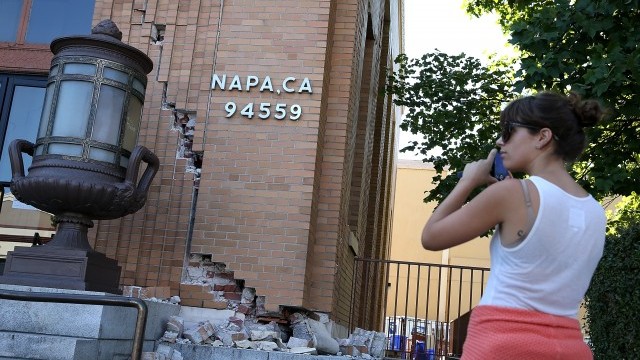
"caption": "A passerby stops to take a picture of damage to the Napa post office. (Justin Sullivan/Getty Images)",
"description": "A passerby stops to take a picture of damage to the Napa post office. (Justin Sullivan/Getty Images)",
"title": "454081604-640x431",
"credit": null,
"status": "inherit",
"isLoading": false,
"fetchFailed": false
}
},
"audioPlayerReducer": {
"postId": "stream_live",
"isPaused": true,
"isPlaying": false,
"pfsActive": false,
"pledgeModalIsOpen": true,
"playerDrawerIsOpen": false,
"liveAudioPlayStartedAt": 0,
"liveAudioPlayContext": ""
},
"authorsReducer": {
"dclyde": {
"type": "authors",
"id": "104",
"meta": {
"index": "authors_1716337520",
"id": "104",
"found": true
},
"name": "Don Clyde",
"firstName": "Don",
"lastName": "Clyde",
"slug": "dclyde",
"email": "dclyde@kqed.org",
"display_author_email": false,
"staff_mastheads": [],
"title": "KQED Contributor",
"bio": "Don Clyde is an online producer, reporter and copy editor for KQED News. Before venturing into journalism, he worked as a medical device engineer and scientist for nearly a decade after earning a degree in physics from UC Berkeley. He loves travel, reading, living in Oakland, and most importantly, a good walk. Email him at dclyde@kqed.org or follow him @clydedon.",
"avatar": "https://secure.gravatar.com/avatar/decd3e640c3eedbd0a574275aebb2d19?s=600&d=blank&r=g",
"twitter": "clydedon",
"facebook": null,
"instagram": null,
"linkedin": null,
"sites": [
{
"site": "artschool",
"roles": [
"editor"
]
},
{
"site": "news",
"roles": [
"administrator"
]
},
{
"site": "futureofyou",
"roles": [
"editor"
]
},
{
"site": "about",
"roles": [
"editor"
]
},
{
"site": "mindshift",
"roles": [
"contributor"
]
},
{
"site": "bayareabites",
"roles": [
"contributor"
]
},
{
"site": "lowdown",
"roles": [
"editor"
]
},
{
"site": "stateofhealth",
"roles": [
"administrator"
]
},
{
"site": "spark",
"roles": [
"administrator"
]
},
{
"site": "trulyca",
"roles": [
"administrator"
]
},
{
"site": "imagemakers",
"roles": [
"administrator"
]
},
{
"site": "science",
"roles": []
},
{
"site": "education",
"roles": [
"editor"
]
},
{
"site": "quest",
"roles": [
"subscriber"
]
},
{
"site": "checkplease",
"roles": [
"subscriber"
]
},
{
"site": "forum",
"roles": [
"editor"
]
},
{
"site": "perspectives",
"roles": [
"editor"
]
}
],
"headData": {
"title": "Don Clyde | KQED",
"description": "KQED Contributor",
"ogImgSrc": "https://secure.gravatar.com/avatar/decd3e640c3eedbd0a574275aebb2d19?s=600&d=blank&r=g",
"twImgSrc": "https://secure.gravatar.com/avatar/decd3e640c3eedbd0a574275aebb2d19?s=600&d=blank&r=g"
},
"isLoading": false,
"link": "/author/dclyde"
},
"lisapickoffwhite-2": {
"type": "authors",
"id": "199",
"meta": {
"index": "authors_1716337520",
"id": "199",
"found": true
},
"name": "Lisa Pickoff-White",
"firstName": "Lisa",
"lastName": "Pickoff-White",
"slug": "lisapickoffwhite-2",
"email": "lpickoffwhite@kqed.org",
"display_author_email": false,
"staff_mastheads": [
"news"
],
"title": "Data Journalist, Senior Producer",
"bio": "Lisa Pickoff-White is KQED's data reporter. Lisa specializes in simplifying complex topics and bringing them to life through compelling visuals, including photography and data visualizations. She previously has worked at the Center for Investigative Reporting and other national outlets. Her work has been honored with awards from the Online News Association, Investigative Reporters and Editors, the Society of Professional Journalists and SXSW Interactive. \u003cstrong> \u003c/strong>",
"avatar": "https://secure.gravatar.com/avatar/5513c5f3967df792aa65bee2501e84d6?s=600&d=blank&r=g",
"twitter": "pickoffwhite",
"facebook": null,
"instagram": null,
"linkedin": null,
"sites": [
{
"site": "",
"roles": [
"editor"
]
},
{
"site": "arts",
"roles": []
},
{
"site": "news",
"roles": [
"administrator"
]
},
{
"site": "about",
"roles": [
"editor"
]
},
{
"site": "stateofhealth",
"roles": [
"administrator"
]
},
{
"site": "science",
"roles": [
"editor"
]
},
{
"site": "quest",
"roles": [
"editor"
]
},
{
"site": "forum",
"roles": [
"editor"
]
}
],
"headData": {
"title": "Lisa Pickoff-White | KQED",
"description": "Data Journalist, Senior Producer",
"ogImgSrc": "https://secure.gravatar.com/avatar/5513c5f3967df792aa65bee2501e84d6?s=600&d=blank&r=g",
"twImgSrc": "https://secure.gravatar.com/avatar/5513c5f3967df792aa65bee2501e84d6?s=600&d=blank&r=g"
},
"isLoading": false,
"link": "/author/lisapickoffwhite-2"
},
"andrea-kissack": {
"type": "authors",
"id": "212",
"meta": {
"index": "authors_1716337520",
"id": "212",
"found": true
},
"name": "Andrea Kissack",
"firstName": "Andrea",
"lastName": "Kissack",
"slug": "andrea-kissack",
"email": "akissack@kqed.org",
"display_author_email": false,
"staff_mastheads": [],
"title": "KQED Contributor",
"bio": "Andrea has nearly three decades of experience working as a reporter, anchor, producer and editor for public radio, large market television news and CBS radio. In her current role as KQED’s Sr. Science Editor, Andrea helps lead a talented team covering science, technology, health and the environment for broadcast and digital platforms. Most recently she helped KQED launch a new, multimedia initiative covering the intersection of technology, health and medical science. She has earned a number of accolades for her work including awards from the Radio and Television News Directors Association, the National Academy of Television Arts and Sciences and the Associated Press. Her work can be seen, and heard, on a number of networks, Including NPR, PBS, CBS and the BBC.",
"avatar": "https://secure.gravatar.com/avatar/3eae7a251f0aee43b3c0137a636cb386?s=600&d=blank&r=g",
"twitter": "andreakissack",
"facebook": null,
"instagram": null,
"linkedin": null,
"sites": [
{
"site": "news",
"roles": [
"subscriber"
]
},
{
"site": "stateofhealth",
"roles": [
"subscriber"
]
},
{
"site": "science",
"roles": []
},
{
"site": "quest",
"roles": [
"add_users",
"create_users",
"edit_files",
"edit_users",
"level_10",
"level_8",
"level_9",
"promote_users",
"view_cimy_extra_fields",
"subscriber"
]
}
],
"headData": {
"title": "Andrea Kissack | KQED",
"description": "KQED Contributor",
"ogImgSrc": "https://secure.gravatar.com/avatar/3eae7a251f0aee43b3c0137a636cb386?s=600&d=blank&r=g",
"twImgSrc": "https://secure.gravatar.com/avatar/3eae7a251f0aee43b3c0137a636cb386?s=600&d=blank&r=g"
},
"isLoading": false,
"link": "/author/andrea-kissack"
},
"danbrekke": {
"type": "authors",
"id": "222",
"meta": {
"index": "authors_1716337520",
"id": "222",
"found": true
},
"name": "Dan Brekke",
"firstName": "Dan",
"lastName": "Brekke",
"slug": "danbrekke",
"email": "dbrekke@kqed.org",
"display_author_email": true,
"staff_mastheads": [
"news",
"science"
],
"title": "KQED Editor and Reporter",
"bio": "Dan Brekke is a reporter and editor for KQED News, responsible for coverage of topics ranging from California water issues to the Bay Area's transportation challenges. In a newsroom career that began in Chicago in 1972, Dan has worked for \u003cem>The San Francisco Examiner,\u003c/em> Wired and TechTV and has been published in The New York Times, The New York Times Magazine, Business 2.0, Salon and elsewhere.\r\n\r\nSince joining KQED in 2007, Dan has reported, edited and produced both radio and online features and breaking news pieces. He has shared as both editor and reporter in four Society of Professional Journalists Norcal Excellence in Journalism awards and one Edward R. Murrow regional award. He was chosen for a spring 2017 residency at the Mesa Refuge to advance his research on California salmon.\r\n\r\nEmail Dan at: \u003ca href=\"mailto:dbrekke@kqed.org\">dbrekke@kqed.org\u003c/a>\r\n\r\n\u003cstrong>Twitter:\u003c/strong> \u003ca href=\"https://twitter.com/danbrekke\" rel=\"noopener noreferrer\">twitter.com/danbrekke\u003c/a>\r\n\u003cstrong>Facebook:\u003c/strong> \u003ca href=\"https://www.facebook.com/danbrekke\" rel=\"noopener noreferrer\">www.facebook.com/danbrekke\u003c/a>\r\n\u003cstrong>LinkedIn:\u003c/strong> \u003ca href=\"https://www.linkedin.com/in/danbrekke\" rel=\"noopener noreferrer\">www.linkedin.com/in/danbrekke\u003c/a>",
"avatar": "https://secure.gravatar.com/avatar/c8126230345efca3f7aa89b1a402be45?s=600&d=mm&r=g",
"twitter": "danbrekke",
"facebook": null,
"instagram": "https://www.instagram.com/dan.brekke/",
"linkedin": "https://www.linkedin.com/in/danbrekke/",
"sites": [
{
"site": "news",
"roles": [
"administrator",
"create_posts"
]
},
{
"site": "stateofhealth",
"roles": [
"editor"
]
},
{
"site": "science",
"roles": [
"editor"
]
},
{
"site": "quest",
"roles": [
"contributor"
]
},
{
"site": "food",
"roles": [
"contributor"
]
},
{
"site": "forum",
"roles": [
"contributor"
]
},
{
"site": "liveblog",
"roles": [
"editor"
]
}
],
"headData": {
"title": "Dan Brekke | KQED",
"description": "KQED Editor and Reporter",
"ogImgSrc": "https://secure.gravatar.com/avatar/c8126230345efca3f7aa89b1a402be45?s=600&d=mm&r=g",
"twImgSrc": "https://secure.gravatar.com/avatar/c8126230345efca3f7aa89b1a402be45?s=600&d=mm&r=g"
},
"isLoading": false,
"link": "/author/danbrekke"
},
"katsnow": {
"type": "authors",
"id": "235",
"meta": {
"index": "authors_1716337520",
"id": "235",
"found": true
},
"name": "Katrin Snow",
"firstName": "Katrin",
"lastName": "Snow",
"slug": "katsnow",
"email": "ksnow@kqed.org",
"display_author_email": true,
"staff_mastheads": [
"science"
],
"title": "Senior Editor",
"bio": "Kat started in radio in 1985 at KMUN in Astoria, Oregon, where the Columbia River meets the sea. She worked several years protecting monarch butterfly habitat in California with the Xerces Society, an invertebrate conservation organization, before a love for radio news drew her back into journalism. Kat came to KQED in 2002, and before that was a reporter and news director at KUER in Salt Lake City, covering the state legislature, the environment and health. Kat coaches reporters and others in embodied narration and public speaking. She is a certified teacher of Soul Motion®, a conscious dance practice, and can sometimes be found in the Mojave desert or the Eastern Sierra.",
"avatar": "https://secure.gravatar.com/avatar/fa6bf8a74a2692973a5484e64ebd2b52?s=600&d=blank&r=g",
"twitter": "cosmologicalkat",
"facebook": null,
"instagram": null,
"linkedin": null,
"sites": [
{
"site": "arts",
"roles": [
"contributor"
]
},
{
"site": "news",
"roles": [
"editor"
]
},
{
"site": "futureofyou",
"roles": [
"editor"
]
},
{
"site": "science",
"roles": [
"editor"
]
}
],
"headData": {
"title": "Katrin Snow | KQED",
"description": "Senior Editor",
"ogImgSrc": "https://secure.gravatar.com/avatar/fa6bf8a74a2692973a5484e64ebd2b52?s=600&d=blank&r=g",
"twImgSrc": "https://secure.gravatar.com/avatar/fa6bf8a74a2692973a5484e64ebd2b52?s=600&d=blank&r=g"
},
"isLoading": false,
"link": "/author/katsnow"
},
"kqed": {
"type": "authors",
"id": "236",
"meta": {
"index": "authors_1716337520",
"id": "236",
"found": true
},
"name": "KQED News Staff",
"firstName": "KQED News Staff",
"lastName": null,
"slug": "kqed",
"email": "faq@kqed.org",
"display_author_email": false,
"staff_mastheads": [],
"title": null,
"bio": null,
"avatar": "https://secure.gravatar.com/avatar/ef0e801a68c4c54afa9180db14084167?s=600&d=blank&r=g",
"twitter": null,
"facebook": null,
"instagram": null,
"linkedin": null,
"sites": [
{
"site": "arts",
"roles": [
"contributor"
]
},
{
"site": "news",
"roles": [
"editor"
]
},
{
"site": "futureofyou",
"roles": [
"author"
]
}
],
"headData": {
"title": "KQED News Staff | KQED",
"description": null,
"ogImgSrc": "https://secure.gravatar.com/avatar/ef0e801a68c4c54afa9180db14084167?s=600&d=blank&r=g",
"twImgSrc": "https://secure.gravatar.com/avatar/ef0e801a68c4c54afa9180db14084167?s=600&d=blank&r=g"
},
"isLoading": false,
"link": "/author/kqed"
},
"samharnett": {
"type": "authors",
"id": "253",
"meta": {
"index": "authors_1716337520",
"id": "253",
"found": true
},
"name": "Sam Harnett",
"firstName": "Sam",
"lastName": "Harnett",
"slug": "samharnett",
"email": "samharnett@gmail.com",
"display_author_email": false,
"staff_mastheads": [],
"title": "KQED Contributor",
"bio": "Sam Harnett covered tech and work at KQED. He is the co-creator of \u003cem>\u003ca href=\"http://www.theworldaccordingtosound.org\">The World According to Sound\u003c/a>,\u003c/em> a 90-second podcast that features different sounds and the stories behind them.\r\n\r\nBefore coming to KQED, Sam worked as an independent reporter who contributed regularly to \u003cem>The California Report, Marketplace,\u003c/em> \u003cem>The World \u003c/em>and NPR.",
"avatar": "https://secure.gravatar.com/avatar/2538b972ac02f2b9546c7a6c59a0f3d0?s=600&d=blank&r=g",
"twitter": "Samwharnett",
"facebook": null,
"instagram": null,
"linkedin": null,
"sites": [
{
"site": "news",
"roles": [
"edit_others_posts",
"subscriber"
]
},
{
"site": "stateofhealth",
"roles": [
"author"
]
},
{
"site": "science",
"roles": [
"editor"
]
},
{
"site": "quest",
"roles": [
"subscriber"
]
}
],
"headData": {
"title": "Sam Harnett | KQED",
"description": "KQED Contributor",
"ogImgSrc": "https://secure.gravatar.com/avatar/2538b972ac02f2b9546c7a6c59a0f3d0?s=600&d=blank&r=g",
"twImgSrc": "https://secure.gravatar.com/avatar/2538b972ac02f2b9546c7a6c59a0f3d0?s=600&d=blank&r=g"
},
"isLoading": false,
"link": "/author/samharnett"
},
"tgoldberg": {
"type": "authors",
"id": "258",
"meta": {
"index": "authors_1716337520",
"id": "258",
"found": true
},
"name": "Ted Goldberg",
"firstName": "Ted",
"lastName": "Goldberg",
"slug": "tgoldberg",
"email": "tgoldberg@kqed.org",
"display_author_email": true,
"staff_mastheads": [
"news"
],
"title": "KQED Managing Editor, News and Newscasts",
"bio": "Ted Goldberg is Managing Editor of News and Newscasts at KQED. His main reporting beat is the Bay Area's oil refining industry.\r\n\r\nPrior to joining KQED in 2014, Ted worked at CBS News and WCBS AM in New York and Bay City News and KCBS Radio in San Francisco. He graduated from Oberlin College in Ohio in 1998.",
"avatar": "https://secure.gravatar.com/avatar/16d702c9ec5f696d78dbfb76b592cf0a?s=600&d=blank&r=g",
"twitter": "TedrickG",
"bluesky": null,
"facebook": null,
"instagram": null,
"linkedin": null,
"sites": [
{
"site": "news",
"roles": [
"editor"
]
},
{
"site": "science",
"roles": [
"editor"
]
}
],
"headData": {
"title": "Ted Goldberg | KQED",
"description": "KQED Managing Editor, News and Newscasts",
"ogImgSrc": "https://secure.gravatar.com/avatar/16d702c9ec5f696d78dbfb76b592cf0a?s=600&d=blank&r=g",
"twImgSrc": "https://secure.gravatar.com/avatar/16d702c9ec5f696d78dbfb76b592cf0a?s=600&d=blank&r=g"
},
"isLoading": false,
"link": "/author/tgoldberg"
},
"shossaini": {
"type": "authors",
"id": "3214",
"meta": {
"index": "authors_1716337520",
"id": "3214",
"found": true
},
"name": "Sara Hossaini",
"firstName": "Sara",
"lastName": "Hossaini",
"slug": "shossaini",
"email": "shossaini@kqed.org",
"display_author_email": true,
"staff_mastheads": [
"news"
],
"title": "KQED Reporter",
"bio": "Sara Hossaini came to general assignment reporting at KQED in 2013 after two winters reporting at Wyoming Public Radio. She holds a bachelor's degree in broadcast journalism from the University of Nebraska-Lincoln. Her radio romance began after a bitter breakup with documentary film (Ok, maybe it's still complicated). Her first simultaneous jobs in San Francisco were as Associate Producer on a PBS film series through the Center for Asian American Media and as a butler. She likes to trot, plot and make things with her hands.",
"avatar": "https://secure.gravatar.com/avatar/060e9f56b9554e17942e89f413242774?s=600&d=blank&r=g",
"twitter": "mshossaini",
"facebook": null,
"instagram": null,
"linkedin": null,
"sites": [
{
"site": "news",
"roles": [
"author"
]
},
{
"site": "stateofhealth",
"roles": [
"author"
]
}
],
"headData": {
"title": "Sara Hossaini | KQED",
"description": "KQED Reporter",
"ogImgSrc": "https://secure.gravatar.com/avatar/060e9f56b9554e17942e89f413242774?s=600&d=blank&r=g",
"twImgSrc": "https://secure.gravatar.com/avatar/060e9f56b9554e17942e89f413242774?s=600&d=blank&r=g"
},
"isLoading": false,
"link": "/author/shossaini"
}
},
"pagesReducer": {
"news_tag_vallejo": {
"type": "terms",
"id": "news_273",
"meta": {
"index": "terms_1716263798",
"site": "news",
"id": "273",
"score": 8.93464
},
"featImg": null,
"name": "Vallejo",
"description": null,
"taxonomy": "tag",
"headData": {
"twImgId": null,
"twTitle": null,
"ogTitle": null,
"ogImgId": null,
"twDescription": null,
"description": null,
"title": "Vallejo Archives | KQED News",
"ogDescription": null
},
"ttid": 281,
"slug": "vallejo",
"isLoading": false,
"title": "Vallejo",
"pageMeta": {
"site": "news",
"WpPageTemplate": "page-topic-editorial",
"currentPage": 6
},
"blocks": [
{
"blockName": "kqed/post-list",
"attrs": {
"layout": "cardArticle2",
"query": "posts/news?tag=vallejo",
"seeMore": false,
"paginated": true,
"page": 6
}
},
{
"blockName": "kqed/ad"
}
]
}
},
"pfsSessionReducer": {},
"postsReducer": {
"stream_live": {
"type": "live",
"id": "stream_live",
"audioUrl": "https://streams.kqed.org/kqedradio",
"title": "Live Stream",
"excerpt": "Live Stream information currently unavailable.",
"link": "/radio",
"featImg": "",
"label": {
"name": "KQED Live",
"link": "/"
}
},
"stream_kqedNewscast": {
"type": "posts",
"id": "stream_kqedNewscast",
"audioUrl": "https://www.kqed.org/.stream/anon/radio/RDnews/newscast.mp3?_=1",
"title": "KQED Newscast",
"featImg": "",
"label": {
"name": "88.5 FM",
"link": "/"
}
},
"news_11347210": {
"type": "posts",
"id": "news_11347210",
"meta": {
"index": "posts_1716263798",
"site": "news",
"id": "11347210",
"score": null,
"sort": [
1489098098000
]
},
"parent": 0,
"labelTerm": {
"site": "news",
"term": 72
},
"blocks": [],
"publishDate": 1489098098,
"format": "standard",
"disqusTitle": "Under Pressure, Air District Says It's Still Investigating Vallejo Fumes",
"title": "Under Pressure, Air District Says It's Still Investigating Vallejo Fumes",
"headTitle": "The California Report | KQED News",
"content": "\u003cp>Facing pressure from state legislators, Vallejo residents and environmentalists, local air regulators are reversing course and now say they are still trying to figure out what caused an unbearable odor that sickened scores of Vallejo residents and prompted a shelter-in-place order last September.\u003c/p>\n\u003cp>The Bay Area Air Quality Management District \u003ca href=\"https://ww2.kqed.org/news/2017/02/28/five-months-later-agencies-still-havent-pinpointed-source-of-vallejo-fumes/\" target=\"_blank\">told KQED last month\u003c/a> that, although it had completed an investigation of the incident, staff never compiled a report or wrote anything down about their work in seeking the source of the fumes.\u003c/p>\n\u003cp>But now, Wayne Kino, the air district's director of compliance and enforcement, says the inquiry is still going on.\u003c/p>\n\u003cp>\"We are actively investigating the source of the odor complaints despite the fact that the Coast Guard has closed its case,\" Kino said Wednesday.\u003c/p>\n\u003cp>[contextly_sidebar id=\"ApmjkbYRgX0VZu7eD5tLpsTlXIOQ2KhP\"]\u003c/p>\n\u003cp>The Coast Guard announced in October that it had determined an oil spill in San Pablo Bay, discovered on Sept. 20 around the same time as the odor complaints came in, originated from either a marine terminal at the Phillips 66 refinery in Rodeo or a tanker that was unloading there.\u003c/p>\n\u003cp>[ad fullwidth]\u003c/p>\n\u003cp>The refinery and the company that own the tanker have rejected the Coast Guard's findings, which did not link the spill to the Vallejo fumes.\u003c/p>\n\u003cp>Kino said the district did not initially understand the magnitude of the Vallejo incident.\u003c/p>\n\u003cp>He said the district received only a handful of air complaints the evening of Sept. 20 and was not aware that 800 people had contacted local emergency dispatchers about the fumes. He suggested that's why the district assigned just one inspector to respond to the fumes.\u003c/p>\n\u003cp>\"At that point I don't think it was quite known that we had such a widespread problem,\" Kino said, adding that if the agency had known more, it would have dispatched more inspectors.\u003c/p>\n\u003cp>The one inspector who responded arrived in Vallejo, a city of 118,000, about an hour after the first complaints came in.\u003c/p>\n\u003cp>\"I would guess she was out there for an hour, maybe two hours,\" Kino said. The inspector couldn't detect the odor and couldn't find where it came from, he said.\u003c/p>\n\u003cp>The district later looked at a number of possible sources, including nearby oil refineries, a sewage plant at the base of the Carquinez Bridge, the C&H Sugar plant in Crockett and ship traffic, Kino said. The agency also checked ground-level air monitors in the area.\u003c/p>\n\u003cp>Eventually, district investigators zeroed in on the Phillips 66 marine terminal, a tanker that was unloading crude there at the time, pipes connecting the terminal and ship, and a vapor-recovery system at the facility. Inspectors did not find enough evidence to tie the spill to the fumes, Kino said.\u003c/p>\n\u003cp>\u003cstrong>State Senator Wants Answers\u003c/strong>\u003c/p>\n\u003cp>Kino's comments come as state Sen. Bill Dodd, who represents Vallejo, is demanding the air district provide details of its inquiry into the fumes.\u003c/p>\n\u003cp>\"The citizens of Vallejo and Solano County deserve an explanation as to what may have happened,\" Dodd wrote \u003ca href=\"https://www.documentcloud.org/documents/3514729-Sen-Dodd-BAAQMD-Letter-3-8-17.html\" target=\"_blank\">in a letter to the district\u003c/a> on Wednesday. \"Without identifying the source, it becomes impossible to take measures to prevent or reduce risk of such an event from occurring again.\"\u003c/p>\n\u003cp>Dodd's letter also says Vallejo's Sutter Solano Medical Center declared a mass casualty incident because so many people were seeking emergency treatment at its facility. That declaration prompted ambulances to transport 20 people to other hospitals in Solano County, Dodd's letter says.\u003c/p>\n\u003cp>\u003cstrong>New Details on Air District's Probe\u003c/strong>\u003c/p>\n\u003cp>Word of Dodd's letter prompted the air district to provide more details about its investigation and explain why it has released so little information about it.\u003c/p>\n\u003cp>Kino said district inspectors don't normally keep records of potential sources of pollution that have been eliminated as suspected causes of a problem.\u003c/p>\n\u003cp>\"When they're looking for an odor source, they don't necessarily document the negative of that,\" Kino said.\u003c/p>\n\u003cp>He added that much of the communication the air district had with the Coast Guard about the incident was done during in-person meetings that did not involve emails and documents.\u003c/p>\n\u003cp>In February, KQED requested copies of all documents and email correspondence related to the district's work on the odor and spill. District officials then said no such materials exist. An air district spokesman also told KQED its investigation into the odor was completed.\u003c/p>\n\u003cp>But Kino said Wednesday that documents on the incident do exist, including dozens of complaint reports about the odor and other investigative notes -- all documents the district is refusing to release.\u003c/p>\n\u003cp>He said the district won't release the records because the district is still investigating.\u003c/p>\n\u003cp>\u003cstrong>Residents, State Assemblyman, Environmentalists Demand More\u003c/strong>\u003c/p>\n\u003cp>People who live in Vallejo are still left without answers.\u003c/p>\n\u003cp>One of them is Heather Blithely, who has pressed the air district for more information on its probe and created a Facebook page called \u003ca href=\"https://www.facebook.com/groups/303126756731690/\" target=\"_blank\">Phillips 66 Spill Vallejo\u003c/a>.\u003c/p>\n\u003cp>\"The fact that there's not any paper trail is shocking and disappointing,\" Blithely said in an interview. \"I think it's really disgraceful that they didn't at least let everyone know what they didn't find.\"\u003c/p>\n\u003cp>Assemblyman Timothy Grayson, like Sen. Dodd, represents Vallejo.\u003c/p>\n\u003cp>\"I understand and share the frustration of my constituents that we still don't have an answer as to what caused the odor,\" Grayson said in a statement.\u003c/p>\n\u003cp>The lack of information has prompted anger from two environmental groups that have followed the issue.\u003c/p>\n\u003cp>\"It's outrageous that air district officials and other agencies failed to get to the bottom of this major oil pollution incident,\" said Miyoko Sakashita, the Oakland-based oceans director at the Center for Biological Diversity.\u003c/p>\n\u003cp>\"This weak response to an oil spill that polluted our bay and sent people to the hospital underscores the dangers of shipping crude through our fragile coastal environment,\" Sakashita said.\u003c/p>\n\u003cp>\u003c/p>\n\u003cp>\"Multiple agencies have strong evidence of the source of this oil spill and the associated fumes that posed a risk to nearby residents,\" said Ian Wren, a staff scientist at San Francisco Baykeeper. \"The failure to enforce our clean air and water laws is unacceptable.\"\u003c/p>\n\n",
"disqusIdentifier": "11347210 https://ww2.kqed.org/news/?p=11347210",
"disqusUrl": "https://ww2.kqed.org/news/2017/03/09/under-pressure-air-district-says-its-still-investigating-vallejo-fumes/",
"stats": {
"hasVideo": false,
"hasChartOrMap": false,
"hasAudio": false,
"hasPolis": false,
"wordCount": 1035,
"hasGoogleForm": false,
"hasGallery": false,
"hasHearkenModule": false,
"iframeSrcs": [],
"paragraphCount": 38
},
"modified": 1489353268,
"excerpt": "'I don't think it was quite known that we had such a widespread problem,' said the air district's top enforcement official, Wayne Kino. ",
"headData": {
"twImgId": "",
"twTitle": "",
"ogTitle": "",
"ogImgId": "",
"twDescription": "",
"description": "'I don't think it was quite known that we had such a widespread problem,' said the air district's top enforcement official, Wayne Kino. ",
"title": "Under Pressure, Air District Says It's Still Investigating Vallejo Fumes | KQED",
"ogDescription": "",
"schema": {
"@context": "https://schema.org",
"@type": "NewsArticle",
"headline": "Under Pressure, Air District Says It's Still Investigating Vallejo Fumes",
"datePublished": "2017-03-09T14:21:38-08:00",
"dateModified": "2017-03-12T14:14:28-07:00",
"image": "https://cdn.kqed.org/wp-content/uploads/2020/02/KQED-OG-Image@1x.png",
"isAccessibleForFree": "True",
"publisher": {
"@type": "NewsMediaOrganization",
"@id": "https://www.kqed.org/#organization",
"name": "KQED",
"logo": "https://cdn.kqed.org/wp-content/uploads/2020/02/KQED-OG-Image@1x.png",
"url": "https://www.kqed.org",
"sameAs": [
"https://www.facebook.com/KQED",
"https://twitter.com/KQED",
"https://www.instagram.com/kqed/",
"https://www.tiktok.com/@kqedofficial",
"https://www.linkedin.com/company/kqed",
"https://www.youtube.com/channel/UCeC0IOo7i1P_61zVUWbJ4nw"
]
}
}
},
"guestAuthors": [],
"slug": "under-pressure-air-district-says-its-still-investigating-vallejo-fumes",
"status": "publish",
"customPermalink": "2017/03/09/bay-area-air-district-baaqmd-says-it-is-still-investigating-vallejo-fumes/",
"path": "/news/11347210/under-pressure-air-district-says-its-still-investigating-vallejo-fumes",
"audioTrackLength": null,
"parsedContent": [
{
"type": "contentString",
"content": "\u003cdiv class=\"post-body\">\u003cp>\u003cp>Facing pressure from state legislators, Vallejo residents and environmentalists, local air regulators are reversing course and now say they are still trying to figure out what caused an unbearable odor that sickened scores of Vallejo residents and prompted a shelter-in-place order last September.\u003c/p>\n\u003cp>The Bay Area Air Quality Management District \u003ca href=\"https://ww2.kqed.org/news/2017/02/28/five-months-later-agencies-still-havent-pinpointed-source-of-vallejo-fumes/\" target=\"_blank\">told KQED last month\u003c/a> that, although it had completed an investigation of the incident, staff never compiled a report or wrote anything down about their work in seeking the source of the fumes.\u003c/p>\n\u003cp>But now, Wayne Kino, the air district's director of compliance and enforcement, says the inquiry is still going on.\u003c/p>\n\u003cp>\"We are actively investigating the source of the odor complaints despite the fact that the Coast Guard has closed its case,\" Kino said Wednesday.\u003c/p>\n\u003cp>\u003c/p>\u003cp>\u003c/p>\u003cp>\u003c/p>\n\u003cp>The Coast Guard announced in October that it had determined an oil spill in San Pablo Bay, discovered on Sept. 20 around the same time as the odor complaints came in, originated from either a marine terminal at the Phillips 66 refinery in Rodeo or a tanker that was unloading there.\u003c/p>\n\u003cp>\u003c/p>\u003c/div>",
"attributes": {
"named": {},
"numeric": []
}
},
{
"type": "component",
"content": "",
"name": "ad",
"attributes": {
"named": {
"label": "fullwidth"
},
"numeric": [
"fullwidth"
]
}
},
{
"type": "contentString",
"content": "\u003cdiv class=\"post-body\">\u003cp>\u003c/p>\n\u003cp>The refinery and the company that own the tanker have rejected the Coast Guard's findings, which did not link the spill to the Vallejo fumes.\u003c/p>\n\u003cp>Kino said the district did not initially understand the magnitude of the Vallejo incident.\u003c/p>\n\u003cp>He said the district received only a handful of air complaints the evening of Sept. 20 and was not aware that 800 people had contacted local emergency dispatchers about the fumes. He suggested that's why the district assigned just one inspector to respond to the fumes.\u003c/p>\n\u003cp>\"At that point I don't think it was quite known that we had such a widespread problem,\" Kino said, adding that if the agency had known more, it would have dispatched more inspectors.\u003c/p>\n\u003cp>The one inspector who responded arrived in Vallejo, a city of 118,000, about an hour after the first complaints came in.\u003c/p>\n\u003cp>\"I would guess she was out there for an hour, maybe two hours,\" Kino said. The inspector couldn't detect the odor and couldn't find where it came from, he said.\u003c/p>\n\u003cp>The district later looked at a number of possible sources, including nearby oil refineries, a sewage plant at the base of the Carquinez Bridge, the C&H Sugar plant in Crockett and ship traffic, Kino said. The agency also checked ground-level air monitors in the area.\u003c/p>\n\u003cp>Eventually, district investigators zeroed in on the Phillips 66 marine terminal, a tanker that was unloading crude there at the time, pipes connecting the terminal and ship, and a vapor-recovery system at the facility. Inspectors did not find enough evidence to tie the spill to the fumes, Kino said.\u003c/p>\n\u003cp>\u003cstrong>State Senator Wants Answers\u003c/strong>\u003c/p>\n\u003cp>Kino's comments come as state Sen. Bill Dodd, who represents Vallejo, is demanding the air district provide details of its inquiry into the fumes.\u003c/p>\n\u003cp>\"The citizens of Vallejo and Solano County deserve an explanation as to what may have happened,\" Dodd wrote \u003ca href=\"https://www.documentcloud.org/documents/3514729-Sen-Dodd-BAAQMD-Letter-3-8-17.html\" target=\"_blank\">in a letter to the district\u003c/a> on Wednesday. \"Without identifying the source, it becomes impossible to take measures to prevent or reduce risk of such an event from occurring again.\"\u003c/p>\n\u003cp>Dodd's letter also says Vallejo's Sutter Solano Medical Center declared a mass casualty incident because so many people were seeking emergency treatment at its facility. That declaration prompted ambulances to transport 20 people to other hospitals in Solano County, Dodd's letter says.\u003c/p>\n\u003cp>\u003cstrong>New Details on Air District's Probe\u003c/strong>\u003c/p>\n\u003cp>Word of Dodd's letter prompted the air district to provide more details about its investigation and explain why it has released so little information about it.\u003c/p>\n\u003cp>Kino said district inspectors don't normally keep records of potential sources of pollution that have been eliminated as suspected causes of a problem.\u003c/p>\n\u003cp>\"When they're looking for an odor source, they don't necessarily document the negative of that,\" Kino said.\u003c/p>\n\u003cp>He added that much of the communication the air district had with the Coast Guard about the incident was done during in-person meetings that did not involve emails and documents.\u003c/p>\n\u003cp>In February, KQED requested copies of all documents and email correspondence related to the district's work on the odor and spill. District officials then said no such materials exist. An air district spokesman also told KQED its investigation into the odor was completed.\u003c/p>\n\u003cp>But Kino said Wednesday that documents on the incident do exist, including dozens of complaint reports about the odor and other investigative notes -- all documents the district is refusing to release.\u003c/p>\n\u003cp>He said the district won't release the records because the district is still investigating.\u003c/p>\n\u003cp>\u003cstrong>Residents, State Assemblyman, Environmentalists Demand More\u003c/strong>\u003c/p>\n\u003cp>People who live in Vallejo are still left without answers.\u003c/p>\n\u003cp>One of them is Heather Blithely, who has pressed the air district for more information on its probe and created a Facebook page called \u003ca href=\"https://www.facebook.com/groups/303126756731690/\" target=\"_blank\">Phillips 66 Spill Vallejo\u003c/a>.\u003c/p>\n\u003cp>\"The fact that there's not any paper trail is shocking and disappointing,\" Blithely said in an interview. \"I think it's really disgraceful that they didn't at least let everyone know what they didn't find.\"\u003c/p>\n\u003cp>Assemblyman Timothy Grayson, like Sen. Dodd, represents Vallejo.\u003c/p>\n\u003cp>\"I understand and share the frustration of my constituents that we still don't have an answer as to what caused the odor,\" Grayson said in a statement.\u003c/p>\n\u003cp>The lack of information has prompted anger from two environmental groups that have followed the issue.\u003c/p>\n\u003cp>\"It's outrageous that air district officials and other agencies failed to get to the bottom of this major oil pollution incident,\" said Miyoko Sakashita, the Oakland-based oceans director at the Center for Biological Diversity.\u003c/p>\n\u003cp>\"This weak response to an oil spill that polluted our bay and sent people to the hospital underscores the dangers of shipping crude through our fragile coastal environment,\" Sakashita said.\u003c/p>\n\u003cp>\u003c/p>\n\u003cp>\"Multiple agencies have strong evidence of the source of this oil spill and the associated fumes that posed a risk to nearby residents,\" said Ian Wren, a staff scientist at San Francisco Baykeeper. \"The failure to enforce our clean air and water laws is unacceptable.\"\u003c/p>\n\n\u003c/div>\u003c/p>",
"attributes": {
"named": {},
"numeric": []
}
}
],
"link": "/news/11347210/under-pressure-air-district-says-its-still-investigating-vallejo-fumes",
"authors": [
"258"
],
"programs": [
"news_6944",
"news_72"
],
"categories": [
"news_19906",
"news_457",
"news_356"
],
"tags": [
"news_2036",
"news_20628",
"news_19542",
"news_273"
],
"featImg": "news_11098607",
"label": "news_72"
},
"news_11323027": {
"type": "posts",
"id": "news_11323027",
"meta": {
"index": "posts_1716263798",
"site": "news",
"id": "11323027",
"score": null,
"sort": [
1488270027000
]
},
"parent": 0,
"labelTerm": {
"site": "news",
"term": 6944
},
"blocks": [],
"publishDate": 1488270027,
"format": "standard",
"disqusTitle": "Five Months After Incident, Agencies Still Haven't Pinpointed Source of Vallejo Fumes",
"title": "Five Months After Incident, Agencies Still Haven't Pinpointed Source of Vallejo Fumes",
"headTitle": "News Fix | KQED News",
"content": "\u003cp>[dropcap]F[/dropcap]ive months after dozens of Vallejo residents sought medical treatment after being overpowered by an unbearable odor that spread over their community, a collection of federal, state and local agencies have failed to follow up on the cause or have declined to release results of their investigations.\u003c/p>\n\u003cp>The fumes prompted about 800 phone calls to authorities, who imposed a shelter-in-place order covering much of the city of 118,000. The onset of the sickening odor appears to have coincided with a petroleum spill at the Phillips 66 refinery the same evening.\u003c/p>\n\u003cp>The noxious smell dissipated within a few hours. By then, local, regional, state and federal agencies had been alerted and said they were trying to pinpoint the source and composition of the fumes -- both of which remain unconfirmed today.\u003c/p>\n\u003cp>[contextly_sidebar id=\"ZB8Pth0HV2bnjkBQ2TZhLuNCenbEg1ig\"]\u003c/p>\n\u003cp>The city of Vallejo, which told residents several times that its Fire Department was investigating the odor, never actually launched a probe.\u003c/p>\n\u003cp>[ad fullwidth]\u003c/p>\n\u003cp>The Bay Area Air Quality Management District, whose job it is to regulate sources of air pollution, said it investigated the odor. But the agency never compiled a report on its source, and its staff says they never even made written notes about the incident.\u003c/p>\n\u003cp>The Coast Guard announced in October that it had determined that crude oil detected in the waters of San Pablo Bay came from either a marine terminal at the Phillips 66 refinery in Rodeo or a tanker that was unloading there. The agency has yet to comply with a Freedom of Information Act request for documents on the incident.\u003c/p>\n\u003cp>The California Department of Fish and Wildlife Office of Spill Prevention and Response says it has completed an investigation but is refusing to release its results. It also says it did not focus on finding the cause of the odor.\u003c/p>\n\u003cp>[soundcloud url=\"https://api.soundcloud.com/tracks/309997283\" params=\"color=ff5500&auto_play=false&hide_related=false&show_comments=true&show_user=true&show_reposts=false\" width=\"100%\" height=\"166\" iframe=\"true\" /]\u003c/p>\n\u003cp>\u003cstrong>Overpowering Odor\u003c/strong>\u003c/p>\n\u003cp>The overpowering odor was first reported at 7:15 p.m. on Sept. 20, according to Joanna Altman, an assistant to Vallejo's city manager.\u003c/p>\n\u003cp>Over the next few hours residents complained to city officials that the odor, whatever its source, was causing headaches, sore throats, burning eyes, chest pain and nausea.\u003c/p>\n\u003cp>Heidi Carle, who lives near the Carquinez Strait, was one of the residents sickened by the smell.\u003c/p>\n\u003cp>“All of a sudden the air that was coming through windows was just about toxic,” Carle said. “I could feel that I was starting to get very congested in my lungs, which is not normal, and my head just started pounding.”\u003c/p>\n\u003cp>The crew of the Baylink ferry Intintoli was sailing through waters near Vallejo and the Rodeo refinery when the crew reported \"a very pungent odor ... like bunker fuel.\" The report, recorded at 8 p.m. by the federal National Response Center, described the odor as \"unbearable.\"\u003c/p>\n\u003cp>Citing an \"unknown odor,\" \u003ca href=\"https://www.facebook.com/cityofvallejo/posts/642658872569838\" target=\"_blank\">Vallejo issued a shelter-in-place order\u003c/a> in the southern part of town, advising residents to stay indoors, turn off air-conditioning units and close windows.\u003c/p>\n\u003cp>The city quickly \u003ca href=\"https://www.facebook.com/cityofvallejo/posts/642665665902492\" target=\"_blank\">expanded the order\u003c/a>, advising all residents to stay indoors \"until the source is determined.\" The city said that PG&E and public safety officials were working to determine the cause.\u003c/p>\n\u003cp>In the two hours after the odor was first reported, city officials were told that Phillips 66 had shut down some of its operations but were not told why, Altman said.\u003c/p>\n\u003cp>At 9:43 p.m., the city produced a video (below) in which Altman said emergency dispatchers had received 800 calls about the problem and that some residents were going to the hospital.\u003c/p>\n\u003cp>\u003c!-- iframe plugin v.4.3 wordpress.org/plugins/iframe/ -->\u003cbr>\n\u003ciframe width=\"800\" height=\"450\" src=\"https://www.youtube.com/embed/JmUFScfqC_4\" frameborder=\"0\" scrolling=\"yes\" class=\"iframe-class\">\u003c/iframe>\u003c/p>\n\u003cp>Shortly before midnight, the city sent out another message: \"Given the direction of the winds and investigation, it is likely that the source is not from Vallejo.\"\u003c/p>\n\u003cp>The following morning the shelter-in-place order was lifted and natural gas was eliminated as the source by hazardous materials crews, the city said.\u003c/p>\n\u003cp>\"The Fire Department will continue to investigate the root cause,\" said a reverse 911 call to residents, as well as two city of Vallejo press releases that day.\u003c/p>\n\u003cp>But it appears the Fire Department investigation never materialized.\u003c/p>\n\u003cp>\"We have very limited authority to investigate outside the boundaries of Vallejo and we have really very little ability to investigate this kind of thing,\" Fire Chief Jack McArthur said in an interview.\u003c/p>\n\u003cp>A week later, Phillips 66 reopened its marine terminal and \u003ca href=\"https://ww2.kqed.org/news/2016/09/28/phillips-66-refinery-in-rodeo-reopens-marine-terminal-as-oil-spill-investigation-continues/\" target=\"_blank\">the oil tanker tied to the spill\u003c/a> was allowed to leave San Pablo Bay.\u003c/p>\n\u003cp>\u003cstrong>City Fails to Buy Promised Air-Monitoring Gear\u003c/strong>\u003c/p>\n\u003cp>In the months after the apparent spill and resulting fumes, Chief McArthur, Mayor Bob Sampayan and City Manager Daniel Keen all told KQED that \u003ca href=\"https://ww2.kqed.org/news/2016/12/02/oil-spill-sickening-odor-prompt-vallejo-to-consider-buying-new-air-monitors/\" target=\"_blank\">they wanted new air monitors\u003c/a> because the ones the city does have did not detect anything the night of the odor incident.\u003c/p>\n\u003cp>Sampayan went further. He \u003ca href=\"https://ww2.kqed.org/news/2016/12/19/new-vallejo-mayor-wants-oil-industry-to-pay-for-air-monitors/\" target=\"_blank\">called on the oil industry to pay for new monitors\u003c/a> in Vallejo and communities near the four major oil refineries in Contra Costa and Solano counties.\u003c/p>\n\u003cp>Five months after the mysterious odor, the city has yet to buy new devices.\u003c/p>\n\u003cp>\"We have identified the equipment we think will be most useful, but have not yet purchased it,\" Keen said in a recent email. \"This will be part of budget discussions we'll be having with the City Council shortly.\"\u003c/p>\n\u003cp>\"I'm still carrying this as a priority project,\" Sampayan said in an email.\u003c/p>\n\u003cp>And, it was just recently that -- for the first time since the odor -- Vallejo city officials met with Bay Area Air Quality Management District staff to discuss the September mystery.\u003c/p>\n\u003cp>\u003cstrong>Air Regulators: No Documentation on Vallejo Incident \u003c/strong>\u003c/p>\n\u003cp>The air district says it completed its investigation into the noxious fumes.\u003c/p>\n\u003cp>\"The Air District reached the same conclusions as the lead agency (U.S. Coast Guard),\" district spokesman Ralph Borrmann said in a recent email.\u003c/p>\n\u003cp>\"Agencies were unable to determine the exact cause of the spill. In addition there was no conclusive determination for the cause of the odor in Vallejo,\" Borrmann said.\u003c/p>\n\u003cp>KQED requested a copy of the air district's report about the odor. But no report was ever written, Borrmann said.\u003c/p>\n\u003cp>\"We only write a report when a violation of a district regulation is documented,\" Borrmann said. \"In this case there were no violations.\"\u003c/p>\n\u003cp>KQED then requested copies of all documents and email correspondence related to the air district's work on the odor and spill. But no such materials exist, district officials say.\u003c/p>\n\u003cp>\"I have spoken to our enforcement staff, and there are no documents or emails,\" wrote Rochelle Reed, an employee at the air district's public records office, in an email. \"The air district had a minor role, and staff consulted by phone.\"\u003c/p>\n\u003cp>\u003cstrong>Coast Guard Investigation\u003c/strong>\u003c/p>\n\u003cp>The air district is not the only agency that has failed to produce evidence of its inquiry into the Phillips 66 oil spill that apparently led to the Vallejo incident.\u003c/p>\n\u003cp>KQED submitted a Freedom of Information Act request to the Coast Guard seeking documentation of its spill investigation beyond the summary it offered in an October press release.\u003c/p>\n\u003cp>The release said the agency's inquiry determined both Phillips 66 and Teekay Shipping, the owner of the oil tanker Yamuna Spirit, were responsible for the spill. The Coast Guard said the substance found in San Pablo Bay matched the light Arabian crude the tanker was transferring to the refinery, though it was unable to determine how much oil was released into the water.\u003c/p>\n\u003cp>Both companies \u003ca href=\"https://ww2.kqed.org/news/2016/10/21/refinery-shipping-firm-dispute-finding-theyre-responsible-for-oil-spill/\" target=\"_blank\">dispute\u003c/a> the Coast Guard findings.\u003c/p>\n\u003cp>The Coast Guard says its response and investigation cost the agency around $36,000. The National Pollution Funds Center is sending a bill for that amount to Teekay and Phillips 66 to reimburse the Coast Guard, according to Coast Guard spokeswoman Megan Mervar.\u003c/p>\n\u003cp>\u003cstrong>State Probe\u003c/strong>\u003c/p>\n\u003cp>The other agency that looked into the episode, California's Office of Spill Prevention and Response (OSPR), spent around $40,000 on responding to the Rodeo oil spill, according to an agency incident billing obtained by KQED.\u003c/p>\n\u003cp>OSPR has completed its investigation, agency spokesman Aubrey Henry said in an email in late January.\u003c/p>\n\u003cp>But the inquiry did not determine how the oil spilled, or how much wound up in the water or what led to the odor, Henry said.\u003c/p>\n\u003cp>\"Our investigators responded to a report of a sheen in the water and focused mainly on looking into the cause and quantity of any oil released into state waters,\" Henry said. \"The local air quality management district, the California Air Resources Board or the local Fire Department may be able to provide information about any air quality concerns or odors.\"\u003c/p>\n\u003cp>Henry says OSPR plans to hand over its report on the spill to the Contra Costa County District Attorney's Office\u003c/p>\n\u003cp>[ad floatright]\u003c/p>\n\u003cp>Stacey Grassini, an attorney in the DA's environmental enforcement unit, said that the state has yet to share its findings.\u003c/p>\n\n",
"disqusIdentifier": "11323027 https://ww2.kqed.org/news/?p=11323027",
"disqusUrl": "https://ww2.kqed.org/news/2017/02/28/five-months-later-agencies-still-havent-pinpointed-source-of-vallejo-fumes/",
"stats": {
"hasVideo": true,
"hasChartOrMap": false,
"hasAudio": false,
"hasPolis": false,
"wordCount": 1525,
"hasGoogleForm": false,
"hasGallery": false,
"hasHearkenModule": false,
"iframeSrcs": [],
"paragraphCount": 56
},
"modified": 1488419156,
"excerpt": "Local, state and federal agencies looked into incident that sickened dozens in North Bay town, but have either dropped investigations or are withholding results.",
"headData": {
"twImgId": "",
"twTitle": "",
"ogTitle": "",
"ogImgId": "",
"twDescription": "",
"description": "Local, state and federal agencies looked into incident that sickened dozens in North Bay town, but have either dropped investigations or are withholding results.",
"title": "Five Months After Incident, Agencies Still Haven't Pinpointed Source of Vallejo Fumes | KQED",
"ogDescription": "",
"schema": {
"@context": "https://schema.org",
"@type": "NewsArticle",
"headline": "Five Months After Incident, Agencies Still Haven't Pinpointed Source of Vallejo Fumes",
"datePublished": "2017-02-28T00:20:27-08:00",
"dateModified": "2017-03-01T17:45:56-08:00",
"image": "https://cdn.kqed.org/wp-content/uploads/2020/02/KQED-OG-Image@1x.png",
"isAccessibleForFree": "True",
"publisher": {
"@type": "NewsMediaOrganization",
"@id": "https://www.kqed.org/#organization",
"name": "KQED",
"logo": "https://cdn.kqed.org/wp-content/uploads/2020/02/KQED-OG-Image@1x.png",
"url": "https://www.kqed.org",
"sameAs": [
"https://www.facebook.com/KQED",
"https://twitter.com/KQED",
"https://www.instagram.com/kqed/",
"https://www.tiktok.com/@kqedofficial",
"https://www.linkedin.com/company/kqed",
"https://www.youtube.com/channel/UCeC0IOo7i1P_61zVUWbJ4nw"
]
}
}
},
"guestAuthors": [],
"slug": "five-months-later-agencies-still-havent-pinpointed-source-of-vallejo-fumes",
"status": "publish",
"path": "/news/11323027/five-months-later-agencies-still-havent-pinpointed-source-of-vallejo-fumes",
"audioTrackLength": null,
"parsedContent": [
{
"type": "contentString",
"content": "\u003cdiv class=\"post-body\">\u003cp>\u003cp>\u003c/p>\u003cp>\u003cspan class=\"utils-parseShortcode-shortcodes-__dropcapShortcode__dropcap\">F\u003c/span>\u003c/p>\u003cp>ive months after dozens of Vallejo residents sought medical treatment after being overpowered by an unbearable odor that spread over their community, a collection of federal, state and local agencies have failed to follow up on the cause or have declined to release results of their investigations.\u003c/p>\n\u003cp>The fumes prompted about 800 phone calls to authorities, who imposed a shelter-in-place order covering much of the city of 118,000. The onset of the sickening odor appears to have coincided with a petroleum spill at the Phillips 66 refinery the same evening.\u003c/p>\n\u003cp>The noxious smell dissipated within a few hours. By then, local, regional, state and federal agencies had been alerted and said they were trying to pinpoint the source and composition of the fumes -- both of which remain unconfirmed today.\u003c/p>\n\u003cp>\u003c/p>\u003cp>\u003c/p>\u003cp>\u003c/p>\n\u003cp>The city of Vallejo, which told residents several times that its Fire Department was investigating the odor, never actually launched a probe.\u003c/p>\n\u003cp>\u003c/p>\u003c/div>",
"attributes": {
"named": {},
"numeric": []
}
},
{
"type": "component",
"content": "",
"name": "ad",
"attributes": {
"named": {
"label": "fullwidth"
},
"numeric": [
"fullwidth"
]
}
},
{
"type": "contentString",
"content": "\u003cdiv class=\"post-body\">\u003cp>\u003c/p>\n\u003cp>The Bay Area Air Quality Management District, whose job it is to regulate sources of air pollution, said it investigated the odor. But the agency never compiled a report on its source, and its staff says they never even made written notes about the incident.\u003c/p>\n\u003cp>The Coast Guard announced in October that it had determined that crude oil detected in the waters of San Pablo Bay came from either a marine terminal at the Phillips 66 refinery in Rodeo or a tanker that was unloading there. The agency has yet to comply with a Freedom of Information Act request for documents on the incident.\u003c/p>\n\u003cp>The California Department of Fish and Wildlife Office of Spill Prevention and Response says it has completed an investigation but is refusing to release its results. It also says it did not focus on finding the cause of the odor.\u003c/p>\n\u003cp>\u003c/p>\u003cp>\u003cdiv class='utils-parseShortcode-shortcodes-__shortcodes__shortcodeWrapper'>\n \u003ciframe width='100%' height='166'\n scrolling='no' frameborder='no'\n src='https://w.soundcloud.com/player/?url=https://api.soundcloud.com/tracks/309997283&visual=true&color=ff5500&auto_play=false&hide_related=false&show_comments=true&show_user=true&show_reposts=false'\n title='https://api.soundcloud.com/tracks/309997283'>\n \u003c/iframe>\n \u003c/div>\u003c/p>\u003cp>\u003c/p>\n\u003cp>\u003cstrong>Overpowering Odor\u003c/strong>\u003c/p>\n\u003cp>The overpowering odor was first reported at 7:15 p.m. on Sept. 20, according to Joanna Altman, an assistant to Vallejo's city manager.\u003c/p>\n\u003cp>Over the next few hours residents complained to city officials that the odor, whatever its source, was causing headaches, sore throats, burning eyes, chest pain and nausea.\u003c/p>\n\u003cp>Heidi Carle, who lives near the Carquinez Strait, was one of the residents sickened by the smell.\u003c/p>\n\u003cp>“All of a sudden the air that was coming through windows was just about toxic,” Carle said. “I could feel that I was starting to get very congested in my lungs, which is not normal, and my head just started pounding.”\u003c/p>\n\u003cp>The crew of the Baylink ferry Intintoli was sailing through waters near Vallejo and the Rodeo refinery when the crew reported \"a very pungent odor ... like bunker fuel.\" The report, recorded at 8 p.m. by the federal National Response Center, described the odor as \"unbearable.\"\u003c/p>\n\u003cp>Citing an \"unknown odor,\" \u003ca href=\"https://www.facebook.com/cityofvallejo/posts/642658872569838\" target=\"_blank\">Vallejo issued a shelter-in-place order\u003c/a> in the southern part of town, advising residents to stay indoors, turn off air-conditioning units and close windows.\u003c/p>\n\u003cp>The city quickly \u003ca href=\"https://www.facebook.com/cityofvallejo/posts/642665665902492\" target=\"_blank\">expanded the order\u003c/a>, advising all residents to stay indoors \"until the source is determined.\" The city said that PG&E and public safety officials were working to determine the cause.\u003c/p>\n\u003cp>In the two hours after the odor was first reported, city officials were told that Phillips 66 had shut down some of its operations but were not told why, Altman said.\u003c/p>\n\u003cp>At 9:43 p.m., the city produced a video (below) in which Altman said emergency dispatchers had received 800 calls about the problem and that some residents were going to the hospital.\u003c/p>\n\u003cp>\u003c!-- iframe plugin v.4.3 wordpress.org/plugins/iframe/ -->\u003cbr>\n\u003ciframe width=\"800\" height=\"450\" src=\"https://www.youtube.com/embed/JmUFScfqC_4\" frameborder=\"0\" scrolling=\"yes\" class=\"iframe-class\">\u003c/iframe>\u003c/p>\n\u003cp>Shortly before midnight, the city sent out another message: \"Given the direction of the winds and investigation, it is likely that the source is not from Vallejo.\"\u003c/p>\n\u003cp>The following morning the shelter-in-place order was lifted and natural gas was eliminated as the source by hazardous materials crews, the city said.\u003c/p>\n\u003cp>\"The Fire Department will continue to investigate the root cause,\" said a reverse 911 call to residents, as well as two city of Vallejo press releases that day.\u003c/p>\n\u003cp>But it appears the Fire Department investigation never materialized.\u003c/p>\n\u003cp>\"We have very limited authority to investigate outside the boundaries of Vallejo and we have really very little ability to investigate this kind of thing,\" Fire Chief Jack McArthur said in an interview.\u003c/p>\n\u003cp>A week later, Phillips 66 reopened its marine terminal and \u003ca href=\"https://ww2.kqed.org/news/2016/09/28/phillips-66-refinery-in-rodeo-reopens-marine-terminal-as-oil-spill-investigation-continues/\" target=\"_blank\">the oil tanker tied to the spill\u003c/a> was allowed to leave San Pablo Bay.\u003c/p>\n\u003cp>\u003cstrong>City Fails to Buy Promised Air-Monitoring Gear\u003c/strong>\u003c/p>\n\u003cp>In the months after the apparent spill and resulting fumes, Chief McArthur, Mayor Bob Sampayan and City Manager Daniel Keen all told KQED that \u003ca href=\"https://ww2.kqed.org/news/2016/12/02/oil-spill-sickening-odor-prompt-vallejo-to-consider-buying-new-air-monitors/\" target=\"_blank\">they wanted new air monitors\u003c/a> because the ones the city does have did not detect anything the night of the odor incident.\u003c/p>\n\u003cp>Sampayan went further. He \u003ca href=\"https://ww2.kqed.org/news/2016/12/19/new-vallejo-mayor-wants-oil-industry-to-pay-for-air-monitors/\" target=\"_blank\">called on the oil industry to pay for new monitors\u003c/a> in Vallejo and communities near the four major oil refineries in Contra Costa and Solano counties.\u003c/p>\n\u003cp>Five months after the mysterious odor, the city has yet to buy new devices.\u003c/p>\n\u003cp>\"We have identified the equipment we think will be most useful, but have not yet purchased it,\" Keen said in a recent email. \"This will be part of budget discussions we'll be having with the City Council shortly.\"\u003c/p>\n\u003cp>\"I'm still carrying this as a priority project,\" Sampayan said in an email.\u003c/p>\n\u003cp>And, it was just recently that -- for the first time since the odor -- Vallejo city officials met with Bay Area Air Quality Management District staff to discuss the September mystery.\u003c/p>\n\u003cp>\u003cstrong>Air Regulators: No Documentation on Vallejo Incident \u003c/strong>\u003c/p>\n\u003cp>The air district says it completed its investigation into the noxious fumes.\u003c/p>\n\u003cp>\"The Air District reached the same conclusions as the lead agency (U.S. Coast Guard),\" district spokesman Ralph Borrmann said in a recent email.\u003c/p>\n\u003cp>\"Agencies were unable to determine the exact cause of the spill. In addition there was no conclusive determination for the cause of the odor in Vallejo,\" Borrmann said.\u003c/p>\n\u003cp>KQED requested a copy of the air district's report about the odor. But no report was ever written, Borrmann said.\u003c/p>\n\u003cp>\"We only write a report when a violation of a district regulation is documented,\" Borrmann said. \"In this case there were no violations.\"\u003c/p>\n\u003cp>KQED then requested copies of all documents and email correspondence related to the air district's work on the odor and spill. But no such materials exist, district officials say.\u003c/p>\n\u003cp>\"I have spoken to our enforcement staff, and there are no documents or emails,\" wrote Rochelle Reed, an employee at the air district's public records office, in an email. \"The air district had a minor role, and staff consulted by phone.\"\u003c/p>\n\u003cp>\u003cstrong>Coast Guard Investigation\u003c/strong>\u003c/p>\n\u003cp>The air district is not the only agency that has failed to produce evidence of its inquiry into the Phillips 66 oil spill that apparently led to the Vallejo incident.\u003c/p>\n\u003cp>KQED submitted a Freedom of Information Act request to the Coast Guard seeking documentation of its spill investigation beyond the summary it offered in an October press release.\u003c/p>\n\u003cp>The release said the agency's inquiry determined both Phillips 66 and Teekay Shipping, the owner of the oil tanker Yamuna Spirit, were responsible for the spill. The Coast Guard said the substance found in San Pablo Bay matched the light Arabian crude the tanker was transferring to the refinery, though it was unable to determine how much oil was released into the water.\u003c/p>\n\u003cp>Both companies \u003ca href=\"https://ww2.kqed.org/news/2016/10/21/refinery-shipping-firm-dispute-finding-theyre-responsible-for-oil-spill/\" target=\"_blank\">dispute\u003c/a> the Coast Guard findings.\u003c/p>\n\u003cp>The Coast Guard says its response and investigation cost the agency around $36,000. The National Pollution Funds Center is sending a bill for that amount to Teekay and Phillips 66 to reimburse the Coast Guard, according to Coast Guard spokeswoman Megan Mervar.\u003c/p>\n\u003cp>\u003cstrong>State Probe\u003c/strong>\u003c/p>\n\u003cp>The other agency that looked into the episode, California's Office of Spill Prevention and Response (OSPR), spent around $40,000 on responding to the Rodeo oil spill, according to an agency incident billing obtained by KQED.\u003c/p>\n\u003cp>OSPR has completed its investigation, agency spokesman Aubrey Henry said in an email in late January.\u003c/p>\n\u003cp>But the inquiry did not determine how the oil spilled, or how much wound up in the water or what led to the odor, Henry said.\u003c/p>\n\u003cp>\"Our investigators responded to a report of a sheen in the water and focused mainly on looking into the cause and quantity of any oil released into state waters,\" Henry said. \"The local air quality management district, the California Air Resources Board or the local Fire Department may be able to provide information about any air quality concerns or odors.\"\u003c/p>\n\u003cp>Henry says OSPR plans to hand over its report on the spill to the Contra Costa County District Attorney's Office\u003c/p>\n\u003cp>\u003c/p>\u003c/div>",
"attributes": {
"named": {},
"numeric": []
}
},
{
"type": "component",
"content": "",
"name": "ad",
"attributes": {
"named": {
"label": "floatright"
},
"numeric": [
"floatright"
]
}
},
{
"type": "contentString",
"content": "\u003cdiv class=\"post-body\">\u003cp>\u003c/p>\n\u003cp>Stacey Grassini, an attorney in the DA's environmental enforcement unit, said that the state has yet to share its findings.\u003c/p>\n\n\u003c/div>\u003c/p>",
"attributes": {
"named": {},
"numeric": []
}
}
],
"link": "/news/11323027/five-months-later-agencies-still-havent-pinpointed-source-of-vallejo-fumes",
"authors": [
"258"
],
"programs": [
"news_6944"
],
"categories": [
"news_19906",
"news_457",
"news_356"
],
"tags": [
"news_19542",
"news_20084",
"news_273"
],
"featImg": "news_11097218",
"label": "news_6944"
},
"news_11216979": {
"type": "posts",
"id": "news_11216979",
"meta": {
"index": "posts_1716263798",
"site": "news",
"id": "11216979",
"score": null,
"sort": [
1482136257000
]
},
"parent": 0,
"labelTerm": {
"site": "news",
"term": 6944
},
"blocks": [],
"publishDate": 1482136257,
"format": "standard",
"disqusTitle": "New Vallejo Mayor Wants Oil Industry to Pay for Air Monitors",
"title": "New Vallejo Mayor Wants Oil Industry to Pay for Air Monitors",
"headTitle": "News Fix | KQED News",
"content": "\u003cp>The incoming mayor of Vallejo is calling on oil companies to foot the bill for new air monitors in five Bay Area cities that sit near local refineries.\u003c/p>\n\u003cp>Mayor-elect Bob Sampayan wants the fossil fuel industry to pay for new devices in his city, Benicia, Martinez, Rodeo and Crockett -- communities near the Valero, Shell, Tesoro and Phillips 66 facilities.\u003c/p>\n\u003cp>Sampayan's request was prompted by a mysterious odor that sickened dozens of Vallejo residents around the same time an oil spill was discovered in San Pablo Bay in September.\u003c/p>\n\u003cp>\"I think it's incumbent upon all the petroleum industries that are here ... to provide that kind of good-neighbor help to the surrounding communities,\" Sampayan, who sits on the Vallejo City Council, said in an interview.\u003c/p>\n\u003cp>[contextly_sidebar id=\"sRoXUtZCuVxsf1kTjnBCydIAo8ZQzuwY\"]\u003c/p>\n\u003cp>\"I want to see a more expanded role with the oil companies in providing information should we have this kind of incident occur again,\" Sampayan said.\u003c/p>\n\u003cp>[ad fullwidth]\u003c/p>\n\u003cp>His comments come after Vallejo City Manager Daniel Keen said the \u003ca href=\"https://ww2.kqed.org/news/2016/12/02/oil-spill-sickening-odor-prompt-vallejo-to-consider-buying-new-air-monitors/\" target=\"_blank\">city is considering buying a new set of air monitoring devices\u003c/a> because the ones they do have did not pick up any measurements from the odor that prompted hundreds of calls to Vallejo dispatchers on Sept. 20.\u003c/p>\n\u003cp>The U.S. Coast Guard's \u003ca href=\"https://ww2.kqed.org/news/2016/10/21/refinery-shipping-firm-dispute-finding-theyre-responsible-for-oil-spill/\" target=\"_blank\">investigation \u003c/a>into the oil spill concluded that the spill came from either the Phillips 66 refinery marine terminal in Rodeo or an oil tanker that was unloading crude there. But it came up empty on what caused the sickening odor.\u003c/p>\n\u003cp>\"I think as a good neighbor, Conoco Phillips 66 should be concerned about providing air quality monitors to the surrounding communities,\" Sampayan said. \"I want to see a more expanded role with the oil companies in providing information should we have this kind of incident occur again.\"\u003c/p>\n\u003cp>A spokesman for Phillips 66 did not respond to a request for comment, and a representative for the Western State Petroleum Association said the industry group has no comment.\u003c/p>\n\u003cp>Like other local refineries, Phillips 66 pays for fence-line and ground-level air monitors at its Rodeo facility. The company's fence-line program is managed by a third party, Argos Scientific, an environmental and natural resource company. You can see their data \u003ca href=\"http://www.fenceline.org/rodeo/data.php\" target=\"_blank\">here\u003c/a>.\u003c/p>\n\u003cp>The Bay Area Air Quality Management District operates air monitors throughout the region that are paid for by the U.S Environmental Protection Agency and the district's general fund.\u003c/p>\n\u003cp>Along with the four mobile air monitors that the Vallejo Fire Department uses, the air district has a stationary monitor in the city, but none of them detected anything odd as the sickening odor moved through the city on Sept. 20.\u003c/p>\n\u003cp>The Fire Department's monitors did not pick up any abnormal measurements that day, according to Fire Chief Jack McArthur. And there were no air quality violations based on readings from the air district's ground-level monitoring device in Vallejo, district spokesman Ralph Borrmann said.\u003c/p>\n\u003cp>In the meantime, Vallejo city officials have yet to meet members of the air quality district close to three months after the incident. The two sides are still coordinating schedules to get that meeting set, according to Vallejo City Manager Daniel Keen.\u003c/p>\n\u003cp>Sampayan is still waiting for answers from air regulators.\u003c/p>\n\u003cp>\u003c/p>\n\u003cp>\"I want to hear directly from them as to why they did not receive any unusual air quality readings ... when it was overwhelmingly terrible to breathe that, whatever it was, that was coming from the straits,\" Sampayan said.\u003c/p>\n\n",
"disqusIdentifier": "11216979 http://ww2.kqed.org/news/?p=11216979",
"disqusUrl": "https://ww2.kqed.org/news/2016/12/19/new-vallejo-mayor-wants-oil-industry-to-pay-for-air-monitors/",
"stats": {
"hasVideo": false,
"hasChartOrMap": false,
"hasAudio": false,
"hasPolis": false,
"wordCount": 598,
"hasGoogleForm": false,
"hasGallery": false,
"hasHearkenModule": false,
"iframeSrcs": [],
"paragraphCount": 19
},
"modified": 1482167340,
"excerpt": "'I want to see a more expanded role with the oil companies in providing information should we have this kind of incident occur again,' Vallejo Mayor-elect Bob Sampayan said.",
"headData": {
"twImgId": "",
"twTitle": "",
"ogTitle": "",
"ogImgId": "",
"twDescription": "",
"description": "'I want to see a more expanded role with the oil companies in providing information should we have this kind of incident occur again,' Vallejo Mayor-elect Bob Sampayan said.",
"title": "New Vallejo Mayor Wants Oil Industry to Pay for Air Monitors | KQED",
"ogDescription": "",
"schema": {
"@context": "https://schema.org",
"@type": "NewsArticle",
"headline": "New Vallejo Mayor Wants Oil Industry to Pay for Air Monitors",
"datePublished": "2016-12-19T00:30:57-08:00",
"dateModified": "2016-12-19T09:09:00-08:00",
"image": "https://cdn.kqed.org/wp-content/uploads/2020/02/KQED-OG-Image@1x.png",
"isAccessibleForFree": "True",
"publisher": {
"@type": "NewsMediaOrganization",
"@id": "https://www.kqed.org/#organization",
"name": "KQED",
"logo": "https://cdn.kqed.org/wp-content/uploads/2020/02/KQED-OG-Image@1x.png",
"url": "https://www.kqed.org",
"sameAs": [
"https://www.facebook.com/KQED",
"https://twitter.com/KQED",
"https://www.instagram.com/kqed/",
"https://www.tiktok.com/@kqedofficial",
"https://www.linkedin.com/company/kqed",
"https://www.youtube.com/channel/UCeC0IOo7i1P_61zVUWbJ4nw"
]
}
}
},
"guestAuthors": [],
"slug": "new-vallejo-mayor-wants-oil-industry-to-pay-for-air-monitors",
"status": "publish",
"path": "/news/11216979/new-vallejo-mayor-wants-oil-industry-to-pay-for-air-monitors",
"audioTrackLength": null,
"parsedContent": [
{
"type": "contentString",
"content": "\u003cdiv class=\"post-body\">\u003cp>\u003cp>The incoming mayor of Vallejo is calling on oil companies to foot the bill for new air monitors in five Bay Area cities that sit near local refineries.\u003c/p>\n\u003cp>Mayor-elect Bob Sampayan wants the fossil fuel industry to pay for new devices in his city, Benicia, Martinez, Rodeo and Crockett -- communities near the Valero, Shell, Tesoro and Phillips 66 facilities.\u003c/p>\n\u003cp>Sampayan's request was prompted by a mysterious odor that sickened dozens of Vallejo residents around the same time an oil spill was discovered in San Pablo Bay in September.\u003c/p>\n\u003cp>\"I think it's incumbent upon all the petroleum industries that are here ... to provide that kind of good-neighbor help to the surrounding communities,\" Sampayan, who sits on the Vallejo City Council, said in an interview.\u003c/p>\n\u003cp>\u003c/p>\u003cp>\u003c/p>\u003cp>\u003c/p>\n\u003cp>\"I want to see a more expanded role with the oil companies in providing information should we have this kind of incident occur again,\" Sampayan said.\u003c/p>\n\u003cp>\u003c/p>\u003c/div>",
"attributes": {
"named": {},
"numeric": []
}
},
{
"type": "component",
"content": "",
"name": "ad",
"attributes": {
"named": {
"label": "fullwidth"
},
"numeric": [
"fullwidth"
]
}
},
{
"type": "contentString",
"content": "\u003cdiv class=\"post-body\">\u003cp>\u003c/p>\n\u003cp>His comments come after Vallejo City Manager Daniel Keen said the \u003ca href=\"https://ww2.kqed.org/news/2016/12/02/oil-spill-sickening-odor-prompt-vallejo-to-consider-buying-new-air-monitors/\" target=\"_blank\">city is considering buying a new set of air monitoring devices\u003c/a> because the ones they do have did not pick up any measurements from the odor that prompted hundreds of calls to Vallejo dispatchers on Sept. 20.\u003c/p>\n\u003cp>The U.S. Coast Guard's \u003ca href=\"https://ww2.kqed.org/news/2016/10/21/refinery-shipping-firm-dispute-finding-theyre-responsible-for-oil-spill/\" target=\"_blank\">investigation \u003c/a>into the oil spill concluded that the spill came from either the Phillips 66 refinery marine terminal in Rodeo or an oil tanker that was unloading crude there. But it came up empty on what caused the sickening odor.\u003c/p>\n\u003cp>\"I think as a good neighbor, Conoco Phillips 66 should be concerned about providing air quality monitors to the surrounding communities,\" Sampayan said. \"I want to see a more expanded role with the oil companies in providing information should we have this kind of incident occur again.\"\u003c/p>\n\u003cp>A spokesman for Phillips 66 did not respond to a request for comment, and a representative for the Western State Petroleum Association said the industry group has no comment.\u003c/p>\n\u003cp>Like other local refineries, Phillips 66 pays for fence-line and ground-level air monitors at its Rodeo facility. The company's fence-line program is managed by a third party, Argos Scientific, an environmental and natural resource company. You can see their data \u003ca href=\"http://www.fenceline.org/rodeo/data.php\" target=\"_blank\">here\u003c/a>.\u003c/p>\n\u003cp>The Bay Area Air Quality Management District operates air monitors throughout the region that are paid for by the U.S Environmental Protection Agency and the district's general fund.\u003c/p>\n\u003cp>Along with the four mobile air monitors that the Vallejo Fire Department uses, the air district has a stationary monitor in the city, but none of them detected anything odd as the sickening odor moved through the city on Sept. 20.\u003c/p>\n\u003cp>The Fire Department's monitors did not pick up any abnormal measurements that day, according to Fire Chief Jack McArthur. And there were no air quality violations based on readings from the air district's ground-level monitoring device in Vallejo, district spokesman Ralph Borrmann said.\u003c/p>\n\u003cp>In the meantime, Vallejo city officials have yet to meet members of the air quality district close to three months after the incident. The two sides are still coordinating schedules to get that meeting set, according to Vallejo City Manager Daniel Keen.\u003c/p>\n\u003cp>Sampayan is still waiting for answers from air regulators.\u003c/p>\n\u003cp>\u003c/p>\n\u003cp>\"I want to hear directly from them as to why they did not receive any unusual air quality readings ... when it was overwhelmingly terrible to breathe that, whatever it was, that was coming from the straits,\" Sampayan said.\u003c/p>\n\n\u003c/div>\u003c/p>",
"attributes": {
"named": {},
"numeric": []
}
}
],
"link": "/news/11216979/new-vallejo-mayor-wants-oil-industry-to-pay-for-air-monitors",
"authors": [
"258"
],
"programs": [
"news_6944"
],
"categories": [
"news_19906",
"news_457",
"news_8",
"news_356"
],
"tags": [
"news_19542",
"news_17663",
"news_273"
],
"featImg": "news_11098607",
"label": "news_6944"
},
"news_11198363": {
"type": "posts",
"id": "news_11198363",
"meta": {
"index": "posts_1716263798",
"site": "news",
"id": "11198363",
"score": null,
"sort": [
1480666508000
]
},
"parent": 0,
"labelTerm": {
"site": "news",
"term": 72
},
"blocks": [],
"publishDate": 1480666508,
"format": "standard",
"disqusTitle": "Oil Spill, Sickening Odor Prompt Vallejo to Consider Buying New Air Monitors",
"title": "Oil Spill, Sickening Odor Prompt Vallejo to Consider Buying New Air Monitors",
"headTitle": "The California Report | KQED News",
"content": "\u003cp>Vallejo officials are considering buying a new set of air monitoring devices because the ones they do have did not pick up any measurements from an odor that sickened dozens of residents around the same time an oil spill was discovered in San Pablo Bay in September.\u003c/p>\n\u003cp>That smell prompted the local government to urge people to stay indoors. Its cause is still a mystery, and a top Vallejo city official calls that lack of knowledge \"alarming.\"\u003c/p>\n\u003cp>\"It's very frustrating,\" Vallejo City Manager Daniel Keen said. \"We still are in the dark.\"\u003c/p>\n\u003cp>Even without those answers, Vallejo Fire Chief Jack McArthur said the city needs to get ready for a potential repeat.\u003c/p>\n\u003cp>\"We might have to face the fact that we might not ever know exactly what happened,\" McArthur said. \"We need to prepare for the possibility that this could very well happen again.\"\u003c/p>\n\u003cp>[ad fullwidth]\u003c/p>\n\u003cp>The U.S. Coast Guard's \u003ca href=\"https://ww2.kqed.org/news/2016/10/21/refinery-shipping-firm-dispute-finding-theyre-responsible-for-oil-spill/\" target=\"_blank\">investigation\u003c/a>, completed last month, determined that the oil spill came from either the Phillips 66 refinery marine terminal in Rodeo or an oil tanker that was unloading crude there.\u003c/p>\n\u003cp>[contextly_sidebar id=\"GsRUeaCdorLXHPSUeCd5uB87cmzZBtxQ\"]\u003c/p>\n\u003cp>The agency's report did not determine what caused the spill. The Office of Spill Prevention and Response at the California Department of Fish and Wildfire and the Bay Area Air Quality Management District are still investigating.\u003c/p>\n\u003cp>While the results of the Coast Guard report were released in October, Keen became aware of them only this week. In fact, Keen and Mayor Osby Davis met for the first time with Coast Guard officials only recently to discuss the incident. Vallejo city officials have yet to meet members of the air quality district to go over it.\u003c/p>\n\u003cp>Vallejo, a Solano County city of close to 120,000 residents, is downwind from the refinery.\u003c/p>\n\u003cp>Its fire department currently has four mobile air monitors that can measure carbon monoxide, hydrogen sulfide, natural gas and petroleum, according to McArthur.\u003c/p>\n\u003cp>The Bay Area Air Quality Management District has \u003ca href=\"http://www.baaqmd.gov/about-air-quality/current-air-quality/air-monitoring-data?DataViewFormat=daily&DataView=aqi&StartDate=11/30/2016&ParameterId=316&StationId=8004\" target=\"_blank\">one\u003c/a> stationary monitor in the city -- it measures for carbon monoxide, nitrogen dioxide, sulfur dioxide, ozone and particulate matter.\u003c/p>\n\u003cp>None of them picked up any problems with air quality on Sept. 20 and Sept. 21, when residents began smelling the odor and the oil spill was discovered.\u003c/p>\n\u003cp>Left vulnerable from whatever caused the sickening odor, city officials are now talking about ways to handle the next similar problem.\u003c/p>\n\u003cp>\"We might have to provide ourselves with monitors that are much more sensitive,\" Chief McArthur said.\u003c/p>\n\u003cp>The city should consider using a stationary air measuring device that would automatically issue alarms or advisories if it picks up dangerous levels of chemicals in the air, McArthur said.\u003c/p>\n\u003cp>It should weigh whether to use an alert system similar to the one neighboring Contra Costa County uses, he said. That system includes dozens of control centers, sirens and communications systems that notify the public in case of emergencies.\u003c/p>\n\u003cp>\"We don't want to go through what we went through the last time we had this incident,\" Keen said. \"We're going to be having some conversations with regulators about what else could be done to protect our residents from a discharge like this.\"\u003c/p>\n\u003cp>Several of those residents say the city has kept them in the dark about the entire episode and they're worried that the environmental health of the community is not a priority at City Hall.\u003c/p>\n\u003cp>Vallejo does a poor job of monitoring its air, it failed to adequately alert people to shelter in place the night of the odor and its leaders have not reassured their constituents they're doing enough about it, said resident Heather Mathews.\u003c/p>\n\u003cp>Matthews created a Facebook page called \"\u003ca href=\"https://www.facebook.com/groups/303126756731690/?fref=nf\" target=\"_blank\">Phillips 66 Spill Vallejo\u003c/a>\" which has become a community forum for residents to discuss the incident.\u003c/p>\n\u003cp>\"There needs to be a complete overhaul of the sensors,\" Matthews said.\u003c/p>\n\u003cp>The fact that the city and the air district's air monitors did not detect anything abnormal outrages resident Liz King. \"That just tells me that we aren't equipped for independent testing,\" she said.\u003c/p>\n\u003cp>\u003c/p>\n\u003cp>\"The fact that nobody is able to quantify what happened has clarified that our ability to safely identify these events and protect ourselves is disturbingly insufficient,\" King said. \"How can we accurately respond to illnesses and treat the public if we don't know what they've been poisoned with?\"\u003c/p>\n\n",
"disqusIdentifier": "11198363 http://ww2.kqed.org/news/?p=11198363",
"disqusUrl": "https://ww2.kqed.org/news/2016/12/02/oil-spill-sickening-odor-prompt-vallejo-to-consider-buying-new-air-monitors/",
"stats": {
"hasVideo": false,
"hasChartOrMap": false,
"hasAudio": false,
"hasPolis": false,
"wordCount": 730,
"hasGoogleForm": false,
"hasGallery": false,
"hasHearkenModule": false,
"iframeSrcs": [],
"paragraphCount": 26
},
"modified": 1480715234,
"excerpt": "'We need to prepare for the possibility that this could very well happen again,' Vallejo Fire Chief Jack McArthur said.",
"headData": {
"twImgId": "",
"twTitle": "",
"ogTitle": "",
"ogImgId": "",
"twDescription": "",
"description": "'We need to prepare for the possibility that this could very well happen again,' Vallejo Fire Chief Jack McArthur said.",
"title": "Oil Spill, Sickening Odor Prompt Vallejo to Consider Buying New Air Monitors | KQED",
"ogDescription": "",
"schema": {
"@context": "https://schema.org",
"@type": "NewsArticle",
"headline": "Oil Spill, Sickening Odor Prompt Vallejo to Consider Buying New Air Monitors",
"datePublished": "2016-12-02T00:15:08-08:00",
"dateModified": "2016-12-02T13:47:14-08:00",
"image": "https://cdn.kqed.org/wp-content/uploads/2020/02/KQED-OG-Image@1x.png",
"isAccessibleForFree": "True",
"publisher": {
"@type": "NewsMediaOrganization",
"@id": "https://www.kqed.org/#organization",
"name": "KQED",
"logo": "https://cdn.kqed.org/wp-content/uploads/2020/02/KQED-OG-Image@1x.png",
"url": "https://www.kqed.org",
"sameAs": [
"https://www.facebook.com/KQED",
"https://twitter.com/KQED",
"https://www.instagram.com/kqed/",
"https://www.tiktok.com/@kqedofficial",
"https://www.linkedin.com/company/kqed",
"https://www.youtube.com/channel/UCeC0IOo7i1P_61zVUWbJ4nw"
]
}
}
},
"guestAuthors": [],
"slug": "oil-spill-sickening-odor-prompt-vallejo-to-consider-buying-new-air-monitors",
"status": "publish",
"path": "/news/11198363/oil-spill-sickening-odor-prompt-vallejo-to-consider-buying-new-air-monitors",
"audioTrackLength": null,
"parsedContent": [
{
"type": "contentString",
"content": "\u003cdiv class=\"post-body\">\u003cp>\u003cp>Vallejo officials are considering buying a new set of air monitoring devices because the ones they do have did not pick up any measurements from an odor that sickened dozens of residents around the same time an oil spill was discovered in San Pablo Bay in September.\u003c/p>\n\u003cp>That smell prompted the local government to urge people to stay indoors. Its cause is still a mystery, and a top Vallejo city official calls that lack of knowledge \"alarming.\"\u003c/p>\n\u003cp>\"It's very frustrating,\" Vallejo City Manager Daniel Keen said. \"We still are in the dark.\"\u003c/p>\n\u003cp>Even without those answers, Vallejo Fire Chief Jack McArthur said the city needs to get ready for a potential repeat.\u003c/p>\n\u003cp>\"We might have to face the fact that we might not ever know exactly what happened,\" McArthur said. \"We need to prepare for the possibility that this could very well happen again.\"\u003c/p>\n\u003cp>\u003c/p>\u003c/div>",
"attributes": {
"named": {},
"numeric": []
}
},
{
"type": "component",
"content": "",
"name": "ad",
"attributes": {
"named": {
"label": "fullwidth"
},
"numeric": [
"fullwidth"
]
}
},
{
"type": "contentString",
"content": "\u003cdiv class=\"post-body\">\u003cp>\u003c/p>\n\u003cp>The U.S. Coast Guard's \u003ca href=\"https://ww2.kqed.org/news/2016/10/21/refinery-shipping-firm-dispute-finding-theyre-responsible-for-oil-spill/\" target=\"_blank\">investigation\u003c/a>, completed last month, determined that the oil spill came from either the Phillips 66 refinery marine terminal in Rodeo or an oil tanker that was unloading crude there.\u003c/p>\n\u003cp>\u003c/p>\u003cp>\u003c/p>\u003cp>\u003c/p>\n\u003cp>The agency's report did not determine what caused the spill. The Office of Spill Prevention and Response at the California Department of Fish and Wildfire and the Bay Area Air Quality Management District are still investigating.\u003c/p>\n\u003cp>While the results of the Coast Guard report were released in October, Keen became aware of them only this week. In fact, Keen and Mayor Osby Davis met for the first time with Coast Guard officials only recently to discuss the incident. Vallejo city officials have yet to meet members of the air quality district to go over it.\u003c/p>\n\u003cp>Vallejo, a Solano County city of close to 120,000 residents, is downwind from the refinery.\u003c/p>\n\u003cp>Its fire department currently has four mobile air monitors that can measure carbon monoxide, hydrogen sulfide, natural gas and petroleum, according to McArthur.\u003c/p>\n\u003cp>The Bay Area Air Quality Management District has \u003ca href=\"http://www.baaqmd.gov/about-air-quality/current-air-quality/air-monitoring-data?DataViewFormat=daily&DataView=aqi&StartDate=11/30/2016&ParameterId=316&StationId=8004\" target=\"_blank\">one\u003c/a> stationary monitor in the city -- it measures for carbon monoxide, nitrogen dioxide, sulfur dioxide, ozone and particulate matter.\u003c/p>\n\u003cp>None of them picked up any problems with air quality on Sept. 20 and Sept. 21, when residents began smelling the odor and the oil spill was discovered.\u003c/p>\n\u003cp>Left vulnerable from whatever caused the sickening odor, city officials are now talking about ways to handle the next similar problem.\u003c/p>\n\u003cp>\"We might have to provide ourselves with monitors that are much more sensitive,\" Chief McArthur said.\u003c/p>\n\u003cp>The city should consider using a stationary air measuring device that would automatically issue alarms or advisories if it picks up dangerous levels of chemicals in the air, McArthur said.\u003c/p>\n\u003cp>It should weigh whether to use an alert system similar to the one neighboring Contra Costa County uses, he said. That system includes dozens of control centers, sirens and communications systems that notify the public in case of emergencies.\u003c/p>\n\u003cp>\"We don't want to go through what we went through the last time we had this incident,\" Keen said. \"We're going to be having some conversations with regulators about what else could be done to protect our residents from a discharge like this.\"\u003c/p>\n\u003cp>Several of those residents say the city has kept them in the dark about the entire episode and they're worried that the environmental health of the community is not a priority at City Hall.\u003c/p>\n\u003cp>Vallejo does a poor job of monitoring its air, it failed to adequately alert people to shelter in place the night of the odor and its leaders have not reassured their constituents they're doing enough about it, said resident Heather Mathews.\u003c/p>\n\u003cp>Matthews created a Facebook page called \"\u003ca href=\"https://www.facebook.com/groups/303126756731690/?fref=nf\" target=\"_blank\">Phillips 66 Spill Vallejo\u003c/a>\" which has become a community forum for residents to discuss the incident.\u003c/p>\n\u003cp>\"There needs to be a complete overhaul of the sensors,\" Matthews said.\u003c/p>\n\u003cp>The fact that the city and the air district's air monitors did not detect anything abnormal outrages resident Liz King. \"That just tells me that we aren't equipped for independent testing,\" she said.\u003c/p>\n\u003cp>\u003c/p>\n\u003cp>\"The fact that nobody is able to quantify what happened has clarified that our ability to safely identify these events and protect ourselves is disturbingly insufficient,\" King said. \"How can we accurately respond to illnesses and treat the public if we don't know what they've been poisoned with?\"\u003c/p>\n\n\u003c/div>\u003c/p>",
"attributes": {
"named": {},
"numeric": []
}
}
],
"link": "/news/11198363/oil-spill-sickening-odor-prompt-vallejo-to-consider-buying-new-air-monitors",
"authors": [
"258"
],
"programs": [
"news_6944",
"news_72"
],
"categories": [
"news_19906",
"news_457",
"news_8",
"news_13",
"news_356"
],
"tags": [
"news_19542",
"news_17663",
"news_19990",
"news_273"
],
"featImg": "news_11098607",
"label": "news_72"
},
"news_11107872": {
"type": "posts",
"id": "news_11107872",
"meta": {
"index": "posts_1716263798",
"site": "news",
"id": "11107872",
"score": null,
"sort": [
1475107950000
]
},
"parent": 0,
"labelTerm": {
"site": "news",
"term": 72
},
"blocks": [],
"publishDate": 1475107950,
"format": "standard",
"disqusTitle": "Phillips 66 Refinery in Rodeo Reopens Marine Terminal as Oil Spill Investigation Continues",
"title": "Phillips 66 Refinery in Rodeo Reopens Marine Terminal as Oil Spill Investigation Continues",
"headTitle": "The California Report | KQED News",
"content": "\u003cp>The marine terminal that oil tankers use to unload crude to the Phillips 66 refinery in Rodeo has reopened, a week after an \u003ca href=\"https://ww2.kqed.org/news/2016/09/22/officials-investigate-whether-phillips-66-refinery-tied-to-san-pablo-bay-oil-spill/\" target=\"_blank\">investigation into an oil spill and sickening odor\u003c/a> prompted the company to shut it down.\u003c/p>\n\u003cp>A tanker at the refinery named the Yamuna Spirit left San Pablo Bay and the marine terminal restarted operations Tuesday night, said Phillips 66 spokesman Paul Adler.\u003c/p>\n\u003cp>In the meantime, a top Bay Area health official said the refinery needs to notify local agencies faster next time it learns of an oil spill near its facility.\u003c/p>\n\u003cp>Randy Sawyer, Contra Costa County's chief environmental health and hazardous materials officer, said Phillips 66 took 10 hours to tell his agency about the spill, a delay that could have impacted the investigation.\u003c/p>\n\u003cp>\"Hours later the sheen was gone and there was no evidence of it at that location,\" Sawyer said. \"So we lost some valuable time in trying to determine where the oil came from.\"\u003c/p>\n\u003cp>[ad fullwidth]\u003c/p>\n\u003cp>Phillips 66 has not responded to requests for comment on its delay in contacting the county.\u003c/p>\n\u003cp>The odor that sent dozens to the hospital and prompted the investigation was first reported at 7:15 p.m. on Sept. 20, according to Joanna Altman, an assistant to Vallejo's city manager.\u003c/p>\n\u003cp>Callers to the city's communications operators complained of an unknown odor in South Vallejo, areas just north of the Carquinez Strait and on the eastern shore of San Pablo Bay.\u003c/p>\n\u003cp>The city issued a shelter in place order, and city crews and PG&E representatives tried to find the source of the odor.\u003c/p>\n\u003cp>Shortly after 8 p.m. that night, Vallejo city officials were told that Phillips 66 had shut down some of its operations, but they were not told why, Altman said.\u003c/p>\n\u003cp>Crews on two San Francisco Bay ferryboats returning to Vallejo then reported an oil sheen to the U.S. Coast Guard.\u003c/p>\n\u003cp>Sawyer said that crews unloading crude from the Yamuna Spirit noticed a sheen in San Pablo Bay at 1 a.m. the following Wednesday.\u003c/p>\n\u003cp>At daybreak, the Coast Guard confirmed the presence of a sheen that was 1 mile long and 40 feet wide. The agency later learned that there were two oil sheens in the water, one of them close to the Phillips 66 terminal.\u003c/p>\n\u003cp>The refinery told the California State Warning Center shortly before 9 a.m., according to Shawn Boyd, a spokesman for the Governor's Office of Emergency Services.\u003c/p>\n\u003cp>The company told Contra Costa's hazardous materials program at 11 a.m., Sawyer said.\u003c/p>\n\u003cp>The Coast Guard and the state Office of Spill Prevention and Response (OSPR) have been testing the liquid found in the sheens to determine what the substance was and where it came from.\u003c/p>\n\u003cp>\u003ca href=\"https://www.wildlife.ca.gov/OSPR/CalSpillWatch\" target=\"_blank\">Results of those tests are pending\u003c/a> and the investigation is ongoing, said OSPR spokeswoman Amy Norris.\u003c/p>\n\u003cp>The lack of answers frustrates at least one Vallejo city official.\u003c/p>\n\u003cp>Councilwoman Katy Miessner said the possibility that an oil spill may have sickened some of the city's residents is cause for concern.\u003c/p>\n\u003cp>\u003c/p>\n\u003cp>\"I think this is something we're going to have to address,\" Miessner said. \"Personally, I had no idea that we were vulnerable to the refineries across the bay.\"\u003c/p>\n\n",
"disqusIdentifier": "11107872 http://ww2.kqed.org/news/?p=11107872",
"disqusUrl": "https://ww2.kqed.org/news/2016/09/28/phillips-66-refinery-in-rodeo-reopens-marine-terminal-as-oil-spill-investigation-continues/",
"stats": {
"hasVideo": false,
"hasChartOrMap": false,
"hasAudio": false,
"hasPolis": false,
"wordCount": 544,
"hasGoogleForm": false,
"hasGallery": false,
"hasHearkenModule": false,
"iframeSrcs": [],
"paragraphCount": 22
},
"modified": 1475111026,
"excerpt": "'We lost some valuable time in trying to determine where the oil came from,' said Contra Costa health official Randy Sawyer. ",
"headData": {
"twImgId": "",
"twTitle": "",
"ogTitle": "",
"ogImgId": "",
"twDescription": "",
"description": "'We lost some valuable time in trying to determine where the oil came from,' said Contra Costa health official Randy Sawyer. ",
"title": "Phillips 66 Refinery in Rodeo Reopens Marine Terminal as Oil Spill Investigation Continues | KQED",
"ogDescription": "",
"schema": {
"@context": "https://schema.org",
"@type": "NewsArticle",
"headline": "Phillips 66 Refinery in Rodeo Reopens Marine Terminal as Oil Spill Investigation Continues",
"datePublished": "2016-09-28T17:12:30-07:00",
"dateModified": "2016-09-28T18:03:46-07:00",
"image": "https://cdn.kqed.org/wp-content/uploads/2020/02/KQED-OG-Image@1x.png",
"isAccessibleForFree": "True",
"publisher": {
"@type": "NewsMediaOrganization",
"@id": "https://www.kqed.org/#organization",
"name": "KQED",
"logo": "https://cdn.kqed.org/wp-content/uploads/2020/02/KQED-OG-Image@1x.png",
"url": "https://www.kqed.org",
"sameAs": [
"https://www.facebook.com/KQED",
"https://twitter.com/KQED",
"https://www.instagram.com/kqed/",
"https://www.tiktok.com/@kqedofficial",
"https://www.linkedin.com/company/kqed",
"https://www.youtube.com/channel/UCeC0IOo7i1P_61zVUWbJ4nw"
]
}
}
},
"guestAuthors": [],
"slug": "phillips-66-refinery-in-rodeo-reopens-marine-terminal-as-oil-spill-investigation-continues",
"status": "publish",
"nprStoryId": "495855070",
"path": "/news/11107872/phillips-66-refinery-in-rodeo-reopens-marine-terminal-as-oil-spill-investigation-continues",
"audioTrackLength": null,
"parsedContent": [
{
"type": "contentString",
"content": "\u003cdiv class=\"post-body\">\u003cp>\u003cp>The marine terminal that oil tankers use to unload crude to the Phillips 66 refinery in Rodeo has reopened, a week after an \u003ca href=\"https://ww2.kqed.org/news/2016/09/22/officials-investigate-whether-phillips-66-refinery-tied-to-san-pablo-bay-oil-spill/\" target=\"_blank\">investigation into an oil spill and sickening odor\u003c/a> prompted the company to shut it down.\u003c/p>\n\u003cp>A tanker at the refinery named the Yamuna Spirit left San Pablo Bay and the marine terminal restarted operations Tuesday night, said Phillips 66 spokesman Paul Adler.\u003c/p>\n\u003cp>In the meantime, a top Bay Area health official said the refinery needs to notify local agencies faster next time it learns of an oil spill near its facility.\u003c/p>\n\u003cp>Randy Sawyer, Contra Costa County's chief environmental health and hazardous materials officer, said Phillips 66 took 10 hours to tell his agency about the spill, a delay that could have impacted the investigation.\u003c/p>\n\u003cp>\"Hours later the sheen was gone and there was no evidence of it at that location,\" Sawyer said. \"So we lost some valuable time in trying to determine where the oil came from.\"\u003c/p>\n\u003cp>\u003c/p>\u003c/div>",
"attributes": {
"named": {},
"numeric": []
}
},
{
"type": "component",
"content": "",
"name": "ad",
"attributes": {
"named": {
"label": "fullwidth"
},
"numeric": [
"fullwidth"
]
}
},
{
"type": "contentString",
"content": "\u003cdiv class=\"post-body\">\u003cp>\u003c/p>\n\u003cp>Phillips 66 has not responded to requests for comment on its delay in contacting the county.\u003c/p>\n\u003cp>The odor that sent dozens to the hospital and prompted the investigation was first reported at 7:15 p.m. on Sept. 20, according to Joanna Altman, an assistant to Vallejo's city manager.\u003c/p>\n\u003cp>Callers to the city's communications operators complained of an unknown odor in South Vallejo, areas just north of the Carquinez Strait and on the eastern shore of San Pablo Bay.\u003c/p>\n\u003cp>The city issued a shelter in place order, and city crews and PG&E representatives tried to find the source of the odor.\u003c/p>\n\u003cp>Shortly after 8 p.m. that night, Vallejo city officials were told that Phillips 66 had shut down some of its operations, but they were not told why, Altman said.\u003c/p>\n\u003cp>Crews on two San Francisco Bay ferryboats returning to Vallejo then reported an oil sheen to the U.S. Coast Guard.\u003c/p>\n\u003cp>Sawyer said that crews unloading crude from the Yamuna Spirit noticed a sheen in San Pablo Bay at 1 a.m. the following Wednesday.\u003c/p>\n\u003cp>At daybreak, the Coast Guard confirmed the presence of a sheen that was 1 mile long and 40 feet wide. The agency later learned that there were two oil sheens in the water, one of them close to the Phillips 66 terminal.\u003c/p>\n\u003cp>The refinery told the California State Warning Center shortly before 9 a.m., according to Shawn Boyd, a spokesman for the Governor's Office of Emergency Services.\u003c/p>\n\u003cp>The company told Contra Costa's hazardous materials program at 11 a.m., Sawyer said.\u003c/p>\n\u003cp>The Coast Guard and the state Office of Spill Prevention and Response (OSPR) have been testing the liquid found in the sheens to determine what the substance was and where it came from.\u003c/p>\n\u003cp>\u003ca href=\"https://www.wildlife.ca.gov/OSPR/CalSpillWatch\" target=\"_blank\">Results of those tests are pending\u003c/a> and the investigation is ongoing, said OSPR spokeswoman Amy Norris.\u003c/p>\n\u003cp>The lack of answers frustrates at least one Vallejo city official.\u003c/p>\n\u003cp>Councilwoman Katy Miessner said the possibility that an oil spill may have sickened some of the city's residents is cause for concern.\u003c/p>\n\u003cp>\u003c/p>\n\u003cp>\"I think this is something we're going to have to address,\" Miessner said. \"Personally, I had no idea that we were vulnerable to the refineries across the bay.\"\u003c/p>\n\n\u003c/div>\u003c/p>",
"attributes": {
"named": {},
"numeric": []
}
}
],
"link": "/news/11107872/phillips-66-refinery-in-rodeo-reopens-marine-terminal-as-oil-spill-investigation-continues",
"authors": [
"258"
],
"programs": [
"news_6944",
"news_72"
],
"categories": [
"news_19906",
"news_457",
"news_8",
"news_13",
"news_356"
],
"tags": [
"news_17663",
"news_19990",
"news_273"
],
"featImg": "news_11098607",
"label": "news_72"
},
"news_11097157": {
"type": "posts",
"id": "news_11097157",
"meta": {
"index": "posts_1716263798",
"site": "news",
"id": "11097157",
"score": null,
"sort": [
1474572619000
]
},
"parent": 0,
"labelTerm": {
"site": "news",
"term": 72
},
"blocks": [],
"publishDate": 1474572619,
"format": "standard",
"disqusTitle": "San Pablo Bay Oil Spill Likely Linked to Crude Oil Tanker",
"title": "San Pablo Bay Oil Spill Likely Linked to Crude Oil Tanker",
"headTitle": "The California Report | KQED News",
"content": "\u003cp>\u003cstrong>Update: 2:57 p.m. Thursday \u003c/strong>\u003c/p>\n\u003cp>A unified command is inspecting the tanker docked at the Phillips 66 refinery in Rodeo, where operations have been temporarily suspended.\u003c/p>\n\u003cp>The company that owns the crude oil tanker -- known as the Yamuna Spirit -- says it is cooperating with local agencies through the unified command.\u003c/p>\n\u003cp>A combination of federal and state agencies, including the U.S. Coast Guard and the California Department of Fish and Wildlife's Office of Spill Prevention and Response, say they are investigating a \"broad range of potential sheen sources\" that include refineries, facilities and vessels.\u003c/p>\n\u003cp>According to a press release from the unified command, there has been no visible sheen surrounding the dock or in the northern part of San Pablo Bay since Wednesday afternoon.\u003c/p>\n\u003cp>[ad fullwidth]\u003c/p>\n\u003cp>State Fish and Wildlife officials say they have found no oiled wildlife in the water. But Shaye Wolf, with the Center for Biological Diversity, says the bay's ecology will experience long-term damage.\u003c/p>\n\u003cp>\"The reality is an oil spill is impossible to truly clean up,\" Wolf said. \"Most of the oil stays in the ecosystem and does long-term damage. So that's a real concern here.\"\u003c/p>\n\u003cp>\u003cstrong>Update: 9:41 a.m. Thursday\u003c/strong>\u003c/p>\n\u003cp>A Contra Costa County health official says the Philips 66 refinery in Rodeo was unloading crude oil from a tanker at its marine terminal at the same time hundreds of Vallejo residents began complaining about a petroleum-like odor Tuesday night.\u003c/p>\n\u003cp>Local regulators say the tanker called the Yamuna Spirit may have leaked.\u003c/p>\n\u003cp>Dozens of residents have since been hospitalized after the odor made them sick.\u003c/p>\n\u003cp>State and federal officials have conducted testing on the oil to determine what material was released. Results were expected to be released sometime before noon Thursday, but that has since changed.\u003c/p>\n\u003cp>\u003cstrong>Update: 4:05 p.m. Wednesday\u003c/strong>\u003c/p>\n\u003cp>The U.S. Coast Guard is now saying it is responding to reports of two oil sheens in San Pablo Bay near the Phillips 66 refinery. Officials have not said how much oil has spilled, and investigators have not determined the source of either spill.\u003c/p>\n\u003cp>In a statement, the USCG says a helicopter crew spotted a sheen just over a mile long by 40 yards wide during a flyover at 7:40 a.m. today. Investigators from the Coast Guard and the California Office of Spill Prevention and Response are aboard a small boat taking samples to help determine the source.\u003c/p>\n\u003cp>A Coast Guard flyover near the Phillips 66 Rodeo Refinery Marine Terminal identified the second sheen. Cleanup crews have placed 1,000 feet of boom on the water surrounding the refinery, and several vessels and skimmers are on scene conducting containment and cleanup operations. No oiled wildlife has been observed yet.\u003c/p>\n\u003cp>\u003cstrong>Update: 2:49 p.m. Wednesday\u003c/strong>\u003c/p>\n\u003cp>The Bay Area Air Quality Management District says in a statement that \"initial indications are that a marine vessel may have a leak in its bow.\"\u003c/p>\n\u003cp>\u003cstrong>Original Post:\u003c/strong>\u003c/p>\n\u003cp>The U.S. Coast Guard and state officials are investigating an oil spill in San Pablo Bay that may have produced an odor that sickened dozens of Vallejo residents Tuesday night.\u003c/p>\n\u003cp>It's possible the Phillips 66 refinery in Rodeo could be connected to the incident.\u003c/p>\n\u003cp>Vallejo city officials issued a shelter-in-place order after hundreds of residents complained of a gaslike odor, which sent dozens to the hospital.\u003c/p>\n\u003cp>That shelter-in-place order was lifted Wednesday morning.\u003c/p>\n\u003cp>\"We had over 800 calls to our dispatch center of complaints of the smell, questions about what the smell is,\" Vallejo Fire Department spokesman Kevin Brown said. \"Several dozen of them were medical complaints, so we took several dozen patients into local hospitals.\"\u003c/p>\n\u003cp>KQED Science Editor Craig Miller, who lives in Vallejo, described the odor as it first began wafting through the area.\u003c/p>\n\u003cp>\"The air up here first starting turning acrid around 7:00 or 7:30 last evening and gradually became more intense. I would describe the smell as some kind of heavy petroleum distill,\" Miller said. \"It's similar to the smell you would get driving by an oil tank farm except much, much more intense, to the point where the city finally issued a shelter-in-place alert around 8:30.\"\u003c/p>\n\u003cp>For several hours Wednesday morning there was no ferry service between Vallejo and San Francisco due to the oil sheen, which had coated two ferryboats. Around 8 a.m., ferry service resumed.\u003c/p>\n\u003cp>Heidi Carle, who lives about a mile from the Carquinez Strait, was one of the residents sickened by the smell.\u003c/p>\n\u003cp>\"All of a sudden the air that was coming through windows was just about toxic,\" Carle said. \"I could feel that I was starting to get very congested in my lungs, which is not normal, and my head just started pounding.\"\u003c/p>\n\u003cp>A light oily sheen was discovered shortly after 8 a.m. today at the Phillips 66 Refinery Marine Terminal in Rodeo, company spokesman Paul Adler wrote in an email to KQED.\u003c/p>\n\u003cp>From the email:\u003c/p>\n\u003cblockquote>\u003cp>At the time, a tanker was berthed at the marine terminal. Our internal response team immediately responded to the incident and we notified the National Response Center (NRC) and the United States Coast Guard. Operations at the marine terminal have been temporarily shut down and we are working closely with the Coast Guard and other agencies regarding the response.\u003c/p>\u003c/blockquote>\n\u003cp>The email indicates the exact amount of oil released is not known, and the cause of the incident is under investigation.\u003c/p>\n\u003cp>In addition to the U.S. Coast Guard, the California Office of Spill Prevention and Response and the Bay Area Air Quality Management District are investigating.\u003c/p>\n\u003cp>\u003c/p>\n\u003cp>\u003cem>Ted Goldberg, Brian Watt and John Sepulvado contributed to this report.\u003c/em>\u003c/p>\n\n",
"disqusIdentifier": "11097157 http://ww2.kqed.org/news/?p=11097157",
"disqusUrl": "https://ww2.kqed.org/news/2016/09/22/officials-investigate-whether-phillips-66-refinery-tied-to-san-pablo-bay-oil-spill/",
"stats": {
"hasVideo": false,
"hasChartOrMap": false,
"hasAudio": false,
"hasPolis": false,
"wordCount": 953,
"hasGoogleForm": false,
"hasGallery": false,
"hasHearkenModule": false,
"iframeSrcs": [],
"paragraphCount": 37
},
"modified": 1474614440,
"excerpt": "A shelter-in-place order was issued Tuesday night after hundreds of Vallejo residents reported a gaslike odor that sent dozens to the hospital.",
"headData": {
"twImgId": "",
"twTitle": "",
"ogTitle": "",
"ogImgId": "",
"twDescription": "",
"description": "A shelter-in-place order was issued Tuesday night after hundreds of Vallejo residents reported a gaslike odor that sent dozens to the hospital.",
"title": "San Pablo Bay Oil Spill Likely Linked to Crude Oil Tanker | KQED",
"ogDescription": "",
"schema": {
"@context": "https://schema.org",
"@type": "NewsArticle",
"headline": "San Pablo Bay Oil Spill Likely Linked to Crude Oil Tanker",
"datePublished": "2016-09-22T12:30:19-07:00",
"dateModified": "2016-09-23T00:07:20-07:00",
"image": "https://cdn.kqed.org/wp-content/uploads/2020/02/KQED-OG-Image@1x.png",
"isAccessibleForFree": "True",
"publisher": {
"@type": "NewsMediaOrganization",
"@id": "https://www.kqed.org/#organization",
"name": "KQED",
"logo": "https://cdn.kqed.org/wp-content/uploads/2020/02/KQED-OG-Image@1x.png",
"url": "https://www.kqed.org",
"sameAs": [
"https://www.facebook.com/KQED",
"https://twitter.com/KQED",
"https://www.instagram.com/kqed/",
"https://www.tiktok.com/@kqedofficial",
"https://www.linkedin.com/company/kqed",
"https://www.youtube.com/channel/UCeC0IOo7i1P_61zVUWbJ4nw"
]
}
}
},
"guestAuthors": [],
"slug": "officials-investigate-whether-phillips-66-refinery-tied-to-san-pablo-bay-oil-spill",
"status": "publish",
"nprStoryId": "494909208",
"path": "/news/11097157/officials-investigate-whether-phillips-66-refinery-tied-to-san-pablo-bay-oil-spill",
"audioTrackLength": null,
"parsedContent": [
{
"type": "contentString",
"content": "\u003cdiv class=\"post-body\">\u003cp>\u003cp>\u003cstrong>Update: 2:57 p.m. Thursday \u003c/strong>\u003c/p>\n\u003cp>A unified command is inspecting the tanker docked at the Phillips 66 refinery in Rodeo, where operations have been temporarily suspended.\u003c/p>\n\u003cp>The company that owns the crude oil tanker -- known as the Yamuna Spirit -- says it is cooperating with local agencies through the unified command.\u003c/p>\n\u003cp>A combination of federal and state agencies, including the U.S. Coast Guard and the California Department of Fish and Wildlife's Office of Spill Prevention and Response, say they are investigating a \"broad range of potential sheen sources\" that include refineries, facilities and vessels.\u003c/p>\n\u003cp>According to a press release from the unified command, there has been no visible sheen surrounding the dock or in the northern part of San Pablo Bay since Wednesday afternoon.\u003c/p>\n\u003cp>\u003c/p>\u003c/div>",
"attributes": {
"named": {},
"numeric": []
}
},
{
"type": "component",
"content": "",
"name": "ad",
"attributes": {
"named": {
"label": "fullwidth"
},
"numeric": [
"fullwidth"
]
}
},
{
"type": "contentString",
"content": "\u003cdiv class=\"post-body\">\u003cp>\u003c/p>\n\u003cp>State Fish and Wildlife officials say they have found no oiled wildlife in the water. But Shaye Wolf, with the Center for Biological Diversity, says the bay's ecology will experience long-term damage.\u003c/p>\n\u003cp>\"The reality is an oil spill is impossible to truly clean up,\" Wolf said. \"Most of the oil stays in the ecosystem and does long-term damage. So that's a real concern here.\"\u003c/p>\n\u003cp>\u003cstrong>Update: 9:41 a.m. Thursday\u003c/strong>\u003c/p>\n\u003cp>A Contra Costa County health official says the Philips 66 refinery in Rodeo was unloading crude oil from a tanker at its marine terminal at the same time hundreds of Vallejo residents began complaining about a petroleum-like odor Tuesday night.\u003c/p>\n\u003cp>Local regulators say the tanker called the Yamuna Spirit may have leaked.\u003c/p>\n\u003cp>Dozens of residents have since been hospitalized after the odor made them sick.\u003c/p>\n\u003cp>State and federal officials have conducted testing on the oil to determine what material was released. Results were expected to be released sometime before noon Thursday, but that has since changed.\u003c/p>\n\u003cp>\u003cstrong>Update: 4:05 p.m. Wednesday\u003c/strong>\u003c/p>\n\u003cp>The U.S. Coast Guard is now saying it is responding to reports of two oil sheens in San Pablo Bay near the Phillips 66 refinery. Officials have not said how much oil has spilled, and investigators have not determined the source of either spill.\u003c/p>\n\u003cp>In a statement, the USCG says a helicopter crew spotted a sheen just over a mile long by 40 yards wide during a flyover at 7:40 a.m. today. Investigators from the Coast Guard and the California Office of Spill Prevention and Response are aboard a small boat taking samples to help determine the source.\u003c/p>\n\u003cp>A Coast Guard flyover near the Phillips 66 Rodeo Refinery Marine Terminal identified the second sheen. Cleanup crews have placed 1,000 feet of boom on the water surrounding the refinery, and several vessels and skimmers are on scene conducting containment and cleanup operations. No oiled wildlife has been observed yet.\u003c/p>\n\u003cp>\u003cstrong>Update: 2:49 p.m. Wednesday\u003c/strong>\u003c/p>\n\u003cp>The Bay Area Air Quality Management District says in a statement that \"initial indications are that a marine vessel may have a leak in its bow.\"\u003c/p>\n\u003cp>\u003cstrong>Original Post:\u003c/strong>\u003c/p>\n\u003cp>The U.S. Coast Guard and state officials are investigating an oil spill in San Pablo Bay that may have produced an odor that sickened dozens of Vallejo residents Tuesday night.\u003c/p>\n\u003cp>It's possible the Phillips 66 refinery in Rodeo could be connected to the incident.\u003c/p>\n\u003cp>Vallejo city officials issued a shelter-in-place order after hundreds of residents complained of a gaslike odor, which sent dozens to the hospital.\u003c/p>\n\u003cp>That shelter-in-place order was lifted Wednesday morning.\u003c/p>\n\u003cp>\"We had over 800 calls to our dispatch center of complaints of the smell, questions about what the smell is,\" Vallejo Fire Department spokesman Kevin Brown said. \"Several dozen of them were medical complaints, so we took several dozen patients into local hospitals.\"\u003c/p>\n\u003cp>KQED Science Editor Craig Miller, who lives in Vallejo, described the odor as it first began wafting through the area.\u003c/p>\n\u003cp>\"The air up here first starting turning acrid around 7:00 or 7:30 last evening and gradually became more intense. I would describe the smell as some kind of heavy petroleum distill,\" Miller said. \"It's similar to the smell you would get driving by an oil tank farm except much, much more intense, to the point where the city finally issued a shelter-in-place alert around 8:30.\"\u003c/p>\n\u003cp>For several hours Wednesday morning there was no ferry service between Vallejo and San Francisco due to the oil sheen, which had coated two ferryboats. Around 8 a.m., ferry service resumed.\u003c/p>\n\u003cp>Heidi Carle, who lives about a mile from the Carquinez Strait, was one of the residents sickened by the smell.\u003c/p>\n\u003cp>\"All of a sudden the air that was coming through windows was just about toxic,\" Carle said. \"I could feel that I was starting to get very congested in my lungs, which is not normal, and my head just started pounding.\"\u003c/p>\n\u003cp>A light oily sheen was discovered shortly after 8 a.m. today at the Phillips 66 Refinery Marine Terminal in Rodeo, company spokesman Paul Adler wrote in an email to KQED.\u003c/p>\n\u003cp>From the email:\u003c/p>\n\u003cblockquote>\u003cp>At the time, a tanker was berthed at the marine terminal. Our internal response team immediately responded to the incident and we notified the National Response Center (NRC) and the United States Coast Guard. Operations at the marine terminal have been temporarily shut down and we are working closely with the Coast Guard and other agencies regarding the response.\u003c/p>\u003c/blockquote>\n\u003cp>The email indicates the exact amount of oil released is not known, and the cause of the incident is under investigation.\u003c/p>\n\u003cp>In addition to the U.S. Coast Guard, the California Office of Spill Prevention and Response and the Bay Area Air Quality Management District are investigating.\u003c/p>\n\u003cp>\u003c/p>\n\u003cp>\u003cem>Ted Goldberg, Brian Watt and John Sepulvado contributed to this report.\u003c/em>\u003c/p>\n\n\u003c/div>\u003c/p>",
"attributes": {
"named": {},
"numeric": []
}
}
],
"link": "/news/11097157/officials-investigate-whether-phillips-66-refinery-tied-to-san-pablo-bay-oil-spill",
"authors": [
"104",
"235"
],
"programs": [
"news_6944",
"news_72"
],
"categories": [
"news_19906",
"news_8",
"news_356"
],
"tags": [
"news_17663",
"news_273"
],
"featImg": "news_11098607",
"label": "news_72"
},
"news_10994508": {
"type": "posts",
"id": "news_10994508",
"meta": {
"index": "posts_1716263798",
"site": "news",
"id": "10994508",
"score": null,
"sort": [
1466464071000
]
},
"parent": 0,
"labelTerm": {
"site": "news",
"term": 72
},
"blocks": [],
"publishDate": 1466464071,
"format": "standard",
"disqusTitle": "Vallejo Residents Hopeful But Wary About Proposed Electric Car Plant",
"title": "Vallejo Residents Hopeful But Wary About Proposed Electric Car Plant",
"headTitle": "The California Report | KQED News",
"content": "\u003cp>The Bay Area city of Vallejo has been searching for an economic stimulus since 1996, when the city's U.S. Navy base closed. Vallejo lost tens of thousands of jobs and eventually went bankrupt during the 2008 financial crisis.\u003c/p>\n\u003cp>Now, a new electric car company called Faraday Future is taking steps to set up a factory in Vallejo. Residents are hopeful, but wary. Faraday is the latest in a line of companies that have shown up promising urban renewal.\u003c/p>\n\u003cp>[soundcloud url=\"https://api.soundcloud.com/tracks/270035169\" params=\"color=ff5500&auto_play=false&hide_related=false&show_comments=true&show_user=true&show_reposts=false\" width=\"100%\" height=\"166\" iframe=\"true\" /]\u003c/p>\n\u003cp>Andrea Ouse, Vallejo's community and economic development director, showed me around the old Navy base across from the city on \u003ca href=\"http://discovermareisland.com/\">Mare Island\u003c/a>. The Navy set up shop here in the 1850s, about a decade before the Civil War. Now the brick buildings are abandoned and boarded-up. Ouse says part of the island looks like the post-apocalyptic movie \"Mad Max.\"\u003c/p>\n\u003cp>Well, it's not that bleak here. Ouse says a company like Faraday could breathe life back into this part of the old base. Faraday signed an agreement that gives it six months to assess if a 157-acre parcel here is fit for a factory.\u003c/p>\n\u003cp>[ad fullwidth]\u003c/p>\n\u003cp>Faraday is not the first suitor for Mare Island. Ouse says eight organizations have come in recent years. Not all of them had good intentions, according to Marc Garman, who runs the local blog \u003ca href=\"https://vibvallejo.com/\" target=\"_blank\">Vallejo Independent Bulletin\u003c/a>. \"We've seen our share of hucksters come through town,\" Garman says.\u003c/p>\n\u003cfigure id=\"attachment_10995979\" class=\"wp-caption aligncenter\" style=\"max-width: 1920px\">\u003cimg class=\"size-full wp-image-10995979\" src=\"http://ww2.kqed.org/news/wp-content/uploads/sites/10/2016/06/NavyBuildings.jpg\" alt=\"The U.S. Navy first built a base on Mare Island in the 1850s. Many of the remaining structures are abandoned.\" width=\"1920\" height=\"944\" srcset=\"https://ww2.kqed.org/app/uploads/sites/10/2016/06/NavyBuildings.jpg 1920w, https://ww2.kqed.org/app/uploads/sites/10/2016/06/NavyBuildings-400x197.jpg 400w, https://ww2.kqed.org/app/uploads/sites/10/2016/06/NavyBuildings-800x393.jpg 800w, https://ww2.kqed.org/app/uploads/sites/10/2016/06/NavyBuildings-1180x580.jpg 1180w, https://ww2.kqed.org/app/uploads/sites/10/2016/06/NavyBuildings-960x472.jpg 960w\" sizes=\"(max-width: 1920px) 100vw, 1920px\">\u003cfigcaption class=\"wp-caption-text\">The U.S. Navy first built a base on Mare Island in the 1850s. Many of the remaining structures are abandoned. \u003ccite>(Sam Harnett/KQED)\u003c/cite>\u003c/figcaption>\u003c/figure>\n\u003cp>Garman says during the bankruptcy some outsiders thought they could pull a fast one on a vulnerable city.\u003c/p>\n\u003cp>\"You have a city like this that gets in the headlines for the bankruptcy, of course there is going to people who come along, opportunists,\" he says.\u003c/p>\n\u003cp>A woman came from Southern California promising a movie studio. She was later arrested and \u003ca href=\"http://www.latimes.com/business/la-fi-studio-fraud-20141107-story.html\">indicted for fraud\u003c/a>. The H. Martin Foundation proposed a spiritual center. Garman says that was found out to be a total scam.\u003c/p>\n\u003cp>Garman says these big projects are appealing to Vallejo residents because they are trying to fill the void left by the Navy. He says a lot of people are still looking for \"the next big thing.\"\u003c/p>\n\u003caside class=\"pullquote alignleft\">'We've seen our share of hucksters come through town.'\u003c/aside>\n\u003cp>Residents are cautiously optimistic about Faraday Future, Garman says, even though it's not a name-brand company. It's less than 2 years old, has not started making cars, and is largely funded by a \u003ca href=\"http://www.businessinsider.com/jia-yueting-leshi-stock-leeco-faraday-future-2016-5\">foreign billionaire\u003c/a> with murky finances. Top employees have come and gone. All this worries some residents, like Sharon McGriff-Payne.\u003c/p>\n\u003cp>McGriff-Payne’s father was in the Navy and she has lived here since the 1950s. She is skeptical of Faraday.\u003c/p>\n\u003cp>\"I was struck when I saw \u003ca href=\"http://www.ff.com/\">their website\u003c/a>,\" she says. \"Something just flashed in me and I thought, is this too slick?\"\u003c/p>\n\u003cp>But Diana Lang, a local real estate agent, thinks it will be different this time. She says all the bad proposals have prepared residents to negotiate. Lang says she was impressed by what she saw at an open meeting with Faraday a few weeks ago. Lang says, “The public asked about parks, waterfront access, tax bases. There were intelligent, articulate questions. They were welcoming but also cautious.”\u003c/p>\n\u003cp>City employees like Andrea Ouse say Vallejo is proceeding slowly with Faraday. Ouse says, “We're taking a very incremental approach with them.”\u003c/p>\n\u003caside class=\"pullquote alignright\">'We don't need a Hail Mary pass at this point. We're already moving the ball down the field.' \u003ccite>Kent Fortner, co-founder of the Mare Island Brewing Co.\u003c/cite>\u003c/aside>\n\u003cp>Ouse says the city is making Faraday share valuable survey data it gathers about the old navy base. And the company has paid Vallejo a nonrefundable $200,000 fee to evaluate the land. “If they go away,” Ouse says, “we will at least have something.\"\u003c/p>\n\u003cp>If the deal moves forward, Faraday says it would be investing several hundred million dollars in the facility and creating hundreds of jobs. Faraday just broke ground on a larger factory in Nevada. There are still miles to go before the company could move into Vallejo, but there is already buzz here. At a new brewery on the waterfront, I was mistaken for a Faraday employee.\u003c/p>\n\u003cp>The co-founder of the Mare Island Brewing Co., Kent Fortner, says Faraday or not, Vallejo is having a resurgence. It is out of bankruptcy, and new businesses are coming in. “We don't need a Hail Mary pass at this point,” Fortner says. “We're already moving the ball down the field.\"\u003c/p>\n\u003cp>\u003c/p>\n\u003cp>If Faraday fizzles, Fortner says it is only a matter of time before someone else comes to town with a big idea that might actually pan out.\u003c/p>\n\n",
"disqusIdentifier": "10994508 http://ww2.kqed.org/news/?p=10994508",
"disqusUrl": "https://ww2.kqed.org/news/2016/06/20/vallejo-residents-hope-faraday-future-is-for-real/",
"stats": {
"hasVideo": false,
"hasChartOrMap": false,
"hasAudio": false,
"hasPolis": false,
"wordCount": 844,
"hasGoogleForm": false,
"hasGallery": false,
"hasHearkenModule": false,
"iframeSrcs": [],
"paragraphCount": 21
},
"modified": 1466472021,
"excerpt": "Two-year-old automaker Faraday Future is the latest in a line of companies that have shown up promising urban renewal.",
"headData": {
"twImgId": "",
"twTitle": "",
"ogTitle": "",
"ogImgId": "",
"twDescription": "",
"description": "Two-year-old automaker Faraday Future is the latest in a line of companies that have shown up promising urban renewal.",
"title": "Vallejo Residents Hopeful But Wary About Proposed Electric Car Plant | KQED",
"ogDescription": "",
"schema": {
"@context": "https://schema.org",
"@type": "NewsArticle",
"headline": "Vallejo Residents Hopeful But Wary About Proposed Electric Car Plant",
"datePublished": "2016-06-20T16:07:51-07:00",
"dateModified": "2016-06-20T18:20:21-07:00",
"image": "https://cdn.kqed.org/wp-content/uploads/2020/02/KQED-OG-Image@1x.png",
"isAccessibleForFree": "True",
"publisher": {
"@type": "NewsMediaOrganization",
"@id": "https://www.kqed.org/#organization",
"name": "KQED",
"logo": "https://cdn.kqed.org/wp-content/uploads/2020/02/KQED-OG-Image@1x.png",
"url": "https://www.kqed.org",
"sameAs": [
"https://www.facebook.com/KQED",
"https://twitter.com/KQED",
"https://www.instagram.com/kqed/",
"https://www.tiktok.com/@kqedofficial",
"https://www.linkedin.com/company/kqed",
"https://www.youtube.com/channel/UCeC0IOo7i1P_61zVUWbJ4nw"
]
}
}
},
"guestAuthors": [],
"slug": "vallejo-residents-hope-faraday-future-is-for-real",
"status": "publish",
"path": "/news/10994508/vallejo-residents-hope-faraday-future-is-for-real",
"audioTrackLength": null,
"parsedContent": [
{
"type": "contentString",
"content": "\u003cdiv class=\"post-body\">\u003cp>\u003cp>The Bay Area city of Vallejo has been searching for an economic stimulus since 1996, when the city's U.S. Navy base closed. Vallejo lost tens of thousands of jobs and eventually went bankrupt during the 2008 financial crisis.\u003c/p>\n\u003cp>Now, a new electric car company called Faraday Future is taking steps to set up a factory in Vallejo. Residents are hopeful, but wary. Faraday is the latest in a line of companies that have shown up promising urban renewal.\u003c/p>\n\u003cp>\u003c/p>\u003cp>\u003cdiv class='utils-parseShortcode-shortcodes-__shortcodes__shortcodeWrapper'>\n \u003ciframe width='100%' height='166'\n scrolling='no' frameborder='no'\n src='https://w.soundcloud.com/player/?url=https://api.soundcloud.com/tracks/270035169&visual=true&color=ff5500&auto_play=false&hide_related=false&show_comments=true&show_user=true&show_reposts=false'\n title='https://api.soundcloud.com/tracks/270035169'>\n \u003c/iframe>\n \u003c/div>\u003c/p>\u003cp>\u003c/p>\n\u003cp>Andrea Ouse, Vallejo's community and economic development director, showed me around the old Navy base across from the city on \u003ca href=\"http://discovermareisland.com/\">Mare Island\u003c/a>. The Navy set up shop here in the 1850s, about a decade before the Civil War. Now the brick buildings are abandoned and boarded-up. Ouse says part of the island looks like the post-apocalyptic movie \"Mad Max.\"\u003c/p>\n\u003cp>Well, it's not that bleak here. Ouse says a company like Faraday could breathe life back into this part of the old base. Faraday signed an agreement that gives it six months to assess if a 157-acre parcel here is fit for a factory.\u003c/p>\n\u003cp>\u003c/p>\u003c/div>",
"attributes": {
"named": {},
"numeric": []
}
},
{
"type": "component",
"content": "",
"name": "ad",
"attributes": {
"named": {
"label": "fullwidth"
},
"numeric": [
"fullwidth"
]
}
},
{
"type": "contentString",
"content": "\u003cdiv class=\"post-body\">\u003cp>\u003c/p>\n\u003cp>Faraday is not the first suitor for Mare Island. Ouse says eight organizations have come in recent years. Not all of them had good intentions, according to Marc Garman, who runs the local blog \u003ca href=\"https://vibvallejo.com/\" target=\"_blank\">Vallejo Independent Bulletin\u003c/a>. \"We've seen our share of hucksters come through town,\" Garman says.\u003c/p>\n\u003cfigure id=\"attachment_10995979\" class=\"wp-caption aligncenter\" style=\"max-width: 1920px\">\u003cimg class=\"size-full wp-image-10995979\" src=\"http://ww2.kqed.org/news/wp-content/uploads/sites/10/2016/06/NavyBuildings.jpg\" alt=\"The U.S. Navy first built a base on Mare Island in the 1850s. Many of the remaining structures are abandoned.\" width=\"1920\" height=\"944\" srcset=\"https://ww2.kqed.org/app/uploads/sites/10/2016/06/NavyBuildings.jpg 1920w, https://ww2.kqed.org/app/uploads/sites/10/2016/06/NavyBuildings-400x197.jpg 400w, https://ww2.kqed.org/app/uploads/sites/10/2016/06/NavyBuildings-800x393.jpg 800w, https://ww2.kqed.org/app/uploads/sites/10/2016/06/NavyBuildings-1180x580.jpg 1180w, https://ww2.kqed.org/app/uploads/sites/10/2016/06/NavyBuildings-960x472.jpg 960w\" sizes=\"(max-width: 1920px) 100vw, 1920px\">\u003cfigcaption class=\"wp-caption-text\">The U.S. Navy first built a base on Mare Island in the 1850s. Many of the remaining structures are abandoned. \u003ccite>(Sam Harnett/KQED)\u003c/cite>\u003c/figcaption>\u003c/figure>\n\u003cp>Garman says during the bankruptcy some outsiders thought they could pull a fast one on a vulnerable city.\u003c/p>\n\u003cp>\"You have a city like this that gets in the headlines for the bankruptcy, of course there is going to people who come along, opportunists,\" he says.\u003c/p>\n\u003cp>A woman came from Southern California promising a movie studio. She was later arrested and \u003ca href=\"http://www.latimes.com/business/la-fi-studio-fraud-20141107-story.html\">indicted for fraud\u003c/a>. The H. Martin Foundation proposed a spiritual center. Garman says that was found out to be a total scam.\u003c/p>\n\u003cp>Garman says these big projects are appealing to Vallejo residents because they are trying to fill the void left by the Navy. He says a lot of people are still looking for \"the next big thing.\"\u003c/p>\n\u003caside class=\"pullquote alignleft\">'We've seen our share of hucksters come through town.'\u003c/aside>\n\u003cp>Residents are cautiously optimistic about Faraday Future, Garman says, even though it's not a name-brand company. It's less than 2 years old, has not started making cars, and is largely funded by a \u003ca href=\"http://www.businessinsider.com/jia-yueting-leshi-stock-leeco-faraday-future-2016-5\">foreign billionaire\u003c/a> with murky finances. Top employees have come and gone. All this worries some residents, like Sharon McGriff-Payne.\u003c/p>\n\u003cp>McGriff-Payne’s father was in the Navy and she has lived here since the 1950s. She is skeptical of Faraday.\u003c/p>\n\u003cp>\"I was struck when I saw \u003ca href=\"http://www.ff.com/\">their website\u003c/a>,\" she says. \"Something just flashed in me and I thought, is this too slick?\"\u003c/p>\n\u003cp>But Diana Lang, a local real estate agent, thinks it will be different this time. She says all the bad proposals have prepared residents to negotiate. Lang says she was impressed by what she saw at an open meeting with Faraday a few weeks ago. Lang says, “The public asked about parks, waterfront access, tax bases. There were intelligent, articulate questions. They were welcoming but also cautious.”\u003c/p>\n\u003cp>City employees like Andrea Ouse say Vallejo is proceeding slowly with Faraday. Ouse says, “We're taking a very incremental approach with them.”\u003c/p>\n\u003caside class=\"pullquote alignright\">'We don't need a Hail Mary pass at this point. We're already moving the ball down the field.' \u003ccite>Kent Fortner, co-founder of the Mare Island Brewing Co.\u003c/cite>\u003c/aside>\n\u003cp>Ouse says the city is making Faraday share valuable survey data it gathers about the old navy base. And the company has paid Vallejo a nonrefundable $200,000 fee to evaluate the land. “If they go away,” Ouse says, “we will at least have something.\"\u003c/p>\n\u003cp>If the deal moves forward, Faraday says it would be investing several hundred million dollars in the facility and creating hundreds of jobs. Faraday just broke ground on a larger factory in Nevada. There are still miles to go before the company could move into Vallejo, but there is already buzz here. At a new brewery on the waterfront, I was mistaken for a Faraday employee.\u003c/p>\n\u003cp>The co-founder of the Mare Island Brewing Co., Kent Fortner, says Faraday or not, Vallejo is having a resurgence. It is out of bankruptcy, and new businesses are coming in. “We don't need a Hail Mary pass at this point,” Fortner says. “We're already moving the ball down the field.\"\u003c/p>\n\u003cp>\u003c/p>\n\u003cp>If Faraday fizzles, Fortner says it is only a matter of time before someone else comes to town with a big idea that might actually pan out.\u003c/p>\n\n\u003c/div>\u003c/p>",
"attributes": {
"named": {},
"numeric": []
}
}
],
"link": "/news/10994508/vallejo-residents-hope-faraday-future-is-for-real",
"authors": [
"253"
],
"programs": [
"news_72"
],
"categories": [
"news_1758",
"news_8"
],
"tags": [
"news_19542",
"news_17286",
"news_273"
],
"featImg": "news_10995975",
"label": "news_72"
},
"news_10939967": {
"type": "posts",
"id": "news_10939967",
"meta": {
"index": "posts_1716263798",
"site": "news",
"id": "10939967",
"score": null,
"sort": [
1461715886000
]
},
"parent": 0,
"labelTerm": {
"site": "news",
"term": 6944
},
"blocks": [],
"publishDate": 1461715886,
"format": "aside",
"disqusTitle": "Vallejo Mail Thief Caught -- on Video",
"title": "Vallejo Mail Thief Caught -- on Video",
"headTitle": "News Fix | KQED News",
"content": "\u003cp>\u003c!-- iframe plugin v.4.3 wordpress.org/plugins/iframe/ -->\u003cbr>\n\u003ciframe width=\"800\" height=\"450\" src=\"https://www.youtube.com/embed/TKxBRfRP9CY\" frameborder=\"0\" scrolling=\"yes\" class=\"iframe-class\">\u003c/iframe>\u003c/p>\n\u003cp>Last week, we told you how the U.S. Postal Inspection Service -- that's the law enforcement arm of the Postal Service -- is looking into \u003ca href=\"http://ww2.kqed.org/news/2016/04/21/postal-service-investigating-hundreds-of-mail-thefts-in-vallejo-and-american-canyon\" target=\"_blank\">a rash of mail thefts\u003c/a> in Vallejo and American Canyon.\u003c/p>\n\u003cp>Postal authorities say that thieves, apparently using master keys they may have obtained during robberies of mail carriers, had raided cluster mailboxes in the the two North Bay communities and stolen mail from as many as 300 individual customers.\u003c/p>\n\u003cp>The thefts began in early February and have led the Postal Service to recommend that customers put a hold on deliveries and pick up their mail at Vallejo's main post office. That has led to new headaches for the affected customers, who are often forced to stand in long lines to get mail.\u003c/p>\n\u003cp>Now, a resident of one of the Vallejo developments targeted in the thefts has posted what appears to be a mail theft in progress. The video, recorded on a cul-de-sac in the Glen Cove neighborhood early the morning of Saturday, April 16, shows an individual in the act of cleaning out a cluster mailbox and absconding with the contents.\u003c/p>\n\u003cp>[ad fullwidth]\u003c/p>\n\u003cp>\u003c/p>\n\u003cp>We're trying to get in touch with the individual who posted the video, and we've got calls out to the Postal Inspection Service on the status of the agency's investigation. We'll update our post when we have more.\u003c/p>\n\n",
"disqusIdentifier": "10939967 http://ww2.kqed.org/news/?p=10939967",
"disqusUrl": "https://ww2.kqed.org/news/2016/04/26/vallejo-mail-thief-caught-on-video/",
"stats": {
"hasVideo": true,
"hasChartOrMap": false,
"hasAudio": false,
"hasPolis": false,
"wordCount": 233,
"hasGoogleForm": false,
"hasGallery": false,
"hasHearkenModule": false,
"iframeSrcs": [],
"paragraphCount": 8
},
"modified": 1461718757,
"excerpt": "As Postal Service investigates incidents and residents suffer through interrupted deliveries, one neighborhood resident captures an apparent mail thief in the act. ",
"headData": {
"twImgId": "",
"twTitle": "",
"ogTitle": "",
"ogImgId": "",
"twDescription": "",
"description": "As Postal Service investigates incidents and residents suffer through interrupted deliveries, one neighborhood resident captures an apparent mail thief in the act. ",
"title": "Vallejo Mail Thief Caught -- on Video | KQED",
"ogDescription": "",
"schema": {
"@context": "https://schema.org",
"@type": "NewsArticle",
"headline": "Vallejo Mail Thief Caught -- on Video",
"datePublished": "2016-04-26T17:11:26-07:00",
"dateModified": "2016-04-26T17:59:17-07:00",
"image": "https://cdn.kqed.org/wp-content/uploads/2020/02/KQED-OG-Image@1x.png",
"isAccessibleForFree": "True",
"publisher": {
"@type": "NewsMediaOrganization",
"@id": "https://www.kqed.org/#organization",
"name": "KQED",
"logo": "https://cdn.kqed.org/wp-content/uploads/2020/02/KQED-OG-Image@1x.png",
"url": "https://www.kqed.org",
"sameAs": [
"https://www.facebook.com/KQED",
"https://twitter.com/KQED",
"https://www.instagram.com/kqed/",
"https://www.tiktok.com/@kqedofficial",
"https://www.linkedin.com/company/kqed",
"https://www.youtube.com/channel/UCeC0IOo7i1P_61zVUWbJ4nw"
]
}
}
},
"guestAuthors": [],
"slug": "vallejo-mail-thief-caught-on-video",
"status": "publish",
"customPermalink": "2016/04/26/vallejo-mailbox-theft-caught-on-video/",
"path": "/news/10939967/vallejo-mail-thief-caught-on-video",
"audioTrackLength": null,
"parsedContent": [
{
"type": "contentString",
"content": "\u003cdiv class=\"post-body\">\u003cp>\u003cp>\u003c!-- iframe plugin v.4.3 wordpress.org/plugins/iframe/ -->\u003cbr>\n\u003ciframe width=\"800\" height=\"450\" src=\"https://www.youtube.com/embed/TKxBRfRP9CY\" frameborder=\"0\" scrolling=\"yes\" class=\"iframe-class\">\u003c/iframe>\u003c/p>\n\u003cp>Last week, we told you how the U.S. Postal Inspection Service -- that's the law enforcement arm of the Postal Service -- is looking into \u003ca href=\"http://ww2.kqed.org/news/2016/04/21/postal-service-investigating-hundreds-of-mail-thefts-in-vallejo-and-american-canyon\" target=\"_blank\">a rash of mail thefts\u003c/a> in Vallejo and American Canyon.\u003c/p>\n\u003cp>Postal authorities say that thieves, apparently using master keys they may have obtained during robberies of mail carriers, had raided cluster mailboxes in the the two North Bay communities and stolen mail from as many as 300 individual customers.\u003c/p>\n\u003cp>The thefts began in early February and have led the Postal Service to recommend that customers put a hold on deliveries and pick up their mail at Vallejo's main post office. That has led to new headaches for the affected customers, who are often forced to stand in long lines to get mail.\u003c/p>\n\u003cp>Now, a resident of one of the Vallejo developments targeted in the thefts has posted what appears to be a mail theft in progress. The video, recorded on a cul-de-sac in the Glen Cove neighborhood early the morning of Saturday, April 16, shows an individual in the act of cleaning out a cluster mailbox and absconding with the contents.\u003c/p>\n\u003cp>\u003c/p>\u003c/div>",
"attributes": {
"named": {},
"numeric": []
}
},
{
"type": "component",
"content": "",
"name": "ad",
"attributes": {
"named": {
"label": "fullwidth"
},
"numeric": [
"fullwidth"
]
}
},
{
"type": "contentString",
"content": "\u003cdiv class=\"post-body\">\u003cp>\u003c/p>\n\u003cp>\u003c/p>\n\u003cp>We're trying to get in touch with the individual who posted the video, and we've got calls out to the Postal Inspection Service on the status of the agency's investigation. We'll update our post when we have more.\u003c/p>\n\n\u003c/div>\u003c/p>",
"attributes": {
"named": {},
"numeric": []
}
}
],
"link": "/news/10939967/vallejo-mail-thief-caught-on-video",
"authors": [
"222"
],
"programs": [
"news_6944"
],
"categories": [
"news_6188",
"news_8"
],
"tags": [
"news_273"
],
"featImg": "news_10939972",
"label": "news_6944"
},
"news_10936309": {
"type": "posts",
"id": "news_10936309",
"meta": {
"index": "posts_1716263798",
"site": "news",
"id": "10936309",
"score": null,
"sort": [
1461283054000
]
},
"guestAuthors": [],
"slug": "postal-service-investigating-hundreds-of-mail-thefts-in-vallejo-and-american-canyon",
"title": "Postal Service Investigating Mail Thefts in Vallejo, American Canyon",
"publishDate": 1461283054,
"format": "standard",
"headTitle": "Postal Service Investigating Mail Thefts in Vallejo, American Canyon | KQED",
"labelTerm": {
"term": 6944,
"site": "news"
},
"content": "\u003cp>U.S. Postal Service investigators are looking into a wave of mail thefts that have occurred in Vallejo and American Canyon over the past two and a half months. \u003c/p>\n\u003cp>The Postal Service’s law enforcement branch says about 300 mailboxes in the two towns have been cleaned out since Feb. 1. Thieves have targeted 23 mailbox clusters, which each serve anywhere from 12 to 18 households. \u003c/p>\n\u003cp>Jeff Fitch, a spokesman for the U.S. Postal Inspection Service, said Thursday that two postal workers were robbed in the area earlier this year, and agents are investigating whether thieves could be using their stolen master keys to open the mailbox clusters.\u003c/p>\n\u003cfigure id=\"attachment_10937027\" class=\"wp-caption alignright\" style=\"max-width: 400px\">\u003ca href=\"http://ww2.kqed.org/news/wp-content/uploads/sites/10/2016/04/IMG_5013-e1461341904525.jpg\" rel=\"attachment wp-att-10937027\">\u003cimg loading=\"lazy\" decoding=\"async\" src=\"http://ww2.kqed.org/news/wp-content/uploads/sites/10/2016/04/IMG_5013-e1461341904525-400x234.jpg\" alt=\"Residents of one Vallejo development have posted a warning to would-be mail thieves. \" width=\"400\" height=\"234\" class=\"size-thumbnail wp-image-10937027\" srcset=\"https://cdn.kqed.org/wp-content/uploads/sites/10/2016/04/IMG_5013-e1461341904525-400x234.jpg 400w, https://cdn.kqed.org/wp-content/uploads/sites/10/2016/04/IMG_5013-e1461341904525-800x467.jpg 800w, https://cdn.kqed.org/wp-content/uploads/sites/10/2016/04/IMG_5013-e1461341904525-960x561.jpg 960w, https://cdn.kqed.org/wp-content/uploads/sites/10/2016/04/IMG_5013-e1461341904525.jpg 1068w\" sizes=\"(max-width: 400px) 100vw, 400px\">\u003c/a>\u003cfigcaption class=\"wp-caption-text\">Residents of one Vallejo development have posted a warning to would-be mail thieves. \u003ccite>(Craig Miller/KQED)\u003c/cite>\u003c/figcaption>\u003c/figure>\n\u003cp>It’s not a trivial crime, Fitch said, with theft of the U.S. mail carrying a possible penalty of up to five years in federal prison and a $250,000 fine. \u003c/p>\n\u003cp>“The mere possession of that counterfeit key is up to 10 years in federal prison, so that’s how seriously we take these things,” Fitch said. \u003c/p>\n\u003cp>[ad fullwidth]\u003c/p>\n\u003cp>\u003c/p>\n\u003cp>Fitch emphasized that Postal Service mail carriers always wear uniforms. He urged the public to report any suspicious mailbox activity — or suspicious bank statement charges — to the Postal Inspection Service’s \u003ca href=\"https://postalinspectors.uspis.gov/contactus/phoneus.aspx\" target=\"_blank\" rel=\"noopener\">24-hour hotline\u003c/a>: 1-877-876-2455, or to local police.\u003c/p>\n\n",
"blocks": [],
"excerpt": "Thieves, possibly using stolen master keys, have targeted cluster mailboxes in two North Bay towns. ",
"status": "publish",
"parent": 0,
"modified": 1721150229,
"stats": {
"hasAudio": false,
"hasVideo": false,
"hasChartOrMap": false,
"iframeSrcs": [],
"hasGoogleForm": false,
"hasGallery": false,
"hasHearkenModule": false,
"hasPolis": false,
"paragraphCount": 8,
"wordCount": 236
},
"headData": {
"title": "Postal Service Investigating Mail Thefts in Vallejo, American Canyon | KQED",
"description": "Thieves, possibly using stolen master keys, have targeted cluster mailboxes in two North Bay towns. ",
"ogTitle": "",
"ogDescription": "",
"ogImgId": "",
"twTitle": "",
"twDescription": "",
"twImgId": "",
"schema": {
"@context": "https://schema.org",
"@type": "NewsArticle",
"headline": "Postal Service Investigating Mail Thefts in Vallejo, American Canyon",
"datePublished": "2016-04-21T16:57:34-07:00",
"dateModified": "2024-07-16T10:17:09-07:00",
"image": "https://cdn.kqed.org/wp-content/uploads/2020/02/KQED-OG-Image@1x.png",
"isAccessibleForFree": "True",
"publisher": {
"@type": "NewsMediaOrganization",
"@id": "https://www.kqed.org/#organization",
"name": "KQED",
"logo": "https://cdn.kqed.org/wp-content/uploads/2020/02/KQED-OG-Image@1x.png",
"url": "https://www.kqed.org",
"sameAs": [
"https://www.facebook.com/KQED",
"https://twitter.com/KQED",
"https://www.instagram.com/kqed/",
"https://www.tiktok.com/@kqedofficial",
"https://www.linkedin.com/company/kqed",
"https://www.youtube.com/channel/UCeC0IOo7i1P_61zVUWbJ4nw"
]
}
}
},
"sticky": false,
"path": "/news/10936309/postal-service-investigating-hundreds-of-mail-thefts-in-vallejo-and-american-canyon",
"audioTrackLength": null,
"parsedContent": [
{
"type": "contentString",
"content": "\u003cdiv class=\"post-body\">\u003cp>\u003cp>U.S. Postal Service investigators are looking into a wave of mail thefts that have occurred in Vallejo and American Canyon over the past two and a half months. \u003c/p>\n\u003cp>The Postal Service’s law enforcement branch says about 300 mailboxes in the two towns have been cleaned out since Feb. 1. Thieves have targeted 23 mailbox clusters, which each serve anywhere from 12 to 18 households. \u003c/p>\n\u003cp>Jeff Fitch, a spokesman for the U.S. Postal Inspection Service, said Thursday that two postal workers were robbed in the area earlier this year, and agents are investigating whether thieves could be using their stolen master keys to open the mailbox clusters.\u003c/p>\n\u003cfigure id=\"attachment_10937027\" class=\"wp-caption alignright\" style=\"max-width: 400px\">\u003ca href=\"http://ww2.kqed.org/news/wp-content/uploads/sites/10/2016/04/IMG_5013-e1461341904525.jpg\" rel=\"attachment wp-att-10937027\">\u003cimg loading=\"lazy\" decoding=\"async\" src=\"http://ww2.kqed.org/news/wp-content/uploads/sites/10/2016/04/IMG_5013-e1461341904525-400x234.jpg\" alt=\"Residents of one Vallejo development have posted a warning to would-be mail thieves. \" width=\"400\" height=\"234\" class=\"size-thumbnail wp-image-10937027\" srcset=\"https://cdn.kqed.org/wp-content/uploads/sites/10/2016/04/IMG_5013-e1461341904525-400x234.jpg 400w, https://cdn.kqed.org/wp-content/uploads/sites/10/2016/04/IMG_5013-e1461341904525-800x467.jpg 800w, https://cdn.kqed.org/wp-content/uploads/sites/10/2016/04/IMG_5013-e1461341904525-960x561.jpg 960w, https://cdn.kqed.org/wp-content/uploads/sites/10/2016/04/IMG_5013-e1461341904525.jpg 1068w\" sizes=\"(max-width: 400px) 100vw, 400px\">\u003c/a>\u003cfigcaption class=\"wp-caption-text\">Residents of one Vallejo development have posted a warning to would-be mail thieves. \u003ccite>(Craig Miller/KQED)\u003c/cite>\u003c/figcaption>\u003c/figure>\n\u003cp>It’s not a trivial crime, Fitch said, with theft of the U.S. mail carrying a possible penalty of up to five years in federal prison and a $250,000 fine. \u003c/p>\n\u003cp>“The mere possession of that counterfeit key is up to 10 years in federal prison, so that’s how seriously we take these things,” Fitch said. \u003c/p>\n\u003cp>\u003c/p>\u003c/div>",
"attributes": {
"named": {},
"numeric": []
}
},
{
"type": "component",
"content": "",
"name": "ad",
"attributes": {
"named": {
"label": "fullwidth"
},
"numeric": [
"fullwidth"
]
}
},
{
"type": "contentString",
"content": "\u003cdiv class=\"post-body\">\u003cp>\u003c/p>\n\u003cp>\u003c/p>\n\u003cp>Fitch emphasized that Postal Service mail carriers always wear uniforms. He urged the public to report any suspicious mailbox activity — or suspicious bank statement charges — to the Postal Inspection Service’s \u003ca href=\"https://postalinspectors.uspis.gov/contactus/phoneus.aspx\" target=\"_blank\" rel=\"noopener\">24-hour hotline\u003c/a>: 1-877-876-2455, or to local police.\u003c/p>\n\n\u003c/div>\u003c/p>",
"attributes": {
"named": {},
"numeric": []
}
}
],
"link": "/news/10936309/postal-service-investigating-hundreds-of-mail-thefts-in-vallejo-and-american-canyon",
"authors": [
"3214"
],
"programs": [
"news_6944"
],
"categories": [
"news_6188"
],
"tags": [
"news_17626",
"news_273"
],
"featImg": "news_10937026",
"label": "news_6944"
},
"news_10861298": {
"type": "posts",
"id": "news_10861298",
"meta": {
"index": "posts_1716263798",
"site": "news",
"id": "10861298",
"score": null,
"sort": [
1455220030000
]
},
"parent": 0,
"labelTerm": {
"site": "news",
"term": 6944
},
"blocks": [],
"publishDate": 1455220030,
"format": "aside",
"disqusTitle": "Veteran Richmond Cop Shot, Killed at Home in Vallejo",
"title": "Veteran Richmond Cop Shot, Killed at Home in Vallejo",
"headTitle": "News Fix | KQED News",
"content": "\u003cp> \u003c/p>\n\u003cp>https://twitter.com/ElissaABC7/status/697821133198852097\u003c/p>\n\u003cp>An off-duty Richmond police officer was shot and killed early Thursday morning, an incident that may have resulted from a dispute over the officer's 6-year-old grandson.\u003c/p>\n\u003cp>Vallejo police identified the victim as Augustine \"Gus\" Vegas, 58, a 15-year veteran of the Richmond Police Department.\u003c/p>\n\u003cp>Investigators said during a press conference late Thursday morning that the suspect in the incident, Robert Vega, 30, was arrested in Fairfield several hours after the shooting.\u003c/p>\n\u003cp>[ad fullwidth]\u003c/p>\n\u003cp>Police described Vega as the father of Vegas' grandson and said the two adults argued before the shooting. Vega fled afterward, taking the 6-year-old boy with him. The boy was found unharmed when police arrested Vega.\u003c/p>\n\u003cp>Vallejo police cordoned off Narragansett Court in the Glen Cove neighborhood immediately after the shooting.\u003c/p>\n\u003cp>A neighbor of Vegas said she heard yelling around 4:30 a.m. at 35 Narragansett Court, then banging and a gunshot.\u003c/p>\n\u003cp>The neighbor, who did not want her name used, described Vegas as a \"kind\" man who held events for foster children in the community.\u003c/p>\n\u003cp>The San Francisco Chronicle's \u003ca href=\"http://www.sfgate.com/crime/article/Off-duty-Richmond-police-officer-killed-in-Vallejo-6823527.php\" target=\"_blank\">Evan Sernoffsky reported\u003c/a> Vegas' Richmond colleagues were in shock:\u003c/p>\n\u003cblockquote>\u003cp>“We are stunned and saddened,” said Richmond interim Police Chief Allwyn Brown. “Gus was very likable, always pleasant and good-natured. I never saw him have a bad day or a bad mood. It’s a tough loss.\u003c/p>\n\u003cp>“He was engaging and interactive with the community and with young people. He was a likable and lovable guy,” the chief said.\u003cbr>\nRichmond police Capt. Mark Gagan, who worked daily with Vegas, said the shooting was the result of a domestic dispute.\u003c/p>\n\u003cp>“When someone like Gus gets killed, something is wrong,” Gagan said. “He was always about giving back. As a homicide investigator, he brought a lot of healing and closure to families he dealt with. The dynamics of domestic violence need to be addressed.”\u003c/p>\u003c/blockquote>\n\u003cp>\u003ca href=\"http://kron4.com/2016/02/11/officers-friends-remember-slain-richmond-police-officer-gus-vegas/\" target=\"_blank\">KRON TV reported\u003c/a> that Vegas and his wife were well known in the community:\u003c/p>\n\u003cblockquote>\u003cp>A family friend told KRON that Vegas and his wife Sandra ran a fostering program for children from their home in the Glen Cove subdivision of Vallejo.\u003c/p>\n\u003cp>“It’s horrific, they have a beautiful family, they’re just beautiful people,” said Renee McCrary.\u003c/p>\n\u003cp>“They have 10 kids,” she said. “Their kids are always around them, they are a very, very close loving family.”\u003c/p>\u003c/blockquote>\n\u003cp>\u003c/p>\n\u003cp>\u003cem>\u003cbr>\nThis post includes reporting from Bay City News. \u003c/em>\u003c/p>\n\n",
"disqusIdentifier": "10861298 http://ww2.kqed.org/news/?p=10861298",
"disqusUrl": "https://ww2.kqed.org/news/2016/02/11/veteran-richmond-cop-shot-killed-at-home-in-vallejo/",
"stats": {
"hasVideo": false,
"hasChartOrMap": false,
"hasAudio": false,
"hasPolis": false,
"wordCount": 424,
"hasGoogleForm": false,
"hasGallery": false,
"hasHearkenModule": false,
"iframeSrcs": [],
"paragraphCount": 18
},
"modified": 1455235916,
"excerpt": "Investigators say the shooting followed an argument between the police officer and a man described as the father of the officer's grandson.",
"headData": {
"twImgId": "",
"twTitle": "",
"ogTitle": "",
"ogImgId": "",
"twDescription": "",
"description": "Investigators say the shooting followed an argument between the police officer and a man described as the father of the officer's grandson.",
"title": "Veteran Richmond Cop Shot, Killed at Home in Vallejo | KQED",
"ogDescription": "",
"schema": {
"@context": "https://schema.org",
"@type": "NewsArticle",
"headline": "Veteran Richmond Cop Shot, Killed at Home in Vallejo",
"datePublished": "2016-02-11T11:47:10-08:00",
"dateModified": "2016-02-11T16:11:56-08:00",
"image": "https://cdn.kqed.org/wp-content/uploads/2020/02/KQED-OG-Image@1x.png",
"isAccessibleForFree": "True",
"publisher": {
"@type": "NewsMediaOrganization",
"@id": "https://www.kqed.org/#organization",
"name": "KQED",
"logo": "https://cdn.kqed.org/wp-content/uploads/2020/02/KQED-OG-Image@1x.png",
"url": "https://www.kqed.org",
"sameAs": [
"https://www.facebook.com/KQED",
"https://twitter.com/KQED",
"https://www.instagram.com/kqed/",
"https://www.tiktok.com/@kqedofficial",
"https://www.linkedin.com/company/kqed",
"https://www.youtube.com/channel/UCeC0IOo7i1P_61zVUWbJ4nw"
]
}
}
},
"guestAuthors": [],
"slug": "veteran-richmond-cop-shot-killed-at-home-in-vallejo",
"status": "publish",
"path": "/news/10861298/veteran-richmond-cop-shot-killed-at-home-in-vallejo",
"audioTrackLength": null,
"parsedContent": [
{
"type": "contentString",
"content": "\u003cdiv class=\"post-body\">\u003cp>\u003cp> \u003c/p>\u003c/p>\u003c/div>",
"attributes": {
"named": {},
"numeric": []
}
},
{
"type": "component",
"content": "",
"name": "singleTwitterStatus",
"attributes": {
"named": {
"id": "697821133198852097"
},
"numeric": []
}
},
{
"type": "contentString",
"content": "\u003cdiv class=\"post-body\">\u003cp>\n\u003cp>An off-duty Richmond police officer was shot and killed early Thursday morning, an incident that may have resulted from a dispute over the officer's 6-year-old grandson.\u003c/p>\n\u003cp>Vallejo police identified the victim as Augustine \"Gus\" Vegas, 58, a 15-year veteran of the Richmond Police Department.\u003c/p>\n\u003cp>Investigators said during a press conference late Thursday morning that the suspect in the incident, Robert Vega, 30, was arrested in Fairfield several hours after the shooting.\u003c/p>\n\u003cp>\u003c/p>\u003c/div>",
"attributes": {
"named": {},
"numeric": []
}
},
{
"type": "component",
"content": "",
"name": "ad",
"attributes": {
"named": {
"label": "fullwidth"
},
"numeric": [
"fullwidth"
]
}
},
{
"type": "contentString",
"content": "\u003cdiv class=\"post-body\">\u003cp>\u003c/p>\n\u003cp>Police described Vega as the father of Vegas' grandson and said the two adults argued before the shooting. Vega fled afterward, taking the 6-year-old boy with him. The boy was found unharmed when police arrested Vega.\u003c/p>\n\u003cp>Vallejo police cordoned off Narragansett Court in the Glen Cove neighborhood immediately after the shooting.\u003c/p>\n\u003cp>A neighbor of Vegas said she heard yelling around 4:30 a.m. at 35 Narragansett Court, then banging and a gunshot.\u003c/p>\n\u003cp>The neighbor, who did not want her name used, described Vegas as a \"kind\" man who held events for foster children in the community.\u003c/p>\n\u003cp>The San Francisco Chronicle's \u003ca href=\"http://www.sfgate.com/crime/article/Off-duty-Richmond-police-officer-killed-in-Vallejo-6823527.php\" target=\"_blank\">Evan Sernoffsky reported\u003c/a> Vegas' Richmond colleagues were in shock:\u003c/p>\n\u003cblockquote>\u003cp>“We are stunned and saddened,” said Richmond interim Police Chief Allwyn Brown. “Gus was very likable, always pleasant and good-natured. I never saw him have a bad day or a bad mood. It’s a tough loss.\u003c/p>\n\u003cp>“He was engaging and interactive with the community and with young people. He was a likable and lovable guy,” the chief said.\u003cbr>\nRichmond police Capt. Mark Gagan, who worked daily with Vegas, said the shooting was the result of a domestic dispute.\u003c/p>\n\u003cp>“When someone like Gus gets killed, something is wrong,” Gagan said. “He was always about giving back. As a homicide investigator, he brought a lot of healing and closure to families he dealt with. The dynamics of domestic violence need to be addressed.”\u003c/p>\u003c/blockquote>\n\u003cp>\u003ca href=\"http://kron4.com/2016/02/11/officers-friends-remember-slain-richmond-police-officer-gus-vegas/\" target=\"_blank\">KRON TV reported\u003c/a> that Vegas and his wife were well known in the community:\u003c/p>\n\u003cblockquote>\u003cp>A family friend told KRON that Vegas and his wife Sandra ran a fostering program for children from their home in the Glen Cove subdivision of Vallejo.\u003c/p>\n\u003cp>“It’s horrific, they have a beautiful family, they’re just beautiful people,” said Renee McCrary.\u003c/p>\n\u003cp>“They have 10 kids,” she said. “Their kids are always around them, they are a very, very close loving family.”\u003c/p>\u003c/blockquote>\n\u003cp>\u003c/p>\n\u003cp>\u003cem>\u003cbr>\nThis post includes reporting from Bay City News. \u003c/em>\u003c/p>\n\n\u003c/div>\u003c/p>",
"attributes": {
"named": {},
"numeric": []
}
}
],
"link": "/news/10861298/veteran-richmond-cop-shot-killed-at-home-in-vallejo",
"authors": [
"222"
],
"programs": [
"news_6944"
],
"categories": [
"news_8"
],
"tags": [
"news_579",
"news_273"
],
"featImg": "news_10861350",
"label": "news_6944"
},
"news_145601": {
"type": "posts",
"id": "news_145601",
"meta": {
"index": "posts_1716263798",
"site": "news",
"id": "145601",
"score": null,
"sort": [
1409164254000
]
},
"guestAuthors": [],
"slug": "quake-rolls-through-bay-area",
"title": "South Napa Earthquake: City Says There's Over $300 Million in Damages",
"publishDate": 1409164254,
"format": "aside",
"headTitle": "South Napa Earthquake: City Says There’s Over $300 Million in Damages | KQED",
"labelTerm": {
"term": 6944,
"site": "news"
},
"content": "\u003cfigure id=\"attachment_145917\" class=\"wp-caption aligncenter\" style=\"max-width: 640px\">\u003ca href=\"http://ww2.kqed.org/news/wp-content/uploads/sites/10/2014/08/IMG_4794.jpg\">\u003cimg loading=\"lazy\" decoding=\"async\" class=\"size-medium wp-image-145917\" src=\"http://ww2.kqed.org/news/wp-content/uploads/sites/10/2014/08/IMG_4794-640x480.jpg\" alt=\"Workers begin process of dismantling the bell tower of Vallejo's First Baptist Church. (Craig Miller/KQED)\" width=\"640\" height=\"480\">\u003c/a>\u003cfigcaption class=\"wp-caption-text\">Workers begin process of dismantling the bell tower of Vallejo’s First Baptist Church. (Craig Miller/KQED)\u003c/figcaption>\u003c/figure>\n\u003caside class=\"alignright\">\n\u003ch3>South Napa Quake: The Facts\u003c/h3>\n\u003cul>\n\u003cli>\u003cstrong>A 6.0-magnitude earthquake\u003c/strong> with an epicenter at the southern edge of Napa struck at 3:20 a.m on Sunday, Aug. 24, 2014. The quake was the strongest to strike the Bay Area since the 6.9 Loma Prieta quake of Oct. 17, 1989.\u003c/li>\n\u003cli>\u003cstrong>A series of aftershocks\u003c/strong> shook the earthquake zone early Tuesday, the strongest a 3.9 shake felt at 5:33 a.m. Tuesday. The U.S. Geological Survey revised its estimate Monday of the chances for a strong, damaging aftershock in the next seven days. Sunday, the agency put that chance at 54 percent. Monday, that figure was revised to 25 percent.\u003c/li>\n\u003cli>\u003cstrong>The U.S. Geological Survey\u003c/strong> link to seismic details on the quake: \u003ca href=\"http://earthquake.usgs.gov/earthquakes/eventpage/nc72282711#summary\" target=\"_blank\" rel=\"noopener\">Napa-North Bay Earthquake\u003c/a>\u003c/li>\n\u003cli>\u003cstrong>Napa’s Queen of the Valley Hospital \u003c/strong>reports treating 209 people between the time the earthquake struck at 3:20 a.m. and 11 p.m. Sunday. The hospital says a total of 17 people were admitted, most in fair to serious condition. One person remains in critical condition. Vallejo reported 49 injuries, with two people hospitalized.\u003c/li>\n\u003cli>\u003cstrong>Napa and Vallejo\u003c/strong> are still assessing damage to structures. On Tuesday, Napa announced it has red-tagged 113 buildings as unsafe to enter because of extensive damage; another 500 have been yellow-tagged as unfit for occupancy until repairs are made. Vallejo officials red-tagged 10 buildings and yellow-tagged about 40 others.\u003c/li>\n\u003cli>\u003cstrong>The Napa Fire Department \u003c/strong> reported Monday it responded to 50 fires after the quake, including one in a mobile home park that destroyed four units and damaged several others. Fire officials said an initial lack of water due to water main breaks led to some of the destruction.\u003c/li>\n\u003cli>\u003cstrong>Napa’s water system\u003c/strong> is still under repair. There were 83 water line breaks, and 59 have been repaired.\u003c/li>\n\u003cli>\u003cstrong>Napa Valley Unified School District\u003c/strong> campuses resumed classes on Wednesday Aug. 27, with the exception of Stonebridge School.\u003c/li>\n\u003cli>\u003cstrong>PG&E has all\u003c/strong> but completed the job of restoring power to the tens of thousands of customers who were in the dark immediately after the temblor. Monday morning, the utility reported \u003ca href=\"http://www.pge.com/en/myhome/alerts/morealerts.page?WT.ac=ContactUs_Alerts_Earthquake\" target=\"_blank\" rel=\"noopener\">fewer than 100 customers\u003c/a> without power.\u003c/li>\n\u003c/ul>\n\u003c/aside>\n\u003cp>\u003cstrong>Update, 11 a.m. Wednesday:\u003c/strong> City officials now estimate that the earthquake caused $300 million in damage to homes and commercial properties. The city has waived all inspection and permit fees for people who have suffered earthquake damage. About 800 people have called for an inspection, and there are 60 building inspectors.\u003c/p>\n\u003cp>\u003cstrong>Update, 3 p.m. Tuesday:\u003c/strong> Napa officials say the list of badly damaged buildings in the city has grown dramatically as inspectors continue the long, slow process of assessing structures in the wake of Sunday’s earthquake.\u003c/p>\n\u003cp>The city said at a Tuesday afternoon press conference that it expects to have red-tagged 120 structures by the end of the day. That means they’re unsafe to enter pending further assessment or repairs. Another 500 have been yellow-tagged, meaning that while premises may be entered, they’re unfit for occupancy. (Here’s \u003ca href=\"http://bit.ly/1lsdLpf\" target=\"_blank\" rel=\"noopener\">the city’s map of red-tagged properties\u003c/a>.)\u003c/p>\n\u003cp>KQED’s Mina Kim asked City Manager Mike Parness how many of the tagged buildings are residences. Parness said he was unsure about that number and was also unable to say how many residents might have been displaced because their homes are at least temporarily uninhabitable.\u003c/p>\n\u003cp>The city says it has a backlog of 800 calls for inspections. Officials are triaging the most serious situations and say that inspectors are responding within a day or two of calls. Less serious damage could take a week to two weeks to inspect.\u003c/p>\n\u003cp>[ad fullwidth]\u003c/p>\n\u003cp>\u003cstrong>Update, 8:20 a.m. Tuesday:\u003c/strong> Scores of small aftershocks have followed the Sunday morning temblor, including an attention-getting cluster of quakes early Tuesday. The U.S. Geological Survey reports the strongest of those was a 3.9-magnitude shake at 5:33 a.m. centered just south of Napa. That was followed by shocks of 2.7, 1.9, 2.8 and 3.0 over the next 72 minutes. We haven’t heard any reports of damage following the series of small quakes.\u003c/p>\n\u003cp>In Vallejo, demolition crews took down a portion of an unstable bell tower at the First Baptist Church. The tower was deemed dangerous after an inspection Monday and surrounding streets, including Sonoma Boulevard (Highway 29) were closed until the hazard was removed.\u003c/p>\n\u003cp>\u003cstrong>Update, 5:15 p.m. Monday:\u003c/strong> Continuing fallout from Sunday’s South Napa Earthquake: Officials in Vallejo have closed a two-block stretch of one of the city’s principal streets because of concerns that a church bell tower could collapse, and Napa’s school district announced that schools will remain closed Tuesday and possibly beyond.\u003c/p>\n\u003cp>KQED’s Craig Miller reports that Vallejo’s First Baptist Church, at the corner of Carolina Street and Sonoma Boulevard, has been red-tagged. Among the church’s structural concerns: that the bell tower has been weakened to the point where it might collapse. This fear has prompted officials to close Sonoma Boulevard, which is also Highway 29, for two blocks on either side of the church. The closure also affects Lincoln Elementary School, immediately across the street from First Baptist.\u003c/p>\n\u003cp>Dave Kleinschmidt, Vallejo’s public works director, said the city hoped to partially demolish the tower late Monday or Tuesday morning and that Sonoma Boulevard will remain closed until that job is done. First Baptist is one of 10 buildings in the city that have been red-tagged, or declared unsafe for occupation, at least for the time being. Another 34 buildings have been yellow-tagged, deemed safe to enter but not to stay in.\u003c/p>\n\u003cp>Napa officials \u003ca href=\"http://www.cityofnapa.org/index.php?option=com_content&view=article&id=1835:red-tagged-structures-list-as-of-245pm-aug-25&catid=1:latest\" target=\"_blank\" rel=\"noopener\">updated the number of buildings red-tagged there\u003c/a> to 64. Among the buildings shut down is the city’s historic courthouse building, and county officials announced today that the building will be closed indefinitely as it undergoes structural analysis.\u003c/p>\n\u003cp>Several other major public buildings, including the Napa County Administration Building, were closed Monday.\u003c/p>\n\u003cp>The \u003ca href=\"http://www.nvusd.k12.ca.us/cms/page_view?d=x&piid=&vpid=1286954361698\" target=\"_blank\" rel=\"noopener\">Napa Valley Unified School District announced\u003c/a> schools across the city will remain closed Tuesday as staff cleans up after the quake. The district will make a decision Tuesday about whether the closure will be extended.\u003c/p>\n\u003cp>\u003cstrong>Update, 10:55 a.m. Monday:\u003c/strong> KQED reporter Mina Kim says that hardhats and orange vests are the order of the day in downtown Napa as the city begins the process of recovering from Sunday morning’s 6.0 earthquake.\u003c/p>\n\u003cp>“There’s a lot of activity downtown,” Kim says. “All the street closures in the area are still in effect. Damaged buildings still have police tape around them. There are more bricks in the street today because crews are taking down damaged facades and they’re starting to clear them.”\u003c/p>\n\u003cp>David Gadlin, manager of the Lucero Olive Oil store in downtown Napa, started work at 5:30 a.m. Monday to finish cleaning up so the business could open on schedule at 10 a.m.\u003c/p>\n\u003cp>The Lucero store was widely pictured as one of the businesses damaged in the quake, with olive oil and balsamic vinegar flowing and seeping under the store’s front entrance. Today there’s a pile of kitty litter near the front door, used to soak up Sunday’s oozing mess.\u003c/p>\n\u003cp>“It took a lot of paper towels, rags and cat litter to pick up the oil,” Gadlin says. “And now we’re making sure we get rid of all the cat litter and all the stickiness, and I’m sure we’ll be finding it in strange places for weeks to come.”\u003c/p>\n\u003cp>Gadlin says about 500 bottles of olive oil and balsamic vinegar were smashed when thrown from shelves during the quake. He estimates the retail value of the lost inventory at about $10,000.\u003c/p>\n\u003cp>“It could be a lot worse,” he says. “Nobody got hurt. It happened in the middle of the night, and we got lucky.”\u003c/p>\n\u003cp>Among the bigger postquake disruptions in Napa today:\u003c/p>\n\u003cp>The Napa Valley Unified School District, with schools in Napa and Yountville, has shut down for the day so staff can clean up classrooms. The county administration building, its interior a shambles after the quake, is also closed.\u003c/p>\n\u003cp>Officials in Vallejo are also assessing buildings along a Tennessee Street commercial strip and on Mare Island, where \u003ca href=\"http://www.timesheraldonline.com/breaking_news/ci_26399058/captains-row-chimneys-kod-by-quake\" target=\"_blank\" rel=\"noopener\">several historic buildings were closed \u003c/a>for postquake inspections. Officials estimated Monday that structures in the city sustained about $5 million in damage.\u003c/p>\n\u003cp>[contextly_sidebar id=”or0HqTKDYdS53huDi2AUft9LEgOslbzv”]\u003c/p>\n\u003cp>\u003cstrong>9:35 p.m. Sunday: \u003c/strong>\u003ca href=\"http://www.cityofnapa.org/\" target=\"_blank\" rel=\"noopener\">Napa officials are advising residents\u003c/a> who lost water service completely for any period of time after today’s earthquake to use bottled water, boil their water before drinking or get water from the station set up by the city on Pearl Street one block west of Main or at the Las Flores Center on Linda Vista Avenue. Officials say water is safe for bathing and other household uses.\u003c/p>\n\u003cp>\u003cstrong>5:30 p.m.:\u003c/strong> 7,600 residents in Napa County are still without power, while full power has been restored to Sonoma County. Napa City Manager Mike Parness said that PG&E informed him that full power would be restored to Napa residents 1 p.m. Monday at the latest.\u003c/p>\n\u003cp>According to Napa Community Development Director Rick Tooker, 33 buildings have been red-tagged, or deemed unsafe, while an unknown number of buildings have been yellow-tagged (“owners should be going in only to clean the premises.”) The 33 buildings deemed unsafe are a combination of older unreinforced masonry and newer constructions, some of which have had recent retrofit work done, according to Tooker.\u003c/p>\n\u003cp>Napa Public Works Director Jacques Larochelle said that 60 properties in the city are currently without water, but that all repairs to restore water to the properties (a mix of commercial and residential) are expected to be completed by Wednesday or Thursday of this week.\u003c/p>\n\u003cp>\u003cstrong>4:50 p.m.:\u003c/strong> Walt Mickens, CEO of Napa’s Queen of the Valley Hospital, just reported that the facility has treated 172 people since the quake struck at 3:20 a.m. and that patients continue to arrive with quake-related injuries.\u003c/p>\n\u003cp>Of those 172 people, 159 were treated and released with injuries such as lacerations and bruises; 13 patients were admitted, including seven with what he called “orthopedic conditions” — broken bones — five with respiratory or cardiac conditions, and one person whose condition was not related to the quake.\u003c/p>\n\u003cp>\u003cstrong>3:55 p.m:\u003c/strong> According to California Governor’s Office of Emergency Services Director Mark Ghilarducci, 90-100 homes in total have been red-tagged at this point.\u003c/p>\n\u003cp>Briefing the media after assessing damage to the region, Ghilarducci said O.E.S. has received reports that shaking was felt as far north as Ukiah and as far south as Salinas. “While the damage was bad, it’s not as bad as it could’ve been.”\u003c/p>\n\u003cp>According to California State Geologist John Parrish, there have been roughly 50 to 60 aftershocks since Sunday morning’s quake, the strongest being 3.6. While geologists don’t expect another large earthquake, aftershocks are expected to continue with decreasing magnitude and importance for several weeks.\u003c/p>\n\u003cp>“This is a reminder that we live in earthquake country. None of us are immune to this,” Parrish said, while urging residents in and around Napa to replenish earthquake supply kits and be cautious about what structures you enter.\u003c/p>\n\u003cp>Parrish also explained that the geology around the epicenter, consisting predominantly of soft muds, helped reduce the scope and scale of the damage by reducing shaking at ground level.\u003c/p>\n\u003cp>\u003cstrong>2:45 p.m.:\u003c/strong> Residents of Vallejo were also hit hard by this morning’s earthquake. Congressman Mike Thompson told KQED that 41 buildings had been red-tagged, deemed unfit for habitation. There have also been 16 water main breaks. The Mare Island Maritime Museum and old officers’ mansions have all sustained damage and lost their chimneys. The U.S. Forest Service building also had a major water main break.\u003c/p>\n\u003cp>“They’ve had a considerable damage. Especially down in the Tenneessee Street area and over on Mare Island,” said Thompson.\u003c/p>\n\u003cp>\u003cstrong>1:53 p.m.:\u003c/strong> About 16 buildings in Napa City have been red-tagged, said city officials. Historic buildings have also sustained damage. Four mobile homes were destroyed after a fire at the Napa Valley Mobile Home Park in north Napa. Two other fires in residential areas were extinguished by Napa fire crews.\u003c/p>\n\u003cp>More than 100 people have called about natural gas leaks, said Napa Fire Chief Mike Randolph. If you smell gas, \u003ca href=\"http://www.pge.com/en/myhome/outages/gas/index.page\" target=\"_blank\" rel=\"noopener\">call PG&E at 1-800-PGE-5000\u003c/a>. If you have shut off your gas service, do not turn it back on.\u003c/p>\n\u003cp>About 17,000 PG&E customers are still without power, most of them in the city of Napa. When the earthquake hit, about 70,000 homes lost power in Napa, Sonoma and Vallejo.\u003c/p>\n\u003cp>All public schools in the city of Napa and the Justin Siena Catholic High School are closed on Monday. Napa Valley Unified District teachers still need to report. Sonoma State University will be open.\u003c/p>\n\u003cp>Officials report that several Napa County services will be unavailable on Monday, according to county officials. Damage to the county building at 900 Coombs St. is too extensive to open to the public.\u003c/p>\n\u003cp>Neither assessor, recorder-county clerk nor Election services will be available to the public tomorrow, according to John Tuteur, county clerk.\u003c/p>\n\u003cp>“We are working with the Board of Supervisors, Information Technology and Public Works to restore services at an alternate location as quickly as possible,” Tuteur said.\u003c/p>\n\u003cp>\u003cstrong>12:30 p.m.:\u003c/strong> About 120 patients have been treated for earthquake-related injuries, said Queen of the Valley President Walt Mickens. Fewer than 10 were admitted, and three are still in critical condition.\u003c/p>\n\u003cp>“The majority of injuries are non-life threatening: lacerations, cuts, abrasions, bumps and bruises. One patient has multiple fractures. One heart attack. A handful are being admitted to the hospital. Most are treated and released,” Mickens said.\u003c/p>\n\u003cp>However, Mickens warned residents to be careful, saying that many of the new injuries stem from cleanup efforts.\u003c/p>\n\u003cp>About 60 water lines are currently down, said Director of Public Works Jacques LaRochelle at a city press conference.\u003c/p>\n\u003cp>How big was the earthquake? Although the shaking lasted a long time, its intensity was much lower than the Loma Prieta Earthquake.\u003c/p>\n\u003cfigure id=\"attachment_145755\" class=\"wp-caption aligncenter\" style=\"max-width: 640px\">\u003ca href=\"http://ww2.kqed.org/news/wp-content/uploads/sites/10/2014/08/Eeathquake-map-Aug-24th.jpeg\">\u003cimg loading=\"lazy\" decoding=\"async\" class=\"size-full wp-image-145755\" src=\"http://ww2.kqed.org/news/wp-content/uploads/sites/10/2014/08/Eeathquake-map-Aug-24th.jpeg\" alt=\"(David Pierce/KQED)\" width=\"640\" height=\"528\">\u003c/a>\u003cfigcaption class=\"wp-caption-text\">(David Pierce/KQED)\u003c/figcaption>\u003c/figure>\n\u003cp>\u003cstrong>10:25 a.m.:\u003c/strong> A one-line message from the California Highway Patrol gives the all-clear for motorists headed to major sporting events today: “CHP – GOLDEN GATE: EARTHQUAKE UPDATE: All bridges/roads in CHP jurisdiction safe for travel. Access to Sonoma Raceway/Levi Stadium open.”\u003c/p>\n\u003cp>Here’s a link to the CHP’s detailed summary of post-quake road conditions in the region: \u003ca href=\"http://local.nixle.com/alert/5255570/\" target=\"_blank\" rel=\"noopener\">Earthquake Update (via Nixle)\u003c/a>\u003c/p>\n\u003cp>Thanks to KQED’s Sarah Baughn for the heads-up on that.\u003c/p>\n\u003cp>\u003cstrong>10:15 a.m.: \u003c/strong>A clarification on the earthquake magnitude: The U.S. Geological Survey is, as of this very moment, calling \u003ca href=\"http://earthquake.usgs.gov/earthquakes/eventpage/nc72282711#summary\" target=\"_blank\" rel=\"noopener\">the South Napa Earthquake a 6.0-magnitude event.\u003c/a> A couple hours ago, the USGS had moved the magnitude up to a 6.1 shake. Before that, it was rated at 6.0. And immediately after it happened, it was rated a 5.9. This obviously makes it hard to choose a number to put in a blog post, but we’re going to go with what’s current from the USGS. So back to 6.0 we go until the agency recalculates again. (We understand from listening to USGS scientist David Oppenheimer earlier this morning that there were some “rounding” issues in rating this quake.) And: We apologize for any discrepancies in the numbers we’ve displayed to this point.\u003c/p>\n\u003cp>\u003cstrong>9:45 a.m.: \u003c/strong>The transit impact of the South Napa earthquake, as reported by Bay City News:\u003c/p>\n\u003cblockquote>\u003cp>Amtrak’s Capitol Corridor train service has been temporarily suspended this morning between Sacramento and San Jose while crews inspect the tracks for damage following the earthquake early this morning near American Canyon.\u003c/p>\n\u003cp>ACE special train service between Stockton and San Jose for this afternoon’s San Francisco 49ers football game at Levi’s Stadium in Santa Clara has also been canceled because of safety concerns following the quake.\u003c/p>\n\u003cp>Caltrain officials said they expect to run service to the football game but said there are delays this morning because of track and bridge inspections.\u003c/p>\n\u003cp>BART had pre-planned delays because of track maintenance on its Pittsburg-Bay Point line but has not reported any other disruptions this morning as a result of the quake.\u003c/p>\u003c/blockquote>\n\u003cp>\u003cstrong>Update, 9:20 a.m.:\u003c/strong> Napa city officials are briefing the media on the impact of the earthquake in the city.\u003c/p>\n\u003cp>Jack LaRochelle, Napa’s public works director, said the most urgent issue is damage to the city’s water system. He said there are about 30 significant water main breaks, most in the Browns Valley area on the city’s west side. He said the city’s water plants are fine and are tapping a second source of water, from Lake Hennessey, northeast of the city.\u003c/p>\n\u003cp>He had no immediate estimate of the number of buildings that have been or will be red-tagged because of earthquake damage.\u003c/p>\n\u003cp>City officials said they have gotten about 100 reports of gas leaks from residents and that PG&E crews have been responding.\u003c/p>\n\u003cp>\u003cstrong>Update, 9:10 a.m.: \u003c/strong>To summarize:\u003c/p>\n\u003cul>\n\u003cli>A 6.0-magnitude earthquake epicentered at the southern edge of Napa struck at 3:20 a.m. The quake is the strongest to strike the Bay Area since the Loma Prieta quake of Oct. 17, 1989.\u003c/li>\n\u003cli>The U.S. Geological Survey link to seismic details on the quake: \u003ca href=\"http://earthquake.usgs.gov/earthquakes/eventpage/nc72282711#summary\" target=\"_blank\" rel=\"noopener\">Napa-North Bay Earthquake\u003c/a>\u003c/li>\n\u003cli>So far, 87 injuries have been reported in Napa. Three people were critically injured.\u003c/li>\n\u003cli>Widespread damage is reported in the city of Napa ranging from burst water mains to the collapse of commercial building facades in downtown Napa to extensive exterior and interior damage of single-story homes in the surrounding area.\u003c/li>\n\u003cli>Several major fires started after the quake, including one in a mobile home park.\u003c/li>\n\u003cli>PG&E reports tens of thousands of homes have been without power in Napa and Sonoma counties and Vallejo in Solano County.\u003c/li>\n\u003cli>The California Highway Patrol and Caltrans are assessing damage to roads in the North Bay. Numerous pictures of buckled roads have appeared on Twitter. A major interchange at the Vallejo end of Highway 37 has been closed because of roadway damage, though Highway 37 remains open.\u003c/li>\n\u003cli>\u003ca href=\"http://www.ncedc.org/recenteqs/QuakeAddons/NC72282711.html\" target=\"_blank\" rel=\"noopener\">Geologists say\u003c/a> the chance of a magnitude 5 aftershock in the next seven days is 54 percent. The chances of a quake larger than the main shock in the next week is 5 to 10 percent. More than a dozen aftershocks followed the Sunday quake, the strongest a 3.6 shake at 5:47 a.m.\u003c/li>\n\u003c/ul>\n\u003cp>\u003cstrong>Update 8:30 a.m.:\u003c/strong> Here’s a quick list of quake impacts from the city of Napa:\u003c/p>\n\u003cul>\n\u003cli>\u003cstrong>INJURIES:\u003c/strong> 87 patients have been treated or are being treated at Queen of the Valley Hospital. There are three critically injured persons, 2 adults and one child.\u003cbr>\nFour mobile homes destroyed and two others damaged by fire on Orchard Avenue in north Napa.\u003c/li>\n\u003cli>\u003cstrong>GAS LINES: \u003c/strong>Crews are responding to reported gas line breaks in a variety of locations.\u003c/li>\n\u003cli>\u003cstrong>WATER MAINS: \u003c/strong>There are approximately 30 water main leaks. Both water treatment plants running, no damage. Some areas have no water due to main breaks and some areas no or low pressure. Water remains safe to drink.\u003c/li>\n\u003cli>City crews are assessing infrastructure damage and damage to homes and other buildings.\u003cbr>\n\u003cstrong>Historic Buildings damaged\u003c/strong>:\u003cbr>\n• Sam Kee Laundry\u003cbr>\n• Goodman Library\u003cbr>\n• Napa County Courthouse\u003cbr>\nAt least two commercial buildings in the downtown area are also severely damaged.\u003c/li>\n\u003cli>\u003cstrong>SHELTERS:\u003c/strong> The Red Cross evacuation center has been set up in the Napa High School gym.\u003c/li>\n\u003cli>Drop boxes for debris will be placed at all public schools.\u003c/li>\n\u003c/ul>\n\u003cp>\u003cstrong>Update: 8:15 a.m.: \u003c/strong> From the Associated Press accounts of the quake:\u003c/p>\n\u003cblockquote>\u003cp>California Gov. Jerry Brown said in a statement this morning the impact of the earthquake is being felt throughout the region.\u003c/p>\n\u003cp>“My Office of Emergency Services has been on full activation since early this morning and is working close with state and local emergency managers, first responders and transportation officials to respond to impacts to residents and critical infrastructure,” he said. “These safety officials are doing all they can to help residents and those living in affected areas should follow their guidance and instruction.”\u003c/p>\u003c/blockquote>\n\u003cp>And again from AP, a Napa emergency responder:\u003c/p>\n\u003cblockquote>\u003cp>“There’s collapses, fires,” said Napa Fire Capt. Doug Bridewell, standing in front of large pieces of masonry that broke loose from a turn of the century office building where a fire had just been extinguished. “That’s the worst shaking I’ve ever been in.”\u003c/p>\n\u003cp>Bridewell, who said he had to climb over fallen furniture in his own home to check on his family before reporting to duty, said he was starting to see more reports of injuries.\u003c/p>\n\u003cp>The shaking emptied cabinets in homes and store shelves, set off car alarms and had residents of neighboring Sonoma County running out of their houses and talking about damage inside their homes. Officials say widespread power outages have been reported in the area.\u003c/p>\u003c/blockquote>\n\u003cp>\u003cstrong>Update, 7:50 a.m.:\u003c/strong> Again, by way of KCBS: Queen of the Valley Hospital is reporting having treated 87 people injured in this morning’s earthquake. Three of those injuries are reportedly critical — a child hit by falling masonry and two adults with undescribed injuries. The rest of the injuries have been minor, including lacerations caused by flying glass.\u003c/p>\n\u003cp>\u003cstrong>Update, 6:10 a.m.:\u003c/strong> By way of an interview on KCBS: David Oppenheimer of U.S. Geological Survey is saying that this morning’s earthquake occurred on the West Napa Fault, and the agency has named the event the South Napa Earthquake.\u003c/p>\n\u003cp>Meantime, reports of damage continue to come in from downtown Napa. In the area that suffered the most severe damage, building facades have collapsed and chunks of buildings continue to fall in the streets.\u003c/p>\n\u003cp>The San Francisco Chronicle reports: “Napa Fire Capt. Steve Becker said there were “numerous” injuries reported across Napa, but details were not immediately available.”\u003c/p>\n\u003cp>\u003cstrong>Update, 6 a.m.:\u003c/strong> \u003ca href=\"http://www.pressdemocrat.com/news/2575107-181/60-quake-rocks-northern-california\" target=\"_blank\" rel=\"noopener\">An account by way of the Santa Rosa Press-Democrat \u003c/a>of one major fire in Napa:\u003c/p>\n\u003cblockquote>\u003cp>A fire ripped through more than 10 units at Napa Valley Mobile Home Park, off Orchard Avenue. Four homes in the complex were a total loss, with up to eight additional units suffering minor to moderate damage, Napa Fire Capt. Steve Becker. No injuries were reported, but dozens of residents were evacuated to the complex’s clubhouse.\u003c/p>\n\u003cp>The damage at the mobile home park appeared to be the worst in the Napa area, Becker said. The cause was under investigation, but appeared to be linked to gas line ruptures, he said.\u003c/p>\n\u003cp>Resident Andre Van Derheyden said he and his wife were jolted awake by the quake.\u003c/p>\n\u003cp>“It blew us out of bed,” he said.\u003c/p>\n\u003cp>By the time the couple were able to gather their dog and get outside, the mobile home next door was on fire, he said. The resident, a woman, was able to escape, but her home was a total loss.\u003c/p>\n\u003cp>“Thank heaven we are fine, but I feel so bad for my neighbor,” said Van Derheyden.\u003c/p>\u003c/blockquote>\n\u003cp>\u003cstrong>Update, 5:50 a.m.: \u003c/strong>To summarize:\u003c/p>\n\u003cul>\n\u003cli>A 6.0-magnitude earthquake epicentered at the southern edge of Napa struck at 3:20 a.m. The 6.0 quake is the strongest to strike the Bay Area since the Loma Prieta quake of Oct. 17, 1989.\u003c/li>\n\u003cli>The U.S. Geological Survey link to seismic details on the quake: \u003ca href=\"http://earthquake.usgs.gov/earthquakes/eventpage/nc72282711#summary\" target=\"_blank\" rel=\"noopener\">Napa-North Bay Earthquake\u003c/a>\u003c/li>\n\u003cli>Injuries have been reported in Napa, but there are no authoritative reports yet as to the number or severity.\u003c/li>\n\u003cli>Damage is reported in the city of Napa ranging from the collapse of commercial building facades in downtown Napa to extensive exterior and interior damage of single-story homes in the surrounding area.\u003c/li>\n\u003cli>Witnesses are reporting two major fires at the northern end of Napa, one possibly in a mobile home park.\u003c/li>\n\u003cli>PG&E reports thousands of homes are without power in Napa and Sonoma counties and Vallejo in Solano County.\u003c/li>\n\u003cli>The California Highway Patrol and Caltrans are assessing damage to roads in the North Bay. Numerous pictures of buckled roads have appeared on Twitter. A major interchange at the Vallejo end of Highway 37 has been closed because of roadway damage, though Highway 37 remains open.\u003c/li>\n\u003cli>\u003ca href=\"http://www.ncedc.org/recenteqs/QuakeAddons/NC72282711.html\" target=\"_blank\" rel=\"noopener\">Geologists say\u003c/a> the chance of a magnitude 5 aftershock in the next seven days is 54 percent. The chances of a quake larger than the main shock in the next week is 5 to 10 percent. Two small aftershocks have been recorded so far: a 2.5-magnitude shake at 5:01 a.m. and a 3.6 shake at 5:47 a.m.\u003c/li>\n\u003c/ul>\n\u003cp>\u003cstrong>Update 5:05 a.m.: \u003c/strong>KQED’s Craig Miller checks in from the Mare Island Bridge on Highway 37:\u003c/p>\n\u003cblockquote>\u003cp>I talked to a guy from Caltrans who says he is the bridge supervisor. He said he wasn’t aware of any bridge closure, though he said there was damage to Sonoma Boulevard [nearby in the city of Vallejo] where pavement had buckled. There are emergency vehicles on the bridge, but I can also see traffic moving across it.\u003c/p>\u003c/blockquote>\n\u003cp>KCBS is carrying a witness account from Rob Downey, a Napa business owner, who reports severe damage to several historic buildings in downtown. He said damage seemed to be concentrated near in a quadrant bounded by Main, Second, Third and Brown streets.\u003c/p>\n\u003cp>\u003cstrong>Update 4:55 a.m. \u003c/strong>More details from KQED’s Craig Miller in Vallejo: He’s been at the scene of a single commercial block of Tennessee Street near intersection of Broadway where there’s significant damage:\u003c/p>\n\u003cblockquote>\u003cp>There are at least seven storefronts, including a Chase Bank, with windows blown out. In some cases, glass had blown out into the middle of the street. This was a block with about seven different businesses, including a music story, a bridal store and a jewelry store. You can see that part of the ceiling or roof is coming down in the music store. It’s really kind of bizarre — here’s one block in Vallejo with all this damage, and then when you look across the street everything is fine.\u003c/p>\u003c/blockquote>\n\u003cp>Craig’s on his way to check on the situation at the Mare Island Bridge in Highway 37, which has been reported closed because of possible quake damage.\u003c/p>\n\u003cp>\u003cstrong>Update 4:35 a.m.:\u003c/strong> From all the reports we’ve heard over the last hour-plus, it’s apparent that the worst of the damage from this morning’s quake is focused in the city of Napa and surrounding communities.\u003c/p>\n\u003cp>Unconfirmed reports — unconfirmed — relayed by KCBS say there’s been some road and possible bridge damage on Highway 12 in Napa and Highway 37 in Vallejo.\u003c/p>\n\u003cp>KCBS reporter Curtis Kim went on the air with a report that the California Highway Patrol was closing one of the Highway 37 bridges in Vallejo. We’re not sure from the report which bridge it is.\u003c/p>\n\u003cp>\u003cstrong>Update, 4:25 a.m.:\u003c/strong> KQED’s Craig Miller is touring the streets of Vallejo and says there are signs of emergency response in the areas he’s seen — damage to some building and sirens.\u003c/p>\n\u003cp>\u003cem>From KQED’s Scott Shafer: \u003c/em>Cheri Hansen of the Napa County Sheriff’s office says: “Everything’s upside down here. Things have flown out of the cabinets. My computer flew off the desk. We have power because we have a generator.”\u003c/p>\n\u003cp>\u003cstrong>Update, 4:08 a.m.:\u003c/strong> KQED reporter Mina Kim lives in Napa, near the epicenter of this morning’s earthquake. She said she experienced violent shaking. In her words, “Everything came down” from the walls. “Our refrigerator moved across the kitchen. All the shelves came down.” She said she and her husband turned off their gas and are assessing the damage. She also reported a fire is visible in the distance, though she’s not sure what’s burning.\u003c/p>\n\u003cp>Todd Smoot, a KCBS editor, came on the air to report a major power outage in large parts of the Sonoma Valley.\u003c/p>\n\u003cp>By way of KQED’s Scott Shafer, who just got off the phone with the U.S. Geological Survey, here are a few more details on where and when the quake struck from Frank Baldwin, a USGS geophysicist in Golden, Colorado:\u003c/p>\n\u003cp>“It was felt over a wide area. It’s a shallow quake and we haven’t heard any reports of damage, although it has the potential for damage.\u003c/p>\n\u003cp>It’s about 6 miles deep and usually when you have a shallow quake it generates more surface waves, which are felt more predominantly throughout the region.\u003c/p>\n\u003cp>The fault line has not been determined yet, but we’ll be looking at that over the next hours or days by the Northern California seismic network.”\u003c/p>\n\u003cp>\u003cstrong>Updated 3:45 a.m.:\u003c/strong> The U.S. Geological Survey has recorded an earthquake that rolled through the Bay Area at 3:20 a.m. and 44 seconds.\u003c/p>\n\u003cp>\u003ca href=\"http://earthquake.usgs.gov/earthquakes/eventpage/nc72282711#summary\">USGS data shows\u003c/a> the quake was a 6.0 quake that struck between Napa and the community of American Canyon. That’s the approximate location of the Rogers Creek Fault in the North Bay. The USGS reported the depth of the epicenter as 10.8 kilometers, relatively shallow.\u003c/p>\n\u003cp>This was an unusually long earthquake compared with most recent shakes in the Bay Area, lasting at least 10 seconds, with many callers to KCBS in the immediate aftermath saying they felt movement for as long as 20 seconds. In Berkeley, where this account is being written, the quake was a continuous side-to-side shaking as opposed to a strong, abrupt shock.\u003c/p>\n\u003cp>The U.S.G.S. “Did You Feel It” page showed the quake was felt across the Bay Area from Sonoma through Santa Cruz County. So far, we have no reports of damage.\u003c/p>\n\u003cp>[ad floatright]\u003c/p>\n\u003cp>More coming.\u003c/p>\n\n",
"blocks": [],
"excerpt": "As postquake structural assessments continue, Napa officials say 120 buildings have been red-tagged. ",
"status": "publish",
"parent": 0,
"modified": 1721150233,
"stats": {
"hasAudio": false,
"hasVideo": false,
"hasChartOrMap": false,
"iframeSrcs": [],
"hasGoogleForm": false,
"hasGallery": false,
"hasHearkenModule": false,
"hasPolis": false,
"paragraphCount": 107,
"wordCount": 5171
},
"headData": {
"title": "South Napa Earthquake: City Says There's Over $300 Million in Damages | KQED",
"description": "As postquake structural assessments continue, Napa officials say 120 buildings have been red-tagged. ",
"ogTitle": "",
"ogDescription": "",
"ogImgId": "",
"twTitle": "",
"twDescription": "",
"twImgId": "",
"schema": {
"@context": "https://schema.org",
"@type": "NewsArticle",
"headline": "South Napa Earthquake: City Says There's Over $300 Million in Damages",
"datePublished": "2014-08-27T11:30:54-07:00",
"dateModified": "2024-07-16T10:17:13-07:00",
"image": "https://cdn.kqed.org/wp-content/uploads/2020/02/KQED-OG-Image@1x.png",
"isAccessibleForFree": "True",
"publisher": {
"@type": "NewsMediaOrganization",
"@id": "https://www.kqed.org/#organization",
"name": "KQED",
"logo": "https://cdn.kqed.org/wp-content/uploads/2020/02/KQED-OG-Image@1x.png",
"url": "https://www.kqed.org",
"sameAs": [
"https://www.facebook.com/KQED",
"https://twitter.com/KQED",
"https://www.instagram.com/kqed/",
"https://www.tiktok.com/@kqedofficial",
"https://www.linkedin.com/company/kqed",
"https://www.youtube.com/channel/UCeC0IOo7i1P_61zVUWbJ4nw"
]
}
}
},
"sticky": false,
"customPermalink": "2014/08/24/quake-rolls-through-bay-area/",
"path": "/news/145601/quake-rolls-through-bay-area",
"audioTrackLength": null,
"parsedContent": [
{
"type": "contentString",
"content": "\u003cdiv class=\"post-body\">\u003cp>\u003cfigure id=\"attachment_145917\" class=\"wp-caption aligncenter\" style=\"max-width: 640px\">\u003ca href=\"http://ww2.kqed.org/news/wp-content/uploads/sites/10/2014/08/IMG_4794.jpg\">\u003cimg loading=\"lazy\" decoding=\"async\" class=\"size-medium wp-image-145917\" src=\"http://ww2.kqed.org/news/wp-content/uploads/sites/10/2014/08/IMG_4794-640x480.jpg\" alt=\"Workers begin process of dismantling the bell tower of Vallejo's First Baptist Church. (Craig Miller/KQED)\" width=\"640\" height=\"480\">\u003c/a>\u003cfigcaption class=\"wp-caption-text\">Workers begin process of dismantling the bell tower of Vallejo’s First Baptist Church. (Craig Miller/KQED)\u003c/figcaption>\u003c/figure>\n\u003caside class=\"alignright\">\n\u003ch3>South Napa Quake: The Facts\u003c/h3>\n\u003cul>\n\u003cli>\u003cstrong>A 6.0-magnitude earthquake\u003c/strong> with an epicenter at the southern edge of Napa struck at 3:20 a.m on Sunday, Aug. 24, 2014. The quake was the strongest to strike the Bay Area since the 6.9 Loma Prieta quake of Oct. 17, 1989.\u003c/li>\n\u003cli>\u003cstrong>A series of aftershocks\u003c/strong> shook the earthquake zone early Tuesday, the strongest a 3.9 shake felt at 5:33 a.m. Tuesday. The U.S. Geological Survey revised its estimate Monday of the chances for a strong, damaging aftershock in the next seven days. Sunday, the agency put that chance at 54 percent. Monday, that figure was revised to 25 percent.\u003c/li>\n\u003cli>\u003cstrong>The U.S. Geological Survey\u003c/strong> link to seismic details on the quake: \u003ca href=\"http://earthquake.usgs.gov/earthquakes/eventpage/nc72282711#summary\" target=\"_blank\" rel=\"noopener\">Napa-North Bay Earthquake\u003c/a>\u003c/li>\n\u003cli>\u003cstrong>Napa’s Queen of the Valley Hospital \u003c/strong>reports treating 209 people between the time the earthquake struck at 3:20 a.m. and 11 p.m. Sunday. The hospital says a total of 17 people were admitted, most in fair to serious condition. One person remains in critical condition. Vallejo reported 49 injuries, with two people hospitalized.\u003c/li>\n\u003cli>\u003cstrong>Napa and Vallejo\u003c/strong> are still assessing damage to structures. On Tuesday, Napa announced it has red-tagged 113 buildings as unsafe to enter because of extensive damage; another 500 have been yellow-tagged as unfit for occupancy until repairs are made. Vallejo officials red-tagged 10 buildings and yellow-tagged about 40 others.\u003c/li>\n\u003cli>\u003cstrong>The Napa Fire Department \u003c/strong> reported Monday it responded to 50 fires after the quake, including one in a mobile home park that destroyed four units and damaged several others. Fire officials said an initial lack of water due to water main breaks led to some of the destruction.\u003c/li>\n\u003cli>\u003cstrong>Napa’s water system\u003c/strong> is still under repair. There were 83 water line breaks, and 59 have been repaired.\u003c/li>\n\u003cli>\u003cstrong>Napa Valley Unified School District\u003c/strong> campuses resumed classes on Wednesday Aug. 27, with the exception of Stonebridge School.\u003c/li>\n\u003cli>\u003cstrong>PG&E has all\u003c/strong> but completed the job of restoring power to the tens of thousands of customers who were in the dark immediately after the temblor. Monday morning, the utility reported \u003ca href=\"http://www.pge.com/en/myhome/alerts/morealerts.page?WT.ac=ContactUs_Alerts_Earthquake\" target=\"_blank\" rel=\"noopener\">fewer than 100 customers\u003c/a> without power.\u003c/li>\n\u003c/ul>\n\u003c/aside>\n\u003cp>\u003cstrong>Update, 11 a.m. Wednesday:\u003c/strong> City officials now estimate that the earthquake caused $300 million in damage to homes and commercial properties. The city has waived all inspection and permit fees for people who have suffered earthquake damage. About 800 people have called for an inspection, and there are 60 building inspectors.\u003c/p>\n\u003cp>\u003cstrong>Update, 3 p.m. Tuesday:\u003c/strong> Napa officials say the list of badly damaged buildings in the city has grown dramatically as inspectors continue the long, slow process of assessing structures in the wake of Sunday’s earthquake.\u003c/p>\n\u003cp>The city said at a Tuesday afternoon press conference that it expects to have red-tagged 120 structures by the end of the day. That means they’re unsafe to enter pending further assessment or repairs. Another 500 have been yellow-tagged, meaning that while premises may be entered, they’re unfit for occupancy. (Here’s \u003ca href=\"http://bit.ly/1lsdLpf\" target=\"_blank\" rel=\"noopener\">the city’s map of red-tagged properties\u003c/a>.)\u003c/p>\n\u003cp>KQED’s Mina Kim asked City Manager Mike Parness how many of the tagged buildings are residences. Parness said he was unsure about that number and was also unable to say how many residents might have been displaced because their homes are at least temporarily uninhabitable.\u003c/p>\n\u003cp>The city says it has a backlog of 800 calls for inspections. Officials are triaging the most serious situations and say that inspectors are responding within a day or two of calls. Less serious damage could take a week to two weeks to inspect.\u003c/p>\n\u003cp>\u003c/p>\u003c/div>",
"attributes": {
"named": {},
"numeric": []
}
},
{
"type": "component",
"content": "",
"name": "ad",
"attributes": {
"named": {
"label": "fullwidth"
},
"numeric": [
"fullwidth"
]
}
},
{
"type": "contentString",
"content": "\u003cdiv class=\"post-body\">\u003cp>\u003c/p>\n\u003cp>\u003cstrong>Update, 8:20 a.m. Tuesday:\u003c/strong> Scores of small aftershocks have followed the Sunday morning temblor, including an attention-getting cluster of quakes early Tuesday. The U.S. Geological Survey reports the strongest of those was a 3.9-magnitude shake at 5:33 a.m. centered just south of Napa. That was followed by shocks of 2.7, 1.9, 2.8 and 3.0 over the next 72 minutes. We haven’t heard any reports of damage following the series of small quakes.\u003c/p>\n\u003cp>In Vallejo, demolition crews took down a portion of an unstable bell tower at the First Baptist Church. The tower was deemed dangerous after an inspection Monday and surrounding streets, including Sonoma Boulevard (Highway 29) were closed until the hazard was removed.\u003c/p>\n\u003cp>\u003cstrong>Update, 5:15 p.m. Monday:\u003c/strong> Continuing fallout from Sunday’s South Napa Earthquake: Officials in Vallejo have closed a two-block stretch of one of the city’s principal streets because of concerns that a church bell tower could collapse, and Napa’s school district announced that schools will remain closed Tuesday and possibly beyond.\u003c/p>\n\u003cp>KQED’s Craig Miller reports that Vallejo’s First Baptist Church, at the corner of Carolina Street and Sonoma Boulevard, has been red-tagged. Among the church’s structural concerns: that the bell tower has been weakened to the point where it might collapse. This fear has prompted officials to close Sonoma Boulevard, which is also Highway 29, for two blocks on either side of the church. The closure also affects Lincoln Elementary School, immediately across the street from First Baptist.\u003c/p>\n\u003cp>Dave Kleinschmidt, Vallejo’s public works director, said the city hoped to partially demolish the tower late Monday or Tuesday morning and that Sonoma Boulevard will remain closed until that job is done. First Baptist is one of 10 buildings in the city that have been red-tagged, or declared unsafe for occupation, at least for the time being. Another 34 buildings have been yellow-tagged, deemed safe to enter but not to stay in.\u003c/p>\n\u003cp>Napa officials \u003ca href=\"http://www.cityofnapa.org/index.php?option=com_content&view=article&id=1835:red-tagged-structures-list-as-of-245pm-aug-25&catid=1:latest\" target=\"_blank\" rel=\"noopener\">updated the number of buildings red-tagged there\u003c/a> to 64. Among the buildings shut down is the city’s historic courthouse building, and county officials announced today that the building will be closed indefinitely as it undergoes structural analysis.\u003c/p>\n\u003cp>Several other major public buildings, including the Napa County Administration Building, were closed Monday.\u003c/p>\n\u003cp>The \u003ca href=\"http://www.nvusd.k12.ca.us/cms/page_view?d=x&piid=&vpid=1286954361698\" target=\"_blank\" rel=\"noopener\">Napa Valley Unified School District announced\u003c/a> schools across the city will remain closed Tuesday as staff cleans up after the quake. The district will make a decision Tuesday about whether the closure will be extended.\u003c/p>\n\u003cp>\u003cstrong>Update, 10:55 a.m. Monday:\u003c/strong> KQED reporter Mina Kim says that hardhats and orange vests are the order of the day in downtown Napa as the city begins the process of recovering from Sunday morning’s 6.0 earthquake.\u003c/p>\n\u003cp>“There’s a lot of activity downtown,” Kim says. “All the street closures in the area are still in effect. Damaged buildings still have police tape around them. There are more bricks in the street today because crews are taking down damaged facades and they’re starting to clear them.”\u003c/p>\n\u003cp>David Gadlin, manager of the Lucero Olive Oil store in downtown Napa, started work at 5:30 a.m. Monday to finish cleaning up so the business could open on schedule at 10 a.m.\u003c/p>\n\u003cp>The Lucero store was widely pictured as one of the businesses damaged in the quake, with olive oil and balsamic vinegar flowing and seeping under the store’s front entrance. Today there’s a pile of kitty litter near the front door, used to soak up Sunday’s oozing mess.\u003c/p>\n\u003cp>“It took a lot of paper towels, rags and cat litter to pick up the oil,” Gadlin says. “And now we’re making sure we get rid of all the cat litter and all the stickiness, and I’m sure we’ll be finding it in strange places for weeks to come.”\u003c/p>\n\u003cp>Gadlin says about 500 bottles of olive oil and balsamic vinegar were smashed when thrown from shelves during the quake. He estimates the retail value of the lost inventory at about $10,000.\u003c/p>\n\u003cp>“It could be a lot worse,” he says. “Nobody got hurt. It happened in the middle of the night, and we got lucky.”\u003c/p>\n\u003cp>Among the bigger postquake disruptions in Napa today:\u003c/p>\n\u003cp>The Napa Valley Unified School District, with schools in Napa and Yountville, has shut down for the day so staff can clean up classrooms. The county administration building, its interior a shambles after the quake, is also closed.\u003c/p>\n\u003cp>Officials in Vallejo are also assessing buildings along a Tennessee Street commercial strip and on Mare Island, where \u003ca href=\"http://www.timesheraldonline.com/breaking_news/ci_26399058/captains-row-chimneys-kod-by-quake\" target=\"_blank\" rel=\"noopener\">several historic buildings were closed \u003c/a>for postquake inspections. Officials estimated Monday that structures in the city sustained about $5 million in damage.\u003c/p>\n\u003cp>\u003c/p>\u003cp>\u003c/p>\u003cp>\u003c/p>\n\u003cp>\u003cstrong>9:35 p.m. Sunday: \u003c/strong>\u003ca href=\"http://www.cityofnapa.org/\" target=\"_blank\" rel=\"noopener\">Napa officials are advising residents\u003c/a> who lost water service completely for any period of time after today’s earthquake to use bottled water, boil their water before drinking or get water from the station set up by the city on Pearl Street one block west of Main or at the Las Flores Center on Linda Vista Avenue. Officials say water is safe for bathing and other household uses.\u003c/p>\n\u003cp>\u003cstrong>5:30 p.m.:\u003c/strong> 7,600 residents in Napa County are still without power, while full power has been restored to Sonoma County. Napa City Manager Mike Parness said that PG&E informed him that full power would be restored to Napa residents 1 p.m. Monday at the latest.\u003c/p>\n\u003cp>According to Napa Community Development Director Rick Tooker, 33 buildings have been red-tagged, or deemed unsafe, while an unknown number of buildings have been yellow-tagged (“owners should be going in only to clean the premises.”) The 33 buildings deemed unsafe are a combination of older unreinforced masonry and newer constructions, some of which have had recent retrofit work done, according to Tooker.\u003c/p>\n\u003cp>Napa Public Works Director Jacques Larochelle said that 60 properties in the city are currently without water, but that all repairs to restore water to the properties (a mix of commercial and residential) are expected to be completed by Wednesday or Thursday of this week.\u003c/p>\n\u003cp>\u003cstrong>4:50 p.m.:\u003c/strong> Walt Mickens, CEO of Napa’s Queen of the Valley Hospital, just reported that the facility has treated 172 people since the quake struck at 3:20 a.m. and that patients continue to arrive with quake-related injuries.\u003c/p>\n\u003cp>Of those 172 people, 159 were treated and released with injuries such as lacerations and bruises; 13 patients were admitted, including seven with what he called “orthopedic conditions” — broken bones — five with respiratory or cardiac conditions, and one person whose condition was not related to the quake.\u003c/p>\n\u003cp>\u003cstrong>3:55 p.m:\u003c/strong> According to California Governor’s Office of Emergency Services Director Mark Ghilarducci, 90-100 homes in total have been red-tagged at this point.\u003c/p>\n\u003cp>Briefing the media after assessing damage to the region, Ghilarducci said O.E.S. has received reports that shaking was felt as far north as Ukiah and as far south as Salinas. “While the damage was bad, it’s not as bad as it could’ve been.”\u003c/p>\n\u003cp>According to California State Geologist John Parrish, there have been roughly 50 to 60 aftershocks since Sunday morning’s quake, the strongest being 3.6. While geologists don’t expect another large earthquake, aftershocks are expected to continue with decreasing magnitude and importance for several weeks.\u003c/p>\n\u003cp>“This is a reminder that we live in earthquake country. None of us are immune to this,” Parrish said, while urging residents in and around Napa to replenish earthquake supply kits and be cautious about what structures you enter.\u003c/p>\n\u003cp>Parrish also explained that the geology around the epicenter, consisting predominantly of soft muds, helped reduce the scope and scale of the damage by reducing shaking at ground level.\u003c/p>\n\u003cp>\u003cstrong>2:45 p.m.:\u003c/strong> Residents of Vallejo were also hit hard by this morning’s earthquake. Congressman Mike Thompson told KQED that 41 buildings had been red-tagged, deemed unfit for habitation. There have also been 16 water main breaks. The Mare Island Maritime Museum and old officers’ mansions have all sustained damage and lost their chimneys. The U.S. Forest Service building also had a major water main break.\u003c/p>\n\u003cp>“They’ve had a considerable damage. Especially down in the Tenneessee Street area and over on Mare Island,” said Thompson.\u003c/p>\n\u003cp>\u003cstrong>1:53 p.m.:\u003c/strong> About 16 buildings in Napa City have been red-tagged, said city officials. Historic buildings have also sustained damage. Four mobile homes were destroyed after a fire at the Napa Valley Mobile Home Park in north Napa. Two other fires in residential areas were extinguished by Napa fire crews.\u003c/p>\n\u003cp>More than 100 people have called about natural gas leaks, said Napa Fire Chief Mike Randolph. If you smell gas, \u003ca href=\"http://www.pge.com/en/myhome/outages/gas/index.page\" target=\"_blank\" rel=\"noopener\">call PG&E at 1-800-PGE-5000\u003c/a>. If you have shut off your gas service, do not turn it back on.\u003c/p>\n\u003cp>About 17,000 PG&E customers are still without power, most of them in the city of Napa. When the earthquake hit, about 70,000 homes lost power in Napa, Sonoma and Vallejo.\u003c/p>\n\u003cp>All public schools in the city of Napa and the Justin Siena Catholic High School are closed on Monday. Napa Valley Unified District teachers still need to report. Sonoma State University will be open.\u003c/p>\n\u003cp>Officials report that several Napa County services will be unavailable on Monday, according to county officials. Damage to the county building at 900 Coombs St. is too extensive to open to the public.\u003c/p>\n\u003cp>Neither assessor, recorder-county clerk nor Election services will be available to the public tomorrow, according to John Tuteur, county clerk.\u003c/p>\n\u003cp>“We are working with the Board of Supervisors, Information Technology and Public Works to restore services at an alternate location as quickly as possible,” Tuteur said.\u003c/p>\n\u003cp>\u003cstrong>12:30 p.m.:\u003c/strong> About 120 patients have been treated for earthquake-related injuries, said Queen of the Valley President Walt Mickens. Fewer than 10 were admitted, and three are still in critical condition.\u003c/p>\n\u003cp>“The majority of injuries are non-life threatening: lacerations, cuts, abrasions, bumps and bruises. One patient has multiple fractures. One heart attack. A handful are being admitted to the hospital. Most are treated and released,” Mickens said.\u003c/p>\n\u003cp>However, Mickens warned residents to be careful, saying that many of the new injuries stem from cleanup efforts.\u003c/p>\n\u003cp>About 60 water lines are currently down, said Director of Public Works Jacques LaRochelle at a city press conference.\u003c/p>\n\u003cp>How big was the earthquake? Although the shaking lasted a long time, its intensity was much lower than the Loma Prieta Earthquake.\u003c/p>\n\u003cfigure id=\"attachment_145755\" class=\"wp-caption aligncenter\" style=\"max-width: 640px\">\u003ca href=\"http://ww2.kqed.org/news/wp-content/uploads/sites/10/2014/08/Eeathquake-map-Aug-24th.jpeg\">\u003cimg loading=\"lazy\" decoding=\"async\" class=\"size-full wp-image-145755\" src=\"http://ww2.kqed.org/news/wp-content/uploads/sites/10/2014/08/Eeathquake-map-Aug-24th.jpeg\" alt=\"(David Pierce/KQED)\" width=\"640\" height=\"528\">\u003c/a>\u003cfigcaption class=\"wp-caption-text\">(David Pierce/KQED)\u003c/figcaption>\u003c/figure>\n\u003cp>\u003cstrong>10:25 a.m.:\u003c/strong> A one-line message from the California Highway Patrol gives the all-clear for motorists headed to major sporting events today: “CHP – GOLDEN GATE: EARTHQUAKE UPDATE: All bridges/roads in CHP jurisdiction safe for travel. Access to Sonoma Raceway/Levi Stadium open.”\u003c/p>\n\u003cp>Here’s a link to the CHP’s detailed summary of post-quake road conditions in the region: \u003ca href=\"http://local.nixle.com/alert/5255570/\" target=\"_blank\" rel=\"noopener\">Earthquake Update (via Nixle)\u003c/a>\u003c/p>\n\u003cp>Thanks to KQED’s Sarah Baughn for the heads-up on that.\u003c/p>\n\u003cp>\u003cstrong>10:15 a.m.: \u003c/strong>A clarification on the earthquake magnitude: The U.S. Geological Survey is, as of this very moment, calling \u003ca href=\"http://earthquake.usgs.gov/earthquakes/eventpage/nc72282711#summary\" target=\"_blank\" rel=\"noopener\">the South Napa Earthquake a 6.0-magnitude event.\u003c/a> A couple hours ago, the USGS had moved the magnitude up to a 6.1 shake. Before that, it was rated at 6.0. And immediately after it happened, it was rated a 5.9. This obviously makes it hard to choose a number to put in a blog post, but we’re going to go with what’s current from the USGS. So back to 6.0 we go until the agency recalculates again. (We understand from listening to USGS scientist David Oppenheimer earlier this morning that there were some “rounding” issues in rating this quake.) And: We apologize for any discrepancies in the numbers we’ve displayed to this point.\u003c/p>\n\u003cp>\u003cstrong>9:45 a.m.: \u003c/strong>The transit impact of the South Napa earthquake, as reported by Bay City News:\u003c/p>\n\u003cblockquote>\u003cp>Amtrak’s Capitol Corridor train service has been temporarily suspended this morning between Sacramento and San Jose while crews inspect the tracks for damage following the earthquake early this morning near American Canyon.\u003c/p>\n\u003cp>ACE special train service between Stockton and San Jose for this afternoon’s San Francisco 49ers football game at Levi’s Stadium in Santa Clara has also been canceled because of safety concerns following the quake.\u003c/p>\n\u003cp>Caltrain officials said they expect to run service to the football game but said there are delays this morning because of track and bridge inspections.\u003c/p>\n\u003cp>BART had pre-planned delays because of track maintenance on its Pittsburg-Bay Point line but has not reported any other disruptions this morning as a result of the quake.\u003c/p>\u003c/blockquote>\n\u003cp>\u003cstrong>Update, 9:20 a.m.:\u003c/strong> Napa city officials are briefing the media on the impact of the earthquake in the city.\u003c/p>\n\u003cp>Jack LaRochelle, Napa’s public works director, said the most urgent issue is damage to the city’s water system. He said there are about 30 significant water main breaks, most in the Browns Valley area on the city’s west side. He said the city’s water plants are fine and are tapping a second source of water, from Lake Hennessey, northeast of the city.\u003c/p>\n\u003cp>He had no immediate estimate of the number of buildings that have been or will be red-tagged because of earthquake damage.\u003c/p>\n\u003cp>City officials said they have gotten about 100 reports of gas leaks from residents and that PG&E crews have been responding.\u003c/p>\n\u003cp>\u003cstrong>Update, 9:10 a.m.: \u003c/strong>To summarize:\u003c/p>\n\u003cul>\n\u003cli>A 6.0-magnitude earthquake epicentered at the southern edge of Napa struck at 3:20 a.m. The quake is the strongest to strike the Bay Area since the Loma Prieta quake of Oct. 17, 1989.\u003c/li>\n\u003cli>The U.S. Geological Survey link to seismic details on the quake: \u003ca href=\"http://earthquake.usgs.gov/earthquakes/eventpage/nc72282711#summary\" target=\"_blank\" rel=\"noopener\">Napa-North Bay Earthquake\u003c/a>\u003c/li>\n\u003cli>So far, 87 injuries have been reported in Napa. Three people were critically injured.\u003c/li>\n\u003cli>Widespread damage is reported in the city of Napa ranging from burst water mains to the collapse of commercial building facades in downtown Napa to extensive exterior and interior damage of single-story homes in the surrounding area.\u003c/li>\n\u003cli>Several major fires started after the quake, including one in a mobile home park.\u003c/li>\n\u003cli>PG&E reports tens of thousands of homes have been without power in Napa and Sonoma counties and Vallejo in Solano County.\u003c/li>\n\u003cli>The California Highway Patrol and Caltrans are assessing damage to roads in the North Bay. Numerous pictures of buckled roads have appeared on Twitter. A major interchange at the Vallejo end of Highway 37 has been closed because of roadway damage, though Highway 37 remains open.\u003c/li>\n\u003cli>\u003ca href=\"http://www.ncedc.org/recenteqs/QuakeAddons/NC72282711.html\" target=\"_blank\" rel=\"noopener\">Geologists say\u003c/a> the chance of a magnitude 5 aftershock in the next seven days is 54 percent. The chances of a quake larger than the main shock in the next week is 5 to 10 percent. More than a dozen aftershocks followed the Sunday quake, the strongest a 3.6 shake at 5:47 a.m.\u003c/li>\n\u003c/ul>\n\u003cp>\u003cstrong>Update 8:30 a.m.:\u003c/strong> Here’s a quick list of quake impacts from the city of Napa:\u003c/p>\n\u003cul>\n\u003cli>\u003cstrong>INJURIES:\u003c/strong> 87 patients have been treated or are being treated at Queen of the Valley Hospital. There are three critically injured persons, 2 adults and one child.\u003cbr>\nFour mobile homes destroyed and two others damaged by fire on Orchard Avenue in north Napa.\u003c/li>\n\u003cli>\u003cstrong>GAS LINES: \u003c/strong>Crews are responding to reported gas line breaks in a variety of locations.\u003c/li>\n\u003cli>\u003cstrong>WATER MAINS: \u003c/strong>There are approximately 30 water main leaks. Both water treatment plants running, no damage. Some areas have no water due to main breaks and some areas no or low pressure. Water remains safe to drink.\u003c/li>\n\u003cli>City crews are assessing infrastructure damage and damage to homes and other buildings.\u003cbr>\n\u003cstrong>Historic Buildings damaged\u003c/strong>:\u003cbr>\n• Sam Kee Laundry\u003cbr>\n• Goodman Library\u003cbr>\n• Napa County Courthouse\u003cbr>\nAt least two commercial buildings in the downtown area are also severely damaged.\u003c/li>\n\u003cli>\u003cstrong>SHELTERS:\u003c/strong> The Red Cross evacuation center has been set up in the Napa High School gym.\u003c/li>\n\u003cli>Drop boxes for debris will be placed at all public schools.\u003c/li>\n\u003c/ul>\n\u003cp>\u003cstrong>Update: 8:15 a.m.: \u003c/strong> From the Associated Press accounts of the quake:\u003c/p>\n\u003cblockquote>\u003cp>California Gov. Jerry Brown said in a statement this morning the impact of the earthquake is being felt throughout the region.\u003c/p>\n\u003cp>“My Office of Emergency Services has been on full activation since early this morning and is working close with state and local emergency managers, first responders and transportation officials to respond to impacts to residents and critical infrastructure,” he said. “These safety officials are doing all they can to help residents and those living in affected areas should follow their guidance and instruction.”\u003c/p>\u003c/blockquote>\n\u003cp>And again from AP, a Napa emergency responder:\u003c/p>\n\u003cblockquote>\u003cp>“There’s collapses, fires,” said Napa Fire Capt. Doug Bridewell, standing in front of large pieces of masonry that broke loose from a turn of the century office building where a fire had just been extinguished. “That’s the worst shaking I’ve ever been in.”\u003c/p>\n\u003cp>Bridewell, who said he had to climb over fallen furniture in his own home to check on his family before reporting to duty, said he was starting to see more reports of injuries.\u003c/p>\n\u003cp>The shaking emptied cabinets in homes and store shelves, set off car alarms and had residents of neighboring Sonoma County running out of their houses and talking about damage inside their homes. Officials say widespread power outages have been reported in the area.\u003c/p>\u003c/blockquote>\n\u003cp>\u003cstrong>Update, 7:50 a.m.:\u003c/strong> Again, by way of KCBS: Queen of the Valley Hospital is reporting having treated 87 people injured in this morning’s earthquake. Three of those injuries are reportedly critical — a child hit by falling masonry and two adults with undescribed injuries. The rest of the injuries have been minor, including lacerations caused by flying glass.\u003c/p>\n\u003cp>\u003cstrong>Update, 6:10 a.m.:\u003c/strong> By way of an interview on KCBS: David Oppenheimer of U.S. Geological Survey is saying that this morning’s earthquake occurred on the West Napa Fault, and the agency has named the event the South Napa Earthquake.\u003c/p>\n\u003cp>Meantime, reports of damage continue to come in from downtown Napa. In the area that suffered the most severe damage, building facades have collapsed and chunks of buildings continue to fall in the streets.\u003c/p>\n\u003cp>The San Francisco Chronicle reports: “Napa Fire Capt. Steve Becker said there were “numerous” injuries reported across Napa, but details were not immediately available.”\u003c/p>\n\u003cp>\u003cstrong>Update, 6 a.m.:\u003c/strong> \u003ca href=\"http://www.pressdemocrat.com/news/2575107-181/60-quake-rocks-northern-california\" target=\"_blank\" rel=\"noopener\">An account by way of the Santa Rosa Press-Democrat \u003c/a>of one major fire in Napa:\u003c/p>\n\u003cblockquote>\u003cp>A fire ripped through more than 10 units at Napa Valley Mobile Home Park, off Orchard Avenue. Four homes in the complex were a total loss, with up to eight additional units suffering minor to moderate damage, Napa Fire Capt. Steve Becker. No injuries were reported, but dozens of residents were evacuated to the complex’s clubhouse.\u003c/p>\n\u003cp>The damage at the mobile home park appeared to be the worst in the Napa area, Becker said. The cause was under investigation, but appeared to be linked to gas line ruptures, he said.\u003c/p>\n\u003cp>Resident Andre Van Derheyden said he and his wife were jolted awake by the quake.\u003c/p>\n\u003cp>“It blew us out of bed,” he said.\u003c/p>\n\u003cp>By the time the couple were able to gather their dog and get outside, the mobile home next door was on fire, he said. The resident, a woman, was able to escape, but her home was a total loss.\u003c/p>\n\u003cp>“Thank heaven we are fine, but I feel so bad for my neighbor,” said Van Derheyden.\u003c/p>\u003c/blockquote>\n\u003cp>\u003cstrong>Update, 5:50 a.m.: \u003c/strong>To summarize:\u003c/p>\n\u003cul>\n\u003cli>A 6.0-magnitude earthquake epicentered at the southern edge of Napa struck at 3:20 a.m. The 6.0 quake is the strongest to strike the Bay Area since the Loma Prieta quake of Oct. 17, 1989.\u003c/li>\n\u003cli>The U.S. Geological Survey link to seismic details on the quake: \u003ca href=\"http://earthquake.usgs.gov/earthquakes/eventpage/nc72282711#summary\" target=\"_blank\" rel=\"noopener\">Napa-North Bay Earthquake\u003c/a>\u003c/li>\n\u003cli>Injuries have been reported in Napa, but there are no authoritative reports yet as to the number or severity.\u003c/li>\n\u003cli>Damage is reported in the city of Napa ranging from the collapse of commercial building facades in downtown Napa to extensive exterior and interior damage of single-story homes in the surrounding area.\u003c/li>\n\u003cli>Witnesses are reporting two major fires at the northern end of Napa, one possibly in a mobile home park.\u003c/li>\n\u003cli>PG&E reports thousands of homes are without power in Napa and Sonoma counties and Vallejo in Solano County.\u003c/li>\n\u003cli>The California Highway Patrol and Caltrans are assessing damage to roads in the North Bay. Numerous pictures of buckled roads have appeared on Twitter. A major interchange at the Vallejo end of Highway 37 has been closed because of roadway damage, though Highway 37 remains open.\u003c/li>\n\u003cli>\u003ca href=\"http://www.ncedc.org/recenteqs/QuakeAddons/NC72282711.html\" target=\"_blank\" rel=\"noopener\">Geologists say\u003c/a> the chance of a magnitude 5 aftershock in the next seven days is 54 percent. The chances of a quake larger than the main shock in the next week is 5 to 10 percent. Two small aftershocks have been recorded so far: a 2.5-magnitude shake at 5:01 a.m. and a 3.6 shake at 5:47 a.m.\u003c/li>\n\u003c/ul>\n\u003cp>\u003cstrong>Update 5:05 a.m.: \u003c/strong>KQED’s Craig Miller checks in from the Mare Island Bridge on Highway 37:\u003c/p>\n\u003cblockquote>\u003cp>I talked to a guy from Caltrans who says he is the bridge supervisor. He said he wasn’t aware of any bridge closure, though he said there was damage to Sonoma Boulevard [nearby in the city of Vallejo] where pavement had buckled. There are emergency vehicles on the bridge, but I can also see traffic moving across it.\u003c/p>\u003c/blockquote>\n\u003cp>KCBS is carrying a witness account from Rob Downey, a Napa business owner, who reports severe damage to several historic buildings in downtown. He said damage seemed to be concentrated near in a quadrant bounded by Main, Second, Third and Brown streets.\u003c/p>\n\u003cp>\u003cstrong>Update 4:55 a.m. \u003c/strong>More details from KQED’s Craig Miller in Vallejo: He’s been at the scene of a single commercial block of Tennessee Street near intersection of Broadway where there’s significant damage:\u003c/p>\n\u003cblockquote>\u003cp>There are at least seven storefronts, including a Chase Bank, with windows blown out. In some cases, glass had blown out into the middle of the street. This was a block with about seven different businesses, including a music story, a bridal store and a jewelry store. You can see that part of the ceiling or roof is coming down in the music store. It’s really kind of bizarre — here’s one block in Vallejo with all this damage, and then when you look across the street everything is fine.\u003c/p>\u003c/blockquote>\n\u003cp>Craig’s on his way to check on the situation at the Mare Island Bridge in Highway 37, which has been reported closed because of possible quake damage.\u003c/p>\n\u003cp>\u003cstrong>Update 4:35 a.m.:\u003c/strong> From all the reports we’ve heard over the last hour-plus, it’s apparent that the worst of the damage from this morning’s quake is focused in the city of Napa and surrounding communities.\u003c/p>\n\u003cp>Unconfirmed reports — unconfirmed — relayed by KCBS say there’s been some road and possible bridge damage on Highway 12 in Napa and Highway 37 in Vallejo.\u003c/p>\n\u003cp>KCBS reporter Curtis Kim went on the air with a report that the California Highway Patrol was closing one of the Highway 37 bridges in Vallejo. We’re not sure from the report which bridge it is.\u003c/p>\n\u003cp>\u003cstrong>Update, 4:25 a.m.:\u003c/strong> KQED’s Craig Miller is touring the streets of Vallejo and says there are signs of emergency response in the areas he’s seen — damage to some building and sirens.\u003c/p>\n\u003cp>\u003cem>From KQED’s Scott Shafer: \u003c/em>Cheri Hansen of the Napa County Sheriff’s office says: “Everything’s upside down here. Things have flown out of the cabinets. My computer flew off the desk. We have power because we have a generator.”\u003c/p>\n\u003cp>\u003cstrong>Update, 4:08 a.m.:\u003c/strong> KQED reporter Mina Kim lives in Napa, near the epicenter of this morning’s earthquake. She said she experienced violent shaking. In her words, “Everything came down” from the walls. “Our refrigerator moved across the kitchen. All the shelves came down.” She said she and her husband turned off their gas and are assessing the damage. She also reported a fire is visible in the distance, though she’s not sure what’s burning.\u003c/p>\n\u003cp>Todd Smoot, a KCBS editor, came on the air to report a major power outage in large parts of the Sonoma Valley.\u003c/p>\n\u003cp>By way of KQED’s Scott Shafer, who just got off the phone with the U.S. Geological Survey, here are a few more details on where and when the quake struck from Frank Baldwin, a USGS geophysicist in Golden, Colorado:\u003c/p>\n\u003cp>“It was felt over a wide area. It’s a shallow quake and we haven’t heard any reports of damage, although it has the potential for damage.\u003c/p>\n\u003cp>It’s about 6 miles deep and usually when you have a shallow quake it generates more surface waves, which are felt more predominantly throughout the region.\u003c/p>\n\u003cp>The fault line has not been determined yet, but we’ll be looking at that over the next hours or days by the Northern California seismic network.”\u003c/p>\n\u003cp>\u003cstrong>Updated 3:45 a.m.:\u003c/strong> The U.S. Geological Survey has recorded an earthquake that rolled through the Bay Area at 3:20 a.m. and 44 seconds.\u003c/p>\n\u003cp>\u003ca href=\"http://earthquake.usgs.gov/earthquakes/eventpage/nc72282711#summary\">USGS data shows\u003c/a> the quake was a 6.0 quake that struck between Napa and the community of American Canyon. That’s the approximate location of the Rogers Creek Fault in the North Bay. The USGS reported the depth of the epicenter as 10.8 kilometers, relatively shallow.\u003c/p>\n\u003cp>This was an unusually long earthquake compared with most recent shakes in the Bay Area, lasting at least 10 seconds, with many callers to KCBS in the immediate aftermath saying they felt movement for as long as 20 seconds. In Berkeley, where this account is being written, the quake was a continuous side-to-side shaking as opposed to a strong, abrupt shock.\u003c/p>\n\u003cp>The U.S.G.S. “Did You Feel It” page showed the quake was felt across the Bay Area from Sonoma through Santa Cruz County. So far, we have no reports of damage.\u003c/p>\n\u003cp>\u003c/p>\u003c/div>",
"attributes": {
"named": {},
"numeric": []
}
},
{
"type": "component",
"content": "",
"name": "ad",
"attributes": {
"named": {
"label": "floatright"
},
"numeric": [
"floatright"
]
}
},
{
"type": "contentString",
"content": "\u003cdiv class=\"post-body\">\u003cp>\u003c/p>\n\u003cp>More coming.\u003c/p>\n\n\u003c/div>\u003c/p>",
"attributes": {
"named": {},
"numeric": []
}
}
],
"link": "/news/145601/quake-rolls-through-bay-area",
"authors": [
"222",
"199",
"236"
],
"programs": [
"news_6944"
],
"categories": [
"news_1758",
"news_19906",
"news_8",
"news_356"
],
"tags": [
"news_2520",
"news_6864",
"news_273",
"news_6863"
],
"featImg": "news_145917",
"label": "news_6944"
},
"science_20956": {
"type": "posts",
"id": "science_20956",
"meta": {
"index": "posts_1716263798",
"site": "science",
"id": "20956",
"score": null,
"sort": [
1408973409000
]
},
"parent": 0,
"labelTerm": {
"site": "science"
},
"blocks": [],
"publishDate": 1408973409,
"format": "aside",
"title": "South Napa Quake: What Scientists Know So Far",
"headTitle": "South Napa Quake: What Scientists Know So Far | KQED",
"content": "\u003cp>http://www.kqed.org/.stream/anon/radio/science/2014/08/20140825science.mp3\u003cbr>\n\u003cbr>\nThe \u003ca href=\"http://ww2.kqed.org/news/2014/08/24/quake-rolls-through-bay-area/\">6.0-magnitude earthquake\u003c/a> that shook Napa and surrounding communities on Sunday was the largest to hit the Bay Area in 25 years. More than 100 people were treated for injuries at Queen of the Valley Hospital, streets buckled and wine bottles flew from store shelves. \u003c/p>\n\u003cfigure id=\"attachment_20983\" class=\"wp-caption aligncenter\" style=\"max-width: 640px\">\u003ca href=\"http://ww2.kqed.org/science/wp-content/uploads/sites/35/2014/08/454081604-640x431-e1408937362954.jpg\">\u003cimg loading=\"lazy\" decoding=\"async\" src=\"http://ww2.kqed.org/science/wp-content/uploads/sites/35/2014/08/454081604-640x431-e1408937362954.jpg\" alt=\"A passerby stops to take a picture of damage to the Napa post office. (Justin Sullivan/Getty Images)\" width=\"640\" height=\"360\" class=\"size-full wp-image-20983\">\u003c/a>\u003cfigcaption class=\"wp-caption-text\">A passerby stops to take a picture of damage to the Napa post office. (Justin Sullivan/Getty Images)\u003c/figcaption>\u003c/figure>\n\u003cp>The USGS has issued an advisory that another strong temblor could happen in the area of the South Napa Earthquake in the next few days, but the chances of that are diminishing quickly. Meanwhile, scientists are still trying to find out more about the fault where Sunday’s earthquake occurred. They are focusing on the small West Napa Fault. \u003c/p>\n\u003cp>\u003cstrong>KQED Senior Science Editor spoke with Brad Aagaard, geophysicist with USGS based in Menlo Park. He explained what experts know so far.\u003c/strong>\u003c/p>\n\u003cp>Brad Aagaard: The West Napa Fault is a fault that is mapped primarily directly west of the city of Napa, along the edge of the foothills. And as you go further south into the region of the magnitude 6.0 earthquake of Sunday morning, it’s expected at the surface to become much less. We don’t yet know whether this earthquake occurred on the West Napa Fault or just in its vicinity on a smaller structure.\u003c/p>\n\u003cp>\u003cstrong>Andrea Kissack: So you’re not even sure you know what fault line this is on yet?\u003c/strong>\u003c/p>\n\u003cp>[ad fullwidth]\u003c/p>\n\u003cp>That’s correct.\u003c/p>\n\u003cp>\u003cstrong>Do you know what other faults it could be connected to yet, or do you need to know what fault line it is first?\u003c/strong>\u003c/p>\n\u003cp>There is the Franklin Fault which is mapped in this vicinity, but this also could be on an un-mapped fault that is a smaller structure that is yet to be recognized.\u003c/p>\n\u003cp>\u003cstrong>Are there other dormant, little-known faults in the area and does this quake change the way you’re looking at these less known faults?\u003c/strong>\u003c/p>\n\u003cp>Throughout the San Francisco Bay Area we are in the middle of the San Andreas Fault system. So even the Hayward Rogers Creek Fault on the east side of the bay is really considered part of the San Andreas Fault System, and there are a lot of smaller structures that link these faults together. \u003c/p>\n\u003cp>We can make magnitude-6.0 earthquakes on any of these smaller structures but we would not expect a magnitude-7.0 earthquake on these smaller structures. We would expect those on our primary faults such as the San Andreas Fault and the Hayward Rogers Creek Fault.\u003c/p>\n\u003cp>\u003cstrong>What kind of quake was this? Can you tell me more about the mechanics of it?\u003c/strong>\u003c/p>\n\u003cp>Throughout the Bay Area most of our faults are strike-slip faults, where one side of the fault moves laterally relative to the other side, and this is a result of our plate boundary here along the San Andreas Fault System with the Pacific plate moving to the North relative to the North American plate. With that plate motion being accommodated with one plate sliding past another that’s why most faults are accommodating that lateral motion. [contextly_sidebar id=”LdoY9ftd3tEmjEqctgGGaaV35p3SP5aC”]\u003c/p>\n\u003cp>Sunday’s magnitude-6.0 earthquake accommodated this side swept motion and even the alignment of the fault is very consistent with the orientation of the plate boundary.\u003c/p>\n\u003cp>\u003cstrong>The USGS characterized this as a violent shaking quake but reports from near the epicenter really varied. Some people in American Canyon described only a moderate shaking. Why would there be such disparities?\u003c/strong>\u003c/p>\n\u003cp>The level of shaking is really controlled by the local ground conditions and precisely where you are relative to where the earthquake is. Locations closer to sediments — central parts of the river valleys — where the material is softer, so it tends to amplify the shaking. If you’re out in the hills, especially if you’re on hard bedrock, you tend to have more rigid material underneath you so that’s going to cause a different, lower amplitude of shaking. Also in this particular earthquake, because it was a strike-slip the energy tends to be focused along the fault. So if you’re even just a few miles perpendicular to the fault you can have very different shaking than you are if you’re aligned with the fault.\u003c/p>\n\u003cfigure id=\"attachment_20995\" class=\"wp-caption aligncenter\" style=\"max-width: 625px\">\u003cimg loading=\"lazy\" decoding=\"async\" src=\"http://ww2.kqed.org/science/wp-content/uploads/sites/35/2014/08/quakecomparison.jpg\" alt=\"(David Pierce/KQED)\" width=\"625\" height=\"528\" class=\"size-full wp-image-20995\">\u003cfigcaption class=\"wp-caption-text\">(David Pierce/KQED)\u003c/figcaption>\u003c/figure>\n\u003cp>\u003cstrong>This is the largest quake to hit the Bay Area in 25 years, how much stronger was the Loma Prieta quake and what were the similarities and differences between these two?\u003c/strong>\u003c/p>\n\u003cp>So the Loma Prieta earthquake was a magnitude-6.9 event and even though it occurred down in the Santa Cruz mountains, closer to Santa Cruz, it did cause damage in San Francisco and Oakland and it was the Oakland area where most of the loss of life was so that sort of gives you the difference in scale between a magnitude 6.9, which releases 30 times more energy than a magnitude-6.0 earthquake. We’re seeing most of the damage of this magnitude-6.0 earthquake concentrated within about 10 kilometers or six miles of where the earthquake occurred, and this is sort of consistent with a smaller size event compared to the size event of the Loma Prieta size.\u003c/p>\n\u003cp>\u003cstrong>There is an early warning system being piloted in California. How did it measure up in this quake?\u003c/strong>\u003c/p>\n\u003cp>\u003c/p>\n\u003cp>The \u003ca href=\"http://ww2.kqed.org/science/2014/08/24/uc-berkeley-early-warning-system-predicted-south-napa-earthquake/\">early warning system worked\u003c/a> in this case. The prototype would have provided ten seconds of warning in the San Francisco area and that few seconds of warning is very important for people to be able to take action such as do drop, cover and hold on before the strong shaking hits them. If you’re closer to the earthquake you have less warning and so it’s a reminder that people need to be prepared to immediately take action, do a drop cover and hold on when they feel an earthquake.\u003c/p>\n\n",
"stats": {
"hasVideo": false,
"hasChartOrMap": false,
"hasAudio": true,
"hasPolis": false,
"wordCount": 1008,
"hasGoogleForm": false,
"hasGallery": false,
"hasHearkenModule": false,
"iframeSrcs": [],
"paragraphCount": 21
},
"modified": 1704933084,
"excerpt": "Scientists are still trying to find out more about the fault where Sunday’s earthquake occurred. They are focusing on the small West Napa Fault. ",
"headData": {
"twImgId": "",
"twTitle": "",
"ogTitle": "",
"ogImgId": "",
"twDescription": "",
"description": "Scientists are still trying to find out more about the fault where Sunday’s earthquake occurred. They are focusing on the small West Napa Fault. ",
"title": "South Napa Quake: What Scientists Know So Far | KQED",
"ogDescription": "",
"schema": {
"@context": "https://schema.org",
"@type": "Article",
"headline": "South Napa Quake: What Scientists Know So Far",
"datePublished": "2014-08-25T06:30:09-07:00",
"dateModified": "2024-01-10T16:31:24-08:00",
"image": "https://cdn.kqed.org/wp-content/uploads/2020/02/KQED-OG-Image@1x.png"
}
},
"guestAuthors": [],
"slug": "south-napa-quake-what-scientists-know-so-far",
"status": "publish",
"sticky": false,
"path": "/science/20956/south-napa-quake-what-scientists-know-so-far",
"audioUrl": "http://www.kqed.org/.stream/anon/radio/science/2014/08/20140825science.mp3",
"audioDuration": null,
"audioTrackLength": null,
"parsedContent": [
{
"type": "contentString",
"content": "\u003cdiv class=\"post-body\">\u003cp>\u003cp>http://www.kqed.org/.stream/anon/radio/science/2014/08/20140825science.mp3\u003cbr>\n\u003cbr>\nThe \u003ca href=\"http://ww2.kqed.org/news/2014/08/24/quake-rolls-through-bay-area/\">6.0-magnitude earthquake\u003c/a> that shook Napa and surrounding communities on Sunday was the largest to hit the Bay Area in 25 years. More than 100 people were treated for injuries at Queen of the Valley Hospital, streets buckled and wine bottles flew from store shelves. \u003c/p>\n\u003cfigure id=\"attachment_20983\" class=\"wp-caption aligncenter\" style=\"max-width: 640px\">\u003ca href=\"http://ww2.kqed.org/science/wp-content/uploads/sites/35/2014/08/454081604-640x431-e1408937362954.jpg\">\u003cimg loading=\"lazy\" decoding=\"async\" src=\"http://ww2.kqed.org/science/wp-content/uploads/sites/35/2014/08/454081604-640x431-e1408937362954.jpg\" alt=\"A passerby stops to take a picture of damage to the Napa post office. (Justin Sullivan/Getty Images)\" width=\"640\" height=\"360\" class=\"size-full wp-image-20983\">\u003c/a>\u003cfigcaption class=\"wp-caption-text\">A passerby stops to take a picture of damage to the Napa post office. (Justin Sullivan/Getty Images)\u003c/figcaption>\u003c/figure>\n\u003cp>The USGS has issued an advisory that another strong temblor could happen in the area of the South Napa Earthquake in the next few days, but the chances of that are diminishing quickly. Meanwhile, scientists are still trying to find out more about the fault where Sunday’s earthquake occurred. They are focusing on the small West Napa Fault. \u003c/p>\n\u003cp>\u003cstrong>KQED Senior Science Editor spoke with Brad Aagaard, geophysicist with USGS based in Menlo Park. He explained what experts know so far.\u003c/strong>\u003c/p>\n\u003cp>Brad Aagaard: The West Napa Fault is a fault that is mapped primarily directly west of the city of Napa, along the edge of the foothills. And as you go further south into the region of the magnitude 6.0 earthquake of Sunday morning, it’s expected at the surface to become much less. We don’t yet know whether this earthquake occurred on the West Napa Fault or just in its vicinity on a smaller structure.\u003c/p>\n\u003cp>\u003cstrong>Andrea Kissack: So you’re not even sure you know what fault line this is on yet?\u003c/strong>\u003c/p>\n\u003cp>\u003c/p>\u003c/div>",
"attributes": {
"named": {},
"numeric": []
}
},
{
"type": "component",
"content": "",
"name": "ad",
"attributes": {
"named": {
"label": "fullwidth"
},
"numeric": [
"fullwidth"
]
}
},
{
"type": "contentString",
"content": "\u003cdiv class=\"post-body\">\u003cp>\u003c/p>\n\u003cp>That’s correct.\u003c/p>\n\u003cp>\u003cstrong>Do you know what other faults it could be connected to yet, or do you need to know what fault line it is first?\u003c/strong>\u003c/p>\n\u003cp>There is the Franklin Fault which is mapped in this vicinity, but this also could be on an un-mapped fault that is a smaller structure that is yet to be recognized.\u003c/p>\n\u003cp>\u003cstrong>Are there other dormant, little-known faults in the area and does this quake change the way you’re looking at these less known faults?\u003c/strong>\u003c/p>\n\u003cp>Throughout the San Francisco Bay Area we are in the middle of the San Andreas Fault system. So even the Hayward Rogers Creek Fault on the east side of the bay is really considered part of the San Andreas Fault System, and there are a lot of smaller structures that link these faults together. \u003c/p>\n\u003cp>We can make magnitude-6.0 earthquakes on any of these smaller structures but we would not expect a magnitude-7.0 earthquake on these smaller structures. We would expect those on our primary faults such as the San Andreas Fault and the Hayward Rogers Creek Fault.\u003c/p>\n\u003cp>\u003cstrong>What kind of quake was this? Can you tell me more about the mechanics of it?\u003c/strong>\u003c/p>\n\u003cp>Throughout the Bay Area most of our faults are strike-slip faults, where one side of the fault moves laterally relative to the other side, and this is a result of our plate boundary here along the San Andreas Fault System with the Pacific plate moving to the North relative to the North American plate. With that plate motion being accommodated with one plate sliding past another that’s why most faults are accommodating that lateral motion. \u003c/p>\u003cp>\u003c/p>\u003cp>\u003c/p>\n\u003cp>Sunday’s magnitude-6.0 earthquake accommodated this side swept motion and even the alignment of the fault is very consistent with the orientation of the plate boundary.\u003c/p>\n\u003cp>\u003cstrong>The USGS characterized this as a violent shaking quake but reports from near the epicenter really varied. Some people in American Canyon described only a moderate shaking. Why would there be such disparities?\u003c/strong>\u003c/p>\n\u003cp>The level of shaking is really controlled by the local ground conditions and precisely where you are relative to where the earthquake is. Locations closer to sediments — central parts of the river valleys — where the material is softer, so it tends to amplify the shaking. If you’re out in the hills, especially if you’re on hard bedrock, you tend to have more rigid material underneath you so that’s going to cause a different, lower amplitude of shaking. Also in this particular earthquake, because it was a strike-slip the energy tends to be focused along the fault. So if you’re even just a few miles perpendicular to the fault you can have very different shaking than you are if you’re aligned with the fault.\u003c/p>\n\u003cfigure id=\"attachment_20995\" class=\"wp-caption aligncenter\" style=\"max-width: 625px\">\u003cimg loading=\"lazy\" decoding=\"async\" src=\"http://ww2.kqed.org/science/wp-content/uploads/sites/35/2014/08/quakecomparison.jpg\" alt=\"(David Pierce/KQED)\" width=\"625\" height=\"528\" class=\"size-full wp-image-20995\">\u003cfigcaption class=\"wp-caption-text\">(David Pierce/KQED)\u003c/figcaption>\u003c/figure>\n\u003cp>\u003cstrong>This is the largest quake to hit the Bay Area in 25 years, how much stronger was the Loma Prieta quake and what were the similarities and differences between these two?\u003c/strong>\u003c/p>\n\u003cp>So the Loma Prieta earthquake was a magnitude-6.9 event and even though it occurred down in the Santa Cruz mountains, closer to Santa Cruz, it did cause damage in San Francisco and Oakland and it was the Oakland area where most of the loss of life was so that sort of gives you the difference in scale between a magnitude 6.9, which releases 30 times more energy than a magnitude-6.0 earthquake. We’re seeing most of the damage of this magnitude-6.0 earthquake concentrated within about 10 kilometers or six miles of where the earthquake occurred, and this is sort of consistent with a smaller size event compared to the size event of the Loma Prieta size.\u003c/p>\n\u003cp>\u003cstrong>There is an early warning system being piloted in California. How did it measure up in this quake?\u003c/strong>\u003c/p>\n\u003cp>\u003c/p>\n\u003cp>The \u003ca href=\"http://ww2.kqed.org/science/2014/08/24/uc-berkeley-early-warning-system-predicted-south-napa-earthquake/\">early warning system worked\u003c/a> in this case. The prototype would have provided ten seconds of warning in the San Francisco area and that few seconds of warning is very important for people to be able to take action such as do drop, cover and hold on before the strong shaking hits them. If you’re closer to the earthquake you have less warning and so it’s a reminder that people need to be prepared to immediately take action, do a drop cover and hold on when they feel an earthquake.\u003c/p>\n\n\u003c/div>\u003c/p>",
"attributes": {
"named": {},
"numeric": []
}
}
],
"link": "/science/20956/south-napa-quake-what-scientists-know-so-far",
"authors": [
"212"
],
"categories": [
"science_38",
"science_40"
],
"tags": [
"science_257",
"science_64",
"science_1842",
"science_1841",
"science_838"
],
"featImg": "science_20983",
"label": "science"
}
},
"podcastsReducer": {
"isFetching": false,
"fetchFailed": false,
"hasFetched": false,
"podcasts": {}
},
"radioProgramsReducer": {
"isFetching": false,
"fetchFailed": false,
"hasFetched": false,
"radioPrograms": {}
},
"programsReducer": {
"all-things-considered": {
"id": "all-things-considered",
"title": "All Things Considered",
"info": "Every weekday, \u003cem>All Things Considered\u003c/em> hosts Robert Siegel, Audie Cornish, Ari Shapiro, and Kelly McEvers present the program's trademark mix of news, interviews, commentaries, reviews, and offbeat features. Michel Martin hosts on the weekends.",
"airtime": "MON-FRI 1pm-2pm, 4:30pm-6:30pm\u003cbr />SAT-SUN 5pm-6pm",
"imageSrc": "https://cdn.kqed.org/wp-content/uploads/2024/04/All-Things-Considered-Podcast-Tile-360x360-1.jpg",
"officialWebsiteLink": "https://www.npr.org/programs/all-things-considered/",
"meta": {
"site": "news",
"source": "npr"
},
"link": "/radio/program/all-things-considered"
},
"american-suburb-podcast": {
"id": "american-suburb-podcast",
"title": "American Suburb: The Podcast",
"tagline": "The flip side of gentrification, told through one town",
"info": "Gentrification is changing cities across America, forcing people from neighborhoods they have long called home. Call them the displaced. Now those priced out of the Bay Area are looking for a better life in an unlikely place. American Suburb follows this migration to one California town along the Delta, 45 miles from San Francisco. But is this once sleepy suburb ready for them?",
"imageSrc": "https://cdn.kqed.org/wp-content/uploads/2024/04/American-Suburb-Podcast-Tile-703x703-1.jpg",
"officialWebsiteLink": "/news/series/american-suburb-podcast",
"meta": {
"site": "news",
"source": "kqed",
"order": 19
},
"link": "/news/series/american-suburb-podcast/",
"subscribe": {
"npr": "https://rpb3r.app.goo.gl/RBrW",
"apple": "https://itunes.apple.com/WebObjects/MZStore.woa/wa/viewPodcast?mt=2&id=1287748328",
"tuneIn": "https://tunein.com/radio/American-Suburb-p1086805/",
"rss": "https://ww2.kqed.org/news/series/american-suburb-podcast/feed/podcast",
"google": "https://podcasts.google.com/feed/aHR0cHM6Ly9mZWVkcy5tZWdhcGhvbmUuZm0vS1FJTkMzMDExODgxNjA5"
}
},
"baycurious": {
"id": "baycurious",
"title": "Bay Curious",
"tagline": "Exploring the Bay Area, one question at a time",
"info": "KQED’s new podcast, Bay Curious, gets to the bottom of the mysteries — both profound and peculiar — that give the Bay Area its unique identity. And we’ll do it with your help! You ask the questions. You decide what Bay Curious investigates. And you join us on the journey to find the answers.",
"imageSrc": "https://cdn.kqed.org/wp-content/uploads/2024/04/Bay-Curious-Podcast-Tile-703x703-1.jpg",
"imageAlt": "KQED Bay Curious",
"officialWebsiteLink": "/news/series/baycurious",
"meta": {
"site": "news",
"source": "kqed",
"order": 3
},
"link": "/podcasts/baycurious",
"subscribe": {
"apple": "https://podcasts.apple.com/us/podcast/bay-curious/id1172473406",
"npr": "https://www.npr.org/podcasts/500557090/bay-curious",
"rss": "https://ww2.kqed.org/news/category/bay-curious-podcast/feed/podcast",
"amazon": "https://music.amazon.com/podcasts/9a90d476-aa04-455d-9a4c-0871ed6216d4/bay-curious",
"stitcher": "https://www.stitcher.com/podcast/kqed/bay-curious",
"spotify": "https://open.spotify.com/show/6O76IdmhixfijmhTZLIJ8k"
}
},
"bbc-world-service": {
"id": "bbc-world-service",
"title": "BBC World Service",
"info": "The day's top stories from BBC News compiled twice daily in the week, once at weekends.",
"airtime": "MON-FRI 9pm-10pm, TUE-FRI 1am-2am",
"imageSrc": "https://cdn.kqed.org/wp-content/uploads/2024/04/BBC-World-Service-Podcast-Tile-360x360-1.jpg",
"officialWebsiteLink": "https://www.bbc.co.uk/sounds/play/live:bbc_world_service",
"meta": {
"site": "news",
"source": "BBC World Service"
},
"link": "/radio/program/bbc-world-service",
"subscribe": {
"apple": "https://itunes.apple.com/us/podcast/global-news-podcast/id135067274?mt=2",
"tuneIn": "https://tunein.com/radio/BBC-World-Service-p455581/",
"rss": "https://podcasts.files.bbci.co.uk/p02nq0gn.rss"
}
},
"californiareport": {
"id": "californiareport",
"title": "The California Report",
"tagline": "California, day by day",
"info": "KQED’s statewide radio news program providing daily coverage of issues, trends and public policy decisions.",
"imageSrc": "https://cdn.kqed.org/wp-content/uploads/2024/04/The-California-Report-Podcast-Tile-703x703-1.jpg",
"imageAlt": "KQED The California Report",
"officialWebsiteLink": "/californiareport",
"meta": {
"site": "news",
"source": "kqed",
"order": 8
},
"link": "/californiareport",
"subscribe": {
"apple": "https://podcasts.apple.com/us/podcast/kqeds-the-california-report/id79681292",
"amazon": "https://music.amazon.com/podcasts/26099305-72af-4542-9dde-ac1807fe36d5/kqed-s-the-california-report",
"npr": "https://www.npr.org/podcasts/432285393/the-california-report",
"stitcher": "https://www.stitcher.com/podcast/kqedfm-kqeds-the-california-report-podcast-8838",
"rss": "https://ww2.kqed.org/news/tag/tcram/feed/podcast"
}
},
"californiareportmagazine": {
"id": "californiareportmagazine",
"title": "The California Report Magazine",
"tagline": "Your state, your stories",
"info": "Every week, The California Report Magazine takes you on a road trip for the ears: to visit the places and meet the people who make California unique. The in-depth storytelling podcast from the California Report.",
"airtime": "FRI 4:30pm-5pm, 6:30pm-7pm, 11pm-11:30pm",
"imageSrc": "https://cdn.kqed.org/wp-content/uploads/2024/04/The-California-Report-Magazine-Podcast-Tile-703x703-1.jpg",
"imageAlt": "KQED The California Report Magazine",
"officialWebsiteLink": "/californiareportmagazine",
"meta": {
"site": "news",
"source": "kqed",
"order": 10
},
"link": "/californiareportmagazine",
"subscribe": {
"apple": "https://podcasts.apple.com/us/podcast/the-california-report-magazine/id1314750545",
"google": "https://podcasts.google.com/feed/aHR0cHM6Ly9mZWVkcy5tZWdhcGhvbmUuZm0vS1FJTkM3NjkwNjk1OTAz",
"npr": "https://www.npr.org/podcasts/564733126/the-california-report-magazine",
"stitcher": "https://www.stitcher.com/podcast/kqed/the-california-report-magazine",
"rss": "https://ww2.kqed.org/news/tag/tcrmag/feed/podcast"
}
},
"city-arts": {
"id": "city-arts",
"title": "City Arts & Lectures",
"info": "A one-hour radio program to hear celebrated writers, artists and thinkers address contemporary ideas and values, often discussing the creative process. Please note: tapes or transcripts are not available",
"imageSrc": "https://ww2.kqed.org/radio/wp-content/uploads/sites/50/2018/05/cityartsandlecture-300x300.jpg",
"officialWebsiteLink": "https://www.cityarts.net/",
"airtime": "SUN 1pm-2pm, TUE 10pm, WED 1am",
"meta": {
"site": "news",
"source": "City Arts & Lectures"
},
"link": "https://www.cityarts.net",
"subscribe": {
"tuneIn": "https://tunein.com/radio/City-Arts-and-Lectures-p692/",
"rss": "https://www.cityarts.net/feed/"
}
},
"closealltabs": {
"id": "closealltabs",
"title": "Close All Tabs",
"tagline": "Your irreverent guide to the trends redefining our world",
"info": "Close All Tabs breaks down how digital culture shapes our world through thoughtful insights and irreverent humor.",
"imageSrc": "https://cdn.kqed.org/wp-content/uploads/2025/02/CAT_2_Tile-scaled.jpg",
"imageAlt": "KQED Close All Tabs",
"officialWebsiteLink": "/podcasts/closealltabs",
"meta": {
"site": "news",
"source": "kqed",
"order": 1
},
"link": "/podcasts/closealltabs",
"subscribe": {
"apple": "https://podcasts.apple.com/us/podcast/close-all-tabs/id214663465",
"rss": "https://feeds.megaphone.fm/KQINC6993880386",
"amazon": "https://music.amazon.com/podcasts/92d9d4ac-67a3-4eed-b10a-fb45d45b1ef2/close-all-tabs",
"spotify": "https://open.spotify.com/show/6LAJFHnGK1pYXYzv6SIol6?si=deb0cae19813417c"
}
},
"code-switch-life-kit": {
"id": "code-switch-life-kit",
"title": "Code Switch / Life Kit",
"info": "\u003cem>Code Switch\u003c/em>, which listeners will hear in the first part of the hour, has fearless and much-needed conversations about race. Hosted by journalists of color, the show tackles the subject of race head-on, exploring how it impacts every part of society — from politics and pop culture to history, sports and more.\u003cbr />\u003cbr />\u003cem>Life Kit\u003c/em>, which will be in the second part of the hour, guides you through spaces and feelings no one prepares you for — from finances to mental health, from workplace microaggressions to imposter syndrome, from relationships to parenting. The show features experts with real world experience and shares their knowledge. Because everyone needs a little help being human.\u003cbr />\u003cbr />\u003ca href=\"https://www.npr.org/podcasts/510312/codeswitch\">\u003cem>Code Switch\u003c/em> offical site and podcast\u003c/a>\u003cbr />\u003ca href=\"https://www.npr.org/lifekit\">\u003cem>Life Kit\u003c/em> offical site and podcast\u003c/a>\u003cbr />",
"airtime": "SUN 9pm-10pm",
"imageSrc": "https://cdn.kqed.org/wp-content/uploads/2024/04/Code-Switch-Life-Kit-Podcast-Tile-360x360-1.jpg",
"meta": {
"site": "radio",
"source": "npr"
},
"link": "/radio/program/code-switch-life-kit",
"subscribe": {
"apple": "https://podcasts.apple.com/podcast/1112190608?mt=2&at=11l79Y&ct=nprdirectory",
"google": "https://podcasts.google.com/feed/aHR0cHM6Ly93d3cubnByLm9yZy9yc3MvcG9kY2FzdC5waHA_aWQ9NTEwMzEy",
"spotify": "https://open.spotify.com/show/3bExJ9JQpkwNhoHvaIIuyV",
"rss": "https://feeds.npr.org/510312/podcast.xml"
}
},
"commonwealth-club": {
"id": "commonwealth-club",
"title": "Commonwealth Club of California Podcast",
"info": "The Commonwealth Club of California is the nation's oldest and largest public affairs forum. As a non-partisan forum, The Club brings to the public airwaves diverse viewpoints on important topics. The Club's weekly radio broadcast - the oldest in the U.S., dating back to 1924 - is carried across the nation on public radio stations and is now podcasting. Our website archive features audio of our recent programs, as well as selected speeches from our long and distinguished history. This podcast feed is usually updated twice a week and is always un-edited.",
"airtime": "THU 10pm, FRI 1am",
"imageSrc": "https://cdn.kqed.org/wp-content/uploads/2024/04/Commonwealth-Club-Podcast-Tile-360x360-1.jpg",
"officialWebsiteLink": "https://www.commonwealthclub.org/podcasts",
"meta": {
"site": "news",
"source": "Commonwealth Club of California"
},
"link": "/radio/program/commonwealth-club",
"subscribe": {
"apple": "https://itunes.apple.com/us/podcast/commonwealth-club-of-california-podcast/id976334034?mt=2",
"google": "https://podcasts.google.com/feed/aHR0cDovL3d3dy5jb21tb253ZWFsdGhjbHViLm9yZy9hdWRpby9wb2RjYXN0L3dlZWtseS54bWw",
"tuneIn": "https://tunein.com/radio/Commonwealth-Club-of-California-p1060/"
}
},
"forum": {
"id": "forum",
"title": "Forum",
"tagline": "The conversation starts here",
"info": "KQED’s live call-in program discussing local, state, national and international issues, as well as in-depth interviews.",
"airtime": "MON-FRI 9am-11am, 10pm-11pm",
"imageSrc": "https://cdn.kqed.org/wp-content/uploads/2024/04/Forum-Podcast-Tile-703x703-1.jpg",
"imageAlt": "KQED Forum with Mina Kim and Alexis Madrigal",
"officialWebsiteLink": "/forum",
"meta": {
"site": "news",
"source": "kqed",
"order": 9
},
"link": "/forum",
"subscribe": {
"apple": "https://podcasts.apple.com/us/podcast/kqeds-forum/id73329719",
"google": "https://podcasts.google.com/feed/aHR0cHM6Ly9mZWVkcy5tZWdhcGhvbmUuZm0vS1FJTkM5NTU3MzgxNjMz",
"npr": "https://www.npr.org/podcasts/432307980/forum",
"stitcher": "https://www.stitcher.com/podcast/kqedfm-kqeds-forum-podcast",
"rss": "https://feeds.megaphone.fm/KQINC9557381633"
}
},
"freakonomics-radio": {
"id": "freakonomics-radio",
"title": "Freakonomics Radio",
"info": "Freakonomics Radio is a one-hour award-winning podcast and public-radio project hosted by Stephen Dubner, with co-author Steve Levitt as a regular guest. It is produced in partnership with WNYC.",
"imageSrc": "https://ww2.kqed.org/news/wp-content/uploads/sites/10/2018/05/freakonomicsRadio.png",
"officialWebsiteLink": "http://freakonomics.com/",
"airtime": "SUN 1am-2am, SAT 3pm-4pm",
"meta": {
"site": "radio",
"source": "WNYC"
},
"link": "/radio/program/freakonomics-radio",
"subscribe": {
"npr": "https://rpb3r.app.goo.gl/4s8b",
"apple": "https://itunes.apple.com/us/podcast/freakonomics-radio/id354668519",
"tuneIn": "https://tunein.com/podcasts/WNYC-Podcasts/Freakonomics-Radio-p272293/",
"rss": "https://feeds.feedburner.com/freakonomicsradio"
}
},
"fresh-air": {
"id": "fresh-air",
"title": "Fresh Air",
"info": "Hosted by Terry Gross, \u003cem>Fresh Air from WHYY\u003c/em> is the Peabody Award-winning weekday magazine of contemporary arts and issues. One of public radio's most popular programs, Fresh Air features intimate conversations with today's biggest luminaries.",
"airtime": "MON-FRI 7pm-8pm",
"imageSrc": "https://cdn.kqed.org/wp-content/uploads/2024/04/Fresh-Air-Podcast-Tile-360x360-1.jpg",
"officialWebsiteLink": "https://www.npr.org/programs/fresh-air/",
"meta": {
"site": "radio",
"source": "npr"
},
"link": "/radio/program/fresh-air",
"subscribe": {
"npr": "https://rpb3r.app.goo.gl/4s8b",
"apple": "https://itunes.apple.com/WebObjects/MZStore.woa/wa/viewPodcast?s=143441&mt=2&id=214089682&at=11l79Y&ct=nprdirectory",
"tuneIn": "https://tunein.com/radio/Fresh-Air-p17/",
"rss": "https://feeds.npr.org/381444908/podcast.xml"
}
},
"here-and-now": {
"id": "here-and-now",
"title": "Here & Now",
"info": "A live production of NPR and WBUR Boston, in collaboration with stations across the country, Here & Now reflects the fluid world of news as it's happening in the middle of the day, with timely, in-depth news, interviews and conversation. Hosted by Robin Young, Jeremy Hobson and Tonya Mosley.",
"airtime": "MON-THU 11am-12pm",
"imageSrc": "https://cdn.kqed.org/wp-content/uploads/2024/04/Here-And-Now-Podcast-Tile-360x360-1.jpg",
"officialWebsiteLink": "http://www.wbur.org/hereandnow",
"meta": {
"site": "news",
"source": "npr"
},
"link": "/radio/program/here-and-now",
"subsdcribe": {
"apple": "https://itunes.apple.com/WebObjects/MZStore.woa/wa/viewPodcast?mt=2&id=426698661",
"tuneIn": "https://tunein.com/radio/Here--Now-p211/",
"rss": "https://feeds.npr.org/510051/podcast.xml"
}
},
"hidden-brain": {
"id": "hidden-brain",
"title": "Hidden Brain",
"info": "Shankar Vedantam uses science and storytelling to reveal the unconscious patterns that drive human behavior, shape our choices and direct our relationships.",
"imageSrc": "https://ww2.kqed.org/radio/wp-content/uploads/sites/50/2018/05/hiddenbrain.jpg",
"officialWebsiteLink": "https://www.npr.org/series/423302056/hidden-brain",
"airtime": "SUN 7pm-8pm",
"meta": {
"site": "news",
"source": "NPR"
},
"link": "/radio/program/hidden-brain",
"subscribe": {
"apple": "https://itunes.apple.com/us/podcast/hidden-brain/id1028908750?mt=2",
"tuneIn": "https://tunein.com/podcasts/Science-Podcasts/Hidden-Brain-p787503/",
"rss": "https://feeds.npr.org/510308/podcast.xml"
}
},
"how-i-built-this": {
"id": "how-i-built-this",
"title": "How I Built This with Guy Raz",
"info": "Guy Raz dives into the stories behind some of the world's best known companies. How I Built This weaves a narrative journey about innovators, entrepreneurs and idealists—and the movements they built.",
"imageSrc": "https://ww2.kqed.org/news/wp-content/uploads/sites/10/2018/05/howIBuiltThis.png",
"officialWebsiteLink": "https://www.npr.org/podcasts/510313/how-i-built-this",
"airtime": "SUN 7:30pm-8pm",
"meta": {
"site": "news",
"source": "npr"
},
"link": "/radio/program/how-i-built-this",
"subscribe": {
"npr": "https://rpb3r.app.goo.gl/3zxy",
"apple": "https://itunes.apple.com/us/podcast/how-i-built-this-with-guy-raz/id1150510297?mt=2",
"tuneIn": "https://tunein.com/podcasts/Arts--Culture-Podcasts/How-I-Built-This-p910896/",
"rss": "https://feeds.npr.org/510313/podcast.xml"
}
},
"hyphenacion": {
"id": "hyphenacion",
"title": "Hyphenación",
"tagline": "Where conversation and cultura meet",
"info": "What kind of no sabo word is Hyphenación? For us, it’s about living within a hyphenation. Like being a third-gen Mexican-American from the Texas border now living that Bay Area Chicano life. Like Xorje! Each week we bring together a couple of hyphenated Latinos to talk all about personal life choices: family, careers, relationships, belonging … everything is on the table. ",
"imageSrc": "https://cdn.kqed.org/wp-content/uploads/2025/03/Hyphenacion_FinalAssets_PodcastTile.png",
"imageAlt": "KQED Hyphenación",
"officialWebsiteLink": "/podcasts/hyphenacion",
"meta": {
"site": "news",
"source": "kqed",
"order": 15
},
"link": "/podcasts/hyphenacion",
"subscribe": {
"apple": "https://podcasts.apple.com/us/podcast/hyphenaci%C3%B3n/id1191591838",
"spotify": "https://open.spotify.com/show/2p3Fifq96nw9BPcmFdIq0o?si=39209f7b25774f38",
"youtube": "https://www.youtube.com/c/kqedarts",
"amazon": "https://music.amazon.com/podcasts/6c3dd23c-93fb-4aab-97ba-1725fa6315f1/hyphenaci%C3%B3n",
"rss": "https://feeds.megaphone.fm/KQINC2275451163"
}
},
"jerrybrown": {
"id": "jerrybrown",
"title": "The Political Mind of Jerry Brown",
"tagline": "Lessons from a lifetime in politics",
"info": "The Political Mind of Jerry Brown brings listeners the wisdom of the former Governor, Mayor, and presidential candidate. Scott Shafer interviewed Brown for more than 40 hours, covering the former governor's life and half-century in the political game – and Brown has some lessons he'd like to share. ",
"imageSrc": "https://cdn.kqed.org/wp-content/uploads/2024/04/The-Political-Mind-of-Jerry-Brown-Podcast-Tile-703x703-1.jpg",
"imageAlt": "KQED The Political Mind of Jerry Brown",
"officialWebsiteLink": "/podcasts/jerrybrown",
"meta": {
"site": "news",
"source": "kqed",
"order": 18
},
"link": "/podcasts/jerrybrown",
"subscribe": {
"npr": "https://www.npr.org/podcasts/790253322/the-political-mind-of-jerry-brown",
"apple": "https://itunes.apple.com/us/podcast/id1492194549",
"rss": "https://ww2.kqed.org/news/series/jerrybrown/feed/podcast/",
"tuneIn": "http://tun.in/pjGcK",
"stitcher": "https://www.stitcher.com/podcast/kqed/the-political-mind-of-jerry-brown",
"spotify": "https://open.spotify.com/show/54C1dmuyFyKMFttY6X2j6r?si=K8SgRCoISNK6ZbjpXrX5-w",
"amazon": "https://music.amazon.com/podcasts/44420f75-3b0e-4301-ab3b-16da6b09e543/the-political-mind-of-jerry-brown"
}
},
"latino-usa": {
"id": "latino-usa",
"title": "Latino USA",
"airtime": "MON 1am-2am, SUN 6pm-7pm",
"info": "Latino USA, the radio journal of news and culture, is the only national, English-language radio program produced from a Latino perspective.",
"imageSrc": "https://ww2.kqed.org/radio/wp-content/uploads/sites/50/2018/04/latinoUsa.jpg",
"officialWebsiteLink": "http://latinousa.org/",
"meta": {
"site": "news",
"source": "npr"
},
"link": "/radio/program/latino-usa",
"subscribe": {
"npr": "https://rpb3r.app.goo.gl/xtTd",
"apple": "https://itunes.apple.com/WebObjects/MZStore.woa/wa/viewPodcast?s=143441&mt=2&id=79681317&at=11l79Y&ct=nprdirectory",
"tuneIn": "https://tunein.com/radio/Latino-USA-p621/",
"rss": "https://feeds.npr.org/510016/podcast.xml"
}
},
"marketplace": {
"id": "marketplace",
"title": "Marketplace",
"info": "Our flagship program, helmed by Kai Ryssdal, examines what the day in money delivered, through stories, conversations, newsworthy numbers and more. Updated Monday through Friday at about 3:30 p.m. PT.",
"airtime": "MON-FRI 4pm-4:30pm, MON-WED 6:30pm-7pm",
"imageSrc": "https://cdn.kqed.org/wp-content/uploads/2024/04/Marketplace-Podcast-Tile-360x360-1.jpg",
"officialWebsiteLink": "https://www.marketplace.org/",
"meta": {
"site": "news",
"source": "American Public Media"
},
"link": "/radio/program/marketplace",
"subscribe": {
"apple": "https://itunes.apple.com/WebObjects/MZStore.woa/wa/viewPodcast?s=143441&mt=2&id=201853034&at=11l79Y&ct=nprdirectory",
"tuneIn": "https://tunein.com/radio/APM-Marketplace-p88/",
"rss": "https://feeds.publicradio.org/public_feeds/marketplace-pm/rss/rss"
}
},
"masters-of-scale": {
"id": "masters-of-scale",
"title": "Masters of Scale",
"info": "Masters of Scale is an original podcast in which LinkedIn co-founder and Greylock Partner Reid Hoffman sets out to describe and prove theories that explain how great entrepreneurs take their companies from zero to a gazillion in ingenious fashion.",
"airtime": "Every other Wednesday June 12 through October 16 at 8pm (repeats Thursdays at 2am)",
"imageSrc": "https://cdn.kqed.org/wp-content/uploads/2024/04/Masters-of-Scale-Podcast-Tile-360x360-1.jpg",
"officialWebsiteLink": "https://mastersofscale.com/",
"meta": {
"site": "radio",
"source": "WaitWhat"
},
"link": "/radio/program/masters-of-scale",
"subscribe": {
"apple": "http://mastersofscale.app.link/",
"rss": "https://rss.art19.com/masters-of-scale"
}
},
"mindshift": {
"id": "mindshift",
"title": "MindShift",
"tagline": "A podcast about the future of learning and how we raise our kids",
"info": "The MindShift podcast explores the innovations in education that are shaping how kids learn. Hosts Ki Sung and Katrina Schwartz introduce listeners to educators, researchers, parents and students who are developing effective ways to improve how kids learn. We cover topics like how fed-up administrators are developing surprising tactics to deal with classroom disruptions; how listening to podcasts are helping kids develop reading skills; the consequences of overparenting; and why interdisciplinary learning can engage students on all ends of the traditional achievement spectrum. This podcast is part of the MindShift education site, a division of KQED News. KQED is an NPR/PBS member station based in San Francisco. You can also visit the MindShift website for episodes and supplemental blog posts or tweet us \u003ca href=\"https://twitter.com/MindShiftKQED\">@MindShiftKQED\u003c/a> or visit us at \u003ca href=\"/mindshift\">MindShift.KQED.org\u003c/a>",
"imageSrc": "https://cdn.kqed.org/wp-content/uploads/2024/04/Mindshift-Podcast-Tile-703x703-1.jpg",
"imageAlt": "KQED MindShift: How We Will Learn",
"officialWebsiteLink": "/mindshift/",
"meta": {
"site": "news",
"source": "kqed",
"order": 12
},
"link": "/podcasts/mindshift",
"subscribe": {
"apple": "https://podcasts.apple.com/us/podcast/mindshift-podcast/id1078765985",
"google": "https://podcasts.google.com/feed/aHR0cHM6Ly9mZWVkcy5tZWdhcGhvbmUuZm0vS1FJTkM1NzY0NjAwNDI5",
"npr": "https://www.npr.org/podcasts/464615685/mind-shift-podcast",
"stitcher": "https://www.stitcher.com/podcast/kqed/stories-teachers-share",
"spotify": "https://open.spotify.com/show/0MxSpNYZKNprFLCl7eEtyx"
}
},
"morning-edition": {
"id": "morning-edition",
"title": "Morning Edition",
"info": "\u003cem>Morning Edition\u003c/em> takes listeners around the country and the world with multi-faceted stories and commentaries every weekday. Hosts Steve Inskeep, David Greene and Rachel Martin bring you the latest breaking news and features to prepare you for the day.",
"airtime": "MON-FRI 3am-9am",
"imageSrc": "https://cdn.kqed.org/wp-content/uploads/2024/04/Morning-Edition-Podcast-Tile-360x360-1.jpg",
"officialWebsiteLink": "https://www.npr.org/programs/morning-edition/",
"meta": {
"site": "news",
"source": "npr"
},
"link": "/radio/program/morning-edition"
},
"onourwatch": {
"id": "onourwatch",
"title": "On Our Watch",
"tagline": "Deeply-reported investigative journalism",
"info": "For decades, the process for how police police themselves has been inconsistent – if not opaque. In some states, like California, these proceedings were completely hidden. After a new police transparency law unsealed scores of internal affairs files, our reporters set out to examine these cases and the shadow world of police discipline. On Our Watch brings listeners into the rooms where officers are questioned and witnesses are interrogated to find out who this system is really protecting. Is it the officers, or the public they've sworn to serve?",
"imageSrc": "https://cdn.kqed.org/wp-content/uploads/2024/04/On-Our-Watch-Podcast-Tile-703x703-1.jpg",
"imageAlt": "On Our Watch from NPR and KQED",
"officialWebsiteLink": "/podcasts/onourwatch",
"meta": {
"site": "news",
"source": "kqed",
"order": 11
},
"link": "/podcasts/onourwatch",
"subscribe": {
"apple": "https://podcasts.apple.com/podcast/id1567098962",
"google": "https://podcasts.google.com/feed/aHR0cHM6Ly9mZWVkcy5ucHIub3JnLzUxMDM2MC9wb2RjYXN0LnhtbD9zYz1nb29nbGVwb2RjYXN0cw",
"npr": "https://rpb3r.app.goo.gl/onourwatch",
"spotify": "https://open.spotify.com/show/0OLWoyizopu6tY1XiuX70x",
"tuneIn": "https://tunein.com/radio/On-Our-Watch-p1436229/",
"stitcher": "https://www.stitcher.com/show/on-our-watch",
"rss": "https://feeds.npr.org/510360/podcast.xml"
}
},
"on-the-media": {
"id": "on-the-media",
"title": "On The Media",
"info": "Our weekly podcast explores how the media 'sausage' is made, casts an incisive eye on fluctuations in the marketplace of ideas, and examines threats to the freedom of information and expression in America and abroad. For one hour a week, the show tries to lift the veil from the process of \"making media,\" especially news media, because it's through that lens that we see the world and the world sees us",
"airtime": "SUN 2pm-3pm, MON 12am-1am",
"imageSrc": "https://ww2.kqed.org/radio/wp-content/uploads/sites/50/2018/04/onTheMedia.png",
"officialWebsiteLink": "https://www.wnycstudios.org/shows/otm",
"meta": {
"site": "news",
"source": "wnyc"
},
"link": "/radio/program/on-the-media",
"subscribe": {
"apple": "https://itunes.apple.com/us/podcast/on-the-media/id73330715?mt=2",
"tuneIn": "https://tunein.com/radio/On-the-Media-p69/",
"rss": "http://feeds.wnyc.org/onthemedia"
}
},
"pbs-newshour": {
"id": "pbs-newshour",
"title": "PBS NewsHour",
"info": "Analysis, background reports and updates from the PBS NewsHour putting today's news in context.",
"airtime": "MON-FRI 3pm-4pm",
"imageSrc": "https://cdn.kqed.org/wp-content/uploads/2024/04/PBS-News-Hour-Podcast-Tile-360x360-1.jpg",
"officialWebsiteLink": "https://www.pbs.org/newshour/",
"meta": {
"site": "news",
"source": "pbs"
},
"link": "/radio/program/pbs-newshour",
"subscribe": {
"apple": "https://itunes.apple.com/us/podcast/pbs-newshour-full-show/id394432287?mt=2",
"tuneIn": "https://tunein.com/radio/PBS-NewsHour---Full-Show-p425698/",
"rss": "https://www.pbs.org/newshour/feeds/rss/podcasts/show"
}
},
"perspectives": {
"id": "perspectives",
"title": "Perspectives",
"tagline": "KQED's series of daily listener commentaries since 1991",
"info": "KQED's series of daily listener commentaries since 1991.",
"imageSrc": "https://cdn.kqed.org/wp-content/uploads/2025/01/Perspectives_Tile_Final.jpg",
"imageAlt": "KQED Perspectives",
"officialWebsiteLink": "/perspectives/",
"meta": {
"site": "radio",
"source": "kqed",
"order": 14
},
"link": "/perspectives",
"subscribe": {
"apple": "https://podcasts.apple.com/us/podcast/id73801135",
"npr": "https://www.npr.org/podcasts/432309616/perspectives",
"rss": "https://ww2.kqed.org/perspectives/category/perspectives/feed/",
"google": "https://podcasts.google.com/feed/aHR0cHM6Ly93dzIua3FlZC5vcmcvcGVyc3BlY3RpdmVzL2NhdGVnb3J5L3BlcnNwZWN0aXZlcy9mZWVkLw"
}
},
"planet-money": {
"id": "planet-money",
"title": "Planet Money",
"info": "The economy explained. Imagine you could call up a friend and say, Meet me at the bar and tell me what's going on with the economy. Now imagine that's actually a fun evening.",
"airtime": "SUN 3pm-4pm",
"imageSrc": "https://ww2.kqed.org/radio/wp-content/uploads/sites/50/2018/04/planetmoney.jpg",
"officialWebsiteLink": "https://www.npr.org/sections/money/",
"meta": {
"site": "news",
"source": "npr"
},
"link": "/radio/program/planet-money",
"subscribe": {
"npr": "https://rpb3r.app.goo.gl/M4f5",
"apple": "https://itunes.apple.com/us/podcast/planet-money/id290783428?mt=2",
"tuneIn": "https://tunein.com/podcasts/Business--Economics-Podcasts/Planet-Money-p164680/",
"rss": "https://feeds.npr.org/510289/podcast.xml"
}
},
"politicalbreakdown": {
"id": "politicalbreakdown",
"title": "Political Breakdown",
"tagline": "Politics from a personal perspective",
"info": "Political Breakdown is a new series that explores the political intersection of California and the nation. Each week hosts Scott Shafer and Marisa Lagos are joined with a new special guest to unpack politics -- with personality — and offer an insider’s glimpse at how politics happens.",
"airtime": "THU 6:30pm-7pm",
"imageSrc": "https://cdn.kqed.org/wp-content/uploads/2024/04/Political-Breakdown-2024-Podcast-Tile-703x703-1.jpg",
"imageAlt": "KQED Political Breakdown",
"officialWebsiteLink": "/podcasts/politicalbreakdown",
"meta": {
"site": "radio",
"source": "kqed",
"order": 5
},
"link": "/podcasts/politicalbreakdown",
"subscribe": {
"apple": "https://podcasts.apple.com/us/podcast/political-breakdown/id1327641087",
"amazon": "https://music.amazon.com/podcasts/e0c2d153-ad36-4c8d-901d-f1da6a724824/political-breakdown",
"npr": "https://www.npr.org/podcasts/572155894/political-breakdown",
"stitcher": "https://www.stitcher.com/podcast/kqed/political-breakdown",
"spotify": "https://open.spotify.com/show/07RVyIjIdk2WDuVehvBMoN",
"rss": "https://ww2.kqed.org/news/tag/political-breakdown/feed/podcast"
}
},
"possible": {
"id": "possible",
"title": "Possible",
"info": "Possible is hosted by entrepreneur Reid Hoffman and writer Aria Finger. Together in Possible, Hoffman and Finger lead enlightening discussions about building a brighter collective future. The show features interviews with visionary guests like Trevor Noah, Sam Altman and Janette Sadik-Khan. Possible paints an optimistic portrait of the world we can create through science, policy, business, art and our shared humanity. It asks: What if everything goes right for once? How can we get there? Each episode also includes a short fiction story generated by advanced AI GPT-4, serving as a thought-provoking springboard to speculate how humanity could leverage technology for good.",
"airtime": "SUN 2pm",
"imageSrc": "https://cdn.kqed.org/wp-content/uploads/2024/04/Possible-Podcast-Tile-360x360-1.jpg",
"officialWebsiteLink": "https://www.possible.fm/",
"meta": {
"site": "news",
"source": "Possible"
},
"link": "/radio/program/possible",
"subscribe": {
"apple": "https://podcasts.apple.com/us/podcast/possible/id1677184070",
"spotify": "https://open.spotify.com/show/730YpdUSNlMyPQwNnyjp4k"
}
},
"pri-the-world": {
"id": "pri-the-world",
"title": "PRI's The World: Latest Edition",
"info": "Each weekday, host Marco Werman and his team of producers bring you the world's most interesting stories in an hour of radio that reminds us just how small our planet really is.",
"airtime": "MON-FRI 2pm-3pm",
"imageSrc": "https://cdn.kqed.org/wp-content/uploads/2024/04/The-World-Podcast-Tile-360x360-1.jpg",
"officialWebsiteLink": "https://www.pri.org/programs/the-world",
"meta": {
"site": "news",
"source": "PRI"
},
"link": "/radio/program/pri-the-world",
"subscribe": {
"apple": "https://itunes.apple.com/us/podcast/pris-the-world-latest-edition/id278196007?mt=2",
"tuneIn": "https://tunein.com/podcasts/News--Politics-Podcasts/PRIs-The-World-p24/",
"rss": "http://feeds.feedburner.com/pri/theworld"
}
},
"radiolab": {
"id": "radiolab",
"title": "Radiolab",
"info": "A two-time Peabody Award-winner, Radiolab is an investigation told through sounds and stories, and centered around one big idea. In the Radiolab world, information sounds like music and science and culture collide. Hosted by Jad Abumrad and Robert Krulwich, the show is designed for listeners who demand skepticism, but appreciate wonder. WNYC Studios is the producer of other leading podcasts including Freakonomics Radio, Death, Sex & Money, On the Media and many more.",
"airtime": "SUN 12am-1am, SAT 2pm-3pm",
"imageSrc": "https://ww2.kqed.org/radio/wp-content/uploads/sites/50/2018/04/radiolab1400.png",
"officialWebsiteLink": "https://www.wnycstudios.org/shows/radiolab/",
"meta": {
"site": "science",
"source": "WNYC"
},
"link": "/radio/program/radiolab",
"subscribe": {
"apple": "https://itunes.apple.com/us/podcast/radiolab/id152249110?mt=2",
"tuneIn": "https://tunein.com/radio/RadioLab-p68032/",
"rss": "https://feeds.wnyc.org/radiolab"
}
},
"reveal": {
"id": "reveal",
"title": "Reveal",
"info": "Created by The Center for Investigative Reporting and PRX, Reveal is public radios first one-hour weekly radio show and podcast dedicated to investigative reporting. Credible, fact based and without a partisan agenda, Reveal combines the power and artistry of driveway moment storytelling with data-rich reporting on critically important issues. The result is stories that inform and inspire, arming our listeners with information to right injustices, hold the powerful accountable and improve lives.Reveal is hosted by Al Letson and showcases the award-winning work of CIR and newsrooms large and small across the nation. In a radio and podcast market crowded with choices, Reveal focuses on important and often surprising stories that illuminate the world for our listeners.",
"airtime": "SAT 4pm-5pm",
"imageSrc": "https://ww2.kqed.org/radio/wp-content/uploads/sites/50/2018/04/reveal300px.png",
"officialWebsiteLink": "https://www.revealnews.org/episodes/",
"meta": {
"site": "news",
"source": "npr"
},
"link": "/radio/program/reveal",
"subscribe": {
"apple": "https://itunes.apple.com/us/podcast/reveal/id886009669",
"tuneIn": "https://tunein.com/radio/Reveal-p679597/",
"rss": "http://feeds.revealradio.org/revealpodcast"
}
},
"rightnowish": {
"id": "rightnowish",
"title": "Rightnowish",
"tagline": "Art is where you find it",
"info": "Rightnowish digs into life in the Bay Area right now… ish. Journalist Pendarvis Harshaw takes us to galleries painted on the sides of liquor stores in West Oakland. We'll dance in warehouses in the Bayview, make smoothies with kids in South Berkeley, and listen to classical music in a 1984 Cutlass Supreme in Richmond. Every week, Pen talks to movers and shakers about how the Bay Area shapes what they create, and how they shape the place we call home.",
"imageSrc": "https://cdn.kqed.org/wp-content/uploads/2024/04/Rightnowish-Podcast-Tile-500x500-1.jpg",
"imageAlt": "KQED Rightnowish with Pendarvis Harshaw",
"officialWebsiteLink": "/podcasts/rightnowish",
"meta": {
"site": "arts",
"source": "kqed",
"order": 16
},
"link": "/podcasts/rightnowish",
"subscribe": {
"npr": "https://www.npr.org/podcasts/721590300/rightnowish",
"rss": "https://ww2.kqed.org/arts/programs/rightnowish/feed/podcast",
"apple": "https://podcasts.apple.com/us/podcast/rightnowish/id1482187648",
"stitcher": "https://www.stitcher.com/podcast/kqed/rightnowish",
"google": "https://podcasts.google.com/feed/aHR0cHM6Ly9mZWVkcy5tZWdhcGhvbmUuZm0vS1FJTkMxMjU5MTY3NDc4",
"spotify": "https://open.spotify.com/show/7kEJuafTzTVan7B78ttz1I"
}
},
"science-friday": {
"id": "science-friday",
"title": "Science Friday",
"info": "Science Friday is a weekly science talk show, broadcast live over public radio stations nationwide. Each week, the show focuses on science topics that are in the news and tries to bring an educated, balanced discussion to bear on the scientific issues at hand. Panels of expert guests join host Ira Flatow, a veteran science journalist, to discuss science and to take questions from listeners during the call-in portion of the program.",
"airtime": "FRI 11am-1pm",
"imageSrc": "https://cdn.kqed.org/wp-content/uploads/2024/04/Science-Friday-Podcast-Tile-360x360-1.jpg",
"officialWebsiteLink": "https://www.wnycstudios.org/shows/science-friday",
"meta": {
"site": "news",
"source": "npr"
},
"link": "/radio/program/science-friday",
"subscribe": {
"apple": "https://itunes.apple.com/WebObjects/MZStore.woa/wa/viewPodcast?s=143441&mt=2&id=73329284&at=11l79Y&ct=nprdirectory",
"tuneIn": "https://tunein.com/radio/Science-Friday-p394/",
"rss": "http://feeds.wnyc.org/science-friday"
}
},
"snap-judgment": {
"id": "snap-judgment",
"title": "Snap Judgment",
"tagline": "Real stories with killer beats",
"info": "The Snap Judgment radio show and podcast mixes real stories with killer beats to produce cinematic, dramatic radio. Snap's musical brand of storytelling dares listeners to see the world through the eyes of another. This is storytelling... with a BEAT!! Snap first aired on public radio stations nationwide in July 2010. Today, Snap Judgment airs on over 450 public radio stations and is brought to the airwaves by KQED & PRX.",
"airtime": "SAT 1pm-2pm, 9pm-10pm",
"imageSrc": "https://cdn.kqed.org/wp-content/uploads/2024/05/Snap-Judgment-Podcast-Tile-703x703-1.jpg",
"imageAlt": "KQED Snap Judgment",
"officialWebsiteLink": "https://snapjudgment.org",
"meta": {
"site": "arts",
"source": "kqed",
"order": 4
},
"link": "https://snapjudgment.org",
"subscribe": {
"apple": "https://podcasts.apple.com/us/podcast/snap-judgment/id283657561",
"npr": "https://www.npr.org/podcasts/449018144/snap-judgment",
"stitcher": "https://www.pandora.com/podcast/snap-judgment/PC:241?source=stitcher-sunset",
"spotify": "https://open.spotify.com/show/3Cct7ZWmxHNAtLgBTqjC5v",
"rss": "https://snap.feed.snapjudgment.org/"
}
},
"soldout": {
"id": "soldout",
"title": "SOLD OUT: Rethinking Housing in America",
"tagline": "A new future for housing",
"info": "Sold Out: Rethinking Housing in America",
"imageSrc": "https://cdn.kqed.org/wp-content/uploads/2024/04/Sold-Out-Podcast-Tile-703x703-1.jpg",
"imageAlt": "KQED Sold Out: Rethinking Housing in America",
"officialWebsiteLink": "/podcasts/soldout",
"meta": {
"site": "news",
"source": "kqed",
"order": 13
},
"link": "/podcasts/soldout",
"subscribe": {
"npr": "https://www.npr.org/podcasts/911586047/s-o-l-d-o-u-t-a-new-future-for-housing",
"apple": "https://podcasts.apple.com/us/podcast/introducing-sold-out-rethinking-housing-in-america/id1531354937",
"rss": "https://feeds.megaphone.fm/soldout",
"spotify": "https://open.spotify.com/show/38dTBSk2ISFoPiyYNoKn1X",
"stitcher": "https://www.stitcher.com/podcast/kqed/sold-out-rethinking-housing-in-america",
"tunein": "https://tunein.com/radio/SOLD-OUT-Rethinking-Housing-in-America-p1365871/"
}
},
"spooked": {
"id": "spooked",
"title": "Spooked",
"tagline": "True-life supernatural stories",
"info": "",
"imageSrc": "https://cdn.kqed.org/wp-content/uploads/2024/10/Spooked-Podcast-Tile-703x703-1.jpg",
"imageAlt": "KQED Spooked",
"officialWebsiteLink": "https://spookedpodcast.org/",
"meta": {
"site": "news",
"source": "kqed",
"order": 7
},
"link": "https://spookedpodcast.org/",
"subscribe": {
"apple": "https://podcasts.apple.com/us/podcast/spooked/id1279361017",
"npr": "https://www.npr.org/podcasts/549547848/snap-judgment-presents-spooked",
"spotify": "https://open.spotify.com/show/76571Rfl3m7PLJQZKQIGCT",
"rss": "https://feeds.simplecast.com/TBotaapn"
}
},
"tech-nation": {
"id": "tech-nation",
"title": "Tech Nation Radio Podcast",
"info": "Tech Nation is a weekly public radio program, hosted by Dr. Moira Gunn. Founded in 1993, it has grown from a simple interview show to a multi-faceted production, featuring conversations with noted technology and science leaders, and a weekly science and technology-related commentary.",
"airtime": "FRI 10pm",
"imageSrc": "https://cdn.kqed.org/wp-content/uploads/2024/04/Tech-Nation-Radio-Podcast-Tile-360x360-1.jpg",
"officialWebsiteLink": "http://technation.podomatic.com/",
"meta": {
"site": "science",
"source": "Tech Nation Media"
},
"link": "/radio/program/tech-nation",
"subscribe": {
"rss": "https://technation.podomatic.com/rss2.xml"
}
},
"ted-radio-hour": {
"id": "ted-radio-hour",
"title": "TED Radio Hour",
"info": "The TED Radio Hour is a journey through fascinating ideas, astonishing inventions, fresh approaches to old problems, and new ways to think and create.",
"airtime": "SUN 3pm-4pm, SAT 10pm-11pm",
"imageSrc": "https://ww2.kqed.org/radio/wp-content/uploads/sites/50/2018/04/tedRadioHour.jpg",
"officialWebsiteLink": "https://www.npr.org/programs/ted-radio-hour/?showDate=2018-06-22",
"meta": {
"site": "news",
"source": "npr"
},
"link": "/radio/program/ted-radio-hour",
"subscribe": {
"npr": "https://rpb3r.app.goo.gl/8vsS",
"apple": "https://itunes.apple.com/WebObjects/MZStore.woa/wa/viewPodcast?s=143441&mt=2&id=523121474&at=11l79Y&ct=nprdirectory",
"tuneIn": "https://tunein.com/radio/TED-Radio-Hour-p418021/",
"rss": "https://feeds.npr.org/510298/podcast.xml"
}
},
"thebay": {
"id": "thebay",
"title": "The Bay",
"tagline": "Local news to keep you rooted",
"info": "Host Devin Katayama walks you through the biggest story of the day with reporters and newsmakers.",
"imageSrc": "https://cdn.kqed.org/wp-content/uploads/2024/04/The-Bay-Podcast-Tile-703x703-1.jpg",
"imageAlt": "KQED The Bay",
"officialWebsiteLink": "/podcasts/thebay",
"meta": {
"site": "radio",
"source": "kqed",
"order": 2
},
"link": "/podcasts/thebay",
"subscribe": {
"apple": "https://podcasts.apple.com/us/podcast/the-bay/id1350043452",
"amazon": "https://music.amazon.com/podcasts/d800ea4c-7a2c-42f2-b861-edaf78a5db0b/the-bay",
"npr": "https://www.npr.org/podcasts/586725995/the-bay",
"stitcher": "https://www.stitcher.com/podcast/kqed/the-bay",
"spotify": "https://open.spotify.com/show/4BIKBKIujizLHlIlBNaAqQ",
"rss": "https://feeds.megaphone.fm/KQINC8259786327"
}
},
"thelatest": {
"id": "thelatest",
"title": "The Latest",
"tagline": "Trusted local news in real time",
"info": "",
"imageSrc": "https://cdn.kqed.org/wp-content/uploads/2025/05/The-Latest-2025-Podcast-Tile-703x703-1.jpg",
"imageAlt": "KQED The Latest",
"officialWebsiteLink": "/thelatest",
"meta": {
"site": "news",
"source": "kqed",
"order": 6
},
"link": "/thelatest",
"subscribe": {
"apple": "https://podcasts.apple.com/us/podcast/the-latest-from-kqed/id1197721799",
"npr": "https://www.npr.org/podcasts/1257949365/the-latest-from-k-q-e-d",
"spotify": "https://open.spotify.com/show/5KIIXMgM9GTi5AepwOYvIZ?si=bd3053fec7244dba",
"rss": "https://feeds.megaphone.fm/KQINC9137121918"
}
},
"theleap": {
"id": "theleap",
"title": "The Leap",
"tagline": "What if you closed your eyes, and jumped?",
"info": "Stories about people making dramatic, risky changes, told by award-winning public radio reporter Judy Campbell.",
"imageSrc": "https://cdn.kqed.org/wp-content/uploads/2024/04/The-Leap-Podcast-Tile-703x703-1.jpg",
"imageAlt": "KQED The Leap",
"officialWebsiteLink": "/podcasts/theleap",
"meta": {
"site": "news",
"source": "kqed",
"order": 17
},
"link": "/podcasts/theleap",
"subscribe": {
"apple": "https://podcasts.apple.com/us/podcast/the-leap/id1046668171",
"npr": "https://www.npr.org/podcasts/447248267/the-leap",
"stitcher": "https://www.stitcher.com/podcast/kqed/the-leap",
"spotify": "https://open.spotify.com/show/3sSlVHHzU0ytLwuGs1SD1U",
"rss": "https://ww2.kqed.org/news/programs/the-leap/feed/podcast"
}
},
"the-moth-radio-hour": {
"id": "the-moth-radio-hour",
"title": "The Moth Radio Hour",
"info": "Since its launch in 1997, The Moth has presented thousands of true stories, told live and without notes, to standing-room-only crowds worldwide. Moth storytellers stand alone, under a spotlight, with only a microphone and a roomful of strangers. The storyteller and the audience embark on a high-wire act of shared experience which is both terrifying and exhilarating. Since 2008, The Moth podcast has featured many of our favorite stories told live on Moth stages around the country. For information on all of our programs and live events, visit themoth.org.",
"airtime": "SAT 8pm-9pm and SUN 11am-12pm",
"imageSrc": "https://ww2.kqed.org/radio/wp-content/uploads/sites/50/2018/04/theMoth.jpg",
"officialWebsiteLink": "https://themoth.org/",
"meta": {
"site": "arts",
"source": "prx"
},
"link": "/radio/program/the-moth-radio-hour",
"subscribe": {
"apple": "https://itunes.apple.com/us/podcast/the-moth-podcast/id275699983?mt=2",
"tuneIn": "https://tunein.com/radio/The-Moth-p273888/",
"rss": "http://feeds.themoth.org/themothpodcast"
}
},
"the-new-yorker-radio-hour": {
"id": "the-new-yorker-radio-hour",
"title": "The New Yorker Radio Hour",
"info": "The New Yorker Radio Hour is a weekly program presented by the magazine's editor, David Remnick, and produced by WNYC Studios and The New Yorker. Each episode features a diverse mix of interviews, profiles, storytelling, and an occasional burst of humor inspired by the magazine, and shaped by its writers, artists, and editors. This isn't a radio version of a magazine, but something all its own, reflecting the rich possibilities of audio storytelling and conversation. Theme music for the show was composed and performed by Merrill Garbus of tUnE-YArDs.",
"airtime": "SAT 10am-11am",
"imageSrc": "https://cdn.kqed.org/wp-content/uploads/2024/04/The-New-Yorker-Podcast-Tile-360x360-1.jpg",
"officialWebsiteLink": "https://www.wnycstudios.org/shows/tnyradiohour",
"meta": {
"site": "arts",
"source": "WNYC"
},
"link": "/radio/program/the-new-yorker-radio-hour",
"subscribe": {
"apple": "https://itunes.apple.com/us/podcast/id1050430296",
"tuneIn": "https://tunein.com/podcasts/WNYC-Podcasts/New-Yorker-Radio-Hour-p803804/",
"rss": "https://feeds.feedburner.com/newyorkerradiohour"
}
},
"the-sam-sanders-show": {
"id": "the-sam-sanders-show",
"title": "The Sam Sanders Show",
"info": "One of public radio's most dynamic voices, Sam Sanders helped launch The NPR Politics Podcast and hosted NPR's hit show It's Been A Minute. Now, the award-winning host returns with something brand new, The Sam Sanders Show. Every week, Sam Sanders and friends dig into the culture that shapes our lives: what's driving the biggest trends, how artists really think, and even the memes you can't stop scrolling past. Sam is beloved for his way of unpacking the world and bringing you up close to fresh currents and engaging conversations. The Sam Sanders Show is smart, funny and always a good time.",
"airtime": "FRI 12-1pm AND SAT 11am-12pm",
"imageSrc": "https://cdn.kqed.org/wp-content/uploads/2025/11/The-Sam-Sanders-Show-Podcast-Tile-400x400-1.jpg",
"officialWebsiteLink": "https://www.kcrw.com/shows/the-sam-sanders-show/latest",
"meta": {
"site": "arts",
"source": "KCRW"
},
"link": "https://www.kcrw.com/shows/the-sam-sanders-show/latest",
"subscribe": {
"rss": "https://feed.cdnstream1.com/zjb/feed/download/ac/28/59/ac28594c-e1d0-4231-8728-61865cdc80e8.xml"
}
},
"the-splendid-table": {
"id": "the-splendid-table",
"title": "The Splendid Table",
"info": "\u003cem>The Splendid Table\u003c/em> hosts our nation's conversations about cooking, sustainability and food culture.",
"imageSrc": "https://cdn.kqed.org/wp-content/uploads/2024/04/The-Splendid-Table-Podcast-Tile-360x360-1.jpg",
"officialWebsiteLink": "https://www.splendidtable.org/",
"airtime": "SUN 10-11 pm",
"meta": {
"site": "radio",
"source": "npr"
},
"link": "/radio/program/the-splendid-table"
},
"this-american-life": {
"id": "this-american-life",
"title": "This American Life",
"info": "This American Life is a weekly public radio show, heard by 2.2 million people on more than 500 stations. Another 2.5 million people download the weekly podcast. It is hosted by Ira Glass, produced in collaboration with Chicago Public Media, delivered to stations by PRX The Public Radio Exchange, and has won all of the major broadcasting awards.",
"airtime": "SAT 12pm-1pm, 7pm-8pm",
"imageSrc": "https://ww2.kqed.org/radio/wp-content/uploads/sites/50/2018/04/thisAmericanLife.png",
"officialWebsiteLink": "https://www.thisamericanlife.org/",
"meta": {
"site": "news",
"source": "wbez"
},
"link": "/radio/program/this-american-life",
"subscribe": {
"apple": "https://itunes.apple.com/WebObjects/MZStore.woa/wa/viewPodcast?s=143441&mt=2&id=201671138&at=11l79Y&ct=nprdirectory",
"rss": "https://www.thisamericanlife.org/podcast/rss.xml"
}
},
"tinydeskradio": {
"id": "tinydeskradio",
"title": "Tiny Desk Radio",
"info": "We're bringing the best of Tiny Desk to the airwaves, only on public radio.",
"airtime": "SUN 8pm and SAT 9pm",
"imageSrc": "https://cdn.kqed.org/wp-content/uploads/2025/04/300x300-For-Member-Station-Logo-Tiny-Desk-Radio-@2x.png",
"officialWebsiteLink": "https://www.npr.org/series/g-s1-52030/tiny-desk-radio",
"meta": {
"site": "news",
"source": "npr"
},
"link": "/radio/program/tinydeskradio",
"subscribe": {
"rss": "https://feeds.npr.org/g-s1-52030/rss.xml"
}
},
"wait-wait-dont-tell-me": {
"id": "wait-wait-dont-tell-me",
"title": "Wait Wait... Don't Tell Me!",
"info": "Peter Sagal and Bill Kurtis host the weekly NPR News quiz show alongside some of the best and brightest news and entertainment personalities.",
"airtime": "SUN 10am-11am, SAT 11am-12pm, SAT 6pm-7pm",
"imageSrc": "https://cdn.kqed.org/wp-content/uploads/2024/04/Wait-Wait-Podcast-Tile-300x300-1.jpg",
"officialWebsiteLink": "https://www.npr.org/programs/wait-wait-dont-tell-me/",
"meta": {
"site": "news",
"source": "npr"
},
"link": "/radio/program/wait-wait-dont-tell-me",
"subscribe": {
"npr": "https://rpb3r.app.goo.gl/Xogv",
"apple": "https://itunes.apple.com/WebObjects/MZStore.woa/wa/viewPodcast?s=143441&mt=2&id=121493804&at=11l79Y&ct=nprdirectory",
"tuneIn": "https://tunein.com/radio/Wait-Wait-Dont-Tell-Me-p46/",
"rss": "https://feeds.npr.org/344098539/podcast.xml"
}
},
"weekend-edition-saturday": {
"id": "weekend-edition-saturday",
"title": "Weekend Edition Saturday",
"info": "Weekend Edition Saturday wraps up the week's news and offers a mix of analysis and features on a wide range of topics, including arts, sports, entertainment, and human interest stories. The two-hour program is hosted by NPR's Peabody Award-winning Scott Simon.",
"airtime": "SAT 5am-10am",
"imageSrc": "https://cdn.kqed.org/wp-content/uploads/2024/04/Weekend-Edition-Podcast-Tile-360x360-1.jpg",
"officialWebsiteLink": "https://www.npr.org/programs/weekend-edition-saturday/",
"meta": {
"site": "news",
"source": "npr"
},
"link": "/radio/program/weekend-edition-saturday"
},
"weekend-edition-sunday": {
"id": "weekend-edition-sunday",
"title": "Weekend Edition Sunday",
"info": "Weekend Edition Sunday features interviews with newsmakers, artists, scientists, politicians, musicians, writers, theologians and historians. The program has covered news events from Nelson Mandela's 1990 release from a South African prison to the capture of Saddam Hussein.",
"airtime": "SUN 5am-10am",
"imageSrc": "https://cdn.kqed.org/wp-content/uploads/2024/04/Weekend-Edition-Podcast-Tile-360x360-1.jpg",
"officialWebsiteLink": "https://www.npr.org/programs/weekend-edition-sunday/",
"meta": {
"site": "news",
"source": "npr"
},
"link": "/radio/program/weekend-edition-sunday"
}
},
"racesReducer": {},
"racesGenElectionReducer": {},
"racesGenElection2026Reducer": {},
"radioSchedulesReducer": {},
"listsReducer": {
"posts/news?tag=vallejo": {
"isFetching": false,
"latestQuery": {
"from": 60,
"size": 12
},
"vitalsOnly": false,
"totalRequested": 12,
"isLoading": false,
"isLoadingMore": true,
"total": {
"value": 81,
"relation": "eq"
},
"items": [
"news_11347210",
"news_11323027",
"news_11216979",
"news_11198363",
"news_11107872",
"news_11097157",
"news_10994508",
"news_10939967",
"news_10936309",
"news_10861298",
"news_145601",
"science_20956"
],
"complete": true
}
},
"recallGuideReducer": {
"intros": {},
"policy": {},
"candidates": {}
},
"savedArticleReducer": {
"articles": [],
"status": {}
},
"newslettersReducer": {
"isFetching": false,
"fetchFailed": false,
"hasFetched": false,
"newsletters": {},
"isSubscribing": false,
"isUnsubscribing": false,
"subscribedNewsletters": {}
},
"termsReducer": {
"about": {
"name": "About",
"type": "terms",
"id": "about",
"slug": "about",
"link": "/about",
"taxonomy": "site"
},
"arts": {
"name": "Arts & Culture",
"grouping": [
"arts",
"pop",
"trulyca"
],
"description": "KQED Arts provides daily in-depth coverage of the Bay Area's music, art, film, performing arts, literature and arts news, as well as cultural commentary and criticism.",
"type": "terms",
"id": "arts",
"slug": "arts",
"link": "/arts",
"taxonomy": "site"
},
"artschool": {
"name": "Art School",
"parent": "arts",
"type": "terms",
"id": "artschool",
"slug": "artschool",
"link": "/artschool",
"taxonomy": "site"
},
"bayareabites": {
"name": "KQED food",
"grouping": [
"food",
"bayareabites",
"checkplease"
],
"parent": "food",
"type": "terms",
"id": "bayareabites",
"slug": "bayareabites",
"link": "/food",
"taxonomy": "site"
},
"bayareahiphop": {
"name": "Bay Area Hiphop",
"type": "terms",
"id": "bayareahiphop",
"slug": "bayareahiphop",
"link": "/bayareahiphop",
"taxonomy": "site"
},
"campaign21": {
"name": "Campaign 21",
"type": "terms",
"id": "campaign21",
"slug": "campaign21",
"link": "/campaign21",
"taxonomy": "site"
},
"careers": {
"name": "Careers",
"type": "terms",
"id": "careers",
"slug": "careers",
"link": "/careers",
"taxonomy": "site"
},
"checkplease": {
"name": "KQED food",
"grouping": [
"food",
"bayareabites",
"checkplease"
],
"parent": "food",
"type": "terms",
"id": "checkplease",
"slug": "checkplease",
"link": "/food",
"taxonomy": "site"
},
"education": {
"name": "Education",
"grouping": [
"education"
],
"type": "terms",
"id": "education",
"slug": "education",
"link": "/education",
"taxonomy": "site"
},
"elections": {
"name": "Elections",
"type": "terms",
"id": "elections",
"slug": "elections",
"link": "/elections",
"taxonomy": "site"
},
"events": {
"name": "Events",
"type": "terms",
"id": "events",
"slug": "events",
"link": "/events",
"taxonomy": "site"
},
"event": {
"name": "Event",
"alias": "events",
"type": "terms",
"id": "event",
"slug": "event",
"link": "/event",
"taxonomy": "site"
},
"filmschoolshorts": {
"name": "Film School Shorts",
"type": "terms",
"id": "filmschoolshorts",
"slug": "filmschoolshorts",
"link": "/filmschoolshorts",
"taxonomy": "site"
},
"food": {
"name": "KQED food",
"grouping": [
"food",
"bayareabites",
"checkplease"
],
"type": "terms",
"id": "food",
"slug": "food",
"link": "/food",
"taxonomy": "site"
},
"forum": {
"name": "Forum",
"relatedContentQuery": "posts/forum?",
"parent": "news",
"type": "terms",
"id": "forum",
"slug": "forum",
"link": "/forum",
"taxonomy": "site"
},
"futureofyou": {
"name": "Future of You",
"grouping": [
"science",
"futureofyou"
],
"parent": "science",
"type": "terms",
"id": "futureofyou",
"slug": "futureofyou",
"link": "/futureofyou",
"taxonomy": "site"
},
"jpepinheart": {
"name": "KQED food",
"relatedContentQuery": "posts/food,bayareabites,checkplease",
"parent": "food",
"type": "terms",
"id": "jpepinheart",
"slug": "jpepinheart",
"link": "/food",
"taxonomy": "site"
},
"liveblog": {
"name": "Live Blog",
"type": "terms",
"id": "liveblog",
"slug": "liveblog",
"link": "/liveblog",
"taxonomy": "site"
},
"livetv": {
"name": "Live TV",
"parent": "tv",
"type": "terms",
"id": "livetv",
"slug": "livetv",
"link": "/livetv",
"taxonomy": "site"
},
"lowdown": {
"name": "The Lowdown",
"relatedContentQuery": "posts/lowdown?",
"parent": "news",
"type": "terms",
"id": "lowdown",
"slug": "lowdown",
"link": "/lowdown",
"taxonomy": "site"
},
"mindshift": {
"name": "Mindshift",
"parent": "news",
"description": "MindShift explores the future of education by highlighting the innovative – and sometimes counterintuitive – ways educators and parents are helping all children succeed.",
"type": "terms",
"id": "mindshift",
"slug": "mindshift",
"link": "/mindshift",
"taxonomy": "site"
},
"news": {
"name": "News",
"grouping": [
"news",
"forum"
],
"type": "terms",
"id": "news",
"slug": "news",
"link": "/news",
"taxonomy": "site"
},
"newsletters": {
"name": "newsletters",
"type": "terms",
"id": "newsletters",
"slug": "newsletters",
"link": "/newsletters",
"taxonomy": "site"
},
"perspectives": {
"name": "Perspectives",
"parent": "radio",
"type": "terms",
"id": "perspectives",
"slug": "perspectives",
"link": "/perspectives",
"taxonomy": "site"
},
"podcasts": {
"name": "Podcasts",
"type": "terms",
"id": "podcasts",
"slug": "podcasts",
"link": "/podcasts",
"taxonomy": "site"
},
"pop": {
"name": "Pop",
"parent": "arts",
"type": "terms",
"id": "pop",
"slug": "pop",
"link": "/pop",
"taxonomy": "site"
},
"pressroom": {
"name": "Pressroom",
"type": "terms",
"id": "pressroom",
"slug": "pressroom",
"link": "/pressroom",
"taxonomy": "site"
},
"quest": {
"name": "Quest",
"parent": "science",
"type": "terms",
"id": "quest",
"slug": "quest",
"link": "/quest",
"taxonomy": "site"
},
"radio": {
"name": "Radio",
"grouping": [
"forum",
"perspectives"
],
"description": "Listen to KQED Public Radio – home of Forum and The California Report – on 88.5 FM in San Francisco, 89.3 FM in Sacramento, 88.3 FM in Santa Rosa and 88.1 FM in Martinez.",
"type": "terms",
"id": "radio",
"slug": "radio",
"link": "/radio",
"taxonomy": "site"
},
"root": {
"name": "KQED",
"image": "https://ww2.kqed.org/app/uploads/2020/02/KQED-OG-Image@1x.png",
"imageWidth": 1200,
"imageHeight": 630,
"headData": {
"title": "KQED | News, Radio, Podcasts, TV | Public Media for Northern California",
"description": "KQED provides public radio, television, and independent reporting on issues that matter to the Bay Area. We’re the NPR and PBS member station for Northern California."
},
"type": "terms",
"id": "root",
"slug": "root",
"link": "/root",
"taxonomy": "site"
},
"science": {
"name": "Science",
"grouping": [
"science",
"futureofyou"
],
"description": "KQED Science brings you award-winning science and environment coverage from the Bay Area and beyond.",
"type": "terms",
"id": "science",
"slug": "science",
"link": "/science",
"taxonomy": "site"
},
"stateofhealth": {
"name": "State of Health",
"parent": "science",
"type": "terms",
"id": "stateofhealth",
"slug": "stateofhealth",
"link": "/stateofhealth",
"taxonomy": "site"
},
"support": {
"name": "Support",
"type": "terms",
"id": "support",
"slug": "support",
"link": "/support",
"taxonomy": "site"
},
"thedolist": {
"name": "The Do List",
"parent": "arts",
"type": "terms",
"id": "thedolist",
"slug": "thedolist",
"link": "/thedolist",
"taxonomy": "site"
},
"trulyca": {
"name": "Truly CA",
"grouping": [
"arts",
"pop",
"trulyca"
],
"parent": "arts",
"type": "terms",
"id": "trulyca",
"slug": "trulyca",
"link": "/trulyca",
"taxonomy": "site"
},
"tv": {
"name": "TV",
"type": "terms",
"id": "tv",
"slug": "tv",
"link": "/tv",
"taxonomy": "site"
},
"voterguide": {
"name": "Voter Guide",
"parent": "elections",
"alias": "elections",
"type": "terms",
"id": "voterguide",
"slug": "voterguide",
"link": "/voterguide",
"taxonomy": "site"
},
"guiaelectoral": {
"name": "Guia Electoral",
"parent": "elections",
"alias": "elections",
"type": "terms",
"id": "guiaelectoral",
"slug": "guiaelectoral",
"link": "/guiaelectoral",
"taxonomy": "site"
},
"news_tag_vallejo": {
"isLoading": true
},
"news_273": {
"type": "terms",
"id": "news_273",
"meta": {
"index": "terms_1716263798",
"site": "news",
"id": "273",
"found": true
},
"relationships": {},
"featImg": null,
"name": "Vallejo",
"description": null,
"taxonomy": "tag",
"headData": {
"twImgId": null,
"twTitle": null,
"ogTitle": null,
"ogImgId": null,
"twDescription": null,
"description": null,
"title": "Vallejo Archives | KQED News",
"ogDescription": null
},
"ttid": 281,
"slug": "vallejo",
"isLoading": false,
"link": "/news/tag/vallejo"
},
"news_6944": {
"type": "terms",
"id": "news_6944",
"meta": {
"index": "terms_1716263798",
"site": "news",
"id": "6944",
"found": true
},
"relationships": {},
"featImg": "https://ww2.kqed.org/app/uploads/sites/10/2014/10/News-Fix-Logo-Web-Banners-04.png",
"name": "News Fix",
"description": null,
"taxonomy": "program",
"headData": {
"twImgId": null,
"twTitle": null,
"ogTitle": null,
"ogImgId": null,
"twDescription": null,
"description": "The News Fix is a daily news podcast from KQED that breaks down the latest headlines and provides in-depth analysis of the stories that matter to the Bay Area.",
"title": "News Fix - Daily Dose of Bay Area News | KQED",
"ogDescription": null
},
"ttid": 6968,
"slug": "news-fix",
"isLoading": false,
"link": "/news/program/news-fix"
},
"news_72": {
"type": "terms",
"id": "news_72",
"meta": {
"index": "terms_1716263798",
"site": "news",
"id": "72",
"found": true
},
"relationships": {},
"featImg": "https://ww2.kqed.org/app/uploads/sites/10/2014/10/TCR-2-Logo-Web-Banners-03.png",
"name": "The California Report",
"description": null,
"taxonomy": "program",
"headData": {
"twImgId": null,
"twTitle": null,
"ogTitle": null,
"ogImgId": null,
"twDescription": null,
"description": null,
"title": "The California Report Archives | KQED News",
"ogDescription": null
},
"ttid": 6969,
"slug": "the-california-report",
"isLoading": false,
"link": "/news/program/the-california-report"
},
"news_19906": {
"type": "terms",
"id": "news_19906",
"meta": {
"index": "terms_1716263798",
"site": "news",
"id": "19906",
"found": true
},
"relationships": {},
"featImg": null,
"name": "Environment",
"description": null,
"taxonomy": "category",
"headData": {
"twImgId": null,
"twTitle": null,
"ogTitle": null,
"ogImgId": null,
"twDescription": null,
"description": null,
"title": "Environment Archives | KQED News",
"ogDescription": null
},
"ttid": 19923,
"slug": "environment",
"isLoading": false,
"link": "/news/category/environment"
},
"news_457": {
"type": "terms",
"id": "news_457",
"meta": {
"index": "terms_1716263798",
"site": "news",
"id": "457",
"found": true
},
"relationships": {},
"featImg": null,
"name": "Health",
"description": null,
"taxonomy": "category",
"headData": {
"twImgId": null,
"twTitle": null,
"ogTitle": null,
"ogImgId": null,
"twDescription": null,
"description": null,
"title": "Health Archives | KQED News",
"ogDescription": null
},
"ttid": 16998,
"slug": "health",
"isLoading": false,
"link": "/news/category/health"
},
"news_356": {
"type": "terms",
"id": "news_356",
"meta": {
"index": "terms_1716263798",
"site": "news",
"id": "356",
"found": true
},
"relationships": {},
"featImg": null,
"name": "Science",
"description": null,
"taxonomy": "category",
"headData": {
"twImgId": null,
"twTitle": null,
"ogTitle": null,
"ogImgId": null,
"twDescription": null,
"description": null,
"title": "Science Archives | KQED News",
"ogDescription": null
},
"ttid": 364,
"slug": "science",
"isLoading": false,
"link": "/news/category/science"
},
"news_2036": {
"type": "terms",
"id": "news_2036",
"meta": {
"index": "terms_1716263798",
"site": "news",
"id": "2036",
"found": true
},
"relationships": {},
"featImg": null,
"name": "air pollution",
"description": null,
"taxonomy": "tag",
"headData": {
"twImgId": null,
"twTitle": null,
"ogTitle": null,
"ogImgId": null,
"twDescription": null,
"description": null,
"title": "air pollution Archives | KQED News",
"ogDescription": null
},
"ttid": 2051,
"slug": "air-pollution",
"isLoading": false,
"link": "/news/tag/air-pollution"
},
"news_20628": {
"type": "terms",
"id": "news_20628",
"meta": {
"index": "terms_1716263798",
"site": "news",
"id": "20628",
"found": true
},
"relationships": {},
"featImg": null,
"name": "Bay Area Air Quality Management District",
"description": null,
"taxonomy": "tag",
"headData": {
"twImgId": null,
"twTitle": null,
"ogTitle": null,
"ogImgId": null,
"twDescription": null,
"description": null,
"title": "Bay Area Air Quality Management District Archives | KQED News",
"ogDescription": null
},
"ttid": 20645,
"slug": "bay-area-air-quality-management-district",
"isLoading": false,
"link": "/news/tag/bay-area-air-quality-management-district"
},
"news_19542": {
"type": "terms",
"id": "news_19542",
"meta": {
"index": "terms_1716263798",
"site": "news",
"id": "19542",
"found": true
},
"relationships": {},
"featImg": null,
"name": "featured",
"description": null,
"taxonomy": "tag",
"headData": {
"twImgId": null,
"twTitle": null,
"ogTitle": null,
"ogImgId": null,
"twDescription": null,
"description": null,
"title": "featured Archives | KQED News",
"ogDescription": null
},
"ttid": 19559,
"slug": "featured",
"isLoading": false,
"link": "/news/tag/featured"
},
"news_20084": {
"type": "terms",
"id": "news_20084",
"meta": {
"index": "terms_1716263798",
"site": "news",
"id": "20084",
"found": true
},
"relationships": {},
"featImg": null,
"name": "Phillips 66",
"description": null,
"taxonomy": "tag",
"headData": {
"twImgId": null,
"twTitle": null,
"ogTitle": null,
"ogImgId": null,
"twDescription": null,
"description": null,
"title": "Phillips 66 Archives | KQED News",
"ogDescription": null
},
"ttid": 20101,
"slug": "phillips-66",
"isLoading": false,
"link": "/news/tag/phillips-66"
},
"news_8": {
"type": "terms",
"id": "news_8",
"meta": {
"index": "terms_1716263798",
"site": "news",
"id": "8",
"found": true
},
"relationships": {},
"featImg": null,
"name": "News",
"description": null,
"taxonomy": "category",
"headData": {
"twImgId": null,
"twTitle": null,
"ogTitle": null,
"ogImgId": null,
"twDescription": null,
"description": null,
"title": "News Archives | KQED News",
"ogDescription": null
},
"ttid": 8,
"slug": "news",
"isLoading": false,
"link": "/news/category/news"
},
"news_17663": {
"type": "terms",
"id": "news_17663",
"meta": {
"index": "terms_1716263798",
"site": "news",
"id": "17663",
"found": true
},
"relationships": {},
"featImg": null,
"name": "oil spill",
"description": null,
"taxonomy": "tag",
"headData": {
"twImgId": null,
"twTitle": null,
"ogTitle": null,
"ogImgId": null,
"twDescription": null,
"description": null,
"title": "oil spill Archives | KQED News",
"ogDescription": null
},
"ttid": 17697,
"slug": "oil-spill",
"isLoading": false,
"link": "/news/tag/oil-spill"
},
"news_13": {
"type": "terms",
"id": "news_13",
"meta": {
"index": "terms_1716263798",
"site": "news",
"id": "13",
"found": true
},
"relationships": {},
"name": "Politics",
"slug": "politics",
"taxonomy": "category",
"description": null,
"featImg": null,
"headData": {
"title": "Politics | KQED News",
"description": null,
"ogTitle": null,
"ogDescription": null,
"ogImgId": null,
"twTitle": null,
"twDescription": null,
"twImgId": null
},
"ttid": 13,
"isLoading": false,
"link": "/news/category/politics"
},
"news_19990": {
"type": "terms",
"id": "news_19990",
"meta": {
"index": "terms_1716263798",
"site": "news",
"id": "19990",
"found": true
},
"relationships": {},
"name": "San Pablo Bay",
"slug": "san-pablo-bay",
"taxonomy": "tag",
"description": null,
"featImg": null,
"headData": {
"title": "San Pablo Bay | KQED News",
"description": null,
"ogTitle": null,
"ogDescription": null,
"ogImgId": null,
"twTitle": null,
"twDescription": null,
"twImgId": null,
"metaRobotsNoIndex": "noindex"
},
"ttid": 20007,
"isLoading": false,
"link": "/news/tag/san-pablo-bay"
},
"news_1758": {
"type": "terms",
"id": "news_1758",
"meta": {
"index": "terms_1716263798",
"site": "news",
"id": "1758",
"found": true
},
"relationships": {},
"featImg": null,
"name": "Economy",
"description": null,
"taxonomy": "category",
"headData": {
"twImgId": null,
"twTitle": null,
"ogTitle": null,
"ogImgId": null,
"twDescription": null,
"description": "Full coverage of the economy",
"title": "Economy Archives | KQED News",
"ogDescription": null
},
"ttid": 2648,
"slug": "economy",
"isLoading": false,
"link": "/news/category/economy"
},
"news_17286": {
"type": "terms",
"id": "news_17286",
"meta": {
"index": "terms_1716263798",
"site": "news",
"id": "17286",
"found": true
},
"relationships": {},
"featImg": null,
"name": "tcr",
"description": null,
"taxonomy": "tag",
"headData": {
"twImgId": null,
"twTitle": null,
"ogTitle": null,
"ogImgId": null,
"twDescription": null,
"description": null,
"title": "tcr Archives | KQED News",
"ogDescription": null
},
"ttid": 17318,
"slug": "tcr",
"isLoading": false,
"link": "/news/tag/tcr"
},
"news_6188": {
"type": "terms",
"id": "news_6188",
"meta": {
"index": "terms_1716263798",
"site": "news",
"id": "6188",
"found": true
},
"relationships": {},
"featImg": null,
"name": "Law and Justice",
"description": null,
"taxonomy": "category",
"headData": {
"twImgId": null,
"twTitle": null,
"ogTitle": null,
"ogImgId": null,
"twDescription": null,
"description": null,
"title": "Law and Justice Archives | KQED News",
"ogDescription": null
},
"ttid": 6212,
"slug": "law-and-justice",
"isLoading": false,
"link": "/news/category/law-and-justice"
},
"news_17626": {
"type": "terms",
"id": "news_17626",
"meta": {
"index": "terms_1716263798",
"site": "news",
"id": "17626",
"found": true
},
"relationships": {},
"featImg": null,
"name": "crime",
"description": null,
"taxonomy": "tag",
"headData": {
"twImgId": null,
"twTitle": null,
"ogTitle": null,
"ogImgId": null,
"twDescription": null,
"description": null,
"title": "crime Archives | KQED News",
"ogDescription": null
},
"ttid": 17660,
"slug": "crime",
"isLoading": false,
"link": "/news/tag/crime"
},
"news_579": {
"type": "terms",
"id": "news_579",
"meta": {
"index": "terms_1716263798",
"site": "news",
"id": "579",
"found": true
},
"relationships": {},
"featImg": null,
"name": "Richmond",
"description": null,
"taxonomy": "tag",
"headData": {
"twImgId": null,
"twTitle": null,
"ogTitle": null,
"ogImgId": null,
"twDescription": null,
"description": null,
"title": "Richmond Archives | KQED News",
"ogDescription": null
},
"ttid": 2717,
"slug": "richmond",
"isLoading": false,
"link": "/news/tag/richmond"
},
"news_2520": {
"type": "terms",
"id": "news_2520",
"meta": {
"index": "terms_1716263798",
"site": "news",
"id": "2520",
"found": true
},
"relationships": {},
"featImg": null,
"name": "Napa",
"description": null,
"taxonomy": "tag",
"headData": {
"twImgId": null,
"twTitle": null,
"ogTitle": null,
"ogImgId": null,
"twDescription": null,
"description": null,
"title": "Napa Archives | KQED News",
"ogDescription": null
},
"ttid": 2535,
"slug": "napa",
"isLoading": false,
"link": "/news/tag/napa"
},
"news_6864": {
"type": "terms",
"id": "news_6864",
"meta": {
"index": "terms_1716263798",
"site": "news",
"id": "6864",
"found": true
},
"relationships": {},
"featImg": null,
"name": "South Napa Earthquake",
"description": null,
"taxonomy": "tag",
"headData": {
"twImgId": null,
"twTitle": null,
"ogTitle": null,
"ogImgId": null,
"twDescription": null,
"description": null,
"title": "South Napa Earthquake Archives | KQED News",
"ogDescription": null
},
"ttid": 6888,
"slug": "south-napa-earthquake",
"isLoading": false,
"link": "/news/tag/south-napa-earthquake"
},
"news_6863": {
"type": "terms",
"id": "news_6863",
"meta": {
"index": "terms_1716263798",
"site": "news",
"id": "6863",
"found": true
},
"relationships": {},
"name": "West Napa Fault",
"slug": "west-napa-fault",
"taxonomy": "tag",
"description": null,
"featImg": null,
"headData": {
"title": "West Napa Fault | KQED News",
"description": null,
"ogTitle": null,
"ogDescription": null,
"ogImgId": null,
"twTitle": null,
"twDescription": null,
"twImgId": null,
"metaRobotsNoIndex": "noindex"
},
"ttid": 6887,
"isLoading": false,
"link": "/news/tag/west-napa-fault"
},
"science_38": {
"type": "terms",
"id": "science_38",
"meta": {
"index": "terms_1716263798",
"site": "science",
"id": "38",
"found": true
},
"relationships": {},
"featImg": null,
"name": "Geology",
"description": null,
"taxonomy": "category",
"headData": {
"twImgId": null,
"twTitle": null,
"ogTitle": null,
"ogImgId": null,
"twDescription": null,
"description": null,
"title": "Geology Archives | KQED Science",
"ogDescription": null
},
"ttid": 40,
"slug": "geology",
"isLoading": false,
"link": "/science/category/geology"
},
"science_40": {
"type": "terms",
"id": "science_40",
"meta": {
"index": "terms_1716263798",
"site": "science",
"id": "40",
"found": true
},
"relationships": {},
"featImg": null,
"name": "News",
"description": null,
"taxonomy": "category",
"headData": {
"twImgId": null,
"twTitle": null,
"ogTitle": null,
"ogImgId": null,
"twDescription": null,
"description": null,
"title": "News Archives | KQED Science",
"ogDescription": null
},
"ttid": 42,
"slug": "news",
"isLoading": false,
"link": "/science/category/news"
},
"science_257": {
"type": "terms",
"id": "science_257",
"meta": {
"index": "terms_1716263798",
"site": "science",
"id": "257",
"found": true
},
"relationships": {},
"featImg": null,
"name": "earthquake",
"description": null,
"taxonomy": "tag",
"headData": {
"twImgId": null,
"twTitle": null,
"ogTitle": null,
"ogImgId": null,
"twDescription": null,
"description": null,
"title": "earthquake Archives | KQED Science",
"ogDescription": null
},
"ttid": 261,
"slug": "earthquake",
"isLoading": false,
"link": "/science/tag/earthquake"
},
"science_64": {
"type": "terms",
"id": "science_64",
"meta": {
"index": "terms_1716263798",
"site": "science",
"id": "64",
"found": true
},
"relationships": {},
"featImg": null,
"name": "full-image",
"description": null,
"taxonomy": "tag",
"headData": {
"twImgId": null,
"twTitle": null,
"ogTitle": null,
"ogImgId": null,
"twDescription": null,
"description": null,
"title": "full-image Archives | KQED Science",
"ogDescription": null
},
"ttid": 67,
"slug": "full-image",
"isLoading": false,
"link": "/science/tag/full-image"
},
"science_1842": {
"type": "terms",
"id": "science_1842",
"meta": {
"index": "terms_1716263798",
"site": "science",
"id": "1842",
"found": true
},
"relationships": {},
"featImg": null,
"name": "loma prieta earthquake",
"description": null,
"taxonomy": "tag",
"headData": {
"twImgId": null,
"twTitle": null,
"ogTitle": null,
"ogImgId": null,
"twDescription": null,
"description": null,
"title": "loma prieta earthquake Archives | KQED Science",
"ogDescription": null
},
"ttid": 1853,
"slug": "loma-prieta-earthquake",
"isLoading": false,
"link": "/science/tag/loma-prieta-earthquake"
},
"science_1841": {
"type": "terms",
"id": "science_1841",
"meta": {
"index": "terms_1716263798",
"site": "science",
"id": "1841",
"found": true
},
"relationships": {},
"featImg": null,
"name": "south napa earthquake",
"description": null,
"taxonomy": "tag",
"headData": {
"twImgId": null,
"twTitle": null,
"ogTitle": null,
"ogImgId": null,
"twDescription": null,
"description": null,
"title": "south napa earthquake Archives | KQED Science",
"ogDescription": null
},
"ttid": 1852,
"slug": "south-napa-earthquake",
"isLoading": false,
"link": "/science/tag/south-napa-earthquake"
},
"science_838": {
"type": "terms",
"id": "science_838",
"meta": {
"index": "terms_1716263798",
"site": "science",
"id": "838",
"found": true
},
"relationships": {},
"featImg": null,
"name": "USGS",
"description": null,
"taxonomy": "tag",
"headData": {
"twImgId": null,
"twTitle": null,
"ogTitle": null,
"ogImgId": null,
"twDescription": null,
"description": null,
"title": "USGS Archives | KQED Science",
"ogDescription": null
},
"ttid": 844,
"slug": "usgs-2",
"isLoading": false,
"link": "/science/tag/usgs-2"
}
},
"userPermissionsReducer": {
"wpLoggedIn": false
},
"eventsReducer": {},
"fssReducer": {},
"tvDailyScheduleReducer": {},
"tvWeeklyScheduleReducer": {},
"tvPrimetimeScheduleReducer": {},
"tvMonthlyScheduleReducer": {},
"userAccountReducer": {
"user": {
"email": null,
"emailStatus": "EMAIL_UNVALIDATED",
"loggedStatus": "LOGGED_OUT",
"loggingChecked": false,
"articles": [],
"firstName": null,
"lastName": null,
"phoneNumber": null,
"fetchingMembership": false,
"membershipError": false,
"memberships": [
{
"id": null,
"startDate": null,
"firstName": null,
"lastName": null,
"familyNumber": null,
"memberNumber": null,
"memberSince": null,
"expirationDate": null,
"pfsEligible": false,
"isSustaining": false,
"membershipLevel": "Prospect",
"membershipStatus": "Non Member",
"lastGiftDate": null,
"renewalDate": null,
"lastDonationAmount": null
}
]
},
"authModal": {
"isOpen": false,
"view": "LANDING_VIEW"
},
"error": null
},
"youthMediaReducer": {},
"checkPleaseReducer": {
"filterData": {
"region": {
"key": "Restaurant Region",
"filters": [
"Any Region"
]
},
"cuisine": {
"key": "Restaurant Cuisine",
"filters": [
"Any Cuisine"
]
}
},
"restaurantDataById": {},
"restaurantIdsSorted": [],
"error": null
},
"userAgentReducer": {
"userAgent": "Mozilla/5.0 AppleWebKit/537.36 (KHTML, like Gecko; compatible; ClaudeBot/1.0; +claudebot@anthropic.com)",
"isBot": true
}
}