window.__IS_SSR__=true
window.__INITIAL_STATE__={
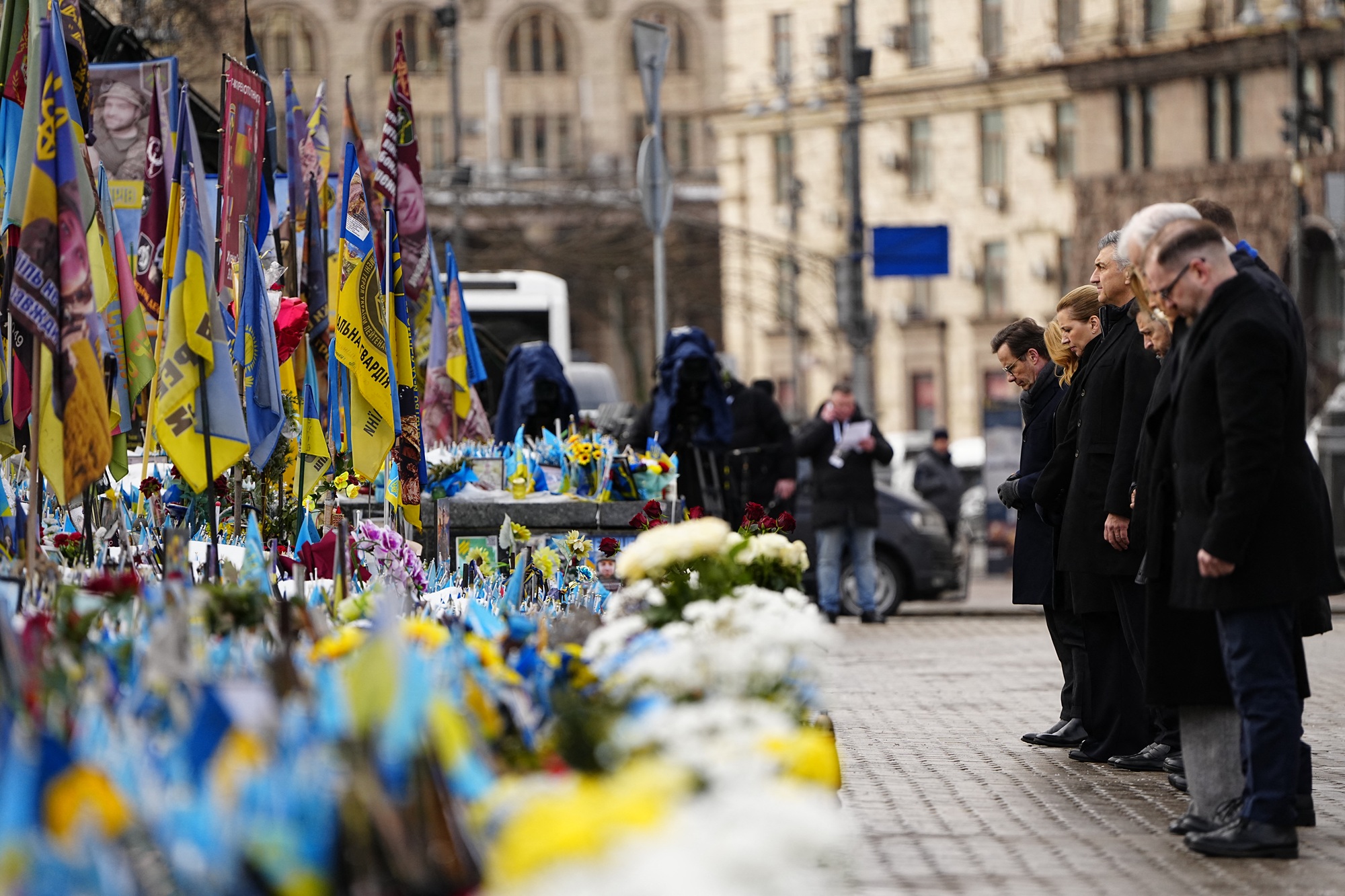
"attachmentsReducer": {
"audio_0": {
"type": "attachments",
"id": "audio_0",
"imgSizes": {
"kqedFullSize": {
"file": "https://ww2.kqed.org/news/wp-content/themes/KQED-unified/img/audio_bgs/background0.jpg"
}
}
},
"audio_1": {
"type": "attachments",
"id": "audio_1",
"imgSizes": {
"kqedFullSize": {
"file": "https://ww2.kqed.org/news/wp-content/themes/KQED-unified/img/audio_bgs/background1.jpg"
}
}
},
"audio_2": {
"type": "attachments",
"id": "audio_2",
"imgSizes": {
"kqedFullSize": {
"file": "https://ww2.kqed.org/news/wp-content/themes/KQED-unified/img/audio_bgs/background2.jpg"
}
}
},
"audio_3": {
"type": "attachments",
"id": "audio_3",
"imgSizes": {
"kqedFullSize": {
"file": "https://ww2.kqed.org/news/wp-content/themes/KQED-unified/img/audio_bgs/background3.jpg"
}
}
},
"audio_4": {
"type": "attachments",
"id": "audio_4",
"imgSizes": {
"kqedFullSize": {
"file": "https://ww2.kqed.org/news/wp-content/themes/KQED-unified/img/audio_bgs/background4.jpg"
}
}
},
"placeholder": {
"type": "attachments",
"id": "placeholder",
"imgSizes": {
"thumbnail": {
"file": "https://cdn.kqed.org/wp-content/uploads/2024/12/KQED-Default-Image-816638274-2000x1333-1-160x107.jpg",
"width": 160,
"height": 107,
"mimeType": "image/jpeg"
},
"medium": {
"file": "https://cdn.kqed.org/wp-content/uploads/2024/12/KQED-Default-Image-816638274-2000x1333-1-800x533.jpg",
"width": 800,
"height": 533,
"mimeType": "image/jpeg"
},
"medium_large": {
"file": "https://cdn.kqed.org/wp-content/uploads/2024/12/KQED-Default-Image-816638274-2000x1333-1-768x512.jpg",
"width": 768,
"height": 512,
"mimeType": "image/jpeg"
},
"large": {
"file": "https://cdn.kqed.org/wp-content/uploads/2024/12/KQED-Default-Image-816638274-2000x1333-1-1020x680.jpg",
"width": 1020,
"height": 680,
"mimeType": "image/jpeg"
},
"1536x1536": {
"file": "https://cdn.kqed.org/wp-content/uploads/2024/12/KQED-Default-Image-816638274-2000x1333-1-1536x1024.jpg",
"width": 1536,
"height": 1024,
"mimeType": "image/jpeg"
},
"fd-lrg": {
"file": "https://cdn.kqed.org/wp-content/uploads/2024/12/KQED-Default-Image-816638274-2000x1333-1-1536x1024.jpg",
"width": 1536,
"height": 1024,
"mimeType": "image/jpeg"
},
"fd-med": {
"file": "https://cdn.kqed.org/wp-content/uploads/2024/12/KQED-Default-Image-816638274-2000x1333-1-1020x680.jpg",
"width": 1020,
"height": 680,
"mimeType": "image/jpeg"
},
"fd-sm": {
"file": "https://cdn.kqed.org/wp-content/uploads/2024/12/KQED-Default-Image-816638274-2000x1333-1-800x533.jpg",
"width": 800,
"height": 533,
"mimeType": "image/jpeg"
},
"post-thumbnail": {
"file": "https://cdn.kqed.org/wp-content/uploads/2024/12/KQED-Default-Image-816638274-2000x1333-1-672x372.jpg",
"width": 672,
"height": 372,
"mimeType": "image/jpeg"
},
"twentyfourteen-full-width": {
"file": "https://cdn.kqed.org/wp-content/uploads/2024/12/KQED-Default-Image-816638274-2000x1333-1-1038x576.jpg",
"width": 1038,
"height": 576,
"mimeType": "image/jpeg"
},
"xxsmall": {
"file": "https://cdn.kqed.org/wp-content/uploads/2024/12/KQED-Default-Image-816638274-2000x1333-1-160x107.jpg",
"width": 160,
"height": 107,
"mimeType": "image/jpeg"
},
"xsmall": {
"file": "https://cdn.kqed.org/wp-content/uploads/2024/12/KQED-Default-Image-816638274-2000x1333-1-672x372.jpg",
"width": 672,
"height": 372,
"mimeType": "image/jpeg"
},
"small": {
"file": "https://cdn.kqed.org/wp-content/uploads/2024/12/KQED-Default-Image-816638274-2000x1333-1-672x372.jpg",
"width": 672,
"height": 372,
"mimeType": "image/jpeg"
},
"xlarge": {
"file": "https://cdn.kqed.org/wp-content/uploads/2024/12/KQED-Default-Image-816638274-2000x1333-1-1020x680.jpg",
"width": 1020,
"height": 680,
"mimeType": "image/jpeg"
},
"full-width": {
"file": "https://cdn.kqed.org/wp-content/uploads/2024/12/KQED-Default-Image-816638274-2000x1333-1-1920x1280.jpg",
"width": 1920,
"height": 1280,
"mimeType": "image/jpeg"
},
"guest-author-32": {
"file": "https://cdn.kqed.org/wp-content/uploads/2025/01/KQED-Default-Image-816638274-1333x1333-1-160x160.jpg",
"width": 32,
"height": 32,
"mimeType": "image/jpeg"
},
"guest-author-50": {
"file": "https://cdn.kqed.org/wp-content/uploads/2025/01/KQED-Default-Image-816638274-1333x1333-1-160x160.jpg",
"width": 50,
"height": 50,
"mimeType": "image/jpeg"
},
"guest-author-64": {
"file": "https://cdn.kqed.org/wp-content/uploads/2025/01/KQED-Default-Image-816638274-1333x1333-1-160x160.jpg",
"width": 64,
"height": 64,
"mimeType": "image/jpeg"
},
"guest-author-96": {
"file": "https://cdn.kqed.org/wp-content/uploads/2025/01/KQED-Default-Image-816638274-1333x1333-1-160x160.jpg",
"width": 96,
"height": 96,
"mimeType": "image/jpeg"
},
"guest-author-128": {
"file": "https://cdn.kqed.org/wp-content/uploads/2025/01/KQED-Default-Image-816638274-1333x1333-1-160x160.jpg",
"width": 128,
"height": 128,
"mimeType": "image/jpeg"
},
"detail": {
"file": "https://cdn.kqed.org/wp-content/uploads/2025/01/KQED-Default-Image-816638274-1333x1333-1-160x160.jpg",
"width": 160,
"height": 160,
"mimeType": "image/jpeg"
},
"kqedFullSize": {
"file": "https://cdn.kqed.org/wp-content/uploads/2024/12/KQED-Default-Image-816638274-2000x1333-1.jpg",
"width": 2000,
"height": 1333
}
}
},
"news_12074405": {
"type": "attachments",
"id": "news_12074405",
"meta": {
"index": "attachments_1716263798",
"site": "news",
"id": "12074405",
"found": true
},
"title": "UKRAINE-RUSSIA-WAR-CONFLICT",
"publishDate": 1771960784,
"status": "inherit",
"parent": 12074367,
"modified": 1771967959,
"caption": "Danish Prime Minister Mette Frederiksen (center) participates together with Ukraine's President, Volodymyr Zelensky, in a memorial ceremony for fallen soldiers at Maidan Square in Kyiv, Ukraine, on Feb. 24, 2026. ",
"credit": "Mads Claus Rasmussen/Ritzau Scanpix/AFP via Getty Images/Denmark OUT",
"altTag": null,
"description": null,
"imgSizes": {
"thumbnail": {
"file": "https://cdn.kqed.org/wp-content/uploads/sites/10/2026/02/MaidanUkraineMemorialGetty1-160x107.jpg",
"width": 160,
"height": 107,
"mimeType": "image/jpeg"
},
"1536x1536": {
"file": "https://cdn.kqed.org/wp-content/uploads/sites/10/2026/02/MaidanUkraineMemorialGetty1-1536x1024.jpg",
"width": 1536,
"height": 1024,
"mimeType": "image/jpeg"
},
"post-thumbnail": {
"file": "https://cdn.kqed.org/wp-content/uploads/sites/10/2026/02/MaidanUkraineMemorialGetty1-672x372.jpg",
"width": 672,
"height": 372,
"mimeType": "image/jpeg"
},
"twentyfourteen-full-width": {
"file": "https://cdn.kqed.org/wp-content/uploads/sites/10/2026/02/MaidanUkraineMemorialGetty1-1038x576.jpg",
"width": 1038,
"height": 576,
"mimeType": "image/jpeg"
},
"npr-cds-wide": {
"file": "https://cdn.kqed.org/wp-content/uploads/sites/10/2026/02/MaidanUkraineMemorialGetty1-1200x675.jpg",
"width": 1200,
"height": 675,
"mimeType": "image/jpeg"
},
"kqedFullSize": {
"file": "https://cdn.kqed.org/wp-content/uploads/sites/10/2026/02/MaidanUkraineMemorialGetty1.jpg",
"width": 2000,
"height": 1333
}
},
"isLoading": false,
"fetchFailed": false
},
"news_12057143": {
"type": "attachments",
"id": "news_12057143",
"meta": {
"index": "attachments_1716263798",
"site": "news",
"id": "12057143",
"found": true
},
"title": "250919-UKRAINIANFARM_01564_TV-KQED",
"publishDate": 1758573555,
"status": "inherit",
"parent": 0,
"modified": 1769710301,
"caption": "The burial site of Ukrainian patriot and exiled Orthodox priest Agapius Honcharenko and his wife, Albania, overlooks a view of the city in Hayward on Sept. 19, 2025. “Ukraina” is the site of the farm and burial place of the Ukrainian patriot and exiled orthodox priest Agapius Honcharenko (1832-1916) and his wife Albina.",
"credit": "Tâm Vũ/KQED",
"altTag": null,
"description": null,
"imgSizes": {
"thumbnail": {
"file": "https://cdn.kqed.org/wp-content/uploads/sites/10/2025/09/250919-UKRAINIANFARM_01564_TV-KQED-160x107.jpg",
"width": 160,
"height": 107,
"mimeType": "image/jpeg"
},
"1536x1536": {
"file": "https://cdn.kqed.org/wp-content/uploads/sites/10/2025/09/250919-UKRAINIANFARM_01564_TV-KQED-1536x1024.jpg",
"width": 1536,
"height": 1024,
"mimeType": "image/jpeg"
},
"post-thumbnail": {
"file": "https://cdn.kqed.org/wp-content/uploads/sites/10/2025/09/250919-UKRAINIANFARM_01564_TV-KQED-672x372.jpg",
"width": 672,
"height": 372,
"mimeType": "image/jpeg"
},
"twentyfourteen-full-width": {
"file": "https://cdn.kqed.org/wp-content/uploads/sites/10/2025/09/250919-UKRAINIANFARM_01564_TV-KQED-1038x576.jpg",
"width": 1038,
"height": 576,
"mimeType": "image/jpeg"
},
"kqedFullSize": {
"file": "https://cdn.kqed.org/wp-content/uploads/sites/10/2025/09/250919-UKRAINIANFARM_01564_TV-KQED.jpg",
"width": 2000,
"height": 1333
}
},
"isLoading": false,
"fetchFailed": false
},
"news_12070605": {
"type": "attachments",
"id": "news_12070605",
"meta": {
"index": "attachments_1716263798",
"site": "news",
"id": "12070605",
"found": true
},
"title": "Orphans Evacuate From Zaporizhzhia To Western Ukraine",
"publishDate": 1769024061,
"status": "inherit",
"parent": 12070573,
"modified": 1769026246,
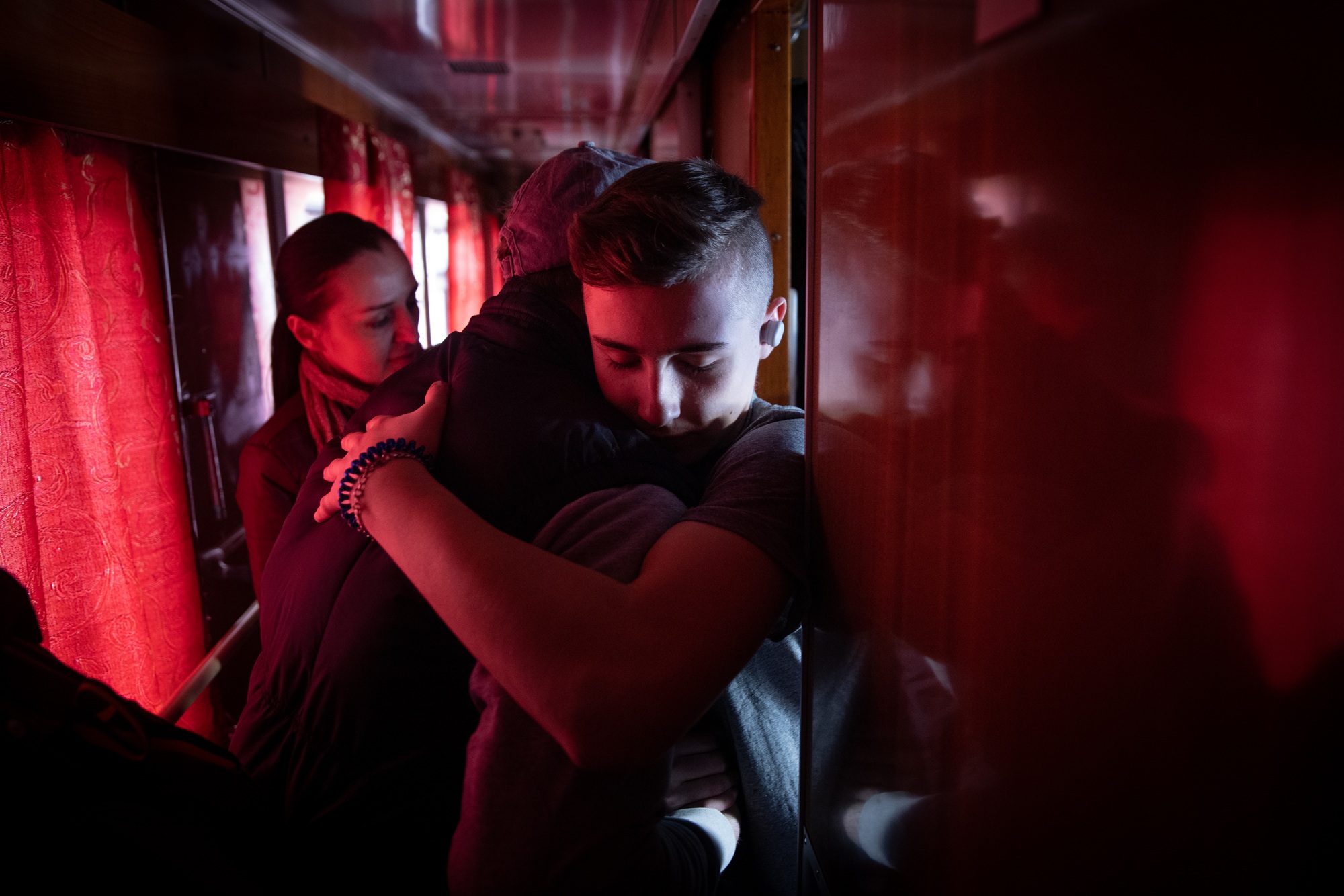
"caption": "An orphan boy hugs a volunteer goodbye after fleeing the town of Polohy, which has come under Russian control, before evacuating on a train from Zaporizhzhia to western Ukraine on March 26, 2022, in Zaporizhzhia, Ukraine. Tens of thousands of people remain trapped in Mariupol, a port city that has faced weeks of heavy bombardment by Russian forces. Civilians from Mariupol and the surrounding areas have fled to evacuation points in towns like Zaporizhzhia in Ukrainian-controlled territory, before moving on to safer areas in the western part of the country. ",
"credit": "Chris McGrath/Getty Images",
"altTag": null,
"description": null,
"imgSizes": {
"thumbnail": {
"file": "https://cdn.kqed.org/wp-content/uploads/sites/10/2026/01/Ukraine1-160x107.jpg",
"width": 160,
"height": 107,
"mimeType": "image/jpeg"
},
"1536x1536": {
"file": "https://cdn.kqed.org/wp-content/uploads/sites/10/2026/01/Ukraine1-1536x1025.jpg",
"width": 1536,
"height": 1025,
"mimeType": "image/jpeg"
},
"post-thumbnail": {
"file": "https://cdn.kqed.org/wp-content/uploads/sites/10/2026/01/Ukraine1-672x372.jpg",
"width": 672,
"height": 372,
"mimeType": "image/jpeg"
},
"twentyfourteen-full-width": {
"file": "https://cdn.kqed.org/wp-content/uploads/sites/10/2026/01/Ukraine1-1038x576.jpg",
"width": 1038,
"height": 576,
"mimeType": "image/jpeg"
},
"npr-cds-wide": {
"file": "https://cdn.kqed.org/wp-content/uploads/sites/10/2026/01/Ukraine1-1200x675.jpg",
"width": 1200,
"height": 675,
"mimeType": "image/jpeg"
},
"kqedFullSize": {
"file": "https://cdn.kqed.org/wp-content/uploads/sites/10/2026/01/Ukraine1.jpg",
"width": 2000,
"height": 1334
}
},
"isLoading": false,
"fetchFailed": false
},
"news_12067099": {
"type": "attachments",
"id": "news_12067099",
"meta": {
"index": "attachments_1716263798",
"site": "news",
"id": "12067099",
"found": true
},
"title": "Protests In Kyiv Against Bill Increasing Liability Of Soldiers For Disobedience",
"publishDate": 1765819334,
"status": "inherit",
"parent": 12066997,
"modified": 1765819439,
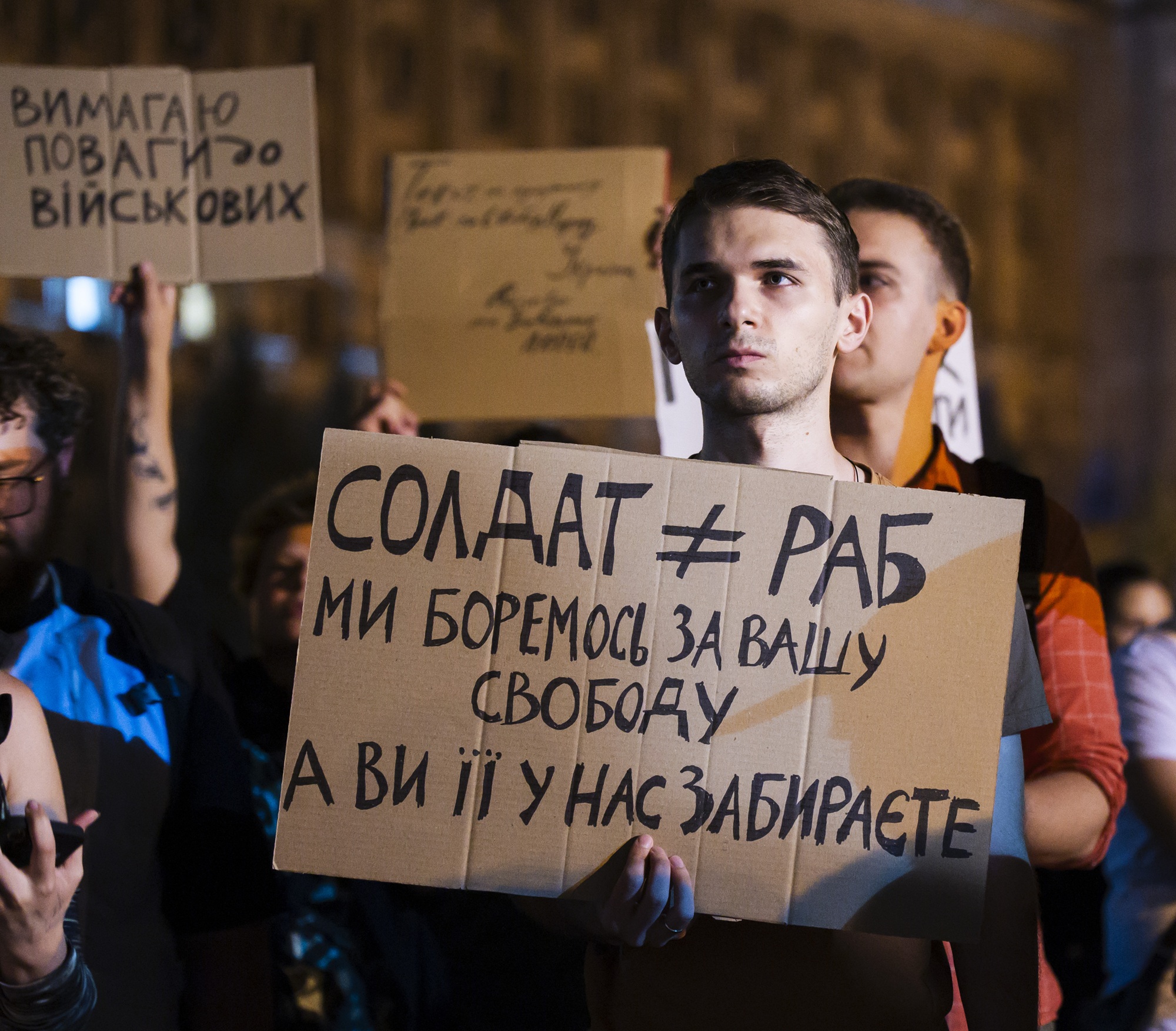
"caption": "A young man holds a banner reading, “A soldier is not a slave. We fight for your freedom, and you take it away from us,” during a protest in Kyiv on Sept. 5, 2025. Demonstrators gathered on Maidan Nezalezhnosti to oppose draft law No. 13452, which would increase liability for military personnel who disobey orders, chanting slogans including, “Repression is not discipline,” “Protect the rights of the military” and “Service is not slavery.”",
"credit": "Artem Gvozdkov/Global Images Ukraine via Getty Images",
"altTag": null,
"description": null,
"imgSizes": {
"thumbnail": {
"file": "https://cdn.kqed.org/wp-content/uploads/sites/10/2025/12/UkraineGetty1-160x140.jpg",
"width": 160,
"height": 140,
"mimeType": "image/jpeg"
},
"1536x1536": {
"file": "https://cdn.kqed.org/wp-content/uploads/sites/10/2025/12/UkraineGetty1-1536x1346.jpg",
"width": 1536,
"height": 1346,
"mimeType": "image/jpeg"
},
"post-thumbnail": {
"file": "https://cdn.kqed.org/wp-content/uploads/sites/10/2025/12/UkraineGetty1-672x372.jpg",
"width": 672,
"height": 372,
"mimeType": "image/jpeg"
},
"twentyfourteen-full-width": {
"file": "https://cdn.kqed.org/wp-content/uploads/sites/10/2025/12/UkraineGetty1-1038x576.jpg",
"width": 1038,
"height": 576,
"mimeType": "image/jpeg"
},
"npr-cds-wide": {
"file": "https://cdn.kqed.org/wp-content/uploads/sites/10/2025/12/UkraineGetty1-1200x675.jpg",
"width": 1200,
"height": 675,
"mimeType": "image/jpeg"
},
"kqedFullSize": {
"file": "https://cdn.kqed.org/wp-content/uploads/sites/10/2025/12/UkraineGetty1.jpg",
"width": 2000,
"height": 1753
}
},
"isLoading": false,
"fetchFailed": false
},
"news_12066889": {
"type": "attachments",
"id": "news_12066889",
"meta": {
"index": "attachments_1716263798",
"site": "news",
"id": "12066889",
"found": true
},
"title": "ukrainian-detained-693c26fa825b2",
"publishDate": 1765549892,
"status": "inherit",
"parent": 12066888,
"modified": 1765549965,
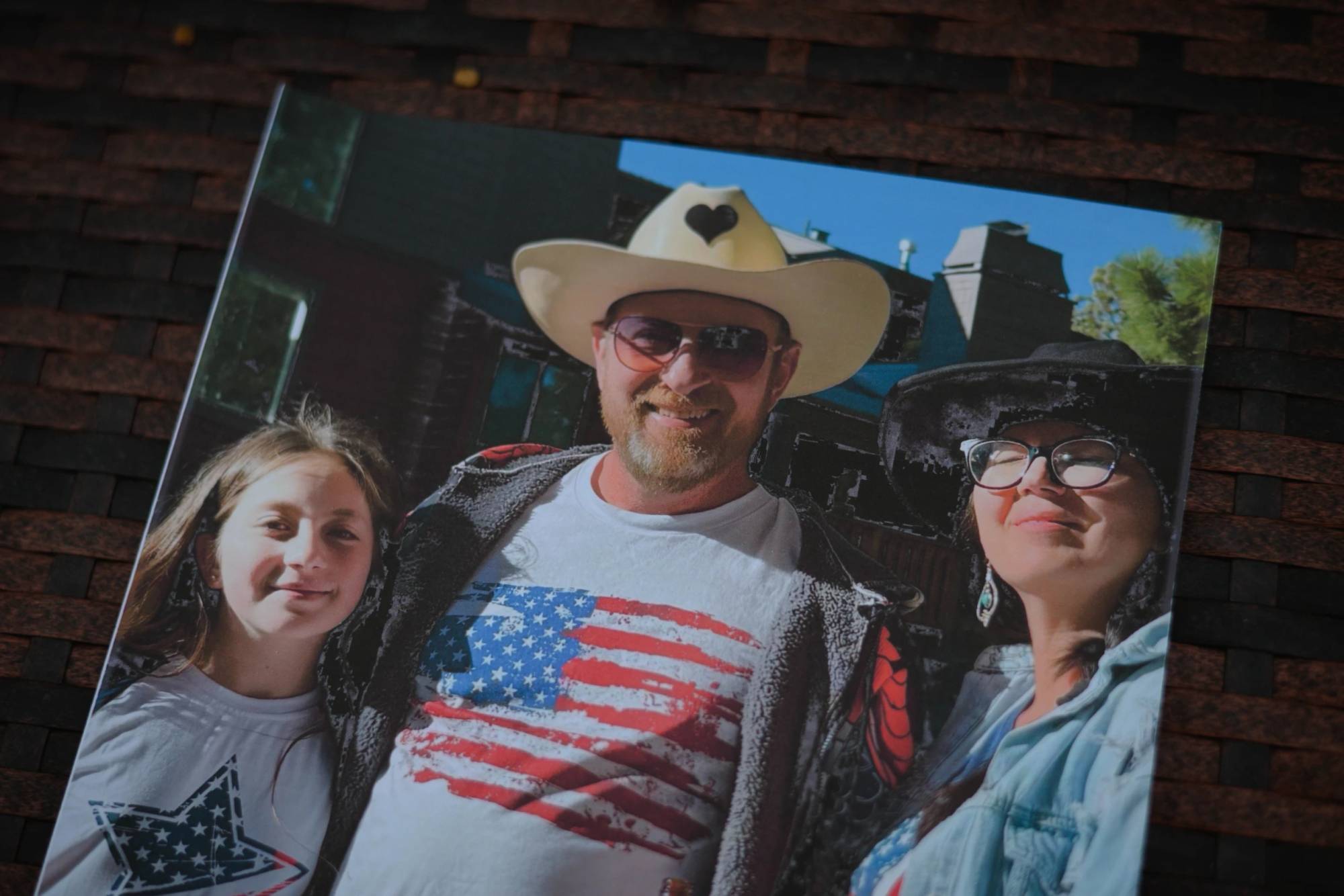
"caption": "From right, Viktoriia Bulavina, her husband Victor Korol and Korol's daughter are seen in a family photograph taken in Korol's backyard in San Diego, California on December 5, 2025. A day earlier, Bulavin was detained at the end of her green card interview at the federal immigration offices downtown.",
"credit": "Kori Suzuki/KPBS",
"altTag": null,
"description": null,
"imgSizes": {
"medium": {
"file": "https://cdn.kqed.org/wp-content/uploads/sites/10/2025/12/ukrainian-detained-693c26fa825b2-2000x1334.jpg",
"width": 2000,
"height": 1334,
"mimeType": "image/jpeg"
},
"large": {
"file": "https://cdn.kqed.org/wp-content/uploads/sites/10/2025/12/ukrainian-detained-693c26fa825b2-2000x1334.jpg",
"width": 2000,
"height": 1334,
"mimeType": "image/jpeg"
},
"thumbnail": {
"file": "https://cdn.kqed.org/wp-content/uploads/sites/10/2025/12/ukrainian-detained-693c26fa825b2-160x107.jpg",
"width": 160,
"height": 107,
"mimeType": "image/jpeg"
},
"1536x1536": {
"file": "https://cdn.kqed.org/wp-content/uploads/sites/10/2025/12/ukrainian-detained-693c26fa825b2-1536x1024.jpg",
"width": 1536,
"height": 1024,
"mimeType": "image/jpeg"
},
"2048x2048": {
"file": "https://cdn.kqed.org/wp-content/uploads/sites/10/2025/12/ukrainian-detained-693c26fa825b2-2048x1366.jpg",
"width": 2048,
"height": 1366,
"mimeType": "image/jpeg"
},
"post-thumbnail": {
"file": "https://cdn.kqed.org/wp-content/uploads/sites/10/2025/12/ukrainian-detained-693c26fa825b2-672x372.jpg",
"width": 672,
"height": 372,
"mimeType": "image/jpeg"
},
"twentyfourteen-full-width": {
"file": "https://cdn.kqed.org/wp-content/uploads/sites/10/2025/12/ukrainian-detained-693c26fa825b2-1038x576.jpg",
"width": 1038,
"height": 576,
"mimeType": "image/jpeg"
},
"full-width": {
"file": "https://cdn.kqed.org/wp-content/uploads/sites/10/2025/12/ukrainian-detained-693c26fa825b2-2000x1334.jpg",
"width": 2000,
"height": 1334,
"mimeType": "image/jpeg"
},
"npr-cds-wide": {
"file": "https://cdn.kqed.org/wp-content/uploads/sites/10/2025/12/ukrainian-detained-693c26fa825b2-1200x675.jpg",
"width": 1200,
"height": 675,
"mimeType": "image/jpeg"
},
"kqedFullSize": {
"file": "https://cdn.kqed.org/wp-content/uploads/sites/10/2025/12/ukrainian-detained-693c26fa825b2.jpg",
"width": 2480,
"height": 1654
}
},
"isLoading": false,
"fetchFailed": false
},
"news_12066818": {
"type": "attachments",
"id": "news_12066818",
"meta": {
"index": "attachments_1716263798",
"site": "news",
"id": "12066818",
"found": true
},
"title": "UAV Crew Of The 26th Artillery Brigade Work In Donetsk Oblast",
"publishDate": 1765487490,
"status": "inherit",
"parent": 12066758,
"modified": 1765487540,
"caption": "DONETSK OBLAST, UKRAINE - AUGUST 19: Soldiers of the 26th Artillery Brigade watch the drone's flight from laptops while sitting in cover on August 19, 2025 in Donetsk Oblast, Ukraine. Donetsk Oblast continues to be the place of most fierce battles since the beginning of the full-scale Russian invasion. On 24 February 2022, Russia invaded Ukraine in an escalation of the Russian-Ukrainian war that started in 2014. ",
"credit": "(Photo by Maks Muravsky/Global Images Ukraine via Getty Images)",
"altTag": null,
"description": null,
"imgSizes": {
"medium": {
"file": "https://cdn.kqed.org/wp-content/uploads/sites/10/2025/12/GettyImages-2235693645-2000x1331.jpg",
"width": 2000,
"height": 1331,
"mimeType": "image/jpeg"
},
"large": {
"file": "https://cdn.kqed.org/wp-content/uploads/sites/10/2025/12/GettyImages-2235693645-2000x1331.jpg",
"width": 2000,
"height": 1331,
"mimeType": "image/jpeg"
},
"thumbnail": {
"file": "https://cdn.kqed.org/wp-content/uploads/sites/10/2025/12/GettyImages-2235693645-160x106.jpg",
"width": 160,
"height": 106,
"mimeType": "image/jpeg"
},
"1536x1536": {
"file": "https://cdn.kqed.org/wp-content/uploads/sites/10/2025/12/GettyImages-2235693645-1536x1022.jpg",
"width": 1536,
"height": 1022,
"mimeType": "image/jpeg"
},
"2048x2048": {
"file": "https://cdn.kqed.org/wp-content/uploads/sites/10/2025/12/GettyImages-2235693645-2048x1363.jpg",
"width": 2048,
"height": 1363,
"mimeType": "image/jpeg"
},
"post-thumbnail": {
"file": "https://cdn.kqed.org/wp-content/uploads/sites/10/2025/12/GettyImages-2235693645-672x372.jpg",
"width": 672,
"height": 372,
"mimeType": "image/jpeg"
},
"twentyfourteen-full-width": {
"file": "https://cdn.kqed.org/wp-content/uploads/sites/10/2025/12/GettyImages-2235693645-1038x576.jpg",
"width": 1038,
"height": 576,
"mimeType": "image/jpeg"
},
"full-width": {
"file": "https://cdn.kqed.org/wp-content/uploads/sites/10/2025/12/GettyImages-2235693645-2000x1331.jpg",
"width": 2000,
"height": 1331,
"mimeType": "image/jpeg"
},
"npr-cds-wide": {
"file": "https://cdn.kqed.org/wp-content/uploads/sites/10/2025/12/GettyImages-2235693645-1200x675.jpg",
"width": 1200,
"height": 675,
"mimeType": "image/jpeg"
},
"kqedFullSize": {
"file": "https://cdn.kqed.org/wp-content/uploads/sites/10/2025/12/GettyImages-2235693645-scaled.jpg",
"width": 2560,
"height": 1703
}
},
"isLoading": false,
"fetchFailed": false
},
"news_12064677": {
"type": "attachments",
"id": "news_12064677",
"meta": {
"index": "attachments_1716263798",
"site": "news",
"id": "12064677",
"found": true
},
"title": "CAT Geeks of War_img",
"publishDate": 1763524148,
"status": "inherit",
"parent": 12064670,
"modified": 1763524292,
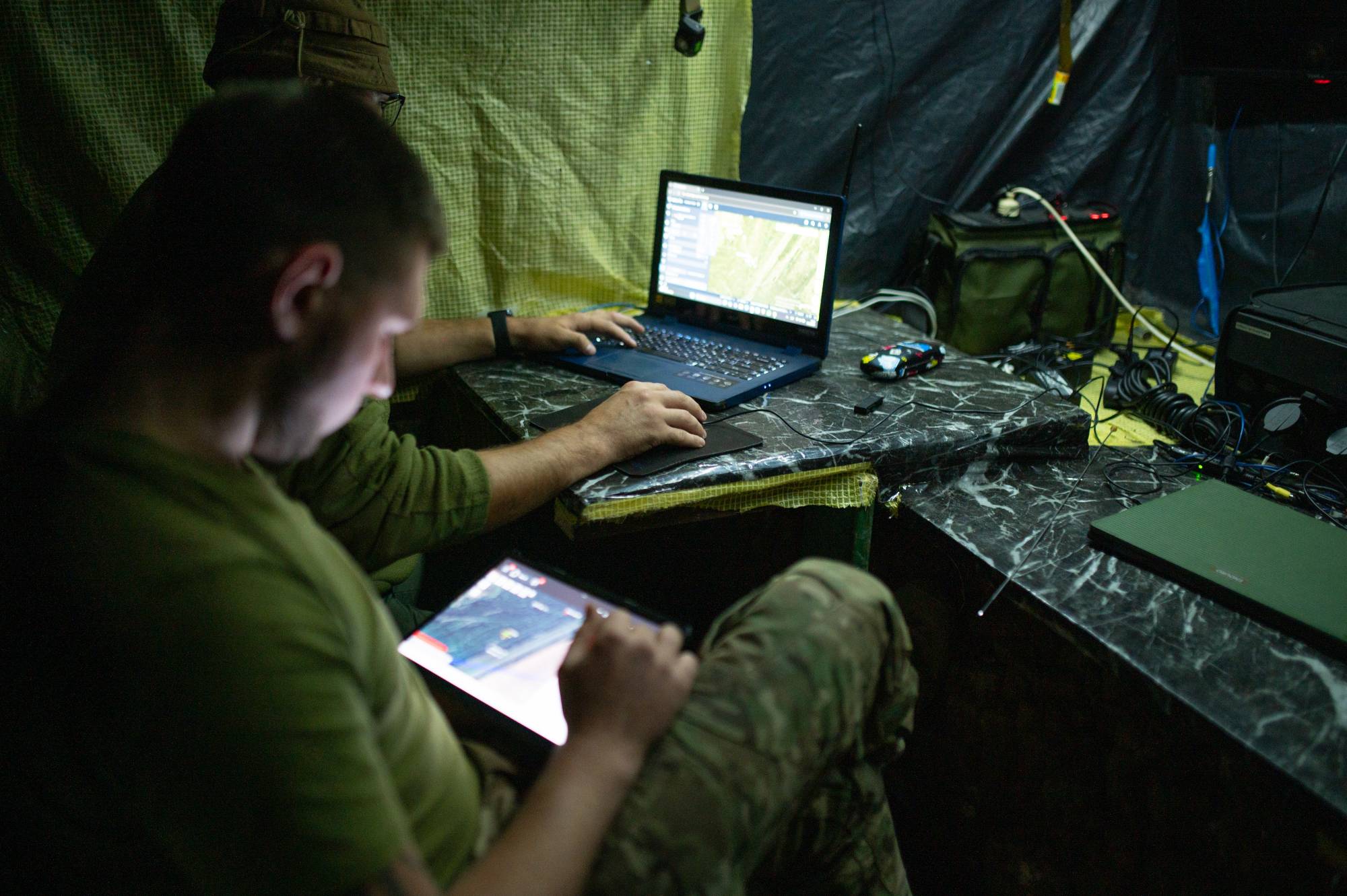
"caption": "A drone-racing event simulating combat conditions in Kamianets-Podilskyi, Ukraine, on Oct. 5, 2025. Drone technology has become increasingly central to the conflict. ",
"credit": "Photo by YURIY DYACHYSHYN/AFP via Getty Images",
"altTag": "Two Ukrainian service members sit inside a dimly lit mobile command center, monitoring several screens showing drone footage. Laptops, monitors, and handheld devices cover the desk in front of them. A pixelated overlay obscures parts of the image, and the ‘Close All Tabs’ logo appears in the lower left corner.",
"description": null,
"imgSizes": {
"thumbnail": {
"file": "https://cdn.kqed.org/wp-content/uploads/sites/10/2025/11/CAT-Geeks-of-War_img-160x90.png",
"width": 160,
"height": 90,
"mimeType": "image/png"
},
"1536x1536": {
"file": "https://cdn.kqed.org/wp-content/uploads/sites/10/2025/11/CAT-Geeks-of-War_img-1536x864.png",
"width": 1536,
"height": 864,
"mimeType": "image/png"
},
"post-thumbnail": {
"file": "https://cdn.kqed.org/wp-content/uploads/sites/10/2025/11/CAT-Geeks-of-War_img-672x372.png",
"width": 672,
"height": 372,
"mimeType": "image/png"
},
"twentyfourteen-full-width": {
"file": "https://cdn.kqed.org/wp-content/uploads/sites/10/2025/11/CAT-Geeks-of-War_img-1038x576.png",
"width": 1038,
"height": 576,
"mimeType": "image/png"
},
"npr-cds-wide": {
"file": "https://cdn.kqed.org/wp-content/uploads/sites/10/2025/11/CAT-Geeks-of-War_img-1200x675.png",
"width": 1200,
"height": 675,
"mimeType": "image/png"
},
"kqedFullSize": {
"file": "https://cdn.kqed.org/wp-content/uploads/sites/10/2025/11/CAT-Geeks-of-War_img.png",
"width": 1920,
"height": 1080
}
},
"isLoading": false,
"fetchFailed": false
},
"news_12047724": {
"type": "attachments",
"id": "news_12047724",
"meta": {
"index": "attachments_1716263798",
"site": "news",
"id": "12047724",
"found": true
},
"title": "UkraineMahjong1",
"publishDate": 1752271086,
"status": "inherit",
"parent": 12047685,
"modified": 1752271207,
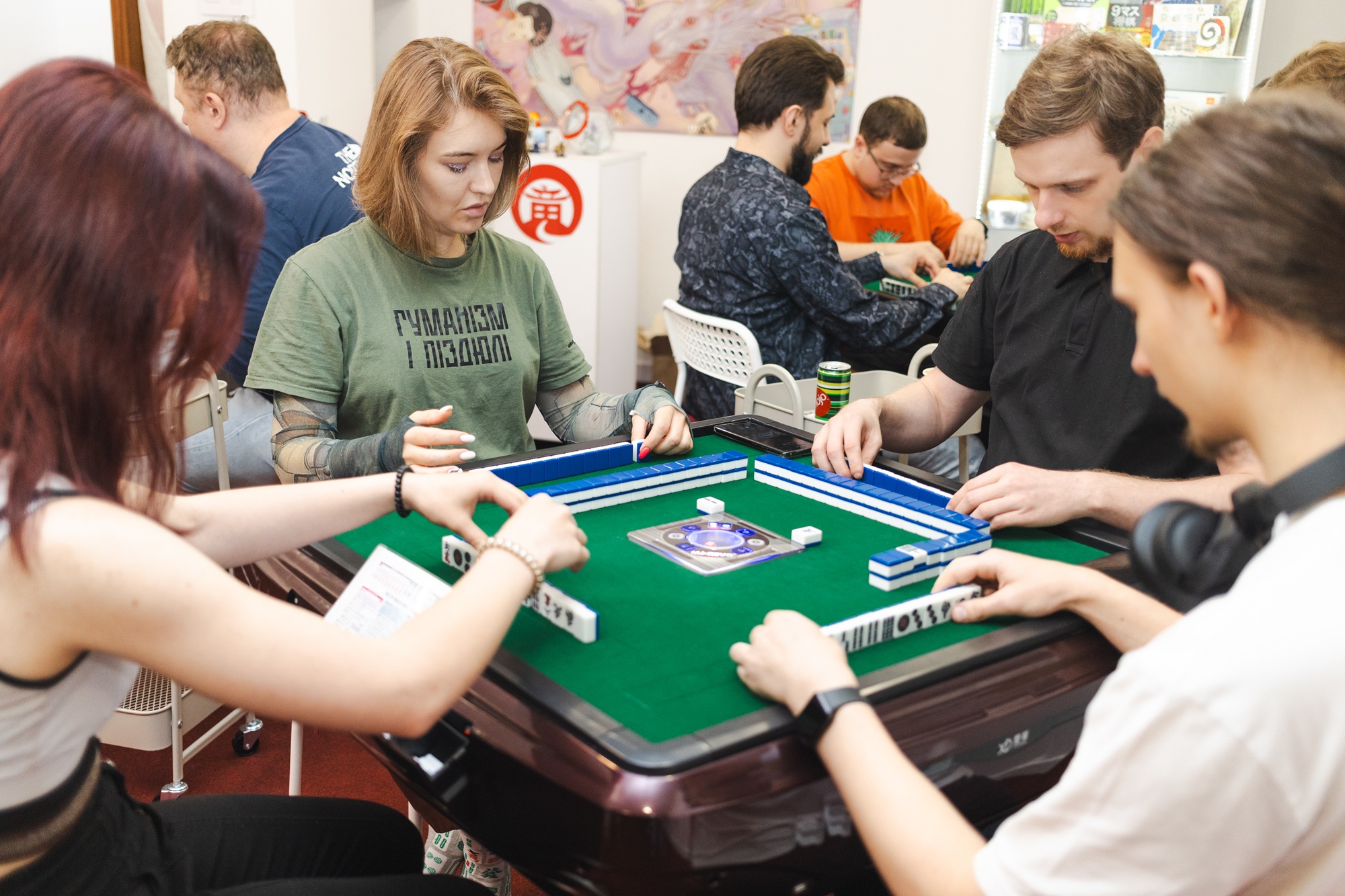
"caption": "Mahjong players at a tournament at Japan Dojo in Kyiv, Ukraine, in May 2025. ",
"credit": "Courtesy of Ihor Strumetskyi",
"altTag": null,
"description": null,
"imgSizes": {
"thumbnail": {
"file": "https://cdn.kqed.org/wp-content/uploads/sites/10/2025/07/UkraineMahjong1-160x107.jpg",
"width": 160,
"height": 107,
"mimeType": "image/jpeg"
},
"1536x1536": {
"file": "https://cdn.kqed.org/wp-content/uploads/sites/10/2025/07/UkraineMahjong1-1536x1024.jpg",
"width": 1536,
"height": 1024,
"mimeType": "image/jpeg"
},
"post-thumbnail": {
"file": "https://cdn.kqed.org/wp-content/uploads/sites/10/2025/07/UkraineMahjong1-672x372.jpg",
"width": 672,
"height": 372,
"mimeType": "image/jpeg"
},
"twentyfourteen-full-width": {
"file": "https://cdn.kqed.org/wp-content/uploads/sites/10/2025/07/UkraineMahjong1-1038x576.jpg",
"width": 1038,
"height": 576,
"mimeType": "image/jpeg"
},
"kqedFullSize": {
"file": "https://cdn.kqed.org/wp-content/uploads/sites/10/2025/07/UkraineMahjong1.jpg",
"width": 2000,
"height": 1333
}
},
"isLoading": false,
"fetchFailed": false
},
"news_12030368": {
"type": "attachments",
"id": "news_12030368",
"meta": {
"index": "attachments_1716263798",
"site": "news",
"id": "12030368",
"found": true
},
"title": "President Trump Hosts Ukrainian President Zelensky At The White House",
"publishDate": 1741381161,
"status": "inherit",
"parent": 12030273,
"modified": 1741401644,
"caption": "US President Donald Trump and Ukrainian President Volodymyr Zelensky meet in the Oval Office at the White House on Feb. 28, 202,5, in Washington, DC. ",
"credit": "Andrew Harnik/Getty Images",
"altTag": null,
"description": null,
"imgSizes": {
"medium": {
"file": "https://cdn.kqed.org/wp-content/uploads/sites/10/2025/03/GettyImages-2202530063-800x561.jpg",
"width": 800,
"height": 561,
"mimeType": "image/jpeg"
},
"large": {
"file": "https://cdn.kqed.org/wp-content/uploads/sites/10/2025/03/GettyImages-2202530063-1020x715.jpg",
"width": 1020,
"height": 715,
"mimeType": "image/jpeg"
},
"thumbnail": {
"file": "https://cdn.kqed.org/wp-content/uploads/sites/10/2025/03/GettyImages-2202530063-160x112.jpg",
"width": 160,
"height": 112,
"mimeType": "image/jpeg"
},
"1536x1536": {
"file": "https://cdn.kqed.org/wp-content/uploads/sites/10/2025/03/GettyImages-2202530063-1536x1076.jpg",
"width": 1536,
"height": 1076,
"mimeType": "image/jpeg"
},
"2048x2048": {
"file": "https://cdn.kqed.org/wp-content/uploads/sites/10/2025/03/GettyImages-2202530063-2048x1435.jpg",
"width": 2048,
"height": 1435,
"mimeType": "image/jpeg"
},
"post-thumbnail": {
"file": "https://cdn.kqed.org/wp-content/uploads/sites/10/2025/03/GettyImages-2202530063-672x372.jpg",
"width": 672,
"height": 372,
"mimeType": "image/jpeg"
},
"twentyfourteen-full-width": {
"file": "https://cdn.kqed.org/wp-content/uploads/sites/10/2025/03/GettyImages-2202530063-1038x576.jpg",
"width": 1038,
"height": 576,
"mimeType": "image/jpeg"
},
"full-width": {
"file": "https://cdn.kqed.org/wp-content/uploads/sites/10/2025/03/GettyImages-2202530063-1920x1345.jpg",
"width": 1920,
"height": 1345,
"mimeType": "image/jpeg"
},
"kqedFullSize": {
"file": "https://cdn.kqed.org/wp-content/uploads/sites/10/2025/03/GettyImages-2202530063-scaled-e1741381201419.jpg",
"width": 2000,
"height": 1402
}
},
"isLoading": false,
"fetchFailed": false
},
"news_12029091": {
"type": "attachments",
"id": "news_12029091",
"meta": {
"index": "attachments_1716263798",
"site": "news",
"id": "12029091",
"found": true
},
"title": "FRANCE-POLITICS-ELYSEE-MACRON-TRUMP-ZELENSKY",
"publishDate": 1740699972,
"status": "inherit",
"parent": 12029087,
"modified": 1740762769,
"caption": "France's President Emmanuel Macron, US President Donald Trump and Ukraine's President Volodymyr Zelensky after a meeting at The Elysee Palace in Paris, France on Dec. 7, 2024. ",
"credit": "MATHILDE KACZKOWSKI/Hans Lucas/AFP via Getty Images",
"altTag": null,
"description": null,
"imgSizes": {
"medium": {
"file": "https://cdn.kqed.org/wp-content/uploads/sites/10/2025/02/GettyImages-2188150561-800x533.jpg",
"width": 800,
"height": 533,
"mimeType": "image/jpeg"
},
"large": {
"file": "https://cdn.kqed.org/wp-content/uploads/sites/10/2025/02/GettyImages-2188150561-1020x680.jpg",
"width": 1020,
"height": 680,
"mimeType": "image/jpeg"
},
"thumbnail": {
"file": "https://cdn.kqed.org/wp-content/uploads/sites/10/2025/02/GettyImages-2188150561-160x107.jpg",
"width": 160,
"height": 107,
"mimeType": "image/jpeg"
},
"1536x1536": {
"file": "https://cdn.kqed.org/wp-content/uploads/sites/10/2025/02/GettyImages-2188150561-1536x1024.jpg",
"width": 1536,
"height": 1024,
"mimeType": "image/jpeg"
},
"2048x2048": {
"file": "https://cdn.kqed.org/wp-content/uploads/sites/10/2025/02/GettyImages-2188150561-2048x1365.jpg",
"width": 2048,
"height": 1365,
"mimeType": "image/jpeg"
},
"post-thumbnail": {
"file": "https://cdn.kqed.org/wp-content/uploads/sites/10/2025/02/GettyImages-2188150561-672x372.jpg",
"width": 672,
"height": 372,
"mimeType": "image/jpeg"
},
"twentyfourteen-full-width": {
"file": "https://cdn.kqed.org/wp-content/uploads/sites/10/2025/02/GettyImages-2188150561-1038x576.jpg",
"width": 1038,
"height": 576,
"mimeType": "image/jpeg"
},
"full-width": {
"file": "https://cdn.kqed.org/wp-content/uploads/sites/10/2025/02/GettyImages-2188150561-1920x1280.jpg",
"width": 1920,
"height": 1280,
"mimeType": "image/jpeg"
},
"kqedFullSize": {
"file": "https://cdn.kqed.org/wp-content/uploads/sites/10/2025/02/GettyImages-2188150561-scaled.jpg",
"width": 2560,
"height": 1706
}
},
"isLoading": false,
"fetchFailed": false
},
"news_12019640": {
"type": "attachments",
"id": "news_12019640",
"meta": {
"index": "attachments_1716263798",
"site": "news",
"id": "12019640",
"found": true
},
"title": "npr.brightspotcdn-1 copy",
"publishDate": 1734983866,
"status": "inherit",
"parent": 12019638,
"modified": 1734983894,
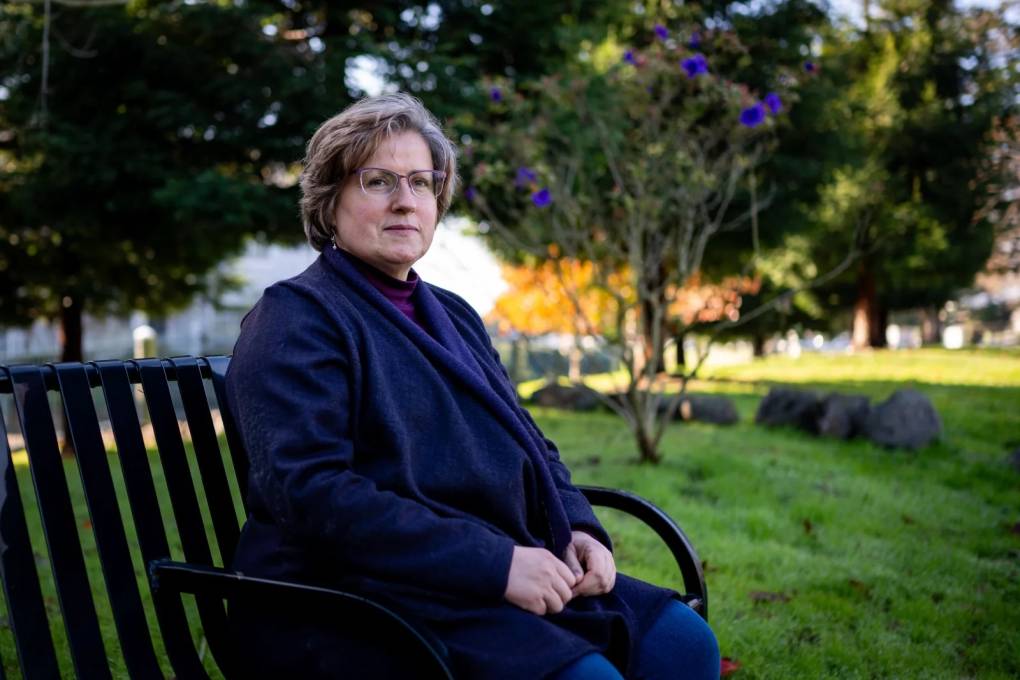
"caption": "Oksana Demidenko poses for a portrait at Marina Bay Park in Richmond, on Dec. 17, 2024.",
"credit": "Beth LaBerge for NPR",
"altTag": null,
"description": null,
"imgSizes": {
"medium": {
"file": "https://cdn.kqed.org/wp-content/uploads/sites/10/2024/12/npr.brightspotcdn-1-copy-3-800x534.jpg",
"width": 800,
"height": 534,
"mimeType": "image/jpeg"
},
"large": {
"file": "https://cdn.kqed.org/wp-content/uploads/sites/10/2024/12/npr.brightspotcdn-1-copy-3-1020x680.jpg",
"width": 1020,
"height": 680,
"mimeType": "image/jpeg"
},
"thumbnail": {
"file": "https://cdn.kqed.org/wp-content/uploads/sites/10/2024/12/npr.brightspotcdn-1-copy-3-160x107.jpg",
"width": 160,
"height": 107,
"mimeType": "image/jpeg"
},
"1536x1536": {
"file": "https://cdn.kqed.org/wp-content/uploads/sites/10/2024/12/npr.brightspotcdn-1-copy-3-1536x1024.jpg",
"width": 1536,
"height": 1024,
"mimeType": "image/jpeg"
},
"post-thumbnail": {
"file": "https://cdn.kqed.org/wp-content/uploads/sites/10/2024/12/npr.brightspotcdn-1-copy-3-672x372.jpg",
"width": 672,
"height": 372,
"mimeType": "image/jpeg"
},
"twentyfourteen-full-width": {
"file": "https://cdn.kqed.org/wp-content/uploads/sites/10/2024/12/npr.brightspotcdn-1-copy-3-1038x576.jpg",
"width": 1038,
"height": 576,
"mimeType": "image/jpeg"
},
"kqedFullSize": {
"file": "https://cdn.kqed.org/wp-content/uploads/sites/10/2024/12/npr.brightspotcdn-1-copy-3.jpg",
"width": 1600,
"height": 1067
}
},
"isLoading": false,
"fetchFailed": false
},
"news_12020217": {
"type": "attachments",
"id": "news_12020217",
"meta": {
"index": "attachments_1716263798",
"site": "news",
"id": "12020217",
"found": true
},
"title": "PorcelainWar_3",
"publishDate": 1735881326,
"status": "inherit",
"parent": 0,
"modified": 1735934708,
"caption": "Owl in Wall, 'Porcelain Wars.'",
"credit": "Courtesy of Picturehouse",
"altTag": null,
"description": null,
"imgSizes": {
"medium": {
"file": "https://cdn.kqed.org/wp-content/uploads/sites/10/2025/01/PorcelainWar_3-800x448.jpg",
"width": 800,
"height": 448,
"mimeType": "image/jpeg"
},
"large": {
"file": "https://cdn.kqed.org/wp-content/uploads/sites/10/2025/01/PorcelainWar_3-1020x571.jpg",
"width": 1020,
"height": 571,
"mimeType": "image/jpeg"
},
"thumbnail": {
"file": "https://cdn.kqed.org/wp-content/uploads/sites/10/2025/01/PorcelainWar_3-160x90.jpg",
"width": 160,
"height": 90,
"mimeType": "image/jpeg"
},
"1536x1536": {
"file": "https://cdn.kqed.org/wp-content/uploads/sites/10/2025/01/PorcelainWar_3-1536x859.jpg",
"width": 1536,
"height": 859,
"mimeType": "image/jpeg"
},
"post-thumbnail": {
"file": "https://cdn.kqed.org/wp-content/uploads/sites/10/2025/01/PorcelainWar_3-672x372.jpg",
"width": 672,
"height": 372,
"mimeType": "image/jpeg"
},
"twentyfourteen-full-width": {
"file": "https://cdn.kqed.org/wp-content/uploads/sites/10/2025/01/PorcelainWar_3-1038x576.jpg",
"width": 1038,
"height": 576,
"mimeType": "image/jpeg"
},
"full-width": {
"file": "https://cdn.kqed.org/wp-content/uploads/sites/10/2025/01/PorcelainWar_3-1920x1074.jpg",
"width": 1920,
"height": 1074,
"mimeType": "image/jpeg"
},
"kqedFullSize": {
"file": "https://cdn.kqed.org/wp-content/uploads/sites/10/2025/01/PorcelainWar_3.jpg",
"width": 2000,
"height": 1119
}
},
"isLoading": false,
"fetchFailed": false
}
},
"audioPlayerReducer": {
"postId": "stream_live",
"isPaused": true,
"isPlaying": false,
"pfsActive": false,
"pledgeModalIsOpen": true,
"playerDrawerIsOpen": false,
"liveAudioPlayStartedAt": 0,
"liveAudioPlayContext": ""
},
"authorsReducer": {
"byline_news_12074367": {
"type": "authors",
"id": "byline_news_12074367",
"meta": {
"override": true
},
"slug": "byline_news_12074367",
"name": "Lizzie Johnson and Serhii Korolchuk",
"isLoading": false
},
"byline_news_12070573": {
"type": "authors",
"id": "byline_news_12070573",
"meta": {
"override": true
},
"slug": "byline_news_12070573",
"name": "Maria Kostenko and Anna Nemtsova",
"isLoading": false
},
"byline_news_12066997": {
"type": "authors",
"id": "byline_news_12066997",
"meta": {
"override": true
},
"slug": "byline_news_12066997",
"name": "Maria Kostenko, Anna Nemtsova and Evelina Riabenko ",
"isLoading": false
},
"byline_news_12066758": {
"type": "authors",
"id": "byline_news_12066758",
"meta": {
"override": true
},
"slug": "byline_news_12066758",
"name": "Ericka Cruz Guevarra and Erica Hellerstein",
"isLoading": false
},
"byline_news_12064670": {
"type": "authors",
"id": "byline_news_12064670",
"meta": {
"override": true
},
"slug": "byline_news_12064670",
"name": "Erica Hellerstein",
"isLoading": false
},
"byline_news_12047685": {
"type": "authors",
"id": "byline_news_12047685",
"meta": {
"override": true
},
"slug": "byline_news_12047685",
"name": "Susan Britton",
"isLoading": false
},
"rachael-myrow": {
"type": "authors",
"id": "251",
"meta": {
"index": "authors_1716337520",
"id": "251",
"found": true
},
"name": "Rachael Myrow",
"firstName": "Rachael",
"lastName": "Myrow",
"slug": "rachael-myrow",
"email": "rmyrow@kqed.org",
"display_author_email": true,
"staff_mastheads": [
"news"
],
"title": "Senior Editor of KQED's Silicon Valley News Desk",
"bio": "• I write and edit stories about how Silicon Valley power and policies shape everyday life in California. I’m also passionate about making Bay Area history and culture more accessible to a broad public. • I’ve been a journalist for most of my life, starting in high school with The Franklin Press in Los Angeles, where I grew up. While earning my first degree in English at UC Berkeley, I got my start in public radio at KALX-FM. After completing a second degree in journalism at Cal, I landed my first professional job at Marketplace, then moved on to KPCC (now LAist), and then KQED, where I hosted The California Report for more than seven years. • My reporting has appeared on NPR, The World, WBUR’s \u003ci>Here & Now\u003c/i>, and the BBC. I also guest host for KQED’s \u003ci>Forum\u003c/i>, as well as the Commonwealth Club in San Francisco. • I speak periodically on media, democracy and technology issues, and do voiceover work for documentaries and educational video projects. • Outside of the studio, you'll find me hiking Bay Area trails and whipping up Insta-ready meals in my kitchen. • I do not accept gifts, money, or favors from anyone connected to my reporting, I don't pay people for information, and I do not support or donate to political causes. • I strive to treat the people I report on with fairness, honesty, and respect. I also recognize there are often multiple sides to a story and work to verify information through multiple sources and documentation. If I get something wrong, I correct it.",
"avatar": "https://secure.gravatar.com/avatar/3ed8a3c5f26025e4a805ba634cda8cd764906b97438a6d9ce216b044e340da4e?s=600&d=blank&r=g",
"twitter": "rachaelmyrow",
"bluesky": null,
"facebook": null,
"instagram": null,
"linkedin": "https://www.linkedin.com/in/rachaelmyrow/",
"sites": [
{
"site": "arts",
"roles": [
"administrator"
]
},
{
"site": "news",
"roles": [
"edit_others_posts",
"editor"
]
},
{
"site": "futureofyou",
"roles": [
"editor"
]
},
{
"site": "bayareabites",
"roles": [
"editor"
]
},
{
"site": "stateofhealth",
"roles": [
"editor"
]
},
{
"site": "science",
"roles": [
"editor"
]
},
{
"site": "food",
"roles": [
"editor"
]
},
{
"site": "forum",
"roles": [
"editor"
]
},
{
"site": "liveblog",
"roles": [
"author"
]
}
],
"headData": {
"title": "Rachael Myrow | KQED",
"description": "Senior Editor of KQED's Silicon Valley News Desk",
"ogImgSrc": "https://secure.gravatar.com/avatar/3ed8a3c5f26025e4a805ba634cda8cd764906b97438a6d9ce216b044e340da4e?s=600&d=blank&r=g",
"twImgSrc": "https://secure.gravatar.com/avatar/3ed8a3c5f26025e4a805ba634cda8cd764906b97438a6d9ce216b044e340da4e?s=600&d=blank&r=g"
},
"isLoading": false,
"link": "/author/rachael-myrow"
},
"scottshafer": {
"type": "authors",
"id": "255",
"meta": {
"index": "authors_1716337520",
"id": "255",
"found": true
},
"name": "Scott Shafer",
"firstName": "Scott",
"lastName": "Shafer",
"slug": "scottshafer",
"email": "sshafer@kqed.org",
"display_author_email": false,
"staff_mastheads": [
"news"
],
"title": "KQED Contributor",
"bio": "Scott Shafer is a senior editor with the KQED Politics and Government desk. He is co-host of Political Breakdown, the award-winning radio show and podcast with a personal take on the world of politics. Scott came to KQED in 1998 to host the statewide\u003cem> California Report\u003c/em>. Prior to that he had extended stints in politics and government\u003cem>.\u003c/em> He uses that inside experience at KQED in his, reporting, hosting and analysis for the politics desk. Scott collaborated \u003cem>Political Breakdown a\u003c/em>nd on \u003cem>The Political Mind of Jerry Brown, \u003c/em>an eight-part series about the life and extraordinary political career of the former governor. For fun, he plays water polo with the San Francisco Tsunami.",
"avatar": "https://secure.gravatar.com/avatar/a62ebae45b79d7aed1a39a0e3bf68104?s=600&d=blank&r=g",
"twitter": "scottshafer",
"bluesky": null,
"facebook": null,
"instagram": null,
"linkedin": null,
"sites": [
{
"site": "news",
"roles": [
"editor"
]
},
{
"site": "stateofhealth",
"roles": [
"author"
]
},
{
"site": "science",
"roles": [
"author"
]
},
{
"site": "forum",
"roles": [
"subscriber"
]
},
{
"site": "liveblog",
"roles": [
"author"
]
}
],
"headData": {
"title": "Scott Shafer | KQED",
"description": "KQED Contributor",
"ogImgSrc": "https://secure.gravatar.com/avatar/a62ebae45b79d7aed1a39a0e3bf68104?s=600&d=blank&r=g",
"twImgSrc": "https://secure.gravatar.com/avatar/a62ebae45b79d7aed1a39a0e3bf68104?s=600&d=blank&r=g"
},
"isLoading": false,
"link": "/author/scottshafer"
},
"tychehendricks": {
"type": "authors",
"id": "259",
"meta": {
"index": "authors_1716337520",
"id": "259",
"found": true
},
"name": "Tyche Hendricks",
"firstName": "Tyche",
"lastName": "Hendricks",
"slug": "tychehendricks",
"email": "thendricks@kqed.org",
"display_author_email": true,
"staff_mastheads": [
"news"
],
"title": "KQED Senior Editor, Immigration",
"bio": "\u003cspan style=\"font-weight: 400;\">Tyche Hendricks is KQED’s senior editor for immigration, leading coverage of the policy and politics that affect California’s immigrant communities. Her work for KQED’s radio and online audiences is also carried on NPR and other national outlets. She has been recognized with awards from the Radio and Television News Directors Association, the Society for Professional Journalists; the Education Writers Association; the Best of the West and the National Federation of Community Broadcasters. Before joining KQED in 2010, Tyche spent more than a dozen years as a newspaper reporter, notably at the \u003c/span>\u003ci>\u003cspan style=\"font-weight: 400;\">San Francisco Chronicle\u003c/span>\u003c/i>\u003cspan style=\"font-weight: 400;\">. At different times she has covered criminal justice, government and politics and urban planning. Tyche has taught in the MFA Creative Writing program at the University of San Francisco and at UC Berkeley’s Graduate School of Journalism, where she was co-director of a national immigration symposium for professional journalists. She is the author of \u003c/span>\u003ci>\u003cspan style=\"font-weight: 400;\">The Wind Doesn't Need a Passport: Stories from the U.S.-Mexico Borderlands\u003c/span>\u003c/i>\u003cspan style=\"font-weight: 400;\"> (University of California Press). \u003c/span>",
"avatar": "https://secure.gravatar.com/avatar/b8ee458e2731c2d43df86882ce17267e?s=600&d=blank&r=g",
"twitter": "tychehendricks",
"facebook": null,
"instagram": null,
"linkedin": null,
"sites": [
{
"site": "news",
"roles": [
"editor"
]
},
{
"site": "stateofhealth",
"roles": [
"editor"
]
}
],
"headData": {
"title": "Tyche Hendricks | KQED",
"description": "KQED Senior Editor, Immigration",
"ogImgSrc": "https://secure.gravatar.com/avatar/b8ee458e2731c2d43df86882ce17267e?s=600&d=blank&r=g",
"twImgSrc": "https://secure.gravatar.com/avatar/b8ee458e2731c2d43df86882ce17267e?s=600&d=blank&r=g"
},
"isLoading": false,
"link": "/author/tychehendricks"
},
"mlagos": {
"type": "authors",
"id": "3239",
"meta": {
"index": "authors_1716337520",
"id": "3239",
"found": true
},
"name": "Marisa Lagos",
"firstName": "Marisa",
"lastName": "Lagos",
"slug": "mlagos",
"email": "mlagos@kqed.org",
"display_author_email": false,
"staff_mastheads": [
"news"
],
"title": "KQED Contributor",
"bio": "Marisa Lagos is a correspondent for KQED’s California Politics and Government Desk and co-hosts the award-winning show and podcast, Political Breakdown. At KQED, Lagos also conducts reporting, analysis and investigations into state, local and national politics for radio, TV, online and onstage. In 2022, she and co-host, Scott Shafer, moderated the only gubernatorial debate in California. In 2020, the \u003ci>Washington Post\u003c/i> named her one of the top political journalists in California; she was nominated for a Peabody and won several other awards for her work investigating the 2017 California wildfires. She has worked at the \u003ci>San Francisco Chronicle\u003c/i>, \u003ci>San Francisco Examiner\u003c/i> and \u003ci>Los Angeles Times\u003c/i>. A UC Santa Barbara graduate, she lives in San Francisco with her two sons and husband.",
"avatar": "https://secure.gravatar.com/avatar/a261a0d3696fc066871ef96b85b5e7d2?s=600&d=blank&r=g",
"twitter": "@mlagos",
"facebook": null,
"instagram": null,
"linkedin": null,
"sites": [
{
"site": "arts",
"roles": [
"author"
]
},
{
"site": "news",
"roles": [
"editor"
]
},
{
"site": "science",
"roles": [
"editor"
]
},
{
"site": "forum",
"roles": [
"author"
]
},
{
"site": "liveblog",
"roles": [
"author"
]
}
],
"headData": {
"title": "Marisa Lagos | KQED",
"description": "KQED Contributor",
"ogImgSrc": "https://secure.gravatar.com/avatar/a261a0d3696fc066871ef96b85b5e7d2?s=600&d=blank&r=g",
"twImgSrc": "https://secure.gravatar.com/avatar/a261a0d3696fc066871ef96b85b5e7d2?s=600&d=blank&r=g"
},
"isLoading": false,
"link": "/author/mlagos"
},
"lsarah": {
"type": "authors",
"id": "11626",
"meta": {
"index": "authors_1716337520",
"id": "11626",
"found": true
},
"name": "Lakshmi Sarah",
"firstName": "Lakshmi",
"lastName": "Sarah",
"slug": "lsarah",
"email": "lsarah@kqed.org",
"display_author_email": false,
"staff_mastheads": [],
"title": "Digital Producer",
"bio": "Lakshmi Sarah is an educator, author and journalist with a focus on innovative storytelling. She has worked with newspapers, radio and magazines from Ahmedabad, India to Los Angeles, California. She has written and produced for Die Zeit, Global Voices, AJ+, KQED, Fusion Media Group and the New York Times.",
"avatar": "https://secure.gravatar.com/avatar/652dcaecd8b28826fc17a8b2d6bb4e93?s=600&d=blank&r=g",
"twitter": "lakitalki",
"facebook": null,
"instagram": "https://www.instagram.com/laki.talki/",
"linkedin": "https://www.linkedin.com/in/lakisarah/",
"sites": [
{
"site": "arts",
"roles": []
},
{
"site": "news",
"roles": []
},
{
"site": "bayareabites",
"roles": []
},
{
"site": "science",
"roles": []
}
],
"headData": {
"title": "Lakshmi Sarah | KQED",
"description": "Digital Producer",
"ogImgSrc": "https://secure.gravatar.com/avatar/652dcaecd8b28826fc17a8b2d6bb4e93?s=600&d=blank&r=g",
"twImgSrc": "https://secure.gravatar.com/avatar/652dcaecd8b28826fc17a8b2d6bb4e93?s=600&d=blank&r=g"
},
"isLoading": false,
"link": "/author/lsarah"
},
"kmizuguchi": {
"type": "authors",
"id": "11739",
"meta": {
"index": "authors_1716337520",
"id": "11739",
"found": true
},
"name": "Keith Mizuguchi",
"firstName": "Keith",
"lastName": "Mizuguchi",
"slug": "kmizuguchi",
"email": "kmizuguchi@kqed.org",
"display_author_email": false,
"staff_mastheads": [],
"title": "KQED Contributor",
"bio": null,
"avatar": "https://secure.gravatar.com/avatar/64d8a7de0723d4099b9fe4e915136103febcc20809abce228ee4415bcb237023?s=600&d=blank&r=g",
"twitter": null,
"bluesky": null,
"facebook": null,
"instagram": null,
"linkedin": null,
"sites": [
{
"site": "news",
"roles": [
"editor"
]
},
{
"site": "science",
"roles": [
"editor"
]
}
],
"headData": {
"title": "Keith Mizuguchi | KQED",
"description": "KQED Contributor",
"ogImgSrc": "https://secure.gravatar.com/avatar/64d8a7de0723d4099b9fe4e915136103febcc20809abce228ee4415bcb237023?s=600&d=blank&r=g",
"twImgSrc": "https://secure.gravatar.com/avatar/64d8a7de0723d4099b9fe4e915136103febcc20809abce228ee4415bcb237023?s=600&d=blank&r=g"
},
"isLoading": false,
"link": "/author/kmizuguchi"
}
},
"pagesReducer": {
"news_tag_ukraine": {
"type": "terms",
"id": "news_26723",
"meta": {
"index": "terms_1716263798",
"site": "news",
"id": "26723",
"score": 9.306035
},
"featImg": null,
"name": "ukraine",
"description": null,
"taxonomy": "tag",
"headData": {
"twImgId": null,
"twTitle": null,
"ogTitle": null,
"ogImgId": null,
"twDescription": null,
"description": null,
"title": "ukraine Archives | KQED News",
"ogDescription": null
},
"ttid": 26740,
"slug": "ukraine",
"isLoading": false,
"title": "ukraine",
"pageMeta": {
"site": "news",
"WpPageTemplate": "page-topic-editorial",
"currentPage": 1
},
"blocks": [
{
"blockName": "kqed/post-list",
"attrs": {
"layout": "cardArticle2",
"query": "posts/news?tag=ukraine",
"seeMore": false,
"paginated": true,
"page": 1
}
},
{
"blockName": "kqed/ad"
}
]
}
},
"pfsSessionReducer": {},
"postsReducer": {
"stream_live": {
"type": "live",
"id": "stream_live",
"audioUrl": "https://streams.kqed.org/kqedradio",
"title": "Live Stream",
"excerpt": "Live Stream information currently unavailable.",
"link": "/radio",
"featImg": "",
"label": {
"name": "KQED Live",
"link": "/"
}
},
"stream_kqedNewscast": {
"type": "posts",
"id": "stream_kqedNewscast",
"audioUrl": "https://www.kqed.org/.stream/anon/radio/RDnews/newscast.mp3?_=1",
"title": "KQED Newscast",
"featImg": "",
"label": {
"name": "88.5 FM",
"link": "/"
}
},
"news_12074367": {
"type": "posts",
"id": "news_12074367",
"meta": {
"index": "posts_1716263798",
"site": "news",
"id": "12074367",
"score": null,
"sort": [
1772029836000
]
},
"guestAuthors": [],
"slug": "amid-war-and-grief-kyiv-caretaker-preserves-memory-of-ukraines-fallen-soldiers",
"title": "Amid War and Grief, Kyiv Caretaker Preserves Memory of Ukraine’s Fallen Soldiers",
"publishDate": 1772029836,
"format": "standard",
"headTitle": "Amid War and Grief, Kyiv Caretaker Preserves Memory of Ukraine’s Fallen Soldiers | KQED",
"labelTerm": {
"site": "news"
},
"content": "\u003cp>KYIV — What started with a few \u003ca href=\"https://www.kqed.org/news/tag/ukraine\">Ukrainian\u003c/a> flags staked in the grass at Maidan, or Independence Square, has turned into a sprawling repository for a country’s grief, with flowerbeds dedicated to individual battalions, duvet-sized flags draped in the firs and hard-packed trails winding through it all.\u003c/p>\n\u003cp>Four years into a \u003ca href=\"https://www.kqed.org/news/tag/war-in-ukraine\">war\u003c/a> that shows no end in sight, Natalia Klymiuk again took the metro eight stops to tend to the memorial that never stopped growing. Russia’s full-scale invasion has officially entered its fifth year — a grim milestone marked by visiting dignitaries, including senior European officials, military commanders, and Ukrainian President Volodymyr Zelensky. Klymiuk’s volunteer badge wasn’t enough to gain her access to the anniversary proceedings, so she waited across Khreshchatyk Street for the procession to leave.\u003c/p>\n\u003cp>She couldn’t see much. But beyond the wall of security vehicles, the officials stood in a line of black winter coats, red votive candles in hand. They took in the portraits of fallen soldiers, standing in the snow like headstones, then placed the candles nearby.\u003c/p>\n\u003cp>“We cherish the memory of … those who gave their most precious thing for a free Ukraine,” \u003ca href=\"https://t.me/V_Zelenskiy_official/18084\">Zelensky said\u003c/a>. “And we will definitely preserve what they fought for.”\u003c/p>\n\u003cp>[ad fullwidth]\u003c/p>\n\u003cp>Finally, they left. It was around 11 a.m.\u003c/p>\n\u003cp>Klymiuk was now hours behind schedule.\u003c/p>\n\u003cp>She snapped on yellow gloves and unfurled a trash bag, dragging it behind her through puddles of snowmelt. She moved in quick, short bursts, snatching wilted carnations and soggy roses off the unsanctioned memorial, then flicking them into the trash bag.\u003c/p>\n\u003cfigure id=\"attachment_12074407\" class=\"wp-caption aligncenter\" style=\"max-width: 2000px\">\u003cimg loading=\"lazy\" decoding=\"async\" class=\"size-full wp-image-12074407\" src=\"https://cdn.kqed.org/wp-content/uploads/sites/10/2026/02/MaidanUkraineMemorialGetty2.jpg\" alt=\"\" width=\"2000\" height=\"1334\" srcset=\"https://cdn.kqed.org/wp-content/uploads/sites/10/2026/02/MaidanUkraineMemorialGetty2.jpg 2000w, https://cdn.kqed.org/wp-content/uploads/sites/10/2026/02/MaidanUkraineMemorialGetty2-160x107.jpg 160w, https://cdn.kqed.org/wp-content/uploads/sites/10/2026/02/MaidanUkraineMemorialGetty2-1536x1025.jpg 1536w\" sizes=\"auto, (max-width: 2000px) 100vw, 2000px\">\u003cfigcaption class=\"wp-caption-text\">A man in military uniform walks past the memorial area with photographs of fallen soldiers and flowers placed in remembrance at Maidan Nezalezhnosti in Kyiv, Ukraine, on Feb. 24, 2026. The image captures a moment of quiet public tribute during the anniversary commemoration of the war. \u003ccite>(Daniel Yovkov/Hans Lucas/AFP via Getty Images)\u003c/cite>\u003c/figcaption>\u003c/figure>\n\u003cp>The 52-year-old former psychologist has been caretaking the monument since the spring of 2022, when an American named Ryan Routh — now infamous for his 2024 \u003ca href=\"https://www.justice.gov/opa/pr/ryan-wesley-routh-sentenced-life-prison-attempted-assassination-president-donald-j-trump-and\">assassination attempt\u003c/a> on President Donald Trump on a Florida golf course — pitched a tent on the lawn near the Tchaikovsky Academy of Music with a poster: “My girlfriend was killed by Putin. If you know someone who was killed by Putin, put up a flag.”\u003c/p>\n\u003cp>A few flags, inked with the ages and call signs of fallen soldiers, turned into thousands. Klymiuk felt like she had no choice but to help. She’d been volunteering for over a decade, since the Maidan Revolution in 2014. So she kept showing up, taking the metro an hour each way from her home on Kyiv’s Left Bank. Days turned into weeks and then years. Though another woman, Tetyana Prantenko, also helps, Klymiuk and her partner, Oleg Karas, have become known as the memorial’s main caretakers. Visitors recognize Klymiuk by her hair, dyed red and scraped into pigtails.\u003c/p>\n\u003cp>“You see how all the flowers are damp and wet?” Klymiuk said, pointing at another limp bouquet — the previous day’s sorrows becoming today’s task. “I wanted to clean it up yesterday, but I didn’t have a chance.”\u003c/p>\n\u003cp>***\u003c/p>\n\u003cp>She darted ahead with her trash bag.\u003c/p>\n\u003cp>Pausing, she plucked slivers of shattered glass from the snow. Though the coldest winter in more than a decade — exacerbated by Russia’s repeated assault on Ukraine’s energy system — had left her without heat or power at home, she was mostly worried about the photo frames, some of which were shattered by subzero temperatures.\u003c/p>\n\u003cp>The pictures inside were warped and weathered, only the outlines of faces left. She wanted to find replacements before the men faded entirely.\u003c/p>\n\u003cfigure id=\"attachment_12074419\" class=\"wp-caption aligncenter\" style=\"max-width: 2000px\">\u003cimg loading=\"lazy\" decoding=\"async\" class=\"size-full wp-image-12074419\" src=\"https://cdn.kqed.org/wp-content/uploads/sites/10/2026/02/MaidanUkraineMemorialGetty4.jpg\" alt=\"\" width=\"2000\" height=\"1334\" srcset=\"https://cdn.kqed.org/wp-content/uploads/sites/10/2026/02/MaidanUkraineMemorialGetty4.jpg 2000w, https://cdn.kqed.org/wp-content/uploads/sites/10/2026/02/MaidanUkraineMemorialGetty4-160x107.jpg 160w, https://cdn.kqed.org/wp-content/uploads/sites/10/2026/02/MaidanUkraineMemorialGetty4-1536x1025.jpg 1536w\" sizes=\"auto, (max-width: 2000px) 100vw, 2000px\">\u003cfigcaption class=\"wp-caption-text\">Flowers are placed near photos of fallen soldiers covered by snow and surrounded by Ukrainian flags at Maidan Nezalezhnosti in Kyiv, Ukraine, on Feb. 24, 2026. The scene reflects the public commemoration of the fourth anniversary of the full-scale invasion and honors soldiers who lost their lives in the war. \u003ccite>(Daniel Yovkov/Hans Lucas/AFP via Getty Images)\u003c/cite>\u003c/figcaption>\u003c/figure>\n\u003cp>She and Karas did a little of everything. While municipal workers mostly kept to the sidewalks, sweeping the pavement clean, the couple repaired broken flags with electrical tape, sprayed pesticides on the grass, raked the leaves in the fall, and carved paths through others’ grief.\u003c/p>\n\u003cp>In his backpack, Karas kept a pre-packaged lunch, trash bags, permanent markers, zip ties, two-sided tape, a screw driver, a box cutter, a hammer and Ukrainian flags and braided ribbons, both of which he sold. He said he donated the money to the military to buy drones and a hospital in Kyiv that treats wounded soldiers.\u003c/p>\n\u003cp>“We arrive at 8 a.m. and leave at 5 p.m.,” he said. “We take off maybe one weekend a year, just to sleep.”[aside postID=news_12066997 hero='https://cdn.kqed.org/wp-content/uploads/sites/10/2025/12/UkraineGetty1.jpg']Spotting a photojournalist with her lens raised, Klymiuk darted through the maze of flags, down a path of beaten-down snow, to confront her. She didn’t like attention and didn’t want photos taken while she was cleaning. She asked her to focus on the monument.\u003c/p>\n\u003cp>Peeling off her yellow gloves to reveal a pale manicure, Klymiuk set off to continue her rounds. She hadn’t gone far when she stumbled upon a woman in leather pants, a red handbag slung over her shoulder, looking for a spot to jab two flags into the snow. There was no more empty ground, no place to deposit her pain. Her eyes were wet with tears.\u003c/p>\n\u003cp>Klymiuk stopped and asked if she needed assistance. If she knew the men’s brigades, she could direct her there. Or if they were foreign fighters, Klymiuk could walk her to the proper countries’ locations. Even though she got lost here sometimes, she still knew the memorial better than anyone else.\u003c/p>\n\u003cp>“Don’t just put the flags just anywhere,” she warned. “You’ll lose them.”\u003c/p>\n\u003cp>The woman, Yulia Bloshchuk, 30, thanked her. From Kyiv, she wanted to honor two friends — Andrii Bozhko and Yuriy Felipenko — who’d made the decision to fight for her freedom at the cost of their lives. Andrii was a classmate. Yuriy was a former colleague from the film industry.\u003c/p>\n\u003cp>“I can’t remember the life we once had,” she said.\u003c/p>\n\u003cp>***\u003c/p>\n\u003cp>Klymiuk doesn’t want to talk about this on the anniversary, but somewhere in the sea of faces and flags is one she knows well.\u003c/p>\n\u003cp>Her nephew.\u003c/p>\n\u003cp>She’s talked about it in interviews with other journalists. Oleksandr was killed in January 2023 in Ukraine’s Donetsk region — the white-hot center of ongoing, American-led peace talks about how to end the war and what Ukraine should sacrifice to Russia’s maximalist demands. Zelensky told reporters he wished he could bring Trump here, to this memorial, to see Ukrainian suffering for himself.\u003c/p>\n\u003cfigure id=\"attachment_12074409\" class=\"wp-caption aligncenter\" style=\"max-width: 2000px\">\u003cimg loading=\"lazy\" decoding=\"async\" class=\"size-full wp-image-12074409\" src=\"https://cdn.kqed.org/wp-content/uploads/sites/10/2026/02/MaidanUkraineMemorialGetty3.jpg\" alt=\"\" width=\"2000\" height=\"1500\" srcset=\"https://cdn.kqed.org/wp-content/uploads/sites/10/2026/02/MaidanUkraineMemorialGetty3.jpg 2000w, https://cdn.kqed.org/wp-content/uploads/sites/10/2026/02/MaidanUkraineMemorialGetty3-160x120.jpg 160w, https://cdn.kqed.org/wp-content/uploads/sites/10/2026/02/MaidanUkraineMemorialGetty3-1536x1152.jpg 1536w\" sizes=\"auto, (max-width: 2000px) 100vw, 2000px\">\u003cfigcaption class=\"wp-caption-text\">A child clears snow in front of the memorial photographs at the Maidan memorial in Kyiv, Ukraine, on Feb. 20, 2026. The commemorative ceremonies for the Day of the Heavenly Hundred Heroes are being held nearby to honor those killed during the 2014 Revolution of Dignity. \u003ccite>(Iveta Doneva/Hans Lucas/AFP via Getty Images)\u003c/cite>\u003c/figcaption>\u003c/figure>\n\u003cp>“Only then can one truly understand what this war is really about,” Zelensky said.\u003c/p>\n\u003cp>Klymiuk doesn’t bring Oleksandr up; her partner does. Before Karas can share any more details, Klymiuk has yelled at him to get back to work.\u003c/p>\n\u003cp>A woman, unwrapping a metal-engraved portrait of her son from a sleeve of bubble wrap, needs him to hammer a stake into the frozen ground. Karas chips away at the snow with a shovel to no avail. Klymiuk hands him an axe, the sales sticker peeling off the handle.\u003c/p>\n\u003cp>“He’s the muscle here,” she jokes.[aside postID=news_12070573 hero='https://cdn.kqed.org/wp-content/uploads/sites/10/2026/01/Ukraine1.jpg']But still the stake won’t go in. The woman is distraught.\u003c/p>\n\u003cp>On the sidewalk, film crews are setting up their cameras for the day. A man in military green lights a candle. A gust of wind sends the flags rippling, and on Khreshchatyk Street, traffic whooshes by.\u003c/p>\n\u003cp>What can be made of four years of grief?\u003c/p>\n\u003cp>This portrait.\u003c/p>\n\u003cp>A tiny Christmas tree, strung with pine cones and silver bells. A bucket of orange carnations. Picture frames supported by metal kabob skewers. Flags — small and large, for individuals and brigades and countries, some new and others faded — obscuring the horizon.\u003c/p>\n\u003cp>A take-away mug of a drunken cherry cocktail. A plastic-wrapped croissant and a can of French beer. A plush cat in a pink shirt. A string of paper angels, strung from a tree. A stem of blooming cotton. Colorfully-wrapped chocolates. A yellow plastic bracelet. All these talismans left behind.\u003c/p>\n\u003cp>And a memory of a nephew that can’t be touched.\u003c/p>\n\u003cp>\u003cem>\u003ca href=\"https://www.lizziejohnson.net/\">Lizzie Johnson\u003c/a> is the\u003c/em>\u003cem> former Ukraine correspondent\u003c/em>\u003cem> at The Washington Post, currently based in Kyiv. Serhii Korolchuk is a local producer in Kyiv.\u003c/em>\u003c/p>\n\u003cp>[ad floatright]\u003c/p>\n",
"blocks": [],
"excerpt": "Kyiv volunteer Natalia Klymiuk tends Maidan memorial, honoring Ukraine’s soldiers killed in Russia’s ongoing invasion.",
"status": "publish",
"parent": 0,
"modified": 1772057004,
"stats": {
"hasAudio": false,
"hasVideo": false,
"hasChartOrMap": false,
"iframeSrcs": [],
"hasGoogleForm": false,
"hasGallery": false,
"hasHearkenModule": false,
"hasPolis": false,
"paragraphCount": 39,
"wordCount": 1579
},
"headData": {
"title": "Amid War and Grief, Kyiv Caretaker Preserves Memory of Ukraine’s Fallen Soldiers | KQED",
"description": "Kyiv volunteer Natalia Klymiuk tends Maidan memorial, honoring Ukraine’s soldiers killed in Russia’s ongoing invasion.",
"ogTitle": "",
"ogDescription": "",
"ogImgId": "",
"twTitle": "",
"twDescription": "",
"twImgId": "",
"schema": {
"@context": "https://schema.org",
"@type": "NewsArticle",
"headline": "Amid War and Grief, Kyiv Caretaker Preserves Memory of Ukraine’s Fallen Soldiers",
"datePublished": "2026-02-25T06:30:36-08:00",
"dateModified": "2026-02-25T14:03:24-08:00",
"image": "https://cdn.kqed.org/wp-content/uploads/2020/02/KQED-OG-Image@1x.png",
"isAccessibleForFree": "True",
"publisher": {
"@type": "NewsMediaOrganization",
"@id": "https://www.kqed.org/#organization",
"name": "KQED",
"logo": "https://cdn.kqed.org/wp-content/uploads/2020/02/KQED-OG-Image@1x.png",
"url": "https://www.kqed.org",
"sameAs": [
"https://www.facebook.com/KQED",
"https://twitter.com/KQED",
"https://www.instagram.com/kqed/",
"https://www.tiktok.com/@kqedofficial",
"https://www.linkedin.com/company/kqed",
"https://www.youtube.com/channel/UCeC0IOo7i1P_61zVUWbJ4nw"
]
}
}
},
"primaryCategory": {
"termId": 13,
"slug": "politics",
"name": "Politics"
},
"sticky": false,
"nprByline": "Lizzie Johnson and Serhii Korolchuk",
"nprStoryId": "kqed-12074367",
"templateType": "standard",
"featuredImageType": "standard",
"excludeFromSiteSearch": "Include",
"showOnAuthorArchivePages": "No",
"articleAge": "0",
"path": "/news/12074367/amid-war-and-grief-kyiv-caretaker-preserves-memory-of-ukraines-fallen-soldiers",
"audioTrackLength": null,
"parsedContent": [
{
"type": "contentString",
"content": "\u003cdiv class=\"post-body\">\u003cp>\u003cp>KYIV — What started with a few \u003ca href=\"https://www.kqed.org/news/tag/ukraine\">Ukrainian\u003c/a> flags staked in the grass at Maidan, or Independence Square, has turned into a sprawling repository for a country’s grief, with flowerbeds dedicated to individual battalions, duvet-sized flags draped in the firs and hard-packed trails winding through it all.\u003c/p>\n\u003cp>Four years into a \u003ca href=\"https://www.kqed.org/news/tag/war-in-ukraine\">war\u003c/a> that shows no end in sight, Natalia Klymiuk again took the metro eight stops to tend to the memorial that never stopped growing. Russia’s full-scale invasion has officially entered its fifth year — a grim milestone marked by visiting dignitaries, including senior European officials, military commanders, and Ukrainian President Volodymyr Zelensky. Klymiuk’s volunteer badge wasn’t enough to gain her access to the anniversary proceedings, so she waited across Khreshchatyk Street for the procession to leave.\u003c/p>\n\u003cp>She couldn’t see much. But beyond the wall of security vehicles, the officials stood in a line of black winter coats, red votive candles in hand. They took in the portraits of fallen soldiers, standing in the snow like headstones, then placed the candles nearby.\u003c/p>\n\u003cp>“We cherish the memory of … those who gave their most precious thing for a free Ukraine,” \u003ca href=\"https://t.me/V_Zelenskiy_official/18084\">Zelensky said\u003c/a>. “And we will definitely preserve what they fought for.”\u003c/p>\n\u003cp>\u003c/p>\u003c/div>",
"attributes": {
"named": {},
"numeric": []
}
},
{
"type": "component",
"content": "",
"name": "ad",
"attributes": {
"named": {
"label": "fullwidth"
},
"numeric": [
"fullwidth"
]
}
},
{
"type": "contentString",
"content": "\u003cdiv class=\"post-body\">\u003cp>\u003c/p>\n\u003cp>Finally, they left. It was around 11 a.m.\u003c/p>\n\u003cp>Klymiuk was now hours behind schedule.\u003c/p>\n\u003cp>She snapped on yellow gloves and unfurled a trash bag, dragging it behind her through puddles of snowmelt. She moved in quick, short bursts, snatching wilted carnations and soggy roses off the unsanctioned memorial, then flicking them into the trash bag.\u003c/p>\n\u003cfigure id=\"attachment_12074407\" class=\"wp-caption aligncenter\" style=\"max-width: 2000px\">\u003cimg loading=\"lazy\" decoding=\"async\" class=\"size-full wp-image-12074407\" src=\"https://cdn.kqed.org/wp-content/uploads/sites/10/2026/02/MaidanUkraineMemorialGetty2.jpg\" alt=\"\" width=\"2000\" height=\"1334\" srcset=\"https://cdn.kqed.org/wp-content/uploads/sites/10/2026/02/MaidanUkraineMemorialGetty2.jpg 2000w, https://cdn.kqed.org/wp-content/uploads/sites/10/2026/02/MaidanUkraineMemorialGetty2-160x107.jpg 160w, https://cdn.kqed.org/wp-content/uploads/sites/10/2026/02/MaidanUkraineMemorialGetty2-1536x1025.jpg 1536w\" sizes=\"auto, (max-width: 2000px) 100vw, 2000px\">\u003cfigcaption class=\"wp-caption-text\">A man in military uniform walks past the memorial area with photographs of fallen soldiers and flowers placed in remembrance at Maidan Nezalezhnosti in Kyiv, Ukraine, on Feb. 24, 2026. The image captures a moment of quiet public tribute during the anniversary commemoration of the war. \u003ccite>(Daniel Yovkov/Hans Lucas/AFP via Getty Images)\u003c/cite>\u003c/figcaption>\u003c/figure>\n\u003cp>The 52-year-old former psychologist has been caretaking the monument since the spring of 2022, when an American named Ryan Routh — now infamous for his 2024 \u003ca href=\"https://www.justice.gov/opa/pr/ryan-wesley-routh-sentenced-life-prison-attempted-assassination-president-donald-j-trump-and\">assassination attempt\u003c/a> on President Donald Trump on a Florida golf course — pitched a tent on the lawn near the Tchaikovsky Academy of Music with a poster: “My girlfriend was killed by Putin. If you know someone who was killed by Putin, put up a flag.”\u003c/p>\n\u003cp>A few flags, inked with the ages and call signs of fallen soldiers, turned into thousands. Klymiuk felt like she had no choice but to help. She’d been volunteering for over a decade, since the Maidan Revolution in 2014. So she kept showing up, taking the metro an hour each way from her home on Kyiv’s Left Bank. Days turned into weeks and then years. Though another woman, Tetyana Prantenko, also helps, Klymiuk and her partner, Oleg Karas, have become known as the memorial’s main caretakers. Visitors recognize Klymiuk by her hair, dyed red and scraped into pigtails.\u003c/p>\n\u003cp>“You see how all the flowers are damp and wet?” Klymiuk said, pointing at another limp bouquet — the previous day’s sorrows becoming today’s task. “I wanted to clean it up yesterday, but I didn’t have a chance.”\u003c/p>\n\u003cp>***\u003c/p>\n\u003cp>She darted ahead with her trash bag.\u003c/p>\n\u003cp>Pausing, she plucked slivers of shattered glass from the snow. Though the coldest winter in more than a decade — exacerbated by Russia’s repeated assault on Ukraine’s energy system — had left her without heat or power at home, she was mostly worried about the photo frames, some of which were shattered by subzero temperatures.\u003c/p>\n\u003cp>The pictures inside were warped and weathered, only the outlines of faces left. She wanted to find replacements before the men faded entirely.\u003c/p>\n\u003cfigure id=\"attachment_12074419\" class=\"wp-caption aligncenter\" style=\"max-width: 2000px\">\u003cimg loading=\"lazy\" decoding=\"async\" class=\"size-full wp-image-12074419\" src=\"https://cdn.kqed.org/wp-content/uploads/sites/10/2026/02/MaidanUkraineMemorialGetty4.jpg\" alt=\"\" width=\"2000\" height=\"1334\" srcset=\"https://cdn.kqed.org/wp-content/uploads/sites/10/2026/02/MaidanUkraineMemorialGetty4.jpg 2000w, https://cdn.kqed.org/wp-content/uploads/sites/10/2026/02/MaidanUkraineMemorialGetty4-160x107.jpg 160w, https://cdn.kqed.org/wp-content/uploads/sites/10/2026/02/MaidanUkraineMemorialGetty4-1536x1025.jpg 1536w\" sizes=\"auto, (max-width: 2000px) 100vw, 2000px\">\u003cfigcaption class=\"wp-caption-text\">Flowers are placed near photos of fallen soldiers covered by snow and surrounded by Ukrainian flags at Maidan Nezalezhnosti in Kyiv, Ukraine, on Feb. 24, 2026. The scene reflects the public commemoration of the fourth anniversary of the full-scale invasion and honors soldiers who lost their lives in the war. \u003ccite>(Daniel Yovkov/Hans Lucas/AFP via Getty Images)\u003c/cite>\u003c/figcaption>\u003c/figure>\n\u003cp>She and Karas did a little of everything. While municipal workers mostly kept to the sidewalks, sweeping the pavement clean, the couple repaired broken flags with electrical tape, sprayed pesticides on the grass, raked the leaves in the fall, and carved paths through others’ grief.\u003c/p>\n\u003cp>In his backpack, Karas kept a pre-packaged lunch, trash bags, permanent markers, zip ties, two-sided tape, a screw driver, a box cutter, a hammer and Ukrainian flags and braided ribbons, both of which he sold. He said he donated the money to the military to buy drones and a hospital in Kyiv that treats wounded soldiers.\u003c/p>\n\u003cp>“We arrive at 8 a.m. and leave at 5 p.m.,” he said. “We take off maybe one weekend a year, just to sleep.”\u003c/p>\u003c/div>",
"attributes": {
"named": {},
"numeric": []
}
},
{
"type": "component",
"content": "",
"name": "aside",
"attributes": {
"named": {
"postid": "news_12066997",
"hero": "https://cdn.kqed.org/wp-content/uploads/sites/10/2025/12/UkraineGetty1.jpg",
"label": ""
},
"numeric": []
}
},
{
"type": "contentString",
"content": "\u003cdiv class=\"post-body\">\u003cp>Spotting a photojournalist with her lens raised, Klymiuk darted through the maze of flags, down a path of beaten-down snow, to confront her. She didn’t like attention and didn’t want photos taken while she was cleaning. She asked her to focus on the monument.\u003c/p>\n\u003cp>Peeling off her yellow gloves to reveal a pale manicure, Klymiuk set off to continue her rounds. She hadn’t gone far when she stumbled upon a woman in leather pants, a red handbag slung over her shoulder, looking for a spot to jab two flags into the snow. There was no more empty ground, no place to deposit her pain. Her eyes were wet with tears.\u003c/p>\n\u003cp>Klymiuk stopped and asked if she needed assistance. If she knew the men’s brigades, she could direct her there. Or if they were foreign fighters, Klymiuk could walk her to the proper countries’ locations. Even though she got lost here sometimes, she still knew the memorial better than anyone else.\u003c/p>\n\u003cp>“Don’t just put the flags just anywhere,” she warned. “You’ll lose them.”\u003c/p>\n\u003cp>The woman, Yulia Bloshchuk, 30, thanked her. From Kyiv, she wanted to honor two friends — Andrii Bozhko and Yuriy Felipenko — who’d made the decision to fight for her freedom at the cost of their lives. Andrii was a classmate. Yuriy was a former colleague from the film industry.\u003c/p>\n\u003cp>“I can’t remember the life we once had,” she said.\u003c/p>\n\u003cp>***\u003c/p>\n\u003cp>Klymiuk doesn’t want to talk about this on the anniversary, but somewhere in the sea of faces and flags is one she knows well.\u003c/p>\n\u003cp>Her nephew.\u003c/p>\n\u003cp>She’s talked about it in interviews with other journalists. Oleksandr was killed in January 2023 in Ukraine’s Donetsk region — the white-hot center of ongoing, American-led peace talks about how to end the war and what Ukraine should sacrifice to Russia’s maximalist demands. Zelensky told reporters he wished he could bring Trump here, to this memorial, to see Ukrainian suffering for himself.\u003c/p>\n\u003cfigure id=\"attachment_12074409\" class=\"wp-caption aligncenter\" style=\"max-width: 2000px\">\u003cimg loading=\"lazy\" decoding=\"async\" class=\"size-full wp-image-12074409\" src=\"https://cdn.kqed.org/wp-content/uploads/sites/10/2026/02/MaidanUkraineMemorialGetty3.jpg\" alt=\"\" width=\"2000\" height=\"1500\" srcset=\"https://cdn.kqed.org/wp-content/uploads/sites/10/2026/02/MaidanUkraineMemorialGetty3.jpg 2000w, https://cdn.kqed.org/wp-content/uploads/sites/10/2026/02/MaidanUkraineMemorialGetty3-160x120.jpg 160w, https://cdn.kqed.org/wp-content/uploads/sites/10/2026/02/MaidanUkraineMemorialGetty3-1536x1152.jpg 1536w\" sizes=\"auto, (max-width: 2000px) 100vw, 2000px\">\u003cfigcaption class=\"wp-caption-text\">A child clears snow in front of the memorial photographs at the Maidan memorial in Kyiv, Ukraine, on Feb. 20, 2026. The commemorative ceremonies for the Day of the Heavenly Hundred Heroes are being held nearby to honor those killed during the 2014 Revolution of Dignity. \u003ccite>(Iveta Doneva/Hans Lucas/AFP via Getty Images)\u003c/cite>\u003c/figcaption>\u003c/figure>\n\u003cp>“Only then can one truly understand what this war is really about,” Zelensky said.\u003c/p>\n\u003cp>Klymiuk doesn’t bring Oleksandr up; her partner does. Before Karas can share any more details, Klymiuk has yelled at him to get back to work.\u003c/p>\n\u003cp>A woman, unwrapping a metal-engraved portrait of her son from a sleeve of bubble wrap, needs him to hammer a stake into the frozen ground. Karas chips away at the snow with a shovel to no avail. Klymiuk hands him an axe, the sales sticker peeling off the handle.\u003c/p>\n\u003cp>“He’s the muscle here,” she jokes.\u003c/p>\u003c/div>",
"attributes": {
"named": {},
"numeric": []
}
},
{
"type": "component",
"content": "",
"name": "aside",
"attributes": {
"named": {
"postid": "news_12070573",
"hero": "https://cdn.kqed.org/wp-content/uploads/sites/10/2026/01/Ukraine1.jpg",
"label": ""
},
"numeric": []
}
},
{
"type": "contentString",
"content": "\u003cdiv class=\"post-body\">\u003cp>But still the stake won’t go in. The woman is distraught.\u003c/p>\n\u003cp>On the sidewalk, film crews are setting up their cameras for the day. A man in military green lights a candle. A gust of wind sends the flags rippling, and on Khreshchatyk Street, traffic whooshes by.\u003c/p>\n\u003cp>What can be made of four years of grief?\u003c/p>\n\u003cp>This portrait.\u003c/p>\n\u003cp>A tiny Christmas tree, strung with pine cones and silver bells. A bucket of orange carnations. Picture frames supported by metal kabob skewers. Flags — small and large, for individuals and brigades and countries, some new and others faded — obscuring the horizon.\u003c/p>\n\u003cp>A take-away mug of a drunken cherry cocktail. A plastic-wrapped croissant and a can of French beer. A plush cat in a pink shirt. A string of paper angels, strung from a tree. A stem of blooming cotton. Colorfully-wrapped chocolates. A yellow plastic bracelet. All these talismans left behind.\u003c/p>\n\u003cp>And a memory of a nephew that can’t be touched.\u003c/p>\n\u003cp>\u003cem>\u003ca href=\"https://www.lizziejohnson.net/\">Lizzie Johnson\u003c/a> is the\u003c/em>\u003cem> former Ukraine correspondent\u003c/em>\u003cem> at The Washington Post, currently based in Kyiv. Serhii Korolchuk is a local producer in Kyiv.\u003c/em>\u003c/p>\n\u003cp>\u003c/p>\u003c/div>",
"attributes": {
"named": {},
"numeric": []
}
},
{
"type": "component",
"content": "",
"name": "ad",
"attributes": {
"named": {
"label": "floatright"
},
"numeric": [
"floatright"
]
}
},
{
"type": "contentString",
"content": "\u003cdiv class=\"post-body\">\u003cp>\u003c/p>\n\u003c/div>\u003c/p>",
"attributes": {
"named": {},
"numeric": []
}
}
],
"link": "/news/12074367/amid-war-and-grief-kyiv-caretaker-preserves-memory-of-ukraines-fallen-soldiers",
"authors": [
"byline_news_12074367"
],
"categories": [
"news_13"
],
"tags": [
"news_27626",
"news_17968",
"news_20279",
"news_26723",
"news_30818"
],
"featImg": "news_12074405",
"label": "news"
},
"news_12071437": {
"type": "posts",
"id": "news_12071437",
"meta": {
"index": "posts_1716263798",
"site": "news",
"id": "12071437",
"score": null,
"sort": [
1769684442000
]
},
"guestAuthors": [],
"slug": "how-a-remarkable-19th-century-revolutionary-priest-from-ukraine-ended-up-in-hayward",
"title": "How a Remarkable 19th-Century Revolutionary Priest From Ukraine Ended Up in Hayward",
"publishDate": 1769684442,
"format": "standard",
"headTitle": "How a Remarkable 19th-Century Revolutionary Priest From Ukraine Ended Up in Hayward | KQED",
"labelTerm": {},
"content": "\u003cp>\u003ca href=\"#episode-transcript\">\u003ci>View the full episode transcript.\u003c/i>\u003c/a>\u003c/p>\n\u003cp>It’s hard not to feel glum reading the \u003ca href=\"https://www.kqed.org/news/12070573/a-generation-orphaned-by-war-ukrainian-children-grow-up-amid-loss-and-recovery\">news headlines from Ukraine\u003c/a> these days, even if you’re not Ukrainian or Ukrainian American.\u003c/p>\n\u003cp>But at the same time, the conflict can feel far away. And yet, in the late 19th century, the Bay Area was home to a Ukrainian man who was exactly the type of revolutionary dissident Russia wanted to silence.\u003c/p>\n\u003cp>There’s a historical marker commemorating him in, of all places, \u003ca href=\"https://www.ebparks.org/sites/default/files/garin_honcharenkos_santuary.pdf\">Garin Regional Park\u003c/a>. Tony Divito of San Mateo passed a road sign nearby on his commute, calling attention to that marker and wondered.\u003c/p>\n\u003cp>[ad fullwidth]\u003c/p>\n\u003cp>“I just wanted to know the backstory,” he told Bay Curious.\u003c/p>\n\u003cp>The answer leads to a man of many disparate layers; a devout Orthodox priest, a relentless dissident and outlaw, a groundbreaking publisher, and subsistence farmer. The life of Agapius Honcharenko reads like an epic thriller, albeit one that ends improbably on a quiet hilltop farm tucked high in the Hayward Hills. But let’s start at the very beginning.\u003c/p>\n\u003ch2>\u003cstrong>A keen intellect and empathetic soul\u003c/strong>\u003c/h2>\n\u003cp>The man who came to be known in the Bay Area as Agapius Honcharenko was born Andrii Humnytsky in 1832. The son of an Orthodox priest, he displayed a keen intellect at a young age and caught the attention of the highest-ranking church official in Ukraine at the time, becoming his personal assistant. As a consequence, young Humnytsky bore witness to the hardships endured by peasants and serfs, agricultural laborers bound to their lords’ estates. The very word “slave” comes from the word “Slav.”\u003c/p>\n\u003cp>“He was appalled by the poverty in these villages,” said Jars Balan, a researcher at the Canadian Institute of Ukrainian Studies at the University of Alberta\u003cstrong>. \u003c/strong>\u003c/p>\n\u003cfigure id=\"attachment_12057937\" class=\"wp-caption aligncenter\" style=\"max-width: 2000px\">\u003ca href=\"https://cdn.kqed.org/wp-content/uploads/sites/10/2025/09/250927-UKRAINIANFARM01005_TV-KQED.jpg\">\u003cimg loading=\"lazy\" decoding=\"async\" class=\"size-full wp-image-12057937\" src=\"https://cdn.kqed.org/wp-content/uploads/sites/10/2025/09/250927-UKRAINIANFARM01005_TV-KQED.jpg\" alt=\"\" width=\"2000\" height=\"1333\" srcset=\"https://cdn.kqed.org/wp-content/uploads/sites/10/2025/09/250927-UKRAINIANFARM01005_TV-KQED.jpg 2000w, https://cdn.kqed.org/wp-content/uploads/sites/10/2025/09/250927-UKRAINIANFARM01005_TV-KQED-160x107.jpg 160w, https://cdn.kqed.org/wp-content/uploads/sites/10/2025/09/250927-UKRAINIANFARM01005_TV-KQED-1536x1024.jpg 1536w\" sizes=\"auto, (max-width: 2000px) 100vw, 2000px\">\u003c/a>\u003cfigcaption class=\"wp-caption-text\">Father Oleg Kepeshchuk of the Greek Catholic Church of the Immaculate Conception video calls a friend to show them the view of the burial site where Ukrainian patriot and exiled orthodox priest Agapius Honcharenko and his wife Albina are buried at Garin Regional Park in Hayward on Sept. 27, 2025. \u003ccite>(Tâm Vũ/KQED)\u003c/cite>\u003c/figcaption>\u003c/figure>\n\u003cp>When Humnytsky delivered his ordination sermon, Balan said, he called on the church to melt down all the gold and precious jewels, “and use the money to feed, to help the poor.”\u003c/p>\n\u003cp>This kind of talk did not go over well in 19th-century Ukraine. Still, Humnytsky would not cool his revolutionary jets. He got acquainted with — and radicalized by — fellow countrymen who, decades before, were involved in a failed attempt to overthrow the czar, the emperor of Russia.\u003c/p>\n\u003cp>Humnytsky’s boss saw trouble brewing, so he sent him out of the country. Because Ukraine was part of Russia at the time, he sent Humnytsky to serve in the chapel of the Imperial Russian Consulate in Greece.\u003c/p>\n\u003cp>But there, too, Humnytsky fell in with like-minded revolutionaries. He started writing for a dissident journal called \u003cem>Kolokol\u003c/em>, in English, \u003cem>The Bell\u003c/em>.[aside postID=news_12070415 hero='https://cdn.kqed.org/wp-content/uploads/sites/10/2025/12/20251221_JohnColtraneChurch_December_GH-15_qed.jpg']After publishing searing articles calling for the emancipation of serfs and criticizing the Orthodox Church’s support for tsarist autocracy, Humnytsky was arrested.\u003c/p>\n\u003cp>Russian authorities imprisoned him in the hold of a warship, which set sail for what is now Istanbul. According to his later recollections, Humnytsky arranged a daring escape with the help of his family back in Moscow. He would recall years later, “I escaped for an eternal glory, to be a Kozak in the free world.”\u003c/p>\n\u003cp>This episode marked the start of a life on the run from Russian justice. Repeatedly over the years that followed, Humnytsky would pop up in a new location, work all sorts of odd hustles, make friends with anarchists, dissidents, and revolutionaries, and then the Russians would catch up with him.\u003c/p>\n\u003cp>At one point, he returned to Greece for additional professional spiritual training on the remote peninsula of Mount Athos, home to the world’s largest monastic community. It’s a UNESCO World Heritage Site today. Back then, it was an excellent place to hide from the Russians. He had a facility with languages, so in London, he was a Russian language tutor to Greeks, and a specialist in old coins at the British Museum. In Cairo, he organized sightseeing tours — and survived a knifing paid for by the local Russian consulate.\u003c/p>\n\u003cp>By his early thirties, Humnytsky decided to try his luck on the other side of the Atlantic Ocean.\u003c/p>\n\u003ch2>\u003cstrong>A new life in America\u003c/strong>\u003c/h2>\n\u003cp>In 1865, he landed in Boston, headed to New York, then New Orleans. Around this time, Andrii Humnytsky changed his name to Agapius, or Ahapi, Honcharenko, to seem more Greek and avoid detection from the Russians. But even in the United States, wherever he went, local Russians eventually figured out Father Agapius was not actually a Greek with remarkably good command of Russian. Balan, who wrote a \u003ca href=\"https://ia800309.us.archive.org/25/items/journalofukraini3334cana/journalofukraini3334cana.pdf\">well-regarded study\u003c/a> of Honcharenko’s life, calls him a “renegade monastic.”\u003c/p>\n\u003cp>While in New York, Honcharenko married the daughter of one of the Italian radicals he met, a young school teacher named Albina Citi. The match was not to the liking of her anti-religious family, Balan said, “but they were in love, and they wanted to go to the West Coast.”\u003c/p>\n\u003cfigure id=\"attachment_12071447\" class=\"wp-caption alignright\" style=\"max-width: 1289px\">\u003ca href=\"https://cdn.kqed.org/wp-content/uploads/sites/10/2026/01/E6B7271A-ABCD-48CC-AE56-C2102783C328_1_201_a.jpeg\">\u003cimg loading=\"lazy\" decoding=\"async\" class=\"size-full wp-image-12071447\" src=\"https://cdn.kqed.org/wp-content/uploads/sites/10/2026/01/E6B7271A-ABCD-48CC-AE56-C2102783C328_1_201_a.jpeg\" alt=\"\" width=\"1289\" height=\"2090\" srcset=\"https://cdn.kqed.org/wp-content/uploads/sites/10/2026/01/E6B7271A-ABCD-48CC-AE56-C2102783C328_1_201_a.jpeg 1289w, https://cdn.kqed.org/wp-content/uploads/sites/10/2026/01/E6B7271A-ABCD-48CC-AE56-C2102783C328_1_201_a-160x259.jpeg 160w, https://cdn.kqed.org/wp-content/uploads/sites/10/2026/01/E6B7271A-ABCD-48CC-AE56-C2102783C328_1_201_a-947x1536.jpeg 947w, https://cdn.kqed.org/wp-content/uploads/sites/10/2026/01/E6B7271A-ABCD-48CC-AE56-C2102783C328_1_201_a-1263x2048.jpeg 1263w\" sizes=\"auto, (max-width: 1289px) 100vw, 1289px\">\u003c/a>\u003cfigcaption class=\"wp-caption-text\">One of the photos used to illustrate the book Ahapius Honcharenko “Alaska Man,” by Wasyl Luciw, Ph.D. And Theodore Luciw, M. A., published in Toronto by Slavia Library in 1963. \u003ccite>(Courtesy Jars Balan)\u003c/cite>\u003c/figcaption>\u003c/figure>\n\u003cp>And so it was that Honcharenko arrived in San Francisco in the 1860s, bringing with him typesetting skills he had honed in London. He purchased Cyrillic fonts and launched the \u003ca href=\"https://diasporiana.org.ua/wp-content/uploads/books/13652/file.pdf\">\u003cem>Alaska Herald\u003c/em>\u003c/a>, which included a Ukrainian-language supplement.\u003c/p>\n\u003cp>The paper became a vital resource for Ukrainian and Russian émigrés alike, providing news to people living far from home. But Honcharenko couldn’t resist publishing some biting commentary as well. Here’s an excerpt of an issue celebrating the publication’s second year:\u003c/p>\n\u003cp>\u003cem>From the day of its birth it assumed a certain attitude, and it has unflinchingly maintained its position and consistency during these two years. It has struggled hard and bitterly because it was on the side of right and justice, and they who champion the oppressed seldom find their work either cheerful or remunerative.\u003c/em>\u003c/p>\n\u003cp>The problem for Honcharenko was that he was a critic of imperial malfeasance wherever he saw it. Eventually, he bit the hand that fed him, which in this case was none other than the U.S. government, a primary backer of the \u003cem>Alaska Herald\u003c/em>.\u003c/p>\n\u003cp>“Because the administration that the Americans set up had problems with corruption,” Balan explained. “[Honcharenko] was critical of the way the American administration treated Native people. He had some environmental concerns. When he became critical of what was going on in Alaska, they pulled the funding.”\u003c/p>\n\u003cp>Meanwhile, the Russian Orthodox Church relocated its U.S. base of operations from Sitka in Alaska to San Francisco in California. It came to their attention that a renegade priest was holding services in the city, and that’s when Honcharenko and his wife decided to decamp for Alameda County.\u003c/p>\n\u003ch2>\u003cstrong>A quieter life\u003c/strong>\u003c/h2>\n\u003cp>Honcharenko sold his printing press, bought a 40-acre farm in the hills above \u003ca href=\"https://www.haywardareahistory.org/agapius-honcharenko\">Hayward\u003c/a>, named the place “Ukraina,” and settled into a relatively calm life for the next 40-odd years. He led weekly Orthodox church services on the farm for local and visiting Slavic immigrants, conducted baptisms and weddings. His homestead became a small but significant hub for Ukrainian-American life on the West Coast.\u003c/p>\n\u003cp>The last years of his life were hard. The couple’s daughter died when she was just ten years old. The subsistence farm didn’t produce enough food to live on. However, Agapius and Albina Hocharenko had given so much to so many over the decades that when they were in need, a lot of locals returned the favor.[aside postID=news_12068602 hero='https://cdn.kqed.org/wp-content/uploads/sites/10/2025/12/251204-EARTHQUAKECOTTAGES00030_TV-KQED.jpg']Still, Honcharenko continued to write, publish, and mentor émigrés. His farm briefly hosted a utopian colony, a dream of community that ultimately failed, but further cemented his reputation among the diaspora.\u003c/p>\n\u003cp>The couple also gardened. They sent numerous samples of plants and vegetables to the editors of the \u003cem>California Horticulturalist and Floral Magazine\u003c/em>, who wrote back to praise the “monster squash,” and “some of the finest sugar table corn and nutmeg melons we have ever tasted.”\u003c/p>\n\u003cp>“His life was amazing,” Balan said. “He was eccentric, he was quirky. He had strange ideas about some things; there’s no doubt. But when you look at the trajectory of his life, it’s an amazing story.”\u003c/p>\n\u003cp>Honcharenko died in 1916 at the age of 84, shortly after his wife. Although his passing was noted in the local papers and inspired a couple of \u003ca href=\"https://diasporiana.org.ua/wp-content/uploads/books/17172/file.pdf\">biographies\u003c/a>, it wasn’t until 1997 that the California Historical Resources Commission designated his farm and gravesite as a state historical landmark. A cairn and plaque followed.\u003c/p>\n\u003cp>Today, there’s a \u003ca href=\"https://www.kqed.org/news/11906285/ukrainians-in-california-devastated-by-russian-invasion\">sizable\u003c/a> and \u003ca href=\"https://www.kqed.org/news/11942336/despite-a-year-of-suffering-some-silicon-valley-companies-tied-to-ukraine-remain-optimistic\">organized\u003c/a> local Ukrainian-American community in the Bay Area, some of whom gather on a mile-long hike every year to \u003ca href=\"https://ohp.parks.ca.gov/ListedResources/Detail/1025\">\u003cem>Ukraina\u003c/em>\u003c/a> to honor Honcharenko’s memory. They sing in Ukrainian and offer prayers.\u003c/p>\n\u003cfigure id=\"attachment_12057938\" class=\"wp-caption aligncenter\" style=\"max-width: 2000px\">\u003ca href=\"https://cdn.kqed.org/wp-content/uploads/sites/10/2025/09/250927-UKRAINIANFARM01016_TV-KQED.jpg\">\u003cimg loading=\"lazy\" decoding=\"async\" class=\"size-full wp-image-12057938\" src=\"https://cdn.kqed.org/wp-content/uploads/sites/10/2025/09/250927-UKRAINIANFARM01016_TV-KQED.jpg\" alt=\"\" width=\"2000\" height=\"1333\" srcset=\"https://cdn.kqed.org/wp-content/uploads/sites/10/2025/09/250927-UKRAINIANFARM01016_TV-KQED.jpg 2000w, https://cdn.kqed.org/wp-content/uploads/sites/10/2025/09/250927-UKRAINIANFARM01016_TV-KQED-160x107.jpg 160w, https://cdn.kqed.org/wp-content/uploads/sites/10/2025/09/250927-UKRAINIANFARM01016_TV-KQED-1536x1024.jpg 1536w\" sizes=\"auto, (max-width: 2000px) 100vw, 2000px\">\u003c/a>\u003cfigcaption class=\"wp-caption-text\">Taras Turiv’s (left) daughter, Victoria (right), wears a Ukrainian flag at the burial site where Ukrainian patriot and exiled orthodox priest Agapius Honcharenko and his wife Albina are buried at Garin Regional Park in Hayward on Sept. 27, 2025. \u003ccite>(Tâm Vũ/KQED)\u003c/cite>\u003c/figcaption>\u003c/figure>\n\u003cp>Software engineer Alla Kashaba was among the 20 or so in attendance the last time. She lives in Los Altos now, but comes originally from Kharkiv, in eastern Ukraine. “He was [a] very interesting person, and I hope someday, someone will make an interesting movie about him, like, adventure movie,” she said.\u003c/p>\n\u003cp>This whole story was news to Bay Curious question asker Tony Divito.\u003c/p>\n\u003cp>“I think we’re incredibly fortunate and lucky to have him as part of Bay Area history,” Divito said. “It goes with our history of allowing refuge, of allowing people from desperate situations to come here and thrive here and contribute to our society, our community,” he said.\u003c/p>\n\u003cp>\u003cem>KQED’s \u003c/em>\u003ca href=\"https://www.kqed.org/author/gglueck\">\u003cem>Gabriela Glueck\u003c/em>\u003c/a>\u003cem> contributed reporting to this story.\u003c/em>\u003c/p>\n\u003cp>[baycuriousquestion]\u003c/p>\n\u003ch2 id=\"episode-transcript\">Episode Transcript\u003c/h2>\n\u003cp>\u003cstrong>Olivia Allen-Price: \u003c/strong>We start today’s episode in Garin Regional Park – high in the hills overlooking Hayward. If you drive over this way, you might pass by an intriguing sign. That’s what happened to Tony Divito of San Mateo.\u003c/p>\n\u003cp>\u003cstrong>Tony Divito: \u003c/strong>I saw a sign for a Ukrainian farm in Hayward. I just wanted to know the backstory.\u003cbr>\n\u003cstrong>\u003cbr>\nOlivia Allen-Price: \u003c/strong>Deep in the park is California registered historical landmark #1025.\u003c/p>\n\u003cp>VOICE: “Ukraina” is the site of the farm and burial place of the Ukrainian patriot and exiled orthodox priest Agapius Honcharenko (1832-1916) and his wife Albina.\u003c/p>\n\u003cp>Olivia Allen-Price: It’s a serene setting now, but the life of this guy – Agapius Honcharenko – was anything but. He spent much of his life fleeing Russian forces, traveling the globe and stirring up revolutionary inklings in his wake. Not exactly the image you might expect from an orthodox priest. Today on the show, we’ll delve into what made Honcharenko so notable that more than 100 years after his death, he’s still celebrated by local communities. Buckle up, it’s a wild ride! I’m Olivia Allen-Price. You’re listening to Bay Curious.\u003c/p>\n\u003cp>Sponsor Message\u003c/p>\n\u003cp>\u003cstrong>Olivia Allen-Price: \u003c/strong>In the 19th century, all sorts of curious characters washed up on California’s shores, looking for fortune, a fresh start, or in the case of Father Agapius Honcharenko … a safe place to hide. KQED’s Rachael Myrow found a group of people who gather every year to honor him. She went to find out why…\u003c/p>\n\u003cp>\u003cem>Singing in Ukrainian\u003c/em>\u003c/p>\n\u003cp>\u003cstrong>Rachael Myrow: \u003c/strong>The mood was contemplative, even somber, at the 9th annual Park Ukraina Hike and Panahdya — a memorial service for Honcharenko. Representatives from local Ukrainian churches hiked a mile to offer prayers over the grave of a remarkable man who established a farm here on this hilltop.\u003c/p>\n\u003cp>\u003cem>Man reading a prayer in Ukrainian\u003c/em>\u003c/p>\n\u003cp>\u003cstrong>Rachael Myrow: \u003c/strong>Software engineer, Alla Kashaba was among the 20 or so in attendance. She lives in Los Altos now, but comes originally from Karghiv, in eastern Ukraine.\u003c/p>\n\u003cp>\u003cstrong>Alla Kashaba: \u003c/strong>He was very interesting person, and I hope someday someone will make an interesting movie about him, like, adventure movie. All about how he hide from Russian forces? I don’t know how to translate this. All across the globe. So he was running from them in London, in Egypt, in Jerusalem, and ended up in America.\u003c/p>\n\u003cp>\u003cstrong>Rachael Myrow: \u003c/strong>Intriguing, no?? Let’s step back in time to understand what exactly this man was running from. Born Andrii Humnytsky in what is now central Ukraine in 1832, this guy was destined to become an Orthodox priest like his father. He certainly caught the eye of the highest-ranking church leader in Ukraine at the time, a man named Metropolitan Philaret.\u003c/p>\n\u003cp>\u003cstrong>Jars Balan: \u003c/strong>The Metropolitan of the Orthodox Church in Ukraine at that time, Metropolitan Philaret, saw that this guy was smart and capable, and made him his personal assistant.\u003c/p>\n\u003cp>\u003cstrong>Rachael Myrow: \u003c/strong>That’s Jars Balan, a researcher at the Institute of Ukrainian Studies at the University of Alberta. He’s written the definitive research paper on our man Humnytsky, and he spoke at the unveiling of that plaque in Hayward. Balan says, from childhood, Humnytsky felt a fierce pride in his Ukrainian ancestry and his Christian spirituality. He took the monastic name Agapius, derived from the Greek word \u003cem>agape\u003c/em>, meaning selfless love, and pretty much from the start, his politics leaned progressive.\u003c/p>\n\u003cp>\u003cstrong>Jars Balan: \u003c/strong>Because he got to travel around with the Metropolitan, he visited a lot of communities, and he was appalled by the poverty in these villages. This is still a time of serfdom, and the church even had serfs, and he found that appalling.\u003c/p>\n\u003cp>\u003cstrong>Rachael Myrow: \u003c/strong>The word SLAV is where English speakers get the word slave, because Slavs became synonymous with enslavement in the Middle Ages. A serf, for those of you not up on your Eastern European history, is an agricultural laborer bound to work on their lord’s estate. Humnytsky hated the practice.\u003c/p>\n\u003cp>\u003cstrong>Jars Balan: \u003c/strong>In fact, when he was [in] his first level of ordination, and he gave his ordination sermon, he called on the church to melt down all the gold and precious jewels, all the golden precious metals, and use the money to feed, to help the poor.\u003c/p>\n\u003cp>\u003cstrong>Rachael Myrow: \u003c/strong>Sounds Christian in the OG sense, but this talk did not go over well in mid-19th-century Ukraine. Still, Humnytsky would not cool his revolutionary jets. He got acquainted with – and radicalized by – locals who, decades before, were involved in a failed attempt to overthrow the czar, the emperor of Russia.\u003c/p>\n\u003cp>Humnytsky’s boss, the Metropolitan, saw trouble brewing, so he sent him out of the country. Because Ukraine was part of Russia at the time, he sent Humnytsky to serve in the chapel of the Imperial Russian Consulate in Greece. But there, too, Humnytsky fell in with like-minded revolutionaries. He started writing for a dissident journal called \u003cem>Kolokol\u003c/em>. In English, \u003cem>The Bell\u003c/em>.\u003c/p>\n\u003cp>After publishing searing articles calling for the emancipation of serfs and criticizing the Orthodox Church’s support for Tsarist autocracy, Humnytsky was arrested and imprisoned in the hold of the Russian warship, which set sail for what is now Istanbul.\u003c/p>\n\u003cp>\u003cstrong>Jars Balan: \u003c/strong>He managed to arrange an escape when they were holding him in Istanbul. He had an aunt who was in Moscow. She had some connections, managed to pull a few strings, maybe pay a few bribes.\u003c/p>\n\u003cp>\u003cstrong>Rachael Myrow: \u003c/strong>In his memoirs written decades later, the dissident priest recalled his optimism as a young man:\u003c/p>\n\u003cp>\u003cstrong>Voice actor reading from Humnytsky’s memoirs: \u003c/strong>“I escaped for an eternal glory, to be a Kozak in the free world.”\u003c/p>\n\u003cp>\u003cstrong>Rachael Myrow: \u003c/strong>Things didn’t quite pan out that way.\u003c/p>\n\u003cp>\u003cstrong>Rachael Myrow: \u003c/strong>In point of fact, this episode was just the start of a life on the run from Russian justice. Repeatedly over the years that followed, he’d pop up in a new location, work all sorts of odd hustles, and then the Russians would catch up with him. For instance, he had a facility with languages, so in London, he was a Russian language tutor to Greeks, and a specialist in old coins at the British Museum.\u003c/p>\n\u003cp>\u003cstrong>Jars Balan: \u003c/strong>How he picked up the specialty, I’m not sure, but I said he was a very bright guy and interested in history and archeology and theology and all kinds of things.\u003c/p>\n\u003cp>\u003cstrong>Rachael Myrow: \u003c/strong>It’s around this time that Humnytsky began using “Honcharenko” as his nom de plume. And – I mean, you can’t make this stuff up, this guy was extraordinarily bright – he picked up a craft – typesetting – that would come in handy later in his life.\u003c/p>\n\u003cp>\u003cstrong>Jars Balan:\u003c/strong> …in a printer shop and learned how to print. He translated a rare sort of, I think it was a 15th century book called Stoflau // calling for reforms in the Orthodox Church.\u003c/p>\n\u003cp>\u003cstrong>Rachael Myrow: \u003c/strong>Troublemaker, right? And remember, everywhere Humnytsky goes, he makes friends with anarchists, dissidents and revolutionaries. But he never lost his passion for spirituality. In fact, he returned to Greece for additional professional training.\u003c/p>\n\u003cp>\u003cem>Sound of monks chanting\u003c/em>\u003c/p>\n\u003cp>\u003cstrong>Rachael Myrow: \u003c/strong>…on a remote peninsula in the northeast. It’s home to the largest monastic community in the world, a UNESCO World Heritage Site today, and an excellent place to hide from the Russians.\u003c/p>\n\u003cp>This meant Humnytsky was now able to lead prayers, conduct marriages and baptisms, and otherwise tend to lay people’s spiritual needs.\u003c/p>\n\u003cp>Humnytsky bounced around for years. Jerusalem, the mountains of Lebanon, Cairo, where he survived a knifing paid for by the local Russian consulate.\u003c/p>\n\u003cp>Not long after, he decided to make a break for the New World, quite likely because he wanted to put as much space as he could between himself and the Russians. In 1865, in his early thirties, he landed in Boston, headed to New York, then New Orleans. But even on this side of the Atlantic, local Russians would eventually figure out Father Agapius was not actually a Greek with remarkably good command of Russian.\u003c/p>\n\u003cp>Around this time, Andrii Humnytsky changed his name – not just his nom de plum – to Agapius, or Ahapi, Honcharenko, to avoid detection from the Russians.\u003c/p>\n\u003cp>Also, while in New York, he married the daughter of one of the Italian radicals he met in the U.S., a young school teacher named Albina Citi.\u003c/p>\n\u003cp>\u003cstrong>Jars Balan: \u003c/strong>Not to the liking, particularly of her family.\u003c/p>\n\u003cp>\u003cstrong>Rachael Myrow: \u003c/strong>Her deeply anti-religious family was put off by this…\u003c/p>\n\u003cp>\u003cstrong>Jars Balan: \u003c/strong>… bearded orthodox priest in wearing cassocks and things. But they were in love, and they wanted to go to the West Coast.\u003c/p>\n\u003cp>\u003cstrong>Rachael Myrow: \u003c/strong>So, in his mid-30s, Honcharenko landed in San Francisco with his wife, Albina. Remember how he learned about printing in London? He bought a set of Cyrillic fonts and launched the \u003cem>Alaska Herald\u003c/em> — with a Ukrainian-language supplement. That was one of the very first Ukrainian publications in North America, and a must-read for Ukrainian expats from New York to Siberia. A must-read for a lot of Russian expats, too.\u003c/p>\n\u003cp>\u003cstrong>Jars Balan: \u003c/strong>He was successful in getting the paper going. He got funding from the American government initially.\u003c/p>\n\u003cp>\u003cstrong>Rachael Myrow: \u003c/strong>Here’s an excerpt of an issue celebrating the publication’s second year:\u003c/p>\n\u003cp>\u003cstrong>Voice reading from newspaper article: \u003c/strong>From the day of its birth it assumed a certain attitude, and it has unflinchingly maintained its position and consistency during these two years. It has struggled hard and bitterly because it was on the side of right and justice, and they who champion the oppressed seldom find their work either cheerful or remunerative.\u003c/p>\n\u003cp>\u003cstrong>Rachael Myrow: \u003c/strong>OK, so Honcharenko could get a little strident and self-aggrandizing…\u003c/p>\n\u003cp>\u003cstrong>Voice reading from newspaper article: \u003c/strong>Of course, it has encountered severe hostility at the hands of those whom it has exposed; of course, it has made enemies for itself by the score.\u003c/p>\n\u003cp>\u003cstrong>Rachael Myrow: \u003c/strong>The problem for Honcharenko was that he was a critic of imperial malfeasance wherever he saw it, and eventually, he bit the hand that fed him, none other than the U.S. government, a primary backer of the Alaska Herald.\u003c/p>\n\u003cp>\u003cstrong>Jars Balan: \u003c/strong>Because the administration that the Americans set up had problems with corruption. He was critical of the way the American administration treated Native people. He had some environmental concerns. When he became critical of what was going on in Alaska, they pulled the funding.\u003c/p>\n\u003cp>\u003cstrong>Rachael Myrow: \u003c/strong>Meanwhile, the Russian Orthodox Church relocated its U.S. base of operations from Sitka in Alaska to San Francisco in California. And it came to their attention that a renegade priest was holding services in the city. And that’s when the couple decided to decamp for Alameda County.\u003c/p>\n\u003cp>\u003cstrong>Rachael Myrow: \u003c/strong>Honcharenko sold his printing press, bought a 40-acre farm in the hills above Hayward, named the place “Ukraina,” and settled into a relatively calmer life for the next 40-odd years. He led weekly Orthodox church services on the farm for local and visiting Slavic immigrants, conducted baptisms, and weddings. The couple also gardened. They sent numerous samples of plants and vegetables to the editors of the \u003cem>California Horticulturalist and Floral Magazine\u003c/em>, who wrote back to praise the “monster squash,” and “some of the finest sugar table corn and nutmeg melons we have ever tasted.”\u003c/p>\n\u003cp>\u003cstrong>Jars Balan: \u003c/strong>His life was amazing. He was eccentric, he was quirky. He had strange ideas about some things; there’s no doubt. But when you look at the trajectory of his life, it’s an amazing story.\u003c/p>\n\u003cp>\u003cstrong>Rachael Myrow: \u003c/strong>He continued to publish articles and even a memoir in 1894. His homestead became a stopping place for fellow countrymen passing through. For half a minute, a small group of dreamers tried a utopian colony on his land. The venture failed, but it burnished Honcharenko’s reputation and ensured his lasting memory in the Ukrainian diaspora.\u003c/p>\n\u003cp>\u003cstrong>Jars Balan: \u003c/strong>There are stories that say, no, no, he exaggerated or that he made up stories about his life and everything like that. He might have exaggerated certain things, but there are a lot of things that my research has shown actually were based in fact.\u003c/p>\n\u003cp>\u003cstrong>Rachael Myrow: \u003c/strong>The last years were hard. Their daughter died when she was just ten years old. The subsistence farming wasn’t enough to subsist on. But they’d given so much to so many over the decades, a lot of locals returned the favor.\u003c/p>\n\u003cp>\u003cstrong>Jars Balan: \u003c/strong>They were very poor at the end, and really dependent on the charity of ranchers in the surrounding community who took an interest in him and helped the two of them out in their last years. So his life wasn’t any easy life.\u003c/p>\n\u003cp>\u003cstrong>Rachael Myrow: \u003c/strong>Honcharenko died at the age of 84 in 1916, a little over a year after his wife. His death was front-page news in several papers, and his life inspired a couple of biographies, but it wasn’t until 1997 that the California Historical Resources Commission designated his ranch and gravesite a state historical landmark, and a couple years later, a cairn and plaque honoring Honcharenko were unveiled there.\u003c/p>\n\u003cp>\u003cstrong>Sounds from the celebration: \u003c/strong>Odyn, dva, tray. Slava Ukraini! Slava Ukraini! Hey, I want to hear it again! Slava Ukraini! Slava Ukraini! OK, that’s better.\u003c/p>\n\u003cp>\u003cstrong>Rachael Myrow: \u003c/strong>Back at Garin Regional Park, the group of Ukrainian-Americans we met at the start of this story takes a group photo, with the Ukrainian national salute that translates to “Glory to Ukraine!” This bucolic hilltop with its historic marker and park panels tells the broad arc: émigré priest, dissident publisher, gentleman farmer. Ukrainians here and abroad remember, but what about the rest of us? This whole story is certainly news to our question-asker, Tony.\u003c/p>\n\u003cp>\u003cstrong>Tony Divito: \u003c/strong>I think we’re incredibly fortunate and lucky to have him as part of Bay Area history. It goes with our history of allowing refuge, of allowing people from desperate situations to come here and thrive here and contribute to our community.\u003c/p>\n\u003cp>\u003cstrong>Rachael Myrow: \u003c/strong>His story was just, like, epic. Right? Like it’s, you know…\u003c/p>\n\u003cp>\u003cstrong>Tony Divito: \u003c/strong>It deserves, you know, a series. Like a television mini-series or an audiobook of some sort.\u003c/p>\n\u003cp>\u003cstrong>Rachael Myrow: \u003c/strong>Hit me up for the writers’ room, guys!\u003c/p>\n\u003cp>\u003cstrong>Olivia Allen-Price: \u003c/strong>That was KQED’s Rachael Myrow. Special thanks to Gabriela Glueck, who literally went the extra mile up that hill to help us report this story, and to Dan Brekke, who read Honcharenko’s archival writings.\u003c/p>\n\u003cp>Tony Divito sent in today’s question, and I want you to be like Tony! Head to \u003ca href=\"http://baycurious.org\">BayCurious.org\u003c/a> to submit a question you’ve been wondering about. We are always on the lookout for great questions and yours could be what we tackle on next! Again, head to \u003ca href=\"http://baycuious.org\">BayCurious.org\u003c/a> to ask.\u003c/p>\n\u003cp>Bay Curious is made in San Francisco at member-supported KQED.\u003c/p>\n\u003cp>Our show is produced by Katrina Schwartz, Christopher Beale and me, Olivia Allen-Price.\u003c/p>\n\u003cp>Extra support from Maha Sanad, Katie Sprenger, Jen Chien, Ethan Toven-Lindsey, Dan Brekke and everyone on team KQED.\u003c/p>\n\u003cp>Some members of the KQED podcast team are represented by the Screen Actors Guild, American Federation of Television and Radio Artists. San Francisco Northern California Local.\u003c/p>\n\u003cp>I’m Olivia Allen-Price. See ya next time.\u003c/p>\n\u003cp>[ad floatright]\u003c/p>\n",
"blocks": [],
"excerpt": "High in the Hayward Hills, Ukraina marks the farm and grave of Ukrainian dissident priest Agapius Honcharenko, who fled Russian authorities and settled here with his wife, Albina.",
"status": "publish",
"parent": 0,
"modified": 1771357850,
"stats": {
"hasAudio": false,
"hasVideo": false,
"hasChartOrMap": false,
"iframeSrcs": [],
"hasGoogleForm": false,
"hasGallery": false,
"hasHearkenModule": true,
"hasPolis": false,
"paragraphCount": 105,
"wordCount": 4439
},
"headData": {
"title": "How a Remarkable 19th-Century Revolutionary Priest From Ukraine Ended Up in Hayward | KQED",
"description": "High in the Hayward Hills, Ukraina marks the farm and grave of Ukrainian dissident priest Agapius Honcharenko, who fled Russian authorities and settled here with his wife, Albina.",
"ogTitle": "",
"ogDescription": "",
"ogImgId": "",
"twTitle": "",
"twDescription": "",
"twImgId": "",
"schema": {
"@context": "https://schema.org",
"@type": "NewsArticle",
"headline": "How a Remarkable 19th-Century Revolutionary Priest From Ukraine Ended Up in Hayward",
"datePublished": "2026-01-29T03:00:42-08:00",
"dateModified": "2026-02-17T11:50:50-08:00",
"image": "https://cdn.kqed.org/wp-content/uploads/2020/02/KQED-OG-Image@1x.png",
"isAccessibleForFree": "True",
"publisher": {
"@type": "NewsMediaOrganization",
"@id": "https://www.kqed.org/#organization",
"name": "KQED",
"logo": "https://cdn.kqed.org/wp-content/uploads/2020/02/KQED-OG-Image@1x.png",
"url": "https://www.kqed.org",
"sameAs": [
"https://www.facebook.com/KQED",
"https://twitter.com/KQED",
"https://www.instagram.com/kqed/",
"https://www.tiktok.com/@kqedofficial",
"https://www.linkedin.com/company/kqed",
"https://www.youtube.com/channel/UCeC0IOo7i1P_61zVUWbJ4nw"
]
}
}
},
"primaryCategory": {
"termId": 223,
"slug": "arts-and-culture",
"name": "Arts and Culture"
},
"source": "Bay Curious",
"sourceUrl": "https://www.kqed.org/podcasts/baycurious",
"audioUrl": "https://dcs-spotify.megaphone.fm/KQINC1706471530.mp3?key=44f302b6d2eeaf71ff1a16344b2ea8ed&request_event_id=031d7038-390a-4599-a17a-a0213c0ccb44&session_id=031d7038-390a-4599-a17a-a0213c0ccb44&timetoken=1769645653_8E98DE468F1A58D08763099B4AF03BAC",
"sticky": false,
"templateType": "standard",
"featuredImageType": "standard",
"excludeFromSiteSearch": "Include",
"articleAge": "0",
"path": "/news/12071437/how-a-remarkable-19th-century-revolutionary-priest-from-ukraine-ended-up-in-hayward",
"audioTrackLength": null,
"parsedContent": [
{
"type": "contentString",
"content": "\u003cdiv class=\"post-body\">\u003cp>\u003cp>\u003ca href=\"#episode-transcript\">\u003ci>View the full episode transcript.\u003c/i>\u003c/a>\u003c/p>\n\u003cp>It’s hard not to feel glum reading the \u003ca href=\"https://www.kqed.org/news/12070573/a-generation-orphaned-by-war-ukrainian-children-grow-up-amid-loss-and-recovery\">news headlines from Ukraine\u003c/a> these days, even if you’re not Ukrainian or Ukrainian American.\u003c/p>\n\u003cp>But at the same time, the conflict can feel far away. And yet, in the late 19th century, the Bay Area was home to a Ukrainian man who was exactly the type of revolutionary dissident Russia wanted to silence.\u003c/p>\n\u003cp>There’s a historical marker commemorating him in, of all places, \u003ca href=\"https://www.ebparks.org/sites/default/files/garin_honcharenkos_santuary.pdf\">Garin Regional Park\u003c/a>. Tony Divito of San Mateo passed a road sign nearby on his commute, calling attention to that marker and wondered.\u003c/p>\n\u003cp>\u003c/p>\u003c/div>",
"attributes": {
"named": {},
"numeric": []
}
},
{
"type": "component",
"content": "",
"name": "ad",
"attributes": {
"named": {
"label": "fullwidth"
},
"numeric": [
"fullwidth"
]
}
},
{
"type": "contentString",
"content": "\u003cdiv class=\"post-body\">\u003cp>\u003c/p>\n\u003cp>“I just wanted to know the backstory,” he told Bay Curious.\u003c/p>\n\u003cp>The answer leads to a man of many disparate layers; a devout Orthodox priest, a relentless dissident and outlaw, a groundbreaking publisher, and subsistence farmer. The life of Agapius Honcharenko reads like an epic thriller, albeit one that ends improbably on a quiet hilltop farm tucked high in the Hayward Hills. But let’s start at the very beginning.\u003c/p>\n\u003ch2>\u003cstrong>A keen intellect and empathetic soul\u003c/strong>\u003c/h2>\n\u003cp>The man who came to be known in the Bay Area as Agapius Honcharenko was born Andrii Humnytsky in 1832. The son of an Orthodox priest, he displayed a keen intellect at a young age and caught the attention of the highest-ranking church official in Ukraine at the time, becoming his personal assistant. As a consequence, young Humnytsky bore witness to the hardships endured by peasants and serfs, agricultural laborers bound to their lords’ estates. The very word “slave” comes from the word “Slav.”\u003c/p>\n\u003cp>“He was appalled by the poverty in these villages,” said Jars Balan, a researcher at the Canadian Institute of Ukrainian Studies at the University of Alberta\u003cstrong>. \u003c/strong>\u003c/p>\n\u003cfigure id=\"attachment_12057937\" class=\"wp-caption aligncenter\" style=\"max-width: 2000px\">\u003ca href=\"https://cdn.kqed.org/wp-content/uploads/sites/10/2025/09/250927-UKRAINIANFARM01005_TV-KQED.jpg\">\u003cimg loading=\"lazy\" decoding=\"async\" class=\"size-full wp-image-12057937\" src=\"https://cdn.kqed.org/wp-content/uploads/sites/10/2025/09/250927-UKRAINIANFARM01005_TV-KQED.jpg\" alt=\"\" width=\"2000\" height=\"1333\" srcset=\"https://cdn.kqed.org/wp-content/uploads/sites/10/2025/09/250927-UKRAINIANFARM01005_TV-KQED.jpg 2000w, https://cdn.kqed.org/wp-content/uploads/sites/10/2025/09/250927-UKRAINIANFARM01005_TV-KQED-160x107.jpg 160w, https://cdn.kqed.org/wp-content/uploads/sites/10/2025/09/250927-UKRAINIANFARM01005_TV-KQED-1536x1024.jpg 1536w\" sizes=\"auto, (max-width: 2000px) 100vw, 2000px\">\u003c/a>\u003cfigcaption class=\"wp-caption-text\">Father Oleg Kepeshchuk of the Greek Catholic Church of the Immaculate Conception video calls a friend to show them the view of the burial site where Ukrainian patriot and exiled orthodox priest Agapius Honcharenko and his wife Albina are buried at Garin Regional Park in Hayward on Sept. 27, 2025. \u003ccite>(Tâm Vũ/KQED)\u003c/cite>\u003c/figcaption>\u003c/figure>\n\u003cp>When Humnytsky delivered his ordination sermon, Balan said, he called on the church to melt down all the gold and precious jewels, “and use the money to feed, to help the poor.”\u003c/p>\n\u003cp>This kind of talk did not go over well in 19th-century Ukraine. Still, Humnytsky would not cool his revolutionary jets. He got acquainted with — and radicalized by — fellow countrymen who, decades before, were involved in a failed attempt to overthrow the czar, the emperor of Russia.\u003c/p>\n\u003cp>Humnytsky’s boss saw trouble brewing, so he sent him out of the country. Because Ukraine was part of Russia at the time, he sent Humnytsky to serve in the chapel of the Imperial Russian Consulate in Greece.\u003c/p>\n\u003cp>But there, too, Humnytsky fell in with like-minded revolutionaries. He started writing for a dissident journal called \u003cem>Kolokol\u003c/em>, in English, \u003cem>The Bell\u003c/em>.\u003c/p>\u003c/div>",
"attributes": {
"named": {},
"numeric": []
}
},
{
"type": "component",
"content": "",
"name": "aside",
"attributes": {
"named": {
"postid": "news_12070415",
"hero": "https://cdn.kqed.org/wp-content/uploads/sites/10/2025/12/20251221_JohnColtraneChurch_December_GH-15_qed.jpg",
"label": ""
},
"numeric": []
}
},
{
"type": "contentString",
"content": "\u003cdiv class=\"post-body\">\u003cp>After publishing searing articles calling for the emancipation of serfs and criticizing the Orthodox Church’s support for tsarist autocracy, Humnytsky was arrested.\u003c/p>\n\u003cp>Russian authorities imprisoned him in the hold of a warship, which set sail for what is now Istanbul. According to his later recollections, Humnytsky arranged a daring escape with the help of his family back in Moscow. He would recall years later, “I escaped for an eternal glory, to be a Kozak in the free world.”\u003c/p>\n\u003cp>This episode marked the start of a life on the run from Russian justice. Repeatedly over the years that followed, Humnytsky would pop up in a new location, work all sorts of odd hustles, make friends with anarchists, dissidents, and revolutionaries, and then the Russians would catch up with him.\u003c/p>\n\u003cp>At one point, he returned to Greece for additional professional spiritual training on the remote peninsula of Mount Athos, home to the world’s largest monastic community. It’s a UNESCO World Heritage Site today. Back then, it was an excellent place to hide from the Russians. He had a facility with languages, so in London, he was a Russian language tutor to Greeks, and a specialist in old coins at the British Museum. In Cairo, he organized sightseeing tours — and survived a knifing paid for by the local Russian consulate.\u003c/p>\n\u003cp>By his early thirties, Humnytsky decided to try his luck on the other side of the Atlantic Ocean.\u003c/p>\n\u003ch2>\u003cstrong>A new life in America\u003c/strong>\u003c/h2>\n\u003cp>In 1865, he landed in Boston, headed to New York, then New Orleans. Around this time, Andrii Humnytsky changed his name to Agapius, or Ahapi, Honcharenko, to seem more Greek and avoid detection from the Russians. But even in the United States, wherever he went, local Russians eventually figured out Father Agapius was not actually a Greek with remarkably good command of Russian. Balan, who wrote a \u003ca href=\"https://ia800309.us.archive.org/25/items/journalofukraini3334cana/journalofukraini3334cana.pdf\">well-regarded study\u003c/a> of Honcharenko’s life, calls him a “renegade monastic.”\u003c/p>\n\u003cp>While in New York, Honcharenko married the daughter of one of the Italian radicals he met, a young school teacher named Albina Citi. The match was not to the liking of her anti-religious family, Balan said, “but they were in love, and they wanted to go to the West Coast.”\u003c/p>\n\u003cfigure id=\"attachment_12071447\" class=\"wp-caption alignright\" style=\"max-width: 1289px\">\u003ca href=\"https://cdn.kqed.org/wp-content/uploads/sites/10/2026/01/E6B7271A-ABCD-48CC-AE56-C2102783C328_1_201_a.jpeg\">\u003cimg loading=\"lazy\" decoding=\"async\" class=\"size-full wp-image-12071447\" src=\"https://cdn.kqed.org/wp-content/uploads/sites/10/2026/01/E6B7271A-ABCD-48CC-AE56-C2102783C328_1_201_a.jpeg\" alt=\"\" width=\"1289\" height=\"2090\" srcset=\"https://cdn.kqed.org/wp-content/uploads/sites/10/2026/01/E6B7271A-ABCD-48CC-AE56-C2102783C328_1_201_a.jpeg 1289w, https://cdn.kqed.org/wp-content/uploads/sites/10/2026/01/E6B7271A-ABCD-48CC-AE56-C2102783C328_1_201_a-160x259.jpeg 160w, https://cdn.kqed.org/wp-content/uploads/sites/10/2026/01/E6B7271A-ABCD-48CC-AE56-C2102783C328_1_201_a-947x1536.jpeg 947w, https://cdn.kqed.org/wp-content/uploads/sites/10/2026/01/E6B7271A-ABCD-48CC-AE56-C2102783C328_1_201_a-1263x2048.jpeg 1263w\" sizes=\"auto, (max-width: 1289px) 100vw, 1289px\">\u003c/a>\u003cfigcaption class=\"wp-caption-text\">One of the photos used to illustrate the book Ahapius Honcharenko “Alaska Man,” by Wasyl Luciw, Ph.D. And Theodore Luciw, M. A., published in Toronto by Slavia Library in 1963. \u003ccite>(Courtesy Jars Balan)\u003c/cite>\u003c/figcaption>\u003c/figure>\n\u003cp>And so it was that Honcharenko arrived in San Francisco in the 1860s, bringing with him typesetting skills he had honed in London. He purchased Cyrillic fonts and launched the \u003ca href=\"https://diasporiana.org.ua/wp-content/uploads/books/13652/file.pdf\">\u003cem>Alaska Herald\u003c/em>\u003c/a>, which included a Ukrainian-language supplement.\u003c/p>\n\u003cp>The paper became a vital resource for Ukrainian and Russian émigrés alike, providing news to people living far from home. But Honcharenko couldn’t resist publishing some biting commentary as well. Here’s an excerpt of an issue celebrating the publication’s second year:\u003c/p>\n\u003cp>\u003cem>From the day of its birth it assumed a certain attitude, and it has unflinchingly maintained its position and consistency during these two years. It has struggled hard and bitterly because it was on the side of right and justice, and they who champion the oppressed seldom find their work either cheerful or remunerative.\u003c/em>\u003c/p>\n\u003cp>The problem for Honcharenko was that he was a critic of imperial malfeasance wherever he saw it. Eventually, he bit the hand that fed him, which in this case was none other than the U.S. government, a primary backer of the \u003cem>Alaska Herald\u003c/em>.\u003c/p>\n\u003cp>“Because the administration that the Americans set up had problems with corruption,” Balan explained. “[Honcharenko] was critical of the way the American administration treated Native people. He had some environmental concerns. When he became critical of what was going on in Alaska, they pulled the funding.”\u003c/p>\n\u003cp>Meanwhile, the Russian Orthodox Church relocated its U.S. base of operations from Sitka in Alaska to San Francisco in California. It came to their attention that a renegade priest was holding services in the city, and that’s when Honcharenko and his wife decided to decamp for Alameda County.\u003c/p>\n\u003ch2>\u003cstrong>A quieter life\u003c/strong>\u003c/h2>\n\u003cp>Honcharenko sold his printing press, bought a 40-acre farm in the hills above \u003ca href=\"https://www.haywardareahistory.org/agapius-honcharenko\">Hayward\u003c/a>, named the place “Ukraina,” and settled into a relatively calm life for the next 40-odd years. He led weekly Orthodox church services on the farm for local and visiting Slavic immigrants, conducted baptisms and weddings. His homestead became a small but significant hub for Ukrainian-American life on the West Coast.\u003c/p>\n\u003cp>The last years of his life were hard. The couple’s daughter died when she was just ten years old. The subsistence farm didn’t produce enough food to live on. However, Agapius and Albina Hocharenko had given so much to so many over the decades that when they were in need, a lot of locals returned the favor.\u003c/p>\u003c/div>",
"attributes": {
"named": {},
"numeric": []
}
},
{
"type": "component",
"content": "",
"name": "aside",
"attributes": {
"named": {
"postid": "news_12068602",
"hero": "https://cdn.kqed.org/wp-content/uploads/sites/10/2025/12/251204-EARTHQUAKECOTTAGES00030_TV-KQED.jpg",
"label": ""
},
"numeric": []
}
},
{
"type": "contentString",
"content": "\u003cdiv class=\"post-body\">\u003cp>Still, Honcharenko continued to write, publish, and mentor émigrés. His farm briefly hosted a utopian colony, a dream of community that ultimately failed, but further cemented his reputation among the diaspora.\u003c/p>\n\u003cp>The couple also gardened. They sent numerous samples of plants and vegetables to the editors of the \u003cem>California Horticulturalist and Floral Magazine\u003c/em>, who wrote back to praise the “monster squash,” and “some of the finest sugar table corn and nutmeg melons we have ever tasted.”\u003c/p>\n\u003cp>“His life was amazing,” Balan said. “He was eccentric, he was quirky. He had strange ideas about some things; there’s no doubt. But when you look at the trajectory of his life, it’s an amazing story.”\u003c/p>\n\u003cp>Honcharenko died in 1916 at the age of 84, shortly after his wife. Although his passing was noted in the local papers and inspired a couple of \u003ca href=\"https://diasporiana.org.ua/wp-content/uploads/books/17172/file.pdf\">biographies\u003c/a>, it wasn’t until 1997 that the California Historical Resources Commission designated his farm and gravesite as a state historical landmark. A cairn and plaque followed.\u003c/p>\n\u003cp>Today, there’s a \u003ca href=\"https://www.kqed.org/news/11906285/ukrainians-in-california-devastated-by-russian-invasion\">sizable\u003c/a> and \u003ca href=\"https://www.kqed.org/news/11942336/despite-a-year-of-suffering-some-silicon-valley-companies-tied-to-ukraine-remain-optimistic\">organized\u003c/a> local Ukrainian-American community in the Bay Area, some of whom gather on a mile-long hike every year to \u003ca href=\"https://ohp.parks.ca.gov/ListedResources/Detail/1025\">\u003cem>Ukraina\u003c/em>\u003c/a> to honor Honcharenko’s memory. They sing in Ukrainian and offer prayers.\u003c/p>\n\u003cfigure id=\"attachment_12057938\" class=\"wp-caption aligncenter\" style=\"max-width: 2000px\">\u003ca href=\"https://cdn.kqed.org/wp-content/uploads/sites/10/2025/09/250927-UKRAINIANFARM01016_TV-KQED.jpg\">\u003cimg loading=\"lazy\" decoding=\"async\" class=\"size-full wp-image-12057938\" src=\"https://cdn.kqed.org/wp-content/uploads/sites/10/2025/09/250927-UKRAINIANFARM01016_TV-KQED.jpg\" alt=\"\" width=\"2000\" height=\"1333\" srcset=\"https://cdn.kqed.org/wp-content/uploads/sites/10/2025/09/250927-UKRAINIANFARM01016_TV-KQED.jpg 2000w, https://cdn.kqed.org/wp-content/uploads/sites/10/2025/09/250927-UKRAINIANFARM01016_TV-KQED-160x107.jpg 160w, https://cdn.kqed.org/wp-content/uploads/sites/10/2025/09/250927-UKRAINIANFARM01016_TV-KQED-1536x1024.jpg 1536w\" sizes=\"auto, (max-width: 2000px) 100vw, 2000px\">\u003c/a>\u003cfigcaption class=\"wp-caption-text\">Taras Turiv’s (left) daughter, Victoria (right), wears a Ukrainian flag at the burial site where Ukrainian patriot and exiled orthodox priest Agapius Honcharenko and his wife Albina are buried at Garin Regional Park in Hayward on Sept. 27, 2025. \u003ccite>(Tâm Vũ/KQED)\u003c/cite>\u003c/figcaption>\u003c/figure>\n\u003cp>Software engineer Alla Kashaba was among the 20 or so in attendance the last time. She lives in Los Altos now, but comes originally from Kharkiv, in eastern Ukraine. “He was [a] very interesting person, and I hope someday, someone will make an interesting movie about him, like, adventure movie,” she said.\u003c/p>\n\u003cp>This whole story was news to Bay Curious question asker Tony Divito.\u003c/p>\n\u003cp>“I think we’re incredibly fortunate and lucky to have him as part of Bay Area history,” Divito said. “It goes with our history of allowing refuge, of allowing people from desperate situations to come here and thrive here and contribute to our society, our community,” he said.\u003c/p>\n\u003cp>\u003cem>KQED’s \u003c/em>\u003ca href=\"https://www.kqed.org/author/gglueck\">\u003cem>Gabriela Glueck\u003c/em>\u003c/a>\u003cem> contributed reporting to this story.\u003c/em>\u003c/p>\n\u003cp>\u003c/p>\u003c/div>",
"attributes": {
"named": {},
"numeric": []
}
},
{
"type": "component",
"content": "",
"name": "baycuriousquestion",
"attributes": {
"named": {
"label": ""
},
"numeric": []
}
},
{
"type": "contentString",
"content": "\u003cdiv class=\"post-body\">\u003c/div>",
"attributes": {
"named": {},
"numeric": []
}
},
{
"type": "contentString",
"content": "\u003cdiv class=\"post-content post-body\">\u003ch2 id=\"episode-transcript\">Episode Transcript\u003c/h2>\n\u003cp>\u003cstrong>Olivia Allen-Price: \u003c/strong>We start today’s episode in Garin Regional Park – high in the hills overlooking Hayward. If you drive over this way, you might pass by an intriguing sign. That’s what happened to Tony Divito of San Mateo.\u003c/p>\n\u003cp>\u003cstrong>Tony Divito: \u003c/strong>I saw a sign for a Ukrainian farm in Hayward. I just wanted to know the backstory.\u003cbr>\n\u003cstrong>\u003cbr>\nOlivia Allen-Price: \u003c/strong>Deep in the park is California registered historical landmark #1025.\u003c/p>\n\u003cp>VOICE: “Ukraina” is the site of the farm and burial place of the Ukrainian patriot and exiled orthodox priest Agapius Honcharenko (1832-1916) and his wife Albina.\u003c/p>\n\u003cp>Olivia Allen-Price: It’s a serene setting now, but the life of this guy – Agapius Honcharenko – was anything but. He spent much of his life fleeing Russian forces, traveling the globe and stirring up revolutionary inklings in his wake. Not exactly the image you might expect from an orthodox priest. Today on the show, we’ll delve into what made Honcharenko so notable that more than 100 years after his death, he’s still celebrated by local communities. Buckle up, it’s a wild ride! I’m Olivia Allen-Price. You’re listening to Bay Curious.\u003c/p>\n\u003cp>Sponsor Message\u003c/p>\n\u003cp>\u003cstrong>Olivia Allen-Price: \u003c/strong>In the 19th century, all sorts of curious characters washed up on California’s shores, looking for fortune, a fresh start, or in the case of Father Agapius Honcharenko … a safe place to hide. KQED’s Rachael Myrow found a group of people who gather every year to honor him. She went to find out why…\u003c/p>\n\u003cp>\u003cem>Singing in Ukrainian\u003c/em>\u003c/p>\n\u003cp>\u003cstrong>Rachael Myrow: \u003c/strong>The mood was contemplative, even somber, at the 9th annual Park Ukraina Hike and Panahdya — a memorial service for Honcharenko. Representatives from local Ukrainian churches hiked a mile to offer prayers over the grave of a remarkable man who established a farm here on this hilltop.\u003c/p>\n\u003cp>\u003cem>Man reading a prayer in Ukrainian\u003c/em>\u003c/p>\n\u003cp>\u003cstrong>Rachael Myrow: \u003c/strong>Software engineer, Alla Kashaba was among the 20 or so in attendance. She lives in Los Altos now, but comes originally from Karghiv, in eastern Ukraine.\u003c/p>\n\u003cp>\u003cstrong>Alla Kashaba: \u003c/strong>He was very interesting person, and I hope someday someone will make an interesting movie about him, like, adventure movie. All about how he hide from Russian forces? I don’t know how to translate this. All across the globe. So he was running from them in London, in Egypt, in Jerusalem, and ended up in America.\u003c/p>\n\u003cp>\u003cstrong>Rachael Myrow: \u003c/strong>Intriguing, no?? Let’s step back in time to understand what exactly this man was running from. Born Andrii Humnytsky in what is now central Ukraine in 1832, this guy was destined to become an Orthodox priest like his father. He certainly caught the eye of the highest-ranking church leader in Ukraine at the time, a man named Metropolitan Philaret.\u003c/p>\n\u003cp>\u003cstrong>Jars Balan: \u003c/strong>The Metropolitan of the Orthodox Church in Ukraine at that time, Metropolitan Philaret, saw that this guy was smart and capable, and made him his personal assistant.\u003c/p>\n\u003cp>\u003cstrong>Rachael Myrow: \u003c/strong>That’s Jars Balan, a researcher at the Institute of Ukrainian Studies at the University of Alberta. He’s written the definitive research paper on our man Humnytsky, and he spoke at the unveiling of that plaque in Hayward. Balan says, from childhood, Humnytsky felt a fierce pride in his Ukrainian ancestry and his Christian spirituality. He took the monastic name Agapius, derived from the Greek word \u003cem>agape\u003c/em>, meaning selfless love, and pretty much from the start, his politics leaned progressive.\u003c/p>\n\u003cp>\u003cstrong>Jars Balan: \u003c/strong>Because he got to travel around with the Metropolitan, he visited a lot of communities, and he was appalled by the poverty in these villages. This is still a time of serfdom, and the church even had serfs, and he found that appalling.\u003c/p>\n\u003cp>\u003cstrong>Rachael Myrow: \u003c/strong>The word SLAV is where English speakers get the word slave, because Slavs became synonymous with enslavement in the Middle Ages. A serf, for those of you not up on your Eastern European history, is an agricultural laborer bound to work on their lord’s estate. Humnytsky hated the practice.\u003c/p>\n\u003cp>\u003cstrong>Jars Balan: \u003c/strong>In fact, when he was [in] his first level of ordination, and he gave his ordination sermon, he called on the church to melt down all the gold and precious jewels, all the golden precious metals, and use the money to feed, to help the poor.\u003c/p>\n\u003cp>\u003cstrong>Rachael Myrow: \u003c/strong>Sounds Christian in the OG sense, but this talk did not go over well in mid-19th-century Ukraine. Still, Humnytsky would not cool his revolutionary jets. He got acquainted with – and radicalized by – locals who, decades before, were involved in a failed attempt to overthrow the czar, the emperor of Russia.\u003c/p>\n\u003cp>Humnytsky’s boss, the Metropolitan, saw trouble brewing, so he sent him out of the country. Because Ukraine was part of Russia at the time, he sent Humnytsky to serve in the chapel of the Imperial Russian Consulate in Greece. But there, too, Humnytsky fell in with like-minded revolutionaries. He started writing for a dissident journal called \u003cem>Kolokol\u003c/em>. In English, \u003cem>The Bell\u003c/em>.\u003c/p>\n\u003cp>After publishing searing articles calling for the emancipation of serfs and criticizing the Orthodox Church’s support for Tsarist autocracy, Humnytsky was arrested and imprisoned in the hold of the Russian warship, which set sail for what is now Istanbul.\u003c/p>\n\u003cp>\u003cstrong>Jars Balan: \u003c/strong>He managed to arrange an escape when they were holding him in Istanbul. He had an aunt who was in Moscow. She had some connections, managed to pull a few strings, maybe pay a few bribes.\u003c/p>\n\u003cp>\u003cstrong>Rachael Myrow: \u003c/strong>In his memoirs written decades later, the dissident priest recalled his optimism as a young man:\u003c/p>\n\u003cp>\u003cstrong>Voice actor reading from Humnytsky’s memoirs: \u003c/strong>“I escaped for an eternal glory, to be a Kozak in the free world.”\u003c/p>\n\u003cp>\u003cstrong>Rachael Myrow: \u003c/strong>Things didn’t quite pan out that way.\u003c/p>\n\u003cp>\u003cstrong>Rachael Myrow: \u003c/strong>In point of fact, this episode was just the start of a life on the run from Russian justice. Repeatedly over the years that followed, he’d pop up in a new location, work all sorts of odd hustles, and then the Russians would catch up with him. For instance, he had a facility with languages, so in London, he was a Russian language tutor to Greeks, and a specialist in old coins at the British Museum.\u003c/p>\n\u003cp>\u003cstrong>Jars Balan: \u003c/strong>How he picked up the specialty, I’m not sure, but I said he was a very bright guy and interested in history and archeology and theology and all kinds of things.\u003c/p>\n\u003cp>\u003cstrong>Rachael Myrow: \u003c/strong>It’s around this time that Humnytsky began using “Honcharenko” as his nom de plume. And – I mean, you can’t make this stuff up, this guy was extraordinarily bright – he picked up a craft – typesetting – that would come in handy later in his life.\u003c/p>\n\u003cp>\u003cstrong>Jars Balan:\u003c/strong> …in a printer shop and learned how to print. He translated a rare sort of, I think it was a 15th century book called Stoflau // calling for reforms in the Orthodox Church.\u003c/p>\n\u003cp>\u003cstrong>Rachael Myrow: \u003c/strong>Troublemaker, right? And remember, everywhere Humnytsky goes, he makes friends with anarchists, dissidents and revolutionaries. But he never lost his passion for spirituality. In fact, he returned to Greece for additional professional training.\u003c/p>\n\u003cp>\u003cem>Sound of monks chanting\u003c/em>\u003c/p>\n\u003cp>\u003cstrong>Rachael Myrow: \u003c/strong>…on a remote peninsula in the northeast. It’s home to the largest monastic community in the world, a UNESCO World Heritage Site today, and an excellent place to hide from the Russians.\u003c/p>\n\u003cp>This meant Humnytsky was now able to lead prayers, conduct marriages and baptisms, and otherwise tend to lay people’s spiritual needs.\u003c/p>\n\u003cp>Humnytsky bounced around for years. Jerusalem, the mountains of Lebanon, Cairo, where he survived a knifing paid for by the local Russian consulate.\u003c/p>\n\u003cp>Not long after, he decided to make a break for the New World, quite likely because he wanted to put as much space as he could between himself and the Russians. In 1865, in his early thirties, he landed in Boston, headed to New York, then New Orleans. But even on this side of the Atlantic, local Russians would eventually figure out Father Agapius was not actually a Greek with remarkably good command of Russian.\u003c/p>\n\u003cp>Around this time, Andrii Humnytsky changed his name – not just his nom de plum – to Agapius, or Ahapi, Honcharenko, to avoid detection from the Russians.\u003c/p>\n\u003cp>Also, while in New York, he married the daughter of one of the Italian radicals he met in the U.S., a young school teacher named Albina Citi.\u003c/p>\n\u003cp>\u003cstrong>Jars Balan: \u003c/strong>Not to the liking, particularly of her family.\u003c/p>\n\u003cp>\u003cstrong>Rachael Myrow: \u003c/strong>Her deeply anti-religious family was put off by this…\u003c/p>\n\u003cp>\u003cstrong>Jars Balan: \u003c/strong>… bearded orthodox priest in wearing cassocks and things. But they were in love, and they wanted to go to the West Coast.\u003c/p>\n\u003cp>\u003cstrong>Rachael Myrow: \u003c/strong>So, in his mid-30s, Honcharenko landed in San Francisco with his wife, Albina. Remember how he learned about printing in London? He bought a set of Cyrillic fonts and launched the \u003cem>Alaska Herald\u003c/em> — with a Ukrainian-language supplement. That was one of the very first Ukrainian publications in North America, and a must-read for Ukrainian expats from New York to Siberia. A must-read for a lot of Russian expats, too.\u003c/p>\n\u003cp>\u003cstrong>Jars Balan: \u003c/strong>He was successful in getting the paper going. He got funding from the American government initially.\u003c/p>\n\u003cp>\u003cstrong>Rachael Myrow: \u003c/strong>Here’s an excerpt of an issue celebrating the publication’s second year:\u003c/p>\n\u003cp>\u003cstrong>Voice reading from newspaper article: \u003c/strong>From the day of its birth it assumed a certain attitude, and it has unflinchingly maintained its position and consistency during these two years. It has struggled hard and bitterly because it was on the side of right and justice, and they who champion the oppressed seldom find their work either cheerful or remunerative.\u003c/p>\n\u003cp>\u003cstrong>Rachael Myrow: \u003c/strong>OK, so Honcharenko could get a little strident and self-aggrandizing…\u003c/p>\n\u003cp>\u003cstrong>Voice reading from newspaper article: \u003c/strong>Of course, it has encountered severe hostility at the hands of those whom it has exposed; of course, it has made enemies for itself by the score.\u003c/p>\n\u003cp>\u003cstrong>Rachael Myrow: \u003c/strong>The problem for Honcharenko was that he was a critic of imperial malfeasance wherever he saw it, and eventually, he bit the hand that fed him, none other than the U.S. government, a primary backer of the Alaska Herald.\u003c/p>\n\u003cp>\u003cstrong>Jars Balan: \u003c/strong>Because the administration that the Americans set up had problems with corruption. He was critical of the way the American administration treated Native people. He had some environmental concerns. When he became critical of what was going on in Alaska, they pulled the funding.\u003c/p>\n\u003cp>\u003cstrong>Rachael Myrow: \u003c/strong>Meanwhile, the Russian Orthodox Church relocated its U.S. base of operations from Sitka in Alaska to San Francisco in California. And it came to their attention that a renegade priest was holding services in the city. And that’s when the couple decided to decamp for Alameda County.\u003c/p>\n\u003cp>\u003cstrong>Rachael Myrow: \u003c/strong>Honcharenko sold his printing press, bought a 40-acre farm in the hills above Hayward, named the place “Ukraina,” and settled into a relatively calmer life for the next 40-odd years. He led weekly Orthodox church services on the farm for local and visiting Slavic immigrants, conducted baptisms, and weddings. The couple also gardened. They sent numerous samples of plants and vegetables to the editors of the \u003cem>California Horticulturalist and Floral Magazine\u003c/em>, who wrote back to praise the “monster squash,” and “some of the finest sugar table corn and nutmeg melons we have ever tasted.”\u003c/p>\n\u003cp>\u003cstrong>Jars Balan: \u003c/strong>His life was amazing. He was eccentric, he was quirky. He had strange ideas about some things; there’s no doubt. But when you look at the trajectory of his life, it’s an amazing story.\u003c/p>\n\u003cp>\u003cstrong>Rachael Myrow: \u003c/strong>He continued to publish articles and even a memoir in 1894. His homestead became a stopping place for fellow countrymen passing through. For half a minute, a small group of dreamers tried a utopian colony on his land. The venture failed, but it burnished Honcharenko’s reputation and ensured his lasting memory in the Ukrainian diaspora.\u003c/p>\n\u003cp>\u003cstrong>Jars Balan: \u003c/strong>There are stories that say, no, no, he exaggerated or that he made up stories about his life and everything like that. He might have exaggerated certain things, but there are a lot of things that my research has shown actually were based in fact.\u003c/p>\n\u003cp>\u003cstrong>Rachael Myrow: \u003c/strong>The last years were hard. Their daughter died when she was just ten years old. The subsistence farming wasn’t enough to subsist on. But they’d given so much to so many over the decades, a lot of locals returned the favor.\u003c/p>\n\u003cp>\u003cstrong>Jars Balan: \u003c/strong>They were very poor at the end, and really dependent on the charity of ranchers in the surrounding community who took an interest in him and helped the two of them out in their last years. So his life wasn’t any easy life.\u003c/p>\n\u003cp>\u003cstrong>Rachael Myrow: \u003c/strong>Honcharenko died at the age of 84 in 1916, a little over a year after his wife. His death was front-page news in several papers, and his life inspired a couple of biographies, but it wasn’t until 1997 that the California Historical Resources Commission designated his ranch and gravesite a state historical landmark, and a couple years later, a cairn and plaque honoring Honcharenko were unveiled there.\u003c/p>\n\u003cp>\u003cstrong>Sounds from the celebration: \u003c/strong>Odyn, dva, tray. Slava Ukraini! Slava Ukraini! Hey, I want to hear it again! Slava Ukraini! Slava Ukraini! OK, that’s better.\u003c/p>\n\u003cp>\u003cstrong>Rachael Myrow: \u003c/strong>Back at Garin Regional Park, the group of Ukrainian-Americans we met at the start of this story takes a group photo, with the Ukrainian national salute that translates to “Glory to Ukraine!” This bucolic hilltop with its historic marker and park panels tells the broad arc: émigré priest, dissident publisher, gentleman farmer. Ukrainians here and abroad remember, but what about the rest of us? This whole story is certainly news to our question-asker, Tony.\u003c/p>\n\u003cp>\u003cstrong>Tony Divito: \u003c/strong>I think we’re incredibly fortunate and lucky to have him as part of Bay Area history. It goes with our history of allowing refuge, of allowing people from desperate situations to come here and thrive here and contribute to our community.\u003c/p>\n\u003cp>\u003cstrong>Rachael Myrow: \u003c/strong>His story was just, like, epic. Right? Like it’s, you know…\u003c/p>\n\u003cp>\u003cstrong>Tony Divito: \u003c/strong>It deserves, you know, a series. Like a television mini-series or an audiobook of some sort.\u003c/p>\n\u003cp>\u003cstrong>Rachael Myrow: \u003c/strong>Hit me up for the writers’ room, guys!\u003c/p>\n\u003cp>\u003cstrong>Olivia Allen-Price: \u003c/strong>That was KQED’s Rachael Myrow. Special thanks to Gabriela Glueck, who literally went the extra mile up that hill to help us report this story, and to Dan Brekke, who read Honcharenko’s archival writings.\u003c/p>\n\u003cp>Tony Divito sent in today’s question, and I want you to be like Tony! Head to \u003ca href=\"http://baycurious.org\">BayCurious.org\u003c/a> to submit a question you’ve been wondering about. We are always on the lookout for great questions and yours could be what we tackle on next! Again, head to \u003ca href=\"http://baycuious.org\">BayCurious.org\u003c/a> to ask.\u003c/p>\n\u003cp>Bay Curious is made in San Francisco at member-supported KQED.\u003c/p>\n\u003cp>Our show is produced by Katrina Schwartz, Christopher Beale and me, Olivia Allen-Price.\u003c/p>\n\u003cp>Extra support from Maha Sanad, Katie Sprenger, Jen Chien, Ethan Toven-Lindsey, Dan Brekke and everyone on team KQED.\u003c/p>\n\u003cp>Some members of the KQED podcast team are represented by the Screen Actors Guild, American Federation of Television and Radio Artists. San Francisco Northern California Local.\u003c/p>\n\u003cp>I’m Olivia Allen-Price. See ya next time.\u003c/p>\n\u003cp>\u003c/p>\n\u003c/div>"
}
],
"link": "/news/12071437/how-a-remarkable-19th-century-revolutionary-priest-from-ukraine-ended-up-in-hayward",
"authors": [
"251"
],
"programs": [
"news_33523",
"news_34552"
],
"series": [
"news_17986"
],
"categories": [
"news_223",
"news_31795",
"news_8",
"news_33520"
],
"tags": [
"news_3631",
"news_18426",
"news_18538",
"news_27626",
"news_160",
"news_1425",
"news_28426",
"news_856",
"news_38",
"news_26723"
],
"featImg": "news_12057143",
"label": "source_news_12071437"
},
"news_12070573": {
"type": "posts",
"id": "news_12070573",
"meta": {
"index": "posts_1716263798",
"site": "news",
"id": "12070573",
"score": null,
"sort": [
1769094035000
]
},
"guestAuthors": [],
"slug": "a-generation-orphaned-by-war-ukrainian-children-grow-up-amid-loss-and-recovery",
"title": "A Generation Orphaned by War: Ukrainian Children Grow Up Amid Loss and Recovery",
"publishDate": 1769094035,
"format": "standard",
"headTitle": "A Generation Orphaned by War: Ukrainian Children Grow Up Amid Loss and Recovery | KQED",
"labelTerm": {
"site": "news"
},
"content": "\u003cp>\u003ca href=\"http://Tune%20in%20to%20Forum%20to%20understand%20how%20the%20war%20in%20Ukraine%20is%20shaping%20lives%20%E2%80%94%20and%20the%20future.\">\u003cem>Listen to the Jan. 22 edition of Forum to understand how the war in Ukraine is shaping lives — and the future\u003c/em>\u003c/a>.\u003c/p>\n\u003cp>Kyiv, Ukraine — They say time helps to heal, but months have passed, and Alina Skytsko still struggles to talk about Nov. 2, 2024 — the day her mother was killed in the Russian shelling of Kherson.\u003c/p>\n\u003cp>There were nine explosions that night. Alina, her two cousins and her mother were hiding in a bathroom in Alina’s grandmother’s house when, in a flash, everything was covered in dirt and dust. Wounded in both legs, the 16-year-old shielded her mother, not realizing she had already died.\u003c/p>\n\u003cp>Nearly four years after Russia’s invasion, which reached its anniversary in February, thousands of children in Ukraine have been orphaned, many wounded, displaced or thrust into adult roles as caregivers and witnesses. As the fighting drags on, their lives unfold across hospitals, courtrooms and temporary homes, revealing the long-term human cost of the conflict far from the front lines.\u003c/p>\n\u003cp>[ad fullwidth]\u003c/p>\n\u003cp>This reporting draws on interviews with orphaned Ukrainian children in Kyiv, Odesa and Uzhhorod, many of whom witnessed their mothers being killed by Russian forces. From Kherson to Kramatorsk to Mariupol, their lives trace the war’s long aftershocks — a generation forced to recover, testify and raise siblings long before adulthood.\u003c/p>\n\u003cp>Russian forces have also been accused of forcibly removing Ukrainian children from occupied territories and transferring them to Russia or Russia-controlled areas. Researchers at the Yale School of Medicine’s Humanitarian Research Lab say more than 19,000 Ukrainian children have been deported, with just over 1,200 returned, and warn the true number may be higher. The lab has documented thousands of children placed in institutions, foster care or adoptive families, often cut off from Ukrainian language and identity, as relatives search for them across borders and through courts.\u003c/p>\n\u003cfigure id=\"attachment_12070607\" class=\"wp-caption aligncenter\" style=\"max-width: 2000px\">\u003cimg loading=\"lazy\" decoding=\"async\" class=\"wp-image-12070607 size-full\" src=\"https://cdn.kqed.org/wp-content/uploads/sites/10/2026/01/Ukraine2.jpg\" alt=\"\" width=\"2000\" height=\"1334\" srcset=\"https://cdn.kqed.org/wp-content/uploads/sites/10/2026/01/Ukraine2.jpg 2000w, https://cdn.kqed.org/wp-content/uploads/sites/10/2026/01/Ukraine2-160x107.jpg 160w, https://cdn.kqed.org/wp-content/uploads/sites/10/2026/01/Ukraine2-1536x1025.jpg 1536w\" sizes=\"auto, (max-width: 2000px) 100vw, 2000px\">\u003cfigcaption class=\"wp-caption-text\">An orphan boy hugs a soft toy as he waits on a train after fleeing the town of Polohy, which has come under Russian control, before evacuating on a train from Zaporizhzhia to western Ukraine, on March 26, 2022, in Zaporizhzhia, Ukraine. \u003ccite>(Chris McGrath/Getty Images)\u003c/cite>\u003c/figcaption>\u003c/figure>\n\u003cp>Alina is one of about 2,000 Ukrainian children orphaned by the war, according to SOS Children’s Villages, a Vienna-based nongovernmental nonprofit that supports children without parental care.\u003c/p>\n\u003cp>Alina’s recovery and rehabilitation remain long and difficult. Books and online school classes no longer interest her. Both of her legs are skin and bones from the injuries. Another surgery is scheduled soon at Ukraine’s largest children’s hospital, Okhmatdyt. On New Year’s Eve, she wished the war would end, that she would walk again and maybe return to her war-torn hometown on the Black Sea.\u003c/p>\n\u003cp>We met Alina on her hospital ward in September. The night before the interview, she said she woke to the howling air-raid sirens. Her father helped her into a wheelchair, and they took the elevator to the basement. Hospital staff treat air alerts seriously, after the Russian missile strike in July 2024 destroyed several Okhmatdyt buildings, killing two people and injuring 16.\u003c/p>\n\u003cp>Alina said her wounds were painful. A nerve was damaged in her right leg, and shrapnel tore a piece of muscle from it. Her shoulder was still sore and might also require surgery. A metal plate had been removed from her right arm. She had dyed her hair purple.[aside postID=news_12066997 hero='https://cdn.kqed.org/wp-content/uploads/sites/10/2025/12/UkraineGetty1.jpg']“That is life now. It’s hard to think of the future,” Alina said, shaking her head. She is relearning to walk on her thin, wounded legs, one step at a time. She wrote “loser” on her cast, then corrected “s” to “v.”\u003c/p>\n\u003cp>Questions about the future annoy her. There was only one thing that clearly made her happy, she said: music. “I am a music lover. Music helps. I prefer rap — the heavier the better,” she told us with a modest smile.\u003c/p>\n\u003cp>In November, hospital volunteer Natalia Zabolotna helped arrange Alina’s monthlong rehabilitation at the Koziavkin center in Truskavets, where Alina took her first steps. Wearing a hat with two furry ears, she likes to sit outside in her wheelchair, scrolling through social media or enjoying the rare sunshine.\u003c/p>\n\u003cp>“Alina hopes she will be able to walk better after the next surgery,” Zabolotna said in an interview. “We offered Alina psychological aid, but she firmly rejected it. For now, Alina sees the world mostly out of the hospital window.”\u003c/p>\n\u003cp>Sixteen-year-old Kateryna Iorhu knows what Alina is going through. She was wounded in a Russian bombing and witnessed her mother’s death on April 8, 2022, when a ballistic missile with a cluster munition warhead exploded over a train station in Kramatorsk, according to a Human Rights Watch report.\u003c/p>\n\u003cp>Kateryna, who goes by Katia, and her sister, Yulia, keep a picture of their smiling mother holding a plastic cup of tea, taken minutes before the blast as they waited for an evacuation train. The explosion killed and wounded dozens. Katia tried to crawl to her mother across ground covered with victims’ bodies, but could not — she was badly wounded.\u003c/p>\n\u003cp>For weeks, Katia would not talk to anybody.\u003c/p>\n\u003cfigure id=\"attachment_12070589\" class=\"wp-caption aligncenter\" style=\"max-width: 2000px\">\u003cimg loading=\"lazy\" decoding=\"async\" class=\"size-full wp-image-12070589\" src=\"https://cdn.kqed.org/wp-content/uploads/sites/10/2026/01/KatiaUkraineGetty.jpg\" alt=\"\" width=\"2000\" height=\"1444\" srcset=\"https://cdn.kqed.org/wp-content/uploads/sites/10/2026/01/KatiaUkraineGetty.jpg 2000w, https://cdn.kqed.org/wp-content/uploads/sites/10/2026/01/KatiaUkraineGetty-160x116.jpg 160w, https://cdn.kqed.org/wp-content/uploads/sites/10/2026/01/KatiaUkraineGetty-1536x1109.jpg 1536w\" sizes=\"auto, (max-width: 2000px) 100vw, 2000px\">\u003cfigcaption class=\"wp-caption-text\">Hospital patient Kateryna Iorhu from Druzhkivka, Donetsk region, during the celebration of the 130th anniversary of the National Children’s Specialized Hospital “Okhmatdyt,” Kyiv. \u003ccite>(Volodymyr Tarasov/Ukrinform/Future Publishing via Getty Images)\u003c/cite>\u003c/figcaption>\u003c/figure>\n\u003cp>“I totally understand Alina not wanting to talk to a psychologist about her loss, her wounds,” she said. “But she should know that at some point it helps to make friends with the right psychologist, who she’d be able to watch animations with or discuss books, or play and chat about everything.”\u003c/p>\n\u003cp>Specialists said the details of such tragedies may fade over time. “We try not to bother the orphans until they are willing to speak with us,” said Valentyna Lutsenko, a senior doctor at Okhmatdyt.\u003c/p>\n\u003cp>Lutsenko met Katia and Yulia in 2022, months after their mother was killed. Katia did not speak then. She moved through the hospital in a wheelchair or sat in her ward making bracelets of beads for doctors and nurses.\u003c/p>\n\u003cp>We later met with the sisters in Kyiv’s Botanical Garden with their aunt and grandmother. With help from volunteers and private donors, Katia and Yulia, 11, live in a rented three-room apartment. Katia attends a design college in Kyiv, where she studies composition and painting and she ranks at the top of her class. Painting calms her, she said.[aside postID=news_12047685 hero='https://cdn.kqed.org/wp-content/uploads/sites/10/2025/07/UkraineMahjong1.jpg']But fear returns at night. “We don’t have a bomb shelter near our house, so we were just sitting on the floor in the corridor all night,” Katia said.\u003c/p>\n\u003cp>Since losing their mother, Yulia has spent hours online playing Roblox. To get Yulia away from screens, the family enrolled her in aikido classes. “Right now, it’s too slippery to go out — the roads are covered in ice — and we also have bad nights of shelling,” Katia said in an interview earlier this month.\u003c/p>\n\u003cp>Programs and safe spaces outside the home, such as those offered by the Chabad Orphanage in Odesa, provide support for children coping with trauma. When we visited the Mishpacha Children’s Home, a Chabad-run institution that provides care for Jewish orphans in late September, Chaya Wolff, Mishpacha’s director, was playing with children on the playground, then mediated a dispute among teenagers.\u003c/p>\n\u003cp>Children from across Ukraine come to the orphanage to learn Hebrew, observe Shabbat customs and live as siblings. Two children, ages 2 and 4, chased each other on the playground. According to Wolff, their father had nearly killed their mother after returning from the front.\u003c/p>\n\u003cp>Their sister Sarah left this month to attend school in Israel. “Hopefully, the war in Israel is over soon,” Sarah, 16, said. “My parents abandoned me when I was 5. I feel for the children who lost their parents in this war in Ukraine. One day, I hope to become a teacher here and help Ukrainian children learn.”\u003c/p>\n\u003cp>For some Ukrainian children, the war has meant not only the loss of parents, but also being uprooted and taken far from home by Russian forces. Ilya Matviyenko was 10 when his mother, Natalia, was mortally wounded during shelling in Mariupol in southeastern Ukraine on March 20, 2022.\u003c/p>\n\u003cfigure id=\"attachment_12070612\" class=\"wp-caption aligncenter\" style=\"max-width: 2000px\">\u003cimg loading=\"lazy\" decoding=\"async\" class=\"size-full wp-image-12070612\" src=\"https://cdn.kqed.org/wp-content/uploads/sites/10/2026/01/Ukraine4.jpg\" alt=\"\" width=\"2000\" height=\"1333\" srcset=\"https://cdn.kqed.org/wp-content/uploads/sites/10/2026/01/Ukraine4.jpg 2000w, https://cdn.kqed.org/wp-content/uploads/sites/10/2026/01/Ukraine4-160x107.jpg 160w, https://cdn.kqed.org/wp-content/uploads/sites/10/2026/01/Ukraine4-1536x1024.jpg 1536w\" sizes=\"auto, (max-width: 2000px) 100vw, 2000px\">\u003cfigcaption class=\"wp-caption-text\">Civilians gather at the train station to be evacuated from combat zones in Kramatorsk, Donetsk Oblast, in eastern Ukraine on April 6, 2022. Civilians search to board the first available train headed west. \u003ccite>(Andrea Carrubba/Anadolu Agency via Getty Images)\u003c/cite>\u003c/figcaption>\u003c/figure>\n\u003cp>“We were walking across our courtyard when a missile blew up nearby. We were both badly wounded,” Ilya told us during a September interview in Uzhhorod in Western Ukraine, the city he now calls home. “I believe that many more people should know what happened to us.”\u003c/p>\n\u003cp>His mother pulled him into a neighbor’s house. There was no hospital or doctor nearby. Ilya held his mother, listening to her hoarse breathing. She died in his arms and was buried in the yard the next morning.\u003c/p>\n\u003cp>Ilya suffered wounds to his hip and legs. Russian forces took him across the front line to Russia-occupied Donetsk, where he spent nearly a month alone in a hospital. His grandmother, Olena, traveled through four countries to bring Ilya to Kyiv, carrying him out because he was too weak to walk.\u003c/p>\n\u003cp>Weeks later, Ukrainian President Volodymyr Zelensky visited Ilya at Okhmatdyt and gave him an iPad. His case drew attention as one of the first Ukrainian children to be returned from occupied territory after Russia’s full-scale invasion.\u003c/p>\n\u003cfigure id=\"attachment_12070609\" class=\"wp-caption aligncenter\" style=\"max-width: 2000px\">\u003cimg loading=\"lazy\" decoding=\"async\" class=\"size-full wp-image-12070609\" src=\"https://cdn.kqed.org/wp-content/uploads/sites/10/2026/01/Ukraine3.jpg\" alt=\"\" width=\"2000\" height=\"1333\" srcset=\"https://cdn.kqed.org/wp-content/uploads/sites/10/2026/01/Ukraine3.jpg 2000w, https://cdn.kqed.org/wp-content/uploads/sites/10/2026/01/Ukraine3-160x107.jpg 160w, https://cdn.kqed.org/wp-content/uploads/sites/10/2026/01/Ukraine3-1536x1024.jpg 1536w\" sizes=\"auto, (max-width: 2000px) 100vw, 2000px\">\u003cfigcaption class=\"wp-caption-text\">A view of the scene after over 30 people were killed and more than 100 injured in a Russian attack on a railway station in eastern Ukraine on April 8, 2022. Two rockets hit a station in Kramatorsk, a city in the Donetsk region, where scores of people were waiting to be evacuated to safer areas, according to Ukrainian Railways. \u003ccite>(Andrea Carrubba/Anadolu Agency via Getty Images)\u003c/cite>\u003c/figcaption>\u003c/figure>\n\u003cp>Ilya now calls his new role “diplomatic.” He and his grandmother have traveled across Europe and to the United States. The war, his loss and his wounds have made him seem older than his years. Now 13, Ilya has new friends in Uzhhorod. They play in the courtyard, and Ilya likes football.\u003c/p>\n\u003cp>“My friend Eldar already has a mustache — me too. I’m 5 feet tall, already taller than my grandmother,” he said proudly.\u003c/p>\n\u003cp>Ilya was among the orphans who testified at the International Court of Justice in The Hague, telling the world about atrocities in Ukraine. He told us he hoped to meet with President Donald Trump later this year. He sees his role as an “ambassador for Ukrainian children” wounded or orphaned in the war.\u003c/p>\n\u003cp>“It’s a major mission, but I’m not getting carried away,” he said. “I’m just doing what needs to be done. I think it’s important to share this.”\u003c/p>\n\u003cp>Elsewhere in Uzhhorod, near the banks of the Tysa River, there is a popular cafe called Lypa. We met there with Viacheslav Yalov, 21, and his three siblings in September.\u003c/p>\n\u003cfigure id=\"attachment_12067007\" class=\"wp-caption aligncenter\" style=\"max-width: 2000px\">\u003cimg loading=\"lazy\" decoding=\"async\" class=\"size-full wp-image-12067007\" src=\"https://cdn.kqed.org/wp-content/uploads/sites/10/2025/12/Viacheslav_Yalov_2.jpg\" alt=\"\" width=\"2000\" height=\"1333\" srcset=\"https://cdn.kqed.org/wp-content/uploads/sites/10/2025/12/Viacheslav_Yalov_2.jpg 2000w, https://cdn.kqed.org/wp-content/uploads/sites/10/2025/12/Viacheslav_Yalov_2-160x107.jpg 160w, https://cdn.kqed.org/wp-content/uploads/sites/10/2025/12/Viacheslav_Yalov_2-1536x1024.jpg 1536w\" sizes=\"auto, (max-width: 2000px) 100vw, 2000px\">\u003cfigcaption class=\"wp-caption-text\">Viacheslav Yalov, second from left, poses with three of his siblings — from left, Olivia, Nicole and Tymur. After losing their mother to a Russian shelling in Donetsk when he was 18, Viacheslav became the legal guardian of his four younger siblings. \u003ccite>(Courtesy of Mykhailo Melnychenko)\u003c/cite>\u003c/figcaption>\u003c/figure>\n\u003cp>Viacheslav’smother died from injuries sustained during shelling in the town of Verkhniotoretske in the Donetsk region in March 2022. She was 37. Viacheslav, who was 18 at the time, was left to care for his four younger brothers and sisters. He managed to evacuate himself and the children as the town came under attack.\u003c/p>\n\u003cp>His struggle did not end there. Viacheslav went through several court proceedings to win custody of his siblings. “Because the most important thing for me was to keep my family together. I’m doing this for our mother. She always did everything and anything for us,” he said.\u003c/p>\n\u003cp>After fleeing the Donetsk region, the family moved through Lviv, Kyiv and Dnipro, and finally Uzhhorod. For now, it is the safest place in the country, and Viacheslav works to protect his siblings’ sense of peace.\u003c/p>\n\u003cp>His brother, Danil, is now over 18 and studies in Kyiv. Viacheslav cares for the younger three: sisters Nicole and Olivia and brother Timur.\u003c/p>\n\u003cfigure id=\"attachment_12067008\" class=\"wp-caption aligncenter\" style=\"max-width: 2000px\">\u003cimg loading=\"lazy\" decoding=\"async\" class=\"size-full wp-image-12067008\" src=\"https://cdn.kqed.org/wp-content/uploads/sites/10/2025/12/Viacheslav_Yalov_1-scaled-e1765582964804.jpg\" alt=\"\" width=\"2000\" height=\"1334\">\u003cfigcaption class=\"wp-caption-text\">Viacheslav Yalov hugs his sister, Olivia, one of the four siblings he has cared for since their mother was killed in a Russian shelling in Donetsk. \u003ccite>(Courtesy of Mykhailo Melnychenko)\u003c/cite>\u003c/figcaption>\u003c/figure>\n\u003cp>Nicole loves dancing, especially jazz and funk, but said she wants to become a lawyer. Olivia plays the piano and has learned \u003cem>The Pink Panther\u003c/em> and several Michael Jackson songs. Viacheslav plans to enroll Timur in robotics classes.[aside postID=forum_2010101912711 hero='https://cdn.kqed.org/wp-content/uploads/sites/10/2022/02/Image-from-iOS-16.jpg']Before the invasion, Viacheslav studied medicine and completed two of three years of training to become a paramedic. He now works several jobs to support his family and volunteers with a charity, but his focus remains on his siblings. They have lunch together once a week. On Sundays, they share what they didn’t have time to talk about during the week.\u003c/p>\n\u003cp>“They are all I have, and they are my motivation to keep going,” he said, gesturing to his siblings as they ate pastries and fruit tea. “Times are tough for everyone right now. There’s no time to sit around and complain.”\u003c/p>\n\u003cp>“I want the best not only for myself, but also for others,” he continued. “Ukraine will need to be rebuilt. The country will need young people who want to do something.”\u003c/p>\n\u003cp>\u003cem>Maria Kostenko is a freelance journalist who has worked with CNN since the early days of Russia’s full-scale invasion of Ukraine, researching and reporting on the war. She and the CNN Worldwide Ukraine team received the Dupont Columbia Award for broadcast, documentary and online journalism. She is an \u003c/em>\u003cem>International Women’s Media Foundation\u003c/em>\u003cem> grantee this year.\u003c/em>\u003c/p>\n\u003cp>\u003cem>Anna Nemtsova is The Daily Beast’s Eastern Europe correspondent and a contributing writer for The Atlantic. Her Ukraine reporting has also appeared in The Washington Post, Newsweek, Rolling Stone, USA Today and Politico. She is a recipient of the Persephone Miel Fellowship and the International Women’s Media Foundation’s Courage in Journalism Award, and is an IWMF grantee this year.\u003c/em>\u003c/p>\n\u003cp>[ad floatright]\u003c/p>\n",
"blocks": [],
"excerpt": "As Russia’s war in Ukraine nears its fourth year, children orphaned by Russian shelling describe surviving injuries, displacement and loss while growing up in hospitals, courtrooms and makeshift homes across the country.",
"status": "publish",
"parent": 0,
"modified": 1771357025,
"stats": {
"hasAudio": false,
"hasVideo": false,
"hasChartOrMap": false,
"iframeSrcs": [],
"hasGoogleForm": false,
"hasGallery": false,
"hasHearkenModule": false,
"hasPolis": false,
"paragraphCount": 45,
"wordCount": 2539
},
"headData": {
"title": "A Generation Orphaned by War: Ukrainian Children Grow Up Amid Loss and Recovery | KQED",
"description": "As Russia’s war in Ukraine nears its fourth year, children orphaned by Russian shelling describe surviving injuries, displacement and loss while growing up in hospitals, courtrooms and makeshift homes across the country.",
"ogTitle": "",
"ogDescription": "",
"ogImgId": "",
"twTitle": "",
"twDescription": "",
"twImgId": "",
"schema": {
"@context": "https://schema.org",
"@type": "NewsArticle",
"headline": "A Generation Orphaned by War: Ukrainian Children Grow Up Amid Loss and Recovery",
"datePublished": "2026-01-22T07:00:35-08:00",
"dateModified": "2026-02-17T11:37:05-08:00",
"image": "https://cdn.kqed.org/wp-content/uploads/2020/02/KQED-OG-Image@1x.png",
"isAccessibleForFree": "True",
"publisher": {
"@type": "NewsMediaOrganization",
"@id": "https://www.kqed.org/#organization",
"name": "KQED",
"logo": "https://cdn.kqed.org/wp-content/uploads/2020/02/KQED-OG-Image@1x.png",
"url": "https://www.kqed.org",
"sameAs": [
"https://www.facebook.com/KQED",
"https://twitter.com/KQED",
"https://www.instagram.com/kqed/",
"https://www.tiktok.com/@kqedofficial",
"https://www.linkedin.com/company/kqed",
"https://www.youtube.com/channel/UCeC0IOo7i1P_61zVUWbJ4nw"
]
}
}
},
"primaryCategory": {
"termId": 8,
"slug": "news",
"name": "News"
},
"sticky": false,
"nprByline": "Maria Kostenko and Anna Nemtsova",
"nprStoryId": "kqed-12070573",
"templateType": "standard",
"featuredImageType": "standard",
"excludeFromSiteSearch": "Include",
"showOnAuthorArchivePages": "No",
"articleAge": "0",
"path": "/news/12070573/a-generation-orphaned-by-war-ukrainian-children-grow-up-amid-loss-and-recovery",
"audioTrackLength": null,
"parsedContent": [
{
"type": "contentString",
"content": "\u003cdiv class=\"post-body\">\u003cp>\u003cp>\u003ca href=\"http://Tune%20in%20to%20Forum%20to%20understand%20how%20the%20war%20in%20Ukraine%20is%20shaping%20lives%20%E2%80%94%20and%20the%20future.\">\u003cem>Listen to the Jan. 22 edition of Forum to understand how the war in Ukraine is shaping lives — and the future\u003c/em>\u003c/a>.\u003c/p>\n\u003cp>Kyiv, Ukraine — They say time helps to heal, but months have passed, and Alina Skytsko still struggles to talk about Nov. 2, 2024 — the day her mother was killed in the Russian shelling of Kherson.\u003c/p>\n\u003cp>There were nine explosions that night. Alina, her two cousins and her mother were hiding in a bathroom in Alina’s grandmother’s house when, in a flash, everything was covered in dirt and dust. Wounded in both legs, the 16-year-old shielded her mother, not realizing she had already died.\u003c/p>\n\u003cp>Nearly four years after Russia’s invasion, which reached its anniversary in February, thousands of children in Ukraine have been orphaned, many wounded, displaced or thrust into adult roles as caregivers and witnesses. As the fighting drags on, their lives unfold across hospitals, courtrooms and temporary homes, revealing the long-term human cost of the conflict far from the front lines.\u003c/p>\n\u003cp>\u003c/p>\u003c/div>",
"attributes": {
"named": {},
"numeric": []
}
},
{
"type": "component",
"content": "",
"name": "ad",
"attributes": {
"named": {
"label": "fullwidth"
},
"numeric": [
"fullwidth"
]
}
},
{
"type": "contentString",
"content": "\u003cdiv class=\"post-body\">\u003cp>\u003c/p>\n\u003cp>This reporting draws on interviews with orphaned Ukrainian children in Kyiv, Odesa and Uzhhorod, many of whom witnessed their mothers being killed by Russian forces. From Kherson to Kramatorsk to Mariupol, their lives trace the war’s long aftershocks — a generation forced to recover, testify and raise siblings long before adulthood.\u003c/p>\n\u003cp>Russian forces have also been accused of forcibly removing Ukrainian children from occupied territories and transferring them to Russia or Russia-controlled areas. Researchers at the Yale School of Medicine’s Humanitarian Research Lab say more than 19,000 Ukrainian children have been deported, with just over 1,200 returned, and warn the true number may be higher. The lab has documented thousands of children placed in institutions, foster care or adoptive families, often cut off from Ukrainian language and identity, as relatives search for them across borders and through courts.\u003c/p>\n\u003cfigure id=\"attachment_12070607\" class=\"wp-caption aligncenter\" style=\"max-width: 2000px\">\u003cimg loading=\"lazy\" decoding=\"async\" class=\"wp-image-12070607 size-full\" src=\"https://cdn.kqed.org/wp-content/uploads/sites/10/2026/01/Ukraine2.jpg\" alt=\"\" width=\"2000\" height=\"1334\" srcset=\"https://cdn.kqed.org/wp-content/uploads/sites/10/2026/01/Ukraine2.jpg 2000w, https://cdn.kqed.org/wp-content/uploads/sites/10/2026/01/Ukraine2-160x107.jpg 160w, https://cdn.kqed.org/wp-content/uploads/sites/10/2026/01/Ukraine2-1536x1025.jpg 1536w\" sizes=\"auto, (max-width: 2000px) 100vw, 2000px\">\u003cfigcaption class=\"wp-caption-text\">An orphan boy hugs a soft toy as he waits on a train after fleeing the town of Polohy, which has come under Russian control, before evacuating on a train from Zaporizhzhia to western Ukraine, on March 26, 2022, in Zaporizhzhia, Ukraine. \u003ccite>(Chris McGrath/Getty Images)\u003c/cite>\u003c/figcaption>\u003c/figure>\n\u003cp>Alina is one of about 2,000 Ukrainian children orphaned by the war, according to SOS Children’s Villages, a Vienna-based nongovernmental nonprofit that supports children without parental care.\u003c/p>\n\u003cp>Alina’s recovery and rehabilitation remain long and difficult. Books and online school classes no longer interest her. Both of her legs are skin and bones from the injuries. Another surgery is scheduled soon at Ukraine’s largest children’s hospital, Okhmatdyt. On New Year’s Eve, she wished the war would end, that she would walk again and maybe return to her war-torn hometown on the Black Sea.\u003c/p>\n\u003cp>We met Alina on her hospital ward in September. The night before the interview, she said she woke to the howling air-raid sirens. Her father helped her into a wheelchair, and they took the elevator to the basement. Hospital staff treat air alerts seriously, after the Russian missile strike in July 2024 destroyed several Okhmatdyt buildings, killing two people and injuring 16.\u003c/p>\n\u003cp>Alina said her wounds were painful. A nerve was damaged in her right leg, and shrapnel tore a piece of muscle from it. Her shoulder was still sore and might also require surgery. A metal plate had been removed from her right arm. She had dyed her hair purple.\u003c/p>\u003c/div>",
"attributes": {
"named": {},
"numeric": []
}
},
{
"type": "component",
"content": "",
"name": "aside",
"attributes": {
"named": {
"postid": "news_12066997",
"hero": "https://cdn.kqed.org/wp-content/uploads/sites/10/2025/12/UkraineGetty1.jpg",
"label": ""
},
"numeric": []
}
},
{
"type": "contentString",
"content": "\u003cdiv class=\"post-body\">\u003cp>“That is life now. It’s hard to think of the future,” Alina said, shaking her head. She is relearning to walk on her thin, wounded legs, one step at a time. She wrote “loser” on her cast, then corrected “s” to “v.”\u003c/p>\n\u003cp>Questions about the future annoy her. There was only one thing that clearly made her happy, she said: music. “I am a music lover. Music helps. I prefer rap — the heavier the better,” she told us with a modest smile.\u003c/p>\n\u003cp>In November, hospital volunteer Natalia Zabolotna helped arrange Alina’s monthlong rehabilitation at the Koziavkin center in Truskavets, where Alina took her first steps. Wearing a hat with two furry ears, she likes to sit outside in her wheelchair, scrolling through social media or enjoying the rare sunshine.\u003c/p>\n\u003cp>“Alina hopes she will be able to walk better after the next surgery,” Zabolotna said in an interview. “We offered Alina psychological aid, but she firmly rejected it. For now, Alina sees the world mostly out of the hospital window.”\u003c/p>\n\u003cp>Sixteen-year-old Kateryna Iorhu knows what Alina is going through. She was wounded in a Russian bombing and witnessed her mother’s death on April 8, 2022, when a ballistic missile with a cluster munition warhead exploded over a train station in Kramatorsk, according to a Human Rights Watch report.\u003c/p>\n\u003cp>Kateryna, who goes by Katia, and her sister, Yulia, keep a picture of their smiling mother holding a plastic cup of tea, taken minutes before the blast as they waited for an evacuation train. The explosion killed and wounded dozens. Katia tried to crawl to her mother across ground covered with victims’ bodies, but could not — she was badly wounded.\u003c/p>\n\u003cp>For weeks, Katia would not talk to anybody.\u003c/p>\n\u003cfigure id=\"attachment_12070589\" class=\"wp-caption aligncenter\" style=\"max-width: 2000px\">\u003cimg loading=\"lazy\" decoding=\"async\" class=\"size-full wp-image-12070589\" src=\"https://cdn.kqed.org/wp-content/uploads/sites/10/2026/01/KatiaUkraineGetty.jpg\" alt=\"\" width=\"2000\" height=\"1444\" srcset=\"https://cdn.kqed.org/wp-content/uploads/sites/10/2026/01/KatiaUkraineGetty.jpg 2000w, https://cdn.kqed.org/wp-content/uploads/sites/10/2026/01/KatiaUkraineGetty-160x116.jpg 160w, https://cdn.kqed.org/wp-content/uploads/sites/10/2026/01/KatiaUkraineGetty-1536x1109.jpg 1536w\" sizes=\"auto, (max-width: 2000px) 100vw, 2000px\">\u003cfigcaption class=\"wp-caption-text\">Hospital patient Kateryna Iorhu from Druzhkivka, Donetsk region, during the celebration of the 130th anniversary of the National Children’s Specialized Hospital “Okhmatdyt,” Kyiv. \u003ccite>(Volodymyr Tarasov/Ukrinform/Future Publishing via Getty Images)\u003c/cite>\u003c/figcaption>\u003c/figure>\n\u003cp>“I totally understand Alina not wanting to talk to a psychologist about her loss, her wounds,” she said. “But she should know that at some point it helps to make friends with the right psychologist, who she’d be able to watch animations with or discuss books, or play and chat about everything.”\u003c/p>\n\u003cp>Specialists said the details of such tragedies may fade over time. “We try not to bother the orphans until they are willing to speak with us,” said Valentyna Lutsenko, a senior doctor at Okhmatdyt.\u003c/p>\n\u003cp>Lutsenko met Katia and Yulia in 2022, months after their mother was killed. Katia did not speak then. She moved through the hospital in a wheelchair or sat in her ward making bracelets of beads for doctors and nurses.\u003c/p>\n\u003cp>We later met with the sisters in Kyiv’s Botanical Garden with their aunt and grandmother. With help from volunteers and private donors, Katia and Yulia, 11, live in a rented three-room apartment. Katia attends a design college in Kyiv, where she studies composition and painting and she ranks at the top of her class. Painting calms her, she said.\u003c/p>\u003c/div>",
"attributes": {
"named": {},
"numeric": []
}
},
{
"type": "component",
"content": "",
"name": "aside",
"attributes": {
"named": {
"postid": "news_12047685",
"hero": "https://cdn.kqed.org/wp-content/uploads/sites/10/2025/07/UkraineMahjong1.jpg",
"label": ""
},
"numeric": []
}
},
{
"type": "contentString",
"content": "\u003cdiv class=\"post-body\">\u003cp>But fear returns at night. “We don’t have a bomb shelter near our house, so we were just sitting on the floor in the corridor all night,” Katia said.\u003c/p>\n\u003cp>Since losing their mother, Yulia has spent hours online playing Roblox. To get Yulia away from screens, the family enrolled her in aikido classes. “Right now, it’s too slippery to go out — the roads are covered in ice — and we also have bad nights of shelling,” Katia said in an interview earlier this month.\u003c/p>\n\u003cp>Programs and safe spaces outside the home, such as those offered by the Chabad Orphanage in Odesa, provide support for children coping with trauma. When we visited the Mishpacha Children’s Home, a Chabad-run institution that provides care for Jewish orphans in late September, Chaya Wolff, Mishpacha’s director, was playing with children on the playground, then mediated a dispute among teenagers.\u003c/p>\n\u003cp>Children from across Ukraine come to the orphanage to learn Hebrew, observe Shabbat customs and live as siblings. Two children, ages 2 and 4, chased each other on the playground. According to Wolff, their father had nearly killed their mother after returning from the front.\u003c/p>\n\u003cp>Their sister Sarah left this month to attend school in Israel. “Hopefully, the war in Israel is over soon,” Sarah, 16, said. “My parents abandoned me when I was 5. I feel for the children who lost their parents in this war in Ukraine. One day, I hope to become a teacher here and help Ukrainian children learn.”\u003c/p>\n\u003cp>For some Ukrainian children, the war has meant not only the loss of parents, but also being uprooted and taken far from home by Russian forces. Ilya Matviyenko was 10 when his mother, Natalia, was mortally wounded during shelling in Mariupol in southeastern Ukraine on March 20, 2022.\u003c/p>\n\u003cfigure id=\"attachment_12070612\" class=\"wp-caption aligncenter\" style=\"max-width: 2000px\">\u003cimg loading=\"lazy\" decoding=\"async\" class=\"size-full wp-image-12070612\" src=\"https://cdn.kqed.org/wp-content/uploads/sites/10/2026/01/Ukraine4.jpg\" alt=\"\" width=\"2000\" height=\"1333\" srcset=\"https://cdn.kqed.org/wp-content/uploads/sites/10/2026/01/Ukraine4.jpg 2000w, https://cdn.kqed.org/wp-content/uploads/sites/10/2026/01/Ukraine4-160x107.jpg 160w, https://cdn.kqed.org/wp-content/uploads/sites/10/2026/01/Ukraine4-1536x1024.jpg 1536w\" sizes=\"auto, (max-width: 2000px) 100vw, 2000px\">\u003cfigcaption class=\"wp-caption-text\">Civilians gather at the train station to be evacuated from combat zones in Kramatorsk, Donetsk Oblast, in eastern Ukraine on April 6, 2022. Civilians search to board the first available train headed west. \u003ccite>(Andrea Carrubba/Anadolu Agency via Getty Images)\u003c/cite>\u003c/figcaption>\u003c/figure>\n\u003cp>“We were walking across our courtyard when a missile blew up nearby. We were both badly wounded,” Ilya told us during a September interview in Uzhhorod in Western Ukraine, the city he now calls home. “I believe that many more people should know what happened to us.”\u003c/p>\n\u003cp>His mother pulled him into a neighbor’s house. There was no hospital or doctor nearby. Ilya held his mother, listening to her hoarse breathing. She died in his arms and was buried in the yard the next morning.\u003c/p>\n\u003cp>Ilya suffered wounds to his hip and legs. Russian forces took him across the front line to Russia-occupied Donetsk, where he spent nearly a month alone in a hospital. His grandmother, Olena, traveled through four countries to bring Ilya to Kyiv, carrying him out because he was too weak to walk.\u003c/p>\n\u003cp>Weeks later, Ukrainian President Volodymyr Zelensky visited Ilya at Okhmatdyt and gave him an iPad. His case drew attention as one of the first Ukrainian children to be returned from occupied territory after Russia’s full-scale invasion.\u003c/p>\n\u003cfigure id=\"attachment_12070609\" class=\"wp-caption aligncenter\" style=\"max-width: 2000px\">\u003cimg loading=\"lazy\" decoding=\"async\" class=\"size-full wp-image-12070609\" src=\"https://cdn.kqed.org/wp-content/uploads/sites/10/2026/01/Ukraine3.jpg\" alt=\"\" width=\"2000\" height=\"1333\" srcset=\"https://cdn.kqed.org/wp-content/uploads/sites/10/2026/01/Ukraine3.jpg 2000w, https://cdn.kqed.org/wp-content/uploads/sites/10/2026/01/Ukraine3-160x107.jpg 160w, https://cdn.kqed.org/wp-content/uploads/sites/10/2026/01/Ukraine3-1536x1024.jpg 1536w\" sizes=\"auto, (max-width: 2000px) 100vw, 2000px\">\u003cfigcaption class=\"wp-caption-text\">A view of the scene after over 30 people were killed and more than 100 injured in a Russian attack on a railway station in eastern Ukraine on April 8, 2022. Two rockets hit a station in Kramatorsk, a city in the Donetsk region, where scores of people were waiting to be evacuated to safer areas, according to Ukrainian Railways. \u003ccite>(Andrea Carrubba/Anadolu Agency via Getty Images)\u003c/cite>\u003c/figcaption>\u003c/figure>\n\u003cp>Ilya now calls his new role “diplomatic.” He and his grandmother have traveled across Europe and to the United States. The war, his loss and his wounds have made him seem older than his years. Now 13, Ilya has new friends in Uzhhorod. They play in the courtyard, and Ilya likes football.\u003c/p>\n\u003cp>“My friend Eldar already has a mustache — me too. I’m 5 feet tall, already taller than my grandmother,” he said proudly.\u003c/p>\n\u003cp>Ilya was among the orphans who testified at the International Court of Justice in The Hague, telling the world about atrocities in Ukraine. He told us he hoped to meet with President Donald Trump later this year. He sees his role as an “ambassador for Ukrainian children” wounded or orphaned in the war.\u003c/p>\n\u003cp>“It’s a major mission, but I’m not getting carried away,” he said. “I’m just doing what needs to be done. I think it’s important to share this.”\u003c/p>\n\u003cp>Elsewhere in Uzhhorod, near the banks of the Tysa River, there is a popular cafe called Lypa. We met there with Viacheslav Yalov, 21, and his three siblings in September.\u003c/p>\n\u003cfigure id=\"attachment_12067007\" class=\"wp-caption aligncenter\" style=\"max-width: 2000px\">\u003cimg loading=\"lazy\" decoding=\"async\" class=\"size-full wp-image-12067007\" src=\"https://cdn.kqed.org/wp-content/uploads/sites/10/2025/12/Viacheslav_Yalov_2.jpg\" alt=\"\" width=\"2000\" height=\"1333\" srcset=\"https://cdn.kqed.org/wp-content/uploads/sites/10/2025/12/Viacheslav_Yalov_2.jpg 2000w, https://cdn.kqed.org/wp-content/uploads/sites/10/2025/12/Viacheslav_Yalov_2-160x107.jpg 160w, https://cdn.kqed.org/wp-content/uploads/sites/10/2025/12/Viacheslav_Yalov_2-1536x1024.jpg 1536w\" sizes=\"auto, (max-width: 2000px) 100vw, 2000px\">\u003cfigcaption class=\"wp-caption-text\">Viacheslav Yalov, second from left, poses with three of his siblings — from left, Olivia, Nicole and Tymur. After losing their mother to a Russian shelling in Donetsk when he was 18, Viacheslav became the legal guardian of his four younger siblings. \u003ccite>(Courtesy of Mykhailo Melnychenko)\u003c/cite>\u003c/figcaption>\u003c/figure>\n\u003cp>Viacheslav’smother died from injuries sustained during shelling in the town of Verkhniotoretske in the Donetsk region in March 2022. She was 37. Viacheslav, who was 18 at the time, was left to care for his four younger brothers and sisters. He managed to evacuate himself and the children as the town came under attack.\u003c/p>\n\u003cp>His struggle did not end there. Viacheslav went through several court proceedings to win custody of his siblings. “Because the most important thing for me was to keep my family together. I’m doing this for our mother. She always did everything and anything for us,” he said.\u003c/p>\n\u003cp>After fleeing the Donetsk region, the family moved through Lviv, Kyiv and Dnipro, and finally Uzhhorod. For now, it is the safest place in the country, and Viacheslav works to protect his siblings’ sense of peace.\u003c/p>\n\u003cp>His brother, Danil, is now over 18 and studies in Kyiv. Viacheslav cares for the younger three: sisters Nicole and Olivia and brother Timur.\u003c/p>\n\u003cfigure id=\"attachment_12067008\" class=\"wp-caption aligncenter\" style=\"max-width: 2000px\">\u003cimg loading=\"lazy\" decoding=\"async\" class=\"size-full wp-image-12067008\" src=\"https://cdn.kqed.org/wp-content/uploads/sites/10/2025/12/Viacheslav_Yalov_1-scaled-e1765582964804.jpg\" alt=\"\" width=\"2000\" height=\"1334\">\u003cfigcaption class=\"wp-caption-text\">Viacheslav Yalov hugs his sister, Olivia, one of the four siblings he has cared for since their mother was killed in a Russian shelling in Donetsk. \u003ccite>(Courtesy of Mykhailo Melnychenko)\u003c/cite>\u003c/figcaption>\u003c/figure>\n\u003cp>Nicole loves dancing, especially jazz and funk, but said she wants to become a lawyer. Olivia plays the piano and has learned \u003cem>The Pink Panther\u003c/em> and several Michael Jackson songs. Viacheslav plans to enroll Timur in robotics classes.\u003c/p>\u003c/div>",
"attributes": {
"named": {},
"numeric": []
}
},
{
"type": "component",
"content": "",
"name": "aside",
"attributes": {
"named": {
"postid": "forum_2010101912711",
"hero": "https://cdn.kqed.org/wp-content/uploads/sites/10/2022/02/Image-from-iOS-16.jpg",
"label": ""
},
"numeric": []
}
},
{
"type": "contentString",
"content": "\u003cdiv class=\"post-body\">\u003cp>Before the invasion, Viacheslav studied medicine and completed two of three years of training to become a paramedic. He now works several jobs to support his family and volunteers with a charity, but his focus remains on his siblings. They have lunch together once a week. On Sundays, they share what they didn’t have time to talk about during the week.\u003c/p>\n\u003cp>“They are all I have, and they are my motivation to keep going,” he said, gesturing to his siblings as they ate pastries and fruit tea. “Times are tough for everyone right now. There’s no time to sit around and complain.”\u003c/p>\n\u003cp>“I want the best not only for myself, but also for others,” he continued. “Ukraine will need to be rebuilt. The country will need young people who want to do something.”\u003c/p>\n\u003cp>\u003cem>Maria Kostenko is a freelance journalist who has worked with CNN since the early days of Russia’s full-scale invasion of Ukraine, researching and reporting on the war. She and the CNN Worldwide Ukraine team received the Dupont Columbia Award for broadcast, documentary and online journalism. She is an \u003c/em>\u003cem>International Women’s Media Foundation\u003c/em>\u003cem> grantee this year.\u003c/em>\u003c/p>\n\u003cp>\u003cem>Anna Nemtsova is The Daily Beast’s Eastern Europe correspondent and a contributing writer for The Atlantic. Her Ukraine reporting has also appeared in The Washington Post, Newsweek, Rolling Stone, USA Today and Politico. She is a recipient of the Persephone Miel Fellowship and the International Women’s Media Foundation’s Courage in Journalism Award, and is an IWMF grantee this year.\u003c/em>\u003c/p>\n\u003cp>\u003c/p>\u003c/div>",
"attributes": {
"named": {},
"numeric": []
}
},
{
"type": "component",
"content": "",
"name": "ad",
"attributes": {
"named": {
"label": "floatright"
},
"numeric": [
"floatright"
]
}
},
{
"type": "contentString",
"content": "\u003cdiv class=\"post-body\">\u003cp>\u003c/p>\n\u003c/div>\u003c/p>",
"attributes": {
"named": {},
"numeric": []
}
}
],
"link": "/news/12070573/a-generation-orphaned-by-war-ukrainian-children-grow-up-amid-loss-and-recovery",
"authors": [
"byline_news_12070573"
],
"categories": [
"news_1169",
"news_8",
"news_13"
],
"tags": [
"news_2043",
"news_23333",
"news_27626",
"news_20202",
"news_17968",
"news_20279",
"news_26723",
"news_30818"
],
"featImg": "news_12070605",
"label": "news"
},
"news_12066997": {
"type": "posts",
"id": "news_12066997",
"meta": {
"index": "posts_1716263798",
"site": "news",
"id": "12066997",
"score": null,
"sort": [
1765886455000
]
},
"guestAuthors": [],
"slug": "on-the-edge-of-25-ukraines-young-men-confront-war-and-hard-choices",
"title": "On the Edge of 25, Ukraine’s Young Men Confront War and Hard Choices",
"publishDate": 1765886455,
"format": "standard",
"headTitle": "On the Edge of 25, Ukraine’s Young Men Confront War and Hard Choices | KQED",
"labelTerm": {
"site": "news"
},
"content": "\u003cp>We reported what we call \u003cem>Project 25\u003c/em>, focusing on young men across \u003ca href=\"https://www.kqed.org/news/tag/ukraine\">Ukraine\u003c/a> — in Kyiv, Uzhhorod, Irpin and Odesa — whose 25th birthdays are approaching the draft age. As we spoke with them, we heard the same tension again and again: they’re torn between a sense of patriotism and the devastating reality of war, often living with profound disillusionment and fear. Many told us they have to stay busy just to avoid being consumed by thoughts of dying.\u003c/p>\n\u003cp>Russia launched a full-scale invasion of Ukraine in February 2022. Repeated ceasefire efforts and diplomatic bids to end the war have so far failed to produce a lasting settlement.\u003c/p>\n\u003cp>In Kyiv, Irpin and Odesa, young men described the moment the war forced them to grow up fast: signing military contracts with no expiration dates; waking to drones buzzing over the city; sleeping on floors that shook with explosions; watching friends or parents head to the front; or, like one aspiring philosopher in Kyiv, trying to write through the fear while drones swarmed overhead. Others shared the heartbreak of losing relationships, losing a sense of self or losing the lives they imagined for themselves long before turning 25.\u003c/p>\n\u003cp>[ad fullwidth]\u003c/p>\n\u003cp>And then there was Ivan, who fled to Europe rather than risk being drafted — a choice that cost him community, certainty and, in many ways, the identity he’d built in Ukraine. His story sits alongside those who stayed: a wounded soldier in Irpin who learned to walk again on titanium prosthetics; an aircraft engine maintenance technician in Kyiv who has remained to develop drones; a 21-year-old in Uzhhorod suddenly raising his four younger siblings after his mother was killed by Russian shelling.\u003c/p>\n\u003cp>Together, their decisions — to fight, to rebuild, to serve in other ways or to leave — reveal the impossible calculus facing young men on the edge of adulthood, trying to build futures for themselves and for Ukraine.\u003c/p>\n\u003cp>\u003cstrong>Ivan, 24\u003c/strong>\u003c/p>\n\u003cp>\u003cem>Bratislava\u003c/em>\u003c/p>\n\u003cp>The point in his life when he would have to join the army, signing a military contract without an expiration date, is coming in a few months. The pressure built until he could not bear it any longer. Ivan, who graduated from a border guard training academy, escaped across Ukraine’s border with the European Union — the border he was supposed to protect.\u003c/p>\n\u003cp>Now in Europe, he is confused and lost. He regrets his actions.\u003c/p>\n\u003cp>The West has been asking Ukraine why young men aged 18 to 25 are not being mobilized.\u003c/p>\n\u003cp>This year, President Volodymyr Zelensky allowed men between the ages of 18 and 22 to travel abroad. The Polish data service revealed that more than 40,000 Ukrainian men of that age crossed into Poland in just three weeks following Zelensky’s decision in August. But Ukrainian authorities stick to their decision, thinking that giving freedom would encourage young men to stay patriotic.\u003c/p>\n\u003cp>Ivan was 23 when he escaped the country, breaking the law. (He requested that his last name not be used, as he left the country illegally.) Looking back at the past year of his life in Europe, he hates the truth: he is a deserter. His girlfriend, who stayed in Ukraine, has left him.[aside postID=news_12047685 hero='https://cdn.kqed.org/wp-content/uploads/sites/10/2025/07/UkraineMahjong1.jpg']He does not have a job in Slovakia’s capital city, his new home.\u003c/p>\n\u003cp>Ukraine’s state border meant a lot to Ivan. His father was a border guard. Following his father’s footsteps, Ivan joined the academy in 2019 after completing a yearlong exchange program in the United States. Ivan spent his entire four years of training for the border guard service, wanting to quit.\u003c/p>\n\u003cp>“I was close to quitting before the full-scale invasion, but my father convinced me to stay,” he told us in a recent interview.\u003c/p>\n\u003cp>He wore his uniform when the war began.\u003c/p>\n\u003cp>“The academy students served on campus and outside at checkpoints,” he said. “All of us students were armed with rocket-propelled grenades. All of us slept with grenades. I had no idea whether and when I would be transferred to a combat unit,” he said.\u003c/p>\n\u003cp>He was increasingly annoyed by the army rules for one and a half years of his service during the war, he said, before deserting Ukraine by jumping over a fence on the border.\u003c/p>\n\u003cp>“Looking back, I see that I should have stood my ground and not listened to those around me. Now that I’m in Europe, I fully understand this: here I am stuck. In Ukraine, I’m a criminal, but no one needs me here. Everything is complicated.”\u003c/p>\n\u003cp>Zelensky was criticized for letting young men leave the country.\u003c/p>\n\u003cp>“This is a rather poor decision, both from a demographic and social and political perspective. I do not consider any of the justifications I have heard to be serious,” said Oleksandr Hladun, deputy director for scientific affairs. “This age group is the most active contingent. The departure of these people abroad is a loss for the labor market.”\u003c/p>\n\u003cp>But there was another story in Ukraine, the story of men who remain in the country that has no choice but to fight, to survive.\u003c/p>\n\u003cp>\u003cstrong>Oleksandr Tolochenko, 24\u003c/strong>\u003c/p>\n\u003cp>\u003cem>Irpin \u003c/em>\u003c/p>\n\u003cp>There is a sign on the rusty, black SUV he drove in to meet us: “Tytanovi,” which translates as titanium. When he was 21, Oleksandr dreamed of falling in love and finding his “ other half.”\u003c/p>\n\u003cp>Three draft notices arrived at once when the full-scale invasion began. Just recently, he was drinking beer with his friends, traveling to Poland and Germany to make money on construction projects, cracking jokes at family dinners or going on dates. His father and brother left their home to go to the front line.\u003c/p>\n\u003cfigure id=\"attachment_12067002\" class=\"wp-caption aligncenter\" style=\"max-width: 2000px\">\u003cimg loading=\"lazy\" decoding=\"async\" class=\"size-full wp-image-12067002\" src=\"https://cdn.kqed.org/wp-content/uploads/sites/10/2025/12/Oleksandr_Tolochenko_photo_by_Caroline_Gutman.jpg\" alt=\"\" width=\"2000\" height=\"1499\" srcset=\"https://cdn.kqed.org/wp-content/uploads/sites/10/2025/12/Oleksandr_Tolochenko_photo_by_Caroline_Gutman.jpg 2000w, https://cdn.kqed.org/wp-content/uploads/sites/10/2025/12/Oleksandr_Tolochenko_photo_by_Caroline_Gutman-160x120.jpg 160w, https://cdn.kqed.org/wp-content/uploads/sites/10/2025/12/Oleksandr_Tolochenko_photo_by_Caroline_Gutman-1536x1151.jpg 1536w\" sizes=\"auto, (max-width: 2000px) 100vw, 2000px\">\u003cfigcaption class=\"wp-caption-text\">Oleksandr Tolochenko stands in shorts, showing the titanium legs he received after an anti-personnel mine blast in May 2023, which cost him both limbs. Once deemed too young to serve, he volunteered anyway, survived a 17-hour evacuation and an eight-day coma, and now works with Tytanovi Rehab helping other wounded Ukrainian soldiers. \u003ccite>(Courtesy of Caroline Gutman)\u003c/cite>\u003c/figcaption>\u003c/figure>\n\u003cp>The army rejected him at first, telling him he was too young and inexperienced. After nine months in combat, his father had two heart attacks. His father’s heart was the reason that pushed Oleksandr out of his home to fight.\u003c/p>\n\u003cp>“I could have chosen not to go to war. But it was my duty now,” he said.\u003c/p>\n\u003cp>In January 2023, he joined an assault battalion. His service lasted five months.\u003c/p>\n\u003cp>“On May 11, 2023, during one of our assaults, we got hit by an anti-personnel mine,” Oleksandr told us. “My left leg was blown off at the knee, and my right leg was injured,” Oleksandr said.\u003c/p>\n\u003cp>Both the time and place were wrong, he said.\u003c/p>\n\u003cp>“My evacuation to the hospital took 17 hours, because we were working in the enemy’s territory. It took too long. I was in a coma for eight days. And when I woke up, I realized that both my legs were gone. For many weeks, I had severe phantom pains in my legs as if they were still there,” he recalled.[aside postID=news_12064670 hero='https://cdn.kqed.org/wp-content/uploads/sites/10/2025/11/CAT-Geeks-of-War_img.png']The sun went down; it smelled of fall. In September, we sat down on a bench by a playground full of cheerful kids going up and down a slope. It was chilly, but Oleksandr wore shorts, so we could see his titanium prosthetic legs. His smile was shy. We were prepared to hear a gut-turning story. Nearly every Ukrainian man we had interviewed for this project told us about their deep sadness and disillusionment at losing a sense of their ordinary selves.\u003c/p>\n\u003cp>Against all odds, Oleksandr’s life story turned out to be the most uplifting.\u003c/p>\n\u003cp>In 2023, he was transferred from hospital to hospital, rarely coming across another soldier with wounds like his.\u003c/p>\n\u003cp>“It was hard for me to come to terms with why I didn’t see any other amputees. I thought I was the only one without legs; only when I met guys like me in Lviv, it eased my mind a little,” he said.\u003c/p>\n\u003cp>His amputation was high on his leg. No doctor could figure out how to fit him with a prosthesis.\u003c/p>\n\u003cp>Last year, “a miracle happened”: Oleksandr met the head of the Tytanovi Rehab, Vyacheslav Zaporozhets, who found sponsors for the titanium implants. Surgeons anchored his prosthesis directly to the bone. Eleven months later, Oleksandr was back on his feet, decommissioned and legally allowed to travel the world. But\u003c/p>\n\u003cp>He chose to stay in Ukraine. Tytanovi Rehab gave him a job and a sense of purpose. He now works helping wounded soldiers.\u003c/p>\n\u003cp>“I tell them I live the best version of myself,” he said. “There are too many amputations, unfortunately. We need years of help, but our specialists become so experienced that even Western doctors come to Ukraine to learn from them.”\u003c/p>\n\u003cp>Ukraine counts up to 100,000 amputations. Oleksandr drives his rusty SUV to hospitals scattered around the country.\u003c/p>\n\u003cp>“I support young people, because when I was wounded, I suffered from not knowing anything about prosthetics, what awaits me in the future,” he said.\u003c/p>\n\u003cp>Many Ukrainian mothers have been taking their teen sons abroad, away from the war-torn country. Some have returned home “after failing to adapt to the new conditions in Europe, they realized that Europe and Ukraine were different,” Kateryna Urus, a Kyiv-based psychologist, said.\u003c/p>\n\u003cp>“Those who are under 25 years of age, with a few years to spare before military service, hope that the fighting will end after all, before they turn 25,” she continued.\u003c/p>\n\u003cp>Mothers approach Urus, seeking her assistance in persuading their sons to leave. “The guys share with me if they don’t want to leave the country, we talk about their choices,” Urus told us. “Some teenagers now seem to feel as if they have no real prospects, no future growth here. Still, more guys under 25 are socially active; they hurry to live a full life.”\u003c/p>\n\u003cp>\u003cstrong>Dmytro Prymachenko 24\u003c/strong>\u003c/p>\n\u003cp>\u003cem>Kyiv\u003c/em>\u003c/p>\n\u003cp>Night was falling. The sky above Kyiv was filled with the high-pitched buzzing of drones — another Russian attack on this city.\u003c/p>\n\u003cp>Wrapped in a blanket, Dmytro moved to his laptop on the desk by the window. Outside, naked trees waved their branches in the wind. He reread the first part of his manuscript on how to help people see value in books, thinking over ideas by his favorite authors, Umberto Eco and Albert Camus.\u003c/p>\n\u003cfigure id=\"attachment_12067003\" class=\"wp-caption alignleft\" style=\"max-width: 1201px\">\u003cimg loading=\"lazy\" decoding=\"async\" class=\"size-full wp-image-12067003\" src=\"https://cdn.kqed.org/wp-content/uploads/sites/10/2025/12/Dmytro_Prymachenko.jpeg\" alt=\"\" width=\"1201\" height=\"1600\" srcset=\"https://cdn.kqed.org/wp-content/uploads/sites/10/2025/12/Dmytro_Prymachenko.jpeg 1201w, https://cdn.kqed.org/wp-content/uploads/sites/10/2025/12/Dmytro_Prymachenko-160x213.jpeg 160w, https://cdn.kqed.org/wp-content/uploads/sites/10/2025/12/Dmytro_Prymachenko-1153x1536.jpeg 1153w\" sizes=\"auto, (max-width: 1201px) 100vw, 1201px\">\u003cfigcaption class=\"wp-caption-text\">Time has never felt more precious to 24-year-old Dmytro Prymachenko, a philosophy graduate who leans on absurdism as he approaches draft age and an uncertain future. \u003ccite>(Courtesy of Dmytro Prymachenko)\u003c/cite>\u003c/figcaption>\u003c/figure>\n\u003cp>Sipping his tea, he added a new sentence: “Books are still relevant; books are as reliable as scissors or hammers.”\u003c/p>\n\u003cp>He moved back to his mattress — he slept on the floor because of his injured back. Every time drones or missiles exploded nearby, he bounced with the mattress. He told us that on the floor, he “felt naked in his insecurity of being constantly woken up by unending booming sounds and vibrations.”\u003c/p>\n\u003cp>Time has become more valuable than ever. He needed to learn more; he needed time to finish his book. With a BA in philosophy, he thought about continuing his studies in Boston or California.\u003c/p>\n\u003cp>But his 25th birthday was six months away, and he was bound to stay in his home country. That hard decision — whether to stay or leave —he made in February 2022, right in his room. Just like today, the trees were moving their naked branches in the wind.\u003c/p>\n\u003cp>The deeper he analyzed Greek philosophy, the more he realized that all the events in his life were predetermined by fate and that issues highlighted in books thousands of years ago were still relevant today.\u003c/p>\n\u003cp>“We need to be able to say everything as it is, using common language, to be heard, to see justice even as a common man,” he told us. “It’s pretty obvious that it is not working.”\u003c/p>\n\u003cp>This was one reason he decided to write his book, hoping he had enough time to finish. He was in his cozy room with his favorite octopus toy, remembering his childhood. We asked Dmytro to define his love for absurdity.\u003c/p>\n\u003cp>“We cannot ever comprehend the absolute truth, since we are human,” he said. “Absurdism is the philosophy that allows me to function, to live despite the realization that there is no higher meaning for everything.”\u003c/p>\n\u003cp>Some questions were hard to ask. Yes, he was in love, but he tried not to get consumed by the feeling, since his girlfriend was in Europe and he would not like her to experience the nights full of buzzing sounds of death. And no, he was not exempt from military service. Absurdity and hard work helped him not to go insane from the pressure.\u003c/p>\n\u003cp>\u003cstrong>Oleksandr Zhytynskyi, 21\u003c/strong>\u003c/p>\n\u003cp>\u003cem>Kyiv\u003c/em>\u003c/p>\n\u003cp>Pilots and planes always fascinated him. His grandfather was a commander of the Poltava Long-Range Aviation Airfield. As a boy, he spent weekends surrounded by the “incredible atmosphere of airplanes, of freedom,” Oleksandr said.\u003c/p>\n\u003cp>He dreamed of becoming a pilot, but when he turned 17, he decided to build planes instead of flying them and went to study aircraft engine maintenance.\u003c/p>\n\u003cp>The war changed everything.\u003c/p>\n\u003cfigure id=\"attachment_12067005\" class=\"wp-caption aligncenter\" style=\"max-width: 2000px\">\u003cimg loading=\"lazy\" decoding=\"async\" class=\"size-full wp-image-12067005\" src=\"https://cdn.kqed.org/wp-content/uploads/sites/10/2025/12/Oleksandr_Zhytynskyi.jpeg\" alt=\"\" width=\"2000\" height=\"1333\" srcset=\"https://cdn.kqed.org/wp-content/uploads/sites/10/2025/12/Oleksandr_Zhytynskyi.jpeg 2000w, https://cdn.kqed.org/wp-content/uploads/sites/10/2025/12/Oleksandr_Zhytynskyi-160x107.jpeg 160w, https://cdn.kqed.org/wp-content/uploads/sites/10/2025/12/Oleksandr_Zhytynskyi-1536x1024.jpeg 1536w\" sizes=\"auto, (max-width: 2000px) 100vw, 2000px\">\u003cfigcaption class=\"wp-caption-text\">In the gear he uses to fly drones, Oleksandr Zhytynskyi has stayed in Ukraine to develop new reconnaissance and FPV models with Vyriy, dedicating most of his life to the work as he prepares for what he calls a “responsible” next five years for his country. \u003ccite>(Courtesy of Oleksandr Zhytynskyi)\u003c/cite>\u003c/figcaption>\u003c/figure>\n\u003cp>“In the first months of the war, I thought I should be a volunteer soldier. My parents were against it. Then I realized that I could be more useful designing drones,” he said.\u003c/p>\n\u003cp>Today, Oleksandr is a drone developer. Since the beginning of the war in 2022, he’s been designing new models of reconnaissance and FPV drones. He can still leave Ukraine anytime if he wants, but he chose to stay in his home city of Kyiv. In late 2022, he joined Vyriy, a Kyiv-based drone manufacturer.\u003c/p>\n\u003cp>When Oleksandr talks about his work, his eyes sparkle with enthusiasm: he made the right choice.\u003c/p>\n\u003cp>“If I felt that I was of no use here, I wouldn’t have stayed,” he said. He has matured faster. “I don’t have any close friends — friendship requires effort and time, which I don’t have. I have a girlfriend, parents and a job, which takes about 80% of my life.”\u003c/p>\n\u003cp>Oleksandr studies on his own, watching Harvard lectures and reading books on engineering and management to improve his skills in assembling drones. He worries about the future of his country and grows serious when he speaks about it.\u003c/p>\n\u003cp>“The next five years is a very responsible period for us. We will not be able to sort the war out for a long time. I see myself as one of those people who will sort it out,” he said.\u003c/p>\n\u003cp>\u003cstrong>Sviatoslav Chubarev, 25\u003c/strong>\u003c/p>\n\u003cp>\u003cem>Kyiv\u003c/em>\u003c/p>\n\u003cp>Sviatoslav is tall and handsome. He is in love, and he is angry. He recently reached a dreadful point in his life: he turned 25. The ministry of sports, where he works, exempts him from military service, but the exemption is temporary, and his future is uncertain.\u003c/p>\n\u003cfigure id=\"attachment_12067006\" class=\"wp-caption alignleft\" style=\"max-width: 1920px\">\u003cimg loading=\"lazy\" decoding=\"async\" class=\"size-full wp-image-12067006\" src=\"https://cdn.kqed.org/wp-content/uploads/sites/10/2025/12/Sviatoslav_Chubarev-scaled.jpg\" alt=\"\" width=\"1920\" height=\"2560\" srcset=\"https://cdn.kqed.org/wp-content/uploads/sites/10/2025/12/Sviatoslav_Chubarev-scaled.jpg 1920w, https://cdn.kqed.org/wp-content/uploads/sites/10/2025/12/Sviatoslav_Chubarev-160x213.jpg 160w, https://cdn.kqed.org/wp-content/uploads/sites/10/2025/12/Sviatoslav_Chubarev-1152x1536.jpg 1152w, https://cdn.kqed.org/wp-content/uploads/sites/10/2025/12/Sviatoslav_Chubarev-1536x2048.jpg 1536w\" sizes=\"auto, (max-width: 1920px) 100vw, 1920px\">\u003cfigcaption class=\"wp-caption-text\">At 25, Sviatoslav Chubarev stands in the woods grappling with a temporary military exemption, a girlfriend he can’t join abroad and a mobilization system he says is rife with corruption. Working three jobs, he wishes for a Ukraine where people are free to choose their own path. \u003ccite>(Courtesy of Caroline Gutman)\u003c/cite>\u003c/figcaption>\u003c/figure>\n\u003cp>“I think the government made a bad decision with mobilization. If the government motivated people with a good salary and conditions, many would like to fight, I think,” he told us in an interview at a café in the center of Kyiv. He is angry with the foreign press. “Why don’t you tell your readers more about corruption in the mobilizing services?”\u003c/p>\n\u003cp>Unlike most young Ukrainian men, Sviatoslav is not afraid to express his opinion.\u003c/p>\n\u003cp>In August, his school friend was picked by recruitment officers from a street in Odesa. “He had to pay an $800 bribe for them to release him,” he said.\u003c/p>\n\u003cp>Some bribes in Odesa can be over $5,000. “This situation with mobilization is great for corruption,” Sviatoslav said. “The moment you are lifted, you pay one amount of money; once you are inside their bus, you pay more. Once they bring you to a recruitment office, you pay double.”\u003c/p>\n\u003cp>We met with Sviatoslav when his girlfriend was on vacation abroad. Ukrainian men between 23 and 60 are prohibited from leaving the country, so he could not join her and stayed behind, waiting, “like a hostage.”\u003c/p>\n\u003cp>Sviatoslav works three jobs: at the ministry of sports, at the World Bank and as a taxi driver at night. He wished he lived in an uncorrupted democratic state, where people had the right to express their opinion, to be free to choose.\u003c/p>\n\u003cp>“To me, democracy is when the government does not interfere with people’s lives. The government is failing to fight that corruption, yes. I tell you this truth, though I realize it might be bad for Ukraine’s reputation.”\u003c/p>\n\u003cp>\u003cstrong>Viacheslav Yalov, 21\u003c/strong>\u003c/p>\n\u003cp>\u003cem>Uzhhorod \u003c/em>\u003c/p>\n\u003cp>He is young and could pack up and go abroad, but he does not even consider that option.\u003c/p>\n\u003cp>Nearly three years had gone by, but Viacheslav still swallowed tears telling us about the biggest tragedy in his life: his “angel” mother was mortally wounded by shrapnel in Russia’s shelling of Verkhniotoretske, Donetsk region, now occupied by Russia. She died in his arms when he was just 18.\u003c/p>\n\u003cfigure id=\"attachment_12067007\" class=\"wp-caption aligncenter\" style=\"max-width: 2000px\">\u003cimg loading=\"lazy\" decoding=\"async\" class=\"size-full wp-image-12067007\" src=\"https://cdn.kqed.org/wp-content/uploads/sites/10/2025/12/Viacheslav_Yalov_2.jpg\" alt=\"\" width=\"2000\" height=\"1333\" srcset=\"https://cdn.kqed.org/wp-content/uploads/sites/10/2025/12/Viacheslav_Yalov_2.jpg 2000w, https://cdn.kqed.org/wp-content/uploads/sites/10/2025/12/Viacheslav_Yalov_2-160x107.jpg 160w, https://cdn.kqed.org/wp-content/uploads/sites/10/2025/12/Viacheslav_Yalov_2-1536x1024.jpg 1536w\" sizes=\"auto, (max-width: 2000px) 100vw, 2000px\">\u003cfigcaption class=\"wp-caption-text\">Viacheslav Yalov, second from left, poses with three of his siblings — from left, Olivia, Nicole and Tymur. After losing their mother to a Russian shelling in Donetsk when he was 18, Viacheslav became the legal guardian of his four younger siblings. \u003ccite>(Courtesy of Mykhailo Melnychenko)\u003c/cite>\u003c/figcaption>\u003c/figure>\n\u003cp>Furious, heartbroken and desperate, his first intention was to rush to the front and avenge his mother. His tragedy forced him to take on responsibilities that not every adult could bear — taking legal guardianship of his four underage siblings, who had no one else.\u003c/p>\n\u003cp>“I wanted to save what our mom had built,” he said. “She dedicated her life to us. I’ll do everything to keep our family for her.”\u003c/p>\n\u003cp>Viacheslav received two court denials for custody of his siblings, but he didn’t give up. He eventually convinced the judge that he could be a responsible father. “I am the only one who can give them a happy childhood, the future,” he said.\u003c/p>\n\u003cp>First, he moved them to the safest town in Ukraine, then he took on three jobs to support his family. We spoke with Viacheslav and his three underage siblings in a café on a Sunday morning in Uzhhorod, the westernmost city in Ukraine, bordering Slovakia.\u003c/p>\n\u003cfigure id=\"attachment_12067008\" class=\"wp-caption aligncenter\" style=\"max-width: 2000px\">\u003cimg loading=\"lazy\" decoding=\"async\" class=\"size-full wp-image-12067008\" src=\"https://cdn.kqed.org/wp-content/uploads/sites/10/2025/12/Viacheslav_Yalov_1-scaled-e1765582964804.jpg\" alt=\"\" width=\"2000\" height=\"1334\">\u003cfigcaption class=\"wp-caption-text\">Viacheslav Yalov hugs his sister, Olivia, one of the four siblings he has cared for since a Russian shelling in Donetsk killed their mother. \u003ccite>(Courtesy of Mykhailo Melnychenko)\u003c/cite>\u003c/figcaption>\u003c/figure>\n\u003cp>Viacheslav said their mother was amazing. Despite working several jobs, she always managed to look her best. He couldn’t show weakness to his children.\u003c/p>\n\u003cp>“I put the children to bed, go out onto the balcony and sob with tears that I can’t describe to you. Sometimes, I don’t understand what to do next, but I keep trying,” he said.\u003c/p>\n\u003cp>Viacheslav is ambitious. He wants to become a Ukrainian politician and is looking into enrolling in a leadership course to pursue his dreams while staying in Ukraine.\u003c/p>\n\u003cp>He said he “would have trained for a military medic if it was not for his underaged, orphaned siblings.”\u003c/p>\n\u003cp>\u003cstrong>Kirilo Shvets, 21\u003c/strong>\u003c/p>\n\u003cp>\u003cem>Odesa\u003c/em>\u003c/p>\n\u003cp>He stopped singing as the rehearsal ended and stepped out of the theater onto streets blanketed with autumn leaves.\u003c/p>\n\u003cp>Kirilo, an opera and musical theater performer, was born and raised in Odesa, where he spent years training in arts schools and performing in theaters.\u003c/p>\n\u003cp>“War or no war, arts are the meaning of life in our family: my great-grandfather was an actor; my grandfather, my father, my uncle are all musicians,” Kirilo said in an interview backstage at Odesa’s musical comedy theater. “My uncle took me to all his performances when I was a kid.\u003c/p>\n\u003cfigure id=\"attachment_12067009\" class=\"wp-caption aligncenter\" style=\"max-width: 2000px\">\u003cimg loading=\"lazy\" decoding=\"async\" class=\"size-full wp-image-12067009\" src=\"https://cdn.kqed.org/wp-content/uploads/sites/10/2025/12/Kirilo_Shvets-scaled-e1765583052418.jpg\" alt=\"\" width=\"2000\" height=\"1500\">\u003cfigcaption class=\"wp-caption-text\">Kirilo Shvets poses at the Odesa Academic Theatre of Musical Comedy. He channels his art into processing love, loss and the pressures of wartime, saying, “We are hostages of this period. But despite the war, we must live, love and give birth.” \u003ccite>(Courtesy of Caroline Gutman)\u003c/cite>\u003c/figcaption>\u003c/figure>\n\u003cp>Kirilo is a tenor. He performs at the Young Theater, Ukrainian Theater, Drama Theater and the Musical Comedy. “My dream is to sing Judas’ part in the \u003cem>Jesus Christ Superstar\u003c/em>,” he said, laughing. Even his laughter is musical.\u003c/p>\n\u003cp>In late November, he had Romeo and Juliet on his schedule, a rock opera full of acrobatic tricks and impressive battles between the Montagues and Capulets.\u003c/p>\n\u003cp>Kirilo grows serious, talking about love and hate, loyalty and betrayal, life and death. It was all close to home: his neighbor and his best friend’s brother were serving on the front line. He associated Shakespeare’s play with the reality outside.\u003c/p>\n\u003cp>“Undoubtedly, there is an intertwining,” he said. “As young people, we should not experience this enmity, violence, the result of older Montagues’ and Capulets’ failures — my youth is passing during wartime.\u003c/p>\n\u003cp>“We are hostages of this period. But despite the war, we must live, love and give birth, of course.”\u003c/p>\n\u003cp>\u003cstrong>\u003cem>Editor’s note:\u003c/em>\u003c/strong>\u003cem> This reporting was supported by the \u003c/em>\u003ca href=\"http://iwmf.org/\">\u003cem>International Women’s Media Foundation’s\u003c/em>\u003c/a>\u003cem> Women on the Ground: Reporting from Ukraine’s Unseen Frontlines Initiative, in partnership with the Howard G. Buffett Foundation.\u003c/em>\u003c/p>\n\u003cp>\u003cstrong>Maria Kostenko\u003c/strong> is a freelance journalist who has worked with CNN since the early days of Russia’s full-scale invasion of Ukraine, researching and reporting on the war. She and the CNN Worldwide Ukraine team received the Dupont Columbia Award for broadcast, documentary and online journalism. She is an IWMF grantee this year.\u003c/p>\n\u003cp>\u003cstrong>Anna Nemtsova\u003c/strong> is The Daily Beast’s Eastern Europe correspondent and a contributing writer for \u003cem>The Atlantic\u003c/em>. Her Ukraine reporting has also appeared in \u003cem>The Washington Post\u003c/em>, \u003cem>Newsweek\u003c/em>, \u003cem>Rolling Stone\u003c/em>, \u003cem>USA Today\u003c/em> and \u003cem>Politico\u003c/em>. She is a recipient of the Persephone Miel Fellowship and the IWMF Courage in Journalism Award, and is an IWMF grantee this year.\u003c/p>\n\u003cp>\u003cstrong>Evelina Riabenko\u003c/strong> is a freelance journalist who has been producing and reporting for \u003cem>The New York Times\u003c/em> since the start of Russia’s full-scale invasion in 2022. In 2023, she was named a finalist for the Martin Adler Prize, part of the Rory Peck Awards. She is an IWMF grantee this year.\u003c/p>\n\u003cp>[ad floatright]\u003c/p>\n",
"blocks": [],
"excerpt": "As their 25th birthdays approach, young Ukrainian men wrestle with the choice to stay, fight, rebuild or flee, navigating fear, patriotism and a life interrupted by war.",
"status": "publish",
"parent": 0,
"modified": 1766078373,
"stats": {
"hasAudio": false,
"hasVideo": false,
"hasChartOrMap": false,
"iframeSrcs": [],
"hasGoogleForm": false,
"hasGallery": false,
"hasHearkenModule": false,
"hasPolis": false,
"paragraphCount": 105,
"wordCount": 3979
},
"headData": {
"title": "On the Edge of 25, Ukraine’s Young Men Confront War and Hard Choices | KQED",
"description": "As their 25th birthdays approach, young Ukrainian men wrestle with the choice to stay, fight, rebuild or flee, navigating fear, patriotism and a life interrupted by war.",
"ogTitle": "",
"ogDescription": "",
"ogImgId": "",
"twTitle": "",
"twDescription": "",
"twImgId": "",
"schema": {
"@context": "https://schema.org",
"@type": "NewsArticle",
"headline": "On the Edge of 25, Ukraine’s Young Men Confront War and Hard Choices",
"datePublished": "2025-12-16T04:00:55-08:00",
"dateModified": "2025-12-18T09:19:33-08:00",
"image": "https://cdn.kqed.org/wp-content/uploads/2020/02/KQED-OG-Image@1x.png",
"isAccessibleForFree": "True",
"publisher": {
"@type": "NewsMediaOrganization",
"@id": "https://www.kqed.org/#organization",
"name": "KQED",
"logo": "https://cdn.kqed.org/wp-content/uploads/2020/02/KQED-OG-Image@1x.png",
"url": "https://www.kqed.org",
"sameAs": [
"https://www.facebook.com/KQED",
"https://twitter.com/KQED",
"https://www.instagram.com/kqed/",
"https://www.tiktok.com/@kqedofficial",
"https://www.linkedin.com/company/kqed",
"https://www.youtube.com/channel/UCeC0IOo7i1P_61zVUWbJ4nw"
]
}
}
},
"primaryCategory": {
"termId": 13,
"slug": "politics",
"name": "Politics"
},
"sticky": false,
"nprByline": "Maria Kostenko, Anna Nemtsova and Evelina Riabenko ",
"nprStoryId": "kqed-12066997",
"templateType": "standard",
"featuredImageType": "standard",
"excludeFromSiteSearch": "Include",
"showOnAuthorArchivePages": "No",
"articleAge": "0",
"path": "/news/12066997/on-the-edge-of-25-ukraines-young-men-confront-war-and-hard-choices",
"audioTrackLength": null,
"parsedContent": [
{
"type": "contentString",
"content": "\u003cdiv class=\"post-body\">\u003cp>\u003cp>We reported what we call \u003cem>Project 25\u003c/em>, focusing on young men across \u003ca href=\"https://www.kqed.org/news/tag/ukraine\">Ukraine\u003c/a> — in Kyiv, Uzhhorod, Irpin and Odesa — whose 25th birthdays are approaching the draft age. As we spoke with them, we heard the same tension again and again: they’re torn between a sense of patriotism and the devastating reality of war, often living with profound disillusionment and fear. Many told us they have to stay busy just to avoid being consumed by thoughts of dying.\u003c/p>\n\u003cp>Russia launched a full-scale invasion of Ukraine in February 2022. Repeated ceasefire efforts and diplomatic bids to end the war have so far failed to produce a lasting settlement.\u003c/p>\n\u003cp>In Kyiv, Irpin and Odesa, young men described the moment the war forced them to grow up fast: signing military contracts with no expiration dates; waking to drones buzzing over the city; sleeping on floors that shook with explosions; watching friends or parents head to the front; or, like one aspiring philosopher in Kyiv, trying to write through the fear while drones swarmed overhead. Others shared the heartbreak of losing relationships, losing a sense of self or losing the lives they imagined for themselves long before turning 25.\u003c/p>\n\u003cp>\u003c/p>\u003c/div>",
"attributes": {
"named": {},
"numeric": []
}
},
{
"type": "component",
"content": "",
"name": "ad",
"attributes": {
"named": {
"label": "fullwidth"
},
"numeric": [
"fullwidth"
]
}
},
{
"type": "contentString",
"content": "\u003cdiv class=\"post-body\">\u003cp>\u003c/p>\n\u003cp>And then there was Ivan, who fled to Europe rather than risk being drafted — a choice that cost him community, certainty and, in many ways, the identity he’d built in Ukraine. His story sits alongside those who stayed: a wounded soldier in Irpin who learned to walk again on titanium prosthetics; an aircraft engine maintenance technician in Kyiv who has remained to develop drones; a 21-year-old in Uzhhorod suddenly raising his four younger siblings after his mother was killed by Russian shelling.\u003c/p>\n\u003cp>Together, their decisions — to fight, to rebuild, to serve in other ways or to leave — reveal the impossible calculus facing young men on the edge of adulthood, trying to build futures for themselves and for Ukraine.\u003c/p>\n\u003cp>\u003cstrong>Ivan, 24\u003c/strong>\u003c/p>\n\u003cp>\u003cem>Bratislava\u003c/em>\u003c/p>\n\u003cp>The point in his life when he would have to join the army, signing a military contract without an expiration date, is coming in a few months. The pressure built until he could not bear it any longer. Ivan, who graduated from a border guard training academy, escaped across Ukraine’s border with the European Union — the border he was supposed to protect.\u003c/p>\n\u003cp>Now in Europe, he is confused and lost. He regrets his actions.\u003c/p>\n\u003cp>The West has been asking Ukraine why young men aged 18 to 25 are not being mobilized.\u003c/p>\n\u003cp>This year, President Volodymyr Zelensky allowed men between the ages of 18 and 22 to travel abroad. The Polish data service revealed that more than 40,000 Ukrainian men of that age crossed into Poland in just three weeks following Zelensky’s decision in August. But Ukrainian authorities stick to their decision, thinking that giving freedom would encourage young men to stay patriotic.\u003c/p>\n\u003cp>Ivan was 23 when he escaped the country, breaking the law. (He requested that his last name not be used, as he left the country illegally.) Looking back at the past year of his life in Europe, he hates the truth: he is a deserter. His girlfriend, who stayed in Ukraine, has left him.\u003c/p>\u003c/div>",
"attributes": {
"named": {},
"numeric": []
}
},
{
"type": "component",
"content": "",
"name": "aside",
"attributes": {
"named": {
"postid": "news_12047685",
"hero": "https://cdn.kqed.org/wp-content/uploads/sites/10/2025/07/UkraineMahjong1.jpg",
"label": ""
},
"numeric": []
}
},
{
"type": "contentString",
"content": "\u003cdiv class=\"post-body\">\u003cp>He does not have a job in Slovakia’s capital city, his new home.\u003c/p>\n\u003cp>Ukraine’s state border meant a lot to Ivan. His father was a border guard. Following his father’s footsteps, Ivan joined the academy in 2019 after completing a yearlong exchange program in the United States. Ivan spent his entire four years of training for the border guard service, wanting to quit.\u003c/p>\n\u003cp>“I was close to quitting before the full-scale invasion, but my father convinced me to stay,” he told us in a recent interview.\u003c/p>\n\u003cp>He wore his uniform when the war began.\u003c/p>\n\u003cp>“The academy students served on campus and outside at checkpoints,” he said. “All of us students were armed with rocket-propelled grenades. All of us slept with grenades. I had no idea whether and when I would be transferred to a combat unit,” he said.\u003c/p>\n\u003cp>He was increasingly annoyed by the army rules for one and a half years of his service during the war, he said, before deserting Ukraine by jumping over a fence on the border.\u003c/p>\n\u003cp>“Looking back, I see that I should have stood my ground and not listened to those around me. Now that I’m in Europe, I fully understand this: here I am stuck. In Ukraine, I’m a criminal, but no one needs me here. Everything is complicated.”\u003c/p>\n\u003cp>Zelensky was criticized for letting young men leave the country.\u003c/p>\n\u003cp>“This is a rather poor decision, both from a demographic and social and political perspective. I do not consider any of the justifications I have heard to be serious,” said Oleksandr Hladun, deputy director for scientific affairs. “This age group is the most active contingent. The departure of these people abroad is a loss for the labor market.”\u003c/p>\n\u003cp>But there was another story in Ukraine, the story of men who remain in the country that has no choice but to fight, to survive.\u003c/p>\n\u003cp>\u003cstrong>Oleksandr Tolochenko, 24\u003c/strong>\u003c/p>\n\u003cp>\u003cem>Irpin \u003c/em>\u003c/p>\n\u003cp>There is a sign on the rusty, black SUV he drove in to meet us: “Tytanovi,” which translates as titanium. When he was 21, Oleksandr dreamed of falling in love and finding his “ other half.”\u003c/p>\n\u003cp>Three draft notices arrived at once when the full-scale invasion began. Just recently, he was drinking beer with his friends, traveling to Poland and Germany to make money on construction projects, cracking jokes at family dinners or going on dates. His father and brother left their home to go to the front line.\u003c/p>\n\u003cfigure id=\"attachment_12067002\" class=\"wp-caption aligncenter\" style=\"max-width: 2000px\">\u003cimg loading=\"lazy\" decoding=\"async\" class=\"size-full wp-image-12067002\" src=\"https://cdn.kqed.org/wp-content/uploads/sites/10/2025/12/Oleksandr_Tolochenko_photo_by_Caroline_Gutman.jpg\" alt=\"\" width=\"2000\" height=\"1499\" srcset=\"https://cdn.kqed.org/wp-content/uploads/sites/10/2025/12/Oleksandr_Tolochenko_photo_by_Caroline_Gutman.jpg 2000w, https://cdn.kqed.org/wp-content/uploads/sites/10/2025/12/Oleksandr_Tolochenko_photo_by_Caroline_Gutman-160x120.jpg 160w, https://cdn.kqed.org/wp-content/uploads/sites/10/2025/12/Oleksandr_Tolochenko_photo_by_Caroline_Gutman-1536x1151.jpg 1536w\" sizes=\"auto, (max-width: 2000px) 100vw, 2000px\">\u003cfigcaption class=\"wp-caption-text\">Oleksandr Tolochenko stands in shorts, showing the titanium legs he received after an anti-personnel mine blast in May 2023, which cost him both limbs. Once deemed too young to serve, he volunteered anyway, survived a 17-hour evacuation and an eight-day coma, and now works with Tytanovi Rehab helping other wounded Ukrainian soldiers. \u003ccite>(Courtesy of Caroline Gutman)\u003c/cite>\u003c/figcaption>\u003c/figure>\n\u003cp>The army rejected him at first, telling him he was too young and inexperienced. After nine months in combat, his father had two heart attacks. His father’s heart was the reason that pushed Oleksandr out of his home to fight.\u003c/p>\n\u003cp>“I could have chosen not to go to war. But it was my duty now,” he said.\u003c/p>\n\u003cp>In January 2023, he joined an assault battalion. His service lasted five months.\u003c/p>\n\u003cp>“On May 11, 2023, during one of our assaults, we got hit by an anti-personnel mine,” Oleksandr told us. “My left leg was blown off at the knee, and my right leg was injured,” Oleksandr said.\u003c/p>\n\u003cp>Both the time and place were wrong, he said.\u003c/p>\n\u003cp>“My evacuation to the hospital took 17 hours, because we were working in the enemy’s territory. It took too long. I was in a coma for eight days. And when I woke up, I realized that both my legs were gone. For many weeks, I had severe phantom pains in my legs as if they were still there,” he recalled.\u003c/p>\u003c/div>",
"attributes": {
"named": {},
"numeric": []
}
},
{
"type": "component",
"content": "",
"name": "aside",
"attributes": {
"named": {
"postid": "news_12064670",
"hero": "https://cdn.kqed.org/wp-content/uploads/sites/10/2025/11/CAT-Geeks-of-War_img.png",
"label": ""
},
"numeric": []
}
},
{
"type": "contentString",
"content": "\u003cdiv class=\"post-body\">\u003cp>The sun went down; it smelled of fall. In September, we sat down on a bench by a playground full of cheerful kids going up and down a slope. It was chilly, but Oleksandr wore shorts, so we could see his titanium prosthetic legs. His smile was shy. We were prepared to hear a gut-turning story. Nearly every Ukrainian man we had interviewed for this project told us about their deep sadness and disillusionment at losing a sense of their ordinary selves.\u003c/p>\n\u003cp>Against all odds, Oleksandr’s life story turned out to be the most uplifting.\u003c/p>\n\u003cp>In 2023, he was transferred from hospital to hospital, rarely coming across another soldier with wounds like his.\u003c/p>\n\u003cp>“It was hard for me to come to terms with why I didn’t see any other amputees. I thought I was the only one without legs; only when I met guys like me in Lviv, it eased my mind a little,” he said.\u003c/p>\n\u003cp>His amputation was high on his leg. No doctor could figure out how to fit him with a prosthesis.\u003c/p>\n\u003cp>Last year, “a miracle happened”: Oleksandr met the head of the Tytanovi Rehab, Vyacheslav Zaporozhets, who found sponsors for the titanium implants. Surgeons anchored his prosthesis directly to the bone. Eleven months later, Oleksandr was back on his feet, decommissioned and legally allowed to travel the world. But\u003c/p>\n\u003cp>He chose to stay in Ukraine. Tytanovi Rehab gave him a job and a sense of purpose. He now works helping wounded soldiers.\u003c/p>\n\u003cp>“I tell them I live the best version of myself,” he said. “There are too many amputations, unfortunately. We need years of help, but our specialists become so experienced that even Western doctors come to Ukraine to learn from them.”\u003c/p>\n\u003cp>Ukraine counts up to 100,000 amputations. Oleksandr drives his rusty SUV to hospitals scattered around the country.\u003c/p>\n\u003cp>“I support young people, because when I was wounded, I suffered from not knowing anything about prosthetics, what awaits me in the future,” he said.\u003c/p>\n\u003cp>Many Ukrainian mothers have been taking their teen sons abroad, away from the war-torn country. Some have returned home “after failing to adapt to the new conditions in Europe, they realized that Europe and Ukraine were different,” Kateryna Urus, a Kyiv-based psychologist, said.\u003c/p>\n\u003cp>“Those who are under 25 years of age, with a few years to spare before military service, hope that the fighting will end after all, before they turn 25,” she continued.\u003c/p>\n\u003cp>Mothers approach Urus, seeking her assistance in persuading their sons to leave. “The guys share with me if they don’t want to leave the country, we talk about their choices,” Urus told us. “Some teenagers now seem to feel as if they have no real prospects, no future growth here. Still, more guys under 25 are socially active; they hurry to live a full life.”\u003c/p>\n\u003cp>\u003cstrong>Dmytro Prymachenko 24\u003c/strong>\u003c/p>\n\u003cp>\u003cem>Kyiv\u003c/em>\u003c/p>\n\u003cp>Night was falling. The sky above Kyiv was filled with the high-pitched buzzing of drones — another Russian attack on this city.\u003c/p>\n\u003cp>Wrapped in a blanket, Dmytro moved to his laptop on the desk by the window. Outside, naked trees waved their branches in the wind. He reread the first part of his manuscript on how to help people see value in books, thinking over ideas by his favorite authors, Umberto Eco and Albert Camus.\u003c/p>\n\u003cfigure id=\"attachment_12067003\" class=\"wp-caption alignleft\" style=\"max-width: 1201px\">\u003cimg loading=\"lazy\" decoding=\"async\" class=\"size-full wp-image-12067003\" src=\"https://cdn.kqed.org/wp-content/uploads/sites/10/2025/12/Dmytro_Prymachenko.jpeg\" alt=\"\" width=\"1201\" height=\"1600\" srcset=\"https://cdn.kqed.org/wp-content/uploads/sites/10/2025/12/Dmytro_Prymachenko.jpeg 1201w, https://cdn.kqed.org/wp-content/uploads/sites/10/2025/12/Dmytro_Prymachenko-160x213.jpeg 160w, https://cdn.kqed.org/wp-content/uploads/sites/10/2025/12/Dmytro_Prymachenko-1153x1536.jpeg 1153w\" sizes=\"auto, (max-width: 1201px) 100vw, 1201px\">\u003cfigcaption class=\"wp-caption-text\">Time has never felt more precious to 24-year-old Dmytro Prymachenko, a philosophy graduate who leans on absurdism as he approaches draft age and an uncertain future. \u003ccite>(Courtesy of Dmytro Prymachenko)\u003c/cite>\u003c/figcaption>\u003c/figure>\n\u003cp>Sipping his tea, he added a new sentence: “Books are still relevant; books are as reliable as scissors or hammers.”\u003c/p>\n\u003cp>He moved back to his mattress — he slept on the floor because of his injured back. Every time drones or missiles exploded nearby, he bounced with the mattress. He told us that on the floor, he “felt naked in his insecurity of being constantly woken up by unending booming sounds and vibrations.”\u003c/p>\n\u003cp>Time has become more valuable than ever. He needed to learn more; he needed time to finish his book. With a BA in philosophy, he thought about continuing his studies in Boston or California.\u003c/p>\n\u003cp>But his 25th birthday was six months away, and he was bound to stay in his home country. That hard decision — whether to stay or leave —he made in February 2022, right in his room. Just like today, the trees were moving their naked branches in the wind.\u003c/p>\n\u003cp>The deeper he analyzed Greek philosophy, the more he realized that all the events in his life were predetermined by fate and that issues highlighted in books thousands of years ago were still relevant today.\u003c/p>\n\u003cp>“We need to be able to say everything as it is, using common language, to be heard, to see justice even as a common man,” he told us. “It’s pretty obvious that it is not working.”\u003c/p>\n\u003cp>This was one reason he decided to write his book, hoping he had enough time to finish. He was in his cozy room with his favorite octopus toy, remembering his childhood. We asked Dmytro to define his love for absurdity.\u003c/p>\n\u003cp>“We cannot ever comprehend the absolute truth, since we are human,” he said. “Absurdism is the philosophy that allows me to function, to live despite the realization that there is no higher meaning for everything.”\u003c/p>\n\u003cp>Some questions were hard to ask. Yes, he was in love, but he tried not to get consumed by the feeling, since his girlfriend was in Europe and he would not like her to experience the nights full of buzzing sounds of death. And no, he was not exempt from military service. Absurdity and hard work helped him not to go insane from the pressure.\u003c/p>\n\u003cp>\u003cstrong>Oleksandr Zhytynskyi, 21\u003c/strong>\u003c/p>\n\u003cp>\u003cem>Kyiv\u003c/em>\u003c/p>\n\u003cp>Pilots and planes always fascinated him. His grandfather was a commander of the Poltava Long-Range Aviation Airfield. As a boy, he spent weekends surrounded by the “incredible atmosphere of airplanes, of freedom,” Oleksandr said.\u003c/p>\n\u003cp>He dreamed of becoming a pilot, but when he turned 17, he decided to build planes instead of flying them and went to study aircraft engine maintenance.\u003c/p>\n\u003cp>The war changed everything.\u003c/p>\n\u003cfigure id=\"attachment_12067005\" class=\"wp-caption aligncenter\" style=\"max-width: 2000px\">\u003cimg loading=\"lazy\" decoding=\"async\" class=\"size-full wp-image-12067005\" src=\"https://cdn.kqed.org/wp-content/uploads/sites/10/2025/12/Oleksandr_Zhytynskyi.jpeg\" alt=\"\" width=\"2000\" height=\"1333\" srcset=\"https://cdn.kqed.org/wp-content/uploads/sites/10/2025/12/Oleksandr_Zhytynskyi.jpeg 2000w, https://cdn.kqed.org/wp-content/uploads/sites/10/2025/12/Oleksandr_Zhytynskyi-160x107.jpeg 160w, https://cdn.kqed.org/wp-content/uploads/sites/10/2025/12/Oleksandr_Zhytynskyi-1536x1024.jpeg 1536w\" sizes=\"auto, (max-width: 2000px) 100vw, 2000px\">\u003cfigcaption class=\"wp-caption-text\">In the gear he uses to fly drones, Oleksandr Zhytynskyi has stayed in Ukraine to develop new reconnaissance and FPV models with Vyriy, dedicating most of his life to the work as he prepares for what he calls a “responsible” next five years for his country. \u003ccite>(Courtesy of Oleksandr Zhytynskyi)\u003c/cite>\u003c/figcaption>\u003c/figure>\n\u003cp>“In the first months of the war, I thought I should be a volunteer soldier. My parents were against it. Then I realized that I could be more useful designing drones,” he said.\u003c/p>\n\u003cp>Today, Oleksandr is a drone developer. Since the beginning of the war in 2022, he’s been designing new models of reconnaissance and FPV drones. He can still leave Ukraine anytime if he wants, but he chose to stay in his home city of Kyiv. In late 2022, he joined Vyriy, a Kyiv-based drone manufacturer.\u003c/p>\n\u003cp>When Oleksandr talks about his work, his eyes sparkle with enthusiasm: he made the right choice.\u003c/p>\n\u003cp>“If I felt that I was of no use here, I wouldn’t have stayed,” he said. He has matured faster. “I don’t have any close friends — friendship requires effort and time, which I don’t have. I have a girlfriend, parents and a job, which takes about 80% of my life.”\u003c/p>\n\u003cp>Oleksandr studies on his own, watching Harvard lectures and reading books on engineering and management to improve his skills in assembling drones. He worries about the future of his country and grows serious when he speaks about it.\u003c/p>\n\u003cp>“The next five years is a very responsible period for us. We will not be able to sort the war out for a long time. I see myself as one of those people who will sort it out,” he said.\u003c/p>\n\u003cp>\u003cstrong>Sviatoslav Chubarev, 25\u003c/strong>\u003c/p>\n\u003cp>\u003cem>Kyiv\u003c/em>\u003c/p>\n\u003cp>Sviatoslav is tall and handsome. He is in love, and he is angry. He recently reached a dreadful point in his life: he turned 25. The ministry of sports, where he works, exempts him from military service, but the exemption is temporary, and his future is uncertain.\u003c/p>\n\u003cfigure id=\"attachment_12067006\" class=\"wp-caption alignleft\" style=\"max-width: 1920px\">\u003cimg loading=\"lazy\" decoding=\"async\" class=\"size-full wp-image-12067006\" src=\"https://cdn.kqed.org/wp-content/uploads/sites/10/2025/12/Sviatoslav_Chubarev-scaled.jpg\" alt=\"\" width=\"1920\" height=\"2560\" srcset=\"https://cdn.kqed.org/wp-content/uploads/sites/10/2025/12/Sviatoslav_Chubarev-scaled.jpg 1920w, https://cdn.kqed.org/wp-content/uploads/sites/10/2025/12/Sviatoslav_Chubarev-160x213.jpg 160w, https://cdn.kqed.org/wp-content/uploads/sites/10/2025/12/Sviatoslav_Chubarev-1152x1536.jpg 1152w, https://cdn.kqed.org/wp-content/uploads/sites/10/2025/12/Sviatoslav_Chubarev-1536x2048.jpg 1536w\" sizes=\"auto, (max-width: 1920px) 100vw, 1920px\">\u003cfigcaption class=\"wp-caption-text\">At 25, Sviatoslav Chubarev stands in the woods grappling with a temporary military exemption, a girlfriend he can’t join abroad and a mobilization system he says is rife with corruption. Working three jobs, he wishes for a Ukraine where people are free to choose their own path. \u003ccite>(Courtesy of Caroline Gutman)\u003c/cite>\u003c/figcaption>\u003c/figure>\n\u003cp>“I think the government made a bad decision with mobilization. If the government motivated people with a good salary and conditions, many would like to fight, I think,” he told us in an interview at a café in the center of Kyiv. He is angry with the foreign press. “Why don’t you tell your readers more about corruption in the mobilizing services?”\u003c/p>\n\u003cp>Unlike most young Ukrainian men, Sviatoslav is not afraid to express his opinion.\u003c/p>\n\u003cp>In August, his school friend was picked by recruitment officers from a street in Odesa. “He had to pay an $800 bribe for them to release him,” he said.\u003c/p>\n\u003cp>Some bribes in Odesa can be over $5,000. “This situation with mobilization is great for corruption,” Sviatoslav said. “The moment you are lifted, you pay one amount of money; once you are inside their bus, you pay more. Once they bring you to a recruitment office, you pay double.”\u003c/p>\n\u003cp>We met with Sviatoslav when his girlfriend was on vacation abroad. Ukrainian men between 23 and 60 are prohibited from leaving the country, so he could not join her and stayed behind, waiting, “like a hostage.”\u003c/p>\n\u003cp>Sviatoslav works three jobs: at the ministry of sports, at the World Bank and as a taxi driver at night. He wished he lived in an uncorrupted democratic state, where people had the right to express their opinion, to be free to choose.\u003c/p>\n\u003cp>“To me, democracy is when the government does not interfere with people’s lives. The government is failing to fight that corruption, yes. I tell you this truth, though I realize it might be bad for Ukraine’s reputation.”\u003c/p>\n\u003cp>\u003cstrong>Viacheslav Yalov, 21\u003c/strong>\u003c/p>\n\u003cp>\u003cem>Uzhhorod \u003c/em>\u003c/p>\n\u003cp>He is young and could pack up and go abroad, but he does not even consider that option.\u003c/p>\n\u003cp>Nearly three years had gone by, but Viacheslav still swallowed tears telling us about the biggest tragedy in his life: his “angel” mother was mortally wounded by shrapnel in Russia’s shelling of Verkhniotoretske, Donetsk region, now occupied by Russia. She died in his arms when he was just 18.\u003c/p>\n\u003cfigure id=\"attachment_12067007\" class=\"wp-caption aligncenter\" style=\"max-width: 2000px\">\u003cimg loading=\"lazy\" decoding=\"async\" class=\"size-full wp-image-12067007\" src=\"https://cdn.kqed.org/wp-content/uploads/sites/10/2025/12/Viacheslav_Yalov_2.jpg\" alt=\"\" width=\"2000\" height=\"1333\" srcset=\"https://cdn.kqed.org/wp-content/uploads/sites/10/2025/12/Viacheslav_Yalov_2.jpg 2000w, https://cdn.kqed.org/wp-content/uploads/sites/10/2025/12/Viacheslav_Yalov_2-160x107.jpg 160w, https://cdn.kqed.org/wp-content/uploads/sites/10/2025/12/Viacheslav_Yalov_2-1536x1024.jpg 1536w\" sizes=\"auto, (max-width: 2000px) 100vw, 2000px\">\u003cfigcaption class=\"wp-caption-text\">Viacheslav Yalov, second from left, poses with three of his siblings — from left, Olivia, Nicole and Tymur. After losing their mother to a Russian shelling in Donetsk when he was 18, Viacheslav became the legal guardian of his four younger siblings. \u003ccite>(Courtesy of Mykhailo Melnychenko)\u003c/cite>\u003c/figcaption>\u003c/figure>\n\u003cp>Furious, heartbroken and desperate, his first intention was to rush to the front and avenge his mother. His tragedy forced him to take on responsibilities that not every adult could bear — taking legal guardianship of his four underage siblings, who had no one else.\u003c/p>\n\u003cp>“I wanted to save what our mom had built,” he said. “She dedicated her life to us. I’ll do everything to keep our family for her.”\u003c/p>\n\u003cp>Viacheslav received two court denials for custody of his siblings, but he didn’t give up. He eventually convinced the judge that he could be a responsible father. “I am the only one who can give them a happy childhood, the future,” he said.\u003c/p>\n\u003cp>First, he moved them to the safest town in Ukraine, then he took on three jobs to support his family. We spoke with Viacheslav and his three underage siblings in a café on a Sunday morning in Uzhhorod, the westernmost city in Ukraine, bordering Slovakia.\u003c/p>\n\u003cfigure id=\"attachment_12067008\" class=\"wp-caption aligncenter\" style=\"max-width: 2000px\">\u003cimg loading=\"lazy\" decoding=\"async\" class=\"size-full wp-image-12067008\" src=\"https://cdn.kqed.org/wp-content/uploads/sites/10/2025/12/Viacheslav_Yalov_1-scaled-e1765582964804.jpg\" alt=\"\" width=\"2000\" height=\"1334\">\u003cfigcaption class=\"wp-caption-text\">Viacheslav Yalov hugs his sister, Olivia, one of the four siblings he has cared for since a Russian shelling in Donetsk killed their mother. \u003ccite>(Courtesy of Mykhailo Melnychenko)\u003c/cite>\u003c/figcaption>\u003c/figure>\n\u003cp>Viacheslav said their mother was amazing. Despite working several jobs, she always managed to look her best. He couldn’t show weakness to his children.\u003c/p>\n\u003cp>“I put the children to bed, go out onto the balcony and sob with tears that I can’t describe to you. Sometimes, I don’t understand what to do next, but I keep trying,” he said.\u003c/p>\n\u003cp>Viacheslav is ambitious. He wants to become a Ukrainian politician and is looking into enrolling in a leadership course to pursue his dreams while staying in Ukraine.\u003c/p>\n\u003cp>He said he “would have trained for a military medic if it was not for his underaged, orphaned siblings.”\u003c/p>\n\u003cp>\u003cstrong>Kirilo Shvets, 21\u003c/strong>\u003c/p>\n\u003cp>\u003cem>Odesa\u003c/em>\u003c/p>\n\u003cp>He stopped singing as the rehearsal ended and stepped out of the theater onto streets blanketed with autumn leaves.\u003c/p>\n\u003cp>Kirilo, an opera and musical theater performer, was born and raised in Odesa, where he spent years training in arts schools and performing in theaters.\u003c/p>\n\u003cp>“War or no war, arts are the meaning of life in our family: my great-grandfather was an actor; my grandfather, my father, my uncle are all musicians,” Kirilo said in an interview backstage at Odesa’s musical comedy theater. “My uncle took me to all his performances when I was a kid.\u003c/p>\n\u003cfigure id=\"attachment_12067009\" class=\"wp-caption aligncenter\" style=\"max-width: 2000px\">\u003cimg loading=\"lazy\" decoding=\"async\" class=\"size-full wp-image-12067009\" src=\"https://cdn.kqed.org/wp-content/uploads/sites/10/2025/12/Kirilo_Shvets-scaled-e1765583052418.jpg\" alt=\"\" width=\"2000\" height=\"1500\">\u003cfigcaption class=\"wp-caption-text\">Kirilo Shvets poses at the Odesa Academic Theatre of Musical Comedy. He channels his art into processing love, loss and the pressures of wartime, saying, “We are hostages of this period. But despite the war, we must live, love and give birth.” \u003ccite>(Courtesy of Caroline Gutman)\u003c/cite>\u003c/figcaption>\u003c/figure>\n\u003cp>Kirilo is a tenor. He performs at the Young Theater, Ukrainian Theater, Drama Theater and the Musical Comedy. “My dream is to sing Judas’ part in the \u003cem>Jesus Christ Superstar\u003c/em>,” he said, laughing. Even his laughter is musical.\u003c/p>\n\u003cp>In late November, he had Romeo and Juliet on his schedule, a rock opera full of acrobatic tricks and impressive battles between the Montagues and Capulets.\u003c/p>\n\u003cp>Kirilo grows serious, talking about love and hate, loyalty and betrayal, life and death. It was all close to home: his neighbor and his best friend’s brother were serving on the front line. He associated Shakespeare’s play with the reality outside.\u003c/p>\n\u003cp>“Undoubtedly, there is an intertwining,” he said. “As young people, we should not experience this enmity, violence, the result of older Montagues’ and Capulets’ failures — my youth is passing during wartime.\u003c/p>\n\u003cp>“We are hostages of this period. But despite the war, we must live, love and give birth, of course.”\u003c/p>\n\u003cp>\u003cstrong>\u003cem>Editor’s note:\u003c/em>\u003c/strong>\u003cem> This reporting was supported by the \u003c/em>\u003ca href=\"http://iwmf.org/\">\u003cem>International Women’s Media Foundation’s\u003c/em>\u003c/a>\u003cem> Women on the Ground: Reporting from Ukraine’s Unseen Frontlines Initiative, in partnership with the Howard G. Buffett Foundation.\u003c/em>\u003c/p>\n\u003cp>\u003cstrong>Maria Kostenko\u003c/strong> is a freelance journalist who has worked with CNN since the early days of Russia’s full-scale invasion of Ukraine, researching and reporting on the war. She and the CNN Worldwide Ukraine team received the Dupont Columbia Award for broadcast, documentary and online journalism. She is an IWMF grantee this year.\u003c/p>\n\u003cp>\u003cstrong>Anna Nemtsova\u003c/strong> is The Daily Beast’s Eastern Europe correspondent and a contributing writer for \u003cem>The Atlantic\u003c/em>. Her Ukraine reporting has also appeared in \u003cem>The Washington Post\u003c/em>, \u003cem>Newsweek\u003c/em>, \u003cem>Rolling Stone\u003c/em>, \u003cem>USA Today\u003c/em> and \u003cem>Politico\u003c/em>. She is a recipient of the Persephone Miel Fellowship and the IWMF Courage in Journalism Award, and is an IWMF grantee this year.\u003c/p>\n\u003cp>\u003cstrong>Evelina Riabenko\u003c/strong> is a freelance journalist who has been producing and reporting for \u003cem>The New York Times\u003c/em> since the start of Russia’s full-scale invasion in 2022. In 2023, she was named a finalist for the Martin Adler Prize, part of the Rory Peck Awards. She is an IWMF grantee this year.\u003c/p>\n\u003cp>\u003c/p>\u003c/div>",
"attributes": {
"named": {},
"numeric": []
}
},
{
"type": "component",
"content": "",
"name": "ad",
"attributes": {
"named": {
"label": "floatright"
},
"numeric": [
"floatright"
]
}
},
{
"type": "contentString",
"content": "\u003cdiv class=\"post-body\">\u003cp>\u003c/p>\n\u003c/div>\u003c/p>",
"attributes": {
"named": {},
"numeric": []
}
}
],
"link": "/news/12066997/on-the-edge-of-25-ukraines-young-men-confront-war-and-hard-choices",
"authors": [
"byline_news_12066997"
],
"categories": [
"news_8",
"news_13"
],
"tags": [
"news_27626",
"news_34377",
"news_17968",
"news_20279",
"news_26723",
"news_30818"
],
"featImg": "news_12067099",
"label": "news"
},
"news_12066888": {
"type": "posts",
"id": "news_12066888",
"meta": {
"index": "posts_1716263798",
"site": "news",
"id": "12066888",
"score": null,
"sort": [
1765570474000
]
},
"guestAuthors": [],
"slug": "ukrainian-woman-freed-from-ice-detention",
"title": "Ukrainian Woman Freed From ICE Detention",
"publishDate": 1765570474,
"format": "audio",
"headTitle": "Ukrainian Woman Freed From ICE Detention | KQED",
"labelTerm": {},
"content": "\u003cp>\u003cb>Here are the morning’s top stories on Friday, December 12, 2025…\u003c/b>\u003c/p>\n\u003cul>\n\u003cli style=\"font-weight: 400\">\u003cspan style=\"font-weight: 400\">ICE has \u003c/span>\u003ca href=\"https://www.kpbs.org/news/border-immigration/2025/12/10/ice-releases-ukrainian-immigrant-after-holding-her-for-days-in-basement-facility-in-san-diego\">\u003cspan style=\"font-weight: 400\">released an immigrant from Ukraine\u003c/span>\u003c/a>\u003cspan style=\"font-weight: 400\"> who was arrested after her green card interview last week. She says she was held for days inside a federal building in downtown San Diego.\u003c/span>\u003c/li>\n\u003cli style=\"font-weight: 400\">\u003cspan style=\"font-weight: 400\">A Los Angeles high school senior, who’s been in immigration detention since August, \u003c/span>\u003ca href=\"https://laist.com/news/education/los-angeles-high-school-student-released-immigration-detention-benjamin-marcelo-guerrero-cruz\">\u003cspan style=\"font-weight: 400\">has finally been released\u003c/span>\u003c/a>\u003cspan style=\"font-weight: 400\"> from federal custody.\u003c/span>\u003c/li>\n\u003cli style=\"font-weight: 400\">\u003cspan style=\"font-weight: 400\">We’re getting into the cold, wet part of the year, and for many people that means it’s time to nestle indoors and stay cozy. But for some, the rain spells a special opportunity – to embark into the woods and forage for wild mushrooms. Over 1500 of these enthusiasts got together recently at a fungus fair in Humboldt County. \u003c/span>\u003c/li>\n\u003c/ul>\n\u003ch2 class=\"ArticlePage-headline\">\u003ca href=\"https://www.kpbs.org/news/border-immigration/2025/12/10/ice-releases-ukrainian-immigrant-after-holding-her-for-days-in-basement-facility-in-san-diego\">\u003cstrong>ICE Releases Ukrainian Immigrant After Holding Her For Days In Basement Facility In San Diego\u003c/strong>\u003c/a>\u003c/h2>\n\u003cp>Federal immigration officials released a Ukrainian immigrant from detention Tuesday after \u003ca class=\"Link\" href=\"https://www.kpbs.org/news/border-immigration/2025/12/08/ice-detains-ukrainian-wife-of-us-citizen-following-green-card-interview\" target=\"_blank\" rel=\"noopener\" data-cms-ai=\"0\">arresting her last week\u003c/a> immediately following a green card interview in downtown San Diego.\u003c/p>\n\u003cp>Viktoriia Bulavina arrived in the U.S. three years ago under a humanitarian program for people fleeing the war in Ukraine. She is married to a U.S. citizen and is currently in the final stages of applying to be a permanent resident.\u003c/p>\n\u003cp>In an interview with KPBS Wednesday, Bulavina said ICE officers held her for three days beginning last Thursday inside the lower levels of a federal building downtown. She said she and other women had to use an open toilet in view of the guards and didn’t have room to sleep. One person, she said, had her migraine medication taken away. Bulavina said the detainees were given expired sandwiches and had to huddle together for warmth. When they were moved, she said ICE officers ordered them to line up against the wall and restrained their hands and feet with shackles and chains.\u003c/p>\n\u003cp>Bulavina’s immigration lawyers don’t know for sure why ICE decided to release her so swiftly after transferring her to a federal detention center, but they strongly suspect that agency officials realized they had made a mistake. In their charging documents, Bulavina’s attorneys said, ICE accused Bulavina of overstaying her original immigration status, a Biden-era humanitarian parole program called \u003ca class=\"Link\" href=\"https://web.archive.org/web/20250319165203/https://www.dhs.gov/archive/uniting-ukraine\" target=\"_blank\" rel=\"noopener\" data-cms-ai=\"0\">Uniting for Ukraine\u003c/a>. But according to her attorneys, Bulavina had already applied for and received a separate immigration status called \u003ca class=\"Link\" href=\"https://www.americanimmigrationcouncil.org/fact-sheet/temporary-protected-status-tps-overview/\" target=\"_blank\" rel=\"noopener\" data-cms-ai=\"0\">Temporary Protected Status\u003c/a> that didn’t expire until 2026.\u003c/p>\n\u003ch2 class=\"ArticlePage-headline\">\u003ca href=\"https://laist.com/news/education/los-angeles-high-school-student-released-immigration-detention-benjamin-marcelo-guerrero-cruz\">\u003cstrong>LAUSD Student Released From Immigration Detention After Four Months\u003c/strong>\u003c/a>\u003c/h2>\n\u003cp>A Van Nuys high school senior in immigration detention since August has been released from federal custody. Benjamin Marcelo Guerrero-Cruz, an 18-year-old, was detained while he walked the family dog \u003ca class=\"Link\" href=\"https://www.latimes.com/california/story/2025-08-14/an-l-a-area-high-school-senior-was-walking-his-dog-then-ice-agents-grabbed-him\" target=\"_blank\" rel=\"noopener\" data-cms-ai=\"0\">\u003cu>on Aug. 8\u003c/u>\u003c/a>, less than a week before the start of his senior year of high school.\u003c/p>\n\u003cdiv class=\"\">\n\u003cp>Rep. Luz Rivas, who represents part of the San Fernando Valley, announced on the House floor Thursday morning that Guerrero-Cruz is now back home with his family. “My heart goes out to his family, especially his mother, who can hold her son again after months of fear and uncertainty at the hands of ICE,” Rivas said.\u003c/p>\n\u003cp>In a statement to LAist Thursday evening, a spokesperson for the Department of Homeland Security said an immigration judge granted Guerrero-Cruz bond, and that he is now on supervised released as he continues in removal proceedings. “He will have periodic mandatory check-ins with ICE law enforcement to ensure he is abiding by the terms of [his] release,” the statement noted. Rivas said in a follow-up interview that since his release around Thanksgiving, Guerrero-Cruz has re-enrolled in school and that his immigration case is ongoing.\u003c/p>\n\u003ch2>\u003cstrong>Mushroom Lovers Gather At Humboldt Fungus Fair \u003c/strong>\u003c/h2>\n\u003cp>The winter brings cold and wet weather. And while that has many people bundled up, some are taking the opportunity to embark into the woods and forage for wild mushrooms.\u003c/p>\n\u003cp>At a recent \u003ca href=\"https://www.hbmycologicalsociety.org/events/mushroomfair25\">fungus fair in Humboldt County\u003c/a>, mushrooms of all shapes and colors were spread across folding tables in the Arcata Community Center. There’s big woody shelf fungi, little slim mushrooms that glow under a blacklight or bruise to the touch.\u003c/p>\n\u003cp>This early autumn was particularly wet for California, with about 140% of average rainfall. And local foragers set a new record – bringing close to 500 different species of mushrooms to the fair. Kendall Williams is the secretary and event coordinator for the Humboldt Bay Mycological Society. That’s one of nearly a hundred such mushroom clubs nationwide. California has the most out of all the states. And Williams understands the appeal. “Mushrooms are a little bit weird and mushrooms are different and they’re not a plant and they’re not an animal. And I think that, especially since lockdown, a lot of people, especially locally, were out in the forest,” Williams said.\u003c/p>\n\u003cp>The strange and unique properties of mushrooms have sparked a lot of interest in the last several years. NASA is working on growing furniture out of fungi to use in space colonies. Other enterprises are using fungi to grow fire resistant coatings, and antibiotics, and to eat pollution.\u003c/p>\n\u003c/div>\n\u003cp>[ad fullwidth]\u003c/p>\u003cp>\u003c/p>\n",
"blocks": [],
"excerpt": "She says she was held for days inside a federal building in downtown San Diego.",
"status": "publish",
"parent": 0,
"modified": 1765570474,
"stats": {
"hasAudio": false,
"hasVideo": false,
"hasChartOrMap": false,
"iframeSrcs": [],
"hasGoogleForm": false,
"hasGallery": false,
"hasHearkenModule": false,
"hasPolis": false,
"paragraphCount": 14,
"wordCount": 885
},
"headData": {
"title": "Ukrainian Woman Freed From ICE Detention | KQED",
"description": "She says she was held for days inside a federal building in downtown San Diego.",
"ogTitle": "",
"ogDescription": "",
"ogImgId": "",
"twTitle": "",
"twDescription": "",
"twImgId": "",
"schema": {
"@context": "https://schema.org",
"@type": "NewsArticle",
"headline": "Ukrainian Woman Freed From ICE Detention",
"datePublished": "2025-12-12T12:14:34-08:00",
"dateModified": "2025-12-12T12:14:34-08:00",
"image": "https://cdn.kqed.org/wp-content/uploads/2020/02/KQED-OG-Image@1x.png",
"isAccessibleForFree": "True",
"publisher": {
"@type": "NewsMediaOrganization",
"@id": "https://www.kqed.org/#organization",
"name": "KQED",
"logo": "https://cdn.kqed.org/wp-content/uploads/2020/02/KQED-OG-Image@1x.png",
"url": "https://www.kqed.org",
"sameAs": [
"https://www.facebook.com/KQED",
"https://twitter.com/KQED",
"https://www.instagram.com/kqed/",
"https://www.tiktok.com/@kqedofficial",
"https://www.linkedin.com/company/kqed",
"https://www.youtube.com/channel/UCeC0IOo7i1P_61zVUWbJ4nw"
]
}
}
},
"primaryCategory": {
"termId": 33520,
"slug": "podcast",
"name": "Podcast"
},
"source": "The California Report",
"sourceUrl": "https://www.kqed.org/news/tag/tcrarchive/",
"audioUrl": "https://www.podtrac.com/pts/redirect.mp3/traffic.megaphone.fm/KQINC2786324781.mp3?updated=1765551804",
"sticky": false,
"nprStoryId": "kqed-12066888",
"templateType": "standard",
"featuredImageType": "standard",
"excludeFromSiteSearch": "Include",
"articleAge": "0",
"path": "/news/12066888/ukrainian-woman-freed-from-ice-detention",
"audioTrackLength": null,
"parsedContent": [
{
"type": "contentString",
"content": "\u003cdiv class=\"post-body\">\u003cp>\u003cp>\u003cb>Here are the morning’s top stories on Friday, December 12, 2025…\u003c/b>\u003c/p>\n\u003cul>\n\u003cli style=\"font-weight: 400\">\u003cspan style=\"font-weight: 400\">ICE has \u003c/span>\u003ca href=\"https://www.kpbs.org/news/border-immigration/2025/12/10/ice-releases-ukrainian-immigrant-after-holding-her-for-days-in-basement-facility-in-san-diego\">\u003cspan style=\"font-weight: 400\">released an immigrant from Ukraine\u003c/span>\u003c/a>\u003cspan style=\"font-weight: 400\"> who was arrested after her green card interview last week. She says she was held for days inside a federal building in downtown San Diego.\u003c/span>\u003c/li>\n\u003cli style=\"font-weight: 400\">\u003cspan style=\"font-weight: 400\">A Los Angeles high school senior, who’s been in immigration detention since August, \u003c/span>\u003ca href=\"https://laist.com/news/education/los-angeles-high-school-student-released-immigration-detention-benjamin-marcelo-guerrero-cruz\">\u003cspan style=\"font-weight: 400\">has finally been released\u003c/span>\u003c/a>\u003cspan style=\"font-weight: 400\"> from federal custody.\u003c/span>\u003c/li>\n\u003cli style=\"font-weight: 400\">\u003cspan style=\"font-weight: 400\">We’re getting into the cold, wet part of the year, and for many people that means it’s time to nestle indoors and stay cozy. But for some, the rain spells a special opportunity – to embark into the woods and forage for wild mushrooms. Over 1500 of these enthusiasts got together recently at a fungus fair in Humboldt County. \u003c/span>\u003c/li>\n\u003c/ul>\n\u003ch2 class=\"ArticlePage-headline\">\u003ca href=\"https://www.kpbs.org/news/border-immigration/2025/12/10/ice-releases-ukrainian-immigrant-after-holding-her-for-days-in-basement-facility-in-san-diego\">\u003cstrong>ICE Releases Ukrainian Immigrant After Holding Her For Days In Basement Facility In San Diego\u003c/strong>\u003c/a>\u003c/h2>\n\u003cp>Federal immigration officials released a Ukrainian immigrant from detention Tuesday after \u003ca class=\"Link\" href=\"https://www.kpbs.org/news/border-immigration/2025/12/08/ice-detains-ukrainian-wife-of-us-citizen-following-green-card-interview\" target=\"_blank\" rel=\"noopener\" data-cms-ai=\"0\">arresting her last week\u003c/a> immediately following a green card interview in downtown San Diego.\u003c/p>\n\u003cp>Viktoriia Bulavina arrived in the U.S. three years ago under a humanitarian program for people fleeing the war in Ukraine. She is married to a U.S. citizen and is currently in the final stages of applying to be a permanent resident.\u003c/p>\n\u003cp>In an interview with KPBS Wednesday, Bulavina said ICE officers held her for three days beginning last Thursday inside the lower levels of a federal building downtown. She said she and other women had to use an open toilet in view of the guards and didn’t have room to sleep. One person, she said, had her migraine medication taken away. Bulavina said the detainees were given expired sandwiches and had to huddle together for warmth. When they were moved, she said ICE officers ordered them to line up against the wall and restrained their hands and feet with shackles and chains.\u003c/p>\n\u003cp>Bulavina’s immigration lawyers don’t know for sure why ICE decided to release her so swiftly after transferring her to a federal detention center, but they strongly suspect that agency officials realized they had made a mistake. In their charging documents, Bulavina’s attorneys said, ICE accused Bulavina of overstaying her original immigration status, a Biden-era humanitarian parole program called \u003ca class=\"Link\" href=\"https://web.archive.org/web/20250319165203/https://www.dhs.gov/archive/uniting-ukraine\" target=\"_blank\" rel=\"noopener\" data-cms-ai=\"0\">Uniting for Ukraine\u003c/a>. But according to her attorneys, Bulavina had already applied for and received a separate immigration status called \u003ca class=\"Link\" href=\"https://www.americanimmigrationcouncil.org/fact-sheet/temporary-protected-status-tps-overview/\" target=\"_blank\" rel=\"noopener\" data-cms-ai=\"0\">Temporary Protected Status\u003c/a> that didn’t expire until 2026.\u003c/p>\n\u003ch2 class=\"ArticlePage-headline\">\u003ca href=\"https://laist.com/news/education/los-angeles-high-school-student-released-immigration-detention-benjamin-marcelo-guerrero-cruz\">\u003cstrong>LAUSD Student Released From Immigration Detention After Four Months\u003c/strong>\u003c/a>\u003c/h2>\n\u003cp>A Van Nuys high school senior in immigration detention since August has been released from federal custody. Benjamin Marcelo Guerrero-Cruz, an 18-year-old, was detained while he walked the family dog \u003ca class=\"Link\" href=\"https://www.latimes.com/california/story/2025-08-14/an-l-a-area-high-school-senior-was-walking-his-dog-then-ice-agents-grabbed-him\" target=\"_blank\" rel=\"noopener\" data-cms-ai=\"0\">\u003cu>on Aug. 8\u003c/u>\u003c/a>, less than a week before the start of his senior year of high school.\u003c/p>\n\u003cdiv class=\"\">\n\u003cp>Rep. Luz Rivas, who represents part of the San Fernando Valley, announced on the House floor Thursday morning that Guerrero-Cruz is now back home with his family. “My heart goes out to his family, especially his mother, who can hold her son again after months of fear and uncertainty at the hands of ICE,” Rivas said.\u003c/p>\n\u003cp>In a statement to LAist Thursday evening, a spokesperson for the Department of Homeland Security said an immigration judge granted Guerrero-Cruz bond, and that he is now on supervised released as he continues in removal proceedings. “He will have periodic mandatory check-ins with ICE law enforcement to ensure he is abiding by the terms of [his] release,” the statement noted. Rivas said in a follow-up interview that since his release around Thanksgiving, Guerrero-Cruz has re-enrolled in school and that his immigration case is ongoing.\u003c/p>\n\u003ch2>\u003cstrong>Mushroom Lovers Gather At Humboldt Fungus Fair \u003c/strong>\u003c/h2>\n\u003cp>The winter brings cold and wet weather. And while that has many people bundled up, some are taking the opportunity to embark into the woods and forage for wild mushrooms.\u003c/p>\n\u003cp>At a recent \u003ca href=\"https://www.hbmycologicalsociety.org/events/mushroomfair25\">fungus fair in Humboldt County\u003c/a>, mushrooms of all shapes and colors were spread across folding tables in the Arcata Community Center. There’s big woody shelf fungi, little slim mushrooms that glow under a blacklight or bruise to the touch.\u003c/p>\n\u003cp>This early autumn was particularly wet for California, with about 140% of average rainfall. And local foragers set a new record – bringing close to 500 different species of mushrooms to the fair. Kendall Williams is the secretary and event coordinator for the Humboldt Bay Mycological Society. That’s one of nearly a hundred such mushroom clubs nationwide. California has the most out of all the states. And Williams understands the appeal. “Mushrooms are a little bit weird and mushrooms are different and they’re not a plant and they’re not an animal. And I think that, especially since lockdown, a lot of people, especially locally, were out in the forest,” Williams said.\u003c/p>\n\u003cp>The strange and unique properties of mushrooms have sparked a lot of interest in the last several years. NASA is working on growing furniture out of fungi to use in space colonies. Other enterprises are using fungi to grow fire resistant coatings, and antibiotics, and to eat pollution.\u003c/p>\n\u003c/div>\n\u003cp>\u003c/p>\u003c/div>",
"attributes": {
"named": {},
"numeric": []
}
},
{
"type": "component",
"content": "",
"name": "ad",
"attributes": {
"named": {
"label": "fullwidth"
},
"numeric": [
"fullwidth"
]
}
},
{
"type": "contentString",
"content": "\u003cdiv class=\"post-body\">\u003cp>\u003c/p>\u003cp>\u003c/p>\n\u003c/div>\u003c/p>",
"attributes": {
"named": {},
"numeric": []
}
}
],
"link": "/news/12066888/ukrainian-woman-freed-from-ice-detention",
"authors": [
"11739"
],
"programs": [
"news_72"
],
"categories": [
"news_33520",
"news_34018"
],
"tags": [
"news_24253",
"news_36227",
"news_21791",
"news_36226",
"news_21998",
"news_21268",
"news_26723"
],
"featImg": "news_12066889",
"label": "source_news_12066888"
},
"news_12066758": {
"type": "posts",
"id": "news_12066758",
"meta": {
"index": "posts_1716263798",
"site": "news",
"id": "12066758",
"score": null,
"sort": [
1765537209000
]
},
"guestAuthors": [],
"slug": "ukraines-surprising-ties-to-silicon-valley",
"title": "Ukraine’s Surprising Ties to Silicon Valley",
"publishDate": 1765537209,
"format": "audio",
"headTitle": "Ukraine’s Surprising Ties to Silicon Valley | KQED",
"labelTerm": {},
"content": "\u003cp>The Ukraine-Russia war has been called the most technologically advanced war in history. In an episode from KQED’s \u003ca href=\"https://www.kqed.org/podcasts/closealltabs\">\u003ci>Close All Tabs\u003c/i> \u003c/a>podcast, Bay Area journalist Erica Hellerstein visits Ukraine to learn about how the nation’s culture of tech innovation — and its surprising ties to Silicon Valley — are fueling the country’s resistance through an army of engineers, coders, hackers, and tinkerers.\u003c/p>\n\u003cp>\u003c!-- iframe plugin v.4.3 wordpress.org/plugins/iframe/ -->\u003cbr>\n\u003ciframe loading=\"lazy\" frameborder=\"0\" height=\"200\" scrolling=\"no\" src=\"https://playlist.megaphone.fm?e=KQINC4654111507\" width=\"100%\" class=\"iframe-class\">\u003c/iframe>\u003c/p>\n\u003cp>\u003ci>Some members of the KQED podcast team are represented by The Screen Actors Guild, American Federation of Television and Radio Artists, San Francisco-Northern California Local.\u003c/i>\u003c/p>\n\u003cp>\u003ci>\u003cspan style=\"font-weight: 400\">This is a computer-generated transcript. While our team has reviewed it, there may be errors.\u003c/span>\u003c/i>\u003c/p>\n\u003cp>\u003cb>Morgan Sung, Host: \u003c/b>\u003cspan style=\"font-weight: 400\">Here on Close All Tabs, we cover all different sides of tech and the internet — the good, the bad, and the gray areas in between. Today, we’re doing something different, and taking our deep dive abroad. \u003c/span>\u003c/p>\n\u003cp>[ad fullwidth]\u003c/p>\n\u003cp>\u003cspan style=\"font-weight: 400\">The tech industry is increasingly intertwined with global conflict. Like how Silicon Valley’s AI obsession has fueled the automated warfare in Israel’s attacks on Gaza, or US bomb strikes in Iraq and Syria. So-called “defense tech” startups are attracting billions in funding. And like we’ve talked about on this show before, the Pentagon’s Cold War investments actually built Silicon Valley. This startup approach to weaponry has some pretty concerning implications for the future of war. And we’ve seen, in real time, the way these advancements in surveillance and automated warfare are being used to oppress people — like Palestinians in Gaza. \u003c/span>\u003c/p>\n\u003cp>\u003cspan style=\"font-weight: 400\">At the same time in another region plagued by conflict, Ukraine, tech culture has become a vital part of the country’s resistance against Russian aggression. \u003c/span>\u003c/p>\n\u003cp>\u003cspan style=\"font-weight: 400\">That’s the kind of story that Erica Hellerstein stumbled upon, as she prepared for her own trip to Ukraine. Erica is a Bay Area investigative journalist who reports on human rights, politics, and tech. Back in June, she spent three weeks around Kyiv on a reporting trip, working on a project about her own family’s roots in the country. \u003c/span>\u003c/p>\n\u003cp>\u003cspan style=\"font-weight: 400\">Just before her trip, she heard a story about a Ukrainian engineer who had worked for a Bay Area tech company, but left his job to join his country’s defense forces. It got her thinking about the connection between Silicon Valley and the Ukrainian fight against Russian occupation. She started digging and according to the people she talked to, the tech sector is part of the reason Ukraine is still standing today. \u003c/span>\u003c/p>\n\u003cp>\u003cspan style=\"font-weight: 400\">These are the Geeks of War — that’s what one Ukrainian drone operator nicknamed the group. Ukraine actually has a long history of technological innovation that is still alive today, and is fueling the country’s resistance through an army of engineers, coders, hackers, and tinkerers.\u003c/span>\u003c/p>\n\u003cp>\u003cspan style=\"font-weight: 400\">In this special episode, Erica will introduce us to a few of these “Geeks” and we’ll explore how this new generation is blurring the lines between the digital and physical battlefield — reshaping the next generation of conflict, and maybe even the future of war itself. I’ll let Erica take it from here. \u003c/span>\u003c/p>\n\u003cp>\u003cb>Erica Hellerstein, Reporter\u003c/b>\u003cspan style=\"font-weight: 400\">:\u003c/span> \u003cspan style=\"font-weight: 400\">It’s around 11:55 pm when the first alarm goes off.\u003c/span>\u003c/p>\n\u003cp>\u003ci>\u003cspan style=\"font-weight: 400\">[Alarm sounding from Air Alert app]\u003c/span>\u003c/i>\u003c/p>\n\u003cp>\u003cb>Erica Hellerstein\u003c/b>\u003cspan style=\"font-weight: 400\">:\u003c/span> \u003cspan style=\"font-weight: 400\">The noise shatters any illusion I had that my first night in Kyiv would be quiet or peaceful. I’ve been doomscrolling on my phone in a bomb shelter connected to my hotel in Kyiv. It’s surprisingly nice, with wifi, beverages, even bean bag chairs. On heavy nights of bombardment, like tonight, these sirens can go off multiple times and last for hours. \u003c/span>\u003c/p>\n\u003cp>\u003cspan style=\"font-weight: 400\">But most of the time I’m in Ukraine, I’m hearing these alarms digitally through an app on my phone called Air Alert. The Ukrainian government developed the app towards the beginning of the war, and it’s now been downloaded at least 27 million times. That’s in a country of 39 million people. \u003c/span>\u003cspan style=\"font-weight: 400\">\u003cbr>\n\u003c/span>\u003cspan style=\"font-weight: 400\">\u003cbr>\n\u003c/span>\u003cspan style=\"font-weight: 400\">Air Alert sounds a loud, jarring alarm whenever a Russian missile strike, or drone attack is detected in your region. And the voice telling you to find the nearest shelter? None other than Jedi master Luke Skywalker. \u003c/span>\u003c/p>\n\u003cp>\u003ci>\u003cspan style=\"font-weight: 400\">[Mark Hammill from Air Alert app]\u003c/span>\u003c/i>\u003ci>\u003cspan style=\"font-weight: 400\">\u003cbr>\n\u003c/span>\u003c/i>\u003ci>\u003cspan style=\"font-weight: 400\">Attention. Air raid alert. Proceed to the nearest shelter. \u003c/span>\u003c/i>\u003c/p>\n\u003cp>\u003cb>Erica Hellerstein\u003c/b>\u003cspan style=\"font-weight: 400\">: Or rather, Mark Hamill, the actor who \u003c/span>\u003ci>\u003cspan style=\"font-weight: 400\">played\u003c/span>\u003c/i>\u003cspan style=\"font-weight: 400\"> the beloved character in Star Wars. Hamill’s a vocal supporter of Ukraine so he pitched in to voice the English language version of the app.\u003c/span>\u003c/p>\n\u003cp>\u003ci>\u003cspan style=\"font-weight: 400\">[Mark Hammill from Air Alert app] \u003c/span>\u003c/i>\u003ci>\u003cspan style=\"font-weight: 400\">\u003cbr>\n\u003c/span>\u003c/i>\u003ci>\u003cspan style=\"font-weight: 400\">Don’t be careless. Your overconfidence is your weakness.\u003c/span>\u003c/i>\u003c/p>\n\u003cp>\u003cb>Erica Hellerstein\u003c/b>\u003cspan style=\"font-weight: 400\">: I’ve learned, though, that the app only gives you basic information. To get details, I go to a different app, Telegram, where I follow a volunteer-run channel that gives updates about what kinds of missiles, or drones, are in the air.\u003c/span>\u003c/p>\n\u003cp>\u003cspan style=\"font-weight: 400\">As if two apps aren’t enough, I’m also on WhatsApp messaging a group of journalists who are also in Kyiv. Some are in the same hotel shelter, others are sheltering in the hallways of their apartment buildings or metro stations. Everyone is sharing updates. “Drone flew right over our roof,” someone writes around 1 am. Another, two minutes later: “Loud explosion not far from my place.”\u003c/span>\u003c/p>\n\u003cp>\u003cspan style=\"font-weight: 400\">Finally, around 6am, another alert goes off. Once again, I hear a familiar voice.\u003c/span>\u003c/p>\n\u003cp>\u003ci>\u003cspan style=\"font-weight: 400\">[Mark Hammill from Air Alert app]\u003c/span>\u003c/i>\u003ci>\u003cspan style=\"font-weight: 400\">\u003cbr>\n\u003c/span>\u003c/i>\u003ci>\u003cspan style=\"font-weight: 400\">Attention. The air alert is over. May the Force be with you.\u003c/span>\u003c/i>\u003c/p>\n\u003cp>\u003cb>Erica Hellerstein\u003c/b>\u003cspan style=\"font-weight: 400\">:\u003c/span> \u003cspan style=\"font-weight: 400\">That means, at least for now, the skies in Kyiv are safe. But as dawn breaks, the scale of the destruction starts to come into focus. About two miles from where I’m staying, an apartment building was hit by a ballistic missile and reduced to rubble – there are reports of people still trapped inside. A Kyiv metro station and university were also hit. All told, ten people, including a child, were killed in the onslaught.\u003c/span>\u003c/p>\n\u003cp>\u003cspan style=\"font-weight: 400\">This has become a regular occurrence in Ukraine. People have been living through these kinds of attacks for years. Unable to sleep through the wails of the sirens, reading news about buildings blown up, civilians killed and then somehow, still managing to go about their daily lives – going to work, picking up their kids, celebrating birthday parties, getting married.\u003c/span>\u003c/p>\n\u003cp>\u003cspan style=\"font-weight: 400\">And beyond the apps like Air Alert, technology has become a centerpiece in this war — hacking software, killer drones, medical robots delivering supplies to the frontlines. It’s transforming how people experience war. Now, every aspect of our lives, including conflict, is mediated by our digital world. \u003c/span>\u003cspan style=\"font-weight: 400\">\u003cbr>\n\u003c/span>\u003cspan style=\"font-weight: 400\">\u003cbr>\n\u003c/span>\u003cspan style=\"font-weight: 400\">But the people behind the screens can be a little mysterious. I wanted to learn more about them. To understand the workers and whizzes changing what warfare looks like, with major implications for the rest of the world. I wanted to meet the self-styled “Geeks of War.” \u003c/span>\u003c/p>\n\u003cp>\u003cspan style=\"font-weight: 400\">And for that, we’ll need to open a new tab: \u003c/span>\u003ci>\u003cspan style=\"font-weight: 400\">[Typing sounds] \u003c/span>\u003c/i>\u003cspan style=\"font-weight: 400\">Meet the Geeks\u003c/span>\u003c/p>\n\u003cp>\u003cb>Erica Hellerstein\u003c/b>\u003cspan style=\"font-weight: 400\">: My first guide to the geeks is a couple I met in Lviv, which is a Western city in Ukraine. Dimko and Iryna Zhluktenko. They’re the co-founders of Dzyga’s Paw. It’s a Ukrainian nonprofit that donates defense technology to the frontlines. Both Iryna and Dimko used to work in tech. Dimko was a software engineer, Iryna a product analyst for the San Francisco-based tech company, JustAnswer. But after Russia invaded Ukraine, they quit their jobs and threw themselves into Dzyga’s Paw, which, by the way, is named after their adorable little fox-faced pup, Dzyga.\u003c/span>\u003c/p>\n\u003cp>\u003cspan style=\"font-weight: 400\">I stop by the organization’s headquarters one night. They greet me with a tour of the space. \u003c/span>\u003c/p>\n\u003cp>\u003cb>Iryna Zhluktenko: \u003c/b>\u003cspan style=\"font-weight: 400\">You can just come like this. So we used to live here, so this is actually, like a normal house location, but very old one is from 1906, so it’s more than 100 years old, and here you have our main working, like a little open space.\u003c/span>\u003c/p>\n\u003cp>\u003cb>Erica Hellerstein\u003c/b>\u003cspan style=\"font-weight: 400\">: There’s a small party happening, with some women playing an intimidating-looking card game in the kitchen.\u003c/span>\u003c/p>\n\u003cp>\u003cb>Iryna Zhluktenko: \u003c/b>\u003cspan style=\"font-weight: 400\">The girls are playing [inaudible] Do you know this game? No, you should try. \u003c/span>\u003c/p>\n\u003cp>\u003cb>Erica Hellerstein in tape: \u003c/b>\u003cspan style=\"font-weight: 400\">Okay, I’m horrible at cards.\u003c/span>\u003c/p>\n\u003cp>\u003cb>Erica Hellerstein: \u003c/b>\u003cspan style=\"font-weight: 400\">We pass an entire wall full of framed thank you letters from different military units. There’s another wall, too, full of patches from soldiers and volunteer fighters, some coming from the other side of the world.\u003c/span>\u003c/p>\n\u003cp>\u003cb>Erica Hellerstein in tape: \u003c/b>\u003cspan style=\"font-weight: 400\">Wow, I see Argentina. That’s far.\u003c/span>\u003c/p>\n\u003cp>\u003cb>Iryna Zhluktenko: \u003c/b>\u003cspan style=\"font-weight: 400\">That’s from, yeah, from international volunteer who’s fighting here in Ukraine, from Argentina. This is a Estonian one from Estonian cyber defense forces. \u003c/span>\u003c/p>\n\u003cp>\u003cb>Erica Hellerstein: \u003c/b>\u003cspan style=\"font-weight: 400\">Iryna shows me another decoration tacked to the wall: A downed Russian drone. And it’s in really good shape. So she decides to give it a whirl.\u003c/span>\u003c/p>\n\u003cp>\u003cb>Iryna Zhluktenko: \u003c/b>\u003cspan style=\"font-weight: 400\">Let me try to do it. So it turns on. And if I had a controller, if I had a like TX controller, I could launch it and start it, probably.\u003c/span>\u003c/p>\n\u003cp>\u003cb>Erica Hellerstein in tape:\u003c/b>\u003cspan style=\"font-weight: 400\"> So this is like a war treasure?\u003c/span>\u003c/p>\n\u003cp>\u003cb>Iryna Zhluktenko: \u003c/b>\u003cspan style=\"font-weight: 400\">Looted from Russians. Yes.\u003c/span>\u003c/p>\n\u003cp>\u003cb>Erica Hellerstein:\u003c/b>\u003cspan style=\"font-weight: 400\"> Once I tear myself away from the shiny objects, I sit down with Dimko, Iryna, and of course, Dzyga, who has extreme zoomies. \u003c/span>\u003c/p>\n\u003cp>\u003cb>Iryna Zhluktenko: \u003c/b>\u003cspan style=\"font-weight: 400\">She is the boss of the operation.\u003c/span>\u003ci>\u003cspan style=\"font-weight: 400\"> [Laughs]\u003c/span>\u003c/i>\u003c/p>\n\u003cp>\u003ci>\u003cspan style=\"font-weight: 400\">[Dzyga barks]\u003c/span>\u003c/i>\u003c/p>\n\u003cp>\u003cb>Erica Hellerstein:\u003c/b>\u003cspan style=\"font-weight: 400\"> They tell me that the project came about in the early months of the war. Of course, like so many other Ukrainians, they wanted to help. And they started to think about what they could bring to the table. And that’s when Dimko and Iryna, had their \u003c/span>\u003ci>\u003cspan style=\"font-weight: 400\">a-ha\u003c/span>\u003c/i>\u003cspan style=\"font-weight: 400\"> moment. “We’re nerds!” \u003c/span>\u003c/p>\n\u003cp>\u003cb>Dimko Zhluktenko\u003c/b>\u003cspan style=\"font-weight: 400\"> We’ve decided that well, we might just use our, uh, tech experience, our tech geekiness, uh, to, uh, innovate. Some of the approaches on the battlefield.\u003c/span>\u003c/p>\n\u003cp>\u003cb>Iryna Zhluktenko:\u003c/b>\u003cspan style=\"font-weight: 400\"> We figured out, okay, we can help better when our expertise is. So basically we started looking more into more advanced equipment. We started looking into drone and things like that and because we had friends in the military, uh, it was like our first point of contact because like we had people we could trust. And we started, you know, buying and supplying some tech devices.\u003c/span>\u003c/p>\n\u003cp>\u003cb>Erica Hellerstein:\u003c/b>\u003cspan style=\"font-weight: 400\"> They started with what their friends in the military really needed: equipment. Drones, Starlink units — which provide remote internet access – long-range encrypted radios, thermal cameras. Dzyga’s paw has since grown from a scrappy idea into a multi-million dollar nonprofit. In October alone, they delivered over $230,000 worth of equipment to the military, according to the organization. \u003c/span>\u003c/p>\n\u003cp>\u003cspan style=\"font-weight: 400\">And all of this high tech gear goes to soldiers and drone operators who are stationed near the frontlines.\u003c/span>\u003c/p>\n\u003cp>\u003cspan style=\"font-weight: 400\">They often work in hideouts, or command centers, miles from the front, flying drones by remote control while wearing a headset that shows exactly what the device sees through its camera. Other soldiers sit beside them, watching live maps on screens, calling out targets and coordinates in real time.\u003c/span>\u003c/p>\n\u003cp>\u003cspan style=\"font-weight: 400\">Dimko explains what these command centers look like in action.\u003c/span>\u003c/p>\n\u003cp>\u003cb>Dimko Zhluktenko:\u003c/b>\u003cspan style=\"font-weight: 400\"> Basically an underground shelter with, uh, tons of, uh, big ass four screen TVs or something. Uh, and guys looking like they just finished the MIT or something. \u003c/span>\u003c/p>\n\u003cp>\u003cspan style=\"font-weight: 400\">So literally geeks of the war, sitting in those command centers and analyzing what is happening at the battlefield, and then suggesting what decisions should be taken to be the most effective.\u003c/span>\u003c/p>\n\u003cp>\u003cb>Erica Hellerstein:\u003c/b>\u003cspan style=\"font-weight: 400\"> About a year ago, Dimko also enlisted as a drone operator for a Ukrainian military unit. \u003c/span>\u003c/p>\n\u003cp>\u003cb>Dimko Zhluktenko:\u003c/b>\u003cspan style=\"font-weight: 400\"> Because this is my chance to, uh, well defend my home, defend my family, and, uh, in the end defend my country.\u003c/span>\u003c/p>\n\u003cp>\u003cspan style=\"font-weight: 400\">Basically the job is to do the reconnaissance. Um, you have this big UAV that, uh, like a fixed wing kind of a thing that you launch in the air.\u003c/span>\u003c/p>\n\u003cp>\u003cb>Erica Hellerstein:\u003c/b>\u003cspan style=\"font-weight: 400\"> Drone warfare has quickly become one of the defining characteristics of this conflict. The kind Dimko pilots are called UAVs — or unmanned aerial vehicles. They look like small airplanes, and like Dimko said, they’re mainly used for reconnaissance.\u003c/span>\u003c/p>\n\u003cp>\u003cb>Dimko Zhluktenko: \u003c/b>\u003cspan style=\"font-weight: 400\">It has the radio connection, so you have the radio signal link, uh, to it. And, uh, you have the live stream from that, you stream that footage into one of the IT systems that we have, uh, in the armed forces.\u003c/span>\u003c/p>\n\u003cp>\u003cb>Erica Hellerstein in tape:\u003c/b>\u003cspan style=\"font-weight: 400\"> Okay \u003c/span>\u003c/p>\n\u003cp>\u003cb>Dimko Zhluktenko: \u003c/b>\u003cspan style=\"font-weight: 400\">So all of the people interested in the situation in the area. Can watch that live stream. \u003c/span>\u003c/p>\n\u003cp>\u003cb>Erica Hellerstein:\u003c/b>\u003cspan style=\"font-weight: 400\"> Then there’s this other kind of drone, called an FPV. That stands for first-person-view. They’re some of the most common drones on the battlefield right now. Once upon a time, these drones were mainly the toys of hobbyists and creatives. You know that insufferable wedding reel you saw on Instagram? Probably shot on an FPV drone.\u003c/span>\u003c/p>\n\u003cp>\u003cspan style=\"font-weight: 400\">When Russia invaded, the Ukrainian military started rolling them out on a massive scale. They cost next to nothing. They’re endlessly scalable, and for a country like Ukraine, with far fewer resources and manpower than Russia, they’ve been a game-changer. Drones that can be bought for just a few hundred dollars are now taking out Russian tanks and artillery worth millions.\u003c/span>\u003c/p>\n\u003cp>\u003cspan style=\"font-weight: 400\">There are swarms of these things buzzing around now on the front, some with cameras for spying, others loaded with explosives to detonate on their targets. And they’re responsible for massive damage. Drones now account for as much as seventy percent of casualties on both sides, according to Ukrainian officials.\u003c/span>\u003c/p>\n\u003cp>\u003cspan style=\"font-weight: 400\">Experts are already warning that this rapid, wide-scale shift could dramatically change the future of conflict. Other countries are likely to learn from or maybe adopt the technologies and tactics deployed in this war. And It’s not just militaries that can repurpose these technologies. Paramilitaries, militias, and extremist groups can all easily purchase and deploy drone technology. \u003c/span>\u003c/p>\n\u003cp>\u003cspan style=\"font-weight: 400\">As drone warfare becomes more lethal on the battlefield, Dimko tells me that his work is also getting more treacherous as the war progresses.\u003c/span>\u003c/p>\n\u003cp>\u003cb>Dimko Zhluktenko:\u003c/b>\u003cspan style=\"font-weight: 400\"> It is very and very dangerous because the kill zone is getting wider and wider because of the danger of FPV drones there in our direction.\u003c/span>\u003c/p>\n\u003cp>\u003cspan style=\"font-weight: 400\">We have a lot of, uh, Russian groups there, specifically hunting pilots like us.\u003c/span>\u003c/p>\n\u003cp>\u003cb>Erica Hellerstein:\u003c/b>\u003cspan style=\"font-weight: 400\"> But even though Dimko is now an official member of the Ukrainian military, the organization he helps run, Dzyga’s Paw, started completely outside of that system as a grassroots, volunteer mission. And now it’s directly helping units like his and this is really common. \u003c/span>\u003cspan style=\"font-weight: 400\">\u003cbr>\n\u003c/span>\u003cspan style=\"font-weight: 400\">\u003cbr>\n\u003c/span>\u003cspan style=\"font-weight: 400\">Ukraine is heavily dependent on volunteers. People like the Dzyga’s Paw team, delivering supplies to the frontlines, volunteer air defense groups that shoot down Russian drones in the middle of the night, or Ukrainian tech companies building safety apps for civilians. All of this experimentation, this volunteer work – it’s been a really important part of Ukraine’s survival. \u003c/span>\u003c/p>\n\u003cp>\u003cb>Iryna Zhluktenko: \u003c/b>\u003cspan style=\"font-weight: 400\">In a classic battlefield, it’d fail. But, um, it’s a constant competition of technology again and I still feel we are more rapid. We are more fast in terms of inventing something new. I wanna believe at least that, um, it all comes from our initial desire to survive and to fight for our country ’cause uh, there were many different people with different careers and professions, but, uh, huge part of them switched to thinking in this direction. \u003c/span>\u003c/p>\n\u003cp>\u003cb>Erica Hellerstein:\u003c/b>\u003cspan style=\"font-weight: 400\"> And this bottom-up, grassroots approach represents a fundamental difference between how Ukraine and Russia operate.\u003c/span>\u003c/p>\n\u003cp>\u003cb>Iryna Zhluktenko: \u003c/b>\u003cspan style=\"font-weight: 400\">Compared to Russia, it’s like they don’t have a, they like, everything is very like, top down. It’s controlled from the,yeah, from the state. So, indeed they have great engineers, but they are given like a task to develop something, to come up with a solution. While in Ukraine, it’s more of a like, grassroots thing and sometimes something brilliant just comes out of nowhere.\u003c/span>\u003c/p>\n\u003cp>\u003cb>Erica Hellerstein:\u003c/b>\u003cspan style=\"font-weight: 400\"> So how did Ukraine get here to this nimble and adaptive space for innovation and experimentation? And why does it all remind me so much of the tech culture in the Bay Area? We’ll get into that after this break. \u003c/span>\u003c/p>\n\u003cp>\u003cspan style=\"font-weight: 400\">Ok, we’re back. Time to open a new tab: [\u003c/span>\u003ci>\u003cspan style=\"font-weight: 400\">Typing sounds] \u003c/span>\u003c/i>\u003cspan style=\"font-weight: 400\">Ukraine’s culture of tech innovation.\u003c/span>\u003cspan style=\"font-weight: 400\">\u003cbr>\n\u003c/span>\u003cspan style=\"font-weight: 400\">\u003cbr>\n\u003c/span>\u003cspan style=\"font-weight: 400\">To help us understand Ukraine’s tech culture, we’re taking a visit to MacPaw — one of the most successful tech companies to come out of Ukraine before the war. They created the CleanMyMac software. I’m at the company’s headquarters in Kyiv.\u003c/span>\u003c/p>\n\u003cp>\u003cspan style=\"font-weight: 400\">This building was actually hit by a Russian missile back in December. There are still some traces of the attack around the building: Window glass damaged, parts of the exterior crumbling. Here’s MacPaw CEO Oleksandr Kosovan describing that day:\u003c/span>\u003c/p>\n\u003cp>\u003cb>Oleksandr Kosovan: \u003c/b>\u003cspan style=\"font-weight: 400\">The rockets were very powerful so they destroyed all the facade of the building. All the windows were shattered. A lot of damage inside the office, but nothing super critical. We were very lucky in that none of our employees were injured. It was scary.\u003c/span>\u003c/p>\n\u003cp>\u003cb>Erica Hellerstein:\u003c/b>\u003cspan style=\"font-weight: 400\"> MacPaw has built several digital tools to support Ukraine during the war, including an app to help Ukrainian companies check on employees after attacks, software that helps computers identify Russian malware, and a special VPN to help people in occupied territories circumvent Russian censorship.\u003c/span>\u003c/p>\n\u003cp>\u003cspan style=\"font-weight: 400\">While getting a tour of the MacPaw office, something catches my eye. It’s a wall filled with a collection of old Apple products from across the ages. It’s got ancient looking grey computers, and those bulky, colorful desktops that always felt to me like the computer version of a jolly rancher. \u003c/span>\u003c/p>\n\u003cp>\u003cb>Erica Hellerstein in tape:\u003c/b> \u003cb> \u003c/b>\u003cspan style=\"font-weight: 400\">I remember having these in school. It brings me back. Very nostalgic. \u003c/span>\u003c/p>\n\u003cp>\u003cb>Erica Hellerstein: \u003c/b>\u003cspan style=\"font-weight: 400\">Oleksandr created this wall as an homage to Apple, which has always been an inspiration to him. Before the war, he wanted to create a museum full of the company’s products. For now, this wall is a little shrine in the middle of the MacPaw office.\u003c/span>\u003c/p>\n\u003cp>\u003cspan style=\"font-weight: 400\">As a Bay Area resident, it’s kind of funny, being here and seeing traces of where I’m from all over the tech industry here. Granted, Silicon Valley is hugely influential but what surprises me is just how intertwined Silicon Valley and Ukraine’s tech industries are. Like how Iryna of Dzyga’s Paw worked for a San Francisco startup.\u003c/span>\u003c/p>\n\u003cp>\u003cspan style=\"font-weight: 400\">And this is not unusual I’m learning. \u003c/span>\u003cspan style=\"font-weight: 400\">For years, tech companies from San Francisco to San Jose have relied on Ukrainian engineers for their technical skills, English fluency, and lower labor costs. Companies like Google, Grammarly (which was founded by Ukrainians), Ring, JetBridge, and Caspio all had employees based in Ukraine when Russia began its full-scale invasion.\u003c/span>\u003c/p>\n\u003cp>\u003cspan style=\"font-weight: 400\">There’s a general cultural ethos here that feels familiar to my Bay Area sensibilities, like the food trucks, ping pong tables, and hoodies I see all over tech campuses in Kyiv. There was one friendship bracelet-wearing tech worker I talk to who tells me all about her recent ayahuasca healing journey in South America. I felt like I was back at home.\u003c/span>\u003c/p>\n\u003cp>\u003cspan style=\"font-weight: 400\">And then there are all the personal connections I notice with the Ukrainians I meet. Some worked for Bay Area companies. Or, have friends who live there for work. \u003c/span>\u003cspan style=\"font-weight: 400\">And since the war began, these transnational ties have become a quiet but meaningful network of support for Ukraine. \u003c/span>\u003cspan style=\"font-weight: 400\">The Silicon Valley–based nonprofit Nova Ukraine, which was co-founded by a former Facebook and Google employee from Kharkiv, has raised over $160 million in humanitarian aid.\u003c/span>\u003cspan style=\"font-weight: 400\">\u003cbr>\n\u003c/span>\u003cspan style=\"font-weight: 400\">\u003cbr>\n\u003c/span>\u003cspan style=\"font-weight: 400\">Iryna’s old employer, JustAnswer, \u003c/span>\u003cspan style=\"font-weight: 400\">has expanded its Ukrainian workforce. It funded a pediatric mental health center in the country as well. Caspio \u003c/span>\u003cspan style=\"font-weight: 400\">helped relocate dozens of Ukrainian staffers safely out of the country, and\u003c/span>\u003cspan style=\"font-weight: 400\"> continues supporting staff remotely. Sometimes, \u003c/span>\u003cspan style=\"font-weight: 400\">company Zoom calls will be interrupted by the wail of a siren telling Ukrainian workers to go to a bomb shelter. \u003c/span>\u003c/p>\n\u003cp>\u003cspan style=\"font-weight: 400\">While there’s a lot of overlap between these two parts of the world, the innovation mindset that runs through Ukraine’s tech sector has deep roots. It started long before Steve Jobs or Silicon Valley exploded onto the global scene, like, decades before.\u003c/span>\u003c/p>\n\u003cp>\u003cspan style=\"font-weight: 400\">In 1951, when Ukraine was still part of the USSR, engineers on the outskirts of Kyiv developed the first computer in all of Europe. They worked around the clock, under tough conditions, in a crumbling old building that was ravaged by bombing during WWII. The people who made this computer, they’re considered the godfathers of Ukrainian IT. \u003c/span>\u003cspan style=\"font-weight: 400\">Here’s Oleksandr again.\u003c/span>\u003c/p>\n\u003cp>\u003cb>Oleksandr Kosovan: \u003c/b>\u003cspan style=\"font-weight: 400\">Most of the, uh [inaudible] or IT on that era was actually originated from Ukraine. And um, beside that, there were like so many engineers, like my father was an engineer. There are so, so many great engineers that were working for this industry back then. And, and this basically were like the birth of the modern IT industry in Ukraine. So when the USSR collapsed, this talent and this, uh, uh, knowledge, uh, stayed in, in Ukraine.\u003c/span>\u003c/p>\n\u003cp>\u003cb>Erica Hellerstein:\u003c/b>\u003cspan style=\"font-weight: 400\"> And today, the industry those engineers helped to create now plays a significant role in Ukraine’s economy. In 2024, Ukraine’s IT sector contributed 3.4% to Ukraine’s GDP, behind only the agricultural industry, according to a report published by the IT Association of Ukraine. \u003c/span>\u003c/p>\n\u003cp>\u003cb>Oleksandr Kosovan: \u003c/b>\u003cspan style=\"font-weight: 400\">Literally hundreds of thousands of people joined, uh, Ukrainian army. They started to bring their experience and their, like, creative, uh, vision and approach, uh, to the Army. And they started to apply, uh, some changes from, from bottom up. Uh, because, uh, these generals here, they probably know how to, uh, find the war of previous era, uh, but they don’t, uh, definitely understand how they can apply these technologies in order to, to receive some, some advantage. \u003c/span>\u003c/p>\n\u003cp>\u003cb>Erica Hellerstein:\u003c/b>\u003cspan style=\"font-weight: 400\"> To this point, we’ve been mostly talking about the physical battlefield, like drones attacking targets in the real world. But a new frontline has emerged in this war — the internet. And the tools and tactics needed to fight in these spaces look completely different. \u003c/span>\u003c/p>\n\u003cp>\u003cspan style=\"font-weight: 400\">Let’s open a new tab. \u003c/span>\u003ci>\u003cspan style=\"font-weight: 400\">[Typing sounds] \u003c/span>\u003c/i>\u003cspan style=\"font-weight: 400\">The new digital battlefield.\u003cbr>\n\u003c/span>\u003cspan style=\"font-weight: 400\">\u003cbr>\n\u003c/span>\u003cspan style=\"font-weight: 400\">Our guide to this world is David Kirichenko, a fellow journalist who splits his time between the U.S. and Ukraine. \u003c/span>\u003c/p>\n\u003cp>\u003cb>David Kirichenko:\u003c/b>\u003cspan style=\"font-weight: 400\"> I’m a war journalist and since 2022, I’ve been working on the front lines, um, in Ukraine.\u003c/span>\u003c/p>\n\u003cp>\u003cb>Erica Hellerstein:\u003c/b>\u003cspan style=\"font-weight: 400\"> But he’s also been reporting on another front: the digital fight between the two countries. Because the information space between Russia and Ukraine has become its own proxy war, with each vying for support at home and abroad.\u003c/span>\u003c/p>\n\u003cp>\u003cb>David Kirichenko: \u003c/b>\u003cspan style=\"font-weight: 400\">It certainly has, I think, a very big impact on what goes on the physical battlefield just from the amount of influence and impact that you can have. \u003c/span>\u003cspan style=\"font-weight: 400\">\u003cbr>\n\u003c/span>\u003cspan style=\"font-weight: 400\">\u003cbr>\n\u003c/span>\u003cb>Erica Hellerstein: \u003c/b>\u003cspan style=\"font-weight: 400\">Russia’s a country long known for its sophisticated cyber warfare campaigns. In the current conflict, it’s been deploying vast amounts of disinformation online to weaken support for Ukraine around the world — on social media, fake news sites, even video games. This practice, as David points out, has deep roots, going back to the Cold War.\u003c/span>\u003c/p>\n\u003cp>\u003cb>David Kirichenko:\u003c/b>\u003cspan style=\"font-weight: 400\"> Even since the 1980s, the Russians first started out by building like a newspaper in India. It prints a fake story and then you have a, a more slightly more credible one, print that, and then everyone just starts citing it and it circulates around the world. And an MIT study showed that, um, like the fake news it it spreads like six, seven times faster than the truth.\u003c/span>\u003c/p>\n\u003cp>\u003cb>Erica Hellerstein: \u003c/b>\u003cspan style=\"font-weight: 400\">Enter: The Fellas. They’re a niche online community that has come together to fight Russian disinformation. They call themselves the North Atlantic Fellas Organization, or NAFO, for short. And because it’s the internet, their entire social media “army” has adopted the likeness of one very good boy: A Shiba Inu.\u003c/span>\u003c/p>\n\u003cp>\u003cspan style=\"font-weight: 400\">The members of this online battalion, who like to be called the Fellas, usually identify themselves on Twitter, or X, with a cartoon Shiba avatar. And they have one major purpose: To take up digital arms against Russian propaganda. \u003c/span>\u003c/p>\n\u003cp>\u003cspan style=\"font-weight: 400\">When a pro-Russian narrative pops up on social media, The Fellas leap into action. Their objective is to distract, mock and debunk the Kremlin’s talking points. Politico called the group “a sh*t posting, Twitter-trolling, dog-deploying social media army taking on Putin one meme at a time.” \u003c/span>\u003cspan style=\"font-weight: 400\">\u003cbr>\n\u003c/span>\u003cspan style=\"font-weight: 400\">\u003cbr>\n\u003c/span>\u003cspan style=\"font-weight: 400\">There are now thousands of Fellas out there in the digital dog fight. They’re an organic phenomenon, borne out of internet culture. And they make anyone who earnestly tries to engage with their trolling look ridiculous. “Oh, you’re fighting with a cartoon Shiba at 3 pm on a Tuesday? Don’t you have anything better to do?”\u003c/span>\u003c/p>\n\u003cp>\u003cb>David Kirichenko:\u003c/b>\u003cspan style=\"font-weight: 400\"> The best way to counter Russia propaganda is by mocking it, ridiculing it, and showing that like, this is how ridiculous it is. And like you just make a joke at it yourself by sharing it. Just the fact that, you know, over the years you had all these high-ranking Russian and then other officials engaging with cartoon dogs on, on Twitter.\u003c/span>\u003c/p>\n\u003cp>\u003cb>Erica Hellerstein: \u003c/b>\u003cspan style=\"font-weight: 400\">A less cheeky example of digital warfare is the IT Army of Ukraine. They’re a collective of volunteer hackers around the world who coordinate cyber attacks against Russia. They’ve attacked thousands of targets since the war began, from Russian banks to media outlets, and power grids. In June 2024, the group claimed responsibility for a large-scale cyberattack against Russia’s banking system, reportedly causing outages on banking websites, apps, and payment systems. \u003c/span>\u003c/p>\n\u003cp>\u003cspan style=\"font-weight: 400\">The IT Army of Ukraine isn’t a traditional military unit. It’s a sprawling, loosely organized network that runs primarily online. They post updates and send communications on their Telegram channel, where they have nearly 115,000 subscribers. They also have a website that lays out more information about their work and how to get involved. One page, for example, is titled: “Instructions for setting up attacks on the enemy country.”\u003c/span>\u003c/p>\n\u003cp>\u003cspan style=\"font-weight: 400\">David has also been reporting on this group. The IT Army’s spokesperson told him last year that its volunteer hackers had caused something like a billion dollars in damage from these attacks. David explains the anatomy of an attack.\u003c/span>\u003c/p>\n\u003cp>\u003cb>David Kirichenko:\u003c/b>\u003cspan style=\"font-weight: 400\"> You typically have people that you have the toolkit installed so it doesn’t interfere with your, your Netflix or slow down your internet. You couldn’t set it to, I want to run from like 12:00 AM to 6:00 PM, I’m gonna leave my computer on. So if the IT army, like, runs the botnet and wants to direct an attack, it has the access to the compute to be able to run it and send pings from a lot of different places to overwhelm, um, a system. \u003c/span>\u003cspan style=\"font-weight: 400\">\u003cbr>\n\u003c/span>\u003cspan style=\"font-weight: 400\">\u003cbr>\n\u003c/span>\u003cspan style=\"font-weight: 400\">And so they like posted the, the toolkit onto their website so anyone’s able to go and, and download it. And it’s pretty, pretty simple to install it. And, uh, all you gotta do is just make sure that your computer is running and contributing your compute power to the botnet so that it’s overwhelming, like services when the attack begins.\u003c/span>\u003c/p>\n\u003cp>\u003cspan style=\"font-weight: 400\">I’ve met people that said like, even my 12-year-old child is like doing these, uh, cyber attacks against Russia. They just download the toolkit and, you know, you set, you can even set a timer, allow your computer to participate in this botnet\u003c/span>\u003c/p>\n\u003cp>\u003cb>Erica Hellerstein: \u003c/b>\u003cspan style=\"font-weight: 400\">But these IT soldiers operate in a legally murky zone. There’s obviously something troubling about kids participating in cyberwar against another country. And, if someone participates in an attack from their couch on the other side of the world, are they breaking any laws?\u003c/span>\u003c/p>\n\u003cp>\u003cb>David Kirichenko:\u003c/b>\u003cspan style=\"font-weight: 400\"> It is a gray space. How do governments prepare to legislate for this. Like, are you a combatant If you’re engaging in like cyber warfare? Are you breaking any laws? Should governments build a cyber reserve or some sort of like legal framework for their, like, people to be able to participate in this stuff? I mean, it, you know what, if you’re in Poland and then you’re conducting some cyber attacks and the Russians are very upset and they can launch a missile and they claim that you’re an enemy combatant. And yeah, just it’s, it’s a very challenging space and for I think lawmakers.\u003c/span>\u003c/p>\n\u003cp>\u003cb>Erica Hellerstein: \u003c/b>\u003cspan style=\"font-weight: 400\">For all the reasons he just laid out, most of the people I spoke with wouldn’t talk openly about participating in the IT Army. Though one person told me that “literally everyone with a laptop did.” \u003c/span>\u003c/p>\n\u003cp>\u003cspan style=\"font-weight: 400\">Regardless, all these IT Army volunteers are having a real impact, David says. And this theme of a decentralized, grassroots approach as part of Ukraine’s strategy — chaotic with flashes of ingenuity — it keeps coming up. \u003c/span>\u003c/p>\n\u003cp>\u003cb>David Kirichenko:\u003c/b>\u003cspan style=\"font-weight: 400\"> It ties back to Ukraine’s, wider story of, it’s a volunteer driven war effort. Like Ukrainian soldiers across the frontline are just dependent on online communities and, and volunteers. And so just people around the world have had such a big impact, both in information space, getting supplies to soldiers. Um, and one of the other ways has been on the cyber realm. \u003c/span>\u003c/p>\n\u003cp>\u003cb>Erica Hellerstein: \u003c/b>\u003cspan style=\"font-weight: 400\">This grassroots system is pretty much the opposite of how \u003c/span>\u003ci>\u003cspan style=\"font-weight: 400\">Russia\u003c/span>\u003c/i>\u003cspan style=\"font-weight: 400\"> does things. Which is centralized, top down, structured. Just a few solutions, scaled across every single military unit. They’re two competing philosophies fueling this technological arms race between Russia and Ukraine. A war of who’s quicker to out-innovate the other side. \u003c/span>\u003c/p>\n\u003cp>\u003cb>David Kirichenko:\u003c/b>\u003cspan style=\"font-weight: 400\"> Ukraine is so decentralized, it’s kind of its biggest strength and biggest weaknesses. You have a zoo of solutions of every volunteer group. They’re making, they’re iterating, but then there’s so many different technologies and, and weapons, that everyone’s using different things and it’s hard to standardize, but then it also makes it very effective. But then the Russians learn what’s working and over time they can steer \u003c/span>\u003cspan style=\"font-weight: 400\">the\u003c/span>\u003cspan style=\"font-weight: 400\">, the whole war machine to focus on a, on a few things, and it’s sharing those lessons. \u003c/span>\u003c/p>\n\u003cp>\u003cb>Erica Hellerstein: \u003c/b>\u003cspan style=\"font-weight: 400\">And no matter how things end, what they’re coming up with is changing what war looks like altogether. With major implications.\u003c/span>\u003c/p>\n\u003cp>\u003cb>David Kirichenko:\u003c/b>\u003cspan style=\"font-weight: 400\"> Drones dominate not just the, the frontline itself, but it’s changed like naval warfare. Ukrainians’ naval drones have helped to neutralize a third of Russia’s Black Sea fleet, and they’re basically blockading Russia’s fleet that had to retreat from occupied Crimea. Ukraine has built, right, these ground robots that are becoming like mechanical medics, and the naval drones help shoot down multiple Russian helicopters, a couple of fighter jets. And those two fighter jets that were lost in Mayra, um, each like 50 million. So you can have a sea drone worth like 200, $300,000 with the, uh, missile worth that much or less, shooting down something that’s $50 million.\u003c/span>\u003c/p>\n\u003cp>\u003cspan style=\"font-weight: 400\">And so we’re going to continue to see the proliferation of like, cheaper, faster tech. And we gotta learn what, you know, how do we prepare for that?\u003c/span>\u003c/p>\n\u003cp>\u003cb>Erica Hellerstein: \u003c/b>\u003cspan style=\"font-weight: 400\">Technology is fundamentally a gray area. It’s built on these bursts of genius and promise, and also shows up in our modern world in dark and scary ways. It’s that first European computer, created out of the ashes of a bombed-out building in the Soviet Union. It’s Silicon Valley revolutionizing the world we now inhabit. For better, in some ways and in many ways, for worse: consolidating power, money, data, and influence, on an unimaginable scale.\u003c/span>\u003c/p>\n\u003cp>\u003cspan style=\"font-weight: 400\">And that’s the real story of the geeks of war. There are the lifesaving apps, like Air Alert, Telegram channels with real-time information about missiles and drones, VPNs connecting people in occupied territories to a bigger, broader, information ecosystem- Tools that are keeping people safe, connected and alive.\u003c/span>\u003c/p>\n\u003cp>\u003cspan style=\"font-weight: 400\">But there are also new technologies that are killing people, and the potentially catastrophic consequences of cyber saber-rattling. Destroyer drones, yes, they can give an underdog country like Ukraine an edge, but when you stop and think about their capabilities, the damage that can be unleashed with a tool literally anyone can buy for just a few hundred dollars, it’s terrifying. And then of course, there’s cyberwarfare, which can take down a whole country’s infrastructure, cripple power grids, communication networks, financial systems and thrust us all into completely uncharted geopolitical territory. \u003c/span>\u003c/p>\n\u003cp>\u003cspan style=\"font-weight: 400\">It reminds me of the early days of social media. When Google was still telling us not to be evil. When social networks were described as a revolutionary, democratizing force, helping to topple authoritarian regimes, organize mass protest, connect people all over the world. But we all know what actually happened was a lot more complicated than Big Tech’s aspirational mottos. The lens flipped. The narrative cracked. And now we’re living on the other side. \u003c/span>\u003c/p>\n\u003cp>\u003cspan style=\"font-weight: 400\">So what will be the story we tell about all these tools 10, 20 years from now? The technology we’re seeing in this war is opening up a new frontier. But who knows where it will be deployed next: What it will look like, who it will target. The geeks are showing us the future we just don’t know where it will lead.\u003c/span>\u003c/p>\n\u003cp>\u003cb>Morgan Sung, Host: \u003c/b>\u003cspan style=\"font-weight: 400\">Thanks to Erica Hellerstein for her reporting and collaboration on this episode. Erica’s reporting was supported by a fellowship through the International Women’s Media Foundation’s Women on the Ground: Reporting from Ukraine’s Unseen Frontlines Initiative in partnership with the Howard G. Buffett Foundation.\u003c/span>\u003c/p>\n\u003cp>\u003cspan style=\"font-weight: 400\">With that, it’s time to close all these tabs.\u003c/span>\u003c/p>\n\u003cp>\u003cspan style=\"font-weight: 400\">Close All Tabs is a production of KQED Studios in San Francisco, and is hosted by me, Morgan Sung.\u003c/span>\u003c/p>\n\u003cp>\u003cspan style=\"font-weight: 400\">This episode was produced by Maya Cueva and edited by Chris Egusa, who also composed our theme song and credits music. Additional music by APM. \u003c/span>\u003cspan style=\"font-weight: 400\">Chris Hambrick is our editor. Brendan Willard is our audio engineer.\u003c/span>\u003c/p>\n\u003cp>\u003cspan style=\"font-weight: 400\">Audience engagement support from Maha Sanad. Jen Chien is KQED’s director of podcasts. Katie Sprenger is our podcast operations manager, and Ethan Toven-Lindsey is our editor in chief.\u003c/span>\u003c/p>\n\u003cp>\u003cspan style=\"font-weight: 400\">Some members of the KQED podcast team are represented by the Screen Actors Guild, American Federation of Television and Radio Artists, San Francisco, Northern California local.\u003c/span>\u003c/p>\n\u003cp>\u003cspan style=\"font-weight: 400\">Keyboard sounds were recorded on my purple and pink dust silver K84 wired mechanical keyboard with Gateron red switches.\u003c/span>\u003c/p>\n\u003cp>\u003cspan style=\"font-weight: 400\">OK, and I know it’s a podcast cliche, but if you like these deep dives and want us to keep making more, it would really help us out if you could rate and review us on Spotify, Apple Podcasts, or wherever you listen to the show.\u003c/span>\u003c/p>\n\u003cp>[ad floatright]\u003c/p>\n\u003cp>\u003cspan style=\"font-weight: 400\">Thanks for listening.\u003c/span>\u003c/p>\n\n",
"blocks": [],
"excerpt": "Bay Area journalist Erica Hellerstein visits Ukraine to learn about how the nation’s culture of tech innovation — and its surprising ties to Silicon Valley — are fueling the country’s resistance through an army of engineers, coders, hackers, and tinkerers.",
"status": "publish",
"parent": 0,
"modified": 1765834891,
"stats": {
"hasAudio": true,
"hasVideo": false,
"hasChartOrMap": false,
"iframeSrcs": [],
"hasGoogleForm": false,
"hasGallery": false,
"hasHearkenModule": false,
"hasPolis": false,
"paragraphCount": 127,
"wordCount": 6135
},
"headData": {
"title": "Ukraine’s Surprising Ties to Silicon Valley | KQED",
"description": "Bay Area journalist Erica Hellerstein visits Ukraine to learn about how the nation’s culture of tech innovation — and its surprising ties to Silicon Valley — are fueling the country’s resistance through an army of engineers, coders, hackers, and tinkerers.",
"ogTitle": "",
"ogDescription": "",
"ogImgId": "",
"twTitle": "",
"twDescription": "",
"twImgId": "",
"schema": {
"@context": "https://schema.org",
"@type": "NewsArticle",
"headline": "Ukraine’s Surprising Ties to Silicon Valley",
"datePublished": "2025-12-12T03:00:09-08:00",
"dateModified": "2025-12-15T13:41:31-08:00",
"image": "https://cdn.kqed.org/wp-content/uploads/2020/02/KQED-OG-Image@1x.png",
"isAccessibleForFree": "True",
"publisher": {
"@type": "NewsMediaOrganization",
"@id": "https://www.kqed.org/#organization",
"name": "KQED",
"logo": "https://cdn.kqed.org/wp-content/uploads/2020/02/KQED-OG-Image@1x.png",
"url": "https://www.kqed.org",
"sameAs": [
"https://www.facebook.com/KQED",
"https://twitter.com/KQED",
"https://www.instagram.com/kqed/",
"https://www.tiktok.com/@kqedofficial",
"https://www.linkedin.com/company/kqed",
"https://www.youtube.com/channel/UCeC0IOo7i1P_61zVUWbJ4nw"
]
}
}
},
"primaryCategory": {
"termId": 8,
"slug": "news",
"name": "News"
},
"source": "The Bay",
"sourceUrl": "https://www.kqed.org/podcasts/thebay",
"audioUrl": "https://www.podtrac.com/pts/redirect.mp3/traffic.megaphone.fm/KQINC4654111507.mp3",
"sticky": false,
"nprByline": "Ericka Cruz Guevarra and Erica Hellerstein",
"nprStoryId": "kqed-12066758",
"templateType": "standard",
"featuredImageType": "standard",
"excludeFromSiteSearch": "Include",
"showOnAuthorArchivePages": "No",
"articleAge": "0",
"path": "/news/12066758/ukraines-surprising-ties-to-silicon-valley",
"audioTrackLength": null,
"parsedContent": [
{
"type": "contentString",
"content": "\u003cdiv class=\"post-body\">\u003cp>\u003cp>The Ukraine-Russia war has been called the most technologically advanced war in history. In an episode from KQED’s \u003ca href=\"https://www.kqed.org/podcasts/closealltabs\">\u003ci>Close All Tabs\u003c/i> \u003c/a>podcast, Bay Area journalist Erica Hellerstein visits Ukraine to learn about how the nation’s culture of tech innovation — and its surprising ties to Silicon Valley — are fueling the country’s resistance through an army of engineers, coders, hackers, and tinkerers.\u003c/p>\n\u003cp>\u003c!-- iframe plugin v.4.3 wordpress.org/plugins/iframe/ -->\u003cbr>\n\u003ciframe loading=\"lazy\" frameborder=\"0\" height=\"200\" scrolling=\"no\" src=\"https://playlist.megaphone.fm?e=KQINC4654111507\" width=\"100%\" class=\"iframe-class\">\u003c/iframe>\u003c/p>\n\u003cp>\u003ci>Some members of the KQED podcast team are represented by The Screen Actors Guild, American Federation of Television and Radio Artists, San Francisco-Northern California Local.\u003c/i>\u003c/p>\n\u003cp>\u003ci>\u003cspan style=\"font-weight: 400\">This is a computer-generated transcript. While our team has reviewed it, there may be errors.\u003c/span>\u003c/i>\u003c/p>\n\u003cp>\u003cb>Morgan Sung, Host: \u003c/b>\u003cspan style=\"font-weight: 400\">Here on Close All Tabs, we cover all different sides of tech and the internet — the good, the bad, and the gray areas in between. Today, we’re doing something different, and taking our deep dive abroad. \u003c/span>\u003c/p>\n\u003cp>\u003c/p>\u003c/div>",
"attributes": {
"named": {},
"numeric": []
}
},
{
"type": "component",
"content": "",
"name": "ad",
"attributes": {
"named": {
"label": "fullwidth"
},
"numeric": [
"fullwidth"
]
}
},
{
"type": "contentString",
"content": "\u003cdiv class=\"post-body\">\u003cp>\u003c/p>\n\u003cp>\u003cspan style=\"font-weight: 400\">The tech industry is increasingly intertwined with global conflict. Like how Silicon Valley’s AI obsession has fueled the automated warfare in Israel’s attacks on Gaza, or US bomb strikes in Iraq and Syria. So-called “defense tech” startups are attracting billions in funding. And like we’ve talked about on this show before, the Pentagon’s Cold War investments actually built Silicon Valley. This startup approach to weaponry has some pretty concerning implications for the future of war. And we’ve seen, in real time, the way these advancements in surveillance and automated warfare are being used to oppress people — like Palestinians in Gaza. \u003c/span>\u003c/p>\n\u003cp>\u003cspan style=\"font-weight: 400\">At the same time in another region plagued by conflict, Ukraine, tech culture has become a vital part of the country’s resistance against Russian aggression. \u003c/span>\u003c/p>\n\u003cp>\u003cspan style=\"font-weight: 400\">That’s the kind of story that Erica Hellerstein stumbled upon, as she prepared for her own trip to Ukraine. Erica is a Bay Area investigative journalist who reports on human rights, politics, and tech. Back in June, she spent three weeks around Kyiv on a reporting trip, working on a project about her own family’s roots in the country. \u003c/span>\u003c/p>\n\u003cp>\u003cspan style=\"font-weight: 400\">Just before her trip, she heard a story about a Ukrainian engineer who had worked for a Bay Area tech company, but left his job to join his country’s defense forces. It got her thinking about the connection between Silicon Valley and the Ukrainian fight against Russian occupation. She started digging and according to the people she talked to, the tech sector is part of the reason Ukraine is still standing today. \u003c/span>\u003c/p>\n\u003cp>\u003cspan style=\"font-weight: 400\">These are the Geeks of War — that’s what one Ukrainian drone operator nicknamed the group. Ukraine actually has a long history of technological innovation that is still alive today, and is fueling the country’s resistance through an army of engineers, coders, hackers, and tinkerers.\u003c/span>\u003c/p>\n\u003cp>\u003cspan style=\"font-weight: 400\">In this special episode, Erica will introduce us to a few of these “Geeks” and we’ll explore how this new generation is blurring the lines between the digital and physical battlefield — reshaping the next generation of conflict, and maybe even the future of war itself. I’ll let Erica take it from here. \u003c/span>\u003c/p>\n\u003cp>\u003cb>Erica Hellerstein, Reporter\u003c/b>\u003cspan style=\"font-weight: 400\">:\u003c/span> \u003cspan style=\"font-weight: 400\">It’s around 11:55 pm when the first alarm goes off.\u003c/span>\u003c/p>\n\u003cp>\u003ci>\u003cspan style=\"font-weight: 400\">[Alarm sounding from Air Alert app]\u003c/span>\u003c/i>\u003c/p>\n\u003cp>\u003cb>Erica Hellerstein\u003c/b>\u003cspan style=\"font-weight: 400\">:\u003c/span> \u003cspan style=\"font-weight: 400\">The noise shatters any illusion I had that my first night in Kyiv would be quiet or peaceful. I’ve been doomscrolling on my phone in a bomb shelter connected to my hotel in Kyiv. It’s surprisingly nice, with wifi, beverages, even bean bag chairs. On heavy nights of bombardment, like tonight, these sirens can go off multiple times and last for hours. \u003c/span>\u003c/p>\n\u003cp>\u003cspan style=\"font-weight: 400\">But most of the time I’m in Ukraine, I’m hearing these alarms digitally through an app on my phone called Air Alert. The Ukrainian government developed the app towards the beginning of the war, and it’s now been downloaded at least 27 million times. That’s in a country of 39 million people. \u003c/span>\u003cspan style=\"font-weight: 400\">\u003cbr>\n\u003c/span>\u003cspan style=\"font-weight: 400\">\u003cbr>\n\u003c/span>\u003cspan style=\"font-weight: 400\">Air Alert sounds a loud, jarring alarm whenever a Russian missile strike, or drone attack is detected in your region. And the voice telling you to find the nearest shelter? None other than Jedi master Luke Skywalker. \u003c/span>\u003c/p>\n\u003cp>\u003ci>\u003cspan style=\"font-weight: 400\">[Mark Hammill from Air Alert app]\u003c/span>\u003c/i>\u003ci>\u003cspan style=\"font-weight: 400\">\u003cbr>\n\u003c/span>\u003c/i>\u003ci>\u003cspan style=\"font-weight: 400\">Attention. Air raid alert. Proceed to the nearest shelter. \u003c/span>\u003c/i>\u003c/p>\n\u003cp>\u003cb>Erica Hellerstein\u003c/b>\u003cspan style=\"font-weight: 400\">: Or rather, Mark Hamill, the actor who \u003c/span>\u003ci>\u003cspan style=\"font-weight: 400\">played\u003c/span>\u003c/i>\u003cspan style=\"font-weight: 400\"> the beloved character in Star Wars. Hamill’s a vocal supporter of Ukraine so he pitched in to voice the English language version of the app.\u003c/span>\u003c/p>\n\u003cp>\u003ci>\u003cspan style=\"font-weight: 400\">[Mark Hammill from Air Alert app] \u003c/span>\u003c/i>\u003ci>\u003cspan style=\"font-weight: 400\">\u003cbr>\n\u003c/span>\u003c/i>\u003ci>\u003cspan style=\"font-weight: 400\">Don’t be careless. Your overconfidence is your weakness.\u003c/span>\u003c/i>\u003c/p>\n\u003cp>\u003cb>Erica Hellerstein\u003c/b>\u003cspan style=\"font-weight: 400\">: I’ve learned, though, that the app only gives you basic information. To get details, I go to a different app, Telegram, where I follow a volunteer-run channel that gives updates about what kinds of missiles, or drones, are in the air.\u003c/span>\u003c/p>\n\u003cp>\u003cspan style=\"font-weight: 400\">As if two apps aren’t enough, I’m also on WhatsApp messaging a group of journalists who are also in Kyiv. Some are in the same hotel shelter, others are sheltering in the hallways of their apartment buildings or metro stations. Everyone is sharing updates. “Drone flew right over our roof,” someone writes around 1 am. Another, two minutes later: “Loud explosion not far from my place.”\u003c/span>\u003c/p>\n\u003cp>\u003cspan style=\"font-weight: 400\">Finally, around 6am, another alert goes off. Once again, I hear a familiar voice.\u003c/span>\u003c/p>\n\u003cp>\u003ci>\u003cspan style=\"font-weight: 400\">[Mark Hammill from Air Alert app]\u003c/span>\u003c/i>\u003ci>\u003cspan style=\"font-weight: 400\">\u003cbr>\n\u003c/span>\u003c/i>\u003ci>\u003cspan style=\"font-weight: 400\">Attention. The air alert is over. May the Force be with you.\u003c/span>\u003c/i>\u003c/p>\n\u003cp>\u003cb>Erica Hellerstein\u003c/b>\u003cspan style=\"font-weight: 400\">:\u003c/span> \u003cspan style=\"font-weight: 400\">That means, at least for now, the skies in Kyiv are safe. But as dawn breaks, the scale of the destruction starts to come into focus. About two miles from where I’m staying, an apartment building was hit by a ballistic missile and reduced to rubble – there are reports of people still trapped inside. A Kyiv metro station and university were also hit. All told, ten people, including a child, were killed in the onslaught.\u003c/span>\u003c/p>\n\u003cp>\u003cspan style=\"font-weight: 400\">This has become a regular occurrence in Ukraine. People have been living through these kinds of attacks for years. Unable to sleep through the wails of the sirens, reading news about buildings blown up, civilians killed and then somehow, still managing to go about their daily lives – going to work, picking up their kids, celebrating birthday parties, getting married.\u003c/span>\u003c/p>\n\u003cp>\u003cspan style=\"font-weight: 400\">And beyond the apps like Air Alert, technology has become a centerpiece in this war — hacking software, killer drones, medical robots delivering supplies to the frontlines. It’s transforming how people experience war. Now, every aspect of our lives, including conflict, is mediated by our digital world. \u003c/span>\u003cspan style=\"font-weight: 400\">\u003cbr>\n\u003c/span>\u003cspan style=\"font-weight: 400\">\u003cbr>\n\u003c/span>\u003cspan style=\"font-weight: 400\">But the people behind the screens can be a little mysterious. I wanted to learn more about them. To understand the workers and whizzes changing what warfare looks like, with major implications for the rest of the world. I wanted to meet the self-styled “Geeks of War.” \u003c/span>\u003c/p>\n\u003cp>\u003cspan style=\"font-weight: 400\">And for that, we’ll need to open a new tab: \u003c/span>\u003ci>\u003cspan style=\"font-weight: 400\">[Typing sounds] \u003c/span>\u003c/i>\u003cspan style=\"font-weight: 400\">Meet the Geeks\u003c/span>\u003c/p>\n\u003cp>\u003cb>Erica Hellerstein\u003c/b>\u003cspan style=\"font-weight: 400\">: My first guide to the geeks is a couple I met in Lviv, which is a Western city in Ukraine. Dimko and Iryna Zhluktenko. They’re the co-founders of Dzyga’s Paw. It’s a Ukrainian nonprofit that donates defense technology to the frontlines. Both Iryna and Dimko used to work in tech. Dimko was a software engineer, Iryna a product analyst for the San Francisco-based tech company, JustAnswer. But after Russia invaded Ukraine, they quit their jobs and threw themselves into Dzyga’s Paw, which, by the way, is named after their adorable little fox-faced pup, Dzyga.\u003c/span>\u003c/p>\n\u003cp>\u003cspan style=\"font-weight: 400\">I stop by the organization’s headquarters one night. They greet me with a tour of the space. \u003c/span>\u003c/p>\n\u003cp>\u003cb>Iryna Zhluktenko: \u003c/b>\u003cspan style=\"font-weight: 400\">You can just come like this. So we used to live here, so this is actually, like a normal house location, but very old one is from 1906, so it’s more than 100 years old, and here you have our main working, like a little open space.\u003c/span>\u003c/p>\n\u003cp>\u003cb>Erica Hellerstein\u003c/b>\u003cspan style=\"font-weight: 400\">: There’s a small party happening, with some women playing an intimidating-looking card game in the kitchen.\u003c/span>\u003c/p>\n\u003cp>\u003cb>Iryna Zhluktenko: \u003c/b>\u003cspan style=\"font-weight: 400\">The girls are playing [inaudible] Do you know this game? No, you should try. \u003c/span>\u003c/p>\n\u003cp>\u003cb>Erica Hellerstein in tape: \u003c/b>\u003cspan style=\"font-weight: 400\">Okay, I’m horrible at cards.\u003c/span>\u003c/p>\n\u003cp>\u003cb>Erica Hellerstein: \u003c/b>\u003cspan style=\"font-weight: 400\">We pass an entire wall full of framed thank you letters from different military units. There’s another wall, too, full of patches from soldiers and volunteer fighters, some coming from the other side of the world.\u003c/span>\u003c/p>\n\u003cp>\u003cb>Erica Hellerstein in tape: \u003c/b>\u003cspan style=\"font-weight: 400\">Wow, I see Argentina. That’s far.\u003c/span>\u003c/p>\n\u003cp>\u003cb>Iryna Zhluktenko: \u003c/b>\u003cspan style=\"font-weight: 400\">That’s from, yeah, from international volunteer who’s fighting here in Ukraine, from Argentina. This is a Estonian one from Estonian cyber defense forces. \u003c/span>\u003c/p>\n\u003cp>\u003cb>Erica Hellerstein: \u003c/b>\u003cspan style=\"font-weight: 400\">Iryna shows me another decoration tacked to the wall: A downed Russian drone. And it’s in really good shape. So she decides to give it a whirl.\u003c/span>\u003c/p>\n\u003cp>\u003cb>Iryna Zhluktenko: \u003c/b>\u003cspan style=\"font-weight: 400\">Let me try to do it. So it turns on. And if I had a controller, if I had a like TX controller, I could launch it and start it, probably.\u003c/span>\u003c/p>\n\u003cp>\u003cb>Erica Hellerstein in tape:\u003c/b>\u003cspan style=\"font-weight: 400\"> So this is like a war treasure?\u003c/span>\u003c/p>\n\u003cp>\u003cb>Iryna Zhluktenko: \u003c/b>\u003cspan style=\"font-weight: 400\">Looted from Russians. Yes.\u003c/span>\u003c/p>\n\u003cp>\u003cb>Erica Hellerstein:\u003c/b>\u003cspan style=\"font-weight: 400\"> Once I tear myself away from the shiny objects, I sit down with Dimko, Iryna, and of course, Dzyga, who has extreme zoomies. \u003c/span>\u003c/p>\n\u003cp>\u003cb>Iryna Zhluktenko: \u003c/b>\u003cspan style=\"font-weight: 400\">She is the boss of the operation.\u003c/span>\u003ci>\u003cspan style=\"font-weight: 400\"> [Laughs]\u003c/span>\u003c/i>\u003c/p>\n\u003cp>\u003ci>\u003cspan style=\"font-weight: 400\">[Dzyga barks]\u003c/span>\u003c/i>\u003c/p>\n\u003cp>\u003cb>Erica Hellerstein:\u003c/b>\u003cspan style=\"font-weight: 400\"> They tell me that the project came about in the early months of the war. Of course, like so many other Ukrainians, they wanted to help. And they started to think about what they could bring to the table. And that’s when Dimko and Iryna, had their \u003c/span>\u003ci>\u003cspan style=\"font-weight: 400\">a-ha\u003c/span>\u003c/i>\u003cspan style=\"font-weight: 400\"> moment. “We’re nerds!” \u003c/span>\u003c/p>\n\u003cp>\u003cb>Dimko Zhluktenko\u003c/b>\u003cspan style=\"font-weight: 400\"> We’ve decided that well, we might just use our, uh, tech experience, our tech geekiness, uh, to, uh, innovate. Some of the approaches on the battlefield.\u003c/span>\u003c/p>\n\u003cp>\u003cb>Iryna Zhluktenko:\u003c/b>\u003cspan style=\"font-weight: 400\"> We figured out, okay, we can help better when our expertise is. So basically we started looking more into more advanced equipment. We started looking into drone and things like that and because we had friends in the military, uh, it was like our first point of contact because like we had people we could trust. And we started, you know, buying and supplying some tech devices.\u003c/span>\u003c/p>\n\u003cp>\u003cb>Erica Hellerstein:\u003c/b>\u003cspan style=\"font-weight: 400\"> They started with what their friends in the military really needed: equipment. Drones, Starlink units — which provide remote internet access – long-range encrypted radios, thermal cameras. Dzyga’s paw has since grown from a scrappy idea into a multi-million dollar nonprofit. In October alone, they delivered over $230,000 worth of equipment to the military, according to the organization. \u003c/span>\u003c/p>\n\u003cp>\u003cspan style=\"font-weight: 400\">And all of this high tech gear goes to soldiers and drone operators who are stationed near the frontlines.\u003c/span>\u003c/p>\n\u003cp>\u003cspan style=\"font-weight: 400\">They often work in hideouts, or command centers, miles from the front, flying drones by remote control while wearing a headset that shows exactly what the device sees through its camera. Other soldiers sit beside them, watching live maps on screens, calling out targets and coordinates in real time.\u003c/span>\u003c/p>\n\u003cp>\u003cspan style=\"font-weight: 400\">Dimko explains what these command centers look like in action.\u003c/span>\u003c/p>\n\u003cp>\u003cb>Dimko Zhluktenko:\u003c/b>\u003cspan style=\"font-weight: 400\"> Basically an underground shelter with, uh, tons of, uh, big ass four screen TVs or something. Uh, and guys looking like they just finished the MIT or something. \u003c/span>\u003c/p>\n\u003cp>\u003cspan style=\"font-weight: 400\">So literally geeks of the war, sitting in those command centers and analyzing what is happening at the battlefield, and then suggesting what decisions should be taken to be the most effective.\u003c/span>\u003c/p>\n\u003cp>\u003cb>Erica Hellerstein:\u003c/b>\u003cspan style=\"font-weight: 400\"> About a year ago, Dimko also enlisted as a drone operator for a Ukrainian military unit. \u003c/span>\u003c/p>\n\u003cp>\u003cb>Dimko Zhluktenko:\u003c/b>\u003cspan style=\"font-weight: 400\"> Because this is my chance to, uh, well defend my home, defend my family, and, uh, in the end defend my country.\u003c/span>\u003c/p>\n\u003cp>\u003cspan style=\"font-weight: 400\">Basically the job is to do the reconnaissance. Um, you have this big UAV that, uh, like a fixed wing kind of a thing that you launch in the air.\u003c/span>\u003c/p>\n\u003cp>\u003cb>Erica Hellerstein:\u003c/b>\u003cspan style=\"font-weight: 400\"> Drone warfare has quickly become one of the defining characteristics of this conflict. The kind Dimko pilots are called UAVs — or unmanned aerial vehicles. They look like small airplanes, and like Dimko said, they’re mainly used for reconnaissance.\u003c/span>\u003c/p>\n\u003cp>\u003cb>Dimko Zhluktenko: \u003c/b>\u003cspan style=\"font-weight: 400\">It has the radio connection, so you have the radio signal link, uh, to it. And, uh, you have the live stream from that, you stream that footage into one of the IT systems that we have, uh, in the armed forces.\u003c/span>\u003c/p>\n\u003cp>\u003cb>Erica Hellerstein in tape:\u003c/b>\u003cspan style=\"font-weight: 400\"> Okay \u003c/span>\u003c/p>\n\u003cp>\u003cb>Dimko Zhluktenko: \u003c/b>\u003cspan style=\"font-weight: 400\">So all of the people interested in the situation in the area. Can watch that live stream. \u003c/span>\u003c/p>\n\u003cp>\u003cb>Erica Hellerstein:\u003c/b>\u003cspan style=\"font-weight: 400\"> Then there’s this other kind of drone, called an FPV. That stands for first-person-view. They’re some of the most common drones on the battlefield right now. Once upon a time, these drones were mainly the toys of hobbyists and creatives. You know that insufferable wedding reel you saw on Instagram? Probably shot on an FPV drone.\u003c/span>\u003c/p>\n\u003cp>\u003cspan style=\"font-weight: 400\">When Russia invaded, the Ukrainian military started rolling them out on a massive scale. They cost next to nothing. They’re endlessly scalable, and for a country like Ukraine, with far fewer resources and manpower than Russia, they’ve been a game-changer. Drones that can be bought for just a few hundred dollars are now taking out Russian tanks and artillery worth millions.\u003c/span>\u003c/p>\n\u003cp>\u003cspan style=\"font-weight: 400\">There are swarms of these things buzzing around now on the front, some with cameras for spying, others loaded with explosives to detonate on their targets. And they’re responsible for massive damage. Drones now account for as much as seventy percent of casualties on both sides, according to Ukrainian officials.\u003c/span>\u003c/p>\n\u003cp>\u003cspan style=\"font-weight: 400\">Experts are already warning that this rapid, wide-scale shift could dramatically change the future of conflict. Other countries are likely to learn from or maybe adopt the technologies and tactics deployed in this war. And It’s not just militaries that can repurpose these technologies. Paramilitaries, militias, and extremist groups can all easily purchase and deploy drone technology. \u003c/span>\u003c/p>\n\u003cp>\u003cspan style=\"font-weight: 400\">As drone warfare becomes more lethal on the battlefield, Dimko tells me that his work is also getting more treacherous as the war progresses.\u003c/span>\u003c/p>\n\u003cp>\u003cb>Dimko Zhluktenko:\u003c/b>\u003cspan style=\"font-weight: 400\"> It is very and very dangerous because the kill zone is getting wider and wider because of the danger of FPV drones there in our direction.\u003c/span>\u003c/p>\n\u003cp>\u003cspan style=\"font-weight: 400\">We have a lot of, uh, Russian groups there, specifically hunting pilots like us.\u003c/span>\u003c/p>\n\u003cp>\u003cb>Erica Hellerstein:\u003c/b>\u003cspan style=\"font-weight: 400\"> But even though Dimko is now an official member of the Ukrainian military, the organization he helps run, Dzyga’s Paw, started completely outside of that system as a grassroots, volunteer mission. And now it’s directly helping units like his and this is really common. \u003c/span>\u003cspan style=\"font-weight: 400\">\u003cbr>\n\u003c/span>\u003cspan style=\"font-weight: 400\">\u003cbr>\n\u003c/span>\u003cspan style=\"font-weight: 400\">Ukraine is heavily dependent on volunteers. People like the Dzyga’s Paw team, delivering supplies to the frontlines, volunteer air defense groups that shoot down Russian drones in the middle of the night, or Ukrainian tech companies building safety apps for civilians. All of this experimentation, this volunteer work – it’s been a really important part of Ukraine’s survival. \u003c/span>\u003c/p>\n\u003cp>\u003cb>Iryna Zhluktenko: \u003c/b>\u003cspan style=\"font-weight: 400\">In a classic battlefield, it’d fail. But, um, it’s a constant competition of technology again and I still feel we are more rapid. We are more fast in terms of inventing something new. I wanna believe at least that, um, it all comes from our initial desire to survive and to fight for our country ’cause uh, there were many different people with different careers and professions, but, uh, huge part of them switched to thinking in this direction. \u003c/span>\u003c/p>\n\u003cp>\u003cb>Erica Hellerstein:\u003c/b>\u003cspan style=\"font-weight: 400\"> And this bottom-up, grassroots approach represents a fundamental difference between how Ukraine and Russia operate.\u003c/span>\u003c/p>\n\u003cp>\u003cb>Iryna Zhluktenko: \u003c/b>\u003cspan style=\"font-weight: 400\">Compared to Russia, it’s like they don’t have a, they like, everything is very like, top down. It’s controlled from the,yeah, from the state. So, indeed they have great engineers, but they are given like a task to develop something, to come up with a solution. While in Ukraine, it’s more of a like, grassroots thing and sometimes something brilliant just comes out of nowhere.\u003c/span>\u003c/p>\n\u003cp>\u003cb>Erica Hellerstein:\u003c/b>\u003cspan style=\"font-weight: 400\"> So how did Ukraine get here to this nimble and adaptive space for innovation and experimentation? And why does it all remind me so much of the tech culture in the Bay Area? We’ll get into that after this break. \u003c/span>\u003c/p>\n\u003cp>\u003cspan style=\"font-weight: 400\">Ok, we’re back. Time to open a new tab: [\u003c/span>\u003ci>\u003cspan style=\"font-weight: 400\">Typing sounds] \u003c/span>\u003c/i>\u003cspan style=\"font-weight: 400\">Ukraine’s culture of tech innovation.\u003c/span>\u003cspan style=\"font-weight: 400\">\u003cbr>\n\u003c/span>\u003cspan style=\"font-weight: 400\">\u003cbr>\n\u003c/span>\u003cspan style=\"font-weight: 400\">To help us understand Ukraine’s tech culture, we’re taking a visit to MacPaw — one of the most successful tech companies to come out of Ukraine before the war. They created the CleanMyMac software. I’m at the company’s headquarters in Kyiv.\u003c/span>\u003c/p>\n\u003cp>\u003cspan style=\"font-weight: 400\">This building was actually hit by a Russian missile back in December. There are still some traces of the attack around the building: Window glass damaged, parts of the exterior crumbling. Here’s MacPaw CEO Oleksandr Kosovan describing that day:\u003c/span>\u003c/p>\n\u003cp>\u003cb>Oleksandr Kosovan: \u003c/b>\u003cspan style=\"font-weight: 400\">The rockets were very powerful so they destroyed all the facade of the building. All the windows were shattered. A lot of damage inside the office, but nothing super critical. We were very lucky in that none of our employees were injured. It was scary.\u003c/span>\u003c/p>\n\u003cp>\u003cb>Erica Hellerstein:\u003c/b>\u003cspan style=\"font-weight: 400\"> MacPaw has built several digital tools to support Ukraine during the war, including an app to help Ukrainian companies check on employees after attacks, software that helps computers identify Russian malware, and a special VPN to help people in occupied territories circumvent Russian censorship.\u003c/span>\u003c/p>\n\u003cp>\u003cspan style=\"font-weight: 400\">While getting a tour of the MacPaw office, something catches my eye. It’s a wall filled with a collection of old Apple products from across the ages. It’s got ancient looking grey computers, and those bulky, colorful desktops that always felt to me like the computer version of a jolly rancher. \u003c/span>\u003c/p>\n\u003cp>\u003cb>Erica Hellerstein in tape:\u003c/b> \u003cb> \u003c/b>\u003cspan style=\"font-weight: 400\">I remember having these in school. It brings me back. Very nostalgic. \u003c/span>\u003c/p>\n\u003cp>\u003cb>Erica Hellerstein: \u003c/b>\u003cspan style=\"font-weight: 400\">Oleksandr created this wall as an homage to Apple, which has always been an inspiration to him. Before the war, he wanted to create a museum full of the company’s products. For now, this wall is a little shrine in the middle of the MacPaw office.\u003c/span>\u003c/p>\n\u003cp>\u003cspan style=\"font-weight: 400\">As a Bay Area resident, it’s kind of funny, being here and seeing traces of where I’m from all over the tech industry here. Granted, Silicon Valley is hugely influential but what surprises me is just how intertwined Silicon Valley and Ukraine’s tech industries are. Like how Iryna of Dzyga’s Paw worked for a San Francisco startup.\u003c/span>\u003c/p>\n\u003cp>\u003cspan style=\"font-weight: 400\">And this is not unusual I’m learning. \u003c/span>\u003cspan style=\"font-weight: 400\">For years, tech companies from San Francisco to San Jose have relied on Ukrainian engineers for their technical skills, English fluency, and lower labor costs. Companies like Google, Grammarly (which was founded by Ukrainians), Ring, JetBridge, and Caspio all had employees based in Ukraine when Russia began its full-scale invasion.\u003c/span>\u003c/p>\n\u003cp>\u003cspan style=\"font-weight: 400\">There’s a general cultural ethos here that feels familiar to my Bay Area sensibilities, like the food trucks, ping pong tables, and hoodies I see all over tech campuses in Kyiv. There was one friendship bracelet-wearing tech worker I talk to who tells me all about her recent ayahuasca healing journey in South America. I felt like I was back at home.\u003c/span>\u003c/p>\n\u003cp>\u003cspan style=\"font-weight: 400\">And then there are all the personal connections I notice with the Ukrainians I meet. Some worked for Bay Area companies. Or, have friends who live there for work. \u003c/span>\u003cspan style=\"font-weight: 400\">And since the war began, these transnational ties have become a quiet but meaningful network of support for Ukraine. \u003c/span>\u003cspan style=\"font-weight: 400\">The Silicon Valley–based nonprofit Nova Ukraine, which was co-founded by a former Facebook and Google employee from Kharkiv, has raised over $160 million in humanitarian aid.\u003c/span>\u003cspan style=\"font-weight: 400\">\u003cbr>\n\u003c/span>\u003cspan style=\"font-weight: 400\">\u003cbr>\n\u003c/span>\u003cspan style=\"font-weight: 400\">Iryna’s old employer, JustAnswer, \u003c/span>\u003cspan style=\"font-weight: 400\">has expanded its Ukrainian workforce. It funded a pediatric mental health center in the country as well. Caspio \u003c/span>\u003cspan style=\"font-weight: 400\">helped relocate dozens of Ukrainian staffers safely out of the country, and\u003c/span>\u003cspan style=\"font-weight: 400\"> continues supporting staff remotely. Sometimes, \u003c/span>\u003cspan style=\"font-weight: 400\">company Zoom calls will be interrupted by the wail of a siren telling Ukrainian workers to go to a bomb shelter. \u003c/span>\u003c/p>\n\u003cp>\u003cspan style=\"font-weight: 400\">While there’s a lot of overlap between these two parts of the world, the innovation mindset that runs through Ukraine’s tech sector has deep roots. It started long before Steve Jobs or Silicon Valley exploded onto the global scene, like, decades before.\u003c/span>\u003c/p>\n\u003cp>\u003cspan style=\"font-weight: 400\">In 1951, when Ukraine was still part of the USSR, engineers on the outskirts of Kyiv developed the first computer in all of Europe. They worked around the clock, under tough conditions, in a crumbling old building that was ravaged by bombing during WWII. The people who made this computer, they’re considered the godfathers of Ukrainian IT. \u003c/span>\u003cspan style=\"font-weight: 400\">Here’s Oleksandr again.\u003c/span>\u003c/p>\n\u003cp>\u003cb>Oleksandr Kosovan: \u003c/b>\u003cspan style=\"font-weight: 400\">Most of the, uh [inaudible] or IT on that era was actually originated from Ukraine. And um, beside that, there were like so many engineers, like my father was an engineer. There are so, so many great engineers that were working for this industry back then. And, and this basically were like the birth of the modern IT industry in Ukraine. So when the USSR collapsed, this talent and this, uh, uh, knowledge, uh, stayed in, in Ukraine.\u003c/span>\u003c/p>\n\u003cp>\u003cb>Erica Hellerstein:\u003c/b>\u003cspan style=\"font-weight: 400\"> And today, the industry those engineers helped to create now plays a significant role in Ukraine’s economy. In 2024, Ukraine’s IT sector contributed 3.4% to Ukraine’s GDP, behind only the agricultural industry, according to a report published by the IT Association of Ukraine. \u003c/span>\u003c/p>\n\u003cp>\u003cb>Oleksandr Kosovan: \u003c/b>\u003cspan style=\"font-weight: 400\">Literally hundreds of thousands of people joined, uh, Ukrainian army. They started to bring their experience and their, like, creative, uh, vision and approach, uh, to the Army. And they started to apply, uh, some changes from, from bottom up. Uh, because, uh, these generals here, they probably know how to, uh, find the war of previous era, uh, but they don’t, uh, definitely understand how they can apply these technologies in order to, to receive some, some advantage. \u003c/span>\u003c/p>\n\u003cp>\u003cb>Erica Hellerstein:\u003c/b>\u003cspan style=\"font-weight: 400\"> To this point, we’ve been mostly talking about the physical battlefield, like drones attacking targets in the real world. But a new frontline has emerged in this war — the internet. And the tools and tactics needed to fight in these spaces look completely different. \u003c/span>\u003c/p>\n\u003cp>\u003cspan style=\"font-weight: 400\">Let’s open a new tab. \u003c/span>\u003ci>\u003cspan style=\"font-weight: 400\">[Typing sounds] \u003c/span>\u003c/i>\u003cspan style=\"font-weight: 400\">The new digital battlefield.\u003cbr>\n\u003c/span>\u003cspan style=\"font-weight: 400\">\u003cbr>\n\u003c/span>\u003cspan style=\"font-weight: 400\">Our guide to this world is David Kirichenko, a fellow journalist who splits his time between the U.S. and Ukraine. \u003c/span>\u003c/p>\n\u003cp>\u003cb>David Kirichenko:\u003c/b>\u003cspan style=\"font-weight: 400\"> I’m a war journalist and since 2022, I’ve been working on the front lines, um, in Ukraine.\u003c/span>\u003c/p>\n\u003cp>\u003cb>Erica Hellerstein:\u003c/b>\u003cspan style=\"font-weight: 400\"> But he’s also been reporting on another front: the digital fight between the two countries. Because the information space between Russia and Ukraine has become its own proxy war, with each vying for support at home and abroad.\u003c/span>\u003c/p>\n\u003cp>\u003cb>David Kirichenko: \u003c/b>\u003cspan style=\"font-weight: 400\">It certainly has, I think, a very big impact on what goes on the physical battlefield just from the amount of influence and impact that you can have. \u003c/span>\u003cspan style=\"font-weight: 400\">\u003cbr>\n\u003c/span>\u003cspan style=\"font-weight: 400\">\u003cbr>\n\u003c/span>\u003cb>Erica Hellerstein: \u003c/b>\u003cspan style=\"font-weight: 400\">Russia’s a country long known for its sophisticated cyber warfare campaigns. In the current conflict, it’s been deploying vast amounts of disinformation online to weaken support for Ukraine around the world — on social media, fake news sites, even video games. This practice, as David points out, has deep roots, going back to the Cold War.\u003c/span>\u003c/p>\n\u003cp>\u003cb>David Kirichenko:\u003c/b>\u003cspan style=\"font-weight: 400\"> Even since the 1980s, the Russians first started out by building like a newspaper in India. It prints a fake story and then you have a, a more slightly more credible one, print that, and then everyone just starts citing it and it circulates around the world. And an MIT study showed that, um, like the fake news it it spreads like six, seven times faster than the truth.\u003c/span>\u003c/p>\n\u003cp>\u003cb>Erica Hellerstein: \u003c/b>\u003cspan style=\"font-weight: 400\">Enter: The Fellas. They’re a niche online community that has come together to fight Russian disinformation. They call themselves the North Atlantic Fellas Organization, or NAFO, for short. And because it’s the internet, their entire social media “army” has adopted the likeness of one very good boy: A Shiba Inu.\u003c/span>\u003c/p>\n\u003cp>\u003cspan style=\"font-weight: 400\">The members of this online battalion, who like to be called the Fellas, usually identify themselves on Twitter, or X, with a cartoon Shiba avatar. And they have one major purpose: To take up digital arms against Russian propaganda. \u003c/span>\u003c/p>\n\u003cp>\u003cspan style=\"font-weight: 400\">When a pro-Russian narrative pops up on social media, The Fellas leap into action. Their objective is to distract, mock and debunk the Kremlin’s talking points. Politico called the group “a sh*t posting, Twitter-trolling, dog-deploying social media army taking on Putin one meme at a time.” \u003c/span>\u003cspan style=\"font-weight: 400\">\u003cbr>\n\u003c/span>\u003cspan style=\"font-weight: 400\">\u003cbr>\n\u003c/span>\u003cspan style=\"font-weight: 400\">There are now thousands of Fellas out there in the digital dog fight. They’re an organic phenomenon, borne out of internet culture. And they make anyone who earnestly tries to engage with their trolling look ridiculous. “Oh, you’re fighting with a cartoon Shiba at 3 pm on a Tuesday? Don’t you have anything better to do?”\u003c/span>\u003c/p>\n\u003cp>\u003cb>David Kirichenko:\u003c/b>\u003cspan style=\"font-weight: 400\"> The best way to counter Russia propaganda is by mocking it, ridiculing it, and showing that like, this is how ridiculous it is. And like you just make a joke at it yourself by sharing it. Just the fact that, you know, over the years you had all these high-ranking Russian and then other officials engaging with cartoon dogs on, on Twitter.\u003c/span>\u003c/p>\n\u003cp>\u003cb>Erica Hellerstein: \u003c/b>\u003cspan style=\"font-weight: 400\">A less cheeky example of digital warfare is the IT Army of Ukraine. They’re a collective of volunteer hackers around the world who coordinate cyber attacks against Russia. They’ve attacked thousands of targets since the war began, from Russian banks to media outlets, and power grids. In June 2024, the group claimed responsibility for a large-scale cyberattack against Russia’s banking system, reportedly causing outages on banking websites, apps, and payment systems. \u003c/span>\u003c/p>\n\u003cp>\u003cspan style=\"font-weight: 400\">The IT Army of Ukraine isn’t a traditional military unit. It’s a sprawling, loosely organized network that runs primarily online. They post updates and send communications on their Telegram channel, where they have nearly 115,000 subscribers. They also have a website that lays out more information about their work and how to get involved. One page, for example, is titled: “Instructions for setting up attacks on the enemy country.”\u003c/span>\u003c/p>\n\u003cp>\u003cspan style=\"font-weight: 400\">David has also been reporting on this group. The IT Army’s spokesperson told him last year that its volunteer hackers had caused something like a billion dollars in damage from these attacks. David explains the anatomy of an attack.\u003c/span>\u003c/p>\n\u003cp>\u003cb>David Kirichenko:\u003c/b>\u003cspan style=\"font-weight: 400\"> You typically have people that you have the toolkit installed so it doesn’t interfere with your, your Netflix or slow down your internet. You couldn’t set it to, I want to run from like 12:00 AM to 6:00 PM, I’m gonna leave my computer on. So if the IT army, like, runs the botnet and wants to direct an attack, it has the access to the compute to be able to run it and send pings from a lot of different places to overwhelm, um, a system. \u003c/span>\u003cspan style=\"font-weight: 400\">\u003cbr>\n\u003c/span>\u003cspan style=\"font-weight: 400\">\u003cbr>\n\u003c/span>\u003cspan style=\"font-weight: 400\">And so they like posted the, the toolkit onto their website so anyone’s able to go and, and download it. And it’s pretty, pretty simple to install it. And, uh, all you gotta do is just make sure that your computer is running and contributing your compute power to the botnet so that it’s overwhelming, like services when the attack begins.\u003c/span>\u003c/p>\n\u003cp>\u003cspan style=\"font-weight: 400\">I’ve met people that said like, even my 12-year-old child is like doing these, uh, cyber attacks against Russia. They just download the toolkit and, you know, you set, you can even set a timer, allow your computer to participate in this botnet\u003c/span>\u003c/p>\n\u003cp>\u003cb>Erica Hellerstein: \u003c/b>\u003cspan style=\"font-weight: 400\">But these IT soldiers operate in a legally murky zone. There’s obviously something troubling about kids participating in cyberwar against another country. And, if someone participates in an attack from their couch on the other side of the world, are they breaking any laws?\u003c/span>\u003c/p>\n\u003cp>\u003cb>David Kirichenko:\u003c/b>\u003cspan style=\"font-weight: 400\"> It is a gray space. How do governments prepare to legislate for this. Like, are you a combatant If you’re engaging in like cyber warfare? Are you breaking any laws? Should governments build a cyber reserve or some sort of like legal framework for their, like, people to be able to participate in this stuff? I mean, it, you know what, if you’re in Poland and then you’re conducting some cyber attacks and the Russians are very upset and they can launch a missile and they claim that you’re an enemy combatant. And yeah, just it’s, it’s a very challenging space and for I think lawmakers.\u003c/span>\u003c/p>\n\u003cp>\u003cb>Erica Hellerstein: \u003c/b>\u003cspan style=\"font-weight: 400\">For all the reasons he just laid out, most of the people I spoke with wouldn’t talk openly about participating in the IT Army. Though one person told me that “literally everyone with a laptop did.” \u003c/span>\u003c/p>\n\u003cp>\u003cspan style=\"font-weight: 400\">Regardless, all these IT Army volunteers are having a real impact, David says. And this theme of a decentralized, grassroots approach as part of Ukraine’s strategy — chaotic with flashes of ingenuity — it keeps coming up. \u003c/span>\u003c/p>\n\u003cp>\u003cb>David Kirichenko:\u003c/b>\u003cspan style=\"font-weight: 400\"> It ties back to Ukraine’s, wider story of, it’s a volunteer driven war effort. Like Ukrainian soldiers across the frontline are just dependent on online communities and, and volunteers. And so just people around the world have had such a big impact, both in information space, getting supplies to soldiers. Um, and one of the other ways has been on the cyber realm. \u003c/span>\u003c/p>\n\u003cp>\u003cb>Erica Hellerstein: \u003c/b>\u003cspan style=\"font-weight: 400\">This grassroots system is pretty much the opposite of how \u003c/span>\u003ci>\u003cspan style=\"font-weight: 400\">Russia\u003c/span>\u003c/i>\u003cspan style=\"font-weight: 400\"> does things. Which is centralized, top down, structured. Just a few solutions, scaled across every single military unit. They’re two competing philosophies fueling this technological arms race between Russia and Ukraine. A war of who’s quicker to out-innovate the other side. \u003c/span>\u003c/p>\n\u003cp>\u003cb>David Kirichenko:\u003c/b>\u003cspan style=\"font-weight: 400\"> Ukraine is so decentralized, it’s kind of its biggest strength and biggest weaknesses. You have a zoo of solutions of every volunteer group. They’re making, they’re iterating, but then there’s so many different technologies and, and weapons, that everyone’s using different things and it’s hard to standardize, but then it also makes it very effective. But then the Russians learn what’s working and over time they can steer \u003c/span>\u003cspan style=\"font-weight: 400\">the\u003c/span>\u003cspan style=\"font-weight: 400\">, the whole war machine to focus on a, on a few things, and it’s sharing those lessons. \u003c/span>\u003c/p>\n\u003cp>\u003cb>Erica Hellerstein: \u003c/b>\u003cspan style=\"font-weight: 400\">And no matter how things end, what they’re coming up with is changing what war looks like altogether. With major implications.\u003c/span>\u003c/p>\n\u003cp>\u003cb>David Kirichenko:\u003c/b>\u003cspan style=\"font-weight: 400\"> Drones dominate not just the, the frontline itself, but it’s changed like naval warfare. Ukrainians’ naval drones have helped to neutralize a third of Russia’s Black Sea fleet, and they’re basically blockading Russia’s fleet that had to retreat from occupied Crimea. Ukraine has built, right, these ground robots that are becoming like mechanical medics, and the naval drones help shoot down multiple Russian helicopters, a couple of fighter jets. And those two fighter jets that were lost in Mayra, um, each like 50 million. So you can have a sea drone worth like 200, $300,000 with the, uh, missile worth that much or less, shooting down something that’s $50 million.\u003c/span>\u003c/p>\n\u003cp>\u003cspan style=\"font-weight: 400\">And so we’re going to continue to see the proliferation of like, cheaper, faster tech. And we gotta learn what, you know, how do we prepare for that?\u003c/span>\u003c/p>\n\u003cp>\u003cb>Erica Hellerstein: \u003c/b>\u003cspan style=\"font-weight: 400\">Technology is fundamentally a gray area. It’s built on these bursts of genius and promise, and also shows up in our modern world in dark and scary ways. It’s that first European computer, created out of the ashes of a bombed-out building in the Soviet Union. It’s Silicon Valley revolutionizing the world we now inhabit. For better, in some ways and in many ways, for worse: consolidating power, money, data, and influence, on an unimaginable scale.\u003c/span>\u003c/p>\n\u003cp>\u003cspan style=\"font-weight: 400\">And that’s the real story of the geeks of war. There are the lifesaving apps, like Air Alert, Telegram channels with real-time information about missiles and drones, VPNs connecting people in occupied territories to a bigger, broader, information ecosystem- Tools that are keeping people safe, connected and alive.\u003c/span>\u003c/p>\n\u003cp>\u003cspan style=\"font-weight: 400\">But there are also new technologies that are killing people, and the potentially catastrophic consequences of cyber saber-rattling. Destroyer drones, yes, they can give an underdog country like Ukraine an edge, but when you stop and think about their capabilities, the damage that can be unleashed with a tool literally anyone can buy for just a few hundred dollars, it’s terrifying. And then of course, there’s cyberwarfare, which can take down a whole country’s infrastructure, cripple power grids, communication networks, financial systems and thrust us all into completely uncharted geopolitical territory. \u003c/span>\u003c/p>\n\u003cp>\u003cspan style=\"font-weight: 400\">It reminds me of the early days of social media. When Google was still telling us not to be evil. When social networks were described as a revolutionary, democratizing force, helping to topple authoritarian regimes, organize mass protest, connect people all over the world. But we all know what actually happened was a lot more complicated than Big Tech’s aspirational mottos. The lens flipped. The narrative cracked. And now we’re living on the other side. \u003c/span>\u003c/p>\n\u003cp>\u003cspan style=\"font-weight: 400\">So what will be the story we tell about all these tools 10, 20 years from now? The technology we’re seeing in this war is opening up a new frontier. But who knows where it will be deployed next: What it will look like, who it will target. The geeks are showing us the future we just don’t know where it will lead.\u003c/span>\u003c/p>\n\u003cp>\u003cb>Morgan Sung, Host: \u003c/b>\u003cspan style=\"font-weight: 400\">Thanks to Erica Hellerstein for her reporting and collaboration on this episode. Erica’s reporting was supported by a fellowship through the International Women’s Media Foundation’s Women on the Ground: Reporting from Ukraine’s Unseen Frontlines Initiative in partnership with the Howard G. Buffett Foundation.\u003c/span>\u003c/p>\n\u003cp>\u003cspan style=\"font-weight: 400\">With that, it’s time to close all these tabs.\u003c/span>\u003c/p>\n\u003cp>\u003cspan style=\"font-weight: 400\">Close All Tabs is a production of KQED Studios in San Francisco, and is hosted by me, Morgan Sung.\u003c/span>\u003c/p>\n\u003cp>\u003cspan style=\"font-weight: 400\">This episode was produced by Maya Cueva and edited by Chris Egusa, who also composed our theme song and credits music. Additional music by APM. \u003c/span>\u003cspan style=\"font-weight: 400\">Chris Hambrick is our editor. Brendan Willard is our audio engineer.\u003c/span>\u003c/p>\n\u003cp>\u003cspan style=\"font-weight: 400\">Audience engagement support from Maha Sanad. Jen Chien is KQED’s director of podcasts. Katie Sprenger is our podcast operations manager, and Ethan Toven-Lindsey is our editor in chief.\u003c/span>\u003c/p>\n\u003cp>\u003cspan style=\"font-weight: 400\">Some members of the KQED podcast team are represented by the Screen Actors Guild, American Federation of Television and Radio Artists, San Francisco, Northern California local.\u003c/span>\u003c/p>\n\u003cp>\u003cspan style=\"font-weight: 400\">Keyboard sounds were recorded on my purple and pink dust silver K84 wired mechanical keyboard with Gateron red switches.\u003c/span>\u003c/p>\n\u003cp>\u003cspan style=\"font-weight: 400\">OK, and I know it’s a podcast cliche, but if you like these deep dives and want us to keep making more, it would really help us out if you could rate and review us on Spotify, Apple Podcasts, or wherever you listen to the show.\u003c/span>\u003c/p>\n\u003cp>\u003c/p>\u003c/div>",
"attributes": {
"named": {},
"numeric": []
}
},
{
"type": "component",
"content": "",
"name": "ad",
"attributes": {
"named": {
"label": "floatright"
},
"numeric": [
"floatright"
]
}
},
{
"type": "contentString",
"content": "\u003cdiv class=\"post-body\">\u003cp>\u003c/p>\n\u003cp>\u003cspan style=\"font-weight: 400\">Thanks for listening.\u003c/span>\u003c/p>\n\n\u003c/div>\u003c/p>",
"attributes": {
"named": {},
"numeric": []
}
}
],
"link": "/news/12066758/ukraines-surprising-ties-to-silicon-valley",
"authors": [
"byline_news_12066758"
],
"categories": [
"news_8"
],
"tags": [
"news_33812",
"news_20279",
"news_22598",
"news_26723"
],
"featImg": "news_12066818",
"label": "source_news_12066758"
},
"news_12064670": {
"type": "posts",
"id": "news_12064670",
"meta": {
"index": "posts_1716263798",
"site": "news",
"id": "12064670",
"score": null,
"sort": [
1763550028000
]
},
"guestAuthors": [],
"slug": "meet-ukraines-geeks-of-war",
"title": "Meet Ukraine’s ‘Geeks of War’",
"publishDate": 1763550028,
"format": "audio",
"headTitle": "Meet Ukraine’s ‘Geeks of War’ | KQED",
"labelTerm": {},
"content": "\u003cp>\u003ca href=\"#episode-transcript\">\u003ci>View the full episode transcript.\u003c/i>\u003c/a>\u003c/p>\n\u003cp>The Ukraine-Russia war has been called the most technologically advanced war in history. Ukrainian citizens receive notifications about incoming missile and drone attacks through apps on their phones; remote-controlled drones swarm the front lines; and volunteer cyberwarfare units target Russian digital infrastructure. It’s all part of what some have dubbed Ukraine’s “Geeks of War.”\u003c/p>\n\u003cp>In this episode, investigative reporter Erica Hellerstein takes us to the digital front line. On a recent trip to Ukraine, she met a husband-and-wife duo running a DIY nonprofit that supplies tech to defense forces, toured the recently-bombed headquarters of one of the country’s biggest tech companies, and explored how a swarm of online accounts with Shiba Inu avatars is countering Russian propaganda.\u003c/p>\n\u003cp>Throughout, she looks at how Ukraine’s culture of tech innovation — and its surprising ties to Silicon Valley — are fueling the country’s resistance through an army of engineers, coders, hackers, and tinkerers.\u003c/p>\n\u003cp>\u003c!-- iframe plugin v.4.3 wordpress.org/plugins/iframe/ -->\u003cbr>\n\u003ciframe loading=\"lazy\" frameborder=\"0\" height=\"200\" scrolling=\"no\" src=\"https://playlist.megaphone.fm?e=KQINC5459549472\" width=\"100%\" class=\"iframe-class\">\u003c/iframe>\u003c/p>\n\u003cp>\u003cstrong>Guest: \u003c/strong>\u003c/p>\n\u003cul>\n\u003cli>\u003ca href=\"https://www.ericahellerstein.com/\">\u003cspan style=\"font-weight: 400\">Erica Hellerstein\u003c/span>\u003c/a>\u003cspan style=\"font-weight: 400\">, investigative journalist and feature writer\u003c/span>\u003c/li>\n\u003c/ul>\n\u003cp>\u003cstrong>Further Reading/Listening:\u003c/strong>\u003c/p>\n\u003cul>\n\u003cli>\u003ca href=\"https://www.wnycstudios.org/podcasts/tnyradiohour/articles/dexter-filkins-on-drones-and-the-future-of-warfare?tab=transcript\">\u003cspan style=\"font-weight: 400\">Dexter Filkins on Drones and the Future of Warfare\u003c/span>\u003c/a>\u003cspan style=\"font-weight: 400\"> — Adam Howard, \u003c/span>\u003ci>\u003cspan style=\"font-weight: 400\">WNYC\u003c/span>\u003c/i>\u003c/li>\n\u003cli>\u003ca href=\"https://www.kyivpost.com/post/47836\">\u003cspan style=\"font-weight: 400\">Lessons From the World’s First Full-Scale Cyberwar\u003c/span>\u003c/a>\u003cspan style=\"font-weight: 400\"> — David Kirichenko, \u003c/span>\u003ci>\u003cspan style=\"font-weight: 400\">Kyiv Post\u003c/span>\u003c/i>\u003c/li>\n\u003cli>\u003ca href=\"https://www.nytimes.com/2023/07/30/technology/russia-propaganda-video-games.html\">\u003cspan style=\"font-weight: 400\">Russia Takes Its Ukraine Information War Into Video Games\u003c/span>\u003c/a>\u003cspan style=\"font-weight: 400\"> — Steven Lee Myers and Kellen Browning, \u003c/span>\u003ci>\u003cspan style=\"font-weight: 400\">The New York Times\u003c/span>\u003c/i>\u003c/li>\n\u003cli>\u003ca href=\"https://www.politico.com/news/magazine/2025/08/27/ukraine-drones-war-russia-00514712?utm_source=perplexity\">\u003cspan style=\"font-weight: 400\">Why Ukraine remains the world’s most innovative war machine\u003c/span>\u003c/a>\u003cspan style=\"font-weight: 400\"> — Ibrahim Naber, \u003c/span>\u003ci>\u003cspan style=\"font-weight: 400\">Politico\u003c/span>\u003c/i>\u003c/li>\n\u003cli>\u003ca href=\"https://www.nytimes.com/interactive/2025/03/03/world/europe/ukraine-russia-war-drones-deaths.html\">\u003cspan style=\"font-weight: 400\">A Thousand Snipers in the Sky: The New War in Ukraine\u003c/span>\u003c/a>\u003cspan style=\"font-weight: 400\"> — Marc Santora, Lara Jakes, Andrew E. Kramer, Marco Hernandez and Liubov Sholudko, \u003c/span>\u003ci>\u003cspan style=\"font-weight: 400\">The New York Times\u003c/span>\u003c/i>\u003c/li>\n\u003c/ul>\n\u003cp>Want to give us feedback on the show? Shoot us an email at \u003ca href=\"mailto:CloseAllTabs@KQED.org\">CloseAllTabs@KQED.org\u003c/a>\u003c/p>\n\u003cp>\u003ca href=\"https://www.instagram.com/closealltabspod/\">Follow us on Instagram\u003c/a>\u003c/p>\n\u003cp>[ad fullwidth]\u003c/p>\n\u003ch2 id=\"episode-transcript\">Episode Transcript\u003c/h2>\n\u003cp>\u003ci>\u003cspan style=\"font-weight: 400\">This is a computer-generated transcript. While our team has reviewed it, there may be errors.\u003c/span>\u003c/i>\u003c/p>\n\u003cp>\u003cb>Morgan Sung, Host: \u003c/b>\u003cspan style=\"font-weight: 400\">Here on Close All Tabs, we cover all different sides of tech and the internet — the good, the bad, and the gray areas in between. Today, we’re doing something different, and taking our deep dive abroad. \u003c/span>\u003c/p>\n\u003cp>\u003cspan style=\"font-weight: 400\">The tech industry is increasingly intertwined with global conflict. Like how Silicon Valley’s AI obsession has fueled the automated warfare in Israel’s attacks on Gaza, or US bomb strikes in Iraq and Syria. So-called “defense tech” startups are attracting billions in funding. And like we’ve talked about on this show before, the Pentagon’s Cold War investments actually built Silicon Valley. This startup approach to weaponry has some pretty concerning implications for the future of war. And we’ve seen, in real time, the way these advancements in surveillance and automated warfare are being used to oppress people — like Palestinians in Gaza. \u003c/span>\u003c/p>\n\u003cp>\u003cspan style=\"font-weight: 400\">At the same time in another region plagued by conflict, Ukraine, tech culture has become a vital part of the country’s resistance against Russian aggression. \u003c/span>\u003c/p>\n\u003cp>\u003cspan style=\"font-weight: 400\">That’s the kind of story that Erica Hellerstein stumbled upon, as she prepared for her own trip to Ukraine. Erica is a Bay Area investigative journalist who reports on human rights, politics, and tech. Back in June, she spent three weeks around Kyiv on a reporting trip, working on a project about her own family’s roots in the country. \u003c/span>\u003c/p>\n\u003cp>\u003cspan style=\"font-weight: 400\">Just before her trip, she heard a story about a Ukrainian engineer who had worked for a Bay Area tech company, but left his job to join his country’s defense forces. It got her thinking about the connection between Silicon Valley and the Ukrainian fight against Russian occupation. She started digging and according to the people she talked to, the tech sector is part of the reason Ukraine is still standing today. \u003c/span>\u003c/p>\n\u003cp>\u003cspan style=\"font-weight: 400\">These are the Geeks of War — that’s what one Ukrainian drone operator nicknamed the group. Ukraine actually has a long history of technological innovation that is still alive today, and is fueling the country’s resistance through an army of engineers, coders, hackers, and tinkerers.\u003c/span>\u003c/p>\n\u003cp>\u003cspan style=\"font-weight: 400\">In this special episode, Erica will introduce us to a few of these “Geeks” and we’ll explore how this new generation is blurring the lines between the digital and physical battlefield — reshaping the next generation of conflict, and maybe even the future of war itself. I’ll let Erica take it from here. \u003c/span>\u003c/p>\n\u003cp>\u003cb>Erica Hellerstein, Reporter\u003c/b>\u003cspan style=\"font-weight: 400\">:\u003c/span> \u003cspan style=\"font-weight: 400\">It’s around 11:55 pm when the first alarm goes off.\u003c/span>\u003c/p>\n\u003cp>\u003ci>\u003cspan style=\"font-weight: 400\">[Alarm sounding from Air Alert app]\u003c/span>\u003c/i>\u003c/p>\n\u003cp>\u003cb>Erica Hellerstein\u003c/b>\u003cspan style=\"font-weight: 400\">:\u003c/span> \u003cspan style=\"font-weight: 400\">The noise shatters any illusion I had that my first night in Kyiv would be quiet or peaceful. I’ve been doomscrolling on my phone in a bomb shelter connected to my hotel in Kyiv. It’s surprisingly nice, with wifi, beverages, even bean bag chairs. On heavy nights of bombardment, like tonight, these sirens can go off multiple times and last for hours. \u003c/span>\u003c/p>\n\u003cp>\u003cspan style=\"font-weight: 400\">But most of the time I’m in Ukraine, I’m hearing these alarms digitally through an app on my phone called Air Alert. The Ukrainian government developed the app towards the beginning of the war, and it’s now been downloaded at least 27 million times. That’s in a country of 39 million people. \u003c/span>\u003cspan style=\"font-weight: 400\">\u003cbr>\n\u003c/span>\u003cspan style=\"font-weight: 400\">\u003cbr>\n\u003c/span>\u003cspan style=\"font-weight: 400\">Air Alert sounds a loud, jarring alarm whenever a Russian missile strike, or drone attack is detected in your region. And the voice telling you to find the nearest shelter? None other than Jedi master Luke Skywalker. \u003c/span>\u003c/p>\n\u003cp>\u003ci>\u003cspan style=\"font-weight: 400\">[Mark Hammill from Air Alert app]\u003c/span>\u003c/i>\u003ci>\u003cspan style=\"font-weight: 400\">\u003cbr>\n\u003c/span>\u003c/i>\u003ci>\u003cspan style=\"font-weight: 400\">Attention. Air raid alert. Proceed to the nearest shelter. \u003c/span>\u003c/i>\u003c/p>\n\u003cp>\u003cb>Erica Hellerstein\u003c/b>\u003cspan style=\"font-weight: 400\">: Or rather, Mark Hamill, the actor who \u003c/span>\u003ci>\u003cspan style=\"font-weight: 400\">played\u003c/span>\u003c/i>\u003cspan style=\"font-weight: 400\"> the beloved character in Star Wars. Hamill’s a vocal supporter of Ukraine so he pitched in to voice the English language version of the app.\u003c/span>\u003c/p>\n\u003cp>\u003ci>\u003cspan style=\"font-weight: 400\">[Mark Hammill from Air Alert app] \u003c/span>\u003c/i>\u003ci>\u003cspan style=\"font-weight: 400\">\u003cbr>\n\u003c/span>\u003c/i>\u003ci>\u003cspan style=\"font-weight: 400\">Don’t be careless. Your overconfidence is your weakness.\u003c/span>\u003c/i>\u003c/p>\n\u003cp>\u003cb>Erica Hellerstein\u003c/b>\u003cspan style=\"font-weight: 400\">: I’ve learned, though, that the app only gives you basic information. To get details, I go to a different app, Telegram, where I follow a volunteer-run channel that gives updates about what kinds of missiles, or drones, are in the air.\u003c/span>\u003c/p>\n\u003cp>\u003cspan style=\"font-weight: 400\">As if two apps aren’t enough, I’m also on WhatsApp messaging a group of journalists who are also in Kyiv. Some are in the same hotel shelter, others are sheltering in the hallways of their apartment buildings or metro stations. Everyone is sharing updates. “Drone flew right over our roof,” someone writes around 1 am. Another, two minutes later: “Loud explosion not far from my place.”\u003c/span>\u003c/p>\n\u003cp>\u003cspan style=\"font-weight: 400\">Finally, around 6am, another alert goes off. Once again, I hear a familiar voice.\u003c/span>\u003c/p>\n\u003cp>\u003ci>\u003cspan style=\"font-weight: 400\">[Mark Hammill from Air Alert app]\u003c/span>\u003c/i>\u003ci>\u003cspan style=\"font-weight: 400\">\u003cbr>\n\u003c/span>\u003c/i>\u003ci>\u003cspan style=\"font-weight: 400\">Attention. The air alert is over. May the Force be with you.\u003c/span>\u003c/i>\u003c/p>\n\u003cp>\u003cb>Erica Hellerstein\u003c/b>\u003cspan style=\"font-weight: 400\">:\u003c/span> \u003cspan style=\"font-weight: 400\">That means, at least for now, the skies in Kyiv are safe. But as dawn breaks, the scale of the destruction starts to come into focus. About two miles from where I’m staying, an apartment building was hit by a ballistic missile and reduced to rubble – there are reports of people still trapped inside. A Kyiv metro station and university were also hit. All told, ten people, including a child, were killed in the onslaught.\u003c/span>\u003c/p>\n\u003cp>\u003cspan style=\"font-weight: 400\">This has become a regular occurrence in Ukraine. People have been living through these kinds of attacks for years. Unable to sleep through the wails of the sirens, reading news about buildings blown up, civilians killed and then somehow, still managing to go about their daily lives – going to work, picking up their kids, celebrating birthday parties, getting married.\u003c/span>\u003c/p>\n\u003cp>\u003cspan style=\"font-weight: 400\">And beyond the apps like Air Alert, technology has become a centerpiece in this war — hacking software, killer drones, medical robots delivering supplies to the frontlines. It’s transforming how people experience war. Now, every aspect of our lives, including conflict, is mediated by our digital world. \u003c/span>\u003cspan style=\"font-weight: 400\">\u003cbr>\n\u003c/span>\u003cspan style=\"font-weight: 400\">\u003cbr>\n\u003c/span>\u003cspan style=\"font-weight: 400\">But the people behind the screens can be a little mysterious. I wanted to learn more about them. To understand the workers and whizzes changing what warfare looks like, with major implications for the rest of the world. I wanted to meet the self-styled “Geeks of War.” \u003c/span>\u003c/p>\n\u003cp>\u003cspan style=\"font-weight: 400\">And for that, we’ll need to open a new tab: \u003c/span>\u003ci>\u003cspan style=\"font-weight: 400\">[Typing sounds] \u003c/span>\u003c/i>\u003cspan style=\"font-weight: 400\">Meet the Geeks\u003c/span>\u003c/p>\n\u003cp>\u003cb>Erica Hellerstein\u003c/b>\u003cspan style=\"font-weight: 400\">: My first guide to the geeks is a couple I met in Lviv, which is a Western city in Ukraine. Dimko and Iryna Zhluktenko. They’re the co-founders of Dzyga’s Paw. It’s a Ukrainian nonprofit that donates defense technology to the frontlines. Both Iryna and Dimko used to work in tech. Dimko was a software engineer, Iryna a product analyst for the San Francisco-based tech company, JustAnswer. But after Russia invaded Ukraine, they quit their jobs and threw themselves into Dzyga’s Paw, which, by the way, is named after their adorable little fox-faced pup, Dzyga.\u003c/span>\u003c/p>\n\u003cp>\u003cspan style=\"font-weight: 400\">I stop by the organization’s headquarters one night. They greet me with a tour of the space. \u003c/span>\u003c/p>\n\u003cp>\u003cb>Iryna Zhluktenko: \u003c/b>\u003cspan style=\"font-weight: 400\">You can just come like this. So we used to live here, so this is actually, like a normal house location, but very old one is from 1906, so it’s more than 100 years old, and here you have our main working, like a little open space.\u003c/span>\u003c/p>\n\u003cp>\u003cb>Erica Hellerstein\u003c/b>\u003cspan style=\"font-weight: 400\">: There’s a small party happening, with some women playing an intimidating-looking card game in the kitchen.\u003c/span>\u003c/p>\n\u003cp>\u003cb>Iryna Zhluktenko: \u003c/b>\u003cspan style=\"font-weight: 400\">The girls are playing [inaudible] Do you know this game? No, you should try. \u003c/span>\u003c/p>\n\u003cp>\u003cb>Erica Hellerstein in tape: \u003c/b>\u003cspan style=\"font-weight: 400\">Okay, I’m horrible at cards.\u003c/span>\u003c/p>\n\u003cp>\u003cb>Erica Hellerstein: \u003c/b>\u003cspan style=\"font-weight: 400\">We pass an entire wall full of framed thank you letters from different military units. There’s another wall, too, full of patches from soldiers and volunteer fighters, some coming from the other side of the world.\u003c/span>\u003c/p>\n\u003cp>\u003cb>Erica Hellerstein in tape: \u003c/b>\u003cspan style=\"font-weight: 400\">Wow, I see Argentina. That’s far.\u003c/span>\u003c/p>\n\u003cp>\u003cb>Iryna Zhluktenko: \u003c/b>\u003cspan style=\"font-weight: 400\">That’s from, yeah, from international volunteer who’s fighting here in Ukraine, from Argentina. This is a Estonian one from Estonian cyber defense forces. \u003c/span>\u003c/p>\n\u003cp>\u003cb>Erica Hellerstein: \u003c/b>\u003cspan style=\"font-weight: 400\">Iryna shows me another decoration tacked to the wall: A downed Russian drone. And it’s in really good shape. So she decides to give it a whirl.\u003c/span>\u003c/p>\n\u003cp>\u003cb>Iryna Zhluktenko: \u003c/b>\u003cspan style=\"font-weight: 400\">Let me try to do it. So it turns on. And if I had a controller, if I had a like TX controller, I could launch it and start it, probably.\u003c/span>\u003c/p>\n\u003cp>\u003cb>Erica Hellerstein in tape:\u003c/b>\u003cspan style=\"font-weight: 400\"> So this is like a war treasure?\u003c/span>\u003c/p>\n\u003cp>\u003cb>Iryna Zhluktenko: \u003c/b>\u003cspan style=\"font-weight: 400\">Looted from Russians. Yes.\u003c/span>\u003c/p>\n\u003cp>\u003cb>Erica Hellerstein:\u003c/b>\u003cspan style=\"font-weight: 400\"> Once I tear myself away from the shiny objects, I sit down with Dimko, Iryna, and of course, Dzyga, who has extreme zoomies. \u003c/span>\u003c/p>\n\u003cp>\u003cb>Iryna Zhluktenko: \u003c/b>\u003cspan style=\"font-weight: 400\">She is the boss of the operation.\u003c/span>\u003ci>\u003cspan style=\"font-weight: 400\"> [Laughs]\u003c/span>\u003c/i>\u003c/p>\n\u003cp>\u003ci>\u003cspan style=\"font-weight: 400\">[Dzyga barks]\u003c/span>\u003c/i>\u003c/p>\n\u003cp>\u003cb>Erica Hellerstein:\u003c/b>\u003cspan style=\"font-weight: 400\"> They tell me that the project came about in the early months of the war. Of course, like so many other Ukrainians, they wanted to help. And they started to think about what they could bring to the table. And that’s when Dimko and Iryna, had their \u003c/span>\u003ci>\u003cspan style=\"font-weight: 400\">a-ha\u003c/span>\u003c/i>\u003cspan style=\"font-weight: 400\"> moment. “We’re nerds!” \u003c/span>\u003c/p>\n\u003cp>\u003cb>Dimko Zhluktenko\u003c/b>\u003cspan style=\"font-weight: 400\"> We’ve decided that well, we might just use our, uh, tech experience, our tech geekiness, uh, to, uh, innovate. Some of the approaches on the battlefield.\u003c/span>\u003c/p>\n\u003cp>\u003cb>Iryna Zhluktenko:\u003c/b>\u003cspan style=\"font-weight: 400\"> We figured out, okay, we can help better when our expertise is. So basically we started looking more into more advanced equipment. We started looking into drone and things like that and because we had friends in the military, uh, it was like our first point of contact because like we had people we could trust. And we started, you know, buying and supplying some tech devices.\u003c/span>\u003c/p>\n\u003cp>\u003cb>Erica Hellerstein:\u003c/b>\u003cspan style=\"font-weight: 400\"> They started with what their friends in the military really needed: equipment. Drones, Starlink units — which provide remote internet access – long-range encrypted radios, thermal cameras. Dzyga’s paw has since grown from a scrappy idea into a multi-million dollar nonprofit. In October alone, they delivered over $230,000 worth of equipment to the military, according to the organization. \u003c/span>\u003c/p>\n\u003cp>\u003cspan style=\"font-weight: 400\">And all of this high tech gear goes to soldiers and drone operators who are stationed near the frontlines.\u003c/span>\u003c/p>\n\u003cp>\u003cspan style=\"font-weight: 400\">They often work in hideouts, or command centers, miles from the front, flying drones by remote control while wearing a headset that shows exactly what the device sees through its camera. Other soldiers sit beside them, watching live maps on screens, calling out targets and coordinates in real time.\u003c/span>\u003c/p>\n\u003cp>\u003cspan style=\"font-weight: 400\">Dimko explains what these command centers look like in action.\u003c/span>\u003c/p>\n\u003cp>\u003cb>Dimko Zhluktenko:\u003c/b>\u003cspan style=\"font-weight: 400\"> Basically an underground shelter with, uh, tons of, uh, big ass four screen TVs or something. Uh, and guys looking like they just finished the MIT or something. \u003c/span>\u003c/p>\n\u003cp>\u003cspan style=\"font-weight: 400\">So literally geeks of the war, sitting in those command centers and analyzing what is happening at the battlefield, and then suggesting what decisions should be taken to be the most effective.\u003c/span>\u003c/p>\n\u003cp>\u003cb>Erica Hellerstein:\u003c/b>\u003cspan style=\"font-weight: 400\"> About a year ago, Dimko also enlisted as a drone operator for a Ukrainian military unit. \u003c/span>\u003c/p>\n\u003cp>\u003cb>Dimko Zhluktenko:\u003c/b>\u003cspan style=\"font-weight: 400\"> Because this is my chance to, uh, well defend my home, defend my family, and, uh, in the end defend my country.\u003c/span>\u003c/p>\n\u003cp>\u003cspan style=\"font-weight: 400\">Basically the job is to do the reconnaissance. Um, you have this big UAV that, uh, like a fixed wing kind of a thing that you launch in the air.\u003c/span>\u003c/p>\n\u003cp>\u003cb>Erica Hellerstein:\u003c/b>\u003cspan style=\"font-weight: 400\"> Drone warfare has quickly become one of the defining characteristics of this conflict. The kind Dimko pilots are called UAVs — or unmanned aerial vehicles. They look like small airplanes, and like Dimko said, they’re mainly used for reconnaissance.\u003c/span>\u003c/p>\n\u003cp>\u003cb>Dimko Zhluktenko: \u003c/b>\u003cspan style=\"font-weight: 400\">It has the radio connection, so you have the radio signal link, uh, to it. And, uh, you have the live stream from that, you stream that footage into one of the IT systems that we have, uh, in the armed forces.\u003c/span>\u003c/p>\n\u003cp>\u003cb>Erica Hellerstein in tape:\u003c/b>\u003cspan style=\"font-weight: 400\"> Okay \u003c/span>\u003c/p>\n\u003cp>\u003cb>Dimko Zhluktenko: \u003c/b>\u003cspan style=\"font-weight: 400\">So all of the people interested in the situation in the area. Can watch that live stream. \u003c/span>\u003c/p>\n\u003cp>\u003cb>Erica Hellerstein:\u003c/b>\u003cspan style=\"font-weight: 400\"> Then there’s this other kind of drone, called an FPV. That stands for first-person-view. They’re some of the most common drones on the battlefield right now. Once upon a time, these drones were mainly the toys of hobbyists and creatives. You know that insufferable wedding reel you saw on Instagram? Probably shot on an FPV drone.\u003c/span>\u003c/p>\n\u003cp>\u003cspan style=\"font-weight: 400\">When Russia invaded, the Ukrainian military started rolling them out on a massive scale. They cost next to nothing. They’re endlessly scalable, and for a country like Ukraine, with far fewer resources and manpower than Russia, they’ve been a game-changer. Drones that can be bought for just a few hundred dollars are now taking out Russian tanks and artillery worth millions.\u003c/span>\u003c/p>\n\u003cp>\u003cspan style=\"font-weight: 400\">There are swarms of these things buzzing around now on the front, some with cameras for spying, others loaded with explosives to detonate on their targets. And they’re responsible for massive damage. Drones now account for as much as seventy percent of casualties on both sides, according to Ukrainian officials.\u003c/span>\u003c/p>\n\u003cp>\u003cspan style=\"font-weight: 400\">Experts are already warning that this rapid, wide-scale shift could dramatically change the future of conflict. Other countries are likely to learn from or maybe adopt the technologies and tactics deployed in this war. And It’s not just militaries that can repurpose these technologies. Paramilitaries, militias, and extremist groups can all easily purchase and deploy drone technology. \u003c/span>\u003c/p>\n\u003cp>\u003cspan style=\"font-weight: 400\">As drone warfare becomes more lethal on the battlefield, Dimko tells me that his work is also getting more treacherous as the war progresses.\u003c/span>\u003c/p>\n\u003cp>\u003cb>Dimko Zhluktenko:\u003c/b>\u003cspan style=\"font-weight: 400\"> It is very and very dangerous because the kill zone is getting wider and wider because of the danger of FPV drones there in our direction.\u003c/span>\u003c/p>\n\u003cp>\u003cspan style=\"font-weight: 400\">We have a lot of, uh, Russian groups there, specifically hunting pilots like us.\u003c/span>\u003c/p>\n\u003cp>\u003cb>Erica Hellerstein:\u003c/b>\u003cspan style=\"font-weight: 400\"> But even though Dimko is now an official member of the Ukrainian military, the organization he helps run, Dzyga’s Paw, started completely outside of that system as a grassroots, volunteer mission. And now it’s directly helping units like his and this is really common. \u003c/span>\u003cspan style=\"font-weight: 400\">\u003cbr>\n\u003c/span>\u003cspan style=\"font-weight: 400\">\u003cbr>\n\u003c/span>\u003cspan style=\"font-weight: 400\">Ukraine is heavily dependent on volunteers. People like the Dzyga’s Paw team, delivering supplies to the frontlines, volunteer air defense groups that shoot down Russian drones in the middle of the night, or Ukrainian tech companies building safety apps for civilians. All of this experimentation, this volunteer work – it’s been a really important part of Ukraine’s survival. \u003c/span>\u003c/p>\n\u003cp>\u003cb>Iryna Zhluktenko: \u003c/b>\u003cspan style=\"font-weight: 400\">In a classic battlefield, it’d fail. But, um, it’s a constant competition of technology again and I still feel we are more rapid. We are more fast in terms of inventing something new. I wanna believe at least that, um, it all comes from our initial desire to survive and to fight for our country ’cause uh, there were many different people with different careers and professions, but, uh, huge part of them switched to thinking in this direction. \u003c/span>\u003c/p>\n\u003cp>\u003cb>Erica Hellerstein:\u003c/b>\u003cspan style=\"font-weight: 400\"> And this bottom-up, grassroots approach represents a fundamental difference between how Ukraine and Russia operate.\u003c/span>\u003c/p>\n\u003cp>\u003cb>Iryna Zhluktenko: \u003c/b>\u003cspan style=\"font-weight: 400\">Compared to Russia, it’s like they don’t have a, they like, everything is very like, top down. It’s controlled from the,yeah, from the state. So, indeed they have great engineers, but they are given like a task to develop something, to come up with a solution. While in Ukraine, it’s more of a like, grassroots thing and sometimes something brilliant just comes out of nowhere.\u003c/span>\u003c/p>\n\u003cp>\u003cb>Erica Hellerstein:\u003c/b>\u003cspan style=\"font-weight: 400\"> So how did Ukraine get here to this nimble and adaptive space for innovation and experimentation? And why does it all remind me so much of the tech culture in the Bay Area? We’ll get into that after this break. \u003c/span>\u003c/p>\n\u003cp>\u003cspan style=\"font-weight: 400\">Ok, we’re back. Time to open a new tab: [\u003c/span>\u003ci>\u003cspan style=\"font-weight: 400\">Typing sounds] \u003c/span>\u003c/i>\u003cspan style=\"font-weight: 400\">Ukraine’s culture of tech innovation.\u003c/span>\u003cspan style=\"font-weight: 400\">\u003cbr>\n\u003c/span>\u003cspan style=\"font-weight: 400\">\u003cbr>\n\u003c/span>\u003cspan style=\"font-weight: 400\">To help us understand Ukraine’s tech culture, we’re taking a visit to MacPaw — one of the most successful tech companies to come out of Ukraine before the war. They created the CleanMyMac software. I’m at the company’s headquarters in Kyiv.\u003c/span>\u003c/p>\n\u003cp>\u003cspan style=\"font-weight: 400\">This building was actually hit by a Russian missile back in December. There are still some traces of the attack around the building: Window glass damaged, parts of the exterior crumbling. Here’s MacPaw CEO Oleksandr Kosovan describing that day:\u003c/span>\u003c/p>\n\u003cp>\u003cb>Oleksandr Kosovan: \u003c/b>\u003cspan style=\"font-weight: 400\">The rockets were very powerful so they destroyed all the facade of the building. All the windows were shattered. A lot of damage inside the office, but nothing super critical. We were very lucky in that none of our employees were injured. It was scary.\u003c/span>\u003c/p>\n\u003cp>\u003cb>Erica Hellerstein:\u003c/b>\u003cspan style=\"font-weight: 400\"> MacPaw has built several digital tools to support Ukraine during the war, including an app to help Ukrainian companies check on employees after attacks, software that helps computers identify Russian malware, and a special VPN to help people in occupied territories circumvent Russian censorship.\u003c/span>\u003c/p>\n\u003cp>\u003cspan style=\"font-weight: 400\">While getting a tour of the MacPaw office, something catches my eye. It’s a wall filled with a collection of old Apple products from across the ages. It’s got ancient looking grey computers, and those bulky, colorful desktops that always felt to me like the computer version of a jolly rancher. \u003c/span>\u003c/p>\n\u003cp>\u003cb>Erica Hellerstein in tape:\u003c/b> \u003cb> \u003c/b>\u003cspan style=\"font-weight: 400\">I remember having these in school. It brings me back. Very nostalgic. \u003c/span>\u003c/p>\n\u003cp>\u003cb>Erica Hellerstein: \u003c/b>\u003cspan style=\"font-weight: 400\">Oleksandr created this wall as an homage to Apple, which has always been an inspiration to him. Before the war, he wanted to create a museum full of the company’s products. For now, this wall is a little shrine in the middle of the MacPaw office.\u003c/span>\u003c/p>\n\u003cp>\u003cspan style=\"font-weight: 400\">As a Bay Area resident, it’s kind of funny, being here and seeing traces of where I’m from all over the tech industry here. Granted, Silicon Valley is hugely influential but what surprises me is just how intertwined Silicon Valley and Ukraine’s tech industries are. Like how Iryna of Dzyga’s Paw worked for a San Francisco startup.\u003c/span>\u003c/p>\n\u003cp>\u003cspan style=\"font-weight: 400\">And this is not unusual I’m learning. \u003c/span>\u003cspan style=\"font-weight: 400\">For years, tech companies from San Francisco to San Jose have relied on Ukrainian engineers for their technical skills, English fluency, and lower labor costs. Companies like Google, Grammarly (which was founded by Ukrainians), Ring, JetBridge, and Caspio all had employees based in Ukraine when Russia began its full-scale invasion.\u003c/span>\u003c/p>\n\u003cp>\u003cspan style=\"font-weight: 400\">There’s a general cultural ethos here that feels familiar to my Bay Area sensibilities, like the food trucks, ping pong tables, and hoodies I see all over tech campuses in Kyiv. There was one friendship bracelet-wearing tech worker I talk to who tells me all about her recent ayahuasca healing journey in South America. I felt like I was back at home.\u003c/span>\u003c/p>\n\u003cp>\u003cspan style=\"font-weight: 400\">And then there are all the personal connections I notice with the Ukrainians I meet. Some worked for Bay Area companies. Or, have friends who live there for work. \u003c/span>\u003cspan style=\"font-weight: 400\">And since the war began, these transnational ties have become a quiet but meaningful network of support for Ukraine. \u003c/span>\u003cspan style=\"font-weight: 400\">The Silicon Valley–based nonprofit Nova Ukraine, which was co-founded by a former Facebook and Google employee from Kharkiv, has raised over $160 million in humanitarian aid.\u003c/span>\u003cspan style=\"font-weight: 400\">\u003cbr>\n\u003c/span>\u003cspan style=\"font-weight: 400\">\u003cbr>\n\u003c/span>\u003cspan style=\"font-weight: 400\">Iryna’s old employer, JustAnswer, \u003c/span>\u003cspan style=\"font-weight: 400\">has expanded its Ukrainian workforce. It funded a pediatric mental health center in the country as well. Caspio \u003c/span>\u003cspan style=\"font-weight: 400\">helped relocate dozens of Ukrainian staffers safely out of the country, and\u003c/span>\u003cspan style=\"font-weight: 400\"> continues supporting staff remotely. Sometimes, \u003c/span>\u003cspan style=\"font-weight: 400\">company Zoom calls will be interrupted by the wail of a siren telling Ukrainian workers to go to a bomb shelter. \u003c/span>\u003c/p>\n\u003cp>\u003cspan style=\"font-weight: 400\">While there’s a lot of overlap between these two parts of the world, the innovation mindset that runs through Ukraine’s tech sector has deep roots. It started long before Steve Jobs or Silicon Valley exploded onto the global scene, like, decades before.\u003c/span>\u003c/p>\n\u003cp>\u003cspan style=\"font-weight: 400\">In 1951, when Ukraine was still part of the USSR, engineers on the outskirts of Kyiv developed the first computer in all of Europe. They worked around the clock, under tough conditions, in a crumbling old building that was ravaged by bombing during WWII. The people who made this computer, they’re considered the godfathers of Ukrainian IT. \u003c/span>\u003cspan style=\"font-weight: 400\">Here’s Oleksandr again.\u003c/span>\u003c/p>\n\u003cp>\u003cb>Oleksandr Kosovan: \u003c/b>\u003cspan style=\"font-weight: 400\">Most of the, uh [inaudible] or IT on that era was actually originated from Ukraine. And um, beside that, there were like so many engineers, like my father was an engineer. There are so, so many great engineers that were working for this industry back then. And, and this basically were like the birth of the modern IT industry in Ukraine. So when the USSR collapsed, this talent and this, uh, uh, knowledge, uh, stayed in, in Ukraine.\u003c/span>\u003c/p>\n\u003cp>\u003cb>Erica Hellerstein:\u003c/b>\u003cspan style=\"font-weight: 400\"> And today, the industry those engineers helped to create now plays a significant role in Ukraine’s economy. In 2024, Ukraine’s IT sector contributed 3.4% to Ukraine’s GDP, behind only the agricultural industry, according to a report published by the IT Association of Ukraine. \u003c/span>\u003c/p>\n\u003cp>\u003cb>Oleksandr Kosovan: \u003c/b>\u003cspan style=\"font-weight: 400\">Literally hundreds of thousands of people joined, uh, Ukrainian army. They started to bring their experience and their, like, creative, uh, vision and approach, uh, to the Army. And they started to apply, uh, some changes from, from bottom up. Uh, because, uh, these generals here, they probably know how to, uh, find the war of previous era, uh, but they don’t, uh, definitely understand how they can apply these technologies in order to, to receive some, some advantage. \u003c/span>\u003c/p>\n\u003cp>\u003cb>Erica Hellerstein:\u003c/b>\u003cspan style=\"font-weight: 400\"> To this point, we’ve been mostly talking about the physical battlefield, like drones attacking targets in the real world. But a new frontline has emerged in this war — the internet. And the tools and tactics needed to fight in these spaces look completely different. \u003c/span>\u003c/p>\n\u003cp>\u003cspan style=\"font-weight: 400\">Let’s open a new tab. \u003c/span>\u003ci>\u003cspan style=\"font-weight: 400\">[Typing sounds] \u003c/span>\u003c/i>\u003cspan style=\"font-weight: 400\">The new digital battlefield.\u003cbr>\n\u003c/span>\u003cspan style=\"font-weight: 400\">\u003cbr>\n\u003c/span>\u003cspan style=\"font-weight: 400\">Our guide to this world is David Kirichenko, a fellow journalist who splits his time between the U.S. and Ukraine. \u003c/span>\u003c/p>\n\u003cp>\u003cb>David Kirichenko:\u003c/b>\u003cspan style=\"font-weight: 400\"> I’m a war journalist and since 2022, I’ve been working on the front lines, um, in Ukraine.\u003c/span>\u003cspan style=\"font-weight: 400\">\u003c/span>\u003c/p>\n\u003cp>\u003cb>Erica Hellerstein:\u003c/b>\u003cspan style=\"font-weight: 400\"> But he’s also been reporting on another front: the digital fight between the two countries. Because the information space between Russia and Ukraine has become its own proxy war, with each vying for support at home and abroad.\u003c/span>\u003c/p>\n\u003cp>\u003cb>David Kirichenko: \u003c/b>\u003cspan style=\"font-weight: 400\">It certainly has, I think, a very big impact on what goes on the physical battlefield just from the amount of influence and impact that you can have. \u003c/span>\u003cspan style=\"font-weight: 400\">\u003cbr>\n\u003c/span>\u003cspan style=\"font-weight: 400\">\u003cbr>\n\u003c/span>\u003cb>Erica Hellerstein: \u003c/b>\u003cspan style=\"font-weight: 400\">Russia’s a country long known for its sophisticated cyber warfare campaigns. In the current conflict, it’s been deploying vast amounts of disinformation online to weaken support for Ukraine around the world — on social media, fake news sites, even video games. This practice, as David points out, has deep roots, going back to the Cold War.\u003c/span>\u003c/p>\n\u003cp>\u003cb>David Kirichenko:\u003c/b>\u003cspan style=\"font-weight: 400\"> Even since the 1980s, the Russians first started out by building like a newspaper in India. It prints a fake story and then you have a, a more slightly more credible one, print that, and then everyone just starts citing it and it circulates around the world. And an MIT study showed that, um, like the fake news it it spreads like six, seven times faster than the truth.\u003c/span>\u003c/p>\n\u003cp>\u003cb>Erica Hellerstein: \u003c/b>\u003cspan style=\"font-weight: 400\">Enter: The Fellas. They’re a niche online community that has come together to fight Russian disinformation. They call themselves the North Atlantic Fellas Organization, or NAFO, for short. And because it’s the internet, their entire social media “army” has adopted the likeness of one very good boy: A Shiba Inu.\u003c/span>\u003c/p>\n\u003cp>\u003cspan style=\"font-weight: 400\">The members of this online battalion, who like to be called the Fellas, usually identify themselves on Twitter, or X, with a cartoon Shiba avatar. And they have one major purpose: To take up digital arms against Russian propaganda. \u003c/span>\u003c/p>\n\u003cp>\u003cspan style=\"font-weight: 400\">When a pro-Russian narrative pops up on social media, The Fellas leap into action. Their objective is to distract, mock and debunk the Kremlin’s talking points. Politico called the group “a sh*t posting, Twitter-trolling, dog-deploying social media army taking on Putin one meme at a time.” \u003c/span>\u003cspan style=\"font-weight: 400\">\u003cbr>\n\u003c/span>\u003cspan style=\"font-weight: 400\">\u003cbr>\n\u003c/span>\u003cspan style=\"font-weight: 400\">There are now thousands of Fellas out there in the digital dog fight. They’re an organic phenomenon, borne out of internet culture. And they make anyone who earnestly tries to engage with their trolling look ridiculous. “Oh, you’re fighting with a cartoon Shiba at 3 pm on a Tuesday? Don’t you have anything better to do?”\u003c/span>\u003c/p>\n\u003cp>\u003cb>David Kirichenko:\u003c/b>\u003cspan style=\"font-weight: 400\"> The best way to counter Russia propaganda is by mocking it, ridiculing it, and showing that like, this is how ridiculous it is. And like you just make a joke at it yourself by sharing it. Just the fact that, you know, over the years you had all these high-ranking Russian and then other officials engaging with cartoon dogs on, on Twitter.\u003c/span>\u003c/p>\n\u003cp>\u003cb>Erica Hellerstein: \u003c/b>\u003cspan style=\"font-weight: 400\">A less cheeky example of digital warfare is the IT Army of Ukraine. They’re a collective of volunteer hackers around the world who coordinate cyber attacks against Russia. They’ve attacked thousands of targets since the war began, from Russian banks to media outlets, and power grids. In June 2024, the group claimed responsibility for a large-scale cyberattack against Russia’s banking system, reportedly causing outages on banking websites, apps, and payment systems. \u003c/span>\u003c/p>\n\u003cp>\u003cspan style=\"font-weight: 400\">The IT Army of Ukraine isn’t a traditional military unit. It’s a sprawling, loosely organized network that runs primarily online. They post updates and send communications on their Telegram channel, where they have nearly 115,000 subscribers. They also have a website that lays out more information about their work and how to get involved. One page, for example, is titled: “Instructions for setting up attacks on the enemy country.”\u003c/span>\u003c/p>\n\u003cp>\u003cspan style=\"font-weight: 400\">David has also been reporting on this group. The IT Army’s spokesperson told him last year that its volunteer hackers had caused something like a billion dollars in damage from these attacks. David explains the anatomy of an attack.\u003c/span>\u003c/p>\n\u003cp>\u003cb>David Kirichenko:\u003c/b>\u003cspan style=\"font-weight: 400\"> You typically have people that you have the toolkit installed so it doesn’t interfere with your, your Netflix or slow down your internet. You couldn’t set it to, I want to run from like 12:00 AM to 6:00 PM, I’m gonna leave my computer on. So if the IT army, like, runs the botnet and wants to direct an attack, it has the access to the compute to be able to run it and send pings from a lot of different places to overwhelm, um, a system. \u003c/span>\u003cspan style=\"font-weight: 400\">\u003cbr>\n\u003c/span>\u003cspan style=\"font-weight: 400\">\u003cbr>\n\u003c/span>\u003cspan style=\"font-weight: 400\">And so they like posted the, the toolkit onto their website so anyone’s able to go and, and download it. And it’s pretty, pretty simple to install it. And, uh, all you gotta do is just make sure that your computer is running and contributing your compute power to the botnet so that it’s overwhelming, like services when the attack begins.\u003c/span>\u003c/p>\n\u003cp>\u003cspan style=\"font-weight: 400\">I’ve met people that said like, even my 12-year-old child is like doing these, uh, cyber attacks against Russia. They just download the toolkit and, you know, you set, you can even set a timer, allow your computer to participate in this botnet\u003c/span>\u003c/p>\n\u003cp>\u003cb>Erica Hellerstein: \u003c/b>\u003cspan style=\"font-weight: 400\">But these IT soldiers operate in a legally murky zone. There’s obviously something troubling about kids participating in cyberwar against another country. And, if someone participates in an attack from their couch on the other side of the world, are they breaking any laws?\u003c/span>\u003c/p>\n\u003cp>\u003cb>David Kirichenko:\u003c/b>\u003cspan style=\"font-weight: 400\"> It is a gray space. How do governments prepare to legislate for this. Like, are you a combatant If you’re engaging in like cyber warfare? Are you breaking any laws? Should governments build a cyber reserve or some sort of like legal framework for their, like, people to be able to participate in this stuff? I mean, it, you know what, if you’re in Poland and then you’re conducting some cyber attacks and the Russians are very upset and they can launch a missile and they claim that you’re an enemy combatant. And yeah, just it’s, it’s a very challenging space and for I think lawmakers.\u003c/span>\u003c/p>\n\u003cp>\u003cb>Erica Hellerstein: \u003c/b>\u003cspan style=\"font-weight: 400\">For all the reasons he just laid out, most of the people I spoke with wouldn’t talk openly about participating in the IT Army. Though one person told me that “literally everyone with a laptop did.” \u003c/span>\u003c/p>\n\u003cp>\u003cspan style=\"font-weight: 400\">Regardless, all these IT Army volunteers are having a real impact, David says. And this theme of a decentralized, grassroots approach as part of Ukraine’s strategy — chaotic with flashes of ingenuity — it keeps coming up. \u003c/span>\u003c/p>\n\u003cp>\u003cb>David Kirichenko:\u003c/b>\u003cspan style=\"font-weight: 400\"> It ties back to Ukraine’s, wider story of, it’s a volunteer driven war effort. Like Ukrainian soldiers across the frontline are just dependent on online communities and, and volunteers. And so just people around the world have had such a big impact, both in information space, getting supplies to soldiers. Um, and one of the other ways has been on the cyber realm. \u003c/span>\u003c/p>\n\u003cp>\u003cb>Erica Hellerstein: \u003c/b>\u003cspan style=\"font-weight: 400\">This grassroots system is pretty much the opposite of how \u003c/span>\u003ci>\u003cspan style=\"font-weight: 400\">Russia\u003c/span>\u003c/i>\u003cspan style=\"font-weight: 400\"> does things. Which is centralized, top down, structured. Just a few solutions, scaled across every single military unit. They’re two competing philosophies fueling this technological arms race between Russia and Ukraine. A war of who’s quicker to out-innovate the other side. \u003c/span>\u003c/p>\n\u003cp>\u003cb>David Kirichenko:\u003c/b>\u003cspan style=\"font-weight: 400\"> Ukraine is so decentralized, it’s kind of its biggest strength and biggest weaknesses. You have a zoo of solutions of every volunteer group. They’re making, they’re iterating, but then there’s so many different technologies and, and weapons, that everyone’s using different things and it’s hard to standardize, but then it also makes it very effective. But then the Russians learn what’s working and over time they can steer \u003c/span>\u003cspan style=\"font-weight: 400\">the\u003c/span>\u003cspan style=\"font-weight: 400\">, the whole war machine to focus on a, on a few things, and it’s sharing those lessons. \u003c/span>\u003c/p>\n\u003cp>\u003cb>Erica Hellerstein: \u003c/b>\u003cspan style=\"font-weight: 400\">And no matter how things end, what they’re coming up with is changing what war looks like altogether. With major implications.\u003c/span>\u003c/p>\n\u003cp>\u003cb>David Kirichenko:\u003c/b>\u003cspan style=\"font-weight: 400\"> Drones dominate not just the, the frontline itself, but it’s changed like naval warfare. Ukrainians’ naval drones have helped to neutralize a third of Russia’s Black Sea fleet, and they’re basically blockading Russia’s fleet that had to retreat from occupied Crimea. Ukraine has built, right, these ground robots that are becoming like mechanical medics, and the naval drones help shoot down multiple Russian helicopters, a couple of fighter jets. And those two fighter jets that were lost in Mayra, um, each like 50 million. So you can have a sea drone worth like 200, $300,000 with the, uh, missile worth that much or less, shooting down something that’s $50 million.\u003c/span>\u003c/p>\n\u003cp>\u003cspan style=\"font-weight: 400\">And so we’re going to continue to see the proliferation of like, cheaper, faster tech. And we gotta learn what, you know, how do we prepare for that?\u003c/span>\u003c/p>\n\u003cp>\u003cb>Erica Hellerstein: \u003c/b>\u003cspan style=\"font-weight: 400\">Technology is fundamentally a gray area. It’s built on these bursts of genius and promise, and also shows up in our modern world in dark and scary ways. It’s that first European computer, created out of the ashes of a bombed-out building in the Soviet Union. It’s Silicon Valley revolutionizing the world we now inhabit. For better, in some ways and in many ways, for worse: consolidating power, money, data, and influence, on an unimaginable scale.\u003c/span>\u003c/p>\n\u003cp>\u003cspan style=\"font-weight: 400\">And that’s the real story of the geeks of war. There are the lifesaving apps, like Air Alert, Telegram channels with real-time information about missiles and drones, VPNs connecting people in occupied territories to a bigger, broader, information ecosystem- Tools that are keeping people safe, connected and alive.\u003c/span>\u003c/p>\n\u003cp>\u003cspan style=\"font-weight: 400\">But there are also new technologies that are killing people, and the potentially catastrophic consequences of cyber saber-rattling. Destroyer drones, yes, they can give an underdog country like Ukraine an edge, but when you stop and think about their capabilities, the damage that can be unleashed with a tool literally anyone can buy for just a few hundred dollars, it’s terrifying. And then of course, there’s cyberwarfare, which can take down a whole country’s infrastructure, cripple power grids, communication networks, financial systems and thrust us all into completely uncharted geopolitical territory. \u003c/span>\u003c/p>\n\u003cp>\u003cspan style=\"font-weight: 400\">It reminds me of the early days of social media. When Google was still telling us not to be evil. When social networks were described as a revolutionary, democratizing force, helping to topple authoritarian regimes, organize mass protest, connect people all over the world. But we all know what actually happened was a lot more complicated than Big Tech’s aspirational mottos. The lens flipped. The narrative cracked. And now we’re living on the other side. \u003c/span>\u003c/p>\n\u003cp>\u003cspan style=\"font-weight: 400\">So what will be the story we tell about all these tools 10, 20 years from now? The technology we’re seeing in this war is opening up a new frontier. But who knows where it will be deployed next: What it will look like, who it will target. The geeks are showing us the future we just don’t know where it will lead.\u003c/span>\u003c/p>\n\u003cp>\u003cb>Morgan Sung, Host: \u003c/b>\u003cspan style=\"font-weight: 400\">Thanks to Erica Hellerstein for her reporting and collaboration on this episode. Erica’s reporting was supported by a fellowship through the International Women’s Media Foundation’s Women on the Ground: Reporting from Ukraine’s Unseen Frontlines Initiative in partnership with the Howard G. Buffett Foundation.\u003c/span>\u003c/p>\n\u003cp>\u003cspan style=\"font-weight: 400\">With that, it’s time to close all these tabs.\u003c/span>\u003c/p>\n\u003cp>\u003cspan style=\"font-weight: 400\">Close All Tabs is a production of KQED Studios in San Francisco, and is hosted by me, Morgan Sung.\u003c/span>\u003c/p>\n\u003cp>\u003cspan style=\"font-weight: 400\">This episode was produced by Maya Cueva and edited by Chris Egusa, who also composed our theme song and credits music. Additional music by APM. \u003c/span>\u003cspan style=\"font-weight: 400\">Chris Hambrick is our editor. Brendan Willard is our audio engineer.\u003c/span>\u003c/p>\n\u003cp>\u003cspan style=\"font-weight: 400\">Audience engagement support from Maha Sanad. Jen Chien is KQED’s director of podcasts. Katie Sprenger is our podcast operations manager, and Ethan Toven-Lindsey is our editor in chief.\u003c/span>\u003c/p>\n\u003cp>\u003cspan style=\"font-weight: 400\">Some members of the KQED podcast team are represented by the Screen Actors Guild, American Federation of Television and Radio Artists, San Francisco, Northern California local.\u003c/span>\u003c/p>\n\u003cp>\u003cspan style=\"font-weight: 400\">Keyboard sounds were recorded on my purple and pink dust silver K84 wired mechanical keyboard with Gateron red switches.\u003c/span>\u003c/p>\n\u003cp>\u003cspan style=\"font-weight: 400\">OK, and I know it’s a podcast cliche, but if you like these deep dives and want us to keep making more, it would really help us out if you could rate and review us on Spotify, Apple Podcasts, or wherever you listen to the show.\u003c/span>\u003c/p>\n\u003cp>\u003cspan style=\"font-weight: 400\">Thanks for listening.\u003c/span>\u003c/p>\n\u003cp>[ad floatright]\u003c/p>\n",
"blocks": [],
"excerpt": "How Ukraine’s engineers, coders, and DIY hackers are reshaping the war through drones, cyber attacks, and digital tools.",
"status": "publish",
"parent": 0,
"modified": 1763975736,
"stats": {
"hasAudio": true,
"hasVideo": false,
"hasChartOrMap": false,
"iframeSrcs": [],
"hasGoogleForm": false,
"hasGallery": false,
"hasHearkenModule": false,
"hasPolis": false,
"paragraphCount": 133,
"wordCount": 6337
},
"headData": {
"title": "Meet Ukraine’s ‘Geeks of War’ | KQED",
"description": "The Ukraine-Russia war has been called the most technologically advanced war in history. Ukrainian citizens receive notifications about incoming missile and drone attacks through apps on their phones; remote-controlled drones swarm the front lines; and volunteer cyberwarfare units target Russian digital infrastructure. It’s all part of what some have dubbed Ukraine’s “Geeks of War.”In this episode, investigative reporter Erica Hellerstein takes us to the digital front line. On a recent trip to Ukraine, she met a husband-and-wife duo running a DIY nonprofit that supplies tech to defense forces, toured the recently-bombed headquarters of one of the country’s biggest tech companies, and explored how a swarm of online accounts with Shiba Inu avatars is countering Russian propaganda. Throughout, she looks at how Ukraine’s culture of tech innovation — and its surprising ties to Silicon Valley — are fueling the country’s resistance through an army of engineers, coders, hackers, and tinkerers.",
"ogTitle": "",
"ogDescription": "",
"ogImgId": "",
"twTitle": "",
"twDescription": "",
"twImgId": "",
"socialDescription": "The Ukraine-Russia war has been called the most technologically advanced war in history. Ukrainian citizens receive notifications about incoming missile and drone attacks through apps on their phones; remote-controlled drones swarm the front lines; and volunteer cyberwarfare units target Russian digital infrastructure. It’s all part of what some have dubbed Ukraine’s “Geeks of War.”In this episode, investigative reporter Erica Hellerstein takes us to the digital front line. On a recent trip to Ukraine, she met a husband-and-wife duo running a DIY nonprofit that supplies tech to defense forces, toured the recently-bombed headquarters of one of the country’s biggest tech companies, and explored how a swarm of online accounts with Shiba Inu avatars is countering Russian propaganda. Throughout, she looks at how Ukraine’s culture of tech innovation — and its surprising ties to Silicon Valley — are fueling the country’s resistance through an army of engineers, coders, hackers, and tinkerers.",
"schema": {
"@context": "https://schema.org",
"@type": "NewsArticle",
"headline": "Meet Ukraine’s ‘Geeks of War’",
"datePublished": "2025-11-19T03:00:28-08:00",
"dateModified": "2025-11-24T01:15:36-08:00",
"image": "https://cdn.kqed.org/wp-content/uploads/2020/02/KQED-OG-Image@1x.png",
"isAccessibleForFree": "True",
"publisher": {
"@type": "NewsMediaOrganization",
"@id": "https://www.kqed.org/#organization",
"name": "KQED",
"logo": "https://cdn.kqed.org/wp-content/uploads/2020/02/KQED-OG-Image@1x.png",
"url": "https://www.kqed.org",
"sameAs": [
"https://www.facebook.com/KQED",
"https://twitter.com/KQED",
"https://www.instagram.com/kqed/",
"https://www.tiktok.com/@kqedofficial",
"https://www.linkedin.com/company/kqed",
"https://www.youtube.com/channel/UCeC0IOo7i1P_61zVUWbJ4nw"
]
}
}
},
"primaryCategory": {
"termId": 33520,
"slug": "podcast",
"name": "Podcast"
},
"source": "Close All Tabs",
"sourceUrl": "https://www.kqed.org/podcasts/closealltabs",
"audioUrl": "https://chrt.fm/track/G6C7C3/traffic.megaphone.fm/KQINC5459549472.mp3?updated=1763524379",
"sticky": false,
"nprByline": "Erica Hellerstein",
"nprStoryId": "kqed-12064670",
"templateType": "standard",
"featuredImageType": "standard",
"excludeFromSiteSearch": "Include",
"showOnAuthorArchivePages": "No",
"articleAge": "0",
"path": "/news/12064670/meet-ukraines-geeks-of-war",
"audioTrackLength": null,
"parsedContent": [
{
"type": "contentString",
"content": "\u003cdiv class=\"post-body\">\u003cp>\u003cp>\u003ca href=\"#episode-transcript\">\u003ci>View the full episode transcript.\u003c/i>\u003c/a>\u003c/p>\n\u003cp>The Ukraine-Russia war has been called the most technologically advanced war in history. Ukrainian citizens receive notifications about incoming missile and drone attacks through apps on their phones; remote-controlled drones swarm the front lines; and volunteer cyberwarfare units target Russian digital infrastructure. It’s all part of what some have dubbed Ukraine’s “Geeks of War.”\u003c/p>\n\u003cp>In this episode, investigative reporter Erica Hellerstein takes us to the digital front line. On a recent trip to Ukraine, she met a husband-and-wife duo running a DIY nonprofit that supplies tech to defense forces, toured the recently-bombed headquarters of one of the country’s biggest tech companies, and explored how a swarm of online accounts with Shiba Inu avatars is countering Russian propaganda.\u003c/p>\n\u003cp>Throughout, she looks at how Ukraine’s culture of tech innovation — and its surprising ties to Silicon Valley — are fueling the country’s resistance through an army of engineers, coders, hackers, and tinkerers.\u003c/p>\n\u003cp>\u003c!-- iframe plugin v.4.3 wordpress.org/plugins/iframe/ -->\u003cbr>\n\u003ciframe loading=\"lazy\" frameborder=\"0\" height=\"200\" scrolling=\"no\" src=\"https://playlist.megaphone.fm?e=KQINC5459549472\" width=\"100%\" class=\"iframe-class\">\u003c/iframe>\u003c/p>\n\u003cp>\u003cstrong>Guest: \u003c/strong>\u003c/p>\n\u003cul>\n\u003cli>\u003ca href=\"https://www.ericahellerstein.com/\">\u003cspan style=\"font-weight: 400\">Erica Hellerstein\u003c/span>\u003c/a>\u003cspan style=\"font-weight: 400\">, investigative journalist and feature writer\u003c/span>\u003c/li>\n\u003c/ul>\n\u003cp>\u003cstrong>Further Reading/Listening:\u003c/strong>\u003c/p>\n\u003cul>\n\u003cli>\u003ca href=\"https://www.wnycstudios.org/podcasts/tnyradiohour/articles/dexter-filkins-on-drones-and-the-future-of-warfare?tab=transcript\">\u003cspan style=\"font-weight: 400\">Dexter Filkins on Drones and the Future of Warfare\u003c/span>\u003c/a>\u003cspan style=\"font-weight: 400\"> — Adam Howard, \u003c/span>\u003ci>\u003cspan style=\"font-weight: 400\">WNYC\u003c/span>\u003c/i>\u003c/li>\n\u003cli>\u003ca href=\"https://www.kyivpost.com/post/47836\">\u003cspan style=\"font-weight: 400\">Lessons From the World’s First Full-Scale Cyberwar\u003c/span>\u003c/a>\u003cspan style=\"font-weight: 400\"> — David Kirichenko, \u003c/span>\u003ci>\u003cspan style=\"font-weight: 400\">Kyiv Post\u003c/span>\u003c/i>\u003c/li>\n\u003cli>\u003ca href=\"https://www.nytimes.com/2023/07/30/technology/russia-propaganda-video-games.html\">\u003cspan style=\"font-weight: 400\">Russia Takes Its Ukraine Information War Into Video Games\u003c/span>\u003c/a>\u003cspan style=\"font-weight: 400\"> — Steven Lee Myers and Kellen Browning, \u003c/span>\u003ci>\u003cspan style=\"font-weight: 400\">The New York Times\u003c/span>\u003c/i>\u003c/li>\n\u003cli>\u003ca href=\"https://www.politico.com/news/magazine/2025/08/27/ukraine-drones-war-russia-00514712?utm_source=perplexity\">\u003cspan style=\"font-weight: 400\">Why Ukraine remains the world’s most innovative war machine\u003c/span>\u003c/a>\u003cspan style=\"font-weight: 400\"> — Ibrahim Naber, \u003c/span>\u003ci>\u003cspan style=\"font-weight: 400\">Politico\u003c/span>\u003c/i>\u003c/li>\n\u003cli>\u003ca href=\"https://www.nytimes.com/interactive/2025/03/03/world/europe/ukraine-russia-war-drones-deaths.html\">\u003cspan style=\"font-weight: 400\">A Thousand Snipers in the Sky: The New War in Ukraine\u003c/span>\u003c/a>\u003cspan style=\"font-weight: 400\"> — Marc Santora, Lara Jakes, Andrew E. Kramer, Marco Hernandez and Liubov Sholudko, \u003c/span>\u003ci>\u003cspan style=\"font-weight: 400\">The New York Times\u003c/span>\u003c/i>\u003c/li>\n\u003c/ul>\n\u003cp>Want to give us feedback on the show? Shoot us an email at \u003ca href=\"mailto:CloseAllTabs@KQED.org\">CloseAllTabs@KQED.org\u003c/a>\u003c/p>\n\u003cp>\u003ca href=\"https://www.instagram.com/closealltabspod/\">Follow us on Instagram\u003c/a>\u003c/p>\n\u003cp>\u003c/p>\u003c/div>",
"attributes": {
"named": {},
"numeric": []
}
},
{
"type": "component",
"content": "",
"name": "ad",
"attributes": {
"named": {
"label": "fullwidth"
},
"numeric": [
"fullwidth"
]
}
},
{
"type": "contentString",
"content": "\u003cdiv class=\"post-body\">\u003c/div>",
"attributes": {
"named": {},
"numeric": []
}
},
{
"type": "contentString",
"content": "\u003cdiv class=\"post-content post-body\">\u003ch2 id=\"episode-transcript\">Episode Transcript\u003c/h2>\n\u003cp>\u003ci>\u003cspan style=\"font-weight: 400\">This is a computer-generated transcript. While our team has reviewed it, there may be errors.\u003c/span>\u003c/i>\u003c/p>\n\u003cp>\u003cb>Morgan Sung, Host: \u003c/b>\u003cspan style=\"font-weight: 400\">Here on Close All Tabs, we cover all different sides of tech and the internet — the good, the bad, and the gray areas in between. Today, we’re doing something different, and taking our deep dive abroad. \u003c/span>\u003c/p>\n\u003cp>\u003cspan style=\"font-weight: 400\">The tech industry is increasingly intertwined with global conflict. Like how Silicon Valley’s AI obsession has fueled the automated warfare in Israel’s attacks on Gaza, or US bomb strikes in Iraq and Syria. So-called “defense tech” startups are attracting billions in funding. And like we’ve talked about on this show before, the Pentagon’s Cold War investments actually built Silicon Valley. This startup approach to weaponry has some pretty concerning implications for the future of war. And we’ve seen, in real time, the way these advancements in surveillance and automated warfare are being used to oppress people — like Palestinians in Gaza. \u003c/span>\u003c/p>\n\u003cp>\u003cspan style=\"font-weight: 400\">At the same time in another region plagued by conflict, Ukraine, tech culture has become a vital part of the country’s resistance against Russian aggression. \u003c/span>\u003c/p>\n\u003cp>\u003cspan style=\"font-weight: 400\">That’s the kind of story that Erica Hellerstein stumbled upon, as she prepared for her own trip to Ukraine. Erica is a Bay Area investigative journalist who reports on human rights, politics, and tech. Back in June, she spent three weeks around Kyiv on a reporting trip, working on a project about her own family’s roots in the country. \u003c/span>\u003c/p>\n\u003cp>\u003cspan style=\"font-weight: 400\">Just before her trip, she heard a story about a Ukrainian engineer who had worked for a Bay Area tech company, but left his job to join his country’s defense forces. It got her thinking about the connection between Silicon Valley and the Ukrainian fight against Russian occupation. She started digging and according to the people she talked to, the tech sector is part of the reason Ukraine is still standing today. \u003c/span>\u003c/p>\n\u003cp>\u003cspan style=\"font-weight: 400\">These are the Geeks of War — that’s what one Ukrainian drone operator nicknamed the group. Ukraine actually has a long history of technological innovation that is still alive today, and is fueling the country’s resistance through an army of engineers, coders, hackers, and tinkerers.\u003c/span>\u003c/p>\n\u003cp>\u003cspan style=\"font-weight: 400\">In this special episode, Erica will introduce us to a few of these “Geeks” and we’ll explore how this new generation is blurring the lines between the digital and physical battlefield — reshaping the next generation of conflict, and maybe even the future of war itself. I’ll let Erica take it from here. \u003c/span>\u003c/p>\n\u003cp>\u003cb>Erica Hellerstein, Reporter\u003c/b>\u003cspan style=\"font-weight: 400\">:\u003c/span> \u003cspan style=\"font-weight: 400\">It’s around 11:55 pm when the first alarm goes off.\u003c/span>\u003c/p>\n\u003cp>\u003ci>\u003cspan style=\"font-weight: 400\">[Alarm sounding from Air Alert app]\u003c/span>\u003c/i>\u003c/p>\n\u003cp>\u003cb>Erica Hellerstein\u003c/b>\u003cspan style=\"font-weight: 400\">:\u003c/span> \u003cspan style=\"font-weight: 400\">The noise shatters any illusion I had that my first night in Kyiv would be quiet or peaceful. I’ve been doomscrolling on my phone in a bomb shelter connected to my hotel in Kyiv. It’s surprisingly nice, with wifi, beverages, even bean bag chairs. On heavy nights of bombardment, like tonight, these sirens can go off multiple times and last for hours. \u003c/span>\u003c/p>\n\u003cp>\u003cspan style=\"font-weight: 400\">But most of the time I’m in Ukraine, I’m hearing these alarms digitally through an app on my phone called Air Alert. The Ukrainian government developed the app towards the beginning of the war, and it’s now been downloaded at least 27 million times. That’s in a country of 39 million people. \u003c/span>\u003cspan style=\"font-weight: 400\">\u003cbr>\n\u003c/span>\u003cspan style=\"font-weight: 400\">\u003cbr>\n\u003c/span>\u003cspan style=\"font-weight: 400\">Air Alert sounds a loud, jarring alarm whenever a Russian missile strike, or drone attack is detected in your region. And the voice telling you to find the nearest shelter? None other than Jedi master Luke Skywalker. \u003c/span>\u003c/p>\n\u003cp>\u003ci>\u003cspan style=\"font-weight: 400\">[Mark Hammill from Air Alert app]\u003c/span>\u003c/i>\u003ci>\u003cspan style=\"font-weight: 400\">\u003cbr>\n\u003c/span>\u003c/i>\u003ci>\u003cspan style=\"font-weight: 400\">Attention. Air raid alert. Proceed to the nearest shelter. \u003c/span>\u003c/i>\u003c/p>\n\u003cp>\u003cb>Erica Hellerstein\u003c/b>\u003cspan style=\"font-weight: 400\">: Or rather, Mark Hamill, the actor who \u003c/span>\u003ci>\u003cspan style=\"font-weight: 400\">played\u003c/span>\u003c/i>\u003cspan style=\"font-weight: 400\"> the beloved character in Star Wars. Hamill’s a vocal supporter of Ukraine so he pitched in to voice the English language version of the app.\u003c/span>\u003c/p>\n\u003cp>\u003ci>\u003cspan style=\"font-weight: 400\">[Mark Hammill from Air Alert app] \u003c/span>\u003c/i>\u003ci>\u003cspan style=\"font-weight: 400\">\u003cbr>\n\u003c/span>\u003c/i>\u003ci>\u003cspan style=\"font-weight: 400\">Don’t be careless. Your overconfidence is your weakness.\u003c/span>\u003c/i>\u003c/p>\n\u003cp>\u003cb>Erica Hellerstein\u003c/b>\u003cspan style=\"font-weight: 400\">: I’ve learned, though, that the app only gives you basic information. To get details, I go to a different app, Telegram, where I follow a volunteer-run channel that gives updates about what kinds of missiles, or drones, are in the air.\u003c/span>\u003c/p>\n\u003cp>\u003cspan style=\"font-weight: 400\">As if two apps aren’t enough, I’m also on WhatsApp messaging a group of journalists who are also in Kyiv. Some are in the same hotel shelter, others are sheltering in the hallways of their apartment buildings or metro stations. Everyone is sharing updates. “Drone flew right over our roof,” someone writes around 1 am. Another, two minutes later: “Loud explosion not far from my place.”\u003c/span>\u003c/p>\n\u003cp>\u003cspan style=\"font-weight: 400\">Finally, around 6am, another alert goes off. Once again, I hear a familiar voice.\u003c/span>\u003c/p>\n\u003cp>\u003ci>\u003cspan style=\"font-weight: 400\">[Mark Hammill from Air Alert app]\u003c/span>\u003c/i>\u003ci>\u003cspan style=\"font-weight: 400\">\u003cbr>\n\u003c/span>\u003c/i>\u003ci>\u003cspan style=\"font-weight: 400\">Attention. The air alert is over. May the Force be with you.\u003c/span>\u003c/i>\u003c/p>\n\u003cp>\u003cb>Erica Hellerstein\u003c/b>\u003cspan style=\"font-weight: 400\">:\u003c/span> \u003cspan style=\"font-weight: 400\">That means, at least for now, the skies in Kyiv are safe. But as dawn breaks, the scale of the destruction starts to come into focus. About two miles from where I’m staying, an apartment building was hit by a ballistic missile and reduced to rubble – there are reports of people still trapped inside. A Kyiv metro station and university were also hit. All told, ten people, including a child, were killed in the onslaught.\u003c/span>\u003c/p>\n\u003cp>\u003cspan style=\"font-weight: 400\">This has become a regular occurrence in Ukraine. People have been living through these kinds of attacks for years. Unable to sleep through the wails of the sirens, reading news about buildings blown up, civilians killed and then somehow, still managing to go about their daily lives – going to work, picking up their kids, celebrating birthday parties, getting married.\u003c/span>\u003c/p>\n\u003cp>\u003cspan style=\"font-weight: 400\">And beyond the apps like Air Alert, technology has become a centerpiece in this war — hacking software, killer drones, medical robots delivering supplies to the frontlines. It’s transforming how people experience war. Now, every aspect of our lives, including conflict, is mediated by our digital world. \u003c/span>\u003cspan style=\"font-weight: 400\">\u003cbr>\n\u003c/span>\u003cspan style=\"font-weight: 400\">\u003cbr>\n\u003c/span>\u003cspan style=\"font-weight: 400\">But the people behind the screens can be a little mysterious. I wanted to learn more about them. To understand the workers and whizzes changing what warfare looks like, with major implications for the rest of the world. I wanted to meet the self-styled “Geeks of War.” \u003c/span>\u003c/p>\n\u003cp>\u003cspan style=\"font-weight: 400\">And for that, we’ll need to open a new tab: \u003c/span>\u003ci>\u003cspan style=\"font-weight: 400\">[Typing sounds] \u003c/span>\u003c/i>\u003cspan style=\"font-weight: 400\">Meet the Geeks\u003c/span>\u003c/p>\n\u003cp>\u003cb>Erica Hellerstein\u003c/b>\u003cspan style=\"font-weight: 400\">: My first guide to the geeks is a couple I met in Lviv, which is a Western city in Ukraine. Dimko and Iryna Zhluktenko. They’re the co-founders of Dzyga’s Paw. It’s a Ukrainian nonprofit that donates defense technology to the frontlines. Both Iryna and Dimko used to work in tech. Dimko was a software engineer, Iryna a product analyst for the San Francisco-based tech company, JustAnswer. But after Russia invaded Ukraine, they quit their jobs and threw themselves into Dzyga’s Paw, which, by the way, is named after their adorable little fox-faced pup, Dzyga.\u003c/span>\u003c/p>\n\u003cp>\u003cspan style=\"font-weight: 400\">I stop by the organization’s headquarters one night. They greet me with a tour of the space. \u003c/span>\u003c/p>\n\u003cp>\u003cb>Iryna Zhluktenko: \u003c/b>\u003cspan style=\"font-weight: 400\">You can just come like this. So we used to live here, so this is actually, like a normal house location, but very old one is from 1906, so it’s more than 100 years old, and here you have our main working, like a little open space.\u003c/span>\u003c/p>\n\u003cp>\u003cb>Erica Hellerstein\u003c/b>\u003cspan style=\"font-weight: 400\">: There’s a small party happening, with some women playing an intimidating-looking card game in the kitchen.\u003c/span>\u003c/p>\n\u003cp>\u003cb>Iryna Zhluktenko: \u003c/b>\u003cspan style=\"font-weight: 400\">The girls are playing [inaudible] Do you know this game? No, you should try. \u003c/span>\u003c/p>\n\u003cp>\u003cb>Erica Hellerstein in tape: \u003c/b>\u003cspan style=\"font-weight: 400\">Okay, I’m horrible at cards.\u003c/span>\u003c/p>\n\u003cp>\u003cb>Erica Hellerstein: \u003c/b>\u003cspan style=\"font-weight: 400\">We pass an entire wall full of framed thank you letters from different military units. There’s another wall, too, full of patches from soldiers and volunteer fighters, some coming from the other side of the world.\u003c/span>\u003c/p>\n\u003cp>\u003cb>Erica Hellerstein in tape: \u003c/b>\u003cspan style=\"font-weight: 400\">Wow, I see Argentina. That’s far.\u003c/span>\u003c/p>\n\u003cp>\u003cb>Iryna Zhluktenko: \u003c/b>\u003cspan style=\"font-weight: 400\">That’s from, yeah, from international volunteer who’s fighting here in Ukraine, from Argentina. This is a Estonian one from Estonian cyber defense forces. \u003c/span>\u003c/p>\n\u003cp>\u003cb>Erica Hellerstein: \u003c/b>\u003cspan style=\"font-weight: 400\">Iryna shows me another decoration tacked to the wall: A downed Russian drone. And it’s in really good shape. So she decides to give it a whirl.\u003c/span>\u003c/p>\n\u003cp>\u003cb>Iryna Zhluktenko: \u003c/b>\u003cspan style=\"font-weight: 400\">Let me try to do it. So it turns on. And if I had a controller, if I had a like TX controller, I could launch it and start it, probably.\u003c/span>\u003c/p>\n\u003cp>\u003cb>Erica Hellerstein in tape:\u003c/b>\u003cspan style=\"font-weight: 400\"> So this is like a war treasure?\u003c/span>\u003c/p>\n\u003cp>\u003cb>Iryna Zhluktenko: \u003c/b>\u003cspan style=\"font-weight: 400\">Looted from Russians. Yes.\u003c/span>\u003c/p>\n\u003cp>\u003cb>Erica Hellerstein:\u003c/b>\u003cspan style=\"font-weight: 400\"> Once I tear myself away from the shiny objects, I sit down with Dimko, Iryna, and of course, Dzyga, who has extreme zoomies. \u003c/span>\u003c/p>\n\u003cp>\u003cb>Iryna Zhluktenko: \u003c/b>\u003cspan style=\"font-weight: 400\">She is the boss of the operation.\u003c/span>\u003ci>\u003cspan style=\"font-weight: 400\"> [Laughs]\u003c/span>\u003c/i>\u003c/p>\n\u003cp>\u003ci>\u003cspan style=\"font-weight: 400\">[Dzyga barks]\u003c/span>\u003c/i>\u003c/p>\n\u003cp>\u003cb>Erica Hellerstein:\u003c/b>\u003cspan style=\"font-weight: 400\"> They tell me that the project came about in the early months of the war. Of course, like so many other Ukrainians, they wanted to help. And they started to think about what they could bring to the table. And that’s when Dimko and Iryna, had their \u003c/span>\u003ci>\u003cspan style=\"font-weight: 400\">a-ha\u003c/span>\u003c/i>\u003cspan style=\"font-weight: 400\"> moment. “We’re nerds!” \u003c/span>\u003c/p>\n\u003cp>\u003cb>Dimko Zhluktenko\u003c/b>\u003cspan style=\"font-weight: 400\"> We’ve decided that well, we might just use our, uh, tech experience, our tech geekiness, uh, to, uh, innovate. Some of the approaches on the battlefield.\u003c/span>\u003c/p>\n\u003cp>\u003cb>Iryna Zhluktenko:\u003c/b>\u003cspan style=\"font-weight: 400\"> We figured out, okay, we can help better when our expertise is. So basically we started looking more into more advanced equipment. We started looking into drone and things like that and because we had friends in the military, uh, it was like our first point of contact because like we had people we could trust. And we started, you know, buying and supplying some tech devices.\u003c/span>\u003c/p>\n\u003cp>\u003cb>Erica Hellerstein:\u003c/b>\u003cspan style=\"font-weight: 400\"> They started with what their friends in the military really needed: equipment. Drones, Starlink units — which provide remote internet access – long-range encrypted radios, thermal cameras. Dzyga’s paw has since grown from a scrappy idea into a multi-million dollar nonprofit. In October alone, they delivered over $230,000 worth of equipment to the military, according to the organization. \u003c/span>\u003c/p>\n\u003cp>\u003cspan style=\"font-weight: 400\">And all of this high tech gear goes to soldiers and drone operators who are stationed near the frontlines.\u003c/span>\u003c/p>\n\u003cp>\u003cspan style=\"font-weight: 400\">They often work in hideouts, or command centers, miles from the front, flying drones by remote control while wearing a headset that shows exactly what the device sees through its camera. Other soldiers sit beside them, watching live maps on screens, calling out targets and coordinates in real time.\u003c/span>\u003c/p>\n\u003cp>\u003cspan style=\"font-weight: 400\">Dimko explains what these command centers look like in action.\u003c/span>\u003c/p>\n\u003cp>\u003cb>Dimko Zhluktenko:\u003c/b>\u003cspan style=\"font-weight: 400\"> Basically an underground shelter with, uh, tons of, uh, big ass four screen TVs or something. Uh, and guys looking like they just finished the MIT or something. \u003c/span>\u003c/p>\n\u003cp>\u003cspan style=\"font-weight: 400\">So literally geeks of the war, sitting in those command centers and analyzing what is happening at the battlefield, and then suggesting what decisions should be taken to be the most effective.\u003c/span>\u003c/p>\n\u003cp>\u003cb>Erica Hellerstein:\u003c/b>\u003cspan style=\"font-weight: 400\"> About a year ago, Dimko also enlisted as a drone operator for a Ukrainian military unit. \u003c/span>\u003c/p>\n\u003cp>\u003cb>Dimko Zhluktenko:\u003c/b>\u003cspan style=\"font-weight: 400\"> Because this is my chance to, uh, well defend my home, defend my family, and, uh, in the end defend my country.\u003c/span>\u003c/p>\n\u003cp>\u003cspan style=\"font-weight: 400\">Basically the job is to do the reconnaissance. Um, you have this big UAV that, uh, like a fixed wing kind of a thing that you launch in the air.\u003c/span>\u003c/p>\n\u003cp>\u003cb>Erica Hellerstein:\u003c/b>\u003cspan style=\"font-weight: 400\"> Drone warfare has quickly become one of the defining characteristics of this conflict. The kind Dimko pilots are called UAVs — or unmanned aerial vehicles. They look like small airplanes, and like Dimko said, they’re mainly used for reconnaissance.\u003c/span>\u003c/p>\n\u003cp>\u003cb>Dimko Zhluktenko: \u003c/b>\u003cspan style=\"font-weight: 400\">It has the radio connection, so you have the radio signal link, uh, to it. And, uh, you have the live stream from that, you stream that footage into one of the IT systems that we have, uh, in the armed forces.\u003c/span>\u003c/p>\n\u003cp>\u003cb>Erica Hellerstein in tape:\u003c/b>\u003cspan style=\"font-weight: 400\"> Okay \u003c/span>\u003c/p>\n\u003cp>\u003cb>Dimko Zhluktenko: \u003c/b>\u003cspan style=\"font-weight: 400\">So all of the people interested in the situation in the area. Can watch that live stream. \u003c/span>\u003c/p>\n\u003cp>\u003cb>Erica Hellerstein:\u003c/b>\u003cspan style=\"font-weight: 400\"> Then there’s this other kind of drone, called an FPV. That stands for first-person-view. They’re some of the most common drones on the battlefield right now. Once upon a time, these drones were mainly the toys of hobbyists and creatives. You know that insufferable wedding reel you saw on Instagram? Probably shot on an FPV drone.\u003c/span>\u003c/p>\n\u003cp>\u003cspan style=\"font-weight: 400\">When Russia invaded, the Ukrainian military started rolling them out on a massive scale. They cost next to nothing. They’re endlessly scalable, and for a country like Ukraine, with far fewer resources and manpower than Russia, they’ve been a game-changer. Drones that can be bought for just a few hundred dollars are now taking out Russian tanks and artillery worth millions.\u003c/span>\u003c/p>\n\u003cp>\u003cspan style=\"font-weight: 400\">There are swarms of these things buzzing around now on the front, some with cameras for spying, others loaded with explosives to detonate on their targets. And they’re responsible for massive damage. Drones now account for as much as seventy percent of casualties on both sides, according to Ukrainian officials.\u003c/span>\u003c/p>\n\u003cp>\u003cspan style=\"font-weight: 400\">Experts are already warning that this rapid, wide-scale shift could dramatically change the future of conflict. Other countries are likely to learn from or maybe adopt the technologies and tactics deployed in this war. And It’s not just militaries that can repurpose these technologies. Paramilitaries, militias, and extremist groups can all easily purchase and deploy drone technology. \u003c/span>\u003c/p>\n\u003cp>\u003cspan style=\"font-weight: 400\">As drone warfare becomes more lethal on the battlefield, Dimko tells me that his work is also getting more treacherous as the war progresses.\u003c/span>\u003c/p>\n\u003cp>\u003cb>Dimko Zhluktenko:\u003c/b>\u003cspan style=\"font-weight: 400\"> It is very and very dangerous because the kill zone is getting wider and wider because of the danger of FPV drones there in our direction.\u003c/span>\u003c/p>\n\u003cp>\u003cspan style=\"font-weight: 400\">We have a lot of, uh, Russian groups there, specifically hunting pilots like us.\u003c/span>\u003c/p>\n\u003cp>\u003cb>Erica Hellerstein:\u003c/b>\u003cspan style=\"font-weight: 400\"> But even though Dimko is now an official member of the Ukrainian military, the organization he helps run, Dzyga’s Paw, started completely outside of that system as a grassroots, volunteer mission. And now it’s directly helping units like his and this is really common. \u003c/span>\u003cspan style=\"font-weight: 400\">\u003cbr>\n\u003c/span>\u003cspan style=\"font-weight: 400\">\u003cbr>\n\u003c/span>\u003cspan style=\"font-weight: 400\">Ukraine is heavily dependent on volunteers. People like the Dzyga’s Paw team, delivering supplies to the frontlines, volunteer air defense groups that shoot down Russian drones in the middle of the night, or Ukrainian tech companies building safety apps for civilians. All of this experimentation, this volunteer work – it’s been a really important part of Ukraine’s survival. \u003c/span>\u003c/p>\n\u003cp>\u003cb>Iryna Zhluktenko: \u003c/b>\u003cspan style=\"font-weight: 400\">In a classic battlefield, it’d fail. But, um, it’s a constant competition of technology again and I still feel we are more rapid. We are more fast in terms of inventing something new. I wanna believe at least that, um, it all comes from our initial desire to survive and to fight for our country ’cause uh, there were many different people with different careers and professions, but, uh, huge part of them switched to thinking in this direction. \u003c/span>\u003c/p>\n\u003cp>\u003cb>Erica Hellerstein:\u003c/b>\u003cspan style=\"font-weight: 400\"> And this bottom-up, grassroots approach represents a fundamental difference between how Ukraine and Russia operate.\u003c/span>\u003c/p>\n\u003cp>\u003cb>Iryna Zhluktenko: \u003c/b>\u003cspan style=\"font-weight: 400\">Compared to Russia, it’s like they don’t have a, they like, everything is very like, top down. It’s controlled from the,yeah, from the state. So, indeed they have great engineers, but they are given like a task to develop something, to come up with a solution. While in Ukraine, it’s more of a like, grassroots thing and sometimes something brilliant just comes out of nowhere.\u003c/span>\u003c/p>\n\u003cp>\u003cb>Erica Hellerstein:\u003c/b>\u003cspan style=\"font-weight: 400\"> So how did Ukraine get here to this nimble and adaptive space for innovation and experimentation? And why does it all remind me so much of the tech culture in the Bay Area? We’ll get into that after this break. \u003c/span>\u003c/p>\n\u003cp>\u003cspan style=\"font-weight: 400\">Ok, we’re back. Time to open a new tab: [\u003c/span>\u003ci>\u003cspan style=\"font-weight: 400\">Typing sounds] \u003c/span>\u003c/i>\u003cspan style=\"font-weight: 400\">Ukraine’s culture of tech innovation.\u003c/span>\u003cspan style=\"font-weight: 400\">\u003cbr>\n\u003c/span>\u003cspan style=\"font-weight: 400\">\u003cbr>\n\u003c/span>\u003cspan style=\"font-weight: 400\">To help us understand Ukraine’s tech culture, we’re taking a visit to MacPaw — one of the most successful tech companies to come out of Ukraine before the war. They created the CleanMyMac software. I’m at the company’s headquarters in Kyiv.\u003c/span>\u003c/p>\n\u003cp>\u003cspan style=\"font-weight: 400\">This building was actually hit by a Russian missile back in December. There are still some traces of the attack around the building: Window glass damaged, parts of the exterior crumbling. Here’s MacPaw CEO Oleksandr Kosovan describing that day:\u003c/span>\u003c/p>\n\u003cp>\u003cb>Oleksandr Kosovan: \u003c/b>\u003cspan style=\"font-weight: 400\">The rockets were very powerful so they destroyed all the facade of the building. All the windows were shattered. A lot of damage inside the office, but nothing super critical. We were very lucky in that none of our employees were injured. It was scary.\u003c/span>\u003c/p>\n\u003cp>\u003cb>Erica Hellerstein:\u003c/b>\u003cspan style=\"font-weight: 400\"> MacPaw has built several digital tools to support Ukraine during the war, including an app to help Ukrainian companies check on employees after attacks, software that helps computers identify Russian malware, and a special VPN to help people in occupied territories circumvent Russian censorship.\u003c/span>\u003c/p>\n\u003cp>\u003cspan style=\"font-weight: 400\">While getting a tour of the MacPaw office, something catches my eye. It’s a wall filled with a collection of old Apple products from across the ages. It’s got ancient looking grey computers, and those bulky, colorful desktops that always felt to me like the computer version of a jolly rancher. \u003c/span>\u003c/p>\n\u003cp>\u003cb>Erica Hellerstein in tape:\u003c/b> \u003cb> \u003c/b>\u003cspan style=\"font-weight: 400\">I remember having these in school. It brings me back. Very nostalgic. \u003c/span>\u003c/p>\n\u003cp>\u003cb>Erica Hellerstein: \u003c/b>\u003cspan style=\"font-weight: 400\">Oleksandr created this wall as an homage to Apple, which has always been an inspiration to him. Before the war, he wanted to create a museum full of the company’s products. For now, this wall is a little shrine in the middle of the MacPaw office.\u003c/span>\u003c/p>\n\u003cp>\u003cspan style=\"font-weight: 400\">As a Bay Area resident, it’s kind of funny, being here and seeing traces of where I’m from all over the tech industry here. Granted, Silicon Valley is hugely influential but what surprises me is just how intertwined Silicon Valley and Ukraine’s tech industries are. Like how Iryna of Dzyga’s Paw worked for a San Francisco startup.\u003c/span>\u003c/p>\n\u003cp>\u003cspan style=\"font-weight: 400\">And this is not unusual I’m learning. \u003c/span>\u003cspan style=\"font-weight: 400\">For years, tech companies from San Francisco to San Jose have relied on Ukrainian engineers for their technical skills, English fluency, and lower labor costs. Companies like Google, Grammarly (which was founded by Ukrainians), Ring, JetBridge, and Caspio all had employees based in Ukraine when Russia began its full-scale invasion.\u003c/span>\u003c/p>\n\u003cp>\u003cspan style=\"font-weight: 400\">There’s a general cultural ethos here that feels familiar to my Bay Area sensibilities, like the food trucks, ping pong tables, and hoodies I see all over tech campuses in Kyiv. There was one friendship bracelet-wearing tech worker I talk to who tells me all about her recent ayahuasca healing journey in South America. I felt like I was back at home.\u003c/span>\u003c/p>\n\u003cp>\u003cspan style=\"font-weight: 400\">And then there are all the personal connections I notice with the Ukrainians I meet. Some worked for Bay Area companies. Or, have friends who live there for work. \u003c/span>\u003cspan style=\"font-weight: 400\">And since the war began, these transnational ties have become a quiet but meaningful network of support for Ukraine. \u003c/span>\u003cspan style=\"font-weight: 400\">The Silicon Valley–based nonprofit Nova Ukraine, which was co-founded by a former Facebook and Google employee from Kharkiv, has raised over $160 million in humanitarian aid.\u003c/span>\u003cspan style=\"font-weight: 400\">\u003cbr>\n\u003c/span>\u003cspan style=\"font-weight: 400\">\u003cbr>\n\u003c/span>\u003cspan style=\"font-weight: 400\">Iryna’s old employer, JustAnswer, \u003c/span>\u003cspan style=\"font-weight: 400\">has expanded its Ukrainian workforce. It funded a pediatric mental health center in the country as well. Caspio \u003c/span>\u003cspan style=\"font-weight: 400\">helped relocate dozens of Ukrainian staffers safely out of the country, and\u003c/span>\u003cspan style=\"font-weight: 400\"> continues supporting staff remotely. Sometimes, \u003c/span>\u003cspan style=\"font-weight: 400\">company Zoom calls will be interrupted by the wail of a siren telling Ukrainian workers to go to a bomb shelter. \u003c/span>\u003c/p>\n\u003cp>\u003cspan style=\"font-weight: 400\">While there’s a lot of overlap between these two parts of the world, the innovation mindset that runs through Ukraine’s tech sector has deep roots. It started long before Steve Jobs or Silicon Valley exploded onto the global scene, like, decades before.\u003c/span>\u003c/p>\n\u003cp>\u003cspan style=\"font-weight: 400\">In 1951, when Ukraine was still part of the USSR, engineers on the outskirts of Kyiv developed the first computer in all of Europe. They worked around the clock, under tough conditions, in a crumbling old building that was ravaged by bombing during WWII. The people who made this computer, they’re considered the godfathers of Ukrainian IT. \u003c/span>\u003cspan style=\"font-weight: 400\">Here’s Oleksandr again.\u003c/span>\u003c/p>\n\u003cp>\u003cb>Oleksandr Kosovan: \u003c/b>\u003cspan style=\"font-weight: 400\">Most of the, uh [inaudible] or IT on that era was actually originated from Ukraine. And um, beside that, there were like so many engineers, like my father was an engineer. There are so, so many great engineers that were working for this industry back then. And, and this basically were like the birth of the modern IT industry in Ukraine. So when the USSR collapsed, this talent and this, uh, uh, knowledge, uh, stayed in, in Ukraine.\u003c/span>\u003c/p>\n\u003cp>\u003cb>Erica Hellerstein:\u003c/b>\u003cspan style=\"font-weight: 400\"> And today, the industry those engineers helped to create now plays a significant role in Ukraine’s economy. In 2024, Ukraine’s IT sector contributed 3.4% to Ukraine’s GDP, behind only the agricultural industry, according to a report published by the IT Association of Ukraine. \u003c/span>\u003c/p>\n\u003cp>\u003cb>Oleksandr Kosovan: \u003c/b>\u003cspan style=\"font-weight: 400\">Literally hundreds of thousands of people joined, uh, Ukrainian army. They started to bring their experience and their, like, creative, uh, vision and approach, uh, to the Army. And they started to apply, uh, some changes from, from bottom up. Uh, because, uh, these generals here, they probably know how to, uh, find the war of previous era, uh, but they don’t, uh, definitely understand how they can apply these technologies in order to, to receive some, some advantage. \u003c/span>\u003c/p>\n\u003cp>\u003cb>Erica Hellerstein:\u003c/b>\u003cspan style=\"font-weight: 400\"> To this point, we’ve been mostly talking about the physical battlefield, like drones attacking targets in the real world. But a new frontline has emerged in this war — the internet. And the tools and tactics needed to fight in these spaces look completely different. \u003c/span>\u003c/p>\n\u003cp>\u003cspan style=\"font-weight: 400\">Let’s open a new tab. \u003c/span>\u003ci>\u003cspan style=\"font-weight: 400\">[Typing sounds] \u003c/span>\u003c/i>\u003cspan style=\"font-weight: 400\">The new digital battlefield.\u003cbr>\n\u003c/span>\u003cspan style=\"font-weight: 400\">\u003cbr>\n\u003c/span>\u003cspan style=\"font-weight: 400\">Our guide to this world is David Kirichenko, a fellow journalist who splits his time between the U.S. and Ukraine. \u003c/span>\u003c/p>\n\u003cp>\u003cb>David Kirichenko:\u003c/b>\u003cspan style=\"font-weight: 400\"> I’m a war journalist and since 2022, I’ve been working on the front lines, um, in Ukraine.\u003c/span>\u003cspan style=\"font-weight: 400\">\u003c/span>\u003c/p>\n\u003cp>\u003cb>Erica Hellerstein:\u003c/b>\u003cspan style=\"font-weight: 400\"> But he’s also been reporting on another front: the digital fight between the two countries. Because the information space between Russia and Ukraine has become its own proxy war, with each vying for support at home and abroad.\u003c/span>\u003c/p>\n\u003cp>\u003cb>David Kirichenko: \u003c/b>\u003cspan style=\"font-weight: 400\">It certainly has, I think, a very big impact on what goes on the physical battlefield just from the amount of influence and impact that you can have. \u003c/span>\u003cspan style=\"font-weight: 400\">\u003cbr>\n\u003c/span>\u003cspan style=\"font-weight: 400\">\u003cbr>\n\u003c/span>\u003cb>Erica Hellerstein: \u003c/b>\u003cspan style=\"font-weight: 400\">Russia’s a country long known for its sophisticated cyber warfare campaigns. In the current conflict, it’s been deploying vast amounts of disinformation online to weaken support for Ukraine around the world — on social media, fake news sites, even video games. This practice, as David points out, has deep roots, going back to the Cold War.\u003c/span>\u003c/p>\n\u003cp>\u003cb>David Kirichenko:\u003c/b>\u003cspan style=\"font-weight: 400\"> Even since the 1980s, the Russians first started out by building like a newspaper in India. It prints a fake story and then you have a, a more slightly more credible one, print that, and then everyone just starts citing it and it circulates around the world. And an MIT study showed that, um, like the fake news it it spreads like six, seven times faster than the truth.\u003c/span>\u003c/p>\n\u003cp>\u003cb>Erica Hellerstein: \u003c/b>\u003cspan style=\"font-weight: 400\">Enter: The Fellas. They’re a niche online community that has come together to fight Russian disinformation. They call themselves the North Atlantic Fellas Organization, or NAFO, for short. And because it’s the internet, their entire social media “army” has adopted the likeness of one very good boy: A Shiba Inu.\u003c/span>\u003c/p>\n\u003cp>\u003cspan style=\"font-weight: 400\">The members of this online battalion, who like to be called the Fellas, usually identify themselves on Twitter, or X, with a cartoon Shiba avatar. And they have one major purpose: To take up digital arms against Russian propaganda. \u003c/span>\u003c/p>\n\u003cp>\u003cspan style=\"font-weight: 400\">When a pro-Russian narrative pops up on social media, The Fellas leap into action. Their objective is to distract, mock and debunk the Kremlin’s talking points. Politico called the group “a sh*t posting, Twitter-trolling, dog-deploying social media army taking on Putin one meme at a time.” \u003c/span>\u003cspan style=\"font-weight: 400\">\u003cbr>\n\u003c/span>\u003cspan style=\"font-weight: 400\">\u003cbr>\n\u003c/span>\u003cspan style=\"font-weight: 400\">There are now thousands of Fellas out there in the digital dog fight. They’re an organic phenomenon, borne out of internet culture. And they make anyone who earnestly tries to engage with their trolling look ridiculous. “Oh, you’re fighting with a cartoon Shiba at 3 pm on a Tuesday? Don’t you have anything better to do?”\u003c/span>\u003c/p>\n\u003cp>\u003cb>David Kirichenko:\u003c/b>\u003cspan style=\"font-weight: 400\"> The best way to counter Russia propaganda is by mocking it, ridiculing it, and showing that like, this is how ridiculous it is. And like you just make a joke at it yourself by sharing it. Just the fact that, you know, over the years you had all these high-ranking Russian and then other officials engaging with cartoon dogs on, on Twitter.\u003c/span>\u003c/p>\n\u003cp>\u003cb>Erica Hellerstein: \u003c/b>\u003cspan style=\"font-weight: 400\">A less cheeky example of digital warfare is the IT Army of Ukraine. They’re a collective of volunteer hackers around the world who coordinate cyber attacks against Russia. They’ve attacked thousands of targets since the war began, from Russian banks to media outlets, and power grids. In June 2024, the group claimed responsibility for a large-scale cyberattack against Russia’s banking system, reportedly causing outages on banking websites, apps, and payment systems. \u003c/span>\u003c/p>\n\u003cp>\u003cspan style=\"font-weight: 400\">The IT Army of Ukraine isn’t a traditional military unit. It’s a sprawling, loosely organized network that runs primarily online. They post updates and send communications on their Telegram channel, where they have nearly 115,000 subscribers. They also have a website that lays out more information about their work and how to get involved. One page, for example, is titled: “Instructions for setting up attacks on the enemy country.”\u003c/span>\u003c/p>\n\u003cp>\u003cspan style=\"font-weight: 400\">David has also been reporting on this group. The IT Army’s spokesperson told him last year that its volunteer hackers had caused something like a billion dollars in damage from these attacks. David explains the anatomy of an attack.\u003c/span>\u003c/p>\n\u003cp>\u003cb>David Kirichenko:\u003c/b>\u003cspan style=\"font-weight: 400\"> You typically have people that you have the toolkit installed so it doesn’t interfere with your, your Netflix or slow down your internet. You couldn’t set it to, I want to run from like 12:00 AM to 6:00 PM, I’m gonna leave my computer on. So if the IT army, like, runs the botnet and wants to direct an attack, it has the access to the compute to be able to run it and send pings from a lot of different places to overwhelm, um, a system. \u003c/span>\u003cspan style=\"font-weight: 400\">\u003cbr>\n\u003c/span>\u003cspan style=\"font-weight: 400\">\u003cbr>\n\u003c/span>\u003cspan style=\"font-weight: 400\">And so they like posted the, the toolkit onto their website so anyone’s able to go and, and download it. And it’s pretty, pretty simple to install it. And, uh, all you gotta do is just make sure that your computer is running and contributing your compute power to the botnet so that it’s overwhelming, like services when the attack begins.\u003c/span>\u003c/p>\n\u003cp>\u003cspan style=\"font-weight: 400\">I’ve met people that said like, even my 12-year-old child is like doing these, uh, cyber attacks against Russia. They just download the toolkit and, you know, you set, you can even set a timer, allow your computer to participate in this botnet\u003c/span>\u003c/p>\n\u003cp>\u003cb>Erica Hellerstein: \u003c/b>\u003cspan style=\"font-weight: 400\">But these IT soldiers operate in a legally murky zone. There’s obviously something troubling about kids participating in cyberwar against another country. And, if someone participates in an attack from their couch on the other side of the world, are they breaking any laws?\u003c/span>\u003c/p>\n\u003cp>\u003cb>David Kirichenko:\u003c/b>\u003cspan style=\"font-weight: 400\"> It is a gray space. How do governments prepare to legislate for this. Like, are you a combatant If you’re engaging in like cyber warfare? Are you breaking any laws? Should governments build a cyber reserve or some sort of like legal framework for their, like, people to be able to participate in this stuff? I mean, it, you know what, if you’re in Poland and then you’re conducting some cyber attacks and the Russians are very upset and they can launch a missile and they claim that you’re an enemy combatant. And yeah, just it’s, it’s a very challenging space and for I think lawmakers.\u003c/span>\u003c/p>\n\u003cp>\u003cb>Erica Hellerstein: \u003c/b>\u003cspan style=\"font-weight: 400\">For all the reasons he just laid out, most of the people I spoke with wouldn’t talk openly about participating in the IT Army. Though one person told me that “literally everyone with a laptop did.” \u003c/span>\u003c/p>\n\u003cp>\u003cspan style=\"font-weight: 400\">Regardless, all these IT Army volunteers are having a real impact, David says. And this theme of a decentralized, grassroots approach as part of Ukraine’s strategy — chaotic with flashes of ingenuity — it keeps coming up. \u003c/span>\u003c/p>\n\u003cp>\u003cb>David Kirichenko:\u003c/b>\u003cspan style=\"font-weight: 400\"> It ties back to Ukraine’s, wider story of, it’s a volunteer driven war effort. Like Ukrainian soldiers across the frontline are just dependent on online communities and, and volunteers. And so just people around the world have had such a big impact, both in information space, getting supplies to soldiers. Um, and one of the other ways has been on the cyber realm. \u003c/span>\u003c/p>\n\u003cp>\u003cb>Erica Hellerstein: \u003c/b>\u003cspan style=\"font-weight: 400\">This grassroots system is pretty much the opposite of how \u003c/span>\u003ci>\u003cspan style=\"font-weight: 400\">Russia\u003c/span>\u003c/i>\u003cspan style=\"font-weight: 400\"> does things. Which is centralized, top down, structured. Just a few solutions, scaled across every single military unit. They’re two competing philosophies fueling this technological arms race between Russia and Ukraine. A war of who’s quicker to out-innovate the other side. \u003c/span>\u003c/p>\n\u003cp>\u003cb>David Kirichenko:\u003c/b>\u003cspan style=\"font-weight: 400\"> Ukraine is so decentralized, it’s kind of its biggest strength and biggest weaknesses. You have a zoo of solutions of every volunteer group. They’re making, they’re iterating, but then there’s so many different technologies and, and weapons, that everyone’s using different things and it’s hard to standardize, but then it also makes it very effective. But then the Russians learn what’s working and over time they can steer \u003c/span>\u003cspan style=\"font-weight: 400\">the\u003c/span>\u003cspan style=\"font-weight: 400\">, the whole war machine to focus on a, on a few things, and it’s sharing those lessons. \u003c/span>\u003c/p>\n\u003cp>\u003cb>Erica Hellerstein: \u003c/b>\u003cspan style=\"font-weight: 400\">And no matter how things end, what they’re coming up with is changing what war looks like altogether. With major implications.\u003c/span>\u003c/p>\n\u003cp>\u003cb>David Kirichenko:\u003c/b>\u003cspan style=\"font-weight: 400\"> Drones dominate not just the, the frontline itself, but it’s changed like naval warfare. Ukrainians’ naval drones have helped to neutralize a third of Russia’s Black Sea fleet, and they’re basically blockading Russia’s fleet that had to retreat from occupied Crimea. Ukraine has built, right, these ground robots that are becoming like mechanical medics, and the naval drones help shoot down multiple Russian helicopters, a couple of fighter jets. And those two fighter jets that were lost in Mayra, um, each like 50 million. So you can have a sea drone worth like 200, $300,000 with the, uh, missile worth that much or less, shooting down something that’s $50 million.\u003c/span>\u003c/p>\n\u003cp>\u003cspan style=\"font-weight: 400\">And so we’re going to continue to see the proliferation of like, cheaper, faster tech. And we gotta learn what, you know, how do we prepare for that?\u003c/span>\u003c/p>\n\u003cp>\u003cb>Erica Hellerstein: \u003c/b>\u003cspan style=\"font-weight: 400\">Technology is fundamentally a gray area. It’s built on these bursts of genius and promise, and also shows up in our modern world in dark and scary ways. It’s that first European computer, created out of the ashes of a bombed-out building in the Soviet Union. It’s Silicon Valley revolutionizing the world we now inhabit. For better, in some ways and in many ways, for worse: consolidating power, money, data, and influence, on an unimaginable scale.\u003c/span>\u003c/p>\n\u003cp>\u003cspan style=\"font-weight: 400\">And that’s the real story of the geeks of war. There are the lifesaving apps, like Air Alert, Telegram channels with real-time information about missiles and drones, VPNs connecting people in occupied territories to a bigger, broader, information ecosystem- Tools that are keeping people safe, connected and alive.\u003c/span>\u003c/p>\n\u003cp>\u003cspan style=\"font-weight: 400\">But there are also new technologies that are killing people, and the potentially catastrophic consequences of cyber saber-rattling. Destroyer drones, yes, they can give an underdog country like Ukraine an edge, but when you stop and think about their capabilities, the damage that can be unleashed with a tool literally anyone can buy for just a few hundred dollars, it’s terrifying. And then of course, there’s cyberwarfare, which can take down a whole country’s infrastructure, cripple power grids, communication networks, financial systems and thrust us all into completely uncharted geopolitical territory. \u003c/span>\u003c/p>\n\u003cp>\u003cspan style=\"font-weight: 400\">It reminds me of the early days of social media. When Google was still telling us not to be evil. When social networks were described as a revolutionary, democratizing force, helping to topple authoritarian regimes, organize mass protest, connect people all over the world. But we all know what actually happened was a lot more complicated than Big Tech’s aspirational mottos. The lens flipped. The narrative cracked. And now we’re living on the other side. \u003c/span>\u003c/p>\n\u003cp>\u003cspan style=\"font-weight: 400\">So what will be the story we tell about all these tools 10, 20 years from now? The technology we’re seeing in this war is opening up a new frontier. But who knows where it will be deployed next: What it will look like, who it will target. The geeks are showing us the future we just don’t know where it will lead.\u003c/span>\u003c/p>\n\u003cp>\u003cb>Morgan Sung, Host: \u003c/b>\u003cspan style=\"font-weight: 400\">Thanks to Erica Hellerstein for her reporting and collaboration on this episode. Erica’s reporting was supported by a fellowship through the International Women’s Media Foundation’s Women on the Ground: Reporting from Ukraine’s Unseen Frontlines Initiative in partnership with the Howard G. Buffett Foundation.\u003c/span>\u003c/p>\n\u003cp>\u003cspan style=\"font-weight: 400\">With that, it’s time to close all these tabs.\u003c/span>\u003c/p>\n\u003cp>\u003cspan style=\"font-weight: 400\">Close All Tabs is a production of KQED Studios in San Francisco, and is hosted by me, Morgan Sung.\u003c/span>\u003c/p>\n\u003cp>\u003cspan style=\"font-weight: 400\">This episode was produced by Maya Cueva and edited by Chris Egusa, who also composed our theme song and credits music. Additional music by APM. \u003c/span>\u003cspan style=\"font-weight: 400\">Chris Hambrick is our editor. Brendan Willard is our audio engineer.\u003c/span>\u003c/p>\n\u003cp>\u003cspan style=\"font-weight: 400\">Audience engagement support from Maha Sanad. Jen Chien is KQED’s director of podcasts. Katie Sprenger is our podcast operations manager, and Ethan Toven-Lindsey is our editor in chief.\u003c/span>\u003c/p>\n\u003cp>\u003cspan style=\"font-weight: 400\">Some members of the KQED podcast team are represented by the Screen Actors Guild, American Federation of Television and Radio Artists, San Francisco, Northern California local.\u003c/span>\u003c/p>\n\u003cp>\u003cspan style=\"font-weight: 400\">Keyboard sounds were recorded on my purple and pink dust silver K84 wired mechanical keyboard with Gateron red switches.\u003c/span>\u003c/p>\n\u003cp>\u003cspan style=\"font-weight: 400\">OK, and I know it’s a podcast cliche, but if you like these deep dives and want us to keep making more, it would really help us out if you could rate and review us on Spotify, Apple Podcasts, or wherever you listen to the show.\u003c/span>\u003c/p>\n\u003cp>\u003cspan style=\"font-weight: 400\">Thanks for listening.\u003c/span>\u003c/p>\n\u003cp>\u003c/p>\n\u003c/div>"
}
],
"link": "/news/12064670/meet-ukraines-geeks-of-war",
"authors": [
"byline_news_12064670"
],
"programs": [
"news_35082"
],
"categories": [
"news_33520"
],
"tags": [
"news_3137",
"news_34646",
"news_80",
"news_34545",
"news_20279",
"news_34586",
"news_1631",
"news_26723",
"news_30818"
],
"featImg": "news_12064677",
"label": "source_news_12064670"
},
"news_12047685": {
"type": "posts",
"id": "news_12047685",
"meta": {
"index": "posts_1716263798",
"site": "news",
"id": "12047685",
"score": null,
"sort": [
1752584403000
]
},
"guestAuthors": [],
"slug": "in-war-torn-ukraine-mahjong-offers-peace-for-soldiers-and-survivors",
"title": "In War-Torn Ukraine, Mahjong Offers Peace for Soldiers and Survivors",
"publishDate": 1752584403,
"format": "standard",
"headTitle": "In War-Torn Ukraine, Mahjong Offers Peace for Soldiers and Survivors | KQED",
"labelTerm": {},
"content": "\u003cp>When I met Rostyslav Fedorko in Kyiv, he was wearing military fatigues and a soft smile. Fatigues, because after three years on the front lines \u003ca href=\"https://www.kqed.org/news/12030273/if-trump-revokes-ukrainian-refugees-legal-status-many-in-california-fear-deportation\">defending Ukraine from Russian attacks\u003c/a>, he said he doesn’t have many civilian clothes left.\u003c/p>\n\u003cp>The smile because he was playing mahjong. Fedorko, 28, is one of a group of some 25 Ukrainian game enthusiasts who gather at a cozy club called Japan Dojo to play Riichi mahjong, a Japanese variant of the tile-based game.\u003c/p>\n\u003cp>The scene at the club was lighthearted on a Saturday in late April, during a friendly tournament. Little bursts of laughter rose above clacking tiles in a soothing rhythmic polyphony. Everyone had traded their shoes for slippers. Someone had brought a cake.\u003c/p>\n\u003cp>[ad fullwidth]\u003c/p>\n\u003cp>It was just days after an April 24 Russian missile attack leveled an apartment building in central Kyiv, \u003ca href=\"https://kyivindependent.com/death-toll-of-russias-april-24-strike-on-kyiv-rises-to-13/\">killing 13 civilians\u003c/a> and injuring almost 90 more. But no one was talking about that.\u003c/p>\n\u003cp>I was in Kyiv thanks to a reporting fellowship with the International Women’s Media Foundation. Over the years, I’d produced many Forum segments on the war in Ukraine, and I jumped at the chance to report from the ground to better understand what daily life is like in a country under siege.\u003c/p>\n\u003cp>I also wanted to know how people find laughter and distraction amid war, which is how I ended up at Japan Dojo.\u003c/p>\n\u003cfigure id=\"attachment_12047728\" class=\"wp-caption aligncenter\" style=\"max-width: 2000px\">\u003cimg loading=\"lazy\" decoding=\"async\" class=\"size-full wp-image-12047728\" src=\"https://cdn.kqed.org/wp-content/uploads/sites/10/2025/07/UkraineGetty.jpg\" alt=\"\" width=\"2000\" height=\"1331\" srcset=\"https://cdn.kqed.org/wp-content/uploads/sites/10/2025/07/UkraineGetty.jpg 2000w, https://cdn.kqed.org/wp-content/uploads/sites/10/2025/07/UkraineGetty-160x106.jpg 160w, https://cdn.kqed.org/wp-content/uploads/sites/10/2025/07/UkraineGetty-1536x1022.jpg 1536w\" sizes=\"auto, (max-width: 2000px) 100vw, 2000px\" />\u003cfigcaption class=\"wp-caption-text\">A damaged residential building is pictured at the site of an air strike in the Shevchenkivskyi district of Kyiv, Ukraine, on July 10, 2025. Russia’s overnight strike on Kyiv on Thursday killed at least two people and injured 16 others, local authorities said. The attack damaged eight of Kyiv’s 10 districts, hitting residential buildings, along with medical, educational, commercial and transport infrastructure. \u003ccite>(Peter Druk/Xinhua via Getty Images)\u003c/cite>\u003c/figcaption>\u003c/figure>\n\u003cp>Fedorko wasn’t having his best game, but that wasn’t the point. He said he plays mahjong to relax, “but in a meaningful way.”\u003c/p>\n\u003cp>He serves under near-constant Russian bombardment in the eastern province of Donetsk with Ukraine’s International Defense Legion. He had lost many friends in combat. At the time, he was on a two-month break from active duty at a base near Lviv, about 350 miles from Kyiv. Every Friday, he told me, he takes the overnight train from Lviv to play at the club.\u003c/p>\n\u003cp>“I’m here from 10 a.m. to 8 p.m., like all day,” he said. “I’m here playing mahjong and just talking with people.”\u003c/p>\n\u003cp>I understand the impulse to de-stress and connect through mahjong. For years, I’ve played the American version of the game with the same group of San Francisco friends. Mahjong is a great social game — challenging enough to keep us off our phones, but not so challenging that we can’t dish about the world while we play.[aside postID=forum_2010101908775 hero='https://cdn.kqed.org/wp-content/uploads/sites/43/2025/02/PW_Photo-19-1-1020x538.jpg']As we slap down tiles, my friends and I talk about movies, books, our kids, our jobs, our problems. We tackle national politics — or avoid it entirely. And the collective physical rituals involved — the mixing, stacking and laying down of tiles — unite our table of four in common purpose, at least for a couple of hours.\u003c/p>\n\u003cp>At Japan Dojo, Polina Suprunenko, 17, had thought a lot about the sense of peace games could bring. Her eyes twinkled as she sat wrapped in a bright pink fuzzy blanket. She had come to the club with her older brother.\u003c/p>\n\u003cp>“But even if I come up here alone,” she said, “I always have something to do, and I don’t just end up sitting in the corner and crying and stuff like that. There’s always someone who can play with me, who can help me, who can talk to me. It’s a very open space, and that’s wonderful.”\u003c/p>\n\u003cp>Polina hadn’t seen her father in a year. A doctor, he chose to stay in their hometown of Kherson to treat soldiers on the front lines. After Russia launched its full-scale invasion in February 2022 and occupied Kherson, Polina, her mom and her brother fled to Kyiv. They are among the nearly 4 million Ukrainians that \u003ca href=\"https://www.unrefugees.org/emergencies/ukraine/\">the United Nations estimates\u003c/a> have been internally displaced by war. She said that although Kherson is under constant missile attack, her father is OK.\u003c/p>\n\u003cfigure id=\"attachment_12047734\" class=\"wp-caption aligncenter\" style=\"max-width: 2000px\">\u003cimg loading=\"lazy\" decoding=\"async\" class=\"size-full wp-image-12047734\" src=\"https://cdn.kqed.org/wp-content/uploads/sites/10/2025/07/UkraineMahjong3.jpg\" alt=\"\" width=\"2000\" height=\"1125\" srcset=\"https://cdn.kqed.org/wp-content/uploads/sites/10/2025/07/UkraineMahjong3.jpg 2000w, https://cdn.kqed.org/wp-content/uploads/sites/10/2025/07/UkraineMahjong3-160x90.jpg 160w, https://cdn.kqed.org/wp-content/uploads/sites/10/2025/07/UkraineMahjong3-1536x864.jpg 1536w\" sizes=\"auto, (max-width: 2000px) 100vw, 2000px\" />\u003cfigcaption class=\"wp-caption-text\">A Riichi mahjong table at Japan Dojo. \u003ccite>(Susan Britton/KQED)\u003c/cite>\u003c/figcaption>\u003c/figure>\n\u003cp>“He understands that he’s helping more people and he’s dedicated to it,” Polina said. “His life has meaning for him.”\u003c/p>\n\u003cp>I wondered if any of the players felt conflicted about detaching from the war when they immersed themselves in a game. A player named Rina Honcharova, who is also a co-founder of Japan Dojo, said Ukrainians were divided on the subject.[aside postID=news_12042147 hero='https://cdn.kqed.org/wp-content/uploads/sites/10/2025/06/IMG_1030-1020x765.jpg']Some people, she said, “don’t feel like they can just relax and forget that the war is going on, and they feel guilty when they’re just taking some breaks and just trying to relax on weekends.” Others, she added, criticized those who sought out distraction. But to her, “most people, they don’t understand that you really need some breaks.”\u003c/p>\n\u003cp>Polina may have understood the importance of finding room for breaks better than most. She does not strive to be a doctor like others in her family. Instead, she wants to pursue art and open a cafe where you could relax, sip a coffee and play a game.\u003c/p>\n\u003cp>For a while, she felt unsure about her ambition because it didn’t involve saving lives. But then she realized that creating such a space “is what actually saves people,” because it could help reduce the need for mental health care later.\u003c/p>\n\u003cp>Like all types of mahjong, Riichi is part skill and part luck. To win a hand, players assemble 14 tiles into four groups of straights or triplets, plus a pair.\u003c/p>\n\u003cp>You also need a \u003cem>yaku\u003c/em>, a special pattern that determines how high you’ll score. Some \u003cem>yaku\u003c/em> are more valuable than others; the rarest are called \u003cem>yakuman\u003c/em>. A regular player could go for a year or more without getting one.\u003c/p>\n\u003cfigure id=\"attachment_12047726\" class=\"wp-caption aligncenter\" style=\"max-width: 2000px\">\u003cimg loading=\"lazy\" decoding=\"async\" class=\"size-full wp-image-12047726\" src=\"https://cdn.kqed.org/wp-content/uploads/sites/10/2025/07/UkraineMahjong2.jpg\" alt=\"\" width=\"2000\" height=\"1125\" srcset=\"https://cdn.kqed.org/wp-content/uploads/sites/10/2025/07/UkraineMahjong2.jpg 2000w, https://cdn.kqed.org/wp-content/uploads/sites/10/2025/07/UkraineMahjong2-160x90.jpg 160w, https://cdn.kqed.org/wp-content/uploads/sites/10/2025/07/UkraineMahjong2-1536x864.jpg 1536w\" sizes=\"auto, (max-width: 2000px) 100vw, 2000px\" />\u003cfigcaption class=\"wp-caption-text\">Japan Dojo member Yevhen Kolodko displays his fingernails, painted to resemble Riichi mahjong tiles, in April 2025. \u003ccite>(Susan Britton/KQED)\u003c/cite>\u003c/figcaption>\u003c/figure>\n\u003cp>A Japan Dojo member named Yevhen Kolodko, whose fingernails were exquisitely painted to look like Riichi tiles, said he got a \u003cem>yakuman\u003c/em> a few months earlier: “It was hilarious.” I think he meant it was both thrilling and wildly lucky.\u003c/p>\n\u003cp>We started talking about luck.\u003c/p>\n\u003cp>Kolodko told me his family has been fortunate. His brother was drafted but works in tech on a base. His family had to leave their life in Luhansk after Russia seized the Donbas region in 2014, but now they’re OK. Kolodko, a data scientist, thinks about statistics a lot — in mahjong and in war. He reminded me that the chances of being killed in a missile attack in Kyiv, like the one a few days before, remained low in a city with a population of nearly 3 million.\u003c/p>\n\u003cp>But in Ukraine, he added, “We play the lottery every day.”\u003c/p>\n\u003cp>While I was at Japan Dojo, a few players taught me the basics of Riichi. Later, I showed a group how to play American mahjong with a set I’d brought from California. They were quick studies and peppered me with questions.\u003c/p>\n\u003cp>I’d like to say I had profound thoughts about the irony of our easy collaboration while the U.S. government’s support for Ukraine wavered. But we were all too caught up in the game.\u003c/p>\n\u003cp>\u003cem>The reporting for this essay was supported by the \u003c/em>\u003ca href=\"https://www.iwmf.org/\">\u003cem>International Women’s Media Foundation’s\u003c/em>\u003c/a>\u003cem> Women on the Ground: Reporting from Ukraine’s Unseen Frontlines Initiative in partnership with the Howard G. Buffett Foundation.\u003c/em>\u003c/p>\n",
"blocks": [],
"excerpt": "Susan Britton, lead producer of Forum’s 10 a.m. hour, traveled from San Francisco to Ukraine to report on how locals find moments of peace and connection by playing Riichi mahjong, a Japanese tile game that fosters community even amid the trauma of war.",
"status": "publish",
"parent": 0,
"modified": 1791064861,
"stats": {
"hasAudio": false,
"hasVideo": false,
"hasChartOrMap": false,
"iframeSrcs": [],
"hasGoogleForm": false,
"hasGallery": false,
"hasHearkenModule": false,
"hasPolis": false,
"paragraphCount": 27,
"wordCount": 1333
},
"headData": {
"title": "In War-Torn Ukraine, Mahjong Offers Peace for Soldiers and Survivors | KQED",
"description": "Susan Britton, lead producer of Forum’s 10 a.m. hour, traveled from San Francisco to Ukraine to report on how locals find moments of peace and connection by playing Riichi mahjong, a Japanese tile game that fosters community even amid the trauma of war.",
"ogTitle": "",
"ogDescription": "",
"ogImgId": "",
"twTitle": "",
"twDescription": "",
"twImgId": "",
"schema": {
"@context": "https://schema.org",
"@type": "NewsArticle",
"headline": "In War-Torn Ukraine, Mahjong Offers Peace for Soldiers and Survivors",
"datePublished": "2025-07-15T06:00:03-07:00",
"dateModified": "2026-10-03T15:01:01-07:00",
"image": "https://cdn.kqed.org/wp-content/uploads/2020/02/KQED-OG-Image@1x.png",
"isAccessibleForFree": "True",
"publisher": {
"@type": "NewsMediaOrganization",
"@id": "https://www.kqed.org/#organization",
"name": "KQED",
"logo": "https://cdn.kqed.org/wp-content/uploads/2020/02/KQED-OG-Image@1x.png",
"url": "https://www.kqed.org",
"sameAs": [
"https://www.facebook.com/KQED",
"https://twitter.com/KQED",
"https://www.instagram.com/kqed/",
"https://www.tiktok.com/@kqedofficial",
"https://www.linkedin.com/company/kqed",
"https://www.youtube.com/channel/UCeC0IOo7i1P_61zVUWbJ4nw"
]
}
}
},
"primaryCategory": {
"termId": 8,
"slug": "news",
"name": "News"
},
"source": "Commentary",
"sticky": false,
"nprByline": "Susan Britton",
"nprStoryId": "kqed-12047685",
"templateType": "standard",
"featuredImageType": "standard",
"excludeFromSiteSearch": "Include",
"showOnAuthorArchivePages": "No",
"articleAge": "0",
"path": "/news/12047685/in-war-torn-ukraine-mahjong-offers-peace-for-soldiers-and-survivors",
"audioTrackLength": null,
"parsedContent": [
{
"type": "contentString",
"content": "\u003cdiv class=\"post-body\">\u003cp>\u003cp>When I met Rostyslav Fedorko in Kyiv, he was wearing military fatigues and a soft smile. Fatigues, because after three years on the front lines \u003ca href=\"https://www.kqed.org/news/12030273/if-trump-revokes-ukrainian-refugees-legal-status-many-in-california-fear-deportation\">defending Ukraine from Russian attacks\u003c/a>, he said he doesn’t have many civilian clothes left.\u003c/p>\n\u003cp>The smile because he was playing mahjong. Fedorko, 28, is one of a group of some 25 Ukrainian game enthusiasts who gather at a cozy club called Japan Dojo to play Riichi mahjong, a Japanese variant of the tile-based game.\u003c/p>\n\u003cp>The scene at the club was lighthearted on a Saturday in late April, during a friendly tournament. Little bursts of laughter rose above clacking tiles in a soothing rhythmic polyphony. Everyone had traded their shoes for slippers. Someone had brought a cake.\u003c/p>\n\u003cp>\u003c/p>\u003c/div>",
"attributes": {
"named": {},
"numeric": []
}
},
{
"type": "component",
"content": "",
"name": "ad",
"attributes": {
"named": {
"label": "fullwidth"
},
"numeric": [
"fullwidth"
]
}
},
{
"type": "contentString",
"content": "\u003cdiv class=\"post-body\">\u003cp>\u003c/p>\n\u003cp>It was just days after an April 24 Russian missile attack leveled an apartment building in central Kyiv, \u003ca href=\"https://kyivindependent.com/death-toll-of-russias-april-24-strike-on-kyiv-rises-to-13/\">killing 13 civilians\u003c/a> and injuring almost 90 more. But no one was talking about that.\u003c/p>\n\u003cp>I was in Kyiv thanks to a reporting fellowship with the International Women’s Media Foundation. Over the years, I’d produced many Forum segments on the war in Ukraine, and I jumped at the chance to report from the ground to better understand what daily life is like in a country under siege.\u003c/p>\n\u003cp>I also wanted to know how people find laughter and distraction amid war, which is how I ended up at Japan Dojo.\u003c/p>\n\u003cfigure id=\"attachment_12047728\" class=\"wp-caption aligncenter\" style=\"max-width: 2000px\">\u003cimg loading=\"lazy\" decoding=\"async\" class=\"size-full wp-image-12047728\" src=\"https://cdn.kqed.org/wp-content/uploads/sites/10/2025/07/UkraineGetty.jpg\" alt=\"\" width=\"2000\" height=\"1331\" srcset=\"https://cdn.kqed.org/wp-content/uploads/sites/10/2025/07/UkraineGetty.jpg 2000w, https://cdn.kqed.org/wp-content/uploads/sites/10/2025/07/UkraineGetty-160x106.jpg 160w, https://cdn.kqed.org/wp-content/uploads/sites/10/2025/07/UkraineGetty-1536x1022.jpg 1536w\" sizes=\"auto, (max-width: 2000px) 100vw, 2000px\" />\u003cfigcaption class=\"wp-caption-text\">A damaged residential building is pictured at the site of an air strike in the Shevchenkivskyi district of Kyiv, Ukraine, on July 10, 2025. Russia’s overnight strike on Kyiv on Thursday killed at least two people and injured 16 others, local authorities said. The attack damaged eight of Kyiv’s 10 districts, hitting residential buildings, along with medical, educational, commercial and transport infrastructure. \u003ccite>(Peter Druk/Xinhua via Getty Images)\u003c/cite>\u003c/figcaption>\u003c/figure>\n\u003cp>Fedorko wasn’t having his best game, but that wasn’t the point. He said he plays mahjong to relax, “but in a meaningful way.”\u003c/p>\n\u003cp>He serves under near-constant Russian bombardment in the eastern province of Donetsk with Ukraine’s International Defense Legion. He had lost many friends in combat. At the time, he was on a two-month break from active duty at a base near Lviv, about 350 miles from Kyiv. Every Friday, he told me, he takes the overnight train from Lviv to play at the club.\u003c/p>\n\u003cp>“I’m here from 10 a.m. to 8 p.m., like all day,” he said. “I’m here playing mahjong and just talking with people.”\u003c/p>\n\u003cp>I understand the impulse to de-stress and connect through mahjong. For years, I’ve played the American version of the game with the same group of San Francisco friends. Mahjong is a great social game — challenging enough to keep us off our phones, but not so challenging that we can’t dish about the world while we play.\u003c/p>\u003c/div>",
"attributes": {
"named": {},
"numeric": []
}
},
{
"type": "component",
"content": "",
"name": "aside",
"attributes": {
"named": {
"postid": "forum_2010101908775",
"hero": "https://cdn.kqed.org/wp-content/uploads/sites/43/2025/02/PW_Photo-19-1-1020x538.jpg",
"label": ""
},
"numeric": []
}
},
{
"type": "contentString",
"content": "\u003cdiv class=\"post-body\">\u003cp>As we slap down tiles, my friends and I talk about movies, books, our kids, our jobs, our problems. We tackle national politics — or avoid it entirely. And the collective physical rituals involved — the mixing, stacking and laying down of tiles — unite our table of four in common purpose, at least for a couple of hours.\u003c/p>\n\u003cp>At Japan Dojo, Polina Suprunenko, 17, had thought a lot about the sense of peace games could bring. Her eyes twinkled as she sat wrapped in a bright pink fuzzy blanket. She had come to the club with her older brother.\u003c/p>\n\u003cp>“But even if I come up here alone,” she said, “I always have something to do, and I don’t just end up sitting in the corner and crying and stuff like that. There’s always someone who can play with me, who can help me, who can talk to me. It’s a very open space, and that’s wonderful.”\u003c/p>\n\u003cp>Polina hadn’t seen her father in a year. A doctor, he chose to stay in their hometown of Kherson to treat soldiers on the front lines. After Russia launched its full-scale invasion in February 2022 and occupied Kherson, Polina, her mom and her brother fled to Kyiv. They are among the nearly 4 million Ukrainians that \u003ca href=\"https://www.unrefugees.org/emergencies/ukraine/\">the United Nations estimates\u003c/a> have been internally displaced by war. She said that although Kherson is under constant missile attack, her father is OK.\u003c/p>\n\u003cfigure id=\"attachment_12047734\" class=\"wp-caption aligncenter\" style=\"max-width: 2000px\">\u003cimg loading=\"lazy\" decoding=\"async\" class=\"size-full wp-image-12047734\" src=\"https://cdn.kqed.org/wp-content/uploads/sites/10/2025/07/UkraineMahjong3.jpg\" alt=\"\" width=\"2000\" height=\"1125\" srcset=\"https://cdn.kqed.org/wp-content/uploads/sites/10/2025/07/UkraineMahjong3.jpg 2000w, https://cdn.kqed.org/wp-content/uploads/sites/10/2025/07/UkraineMahjong3-160x90.jpg 160w, https://cdn.kqed.org/wp-content/uploads/sites/10/2025/07/UkraineMahjong3-1536x864.jpg 1536w\" sizes=\"auto, (max-width: 2000px) 100vw, 2000px\" />\u003cfigcaption class=\"wp-caption-text\">A Riichi mahjong table at Japan Dojo. \u003ccite>(Susan Britton/KQED)\u003c/cite>\u003c/figcaption>\u003c/figure>\n\u003cp>“He understands that he’s helping more people and he’s dedicated to it,” Polina said. “His life has meaning for him.”\u003c/p>\n\u003cp>I wondered if any of the players felt conflicted about detaching from the war when they immersed themselves in a game. A player named Rina Honcharova, who is also a co-founder of Japan Dojo, said Ukrainians were divided on the subject.\u003c/p>\u003c/div>",
"attributes": {
"named": {},
"numeric": []
}
},
{
"type": "component",
"content": "",
"name": "aside",
"attributes": {
"named": {
"postid": "news_12042147",
"hero": "https://cdn.kqed.org/wp-content/uploads/sites/10/2025/06/IMG_1030-1020x765.jpg",
"label": ""
},
"numeric": []
}
},
{
"type": "contentString",
"content": "\u003cdiv class=\"post-body\">\u003cp>Some people, she said, “don’t feel like they can just relax and forget that the war is going on, and they feel guilty when they’re just taking some breaks and just trying to relax on weekends.” Others, she added, criticized those who sought out distraction. But to her, “most people, they don’t understand that you really need some breaks.”\u003c/p>\n\u003cp>Polina may have understood the importance of finding room for breaks better than most. She does not strive to be a doctor like others in her family. Instead, she wants to pursue art and open a cafe where you could relax, sip a coffee and play a game.\u003c/p>\n\u003cp>For a while, she felt unsure about her ambition because it didn’t involve saving lives. But then she realized that creating such a space “is what actually saves people,” because it could help reduce the need for mental health care later.\u003c/p>\n\u003cp>Like all types of mahjong, Riichi is part skill and part luck. To win a hand, players assemble 14 tiles into four groups of straights or triplets, plus a pair.\u003c/p>\n\u003cp>You also need a \u003cem>yaku\u003c/em>, a special pattern that determines how high you’ll score. Some \u003cem>yaku\u003c/em> are more valuable than others; the rarest are called \u003cem>yakuman\u003c/em>. A regular player could go for a year or more without getting one.\u003c/p>\n\u003cfigure id=\"attachment_12047726\" class=\"wp-caption aligncenter\" style=\"max-width: 2000px\">\u003cimg loading=\"lazy\" decoding=\"async\" class=\"size-full wp-image-12047726\" src=\"https://cdn.kqed.org/wp-content/uploads/sites/10/2025/07/UkraineMahjong2.jpg\" alt=\"\" width=\"2000\" height=\"1125\" srcset=\"https://cdn.kqed.org/wp-content/uploads/sites/10/2025/07/UkraineMahjong2.jpg 2000w, https://cdn.kqed.org/wp-content/uploads/sites/10/2025/07/UkraineMahjong2-160x90.jpg 160w, https://cdn.kqed.org/wp-content/uploads/sites/10/2025/07/UkraineMahjong2-1536x864.jpg 1536w\" sizes=\"auto, (max-width: 2000px) 100vw, 2000px\" />\u003cfigcaption class=\"wp-caption-text\">Japan Dojo member Yevhen Kolodko displays his fingernails, painted to resemble Riichi mahjong tiles, in April 2025. \u003ccite>(Susan Britton/KQED)\u003c/cite>\u003c/figcaption>\u003c/figure>\n\u003cp>A Japan Dojo member named Yevhen Kolodko, whose fingernails were exquisitely painted to look like Riichi tiles, said he got a \u003cem>yakuman\u003c/em> a few months earlier: “It was hilarious.” I think he meant it was both thrilling and wildly lucky.\u003c/p>\n\u003cp>We started talking about luck.\u003c/p>\n\u003cp>Kolodko told me his family has been fortunate. His brother was drafted but works in tech on a base. His family had to leave their life in Luhansk after Russia seized the Donbas region in 2014, but now they’re OK. Kolodko, a data scientist, thinks about statistics a lot — in mahjong and in war. He reminded me that the chances of being killed in a missile attack in Kyiv, like the one a few days before, remained low in a city with a population of nearly 3 million.\u003c/p>\n\u003cp>But in Ukraine, he added, “We play the lottery every day.”\u003c/p>\n\u003cp>While I was at Japan Dojo, a few players taught me the basics of Riichi. Later, I showed a group how to play American mahjong with a set I’d brought from California. They were quick studies and peppered me with questions.\u003c/p>\n\u003cp>I’d like to say I had profound thoughts about the irony of our easy collaboration while the U.S. government’s support for Ukraine wavered. But we were all too caught up in the game.\u003c/p>\n\u003cp>\u003cem>The reporting for this essay was supported by the \u003c/em>\u003ca href=\"https://www.iwmf.org/\">\u003cem>International Women’s Media Foundation’s\u003c/em>\u003c/a>\u003cem> Women on the Ground: Reporting from Ukraine’s Unseen Frontlines Initiative in partnership with the Howard G. Buffett Foundation.\u003c/em>\u003c/p>\n\u003c/div>\u003c/p>",
"attributes": {
"named": {},
"numeric": []
}
}
],
"link": "/news/12047685/in-war-torn-ukraine-mahjong-offers-peace-for-soldiers-and-survivors",
"authors": [
"byline_news_12047685"
],
"categories": [
"news_34169",
"news_8",
"news_13"
],
"tags": [
"news_22973",
"news_27626",
"news_15",
"news_5946",
"news_17968",
"news_38",
"news_26723",
"news_30818"
],
"featImg": "news_12047724",
"label": "source_news_12047685"
},
"news_12030273": {
"type": "posts",
"id": "news_12030273",
"meta": {
"index": "posts_1716263798",
"site": "news",
"id": "12030273",
"score": null,
"sort": [
1741381429000
]
},
"guestAuthors": [],
"slug": "if-trump-revokes-ukrainian-refugees-legal-status-many-in-california-fear-deportation",
"title": "If Trump Revokes Ukrainian Refugees’ Legal Status, Many in California Fear Deportation",
"publishDate": 1741381429,
"format": "standard",
"headTitle": "If Trump Revokes Ukrainian Refugees’ Legal Status, Many in California Fear Deportation | KQED",
"labelTerm": {
"site": "news"
},
"content": "\u003cp>Panic is surging in Northern California’s Ukrainian community over reports that the Trump administration may soon revoke humanitarian parole for 280,000 people who fled \u003ca href=\"https://www.kqed.org/news/12029087/where-does-trumps-pivot-to-russia-leave-europe-nato-and-ukraine\">the war in Ukraine\u003c/a> and potentially deport them.\u003c/p>\n\u003cp>Many Ukrainians are full of questions, including whether they will be forcibly detained or deported if parole is revoked and what will happen to their U.S.-born children, said Karen Bird, an immigration lawyer with Jewish Family and Community Services in Concord. She said she’s encouraging Ukrainian clients to apply for any other kind of immigration status they might qualify for, but the options are few.\u003c/p>\n\u003cp>“Anxiety levels are off the charts,” she said. “My heart breaks for my clients. In the past few weeks, they have had their fears increase about the war in Ukraine, and now they fear they’ll have to leave the safety and homes they have here in the U.S. I pray the U.S. doesn’t abandon them.”\u003c/p>\n\u003cp>[ad fullwidth]\u003c/p>\n\u003cp>The Ukrainians were granted temporary protection in the U.S. and work authorization under a Biden-era program called \u003ca href=\"https://www.dhs.gov/sites/default/files/2024-12/2024_1104_dmo_plcy_uniting_for_ukraine_process_overview_and_assessment.pdf\">Uniting for Ukraine (PDF)\u003c/a>. President Donald Trump \u003ca href=\"https://www.whitehouse.gov/presidential-actions/2025/01/securing-our-borders/\">halted the program\u003c/a> on his first day in office but didn’t immediately revoke parole status for Ukrainians.\u003c/p>\n\u003cp>On Thursday, \u003ca href=\"https://www.usnews.com/news/world/articles/2025-03-06/exclusive-trump-plans-to-revoke-legal-status-of-ukrainians-who-fled-to-us-sources-say\">Reuters first reported\u003c/a> that the administration was planning to terminate parole for Ukrainians as soon as April, as part of a plan to revoke humanitarian protection for 1.8 million people who obtained it under the Biden administration, including Afghans, Cubans, Haitians, Nicaraguans and Venezuelans. The news agency cited four unnamed sources familiar with the matter, including a senior Trump administration official.\u003c/p>\n\u003cfigure id=\"attachment_12019641\" class=\"wp-caption alignnone\" style=\"max-width: 1600px\">\u003ca href=\"https://cdn.kqed.org/wp-content/uploads/sites/10/2024/12/npr.brightspotcdn-copy-4.jpg\">\u003cimg loading=\"lazy\" decoding=\"async\" class=\"size-full wp-image-12019641\" src=\"https://cdn.kqed.org/wp-content/uploads/sites/10/2024/12/npr.brightspotcdn-copy-4.jpg\" alt=\"\" width=\"1600\" height=\"1067\" srcset=\"https://cdn.kqed.org/wp-content/uploads/sites/10/2024/12/npr.brightspotcdn-copy-4.jpg 1600w, https://cdn.kqed.org/wp-content/uploads/sites/10/2024/12/npr.brightspotcdn-copy-4-800x534.jpg 800w, https://cdn.kqed.org/wp-content/uploads/sites/10/2024/12/npr.brightspotcdn-copy-4-1020x680.jpg 1020w, https://cdn.kqed.org/wp-content/uploads/sites/10/2024/12/npr.brightspotcdn-copy-4-160x107.jpg 160w, https://cdn.kqed.org/wp-content/uploads/sites/10/2024/12/npr.brightspotcdn-copy-4-1536x1024.jpg 1536w\" sizes=\"auto, (max-width: 1600px) 100vw, 1600px\">\u003c/a>\u003cfigcaption class=\"wp-caption-text\">Oksana Demidenko hangs traditional Ukrainian embroidered shirts at her home in Richmond on Dec. 17, 2024. Hanging from the closet is a sign made by her Uniting for Ukraine sponsor, Mary Wogec, welcoming her and her cats to the United States. \u003ccite>(Beth LaBerge for NPR)\u003c/cite>\u003c/figcaption>\u003c/figure>\n\u003cp>White House press secretary Karoline Leavitt \u003ca href=\"https://x.com/PressSec/status/1897667362897219916\">disputed the report in a social media post\u003c/a>, calling it “fake news” and saying “no decision has been made at this time.”\u003c/p>\n\u003cp>Later that day, Reuters reported that \u003ca href=\"https://www.reuters.com/world/us/trump-plans-revoke-legal-status-ukrainians-who-fled-us-sources-say-2025-03-06/\">Trump told reporters\u003c/a> in the Oval Office he would decide soon, saying, “We’re not looking to hurt anybody, we’re certainly not looking to hurt them.”\u003c/p>\n\u003cp>The growing insecurity over parole comes at a time when many Ukrainians in the U.S. are frantic over Trump’s halt to military aid and intelligence for Ukraine as Russia continues its bombardment, three years after invading the country.\u003c/p>\n\u003cp>“Witnessing what this administration is doing against the victims is very painful,” said Ulyana Balaban, a lawyer from Ukraine who’s now a U.S. citizen raising a family in San José. “They are punishing Ukrainians. The people I know, my friends who came here, they work. They’re not using any taxpayers’ money. It’s just not fair to treat people like that.”\u003c/p>\n\u003cp>Balaban, 44, said her mother lives in a Russian-occupied area of the city of Kherson, and soldiers frequently come into her house and check every room. Her cousins, a maternity nurse and a fisherman, were tortured and murdered by Russian troops, she said.[aside postID=news_11986437 hero='https://cdn.kqed.org/wp-content/uploads/sites/10/2024/04/240429-CENTRAL-AMERICAN-MINORS-MD-01-KQED-1020x680.jpg']She fears her autistic brother, who is with her in San José under \u003ca href=\"https://www.kqed.org/news/12019638\">a different humanitarian program called Temporary Protected Status\u003c/a>, could be sent back there.\u003c/p>\n\u003cp>“They try to recruit young men to join the Russian Army. So my brother does not have a place to go back home,” Balaban said. “We’re desperate. I don’t know what to do.”\u003c/p>\n\u003cp>Ruslan Gurzhiy, the editor of the news organization Slavic Sacramento, said the majority of Ukrainians with parole are women with children who are now in local schools. At a recent online forum for leaders in California’s Ukrainian diaspora, many of those women voiced concerns and anxiety, he said.\u003c/p>\n\u003cp>“Psychologically, mentally, they’ve had traumas. They lost their homes. Some of them lost their husbands in Ukraine,” he said. “And now the United States would send them back to Ukraine?”\u003c/p>\n\u003cp>Lesia Kotova, a Bay Area software analyst, grew up in Zaporizhzhya, another Ukrainian city now occupied by Russia. She said she lived for years in Moscow before fleeing growing repression under President Vladimir Putin.\u003c/p>\n\u003cp>Now, in Palo Alto, she was able to sponsor her mother for parole under the Uniting for Ukraine program. But their family home in Zaporizhzhya was destroyed by bombs, leaving nothing to return to.\u003c/p>\n\u003cp>She called Trump’s withdrawal of support for Ukraine’s defense and threats to revoke humanitarian parole “ruthless.”\u003c/p>\n\u003cp>“People feel fear,” she said. “And they’re really surprised by such ‘Russian behavior’ from the government of the best country in the world.”\u003c/p>\n\u003cp>For her part, Balaban said she felt a sense of welcome when she became a U.S. citizen, but now she questions the promise of America as a place of refuge.\u003c/p>\n\u003cp>“I always thought that this country was safe for other people … sort of like an umbrella for those who were seeking asylum and help,” she said. “And right now, I just don’t feel that way.”\u003c/p>\n\u003cp>\u003c/p>\n",
"blocks": [],
"excerpt": "The Trump administration is reportedly considering revoking humanitarian parole for Ukrainians as soon as April. 'Anxiety levels are off the charts,' one immigration lawyer said.",
"status": "publish",
"parent": 0,
"modified": 1741402213,
"stats": {
"hasAudio": false,
"hasVideo": false,
"hasChartOrMap": false,
"iframeSrcs": [],
"hasGoogleForm": false,
"hasGallery": false,
"hasHearkenModule": false,
"hasPolis": false,
"paragraphCount": 21,
"wordCount": 924
},
"headData": {
"title": "If Trump Revokes Ukrainian Refugees’ Legal Status, Many in California Fear Deportation | KQED",
"description": "The Trump administration is reportedly considering revoking humanitarian parole for Ukrainians as soon as April. 'Anxiety levels are off the charts,' one immigration lawyer said.",
"ogTitle": "",
"ogDescription": "",
"ogImgId": "",
"twTitle": "",
"twDescription": "",
"twImgId": "",
"schema": {
"@context": "https://schema.org",
"@type": "NewsArticle",
"headline": "If Trump Revokes Ukrainian Refugees’ Legal Status, Many in California Fear Deportation",
"datePublished": "2025-03-07T13:03:49-08:00",
"dateModified": "2025-03-07T18:50:13-08:00",
"image": "https://cdn.kqed.org/wp-content/uploads/2020/02/KQED-OG-Image@1x.png",
"isAccessibleForFree": "True",
"publisher": {
"@type": "NewsMediaOrganization",
"@id": "https://www.kqed.org/#organization",
"name": "KQED",
"logo": "https://cdn.kqed.org/wp-content/uploads/2020/02/KQED-OG-Image@1x.png",
"url": "https://www.kqed.org",
"sameAs": [
"https://www.facebook.com/KQED",
"https://twitter.com/KQED",
"https://www.instagram.com/kqed/",
"https://www.tiktok.com/@kqedofficial",
"https://www.linkedin.com/company/kqed",
"https://www.youtube.com/channel/UCeC0IOo7i1P_61zVUWbJ4nw"
]
}
}
},
"audioUrl": "https://traffic.omny.fm/d/clips/0af137ef-751e-4b19-a055-aaef00d2d578/ffca7e9f-6831-41c5-bcaf-aaef00f5a073/1bccf76f-1905-4b2e-ae11-b299016d92ae/audio.mp3",
"sticky": false,
"nprStoryId": "kqed-12030273",
"templateType": "standard",
"featuredImageType": "standard",
"excludeFromSiteSearch": "Include",
"articleAge": "0",
"path": "/news/12030273/if-trump-revokes-ukrainian-refugees-legal-status-many-in-california-fear-deportation",
"audioTrackLength": null,
"parsedContent": [
{
"type": "contentString",
"content": "\u003cdiv class=\"post-body\">\u003cp>\u003cp>Panic is surging in Northern California’s Ukrainian community over reports that the Trump administration may soon revoke humanitarian parole for 280,000 people who fled \u003ca href=\"https://www.kqed.org/news/12029087/where-does-trumps-pivot-to-russia-leave-europe-nato-and-ukraine\">the war in Ukraine\u003c/a> and potentially deport them.\u003c/p>\n\u003cp>Many Ukrainians are full of questions, including whether they will be forcibly detained or deported if parole is revoked and what will happen to their U.S.-born children, said Karen Bird, an immigration lawyer with Jewish Family and Community Services in Concord. She said she’s encouraging Ukrainian clients to apply for any other kind of immigration status they might qualify for, but the options are few.\u003c/p>\n\u003cp>“Anxiety levels are off the charts,” she said. “My heart breaks for my clients. In the past few weeks, they have had their fears increase about the war in Ukraine, and now they fear they’ll have to leave the safety and homes they have here in the U.S. I pray the U.S. doesn’t abandon them.”\u003c/p>\n\u003cp>\u003c/p>\u003c/div>",
"attributes": {
"named": {},
"numeric": []
}
},
{
"type": "component",
"content": "",
"name": "ad",
"attributes": {
"named": {
"label": "fullwidth"
},
"numeric": [
"fullwidth"
]
}
},
{
"type": "contentString",
"content": "\u003cdiv class=\"post-body\">\u003cp>\u003c/p>\n\u003cp>The Ukrainians were granted temporary protection in the U.S. and work authorization under a Biden-era program called \u003ca href=\"https://www.dhs.gov/sites/default/files/2024-12/2024_1104_dmo_plcy_uniting_for_ukraine_process_overview_and_assessment.pdf\">Uniting for Ukraine (PDF)\u003c/a>. President Donald Trump \u003ca href=\"https://www.whitehouse.gov/presidential-actions/2025/01/securing-our-borders/\">halted the program\u003c/a> on his first day in office but didn’t immediately revoke parole status for Ukrainians.\u003c/p>\n\u003cp>On Thursday, \u003ca href=\"https://www.usnews.com/news/world/articles/2025-03-06/exclusive-trump-plans-to-revoke-legal-status-of-ukrainians-who-fled-to-us-sources-say\">Reuters first reported\u003c/a> that the administration was planning to terminate parole for Ukrainians as soon as April, as part of a plan to revoke humanitarian protection for 1.8 million people who obtained it under the Biden administration, including Afghans, Cubans, Haitians, Nicaraguans and Venezuelans. The news agency cited four unnamed sources familiar with the matter, including a senior Trump administration official.\u003c/p>\n\u003cfigure id=\"attachment_12019641\" class=\"wp-caption alignnone\" style=\"max-width: 1600px\">\u003ca href=\"https://cdn.kqed.org/wp-content/uploads/sites/10/2024/12/npr.brightspotcdn-copy-4.jpg\">\u003cimg loading=\"lazy\" decoding=\"async\" class=\"size-full wp-image-12019641\" src=\"https://cdn.kqed.org/wp-content/uploads/sites/10/2024/12/npr.brightspotcdn-copy-4.jpg\" alt=\"\" width=\"1600\" height=\"1067\" srcset=\"https://cdn.kqed.org/wp-content/uploads/sites/10/2024/12/npr.brightspotcdn-copy-4.jpg 1600w, https://cdn.kqed.org/wp-content/uploads/sites/10/2024/12/npr.brightspotcdn-copy-4-800x534.jpg 800w, https://cdn.kqed.org/wp-content/uploads/sites/10/2024/12/npr.brightspotcdn-copy-4-1020x680.jpg 1020w, https://cdn.kqed.org/wp-content/uploads/sites/10/2024/12/npr.brightspotcdn-copy-4-160x107.jpg 160w, https://cdn.kqed.org/wp-content/uploads/sites/10/2024/12/npr.brightspotcdn-copy-4-1536x1024.jpg 1536w\" sizes=\"auto, (max-width: 1600px) 100vw, 1600px\">\u003c/a>\u003cfigcaption class=\"wp-caption-text\">Oksana Demidenko hangs traditional Ukrainian embroidered shirts at her home in Richmond on Dec. 17, 2024. Hanging from the closet is a sign made by her Uniting for Ukraine sponsor, Mary Wogec, welcoming her and her cats to the United States. \u003ccite>(Beth LaBerge for NPR)\u003c/cite>\u003c/figcaption>\u003c/figure>\n\u003cp>White House press secretary Karoline Leavitt \u003ca href=\"https://x.com/PressSec/status/1897667362897219916\">disputed the report in a social media post\u003c/a>, calling it “fake news” and saying “no decision has been made at this time.”\u003c/p>\n\u003cp>Later that day, Reuters reported that \u003ca href=\"https://www.reuters.com/world/us/trump-plans-revoke-legal-status-ukrainians-who-fled-us-sources-say-2025-03-06/\">Trump told reporters\u003c/a> in the Oval Office he would decide soon, saying, “We’re not looking to hurt anybody, we’re certainly not looking to hurt them.”\u003c/p>\n\u003cp>The growing insecurity over parole comes at a time when many Ukrainians in the U.S. are frantic over Trump’s halt to military aid and intelligence for Ukraine as Russia continues its bombardment, three years after invading the country.\u003c/p>\n\u003cp>“Witnessing what this administration is doing against the victims is very painful,” said Ulyana Balaban, a lawyer from Ukraine who’s now a U.S. citizen raising a family in San José. “They are punishing Ukrainians. The people I know, my friends who came here, they work. They’re not using any taxpayers’ money. It’s just not fair to treat people like that.”\u003c/p>\n\u003cp>Balaban, 44, said her mother lives in a Russian-occupied area of the city of Kherson, and soldiers frequently come into her house and check every room. Her cousins, a maternity nurse and a fisherman, were tortured and murdered by Russian troops, she said.\u003c/p>\u003c/div>",
"attributes": {
"named": {},
"numeric": []
}
},
{
"type": "component",
"content": "",
"name": "aside",
"attributes": {
"named": {
"postid": "news_11986437",
"hero": "https://cdn.kqed.org/wp-content/uploads/sites/10/2024/04/240429-CENTRAL-AMERICAN-MINORS-MD-01-KQED-1020x680.jpg",
"label": ""
},
"numeric": []
}
},
{
"type": "contentString",
"content": "\u003cdiv class=\"post-body\">\u003cp>She fears her autistic brother, who is with her in San José under \u003ca href=\"https://www.kqed.org/news/12019638\">a different humanitarian program called Temporary Protected Status\u003c/a>, could be sent back there.\u003c/p>\n\u003cp>“They try to recruit young men to join the Russian Army. So my brother does not have a place to go back home,” Balaban said. “We’re desperate. I don’t know what to do.”\u003c/p>\n\u003cp>Ruslan Gurzhiy, the editor of the news organization Slavic Sacramento, said the majority of Ukrainians with parole are women with children who are now in local schools. At a recent online forum for leaders in California’s Ukrainian diaspora, many of those women voiced concerns and anxiety, he said.\u003c/p>\n\u003cp>“Psychologically, mentally, they’ve had traumas. They lost their homes. Some of them lost their husbands in Ukraine,” he said. “And now the United States would send them back to Ukraine?”\u003c/p>\n\u003cp>Lesia Kotova, a Bay Area software analyst, grew up in Zaporizhzhya, another Ukrainian city now occupied by Russia. She said she lived for years in Moscow before fleeing growing repression under President Vladimir Putin.\u003c/p>\n\u003cp>Now, in Palo Alto, she was able to sponsor her mother for parole under the Uniting for Ukraine program. But their family home in Zaporizhzhya was destroyed by bombs, leaving nothing to return to.\u003c/p>\n\u003cp>She called Trump’s withdrawal of support for Ukraine’s defense and threats to revoke humanitarian parole “ruthless.”\u003c/p>\n\u003cp>“People feel fear,” she said. “And they’re really surprised by such ‘Russian behavior’ from the government of the best country in the world.”\u003c/p>\n\u003cp>For her part, Balaban said she felt a sense of welcome when she became a U.S. citizen, but now she questions the promise of America as a place of refuge.\u003c/p>\n\u003cp>“I always thought that this country was safe for other people … sort of like an umbrella for those who were seeking asylum and help,” she said. “And right now, I just don’t feel that way.”\u003c/p>\n\u003cp>\u003c/p>\n\u003c/div>\u003c/p>",
"attributes": {
"named": {},
"numeric": []
}
}
],
"link": "/news/12030273/if-trump-revokes-ukrainian-refugees-legal-status-many-in-california-fear-deportation",
"authors": [
"259"
],
"categories": [
"news_31795",
"news_1169",
"news_8"
],
"tags": [
"news_1386",
"news_18538",
"news_1323",
"news_27626",
"news_20202",
"news_17996",
"news_26723"
],
"featImg": "news_12030368",
"label": "news"
},
"news_12029087": {
"type": "posts",
"id": "news_12029087",
"meta": {
"index": "posts_1716263798",
"site": "news",
"id": "12029087",
"score": null,
"sort": [
1740705153000
]
},
"guestAuthors": [],
"slug": "where-does-trumps-pivot-to-russia-leave-europe-nato-and-ukraine",
"title": "Where Does Trump’s Pivot to Russia Leave Europe, NATO and Ukraine?",
"publishDate": 1740705153,
"format": "audio",
"headTitle": "Where Does Trump’s Pivot to Russia Leave Europe, NATO and Ukraine? | KQED",
"labelTerm": {},
"content": "\u003cp>\u003cspan style=\"font-weight: 400;\">On the eve of Ukrainian President Volodymyr Zelensky’s visit to the White House, Marisa and Scott check in on how a shift in U.S. policy is impacting the Ukraine-Russia War as well as Europe and America’s allies more broadly. They’re joined by Eric Bazail-Eimil, a national security reporter and co-author of Politico’s “National Security Daily” newsletter.\u003c/span>\u003c/p>\n\u003cp>[ad fullwidth]\u003c/p>\u003cp>\u003c/p>\n",
"blocks": [],
"excerpt": null,
"status": "publish",
"parent": 0,
"modified": 1740762773,
"stats": {
"hasAudio": false,
"hasVideo": false,
"hasChartOrMap": false,
"iframeSrcs": [],
"hasGoogleForm": false,
"hasGallery": false,
"hasHearkenModule": false,
"hasPolis": false,
"paragraphCount": 3,
"wordCount": 72
},
"headData": {
"title": "Where Does Trump’s Pivot to Russia Leave Europe, NATO and Ukraine? | KQED",
"description": "On the eve of Ukrainian President Volodymyr Zelensky’s visit to the White House, Marisa and Scott check in on how a shift in U.S. policy is impacting the Ukraine-Russia War as well as Europe and America's allies more broadly. They're joined by Eric Bazail-Eimil, a national security reporter and co-author of Politico's "National Security Daily" newsletter.",
"ogTitle": "",
"ogDescription": "",
"ogImgId": "",
"twTitle": "",
"twDescription": "",
"twImgId": "",
"schema": {
"@context": "https://schema.org",
"@type": "NewsArticle",
"headline": "Where Does Trump’s Pivot to Russia Leave Europe, NATO and Ukraine?",
"datePublished": "2025-02-27T17:12:33-08:00",
"dateModified": "2025-02-28T09:12:53-08:00",
"image": "https://cdn.kqed.org/wp-content/uploads/2020/02/KQED-OG-Image@1x.png",
"isAccessibleForFree": "True",
"publisher": {
"@type": "NewsMediaOrganization",
"@id": "https://www.kqed.org/#organization",
"name": "KQED",
"logo": "https://cdn.kqed.org/wp-content/uploads/2020/02/KQED-OG-Image@1x.png",
"url": "https://www.kqed.org",
"sameAs": [
"https://www.facebook.com/KQED",
"https://twitter.com/KQED",
"https://www.instagram.com/kqed/",
"https://www.tiktok.com/@kqedofficial",
"https://www.linkedin.com/company/kqed",
"https://www.youtube.com/channel/UCeC0IOo7i1P_61zVUWbJ4nw"
]
}
}
},
"source": "Political Breakdown",
"audioUrl": "https://www.podtrac.com/pts/redirect.mp3/chrt.fm/track/G6C7C3/traffic.megaphone.fm/KQINC8220196567.mp3?updated=1740702830",
"sticky": false,
"nprStoryId": "kqed-12029087",
"templateType": "standard",
"featuredImageType": "standard",
"excludeFromSiteSearch": "Include",
"articleAge": "0",
"path": "/news/12029087/where-does-trumps-pivot-to-russia-leave-europe-nato-and-ukraine",
"audioTrackLength": null,
"parsedContent": [
{
"type": "contentString",
"content": "\u003cdiv class=\"post-body\">\u003cp>\u003cp>\u003cspan style=\"font-weight: 400;\">On the eve of Ukrainian President Volodymyr Zelensky’s visit to the White House, Marisa and Scott check in on how a shift in U.S. policy is impacting the Ukraine-Russia War as well as Europe and America’s allies more broadly. They’re joined by Eric Bazail-Eimil, a national security reporter and co-author of Politico’s “National Security Daily” newsletter.\u003c/span>\u003c/p>\n\u003cp>\u003c/p>\u003c/div>",
"attributes": {
"named": {},
"numeric": []
}
},
{
"type": "component",
"content": "",
"name": "ad",
"attributes": {
"named": {
"label": "fullwidth"
},
"numeric": [
"fullwidth"
]
}
},
{
"type": "contentString",
"content": "\u003cdiv class=\"post-body\">\u003cp>\u003c/p>\u003cp>\u003c/p>\n\u003c/div>\u003c/p>",
"attributes": {
"named": {},
"numeric": []
}
}
],
"link": "/news/12029087/where-does-trumps-pivot-to-russia-leave-europe-nato-and-ukraine",
"authors": [
"3239",
"255"
],
"programs": [
"news_33544"
],
"categories": [
"news_8"
],
"tags": [
"news_35115",
"news_22235",
"news_17968",
"news_34624",
"news_20279",
"news_26723"
],
"featImg": "news_12029091",
"label": "source_news_12029087"
},
"news_12019638": {
"type": "posts",
"id": "news_12019638",
"meta": {
"index": "posts_1716263798",
"site": "news",
"id": "12019638",
"score": null,
"sort": [
1736877638000
]
},
"guestAuthors": [],
"slug": "immigrants-with-temporary-protected-status-fear-deportation-as-trump-returns",
"title": "Immigrants With Temporary Protected Status Fear Deportation as Trump Returns",
"publishDate": 1736877638,
"format": "standard",
"headTitle": "Immigrants With Temporary Protected Status Fear Deportation as Trump Returns | KQED",
"labelTerm": {
"site": "news"
},
"content": "\u003cp>\u003cem>This story originally published on Dec. 23, 2024. It has since been updated. \u003c/em>\u003c/p>\n\u003cp>On the San Francisco Bay waterfront, Oksana Demidenko walks through Rosie the Riveter Memorial Park in the city of Richmond, looking at photos of the female factory workers who built World War II Liberty ships here in the 1940s.\u003c/p>\n\u003cp>“It’s hard work, very physical work,” says Demidenko, 56, a Ukrainian nurse who came to California to escape the Russian bombardment of Kiev in 2022. She says “the Rosies” remind her of the women helping the war effort in Ukraine. “Rosie the Riveter, from the start of the war, she inspired people in Ukraine. She was in chats, blogs, everywhere.”\u003c/p>\n\u003cp>Walking with her is Mary Wogec, a public health administrator who sponsored Demidenko through a humanitarian program called \u003ca href=\"https://www.uscis.gov/ukraine\">Uniting for Ukraine\u003c/a>, and invited her — and her four cats — to live in her home. Wogec says she signed up to be a sponsor after watching Ukrainians fleeing as the Russian invasion unfolded.\u003c/p>\n\u003cp>“I just can’t imagine having my life uprooted like that,” she says. “[But] what I’ve seen, first of all, is amazing resilience.”\u003c/p>\n\u003cp>[ad fullwidth]\u003c/p>\n\u003cp>Last year, Demidenko was granted \u003ca href=\"https://www.uscis.gov/humanitarian/temporary-protected-status\">Temporary Protected Status\u003c/a>, known as TPS by the U.S. It provides a shield from deportation, and a work permit, although it doesn’t represent permanent legal status.\u003c/p>\n\u003cp>Although aching over having to leave her mother behind in Ukraine, Demidenko says she feels welcome in the U.S. — and safe.\u003c/p>\n\u003cp>But with President-elect Donald Trump returning to the White House next month, Demidenko is worried her protection could soon end. Trump has vowed a massive deportation campaign and sharp immigration restrictions, including slashing the TPS program, as he tried to do during his first term at the White House.\u003c/p>\n\u003cfigure id=\"attachment_12019641\" class=\"wp-caption aligncenter\" style=\"max-width: 1600px\">\u003cimg loading=\"lazy\" decoding=\"async\" class=\"size-full wp-image-12019641\" src=\"https://cdn.kqed.org/wp-content/uploads/sites/10/2024/12/npr.brightspotcdn-copy-4.jpg\" alt=\"\" width=\"1600\" height=\"1067\" srcset=\"https://cdn.kqed.org/wp-content/uploads/sites/10/2024/12/npr.brightspotcdn-copy-4.jpg 1600w, https://cdn.kqed.org/wp-content/uploads/sites/10/2024/12/npr.brightspotcdn-copy-4-800x534.jpg 800w, https://cdn.kqed.org/wp-content/uploads/sites/10/2024/12/npr.brightspotcdn-copy-4-1020x680.jpg 1020w, https://cdn.kqed.org/wp-content/uploads/sites/10/2024/12/npr.brightspotcdn-copy-4-160x107.jpg 160w, https://cdn.kqed.org/wp-content/uploads/sites/10/2024/12/npr.brightspotcdn-copy-4-1536x1024.jpg 1536w\" sizes=\"auto, (max-width: 1600px) 100vw, 1600px\">\u003cfigcaption class=\"wp-caption-text\">Oksana Demidenko hangs traditional Ukrainian embroidered shirts above her closet at her home in Richmond, on Dec. 17, 2024. Hanging from the closet is a sign made by her sponsor, Mary Wogec, welcoming her and her cats to the United States. \u003ccite>(Beth LaBerge for NPR)\u003c/cite>\u003c/figcaption>\u003c/figure>\n\u003cp>“Everybody now, we don’t know if we have a future or not,” says Demidenko.\u003c/p>\n\u003cp>She is one of \u003ca href=\"https://crsreports.congress.gov/product/pdf/RS/RS20844/79\">more than 1 million people from 17 countries, including 60,000 from Ukraine \u003c/a>with Temporary Protected Status.\u003c/p>\n\u003cp>The program was \u003ca href=\"https://www.congress.gov/bill/101st-congress/senate-bill/358\">established by Congress as part of the Immigration Act of 1990\u003c/a> for immigrants living in the U.S. whose home countries are experiencing armed conflict, natural disasters or other “extraordinary conditions.”\u003c/p>\n\u003cp>Both Democratic and Republican administrations have offered TPS to people from countries in crisis. Protections last from six to 18 months and the government can renew them — or terminate them — depending on country conditions.\u003c/p>\n\u003ch2>Trump team signals plan to end TPS designations\u003c/h2>\n\u003cp>In an Oct. 2 interview with News Nation, \u003ca href=\"https://www.newsnationnow.com/politics/2024-election/trump-springfield-haitian-migrants-removed/\">Trump said he would revoke TPS for Haitians\u003c/a> and deport them, after amplifying false rumors that Haitian immigrants in Springfield, Ohio were eating their neighbors’ pets.\u003c/p>\n\u003cp>Incoming Vice President J.D. Vance \u003ca href=\"https://www.nytimes.com/2024/09/19/us/politics/vance-haitian-immigrants-illegal.html\">called Haitians with TPS “illegal aliens.”\u003c/a>\u003c/p>\n\u003cp>But Theresa Cardinal Brown, an immigration analyst with the Bipartisan Policy Center, says people with TPS are living in the U.S. legally.\u003c/p>\n\u003cp>“Once you get TPS status, that is a government authorization for you to stay,” she said. The Trump transition team did not respond to NPR’s requests for comment about plans to change the TPS program.\u003c/p>\n\u003cp>But Trump advisers maintain that the program is being misused.\u003c/p>\n\u003cp>Shortly after the election in November, the man Trump picked as his ‘border czar,’ \u003ca href=\"https://whkradio.com/radioshow/strictly-speaking\">Thomas Homan, told Cleveland talk radio host Bob Frantz\u003c/a> that the administration needs to take a “hard” approach to ending TPS designations and sending people back.\u003c/p>\n\u003cfigure id=\"attachment_12019642\" class=\"wp-caption aligncenter\" style=\"max-width: 1600px\">\u003cimg loading=\"lazy\" decoding=\"async\" class=\"size-full wp-image-12019642\" src=\"https://cdn.kqed.org/wp-content/uploads/sites/10/2024/12/npr.brightspotcdn-copy-5.jpg\" alt=\"\" width=\"1600\" height=\"1067\" srcset=\"https://cdn.kqed.org/wp-content/uploads/sites/10/2024/12/npr.brightspotcdn-copy-5.jpg 1600w, https://cdn.kqed.org/wp-content/uploads/sites/10/2024/12/npr.brightspotcdn-copy-5-800x534.jpg 800w, https://cdn.kqed.org/wp-content/uploads/sites/10/2024/12/npr.brightspotcdn-copy-5-1020x680.jpg 1020w, https://cdn.kqed.org/wp-content/uploads/sites/10/2024/12/npr.brightspotcdn-copy-5-160x107.jpg 160w, https://cdn.kqed.org/wp-content/uploads/sites/10/2024/12/npr.brightspotcdn-copy-5-1536x1024.jpg 1536w\" sizes=\"auto, (max-width: 1600px) 100vw, 1600px\">\u003cfigcaption class=\"wp-caption-text\">Mary Wogec (left) and Oksana Demidenko look through books about traditional Ukrainian embroidery at their home in Richmond, on Dec. 17, 2024. \u003ccite>(Beth LaBerge for NPR)\u003c/cite>\u003c/figcaption>\u003c/figure>\n\u003cp>“Temporary protected status is at the approval of the Secretary of Homeland Security. That could end tomorrow. And if TPS ends, they’re gonna be removable,” he said. “Temporary means temporary. Whatever reason [why] you got temporary protected status — maybe it’s a hurricane in your homeland, maybe war in your homeland — but [when] this situation clears up, you need to go home.”\u003c/p>\n\u003cp>Brown says returning people to shattered countries is challenging.\u003c/p>\n\u003cp>“What capacity do those countries have to accept those repatriations and reintegrate those people into the economy again? I think about a place like Haiti,” which descended into chaos after the president was assassinated in 2021, she said. “Another question is, for example, a country like Venezuela, which will not take back its citizens.”\u003c/p>\n\u003cp>The incoming president could go to Congress, which has the power to repeal TPS entirely. But Brown thinks it’s unlikely this will happen given the fact that Republicans hold such slim majorities in the House and Senate.\u003c/p>\n\u003cp>Edward Alden, who studies immigration as a senior fellow at the Council on Foreign Relations, expects the incoming Trump administration to do whatever it can to restrict programs such as TPS, DACA and humanitarian parole, as part of his broader plan to limit immigration.\u003c/p>\n\u003cp>“They’re going to come out of the gate with some really, really aggressive strategies. And I think this is going to be on a scale that none of us in our lifetimes has ever seen before,” he said. “There may be some constraints in the courts. TPS will clearly end up back there.”\u003c/p>\n\u003cfigure id=\"attachment_12019645\" class=\"wp-caption aligncenter\" style=\"max-width: 1600px\">\u003cimg loading=\"lazy\" decoding=\"async\" class=\"size-full wp-image-12019645\" src=\"https://cdn.kqed.org/wp-content/uploads/sites/10/2024/12/npr.brightspotcdn-copy-6.jpg\" alt=\"\" width=\"1600\" height=\"1067\" srcset=\"https://cdn.kqed.org/wp-content/uploads/sites/10/2024/12/npr.brightspotcdn-copy-6.jpg 1600w, https://cdn.kqed.org/wp-content/uploads/sites/10/2024/12/npr.brightspotcdn-copy-6-800x534.jpg 800w, https://cdn.kqed.org/wp-content/uploads/sites/10/2024/12/npr.brightspotcdn-copy-6-1020x680.jpg 1020w, https://cdn.kqed.org/wp-content/uploads/sites/10/2024/12/npr.brightspotcdn-copy-6-160x107.jpg 160w, https://cdn.kqed.org/wp-content/uploads/sites/10/2024/12/npr.brightspotcdn-copy-6-1536x1024.jpg 1536w\" sizes=\"auto, (max-width: 1600px) 100vw, 1600px\">\u003cfigcaption class=\"wp-caption-text\">Oksana Demidenko brushes her cat Java while watching updates about the war in Ukraine at their home in Richmond, on Dec. 17, 2024. \u003ccite>(Beth LaBerge for NPR)\u003c/cite>\u003c/figcaption>\u003c/figure>\n\u003ch2>Teen helped preserve TPS in Trump’s first term\u003c/h2>\n\u003cp>In Trump’s first term,\u003ca href=\"https://www.npr.org/2022/11/15/1136641841/temporary-protected-status-extended-trump-biden\">he sought to revoke the program for around 300,000 immigrants from six countries\u003c/a>. But he was blocked in the courts. The main challenge, a 2018 case known as \u003ca href=\"https://www.aclusocal.org/en/cases/ramos-v-nielsen\">Ramos v. Nielsen\u003c/a>, came from a group of TPS beneficiaries and their U.S.-born children.\u003c/p>\n\u003cp>In the lawsuit, plaintiffs argued the spirit of the law allows the government to consider current conditions on the ground, not just whether the original crisis that led to TPS had been resolved, as the Trump administration was asserting.\u003c/p>\n\u003cp>Before the issue could be decided definitively, President Joe Biden\u003ca href=\"https://public-inspection.federalregister.gov/2022-24984.pdf\"> restored TPS for everyone affected\u003c/a>, and the lawsuit was dismissed.\u003c/p>\n\u003cp>Crista Ramos was 14 when she and her Salvadoran-born mother \u003ca href=\"https://www.kqed.org/news/11714388/california-teen-leads-suit-to-keep-hundreds-of-thousands-of-immigrants-in-u-s\">became lead plaintiffs in the suit\u003c/a>.\u003c/p>\n\u003cp>Today, Ramos is 20, studying politics at the University of San Francisco.\u003c/p>\n\u003cp>On a recent evening, she sits at a picnic table with her mother, while her brother practices soccer. She says she joined the lawsuit to make the case that rescinding TPS not only affects the beneficiaries, but their families as well.\u003c/p>\n\u003cp>“Throughout my high school, that was always in the back of my head: Was my family going to be able to stick together?” Ramos says. “That was a stress that was on me and so many children like me. We could lose our parents at any point.”\u003c/p>\n\u003cp>Her mother, Cristina Morales, 44, is an educator who works with autistic children. She came to California as a teenager three decades ago and put down roots.\u003c/p>\n\u003cp>“I’m a homeowner. My kids are in college. My husband and I, we’ve been together since high school,” she said. “Being under TPS protected me. But then I learned the hard way… this is a temporary status.”\u003c/p>\n\u003cp>Because she first entered illegally, Morales has no path to citizenship. Instead, she clings to the hope the government will renew her TPS every 18 months.\u003c/p>\n\u003cp>Now, with Trump returning to the White House, Ramos fears her mother is again at risk of deportation. She came of age in one legal battle, and says she’s bracing to defend TPS again.\u003c/p>\n\u003cp>“For me, it’s not even sadness. It’s just anger that we have to relive this traumatic experience again,” Ramos says. “But I want to turn that anger into change, to fight.”\u003c/p>\n\u003ch2>Making a home in California amid uncertainty\u003c/h2>\n\u003cp>At the Richmond waterfront park, Demidenko marvels at the flowers growing in December. She’s feeling more at home in California, with visits to the redwoods, the coastline along Highway 1 and the state capital.\u003c/p>\n\u003cfigure id=\"attachment_12019647\" class=\"wp-caption aligncenter\" style=\"max-width: 1600px\">\u003cimg loading=\"lazy\" decoding=\"async\" class=\"size-full wp-image-12019647\" src=\"https://cdn.kqed.org/wp-content/uploads/sites/10/2024/12/npr.brightspotcdn-copy-7.jpg\" alt=\"\" width=\"1600\" height=\"1067\" srcset=\"https://cdn.kqed.org/wp-content/uploads/sites/10/2024/12/npr.brightspotcdn-copy-7.jpg 1600w, https://cdn.kqed.org/wp-content/uploads/sites/10/2024/12/npr.brightspotcdn-copy-7-800x534.jpg 800w, https://cdn.kqed.org/wp-content/uploads/sites/10/2024/12/npr.brightspotcdn-copy-7-1020x680.jpg 1020w, https://cdn.kqed.org/wp-content/uploads/sites/10/2024/12/npr.brightspotcdn-copy-7-160x107.jpg 160w, https://cdn.kqed.org/wp-content/uploads/sites/10/2024/12/npr.brightspotcdn-copy-7-1536x1024.jpg 1536w\" sizes=\"auto, (max-width: 1600px) 100vw, 1600px\">\u003cfigcaption class=\"wp-caption-text\">Oksana Demidenko takes a photo on her phone of flowers at Marina Bay Park in Richmond, on Dec. 17, 2024. \u003ccite>(Beth LaBerge for NPR)\u003c/cite>\u003c/figcaption>\u003c/figure>\n\u003cp>And she says she loves her job as a technician in a state public health laboratory, tracking respiratory viruses like avian flu.\u003c/p>\n\u003cp>“It’s very interesting,” she says. “I love it because I can help the community.”\u003c/p>\n\u003cp>When Demidenko first arrived in the country, she planned to apply for a nursing license. But in talking with Wogec, who also works in public health, she learned that California has a \u003ca href=\"https://www.cdph.ca.gov/Programs/OSPHLD/LFS/Pages/CLTAC-Lab-Workforce-Subcommittee-Report-2022.aspx\">shortage of clinical laboratory scientists\u003c/a>.[aside label=\"Related Stories\" postID=\"news_12016037,news_12015876,news_12015449\"]“I told her a little bit about it and she said, ‘I always wanted to work in a laboratory,” says Wogec. “Her grandfather was a famous scientist in Ukraine. … And she said, ‘When I was a little girl, I would go to my grandfather’s lab and I love labs.'”\u003c/p>\n\u003cp>With the sun sparkling on the water of the bay and pleasure boats motoring by, the bombings in Ukraine seem far away. But Demidenko says the fear she felt, huddling on the floor of her hallway in Kiev as air raid sirens wailed, remains vivid. It still jolts her awake some nights.\u003c/p>\n\u003cp>“You haven’t time to go to a shelter, because first it’s a rocket and after that [you hear the] sirens,” she says. “Nobody’s safe.”\u003c/p>\n\u003cp>Wogec says the TPS holders she knows are hardworking people contributing to this country, and the government should find a way to keep them here legally.\u003c/p>\n\u003cp>“I can’t even imagine that the United States would send people back to Ukraine or Afghanistan. Not to mention Nicaragua or Haiti,” she says.\u003c/p>\n\u003cp>For her part, Demidenko says she’s turning Wogec’s garage into a workshop for making natural soaps. That was her hobby in Ukraine, but now she’s thinking \u003cspan style=\"font-weight: 400;\">if she loses her work permit, she might try to start a soap business as a potential avenue toward a visa.\u003c/span>\u003c/p>\n\u003cp>“I’ll start my business,” she says, “because maybe it’ll give me a chance.”\u003c/p>\n\u003cp>TPS for Ukrainians had been set to expire April 19, and for Salvadorans like Morales, even earlier: March 9. But on Jan. 10, Biden \u003ca href=\"https://www.dhs.gov/news/2025/01/10/dhs-extend-temporary-protected-status-ukraine\">extended TPS for Ukraine\u003c/a> and \u003ca href=\"https://www.dhs.gov/news/2025/01/10/dhs-publishes-federal-register-notice-extending-temporary-protected-status-el\">El Salvador\u003c/a>, as well as Venezuela and Sudan. So – for now – Demidenko and Morales can breathe a little easier.\u003c/p>\n\u003cp>[ad floatright]\u003c/p>\n",
"blocks": [],
"excerpt": "More than 1 million foreign-born U.S. residents have Temporary Protected Status, allowing them to live and work in the U.S. Many, though, now fear those protections could end under a second Trump administration.",
"status": "publish",
"parent": 0,
"modified": 1738715358,
"stats": {
"hasAudio": false,
"hasVideo": false,
"hasChartOrMap": false,
"iframeSrcs": [],
"hasGoogleForm": false,
"hasGallery": false,
"hasHearkenModule": false,
"hasPolis": false,
"paragraphCount": 49,
"wordCount": 1881
},
"headData": {
"title": "Immigrants With Temporary Protected Status Fear Deportation as Trump Returns | KQED",
"description": "More than 1 million foreign-born U.S. residents have Temporary Protected Status, allowing them to live and work in the U.S. Many, though, now fear those protections could end under a second Trump administration.",
"ogTitle": "",
"ogDescription": "",
"ogImgId": "",
"twTitle": "",
"twDescription": "",
"twImgId": "",
"schema": {
"@context": "https://schema.org",
"@type": "NewsArticle",
"headline": "Immigrants With Temporary Protected Status Fear Deportation as Trump Returns",
"datePublished": "2025-01-14T10:00:38-08:00",
"dateModified": "2025-02-04T16:29:18-08:00",
"image": "https://cdn.kqed.org/wp-content/uploads/2020/02/KQED-OG-Image@1x.png",
"isAccessibleForFree": "True",
"publisher": {
"@type": "NewsMediaOrganization",
"@id": "https://www.kqed.org/#organization",
"name": "KQED",
"logo": "https://cdn.kqed.org/wp-content/uploads/2020/02/KQED-OG-Image@1x.png",
"url": "https://www.kqed.org",
"sameAs": [
"https://www.facebook.com/KQED",
"https://twitter.com/KQED",
"https://www.instagram.com/kqed/",
"https://www.tiktok.com/@kqedofficial",
"https://www.linkedin.com/company/kqed",
"https://www.youtube.com/channel/UCeC0IOo7i1P_61zVUWbJ4nw"
]
}
}
},
"audioUrl": "https://traffic.omny.fm/d/clips/0af137ef-751e-4b19-a055-aaef00d2d578/ffca7e9f-6831-41c5-bcaf-aaef00f5a073/62bfc798-7c08-44f6-b390-b2650118921b/audio.mp3",
"sticky": false,
"nprStoryId": "kqed-12019638",
"excludeFromSiteSearch": "Include",
"articleAge": "0",
"path": "/news/12019638/immigrants-with-temporary-protected-status-fear-deportation-as-trump-returns",
"audioTrackLength": null,
"parsedContent": [
{
"type": "contentString",
"content": "\u003cdiv class=\"post-body\">\u003cp>\u003cp>\u003cem>This story originally published on Dec. 23, 2024. It has since been updated. \u003c/em>\u003c/p>\n\u003cp>On the San Francisco Bay waterfront, Oksana Demidenko walks through Rosie the Riveter Memorial Park in the city of Richmond, looking at photos of the female factory workers who built World War II Liberty ships here in the 1940s.\u003c/p>\n\u003cp>“It’s hard work, very physical work,” says Demidenko, 56, a Ukrainian nurse who came to California to escape the Russian bombardment of Kiev in 2022. She says “the Rosies” remind her of the women helping the war effort in Ukraine. “Rosie the Riveter, from the start of the war, she inspired people in Ukraine. She was in chats, blogs, everywhere.”\u003c/p>\n\u003cp>Walking with her is Mary Wogec, a public health administrator who sponsored Demidenko through a humanitarian program called \u003ca href=\"https://www.uscis.gov/ukraine\">Uniting for Ukraine\u003c/a>, and invited her — and her four cats — to live in her home. Wogec says she signed up to be a sponsor after watching Ukrainians fleeing as the Russian invasion unfolded.\u003c/p>\n\u003cp>“I just can’t imagine having my life uprooted like that,” she says. “[But] what I’ve seen, first of all, is amazing resilience.”\u003c/p>\n\u003cp>\u003c/p>\u003c/div>",
"attributes": {
"named": {},
"numeric": []
}
},
{
"type": "component",
"content": "",
"name": "ad",
"attributes": {
"named": {
"label": "fullwidth"
},
"numeric": [
"fullwidth"
]
}
},
{
"type": "contentString",
"content": "\u003cdiv class=\"post-body\">\u003cp>\u003c/p>\n\u003cp>Last year, Demidenko was granted \u003ca href=\"https://www.uscis.gov/humanitarian/temporary-protected-status\">Temporary Protected Status\u003c/a>, known as TPS by the U.S. It provides a shield from deportation, and a work permit, although it doesn’t represent permanent legal status.\u003c/p>\n\u003cp>Although aching over having to leave her mother behind in Ukraine, Demidenko says she feels welcome in the U.S. — and safe.\u003c/p>\n\u003cp>But with President-elect Donald Trump returning to the White House next month, Demidenko is worried her protection could soon end. Trump has vowed a massive deportation campaign and sharp immigration restrictions, including slashing the TPS program, as he tried to do during his first term at the White House.\u003c/p>\n\u003cfigure id=\"attachment_12019641\" class=\"wp-caption aligncenter\" style=\"max-width: 1600px\">\u003cimg loading=\"lazy\" decoding=\"async\" class=\"size-full wp-image-12019641\" src=\"https://cdn.kqed.org/wp-content/uploads/sites/10/2024/12/npr.brightspotcdn-copy-4.jpg\" alt=\"\" width=\"1600\" height=\"1067\" srcset=\"https://cdn.kqed.org/wp-content/uploads/sites/10/2024/12/npr.brightspotcdn-copy-4.jpg 1600w, https://cdn.kqed.org/wp-content/uploads/sites/10/2024/12/npr.brightspotcdn-copy-4-800x534.jpg 800w, https://cdn.kqed.org/wp-content/uploads/sites/10/2024/12/npr.brightspotcdn-copy-4-1020x680.jpg 1020w, https://cdn.kqed.org/wp-content/uploads/sites/10/2024/12/npr.brightspotcdn-copy-4-160x107.jpg 160w, https://cdn.kqed.org/wp-content/uploads/sites/10/2024/12/npr.brightspotcdn-copy-4-1536x1024.jpg 1536w\" sizes=\"auto, (max-width: 1600px) 100vw, 1600px\">\u003cfigcaption class=\"wp-caption-text\">Oksana Demidenko hangs traditional Ukrainian embroidered shirts above her closet at her home in Richmond, on Dec. 17, 2024. Hanging from the closet is a sign made by her sponsor, Mary Wogec, welcoming her and her cats to the United States. \u003ccite>(Beth LaBerge for NPR)\u003c/cite>\u003c/figcaption>\u003c/figure>\n\u003cp>“Everybody now, we don’t know if we have a future or not,” says Demidenko.\u003c/p>\n\u003cp>She is one of \u003ca href=\"https://crsreports.congress.gov/product/pdf/RS/RS20844/79\">more than 1 million people from 17 countries, including 60,000 from Ukraine \u003c/a>with Temporary Protected Status.\u003c/p>\n\u003cp>The program was \u003ca href=\"https://www.congress.gov/bill/101st-congress/senate-bill/358\">established by Congress as part of the Immigration Act of 1990\u003c/a> for immigrants living in the U.S. whose home countries are experiencing armed conflict, natural disasters or other “extraordinary conditions.”\u003c/p>\n\u003cp>Both Democratic and Republican administrations have offered TPS to people from countries in crisis. Protections last from six to 18 months and the government can renew them — or terminate them — depending on country conditions.\u003c/p>\n\u003ch2>Trump team signals plan to end TPS designations\u003c/h2>\n\u003cp>In an Oct. 2 interview with News Nation, \u003ca href=\"https://www.newsnationnow.com/politics/2024-election/trump-springfield-haitian-migrants-removed/\">Trump said he would revoke TPS for Haitians\u003c/a> and deport them, after amplifying false rumors that Haitian immigrants in Springfield, Ohio were eating their neighbors’ pets.\u003c/p>\n\u003cp>Incoming Vice President J.D. Vance \u003ca href=\"https://www.nytimes.com/2024/09/19/us/politics/vance-haitian-immigrants-illegal.html\">called Haitians with TPS “illegal aliens.”\u003c/a>\u003c/p>\n\u003cp>But Theresa Cardinal Brown, an immigration analyst with the Bipartisan Policy Center, says people with TPS are living in the U.S. legally.\u003c/p>\n\u003cp>“Once you get TPS status, that is a government authorization for you to stay,” she said. The Trump transition team did not respond to NPR’s requests for comment about plans to change the TPS program.\u003c/p>\n\u003cp>But Trump advisers maintain that the program is being misused.\u003c/p>\n\u003cp>Shortly after the election in November, the man Trump picked as his ‘border czar,’ \u003ca href=\"https://whkradio.com/radioshow/strictly-speaking\">Thomas Homan, told Cleveland talk radio host Bob Frantz\u003c/a> that the administration needs to take a “hard” approach to ending TPS designations and sending people back.\u003c/p>\n\u003cfigure id=\"attachment_12019642\" class=\"wp-caption aligncenter\" style=\"max-width: 1600px\">\u003cimg loading=\"lazy\" decoding=\"async\" class=\"size-full wp-image-12019642\" src=\"https://cdn.kqed.org/wp-content/uploads/sites/10/2024/12/npr.brightspotcdn-copy-5.jpg\" alt=\"\" width=\"1600\" height=\"1067\" srcset=\"https://cdn.kqed.org/wp-content/uploads/sites/10/2024/12/npr.brightspotcdn-copy-5.jpg 1600w, https://cdn.kqed.org/wp-content/uploads/sites/10/2024/12/npr.brightspotcdn-copy-5-800x534.jpg 800w, https://cdn.kqed.org/wp-content/uploads/sites/10/2024/12/npr.brightspotcdn-copy-5-1020x680.jpg 1020w, https://cdn.kqed.org/wp-content/uploads/sites/10/2024/12/npr.brightspotcdn-copy-5-160x107.jpg 160w, https://cdn.kqed.org/wp-content/uploads/sites/10/2024/12/npr.brightspotcdn-copy-5-1536x1024.jpg 1536w\" sizes=\"auto, (max-width: 1600px) 100vw, 1600px\">\u003cfigcaption class=\"wp-caption-text\">Mary Wogec (left) and Oksana Demidenko look through books about traditional Ukrainian embroidery at their home in Richmond, on Dec. 17, 2024. \u003ccite>(Beth LaBerge for NPR)\u003c/cite>\u003c/figcaption>\u003c/figure>\n\u003cp>“Temporary protected status is at the approval of the Secretary of Homeland Security. That could end tomorrow. And if TPS ends, they’re gonna be removable,” he said. “Temporary means temporary. Whatever reason [why] you got temporary protected status — maybe it’s a hurricane in your homeland, maybe war in your homeland — but [when] this situation clears up, you need to go home.”\u003c/p>\n\u003cp>Brown says returning people to shattered countries is challenging.\u003c/p>\n\u003cp>“What capacity do those countries have to accept those repatriations and reintegrate those people into the economy again? I think about a place like Haiti,” which descended into chaos after the president was assassinated in 2021, she said. “Another question is, for example, a country like Venezuela, which will not take back its citizens.”\u003c/p>\n\u003cp>The incoming president could go to Congress, which has the power to repeal TPS entirely. But Brown thinks it’s unlikely this will happen given the fact that Republicans hold such slim majorities in the House and Senate.\u003c/p>\n\u003cp>Edward Alden, who studies immigration as a senior fellow at the Council on Foreign Relations, expects the incoming Trump administration to do whatever it can to restrict programs such as TPS, DACA and humanitarian parole, as part of his broader plan to limit immigration.\u003c/p>\n\u003cp>“They’re going to come out of the gate with some really, really aggressive strategies. And I think this is going to be on a scale that none of us in our lifetimes has ever seen before,” he said. “There may be some constraints in the courts. TPS will clearly end up back there.”\u003c/p>\n\u003cfigure id=\"attachment_12019645\" class=\"wp-caption aligncenter\" style=\"max-width: 1600px\">\u003cimg loading=\"lazy\" decoding=\"async\" class=\"size-full wp-image-12019645\" src=\"https://cdn.kqed.org/wp-content/uploads/sites/10/2024/12/npr.brightspotcdn-copy-6.jpg\" alt=\"\" width=\"1600\" height=\"1067\" srcset=\"https://cdn.kqed.org/wp-content/uploads/sites/10/2024/12/npr.brightspotcdn-copy-6.jpg 1600w, https://cdn.kqed.org/wp-content/uploads/sites/10/2024/12/npr.brightspotcdn-copy-6-800x534.jpg 800w, https://cdn.kqed.org/wp-content/uploads/sites/10/2024/12/npr.brightspotcdn-copy-6-1020x680.jpg 1020w, https://cdn.kqed.org/wp-content/uploads/sites/10/2024/12/npr.brightspotcdn-copy-6-160x107.jpg 160w, https://cdn.kqed.org/wp-content/uploads/sites/10/2024/12/npr.brightspotcdn-copy-6-1536x1024.jpg 1536w\" sizes=\"auto, (max-width: 1600px) 100vw, 1600px\">\u003cfigcaption class=\"wp-caption-text\">Oksana Demidenko brushes her cat Java while watching updates about the war in Ukraine at their home in Richmond, on Dec. 17, 2024. \u003ccite>(Beth LaBerge for NPR)\u003c/cite>\u003c/figcaption>\u003c/figure>\n\u003ch2>Teen helped preserve TPS in Trump’s first term\u003c/h2>\n\u003cp>In Trump’s first term,\u003ca href=\"https://www.npr.org/2022/11/15/1136641841/temporary-protected-status-extended-trump-biden\">he sought to revoke the program for around 300,000 immigrants from six countries\u003c/a>. But he was blocked in the courts. The main challenge, a 2018 case known as \u003ca href=\"https://www.aclusocal.org/en/cases/ramos-v-nielsen\">Ramos v. Nielsen\u003c/a>, came from a group of TPS beneficiaries and their U.S.-born children.\u003c/p>\n\u003cp>In the lawsuit, plaintiffs argued the spirit of the law allows the government to consider current conditions on the ground, not just whether the original crisis that led to TPS had been resolved, as the Trump administration was asserting.\u003c/p>\n\u003cp>Before the issue could be decided definitively, President Joe Biden\u003ca href=\"https://public-inspection.federalregister.gov/2022-24984.pdf\"> restored TPS for everyone affected\u003c/a>, and the lawsuit was dismissed.\u003c/p>\n\u003cp>Crista Ramos was 14 when she and her Salvadoran-born mother \u003ca href=\"https://www.kqed.org/news/11714388/california-teen-leads-suit-to-keep-hundreds-of-thousands-of-immigrants-in-u-s\">became lead plaintiffs in the suit\u003c/a>.\u003c/p>\n\u003cp>Today, Ramos is 20, studying politics at the University of San Francisco.\u003c/p>\n\u003cp>On a recent evening, she sits at a picnic table with her mother, while her brother practices soccer. She says she joined the lawsuit to make the case that rescinding TPS not only affects the beneficiaries, but their families as well.\u003c/p>\n\u003cp>“Throughout my high school, that was always in the back of my head: Was my family going to be able to stick together?” Ramos says. “That was a stress that was on me and so many children like me. We could lose our parents at any point.”\u003c/p>\n\u003cp>Her mother, Cristina Morales, 44, is an educator who works with autistic children. She came to California as a teenager three decades ago and put down roots.\u003c/p>\n\u003cp>“I’m a homeowner. My kids are in college. My husband and I, we’ve been together since high school,” she said. “Being under TPS protected me. But then I learned the hard way… this is a temporary status.”\u003c/p>\n\u003cp>Because she first entered illegally, Morales has no path to citizenship. Instead, she clings to the hope the government will renew her TPS every 18 months.\u003c/p>\n\u003cp>Now, with Trump returning to the White House, Ramos fears her mother is again at risk of deportation. She came of age in one legal battle, and says she’s bracing to defend TPS again.\u003c/p>\n\u003cp>“For me, it’s not even sadness. It’s just anger that we have to relive this traumatic experience again,” Ramos says. “But I want to turn that anger into change, to fight.”\u003c/p>\n\u003ch2>Making a home in California amid uncertainty\u003c/h2>\n\u003cp>At the Richmond waterfront park, Demidenko marvels at the flowers growing in December. She’s feeling more at home in California, with visits to the redwoods, the coastline along Highway 1 and the state capital.\u003c/p>\n\u003cfigure id=\"attachment_12019647\" class=\"wp-caption aligncenter\" style=\"max-width: 1600px\">\u003cimg loading=\"lazy\" decoding=\"async\" class=\"size-full wp-image-12019647\" src=\"https://cdn.kqed.org/wp-content/uploads/sites/10/2024/12/npr.brightspotcdn-copy-7.jpg\" alt=\"\" width=\"1600\" height=\"1067\" srcset=\"https://cdn.kqed.org/wp-content/uploads/sites/10/2024/12/npr.brightspotcdn-copy-7.jpg 1600w, https://cdn.kqed.org/wp-content/uploads/sites/10/2024/12/npr.brightspotcdn-copy-7-800x534.jpg 800w, https://cdn.kqed.org/wp-content/uploads/sites/10/2024/12/npr.brightspotcdn-copy-7-1020x680.jpg 1020w, https://cdn.kqed.org/wp-content/uploads/sites/10/2024/12/npr.brightspotcdn-copy-7-160x107.jpg 160w, https://cdn.kqed.org/wp-content/uploads/sites/10/2024/12/npr.brightspotcdn-copy-7-1536x1024.jpg 1536w\" sizes=\"auto, (max-width: 1600px) 100vw, 1600px\">\u003cfigcaption class=\"wp-caption-text\">Oksana Demidenko takes a photo on her phone of flowers at Marina Bay Park in Richmond, on Dec. 17, 2024. \u003ccite>(Beth LaBerge for NPR)\u003c/cite>\u003c/figcaption>\u003c/figure>\n\u003cp>And she says she loves her job as a technician in a state public health laboratory, tracking respiratory viruses like avian flu.\u003c/p>\n\u003cp>“It’s very interesting,” she says. “I love it because I can help the community.”\u003c/p>\n\u003cp>When Demidenko first arrived in the country, she planned to apply for a nursing license. But in talking with Wogec, who also works in public health, she learned that California has a \u003ca href=\"https://www.cdph.ca.gov/Programs/OSPHLD/LFS/Pages/CLTAC-Lab-Workforce-Subcommittee-Report-2022.aspx\">shortage of clinical laboratory scientists\u003c/a>.\u003c/p>\u003c/div>",
"attributes": {
"named": {},
"numeric": []
}
},
{
"type": "component",
"content": "",
"name": "aside",
"attributes": {
"named": {
"label": "Related Stories ",
"postid": "news_12016037,news_12015876,news_12015449"
},
"numeric": []
}
},
{
"type": "contentString",
"content": "\u003cdiv class=\"post-body\">\u003cp>“I told her a little bit about it and she said, ‘I always wanted to work in a laboratory,” says Wogec. “Her grandfather was a famous scientist in Ukraine. … And she said, ‘When I was a little girl, I would go to my grandfather’s lab and I love labs.'”\u003c/p>\n\u003cp>With the sun sparkling on the water of the bay and pleasure boats motoring by, the bombings in Ukraine seem far away. But Demidenko says the fear she felt, huddling on the floor of her hallway in Kiev as air raid sirens wailed, remains vivid. It still jolts her awake some nights.\u003c/p>\n\u003cp>“You haven’t time to go to a shelter, because first it’s a rocket and after that [you hear the] sirens,” she says. “Nobody’s safe.”\u003c/p>\n\u003cp>Wogec says the TPS holders she knows are hardworking people contributing to this country, and the government should find a way to keep them here legally.\u003c/p>\n\u003cp>“I can’t even imagine that the United States would send people back to Ukraine or Afghanistan. Not to mention Nicaragua or Haiti,” she says.\u003c/p>\n\u003cp>For her part, Demidenko says she’s turning Wogec’s garage into a workshop for making natural soaps. That was her hobby in Ukraine, but now she’s thinking \u003cspan style=\"font-weight: 400;\">if she loses her work permit, she might try to start a soap business as a potential avenue toward a visa.\u003c/span>\u003c/p>\n\u003cp>“I’ll start my business,” she says, “because maybe it’ll give me a chance.”\u003c/p>\n\u003cp>TPS for Ukrainians had been set to expire April 19, and for Salvadorans like Morales, even earlier: March 9. But on Jan. 10, Biden \u003ca href=\"https://www.dhs.gov/news/2025/01/10/dhs-extend-temporary-protected-status-ukraine\">extended TPS for Ukraine\u003c/a> and \u003ca href=\"https://www.dhs.gov/news/2025/01/10/dhs-publishes-federal-register-notice-extending-temporary-protected-status-el\">El Salvador\u003c/a>, as well as Venezuela and Sudan. So – for now – Demidenko and Morales can breathe a little easier.\u003c/p>\n\u003cp>\u003c/p>\u003c/div>",
"attributes": {
"named": {},
"numeric": []
}
},
{
"type": "component",
"content": "",
"name": "ad",
"attributes": {
"named": {
"label": "floatright"
},
"numeric": [
"floatright"
]
}
},
{
"type": "contentString",
"content": "\u003cdiv class=\"post-body\">\u003cp>\u003c/p>\n\u003c/div>\u003c/p>",
"attributes": {
"named": {},
"numeric": []
}
}
],
"link": "/news/12019638/immigrants-with-temporary-protected-status-fear-deportation-as-trump-returns",
"authors": [
"259"
],
"categories": [
"news_1169",
"news_8"
],
"tags": [
"news_20202",
"news_21791",
"news_22361",
"news_26723",
"news_30818"
],
"featImg": "news_12019640",
"label": "news"
},
"news_12020277": {
"type": "posts",
"id": "news_12020277",
"meta": {
"index": "posts_1716263798",
"site": "news",
"id": "12020277",
"score": null,
"sort": [
1735941612000
]
},
"guestAuthors": [],
"slug": "bay-area-director-spotlights-ukraines-art-amid-rubble-in-porcelain-war",
"title": "Bay Area Director Spotlights Ukraine's Art Amid Rubble in 'Porcelain War'",
"publishDate": 1735941612,
"format": "standard",
"headTitle": "Bay Area Director Spotlights Ukraine’s Art Amid Rubble in ‘Porcelain War’ | KQED",
"labelTerm": {
"site": "news"
},
"content": "\u003cp>Russia invaded Ukraine nearly three years ago. As the war continues, a new documentary from a Bay Area-raised filmmaker aims to show the beauty in the midst of the destruction. \u003cem>Porcelain War,\u003c/em> one of \u003ca href=\"https://deadline.com/2024/12/best-documentaries-2024-1236243224/\">Deadline’s top ten documentaries of 2024\u003c/a>, \u003ca href=\"https://www.porcelainwar.com/tickets\">opens in Bay Area theaters\u003c/a> on Jan. 3. The film’s codirector and Palo Alto native, Brendan Bellomo, spoke with KQED’s Lakshmi Sarah.\u003c/p>\n\u003cp>\u003cem>This interview has been edited for length and clarity.\u003c/em>\u003c/p>\n\u003cp>[ad fullwidth]\u003c/p>\n\u003cp>\u003cstrong>Lakshmi Sarah: The film, \u003cem>Porcelain War\u003c/em>, is the story of three Ukrainian artists who chose not to flee as Russian tanks barreled through their homeland. Can you share a little bit about what prompted the idea for the film? \u003c/strong>\u003c/p>\n\u003cp>\u003cstrong>Brendan Bellomo: \u003c/strong>One of our producers grew up under Russian oppression and she was in communist Poland as a child, and then became a political refugee when her parents and her and her sister escaped to the United States. About eight years ago, she discovered [Ukrainian artists] \u003ca href=\"https://www.facebook.com/AnyaSlava/\">Anya and Slava’s figurines\u003c/a>. And she was so moved by them because they reminded her of home.\u003c/p>\n\u003cp>She shared them with me, and I was absolutely blown away. I’d never seen anything like them. And I couldn’t believe that something so small could have such huge stories. We all started to work together on an animation project. And then Russia invaded Ukraine. I called up Slava to ask, “When are you leaving? Are you guys okay?” And he told me, “We’re not going to leave.”\u003c/p>\n\u003cp>“We’re going to keep making our art at night,” he told me. He was in the Ukrainian special forces and training civilians. There was a story that wasn’t being told.\u003c/p>\n\u003cp>We really wanted to empower them to share their story with the world. We realized, if we can work together with a translator over Zoom and essentially create an impromptu film school, we could teach them to translate their instincts as artists into cinema. And what they captured is \u003cem>Porcelain War. \u003c/em>\u003c/p>\n\u003cfigure id=\"attachment_12020291\" class=\"wp-caption aligncenter\" style=\"max-width: 2560px\">\u003cimg loading=\"lazy\" decoding=\"async\" class=\"size-full wp-image-12020291\" src=\"https://cdn.kqed.org/wp-content/uploads/sites/10/2025/01/martiniouk_150101_9768-scaled.jpg\" alt=\"\" width=\"2560\" height=\"1710\" srcset=\"https://cdn.kqed.org/wp-content/uploads/sites/10/2025/01/martiniouk_150101_9768-scaled.jpg 2560w, https://cdn.kqed.org/wp-content/uploads/sites/10/2025/01/martiniouk_150101_9768-800x534.jpg 800w, https://cdn.kqed.org/wp-content/uploads/sites/10/2025/01/martiniouk_150101_9768-1020x681.jpg 1020w, https://cdn.kqed.org/wp-content/uploads/sites/10/2025/01/martiniouk_150101_9768-160x107.jpg 160w, https://cdn.kqed.org/wp-content/uploads/sites/10/2025/01/martiniouk_150101_9768-1536x1026.jpg 1536w, https://cdn.kqed.org/wp-content/uploads/sites/10/2025/01/martiniouk_150101_9768-2048x1368.jpg 2048w, https://cdn.kqed.org/wp-content/uploads/sites/10/2025/01/martiniouk_150101_9768-1920x1282.jpg 1920w\" sizes=\"auto, (max-width: 2560px) 100vw, 2560px\">\u003cfigcaption class=\"wp-caption-text\">(Left to Right) Artist and Codirector Slava Leontyev with fellow artist Anya Stasenko and Codirector Brendan Bellomo. \u003ccite>(Courtesy of Picturehouse)\u003c/cite>\u003c/figcaption>\u003c/figure>\n\u003cp>\u003cstrong>The film is the winner of the 2024 Sundance Grand Jury Prize for a U.S. documentary and it shows ordinary people, living through extreme circumstances. Are there specific scenes that stick out to you?\u003c/strong>\u003c/p>\n\u003cp>Slava and Anya draw deep inspiration from nature, and they told me they were going to go mushroom picking and that they would film. I received a text from Slava that they’d encountered a minefield. My blood froze. Then he sent another text and he said, “Everything’s fine, I’m removing all the mines so that we can still pick mushrooms.”\u003c/p>\n\u003cp>We got this footage back and it was absolutely harrowing to realize that \u003ca href=\"https://www.washingtonpost.com/world/2023/07/22/ukraine-is-now-most-mined-country-it-will-take-decades-make-safe/\">Ukraine is now the most mined country in the world\u003c/a>. And yet, they were still choosing to live and to find creative inspiration. The contrast that occurred would be inherent in the fact that they just wanted to live their lives and participate and be inspired by the world.\u003c/p>\n\u003cp>\u003cstrong>Codirector and one of the people featured in the film, Slava Leontyev is quoted saying: “Ukraine is like porcelain, easy to break, yet impossible to destroy.” What are some ways you aimed to show this idea in the film? \u003c/strong>\u003c/p>\n\u003cp>First and foremost, it’s in the resilience of people. Everybody in the film chose to maintain their humanity, even with everything crumbling around them, and to continue being creative. When you look at the fact that when Russia first invaded, they destroyed museums and universities and they killed artists. This is, in essence, a genocidal war, and Ukrainian culture is a primary target of that aggression, so the fact that they’re choosing to continue to be creative and to continue living is an act of resistance. And to record those processes, is another form of resistance. It just shows that people are unbreakable.\u003c/p>\n\u003cp>https://www.youtube.com/watch?v=dQDUGX_ueVg\u003c/p>\n\u003cp>\u003cstrong>Can you talk a little bit about using animation to bring the paintings and the story to life?\u003c/strong>\u003c/p>\n\u003cp>As Anya says in the film, “Her drawings are her language,” and there were certain places that we couldn’t bring the camera to. We don’t have a time machine to go back and see their beautiful life in Crimea before it was annexed to Russia. At the end of the film, Anya and Slava shared their dreams for a peaceful Ukraine in the future. We worked with \u003ca href=\"https://www.behance.net/BluBluStudios?locale=en_US\">BluBlu Studios in Poland\u003c/a>, a collection of artists, and they hand drew 7000 frames of animation, and that’s what brought Anya’s love of porcelain figurines to life.\u003c/p>\n\u003cp>\u003cstrong>As someone who grew up in the Bay Area, how does it feel to have the film available here in the Bay, what does that mean to you?\u003c/strong>\u003c/p>\n\u003cp>When I grew up in the Bay Area, there was a deep sense of community and of art serving both the purpose of aesthetic value, but also something that could participate and make an impact in that community. Being able to return now with my first film and with this amazing collaboration from artistic communities around the world, feels really incredible. I think the Bay Area is kind of emblematic of that type of attitude — that collaboration and artistic expression can have real meaning for people.\u003c/p>\n\u003cfigure id=\"attachment_12020216\" class=\"wp-caption aligncenter\" style=\"max-width: 2000px\">\u003cimg loading=\"lazy\" decoding=\"async\" class=\"size-full wp-image-12020216\" src=\"https://cdn.kqed.org/wp-content/uploads/sites/10/2025/01/PorcelainWar_7.jpg\" alt=\"\" width=\"2000\" height=\"1044\" srcset=\"https://cdn.kqed.org/wp-content/uploads/sites/10/2025/01/PorcelainWar_7.jpg 2000w, https://cdn.kqed.org/wp-content/uploads/sites/10/2025/01/PorcelainWar_7-800x418.jpg 800w, https://cdn.kqed.org/wp-content/uploads/sites/10/2025/01/PorcelainWar_7-1020x532.jpg 1020w, https://cdn.kqed.org/wp-content/uploads/sites/10/2025/01/PorcelainWar_7-160x84.jpg 160w, https://cdn.kqed.org/wp-content/uploads/sites/10/2025/01/PorcelainWar_7-1536x802.jpg 1536w, https://cdn.kqed.org/wp-content/uploads/sites/10/2025/01/PorcelainWar_7-1920x1002.jpg 1920w\" sizes=\"auto, (max-width: 2000px) 100vw, 2000px\">\u003cfigcaption class=\"wp-caption-text\">Special Forces soldier, Kharkiv, Ukraine, ‘Porcelain Wars.’ \u003ccite>(Courtesy of Picturehouse)\u003c/cite>\u003c/figcaption>\u003c/figure>\n\u003cp>\u003cstrong>Your film comes to the Bay Area just before President-elect Trump begins his second term. How are you feeling about what that means for U.S. policy and its role in Ukraine?\u003c/strong>\u003c/p>\n\u003cp>I think there’s a great deal of uncertainty. He’s expressed this eagerness to end the war quickly. But I think, given the history of his interactions with authoritarian leaders and with Russia, we don’t really know what he’s going to do. When Slava speaks about this, he’s really hopeful that the American people will continue their support and will recognize that not only does Ukraine need help as a free democratic nation that was invaded, but that the outcome of this war affects all of us.\u003c/p>\n\u003cp>You have China that is watching the outcome of this war. If Russia wins, it might embolden them to attack Taiwan. This is the largest conflict in Europe since World War II and it truly does affect all of us around the world. Freedom and democracy are at risk now more than ever. I hope there is an awareness, and I hope that this film can give an additional perspective on what everyday people are going through, and how it can affect all of us.\u003c/p>\n\u003cp>[ad floatright]\u003c/p>\n",
"blocks": [],
"excerpt": "As the war in Ukraine continues, one award-winning film shines a light on the daily lives of artists who remain in the country. ",
"status": "publish",
"parent": 0,
"modified": 1735941739,
"stats": {
"hasAudio": false,
"hasVideo": true,
"hasChartOrMap": false,
"iframeSrcs": [],
"hasGoogleForm": false,
"hasGallery": false,
"hasHearkenModule": false,
"hasPolis": false,
"paragraphCount": 21,
"wordCount": 1158
},
"headData": {
"title": "Bay Area Director Spotlights Ukraine's Art Amid Rubble in 'Porcelain War' | KQED",
"description": "As the war in Ukraine continues, one award-winning film shines a light on the daily lives of artists who remain in the country. ",
"ogTitle": "",
"ogDescription": "",
"ogImgId": "",
"twTitle": "",
"twDescription": "",
"twImgId": "",
"schema": {
"@context": "https://schema.org",
"@type": "NewsArticle",
"headline": "Bay Area Director Spotlights Ukraine's Art Amid Rubble in 'Porcelain War'",
"datePublished": "2025-01-03T14:00:12-08:00",
"dateModified": "2025-01-03T14:02:19-08:00",
"image": "https://cdn.kqed.org/wp-content/uploads/2020/02/KQED-OG-Image@1x.png",
"isAccessibleForFree": "True",
"publisher": {
"@type": "NewsMediaOrganization",
"@id": "https://www.kqed.org/#organization",
"name": "KQED",
"logo": "https://cdn.kqed.org/wp-content/uploads/2020/02/KQED-OG-Image@1x.png",
"url": "https://www.kqed.org",
"sameAs": [
"https://www.facebook.com/KQED",
"https://twitter.com/KQED",
"https://www.instagram.com/kqed/",
"https://www.tiktok.com/@kqedofficial",
"https://www.linkedin.com/company/kqed",
"https://www.youtube.com/channel/UCeC0IOo7i1P_61zVUWbJ4nw"
]
}
}
},
"sticky": false,
"nprStoryId": "kqed-12020277",
"excludeFromSiteSearch": "Include",
"articleAge": "0",
"path": "/news/12020277/bay-area-director-spotlights-ukraines-art-amid-rubble-in-porcelain-war",
"audioTrackLength": null,
"parsedContent": [
{
"type": "contentString",
"content": "\u003cdiv class=\"post-body\">\u003cp>\u003cp>Russia invaded Ukraine nearly three years ago. As the war continues, a new documentary from a Bay Area-raised filmmaker aims to show the beauty in the midst of the destruction. \u003cem>Porcelain War,\u003c/em> one of \u003ca href=\"https://deadline.com/2024/12/best-documentaries-2024-1236243224/\">Deadline’s top ten documentaries of 2024\u003c/a>, \u003ca href=\"https://www.porcelainwar.com/tickets\">opens in Bay Area theaters\u003c/a> on Jan. 3. The film’s codirector and Palo Alto native, Brendan Bellomo, spoke with KQED’s Lakshmi Sarah.\u003c/p>\n\u003cp>\u003cem>This interview has been edited for length and clarity.\u003c/em>\u003c/p>\n\u003cp>\u003c/p>\u003c/div>",
"attributes": {
"named": {},
"numeric": []
}
},
{
"type": "component",
"content": "",
"name": "ad",
"attributes": {
"named": {
"label": "fullwidth"
},
"numeric": [
"fullwidth"
]
}
},
{
"type": "contentString",
"content": "\u003cdiv class=\"post-body\">\u003cp>\u003c/p>\n\u003cp>\u003cstrong>Lakshmi Sarah: The film, \u003cem>Porcelain War\u003c/em>, is the story of three Ukrainian artists who chose not to flee as Russian tanks barreled through their homeland. Can you share a little bit about what prompted the idea for the film? \u003c/strong>\u003c/p>\n\u003cp>\u003cstrong>Brendan Bellomo: \u003c/strong>One of our producers grew up under Russian oppression and she was in communist Poland as a child, and then became a political refugee when her parents and her and her sister escaped to the United States. About eight years ago, she discovered [Ukrainian artists] \u003ca href=\"https://www.facebook.com/AnyaSlava/\">Anya and Slava’s figurines\u003c/a>. And she was so moved by them because they reminded her of home.\u003c/p>\n\u003cp>She shared them with me, and I was absolutely blown away. I’d never seen anything like them. And I couldn’t believe that something so small could have such huge stories. We all started to work together on an animation project. And then Russia invaded Ukraine. I called up Slava to ask, “When are you leaving? Are you guys okay?” And he told me, “We’re not going to leave.”\u003c/p>\n\u003cp>“We’re going to keep making our art at night,” he told me. He was in the Ukrainian special forces and training civilians. There was a story that wasn’t being told.\u003c/p>\n\u003cp>We really wanted to empower them to share their story with the world. We realized, if we can work together with a translator over Zoom and essentially create an impromptu film school, we could teach them to translate their instincts as artists into cinema. And what they captured is \u003cem>Porcelain War. \u003c/em>\u003c/p>\n\u003cfigure id=\"attachment_12020291\" class=\"wp-caption aligncenter\" style=\"max-width: 2560px\">\u003cimg loading=\"lazy\" decoding=\"async\" class=\"size-full wp-image-12020291\" src=\"https://cdn.kqed.org/wp-content/uploads/sites/10/2025/01/martiniouk_150101_9768-scaled.jpg\" alt=\"\" width=\"2560\" height=\"1710\" srcset=\"https://cdn.kqed.org/wp-content/uploads/sites/10/2025/01/martiniouk_150101_9768-scaled.jpg 2560w, https://cdn.kqed.org/wp-content/uploads/sites/10/2025/01/martiniouk_150101_9768-800x534.jpg 800w, https://cdn.kqed.org/wp-content/uploads/sites/10/2025/01/martiniouk_150101_9768-1020x681.jpg 1020w, https://cdn.kqed.org/wp-content/uploads/sites/10/2025/01/martiniouk_150101_9768-160x107.jpg 160w, https://cdn.kqed.org/wp-content/uploads/sites/10/2025/01/martiniouk_150101_9768-1536x1026.jpg 1536w, https://cdn.kqed.org/wp-content/uploads/sites/10/2025/01/martiniouk_150101_9768-2048x1368.jpg 2048w, https://cdn.kqed.org/wp-content/uploads/sites/10/2025/01/martiniouk_150101_9768-1920x1282.jpg 1920w\" sizes=\"auto, (max-width: 2560px) 100vw, 2560px\">\u003cfigcaption class=\"wp-caption-text\">(Left to Right) Artist and Codirector Slava Leontyev with fellow artist Anya Stasenko and Codirector Brendan Bellomo. \u003ccite>(Courtesy of Picturehouse)\u003c/cite>\u003c/figcaption>\u003c/figure>\n\u003cp>\u003cstrong>The film is the winner of the 2024 Sundance Grand Jury Prize for a U.S. documentary and it shows ordinary people, living through extreme circumstances. Are there specific scenes that stick out to you?\u003c/strong>\u003c/p>\n\u003cp>Slava and Anya draw deep inspiration from nature, and they told me they were going to go mushroom picking and that they would film. I received a text from Slava that they’d encountered a minefield. My blood froze. Then he sent another text and he said, “Everything’s fine, I’m removing all the mines so that we can still pick mushrooms.”\u003c/p>\n\u003cp>We got this footage back and it was absolutely harrowing to realize that \u003ca href=\"https://www.washingtonpost.com/world/2023/07/22/ukraine-is-now-most-mined-country-it-will-take-decades-make-safe/\">Ukraine is now the most mined country in the world\u003c/a>. And yet, they were still choosing to live and to find creative inspiration. The contrast that occurred would be inherent in the fact that they just wanted to live their lives and participate and be inspired by the world.\u003c/p>\n\u003cp>\u003cstrong>Codirector and one of the people featured in the film, Slava Leontyev is quoted saying: “Ukraine is like porcelain, easy to break, yet impossible to destroy.” What are some ways you aimed to show this idea in the film? \u003c/strong>\u003c/p>\n\u003cp>First and foremost, it’s in the resilience of people. Everybody in the film chose to maintain their humanity, even with everything crumbling around them, and to continue being creative. When you look at the fact that when Russia first invaded, they destroyed museums and universities and they killed artists. This is, in essence, a genocidal war, and Ukrainian culture is a primary target of that aggression, so the fact that they’re choosing to continue to be creative and to continue living is an act of resistance. And to record those processes, is another form of resistance. It just shows that people are unbreakable.\u003c/p>\u003c/p>\u003cp>\u003cspan class='utils-parseShortcode-shortcodes-__youtubeShortcode__embedYoutube'>\n \u003cspan class='utils-parseShortcode-shortcodes-__youtubeShortcode__embedYoutubeInside'>\n \u003ciframe\n loading='lazy'\n class='utils-parseShortcode-shortcodes-__youtubeShortcode__youtubePlayer'\n type='text/html'\n src='//www.youtube.com/embed/dQDUGX_ueVg'\n title='//www.youtube.com/embed/dQDUGX_ueVg'\n allowfullscreen='true'\n style='border:0;'>\u003c/iframe>\n \u003c/span>\n \u003c/span>\u003c/p>\u003cp>\u003cp>\u003cstrong>Can you talk a little bit about using animation to bring the paintings and the story to life?\u003c/strong>\u003c/p>\n\u003cp>As Anya says in the film, “Her drawings are her language,” and there were certain places that we couldn’t bring the camera to. We don’t have a time machine to go back and see their beautiful life in Crimea before it was annexed to Russia. At the end of the film, Anya and Slava shared their dreams for a peaceful Ukraine in the future. We worked with \u003ca href=\"https://www.behance.net/BluBluStudios?locale=en_US\">BluBlu Studios in Poland\u003c/a>, a collection of artists, and they hand drew 7000 frames of animation, and that’s what brought Anya’s love of porcelain figurines to life.\u003c/p>\n\u003cp>\u003cstrong>As someone who grew up in the Bay Area, how does it feel to have the film available here in the Bay, what does that mean to you?\u003c/strong>\u003c/p>\n\u003cp>When I grew up in the Bay Area, there was a deep sense of community and of art serving both the purpose of aesthetic value, but also something that could participate and make an impact in that community. Being able to return now with my first film and with this amazing collaboration from artistic communities around the world, feels really incredible. I think the Bay Area is kind of emblematic of that type of attitude — that collaboration and artistic expression can have real meaning for people.\u003c/p>\n\u003cfigure id=\"attachment_12020216\" class=\"wp-caption aligncenter\" style=\"max-width: 2000px\">\u003cimg loading=\"lazy\" decoding=\"async\" class=\"size-full wp-image-12020216\" src=\"https://cdn.kqed.org/wp-content/uploads/sites/10/2025/01/PorcelainWar_7.jpg\" alt=\"\" width=\"2000\" height=\"1044\" srcset=\"https://cdn.kqed.org/wp-content/uploads/sites/10/2025/01/PorcelainWar_7.jpg 2000w, https://cdn.kqed.org/wp-content/uploads/sites/10/2025/01/PorcelainWar_7-800x418.jpg 800w, https://cdn.kqed.org/wp-content/uploads/sites/10/2025/01/PorcelainWar_7-1020x532.jpg 1020w, https://cdn.kqed.org/wp-content/uploads/sites/10/2025/01/PorcelainWar_7-160x84.jpg 160w, https://cdn.kqed.org/wp-content/uploads/sites/10/2025/01/PorcelainWar_7-1536x802.jpg 1536w, https://cdn.kqed.org/wp-content/uploads/sites/10/2025/01/PorcelainWar_7-1920x1002.jpg 1920w\" sizes=\"auto, (max-width: 2000px) 100vw, 2000px\">\u003cfigcaption class=\"wp-caption-text\">Special Forces soldier, Kharkiv, Ukraine, ‘Porcelain Wars.’ \u003ccite>(Courtesy of Picturehouse)\u003c/cite>\u003c/figcaption>\u003c/figure>\n\u003cp>\u003cstrong>Your film comes to the Bay Area just before President-elect Trump begins his second term. How are you feeling about what that means for U.S. policy and its role in Ukraine?\u003c/strong>\u003c/p>\n\u003cp>I think there’s a great deal of uncertainty. He’s expressed this eagerness to end the war quickly. But I think, given the history of his interactions with authoritarian leaders and with Russia, we don’t really know what he’s going to do. When Slava speaks about this, he’s really hopeful that the American people will continue their support and will recognize that not only does Ukraine need help as a free democratic nation that was invaded, but that the outcome of this war affects all of us.\u003c/p>\n\u003cp>You have China that is watching the outcome of this war. If Russia wins, it might embolden them to attack Taiwan. This is the largest conflict in Europe since World War II and it truly does affect all of us around the world. Freedom and democracy are at risk now more than ever. I hope there is an awareness, and I hope that this film can give an additional perspective on what everyday people are going through, and how it can affect all of us.\u003c/p>\n\u003cp>\u003c/p>\u003c/div>",
"attributes": {
"named": {},
"numeric": []
}
},
{
"type": "component",
"content": "",
"name": "ad",
"attributes": {
"named": {
"label": "floatright"
},
"numeric": [
"floatright"
]
}
},
{
"type": "contentString",
"content": "\u003cdiv class=\"post-body\">\u003cp>\u003c/p>\n\u003c/div>\u003c/p>",
"attributes": {
"named": {},
"numeric": []
}
}
],
"link": "/news/12020277/bay-area-director-spotlights-ukraines-art-amid-rubble-in-porcelain-war",
"authors": [
"11626"
],
"categories": [
"news_29992",
"news_223",
"news_8"
],
"tags": [
"news_20257",
"news_19374",
"news_17719",
"news_26723",
"news_30818"
],
"featImg": "news_12020217",
"label": "news"
}
},
"podcastsReducer": {
"isFetching": false,
"fetchFailed": false,
"hasFetched": false,
"podcasts": {}
},
"radioProgramsReducer": {
"isFetching": false,
"fetchFailed": false,
"hasFetched": false,
"radioPrograms": {}
},
"radioSearchSegmentsReducer": {},
"programsReducer": {
"all-things-considered": {
"id": "all-things-considered",
"title": "All Things Considered",
"info": "Every weekday, \u003cem>All Things Considered\u003c/em> hosts Robert Siegel, Audie Cornish, Ari Shapiro, and Kelly McEvers present the program's trademark mix of news, interviews, commentaries, reviews, and offbeat features. Michel Martin hosts on the weekends.",
"airtime": "MON-FRI 1pm-2pm, 4:30pm-6:30pm\u003cbr />SAT-SUN 5pm-6pm",
"imageSrc": "https://cdn.kqed.org/wp-content/uploads/2024/04/All-Things-Considered-Podcast-Tile-360x360-1.jpg",
"officialWebsiteLink": "https://www.npr.org/programs/all-things-considered/",
"meta": {
"site": "news",
"source": "npr"
},
"link": "/radio/program/all-things-considered"
},
"american-suburb-podcast": {
"id": "american-suburb-podcast",
"title": "American Suburb: The Podcast",
"tagline": "The flip side of gentrification, told through one town",
"info": "Gentrification is changing cities across America, forcing people from neighborhoods they have long called home. Call them the displaced. Now those priced out of the Bay Area are looking for a better life in an unlikely place. American Suburb follows this migration to one California town along the Delta, 45 miles from San Francisco. But is this once sleepy suburb ready for them?",
"imageSrc": "https://cdn.kqed.org/wp-content/uploads/2024/04/American-Suburb-Podcast-Tile-703x703-1.jpg",
"officialWebsiteLink": "/news/series/american-suburb-podcast",
"meta": {
"site": "news",
"source": "kqed",
"order": 19
},
"link": "/news/series/american-suburb-podcast/",
"subscribe": {
"npr": "https://rpb3r.app.goo.gl/RBrW",
"apple": "https://itunes.apple.com/WebObjects/MZStore.woa/wa/viewPodcast?mt=2&id=1287748328",
"tuneIn": "https://tunein.com/radio/American-Suburb-p1086805/",
"rss": "https://ww2.kqed.org/news/series/american-suburb-podcast/feed/podcast",
"google": "https://podcasts.google.com/feed/aHR0cHM6Ly9mZWVkcy5tZWdhcGhvbmUuZm0vS1FJTkMzMDExODgxNjA5"
}
},
"baycurious": {
"id": "baycurious",
"title": "Bay Curious",
"tagline": "Exploring the Bay Area, one question at a time",
"info": "KQED’s new podcast, Bay Curious, gets to the bottom of the mysteries — both profound and peculiar — that give the Bay Area its unique identity. And we’ll do it with your help! You ask the questions. You decide what Bay Curious investigates. And you join us on the journey to find the answers.",
"imageSrc": "https://cdn.kqed.org/wp-content/uploads/2024/04/Bay-Curious-Podcast-Tile-703x703-1.jpg",
"imageAlt": "KQED Bay Curious",
"officialWebsiteLink": "/news/series/baycurious",
"meta": {
"site": "news",
"source": "kqed",
"order": 3
},
"link": "/podcasts/baycurious",
"subscribe": {
"apple": "https://podcasts.apple.com/us/podcast/bay-curious/id1172473406",
"npr": "https://www.npr.org/podcasts/500557090/bay-curious",
"rss": "https://ww2.kqed.org/news/category/bay-curious-podcast/feed/podcast",
"amazon": "https://music.amazon.com/podcasts/9a90d476-aa04-455d-9a4c-0871ed6216d4/bay-curious",
"stitcher": "https://www.stitcher.com/podcast/kqed/bay-curious",
"spotify": "https://open.spotify.com/show/6O76IdmhixfijmhTZLIJ8k"
}
},
"bbc-world-service": {
"id": "bbc-world-service",
"title": "BBC World Service",
"info": "The day's top stories from BBC News compiled twice daily in the week, once at weekends.",
"airtime": "MON-FRI 9pm-10pm, TUE-FRI 1am-2am",
"imageSrc": "https://cdn.kqed.org/wp-content/uploads/2024/04/BBC-World-Service-Podcast-Tile-360x360-1.jpg",
"officialWebsiteLink": "https://www.bbc.co.uk/sounds/play/live:bbc_world_service",
"meta": {
"site": "news",
"source": "BBC World Service"
},
"link": "/radio/program/bbc-world-service",
"subscribe": {
"apple": "https://itunes.apple.com/us/podcast/global-news-podcast/id135067274?mt=2",
"tuneIn": "https://tunein.com/radio/BBC-World-Service-p455581/",
"rss": "https://podcasts.files.bbci.co.uk/p02nq0gn.rss"
}
},
"californiareport": {
"id": "californiareport",
"title": "The California Report",
"tagline": "California, day by day",
"info": "KQED’s statewide radio news program providing daily coverage of issues, trends and public policy decisions.",
"imageSrc": "https://cdn.kqed.org/wp-content/uploads/2024/04/The-California-Report-Podcast-Tile-703x703-1.jpg",
"imageAlt": "KQED The California Report",
"officialWebsiteLink": "/californiareport",
"meta": {
"site": "news",
"source": "kqed",
"order": 8
},
"link": "/californiareport",
"subscribe": {
"apple": "https://podcasts.apple.com/us/podcast/kqeds-the-california-report/id79681292",
"amazon": "https://music.amazon.com/podcasts/26099305-72af-4542-9dde-ac1807fe36d5/kqed-s-the-california-report",
"npr": "https://www.npr.org/podcasts/432285393/the-california-report",
"stitcher": "https://www.stitcher.com/podcast/kqedfm-kqeds-the-california-report-podcast-8838",
"rss": "https://ww2.kqed.org/news/tag/tcram/feed/podcast"
}
},
"californiareportmagazine": {
"id": "californiareportmagazine",
"title": "The California Report Magazine",
"tagline": "Your state, your stories",
"info": "Every week, The California Report Magazine takes you on a road trip for the ears: to visit the places and meet the people who make California unique. The in-depth storytelling podcast from the California Report.",
"airtime": "FRI 4:30pm-5pm, 6:30pm-7pm, 11pm-11:30pm",
"imageSrc": "https://cdn.kqed.org/wp-content/uploads/2024/04/The-California-Report-Magazine-Podcast-Tile-703x703-1.jpg",
"imageAlt": "KQED The California Report Magazine",
"officialWebsiteLink": "/californiareportmagazine",
"meta": {
"site": "news",
"source": "kqed",
"order": 10
},
"link": "/californiareportmagazine",
"subscribe": {
"apple": "https://podcasts.apple.com/us/podcast/the-california-report-magazine/id1314750545",
"google": "https://podcasts.google.com/feed/aHR0cHM6Ly9mZWVkcy5tZWdhcGhvbmUuZm0vS1FJTkM3NjkwNjk1OTAz",
"npr": "https://www.npr.org/podcasts/564733126/the-california-report-magazine",
"stitcher": "https://www.stitcher.com/podcast/kqed/the-california-report-magazine",
"rss": "https://ww2.kqed.org/news/tag/tcrmag/feed/podcast"
}
},
"city-arts": {
"id": "city-arts",
"title": "City Arts & Lectures",
"info": "A one-hour radio program to hear celebrated writers, artists and thinkers address contemporary ideas and values, often discussing the creative process. Please note: tapes or transcripts are not available",
"imageSrc": "https://ww2.kqed.org/radio/wp-content/uploads/sites/50/2018/05/cityartsandlecture-300x300.jpg",
"officialWebsiteLink": "https://www.cityarts.net/",
"airtime": "SUN 1pm-2pm, TUE 10pm, WED 1am",
"meta": {
"site": "news",
"source": "City Arts & Lectures"
},
"link": "https://www.cityarts.net",
"subscribe": {
"tuneIn": "https://tunein.com/radio/City-Arts-and-Lectures-p692/",
"rss": "https://www.cityarts.net/feed/"
}
},
"closealltabs": {
"id": "closealltabs",
"title": "Close All Tabs",
"tagline": "Your irreverent guide to the trends redefining our world",
"info": "Close All Tabs breaks down how digital culture shapes our world through thoughtful insights and irreverent humor.",
"imageSrc": "https://cdn.kqed.org/wp-content/uploads/2025/02/CAT_2_Tile-scaled.jpg",
"imageAlt": "KQED Close All Tabs",
"officialWebsiteLink": "/podcasts/closealltabs",
"meta": {
"site": "news",
"source": "kqed",
"order": 1
},
"link": "/podcasts/closealltabs",
"subscribe": {
"apple": "https://podcasts.apple.com/us/podcast/close-all-tabs/id214663465",
"rss": "https://feeds.megaphone.fm/KQINC6993880386",
"amazon": "https://music.amazon.com/podcasts/92d9d4ac-67a3-4eed-b10a-fb45d45b1ef2/close-all-tabs",
"spotify": "https://open.spotify.com/show/6LAJFHnGK1pYXYzv6SIol6?si=deb0cae19813417c"
}
},
"code-switch-life-kit": {
"id": "code-switch-life-kit",
"title": "Code Switch / Life Kit",
"info": "\u003cem>Code Switch\u003c/em>, which listeners will hear in the first part of the hour, has fearless and much-needed conversations about race. Hosted by journalists of color, the show tackles the subject of race head-on, exploring how it impacts every part of society — from politics and pop culture to history, sports and more.\u003cbr />\u003cbr />\u003cem>Life Kit\u003c/em>, which will be in the second part of the hour, guides you through spaces and feelings no one prepares you for — from finances to mental health, from workplace microaggressions to imposter syndrome, from relationships to parenting. The show features experts with real world experience and shares their knowledge. Because everyone needs a little help being human.\u003cbr />\u003cbr />\u003ca href=\"https://www.npr.org/podcasts/510312/codeswitch\">\u003cem>Code Switch\u003c/em> offical site and podcast\u003c/a>\u003cbr />\u003ca href=\"https://www.npr.org/lifekit\">\u003cem>Life Kit\u003c/em> offical site and podcast\u003c/a>\u003cbr />",
"airtime": "SUN 9pm-10pm",
"imageSrc": "https://cdn.kqed.org/wp-content/uploads/2024/04/Code-Switch-Life-Kit-Podcast-Tile-360x360-1.jpg",
"meta": {
"site": "radio",
"source": "npr"
},
"link": "/radio/program/code-switch-life-kit",
"subscribe": {
"apple": "https://podcasts.apple.com/podcast/1112190608?mt=2&at=11l79Y&ct=nprdirectory",
"google": "https://podcasts.google.com/feed/aHR0cHM6Ly93d3cubnByLm9yZy9yc3MvcG9kY2FzdC5waHA_aWQ9NTEwMzEy",
"spotify": "https://open.spotify.com/show/3bExJ9JQpkwNhoHvaIIuyV",
"rss": "https://feeds.npr.org/510312/podcast.xml"
}
},
"commonwealth-club": {
"id": "commonwealth-club",
"title": "Commonwealth Club of California Podcast",
"info": "The Commonwealth Club of California is the nation's oldest and largest public affairs forum. As a non-partisan forum, The Club brings to the public airwaves diverse viewpoints on important topics. The Club's weekly radio broadcast - the oldest in the U.S., dating back to 1924 - is carried across the nation on public radio stations and is now podcasting. Our website archive features audio of our recent programs, as well as selected speeches from our long and distinguished history. This podcast feed is usually updated twice a week and is always un-edited.",
"airtime": "THU 10pm, FRI 1am",
"imageSrc": "https://cdn.kqed.org/wp-content/uploads/2024/04/Commonwealth-Club-Podcast-Tile-360x360-1.jpg",
"officialWebsiteLink": "https://www.commonwealthclub.org/podcasts",
"meta": {
"site": "news",
"source": "Commonwealth Club of California"
},
"link": "/radio/program/commonwealth-club",
"subscribe": {
"apple": "https://itunes.apple.com/us/podcast/commonwealth-club-of-california-podcast/id976334034?mt=2",
"google": "https://podcasts.google.com/feed/aHR0cDovL3d3dy5jb21tb253ZWFsdGhjbHViLm9yZy9hdWRpby9wb2RjYXN0L3dlZWtseS54bWw",
"tuneIn": "https://tunein.com/radio/Commonwealth-Club-of-California-p1060/"
}
},
"forum": {
"id": "forum",
"title": "Forum",
"tagline": "The conversation starts here",
"info": "KQED’s live call-in program discussing local, state, national and international issues, as well as in-depth interviews.",
"airtime": "MON-FRI 9am-11am, 10pm-11pm",
"imageSrc": "https://cdn.kqed.org/wp-content/uploads/2024/04/Forum-Podcast-Tile-703x703-1.jpg",
"imageAlt": "KQED Forum with Mina Kim and Alexis Madrigal",
"officialWebsiteLink": "/forum",
"meta": {
"site": "news",
"source": "kqed",
"order": 9
},
"link": "/forum",
"subscribe": {
"apple": "https://podcasts.apple.com/us/podcast/kqeds-forum/id73329719",
"google": "https://podcasts.google.com/feed/aHR0cHM6Ly9mZWVkcy5tZWdhcGhvbmUuZm0vS1FJTkM5NTU3MzgxNjMz",
"npr": "https://www.npr.org/podcasts/432307980/forum",
"stitcher": "https://www.stitcher.com/podcast/kqedfm-kqeds-forum-podcast",
"rss": "https://feeds.megaphone.fm/KQINC9557381633"
}
},
"freakonomics-radio": {
"id": "freakonomics-radio",
"title": "Freakonomics Radio",
"info": "Freakonomics Radio is a one-hour award-winning podcast and public-radio project hosted by Stephen Dubner, with co-author Steve Levitt as a regular guest. It is produced in partnership with WNYC.",
"imageSrc": "https://ww2.kqed.org/news/wp-content/uploads/sites/10/2018/05/freakonomicsRadio.png",
"officialWebsiteLink": "http://freakonomics.com/",
"airtime": "SUN 1am-2am, SAT 3pm-4pm",
"meta": {
"site": "radio",
"source": "WNYC"
},
"link": "/radio/program/freakonomics-radio",
"subscribe": {
"npr": "https://rpb3r.app.goo.gl/4s8b",
"apple": "https://itunes.apple.com/us/podcast/freakonomics-radio/id354668519",
"tuneIn": "https://tunein.com/podcasts/WNYC-Podcasts/Freakonomics-Radio-p272293/",
"rss": "https://feeds.feedburner.com/freakonomicsradio"
}
},
"fresh-air": {
"id": "fresh-air",
"title": "Fresh Air",
"info": "Hosted by Terry Gross, \u003cem>Fresh Air from WHYY\u003c/em> is the Peabody Award-winning weekday magazine of contemporary arts and issues. One of public radio's most popular programs, Fresh Air features intimate conversations with today's biggest luminaries.",
"airtime": "MON-FRI 7pm-8pm",
"imageSrc": "https://cdn.kqed.org/wp-content/uploads/2024/04/Fresh-Air-Podcast-Tile-360x360-1.jpg",
"officialWebsiteLink": "https://www.npr.org/programs/fresh-air/",
"meta": {
"site": "radio",
"source": "npr"
},
"link": "/radio/program/fresh-air",
"subscribe": {
"npr": "https://rpb3r.app.goo.gl/4s8b",
"apple": "https://itunes.apple.com/WebObjects/MZStore.woa/wa/viewPodcast?s=143441&mt=2&id=214089682&at=11l79Y&ct=nprdirectory",
"tuneIn": "https://tunein.com/radio/Fresh-Air-p17/",
"rss": "https://feeds.npr.org/381444908/podcast.xml"
}
},
"here-and-now": {
"id": "here-and-now",
"title": "Here & Now",
"info": "A live production of NPR and WBUR Boston, in collaboration with stations across the country, Here & Now reflects the fluid world of news as it's happening in the middle of the day, with timely, in-depth news, interviews and conversation. Hosted by Robin Young, Jeremy Hobson and Tonya Mosley.",
"airtime": "MON-THU 11am-12pm",
"imageSrc": "https://cdn.kqed.org/wp-content/uploads/2024/04/Here-And-Now-Podcast-Tile-360x360-1.jpg",
"officialWebsiteLink": "http://www.wbur.org/hereandnow",
"meta": {
"site": "news",
"source": "npr"
},
"link": "/radio/program/here-and-now",
"subsdcribe": {
"apple": "https://itunes.apple.com/WebObjects/MZStore.woa/wa/viewPodcast?mt=2&id=426698661",
"tuneIn": "https://tunein.com/radio/Here--Now-p211/",
"rss": "https://feeds.npr.org/510051/podcast.xml"
}
},
"hidden-brain": {
"id": "hidden-brain",
"title": "Hidden Brain",
"info": "Shankar Vedantam uses science and storytelling to reveal the unconscious patterns that drive human behavior, shape our choices and direct our relationships.",
"imageSrc": "https://ww2.kqed.org/radio/wp-content/uploads/sites/50/2018/05/hiddenbrain.jpg",
"officialWebsiteLink": "https://www.npr.org/series/423302056/hidden-brain",
"airtime": "SUN 7pm-8pm",
"meta": {
"site": "news",
"source": "NPR"
},
"link": "/radio/program/hidden-brain",
"subscribe": {
"apple": "https://itunes.apple.com/us/podcast/hidden-brain/id1028908750?mt=2",
"tuneIn": "https://tunein.com/podcasts/Science-Podcasts/Hidden-Brain-p787503/",
"rss": "https://feeds.npr.org/510308/podcast.xml"
}
},
"how-i-built-this": {
"id": "how-i-built-this",
"title": "How I Built This with Guy Raz",
"info": "Guy Raz dives into the stories behind some of the world's best known companies. How I Built This weaves a narrative journey about innovators, entrepreneurs and idealists—and the movements they built.",
"imageSrc": "https://ww2.kqed.org/news/wp-content/uploads/sites/10/2018/05/howIBuiltThis.png",
"officialWebsiteLink": "https://www.npr.org/podcasts/510313/how-i-built-this",
"airtime": "SUN 7:30pm-8pm",
"meta": {
"site": "news",
"source": "npr"
},
"link": "/radio/program/how-i-built-this",
"subscribe": {
"npr": "https://rpb3r.app.goo.gl/3zxy",
"apple": "https://itunes.apple.com/us/podcast/how-i-built-this-with-guy-raz/id1150510297?mt=2",
"tuneIn": "https://tunein.com/podcasts/Arts--Culture-Podcasts/How-I-Built-This-p910896/",
"rss": "https://feeds.npr.org/510313/podcast.xml"
}
},
"hyphenacion": {
"id": "hyphenacion",
"title": "Hyphenación",
"tagline": "Where conversation and cultura meet",
"info": "What kind of no sabo word is Hyphenación? For us, it’s about living within a hyphenation. Like being a third-gen Mexican-American from the Texas border now living that Bay Area Chicano life. Like Xorje! Each week we bring together a couple of hyphenated Latinos to talk all about personal life choices: family, careers, relationships, belonging … everything is on the table. ",
"imageSrc": "https://cdn.kqed.org/wp-content/uploads/2025/03/Hyphenacion_FinalAssets_PodcastTile.png",
"imageAlt": "KQED Hyphenación",
"officialWebsiteLink": "/podcasts/hyphenacion",
"meta": {
"site": "news",
"source": "kqed",
"order": 15
},
"link": "/podcasts/hyphenacion",
"subscribe": {
"apple": "https://podcasts.apple.com/us/podcast/hyphenaci%C3%B3n/id1191591838",
"spotify": "https://open.spotify.com/show/2p3Fifq96nw9BPcmFdIq0o?si=39209f7b25774f38",
"youtube": "https://www.youtube.com/c/kqedarts",
"amazon": "https://music.amazon.com/podcasts/6c3dd23c-93fb-4aab-97ba-1725fa6315f1/hyphenaci%C3%B3n",
"rss": "https://feeds.megaphone.fm/KQINC2275451163"
}
},
"jerrybrown": {
"id": "jerrybrown",
"title": "The Political Mind of Jerry Brown",
"tagline": "Lessons from a lifetime in politics",
"info": "The Political Mind of Jerry Brown brings listeners the wisdom of the former Governor, Mayor, and presidential candidate. Scott Shafer interviewed Brown for more than 40 hours, covering the former governor's life and half-century in the political game – and Brown has some lessons he'd like to share. ",
"imageSrc": "https://cdn.kqed.org/wp-content/uploads/2024/04/The-Political-Mind-of-Jerry-Brown-Podcast-Tile-703x703-1.jpg",
"imageAlt": "KQED The Political Mind of Jerry Brown",
"officialWebsiteLink": "/podcasts/jerrybrown",
"meta": {
"site": "news",
"source": "kqed",
"order": 18
},
"link": "/podcasts/jerrybrown",
"subscribe": {
"npr": "https://www.npr.org/podcasts/790253322/the-political-mind-of-jerry-brown",
"apple": "https://itunes.apple.com/us/podcast/id1492194549",
"rss": "https://ww2.kqed.org/news/series/jerrybrown/feed/podcast/",
"tuneIn": "http://tun.in/pjGcK",
"stitcher": "https://www.stitcher.com/podcast/kqed/the-political-mind-of-jerry-brown",
"spotify": "https://open.spotify.com/show/54C1dmuyFyKMFttY6X2j6r?si=K8SgRCoISNK6ZbjpXrX5-w",
"amazon": "https://music.amazon.com/podcasts/44420f75-3b0e-4301-ab3b-16da6b09e543/the-political-mind-of-jerry-brown"
}
},
"latino-usa": {
"id": "latino-usa",
"title": "Latino USA",
"airtime": "MON 1am-2am, SUN 6pm-7pm",
"info": "Latino USA, the radio journal of news and culture, is the only national, English-language radio program produced from a Latino perspective.",
"imageSrc": "https://ww2.kqed.org/radio/wp-content/uploads/sites/50/2018/04/latinoUsa.jpg",
"officialWebsiteLink": "http://latinousa.org/",
"meta": {
"site": "news",
"source": "npr"
},
"link": "/radio/program/latino-usa",
"subscribe": {
"npr": "https://rpb3r.app.goo.gl/xtTd",
"apple": "https://itunes.apple.com/WebObjects/MZStore.woa/wa/viewPodcast?s=143441&mt=2&id=79681317&at=11l79Y&ct=nprdirectory",
"tuneIn": "https://tunein.com/radio/Latino-USA-p621/",
"rss": "https://feeds.npr.org/510016/podcast.xml"
}
},
"marketplace": {
"id": "marketplace",
"title": "Marketplace",
"info": "Our flagship program, helmed by Kai Ryssdal, examines what the day in money delivered, through stories, conversations, newsworthy numbers and more. Updated Monday through Friday at about 3:30 p.m. PT.",
"airtime": "MON-FRI 4pm-4:30pm, MON-WED 6:30pm-7pm",
"imageSrc": "https://cdn.kqed.org/wp-content/uploads/2024/04/Marketplace-Podcast-Tile-360x360-1.jpg",
"officialWebsiteLink": "https://www.marketplace.org/",
"meta": {
"site": "news",
"source": "American Public Media"
},
"link": "/radio/program/marketplace",
"subscribe": {
"apple": "https://itunes.apple.com/WebObjects/MZStore.woa/wa/viewPodcast?s=143441&mt=2&id=201853034&at=11l79Y&ct=nprdirectory",
"tuneIn": "https://tunein.com/radio/APM-Marketplace-p88/",
"rss": "https://feeds.publicradio.org/public_feeds/marketplace-pm/rss/rss"
}
},
"masters-of-scale": {
"id": "masters-of-scale",
"title": "Masters of Scale",
"info": "Masters of Scale is an original podcast in which LinkedIn co-founder and Greylock Partner Reid Hoffman sets out to describe and prove theories that explain how great entrepreneurs take their companies from zero to a gazillion in ingenious fashion.",
"airtime": "Every other Wednesday June 12 through October 16 at 8pm (repeats Thursdays at 2am)",
"imageSrc": "https://cdn.kqed.org/wp-content/uploads/2024/04/Masters-of-Scale-Podcast-Tile-360x360-1.jpg",
"officialWebsiteLink": "https://mastersofscale.com/",
"meta": {
"site": "radio",
"source": "WaitWhat"
},
"link": "/radio/program/masters-of-scale",
"subscribe": {
"apple": "http://mastersofscale.app.link/",
"rss": "https://rss.art19.com/masters-of-scale"
}
},
"mindshift": {
"id": "mindshift",
"title": "MindShift",
"tagline": "A podcast about the future of learning and how we raise our kids",
"info": "The MindShift podcast explores the innovations in education that are shaping how kids learn. Hosts Ki Sung and Katrina Schwartz introduce listeners to educators, researchers, parents and students who are developing effective ways to improve how kids learn. We cover topics like how fed-up administrators are developing surprising tactics to deal with classroom disruptions; how listening to podcasts are helping kids develop reading skills; the consequences of overparenting; and why interdisciplinary learning can engage students on all ends of the traditional achievement spectrum. This podcast is part of the MindShift education site, a division of KQED News. KQED is an NPR/PBS member station based in San Francisco. You can also visit the MindShift website for episodes and supplemental blog posts or tweet us \u003ca href=\"https://twitter.com/MindShiftKQED\">@MindShiftKQED\u003c/a> or visit us at \u003ca href=\"/mindshift\">MindShift.KQED.org\u003c/a>",
"imageSrc": "https://cdn.kqed.org/wp-content/uploads/2024/04/Mindshift-Podcast-Tile-703x703-1.jpg",
"imageAlt": "KQED MindShift: How We Will Learn",
"officialWebsiteLink": "/mindshift/",
"meta": {
"site": "news",
"source": "kqed",
"order": 12
},
"link": "/podcasts/mindshift",
"subscribe": {
"apple": "https://podcasts.apple.com/us/podcast/mindshift-podcast/id1078765985",
"google": "https://podcasts.google.com/feed/aHR0cHM6Ly9mZWVkcy5tZWdhcGhvbmUuZm0vS1FJTkM1NzY0NjAwNDI5",
"npr": "https://www.npr.org/podcasts/464615685/mind-shift-podcast",
"stitcher": "https://www.stitcher.com/podcast/kqed/stories-teachers-share",
"spotify": "https://open.spotify.com/show/0MxSpNYZKNprFLCl7eEtyx"
}
},
"morning-edition": {
"id": "morning-edition",
"title": "Morning Edition",
"info": "\u003cem>Morning Edition\u003c/em> takes listeners around the country and the world with multi-faceted stories and commentaries every weekday. Hosts Steve Inskeep, David Greene and Rachel Martin bring you the latest breaking news and features to prepare you for the day.",
"airtime": "MON-FRI 3am-9am",
"imageSrc": "https://cdn.kqed.org/wp-content/uploads/2024/04/Morning-Edition-Podcast-Tile-360x360-1.jpg",
"officialWebsiteLink": "https://www.npr.org/programs/morning-edition/",
"meta": {
"site": "news",
"source": "npr"
},
"link": "/radio/program/morning-edition"
},
"onourwatch": {
"id": "onourwatch",
"title": "On Our Watch",
"tagline": "Deeply-reported investigative journalism",
"info": "For decades, the process for how police police themselves has been inconsistent – if not opaque. In some states, like California, these proceedings were completely hidden. After a new police transparency law unsealed scores of internal affairs files, our reporters set out to examine these cases and the shadow world of police discipline. On Our Watch brings listeners into the rooms where officers are questioned and witnesses are interrogated to find out who this system is really protecting. Is it the officers, or the public they've sworn to serve?",
"imageSrc": "https://cdn.kqed.org/wp-content/uploads/2024/04/On-Our-Watch-Podcast-Tile-703x703-1.jpg",
"imageAlt": "On Our Watch from NPR and KQED",
"officialWebsiteLink": "/podcasts/onourwatch",
"meta": {
"site": "news",
"source": "kqed",
"order": 11
},
"link": "/podcasts/onourwatch",
"subscribe": {
"apple": "https://podcasts.apple.com/podcast/id1567098962",
"google": "https://podcasts.google.com/feed/aHR0cHM6Ly9mZWVkcy5ucHIub3JnLzUxMDM2MC9wb2RjYXN0LnhtbD9zYz1nb29nbGVwb2RjYXN0cw",
"npr": "https://rpb3r.app.goo.gl/onourwatch",
"spotify": "https://open.spotify.com/show/0OLWoyizopu6tY1XiuX70x",
"tuneIn": "https://tunein.com/radio/On-Our-Watch-p1436229/",
"stitcher": "https://www.stitcher.com/show/on-our-watch",
"rss": "https://feeds.npr.org/510360/podcast.xml"
}
},
"on-the-media": {
"id": "on-the-media",
"title": "On The Media",
"info": "Our weekly podcast explores how the media 'sausage' is made, casts an incisive eye on fluctuations in the marketplace of ideas, and examines threats to the freedom of information and expression in America and abroad. For one hour a week, the show tries to lift the veil from the process of \"making media,\" especially news media, because it's through that lens that we see the world and the world sees us",
"airtime": "SUN 2pm-3pm, MON 12am-1am",
"imageSrc": "https://ww2.kqed.org/radio/wp-content/uploads/sites/50/2018/04/onTheMedia.png",
"officialWebsiteLink": "https://www.wnycstudios.org/shows/otm",
"meta": {
"site": "news",
"source": "wnyc"
},
"link": "/radio/program/on-the-media",
"subscribe": {
"apple": "https://itunes.apple.com/us/podcast/on-the-media/id73330715?mt=2",
"tuneIn": "https://tunein.com/radio/On-the-Media-p69/",
"rss": "http://feeds.wnyc.org/onthemedia"
}
},
"pbs-newshour": {
"id": "pbs-newshour",
"title": "PBS NewsHour",
"info": "Analysis, background reports and updates from the PBS NewsHour putting today's news in context.",
"airtime": "MON-FRI 3pm-4pm",
"imageSrc": "https://cdn.kqed.org/wp-content/uploads/2024/04/PBS-News-Hour-Podcast-Tile-360x360-1.jpg",
"officialWebsiteLink": "https://www.pbs.org/newshour/",
"meta": {
"site": "news",
"source": "pbs"
},
"link": "/radio/program/pbs-newshour",
"subscribe": {
"apple": "https://itunes.apple.com/us/podcast/pbs-newshour-full-show/id394432287?mt=2",
"tuneIn": "https://tunein.com/radio/PBS-NewsHour---Full-Show-p425698/",
"rss": "https://www.pbs.org/newshour/feeds/rss/podcasts/show"
}
},
"perspectives": {
"id": "perspectives",
"title": "Perspectives",
"tagline": "KQED's series of daily listener commentaries since 1991",
"info": "KQED's series of daily listener commentaries since 1991.",
"imageSrc": "https://cdn.kqed.org/wp-content/uploads/2025/01/Perspectives_Tile_Final.jpg",
"imageAlt": "KQED Perspectives",
"officialWebsiteLink": "/perspectives/",
"meta": {
"site": "radio",
"source": "kqed",
"order": 14
},
"link": "/perspectives",
"subscribe": {
"apple": "https://podcasts.apple.com/us/podcast/id73801135",
"npr": "https://www.npr.org/podcasts/432309616/perspectives",
"rss": "https://ww2.kqed.org/perspectives/category/perspectives/feed/",
"google": "https://podcasts.google.com/feed/aHR0cHM6Ly93dzIua3FlZC5vcmcvcGVyc3BlY3RpdmVzL2NhdGVnb3J5L3BlcnNwZWN0aXZlcy9mZWVkLw"
}
},
"planet-money": {
"id": "planet-money",
"title": "Planet Money",
"info": "The economy explained. Imagine you could call up a friend and say, Meet me at the bar and tell me what's going on with the economy. Now imagine that's actually a fun evening.",
"airtime": "SUN 3pm-4pm",
"imageSrc": "https://ww2.kqed.org/radio/wp-content/uploads/sites/50/2018/04/planetmoney.jpg",
"officialWebsiteLink": "https://www.npr.org/sections/money/",
"meta": {
"site": "news",
"source": "npr"
},
"link": "/radio/program/planet-money",
"subscribe": {
"npr": "https://rpb3r.app.goo.gl/M4f5",
"apple": "https://itunes.apple.com/us/podcast/planet-money/id290783428?mt=2",
"tuneIn": "https://tunein.com/podcasts/Business--Economics-Podcasts/Planet-Money-p164680/",
"rss": "https://feeds.npr.org/510289/podcast.xml"
}
},
"politicalbreakdown": {
"id": "politicalbreakdown",
"title": "Political Breakdown",
"tagline": "Politics from a personal perspective",
"info": "Political Breakdown is a new series that explores the political intersection of California and the nation. Each week hosts Scott Shafer and Marisa Lagos are joined with a new special guest to unpack politics -- with personality — and offer an insider’s glimpse at how politics happens.",
"airtime": "THU 6:30pm-7pm",
"imageSrc": "https://cdn.kqed.org/wp-content/uploads/2024/04/Political-Breakdown-2024-Podcast-Tile-703x703-1.jpg",
"imageAlt": "KQED Political Breakdown",
"officialWebsiteLink": "/podcasts/politicalbreakdown",
"meta": {
"site": "radio",
"source": "kqed",
"order": 5
},
"link": "/podcasts/politicalbreakdown",
"subscribe": {
"apple": "https://podcasts.apple.com/us/podcast/political-breakdown/id1327641087",
"amazon": "https://music.amazon.com/podcasts/e0c2d153-ad36-4c8d-901d-f1da6a724824/political-breakdown",
"npr": "https://www.npr.org/podcasts/572155894/political-breakdown",
"stitcher": "https://www.stitcher.com/podcast/kqed/political-breakdown",
"spotify": "https://open.spotify.com/show/07RVyIjIdk2WDuVehvBMoN",
"rss": "https://ww2.kqed.org/news/tag/political-breakdown/feed/podcast"
}
},
"possible": {
"id": "possible",
"title": "Possible",
"info": "Possible is hosted by entrepreneur Reid Hoffman and writer Aria Finger. Together in Possible, Hoffman and Finger lead enlightening discussions about building a brighter collective future. The show features interviews with visionary guests like Trevor Noah, Sam Altman and Janette Sadik-Khan. Possible paints an optimistic portrait of the world we can create through science, policy, business, art and our shared humanity. It asks: What if everything goes right for once? How can we get there? Each episode also includes a short fiction story generated by advanced AI GPT-4, serving as a thought-provoking springboard to speculate how humanity could leverage technology for good.",
"airtime": "SUN 2pm",
"imageSrc": "https://cdn.kqed.org/wp-content/uploads/2024/04/Possible-Podcast-Tile-360x360-1.jpg",
"officialWebsiteLink": "https://www.possible.fm/",
"meta": {
"site": "news",
"source": "Possible"
},
"link": "/radio/program/possible",
"subscribe": {
"apple": "https://podcasts.apple.com/us/podcast/possible/id1677184070",
"spotify": "https://open.spotify.com/show/730YpdUSNlMyPQwNnyjp4k"
}
},
"pri-the-world": {
"id": "pri-the-world",
"title": "PRI's The World: Latest Edition",
"info": "Each weekday, host Marco Werman and his team of producers bring you the world's most interesting stories in an hour of radio that reminds us just how small our planet really is.",
"airtime": "MON-FRI 2pm-3pm",
"imageSrc": "https://cdn.kqed.org/wp-content/uploads/2024/04/The-World-Podcast-Tile-360x360-1.jpg",
"officialWebsiteLink": "https://www.pri.org/programs/the-world",
"meta": {
"site": "news",
"source": "PRI"
},
"link": "/radio/program/pri-the-world",
"subscribe": {
"apple": "https://itunes.apple.com/us/podcast/pris-the-world-latest-edition/id278196007?mt=2",
"tuneIn": "https://tunein.com/podcasts/News--Politics-Podcasts/PRIs-The-World-p24/",
"rss": "http://feeds.feedburner.com/pri/theworld"
}
},
"radiolab": {
"id": "radiolab",
"title": "Radiolab",
"info": "A two-time Peabody Award-winner, Radiolab is an investigation told through sounds and stories, and centered around one big idea. In the Radiolab world, information sounds like music and science and culture collide. Hosted by Jad Abumrad and Robert Krulwich, the show is designed for listeners who demand skepticism, but appreciate wonder. WNYC Studios is the producer of other leading podcasts including Freakonomics Radio, Death, Sex & Money, On the Media and many more.",
"airtime": "SUN 12am-1am, SAT 2pm-3pm",
"imageSrc": "https://ww2.kqed.org/radio/wp-content/uploads/sites/50/2018/04/radiolab1400.png",
"officialWebsiteLink": "https://www.wnycstudios.org/shows/radiolab/",
"meta": {
"site": "science",
"source": "WNYC"
},
"link": "/radio/program/radiolab",
"subscribe": {
"apple": "https://itunes.apple.com/us/podcast/radiolab/id152249110?mt=2",
"tuneIn": "https://tunein.com/radio/RadioLab-p68032/",
"rss": "https://feeds.wnyc.org/radiolab"
}
},
"reveal": {
"id": "reveal",
"title": "Reveal",
"info": "Created by The Center for Investigative Reporting and PRX, Reveal is public radios first one-hour weekly radio show and podcast dedicated to investigative reporting. Credible, fact based and without a partisan agenda, Reveal combines the power and artistry of driveway moment storytelling with data-rich reporting on critically important issues. The result is stories that inform and inspire, arming our listeners with information to right injustices, hold the powerful accountable and improve lives.Reveal is hosted by Al Letson and showcases the award-winning work of CIR and newsrooms large and small across the nation. In a radio and podcast market crowded with choices, Reveal focuses on important and often surprising stories that illuminate the world for our listeners.",
"airtime": "SAT 4pm-5pm",
"imageSrc": "https://ww2.kqed.org/radio/wp-content/uploads/sites/50/2018/04/reveal300px.png",
"officialWebsiteLink": "https://www.revealnews.org/episodes/",
"meta": {
"site": "news",
"source": "npr"
},
"link": "/radio/program/reveal",
"subscribe": {
"apple": "https://itunes.apple.com/us/podcast/reveal/id886009669",
"tuneIn": "https://tunein.com/radio/Reveal-p679597/",
"rss": "http://feeds.revealradio.org/revealpodcast"
}
},
"rightnowish": {
"id": "rightnowish",
"title": "Rightnowish",
"tagline": "Art is where you find it",
"info": "Rightnowish digs into life in the Bay Area right now… ish. Journalist Pendarvis Harshaw takes us to galleries painted on the sides of liquor stores in West Oakland. We'll dance in warehouses in the Bayview, make smoothies with kids in South Berkeley, and listen to classical music in a 1984 Cutlass Supreme in Richmond. Every week, Pen talks to movers and shakers about how the Bay Area shapes what they create, and how they shape the place we call home.",
"imageSrc": "https://cdn.kqed.org/wp-content/uploads/2024/04/Rightnowish-Podcast-Tile-500x500-1.jpg",
"imageAlt": "KQED Rightnowish with Pendarvis Harshaw",
"officialWebsiteLink": "/podcasts/rightnowish",
"meta": {
"site": "arts",
"source": "kqed",
"order": 16
},
"link": "/podcasts/rightnowish",
"subscribe": {
"npr": "https://www.npr.org/podcasts/721590300/rightnowish",
"rss": "https://ww2.kqed.org/arts/programs/rightnowish/feed/podcast",
"apple": "https://podcasts.apple.com/us/podcast/rightnowish/id1482187648",
"stitcher": "https://www.stitcher.com/podcast/kqed/rightnowish",
"google": "https://podcasts.google.com/feed/aHR0cHM6Ly9mZWVkcy5tZWdhcGhvbmUuZm0vS1FJTkMxMjU5MTY3NDc4",
"spotify": "https://open.spotify.com/show/7kEJuafTzTVan7B78ttz1I"
}
},
"science-friday": {
"id": "science-friday",
"title": "Science Friday",
"info": "Science Friday is a weekly science talk show, broadcast live over public radio stations nationwide. Each week, the show focuses on science topics that are in the news and tries to bring an educated, balanced discussion to bear on the scientific issues at hand. Panels of expert guests join host Ira Flatow, a veteran science journalist, to discuss science and to take questions from listeners during the call-in portion of the program.",
"airtime": "FRI 11am-1pm",
"imageSrc": "https://cdn.kqed.org/wp-content/uploads/2024/04/Science-Friday-Podcast-Tile-360x360-1.jpg",
"officialWebsiteLink": "https://www.wnycstudios.org/shows/science-friday",
"meta": {
"site": "news",
"source": "npr"
},
"link": "/radio/program/science-friday",
"subscribe": {
"apple": "https://itunes.apple.com/WebObjects/MZStore.woa/wa/viewPodcast?s=143441&mt=2&id=73329284&at=11l79Y&ct=nprdirectory",
"tuneIn": "https://tunein.com/radio/Science-Friday-p394/",
"rss": "http://feeds.wnyc.org/science-friday"
}
},
"snap-judgment": {
"id": "snap-judgment",
"title": "Snap Judgment",
"tagline": "Real stories with killer beats",
"info": "The Snap Judgment radio show and podcast mixes real stories with killer beats to produce cinematic, dramatic radio. Snap's musical brand of storytelling dares listeners to see the world through the eyes of another. This is storytelling... with a BEAT!! Snap first aired on public radio stations nationwide in July 2010. Today, Snap Judgment airs on over 450 public radio stations and is brought to the airwaves by KQED & PRX.",
"airtime": "SAT 1pm-2pm, 9pm-10pm",
"imageSrc": "https://cdn.kqed.org/wp-content/uploads/2024/05/Snap-Judgment-Podcast-Tile-703x703-1.jpg",
"imageAlt": "KQED Snap Judgment",
"officialWebsiteLink": "https://snapjudgment.org",
"meta": {
"site": "arts",
"source": "kqed",
"order": 4
},
"link": "https://snapjudgment.org",
"subscribe": {
"apple": "https://podcasts.apple.com/us/podcast/snap-judgment/id283657561",
"npr": "https://www.npr.org/podcasts/449018144/snap-judgment",
"stitcher": "https://www.pandora.com/podcast/snap-judgment/PC:241?source=stitcher-sunset",
"spotify": "https://open.spotify.com/show/3Cct7ZWmxHNAtLgBTqjC5v",
"rss": "https://snap.feed.snapjudgment.org/"
}
},
"soldout": {
"id": "soldout",
"title": "SOLD OUT: Rethinking Housing in America",
"tagline": "A new future for housing",
"info": "Sold Out: Rethinking Housing in America",
"imageSrc": "https://cdn.kqed.org/wp-content/uploads/2024/04/Sold-Out-Podcast-Tile-703x703-1.jpg",
"imageAlt": "KQED Sold Out: Rethinking Housing in America",
"officialWebsiteLink": "/podcasts/soldout",
"meta": {
"site": "news",
"source": "kqed",
"order": 13
},
"link": "/podcasts/soldout",
"subscribe": {
"npr": "https://www.npr.org/podcasts/911586047/s-o-l-d-o-u-t-a-new-future-for-housing",
"apple": "https://podcasts.apple.com/us/podcast/introducing-sold-out-rethinking-housing-in-america/id1531354937",
"rss": "https://feeds.megaphone.fm/soldout",
"spotify": "https://open.spotify.com/show/38dTBSk2ISFoPiyYNoKn1X",
"stitcher": "https://www.stitcher.com/podcast/kqed/sold-out-rethinking-housing-in-america",
"tunein": "https://tunein.com/radio/SOLD-OUT-Rethinking-Housing-in-America-p1365871/"
}
},
"spooked": {
"id": "spooked",
"title": "Spooked",
"tagline": "True-life supernatural stories",
"info": "",
"imageSrc": "https://cdn.kqed.org/wp-content/uploads/2024/10/Spooked-Podcast-Tile-703x703-1.jpg",
"imageAlt": "KQED Spooked",
"officialWebsiteLink": "https://spookedpodcast.org/",
"meta": {
"site": "news",
"source": "kqed",
"order": 7
},
"link": "https://spookedpodcast.org/",
"subscribe": {
"apple": "https://podcasts.apple.com/us/podcast/spooked/id1279361017",
"npr": "https://www.npr.org/podcasts/549547848/snap-judgment-presents-spooked",
"spotify": "https://open.spotify.com/show/76571Rfl3m7PLJQZKQIGCT",
"rss": "https://feeds.simplecast.com/TBotaapn"
}
},
"tech-nation": {
"id": "tech-nation",
"title": "Tech Nation Radio Podcast",
"info": "Tech Nation is a weekly public radio program, hosted by Dr. Moira Gunn. Founded in 1993, it has grown from a simple interview show to a multi-faceted production, featuring conversations with noted technology and science leaders, and a weekly science and technology-related commentary.",
"airtime": "FRI 10pm",
"imageSrc": "https://cdn.kqed.org/wp-content/uploads/2024/04/Tech-Nation-Radio-Podcast-Tile-360x360-1.jpg",
"officialWebsiteLink": "http://technation.podomatic.com/",
"meta": {
"site": "science",
"source": "Tech Nation Media"
},
"link": "/radio/program/tech-nation",
"subscribe": {
"rss": "https://technation.podomatic.com/rss2.xml"
}
},
"ted-radio-hour": {
"id": "ted-radio-hour",
"title": "TED Radio Hour",
"info": "The TED Radio Hour is a journey through fascinating ideas, astonishing inventions, fresh approaches to old problems, and new ways to think and create.",
"airtime": "SUN 3pm-4pm, SAT 10pm-11pm",
"imageSrc": "https://ww2.kqed.org/radio/wp-content/uploads/sites/50/2018/04/tedRadioHour.jpg",
"officialWebsiteLink": "https://www.npr.org/programs/ted-radio-hour/?showDate=2018-06-22",
"meta": {
"site": "news",
"source": "npr"
},
"link": "/radio/program/ted-radio-hour",
"subscribe": {
"npr": "https://rpb3r.app.goo.gl/8vsS",
"apple": "https://itunes.apple.com/WebObjects/MZStore.woa/wa/viewPodcast?s=143441&mt=2&id=523121474&at=11l79Y&ct=nprdirectory",
"tuneIn": "https://tunein.com/radio/TED-Radio-Hour-p418021/",
"rss": "https://feeds.npr.org/510298/podcast.xml"
}
},
"thebay": {
"id": "thebay",
"title": "The Bay",
"tagline": "Local news to keep you rooted",
"info": "Host Devin Katayama walks you through the biggest story of the day with reporters and newsmakers.",
"imageSrc": "https://cdn.kqed.org/wp-content/uploads/2024/04/The-Bay-Podcast-Tile-703x703-1.jpg",
"imageAlt": "KQED The Bay",
"officialWebsiteLink": "/podcasts/thebay",
"meta": {
"site": "radio",
"source": "kqed",
"order": 2
},
"link": "/podcasts/thebay",
"subscribe": {
"apple": "https://podcasts.apple.com/us/podcast/the-bay/id1350043452",
"amazon": "https://music.amazon.com/podcasts/d800ea4c-7a2c-42f2-b861-edaf78a5db0b/the-bay",
"npr": "https://www.npr.org/podcasts/586725995/the-bay",
"stitcher": "https://www.stitcher.com/podcast/kqed/the-bay",
"spotify": "https://open.spotify.com/show/4BIKBKIujizLHlIlBNaAqQ",
"rss": "https://feeds.megaphone.fm/KQINC8259786327"
}
},
"thelatest": {
"id": "thelatest",
"title": "The Latest",
"tagline": "Trusted local news in real time",
"info": "",
"imageSrc": "https://cdn.kqed.org/wp-content/uploads/2025/05/The-Latest-2025-Podcast-Tile-703x703-1.jpg",
"imageAlt": "KQED The Latest",
"officialWebsiteLink": "/thelatest",
"meta": {
"site": "news",
"source": "kqed",
"order": 6
},
"link": "/thelatest",
"subscribe": {
"apple": "https://podcasts.apple.com/us/podcast/the-latest-from-kqed/id1197721799",
"npr": "https://www.npr.org/podcasts/1257949365/the-latest-from-k-q-e-d",
"spotify": "https://open.spotify.com/show/5KIIXMgM9GTi5AepwOYvIZ?si=bd3053fec7244dba",
"rss": "https://feeds.megaphone.fm/KQINC9137121918"
}
},
"theleap": {
"id": "theleap",
"title": "The Leap",
"tagline": "What if you closed your eyes, and jumped?",
"info": "Stories about people making dramatic, risky changes, told by award-winning public radio reporter Judy Campbell.",
"imageSrc": "https://cdn.kqed.org/wp-content/uploads/2024/04/The-Leap-Podcast-Tile-703x703-1.jpg",
"imageAlt": "KQED The Leap",
"officialWebsiteLink": "/podcasts/theleap",
"meta": {
"site": "news",
"source": "kqed",
"order": 17
},
"link": "/podcasts/theleap",
"subscribe": {
"apple": "https://podcasts.apple.com/us/podcast/the-leap/id1046668171",
"npr": "https://www.npr.org/podcasts/447248267/the-leap",
"stitcher": "https://www.stitcher.com/podcast/kqed/the-leap",
"spotify": "https://open.spotify.com/show/3sSlVHHzU0ytLwuGs1SD1U",
"rss": "https://ww2.kqed.org/news/programs/the-leap/feed/podcast"
}
},
"the-moth-radio-hour": {
"id": "the-moth-radio-hour",
"title": "The Moth Radio Hour",
"info": "Since its launch in 1997, The Moth has presented thousands of true stories, told live and without notes, to standing-room-only crowds worldwide. Moth storytellers stand alone, under a spotlight, with only a microphone and a roomful of strangers. The storyteller and the audience embark on a high-wire act of shared experience which is both terrifying and exhilarating. Since 2008, The Moth podcast has featured many of our favorite stories told live on Moth stages around the country. For information on all of our programs and live events, visit themoth.org.",
"airtime": "SAT 8pm-9pm and SUN 11am-12pm",
"imageSrc": "https://ww2.kqed.org/radio/wp-content/uploads/sites/50/2018/04/theMoth.jpg",
"officialWebsiteLink": "https://themoth.org/",
"meta": {
"site": "arts",
"source": "prx"
},
"link": "/radio/program/the-moth-radio-hour",
"subscribe": {
"apple": "https://itunes.apple.com/us/podcast/the-moth-podcast/id275699983?mt=2",
"tuneIn": "https://tunein.com/radio/The-Moth-p273888/",
"rss": "http://feeds.themoth.org/themothpodcast"
}
},
"the-new-yorker-radio-hour": {
"id": "the-new-yorker-radio-hour",
"title": "The New Yorker Radio Hour",
"info": "The New Yorker Radio Hour is a weekly program presented by the magazine's editor, David Remnick, and produced by WNYC Studios and The New Yorker. Each episode features a diverse mix of interviews, profiles, storytelling, and an occasional burst of humor inspired by the magazine, and shaped by its writers, artists, and editors. This isn't a radio version of a magazine, but something all its own, reflecting the rich possibilities of audio storytelling and conversation. Theme music for the show was composed and performed by Merrill Garbus of tUnE-YArDs.",
"airtime": "SAT 10am-11am",
"imageSrc": "https://cdn.kqed.org/wp-content/uploads/2024/04/The-New-Yorker-Podcast-Tile-360x360-1.jpg",
"officialWebsiteLink": "https://www.wnycstudios.org/shows/tnyradiohour",
"meta": {
"site": "arts",
"source": "WNYC"
},
"link": "/radio/program/the-new-yorker-radio-hour",
"subscribe": {
"apple": "https://itunes.apple.com/us/podcast/id1050430296",
"tuneIn": "https://tunein.com/podcasts/WNYC-Podcasts/New-Yorker-Radio-Hour-p803804/",
"rss": "https://feeds.feedburner.com/newyorkerradiohour"
}
},
"the-sam-sanders-show": {
"id": "the-sam-sanders-show",
"title": "The Sam Sanders Show",
"info": "One of public radio's most dynamic voices, Sam Sanders helped launch The NPR Politics Podcast and hosted NPR's hit show It's Been A Minute. Now, the award-winning host returns with something brand new, The Sam Sanders Show. Every week, Sam Sanders and friends dig into the culture that shapes our lives: what's driving the biggest trends, how artists really think, and even the memes you can't stop scrolling past. Sam is beloved for his way of unpacking the world and bringing you up close to fresh currents and engaging conversations. The Sam Sanders Show is smart, funny and always a good time.",
"airtime": "FRI 12-1pm AND SAT 11am-12pm",
"imageSrc": "https://cdn.kqed.org/wp-content/uploads/2025/11/The-Sam-Sanders-Show-Podcast-Tile-400x400-1.jpg",
"officialWebsiteLink": "https://www.kcrw.com/shows/the-sam-sanders-show/latest",
"meta": {
"site": "arts",
"source": "KCRW"
},
"link": "https://www.kcrw.com/shows/the-sam-sanders-show/latest",
"subscribe": {
"rss": "https://feed.cdnstream1.com/zjb/feed/download/ac/28/59/ac28594c-e1d0-4231-8728-61865cdc80e8.xml"
}
},
"the-splendid-table": {
"id": "the-splendid-table",
"title": "The Splendid Table",
"info": "\u003cem>The Splendid Table\u003c/em> hosts our nation's conversations about cooking, sustainability and food culture.",
"imageSrc": "https://cdn.kqed.org/wp-content/uploads/2024/04/The-Splendid-Table-Podcast-Tile-360x360-1.jpg",
"officialWebsiteLink": "https://www.splendidtable.org/",
"airtime": "SUN 10-11 pm",
"meta": {
"site": "radio",
"source": "npr"
},
"link": "/radio/program/the-splendid-table"
},
"this-american-life": {
"id": "this-american-life",
"title": "This American Life",
"info": "This American Life is a weekly public radio show, heard by 2.2 million people on more than 500 stations. Another 2.5 million people download the weekly podcast. It is hosted by Ira Glass, produced in collaboration with Chicago Public Media, delivered to stations by PRX The Public Radio Exchange, and has won all of the major broadcasting awards.",
"airtime": "SAT 12pm-1pm, 7pm-8pm",
"imageSrc": "https://ww2.kqed.org/radio/wp-content/uploads/sites/50/2018/04/thisAmericanLife.png",
"officialWebsiteLink": "https://www.thisamericanlife.org/",
"meta": {
"site": "news",
"source": "wbez"
},
"link": "/radio/program/this-american-life",
"subscribe": {
"apple": "https://itunes.apple.com/WebObjects/MZStore.woa/wa/viewPodcast?s=143441&mt=2&id=201671138&at=11l79Y&ct=nprdirectory",
"rss": "https://www.thisamericanlife.org/podcast/rss.xml"
}
},
"tinydeskradio": {
"id": "tinydeskradio",
"title": "Tiny Desk Radio",
"info": "We're bringing the best of Tiny Desk to the airwaves, only on public radio.",
"airtime": "SUN 8pm and SAT 9pm",
"imageSrc": "https://cdn.kqed.org/wp-content/uploads/2025/04/300x300-For-Member-Station-Logo-Tiny-Desk-Radio-@2x.png",
"officialWebsiteLink": "https://www.npr.org/series/g-s1-52030/tiny-desk-radio",
"meta": {
"site": "news",
"source": "npr"
},
"link": "/radio/program/tinydeskradio",
"subscribe": {
"rss": "https://feeds.npr.org/g-s1-52030/rss.xml"
}
},
"wait-wait-dont-tell-me": {
"id": "wait-wait-dont-tell-me",
"title": "Wait Wait... Don't Tell Me!",
"info": "Peter Sagal and Bill Kurtis host the weekly NPR News quiz show alongside some of the best and brightest news and entertainment personalities.",
"airtime": "SUN 10am-11am, SAT 11am-12pm, SAT 6pm-7pm",
"imageSrc": "https://cdn.kqed.org/wp-content/uploads/2024/04/Wait-Wait-Podcast-Tile-300x300-1.jpg",
"officialWebsiteLink": "https://www.npr.org/programs/wait-wait-dont-tell-me/",
"meta": {
"site": "news",
"source": "npr"
},
"link": "/radio/program/wait-wait-dont-tell-me",
"subscribe": {
"npr": "https://rpb3r.app.goo.gl/Xogv",
"apple": "https://itunes.apple.com/WebObjects/MZStore.woa/wa/viewPodcast?s=143441&mt=2&id=121493804&at=11l79Y&ct=nprdirectory",
"tuneIn": "https://tunein.com/radio/Wait-Wait-Dont-Tell-Me-p46/",
"rss": "https://feeds.npr.org/344098539/podcast.xml"
}
},
"weekend-edition-saturday": {
"id": "weekend-edition-saturday",
"title": "Weekend Edition Saturday",
"info": "Weekend Edition Saturday wraps up the week's news and offers a mix of analysis and features on a wide range of topics, including arts, sports, entertainment, and human interest stories. The two-hour program is hosted by NPR's Peabody Award-winning Scott Simon.",
"airtime": "SAT 5am-10am",
"imageSrc": "https://cdn.kqed.org/wp-content/uploads/2024/04/Weekend-Edition-Podcast-Tile-360x360-1.jpg",
"officialWebsiteLink": "https://www.npr.org/programs/weekend-edition-saturday/",
"meta": {
"site": "news",
"source": "npr"
},
"link": "/radio/program/weekend-edition-saturday"
},
"weekend-edition-sunday": {
"id": "weekend-edition-sunday",
"title": "Weekend Edition Sunday",
"info": "Weekend Edition Sunday features interviews with newsmakers, artists, scientists, politicians, musicians, writers, theologians and historians. The program has covered news events from Nelson Mandela's 1990 release from a South African prison to the capture of Saddam Hussein.",
"airtime": "SUN 5am-10am",
"imageSrc": "https://cdn.kqed.org/wp-content/uploads/2024/04/Weekend-Edition-Podcast-Tile-360x360-1.jpg",
"officialWebsiteLink": "https://www.npr.org/programs/weekend-edition-sunday/",
"meta": {
"site": "news",
"source": "npr"
},
"link": "/radio/program/weekend-edition-sunday"
}
},
"racesReducer": {},
"racesGenElectionReducer": {},
"racesGenElection2026Reducer": {},
"racesGenElection2026PresidentialReducer": {},
"radioSchedulesReducer": {},
"listsReducer": {
"posts/news?tag=ukraine": {
"isFetching": false,
"latestQuery": {
"from": 0,
"size": 12
},
"vitalsOnly": false,
"totalRequested": 12,
"isLoading": false,
"isLoadingMore": true,
"total": {
"value": 49,
"relation": "eq"
},
"items": [
"news_12074367",
"news_12071437",
"news_12070573",
"news_12066997",
"news_12066888",
"news_12066758",
"news_12064670",
"news_12047685",
"news_12030273",
"news_12029087",
"news_12019638",
"news_12020277"
],
"complete": true
}
},
"recallGuideReducer": {
"intros": {},
"policy": {},
"candidates": {}
},
"savedArticleReducer": {
"articles": [],
"status": {}
},
"newslettersReducer": {
"isFetching": false,
"fetchFailed": false,
"hasFetched": false,
"newsletters": {},
"isSubscribing": false,
"isUnsubscribing": false,
"subscribedNewsletters": {}
},
"termsReducer": {
"about": {
"name": "About",
"type": "terms",
"id": "about",
"slug": "about",
"link": "/about",
"taxonomy": "site"
},
"arts": {
"name": "Arts & Culture",
"grouping": [
"arts",
"pop",
"trulyca"
],
"description": "KQED Arts provides daily in-depth coverage of the Bay Area's music, art, film, performing arts, literature and arts news, as well as cultural commentary and criticism.",
"type": "terms",
"id": "arts",
"slug": "arts",
"link": "/arts",
"taxonomy": "site"
},
"artschool": {
"name": "Art School",
"parent": "arts",
"type": "terms",
"id": "artschool",
"slug": "artschool",
"link": "/artschool",
"taxonomy": "site"
},
"bayareabites": {
"name": "KQED food",
"grouping": [
"food",
"bayareabites",
"checkplease"
],
"parent": "food",
"type": "terms",
"id": "bayareabites",
"slug": "bayareabites",
"link": "/food",
"taxonomy": "site"
},
"bayareahiphop": {
"name": "Bay Area Hiphop",
"type": "terms",
"id": "bayareahiphop",
"slug": "bayareahiphop",
"link": "/bayareahiphop",
"taxonomy": "site"
},
"campaign21": {
"name": "Campaign 21",
"type": "terms",
"id": "campaign21",
"slug": "campaign21",
"link": "/campaign21",
"taxonomy": "site"
},
"careers": {
"name": "Careers",
"type": "terms",
"id": "careers",
"slug": "careers",
"link": "/careers",
"taxonomy": "site"
},
"checkplease": {
"name": "KQED food",
"grouping": [
"food",
"bayareabites",
"checkplease"
],
"parent": "food",
"type": "terms",
"id": "checkplease",
"slug": "checkplease",
"link": "/food",
"taxonomy": "site"
},
"education": {
"name": "Education",
"grouping": [
"education"
],
"type": "terms",
"id": "education",
"slug": "education",
"link": "/education",
"taxonomy": "site"
},
"elections": {
"name": "Elections",
"type": "terms",
"id": "elections",
"slug": "elections",
"link": "/elections",
"taxonomy": "site"
},
"events": {
"name": "Events",
"type": "terms",
"id": "events",
"slug": "events",
"link": "/events",
"taxonomy": "site"
},
"event": {
"name": "Event",
"alias": "events",
"type": "terms",
"id": "event",
"slug": "event",
"link": "/event",
"taxonomy": "site"
},
"filmschoolshorts": {
"name": "Film School Shorts",
"type": "terms",
"id": "filmschoolshorts",
"slug": "filmschoolshorts",
"link": "/filmschoolshorts",
"taxonomy": "site"
},
"food": {
"name": "KQED food",
"grouping": [
"food",
"bayareabites",
"checkplease"
],
"type": "terms",
"id": "food",
"slug": "food",
"link": "/food",
"taxonomy": "site"
},
"forum": {
"name": "Forum",
"relatedContentQuery": "posts/forum?",
"parent": "news",
"type": "terms",
"id": "forum",
"slug": "forum",
"link": "/forum",
"taxonomy": "site"
},
"futureofyou": {
"name": "Future of You",
"grouping": [
"science",
"futureofyou"
],
"parent": "science",
"type": "terms",
"id": "futureofyou",
"slug": "futureofyou",
"link": "/futureofyou",
"taxonomy": "site"
},
"jpepinheart": {
"name": "KQED food",
"relatedContentQuery": "posts/food,bayareabites,checkplease",
"parent": "food",
"type": "terms",
"id": "jpepinheart",
"slug": "jpepinheart",
"link": "/food",
"taxonomy": "site"
},
"liveblog": {
"name": "Live Blog",
"type": "terms",
"id": "liveblog",
"slug": "liveblog",
"link": "/liveblog",
"taxonomy": "site"
},
"livetv": {
"name": "Live TV",
"parent": "tv",
"type": "terms",
"id": "livetv",
"slug": "livetv",
"link": "/livetv",
"taxonomy": "site"
},
"lowdown": {
"name": "The Lowdown",
"relatedContentQuery": "posts/lowdown?",
"parent": "news",
"type": "terms",
"id": "lowdown",
"slug": "lowdown",
"link": "/lowdown",
"taxonomy": "site"
},
"mindshift": {
"name": "Mindshift",
"parent": "news",
"description": "MindShift explores the future of education by highlighting the innovative – and sometimes counterintuitive – ways educators and parents are helping all children succeed.",
"type": "terms",
"id": "mindshift",
"slug": "mindshift",
"link": "/mindshift",
"taxonomy": "site"
},
"news": {
"name": "News",
"grouping": [
"news",
"forum"
],
"type": "terms",
"id": "news",
"slug": "news",
"link": "/news",
"taxonomy": "site"
},
"newsletters": {
"name": "newsletters",
"type": "terms",
"id": "newsletters",
"slug": "newsletters",
"link": "/newsletters",
"taxonomy": "site"
},
"perspectives": {
"name": "Perspectives",
"parent": "radio",
"type": "terms",
"id": "perspectives",
"slug": "perspectives",
"link": "/perspectives",
"taxonomy": "site"
},
"podcasts": {
"name": "Podcasts",
"type": "terms",
"id": "podcasts",
"slug": "podcasts",
"link": "/podcasts",
"taxonomy": "site"
},
"pop": {
"name": "Pop",
"parent": "arts",
"type": "terms",
"id": "pop",
"slug": "pop",
"link": "/pop",
"taxonomy": "site"
},
"pressroom": {
"name": "Pressroom",
"type": "terms",
"id": "pressroom",
"slug": "pressroom",
"link": "/pressroom",
"taxonomy": "site"
},
"quest": {
"name": "Quest",
"parent": "science",
"type": "terms",
"id": "quest",
"slug": "quest",
"link": "/quest",
"taxonomy": "site"
},
"radio": {
"name": "Radio",
"grouping": [
"forum",
"perspectives"
],
"description": "Listen to KQED Public Radio – home of Forum and The California Report – on 88.5 FM in San Francisco, 89.3 FM in Sacramento, 88.3 FM in Santa Rosa and 88.1 FM in Martinez.",
"type": "terms",
"id": "radio",
"slug": "radio",
"link": "/radio",
"taxonomy": "site"
},
"root": {
"name": "KQED",
"image": "https://ww2.kqed.org/app/uploads/2020/02/KQED-OG-Image@1x.png",
"imageWidth": 1200,
"imageHeight": 630,
"headData": {
"title": "KQED | News, Radio, Podcasts, TV | Public Media for Northern California",
"description": "KQED provides public radio, television, and independent reporting on issues that matter to the Bay Area. We’re the NPR and PBS member station for Northern California."
},
"type": "terms",
"id": "root",
"slug": "root",
"link": "/root",
"taxonomy": "site"
},
"science": {
"name": "Science",
"grouping": [
"science",
"futureofyou"
],
"description": "KQED Science brings you award-winning science and environment coverage from the Bay Area and beyond.",
"type": "terms",
"id": "science",
"slug": "science",
"link": "/science",
"taxonomy": "site"
},
"stateofhealth": {
"name": "State of Health",
"parent": "science",
"type": "terms",
"id": "stateofhealth",
"slug": "stateofhealth",
"link": "/stateofhealth",
"taxonomy": "site"
},
"support": {
"name": "Support",
"type": "terms",
"id": "support",
"slug": "support",
"link": "/support",
"taxonomy": "site"
},
"thedolist": {
"name": "The Do List",
"parent": "arts",
"type": "terms",
"id": "thedolist",
"slug": "thedolist",
"link": "/thedolist",
"taxonomy": "site"
},
"trulyca": {
"name": "Truly CA",
"grouping": [
"arts",
"pop",
"trulyca"
],
"parent": "arts",
"type": "terms",
"id": "trulyca",
"slug": "trulyca",
"link": "/trulyca",
"taxonomy": "site"
},
"tv": {
"name": "TV",
"type": "terms",
"id": "tv",
"slug": "tv",
"link": "/tv",
"taxonomy": "site"
},
"voterguide": {
"name": "Voter Guide",
"parent": "elections",
"alias": "elections",
"type": "terms",
"id": "voterguide",
"slug": "voterguide",
"link": "/voterguide",
"taxonomy": "site"
},
"guiaelectoral": {
"name": "Guia Electoral",
"parent": "elections",
"alias": "elections",
"type": "terms",
"id": "guiaelectoral",
"slug": "guiaelectoral",
"link": "/guiaelectoral",
"taxonomy": "site"
},
"news_tag_ukraine": {
"isLoading": true
},
"news_26723": {
"type": "terms",
"id": "news_26723",
"meta": {
"index": "terms_1716263798",
"site": "news",
"id": "26723",
"found": true
},
"relationships": {},
"featImg": null,
"name": "ukraine",
"description": null,
"taxonomy": "tag",
"headData": {
"twImgId": null,
"twTitle": null,
"ogTitle": null,
"ogImgId": null,
"twDescription": null,
"description": null,
"title": "ukraine Archives | KQED News",
"ogDescription": null
},
"ttid": 26740,
"slug": "ukraine",
"isLoading": false,
"link": "/news/tag/ukraine"
},
"source_news_12071437": {
"type": "terms",
"id": "source_news_12071437",
"meta": {
"override": true
},
"name": "Bay Curious",
"link": "https://www.kqed.org/podcasts/baycurious",
"isLoading": false
},
"source_news_12066888": {
"type": "terms",
"id": "source_news_12066888",
"meta": {
"override": true
},
"name": "The California Report",
"link": "https://www.kqed.org/news/tag/tcrarchive/",
"isLoading": false
},
"source_news_12066758": {
"type": "terms",
"id": "source_news_12066758",
"meta": {
"override": true
},
"name": "The Bay",
"link": "https://www.kqed.org/podcasts/thebay",
"isLoading": false
},
"source_news_12064670": {
"type": "terms",
"id": "source_news_12064670",
"meta": {
"override": true
},
"name": "Close All Tabs",
"link": "https://www.kqed.org/podcasts/closealltabs",
"isLoading": false
},
"source_news_12047685": {
"type": "terms",
"id": "source_news_12047685",
"meta": {
"override": true
},
"name": "Commentary",
"isLoading": false
},
"source_news_12029087": {
"type": "terms",
"id": "source_news_12029087",
"meta": {
"override": true
},
"name": "Political Breakdown",
"isLoading": false
},
"news_13": {
"type": "terms",
"id": "news_13",
"meta": {
"index": "terms_1716263798",
"site": "news",
"id": "13",
"found": true
},
"relationships": {},
"name": "Politics",
"slug": "politics",
"taxonomy": "category",
"description": null,
"featImg": null,
"headData": {
"title": "Politics | KQED News",
"description": null,
"ogTitle": null,
"ogDescription": null,
"ogImgId": null,
"twTitle": null,
"twDescription": null,
"twImgId": null
},
"ttid": 13,
"isLoading": false,
"link": "/news/category/politics"
},
"news_27626": {
"type": "terms",
"id": "news_27626",
"meta": {
"index": "terms_1716263798",
"site": "news",
"id": "27626",
"found": true
},
"relationships": {},
"featImg": null,
"name": "featured-news",
"description": null,
"taxonomy": "tag",
"headData": {
"twImgId": null,
"twTitle": null,
"ogTitle": null,
"ogImgId": null,
"twDescription": null,
"description": null,
"title": "featured-news Archives | KQED News",
"ogDescription": null
},
"ttid": 27643,
"slug": "featured-news",
"isLoading": false,
"link": "/news/tag/featured-news"
},
"news_17968": {
"type": "terms",
"id": "news_17968",
"meta": {
"index": "terms_1716263798",
"site": "news",
"id": "17968",
"found": true
},
"relationships": {},
"name": "Politics",
"slug": "politics",
"taxonomy": "tag",
"description": null,
"featImg": null,
"headData": {
"title": "Politics | KQED News",
"description": null,
"ogTitle": null,
"ogDescription": null,
"ogImgId": null,
"twTitle": null,
"twDescription": null,
"twImgId": null
},
"ttid": 18002,
"isLoading": false,
"link": "/news/tag/politics"
},
"news_20279": {
"type": "terms",
"id": "news_20279",
"meta": {
"index": "terms_1716263798",
"site": "news",
"id": "20279",
"found": true
},
"relationships": {},
"featImg": null,
"name": "Russia",
"description": null,
"taxonomy": "tag",
"headData": {
"twImgId": null,
"twTitle": null,
"ogTitle": null,
"ogImgId": null,
"twDescription": null,
"description": null,
"title": "Russia Archives | KQED News",
"ogDescription": null
},
"ttid": 20296,
"slug": "russia",
"isLoading": false,
"link": "/news/tag/russia"
},
"news_30818": {
"type": "terms",
"id": "news_30818",
"meta": {
"index": "terms_1716263798",
"site": "news",
"id": "30818",
"found": true
},
"relationships": {},
"featImg": null,
"name": "war in ukraine",
"description": null,
"taxonomy": "tag",
"headData": {
"twImgId": null,
"twTitle": null,
"ogTitle": null,
"ogImgId": null,
"twDescription": null,
"description": null,
"title": "war in ukraine Archives | KQED News",
"ogDescription": null
},
"ttid": 30835,
"slug": "war-in-ukraine",
"isLoading": false,
"link": "/news/tag/war-in-ukraine"
},
"news_33734": {
"type": "terms",
"id": "news_33734",
"meta": {
"index": "terms_1716263798",
"site": "news",
"id": "33734",
"found": true
},
"relationships": {},
"featImg": null,
"name": "Local Politics",
"description": null,
"taxonomy": "interest",
"headData": {
"twImgId": null,
"twTitle": null,
"ogTitle": null,
"ogImgId": null,
"twDescription": null,
"description": null,
"title": "Local Politics Archives | KQED News",
"ogDescription": null
},
"ttid": 33751,
"slug": "local-politics",
"isLoading": false,
"link": "/news/interest/local-politics"
},
"news_33733": {
"type": "terms",
"id": "news_33733",
"meta": {
"index": "terms_1716263798",
"site": "news",
"id": "33733",
"found": true
},
"relationships": {},
"featImg": null,
"name": "News",
"description": null,
"taxonomy": "interest",
"headData": {
"twImgId": null,
"twTitle": null,
"ogTitle": null,
"ogImgId": null,
"twDescription": null,
"description": null,
"title": "News Archives | KQED News",
"ogDescription": null
},
"ttid": 33750,
"slug": "news",
"isLoading": false,
"link": "/news/interest/news"
},
"news_33523": {
"type": "terms",
"id": "news_33523",
"meta": {
"index": "terms_1716263798",
"site": "news",
"id": "33523",
"found": true
},
"relationships": {},
"featImg": null,
"name": "Bay Curious",
"description": null,
"taxonomy": "program",
"headData": {
"twImgId": null,
"twTitle": null,
"ogTitle": null,
"ogImgId": null,
"twDescription": null,
"description": null,
"title": "Bay Curious Archives | KQED News",
"ogDescription": null
},
"ttid": 33540,
"slug": "bay-curious",
"isLoading": false,
"link": "/news/program/bay-curious"
},
"news_34552": {
"type": "terms",
"id": "news_34552",
"meta": {
"index": "terms_1716263798",
"site": "news",
"id": "34552",
"found": true
},
"relationships": {},
"name": "baycurious",
"slug": "baycurious",
"taxonomy": "program",
"description": null,
"featImg": null,
"headData": {
"title": "baycurious | KQED News",
"description": null,
"ogTitle": null,
"ogDescription": null,
"ogImgId": null,
"twTitle": null,
"twDescription": null,
"twImgId": null
},
"ttid": 34569,
"isLoading": false,
"link": "/news/program/baycurious"
},
"news_17986": {
"type": "terms",
"id": "news_17986",
"meta": {
"index": "terms_1716263798",
"site": "news",
"id": "17986",
"found": true
},
"relationships": {},
"featImg": "https://ww2.kqed.org/app/uploads/sites/10/2016/11/BayCuriousLogoFinal01-e1493662037229.png",
"name": "Bay Curious",
"description": "\u003ch2>A podcast exploring the Bay Area one question at a time\u003c/h2>\r\n\r\n\u003caside>\r\n\u003cdiv style=\"width: 100%; padding-right: 20px;\">\r\n\r\nKQED’s \u003cstrong>Bay Curious\u003c/strong> gets to the bottom of the mysteries — both profound and peculiar — that give the Bay Area its unique identity. And we’ll do it with your help! You ask the questions. You decide what Bay Curious investigates. And you join us on the journey to find the answers.\r\n\u003cbr />\r\n\u003cspan class=\"alignleft\">\u003ca href=\"https://itunes.apple.com/us/podcast/id1172473406\">\u003cimg width=\"75px\" src=\"https://ww2.kqed.org/news/wp-content/uploads/sites/10/2016/11/DownloadOniTunes_100x100.png\">\u003c/a> \u003ca href=\"https://goo.gl/app/playmusic?ibi=com.google.PlayMusic&isi=691797987&ius=googleplaymusic&link=https://play.google.com/music/m/Ipi2mc5aqfen4nr2daayiziiyuy?t%3DBay_Curious\">\u003cimg width=\"75px\" src=\"https://ww2.kqed.org/news/wp-content/uploads/sites/10/2016/11/Google_Play_100x100.png\">\u003c/a>\u003c/span>\u003c/div>\r\n\u003c/aside> \r\n\u003ch2>What's your question?\u003c/h2>\r\n\u003cdiv id=\"huxq6\" class=\"curiosity-module\" data-pym-src=\"//modules.wearehearken.com/kqed/curiosity_modules/133\">\u003c/div>\r\n\u003cscript src=\"//assets.wearehearken.com/production/thirdparty/p.m.js\">\u003c/script>\r\n\u003ch2>Bay Curious monthly newsletter\u003c/h2>\r\nWe're launching it soon! \u003ca href=\"https://docs.google.com/forms/d/e/1FAIpQLSdEtzbyNbSQkRHCCAkKhoGiAl3Bd0zWxhk0ZseJ1KH_o_ZDjQ/viewform\" target=\"_blank\">Sign up\u003c/a> so you don't miss it when it drops.\r\n",
"taxonomy": "series",
"headData": {
"twImgId": null,
"twTitle": null,
"ogTitle": null,
"ogImgId": null,
"twDescription": null,
"description": "A podcast exploring the Bay Area one question at a time KQED’s Bay Curious gets to the bottom of the mysteries — both profound and peculiar — that give the Bay Area its unique identity. And we’ll do it with your help! You ask the questions. You decide what Bay Curious investigates. And you join us on the journey to find the answers. What's your question? Bay Curious monthly newsletter We're launching it soon! Sign up so you don't miss it when it drops.",
"title": "Bay Curious Archives | KQED News",
"ogDescription": null
},
"ttid": 18020,
"slug": "baycurious",
"isLoading": false,
"link": "/news/series/baycurious"
},
"news_223": {
"type": "terms",
"id": "news_223",
"meta": {
"index": "terms_1716263798",
"site": "news",
"id": "223",
"found": true
},
"relationships": {},
"featImg": null,
"name": "Arts and Culture",
"description": null,
"taxonomy": "category",
"headData": {
"twImgId": null,
"twTitle": null,
"ogTitle": null,
"ogImgId": null,
"twDescription": null,
"description": null,
"title": "Arts and Culture Archives | KQED News",
"ogDescription": null
},
"ttid": 231,
"slug": "arts-and-culture",
"isLoading": false,
"link": "/news/category/arts-and-culture"
},
"news_31795": {
"type": "terms",
"id": "news_31795",
"meta": {
"index": "terms_1716263798",
"site": "news",
"id": "31795",
"found": true
},
"relationships": {},
"featImg": null,
"name": "California",
"description": null,
"taxonomy": "category",
"headData": {
"twImgId": null,
"twTitle": null,
"ogTitle": null,
"ogImgId": null,
"twDescription": null,
"description": null,
"title": "California Archives | KQED News",
"ogDescription": null
},
"ttid": 31812,
"slug": "california",
"isLoading": false,
"link": "/news/category/california"
},
"news_8": {
"type": "terms",
"id": "news_8",
"meta": {
"index": "terms_1716263798",
"site": "news",
"id": "8",
"found": true
},
"relationships": {},
"featImg": null,
"name": "News",
"description": null,
"taxonomy": "category",
"headData": {
"twImgId": null,
"twTitle": null,
"ogTitle": null,
"ogImgId": null,
"twDescription": null,
"description": null,
"title": "News Archives | KQED News",
"ogDescription": null
},
"ttid": 8,
"slug": "news",
"isLoading": false,
"link": "/news/category/news"
},
"news_33520": {
"type": "terms",
"id": "news_33520",
"meta": {
"index": "terms_1716263798",
"site": "news",
"id": "33520",
"found": true
},
"relationships": {},
"featImg": null,
"name": "Podcast",
"description": null,
"taxonomy": "category",
"headData": {
"twImgId": null,
"twTitle": null,
"ogTitle": null,
"ogImgId": null,
"twDescription": null,
"description": null,
"title": "Podcast Archives | KQED News",
"ogDescription": null
},
"ttid": 33537,
"slug": "podcast",
"isLoading": false,
"link": "/news/category/podcast"
},
"news_3631": {
"type": "terms",
"id": "news_3631",
"meta": {
"index": "terms_1716263798",
"site": "news",
"id": "3631",
"found": true
},
"relationships": {},
"featImg": null,
"name": "Bay Area History",
"description": null,
"taxonomy": "tag",
"headData": {
"twImgId": null,
"twTitle": null,
"ogTitle": null,
"ogImgId": null,
"twDescription": null,
"description": null,
"title": "Bay Area History Archives | KQED News",
"ogDescription": null
},
"ttid": 3649,
"slug": "bay-area-history",
"isLoading": false,
"link": "/news/tag/bay-area-history"
},
"news_18426": {
"type": "terms",
"id": "news_18426",
"meta": {
"index": "terms_1716263798",
"site": "news",
"id": "18426",
"found": true
},
"relationships": {},
"featImg": null,
"name": "Bay Curious",
"description": null,
"taxonomy": "tag",
"headData": {
"twImgId": null,
"twTitle": null,
"ogTitle": null,
"ogImgId": null,
"twDescription": null,
"description": null,
"title": "Bay Curious Archives | KQED News",
"ogDescription": null
},
"ttid": 18460,
"slug": "bay-curious",
"isLoading": false,
"link": "/news/tag/bay-curious"
},
"news_18538": {
"type": "terms",
"id": "news_18538",
"meta": {
"index": "terms_1716263798",
"site": "news",
"id": "18538",
"found": true
},
"relationships": {},
"featImg": null,
"name": "California",
"description": null,
"taxonomy": "tag",
"headData": {
"twImgId": null,
"twTitle": null,
"ogTitle": null,
"ogImgId": null,
"twDescription": null,
"description": null,
"title": "California Archives | KQED News",
"ogDescription": null
},
"ttid": 31,
"slug": "california",
"isLoading": false,
"link": "/news/tag/california"
},
"news_160": {
"type": "terms",
"id": "news_160",
"meta": {
"index": "terms_1716263798",
"site": "news",
"id": "160",
"found": true
},
"relationships": {},
"featImg": null,
"name": "history",
"description": null,
"taxonomy": "tag",
"headData": {
"twImgId": null,
"twTitle": null,
"ogTitle": null,
"ogImgId": null,
"twDescription": null,
"description": null,
"title": "history Archives | KQED News",
"ogDescription": null
},
"ttid": 167,
"slug": "history",
"isLoading": false,
"link": "/news/tag/history"
},
"news_1425": {
"type": "terms",
"id": "news_1425",
"meta": {
"index": "terms_1716263798",
"site": "news",
"id": "1425",
"found": true
},
"relationships": {},
"featImg": null,
"name": "music",
"description": null,
"taxonomy": "tag",
"headData": {
"twImgId": null,
"twTitle": null,
"ogTitle": null,
"ogImgId": null,
"twDescription": null,
"description": null,
"title": "music Archives | KQED News",
"ogDescription": null
},
"ttid": 1437,
"slug": "music",
"isLoading": false,
"link": "/news/tag/music"
},
"news_28426": {
"type": "terms",
"id": "news_28426",
"meta": {
"index": "terms_1716263798",
"site": "news",
"id": "28426",
"found": true
},
"relationships": {},
"featImg": null,
"name": "podcast",
"description": null,
"taxonomy": "tag",
"headData": {
"twImgId": null,
"twTitle": null,
"ogTitle": null,
"ogImgId": null,
"twDescription": null,
"description": null,
"title": "podcast Archives | KQED News",
"ogDescription": null
},
"ttid": 28443,
"slug": "podcast",
"isLoading": false,
"link": "/news/tag/podcast"
},
"news_856": {
"type": "terms",
"id": "news_856",
"meta": {
"index": "terms_1716263798",
"site": "news",
"id": "856",
"found": true
},
"relationships": {},
"featImg": null,
"name": "Religion",
"description": null,
"taxonomy": "tag",
"headData": {
"twImgId": null,
"twTitle": null,
"ogTitle": null,
"ogImgId": null,
"twDescription": null,
"description": null,
"title": "Religion Archives | KQED News",
"ogDescription": null
},
"ttid": 866,
"slug": "religion",
"isLoading": false,
"link": "/news/tag/religion"
},
"news_38": {
"type": "terms",
"id": "news_38",
"meta": {
"index": "terms_1716263798",
"site": "news",
"id": "38",
"found": true
},
"relationships": {},
"featImg": null,
"name": "San Francisco",
"description": null,
"taxonomy": "tag",
"headData": {
"twImgId": null,
"twTitle": null,
"ogTitle": null,
"ogImgId": null,
"twDescription": null,
"description": null,
"title": "San Francisco Archives | KQED News",
"ogDescription": null
},
"ttid": 58,
"slug": "san-francisco",
"isLoading": false,
"link": "/news/tag/san-francisco"
},
"news_33736": {
"type": "terms",
"id": "news_33736",
"meta": {
"index": "terms_1716263798",
"site": "news",
"id": "33736",
"found": true
},
"relationships": {},
"featImg": null,
"name": "Arts and Culture",
"description": null,
"taxonomy": "interest",
"headData": {
"twImgId": null,
"twTitle": null,
"ogTitle": null,
"ogImgId": null,
"twDescription": null,
"description": null,
"title": "Arts and Culture Archives | KQED News",
"ogDescription": null
},
"ttid": 33753,
"slug": "arts-and-culture",
"isLoading": false,
"link": "/news/interest/arts-and-culture"
},
"news_33738": {
"type": "terms",
"id": "news_33738",
"meta": {
"index": "terms_1716263798",
"site": "news",
"id": "33738",
"found": true
},
"relationships": {},
"featImg": null,
"name": "California",
"description": null,
"taxonomy": "interest",
"headData": {
"twImgId": null,
"twTitle": null,
"ogTitle": null,
"ogImgId": null,
"twDescription": null,
"description": null,
"title": "California Archives | KQED News",
"ogDescription": null
},
"ttid": 33755,
"slug": "california",
"isLoading": false,
"link": "/news/interest/california"
},
"news_33729": {
"type": "terms",
"id": "news_33729",
"meta": {
"index": "terms_1716263798",
"site": "news",
"id": "33729",
"found": true
},
"relationships": {},
"featImg": null,
"name": "San Francisco",
"description": null,
"taxonomy": "interest",
"headData": {
"twImgId": null,
"twTitle": null,
"ogTitle": null,
"ogImgId": null,
"twDescription": null,
"description": null,
"title": "San Francisco Archives | KQED News",
"ogDescription": null
},
"ttid": 33746,
"slug": "san-francisco",
"isLoading": false,
"link": "/news/interest/san-francisco"
},
"news_1169": {
"type": "terms",
"id": "news_1169",
"meta": {
"index": "terms_1716263798",
"site": "news",
"id": "1169",
"found": true
},
"relationships": {},
"featImg": null,
"name": "Immigration",
"description": null,
"taxonomy": "category",
"headData": {
"twImgId": null,
"twTitle": null,
"ogTitle": null,
"ogImgId": null,
"twDescription": null,
"description": null,
"title": "Immigration Archives | KQED News",
"ogDescription": null
},
"ttid": 1180,
"slug": "immigration",
"isLoading": false,
"link": "/news/category/immigration"
},
"news_2043": {
"type": "terms",
"id": "news_2043",
"meta": {
"index": "terms_1716263798",
"site": "news",
"id": "2043",
"found": true
},
"relationships": {},
"featImg": null,
"name": "children",
"description": null,
"taxonomy": "tag",
"headData": {
"twImgId": null,
"twTitle": null,
"ogTitle": null,
"ogImgId": null,
"twDescription": null,
"description": null,
"title": "children Archives | KQED News",
"ogDescription": null
},
"ttid": 2058,
"slug": "children",
"isLoading": false,
"link": "/news/tag/children"
},
"news_23333": {
"type": "terms",
"id": "news_23333",
"meta": {
"index": "terms_1716263798",
"site": "news",
"id": "23333",
"found": true
},
"relationships": {},
"featImg": null,
"name": "families",
"description": null,
"taxonomy": "tag",
"headData": {
"twImgId": null,
"twTitle": null,
"ogTitle": null,
"ogImgId": null,
"twDescription": null,
"description": null,
"title": "families Archives | KQED News",
"ogDescription": null
},
"ttid": 23350,
"slug": "families",
"isLoading": false,
"link": "/news/tag/families"
},
"news_20202": {
"type": "terms",
"id": "news_20202",
"meta": {
"index": "terms_1716263798",
"site": "news",
"id": "20202",
"found": true
},
"relationships": {},
"featImg": null,
"name": "immigration",
"description": null,
"taxonomy": "tag",
"headData": {
"twImgId": null,
"twTitle": null,
"ogTitle": null,
"ogImgId": null,
"twDescription": null,
"description": null,
"title": "immigration Archives | KQED News",
"ogDescription": null
},
"ttid": 20219,
"slug": "immigration",
"isLoading": false,
"link": "/news/tag/immigration"
},
"news_33748": {
"type": "terms",
"id": "news_33748",
"meta": {
"index": "terms_1716263798",
"site": "news",
"id": "33748",
"found": true
},
"relationships": {},
"featImg": null,
"name": "Immigration",
"description": null,
"taxonomy": "interest",
"headData": {
"twImgId": null,
"twTitle": null,
"ogTitle": null,
"ogImgId": null,
"twDescription": null,
"description": null,
"title": "Immigration Archives | KQED News",
"ogDescription": null
},
"ttid": 33765,
"slug": "immigration",
"isLoading": false,
"link": "/news/interest/immigration"
},
"news_34377": {
"type": "terms",
"id": "news_34377",
"meta": {
"index": "terms_1716263798",
"site": "news",
"id": "34377",
"found": true
},
"relationships": {},
"name": "featured-politics",
"slug": "featured-politics",
"taxonomy": "tag",
"description": null,
"featImg": null,
"headData": {
"title": "featured-politics Archives | KQED News",
"description": null,
"ogTitle": null,
"ogDescription": null,
"ogImgId": null,
"twTitle": null,
"twDescription": null,
"twImgId": null
},
"ttid": 34394,
"isLoading": false,
"link": "/news/tag/featured-politics"
},
"news_72": {
"type": "terms",
"id": "news_72",
"meta": {
"index": "terms_1716263798",
"site": "news",
"id": "72",
"found": true
},
"relationships": {},
"featImg": "https://ww2.kqed.org/app/uploads/sites/10/2014/10/TCR-2-Logo-Web-Banners-03.png",
"name": "The California Report",
"description": null,
"taxonomy": "program",
"headData": {
"twImgId": null,
"twTitle": null,
"ogTitle": null,
"ogImgId": null,
"twDescription": null,
"description": null,
"title": "The California Report Archives | KQED News",
"ogDescription": null
},
"ttid": 6969,
"slug": "the-california-report",
"isLoading": false,
"link": "/news/program/the-california-report"
},
"news_34018": {
"type": "terms",
"id": "news_34018",
"meta": {
"index": "terms_1716263798",
"site": "news",
"id": "34018",
"found": true
},
"relationships": {},
"featImg": null,
"name": "tcr",
"description": null,
"taxonomy": "category",
"headData": {
"twImgId": null,
"twTitle": null,
"ogTitle": null,
"ogImgId": null,
"twDescription": null,
"description": null,
"title": "tcr Archives | KQED News",
"ogDescription": null
},
"ttid": 34035,
"slug": "tcr",
"isLoading": false,
"link": "/news/category/tcr"
},
"news_24253": {
"type": "terms",
"id": "news_24253",
"meta": {
"index": "terms_1716263798",
"site": "news",
"id": "24253",
"found": true
},
"relationships": {},
"featImg": null,
"name": "detention",
"description": null,
"taxonomy": "tag",
"headData": {
"twImgId": null,
"twTitle": null,
"ogTitle": null,
"ogImgId": null,
"twDescription": null,
"description": null,
"title": "detention Archives | KQED News",
"ogDescription": null
},
"ttid": 24270,
"slug": "detention",
"isLoading": false,
"link": "/news/tag/detention"
},
"news_36227": {
"type": "terms",
"id": "news_36227",
"meta": {
"index": "terms_1716263798",
"site": "news",
"id": "36227",
"found": true
},
"relationships": {},
"name": "fungus fair",
"slug": "fungus-fair",
"taxonomy": "tag",
"description": null,
"featImg": null,
"headData": {
"title": "fungus fair | KQED News",
"description": null,
"ogTitle": null,
"ogDescription": null,
"ogImgId": null,
"twTitle": null,
"twDescription": null,
"twImgId": null
},
"ttid": 36244,
"isLoading": false,
"link": "/news/tag/fungus-fair"
},
"news_21791": {
"type": "terms",
"id": "news_21791",
"meta": {
"index": "terms_1716263798",
"site": "news",
"id": "21791",
"found": true
},
"relationships": {},
"featImg": null,
"name": "immigration enforcement",
"description": null,
"taxonomy": "tag",
"headData": {
"twImgId": null,
"twTitle": null,
"ogTitle": null,
"ogImgId": null,
"twDescription": null,
"description": null,
"title": "immigration enforcement Archives | KQED News",
"ogDescription": null
},
"ttid": 21808,
"slug": "immigration-enforcement",
"isLoading": false,
"link": "/news/tag/immigration-enforcement"
},
"news_36226": {
"type": "terms",
"id": "news_36226",
"meta": {
"index": "terms_1716263798",
"site": "news",
"id": "36226",
"found": true
},
"relationships": {},
"name": "mushrooms",
"slug": "mushrooms",
"taxonomy": "tag",
"description": null,
"featImg": null,
"headData": {
"title": "mushrooms | KQED News",
"description": null,
"ogTitle": null,
"ogDescription": null,
"ogImgId": null,
"twTitle": null,
"twDescription": null,
"twImgId": null
},
"ttid": 36243,
"isLoading": false,
"link": "/news/tag/mushrooms"
},
"news_21998": {
"type": "terms",
"id": "news_21998",
"meta": {
"index": "terms_1716263798",
"site": "news",
"id": "21998",
"found": true
},
"relationships": {},
"featImg": null,
"name": "TCRAM",
"description": null,
"taxonomy": "tag",
"headData": {
"twImgId": null,
"twTitle": null,
"ogTitle": null,
"ogImgId": null,
"twDescription": null,
"description": null,
"title": "TCRAM Archives | KQED News",
"ogDescription": null
},
"ttid": 22015,
"slug": "tcram",
"isLoading": false,
"link": "/news/tag/tcram"
},
"news_21268": {
"type": "terms",
"id": "news_21268",
"meta": {
"index": "terms_1716263798",
"site": "news",
"id": "21268",
"found": true
},
"relationships": {},
"featImg": null,
"name": "tcrarchive",
"description": null,
"taxonomy": "tag",
"headData": {
"twImgId": null,
"twTitle": null,
"ogTitle": null,
"ogImgId": null,
"twDescription": null,
"description": null,
"title": "tcrarchive Archives | KQED News",
"ogDescription": null
},
"ttid": 21285,
"slug": "tcrarchive",
"isLoading": false,
"link": "/news/tag/tcrarchive"
},
"news_33812": {
"type": "terms",
"id": "news_33812",
"meta": {
"index": "terms_1716263798",
"site": "news",
"id": "33812",
"found": true
},
"relationships": {},
"featImg": null,
"name": "Interests",
"description": null,
"taxonomy": "tag",
"headData": {
"twImgId": null,
"twTitle": null,
"ogTitle": null,
"ogImgId": null,
"twDescription": null,
"description": null,
"title": "Interests Archives | KQED News",
"ogDescription": null
},
"ttid": 33829,
"slug": "interests",
"isLoading": false,
"link": "/news/tag/interests"
},
"news_22598": {
"type": "terms",
"id": "news_22598",
"meta": {
"index": "terms_1716263798",
"site": "news",
"id": "22598",
"found": true
},
"relationships": {},
"featImg": null,
"name": "The Bay",
"description": "\u003cimg class=\"alignnone size-medium wp-image-11638190\" src=\"https://ww2.kqed.org/news/wp-content/uploads/sites/10/2018/02/TheBay_1200x6301.png\" alt=\"\" />\r\n\u003cbr/>\r\n\r\nEvery good story starts local. So that’s where we start. \u003ci>The Bay\u003c/i> is storytelling for daily news. KQED host Devin Katayama talks with reporters to help us make sense of what’s happening in the Bay Area. One story. One conversation. One idea.\r\n\r\n\u003cstrong>Subscribe to The Bay:\u003c/strong>\r\n\r\n\u003ca href=\"https://itunes.apple.com/us/podcast/the-bay/id1350043452?mt=2\">\u003cimg src=\"https://ww2.kqed.org/news/wp-content/uploads/sites/10/2018/01/Listen_on_Apple_Podcasts_sRGB_US-e1515635079510.png\" />\u003c/a>",
"taxonomy": "tag",
"headData": {
"twImgId": null,
"twTitle": null,
"ogTitle": null,
"ogImgId": null,
"twDescription": null,
"description": "Every good story starts local. So that’s where we start. The Bay is storytelling for daily news. KQED host Devin Katayama talks with reporters to help us make sense of what’s happening in the Bay Area. One story. One conversation. One idea. Subscribe to The Bay:",
"title": "The Bay Archives | KQED News",
"ogDescription": null
},
"ttid": 22615,
"slug": "the-bay",
"isLoading": false,
"link": "/news/tag/the-bay"
},
"news_35082": {
"type": "terms",
"id": "news_35082",
"meta": {
"index": "terms_1716263798",
"site": "news",
"id": "35082",
"found": true
},
"relationships": {},
"name": "Close All Tabs",
"slug": "close-all-tabs",
"taxonomy": "program",
"description": null,
"featImg": null,
"headData": {
"title": "Close All Tabs | KQED News",
"description": null,
"ogTitle": null,
"ogDescription": null,
"ogImgId": null,
"twTitle": null,
"twDescription": null,
"twImgId": null
},
"ttid": 35099,
"isLoading": false,
"link": "/news/program/close-all-tabs"
},
"news_3137": {
"type": "terms",
"id": "news_3137",
"meta": {
"index": "terms_1716263798",
"site": "news",
"id": "3137",
"found": true
},
"relationships": {},
"featImg": null,
"name": "internet",
"description": null,
"taxonomy": "tag",
"headData": {
"twImgId": null,
"twTitle": null,
"ogTitle": null,
"ogImgId": null,
"twDescription": null,
"description": null,
"title": "internet Archives | KQED News",
"ogDescription": null
},
"ttid": 3155,
"slug": "internet",
"isLoading": false,
"link": "/news/tag/internet"
},
"news_34646": {
"type": "terms",
"id": "news_34646",
"meta": {
"index": "terms_1716263798",
"site": "news",
"id": "34646",
"found": true
},
"relationships": {},
"name": "internet culture",
"slug": "internet-culture",
"taxonomy": "tag",
"description": null,
"featImg": null,
"headData": {
"title": "internet culture | KQED News",
"description": null,
"ogTitle": null,
"ogDescription": null,
"ogImgId": null,
"twTitle": null,
"twDescription": null,
"twImgId": null
},
"ttid": 34663,
"isLoading": false,
"link": "/news/tag/internet-culture"
},
"news_80": {
"type": "terms",
"id": "news_80",
"meta": {
"index": "terms_1716263798",
"site": "news",
"id": "80",
"found": true
},
"relationships": {},
"featImg": null,
"name": "Military",
"description": null,
"taxonomy": "tag",
"headData": {
"twImgId": null,
"twTitle": null,
"ogTitle": null,
"ogImgId": null,
"twDescription": null,
"description": null,
"title": "Military Archives | KQED News",
"ogDescription": null
},
"ttid": 81,
"slug": "military",
"isLoading": false,
"link": "/news/tag/military"
},
"news_34545": {
"type": "terms",
"id": "news_34545",
"meta": {
"index": "terms_1716263798",
"site": "news",
"id": "34545",
"found": true
},
"relationships": {},
"name": "military equipment",
"slug": "military-equipment",
"taxonomy": "tag",
"description": null,
"featImg": null,
"headData": {
"title": "military equipment | KQED News",
"description": null,
"ogTitle": null,
"ogDescription": null,
"ogImgId": null,
"twTitle": null,
"twDescription": null,
"twImgId": null,
"metaRobotsNoIndex": "noindex"
},
"ttid": 34562,
"isLoading": false,
"link": "/news/tag/military-equipment"
},
"news_34586": {
"type": "terms",
"id": "news_34586",
"meta": {
"index": "terms_1716263798",
"site": "news",
"id": "34586",
"found": true
},
"relationships": {},
"name": "Silicon Valley",
"slug": "silicon-valley",
"taxonomy": "tag",
"description": null,
"featImg": null,
"headData": {
"title": "Silicon Valley | KQED News",
"description": null,
"ogTitle": null,
"ogDescription": null,
"ogImgId": null,
"twTitle": null,
"twDescription": null,
"twImgId": null
},
"ttid": 34603,
"isLoading": false,
"link": "/news/tag/silicon-valley"
},
"news_1631": {
"type": "terms",
"id": "news_1631",
"meta": {
"index": "terms_1716263798",
"site": "news",
"id": "1631",
"found": true
},
"relationships": {},
"name": "Technology",
"slug": "technology",
"taxonomy": "tag",
"description": null,
"featImg": null,
"headData": {
"title": "Technology | KQED News",
"description": null,
"ogTitle": null,
"ogDescription": null,
"ogImgId": null,
"twTitle": null,
"twDescription": null,
"twImgId": null
},
"ttid": 1643,
"isLoading": false,
"link": "/news/tag/technology"
},
"news_33732": {
"type": "terms",
"id": "news_33732",
"meta": {
"index": "terms_1716263798",
"site": "news",
"id": "33732",
"found": true
},
"relationships": {},
"featImg": null,
"name": "Technology",
"description": null,
"taxonomy": "interest",
"headData": {
"twImgId": null,
"twTitle": null,
"ogTitle": null,
"ogImgId": null,
"twDescription": null,
"description": null,
"title": "Technology Archives | KQED News",
"ogDescription": null
},
"ttid": 33749,
"slug": "technology",
"isLoading": false,
"link": "/news/interest/technology"
},
"news_34169": {
"type": "terms",
"id": "news_34169",
"meta": {
"index": "terms_1716263798",
"site": "news",
"id": "34169",
"found": true
},
"relationships": {},
"name": "Cultural Commentary",
"slug": "cultural-commentary",
"taxonomy": "category",
"description": null,
"featImg": null,
"headData": {
"title": "Cultural Commentary Archives | KQED News",
"description": null,
"ogTitle": null,
"ogDescription": null,
"ogImgId": null,
"twTitle": null,
"twDescription": null,
"twImgId": null
},
"ttid": 34186,
"isLoading": false,
"link": "/news/category/cultural-commentary"
},
"news_22973": {
"type": "terms",
"id": "news_22973",
"meta": {
"index": "terms_1716263798",
"site": "news",
"id": "22973",
"found": true
},
"relationships": {},
"featImg": null,
"name": "culture",
"description": null,
"taxonomy": "tag",
"headData": {
"twImgId": null,
"twTitle": null,
"ogTitle": null,
"ogImgId": null,
"twDescription": null,
"description": null,
"title": "culture Archives | KQED News",
"ogDescription": null
},
"ttid": 22990,
"slug": "culture",
"isLoading": false,
"link": "/news/tag/culture"
},
"news_15": {
"type": "terms",
"id": "news_15",
"meta": {
"index": "terms_1716263798",
"site": "news",
"id": "15",
"found": true
},
"relationships": {},
"featImg": null,
"name": "Forum",
"description": null,
"taxonomy": "tag",
"headData": {
"twImgId": null,
"twTitle": null,
"ogTitle": null,
"ogImgId": null,
"twDescription": null,
"description": null,
"title": "Forum Archives | KQED News",
"ogDescription": null
},
"ttid": 15,
"slug": "forum",
"isLoading": false,
"link": "/news/tag/forum"
},
"news_5946": {
"type": "terms",
"id": "news_5946",
"meta": {
"index": "terms_1716263798",
"site": "news",
"id": "5946",
"found": true
},
"relationships": {},
"featImg": null,
"name": "KQED Forum",
"description": null,
"taxonomy": "tag",
"headData": {
"twImgId": null,
"twTitle": null,
"ogTitle": null,
"ogImgId": null,
"twDescription": null,
"description": null,
"title": "KQED Forum Archives | KQED News",
"ogDescription": null
},
"ttid": 5970,
"slug": "kqed-forum",
"isLoading": false,
"link": "/news/tag/kqed-forum"
},
"news_1386": {
"type": "terms",
"id": "news_1386",
"meta": {
"index": "terms_1716263798",
"site": "news",
"id": "1386",
"found": true
},
"relationships": {},
"featImg": null,
"name": "Bay Area",
"description": null,
"taxonomy": "tag",
"headData": {
"twImgId": null,
"twTitle": null,
"ogTitle": null,
"ogImgId": null,
"twDescription": null,
"description": null,
"title": "Bay Area Archives | KQED News",
"ogDescription": null
},
"ttid": 1398,
"slug": "bay-area",
"isLoading": false,
"link": "/news/tag/bay-area"
},
"news_1323": {
"type": "terms",
"id": "news_1323",
"meta": {
"index": "terms_1716263798",
"site": "news",
"id": "1323",
"found": true
},
"relationships": {},
"featImg": null,
"name": "Donald Trump",
"description": null,
"taxonomy": "tag",
"headData": {
"twImgId": null,
"twTitle": null,
"ogTitle": null,
"ogImgId": null,
"twDescription": null,
"description": null,
"title": "Donald Trump Archives | KQED News",
"ogDescription": null
},
"ttid": 1335,
"slug": "donald-trump",
"isLoading": false,
"link": "/news/tag/donald-trump"
},
"news_17996": {
"type": "terms",
"id": "news_17996",
"meta": {
"index": "terms_1716263798",
"site": "news",
"id": "17996",
"found": true
},
"relationships": {},
"featImg": null,
"name": "News",
"description": null,
"taxonomy": "tag",
"headData": {
"twImgId": null,
"twTitle": null,
"ogTitle": null,
"ogImgId": null,
"twDescription": null,
"description": null,
"title": "News Archives | KQED News",
"ogDescription": null
},
"ttid": 18030,
"slug": "news",
"isLoading": false,
"link": "/news/tag/news"
},
"news_33544": {
"type": "terms",
"id": "news_33544",
"meta": {
"index": "terms_1716263798",
"site": "news",
"id": "33544",
"found": true
},
"relationships": {},
"featImg": null,
"name": "Political Breakdown",
"description": null,
"taxonomy": "program",
"headData": {
"twImgId": null,
"twTitle": null,
"ogTitle": null,
"ogImgId": null,
"twDescription": null,
"description": null,
"title": "Political Breakdown Archives | KQED News",
"ogDescription": null
},
"ttid": 33561,
"slug": "political-breakdown",
"isLoading": false,
"link": "/news/program/political-breakdown"
},
"news_35115": {
"type": "terms",
"id": "news_35115",
"meta": {
"index": "terms_1716263798",
"site": "news",
"id": "35115",
"found": true
},
"relationships": {},
"name": "NATO",
"slug": "nato",
"taxonomy": "tag",
"description": null,
"featImg": null,
"headData": {
"title": "NATO | KQED News",
"description": null,
"ogTitle": null,
"ogDescription": null,
"ogImgId": null,
"twTitle": null,
"twDescription": null,
"twImgId": null
},
"ttid": 35132,
"isLoading": false,
"link": "/news/tag/nato"
},
"news_22235": {
"type": "terms",
"id": "news_22235",
"meta": {
"index": "terms_1716263798",
"site": "news",
"id": "22235",
"found": true
},
"relationships": {},
"featImg": null,
"name": "Political Breakdown",
"description": "\u003cimg class=\"alignnone size-medium wp-image-11638190\" src=\"https://ww2.kqed.org/news/wp-content/uploads/sites/10/2018/01/PB-for-FB-links.png\" alt=\"\" />\r\n\r\nJoin hosts\u003cstrong> Scott Shafer\u003c/strong> and \u003cstrong>Marisa Lagos\u003c/strong> as they unpack the week in politics with a California perspective. Featuring interviews with reporters and other insiders involved in the craft of politics—including elected officials, candidates, pollsters, campaign managers, fundraisers, and other political players—\u003ci>Political Breakdown \u003c/i>pulls back the curtain to offer an insider’s glimpse at how politics works today.\r\n\r\n\u003ca href=\"https://itunes.apple.com/us/podcast/political-breakdown/id1327641087?mt=2\">\u003cimg src=\"https://ww2.kqed.org/news/wp-content/uploads/sites/10/2018/01/Listen_on_Apple_Podcasts_sRGB_US-e1515635079510.png\" />\u003c/a>",
"taxonomy": "tag",
"headData": {
"twImgId": null,
"twTitle": null,
"ogTitle": null,
"ogImgId": null,
"twDescription": null,
"description": "Join hosts Scott Shafer and Marisa Lagos as they unpack the week in politics with a California perspective. Featuring interviews with reporters and other insiders involved in the craft of politics—including elected officials, candidates, pollsters, campaign managers, fundraisers, and other political players—Political Breakdown pulls back the curtain to offer an insider’s glimpse at how politics works today.",
"title": "Political Breakdown Archives | KQED News",
"ogDescription": null
},
"ttid": 22252,
"slug": "political-breakdown",
"isLoading": false,
"link": "/news/tag/political-breakdown"
},
"news_34624": {
"type": "terms",
"id": "news_34624",
"meta": {
"index": "terms_1716263798",
"site": "news",
"id": "34624",
"found": true
},
"relationships": {},
"name": "politics featured",
"slug": "politics-featured",
"taxonomy": "tag",
"description": null,
"featImg": null,
"headData": {
"title": "politics featured | KQED News",
"description": null,
"ogTitle": null,
"ogDescription": null,
"ogImgId": null,
"twTitle": null,
"twDescription": null,
"twImgId": null
},
"ttid": 34641,
"isLoading": false,
"link": "/news/tag/politics-featured"
},
"news_22361": {
"type": "terms",
"id": "news_22361",
"meta": {
"index": "terms_1716263798",
"site": "news",
"id": "22361",
"found": true
},
"relationships": {},
"featImg": null,
"name": "Immigration reform",
"description": null,
"taxonomy": "tag",
"headData": {
"twImgId": null,
"twTitle": null,
"ogTitle": null,
"ogImgId": null,
"twDescription": null,
"description": null,
"title": "Immigration reform Archives | KQED News",
"ogDescription": null
},
"ttid": 22378,
"slug": "immigration-reform",
"isLoading": false,
"link": "/news/tag/immigration-reform"
},
"news_29992": {
"type": "terms",
"id": "news_29992",
"meta": {
"index": "terms_1716263798",
"site": "news",
"id": "29992",
"found": true
},
"relationships": {},
"featImg": null,
"name": "Arts",
"description": null,
"taxonomy": "category",
"headData": {
"twImgId": null,
"twTitle": null,
"ogTitle": null,
"ogImgId": null,
"twDescription": null,
"description": null,
"title": "Arts Archives | KQED News",
"ogDescription": null
},
"ttid": 30009,
"slug": "arts",
"isLoading": false,
"link": "/news/category/arts"
},
"news_20257": {
"type": "terms",
"id": "news_20257",
"meta": {
"index": "terms_1716263798",
"site": "news",
"id": "20257",
"found": true
},
"relationships": {},
"featImg": null,
"name": "art",
"description": null,
"taxonomy": "tag",
"headData": {
"twImgId": null,
"twTitle": null,
"ogTitle": null,
"ogImgId": null,
"twDescription": null,
"description": null,
"title": "art Archives | KQED News",
"ogDescription": null
},
"ttid": 20274,
"slug": "art",
"isLoading": false,
"link": "/news/tag/art"
},
"news_19374": {
"type": "terms",
"id": "news_19374",
"meta": {
"index": "terms_1716263798",
"site": "news",
"id": "19374",
"found": true
},
"relationships": {},
"featImg": null,
"name": "documentary film",
"description": null,
"taxonomy": "tag",
"headData": {
"twImgId": null,
"twTitle": null,
"ogTitle": null,
"ogImgId": null,
"twDescription": null,
"description": null,
"title": "documentary film Archives | KQED News",
"ogDescription": null
},
"ttid": 19391,
"slug": "documentary-film",
"isLoading": false,
"link": "/news/tag/documentary-film"
},
"news_17719": {
"type": "terms",
"id": "news_17719",
"meta": {
"index": "terms_1716263798",
"site": "news",
"id": "17719",
"found": true
},
"relationships": {},
"featImg": null,
"name": "film",
"description": null,
"taxonomy": "tag",
"headData": {
"twImgId": null,
"twTitle": null,
"ogTitle": null,
"ogImgId": null,
"twDescription": null,
"description": null,
"title": "film Archives | KQED News",
"ogDescription": null
},
"ttid": 17753,
"slug": "film",
"isLoading": false,
"link": "/news/tag/film"
}
},
"userPermissionsReducer": {
"wpLoggedIn": false
},
"eventsReducer": {},
"fssReducer": {},
"tvDailyScheduleReducer": {},
"tvWeeklyScheduleReducer": {},
"tvPrimetimeScheduleReducer": {},
"tvMonthlyScheduleReducer": {},
"userAccountReducer": {
"user": {
"email": null,
"emailStatus": "EMAIL_UNVALIDATED",
"loggedStatus": "LOGGED_OUT",
"loggingChecked": false,
"articles": [],
"firstName": null,
"lastName": null,
"phoneNumber": null,
"fetchingMembership": false,
"membershipError": false,
"memberships": [
{
"id": null,
"startDate": null,
"firstName": null,
"lastName": null,
"familyNumber": null,
"memberNumber": null,
"memberSince": null,
"expirationDate": null,
"pfsEligible": false,
"isSustaining": false,
"membershipLevel": "Prospect",
"membershipStatus": "Non Member",
"lastGiftDate": null,
"renewalDate": null,
"lastDonationAmount": null
}
]
},
"authModal": {
"isOpen": false,
"view": "LANDING_VIEW"
},
"error": null
},
"youthMediaReducer": {},
"checkPleaseReducer": {
"filterData": {
"region": {
"key": "Restaurant Region",
"filters": [
"Any Region"
]
},
"cuisine": {
"key": "Restaurant Cuisine",
"filters": [
"Any Cuisine"
]
}
},
"restaurantDataById": {},
"restaurantIdsSorted": [],
"error": null
},
"userAgentReducer": {
"userAgent": "Mozilla/5.0 AppleWebKit/537.36 (KHTML, like Gecko; compatible; ClaudeBot/1.0; +claudebot@anthropic.com)",
"isBot": true
},
"requestOutcomesReducer": {
"notFound": []
}
}