Temporary Protected StatusTemporary Protected Status
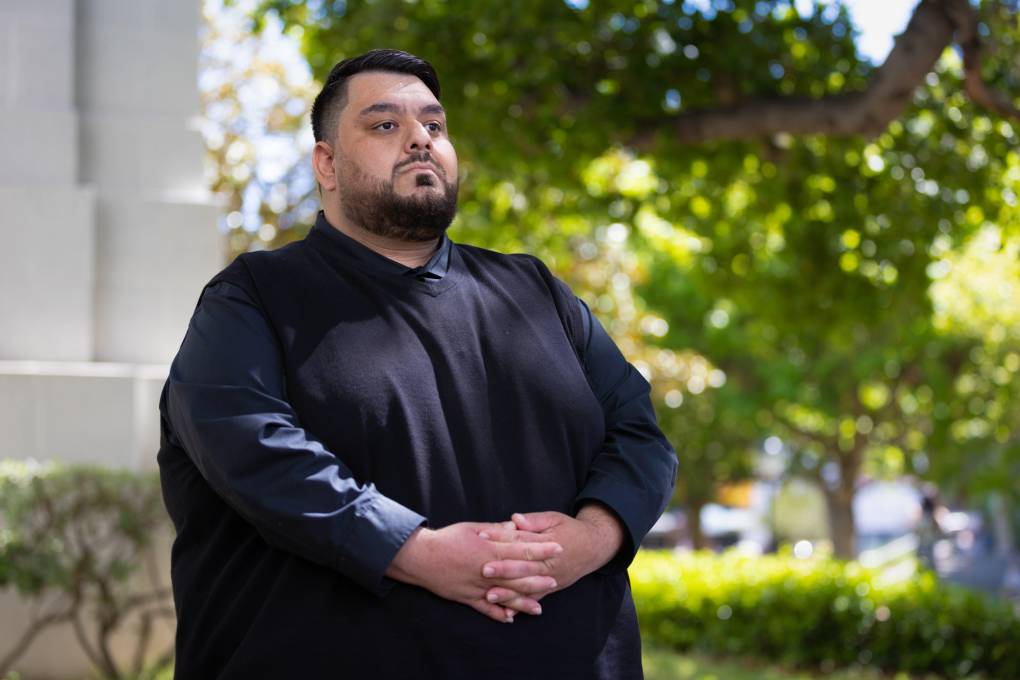
'A Death Sentence': Bay Area Afghans and Allies React to Trump Administration Ending TPS
Ukrainians in US Granted Temporary Protection Status, Allowed to Stay Up to 18 Months
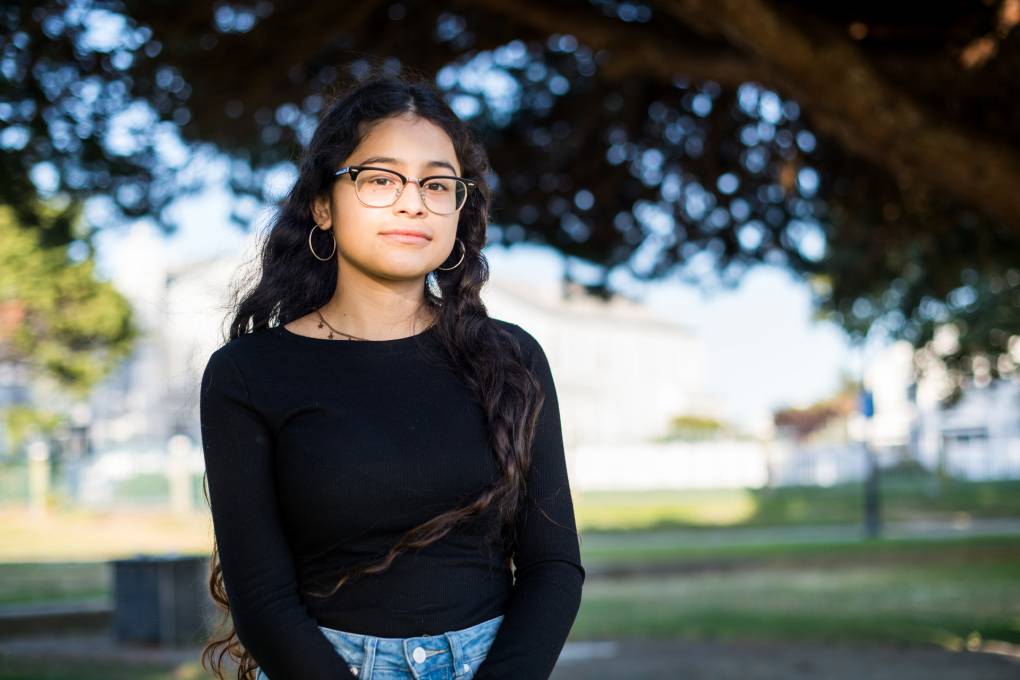
The Bay Area Teen Who's Been Trying to Save TPS (And Isn't Backing Down Now)
'So Painful': 400,000 Could Face Deportation After Appeals Court Ruling
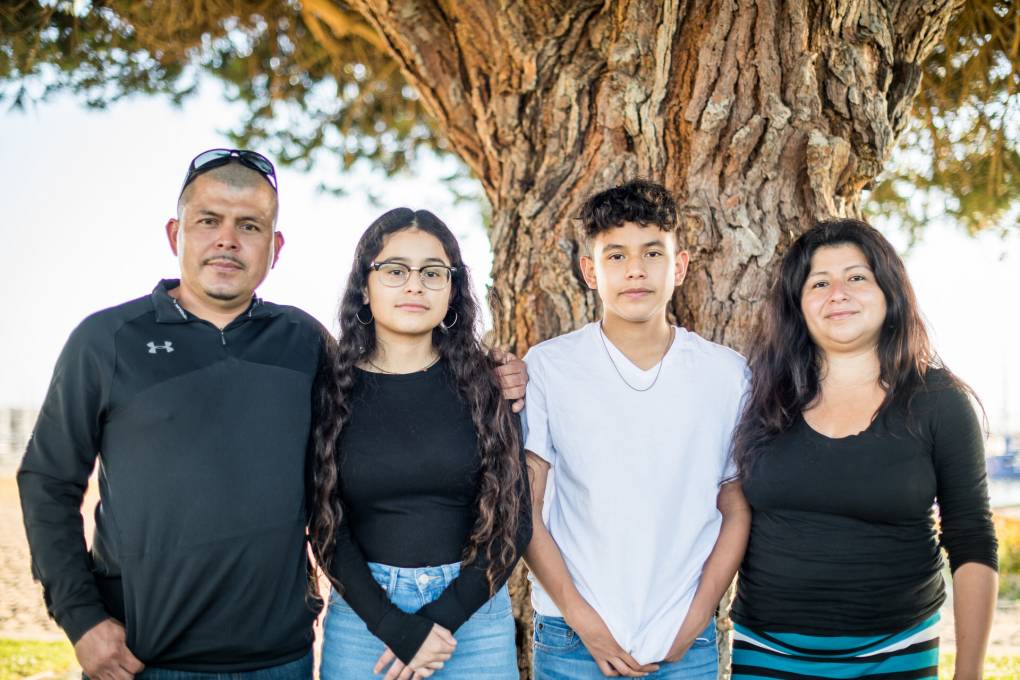
Bay Area Teen Awaits Ruling on Humanitarian Protections for Mom and Other Immigrants
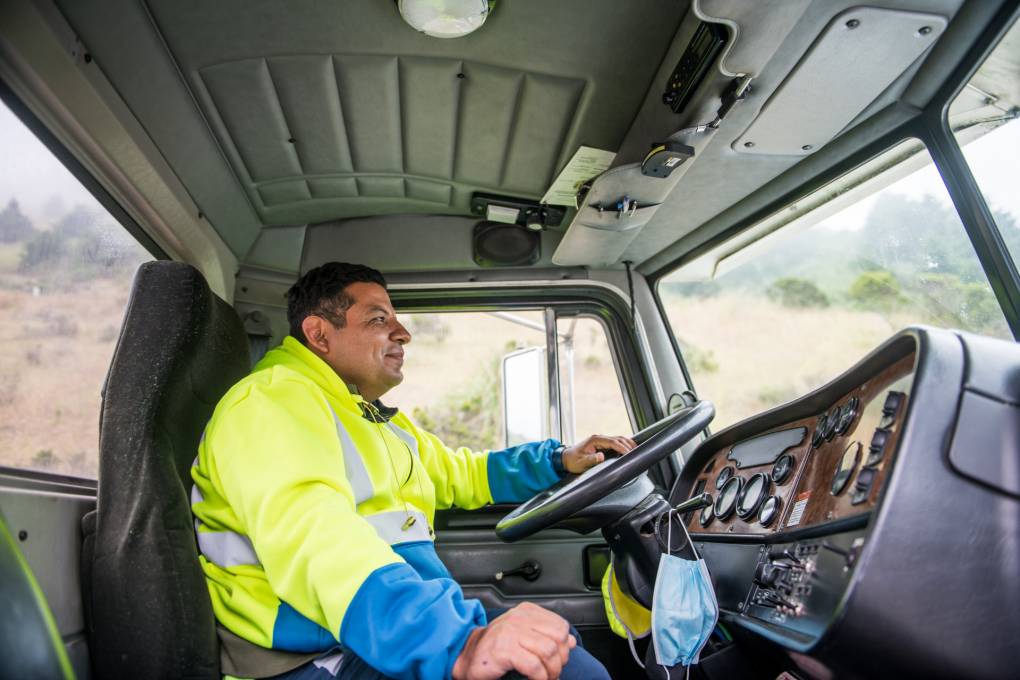
Essential Workers with Temporary Protected Status Could be at Risk of Deportation
Trump Administration Extends Protections for Many Salvadorans Living in U.S.
Will U.S. Keep Humanitarian Protections for Many Immigrants? Federal Judges to Decide
More Immigrants Sue Trump Administration Over End to Temporary Protected Status
Sponsored
Player sponsored by
window.__IS_SSR__=true
window.__INITIAL_STATE__={
"attachmentsReducer": {
"audio_0": {
"type": "attachments",
"id": "audio_0",
"imgSizes": {
"kqedFullSize": {
"file": "https://ww2.kqed.org/news/wp-content/themes/KQED-unified/img/audio_bgs/background0.jpg"
}
}
},
"audio_1": {
"type": "attachments",
"id": "audio_1",
"imgSizes": {
"kqedFullSize": {
"file": "https://ww2.kqed.org/news/wp-content/themes/KQED-unified/img/audio_bgs/background1.jpg"
}
}
},
"audio_2": {
"type": "attachments",
"id": "audio_2",
"imgSizes": {
"kqedFullSize": {
"file": "https://ww2.kqed.org/news/wp-content/themes/KQED-unified/img/audio_bgs/background2.jpg"
}
}
},
"audio_3": {
"type": "attachments",
"id": "audio_3",
"imgSizes": {
"kqedFullSize": {
"file": "https://ww2.kqed.org/news/wp-content/themes/KQED-unified/img/audio_bgs/background3.jpg"
}
}
},
"audio_4": {
"type": "attachments",
"id": "audio_4",
"imgSizes": {
"kqedFullSize": {
"file": "https://ww2.kqed.org/news/wp-content/themes/KQED-unified/img/audio_bgs/background4.jpg"
}
}
},
"placeholder": {
"type": "attachments",
"id": "placeholder",
"imgSizes": {
"thumbnail": {
"file": "https://cdn.kqed.org/wp-content/uploads/2024/12/KQED-Default-Image-816638274-2000x1333-1-160x107.jpg",
"width": 160,
"height": 107,
"mimeType": "image/jpeg"
},
"medium": {
"file": "https://cdn.kqed.org/wp-content/uploads/2024/12/KQED-Default-Image-816638274-2000x1333-1-800x533.jpg",
"width": 800,
"height": 533,
"mimeType": "image/jpeg"
},
"medium_large": {
"file": "https://cdn.kqed.org/wp-content/uploads/2024/12/KQED-Default-Image-816638274-2000x1333-1-768x512.jpg",
"width": 768,
"height": 512,
"mimeType": "image/jpeg"
},
"large": {
"file": "https://cdn.kqed.org/wp-content/uploads/2024/12/KQED-Default-Image-816638274-2000x1333-1-1020x680.jpg",
"width": 1020,
"height": 680,
"mimeType": "image/jpeg"
},
"1536x1536": {
"file": "https://cdn.kqed.org/wp-content/uploads/2024/12/KQED-Default-Image-816638274-2000x1333-1-1536x1024.jpg",
"width": 1536,
"height": 1024,
"mimeType": "image/jpeg"
},
"fd-lrg": {
"file": "https://cdn.kqed.org/wp-content/uploads/2024/12/KQED-Default-Image-816638274-2000x1333-1-1536x1024.jpg",
"width": 1536,
"height": 1024,
"mimeType": "image/jpeg"
},
"fd-med": {
"file": "https://cdn.kqed.org/wp-content/uploads/2024/12/KQED-Default-Image-816638274-2000x1333-1-1020x680.jpg",
"width": 1020,
"height": 680,
"mimeType": "image/jpeg"
},
"fd-sm": {
"file": "https://cdn.kqed.org/wp-content/uploads/2024/12/KQED-Default-Image-816638274-2000x1333-1-800x533.jpg",
"width": 800,
"height": 533,
"mimeType": "image/jpeg"
},
"post-thumbnail": {
"file": "https://cdn.kqed.org/wp-content/uploads/2024/12/KQED-Default-Image-816638274-2000x1333-1-672x372.jpg",
"width": 672,
"height": 372,
"mimeType": "image/jpeg"
},
"twentyfourteen-full-width": {
"file": "https://cdn.kqed.org/wp-content/uploads/2024/12/KQED-Default-Image-816638274-2000x1333-1-1038x576.jpg",
"width": 1038,
"height": 576,
"mimeType": "image/jpeg"
},
"xxsmall": {
"file": "https://cdn.kqed.org/wp-content/uploads/2024/12/KQED-Default-Image-816638274-2000x1333-1-160x107.jpg",
"width": 160,
"height": 107,
"mimeType": "image/jpeg"
},
"xsmall": {
"file": "https://cdn.kqed.org/wp-content/uploads/2024/12/KQED-Default-Image-816638274-2000x1333-1-672x372.jpg",
"width": 672,
"height": 372,
"mimeType": "image/jpeg"
},
"small": {
"file": "https://cdn.kqed.org/wp-content/uploads/2024/12/KQED-Default-Image-816638274-2000x1333-1-672x372.jpg",
"width": 672,
"height": 372,
"mimeType": "image/jpeg"
},
"xlarge": {
"file": "https://cdn.kqed.org/wp-content/uploads/2024/12/KQED-Default-Image-816638274-2000x1333-1-1020x680.jpg",
"width": 1020,
"height": 680,
"mimeType": "image/jpeg"
},
"full-width": {
"file": "https://cdn.kqed.org/wp-content/uploads/2024/12/KQED-Default-Image-816638274-2000x1333-1-1920x1280.jpg",
"width": 1920,
"height": 1280,
"mimeType": "image/jpeg"
},
"guest-author-32": {
"file": "https://cdn.kqed.org/wp-content/uploads/2025/01/KQED-Default-Image-816638274-1333x1333-1-160x160.jpg",
"width": 32,
"height": 32,
"mimeType": "image/jpeg"
},
"guest-author-50": {
"file": "https://cdn.kqed.org/wp-content/uploads/2025/01/KQED-Default-Image-816638274-1333x1333-1-160x160.jpg",
"width": 50,
"height": 50,
"mimeType": "image/jpeg"
},
"guest-author-64": {
"file": "https://cdn.kqed.org/wp-content/uploads/2025/01/KQED-Default-Image-816638274-1333x1333-1-160x160.jpg",
"width": 64,
"height": 64,
"mimeType": "image/jpeg"
},
"guest-author-96": {
"file": "https://cdn.kqed.org/wp-content/uploads/2025/01/KQED-Default-Image-816638274-1333x1333-1-160x160.jpg",
"width": 96,
"height": 96,
"mimeType": "image/jpeg"
},
"guest-author-128": {
"file": "https://cdn.kqed.org/wp-content/uploads/2025/01/KQED-Default-Image-816638274-1333x1333-1-160x160.jpg",
"width": 128,
"height": 128,
"mimeType": "image/jpeg"
},
"detail": {
"file": "https://cdn.kqed.org/wp-content/uploads/2025/01/KQED-Default-Image-816638274-1333x1333-1-160x160.jpg",
"width": 160,
"height": 160,
"mimeType": "image/jpeg"
},
"kqedFullSize": {
"file": "https://cdn.kqed.org/wp-content/uploads/2024/12/KQED-Default-Image-816638274-2000x1333-1.jpg",
"width": 2000,
"height": 1333
}
}
},
"news_12040223": {
"type": "attachments",
"id": "news_12040223",
"meta": {
"index": "attachments_1716263798",
"site": "news",
"id": "12040223",
"found": true
},
"title": "20250514_AFGHANREFUGEESTPS_GC-11-KQED",
"publishDate": 1747265530,
"status": "inherit",
"parent": 12040425,
"modified": 1747350444,
"caption": "Harris Mojadedi, Assistant Dean of Strategic Initiatives, poses for a portrait at UC Berkeley on May 14, 2025.",
"credit": null,
"altTag": null,
"description": null,
"imgSizes": {
"medium": {
"file": "https://cdn.kqed.org/wp-content/uploads/sites/10/2025/05/20250514_AFGHANREFUGEESTPS_GC-11-KQED-800x533.jpg",
"width": 800,
"height": 533,
"mimeType": "image/jpeg"
},
"large": {
"file": "https://cdn.kqed.org/wp-content/uploads/sites/10/2025/05/20250514_AFGHANREFUGEESTPS_GC-11-KQED-1020x680.jpg",
"width": 1020,
"height": 680,
"mimeType": "image/jpeg"
},
"thumbnail": {
"file": "https://cdn.kqed.org/wp-content/uploads/sites/10/2025/05/20250514_AFGHANREFUGEESTPS_GC-11-KQED-160x107.jpg",
"width": 160,
"height": 107,
"mimeType": "image/jpeg"
},
"1536x1536": {
"file": "https://cdn.kqed.org/wp-content/uploads/sites/10/2025/05/20250514_AFGHANREFUGEESTPS_GC-11-KQED-1536x1024.jpg",
"width": 1536,
"height": 1024,
"mimeType": "image/jpeg"
},
"post-thumbnail": {
"file": "https://cdn.kqed.org/wp-content/uploads/sites/10/2025/05/20250514_AFGHANREFUGEESTPS_GC-11-KQED-672x372.jpg",
"width": 672,
"height": 372,
"mimeType": "image/jpeg"
},
"twentyfourteen-full-width": {
"file": "https://cdn.kqed.org/wp-content/uploads/sites/10/2025/05/20250514_AFGHANREFUGEESTPS_GC-11-KQED-1038x576.jpg",
"width": 1038,
"height": 576,
"mimeType": "image/jpeg"
},
"full-width": {
"file": "https://cdn.kqed.org/wp-content/uploads/sites/10/2025/05/20250514_AFGHANREFUGEESTPS_GC-11-KQED-1920x1280.jpg",
"width": 1920,
"height": 1280,
"mimeType": "image/jpeg"
},
"kqedFullSize": {
"file": "https://cdn.kqed.org/wp-content/uploads/sites/10/2025/05/20250514_AFGHANREFUGEESTPS_GC-11-KQED.jpg",
"width": 2000,
"height": 1333
}
},
"fetchFailed": false,
"isLoading": false
},
"news_11907321": {
"type": "attachments",
"id": "news_11907321",
"meta": {
"index": "attachments_1716263798",
"site": "news",
"id": "11907321",
"found": true
},
"parent": 11907319,
"imgSizes": {
"twentyfourteen-full-width": {
"file": "https://ww2.kqed.org/app/uploads/sites/10/2022/03/GettyImages-1238817320-1038x576.jpg",
"width": 1038,
"mimeType": "image/jpeg",
"height": 576
},
"thumbnail": {
"file": "https://ww2.kqed.org/app/uploads/sites/10/2022/03/GettyImages-1238817320-160x107.jpg",
"width": 160,
"mimeType": "image/jpeg",
"height": 107
},
"post-thumbnail": {
"file": "https://ww2.kqed.org/app/uploads/sites/10/2022/03/GettyImages-1238817320-672x372.jpg",
"width": 672,
"mimeType": "image/jpeg",
"height": 372
},
"kqedFullSize": {
"file": "https://ww2.kqed.org/app/uploads/sites/10/2022/03/GettyImages-1238817320-scaled.jpg",
"width": 2560,
"height": 1707
},
"2048x2048": {
"file": "https://ww2.kqed.org/app/uploads/sites/10/2022/03/GettyImages-1238817320-2048x1365.jpg",
"width": 2048,
"mimeType": "image/jpeg",
"height": 1365
},
"large": {
"file": "https://ww2.kqed.org/app/uploads/sites/10/2022/03/GettyImages-1238817320-1020x680.jpg",
"width": 1020,
"mimeType": "image/jpeg",
"height": 680
},
"1536x1536": {
"file": "https://ww2.kqed.org/app/uploads/sites/10/2022/03/GettyImages-1238817320-1536x1024.jpg",
"width": 1536,
"mimeType": "image/jpeg",
"height": 1024
},
"full-width": {
"file": "https://ww2.kqed.org/app/uploads/sites/10/2022/03/GettyImages-1238817320-1920x1280.jpg",
"width": 1920,
"mimeType": "image/jpeg",
"height": 1280
},
"medium": {
"file": "https://ww2.kqed.org/app/uploads/sites/10/2022/03/GettyImages-1238817320-800x533.jpg",
"width": 800,
"mimeType": "image/jpeg",
"height": 533
}
},
"publishDate": 1646676329,
"modified": 1646676691,
"caption": "Demonstrators gather to rally in support of Ukraine in Santa Monica on Feb. 27, 2022.",
"description": null,
"title": "US-RUSSIA-UKRAINE-CONFLICT-PROTEST",
"credit": "Ringo Chiu/AFP via Getty Images",
"status": "inherit",
"altTag": "A demonstration with hundreds of people holding signs and the Ukrainian flag.",
"fetchFailed": false,
"isLoading": false
},
"news_11838063": {
"type": "attachments",
"id": "news_11838063",
"meta": {
"index": "attachments_1716263798",
"site": "news",
"id": "11838063",
"found": true
},
"parent": 11838060,
"imgSizes": {
"apple_news_ca_landscape_5_5": {
"file": "https://ww2.kqed.org/app/uploads/sites/10/2020/09/RS43871_003_KQED_Richmond_TPS_07072020-qut-1044x783.jpg",
"width": 1044,
"mimeType": "image/jpeg",
"height": 783
},
"apple_news_ca_square_4_0": {
"file": "https://ww2.kqed.org/app/uploads/sites/10/2020/09/RS43871_003_KQED_Richmond_TPS_07072020-qut-470x470.jpg",
"width": 470,
"mimeType": "image/jpeg",
"height": 470
},
"twentyfourteen-full-width": {
"file": "https://ww2.kqed.org/app/uploads/sites/10/2020/09/RS43871_003_KQED_Richmond_TPS_07072020-qut-1038x576.jpg",
"width": 1038,
"mimeType": "image/jpeg",
"height": 576
},
"thumbnail": {
"file": "https://ww2.kqed.org/app/uploads/sites/10/2020/09/RS43871_003_KQED_Richmond_TPS_07072020-qut-160x107.jpg",
"width": 160,
"mimeType": "image/jpeg",
"height": 107
},
"post-thumbnail": {
"file": "https://ww2.kqed.org/app/uploads/sites/10/2020/09/RS43871_003_KQED_Richmond_TPS_07072020-qut-672x372.jpg",
"width": 672,
"mimeType": "image/jpeg",
"height": 372
},
"kqedFullSize": {
"file": "https://ww2.kqed.org/app/uploads/sites/10/2020/09/RS43871_003_KQED_Richmond_TPS_07072020-qut.jpg",
"width": 1920,
"height": 1280
},
"apple_news_ca_landscape_4_7": {
"file": "https://ww2.kqed.org/app/uploads/sites/10/2020/09/RS43871_003_KQED_Richmond_TPS_07072020-qut-632x474.jpg",
"width": 632,
"mimeType": "image/jpeg",
"height": 474
},
"large": {
"file": "https://ww2.kqed.org/app/uploads/sites/10/2020/09/RS43871_003_KQED_Richmond_TPS_07072020-qut-1020x680.jpg",
"width": 1020,
"mimeType": "image/jpeg",
"height": 680
},
"apple_news_ca_landscape_4_0": {
"file": "https://ww2.kqed.org/app/uploads/sites/10/2020/09/RS43871_003_KQED_Richmond_TPS_07072020-qut-536x402.jpg",
"width": 536,
"mimeType": "image/jpeg",
"height": 402
},
"apple_news_ca_portrait_12_9": {
"file": "https://ww2.kqed.org/app/uploads/sites/10/2020/09/RS43871_003_KQED_Richmond_TPS_07072020-qut-1122x1280.jpg",
"width": 1122,
"mimeType": "image/jpeg",
"height": 1280
},
"medium": {
"file": "https://ww2.kqed.org/app/uploads/sites/10/2020/09/RS43871_003_KQED_Richmond_TPS_07072020-qut-800x533.jpg",
"width": 800,
"mimeType": "image/jpeg",
"height": 533
},
"apple_news_ca_portrait_4_0": {
"file": "https://ww2.kqed.org/app/uploads/sites/10/2020/09/RS43871_003_KQED_Richmond_TPS_07072020-qut-354x472.jpg",
"width": 354,
"mimeType": "image/jpeg",
"height": 472
},
"apple_news_ca_portrait_9_7": {
"file": "https://ww2.kqed.org/app/uploads/sites/10/2020/09/RS43871_003_KQED_Richmond_TPS_07072020-qut-840x1120.jpg",
"width": 840,
"mimeType": "image/jpeg",
"height": 1120
},
"apple_news_ca_landscape_12_9": {
"file": "https://ww2.kqed.org/app/uploads/sites/10/2020/09/RS43871_003_KQED_Richmond_TPS_07072020-qut-1832x1280.jpg",
"width": 1832,
"mimeType": "image/jpeg",
"height": 1280
},
"apple_news_ca_square_9_7": {
"file": "https://ww2.kqed.org/app/uploads/sites/10/2020/09/RS43871_003_KQED_Richmond_TPS_07072020-qut-1104x1104.jpg",
"width": 1104,
"mimeType": "image/jpeg",
"height": 1104
},
"1536x1536": {
"file": "https://ww2.kqed.org/app/uploads/sites/10/2020/09/RS43871_003_KQED_Richmond_TPS_07072020-qut-1536x1024.jpg",
"width": 1536,
"mimeType": "image/jpeg",
"height": 1024
},
"apple_news_ca_portrait_4_7": {
"file": "https://ww2.kqed.org/app/uploads/sites/10/2020/09/RS43871_003_KQED_Richmond_TPS_07072020-qut-414x552.jpg",
"width": 414,
"mimeType": "image/jpeg",
"height": 552
},
"apple_news_ca_square_12_9": {
"file": "https://ww2.kqed.org/app/uploads/sites/10/2020/09/RS43871_003_KQED_Richmond_TPS_07072020-qut-1472x1280.jpg",
"width": 1472,
"mimeType": "image/jpeg",
"height": 1280
},
"apple_news_ca_portrait_5_5": {
"file": "https://ww2.kqed.org/app/uploads/sites/10/2020/09/RS43871_003_KQED_Richmond_TPS_07072020-qut-687x916.jpg",
"width": 687,
"mimeType": "image/jpeg",
"height": 916
},
"apple_news_ca_square_4_7": {
"file": "https://ww2.kqed.org/app/uploads/sites/10/2020/09/RS43871_003_KQED_Richmond_TPS_07072020-qut-550x550.jpg",
"width": 550,
"mimeType": "image/jpeg",
"height": 550
},
"apple_news_ca_landscape_9_7": {
"file": "https://ww2.kqed.org/app/uploads/sites/10/2020/09/RS43871_003_KQED_Richmond_TPS_07072020-qut-1376x1032.jpg",
"width": 1376,
"mimeType": "image/jpeg",
"height": 1032
},
"apple_news_ca_square_5_5": {
"file": "https://ww2.kqed.org/app/uploads/sites/10/2020/09/RS43871_003_KQED_Richmond_TPS_07072020-qut-912x912.jpg",
"width": 912,
"mimeType": "image/jpeg",
"height": 912
}
},
"publishDate": 1600202578,
"modified": 1600280360,
"caption": "For two years, Crista has been a lead plaintiff in a class action lawsuit challenging the Trump administration's decision to end TPS. ",
"description": null,
"title": "RS43871_003_KQED_Richmond_TPS_07072020-qut",
"credit": "Beth LaBerge/KQED",
"status": "inherit",
"fetchFailed": false,
"isLoading": false
},
"news_11838010": {
"type": "attachments",
"id": "news_11838010",
"meta": {
"index": "attachments_1716263798",
"site": "news",
"id": "11838010",
"found": true
},
"parent": 11838007,
"imgSizes": {
"apple_news_ca_landscape_5_5": {
"file": "https://ww2.kqed.org/app/uploads/sites/10/2020/09/RS43869_001_KQED_Richmond_TPS_07072020-qut-1044x783.jpg",
"width": 1044,
"mimeType": "image/jpeg",
"height": 783
},
"apple_news_ca_square_4_0": {
"file": "https://ww2.kqed.org/app/uploads/sites/10/2020/09/RS43869_001_KQED_Richmond_TPS_07072020-qut-470x470.jpg",
"width": 470,
"mimeType": "image/jpeg",
"height": 470
},
"twentyfourteen-full-width": {
"file": "https://ww2.kqed.org/app/uploads/sites/10/2020/09/RS43869_001_KQED_Richmond_TPS_07072020-qut-1038x576.jpg",
"width": 1038,
"mimeType": "image/jpeg",
"height": 576
},
"thumbnail": {
"file": "https://ww2.kqed.org/app/uploads/sites/10/2020/09/RS43869_001_KQED_Richmond_TPS_07072020-qut-160x107.jpg",
"width": 160,
"mimeType": "image/jpeg",
"height": 107
},
"post-thumbnail": {
"file": "https://ww2.kqed.org/app/uploads/sites/10/2020/09/RS43869_001_KQED_Richmond_TPS_07072020-qut-672x372.jpg",
"width": 672,
"mimeType": "image/jpeg",
"height": 372
},
"kqedFullSize": {
"file": "https://ww2.kqed.org/app/uploads/sites/10/2020/09/RS43869_001_KQED_Richmond_TPS_07072020-qut.jpg",
"width": 1920,
"height": 1280
},
"apple_news_ca_landscape_4_7": {
"file": "https://ww2.kqed.org/app/uploads/sites/10/2020/09/RS43869_001_KQED_Richmond_TPS_07072020-qut-632x474.jpg",
"width": 632,
"mimeType": "image/jpeg",
"height": 474
},
"large": {
"file": "https://ww2.kqed.org/app/uploads/sites/10/2020/09/RS43869_001_KQED_Richmond_TPS_07072020-qut-1020x680.jpg",
"width": 1020,
"mimeType": "image/jpeg",
"height": 680
},
"apple_news_ca_landscape_4_0": {
"file": "https://ww2.kqed.org/app/uploads/sites/10/2020/09/RS43869_001_KQED_Richmond_TPS_07072020-qut-536x402.jpg",
"width": 536,
"mimeType": "image/jpeg",
"height": 402
},
"apple_news_ca_portrait_12_9": {
"file": "https://ww2.kqed.org/app/uploads/sites/10/2020/09/RS43869_001_KQED_Richmond_TPS_07072020-qut-1122x1280.jpg",
"width": 1122,
"mimeType": "image/jpeg",
"height": 1280
},
"medium": {
"file": "https://ww2.kqed.org/app/uploads/sites/10/2020/09/RS43869_001_KQED_Richmond_TPS_07072020-qut-800x533.jpg",
"width": 800,
"mimeType": "image/jpeg",
"height": 533
},
"apple_news_ca_portrait_4_0": {
"file": "https://ww2.kqed.org/app/uploads/sites/10/2020/09/RS43869_001_KQED_Richmond_TPS_07072020-qut-354x472.jpg",
"width": 354,
"mimeType": "image/jpeg",
"height": 472
},
"apple_news_ca_portrait_9_7": {
"file": "https://ww2.kqed.org/app/uploads/sites/10/2020/09/RS43869_001_KQED_Richmond_TPS_07072020-qut-840x1120.jpg",
"width": 840,
"mimeType": "image/jpeg",
"height": 1120
},
"apple_news_ca_landscape_12_9": {
"file": "https://ww2.kqed.org/app/uploads/sites/10/2020/09/RS43869_001_KQED_Richmond_TPS_07072020-qut-1832x1280.jpg",
"width": 1832,
"mimeType": "image/jpeg",
"height": 1280
},
"apple_news_ca_square_9_7": {
"file": "https://ww2.kqed.org/app/uploads/sites/10/2020/09/RS43869_001_KQED_Richmond_TPS_07072020-qut-1104x1104.jpg",
"width": 1104,
"mimeType": "image/jpeg",
"height": 1104
},
"1536x1536": {
"file": "https://ww2.kqed.org/app/uploads/sites/10/2020/09/RS43869_001_KQED_Richmond_TPS_07072020-qut-1536x1024.jpg",
"width": 1536,
"mimeType": "image/jpeg",
"height": 1024
},
"apple_news_ca_portrait_4_7": {
"file": "https://ww2.kqed.org/app/uploads/sites/10/2020/09/RS43869_001_KQED_Richmond_TPS_07072020-qut-414x552.jpg",
"width": 414,
"mimeType": "image/jpeg",
"height": 552
},
"apple_news_ca_square_12_9": {
"file": "https://ww2.kqed.org/app/uploads/sites/10/2020/09/RS43869_001_KQED_Richmond_TPS_07072020-qut-1472x1280.jpg",
"width": 1472,
"mimeType": "image/jpeg",
"height": 1280
},
"apple_news_ca_portrait_5_5": {
"file": "https://ww2.kqed.org/app/uploads/sites/10/2020/09/RS43869_001_KQED_Richmond_TPS_07072020-qut-687x916.jpg",
"width": 687,
"mimeType": "image/jpeg",
"height": 916
},
"apple_news_ca_square_4_7": {
"file": "https://ww2.kqed.org/app/uploads/sites/10/2020/09/RS43869_001_KQED_Richmond_TPS_07072020-qut-550x550.jpg",
"width": 550,
"mimeType": "image/jpeg",
"height": 550
},
"apple_news_ca_landscape_9_7": {
"file": "https://ww2.kqed.org/app/uploads/sites/10/2020/09/RS43869_001_KQED_Richmond_TPS_07072020-qut-1376x1032.jpg",
"width": 1376,
"mimeType": "image/jpeg",
"height": 1032
},
"apple_news_ca_square_5_5": {
"file": "https://ww2.kqed.org/app/uploads/sites/10/2020/09/RS43869_001_KQED_Richmond_TPS_07072020-qut-912x912.jpg",
"width": 912,
"mimeType": "image/jpeg",
"height": 912
}
},
"publishDate": 1600195704,
"modified": 1600286950,
"caption": "Cristina Morales (left) walks in Richmond, California with her children Diego and Crista, who are U.S. citizens, on July 7, 2020. Morales is one of more than 400,000 immigrants who would lose their permits to live and work in the U.S. after an appeals court ruling this week.",
"description": "Cristina Morales (left) walks in Richmond, California with her children Diego and Crista, who are U.S. citizens, on July 7, 2020. Morales is one of more than 400,000 immigrants who would lose their permits to live and work in the U.S. after an appeals court ruling this week.",
"title": "RS43869_001_KQED_Richmond_TPS_07072020-qut",
"credit": "Beth LaBerge/KQED",
"status": "inherit",
"fetchFailed": false,
"isLoading": false
},
"news_11828011": {
"type": "attachments",
"id": "news_11828011",
"meta": {
"index": "attachments_1716263798",
"site": "news",
"id": "11828011",
"found": true
},
"parent": 11828006,
"imgSizes": {
"apple_news_ca_landscape_5_5": {
"file": "https://ww2.kqed.org/app/uploads/sites/10/2020/07/RS43873_006_KQED_Richmond_TPS_07072020-qut-1044x783.jpg",
"width": 1044,
"mimeType": "image/jpeg",
"height": 783
},
"apple_news_ca_square_4_0": {
"file": "https://ww2.kqed.org/app/uploads/sites/10/2020/07/RS43873_006_KQED_Richmond_TPS_07072020-qut-470x470.jpg",
"width": 470,
"mimeType": "image/jpeg",
"height": 470
},
"twentyfourteen-full-width": {
"file": "https://ww2.kqed.org/app/uploads/sites/10/2020/07/RS43873_006_KQED_Richmond_TPS_07072020-qut-1038x576.jpg",
"width": 1038,
"mimeType": "image/jpeg",
"height": 576
},
"thumbnail": {
"file": "https://ww2.kqed.org/app/uploads/sites/10/2020/07/RS43873_006_KQED_Richmond_TPS_07072020-qut-160x107.jpg",
"width": 160,
"mimeType": "image/jpeg",
"height": 107
},
"post-thumbnail": {
"file": "https://ww2.kqed.org/app/uploads/sites/10/2020/07/RS43873_006_KQED_Richmond_TPS_07072020-qut-672x372.jpg",
"width": 672,
"mimeType": "image/jpeg",
"height": 372
},
"kqedFullSize": {
"file": "https://ww2.kqed.org/app/uploads/sites/10/2020/07/RS43873_006_KQED_Richmond_TPS_07072020-qut.jpg",
"width": 1920,
"height": 1280
},
"apple_news_ca_landscape_4_7": {
"file": "https://ww2.kqed.org/app/uploads/sites/10/2020/07/RS43873_006_KQED_Richmond_TPS_07072020-qut-632x474.jpg",
"width": 632,
"mimeType": "image/jpeg",
"height": 474
},
"large": {
"file": "https://ww2.kqed.org/app/uploads/sites/10/2020/07/RS43873_006_KQED_Richmond_TPS_07072020-qut-1020x680.jpg",
"width": 1020,
"mimeType": "image/jpeg",
"height": 680
},
"apple_news_ca_landscape_4_0": {
"file": "https://ww2.kqed.org/app/uploads/sites/10/2020/07/RS43873_006_KQED_Richmond_TPS_07072020-qut-536x402.jpg",
"width": 536,
"mimeType": "image/jpeg",
"height": 402
},
"apple_news_ca_portrait_12_9": {
"file": "https://ww2.kqed.org/app/uploads/sites/10/2020/07/RS43873_006_KQED_Richmond_TPS_07072020-qut-1122x1280.jpg",
"width": 1122,
"mimeType": "image/jpeg",
"height": 1280
},
"medium": {
"file": "https://ww2.kqed.org/app/uploads/sites/10/2020/07/RS43873_006_KQED_Richmond_TPS_07072020-qut-800x533.jpg",
"width": 800,
"mimeType": "image/jpeg",
"height": 533
},
"apple_news_ca_portrait_4_0": {
"file": "https://ww2.kqed.org/app/uploads/sites/10/2020/07/RS43873_006_KQED_Richmond_TPS_07072020-qut-354x472.jpg",
"width": 354,
"mimeType": "image/jpeg",
"height": 472
},
"apple_news_ca_portrait_9_7": {
"file": "https://ww2.kqed.org/app/uploads/sites/10/2020/07/RS43873_006_KQED_Richmond_TPS_07072020-qut-840x1120.jpg",
"width": 840,
"mimeType": "image/jpeg",
"height": 1120
},
"apple_news_ca_landscape_12_9": {
"file": "https://ww2.kqed.org/app/uploads/sites/10/2020/07/RS43873_006_KQED_Richmond_TPS_07072020-qut-1832x1280.jpg",
"width": 1832,
"mimeType": "image/jpeg",
"height": 1280
},
"apple_news_ca_square_9_7": {
"file": "https://ww2.kqed.org/app/uploads/sites/10/2020/07/RS43873_006_KQED_Richmond_TPS_07072020-qut-1104x1104.jpg",
"width": 1104,
"mimeType": "image/jpeg",
"height": 1104
},
"1536x1536": {
"file": "https://ww2.kqed.org/app/uploads/sites/10/2020/07/RS43873_006_KQED_Richmond_TPS_07072020-qut-1536x1024.jpg",
"width": 1536,
"mimeType": "image/jpeg",
"height": 1024
},
"apple_news_ca_portrait_4_7": {
"file": "https://ww2.kqed.org/app/uploads/sites/10/2020/07/RS43873_006_KQED_Richmond_TPS_07072020-qut-414x552.jpg",
"width": 414,
"mimeType": "image/jpeg",
"height": 552
},
"apple_news_ca_square_12_9": {
"file": "https://ww2.kqed.org/app/uploads/sites/10/2020/07/RS43873_006_KQED_Richmond_TPS_07072020-qut-1472x1280.jpg",
"width": 1472,
"mimeType": "image/jpeg",
"height": 1280
},
"apple_news_ca_portrait_5_5": {
"file": "https://ww2.kqed.org/app/uploads/sites/10/2020/07/RS43873_006_KQED_Richmond_TPS_07072020-qut-687x916.jpg",
"width": 687,
"mimeType": "image/jpeg",
"height": 916
},
"apple_news_ca_square_4_7": {
"file": "https://ww2.kqed.org/app/uploads/sites/10/2020/07/RS43873_006_KQED_Richmond_TPS_07072020-qut-550x550.jpg",
"width": 550,
"mimeType": "image/jpeg",
"height": 550
},
"apple_news_ca_landscape_9_7": {
"file": "https://ww2.kqed.org/app/uploads/sites/10/2020/07/RS43873_006_KQED_Richmond_TPS_07072020-qut-1376x1032.jpg",
"width": 1376,
"mimeType": "image/jpeg",
"height": 1032
},
"apple_news_ca_square_5_5": {
"file": "https://ww2.kqed.org/app/uploads/sites/10/2020/07/RS43873_006_KQED_Richmond_TPS_07072020-qut-912x912.jpg",
"width": 912,
"mimeType": "image/jpeg",
"height": 912
}
},
"publishDate": 1594258329,
"modified": 1594258580,
"caption": "Crista Ramos stands at Marina Park in Richmond on July 7, 2020. She is the lead plaintiff in a lawsuit seeking to stop the Trump administration from ending Temporary Protected Status. ",
"description": null,
"title": "Crista Ramos poses for a portrait at Marina Park in Richmond on July 7, 2020.",
"credit": "Beth LaBerge/KQED",
"status": "inherit",
"fetchFailed": false,
"isLoading": false
},
"news_11824092": {
"type": "attachments",
"id": "news_11824092",
"meta": {
"index": "attachments_1716263798",
"site": "news",
"id": "11824092",
"found": true
},
"parent": 11824078,
"imgSizes": {
"apple_news_ca_landscape_5_5": {
"file": "https://ww2.kqed.org/app/uploads/sites/10/2020/06/RS43584_010_KQED_HalfMoonBay_OxMountainLandfill_05292020-qut-1044x783.jpg",
"width": 1044,
"mimeType": "image/jpeg",
"height": 783
},
"apple_news_ca_square_4_0": {
"file": "https://ww2.kqed.org/app/uploads/sites/10/2020/06/RS43584_010_KQED_HalfMoonBay_OxMountainLandfill_05292020-qut-470x470.jpg",
"width": 470,
"mimeType": "image/jpeg",
"height": 470
},
"twentyfourteen-full-width": {
"file": "https://ww2.kqed.org/app/uploads/sites/10/2020/06/RS43584_010_KQED_HalfMoonBay_OxMountainLandfill_05292020-qut-1038x576.jpg",
"width": 1038,
"mimeType": "image/jpeg",
"height": 576
},
"thumbnail": {
"file": "https://ww2.kqed.org/app/uploads/sites/10/2020/06/RS43584_010_KQED_HalfMoonBay_OxMountainLandfill_05292020-qut-160x107.jpg",
"width": 160,
"mimeType": "image/jpeg",
"height": 107
},
"post-thumbnail": {
"file": "https://ww2.kqed.org/app/uploads/sites/10/2020/06/RS43584_010_KQED_HalfMoonBay_OxMountainLandfill_05292020-qut-672x372.jpg",
"width": 672,
"mimeType": "image/jpeg",
"height": 372
},
"kqedFullSize": {
"file": "https://ww2.kqed.org/app/uploads/sites/10/2020/06/RS43584_010_KQED_HalfMoonBay_OxMountainLandfill_05292020-qut.jpg",
"width": 1920,
"height": 1280
},
"apple_news_ca_landscape_4_7": {
"file": "https://ww2.kqed.org/app/uploads/sites/10/2020/06/RS43584_010_KQED_HalfMoonBay_OxMountainLandfill_05292020-qut-632x474.jpg",
"width": 632,
"mimeType": "image/jpeg",
"height": 474
},
"large": {
"file": "https://ww2.kqed.org/app/uploads/sites/10/2020/06/RS43584_010_KQED_HalfMoonBay_OxMountainLandfill_05292020-qut-1020x680.jpg",
"width": 1020,
"mimeType": "image/jpeg",
"height": 680
},
"apple_news_ca_landscape_4_0": {
"file": "https://ww2.kqed.org/app/uploads/sites/10/2020/06/RS43584_010_KQED_HalfMoonBay_OxMountainLandfill_05292020-qut-536x402.jpg",
"width": 536,
"mimeType": "image/jpeg",
"height": 402
},
"apple_news_ca_portrait_12_9": {
"file": "https://ww2.kqed.org/app/uploads/sites/10/2020/06/RS43584_010_KQED_HalfMoonBay_OxMountainLandfill_05292020-qut-1122x1280.jpg",
"width": 1122,
"mimeType": "image/jpeg",
"height": 1280
},
"medium": {
"file": "https://ww2.kqed.org/app/uploads/sites/10/2020/06/RS43584_010_KQED_HalfMoonBay_OxMountainLandfill_05292020-qut-800x533.jpg",
"width": 800,
"mimeType": "image/jpeg",
"height": 533
},
"apple_news_ca_portrait_4_0": {
"file": "https://ww2.kqed.org/app/uploads/sites/10/2020/06/RS43584_010_KQED_HalfMoonBay_OxMountainLandfill_05292020-qut-354x472.jpg",
"width": 354,
"mimeType": "image/jpeg",
"height": 472
},
"apple_news_ca_portrait_9_7": {
"file": "https://ww2.kqed.org/app/uploads/sites/10/2020/06/RS43584_010_KQED_HalfMoonBay_OxMountainLandfill_05292020-qut-840x1120.jpg",
"width": 840,
"mimeType": "image/jpeg",
"height": 1120
},
"apple_news_ca_landscape_12_9": {
"file": "https://ww2.kqed.org/app/uploads/sites/10/2020/06/RS43584_010_KQED_HalfMoonBay_OxMountainLandfill_05292020-qut-1832x1280.jpg",
"width": 1832,
"mimeType": "image/jpeg",
"height": 1280
},
"apple_news_ca_square_9_7": {
"file": "https://ww2.kqed.org/app/uploads/sites/10/2020/06/RS43584_010_KQED_HalfMoonBay_OxMountainLandfill_05292020-qut-1104x1104.jpg",
"width": 1104,
"mimeType": "image/jpeg",
"height": 1104
},
"apple_news_ca_portrait_4_7": {
"file": "https://ww2.kqed.org/app/uploads/sites/10/2020/06/RS43584_010_KQED_HalfMoonBay_OxMountainLandfill_05292020-qut-414x552.jpg",
"width": 414,
"mimeType": "image/jpeg",
"height": 552
},
"apple_news_ca_square_12_9": {
"file": "https://ww2.kqed.org/app/uploads/sites/10/2020/06/RS43584_010_KQED_HalfMoonBay_OxMountainLandfill_05292020-qut-1472x1280.jpg",
"width": 1472,
"mimeType": "image/jpeg",
"height": 1280
},
"apple_news_ca_portrait_5_5": {
"file": "https://ww2.kqed.org/app/uploads/sites/10/2020/06/RS43584_010_KQED_HalfMoonBay_OxMountainLandfill_05292020-qut-687x916.jpg",
"width": 687,
"mimeType": "image/jpeg",
"height": 916
},
"full-width": {
"file": "https://ww2.kqed.org/app/uploads/sites/10/2020/06/RS43584_010_KQED_HalfMoonBay_OxMountainLandfill_05292020-qut-1920x1280.jpg",
"width": 1920,
"mimeType": "image/jpeg",
"height": 1280
},
"apple_news_ca_square_4_7": {
"file": "https://ww2.kqed.org/app/uploads/sites/10/2020/06/RS43584_010_KQED_HalfMoonBay_OxMountainLandfill_05292020-qut-550x550.jpg",
"width": 550,
"mimeType": "image/jpeg",
"height": 550
},
"apple_news_ca_landscape_9_7": {
"file": "https://ww2.kqed.org/app/uploads/sites/10/2020/06/RS43584_010_KQED_HalfMoonBay_OxMountainLandfill_05292020-qut-1376x1032.jpg",
"width": 1376,
"mimeType": "image/jpeg",
"height": 1032
},
"apple_news_ca_square_5_5": {
"file": "https://ww2.kqed.org/app/uploads/sites/10/2020/06/RS43584_010_KQED_HalfMoonBay_OxMountainLandfill_05292020-qut-912x912.jpg",
"width": 912,
"mimeType": "image/jpeg",
"height": 912
}
},
"publishDate": 1591921624,
"modified": 1591921749,
"caption": "Fernando Flores drives a trailer near the Ox Mountain Sanitary Landfill in San Mateo County, Calif. on May 29, 2020.",
"description": null,
"title": "Fernando at the Ox Mountain Landfill in Half Moon Bay on May 29, 2020.",
"credit": "Beth La Berge/KQED",
"status": "inherit",
"fetchFailed": false,
"isLoading": false
},
"news_11783520": {
"type": "attachments",
"id": "news_11783520",
"meta": {
"index": "attachments_1716263798",
"site": "news",
"id": "11783520",
"found": true
},
"parent": 11783511,
"imgSizes": {
"apple_news_ca_landscape_5_5": {
"file": "https://ww2.kqed.org/app/uploads/sites/10/2019/10/RS32986_IMG_8631-qut-1044x783.jpg",
"width": 1044,
"mimeType": "image/jpeg",
"height": 783
},
"apple_news_ca_square_4_0": {
"file": "https://ww2.kqed.org/app/uploads/sites/10/2019/10/RS32986_IMG_8631-qut-470x470.jpg",
"width": 470,
"mimeType": "image/jpeg",
"height": 470
},
"twentyfourteen-full-width": {
"file": "https://ww2.kqed.org/app/uploads/sites/10/2019/10/RS32986_IMG_8631-qut-1038x576.jpg",
"width": 1038,
"mimeType": "image/jpeg",
"height": 576
},
"thumbnail": {
"file": "https://ww2.kqed.org/app/uploads/sites/10/2019/10/RS32986_IMG_8631-qut-160x120.jpg",
"width": 160,
"mimeType": "image/jpeg",
"height": 120
},
"post-thumbnail": {
"file": "https://ww2.kqed.org/app/uploads/sites/10/2019/10/RS32986_IMG_8631-qut-672x372.jpg",
"width": 672,
"mimeType": "image/jpeg",
"height": 372
},
"kqedFullSize": {
"file": "https://ww2.kqed.org/app/uploads/sites/10/2019/10/RS32986_IMG_8631-qut.jpg",
"width": 1920,
"height": 1440
},
"apple_news_ca_landscape_4_7": {
"file": "https://ww2.kqed.org/app/uploads/sites/10/2019/10/RS32986_IMG_8631-qut-632x474.jpg",
"width": 632,
"mimeType": "image/jpeg",
"height": 474
},
"large": {
"file": "https://ww2.kqed.org/app/uploads/sites/10/2019/10/RS32986_IMG_8631-qut-1020x765.jpg",
"width": 1020,
"mimeType": "image/jpeg",
"height": 765
},
"complete_open_graph": {
"file": "https://ww2.kqed.org/app/uploads/sites/10/2019/10/RS32986_IMG_8631-qut-1200x900.jpg",
"width": 1200,
"mimeType": "image/jpeg",
"height": 900
},
"apple_news_ca_landscape_4_0": {
"file": "https://ww2.kqed.org/app/uploads/sites/10/2019/10/RS32986_IMG_8631-qut-536x402.jpg",
"width": 536,
"mimeType": "image/jpeg",
"height": 402
},
"apple_news_ca_portrait_12_9": {
"file": "https://ww2.kqed.org/app/uploads/sites/10/2019/10/RS32986_IMG_8631-qut-1122x1440.jpg",
"width": 1122,
"mimeType": "image/jpeg",
"height": 1440
},
"medium": {
"file": "https://ww2.kqed.org/app/uploads/sites/10/2019/10/RS32986_IMG_8631-qut-800x600.jpg",
"width": 800,
"mimeType": "image/jpeg",
"height": 600
},
"apple_news_ca_portrait_4_0": {
"file": "https://ww2.kqed.org/app/uploads/sites/10/2019/10/RS32986_IMG_8631-qut-354x472.jpg",
"width": 354,
"mimeType": "image/jpeg",
"height": 472
},
"apple_news_ca_portrait_9_7": {
"file": "https://ww2.kqed.org/app/uploads/sites/10/2019/10/RS32986_IMG_8631-qut-840x1120.jpg",
"width": 840,
"mimeType": "image/jpeg",
"height": 1120
},
"apple_news_ca_landscape_12_9": {
"file": "https://ww2.kqed.org/app/uploads/sites/10/2019/10/RS32986_IMG_8631-qut-1832x1374.jpg",
"width": 1832,
"mimeType": "image/jpeg",
"height": 1374
},
"apple_news_ca_square_9_7": {
"file": "https://ww2.kqed.org/app/uploads/sites/10/2019/10/RS32986_IMG_8631-qut-1104x1104.jpg",
"width": 1104,
"mimeType": "image/jpeg",
"height": 1104
},
"apple_news_ca_portrait_4_7": {
"file": "https://ww2.kqed.org/app/uploads/sites/10/2019/10/RS32986_IMG_8631-qut-414x552.jpg",
"width": 414,
"mimeType": "image/jpeg",
"height": 552
},
"apple_news_ca_square_12_9": {
"file": "https://ww2.kqed.org/app/uploads/sites/10/2019/10/RS32986_IMG_8631-qut-1472x1440.jpg",
"width": 1472,
"mimeType": "image/jpeg",
"height": 1440
},
"apple_news_ca_portrait_5_5": {
"file": "https://ww2.kqed.org/app/uploads/sites/10/2019/10/RS32986_IMG_8631-qut-687x916.jpg",
"width": 687,
"mimeType": "image/jpeg",
"height": 916
},
"full-width": {
"file": "https://ww2.kqed.org/app/uploads/sites/10/2019/10/RS32986_IMG_8631-qut-1920x1440.jpg",
"width": 1920,
"mimeType": "image/jpeg",
"height": 1440
},
"apple_news_ca_square_4_7": {
"file": "https://ww2.kqed.org/app/uploads/sites/10/2019/10/RS32986_IMG_8631-qut-550x550.jpg",
"width": 550,
"mimeType": "image/jpeg",
"height": 550
},
"apple_news_ca_landscape_9_7": {
"file": "https://ww2.kqed.org/app/uploads/sites/10/2019/10/RS32986_IMG_8631-qut-1376x1032.jpg",
"width": 1376,
"mimeType": "image/jpeg",
"height": 1032
},
"apple_news_ca_square_5_5": {
"file": "https://ww2.kqed.org/app/uploads/sites/10/2019/10/RS32986_IMG_8631-qut-912x912.jpg",
"width": 912,
"mimeType": "image/jpeg",
"height": 912
}
},
"publishDate": 1572309046,
"modified": 1572407822,
"caption": "TPS holders and their U.S. citizen children rally in support of the protections in front of federal court in San Francisco on Sept. 26, 2018. ",
"description": null,
"title": "RS32986_IMG_8631-qut",
"credit": "Farida Jhabvala Romero/KQED",
"status": "inherit",
"fetchFailed": false,
"isLoading": false
},
"news_11767673": {
"type": "attachments",
"id": "news_11767673",
"meta": {
"index": "attachments_1716263798",
"site": "news",
"id": "11767673",
"found": true
},
"parent": 11767669,
"imgSizes": {
"apple_news_ca_landscape_5_5": {
"file": "https://ww2.kqed.org/app/uploads/sites/10/2019/08/RS32979_IMG_2084-qut-1044x783.jpg",
"width": 1044,
"mimeType": "image/jpeg",
"height": 783
},
"apple_news_ca_square_4_0": {
"file": "https://ww2.kqed.org/app/uploads/sites/10/2019/08/RS32979_IMG_2084-qut-470x470.jpg",
"width": 470,
"mimeType": "image/jpeg",
"height": 470
},
"twentyfourteen-full-width": {
"file": "https://ww2.kqed.org/app/uploads/sites/10/2019/08/RS32979_IMG_2084-qut-1038x576.jpg",
"width": 1038,
"mimeType": "image/jpeg",
"height": 576
},
"thumbnail": {
"file": "https://ww2.kqed.org/app/uploads/sites/10/2019/08/RS32979_IMG_2084-qut-160x120.jpg",
"width": 160,
"mimeType": "image/jpeg",
"height": 120
},
"post-thumbnail": {
"file": "https://ww2.kqed.org/app/uploads/sites/10/2019/08/RS32979_IMG_2084-qut-672x372.jpg",
"width": 672,
"mimeType": "image/jpeg",
"height": 372
},
"kqedFullSize": {
"file": "https://ww2.kqed.org/app/uploads/sites/10/2019/08/RS32979_IMG_2084-qut.jpg",
"width": 1920,
"height": 1440
},
"apple_news_ca_landscape_4_7": {
"file": "https://ww2.kqed.org/app/uploads/sites/10/2019/08/RS32979_IMG_2084-qut-632x474.jpg",
"width": 632,
"mimeType": "image/jpeg",
"height": 474
},
"large": {
"file": "https://ww2.kqed.org/app/uploads/sites/10/2019/08/RS32979_IMG_2084-qut-1020x765.jpg",
"width": 1020,
"mimeType": "image/jpeg",
"height": 765
},
"complete_open_graph": {
"file": "https://ww2.kqed.org/app/uploads/sites/10/2019/08/RS32979_IMG_2084-qut-1200x900.jpg",
"width": 1200,
"mimeType": "image/jpeg",
"height": 900
},
"apple_news_ca_landscape_4_0": {
"file": "https://ww2.kqed.org/app/uploads/sites/10/2019/08/RS32979_IMG_2084-qut-536x402.jpg",
"width": 536,
"mimeType": "image/jpeg",
"height": 402
},
"apple_news_ca_portrait_12_9": {
"file": "https://ww2.kqed.org/app/uploads/sites/10/2019/08/RS32979_IMG_2084-qut-1122x1440.jpg",
"width": 1122,
"mimeType": "image/jpeg",
"height": 1440
},
"medium": {
"file": "https://ww2.kqed.org/app/uploads/sites/10/2019/08/RS32979_IMG_2084-qut-800x600.jpg",
"width": 800,
"mimeType": "image/jpeg",
"height": 600
},
"apple_news_ca_portrait_4_0": {
"file": "https://ww2.kqed.org/app/uploads/sites/10/2019/08/RS32979_IMG_2084-qut-354x472.jpg",
"width": 354,
"mimeType": "image/jpeg",
"height": 472
},
"apple_news_ca_portrait_9_7": {
"file": "https://ww2.kqed.org/app/uploads/sites/10/2019/08/RS32979_IMG_2084-qut-840x1120.jpg",
"width": 840,
"mimeType": "image/jpeg",
"height": 1120
},
"apple_news_ca_landscape_12_9": {
"file": "https://ww2.kqed.org/app/uploads/sites/10/2019/08/RS32979_IMG_2084-qut-1832x1374.jpg",
"width": 1832,
"mimeType": "image/jpeg",
"height": 1374
},
"apple_news_ca_square_9_7": {
"file": "https://ww2.kqed.org/app/uploads/sites/10/2019/08/RS32979_IMG_2084-qut-1104x1104.jpg",
"width": 1104,
"mimeType": "image/jpeg",
"height": 1104
},
"apple_news_ca_portrait_4_7": {
"file": "https://ww2.kqed.org/app/uploads/sites/10/2019/08/RS32979_IMG_2084-qut-414x552.jpg",
"width": 414,
"mimeType": "image/jpeg",
"height": 552
},
"apple_news_ca_square_12_9": {
"file": "https://ww2.kqed.org/app/uploads/sites/10/2019/08/RS32979_IMG_2084-qut-1472x1440.jpg",
"width": 1472,
"mimeType": "image/jpeg",
"height": 1440
},
"apple_news_ca_portrait_5_5": {
"file": "https://ww2.kqed.org/app/uploads/sites/10/2019/08/RS32979_IMG_2084-qut-687x916.jpg",
"width": 687,
"mimeType": "image/jpeg",
"height": 916
},
"full-width": {
"file": "https://ww2.kqed.org/app/uploads/sites/10/2019/08/RS32979_IMG_2084-qut-1920x1440.jpg",
"width": 1920,
"mimeType": "image/jpeg",
"height": 1440
},
"apple_news_ca_square_4_7": {
"file": "https://ww2.kqed.org/app/uploads/sites/10/2019/08/RS32979_IMG_2084-qut-550x550.jpg",
"width": 550,
"mimeType": "image/jpeg",
"height": 550
},
"apple_news_ca_landscape_9_7": {
"file": "https://ww2.kqed.org/app/uploads/sites/10/2019/08/RS32979_IMG_2084-qut-1376x1032.jpg",
"width": 1376,
"mimeType": "image/jpeg",
"height": 1032
},
"apple_news_ca_square_5_5": {
"file": "https://ww2.kqed.org/app/uploads/sites/10/2019/08/RS32979_IMG_2084-qut-912x912.jpg",
"width": 912,
"mimeType": "image/jpeg",
"height": 912
}
},
"publishDate": 1565827555,
"modified": 1565827580,
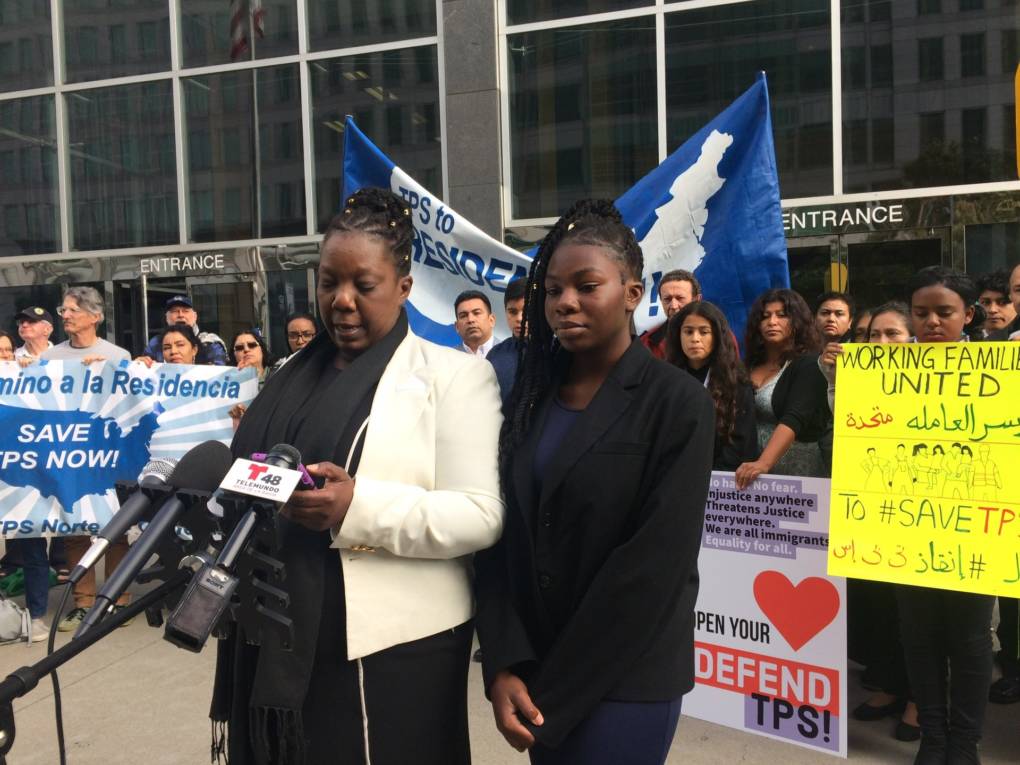
"caption": "Plaintiffs Wilma Destin, a TPS holder from Haiti, and daughter Hneida Cenemat, 15, speak before a court hearing in San Francisco on September 26, 2018.",
"description": null,
"title": "RS32979_IMG_2084-qut",
"credit": "Farida Jhabvala Romero/KQED",
"status": "inherit",
"fetchFailed": false,
"isLoading": false
},
"news_11725430": {
"type": "attachments",
"id": "news_11725430",
"meta": {
"index": "attachments_1716263798",
"site": "news",
"id": "11725430",
"found": true
},
"parent": 11725416,
"imgSizes": {
"twentyfourteen-full-width": {
"file": "https://ww2.kqed.org/app/uploads/sites/10/2019/02/GettyImages-1059576326-1038x576.jpg",
"width": 1038,
"mimeType": "image/jpeg",
"height": 576
},
"thumbnail": {
"file": "https://ww2.kqed.org/app/uploads/sites/10/2019/02/GettyImages-1059576326-160x107.jpg",
"width": 160,
"mimeType": "image/jpeg",
"height": 107
},
"post-thumbnail": {
"file": "https://ww2.kqed.org/app/uploads/sites/10/2019/02/GettyImages-1059576326-672x372.jpg",
"width": 672,
"mimeType": "image/jpeg",
"height": 372
},
"kqedFullSize": {
"file": "https://ww2.kqed.org/app/uploads/sites/10/2019/02/GettyImages-1059576326-e1549920421190.jpg",
"width": 1920,
"height": 1280
},
"large": {
"file": "https://ww2.kqed.org/app/uploads/sites/10/2019/02/GettyImages-1059576326-1020x680.jpg",
"width": 1020,
"mimeType": "image/jpeg",
"height": 680
},
"complete_open_graph": {
"file": "https://ww2.kqed.org/app/uploads/sites/10/2019/02/GettyImages-1059576326-1200x800.jpg",
"width": 1200,
"mimeType": "image/jpeg",
"height": 800
},
"guest-author-50": {
"file": "https://ww2.kqed.org/app/uploads/sites/10/2019/02/GettyImages-1059576326-50x50.jpg",
"width": 50,
"mimeType": "image/jpeg",
"height": 50
},
"guest-author-96": {
"file": "https://ww2.kqed.org/app/uploads/sites/10/2019/02/GettyImages-1059576326-96x96.jpg",
"width": 96,
"mimeType": "image/jpeg",
"height": 96
},
"medium": {
"file": "https://ww2.kqed.org/app/uploads/sites/10/2019/02/GettyImages-1059576326-800x533.jpg",
"width": 800,
"mimeType": "image/jpeg",
"height": 533
},
"guest-author-64": {
"file": "https://ww2.kqed.org/app/uploads/sites/10/2019/02/GettyImages-1059576326-64x64.jpg",
"width": 64,
"mimeType": "image/jpeg",
"height": 64
},
"guest-author-32": {
"file": "https://ww2.kqed.org/app/uploads/sites/10/2019/02/GettyImages-1059576326-32x32.jpg",
"width": 32,
"mimeType": "image/jpeg",
"height": 32
},
"full-width": {
"file": "https://ww2.kqed.org/app/uploads/sites/10/2019/02/GettyImages-1059576326-1920x1280.jpg",
"width": 1920,
"mimeType": "image/jpeg",
"height": 1280
},
"detail": {
"file": "https://ww2.kqed.org/app/uploads/sites/10/2019/02/GettyImages-1059576326-150x150.jpg",
"width": 150,
"mimeType": "image/jpeg",
"height": 150
},
"guest-author-128": {
"file": "https://ww2.kqed.org/app/uploads/sites/10/2019/02/GettyImages-1059576326-128x128.jpg",
"width": 128,
"mimeType": "image/jpeg",
"height": 128
}
},
"publishDate": 1549920292,
"modified": 1549927339,
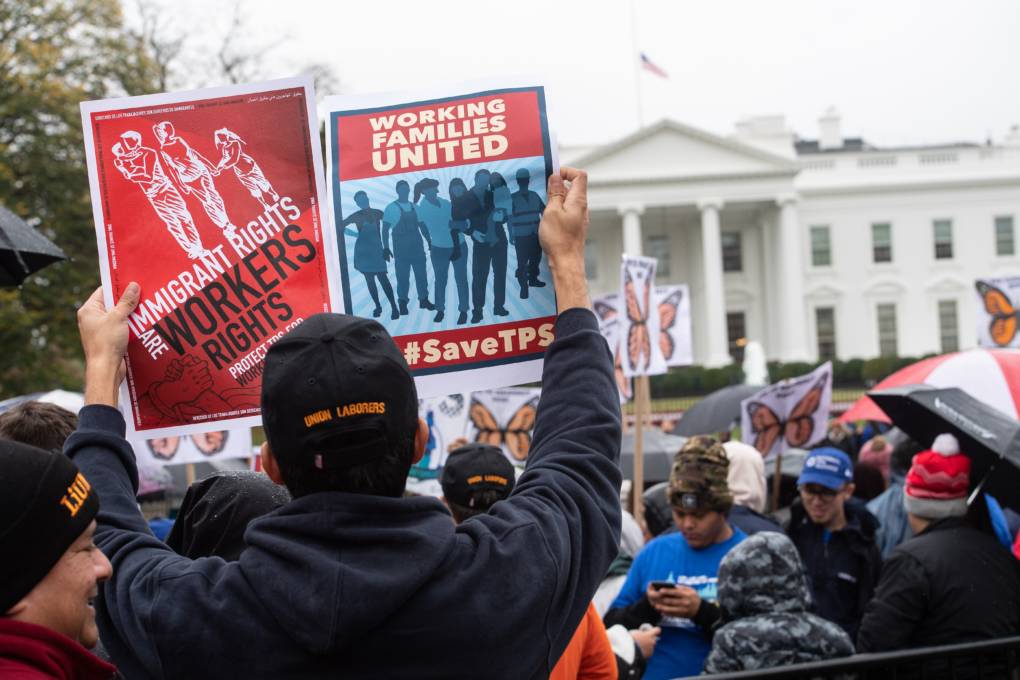
"caption": "People demonstrate in front of the White House against the decision by the Trump administration to terminate Temporary Protected Status for people from six countries in November 2018.",
"description": null,
"title": "US-POLITICS-IMMIGRATION-MIGRANTS-DEMONSTRATION",
"credit": "Nicholas Kamm/AFP/Getty Images",
"status": "inherit",
"fetchFailed": false,
"isLoading": false
}
},
"audioPlayerReducer": {
"postId": "stream_live",
"isPaused": true,
"isPlaying": false,
"pfsActive": false,
"pledgeModalIsOpen": true,
"playerDrawerIsOpen": false
},
"authorsReducer": {
"byline_news_11907319": {
"type": "authors",
"id": "byline_news_11907319",
"meta": {
"override": true
},
"slug": "byline_news_11907319",
"name": "John Antczak\u003cbr>The Associated Press",
"isLoading": false
},
"byline_news_11725416": {
"type": "authors",
"id": "byline_news_11725416",
"meta": {
"override": true
},
"slug": "byline_news_11725416",
"name": "Amy Taxin \u003cbr> Associated Press",
"isLoading": false
},
"rachael-myrow": {
"type": "authors",
"id": "251",
"meta": {
"index": "authors_1716337520",
"id": "251",
"found": true
},
"name": "Rachael Myrow",
"firstName": "Rachael",
"lastName": "Myrow",
"slug": "rachael-myrow",
"email": "rmyrow@kqed.org",
"display_author_email": false,
"staff_mastheads": [
"news"
],
"title": "Senior Editor of KQED's Silicon Valley News Desk",
"bio": "Rachael Myrow is Senior Editor of KQED's Silicon Valley News Desk, reporting on topics like \u003ca href=\"https://www.kqed.org/news/12023367/what-big-tech-sees-in-donald-trump\">what Big Tech sees in President Trump\u003c/a>, \u003ca href=\"https://www.kqed.org/news/12020857/california-lawmaker-ready-revive-fight-regulating-ai\">California's many, many AI bills\u003c/a>, and the \u003ca href=\"https://www.kqed.org/news/12017713/lost-sounds-of-san-francisco\">lost sounds of San Francisco\u003c/a>. You can hear her work on \u003ca href=\"https://www.npr.org/search?query=Rachael%20Myrow&page=1\">NPR\u003c/a>, \u003ca href=\"https://theworld.org/people/rachael-myrow\">The World\u003c/a>, WBUR's \u003ca href=\"https://www.wbur.org/search?q=Rachael%20Myrow\">\u003ci>Here & Now\u003c/i>\u003c/a> and the BBC. \u003c/i>She also guest hosts for KQED's \u003ci>\u003ca href=\"https://www.kqed.org/forum/tag/rachael-myrow\">Forum\u003c/a>\u003c/i>. Over the years, she's talked with Kamau Bell, David Byrne, Kamala Harris, Tony Kushner, Armistead Maupin, Van Dyke Parks, Arnold Schwarzenegger and Tommie Smith, among others.\r\n\r\nBefore all this, she hosted \u003cem>The California Report\u003c/em> for 7+ years.\r\n\r\nAwards? Sure: Peabody, Edward R. Murrow, Regional Edward R. Murrow, RTNDA, Northern California RTNDA, SPJ Northern California Chapter, LA Press Club, Golden Mic. Prior to joining KQED, Rachael worked in Los Angeles at KPCC and Marketplace. She holds degrees in English and journalism from UC Berkeley (where she got her start in public radio on KALX-FM).\r\n\r\nOutside of the studio, you'll find Rachael hiking Bay Area trails and whipping up Instagram-ready meals in her kitchen. More recently, she's taken up native-forward gardening.",
"avatar": "https://secure.gravatar.com/avatar/87bf8cb5874e045cdff430523a6d48b1?s=600&d=blank&r=g",
"twitter": "rachaelmyrow",
"facebook": null,
"instagram": null,
"linkedin": "https://www.linkedin.com/in/rachaelmyrow/",
"sites": [
{
"site": "arts",
"roles": [
"administrator"
]
},
{
"site": "news",
"roles": [
"edit_others_posts",
"editor"
]
},
{
"site": "futureofyou",
"roles": [
"editor"
]
},
{
"site": "bayareabites",
"roles": [
"editor"
]
},
{
"site": "stateofhealth",
"roles": [
"editor"
]
},
{
"site": "science",
"roles": [
"editor"
]
},
{
"site": "food",
"roles": [
"editor"
]
},
{
"site": "forum",
"roles": [
"editor"
]
},
{
"site": "liveblog",
"roles": [
"author"
]
}
],
"headData": {
"title": "Rachael Myrow | KQED",
"description": "Senior Editor of KQED's Silicon Valley News Desk",
"ogImgSrc": "https://secure.gravatar.com/avatar/87bf8cb5874e045cdff430523a6d48b1?s=600&d=blank&r=g",
"twImgSrc": "https://secure.gravatar.com/avatar/87bf8cb5874e045cdff430523a6d48b1?s=600&d=blank&r=g"
},
"isLoading": false,
"link": "/author/rachael-myrow"
},
"ecruzguevarra": {
"type": "authors",
"id": "8654",
"meta": {
"index": "authors_1716337520",
"id": "8654",
"found": true
},
"name": "Ericka Cruz Guevarra",
"firstName": "Ericka",
"lastName": "Cruz Guevarra",
"slug": "ecruzguevarra",
"email": "ecruzguevarra@kqed.org",
"display_author_email": true,
"staff_mastheads": [
"news"
],
"title": "Producer, The Bay Podcast",
"bio": "Ericka Cruz Guevarra is host of \u003ca href=\"https://www.kqed.org/podcasts/thebay\">\u003cem>The Bay\u003c/em>\u003c/a> podcast at KQED. Before host, she was the show’s producer. Her work in that capacity includes a three-part reported series on policing in Vallejo, which won a 2020 excellence in journalism award from the Society of Professional Journalists. Ericka has worked as a breaking news reporter at Oregon Public Broadcasting, helped produce the Code Switch podcast, and was KQED’s inaugural Raul Ramirez Diversity Fund intern. She’s also an alumna of NPR’s Next Generation Radio program. Send her an email if you have strong feelings about whether Fairfield and Suisun City are the Bay. Ericka is represented by SAG-AFTRA.",
"avatar": "https://secure.gravatar.com/avatar/25e5ab8d3d53fad2dcc7bb2b5c506b1a?s=600&d=blank&r=g",
"twitter": "NotoriousECG",
"facebook": null,
"instagram": null,
"linkedin": null,
"sites": [
{
"site": "arts",
"roles": [
"subscriber"
]
},
{
"site": "news",
"roles": [
"editor",
"manage_categories"
]
},
{
"site": "futureofyou",
"roles": [
"subscriber"
]
},
{
"site": "stateofhealth",
"roles": [
"subscriber"
]
},
{
"site": "science",
"roles": [
"editor"
]
},
{
"site": "forum",
"roles": [
"subscriber"
]
}
],
"headData": {
"title": "Ericka Cruz Guevarra | KQED",
"description": "Producer, The Bay Podcast",
"ogImgSrc": "https://secure.gravatar.com/avatar/25e5ab8d3d53fad2dcc7bb2b5c506b1a?s=600&d=blank&r=g",
"twImgSrc": "https://secure.gravatar.com/avatar/25e5ab8d3d53fad2dcc7bb2b5c506b1a?s=600&d=blank&r=g"
},
"isLoading": false,
"link": "/author/ecruzguevarra"
},
"fjhabvala": {
"type": "authors",
"id": "8659",
"meta": {
"index": "authors_1716337520",
"id": "8659",
"found": true
},
"name": "Farida Jhabvala Romero",
"firstName": "Farida",
"lastName": "Jhabvala Romero",
"slug": "fjhabvala",
"email": "fjhabvala@kqed.org",
"display_author_email": true,
"staff_mastheads": [
"news"
],
"title": "KQED Contributor",
"bio": "\u003cspan style=\"font-weight: 400;\">Farida Jhabvala Romero is a Labor Correspondent for KQED. She previously covered immigration. Farida was \u003ca href=\"https://www.ccnma.org/2022-most-influential-latina-journalists\">named\u003c/a> one of the 10 Most Influential Latina Journalists in California in 2022 by the California Chicano News Media Association. Her work has won awards from the Society of Professional Journalists (Northern California), as well as a national and regional Edward M. Murrow Award for the collaborative reporting projects “Dangerous Air” and “Graying California.” \u003c/span>\u003cspan style=\"font-weight: 400;\">Before joining KQED, Farida worked as a producer at Radio Bilingüe, a national public radio network. Farida earned her master’s degree in journalism from Stanford University.\u003c/span>",
"avatar": "https://secure.gravatar.com/avatar/c3ab27c5554b67b478f80971e515aa02?s=600&d=blank&r=g",
"twitter": "FaridaJhabvala",
"facebook": null,
"instagram": null,
"linkedin": "https://www.linkedin.com/in/faridajhabvala/",
"sites": [
{
"site": "news",
"roles": [
"editor"
]
},
{
"site": "stateofhealth",
"roles": [
"author"
]
}
],
"headData": {
"title": "Farida Jhabvala Romero | KQED",
"description": "KQED Contributor",
"ogImgSrc": "https://secure.gravatar.com/avatar/c3ab27c5554b67b478f80971e515aa02?s=600&d=blank&r=g",
"twImgSrc": "https://secure.gravatar.com/avatar/c3ab27c5554b67b478f80971e515aa02?s=600&d=blank&r=g"
},
"isLoading": false,
"link": "/author/fjhabvala"
},
"eaguilar": {
"type": "authors",
"id": "11382",
"meta": {
"index": "authors_1716337520",
"id": "11382",
"found": true
},
"name": "Erika Aguilar",
"firstName": "Erika",
"lastName": "Aguilar",
"slug": "eaguilar",
"email": "eaa712@gmail.com",
"display_author_email": false,
"staff_mastheads": [],
"title": "KQED Contributor",
"bio": "Erika Aguilar was the director of podcasts at KQED. She was in charge of KQED's portfolio of original podcasts and teams, and sets strategic plans for production and engagement.\r\n\r\nErika helped establish KQED's new housing affordability desk as senior editor. She was also a producer and editor for KQED's local news podcast called \u003cem>The Bay, \u003c/em>and wrote stories about housing in the Bay Area as a reporter for KQED News.\r\n\r\nErika joined KQED in 2017 after producing independent audio projects and podcasts in Southern California. She spent more than a dozen years reporting stories about law enforcement, breaking news, homelessness, government and the environment for KPCC in Los Angeles and KUT in Austin. She also volunteers as an editor and mentor for various journalism training programs.\r\n\r\nErika Aguilar is a proud Tejana from San Antonio. She believes in compromise, optimism and Selena.",
"avatar": "https://secure.gravatar.com/avatar/85bf7bb8dd9af4136525d94cef00f026?s=600&d=blank&r=g",
"twitter": "erikaaaguilar",
"facebook": null,
"instagram": null,
"linkedin": null,
"sites": [
{
"site": "",
"roles": [
"editor"
]
},
{
"site": "news",
"roles": [
"subscriber"
]
},
{
"site": "podcasts",
"roles": [
"editor"
]
}
],
"headData": {
"title": "Erika Aguilar | KQED",
"description": "KQED Contributor",
"ogImgSrc": "https://secure.gravatar.com/avatar/85bf7bb8dd9af4136525d94cef00f026?s=600&d=blank&r=g",
"twImgSrc": "https://secure.gravatar.com/avatar/85bf7bb8dd9af4136525d94cef00f026?s=600&d=blank&r=g"
},
"isLoading": false,
"link": "/author/eaguilar"
},
"mmedina": {
"type": "authors",
"id": "11528",
"meta": {
"index": "authors_1716337520",
"id": "11528",
"found": true
},
"name": "Marisol Medina-Cadena",
"firstName": "Marisol",
"lastName": "Medina-Cadena",
"slug": "mmedina",
"email": "mmedina@KQED.org",
"display_author_email": true,
"staff_mastheads": [],
"title": "Producer, Rightnowish Podcast",
"bio": "Marisol Medina-Cadena is a radio reporter and podcast producer. Before working at KQED, she produced for PBS member station, KCET, in Los Angeles. In 2017, Marisol won an Emmy Award for her work on the televised documentary, \u003cem>City Rising\u003c/em>, examining California's affordable housing crisis and the historical roots of gentrification.",
"avatar": "https://secure.gravatar.com/avatar/6c3db46a1cabb5e1fe9a365b5f4e681e?s=600&d=blank&r=g",
"twitter": "marisolreports",
"facebook": null,
"instagram": null,
"linkedin": null,
"sites": [
{
"site": "arts",
"roles": []
},
{
"site": "news",
"roles": [
"edit_others_posts"
]
}
],
"headData": {
"title": "Marisol Medina-Cadena | KQED",
"description": "Producer, Rightnowish Podcast",
"ogImgSrc": "https://secure.gravatar.com/avatar/6c3db46a1cabb5e1fe9a365b5f4e681e?s=600&d=blank&r=g",
"twImgSrc": "https://secure.gravatar.com/avatar/6c3db46a1cabb5e1fe9a365b5f4e681e?s=600&d=blank&r=g"
},
"isLoading": false,
"link": "/author/mmedina"
},
"amontecillo": {
"type": "authors",
"id": "11649",
"meta": {
"index": "authors_1716337520",
"id": "11649",
"found": true
},
"name": "Alan Montecillo",
"firstName": "Alan",
"lastName": "Montecillo",
"slug": "amontecillo",
"email": "amontecillo@kqed.org",
"display_author_email": false,
"staff_mastheads": [
"news"
],
"title": "KQED Contributor",
"bio": "Alan Montecillo is the senior editor of \u003cem>\u003ca href=\"http://kqed.org/thebay\">The Bay\u003c/a>, \u003c/em> KQED's local news podcast. Before moving to the Bay Area, he worked as a senior talk show producer for WILL in Champaign-Urbana, Illinois and at Oregon Public Broadcasting in Portland, Oregon. He has won journalism awards from the Society of Professional Journalists Northern California, the Public Media Journalists Association, The Signal Awards, and has also received a regional Edward R. Murrow award. Alan is a Filipino American from Hong Kong and a graduate of Reed College.",
"avatar": "https://secure.gravatar.com/avatar/d5e4e7a76481969ccba76f4e2b5ccabc?s=600&d=blank&r=g",
"twitter": "alanmontecillo",
"facebook": null,
"instagram": null,
"linkedin": null,
"sites": [
{
"site": "",
"roles": [
"editor"
]
},
{
"site": "news",
"roles": [
"editor",
"manage_categories"
]
}
],
"headData": {
"title": "Alan Montecillo | KQED",
"description": "KQED Contributor",
"ogImgSrc": "https://secure.gravatar.com/avatar/d5e4e7a76481969ccba76f4e2b5ccabc?s=600&d=blank&r=g",
"twImgSrc": "https://secure.gravatar.com/avatar/d5e4e7a76481969ccba76f4e2b5ccabc?s=600&d=blank&r=g"
},
"isLoading": false,
"link": "/author/amontecillo"
},
"jessicakariisa": {
"type": "authors",
"id": "11831",
"meta": {
"index": "authors_1716337520",
"id": "11831",
"found": true
},
"name": "Jessica Kariisa",
"firstName": "Jessica",
"lastName": "Kariisa",
"slug": "jessicakariisa",
"email": "jkariisa@kqed.org",
"display_author_email": false,
"staff_mastheads": [
"news"
],
"title": "Producer, The Bay",
"bio": "Jessica Kariisa is the producer of The Bay. She first joined KQED as an intern for The California Report Magazine, after which she became an on-call producer. She reported a Bay Curious episode on the use of rap lyrics in criminal trials which won a Society of Professional Journalists award in 2023 for Excellence in Features Journalism and the 2023 Signal Award for Best Conversation Starter. She’s worked on podcasts for Snap Judgment and American Public Media. Before embarking on her audio career, she was a music journalist.\r\n\r\nJessica Kariisa is represented by SAG-AFTRA.",
"avatar": "https://secure.gravatar.com/avatar/4afd355fd24f5515aeab77fd6c72b671?s=600&d=blank&r=g",
"twitter": null,
"facebook": null,
"instagram": null,
"linkedin": null,
"sites": [
{
"site": "arts",
"roles": [
"author"
]
},
{
"site": "news",
"roles": [
"editor",
"manage_categories"
]
}
],
"headData": {
"title": "Jessica Kariisa | KQED",
"description": "Producer, The Bay",
"ogImgSrc": "https://secure.gravatar.com/avatar/4afd355fd24f5515aeab77fd6c72b671?s=600&d=blank&r=g",
"twImgSrc": "https://secure.gravatar.com/avatar/4afd355fd24f5515aeab77fd6c72b671?s=600&d=blank&r=g"
},
"isLoading": false,
"link": "/author/jessicakariisa"
}
},
"breakingNewsReducer": {},
"pagesReducer": {},
"postsReducer": {
"stream_live": {
"type": "live",
"id": "stream_live",
"audioUrl": "https://streams.kqed.org/kqedradio",
"title": "Live Stream",
"excerpt": "Live Stream information currently unavailable.",
"link": "/radio",
"featImg": "",
"label": {
"name": "KQED Live",
"link": "/"
}
},
"stream_kqedNewscast": {
"type": "posts",
"id": "stream_kqedNewscast",
"audioUrl": "https://www.kqed.org/.stream/anon/radio/RDnews/newscast.mp3?_=1",
"title": "KQED Newscast",
"featImg": "",
"label": {
"name": "88.5 FM",
"link": "/"
}
},
"news_12041698": {
"type": "posts",
"id": "news_12041698",
"meta": {
"index": "posts_1716263798",
"site": "news",
"id": "12041698",
"score": null,
"sort": [
1748426450000
]
},
"guestAuthors": [],
"slug": "a-death-sentence-bay-area-afghans-and-allies-react-to-trump-administration-ending-tps",
"title": "'A Death Sentence': Bay Area Afghans and Allies React to Trump Administration Ending TPS",
"publishDate": 1748426450,
"format": "audio",
"headTitle": "‘A Death Sentence’: Bay Area Afghans and Allies React to Trump Administration Ending TPS | KQED",
"labelTerm": {},
"content": "\u003cp>More than four years after the Taliban took control of Kabul, thousands of Afghan families are still waiting for the U.S. to fulfill promises it made to take them in for helping the American war effort.\u003c/p>\n\u003cp>Now, the U.S. is moving to deport thousands of Afghans who have recently arrived here, after the Trump administration announced the termination of Temporary Protected Status for people from Afghanistan.\u003c/p>\n\u003cp>\u003cb>Links:\u003c/b>\u003c/p>\n\u003cul>\n\u003cli>\u003ca href=\"https://www.kqed.org/news/12040425/bay-area-afghans-allies-decry-trumps-end-of-tps-theyre-terrified\">Bay Area Afghans, Allies Decry Trump’s End of TPS: ‘They’re Terrified’\u003c/a>\u003c/li>\n\u003cli>\u003ca href=\"https://jfcs-eastbay.org/\">Jewish Community and Family Services East Bay\u003c/a>\u003c/li>\n\u003c/ul>\n\u003cp>\u003cem>\u003ci>Some members of the KQED podcast team are represented by The Screen Actors Guild, American Federation of Television and Radio Artists. San Francisco Northern California Local.\u003c/i>\u003c/em>\u003c/p>\n\u003cp>\u003c!-- iframe plugin v.4.3 wordpress.org/plugins/iframe/ -->\u003cbr>\n\u003ciframe loading=\"lazy\" frameborder=\"0\" height=\"200\" scrolling=\"no\" src=\"https://playlist.megaphone.fm?e=KQINC9514989949&light=true\" width=\"100%\" class=\"iframe-class\">\u003c/iframe>\u003c/p>\n\u003cp>[ad fullwidth]\u003c/p>\n\u003cp>\u003cem>This is a computer-generated transcript. While our team has reviewed it, there may be errors.\u003c/em>\u003c/p>\n\u003cp>\u003cstrong>Ericka Cruz Guevarra \u003c/strong>[00:00:48] I’m Ericka Cruz Guevarra and welcome to The Bay, local news to keep you rooted. There are huge communities of Afghans and Afghan-Americans across California, including in cities like Fremont and Sacramento. And thousands of those families are still waiting on the U.S. to make good on its promise, to support those who helped the American war effort in Afghanistan. But now, the Trump administration is leaving thousands at risk of deportation back to the home country they escaped by ending temporary protected status for an estimated 8,000 people from Afghanistan by July 12.\u003c/p>\n\u003cp>\u003cstrong>Harris Mojadedi \u003c/strong>[00:01:38] These are folks that fought against the Taliban. These are people who are really, you know, enemy number one for the Taliban, and so to send them back to deport them would really be a death sentence.\u003c/p>\n\u003cp>\u003cstrong>Ericka Cruz Guevarra \u003c/strong>[00:01:51] Today, what ending TPS means for Afghans in the Bay Area.\u003c/p>\n\u003cp>\u003cstrong>Ericka Cruz Guevarra \u003c/strong>[00:02:03] I know when President Trump was running for office, he always promised that he would target what is known as temporary protected status. What is TPS and why was it a target of President Trump’s?\u003c/p>\n\u003cp>\u003cstrong>Rachael Myrow \u003c/strong>[00:02:17] Temporary Protected Status, or TPS, is a humanitarian program established by Congress in 1990.\u003c/p>\n\u003cp>\u003cstrong>Ericka Cruz Guevarra \u003c/strong>[00:02:28] Rachael Myrow is senior editor for KQED’s Silicon Valley Desk.\u003c/p>\n\u003cp>\u003cstrong>Rachael Myrow \u003c/strong>[00:02:34] It allows foreign nationals here in the U.S. To stay here in the U S. for a stretch, if their home country is experiencing a serious crisis. Let’s say war or environmental disasters like a hurricane. Someone with TPS can stay in the US and live and work legally but it’s temporary protected status. There’s no pathway to permanent residency or citizenship and the federal government has to decide, gets to decide, to re-up the status for each country or not on a periodic basis. Just to give you a sense here, countries we have issued TPS for include Venezuela, Ukraine, Haiti, El Salvador, and of course, Afghanistan. Trump administration officials argue conditions in these countries have improved enough to justify ending these TPS programs. But in most of these cases, Ericka, that’s the politically desirable conclusion, and the facts to fit the argument just make no sense.\u003c/p>\n\u003cp>\u003cstrong>Ericka Cruz Guevarra \u003c/strong>[00:03:45] As you mentioned, there are plenty of countries under temporary protected status, but what made Afghanistan unique in this list that you just mentioned?\u003c/p>\n\u003cp>\u003cstrong>Rachael Myrow \u003c/strong>[00:03:57] Not to put too fine a point on it, but the United States, its military, its federal officials were in Afghanistan following September 11th. A couple of decades for several presidential administrations, Democratic and Republican, and as a function of that stay in that country, there were hundreds of thousands of individuals on various levels and various capacities. Supporting the U.S. War effort against the Taliban, which rules in Afghanistan today. They put their lives on the line. And given how violent and repressive the Taliban regime is, they also put their families’ lives on the line.\u003c/p>\n\u003cp>\u003cstrong>Ericka Cruz Guevarra \u003c/strong>[00:04:52] And, I mean, there are, in fact, and has been for a long time, many Afghans already here and building a life here in California and the Bay Area, right?\u003c/p>\n\u003cp>\u003cstrong>Rachael Myrow \u003c/strong>[00:05:04] There have been several waves of Afghan immigration since basically the Soviets invaded right in 1979. So we’re talking about a subset of the population of roughly 200,000 Afghans who came to the U.S. Since the chaotic withdrawal of American troops from Afghanistan in 2021.\u003c/p>\n\u003cp>\u003cstrong>Ericka Cruz Guevarra \u003c/strong>[00:05:32] Right, and I know there was so much anxiety already, even before Trump was inaugurated. There was this huge fear around what would happen to this slice of immigrants who are here under temporary protected status. And Trump announced earlier this month that he would actually end TPS for certain immigrants. What happened, Rachel? Or what exactly was announced?\u003c/p>\n\u003cp>\u003cstrong>Rachael Myrow \u003c/strong>[00:06:00] So what happened earlier this month is that Homeland Security Secretary Kristi Noem issued a notice terminating TPS for Afghans. In order to make this announcement, the way that the law works, she has to argue that things have gotten better in Afghanistan. In this notice, she argues that tourism from China is on the upswing as the number of kidnappings is on the downswing. Also, the number people needing humanitarian aid in Afghanistan has dropped recently from more than 29 million people to under 24 million people. I should add, our own State Department says it’s not safe to visit Afghanistan, the U.S. Embassy in Kabul is closed, and the U-S government cannot provide assistance to U. S. Citizens, let alone returning Afghan nationals. For this particular slice of the population, you know, they have to have a little bit of notice. It’s not much notice. July 12th appears to be the deadline for this group of people.\u003c/p>\n\u003cp>\u003cstrong>Ericka Cruz Guevarra \u003c/strong>[00:07:22] To return to Afghanistan. Yeah. What does this mean for families and Afghans here in the Bay Area under TPS?\u003c/p>\n\u003cp>\u003cstrong>Rachael Myrow \u003c/strong>[00:07:33] It’s just panic, terror, chaos. I imagine a lot of people, hopefully, are talking to their immigration attorney about what this means for family members here in the U.S., as well as family members outside the U.S.\u003c/p>\n\u003cp>\u003cstrong>Fouzia Azizi \u003c/strong>[00:07:54] There is a sense of trauma, there is a sense of anxiety, mental health is to the next level.\u003c/p>\n\u003cp>\u003cstrong>Rachael Myrow \u003c/strong>[00:08:01] Fouzia Azizi is Director of Refugee Services at Jewish Family and Community Services East Bay\u003c/p>\n\u003cp>\u003cstrong>Fouzia Azizi \u003c/strong>[00:08:08] Since 2008, the majority of the client that we have served under the resettlement program being folks from Afghanistan, particularly the ones that are coming under special immigrant visa orders.\u003c/p>\n\u003cp>\u003cstrong>Rachael Myrow \u003c/strong>[00:08:24] Fouzia left Afghanistan in 1994. She spent some time in Pakistan before coming here in the mid-aughts, and she’s now directing these refugee services, which we haven’t gotten into this yet, but the funding has been cut for refugee services not just at Jewish Family and Community Services East Bay, but for all sorts of resettlement agencies all over the country.\u003c/p>\n\u003cp>\u003cstrong>Fouzia Azizi \u003c/strong>[00:08:53] On January 24th we received no work order and by then we had many families in different phases of their resettlement journey. I think the greater impact happened to those families that were scheduled to come and their flight got canceled. So the family members, I had minor children be reuniting with parents. That was a really, really heartbreaking situation because we had to call the parents and say that unfortunately your three minor kids will not come next week. For community created a lot of fear, anxiety and unknown future because there is so much uncertainty I do not know what future holds for us.\u003c/p>\n\u003cp>\u003cstrong>Ericka Cruz Guevarra \u003c/strong>[00:09:51] Coming up, the risks ahead for TPS recipients. Stay with us.\u003c/p>\n\u003cp>\u003cstrong>Ericka Cruz Guevarra \u003c/strong>[00:10:49] What is the fear for people who are now at risk of being sent back to Afghanistan?\u003c/p>\n\u003cp>\u003cstrong>Rachael Myrow \u003c/strong>[00:10:58] All sorts of people would have a hard time living under the Taliban in Afghanistan today. This includes children, women, religious and ethnic minorities, LGBTQ people.\u003c/p>\n\u003cp>\u003cstrong>Harris Mojadedi \u003c/strong>[00:11:12] I have family members that are a part of this wave of refugees who they don’t know what to do. Where do they go? They’re being told to self-deport. What does that mean?\u003c/p>\n\u003cp>\u003cstrong>Rachael Myrow \u003c/strong>[00:11:23] Harris Mojadedi is an Afghan community advocate. He was born in the U.S. to refugee parents.\u003c/p>\n\u003cp>\u003cstrong>Harris Mojadedi \u003c/strong>[00:11:30] I was born in Fremont, which, you know, is sort of known now as Little Kabul and really just a child of Afghan refugees, someone who’s grown up in the system and who has been translating for my family my whole life.\u003c/p>\n\u003cp>\u003cstrong>Rachael Myrow \u003c/strong>[00:11:43] If this was him returning to Afghanistan, you know, like he’d be in for a really tough time. It doesn’t take a news article for the Taliban to be aware of people and their families who had any connection whatsoever with the U.S. Military during the American war in Afghanistan.\u003c/p>\n\u003cp>\u003cstrong>Harris Mojadedi \u003c/strong>[00:12:06] And to turn them back to deport them right now really would be a death sentence because these are folks that fought against the Taliban. These are people who are really enemy number one for the Taliban\u003c/p>\n\u003cp>\u003cstrong>Rachael Myrow \u003c/strong>[00:12:19] Maybe they didn’t go out on missions, but might have been scouts or translators. So people like Harris, he very much has a sense that he has to speak for the wider community the same way he had to speak for his parents when he was a little boy growing up in the Bay Area.\u003c/p>\n\u003cp>\u003cstrong>Harris Mojadedi \u003c/strong>[00:12:43] It is hard for me to get, whether it’s even my own family members that are under TPS or, you know, family friends to speak to anyone because they’re so afraid, Rachael. They’re terrified. The East Bay in particular, you now, we have contributed to this community and to our society and, you no, we still, we need that support.\u003c/p>\n\u003cp>\u003cstrong>Ericka Cruz Guevarra \u003c/strong>[00:13:08] What, though, has been the broader reaction to this news, Rachael?\u003c/p>\n\u003cp>\u003cstrong>Rachael Myrow \u003c/strong>[00:13:16] There are so many military veterans, Ericka, who through one organization or another feel profoundly that this question of whether we stand by our allies after the war is over is a moral question.\u003c/p>\n\u003cp>\u003cstrong>Shawn VanDiver \u003c/strong>[00:13:33] Look, we thought that President Trump was going to be a champion for Afghans. And now it’s become clear that what we thought were unintended consequences back in January was part of our overall strategy to throw our wartime allies under the bus.\u003c/p>\n\u003cp>\u003cstrong>Rachael Myrow \u003c/strong>[00:13:46] Shawn VanDiver, who is the founder of Afghan Evac, this organization based in San Diego, is not unlike Harris Mojadedi, somebody who from his position is in a position to help Afghans.\u003c/p>\n\u003cp>\u003cstrong>Shawn VanDiver \u003c/strong>[00:14:05] I’ve had the privilege to work on this now across two administrations, and I think veterans and frontline civilians and everybody who’s involved in this are shocked at how it seems like these folks are just being thrown away, and we need Congress to step up and do something.\u003c/p>\n\u003cp>\u003cstrong>Rachael Myrow \u003c/strong>[00:14:23] He has been getting so much information out there. He has going to Capitol Hill, at least during the Biden administration, to plead the case for Afghan refugees. He himself is a veteran of the U.S. War in Iraq.\u003c/p>\n\u003cp>\u003cstrong>Shawn VanDiver \u003c/strong>[00:14:42] I got involved in this work because I remember what it was like watching ISIS storm through Iraq, Father’s Day weekend of 2016.\u003c/p>\n\u003cp>\u003cstrong>Rachael Myrow \u003c/strong>[00:14:51] And for Shawn VanDiver, you can hear it when he talks.\u003c/p>\n\u003cp>\u003cstrong>Shawn VanDiver \u003c/strong>[00:14:54] We try to simplify it as much as possible. If you stood with the United States, you deserve this chance.\u003c/p>\n\u003cp>\u003cstrong>Rachael Myrow \u003c/strong>[00:15:02] As far as many veterans see, it is up to Republican lawmakers to find a way to plead with the Trump administration, find a to get the ear of President Trump.\u003c/p>\n\u003cp>\u003cstrong>Ericka Cruz Guevarra \u003c/strong>[00:15:18] After the Trump administration signaled it would terminate temporary protected status for Afghans earlier this year, a Maryland-based immigration rights organization filed a federal lawsuit, alleging the suspension of TPS for Afgans was motivated by racial animus. The group is seeking a court order to declare the TPS termination unlawful. But if they’re unsuccessful, Afghans here under TPS are staring down a July 12 deadline.\u003c/p>\n\u003cp>\u003cstrong>Ericka Cruz Guevarra \u003c/strong>[00:15:54] It sounds like there’s people like Sean and people like Fouzia who are really trying to help these folks out. And I mean, coming back to Fouzia, I mean what is being done to ease that anxiety and bring a sense of normalcy through all of this?\u003c/p>\n\u003cp>\u003cstrong>Rachael Myrow \u003c/strong>[00:16:14] For people like Fouzia, this is personal. This is about, you know, a wider sense of family.\u003c/p>\n\u003cp>\u003cstrong>Fouzia Azizi \u003c/strong>[00:16:23] During month of Ramadan, just as a spiritual support groups, kind of creating a space, just creating a place for people to talk and share their journeys and stress.\u003c/p>\n\u003cp>\u003cstrong>Rachael Myrow \u003c/strong>[00:16:37] The folks at JFCS are still setting up community events. There was a recent one attached to Mother’s Day and the idea was to help Afghan women just have a moment of peace and celebration and good food and chit chat.\u003c/p>\n\u003cp>\u003cstrong>Fouzia Azizi \u003c/strong>[00:16:56] They can socialize and they can learn from each other, make connection and somehow decrease isolation.\u003c/p>\n\u003cp>\u003cstrong>Rachael Myrow \u003c/strong>[00:17:06] That said, I think this is a community. Is looking out for each other, is trying to be as supportive as possible, looking to others to help, but also finding the resources, the emotional resources within themselves to keep going because what choice do you have?\u003c/p>\n\u003cp>\u003cstrong>Ericka Cruz Guevarra \u003c/strong>[00:17:36] Rachael, thank you so much for your reporting on this story and for sharing it with us. I appreciate it.\u003c/p>\n\u003cp>\u003cstrong>Rachael Myrow \u003c/strong>[00:17:43] Oh, of course. Thank you, Ericka.\u003c/p>\n\u003cp>[ad floatright]\u003c/p>\n\u003cp>\u003cstrong>Ericka Cruz Guevarra \u003c/strong>[00:17:51] That was Rachel Myrow, senior editor of the Silicon Valley News Desk for KQED. This 40 minute conversation with Rachael was cut down and edited by senior editor Alan Montecillo. Jessica Kariisa is our producer. She scored this episode and added all the tape, music courtesy of Audio Network and Blue Dot Sessions. Support for The Bay is provided in part by the Osher Production Fund. Some members of the KQED podcast team are represented by the Screen Actors Guild, American Federation of Television and Radio Artists, San Francisco, Northern California Local. And I’m Ericka Cruz Guevarra. Thank you so much for listening. Make sure you’re subscribed to The Bay so you don’t miss a beat. Talk to you next time.\u003c/p>\n\n",
"blocks": [],
"excerpt": "The U.S. is moving to deport thousands of Afghans who have recently arrived here, after the Trump administration announced the termination of Temporary Protected Status for people from Afghanistan.",
"status": "publish",
"parent": 0,
"modified": 1748452055,
"stats": {
"hasAudio": true,
"hasVideo": false,
"hasChartOrMap": false,
"iframeSrcs": [],
"hasGoogleForm": false,
"hasGallery": false,
"hasHearkenModule": false,
"hasPolis": false,
"paragraphCount": 58,
"wordCount": 2586
},
"headData": {
"title": "'A Death Sentence': Bay Area Afghans and Allies React to Trump Administration Ending TPS | KQED",
"description": "The U.S. is moving to deport thousands of Afghans who have recently arrived here, after the Trump administration announced the termination of Temporary Protected Status for people from Afghanistan.",
"ogTitle": "",
"ogDescription": "",
"ogImgId": "",
"twTitle": "",
"twDescription": "",
"twImgId": "",
"schema": {
"@context": "https://schema.org",
"@type": "NewsArticle",
"headline": "'A Death Sentence': Bay Area Afghans and Allies React to Trump Administration Ending TPS",
"datePublished": "2025-05-28T03:00:50-07:00",
"dateModified": "2025-05-28T10:07:35-07:00",
"image": "https://cdn.kqed.org/wp-content/uploads/2020/02/KQED-OG-Image@1x.png",
"isAccessibleForFree": "True",
"publisher": {
"@type": "NewsMediaOrganization",
"@id": "https://www.kqed.org/#organization",
"name": "KQED",
"logo": "https://cdn.kqed.org/wp-content/uploads/2020/02/KQED-OG-Image@1x.png",
"url": "https://www.kqed.org",
"sameAs": [
"https://www.facebook.com/KQED",
"https://twitter.com/KQED",
"https://www.instagram.com/kqed/",
"https://www.tiktok.com/@kqedofficial",
"https://www.linkedin.com/company/kqed",
"https://www.youtube.com/channel/UCeC0IOo7i1P_61zVUWbJ4nw"
]
}
}
},
"source": "The Bay",
"sourceUrl": "https://www.kqed.org/podcasts/thebay",
"audioUrl": "https://www.podtrac.com/pts/redirect.mp3/chrt.fm/track/G6C7C3/traffic.megaphone.fm/KQINC9514989949.mp3?updated=1748387901",
"sticky": false,
"nprStoryId": "kqed-12041698",
"templateType": "standard",
"featuredImageType": "standard",
"excludeFromSiteSearch": "Include",
"articleAge": "0",
"path": "/news/12041698/a-death-sentence-bay-area-afghans-and-allies-react-to-trump-administration-ending-tps",
"audioTrackLength": null,
"parsedContent": [
{
"type": "contentString",
"content": "\u003cdiv class=\"post-body\">\u003cp>\u003cp>More than four years after the Taliban took control of Kabul, thousands of Afghan families are still waiting for the U.S. to fulfill promises it made to take them in for helping the American war effort.\u003c/p>\n\u003cp>Now, the U.S. is moving to deport thousands of Afghans who have recently arrived here, after the Trump administration announced the termination of Temporary Protected Status for people from Afghanistan.\u003c/p>\n\u003cp>\u003cb>Links:\u003c/b>\u003c/p>\n\u003cul>\n\u003cli>\u003ca href=\"https://www.kqed.org/news/12040425/bay-area-afghans-allies-decry-trumps-end-of-tps-theyre-terrified\">Bay Area Afghans, Allies Decry Trump’s End of TPS: ‘They’re Terrified’\u003c/a>\u003c/li>\n\u003cli>\u003ca href=\"https://jfcs-eastbay.org/\">Jewish Community and Family Services East Bay\u003c/a>\u003c/li>\n\u003c/ul>\n\u003cp>\u003cem>\u003ci>Some members of the KQED podcast team are represented by The Screen Actors Guild, American Federation of Television and Radio Artists. San Francisco Northern California Local.\u003c/i>\u003c/em>\u003c/p>\n\u003cp>\u003c!-- iframe plugin v.4.3 wordpress.org/plugins/iframe/ -->\u003cbr>\n\u003ciframe loading=\"lazy\" frameborder=\"0\" height=\"200\" scrolling=\"no\" src=\"https://playlist.megaphone.fm?e=KQINC9514989949&light=true\" width=\"100%\" class=\"iframe-class\">\u003c/iframe>\u003c/p>\n\u003cp>\u003c/p>\u003c/div>",
"attributes": {
"named": {},
"numeric": []
}
},
{
"type": "component",
"content": "",
"name": "ad",
"attributes": {
"named": {
"label": "fullwidth"
},
"numeric": [
"fullwidth"
]
}
},
{
"type": "contentString",
"content": "\u003cdiv class=\"post-body\">\u003cp>\u003c/p>\n\u003cp>\u003cem>This is a computer-generated transcript. While our team has reviewed it, there may be errors.\u003c/em>\u003c/p>\n\u003cp>\u003cstrong>Ericka Cruz Guevarra \u003c/strong>[00:00:48] I’m Ericka Cruz Guevarra and welcome to The Bay, local news to keep you rooted. There are huge communities of Afghans and Afghan-Americans across California, including in cities like Fremont and Sacramento. And thousands of those families are still waiting on the U.S. to make good on its promise, to support those who helped the American war effort in Afghanistan. But now, the Trump administration is leaving thousands at risk of deportation back to the home country they escaped by ending temporary protected status for an estimated 8,000 people from Afghanistan by July 12.\u003c/p>\n\u003cp>\u003cstrong>Harris Mojadedi \u003c/strong>[00:01:38] These are folks that fought against the Taliban. These are people who are really, you know, enemy number one for the Taliban, and so to send them back to deport them would really be a death sentence.\u003c/p>\n\u003cp>\u003cstrong>Ericka Cruz Guevarra \u003c/strong>[00:01:51] Today, what ending TPS means for Afghans in the Bay Area.\u003c/p>\n\u003cp>\u003cstrong>Ericka Cruz Guevarra \u003c/strong>[00:02:03] I know when President Trump was running for office, he always promised that he would target what is known as temporary protected status. What is TPS and why was it a target of President Trump’s?\u003c/p>\n\u003cp>\u003cstrong>Rachael Myrow \u003c/strong>[00:02:17] Temporary Protected Status, or TPS, is a humanitarian program established by Congress in 1990.\u003c/p>\n\u003cp>\u003cstrong>Ericka Cruz Guevarra \u003c/strong>[00:02:28] Rachael Myrow is senior editor for KQED’s Silicon Valley Desk.\u003c/p>\n\u003cp>\u003cstrong>Rachael Myrow \u003c/strong>[00:02:34] It allows foreign nationals here in the U.S. To stay here in the U S. for a stretch, if their home country is experiencing a serious crisis. Let’s say war or environmental disasters like a hurricane. Someone with TPS can stay in the US and live and work legally but it’s temporary protected status. There’s no pathway to permanent residency or citizenship and the federal government has to decide, gets to decide, to re-up the status for each country or not on a periodic basis. Just to give you a sense here, countries we have issued TPS for include Venezuela, Ukraine, Haiti, El Salvador, and of course, Afghanistan. Trump administration officials argue conditions in these countries have improved enough to justify ending these TPS programs. But in most of these cases, Ericka, that’s the politically desirable conclusion, and the facts to fit the argument just make no sense.\u003c/p>\n\u003cp>\u003cstrong>Ericka Cruz Guevarra \u003c/strong>[00:03:45] As you mentioned, there are plenty of countries under temporary protected status, but what made Afghanistan unique in this list that you just mentioned?\u003c/p>\n\u003cp>\u003cstrong>Rachael Myrow \u003c/strong>[00:03:57] Not to put too fine a point on it, but the United States, its military, its federal officials were in Afghanistan following September 11th. A couple of decades for several presidential administrations, Democratic and Republican, and as a function of that stay in that country, there were hundreds of thousands of individuals on various levels and various capacities. Supporting the U.S. War effort against the Taliban, which rules in Afghanistan today. They put their lives on the line. And given how violent and repressive the Taliban regime is, they also put their families’ lives on the line.\u003c/p>\n\u003cp>\u003cstrong>Ericka Cruz Guevarra \u003c/strong>[00:04:52] And, I mean, there are, in fact, and has been for a long time, many Afghans already here and building a life here in California and the Bay Area, right?\u003c/p>\n\u003cp>\u003cstrong>Rachael Myrow \u003c/strong>[00:05:04] There have been several waves of Afghan immigration since basically the Soviets invaded right in 1979. So we’re talking about a subset of the population of roughly 200,000 Afghans who came to the U.S. Since the chaotic withdrawal of American troops from Afghanistan in 2021.\u003c/p>\n\u003cp>\u003cstrong>Ericka Cruz Guevarra \u003c/strong>[00:05:32] Right, and I know there was so much anxiety already, even before Trump was inaugurated. There was this huge fear around what would happen to this slice of immigrants who are here under temporary protected status. And Trump announced earlier this month that he would actually end TPS for certain immigrants. What happened, Rachel? Or what exactly was announced?\u003c/p>\n\u003cp>\u003cstrong>Rachael Myrow \u003c/strong>[00:06:00] So what happened earlier this month is that Homeland Security Secretary Kristi Noem issued a notice terminating TPS for Afghans. In order to make this announcement, the way that the law works, she has to argue that things have gotten better in Afghanistan. In this notice, she argues that tourism from China is on the upswing as the number of kidnappings is on the downswing. Also, the number people needing humanitarian aid in Afghanistan has dropped recently from more than 29 million people to under 24 million people. I should add, our own State Department says it’s not safe to visit Afghanistan, the U.S. Embassy in Kabul is closed, and the U-S government cannot provide assistance to U. S. Citizens, let alone returning Afghan nationals. For this particular slice of the population, you know, they have to have a little bit of notice. It’s not much notice. July 12th appears to be the deadline for this group of people.\u003c/p>\n\u003cp>\u003cstrong>Ericka Cruz Guevarra \u003c/strong>[00:07:22] To return to Afghanistan. Yeah. What does this mean for families and Afghans here in the Bay Area under TPS?\u003c/p>\n\u003cp>\u003cstrong>Rachael Myrow \u003c/strong>[00:07:33] It’s just panic, terror, chaos. I imagine a lot of people, hopefully, are talking to their immigration attorney about what this means for family members here in the U.S., as well as family members outside the U.S.\u003c/p>\n\u003cp>\u003cstrong>Fouzia Azizi \u003c/strong>[00:07:54] There is a sense of trauma, there is a sense of anxiety, mental health is to the next level.\u003c/p>\n\u003cp>\u003cstrong>Rachael Myrow \u003c/strong>[00:08:01] Fouzia Azizi is Director of Refugee Services at Jewish Family and Community Services East Bay\u003c/p>\n\u003cp>\u003cstrong>Fouzia Azizi \u003c/strong>[00:08:08] Since 2008, the majority of the client that we have served under the resettlement program being folks from Afghanistan, particularly the ones that are coming under special immigrant visa orders.\u003c/p>\n\u003cp>\u003cstrong>Rachael Myrow \u003c/strong>[00:08:24] Fouzia left Afghanistan in 1994. She spent some time in Pakistan before coming here in the mid-aughts, and she’s now directing these refugee services, which we haven’t gotten into this yet, but the funding has been cut for refugee services not just at Jewish Family and Community Services East Bay, but for all sorts of resettlement agencies all over the country.\u003c/p>\n\u003cp>\u003cstrong>Fouzia Azizi \u003c/strong>[00:08:53] On January 24th we received no work order and by then we had many families in different phases of their resettlement journey. I think the greater impact happened to those families that were scheduled to come and their flight got canceled. So the family members, I had minor children be reuniting with parents. That was a really, really heartbreaking situation because we had to call the parents and say that unfortunately your three minor kids will not come next week. For community created a lot of fear, anxiety and unknown future because there is so much uncertainty I do not know what future holds for us.\u003c/p>\n\u003cp>\u003cstrong>Ericka Cruz Guevarra \u003c/strong>[00:09:51] Coming up, the risks ahead for TPS recipients. Stay with us.\u003c/p>\n\u003cp>\u003cstrong>Ericka Cruz Guevarra \u003c/strong>[00:10:49] What is the fear for people who are now at risk of being sent back to Afghanistan?\u003c/p>\n\u003cp>\u003cstrong>Rachael Myrow \u003c/strong>[00:10:58] All sorts of people would have a hard time living under the Taliban in Afghanistan today. This includes children, women, religious and ethnic minorities, LGBTQ people.\u003c/p>\n\u003cp>\u003cstrong>Harris Mojadedi \u003c/strong>[00:11:12] I have family members that are a part of this wave of refugees who they don’t know what to do. Where do they go? They’re being told to self-deport. What does that mean?\u003c/p>\n\u003cp>\u003cstrong>Rachael Myrow \u003c/strong>[00:11:23] Harris Mojadedi is an Afghan community advocate. He was born in the U.S. to refugee parents.\u003c/p>\n\u003cp>\u003cstrong>Harris Mojadedi \u003c/strong>[00:11:30] I was born in Fremont, which, you know, is sort of known now as Little Kabul and really just a child of Afghan refugees, someone who’s grown up in the system and who has been translating for my family my whole life.\u003c/p>\n\u003cp>\u003cstrong>Rachael Myrow \u003c/strong>[00:11:43] If this was him returning to Afghanistan, you know, like he’d be in for a really tough time. It doesn’t take a news article for the Taliban to be aware of people and their families who had any connection whatsoever with the U.S. Military during the American war in Afghanistan.\u003c/p>\n\u003cp>\u003cstrong>Harris Mojadedi \u003c/strong>[00:12:06] And to turn them back to deport them right now really would be a death sentence because these are folks that fought against the Taliban. These are people who are really enemy number one for the Taliban\u003c/p>\n\u003cp>\u003cstrong>Rachael Myrow \u003c/strong>[00:12:19] Maybe they didn’t go out on missions, but might have been scouts or translators. So people like Harris, he very much has a sense that he has to speak for the wider community the same way he had to speak for his parents when he was a little boy growing up in the Bay Area.\u003c/p>\n\u003cp>\u003cstrong>Harris Mojadedi \u003c/strong>[00:12:43] It is hard for me to get, whether it’s even my own family members that are under TPS or, you know, family friends to speak to anyone because they’re so afraid, Rachael. They’re terrified. The East Bay in particular, you now, we have contributed to this community and to our society and, you no, we still, we need that support.\u003c/p>\n\u003cp>\u003cstrong>Ericka Cruz Guevarra \u003c/strong>[00:13:08] What, though, has been the broader reaction to this news, Rachael?\u003c/p>\n\u003cp>\u003cstrong>Rachael Myrow \u003c/strong>[00:13:16] There are so many military veterans, Ericka, who through one organization or another feel profoundly that this question of whether we stand by our allies after the war is over is a moral question.\u003c/p>\n\u003cp>\u003cstrong>Shawn VanDiver \u003c/strong>[00:13:33] Look, we thought that President Trump was going to be a champion for Afghans. And now it’s become clear that what we thought were unintended consequences back in January was part of our overall strategy to throw our wartime allies under the bus.\u003c/p>\n\u003cp>\u003cstrong>Rachael Myrow \u003c/strong>[00:13:46] Shawn VanDiver, who is the founder of Afghan Evac, this organization based in San Diego, is not unlike Harris Mojadedi, somebody who from his position is in a position to help Afghans.\u003c/p>\n\u003cp>\u003cstrong>Shawn VanDiver \u003c/strong>[00:14:05] I’ve had the privilege to work on this now across two administrations, and I think veterans and frontline civilians and everybody who’s involved in this are shocked at how it seems like these folks are just being thrown away, and we need Congress to step up and do something.\u003c/p>\n\u003cp>\u003cstrong>Rachael Myrow \u003c/strong>[00:14:23] He has been getting so much information out there. He has going to Capitol Hill, at least during the Biden administration, to plead the case for Afghan refugees. He himself is a veteran of the U.S. War in Iraq.\u003c/p>\n\u003cp>\u003cstrong>Shawn VanDiver \u003c/strong>[00:14:42] I got involved in this work because I remember what it was like watching ISIS storm through Iraq, Father’s Day weekend of 2016.\u003c/p>\n\u003cp>\u003cstrong>Rachael Myrow \u003c/strong>[00:14:51] And for Shawn VanDiver, you can hear it when he talks.\u003c/p>\n\u003cp>\u003cstrong>Shawn VanDiver \u003c/strong>[00:14:54] We try to simplify it as much as possible. If you stood with the United States, you deserve this chance.\u003c/p>\n\u003cp>\u003cstrong>Rachael Myrow \u003c/strong>[00:15:02] As far as many veterans see, it is up to Republican lawmakers to find a way to plead with the Trump administration, find a to get the ear of President Trump.\u003c/p>\n\u003cp>\u003cstrong>Ericka Cruz Guevarra \u003c/strong>[00:15:18] After the Trump administration signaled it would terminate temporary protected status for Afghans earlier this year, a Maryland-based immigration rights organization filed a federal lawsuit, alleging the suspension of TPS for Afgans was motivated by racial animus. The group is seeking a court order to declare the TPS termination unlawful. But if they’re unsuccessful, Afghans here under TPS are staring down a July 12 deadline.\u003c/p>\n\u003cp>\u003cstrong>Ericka Cruz Guevarra \u003c/strong>[00:15:54] It sounds like there’s people like Sean and people like Fouzia who are really trying to help these folks out. And I mean, coming back to Fouzia, I mean what is being done to ease that anxiety and bring a sense of normalcy through all of this?\u003c/p>\n\u003cp>\u003cstrong>Rachael Myrow \u003c/strong>[00:16:14] For people like Fouzia, this is personal. This is about, you know, a wider sense of family.\u003c/p>\n\u003cp>\u003cstrong>Fouzia Azizi \u003c/strong>[00:16:23] During month of Ramadan, just as a spiritual support groups, kind of creating a space, just creating a place for people to talk and share their journeys and stress.\u003c/p>\n\u003cp>\u003cstrong>Rachael Myrow \u003c/strong>[00:16:37] The folks at JFCS are still setting up community events. There was a recent one attached to Mother’s Day and the idea was to help Afghan women just have a moment of peace and celebration and good food and chit chat.\u003c/p>\n\u003cp>\u003cstrong>Fouzia Azizi \u003c/strong>[00:16:56] They can socialize and they can learn from each other, make connection and somehow decrease isolation.\u003c/p>\n\u003cp>\u003cstrong>Rachael Myrow \u003c/strong>[00:17:06] That said, I think this is a community. Is looking out for each other, is trying to be as supportive as possible, looking to others to help, but also finding the resources, the emotional resources within themselves to keep going because what choice do you have?\u003c/p>\n\u003cp>\u003cstrong>Ericka Cruz Guevarra \u003c/strong>[00:17:36] Rachael, thank you so much for your reporting on this story and for sharing it with us. I appreciate it.\u003c/p>\n\u003cp>\u003cstrong>Rachael Myrow \u003c/strong>[00:17:43] Oh, of course. Thank you, Ericka.\u003c/p>\n\u003cp>\u003c/p>\u003c/div>",
"attributes": {
"named": {},
"numeric": []
}
},
{
"type": "component",
"content": "",
"name": "ad",
"attributes": {
"named": {
"label": "floatright"
},
"numeric": [
"floatright"
]
}
},
{
"type": "contentString",
"content": "\u003cdiv class=\"post-body\">\u003cp>\u003c/p>\n\u003cp>\u003cstrong>Ericka Cruz Guevarra \u003c/strong>[00:17:51] That was Rachel Myrow, senior editor of the Silicon Valley News Desk for KQED. This 40 minute conversation with Rachael was cut down and edited by senior editor Alan Montecillo. Jessica Kariisa is our producer. She scored this episode and added all the tape, music courtesy of Audio Network and Blue Dot Sessions. Support for The Bay is provided in part by the Osher Production Fund. Some members of the KQED podcast team are represented by the Screen Actors Guild, American Federation of Television and Radio Artists, San Francisco, Northern California Local. And I’m Ericka Cruz Guevarra. Thank you so much for listening. Make sure you’re subscribed to The Bay so you don’t miss a beat. Talk to you next time.\u003c/p>\n\n\u003c/div>\u003c/p>",
"attributes": {
"named": {},
"numeric": []
}
}
],
"link": "/news/12041698/a-death-sentence-bay-area-afghans-and-allies-react-to-trump-administration-ending-tps",
"authors": [
"8654",
"251",
"11649",
"11831"
],
"categories": [
"news_8"
],
"tags": [
"news_29800",
"news_29803",
"news_19537",
"news_1323",
"news_20611",
"news_33812",
"news_22335",
"news_22598"
],
"featImg": "news_12040223",
"label": "source_news_12041698"
},
"news_11907319": {
"type": "posts",
"id": "news_11907319",
"meta": {
"index": "posts_1716263798",
"site": "news",
"id": "11907319",
"score": null,
"sort": [
1646681804000
]
},
"guestAuthors": [],
"slug": "ukrainians-in-us-granted-temporary-protection-status-allowed-to-stay-up-to-18-months",
"title": "Ukrainians in US Granted Temporary Protection Status, Allowed to Stay Up to 18 Months",
"publishDate": 1646681804,
"format": "standard",
"headTitle": "Ukrainians in US Granted Temporary Protection Status, Allowed to Stay Up to 18 Months | KQED",
"labelTerm": {
"site": "news"
},
"content": "\u003cp>Iryna Volvach traveled from Ukraine to California on a tour package with a friend and decided to stay for a few months. When Russia invaded Ukraine, leaving her stuck in the U.S., she worried about her children and grandchildren back home.\u003c/p>\n\u003cp>As Volvach, 62, tearfully told The Associated Press this week about her efforts to rescue her family, the Biden administration announced humanitarian relief that could keep thousands of Ukrainians in the U.S. without fear of deportation to their embattled homeland.\u003c/p>\n\u003cp>“Thank you,” Volvach said in English last Thursday as the news was relayed to her through her Russian-speaking friend.\u003c/p>\n\u003cp>“They are happy I am here,” she said in Russian. “They are not worried about me. I am worried about them.”\u003c/p>\n\u003cp>Volvach’s reaction reflects emotions many Ukrainians who are currently in the U.S. may feel about the decision to grant the temporary protected status, or TPS, they’d been seeking since the Russian invasion, which marks the largest conventional military action in Europe since World War II. The invasion has caused a humanitarian crisis that has driven more than 1.2 million people to flee Ukraine since the fighting began, according to the United Nations’ refugee agency.[pullquote size=\"medium\" align=\"right\" citation=\"Nika Rudenko, Ukrainian national and student\"]‘My mental state is not very stable and it’s just very difficult to keep up with work and at the same time to try to do something for my country.’[/pullquote]\u003c/p>\n\u003cp>Refugee advocates applauded the move after more than 177 organizations signed a letter sent to the administration requesting the relief.\u003c/p>\n\u003cp>Under the federal program, Ukrainians can remain in the country for up to 18 months. In order to be eligible, individuals would have to have been in the U.S. by last Tuesday.\u003c/p>\n\u003cp>Citizens from a dozen countries are already in the United States under the TPS program, which is designated for people fleeing ongoing armed conflict, environmental disasters or extraordinary and temporary conditions. The countries include Somalia, Yemen, Syria, Haiti and Venezuela.\u003c/p>\n\u003cp>About 75,100 Ukrainians are expected to be eligible, according to the latest estimates from the Department of Homeland Security. They include about 4,000 people with pending asylum claims and many others who entered the U.S. legally as tourists, business visitors or students on visas that have expired or are about to expire.\u003c/p>\n\u003cp>PJ Moore, executive director of World Relief’s office in Memphis, Tennessee, said the organization has helped about 18,000 Ukrainians settle in the U.S. in the past 18 years, with most of them residing in California and Washington state.\u003c/p>\n\u003cp>Across the country, in Cambridge, Massachusetts, Ukrainian national Nika Rudenko says she’ll consider seeking TPS if she decides to take leave from college and can’t meet the requirements of her student visa.\u003c/p>\n\u003cp>Rudenko, a 20-year-old Harvard University sophomore, says she stopped attending classes after the invasion started last week because she’s worried about her family, who remain in hiding in the Ukrainian capital of Kyiv. Rudenko said she’s also trying to raise awareness on campus about the situation.[aside postID=\"news_11907312,arts_13909903,news_11906380\" label=\"Related Posts\"]“My mental state is not very stable and it’s just very difficult to keep up with work and at the same time to try to do something for my country,” Rudenko said. “It feels very weird to understand that everyone else’s lives just carry on, but my life has completely changed. People just cannot feel what you’re going through, and it hurts.”\u003c/p>\n\u003cp>While Rudenko’s pain could be eased a bit by gaining protected status, it appears Volodymyr Bobko’s mother-in-law is not as fortunate. Bobko, 31, said he and his wife had talked about the potential for seeking TPS for his wife’s mother, who arrived Thursday from Ukraine via Poland — two days after the Tuesday cutoff.\u003c/p>\n\u003cp>Bobko, a resident of Boxborough, Massachusetts, came from Ukraine in 2016 and is a green card holder. He says his wife’s mother has a tourist visa and had booked a flight months ago to help with the birth of the couple’s second child later this month.\u003c/p>\n\u003cp>Bobko says asking his mother-in-law to stay longer than planned would likely be a tall order, in any case. Her husband and other family members are still in western Ukraine, he said.\u003c/p>\n\u003cp>“She wants to get back, maybe in a couple of months, but we don’t know yet what the situation is going to be in a couple of months,” Bobko said. “Right now, she’s still thinking she’s still going to live in Ukraine because it’s a beautiful country and she has a lot of friends and families over there.”\u003cbr>\n[ad fullwidth]\u003c/p>\n\u003cp>\u003c/p>\n",
"blocks": [],
"excerpt": "The Biden administration granted temporary protected status for Ukrainians, which could keep thousands of them in the U.S. without fear of deportation to their embattled homeland. Under the federal program, Ukrainians can remain in the country for up to 18 months.",
"status": "publish",
"parent": 0,
"modified": 1729027695,
"stats": {
"hasAudio": false,
"hasVideo": false,
"hasChartOrMap": false,
"iframeSrcs": [],
"hasGoogleForm": false,
"hasGallery": false,
"hasHearkenModule": false,
"hasPolis": false,
"paragraphCount": 17,
"wordCount": 834
},
"headData": {
"title": "Ukrainians in US Granted Temporary Protection Status, Allowed to Stay Up to 18 Months | KQED",
"description": "The Biden administration granted temporary protected status for Ukrainians, which could keep thousands of them in the U.S. without fear of deportation to their embattled homeland. Under the federal program, Ukrainians can remain in the country for up to 18 months.",
"ogTitle": "",
"ogDescription": "",
"ogImgId": "",
"twTitle": "",
"twDescription": "",
"twImgId": "",
"schema": {
"@context": "https://schema.org",
"@type": "NewsArticle",
"headline": "Ukrainians in US Granted Temporary Protection Status, Allowed to Stay Up to 18 Months",
"datePublished": "2022-03-07T11:36:44-08:00",
"dateModified": "2024-10-15T14:28:15-07:00",
"image": "https://cdn.kqed.org/wp-content/uploads/2020/02/KQED-OG-Image@1x.png",
"isAccessibleForFree": "True",
"publisher": {
"@type": "NewsMediaOrganization",
"@id": "https://www.kqed.org/#organization",
"name": "KQED",
"logo": "https://cdn.kqed.org/wp-content/uploads/2020/02/KQED-OG-Image@1x.png",
"url": "https://www.kqed.org",
"sameAs": [
"https://www.facebook.com/KQED",
"https://twitter.com/KQED",
"https://www.instagram.com/kqed/",
"https://www.tiktok.com/@kqedofficial",
"https://www.linkedin.com/company/kqed",
"https://www.youtube.com/channel/UCeC0IOo7i1P_61zVUWbJ4nw"
]
}
}
},
"audioUrl": "https://ww2.kqed.org/app/uploads/sites/10/2022/03/TCRAM2022030UkraineTPS.mp3",
"sticky": false,
"nprByline": "John Antczak\u003cbr>The Associated Press",
"excludeFromSiteSearch": "Include",
"showOnAuthorArchivePages": "No",
"path": "/news/11907319/ukrainians-in-us-granted-temporary-protection-status-allowed-to-stay-up-to-18-months",
"audioTrackLength": null,
"parsedContent": [
{
"type": "contentString",
"content": "\u003cdiv class=\"post-body\">\u003cp>\u003cp>Iryna Volvach traveled from Ukraine to California on a tour package with a friend and decided to stay for a few months. When Russia invaded Ukraine, leaving her stuck in the U.S., she worried about her children and grandchildren back home.\u003c/p>\n\u003cp>As Volvach, 62, tearfully told The Associated Press this week about her efforts to rescue her family, the Biden administration announced humanitarian relief that could keep thousands of Ukrainians in the U.S. without fear of deportation to their embattled homeland.\u003c/p>\n\u003cp>“Thank you,” Volvach said in English last Thursday as the news was relayed to her through her Russian-speaking friend.\u003c/p>\n\u003cp>“They are happy I am here,” she said in Russian. “They are not worried about me. I am worried about them.”\u003c/p>\n\u003cp>Volvach’s reaction reflects emotions many Ukrainians who are currently in the U.S. may feel about the decision to grant the temporary protected status, or TPS, they’d been seeking since the Russian invasion, which marks the largest conventional military action in Europe since World War II. The invasion has caused a humanitarian crisis that has driven more than 1.2 million people to flee Ukraine since the fighting began, according to the United Nations’ refugee agency.\u003c/p>\u003c/div>",
"attributes": {
"named": {},
"numeric": []
}
},
{
"type": "component",
"content": "‘My mental state is not very stable and it’s just very difficult to keep up with work and at the same time to try to do something for my country.’",
"name": "pullquote",
"attributes": {
"named": {
"size": "medium",
"align": "right",
"citation": "Nika Rudenko, Ukrainian national and student",
"label": ""
},
"numeric": []
}
},
{
"type": "contentString",
"content": "\u003cdiv class=\"post-body\">\u003cp>\u003c/p>\n\u003cp>Refugee advocates applauded the move after more than 177 organizations signed a letter sent to the administration requesting the relief.\u003c/p>\n\u003cp>Under the federal program, Ukrainians can remain in the country for up to 18 months. In order to be eligible, individuals would have to have been in the U.S. by last Tuesday.\u003c/p>\n\u003cp>Citizens from a dozen countries are already in the United States under the TPS program, which is designated for people fleeing ongoing armed conflict, environmental disasters or extraordinary and temporary conditions. The countries include Somalia, Yemen, Syria, Haiti and Venezuela.\u003c/p>\n\u003cp>About 75,100 Ukrainians are expected to be eligible, according to the latest estimates from the Department of Homeland Security. They include about 4,000 people with pending asylum claims and many others who entered the U.S. legally as tourists, business visitors or students on visas that have expired or are about to expire.\u003c/p>\n\u003cp>PJ Moore, executive director of World Relief’s office in Memphis, Tennessee, said the organization has helped about 18,000 Ukrainians settle in the U.S. in the past 18 years, with most of them residing in California and Washington state.\u003c/p>\n\u003cp>Across the country, in Cambridge, Massachusetts, Ukrainian national Nika Rudenko says she’ll consider seeking TPS if she decides to take leave from college and can’t meet the requirements of her student visa.\u003c/p>\n\u003cp>Rudenko, a 20-year-old Harvard University sophomore, says she stopped attending classes after the invasion started last week because she’s worried about her family, who remain in hiding in the Ukrainian capital of Kyiv. Rudenko said she’s also trying to raise awareness on campus about the situation.\u003c/p>\u003c/div>",
"attributes": {
"named": {},
"numeric": []
}
},
{
"type": "component",
"content": "",
"name": "aside",
"attributes": {
"named": {
"postid": "news_11907312,arts_13909903,news_11906380",
"label": "Related Posts "
},
"numeric": []
}
},
{
"type": "contentString",
"content": "\u003cdiv class=\"post-body\">\u003cp>“My mental state is not very stable and it’s just very difficult to keep up with work and at the same time to try to do something for my country,” Rudenko said. “It feels very weird to understand that everyone else’s lives just carry on, but my life has completely changed. People just cannot feel what you’re going through, and it hurts.”\u003c/p>\n\u003cp>While Rudenko’s pain could be eased a bit by gaining protected status, it appears Volodymyr Bobko’s mother-in-law is not as fortunate. Bobko, 31, said he and his wife had talked about the potential for seeking TPS for his wife’s mother, who arrived Thursday from Ukraine via Poland — two days after the Tuesday cutoff.\u003c/p>\n\u003cp>Bobko, a resident of Boxborough, Massachusetts, came from Ukraine in 2016 and is a green card holder. He says his wife’s mother has a tourist visa and had booked a flight months ago to help with the birth of the couple’s second child later this month.\u003c/p>\n\u003cp>Bobko says asking his mother-in-law to stay longer than planned would likely be a tall order, in any case. Her husband and other family members are still in western Ukraine, he said.\u003c/p>\n\u003cp>“She wants to get back, maybe in a couple of months, but we don’t know yet what the situation is going to be in a couple of months,” Bobko said. “Right now, she’s still thinking she’s still going to live in Ukraine because it’s a beautiful country and she has a lot of friends and families over there.”\u003cbr>\n\u003c/p>\u003c/div>",
"attributes": {
"named": {},
"numeric": []
}
},
{
"type": "component",
"content": "",
"name": "ad",
"attributes": {
"named": {
"label": "fullwidth"
},
"numeric": [
"fullwidth"
]
}
},
{
"type": "contentString",
"content": "\u003cdiv class=\"post-body\">\u003cp>\u003c/p>\n\u003cp>\u003c/p>\n\u003c/div>\u003c/p>",
"attributes": {
"named": {},
"numeric": []
}
}
],
"link": "/news/11907319/ukrainians-in-us-granted-temporary-protection-status-allowed-to-stay-up-to-18-months",
"authors": [
"byline_news_11907319"
],
"categories": [
"news_1169",
"news_8",
"news_248"
],
"tags": [
"news_20202",
"news_1631",
"news_22335"
],
"featImg": "news_11907321",
"label": "news"
},
"news_11838060": {
"type": "posts",
"id": "news_11838060",
"meta": {
"index": "posts_1716263798",
"site": "news",
"id": "11838060",
"score": null,
"sort": [
1600250456000
]
},
"parent": 0,
"labelTerm": {},
"blocks": [],
"publishDate": 1600250456,
"format": "audio",
"title": "The Bay Area Teen Who's Been Trying to Save TPS (And Isn't Backing Down Now)",
"headTitle": "The Bay Area Teen Who’s Been Trying to Save TPS (And Isn’t Backing Down Now) | KQED",
"content": "\u003cp>Crista Ramos, 16, was in her high school Zoom class when her family got some stressful news: An appeals court ruled the Trump administration can end humanitarian protections known as Temporary Protected Status, or TPS, for hundreds of thousands of immigrants, paving the way for their deportation.\u003c/p>\n\u003cp>For two years, Crista has been a lead plaintiff in a class-action lawsuit challenging the Trump administration’s decision to end TPS for El Salvador, Haiti and other countries. With this new court ruling, more than 400,000 immigrants could be deported, including Crista’s mom, as early as next year. But Crista vows to keep fighting.\u003c/p>\n\u003cp>\u003cstrong>Guest\u003c/strong>: \u003ca href=\"https://www.kqed.org/author/fjhabvala\">Farida Jabvala Romero,\u003c/a> immigration reporter for KQED\u003c/p>\n\u003cp>\u003cem>This episode originally aired in February 2019. At the end of the episode, we provide an update on the recent court ruling and how it affects Crista and her family.\u003c/em>\u003c/p>\n\u003cp>[ad fullwidth]\u003c/p>\u003cp>\u003c/p>\n",
"stats": {
"hasVideo": false,
"hasChartOrMap": false,
"hasAudio": false,
"hasPolis": false,
"wordCount": 147,
"hasGoogleForm": false,
"hasGallery": false,
"hasHearkenModule": false,
"iframeSrcs": [],
"paragraphCount": 6
},
"modified": 1700693921,
"excerpt": null,
"headData": {
"twImgId": "",
"twTitle": "",
"ogTitle": "",
"ogImgId": "",
"twDescription": "",
"description": "Crista Ramos, 16, was in her high school Zoom class when her family got some stressful news: An appeals court ruled the Trump administration can end humanitarian protections known as Temporary Protected Status, or TPS, for hundreds of thousands of immigrants, paving the way for their deportation. For two years, Crista has been a lead",
"title": "The Bay Area Teen Who's Been Trying to Save TPS (And Isn't Backing Down Now) | KQED",
"ogDescription": "",
"schema": {
"@context": "https://schema.org",
"@type": "NewsArticle",
"headline": "The Bay Area Teen Who's Been Trying to Save TPS (And Isn't Backing Down Now)",
"datePublished": "2020-09-16T03:00:56-07:00",
"dateModified": "2023-11-22T14:58:41-08:00",
"image": "https://cdn.kqed.org/wp-content/uploads/2020/02/KQED-OG-Image@1x.png",
"isAccessibleForFree": "True",
"publisher": {
"@type": "NewsMediaOrganization",
"@id": "https://www.kqed.org/#organization",
"name": "KQED",
"logo": "https://cdn.kqed.org/wp-content/uploads/2020/02/KQED-OG-Image@1x.png",
"url": "https://www.kqed.org",
"sameAs": [
"https://www.facebook.com/KQED",
"https://twitter.com/KQED",
"https://www.instagram.com/kqed/",
"https://www.tiktok.com/@kqedofficial",
"https://www.linkedin.com/company/kqed",
"https://www.youtube.com/channel/UCeC0IOo7i1P_61zVUWbJ4nw"
]
}
}
},
"guestAuthors": [],
"slug": "the-bay-area-teen-whos-been-trying-to-save-tps-and-isnt-backing-down-now",
"status": "publish",
"sourceUrl": "https://www.kqed.org/podcasts/thebay",
"audioUrl": "https://www.podtrac.com/pts/redirect.mp3/traffic.megaphone.fm/KQINC2834903360.mp3",
"source": "The Bay",
"path": "/news/11838060/the-bay-area-teen-whos-been-trying-to-save-tps-and-isnt-backing-down-now",
"audioTrackLength": null,
"parsedContent": [
{
"type": "contentString",
"content": "\u003cdiv class=\"post-body\">\u003cp>\u003cp>Crista Ramos, 16, was in her high school Zoom class when her family got some stressful news: An appeals court ruled the Trump administration can end humanitarian protections known as Temporary Protected Status, or TPS, for hundreds of thousands of immigrants, paving the way for their deportation.\u003c/p>\n\u003cp>For two years, Crista has been a lead plaintiff in a class-action lawsuit challenging the Trump administration’s decision to end TPS for El Salvador, Haiti and other countries. With this new court ruling, more than 400,000 immigrants could be deported, including Crista’s mom, as early as next year. But Crista vows to keep fighting.\u003c/p>\n\u003cp>\u003cstrong>Guest\u003c/strong>: \u003ca href=\"https://www.kqed.org/author/fjhabvala\">Farida Jabvala Romero,\u003c/a> immigration reporter for KQED\u003c/p>\n\u003cp>\u003cem>This episode originally aired in February 2019. At the end of the episode, we provide an update on the recent court ruling and how it affects Crista and her family.\u003c/em>\u003c/p>\n\u003cp>\u003c/p>\u003c/div>",
"attributes": {
"named": {},
"numeric": []
}
},
{
"type": "component",
"content": "",
"name": "ad",
"attributes": {
"named": {
"label": "fullwidth"
},
"numeric": [
"fullwidth"
]
}
},
{
"type": "contentString",
"content": "\u003cdiv class=\"post-body\">\u003cp>\u003c/p>\u003cp>\u003c/p>\n\u003c/div>\u003c/p>",
"attributes": {
"named": {},
"numeric": []
}
}
],
"link": "/news/11838060/the-bay-area-teen-whos-been-trying-to-save-tps-and-isnt-backing-down-now",
"authors": [
"8654",
"8659",
"11382",
"11528",
"11649"
],
"programs": [
"news_28779"
],
"categories": [
"news_8",
"news_33520"
],
"tags": [
"news_20202",
"news_22335",
"news_22598"
],
"featImg": "news_11838063",
"label": "source_news_11838060"
},
"news_11838007": {
"type": "posts",
"id": "news_11838007",
"meta": {
"index": "posts_1716263798",
"site": "news",
"id": "11838007",
"score": null,
"sort": [
1600203434000
]
},
"parent": 0,
"labelTerm": {
"site": "news"
},
"blocks": [],
"publishDate": 1600203434,
"format": "audio",
"disqusTitle": "'So Painful': 400,000 Could Face Deportation After Appeals Court Ruling",
"title": "'So Painful': 400,000 Could Face Deportation After Appeals Court Ruling",
"headTitle": "KQED News",
"content": "\u003cp>\u003cem>\u003ca href=\"https://www.kqed.org/news/11838218/tan-doloroso-400-mil-inmigrantes-podrian-ser-deportados-luego-del-fallo-a-favor-de-trump\">Leer en español\u003c/a>\u003c/em>\u003c/p>\n\u003cp>More than 400,000 immigrants, most of whom have long lived in the United States, could lose humanitarian protections and be deported as early as next year after an appeals court ruled Monday in favor of the Trump administration.\u003c/p>\n\u003cp>In a 2-1 ruling, a panel of judges at the 9th U.S. Circuit Court of Appeals in Pasadena dissolved a lower court’s order that had blocked immigration officials from ending a program called Temporary Protected Status for nationals of six countries: El Salvador, Haiti, Honduras, Nepal, Nicaragua and Sudan.\u003c/p>\n\u003cp>Plaintiff Cristina Morales, a TPS holder originally from El Salvador, has lived most of her life in the U.S. Both of her children were born in this country, \u003ca href=\"https://www.kqed.org/news/11828006/bay-area-teen-awaits-ruling-on-humanitarian-protections-for-mom-and-other-immigrants\" target=\"_blank\" rel=\"noopener noreferrer\">including 16-year-old Crista Ramos\u003c/a>, the lead plaintiff in the case, Ramos v. Wolf.\u003c/p>\n\u003cp>[pullquote size=\"medium\" align=\"right\" citation=\"Plaintiff Cristina Morales, a TPS holder originally from El Salvador\"]'I feel angry, I feel frustrated. ... The fear of being separated from my family is so real, it’s so painful.'[/pullquote]\u003c/p>\n\u003cp>Morales, a teaching assistant from the Bay Area city of San Pablo, said she received the news that the court had sided with the Trump administration via text, while reading a book to a class of second graders over Zoom.\u003c/p>\n\u003cp>“I had to swallow my feelings and go on with the lesson,” said Morales, 39. “I feel angry, I feel frustrated. ... The fear of being separated from my family is so real, it’s so painful.”\u003c/p>\n\u003cp>An estimated 270,000 American children have parents with TPS, which allows people to legally live and work in the U.S. but does not offer a path to citizenship.\u003c/p>\n\u003cp>The earliest that immigration officials could rescind work permits for nationals of El Salvador is Nov. 5, 2021, said ACLU attorney Ahilan Arulanantham. Immigrants from the other impacted countries would see their protections expire as soon as March 5, he added.\u003c/p>\n\u003cfigure id=\"attachment_11838038\" class=\"wp-caption alignnone\" style=\"max-width: 800px\">\u003cimg class=\"size-medium wp-image-11838038\" src=\"https://ww2.kqed.org/app/uploads/sites/10/2020/09/RS43877_010_KQED_Richmond_TPS_07072020-qut-800x533.jpg\" alt=\"\" width=\"800\" height=\"533\" srcset=\"https://ww2.kqed.org/app/uploads/sites/10/2020/09/RS43877_010_KQED_Richmond_TPS_07072020-qut-800x533.jpg 800w, https://ww2.kqed.org/app/uploads/sites/10/2020/09/RS43877_010_KQED_Richmond_TPS_07072020-qut-1020x680.jpg 1020w, https://ww2.kqed.org/app/uploads/sites/10/2020/09/RS43877_010_KQED_Richmond_TPS_07072020-qut-160x107.jpg 160w, https://ww2.kqed.org/app/uploads/sites/10/2020/09/RS43877_010_KQED_Richmond_TPS_07072020-qut-1536x1024.jpg 1536w, https://ww2.kqed.org/app/uploads/sites/10/2020/09/RS43877_010_KQED_Richmond_TPS_07072020-qut.jpg 1920w\" sizes=\"(max-width: 800px) 100vw, 800px\">\u003cfigcaption class=\"wp-caption-text\">Crista Ramos sits at Marina Park in Richmond with her mother Cristina Morales, father Edgar Ramos and brother Diego on July 7, 2020. \u003ccite>(Beth LaBerge/KQED)\u003c/cite>\u003c/figcaption>\u003c/figure>\n\u003ch3>U.S. Has Offered Relief for Three Decades\u003c/h3>\n\u003cp>Congress created TPS in 1990 to provide humanitarian relief to noncitizens residing in the U.S. who couldn’t return safely to home countries that were ravaged by war or natural disasters.\u003c/p>\n\u003cp>The secretary of the Department of Homeland Security designates the countries that are eligible for the protections, and can extend them after periodic review every six to 18 months.\u003c/p>\n\u003cp>Immigrants from El Salvador, a country with one of the world’s highest murder rates, have been eligible for the relief for nearly 20 years.\u003c/p>\n\u003cp>Starting in 2017, the Trump administration announced a series of TPS terminations, arguing the protections were no longer needed because the original earthquakes and other conditions that led to the designations had been resolved.\u003c/p>\n\u003cp>Trump officials have extended the relief for those from Somalia, South Sudan, Syria and Yemen, who represent about 2% of current TPS holders.\u003c/p>\n\u003cp>[ad fullwidth]\u003c/p>\n\u003ch3>Appeals Court Sides With Trump Administration\u003c/h3>\n\u003cp>A group of impacted TPS holders and their U.S. citizen children sued in 2018 to keep their families together in this country.\u003c/p>\n\u003cp>The plaintiffs argued in court that Trump officials had made an unexplained change to their approach for determining whether people with TPS could safely return to their home countries, in violation of federal rule-making laws. They also claimed the decisions to end the relief were motivated by Trump’s racism against non-white immigrants.\u003c/p>\n\u003cp>On Monday, Circuit Judges Consuelo Callahan and Ryan Nelson disagreed with those arguments. They noted that past administrations designated and \u003ca href=\"https://www.everycrsreport.com/files/20200401_RS20844_91460572a0f416f013d508c6afb7a68f60a29b80.pdf\" target=\"_blank\" rel=\"noopener noreferrer\">subsequently ended\u003c/a> the relief for nationals of 12 countries, including Bosnia-Herzegovina, Kuwait and Rwanda.\u003c/p>\n\u003cp>[pullquote size=\"medium\" align=\"right\" citation=\"Wilna Destin, TPS holder originally from Haiti\"]'We are not going to stop, we are going to keep fighting until we get what we deserve for our families, for our children.'[/pullquote]\u003c/p>\n\u003cp>Callahan, an appointee of President George W. Bush, and Nelson, an appointee of President Trump, found the court didn’t have the authority to review the Department of Homeland Security conclusions on TPS, and that the plaintiffs lacked evidence linking Trump’s alleged discriminatory intent to the specific terminations.\u003c/p>\n\u003cp>“While the record contains substantial evidence that White House officials sought to influence the Secretaries’ TPS decisions, and that the Secretaries sought and acted to conform their TPS decisions to the President’s immigration policy, we find these facts neither unusual nor improper,” wrote Callahan in the majority’s opinion.\u003c/p>\n\u003cp>In a 40-page dissent, Judge Morgan Christen wrote that the court could decide on the issue and that plaintiffs had shown that DHS officials interpreted the TPS statute in a way that starkly differed from previous administrations.\u003c/p>\n\u003cp>“The consequences of the majority’s decision are monumental, but the majority’s reasoning is deeply flawed,” wrote Christen, an Obama appointee.\u003c/p>\n\u003cp>In a call with reporters, the ACLU’s Arulanantham, the top counsel for TPS holders in the case, said they would seek a review from a larger panel at the 9th Circuit and could also ask the U.S. Supreme Court to intervene.\u003c/p>\n\u003cp>A spokesperson with DHS said the agency is “very pleased” with the court’s ruling.\u003c/p>\n\u003cp>“The circumstances that led to the temporary designation in each of the countries in question ... fundamentally changed, and DHS withdrew their TPS designations,” said the spokesperson. “These changes have been a landmark of DHS during the Trump administration.”\u003c/p>\n\u003cp>The appeals court decision officially covers TPS holders from El Salvador, Haiti, Nicaragua and Sudan. But immigrants from Honduras and Nepal, who sued separately, are also included, after a legal agreement with government officials, said Arulanantham.\u003c/p>\n\u003cfigure id=\"attachment_11838037\" class=\"wp-caption alignnone\" style=\"max-width: 800px\">\u003cimg class=\"size-medium wp-image-11838037\" src=\"https://ww2.kqed.org/app/uploads/sites/10/2020/09/RS43880_012_KQED_Richmond_TPS_07072020-qut-800x533.jpg\" alt=\"\" width=\"800\" height=\"533\" srcset=\"https://ww2.kqed.org/app/uploads/sites/10/2020/09/RS43880_012_KQED_Richmond_TPS_07072020-qut-800x533.jpg 800w, https://ww2.kqed.org/app/uploads/sites/10/2020/09/RS43880_012_KQED_Richmond_TPS_07072020-qut-1020x680.jpg 1020w, https://ww2.kqed.org/app/uploads/sites/10/2020/09/RS43880_012_KQED_Richmond_TPS_07072020-qut-160x107.jpg 160w, https://ww2.kqed.org/app/uploads/sites/10/2020/09/RS43880_012_KQED_Richmond_TPS_07072020-qut-1536x1024.jpg 1536w, https://ww2.kqed.org/app/uploads/sites/10/2020/09/RS43880_012_KQED_Richmond_TPS_07072020-qut.jpg 1920w\" sizes=\"(max-width: 800px) 100vw, 800px\">\u003cfigcaption class=\"wp-caption-text\">Crista Ramos walks through Marina Park in Richmond with her mother Cristina Morales, father Edgar Ramos and brother Diego on July 7, 2020. \u003ccite>(Beth LaBerge/KQED)\u003c/cite>\u003c/figcaption>\u003c/figure>\n\u003ch3>‘Another Disaster’\u003c/h3>\n\u003cp>Wilna Destin, a plaintiff from Haiti who lives in Florida, said the court’s order came as a shock. She and her husband recently recovered from COVID-19, and now they are getting ready for several approaching hurricanes, she said.\u003c/p>\n\u003cp>[aside tag=\"immigration\" label=\"related coverage\"]\u003c/p>\n\u003cp>“We have coronavirus, we have hurricanes. Now for me this is another disaster for the TPS [community],” said Destin, the mother of two U.S. citizen children, one of whom is also a plaintiff. “It’s not fair for us and it’s very sad.”\u003c/p>\n\u003cp>Destin and other TPS holders vowed to continue to pressure Congress and an upcoming administration to keep the protections in place.\u003c/p>\n\u003cp>“We are not going to stop, we are going to keep fighting until we get what we deserve for our families, for our children,” Destin said.\u003c/p>\n\u003cp>Last year, the House of Representatives passed the American Dream and Promise Act, introduced by Congresswoman Lucille Roybal-Allard, D-California, which would offer a path to U.S. citizenship to beneficiaries of TPS and Deferred Action for Childhood Arrivals, or DACA. The U.S. Senate has not taken up the bill.\u003c/p>\n\u003cp>A bus with 20 TPS holders will travel to 54 cities, en route to Washington, D.C., stopping in San Francisco later this month, to call on Congress to save the protections, according to the \u003ca href=\"https://www.facebook.com/NorCalTPS/\">NorCal TPS Coalition\u003c/a>.\u003c/p>\n\u003cp>[ad floatright]\u003c/p>\n",
"disqusIdentifier": "11838007 https://ww2.kqed.org/news/?p=11838007",
"disqusUrl": "https://ww2.kqed.org/news/2020/09/15/so-painful-400000-could-face-deportation-after-appeals-court-ruling/",
"stats": {
"hasVideo": false,
"hasChartOrMap": false,
"hasAudio": false,
"hasPolis": false,
"wordCount": 1250,
"hasGoogleForm": false,
"hasGallery": false,
"hasHearkenModule": false,
"iframeSrcs": [],
"paragraphCount": 35
},
"modified": 1600288645,
"excerpt": "Judges allow the Trump administration to end Temporary Protected Status for most holders as early as next year.",
"headData": {
"twImgId": "",
"twTitle": "",
"ogTitle": "",
"ogImgId": "",
"twDescription": "",
"description": "Judges allow the Trump administration to end Temporary Protected Status for most holders as early as next year.",
"title": "'So Painful': 400,000 Could Face Deportation After Appeals Court Ruling | KQED",
"ogDescription": "",
"schema": {
"@context": "https://schema.org",
"@type": "NewsArticle",
"headline": "'So Painful': 400,000 Could Face Deportation After Appeals Court Ruling",
"datePublished": "2020-09-15T13:57:14-07:00",
"dateModified": "2020-09-16T13:37:25-07:00",
"image": "https://cdn.kqed.org/wp-content/uploads/2020/02/KQED-OG-Image@1x.png",
"isAccessibleForFree": "True",
"publisher": {
"@type": "NewsMediaOrganization",
"@id": "https://www.kqed.org/#organization",
"name": "KQED",
"logo": "https://cdn.kqed.org/wp-content/uploads/2020/02/KQED-OG-Image@1x.png",
"url": "https://www.kqed.org",
"sameAs": [
"https://www.facebook.com/KQED",
"https://twitter.com/KQED",
"https://www.instagram.com/kqed/",
"https://www.tiktok.com/@kqedofficial",
"https://www.linkedin.com/company/kqed",
"https://www.youtube.com/channel/UCeC0IOo7i1P_61zVUWbJ4nw"
]
}
}
},
"guestAuthors": [],
"slug": "so-painful-400000-could-face-deportation-after-appeals-court-ruling",
"status": "publish",
"audioUrl": "https://traffic.omny.fm/d/clips/0af137ef-751e-4b19-a055-aaef00d2d578/ffca7e9f-6831-41c5-bcaf-aaef00f5a073/5f9d0495-338a-4e56-bc80-ac3701102a9e/audio.mp3",
"path": "/news/11838007/so-painful-400000-could-face-deportation-after-appeals-court-ruling",
"audioDuration": 97000,
"audioTrackLength": null,
"parsedContent": [
{
"type": "contentString",
"content": "\u003cdiv class=\"post-body\">\u003cp>\u003cp>\u003cem>\u003ca href=\"https://www.kqed.org/news/11838218/tan-doloroso-400-mil-inmigrantes-podrian-ser-deportados-luego-del-fallo-a-favor-de-trump\">Leer en español\u003c/a>\u003c/em>\u003c/p>\n\u003cp>More than 400,000 immigrants, most of whom have long lived in the United States, could lose humanitarian protections and be deported as early as next year after an appeals court ruled Monday in favor of the Trump administration.\u003c/p>\n\u003cp>In a 2-1 ruling, a panel of judges at the 9th U.S. Circuit Court of Appeals in Pasadena dissolved a lower court’s order that had blocked immigration officials from ending a program called Temporary Protected Status for nationals of six countries: El Salvador, Haiti, Honduras, Nepal, Nicaragua and Sudan.\u003c/p>\n\u003cp>Plaintiff Cristina Morales, a TPS holder originally from El Salvador, has lived most of her life in the U.S. Both of her children were born in this country, \u003ca href=\"https://www.kqed.org/news/11828006/bay-area-teen-awaits-ruling-on-humanitarian-protections-for-mom-and-other-immigrants\" target=\"_blank\" rel=\"noopener noreferrer\">including 16-year-old Crista Ramos\u003c/a>, the lead plaintiff in the case, Ramos v. Wolf.\u003c/p>\n\u003cp>\u003c/p>\u003c/div>",
"attributes": {
"named": {},
"numeric": []
}
},
{
"type": "component",
"content": "'I feel angry, I feel frustrated. ... The fear of being separated from my family is so real, it’s so painful.'",
"name": "pullquote",
"attributes": {
"named": {
"size": "medium",
"align": "right",
"citation": "Plaintiff Cristina Morales, a TPS holder originally from El Salvador",
"label": ""
},
"numeric": []
}
},
{
"type": "contentString",
"content": "\u003cdiv class=\"post-body\">\u003cp>\u003c/p>\n\u003cp>Morales, a teaching assistant from the Bay Area city of San Pablo, said she received the news that the court had sided with the Trump administration via text, while reading a book to a class of second graders over Zoom.\u003c/p>\n\u003cp>“I had to swallow my feelings and go on with the lesson,” said Morales, 39. “I feel angry, I feel frustrated. ... The fear of being separated from my family is so real, it’s so painful.”\u003c/p>\n\u003cp>An estimated 270,000 American children have parents with TPS, which allows people to legally live and work in the U.S. but does not offer a path to citizenship.\u003c/p>\n\u003cp>The earliest that immigration officials could rescind work permits for nationals of El Salvador is Nov. 5, 2021, said ACLU attorney Ahilan Arulanantham. Immigrants from the other impacted countries would see their protections expire as soon as March 5, he added.\u003c/p>\n\u003cfigure id=\"attachment_11838038\" class=\"wp-caption alignnone\" style=\"max-width: 800px\">\u003cimg class=\"size-medium wp-image-11838038\" src=\"https://ww2.kqed.org/app/uploads/sites/10/2020/09/RS43877_010_KQED_Richmond_TPS_07072020-qut-800x533.jpg\" alt=\"\" width=\"800\" height=\"533\" srcset=\"https://ww2.kqed.org/app/uploads/sites/10/2020/09/RS43877_010_KQED_Richmond_TPS_07072020-qut-800x533.jpg 800w, https://ww2.kqed.org/app/uploads/sites/10/2020/09/RS43877_010_KQED_Richmond_TPS_07072020-qut-1020x680.jpg 1020w, https://ww2.kqed.org/app/uploads/sites/10/2020/09/RS43877_010_KQED_Richmond_TPS_07072020-qut-160x107.jpg 160w, https://ww2.kqed.org/app/uploads/sites/10/2020/09/RS43877_010_KQED_Richmond_TPS_07072020-qut-1536x1024.jpg 1536w, https://ww2.kqed.org/app/uploads/sites/10/2020/09/RS43877_010_KQED_Richmond_TPS_07072020-qut.jpg 1920w\" sizes=\"(max-width: 800px) 100vw, 800px\">\u003cfigcaption class=\"wp-caption-text\">Crista Ramos sits at Marina Park in Richmond with her mother Cristina Morales, father Edgar Ramos and brother Diego on July 7, 2020. \u003ccite>(Beth LaBerge/KQED)\u003c/cite>\u003c/figcaption>\u003c/figure>\n\u003ch3>U.S. Has Offered Relief for Three Decades\u003c/h3>\n\u003cp>Congress created TPS in 1990 to provide humanitarian relief to noncitizens residing in the U.S. who couldn’t return safely to home countries that were ravaged by war or natural disasters.\u003c/p>\n\u003cp>The secretary of the Department of Homeland Security designates the countries that are eligible for the protections, and can extend them after periodic review every six to 18 months.\u003c/p>\n\u003cp>Immigrants from El Salvador, a country with one of the world’s highest murder rates, have been eligible for the relief for nearly 20 years.\u003c/p>\n\u003cp>Starting in 2017, the Trump administration announced a series of TPS terminations, arguing the protections were no longer needed because the original earthquakes and other conditions that led to the designations had been resolved.\u003c/p>\n\u003cp>Trump officials have extended the relief for those from Somalia, South Sudan, Syria and Yemen, who represent about 2% of current TPS holders.\u003c/p>\n\u003cp>\u003c/p>\u003c/div>",
"attributes": {
"named": {},
"numeric": []
}
},
{
"type": "component",
"content": "",
"name": "ad",
"attributes": {
"named": {
"label": "fullwidth"
},
"numeric": [
"fullwidth"
]
}
},
{
"type": "contentString",
"content": "\u003cdiv class=\"post-body\">\u003cp>\u003c/p>\n\u003ch3>Appeals Court Sides With Trump Administration\u003c/h3>\n\u003cp>A group of impacted TPS holders and their U.S. citizen children sued in 2018 to keep their families together in this country.\u003c/p>\n\u003cp>The plaintiffs argued in court that Trump officials had made an unexplained change to their approach for determining whether people with TPS could safely return to their home countries, in violation of federal rule-making laws. They also claimed the decisions to end the relief were motivated by Trump’s racism against non-white immigrants.\u003c/p>\n\u003cp>On Monday, Circuit Judges Consuelo Callahan and Ryan Nelson disagreed with those arguments. They noted that past administrations designated and \u003ca href=\"https://www.everycrsreport.com/files/20200401_RS20844_91460572a0f416f013d508c6afb7a68f60a29b80.pdf\" target=\"_blank\" rel=\"noopener noreferrer\">subsequently ended\u003c/a> the relief for nationals of 12 countries, including Bosnia-Herzegovina, Kuwait and Rwanda.\u003c/p>\n\u003cp>\u003c/p>\u003c/div>",
"attributes": {
"named": {},
"numeric": []
}
},
{
"type": "component",
"content": "'We are not going to stop, we are going to keep fighting until we get what we deserve for our families, for our children.'",
"name": "pullquote",
"attributes": {
"named": {
"size": "medium",
"align": "right",
"citation": "Wilna Destin, TPS holder originally from Haiti",
"label": ""
},
"numeric": []
}
},
{
"type": "contentString",
"content": "\u003cdiv class=\"post-body\">\u003cp>\u003c/p>\n\u003cp>Callahan, an appointee of President George W. Bush, and Nelson, an appointee of President Trump, found the court didn’t have the authority to review the Department of Homeland Security conclusions on TPS, and that the plaintiffs lacked evidence linking Trump’s alleged discriminatory intent to the specific terminations.\u003c/p>\n\u003cp>“While the record contains substantial evidence that White House officials sought to influence the Secretaries’ TPS decisions, and that the Secretaries sought and acted to conform their TPS decisions to the President’s immigration policy, we find these facts neither unusual nor improper,” wrote Callahan in the majority’s opinion.\u003c/p>\n\u003cp>In a 40-page dissent, Judge Morgan Christen wrote that the court could decide on the issue and that plaintiffs had shown that DHS officials interpreted the TPS statute in a way that starkly differed from previous administrations.\u003c/p>\n\u003cp>“The consequences of the majority’s decision are monumental, but the majority’s reasoning is deeply flawed,” wrote Christen, an Obama appointee.\u003c/p>\n\u003cp>In a call with reporters, the ACLU’s Arulanantham, the top counsel for TPS holders in the case, said they would seek a review from a larger panel at the 9th Circuit and could also ask the U.S. Supreme Court to intervene.\u003c/p>\n\u003cp>A spokesperson with DHS said the agency is “very pleased” with the court’s ruling.\u003c/p>\n\u003cp>“The circumstances that led to the temporary designation in each of the countries in question ... fundamentally changed, and DHS withdrew their TPS designations,” said the spokesperson. “These changes have been a landmark of DHS during the Trump administration.”\u003c/p>\n\u003cp>The appeals court decision officially covers TPS holders from El Salvador, Haiti, Nicaragua and Sudan. But immigrants from Honduras and Nepal, who sued separately, are also included, after a legal agreement with government officials, said Arulanantham.\u003c/p>\n\u003cfigure id=\"attachment_11838037\" class=\"wp-caption alignnone\" style=\"max-width: 800px\">\u003cimg class=\"size-medium wp-image-11838037\" src=\"https://ww2.kqed.org/app/uploads/sites/10/2020/09/RS43880_012_KQED_Richmond_TPS_07072020-qut-800x533.jpg\" alt=\"\" width=\"800\" height=\"533\" srcset=\"https://ww2.kqed.org/app/uploads/sites/10/2020/09/RS43880_012_KQED_Richmond_TPS_07072020-qut-800x533.jpg 800w, https://ww2.kqed.org/app/uploads/sites/10/2020/09/RS43880_012_KQED_Richmond_TPS_07072020-qut-1020x680.jpg 1020w, https://ww2.kqed.org/app/uploads/sites/10/2020/09/RS43880_012_KQED_Richmond_TPS_07072020-qut-160x107.jpg 160w, https://ww2.kqed.org/app/uploads/sites/10/2020/09/RS43880_012_KQED_Richmond_TPS_07072020-qut-1536x1024.jpg 1536w, https://ww2.kqed.org/app/uploads/sites/10/2020/09/RS43880_012_KQED_Richmond_TPS_07072020-qut.jpg 1920w\" sizes=\"(max-width: 800px) 100vw, 800px\">\u003cfigcaption class=\"wp-caption-text\">Crista Ramos walks through Marina Park in Richmond with her mother Cristina Morales, father Edgar Ramos and brother Diego on July 7, 2020. \u003ccite>(Beth LaBerge/KQED)\u003c/cite>\u003c/figcaption>\u003c/figure>\n\u003ch3>‘Another Disaster’\u003c/h3>\n\u003cp>Wilna Destin, a plaintiff from Haiti who lives in Florida, said the court’s order came as a shock. She and her husband recently recovered from COVID-19, and now they are getting ready for several approaching hurricanes, she said.\u003c/p>\n\u003cp>\u003c/p>\u003c/div>",
"attributes": {
"named": {},
"numeric": []
}
},
{
"type": "component",
"content": "",
"name": "aside",
"attributes": {
"named": {
"tag": "immigration",
"label": "related coverage "
},
"numeric": []
}
},
{
"type": "contentString",
"content": "\u003cdiv class=\"post-body\">\u003cp>\u003c/p>\n\u003cp>“We have coronavirus, we have hurricanes. Now for me this is another disaster for the TPS [community],” said Destin, the mother of two U.S. citizen children, one of whom is also a plaintiff. “It’s not fair for us and it’s very sad.”\u003c/p>\n\u003cp>Destin and other TPS holders vowed to continue to pressure Congress and an upcoming administration to keep the protections in place.\u003c/p>\n\u003cp>“We are not going to stop, we are going to keep fighting until we get what we deserve for our families, for our children,” Destin said.\u003c/p>\n\u003cp>Last year, the House of Representatives passed the American Dream and Promise Act, introduced by Congresswoman Lucille Roybal-Allard, D-California, which would offer a path to U.S. citizenship to beneficiaries of TPS and Deferred Action for Childhood Arrivals, or DACA. The U.S. Senate has not taken up the bill.\u003c/p>\n\u003cp>A bus with 20 TPS holders will travel to 54 cities, en route to Washington, D.C., stopping in San Francisco later this month, to call on Congress to save the protections, according to the \u003ca href=\"https://www.facebook.com/NorCalTPS/\">NorCal TPS Coalition\u003c/a>.\u003c/p>\n\u003cp>\u003c/p>\u003c/div>",
"attributes": {
"named": {},
"numeric": []
}
},
{
"type": "component",
"content": "",
"name": "ad",
"attributes": {
"named": {
"label": "floatright"
},
"numeric": [
"floatright"
]
}
},
{
"type": "contentString",
"content": "\u003cdiv class=\"post-body\">\u003cp>\u003c/p>\n\u003c/div>\u003c/p>",
"attributes": {
"named": {},
"numeric": []
}
}
],
"link": "/news/11838007/so-painful-400000-could-face-deportation-after-appeals-court-ruling",
"authors": [
"8659"
],
"categories": [
"news_1169",
"news_8"
],
"tags": [
"news_18538",
"news_1323",
"news_20202",
"news_22335"
],
"featImg": "news_11838010",
"label": "news"
},
"news_11828006": {
"type": "posts",
"id": "news_11828006",
"meta": {
"index": "posts_1716263798",
"site": "news",
"id": "11828006",
"score": null,
"sort": [
1594299601000
]
},
"guestAuthors": [],
"slug": "bay-area-teen-awaits-ruling-on-humanitarian-protections-for-mom-and-other-immigrants",
"title": "Bay Area Teen Awaits Ruling on Humanitarian Protections for Mom and Other Immigrants",
"publishDate": 1594299601,
"format": "standard",
"headTitle": "Bay Area Teen Awaits Ruling on Humanitarian Protections for Mom and Other Immigrants | KQED",
"labelTerm": {
"site": "news"
},
"content": "\u003cp>Before the pandemic, Crista Ramos, 16, devoted her weekends to soccer practice and games around the Bay Area with her team, the Richmond Lionesses.\u003c/p>\n\u003cp>All that was canceled due to the coronavirus. Now, Ramos spends her days at home in San Pablo, with her parents and 13-year-old brother. But far from regretting it, Ramos said she is grateful.\u003c/p>\n\u003cp>“We are trying to look on the bright side of things,” Ramos said, a high school junior who was born and raised in the Bay Area. “The coronavirus has given us more time to be home, as a family. So we’ve had more time to do things together.”\u003c/p>\n\u003cp>Ramos is painfully aware that her family may not be able to stay together. She is one of roughly 300,000 United States citizen children whose parents could face deportation if the Trump administration prevails in a legal fight over humanitarian protections known as Temporary Protected Status or TPS.\u003c/p>\n\u003cp>And Ramos is the lead plaintiff in the class-action lawsuit, \u003ca href=\"https://www.aclusocal.org/en/cases/ramos-v-nielsen\" target=\"_blank\" rel=\"noopener noreferrer\">Ramos v. Nielsen\u003c/a>, aiming to stop the Trump administration from ending TPS for more than \u003ca href=\"https://www.everycrsreport.com/files/20200401_RS20844_91460572a0f416f013d508c6afb7a68f60a29b80.pdf\" target=\"_blank\" rel=\"noopener noreferrer\">400,000 immigrants\u003c/a> nationwide, including Ramos’ mother.\u003c/p>\n\u003cp>[ad fullwidth]\u003c/p>\n\u003cp>A three-judge panel at the 9th Circuit Court of Appeals is expected to issue a ruling any day now on whether those TPS holders can continue to live and work in this country while the merits of the case are decided.\u003c/p>\n\u003cp>“We’ve been waiting in this limbo of not knowing what’s going to happen with our families,” Ramos said. “Now, we are getting more anxious because it’s been months since the last court hearing, and we haven’t heard anything back.”\u003c/p>\n\u003cp>[aside label=\"Related Coverage\" tag=\"temporary-protected-status\"]\u003c/p>\n\u003cp>Congress created the TPS program in 1990 to provide humanitarian relief to immigrants who couldn’t return safely to countries torn by war and natural disasters.\u003c/p>\n\u003cp>The secretary of the Department of Homeland Security can designate a country for TPS for periods of six to 18 months, and extend the protections after periodic review. Immigrants from El Salvador who were already here when TPS was first granted, like Ramos’ mother, have been eligible for the protections for 19 years.\u003c/p>\n\u003cp>But starting in 2017, the Trump administration terminated the protections for six countries: El Salvador, Haiti, Honduras, Nepal, Nicaragua and Sudan.\u003c/p>\n\u003cp>Trump officials claim TPS is no longer needed because the initial earthquakes and other conditions that led to the designations have been resolved.\u003c/p>\n\u003cp>During court hearings, plaintiff attorneys argued that past administrations looked more broadly at the potentially dangerous conditions of a country and whether it could safely absorb a large number of deportees, to determine whether to continue TPS for that country’s nationals in the U.S.\u003c/p>\n\u003cp>A federal judge in San Francisco issued an injunction, \u003ca href=\"https://www.kqed.org/news/11694816/judge-in-san-francisco-could-preserve-humanitarian-immigrant-protections-for-now\" target=\"_blank\" rel=\"noopener noreferrer\">blocking\u003c/a> the administration from ending the program while the case is decided. Now Ramos and thousands of others are looking to the 9th Circuit to keep that injunction in place.\u003c/p>\n\u003cfigure id=\"attachment_11828010\" class=\"wp-caption aligncenter\" style=\"max-width: 1920px\">\u003cimg loading=\"lazy\" decoding=\"async\" class=\"size-full wp-image-11828010\" src=\"https://ww2.kqed.org/app/uploads/sites/10/2020/07/RS43878_011_KQED_Richmond_TPS_07072020-qut.jpg\" alt=\"\" width=\"1920\" height=\"1280\" srcset=\"https://cdn.kqed.org/wp-content/uploads/sites/10/2020/07/RS43878_011_KQED_Richmond_TPS_07072020-qut.jpg 1920w, https://cdn.kqed.org/wp-content/uploads/sites/10/2020/07/RS43878_011_KQED_Richmond_TPS_07072020-qut-800x533.jpg 800w, https://cdn.kqed.org/wp-content/uploads/sites/10/2020/07/RS43878_011_KQED_Richmond_TPS_07072020-qut-1020x680.jpg 1020w, https://cdn.kqed.org/wp-content/uploads/sites/10/2020/07/RS43878_011_KQED_Richmond_TPS_07072020-qut-160x107.jpg 160w, https://cdn.kqed.org/wp-content/uploads/sites/10/2020/07/RS43878_011_KQED_Richmond_TPS_07072020-qut-1536x1024.jpg 1536w\" sizes=\"(max-width: 1920px) 100vw, 1920px\">\u003cfigcaption class=\"wp-caption-text\">Crista Ramos spends time with her mother Cristina Morales, father Edgar Ramos and brother Diego at Marina Park in Richmond on July 7, 2020. \u003ccite>(Beth LaBerge/KQED)\u003c/cite>\u003c/figcaption>\u003c/figure>\n\u003cp>But Ramos and her family are finding hope in another court ruling that favored hundreds of thousands of immigrants brought to the U.S. illegally as children. Last month, the U.S. Supreme Court ruled that the Trump administration didn’t follow the law when it tried to end Deferred Action for Childhood Arrivals or DACA.\u003c/p>\n\u003cp>“The Supreme Court decision on DACA, it made me feel like I was the one who was winning the case,” said Cristina Morales, 39, Crista’s mother and also a plaintiff in the TPS lawsuit. “Very strong. Very happy.”\u003c/p>\n\u003cp>Like the DACA recipients, TPS plaintiffs argue that the Trump administration ended the relief unlawfully because officials failed to adequately consider the impact on the families, investments and jobs of so many people.\u003c/p>\n\u003cp>The Supreme Court’s opinion should make it easier for lower courts to find that the government acted arbitrarily and capriciously when it revoked TPS, said Kevin Johnson, dean of the University of California, Davis School of Law.\u003c/p>\n\u003cp>“I think the DACA decision will have a very significant impact on the way that the 9th Circuit looks at this case,” Johnson said.\u003c/p>\n\u003cp>[pullquote size='medium' align='right' citation=\"Kevin Johnson, UC Davis School of Law\"]‘I think the DACA decision will have a very significant impact on the way that the 9th Circuit looks at this case.’[/pullquote]\u003c/p>\n\u003cp>Another argument shared by plaintiffs in both cases is that the Trump administration was motivated by racial animus against non-white immigrants. The Supreme Court majority said DACA plaintiffs lacked enough evidence to win on this “equal protection” claim.\u003c/p>\n\u003cp>But Johnson believes Ramos and the other TPS plaintiffs have stronger evidence than the DACA recipients had.\u003c/p>\n\u003cp>In January of 2018, shortly after ending TPS for immigrants from El Salvador and Haiti, Trump referred to them as coming from “shithole countries,” in a meeting with lawmakers at the Oval Office. Trump also suggested he would prefer more immigrants from predominantly white countries such as Norway.\u003c/p>\n\u003cp>“That sounds like racial animus,” Johnson said.\u003c/p>\n\u003cp>If the 9th Circuit sides with the administration, impacted TPS holders would lose their work permits on Jan. 4, 2021. Four months after the appeals court rules, immigrants from Honduras, Nepal, Nicaragua and Sudan would completely lose their protections, while Salvadorans would have at least a year, according to the \u003ca href=\"https://www.uscis.gov/news/alerts/dhs-extends-tps-documentation-six-countries\" target=\"_blank\" rel=\"noopener noreferrer\">Department of Homeland Security\u003c/a>. Haitians are also waiting on a ruling in a second lawsuit, but if they lose that as well, they would become deportable after 120 days.\u003c/p>\n\u003cp>For Ramos, and her brother, Diego, keeping their mother in the country has become even more important since last summer. Diego was diagnosed with a rare, slow-growing cancer, angiomatoid fibrous histiocytoma, that is treated with surgery.\u003c/p>\n\u003cp>Diego has undergone three surgeries to remove tumors, and more could be needed, Ramos said.\u003c/p>\n\u003cp>[pullquote size='medium' align='left' citation=\"Crista Ramos, plaintiff\"]‘If my mom had to go back to El Salvador, she wouldn’t be able to be here for her son. It’d be difficult, not only in terms of trauma, but his health now depends on it.’[/pullquote]\u003c/p>\n\u003cp>“If my mom had to go back to El Salvador, she wouldn’t be able to be here for her son,” Ramos said. “It’d be difficult, not only in terms of trauma, but his health now depends on it.”\u003c/p>\n\u003cp>Her brother’s illness has motivated Ramos to work even harder to find a lasting way for her family to stay together, such as joining a years-long battle to push Congress to grant TPS holders a path to citizenship.\u003c/p>\n\u003cp>Last year, the U.S. House of Representatives passed a bill that would do just that: the American Dream and Promise Act, introduced by Congresswoman Lucille Roybal-Allard (D-CA). But the Republican-controlled Senate has not taken it up yet, and Roybal-Allard blamed Senate Majority Leader Mitch McConnell for blocking the bill.\u003c/p>\n\u003cp>In the two years since she first sued the Trump administration, Ramos has become an outspoken advocate with the National TPS Alliance, starring in Facebook videos and radio shows in Spanish. She shares lessons with other TPS families that she says she learned from her mom: stay positive and keep fighting.\u003c/p>\n\u003cp>[ad floatright]\u003c/p>\n\u003cp>“I’ve met a lot of children who are also in this situation [of] losing their parents,” Ramos said. “So that’s given me more courage to be able to speak out because I know that I’m not the only one in this fight.”\u003c/p>\n\n",
"blocks": [],
"excerpt": "Crista Ramos is the lead plaintiff in a class-action lawsuit aiming to stop the Trump administration from ending Temporary Protected Status for more than 400,000 immigrants, including her mother.",
"status": "publish",
"parent": 0,
"modified": 1727475660,
"stats": {
"hasAudio": false,
"hasVideo": false,
"hasChartOrMap": false,
"iframeSrcs": [],
"hasGoogleForm": false,
"hasGallery": false,
"hasHearkenModule": false,
"hasPolis": false,
"paragraphCount": 35,
"wordCount": 1321
},
"headData": {
"title": "Bay Area Teen Awaits Ruling on Humanitarian Protections for Mom and Other Immigrants | KQED",
"description": "Crista Ramos is the lead plaintiff in a class-action lawsuit aiming to stop the Trump administration from ending Temporary Protected Status for more than 400,000 immigrants, including her mother.",
"ogTitle": "",
"ogDescription": "",
"ogImgId": "",
"twTitle": "",
"twDescription": "",
"twImgId": "",
"schema": {
"@context": "https://schema.org",
"@type": "NewsArticle",
"headline": "Bay Area Teen Awaits Ruling on Humanitarian Protections for Mom and Other Immigrants",
"datePublished": "2020-07-09T06:00:01-07:00",
"dateModified": "2024-09-27T15:21:00-07:00",
"image": "https://cdn.kqed.org/wp-content/uploads/2020/02/KQED-OG-Image@1x.png",
"isAccessibleForFree": "True",
"publisher": {
"@type": "NewsMediaOrganization",
"@id": "https://www.kqed.org/#organization",
"name": "KQED",
"logo": "https://cdn.kqed.org/wp-content/uploads/2020/02/KQED-OG-Image@1x.png",
"url": "https://www.kqed.org",
"sameAs": [
"https://www.facebook.com/KQED",
"https://twitter.com/KQED",
"https://www.instagram.com/kqed/",
"https://www.tiktok.com/@kqedofficial",
"https://www.linkedin.com/company/kqed",
"https://www.youtube.com/channel/UCeC0IOo7i1P_61zVUWbJ4nw"
]
}
}
},
"audioUrl": "https://traffic.omny.fm/d/clips/0af137ef-751e-4b19-a055-aaef00d2d578/ffca7e9f-6831-41c5-bcaf-aaef00f5a073/942b8f08-8d36-40f2-8c8d-abf2012360f3/audio.mp3",
"sticky": false,
"path": "/news/11828006/bay-area-teen-awaits-ruling-on-humanitarian-protections-for-mom-and-other-immigrants",
"audioTrackLength": null,
"parsedContent": [
{
"type": "contentString",
"content": "\u003cdiv class=\"post-body\">\u003cp>\u003cp>Before the pandemic, Crista Ramos, 16, devoted her weekends to soccer practice and games around the Bay Area with her team, the Richmond Lionesses.\u003c/p>\n\u003cp>All that was canceled due to the coronavirus. Now, Ramos spends her days at home in San Pablo, with her parents and 13-year-old brother. But far from regretting it, Ramos said she is grateful.\u003c/p>\n\u003cp>“We are trying to look on the bright side of things,” Ramos said, a high school junior who was born and raised in the Bay Area. “The coronavirus has given us more time to be home, as a family. So we’ve had more time to do things together.”\u003c/p>\n\u003cp>Ramos is painfully aware that her family may not be able to stay together. She is one of roughly 300,000 United States citizen children whose parents could face deportation if the Trump administration prevails in a legal fight over humanitarian protections known as Temporary Protected Status or TPS.\u003c/p>\n\u003cp>And Ramos is the lead plaintiff in the class-action lawsuit, \u003ca href=\"https://www.aclusocal.org/en/cases/ramos-v-nielsen\" target=\"_blank\" rel=\"noopener noreferrer\">Ramos v. Nielsen\u003c/a>, aiming to stop the Trump administration from ending TPS for more than \u003ca href=\"https://www.everycrsreport.com/files/20200401_RS20844_91460572a0f416f013d508c6afb7a68f60a29b80.pdf\" target=\"_blank\" rel=\"noopener noreferrer\">400,000 immigrants\u003c/a> nationwide, including Ramos’ mother.\u003c/p>\n\u003cp>\u003c/p>\u003c/div>",
"attributes": {
"named": {},
"numeric": []
}
},
{
"type": "component",
"content": "",
"name": "ad",
"attributes": {
"named": {
"label": "fullwidth"
},
"numeric": [
"fullwidth"
]
}
},
{
"type": "contentString",
"content": "\u003cdiv class=\"post-body\">\u003cp>\u003c/p>\n\u003cp>A three-judge panel at the 9th Circuit Court of Appeals is expected to issue a ruling any day now on whether those TPS holders can continue to live and work in this country while the merits of the case are decided.\u003c/p>\n\u003cp>“We’ve been waiting in this limbo of not knowing what’s going to happen with our families,” Ramos said. “Now, we are getting more anxious because it’s been months since the last court hearing, and we haven’t heard anything back.”\u003c/p>\n\u003cp>\u003c/p>\u003c/div>",
"attributes": {
"named": {},
"numeric": []
}
},
{
"type": "component",
"content": "",
"name": "aside",
"attributes": {
"named": {
"label": "Related Coverage ",
"tag": "temporary-protected-status"
},
"numeric": []
}
},
{
"type": "contentString",
"content": "\u003cdiv class=\"post-body\">\u003cp>\u003c/p>\n\u003cp>Congress created the TPS program in 1990 to provide humanitarian relief to immigrants who couldn’t return safely to countries torn by war and natural disasters.\u003c/p>\n\u003cp>The secretary of the Department of Homeland Security can designate a country for TPS for periods of six to 18 months, and extend the protections after periodic review. Immigrants from El Salvador who were already here when TPS was first granted, like Ramos’ mother, have been eligible for the protections for 19 years.\u003c/p>\n\u003cp>But starting in 2017, the Trump administration terminated the protections for six countries: El Salvador, Haiti, Honduras, Nepal, Nicaragua and Sudan.\u003c/p>\n\u003cp>Trump officials claim TPS is no longer needed because the initial earthquakes and other conditions that led to the designations have been resolved.\u003c/p>\n\u003cp>During court hearings, plaintiff attorneys argued that past administrations looked more broadly at the potentially dangerous conditions of a country and whether it could safely absorb a large number of deportees, to determine whether to continue TPS for that country’s nationals in the U.S.\u003c/p>\n\u003cp>A federal judge in San Francisco issued an injunction, \u003ca href=\"https://www.kqed.org/news/11694816/judge-in-san-francisco-could-preserve-humanitarian-immigrant-protections-for-now\" target=\"_blank\" rel=\"noopener noreferrer\">blocking\u003c/a> the administration from ending the program while the case is decided. Now Ramos and thousands of others are looking to the 9th Circuit to keep that injunction in place.\u003c/p>\n\u003cfigure id=\"attachment_11828010\" class=\"wp-caption aligncenter\" style=\"max-width: 1920px\">\u003cimg loading=\"lazy\" decoding=\"async\" class=\"size-full wp-image-11828010\" src=\"https://ww2.kqed.org/app/uploads/sites/10/2020/07/RS43878_011_KQED_Richmond_TPS_07072020-qut.jpg\" alt=\"\" width=\"1920\" height=\"1280\" srcset=\"https://cdn.kqed.org/wp-content/uploads/sites/10/2020/07/RS43878_011_KQED_Richmond_TPS_07072020-qut.jpg 1920w, https://cdn.kqed.org/wp-content/uploads/sites/10/2020/07/RS43878_011_KQED_Richmond_TPS_07072020-qut-800x533.jpg 800w, https://cdn.kqed.org/wp-content/uploads/sites/10/2020/07/RS43878_011_KQED_Richmond_TPS_07072020-qut-1020x680.jpg 1020w, https://cdn.kqed.org/wp-content/uploads/sites/10/2020/07/RS43878_011_KQED_Richmond_TPS_07072020-qut-160x107.jpg 160w, https://cdn.kqed.org/wp-content/uploads/sites/10/2020/07/RS43878_011_KQED_Richmond_TPS_07072020-qut-1536x1024.jpg 1536w\" sizes=\"(max-width: 1920px) 100vw, 1920px\">\u003cfigcaption class=\"wp-caption-text\">Crista Ramos spends time with her mother Cristina Morales, father Edgar Ramos and brother Diego at Marina Park in Richmond on July 7, 2020. \u003ccite>(Beth LaBerge/KQED)\u003c/cite>\u003c/figcaption>\u003c/figure>\n\u003cp>But Ramos and her family are finding hope in another court ruling that favored hundreds of thousands of immigrants brought to the U.S. illegally as children. Last month, the U.S. Supreme Court ruled that the Trump administration didn’t follow the law when it tried to end Deferred Action for Childhood Arrivals or DACA.\u003c/p>\n\u003cp>“The Supreme Court decision on DACA, it made me feel like I was the one who was winning the case,” said Cristina Morales, 39, Crista’s mother and also a plaintiff in the TPS lawsuit. “Very strong. Very happy.”\u003c/p>\n\u003cp>Like the DACA recipients, TPS plaintiffs argue that the Trump administration ended the relief unlawfully because officials failed to adequately consider the impact on the families, investments and jobs of so many people.\u003c/p>\n\u003cp>The Supreme Court’s opinion should make it easier for lower courts to find that the government acted arbitrarily and capriciously when it revoked TPS, said Kevin Johnson, dean of the University of California, Davis School of Law.\u003c/p>\n\u003cp>“I think the DACA decision will have a very significant impact on the way that the 9th Circuit looks at this case,” Johnson said.\u003c/p>\n\u003cp>\u003c/p>\u003c/div>",
"attributes": {
"named": {},
"numeric": []
}
},
{
"type": "component",
"content": "‘I think the DACA decision will have a very significant impact on the way that the 9th Circuit looks at this case.’",
"name": "pullquote",
"attributes": {
"named": {
"size": "medium",
"align": "right",
"citation": "Kevin Johnson, UC Davis School of Law",
"label": ""
},
"numeric": []
}
},
{
"type": "contentString",
"content": "\u003cdiv class=\"post-body\">\u003cp>\u003c/p>\n\u003cp>Another argument shared by plaintiffs in both cases is that the Trump administration was motivated by racial animus against non-white immigrants. The Supreme Court majority said DACA plaintiffs lacked enough evidence to win on this “equal protection” claim.\u003c/p>\n\u003cp>But Johnson believes Ramos and the other TPS plaintiffs have stronger evidence than the DACA recipients had.\u003c/p>\n\u003cp>In January of 2018, shortly after ending TPS for immigrants from El Salvador and Haiti, Trump referred to them as coming from “shithole countries,” in a meeting with lawmakers at the Oval Office. Trump also suggested he would prefer more immigrants from predominantly white countries such as Norway.\u003c/p>\n\u003cp>“That sounds like racial animus,” Johnson said.\u003c/p>\n\u003cp>If the 9th Circuit sides with the administration, impacted TPS holders would lose their work permits on Jan. 4, 2021. Four months after the appeals court rules, immigrants from Honduras, Nepal, Nicaragua and Sudan would completely lose their protections, while Salvadorans would have at least a year, according to the \u003ca href=\"https://www.uscis.gov/news/alerts/dhs-extends-tps-documentation-six-countries\" target=\"_blank\" rel=\"noopener noreferrer\">Department of Homeland Security\u003c/a>. Haitians are also waiting on a ruling in a second lawsuit, but if they lose that as well, they would become deportable after 120 days.\u003c/p>\n\u003cp>For Ramos, and her brother, Diego, keeping their mother in the country has become even more important since last summer. Diego was diagnosed with a rare, slow-growing cancer, angiomatoid fibrous histiocytoma, that is treated with surgery.\u003c/p>\n\u003cp>Diego has undergone three surgeries to remove tumors, and more could be needed, Ramos said.\u003c/p>\n\u003cp>\u003c/p>\u003c/div>",
"attributes": {
"named": {},
"numeric": []
}
},
{
"type": "component",
"content": "‘If my mom had to go back to El Salvador, she wouldn’t be able to be here for her son. It’d be difficult, not only in terms of trauma, but his health now depends on it.’",
"name": "pullquote",
"attributes": {
"named": {
"size": "medium",
"align": "left",
"citation": "Crista Ramos, plaintiff",
"label": ""
},
"numeric": []
}
},
{
"type": "contentString",
"content": "\u003cdiv class=\"post-body\">\u003cp>\u003c/p>\n\u003cp>“If my mom had to go back to El Salvador, she wouldn’t be able to be here for her son,” Ramos said. “It’d be difficult, not only in terms of trauma, but his health now depends on it.”\u003c/p>\n\u003cp>Her brother’s illness has motivated Ramos to work even harder to find a lasting way for her family to stay together, such as joining a years-long battle to push Congress to grant TPS holders a path to citizenship.\u003c/p>\n\u003cp>Last year, the U.S. House of Representatives passed a bill that would do just that: the American Dream and Promise Act, introduced by Congresswoman Lucille Roybal-Allard (D-CA). But the Republican-controlled Senate has not taken it up yet, and Roybal-Allard blamed Senate Majority Leader Mitch McConnell for blocking the bill.\u003c/p>\n\u003cp>In the two years since she first sued the Trump administration, Ramos has become an outspoken advocate with the National TPS Alliance, starring in Facebook videos and radio shows in Spanish. She shares lessons with other TPS families that she says she learned from her mom: stay positive and keep fighting.\u003c/p>\n\u003cp>\u003c/p>\u003c/div>",
"attributes": {
"named": {},
"numeric": []
}
},
{
"type": "component",
"content": "",
"name": "ad",
"attributes": {
"named": {
"label": "floatright"
},
"numeric": [
"floatright"
]
}
},
{
"type": "contentString",
"content": "\u003cdiv class=\"post-body\">\u003cp>\u003c/p>\n\u003cp>“I’ve met a lot of children who are also in this situation [of] losing their parents,” Ramos said. “So that’s given me more courage to be able to speak out because I know that I’m not the only one in this fight.”\u003c/p>\n\n\u003c/div>\u003c/p>",
"attributes": {
"named": {},
"numeric": []
}
}
],
"link": "/news/11828006/bay-area-teen-awaits-ruling-on-humanitarian-protections-for-mom-and-other-immigrants",
"authors": [
"8659"
],
"categories": [
"news_1169",
"news_8"
],
"tags": [
"news_1323",
"news_27626",
"news_20202",
"news_22335",
"news_24242",
"news_22226"
],
"featImg": "news_11828011",
"label": "news"
},
"news_11824078": {
"type": "posts",
"id": "news_11824078",
"meta": {
"index": "posts_1716263798",
"site": "news",
"id": "11824078",
"score": null,
"sort": [
1592065113000
]
},
"parent": 0,
"labelTerm": {},
"blocks": [],
"publishDate": 1592065113,
"format": "standard",
"disqusTitle": "Essential Workers with Temporary Protected Status Could be at Risk of Deportation",
"title": "Essential Workers with Temporary Protected Status Could be at Risk of Deportation",
"headTitle": "The California Report | KQED News",
"content": "\u003cp>As millions of Californians were ordered to stay home in March, Fernando Flores, 44, kept heading to work six days a week at San Mateo County’s only active landfill.\u003c/p>\n\u003cp>Flores, who immigrated from El Salvador, said he wakes up at 3:30 a.m. to drive a 64-foot long trailer, transporting hundreds of gallons of contaminated liquid from trash at the Ox Mountain Sanitary Landfill to wastewater treatment plants. During other shifts, Flores picks up garbage and compost from homes in Half Moon Bay.\u003c/p>\n\u003cp>“I’m proud to be part of an industry that’s essential,” Flores said. He's been an employee of the waste management company Republic Services for about 16 years. “It’s a service that’s needed every day. We don’t stop.”\u003c/p>\n\u003cp>But Flores and more than 100,000 essential workers who are immigrants could be at risk of deportation, as President Donald Trump’s administration continues a years-long fight to end the humanitarian protections that allows them to live and work in the U.S.\u003c/p>\n\u003cp>About 131,000 beneficiaries of \u003ca href=\"https://www.americanimmigrationcouncil.org/research/temporary-protected-status-overview\" target=\"_blank\" rel=\"noopener noreferrer\">temporary protected status\u003c/a> (TPS) nationwide are essential workers, including nearly 28,000 in California, according to \u003ca href=\"https://www.americanprogress.org/press/release/2020/04/14/483197/release-130000-tps-holders-serving-essential-workers-coronavirus-crisis/\" target=\"_blank\" rel=\"noopener noreferrer\">research\u003c/a> by Nicole Prchal Svajlenka, with the progressive think tank \u003ca href=\"https://www.americanprogress.org/person/svajlenka-nicole/\" target=\"_blank\" rel=\"noopener noreferrer\">Center for American Progress\u003c/a>.\u003c/p>\n\u003cp>[ad fullwidth]\u003c/p>\n\u003cp>“These are the people that are keeping our country moving right now,” Svajlenka said. “They are the people that keep our grocery shelves stocked, the people that keep our streets clean, and they are doing this knowing that at any moment their future in the United States could change.”\u003c/p>\n\u003cfigure id=\"attachment_11824091\" class=\"wp-caption aligncenter\" style=\"max-width: 1920px\">\u003cimg class=\"wp-image-11824091 size-full\" src=\"https://ww2.kqed.org/app/uploads/sites/10/2020/06/RS43580_003_KQED_HalfMoonBay_OxMountainLandfill_05292020-qut.jpg\" alt=\"\" width=\"1920\" height=\"1280\" srcset=\"https://ww2.kqed.org/app/uploads/sites/10/2020/06/RS43580_003_KQED_HalfMoonBay_OxMountainLandfill_05292020-qut.jpg 1920w, https://ww2.kqed.org/app/uploads/sites/10/2020/06/RS43580_003_KQED_HalfMoonBay_OxMountainLandfill_05292020-qut-160x107.jpg 160w, https://ww2.kqed.org/app/uploads/sites/10/2020/06/RS43580_003_KQED_HalfMoonBay_OxMountainLandfill_05292020-qut-800x533.jpg 800w, https://ww2.kqed.org/app/uploads/sites/10/2020/06/RS43580_003_KQED_HalfMoonBay_OxMountainLandfill_05292020-qut-1020x680.jpg 1020w\" sizes=\"(max-width: 1920px) 100vw, 1920px\">\u003cfigcaption class=\"wp-caption-text\">Flores describes how he operates a truck to transport contaminated water from a landfill near Half Moon Bay to a treatment plant on May 29, 2020. \u003ccite>(Beth La Berge/KQED )\u003c/cite>\u003c/figcaption>\u003c/figure>\n\u003cp>Congress created the TPS program in 1990 to provide humanitarian relief to immigrants already present in the U.S. who were not able to return safely to countries ravaged by war and natural disasters.\u003c/p>\n\u003cp>The secretary of the Department of Homeland Security designates which nationals are eligible for the protections. After periodic review, the agency may extend the status, generally every six to 18 months. Immigrants from El Salvador have been eligible for TPS for nearly 20 years.\u003c/p>\n\u003cp>But starting in 2017, DHS issued a series of orders ending this protected status for most holders, claiming the humanitarian relief was no longer needed because the original conditions that led to the designations had been resolved.\u003c/p>\n\u003cp>“It matches an overall Trump administration approach of being very strict in the application of immigration laws, and very narrow in the discretion and grant of relief and immigration,” said Julia Gelatt, a senior policy analyst at the Migration Policy Institute, who has followed the program for years.\u003c/p>\n\u003cp>TPS holders and their \u003ca href=\"https://www.kqed.org/news/11714388/california-teen-leads-suit-to-keep-hundreds-of-thousands-of-immigrants-in-u-s\" target=\"_blank\" rel=\"noopener noreferrer\">U.S. citizen children\u003c/a> in California and other states sued, arguing DHS broke practice with previous administrations, and its terminations of the program were unlawful and motivated by Trump’s hostility against Black and brown immigrants.\u003c/p>\n\u003cp>The courts have kept the program alive while they consider the dispute, but that could change with a highly \u003ca href=\"https://www.kqed.org/news/11767669/will-u-s-keep-humanitarian-protections-for-many-immigrants-federal-judges-to-decide\" target=\"_blank\" rel=\"noopener noreferrer\">anticipated ruling\u003c/a> by a three-judge panel at the 9th Circuit Court of Appeals in Pasadena, which is expected soon.\u003c/p>\n\u003cp>Ahilan Arulanantham, lead plaintiff attorney with the ACLU of Southern California, said if the appeals judges side with the administration, TPS holders might request the U.S. Supreme Court to review the issue.\u003c/p>\n\u003cp>“We would have to examine the grounds of any decision before committing to further steps,” Arulanantham said. “But it is hard to imagine not seeking every possible avenue of relief available to protect the 400,000 TPS holders and the roughly 300,000 school-age American children whose lives are at stake in this decision.”\u003c/p>\n\u003cp>Salvadorans represent the largest group of TPS beneficiaries, and often have built their lives in the U.S. over more than two decades. There are also many who are parents to U.S. citizen children, and own homes and businesses. Households with TPS members collectively pay about \u003ca href=\"https://www.americanprogress.org/press/release/2019/02/11/466068/release-2-cap-products-highlight-whats-stake-tps-ends/#:~:text=The%20annual%20spending%20power%20of,United%20States%20have%20a%20mortgage\" target=\"_blank\" rel=\"noopener noreferrer\">$3.6 billion in taxes\u003c/a> per year, said Svajlenka.\u003c/p>\n\u003cp>For years, immigrants with TPS have pushed Congress for more permanent protections. Last spring, Congresswoman Lucille Roybal-Allard (D-CA) introduced the \u003ca href=\"https://www.congress.gov/bill/116th-congress/house-bill/6/cosponsors?searchResultViewType=expanded&KWICView=false\" target=\"_blank\" rel=\"noopener noreferrer\">American Dream and Promise Act\u003c/a>, which would offer a path to U.S. citizenship to beneficiaries of TPS and Deferred Action for Childhood Arrivals. The House of Representatives passed the bill, but the Senate has not taken it up yet.\u003c/p>\n\u003cp>“This bill has now been languishing in Senate Majority Leader Mitch McConnell’s legislative graveyard for one full year,” wrote Roybal-Allard and two cosponsors of the bill in an \u003ca href=\"https://thehill.com/blogs/congress-blog/politics/501068-keeping-dreamers-tps-holders-in-our-workforce-and-communities-is\" target=\"_blank\" rel=\"noopener noreferrer\">op-ed\u003c/a> last week. “In the middle of a pandemic, when hundreds of thousands of DACA recipients and TPS holders are risking their lives to support our communities… we cannot allow these individuals to live with this fear and uncertainty any longer.”\u003c/p>\n\u003cp>While a limited extension of TPS was included in the Coronavirus Aid, Relief, and Economic Security (CARES) Act this past spring, it didn’t make it into the final legislation Trump signed.\u003c/p>\n\u003cp>\"The prospects are not easy,\" said Yanira Arias, national campaign manager with Alianza Americas and a TPS holder from El Salvador. \"We are paying attention to the political landscape and see that it may not work in our favor... But we continue to push back.\"\u003c/p>\n\u003cfigure id=\"attachment_11824089\" class=\"wp-caption aligncenter\" style=\"max-width: 1920px\">\u003cimg class=\"wp-image-11824089 size-full\" src=\"https://ww2.kqed.org/app/uploads/sites/10/2020/06/RS43587_015_KQED_HalfMoonBay_OxMountainLandfill_05292020-qut.jpg\" alt=\"\" width=\"1920\" height=\"1280\" srcset=\"https://ww2.kqed.org/app/uploads/sites/10/2020/06/RS43587_015_KQED_HalfMoonBay_OxMountainLandfill_05292020-qut.jpg 1920w, https://ww2.kqed.org/app/uploads/sites/10/2020/06/RS43587_015_KQED_HalfMoonBay_OxMountainLandfill_05292020-qut-160x107.jpg 160w, https://ww2.kqed.org/app/uploads/sites/10/2020/06/RS43587_015_KQED_HalfMoonBay_OxMountainLandfill_05292020-qut-800x533.jpg 800w, https://ww2.kqed.org/app/uploads/sites/10/2020/06/RS43587_015_KQED_HalfMoonBay_OxMountainLandfill_05292020-qut-1020x680.jpg 1020w\" sizes=\"(max-width: 1920px) 100vw, 1920px\">\u003cfigcaption class=\"wp-caption-text\">Flores takes a break from his job at the Ox Mountain Landfill in Half Moon Bay on May 29, 2020. \u003ccite>(Beth LaBerge/KQED)\u003c/cite>\u003c/figcaption>\u003c/figure>\n\u003cp>Flores, the garbage truck driver, said he often feels that TPS holders are just not a priority for federal lawmakers, particularly as the country faces the pandemic and historically high unemployment.\u003c/p>\n\u003cp>“Nobody cares about us, not Congress nor the President,” said Flores.\u003c/p>\n\u003cp>Since the courts halted TPS terminations for immigrants from El Salvador, Haiti, Honduras, Nepal, Nicaragua and Sudan, DHS has extended their work authorization until \u003ca href=\"https://www.uscis.gov/news/alerts/dhs-extends-tps-documentation-six-countries\" target=\"_blank\" rel=\"noopener noreferrer\">January 4, 2021\u003c/a>. Flores said he is keenly aware of the approaching date.\u003c/p>\n\u003cp>His partner and young daughter, who just finished elementary school, are U.S. citizens who depend on his salary, he said. That income will disappear if he has to return to El Salvador, a country with one of the highest murder rates in the world, according to \u003ca href=\"https://www.hrw.org/world-report/2020/country-chapters/el-salvador\" target=\"_blank\" rel=\"noopener noreferrer\">Human Rights Watch\u003c/a>.\u003c/p>\n\u003cp>[ad floatright]\u003c/p>\n\u003cp>“It would be devastating, emotionally and financially,” said Flores, who has lived in the U.S. for 21 years.\u003c/p>\n\n",
"disqusIdentifier": "11824078 https://ww2.kqed.org/news/?p=11824078",
"disqusUrl": "https://ww2.kqed.org/news/2020/06/13/essential-workers-with-temporary-protected-status-could-be-at-risk-of-deportation/",
"stats": {
"hasVideo": false,
"hasChartOrMap": false,
"hasAudio": false,
"hasPolis": false,
"wordCount": 1093,
"hasGoogleForm": false,
"hasGallery": false,
"hasHearkenModule": false,
"iframeSrcs": [],
"paragraphCount": 26
},
"modified": 1592261291,
"excerpt": "An estimated 28,000 essential workers in California could be at risk of deportation, as the Trump administration continues the fight to end the humanitarian protections that allow them to live and work in the U.S.",
"headData": {
"twImgId": "",
"twTitle": "",
"ogTitle": "",
"ogImgId": "",
"twDescription": "",
"description": "An estimated 28,000 essential workers in California could be at risk of deportation, as the Trump administration continues the fight to end the humanitarian protections that allow them to live and work in the U.S.",
"title": "Essential Workers with Temporary Protected Status Could be at Risk of Deportation | KQED",
"ogDescription": "",
"schema": {
"@context": "https://schema.org",
"@type": "NewsArticle",
"headline": "Essential Workers with Temporary Protected Status Could be at Risk of Deportation",
"datePublished": "2020-06-13T09:18:33-07:00",
"dateModified": "2020-06-15T15:48:11-07:00",
"image": "https://cdn.kqed.org/wp-content/uploads/2020/02/KQED-OG-Image@1x.png",
"isAccessibleForFree": "True",
"publisher": {
"@type": "NewsMediaOrganization",
"@id": "https://www.kqed.org/#organization",
"name": "KQED",
"logo": "https://cdn.kqed.org/wp-content/uploads/2020/02/KQED-OG-Image@1x.png",
"url": "https://www.kqed.org",
"sameAs": [
"https://www.facebook.com/KQED",
"https://twitter.com/KQED",
"https://www.instagram.com/kqed/",
"https://www.tiktok.com/@kqedofficial",
"https://www.linkedin.com/company/kqed",
"https://www.youtube.com/channel/UCeC0IOo7i1P_61zVUWbJ4nw"
]
}
}
},
"guestAuthors": [],
"slug": "essential-workers-with-temporary-protected-status-could-be-at-risk-of-deportation",
"status": "publish",
"sourceUrl": "http://kqed.org/news/",
"audioUrl": "https://traffic.omny.fm/d/clips/0af137ef-751e-4b19-a055-aaef00d2d578/ffca7e9f-6831-41c5-bcaf-aaef00f5a073/69234245-511e-4b25-b12f-abd70114095b/audio.mp3",
"source": "News",
"path": "/news/11824078/essential-workers-with-temporary-protected-status-could-be-at-risk-of-deportation",
"audioTrackLength": null,
"parsedContent": [
{
"type": "contentString",
"content": "\u003cdiv class=\"post-body\">\u003cp>\u003cp>As millions of Californians were ordered to stay home in March, Fernando Flores, 44, kept heading to work six days a week at San Mateo County’s only active landfill.\u003c/p>\n\u003cp>Flores, who immigrated from El Salvador, said he wakes up at 3:30 a.m. to drive a 64-foot long trailer, transporting hundreds of gallons of contaminated liquid from trash at the Ox Mountain Sanitary Landfill to wastewater treatment plants. During other shifts, Flores picks up garbage and compost from homes in Half Moon Bay.\u003c/p>\n\u003cp>“I’m proud to be part of an industry that’s essential,” Flores said. He's been an employee of the waste management company Republic Services for about 16 years. “It’s a service that’s needed every day. We don’t stop.”\u003c/p>\n\u003cp>But Flores and more than 100,000 essential workers who are immigrants could be at risk of deportation, as President Donald Trump’s administration continues a years-long fight to end the humanitarian protections that allows them to live and work in the U.S.\u003c/p>\n\u003cp>About 131,000 beneficiaries of \u003ca href=\"https://www.americanimmigrationcouncil.org/research/temporary-protected-status-overview\" target=\"_blank\" rel=\"noopener noreferrer\">temporary protected status\u003c/a> (TPS) nationwide are essential workers, including nearly 28,000 in California, according to \u003ca href=\"https://www.americanprogress.org/press/release/2020/04/14/483197/release-130000-tps-holders-serving-essential-workers-coronavirus-crisis/\" target=\"_blank\" rel=\"noopener noreferrer\">research\u003c/a> by Nicole Prchal Svajlenka, with the progressive think tank \u003ca href=\"https://www.americanprogress.org/person/svajlenka-nicole/\" target=\"_blank\" rel=\"noopener noreferrer\">Center for American Progress\u003c/a>.\u003c/p>\n\u003cp>\u003c/p>\u003c/div>",
"attributes": {
"named": {},
"numeric": []
}
},
{
"type": "component",
"content": "",
"name": "ad",
"attributes": {
"named": {
"label": "fullwidth"
},
"numeric": [
"fullwidth"
]
}
},
{
"type": "contentString",
"content": "\u003cdiv class=\"post-body\">\u003cp>\u003c/p>\n\u003cp>“These are the people that are keeping our country moving right now,” Svajlenka said. “They are the people that keep our grocery shelves stocked, the people that keep our streets clean, and they are doing this knowing that at any moment their future in the United States could change.”\u003c/p>\n\u003cfigure id=\"attachment_11824091\" class=\"wp-caption aligncenter\" style=\"max-width: 1920px\">\u003cimg class=\"wp-image-11824091 size-full\" src=\"https://ww2.kqed.org/app/uploads/sites/10/2020/06/RS43580_003_KQED_HalfMoonBay_OxMountainLandfill_05292020-qut.jpg\" alt=\"\" width=\"1920\" height=\"1280\" srcset=\"https://ww2.kqed.org/app/uploads/sites/10/2020/06/RS43580_003_KQED_HalfMoonBay_OxMountainLandfill_05292020-qut.jpg 1920w, https://ww2.kqed.org/app/uploads/sites/10/2020/06/RS43580_003_KQED_HalfMoonBay_OxMountainLandfill_05292020-qut-160x107.jpg 160w, https://ww2.kqed.org/app/uploads/sites/10/2020/06/RS43580_003_KQED_HalfMoonBay_OxMountainLandfill_05292020-qut-800x533.jpg 800w, https://ww2.kqed.org/app/uploads/sites/10/2020/06/RS43580_003_KQED_HalfMoonBay_OxMountainLandfill_05292020-qut-1020x680.jpg 1020w\" sizes=\"(max-width: 1920px) 100vw, 1920px\">\u003cfigcaption class=\"wp-caption-text\">Flores describes how he operates a truck to transport contaminated water from a landfill near Half Moon Bay to a treatment plant on May 29, 2020. \u003ccite>(Beth La Berge/KQED )\u003c/cite>\u003c/figcaption>\u003c/figure>\n\u003cp>Congress created the TPS program in 1990 to provide humanitarian relief to immigrants already present in the U.S. who were not able to return safely to countries ravaged by war and natural disasters.\u003c/p>\n\u003cp>The secretary of the Department of Homeland Security designates which nationals are eligible for the protections. After periodic review, the agency may extend the status, generally every six to 18 months. Immigrants from El Salvador have been eligible for TPS for nearly 20 years.\u003c/p>\n\u003cp>But starting in 2017, DHS issued a series of orders ending this protected status for most holders, claiming the humanitarian relief was no longer needed because the original conditions that led to the designations had been resolved.\u003c/p>\n\u003cp>“It matches an overall Trump administration approach of being very strict in the application of immigration laws, and very narrow in the discretion and grant of relief and immigration,” said Julia Gelatt, a senior policy analyst at the Migration Policy Institute, who has followed the program for years.\u003c/p>\n\u003cp>TPS holders and their \u003ca href=\"https://www.kqed.org/news/11714388/california-teen-leads-suit-to-keep-hundreds-of-thousands-of-immigrants-in-u-s\" target=\"_blank\" rel=\"noopener noreferrer\">U.S. citizen children\u003c/a> in California and other states sued, arguing DHS broke practice with previous administrations, and its terminations of the program were unlawful and motivated by Trump’s hostility against Black and brown immigrants.\u003c/p>\n\u003cp>The courts have kept the program alive while they consider the dispute, but that could change with a highly \u003ca href=\"https://www.kqed.org/news/11767669/will-u-s-keep-humanitarian-protections-for-many-immigrants-federal-judges-to-decide\" target=\"_blank\" rel=\"noopener noreferrer\">anticipated ruling\u003c/a> by a three-judge panel at the 9th Circuit Court of Appeals in Pasadena, which is expected soon.\u003c/p>\n\u003cp>Ahilan Arulanantham, lead plaintiff attorney with the ACLU of Southern California, said if the appeals judges side with the administration, TPS holders might request the U.S. Supreme Court to review the issue.\u003c/p>\n\u003cp>“We would have to examine the grounds of any decision before committing to further steps,” Arulanantham said. “But it is hard to imagine not seeking every possible avenue of relief available to protect the 400,000 TPS holders and the roughly 300,000 school-age American children whose lives are at stake in this decision.”\u003c/p>\n\u003cp>Salvadorans represent the largest group of TPS beneficiaries, and often have built their lives in the U.S. over more than two decades. There are also many who are parents to U.S. citizen children, and own homes and businesses. Households with TPS members collectively pay about \u003ca href=\"https://www.americanprogress.org/press/release/2019/02/11/466068/release-2-cap-products-highlight-whats-stake-tps-ends/#:~:text=The%20annual%20spending%20power%20of,United%20States%20have%20a%20mortgage\" target=\"_blank\" rel=\"noopener noreferrer\">$3.6 billion in taxes\u003c/a> per year, said Svajlenka.\u003c/p>\n\u003cp>For years, immigrants with TPS have pushed Congress for more permanent protections. Last spring, Congresswoman Lucille Roybal-Allard (D-CA) introduced the \u003ca href=\"https://www.congress.gov/bill/116th-congress/house-bill/6/cosponsors?searchResultViewType=expanded&KWICView=false\" target=\"_blank\" rel=\"noopener noreferrer\">American Dream and Promise Act\u003c/a>, which would offer a path to U.S. citizenship to beneficiaries of TPS and Deferred Action for Childhood Arrivals. The House of Representatives passed the bill, but the Senate has not taken it up yet.\u003c/p>\n\u003cp>“This bill has now been languishing in Senate Majority Leader Mitch McConnell’s legislative graveyard for one full year,” wrote Roybal-Allard and two cosponsors of the bill in an \u003ca href=\"https://thehill.com/blogs/congress-blog/politics/501068-keeping-dreamers-tps-holders-in-our-workforce-and-communities-is\" target=\"_blank\" rel=\"noopener noreferrer\">op-ed\u003c/a> last week. “In the middle of a pandemic, when hundreds of thousands of DACA recipients and TPS holders are risking their lives to support our communities… we cannot allow these individuals to live with this fear and uncertainty any longer.”\u003c/p>\n\u003cp>While a limited extension of TPS was included in the Coronavirus Aid, Relief, and Economic Security (CARES) Act this past spring, it didn’t make it into the final legislation Trump signed.\u003c/p>\n\u003cp>\"The prospects are not easy,\" said Yanira Arias, national campaign manager with Alianza Americas and a TPS holder from El Salvador. \"We are paying attention to the political landscape and see that it may not work in our favor... But we continue to push back.\"\u003c/p>\n\u003cfigure id=\"attachment_11824089\" class=\"wp-caption aligncenter\" style=\"max-width: 1920px\">\u003cimg class=\"wp-image-11824089 size-full\" src=\"https://ww2.kqed.org/app/uploads/sites/10/2020/06/RS43587_015_KQED_HalfMoonBay_OxMountainLandfill_05292020-qut.jpg\" alt=\"\" width=\"1920\" height=\"1280\" srcset=\"https://ww2.kqed.org/app/uploads/sites/10/2020/06/RS43587_015_KQED_HalfMoonBay_OxMountainLandfill_05292020-qut.jpg 1920w, https://ww2.kqed.org/app/uploads/sites/10/2020/06/RS43587_015_KQED_HalfMoonBay_OxMountainLandfill_05292020-qut-160x107.jpg 160w, https://ww2.kqed.org/app/uploads/sites/10/2020/06/RS43587_015_KQED_HalfMoonBay_OxMountainLandfill_05292020-qut-800x533.jpg 800w, https://ww2.kqed.org/app/uploads/sites/10/2020/06/RS43587_015_KQED_HalfMoonBay_OxMountainLandfill_05292020-qut-1020x680.jpg 1020w\" sizes=\"(max-width: 1920px) 100vw, 1920px\">\u003cfigcaption class=\"wp-caption-text\">Flores takes a break from his job at the Ox Mountain Landfill in Half Moon Bay on May 29, 2020. \u003ccite>(Beth LaBerge/KQED)\u003c/cite>\u003c/figcaption>\u003c/figure>\n\u003cp>Flores, the garbage truck driver, said he often feels that TPS holders are just not a priority for federal lawmakers, particularly as the country faces the pandemic and historically high unemployment.\u003c/p>\n\u003cp>“Nobody cares about us, not Congress nor the President,” said Flores.\u003c/p>\n\u003cp>Since the courts halted TPS terminations for immigrants from El Salvador, Haiti, Honduras, Nepal, Nicaragua and Sudan, DHS has extended their work authorization until \u003ca href=\"https://www.uscis.gov/news/alerts/dhs-extends-tps-documentation-six-countries\" target=\"_blank\" rel=\"noopener noreferrer\">January 4, 2021\u003c/a>. Flores said he is keenly aware of the approaching date.\u003c/p>\n\u003cp>His partner and young daughter, who just finished elementary school, are U.S. citizens who depend on his salary, he said. That income will disappear if he has to return to El Salvador, a country with one of the highest murder rates in the world, according to \u003ca href=\"https://www.hrw.org/world-report/2020/country-chapters/el-salvador\" target=\"_blank\" rel=\"noopener noreferrer\">Human Rights Watch\u003c/a>.\u003c/p>\n\u003cp>\u003c/p>\u003c/div>",
"attributes": {
"named": {},
"numeric": []
}
},
{
"type": "component",
"content": "",
"name": "ad",
"attributes": {
"named": {
"label": "floatright"
},
"numeric": [
"floatright"
]
}
},
{
"type": "contentString",
"content": "\u003cdiv class=\"post-body\">\u003cp>\u003c/p>\n\u003cp>“It would be devastating, emotionally and financially,” said Flores, who has lived in the U.S. for 21 years.\u003c/p>\n\n\u003c/div>\u003c/p>",
"attributes": {
"named": {},
"numeric": []
}
}
],
"link": "/news/11824078/essential-workers-with-temporary-protected-status-could-be-at-risk-of-deportation",
"authors": [
"8659"
],
"programs": [
"news_72"
],
"categories": [
"news_1169",
"news_6188",
"news_8"
],
"tags": [
"news_27698",
"news_27626",
"news_20202",
"news_22335"
],
"featImg": "news_11824092",
"label": "source_news_11824078"
},
"news_11783511": {
"type": "posts",
"id": "news_11783511",
"meta": {
"index": "posts_1716263798",
"site": "news",
"id": "11783511",
"score": null,
"sort": [
1572374652000
]
},
"parent": 0,
"labelTerm": {
"site": "news",
"term": 72
},
"blocks": [],
"publishDate": 1572374652,
"format": "standard",
"disqusTitle": "Trump Administration Extends Protections for Many Salvadorans Living in U.S.",
"title": "Trump Administration Extends Protections for Many Salvadorans Living in U.S.",
"headTitle": "The California Report | KQED News",
"content": "\u003cp>The U.S. government is extending work permits for more than \u003ca href=\"https://www.everycrsreport.com/files/20190329_RS20844_40bba737bf5e4440ac7bebb19757db87fe994fa4.pdf\" target=\"_blank\" rel=\"noopener noreferrer\">250,000 immigrants\u003c/a> from El Salvador who live in the U.S. under temporary humanitarian protections, as part of a new Trump administration agreement with the Central American country.\u003c/p>\n\u003cp>Under \u003ca href=\"https://www.dhs.gov/news/2019/10/28/us-and-el-salvador-sign-arrangements-security-information-sharing-give-salvadorans\" target=\"_blank\" rel=\"noopener noreferrer\">the accord announced Monday\u003c/a>, work authorization for Salvadorans with Temporary Protected Status won’t expire until Jan. 4, 2021 — which represents a one-year extension. In exchange, El Salvador has committed to increase its cooperation with Washington to tackle “irregular migration” and border security issues, according to the Department of Homeland Security, though details remained vague.\u003c/p>\n\u003cp>[aside tag='asylum-seekers' label='Related Coverage']The largest proportion of Salvadoran TPS holders — nearly 75,000 — live in California, and have been protected from deportation for nearly two decades.\u003c/p>\n\u003cp>The announcement comes despite a push by the Trump administration over the past two years to end TPS for people from El Salvador and several other countries.\u003c/p>\n\u003cp>“Today’s agreements will significantly help the U.S. and our partners in El Salvador confront illegal migration and will strengthen the entire region as we approach the implementation of asylum cooperative agreements,” said Acting Secretary of Homeland Security Kevin K. McAleenan, who announced his resignation earlier in October but has not yet stepped down from his post.\u003c/p>\n\u003cp>[ad fullwidth]\u003c/p>\n\u003cp>The deal represents one of a series of\u003ca href=\"https://www.dhs.gov/sites/default/files/publications/19_1028_opa_factsheet-northern-central-america-agreements_508.pdf\" target=\"_blank\" rel=\"noopener noreferrer\"> agreements,\u003c/a> intended to reduce the flow of asylum-seekers, that the Trump administration has recently struck with El Salvador, Guatemala and Honduras. Most migrants detained at the southern border are from those three countries.\u003c/p>\n\u003cp>[pullquote size='small' align='right' citation='Ahilan Arulanantham, ACLU of Southern California']'For U.S. citizen children of TPS holders, they could face an impossible choice ... living in the only country they’ve ever known or be separated from their parents.'[/pullquote]The accords include one signed in September, which \u003ca href=\"https://www.nytimes.com/2019/09/20/us/politics/us-asylum-el-salvador.html\" target=\"_blank\" rel=\"noopener noreferrer\">could force\u003c/a> Central American migrants to seek protections in El Salvador — a gang-plagued nation with one of the highest murder rates in the world — instead of in the U.S.\u003c/p>\n\u003cp>“It’s not a safe country,” said Claudia Lainez, a Salvadoran veterinary assistant in Oakland who has held TPS since 2001.\u003c/p>\n\u003cp>Lainez, the mother of a 19-year-old U.S. citizen daughter, said she was “relieved” by the news of the one-year extension. But she also decried the measure as insufficient.\u003c/p>\n\u003cp>“It’s great that we have one more year. We need to use it as much as we can to push Congress to give us a more permanent solution,” said Lainez, a member of the National TPS Alliance. “It’s really hard to be in this limbo of waiting, waiting to see what’s going to happen.”\u003c/p>\n\u003cp>Since January 2018, the Trump administration has taken steps to end the humanitarian protections for about 400,000 people from El Salvador, Haiti, Honduras, Nepal, Nicaragua and Sudan. An estimated \u003ca href=\"https://cmsny.org/publications/jmhs-tps-elsalvador-honduras-haiti/\" target=\"_blank\" rel=\"noopener noreferrer\">273,000 U.S. citizens\u003c/a>, most school-age children, have at least one parent with TPS.\u003c/p>\n\u003cp>[pullquote]Congress created the TPS program in 1990 to provide temporary humanitarian relief to immigrants already in the U.S. who could not return safely to home countries struck by armed conflict or natural disasters.[/pullquote]Last October, a federal judge in San Francisco temporarily blocked the government from ending the protections. The 9th U.S. District Court of Appeals is expected to soon decide whether the program can continue, said Ahilan Arulanantham, lead plaintiff attorney with the ACLU of Southern California.\u003c/p>\n\u003cp>Lainez and other Salvadoran TPS holders have had to undergo security screenings at least every 18 months to renew their permits.\u003c/p>\n\u003cp>Arulanantham said the lawsuit guarantees TPS holders from the affected countries six months of protections beyond the date of an adverse court decision.\u003c/p>\n\u003cp>“While one year is better than six months, it’s still a very short amount of time for a person who’s lived here lawfully for 20 years,” said Arulanantham. “Particularly for U.S. citizen children of TPS holders, they could face an impossible choice ... living in the only country they’ve ever known or be[ing] separated from their parents.”\u003c/p>\n\u003cp>Under the new agreement, the U.S. is also providing Salvadoran TPS holders with another year to repatriate to their home country if courts rule the Trump administration ended TPS lawfully.\u003c/p>\n\u003cp>“The Administration’s goal is to create an orderly and responsible process to repatriate Salvadorans and help them return home; however, a sudden inflow of 250,000 individuals to El Salvador could spark another mass migration to the U.S. and reinvigorate the crisis at the southern border,” said a Homeland Security statement justifying the agreement.\u003c/p>\n\u003cp>Julia Gelatt, a senior policy analyst at the Migration Policy Institute, said it was “encouraging” to see the administration recognize the potentially destructive impact of a sudden return of all TPS holders to El Salvador.\u003c/p>\n\u003cp>The recent agreements with Central American countries are part of a broader Trump administration strategy to stop potential asylum-seekers from reaching the U.S. border, she said. But those agreements don’t seem to address the reasons people say they are fleeing those countries in the first place, she added.\u003c/p>\n\u003cp>“They won’t get rid of any of the push factors that are causing people to seek protections in the U.S. — from poverty to political oppression,” Gelatt said.\u003c/p>\n\u003cp>Earlier this month, the administration \u003ca href=\"https://www.reuters.com/article/us-usa-immigration-aid/us-restores-aid-to-central-america-after-reaching-migration-deals-idUSKBN1WV2T8\" target=\"_blank\" rel=\"noopener noreferrer\">reversed its decision\u003c/a> to stop sending aid to Guatemala, Honduras and El Salvador after those countries signed agreements affecting asylum-seekers.\u003c/p>\n\u003cp>[pullquote size='small' align='right' citation='Department of Homeland Security']'The Administration’s goal is to create an orderly and responsible process to repatriate Salvadorans and help them return home.'[/pullquote]DHS did not return a request for more information on the September asylum agreement with El Salvador.\u003c/p>\n\u003cp>“I think it’s a positive development for the U.S. and all of our neighbors to increase our cooperation and migration management and information sharing. The big question mark is what the asylum part of this deal will look like,” said Gelatt.\u003c/p>\n\u003cp>[ad floatright]\u003c/p>\n\u003cp>Under Monday’s immigration accord, Washington and El Salvador will expand biometric data collection and information sharing. U.S. immigration officials will advise Salvadoran police and immigration agents, and “share best practices to support criminal investigations, countering human trafficking and drug trafficking,” according to a Homeland Security statement.\u003c/p>\n\n",
"disqusIdentifier": "11783511 https://ww2.kqed.org/news/?p=11783511",
"disqusUrl": "https://ww2.kqed.org/news/2019/10/29/trump-administration-extends-protections-for-many-salvadorans-living-in-u-s/",
"stats": {
"hasVideo": false,
"hasChartOrMap": false,
"hasAudio": false,
"hasPolis": false,
"wordCount": 1098,
"hasGoogleForm": false,
"hasGallery": false,
"hasHearkenModule": false,
"iframeSrcs": [],
"paragraphCount": 26
},
"modified": 1578444814,
"excerpt": "The Trump administration is extending work permits for more than 250,000 immigrants from El Salvador who live in the U.S. under temporary humanitarian protections — reversing its earlier opposition to the program.",
"headData": {
"twImgId": "",
"twTitle": "",
"ogTitle": "",
"ogImgId": "",
"twDescription": "",
"description": "The Trump administration is extending work permits for more than 250,000 immigrants from El Salvador who live in the U.S. under temporary humanitarian protections — reversing its earlier opposition to the program.",
"title": "Trump Administration Extends Protections for Many Salvadorans Living in U.S. | KQED",
"ogDescription": "",
"schema": {
"@context": "https://schema.org",
"@type": "NewsArticle",
"headline": "Trump Administration Extends Protections for Many Salvadorans Living in U.S.",
"datePublished": "2019-10-29T11:44:12-07:00",
"dateModified": "2020-01-07T16:53:34-08:00",
"image": "https://cdn.kqed.org/wp-content/uploads/2020/02/KQED-OG-Image@1x.png",
"isAccessibleForFree": "True",
"publisher": {
"@type": "NewsMediaOrganization",
"@id": "https://www.kqed.org/#organization",
"name": "KQED",
"logo": "https://cdn.kqed.org/wp-content/uploads/2020/02/KQED-OG-Image@1x.png",
"url": "https://www.kqed.org",
"sameAs": [
"https://www.facebook.com/KQED",
"https://twitter.com/KQED",
"https://www.instagram.com/kqed/",
"https://www.tiktok.com/@kqedofficial",
"https://www.linkedin.com/company/kqed",
"https://www.youtube.com/channel/UCeC0IOo7i1P_61zVUWbJ4nw"
]
}
}
},
"guestAuthors": [],
"slug": "trump-administration-extends-protections-for-many-salvadorans-living-in-u-s",
"status": "publish",
"path": "/news/11783511/trump-administration-extends-protections-for-many-salvadorans-living-in-u-s",
"audioTrackLength": null,
"parsedContent": [
{
"type": "contentString",
"content": "\u003cdiv class=\"post-body\">\u003cp>\u003cp>The U.S. government is extending work permits for more than \u003ca href=\"https://www.everycrsreport.com/files/20190329_RS20844_40bba737bf5e4440ac7bebb19757db87fe994fa4.pdf\" target=\"_blank\" rel=\"noopener noreferrer\">250,000 immigrants\u003c/a> from El Salvador who live in the U.S. under temporary humanitarian protections, as part of a new Trump administration agreement with the Central American country.\u003c/p>\n\u003cp>Under \u003ca href=\"https://www.dhs.gov/news/2019/10/28/us-and-el-salvador-sign-arrangements-security-information-sharing-give-salvadorans\" target=\"_blank\" rel=\"noopener noreferrer\">the accord announced Monday\u003c/a>, work authorization for Salvadorans with Temporary Protected Status won’t expire until Jan. 4, 2021 — which represents a one-year extension. In exchange, El Salvador has committed to increase its cooperation with Washington to tackle “irregular migration” and border security issues, according to the Department of Homeland Security, though details remained vague.\u003c/p>\n\u003cp>\u003c/p>\u003c/div>",
"attributes": {
"named": {},
"numeric": []
}
},
{
"type": "component",
"content": "",
"name": "aside",
"attributes": {
"named": {
"tag": "asylum-seekers",
"label": "Related Coverage "
},
"numeric": []
}
},
{
"type": "contentString",
"content": "\u003cdiv class=\"post-body\">\u003cp>The largest proportion of Salvadoran TPS holders — nearly 75,000 — live in California, and have been protected from deportation for nearly two decades.\u003c/p>\n\u003cp>The announcement comes despite a push by the Trump administration over the past two years to end TPS for people from El Salvador and several other countries.\u003c/p>\n\u003cp>“Today’s agreements will significantly help the U.S. and our partners in El Salvador confront illegal migration and will strengthen the entire region as we approach the implementation of asylum cooperative agreements,” said Acting Secretary of Homeland Security Kevin K. McAleenan, who announced his resignation earlier in October but has not yet stepped down from his post.\u003c/p>\n\u003cp>\u003c/p>\u003c/div>",
"attributes": {
"named": {},
"numeric": []
}
},
{
"type": "component",
"content": "",
"name": "ad",
"attributes": {
"named": {
"label": "fullwidth"
},
"numeric": [
"fullwidth"
]
}
},
{
"type": "contentString",
"content": "\u003cdiv class=\"post-body\">\u003cp>\u003c/p>\n\u003cp>The deal represents one of a series of\u003ca href=\"https://www.dhs.gov/sites/default/files/publications/19_1028_opa_factsheet-northern-central-america-agreements_508.pdf\" target=\"_blank\" rel=\"noopener noreferrer\"> agreements,\u003c/a> intended to reduce the flow of asylum-seekers, that the Trump administration has recently struck with El Salvador, Guatemala and Honduras. Most migrants detained at the southern border are from those three countries.\u003c/p>\n\u003cp>\u003c/p>\u003c/div>",
"attributes": {
"named": {},
"numeric": []
}
},
{
"type": "component",
"content": "'For U.S. citizen children of TPS holders, they could face an impossible choice ... living in the only country they’ve ever known or be separated from their parents.'",
"name": "pullquote",
"attributes": {
"named": {
"size": "small",
"align": "right",
"citation": "Ahilan Arulanantham, ACLU of Southern California",
"label": ""
},
"numeric": []
}
},
{
"type": "contentString",
"content": "\u003cdiv class=\"post-body\">\u003cp>The accords include one signed in September, which \u003ca href=\"https://www.nytimes.com/2019/09/20/us/politics/us-asylum-el-salvador.html\" target=\"_blank\" rel=\"noopener noreferrer\">could force\u003c/a> Central American migrants to seek protections in El Salvador — a gang-plagued nation with one of the highest murder rates in the world — instead of in the U.S.\u003c/p>\n\u003cp>“It’s not a safe country,” said Claudia Lainez, a Salvadoran veterinary assistant in Oakland who has held TPS since 2001.\u003c/p>\n\u003cp>Lainez, the mother of a 19-year-old U.S. citizen daughter, said she was “relieved” by the news of the one-year extension. But she also decried the measure as insufficient.\u003c/p>\n\u003cp>“It’s great that we have one more year. We need to use it as much as we can to push Congress to give us a more permanent solution,” said Lainez, a member of the National TPS Alliance. “It’s really hard to be in this limbo of waiting, waiting to see what’s going to happen.”\u003c/p>\n\u003cp>Since January 2018, the Trump administration has taken steps to end the humanitarian protections for about 400,000 people from El Salvador, Haiti, Honduras, Nepal, Nicaragua and Sudan. An estimated \u003ca href=\"https://cmsny.org/publications/jmhs-tps-elsalvador-honduras-haiti/\" target=\"_blank\" rel=\"noopener noreferrer\">273,000 U.S. citizens\u003c/a>, most school-age children, have at least one parent with TPS.\u003c/p>\n\u003cp>\u003c/p>\u003c/div>",
"attributes": {
"named": {},
"numeric": []
}
},
{
"type": "component",
"content": "Congress created the TPS program in 1990 to provide temporary humanitarian relief to immigrants already in the U.S. who could not return safely to home countries struck by armed conflict or natural disasters.",
"name": "pullquote",
"attributes": {
"named": {
"label": ""
},
"numeric": []
}
},
{
"type": "contentString",
"content": "\u003cdiv class=\"post-body\">\u003cp>Last October, a federal judge in San Francisco temporarily blocked the government from ending the protections. The 9th U.S. District Court of Appeals is expected to soon decide whether the program can continue, said Ahilan Arulanantham, lead plaintiff attorney with the ACLU of Southern California.\u003c/p>\n\u003cp>Lainez and other Salvadoran TPS holders have had to undergo security screenings at least every 18 months to renew their permits.\u003c/p>\n\u003cp>Arulanantham said the lawsuit guarantees TPS holders from the affected countries six months of protections beyond the date of an adverse court decision.\u003c/p>\n\u003cp>“While one year is better than six months, it’s still a very short amount of time for a person who’s lived here lawfully for 20 years,” said Arulanantham. “Particularly for U.S. citizen children of TPS holders, they could face an impossible choice ... living in the only country they’ve ever known or be[ing] separated from their parents.”\u003c/p>\n\u003cp>Under the new agreement, the U.S. is also providing Salvadoran TPS holders with another year to repatriate to their home country if courts rule the Trump administration ended TPS lawfully.\u003c/p>\n\u003cp>“The Administration’s goal is to create an orderly and responsible process to repatriate Salvadorans and help them return home; however, a sudden inflow of 250,000 individuals to El Salvador could spark another mass migration to the U.S. and reinvigorate the crisis at the southern border,” said a Homeland Security statement justifying the agreement.\u003c/p>\n\u003cp>Julia Gelatt, a senior policy analyst at the Migration Policy Institute, said it was “encouraging” to see the administration recognize the potentially destructive impact of a sudden return of all TPS holders to El Salvador.\u003c/p>\n\u003cp>The recent agreements with Central American countries are part of a broader Trump administration strategy to stop potential asylum-seekers from reaching the U.S. border, she said. But those agreements don’t seem to address the reasons people say they are fleeing those countries in the first place, she added.\u003c/p>\n\u003cp>“They won’t get rid of any of the push factors that are causing people to seek protections in the U.S. — from poverty to political oppression,” Gelatt said.\u003c/p>\n\u003cp>Earlier this month, the administration \u003ca href=\"https://www.reuters.com/article/us-usa-immigration-aid/us-restores-aid-to-central-america-after-reaching-migration-deals-idUSKBN1WV2T8\" target=\"_blank\" rel=\"noopener noreferrer\">reversed its decision\u003c/a> to stop sending aid to Guatemala, Honduras and El Salvador after those countries signed agreements affecting asylum-seekers.\u003c/p>\n\u003cp>\u003c/p>\u003c/div>",
"attributes": {
"named": {},
"numeric": []
}
},
{
"type": "component",
"content": "'The Administration’s goal is to create an orderly and responsible process to repatriate Salvadorans and help them return home.'",
"name": "pullquote",
"attributes": {
"named": {
"size": "small",
"align": "right",
"citation": "Department of Homeland Security",
"label": ""
},
"numeric": []
}
},
{
"type": "contentString",
"content": "\u003cdiv class=\"post-body\">\u003cp>DHS did not return a request for more information on the September asylum agreement with El Salvador.\u003c/p>\n\u003cp>“I think it’s a positive development for the U.S. and all of our neighbors to increase our cooperation and migration management and information sharing. The big question mark is what the asylum part of this deal will look like,” said Gelatt.\u003c/p>\n\u003cp>\u003c/p>\u003c/div>",
"attributes": {
"named": {},
"numeric": []
}
},
{
"type": "component",
"content": "",
"name": "ad",
"attributes": {
"named": {
"label": "floatright"
},
"numeric": [
"floatright"
]
}
},
{
"type": "contentString",
"content": "\u003cdiv class=\"post-body\">\u003cp>\u003c/p>\n\u003cp>Under Monday’s immigration accord, Washington and El Salvador will expand biometric data collection and information sharing. U.S. immigration officials will advise Salvadoran police and immigration agents, and “share best practices to support criminal investigations, countering human trafficking and drug trafficking,” according to a Homeland Security statement.\u003c/p>\n\n\u003c/div>\u003c/p>",
"attributes": {
"named": {},
"numeric": []
}
}
],
"link": "/news/11783511/trump-administration-extends-protections-for-many-salvadorans-living-in-u-s",
"authors": [
"8659"
],
"programs": [
"news_72"
],
"categories": [
"news_1169",
"news_6188",
"news_8"
],
"tags": [
"news_23087",
"news_23653",
"news_23629",
"news_23978",
"news_22335"
],
"featImg": "news_11783520",
"label": "news_72"
},
"news_11767669": {
"type": "posts",
"id": "news_11767669",
"meta": {
"index": "posts_1716263798",
"site": "news",
"id": "11767669",
"score": null,
"sort": [
1565829286000
]
},
"parent": 0,
"labelTerm": {
"site": "news",
"term": 72
},
"blocks": [],
"publishDate": 1565829286,
"format": "standard",
"disqusTitle": "Will U.S. Keep Humanitarian Protections for Many Immigrants? Federal Judges to Decide",
"title": "Will U.S. Keep Humanitarian Protections for Many Immigrants? Federal Judges to Decide",
"headTitle": "The California Report | KQED News",
"content": "\u003cp>A three-judge appeals panel is weighing a lower federal court's order that preserves — for now — temporary protections allowing hundreds of thousands of immigrants to live and work in the U.S.\u003c/p>\n\u003cp>During a hearing Wednesday in Pasadena, the 9th U.S. Circuit Court of Appeals panel seemed skeptical of U.S. District Judge Edward Chen's order last fall that blocked the Trump administration from ending Temporary Protected Status for more than 400,000 immigrants nationwide, including 75,000 in California.\u003c/p>\n\u003cp>The Department of Homeland Security announced last year that it was ending TPS for nationals of El Salvador, Haiti, Nicaragua and Sudan. In the spring, it added two more countries to the list: Honduras and Nepal. Judge Chen issued an injunction last October that has kept the protections in place while the courts consider the issue.\u003c/p>\n\u003cp>Congress created the TPS program in 1990 to provide humanitarian relief to immigrants already in the U.S. who could not return safely to home countries struck by wars or natural disasters, such as earthquakes. The secretary of the Department of Homeland Security must periodically review a country’s TPS designation to decide whether to extend the status.\u003c/p>\n\u003cp>The Trump administration defends getting rid of the protections, saying they’re no longer warranted for most TPS holders because the original conditions that led to the designations no longer exist.\u003c/p>\n\u003cp>[ad fullwidth]\u003c/p>\n\u003cp>But plaintiffs say the DHS broke practice with previous administrations that had extended TPS, and its terminations of the program were unlawful and motivated by President Trump’s hostility against non-white immigrants.\u003c/p>\n\u003cp>During the hearing, ACLU attorney Ahilan Arulanantham cited a vulgar slur by Trump disparaging African nations as “shithole countries” as part of the evidence of the racial animus that allegedly influenced TPS terminations.\u003c/p>\n\u003cp>[aside tag='immigration' label='Related Coverage']But Judge Ryan Nelson questioned whether such statements were enough to support the plaintiff’s arguments.\u003c/p>\n\u003cp>“There's this assumption that the president has animus,” said Nelson, a Trump appointee. “But if you go read the president's statements, none of them except for one have anything to do with the TPS statute that we're reviewing.”\u003c/p>\n\u003cp>U.S. Department of Justice attorney Gerard Sinzdak argued the government had the authority to issue the program terminations, despite any statements by Trump — before or after he took the oath of office.\u003c/p>\n\u003cp>“It’s inappropriate to draw the kind of inferences that plaintiffs are asking you to draw here… and then draw the inference that the (DHS) secretary was motivated by those views,” he said. “There is no cause for that.”\u003c/p>\n\u003cp>If the 9th circuit ends the lower court’s temporary injunction, plaintiffs would likely appeal to the U.S. Supreme Court. Once a final ruling is made, TPS holders from the six affected countries could ultimately face deportation after a four-month grace period, said Sinzdak.\u003c/p>\n\u003cp>\u003c/p>\n\u003cp>It’s unclear when the appeals panel will rule.\u003c/p>\n\n",
"disqusIdentifier": "11767669 https://ww2.kqed.org/news/?p=11767669",
"disqusUrl": "https://ww2.kqed.org/news/2019/08/14/will-u-s-keep-humanitarian-protections-for-many-immigrants-federal-judges-to-decide/",
"stats": {
"hasVideo": false,
"hasChartOrMap": false,
"hasAudio": false,
"hasPolis": false,
"wordCount": 507,
"hasGoogleForm": false,
"hasGallery": false,
"hasHearkenModule": false,
"iframeSrcs": [],
"paragraphCount": 15
},
"modified": 1565897256,
"excerpt": "A federal appeals panel is considering whether to keep a lower court's order preserving protections that allow more than 400,000 immigrants to live and work in the U.S.",
"headData": {
"twImgId": "",
"twTitle": "",
"ogTitle": "",
"ogImgId": "",
"twDescription": "",
"description": "A federal appeals panel is considering whether to keep a lower court's order preserving protections that allow more than 400,000 immigrants to live and work in the U.S.",
"title": "Will U.S. Keep Humanitarian Protections for Many Immigrants? Federal Judges to Decide | KQED",
"ogDescription": "",
"schema": {
"@context": "https://schema.org",
"@type": "NewsArticle",
"headline": "Will U.S. Keep Humanitarian Protections for Many Immigrants? Federal Judges to Decide",
"datePublished": "2019-08-14T17:34:46-07:00",
"dateModified": "2019-08-15T12:27:36-07:00",
"image": "https://cdn.kqed.org/wp-content/uploads/2020/02/KQED-OG-Image@1x.png",
"isAccessibleForFree": "True",
"publisher": {
"@type": "NewsMediaOrganization",
"@id": "https://www.kqed.org/#organization",
"name": "KQED",
"logo": "https://cdn.kqed.org/wp-content/uploads/2020/02/KQED-OG-Image@1x.png",
"url": "https://www.kqed.org",
"sameAs": [
"https://www.facebook.com/KQED",
"https://twitter.com/KQED",
"https://www.instagram.com/kqed/",
"https://www.tiktok.com/@kqedofficial",
"https://www.linkedin.com/company/kqed",
"https://www.youtube.com/channel/UCeC0IOo7i1P_61zVUWbJ4nw"
]
}
}
},
"guestAuthors": [],
"slug": "will-u-s-keep-humanitarian-protections-for-many-immigrants-federal-judges-to-decide",
"status": "publish",
"audioUrl": "https://www.kqed.org/.stream/anon/radio/tcr/2019/08/284318RomeroTrumpImmigration.mp3",
"audioTrackLength": 105,
"path": "/news/11767669/will-u-s-keep-humanitarian-protections-for-many-immigrants-federal-judges-to-decide",
"audioDuration": 105000,
"parsedContent": [
{
"type": "contentString",
"content": "\u003cdiv class=\"post-body\">\u003cp>\u003cp>A three-judge appeals panel is weighing a lower federal court's order that preserves — for now — temporary protections allowing hundreds of thousands of immigrants to live and work in the U.S.\u003c/p>\n\u003cp>During a hearing Wednesday in Pasadena, the 9th U.S. Circuit Court of Appeals panel seemed skeptical of U.S. District Judge Edward Chen's order last fall that blocked the Trump administration from ending Temporary Protected Status for more than 400,000 immigrants nationwide, including 75,000 in California.\u003c/p>\n\u003cp>The Department of Homeland Security announced last year that it was ending TPS for nationals of El Salvador, Haiti, Nicaragua and Sudan. In the spring, it added two more countries to the list: Honduras and Nepal. Judge Chen issued an injunction last October that has kept the protections in place while the courts consider the issue.\u003c/p>\n\u003cp>Congress created the TPS program in 1990 to provide humanitarian relief to immigrants already in the U.S. who could not return safely to home countries struck by wars or natural disasters, such as earthquakes. The secretary of the Department of Homeland Security must periodically review a country’s TPS designation to decide whether to extend the status.\u003c/p>\n\u003cp>The Trump administration defends getting rid of the protections, saying they’re no longer warranted for most TPS holders because the original conditions that led to the designations no longer exist.\u003c/p>\n\u003cp>\u003c/p>\u003c/div>",
"attributes": {
"named": {},
"numeric": []
}
},
{
"type": "component",
"content": "",
"name": "ad",
"attributes": {
"named": {
"label": "fullwidth"
},
"numeric": [
"fullwidth"
]
}
},
{
"type": "contentString",
"content": "\u003cdiv class=\"post-body\">\u003cp>\u003c/p>\n\u003cp>But plaintiffs say the DHS broke practice with previous administrations that had extended TPS, and its terminations of the program were unlawful and motivated by President Trump’s hostility against non-white immigrants.\u003c/p>\n\u003cp>During the hearing, ACLU attorney Ahilan Arulanantham cited a vulgar slur by Trump disparaging African nations as “shithole countries” as part of the evidence of the racial animus that allegedly influenced TPS terminations.\u003c/p>\n\u003cp>\u003c/p>\u003c/div>",
"attributes": {
"named": {},
"numeric": []
}
},
{
"type": "component",
"content": "",
"name": "aside",
"attributes": {
"named": {
"tag": "immigration",
"label": "Related Coverage "
},
"numeric": []
}
},
{
"type": "contentString",
"content": "\u003cdiv class=\"post-body\">\u003cp>But Judge Ryan Nelson questioned whether such statements were enough to support the plaintiff’s arguments.\u003c/p>\n\u003cp>“There's this assumption that the president has animus,” said Nelson, a Trump appointee. “But if you go read the president's statements, none of them except for one have anything to do with the TPS statute that we're reviewing.”\u003c/p>\n\u003cp>U.S. Department of Justice attorney Gerard Sinzdak argued the government had the authority to issue the program terminations, despite any statements by Trump — before or after he took the oath of office.\u003c/p>\n\u003cp>“It’s inappropriate to draw the kind of inferences that plaintiffs are asking you to draw here… and then draw the inference that the (DHS) secretary was motivated by those views,” he said. “There is no cause for that.”\u003c/p>\n\u003cp>If the 9th circuit ends the lower court’s temporary injunction, plaintiffs would likely appeal to the U.S. Supreme Court. Once a final ruling is made, TPS holders from the six affected countries could ultimately face deportation after a four-month grace period, said Sinzdak.\u003c/p>\n\u003cp>\u003c/p>\n\u003cp>It’s unclear when the appeals panel will rule.\u003c/p>\n\n\u003c/div>\u003c/p>",
"attributes": {
"named": {},
"numeric": []
}
}
],
"link": "/news/11767669/will-u-s-keep-humanitarian-protections-for-many-immigrants-federal-judges-to-decide",
"authors": [
"8659"
],
"programs": [
"news_72"
],
"categories": [
"news_1169",
"news_8",
"news_13"
],
"tags": [
"news_17708",
"news_20202",
"news_22335"
],
"featImg": "news_11767673",
"label": "news_72"
},
"news_11725416": {
"type": "posts",
"id": "news_11725416",
"meta": {
"index": "posts_1716263798",
"site": "news",
"id": "11725416",
"score": null,
"sort": [
1549928446000
]
},
"guestAuthors": [],
"slug": "more-immigrants-sue-trump-administration-over-end-to-temporary-protected-status",
"title": "More Immigrants Sue Trump Administration Over End to Temporary Protected Status",
"publishDate": 1549928446,
"format": "standard",
"headTitle": "More Immigrants Sue Trump Administration Over End to Temporary Protected Status | KQED",
"labelTerm": {
"term": 72,
"site": "news"
},
"content": "\u003cp>Immigrants from Honduras and Nepal have filed a lawsuit alleging the Trump administration unfairly ended a program that lets them live and work in the United States.\u003c/p>\n\u003cp>The lawsuit, filed late Sunday in federal court in San Francisco, alleges that the U.S. Department of Homeland Security’s decision to end so-called temporary protected status for the countries was motivated by racism.\u003c/p>\n\u003caside class=\"alignright\">\n\u003ch3>\u003ca href=\"https://www.kqed.org/news/11714388/california-teen-leads-suit-to-keep-hundreds-of-thousands-of-immigrants-in-u-s\">California Teen Leads Suit to Keep Hundreds of Thousands of Immigrants in U.S.\u003c/a>\u003c/h3>\n\u003cfigure>\u003ca href=\"//www.kqed.org/news/11714388/california-teen-leads-suit-to-keep-hundreds-of-thousands-of-immigrants-in-u-s/\">\u003cimg decoding=\"async\" src=\"https://ww2.kqed.org/wp-content/uploads/sites/10/2018/12/RS34526_IMG_0789-qut-1180x885.jpg\" alt=\"\">\u003c/a>\u003c/figure>\n\u003c/aside>\n\u003cp>The suit — which was filed on behalf of six immigrants and two of their American-born children — also alleges that the department changed how it evaluated conditions in these countries when determining whether immigrants could return there.\u003c/p>\n\u003cp>“We bring evidence the Trump administration has repeatedly denigrated nonwhite, non-European immigrants and reviewed TPS designations with a goal of removing such nonwhite, non-European immigrants from the United States,” said Minju Cho, a staff attorney at \u003ca href=\"https://www.advancingjustice-aajc.org\" target=\"_blank\" rel=\"noopener\">Asian Americans Advancing Justice\u003c/a> in Los Angeles.\u003c/p>\n\u003cp>The group is one of several representing the immigrant plaintiffs, who live in California, Minnesota, Maryland, Virginia and Connecticut.\u003c/p>\n\u003cp>[ad fullwidth]\u003c/p>\n\u003cp>The Associated Press left a message seeking comment from the Department of Homeland Security.\u003c/p>\n\u003cp>The lawsuit is the latest in a series of court filings challenging the Trump administration’s decision to end the program for a cluster of countries whose citizens have lived and worked legally in the United States for years.\u003c/p>\n\u003cp>Last year, \u003ca href=\"https://www.kqed.org/news/11696540/california-judge-blocks-us-from-ending-protections-for-some-immigrants\">a federal judge in San Francisco temporarily blocked\u003c/a> the U.S. government from halting the program for immigrants from El Salvador, Haiti, Nicaragua and Sudan. The suit filed on behalf of citizens of those countries, in addition to this one, cited Trump’s vulgar language during a meeting last year to describe African countries.\u003c/p>\n\u003caside class=\"alignright\">\n\u003ch3>\u003ca href=\"https://www.kqed.org/news/11724799/family-separations-flourish-in-homeland-security-grey-area-despite-ban\">Family Separations Continue in Homeland Security ‘Gray Area’ Despite Ban\u003c/a>\u003c/h3>\n\u003cfigure>\u003ca href=\"https://www.kqed.org/news/11724799/family-separations-flourish-in-homeland-security-grey-area-despite-ban\">\u003cimg decoding=\"async\" src=\"https://ww2.kqed.org/news/wp-content/uploads/sites/10/2019/02/GettyImages-1067868922-1020x680.jpg\" alt=\"\">\u003c/a>\u003c/figure>\n\u003c/aside>\n\u003cp>The U.S. government grants \u003ca href=\"https://www.uscis.gov/humanitarian/temporary-protected-status\" target=\"_blank\" rel=\"noopener\">temporary protected status\u003c/a>, also known as TPS, to citizens of countries ravaged by natural disasters or war so they can stay and work legally in the United States until the situation improves back home.\u003c/p>\n\u003cp>The status is short-term but renewable, and some immigrants have lived in the country for decades, raising American-born children, buying homes and building careers.\u003c/p>\n\u003cp>Critics have said the program was meant to be temporary and shouldn’t be extended for so long.\u003c/p>\n\u003cp>The Trump administration announced last year that the program would be ending for Honduras and Nepal. Honduras was designated for the program after a devastating 1998 hurricane, and about 86,000 immigrants from the country have the status, according to the lawsuit.\u003c/p>\n\u003cp>About 15,000 immigrants from Nepal — which was designated following an earthquake in 2015 — are covered, the suit said.\u003c/p>\n\u003cp>Together, these immigrants have more than 50,000 American-born children who would be affected by an end to the program, which lets those who are already in the United States stay in the country and obtain work permits, the suit said.\u003c/p>\n\u003caside class=\"alignright\">\n\u003ch3>\u003ca href=\"https://www.kqed.org/news/11714240/new-policy-adds-to-complexity-for-migrants-in-mexico-seeking-u-s-asylum\">New Policy Adds to Complexity for Migrants in Mexico Seeking U.S. Asylum\u003c/a>\u003c/h3>\n\u003cfigure>\u003ca href=\"https://www.kqed.org/news/11714240/new-policy-adds-to-complexity-for-migrants-in-mexico-seeking-u-s-asylum\">\u003cimg decoding=\"async\" src=\"https://ww2.kqed.org/wp-content/uploads/sites/10/2018/12/RS34155_Nolvia-Romero-FINAL-01-qut-1180x785.jpg\" alt=\"\">\u003c/a>\u003c/figure>\n\u003c/aside>\n\u003cp>One of them is the 9-year-old daughter of Honduran citizen Donaldo Posadas Caceres, who came to the United States shortly before the hurricane in 1998. After Honduras was designated for the program, he obtained the status, and now works as a bridge painter and owns his home in Baltimore.\u003c/p>\n\u003cp>He said he doesn’t want his children to return to a country they don’t know and where life is so dangerous. His elder daughter, he said, is in college studying to be a lawyer, while the 9-year-old has plans of her own.\u003c/p>\n\u003cp>\u003c/p>\n\u003cp>“She has the dreams of a child: She wants to be president,” he told reporters in Spanish during a telephone conference. “And I want to be here in the United States to support them, and see their achievements.”\u003c/p>\n\n",
"blocks": [],
"excerpt": "The lawsuit filed in federal court in San Francisco alleges that the Department of Homeland Security's decision was motivated by racism.",
"status": "publish",
"parent": 0,
"modified": 1721153450,
"stats": {
"hasAudio": false,
"hasVideo": false,
"hasChartOrMap": false,
"iframeSrcs": [],
"hasGoogleForm": false,
"hasGallery": false,
"hasHearkenModule": false,
"hasPolis": false,
"paragraphCount": 19,
"wordCount": 651
},
"headData": {
"title": "More Immigrants Sue Trump Administration Over End to Temporary Protected Status | KQED",
"description": "The lawsuit filed in federal court in San Francisco alleges that the Department of Homeland Security's decision was motivated by racism.",
"ogTitle": "",
"ogDescription": "",
"ogImgId": "",
"twTitle": "",
"twDescription": "",
"twImgId": "",
"schema": {
"@context": "https://schema.org",
"@type": "NewsArticle",
"headline": "More Immigrants Sue Trump Administration Over End to Temporary Protected Status",
"datePublished": "2019-02-11T15:40:46-08:00",
"dateModified": "2024-07-16T11:10:50-07:00",
"image": "https://cdn.kqed.org/wp-content/uploads/2020/02/KQED-OG-Image@1x.png",
"isAccessibleForFree": "True",
"publisher": {
"@type": "NewsMediaOrganization",
"@id": "https://www.kqed.org/#organization",
"name": "KQED",
"logo": "https://cdn.kqed.org/wp-content/uploads/2020/02/KQED-OG-Image@1x.png",
"url": "https://www.kqed.org",
"sameAs": [
"https://www.facebook.com/KQED",
"https://twitter.com/KQED",
"https://www.instagram.com/kqed/",
"https://www.tiktok.com/@kqedofficial",
"https://www.linkedin.com/company/kqed",
"https://www.youtube.com/channel/UCeC0IOo7i1P_61zVUWbJ4nw"
]
}
}
},
"sticky": false,
"nprByline": "Amy Taxin \u003cbr> Associated Press",
"path": "/news/11725416/more-immigrants-sue-trump-administration-over-end-to-temporary-protected-status",
"audioTrackLength": null,
"parsedContent": [
{
"type": "contentString",
"content": "\u003cdiv class=\"post-body\">\u003cp>\u003cp>Immigrants from Honduras and Nepal have filed a lawsuit alleging the Trump administration unfairly ended a program that lets them live and work in the United States.\u003c/p>\n\u003cp>The lawsuit, filed late Sunday in federal court in San Francisco, alleges that the U.S. Department of Homeland Security’s decision to end so-called temporary protected status for the countries was motivated by racism.\u003c/p>\n\u003caside class=\"alignright\">\n\u003ch3>\u003ca href=\"https://www.kqed.org/news/11714388/california-teen-leads-suit-to-keep-hundreds-of-thousands-of-immigrants-in-u-s\">California Teen Leads Suit to Keep Hundreds of Thousands of Immigrants in U.S.\u003c/a>\u003c/h3>\n\u003cfigure>\u003ca href=\"//www.kqed.org/news/11714388/california-teen-leads-suit-to-keep-hundreds-of-thousands-of-immigrants-in-u-s/\">\u003cimg decoding=\"async\" src=\"https://ww2.kqed.org/wp-content/uploads/sites/10/2018/12/RS34526_IMG_0789-qut-1180x885.jpg\" alt=\"\">\u003c/a>\u003c/figure>\n\u003c/aside>\n\u003cp>The suit — which was filed on behalf of six immigrants and two of their American-born children — also alleges that the department changed how it evaluated conditions in these countries when determining whether immigrants could return there.\u003c/p>\n\u003cp>“We bring evidence the Trump administration has repeatedly denigrated nonwhite, non-European immigrants and reviewed TPS designations with a goal of removing such nonwhite, non-European immigrants from the United States,” said Minju Cho, a staff attorney at \u003ca href=\"https://www.advancingjustice-aajc.org\" target=\"_blank\" rel=\"noopener\">Asian Americans Advancing Justice\u003c/a> in Los Angeles.\u003c/p>\n\u003cp>The group is one of several representing the immigrant plaintiffs, who live in California, Minnesota, Maryland, Virginia and Connecticut.\u003c/p>\n\u003cp>\u003c/p>\u003c/div>",
"attributes": {
"named": {},
"numeric": []
}
},
{
"type": "component",
"content": "",
"name": "ad",
"attributes": {
"named": {
"label": "fullwidth"
},
"numeric": [
"fullwidth"
]
}
},
{
"type": "contentString",
"content": "\u003cdiv class=\"post-body\">\u003cp>\u003c/p>\n\u003cp>The Associated Press left a message seeking comment from the Department of Homeland Security.\u003c/p>\n\u003cp>The lawsuit is the latest in a series of court filings challenging the Trump administration’s decision to end the program for a cluster of countries whose citizens have lived and worked legally in the United States for years.\u003c/p>\n\u003cp>Last year, \u003ca href=\"https://www.kqed.org/news/11696540/california-judge-blocks-us-from-ending-protections-for-some-immigrants\">a federal judge in San Francisco temporarily blocked\u003c/a> the U.S. government from halting the program for immigrants from El Salvador, Haiti, Nicaragua and Sudan. The suit filed on behalf of citizens of those countries, in addition to this one, cited Trump’s vulgar language during a meeting last year to describe African countries.\u003c/p>\n\u003caside class=\"alignright\">\n\u003ch3>\u003ca href=\"https://www.kqed.org/news/11724799/family-separations-flourish-in-homeland-security-grey-area-despite-ban\">Family Separations Continue in Homeland Security ‘Gray Area’ Despite Ban\u003c/a>\u003c/h3>\n\u003cfigure>\u003ca href=\"https://www.kqed.org/news/11724799/family-separations-flourish-in-homeland-security-grey-area-despite-ban\">\u003cimg decoding=\"async\" src=\"https://ww2.kqed.org/news/wp-content/uploads/sites/10/2019/02/GettyImages-1067868922-1020x680.jpg\" alt=\"\">\u003c/a>\u003c/figure>\n\u003c/aside>\n\u003cp>The U.S. government grants \u003ca href=\"https://www.uscis.gov/humanitarian/temporary-protected-status\" target=\"_blank\" rel=\"noopener\">temporary protected status\u003c/a>, also known as TPS, to citizens of countries ravaged by natural disasters or war so they can stay and work legally in the United States until the situation improves back home.\u003c/p>\n\u003cp>The status is short-term but renewable, and some immigrants have lived in the country for decades, raising American-born children, buying homes and building careers.\u003c/p>\n\u003cp>Critics have said the program was meant to be temporary and shouldn’t be extended for so long.\u003c/p>\n\u003cp>The Trump administration announced last year that the program would be ending for Honduras and Nepal. Honduras was designated for the program after a devastating 1998 hurricane, and about 86,000 immigrants from the country have the status, according to the lawsuit.\u003c/p>\n\u003cp>About 15,000 immigrants from Nepal — which was designated following an earthquake in 2015 — are covered, the suit said.\u003c/p>\n\u003cp>Together, these immigrants have more than 50,000 American-born children who would be affected by an end to the program, which lets those who are already in the United States stay in the country and obtain work permits, the suit said.\u003c/p>\n\u003caside class=\"alignright\">\n\u003ch3>\u003ca href=\"https://www.kqed.org/news/11714240/new-policy-adds-to-complexity-for-migrants-in-mexico-seeking-u-s-asylum\">New Policy Adds to Complexity for Migrants in Mexico Seeking U.S. Asylum\u003c/a>\u003c/h3>\n\u003cfigure>\u003ca href=\"https://www.kqed.org/news/11714240/new-policy-adds-to-complexity-for-migrants-in-mexico-seeking-u-s-asylum\">\u003cimg decoding=\"async\" src=\"https://ww2.kqed.org/wp-content/uploads/sites/10/2018/12/RS34155_Nolvia-Romero-FINAL-01-qut-1180x785.jpg\" alt=\"\">\u003c/a>\u003c/figure>\n\u003c/aside>\n\u003cp>One of them is the 9-year-old daughter of Honduran citizen Donaldo Posadas Caceres, who came to the United States shortly before the hurricane in 1998. After Honduras was designated for the program, he obtained the status, and now works as a bridge painter and owns his home in Baltimore.\u003c/p>\n\u003cp>He said he doesn’t want his children to return to a country they don’t know and where life is so dangerous. His elder daughter, he said, is in college studying to be a lawyer, while the 9-year-old has plans of her own.\u003c/p>\n\u003cp>\u003c/p>\n\u003cp>“She has the dreams of a child: She wants to be president,” he told reporters in Spanish during a telephone conference. “And I want to be here in the United States to support them, and see their achievements.”\u003c/p>\n\n\u003c/div>\u003c/p>",
"attributes": {
"named": {},
"numeric": []
}
}
],
"link": "/news/11725416/more-immigrants-sue-trump-administration-over-end-to-temporary-protected-status",
"authors": [
"byline_news_11725416"
],
"programs": [
"news_72"
],
"categories": [
"news_1169",
"news_6188",
"news_8",
"news_13"
],
"tags": [
"news_1323",
"news_22334",
"news_22527",
"news_25014",
"news_22335",
"news_24242"
],
"featImg": "news_11725430",
"label": "news_72"
}
},
"programsReducer": {
"all-things-considered": {
"id": "all-things-considered",
"title": "All Things Considered",
"info": "Every weekday, \u003cem>All Things Considered\u003c/em> hosts Robert Siegel, Audie Cornish, Ari Shapiro, and Kelly McEvers present the program's trademark mix of news, interviews, commentaries, reviews, and offbeat features. Michel Martin hosts on the weekends.",
"airtime": "MON-FRI 1pm-2pm, 4:30pm-6:30pm\u003cbr />SAT-SUN 5pm-6pm",
"imageSrc": "https://cdn.kqed.org/wp-content/uploads/2024/04/All-Things-Considered-Podcast-Tile-360x360-1.jpg",
"officialWebsiteLink": "https://www.npr.org/programs/all-things-considered/",
"meta": {
"site": "news",
"source": "npr"
},
"link": "/radio/program/all-things-considered"
},
"american-suburb-podcast": {
"id": "american-suburb-podcast",
"title": "American Suburb: The Podcast",
"tagline": "The flip side of gentrification, told through one town",
"info": "Gentrification is changing cities across America, forcing people from neighborhoods they have long called home. Call them the displaced. Now those priced out of the Bay Area are looking for a better life in an unlikely place. American Suburb follows this migration to one California town along the Delta, 45 miles from San Francisco. But is this once sleepy suburb ready for them?",
"imageSrc": "https://cdn.kqed.org/wp-content/uploads/2024/04/American-Suburb-Podcast-Tile-703x703-1.jpg",
"officialWebsiteLink": "/news/series/american-suburb-podcast",
"meta": {
"site": "news",
"source": "kqed",
"order": 19
},
"link": "/news/series/american-suburb-podcast/",
"subscribe": {
"npr": "https://rpb3r.app.goo.gl/RBrW",
"apple": "https://itunes.apple.com/WebObjects/MZStore.woa/wa/viewPodcast?mt=2&id=1287748328",
"tuneIn": "https://tunein.com/radio/American-Suburb-p1086805/",
"rss": "https://ww2.kqed.org/news/series/american-suburb-podcast/feed/podcast",
"google": "https://podcasts.google.com/feed/aHR0cHM6Ly9mZWVkcy5tZWdhcGhvbmUuZm0vS1FJTkMzMDExODgxNjA5"
}
},
"baycurious": {
"id": "baycurious",
"title": "Bay Curious",
"tagline": "Exploring the Bay Area, one question at a time",
"info": "KQED’s new podcast, Bay Curious, gets to the bottom of the mysteries — both profound and peculiar — that give the Bay Area its unique identity. And we’ll do it with your help! You ask the questions. You decide what Bay Curious investigates. And you join us on the journey to find the answers.",
"imageSrc": "https://cdn.kqed.org/wp-content/uploads/2024/04/Bay-Curious-Podcast-Tile-703x703-1.jpg",
"imageAlt": "\"KQED Bay Curious",
"officialWebsiteLink": "/news/series/baycurious",
"meta": {
"site": "news",
"source": "kqed",
"order": 3
},
"link": "/podcasts/baycurious",
"subscribe": {
"apple": "https://podcasts.apple.com/us/podcast/bay-curious/id1172473406",
"npr": "https://www.npr.org/podcasts/500557090/bay-curious",
"rss": "https://ww2.kqed.org/news/category/bay-curious-podcast/feed/podcast",
"google": "https://podcasts.google.com/feed/aHR0cHM6Ly93dzIua3FlZC5vcmcvbmV3cy9jYXRlZ29yeS9iYXktY3VyaW91cy1wb2RjYXN0L2ZlZWQvcG9kY2FzdA",
"stitcher": "https://www.stitcher.com/podcast/kqed/bay-curious",
"spotify": "https://open.spotify.com/show/6O76IdmhixfijmhTZLIJ8k"
}
},
"bbc-world-service": {
"id": "bbc-world-service",
"title": "BBC World Service",
"info": "The day's top stories from BBC News compiled twice daily in the week, once at weekends.",
"airtime": "MON-FRI 9pm-10pm, TUE-FRI 1am-2am",
"imageSrc": "https://cdn.kqed.org/wp-content/uploads/2024/04/BBC-World-Service-Podcast-Tile-360x360-1.jpg",
"officialWebsiteLink": "https://www.bbc.co.uk/sounds/play/live:bbc_world_service",
"meta": {
"site": "news",
"source": "BBC World Service"
},
"link": "/radio/program/bbc-world-service",
"subscribe": {
"apple": "https://itunes.apple.com/us/podcast/global-news-podcast/id135067274?mt=2",
"tuneIn": "https://tunein.com/radio/BBC-World-Service-p455581/",
"rss": "https://podcasts.files.bbci.co.uk/p02nq0gn.rss"
}
},
"californiareport": {
"id": "californiareport",
"title": "The California Report",
"tagline": "California, day by day",
"info": "KQED’s statewide radio news program providing daily coverage of issues, trends and public policy decisions.",
"imageSrc": "https://cdn.kqed.org/wp-content/uploads/2024/04/The-California-Report-Podcast-Tile-703x703-1.jpg",
"imageAlt": "KQED The California Report",
"officialWebsiteLink": "/californiareport",
"meta": {
"site": "news",
"source": "kqed",
"order": 8
},
"link": "/californiareport",
"subscribe": {
"apple": "https://podcasts.apple.com/us/podcast/kqeds-the-california-report/id79681292",
"google": "https://podcasts.google.com/feed/aHR0cHM6Ly9mZWVkcy5tZWdhcGhvbmUuZm0vS1FJTkM1MDAyODE4NTgz",
"npr": "https://www.npr.org/podcasts/432285393/the-california-report",
"stitcher": "https://www.stitcher.com/podcast/kqedfm-kqeds-the-california-report-podcast-8838",
"rss": "https://ww2.kqed.org/news/tag/tcram/feed/podcast"
}
},
"californiareportmagazine": {
"id": "californiareportmagazine",
"title": "The California Report Magazine",
"tagline": "Your state, your stories",
"info": "Every week, The California Report Magazine takes you on a road trip for the ears: to visit the places and meet the people who make California unique. The in-depth storytelling podcast from the California Report.",
"airtime": "FRI 4:30pm-5pm, 6:30pm-7pm, 11pm-11:30pm",
"imageSrc": "https://cdn.kqed.org/wp-content/uploads/2024/04/The-California-Report-Magazine-Podcast-Tile-703x703-1.jpg",
"imageAlt": "KQED The California Report Magazine",
"officialWebsiteLink": "/californiareportmagazine",
"meta": {
"site": "news",
"source": "kqed",
"order": 10
},
"link": "/californiareportmagazine",
"subscribe": {
"apple": "https://podcasts.apple.com/us/podcast/the-california-report-magazine/id1314750545",
"google": "https://podcasts.google.com/feed/aHR0cHM6Ly9mZWVkcy5tZWdhcGhvbmUuZm0vS1FJTkM3NjkwNjk1OTAz",
"npr": "https://www.npr.org/podcasts/564733126/the-california-report-magazine",
"stitcher": "https://www.stitcher.com/podcast/kqed/the-california-report-magazine",
"rss": "https://ww2.kqed.org/news/tag/tcrmag/feed/podcast"
}
},
"city-arts": {
"id": "city-arts",
"title": "City Arts & Lectures",
"info": "A one-hour radio program to hear celebrated writers, artists and thinkers address contemporary ideas and values, often discussing the creative process. Please note: tapes or transcripts are not available",
"imageSrc": "https://ww2.kqed.org/radio/wp-content/uploads/sites/50/2018/05/cityartsandlecture-300x300.jpg",
"officialWebsiteLink": "https://www.cityarts.net/",
"airtime": "SUN 1pm-2pm, TUE 10pm, WED 1am",
"meta": {
"site": "news",
"source": "City Arts & Lectures"
},
"link": "https://www.cityarts.net",
"subscribe": {
"tuneIn": "https://tunein.com/radio/City-Arts-and-Lectures-p692/",
"rss": "https://www.cityarts.net/feed/"
}
},
"closealltabs": {
"id": "closealltabs",
"title": "Close All Tabs",
"tagline": "Your irreverent guide to the trends redefining our world",
"info": "Close All Tabs breaks down how digital culture shapes our world through thoughtful insights and irreverent humor.",
"imageSrc": "https://cdn.kqed.org/wp-content/uploads/2025/02/CAT_2_Tile-scaled.jpg",
"imageAlt": "\"KQED Close All Tabs",
"officialWebsiteLink": "/podcasts/closealltabs",
"meta": {
"site": "news",
"source": "kqed",
"order": 1
},
"link": "/podcasts/closealltabs",
"subscribe": {
"apple": "https://podcasts.apple.com/us/podcast/close-all-tabs/id214663465",
"rss": "https://feeds.megaphone.fm/KQINC6993880386",
"amazon": "https://music.amazon.com/podcasts/92d9d4ac-67a3-4eed-b10a-fb45d45b1ef2/close-all-tabs",
"spotify": "https://open.spotify.com/show/6LAJFHnGK1pYXYzv6SIol6?si=deb0cae19813417c"
}
},
"code-switch-life-kit": {
"id": "code-switch-life-kit",
"title": "Code Switch / Life Kit",
"info": "\u003cem>Code Switch\u003c/em>, which listeners will hear in the first part of the hour, has fearless and much-needed conversations about race. Hosted by journalists of color, the show tackles the subject of race head-on, exploring how it impacts every part of society — from politics and pop culture to history, sports and more.\u003cbr />\u003cbr />\u003cem>Life Kit\u003c/em>, which will be in the second part of the hour, guides you through spaces and feelings no one prepares you for — from finances to mental health, from workplace microaggressions to imposter syndrome, from relationships to parenting. The show features experts with real world experience and shares their knowledge. Because everyone needs a little help being human.\u003cbr />\u003cbr />\u003ca href=\"https://www.npr.org/podcasts/510312/codeswitch\">\u003cem>Code Switch\u003c/em> offical site and podcast\u003c/a>\u003cbr />\u003ca href=\"https://www.npr.org/lifekit\">\u003cem>Life Kit\u003c/em> offical site and podcast\u003c/a>\u003cbr />",
"airtime": "SUN 9pm-10pm",
"imageSrc": "https://cdn.kqed.org/wp-content/uploads/2024/04/Code-Switch-Life-Kit-Podcast-Tile-360x360-1.jpg",
"meta": {
"site": "radio",
"source": "npr"
},
"link": "/radio/program/code-switch-life-kit",
"subscribe": {
"apple": "https://podcasts.apple.com/podcast/1112190608?mt=2&at=11l79Y&ct=nprdirectory",
"google": "https://podcasts.google.com/feed/aHR0cHM6Ly93d3cubnByLm9yZy9yc3MvcG9kY2FzdC5waHA_aWQ9NTEwMzEy",
"spotify": "https://open.spotify.com/show/3bExJ9JQpkwNhoHvaIIuyV",
"rss": "https://feeds.npr.org/510312/podcast.xml"
}
},
"commonwealth-club": {
"id": "commonwealth-club",
"title": "Commonwealth Club of California Podcast",
"info": "The Commonwealth Club of California is the nation's oldest and largest public affairs forum. As a non-partisan forum, The Club brings to the public airwaves diverse viewpoints on important topics. The Club's weekly radio broadcast - the oldest in the U.S., dating back to 1924 - is carried across the nation on public radio stations and is now podcasting. Our website archive features audio of our recent programs, as well as selected speeches from our long and distinguished history. This podcast feed is usually updated twice a week and is always un-edited.",
"airtime": "THU 10pm, FRI 1am",
"imageSrc": "https://cdn.kqed.org/wp-content/uploads/2024/04/Commonwealth-Club-Podcast-Tile-360x360-1.jpg",
"officialWebsiteLink": "https://www.commonwealthclub.org/podcasts",
"meta": {
"site": "news",
"source": "Commonwealth Club of California"
},
"link": "/radio/program/commonwealth-club",
"subscribe": {
"apple": "https://itunes.apple.com/us/podcast/commonwealth-club-of-california-podcast/id976334034?mt=2",
"google": "https://podcasts.google.com/feed/aHR0cDovL3d3dy5jb21tb253ZWFsdGhjbHViLm9yZy9hdWRpby9wb2RjYXN0L3dlZWtseS54bWw",
"tuneIn": "https://tunein.com/radio/Commonwealth-Club-of-California-p1060/"
}
},
"forum": {
"id": "forum",
"title": "Forum",
"tagline": "The conversation starts here",
"info": "KQED’s live call-in program discussing local, state, national and international issues, as well as in-depth interviews.",
"airtime": "MON-FRI 9am-11am, 10pm-11pm",
"imageSrc": "https://cdn.kqed.org/wp-content/uploads/2024/04/Forum-Podcast-Tile-703x703-1.jpg",
"imageAlt": "KQED Forum with Mina Kim and Alexis Madrigal",
"officialWebsiteLink": "/forum",
"meta": {
"site": "news",
"source": "kqed",
"order": 9
},
"link": "/forum",
"subscribe": {
"apple": "https://podcasts.apple.com/us/podcast/kqeds-forum/id73329719",
"google": "https://podcasts.google.com/feed/aHR0cHM6Ly9mZWVkcy5tZWdhcGhvbmUuZm0vS1FJTkM5NTU3MzgxNjMz",
"npr": "https://www.npr.org/podcasts/432307980/forum",
"stitcher": "https://www.stitcher.com/podcast/kqedfm-kqeds-forum-podcast",
"rss": "https://feeds.megaphone.fm/KQINC9557381633"
}
},
"freakonomics-radio": {
"id": "freakonomics-radio",
"title": "Freakonomics Radio",
"info": "Freakonomics Radio is a one-hour award-winning podcast and public-radio project hosted by Stephen Dubner, with co-author Steve Levitt as a regular guest. It is produced in partnership with WNYC.",
"imageSrc": "https://ww2.kqed.org/news/wp-content/uploads/sites/10/2018/05/freakonomicsRadio.png",
"officialWebsiteLink": "http://freakonomics.com/",
"airtime": "SUN 1am-2am, SAT 3pm-4pm",
"meta": {
"site": "radio",
"source": "WNYC"
},
"link": "/radio/program/freakonomics-radio",
"subscribe": {
"npr": "https://rpb3r.app.goo.gl/4s8b",
"apple": "https://itunes.apple.com/us/podcast/freakonomics-radio/id354668519",
"tuneIn": "https://tunein.com/podcasts/WNYC-Podcasts/Freakonomics-Radio-p272293/",
"rss": "https://feeds.feedburner.com/freakonomicsradio"
}
},
"fresh-air": {
"id": "fresh-air",
"title": "Fresh Air",
"info": "Hosted by Terry Gross, \u003cem>Fresh Air from WHYY\u003c/em> is the Peabody Award-winning weekday magazine of contemporary arts and issues. One of public radio's most popular programs, Fresh Air features intimate conversations with today's biggest luminaries.",
"airtime": "MON-FRI 7pm-8pm",
"imageSrc": "https://cdn.kqed.org/wp-content/uploads/2024/04/Fresh-Air-Podcast-Tile-360x360-1.jpg",
"officialWebsiteLink": "https://www.npr.org/programs/fresh-air/",
"meta": {
"site": "radio",
"source": "npr"
},
"link": "/radio/program/fresh-air",
"subscribe": {
"npr": "https://rpb3r.app.goo.gl/4s8b",
"apple": "https://itunes.apple.com/WebObjects/MZStore.woa/wa/viewPodcast?s=143441&mt=2&id=214089682&at=11l79Y&ct=nprdirectory",
"tuneIn": "https://tunein.com/radio/Fresh-Air-p17/",
"rss": "https://feeds.npr.org/381444908/podcast.xml"
}
},
"here-and-now": {
"id": "here-and-now",
"title": "Here & Now",
"info": "A live production of NPR and WBUR Boston, in collaboration with stations across the country, Here & Now reflects the fluid world of news as it's happening in the middle of the day, with timely, in-depth news, interviews and conversation. Hosted by Robin Young, Jeremy Hobson and Tonya Mosley.",
"airtime": "MON-THU 11am-12pm",
"imageSrc": "https://cdn.kqed.org/wp-content/uploads/2024/04/Here-And-Now-Podcast-Tile-360x360-1.jpg",
"officialWebsiteLink": "http://www.wbur.org/hereandnow",
"meta": {
"site": "news",
"source": "npr"
},
"link": "/radio/program/here-and-now",
"subsdcribe": {
"apple": "https://itunes.apple.com/WebObjects/MZStore.woa/wa/viewPodcast?mt=2&id=426698661",
"tuneIn": "https://tunein.com/radio/Here--Now-p211/",
"rss": "https://feeds.npr.org/510051/podcast.xml"
}
},
"hidden-brain": {
"id": "hidden-brain",
"title": "Hidden Brain",
"info": "Shankar Vedantam uses science and storytelling to reveal the unconscious patterns that drive human behavior, shape our choices and direct our relationships.",
"imageSrc": "https://ww2.kqed.org/radio/wp-content/uploads/sites/50/2018/05/hiddenbrain.jpg",
"officialWebsiteLink": "https://www.npr.org/series/423302056/hidden-brain",
"airtime": "SUN 7pm-8pm",
"meta": {
"site": "news",
"source": "NPR"
},
"link": "/radio/program/hidden-brain",
"subscribe": {
"apple": "https://itunes.apple.com/us/podcast/hidden-brain/id1028908750?mt=2",
"tuneIn": "https://tunein.com/podcasts/Science-Podcasts/Hidden-Brain-p787503/",
"rss": "https://feeds.npr.org/510308/podcast.xml"
}
},
"how-i-built-this": {
"id": "how-i-built-this",
"title": "How I Built This with Guy Raz",
"info": "Guy Raz dives into the stories behind some of the world's best known companies. How I Built This weaves a narrative journey about innovators, entrepreneurs and idealists—and the movements they built.",
"imageSrc": "https://ww2.kqed.org/news/wp-content/uploads/sites/10/2018/05/howIBuiltThis.png",
"officialWebsiteLink": "https://www.npr.org/podcasts/510313/how-i-built-this",
"airtime": "SUN 7:30pm-8pm",
"meta": {
"site": "news",
"source": "npr"
},
"link": "/radio/program/how-i-built-this",
"subscribe": {
"npr": "https://rpb3r.app.goo.gl/3zxy",
"apple": "https://itunes.apple.com/us/podcast/how-i-built-this-with-guy-raz/id1150510297?mt=2",
"tuneIn": "https://tunein.com/podcasts/Arts--Culture-Podcasts/How-I-Built-This-p910896/",
"rss": "https://feeds.npr.org/510313/podcast.xml"
}
},
"hyphenacion": {
"id": "hyphenacion",
"title": "Hyphenación",
"tagline": "Where conversation and cultura meet",
"info": "What kind of no sabo word is Hyphenación? For us, it’s about living within a hyphenation. Like being a third-gen Mexican-American from the Texas border now living that Bay Area Chicano life. Like Xorje! Each week we bring together a couple of hyphenated Latinos to talk all about personal life choices: family, careers, relationships, belonging … everything is on the table. ",
"imageSrc": "https://cdn.kqed.org/wp-content/uploads/2025/03/Hyphenacion_FinalAssets_PodcastTile.png",
"imageAlt": "KQED Hyphenación",
"officialWebsiteLink": "/podcasts/hyphenacion",
"meta": {
"site": "news",
"source": "kqed",
"order": 15
},
"link": "/podcasts/hyphenacion",
"subscribe": {
"apple": "https://podcasts.apple.com/us/podcast/hyphenaci%C3%B3n/id1191591838",
"spotify": "https://open.spotify.com/show/2p3Fifq96nw9BPcmFdIq0o?si=39209f7b25774f38",
"youtube": "https://www.youtube.com/c/kqedarts",
"amazon": "https://music.amazon.com/podcasts/6c3dd23c-93fb-4aab-97ba-1725fa6315f1/hyphenaci%C3%B3n",
"rss": "https://feeds.megaphone.fm/KQINC2275451163"
}
},
"jerrybrown": {
"id": "jerrybrown",
"title": "The Political Mind of Jerry Brown",
"tagline": "Lessons from a lifetime in politics",
"info": "The Political Mind of Jerry Brown brings listeners the wisdom of the former Governor, Mayor, and presidential candidate. Scott Shafer interviewed Brown for more than 40 hours, covering the former governor's life and half-century in the political game – and Brown has some lessons he'd like to share. ",
"imageSrc": "https://cdn.kqed.org/wp-content/uploads/2024/04/The-Political-Mind-of-Jerry-Brown-Podcast-Tile-703x703-1.jpg",
"imageAlt": "KQED The Political Mind of Jerry Brown",
"officialWebsiteLink": "/podcasts/jerrybrown",
"meta": {
"site": "news",
"source": "kqed",
"order": 18
},
"link": "/podcasts/jerrybrown",
"subscribe": {
"npr": "https://www.npr.org/podcasts/790253322/the-political-mind-of-jerry-brown",
"apple": "https://itunes.apple.com/us/podcast/id1492194549",
"rss": "https://ww2.kqed.org/news/series/jerrybrown/feed/podcast/",
"tuneIn": "http://tun.in/pjGcK",
"stitcher": "https://www.stitcher.com/podcast/kqed/the-political-mind-of-jerry-brown",
"spotify": "https://open.spotify.com/show/54C1dmuyFyKMFttY6X2j6r?si=K8SgRCoISNK6ZbjpXrX5-w",
"google": "https://podcasts.google.com/feed/aHR0cHM6Ly93dzIua3FlZC5vcmcvbmV3cy9zZXJpZXMvamVycnlicm93bi9mZWVkL3BvZGNhc3Qv"
}
},
"latino-usa": {
"id": "latino-usa",
"title": "Latino USA",
"airtime": "MON 1am-2am, SUN 6pm-7pm",
"info": "Latino USA, the radio journal of news and culture, is the only national, English-language radio program produced from a Latino perspective.",
"imageSrc": "https://ww2.kqed.org/radio/wp-content/uploads/sites/50/2018/04/latinoUsa.jpg",
"officialWebsiteLink": "http://latinousa.org/",
"meta": {
"site": "news",
"source": "npr"
},
"link": "/radio/program/latino-usa",
"subscribe": {
"npr": "https://rpb3r.app.goo.gl/xtTd",
"apple": "https://itunes.apple.com/WebObjects/MZStore.woa/wa/viewPodcast?s=143441&mt=2&id=79681317&at=11l79Y&ct=nprdirectory",
"tuneIn": "https://tunein.com/radio/Latino-USA-p621/",
"rss": "https://feeds.npr.org/510016/podcast.xml"
}
},
"marketplace": {
"id": "marketplace",
"title": "Marketplace",
"info": "Our flagship program, helmed by Kai Ryssdal, examines what the day in money delivered, through stories, conversations, newsworthy numbers and more. Updated Monday through Friday at about 3:30 p.m. PT.",
"airtime": "MON-FRI 4pm-4:30pm, MON-WED 6:30pm-7pm",
"imageSrc": "https://cdn.kqed.org/wp-content/uploads/2024/04/Marketplace-Podcast-Tile-360x360-1.jpg",
"officialWebsiteLink": "https://www.marketplace.org/",
"meta": {
"site": "news",
"source": "American Public Media"
},
"link": "/radio/program/marketplace",
"subscribe": {
"apple": "https://itunes.apple.com/WebObjects/MZStore.woa/wa/viewPodcast?s=143441&mt=2&id=201853034&at=11l79Y&ct=nprdirectory",
"tuneIn": "https://tunein.com/radio/APM-Marketplace-p88/",
"rss": "https://feeds.publicradio.org/public_feeds/marketplace-pm/rss/rss"
}
},
"masters-of-scale": {
"id": "masters-of-scale",
"title": "Masters of Scale",
"info": "Masters of Scale is an original podcast in which LinkedIn co-founder and Greylock Partner Reid Hoffman sets out to describe and prove theories that explain how great entrepreneurs take their companies from zero to a gazillion in ingenious fashion.",
"airtime": "Every other Wednesday June 12 through October 16 at 8pm (repeats Thursdays at 2am)",
"imageSrc": "https://cdn.kqed.org/wp-content/uploads/2024/04/Masters-of-Scale-Podcast-Tile-360x360-1.jpg",
"officialWebsiteLink": "https://mastersofscale.com/",
"meta": {
"site": "radio",
"source": "WaitWhat"
},
"link": "/radio/program/masters-of-scale",
"subscribe": {
"apple": "http://mastersofscale.app.link/",
"rss": "https://rss.art19.com/masters-of-scale"
}
},
"mindshift": {
"id": "mindshift",
"title": "MindShift",
"tagline": "A podcast about the future of learning and how we raise our kids",
"info": "The MindShift podcast explores the innovations in education that are shaping how kids learn. Hosts Ki Sung and Katrina Schwartz introduce listeners to educators, researchers, parents and students who are developing effective ways to improve how kids learn. We cover topics like how fed-up administrators are developing surprising tactics to deal with classroom disruptions; how listening to podcasts are helping kids develop reading skills; the consequences of overparenting; and why interdisciplinary learning can engage students on all ends of the traditional achievement spectrum. This podcast is part of the MindShift education site, a division of KQED News. KQED is an NPR/PBS member station based in San Francisco. You can also visit the MindShift website for episodes and supplemental blog posts or tweet us \u003ca href=\"https://twitter.com/MindShiftKQED\">@MindShiftKQED\u003c/a> or visit us at \u003ca href=\"/mindshift\">MindShift.KQED.org\u003c/a>",
"imageSrc": "https://cdn.kqed.org/wp-content/uploads/2024/04/Mindshift-Podcast-Tile-703x703-1.jpg",
"imageAlt": "KQED MindShift: How We Will Learn",
"officialWebsiteLink": "/mindshift/",
"meta": {
"site": "news",
"source": "kqed",
"order": 12
},
"link": "/podcasts/mindshift",
"subscribe": {
"apple": "https://podcasts.apple.com/us/podcast/mindshift-podcast/id1078765985",
"google": "https://podcasts.google.com/feed/aHR0cHM6Ly9mZWVkcy5tZWdhcGhvbmUuZm0vS1FJTkM1NzY0NjAwNDI5",
"npr": "https://www.npr.org/podcasts/464615685/mind-shift-podcast",
"stitcher": "https://www.stitcher.com/podcast/kqed/stories-teachers-share",
"spotify": "https://open.spotify.com/show/0MxSpNYZKNprFLCl7eEtyx"
}
},
"morning-edition": {
"id": "morning-edition",
"title": "Morning Edition",
"info": "\u003cem>Morning Edition\u003c/em> takes listeners around the country and the world with multi-faceted stories and commentaries every weekday. Hosts Steve Inskeep, David Greene and Rachel Martin bring you the latest breaking news and features to prepare you for the day.",
"airtime": "MON-FRI 3am-9am",
"imageSrc": "https://cdn.kqed.org/wp-content/uploads/2024/04/Morning-Edition-Podcast-Tile-360x360-1.jpg",
"officialWebsiteLink": "https://www.npr.org/programs/morning-edition/",
"meta": {
"site": "news",
"source": "npr"
},
"link": "/radio/program/morning-edition"
},
"onourwatch": {
"id": "onourwatch",
"title": "On Our Watch",
"tagline": "Deeply-reported investigative journalism",
"info": "For decades, the process for how police police themselves has been inconsistent – if not opaque. In some states, like California, these proceedings were completely hidden. After a new police transparency law unsealed scores of internal affairs files, our reporters set out to examine these cases and the shadow world of police discipline. On Our Watch brings listeners into the rooms where officers are questioned and witnesses are interrogated to find out who this system is really protecting. Is it the officers, or the public they've sworn to serve?",
"imageSrc": "https://cdn.kqed.org/wp-content/uploads/2024/04/On-Our-Watch-Podcast-Tile-703x703-1.jpg",
"imageAlt": "On Our Watch from NPR and KQED",
"officialWebsiteLink": "/podcasts/onourwatch",
"meta": {
"site": "news",
"source": "kqed",
"order": 11
},
"link": "/podcasts/onourwatch",
"subscribe": {
"apple": "https://podcasts.apple.com/podcast/id1567098962",
"google": "https://podcasts.google.com/feed/aHR0cHM6Ly9mZWVkcy5ucHIub3JnLzUxMDM2MC9wb2RjYXN0LnhtbD9zYz1nb29nbGVwb2RjYXN0cw",
"npr": "https://rpb3r.app.goo.gl/onourwatch",
"spotify": "https://open.spotify.com/show/0OLWoyizopu6tY1XiuX70x",
"tuneIn": "https://tunein.com/radio/On-Our-Watch-p1436229/",
"stitcher": "https://www.stitcher.com/show/on-our-watch",
"rss": "https://feeds.npr.org/510360/podcast.xml"
}
},
"on-the-media": {
"id": "on-the-media",
"title": "On The Media",
"info": "Our weekly podcast explores how the media 'sausage' is made, casts an incisive eye on fluctuations in the marketplace of ideas, and examines threats to the freedom of information and expression in America and abroad. For one hour a week, the show tries to lift the veil from the process of \"making media,\" especially news media, because it's through that lens that we see the world and the world sees us",
"airtime": "SUN 2pm-3pm, MON 12am-1am",
"imageSrc": "https://ww2.kqed.org/radio/wp-content/uploads/sites/50/2018/04/onTheMedia.png",
"officialWebsiteLink": "https://www.wnycstudios.org/shows/otm",
"meta": {
"site": "news",
"source": "wnyc"
},
"link": "/radio/program/on-the-media",
"subscribe": {
"apple": "https://itunes.apple.com/us/podcast/on-the-media/id73330715?mt=2",
"tuneIn": "https://tunein.com/radio/On-the-Media-p69/",
"rss": "http://feeds.wnyc.org/onthemedia"
}
},
"pbs-newshour": {
"id": "pbs-newshour",
"title": "PBS NewsHour",
"info": "Analysis, background reports and updates from the PBS NewsHour putting today's news in context.",
"airtime": "MON-FRI 3pm-4pm",
"imageSrc": "https://cdn.kqed.org/wp-content/uploads/2024/04/PBS-News-Hour-Podcast-Tile-360x360-1.jpg",
"officialWebsiteLink": "https://www.pbs.org/newshour/",
"meta": {
"site": "news",
"source": "pbs"
},
"link": "/radio/program/pbs-newshour",
"subscribe": {
"apple": "https://itunes.apple.com/us/podcast/pbs-newshour-full-show/id394432287?mt=2",
"tuneIn": "https://tunein.com/radio/PBS-NewsHour---Full-Show-p425698/",
"rss": "https://www.pbs.org/newshour/feeds/rss/podcasts/show"
}
},
"perspectives": {
"id": "perspectives",
"title": "Perspectives",
"tagline": "KQED's series of daily listener commentaries since 1991",
"info": "KQED's series of daily listener commentaries since 1991.",
"imageSrc": "https://cdn.kqed.org/wp-content/uploads/2025/01/Perspectives_Tile_Final.jpg",
"officialWebsiteLink": "/perspectives/",
"meta": {
"site": "radio",
"source": "kqed",
"order": 14
},
"link": "/perspectives",
"subscribe": {
"apple": "https://podcasts.apple.com/us/podcast/id73801135",
"npr": "https://www.npr.org/podcasts/432309616/perspectives",
"rss": "https://ww2.kqed.org/perspectives/category/perspectives/feed/",
"google": "https://podcasts.google.com/feed/aHR0cHM6Ly93dzIua3FlZC5vcmcvcGVyc3BlY3RpdmVzL2NhdGVnb3J5L3BlcnNwZWN0aXZlcy9mZWVkLw"
}
},
"planet-money": {
"id": "planet-money",
"title": "Planet Money",
"info": "The economy explained. Imagine you could call up a friend and say, Meet me at the bar and tell me what's going on with the economy. Now imagine that's actually a fun evening.",
"airtime": "SUN 3pm-4pm",
"imageSrc": "https://ww2.kqed.org/radio/wp-content/uploads/sites/50/2018/04/planetmoney.jpg",
"officialWebsiteLink": "https://www.npr.org/sections/money/",
"meta": {
"site": "news",
"source": "npr"
},
"link": "/radio/program/planet-money",
"subscribe": {
"npr": "https://rpb3r.app.goo.gl/M4f5",
"apple": "https://itunes.apple.com/us/podcast/planet-money/id290783428?mt=2",
"tuneIn": "https://tunein.com/podcasts/Business--Economics-Podcasts/Planet-Money-p164680/",
"rss": "https://feeds.npr.org/510289/podcast.xml"
}
},
"politicalbreakdown": {
"id": "politicalbreakdown",
"title": "Political Breakdown",
"tagline": "Politics from a personal perspective",
"info": "Political Breakdown is a new series that explores the political intersection of California and the nation. Each week hosts Scott Shafer and Marisa Lagos are joined with a new special guest to unpack politics -- with personality — and offer an insider’s glimpse at how politics happens.",
"airtime": "THU 6:30pm-7pm",
"imageSrc": "https://cdn.kqed.org/wp-content/uploads/2024/04/Political-Breakdown-2024-Podcast-Tile-703x703-1.jpg",
"imageAlt": "KQED Political Breakdown",
"officialWebsiteLink": "/podcasts/politicalbreakdown",
"meta": {
"site": "radio",
"source": "kqed",
"order": 5
},
"link": "/podcasts/politicalbreakdown",
"subscribe": {
"apple": "https://podcasts.apple.com/us/podcast/political-breakdown/id1327641087",
"google": "https://podcasts.google.com/feed/aHR0cHM6Ly9mZWVkcy5tZWdhcGhvbmUuZm0vS1FJTkM5Nzk2MzI2MTEx",
"npr": "https://www.npr.org/podcasts/572155894/political-breakdown",
"stitcher": "https://www.stitcher.com/podcast/kqed/political-breakdown",
"spotify": "https://open.spotify.com/show/07RVyIjIdk2WDuVehvBMoN",
"rss": "https://ww2.kqed.org/news/tag/political-breakdown/feed/podcast"
}
},
"possible": {
"id": "possible",
"title": "Possible",
"info": "Possible is hosted by entrepreneur Reid Hoffman and writer Aria Finger. Together in Possible, Hoffman and Finger lead enlightening discussions about building a brighter collective future. The show features interviews with visionary guests like Trevor Noah, Sam Altman and Janette Sadik-Khan. Possible paints an optimistic portrait of the world we can create through science, policy, business, art and our shared humanity. It asks: What if everything goes right for once? How can we get there? Each episode also includes a short fiction story generated by advanced AI GPT-4, serving as a thought-provoking springboard to speculate how humanity could leverage technology for good.",
"airtime": "SUN 2pm",
"imageSrc": "https://cdn.kqed.org/wp-content/uploads/2024/04/Possible-Podcast-Tile-360x360-1.jpg",
"officialWebsiteLink": "https://www.possible.fm/",
"meta": {
"site": "news",
"source": "Possible"
},
"link": "/radio/program/possible",
"subscribe": {
"apple": "https://podcasts.apple.com/us/podcast/possible/id1677184070",
"spotify": "https://open.spotify.com/show/730YpdUSNlMyPQwNnyjp4k"
}
},
"pri-the-world": {
"id": "pri-the-world",
"title": "PRI's The World: Latest Edition",
"info": "Each weekday, host Marco Werman and his team of producers bring you the world's most interesting stories in an hour of radio that reminds us just how small our planet really is.",
"airtime": "MON-FRI 2pm-3pm",
"imageSrc": "https://cdn.kqed.org/wp-content/uploads/2024/04/The-World-Podcast-Tile-360x360-1.jpg",
"officialWebsiteLink": "https://www.pri.org/programs/the-world",
"meta": {
"site": "news",
"source": "PRI"
},
"link": "/radio/program/pri-the-world",
"subscribe": {
"apple": "https://itunes.apple.com/us/podcast/pris-the-world-latest-edition/id278196007?mt=2",
"tuneIn": "https://tunein.com/podcasts/News--Politics-Podcasts/PRIs-The-World-p24/",
"rss": "http://feeds.feedburner.com/pri/theworld"
}
},
"radiolab": {
"id": "radiolab",
"title": "Radiolab",
"info": "A two-time Peabody Award-winner, Radiolab is an investigation told through sounds and stories, and centered around one big idea. In the Radiolab world, information sounds like music and science and culture collide. Hosted by Jad Abumrad and Robert Krulwich, the show is designed for listeners who demand skepticism, but appreciate wonder. WNYC Studios is the producer of other leading podcasts including Freakonomics Radio, Death, Sex & Money, On the Media and many more.",
"airtime": "SUN 12am-1am, SAT 2pm-3pm",
"imageSrc": "https://ww2.kqed.org/radio/wp-content/uploads/sites/50/2018/04/radiolab1400.png",
"officialWebsiteLink": "https://www.wnycstudios.org/shows/radiolab/",
"meta": {
"site": "science",
"source": "WNYC"
},
"link": "/radio/program/radiolab",
"subscribe": {
"apple": "https://itunes.apple.com/us/podcast/radiolab/id152249110?mt=2",
"tuneIn": "https://tunein.com/radio/RadioLab-p68032/",
"rss": "https://feeds.wnyc.org/radiolab"
}
},
"reveal": {
"id": "reveal",
"title": "Reveal",
"info": "Created by The Center for Investigative Reporting and PRX, Reveal is public radios first one-hour weekly radio show and podcast dedicated to investigative reporting. Credible, fact based and without a partisan agenda, Reveal combines the power and artistry of driveway moment storytelling with data-rich reporting on critically important issues. The result is stories that inform and inspire, arming our listeners with information to right injustices, hold the powerful accountable and improve lives.Reveal is hosted by Al Letson and showcases the award-winning work of CIR and newsrooms large and small across the nation. In a radio and podcast market crowded with choices, Reveal focuses on important and often surprising stories that illuminate the world for our listeners.",
"airtime": "SAT 4pm-5pm",
"imageSrc": "https://ww2.kqed.org/radio/wp-content/uploads/sites/50/2018/04/reveal300px.png",
"officialWebsiteLink": "https://www.revealnews.org/episodes/",
"meta": {
"site": "news",
"source": "npr"
},
"link": "/radio/program/reveal",
"subscribe": {
"apple": "https://itunes.apple.com/us/podcast/reveal/id886009669",
"tuneIn": "https://tunein.com/radio/Reveal-p679597/",
"rss": "http://feeds.revealradio.org/revealpodcast"
}
},
"rightnowish": {
"id": "rightnowish",
"title": "Rightnowish",
"tagline": "Art is where you find it",
"info": "Rightnowish digs into life in the Bay Area right now… ish. Journalist Pendarvis Harshaw takes us to galleries painted on the sides of liquor stores in West Oakland. We'll dance in warehouses in the Bayview, make smoothies with kids in South Berkeley, and listen to classical music in a 1984 Cutlass Supreme in Richmond. Every week, Pen talks to movers and shakers about how the Bay Area shapes what they create, and how they shape the place we call home.",
"imageSrc": "https://cdn.kqed.org/wp-content/uploads/2024/04/Rightnowish-Podcast-Tile-500x500-1.jpg",
"imageAlt": "KQED Rightnowish with Pendarvis Harshaw",
"officialWebsiteLink": "/podcasts/rightnowish",
"meta": {
"site": "arts",
"source": "kqed",
"order": 16
},
"link": "/podcasts/rightnowish",
"subscribe": {
"npr": "https://www.npr.org/podcasts/721590300/rightnowish",
"rss": "https://ww2.kqed.org/arts/programs/rightnowish/feed/podcast",
"apple": "https://podcasts.apple.com/us/podcast/rightnowish/id1482187648",
"stitcher": "https://www.stitcher.com/podcast/kqed/rightnowish",
"google": "https://podcasts.google.com/feed/aHR0cHM6Ly9mZWVkcy5tZWdhcGhvbmUuZm0vS1FJTkMxMjU5MTY3NDc4",
"spotify": "https://open.spotify.com/show/7kEJuafTzTVan7B78ttz1I"
}
},
"science-friday": {
"id": "science-friday",
"title": "Science Friday",
"info": "Science Friday is a weekly science talk show, broadcast live over public radio stations nationwide. Each week, the show focuses on science topics that are in the news and tries to bring an educated, balanced discussion to bear on the scientific issues at hand. Panels of expert guests join host Ira Flatow, a veteran science journalist, to discuss science and to take questions from listeners during the call-in portion of the program.",
"airtime": "FRI 11am-1pm",
"imageSrc": "https://cdn.kqed.org/wp-content/uploads/2024/04/Science-Friday-Podcast-Tile-360x360-1.jpg",
"officialWebsiteLink": "https://www.wnycstudios.org/shows/science-friday",
"meta": {
"site": "news",
"source": "npr"
},
"link": "/radio/program/science-friday",
"subscribe": {
"apple": "https://itunes.apple.com/WebObjects/MZStore.woa/wa/viewPodcast?s=143441&mt=2&id=73329284&at=11l79Y&ct=nprdirectory",
"tuneIn": "https://tunein.com/radio/Science-Friday-p394/",
"rss": "http://feeds.wnyc.org/science-friday"
}
},
"snap-judgment": {
"id": "snap-judgment",
"title": "Snap Judgment",
"tagline": "Real stories with killer beats",
"info": "The Snap Judgment radio show and podcast mixes real stories with killer beats to produce cinematic, dramatic radio. Snap's musical brand of storytelling dares listeners to see the world through the eyes of another. This is storytelling... with a BEAT!! Snap first aired on public radio stations nationwide in July 2010. Today, Snap Judgment airs on over 450 public radio stations and is brought to the airwaves by KQED & PRX.",
"airtime": "SAT 1pm-2pm, 9pm-10pm",
"imageSrc": "https://cdn.kqed.org/wp-content/uploads/2024/05/Snap-Judgment-Podcast-Tile-703x703-1.jpg",
"officialWebsiteLink": "https://snapjudgment.org",
"meta": {
"site": "arts",
"source": "kqed",
"order": 4
},
"link": "https://snapjudgment.org",
"subscribe": {
"apple": "https://podcasts.apple.com/us/podcast/snap-judgment/id283657561",
"npr": "https://www.npr.org/podcasts/449018144/snap-judgment",
"stitcher": "https://www.pandora.com/podcast/snap-judgment/PC:241?source=stitcher-sunset",
"spotify": "https://open.spotify.com/show/3Cct7ZWmxHNAtLgBTqjC5v",
"rss": "https://snap.feed.snapjudgment.org/"
}
},
"soldout": {
"id": "soldout",
"title": "SOLD OUT: Rethinking Housing in America",
"tagline": "A new future for housing",
"info": "Sold Out: Rethinking Housing in America",
"imageSrc": "https://cdn.kqed.org/wp-content/uploads/2024/04/Sold-Out-Podcast-Tile-703x703-1.jpg",
"imageAlt": "KQED Sold Out: Rethinking Housing in America",
"officialWebsiteLink": "/podcasts/soldout",
"meta": {
"site": "news",
"source": "kqed",
"order": 13
},
"link": "/podcasts/soldout",
"subscribe": {
"npr": "https://www.npr.org/podcasts/911586047/s-o-l-d-o-u-t-a-new-future-for-housing",
"apple": "https://podcasts.apple.com/us/podcast/introducing-sold-out-rethinking-housing-in-america/id1531354937",
"rss": "https://feeds.megaphone.fm/soldout",
"spotify": "https://open.spotify.com/show/38dTBSk2ISFoPiyYNoKn1X",
"stitcher": "https://www.stitcher.com/podcast/kqed/sold-out-rethinking-housing-in-america",
"tunein": "https://tunein.com/radio/SOLD-OUT-Rethinking-Housing-in-America-p1365871/",
"google": "https://podcasts.google.com/feed/aHR0cHM6Ly9mZWVkcy5tZWdhcGhvbmUuZm0vc29sZG91dA"
}
},
"spooked": {
"id": "spooked",
"title": "Spooked",
"tagline": "True-life supernatural stories",
"info": "",
"imageSrc": "https://cdn.kqed.org/wp-content/uploads/2024/10/Spooked-Podcast-Tile-703x703-1.jpg",
"imageAlt": "",
"officialWebsiteLink": "https://spookedpodcast.org/",
"meta": {
"site": "news",
"source": "kqed",
"order": 7
},
"link": "https://spookedpodcast.org/",
"subscribe": {
"apple": "https://podcasts.apple.com/us/podcast/spooked/id1279361017",
"npr": "https://www.npr.org/podcasts/549547848/snap-judgment-presents-spooked",
"spotify": "https://open.spotify.com/show/76571Rfl3m7PLJQZKQIGCT",
"rss": "https://feeds.simplecast.com/TBotaapn"
}
},
"tech-nation": {
"id": "tech-nation",
"title": "Tech Nation Radio Podcast",
"info": "Tech Nation is a weekly public radio program, hosted by Dr. Moira Gunn. Founded in 1993, it has grown from a simple interview show to a multi-faceted production, featuring conversations with noted technology and science leaders, and a weekly science and technology-related commentary.",
"airtime": "FRI 10pm",
"imageSrc": "https://cdn.kqed.org/wp-content/uploads/2024/04/Tech-Nation-Radio-Podcast-Tile-360x360-1.jpg",
"officialWebsiteLink": "http://technation.podomatic.com/",
"meta": {
"site": "science",
"source": "Tech Nation Media"
},
"link": "/radio/program/tech-nation",
"subscribe": {
"rss": "https://technation.podomatic.com/rss2.xml"
}
},
"ted-radio-hour": {
"id": "ted-radio-hour",
"title": "TED Radio Hour",
"info": "The TED Radio Hour is a journey through fascinating ideas, astonishing inventions, fresh approaches to old problems, and new ways to think and create.",
"airtime": "SUN 3pm-4pm, SAT 10pm-11pm",
"imageSrc": "https://ww2.kqed.org/radio/wp-content/uploads/sites/50/2018/04/tedRadioHour.jpg",
"officialWebsiteLink": "https://www.npr.org/programs/ted-radio-hour/?showDate=2018-06-22",
"meta": {
"site": "news",
"source": "npr"
},
"link": "/radio/program/ted-radio-hour",
"subscribe": {
"npr": "https://rpb3r.app.goo.gl/8vsS",
"apple": "https://itunes.apple.com/WebObjects/MZStore.woa/wa/viewPodcast?s=143441&mt=2&id=523121474&at=11l79Y&ct=nprdirectory",
"tuneIn": "https://tunein.com/radio/TED-Radio-Hour-p418021/",
"rss": "https://feeds.npr.org/510298/podcast.xml"
}
},
"thebay": {
"id": "thebay",
"title": "The Bay",
"tagline": "Local news to keep you rooted",
"info": "Host Devin Katayama walks you through the biggest story of the day with reporters and newsmakers.",
"imageSrc": "https://cdn.kqed.org/wp-content/uploads/2024/04/The-Bay-Podcast-Tile-703x703-1.jpg",
"imageAlt": "KQED The Bay",
"officialWebsiteLink": "/podcasts/thebay",
"meta": {
"site": "radio",
"source": "kqed",
"order": 2
},
"link": "/podcasts/thebay",
"subscribe": {
"apple": "https://podcasts.apple.com/us/podcast/the-bay/id1350043452",
"google": "https://podcasts.google.com/feed/aHR0cHM6Ly9mZWVkcy5tZWdhcGhvbmUuZm0vS1FJTkM4MjU5Nzg2MzI3",
"npr": "https://www.npr.org/podcasts/586725995/the-bay",
"stitcher": "https://www.stitcher.com/podcast/kqed/the-bay",
"spotify": "https://open.spotify.com/show/4BIKBKIujizLHlIlBNaAqQ",
"rss": "https://feeds.megaphone.fm/KQINC8259786327"
}
},
"thelatest": {
"id": "thelatest",
"title": "The Latest",
"tagline": "Trusted local news in real time",
"info": "",
"imageSrc": "https://cdn.kqed.org/wp-content/uploads/2025/05/The-Latest-2025-Podcast-Tile-703x703-1.jpg",
"imageAlt": "KQED The Latest",
"officialWebsiteLink": "/thelatest",
"meta": {
"site": "news",
"source": "kqed",
"order": 6
},
"link": "/thelatest",
"subscribe": {
"apple": "https://podcasts.apple.com/us/podcast/the-latest-from-kqed/id1197721799",
"npr": "https://www.npr.org/podcasts/1257949365/the-latest-from-k-q-e-d",
"spotify": "https://open.spotify.com/show/5KIIXMgM9GTi5AepwOYvIZ?si=bd3053fec7244dba",
"rss": "https://feeds.megaphone.fm/KQINC9137121918"
}
},
"theleap": {
"id": "theleap",
"title": "The Leap",
"tagline": "What if you closed your eyes, and jumped?",
"info": "Stories about people making dramatic, risky changes, told by award-winning public radio reporter Judy Campbell.",
"imageSrc": "https://cdn.kqed.org/wp-content/uploads/2024/04/The-Leap-Podcast-Tile-703x703-1.jpg",
"imageAlt": "KQED The Leap",
"officialWebsiteLink": "/podcasts/theleap",
"meta": {
"site": "news",
"source": "kqed",
"order": 17
},
"link": "/podcasts/theleap",
"subscribe": {
"apple": "https://podcasts.apple.com/us/podcast/the-leap/id1046668171",
"google": "https://podcasts.google.com/feed/aHR0cHM6Ly9mZWVkcy5tZWdhcGhvbmUuZm0vS1FJTkM0NTcwODQ2MjY2",
"npr": "https://www.npr.org/podcasts/447248267/the-leap",
"stitcher": "https://www.stitcher.com/podcast/kqed/the-leap",
"spotify": "https://open.spotify.com/show/3sSlVHHzU0ytLwuGs1SD1U",
"rss": "https://ww2.kqed.org/news/programs/the-leap/feed/podcast"
}
},
"the-moth-radio-hour": {
"id": "the-moth-radio-hour",
"title": "The Moth Radio Hour",
"info": "Since its launch in 1997, The Moth has presented thousands of true stories, told live and without notes, to standing-room-only crowds worldwide. Moth storytellers stand alone, under a spotlight, with only a microphone and a roomful of strangers. The storyteller and the audience embark on a high-wire act of shared experience which is both terrifying and exhilarating. Since 2008, The Moth podcast has featured many of our favorite stories told live on Moth stages around the country. For information on all of our programs and live events, visit themoth.org.",
"airtime": "SAT 8pm-9pm and SUN 11am-12pm",
"imageSrc": "https://ww2.kqed.org/radio/wp-content/uploads/sites/50/2018/04/theMoth.jpg",
"officialWebsiteLink": "https://themoth.org/",
"meta": {
"site": "arts",
"source": "prx"
},
"link": "/radio/program/the-moth-radio-hour",
"subscribe": {
"apple": "https://itunes.apple.com/us/podcast/the-moth-podcast/id275699983?mt=2",
"tuneIn": "https://tunein.com/radio/The-Moth-p273888/",
"rss": "http://feeds.themoth.org/themothpodcast"
}
},
"the-new-yorker-radio-hour": {
"id": "the-new-yorker-radio-hour",
"title": "The New Yorker Radio Hour",
"info": "The New Yorker Radio Hour is a weekly program presented by the magazine's editor, David Remnick, and produced by WNYC Studios and The New Yorker. Each episode features a diverse mix of interviews, profiles, storytelling, and an occasional burst of humor inspired by the magazine, and shaped by its writers, artists, and editors. This isn't a radio version of a magazine, but something all its own, reflecting the rich possibilities of audio storytelling and conversation. Theme music for the show was composed and performed by Merrill Garbus of tUnE-YArDs.",
"airtime": "SAT 10am-11am",
"imageSrc": "https://cdn.kqed.org/wp-content/uploads/2024/04/The-New-Yorker-Podcast-Tile-360x360-1.jpg",
"officialWebsiteLink": "https://www.wnycstudios.org/shows/tnyradiohour",
"meta": {
"site": "arts",
"source": "WNYC"
},
"link": "/radio/program/the-new-yorker-radio-hour",
"subscribe": {
"apple": "https://itunes.apple.com/us/podcast/id1050430296",
"tuneIn": "https://tunein.com/podcasts/WNYC-Podcasts/New-Yorker-Radio-Hour-p803804/",
"rss": "https://feeds.feedburner.com/newyorkerradiohour"
}
},
"the-sam-sanders-show": {
"id": "the-sam-sanders-show",
"title": "The Sam Sanders Show",
"info": "One of public radio's most dynamic voices, Sam Sanders helped launch The NPR Politics Podcast and hosted NPR's hit show It's Been A Minute. Now, the award-winning host returns with something brand new, The Sam Sanders Show. Every week, Sam Sanders and friends dig into the culture that shapes our lives: what's driving the biggest trends, how artists really think, and even the memes you can't stop scrolling past. Sam is beloved for his way of unpacking the world and bringing you up close to fresh currents and engaging conversations. The Sam Sanders Show is smart, funny and always a good time.",
"airtime": "FRI 12-1pm AND SAT 11am-12pm",
"imageSrc": "https://cdn.kqed.org/wp-content/uploads/2025/11/The-Sam-Sanders-Show-Podcast-Tile-400x400-1.jpg",
"officialWebsiteLink": "https://www.kcrw.com/shows/the-sam-sanders-show/latest",
"meta": {
"site": "arts",
"source": "KCRW"
},
"link": "https://www.kcrw.com/shows/the-sam-sanders-show/latest",
"subscribe": {
"rss": "https://feed.cdnstream1.com/zjb/feed/download/ac/28/59/ac28594c-e1d0-4231-8728-61865cdc80e8.xml"
}
},
"the-splendid-table": {
"id": "the-splendid-table",
"title": "The Splendid Table",
"info": "\u003cem>The Splendid Table\u003c/em> hosts our nation's conversations about cooking, sustainability and food culture.",
"imageSrc": "https://cdn.kqed.org/wp-content/uploads/2024/04/The-Splendid-Table-Podcast-Tile-360x360-1.jpg",
"officialWebsiteLink": "https://www.splendidtable.org/",
"airtime": "SUN 10-11 pm",
"meta": {
"site": "radio",
"source": "npr"
},
"link": "/radio/program/the-splendid-table"
},
"this-american-life": {
"id": "this-american-life",
"title": "This American Life",
"info": "This American Life is a weekly public radio show, heard by 2.2 million people on more than 500 stations. Another 2.5 million people download the weekly podcast. It is hosted by Ira Glass, produced in collaboration with Chicago Public Media, delivered to stations by PRX The Public Radio Exchange, and has won all of the major broadcasting awards.",
"airtime": "SAT 12pm-1pm, 7pm-8pm",
"imageSrc": "https://ww2.kqed.org/radio/wp-content/uploads/sites/50/2018/04/thisAmericanLife.png",
"officialWebsiteLink": "https://www.thisamericanlife.org/",
"meta": {
"site": "news",
"source": "wbez"
},
"link": "/radio/program/this-american-life",
"subscribe": {
"apple": "https://itunes.apple.com/WebObjects/MZStore.woa/wa/viewPodcast?s=143441&mt=2&id=201671138&at=11l79Y&ct=nprdirectory",
"rss": "https://www.thisamericanlife.org/podcast/rss.xml"
}
},
"tinydeskradio": {
"id": "tinydeskradio",
"title": "Tiny Desk Radio",
"info": "We're bringing the best of Tiny Desk to the airwaves, only on public radio.",
"airtime": "SUN 8pm and SAT 9pm",
"imageSrc": "https://cdn.kqed.org/wp-content/uploads/2025/04/300x300-For-Member-Station-Logo-Tiny-Desk-Radio-@2x.png",
"officialWebsiteLink": "https://www.npr.org/series/g-s1-52030/tiny-desk-radio",
"meta": {
"site": "news",
"source": "npr"
},
"link": "/radio/program/tinydeskradio",
"subscribe": {
"rss": "https://feeds.npr.org/g-s1-52030/rss.xml"
}
},
"wait-wait-dont-tell-me": {
"id": "wait-wait-dont-tell-me",
"title": "Wait Wait... Don't Tell Me!",
"info": "Peter Sagal and Bill Kurtis host the weekly NPR News quiz show alongside some of the best and brightest news and entertainment personalities.",
"airtime": "SUN 10am-11am, SAT 11am-12pm, SAT 6pm-7pm",
"imageSrc": "https://cdn.kqed.org/wp-content/uploads/2024/04/Wait-Wait-Podcast-Tile-300x300-1.jpg",
"officialWebsiteLink": "https://www.npr.org/programs/wait-wait-dont-tell-me/",
"meta": {
"site": "news",
"source": "npr"
},
"link": "/radio/program/wait-wait-dont-tell-me",
"subscribe": {
"npr": "https://rpb3r.app.goo.gl/Xogv",
"apple": "https://itunes.apple.com/WebObjects/MZStore.woa/wa/viewPodcast?s=143441&mt=2&id=121493804&at=11l79Y&ct=nprdirectory",
"tuneIn": "https://tunein.com/radio/Wait-Wait-Dont-Tell-Me-p46/",
"rss": "https://feeds.npr.org/344098539/podcast.xml"
}
},
"weekend-edition-saturday": {
"id": "weekend-edition-saturday",
"title": "Weekend Edition Saturday",
"info": "Weekend Edition Saturday wraps up the week's news and offers a mix of analysis and features on a wide range of topics, including arts, sports, entertainment, and human interest stories. The two-hour program is hosted by NPR's Peabody Award-winning Scott Simon.",
"airtime": "SAT 5am-10am",
"imageSrc": "https://cdn.kqed.org/wp-content/uploads/2024/04/Weekend-Edition-Podcast-Tile-360x360-1.jpg",
"officialWebsiteLink": "https://www.npr.org/programs/weekend-edition-saturday/",
"meta": {
"site": "news",
"source": "npr"
},
"link": "/radio/program/weekend-edition-saturday"
},
"weekend-edition-sunday": {
"id": "weekend-edition-sunday",
"title": "Weekend Edition Sunday",
"info": "Weekend Edition Sunday features interviews with newsmakers, artists, scientists, politicians, musicians, writers, theologians and historians. The program has covered news events from Nelson Mandela's 1990 release from a South African prison to the capture of Saddam Hussein.",
"airtime": "SUN 5am-10am",
"imageSrc": "https://cdn.kqed.org/wp-content/uploads/2024/04/Weekend-Edition-Podcast-Tile-360x360-1.jpg",
"officialWebsiteLink": "https://www.npr.org/programs/weekend-edition-sunday/",
"meta": {
"site": "news",
"source": "npr"
},
"link": "/radio/program/weekend-edition-sunday"
}
},
"racesReducer": {},
"racesGenElectionReducer": {},
"radioSchedulesReducer": {},
"listsReducer": {
"posts/news?tag=temporary-protected-status": {
"isFetching": false,
"latestQuery": {
"from": 0,
"postsToRender": 9
},
"tag": null,
"vitalsOnly": true,
"totalRequested": 9,
"isLoading": false,
"isLoadingMore": true,
"total": {
"value": 16,
"relation": "eq"
},
"items": [
"news_12041698",
"news_11907319",
"news_11838060",
"news_11838007",
"news_11828006",
"news_11824078",
"news_11783511",
"news_11767669",
"news_11725416"
]
}
},
"recallGuideReducer": {
"intros": {},
"policy": {},
"candidates": {}
},
"savedArticleReducer": {
"articles": [],
"status": {}
},
"pfsSessionReducer": {},
"subscriptionsReducer": {},
"termsReducer": {
"about": {
"name": "About",
"type": "terms",
"id": "about",
"slug": "about",
"link": "/about",
"taxonomy": "site"
},
"arts": {
"name": "Arts & Culture",
"grouping": [
"arts",
"pop",
"trulyca"
],
"description": "KQED Arts provides daily in-depth coverage of the Bay Area's music, art, film, performing arts, literature and arts news, as well as cultural commentary and criticism.",
"type": "terms",
"id": "arts",
"slug": "arts",
"link": "/arts",
"taxonomy": "site"
},
"artschool": {
"name": "Art School",
"parent": "arts",
"type": "terms",
"id": "artschool",
"slug": "artschool",
"link": "/artschool",
"taxonomy": "site"
},
"bayareabites": {
"name": "KQED food",
"grouping": [
"food",
"bayareabites",
"checkplease"
],
"parent": "food",
"type": "terms",
"id": "bayareabites",
"slug": "bayareabites",
"link": "/food",
"taxonomy": "site"
},
"bayareahiphop": {
"name": "Bay Area Hiphop",
"type": "terms",
"id": "bayareahiphop",
"slug": "bayareahiphop",
"link": "/bayareahiphop",
"taxonomy": "site"
},
"campaign21": {
"name": "Campaign 21",
"type": "terms",
"id": "campaign21",
"slug": "campaign21",
"link": "/campaign21",
"taxonomy": "site"
},
"checkplease": {
"name": "KQED food",
"grouping": [
"food",
"bayareabites",
"checkplease"
],
"parent": "food",
"type": "terms",
"id": "checkplease",
"slug": "checkplease",
"link": "/food",
"taxonomy": "site"
},
"education": {
"name": "Education",
"grouping": [
"education"
],
"type": "terms",
"id": "education",
"slug": "education",
"link": "/education",
"taxonomy": "site"
},
"elections": {
"name": "Elections",
"type": "terms",
"id": "elections",
"slug": "elections",
"link": "/elections",
"taxonomy": "site"
},
"events": {
"name": "Events",
"type": "terms",
"id": "events",
"slug": "events",
"link": "/events",
"taxonomy": "site"
},
"event": {
"name": "Event",
"alias": "events",
"type": "terms",
"id": "event",
"slug": "event",
"link": "/event",
"taxonomy": "site"
},
"filmschoolshorts": {
"name": "Film School Shorts",
"type": "terms",
"id": "filmschoolshorts",
"slug": "filmschoolshorts",
"link": "/filmschoolshorts",
"taxonomy": "site"
},
"food": {
"name": "KQED food",
"grouping": [
"food",
"bayareabites",
"checkplease"
],
"type": "terms",
"id": "food",
"slug": "food",
"link": "/food",
"taxonomy": "site"
},
"forum": {
"name": "Forum",
"relatedContentQuery": "posts/forum?",
"parent": "news",
"type": "terms",
"id": "forum",
"slug": "forum",
"link": "/forum",
"taxonomy": "site"
},
"futureofyou": {
"name": "Future of You",
"grouping": [
"science",
"futureofyou"
],
"parent": "science",
"type": "terms",
"id": "futureofyou",
"slug": "futureofyou",
"link": "/futureofyou",
"taxonomy": "site"
},
"jpepinheart": {
"name": "KQED food",
"relatedContentQuery": "posts/food,bayareabites,checkplease",
"parent": "food",
"type": "terms",
"id": "jpepinheart",
"slug": "jpepinheart",
"link": "/food",
"taxonomy": "site"
},
"liveblog": {
"name": "Live Blog",
"type": "terms",
"id": "liveblog",
"slug": "liveblog",
"link": "/liveblog",
"taxonomy": "site"
},
"livetv": {
"name": "Live TV",
"parent": "tv",
"type": "terms",
"id": "livetv",
"slug": "livetv",
"link": "/livetv",
"taxonomy": "site"
},
"lowdown": {
"name": "The Lowdown",
"relatedContentQuery": "posts/lowdown?",
"parent": "news",
"type": "terms",
"id": "lowdown",
"slug": "lowdown",
"link": "/lowdown",
"taxonomy": "site"
},
"mindshift": {
"name": "Mindshift",
"parent": "news",
"description": "MindShift explores the future of education by highlighting the innovative – and sometimes counterintuitive – ways educators and parents are helping all children succeed.",
"type": "terms",
"id": "mindshift",
"slug": "mindshift",
"link": "/mindshift",
"taxonomy": "site"
},
"news": {
"name": "News",
"grouping": [
"news",
"forum"
],
"type": "terms",
"id": "news",
"slug": "news",
"link": "/news",
"taxonomy": "site"
},
"perspectives": {
"name": "Perspectives",
"parent": "radio",
"type": "terms",
"id": "perspectives",
"slug": "perspectives",
"link": "/perspectives",
"taxonomy": "site"
},
"podcasts": {
"name": "Podcasts",
"type": "terms",
"id": "podcasts",
"slug": "podcasts",
"link": "/podcasts",
"taxonomy": "site"
},
"pop": {
"name": "Pop",
"parent": "arts",
"type": "terms",
"id": "pop",
"slug": "pop",
"link": "/pop",
"taxonomy": "site"
},
"pressroom": {
"name": "Pressroom",
"type": "terms",
"id": "pressroom",
"slug": "pressroom",
"link": "/pressroom",
"taxonomy": "site"
},
"quest": {
"name": "Quest",
"parent": "science",
"type": "terms",
"id": "quest",
"slug": "quest",
"link": "/quest",
"taxonomy": "site"
},
"radio": {
"name": "Radio",
"grouping": [
"forum",
"perspectives"
],
"description": "Listen to KQED Public Radio – home of Forum and The California Report – on 88.5 FM in San Francisco, 89.3 FM in Sacramento, 88.3 FM in Santa Rosa and 88.1 FM in Martinez.",
"type": "terms",
"id": "radio",
"slug": "radio",
"link": "/radio",
"taxonomy": "site"
},
"root": {
"name": "KQED",
"image": "https://ww2.kqed.org/app/uploads/2020/02/KQED-OG-Image@1x.png",
"imageWidth": 1200,
"imageHeight": 630,
"headData": {
"title": "KQED | News, Radio, Podcasts, TV | Public Media for Northern California",
"description": "KQED provides public radio, television, and independent reporting on issues that matter to the Bay Area. We’re the NPR and PBS member station for Northern California."
},
"type": "terms",
"id": "root",
"slug": "root",
"link": "/root",
"taxonomy": "site"
},
"science": {
"name": "Science",
"grouping": [
"science",
"futureofyou"
],
"description": "KQED Science brings you award-winning science and environment coverage from the Bay Area and beyond.",
"type": "terms",
"id": "science",
"slug": "science",
"link": "/science",
"taxonomy": "site"
},
"stateofhealth": {
"name": "State of Health",
"parent": "science",
"type": "terms",
"id": "stateofhealth",
"slug": "stateofhealth",
"link": "/stateofhealth",
"taxonomy": "site"
},
"support": {
"name": "Support",
"type": "terms",
"id": "support",
"slug": "support",
"link": "/support",
"taxonomy": "site"
},
"thedolist": {
"name": "The Do List",
"parent": "arts",
"type": "terms",
"id": "thedolist",
"slug": "thedolist",
"link": "/thedolist",
"taxonomy": "site"
},
"trulyca": {
"name": "Truly CA",
"grouping": [
"arts",
"pop",
"trulyca"
],
"parent": "arts",
"type": "terms",
"id": "trulyca",
"slug": "trulyca",
"link": "/trulyca",
"taxonomy": "site"
},
"tv": {
"name": "TV",
"type": "terms",
"id": "tv",
"slug": "tv",
"link": "/tv",
"taxonomy": "site"
},
"voterguide": {
"name": "Voter Guide",
"parent": "elections",
"alias": "elections",
"type": "terms",
"id": "voterguide",
"slug": "voterguide",
"link": "/voterguide",
"taxonomy": "site"
},
"guiaelectoral": {
"name": "Guia Electoral",
"parent": "elections",
"alias": "elections",
"type": "terms",
"id": "guiaelectoral",
"slug": "guiaelectoral",
"link": "/guiaelectoral",
"taxonomy": "site"
},
"news_22335": {
"type": "terms",
"id": "news_22335",
"meta": {
"index": "terms_1716263798",
"site": "news",
"id": "22335",
"found": true
},
"relationships": {},
"featImg": null,
"name": "Temporary Protected Status",
"description": null,
"taxonomy": "tag",
"headData": {
"twImgId": null,
"twTitle": null,
"ogTitle": null,
"ogImgId": null,
"twDescription": null,
"description": null,
"title": "Temporary Protected Status Archives | KQED News",
"ogDescription": null,
"imageData": {
"ogImageSize": {
"file": "https://cdn.kqed.org/wp-content/uploads/2020/02/KQED-OG-Image@1x.png",
"width": 1200,
"height": 630
},
"twImageSize": {
"file": "https://cdn.kqed.org/wp-content/uploads/2020/02/KQED-OG-Image@1x.png"
},
"twitterCard": "summary_large_image"
}
},
"ttid": 22352,
"slug": "temporary-protected-status",
"isLoading": false,
"link": "/news/tag/temporary-protected-status"
},
"source_news_12041698": {
"type": "terms",
"id": "source_news_12041698",
"meta": {
"override": true
},
"name": "The Bay",
"link": "https://www.kqed.org/podcasts/thebay",
"isLoading": false
},
"source_news_11838060": {
"type": "terms",
"id": "source_news_11838060",
"meta": {
"override": true
},
"name": "The Bay",
"link": "https://www.kqed.org/podcasts/thebay",
"isLoading": false
},
"source_news_11824078": {
"type": "terms",
"id": "source_news_11824078",
"meta": {
"override": true
},
"name": "News",
"link": "http://kqed.org/news/",
"isLoading": false
},
"news_8": {
"type": "terms",
"id": "news_8",
"meta": {
"index": "terms_1716263798",
"site": "news",
"id": "8",
"found": true
},
"relationships": {},
"featImg": null,
"name": "News",
"description": null,
"taxonomy": "category",
"headData": {
"twImgId": null,
"twTitle": null,
"ogTitle": null,
"ogImgId": null,
"twDescription": null,
"description": null,
"title": "News Archives | KQED News",
"ogDescription": null
},
"ttid": 8,
"slug": "news",
"isLoading": false,
"link": "/news/category/news"
},
"news_29800": {
"type": "terms",
"id": "news_29800",
"meta": {
"index": "terms_1716263798",
"site": "news",
"id": "29800",
"found": true
},
"relationships": {},
"name": "afghan american",
"slug": "afghan-american",
"taxonomy": "tag",
"description": null,
"featImg": null,
"headData": {
"title": "afghan american | KQED News",
"description": null,
"ogTitle": null,
"ogDescription": null,
"ogImgId": null,
"twTitle": null,
"twDescription": null,
"twImgId": null,
"metaRobotsNoIndex": "noindex"
},
"ttid": 29817,
"isLoading": false,
"link": "/news/tag/afghan-american"
},
"news_29803": {
"type": "terms",
"id": "news_29803",
"meta": {
"index": "terms_1716263798",
"site": "news",
"id": "29803",
"found": true
},
"relationships": {},
"featImg": null,
"name": "Afghan refugees",
"description": null,
"taxonomy": "tag",
"headData": {
"twImgId": null,
"twTitle": null,
"ogTitle": null,
"ogImgId": null,
"twDescription": null,
"description": null,
"title": "Afghan refugees Archives | KQED News",
"ogDescription": null
},
"ttid": 29820,
"slug": "afghan-refugees",
"isLoading": false,
"link": "/news/tag/afghan-refugees"
},
"news_19537": {
"type": "terms",
"id": "news_19537",
"meta": {
"index": "terms_1716263798",
"site": "news",
"id": "19537",
"found": true
},
"relationships": {},
"featImg": null,
"name": "Afghanistan",
"description": null,
"taxonomy": "tag",
"headData": {
"twImgId": null,
"twTitle": null,
"ogTitle": null,
"ogImgId": null,
"twDescription": null,
"description": null,
"title": "Afghanistan Archives | KQED News",
"ogDescription": null
},
"ttid": 19554,
"slug": "afghanistan",
"isLoading": false,
"link": "/news/tag/afghanistan"
},
"news_1323": {
"type": "terms",
"id": "news_1323",
"meta": {
"index": "terms_1716263798",
"site": "news",
"id": "1323",
"found": true
},
"relationships": {},
"featImg": null,
"name": "Donald Trump",
"description": null,
"taxonomy": "tag",
"headData": {
"twImgId": null,
"twTitle": null,
"ogTitle": null,
"ogImgId": null,
"twDescription": null,
"description": null,
"title": "Donald Trump Archives | KQED News",
"ogDescription": null
},
"ttid": 1335,
"slug": "donald-trump",
"isLoading": false,
"link": "/news/tag/donald-trump"
},
"news_20611": {
"type": "terms",
"id": "news_20611",
"meta": {
"index": "terms_1716263798",
"site": "news",
"id": "20611",
"found": true
},
"relationships": {},
"featImg": null,
"name": "immigrant",
"description": null,
"taxonomy": "tag",
"headData": {
"twImgId": null,
"twTitle": null,
"ogTitle": null,
"ogImgId": null,
"twDescription": null,
"description": null,
"title": "immigrant Archives | KQED News",
"ogDescription": null
},
"ttid": 20628,
"slug": "immigrant",
"isLoading": false,
"link": "/news/tag/immigrant"
},
"news_33812": {
"type": "terms",
"id": "news_33812",
"meta": {
"index": "terms_1716263798",
"site": "news",
"id": "33812",
"found": true
},
"relationships": {},
"featImg": null,
"name": "Interests",
"description": null,
"taxonomy": "tag",
"headData": {
"twImgId": null,
"twTitle": null,
"ogTitle": null,
"ogImgId": null,
"twDescription": null,
"description": null,
"title": "Interests Archives | KQED News",
"ogDescription": null
},
"ttid": 33829,
"slug": "interests",
"isLoading": false,
"link": "/news/tag/interests"
},
"news_22598": {
"type": "terms",
"id": "news_22598",
"meta": {
"index": "terms_1716263798",
"site": "news",
"id": "22598",
"found": true
},
"relationships": {},
"featImg": null,
"name": "The Bay",
"description": "\u003cimg class=\"alignnone size-medium wp-image-11638190\" src=\"https://ww2.kqed.org/news/wp-content/uploads/sites/10/2018/02/TheBay_1200x6301.png\" alt=\"\" />\r\n\u003cbr/>\r\n\r\nEvery good story starts local. So that’s where we start. \u003ci>The Bay\u003c/i> is storytelling for daily news. KQED host Devin Katayama talks with reporters to help us make sense of what’s happening in the Bay Area. One story. One conversation. One idea.\r\n\r\n\u003cstrong>Subscribe to The Bay:\u003c/strong>\r\n\r\n\u003ca href=\"https://itunes.apple.com/us/podcast/the-bay/id1350043452?mt=2\">\u003cimg src=\"https://ww2.kqed.org/news/wp-content/uploads/sites/10/2018/01/Listen_on_Apple_Podcasts_sRGB_US-e1515635079510.png\" />\u003c/a>",
"taxonomy": "tag",
"headData": {
"twImgId": null,
"twTitle": null,
"ogTitle": null,
"ogImgId": null,
"twDescription": null,
"description": "Every good story starts local. So that’s where we start. The Bay is storytelling for daily news. KQED host Devin Katayama talks with reporters to help us make sense of what’s happening in the Bay Area. One story. One conversation. One idea. Subscribe to The Bay:",
"title": "The Bay Archives | KQED News",
"ogDescription": null
},
"ttid": 22615,
"slug": "the-bay",
"isLoading": false,
"link": "/news/tag/the-bay"
},
"news_1169": {
"type": "terms",
"id": "news_1169",
"meta": {
"index": "terms_1716263798",
"site": "news",
"id": "1169",
"found": true
},
"relationships": {},
"featImg": null,
"name": "Immigration",
"description": null,
"taxonomy": "category",
"headData": {
"twImgId": null,
"twTitle": null,
"ogTitle": null,
"ogImgId": null,
"twDescription": null,
"description": null,
"title": "Immigration Archives | KQED News",
"ogDescription": null
},
"ttid": 1180,
"slug": "immigration",
"isLoading": false,
"link": "/news/category/immigration"
},
"news_248": {
"type": "terms",
"id": "news_248",
"meta": {
"index": "terms_1716263798",
"site": "news",
"id": "248",
"found": true
},
"relationships": {},
"featImg": null,
"name": "Technology",
"description": null,
"taxonomy": "category",
"headData": {
"twImgId": null,
"twTitle": null,
"ogTitle": null,
"ogImgId": null,
"twDescription": null,
"description": null,
"title": "Technology Archives | KQED News",
"ogDescription": null
},
"ttid": 256,
"slug": "technology",
"isLoading": false,
"link": "/news/category/technology"
},
"news_20202": {
"type": "terms",
"id": "news_20202",
"meta": {
"index": "terms_1716263798",
"site": "news",
"id": "20202",
"found": true
},
"relationships": {},
"featImg": null,
"name": "immigration",
"description": null,
"taxonomy": "tag",
"headData": {
"twImgId": null,
"twTitle": null,
"ogTitle": null,
"ogImgId": null,
"twDescription": null,
"description": null,
"title": "immigration Archives | KQED News",
"ogDescription": null
},
"ttid": 20219,
"slug": "immigration",
"isLoading": false,
"link": "/news/tag/immigration"
},
"news_1631": {
"type": "terms",
"id": "news_1631",
"meta": {
"index": "terms_1716263798",
"site": "news",
"id": "1631",
"found": true
},
"relationships": {},
"name": "Technology",
"slug": "technology",
"taxonomy": "tag",
"description": null,
"featImg": null,
"headData": {
"title": "Technology | KQED News",
"description": null,
"ogTitle": null,
"ogDescription": null,
"ogImgId": null,
"twTitle": null,
"twDescription": null,
"twImgId": null
},
"ttid": 1643,
"isLoading": false,
"link": "/news/tag/technology"
},
"news_28779": {
"type": "terms",
"id": "news_28779",
"meta": {
"index": "terms_1716263798",
"site": "news",
"id": "28779",
"found": true
},
"relationships": {},
"featImg": null,
"name": "The Bay",
"description": null,
"taxonomy": "program",
"headData": {
"twImgId": null,
"twTitle": null,
"ogTitle": null,
"ogImgId": null,
"twDescription": null,
"description": "The Bay is a daily news and culture program from KQED that covers the latest headlines, trends, and stories that matter to the Bay Area.",
"title": "The Bay Area Archives | KQED",
"ogDescription": null
},
"ttid": 28796,
"slug": "the-bay",
"isLoading": false,
"link": "/news/program/the-bay"
},
"news_33520": {
"type": "terms",
"id": "news_33520",
"meta": {
"index": "terms_1716263798",
"site": "news",
"id": "33520",
"found": true
},
"relationships": {},
"featImg": null,
"name": "Podcast",
"description": null,
"taxonomy": "category",
"headData": {
"twImgId": null,
"twTitle": null,
"ogTitle": null,
"ogImgId": null,
"twDescription": null,
"description": null,
"title": "Podcast Archives | KQED News",
"ogDescription": null
},
"ttid": 33537,
"slug": "podcast",
"isLoading": false,
"link": "/news/category/podcast"
},
"news_18538": {
"type": "terms",
"id": "news_18538",
"meta": {
"index": "terms_1716263798",
"site": "news",
"id": "18538",
"found": true
},
"relationships": {},
"featImg": null,
"name": "California",
"description": null,
"taxonomy": "tag",
"headData": {
"twImgId": null,
"twTitle": null,
"ogTitle": null,
"ogImgId": null,
"twDescription": null,
"description": null,
"title": "California Archives | KQED News",
"ogDescription": null
},
"ttid": 31,
"slug": "california",
"isLoading": false,
"link": "/news/tag/california"
},
"news_27626": {
"type": "terms",
"id": "news_27626",
"meta": {
"index": "terms_1716263798",
"site": "news",
"id": "27626",
"found": true
},
"relationships": {},
"featImg": null,
"name": "featured-news",
"description": null,
"taxonomy": "tag",
"headData": {
"twImgId": null,
"twTitle": null,
"ogTitle": null,
"ogImgId": null,
"twDescription": null,
"description": null,
"title": "featured-news Archives | KQED News",
"ogDescription": null
},
"ttid": 27643,
"slug": "featured-news",
"isLoading": false,
"link": "/news/tag/featured-news"
},
"news_24242": {
"type": "terms",
"id": "news_24242",
"meta": {
"index": "terms_1716263798",
"site": "news",
"id": "24242",
"found": true
},
"relationships": {},
"featImg": null,
"name": "tps",
"description": null,
"taxonomy": "tag",
"headData": {
"twImgId": null,
"twTitle": null,
"ogTitle": null,
"ogImgId": null,
"twDescription": null,
"description": null,
"title": "tps Archives | KQED News",
"ogDescription": null
},
"ttid": 24259,
"slug": "tps",
"isLoading": false,
"link": "/news/tag/tps"
},
"news_22226": {
"type": "terms",
"id": "news_22226",
"meta": {
"index": "terms_1716263798",
"site": "news",
"id": "22226",
"found": true
},
"relationships": {},
"featImg": null,
"name": "U.S. Department of Homeland Security",
"description": null,
"taxonomy": "tag",
"headData": {
"twImgId": null,
"twTitle": null,
"ogTitle": null,
"ogImgId": null,
"twDescription": null,
"description": null,
"title": "U.S. Department of Homeland Security Archives | KQED News",
"ogDescription": null
},
"ttid": 22243,
"slug": "u-s-department-of-homeland-security",
"isLoading": false,
"link": "/news/tag/u-s-department-of-homeland-security"
},
"news_72": {
"type": "terms",
"id": "news_72",
"meta": {
"index": "terms_1716263798",
"site": "news",
"id": "72",
"found": true
},
"relationships": {},
"featImg": "https://ww2.kqed.org/app/uploads/sites/10/2014/10/TCR-2-Logo-Web-Banners-03.png",
"name": "The California Report",
"description": null,
"taxonomy": "program",
"headData": {
"twImgId": null,
"twTitle": null,
"ogTitle": null,
"ogImgId": null,
"twDescription": null,
"description": null,
"title": "The California Report Archives | KQED News",
"ogDescription": null
},
"ttid": 6969,
"slug": "the-california-report",
"isLoading": false,
"link": "/news/program/the-california-report"
},
"news_6188": {
"type": "terms",
"id": "news_6188",
"meta": {
"index": "terms_1716263798",
"site": "news",
"id": "6188",
"found": true
},
"relationships": {},
"featImg": null,
"name": "Law and Justice",
"description": null,
"taxonomy": "category",
"headData": {
"twImgId": null,
"twTitle": null,
"ogTitle": null,
"ogImgId": null,
"twDescription": null,
"description": null,
"title": "Law and Justice Archives | KQED News",
"ogDescription": null
},
"ttid": 6212,
"slug": "law-and-justice",
"isLoading": false,
"link": "/news/category/law-and-justice"
},
"news_27698": {
"type": "terms",
"id": "news_27698",
"meta": {
"index": "terms_1716263798",
"site": "news",
"id": "27698",
"found": true
},
"relationships": {},
"featImg": null,
"name": "essential workers",
"description": null,
"taxonomy": "tag",
"headData": {
"twImgId": null,
"twTitle": null,
"ogTitle": null,
"ogImgId": null,
"twDescription": null,
"description": null,
"title": "essential workers Archives | KQED News",
"ogDescription": null
},
"ttid": 27715,
"slug": "essential-workers",
"isLoading": false,
"link": "/news/tag/essential-workers"
},
"news_23087": {
"type": "terms",
"id": "news_23087",
"meta": {
"index": "terms_1716263798",
"site": "news",
"id": "23087",
"found": true
},
"relationships": {},
"featImg": null,
"name": "Asylum",
"description": null,
"taxonomy": "tag",
"headData": {
"twImgId": null,
"twTitle": null,
"ogTitle": null,
"ogImgId": null,
"twDescription": null,
"description": null,
"title": "Asylum Archives | KQED News",
"ogDescription": null
},
"ttid": 23104,
"slug": "asylum",
"isLoading": false,
"link": "/news/tag/asylum"
},
"news_23653": {
"type": "terms",
"id": "news_23653",
"meta": {
"index": "terms_1716263798",
"site": "news",
"id": "23653",
"found": true
},
"relationships": {},
"featImg": null,
"name": "Asylum-seekers",
"description": null,
"taxonomy": "tag",
"headData": {
"twImgId": null,
"twTitle": null,
"ogTitle": null,
"ogImgId": null,
"twDescription": null,
"description": null,
"title": "Asylum-seekers Archives | KQED News",
"ogDescription": null
},
"ttid": 23670,
"slug": "asylum-seekers",
"isLoading": false,
"link": "/news/tag/asylum-seekers"
},
"news_23629": {
"type": "terms",
"id": "news_23629",
"meta": {
"index": "terms_1716263798",
"site": "news",
"id": "23629",
"found": true
},
"relationships": {},
"featImg": null,
"name": "border crossings",
"description": null,
"taxonomy": "tag",
"headData": {
"twImgId": null,
"twTitle": null,
"ogTitle": null,
"ogImgId": null,
"twDescription": null,
"description": null,
"title": "border crossings Archives | KQED News",
"ogDescription": null
},
"ttid": 23646,
"slug": "border-crossings",
"isLoading": false,
"link": "/news/tag/border-crossings"
},
"news_23978": {
"type": "terms",
"id": "news_23978",
"meta": {
"index": "terms_1716263798",
"site": "news",
"id": "23978",
"found": true
},
"relationships": {},
"featImg": null,
"name": "migrants",
"description": null,
"taxonomy": "tag",
"headData": {
"twImgId": null,
"twTitle": null,
"ogTitle": null,
"ogImgId": null,
"twDescription": null,
"description": null,
"title": "migrants Archives | KQED News",
"ogDescription": null
},
"ttid": 23995,
"slug": "migrants",
"isLoading": false,
"link": "/news/tag/migrants"
},
"news_13": {
"type": "terms",
"id": "news_13",
"meta": {
"index": "terms_1716263798",
"site": "news",
"id": "13",
"found": true
},
"relationships": {},
"name": "Politics",
"slug": "politics",
"taxonomy": "category",
"description": null,
"featImg": null,
"headData": {
"title": "Politics | KQED News",
"description": null,
"ogTitle": null,
"ogDescription": null,
"ogImgId": null,
"twTitle": null,
"twDescription": null,
"twImgId": null
},
"ttid": 13,
"isLoading": false,
"link": "/news/category/politics"
},
"news_17708": {
"type": "terms",
"id": "news_17708",
"meta": {
"index": "terms_1716263798",
"site": "news",
"id": "17708",
"found": true
},
"relationships": {},
"featImg": null,
"name": "immigrants",
"description": null,
"taxonomy": "tag",
"headData": {
"twImgId": null,
"twTitle": null,
"ogTitle": null,
"ogImgId": null,
"twDescription": null,
"description": null,
"title": "immigrants Archives | KQED News",
"ogDescription": null
},
"ttid": 17742,
"slug": "immigrants",
"isLoading": false,
"link": "/news/tag/immigrants"
},
"news_22334": {
"type": "terms",
"id": "news_22334",
"meta": {
"index": "terms_1716263798",
"site": "news",
"id": "22334",
"found": true
},
"relationships": {},
"featImg": null,
"name": "El Salvador",
"description": null,
"taxonomy": "tag",
"headData": {
"twImgId": null,
"twTitle": null,
"ogTitle": null,
"ogImgId": null,
"twDescription": null,
"description": null,
"title": "El Salvador Archives | KQED News",
"ogDescription": null
},
"ttid": 22351,
"slug": "el-salvador",
"isLoading": false,
"link": "/news/tag/el-salvador"
},
"news_22527": {
"type": "terms",
"id": "news_22527",
"meta": {
"index": "terms_1716263798",
"site": "news",
"id": "22527",
"found": true
},
"relationships": {},
"featImg": null,
"name": "Honduras",
"description": null,
"taxonomy": "tag",
"headData": {
"twImgId": null,
"twTitle": null,
"ogTitle": null,
"ogImgId": null,
"twDescription": null,
"description": null,
"title": "Honduras Archives | KQED News",
"ogDescription": null
},
"ttid": 22544,
"slug": "honduras",
"isLoading": false,
"link": "/news/tag/honduras"
},
"news_25014": {
"type": "terms",
"id": "news_25014",
"meta": {
"index": "terms_1716263798",
"site": "news",
"id": "25014",
"found": true
},
"relationships": {},
"name": "Sudan",
"slug": "sudan",
"taxonomy": "tag",
"description": null,
"featImg": null,
"headData": {
"title": "Sudan | KQED News",
"description": null,
"ogTitle": null,
"ogDescription": null,
"ogImgId": null,
"twTitle": null,
"twDescription": null,
"twImgId": null,
"metaRobotsNoIndex": "noindex"
},
"ttid": 25031,
"isLoading": false,
"link": "/news/tag/sudan"
}
},
"userAgentReducer": {
"userAgent": "Mozilla/5.0 AppleWebKit/537.36 (KHTML, like Gecko; compatible; ClaudeBot/1.0; +claudebot@anthropic.com)",
"isBot": true
},
"userPermissionsReducer": {
"wpLoggedIn": false
},
"localStorageReducer": {},
"browserHistoryReducer": [],
"eventsReducer": {},
"fssReducer": {},
"tvDailyScheduleReducer": {},
"tvWeeklyScheduleReducer": {},
"tvPrimetimeScheduleReducer": {},
"tvMonthlyScheduleReducer": {},
"userAccountReducer": {
"user": {
"email": null,
"emailStatus": "EMAIL_UNVALIDATED",
"loggedStatus": "LOGGED_OUT",
"loggingChecked": false,
"articles": [],
"firstName": null,
"lastName": null,
"phoneNumber": null,
"fetchingMembership": false,
"membershipError": false,
"memberships": [
{
"id": null,
"startDate": null,
"firstName": null,
"lastName": null,
"familyNumber": null,
"memberNumber": null,
"memberSince": null,
"expirationDate": null,
"pfsEligible": false,
"isSustaining": false,
"membershipLevel": "Prospect",
"membershipStatus": "Non Member",
"lastGiftDate": null,
"renewalDate": null,
"lastDonationAmount": null
}
]
},
"authModal": {
"isOpen": false,
"view": "LANDING_VIEW"
},
"error": null
},
"youthMediaReducer": {},
"checkPleaseReducer": {
"filterData": {},
"restaurantData": []
},
"location": {
"pathname": "/news/tag/temporary-protected-status",
"previousPathname": "/"
}
}