window.__IS_SSR__=true
window.__INITIAL_STATE__={
"attachmentsReducer": {
"audio_0": {
"type": "attachments",
"id": "audio_0",
"imgSizes": {
"kqedFullSize": {
"file": "https://ww2.kqed.org/news/wp-content/themes/KQED-unified/img/audio_bgs/background0.jpg"
}
}
},
"audio_1": {
"type": "attachments",
"id": "audio_1",
"imgSizes": {
"kqedFullSize": {
"file": "https://ww2.kqed.org/news/wp-content/themes/KQED-unified/img/audio_bgs/background1.jpg"
}
}
},
"audio_2": {
"type": "attachments",
"id": "audio_2",
"imgSizes": {
"kqedFullSize": {
"file": "https://ww2.kqed.org/news/wp-content/themes/KQED-unified/img/audio_bgs/background2.jpg"
}
}
},
"audio_3": {
"type": "attachments",
"id": "audio_3",
"imgSizes": {
"kqedFullSize": {
"file": "https://ww2.kqed.org/news/wp-content/themes/KQED-unified/img/audio_bgs/background3.jpg"
}
}
},
"audio_4": {
"type": "attachments",
"id": "audio_4",
"imgSizes": {
"kqedFullSize": {
"file": "https://ww2.kqed.org/news/wp-content/themes/KQED-unified/img/audio_bgs/background4.jpg"
}
}
},
"placeholder": {
"type": "attachments",
"id": "placeholder",
"imgSizes": {
"thumbnail": {
"file": "https://cdn.kqed.org/wp-content/uploads/2024/12/KQED-Default-Image-816638274-2000x1333-1-160x107.jpg",
"width": 160,
"height": 107,
"mimeType": "image/jpeg"
},
"medium": {
"file": "https://cdn.kqed.org/wp-content/uploads/2024/12/KQED-Default-Image-816638274-2000x1333-1-800x533.jpg",
"width": 800,
"height": 533,
"mimeType": "image/jpeg"
},
"medium_large": {
"file": "https://cdn.kqed.org/wp-content/uploads/2024/12/KQED-Default-Image-816638274-2000x1333-1-768x512.jpg",
"width": 768,
"height": 512,
"mimeType": "image/jpeg"
},
"large": {
"file": "https://cdn.kqed.org/wp-content/uploads/2024/12/KQED-Default-Image-816638274-2000x1333-1-1020x680.jpg",
"width": 1020,
"height": 680,
"mimeType": "image/jpeg"
},
"1536x1536": {
"file": "https://cdn.kqed.org/wp-content/uploads/2024/12/KQED-Default-Image-816638274-2000x1333-1-1536x1024.jpg",
"width": 1536,
"height": 1024,
"mimeType": "image/jpeg"
},
"fd-lrg": {
"file": "https://cdn.kqed.org/wp-content/uploads/2024/12/KQED-Default-Image-816638274-2000x1333-1-1536x1024.jpg",
"width": 1536,
"height": 1024,
"mimeType": "image/jpeg"
},
"fd-med": {
"file": "https://cdn.kqed.org/wp-content/uploads/2024/12/KQED-Default-Image-816638274-2000x1333-1-1020x680.jpg",
"width": 1020,
"height": 680,
"mimeType": "image/jpeg"
},
"fd-sm": {
"file": "https://cdn.kqed.org/wp-content/uploads/2024/12/KQED-Default-Image-816638274-2000x1333-1-800x533.jpg",
"width": 800,
"height": 533,
"mimeType": "image/jpeg"
},
"post-thumbnail": {
"file": "https://cdn.kqed.org/wp-content/uploads/2024/12/KQED-Default-Image-816638274-2000x1333-1-672x372.jpg",
"width": 672,
"height": 372,
"mimeType": "image/jpeg"
},
"twentyfourteen-full-width": {
"file": "https://cdn.kqed.org/wp-content/uploads/2024/12/KQED-Default-Image-816638274-2000x1333-1-1038x576.jpg",
"width": 1038,
"height": 576,
"mimeType": "image/jpeg"
},
"xxsmall": {
"file": "https://cdn.kqed.org/wp-content/uploads/2024/12/KQED-Default-Image-816638274-2000x1333-1-160x107.jpg",
"width": 160,
"height": 107,
"mimeType": "image/jpeg"
},
"xsmall": {
"file": "https://cdn.kqed.org/wp-content/uploads/2024/12/KQED-Default-Image-816638274-2000x1333-1-672x372.jpg",
"width": 672,
"height": 372,
"mimeType": "image/jpeg"
},
"small": {
"file": "https://cdn.kqed.org/wp-content/uploads/2024/12/KQED-Default-Image-816638274-2000x1333-1-672x372.jpg",
"width": 672,
"height": 372,
"mimeType": "image/jpeg"
},
"xlarge": {
"file": "https://cdn.kqed.org/wp-content/uploads/2024/12/KQED-Default-Image-816638274-2000x1333-1-1020x680.jpg",
"width": 1020,
"height": 680,
"mimeType": "image/jpeg"
},
"full-width": {
"file": "https://cdn.kqed.org/wp-content/uploads/2024/12/KQED-Default-Image-816638274-2000x1333-1-1920x1280.jpg",
"width": 1920,
"height": 1280,
"mimeType": "image/jpeg"
},
"guest-author-32": {
"file": "https://cdn.kqed.org/wp-content/uploads/2025/01/KQED-Default-Image-816638274-1333x1333-1-160x160.jpg",
"width": 32,
"height": 32,
"mimeType": "image/jpeg"
},
"guest-author-50": {
"file": "https://cdn.kqed.org/wp-content/uploads/2025/01/KQED-Default-Image-816638274-1333x1333-1-160x160.jpg",
"width": 50,
"height": 50,
"mimeType": "image/jpeg"
},
"guest-author-64": {
"file": "https://cdn.kqed.org/wp-content/uploads/2025/01/KQED-Default-Image-816638274-1333x1333-1-160x160.jpg",
"width": 64,
"height": 64,
"mimeType": "image/jpeg"
},
"guest-author-96": {
"file": "https://cdn.kqed.org/wp-content/uploads/2025/01/KQED-Default-Image-816638274-1333x1333-1-160x160.jpg",
"width": 96,
"height": 96,
"mimeType": "image/jpeg"
},
"guest-author-128": {
"file": "https://cdn.kqed.org/wp-content/uploads/2025/01/KQED-Default-Image-816638274-1333x1333-1-160x160.jpg",
"width": 128,
"height": 128,
"mimeType": "image/jpeg"
},
"detail": {
"file": "https://cdn.kqed.org/wp-content/uploads/2025/01/KQED-Default-Image-816638274-1333x1333-1-160x160.jpg",
"width": 160,
"height": 160,
"mimeType": "image/jpeg"
},
"kqedFullSize": {
"file": "https://cdn.kqed.org/wp-content/uploads/2024/12/KQED-Default-Image-816638274-2000x1333-1.jpg",
"width": 2000,
"height": 1333
}
}
},
"news_12084180": {
"type": "attachments",
"id": "news_12084180",
"meta": {
"index": "attachments_1716263798",
"site": "news",
"id": "12084180",
"found": true
},
"title": "260518-SCU_Sutter med school-02-KQED",
"publishDate": 1779147394,
"status": "inherit",
"parent": 0,
"modified": 1779147881,
"caption": "Sutter Health and Santa Clara University plan to open the Mark & Mary Stevens School of Medicine, shown here in a digital rendering, around 2030 in northern Santa Clara.",
"credit": "Courtesy Sutter Health and Santa Clara University",
"altTag": null,
"description": null,
"imgSizes": {
"thumbnail": {
"file": "https://cdn.kqed.org/wp-content/uploads/sites/10/2026/05/260518-SCU_Sutter-med-school-02-KQED-160x90.jpg",
"width": 160,
"height": 90,
"mimeType": "image/jpeg"
},
"1536x1536": {
"file": "https://cdn.kqed.org/wp-content/uploads/sites/10/2026/05/260518-SCU_Sutter-med-school-02-KQED-1536x864.jpg",
"width": 1536,
"height": 864,
"mimeType": "image/jpeg"
},
"post-thumbnail": {
"file": "https://cdn.kqed.org/wp-content/uploads/sites/10/2026/05/260518-SCU_Sutter-med-school-02-KQED-672x372.jpg",
"width": 672,
"height": 372,
"mimeType": "image/jpeg"
},
"twentyfourteen-full-width": {
"file": "https://cdn.kqed.org/wp-content/uploads/sites/10/2026/05/260518-SCU_Sutter-med-school-02-KQED-1038x576.jpg",
"width": 1038,
"height": 576,
"mimeType": "image/jpeg"
},
"npr-cds-wide": {
"file": "https://cdn.kqed.org/wp-content/uploads/sites/10/2026/05/260518-SCU_Sutter-med-school-02-KQED-1200x675.jpg",
"width": 1200,
"height": 675,
"mimeType": "image/jpeg"
},
"npr-cds-square": {
"file": "https://cdn.kqed.org/wp-content/uploads/sites/10/2026/05/260518-SCU_Sutter-med-school-02-KQED-600x600.jpg",
"width": 600,
"height": 600,
"mimeType": "image/jpeg"
},
"kqedFullSize": {
"file": "https://cdn.kqed.org/wp-content/uploads/sites/10/2026/05/260518-SCU_Sutter-med-school-02-KQED.jpg",
"width": 2000,
"height": 1125
}
},
"isLoading": false,
"fetchFailed": false
},
"news_12067555": {
"type": "attachments",
"id": "news_12067555",
"meta": {
"index": "attachments_1716263798",
"site": "news",
"id": "12067555",
"found": true
},
"title": "Parents Of Trans Children Protest Sutter's End To Gender-Affirming Care",
"publishDate": 1765996929,
"status": "inherit",
"parent": 12067552,
"modified": 1765997015,
"caption": "Members of Rainbow Families Action march from Bay Street in Emeryville, California, on Monday, Dec. 8, 2025, to the Sutter corporate offices on Powell Street to protest the end of gender-affirming care to patients under age 19. ",
"credit": "Jessica Christian/San Francisco Chronicle via Getty Images",
"altTag": null,
"description": null,
"imgSizes": {
"thumbnail": {
"file": "https://cdn.kqed.org/wp-content/uploads/sites/10/2025/12/SutterHealthGenderAffirmingCareGetty-160x107.jpg",
"width": 160,
"height": 107,
"mimeType": "image/jpeg"
},
"1536x1536": {
"file": "https://cdn.kqed.org/wp-content/uploads/sites/10/2025/12/SutterHealthGenderAffirmingCareGetty-1536x1024.jpg",
"width": 1536,
"height": 1024,
"mimeType": "image/jpeg"
},
"post-thumbnail": {
"file": "https://cdn.kqed.org/wp-content/uploads/sites/10/2025/12/SutterHealthGenderAffirmingCareGetty-672x372.jpg",
"width": 672,
"height": 372,
"mimeType": "image/jpeg"
},
"twentyfourteen-full-width": {
"file": "https://cdn.kqed.org/wp-content/uploads/sites/10/2025/12/SutterHealthGenderAffirmingCareGetty-1038x576.jpg",
"width": 1038,
"height": 576,
"mimeType": "image/jpeg"
},
"npr-cds-wide": {
"file": "https://cdn.kqed.org/wp-content/uploads/sites/10/2025/12/SutterHealthGenderAffirmingCareGetty-1200x675.jpg",
"width": 1200,
"height": 675,
"mimeType": "image/jpeg"
},
"kqedFullSize": {
"file": "https://cdn.kqed.org/wp-content/uploads/sites/10/2025/12/SutterHealthGenderAffirmingCareGetty.jpg",
"width": 2000,
"height": 1333
}
},
"isLoading": false,
"fetchFailed": false
},
"news_12064489": {
"type": "attachments",
"id": "news_12064489",
"meta": {
"index": "attachments_1716263798",
"site": "news",
"id": "12064489",
"found": true
},
"title": "251117-SUTTER HEALTH SANTA CLARA-01-KQED",
"publishDate": 1763422094,
"status": "inherit",
"parent": 0,
"modified": 1763423846,
"caption": "An artist's rendering of a full-service emergency department at the planned Sutter Medical Center in Santa Clara.",
"credit": "Courtesy of Sutter Health",
"altTag": null,
"description": null,
"imgSizes": {
"thumbnail": {
"file": "https://cdn.kqed.org/wp-content/uploads/sites/10/2025/11/251117-SUTTER-HEALTH-SANTA-CLARA-01-KQED-160x100.jpg",
"width": 160,
"height": 100,
"mimeType": "image/jpeg"
},
"1536x1536": {
"file": "https://cdn.kqed.org/wp-content/uploads/sites/10/2025/11/251117-SUTTER-HEALTH-SANTA-CLARA-01-KQED-1536x960.jpg",
"width": 1536,
"height": 960,
"mimeType": "image/jpeg"
},
"post-thumbnail": {
"file": "https://cdn.kqed.org/wp-content/uploads/sites/10/2025/11/251117-SUTTER-HEALTH-SANTA-CLARA-01-KQED-672x372.jpg",
"width": 672,
"height": 372,
"mimeType": "image/jpeg"
},
"twentyfourteen-full-width": {
"file": "https://cdn.kqed.org/wp-content/uploads/sites/10/2025/11/251117-SUTTER-HEALTH-SANTA-CLARA-01-KQED-1038x576.jpg",
"width": 1038,
"height": 576,
"mimeType": "image/jpeg"
},
"npr-cds-wide": {
"file": "https://cdn.kqed.org/wp-content/uploads/sites/10/2025/11/251117-SUTTER-HEALTH-SANTA-CLARA-01-KQED-1200x675.jpg",
"width": 1200,
"height": 675,
"mimeType": "image/jpeg"
},
"kqedFullSize": {
"file": "https://cdn.kqed.org/wp-content/uploads/sites/10/2025/11/251117-SUTTER-HEALTH-SANTA-CLARA-01-KQED.jpg",
"width": 2000,
"height": 1250
}
},
"isLoading": false,
"fetchFailed": false
},
"news_11989603": {
"type": "attachments",
"id": "news_11989603",
"meta": {
"index": "attachments_1716263798",
"site": "news",
"id": "11989603",
"found": true
},
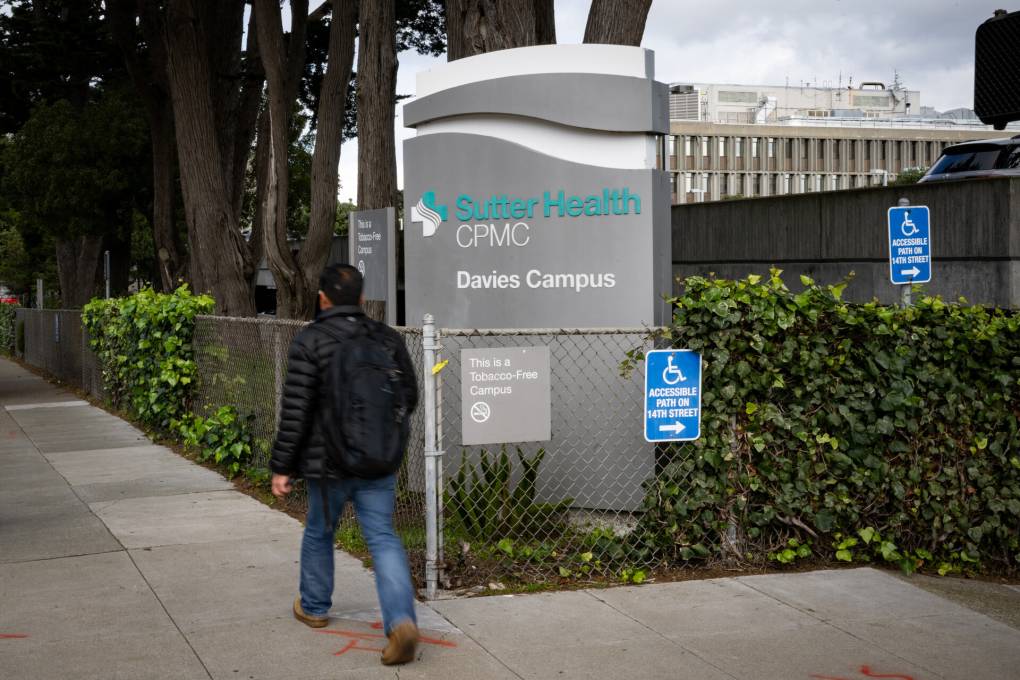
"title": "The Sutter Health CPMC Davies Campus in San Francisco on Feb. 8, 2024.",
"publishDate": 1718040645,
"status": "inherit",
"parent": 11989597,
"modified": 1718040667,
"caption": "The Sutter Health CPMC Davies Campus in San Francisco on Feb. 8, 2024.",
"credit": "Beth LaBerge/KQED",
"altTag": null,
"description": null,
"imgSizes": {
"medium": {
"file": "https://cdn.kqed.org/wp-content/uploads/sites/10/2024/06/240208-HospitalViolence-09-BL_qut-800x533.jpg",
"width": 800,
"height": 533,
"mimeType": "image/jpeg"
},
"large": {
"file": "https://cdn.kqed.org/wp-content/uploads/sites/10/2024/06/240208-HospitalViolence-09-BL_qut-1020x680.jpg",
"width": 1020,
"height": 680,
"mimeType": "image/jpeg"
},
"thumbnail": {
"file": "https://cdn.kqed.org/wp-content/uploads/sites/10/2024/06/240208-HospitalViolence-09-BL_qut-160x107.jpg",
"width": 160,
"height": 107,
"mimeType": "image/jpeg"
},
"1536x1536": {
"file": "https://cdn.kqed.org/wp-content/uploads/sites/10/2024/06/240208-HospitalViolence-09-BL_qut-1536x1024.jpg",
"width": 1536,
"height": 1024,
"mimeType": "image/jpeg"
},
"post-thumbnail": {
"file": "https://cdn.kqed.org/wp-content/uploads/sites/10/2024/06/240208-HospitalViolence-09-BL_qut-672x372.jpg",
"width": 672,
"height": 372,
"mimeType": "image/jpeg"
},
"twentyfourteen-full-width": {
"file": "https://cdn.kqed.org/wp-content/uploads/sites/10/2024/06/240208-HospitalViolence-09-BL_qut-1038x576.jpg",
"width": 1038,
"height": 576,
"mimeType": "image/jpeg"
},
"kqedFullSize": {
"file": "https://cdn.kqed.org/wp-content/uploads/sites/10/2024/06/240208-HospitalViolence-09-BL_qut.jpg",
"width": 1920,
"height": 1280
}
},
"isLoading": false,
"fetchFailed": false
},
"news_11980957": {
"type": "attachments",
"id": "news_11980957",
"meta": {
"index": "attachments_1716263798",
"site": "news",
"id": "11980957",
"found": true
},
"parent": 11980953,
"imgSizes": {
"twentyfourteen-full-width": {
"file": "https://cdn.kqed.org/wp-content/uploads/sites/10/2024/03/240208-HospitalViolence-11-BL_qut-1038x576.jpg",
"width": 1038,
"mimeType": "image/jpeg",
"height": 576
},
"thumbnail": {
"file": "https://cdn.kqed.org/wp-content/uploads/sites/10/2024/03/240208-HospitalViolence-11-BL_qut-160x107.jpg",
"width": 160,
"mimeType": "image/jpeg",
"height": 107
},
"post-thumbnail": {
"file": "https://cdn.kqed.org/wp-content/uploads/sites/10/2024/03/240208-HospitalViolence-11-BL_qut-672x372.jpg",
"width": 672,
"mimeType": "image/jpeg",
"height": 372
},
"kqedFullSize": {
"file": "https://cdn.kqed.org/wp-content/uploads/sites/10/2024/03/240208-HospitalViolence-11-BL_qut.jpg",
"width": 1920,
"height": 1280
},
"large": {
"file": "https://cdn.kqed.org/wp-content/uploads/sites/10/2024/03/240208-HospitalViolence-11-BL_qut-1020x680.jpg",
"width": 1020,
"mimeType": "image/jpeg",
"height": 680
},
"1536x1536": {
"file": "https://cdn.kqed.org/wp-content/uploads/sites/10/2024/03/240208-HospitalViolence-11-BL_qut-1536x1024.jpg",
"width": 1536,
"mimeType": "image/jpeg",
"height": 1024
},
"medium": {
"file": "https://cdn.kqed.org/wp-content/uploads/sites/10/2024/03/240208-HospitalViolence-11-BL_qut-800x533.jpg",
"width": 800,
"mimeType": "image/jpeg",
"height": 533
}
},
"publishDate": 1711558819,
"modified": 1711558839,
"caption": "The Sutter Health CPMC Davies Campus in San Francisco on Feb. 8, 2024.",
"description": null,
"title": "The Sutter Health CPMC Davies Campus in San Francisco on Feb. 8, 2024.",
"credit": "Beth LaBerge/KQED",
"status": "inherit",
"altTag": null,
"isLoading": false,
"fetchFailed": false
},
"news_11911761": {
"type": "attachments",
"id": "news_11911761",
"meta": {
"index": "attachments_1716263798",
"site": "news",
"id": "11911761",
"found": true
},
"parent": 11911519,
"imgSizes": {
"twentyfourteen-full-width": {
"file": "https://ww2.kqed.org/app/uploads/sites/10/2022/04/GettyImages-1392178871-1024x576.jpg",
"width": 1024,
"mimeType": "image/jpeg",
"height": 576
},
"thumbnail": {
"file": "https://ww2.kqed.org/app/uploads/sites/10/2022/04/GettyImages-1392178871-160x106.jpg",
"width": 160,
"mimeType": "image/jpeg",
"height": 106
},
"post-thumbnail": {
"file": "https://ww2.kqed.org/app/uploads/sites/10/2022/04/GettyImages-1392178871-672x372.jpg",
"width": 672,
"mimeType": "image/jpeg",
"height": 372
},
"kqedFullSize": {
"file": "https://ww2.kqed.org/app/uploads/sites/10/2022/04/GettyImages-1392178871.jpg",
"width": 1024,
"height": 679
},
"large": {
"file": "https://ww2.kqed.org/app/uploads/sites/10/2022/04/GettyImages-1392178871-1020x676.jpg",
"width": 1020,
"mimeType": "image/jpeg",
"height": 676
},
"medium": {
"file": "https://ww2.kqed.org/app/uploads/sites/10/2022/04/GettyImages-1392178871-800x530.jpg",
"width": 800,
"mimeType": "image/jpeg",
"height": 530
}
},
"publishDate": 1650496925,
"modified": 1650574452,
"caption": "Sutter Health nurses and health care workers hold signs as they participate in a one-day strike outside the California Pacific Medical Center's Van Ness campus on April 18, 2022, in San Francisco. Over 8,000 Sutter Health registered nurses and health care workers participated in the strike at 15 facilities across Northern California to protest Sutter's refusal to acknowledge proposals on safe staffing and health and safety protections.",
"description": null,
"title": "Nurses And Health Care Workers Stage One Day Strike Protesting Against Employer Sutter Health",
"credit": "Justin Sullivan/Getty Images",
"status": "inherit",
"altTag": "Five people are holding signs and wearing masks that read \"We Will Strike For Our Patients.\"",
"isLoading": false,
"fetchFailed": false
},
"news_11863080": {
"type": "attachments",
"id": "news_11863080",
"meta": {
"index": "attachments_1716263798",
"site": "news",
"id": "11863080",
"found": true
},
"parent": 11863075,
"imgSizes": {
"apple_news_ca_landscape_5_5": {
"file": "https://ww2.kqed.org/app/uploads/sites/10/2021/03/vaccinesupply_030321_final-1044x783.png",
"width": 1044,
"mimeType": "image/png",
"height": 783
},
"apple_news_ca_square_4_0": {
"file": "https://ww2.kqed.org/app/uploads/sites/10/2021/03/vaccinesupply_030321_final-470x470.png",
"width": 470,
"mimeType": "image/png",
"height": 470
},
"twentyfourteen-full-width": {
"file": "https://ww2.kqed.org/app/uploads/sites/10/2021/03/vaccinesupply_030321_final-1038x576.png",
"width": 1038,
"mimeType": "image/png",
"height": 576
},
"thumbnail": {
"file": "https://ww2.kqed.org/app/uploads/sites/10/2021/03/vaccinesupply_030321_final-160x105.png",
"width": 160,
"mimeType": "image/png",
"height": 105
},
"post-thumbnail": {
"file": "https://ww2.kqed.org/app/uploads/sites/10/2021/03/vaccinesupply_030321_final-672x372.png",
"width": 672,
"mimeType": "image/png",
"height": 372
},
"kqedFullSize": {
"file": "https://ww2.kqed.org/app/uploads/sites/10/2021/03/vaccinesupply_030321_final.png",
"width": 1920,
"height": 1260
},
"apple_news_ca_landscape_4_7": {
"file": "https://ww2.kqed.org/app/uploads/sites/10/2021/03/vaccinesupply_030321_final-632x474.png",
"width": 632,
"mimeType": "image/png",
"height": 474
},
"large": {
"file": "https://ww2.kqed.org/app/uploads/sites/10/2021/03/vaccinesupply_030321_final-1020x669.png",
"width": 1020,
"mimeType": "image/png",
"height": 669
},
"apple_news_ca_landscape_4_0": {
"file": "https://ww2.kqed.org/app/uploads/sites/10/2021/03/vaccinesupply_030321_final-536x402.png",
"width": 536,
"mimeType": "image/png",
"height": 402
},
"apple_news_ca_portrait_12_9": {
"file": "https://ww2.kqed.org/app/uploads/sites/10/2021/03/vaccinesupply_030321_final-1122x1260.png",
"width": 1122,
"mimeType": "image/png",
"height": 1260
},
"medium": {
"file": "https://ww2.kqed.org/app/uploads/sites/10/2021/03/vaccinesupply_030321_final-800x525.png",
"width": 800,
"mimeType": "image/png",
"height": 525
},
"apple_news_ca_portrait_4_0": {
"file": "https://ww2.kqed.org/app/uploads/sites/10/2021/03/vaccinesupply_030321_final-354x472.png",
"width": 354,
"mimeType": "image/png",
"height": 472
},
"apple_news_ca_portrait_9_7": {
"file": "https://ww2.kqed.org/app/uploads/sites/10/2021/03/vaccinesupply_030321_final-840x1120.png",
"width": 840,
"mimeType": "image/png",
"height": 1120
},
"apple_news_ca_landscape_12_9": {
"file": "https://ww2.kqed.org/app/uploads/sites/10/2021/03/vaccinesupply_030321_final-1832x1260.png",
"width": 1832,
"mimeType": "image/png",
"height": 1260
},
"apple_news_ca_square_9_7": {
"file": "https://ww2.kqed.org/app/uploads/sites/10/2021/03/vaccinesupply_030321_final-1104x1104.png",
"width": 1104,
"mimeType": "image/png",
"height": 1104
},
"1536x1536": {
"file": "https://ww2.kqed.org/app/uploads/sites/10/2021/03/vaccinesupply_030321_final-1536x1008.png",
"width": 1536,
"mimeType": "image/png",
"height": 1008
},
"apple_news_ca_portrait_4_7": {
"file": "https://ww2.kqed.org/app/uploads/sites/10/2021/03/vaccinesupply_030321_final-414x552.png",
"width": 414,
"mimeType": "image/png",
"height": 552
},
"apple_news_ca_square_12_9": {
"file": "https://ww2.kqed.org/app/uploads/sites/10/2021/03/vaccinesupply_030321_final-1472x1260.png",
"width": 1472,
"mimeType": "image/png",
"height": 1260
},
"apple_news_ca_portrait_5_5": {
"file": "https://ww2.kqed.org/app/uploads/sites/10/2021/03/vaccinesupply_030321_final-687x916.png",
"width": 687,
"mimeType": "image/png",
"height": 916
},
"apple_news_ca_square_4_7": {
"file": "https://ww2.kqed.org/app/uploads/sites/10/2021/03/vaccinesupply_030321_final-550x550.png",
"width": 550,
"mimeType": "image/png",
"height": 550
},
"apple_news_ca_landscape_9_7": {
"file": "https://ww2.kqed.org/app/uploads/sites/10/2021/03/vaccinesupply_030321_final-1376x1032.png",
"width": 1376,
"mimeType": "image/png",
"height": 1032
},
"apple_news_ca_square_5_5": {
"file": "https://ww2.kqed.org/app/uploads/sites/10/2021/03/vaccinesupply_030321_final-912x912.png",
"width": 912,
"mimeType": "image/png",
"height": 912
}
},
"publishDate": 1614812205,
"modified": 1614812284,
"caption": null,
"description": null,
"title": "vaccinesupply_030321_final",
"credit": null,
"status": "inherit",
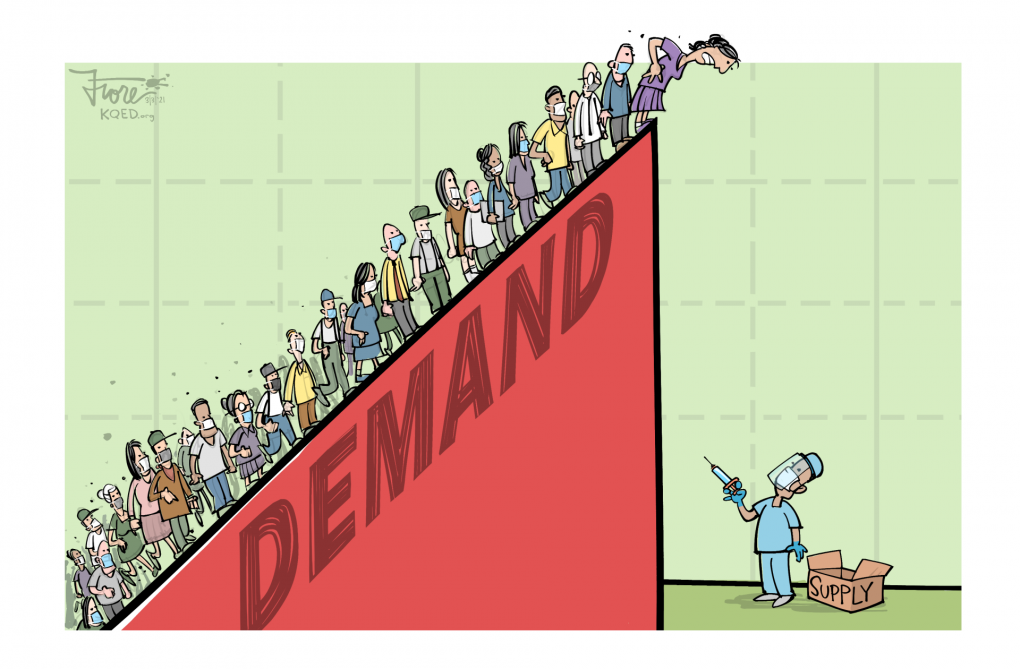
"altTag": "A Mark Fiore cartoon featuring a graph of vaccine supply and demand, with a steep demand line covered with people awaiting their vaccine coming to a cliff where an empty box, nurse and syringe \"supply\" await.",
"isLoading": false,
"fetchFailed": false
},
"news_11051901": {
"type": "attachments",
"id": "news_11051901",
"meta": {
"index": "attachments_1716263798",
"site": "news",
"id": "11051901",
"found": true
},
"parent": 0,
"imgSizes": {
"twentyfourteen-full-width": {
"file": "https://ww2.kqed.org/app/uploads/sites/10/2016/08/RS19268_IMG_6407-qut-1-1038x576.jpg",
"width": 1038,
"mimeType": "image/jpeg",
"height": 576
},
"thumbnail": {
"file": "https://ww2.kqed.org/app/uploads/sites/10/2016/08/RS19268_IMG_6407-qut-1-400x300.jpg",
"width": 400,
"mimeType": "image/jpeg",
"height": 300
},
"fd-sm": {
"file": "https://ww2.kqed.org/app/uploads/sites/10/2016/08/RS19268_IMG_6407-qut-1-960x720.jpg",
"width": 960,
"mimeType": "image/jpeg",
"height": 720
},
"post-thumbnail": {
"file": "https://ww2.kqed.org/app/uploads/sites/10/2016/08/RS19268_IMG_6407-qut-1-672x372.jpg",
"width": 672,
"mimeType": "image/jpeg",
"height": 372
},
"kqedFullSize": {
"file": "https://ww2.kqed.org/app/uploads/sites/10/2016/08/RS19268_IMG_6407-qut-1.jpg",
"width": 1920,
"height": 1440
},
"large": {
"file": "https://ww2.kqed.org/app/uploads/sites/10/2016/08/RS19268_IMG_6407-qut-1-1920x1440.jpg",
"width": 1920,
"mimeType": "image/jpeg",
"height": 1440
},
"guest-author-50": {
"file": "https://ww2.kqed.org/app/uploads/sites/10/2016/08/RS19268_IMG_6407-qut-1-50x50.jpg",
"width": 50,
"mimeType": "image/jpeg",
"height": 50
},
"guest-author-96": {
"file": "https://ww2.kqed.org/app/uploads/sites/10/2016/08/RS19268_IMG_6407-qut-1-96x96.jpg",
"width": 96,
"mimeType": "image/jpeg",
"height": 96
},
"medium": {
"file": "https://ww2.kqed.org/app/uploads/sites/10/2016/08/RS19268_IMG_6407-qut-1-800x600.jpg",
"width": 800,
"mimeType": "image/jpeg",
"height": 600
},
"guest-author-64": {
"file": "https://ww2.kqed.org/app/uploads/sites/10/2016/08/RS19268_IMG_6407-qut-1-64x64.jpg",
"width": 64,
"mimeType": "image/jpeg",
"height": 64
},
"guest-author-32": {
"file": "https://ww2.kqed.org/app/uploads/sites/10/2016/08/RS19268_IMG_6407-qut-1-32x32.jpg",
"width": 32,
"mimeType": "image/jpeg",
"height": 32
},
"jmtc-small-thumb": {
"file": "https://ww2.kqed.org/app/uploads/sites/10/2016/08/RS19268_IMG_6407-qut-1-280x150.jpg",
"width": 280,
"mimeType": "image/jpeg",
"height": 150
},
"fd-lrg": {
"file": "https://ww2.kqed.org/app/uploads/sites/10/2016/08/RS19268_IMG_6407-qut-1-1920x1440.jpg",
"width": 1920,
"mimeType": "image/jpeg",
"height": 1440
},
"fd-med": {
"file": "https://ww2.kqed.org/app/uploads/sites/10/2016/08/RS19268_IMG_6407-qut-1-1180x885.jpg",
"width": 1180,
"mimeType": "image/jpeg",
"height": 885
},
"detail": {
"file": "https://ww2.kqed.org/app/uploads/sites/10/2016/08/RS19268_IMG_6407-qut-1-150x150.jpg",
"width": 150,
"mimeType": "image/jpeg",
"height": 150
},
"guest-author-128": {
"file": "https://ww2.kqed.org/app/uploads/sites/10/2016/08/RS19268_IMG_6407-qut-1-128x128.jpg",
"width": 128,
"mimeType": "image/jpeg",
"height": 128
}
},
"publishDate": 1471310699,
"modified": 1471310842,
"caption": "Sutter Health's Alta Bates Campus.",
"description": "Sutter Health's Alta Bates Campus.",
"title": "RS19268_IMG_6407-qut (1)",
"credit": "Lisa Aliferis/KQED",
"status": "inherit",
"isLoading": false,
"fetchFailed": false
},
"news_11659151": {
"type": "attachments",
"id": "news_11659151",
"meta": {
"index": "attachments_1716263798",
"site": "news",
"id": "11659151",
"found": true
},
"parent": 11659147,
"imgSizes": {
"small": {
"file": "https://ww2.kqed.org/app/uploads/sites/10/2018/03/sutter-520x347.jpg",
"width": 520,
"mimeType": "image/jpeg",
"height": 347
},
"twentyfourteen-full-width": {
"file": "https://ww2.kqed.org/app/uploads/sites/10/2018/03/sutter-1024x576.jpg",
"width": 1024,
"mimeType": "image/jpeg",
"height": 576
},
"thumbnail": {
"file": "https://ww2.kqed.org/app/uploads/sites/10/2018/03/sutter-160x107.jpg",
"width": 160,
"mimeType": "image/jpeg",
"height": 107
},
"fd-sm": {
"file": "https://ww2.kqed.org/app/uploads/sites/10/2018/03/sutter-960x640.jpg",
"width": 960,
"mimeType": "image/jpeg",
"height": 640
},
"post-thumbnail": {
"file": "https://ww2.kqed.org/app/uploads/sites/10/2018/03/sutter-672x372.jpg",
"width": 672,
"mimeType": "image/jpeg",
"height": 372
},
"xsmall": {
"file": "https://ww2.kqed.org/app/uploads/sites/10/2018/03/sutter-375x250.jpg",
"width": 375,
"mimeType": "image/jpeg",
"height": 250
},
"kqedFullSize": {
"file": "https://ww2.kqed.org/app/uploads/sites/10/2018/03/sutter.jpg",
"width": 1024,
"height": 683
},
"large": {
"file": "https://ww2.kqed.org/app/uploads/sites/10/2018/03/sutter-1020x680.jpg",
"width": 1020,
"mimeType": "image/jpeg",
"height": 680
},
"guest-author-50": {
"file": "https://ww2.kqed.org/app/uploads/sites/10/2018/03/sutter-50x50.jpg",
"width": 50,
"mimeType": "image/jpeg",
"height": 50
},
"guest-author-96": {
"file": "https://ww2.kqed.org/app/uploads/sites/10/2018/03/sutter-96x96.jpg",
"width": 96,
"mimeType": "image/jpeg",
"height": 96
},
"medium": {
"file": "https://ww2.kqed.org/app/uploads/sites/10/2018/03/sutter-800x534.jpg",
"width": 800,
"mimeType": "image/jpeg",
"height": 534
},
"guest-author-64": {
"file": "https://ww2.kqed.org/app/uploads/sites/10/2018/03/sutter-64x64.jpg",
"width": 64,
"mimeType": "image/jpeg",
"height": 64
},
"guest-author-32": {
"file": "https://ww2.kqed.org/app/uploads/sites/10/2018/03/sutter-32x32.jpg",
"width": 32,
"mimeType": "image/jpeg",
"height": 32
},
"detail": {
"file": "https://ww2.kqed.org/app/uploads/sites/10/2018/03/sutter-150x150.jpg",
"width": 150,
"mimeType": "image/jpeg",
"height": 150
},
"guest-author-128": {
"file": "https://ww2.kqed.org/app/uploads/sites/10/2018/03/sutter-128x128.jpg",
"width": 128,
"mimeType": "image/jpeg",
"height": 128
},
"xxsmall": {
"file": "https://ww2.kqed.org/app/uploads/sites/10/2018/03/sutter-240x160.jpg",
"width": 240,
"mimeType": "image/jpeg",
"height": 160
}
},
"publishDate": 1522539672,
"modified": 1522539841,
"caption": "The entrance to Sutter Davis Hospital in Davis, California. Sutter Health Co., a nonprofit that owns 25 hospitals and 17 outpatient surgery clinics, has market power that commands prices 40 to 70 percent higher than its rivals per typical procedure - and pacts with insurers that keep those prices secret.",
"description": "The entrance to Sutter Davis Hospital in Davis, California. Sutter Health Co., a nonprofit that owns 25 hospitals and 17 outpatient surgery clinics, has market power that commands prices 40 to 70 percent higher than its rivals per typical procedure - and pacts with insurers that keep those prices secret.",
"title": "Hospital Monopolies Ruin MRI Bill As Sutter Gets Price It Wants",
"credit": "Ken James/Bloomberg via Getty Images",
"status": "inherit",
"isLoading": false,
"fetchFailed": false
},
"stateofhealth_169744": {
"type": "attachments",
"id": "stateofhealth_169744",
"meta": {
"index": "attachments_1716263798",
"site": "stateofhealth",
"id": "169744",
"found": true
},
"parent": 169743,
"imgSizes": {
"twentyfourteen-full-width": {
"file": "https://ww2.kqed.org/app/uploads/sites/27/2016/04/sutter-health_wide-c3fbc10843b63d5808868d19304172f6d613dcec-1038x576.jpg",
"width": 1038,
"mimeType": "image/jpeg",
"height": 576
},
"thumbnail": {
"file": "https://ww2.kqed.org/app/uploads/sites/27/2016/04/sutter-health_wide-c3fbc10843b63d5808868d19304172f6d613dcec-400x225.jpg",
"width": 400,
"mimeType": "image/jpeg",
"height": 225
},
"fd-sm": {
"file": "https://ww2.kqed.org/app/uploads/sites/27/2016/04/sutter-health_wide-c3fbc10843b63d5808868d19304172f6d613dcec-960x540.jpg",
"width": 960,
"mimeType": "image/jpeg",
"height": 540
},
"post-thumbnail": {
"file": "https://ww2.kqed.org/app/uploads/sites/27/2016/04/sutter-health_wide-c3fbc10843b63d5808868d19304172f6d613dcec-672x372.jpg",
"width": 672,
"mimeType": "image/jpeg",
"height": 372
},
"kqedFullSize": {
"file": "https://ww2.kqed.org/app/uploads/sites/27/2016/04/sutter-health_wide-c3fbc10843b63d5808868d19304172f6d613dcec.jpg",
"width": 1885,
"height": 1060
},
"large": {
"file": "https://ww2.kqed.org/app/uploads/sites/27/2016/04/sutter-health_wide-c3fbc10843b63d5808868d19304172f6d613dcec-1440x810.jpg",
"width": 1440,
"mimeType": "image/jpeg",
"height": 810
},
"guest-author-96": {
"file": "https://ww2.kqed.org/app/uploads/sites/27/2016/04/sutter-health_wide-c3fbc10843b63d5808868d19304172f6d613dcec-96x96.jpg",
"width": 96,
"mimeType": "image/jpeg",
"height": 96
},
"medium": {
"file": "https://ww2.kqed.org/app/uploads/sites/27/2016/04/sutter-health_wide-c3fbc10843b63d5808868d19304172f6d613dcec-800x450.jpg",
"width": 800,
"mimeType": "image/jpeg",
"height": 450
},
"guest-author-64": {
"file": "https://ww2.kqed.org/app/uploads/sites/27/2016/04/sutter-health_wide-c3fbc10843b63d5808868d19304172f6d613dcec-64x64.jpg",
"width": 64,
"mimeType": "image/jpeg",
"height": 64
},
"guest-author-32": {
"file": "https://ww2.kqed.org/app/uploads/sites/27/2016/04/sutter-health_wide-c3fbc10843b63d5808868d19304172f6d613dcec-32x32.jpg",
"width": 32,
"mimeType": "image/jpeg",
"height": 32
},
"jmtc-small-thumb": {
"file": "https://ww2.kqed.org/app/uploads/sites/27/2016/04/sutter-health_wide-c3fbc10843b63d5808868d19304172f6d613dcec-280x150.jpg",
"width": 280,
"mimeType": "image/jpeg",
"height": 150
},
"fd-med": {
"file": "https://ww2.kqed.org/app/uploads/sites/27/2016/04/sutter-health_wide-c3fbc10843b63d5808868d19304172f6d613dcec-1180x664.jpg",
"width": 1180,
"mimeType": "image/jpeg",
"height": 664
},
"detail": {
"file": "https://ww2.kqed.org/app/uploads/sites/27/2016/04/sutter-health_wide-c3fbc10843b63d5808868d19304172f6d613dcec-75x75.jpg",
"width": 75,
"mimeType": "image/jpeg",
"height": 75
},
"medium_large": {
"file": "https://ww2.kqed.org/app/uploads/sites/27/2016/04/sutter-health_wide-c3fbc10843b63d5808868d19304172f6d613dcec-768x432.jpg",
"width": 768,
"mimeType": "image/jpeg",
"height": 432
},
"guest-author-128": {
"file": "https://ww2.kqed.org/app/uploads/sites/27/2016/04/sutter-health_wide-c3fbc10843b63d5808868d19304172f6d613dcec-128x128.jpg",
"width": 128,
"mimeType": "image/jpeg",
"height": 128
}
},
"publishDate": 1460045068,
"modified": 1460045159,
"caption": "The entrance to Sutter Davis Hospital in Davis, Calif. Sutter Health has hospitals in more than 100 communities in Northern California.",
"description": "The entrance to Sutter Davis Hospital in Davis, Calif. Sutter Health has hospitals in more than 100 communities in Northern California.",
"title": "The entrance to Sutter Davis Hospital in Davis, Calif. Sutter Health has hospitals in more than 100 communities in Northern California; it reported $11 billion in revenue last year, with an operating profit of $287 million.",
"credit": "Ken James/Bloomberg via Getty Images",
"status": "inherit",
"isLoading": false,
"fetchFailed": false
},
"stateofhealth_225429": {
"type": "attachments",
"id": "stateofhealth_225429",
"meta": {
"index": "attachments_1716263798",
"site": "stateofhealth",
"id": "225429",
"found": true
},
"parent": 225405,
"imgSizes": {
"twentyfourteen-full-width": {
"file": "https://ww2.kqed.org/app/uploads/sites/27/2016/08/RS19268_IMG_6407-qut-1038x576.jpg",
"width": 1038,
"mimeType": "image/jpeg",
"height": 576
},
"thumbnail": {
"file": "https://ww2.kqed.org/app/uploads/sites/27/2016/08/RS19268_IMG_6407-qut-400x300.jpg",
"width": 400,
"mimeType": "image/jpeg",
"height": 300
},
"fd-sm": {
"file": "https://ww2.kqed.org/app/uploads/sites/27/2016/08/RS19268_IMG_6407-qut-960x720.jpg",
"width": 960,
"mimeType": "image/jpeg",
"height": 720
},
"post-thumbnail": {
"file": "https://ww2.kqed.org/app/uploads/sites/27/2016/08/RS19268_IMG_6407-qut-672x372.jpg",
"width": 672,
"mimeType": "image/jpeg",
"height": 372
},
"kqedFullSize": {
"file": "https://ww2.kqed.org/app/uploads/sites/27/2016/08/RS19268_IMG_6407-qut.jpg",
"width": 1920,
"height": 1440
},
"large": {
"file": "https://ww2.kqed.org/app/uploads/sites/27/2016/08/RS19268_IMG_6407-qut-1440x1080.jpg",
"width": 1440,
"mimeType": "image/jpeg",
"height": 1080
},
"guest-author-50": {
"file": "https://ww2.kqed.org/app/uploads/sites/27/2016/08/RS19268_IMG_6407-qut-50x50.jpg",
"width": 50,
"mimeType": "image/jpeg",
"height": 50
},
"guest-author-96": {
"file": "https://ww2.kqed.org/app/uploads/sites/27/2016/08/RS19268_IMG_6407-qut-96x96.jpg",
"width": 96,
"mimeType": "image/jpeg",
"height": 96
},
"medium": {
"file": "https://ww2.kqed.org/app/uploads/sites/27/2016/08/RS19268_IMG_6407-qut-800x600.jpg",
"width": 800,
"mimeType": "image/jpeg",
"height": 600
},
"guest-author-64": {
"file": "https://ww2.kqed.org/app/uploads/sites/27/2016/08/RS19268_IMG_6407-qut-64x64.jpg",
"width": 64,
"mimeType": "image/jpeg",
"height": 64
},
"guest-author-32": {
"file": "https://ww2.kqed.org/app/uploads/sites/27/2016/08/RS19268_IMG_6407-qut-32x32.jpg",
"width": 32,
"mimeType": "image/jpeg",
"height": 32
},
"jmtc-small-thumb": {
"file": "https://ww2.kqed.org/app/uploads/sites/27/2016/08/RS19268_IMG_6407-qut-280x150.jpg",
"width": 280,
"mimeType": "image/jpeg",
"height": 150
},
"fd-lrg": {
"file": "https://ww2.kqed.org/app/uploads/sites/27/2016/08/RS19268_IMG_6407-qut-1920x1440.jpg",
"width": 1920,
"mimeType": "image/jpeg",
"height": 1440
},
"fd-med": {
"file": "https://ww2.kqed.org/app/uploads/sites/27/2016/08/RS19268_IMG_6407-qut-1180x885.jpg",
"width": 1180,
"mimeType": "image/jpeg",
"height": 885
},
"detail": {
"file": "https://ww2.kqed.org/app/uploads/sites/27/2016/08/RS19268_IMG_6407-qut-150x150.jpg",
"width": 150,
"mimeType": "image/jpeg",
"height": 150
},
"medium_large": {
"file": "https://ww2.kqed.org/app/uploads/sites/27/2016/08/RS19268_IMG_6407-qut-768x576.jpg",
"width": 768,
"mimeType": "image/jpeg",
"height": 576
},
"guest-author-128": {
"file": "https://ww2.kqed.org/app/uploads/sites/27/2016/08/RS19268_IMG_6407-qut-128x128.jpg",
"width": 128,
"mimeType": "image/jpeg",
"height": 128
}
},
"publishDate": 1471319741,
"modified": 1501179428,
"caption": "According to Yelp, Alta Bates Summit Medical Center in Berkeley has \"below average\" C-Section rates and \"above average\" breastfeeding rates. It is also more likely than other California hospitals to allow women to have a subsequent vaginal birth after a previous C-Section birth. ",
"description": "According to Yelp, Alta Bates Summit Medical Center in Berkeley has \"below average\" rates for C-sections and \"above average\" rates for breastfeeding after childbirth. It also is more likely than other hospitals to allow women to have a vaginal birth after she has already had a C-section. ",
"title": "RS19268_IMG_6407-qut",
"credit": "Lisa Aliferis/KQED",
"status": "inherit",
"isLoading": false,
"fetchFailed": false
},
"stateofhealth_138795": {
"type": "attachments",
"id": "stateofhealth_138795",
"meta": {
"index": "attachments_1716263798",
"site": "stateofhealth",
"id": "138795",
"found": true
},
"parent": 138635,
"imgSizes": {
"twentyfourteen-full-width": {
"file": "https://ww2.kqed.org/app/uploads/sites/27/2016/01/iStock_000048013404_Large-1038x576.jpg",
"width": 1038,
"mimeType": "image/jpeg",
"height": 576
},
"thumbnail": {
"file": "https://ww2.kqed.org/app/uploads/sites/27/2016/01/iStock_000048013404_Large-400x320.jpg",
"width": 400,
"mimeType": "image/jpeg",
"height": 320
},
"fd-sm": {
"file": "https://ww2.kqed.org/app/uploads/sites/27/2016/01/iStock_000048013404_Large-960x767.jpg",
"width": 960,
"mimeType": "image/jpeg",
"height": 767
},
"post-thumbnail": {
"file": "https://ww2.kqed.org/app/uploads/sites/27/2016/01/iStock_000048013404_Large-672x372.jpg",
"width": 672,
"mimeType": "image/jpeg",
"height": 372
},
"kqedFullSize": {
"file": "https://ww2.kqed.org/app/uploads/sites/27/2016/01/iStock_000048013404_Large-e1452755697599.jpg",
"width": 1919,
"height": 1534
},
"large": {
"file": "https://ww2.kqed.org/app/uploads/sites/27/2016/01/iStock_000048013404_Large-1440x1151.jpg",
"width": 1440,
"mimeType": "image/jpeg",
"height": 1151
},
"guest-author-96": {
"file": "https://ww2.kqed.org/app/uploads/sites/27/2016/01/iStock_000048013404_Large-96x96.jpg",
"width": 96,
"mimeType": "image/jpeg",
"height": 96
},
"medium": {
"file": "https://ww2.kqed.org/app/uploads/sites/27/2016/01/iStock_000048013404_Large-800x639.jpg",
"width": 800,
"mimeType": "image/jpeg",
"height": 639
},
"guest-author-64": {
"file": "https://ww2.kqed.org/app/uploads/sites/27/2016/01/iStock_000048013404_Large-64x64.jpg",
"width": 64,
"mimeType": "image/jpeg",
"height": 64
},
"guest-author-32": {
"file": "https://ww2.kqed.org/app/uploads/sites/27/2016/01/iStock_000048013404_Large-32x32.jpg",
"width": 32,
"mimeType": "image/jpeg",
"height": 32
},
"jmtc-small-thumb": {
"file": "https://ww2.kqed.org/app/uploads/sites/27/2016/01/iStock_000048013404_Large-280x150.jpg",
"width": 280,
"mimeType": "image/jpeg",
"height": 150
},
"fd-lrg": {
"file": "https://ww2.kqed.org/app/uploads/sites/27/2016/01/iStock_000048013404_Large-1920x1534.jpg",
"width": 1920,
"mimeType": "image/jpeg",
"height": 1534
},
"fd-med": {
"file": "https://ww2.kqed.org/app/uploads/sites/27/2016/01/iStock_000048013404_Large-1180x943.jpg",
"width": 1180,
"mimeType": "image/jpeg",
"height": 943
},
"detail": {
"file": "https://ww2.kqed.org/app/uploads/sites/27/2016/01/iStock_000048013404_Large-75x75.jpg",
"width": 75,
"mimeType": "image/jpeg",
"height": 75
},
"medium_large": {
"file": "https://ww2.kqed.org/app/uploads/sites/27/2016/01/iStock_000048013404_Large-768x614.jpg",
"width": 768,
"mimeType": "image/jpeg",
"height": 614
},
"guest-author-128": {
"file": "https://ww2.kqed.org/app/uploads/sites/27/2016/01/iStock_000048013404_Large-128x128.jpg",
"width": 128,
"mimeType": "image/jpeg",
"height": 128
}
},
"publishDate": 1452755687,
"modified": 1452755727,
"caption": null,
"description": "dollar sign and question mark cube",
"title": "businessman looking white dice",
"credit": "iStockphoto",
"status": "inherit",
"isLoading": false,
"fetchFailed": false
}
},
"audioPlayerReducer": {
"postId": "stream_live",
"isPaused": true,
"isPlaying": false,
"pfsActive": false,
"pledgeModalIsOpen": true,
"playerDrawerIsOpen": false,
"liveAudioPlayStartedAt": 0,
"liveAudioPlayContext": ""
},
"authorsReducer": {
"byline_news_11780677": {
"type": "authors",
"id": "byline_news_11780677",
"meta": {
"override": true
},
"slug": "byline_news_11780677",
"name": "Jenny Gold",
"isLoading": false
},
"byline_news_11659147": {
"type": "authors",
"id": "byline_news_11659147",
"meta": {
"override": true
},
"slug": "byline_news_11659147",
"name": "\u003cstrong/>\u003ca href=\"https://californiahealthline.org/news/author/chad-terhune/\">Chad Terhune\u003c/a>\u003c/strong>\u003cbr/>California Healthline\u003c/br>",
"isLoading": false
},
"byline_stateofhealth_362035": {
"type": "authors",
"id": "byline_stateofhealth_362035",
"meta": {
"override": true
},
"slug": "byline_stateofhealth_362035",
"name": "\u003cb>Chad Terhune\u003c/b>, Kaiser Health News",
"isLoading": false
},
"lisaaliferis": {
"type": "authors",
"id": "240",
"meta": {
"index": "authors_1716337520",
"id": "240",
"found": true
},
"name": "Lisa Aliferis",
"firstName": "Lisa",
"lastName": "Aliferis",
"slug": "lisaaliferis",
"email": "laliferis@kqed.org",
"display_author_email": false,
"staff_mastheads": [],
"title": "KQED Contributor",
"bio": "Lisa Aliferis is the founding editor of KQED's \u003cem>State of Health\u003c/em> blog. Since 2011, she's been writing and editing stories for the site. Before taking up blogging, she toiled for many years (more than we can count) producing health stories for television, including\u003cem> Dateline NBC\u003c/em> and San Francisco's CBS affiliate, KPIX-TV. She also wrote up a \u003ca title=\"http://www.kqed.org/news/health/obamacare/obamacare-guide.jsp\" href=\"http://www.kqed.org/news/health/obamacare/obamacare-guide.jsp\">handy guide to the Affordable Care Act\u003c/a>, especially for Californians. Her work has been honored for many awards. Most recently she was a finalist for \"Best Topical Reporting\" from the Online News Association. You can follow her on Twitter: \u003ca title=\"https://twitter.com/laliferis\" href=\"https://twitter.com/laliferis\">@laliferis\u003c/a>",
"avatar": "https://secure.gravatar.com/avatar/86c339d5cdcb0dcd2b6cf5d7c3f5886b?s=600&d=mm&r=g",
"twitter": "laliferis",
"facebook": null,
"instagram": null,
"linkedin": null,
"sites": [
{
"site": "news",
"roles": [
"subscriber"
]
},
{
"site": "futureofyou",
"roles": [
"subscriber"
]
},
{
"site": "stateofhealth",
"roles": [
"subscriber"
]
},
{
"site": "science",
"roles": [
"subscriber"
]
},
{
"site": "food",
"roles": []
}
],
"headData": {
"title": "Lisa Aliferis | KQED",
"description": "KQED Contributor",
"ogImgSrc": "https://secure.gravatar.com/avatar/86c339d5cdcb0dcd2b6cf5d7c3f5886b?s=600&d=mm&r=g",
"twImgSrc": "https://secure.gravatar.com/avatar/86c339d5cdcb0dcd2b6cf5d7c3f5886b?s=600&d=mm&r=g"
},
"isLoading": false,
"link": "/author/lisaaliferis"
},
"adembosky": {
"type": "authors",
"id": "3205",
"meta": {
"index": "authors_1716337520",
"id": "3205",
"found": true
},
"name": "April Dembosky",
"firstName": "April",
"lastName": "Dembosky",
"slug": "adembosky",
"email": "adembosky@kqed.org",
"display_author_email": false,
"staff_mastheads": [
"news",
"science"
],
"title": "KQED Health Correspondent",
"bio": "April Dembosky is the health correspondent for KQED News and a regular contributor to NPR. She specializes in covering altered states of mind, from postpartum depression to methamphetamine-induced psychosis to the insanity defense. Her investigative series on insurance companies sidestepping mental health laws won multiple awards, including first place in beat reporting from the national Association of Health Care Journalists. She is the recipient of numerous other prizes and fellowships, including a national Edward R. Murrow award for investigative reporting, a Society of Professional Journalists award for long-form storytelling, and a Carter Center Fellowship for Mental Health Journalism.\r\n\r\nDembosky reported and produced \u003cem>Soundtrack of Silence\u003c/em>, an audio documentary about music and memory that is currently being made into a feature film by Paramount Pictures.\r\n\r\nBefore joining KQED in 2013, Dembosky covered technology and Silicon Valley for \u003cem>The Financial Times of London,\u003c/em> and contributed business and arts stories to \u003cem>Marketplace \u003c/em>and \u003cem>The New York Times.\u003c/em> She got her undergraduate degree in philosophy from Smith College and her master's in journalism from the University of California, Berkeley. She is a classically trained violinist and proud alum of the first symphony orchestra at Burning Man.",
"avatar": "https://secure.gravatar.com/avatar/d6593cd737b732102fe0b6250b5351c2d3bc9b2987566514aa3c9a106494d684?s=600&d=blank&r=g",
"twitter": "adembosky",
"bluesky": null,
"facebook": null,
"instagram": null,
"linkedin": null,
"sites": [
{
"site": "arts",
"roles": [
"author"
]
},
{
"site": "news",
"roles": [
"editor"
]
},
{
"site": "futureofyou",
"roles": [
"author"
]
},
{
"site": "stateofhealth",
"roles": [
"editor"
]
},
{
"site": "science",
"roles": [
"editor"
]
},
{
"site": "forum",
"roles": [
"editor"
]
}
],
"headData": {
"title": "April Dembosky | KQED",
"description": "KQED Health Correspondent",
"ogImgSrc": "https://secure.gravatar.com/avatar/d6593cd737b732102fe0b6250b5351c2d3bc9b2987566514aa3c9a106494d684?s=600&d=blank&r=g",
"twImgSrc": "https://secure.gravatar.com/avatar/d6593cd737b732102fe0b6250b5351c2d3bc9b2987566514aa3c9a106494d684?s=600&d=blank&r=g"
},
"isLoading": false,
"link": "/author/adembosky"
},
"markfiore": {
"type": "authors",
"id": "3236",
"meta": {
"index": "authors_1716337520",
"id": "3236",
"found": true
},
"name": "Mark Fiore",
"firstName": "Mark",
"lastName": "Fiore",
"slug": "markfiore",
"email": "mark@markfiore.com",
"display_author_email": false,
"staff_mastheads": [
"news"
],
"title": "KQED News Cartoonist",
"bio": "\u003ca href=\"http://www.MarkFiore.com\">MarkFiore.com\u003c/a> | \u003ca href=\"https://twitter.com/markfiore\">Follow on Twitter\u003c/a> | \u003ca href=\"https://www.facebook.com/pages/Mark-Fiore-Animated-Political-Cartoons/94451707396?ref=bookmarks\">Facebook\u003c/a> | \u003ca href=\"mailto:mark@markfiore.com\">email\u003c/a>\r\n\r\nPulitzer Prize-winner, Mark Fiore, who the Wall Street Journal has called “the undisputed guru of the form,” creates animated political cartoons in San Francisco, where his work has been featured regularly on the San Francisco Chronicle’s web site, SFGate.com. His work has appeared on Newsweek.com, Slate.com, CBSNews.com, MotherJones.com, DailyKos.com and NPR’s web site. Fiore’s political animation has appeared on CNN, Frontline, Bill Moyers Journal, Salon.com and cable and broadcast outlets across the globe.\r\n\r\nBeginning his professional life by drawing traditional political cartoons for newspapers, Fiore’s work appeared in publications ranging from the Washington Post to the Los Angeles Times. In the late 1990s, he began to experiment with animating political cartoons and, after a short stint at the San Jose Mercury News as their staff cartoonist, Fiore devoted all his energies to animation.\r\nGrowing up in California, Fiore also spent a good portion of his life in the backwoods of Idaho. It was this combination that shaped him politically. Mark majored in political science at Colorado College, where, in a perfect send-off for a cartoonist, he received his diploma in 1991 as commencement speaker Dick Cheney smiled approvingly.\r\nMark Fiore was awarded the Pulitzer Prize for political cartooning in 2010, a Robert F. Kennedy Journalism Award in 2004 and has twice received an Online Journalism Award for commentary from the Online News Association (2002, 2008). Fiore has received two awards for his work in new media from the National Cartoonists Society (2001, 2002), and in 2006 received The James Madison Freedom of Information Award from The Society of Professional Journalists.",
"avatar": "https://secure.gravatar.com/avatar/fc4e2a612b15b67bad0c6f0e1db4ca9b?s=600&d=blank&r=g",
"twitter": "MarkFiore",
"facebook": null,
"instagram": "https://www.instagram.com/markfiore/?hl=en",
"linkedin": null,
"sites": [
{
"site": "arts",
"roles": [
"contributor"
]
},
{
"site": "news",
"roles": [
"editor"
]
},
{
"site": "futureofyou",
"roles": [
"editor"
]
},
{
"site": "science",
"roles": [
"editor"
]
}
],
"headData": {
"title": "Mark Fiore | KQED",
"description": "KQED News Cartoonist",
"ogImgSrc": "https://secure.gravatar.com/avatar/fc4e2a612b15b67bad0c6f0e1db4ca9b?s=600&d=blank&r=g",
"twImgSrc": "https://secure.gravatar.com/avatar/fc4e2a612b15b67bad0c6f0e1db4ca9b?s=600&d=blank&r=g"
},
"isLoading": false,
"link": "/author/markfiore"
},
"kevinstark": {
"type": "authors",
"id": "11608",
"meta": {
"index": "authors_1716337520",
"id": "11608",
"found": true
},
"name": "Kevin Stark",
"firstName": "Kevin",
"lastName": "Stark",
"slug": "kevinstark",
"email": "kstark@kqed.org",
"display_author_email": true,
"staff_mastheads": [
"science"
],
"title": "Senior Editor",
"bio": "Kevin is a senior editor for KQED Science, managing the station's health and climate desks. His journalism career began in the Pacific Northwest, and he later became a lead reporter for the San Francisco Public Press. His work has appeared in Pacific Standard magazine, the Energy News Network, the Center for Investigative Reporting's Reveal and WBEZ in Chicago. Kevin joined KQED in 2019, and has covered issues related to energy, wildfire, climate change and the environment.",
"avatar": "https://secure.gravatar.com/avatar/365aaa4b597d3a8374f67504ff0facd323d7906e8eb4be0a7efd2427408e802c?s=600&d=blank&r=g",
"twitter": "starkkev",
"bluesky": null,
"facebook": null,
"instagram": null,
"linkedin": null,
"sites": [
{
"site": "",
"roles": [
"editor"
]
},
{
"site": "news",
"roles": [
"editor"
]
},
{
"site": "science",
"roles": [
"administrator"
]
}
],
"headData": {
"title": "Kevin Stark | KQED",
"description": "Senior Editor",
"ogImgSrc": "https://secure.gravatar.com/avatar/365aaa4b597d3a8374f67504ff0facd323d7906e8eb4be0a7efd2427408e802c?s=600&d=blank&r=g",
"twImgSrc": "https://secure.gravatar.com/avatar/365aaa4b597d3a8374f67504ff0facd323d7906e8eb4be0a7efd2427408e802c?s=600&d=blank&r=g"
},
"isLoading": false,
"link": "/author/kevinstark"
},
"nnavarro": {
"type": "authors",
"id": "11756",
"meta": {
"index": "authors_1716337520",
"id": "11756",
"found": true
},
"name": "Natalia Navarro",
"firstName": "Natalia",
"lastName": "Navarro",
"slug": "nnavarro",
"email": "nnavarro@kqed.org",
"display_author_email": true,
"staff_mastheads": [
"news"
],
"title": "Afternoon News Anchor",
"bio": "Natalia Navarro is KQED's afternoon radio news anchor. She came to KQED in 2021 from Colorado Public Radio, where she was a reporter and host. She has received several awards for her work covering daily and breaking news from professional organizations such as the San Francisco Press Club, Society of Professional Journalists and the Colorado Broadcasters Association. Natalia is originally from Tucson, Arizona, where she got her start in journalism writing for the Arizona Daily Star, Arizona Public Media and the Tucson Weekly. Natalia earned her bachelor's degree in journalism and economics, and her master's degree in journalism from the University of Arizona.",
"avatar": "https://secure.gravatar.com/avatar/a2bdb19fd9520bdea295a2d5f9b2ad65ec51cf0bf559fb1cc041d3a0a04d62ad?s=600&d=blank&r=g",
"twitter": "@NataliaVNavarro",
"bluesky": null,
"facebook": null,
"instagram": null,
"linkedin": null,
"sites": [
{
"site": "news",
"roles": [
"editor"
]
}
],
"headData": {
"title": "Natalia Navarro | KQED",
"description": "Afternoon News Anchor",
"ogImgSrc": "https://secure.gravatar.com/avatar/a2bdb19fd9520bdea295a2d5f9b2ad65ec51cf0bf559fb1cc041d3a0a04d62ad?s=600&d=blank&r=g",
"twImgSrc": "https://secure.gravatar.com/avatar/a2bdb19fd9520bdea295a2d5f9b2ad65ec51cf0bf559fb1cc041d3a0a04d62ad?s=600&d=blank&r=g"
},
"isLoading": false,
"link": "/author/nnavarro"
},
"swhitney": {
"type": "authors",
"id": "11784",
"meta": {
"index": "authors_1716337520",
"id": "11784",
"found": true
},
"name": "Spencer Whitney",
"firstName": "Spencer",
"lastName": "Whitney",
"slug": "swhitney",
"email": "swhitney@kqed.org",
"display_author_email": false,
"staff_mastheads": [],
"title": "KQED Digital Editor",
"bio": "Spencer Whitney is currently a Digital Editor for KQED News. Prior to joining KQED News, Spencer worked as the Multimedia Editor at the Oakland Post and an Assistant Editor in the Editorial department at the San Francisco Chronicle. He attended Howard University as an undergraduate and interned with SiriusXM. He also attended UC Berkeley's Graduate School of Journalism and had the opportunity to write for the hyperlocal news sites Richmond Confidential and Oakland North.",
"avatar": "https://secure.gravatar.com/avatar/e33ff4fd8b8f0d2796f36472fb32607ca8fc46ef5e537dcfdbdee688d8ea5b80?s=600&d=mm&r=g",
"twitter": null,
"bluesky": null,
"facebook": null,
"instagram": null,
"linkedin": null,
"sites": [
{
"site": "arts",
"roles": [
"editor"
]
},
{
"site": "news",
"roles": [
"editor"
]
},
{
"site": "science",
"roles": [
"editor"
]
},
{
"site": "perspectives",
"roles": [
"editor"
]
}
],
"headData": {
"title": "Spencer Whitney | KQED",
"description": "KQED Digital Editor",
"ogImgSrc": "https://secure.gravatar.com/avatar/e33ff4fd8b8f0d2796f36472fb32607ca8fc46ef5e537dcfdbdee688d8ea5b80?s=600&d=mm&r=g",
"twImgSrc": "https://secure.gravatar.com/avatar/e33ff4fd8b8f0d2796f36472fb32607ca8fc46ef5e537dcfdbdee688d8ea5b80?s=600&d=mm&r=g"
},
"isLoading": false,
"link": "/author/swhitney"
},
"jgeha": {
"type": "authors",
"id": "11906",
"meta": {
"index": "authors_1716337520",
"id": "11906",
"found": true
},
"name": "Joseph Geha",
"firstName": "Joseph",
"lastName": "Geha",
"slug": "jgeha",
"email": "jgeha@kqed.org",
"display_author_email": false,
"staff_mastheads": [
"news",
"science"
],
"title": "KQED Contributor",
"bio": null,
"avatar": "https://secure.gravatar.com/avatar/ea84d2b6dd93d6369d453edf19dd583f117cd1759d2d9c9c92f9de77017354fe?s=600&d=blank&r=g",
"twitter": null,
"bluesky": null,
"facebook": null,
"instagram": null,
"linkedin": null,
"sites": [
{
"site": "news",
"roles": [
"editor"
]
},
{
"site": "liveblog",
"roles": [
"author"
]
}
],
"headData": {
"title": "Joseph Geha | KQED",
"description": "KQED Contributor",
"ogImgSrc": "https://secure.gravatar.com/avatar/ea84d2b6dd93d6369d453edf19dd583f117cd1759d2d9c9c92f9de77017354fe?s=600&d=blank&r=g",
"twImgSrc": "https://secure.gravatar.com/avatar/ea84d2b6dd93d6369d453edf19dd583f117cd1759d2d9c9c92f9de77017354fe?s=600&d=blank&r=g"
},
"isLoading": false,
"link": "/author/jgeha"
},
"kdebenedetti": {
"type": "authors",
"id": "11913",
"meta": {
"index": "authors_1716337520",
"id": "11913",
"found": true
},
"name": "Katie DeBenedetti",
"firstName": "Katie",
"lastName": "DeBenedetti",
"slug": "kdebenedetti",
"email": "kdebenedetti@kqed.org",
"display_author_email": false,
"staff_mastheads": [
"news",
"science"
],
"title": "KQED Contributor",
"bio": "Katie DeBenedetti is a digital reporter covering daily news for the Express Desk. Prior to joining KQED as a culture reporting intern in January 2024, she covered education and city government for the Napa Valley Register.",
"avatar": "https://secure.gravatar.com/avatar/6e31073cb8f7e4214ab03f42771d0f45?s=600&d=blank&r=g",
"twitter": null,
"facebook": null,
"instagram": null,
"linkedin": null,
"sites": [
{
"site": "news",
"roles": [
"author"
]
},
{
"site": "science",
"roles": [
"author"
]
},
{
"site": "liveblog",
"roles": [
"author"
]
}
],
"headData": {
"title": "Katie DeBenedetti | KQED",
"description": "KQED Contributor",
"ogImgSrc": "https://secure.gravatar.com/avatar/6e31073cb8f7e4214ab03f42771d0f45?s=600&d=blank&r=g",
"twImgSrc": "https://secure.gravatar.com/avatar/6e31073cb8f7e4214ab03f42771d0f45?s=600&d=blank&r=g"
},
"isLoading": false,
"link": "/author/kdebenedetti"
},
"aaliahmad": {
"type": "authors",
"id": "11986",
"meta": {
"index": "authors_1716337520",
"id": "11986",
"found": true
},
"name": "Ayah Ali-Ahmad",
"firstName": "Ayah",
"lastName": "Ali-Ahmad",
"slug": "aaliahmad",
"email": "aaliahmad@KQED.org",
"display_author_email": false,
"staff_mastheads": [],
"title": "KQED Contributor",
"bio": null,
"avatar": "https://secure.gravatar.com/avatar/1cf54f187a5e1064b2cfef3f3d2f1e4f93e453395d56912aca6382a6071ec3ed?s=600&d=blank&r=g",
"twitter": "ayahaliahmad",
"bluesky": null,
"facebook": null,
"instagram": null,
"linkedin": null,
"sites": [
{
"site": "news",
"roles": [
"subscriber"
]
}
],
"headData": {
"title": "Ayah Ali-Ahmad | KQED",
"description": "KQED Contributor",
"ogImgSrc": "https://secure.gravatar.com/avatar/1cf54f187a5e1064b2cfef3f3d2f1e4f93e453395d56912aca6382a6071ec3ed?s=600&d=blank&r=g",
"twImgSrc": "https://secure.gravatar.com/avatar/1cf54f187a5e1064b2cfef3f3d2f1e4f93e453395d56912aca6382a6071ec3ed?s=600&d=blank&r=g"
},
"isLoading": false,
"link": "/author/aaliahmad"
}
},
"pagesReducer": {
"news_tag_sutter-health": {
"type": "terms",
"id": "news_18093",
"meta": {
"index": "terms_1716263798",
"site": "news",
"id": "18093",
"score": 9.893801
},
"featImg": null,
"name": "Sutter Health",
"description": null,
"taxonomy": "tag",
"headData": {
"twImgId": null,
"twTitle": null,
"ogTitle": null,
"ogImgId": null,
"twDescription": null,
"description": null,
"title": "Sutter Health Archives | KQED News",
"ogDescription": null
},
"ttid": 18127,
"slug": "sutter-health",
"isLoading": false,
"title": "Sutter Health",
"pageMeta": {
"site": "news",
"WpPageTemplate": "page-topic-editorial",
"currentPage": 1
},
"blocks": [
{
"blockName": "kqed/post-list",
"attrs": {
"layout": "cardArticle2",
"query": "posts/news?tag=sutter-health",
"seeMore": false,
"paginated": true,
"page": 1
}
},
{
"blockName": "kqed/ad"
}
]
}
},
"pfsSessionReducer": {},
"postsReducer": {
"stream_live": {
"type": "live",
"id": "stream_live",
"audioUrl": "https://streams.kqed.org/kqedradio",
"title": "Live Stream",
"excerpt": "Live Stream information currently unavailable.",
"link": "/radio",
"featImg": "",
"label": {
"name": "KQED Live",
"link": "/"
}
},
"stream_kqedNewscast": {
"type": "posts",
"id": "stream_kqedNewscast",
"audioUrl": "https://www.kqed.org/.stream/anon/radio/RDnews/newscast.mp3?_=1",
"title": "KQED Newscast",
"featImg": "",
"label": {
"name": "88.5 FM",
"link": "/"
}
},
"news_12084071": {
"type": "posts",
"id": "news_12084071",
"meta": {
"index": "posts_1716263798",
"site": "news",
"id": "12084071",
"score": null,
"sort": [
1779211109000
]
},
"guestAuthors": [],
"slug": "bay-areas-first-medical-school-in-over-100-years-could-open-in-2030",
"title": "Bay Area’s First Medical School in Over 100 Years Could Open in 2030",
"publishDate": 1779211109,
"format": "standard",
"headTitle": "Bay Area’s First Medical School in Over 100 Years Could Open in 2030 | KQED",
"labelTerm": {
"site": "news"
},
"content": "\u003cp>The Bay Area is slated to get its first new medical school \u003cspan style=\"font-weight: 400\">offering Doctor of Medicine degrees \u003c/span>in more than 100 years, thanks to a partnership between two longstanding institutions and the largesse of a \u003ca href=\"https://www.kqed.org/siliconvalley\">Silicon Valley\u003c/a> couple.\u003c/p>\n\u003cp>Santa Clara University and Sutter Health plan to jointly open the Mark and Mary Stevens School of Medicine around 2030 in Santa Clara, creating a new line of study at the historic private college and bolstering the potential future workforce of the not-for-profit healthcare system.\u003c/p>\n\u003cp>Sutter and university officials said they hope the medical school will be a hub for collaborative, innovative clinical training and boost the number of doctors flowing into the health ecosystem in California and the nation, which is far short of patient need amid an aging population.\u003c/p>\n\u003cp>[ad fullwidth]\u003c/p>\n\u003cp>Julie Sullivan, president of the university, said she’s joyful about the potential of the medical school.\u003c/p>\n\u003cp>“It has potential to really have an impact on the quality of healthcare for the future of our country and on the really innovative and humanistic training of future physicians,” Sullivan said in an interview.\u003c/p>\n\u003cp>The school will be named in recognition of Mark and Mary Stevens, who donated $175 million to support it, which is the “largest-ever cash gift to Catholic higher education, and the largest gift ever to either Santa Clara or Sutter Health,” the university said in a statement.\u003c/p>\n\u003cfigure id=\"attachment_12084179\" class=\"wp-caption aligncenter\" style=\"max-width: 2000px\">\u003cimg loading=\"lazy\" decoding=\"async\" class=\"size-full wp-image-12084179\" src=\"https://cdn.kqed.org/wp-content/uploads/sites/10/2026/05/260518-SCU_Sutter-med-school-01-KQED.jpg\" alt=\"\" width=\"2000\" height=\"1333\" srcset=\"https://cdn.kqed.org/wp-content/uploads/sites/10/2026/05/260518-SCU_Sutter-med-school-01-KQED.jpg 2000w, https://cdn.kqed.org/wp-content/uploads/sites/10/2026/05/260518-SCU_Sutter-med-school-01-KQED-160x107.jpg 160w, https://cdn.kqed.org/wp-content/uploads/sites/10/2026/05/260518-SCU_Sutter-med-school-01-KQED-1536x1024.jpg 1536w\" sizes=\"auto, (max-width: 2000px) 100vw, 2000px\">\u003cfigcaption class=\"wp-caption-text\">Dr. Lindsay Mazotti, the chief medical officer of medical education and science at Sutter Health and planning dean of the organization’s new School of Medicine, speaks during a press conference about the school in Santa Clara on May 15, 2026. \u003ccite>(Courtesy Sutter Health and Santa Clara University)\u003c/cite>\u003c/figcaption>\u003c/figure>\n\u003cp>Mark Stevens is a venture capitalist who runs S-Cubed Capital and was previously a managing partner at legendary Menlo Park venture firm Sequoia Capital. He sits on the board of technology giant Nvidia, which is based in Santa Clara and makes specialized computer chips powering a significant portion of the AI industry. Mary Stevens is a member of the board of trustees of the university and a 1984 graduate.\u003c/p>\n\u003cp>The new medical school’s future 82,000-square-foot facility is currently under construction in the northern portion of the city, next to the Sutter East Santa Clara Campus at 2441 Mission College Blvd., where the system already operates a surgical care center, as well as an urgent care and outpatient clinic.\u003c/p>\n\u003cp>The location is about a five-minute drive from the Sutter West Santa Clara Campus, where the Sacramento-based system is planning to open a new 272-bed, eight-story hospital and medical center by 2031. That cluster is about four miles north of the university’s main campus.[aside postID=news_12083600 hero='https://cdn.kqed.org/wp-content/uploads/sites/10/2026/05/260514-GILROY-ICE-ADE-02-KQED.jpg']Dr. Lindsay Mazotti, the chief medical officer of medical education and science at Sutter Health and planning dean of the new school of medicine, anticipates the school starting with about 60 students graduating in its first class and hopes to ramp up quickly to graduate roughly 120 physicians a year.\u003c/p>\n\u003cp>“In addition, Sutter Health is going from about 200 residency and fellowship slots annually…to nearly a thousand slots,” Mazotti said. “So year over year and generationally, this is a significant number for Northern California.”\u003c/p>\n\u003cp>Stanford School of Medicine graduated 76 doctors in its 2024 class, while UCSF School of Medicine graduated 173, according to a 2025 \u003ca href=\"https://www.ucop.edu/uc-health/_files/prop-56/2025-annual-report-update-on-california-physician-workforce.pdf\">UCSF report\u003c/a>. Across California, 16 medical schools graduated a total of 1,833 doctors in 2024, of which 1,433 received Doctor of Medicine degrees, known as MDs, and 400 received a Doctor of Osteopathic Medicine degrees, known as DOs.\u003c/p>\n\u003cp>\u003cspan style=\"font-weight: 400\">Touro University, based in Vallejo, opened in 1997 and offers DO degrees, but does not directly offer MD degrees. The school graduated 116 doctors in 2024.\u003c/span>\u003c/p>\n\u003cp>The American Association of Medical Colleges \u003ca href=\"https://www.aamc.org/news/press-releases/new-aamc-report-shows-continuing-projected-physician-shortage\">estimated\u003c/a> that the U.S. will face a shortage of up to 86,000 physicians by 2036.\u003c/p>\n\u003cp>Mazotti said the shortage is not just of general physicians, but also those who specialize in areas such as cardiology, pulmonary, endocrinology and gastroenterology, as well as surgeons.\u003c/p>\n\u003cp>“Across California, we anticipate that access to care, that ability to be seen in a timely way, will worsen over time. And so we’re stepping forward to meet that challenge and to try to create more doctors for our patients in our communities,” she said.\u003c/p>\n\u003cfigure id=\"attachment_12063650\" class=\"wp-caption aligncenter\" style=\"max-width: 2000px\">\u003cimg loading=\"lazy\" decoding=\"async\" class=\"size-full wp-image-12063650\" src=\"https://cdn.kqed.org/wp-content/uploads/sites/10/2025/11/251110-COLLEGE-STUDENTS-CALFRESH-MD-06-KQED.jpg\" alt=\"\" width=\"2000\" height=\"1334\" srcset=\"https://cdn.kqed.org/wp-content/uploads/sites/10/2025/11/251110-COLLEGE-STUDENTS-CALFRESH-MD-06-KQED.jpg 2000w, https://cdn.kqed.org/wp-content/uploads/sites/10/2025/11/251110-COLLEGE-STUDENTS-CALFRESH-MD-06-KQED-160x107.jpg 160w, https://cdn.kqed.org/wp-content/uploads/sites/10/2025/11/251110-COLLEGE-STUDENTS-CALFRESH-MD-06-KQED-1536x1025.jpg 1536w\" sizes=\"auto, (max-width: 2000px) 100vw, 2000px\">\u003cfigcaption class=\"wp-caption-text\">Students on campus at Santa Clara University on Nov. 10, 2025. \u003ccite>(Martin do Nascimento/KQED)\u003c/cite>\u003c/figcaption>\u003c/figure>\n\u003cp>The medical school also represents another expansion for the university, which just earlier this year announced the Cunningham Shoquist Center for Applied AI and Human Potential, which was funded by an estimated $25 million gift from Debora Shoquist, a 1976 graduate of the university and the executive vice president of operations at Nvidia.\u003c/p>\n\u003cp>Sullivan, the university president, said the decision to found a medical school with Sutter, which serves more than 3.5 million patients in California, was driven by Santa Clara University’s 2024 strategic plan, called Impact: 2030, in which one of four pillars is “solutions for the universal good.”\u003c/p>\n\u003cp>“How is our community, through its education, its scholarship, really making this a better world for all?” Sullivan said, noting that over 10% of the university’s undergraduate students are interested in graduate healthcare programs.\u003c/p>\n\u003cp>“And healthcare is about 20% of our country’s GDP, and it’s one of the fastest-growing sectors. I don’t see that changing with our aging population. And so it just seemed like such an opportunity for Santa Clara to really build on the programs that we have,” she said.\u003c/p>\n\u003cp>She also envisioned medical students pursuing MDs being able to take advantage of the university’s overlapping disciplines by integrating multiple degree programs, such as a potential “specialized MBA” that would include study of “the business of healthcare and the systems of healthcare.”\u003c/p>\n\u003cp>The school is currently expected to open around 2030, but a firm opening date will depend largely on when the school becomes accredited, officials said.\u003c/p>\n\u003cp>The university said the school of medicine will be “leading-edge” and will integrate AI innovations and encourage collaboration with the university’s new AI center.\u003c/p>\n\u003cfigure id=\"attachment_12030056\" class=\"wp-caption aligncenter\" style=\"max-width: 2000px\">\u003cimg loading=\"lazy\" decoding=\"async\" class=\"size-full wp-image-12030056\" src=\"https://cdn.kqed.org/wp-content/uploads/sites/10/2025/03/240208-HospitalViolence-11-BL_qed.jpg\" alt=\"\" width=\"2000\" height=\"1333\" srcset=\"https://cdn.kqed.org/wp-content/uploads/sites/10/2025/03/240208-HospitalViolence-11-BL_qed.jpg 2000w, https://cdn.kqed.org/wp-content/uploads/sites/10/2025/03/240208-HospitalViolence-11-BL_qed-800x533.jpg 800w, https://cdn.kqed.org/wp-content/uploads/sites/10/2025/03/240208-HospitalViolence-11-BL_qed-1020x680.jpg 1020w, https://cdn.kqed.org/wp-content/uploads/sites/10/2025/03/240208-HospitalViolence-11-BL_qed-160x107.jpg 160w, https://cdn.kqed.org/wp-content/uploads/sites/10/2025/03/240208-HospitalViolence-11-BL_qed-1536x1024.jpg 1536w, https://cdn.kqed.org/wp-content/uploads/sites/10/2025/03/240208-HospitalViolence-11-BL_qed-1920x1280.jpg 1920w\" sizes=\"auto, (max-width: 2000px) 100vw, 2000px\">\u003cfigcaption class=\"wp-caption-text\">The Sutter Health CPMC Davies Campus in San Francisco on Feb. 8, 2024. \u003ccite>(Beth LaBerge/KQED)\u003c/cite>\u003c/figcaption>\u003c/figure>\n\u003cp>Mazotti said AI has dramatically shifted much of how care is delivered, and the school will aim to “create not only technologically fluent learners for today, but actually adaptable learners” who will use changing tools in the future.\u003c/p>\n\u003cp>She also said the school’s approach to learning will look very different from a traditional medical school setting, including augmented reality and the potential use of AI coaches who can help students study and review skills.\u003c/p>\n\u003cp>“And so the opportunity for us, especially in our unique location of Silicon Valley, to position our students to be able to navigate that rapidly advancing technology, that’s going to be really important,” Mazotti said. “It’s exciting to try to design the school of the future, not the school for today.”\u003c/p>\n\u003cp>[ad floatright]\u003c/p>\n",
"blocks": [],
"excerpt": "Santa Clara University and Sutter Health plan to open the Mark and Mary Stevens School of Medicine around 2030 in Santa Clara. ",
"status": "publish",
"parent": 0,
"modified": 1779392113,
"stats": {
"hasAudio": false,
"hasVideo": false,
"hasChartOrMap": false,
"iframeSrcs": [],
"hasGoogleForm": false,
"hasGallery": false,
"hasHearkenModule": false,
"hasPolis": false,
"paragraphCount": 27,
"wordCount": 1233
},
"headData": {
"title": "Bay Area’s First Medical School in Over 100 Years Could Open in 2030 | KQED",
"description": "Santa Clara University and Sutter Health plan to open the Mark and Mary Stevens School of Medicine around 2030 in Santa Clara. ",
"ogTitle": "",
"ogDescription": "",
"ogImgId": "",
"twTitle": "",
"twDescription": "",
"twImgId": "",
"schema": {
"@context": "https://schema.org",
"@type": "NewsArticle",
"headline": "Bay Area’s First Medical School in Over 100 Years Could Open in 2030",
"datePublished": "2026-05-19T10:18:29-07:00",
"dateModified": "2026-05-21T12:35:13-07:00",
"image": "https://cdn.kqed.org/wp-content/uploads/2020/02/KQED-OG-Image@1x.png",
"isAccessibleForFree": "True",
"publisher": {
"@type": "NewsMediaOrganization",
"@id": "https://www.kqed.org/#organization",
"name": "KQED",
"logo": "https://cdn.kqed.org/wp-content/uploads/2020/02/KQED-OG-Image@1x.png",
"url": "https://www.kqed.org",
"sameAs": [
"https://www.facebook.com/KQED",
"https://twitter.com/KQED",
"https://www.instagram.com/kqed/",
"https://www.tiktok.com/@kqedofficial",
"https://www.linkedin.com/company/kqed",
"https://www.youtube.com/channel/UCeC0IOo7i1P_61zVUWbJ4nw"
]
}
}
},
"primaryCategory": {
"termId": 18540,
"slug": "education",
"name": "Education"
},
"sticky": false,
"nprStoryId": "kqed-12084071",
"templateType": "standard",
"featuredImageType": "standard",
"excludeFromSiteSearch": "Include",
"articleAge": "0",
"path": "/news/12084071/bay-areas-first-medical-school-in-over-100-years-could-open-in-2030",
"audioTrackLength": null,
"parsedContent": [
{
"type": "contentString",
"content": "\u003cdiv class=\"post-body\">\u003cp>\u003cp>The Bay Area is slated to get its first new medical school \u003cspan style=\"font-weight: 400\">offering Doctor of Medicine degrees \u003c/span>in more than 100 years, thanks to a partnership between two longstanding institutions and the largesse of a \u003ca href=\"https://www.kqed.org/siliconvalley\">Silicon Valley\u003c/a> couple.\u003c/p>\n\u003cp>Santa Clara University and Sutter Health plan to jointly open the Mark and Mary Stevens School of Medicine around 2030 in Santa Clara, creating a new line of study at the historic private college and bolstering the potential future workforce of the not-for-profit healthcare system.\u003c/p>\n\u003cp>Sutter and university officials said they hope the medical school will be a hub for collaborative, innovative clinical training and boost the number of doctors flowing into the health ecosystem in California and the nation, which is far short of patient need amid an aging population.\u003c/p>\n\u003cp>\u003c/p>\u003c/div>",
"attributes": {
"named": {},
"numeric": []
}
},
{
"type": "component",
"content": "",
"name": "ad",
"attributes": {
"named": {
"label": "fullwidth"
},
"numeric": [
"fullwidth"
]
}
},
{
"type": "contentString",
"content": "\u003cdiv class=\"post-body\">\u003cp>\u003c/p>\n\u003cp>Julie Sullivan, president of the university, said she’s joyful about the potential of the medical school.\u003c/p>\n\u003cp>“It has potential to really have an impact on the quality of healthcare for the future of our country and on the really innovative and humanistic training of future physicians,” Sullivan said in an interview.\u003c/p>\n\u003cp>The school will be named in recognition of Mark and Mary Stevens, who donated $175 million to support it, which is the “largest-ever cash gift to Catholic higher education, and the largest gift ever to either Santa Clara or Sutter Health,” the university said in a statement.\u003c/p>\n\u003cfigure id=\"attachment_12084179\" class=\"wp-caption aligncenter\" style=\"max-width: 2000px\">\u003cimg loading=\"lazy\" decoding=\"async\" class=\"size-full wp-image-12084179\" src=\"https://cdn.kqed.org/wp-content/uploads/sites/10/2026/05/260518-SCU_Sutter-med-school-01-KQED.jpg\" alt=\"\" width=\"2000\" height=\"1333\" srcset=\"https://cdn.kqed.org/wp-content/uploads/sites/10/2026/05/260518-SCU_Sutter-med-school-01-KQED.jpg 2000w, https://cdn.kqed.org/wp-content/uploads/sites/10/2026/05/260518-SCU_Sutter-med-school-01-KQED-160x107.jpg 160w, https://cdn.kqed.org/wp-content/uploads/sites/10/2026/05/260518-SCU_Sutter-med-school-01-KQED-1536x1024.jpg 1536w\" sizes=\"auto, (max-width: 2000px) 100vw, 2000px\">\u003cfigcaption class=\"wp-caption-text\">Dr. Lindsay Mazotti, the chief medical officer of medical education and science at Sutter Health and planning dean of the organization’s new School of Medicine, speaks during a press conference about the school in Santa Clara on May 15, 2026. \u003ccite>(Courtesy Sutter Health and Santa Clara University)\u003c/cite>\u003c/figcaption>\u003c/figure>\n\u003cp>Mark Stevens is a venture capitalist who runs S-Cubed Capital and was previously a managing partner at legendary Menlo Park venture firm Sequoia Capital. He sits on the board of technology giant Nvidia, which is based in Santa Clara and makes specialized computer chips powering a significant portion of the AI industry. Mary Stevens is a member of the board of trustees of the university and a 1984 graduate.\u003c/p>\n\u003cp>The new medical school’s future 82,000-square-foot facility is currently under construction in the northern portion of the city, next to the Sutter East Santa Clara Campus at 2441 Mission College Blvd., where the system already operates a surgical care center, as well as an urgent care and outpatient clinic.\u003c/p>\n\u003cp>The location is about a five-minute drive from the Sutter West Santa Clara Campus, where the Sacramento-based system is planning to open a new 272-bed, eight-story hospital and medical center by 2031. That cluster is about four miles north of the university’s main campus.\u003c/p>\u003c/div>",
"attributes": {
"named": {},
"numeric": []
}
},
{
"type": "component",
"content": "",
"name": "aside",
"attributes": {
"named": {
"postid": "news_12083600",
"hero": "https://cdn.kqed.org/wp-content/uploads/sites/10/2026/05/260514-GILROY-ICE-ADE-02-KQED.jpg",
"label": ""
},
"numeric": []
}
},
{
"type": "contentString",
"content": "\u003cdiv class=\"post-body\">\u003cp>Dr. Lindsay Mazotti, the chief medical officer of medical education and science at Sutter Health and planning dean of the new school of medicine, anticipates the school starting with about 60 students graduating in its first class and hopes to ramp up quickly to graduate roughly 120 physicians a year.\u003c/p>\n\u003cp>“In addition, Sutter Health is going from about 200 residency and fellowship slots annually…to nearly a thousand slots,” Mazotti said. “So year over year and generationally, this is a significant number for Northern California.”\u003c/p>\n\u003cp>Stanford School of Medicine graduated 76 doctors in its 2024 class, while UCSF School of Medicine graduated 173, according to a 2025 \u003ca href=\"https://www.ucop.edu/uc-health/_files/prop-56/2025-annual-report-update-on-california-physician-workforce.pdf\">UCSF report\u003c/a>. Across California, 16 medical schools graduated a total of 1,833 doctors in 2024, of which 1,433 received Doctor of Medicine degrees, known as MDs, and 400 received a Doctor of Osteopathic Medicine degrees, known as DOs.\u003c/p>\n\u003cp>\u003cspan style=\"font-weight: 400\">Touro University, based in Vallejo, opened in 1997 and offers DO degrees, but does not directly offer MD degrees. The school graduated 116 doctors in 2024.\u003c/span>\u003c/p>\n\u003cp>The American Association of Medical Colleges \u003ca href=\"https://www.aamc.org/news/press-releases/new-aamc-report-shows-continuing-projected-physician-shortage\">estimated\u003c/a> that the U.S. will face a shortage of up to 86,000 physicians by 2036.\u003c/p>\n\u003cp>Mazotti said the shortage is not just of general physicians, but also those who specialize in areas such as cardiology, pulmonary, endocrinology and gastroenterology, as well as surgeons.\u003c/p>\n\u003cp>“Across California, we anticipate that access to care, that ability to be seen in a timely way, will worsen over time. And so we’re stepping forward to meet that challenge and to try to create more doctors for our patients in our communities,” she said.\u003c/p>\n\u003cfigure id=\"attachment_12063650\" class=\"wp-caption aligncenter\" style=\"max-width: 2000px\">\u003cimg loading=\"lazy\" decoding=\"async\" class=\"size-full wp-image-12063650\" src=\"https://cdn.kqed.org/wp-content/uploads/sites/10/2025/11/251110-COLLEGE-STUDENTS-CALFRESH-MD-06-KQED.jpg\" alt=\"\" width=\"2000\" height=\"1334\" srcset=\"https://cdn.kqed.org/wp-content/uploads/sites/10/2025/11/251110-COLLEGE-STUDENTS-CALFRESH-MD-06-KQED.jpg 2000w, https://cdn.kqed.org/wp-content/uploads/sites/10/2025/11/251110-COLLEGE-STUDENTS-CALFRESH-MD-06-KQED-160x107.jpg 160w, https://cdn.kqed.org/wp-content/uploads/sites/10/2025/11/251110-COLLEGE-STUDENTS-CALFRESH-MD-06-KQED-1536x1025.jpg 1536w\" sizes=\"auto, (max-width: 2000px) 100vw, 2000px\">\u003cfigcaption class=\"wp-caption-text\">Students on campus at Santa Clara University on Nov. 10, 2025. \u003ccite>(Martin do Nascimento/KQED)\u003c/cite>\u003c/figcaption>\u003c/figure>\n\u003cp>The medical school also represents another expansion for the university, which just earlier this year announced the Cunningham Shoquist Center for Applied AI and Human Potential, which was funded by an estimated $25 million gift from Debora Shoquist, a 1976 graduate of the university and the executive vice president of operations at Nvidia.\u003c/p>\n\u003cp>Sullivan, the university president, said the decision to found a medical school with Sutter, which serves more than 3.5 million patients in California, was driven by Santa Clara University’s 2024 strategic plan, called Impact: 2030, in which one of four pillars is “solutions for the universal good.”\u003c/p>\n\u003cp>“How is our community, through its education, its scholarship, really making this a better world for all?” Sullivan said, noting that over 10% of the university’s undergraduate students are interested in graduate healthcare programs.\u003c/p>\n\u003cp>“And healthcare is about 20% of our country’s GDP, and it’s one of the fastest-growing sectors. I don’t see that changing with our aging population. And so it just seemed like such an opportunity for Santa Clara to really build on the programs that we have,” she said.\u003c/p>\n\u003cp>She also envisioned medical students pursuing MDs being able to take advantage of the university’s overlapping disciplines by integrating multiple degree programs, such as a potential “specialized MBA” that would include study of “the business of healthcare and the systems of healthcare.”\u003c/p>\n\u003cp>The school is currently expected to open around 2030, but a firm opening date will depend largely on when the school becomes accredited, officials said.\u003c/p>\n\u003cp>The university said the school of medicine will be “leading-edge” and will integrate AI innovations and encourage collaboration with the university’s new AI center.\u003c/p>\n\u003cfigure id=\"attachment_12030056\" class=\"wp-caption aligncenter\" style=\"max-width: 2000px\">\u003cimg loading=\"lazy\" decoding=\"async\" class=\"size-full wp-image-12030056\" src=\"https://cdn.kqed.org/wp-content/uploads/sites/10/2025/03/240208-HospitalViolence-11-BL_qed.jpg\" alt=\"\" width=\"2000\" height=\"1333\" srcset=\"https://cdn.kqed.org/wp-content/uploads/sites/10/2025/03/240208-HospitalViolence-11-BL_qed.jpg 2000w, https://cdn.kqed.org/wp-content/uploads/sites/10/2025/03/240208-HospitalViolence-11-BL_qed-800x533.jpg 800w, https://cdn.kqed.org/wp-content/uploads/sites/10/2025/03/240208-HospitalViolence-11-BL_qed-1020x680.jpg 1020w, https://cdn.kqed.org/wp-content/uploads/sites/10/2025/03/240208-HospitalViolence-11-BL_qed-160x107.jpg 160w, https://cdn.kqed.org/wp-content/uploads/sites/10/2025/03/240208-HospitalViolence-11-BL_qed-1536x1024.jpg 1536w, https://cdn.kqed.org/wp-content/uploads/sites/10/2025/03/240208-HospitalViolence-11-BL_qed-1920x1280.jpg 1920w\" sizes=\"auto, (max-width: 2000px) 100vw, 2000px\">\u003cfigcaption class=\"wp-caption-text\">The Sutter Health CPMC Davies Campus in San Francisco on Feb. 8, 2024. \u003ccite>(Beth LaBerge/KQED)\u003c/cite>\u003c/figcaption>\u003c/figure>\n\u003cp>Mazotti said AI has dramatically shifted much of how care is delivered, and the school will aim to “create not only technologically fluent learners for today, but actually adaptable learners” who will use changing tools in the future.\u003c/p>\n\u003cp>She also said the school’s approach to learning will look very different from a traditional medical school setting, including augmented reality and the potential use of AI coaches who can help students study and review skills.\u003c/p>\n\u003cp>“And so the opportunity for us, especially in our unique location of Silicon Valley, to position our students to be able to navigate that rapidly advancing technology, that’s going to be really important,” Mazotti said. “It’s exciting to try to design the school of the future, not the school for today.”\u003c/p>\n\u003cp>\u003c/p>\u003c/div>",
"attributes": {
"named": {},
"numeric": []
}
},
{
"type": "component",
"content": "",
"name": "ad",
"attributes": {
"named": {
"label": "floatright"
},
"numeric": [
"floatright"
]
}
},
{
"type": "contentString",
"content": "\u003cdiv class=\"post-body\">\u003cp>\u003c/p>\n\u003c/div>\u003c/p>",
"attributes": {
"named": {},
"numeric": []
}
}
],
"link": "/news/12084071/bay-areas-first-medical-school-in-over-100-years-could-open-in-2030",
"authors": [
"11906"
],
"categories": [
"news_31795",
"news_18540",
"news_8"
],
"tags": [
"news_25184",
"news_20013",
"news_35619",
"news_1749",
"news_34586",
"news_18093"
],
"featImg": "news_12084180",
"label": "news"
},
"news_12067552": {
"type": "posts",
"id": "news_12067552",
"meta": {
"index": "posts_1716263798",
"site": "news",
"id": "12067552",
"score": null,
"sort": [
1766093104000
]
},
"guestAuthors": [],
"slug": "sutter-healths-trans-youth-care-hasnt-stopped-parents-say-but-trump-wants-a-ban",
"title": "Sutter Health’s Trans Youth Care Hasn’t Stopped, Parents Say, but Trump Wants a Ban",
"publishDate": 1766093104,
"format": "standard",
"headTitle": "Sutter Health’s Trans Youth Care Hasn’t Stopped, Parents Say, but Trump Wants a Ban | KQED",
"labelTerm": {
"site": "news"
},
"content": "\u003cp>After families were informed last month that Sutter Health planned to join a growing list of health care providers \u003ca href=\"https://www.kqed.org/news/12065480/its-just-cruel-bay-area-parents-say-sutter-health-is-set-to-halt-trans-youth-care\">limiting gender-affirming care for minors\u003c/a>, some say the Northern California-based network is reversing course, despite mounting pressure from the federal government.\u003c/p>\n\u003cp>But the temporary reprieve is shaky, according to East Bay mother Nikki, whose 14-year-old son relies on a Sutter doctor for frequent, steady care. The Trump administration on Thursday announced funding restrictions that could effectively \u003ca href=\"https://www.npr.org/sections/shots-health-news/2025/12/18/nx-s1-5647789/transgender-gender-affirming-care-rfk-jr-dr-oz-trump\">halt all pediatric gender-affirming care\u003c/a>, and Nikki worries the move could push Sutter to backtrack — and make it nearly impossible to find a provider.\u003c/p>\n\u003cp>“I’m trying really hard to hold on to the victory of this last week and a half or so that this care has not stopped,” she told KQED. “But that unforeseeable future weighs heavily on my husband and I. We do our best to shelter our children, but this is the world intruding upon our lives and the government trying to make decisions for us.”\u003c/p>\n\u003cp>[ad fullwidth]\u003c/p>\n\u003cp>In November, Nikki, who asked to be identified by only her first name for fear of retribution against her and her son’s caregiver, was informed that his care would be discontinued just weeks later, on Dec. 10. Several other families with transgender children said their doctors had relayed similar messages.\u003c/p>\n\u003cp>But last week, according to Nikki, her son’s doctor said the hospital network appeared to reverse course and would no longer stop offering treatments on that date.\u003c/p>\n\u003cp>In a statement, Sutter said it was working to ensure compliance with recent federal actions affecting gender-affirming care for patients under 19.\u003c/p>\n\u003cfigure id=\"attachment_11980957\" class=\"wp-caption aligncenter\" style=\"max-width: 1920px\">\u003cimg loading=\"lazy\" decoding=\"async\" class=\"size-full wp-image-11980957\" src=\"https://cdn.kqed.org/wp-content/uploads/sites/10/2024/03/240208-HospitalViolence-11-BL_qut.jpg\" alt=\"\" width=\"1920\" height=\"1280\" srcset=\"https://cdn.kqed.org/wp-content/uploads/sites/10/2024/03/240208-HospitalViolence-11-BL_qut.jpg 1920w, https://cdn.kqed.org/wp-content/uploads/sites/10/2024/03/240208-HospitalViolence-11-BL_qut-800x533.jpg 800w, https://cdn.kqed.org/wp-content/uploads/sites/10/2024/03/240208-HospitalViolence-11-BL_qut-1020x680.jpg 1020w, https://cdn.kqed.org/wp-content/uploads/sites/10/2024/03/240208-HospitalViolence-11-BL_qut-160x107.jpg 160w, https://cdn.kqed.org/wp-content/uploads/sites/10/2024/03/240208-HospitalViolence-11-BL_qut-1536x1024.jpg 1536w\" sizes=\"auto, (max-width: 1920px) 100vw, 1920px\">\u003cfigcaption class=\"wp-caption-text\">The Sutter Health CPMC Davies Campus in San Francisco on Feb. 8, 2024. \u003ccite>(Beth LaBerge/KQED)\u003c/cite>\u003c/figcaption>\u003c/figure>\n\u003cp>“Sutter-aligned physicians are engaging directly with their patients to have open and thoughtful conversations and to determine individual care plans that will meet anticipated requirements,” the nonprofit hospital network said, adding that gender-affirming surgeries for young patients had previously ceased. “We continue to support careful, patient-centered discussions with appropriate resources and guidance.”\u003c/p>\n\u003cp>Nikki said she’s still waiting for her son’s future appointments to be rescheduled after they were canceled last month, but she’s heard from other families that they’ve been able to get back on their caregivers’ calendars.\u003c/p>\n\u003cp>Still, she said, the last few weeks have been extremely nerve-wracking as she and other families awaited pending federal policy moves that would essentially ban gender-affirming care for youth, even in states where it’s legal.\u003c/p>\n\u003cp>That came Thursday morning, when Health Secretary Robert F. Kennedy Jr. and Medicaid Administrator Dr. Mehmet Oz announced two new rules.[aside postID=news_12065480 hero='https://cdn.kqed.org/wp-content/uploads/sites/10/2025/08/20250725_KaiserTransProtest_GC-1_qed.jpg']The first would prevent hospitals and doctors from receiving Medicaid reimbursements for gender-affirming care for children. Medicaid offers health coverage to millions of low-income Americans. The second would go further, blocking all funding from Medicaid and Medicare, which covers older people and those with disabilities, for medical centers that provide gender-affirming care to youth.\u003c/p>\n\u003cp>Hospitals rely heavily on Medicaid and Medicare funding to operate — combined, the two federal programs covered about 45% of spending on hospital care in 2023, \u003ca href=\"https://www.kff.org/health-costs/key-facts-about-hospitals/?entry=national-hospital-spending-spending-by-payer\">according to the health policy research organization KFF\u003c/a>.\u003c/p>\n\u003cp>The proposed rules have to go through a 60-day period during which the public can weigh in, and they are likely to face legal challenges; the American Civil Liberties Union has already said it plans to sue.\u003c/p>\n\u003cp>If they’re finalized, though, Nikki worries that it will become nearly impossible to find a doctor who offers the care her son needs.\u003c/p>\n\u003cp>“Then what am I going to do to find a physician? Who are those physicians?” Nikki asked.\u003c/p>\n\u003cp>That’s because other major networks have already moved to limit gender-affirming care in light of the Trump administration’s crackdown. In June, Stanford Medicine paused gender-affirming surgeries and stopped providing prescriptions for puberty blockers to young people, and Kaiser Permanente halted surgical care in July.\u003c/p>\n\u003cfigure id=\"attachment_12049926\" class=\"wp-caption aligncenter\" style=\"max-width: 2000px\">\u003cimg loading=\"lazy\" decoding=\"async\" class=\"size-full wp-image-12049926\" src=\"https://cdn.kqed.org/wp-content/uploads/sites/10/2025/07/20250725_KaiserTransProtest_GC-31_qed.jpg\" alt=\"\" width=\"2000\" height=\"1333\" srcset=\"https://cdn.kqed.org/wp-content/uploads/sites/10/2025/07/20250725_KaiserTransProtest_GC-31_qed.jpg 2000w, https://cdn.kqed.org/wp-content/uploads/sites/10/2025/07/20250725_KaiserTransProtest_GC-31_qed-160x107.jpg 160w, https://cdn.kqed.org/wp-content/uploads/sites/10/2025/07/20250725_KaiserTransProtest_GC-31_qed-1536x1024.jpg 1536w\" sizes=\"auto, (max-width: 2000px) 100vw, 2000px\">\u003cfigcaption class=\"wp-caption-text\">Calder Storm waves a transgender flag at a rally and vigil, honoring transgender patients affected by Kaiser’s decision to halt gender-affirming care to minors, outside of Kaiser Permanente on July 25, 2025. \u003ccite>(Gina Castro/KQED)\u003c/cite>\u003c/figcaption>\u003c/figure>\n\u003cp>Nikki called the president’s efforts to withhold funding from caregivers who provide gender affirming care “financial sabotage.”\u003c/p>\n\u003cp>“It’s terrifying,” she said. “It feels completely helpless and hopeless.”\u003c/p>\n\u003cp>She’s been searching for a new provider who doesn’t rely on federal funding since the initial word last month from her Sutter doctor, but she hasn’t found one yet. The threat that her son’s care could be stopped with just days or weeks of notice is especially worrisome, she said, because of how time sensitive it is.\u003c/p>\n\u003cp>He takes a weekly testosterone shot, which has to be picked up one dose at a time, and re-prescribed every six months, due to their insurance coverage.\u003c/p>\n\u003cp>Right now, he’s out of refills. He’s still within his normal dose cycle, Nikki said, but if he’s unable to get a new prescription within days and falls behind, the effects will be pretty immediately noticeable.\u003c/p>\n\u003cp>While she thinks he’ll be able to see his Sutter caregiver for a prescription this time, if that option goes away in the future, “I’m, for lack of a word, shit out of luck,” Nikki said.\u003c/p>\n\u003cp>\u003cem>KQED’s \u003c/em>\u003ca href=\"https://www.kqed.org/author/nnavarro\">\u003cem>Natalia Navarro\u003c/em>\u003c/a>\u003cem> contributed to this report.\u003c/em>\u003c/p>\n\u003cp>\u003c/p>\n",
"blocks": [],
"excerpt": "While Bay Area families said Sutter Health reversed course on halting gender-affirming care for minors, the Trump administration on Thursday announced rules that could effectively ban it. ",
"status": "publish",
"parent": 0,
"modified": 1766097453,
"stats": {
"hasAudio": false,
"hasVideo": false,
"hasChartOrMap": false,
"iframeSrcs": [],
"hasGoogleForm": false,
"hasGallery": false,
"hasHearkenModule": false,
"hasPolis": false,
"paragraphCount": 24,
"wordCount": 964
},
"headData": {
"title": "Sutter Health’s Trans Youth Care Hasn’t Stopped, Parents Say, but Trump Wants a Ban | KQED",
"description": "While Bay Area families said Sutter Health reversed course on halting gender-affirming care for minors, the Trump administration on Thursday announced rules that could effectively ban it. ",
"ogTitle": "",
"ogDescription": "",
"ogImgId": "",
"twTitle": "",
"twDescription": "",
"twImgId": "",
"schema": {
"@context": "https://schema.org",
"@type": "NewsArticle",
"headline": "Sutter Health’s Trans Youth Care Hasn’t Stopped, Parents Say, but Trump Wants a Ban",
"datePublished": "2025-12-18T13:25:04-08:00",
"dateModified": "2025-12-18T14:37:33-08:00",
"image": "https://cdn.kqed.org/wp-content/uploads/2020/02/KQED-OG-Image@1x.png",
"isAccessibleForFree": "True",
"publisher": {
"@type": "NewsMediaOrganization",
"@id": "https://www.kqed.org/#organization",
"name": "KQED",
"logo": "https://cdn.kqed.org/wp-content/uploads/2020/02/KQED-OG-Image@1x.png",
"url": "https://www.kqed.org",
"sameAs": [
"https://www.facebook.com/KQED",
"https://twitter.com/KQED",
"https://www.instagram.com/kqed/",
"https://www.tiktok.com/@kqedofficial",
"https://www.linkedin.com/company/kqed",
"https://www.youtube.com/channel/UCeC0IOo7i1P_61zVUWbJ4nw"
]
}
}
},
"primaryCategory": {
"termId": 457,
"slug": "health",
"name": "Health"
},
"sticky": false,
"nprStoryId": "kqed-12067552",
"templateType": "standard",
"featuredImageType": "standard",
"excludeFromSiteSearch": "Include",
"articleAge": "0",
"path": "/news/12067552/sutter-healths-trans-youth-care-hasnt-stopped-parents-say-but-trump-wants-a-ban",
"audioTrackLength": null,
"parsedContent": [
{
"type": "contentString",
"content": "\u003cdiv class=\"post-body\">\u003cp>\u003cp>After families were informed last month that Sutter Health planned to join a growing list of health care providers \u003ca href=\"https://www.kqed.org/news/12065480/its-just-cruel-bay-area-parents-say-sutter-health-is-set-to-halt-trans-youth-care\">limiting gender-affirming care for minors\u003c/a>, some say the Northern California-based network is reversing course, despite mounting pressure from the federal government.\u003c/p>\n\u003cp>But the temporary reprieve is shaky, according to East Bay mother Nikki, whose 14-year-old son relies on a Sutter doctor for frequent, steady care. The Trump administration on Thursday announced funding restrictions that could effectively \u003ca href=\"https://www.npr.org/sections/shots-health-news/2025/12/18/nx-s1-5647789/transgender-gender-affirming-care-rfk-jr-dr-oz-trump\">halt all pediatric gender-affirming care\u003c/a>, and Nikki worries the move could push Sutter to backtrack — and make it nearly impossible to find a provider.\u003c/p>\n\u003cp>“I’m trying really hard to hold on to the victory of this last week and a half or so that this care has not stopped,” she told KQED. “But that unforeseeable future weighs heavily on my husband and I. We do our best to shelter our children, but this is the world intruding upon our lives and the government trying to make decisions for us.”\u003c/p>\n\u003cp>\u003c/p>\u003c/div>",
"attributes": {
"named": {},
"numeric": []
}
},
{
"type": "component",
"content": "",
"name": "ad",
"attributes": {
"named": {
"label": "fullwidth"
},
"numeric": [
"fullwidth"
]
}
},
{
"type": "contentString",
"content": "\u003cdiv class=\"post-body\">\u003cp>\u003c/p>\n\u003cp>In November, Nikki, who asked to be identified by only her first name for fear of retribution against her and her son’s caregiver, was informed that his care would be discontinued just weeks later, on Dec. 10. Several other families with transgender children said their doctors had relayed similar messages.\u003c/p>\n\u003cp>But last week, according to Nikki, her son’s doctor said the hospital network appeared to reverse course and would no longer stop offering treatments on that date.\u003c/p>\n\u003cp>In a statement, Sutter said it was working to ensure compliance with recent federal actions affecting gender-affirming care for patients under 19.\u003c/p>\n\u003cfigure id=\"attachment_11980957\" class=\"wp-caption aligncenter\" style=\"max-width: 1920px\">\u003cimg loading=\"lazy\" decoding=\"async\" class=\"size-full wp-image-11980957\" src=\"https://cdn.kqed.org/wp-content/uploads/sites/10/2024/03/240208-HospitalViolence-11-BL_qut.jpg\" alt=\"\" width=\"1920\" height=\"1280\" srcset=\"https://cdn.kqed.org/wp-content/uploads/sites/10/2024/03/240208-HospitalViolence-11-BL_qut.jpg 1920w, https://cdn.kqed.org/wp-content/uploads/sites/10/2024/03/240208-HospitalViolence-11-BL_qut-800x533.jpg 800w, https://cdn.kqed.org/wp-content/uploads/sites/10/2024/03/240208-HospitalViolence-11-BL_qut-1020x680.jpg 1020w, https://cdn.kqed.org/wp-content/uploads/sites/10/2024/03/240208-HospitalViolence-11-BL_qut-160x107.jpg 160w, https://cdn.kqed.org/wp-content/uploads/sites/10/2024/03/240208-HospitalViolence-11-BL_qut-1536x1024.jpg 1536w\" sizes=\"auto, (max-width: 1920px) 100vw, 1920px\">\u003cfigcaption class=\"wp-caption-text\">The Sutter Health CPMC Davies Campus in San Francisco on Feb. 8, 2024. \u003ccite>(Beth LaBerge/KQED)\u003c/cite>\u003c/figcaption>\u003c/figure>\n\u003cp>“Sutter-aligned physicians are engaging directly with their patients to have open and thoughtful conversations and to determine individual care plans that will meet anticipated requirements,” the nonprofit hospital network said, adding that gender-affirming surgeries for young patients had previously ceased. “We continue to support careful, patient-centered discussions with appropriate resources and guidance.”\u003c/p>\n\u003cp>Nikki said she’s still waiting for her son’s future appointments to be rescheduled after they were canceled last month, but she’s heard from other families that they’ve been able to get back on their caregivers’ calendars.\u003c/p>\n\u003cp>Still, she said, the last few weeks have been extremely nerve-wracking as she and other families awaited pending federal policy moves that would essentially ban gender-affirming care for youth, even in states where it’s legal.\u003c/p>\n\u003cp>That came Thursday morning, when Health Secretary Robert F. Kennedy Jr. and Medicaid Administrator Dr. Mehmet Oz announced two new rules.\u003c/p>\u003c/div>",
"attributes": {
"named": {},
"numeric": []
}
},
{
"type": "component",
"content": "",
"name": "aside",
"attributes": {
"named": {
"postid": "news_12065480",
"hero": "https://cdn.kqed.org/wp-content/uploads/sites/10/2025/08/20250725_KaiserTransProtest_GC-1_qed.jpg",
"label": ""
},
"numeric": []
}
},
{
"type": "contentString",
"content": "\u003cdiv class=\"post-body\">\u003cp>The first would prevent hospitals and doctors from receiving Medicaid reimbursements for gender-affirming care for children. Medicaid offers health coverage to millions of low-income Americans. The second would go further, blocking all funding from Medicaid and Medicare, which covers older people and those with disabilities, for medical centers that provide gender-affirming care to youth.\u003c/p>\n\u003cp>Hospitals rely heavily on Medicaid and Medicare funding to operate — combined, the two federal programs covered about 45% of spending on hospital care in 2023, \u003ca href=\"https://www.kff.org/health-costs/key-facts-about-hospitals/?entry=national-hospital-spending-spending-by-payer\">according to the health policy research organization KFF\u003c/a>.\u003c/p>\n\u003cp>The proposed rules have to go through a 60-day period during which the public can weigh in, and they are likely to face legal challenges; the American Civil Liberties Union has already said it plans to sue.\u003c/p>\n\u003cp>If they’re finalized, though, Nikki worries that it will become nearly impossible to find a doctor who offers the care her son needs.\u003c/p>\n\u003cp>“Then what am I going to do to find a physician? Who are those physicians?” Nikki asked.\u003c/p>\n\u003cp>That’s because other major networks have already moved to limit gender-affirming care in light of the Trump administration’s crackdown. In June, Stanford Medicine paused gender-affirming surgeries and stopped providing prescriptions for puberty blockers to young people, and Kaiser Permanente halted surgical care in July.\u003c/p>\n\u003cfigure id=\"attachment_12049926\" class=\"wp-caption aligncenter\" style=\"max-width: 2000px\">\u003cimg loading=\"lazy\" decoding=\"async\" class=\"size-full wp-image-12049926\" src=\"https://cdn.kqed.org/wp-content/uploads/sites/10/2025/07/20250725_KaiserTransProtest_GC-31_qed.jpg\" alt=\"\" width=\"2000\" height=\"1333\" srcset=\"https://cdn.kqed.org/wp-content/uploads/sites/10/2025/07/20250725_KaiserTransProtest_GC-31_qed.jpg 2000w, https://cdn.kqed.org/wp-content/uploads/sites/10/2025/07/20250725_KaiserTransProtest_GC-31_qed-160x107.jpg 160w, https://cdn.kqed.org/wp-content/uploads/sites/10/2025/07/20250725_KaiserTransProtest_GC-31_qed-1536x1024.jpg 1536w\" sizes=\"auto, (max-width: 2000px) 100vw, 2000px\">\u003cfigcaption class=\"wp-caption-text\">Calder Storm waves a transgender flag at a rally and vigil, honoring transgender patients affected by Kaiser’s decision to halt gender-affirming care to minors, outside of Kaiser Permanente on July 25, 2025. \u003ccite>(Gina Castro/KQED)\u003c/cite>\u003c/figcaption>\u003c/figure>\n\u003cp>Nikki called the president’s efforts to withhold funding from caregivers who provide gender affirming care “financial sabotage.”\u003c/p>\n\u003cp>“It’s terrifying,” she said. “It feels completely helpless and hopeless.”\u003c/p>\n\u003cp>She’s been searching for a new provider who doesn’t rely on federal funding since the initial word last month from her Sutter doctor, but she hasn’t found one yet. The threat that her son’s care could be stopped with just days or weeks of notice is especially worrisome, she said, because of how time sensitive it is.\u003c/p>\n\u003cp>He takes a weekly testosterone shot, which has to be picked up one dose at a time, and re-prescribed every six months, due to their insurance coverage.\u003c/p>\n\u003cp>Right now, he’s out of refills. He’s still within his normal dose cycle, Nikki said, but if he’s unable to get a new prescription within days and falls behind, the effects will be pretty immediately noticeable.\u003c/p>\n\u003cp>While she thinks he’ll be able to see his Sutter caregiver for a prescription this time, if that option goes away in the future, “I’m, for lack of a word, shit out of luck,” Nikki said.\u003c/p>\n\u003cp>\u003cem>KQED’s \u003c/em>\u003ca href=\"https://www.kqed.org/author/nnavarro\">\u003cem>Natalia Navarro\u003c/em>\u003c/a>\u003cem> contributed to this report.\u003c/em>\u003c/p>\n\u003cp>\u003c/p>\n\u003c/div>\u003c/p>",
"attributes": {
"named": {},
"numeric": []
}
}
],
"link": "/news/12067552/sutter-healths-trans-youth-care-hasnt-stopped-parents-say-but-trump-wants-a-ban",
"authors": [
"11913"
],
"categories": [
"news_31795",
"news_457",
"news_28250",
"news_8",
"news_13"
],
"tags": [
"news_1386",
"news_1323",
"news_27626",
"news_31843",
"news_18543",
"news_35118",
"news_20004",
"news_19345",
"news_17968",
"news_18093",
"news_2486",
"news_35628"
],
"featImg": "news_12067555",
"label": "news"
},
"news_12064384": {
"type": "posts",
"id": "news_12064384",
"meta": {
"index": "posts_1716263798",
"site": "news",
"id": "12064384",
"score": null,
"sort": [
1763424025000
]
},
"guestAuthors": [],
"slug": "sutter-health-announces-multibillion-dollar-flagship-medical-center-in-santa-clara",
"title": "Sutter Health Announces Multibillion-Dollar Flagship Medical Center in Santa Clara",
"publishDate": 1763424025,
"format": "standard",
"headTitle": "Sutter Health Announces Multibillion-Dollar Flagship Medical Center in Santa Clara | KQED",
"labelTerm": {
"site": "news"
},
"content": "\u003cp>\u003ca href=\"https://www.kqed.org/news/tag/sutter-health\">Sutter Health\u003c/a> announced plans on Monday for a new flagship medical center in \u003ca href=\"https://www.kqed.org/news/tag/santa-clara\">Santa Clara,\u003c/a> part of a multibillion-dollar investment to expand health care access in Silicon Valley.\u003c/p>\n\u003cp>The centerpiece of the $2.8 billion dual-campus plan is an eight-story medical center to be built on a 13.63-acre site near Levi’s Stadium. Sutter Health President and CEO Warner Thomas called the facility the “digital hospital of the future.”\u003c/p>\n\u003cp>“Today marks a turning point … for the future of health care here in Santa Clara and in Silicon Valley,” Thomas said, describing the new 272-bed hospital, which will replace an existing office park at 2831 and 2841 Mission College Blvd. “This will be the largest investment in the history of Sutter Health.”\u003c/p>\n\u003cp>[ad fullwidth]\u003c/p>\n\u003cp>The new facility, slated to open in late 2031, will feature all private patient rooms, a full-service emergency department, intensive care units, advanced operating rooms and a Level III neonatal intensive care unit. Officials emphasized that the investment is designed to fill a critical gap in a region underserved by health systems.\u003c/p>\n\u003cp>Speaking at Monday’s event, Santa Clara County Supervisor Susan Ellenberg described the county’s emergency response system as being “under extraordinary strain,” noting that the county has the second-lowest ratio of ER treatment stations per resident in California.\u003c/p>\n\u003cp>“This level of demand clearly cannot be sustained by county facilities alone,” Ellenberg said. “The addition of a Sutter Health Medical Center … will help reduce the enormous pressure on county-operated facilities. It will also improve ambulance response times, access to care and provide more options for people who depend on us.”\u003c/p>\n\u003cp>Thomas reinforced the point, stating that the county’s hospital infrastructure has not “kept pace” with the region’s growth, lagging behind state and national averages for beds per capita.[aside postID=news_12062794 hero='https://cdn.kqed.org/wp-content/uploads/sites/10/2025/11/251104-MEASUREA-JG-1_qed.jpg']Santa Clara Mayor Lisa Gillmor called Sutter’s expansion “a very exciting day for Santa Clara” and a key step in meeting the needs of a growing population.\u003c/p>\n\u003cp>“The addition of the Sutter Health Hospital expands access, it increases capacity and gives our residents more choice, ensuring that more families can receive excellent care right here in Santa Clara, close to home,” Gillmor said.\u003c/p>\n\u003cp>The project, which includes the recently opened Sutter East Santa Clara Care Center, will create hubs for specialty care in cancer, women’s health and orthopedics. It will be integrated with the Palo Alto Foundation Medical Group to help with recruitment.\u003c/p>\n\u003cp>“In the 29 years I’ve worked here [in Santa Clara County], we haven’t had good enough access for our patients,” said Dr. Kurt VandeVort, CEO of PAFMG. “This is really a landmark investment.”\u003c/p>\n\u003cp>The initiative also includes a significant focus on workforce development. Thomas announced a new, multimillion-dollar partnership with the Santa Clara Unified School District to create “Health Career Pathways” to help prepare students for careers in health care.\u003c/p>\n\u003cp>SCUSD Superintendent Damon Wright said the collaboration would provide students with “hands-on, real-world experiences” and training for certification-eligible roles.\u003c/p>\n\u003cp>Sutter also plans to expand its Graduate Medical Education programs, aiming to train 1,000 residents and fellows annually by 2030, and is partnering with the West Valley-Mission Community College District on nursing and emergency services programs.\u003c/p>\n\u003cp>According to an independent analysis by \u003ca href=\"https://www.ey.com/en_us\">EY\u003c/a>, the new facilities are projected to support more than 5,000 jobs by 2031.\u003c/p>\n\u003cp>“This new medical center and the broader Santa Clara project represent a promise to this community to make accessing sought-after health care so much easier,” said Dr. Rebecca Fazilat, Board Chair of PAFMG.\u003c/p>\n\u003cp>\u003c/p>\n",
"blocks": [],
"excerpt": "The $2.8 billion investment, Sutter's largest ever, will build a new 272-bed hospital in an underserved area and create new health care education pathways.",
"status": "publish",
"parent": 0,
"modified": 1763497565,
"stats": {
"hasAudio": false,
"hasVideo": false,
"hasChartOrMap": false,
"iframeSrcs": [],
"hasGoogleForm": false,
"hasGallery": false,
"hasHearkenModule": false,
"hasPolis": false,
"paragraphCount": 17,
"wordCount": 657
},
"headData": {
"title": "Sutter Health Announces Multibillion-Dollar Flagship Medical Center in Santa Clara | KQED",
"description": "The $2.8 billion investment, Sutter's largest ever, will build a new 272-bed hospital in an underserved area and create new health care education pathways.",
"ogTitle": "",
"ogDescription": "",
"ogImgId": "",
"twTitle": "",
"twDescription": "",
"twImgId": "",
"schema": {
"@context": "https://schema.org",
"@type": "NewsArticle",
"headline": "Sutter Health Announces Multibillion-Dollar Flagship Medical Center in Santa Clara",
"datePublished": "2025-11-17T16:00:25-08:00",
"dateModified": "2025-11-18T12:26:05-08:00",
"image": "https://cdn.kqed.org/wp-content/uploads/2020/02/KQED-OG-Image@1x.png",
"isAccessibleForFree": "True",
"publisher": {
"@type": "NewsMediaOrganization",
"@id": "https://www.kqed.org/#organization",
"name": "KQED",
"logo": "https://cdn.kqed.org/wp-content/uploads/2020/02/KQED-OG-Image@1x.png",
"url": "https://www.kqed.org",
"sameAs": [
"https://www.facebook.com/KQED",
"https://twitter.com/KQED",
"https://www.instagram.com/kqed/",
"https://www.tiktok.com/@kqedofficial",
"https://www.linkedin.com/company/kqed",
"https://www.youtube.com/channel/UCeC0IOo7i1P_61zVUWbJ4nw"
]
}
}
},
"primaryCategory": {
"termId": 457,
"slug": "health",
"name": "Health"
},
"sticky": false,
"nprStoryId": "kqed-12064384",
"templateType": "standard",
"featuredImageType": "standard",
"excludeFromSiteSearch": "Include",
"showOnAuthorArchivePages": "No",
"articleAge": "0",
"path": "/news/12064384/sutter-health-announces-multibillion-dollar-flagship-medical-center-in-santa-clara",
"audioTrackLength": null,
"parsedContent": [
{
"type": "contentString",
"content": "\u003cdiv class=\"post-body\">\u003cp>\u003cp>\u003ca href=\"https://www.kqed.org/news/tag/sutter-health\">Sutter Health\u003c/a> announced plans on Monday for a new flagship medical center in \u003ca href=\"https://www.kqed.org/news/tag/santa-clara\">Santa Clara,\u003c/a> part of a multibillion-dollar investment to expand health care access in Silicon Valley.\u003c/p>\n\u003cp>The centerpiece of the $2.8 billion dual-campus plan is an eight-story medical center to be built on a 13.63-acre site near Levi’s Stadium. Sutter Health President and CEO Warner Thomas called the facility the “digital hospital of the future.”\u003c/p>\n\u003cp>“Today marks a turning point … for the future of health care here in Santa Clara and in Silicon Valley,” Thomas said, describing the new 272-bed hospital, which will replace an existing office park at 2831 and 2841 Mission College Blvd. “This will be the largest investment in the history of Sutter Health.”\u003c/p>\n\u003cp>\u003c/p>\u003c/div>",
"attributes": {
"named": {},
"numeric": []
}
},
{
"type": "component",
"content": "",
"name": "ad",
"attributes": {
"named": {
"label": "fullwidth"
},
"numeric": [
"fullwidth"
]
}
},
{
"type": "contentString",
"content": "\u003cdiv class=\"post-body\">\u003cp>\u003c/p>\n\u003cp>The new facility, slated to open in late 2031, will feature all private patient rooms, a full-service emergency department, intensive care units, advanced operating rooms and a Level III neonatal intensive care unit. Officials emphasized that the investment is designed to fill a critical gap in a region underserved by health systems.\u003c/p>\n\u003cp>Speaking at Monday’s event, Santa Clara County Supervisor Susan Ellenberg described the county’s emergency response system as being “under extraordinary strain,” noting that the county has the second-lowest ratio of ER treatment stations per resident in California.\u003c/p>\n\u003cp>“This level of demand clearly cannot be sustained by county facilities alone,” Ellenberg said. “The addition of a Sutter Health Medical Center … will help reduce the enormous pressure on county-operated facilities. It will also improve ambulance response times, access to care and provide more options for people who depend on us.”\u003c/p>\n\u003cp>Thomas reinforced the point, stating that the county’s hospital infrastructure has not “kept pace” with the region’s growth, lagging behind state and national averages for beds per capita.\u003c/p>\u003c/div>",
"attributes": {
"named": {},
"numeric": []
}
},
{
"type": "component",
"content": "",
"name": "aside",
"attributes": {
"named": {
"postid": "news_12062794",
"hero": "https://cdn.kqed.org/wp-content/uploads/sites/10/2025/11/251104-MEASUREA-JG-1_qed.jpg",
"label": ""
},
"numeric": []
}
},
{
"type": "contentString",
"content": "\u003cdiv class=\"post-body\">\u003cp>Santa Clara Mayor Lisa Gillmor called Sutter’s expansion “a very exciting day for Santa Clara” and a key step in meeting the needs of a growing population.\u003c/p>\n\u003cp>“The addition of the Sutter Health Hospital expands access, it increases capacity and gives our residents more choice, ensuring that more families can receive excellent care right here in Santa Clara, close to home,” Gillmor said.\u003c/p>\n\u003cp>The project, which includes the recently opened Sutter East Santa Clara Care Center, will create hubs for specialty care in cancer, women’s health and orthopedics. It will be integrated with the Palo Alto Foundation Medical Group to help with recruitment.\u003c/p>\n\u003cp>“In the 29 years I’ve worked here [in Santa Clara County], we haven’t had good enough access for our patients,” said Dr. Kurt VandeVort, CEO of PAFMG. “This is really a landmark investment.”\u003c/p>\n\u003cp>The initiative also includes a significant focus on workforce development. Thomas announced a new, multimillion-dollar partnership with the Santa Clara Unified School District to create “Health Career Pathways” to help prepare students for careers in health care.\u003c/p>\n\u003cp>SCUSD Superintendent Damon Wright said the collaboration would provide students with “hands-on, real-world experiences” and training for certification-eligible roles.\u003c/p>\n\u003cp>Sutter also plans to expand its Graduate Medical Education programs, aiming to train 1,000 residents and fellows annually by 2030, and is partnering with the West Valley-Mission Community College District on nursing and emergency services programs.\u003c/p>\n\u003cp>According to an independent analysis by \u003ca href=\"https://www.ey.com/en_us\">EY\u003c/a>, the new facilities are projected to support more than 5,000 jobs by 2031.\u003c/p>\n\u003cp>“This new medical center and the broader Santa Clara project represent a promise to this community to make accessing sought-after health care so much easier,” said Dr. Rebecca Fazilat, Board Chair of PAFMG.\u003c/p>\n\u003cp>\u003c/p>\n\u003c/div>\u003c/p>",
"attributes": {
"named": {},
"numeric": []
}
}
],
"link": "/news/12064384/sutter-health-announces-multibillion-dollar-flagship-medical-center-in-santa-clara",
"authors": [
"11986"
],
"categories": [
"news_457",
"news_28250",
"news_8"
],
"tags": [
"news_18543",
"news_5379",
"news_19960",
"news_1749",
"news_18188",
"news_18093"
],
"featImg": "news_12064489",
"label": "news"
},
"news_11989597": {
"type": "posts",
"id": "news_11989597",
"meta": {
"index": "posts_1716263798",
"site": "news",
"id": "11989597",
"score": null,
"sort": [
1718050927000
]
},
"guestAuthors": [],
"slug": "assault-on-psych-doctor-spurs-call-for-california-health-system-to-boost-safety",
"title": "Assault on Psych Doctor Spurs Call for California Health System to Boost Safety",
"publishDate": 1718050927,
"format": "standard",
"headTitle": "Assault on Psych Doctor Spurs Call for California Health System to Boost Safety | KQED",
"labelTerm": {
"site": "news"
},
"content": "\u003cp>San Francisco supervisors are urging \u003ca href=\"https://www.kqed.org/news/tag/sutter-health\">Sutter Health\u003c/a>’s California Pacific Medical Center to step up safety measures in its upcoming contract with a new union representing interns and residents, spurred by the story of a psychiatry resident who was knocked unconscious in an attack.\u003c/p>\n\u003cp>The Board of Supervisors passed a resolution this month, and in a letter dated June 6 to CPMC executives, including CEO Hamila Kownacki, supervisors urged the hospital system to “address concerns related to safe working conditions for resident physicians and patients.”\u003c/p>\n\u003cp>As part of the background material for the resolution, the supervisors cited the story of Dr. Dani Golomb, a psychiatry resident who was punched, dragged and knocked unconscious while working at a CPMC campus in September 2020. After Golomb shared her story \u003ca href=\"https://www.kqed.org/science/1991739/bay-area-medical-psychiatry-pushes-for-hospital-safety-after-violent-attack\">with KQED\u003c/a> in March, state regulators \u003ca href=\"https://www.kqed.org/news/11980953/california-regulators-investigate-sutter-health-over-unreported-assault-on-psychiatry-worker\">launched a subsequent review\u003c/a> into the previously unreported assault.\u003c/p>\n\u003cp>[ad fullwidth]\u003c/p>\n\u003cp>Sutter Health was legally required to file a violent incident report to state regulators within 72 hours, but the California Division of Occupational Safety and Health or Cal/OSHA, has no record of the incident. Sutter Health has acknowledged that the hospital did not initially report Golomb’s assault or injury but said it did note the assault in an injury log filed with Cal/OSHA later in 2020.\u003c/p>\n\u003cp>Golomb suffered a concussion and a traumatic brain injury. She missed more than a year of work as she recovered.[aside postID=news_11989238 hero='https://cdn.kqed.org/wp-content/uploads/sites/10/2024/06/CMERWorkers01-1020x680.jpg']Board of Supervisors President Aaron Peskin, who co-sponsored the legislation, told KQED in a statement that the city is moving aggressively to staff up its essential health care workers. “But we won’t be able to expand our workforce if the health care system isn’t safe,” he said. “Health care workers who keep us safe and healthy deserve safety in their workplace, too.”\u003c/p>\n\u003cp>He added, “That starts with OSHA enforcement of reporting and tracking of assaults within our hospital network. Transparency and accountability are key.”\u003c/p>\n\u003cp>Golomb, for her part, told KQED that she felt heartened to know about the supervisors’ resolution.\u003c/p>\n\u003cp>“We’re simply asking for respect and dignity from [Sutter Health], and we haven’t really seen that,” she said. “We’ve been negotiating for our contract for months now, and they continuously refuse to put language in the contract about 24/7 security on our inpatient psych unit.”\u003c/p>\n\u003cp>In a statement emailed to KQED, a Sutter Health spokesperson said the hospital is addressing the concerns raised by the residents through ongoing reviews of current security practices, unit rounding and open dialogue regarding additional improvements.\u003c/p>\n\u003cp>The spokesperson added that the hospital system had reached 31 tentative agreements with the union through bargaining sessions, including an article related to employee health, safety and security.\u003c/p>\n\u003cp>“We appreciate the Board of Supervisors’ support of safe work environments and fair pay and benefits for healthcare workers,” the statement said. “We share this commitment and are doing our part to reach a fair contract for our residents, as we value their contributions to providing compassionate and quality patient care.”\u003c/p>\n\u003cp>Golomb and about 15 of her resident colleagues announced in January their plans to unionize and have been negotiating a first contract with the hospital system.\u003c/p>\n\u003cp>They have asked CPMC to increase its safety measures, pressing for a round-the-clock security presence in the inpatient psych unit and an intensive care unit.\u003c/p>\n\u003cp>Sutter Health has said it is committed to a fair contract and safe work environments. The hospital said it spent nearly $40 million to improve security for the unit where Golomb was attacked, purchasing cameras, panic buttons and duress alarms and securing doors. A security officer is now stationed there during the day.\u003c/p>\n\u003cp>\u003c/p>\n",
"blocks": [],
"excerpt": "San Francisco supervisors are urging Sutter Health’s California Pacific Medical Center to include safety language in its upcoming contract with a new union representing interns and residents.",
"status": "publish",
"parent": 0,
"modified": 1718126155,
"stats": {
"hasAudio": false,
"hasVideo": false,
"hasChartOrMap": false,
"iframeSrcs": [],
"hasGoogleForm": false,
"hasGallery": false,
"hasHearkenModule": false,
"hasPolis": false,
"paragraphCount": 16,
"wordCount": 649
},
"headData": {
"title": "Assault on Psych Doctor Spurs Call for California Health System to Boost Safety | KQED",
"description": "San Francisco supervisors are urging Sutter Health’s California Pacific Medical Center to include safety language in its upcoming contract with a new union representing interns and residents.",
"ogTitle": "",
"ogDescription": "",
"ogImgId": "",
"twTitle": "",
"twDescription": "",
"twImgId": "",
"schema": {
"@context": "https://schema.org",
"@type": "NewsArticle",
"headline": "Assault on Psych Doctor Spurs Call for California Health System to Boost Safety",
"datePublished": "2024-06-10T13:22:07-07:00",
"dateModified": "2024-06-11T10:15:55-07:00",
"image": "https://cdn.kqed.org/wp-content/uploads/2020/02/KQED-OG-Image@1x.png",
"isAccessibleForFree": "True",
"publisher": {
"@type": "NewsMediaOrganization",
"@id": "https://www.kqed.org/#organization",
"name": "KQED",
"logo": "https://cdn.kqed.org/wp-content/uploads/2020/02/KQED-OG-Image@1x.png",
"url": "https://www.kqed.org",
"sameAs": [
"https://www.facebook.com/KQED",
"https://twitter.com/KQED",
"https://www.instagram.com/kqed/",
"https://www.tiktok.com/@kqedofficial",
"https://www.linkedin.com/company/kqed",
"https://www.youtube.com/channel/UCeC0IOo7i1P_61zVUWbJ4nw"
]
}
}
},
"sticky": false,
"nprStoryId": "kqed-11989597",
"excludeFromSiteSearch": "Include",
"articleAge": "0",
"path": "/news/11989597/assault-on-psych-doctor-spurs-call-for-california-health-system-to-boost-safety",
"audioTrackLength": null,
"parsedContent": [
{
"type": "contentString",
"content": "\u003cdiv class=\"post-body\">\u003cp>\u003cp>San Francisco supervisors are urging \u003ca href=\"https://www.kqed.org/news/tag/sutter-health\">Sutter Health\u003c/a>’s California Pacific Medical Center to step up safety measures in its upcoming contract with a new union representing interns and residents, spurred by the story of a psychiatry resident who was knocked unconscious in an attack.\u003c/p>\n\u003cp>The Board of Supervisors passed a resolution this month, and in a letter dated June 6 to CPMC executives, including CEO Hamila Kownacki, supervisors urged the hospital system to “address concerns related to safe working conditions for resident physicians and patients.”\u003c/p>\n\u003cp>As part of the background material for the resolution, the supervisors cited the story of Dr. Dani Golomb, a psychiatry resident who was punched, dragged and knocked unconscious while working at a CPMC campus in September 2020. After Golomb shared her story \u003ca href=\"https://www.kqed.org/science/1991739/bay-area-medical-psychiatry-pushes-for-hospital-safety-after-violent-attack\">with KQED\u003c/a> in March, state regulators \u003ca href=\"https://www.kqed.org/news/11980953/california-regulators-investigate-sutter-health-over-unreported-assault-on-psychiatry-worker\">launched a subsequent review\u003c/a> into the previously unreported assault.\u003c/p>\n\u003cp>\u003c/p>\u003c/div>",
"attributes": {
"named": {},
"numeric": []
}
},
{
"type": "component",
"content": "",
"name": "ad",
"attributes": {
"named": {
"label": "fullwidth"
},
"numeric": [
"fullwidth"
]
}
},
{
"type": "contentString",
"content": "\u003cdiv class=\"post-body\">\u003cp>\u003c/p>\n\u003cp>Sutter Health was legally required to file a violent incident report to state regulators within 72 hours, but the California Division of Occupational Safety and Health or Cal/OSHA, has no record of the incident. Sutter Health has acknowledged that the hospital did not initially report Golomb’s assault or injury but said it did note the assault in an injury log filed with Cal/OSHA later in 2020.\u003c/p>\n\u003cp>Golomb suffered a concussion and a traumatic brain injury. She missed more than a year of work as she recovered.\u003c/p>\u003c/div>",
"attributes": {
"named": {},
"numeric": []
}
},
{
"type": "component",
"content": "",
"name": "aside",
"attributes": {
"named": {
"postid": "news_11989238",
"hero": "https://cdn.kqed.org/wp-content/uploads/sites/10/2024/06/CMERWorkers01-1020x680.jpg",
"label": ""
},
"numeric": []
}
},
{
"type": "contentString",
"content": "\u003cdiv class=\"post-body\">\u003cp>Board of Supervisors President Aaron Peskin, who co-sponsored the legislation, told KQED in a statement that the city is moving aggressively to staff up its essential health care workers. “But we won’t be able to expand our workforce if the health care system isn’t safe,” he said. “Health care workers who keep us safe and healthy deserve safety in their workplace, too.”\u003c/p>\n\u003cp>He added, “That starts with OSHA enforcement of reporting and tracking of assaults within our hospital network. Transparency and accountability are key.”\u003c/p>\n\u003cp>Golomb, for her part, told KQED that she felt heartened to know about the supervisors’ resolution.\u003c/p>\n\u003cp>“We’re simply asking for respect and dignity from [Sutter Health], and we haven’t really seen that,” she said. “We’ve been negotiating for our contract for months now, and they continuously refuse to put language in the contract about 24/7 security on our inpatient psych unit.”\u003c/p>\n\u003cp>In a statement emailed to KQED, a Sutter Health spokesperson said the hospital is addressing the concerns raised by the residents through ongoing reviews of current security practices, unit rounding and open dialogue regarding additional improvements.\u003c/p>\n\u003cp>The spokesperson added that the hospital system had reached 31 tentative agreements with the union through bargaining sessions, including an article related to employee health, safety and security.\u003c/p>\n\u003cp>“We appreciate the Board of Supervisors’ support of safe work environments and fair pay and benefits for healthcare workers,” the statement said. “We share this commitment and are doing our part to reach a fair contract for our residents, as we value their contributions to providing compassionate and quality patient care.”\u003c/p>\n\u003cp>Golomb and about 15 of her resident colleagues announced in January their plans to unionize and have been negotiating a first contract with the hospital system.\u003c/p>\n\u003cp>They have asked CPMC to increase its safety measures, pressing for a round-the-clock security presence in the inpatient psych unit and an intensive care unit.\u003c/p>\n\u003cp>Sutter Health has said it is committed to a fair contract and safe work environments. The hospital said it spent nearly $40 million to improve security for the unit where Golomb was attacked, purchasing cameras, panic buttons and duress alarms and securing doors. A security officer is now stationed there during the day.\u003c/p>\n\u003cp>\u003c/p>\n\u003c/div>\u003c/p>",
"attributes": {
"named": {},
"numeric": []
}
}
],
"link": "/news/11989597/assault-on-psych-doctor-spurs-call-for-california-health-system-to-boost-safety",
"authors": [
"11608"
],
"categories": [
"news_457",
"news_8"
],
"tags": [
"news_32547",
"news_27626",
"news_18543",
"news_24939",
"news_6617",
"news_18093",
"news_23063",
"news_33132"
],
"featImg": "news_11989603",
"label": "news"
},
"news_11980953": {
"type": "posts",
"id": "news_11980953",
"meta": {
"index": "posts_1716263798",
"site": "news",
"id": "11980953",
"score": null,
"sort": [
1711562257000
]
},
"parent": 0,
"labelTerm": {
"site": "news"
},
"blocks": [],
"publishDate": 1711562257,
"format": "standard",
"title": "California Regulators Investigate Sutter Health Over Unreported Assault on Psychiatry Worker",
"headTitle": "California Regulators Investigate Sutter Health Over Unreported Assault on Psychiatry Worker | KQED",
"content": "\u003cp>California regulators are reviewing Sutter Health’s handling of a violent assault on a psychiatry resident after she \u003ca href=\"https://www.kqed.org/science/1991739/bay-area-medical-psychiatry-pushes-for-hospital-safety-after-violent-attack\">shared her story with KQED\u003c/a>.\u003c/p>\n\u003cp>Dani Golomb was brutally beaten and knocked unconscious by a patient on Sept. 5, 2020, while working in the inpatient unit at California Pacific Medical Center. The patient jumped her from behind, shoving Golomb to the floor.[pullquote size=\"medium\" align=\"right\" citation=\"Dani Golomb, psychiatry resident, California Pacific Medical Center\"]‘I had one of these folding metal clipboards. [The patient] grabbed it out of my hand and smashed it repeatedly on my head.’[/pullquote]“I was punched in the head, neck and shoulders,” she told KQED in an interview. “I had one of these folding metal clipboards. [The patient] grabbed it out of my hand and smashed it repeatedly on my head.”\u003c/p>\n\u003cp>Golomb suffered a concussion and a traumatic brain injury. She missed more than a year of work as she recovered.\u003c/p>\n\u003cp>Sutter Health was legally required to file a violent incident report to state regulators within 72 hours, but the California Division of Occupational Safety and Health, or Cal/OSHA, has no record of the incident, the agency confirmed in an email to KQED. Cal/OSHA said it was “looking into the matter.”\u003c/p>\n\u003cp>[ad fullwidth]\u003c/p>\n\u003cp>In an emailed statement, Sutter Health acknowledged that the hospital did not initially report Golomb’s assault or injury but said it did record the assault in an injury log filed with Cal/OSHA.\u003c/p>\n\u003cp>“I think, whether intentionally unreported or not, what upsets me the most is the possibility that more safety measures could have been implemented if Cal/OSHA had been aware of the violence,” Golomb said in an interview this week with KQED. “I think it’s a relief to hear that state regulators are looking into my case. I feel angry that it wasn’t properly reported in the first place.”\u003c/p>\n\u003cfigure id=\"attachment_11980970\" class=\"wp-caption aligncenter\" style=\"max-width: 2000px\">\u003cimg loading=\"lazy\" decoding=\"async\" class=\"size-full wp-image-11980970\" src=\"https://cdn.kqed.org/wp-content/uploads/sites/10/2024/03/240209-HOSPITALVIOLENCE-20-BL-KQED.jpg\" alt=\"\" width=\"2000\" height=\"1333\" srcset=\"https://cdn.kqed.org/wp-content/uploads/sites/10/2024/03/240209-HOSPITALVIOLENCE-20-BL-KQED.jpg 2000w, https://cdn.kqed.org/wp-content/uploads/sites/10/2024/03/240209-HOSPITALVIOLENCE-20-BL-KQED-800x533.jpg 800w, https://cdn.kqed.org/wp-content/uploads/sites/10/2024/03/240209-HOSPITALVIOLENCE-20-BL-KQED-1020x680.jpg 1020w, https://cdn.kqed.org/wp-content/uploads/sites/10/2024/03/240209-HOSPITALVIOLENCE-20-BL-KQED-160x107.jpg 160w, https://cdn.kqed.org/wp-content/uploads/sites/10/2024/03/240209-HOSPITALVIOLENCE-20-BL-KQED-1536x1024.jpg 1536w, https://cdn.kqed.org/wp-content/uploads/sites/10/2024/03/240209-HOSPITALVIOLENCE-20-BL-KQED-1920x1280.jpg 1920w\" sizes=\"(max-width: 2000px) 100vw, 2000px\">\u003cfigcaption class=\"wp-caption-text\">Dani Golomb, psychiatry resident at CPMC Sutter Davies Campus, poses for a portrait at her home in San Francisco on Feb. 9, 2024. \u003ccite>(Beth LaBerge/KQED)\u003c/cite>\u003c/figcaption>\u003c/figure>\n\u003cp>In 2014, California lawmakers passed what was touted as the nation’s strongest state workplace violence regulations for health care facilities. The law, SB 1299, was sponsored by the California Nurses Association. It requires hospitals to develop comprehensive workplace violence prevention plans, and it mandates strict reporting requirements for acute care settings, like the inpatient psychiatry unit where Golomb was beaten.[pullquote size=\"medium\" align=\"right\" citation=\"Carmen Comsti, lead regulatory specialist, California Nurses Association\"]‘Enforcement on a basic level has been lax. My sense is that no one at Cal/OSHA is really looking to see whether or not hospitals are reporting or not.’[/pullquote]“I authored legislation to help ensure safer working environments for the nurses and doctors who provide critical care for our communities, but it’s clear that more needs to be done to build on our efforts,” Sen. Alex Padilla, who wrote SB 1299 when he was a state lawmaker, said in a statement. “Physicians on the frontlines of our mental health crisis deserve a safe workplace.”\u003c/p>\n\u003cp>Since 2017, California hospitals have reported roughly 10,000 violent incidents annually to the state. Carmen Comsti, the California Nurses Association’s lead regulatory specialist, said that many hospitals are underreporting violent incidents, and regulators have not been holding facilities accountable.\u003c/p>\n\u003cp>“Enforcement on a basic level has been lax,” she said. “My sense is that no one at Cal/OSHA is really looking to see whether or not hospitals are reporting or not.”[aside label='More on Workplace Safety' tag='workplace-safety']“The violent incident reports are key to the success of implementation of workplace violence prevention plans,” Comsti continued. “[They allow] workers to know what is happening and can engage with their employer to say these things we need to improve.”\u003c/p>\n\u003cp>Golomb and her colleagues have pressed Sutter Health to increase its safety measures. Earlier this month, they delivered a petition to hospital management signed by more than 100 psychiatry residents, fellows and nurses who demanded a round-the-clock security presence in the inpatient psych unit and an intensive care unit.\u003c/p>\n\u003cp>“Our ability to continue to provide the highest standard of care is increasingly threatened by a growing concern for our own safety in our workplace,” the petition said.\u003c/p>\n\u003cp>Sutter claims it has spent nearly $40 million to improve security for the unit where Golomb was attacked, purchasing cameras, panic buttons, duress alarms and securing doors. A security officer is now stationed there during the day.\u003c/p>\n\u003cp>On March 8, the day after KQED’s story on Golomb was published, Warner Thomas, Sutter Health’s president and CEO, sent an email to hospital employees titled, “Keeping you safe from harm at work.”[pullquote size=\"medium\" align=\"right\" citation=\"Dani Golomb, psychiatry resident, California Pacific Medical Center\"]‘My goal since the beginning of all this was to work towards creating a safer environment for my peers, patients, nurses and the rest of our staff.’[/pullquote]The email noted Sutter’s plan to spend an additional $45 million to simplify workplace violence reporting, develop new signage, increase training and expand security officer patrols.\u003c/p>\n\u003cp>“Many of you have also voiced your concerns about safety at our Sutter Health worksites,” Thomas wrote. “I want to thank you for speaking up and talking about your experiences with me and other leaders.”\u003c/p>\n\u003cp>Golomb said there have been “notable improvements” at work, with a more consistent security presence. Residents were also given panic buttons.\u003c/p>\n\u003cp>“My goal since the beginning of all this was to work towards creating a safer environment for my peers, patients, nurses and the rest of our staff,” she said.\u003c/p>\n\u003cp>\u003c/p>\n",
"stats": {
"hasVideo": false,
"hasChartOrMap": false,
"hasAudio": false,
"hasPolis": false,
"wordCount": 989,
"hasGoogleForm": false,
"hasGallery": false,
"hasHearkenModule": false,
"iframeSrcs": [],
"paragraphCount": 18
},
"modified": 1711644494,
"excerpt": "California regulators are probing Sutter Health's handling of a violent assault on a psychiatry resident at California Pacific Medical Center in San Francisco. Sutter Health was legally required to report the incident to Cal/OSHA within 72 hours, but the agency says it has no record.",
"headData": {
"twImgId": "",
"twTitle": "",
"ogTitle": "",
"ogImgId": "",
"twDescription": "",
"description": "California regulators are probing Sutter Health's handling of a violent assault on a psychiatry resident at California Pacific Medical Center in San Francisco. Sutter Health was legally required to report the incident to Cal/OSHA within 72 hours, but the agency says it has no record.",
"title": "California Regulators Investigate Sutter Health Over Unreported Assault on Psychiatry Worker | KQED",
"ogDescription": "",
"schema": {
"@context": "https://schema.org",
"@type": "NewsArticle",
"headline": "California Regulators Investigate Sutter Health Over Unreported Assault on Psychiatry Worker",
"datePublished": "2024-03-27T10:57:37-07:00",
"dateModified": "2024-03-28T09:48:14-07:00",
"image": "https://cdn.kqed.org/wp-content/uploads/2020/02/KQED-OG-Image@1x.png",
"isAccessibleForFree": "True",
"publisher": {
"@type": "NewsMediaOrganization",
"@id": "https://www.kqed.org/#organization",
"name": "KQED",
"logo": "https://cdn.kqed.org/wp-content/uploads/2020/02/KQED-OG-Image@1x.png",
"url": "https://www.kqed.org",
"sameAs": [
"https://www.facebook.com/KQED",
"https://twitter.com/KQED",
"https://www.instagram.com/kqed/",
"https://www.tiktok.com/@kqedofficial",
"https://www.linkedin.com/company/kqed",
"https://www.youtube.com/channel/UCeC0IOo7i1P_61zVUWbJ4nw"
]
}
}
},
"guestAuthors": [],
"slug": "california-regulators-investigate-sutter-health-over-unreported-assault-on-psychiatry-worker",
"status": "publish",
"audioUrl": "https://traffic.omny.fm/d/clips/0af137ef-751e-4b19-a055-aaef00d2d578/ffca7e9f-6831-4[…]f-aaef00f5a073/5c80cb40-b062-4ca0-beaa-b1410108bd4a/audio.mp3",
"excludeFromSiteSearch": "Include",
"sticky": false,
"articleAge": "0",
"path": "/news/11980953/california-regulators-investigate-sutter-health-over-unreported-assault-on-psychiatry-worker",
"audioTrackLength": null,
"parsedContent": [
{
"type": "contentString",
"content": "\u003cdiv class=\"post-body\">\u003cp>\u003cp>California regulators are reviewing Sutter Health’s handling of a violent assault on a psychiatry resident after she \u003ca href=\"https://www.kqed.org/science/1991739/bay-area-medical-psychiatry-pushes-for-hospital-safety-after-violent-attack\">shared her story with KQED\u003c/a>.\u003c/p>\n\u003cp>Dani Golomb was brutally beaten and knocked unconscious by a patient on Sept. 5, 2020, while working in the inpatient unit at California Pacific Medical Center. The patient jumped her from behind, shoving Golomb to the floor.\u003c/p>\u003c/div>",
"attributes": {
"named": {},
"numeric": []
}
},
{
"type": "component",
"content": "‘I had one of these folding metal clipboards. [The patient] grabbed it out of my hand and smashed it repeatedly on my head.’",
"name": "pullquote",
"attributes": {
"named": {
"size": "medium",
"align": "right",
"citation": "Dani Golomb, psychiatry resident, California Pacific Medical Center",
"label": ""
},
"numeric": []
}
},
{
"type": "contentString",
"content": "\u003cdiv class=\"post-body\">\u003cp>“I was punched in the head, neck and shoulders,” she told KQED in an interview. “I had one of these folding metal clipboards. [The patient] grabbed it out of my hand and smashed it repeatedly on my head.”\u003c/p>\n\u003cp>Golomb suffered a concussion and a traumatic brain injury. She missed more than a year of work as she recovered.\u003c/p>\n\u003cp>Sutter Health was legally required to file a violent incident report to state regulators within 72 hours, but the California Division of Occupational Safety and Health, or Cal/OSHA, has no record of the incident, the agency confirmed in an email to KQED. Cal/OSHA said it was “looking into the matter.”\u003c/p>\n\u003cp>\u003c/p>\u003c/div>",
"attributes": {
"named": {},
"numeric": []
}
},
{
"type": "component",
"content": "",
"name": "ad",
"attributes": {
"named": {
"label": "fullwidth"
},
"numeric": [
"fullwidth"
]
}
},
{
"type": "contentString",
"content": "\u003cdiv class=\"post-body\">\u003cp>\u003c/p>\n\u003cp>In an emailed statement, Sutter Health acknowledged that the hospital did not initially report Golomb’s assault or injury but said it did record the assault in an injury log filed with Cal/OSHA.\u003c/p>\n\u003cp>“I think, whether intentionally unreported or not, what upsets me the most is the possibility that more safety measures could have been implemented if Cal/OSHA had been aware of the violence,” Golomb said in an interview this week with KQED. “I think it’s a relief to hear that state regulators are looking into my case. I feel angry that it wasn’t properly reported in the first place.”\u003c/p>\n\u003cfigure id=\"attachment_11980970\" class=\"wp-caption aligncenter\" style=\"max-width: 2000px\">\u003cimg loading=\"lazy\" decoding=\"async\" class=\"size-full wp-image-11980970\" src=\"https://cdn.kqed.org/wp-content/uploads/sites/10/2024/03/240209-HOSPITALVIOLENCE-20-BL-KQED.jpg\" alt=\"\" width=\"2000\" height=\"1333\" srcset=\"https://cdn.kqed.org/wp-content/uploads/sites/10/2024/03/240209-HOSPITALVIOLENCE-20-BL-KQED.jpg 2000w, https://cdn.kqed.org/wp-content/uploads/sites/10/2024/03/240209-HOSPITALVIOLENCE-20-BL-KQED-800x533.jpg 800w, https://cdn.kqed.org/wp-content/uploads/sites/10/2024/03/240209-HOSPITALVIOLENCE-20-BL-KQED-1020x680.jpg 1020w, https://cdn.kqed.org/wp-content/uploads/sites/10/2024/03/240209-HOSPITALVIOLENCE-20-BL-KQED-160x107.jpg 160w, https://cdn.kqed.org/wp-content/uploads/sites/10/2024/03/240209-HOSPITALVIOLENCE-20-BL-KQED-1536x1024.jpg 1536w, https://cdn.kqed.org/wp-content/uploads/sites/10/2024/03/240209-HOSPITALVIOLENCE-20-BL-KQED-1920x1280.jpg 1920w\" sizes=\"(max-width: 2000px) 100vw, 2000px\">\u003cfigcaption class=\"wp-caption-text\">Dani Golomb, psychiatry resident at CPMC Sutter Davies Campus, poses for a portrait at her home in San Francisco on Feb. 9, 2024. \u003ccite>(Beth LaBerge/KQED)\u003c/cite>\u003c/figcaption>\u003c/figure>\n\u003cp>In 2014, California lawmakers passed what was touted as the nation’s strongest state workplace violence regulations for health care facilities. The law, SB 1299, was sponsored by the California Nurses Association. It requires hospitals to develop comprehensive workplace violence prevention plans, and it mandates strict reporting requirements for acute care settings, like the inpatient psychiatry unit where Golomb was beaten.\u003c/p>\u003c/div>",
"attributes": {
"named": {},
"numeric": []
}
},
{
"type": "component",
"content": "‘Enforcement on a basic level has been lax. My sense is that no one at Cal/OSHA is really looking to see whether or not hospitals are reporting or not.’",
"name": "pullquote",
"attributes": {
"named": {
"size": "medium",
"align": "right",
"citation": "Carmen Comsti, lead regulatory specialist, California Nurses Association",
"label": ""
},
"numeric": []
}
},
{
"type": "contentString",
"content": "\u003cdiv class=\"post-body\">\u003cp>“I authored legislation to help ensure safer working environments for the nurses and doctors who provide critical care for our communities, but it’s clear that more needs to be done to build on our efforts,” Sen. Alex Padilla, who wrote SB 1299 when he was a state lawmaker, said in a statement. “Physicians on the frontlines of our mental health crisis deserve a safe workplace.”\u003c/p>\n\u003cp>Since 2017, California hospitals have reported roughly 10,000 violent incidents annually to the state. Carmen Comsti, the California Nurses Association’s lead regulatory specialist, said that many hospitals are underreporting violent incidents, and regulators have not been holding facilities accountable.\u003c/p>\n\u003cp>“Enforcement on a basic level has been lax,” she said. “My sense is that no one at Cal/OSHA is really looking to see whether or not hospitals are reporting or not.”\u003c/p>\u003c/div>",
"attributes": {
"named": {},
"numeric": []
}
},
{
"type": "component",
"content": "",
"name": "aside",
"attributes": {
"named": {
"label": "More on Workplace Safety ",
"tag": "workplace-safety"
},
"numeric": []
}
},
{
"type": "contentString",
"content": "\u003cdiv class=\"post-body\">\u003cp>“The violent incident reports are key to the success of implementation of workplace violence prevention plans,” Comsti continued. “[They allow] workers to know what is happening and can engage with their employer to say these things we need to improve.”\u003c/p>\n\u003cp>Golomb and her colleagues have pressed Sutter Health to increase its safety measures. Earlier this month, they delivered a petition to hospital management signed by more than 100 psychiatry residents, fellows and nurses who demanded a round-the-clock security presence in the inpatient psych unit and an intensive care unit.\u003c/p>\n\u003cp>“Our ability to continue to provide the highest standard of care is increasingly threatened by a growing concern for our own safety in our workplace,” the petition said.\u003c/p>\n\u003cp>Sutter claims it has spent nearly $40 million to improve security for the unit where Golomb was attacked, purchasing cameras, panic buttons, duress alarms and securing doors. A security officer is now stationed there during the day.\u003c/p>\n\u003cp>On March 8, the day after KQED’s story on Golomb was published, Warner Thomas, Sutter Health’s president and CEO, sent an email to hospital employees titled, “Keeping you safe from harm at work.”\u003c/p>\u003c/div>",
"attributes": {
"named": {},
"numeric": []
}
},
{
"type": "component",
"content": "‘My goal since the beginning of all this was to work towards creating a safer environment for my peers, patients, nurses and the rest of our staff.’",
"name": "pullquote",
"attributes": {
"named": {
"size": "medium",
"align": "right",
"citation": "Dani Golomb, psychiatry resident, California Pacific Medical Center",
"label": ""
},
"numeric": []
}
},
{
"type": "contentString",
"content": "\u003cdiv class=\"post-body\">\u003cp>The email noted Sutter’s plan to spend an additional $45 million to simplify workplace violence reporting, develop new signage, increase training and expand security officer patrols.\u003c/p>\n\u003cp>“Many of you have also voiced your concerns about safety at our Sutter Health worksites,” Thomas wrote. “I want to thank you for speaking up and talking about your experiences with me and other leaders.”\u003c/p>\n\u003cp>Golomb said there have been “notable improvements” at work, with a more consistent security presence. Residents were also given panic buttons.\u003c/p>\n\u003cp>“My goal since the beginning of all this was to work towards creating a safer environment for my peers, patients, nurses and the rest of our staff,” she said.\u003c/p>\n\u003cp>\u003c/p>\n\u003c/div>\u003c/p>",
"attributes": {
"named": {},
"numeric": []
}
}
],
"link": "/news/11980953/california-regulators-investigate-sutter-health-over-unreported-assault-on-psychiatry-worker",
"authors": [
"11608"
],
"categories": [
"news_8"
],
"tags": [
"news_24939",
"news_6617",
"news_18093",
"news_23063",
"news_33132"
],
"featImg": "news_11980957",
"label": "news"
},
"news_11911519": {
"type": "posts",
"id": "news_11911519",
"meta": {
"index": "posts_1716263798",
"site": "news",
"id": "11911519",
"score": null,
"sort": [
1650576055000
]
},
"parent": 0,
"labelTerm": {
"site": "news"
},
"blocks": [],
"publishDate": 1650576055,
"format": "standard",
"disqusTitle": "First Came Sutter Health. Next Could Be Stanford. Why Bay Area Nurses Are Walking Off the Job",
"title": "First Came Sutter Health. Next Could Be Stanford. Why Bay Area Nurses Are Walking Off the Job",
"headTitle": "KQED News",
"content": "\u003cp>\u003cspan style=\"font-weight: 400\">Across Northern California, over 8,000 Sutter Health nurses and other workers at 15 facilities went on a one-day strike Monday. Another 5,000 workers from Stanford Health Care and Lucile Packard Children’s Hospital are set to walk off the job next Monday, after contract negotiations came to a halt. \u003c/span>\u003c/p>\n\u003cp>The Sutter strike caused the nonprofit to hire temporary workers to make up for the staffing shortage. The nurses’ labor contract with Sutter expired in February, and negotiations have been ongoing since June 2021. Some of the issues being discussed are \u003ca href=\"https://www.kqed.org/news/11901728/nurses-concerned-about-working-conditions\">workplace protections\u003c/a> related to the pandemic, including personal protective equipment, minimal staffing and contact tracing. [pullquote size=\"medium\" align=\"right\" citation=\"Joanne Spetz, director, Philip R. Lee Institute for Health Policy Studies at UCSF\"]'Two years of working through pandemic conditions and all of the death and the stress and, in some cases, hostile patients and families and other experiences that nurses have had, a lot of them are saying, we need to be better compensated and have better protections in our work environments to feel like we want to stay in these jobs.'[/pullquote]\u003c/p>\n\u003cp>\u003cspan style=\"font-weight: 400\">KQED's Natalia Navarro sat down with Joanne Spetz, director of the Philip R. Lee Institute for Health Policy Studies at UCSF, to talk more about what's causing the labor issues in the nursing profession.\u003c/span>\u003c/p>\n\u003cp>\u003cem>This interview has been edited for brevity and clarity.\u003c/em>\u003c/p>\n\u003cp>\u003cstrong>NATALIA NAVARRO: \u003c/strong>\u003cspan data-pm-slice='1 1 [\"paragraph-wrapper\",null,\"paragraph\",{\"id\":\"p0-0\"}]'>\u003cstrong>Can you just set up the basic stakes for us here? What are health workers asking for that they're not getting?\u003c/strong> \u003c/span>\u003c/p>\n\u003cp>\u003cstrong>JOANNE SPETZ\u003c/strong>: \u003cspan data-pm-slice='1 1 [\"paragraph-wrapper\",null,\"paragraph\",{\"id\":\"p1-0\"}]'>Health workers had a very difficult and challenging time through the pandemic. They frequently were short-staffed — not necessarily that their employers intended to short-staff, but with so many people going out on quarantine and how difficult it was to get traveling and temporary staff to fill in the gaps, there has been a lot of stress and a lot of short-staffing and a lot of concern about turnover and the long-term sustainability of the workforce. \u003c/span>[aside postID=\"news_11892581\" label=\"Related Posts\"]\u003cstrong>\u003cspan data-pm-slice='1 1 [\"paragraph-wrapper\",null,\"paragraph\",{\"id\":\"p2-0\"}]'>Along that vein, we have been hearing about a California nursing shortage. A 2021 CalMatters story said that \u003ca href=\"https://calmatters.org/health/coronavirus/2021/08/california-nurses-shortage/\">the understaffing was at a \"crisis point,\"\u003c/a> and that was a year ago. Can you talk to me about some of the driving factors behind this issue? \u003c/span>\u003c/strong>\u003c/p>\n\u003cp>We did a survey in late 2020, and what we found at that point is a lot of nurses that were close to retirement already left. I think there were a lot of nurses within a year or two of retirement who looked at the situation and said, \"I'm older, I'm at higher risk, I don't want to work in these circumstances,\" and they left the workforce. So that left hospitals already with short-staffing issues.\u003c/p>\n\u003cp>And then when we had the more contagious variants, we had a lot of concerns about nurses going out on basically quarantines. And that left the nurses who were not on quarantine with even fewer nurses to help out with the work. In the long term, two years of working through pandemic conditions and all of the death and the stress and, in some cases, hostile patients and families and other experiences that nurses have had, a lot of them are saying, \"We need to be better compensated and have better protections in our work environments to feel like we want to stay in these jobs.\"\u003c/p>\n\u003cp>The analysis that we did based on that 2020 data suggested that we may have a pretty significant shortage for the next five or six years, but we're waiting for newly graduated nurses to come online and take up the jobs that have been so rapidly vacated. And that was more than a year ago that we did that analysis. So we don't know yet if things have gotten worse or, perhaps, as things are beginning to settle down with the pandemic, maybe things are going to start looking a little bit better. Hopefully, we'll be able to get some data to learn more about that over the next six or nine months or so.\u003c/p>\n\u003cp>\u003cspan data-pm-slice='1 1 [\"paragraph-wrapper\",null,\"paragraph\",{\"id\":\"p4-0\"}]'>\u003cstrong>These two groups, these two unions of nurses that are either striking or considering striking very soon, one of their big concerns is access to PPE, other protective equipment. Tell me, what is the issue with that at this point in the pandemic?\u003c/strong>\u003c/span>\u003c/p>\n\u003cp class=\"tr-paragraph\" data-pm-slice='2 2 [\"paragraph-wrapper\",null]'>Well, fortunately, a lot of those concerns did calm down after the first six or nine months or so when PPE was so impossible to get ahold of. That said, these kinds of concerns can continue to exist. And I think for a lot of health care workers, they may have concerns about relaxing some of the restrictions that may bring family members in who aren't required to have equipment. And if that's happening, then the nursing staff and the other health professionals may feel like they want more protection because the people around them may be less protected. I think that is going to be an ongoing concern, especially about the quality of the equipment and its availability and trying to move into a more sustainable pattern of of use.\u003c/p>\n\u003cp class=\"tr-paragraph\" data-pm-slice='2 2 [\"paragraph-wrapper\",null]'>Depending on the situation, the strikes coming up are generally registered nurses and generally in hospitals. But there are other settings like nursing homes that have been hit really hard, and there was a long period of time where family members were really not allowed to go into nursing homes. What people haven't really talked about for nurses and nursing assistants in those settings is how much extra workload that put on those staff. Often, family members go in and help take a meal with a loved one and help feed them and help provide other services or other support to their family member, which relieve some of the workload and the burden for the paid staff in a nursing home setting. When the family members were kicked out, the nursing staff had all that extra work that they needed to do, and there was no emotional support for the family members beyond the staff, so it's incredibly burdensome. So I think that's another area where we don't see any strikes coming up in the next week or two, but I think we really need to keep a close eye on what's going to happen in nursing homes next.\u003c/p>\n\u003cp>\u003cspan data-pm-slice='1 1 [\"paragraph-wrapper\",null,\"paragraph\",{\"id\":\"p4-0\"}]'>\u003cstrong>Let's talk about the responses from hospital administrators. Stanford Health Care has doubled down on their plan to cut off health insurance coverage for the nurses if they go through with the strike next week. Of course, there's been a big backlash to that decision. Have you seen any responses from hospitals or hospital systems that have worked at improving conditions for nurses?\u003c/strong> \u003c/span>\u003c/p>\n\u003cp>I think a lot of those systems are trying to make various improvements, although it's not always advertised what improvements that they're making until there are allegations about problems. I'm at University of California, San Francisco, and so of course, I may be somewhat biased, but I know that our leadership has been putting a lot of work into trying to have adequate staffing and trying to promote a really highly respectful culture and make sure that staff understand how appreciated they are. But I can't entirely speak to the responses in the other organizations cutting off health benefits. First, there may be some practical and legal issues about trying to do that with any rapidity. But the last time Stanford had a big strike, that strike went on for more than a year. So they and the administration there may be really wanting to come down hard in trying to deter a strike because the last one was so drawn out and so painful for them.\u003c/p>\n\u003cp>\u003cem>KQED's Natalia Navarro, Sara Hossaini and Mary Franklin Harvin contributed reporting to this story.\u003c/em>\u003c/p>\n\u003cp>[ad fullwidth]\u003c/p>\n\u003cp>[ad floatright]\u003c/p>\n",
"disqusIdentifier": "11911519 https://ww2.kqed.org/news/?p=11911519",
"disqusUrl": "https://ww2.kqed.org/news/2022/04/21/first-came-sutter-health-next-could-be-stanford-why-bay-area-nurses-are-walking-off-the-job/",
"stats": {
"hasVideo": false,
"hasChartOrMap": false,
"hasAudio": false,
"hasPolis": false,
"wordCount": 1331,
"hasGoogleForm": false,
"hasGallery": false,
"hasHearkenModule": false,
"iframeSrcs": [],
"paragraphCount": 15
},
"modified": 1657153999,
"excerpt": "Across Northern California, over 8,000 Sutter Health nurses and other workers at 15 facilities went on a one-day strike on Monday over staffing and workplace conditions related to the pandemic.",
"headData": {
"twImgId": "",
"twTitle": "",
"ogTitle": "",
"ogImgId": "",
"twDescription": "",
"description": "Across Northern California, over 8,000 Sutter Health nurses and other workers at 15 facilities went on a one-day strike on Monday over staffing and workplace conditions related to the pandemic.",
"title": "First Came Sutter Health. Next Could Be Stanford. Why Bay Area Nurses Are Walking Off the Job | KQED",
"ogDescription": "",
"schema": {
"@context": "https://schema.org",
"@type": "NewsArticle",
"headline": "First Came Sutter Health. Next Could Be Stanford. Why Bay Area Nurses Are Walking Off the Job",
"datePublished": "2022-04-21T14:20:55-07:00",
"dateModified": "2022-07-06T17:33:19-07:00",
"image": "https://cdn.kqed.org/wp-content/uploads/2020/02/KQED-OG-Image@1x.png",
"isAccessibleForFree": "True",
"publisher": {
"@type": "NewsMediaOrganization",
"@id": "https://www.kqed.org/#organization",
"name": "KQED",
"logo": "https://cdn.kqed.org/wp-content/uploads/2020/02/KQED-OG-Image@1x.png",
"url": "https://www.kqed.org",
"sameAs": [
"https://www.facebook.com/KQED",
"https://twitter.com/KQED",
"https://www.instagram.com/kqed/",
"https://www.tiktok.com/@kqedofficial",
"https://www.linkedin.com/company/kqed",
"https://www.youtube.com/channel/UCeC0IOo7i1P_61zVUWbJ4nw"
]
}
}
},
"guestAuthors": [],
"slug": "first-came-sutter-health-next-could-be-stanford-why-bay-area-nurses-are-walking-off-the-job",
"status": "publish",
"audioUrl": "https://traffic.omny.fm/d/clips/0af137ef-751e-4b19-a055-aaef00d2d578/ffca7e9f-6831-4[…]f-aaef00f5a073/60bf4074-d161-4ffa-96f0-ae7c000bdd89/audio.mp3",
"excludeFromSiteSearch": "Include",
"path": "/news/11911519/first-came-sutter-health-next-could-be-stanford-why-bay-area-nurses-are-walking-off-the-job",
"audioTrackLength": null,
"parsedContent": [
{
"type": "contentString",
"content": "\u003cdiv class=\"post-body\">\u003cp>\u003cp>\u003cspan style=\"font-weight: 400\">Across Northern California, over 8,000 Sutter Health nurses and other workers at 15 facilities went on a one-day strike Monday. Another 5,000 workers from Stanford Health Care and Lucile Packard Children’s Hospital are set to walk off the job next Monday, after contract negotiations came to a halt. \u003c/span>\u003c/p>\n\u003cp>The Sutter strike caused the nonprofit to hire temporary workers to make up for the staffing shortage. The nurses’ labor contract with Sutter expired in February, and negotiations have been ongoing since June 2021. Some of the issues being discussed are \u003ca href=\"https://www.kqed.org/news/11901728/nurses-concerned-about-working-conditions\">workplace protections\u003c/a> related to the pandemic, including personal protective equipment, minimal staffing and contact tracing. \u003c/p>\u003c/div>",
"attributes": {
"named": {},
"numeric": []
}
},
{
"type": "component",
"content": "'Two years of working through pandemic conditions and all of the death and the stress and, in some cases, hostile patients and families and other experiences that nurses have had, a lot of them are saying, we need to be better compensated and have better protections in our work environments to feel like we want to stay in these jobs.'",
"name": "pullquote",
"attributes": {
"named": {
"size": "medium",
"align": "right",
"citation": "Joanne Spetz, director, Philip R. Lee Institute for Health Policy Studies at UCSF",
"label": ""
},
"numeric": []
}
},
{
"type": "contentString",
"content": "\u003cdiv class=\"post-body\">\u003cp>\u003c/p>\n\u003cp>\u003cspan style=\"font-weight: 400\">KQED's Natalia Navarro sat down with Joanne Spetz, director of the Philip R. Lee Institute for Health Policy Studies at UCSF, to talk more about what's causing the labor issues in the nursing profession.\u003c/span>\u003c/p>\n\u003cp>\u003cem>This interview has been edited for brevity and clarity.\u003c/em>\u003c/p>\n\u003cp>\u003cstrong>NATALIA NAVARRO: \u003c/strong>\u003cspan data-pm-slice='1 1 [\"paragraph-wrapper\",null,\"paragraph\",{\"id\":\"p0-0\"}]'>\u003cstrong>Can you just set up the basic stakes for us here? What are health workers asking for that they're not getting?\u003c/strong> \u003c/span>\u003c/p>\n\u003cp>\u003cstrong>JOANNE SPETZ\u003c/strong>: \u003cspan data-pm-slice='1 1 [\"paragraph-wrapper\",null,\"paragraph\",{\"id\":\"p1-0\"}]'>Health workers had a very difficult and challenging time through the pandemic. They frequently were short-staffed — not necessarily that their employers intended to short-staff, but with so many people going out on quarantine and how difficult it was to get traveling and temporary staff to fill in the gaps, there has been a lot of stress and a lot of short-staffing and a lot of concern about turnover and the long-term sustainability of the workforce. \u003c/span>\u003c/p>\u003c/div>",
"attributes": {
"named": {},
"numeric": []
}
},
{
"type": "component",
"content": "",
"name": "aside",
"attributes": {
"named": {
"postid": "news_11892581",
"label": "Related Posts "
},
"numeric": []
}
},
{
"type": "contentString",
"content": "\u003cdiv class=\"post-body\">\u003cp>\u003cstrong>\u003cspan data-pm-slice='1 1 [\"paragraph-wrapper\",null,\"paragraph\",{\"id\":\"p2-0\"}]'>Along that vein, we have been hearing about a California nursing shortage. A 2021 CalMatters story said that \u003ca href=\"https://calmatters.org/health/coronavirus/2021/08/california-nurses-shortage/\">the understaffing was at a \"crisis point,\"\u003c/a> and that was a year ago. Can you talk to me about some of the driving factors behind this issue? \u003c/span>\u003c/strong>\u003c/p>\n\u003cp>We did a survey in late 2020, and what we found at that point is a lot of nurses that were close to retirement already left. I think there were a lot of nurses within a year or two of retirement who looked at the situation and said, \"I'm older, I'm at higher risk, I don't want to work in these circumstances,\" and they left the workforce. So that left hospitals already with short-staffing issues.\u003c/p>\n\u003cp>And then when we had the more contagious variants, we had a lot of concerns about nurses going out on basically quarantines. And that left the nurses who were not on quarantine with even fewer nurses to help out with the work. In the long term, two years of working through pandemic conditions and all of the death and the stress and, in some cases, hostile patients and families and other experiences that nurses have had, a lot of them are saying, \"We need to be better compensated and have better protections in our work environments to feel like we want to stay in these jobs.\"\u003c/p>\n\u003cp>The analysis that we did based on that 2020 data suggested that we may have a pretty significant shortage for the next five or six years, but we're waiting for newly graduated nurses to come online and take up the jobs that have been so rapidly vacated. And that was more than a year ago that we did that analysis. So we don't know yet if things have gotten worse or, perhaps, as things are beginning to settle down with the pandemic, maybe things are going to start looking a little bit better. Hopefully, we'll be able to get some data to learn more about that over the next six or nine months or so.\u003c/p>\n\u003cp>\u003cspan data-pm-slice='1 1 [\"paragraph-wrapper\",null,\"paragraph\",{\"id\":\"p4-0\"}]'>\u003cstrong>These two groups, these two unions of nurses that are either striking or considering striking very soon, one of their big concerns is access to PPE, other protective equipment. Tell me, what is the issue with that at this point in the pandemic?\u003c/strong>\u003c/span>\u003c/p>\n\u003cp class=\"tr-paragraph\" data-pm-slice='2 2 [\"paragraph-wrapper\",null]'>Well, fortunately, a lot of those concerns did calm down after the first six or nine months or so when PPE was so impossible to get ahold of. That said, these kinds of concerns can continue to exist. And I think for a lot of health care workers, they may have concerns about relaxing some of the restrictions that may bring family members in who aren't required to have equipment. And if that's happening, then the nursing staff and the other health professionals may feel like they want more protection because the people around them may be less protected. I think that is going to be an ongoing concern, especially about the quality of the equipment and its availability and trying to move into a more sustainable pattern of of use.\u003c/p>\n\u003cp class=\"tr-paragraph\" data-pm-slice='2 2 [\"paragraph-wrapper\",null]'>Depending on the situation, the strikes coming up are generally registered nurses and generally in hospitals. But there are other settings like nursing homes that have been hit really hard, and there was a long period of time where family members were really not allowed to go into nursing homes. What people haven't really talked about for nurses and nursing assistants in those settings is how much extra workload that put on those staff. Often, family members go in and help take a meal with a loved one and help feed them and help provide other services or other support to their family member, which relieve some of the workload and the burden for the paid staff in a nursing home setting. When the family members were kicked out, the nursing staff had all that extra work that they needed to do, and there was no emotional support for the family members beyond the staff, so it's incredibly burdensome. So I think that's another area where we don't see any strikes coming up in the next week or two, but I think we really need to keep a close eye on what's going to happen in nursing homes next.\u003c/p>\n\u003cp>\u003cspan data-pm-slice='1 1 [\"paragraph-wrapper\",null,\"paragraph\",{\"id\":\"p4-0\"}]'>\u003cstrong>Let's talk about the responses from hospital administrators. Stanford Health Care has doubled down on their plan to cut off health insurance coverage for the nurses if they go through with the strike next week. Of course, there's been a big backlash to that decision. Have you seen any responses from hospitals or hospital systems that have worked at improving conditions for nurses?\u003c/strong> \u003c/span>\u003c/p>\n\u003cp>I think a lot of those systems are trying to make various improvements, although it's not always advertised what improvements that they're making until there are allegations about problems. I'm at University of California, San Francisco, and so of course, I may be somewhat biased, but I know that our leadership has been putting a lot of work into trying to have adequate staffing and trying to promote a really highly respectful culture and make sure that staff understand how appreciated they are. But I can't entirely speak to the responses in the other organizations cutting off health benefits. First, there may be some practical and legal issues about trying to do that with any rapidity. But the last time Stanford had a big strike, that strike went on for more than a year. So they and the administration there may be really wanting to come down hard in trying to deter a strike because the last one was so drawn out and so painful for them.\u003c/p>\n\u003cp>\u003cem>KQED's Natalia Navarro, Sara Hossaini and Mary Franklin Harvin contributed reporting to this story.\u003c/em>\u003c/p>\n\u003cp>\u003c/p>\u003c/div>",
"attributes": {
"named": {},
"numeric": []
}
},
{
"type": "component",
"content": "",
"name": "ad",
"attributes": {
"named": {
"label": "fullwidth"
},
"numeric": [
"fullwidth"
]
}
},
{
"type": "contentString",
"content": "\u003cdiv class=\"post-body\">\u003cp>\u003c/p>\n\u003cp>\u003c/p>\u003c/div>",
"attributes": {
"named": {},
"numeric": []
}
},
{
"type": "component",
"content": "",
"name": "ad",
"attributes": {
"named": {
"label": "floatright"
},
"numeric": [
"floatright"
]
}
},
{
"type": "contentString",
"content": "\u003cdiv class=\"post-body\">\u003cp>\u003c/p>\n\u003c/div>\u003c/p>",
"attributes": {
"named": {},
"numeric": []
}
}
],
"link": "/news/11911519/first-came-sutter-health-next-could-be-stanford-why-bay-area-nurses-are-walking-off-the-job",
"authors": [
"11784",
"11756"
],
"categories": [
"news_457",
"news_8"
],
"tags": [
"news_21789",
"news_1901",
"news_18093"
],
"featImg": "news_11911761",
"label": "news"
},
"news_11863075": {
"type": "posts",
"id": "news_11863075",
"meta": {
"index": "posts_1716263798",
"site": "news",
"id": "11863075",
"score": null,
"sort": [
1614813293000
]
},
"guestAuthors": [],
"slug": "the-law-of-supply-and-demand-demand-demand",
"title": "The Law of Supply and Demand, Demand, Demand",
"publishDate": 1614813293,
"format": "standard",
"headTitle": "The Law of Supply and Demand, Demand, Demand | KQED",
"labelTerm": {
"term": 18515,
"site": "news"
},
"content": "\u003cp>The good news is more Bay Area counties are \u003ca href=\"https://www.kqed.org/coronavirusliveupdates/news/11862969/contra-costa-looking-to-move-into-red-tier-soon\">moving out of the state’s most restrictive purple tier\u003c/a> – the bad news is vaccine supply is still a mess.\u003c/p>\n\u003cp>Due to a lack of supply, Sutter Health has been forced to cancel tens of thousands of second-shot appointments for people who already received their first dose of a COVID-19 vaccine.\u003c/p>\n\u003cp>This is not the first time problems with the \u003ca href=\"https://www.kqed.org/news/11860891/the-good-news-bad-news-story-of-vaccine-distribution\">vaccine supply chain\u003c/a> have put a temporary stop to vaccinations.\u003c/p>\n\u003cp>With the number of coronavirus cases on the way down and some pandemic restrictions easing, at least we have more dining options while we await that coveted vaccine appointment.\u003c/p>\n\u003cp>[ad fullwidth]\u003c/p>\n\u003cp>\u003c/p>\n",
"blocks": [],
"excerpt": "The good news is more Bay Area counties are moving out of the state's most restrictive purple tier, the bad news is coronavirus vaccine supply is still a mess.",
"status": "publish",
"parent": 0,
"modified": 1740614489,
"stats": {
"hasAudio": false,
"hasVideo": false,
"hasChartOrMap": false,
"iframeSrcs": [],
"hasGoogleForm": false,
"hasGallery": false,
"hasHearkenModule": false,
"hasPolis": false,
"paragraphCount": 6,
"wordCount": 114
},
"headData": {
"title": "The Law of Supply and Demand, Demand, Demand | KQED",
"description": "The good news is more Bay Area counties are moving out of the state's most restrictive purple tier, the bad news is coronavirus vaccine supply is still a mess.",
"ogTitle": "",
"ogDescription": "",
"ogImgId": "",
"twTitle": "",
"twDescription": "",
"twImgId": "",
"schema": {
"@context": "https://schema.org",
"@type": "NewsArticle",
"headline": "The Law of Supply and Demand, Demand, Demand",
"datePublished": "2021-03-03T15:14:53-08:00",
"dateModified": "2025-02-26T16:01:29-08:00",
"image": "https://cdn.kqed.org/wp-content/uploads/2020/02/KQED-OG-Image@1x.png",
"isAccessibleForFree": "True",
"publisher": {
"@type": "NewsMediaOrganization",
"@id": "https://www.kqed.org/#organization",
"name": "KQED",
"logo": "https://cdn.kqed.org/wp-content/uploads/2020/02/KQED-OG-Image@1x.png",
"url": "https://www.kqed.org",
"sameAs": [
"https://www.facebook.com/KQED",
"https://twitter.com/KQED",
"https://www.instagram.com/kqed/",
"https://www.tiktok.com/@kqedofficial",
"https://www.linkedin.com/company/kqed",
"https://www.youtube.com/channel/UCeC0IOo7i1P_61zVUWbJ4nw"
]
}
}
},
"sticky": false,
"path": "/news/11863075/the-law-of-supply-and-demand-demand-demand",
"audioTrackLength": null,
"parsedContent": [
{
"type": "contentString",
"content": "\u003cdiv class=\"post-body\">\u003cp>\u003cp>The good news is more Bay Area counties are \u003ca href=\"https://www.kqed.org/coronavirusliveupdates/news/11862969/contra-costa-looking-to-move-into-red-tier-soon\">moving out of the state’s most restrictive purple tier\u003c/a> – the bad news is vaccine supply is still a mess.\u003c/p>\n\u003cp>Due to a lack of supply, Sutter Health has been forced to cancel tens of thousands of second-shot appointments for people who already received their first dose of a COVID-19 vaccine.\u003c/p>\n\u003cp>This is not the first time problems with the \u003ca href=\"https://www.kqed.org/news/11860891/the-good-news-bad-news-story-of-vaccine-distribution\">vaccine supply chain\u003c/a> have put a temporary stop to vaccinations.\u003c/p>\n\u003cp>With the number of coronavirus cases on the way down and some pandemic restrictions easing, at least we have more dining options while we await that coveted vaccine appointment.\u003c/p>\n\u003cp>\u003c/p>\u003c/div>",
"attributes": {
"named": {},
"numeric": []
}
},
{
"type": "component",
"content": "",
"name": "ad",
"attributes": {
"named": {
"label": "fullwidth"
},
"numeric": [
"fullwidth"
]
}
},
{
"type": "contentString",
"content": "\u003cdiv class=\"post-body\">\u003cp>\u003c/p>\n\u003cp>\u003c/p>\n\u003c/div>\u003c/p>",
"attributes": {
"named": {},
"numeric": []
}
}
],
"link": "/news/11863075/the-law-of-supply-and-demand-demand-demand",
"authors": [
"3236"
],
"series": [
"news_18515"
],
"categories": [
"news_457"
],
"tags": [
"news_27350",
"news_28801",
"news_27504",
"news_20949",
"news_27660",
"news_18093",
"news_981"
],
"featImg": "news_11863080",
"label": "news_18515"
},
"news_11780677": {
"type": "posts",
"id": "news_11780677",
"meta": {
"index": "posts_1716263798",
"site": "news",
"id": "11780677",
"score": null,
"sort": [
1571325239000
]
},
"parent": 0,
"labelTerm": {},
"blocks": [],
"publishDate": 1571325239,
"format": "audio",
"disqusTitle": "Hospital Giant Sutter Health Agrees to Settlement in Big Antitrust Fight",
"title": "Hospital Giant Sutter Health Agrees to Settlement in Big Antitrust Fight",
"headTitle": "The California Report | KQED News",
"content": "\u003cp>Sutter Health, a large nonprofit health care system with 24 hospitals, 34 surgery centers and 5,500 physicians across Northern California, has reached a preliminary settlement agreement in a closely watched antitrust case brought by self-funded employers and later joined by California's Office of the Attorney General.\u003c/p>\n\u003cp>The agreement was announced in San Francisco Superior Court on Wednesday, just before opening arguments were expected to begin.\u003c/p>\n\u003cp>Details have not been made public, and the parties declined to talk to reporters. Superior Court Judge Anne-Christine Massullo told the jury that details likely will be made public during approval hearings in February or March.\u003c/p>\n\u003cp>There were audible cheers from the jury following the announcement that the trial, which was expected to last for three months, would not continue.\u003c/p>\n\u003cp>Sutter, which is based in Sacramento, stood accused of violating California's antitrust laws by using its market power to illegally drive up prices.\u003c/p>\n\u003cp>[ad fullwidth]\u003c/p>\n\u003cp>Health care costs in Northern California, where Sutter is dominant, are 20% to 30% higher than in Southern California, even after adjusting for cost of living, according to a \u003ca href=\"http://petris.org/wp-content/uploads/2018/03/CA-Consolidation-Full-Report_03.26.18.pdf\">2018 study\u003c/a> from the Nicholas C. Petris Center on Health Care Markets and Consumer Welfare at UC Berkeley, that was cited in the complaint.\u003c/p>\n\u003cp>The case was a massive undertaking, representing years of work and millions of pages of documents, California Attorney General Xavier Becerra said before the trial. Sutter was expected to face damages of up to $2.7 billion.\u003c/p>\n\u003cp>Sutter Health consistently denied the allegations and argued that it used its market power to improve care for patients and expand access to people in rural areas. The chain of health care facilities had $13 billion in operating revenue in 2018.\u003c/p>\n\u003cp>The case was expected to have nationwide implications on how hospital systems negotiate prices with insurers. It is not yet clear what effect, if any, a settlement agreement would have on Sutter's tactics or those of other large systems.\u003c/p>\n\u003chr>\n\u003cp>\u003c/p>\n\u003cp>\u003ca href=\"http://khn.org/\">Kaiser Health News\u003c/a> \u003cem>is a nonprofit, editorially independent program of the Kaiser Family Foundation. KHN is not affiliated with Kaiser Permanente.\u003c/em> \u003c/p>\n\u003cdiv class=\"fullattribution\">Copyright 2019 Kaiser Health News. To see more, visit \u003ca href=\"http://www.kaiserhealthnews.org/\">Kaiser Health News\u003c/a>.\u003cimg src=\"https://www.google-analytics.com/__utm.gif?utmac=UA-5828686-4&utmdt=Hospital+Giant+Sutter+Health+Agrees+To+Settlement+In+Big+Antitrust+Fight&utme=8(APIKey)9(MDAxOTAwOTE4MDEyMTkxMDAzNjczZDljZA004)\">\u003c/div>\n\n",
"disqusIdentifier": "11780677 https://ww2.kqed.org/news/?p=11780677",
"disqusUrl": "https://ww2.kqed.org/news/2019/10/17/hospital-giant-sutter-health-agrees-to-settlement-in-big-antitrust-fight/",
"stats": {
"hasVideo": false,
"hasChartOrMap": false,
"hasAudio": false,
"hasPolis": false,
"wordCount": 359,
"hasGoogleForm": false,
"hasGallery": false,
"hasHearkenModule": false,
"iframeSrcs": [],
"paragraphCount": 12
},
"modified": 1571339358,
"excerpt": "Health care costs in Northern California, where Sutter Health dominates, are 20% to 30% higher than in Southern California, even after adjusting for cost of living. Settlement terms aren't yet public.",
"headData": {
"twImgId": "",
"twTitle": "",
"ogTitle": "",
"ogImgId": "",
"twDescription": "",
"description": "Health care costs in Northern California, where Sutter Health dominates, are 20% to 30% higher than in Southern California, even after adjusting for cost of living. Settlement terms aren't yet public.",
"title": "Hospital Giant Sutter Health Agrees to Settlement in Big Antitrust Fight | KQED",
"ogDescription": "",
"schema": {
"@context": "https://schema.org",
"@type": "NewsArticle",
"headline": "Hospital Giant Sutter Health Agrees to Settlement in Big Antitrust Fight",
"datePublished": "2019-10-17T08:13:59-07:00",
"dateModified": "2019-10-17T12:09:18-07:00",
"image": "https://cdn.kqed.org/wp-content/uploads/2020/02/KQED-OG-Image@1x.png",
"isAccessibleForFree": "True",
"publisher": {
"@type": "NewsMediaOrganization",
"@id": "https://www.kqed.org/#organization",
"name": "KQED",
"logo": "https://cdn.kqed.org/wp-content/uploads/2020/02/KQED-OG-Image@1x.png",
"url": "https://www.kqed.org",
"sameAs": [
"https://www.facebook.com/KQED",
"https://twitter.com/KQED",
"https://www.instagram.com/kqed/",
"https://www.tiktok.com/@kqedofficial",
"https://www.linkedin.com/company/kqed",
"https://www.youtube.com/channel/UCeC0IOo7i1P_61zVUWbJ4nw"
]
}
}
},
"guestAuthors": [],
"slug": "hospital-giant-sutter-health-agrees-to-settlement-in-big-antitrust-fight",
"status": "publish",
"sourceUrl": "https://www.npr.org/sections/health-shots/2019/10/16/770701486/hospital-giant-sutter-health-agrees-to-settlement-in-big-antitrust-fight",
"audioUrl": "https://www.kqed.org/.stream/anon/radio/tcr/2019/10/SutterHealth2way.mp3",
"nprByline": "Jenny Gold",
"audioTrackLength": 195,
"source": "NPR",
"path": "/news/11780677/hospital-giant-sutter-health-agrees-to-settlement-in-big-antitrust-fight",
"audioDuration": 195000,
"parsedContent": [
{
"type": "contentString",
"content": "\u003cdiv class=\"post-body\">\u003cp>\u003cp>Sutter Health, a large nonprofit health care system with 24 hospitals, 34 surgery centers and 5,500 physicians across Northern California, has reached a preliminary settlement agreement in a closely watched antitrust case brought by self-funded employers and later joined by California's Office of the Attorney General.\u003c/p>\n\u003cp>The agreement was announced in San Francisco Superior Court on Wednesday, just before opening arguments were expected to begin.\u003c/p>\n\u003cp>Details have not been made public, and the parties declined to talk to reporters. Superior Court Judge Anne-Christine Massullo told the jury that details likely will be made public during approval hearings in February or March.\u003c/p>\n\u003cp>There were audible cheers from the jury following the announcement that the trial, which was expected to last for three months, would not continue.\u003c/p>\n\u003cp>Sutter, which is based in Sacramento, stood accused of violating California's antitrust laws by using its market power to illegally drive up prices.\u003c/p>\n\u003cp>\u003c/p>\u003c/div>",
"attributes": {
"named": {},
"numeric": []
}
},
{
"type": "component",
"content": "",
"name": "ad",
"attributes": {
"named": {
"label": "fullwidth"
},
"numeric": [
"fullwidth"
]
}
},
{
"type": "contentString",
"content": "\u003cdiv class=\"post-body\">\u003cp>\u003c/p>\n\u003cp>Health care costs in Northern California, where Sutter is dominant, are 20% to 30% higher than in Southern California, even after adjusting for cost of living, according to a \u003ca href=\"http://petris.org/wp-content/uploads/2018/03/CA-Consolidation-Full-Report_03.26.18.pdf\">2018 study\u003c/a> from the Nicholas C. Petris Center on Health Care Markets and Consumer Welfare at UC Berkeley, that was cited in the complaint.\u003c/p>\n\u003cp>The case was a massive undertaking, representing years of work and millions of pages of documents, California Attorney General Xavier Becerra said before the trial. Sutter was expected to face damages of up to $2.7 billion.\u003c/p>\n\u003cp>Sutter Health consistently denied the allegations and argued that it used its market power to improve care for patients and expand access to people in rural areas. The chain of health care facilities had $13 billion in operating revenue in 2018.\u003c/p>\n\u003cp>The case was expected to have nationwide implications on how hospital systems negotiate prices with insurers. It is not yet clear what effect, if any, a settlement agreement would have on Sutter's tactics or those of other large systems.\u003c/p>\n\u003chr>\n\u003cp>\u003c/p>\n\u003cp>\u003ca href=\"http://khn.org/\">Kaiser Health News\u003c/a> \u003cem>is a nonprofit, editorially independent program of the Kaiser Family Foundation. KHN is not affiliated with Kaiser Permanente.\u003c/em> \u003c/p>\n\u003cdiv class=\"fullattribution\">Copyright 2019 Kaiser Health News. To see more, visit \u003ca href=\"http://www.kaiserhealthnews.org/\">Kaiser Health News\u003c/a>.\u003cimg src=\"https://www.google-analytics.com/__utm.gif?utmac=UA-5828686-4&utmdt=Hospital+Giant+Sutter+Health+Agrees+To+Settlement+In+Big+Antitrust+Fight&utme=8(APIKey)9(MDAxOTAwOTE4MDEyMTkxMDAzNjczZDljZA004)\">\u003c/div>\n\n\u003c/div>\u003c/p>",
"attributes": {
"named": {},
"numeric": []
}
}
],
"link": "/news/11780677/hospital-giant-sutter-health-agrees-to-settlement-in-big-antitrust-fight",
"authors": [
"byline_news_11780677"
],
"programs": [
"news_72"
],
"categories": [
"news_457",
"news_8"
],
"tags": [
"news_18093"
],
"featImg": "news_11051901",
"label": "source_news_11780677"
},
"news_11659147": {
"type": "posts",
"id": "news_11659147",
"meta": {
"index": "posts_1716263798",
"site": "news",
"id": "11659147",
"score": null,
"sort": [
1522542377000
]
},
"parent": 0,
"labelTerm": {
"site": "news"
},
"blocks": [],
"publishDate": 1522542377,
"format": "standard",
"disqusTitle": "California Sues Sutter Health Alleging Excessive Pricing",
"title": "California Sues Sutter Health Alleging Excessive Pricing",
"headTitle": "KQED News",
"content": "\u003cp>California’s Attorney General Xavier Becerra announced a lawsuit Friday against Sutter Health, alleging the hospital giant engaged in anti-competitive conduct that drove up prices for patients and employers in the state.\u003c/p>\n\u003cp>The lawsuit marked a bold move by the state's Attorney General against the dominant health care system in Northern California as concerns mount nationally about consolidation among hospitals, insurers and other industry middlemen.\u003c/p>\n\u003cp>“It’s time to hold health care corporations accountable,” Becerra said at a news conference Friday. “We seek to stop Sutter from continuing this illegal conduct.”\u003c/p>\n\u003cp>Sutter, which owns 24 hospitals, reported a net income of $893 million last year on $12.4 billion in revenue.\u003c/p>\n\u003cp>In a statement Friday, Sutter said it had not yet seen the state’s complaint and couldn’t comment on specific claims.\u003c/p>\n\u003cp>[ad fullwidth]\u003c/p>\n\u003cp>Overall, Sutter said, “healthy competition and choice exists across Northern California” for consumers seeking medical care, and that its charges for an inpatient stay are lower than what other nearby hospitals charge.\u003c/p>\n\u003cp>“Sutter Health is proud to save patients, government payers and health plans hundreds of millions of dollars each year by providing more efficient and integrated care,” the statement said.\u003c/p>\n\u003cp>This high-profile legal fight will attract attention from employers and policymakers across the country amid growing alarm about the financial implications of industry consolidation. Large health systems are gaining market clout and the ability to raise prices by acquiring more hospitals, outpatient surgery centers and physicians’ offices.\u003c/p>\n\u003cp>Martin Gaynor, a health care economist at Carnegie Mellon University, said California’s lawsuit may portend more litigation at the state level.\u003c/p>\n\u003cp>“There are a number of markets in the U.S. that are dominated by one very large, powerful health system,” Gaynor said. “It could be that we’re going to see a new level of activity by state antitrust enforcers looking at competition in their own backyards.”\u003c/p>\n\u003cp>The \u003ca href=\"https://californiahealthline.org/news/major-employers-decry-sutter-healths-tactics-in-dispute-over-prices/\" target=\"_blank\" rel=\"noopener\">complaints\u003c/a> about Sutter’s high prices and market power have persisted for years.\u003c/p>\n\u003cp>A \u003ca href=\"https://khn.org/news/as-hospital-chains-grow-so-do-their-prices-for-care/\" target=\"_blank\" rel=\"noopener\">2016 study\u003c/a> found that hospital prices at Sutter and Dignity Health, the two biggest hospital chains in California, were 25 percent higher than at other hospitals around the state. Researchers at the University of Southern California said the giant health systems used their market power to drive up prices — making the average patient admission at both chains nearly $4,000 more expensive.\u003c/p>\n\u003cfigure id=\"attachment_11659158\" class=\"wp-caption alignleft\" style=\"max-width: 500px\">\u003cimg class=\"size-full wp-image-11659158\" src=\"https://ww2.kqed.org/news/wp-content/uploads/sites/10/2018/03/becerra_1350.jpg\" alt=\"\" width=\"500\" height=\"333\" srcset=\"https://ww2.kqed.org/app/uploads/sites/10/2018/03/becerra_1350.jpg 500w, https://ww2.kqed.org/app/uploads/sites/10/2018/03/becerra_1350-160x107.jpg 160w, https://ww2.kqed.org/app/uploads/sites/10/2018/03/becerra_1350-240x160.jpg 240w, https://ww2.kqed.org/app/uploads/sites/10/2018/03/becerra_1350-375x250.jpg 375w\" sizes=\"(max-width: 500px) 100vw, 500px\">\u003cfigcaption class=\"wp-caption-text\">“It’s time to hold health care corporations accountable,” California Attorney General Xavier Becerra said at a news conference Friday. \u003ccite>(Ana B. Ibarra/California Healthline)\u003c/cite>\u003c/figcaption>\u003c/figure>\n\u003cp>This week, researchers at University of California-Berkeley issued a \u003ca href=\"http://petris.org/wp-content/uploads/2018/03/CA-Consolidation-Full-Report_03.26.18.pdf\" target=\"_blank\" rel=\"noopener\">report\u003c/a> that examined the consolidation of the hospital, physician and health insurance markets in California from 2010 to 2016. The authors said 44 of California’s 58 counties had “highly concentrated” hospital markets.\u003c/p>\n\u003cp>The problem is worse in Northern California and the report said prices for medical procedures are often up to 30 percent higher there than in Southern California, which has more competition.\u003c/p>\n\u003cp>“Consumers are paying more for health care as a result of market consolidation. It is now time for regulators and legislators to take action,” according to the report by the Petris Center on Health Care Markets and Consumer Welfare at UC-Berkeley.\u003c/p>\n\u003cp>After the report was issued Monday, Becerra said his office would be reviewing those findings and pledged to apply more scrutiny to health care mergers and anti-competitive practices across the state.\u003c/p>\n\u003cp>Sutter Health has gobbled up doctor practices across the Bay Area, gaining market muscle that has pushed costs upward. Obstetricians employed by Sutter Health, for example, are reimbursed about three times more for the same service than independent doctors, according to a \u003ca href=\"https://khn.org/news/guess-who-pays-the-price-when-hospital-giants-hire-your-private-practitioner/\">KHN review of OB-GYN charges\u003c/a> on several insurers’ online cost estimators. It’s a key reason why Northern California is the \u003ca href=\"https://khn.org/news/if-you-want-to-spend-a-bundle-on-your-bundle-of-joy-go-to-northern-california/\">most expensive place\u003c/a> in the country to have a baby.\u003c/p>\n\u003cdiv class=\"mceTemp\">\u003c/div>\n\u003cp>Becerra’s lawsuit could build off a similar \u003ca href=\"https://khn.org/news/health-giant-sutter-destroys-evidence-in-high-profile-antitrust-case-over-high-prices/\" target=\"_blank\" rel=\"noopener\">civil case\u003c/a> filed in 2014 by a grocery workers’ health plan.\u003c/p>\n\u003cp>The plaintiffs in that case, scheduled for trial next year, allege Sutter is violating antitrust and fair competition laws. The plaintiffs have been requesting documents related to contracting practices, such as “gag clauses” that prevent patients from seeking negotiated rates and choosing a cheaper provider. They also are challenging “all-or-nothing” terms that require every facility in a health system to be included in insurance networks.\u003c/p>\n\u003cp>In November, the \u003ca href=\"https://californiahealthline.files.wordpress.com/2017/11/sutter-nov-13-order.pdf\" target=\"_blank\" rel=\"noopener\">state judge\u003c/a> handling the grocery workers’ case said Sutter was “grossly reckless” when it intentionally destroyed 192 boxes of documents that employers and labor unions were seeking in the lawsuit. San Francisco County Superior Court Judge Curtis E.A. Karnow said Sutter destroyed documents “knowing that the evidence was relevant to antitrust issues. … There is no good explanation for the specific and unusual destruction here.”\u003c/p>\n\u003cp>The lead plaintiffs, the United Food and Commercial Workers and its Employers Benefit Trust, are a joint employer-union health plan that represents more than 60,000 employees, dependents and retirees. The court certified its case as a class action in August, allowing hundreds of other employers and self-funded health plans to potentially benefit from the litigation.\u003c/p>\n\u003cp>In addition to its 24 hospitals, Sutter’s nonprofit health system has 35 surgery centers, 32 urgent-care clinics and more than 5,000 physicians in its network.\u003c/p>\n\u003cp>\u003c/p>\n\u003cp>\u003cem>California Healthline reporter Ana Ibarra and KHN senior correspondent Jenny Gold contributed reporting.\u003c/em>\u003c/p>\n\n",
"disqusIdentifier": "11659147 https://ww2.kqed.org/news/?p=11659147",
"disqusUrl": "https://ww2.kqed.org/news/2018/03/31/california-sues-sutter-health-alleging-excessive-pricing/",
"stats": {
"hasVideo": false,
"hasChartOrMap": false,
"hasAudio": false,
"hasPolis": false,
"wordCount": 950,
"hasGoogleForm": false,
"hasGallery": false,
"hasHearkenModule": false,
"iframeSrcs": [],
"paragraphCount": 25
},
"modified": 1522542377,
"excerpt": "Attorney General Xavier Becerra alleges the hospital giant engaged in anti-competitive conduct that drove up prices for patients and employers in the state.",
"headData": {
"twImgId": "",
"twTitle": "",
"ogTitle": "",
"ogImgId": "",
"twDescription": "",
"description": "Attorney General Xavier Becerra alleges the hospital giant engaged in anti-competitive conduct that drove up prices for patients and employers in the state.",
"title": "California Sues Sutter Health Alleging Excessive Pricing | KQED",
"ogDescription": "",
"schema": {
"@context": "https://schema.org",
"@type": "NewsArticle",
"headline": "California Sues Sutter Health Alleging Excessive Pricing",
"datePublished": "2018-03-31T17:26:17-07:00",
"dateModified": "2018-03-31T17:26:17-07:00",
"image": "https://cdn.kqed.org/wp-content/uploads/2020/02/KQED-OG-Image@1x.png",
"isAccessibleForFree": "True",
"publisher": {
"@type": "NewsMediaOrganization",
"@id": "https://www.kqed.org/#organization",
"name": "KQED",
"logo": "https://cdn.kqed.org/wp-content/uploads/2020/02/KQED-OG-Image@1x.png",
"url": "https://www.kqed.org",
"sameAs": [
"https://www.facebook.com/KQED",
"https://twitter.com/KQED",
"https://www.instagram.com/kqed/",
"https://www.tiktok.com/@kqedofficial",
"https://www.linkedin.com/company/kqed",
"https://www.youtube.com/channel/UCeC0IOo7i1P_61zVUWbJ4nw"
]
}
}
},
"guestAuthors": [],
"slug": "california-sues-sutter-health-alleging-excessive-pricing",
"status": "publish",
"nprByline": "\u003cstrong/>\u003ca href=\"https://californiahealthline.org/news/author/chad-terhune/\">Chad Terhune\u003c/a>\u003c/strong>\u003cbr/>California Healthline\u003c/br>",
"path": "/news/11659147/california-sues-sutter-health-alleging-excessive-pricing",
"audioTrackLength": null,
"parsedContent": [
{
"type": "contentString",
"content": "\u003cdiv class=\"post-body\">\u003cp>\u003cp>California’s Attorney General Xavier Becerra announced a lawsuit Friday against Sutter Health, alleging the hospital giant engaged in anti-competitive conduct that drove up prices for patients and employers in the state.\u003c/p>\n\u003cp>The lawsuit marked a bold move by the state's Attorney General against the dominant health care system in Northern California as concerns mount nationally about consolidation among hospitals, insurers and other industry middlemen.\u003c/p>\n\u003cp>“It’s time to hold health care corporations accountable,” Becerra said at a news conference Friday. “We seek to stop Sutter from continuing this illegal conduct.”\u003c/p>\n\u003cp>Sutter, which owns 24 hospitals, reported a net income of $893 million last year on $12.4 billion in revenue.\u003c/p>\n\u003cp>In a statement Friday, Sutter said it had not yet seen the state’s complaint and couldn’t comment on specific claims.\u003c/p>\n\u003cp>\u003c/p>\u003c/div>",
"attributes": {
"named": {},
"numeric": []
}
},
{
"type": "component",
"content": "",
"name": "ad",
"attributes": {
"named": {
"label": "fullwidth"
},
"numeric": [
"fullwidth"
]
}
},
{
"type": "contentString",
"content": "\u003cdiv class=\"post-body\">\u003cp>\u003c/p>\n\u003cp>Overall, Sutter said, “healthy competition and choice exists across Northern California” for consumers seeking medical care, and that its charges for an inpatient stay are lower than what other nearby hospitals charge.\u003c/p>\n\u003cp>“Sutter Health is proud to save patients, government payers and health plans hundreds of millions of dollars each year by providing more efficient and integrated care,” the statement said.\u003c/p>\n\u003cp>This high-profile legal fight will attract attention from employers and policymakers across the country amid growing alarm about the financial implications of industry consolidation. Large health systems are gaining market clout and the ability to raise prices by acquiring more hospitals, outpatient surgery centers and physicians’ offices.\u003c/p>\n\u003cp>Martin Gaynor, a health care economist at Carnegie Mellon University, said California’s lawsuit may portend more litigation at the state level.\u003c/p>\n\u003cp>“There are a number of markets in the U.S. that are dominated by one very large, powerful health system,” Gaynor said. “It could be that we’re going to see a new level of activity by state antitrust enforcers looking at competition in their own backyards.”\u003c/p>\n\u003cp>The \u003ca href=\"https://californiahealthline.org/news/major-employers-decry-sutter-healths-tactics-in-dispute-over-prices/\" target=\"_blank\" rel=\"noopener\">complaints\u003c/a> about Sutter’s high prices and market power have persisted for years.\u003c/p>\n\u003cp>A \u003ca href=\"https://khn.org/news/as-hospital-chains-grow-so-do-their-prices-for-care/\" target=\"_blank\" rel=\"noopener\">2016 study\u003c/a> found that hospital prices at Sutter and Dignity Health, the two biggest hospital chains in California, were 25 percent higher than at other hospitals around the state. Researchers at the University of Southern California said the giant health systems used their market power to drive up prices — making the average patient admission at both chains nearly $4,000 more expensive.\u003c/p>\n\u003cfigure id=\"attachment_11659158\" class=\"wp-caption alignleft\" style=\"max-width: 500px\">\u003cimg class=\"size-full wp-image-11659158\" src=\"https://ww2.kqed.org/news/wp-content/uploads/sites/10/2018/03/becerra_1350.jpg\" alt=\"\" width=\"500\" height=\"333\" srcset=\"https://ww2.kqed.org/app/uploads/sites/10/2018/03/becerra_1350.jpg 500w, https://ww2.kqed.org/app/uploads/sites/10/2018/03/becerra_1350-160x107.jpg 160w, https://ww2.kqed.org/app/uploads/sites/10/2018/03/becerra_1350-240x160.jpg 240w, https://ww2.kqed.org/app/uploads/sites/10/2018/03/becerra_1350-375x250.jpg 375w\" sizes=\"(max-width: 500px) 100vw, 500px\">\u003cfigcaption class=\"wp-caption-text\">“It’s time to hold health care corporations accountable,” California Attorney General Xavier Becerra said at a news conference Friday. \u003ccite>(Ana B. Ibarra/California Healthline)\u003c/cite>\u003c/figcaption>\u003c/figure>\n\u003cp>This week, researchers at University of California-Berkeley issued a \u003ca href=\"http://petris.org/wp-content/uploads/2018/03/CA-Consolidation-Full-Report_03.26.18.pdf\" target=\"_blank\" rel=\"noopener\">report\u003c/a> that examined the consolidation of the hospital, physician and health insurance markets in California from 2010 to 2016. The authors said 44 of California’s 58 counties had “highly concentrated” hospital markets.\u003c/p>\n\u003cp>The problem is worse in Northern California and the report said prices for medical procedures are often up to 30 percent higher there than in Southern California, which has more competition.\u003c/p>\n\u003cp>“Consumers are paying more for health care as a result of market consolidation. It is now time for regulators and legislators to take action,” according to the report by the Petris Center on Health Care Markets and Consumer Welfare at UC-Berkeley.\u003c/p>\n\u003cp>After the report was issued Monday, Becerra said his office would be reviewing those findings and pledged to apply more scrutiny to health care mergers and anti-competitive practices across the state.\u003c/p>\n\u003cp>Sutter Health has gobbled up doctor practices across the Bay Area, gaining market muscle that has pushed costs upward. Obstetricians employed by Sutter Health, for example, are reimbursed about three times more for the same service than independent doctors, according to a \u003ca href=\"https://khn.org/news/guess-who-pays-the-price-when-hospital-giants-hire-your-private-practitioner/\">KHN review of OB-GYN charges\u003c/a> on several insurers’ online cost estimators. It’s a key reason why Northern California is the \u003ca href=\"https://khn.org/news/if-you-want-to-spend-a-bundle-on-your-bundle-of-joy-go-to-northern-california/\">most expensive place\u003c/a> in the country to have a baby.\u003c/p>\n\u003cdiv class=\"mceTemp\">\u003c/div>\n\u003cp>Becerra’s lawsuit could build off a similar \u003ca href=\"https://khn.org/news/health-giant-sutter-destroys-evidence-in-high-profile-antitrust-case-over-high-prices/\" target=\"_blank\" rel=\"noopener\">civil case\u003c/a> filed in 2014 by a grocery workers’ health plan.\u003c/p>\n\u003cp>The plaintiffs in that case, scheduled for trial next year, allege Sutter is violating antitrust and fair competition laws. The plaintiffs have been requesting documents related to contracting practices, such as “gag clauses” that prevent patients from seeking negotiated rates and choosing a cheaper provider. They also are challenging “all-or-nothing” terms that require every facility in a health system to be included in insurance networks.\u003c/p>\n\u003cp>In November, the \u003ca href=\"https://californiahealthline.files.wordpress.com/2017/11/sutter-nov-13-order.pdf\" target=\"_blank\" rel=\"noopener\">state judge\u003c/a> handling the grocery workers’ case said Sutter was “grossly reckless” when it intentionally destroyed 192 boxes of documents that employers and labor unions were seeking in the lawsuit. San Francisco County Superior Court Judge Curtis E.A. Karnow said Sutter destroyed documents “knowing that the evidence was relevant to antitrust issues. … There is no good explanation for the specific and unusual destruction here.”\u003c/p>\n\u003cp>The lead plaintiffs, the United Food and Commercial Workers and its Employers Benefit Trust, are a joint employer-union health plan that represents more than 60,000 employees, dependents and retirees. The court certified its case as a class action in August, allowing hundreds of other employers and self-funded health plans to potentially benefit from the litigation.\u003c/p>\n\u003cp>In addition to its 24 hospitals, Sutter’s nonprofit health system has 35 surgery centers, 32 urgent-care clinics and more than 5,000 physicians in its network.\u003c/p>\n\u003cp>\u003c/p>\n\u003cp>\u003cem>California Healthline reporter Ana Ibarra and KHN senior correspondent Jenny Gold contributed reporting.\u003c/em>\u003c/p>\n\n\u003c/div>\u003c/p>",
"attributes": {
"named": {},
"numeric": []
}
}
],
"link": "/news/11659147/california-sues-sutter-health-alleging-excessive-pricing",
"authors": [
"byline_news_11659147"
],
"categories": [
"news_8"
],
"tags": [
"news_18093",
"news_20378"
],
"featImg": "news_11659151",
"label": "news"
},
"stateofhealth_362035": {
"type": "posts",
"id": "stateofhealth_362035",
"meta": {
"index": "posts_1716263798",
"site": "stateofhealth",
"id": "362035",
"score": null,
"sort": [
1511212646000
]
},
"parent": 0,
"labelTerm": {
"site": "stateofhealth",
"term": 3007
},
"blocks": [],
"publishDate": 1511212646,
"format": "standard",
"disqusTitle": "Health Giant Sutter Destroys Evidence In Crucial Antitrust Case Over High Prices",
"title": "Health Giant Sutter Destroys Evidence In Crucial Antitrust Case Over High Prices",
"headTitle": "Kaiser Health News | State of Health | KQED News",
"content": "\u003cp>Sutter Health intentionally destroyed 192 boxes of documents that employers and labor unions were seeking in a lawsuit that accuses the giant Northern California health system of abusing its market power and charging inflated prices, according to a state judge.\u003c/p>\n\u003cp>In a \u003ca href=\"https://californiahealthline.files.wordpress.com/2017/11/sutter-nov-13-order.pdf\">ruling this week\u003c/a>, San Francisco County Superior Court Judge Curtis E.A. Karnow said Sutter destroyed documents “knowing that the evidence was relevant to antitrust issues. … There is no good explanation for the specific and unusual destruction here.”\u003c/p>\n\u003cp>Karnow cited an internal email by a Sutter employee who said she was “running and hiding” after ordering the records destroyed in 2015. “The most generous interpretation to Sutter is that it was grossly reckless,” the judge wrote in his 12-page ruling.\u003c/p>\n\u003cp>Sutter, which has 24 hospitals and nearly $12 billion in annual revenue, said the destruction was a regrettable mistake.\u003c/p>\n\u003cp>Employers and policymakers across the country are closely watching this legal fight amid growing concern about the financial implications of industry consolidation. Large health systems are gaining market clout and the ability to raise prices by acquiring more hospitals, outpatient surgery centers and physician offices.\u003c/p>\n\u003cp>[ad fullwidth]\u003c/p>\n\u003cp>“It’s stunning what Sutter did to cover up incriminating documents in this case,” said Richard Grossman, the lead plaintiffs’ lawyer representing a class of more than 1,500 employer-funded health plans.\u003c/p>\n\u003cp>In April 2014, a grocery workers’ health plan sued Sutter and alleged it was violating antitrust and unfair competition laws. The plaintiffs began requesting documents related to contracting practices, such as “gag clauses” that prevent patients from seeing negotiated rates and choosing a cheaper provider and “all-or-nothing” terms that require every facility in a health system to be included in insurance networks \u003c/p>\n\u003cp>Sutter disputes the broader allegations in the lawsuit over its market conduct and said its charges are in line with its competitors’.\u003c/p>\n\u003cp>The judge said that in 2015 \u003ca href=\"https://www.youtube.com/watch?v=hLtEtJgW7no\">Melissa Brendt\u003c/a>, Sutter’s chief contracting officer in the managed-care department, and an assistant general counsel, Daniela Almeida, authorized Brendt’s executive assistant to destroy 10 years’ worth of managed-care documents going back to 1995. The company earlier had scheduled the documents to be destroyed in 2035 — 20 years later.\u003c/p>\n\u003cp>The executive assistant, Sina Santagata, testified in a deposition she wasn’t aware of any other time in her 17 years at Sutter when the managed-care department destroyed records held in storage.\u003c/p>\n\u003cp>In his \u003ca href=\"https://californiahealthline.files.wordpress.com/2017/11/sutter-nov-13-order.pdf\">Nov. 13 ruling\u003c/a> against Sutter, the judge singled out an email by Santagata as “particularly noteworthy.”\u003c/p>\n\u003cp>The executive assistant emailed Brendt, the chief contracting officer, on July 30, 2015, after sending the order to destroy the records. She wrote, “I’ve pushed the button … if someone is in need of a box between 3/15/95 & 11/23/05 … I’m running and hiding. … ‘Fingers crossed’ that I haven’t authorized something the FTC will hunt me down for.”\u003c/p>\n\u003cp>The Federal Trade Commission (FTC) enforces antitrust laws in health care to prevent hospitals, drugmakers and other industry players from engaging in anti-competitive behavior that could harm consumers.\u003c/p>\n\u003cp>Santagata testified that she was being “sarcastic” in her email, and Sutter told the judge that the FTC reference was just a “joke.”\u003c/p>\n\u003cp>Karnow saw no humor in it. “There are infinite topics for jokes, and the choice of this one is strong evidence” in the plaintiffs’ favor, he wrote in his order Monday.\u003c/p>\n\u003cp>As part of his sanctions against Sutter, the judge ordered the health system to examine \u003ca href=\"https://californiahealthline.files.wordpress.com/2017/11/plaintiffs-motion-for-sutter-sanctions.pdf\">email\u003c/a> backup tapes covering 2002 through 2005 to search for documents on some of the same topics as the destroyed records. Also, Karnow said he will consider a plaintiffs’ motion for issuing jury instructions that are adverse to Sutter in light of the document destruction. The trial is scheduled for June 2019.\u003c/p>\n\u003cp>“The record shows that Sutter’s conduct was more than just an inadvertent error,” Karnow wrote.\u003c/p>\n\u003cp>Sutter spokeswoman Karen Garner said the incident was a “mistake made as part of a routine destruction of old paper records” and the Sacramento-based health system disclosed the error as soon as it was discovered.\u003c/p>\n\u003cp>“We regret that as part of a routine archiving process we failed to preserve some boxes of decades-old hard-copy documents,” Garner said.\u003c/p>\n\u003cp>The United Food and Commercial Workers and its Employers Benefit Trust initially filed the case against Sutter in 2014. The joint employer-union health plan represents more than 60,000 employees, dependents and retirees. The court certified the case as a class action in August, allowing hundreds of other employers and self-funded health plans to potentially benefit from the litigation.\u003c/p>\n\u003cp>In addition to its 24 hospitals, Sutter’s nonprofit health system has 35 surgery centers and more than 5,000 physicians in its network. It reported $11.9 billion in revenue last year and income of $554 million.\u003c/p>\n\u003cp>Grossman, the plaintiffs’ counsel, said he welcomed the judge’s ruling. But he said much of the evidence is irreplaceable, particularly handwritten notes from negotiating sessions and meetings involving key Sutter executives.\u003c/p>\n\u003cp>He said those records covered a critical period in the early 2000s when there was a “sea change in Sutter’s contracting strategy” and it implemented provisions that insulated the health system from price competition.\u003c/p>\n\u003cp>“This was groundbreaking in the industry,” Grossman said. “Until we address the anti-competitive behavior of entities like Sutter, we will not solve the problem of high costs in health care.”\u003c/p>\n\u003cp>\u003c/p>\n\u003cp>The plaintiffs are seeking to recover hundreds of millions of dollars from Sutter from what it claims are illegally inflated prices. The lawsuit alleges that an overnight hospital stay at Sutter hospitals in San Francisco or Sacramento costs at least 38 percent more than a comparable stay in the more competitive Los Angeles market.\u003c/p>\n\n",
"disqusIdentifier": "362035 https://ww2.kqed.org/stateofhealth/?p=362035",
"disqusUrl": "https://ww2.kqed.org/stateofhealth/2017/11/20/health-giant-sutter-destroys-evidence-in-crucial-antitrust-case-over-high-prices/",
"stats": {
"hasVideo": false,
"hasChartOrMap": false,
"hasAudio": false,
"hasPolis": false,
"wordCount": 1018,
"hasGoogleForm": false,
"hasGallery": false,
"hasHearkenModule": false,
"iframeSrcs": [],
"paragraphCount": 27
},
"modified": 1511212646,
"excerpt": "\"Fingers crossed,\" a staffer wrote after destroying the documents. Sutter, which owns 24 hospitals, says the destruction was a mistake.",
"headData": {
"twImgId": "",
"twTitle": "",
"ogTitle": "",
"ogImgId": "",
"twDescription": "",
"description": ""Fingers crossed," a staffer wrote after destroying the documents. Sutter, which owns 24 hospitals, says the destruction was a mistake.",
"title": "Health Giant Sutter Destroys Evidence In Crucial Antitrust Case Over High Prices | KQED",
"ogDescription": "",
"schema": {
"@context": "https://schema.org",
"@type": "Article",
"headline": "Health Giant Sutter Destroys Evidence In Crucial Antitrust Case Over High Prices",
"datePublished": "2017-11-20T13:17:26-08:00",
"dateModified": "2017-11-20T13:17:26-08:00",
"image": "https://cdn.kqed.org/wp-content/uploads/2020/02/KQED-OG-Image@1x.png"
}
},
"guestAuthors": [],
"slug": "health-giant-sutter-destroys-evidence-in-crucial-antitrust-case-over-high-prices",
"status": "publish",
"nprByline": "\u003cb>Chad Terhune\u003c/b>, Kaiser Health News",
"path": "/stateofhealth/362035/health-giant-sutter-destroys-evidence-in-crucial-antitrust-case-over-high-prices",
"audioTrackLength": null,
"parsedContent": [
{
"type": "contentString",
"content": "\u003cdiv class=\"post-body\">\u003cp>\u003cp>Sutter Health intentionally destroyed 192 boxes of documents that employers and labor unions were seeking in a lawsuit that accuses the giant Northern California health system of abusing its market power and charging inflated prices, according to a state judge.\u003c/p>\n\u003cp>In a \u003ca href=\"https://californiahealthline.files.wordpress.com/2017/11/sutter-nov-13-order.pdf\">ruling this week\u003c/a>, San Francisco County Superior Court Judge Curtis E.A. Karnow said Sutter destroyed documents “knowing that the evidence was relevant to antitrust issues. … There is no good explanation for the specific and unusual destruction here.”\u003c/p>\n\u003cp>Karnow cited an internal email by a Sutter employee who said she was “running and hiding” after ordering the records destroyed in 2015. “The most generous interpretation to Sutter is that it was grossly reckless,” the judge wrote in his 12-page ruling.\u003c/p>\n\u003cp>Sutter, which has 24 hospitals and nearly $12 billion in annual revenue, said the destruction was a regrettable mistake.\u003c/p>\n\u003cp>Employers and policymakers across the country are closely watching this legal fight amid growing concern about the financial implications of industry consolidation. Large health systems are gaining market clout and the ability to raise prices by acquiring more hospitals, outpatient surgery centers and physician offices.\u003c/p>\n\u003cp>\u003c/p>\u003c/div>",
"attributes": {
"named": {},
"numeric": []
}
},
{
"type": "component",
"content": "",
"name": "ad",
"attributes": {
"named": {
"label": "fullwidth"
},
"numeric": [
"fullwidth"
]
}
},
{
"type": "contentString",
"content": "\u003cdiv class=\"post-body\">\u003cp>\u003c/p>\n\u003cp>“It’s stunning what Sutter did to cover up incriminating documents in this case,” said Richard Grossman, the lead plaintiffs’ lawyer representing a class of more than 1,500 employer-funded health plans.\u003c/p>\n\u003cp>In April 2014, a grocery workers’ health plan sued Sutter and alleged it was violating antitrust and unfair competition laws. The plaintiffs began requesting documents related to contracting practices, such as “gag clauses” that prevent patients from seeing negotiated rates and choosing a cheaper provider and “all-or-nothing” terms that require every facility in a health system to be included in insurance networks \u003c/p>\n\u003cp>Sutter disputes the broader allegations in the lawsuit over its market conduct and said its charges are in line with its competitors’.\u003c/p>\n\u003cp>The judge said that in 2015 \u003ca href=\"https://www.youtube.com/watch?v=hLtEtJgW7no\">Melissa Brendt\u003c/a>, Sutter’s chief contracting officer in the managed-care department, and an assistant general counsel, Daniela Almeida, authorized Brendt’s executive assistant to destroy 10 years’ worth of managed-care documents going back to 1995. The company earlier had scheduled the documents to be destroyed in 2035 — 20 years later.\u003c/p>\n\u003cp>The executive assistant, Sina Santagata, testified in a deposition she wasn’t aware of any other time in her 17 years at Sutter when the managed-care department destroyed records held in storage.\u003c/p>\n\u003cp>In his \u003ca href=\"https://californiahealthline.files.wordpress.com/2017/11/sutter-nov-13-order.pdf\">Nov. 13 ruling\u003c/a> against Sutter, the judge singled out an email by Santagata as “particularly noteworthy.”\u003c/p>\n\u003cp>The executive assistant emailed Brendt, the chief contracting officer, on July 30, 2015, after sending the order to destroy the records. She wrote, “I’ve pushed the button … if someone is in need of a box between 3/15/95 & 11/23/05 … I’m running and hiding. … ‘Fingers crossed’ that I haven’t authorized something the FTC will hunt me down for.”\u003c/p>\n\u003cp>The Federal Trade Commission (FTC) enforces antitrust laws in health care to prevent hospitals, drugmakers and other industry players from engaging in anti-competitive behavior that could harm consumers.\u003c/p>\n\u003cp>Santagata testified that she was being “sarcastic” in her email, and Sutter told the judge that the FTC reference was just a “joke.”\u003c/p>\n\u003cp>Karnow saw no humor in it. “There are infinite topics for jokes, and the choice of this one is strong evidence” in the plaintiffs’ favor, he wrote in his order Monday.\u003c/p>\n\u003cp>As part of his sanctions against Sutter, the judge ordered the health system to examine \u003ca href=\"https://californiahealthline.files.wordpress.com/2017/11/plaintiffs-motion-for-sutter-sanctions.pdf\">email\u003c/a> backup tapes covering 2002 through 2005 to search for documents on some of the same topics as the destroyed records. Also, Karnow said he will consider a plaintiffs’ motion for issuing jury instructions that are adverse to Sutter in light of the document destruction. The trial is scheduled for June 2019.\u003c/p>\n\u003cp>“The record shows that Sutter’s conduct was more than just an inadvertent error,” Karnow wrote.\u003c/p>\n\u003cp>Sutter spokeswoman Karen Garner said the incident was a “mistake made as part of a routine destruction of old paper records” and the Sacramento-based health system disclosed the error as soon as it was discovered.\u003c/p>\n\u003cp>“We regret that as part of a routine archiving process we failed to preserve some boxes of decades-old hard-copy documents,” Garner said.\u003c/p>\n\u003cp>The United Food and Commercial Workers and its Employers Benefit Trust initially filed the case against Sutter in 2014. The joint employer-union health plan represents more than 60,000 employees, dependents and retirees. The court certified the case as a class action in August, allowing hundreds of other employers and self-funded health plans to potentially benefit from the litigation.\u003c/p>\n\u003cp>In addition to its 24 hospitals, Sutter’s nonprofit health system has 35 surgery centers and more than 5,000 physicians in its network. It reported $11.9 billion in revenue last year and income of $554 million.\u003c/p>\n\u003cp>Grossman, the plaintiffs’ counsel, said he welcomed the judge’s ruling. But he said much of the evidence is irreplaceable, particularly handwritten notes from negotiating sessions and meetings involving key Sutter executives.\u003c/p>\n\u003cp>He said those records covered a critical period in the early 2000s when there was a “sea change in Sutter’s contracting strategy” and it implemented provisions that insulated the health system from price competition.\u003c/p>\n\u003cp>“This was groundbreaking in the industry,” Grossman said. “Until we address the anti-competitive behavior of entities like Sutter, we will not solve the problem of high costs in health care.”\u003c/p>\n\u003cp>\u003c/p>\n\u003cp>The plaintiffs are seeking to recover hundreds of millions of dollars from Sutter from what it claims are illegally inflated prices. The lawsuit alleges that an overnight hospital stay at Sutter hospitals in San Francisco or Sacramento costs at least 38 percent more than a comparable stay in the more competitive Los Angeles market.\u003c/p>\n\n\u003c/div>\u003c/p>",
"attributes": {
"named": {},
"numeric": []
}
}
],
"link": "/stateofhealth/362035/health-giant-sutter-destroys-evidence-in-crucial-antitrust-case-over-high-prices",
"authors": [
"byline_stateofhealth_362035"
],
"categories": [
"stateofhealth_2442",
"stateofhealth_14",
"stateofhealth_1"
],
"tags": [
"stateofhealth_3201",
"stateofhealth_2808",
"stateofhealth_28",
"stateofhealth_2519",
"stateofhealth_3200"
],
"affiliates": [
"stateofhealth_3007"
],
"featImg": "stateofhealth_169744",
"label": "stateofhealth_3007"
},
"stateofhealth_225405": {
"type": "posts",
"id": "stateofhealth_225405",
"meta": {
"index": "posts_1716263798",
"site": "stateofhealth",
"id": "225405",
"score": null,
"sort": [
1471320114000
]
},
"parent": 0,
"labelTerm": {
"site": "stateofhealth"
},
"blocks": [],
"publishDate": 1471320114,
"format": "standard",
"disqusTitle": "Arbitrate or Else: Sutter Health Drives a Hard Bargain",
"title": "Arbitrate or Else: Sutter Health Drives a Hard Bargain",
"headTitle": "State of Health | KQED News",
"content": "\u003cp>Bay Area companies say \u003ca href=\"http://www.sutterhealth.org/\" target=\"_blank\">Sutter Health\u003c/a> is strong-arming them into a contract that would help the medical system secure its power over prices and potentially raise the cost of medical care for their employees in the future.\u003c/p>\n\u003cp>Dozens of companies received a letter in recent months, via their insurance administrators, asking them to waive their rights to sue Sutter. If they don’t, \u003ca href=\"https://www.scribd.com/document/321381559/Anthem-Sutter-Letter\" target=\"_blank\">the letter\u003c/a> says, the companies’ employees who get care at Sutter will no longer have access to discounted in-network prices.\u003c/p>\n\u003cp>“In both choices, Castlight and our employees lose,” says Jennifer Chaloemtiarana, general counsel for \u003ca href=\"http://www.castlighthealth.com/\" target=\"_blank\">Castlight Health\u003c/a>, a tech company in San Francisco that received one of these letters this spring. She thought it was strange.\u003c/p>\n\u003cp>Castlight is self-insured, meaning it hires an insurance company -- in their case, it's \u003ca href=\"https://www.anthem.com/health-insurance/home/overview\" target=\"_blank\">Anthem Blue Cross\u003c/a> -- to manage the administrative details of its health coverage. But when an employee gets sick, Castlight, not Anthem, pays the bill. Anthem basically functions like a middleman, including negotiating discounted prices with providers like Sutter.\u003c/p>\n\u003cp>\"We don’t have a direct relationship with Sutter Health,” Chaloemtiarana said. “So the letter was unusual in that regard because it asked us to make certain legal agreements with Sutter.”\u003c/p>\n\u003cp>[ad fullwidth]\u003c/p>\n\u003cp>The letter is from Anthem, but it says if Castlight has any disputes with Sutter, Castlight has to agree to arbitrate with Sutter Health. It can’t sue. And if it doesn’t sign, Castlight’s employees will lose their in-network medical rates. As a lawyer, this makes Chaloemtiarana uncomfortable.\u003c/p>\n\u003cp>“Arbitration provisions are pretty common among companies, but it usually occurs when you can sit down at a table and have a discussion and negotiation,” she says. “This has just been handed to us as a one-sided, unilateral provision.”\u003c/p>\n\u003cp>As an employer that pays its employees' medical claims, Castlight doesn’t like the idea that it will never be able to challenge Sutter over its prices in open court. To Chaloemtiarana, waiving that right would only help strengthen the power of Sutter’s “already dominant” provider network.\u003c/p>\n\u003cp>Sutter is the largest medical system in Northern California, with roughly 30 percent market share of hospitals, surgical centers and doctors’ groups, according to a data analysis by Christopher Whaley, a research economist at UC Berkeley. For comparison, Whaley says, the largest medical system in the Los Angeles area has 5 percent market share.\u003c/p>\n\u003cp>Economists have long argued that Sutter uses this power to charge more for its services. Sutter’s hospital prices are about 25 percent higher than other hospitals around the state, according to a \u003ca href=\"http://inq.sagepub.com/content/53/0046958016651555.full\" target=\"_blank\">recent study\u003c/a> from the University of Southern California.\u003c/p>\n\u003cp>“Having a very strong, dominant provider system will reduce choice for our employees,” Chaloemtiarana says. “We want them, over the long term, to have choices in high-quality, low-cost providers.”\u003c/p>\n\u003cp>Not signing the letter, she says, allows her company to “maintain our flexibility in fighting against what we consider to be difficult, anti-consumer provisions in provider networks.”\u003c/p>\n\u003cp>Sutter rejects these claims and the research findings.\u003c/p>\n\u003cp>“Recent academic studies have been one-sided and misrepresent the competitive environment of Northern California,” said Bill Gleeson, vice president of communications for Sutter, adding that the studies “unjustly inflate the so-called market share of Sutter. There’s competition all around.”\u003c/p>\n\u003cp>Castlight and the other self-insured companies believe they’re receiving this letter \u003ca href=\"http://ww2.kqed.org/stateofhealth/2015/01/16/blue-shield-sutter-impasse-about-more-than-money/\" target=\"_blank\">because of a lawsuit\u003c/a> Sutter is facing from \u003ca href=\"https://www.ufcwtrust.com/\" target=\"_blank\">UFCW & Employers Benefit Trust \u003c/a>(UEBT), which funds health coverage for 60,000 members of a grocery workers’ union. UEBT is alleging that Sutter uses unfair business practices to maintain its power over prices.\u003c/p>\n\u003cp>[contextly_sidebar id=\"71H0Ojb2GH2PmTeKnFMAoSO20SXx8Yvn\"]“They’ve put a stranglehold on the competitive process in the Northern California health care market,” said Richard Grossman, UEBT’s attorney. “And therefore they’re free to raise prices without limit, and they have.”\u003c/p>\n\u003cp>Sutter rejects these claims, too, and argued that the health trust should have to arbitrate its disputes behind closed doors. The company said that the arbitration agreement Sutter has with Blue Shield, the trust's insurance administrator, also applies to the trust. But the judge in the case disagreed and so did \u003ca href=\"https://www.scribd.com/document/321382189/Sutter-Health-Arbitration-Opinion\" target=\"_blank\">an appeals court\u003c/a>.\u003c/p>\n\u003cp>“My client had never agreed to arbitration, had never seen a contract that included an arbitration clause. And so we opposed that,” said Grossman. “The judge agreed with us and said, 'Sutter you cannot force them into arbitration.'”\u003c/p>\n\u003cp>Grossman says that’s why Sutter now wants other self-insured companies like Castlight to actively sign the arbitration agreement and give up any future right to sue over prices or claim anti-competitive practices in open court. Again, if they don’t, their employees will have to pay higher out-of-network rates at Sutter hospitals and doctors’ offices.\u003c/p>\n\u003cp>“They want to force any disputes into confidential arbitration so their misdeeds cannot be exposed in a public courtroom, as is our constitutional right,” Grossman says.\u003c/p>\n\u003cp>To Sutter, the goal of the letter is transparency.\u003c/p>\n\u003cp>“We've taken a very proactive, very transparent approach, to making sure that the health plans provide these important clients of theirs with all the key terms of their agreements, and that includes rates,” says Gleeson.\u003c/p>\n\u003cp>Pressed to comment on the decision Sutter is asking self-insured companies to make -- to give up their right to sue or give up their lower prices for medical care -- Gleeson said companies “can’t accept deep discounts and make up their own rules.”\u003c/p>\n\u003cp>Castlight’s Jennifer Chaloemtiarana says there’s nothing transparent about one company forcing another company to sign a contract it hasn’t negotiated.\u003c/p>\n\u003cp>\"Having been put in this position without any activity or triggering event of our own feels very unfair,\" she says.\u003c/p>\n\u003cp>So Castlight has made the difficult decision not to sign the letter -- even though it’s going to have negative consequences for its employees who go to Sutter for care.\u003c/p>\n\u003cp>“They can stay with that provider and face substantially increased prices. Or, if they feel that they cannot handle that financial burden, they’ll have to find another provider,” she says. \"In many cases, that's going to mean traveling further, or moving to another provider network entirely.”\u003c/p>\n\u003cp>Castlight itself is in the business of trying to make health care more transparent -- it makes a software platform where employees get information about their health benefits, service costs and quality, so they can make better decisions about their care. Chaloemtiarana says, out of principle, and for the long-term mission of improving health care, it has to \"stand up against\" Sutter.\u003c/p>\n\u003cp>[ad floatright]\u003c/p>\n\u003cp>Sutter’s Gleeson says if companies don’t sign the letter, Sutter will ask health insurers to find another way to convince companies to agree to the arbitration terms.\u003c/p>\n\n",
"disqusIdentifier": "225405 http://ww2.kqed.org/stateofhealth/?p=225405",
"disqusUrl": "https://ww2.kqed.org/stateofhealth/2016/08/15/arbitrate-or-else-sutter-health-drives-a-hard-bargain/",
"stats": {
"hasVideo": false,
"hasChartOrMap": false,
"hasAudio": false,
"hasPolis": false,
"wordCount": 1212,
"hasGoogleForm": false,
"hasGallery": false,
"hasHearkenModule": false,
"iframeSrcs": [],
"paragraphCount": 31
},
"modified": 1471385604,
"excerpt": "Some companies are balking at health giant's move to have disputes argued behind closed doors.",
"headData": {
"twImgId": "",
"twTitle": "",
"ogTitle": "",
"ogImgId": "",
"twDescription": "",
"description": "Some companies are balking at health giant's move to have disputes argued behind closed doors.",
"title": "Arbitrate or Else: Sutter Health Drives a Hard Bargain | KQED",
"ogDescription": "",
"schema": {
"@context": "https://schema.org",
"@type": "Article",
"headline": "Arbitrate or Else: Sutter Health Drives a Hard Bargain",
"datePublished": "2016-08-15T21:01:54-07:00",
"dateModified": "2016-08-16T15:13:24-07:00",
"image": "https://cdn.kqed.org/wp-content/uploads/2020/02/KQED-OG-Image@1x.png"
}
},
"guestAuthors": [],
"slug": "arbitrate-or-else-sutter-health-drives-a-hard-bargain",
"status": "publish",
"path": "/stateofhealth/225405/arbitrate-or-else-sutter-health-drives-a-hard-bargain",
"audioTrackLength": null,
"parsedContent": [
{
"type": "contentString",
"content": "\u003cdiv class=\"post-body\">\u003cp>\u003cp>Bay Area companies say \u003ca href=\"http://www.sutterhealth.org/\" target=\"_blank\">Sutter Health\u003c/a> is strong-arming them into a contract that would help the medical system secure its power over prices and potentially raise the cost of medical care for their employees in the future.\u003c/p>\n\u003cp>Dozens of companies received a letter in recent months, via their insurance administrators, asking them to waive their rights to sue Sutter. If they don’t, \u003ca href=\"https://www.scribd.com/document/321381559/Anthem-Sutter-Letter\" target=\"_blank\">the letter\u003c/a> says, the companies’ employees who get care at Sutter will no longer have access to discounted in-network prices.\u003c/p>\n\u003cp>“In both choices, Castlight and our employees lose,” says Jennifer Chaloemtiarana, general counsel for \u003ca href=\"http://www.castlighthealth.com/\" target=\"_blank\">Castlight Health\u003c/a>, a tech company in San Francisco that received one of these letters this spring. She thought it was strange.\u003c/p>\n\u003cp>Castlight is self-insured, meaning it hires an insurance company -- in their case, it's \u003ca href=\"https://www.anthem.com/health-insurance/home/overview\" target=\"_blank\">Anthem Blue Cross\u003c/a> -- to manage the administrative details of its health coverage. But when an employee gets sick, Castlight, not Anthem, pays the bill. Anthem basically functions like a middleman, including negotiating discounted prices with providers like Sutter.\u003c/p>\n\u003cp>\"We don’t have a direct relationship with Sutter Health,” Chaloemtiarana said. “So the letter was unusual in that regard because it asked us to make certain legal agreements with Sutter.”\u003c/p>\n\u003cp>\u003c/p>\u003c/div>",
"attributes": {
"named": {},
"numeric": []
}
},
{
"type": "component",
"content": "",
"name": "ad",
"attributes": {
"named": {
"label": "fullwidth"
},
"numeric": [
"fullwidth"
]
}
},
{
"type": "contentString",
"content": "\u003cdiv class=\"post-body\">\u003cp>\u003c/p>\n\u003cp>The letter is from Anthem, but it says if Castlight has any disputes with Sutter, Castlight has to agree to arbitrate with Sutter Health. It can’t sue. And if it doesn’t sign, Castlight’s employees will lose their in-network medical rates. As a lawyer, this makes Chaloemtiarana uncomfortable.\u003c/p>\n\u003cp>“Arbitration provisions are pretty common among companies, but it usually occurs when you can sit down at a table and have a discussion and negotiation,” she says. “This has just been handed to us as a one-sided, unilateral provision.”\u003c/p>\n\u003cp>As an employer that pays its employees' medical claims, Castlight doesn’t like the idea that it will never be able to challenge Sutter over its prices in open court. To Chaloemtiarana, waiving that right would only help strengthen the power of Sutter’s “already dominant” provider network.\u003c/p>\n\u003cp>Sutter is the largest medical system in Northern California, with roughly 30 percent market share of hospitals, surgical centers and doctors’ groups, according to a data analysis by Christopher Whaley, a research economist at UC Berkeley. For comparison, Whaley says, the largest medical system in the Los Angeles area has 5 percent market share.\u003c/p>\n\u003cp>Economists have long argued that Sutter uses this power to charge more for its services. Sutter’s hospital prices are about 25 percent higher than other hospitals around the state, according to a \u003ca href=\"http://inq.sagepub.com/content/53/0046958016651555.full\" target=\"_blank\">recent study\u003c/a> from the University of Southern California.\u003c/p>\n\u003cp>“Having a very strong, dominant provider system will reduce choice for our employees,” Chaloemtiarana says. “We want them, over the long term, to have choices in high-quality, low-cost providers.”\u003c/p>\n\u003cp>Not signing the letter, she says, allows her company to “maintain our flexibility in fighting against what we consider to be difficult, anti-consumer provisions in provider networks.”\u003c/p>\n\u003cp>Sutter rejects these claims and the research findings.\u003c/p>\n\u003cp>“Recent academic studies have been one-sided and misrepresent the competitive environment of Northern California,” said Bill Gleeson, vice president of communications for Sutter, adding that the studies “unjustly inflate the so-called market share of Sutter. There’s competition all around.”\u003c/p>\n\u003cp>Castlight and the other self-insured companies believe they’re receiving this letter \u003ca href=\"http://ww2.kqed.org/stateofhealth/2015/01/16/blue-shield-sutter-impasse-about-more-than-money/\" target=\"_blank\">because of a lawsuit\u003c/a> Sutter is facing from \u003ca href=\"https://www.ufcwtrust.com/\" target=\"_blank\">UFCW & Employers Benefit Trust \u003c/a>(UEBT), which funds health coverage for 60,000 members of a grocery workers’ union. UEBT is alleging that Sutter uses unfair business practices to maintain its power over prices.\u003c/p>\n\u003cp>\u003c/p>\u003cp>\u003c/p>\u003cp>“They’ve put a stranglehold on the competitive process in the Northern California health care market,” said Richard Grossman, UEBT’s attorney. “And therefore they’re free to raise prices without limit, and they have.”\u003c/p>\n\u003cp>Sutter rejects these claims, too, and argued that the health trust should have to arbitrate its disputes behind closed doors. The company said that the arbitration agreement Sutter has with Blue Shield, the trust's insurance administrator, also applies to the trust. But the judge in the case disagreed and so did \u003ca href=\"https://www.scribd.com/document/321382189/Sutter-Health-Arbitration-Opinion\" target=\"_blank\">an appeals court\u003c/a>.\u003c/p>\n\u003cp>“My client had never agreed to arbitration, had never seen a contract that included an arbitration clause. And so we opposed that,” said Grossman. “The judge agreed with us and said, 'Sutter you cannot force them into arbitration.'”\u003c/p>\n\u003cp>Grossman says that’s why Sutter now wants other self-insured companies like Castlight to actively sign the arbitration agreement and give up any future right to sue over prices or claim anti-competitive practices in open court. Again, if they don’t, their employees will have to pay higher out-of-network rates at Sutter hospitals and doctors’ offices.\u003c/p>\n\u003cp>“They want to force any disputes into confidential arbitration so their misdeeds cannot be exposed in a public courtroom, as is our constitutional right,” Grossman says.\u003c/p>\n\u003cp>To Sutter, the goal of the letter is transparency.\u003c/p>\n\u003cp>“We've taken a very proactive, very transparent approach, to making sure that the health plans provide these important clients of theirs with all the key terms of their agreements, and that includes rates,” says Gleeson.\u003c/p>\n\u003cp>Pressed to comment on the decision Sutter is asking self-insured companies to make -- to give up their right to sue or give up their lower prices for medical care -- Gleeson said companies “can’t accept deep discounts and make up their own rules.”\u003c/p>\n\u003cp>Castlight’s Jennifer Chaloemtiarana says there’s nothing transparent about one company forcing another company to sign a contract it hasn’t negotiated.\u003c/p>\n\u003cp>\"Having been put in this position without any activity or triggering event of our own feels very unfair,\" she says.\u003c/p>\n\u003cp>So Castlight has made the difficult decision not to sign the letter -- even though it’s going to have negative consequences for its employees who go to Sutter for care.\u003c/p>\n\u003cp>“They can stay with that provider and face substantially increased prices. Or, if they feel that they cannot handle that financial burden, they’ll have to find another provider,” she says. \"In many cases, that's going to mean traveling further, or moving to another provider network entirely.”\u003c/p>\n\u003cp>Castlight itself is in the business of trying to make health care more transparent -- it makes a software platform where employees get information about their health benefits, service costs and quality, so they can make better decisions about their care. Chaloemtiarana says, out of principle, and for the long-term mission of improving health care, it has to \"stand up against\" Sutter.\u003c/p>\n\u003cp>\u003c/p>\u003c/div>",
"attributes": {
"named": {},
"numeric": []
}
},
{
"type": "component",
"content": "",
"name": "ad",
"attributes": {
"named": {
"label": "floatright"
},
"numeric": [
"floatright"
]
}
},
{
"type": "contentString",
"content": "\u003cdiv class=\"post-body\">\u003cp>\u003c/p>\n\u003cp>Sutter’s Gleeson says if companies don’t sign the letter, Sutter will ask health insurers to find another way to convince companies to agree to the arbitration terms.\u003c/p>\n\n\u003c/div>\u003c/p>",
"attributes": {
"named": {},
"numeric": []
}
}
],
"link": "/stateofhealth/225405/arbitrate-or-else-sutter-health-drives-a-hard-bargain",
"authors": [
"3205"
],
"categories": [
"stateofhealth_2442"
],
"tags": [
"stateofhealth_2808",
"stateofhealth_482",
"stateofhealth_2519",
"stateofhealth_2859"
],
"featImg": "stateofhealth_225429",
"label": "stateofhealth"
},
"stateofhealth_138635": {
"type": "posts",
"id": "stateofhealth_138635",
"meta": {
"index": "posts_1716263798",
"site": "stateofhealth",
"id": "138635",
"score": null,
"sort": [
1452758539000
]
},
"parent": 0,
"labelTerm": {
"site": "stateofhealth"
},
"blocks": [],
"publishDate": 1452758539,
"format": "standard",
"disqusTitle": "As Bay Area Hospitals Consolidate, Will Costs Go Up or Down?",
"title": "As Bay Area Hospitals Consolidate, Will Costs Go Up or Down?",
"headTitle": "State of Health | KQED News",
"content": "\u003cp>The Bay Area's health care systems -- think Stanford, Sutter, John Muir and more -- are continuing to align and consolidate in different ways to expand across the region, \u003ca href=\"http://stage.chcf.org/publications/2016/01/regional-market-san-francisco\" target=\"_blank\">a new analysis shows\u003c/a>, and it's unclear if this will lead to lower or higher health care costs.\u003c/p>\n\u003cp>The report, from the Oakland-based California HealthCare Foundation (CHCF), serves as a summary of the transformation in the Bay Area's health care market over the last few years since the foundation's last report on the subject in 2012.\u003c/p>\n\u003cp>Maribeth Shannon, director at CHCF, referred to \"an arms race.\"\u003c/p>\n\u003cp>\"Providers see health plans consolidating and they want to have a similar level of leverage when they negotiate\" with health insurers, she said. \"The idea [is] that you have to be strong to get a good price in this market.\"\u003c/p>\n\u003cp>The analysis, conducted for the foundation by Mathematica Policy Research, called out three specific health system regionalization efforts and the different ways they were achieving their goals:\u003c/p>\n\u003cul>\n\u003cli>\u003cstrong>Stanford Health Care\u003c/strong> reached across San Francisco Bay to acquire ValleyCare, based in Pleasanton. The goal of such an expansion, the report says, is for Stanford \"to support an expansion of its health plan.\"\u003c/li>\n\u003cli>\u003cstrong>UCSF and John Muir Health\u003c/strong> -- also on opposite sides of San Francisco Bay -- formed a partnership aimed at building a \"network large enough to compete with systems like Kaiser and Sutter\" throughout the Bay Area.\u003c/li>\n\u003cli>\u003cstrong>Sutter Health,\u003c/strong> meanwhile, is consolidating its own operations. The foundation's report cites multiple rounds of reorganization over the past few years, and says Sutter now is attempting to merge its three Bay Area foundations with the goal of extending the successful Palo Alto Medical Foundation model to other sites. But the analysts predict that will be a tall order, given the foundations' different \"histories and physician cultures.\"\u003c/li>\n\u003c/ul>\n\u003cp>And what of patients? Ha Tu, senior health researcher of Mathematica Policy Research and lead author of the study, predicts the increasing consolidation, \"at least in the short term, will result in more provider competition and more choices for consumers, but over the longer term, it remains to be seen whether it's a sustainable thing.\"\u003c/p>\n\u003cp>[ad fullwidth]\u003c/p>\n\u003cp>Glenn Melnick, a health economist at USC, flatly rejects that the consolidation will ever benefit consumers.\u003c/p>\n\u003cp>\"What's happening,\" he said, \"is they're getting together to negotiate contracts, and that's it. I'm very cynical.\"\u003c/p>\n\u003cp>\u003ca href=\"http://www.chcf.org/publications/2016/01/regional-market-san-francisco\" target=\"_blank\" rel=\"attachment wp-att-138796\">\u003cimg class=\"alignright wp-image-138796 size-full\" src=\"http://ww2.kqed.org/stateofhealth/wp-content/uploads/sites/27/2016/01/EmpireBuildingByBayTeaser.jpg\" alt=\"\" width=\"291\" height=\"400\">\u003c/a>Northern California as a whole has \u003ca href=\"http://ww2.kqed.org/stateofhealth/2013/12/03/why-health-insurance-in-the-bay-area-costs-more-than-in-southern-california-hospital-prices/\" target=\"_blank\">long had higher health care prices\u003c/a> than Southern California. Melnick described \"monstrous health care enterprises who are just building on existing market power to expand and protect it in the future.\"\u003c/p>\n\u003cp>Both the foundation's Shannon and lead author Tu stressed that future cost savings are unknown. While more consolidation can lead to higher prices, efficiencies can improve, Shannon said, but she added it's not clear now if those efficiencies would be robust enough to offset price hikes.\u003c/p>\n\u003cp>Tu pointed to a desire by many health systems to be more competitive against health giant Kaiser.\u003c/p>\n\u003cp>At both Sutter and UCSF/John Muir \"they are very well aware they need to lower their cost structures significantly and do population health effectively,\" Tu said in reference to the push to move away from fee-for-service medicine, which can lead to unnecessary care and waste. \"Whether they can do that is a big challenge and an open question.\"\u003c/p>\n\u003cp>In the report, analysts also looked at safety net providers and the challenge posed by increased demand as millions more Californians have coverage, in the wake of the full implementation of the Affordable Care Act. Just over \u003ca href=\"http://ww2.kqed.org/stateofhealth/2016/01/07/browns-budget-plan-new-managed-care-tax-increase-ssi-benefits-more-medi-cal-enrollment/\" target=\"_blank\">one-third of Californians are now covered by Medi-Cal\u003c/a>, and primary care providers are in short supply, the report said.\u003c/p>\n\u003cp>\"The primary care physicians that are needed to serve that population just don't exist,\" Shannon said. \"What we need are innovative ways of meeting the health care needs of that population.\"\u003c/p>\n\u003cp>Providing behavioral health care to patients in the face of expanded health insurance access and regulations requiring coverage \"\u003ca href=\"http://www.dol.gov/ebsa/mentalhealthparity/\" target=\"_blank\">parity\u003c/a>\" -- that health insurers \u003ca href=\"https://www.nami.org/Find-Support/Living-with-a-Mental-Health-Condition/Understanding-Health-Insurance/What-is-Mental-Health-Parity\" target=\"_blank\">must provide equal coverage\u003c/a> for mental health conditions -- is an \"enormous problem,\" Shannon said, and many patients are facing long wait times to access care.\u003c/p>\n\u003cp>\u003c/p>\n\u003cp>\"It's a significant problem,\" she said, \"and it's long been simmering, it's been below the surface for a long time, and now parity has brought it up to the top.\"\u003c/p>\n\n",
"disqusIdentifier": "138635 http://ww2.kqed.org/stateofhealth/?p=138635",
"disqusUrl": "https://ww2.kqed.org/stateofhealth/2016/01/14/as-bay-area-hospitals-consolidate-will-costs-go-up-or-down/",
"stats": {
"hasVideo": false,
"hasChartOrMap": false,
"hasAudio": false,
"hasPolis": false,
"wordCount": 738,
"hasGoogleForm": false,
"hasGallery": false,
"hasHearkenModule": false,
"iframeSrcs": [],
"paragraphCount": 18
},
"modified": 1452819481,
"excerpt": "New report shows increasingly regionalization may lead to short-run cost savings. But in the long run, no one knows.",
"headData": {
"twImgId": "",
"twTitle": "",
"ogTitle": "",
"ogImgId": "",
"twDescription": "",
"description": "New report shows increasingly regionalization may lead to short-run cost savings. But in the long run, no one knows.",
"title": "As Bay Area Hospitals Consolidate, Will Costs Go Up or Down? | KQED",
"ogDescription": "",
"schema": {
"@context": "https://schema.org",
"@type": "Article",
"headline": "As Bay Area Hospitals Consolidate, Will Costs Go Up or Down?",
"datePublished": "2016-01-14T00:02:19-08:00",
"dateModified": "2016-01-14T16:58:01-08:00",
"image": "https://cdn.kqed.org/wp-content/uploads/2020/02/KQED-OG-Image@1x.png"
}
},
"guestAuthors": [],
"slug": "as-bay-area-hospitals-consolidate-will-costs-go-up-or-down",
"status": "publish",
"path": "/stateofhealth/138635/as-bay-area-hospitals-consolidate-will-costs-go-up-or-down",
"audioTrackLength": null,
"parsedContent": [
{
"type": "contentString",
"content": "\u003cdiv class=\"post-body\">\u003cp>\u003cp>The Bay Area's health care systems -- think Stanford, Sutter, John Muir and more -- are continuing to align and consolidate in different ways to expand across the region, \u003ca href=\"http://stage.chcf.org/publications/2016/01/regional-market-san-francisco\" target=\"_blank\">a new analysis shows\u003c/a>, and it's unclear if this will lead to lower or higher health care costs.\u003c/p>\n\u003cp>The report, from the Oakland-based California HealthCare Foundation (CHCF), serves as a summary of the transformation in the Bay Area's health care market over the last few years since the foundation's last report on the subject in 2012.\u003c/p>\n\u003cp>Maribeth Shannon, director at CHCF, referred to \"an arms race.\"\u003c/p>\n\u003cp>\"Providers see health plans consolidating and they want to have a similar level of leverage when they negotiate\" with health insurers, she said. \"The idea [is] that you have to be strong to get a good price in this market.\"\u003c/p>\n\u003cp>The analysis, conducted for the foundation by Mathematica Policy Research, called out three specific health system regionalization efforts and the different ways they were achieving their goals:\u003c/p>\n\u003cul>\n\u003cli>\u003cstrong>Stanford Health Care\u003c/strong> reached across San Francisco Bay to acquire ValleyCare, based in Pleasanton. The goal of such an expansion, the report says, is for Stanford \"to support an expansion of its health plan.\"\u003c/li>\n\u003cli>\u003cstrong>UCSF and John Muir Health\u003c/strong> -- also on opposite sides of San Francisco Bay -- formed a partnership aimed at building a \"network large enough to compete with systems like Kaiser and Sutter\" throughout the Bay Area.\u003c/li>\n\u003cli>\u003cstrong>Sutter Health,\u003c/strong> meanwhile, is consolidating its own operations. The foundation's report cites multiple rounds of reorganization over the past few years, and says Sutter now is attempting to merge its three Bay Area foundations with the goal of extending the successful Palo Alto Medical Foundation model to other sites. But the analysts predict that will be a tall order, given the foundations' different \"histories and physician cultures.\"\u003c/li>\n\u003c/ul>\n\u003cp>And what of patients? Ha Tu, senior health researcher of Mathematica Policy Research and lead author of the study, predicts the increasing consolidation, \"at least in the short term, will result in more provider competition and more choices for consumers, but over the longer term, it remains to be seen whether it's a sustainable thing.\"\u003c/p>\n\u003cp>\u003c/p>\u003c/div>",
"attributes": {
"named": {},
"numeric": []
}
},
{
"type": "component",
"content": "",
"name": "ad",
"attributes": {
"named": {
"label": "fullwidth"
},
"numeric": [
"fullwidth"
]
}
},
{
"type": "contentString",
"content": "\u003cdiv class=\"post-body\">\u003cp>\u003c/p>\n\u003cp>Glenn Melnick, a health economist at USC, flatly rejects that the consolidation will ever benefit consumers.\u003c/p>\n\u003cp>\"What's happening,\" he said, \"is they're getting together to negotiate contracts, and that's it. I'm very cynical.\"\u003c/p>\n\u003cp>\u003ca href=\"http://www.chcf.org/publications/2016/01/regional-market-san-francisco\" target=\"_blank\" rel=\"attachment wp-att-138796\">\u003cimg class=\"alignright wp-image-138796 size-full\" src=\"http://ww2.kqed.org/stateofhealth/wp-content/uploads/sites/27/2016/01/EmpireBuildingByBayTeaser.jpg\" alt=\"\" width=\"291\" height=\"400\">\u003c/a>Northern California as a whole has \u003ca href=\"http://ww2.kqed.org/stateofhealth/2013/12/03/why-health-insurance-in-the-bay-area-costs-more-than-in-southern-california-hospital-prices/\" target=\"_blank\">long had higher health care prices\u003c/a> than Southern California. Melnick described \"monstrous health care enterprises who are just building on existing market power to expand and protect it in the future.\"\u003c/p>\n\u003cp>Both the foundation's Shannon and lead author Tu stressed that future cost savings are unknown. While more consolidation can lead to higher prices, efficiencies can improve, Shannon said, but she added it's not clear now if those efficiencies would be robust enough to offset price hikes.\u003c/p>\n\u003cp>Tu pointed to a desire by many health systems to be more competitive against health giant Kaiser.\u003c/p>\n\u003cp>At both Sutter and UCSF/John Muir \"they are very well aware they need to lower their cost structures significantly and do population health effectively,\" Tu said in reference to the push to move away from fee-for-service medicine, which can lead to unnecessary care and waste. \"Whether they can do that is a big challenge and an open question.\"\u003c/p>\n\u003cp>In the report, analysts also looked at safety net providers and the challenge posed by increased demand as millions more Californians have coverage, in the wake of the full implementation of the Affordable Care Act. Just over \u003ca href=\"http://ww2.kqed.org/stateofhealth/2016/01/07/browns-budget-plan-new-managed-care-tax-increase-ssi-benefits-more-medi-cal-enrollment/\" target=\"_blank\">one-third of Californians are now covered by Medi-Cal\u003c/a>, and primary care providers are in short supply, the report said.\u003c/p>\n\u003cp>\"The primary care physicians that are needed to serve that population just don't exist,\" Shannon said. \"What we need are innovative ways of meeting the health care needs of that population.\"\u003c/p>\n\u003cp>Providing behavioral health care to patients in the face of expanded health insurance access and regulations requiring coverage \"\u003ca href=\"http://www.dol.gov/ebsa/mentalhealthparity/\" target=\"_blank\">parity\u003c/a>\" -- that health insurers \u003ca href=\"https://www.nami.org/Find-Support/Living-with-a-Mental-Health-Condition/Understanding-Health-Insurance/What-is-Mental-Health-Parity\" target=\"_blank\">must provide equal coverage\u003c/a> for mental health conditions -- is an \"enormous problem,\" Shannon said, and many patients are facing long wait times to access care.\u003c/p>\n\u003cp>\u003c/p>\n\u003cp>\"It's a significant problem,\" she said, \"and it's long been simmering, it's been below the surface for a long time, and now parity has brought it up to the top.\"\u003c/p>\n\n\u003c/div>\u003c/p>",
"attributes": {
"named": {},
"numeric": []
}
}
],
"link": "/stateofhealth/138635/as-bay-area-hospitals-consolidate-will-costs-go-up-or-down",
"authors": [
"240"
],
"categories": [
"stateofhealth_11"
],
"tags": [
"stateofhealth_482",
"stateofhealth_73",
"stateofhealth_2519"
],
"featImg": "stateofhealth_138795",
"label": "stateofhealth"
}
},
"podcastsReducer": {
"isFetching": false,
"fetchFailed": false,
"hasFetched": false,
"podcasts": {}
},
"radioProgramsReducer": {
"isFetching": false,
"fetchFailed": false,
"hasFetched": false,
"radioPrograms": {}
},
"radioSearchSegmentsReducer": {},
"programsReducer": {
"all-things-considered": {
"id": "all-things-considered",
"title": "All Things Considered",
"info": "Every weekday, \u003cem>All Things Considered\u003c/em> hosts Robert Siegel, Audie Cornish, Ari Shapiro, and Kelly McEvers present the program's trademark mix of news, interviews, commentaries, reviews, and offbeat features. Michel Martin hosts on the weekends.",
"airtime": "MON-FRI 1pm-2pm, 4:30pm-6:30pm\u003cbr />SAT-SUN 5pm-6pm",
"imageSrc": "https://cdn.kqed.org/wp-content/uploads/2024/04/All-Things-Considered-Podcast-Tile-360x360-1.jpg",
"officialWebsiteLink": "https://www.npr.org/programs/all-things-considered/",
"meta": {
"site": "news",
"source": "npr"
},
"link": "/radio/program/all-things-considered"
},
"american-suburb-podcast": {
"id": "american-suburb-podcast",
"title": "American Suburb: The Podcast",
"tagline": "The flip side of gentrification, told through one town",
"info": "Gentrification is changing cities across America, forcing people from neighborhoods they have long called home. Call them the displaced. Now those priced out of the Bay Area are looking for a better life in an unlikely place. American Suburb follows this migration to one California town along the Delta, 45 miles from San Francisco. But is this once sleepy suburb ready for them?",
"imageSrc": "https://cdn.kqed.org/wp-content/uploads/2024/04/American-Suburb-Podcast-Tile-703x703-1.jpg",
"officialWebsiteLink": "/news/series/american-suburb-podcast",
"meta": {
"site": "news",
"source": "kqed",
"order": 19
},
"link": "/news/series/american-suburb-podcast/",
"subscribe": {
"npr": "https://rpb3r.app.goo.gl/RBrW",
"apple": "https://itunes.apple.com/WebObjects/MZStore.woa/wa/viewPodcast?mt=2&id=1287748328",
"tuneIn": "https://tunein.com/radio/American-Suburb-p1086805/",
"rss": "https://ww2.kqed.org/news/series/american-suburb-podcast/feed/podcast",
"google": "https://podcasts.google.com/feed/aHR0cHM6Ly9mZWVkcy5tZWdhcGhvbmUuZm0vS1FJTkMzMDExODgxNjA5"
}
},
"baycurious": {
"id": "baycurious",
"title": "Bay Curious",
"tagline": "Exploring the Bay Area, one question at a time",
"info": "KQED’s new podcast, Bay Curious, gets to the bottom of the mysteries — both profound and peculiar — that give the Bay Area its unique identity. And we’ll do it with your help! You ask the questions. You decide what Bay Curious investigates. And you join us on the journey to find the answers.",
"imageSrc": "https://cdn.kqed.org/wp-content/uploads/2024/04/Bay-Curious-Podcast-Tile-703x703-1.jpg",
"imageAlt": "KQED Bay Curious",
"officialWebsiteLink": "/news/series/baycurious",
"meta": {
"site": "news",
"source": "kqed",
"order": 3
},
"link": "/podcasts/baycurious",
"subscribe": {
"apple": "https://podcasts.apple.com/us/podcast/bay-curious/id1172473406",
"npr": "https://www.npr.org/podcasts/500557090/bay-curious",
"rss": "https://ww2.kqed.org/news/category/bay-curious-podcast/feed/podcast",
"amazon": "https://music.amazon.com/podcasts/9a90d476-aa04-455d-9a4c-0871ed6216d4/bay-curious",
"stitcher": "https://www.stitcher.com/podcast/kqed/bay-curious",
"spotify": "https://open.spotify.com/show/6O76IdmhixfijmhTZLIJ8k"
}
},
"bbc-world-service": {
"id": "bbc-world-service",
"title": "BBC World Service",
"info": "The day's top stories from BBC News compiled twice daily in the week, once at weekends.",
"airtime": "MON-FRI 9pm-10pm, TUE-FRI 1am-2am",
"imageSrc": "https://cdn.kqed.org/wp-content/uploads/2024/04/BBC-World-Service-Podcast-Tile-360x360-1.jpg",
"officialWebsiteLink": "https://www.bbc.co.uk/sounds/play/live:bbc_world_service",
"meta": {
"site": "news",
"source": "BBC World Service"
},
"link": "/radio/program/bbc-world-service",
"subscribe": {
"apple": "https://itunes.apple.com/us/podcast/global-news-podcast/id135067274?mt=2",
"tuneIn": "https://tunein.com/radio/BBC-World-Service-p455581/",
"rss": "https://podcasts.files.bbci.co.uk/p02nq0gn.rss"
}
},
"californiareport": {
"id": "californiareport",
"title": "The California Report",
"tagline": "California, day by day",
"info": "KQED’s statewide radio news program providing daily coverage of issues, trends and public policy decisions.",
"imageSrc": "https://cdn.kqed.org/wp-content/uploads/2024/04/The-California-Report-Podcast-Tile-703x703-1.jpg",
"imageAlt": "KQED The California Report",
"officialWebsiteLink": "/californiareport",
"meta": {
"site": "news",
"source": "kqed",
"order": 8
},
"link": "/californiareport",
"subscribe": {
"apple": "https://podcasts.apple.com/us/podcast/kqeds-the-california-report/id79681292",
"amazon": "https://music.amazon.com/podcasts/26099305-72af-4542-9dde-ac1807fe36d5/kqed-s-the-california-report",
"npr": "https://www.npr.org/podcasts/432285393/the-california-report",
"stitcher": "https://www.stitcher.com/podcast/kqedfm-kqeds-the-california-report-podcast-8838",
"rss": "https://ww2.kqed.org/news/tag/tcram/feed/podcast"
}
},
"californiareportmagazine": {
"id": "californiareportmagazine",
"title": "The California Report Magazine",
"tagline": "Your state, your stories",
"info": "Every week, The California Report Magazine takes you on a road trip for the ears: to visit the places and meet the people who make California unique. The in-depth storytelling podcast from the California Report.",
"airtime": "FRI 4:30pm-5pm, 6:30pm-7pm, 11pm-11:30pm",
"imageSrc": "https://cdn.kqed.org/wp-content/uploads/2024/04/The-California-Report-Magazine-Podcast-Tile-703x703-1.jpg",
"imageAlt": "KQED The California Report Magazine",
"officialWebsiteLink": "/californiareportmagazine",
"meta": {
"site": "news",
"source": "kqed",
"order": 10
},
"link": "/californiareportmagazine",
"subscribe": {
"apple": "https://podcasts.apple.com/us/podcast/the-california-report-magazine/id1314750545",
"google": "https://podcasts.google.com/feed/aHR0cHM6Ly9mZWVkcy5tZWdhcGhvbmUuZm0vS1FJTkM3NjkwNjk1OTAz",
"npr": "https://www.npr.org/podcasts/564733126/the-california-report-magazine",
"stitcher": "https://www.stitcher.com/podcast/kqed/the-california-report-magazine",
"rss": "https://ww2.kqed.org/news/tag/tcrmag/feed/podcast"
}
},
"city-arts": {
"id": "city-arts",
"title": "City Arts & Lectures",
"info": "A one-hour radio program to hear celebrated writers, artists and thinkers address contemporary ideas and values, often discussing the creative process. Please note: tapes or transcripts are not available",
"imageSrc": "https://ww2.kqed.org/radio/wp-content/uploads/sites/50/2018/05/cityartsandlecture-300x300.jpg",
"officialWebsiteLink": "https://www.cityarts.net/",
"airtime": "SUN 1pm-2pm, TUE 10pm, WED 1am",
"meta": {
"site": "news",
"source": "City Arts & Lectures"
},
"link": "https://www.cityarts.net",
"subscribe": {
"tuneIn": "https://tunein.com/radio/City-Arts-and-Lectures-p692/",
"rss": "https://www.cityarts.net/feed/"
}
},
"closealltabs": {
"id": "closealltabs",
"title": "Close All Tabs",
"tagline": "Your irreverent guide to the trends redefining our world",
"info": "Close All Tabs breaks down how digital culture shapes our world through thoughtful insights and irreverent humor.",
"imageSrc": "https://cdn.kqed.org/wp-content/uploads/2025/02/CAT_2_Tile-scaled.jpg",
"imageAlt": "KQED Close All Tabs",
"officialWebsiteLink": "/podcasts/closealltabs",
"meta": {
"site": "news",
"source": "kqed",
"order": 1
},
"link": "/podcasts/closealltabs",
"subscribe": {
"apple": "https://podcasts.apple.com/us/podcast/close-all-tabs/id214663465",
"rss": "https://feeds.megaphone.fm/KQINC6993880386",
"amazon": "https://music.amazon.com/podcasts/92d9d4ac-67a3-4eed-b10a-fb45d45b1ef2/close-all-tabs",
"spotify": "https://open.spotify.com/show/6LAJFHnGK1pYXYzv6SIol6?si=deb0cae19813417c"
}
},
"code-switch-life-kit": {
"id": "code-switch-life-kit",
"title": "Code Switch / Life Kit",
"info": "\u003cem>Code Switch\u003c/em>, which listeners will hear in the first part of the hour, has fearless and much-needed conversations about race. Hosted by journalists of color, the show tackles the subject of race head-on, exploring how it impacts every part of society — from politics and pop culture to history, sports and more.\u003cbr />\u003cbr />\u003cem>Life Kit\u003c/em>, which will be in the second part of the hour, guides you through spaces and feelings no one prepares you for — from finances to mental health, from workplace microaggressions to imposter syndrome, from relationships to parenting. The show features experts with real world experience and shares their knowledge. Because everyone needs a little help being human.\u003cbr />\u003cbr />\u003ca href=\"https://www.npr.org/podcasts/510312/codeswitch\">\u003cem>Code Switch\u003c/em> offical site and podcast\u003c/a>\u003cbr />\u003ca href=\"https://www.npr.org/lifekit\">\u003cem>Life Kit\u003c/em> offical site and podcast\u003c/a>\u003cbr />",
"airtime": "SUN 9pm-10pm",
"imageSrc": "https://cdn.kqed.org/wp-content/uploads/2024/04/Code-Switch-Life-Kit-Podcast-Tile-360x360-1.jpg",
"meta": {
"site": "radio",
"source": "npr"
},
"link": "/radio/program/code-switch-life-kit",
"subscribe": {
"apple": "https://podcasts.apple.com/podcast/1112190608?mt=2&at=11l79Y&ct=nprdirectory",
"google": "https://podcasts.google.com/feed/aHR0cHM6Ly93d3cubnByLm9yZy9yc3MvcG9kY2FzdC5waHA_aWQ9NTEwMzEy",
"spotify": "https://open.spotify.com/show/3bExJ9JQpkwNhoHvaIIuyV",
"rss": "https://feeds.npr.org/510312/podcast.xml"
}
},
"commonwealth-club": {
"id": "commonwealth-club",
"title": "Commonwealth Club of California Podcast",
"info": "The Commonwealth Club of California is the nation's oldest and largest public affairs forum. As a non-partisan forum, The Club brings to the public airwaves diverse viewpoints on important topics. The Club's weekly radio broadcast - the oldest in the U.S., dating back to 1924 - is carried across the nation on public radio stations and is now podcasting. Our website archive features audio of our recent programs, as well as selected speeches from our long and distinguished history. This podcast feed is usually updated twice a week and is always un-edited.",
"airtime": "THU 10pm, FRI 1am",
"imageSrc": "https://cdn.kqed.org/wp-content/uploads/2024/04/Commonwealth-Club-Podcast-Tile-360x360-1.jpg",
"officialWebsiteLink": "https://www.commonwealthclub.org/podcasts",
"meta": {
"site": "news",
"source": "Commonwealth Club of California"
},
"link": "/radio/program/commonwealth-club",
"subscribe": {
"apple": "https://itunes.apple.com/us/podcast/commonwealth-club-of-california-podcast/id976334034?mt=2",
"google": "https://podcasts.google.com/feed/aHR0cDovL3d3dy5jb21tb253ZWFsdGhjbHViLm9yZy9hdWRpby9wb2RjYXN0L3dlZWtseS54bWw",
"tuneIn": "https://tunein.com/radio/Commonwealth-Club-of-California-p1060/"
}
},
"forum": {
"id": "forum",
"title": "Forum",
"tagline": "The conversation starts here",
"info": "KQED’s live call-in program discussing local, state, national and international issues, as well as in-depth interviews.",
"airtime": "MON-FRI 9am-11am, 10pm-11pm",
"imageSrc": "https://cdn.kqed.org/wp-content/uploads/2024/04/Forum-Podcast-Tile-703x703-1.jpg",
"imageAlt": "KQED Forum with Mina Kim and Alexis Madrigal",
"officialWebsiteLink": "/forum",
"meta": {
"site": "news",
"source": "kqed",
"order": 9
},
"link": "/forum",
"subscribe": {
"apple": "https://podcasts.apple.com/us/podcast/kqeds-forum/id73329719",
"google": "https://podcasts.google.com/feed/aHR0cHM6Ly9mZWVkcy5tZWdhcGhvbmUuZm0vS1FJTkM5NTU3MzgxNjMz",
"npr": "https://www.npr.org/podcasts/432307980/forum",
"stitcher": "https://www.stitcher.com/podcast/kqedfm-kqeds-forum-podcast",
"rss": "https://feeds.megaphone.fm/KQINC9557381633"
}
},
"freakonomics-radio": {
"id": "freakonomics-radio",
"title": "Freakonomics Radio",
"info": "Freakonomics Radio is a one-hour award-winning podcast and public-radio project hosted by Stephen Dubner, with co-author Steve Levitt as a regular guest. It is produced in partnership with WNYC.",
"imageSrc": "https://ww2.kqed.org/news/wp-content/uploads/sites/10/2018/05/freakonomicsRadio.png",
"officialWebsiteLink": "http://freakonomics.com/",
"airtime": "SUN 1am-2am, SAT 3pm-4pm",
"meta": {
"site": "radio",
"source": "WNYC"
},
"link": "/radio/program/freakonomics-radio",
"subscribe": {
"npr": "https://rpb3r.app.goo.gl/4s8b",
"apple": "https://itunes.apple.com/us/podcast/freakonomics-radio/id354668519",
"tuneIn": "https://tunein.com/podcasts/WNYC-Podcasts/Freakonomics-Radio-p272293/",
"rss": "https://feeds.feedburner.com/freakonomicsradio"
}
},
"fresh-air": {
"id": "fresh-air",
"title": "Fresh Air",
"info": "Hosted by Terry Gross, \u003cem>Fresh Air from WHYY\u003c/em> is the Peabody Award-winning weekday magazine of contemporary arts and issues. One of public radio's most popular programs, Fresh Air features intimate conversations with today's biggest luminaries.",
"airtime": "MON-FRI 7pm-8pm",
"imageSrc": "https://cdn.kqed.org/wp-content/uploads/2024/04/Fresh-Air-Podcast-Tile-360x360-1.jpg",
"officialWebsiteLink": "https://www.npr.org/programs/fresh-air/",
"meta": {
"site": "radio",
"source": "npr"
},
"link": "/radio/program/fresh-air",
"subscribe": {
"npr": "https://rpb3r.app.goo.gl/4s8b",
"apple": "https://itunes.apple.com/WebObjects/MZStore.woa/wa/viewPodcast?s=143441&mt=2&id=214089682&at=11l79Y&ct=nprdirectory",
"tuneIn": "https://tunein.com/radio/Fresh-Air-p17/",
"rss": "https://feeds.npr.org/381444908/podcast.xml"
}
},
"here-and-now": {
"id": "here-and-now",
"title": "Here & Now",
"info": "A live production of NPR and WBUR Boston, in collaboration with stations across the country, Here & Now reflects the fluid world of news as it's happening in the middle of the day, with timely, in-depth news, interviews and conversation. Hosted by Robin Young, Jeremy Hobson and Tonya Mosley.",
"airtime": "MON-THU 11am-12pm",
"imageSrc": "https://cdn.kqed.org/wp-content/uploads/2024/04/Here-And-Now-Podcast-Tile-360x360-1.jpg",
"officialWebsiteLink": "http://www.wbur.org/hereandnow",
"meta": {
"site": "news",
"source": "npr"
},
"link": "/radio/program/here-and-now",
"subsdcribe": {
"apple": "https://itunes.apple.com/WebObjects/MZStore.woa/wa/viewPodcast?mt=2&id=426698661",
"tuneIn": "https://tunein.com/radio/Here--Now-p211/",
"rss": "https://feeds.npr.org/510051/podcast.xml"
}
},
"hidden-brain": {
"id": "hidden-brain",
"title": "Hidden Brain",
"info": "Shankar Vedantam uses science and storytelling to reveal the unconscious patterns that drive human behavior, shape our choices and direct our relationships.",
"imageSrc": "https://ww2.kqed.org/radio/wp-content/uploads/sites/50/2018/05/hiddenbrain.jpg",
"officialWebsiteLink": "https://www.npr.org/series/423302056/hidden-brain",
"airtime": "SUN 7pm-8pm",
"meta": {
"site": "news",
"source": "NPR"
},
"link": "/radio/program/hidden-brain",
"subscribe": {
"apple": "https://itunes.apple.com/us/podcast/hidden-brain/id1028908750?mt=2",
"tuneIn": "https://tunein.com/podcasts/Science-Podcasts/Hidden-Brain-p787503/",
"rss": "https://feeds.npr.org/510308/podcast.xml"
}
},
"how-i-built-this": {
"id": "how-i-built-this",
"title": "How I Built This with Guy Raz",
"info": "Guy Raz dives into the stories behind some of the world's best known companies. How I Built This weaves a narrative journey about innovators, entrepreneurs and idealists—and the movements they built.",
"imageSrc": "https://ww2.kqed.org/news/wp-content/uploads/sites/10/2018/05/howIBuiltThis.png",
"officialWebsiteLink": "https://www.npr.org/podcasts/510313/how-i-built-this",
"airtime": "SUN 7:30pm-8pm",
"meta": {
"site": "news",
"source": "npr"
},
"link": "/radio/program/how-i-built-this",
"subscribe": {
"npr": "https://rpb3r.app.goo.gl/3zxy",
"apple": "https://itunes.apple.com/us/podcast/how-i-built-this-with-guy-raz/id1150510297?mt=2",
"tuneIn": "https://tunein.com/podcasts/Arts--Culture-Podcasts/How-I-Built-This-p910896/",
"rss": "https://feeds.npr.org/510313/podcast.xml"
}
},
"hyphenacion": {
"id": "hyphenacion",
"title": "Hyphenación",
"tagline": "Where conversation and cultura meet",
"info": "What kind of no sabo word is Hyphenación? For us, it’s about living within a hyphenation. Like being a third-gen Mexican-American from the Texas border now living that Bay Area Chicano life. Like Xorje! Each week we bring together a couple of hyphenated Latinos to talk all about personal life choices: family, careers, relationships, belonging … everything is on the table. ",
"imageSrc": "https://cdn.kqed.org/wp-content/uploads/2025/03/Hyphenacion_FinalAssets_PodcastTile.png",
"imageAlt": "KQED Hyphenación",
"officialWebsiteLink": "/podcasts/hyphenacion",
"meta": {
"site": "news",
"source": "kqed",
"order": 15
},
"link": "/podcasts/hyphenacion",
"subscribe": {
"apple": "https://podcasts.apple.com/us/podcast/hyphenaci%C3%B3n/id1191591838",
"spotify": "https://open.spotify.com/show/2p3Fifq96nw9BPcmFdIq0o?si=39209f7b25774f38",
"youtube": "https://www.youtube.com/c/kqedarts",
"amazon": "https://music.amazon.com/podcasts/6c3dd23c-93fb-4aab-97ba-1725fa6315f1/hyphenaci%C3%B3n",
"rss": "https://feeds.megaphone.fm/KQINC2275451163"
}
},
"jerrybrown": {
"id": "jerrybrown",
"title": "The Political Mind of Jerry Brown",
"tagline": "Lessons from a lifetime in politics",
"info": "The Political Mind of Jerry Brown brings listeners the wisdom of the former Governor, Mayor, and presidential candidate. Scott Shafer interviewed Brown for more than 40 hours, covering the former governor's life and half-century in the political game – and Brown has some lessons he'd like to share. ",
"imageSrc": "https://cdn.kqed.org/wp-content/uploads/2024/04/The-Political-Mind-of-Jerry-Brown-Podcast-Tile-703x703-1.jpg",
"imageAlt": "KQED The Political Mind of Jerry Brown",
"officialWebsiteLink": "/podcasts/jerrybrown",
"meta": {
"site": "news",
"source": "kqed",
"order": 18
},
"link": "/podcasts/jerrybrown",
"subscribe": {
"npr": "https://www.npr.org/podcasts/790253322/the-political-mind-of-jerry-brown",
"apple": "https://itunes.apple.com/us/podcast/id1492194549",
"rss": "https://ww2.kqed.org/news/series/jerrybrown/feed/podcast/",
"tuneIn": "http://tun.in/pjGcK",
"stitcher": "https://www.stitcher.com/podcast/kqed/the-political-mind-of-jerry-brown",
"spotify": "https://open.spotify.com/show/54C1dmuyFyKMFttY6X2j6r?si=K8SgRCoISNK6ZbjpXrX5-w",
"amazon": "https://music.amazon.com/podcasts/44420f75-3b0e-4301-ab3b-16da6b09e543/the-political-mind-of-jerry-brown"
}
},
"latino-usa": {
"id": "latino-usa",
"title": "Latino USA",
"airtime": "MON 1am-2am, SUN 6pm-7pm",
"info": "Latino USA, the radio journal of news and culture, is the only national, English-language radio program produced from a Latino perspective.",
"imageSrc": "https://ww2.kqed.org/radio/wp-content/uploads/sites/50/2018/04/latinoUsa.jpg",
"officialWebsiteLink": "http://latinousa.org/",
"meta": {
"site": "news",
"source": "npr"
},
"link": "/radio/program/latino-usa",
"subscribe": {
"npr": "https://rpb3r.app.goo.gl/xtTd",
"apple": "https://itunes.apple.com/WebObjects/MZStore.woa/wa/viewPodcast?s=143441&mt=2&id=79681317&at=11l79Y&ct=nprdirectory",
"tuneIn": "https://tunein.com/radio/Latino-USA-p621/",
"rss": "https://feeds.npr.org/510016/podcast.xml"
}
},
"marketplace": {
"id": "marketplace",
"title": "Marketplace",
"info": "Our flagship program, helmed by Kai Ryssdal, examines what the day in money delivered, through stories, conversations, newsworthy numbers and more. Updated Monday through Friday at about 3:30 p.m. PT.",
"airtime": "MON-FRI 4pm-4:30pm, MON-WED 6:30pm-7pm",
"imageSrc": "https://cdn.kqed.org/wp-content/uploads/2024/04/Marketplace-Podcast-Tile-360x360-1.jpg",
"officialWebsiteLink": "https://www.marketplace.org/",
"meta": {
"site": "news",
"source": "American Public Media"
},
"link": "/radio/program/marketplace",
"subscribe": {
"apple": "https://itunes.apple.com/WebObjects/MZStore.woa/wa/viewPodcast?s=143441&mt=2&id=201853034&at=11l79Y&ct=nprdirectory",
"tuneIn": "https://tunein.com/radio/APM-Marketplace-p88/",
"rss": "https://feeds.publicradio.org/public_feeds/marketplace-pm/rss/rss"
}
},
"masters-of-scale": {
"id": "masters-of-scale",
"title": "Masters of Scale",
"info": "Masters of Scale is an original podcast in which LinkedIn co-founder and Greylock Partner Reid Hoffman sets out to describe and prove theories that explain how great entrepreneurs take their companies from zero to a gazillion in ingenious fashion.",
"airtime": "Every other Wednesday June 12 through October 16 at 8pm (repeats Thursdays at 2am)",
"imageSrc": "https://cdn.kqed.org/wp-content/uploads/2024/04/Masters-of-Scale-Podcast-Tile-360x360-1.jpg",
"officialWebsiteLink": "https://mastersofscale.com/",
"meta": {
"site": "radio",
"source": "WaitWhat"
},
"link": "/radio/program/masters-of-scale",
"subscribe": {
"apple": "http://mastersofscale.app.link/",
"rss": "https://rss.art19.com/masters-of-scale"
}
},
"mindshift": {
"id": "mindshift",
"title": "MindShift",
"tagline": "A podcast about the future of learning and how we raise our kids",
"info": "The MindShift podcast explores the innovations in education that are shaping how kids learn. Hosts Ki Sung and Katrina Schwartz introduce listeners to educators, researchers, parents and students who are developing effective ways to improve how kids learn. We cover topics like how fed-up administrators are developing surprising tactics to deal with classroom disruptions; how listening to podcasts are helping kids develop reading skills; the consequences of overparenting; and why interdisciplinary learning can engage students on all ends of the traditional achievement spectrum. This podcast is part of the MindShift education site, a division of KQED News. KQED is an NPR/PBS member station based in San Francisco. You can also visit the MindShift website for episodes and supplemental blog posts or tweet us \u003ca href=\"https://twitter.com/MindShiftKQED\">@MindShiftKQED\u003c/a> or visit us at \u003ca href=\"/mindshift\">MindShift.KQED.org\u003c/a>",
"imageSrc": "https://cdn.kqed.org/wp-content/uploads/2024/04/Mindshift-Podcast-Tile-703x703-1.jpg",
"imageAlt": "KQED MindShift: How We Will Learn",
"officialWebsiteLink": "/mindshift/",
"meta": {
"site": "news",
"source": "kqed",
"order": 12
},
"link": "/podcasts/mindshift",
"subscribe": {
"apple": "https://podcasts.apple.com/us/podcast/mindshift-podcast/id1078765985",
"google": "https://podcasts.google.com/feed/aHR0cHM6Ly9mZWVkcy5tZWdhcGhvbmUuZm0vS1FJTkM1NzY0NjAwNDI5",
"npr": "https://www.npr.org/podcasts/464615685/mind-shift-podcast",
"stitcher": "https://www.stitcher.com/podcast/kqed/stories-teachers-share",
"spotify": "https://open.spotify.com/show/0MxSpNYZKNprFLCl7eEtyx"
}
},
"morning-edition": {
"id": "morning-edition",
"title": "Morning Edition",
"info": "\u003cem>Morning Edition\u003c/em> takes listeners around the country and the world with multi-faceted stories and commentaries every weekday. Hosts Steve Inskeep, David Greene and Rachel Martin bring you the latest breaking news and features to prepare you for the day.",
"airtime": "MON-FRI 3am-9am",
"imageSrc": "https://cdn.kqed.org/wp-content/uploads/2024/04/Morning-Edition-Podcast-Tile-360x360-1.jpg",
"officialWebsiteLink": "https://www.npr.org/programs/morning-edition/",
"meta": {
"site": "news",
"source": "npr"
},
"link": "/radio/program/morning-edition"
},
"onourwatch": {
"id": "onourwatch",
"title": "On Our Watch",
"tagline": "Deeply-reported investigative journalism",
"info": "For decades, the process for how police police themselves has been inconsistent – if not opaque. In some states, like California, these proceedings were completely hidden. After a new police transparency law unsealed scores of internal affairs files, our reporters set out to examine these cases and the shadow world of police discipline. On Our Watch brings listeners into the rooms where officers are questioned and witnesses are interrogated to find out who this system is really protecting. Is it the officers, or the public they've sworn to serve?",
"imageSrc": "https://cdn.kqed.org/wp-content/uploads/2024/04/On-Our-Watch-Podcast-Tile-703x703-1.jpg",
"imageAlt": "On Our Watch from NPR and KQED",
"officialWebsiteLink": "/podcasts/onourwatch",
"meta": {
"site": "news",
"source": "kqed",
"order": 11
},
"link": "/podcasts/onourwatch",
"subscribe": {
"apple": "https://podcasts.apple.com/podcast/id1567098962",
"google": "https://podcasts.google.com/feed/aHR0cHM6Ly9mZWVkcy5ucHIub3JnLzUxMDM2MC9wb2RjYXN0LnhtbD9zYz1nb29nbGVwb2RjYXN0cw",
"npr": "https://rpb3r.app.goo.gl/onourwatch",
"spotify": "https://open.spotify.com/show/0OLWoyizopu6tY1XiuX70x",
"tuneIn": "https://tunein.com/radio/On-Our-Watch-p1436229/",
"stitcher": "https://www.stitcher.com/show/on-our-watch",
"rss": "https://feeds.npr.org/510360/podcast.xml"
}
},
"on-the-media": {
"id": "on-the-media",
"title": "On The Media",
"info": "Our weekly podcast explores how the media 'sausage' is made, casts an incisive eye on fluctuations in the marketplace of ideas, and examines threats to the freedom of information and expression in America and abroad. For one hour a week, the show tries to lift the veil from the process of \"making media,\" especially news media, because it's through that lens that we see the world and the world sees us",
"airtime": "SUN 2pm-3pm, MON 12am-1am",
"imageSrc": "https://ww2.kqed.org/radio/wp-content/uploads/sites/50/2018/04/onTheMedia.png",
"officialWebsiteLink": "https://www.wnycstudios.org/shows/otm",
"meta": {
"site": "news",
"source": "wnyc"
},
"link": "/radio/program/on-the-media",
"subscribe": {
"apple": "https://itunes.apple.com/us/podcast/on-the-media/id73330715?mt=2",
"tuneIn": "https://tunein.com/radio/On-the-Media-p69/",
"rss": "http://feeds.wnyc.org/onthemedia"
}
},
"pbs-newshour": {
"id": "pbs-newshour",
"title": "PBS NewsHour",
"info": "Analysis, background reports and updates from the PBS NewsHour putting today's news in context.",
"airtime": "MON-FRI 3pm-4pm",
"imageSrc": "https://cdn.kqed.org/wp-content/uploads/2024/04/PBS-News-Hour-Podcast-Tile-360x360-1.jpg",
"officialWebsiteLink": "https://www.pbs.org/newshour/",
"meta": {
"site": "news",
"source": "pbs"
},
"link": "/radio/program/pbs-newshour",
"subscribe": {
"apple": "https://itunes.apple.com/us/podcast/pbs-newshour-full-show/id394432287?mt=2",
"tuneIn": "https://tunein.com/radio/PBS-NewsHour---Full-Show-p425698/",
"rss": "https://www.pbs.org/newshour/feeds/rss/podcasts/show"
}
},
"perspectives": {
"id": "perspectives",
"title": "Perspectives",
"tagline": "KQED's series of daily listener commentaries since 1991",
"info": "KQED's series of daily listener commentaries since 1991.",
"imageSrc": "https://cdn.kqed.org/wp-content/uploads/2025/01/Perspectives_Tile_Final.jpg",
"imageAlt": "KQED Perspectives",
"officialWebsiteLink": "/perspectives/",
"meta": {
"site": "radio",
"source": "kqed",
"order": 14
},
"link": "/perspectives",
"subscribe": {
"apple": "https://podcasts.apple.com/us/podcast/id73801135",
"npr": "https://www.npr.org/podcasts/432309616/perspectives",
"rss": "https://ww2.kqed.org/perspectives/category/perspectives/feed/",
"google": "https://podcasts.google.com/feed/aHR0cHM6Ly93dzIua3FlZC5vcmcvcGVyc3BlY3RpdmVzL2NhdGVnb3J5L3BlcnNwZWN0aXZlcy9mZWVkLw"
}
},
"planet-money": {
"id": "planet-money",
"title": "Planet Money",
"info": "The economy explained. Imagine you could call up a friend and say, Meet me at the bar and tell me what's going on with the economy. Now imagine that's actually a fun evening.",
"airtime": "SUN 3pm-4pm",
"imageSrc": "https://ww2.kqed.org/radio/wp-content/uploads/sites/50/2018/04/planetmoney.jpg",
"officialWebsiteLink": "https://www.npr.org/sections/money/",
"meta": {
"site": "news",
"source": "npr"
},
"link": "/radio/program/planet-money",
"subscribe": {
"npr": "https://rpb3r.app.goo.gl/M4f5",
"apple": "https://itunes.apple.com/us/podcast/planet-money/id290783428?mt=2",
"tuneIn": "https://tunein.com/podcasts/Business--Economics-Podcasts/Planet-Money-p164680/",
"rss": "https://feeds.npr.org/510289/podcast.xml"
}
},
"politicalbreakdown": {
"id": "politicalbreakdown",
"title": "Political Breakdown",
"tagline": "Politics from a personal perspective",
"info": "Political Breakdown is a new series that explores the political intersection of California and the nation. Each week hosts Scott Shafer and Marisa Lagos are joined with a new special guest to unpack politics -- with personality — and offer an insider’s glimpse at how politics happens.",
"airtime": "THU 6:30pm-7pm",
"imageSrc": "https://cdn.kqed.org/wp-content/uploads/2024/04/Political-Breakdown-2024-Podcast-Tile-703x703-1.jpg",
"imageAlt": "KQED Political Breakdown",
"officialWebsiteLink": "/podcasts/politicalbreakdown",
"meta": {
"site": "radio",
"source": "kqed",
"order": 5
},
"link": "/podcasts/politicalbreakdown",
"subscribe": {
"apple": "https://podcasts.apple.com/us/podcast/political-breakdown/id1327641087",
"amazon": "https://music.amazon.com/podcasts/e0c2d153-ad36-4c8d-901d-f1da6a724824/political-breakdown",
"npr": "https://www.npr.org/podcasts/572155894/political-breakdown",
"stitcher": "https://www.stitcher.com/podcast/kqed/political-breakdown",
"spotify": "https://open.spotify.com/show/07RVyIjIdk2WDuVehvBMoN",
"rss": "https://ww2.kqed.org/news/tag/political-breakdown/feed/podcast"
}
},
"possible": {
"id": "possible",
"title": "Possible",
"info": "Possible is hosted by entrepreneur Reid Hoffman and writer Aria Finger. Together in Possible, Hoffman and Finger lead enlightening discussions about building a brighter collective future. The show features interviews with visionary guests like Trevor Noah, Sam Altman and Janette Sadik-Khan. Possible paints an optimistic portrait of the world we can create through science, policy, business, art and our shared humanity. It asks: What if everything goes right for once? How can we get there? Each episode also includes a short fiction story generated by advanced AI GPT-4, serving as a thought-provoking springboard to speculate how humanity could leverage technology for good.",
"airtime": "SUN 2pm",
"imageSrc": "https://cdn.kqed.org/wp-content/uploads/2024/04/Possible-Podcast-Tile-360x360-1.jpg",
"officialWebsiteLink": "https://www.possible.fm/",
"meta": {
"site": "news",
"source": "Possible"
},
"link": "/radio/program/possible",
"subscribe": {
"apple": "https://podcasts.apple.com/us/podcast/possible/id1677184070",
"spotify": "https://open.spotify.com/show/730YpdUSNlMyPQwNnyjp4k"
}
},
"pri-the-world": {
"id": "pri-the-world",
"title": "PRI's The World: Latest Edition",
"info": "Each weekday, host Marco Werman and his team of producers bring you the world's most interesting stories in an hour of radio that reminds us just how small our planet really is.",
"airtime": "MON-FRI 2pm-3pm",
"imageSrc": "https://cdn.kqed.org/wp-content/uploads/2024/04/The-World-Podcast-Tile-360x360-1.jpg",
"officialWebsiteLink": "https://www.pri.org/programs/the-world",
"meta": {
"site": "news",
"source": "PRI"
},
"link": "/radio/program/pri-the-world",
"subscribe": {
"apple": "https://itunes.apple.com/us/podcast/pris-the-world-latest-edition/id278196007?mt=2",
"tuneIn": "https://tunein.com/podcasts/News--Politics-Podcasts/PRIs-The-World-p24/",
"rss": "http://feeds.feedburner.com/pri/theworld"
}
},
"radiolab": {
"id": "radiolab",
"title": "Radiolab",
"info": "A two-time Peabody Award-winner, Radiolab is an investigation told through sounds and stories, and centered around one big idea. In the Radiolab world, information sounds like music and science and culture collide. Hosted by Jad Abumrad and Robert Krulwich, the show is designed for listeners who demand skepticism, but appreciate wonder. WNYC Studios is the producer of other leading podcasts including Freakonomics Radio, Death, Sex & Money, On the Media and many more.",
"airtime": "SUN 12am-1am, SAT 2pm-3pm",
"imageSrc": "https://ww2.kqed.org/radio/wp-content/uploads/sites/50/2018/04/radiolab1400.png",
"officialWebsiteLink": "https://www.wnycstudios.org/shows/radiolab/",
"meta": {
"site": "science",
"source": "WNYC"
},
"link": "/radio/program/radiolab",
"subscribe": {
"apple": "https://itunes.apple.com/us/podcast/radiolab/id152249110?mt=2",
"tuneIn": "https://tunein.com/radio/RadioLab-p68032/",
"rss": "https://feeds.wnyc.org/radiolab"
}
},
"reveal": {
"id": "reveal",
"title": "Reveal",
"info": "Created by The Center for Investigative Reporting and PRX, Reveal is public radios first one-hour weekly radio show and podcast dedicated to investigative reporting. Credible, fact based and without a partisan agenda, Reveal combines the power and artistry of driveway moment storytelling with data-rich reporting on critically important issues. The result is stories that inform and inspire, arming our listeners with information to right injustices, hold the powerful accountable and improve lives.Reveal is hosted by Al Letson and showcases the award-winning work of CIR and newsrooms large and small across the nation. In a radio and podcast market crowded with choices, Reveal focuses on important and often surprising stories that illuminate the world for our listeners.",
"airtime": "SAT 4pm-5pm",
"imageSrc": "https://ww2.kqed.org/radio/wp-content/uploads/sites/50/2018/04/reveal300px.png",
"officialWebsiteLink": "https://www.revealnews.org/episodes/",
"meta": {
"site": "news",
"source": "npr"
},
"link": "/radio/program/reveal",
"subscribe": {
"apple": "https://itunes.apple.com/us/podcast/reveal/id886009669",
"tuneIn": "https://tunein.com/radio/Reveal-p679597/",
"rss": "http://feeds.revealradio.org/revealpodcast"
}
},
"rightnowish": {
"id": "rightnowish",
"title": "Rightnowish",
"tagline": "Art is where you find it",
"info": "Rightnowish digs into life in the Bay Area right now… ish. Journalist Pendarvis Harshaw takes us to galleries painted on the sides of liquor stores in West Oakland. We'll dance in warehouses in the Bayview, make smoothies with kids in South Berkeley, and listen to classical music in a 1984 Cutlass Supreme in Richmond. Every week, Pen talks to movers and shakers about how the Bay Area shapes what they create, and how they shape the place we call home.",
"imageSrc": "https://cdn.kqed.org/wp-content/uploads/2024/04/Rightnowish-Podcast-Tile-500x500-1.jpg",
"imageAlt": "KQED Rightnowish with Pendarvis Harshaw",
"officialWebsiteLink": "/podcasts/rightnowish",
"meta": {
"site": "arts",
"source": "kqed",
"order": 16
},
"link": "/podcasts/rightnowish",
"subscribe": {
"npr": "https://www.npr.org/podcasts/721590300/rightnowish",
"rss": "https://ww2.kqed.org/arts/programs/rightnowish/feed/podcast",
"apple": "https://podcasts.apple.com/us/podcast/rightnowish/id1482187648",
"stitcher": "https://www.stitcher.com/podcast/kqed/rightnowish",
"google": "https://podcasts.google.com/feed/aHR0cHM6Ly9mZWVkcy5tZWdhcGhvbmUuZm0vS1FJTkMxMjU5MTY3NDc4",
"spotify": "https://open.spotify.com/show/7kEJuafTzTVan7B78ttz1I"
}
},
"science-friday": {
"id": "science-friday",
"title": "Science Friday",
"info": "Science Friday is a weekly science talk show, broadcast live over public radio stations nationwide. Each week, the show focuses on science topics that are in the news and tries to bring an educated, balanced discussion to bear on the scientific issues at hand. Panels of expert guests join host Ira Flatow, a veteran science journalist, to discuss science and to take questions from listeners during the call-in portion of the program.",
"airtime": "FRI 11am-1pm",
"imageSrc": "https://cdn.kqed.org/wp-content/uploads/2024/04/Science-Friday-Podcast-Tile-360x360-1.jpg",
"officialWebsiteLink": "https://www.wnycstudios.org/shows/science-friday",
"meta": {
"site": "news",
"source": "npr"
},
"link": "/radio/program/science-friday",
"subscribe": {
"apple": "https://itunes.apple.com/WebObjects/MZStore.woa/wa/viewPodcast?s=143441&mt=2&id=73329284&at=11l79Y&ct=nprdirectory",
"tuneIn": "https://tunein.com/radio/Science-Friday-p394/",
"rss": "http://feeds.wnyc.org/science-friday"
}
},
"snap-judgment": {
"id": "snap-judgment",
"title": "Snap Judgment",
"tagline": "Real stories with killer beats",
"info": "The Snap Judgment radio show and podcast mixes real stories with killer beats to produce cinematic, dramatic radio. Snap's musical brand of storytelling dares listeners to see the world through the eyes of another. This is storytelling... with a BEAT!! Snap first aired on public radio stations nationwide in July 2010. Today, Snap Judgment airs on over 450 public radio stations and is brought to the airwaves by KQED & PRX.",
"airtime": "SAT 1pm-2pm, 9pm-10pm",
"imageSrc": "https://cdn.kqed.org/wp-content/uploads/2024/05/Snap-Judgment-Podcast-Tile-703x703-1.jpg",
"imageAlt": "KQED Snap Judgment",
"officialWebsiteLink": "https://snapjudgment.org",
"meta": {
"site": "arts",
"source": "kqed",
"order": 4
},
"link": "https://snapjudgment.org",
"subscribe": {
"apple": "https://podcasts.apple.com/us/podcast/snap-judgment/id283657561",
"npr": "https://www.npr.org/podcasts/449018144/snap-judgment",
"stitcher": "https://www.pandora.com/podcast/snap-judgment/PC:241?source=stitcher-sunset",
"spotify": "https://open.spotify.com/show/3Cct7ZWmxHNAtLgBTqjC5v",
"rss": "https://snap.feed.snapjudgment.org/"
}
},
"soldout": {
"id": "soldout",
"title": "SOLD OUT: Rethinking Housing in America",
"tagline": "A new future for housing",
"info": "Sold Out: Rethinking Housing in America",
"imageSrc": "https://cdn.kqed.org/wp-content/uploads/2024/04/Sold-Out-Podcast-Tile-703x703-1.jpg",
"imageAlt": "KQED Sold Out: Rethinking Housing in America",
"officialWebsiteLink": "/podcasts/soldout",
"meta": {
"site": "news",
"source": "kqed",
"order": 13
},
"link": "/podcasts/soldout",
"subscribe": {
"npr": "https://www.npr.org/podcasts/911586047/s-o-l-d-o-u-t-a-new-future-for-housing",
"apple": "https://podcasts.apple.com/us/podcast/introducing-sold-out-rethinking-housing-in-america/id1531354937",
"rss": "https://feeds.megaphone.fm/soldout",
"spotify": "https://open.spotify.com/show/38dTBSk2ISFoPiyYNoKn1X",
"stitcher": "https://www.stitcher.com/podcast/kqed/sold-out-rethinking-housing-in-america",
"tunein": "https://tunein.com/radio/SOLD-OUT-Rethinking-Housing-in-America-p1365871/"
}
},
"spooked": {
"id": "spooked",
"title": "Spooked",
"tagline": "True-life supernatural stories",
"info": "",
"imageSrc": "https://cdn.kqed.org/wp-content/uploads/2024/10/Spooked-Podcast-Tile-703x703-1.jpg",
"imageAlt": "KQED Spooked",
"officialWebsiteLink": "https://spookedpodcast.org/",
"meta": {
"site": "news",
"source": "kqed",
"order": 7
},
"link": "https://spookedpodcast.org/",
"subscribe": {
"apple": "https://podcasts.apple.com/us/podcast/spooked/id1279361017",
"npr": "https://www.npr.org/podcasts/549547848/snap-judgment-presents-spooked",
"spotify": "https://open.spotify.com/show/76571Rfl3m7PLJQZKQIGCT",
"rss": "https://feeds.simplecast.com/TBotaapn"
}
},
"tech-nation": {
"id": "tech-nation",
"title": "Tech Nation Radio Podcast",
"info": "Tech Nation is a weekly public radio program, hosted by Dr. Moira Gunn. Founded in 1993, it has grown from a simple interview show to a multi-faceted production, featuring conversations with noted technology and science leaders, and a weekly science and technology-related commentary.",
"airtime": "FRI 10pm",
"imageSrc": "https://cdn.kqed.org/wp-content/uploads/2024/04/Tech-Nation-Radio-Podcast-Tile-360x360-1.jpg",
"officialWebsiteLink": "http://technation.podomatic.com/",
"meta": {
"site": "science",
"source": "Tech Nation Media"
},
"link": "/radio/program/tech-nation",
"subscribe": {
"rss": "https://technation.podomatic.com/rss2.xml"
}
},
"ted-radio-hour": {
"id": "ted-radio-hour",
"title": "TED Radio Hour",
"info": "The TED Radio Hour is a journey through fascinating ideas, astonishing inventions, fresh approaches to old problems, and new ways to think and create.",
"airtime": "SUN 3pm-4pm, SAT 10pm-11pm",
"imageSrc": "https://ww2.kqed.org/radio/wp-content/uploads/sites/50/2018/04/tedRadioHour.jpg",
"officialWebsiteLink": "https://www.npr.org/programs/ted-radio-hour/?showDate=2018-06-22",
"meta": {
"site": "news",
"source": "npr"
},
"link": "/radio/program/ted-radio-hour",
"subscribe": {
"npr": "https://rpb3r.app.goo.gl/8vsS",
"apple": "https://itunes.apple.com/WebObjects/MZStore.woa/wa/viewPodcast?s=143441&mt=2&id=523121474&at=11l79Y&ct=nprdirectory",
"tuneIn": "https://tunein.com/radio/TED-Radio-Hour-p418021/",
"rss": "https://feeds.npr.org/510298/podcast.xml"
}
},
"thebay": {
"id": "thebay",
"title": "The Bay",
"tagline": "Local news to keep you rooted",
"info": "Host Devin Katayama walks you through the biggest story of the day with reporters and newsmakers.",
"imageSrc": "https://cdn.kqed.org/wp-content/uploads/2024/04/The-Bay-Podcast-Tile-703x703-1.jpg",
"imageAlt": "KQED The Bay",
"officialWebsiteLink": "/podcasts/thebay",
"meta": {
"site": "radio",
"source": "kqed",
"order": 2
},
"link": "/podcasts/thebay",
"subscribe": {
"apple": "https://podcasts.apple.com/us/podcast/the-bay/id1350043452",
"amazon": "https://music.amazon.com/podcasts/d800ea4c-7a2c-42f2-b861-edaf78a5db0b/the-bay",
"npr": "https://www.npr.org/podcasts/586725995/the-bay",
"stitcher": "https://www.stitcher.com/podcast/kqed/the-bay",
"spotify": "https://open.spotify.com/show/4BIKBKIujizLHlIlBNaAqQ",
"rss": "https://feeds.megaphone.fm/KQINC8259786327"
}
},
"thelatest": {
"id": "thelatest",
"title": "The Latest",
"tagline": "Trusted local news in real time",
"info": "",
"imageSrc": "https://cdn.kqed.org/wp-content/uploads/2025/05/The-Latest-2025-Podcast-Tile-703x703-1.jpg",
"imageAlt": "KQED The Latest",
"officialWebsiteLink": "/thelatest",
"meta": {
"site": "news",
"source": "kqed",
"order": 6
},
"link": "/thelatest",
"subscribe": {
"apple": "https://podcasts.apple.com/us/podcast/the-latest-from-kqed/id1197721799",
"npr": "https://www.npr.org/podcasts/1257949365/the-latest-from-k-q-e-d",
"spotify": "https://open.spotify.com/show/5KIIXMgM9GTi5AepwOYvIZ?si=bd3053fec7244dba",
"rss": "https://feeds.megaphone.fm/KQINC9137121918"
}
},
"theleap": {
"id": "theleap",
"title": "The Leap",
"tagline": "What if you closed your eyes, and jumped?",
"info": "Stories about people making dramatic, risky changes, told by award-winning public radio reporter Judy Campbell.",
"imageSrc": "https://cdn.kqed.org/wp-content/uploads/2024/04/The-Leap-Podcast-Tile-703x703-1.jpg",
"imageAlt": "KQED The Leap",
"officialWebsiteLink": "/podcasts/theleap",
"meta": {
"site": "news",
"source": "kqed",
"order": 17
},
"link": "/podcasts/theleap",
"subscribe": {
"apple": "https://podcasts.apple.com/us/podcast/the-leap/id1046668171",
"npr": "https://www.npr.org/podcasts/447248267/the-leap",
"stitcher": "https://www.stitcher.com/podcast/kqed/the-leap",
"spotify": "https://open.spotify.com/show/3sSlVHHzU0ytLwuGs1SD1U",
"rss": "https://ww2.kqed.org/news/programs/the-leap/feed/podcast"
}
},
"the-moth-radio-hour": {
"id": "the-moth-radio-hour",
"title": "The Moth Radio Hour",
"info": "Since its launch in 1997, The Moth has presented thousands of true stories, told live and without notes, to standing-room-only crowds worldwide. Moth storytellers stand alone, under a spotlight, with only a microphone and a roomful of strangers. The storyteller and the audience embark on a high-wire act of shared experience which is both terrifying and exhilarating. Since 2008, The Moth podcast has featured many of our favorite stories told live on Moth stages around the country. For information on all of our programs and live events, visit themoth.org.",
"airtime": "SAT 8pm-9pm and SUN 11am-12pm",
"imageSrc": "https://ww2.kqed.org/radio/wp-content/uploads/sites/50/2018/04/theMoth.jpg",
"officialWebsiteLink": "https://themoth.org/",
"meta": {
"site": "arts",
"source": "prx"
},
"link": "/radio/program/the-moth-radio-hour",
"subscribe": {
"apple": "https://itunes.apple.com/us/podcast/the-moth-podcast/id275699983?mt=2",
"tuneIn": "https://tunein.com/radio/The-Moth-p273888/",
"rss": "http://feeds.themoth.org/themothpodcast"
}
},
"the-new-yorker-radio-hour": {
"id": "the-new-yorker-radio-hour",
"title": "The New Yorker Radio Hour",
"info": "The New Yorker Radio Hour is a weekly program presented by the magazine's editor, David Remnick, and produced by WNYC Studios and The New Yorker. Each episode features a diverse mix of interviews, profiles, storytelling, and an occasional burst of humor inspired by the magazine, and shaped by its writers, artists, and editors. This isn't a radio version of a magazine, but something all its own, reflecting the rich possibilities of audio storytelling and conversation. Theme music for the show was composed and performed by Merrill Garbus of tUnE-YArDs.",
"airtime": "SAT 10am-11am",
"imageSrc": "https://cdn.kqed.org/wp-content/uploads/2024/04/The-New-Yorker-Podcast-Tile-360x360-1.jpg",
"officialWebsiteLink": "https://www.wnycstudios.org/shows/tnyradiohour",
"meta": {
"site": "arts",
"source": "WNYC"
},
"link": "/radio/program/the-new-yorker-radio-hour",
"subscribe": {
"apple": "https://itunes.apple.com/us/podcast/id1050430296",
"tuneIn": "https://tunein.com/podcasts/WNYC-Podcasts/New-Yorker-Radio-Hour-p803804/",
"rss": "https://feeds.feedburner.com/newyorkerradiohour"
}
},
"the-sam-sanders-show": {
"id": "the-sam-sanders-show",
"title": "The Sam Sanders Show",
"info": "One of public radio's most dynamic voices, Sam Sanders helped launch The NPR Politics Podcast and hosted NPR's hit show It's Been A Minute. Now, the award-winning host returns with something brand new, The Sam Sanders Show. Every week, Sam Sanders and friends dig into the culture that shapes our lives: what's driving the biggest trends, how artists really think, and even the memes you can't stop scrolling past. Sam is beloved for his way of unpacking the world and bringing you up close to fresh currents and engaging conversations. The Sam Sanders Show is smart, funny and always a good time.",
"airtime": "FRI 12-1pm AND SAT 11am-12pm",
"imageSrc": "https://cdn.kqed.org/wp-content/uploads/2025/11/The-Sam-Sanders-Show-Podcast-Tile-400x400-1.jpg",
"officialWebsiteLink": "https://www.kcrw.com/shows/the-sam-sanders-show/latest",
"meta": {
"site": "arts",
"source": "KCRW"
},
"link": "https://www.kcrw.com/shows/the-sam-sanders-show/latest",
"subscribe": {
"rss": "https://feed.cdnstream1.com/zjb/feed/download/ac/28/59/ac28594c-e1d0-4231-8728-61865cdc80e8.xml"
}
},
"the-splendid-table": {
"id": "the-splendid-table",
"title": "The Splendid Table",
"info": "\u003cem>The Splendid Table\u003c/em> hosts our nation's conversations about cooking, sustainability and food culture.",
"imageSrc": "https://cdn.kqed.org/wp-content/uploads/2024/04/The-Splendid-Table-Podcast-Tile-360x360-1.jpg",
"officialWebsiteLink": "https://www.splendidtable.org/",
"airtime": "SUN 10-11 pm",
"meta": {
"site": "radio",
"source": "npr"
},
"link": "/radio/program/the-splendid-table"
},
"this-american-life": {
"id": "this-american-life",
"title": "This American Life",
"info": "This American Life is a weekly public radio show, heard by 2.2 million people on more than 500 stations. Another 2.5 million people download the weekly podcast. It is hosted by Ira Glass, produced in collaboration with Chicago Public Media, delivered to stations by PRX The Public Radio Exchange, and has won all of the major broadcasting awards.",
"airtime": "SAT 12pm-1pm, 7pm-8pm",
"imageSrc": "https://ww2.kqed.org/radio/wp-content/uploads/sites/50/2018/04/thisAmericanLife.png",
"officialWebsiteLink": "https://www.thisamericanlife.org/",
"meta": {
"site": "news",
"source": "wbez"
},
"link": "/radio/program/this-american-life",
"subscribe": {
"apple": "https://itunes.apple.com/WebObjects/MZStore.woa/wa/viewPodcast?s=143441&mt=2&id=201671138&at=11l79Y&ct=nprdirectory",
"rss": "https://www.thisamericanlife.org/podcast/rss.xml"
}
},
"tinydeskradio": {
"id": "tinydeskradio",
"title": "Tiny Desk Radio",
"info": "We're bringing the best of Tiny Desk to the airwaves, only on public radio.",
"airtime": "SUN 8pm and SAT 9pm",
"imageSrc": "https://cdn.kqed.org/wp-content/uploads/2025/04/300x300-For-Member-Station-Logo-Tiny-Desk-Radio-@2x.png",
"officialWebsiteLink": "https://www.npr.org/series/g-s1-52030/tiny-desk-radio",
"meta": {
"site": "news",
"source": "npr"
},
"link": "/radio/program/tinydeskradio",
"subscribe": {
"rss": "https://feeds.npr.org/g-s1-52030/rss.xml"
}
},
"wait-wait-dont-tell-me": {
"id": "wait-wait-dont-tell-me",
"title": "Wait Wait... Don't Tell Me!",
"info": "Peter Sagal and Bill Kurtis host the weekly NPR News quiz show alongside some of the best and brightest news and entertainment personalities.",
"airtime": "SUN 10am-11am, SAT 11am-12pm, SAT 6pm-7pm",
"imageSrc": "https://cdn.kqed.org/wp-content/uploads/2024/04/Wait-Wait-Podcast-Tile-300x300-1.jpg",
"officialWebsiteLink": "https://www.npr.org/programs/wait-wait-dont-tell-me/",
"meta": {
"site": "news",
"source": "npr"
},
"link": "/radio/program/wait-wait-dont-tell-me",
"subscribe": {
"npr": "https://rpb3r.app.goo.gl/Xogv",
"apple": "https://itunes.apple.com/WebObjects/MZStore.woa/wa/viewPodcast?s=143441&mt=2&id=121493804&at=11l79Y&ct=nprdirectory",
"tuneIn": "https://tunein.com/radio/Wait-Wait-Dont-Tell-Me-p46/",
"rss": "https://feeds.npr.org/344098539/podcast.xml"
}
},
"weekend-edition-saturday": {
"id": "weekend-edition-saturday",
"title": "Weekend Edition Saturday",
"info": "Weekend Edition Saturday wraps up the week's news and offers a mix of analysis and features on a wide range of topics, including arts, sports, entertainment, and human interest stories. The two-hour program is hosted by NPR's Peabody Award-winning Scott Simon.",
"airtime": "SAT 5am-10am",
"imageSrc": "https://cdn.kqed.org/wp-content/uploads/2024/04/Weekend-Edition-Podcast-Tile-360x360-1.jpg",
"officialWebsiteLink": "https://www.npr.org/programs/weekend-edition-saturday/",
"meta": {
"site": "news",
"source": "npr"
},
"link": "/radio/program/weekend-edition-saturday"
},
"weekend-edition-sunday": {
"id": "weekend-edition-sunday",
"title": "Weekend Edition Sunday",
"info": "Weekend Edition Sunday features interviews with newsmakers, artists, scientists, politicians, musicians, writers, theologians and historians. The program has covered news events from Nelson Mandela's 1990 release from a South African prison to the capture of Saddam Hussein.",
"airtime": "SUN 5am-10am",
"imageSrc": "https://cdn.kqed.org/wp-content/uploads/2024/04/Weekend-Edition-Podcast-Tile-360x360-1.jpg",
"officialWebsiteLink": "https://www.npr.org/programs/weekend-edition-sunday/",
"meta": {
"site": "news",
"source": "npr"
},
"link": "/radio/program/weekend-edition-sunday"
}
},
"racesReducer": {},
"racesGenElectionReducer": {},
"racesGenElection2026Reducer": {},
"racesGenElection2026PresidentialReducer": {},
"radioSchedulesReducer": {},
"listsReducer": {
"posts/news?tag=sutter-health": {
"isFetching": false,
"latestQuery": {
"from": 0,
"size": 12
},
"vitalsOnly": false,
"totalRequested": 12,
"isLoading": false,
"isLoadingMore": true,
"total": {
"value": 13,
"relation": "eq"
},
"items": [
"news_12084071",
"news_12067552",
"news_12064384",
"news_11989597",
"news_11980953",
"news_11911519",
"news_11863075",
"news_11780677",
"news_11659147",
"stateofhealth_362035",
"stateofhealth_225405",
"stateofhealth_138635"
],
"complete": true
}
},
"recallGuideReducer": {
"intros": {},
"policy": {},
"candidates": {}
},
"savedArticleReducer": {
"articles": [],
"status": {}
},
"newslettersReducer": {
"isFetching": false,
"fetchFailed": false,
"hasFetched": false,
"newsletters": {},
"isSubscribing": false,
"isUnsubscribing": false,
"subscribedNewsletters": {}
},
"termsReducer": {
"about": {
"name": "About",
"type": "terms",
"id": "about",
"slug": "about",
"link": "/about",
"taxonomy": "site"
},
"arts": {
"name": "Arts & Culture",
"grouping": [
"arts",
"pop",
"trulyca"
],
"description": "KQED Arts provides daily in-depth coverage of the Bay Area's music, art, film, performing arts, literature and arts news, as well as cultural commentary and criticism.",
"type": "terms",
"id": "arts",
"slug": "arts",
"link": "/arts",
"taxonomy": "site"
},
"artschool": {
"name": "Art School",
"parent": "arts",
"type": "terms",
"id": "artschool",
"slug": "artschool",
"link": "/artschool",
"taxonomy": "site"
},
"bayareabites": {
"name": "KQED food",
"grouping": [
"food",
"bayareabites",
"checkplease"
],
"parent": "food",
"type": "terms",
"id": "bayareabites",
"slug": "bayareabites",
"link": "/food",
"taxonomy": "site"
},
"bayareahiphop": {
"name": "Bay Area Hiphop",
"type": "terms",
"id": "bayareahiphop",
"slug": "bayareahiphop",
"link": "/bayareahiphop",
"taxonomy": "site"
},
"campaign21": {
"name": "Campaign 21",
"type": "terms",
"id": "campaign21",
"slug": "campaign21",
"link": "/campaign21",
"taxonomy": "site"
},
"careers": {
"name": "Careers",
"type": "terms",
"id": "careers",
"slug": "careers",
"link": "/careers",
"taxonomy": "site"
},
"checkplease": {
"name": "KQED food",
"grouping": [
"food",
"bayareabites",
"checkplease"
],
"parent": "food",
"type": "terms",
"id": "checkplease",
"slug": "checkplease",
"link": "/food",
"taxonomy": "site"
},
"education": {
"name": "Education",
"grouping": [
"education"
],
"type": "terms",
"id": "education",
"slug": "education",
"link": "/education",
"taxonomy": "site"
},
"elections": {
"name": "Elections",
"type": "terms",
"id": "elections",
"slug": "elections",
"link": "/elections",
"taxonomy": "site"
},
"events": {
"name": "Events",
"type": "terms",
"id": "events",
"slug": "events",
"link": "/events",
"taxonomy": "site"
},
"event": {
"name": "Event",
"alias": "events",
"type": "terms",
"id": "event",
"slug": "event",
"link": "/event",
"taxonomy": "site"
},
"filmschoolshorts": {
"name": "Film School Shorts",
"type": "terms",
"id": "filmschoolshorts",
"slug": "filmschoolshorts",
"link": "/filmschoolshorts",
"taxonomy": "site"
},
"food": {
"name": "KQED food",
"grouping": [
"food",
"bayareabites",
"checkplease"
],
"type": "terms",
"id": "food",
"slug": "food",
"link": "/food",
"taxonomy": "site"
},
"forum": {
"name": "Forum",
"relatedContentQuery": "posts/forum?",
"parent": "news",
"type": "terms",
"id": "forum",
"slug": "forum",
"link": "/forum",
"taxonomy": "site"
},
"futureofyou": {
"name": "Future of You",
"grouping": [
"science",
"futureofyou"
],
"parent": "science",
"type": "terms",
"id": "futureofyou",
"slug": "futureofyou",
"link": "/futureofyou",
"taxonomy": "site"
},
"jpepinheart": {
"name": "KQED food",
"relatedContentQuery": "posts/food,bayareabites,checkplease",
"parent": "food",
"type": "terms",
"id": "jpepinheart",
"slug": "jpepinheart",
"link": "/food",
"taxonomy": "site"
},
"liveblog": {
"name": "Live Blog",
"type": "terms",
"id": "liveblog",
"slug": "liveblog",
"link": "/liveblog",
"taxonomy": "site"
},
"livetv": {
"name": "Live TV",
"parent": "tv",
"type": "terms",
"id": "livetv",
"slug": "livetv",
"link": "/livetv",
"taxonomy": "site"
},
"lowdown": {
"name": "The Lowdown",
"relatedContentQuery": "posts/lowdown?",
"parent": "news",
"type": "terms",
"id": "lowdown",
"slug": "lowdown",
"link": "/lowdown",
"taxonomy": "site"
},
"mindshift": {
"name": "Mindshift",
"parent": "news",
"description": "MindShift explores the future of education by highlighting the innovative – and sometimes counterintuitive – ways educators and parents are helping all children succeed.",
"type": "terms",
"id": "mindshift",
"slug": "mindshift",
"link": "/mindshift",
"taxonomy": "site"
},
"news": {
"name": "News",
"grouping": [
"news",
"forum"
],
"type": "terms",
"id": "news",
"slug": "news",
"link": "/news",
"taxonomy": "site"
},
"newsletters": {
"name": "newsletters",
"type": "terms",
"id": "newsletters",
"slug": "newsletters",
"link": "/newsletters",
"taxonomy": "site"
},
"perspectives": {
"name": "Perspectives",
"parent": "radio",
"type": "terms",
"id": "perspectives",
"slug": "perspectives",
"link": "/perspectives",
"taxonomy": "site"
},
"podcasts": {
"name": "Podcasts",
"type": "terms",
"id": "podcasts",
"slug": "podcasts",
"link": "/podcasts",
"taxonomy": "site"
},
"pop": {
"name": "Pop",
"parent": "arts",
"type": "terms",
"id": "pop",
"slug": "pop",
"link": "/pop",
"taxonomy": "site"
},
"pressroom": {
"name": "Pressroom",
"type": "terms",
"id": "pressroom",
"slug": "pressroom",
"link": "/pressroom",
"taxonomy": "site"
},
"quest": {
"name": "Quest",
"parent": "science",
"type": "terms",
"id": "quest",
"slug": "quest",
"link": "/quest",
"taxonomy": "site"
},
"radio": {
"name": "Radio",
"grouping": [
"forum",
"perspectives"
],
"description": "Listen to KQED Public Radio – home of Forum and The California Report – on 88.5 FM in San Francisco, 89.3 FM in Sacramento, 88.3 FM in Santa Rosa and 88.1 FM in Martinez.",
"type": "terms",
"id": "radio",
"slug": "radio",
"link": "/radio",
"taxonomy": "site"
},
"root": {
"name": "KQED",
"image": "https://ww2.kqed.org/app/uploads/2020/02/KQED-OG-Image@1x.png",
"imageWidth": 1200,
"imageHeight": 630,
"headData": {
"title": "KQED | News, Radio, Podcasts, TV | Public Media for Northern California",
"description": "KQED provides public radio, television, and independent reporting on issues that matter to the Bay Area. We’re the NPR and PBS member station for Northern California."
},
"type": "terms",
"id": "root",
"slug": "root",
"link": "/root",
"taxonomy": "site"
},
"science": {
"name": "Science",
"grouping": [
"science",
"futureofyou"
],
"description": "KQED Science brings you award-winning science and environment coverage from the Bay Area and beyond.",
"type": "terms",
"id": "science",
"slug": "science",
"link": "/science",
"taxonomy": "site"
},
"stateofhealth": {
"name": "State of Health",
"parent": "science",
"type": "terms",
"id": "stateofhealth",
"slug": "stateofhealth",
"link": "/stateofhealth",
"taxonomy": "site"
},
"support": {
"name": "Support",
"type": "terms",
"id": "support",
"slug": "support",
"link": "/support",
"taxonomy": "site"
},
"thedolist": {
"name": "The Do List",
"parent": "arts",
"type": "terms",
"id": "thedolist",
"slug": "thedolist",
"link": "/thedolist",
"taxonomy": "site"
},
"trulyca": {
"name": "Truly CA",
"grouping": [
"arts",
"pop",
"trulyca"
],
"parent": "arts",
"type": "terms",
"id": "trulyca",
"slug": "trulyca",
"link": "/trulyca",
"taxonomy": "site"
},
"tv": {
"name": "TV",
"type": "terms",
"id": "tv",
"slug": "tv",
"link": "/tv",
"taxonomy": "site"
},
"voterguide": {
"name": "Voter Guide",
"parent": "elections",
"alias": "elections",
"type": "terms",
"id": "voterguide",
"slug": "voterguide",
"link": "/voterguide",
"taxonomy": "site"
},
"guiaelectoral": {
"name": "Guia Electoral",
"parent": "elections",
"alias": "elections",
"type": "terms",
"id": "guiaelectoral",
"slug": "guiaelectoral",
"link": "/guiaelectoral",
"taxonomy": "site"
},
"news_tag_sutter-health": {
"isLoading": true
},
"news_18093": {
"type": "terms",
"id": "news_18093",
"meta": {
"index": "terms_1716263798",
"site": "news",
"id": "18093",
"found": true
},
"relationships": {},
"featImg": null,
"name": "Sutter Health",
"description": null,
"taxonomy": "tag",
"headData": {
"twImgId": null,
"twTitle": null,
"ogTitle": null,
"ogImgId": null,
"twDescription": null,
"description": null,
"title": "Sutter Health Archives | KQED News",
"ogDescription": null
},
"ttid": 18127,
"slug": "sutter-health",
"isLoading": false,
"link": "/news/tag/sutter-health"
},
"source_news_11780677": {
"type": "terms",
"id": "source_news_11780677",
"meta": {
"override": true
},
"name": "NPR",
"link": "https://www.npr.org/sections/health-shots/2019/10/16/770701486/hospital-giant-sutter-health-agrees-to-settlement-in-big-antitrust-fight",
"isLoading": false
},
"news_31795": {
"type": "terms",
"id": "news_31795",
"meta": {
"index": "terms_1716263798",
"site": "news",
"id": "31795",
"found": true
},
"relationships": {},
"featImg": null,
"name": "California",
"description": null,
"taxonomy": "category",
"headData": {
"twImgId": null,
"twTitle": null,
"ogTitle": null,
"ogImgId": null,
"twDescription": null,
"description": null,
"title": "California Archives | KQED News",
"ogDescription": null
},
"ttid": 31812,
"slug": "california",
"isLoading": false,
"link": "/news/category/california"
},
"news_18540": {
"type": "terms",
"id": "news_18540",
"meta": {
"index": "terms_1716263798",
"site": "news",
"id": "18540",
"found": true
},
"relationships": {},
"featImg": null,
"name": "Education",
"description": null,
"taxonomy": "category",
"headData": {
"twImgId": null,
"twTitle": null,
"ogTitle": null,
"ogImgId": null,
"twDescription": null,
"description": null,
"title": "Education Archives | KQED News",
"ogDescription": null
},
"ttid": 2595,
"slug": "education",
"isLoading": false,
"link": "/news/category/education"
},
"news_8": {
"type": "terms",
"id": "news_8",
"meta": {
"index": "terms_1716263798",
"site": "news",
"id": "8",
"found": true
},
"relationships": {},
"featImg": null,
"name": "News",
"description": null,
"taxonomy": "category",
"headData": {
"twImgId": null,
"twTitle": null,
"ogTitle": null,
"ogImgId": null,
"twDescription": null,
"description": null,
"title": "News Archives | KQED News",
"ogDescription": null
},
"ttid": 8,
"slug": "news",
"isLoading": false,
"link": "/news/category/news"
},
"news_25184": {
"type": "terms",
"id": "news_25184",
"meta": {
"index": "terms_1716263798",
"site": "news",
"id": "25184",
"found": true
},
"relationships": {},
"featImg": null,
"name": "AI",
"description": null,
"taxonomy": "tag",
"headData": {
"twImgId": null,
"twTitle": null,
"ogTitle": null,
"ogImgId": null,
"twDescription": null,
"description": null,
"title": "AI Archives | KQED News",
"ogDescription": null
},
"ttid": 25201,
"slug": "ai",
"isLoading": false,
"link": "/news/tag/ai"
},
"news_20013": {
"type": "terms",
"id": "news_20013",
"meta": {
"index": "terms_1716263798",
"site": "news",
"id": "20013",
"found": true
},
"relationships": {},
"featImg": null,
"name": "education",
"description": null,
"taxonomy": "tag",
"headData": {
"twImgId": null,
"twTitle": null,
"ogTitle": null,
"ogImgId": null,
"twDescription": null,
"description": null,
"title": "education Archives | KQED News",
"ogDescription": null
},
"ttid": 20030,
"slug": "education",
"isLoading": false,
"link": "/news/tag/education"
},
"news_35619": {
"type": "terms",
"id": "news_35619",
"meta": {
"index": "terms_1716263798",
"site": "news",
"id": "35619",
"found": true
},
"relationships": {},
"name": "medical",
"slug": "medical",
"taxonomy": "tag",
"description": null,
"featImg": null,
"headData": {
"title": "medical | KQED News",
"description": null,
"ogTitle": null,
"ogDescription": null,
"ogImgId": null,
"twTitle": null,
"twDescription": null,
"twImgId": null
},
"ttid": 35636,
"isLoading": false,
"link": "/news/tag/medical"
},
"news_1749": {
"type": "terms",
"id": "news_1749",
"meta": {
"index": "terms_1716263798",
"site": "news",
"id": "1749",
"found": true
},
"relationships": {},
"featImg": null,
"name": "Santa Clara",
"description": null,
"taxonomy": "tag",
"headData": {
"twImgId": null,
"twTitle": null,
"ogTitle": null,
"ogImgId": null,
"twDescription": null,
"description": null,
"title": "Santa Clara Archives | KQED News",
"ogDescription": null
},
"ttid": 1761,
"slug": "santa-clara",
"isLoading": false,
"link": "/news/tag/santa-clara"
},
"news_34586": {
"type": "terms",
"id": "news_34586",
"meta": {
"index": "terms_1716263798",
"site": "news",
"id": "34586",
"found": true
},
"relationships": {},
"name": "Silicon Valley",
"slug": "silicon-valley",
"taxonomy": "tag",
"description": null,
"featImg": null,
"headData": {
"title": "Silicon Valley | KQED News",
"description": null,
"ogTitle": null,
"ogDescription": null,
"ogImgId": null,
"twTitle": null,
"twDescription": null,
"twImgId": null
},
"ttid": 34603,
"isLoading": false,
"link": "/news/tag/silicon-valley"
},
"news_33747": {
"type": "terms",
"id": "news_33747",
"meta": {
"index": "terms_1716263798",
"site": "news",
"id": "33747",
"found": true
},
"relationships": {},
"featImg": null,
"name": "Health",
"description": null,
"taxonomy": "interest",
"headData": {
"twImgId": null,
"twTitle": null,
"ogTitle": null,
"ogImgId": null,
"twDescription": null,
"description": null,
"title": "Health Archives | KQED News",
"ogDescription": null
},
"ttid": 33764,
"slug": "health",
"isLoading": false,
"link": "/news/interest/health"
},
"news_33731": {
"type": "terms",
"id": "news_33731",
"meta": {
"index": "terms_1716263798",
"site": "news",
"id": "33731",
"found": true
},
"relationships": {},
"featImg": null,
"name": "South Bay",
"description": null,
"taxonomy": "interest",
"headData": {
"twImgId": null,
"twTitle": null,
"ogTitle": null,
"ogImgId": null,
"twDescription": null,
"description": null,
"title": "South Bay Archives | KQED News",
"ogDescription": null
},
"ttid": 33748,
"slug": "south-bay",
"isLoading": false,
"link": "/news/interest/south-bay"
},
"news_457": {
"type": "terms",
"id": "news_457",
"meta": {
"index": "terms_1716263798",
"site": "news",
"id": "457",
"found": true
},
"relationships": {},
"featImg": null,
"name": "Health",
"description": null,
"taxonomy": "category",
"headData": {
"twImgId": null,
"twTitle": null,
"ogTitle": null,
"ogImgId": null,
"twDescription": null,
"description": null,
"title": "Health Archives | KQED News",
"ogDescription": null
},
"ttid": 16998,
"slug": "health",
"isLoading": false,
"link": "/news/category/health"
},
"news_28250": {
"type": "terms",
"id": "news_28250",
"meta": {
"index": "terms_1716263798",
"site": "news",
"id": "28250",
"found": true
},
"relationships": {},
"featImg": null,
"name": "Local",
"description": null,
"taxonomy": "category",
"headData": {
"twImgId": null,
"twTitle": null,
"ogTitle": null,
"ogImgId": null,
"twDescription": null,
"description": null,
"title": "Local Archives | KQED News",
"ogDescription": null
},
"ttid": 28267,
"slug": "local",
"isLoading": false,
"link": "/news/category/local"
},
"news_13": {
"type": "terms",
"id": "news_13",
"meta": {
"index": "terms_1716263798",
"site": "news",
"id": "13",
"found": true
},
"relationships": {},
"name": "Politics",
"slug": "politics",
"taxonomy": "category",
"description": null,
"featImg": null,
"headData": {
"title": "Politics | KQED News",
"description": null,
"ogTitle": null,
"ogDescription": null,
"ogImgId": null,
"twTitle": null,
"twDescription": null,
"twImgId": null
},
"ttid": 13,
"isLoading": false,
"link": "/news/category/politics"
},
"news_1386": {
"type": "terms",
"id": "news_1386",
"meta": {
"index": "terms_1716263798",
"site": "news",
"id": "1386",
"found": true
},
"relationships": {},
"featImg": null,
"name": "Bay Area",
"description": null,
"taxonomy": "tag",
"headData": {
"twImgId": null,
"twTitle": null,
"ogTitle": null,
"ogImgId": null,
"twDescription": null,
"description": null,
"title": "Bay Area Archives | KQED News",
"ogDescription": null
},
"ttid": 1398,
"slug": "bay-area",
"isLoading": false,
"link": "/news/tag/bay-area"
},
"news_1323": {
"type": "terms",
"id": "news_1323",
"meta": {
"index": "terms_1716263798",
"site": "news",
"id": "1323",
"found": true
},
"relationships": {},
"featImg": null,
"name": "Donald Trump",
"description": null,
"taxonomy": "tag",
"headData": {
"twImgId": null,
"twTitle": null,
"ogTitle": null,
"ogImgId": null,
"twDescription": null,
"description": null,
"title": "Donald Trump Archives | KQED News",
"ogDescription": null
},
"ttid": 1335,
"slug": "donald-trump",
"isLoading": false,
"link": "/news/tag/donald-trump"
},
"news_27626": {
"type": "terms",
"id": "news_27626",
"meta": {
"index": "terms_1716263798",
"site": "news",
"id": "27626",
"found": true
},
"relationships": {},
"featImg": null,
"name": "featured-news",
"description": null,
"taxonomy": "tag",
"headData": {
"twImgId": null,
"twTitle": null,
"ogTitle": null,
"ogImgId": null,
"twDescription": null,
"description": null,
"title": "featured-news Archives | KQED News",
"ogDescription": null
},
"ttid": 27643,
"slug": "featured-news",
"isLoading": false,
"link": "/news/tag/featured-news"
},
"news_31843": {
"type": "terms",
"id": "news_31843",
"meta": {
"index": "terms_1716263798",
"site": "news",
"id": "31843",
"found": true
},
"relationships": {},
"featImg": null,
"name": "gender affirming care",
"description": null,
"taxonomy": "tag",
"headData": {
"twImgId": null,
"twTitle": null,
"ogTitle": null,
"ogImgId": null,
"twDescription": null,
"description": null,
"title": "gender affirming care Archives | KQED News",
"ogDescription": null
},
"ttid": 31860,
"slug": "gender-affirming-care",
"isLoading": false,
"link": "/news/tag/gender-affirming-care"
},
"news_18543": {
"type": "terms",
"id": "news_18543",
"meta": {
"index": "terms_1716263798",
"site": "news",
"id": "18543",
"found": true
},
"relationships": {},
"featImg": null,
"name": "Health",
"description": null,
"taxonomy": "tag",
"headData": {
"twImgId": null,
"twTitle": null,
"ogTitle": null,
"ogImgId": null,
"twDescription": null,
"description": null,
"title": "Health Archives | KQED News",
"ogDescription": null
},
"ttid": 466,
"slug": "health",
"isLoading": false,
"link": "/news/tag/health"
},
"news_35118": {
"type": "terms",
"id": "news_35118",
"meta": {
"index": "terms_1716263798",
"site": "news",
"id": "35118",
"found": true
},
"relationships": {},
"name": "health care",
"slug": "health-care",
"taxonomy": "tag",
"description": null,
"featImg": null,
"headData": {
"title": "health care | KQED News",
"description": null,
"ogTitle": null,
"ogDescription": null,
"ogImgId": null,
"twTitle": null,
"twDescription": null,
"twImgId": null
},
"ttid": 35135,
"isLoading": false,
"link": "/news/tag/health-care"
},
"news_20004": {
"type": "terms",
"id": "news_20004",
"meta": {
"index": "terms_1716263798",
"site": "news",
"id": "20004",
"found": true
},
"relationships": {},
"featImg": null,
"name": "LGBTQ",
"description": null,
"taxonomy": "tag",
"headData": {
"twImgId": null,
"twTitle": null,
"ogTitle": null,
"ogImgId": null,
"twDescription": null,
"description": null,
"title": "LGBTQ Archives | KQED News",
"ogDescription": null
},
"ttid": 20021,
"slug": "lgbtq",
"isLoading": false,
"link": "/news/tag/lgbtq"
},
"news_19345": {
"type": "terms",
"id": "news_19345",
"meta": {
"index": "terms_1716263798",
"site": "news",
"id": "19345",
"found": true
},
"relationships": {},
"featImg": null,
"name": "LGBTQ rights",
"description": null,
"taxonomy": "tag",
"headData": {
"twImgId": null,
"twTitle": null,
"ogTitle": null,
"ogImgId": null,
"twDescription": null,
"description": null,
"title": "LGBTQ rights Archives | KQED News",
"ogDescription": null
},
"ttid": 19362,
"slug": "lgbtq-rights",
"isLoading": false,
"link": "/news/tag/lgbtq-rights"
},
"news_17968": {
"type": "terms",
"id": "news_17968",
"meta": {
"index": "terms_1716263798",
"site": "news",
"id": "17968",
"found": true
},
"relationships": {},
"name": "Politics",
"slug": "politics",
"taxonomy": "tag",
"description": null,
"featImg": null,
"headData": {
"title": "Politics | KQED News",
"description": null,
"ogTitle": null,
"ogDescription": null,
"ogImgId": null,
"twTitle": null,
"twDescription": null,
"twImgId": null
},
"ttid": 18002,
"isLoading": false,
"link": "/news/tag/politics"
},
"news_2486": {
"type": "terms",
"id": "news_2486",
"meta": {
"index": "terms_1716263798",
"site": "news",
"id": "2486",
"found": true
},
"relationships": {},
"featImg": null,
"name": "transgender",
"description": null,
"taxonomy": "tag",
"headData": {
"twImgId": null,
"twTitle": null,
"ogTitle": null,
"ogImgId": null,
"twDescription": null,
"description": null,
"title": "transgender Archives | KQED News",
"ogDescription": null
},
"ttid": 2501,
"slug": "transgender",
"isLoading": false,
"link": "/news/tag/transgender"
},
"news_35628": {
"type": "terms",
"id": "news_35628",
"meta": {
"index": "terms_1716263798",
"site": "news",
"id": "35628",
"found": true
},
"relationships": {},
"name": "transgender rights",
"slug": "transgender-rights",
"taxonomy": "tag",
"description": null,
"featImg": null,
"headData": {
"title": "transgender rights | KQED News",
"description": null,
"ogTitle": null,
"ogDescription": null,
"ogImgId": null,
"twTitle": null,
"twDescription": null,
"twImgId": null
},
"ttid": 35645,
"isLoading": false,
"link": "/news/tag/transgender-rights"
},
"news_33738": {
"type": "terms",
"id": "news_33738",
"meta": {
"index": "terms_1716263798",
"site": "news",
"id": "33738",
"found": true
},
"relationships": {},
"featImg": null,
"name": "California",
"description": null,
"taxonomy": "interest",
"headData": {
"twImgId": null,
"twTitle": null,
"ogTitle": null,
"ogImgId": null,
"twDescription": null,
"description": null,
"title": "California Archives | KQED News",
"ogDescription": null
},
"ttid": 33755,
"slug": "california",
"isLoading": false,
"link": "/news/interest/california"
},
"news_33733": {
"type": "terms",
"id": "news_33733",
"meta": {
"index": "terms_1716263798",
"site": "news",
"id": "33733",
"found": true
},
"relationships": {},
"featImg": null,
"name": "News",
"description": null,
"taxonomy": "interest",
"headData": {
"twImgId": null,
"twTitle": null,
"ogTitle": null,
"ogImgId": null,
"twDescription": null,
"description": null,
"title": "News Archives | KQED News",
"ogDescription": null
},
"ttid": 33750,
"slug": "news",
"isLoading": false,
"link": "/news/interest/news"
},
"news_5379": {
"type": "terms",
"id": "news_5379",
"meta": {
"index": "terms_1716263798",
"site": "news",
"id": "5379",
"found": true
},
"relationships": {},
"featImg": null,
"name": "Levi's Stadium",
"description": null,
"taxonomy": "tag",
"headData": {
"twImgId": null,
"twTitle": null,
"ogTitle": null,
"ogImgId": null,
"twDescription": null,
"description": null,
"title": "Levi's Stadium Archives | KQED News",
"ogDescription": null
},
"ttid": 5402,
"slug": "levis-stadium",
"isLoading": false,
"link": "/news/tag/levis-stadium"
},
"news_19960": {
"type": "terms",
"id": "news_19960",
"meta": {
"index": "terms_1716263798",
"site": "news",
"id": "19960",
"found": true
},
"relationships": {},
"featImg": null,
"name": "public health",
"description": null,
"taxonomy": "tag",
"headData": {
"twImgId": null,
"twTitle": null,
"ogTitle": null,
"ogImgId": null,
"twDescription": null,
"description": null,
"title": "public health Archives | KQED News",
"ogDescription": null
},
"ttid": 19977,
"slug": "public-health",
"isLoading": false,
"link": "/news/tag/public-health"
},
"news_18188": {
"type": "terms",
"id": "news_18188",
"meta": {
"index": "terms_1716263798",
"site": "news",
"id": "18188",
"found": true
},
"relationships": {},
"featImg": null,
"name": "Santa Clara County",
"description": null,
"taxonomy": "tag",
"headData": {
"twImgId": null,
"twTitle": null,
"ogTitle": null,
"ogImgId": null,
"twDescription": null,
"description": null,
"title": "Santa Clara County Archives | KQED News",
"ogDescription": null
},
"ttid": 18222,
"slug": "santa-clara-county",
"isLoading": false,
"link": "/news/tag/santa-clara-county"
},
"news_32547": {
"type": "terms",
"id": "news_32547",
"meta": {
"index": "terms_1716263798",
"site": "news",
"id": "32547",
"found": true
},
"relationships": {},
"featImg": null,
"name": "California doctors",
"description": null,
"taxonomy": "tag",
"headData": {
"twImgId": null,
"twTitle": null,
"ogTitle": null,
"ogImgId": null,
"twDescription": null,
"description": null,
"title": "California doctors Archives | KQED News",
"ogDescription": null
},
"ttid": 32564,
"slug": "california-doctors",
"isLoading": false,
"link": "/news/tag/california-doctors"
},
"news_24939": {
"type": "terms",
"id": "news_24939",
"meta": {
"index": "terms_1716263798",
"site": "news",
"id": "24939",
"found": true
},
"relationships": {},
"featImg": null,
"name": "health care workers",
"description": null,
"taxonomy": "tag",
"headData": {
"twImgId": null,
"twTitle": null,
"ogTitle": null,
"ogImgId": null,
"twDescription": null,
"description": null,
"title": "health care workers Archives | KQED News",
"ogDescription": null
},
"ttid": 24956,
"slug": "health-care-workers",
"isLoading": false,
"link": "/news/tag/health-care-workers"
},
"news_6617": {
"type": "terms",
"id": "news_6617",
"meta": {
"index": "terms_1716263798",
"site": "news",
"id": "6617",
"found": true
},
"relationships": {},
"featImg": null,
"name": "psychiatric care",
"description": null,
"taxonomy": "tag",
"headData": {
"twImgId": null,
"twTitle": null,
"ogTitle": null,
"ogImgId": null,
"twDescription": null,
"description": null,
"title": "psychiatric care Archives | KQED News",
"ogDescription": null
},
"ttid": 6641,
"slug": "psychiatric-care",
"isLoading": false,
"link": "/news/tag/psychiatric-care"
},
"news_23063": {
"type": "terms",
"id": "news_23063",
"meta": {
"index": "terms_1716263798",
"site": "news",
"id": "23063",
"found": true
},
"relationships": {},
"featImg": null,
"name": "workplace safety",
"description": null,
"taxonomy": "tag",
"headData": {
"twImgId": null,
"twTitle": null,
"ogTitle": null,
"ogImgId": null,
"twDescription": null,
"description": null,
"title": "workplace safety Archives | KQED News",
"ogDescription": null
},
"ttid": 23080,
"slug": "workplace-safety",
"isLoading": false,
"link": "/news/tag/workplace-safety"
},
"news_33132": {
"type": "terms",
"id": "news_33132",
"meta": {
"index": "terms_1716263798",
"site": "news",
"id": "33132",
"found": true
},
"relationships": {},
"name": "workplace violence",
"slug": "workplace-violence",
"taxonomy": "tag",
"description": null,
"featImg": null,
"headData": {
"title": "workplace violence | KQED News",
"description": null,
"ogTitle": null,
"ogDescription": null,
"ogImgId": null,
"twTitle": null,
"twDescription": null,
"twImgId": null,
"metaRobotsNoIndex": "noindex"
},
"ttid": 33149,
"isLoading": false,
"link": "/news/tag/workplace-violence"
},
"news_21789": {
"type": "terms",
"id": "news_21789",
"meta": {
"index": "terms_1716263798",
"site": "news",
"id": "21789",
"found": true
},
"relationships": {},
"featImg": null,
"name": "nurses",
"description": null,
"taxonomy": "tag",
"headData": {
"twImgId": null,
"twTitle": null,
"ogTitle": null,
"ogImgId": null,
"twDescription": null,
"description": null,
"title": "nurses Archives | KQED News",
"ogDescription": null
},
"ttid": 21806,
"slug": "nurses",
"isLoading": false,
"link": "/news/tag/nurses"
},
"news_1901": {
"type": "terms",
"id": "news_1901",
"meta": {
"index": "terms_1716263798",
"site": "news",
"id": "1901",
"found": true
},
"relationships": {},
"featImg": null,
"name": "nurses strike",
"description": null,
"taxonomy": "tag",
"headData": {
"twImgId": null,
"twTitle": null,
"ogTitle": null,
"ogImgId": null,
"twDescription": null,
"description": null,
"title": "nurses strike Archives | KQED News",
"ogDescription": null
},
"ttid": 1916,
"slug": "nurses-strike",
"isLoading": false,
"link": "/news/tag/nurses-strike"
},
"news_18515": {
"type": "terms",
"id": "news_18515",
"meta": {
"index": "terms_1716263798",
"site": "news",
"id": "18515",
"found": true
},
"relationships": {},
"featImg": "https://ww2.kqed.org/app/uploads/sites/10/2015/09/DrawnBayHeader.jpg",
"name": "Mark Fiore: Drawn to the Bay",
"description": "\"Mark Fiore: Drawn to the Bay\" is a look at the Bay Area through the eyes of a longtime local cartoonist. Sometimes current, sometimes quirky, always interesting and engaging, you can find Drawn to the Bay here and on KQED’s Facebook, Twitter and Instagram feeds Monday through Friday. Mark Fiore is a Pulitzer Prize-winning political animator and cartoonist who hatched in California before the Intertubes were even invented.\r\n",
"taxonomy": "series",
"headData": {
"twImgId": null,
"twTitle": null,
"ogTitle": null,
"ogImgId": null,
"twDescription": null,
"description": "\"Mark Fiore: Drawn to the Bay\" is a look at the Bay Area through the eyes of a longtime local cartoonist. Sometimes current, sometimes quirky, always interesting and engaging, you can find Drawn to the Bay here and on KQED’s Facebook, Twitter and Instagram feeds Monday through Friday. Mark Fiore is a Pulitzer Prize-winning political animator and cartoonist who hatched in California before the Intertubes were even invented.",
"title": "Mark Fiore: Drawn to the Bay Archives | KQED News",
"ogDescription": null
},
"ttid": 18549,
"slug": "mark-fiore-drawn-to-the-bay",
"isLoading": false,
"link": "/news/series/mark-fiore-drawn-to-the-bay"
},
"news_27350": {
"type": "terms",
"id": "news_27350",
"meta": {
"index": "terms_1716263798",
"site": "news",
"id": "27350",
"found": true
},
"relationships": {},
"featImg": null,
"name": "coronavirus",
"description": null,
"taxonomy": "tag",
"headData": {
"twImgId": null,
"twTitle": null,
"ogTitle": null,
"ogImgId": null,
"twDescription": null,
"description": null,
"title": "coronavirus Archives | KQED News",
"ogDescription": null
},
"ttid": 27367,
"slug": "coronavirus",
"isLoading": false,
"link": "/news/tag/coronavirus"
},
"news_28801": {
"type": "terms",
"id": "news_28801",
"meta": {
"index": "terms_1716263798",
"site": "news",
"id": "28801",
"found": true
},
"relationships": {},
"name": "COVID vaccines",
"slug": "covid-vaccines",
"taxonomy": "tag",
"description": null,
"featImg": null,
"headData": {
"title": "COVID vaccines | KQED News",
"description": null,
"ogTitle": null,
"ogDescription": null,
"ogImgId": null,
"twTitle": null,
"twDescription": null,
"twImgId": null
},
"ttid": 28818,
"isLoading": false,
"link": "/news/tag/covid-vaccines"
},
"news_27504": {
"type": "terms",
"id": "news_27504",
"meta": {
"index": "terms_1716263798",
"site": "news",
"id": "27504",
"found": true
},
"relationships": {},
"featImg": null,
"name": "covid-19",
"description": null,
"taxonomy": "tag",
"headData": {
"twImgId": null,
"twTitle": null,
"ogTitle": null,
"ogImgId": null,
"twDescription": null,
"description": null,
"title": "covid-19 Archives | KQED News",
"ogDescription": null
},
"ttid": 27521,
"slug": "covid-19",
"isLoading": false,
"link": "/news/tag/covid-19"
},
"news_20949": {
"type": "terms",
"id": "news_20949",
"meta": {
"index": "terms_1716263798",
"site": "news",
"id": "20949",
"found": true
},
"relationships": {},
"featImg": null,
"name": "mark-fiore-drawn-to-the-bay-featured",
"description": null,
"taxonomy": "tag",
"headData": {
"twImgId": null,
"twTitle": null,
"ogTitle": null,
"ogImgId": null,
"twDescription": null,
"description": null,
"title": "mark-fiore-drawn-to-the-bay-featured Archives | KQED News",
"ogDescription": null
},
"ttid": 20966,
"slug": "mark-fiore-drawn-to-the-bay-featured",
"isLoading": false,
"link": "/news/tag/mark-fiore-drawn-to-the-bay-featured"
},
"news_27660": {
"type": "terms",
"id": "news_27660",
"meta": {
"index": "terms_1716263798",
"site": "news",
"id": "27660",
"found": true
},
"relationships": {},
"featImg": null,
"name": "pandemic",
"description": null,
"taxonomy": "tag",
"headData": {
"twImgId": null,
"twTitle": null,
"ogTitle": null,
"ogImgId": null,
"twDescription": null,
"description": null,
"title": "pandemic Archives | KQED News",
"ogDescription": null
},
"ttid": 27677,
"slug": "pandemic",
"isLoading": false,
"link": "/news/tag/pandemic"
},
"news_981": {
"type": "terms",
"id": "news_981",
"meta": {
"index": "terms_1716263798",
"site": "news",
"id": "981",
"found": true
},
"relationships": {},
"name": "Vaccines",
"slug": "vaccines",
"taxonomy": "tag",
"description": null,
"featImg": null,
"headData": {
"title": "Vaccines | KQED News",
"description": null,
"ogTitle": null,
"ogDescription": null,
"ogImgId": null,
"twTitle": null,
"twDescription": null,
"twImgId": null
},
"ttid": 991,
"isLoading": false,
"link": "/news/tag/vaccines"
},
"news_72": {
"type": "terms",
"id": "news_72",
"meta": {
"index": "terms_1716263798",
"site": "news",
"id": "72",
"found": true
},
"relationships": {},
"featImg": "https://ww2.kqed.org/app/uploads/sites/10/2014/10/TCR-2-Logo-Web-Banners-03.png",
"name": "The California Report",
"description": null,
"taxonomy": "program",
"headData": {
"twImgId": null,
"twTitle": null,
"ogTitle": null,
"ogImgId": null,
"twDescription": null,
"description": null,
"title": "The California Report Archives | KQED News",
"ogDescription": null
},
"ttid": 6969,
"slug": "the-california-report",
"isLoading": false,
"link": "/news/program/the-california-report"
},
"news_20378": {
"type": "terms",
"id": "news_20378",
"meta": {
"index": "terms_1716263798",
"site": "news",
"id": "20378",
"found": true
},
"relationships": {},
"featImg": null,
"name": "Xavier Becerra",
"description": null,
"taxonomy": "tag",
"headData": {
"twImgId": null,
"twTitle": null,
"ogTitle": null,
"ogImgId": null,
"twDescription": null,
"description": null,
"title": "Xavier Becerra Archives | KQED News",
"ogDescription": null
},
"ttid": 20395,
"slug": "xavier-becerra",
"isLoading": false,
"link": "/news/tag/xavier-becerra"
},
"stateofhealth_2442": {
"type": "terms",
"id": "stateofhealth_2442",
"meta": {
"index": "terms_1716263798",
"site": "stateofhealth",
"id": "2442",
"found": true
},
"relationships": {},
"featImg": null,
"name": "Health Insurance",
"description": null,
"taxonomy": "category",
"headData": {
"twImgId": null,
"twTitle": null,
"ogTitle": null,
"ogImgId": null,
"twDescription": null,
"description": null,
"title": "Health Insurance Archives | KQED Arts",
"ogDescription": null
},
"ttid": 2453,
"slug": "health-insurance",
"isLoading": false,
"link": "/stateofhealth/category/health-insurance"
},
"stateofhealth_14": {
"type": "terms",
"id": "stateofhealth_14",
"meta": {
"index": "terms_1716263798",
"site": "stateofhealth",
"id": "14",
"found": true
},
"relationships": {},
"featImg": null,
"name": "Policy",
"description": "Actions by people in power – lawmakers, regulators and the like – can make a difference to your health, for better or for worse. We keep you informed",
"taxonomy": "category",
"headData": {
"twImgId": null,
"twTitle": null,
"ogTitle": null,
"ogImgId": null,
"twDescription": null,
"description": "Actions by people in power – lawmakers, regulators and the like – can make a difference to your health, for better or for worse. We keep you informed",
"title": "Policy Archives | KQED Arts",
"ogDescription": null
},
"ttid": 14,
"slug": "policy",
"isLoading": false,
"link": "/stateofhealth/category/policy"
},
"stateofhealth_1": {
"type": "terms",
"id": "stateofhealth_1",
"meta": {
"index": "terms_1716263798",
"site": "stateofhealth",
"id": "1",
"found": true
},
"relationships": {},
"featImg": null,
"name": "Uncategorized",
"description": null,
"taxonomy": "category",
"headData": {
"twImgId": null,
"twTitle": null,
"ogTitle": null,
"ogImgId": null,
"twDescription": null,
"description": null,
"title": "Uncategorized Archives | KQED Arts",
"ogDescription": null
},
"ttid": 1,
"slug": "uncategorized",
"isLoading": false,
"link": "/stateofhealth/category/uncategorized"
},
"stateofhealth_3201": {
"type": "terms",
"id": "stateofhealth_3201",
"meta": {
"index": "terms_1716263798",
"site": "stateofhealth",
"id": "3201",
"found": true
},
"relationships": {},
"featImg": null,
"name": "consolidation",
"description": null,
"taxonomy": "tag",
"headData": {
"twImgId": null,
"twTitle": null,
"ogTitle": null,
"ogImgId": null,
"twDescription": null,
"description": null,
"title": "consolidation Archives | KQED Arts",
"ogDescription": null
},
"ttid": 3210,
"slug": "consolidation",
"isLoading": false,
"link": "/stateofhealth/tag/consolidation"
},
"stateofhealth_2808": {
"type": "terms",
"id": "stateofhealth_2808",
"meta": {
"index": "terms_1716263798",
"site": "stateofhealth",
"id": "2808",
"found": true
},
"relationships": {},
"featImg": null,
"name": "featured",
"description": null,
"taxonomy": "tag",
"headData": {
"twImgId": null,
"twTitle": null,
"ogTitle": null,
"ogImgId": null,
"twDescription": null,
"description": null,
"title": "featured Archives | KQED Arts",
"ogDescription": null
},
"ttid": 2817,
"slug": "featured",
"isLoading": false,
"link": "/stateofhealth/tag/featured"
},
"stateofhealth_28": {
"type": "terms",
"id": "stateofhealth_28",
"meta": {
"index": "terms_1716263798",
"site": "stateofhealth",
"id": "28",
"found": true
},
"relationships": {},
"featImg": null,
"name": "health insurance",
"description": null,
"taxonomy": "tag",
"headData": {
"twImgId": null,
"twTitle": null,
"ogTitle": null,
"ogImgId": null,
"twDescription": null,
"description": null,
"title": "health insurance Archives | KQED Arts",
"ogDescription": null
},
"ttid": 28,
"slug": "health-insurance",
"isLoading": false,
"link": "/stateofhealth/tag/health-insurance"
},
"stateofhealth_2519": {
"type": "terms",
"id": "stateofhealth_2519",
"meta": {
"index": "terms_1716263798",
"site": "stateofhealth",
"id": "2519",
"found": true
},
"relationships": {},
"featImg": null,
"name": "News",
"description": null,
"taxonomy": "tag",
"headData": {
"twImgId": null,
"twTitle": null,
"ogTitle": null,
"ogImgId": null,
"twDescription": null,
"description": null,
"title": "News Archives | KQED Arts",
"ogDescription": null
},
"ttid": 2528,
"slug": "news",
"isLoading": false,
"link": "/stateofhealth/tag/news"
},
"stateofhealth_3200": {
"type": "terms",
"id": "stateofhealth_3200",
"meta": {
"index": "terms_1716263798",
"site": "stateofhealth",
"id": "3200",
"found": true
},
"relationships": {},
"featImg": null,
"name": "Sutter",
"description": null,
"taxonomy": "tag",
"headData": {
"twImgId": null,
"twTitle": null,
"ogTitle": null,
"ogImgId": null,
"twDescription": null,
"description": null,
"title": "Sutter Archives | KQED Arts",
"ogDescription": null
},
"ttid": 3209,
"slug": "sutter",
"isLoading": false,
"link": "/stateofhealth/tag/sutter"
},
"stateofhealth_3007": {
"type": "terms",
"id": "stateofhealth_3007",
"meta": {
"index": "terms_1716263798",
"site": "stateofhealth",
"id": "3007",
"found": true
},
"relationships": {},
"featImg": null,
"name": "Kaiser Health News",
"description": null,
"taxonomy": "affiliate",
"headData": {
"twImgId": null,
"twTitle": null,
"ogTitle": null,
"ogImgId": null,
"twDescription": null,
"description": null,
"title": "Kaiser Health News Archives | KQED Arts",
"ogDescription": null
},
"ttid": 3016,
"slug": "kaiser-health-news",
"isLoading": false,
"link": "/stateofhealth/affiliate/kaiser-health-news"
},
"stateofhealth_482": {
"type": "terms",
"id": "stateofhealth_482",
"meta": {
"index": "terms_1716263798",
"site": "stateofhealth",
"id": "482",
"found": true
},
"relationships": {},
"featImg": null,
"name": "Health Care Costs",
"description": null,
"taxonomy": "tag",
"headData": {
"twImgId": null,
"twTitle": null,
"ogTitle": null,
"ogImgId": null,
"twDescription": null,
"description": null,
"title": "Health Care Costs Archives | KQED Arts",
"ogDescription": null
},
"ttid": 483,
"slug": "health-care-costs",
"isLoading": false,
"link": "/stateofhealth/tag/health-care-costs"
},
"stateofhealth_2859": {
"type": "terms",
"id": "stateofhealth_2859",
"meta": {
"index": "terms_1716263798",
"site": "stateofhealth",
"id": "2859",
"found": true
},
"relationships": {},
"featImg": null,
"name": "Sutter Health",
"description": null,
"taxonomy": "tag",
"headData": {
"twImgId": null,
"twTitle": null,
"ogTitle": null,
"ogImgId": null,
"twDescription": null,
"description": null,
"title": "Sutter Health Archives | KQED Arts",
"ogDescription": null
},
"ttid": 2868,
"slug": "sutter-health",
"isLoading": false,
"link": "/stateofhealth/tag/sutter-health"
},
"stateofhealth_11": {
"type": "terms",
"id": "stateofhealth_11",
"meta": {
"index": "terms_1716263798",
"site": "stateofhealth",
"id": "11",
"found": true
},
"relationships": {},
"featImg": null,
"name": "Community Health",
"description": "\r\n\r\nFrom rural California to urban neighborhoods, where you live affects your health",
"taxonomy": "category",
"headData": {
"twImgId": null,
"twTitle": null,
"ogTitle": null,
"ogImgId": null,
"twDescription": null,
"description": "From rural California to urban neighborhoods, where you live affects your health",
"title": "Community Health Archives | KQED Arts",
"ogDescription": null
},
"ttid": 11,
"slug": "place-matters",
"isLoading": false,
"link": "/stateofhealth/category/place-matters"
},
"stateofhealth_73": {
"type": "terms",
"id": "stateofhealth_73",
"meta": {
"index": "terms_1716263798",
"site": "stateofhealth",
"id": "73",
"found": true
},
"relationships": {},
"featImg": null,
"name": "Hospitals",
"description": null,
"taxonomy": "tag",
"headData": {
"twImgId": null,
"twTitle": null,
"ogTitle": null,
"ogImgId": null,
"twDescription": null,
"description": null,
"title": "Hospitals Archives | KQED Arts",
"ogDescription": null
},
"ttid": 73,
"slug": "hospitals",
"isLoading": false,
"link": "/stateofhealth/tag/hospitals"
}
},
"userPermissionsReducer": {
"wpLoggedIn": false
},
"eventsReducer": {},
"fssReducer": {},
"tvDailyScheduleReducer": {},
"tvWeeklyScheduleReducer": {},
"tvPrimetimeScheduleReducer": {},
"tvMonthlyScheduleReducer": {},
"userAccountReducer": {
"user": {
"email": null,
"emailStatus": "EMAIL_UNVALIDATED",
"loggedStatus": "LOGGED_OUT",
"loggingChecked": false,
"articles": [],
"firstName": null,
"lastName": null,
"phoneNumber": null,
"fetchingMembership": false,
"membershipError": false,
"memberships": [
{
"id": null,
"startDate": null,
"firstName": null,
"lastName": null,
"familyNumber": null,
"memberNumber": null,
"memberSince": null,
"expirationDate": null,
"pfsEligible": false,
"isSustaining": false,
"membershipLevel": "Prospect",
"membershipStatus": "Non Member",
"lastGiftDate": null,
"renewalDate": null,
"lastDonationAmount": null
}
]
},
"authModal": {
"isOpen": false,
"view": "LANDING_VIEW"
},
"error": null
},
"youthMediaReducer": {},
"checkPleaseReducer": {
"filterData": {
"region": {
"key": "Restaurant Region",
"filters": [
"Any Region"
]
},
"cuisine": {
"key": "Restaurant Cuisine",
"filters": [
"Any Cuisine"
]
}
},
"restaurantDataById": {},
"restaurantIdsSorted": [],
"error": null
},
"userAgentReducer": {
"userAgent": "Mozilla/5.0 AppleWebKit/537.36 (KHTML, like Gecko; compatible; ClaudeBot/1.0; +claudebot@anthropic.com)",
"isBot": true
},
"requestOutcomesReducer": {
"notFound": []
}
}