window.__IS_SSR__=true
window.__INITIAL_STATE__={
"attachmentsReducer": {
"audio_0": {
"type": "attachments",
"id": "audio_0",
"imgSizes": {
"kqedFullSize": {
"file": "https://ww2.kqed.org/news/wp-content/themes/KQED-unified/img/audio_bgs/background0.jpg"
}
}
},
"audio_1": {
"type": "attachments",
"id": "audio_1",
"imgSizes": {
"kqedFullSize": {
"file": "https://ww2.kqed.org/news/wp-content/themes/KQED-unified/img/audio_bgs/background1.jpg"
}
}
},
"audio_2": {
"type": "attachments",
"id": "audio_2",
"imgSizes": {
"kqedFullSize": {
"file": "https://ww2.kqed.org/news/wp-content/themes/KQED-unified/img/audio_bgs/background2.jpg"
}
}
},
"audio_3": {
"type": "attachments",
"id": "audio_3",
"imgSizes": {
"kqedFullSize": {
"file": "https://ww2.kqed.org/news/wp-content/themes/KQED-unified/img/audio_bgs/background3.jpg"
}
}
},
"audio_4": {
"type": "attachments",
"id": "audio_4",
"imgSizes": {
"kqedFullSize": {
"file": "https://ww2.kqed.org/news/wp-content/themes/KQED-unified/img/audio_bgs/background4.jpg"
}
}
},
"placeholder": {
"type": "attachments",
"id": "placeholder",
"imgSizes": {
"thumbnail": {
"file": "https://cdn.kqed.org/wp-content/uploads/2024/12/KQED-Default-Image-816638274-2000x1333-1-160x107.jpg",
"width": 160,
"height": 107,
"mimeType": "image/jpeg"
},
"medium": {
"file": "https://cdn.kqed.org/wp-content/uploads/2024/12/KQED-Default-Image-816638274-2000x1333-1-800x533.jpg",
"width": 800,
"height": 533,
"mimeType": "image/jpeg"
},
"medium_large": {
"file": "https://cdn.kqed.org/wp-content/uploads/2024/12/KQED-Default-Image-816638274-2000x1333-1-768x512.jpg",
"width": 768,
"height": 512,
"mimeType": "image/jpeg"
},
"large": {
"file": "https://cdn.kqed.org/wp-content/uploads/2024/12/KQED-Default-Image-816638274-2000x1333-1-1020x680.jpg",
"width": 1020,
"height": 680,
"mimeType": "image/jpeg"
},
"1536x1536": {
"file": "https://cdn.kqed.org/wp-content/uploads/2024/12/KQED-Default-Image-816638274-2000x1333-1-1536x1024.jpg",
"width": 1536,
"height": 1024,
"mimeType": "image/jpeg"
},
"fd-lrg": {
"file": "https://cdn.kqed.org/wp-content/uploads/2024/12/KQED-Default-Image-816638274-2000x1333-1-1536x1024.jpg",
"width": 1536,
"height": 1024,
"mimeType": "image/jpeg"
},
"fd-med": {
"file": "https://cdn.kqed.org/wp-content/uploads/2024/12/KQED-Default-Image-816638274-2000x1333-1-1020x680.jpg",
"width": 1020,
"height": 680,
"mimeType": "image/jpeg"
},
"fd-sm": {
"file": "https://cdn.kqed.org/wp-content/uploads/2024/12/KQED-Default-Image-816638274-2000x1333-1-800x533.jpg",
"width": 800,
"height": 533,
"mimeType": "image/jpeg"
},
"post-thumbnail": {
"file": "https://cdn.kqed.org/wp-content/uploads/2024/12/KQED-Default-Image-816638274-2000x1333-1-672x372.jpg",
"width": 672,
"height": 372,
"mimeType": "image/jpeg"
},
"twentyfourteen-full-width": {
"file": "https://cdn.kqed.org/wp-content/uploads/2024/12/KQED-Default-Image-816638274-2000x1333-1-1038x576.jpg",
"width": 1038,
"height": 576,
"mimeType": "image/jpeg"
},
"xxsmall": {
"file": "https://cdn.kqed.org/wp-content/uploads/2024/12/KQED-Default-Image-816638274-2000x1333-1-160x107.jpg",
"width": 160,
"height": 107,
"mimeType": "image/jpeg"
},
"xsmall": {
"file": "https://cdn.kqed.org/wp-content/uploads/2024/12/KQED-Default-Image-816638274-2000x1333-1-672x372.jpg",
"width": 672,
"height": 372,
"mimeType": "image/jpeg"
},
"small": {
"file": "https://cdn.kqed.org/wp-content/uploads/2024/12/KQED-Default-Image-816638274-2000x1333-1-672x372.jpg",
"width": 672,
"height": 372,
"mimeType": "image/jpeg"
},
"xlarge": {
"file": "https://cdn.kqed.org/wp-content/uploads/2024/12/KQED-Default-Image-816638274-2000x1333-1-1020x680.jpg",
"width": 1020,
"height": 680,
"mimeType": "image/jpeg"
},
"full-width": {
"file": "https://cdn.kqed.org/wp-content/uploads/2024/12/KQED-Default-Image-816638274-2000x1333-1-1920x1280.jpg",
"width": 1920,
"height": 1280,
"mimeType": "image/jpeg"
},
"guest-author-32": {
"file": "https://cdn.kqed.org/wp-content/uploads/2025/01/KQED-Default-Image-816638274-1333x1333-1-160x160.jpg",
"width": 32,
"height": 32,
"mimeType": "image/jpeg"
},
"guest-author-50": {
"file": "https://cdn.kqed.org/wp-content/uploads/2025/01/KQED-Default-Image-816638274-1333x1333-1-160x160.jpg",
"width": 50,
"height": 50,
"mimeType": "image/jpeg"
},
"guest-author-64": {
"file": "https://cdn.kqed.org/wp-content/uploads/2025/01/KQED-Default-Image-816638274-1333x1333-1-160x160.jpg",
"width": 64,
"height": 64,
"mimeType": "image/jpeg"
},
"guest-author-96": {
"file": "https://cdn.kqed.org/wp-content/uploads/2025/01/KQED-Default-Image-816638274-1333x1333-1-160x160.jpg",
"width": 96,
"height": 96,
"mimeType": "image/jpeg"
},
"guest-author-128": {
"file": "https://cdn.kqed.org/wp-content/uploads/2025/01/KQED-Default-Image-816638274-1333x1333-1-160x160.jpg",
"width": 128,
"height": 128,
"mimeType": "image/jpeg"
},
"detail": {
"file": "https://cdn.kqed.org/wp-content/uploads/2025/01/KQED-Default-Image-816638274-1333x1333-1-160x160.jpg",
"width": 160,
"height": 160,
"mimeType": "image/jpeg"
},
"kqedFullSize": {
"file": "https://cdn.kqed.org/wp-content/uploads/2024/12/KQED-Default-Image-816638274-2000x1333-1.jpg",
"width": 2000,
"height": 1333
}
}
},
"news_11759040": {
"type": "attachments",
"id": "news_11759040",
"meta": {
"index": "attachments_1716263798",
"site": "news",
"id": "11759040",
"found": true
},
"parent": 11759028,
"imgSizes": {
"apple_news_ca_landscape_5_5": {
"file": "https://ww2.kqed.org/app/uploads/sites/10/2019/07/screenshot--1044x783.jpg",
"width": 1044,
"mimeType": "image/jpeg",
"height": 783
},
"apple_news_ca_square_4_0": {
"file": "https://ww2.kqed.org/app/uploads/sites/10/2019/07/screenshot--470x470.jpg",
"width": 470,
"mimeType": "image/jpeg",
"height": 470
},
"twentyfourteen-full-width": {
"file": "https://ww2.kqed.org/app/uploads/sites/10/2019/07/screenshot--1038x576.jpg",
"width": 1038,
"mimeType": "image/jpeg",
"height": 576
},
"thumbnail": {
"file": "https://ww2.kqed.org/app/uploads/sites/10/2019/07/screenshot--160x90.jpg",
"width": 160,
"mimeType": "image/jpeg",
"height": 90
},
"post-thumbnail": {
"file": "https://ww2.kqed.org/app/uploads/sites/10/2019/07/screenshot--672x372.jpg",
"width": 672,
"mimeType": "image/jpeg",
"height": 372
},
"kqedFullSize": {
"file": "https://ww2.kqed.org/app/uploads/sites/10/2019/07/screenshot-.jpg",
"width": 1920,
"height": 1078
},
"apple_news_ca_landscape_4_7": {
"file": "https://ww2.kqed.org/app/uploads/sites/10/2019/07/screenshot--632x474.jpg",
"width": 632,
"mimeType": "image/jpeg",
"height": 474
},
"large": {
"file": "https://ww2.kqed.org/app/uploads/sites/10/2019/07/screenshot--1020x573.jpg",
"width": 1020,
"mimeType": "image/jpeg",
"height": 573
},
"complete_open_graph": {
"file": "https://ww2.kqed.org/app/uploads/sites/10/2019/07/screenshot--1200x674.jpg",
"width": 1200,
"mimeType": "image/jpeg",
"height": 674
},
"apple_news_ca_landscape_4_0": {
"file": "https://ww2.kqed.org/app/uploads/sites/10/2019/07/screenshot--536x402.jpg",
"width": 536,
"mimeType": "image/jpeg",
"height": 402
},
"apple_news_ca_portrait_12_9": {
"file": "https://ww2.kqed.org/app/uploads/sites/10/2019/07/screenshot--1122x1078.jpg",
"width": 1122,
"mimeType": "image/jpeg",
"height": 1078
},
"medium": {
"file": "https://ww2.kqed.org/app/uploads/sites/10/2019/07/screenshot--800x449.jpg",
"width": 800,
"mimeType": "image/jpeg",
"height": 449
},
"apple_news_ca_portrait_4_0": {
"file": "https://ww2.kqed.org/app/uploads/sites/10/2019/07/screenshot--354x472.jpg",
"width": 354,
"mimeType": "image/jpeg",
"height": 472
},
"apple_news_ca_portrait_9_7": {
"file": "https://ww2.kqed.org/app/uploads/sites/10/2019/07/screenshot--840x1078.jpg",
"width": 840,
"mimeType": "image/jpeg",
"height": 1078
},
"apple_news_ca_landscape_12_9": {
"file": "https://ww2.kqed.org/app/uploads/sites/10/2019/07/screenshot--1832x1078.jpg",
"width": 1832,
"mimeType": "image/jpeg",
"height": 1078
},
"apple_news_ca_square_9_7": {
"file": "https://ww2.kqed.org/app/uploads/sites/10/2019/07/screenshot--1104x1078.jpg",
"width": 1104,
"mimeType": "image/jpeg",
"height": 1078
},
"apple_news_ca_portrait_4_7": {
"file": "https://ww2.kqed.org/app/uploads/sites/10/2019/07/screenshot--414x552.jpg",
"width": 414,
"mimeType": "image/jpeg",
"height": 552
},
"apple_news_ca_square_12_9": {
"file": "https://ww2.kqed.org/app/uploads/sites/10/2019/07/screenshot--1472x1078.jpg",
"width": 1472,
"mimeType": "image/jpeg",
"height": 1078
},
"apple_news_ca_portrait_5_5": {
"file": "https://ww2.kqed.org/app/uploads/sites/10/2019/07/screenshot--687x916.jpg",
"width": 687,
"mimeType": "image/jpeg",
"height": 916
},
"full-width": {
"file": "https://ww2.kqed.org/app/uploads/sites/10/2019/07/screenshot--1920x1078.jpg",
"width": 1920,
"mimeType": "image/jpeg",
"height": 1078
},
"apple_news_ca_square_4_7": {
"file": "https://ww2.kqed.org/app/uploads/sites/10/2019/07/screenshot--550x550.jpg",
"width": 550,
"mimeType": "image/jpeg",
"height": 550
},
"apple_news_ca_landscape_9_7": {
"file": "https://ww2.kqed.org/app/uploads/sites/10/2019/07/screenshot--1376x1032.jpg",
"width": 1376,
"mimeType": "image/jpeg",
"height": 1032
},
"apple_news_ca_square_5_5": {
"file": "https://ww2.kqed.org/app/uploads/sites/10/2019/07/screenshot--912x912.jpg",
"width": 912,
"mimeType": "image/jpeg",
"height": 912
}
},
"publishDate": 1562198524,
"modified": 1562202195,
"caption": "A screenshot from video footage of a March 17, 2016, arrest at the San Jose State University Dr. Martin Luther King Jr. Library. Officer Johnathon Silva was initially fired by the school system for excessive force, but he later won his job back on appeal.",
"description": "A screenshot from video footage of a March 17, 2016, arrest at the San Jose State University Dr. Martin Luther King Jr. Library. Officer Johnathon Silva was initially fired by the school system for excessive force, but he later won his job back on appeal.",
"title": "screenshot",
"credit": "Via San Jose State University",
"status": "inherit",
"isLoading": false,
"fetchFailed": false
},
"news_11731907": {
"type": "attachments",
"id": "news_11731907",
"meta": {
"index": "attachments_1716263798",
"site": "news",
"id": "11731907",
"found": true
},
"parent": 11731896,
"imgSizes": {
"twentyfourteen-full-width": {
"file": "https://ww2.kqed.org/app/uploads/sites/10/2019/03/Screen-1-1-1038x576.jpg",
"width": 1038,
"mimeType": "image/jpeg",
"height": 576
},
"thumbnail": {
"file": "https://ww2.kqed.org/app/uploads/sites/10/2019/03/Screen-1-1-160x120.jpg",
"width": 160,
"mimeType": "image/jpeg",
"height": 120
},
"post-thumbnail": {
"file": "https://ww2.kqed.org/app/uploads/sites/10/2019/03/Screen-1-1-672x372.jpg",
"width": 672,
"mimeType": "image/jpeg",
"height": 372
},
"kqedFullSize": {
"file": "https://ww2.kqed.org/app/uploads/sites/10/2019/03/Screen-1-1.jpg",
"width": 1920,
"height": 1442
},
"large": {
"file": "https://ww2.kqed.org/app/uploads/sites/10/2019/03/Screen-1-1-1020x766.jpg",
"width": 1020,
"mimeType": "image/jpeg",
"height": 766
},
"complete_open_graph": {
"file": "https://ww2.kqed.org/app/uploads/sites/10/2019/03/Screen-1-1-1200x901.jpg",
"width": 1200,
"mimeType": "image/jpeg",
"height": 901
},
"guest-author-50": {
"file": "https://ww2.kqed.org/app/uploads/sites/10/2019/03/Screen-1-1-50x50.jpg",
"width": 50,
"mimeType": "image/jpeg",
"height": 50
},
"guest-author-96": {
"file": "https://ww2.kqed.org/app/uploads/sites/10/2019/03/Screen-1-1-96x96.jpg",
"width": 96,
"mimeType": "image/jpeg",
"height": 96
},
"medium": {
"file": "https://ww2.kqed.org/app/uploads/sites/10/2019/03/Screen-1-1-800x601.jpg",
"width": 800,
"mimeType": "image/jpeg",
"height": 601
},
"guest-author-64": {
"file": "https://ww2.kqed.org/app/uploads/sites/10/2019/03/Screen-1-1-64x64.jpg",
"width": 64,
"mimeType": "image/jpeg",
"height": 64
},
"guest-author-32": {
"file": "https://ww2.kqed.org/app/uploads/sites/10/2019/03/Screen-1-1-32x32.jpg",
"width": 32,
"mimeType": "image/jpeg",
"height": 32
},
"full-width": {
"file": "https://ww2.kqed.org/app/uploads/sites/10/2019/03/Screen-1-1-1920x1442.jpg",
"width": 1920,
"mimeType": "image/jpeg",
"height": 1442
},
"guest-author-128": {
"file": "https://ww2.kqed.org/app/uploads/sites/10/2019/03/Screen-1-1-128x128.jpg",
"width": 128,
"mimeType": "image/jpeg",
"height": 128
}
},
"publishDate": 1552154992,
"modified": 1552155031,
"caption": "Antonio Guzman Lopez seen allegedly wielding a knife in this screenshot from body camera footage San Jose State University's Police Department released on Friday, March 8, 2019. The department released video from the fatal 2014 officer-involved shooting in response to Senate Bill 1421, the state's new police transparency law.",
"description": "Antonio Guzman Lopez seen allegedly wielding a knife in this screenshot from body camera footage San Jose State University's Police Department released on Friday, March 8, 2019. The department released video from the fatal 2014 officer-involved shooting in response to Senate Bill 1421, the state's new police transparency law.",
"title": "Screen 1",
"credit": "Via San Jose State University Police Department",
"status": "inherit",
"isLoading": false,
"fetchFailed": false
},
"news_11711662": {
"type": "attachments",
"id": "news_11711662",
"meta": {
"index": "attachments_1716263798",
"site": "news",
"id": "11711662",
"found": true
},
"parent": 11711644,
"imgSizes": {
"twentyfourteen-full-width": {
"file": "https://ww2.kqed.org/app/uploads/sites/10/2018/12/GettyImages-1052315522-1038x576.jpg",
"width": 1038,
"mimeType": "image/jpeg",
"height": 576
},
"thumbnail": {
"file": "https://ww2.kqed.org/app/uploads/sites/10/2018/12/GettyImages-1052315522-160x109.jpg",
"width": 160,
"mimeType": "image/jpeg",
"height": 109
},
"post-thumbnail": {
"file": "https://ww2.kqed.org/app/uploads/sites/10/2018/12/GettyImages-1052315522-672x372.jpg",
"width": 672,
"mimeType": "image/jpeg",
"height": 372
},
"kqedFullSize": {
"file": "https://ww2.kqed.org/app/uploads/sites/10/2018/12/GettyImages-1052315522.jpg",
"width": 5500,
"height": 3736
},
"large": {
"file": "https://ww2.kqed.org/app/uploads/sites/10/2018/12/GettyImages-1052315522-1020x693.jpg",
"width": 1020,
"mimeType": "image/jpeg",
"height": 693
},
"complete_open_graph": {
"file": "https://ww2.kqed.org/app/uploads/sites/10/2018/12/GettyImages-1052315522-1200x815.jpg",
"width": 1200,
"mimeType": "image/jpeg",
"height": 815
},
"guest-author-50": {
"file": "https://ww2.kqed.org/app/uploads/sites/10/2018/12/GettyImages-1052315522-50x50.jpg",
"width": 50,
"mimeType": "image/jpeg",
"height": 50
},
"guest-author-96": {
"file": "https://ww2.kqed.org/app/uploads/sites/10/2018/12/GettyImages-1052315522-96x96.jpg",
"width": 96,
"mimeType": "image/jpeg",
"height": 96
},
"medium": {
"file": "https://ww2.kqed.org/app/uploads/sites/10/2018/12/GettyImages-1052315522-800x543.jpg",
"width": 800,
"mimeType": "image/jpeg",
"height": 543
},
"guest-author-64": {
"file": "https://ww2.kqed.org/app/uploads/sites/10/2018/12/GettyImages-1052315522-64x64.jpg",
"width": 64,
"mimeType": "image/jpeg",
"height": 64
},
"guest-author-32": {
"file": "https://ww2.kqed.org/app/uploads/sites/10/2018/12/GettyImages-1052315522-32x32.jpg",
"width": 32,
"mimeType": "image/jpeg",
"height": 32
},
"full-width": {
"file": "https://ww2.kqed.org/app/uploads/sites/10/2018/12/GettyImages-1052315522-1920x1304.jpg",
"width": 1920,
"mimeType": "image/jpeg",
"height": 1304
},
"detail": {
"file": "https://ww2.kqed.org/app/uploads/sites/10/2018/12/GettyImages-1052315522-150x150.jpg",
"width": 150,
"mimeType": "image/jpeg",
"height": 150
},
"guest-author-128": {
"file": "https://ww2.kqed.org/app/uploads/sites/10/2018/12/GettyImages-1052315522-128x128.jpg",
"width": 128,
"mimeType": "image/jpeg",
"height": 128
}
},
"publishDate": 1544561272,
"modified": 1544561372,
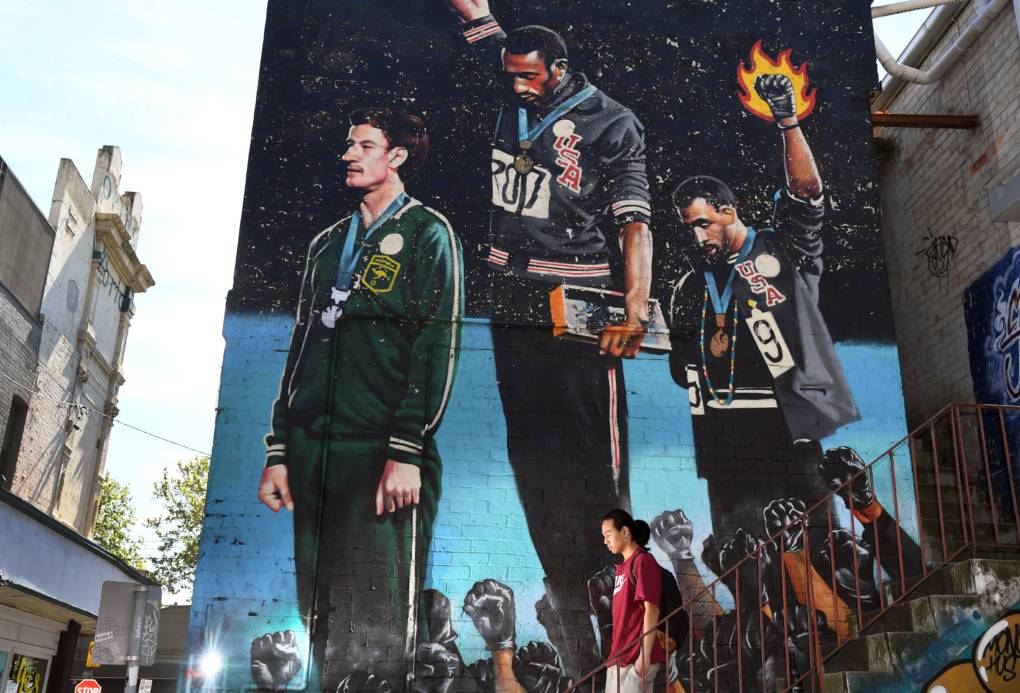
"caption": "A giant mural featuring U.S. sprinters Tommie Smith and John Carlos in Melbourne. ",
"description": "A giant mural featuring U.S. sprinters Tommie Smith and John Carlos in Melbourne. ",
"title": "AUS-OLY-1968-PROTEST-ANNIVERSARY-NORMAN",
"credit": "WILLIAM WEST/AFP/Getty Images",
"status": "inherit",
"isLoading": false,
"fetchFailed": false
},
"news_11699651": {
"type": "attachments",
"id": "news_11699651",
"meta": {
"index": "attachments_1716263798",
"site": "news",
"id": "11699651",
"found": true
},
"parent": 11699649,
"imgSizes": {
"small": {
"file": "https://ww2.kqed.org/app/uploads/sites/10/2018/10/RS20496_GettyImages-527631592-qut-520x611.jpg",
"width": 520,
"mimeType": "image/jpeg",
"height": 611
},
"twentyfourteen-full-width": {
"file": "https://ww2.kqed.org/app/uploads/sites/10/2018/10/RS20496_GettyImages-527631592-qut-1038x576.jpg",
"width": 1038,
"mimeType": "image/jpeg",
"height": 576
},
"thumbnail": {
"file": "https://ww2.kqed.org/app/uploads/sites/10/2018/10/RS20496_GettyImages-527631592-qut-160x188.jpg",
"width": 160,
"mimeType": "image/jpeg",
"height": 188
},
"fd-sm": {
"file": "https://ww2.kqed.org/app/uploads/sites/10/2018/10/RS20496_GettyImages-527631592-qut-960x1129.jpg",
"width": 960,
"mimeType": "image/jpeg",
"height": 1129
},
"post-thumbnail": {
"file": "https://ww2.kqed.org/app/uploads/sites/10/2018/10/RS20496_GettyImages-527631592-qut-672x372.jpg",
"width": 672,
"mimeType": "image/jpeg",
"height": 372
},
"xsmall": {
"file": "https://ww2.kqed.org/app/uploads/sites/10/2018/10/RS20496_GettyImages-527631592-qut-375x441.jpg",
"width": 375,
"mimeType": "image/jpeg",
"height": 441
},
"kqedFullSize": {
"file": "https://ww2.kqed.org/app/uploads/sites/10/2018/10/RS20496_GettyImages-527631592-qut.jpg",
"width": 1920,
"height": 2257
},
"large": {
"file": "https://ww2.kqed.org/app/uploads/sites/10/2018/10/RS20496_GettyImages-527631592-qut-1020x1199.jpg",
"width": 1020,
"mimeType": "image/jpeg",
"height": 1199
},
"xlarge": {
"file": "https://ww2.kqed.org/app/uploads/sites/10/2018/10/RS20496_GettyImages-527631592-qut-1180x1387.jpg",
"width": 1180,
"mimeType": "image/jpeg",
"height": 1387
},
"complete_open_graph": {
"file": "https://ww2.kqed.org/app/uploads/sites/10/2018/10/RS20496_GettyImages-527631592-qut-1021x1200.jpg",
"width": 1021,
"mimeType": "image/jpeg",
"height": 1200
},
"guest-author-50": {
"file": "https://ww2.kqed.org/app/uploads/sites/10/2018/10/RS20496_GettyImages-527631592-qut-50x50.jpg",
"width": 50,
"mimeType": "image/jpeg",
"height": 50
},
"guest-author-96": {
"file": "https://ww2.kqed.org/app/uploads/sites/10/2018/10/RS20496_GettyImages-527631592-qut-96x96.jpg",
"width": 96,
"mimeType": "image/jpeg",
"height": 96
},
"medium": {
"file": "https://ww2.kqed.org/app/uploads/sites/10/2018/10/RS20496_GettyImages-527631592-qut-800x940.jpg",
"width": 800,
"mimeType": "image/jpeg",
"height": 940
},
"guest-author-64": {
"file": "https://ww2.kqed.org/app/uploads/sites/10/2018/10/RS20496_GettyImages-527631592-qut-64x64.jpg",
"width": 64,
"mimeType": "image/jpeg",
"height": 64
},
"guest-author-32": {
"file": "https://ww2.kqed.org/app/uploads/sites/10/2018/10/RS20496_GettyImages-527631592-qut-32x32.jpg",
"width": 32,
"mimeType": "image/jpeg",
"height": 32
},
"fd-lrg": {
"file": "https://ww2.kqed.org/app/uploads/sites/10/2018/10/RS20496_GettyImages-527631592-qut-1920x2257.jpg",
"width": 1920,
"mimeType": "image/jpeg",
"height": 2257
},
"fd-med": {
"file": "https://ww2.kqed.org/app/uploads/sites/10/2018/10/RS20496_GettyImages-527631592-qut-1180x1387.jpg",
"width": 1180,
"mimeType": "image/jpeg",
"height": 1387
},
"full-width": {
"file": "https://ww2.kqed.org/app/uploads/sites/10/2018/10/RS20496_GettyImages-527631592-qut-1920x2257.jpg",
"width": 1920,
"mimeType": "image/jpeg",
"height": 2257
},
"detail": {
"file": "https://ww2.kqed.org/app/uploads/sites/10/2018/10/RS20496_GettyImages-527631592-qut-150x150.jpg",
"width": 150,
"mimeType": "image/jpeg",
"height": 150
},
"guest-author-128": {
"file": "https://ww2.kqed.org/app/uploads/sites/10/2018/10/RS20496_GettyImages-527631592-qut-128x128.jpg",
"width": 128,
"mimeType": "image/jpeg",
"height": 128
},
"xxsmall": {
"file": "https://ww2.kqed.org/app/uploads/sites/10/2018/10/RS20496_GettyImages-527631592-qut-240x282.jpg",
"width": 240,
"mimeType": "image/jpeg",
"height": 282
}
},
"publishDate": 1539834390,
"modified": 1569445097,
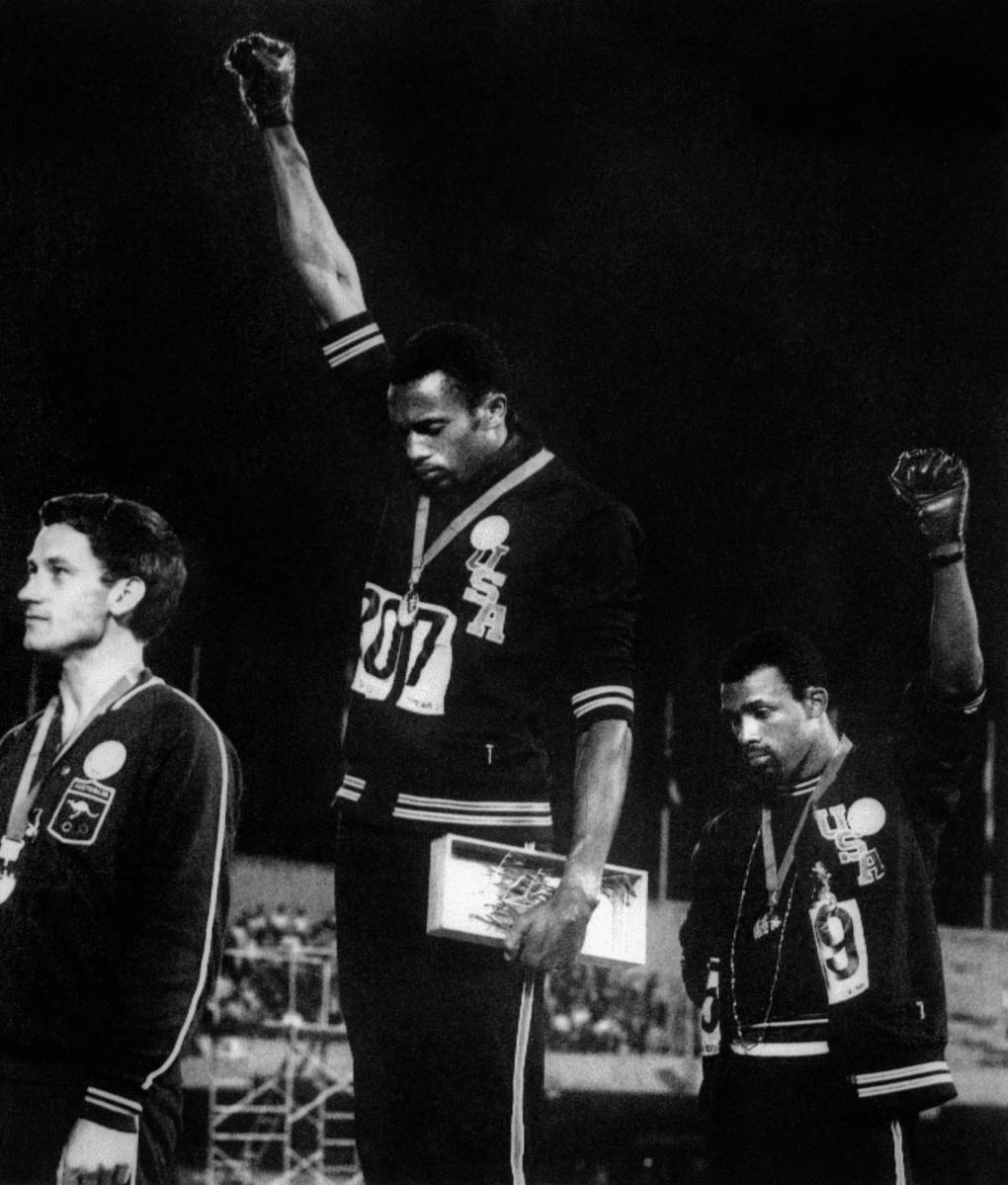
"caption": "San Jose State University sprinter Tommie Smith, center, and John Carlos, right, raised their gloved fists on the awards podium at the 1968 Olympic Games in Mexico as a protest against racial oppression in America. Peter Norman of Australia, left, who took silver, wore an Olympic Project for Human Rights pin in solidarity.",
"description": "San Jose State University sprinter Tommie Smith, center, and John Carlos, right, raised their gloved fists on the awards podium at the 1968 Olympic Games in Mexico as a protest against racial oppression in America. Peter Norman of Australia, left, who took silver, wore an Olympic Project for Human Rights pin in solidarity.",
"title": "RS20496_GettyImages-527631592-qut",
"credit": "AFP/Getty Images",
"status": "inherit",
"isLoading": false,
"fetchFailed": false
},
"news_11630820": {
"type": "attachments",
"id": "news_11630820",
"meta": {
"index": "attachments_1716263798",
"site": "news",
"id": "11630820",
"found": true
},
"parent": 11630589,
"imgSizes": {
"small": {
"file": "https://ww2.kqed.org/app/uploads/sites/10/2017/11/cistanthe-520x451.jpg",
"width": 520,
"mimeType": "image/jpeg",
"height": 451
},
"twentyfourteen-full-width": {
"file": "https://ww2.kqed.org/app/uploads/sites/10/2017/11/cistanthe-1038x576.jpg",
"width": 1038,
"mimeType": "image/jpeg",
"height": 576
},
"thumbnail": {
"file": "https://ww2.kqed.org/app/uploads/sites/10/2017/11/cistanthe-160x139.jpg",
"width": 160,
"mimeType": "image/jpeg",
"height": 139
},
"fd-sm": {
"file": "https://ww2.kqed.org/app/uploads/sites/10/2017/11/cistanthe-960x833.jpg",
"width": 960,
"mimeType": "image/jpeg",
"height": 833
},
"post-thumbnail": {
"file": "https://ww2.kqed.org/app/uploads/sites/10/2017/11/cistanthe-672x372.jpg",
"width": 672,
"mimeType": "image/jpeg",
"height": 372
},
"xsmall": {
"file": "https://ww2.kqed.org/app/uploads/sites/10/2017/11/cistanthe-375x325.jpg",
"width": 375,
"mimeType": "image/jpeg",
"height": 325
},
"kqedFullSize": {
"file": "https://ww2.kqed.org/app/uploads/sites/10/2017/11/cistanthe.jpg",
"width": 1920,
"height": 1665
},
"large": {
"file": "https://ww2.kqed.org/app/uploads/sites/10/2017/11/cistanthe-1020x885.jpg",
"width": 1020,
"mimeType": "image/jpeg",
"height": 885
},
"xlarge": {
"file": "https://ww2.kqed.org/app/uploads/sites/10/2017/11/cistanthe-1180x1023.jpg",
"width": 1180,
"mimeType": "image/jpeg",
"height": 1023
},
"guest-author-50": {
"file": "https://ww2.kqed.org/app/uploads/sites/10/2017/11/cistanthe-50x50.jpg",
"width": 50,
"mimeType": "image/jpeg",
"height": 50
},
"guest-author-96": {
"file": "https://ww2.kqed.org/app/uploads/sites/10/2017/11/cistanthe-96x96.jpg",
"width": 96,
"mimeType": "image/jpeg",
"height": 96
},
"medium": {
"file": "https://ww2.kqed.org/app/uploads/sites/10/2017/11/cistanthe-800x694.jpg",
"width": 800,
"mimeType": "image/jpeg",
"height": 694
},
"guest-author-64": {
"file": "https://ww2.kqed.org/app/uploads/sites/10/2017/11/cistanthe-64x64.jpg",
"width": 64,
"mimeType": "image/jpeg",
"height": 64
},
"guest-author-32": {
"file": "https://ww2.kqed.org/app/uploads/sites/10/2017/11/cistanthe-32x32.jpg",
"width": 32,
"mimeType": "image/jpeg",
"height": 32
},
"fd-lrg": {
"file": "https://ww2.kqed.org/app/uploads/sites/10/2017/11/cistanthe-1920x1665.jpg",
"width": 1920,
"mimeType": "image/jpeg",
"height": 1665
},
"fd-med": {
"file": "https://ww2.kqed.org/app/uploads/sites/10/2017/11/cistanthe-1180x1023.jpg",
"width": 1180,
"mimeType": "image/jpeg",
"height": 1023
},
"full-width": {
"file": "https://ww2.kqed.org/app/uploads/sites/10/2017/11/cistanthe-1920x1665.jpg",
"width": 1920,
"mimeType": "image/jpeg",
"height": 1665
},
"detail": {
"file": "https://ww2.kqed.org/app/uploads/sites/10/2017/11/cistanthe-150x150.jpg",
"width": 150,
"mimeType": "image/jpeg",
"height": 150
},
"guest-author-128": {
"file": "https://ww2.kqed.org/app/uploads/sites/10/2017/11/cistanthe-128x128.jpg",
"width": 128,
"mimeType": "image/jpeg",
"height": 128
},
"xxsmall": {
"file": "https://ww2.kqed.org/app/uploads/sites/10/2017/11/cistanthe-240x208.jpg",
"width": 240,
"mimeType": "image/jpeg",
"height": 208
}
},
"publishDate": 1510691983,
"modified": 1510693045,
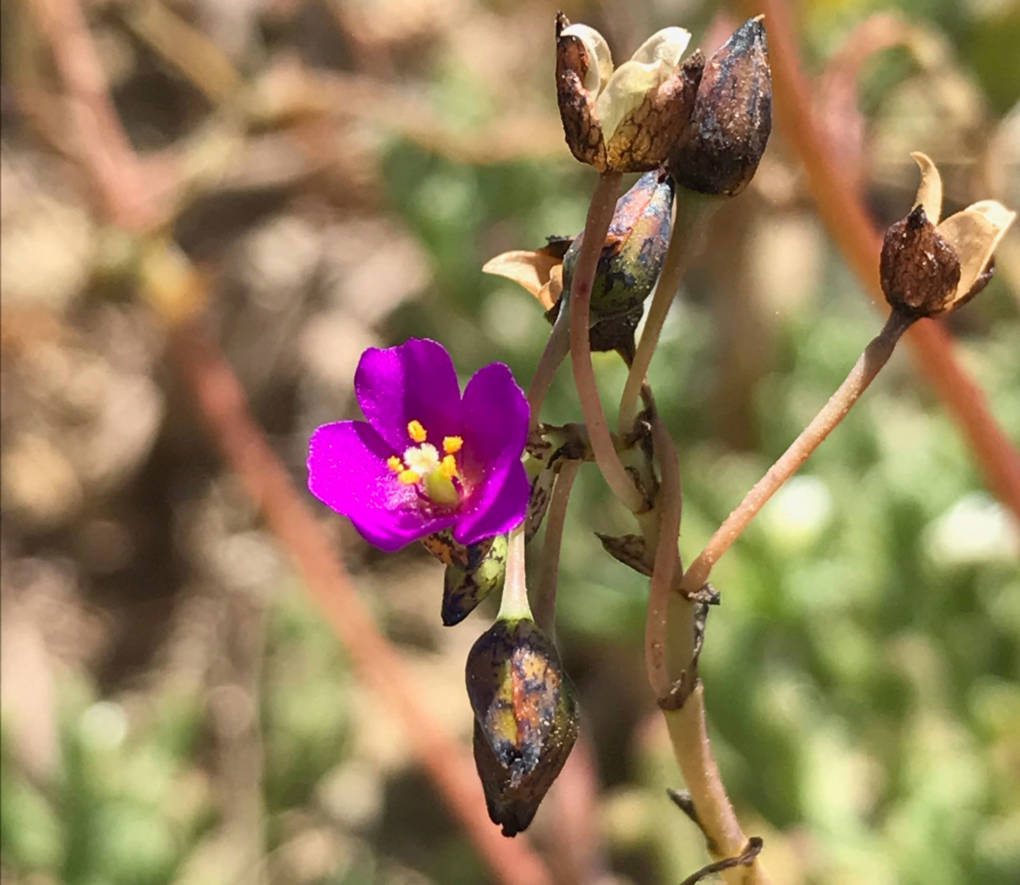
"caption": "Seaside cistanthe was previously known to grow on the other Channel Islands, in the Los Angeles basin and northwestern Baja California. But it had never been seen on San Nicolas Island until this past spring.",
"description": "Seaside cistanthe was previously known to grow on the other Channel Islands, in the Los Angeles basin and northwestern Baja California. But it had never been seen on San Nicolas Island until this past spring.",
"title": "cistanthe",
"credit": "William Hoyer/KCLU",
"status": "inherit",
"isLoading": false,
"fetchFailed": false
},
"news_11615187": {
"type": "attachments",
"id": "news_11615187",
"meta": {
"index": "attachments_1716263798",
"site": "news",
"id": "11615187",
"found": true
},
"parent": 11614958,
"imgSizes": {
"small": {
"file": "https://ww2.kqed.org/app/uploads/sites/10/2017/09/RS26473_IMG_3096-qut-520x293.jpg",
"width": 520,
"mimeType": "image/jpeg",
"height": 293
},
"twentyfourteen-full-width": {
"file": "https://ww2.kqed.org/app/uploads/sites/10/2017/09/RS26473_IMG_3096-qut-1038x576.jpg",
"width": 1038,
"mimeType": "image/jpeg",
"height": 576
},
"thumbnail": {
"file": "https://ww2.kqed.org/app/uploads/sites/10/2017/09/RS26473_IMG_3096-qut-160x90.jpg",
"width": 160,
"mimeType": "image/jpeg",
"height": 90
},
"fd-sm": {
"file": "https://ww2.kqed.org/app/uploads/sites/10/2017/09/RS26473_IMG_3096-qut-960x540.jpg",
"width": 960,
"mimeType": "image/jpeg",
"height": 540
},
"post-thumbnail": {
"file": "https://ww2.kqed.org/app/uploads/sites/10/2017/09/RS26473_IMG_3096-qut-672x372.jpg",
"width": 672,
"mimeType": "image/jpeg",
"height": 372
},
"xsmall": {
"file": "https://ww2.kqed.org/app/uploads/sites/10/2017/09/RS26473_IMG_3096-qut-375x211.jpg",
"width": 375,
"mimeType": "image/jpeg",
"height": 211
},
"kqedFullSize": {
"file": "https://ww2.kqed.org/app/uploads/sites/10/2017/09/RS26473_IMG_3096-qut.jpg",
"width": 1920,
"height": 1080
},
"large": {
"file": "https://ww2.kqed.org/app/uploads/sites/10/2017/09/RS26473_IMG_3096-qut-1020x574.jpg",
"width": 1020,
"mimeType": "image/jpeg",
"height": 574
},
"xlarge": {
"file": "https://ww2.kqed.org/app/uploads/sites/10/2017/09/RS26473_IMG_3096-qut-1180x664.jpg",
"width": 1180,
"mimeType": "image/jpeg",
"height": 664
},
"guest-author-50": {
"file": "https://ww2.kqed.org/app/uploads/sites/10/2017/09/RS26473_IMG_3096-qut-50x50.jpg",
"width": 50,
"mimeType": "image/jpeg",
"height": 50
},
"guest-author-96": {
"file": "https://ww2.kqed.org/app/uploads/sites/10/2017/09/RS26473_IMG_3096-qut-96x96.jpg",
"width": 96,
"mimeType": "image/jpeg",
"height": 96
},
"medium": {
"file": "https://ww2.kqed.org/app/uploads/sites/10/2017/09/RS26473_IMG_3096-qut-800x450.jpg",
"width": 800,
"mimeType": "image/jpeg",
"height": 450
},
"guest-author-64": {
"file": "https://ww2.kqed.org/app/uploads/sites/10/2017/09/RS26473_IMG_3096-qut-64x64.jpg",
"width": 64,
"mimeType": "image/jpeg",
"height": 64
},
"guest-author-32": {
"file": "https://ww2.kqed.org/app/uploads/sites/10/2017/09/RS26473_IMG_3096-qut-32x32.jpg",
"width": 32,
"mimeType": "image/jpeg",
"height": 32
},
"fd-lrg": {
"file": "https://ww2.kqed.org/app/uploads/sites/10/2017/09/RS26473_IMG_3096-qut-1920x1080.jpg",
"width": 1920,
"mimeType": "image/jpeg",
"height": 1080
},
"fd-med": {
"file": "https://ww2.kqed.org/app/uploads/sites/10/2017/09/RS26473_IMG_3096-qut-1180x664.jpg",
"width": 1180,
"mimeType": "image/jpeg",
"height": 664
},
"full-width": {
"file": "https://ww2.kqed.org/app/uploads/sites/10/2017/09/RS26473_IMG_3096-qut-1920x1080.jpg",
"width": 1920,
"mimeType": "image/jpeg",
"height": 1080
},
"detail": {
"file": "https://ww2.kqed.org/app/uploads/sites/10/2017/09/RS26473_IMG_3096-qut-150x150.jpg",
"width": 150,
"mimeType": "image/jpeg",
"height": 150
},
"guest-author-128": {
"file": "https://ww2.kqed.org/app/uploads/sites/10/2017/09/RS26473_IMG_3096-qut-128x128.jpg",
"width": 128,
"mimeType": "image/jpeg",
"height": 128
},
"xxsmall": {
"file": "https://ww2.kqed.org/app/uploads/sites/10/2017/09/RS26473_IMG_3096-qut-240x135.jpg",
"width": 240,
"mimeType": "image/jpeg",
"height": 135
}
},
"publishDate": 1504286742,
"modified": 1505172937,
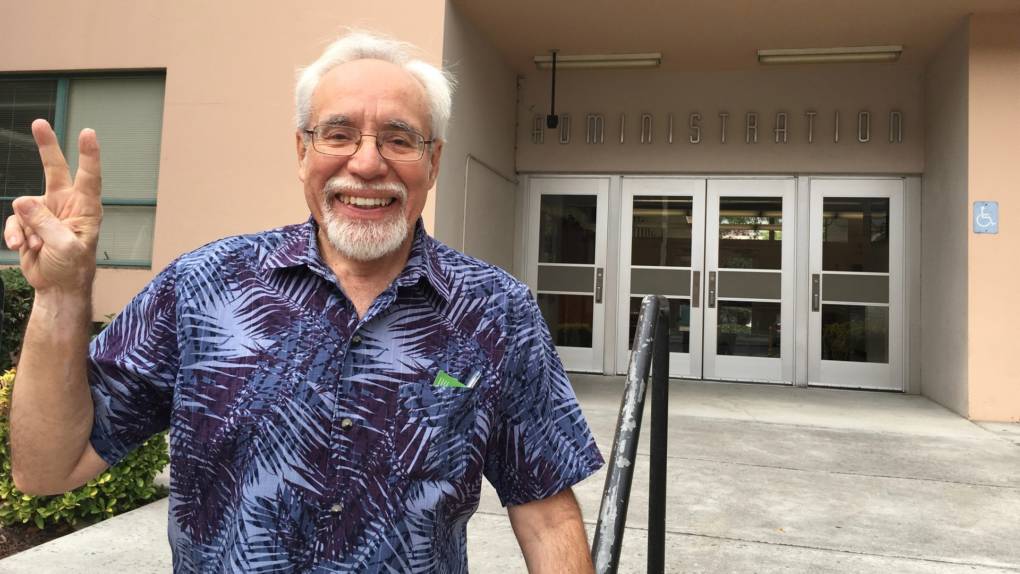
"caption": "Now an emeritus lecturer at San Jose State University, Gil Villagran was expelled as an undergraduate for protesting against the Vietnam War outside this campus administration building.",
"description": "Now an Emeritus Lecturer at San Jose State, Gil Villagran was expelled as an undergraduate for protesting against the Vietnam War outside this campus administration building.",
"title": "RS26473_IMG_3096-qut",
"credit": "Rachael Myrow/KQED",
"status": "inherit",
"isLoading": false,
"fetchFailed": false
},
"news_11168981": {
"type": "attachments",
"id": "news_11168981",
"meta": {
"index": "attachments_1716263798",
"site": "news",
"id": "11168981",
"found": true
},
"parent": 11168752,
"imgSizes": {
"small": {
"file": "https://ww2.kqed.org/app/uploads/sites/10/2016/11/altun-1920-520x390.jpg",
"width": 520,
"mimeType": "image/jpeg",
"height": 390
},
"twentyfourteen-full-width": {
"file": "https://ww2.kqed.org/app/uploads/sites/10/2016/11/altun-1920-1038x576.jpg",
"width": 1038,
"mimeType": "image/jpeg",
"height": 576
},
"thumbnail": {
"file": "https://ww2.kqed.org/app/uploads/sites/10/2016/11/altun-1920-160x120.jpg",
"width": 160,
"mimeType": "image/jpeg",
"height": 120
},
"fd-sm": {
"file": "https://ww2.kqed.org/app/uploads/sites/10/2016/11/altun-1920-960x720.jpg",
"width": 960,
"mimeType": "image/jpeg",
"height": 720
},
"post-thumbnail": {
"file": "https://ww2.kqed.org/app/uploads/sites/10/2016/11/altun-1920-672x372.jpg",
"width": 672,
"mimeType": "image/jpeg",
"height": 372
},
"xsmall": {
"file": "https://ww2.kqed.org/app/uploads/sites/10/2016/11/altun-1920-375x281.jpg",
"width": 375,
"mimeType": "image/jpeg",
"height": 281
},
"kqedFullSize": {
"file": "https://ww2.kqed.org/app/uploads/sites/10/2016/11/altun-1920.jpg",
"width": 1920,
"height": 1440
},
"large": {
"file": "https://ww2.kqed.org/app/uploads/sites/10/2016/11/altun-1920-1020x765.jpg",
"width": 1020,
"mimeType": "image/jpeg",
"height": 765
},
"xlarge": {
"file": "https://ww2.kqed.org/app/uploads/sites/10/2016/11/altun-1920-1180x885.jpg",
"width": 1180,
"mimeType": "image/jpeg",
"height": 885
},
"guest-author-50": {
"file": "https://ww2.kqed.org/app/uploads/sites/10/2016/11/altun-1920-50x50.jpg",
"width": 50,
"mimeType": "image/jpeg",
"height": 50
},
"guest-author-96": {
"file": "https://ww2.kqed.org/app/uploads/sites/10/2016/11/altun-1920-96x96.jpg",
"width": 96,
"mimeType": "image/jpeg",
"height": 96
},
"medium": {
"file": "https://ww2.kqed.org/app/uploads/sites/10/2016/11/altun-1920-800x600.jpg",
"width": 800,
"mimeType": "image/jpeg",
"height": 600
},
"guest-author-64": {
"file": "https://ww2.kqed.org/app/uploads/sites/10/2016/11/altun-1920-64x64.jpg",
"width": 64,
"mimeType": "image/jpeg",
"height": 64
},
"guest-author-32": {
"file": "https://ww2.kqed.org/app/uploads/sites/10/2016/11/altun-1920-32x32.jpg",
"width": 32,
"mimeType": "image/jpeg",
"height": 32
},
"jmtc-small-thumb": {
"file": "https://ww2.kqed.org/app/uploads/sites/10/2016/11/altun-1920-280x150.jpg",
"width": 280,
"mimeType": "image/jpeg",
"height": 150
},
"fd-lrg": {
"file": "https://ww2.kqed.org/app/uploads/sites/10/2016/11/altun-1920-1920x1440.jpg",
"width": 1920,
"mimeType": "image/jpeg",
"height": 1440
},
"fd-med": {
"file": "https://ww2.kqed.org/app/uploads/sites/10/2016/11/altun-1920-1180x885.jpg",
"width": 1180,
"mimeType": "image/jpeg",
"height": 885
},
"full-width": {
"file": "https://ww2.kqed.org/app/uploads/sites/10/2016/11/altun-1920-1920x1440.jpg",
"width": 1920,
"mimeType": "image/jpeg",
"height": 1440
},
"detail": {
"file": "https://ww2.kqed.org/app/uploads/sites/10/2016/11/altun-1920-150x150.jpg",
"width": 150,
"mimeType": "image/jpeg",
"height": 150
},
"guest-author-128": {
"file": "https://ww2.kqed.org/app/uploads/sites/10/2016/11/altun-1920-128x128.jpg",
"width": 128,
"mimeType": "image/jpeg",
"height": 128
},
"xxsmall": {
"file": "https://ww2.kqed.org/app/uploads/sites/10/2016/11/altun-1920-240x180.jpg",
"width": 240,
"mimeType": "image/jpeg",
"height": 180
}
},
"publishDate": 1478827542,
"modified": 1478829627,
"caption": "San Jose State University sophomore Esra Altun outside SJSU's Dr. Martin Luther King Jr. Library on Nov. 10, 2016.",
"description": null,
"title": "altun-1920",
"credit": "Beth Willon/KQED",
"status": "inherit",
"isLoading": false,
"fetchFailed": false
},
"news_10522160": {
"type": "attachments",
"id": "news_10522160",
"meta": {
"index": "attachments_1716263798",
"site": "news",
"id": "10522160",
"found": true
},
"parent": 10522015,
"imgSizes": {
"twentyfourteen-full-width": {
"file": "https://ww2.kqed.org/app/uploads/sites/10/2015/05/RS15144_20150420-PCF_jt-5-qut-1038x576.jpg",
"width": 1038,
"mimeType": "image/jpeg",
"height": 576
},
"thumbnail": {
"file": "https://ww2.kqed.org/app/uploads/sites/10/2015/05/RS15144_20150420-PCF_jt-5-qut-400x267.jpg",
"width": 400,
"mimeType": "image/jpeg",
"height": 267
},
"fd-sm": {
"file": "https://ww2.kqed.org/app/uploads/sites/10/2015/05/RS15144_20150420-PCF_jt-5-qut-960x641.jpg",
"width": 960,
"mimeType": "image/jpeg",
"height": 641
},
"post-thumbnail": {
"file": "https://ww2.kqed.org/app/uploads/sites/10/2015/05/RS15144_20150420-PCF_jt-5-qut-672x372.jpg",
"width": 672,
"mimeType": "image/jpeg",
"height": 372
},
"kqedFullSize": {
"file": "https://ww2.kqed.org/app/uploads/sites/10/2015/05/RS15144_20150420-PCF_jt-5-qut.jpg",
"width": 1920,
"height": 1282
},
"large": {
"file": "https://ww2.kqed.org/app/uploads/sites/10/2015/05/RS15144_20150420-PCF_jt-5-qut-1440x962.jpg",
"width": 1440,
"mimeType": "image/jpeg",
"height": 962
},
"guest-author-96": {
"file": "https://ww2.kqed.org/app/uploads/sites/10/2015/05/RS15144_20150420-PCF_jt-5-qut-96x96.jpg",
"width": 96,
"mimeType": "image/jpeg",
"height": 96
},
"medium": {
"file": "https://ww2.kqed.org/app/uploads/sites/10/2015/05/RS15144_20150420-PCF_jt-5-qut-800x534.jpg",
"width": 800,
"mimeType": "image/jpeg",
"height": 534
},
"guest-author-64": {
"file": "https://ww2.kqed.org/app/uploads/sites/10/2015/05/RS15144_20150420-PCF_jt-5-qut-64x64.jpg",
"width": 64,
"mimeType": "image/jpeg",
"height": 64
},
"guest-author-32": {
"file": "https://ww2.kqed.org/app/uploads/sites/10/2015/05/RS15144_20150420-PCF_jt-5-qut-32x32.jpg",
"width": 32,
"mimeType": "image/jpeg",
"height": 32
},
"fd-med": {
"file": "https://ww2.kqed.org/app/uploads/sites/10/2015/05/RS15144_20150420-PCF_jt-5-qut-1180x788.jpg",
"width": 1180,
"mimeType": "image/jpeg",
"height": 788
},
"detail": {
"file": "https://ww2.kqed.org/app/uploads/sites/10/2015/05/RS15144_20150420-PCF_jt-5-qut-75x75.jpg",
"width": 75,
"mimeType": "image/jpeg",
"height": 75
},
"guest-author-128": {
"file": "https://ww2.kqed.org/app/uploads/sites/10/2015/05/RS15144_20150420-PCF_jt-5-qut-128x128.jpg",
"width": 128,
"mimeType": "image/jpeg",
"height": 128
}
},
"publishDate": 1431382552,
"modified": 1431471939,
"caption": "Dalia Angel, right, expects to graduate from San Jose State next year, with the support of the Peninsula College Fund, a nonprofit that provides scholarship money, summer internships and mentors like Carole Melis.",
"description": "Dalia Angel, right, expects to graduate from San Jose State next year, with the support of the Peninsula College Fund, a nonprofit that provides scholarship money, summer internships and mentors like Carole Melis.",
"title": "RS15144_20150420-PCF_jt-5-qut",
"credit": "James Tensuan/KQED",
"status": "inherit",
"isLoading": false,
"fetchFailed": false
},
"news_125713": {
"type": "attachments",
"id": "news_125713",
"meta": {
"index": "attachments_1716263798",
"site": "news",
"id": "125713",
"found": true
},
"parent": 125702,
"imgSizes": {
"kqedFullSize": {
"file": "https://ww2.kqed.org/app/uploads/sites/10/2014/02/Screen-Shot-2014-02-07-at-4.50.03-PM.png",
"width": 851,
"height": 395
}
},
"publishDate": 1391820625,
"modified": 1391820625,
"caption": null,
"description": null,
"title": "Screen Shot 2014-02-07 at 4.50.03 PM",
"credit": null,
"status": "inherit",
"isLoading": false,
"fetchFailed": false
}
},
"audioPlayerReducer": {
"postId": "stream_live",
"isPaused": true,
"isPlaying": false,
"pfsActive": false,
"pledgeModalIsOpen": true,
"playerDrawerIsOpen": false,
"liveAudioPlayStartedAt": 0,
"liveAudioPlayContext": ""
},
"authorsReducer": {
"byline_news_11731896": {
"type": "authors",
"id": "byline_news_11731896",
"meta": {
"override": true
},
"slug": "byline_news_11731896",
"name": "\u003ca href=\"https://www.mercurynews.com/author/jason-green/\" rel=\"noopener\" target=\"_blank\">Jason Green\u003c/a> and \u003ca href=\"https://www.mercurynews.com/author/thomas-peele/\" rel=\"noopener\" target=\"_blank\">Thomas Peele\u003c/a>\u003cbr />Bay Area News Group",
"isLoading": false
},
"byline_news_11630589": {
"type": "authors",
"id": "byline_news_11630589",
"meta": {
"override": true
},
"slug": "byline_news_11630589",
"name": "\u003cstrong>\u003ca href=\"http://kclu.org/people/debra-greene#stream/0\">Debra Greene\u003c/a>\u003c/strong>",
"isLoading": false
},
"kqed": {
"type": "authors",
"id": "236",
"meta": {
"index": "authors_1716337520",
"id": "236",
"found": true
},
"name": "KQED News Staff",
"firstName": "KQED News Staff",
"lastName": null,
"slug": "kqed",
"email": "faq@kqed.org",
"display_author_email": false,
"staff_mastheads": [],
"title": null,
"bio": null,
"avatar": "https://secure.gravatar.com/avatar/ef0e801a68c4c54afa9180db14084167?s=600&d=blank&r=g",
"twitter": null,
"facebook": null,
"instagram": null,
"linkedin": null,
"sites": [
{
"site": "arts",
"roles": [
"contributor"
]
},
{
"site": "news",
"roles": [
"editor"
]
},
{
"site": "futureofyou",
"roles": [
"author"
]
}
],
"headData": {
"title": "KQED News Staff | KQED",
"description": null,
"ogImgSrc": "https://secure.gravatar.com/avatar/ef0e801a68c4c54afa9180db14084167?s=600&d=blank&r=g",
"twImgSrc": "https://secure.gravatar.com/avatar/ef0e801a68c4c54afa9180db14084167?s=600&d=blank&r=g"
},
"isLoading": false,
"link": "/author/kqed"
},
"rachael-myrow": {
"type": "authors",
"id": "251",
"meta": {
"index": "authors_1716337520",
"id": "251",
"found": true
},
"name": "Rachael Myrow",
"firstName": "Rachael",
"lastName": "Myrow",
"slug": "rachael-myrow",
"email": "rmyrow@kqed.org",
"display_author_email": true,
"staff_mastheads": [
"news"
],
"title": "Senior Editor of KQED's Silicon Valley News Desk",
"bio": "• I write and edit stories about how Silicon Valley power and policies shape everyday life in California. I’m also passionate about making Bay Area history and culture more accessible to a broad public. • I’ve been a journalist for most of my life, starting in high school with The Franklin Press in Los Angeles, where I grew up. While earning my first degree in English at UC Berkeley, I got my start in public radio at KALX-FM. After completing a second degree in journalism at Cal, I landed my first professional job at Marketplace, then moved on to KPCC (now LAist), and then KQED, where I hosted The California Report for more than seven years. • My reporting has appeared on NPR, The World, WBUR’s \u003ci>Here & Now\u003c/i>, and the BBC. I also guest host for KQED’s \u003ci>Forum\u003c/i>, as well as the Commonwealth Club in San Francisco. • I speak periodically on media, democracy and technology issues, and do voiceover work for documentaries and educational video projects. • Outside of the studio, you'll find me hiking Bay Area trails and whipping up Insta-ready meals in my kitchen. • I do not accept gifts, money, or favors from anyone connected to my reporting, I don't pay people for information, and I do not support or donate to political causes. • I strive to treat the people I report on with fairness, honesty, and respect. I also recognize there are often multiple sides to a story and work to verify information through multiple sources and documentation. If I get something wrong, I correct it.",
"avatar": "https://secure.gravatar.com/avatar/87bf8cb5874e045cdff430523a6d48b1?s=600&d=blank&r=g",
"twitter": "rachaelmyrow",
"facebook": null,
"instagram": null,
"linkedin": "https://www.linkedin.com/in/rachaelmyrow/",
"sites": [
{
"site": "arts",
"roles": [
"administrator"
]
},
{
"site": "news",
"roles": [
"edit_others_posts",
"editor"
]
},
{
"site": "futureofyou",
"roles": [
"editor"
]
},
{
"site": "bayareabites",
"roles": [
"editor"
]
},
{
"site": "stateofhealth",
"roles": [
"editor"
]
},
{
"site": "science",
"roles": [
"editor"
]
},
{
"site": "food",
"roles": [
"editor"
]
},
{
"site": "forum",
"roles": [
"editor"
]
},
{
"site": "liveblog",
"roles": [
"author"
]
}
],
"headData": {
"title": "Rachael Myrow | KQED",
"description": "Senior Editor of KQED's Silicon Valley News Desk",
"ogImgSrc": "https://secure.gravatar.com/avatar/87bf8cb5874e045cdff430523a6d48b1?s=600&d=blank&r=g",
"twImgSrc": "https://secure.gravatar.com/avatar/87bf8cb5874e045cdff430523a6d48b1?s=600&d=blank&r=g"
},
"isLoading": false,
"link": "/author/rachael-myrow"
},
"bwillon": {
"type": "authors",
"id": "3207",
"meta": {
"index": "authors_1716337520",
"id": "3207",
"found": true
},
"name": "Beth Willon",
"firstName": "Beth",
"lastName": "Willon",
"slug": "bwillon",
"email": "bwillon@kqed.org",
"display_author_email": false,
"staff_mastheads": [],
"title": "KQED Contributor",
"bio": "Beth Willon is a former senior reporter for KQED's Silicon Valley News Desk in San Jose. (@KQEDNews )\r\n\r\n@BethWillon",
"avatar": "https://secure.gravatar.com/avatar/3533b741c785d6a97e8b283e7f65606d?s=600&d=blank&r=g",
"twitter": null,
"facebook": null,
"instagram": null,
"linkedin": null,
"sites": [
{
"site": "news",
"roles": [
"subscriber"
]
}
],
"headData": {
"title": "Beth Willon | KQED",
"description": "KQED Contributor",
"ogImgSrc": "https://secure.gravatar.com/avatar/3533b741c785d6a97e8b283e7f65606d?s=600&d=blank&r=g",
"twImgSrc": "https://secure.gravatar.com/avatar/3533b741c785d6a97e8b283e7f65606d?s=600&d=blank&r=g"
},
"isLoading": false,
"link": "/author/bwillon"
},
"jsmall": {
"type": "authors",
"id": "6625",
"meta": {
"index": "authors_1716337520",
"id": "6625",
"found": true
},
"name": "Julie Small",
"firstName": "Julie",
"lastName": "Small",
"slug": "jsmall",
"email": "jsmall@kqed.org",
"display_author_email": true,
"staff_mastheads": [
"news"
],
"title": "KQED Contributor",
"bio": "Julie Small reports on criminal justice and immigration.\r\n\r\nShe was part of a team at KQED awarded a regional 2019 Edward R. Murrow award for continuing coverage of the Trump Administration's family separation policy.\r\n\r\nThe Society for Professional Journalists recognized Julie's 2018 \u003ca href=\"https://www.kqed.org/news/11636262/the-officer-tased-him-31-times-the-sheriff-called-his-death-an-accident\">reporting\u003c/a> on the San Joaquin County Sheriff's \u003ca href=\"https://www.kqed.org/news/11634689/autopsy-doctors-sheriff-overrode-death-findings-to-protect-law-enforcement\">interference\u003c/a> in death investigations with an Excellence in Journalism Award for Ongoing Coverage.\r\n\r\nJulie's\u003ca href=\"https://www.kqed.org/news/11039666/two-mentally-ill-inmates-died-one-month-in-santa-clara\"> reporting\u003c/a> with Lisa Pickoff-White on the treatment of mentally ill offenders in California jails earned a 2017 regional Edward R. Murrow Award for news reporting and an investigative reporting award from the SPJ of Northern California.\r\n\r\nBefore joining KQED, Julie covered government and politics in Sacramento for Southern California Public Radio (SCPR). Her 2010 \u003ca href=\"https://www.scpr.org/specials/prisonmedical/\">series\u003c/a> on lapses in California’s prison medical care also won a regional Edward R. Murrow Award for investigative reporting and a Golden Mic Award from the RTNDA of Southern California.\r\n\r\nJulie began her career in journalism in 2000 as the deputy foreign editor for public radio's \u003cem>Marketplace, \u003c/em>while earning her master's degree in journalism from USC’s Annenberg School of Communication.",
"avatar": "https://secure.gravatar.com/avatar/4baedf201468df97be97c2a9dd7585d0?s=600&d=blank&r=g",
"twitter": "@SmallRadio2",
"facebook": null,
"instagram": null,
"linkedin": null,
"sites": [
{
"site": "news",
"roles": [
"editor"
]
},
{
"site": "stateofhealth",
"roles": [
"author"
]
},
{
"site": "science",
"roles": [
"author"
]
}
],
"headData": {
"title": "Julie Small | KQED",
"description": "KQED Contributor",
"ogImgSrc": "https://secure.gravatar.com/avatar/4baedf201468df97be97c2a9dd7585d0?s=600&d=blank&r=g",
"twImgSrc": "https://secure.gravatar.com/avatar/4baedf201468df97be97c2a9dd7585d0?s=600&d=blank&r=g"
},
"isLoading": false,
"link": "/author/jsmall"
},
"slewis": {
"type": "authors",
"id": "8676",
"meta": {
"index": "authors_1716337520",
"id": "8676",
"found": true
},
"name": "Sukey Lewis",
"firstName": "Sukey",
"lastName": "Lewis",
"slug": "slewis",
"email": "slewis@kqed.org",
"display_author_email": true,
"staff_mastheads": [
"news"
],
"title": "KQED Contributor",
"bio": "Sukey Lewis is a criminal justice reporter and host of \u003cem>On Our Watch\u003c/em>, a new podcast from NPR and KQED about the shadow world of police discipline. In 2018, she co-founded the California Reporting Project, a coalition of newsrooms across the state focused on obtaining previously sealed internal affairs records from law enforcement. In addition to her reporting on police accountability, Sukey has investigated the bail bonds industry, California's wildfires and the high cost of prison phone calls. Sukey earned a master's degree in journalism from the University of California at Berkeley. Send news tips to slewis@kqed.org.",
"avatar": "https://secure.gravatar.com/avatar/03fd6b21024f99d8b0a1966654586de7?s=600&d=blank&r=g",
"twitter": "SukeyLewis",
"facebook": null,
"instagram": null,
"linkedin": null,
"sites": [
{
"site": "news",
"roles": [
"author",
"edit_others_posts"
]
}
],
"headData": {
"title": "Sukey Lewis | KQED",
"description": "KQED Contributor",
"ogImgSrc": "https://secure.gravatar.com/avatar/03fd6b21024f99d8b0a1966654586de7?s=600&d=blank&r=g",
"twImgSrc": "https://secure.gravatar.com/avatar/03fd6b21024f99d8b0a1966654586de7?s=600&d=blank&r=g"
},
"isLoading": false,
"link": "/author/slewis"
}
},
"pagesReducer": {
"news_tag_san-jose-state-university": {
"type": "terms",
"id": "news_5711",
"meta": {
"index": "terms_1716263798",
"site": "news",
"id": "5711",
"score": 9.890152
},
"featImg": null,
"name": "San Jose State University",
"description": null,
"taxonomy": "tag",
"headData": {
"twImgId": null,
"twTitle": null,
"ogTitle": null,
"ogImgId": null,
"twDescription": null,
"description": null,
"title": "San Jose State University Archives | KQED News",
"ogDescription": null
},
"ttid": 5735,
"slug": "san-jose-state-university",
"isLoading": false,
"title": "San Jose State University",
"pageMeta": {
"site": "news",
"WpPageTemplate": "page-topic-editorial",
"currentPage": 3
},
"blocks": [
{
"blockName": "kqed/post-list",
"attrs": {
"layout": "cardArticle2",
"query": "posts/news?tag=san-jose-state-university",
"seeMore": false,
"paginated": true,
"page": 3
}
},
{
"blockName": "kqed/ad"
}
]
}
},
"pfsSessionReducer": {},
"postsReducer": {
"stream_live": {
"type": "live",
"id": "stream_live",
"audioUrl": "https://streams.kqed.org/kqedradio",
"title": "Live Stream",
"excerpt": "Live Stream information currently unavailable.",
"link": "/radio",
"featImg": "",
"label": {
"name": "KQED Live",
"link": "/"
}
},
"stream_kqedNewscast": {
"type": "posts",
"id": "stream_kqedNewscast",
"audioUrl": "https://www.kqed.org/.stream/anon/radio/RDnews/newscast.mp3?_=1",
"title": "KQED Newscast",
"featImg": "",
"label": {
"name": "88.5 FM",
"link": "/"
}
},
"news_11759028": {
"type": "posts",
"id": "news_11759028",
"meta": {
"index": "posts_1716263798",
"site": "news",
"id": "11759028",
"score": null,
"sort": [
1562204196000
]
},
"parent": 0,
"labelTerm": {
"site": "news"
},
"blocks": [],
"publishDate": 1562204196,
"format": "standard",
"disqusTitle": "Former San Jose State Cop Fired for Excessive Force Won Job Back on Appeal",
"title": "Former San Jose State Cop Fired for Excessive Force Won Job Back on Appeal",
"headTitle": "KQED News",
"content": "\u003cp>San Jose State University fired Officer Johnathon Silva for excessively beating, kicking and tasering an apparently mentally ill man in a school library in 2016, but the cop won his job back over the objections of administrators.\u003c/p>\n\u003cp>The school released the internal affairs investigation on Wednesday in response to a public records request under the state’s new police transparency law. The records reveal that the university’s administration was directly at odds with the police department over Silva’s actions on March 17, 2016.[pullquote size='small' align='right' citation='Peter Decena, Los Gatos-Monte Sereno Police Chief']'[I]t was my determination that the use of force was within policy.'[/pullquote]\u003c/p>\n\u003cp>Police officials said he followed his training when confronted with a non-compliant suspect. In the university’s version, Silva was an officer with a history of being short-tempered who “lost control of the situation,” unnecessarily beating a man so badly that his lungs collapsed, and was dishonest about it.\u003c/p>\n\u003cp>Silva is now an officer with the Los Gatos-Monte Sereno Police Department under the same chief who supervised him at San Jose State.\u003c/p>\n\u003cp>“Based on the administrative review and recommendations, it was my determination that the use of force was within policy,” Police Chief Peter Decena said in a press release issued Wednesday.\u003c/p>\n\u003cp>The files released by the school include graphic body-cam footage showing the incident unfold over about 10 minutes.\u003c/p>\n\u003cp>\u003cem>Warning, this video contains graphic imagery and language.\u003c/em>\u003c/p>\n\u003cp>https://youtu.be/BLIC3gaAiBc\u003c/p>\n\u003cp>It was the morning of March 17, 2016, when Silva responded to reports from library security officers of a man looking at pornography and potentially masturbating on the eighth floor, records show. The Dr. Martin Luther King Jr. Library is open to the public and the man, Philip Chong, was not a student.\u003c/p>\n\u003cp>Silva asked Chong for his name and birthdate. The two went back and forth for a little bit, and Chong’s answers got progressively more bizarre.\u003c/p>\n\u003cp>“Satan for Earth,” he said at one point.\u003c/p>\n\u003cp>“The head of the Italian mobsters,” Chong said at another.\u003c/p>\n\u003cp>Chong also wouldn’t provide his date of birth.[pullquote size='small' align='right' citation='Katherine Winder, CSU Attorney']'[T]his case is an egregious example of excessive force that left a public library patron with severe and pervasive injuries.'[/pullquote]\u003c/p>\n\u003cp>“I need you to stop fucking around,” Silva said, his voice becoming agitated as he moved toward Chong.\u003c/p>\n\u003cp>It escalated from there. Silva grabbed Chong’s arm in a wrist lock and pulled him out of the chair to arrest him. They went into a wall and then Silva wrestled with Chong down an aisle of books, eventually going to the ground.\u003c/p>\n\u003cp>“Roll on your stomach,” Silva yelled at Chong, and then told the man he was going to use his Taser on him.\u003c/p>\n\u003cp>Silva used his Taser on Chong multiple times, kneed him and hit him with a baton. Chong moaned and screamed.\u003c/p>\n\u003cp>At that point, other officers arrived and gained control of Chong. He was taken to the hospital with broken ribs, collapsed lungs and cuts on his face and head. Records show Chong spent 10 days in the hospital.\u003c/p>\n\u003cp>Silva's wrist was also fractured in the incident, according to the records.\u003c/p>\n\u003cp>Police recommended prosecutors charge Chong with lewd acts, resisting arrest, battery on a peace officer and drug possession.\u003c/p>\n\u003cp>Police had been called to the library before in regard to Chong. He’d been found vaping one time and was arrested for being on drugs and talking to himself on another occasion.[aside tag='police-records' hero=\"https://ww2.kqed.org/news/wp-content/uploads/sites/10/2019/03/Police-Art_1-1.gif\" heroLink=\"https://www.kqed.org/news/tag/police-records\" target=\"_blank\"]\u003c/p>\n\u003cp>Chong’s attorney, Stuart Kirchick, called him a “very intelligent young man, but suffering, unfortunately, from a mental illness that started unusually only a few years prior.”\u003c/p>\n\u003cp>Kirchick said that his client spent a few days in jail, but that Santa Clara County prosecutors dismissed all charges after they saw the body-cam footage from the library.\u003c/p>\n\u003cp>“He [Chong] was not willing to give his true name to the officer and that just completely set the officer off,” Kirchick said. “I mean he just completely lost his temper and used unreasonable force in the process of detaining him … to just find out his name.”\u003c/p>\n\u003cp>Chong filed a claim with the university in September 2016 and the school settled, paying him $950,000.\u003c/p>\n\u003cp>This wasn’t the first time Silva had been accused of excessive force. A 2017 lawsuit filed by then-student Alan Chen alleges that Silva and a fellow officer \"flung\" him to the concrete face-first, breaking his teeth and causing him to lose consciousness in 2015.\u003c/p>\n\u003cp>Records show, Silva was given a warning in 2015 on a performance evaluation to “not let his frustrations get the best when dealing with uncooperative subjects in the field.”\u003c/p>\n\u003cp>The school settled with Chen for an undisclosed amount last year. The university has not yet responded to questions about that incident.\u003c/p>\n\u003cp>In November of 2016, the university launched an internal investigation into the library incident, and Silva was placed on administrative leave.\u003c/p>\n\u003cp>The university system brought in Morin Jacob, an attorney with the San Francisco-based law firm Liebert Cassidy Whitmore, to assess this incident. She said that Silva “lost control of the situation early by reacting emotionally to Chong.”\u003cbr>\n[ad fullwidth]\u003cbr>\nJacob found that Silva violated the school’s use-of-force policy each step along the way and that Chong was not a threat.\u003c/p>\n\u003cp>Silva’s choice to use a Taser on Chong’s chest, which can be very dangerous, she found went against the school’s policy requiring officers to avoid that area. And Jacob determined that Silva misled investigators.\u003c/p>\n\u003cp>“Officer Silva claims that Chong pushed him into the wall, but the videos do not support Officer Silva’s account,” she wrote in her report. “Chong did not push Officer Silva into the wall.”\u003c/p>\n\u003cp>The university fired Silva in August 2017. But he appealed with the backing of his department and his fellow officers.\u003c/p>\n\u003cp>“There isn’t a single peace officer that was involved in this incident that either reviewed the video, that works for the department or was out at the scene of this incident, that says John did anything wrong,” Silva’s attorney, Steven Welty, told the administrative law judge at his State Personnel Board hearing.\u003c/p>\n\u003cp>Welty conceded that the body-cam footage is disturbing, but pointed out that Silva did not ask for this to happen. When Silva arrived on the eighth floor of the library, Welty said the officer was expecting to just give Chong a citation and ask him to leave the building. Silva couldn't be reached for comment Wednesday. Welty did not respond to messages seeking comment.\u003c/p>\n\u003cp>Silva won his appeal and was reinstated in May 2018. The university contested that decision with a strongly worded filing from the school’s attorney, Katherine Winder.\u003cbr>\n[aside postID='news_11755384,news_11744106,news_11726097' label='More Police Secrets Revealed' target='_blank']\u003c/p>\n\u003cp>“In stark contrast to the tale spun by Silva, this case does not represent a reasonable and necessary use of force but rather this case is an egregious example of excessive force that left a public library patron with severe and pervasive injuries,” she wrote. “In revoking Silva’s dismissal, the [judge] determined that Silva’s severe beating of a mentally ill minority member of the public was proper, in a public library at a university.”\u003c/p>\n\u003cp>The personnel board declined to reconsider.\u003c/p>\n\u003cp>Silva never returned to active duty with the school's police force, according to a university spokeswoman. He resigned on Oct. 1, 2018, the day he was scheduled to return to work.\u003c/p>\n\u003cp>But he apparently still had the support of his former chief, Peter Decena. After about eight years, Decena had left the school in 2017 to head up the Los Gatos-Monte Sereno Police Department.\u003c/p>\n\u003cp>Decena hired Silva as a Los Gatos officer in September 2018.\u003c/p>\n\u003cp>The chief did not respond to specific questions about the March 2016 incident or the additional lawsuit, but issued a press release Wednesday that said he concurred with the State Personnel Board review.\u003c/p>\n\u003cp>“He [Silva] participated in our rigorous selection process and completed a thorough background investigation, including a polygraph examination and psychological screening,” Decena said.\u003c/p>\n\u003cp>San Jose State spokeswoman Robin McElhatton said in a statement issued Wednesday that the March 2016 incident was unfortunate, but that safety and security are the university’s top priority.\u003c/p>\n\u003cp>\"We are committed to ensuring that we have a well-trained, professional campus police force that complies with professional standards,\" she wrote.\u003c/p>\n\u003cp>\u003cem>Robert Salonga of the Bay Area News Group contributed to this report.\u003c/em>\u003c/p>\n\u003cp>\u003cem>This story was produced as part of the California Reporting Project, a collaboration of 40 newsrooms across the state to obtain and report on police misconduct and serious use-of-force records unsealed in 2019.\u003c/em>\u003c/p>\n\u003cp>[ad floatright]\u003c/p>\n",
"disqusIdentifier": "11759028 https://ww2.kqed.org/news/?p=11759028",
"disqusUrl": "https://ww2.kqed.org/news/2019/07/03/former-san-jose-state-cop-fired-for-excessive-force-won-job-back-on-appeal/",
"stats": {
"hasVideo": false,
"hasChartOrMap": false,
"hasAudio": false,
"hasPolis": false,
"wordCount": 1552,
"hasGoogleForm": false,
"hasGallery": false,
"hasHearkenModule": false,
"iframeSrcs": [],
"paragraphCount": 47
},
"modified": 1563906473,
"excerpt": "The CSU system's investigation found Officer Johnathon Silva violated department rules when he broke a suspect's ribs and collapsed his lungs. Silva later resigned and then was hired in Los Gatos.",
"headData": {
"twImgId": "",
"twTitle": "",
"ogTitle": "",
"ogImgId": "",
"twDescription": "",
"description": "The CSU system's investigation found Officer Johnathon Silva violated department rules when he broke a suspect's ribs and collapsed his lungs. Silva later resigned and then was hired in Los Gatos.",
"title": "Former San Jose State Cop Fired for Excessive Force Won Job Back on Appeal | KQED",
"ogDescription": "",
"schema": {
"@context": "https://schema.org",
"@type": "NewsArticle",
"headline": "Former San Jose State Cop Fired for Excessive Force Won Job Back on Appeal",
"datePublished": "2019-07-03T18:36:36-07:00",
"dateModified": "2019-07-23T11:27:53-07:00",
"image": "https://cdn.kqed.org/wp-content/uploads/2020/02/KQED-OG-Image@1x.png",
"isAccessibleForFree": "True",
"publisher": {
"@type": "NewsMediaOrganization",
"@id": "https://www.kqed.org/#organization",
"name": "KQED",
"logo": "https://cdn.kqed.org/wp-content/uploads/2020/02/KQED-OG-Image@1x.png",
"url": "https://www.kqed.org",
"sameAs": [
"https://www.facebook.com/KQED",
"https://twitter.com/KQED",
"https://www.instagram.com/kqed/",
"https://www.tiktok.com/@kqedofficial",
"https://www.linkedin.com/company/kqed",
"https://www.youtube.com/channel/UCeC0IOo7i1P_61zVUWbJ4nw"
]
}
}
},
"guestAuthors": [],
"slug": "former-san-jose-state-cop-fired-for-excessive-force-won-job-back-on-appeal",
"status": "publish",
"videoEmbed": "https://www.youtube.com/watch?v=gooJ4bLVro4",
"audioUrl": "https://www.kqed.org/.stream/anon/radio/RDnews/2019/07/SmallCSUPolice.mp3",
"audioTrackLength": 100,
"path": "/news/11759028/former-san-jose-state-cop-fired-for-excessive-force-won-job-back-on-appeal",
"audioDuration": 217000,
"parsedContent": [
{
"type": "contentString",
"content": "\u003cdiv class=\"post-body\">\u003cp>\u003cp>San Jose State University fired Officer Johnathon Silva for excessively beating, kicking and tasering an apparently mentally ill man in a school library in 2016, but the cop won his job back over the objections of administrators.\u003c/p>\n\u003cp>The school released the internal affairs investigation on Wednesday in response to a public records request under the state’s new police transparency law. The records reveal that the university’s administration was directly at odds with the police department over Silva’s actions on March 17, 2016.\u003c/p>\u003c/div>",
"attributes": {
"named": {},
"numeric": []
}
},
{
"type": "component",
"content": "'[I]t was my determination that the use of force was within policy.'",
"name": "pullquote",
"attributes": {
"named": {
"size": "small",
"align": "right",
"citation": "Peter Decena, Los Gatos-Monte Sereno Police Chief",
"label": ""
},
"numeric": []
}
},
{
"type": "contentString",
"content": "\u003cdiv class=\"post-body\">\u003cp>\u003c/p>\n\u003cp>Police officials said he followed his training when confronted with a non-compliant suspect. In the university’s version, Silva was an officer with a history of being short-tempered who “lost control of the situation,” unnecessarily beating a man so badly that his lungs collapsed, and was dishonest about it.\u003c/p>\n\u003cp>Silva is now an officer with the Los Gatos-Monte Sereno Police Department under the same chief who supervised him at San Jose State.\u003c/p>\n\u003cp>“Based on the administrative review and recommendations, it was my determination that the use of force was within policy,” Police Chief Peter Decena said in a press release issued Wednesday.\u003c/p>\n\u003cp>The files released by the school include graphic body-cam footage showing the incident unfold over about 10 minutes.\u003c/p>\n\u003cp>\u003cem>Warning, this video contains graphic imagery and language.\u003c/em>\u003c/p>\u003c/p>\u003cp>\u003cspan class='utils-parseShortcode-shortcodes-__youtubeShortcode__embedYoutube'>\n \u003cspan class='utils-parseShortcode-shortcodes-__youtubeShortcode__embedYoutubeInside'>\n \u003ciframe\n loading='lazy'\n class='utils-parseShortcode-shortcodes-__youtubeShortcode__youtubePlayer'\n type='text/html'\n src='//www.youtube.com/embed/BLIC3gaAiBc'\n title='//www.youtube.com/embed/BLIC3gaAiBc'\n allowfullscreen='true'\n style='border:0;'>\u003c/iframe>\n \u003c/span>\n \u003c/span>\u003c/p>\u003cp>\u003cp>It was the morning of March 17, 2016, when Silva responded to reports from library security officers of a man looking at pornography and potentially masturbating on the eighth floor, records show. The Dr. Martin Luther King Jr. Library is open to the public and the man, Philip Chong, was not a student.\u003c/p>\n\u003cp>Silva asked Chong for his name and birthdate. The two went back and forth for a little bit, and Chong’s answers got progressively more bizarre.\u003c/p>\n\u003cp>“Satan for Earth,” he said at one point.\u003c/p>\n\u003cp>“The head of the Italian mobsters,” Chong said at another.\u003c/p>\n\u003cp>Chong also wouldn’t provide his date of birth.\u003c/p>\u003c/div>",
"attributes": {
"named": {},
"numeric": []
}
},
{
"type": "component",
"content": "'[T]his case is an egregious example of excessive force that left a public library patron with severe and pervasive injuries.'",
"name": "pullquote",
"attributes": {
"named": {
"size": "small",
"align": "right",
"citation": "Katherine Winder, CSU Attorney",
"label": ""
},
"numeric": []
}
},
{
"type": "contentString",
"content": "\u003cdiv class=\"post-body\">\u003cp>\u003c/p>\n\u003cp>“I need you to stop fucking around,” Silva said, his voice becoming agitated as he moved toward Chong.\u003c/p>\n\u003cp>It escalated from there. Silva grabbed Chong’s arm in a wrist lock and pulled him out of the chair to arrest him. They went into a wall and then Silva wrestled with Chong down an aisle of books, eventually going to the ground.\u003c/p>\n\u003cp>“Roll on your stomach,” Silva yelled at Chong, and then told the man he was going to use his Taser on him.\u003c/p>\n\u003cp>Silva used his Taser on Chong multiple times, kneed him and hit him with a baton. Chong moaned and screamed.\u003c/p>\n\u003cp>At that point, other officers arrived and gained control of Chong. He was taken to the hospital with broken ribs, collapsed lungs and cuts on his face and head. Records show Chong spent 10 days in the hospital.\u003c/p>\n\u003cp>Silva's wrist was also fractured in the incident, according to the records.\u003c/p>\n\u003cp>Police recommended prosecutors charge Chong with lewd acts, resisting arrest, battery on a peace officer and drug possession.\u003c/p>\n\u003cp>Police had been called to the library before in regard to Chong. He’d been found vaping one time and was arrested for being on drugs and talking to himself on another occasion.\u003c/p>\u003c/div>",
"attributes": {
"named": {},
"numeric": []
}
},
{
"type": "component",
"content": "",
"name": "aside",
"attributes": {
"named": {
"tag": "police-records",
"hero": "https://ww2.kqed.org/news/wp-content/uploads/sites/10/2019/03/Police-Art_1-1.gif",
"herolink": "https://www.kqed.org/news/tag/police-records",
"target": "_blank",
"label": ""
},
"numeric": []
}
},
{
"type": "contentString",
"content": "\u003cdiv class=\"post-body\">\u003cp>\u003c/p>\n\u003cp>Chong’s attorney, Stuart Kirchick, called him a “very intelligent young man, but suffering, unfortunately, from a mental illness that started unusually only a few years prior.”\u003c/p>\n\u003cp>Kirchick said that his client spent a few days in jail, but that Santa Clara County prosecutors dismissed all charges after they saw the body-cam footage from the library.\u003c/p>\n\u003cp>“He [Chong] was not willing to give his true name to the officer and that just completely set the officer off,” Kirchick said. “I mean he just completely lost his temper and used unreasonable force in the process of detaining him … to just find out his name.”\u003c/p>\n\u003cp>Chong filed a claim with the university in September 2016 and the school settled, paying him $950,000.\u003c/p>\n\u003cp>This wasn’t the first time Silva had been accused of excessive force. A 2017 lawsuit filed by then-student Alan Chen alleges that Silva and a fellow officer \"flung\" him to the concrete face-first, breaking his teeth and causing him to lose consciousness in 2015.\u003c/p>\n\u003cp>Records show, Silva was given a warning in 2015 on a performance evaluation to “not let his frustrations get the best when dealing with uncooperative subjects in the field.”\u003c/p>\n\u003cp>The school settled with Chen for an undisclosed amount last year. The university has not yet responded to questions about that incident.\u003c/p>\n\u003cp>In November of 2016, the university launched an internal investigation into the library incident, and Silva was placed on administrative leave.\u003c/p>\n\u003cp>The university system brought in Morin Jacob, an attorney with the San Francisco-based law firm Liebert Cassidy Whitmore, to assess this incident. She said that Silva “lost control of the situation early by reacting emotionally to Chong.”\u003cbr>\n\u003c/p>\u003c/div>",
"attributes": {
"named": {},
"numeric": []
}
},
{
"type": "component",
"content": "",
"name": "ad",
"attributes": {
"named": {
"label": "fullwidth"
},
"numeric": [
"fullwidth"
]
}
},
{
"type": "contentString",
"content": "\u003cdiv class=\"post-body\">\u003cp>\u003cbr>\nJacob found that Silva violated the school’s use-of-force policy each step along the way and that Chong was not a threat.\u003c/p>\n\u003cp>Silva’s choice to use a Taser on Chong’s chest, which can be very dangerous, she found went against the school’s policy requiring officers to avoid that area. And Jacob determined that Silva misled investigators.\u003c/p>\n\u003cp>“Officer Silva claims that Chong pushed him into the wall, but the videos do not support Officer Silva’s account,” she wrote in her report. “Chong did not push Officer Silva into the wall.”\u003c/p>\n\u003cp>The university fired Silva in August 2017. But he appealed with the backing of his department and his fellow officers.\u003c/p>\n\u003cp>“There isn’t a single peace officer that was involved in this incident that either reviewed the video, that works for the department or was out at the scene of this incident, that says John did anything wrong,” Silva’s attorney, Steven Welty, told the administrative law judge at his State Personnel Board hearing.\u003c/p>\n\u003cp>Welty conceded that the body-cam footage is disturbing, but pointed out that Silva did not ask for this to happen. When Silva arrived on the eighth floor of the library, Welty said the officer was expecting to just give Chong a citation and ask him to leave the building. Silva couldn't be reached for comment Wednesday. Welty did not respond to messages seeking comment.\u003c/p>\n\u003cp>Silva won his appeal and was reinstated in May 2018. The university contested that decision with a strongly worded filing from the school’s attorney, Katherine Winder.\u003cbr>\n\u003c/p>\u003c/div>",
"attributes": {
"named": {},
"numeric": []
}
},
{
"type": "component",
"content": "",
"name": "aside",
"attributes": {
"named": {
"postid": "news_11755384,news_11744106,news_11726097",
"label": "More Police Secrets Revealed ",
"target": "_blank"
},
"numeric": []
}
},
{
"type": "contentString",
"content": "\u003cdiv class=\"post-body\">\u003cp>\u003c/p>\n\u003cp>“In stark contrast to the tale spun by Silva, this case does not represent a reasonable and necessary use of force but rather this case is an egregious example of excessive force that left a public library patron with severe and pervasive injuries,” she wrote. “In revoking Silva’s dismissal, the [judge] determined that Silva’s severe beating of a mentally ill minority member of the public was proper, in a public library at a university.”\u003c/p>\n\u003cp>The personnel board declined to reconsider.\u003c/p>\n\u003cp>Silva never returned to active duty with the school's police force, according to a university spokeswoman. He resigned on Oct. 1, 2018, the day he was scheduled to return to work.\u003c/p>\n\u003cp>But he apparently still had the support of his former chief, Peter Decena. After about eight years, Decena had left the school in 2017 to head up the Los Gatos-Monte Sereno Police Department.\u003c/p>\n\u003cp>Decena hired Silva as a Los Gatos officer in September 2018.\u003c/p>\n\u003cp>The chief did not respond to specific questions about the March 2016 incident or the additional lawsuit, but issued a press release Wednesday that said he concurred with the State Personnel Board review.\u003c/p>\n\u003cp>“He [Silva] participated in our rigorous selection process and completed a thorough background investigation, including a polygraph examination and psychological screening,” Decena said.\u003c/p>\n\u003cp>San Jose State spokeswoman Robin McElhatton said in a statement issued Wednesday that the March 2016 incident was unfortunate, but that safety and security are the university’s top priority.\u003c/p>\n\u003cp>\"We are committed to ensuring that we have a well-trained, professional campus police force that complies with professional standards,\" she wrote.\u003c/p>\n\u003cp>\u003cem>Robert Salonga of the Bay Area News Group contributed to this report.\u003c/em>\u003c/p>\n\u003cp>\u003cem>This story was produced as part of the California Reporting Project, a collaboration of 40 newsrooms across the state to obtain and report on police misconduct and serious use-of-force records unsealed in 2019.\u003c/em>\u003c/p>\n\u003cp>\u003c/p>\u003c/div>",
"attributes": {
"named": {},
"numeric": []
}
},
{
"type": "component",
"content": "",
"name": "ad",
"attributes": {
"named": {
"label": "floatright"
},
"numeric": [
"floatright"
]
}
},
{
"type": "contentString",
"content": "\u003cdiv class=\"post-body\">\u003cp>\u003c/p>\n\u003c/div>\u003c/p>",
"attributes": {
"named": {},
"numeric": []
}
}
],
"link": "/news/11759028/former-san-jose-state-cop-fired-for-excessive-force-won-job-back-on-appeal",
"authors": [
"8676",
"6625"
],
"categories": [
"news_6188",
"news_8"
],
"tags": [
"news_25303",
"news_19542",
"news_24767",
"news_24770",
"news_5711",
"news_150"
],
"featImg": "news_11759040",
"label": "news"
},
"news_11731896": {
"type": "posts",
"id": "news_11731896",
"meta": {
"index": "posts_1716263798",
"site": "news",
"id": "11731896",
"score": null,
"sort": [
1552156861000
]
},
"parent": 0,
"labelTerm": {
"site": "news"
},
"blocks": [],
"publishDate": 1552156861,
"format": "standard",
"disqusTitle": "San Jose State Releases Previously Withheld Footage of Fatal Police Shooting",
"title": "San Jose State Releases Previously Withheld Footage of Fatal Police Shooting",
"headTitle": "KQED News",
"content": "\u003cp>Off limits to the public for more than five years, body-camera footage of a fatal encounter between a pair of San Jose State University police officers and a man carrying a blade was released late Friday under California’s \u003ca href=\"https://www.kqed.org/news/tag/police-records\" rel=\"noopener\" target=\"_blank\">new police transparency law\u003c/a>.\u003c/p>\n\u003cp>Senate Bill 1421 requires agencies to make public all records about shootings and certain other uses of force, as well as disciplinary records about officers who commit sexual assault and dishonesty-related offenses.\u003cbr>\n[aside postID=\"news_11731203,news_11730624,news_11730477\" label=\"Police Secrets Revealed\" heroLink=\"https://www.kqed.org/news/tag/police-records\" rel=\"noopener\" target=\"_blank\"]\u003cbr>\nIn addition to the roughly 18-minute video, the university released more than 400 pages of documents related to the Feb. 1, 2014, shooting of 38-year-old Antonio Guzman Lopez.\u003c/p>\n\u003cp>The Santa Clara County District Attorney’s Office withheld the footage after \u003ca href=\"https://www.mercurynews.com/2015/05/22/sjsu-shooting-officers-cleared-family-outraged-split-views-on-body-cam-video/\" rel=\"noopener\" target=\"_blank\">clearing the officers\u003c/a> in May 2015, citing a policy of keeping evidence in uncharged cases sealed. However, out of “empathy and respect” for the family, prosecutors at the time allowed a handful of citizens to view the video, including an attorney for Lopez’s partner, Laurie Valdez, and two family advocates: local NAACP chapter president the Rev. Jethroe “Jeff” Moore and Asian Law Alliance executive director Richard Konda.\u003c/p>\n\u003cp>One side saw a lawful police shooting of a man who was holding a blade and closing in on an officer. Another side saw an execution of a man, holding a tool, just trying to walk away.\u003c/p>\n\u003cp>“The findings speak for themselves,” the university said in a statement after prosecutors cleared the officers.\u003c/p>\n\u003cp>[ad fullwidth]\u003c/p>\n\u003cp>Konda disagreed, telling the San Jose Mercury News in an interview at the time, “I did not see Antonio make any aggressive move in the video. I think charges should be filed (against the officers) in this case.”\u003c/p>\n\u003cp>Now, with the release of the footage, the public will have its turn to consider what happened.\u003c/p>\n\u003cp>According to a report produced by the District Attorney’s Office, Lopez was shot twice during a confrontation with San Jose State University police Sgt. Mike Santos and Officer Frits van der Hoek after someone called 911 to report a man resembling Lopez walking through campus, acting erratically “with some sort of knife … stabbing the air and doing a bunch of crazy stuff.”\u003c/p>\n\u003cp>The two officers spotted Lopez as he walked off campus to the block south of Eighth and San Salvador streets, where they caught up to him on foot. Santos, working off the idea that Lopez was armed, approached with his handgun drawn, according to the report. Lopez, who had briefly dropped to his knees on the sidewalk, stood up and began walking away. Van der Hoek walked past Lopez to get in his path, where the officer saw Lopez was carrying a “big long knife” with a “sharp tip” at waist level.\u003c/p>\n\u003cp>\u003cem>Warning: The video below shows graphic violence and contains profanity.\u003c/em>\u003c/p>\n\u003cp>https://www.youtube.com/watch?v=dq9pOuzL-3w\u003c/p>\n\u003cp>In the footage, van der Hoek orders Lopez to “drop to the ground” while Santos tells him to “put that on the floor,” referring to an object that would later be identified as a roughly 12-inch blade resembling a drywall saw. Van der Hoek tries to fire his Taser, but the prongs do not appear to penetrate Lopez’s clothing.\u003c/p>\n\u003cp>Lopez is then shown moving toward van der Hoek, who backpedals and yells at Santos to “shoot him, shoot.”\u003c/p>\n\u003cp>Santos told investigators that “I thought for sure this guy was about to stab (van der Hoek)” before he opened fire. Both of his shots hit Lopez in the back, with one bullet ricocheting into the window of a nearby sorority house. Lopez later died at a hospital.\u003c/p>\n\u003cp>While the university complied with a request for its records under SB 1421, the San Jose Police Department is refusing to do the same. The department says it will wait until \u003ca href=\"https://www.kqed.org/news/11730624/kqed-sues-attorney-general-fighting-for-access-to-police-misconduct-and-shooting-records\" rel=\"noopener\" target=\"_blank\">legal challenges\u003c/a> around the state to the law are settled. At issue is whether the law covers records from prior to this year; police unions insist it does not.\u003c/p>\n\u003cp>So far, four judges in Southern California and one in Contra Costa County \u003ca href=\"https://www.kqed.org/news/11724434/contra-costa-county-judge-to-weigh-public-access-to-police-records\" rel=\"noopener\" target=\"_blank\">have ruled\u003c/a> the law covers older records. An appellate court in Los Angeles and the state Supreme Court have rejected, without comment, a union appeal of one of the cases.\u003c/p>\n\u003cp>Not all agencies are waiting to disclose documents. Records released around the state have shown cops fired for having \u003ca href=\"https://www.kqed.org/news/11718481/two-veteran-watsonville-cops-fired-for-sexual-misconduct\" rel=\"noopener\" target=\"_blank\">sex on duty\u003c/a>, \u003ca href=\"https://www.kqed.org/news/11721801/bad-arrests-excessive-force-and-false-reports-detailed-in-release-of-rio-vista-police-misconduct-files\" rel=\"noopener\" target=\"_blank\">use-of-force violations\u003c/a>, \u003ca href=\"https://www.kqed.org/news/11729928/emeryville-cop-resigned-after-probe-found-he-lied-about-interactions-with-sex-workers\" rel=\"noopener\" target=\"_blank\">dishonesty\u003c/a>, and in one case in San Bernardino County, \u003ca href=\"https://www.kqed.org/news/11726097/california-cop-admits-stealing-thousands-of-bullets-over-30-years-escapes-theft-charges\" rel=\"noopener\" target=\"_blank\">stealing thousands of bullets\u003c/a> from two law enforcement agencies.\u003c/p>\n\u003cp>\u003cem>Robert Salonga of the Bay Area News Group contributed to this report.\u003c/em>\u003c/p>\n\u003cp>\u003c/p>\n\u003cp>\u003cem>This story was reported in collaboration with the Bay Area News Group and Investigative Studios, an independent nonprofit news organization affiliated with the Investigative Reporting Program at UC Berkeley.\u003c/em>\u003c/p>\n\n",
"disqusIdentifier": "11731896 https://ww2.kqed.org/news/?p=11731896",
"disqusUrl": "https://ww2.kqed.org/news/2019/03/09/san-jose-state-releases-previously-withheld-footage-of-fatal-police-shooting/",
"stats": {
"hasVideo": true,
"hasChartOrMap": false,
"hasAudio": false,
"hasPolis": false,
"wordCount": 837,
"hasGoogleForm": false,
"hasGallery": false,
"hasHearkenModule": false,
"iframeSrcs": [],
"paragraphCount": 20
},
"modified": 1552156861,
"excerpt": "Video of 2014 shooting provided under new state law requiring agencies to disclose records about serious police use-of-force.",
"headData": {
"twImgId": "",
"twTitle": "",
"ogTitle": "",
"ogImgId": "",
"twDescription": "",
"description": "Video of 2014 shooting provided under new state law requiring agencies to disclose records about serious police use-of-force.",
"title": "San Jose State Releases Previously Withheld Footage of Fatal Police Shooting | KQED",
"ogDescription": "",
"schema": {
"@context": "https://schema.org",
"@type": "NewsArticle",
"headline": "San Jose State Releases Previously Withheld Footage of Fatal Police Shooting",
"datePublished": "2019-03-09T10:41:01-08:00",
"dateModified": "2019-03-09T10:41:01-08:00",
"image": "https://cdn.kqed.org/wp-content/uploads/2020/02/KQED-OG-Image@1x.png",
"isAccessibleForFree": "True",
"publisher": {
"@type": "NewsMediaOrganization",
"@id": "https://www.kqed.org/#organization",
"name": "KQED",
"logo": "https://cdn.kqed.org/wp-content/uploads/2020/02/KQED-OG-Image@1x.png",
"url": "https://www.kqed.org",
"sameAs": [
"https://www.facebook.com/KQED",
"https://twitter.com/KQED",
"https://www.instagram.com/kqed/",
"https://www.tiktok.com/@kqedofficial",
"https://www.linkedin.com/company/kqed",
"https://www.youtube.com/channel/UCeC0IOo7i1P_61zVUWbJ4nw"
]
}
}
},
"guestAuthors": [],
"slug": "san-jose-state-releases-previously-withheld-footage-of-fatal-police-shooting",
"status": "publish",
"nprByline": "\u003ca href=\"https://www.mercurynews.com/author/jason-green/\" rel=\"noopener\" target=\"_blank\">Jason Green\u003c/a> and \u003ca href=\"https://www.mercurynews.com/author/thomas-peele/\" rel=\"noopener\" target=\"_blank\">Thomas Peele\u003c/a>\u003cbr />Bay Area News Group",
"path": "/news/11731896/san-jose-state-releases-previously-withheld-footage-of-fatal-police-shooting",
"audioTrackLength": null,
"parsedContent": [
{
"type": "contentString",
"content": "\u003cdiv class=\"post-body\">\u003cp>\u003cp>Off limits to the public for more than five years, body-camera footage of a fatal encounter between a pair of San Jose State University police officers and a man carrying a blade was released late Friday under California’s \u003ca href=\"https://www.kqed.org/news/tag/police-records\" rel=\"noopener\" target=\"_blank\">new police transparency law\u003c/a>.\u003c/p>\n\u003cp>Senate Bill 1421 requires agencies to make public all records about shootings and certain other uses of force, as well as disciplinary records about officers who commit sexual assault and dishonesty-related offenses.\u003cbr>\n\u003c/p>\u003c/div>",
"attributes": {
"named": {},
"numeric": []
}
},
{
"type": "component",
"content": "",
"name": "aside",
"attributes": {
"named": {
"postid": "news_11731203,news_11730624,news_11730477",
"label": "Police Secrets Revealed ",
"herolink": "https://www.kqed.org/news/tag/police-records",
"rel": "noopener",
"target": "_blank"
},
"numeric": []
}
},
{
"type": "contentString",
"content": "\u003cdiv class=\"post-body\">\u003cp>\u003cbr>\nIn addition to the roughly 18-minute video, the university released more than 400 pages of documents related to the Feb. 1, 2014, shooting of 38-year-old Antonio Guzman Lopez.\u003c/p>\n\u003cp>The Santa Clara County District Attorney’s Office withheld the footage after \u003ca href=\"https://www.mercurynews.com/2015/05/22/sjsu-shooting-officers-cleared-family-outraged-split-views-on-body-cam-video/\" rel=\"noopener\" target=\"_blank\">clearing the officers\u003c/a> in May 2015, citing a policy of keeping evidence in uncharged cases sealed. However, out of “empathy and respect” for the family, prosecutors at the time allowed a handful of citizens to view the video, including an attorney for Lopez’s partner, Laurie Valdez, and two family advocates: local NAACP chapter president the Rev. Jethroe “Jeff” Moore and Asian Law Alliance executive director Richard Konda.\u003c/p>\n\u003cp>One side saw a lawful police shooting of a man who was holding a blade and closing in on an officer. Another side saw an execution of a man, holding a tool, just trying to walk away.\u003c/p>\n\u003cp>“The findings speak for themselves,” the university said in a statement after prosecutors cleared the officers.\u003c/p>\n\u003cp>\u003c/p>\u003c/div>",
"attributes": {
"named": {},
"numeric": []
}
},
{
"type": "component",
"content": "",
"name": "ad",
"attributes": {
"named": {
"label": "fullwidth"
},
"numeric": [
"fullwidth"
]
}
},
{
"type": "contentString",
"content": "\u003cdiv class=\"post-body\">\u003cp>\u003c/p>\n\u003cp>Konda disagreed, telling the San Jose Mercury News in an interview at the time, “I did not see Antonio make any aggressive move in the video. I think charges should be filed (against the officers) in this case.”\u003c/p>\n\u003cp>Now, with the release of the footage, the public will have its turn to consider what happened.\u003c/p>\n\u003cp>According to a report produced by the District Attorney’s Office, Lopez was shot twice during a confrontation with San Jose State University police Sgt. Mike Santos and Officer Frits van der Hoek after someone called 911 to report a man resembling Lopez walking through campus, acting erratically “with some sort of knife … stabbing the air and doing a bunch of crazy stuff.”\u003c/p>\n\u003cp>The two officers spotted Lopez as he walked off campus to the block south of Eighth and San Salvador streets, where they caught up to him on foot. Santos, working off the idea that Lopez was armed, approached with his handgun drawn, according to the report. Lopez, who had briefly dropped to his knees on the sidewalk, stood up and began walking away. Van der Hoek walked past Lopez to get in his path, where the officer saw Lopez was carrying a “big long knife” with a “sharp tip” at waist level.\u003c/p>\n\u003cp>\u003cem>Warning: The video below shows graphic violence and contains profanity.\u003c/em>\u003c/p>\u003c/p>\u003cp>\u003cspan class='utils-parseShortcode-shortcodes-__youtubeShortcode__embedYoutube'>\n \u003cspan class='utils-parseShortcode-shortcodes-__youtubeShortcode__embedYoutubeInside'>\n \u003ciframe\n loading='lazy'\n class='utils-parseShortcode-shortcodes-__youtubeShortcode__youtubePlayer'\n type='text/html'\n src='//www.youtube.com/embed/dq9pOuzL-3w'\n title='//www.youtube.com/embed/dq9pOuzL-3w'\n allowfullscreen='true'\n style='border:0;'>\u003c/iframe>\n \u003c/span>\n \u003c/span>\u003c/p>\u003cp>\u003cp>In the footage, van der Hoek orders Lopez to “drop to the ground” while Santos tells him to “put that on the floor,” referring to an object that would later be identified as a roughly 12-inch blade resembling a drywall saw. Van der Hoek tries to fire his Taser, but the prongs do not appear to penetrate Lopez’s clothing.\u003c/p>\n\u003cp>Lopez is then shown moving toward van der Hoek, who backpedals and yells at Santos to “shoot him, shoot.”\u003c/p>\n\u003cp>Santos told investigators that “I thought for sure this guy was about to stab (van der Hoek)” before he opened fire. Both of his shots hit Lopez in the back, with one bullet ricocheting into the window of a nearby sorority house. Lopez later died at a hospital.\u003c/p>\n\u003cp>While the university complied with a request for its records under SB 1421, the San Jose Police Department is refusing to do the same. The department says it will wait until \u003ca href=\"https://www.kqed.org/news/11730624/kqed-sues-attorney-general-fighting-for-access-to-police-misconduct-and-shooting-records\" rel=\"noopener\" target=\"_blank\">legal challenges\u003c/a> around the state to the law are settled. At issue is whether the law covers records from prior to this year; police unions insist it does not.\u003c/p>\n\u003cp>So far, four judges in Southern California and one in Contra Costa County \u003ca href=\"https://www.kqed.org/news/11724434/contra-costa-county-judge-to-weigh-public-access-to-police-records\" rel=\"noopener\" target=\"_blank\">have ruled\u003c/a> the law covers older records. An appellate court in Los Angeles and the state Supreme Court have rejected, without comment, a union appeal of one of the cases.\u003c/p>\n\u003cp>Not all agencies are waiting to disclose documents. Records released around the state have shown cops fired for having \u003ca href=\"https://www.kqed.org/news/11718481/two-veteran-watsonville-cops-fired-for-sexual-misconduct\" rel=\"noopener\" target=\"_blank\">sex on duty\u003c/a>, \u003ca href=\"https://www.kqed.org/news/11721801/bad-arrests-excessive-force-and-false-reports-detailed-in-release-of-rio-vista-police-misconduct-files\" rel=\"noopener\" target=\"_blank\">use-of-force violations\u003c/a>, \u003ca href=\"https://www.kqed.org/news/11729928/emeryville-cop-resigned-after-probe-found-he-lied-about-interactions-with-sex-workers\" rel=\"noopener\" target=\"_blank\">dishonesty\u003c/a>, and in one case in San Bernardino County, \u003ca href=\"https://www.kqed.org/news/11726097/california-cop-admits-stealing-thousands-of-bullets-over-30-years-escapes-theft-charges\" rel=\"noopener\" target=\"_blank\">stealing thousands of bullets\u003c/a> from two law enforcement agencies.\u003c/p>\n\u003cp>\u003cem>Robert Salonga of the Bay Area News Group contributed to this report.\u003c/em>\u003c/p>\n\u003cp>\u003c/p>\n\u003cp>\u003cem>This story was reported in collaboration with the Bay Area News Group and Investigative Studios, an independent nonprofit news organization affiliated with the Investigative Reporting Program at UC Berkeley.\u003c/em>\u003c/p>\n\n\u003c/div>\u003c/p>",
"attributes": {
"named": {},
"numeric": []
}
}
],
"link": "/news/11731896/san-jose-state-releases-previously-withheld-footage-of-fatal-police-shooting",
"authors": [
"byline_news_11731896"
],
"categories": [
"news_6188",
"news_8"
],
"tags": [
"news_25303",
"news_24767",
"news_4379",
"news_5711"
],
"featImg": "news_11731907",
"label": "news"
},
"news_11711644": {
"type": "posts",
"id": "news_11711644",
"meta": {
"index": "posts_1716263798",
"site": "news",
"id": "11711644",
"score": null,
"sort": [
1544698851000
]
},
"guestAuthors": [],
"slug": "black-power-the-1968-olympics-and-the-san-jose-state-students-who-shook-the-world",
"title": "Black Power, the 1968 Olympics and the San Jose State Students Who Shook the World",
"publishDate": 1544698851,
"format": "audio",
"headTitle": "Black Power, the 1968 Olympics and the San Jose State Students Who Shook the World | KQED",
"labelTerm": {},
"content": "\u003cp>John Carlos and Tommie Smith both won medals in the same track event at the 1968 Olympic games in Mexico City. On the medal stand, both raised clenched fists in a salute to Black power. The backlash that followed cost them the rest of their running careers and years of difficulty outside of sports. Fifty years later, the prevailing attitude toward their protest has changed, and the movement lives on with other athlete activists like Colin Kaepernick.\u003c/p>\n\u003cp>Featuring Devin Katayama of \u003ca href=\"https://www.kqed.org/news/tag/the-bay\">The Bay\u003c/a> and KQED reporter Rachael Myrow. This episode was produced by The Bay staff: Vinnee Tong, Erika Aguliar, Peter Arcuni and Devin Katayama.\u003c/p>\n\u003cp>Bay Curious is made by Olivia Allen-Price, Jessica Placzek, Katie McMurran, Paul Lancour and Ryan Levi. Additional support from Julie Caine, Suzie Racho, Ethan Lindsey and David Weir. Theme music by Pat Mesiti-Miller. Ask us a question or sign up for our newsletter at BayCurious.org. Follow Olivia Allen-Price on Twitter @oallenprice.\u003c/p>\n\u003cp>[ad fullwidth]\u003c/p>\u003cp>\u003c/p>\n",
"blocks": [],
"excerpt": "As John Carlos and Tommie Smith stood on the medal stand, raising their fists in a black power salute, the San Jose State students were praying they didn't get shot.",
"status": "publish",
"parent": 0,
"modified": 1721118620,
"stats": {
"hasAudio": false,
"hasVideo": false,
"hasChartOrMap": false,
"iframeSrcs": [],
"hasGoogleForm": false,
"hasGallery": false,
"hasHearkenModule": false,
"hasPolis": false,
"paragraphCount": 5,
"wordCount": 162
},
"headData": {
"title": "Black Power, the 1968 Olympics and the San Jose State Students Who Shook the World | KQED",
"description": "As John Carlos and Tommie Smith stood on the medal stand, raising their fists in a black power salute, the San Jose State students were praying they didn't get shot.",
"ogTitle": "",
"ogDescription": "",
"ogImgId": "",
"twTitle": "",
"twDescription": "",
"twImgId": "",
"schema": {
"@context": "https://schema.org",
"@type": "NewsArticle",
"headline": "Black Power, the 1968 Olympics and the San Jose State Students Who Shook the World",
"datePublished": "2018-12-13T03:00:51-08:00",
"dateModified": "2024-07-16T01:30:20-07:00",
"image": "https://cdn.kqed.org/wp-content/uploads/2020/02/KQED-OG-Image@1x.png",
"isAccessibleForFree": "True",
"publisher": {
"@type": "NewsMediaOrganization",
"@id": "https://www.kqed.org/#organization",
"name": "KQED",
"logo": "https://cdn.kqed.org/wp-content/uploads/2020/02/KQED-OG-Image@1x.png",
"url": "https://www.kqed.org",
"sameAs": [
"https://www.facebook.com/KQED",
"https://twitter.com/KQED",
"https://www.instagram.com/kqed/",
"https://www.tiktok.com/@kqedofficial",
"https://www.linkedin.com/company/kqed",
"https://www.youtube.com/channel/UCeC0IOo7i1P_61zVUWbJ4nw"
]
}
}
},
"source": "Bay Curious",
"sourceUrl": "https://www.kqed.org/news/series/baycurious",
"sticky": false,
"audioTrackLength": 692,
"path": "/news/11711644/black-power-the-1968-olympics-and-the-san-jose-state-students-who-shook-the-world",
"audioUrl": "https://www.kqed.org/.stream/anon/radio/new-bay-curious/2018/12/OlympicBlackPowerSalute.mp3",
"audioDuration": 694000,
"parsedContent": [
{
"type": "contentString",
"content": "\u003cdiv class=\"post-body\">\u003cp>\u003cp>John Carlos and Tommie Smith both won medals in the same track event at the 1968 Olympic games in Mexico City. On the medal stand, both raised clenched fists in a salute to Black power. The backlash that followed cost them the rest of their running careers and years of difficulty outside of sports. Fifty years later, the prevailing attitude toward their protest has changed, and the movement lives on with other athlete activists like Colin Kaepernick.\u003c/p>\n\u003cp>Featuring Devin Katayama of \u003ca href=\"https://www.kqed.org/news/tag/the-bay\">The Bay\u003c/a> and KQED reporter Rachael Myrow. This episode was produced by The Bay staff: Vinnee Tong, Erika Aguliar, Peter Arcuni and Devin Katayama.\u003c/p>\n\u003cp>Bay Curious is made by Olivia Allen-Price, Jessica Placzek, Katie McMurran, Paul Lancour and Ryan Levi. Additional support from Julie Caine, Suzie Racho, Ethan Lindsey and David Weir. Theme music by Pat Mesiti-Miller. Ask us a question or sign up for our newsletter at BayCurious.org. Follow Olivia Allen-Price on Twitter @oallenprice.\u003c/p>\n\u003cp>\u003c/p>\u003c/div>",
"attributes": {
"named": {},
"numeric": []
}
},
{
"type": "component",
"content": "",
"name": "ad",
"attributes": {
"named": {
"label": "fullwidth"
},
"numeric": [
"fullwidth"
]
}
},
{
"type": "contentString",
"content": "\u003cdiv class=\"post-body\">\u003cp>\u003c/p>\u003cp>\u003c/p>\n\u003c/div>\u003c/p>",
"attributes": {
"named": {},
"numeric": []
}
}
],
"link": "/news/11711644/black-power-the-1968-olympics-and-the-san-jose-state-students-who-shook-the-world",
"authors": [
"236"
],
"categories": [
"news_8"
],
"tags": [
"news_21126",
"news_18426",
"news_4750",
"news_2808",
"news_5711"
],
"featImg": "news_11711662",
"label": "source_news_11711644"
},
"news_11699649": {
"type": "posts",
"id": "news_11699649",
"meta": {
"index": "posts_1716263798",
"site": "news",
"id": "11699649",
"score": null,
"sort": [
1539889577000
]
},
"guestAuthors": [],
"slug": "50-years-on-the-olympic-power-salute-of-1968-gets-its-due-respect",
"title": "50 Years On, the Olympic Power Salute of 1968 Gets Its Due Respect",
"publishDate": 1539889577,
"format": "audio",
"headTitle": "50 Years On, the Olympic Power Salute of 1968 Gets Its Due Respect | KQED",
"labelTerm": {
"term": 33523,
"site": "news"
},
"content": "\u003cp>Before anyone took a knee on a football field, two athletes from San Jose State University (SJSU) raised their fists in the air. It was 50 years ago this week.\u003c/p>\n\u003cp>It’s one of the most iconic images in sports history: Tommie Smith and John Carlos, two African-American track and field medal winners from SJSU, standing shoeless on an awards platform in Mexico City with their heads bowed and their fists in the air.\u003c/p>\n\u003cp>This week, San Jose State University celebrated the major anniversary of that moment with a \u003ca href=\"https://www.sjsuwordstoaction.com/50th-anniversary-of-the-defining-moment-in-sports-social-activism-the-voices-of-1968-head-to-san-jose-state-university-for-historic-town-hall/\" target=\"_blank\" rel=\"noopener\">town hall\u003c/a> that drew a large, enthusiastic crowd of students and a few people old enough to remember the original moment.\u003c/p>\n\u003cfigure id=\"attachment_11699652\" class=\"wp-caption aligncenter\" style=\"max-width: 800px\">\u003cimg loading=\"lazy\" decoding=\"async\" class=\"size-medium wp-image-11699652\" src=\"https://ww2.kqed.org/news/wp-content/uploads/sites/10/2018/10/EPE0062-800x533.jpg\" alt=\"Tommie Smith at his alma mater, San Jose State University on October 17, 2018.\" width=\"800\" height=\"533\" srcset=\"https://cdn.kqed.org/wp-content/uploads/sites/10/2018/10/EPE0062-800x533.jpg 800w, https://cdn.kqed.org/wp-content/uploads/sites/10/2018/10/EPE0062-160x107.jpg 160w, https://cdn.kqed.org/wp-content/uploads/sites/10/2018/10/EPE0062-1020x680.jpg 1020w, https://cdn.kqed.org/wp-content/uploads/sites/10/2018/10/EPE0062-1200x800.jpg 1200w, https://cdn.kqed.org/wp-content/uploads/sites/10/2018/10/EPE0062-1180x787.jpg 1180w, https://cdn.kqed.org/wp-content/uploads/sites/10/2018/10/EPE0062-960x640.jpg 960w, https://cdn.kqed.org/wp-content/uploads/sites/10/2018/10/EPE0062-240x160.jpg 240w, https://cdn.kqed.org/wp-content/uploads/sites/10/2018/10/EPE0062-375x250.jpg 375w, https://cdn.kqed.org/wp-content/uploads/sites/10/2018/10/EPE0062-520x347.jpg 520w, https://cdn.kqed.org/wp-content/uploads/sites/10/2018/10/EPE0062.jpg 1800w\" sizes=\"(max-width: 800px) 100vw, 800px\">\u003cfigcaption class=\"wp-caption-text\">Tommie Smith at his alma mater, San Jose State University on October 17, 2018. \u003ccite>(Photo: Courtesy of Josie Lepe/San Jose State University )\u003c/cite>\u003c/figcaption>\u003c/figure>\n\u003cp>His hair now grey, 74-year-old Smith has no regrets. “Find something to be responsible for. Get up in the morning, look in the mirror, and say to yourself, you have a responsibility. Then you’ve got to answer that. What is it?”\u003c/p>\n\u003cp>As a young university student, Smith was thinking along these lines before he qualified for the 1968 Olympics in Mexico City. In 1967, as the Mexico City Olympics approached, another athlete and activist on campus by the name of \u003ca href=\"https://www.sjsuwordstoaction.com/category/dr-harry-edwards/\" target=\"_blank\" rel=\"noopener\">Harry Edwards\u003c/a> formed the Olympic Project for Human Rights.\u003c/p>\n\u003cp>[ad fullwidth]\u003c/p>\n\u003cp>The group called for an athlete boycott of the games, to highlight the inequities African-American athletes faced. They wanted more black coaches. They wanted Olympic officials to restore Muhammad Ali’s heavyweight title, to disinvite South Africa and Rhodesia (now Zimbabwe) from the Olympics, and to remove Avery Brundage, the controversial International Olympic Committee president, from power.\u003c/p>\n\u003cp>The boycott failed to gain traction, but in the political moment of 1968, after two major assassinations, rolling riots and protests throughout the country, Smith and Carlos were not alone in feeling the charged political atmosphere back home demanded some kind of response, some action to capitalize on the platform they would enjoy with the world’s attention on them for the games.\u003c/p>\n\u003cp>A number of athletes wore black items of clothing during the Olympics as silent, subtle protests, but Smith and Carlos had something bigger in mind. After they won the gold and bronze, respectively, for their performances in the 200-meter dash, they walked up to receive their medals wearing black scarves to symbolize lynching, as well as black socks with no shoes to symbolize poverty. As the crowd cheered, they each raised a gloved fist to the sky.\u003c/p>\n\u003cp>\u003cem>Watch the men’s 200-meter race at the 1968 Mexico City Games, and the awards ceremony that follows. The relevant action begins at 29:45.\u003c/em>\u003c/p>\n\u003cp>[youtube https://www.youtube.com/watch?v=pVsQYRZgb10]\u003c/p>\n\u003cp>The response was immediate and vitriolic. The International Olympic Committee called the protest of black suffering in America “outrageous,” and sent the two men\u003ca href=\"https://diva.sfsu.edu/collections/sfbatv/bundles/206374\" target=\"_blank\" rel=\"noopener\"> back to San Jose\u003c/a> the next day. Smith and Carlos received death threats, and the FBI monitored them with the label “rabble rousers.”\u003c/p>\n\u003cp>“The action … was an insult to the Mexican hosts and a disgrace to the United States,” Avery Brundage, the International Olympic Committee president, wrote in a letter months later.\u003c/p>\n\u003cp>The superstars from “Speed City,” as San Jose State was called at the time, were banned from international track and field competitions. In 1968, Tommie Smith was one of the fastest men on the planet. He set 13 world records, including the one on Oct. 16, 1968.\u003c/p>\n\u003cp>[youtube https://www.youtube.com/watch?v=yV4zvaxeI94]\u003c/p>\n\u003cp>Over the years, attitudes towards what the men did began to change. In 1984, Smith and Carlos became emissaries for the Summer Olympics in Los Angeles. They were inducted into the U.S. Track and Field Hall of Fame. And in 2005, the Associated Students of San Jose State University unveiled, in the heart of the campus, a 23-foot-tall sculpture of the two athletes.\u003c/p>\n\u003cp>Carlos told the gathering, “W\u003cb>\u003c/b>e had to do something that would be prestigious, respectable, pungent, shocking. We didn’t give the finger. We didn’t wrap the flag around our head or tie it up like a diaper. We didn’t stand there with disrespect. We stood there to say, ‘Hey man, I’m America. I’m your son and I’m wounded. I’m not wounded for me, because I’m one of your heroes. I’m in the Olympics. But I’m wounded for the race.’ […] That’s why we went to Mexico City.”\u003c/p>\n\u003cfigure id=\"attachment_11699653\" class=\"wp-caption aligncenter\" style=\"max-width: 800px\">\u003cimg loading=\"lazy\" decoding=\"async\" class=\"size-medium wp-image-11699653\" src=\"https://ww2.kqed.org/news/wp-content/uploads/sites/10/2018/10/RS33278_TommieCarlos_Sculpture_EPE0461-qut-800x533.jpg\" alt=\"John Carlos and Tommie Smith stand in front of the statue memorializing their iconic Olympic moment on the San Jose State University campus.\" width=\"800\" height=\"533\" srcset=\"https://cdn.kqed.org/wp-content/uploads/sites/10/2018/10/RS33278_TommieCarlos_Sculpture_EPE0461-qut-800x533.jpg 800w, https://cdn.kqed.org/wp-content/uploads/sites/10/2018/10/RS33278_TommieCarlos_Sculpture_EPE0461-qut-160x107.jpg 160w, https://cdn.kqed.org/wp-content/uploads/sites/10/2018/10/RS33278_TommieCarlos_Sculpture_EPE0461-qut-1020x680.jpg 1020w, https://cdn.kqed.org/wp-content/uploads/sites/10/2018/10/RS33278_TommieCarlos_Sculpture_EPE0461-qut-1200x800.jpg 1200w, https://cdn.kqed.org/wp-content/uploads/sites/10/2018/10/RS33278_TommieCarlos_Sculpture_EPE0461-qut.jpg 1920w, https://cdn.kqed.org/wp-content/uploads/sites/10/2018/10/RS33278_TommieCarlos_Sculpture_EPE0461-qut-1180x787.jpg 1180w, https://cdn.kqed.org/wp-content/uploads/sites/10/2018/10/RS33278_TommieCarlos_Sculpture_EPE0461-qut-960x640.jpg 960w, https://cdn.kqed.org/wp-content/uploads/sites/10/2018/10/RS33278_TommieCarlos_Sculpture_EPE0461-qut-240x160.jpg 240w, https://cdn.kqed.org/wp-content/uploads/sites/10/2018/10/RS33278_TommieCarlos_Sculpture_EPE0461-qut-375x250.jpg 375w, https://cdn.kqed.org/wp-content/uploads/sites/10/2018/10/RS33278_TommieCarlos_Sculpture_EPE0461-qut-520x347.jpg 520w\" sizes=\"(max-width: 800px) 100vw, 800px\">\u003cfigcaption class=\"wp-caption-text\">John Carlos and Tommie Smith stand in front of the statue memorializing their iconic Olympic moment on the San Jose State University campus. \u003ccite>(Photo: Courtesy of Josie Lepe/San Jose State University )\u003c/cite>\u003c/figcaption>\u003c/figure>\n\u003cp>He added, “I didn’t choose to be the guy in Mexico City. God chose me to be there. But God left it up to us as to how we were going to respond when we got there. ”\u003c/p>\n\u003cp>Also in attendance that day: Australian Olympian Peter Norman, the white, silver medal winner who stood with Smith and Carlos in sympathy back in 1968.\u003c/p>\n\u003cp>Just a year before he died in 2006, Norman had this to say. “Two men made a statement that reverberated around the world. It was like a pebble into the middle of a small pond. The reverberations of the ripple are still rippling. It’s a very big pond. It’s the entire world.”\u003c/p>\n\u003cfigure id=\"attachment_11699655\" class=\"wp-caption aligncenter\" style=\"max-width: 800px\">\u003cimg loading=\"lazy\" decoding=\"async\" class=\"size-medium wp-image-11699655\" src=\"https://ww2.kqed.org/news/wp-content/uploads/sites/10/2018/10/EPE0033-800x533.jpg\" alt=\"Dr. Harry Edwards, now Professor Emeritus at UC Berkeley, addresses a celebration at San Jose State University.\" width=\"800\" height=\"533\" srcset=\"https://cdn.kqed.org/wp-content/uploads/sites/10/2018/10/EPE0033-800x533.jpg 800w, https://cdn.kqed.org/wp-content/uploads/sites/10/2018/10/EPE0033-160x107.jpg 160w, https://cdn.kqed.org/wp-content/uploads/sites/10/2018/10/EPE0033-1020x680.jpg 1020w, https://cdn.kqed.org/wp-content/uploads/sites/10/2018/10/EPE0033-1200x800.jpg 1200w, https://cdn.kqed.org/wp-content/uploads/sites/10/2018/10/EPE0033-1180x787.jpg 1180w, https://cdn.kqed.org/wp-content/uploads/sites/10/2018/10/EPE0033-960x640.jpg 960w, https://cdn.kqed.org/wp-content/uploads/sites/10/2018/10/EPE0033-240x160.jpg 240w, https://cdn.kqed.org/wp-content/uploads/sites/10/2018/10/EPE0033-375x250.jpg 375w, https://cdn.kqed.org/wp-content/uploads/sites/10/2018/10/EPE0033-520x347.jpg 520w, https://cdn.kqed.org/wp-content/uploads/sites/10/2018/10/EPE0033.jpg 1738w\" sizes=\"(max-width: 800px) 100vw, 800px\">\u003cfigcaption class=\"wp-caption-text\">Dr. Harry Edwards, now Professor Emeritus at UC Berkeley, addresses a celebration at San Jose State University. \u003ccite>(Photo: Courtesy of Josie Lepe/San Jose State University )\u003c/cite>\u003c/figcaption>\u003c/figure>\n\u003cp>Edwards calls what happened in Mexico City part of the third wave of athletic political activism. The first wave, he explains, includes people like Jack Johnson and Joe Lewis who established the fact of black athletic talent.\u003c/p>\n\u003cp>The second wave includes people like Jackie Robinson and Bill Willis who struggled to establish access to the fields of play, to end segregation of professional sports after World War II.\u003c/p>\n\u003cp>The third wave includes Muhammed Ali, as well as Smith and Carlos.\u003cbr>\n[ad floatright]\u003cbr>\n“Dignity and respect. Not only did they want to be on the field and on the courts, in the boxing ring. They wanted to be respected as human beings outside of the arena. That’s why it was the Olympic project for human rights, not the Olympic project for civil rights,” Edwards says.\u003c/p>\n\u003cp>\u003ca href=\"https://www.kqed.org/news/tag/colin-kaepernick\" target=\"_blank\" rel=\"noopener\">Colin Kaepernick\u003c/a>, the quarterback who lost his NFL position after kneeling during the national anthem to protest racial and social injustice? Edwards says Kaepernick is part of the fourth wave, which he sees as play for power. “Today, we’re in a position where we can exercise power. Here’s what we want to talk about.”\u003c/p>\n\u003cp>Edwards sees a fifth wave coming: women claiming more of a leadership role in professional sports.\u003c/p>\n\u003cp>“We’re not going anywhere where women don’t lead,” he says.\u003c/p>\n\u003cdiv style=\"width:100%\">\n\u003c!-- iframe plugin v.4.3 wordpress.org/plugins/iframe/ -->\u003cbr>\n\u003ciframe loading=\"lazy\" src=\"https://uploads.knightlab.com/storymapjs/52f6ac29a40773d4b276d006a9cc5ce8/politics-at-the-olympics/index.html\" width=\"100%\" height=\"800\" frameborder=\"0\" scrolling=\"yes\" class=\"iframe-class\">\u003c/iframe>\n\u003c/div>\n\n",
"blocks": [],
"excerpt": "On the 50th anniversary of the 1968 Mexico City Olympics, San Jose State University celebrates the athletes who spoke out against racism.",
"status": "publish",
"parent": 0,
"modified": 1721153222,
"stats": {
"hasAudio": false,
"hasVideo": true,
"hasChartOrMap": true,
"iframeSrcs": [
"https://uploads.knightlab.com/storymapjs/52f6ac29a40773d4b276d006a9cc5ce8/politics-at-the-olympics/index.html"
],
"hasGoogleForm": false,
"hasGallery": false,
"hasHearkenModule": false,
"hasPolis": false,
"paragraphCount": 26,
"wordCount": 1201
},
"headData": {
"title": "50 Years On, the Olympic Power Salute of 1968 Gets Its Due Respect | KQED",
"description": "On the 50th anniversary of the 1968 Mexico City Olympics, San Jose State University celebrates the athletes who spoke out against racism.",
"ogTitle": "",
"ogDescription": "",
"ogImgId": "",
"twTitle": "",
"twDescription": "",
"twImgId": "",
"schema": {
"@context": "https://schema.org",
"@type": "NewsArticle",
"headline": "50 Years On, the Olympic Power Salute of 1968 Gets Its Due Respect",
"datePublished": "2018-10-18T12:06:17-07:00",
"dateModified": "2024-07-16T11:07:02-07:00",
"image": "https://cdn.kqed.org/wp-content/uploads/2020/02/KQED-OG-Image@1x.png",
"isAccessibleForFree": "True",
"publisher": {
"@type": "NewsMediaOrganization",
"@id": "https://www.kqed.org/#organization",
"name": "KQED",
"logo": "https://cdn.kqed.org/wp-content/uploads/2020/02/KQED-OG-Image@1x.png",
"url": "https://www.kqed.org",
"sameAs": [
"https://www.facebook.com/KQED",
"https://twitter.com/KQED",
"https://www.instagram.com/kqed/",
"https://www.tiktok.com/@kqedofficial",
"https://www.linkedin.com/company/kqed",
"https://www.youtube.com/channel/UCeC0IOo7i1P_61zVUWbJ4nw"
]
}
}
},
"audioUrl": "https://www.kqed.org/.stream/anon/radio/RDnews/2018/10/Myrow1968Olympics.mp3",
"sticky": false,
"audioTrackLength": 243,
"path": "/news/11699649/50-years-on-the-olympic-power-salute-of-1968-gets-its-due-respect",
"parsedContent": [
{
"type": "contentString",
"content": "\u003cdiv class=\"post-body\">\u003cp>\u003cp>Before anyone took a knee on a football field, two athletes from San Jose State University (SJSU) raised their fists in the air. It was 50 years ago this week.\u003c/p>\n\u003cp>It’s one of the most iconic images in sports history: Tommie Smith and John Carlos, two African-American track and field medal winners from SJSU, standing shoeless on an awards platform in Mexico City with their heads bowed and their fists in the air.\u003c/p>\n\u003cp>This week, San Jose State University celebrated the major anniversary of that moment with a \u003ca href=\"https://www.sjsuwordstoaction.com/50th-anniversary-of-the-defining-moment-in-sports-social-activism-the-voices-of-1968-head-to-san-jose-state-university-for-historic-town-hall/\" target=\"_blank\" rel=\"noopener\">town hall\u003c/a> that drew a large, enthusiastic crowd of students and a few people old enough to remember the original moment.\u003c/p>\n\u003cfigure id=\"attachment_11699652\" class=\"wp-caption aligncenter\" style=\"max-width: 800px\">\u003cimg loading=\"lazy\" decoding=\"async\" class=\"size-medium wp-image-11699652\" src=\"https://ww2.kqed.org/news/wp-content/uploads/sites/10/2018/10/EPE0062-800x533.jpg\" alt=\"Tommie Smith at his alma mater, San Jose State University on October 17, 2018.\" width=\"800\" height=\"533\" srcset=\"https://cdn.kqed.org/wp-content/uploads/sites/10/2018/10/EPE0062-800x533.jpg 800w, https://cdn.kqed.org/wp-content/uploads/sites/10/2018/10/EPE0062-160x107.jpg 160w, https://cdn.kqed.org/wp-content/uploads/sites/10/2018/10/EPE0062-1020x680.jpg 1020w, https://cdn.kqed.org/wp-content/uploads/sites/10/2018/10/EPE0062-1200x800.jpg 1200w, https://cdn.kqed.org/wp-content/uploads/sites/10/2018/10/EPE0062-1180x787.jpg 1180w, https://cdn.kqed.org/wp-content/uploads/sites/10/2018/10/EPE0062-960x640.jpg 960w, https://cdn.kqed.org/wp-content/uploads/sites/10/2018/10/EPE0062-240x160.jpg 240w, https://cdn.kqed.org/wp-content/uploads/sites/10/2018/10/EPE0062-375x250.jpg 375w, https://cdn.kqed.org/wp-content/uploads/sites/10/2018/10/EPE0062-520x347.jpg 520w, https://cdn.kqed.org/wp-content/uploads/sites/10/2018/10/EPE0062.jpg 1800w\" sizes=\"(max-width: 800px) 100vw, 800px\">\u003cfigcaption class=\"wp-caption-text\">Tommie Smith at his alma mater, San Jose State University on October 17, 2018. \u003ccite>(Photo: Courtesy of Josie Lepe/San Jose State University )\u003c/cite>\u003c/figcaption>\u003c/figure>\n\u003cp>His hair now grey, 74-year-old Smith has no regrets. “Find something to be responsible for. Get up in the morning, look in the mirror, and say to yourself, you have a responsibility. Then you’ve got to answer that. What is it?”\u003c/p>\n\u003cp>As a young university student, Smith was thinking along these lines before he qualified for the 1968 Olympics in Mexico City. In 1967, as the Mexico City Olympics approached, another athlete and activist on campus by the name of \u003ca href=\"https://www.sjsuwordstoaction.com/category/dr-harry-edwards/\" target=\"_blank\" rel=\"noopener\">Harry Edwards\u003c/a> formed the Olympic Project for Human Rights.\u003c/p>\n\u003cp>\u003c/p>\u003c/div>",
"attributes": {
"named": {},
"numeric": []
}
},
{
"type": "component",
"content": "",
"name": "ad",
"attributes": {
"named": {
"label": "fullwidth"
},
"numeric": [
"fullwidth"
]
}
},
{
"type": "contentString",
"content": "\u003cdiv class=\"post-body\">\u003cp>\u003c/p>\n\u003cp>The group called for an athlete boycott of the games, to highlight the inequities African-American athletes faced. They wanted more black coaches. They wanted Olympic officials to restore Muhammad Ali’s heavyweight title, to disinvite South Africa and Rhodesia (now Zimbabwe) from the Olympics, and to remove Avery Brundage, the controversial International Olympic Committee president, from power.\u003c/p>\n\u003cp>The boycott failed to gain traction, but in the political moment of 1968, after two major assassinations, rolling riots and protests throughout the country, Smith and Carlos were not alone in feeling the charged political atmosphere back home demanded some kind of response, some action to capitalize on the platform they would enjoy with the world’s attention on them for the games.\u003c/p>\n\u003cp>A number of athletes wore black items of clothing during the Olympics as silent, subtle protests, but Smith and Carlos had something bigger in mind. After they won the gold and bronze, respectively, for their performances in the 200-meter dash, they walked up to receive their medals wearing black scarves to symbolize lynching, as well as black socks with no shoes to symbolize poverty. As the crowd cheered, they each raised a gloved fist to the sky.\u003c/p>\n\u003cp>\u003cem>Watch the men’s 200-meter race at the 1968 Mexico City Games, and the awards ceremony that follows. The relevant action begins at 29:45.\u003c/em>\u003c/p>\n\u003cp>\u003c/p>\u003cp>\u003cspan class='utils-parseShortcode-shortcodes-__youtubeShortcode__embedYoutube'>\n \u003cspan class='utils-parseShortcode-shortcodes-__youtubeShortcode__embedYoutubeInside'>\n \u003ciframe\n loading='lazy'\n class='utils-parseShortcode-shortcodes-__youtubeShortcode__youtubePlayer'\n type='text/html'\n src='//www.youtube.com/embed/pVsQYRZgb10'\n title='//www.youtube.com/embed/pVsQYRZgb10'\n allowfullscreen='true'\n style='border:0;'>\u003c/iframe>\n \u003c/span>\n \u003c/span>\u003c/p>\u003cp>\u003c/p>\n\u003cp>The response was immediate and vitriolic. The International Olympic Committee called the protest of black suffering in America “outrageous,” and sent the two men\u003ca href=\"https://diva.sfsu.edu/collections/sfbatv/bundles/206374\" target=\"_blank\" rel=\"noopener\"> back to San Jose\u003c/a> the next day. Smith and Carlos received death threats, and the FBI monitored them with the label “rabble rousers.”\u003c/p>\n\u003cp>“The action … was an insult to the Mexican hosts and a disgrace to the United States,” Avery Brundage, the International Olympic Committee president, wrote in a letter months later.\u003c/p>\n\u003cp>The superstars from “Speed City,” as San Jose State was called at the time, were banned from international track and field competitions. In 1968, Tommie Smith was one of the fastest men on the planet. He set 13 world records, including the one on Oct. 16, 1968.\u003c/p>\n\u003cp>\u003c/p>\u003cp>\u003cspan class='utils-parseShortcode-shortcodes-__youtubeShortcode__embedYoutube'>\n \u003cspan class='utils-parseShortcode-shortcodes-__youtubeShortcode__embedYoutubeInside'>\n \u003ciframe\n loading='lazy'\n class='utils-parseShortcode-shortcodes-__youtubeShortcode__youtubePlayer'\n type='text/html'\n src='//www.youtube.com/embed/yV4zvaxeI94'\n title='//www.youtube.com/embed/yV4zvaxeI94'\n allowfullscreen='true'\n style='border:0;'>\u003c/iframe>\n \u003c/span>\n \u003c/span>\u003c/p>\u003cp>\u003c/p>\n\u003cp>Over the years, attitudes towards what the men did began to change. In 1984, Smith and Carlos became emissaries for the Summer Olympics in Los Angeles. They were inducted into the U.S. Track and Field Hall of Fame. And in 2005, the Associated Students of San Jose State University unveiled, in the heart of the campus, a 23-foot-tall sculpture of the two athletes.\u003c/p>\n\u003cp>Carlos told the gathering, “W\u003cb>\u003c/b>e had to do something that would be prestigious, respectable, pungent, shocking. We didn’t give the finger. We didn’t wrap the flag around our head or tie it up like a diaper. We didn’t stand there with disrespect. We stood there to say, ‘Hey man, I’m America. I’m your son and I’m wounded. I’m not wounded for me, because I’m one of your heroes. I’m in the Olympics. But I’m wounded for the race.’ […] That’s why we went to Mexico City.”\u003c/p>\n\u003cfigure id=\"attachment_11699653\" class=\"wp-caption aligncenter\" style=\"max-width: 800px\">\u003cimg loading=\"lazy\" decoding=\"async\" class=\"size-medium wp-image-11699653\" src=\"https://ww2.kqed.org/news/wp-content/uploads/sites/10/2018/10/RS33278_TommieCarlos_Sculpture_EPE0461-qut-800x533.jpg\" alt=\"John Carlos and Tommie Smith stand in front of the statue memorializing their iconic Olympic moment on the San Jose State University campus.\" width=\"800\" height=\"533\" srcset=\"https://cdn.kqed.org/wp-content/uploads/sites/10/2018/10/RS33278_TommieCarlos_Sculpture_EPE0461-qut-800x533.jpg 800w, https://cdn.kqed.org/wp-content/uploads/sites/10/2018/10/RS33278_TommieCarlos_Sculpture_EPE0461-qut-160x107.jpg 160w, https://cdn.kqed.org/wp-content/uploads/sites/10/2018/10/RS33278_TommieCarlos_Sculpture_EPE0461-qut-1020x680.jpg 1020w, https://cdn.kqed.org/wp-content/uploads/sites/10/2018/10/RS33278_TommieCarlos_Sculpture_EPE0461-qut-1200x800.jpg 1200w, https://cdn.kqed.org/wp-content/uploads/sites/10/2018/10/RS33278_TommieCarlos_Sculpture_EPE0461-qut.jpg 1920w, https://cdn.kqed.org/wp-content/uploads/sites/10/2018/10/RS33278_TommieCarlos_Sculpture_EPE0461-qut-1180x787.jpg 1180w, https://cdn.kqed.org/wp-content/uploads/sites/10/2018/10/RS33278_TommieCarlos_Sculpture_EPE0461-qut-960x640.jpg 960w, https://cdn.kqed.org/wp-content/uploads/sites/10/2018/10/RS33278_TommieCarlos_Sculpture_EPE0461-qut-240x160.jpg 240w, https://cdn.kqed.org/wp-content/uploads/sites/10/2018/10/RS33278_TommieCarlos_Sculpture_EPE0461-qut-375x250.jpg 375w, https://cdn.kqed.org/wp-content/uploads/sites/10/2018/10/RS33278_TommieCarlos_Sculpture_EPE0461-qut-520x347.jpg 520w\" sizes=\"(max-width: 800px) 100vw, 800px\">\u003cfigcaption class=\"wp-caption-text\">John Carlos and Tommie Smith stand in front of the statue memorializing their iconic Olympic moment on the San Jose State University campus. \u003ccite>(Photo: Courtesy of Josie Lepe/San Jose State University )\u003c/cite>\u003c/figcaption>\u003c/figure>\n\u003cp>He added, “I didn’t choose to be the guy in Mexico City. God chose me to be there. But God left it up to us as to how we were going to respond when we got there. ”\u003c/p>\n\u003cp>Also in attendance that day: Australian Olympian Peter Norman, the white, silver medal winner who stood with Smith and Carlos in sympathy back in 1968.\u003c/p>\n\u003cp>Just a year before he died in 2006, Norman had this to say. “Two men made a statement that reverberated around the world. It was like a pebble into the middle of a small pond. The reverberations of the ripple are still rippling. It’s a very big pond. It’s the entire world.”\u003c/p>\n\u003cfigure id=\"attachment_11699655\" class=\"wp-caption aligncenter\" style=\"max-width: 800px\">\u003cimg loading=\"lazy\" decoding=\"async\" class=\"size-medium wp-image-11699655\" src=\"https://ww2.kqed.org/news/wp-content/uploads/sites/10/2018/10/EPE0033-800x533.jpg\" alt=\"Dr. Harry Edwards, now Professor Emeritus at UC Berkeley, addresses a celebration at San Jose State University.\" width=\"800\" height=\"533\" srcset=\"https://cdn.kqed.org/wp-content/uploads/sites/10/2018/10/EPE0033-800x533.jpg 800w, https://cdn.kqed.org/wp-content/uploads/sites/10/2018/10/EPE0033-160x107.jpg 160w, https://cdn.kqed.org/wp-content/uploads/sites/10/2018/10/EPE0033-1020x680.jpg 1020w, https://cdn.kqed.org/wp-content/uploads/sites/10/2018/10/EPE0033-1200x800.jpg 1200w, https://cdn.kqed.org/wp-content/uploads/sites/10/2018/10/EPE0033-1180x787.jpg 1180w, https://cdn.kqed.org/wp-content/uploads/sites/10/2018/10/EPE0033-960x640.jpg 960w, https://cdn.kqed.org/wp-content/uploads/sites/10/2018/10/EPE0033-240x160.jpg 240w, https://cdn.kqed.org/wp-content/uploads/sites/10/2018/10/EPE0033-375x250.jpg 375w, https://cdn.kqed.org/wp-content/uploads/sites/10/2018/10/EPE0033-520x347.jpg 520w, https://cdn.kqed.org/wp-content/uploads/sites/10/2018/10/EPE0033.jpg 1738w\" sizes=\"(max-width: 800px) 100vw, 800px\">\u003cfigcaption class=\"wp-caption-text\">Dr. Harry Edwards, now Professor Emeritus at UC Berkeley, addresses a celebration at San Jose State University. \u003ccite>(Photo: Courtesy of Josie Lepe/San Jose State University )\u003c/cite>\u003c/figcaption>\u003c/figure>\n\u003cp>Edwards calls what happened in Mexico City part of the third wave of athletic political activism. The first wave, he explains, includes people like Jack Johnson and Joe Lewis who established the fact of black athletic talent.\u003c/p>\n\u003cp>The second wave includes people like Jackie Robinson and Bill Willis who struggled to establish access to the fields of play, to end segregation of professional sports after World War II.\u003c/p>\n\u003cp>The third wave includes Muhammed Ali, as well as Smith and Carlos.\u003cbr>\n\u003c/p>\u003c/div>",
"attributes": {
"named": {},
"numeric": []
}
},
{
"type": "component",
"content": "",
"name": "ad",
"attributes": {
"named": {
"label": "floatright"
},
"numeric": [
"floatright"
]
}
},
{
"type": "contentString",
"content": "\u003cdiv class=\"post-body\">\u003cp>\u003cbr>\n“Dignity and respect. Not only did they want to be on the field and on the courts, in the boxing ring. They wanted to be respected as human beings outside of the arena. That’s why it was the Olympic project for human rights, not the Olympic project for civil rights,” Edwards says.\u003c/p>\n\u003cp>\u003ca href=\"https://www.kqed.org/news/tag/colin-kaepernick\" target=\"_blank\" rel=\"noopener\">Colin Kaepernick\u003c/a>, the quarterback who lost his NFL position after kneeling during the national anthem to protest racial and social injustice? Edwards says Kaepernick is part of the fourth wave, which he sees as play for power. “Today, we’re in a position where we can exercise power. Here’s what we want to talk about.”\u003c/p>\n\u003cp>Edwards sees a fifth wave coming: women claiming more of a leadership role in professional sports.\u003c/p>\n\u003cp>“We’re not going anywhere where women don’t lead,” he says.\u003c/p>\n\u003cdiv style=\"width:100%\">\n\u003c!-- iframe plugin v.4.3 wordpress.org/plugins/iframe/ -->\u003cbr>\n\u003ciframe loading=\"lazy\" src=\"https://uploads.knightlab.com/storymapjs/52f6ac29a40773d4b276d006a9cc5ce8/politics-at-the-olympics/index.html\" width=\"100%\" height=\"800\" frameborder=\"0\" scrolling=\"yes\" class=\"iframe-class\">\u003c/iframe>\n\u003c/div>\n\n\u003c/div>\u003c/p>",
"attributes": {
"named": {},
"numeric": []
}
}
],
"link": "/news/11699649/50-years-on-the-olympic-power-salute-of-1968-gets-its-due-respect",
"authors": [
"251"
],
"programs": [
"news_72",
"news_33523"
],
"series": [
"news_17986"
],
"categories": [
"news_223",
"news_6188",
"news_8",
"news_33520",
"news_10"
],
"tags": [
"news_24374",
"news_3715",
"news_2808",
"news_2011",
"news_5711",
"news_23395"
],
"featImg": "news_11699651",
"label": "news_33523"
},
"news_11630589": {
"type": "posts",
"id": "news_11630589",
"meta": {
"index": "posts_1716263798",
"site": "news",
"id": "11630589",
"score": null,
"sort": [
1510701390000
]
},
"parent": 0,
"labelTerm": {},
"blocks": [],
"publishDate": 1510701390,
"format": "audio",
"disqusTitle": "Scientists Discover Plants Not Seen on California's Channel Islands Before",
"title": "Scientists Discover Plants Not Seen on California's Channel Islands Before",
"headTitle": "The California Report | KQED News",
"content": "\u003cp>Beginning in the early 1900s, scientists surveyed all the plants they could find on \u003ca href=\"https://www.nps.gov/subjects/islandofthebluedolphins/san-nicolas.htm\">San Nicolas\u003c/a>, one of \u003ca href=\"https://www.nps.gov/chis/index.htm\">California’s eight Channel Islands\u003c/a>, off the coast of Santa Barbara.\u003c/p>\n\u003cp>More than 100 years later, researchers have discovered many plants never seen on the island before.\u003c/p>\n\u003cp>Matt Guilliams, a botanist at the \u003ca href=\"http://www.sbbg.org\">Santa Barbara Botanic Garden\u003c/a>, studies and catalogs the region’s plant biodiversity. At the garden's \u003ca href=\"https://www.sbbg.org/explore-garden/pritzlaff-conservation-center/herbarium\">Herbarium\u003c/a> -- a library for preserved plant specimens -- Guilliams shows off a specimen of \u003ca href=\"http://nativeplants.csuci.edu/cistanthe-maritima.htm\">seaside cistanthe\u003c/a> that he collected this year.\u003c/p>\n\u003cp>Guilliams says he was on uninhabited San Nicolas Island looking around when he spotted a long-stemmed plant with bright purple flowers.\u003c/p>\n\u003cp>\"As a person with basically a deep love of California plants, I’ve always got my eyes open, and as we were walking around on the landscape, you can’t help but notice something that’s new,” he says.\u003c/p>\n\u003cfigure id=\"attachment_11630905\" class=\"wp-caption aligncenter\" style=\"max-width: 800px\">\u003cimg class=\"size-medium wp-image-11630905\" src=\"https://ww2.kqed.org/news/wp-content/uploads/sites/10/2017/11/MattG-800x810.jpg\" alt=\"Santa Barbara Botanic Garden Botanist Matt Guilliams shows off specimens in the Herbarium.\" width=\"800\" height=\"810\" srcset=\"https://ww2.kqed.org/app/uploads/sites/10/2017/11/MattG-800x810.jpg 800w, https://ww2.kqed.org/app/uploads/sites/10/2017/11/MattG-160x162.jpg 160w, https://ww2.kqed.org/app/uploads/sites/10/2017/11/MattG-1020x1033.jpg 1020w, https://ww2.kqed.org/app/uploads/sites/10/2017/11/MattG.jpg 1920w, https://ww2.kqed.org/app/uploads/sites/10/2017/11/MattG-1180x1195.jpg 1180w, https://ww2.kqed.org/app/uploads/sites/10/2017/11/MattG-960x972.jpg 960w, https://ww2.kqed.org/app/uploads/sites/10/2017/11/MattG-240x243.jpg 240w, https://ww2.kqed.org/app/uploads/sites/10/2017/11/MattG-375x380.jpg 375w, https://ww2.kqed.org/app/uploads/sites/10/2017/11/MattG-520x527.jpg 520w, https://ww2.kqed.org/app/uploads/sites/10/2017/11/MattG-32x32.jpg 32w, https://ww2.kqed.org/app/uploads/sites/10/2017/11/MattG-50x50.jpg 50w, https://ww2.kqed.org/app/uploads/sites/10/2017/11/MattG-64x64.jpg 64w, https://ww2.kqed.org/app/uploads/sites/10/2017/11/MattG-96x96.jpg 96w\" sizes=\"(max-width: 800px) 100vw, 800px\">\u003cfigcaption class=\"wp-caption-text\">Santa Barbara Botanic Garden Botanist Matt Guilliams shows off specimens in the Herbarium. \u003ccite>(KCLU)\u003c/cite>\u003c/figcaption>\u003c/figure>\n\u003cp>Seaside cistanthe was previously known to grow on the other Channel Islands, in the Los Angeles basin and northwestern Baja California. But it had never been seen on San Nicolas Island until this past spring.\u003c/p>\n\u003cp>[ad fullwidth]\u003c/p>\n\u003cp>“When we discover something new ... for me, what that signifies is that we are taking a step forward in our knowledge of biodiversity and we can be that much better stewards to biodiversity,” he says.\u003c/p>\n\u003cp>Seaside cistanthe is one of three native vascular -- or flowering -- plants discovered over the last two years on the island.\u003c/p>\n\u003cp>Mosses -- or non-vascular plants -- are another thing altogether. Only 10 types had been catalogued on San Nicolas.\u003c/p>\n\u003cp>Ben Carter, a botanist at San Jose State University, was excited when he discovered two dozen more.\u003c/p>\n\u003cfigure id=\"attachment_11630899\" class=\"wp-caption aligncenter\" style=\"max-width: 800px\">\u003cimg class=\"size-medium wp-image-11630899\" src=\"https://ww2.kqed.org/news/wp-content/uploads/sites/10/2017/11/MossTho-800x587.jpg\" alt=\"Soil crust of primarily Gemmabryum radiculosum, a moss recently found on San Nicolas.\" width=\"800\" height=\"587\" srcset=\"https://ww2.kqed.org/app/uploads/sites/10/2017/11/MossTho-800x587.jpg 800w, https://ww2.kqed.org/app/uploads/sites/10/2017/11/MossTho-160x117.jpg 160w, https://ww2.kqed.org/app/uploads/sites/10/2017/11/MossTho-1020x748.jpg 1020w, https://ww2.kqed.org/app/uploads/sites/10/2017/11/MossTho.jpg 1920w, https://ww2.kqed.org/app/uploads/sites/10/2017/11/MossTho-1180x865.jpg 1180w, https://ww2.kqed.org/app/uploads/sites/10/2017/11/MossTho-960x704.jpg 960w, https://ww2.kqed.org/app/uploads/sites/10/2017/11/MossTho-240x176.jpg 240w, https://ww2.kqed.org/app/uploads/sites/10/2017/11/MossTho-375x275.jpg 375w, https://ww2.kqed.org/app/uploads/sites/10/2017/11/MossTho-520x381.jpg 520w\" sizes=\"(max-width: 800px) 100vw, 800px\">\u003cfigcaption class=\"wp-caption-text\">Soil crust of primarily Gemmabryum radiculosum, a moss recently found on San Nicolas. \u003ccite>(Courtesy Santa Barbara Botanic Garden)\u003c/cite>\u003c/figcaption>\u003c/figure>\n\u003cp>“Looking for mosses is a little bit different than flowering plants because we know a lot less. A lot of my work out there is just establishing a baseline of which species live there and which don’t,” he says.\u003c/p>\n\u003cp>Carter opens up an envelope that contains a sample of wispy, brownish green moss.\u003c/p>\n\u003cp>“These ones are all still very much alive. So, if we put water on these, they would perk right back up. And we could just put them on a tabletop and they’d come right back to life,” he said.\u003c/p>\n\u003cp>He says mosses are vital for the ecosystem of the island because they form a soil crust that prevents erosion. One of them -- Tortella Humilis -- had never been seen in California before. Since San Nicolas is virtually untouched unlike the mainland, these discoveries paint an important picture.\u003c/p>\n\u003cp>“What we see on the islands is probably very representative of what the coastal California ecosystems looked like prior to human disturbance. That’s really important because it helps us understand the impact we have on the environment,” he said.\u003c/p>\n\u003cp>\u003c/p>\n\u003cp>Samples of these flowering plants and mosses are critical for conservation planning. They’ll undergo DNA analysis and will be stored at the Herbarium in Santa Barbara. Their data will be available online, so that it can be used by scientists all around the world.\u003c/p>\n\n",
"disqusIdentifier": "11630589 https://ww2.kqed.org/news/?p=11630589",
"disqusUrl": "https://ww2.kqed.org/news/2017/11/14/scientists-discover-plants-not-seen-on-californias-channel-islands-before/",
"stats": {
"hasVideo": false,
"hasChartOrMap": false,
"hasAudio": false,
"hasPolis": false,
"wordCount": 551,
"hasGoogleForm": false,
"hasGallery": false,
"hasHearkenModule": false,
"iframeSrcs": [],
"paragraphCount": 18
},
"modified": 1510705810,
"excerpt": "Three flowering plants and dozens of mosses have been catalogued over the last two years on the island of San Nicolas. None of them were there 100 years ago.",
"headData": {
"twImgId": "",
"twTitle": "",
"ogTitle": "",
"ogImgId": "",
"twDescription": "",
"description": "Three flowering plants and dozens of mosses have been catalogued over the last two years on the island of San Nicolas. None of them were there 100 years ago.",
"title": "Scientists Discover Plants Not Seen on California's Channel Islands Before | KQED",
"ogDescription": "",
"schema": {
"@context": "https://schema.org",
"@type": "NewsArticle",
"headline": "Scientists Discover Plants Not Seen on California's Channel Islands Before",
"datePublished": "2017-11-14T15:16:30-08:00",
"dateModified": "2017-11-14T16:30:10-08:00",
"image": "https://cdn.kqed.org/wp-content/uploads/2020/02/KQED-OG-Image@1x.png",
"isAccessibleForFree": "True",
"publisher": {
"@type": "NewsMediaOrganization",
"@id": "https://www.kqed.org/#organization",
"name": "KQED",
"logo": "https://cdn.kqed.org/wp-content/uploads/2020/02/KQED-OG-Image@1x.png",
"url": "https://www.kqed.org",
"sameAs": [
"https://www.facebook.com/KQED",
"https://twitter.com/KQED",
"https://www.instagram.com/kqed/",
"https://www.tiktok.com/@kqedofficial",
"https://www.linkedin.com/company/kqed",
"https://www.youtube.com/channel/UCeC0IOo7i1P_61zVUWbJ4nw"
]
}
}
},
"guestAuthors": [],
"slug": "scientists-discover-plants-not-seen-on-californias-channel-islands-before",
"status": "publish",
"sourceUrl": "http://kclu.org/",
"audioUrl": "https://www.kqed.org/.stream/anon/radio/tcr/2017/11/ChannelIslandPlantsGreene.mp3",
"nprByline": "\u003cstrong>\u003ca href=\"http://kclu.org/people/debra-greene#stream/0\">Debra Greene\u003c/a>\u003c/strong>",
"source": "KCLU",
"path": "/news/11630589/scientists-discover-plants-not-seen-on-californias-channel-islands-before",
"audioDuration": 173000,
"audioTrackLength": null,
"parsedContent": [
{
"type": "contentString",
"content": "\u003cdiv class=\"post-body\">\u003cp>\u003cp>Beginning in the early 1900s, scientists surveyed all the plants they could find on \u003ca href=\"https://www.nps.gov/subjects/islandofthebluedolphins/san-nicolas.htm\">San Nicolas\u003c/a>, one of \u003ca href=\"https://www.nps.gov/chis/index.htm\">California’s eight Channel Islands\u003c/a>, off the coast of Santa Barbara.\u003c/p>\n\u003cp>More than 100 years later, researchers have discovered many plants never seen on the island before.\u003c/p>\n\u003cp>Matt Guilliams, a botanist at the \u003ca href=\"http://www.sbbg.org\">Santa Barbara Botanic Garden\u003c/a>, studies and catalogs the region’s plant biodiversity. At the garden's \u003ca href=\"https://www.sbbg.org/explore-garden/pritzlaff-conservation-center/herbarium\">Herbarium\u003c/a> -- a library for preserved plant specimens -- Guilliams shows off a specimen of \u003ca href=\"http://nativeplants.csuci.edu/cistanthe-maritima.htm\">seaside cistanthe\u003c/a> that he collected this year.\u003c/p>\n\u003cp>Guilliams says he was on uninhabited San Nicolas Island looking around when he spotted a long-stemmed plant with bright purple flowers.\u003c/p>\n\u003cp>\"As a person with basically a deep love of California plants, I’ve always got my eyes open, and as we were walking around on the landscape, you can’t help but notice something that’s new,” he says.\u003c/p>\n\u003cfigure id=\"attachment_11630905\" class=\"wp-caption aligncenter\" style=\"max-width: 800px\">\u003cimg class=\"size-medium wp-image-11630905\" src=\"https://ww2.kqed.org/news/wp-content/uploads/sites/10/2017/11/MattG-800x810.jpg\" alt=\"Santa Barbara Botanic Garden Botanist Matt Guilliams shows off specimens in the Herbarium.\" width=\"800\" height=\"810\" srcset=\"https://ww2.kqed.org/app/uploads/sites/10/2017/11/MattG-800x810.jpg 800w, https://ww2.kqed.org/app/uploads/sites/10/2017/11/MattG-160x162.jpg 160w, https://ww2.kqed.org/app/uploads/sites/10/2017/11/MattG-1020x1033.jpg 1020w, https://ww2.kqed.org/app/uploads/sites/10/2017/11/MattG.jpg 1920w, https://ww2.kqed.org/app/uploads/sites/10/2017/11/MattG-1180x1195.jpg 1180w, https://ww2.kqed.org/app/uploads/sites/10/2017/11/MattG-960x972.jpg 960w, https://ww2.kqed.org/app/uploads/sites/10/2017/11/MattG-240x243.jpg 240w, https://ww2.kqed.org/app/uploads/sites/10/2017/11/MattG-375x380.jpg 375w, https://ww2.kqed.org/app/uploads/sites/10/2017/11/MattG-520x527.jpg 520w, https://ww2.kqed.org/app/uploads/sites/10/2017/11/MattG-32x32.jpg 32w, https://ww2.kqed.org/app/uploads/sites/10/2017/11/MattG-50x50.jpg 50w, https://ww2.kqed.org/app/uploads/sites/10/2017/11/MattG-64x64.jpg 64w, https://ww2.kqed.org/app/uploads/sites/10/2017/11/MattG-96x96.jpg 96w\" sizes=\"(max-width: 800px) 100vw, 800px\">\u003cfigcaption class=\"wp-caption-text\">Santa Barbara Botanic Garden Botanist Matt Guilliams shows off specimens in the Herbarium. \u003ccite>(KCLU)\u003c/cite>\u003c/figcaption>\u003c/figure>\n\u003cp>Seaside cistanthe was previously known to grow on the other Channel Islands, in the Los Angeles basin and northwestern Baja California. But it had never been seen on San Nicolas Island until this past spring.\u003c/p>\n\u003cp>\u003c/p>\u003c/div>",
"attributes": {
"named": {},
"numeric": []
}
},
{
"type": "component",
"content": "",
"name": "ad",
"attributes": {
"named": {
"label": "fullwidth"
},
"numeric": [
"fullwidth"
]
}
},
{
"type": "contentString",
"content": "\u003cdiv class=\"post-body\">\u003cp>\u003c/p>\n\u003cp>“When we discover something new ... for me, what that signifies is that we are taking a step forward in our knowledge of biodiversity and we can be that much better stewards to biodiversity,” he says.\u003c/p>\n\u003cp>Seaside cistanthe is one of three native vascular -- or flowering -- plants discovered over the last two years on the island.\u003c/p>\n\u003cp>Mosses -- or non-vascular plants -- are another thing altogether. Only 10 types had been catalogued on San Nicolas.\u003c/p>\n\u003cp>Ben Carter, a botanist at San Jose State University, was excited when he discovered two dozen more.\u003c/p>\n\u003cfigure id=\"attachment_11630899\" class=\"wp-caption aligncenter\" style=\"max-width: 800px\">\u003cimg class=\"size-medium wp-image-11630899\" src=\"https://ww2.kqed.org/news/wp-content/uploads/sites/10/2017/11/MossTho-800x587.jpg\" alt=\"Soil crust of primarily Gemmabryum radiculosum, a moss recently found on San Nicolas.\" width=\"800\" height=\"587\" srcset=\"https://ww2.kqed.org/app/uploads/sites/10/2017/11/MossTho-800x587.jpg 800w, https://ww2.kqed.org/app/uploads/sites/10/2017/11/MossTho-160x117.jpg 160w, https://ww2.kqed.org/app/uploads/sites/10/2017/11/MossTho-1020x748.jpg 1020w, https://ww2.kqed.org/app/uploads/sites/10/2017/11/MossTho.jpg 1920w, https://ww2.kqed.org/app/uploads/sites/10/2017/11/MossTho-1180x865.jpg 1180w, https://ww2.kqed.org/app/uploads/sites/10/2017/11/MossTho-960x704.jpg 960w, https://ww2.kqed.org/app/uploads/sites/10/2017/11/MossTho-240x176.jpg 240w, https://ww2.kqed.org/app/uploads/sites/10/2017/11/MossTho-375x275.jpg 375w, https://ww2.kqed.org/app/uploads/sites/10/2017/11/MossTho-520x381.jpg 520w\" sizes=\"(max-width: 800px) 100vw, 800px\">\u003cfigcaption class=\"wp-caption-text\">Soil crust of primarily Gemmabryum radiculosum, a moss recently found on San Nicolas. \u003ccite>(Courtesy Santa Barbara Botanic Garden)\u003c/cite>\u003c/figcaption>\u003c/figure>\n\u003cp>“Looking for mosses is a little bit different than flowering plants because we know a lot less. A lot of my work out there is just establishing a baseline of which species live there and which don’t,” he says.\u003c/p>\n\u003cp>Carter opens up an envelope that contains a sample of wispy, brownish green moss.\u003c/p>\n\u003cp>“These ones are all still very much alive. So, if we put water on these, they would perk right back up. And we could just put them on a tabletop and they’d come right back to life,” he said.\u003c/p>\n\u003cp>He says mosses are vital for the ecosystem of the island because they form a soil crust that prevents erosion. One of them -- Tortella Humilis -- had never been seen in California before. Since San Nicolas is virtually untouched unlike the mainland, these discoveries paint an important picture.\u003c/p>\n\u003cp>“What we see on the islands is probably very representative of what the coastal California ecosystems looked like prior to human disturbance. That’s really important because it helps us understand the impact we have on the environment,” he said.\u003c/p>\n\u003cp>\u003c/p>\n\u003cp>Samples of these flowering plants and mosses are critical for conservation planning. They’ll undergo DNA analysis and will be stored at the Herbarium in Santa Barbara. Their data will be available online, so that it can be used by scientists all around the world.\u003c/p>\n\n\u003c/div>\u003c/p>",
"attributes": {
"named": {},
"numeric": []
}
}
],
"link": "/news/11630589/scientists-discover-plants-not-seen-on-californias-channel-islands-before",
"authors": [
"byline_news_11630589"
],
"programs": [
"news_72"
],
"categories": [
"news_19906",
"news_8",
"news_356"
],
"tags": [
"news_21950",
"news_5711",
"news_18044",
"news_17286"
],
"featImg": "news_11630820",
"label": "source_news_11630589"
},
"news_11614958": {
"type": "posts",
"id": "news_11614958",
"meta": {
"index": "posts_1716263798",
"site": "news",
"id": "11614958",
"score": null,
"sort": [
1505226009000
]
},
"guestAuthors": [],
"slug": "vietnam-war-inspires-a-lifetime-of-political-activism-in-san-jose",
"title": "Vietnam War Inspires a Lifetime of Political Activism in San Jose",
"publishDate": 1505226009,
"format": "audio",
"headTitle": "Vietnam War Inspires a Lifetime of Political Activism in San Jose | KQED",
"labelTerm": {
"term": 72,
"site": "news"
},
"content": "\u003cp>UC Berkeley is famous for its student protests during the Vietnam War era, but students protested all over the Bay Area.\u003c/p>\n\u003cp>Stanford students rioted to \u003ca href=\"http://www.mercurynews.com/2011/01/19/stanford-ponders-the-return-of-rotc-after-nearly-four-decades/\" target=\"_blank\" rel=\"noopener noreferrer\">kick the ROTC program\u003c/a> off-campus. San Francisco State University students gained notoriety for going\u003ca href=\"http://www.foundsf.org/index.php?title=STRIKE!..._Concerning_the_1968-69_Strike_at_San_Francisco_State_College\" target=\"_blank\" rel=\"noopener noreferrer\"> on strike\u003c/a> in 1968 to demand ethnic studies classes, but the campus was also a hotbed for \u003ca href=\"https://diva.sfsu.edu/collections/sfbatv/bundles/209216\" target=\"_blank\" rel=\"noopener noreferrer\">anti-war protest\u003c/a>.\u003c/p>\n\u003cp>And San Jose State University students garnered national headlines with a couple dynamic protests, like the one over campus recruiting by Dow Chemical.\u003c/p>\n\u003cp>Dow Chemical was a major manufacturer of napalm, a reviled weapon used extensively by the U.S. military in Vietnam, and on Nov. 20, 1967, roughly 3,000 people filled the plaza outside the administration building at San Jose State to protest the company’s presence.\u003c/p>\n\u003cp>The university’s archives contain footage of that protest:\u003c/p>\n\u003cp>[ad fullwidth]\u003c/p>\n\u003cp>https://www.youtube.com/watch?v=MOfs8iJNTeE\u003c/p>\n\u003cp>San Jose State journalism professor Gordon Greb reported on the chaotic scene, injecting some commentary that today belies what you can observe in the video footage. Many people who marched against the Vietnam War will tell you the media at that time tended to downplay the size of crowds and focus their reports on violence. (This demonstration had been peaceful for hours before the scene on this video.)\u003c/p>\n\u003cp>\u003ca href=\"https://ww2.kqed.org/arts/programs/vietnamwar/\">\u003cimg loading=\"lazy\" decoding=\"async\" class=\"alignright size-full wp-image-11616324\" src=\"https://ww2.kqed.org/news/wp-content/uploads/sites/10/2017/09/TheVietnamWar_web-banners-1180x177-e1505162432907.png\" alt=\"\" width=\"301\" height=\"301\">\u003c/a>\u003c/p>\n\u003cp>That was the perspective of one shy physics major who was part of the crowd that day, Gil Villagran. Today, Villagran’s hair is short and white. He walks with a cane. But on that day in 1967, Villagran was an obvious target for police photographers looking to identify troublemakers. He wore his hair long, and on top, a Che Guevera-style red beret, with a yellow felt star he’d sewn on himself.\u003c/p>\n\u003cp>People around Villagran spotted the photographers on the roof of the engineering building overlooking the plaza. “Somebody said, ‘Look, it’s the cops taking pictures of us. Wave to the cops.’”\u003c/p>\n\u003cfigure id=\"attachment_11616202\" class=\"wp-caption aligncenter\" style=\"max-width: 800px\">\u003cimg loading=\"lazy\" decoding=\"async\" class=\"size-medium wp-image-11616202\" src=\"https://ww2.kqed.org/news/wp-content/uploads/sites/10/2017/09/RS26507_IMG_0409-2-800x777.jpg\" alt=\"Gil Villagran's long hair and beard caught the eye of police photographers in 1967. He's trimmed since then, but his fervor for political protest remains strong.\" width=\"800\" height=\"777\" srcset=\"https://cdn.kqed.org/wp-content/uploads/sites/10/2017/09/RS26507_IMG_0409-2-800x777.jpg 800w, https://cdn.kqed.org/wp-content/uploads/sites/10/2017/09/RS26507_IMG_0409-2-160x155.jpg 160w, https://cdn.kqed.org/wp-content/uploads/sites/10/2017/09/RS26507_IMG_0409-2-1020x990.jpg 1020w, https://cdn.kqed.org/wp-content/uploads/sites/10/2017/09/RS26507_IMG_0409-2-1180x1145.jpg 1180w, https://cdn.kqed.org/wp-content/uploads/sites/10/2017/09/RS26507_IMG_0409-2-960x932.jpg 960w, https://cdn.kqed.org/wp-content/uploads/sites/10/2017/09/RS26507_IMG_0409-2-240x233.jpg 240w, https://cdn.kqed.org/wp-content/uploads/sites/10/2017/09/RS26507_IMG_0409-2-375x364.jpg 375w, https://cdn.kqed.org/wp-content/uploads/sites/10/2017/09/RS26507_IMG_0409-2-520x505.jpg 520w, https://cdn.kqed.org/wp-content/uploads/sites/10/2017/09/RS26507_IMG_0409-2-32x32.jpg 32w, https://cdn.kqed.org/wp-content/uploads/sites/10/2017/09/RS26507_IMG_0409-2-50x50.jpg 50w, https://cdn.kqed.org/wp-content/uploads/sites/10/2017/09/RS26507_IMG_0409-2.jpg 1536w\" sizes=\"(max-width: 800px) 100vw, 800px\">\u003cfigcaption class=\"wp-caption-text\">Gil Villagran’s long hair and beard caught the eye of police photographers in 1967. He’s trimmed since then, but his fervor for political protest remains strong. \u003ccite>(Photo: Courtesy of Gil Villagran)\u003c/cite>\u003c/figcaption>\u003c/figure>\n\u003cp>Those photos would lead to his expulsion, making Villagran one of a handful of demonstrators who paid a price for putting San Jose State in the national headlines. Later that week, a letter arrived, special delivery, at his parents’ home in Santa Clara.\u003c/p>\n\u003cp>It reads: “The Governor of the state of California, Ronald Reagan, the trustees of the California State University system, the president of the university, have determined that your presence on this campus is a danger to faculty, students and staff.”\u003c/p>\n\u003cp>“I’ve never seen my mother so distraught,” Villagran said.\u003c/p>\n\u003caside class=\"alignright\">\n\u003ch3>The Bay Area Reacts to the Vietnam War\u003c/h3>\n\u003cp>\u003c!-- iframe plugin v.4.3 wordpress.org/plugins/iframe/ -->\u003cbr>\n\u003ciframe loading=\"lazy\" width=\"560\" height=\"315\" src=\"https://www.youtube.com/embed/5N_CZoYSc7M?rel=0\" frameborder=\"0\" scrolling=\"yes\" class=\"iframe-class\">\u003c/iframe>\u003c/p>\n\u003c/aside>\n\u003cp>His parents were not happy about his penchant for political protest. Villagran’s father was a bracero, a farmworker from Mexico. Villagran was the first in his family to go to college. They wanted him to focus on his studies. They also worried for his physical safety.\u003c/p>\n\u003cp>But in 1967 Villlagran felt there was nothing more important than the war: a war he felt was unjust, unconstitutional and a horrific waste of human life.\u003c/p>\n\u003cp>“Two of my friends were dead. And I was a very bitter young man about that,” he says.\u003c/p>\n\u003cp>Villagran was already annoying less politically charged students by turning every class he attended into a seminar on the war.\u003c/p>\n\u003cp>“And many students would get very upset,” he says. “‘Hey, I came here to learn psychology. Why are we talking about this fucking war?’”\u003c/p>\n\u003cfigure id=\"attachment_11615194\" class=\"wp-caption aligncenter\" style=\"max-width: 800px\">\u003cimg loading=\"lazy\" decoding=\"async\" class=\"wp-image-11615194 size-medium\" src=\"https://ww2.kqed.org/news/wp-content/uploads/sites/10/2017/09/RS26474_f98ce8793f2c5f868f03355a973b2fd3-800x450.jpg\" alt=\"The Dow Chemical protest of 1967 was covered by the Spartan Daily.\" width=\"800\" height=\"450\" srcset=\"https://cdn.kqed.org/wp-content/uploads/sites/10/2017/09/RS26474_f98ce8793f2c5f868f03355a973b2fd3-800x450.jpg 800w, https://cdn.kqed.org/wp-content/uploads/sites/10/2017/09/RS26474_f98ce8793f2c5f868f03355a973b2fd3-160x90.jpg 160w, https://cdn.kqed.org/wp-content/uploads/sites/10/2017/09/RS26474_f98ce8793f2c5f868f03355a973b2fd3-960x540.jpg 960w, https://cdn.kqed.org/wp-content/uploads/sites/10/2017/09/RS26474_f98ce8793f2c5f868f03355a973b2fd3-240x135.jpg 240w, https://cdn.kqed.org/wp-content/uploads/sites/10/2017/09/RS26474_f98ce8793f2c5f868f03355a973b2fd3-375x211.jpg 375w, https://cdn.kqed.org/wp-content/uploads/sites/10/2017/09/RS26474_f98ce8793f2c5f868f03355a973b2fd3-520x293.jpg 520w, https://cdn.kqed.org/wp-content/uploads/sites/10/2017/09/RS26474_f98ce8793f2c5f868f03355a973b2fd3.jpg 999w\" sizes=\"(max-width: 800px) 100vw, 800px\">\u003cfigcaption class=\"wp-caption-text\">The Dow Chemical protest of 1967 was covered by the Spartan Daily. \u003ccite>(Photo: Courtesy of San José State University Special Collections & Archives)\u003c/cite>\u003c/figcaption>\u003c/figure>\n\u003cp>That’s when Villagran was still going to class. He admits he attended fewer and fewer classes, as the immediacy of the war gnawed on him. Almost every day, he says, there was a teach-in on the plaza by the administration building, or planning meetings for protests and marches at San Jose State. Underground newsletters like Sedition and The Red Eye kept student activists apprised of the latest news.\u003c/p>\n\u003cp>Villagran traveled with friends to other campuses to see famous people, including Angela Davis, Tom Hayden, Harry Edwards, Bobby Kennedy and Ralph Nader. But the 23,000 student campus at San Jose also pulled in top-line anti-war speakers and performers, including Joan Baez, who offered to sing a song for the first student who promised to burn his draft card should one come in the mail.\u003c/p>\n\u003cp>Villagran volunteered.\u003c/p>\n\u003cp>San Jose State students made national headlines again in 1970, when they marched to the San Jose Civic Auditorium, where President Richard Nixon’s \u003ca href=\"http://archives.chicagotribune.com/1970/10/30/page/1/article/mob-attacks-nixon-cars/\" target=\"_blank\" rel=\"noopener noreferrer\">motorcade left through a crowd\u003c/a> of angry demonstrators. GOP advertisements then used images of the scene to drum up political support for Republican candidates that election season.\u003c/p>\n\u003cp>San Jose State sociology Professor Emeritus Bob Gliner was also protesting the war back then. He says anti-war demonstrators were always a vocal minority on campus. In the decades since the Vietnam War, student activism has generally been episodic.\u003c/p>\n\u003cp>“Some people say, ‘Oh, they grew out of it, or they grew up.’ But I think, if we want to have a vibrant democracy, it’s not something you grow out of,” Gliner says. “It’s something you integrate into your day to day life, to be conscious of world events and to do something about problems that really bother you.”\u003c/p>\n\u003cp>Villagran, now 69, speaks proudly of a lifetime of political activism. After he was expelled in 1967, he returned to San Jose State to earn a masters degree. He became a social worker and returned to San Jose State to teach in the School of Social Work, where he’s still an emeritus lecturer.\u003c/p>\n\u003cp>Over the years, he’s written articles and opinion pieces for local papers and blogs. His interests range from current politics, like the presidency of \u003ca href=\"https://www.indybay.org/newsitems/2017/07/28/18801101.php\" target=\"_blank\" rel=\"noopener noreferrer\">Donald Trump\u003c/a>, to the historical, like \u003ca href=\"https://www.indybay.org/newsitems/2016/06/08/18787319.php#18786938\" target=\"_blank\" rel=\"noopener noreferrer\">this essay\u003c/a> on four San Jose women who attempted to block the loading of napalm bombs headed for Vietnam in 1966. Currently, Villagran is focused on highlighting the Latino history of the South Bay with a group called the \u003ca href=\"https://www.facebook.com/LaRazaHistoricalSocietySCV/\" target=\"_blank\" rel=\"noopener noreferrer\">La Raza Historical Society of Santa Clara Valley\u003c/a>.\u003c/p>\n\u003cp>Villagran says he would like the university to mark the area where students angrily protested Dow Chemical with a monument outside the administration building.\u003c/p>\n\u003cp>“There should be something here like that. Right here. Because that’s where it all happened,” he said.\u003c/p>\n\u003cp>[ad floatright]\u003c/p>\n\u003cp>\u003cem>To read more of KQED’s series of articles regarding the impact of the Vietnam War on the Bay Area, visit \u003ca href=\"https://ww2.kqed.org/arts/programs/vietnamwar/\" target=\"_blank\" rel=\"noopener noreferrer\">kqed.org/vietnamwar\u003c/a>. \u003c/em>\u003c/p>\n\n",
"blocks": [],
"excerpt": "Gil Villagran was expelled from San Jose State as an undergraduate for protesting against the Vietnam War.",
"status": "publish",
"parent": 0,
"modified": 1721150485,
"stats": {
"hasAudio": false,
"hasVideo": true,
"hasChartOrMap": false,
"iframeSrcs": [],
"hasGoogleForm": false,
"hasGallery": false,
"hasHearkenModule": false,
"hasPolis": false,
"paragraphCount": 31,
"wordCount": 1191
},
"headData": {
"title": "Vietnam War Inspires a Lifetime of Political Activism in San Jose | KQED",
"description": "Gil Villagran was expelled from San Jose State as an undergraduate for protesting against the Vietnam War.",
"ogTitle": "",
"ogDescription": "",
"ogImgId": "",
"twTitle": "",
"twDescription": "",
"twImgId": "",
"schema": {
"@context": "https://schema.org",
"@type": "NewsArticle",
"headline": "Vietnam War Inspires a Lifetime of Political Activism in San Jose",
"datePublished": "2017-09-12T07:20:09-07:00",
"dateModified": "2024-07-16T10:21:25-07:00",
"image": "https://cdn.kqed.org/wp-content/uploads/2020/02/KQED-OG-Image@1x.png",
"isAccessibleForFree": "True",
"publisher": {
"@type": "NewsMediaOrganization",
"@id": "https://www.kqed.org/#organization",
"name": "KQED",
"logo": "https://cdn.kqed.org/wp-content/uploads/2020/02/KQED-OG-Image@1x.png",
"url": "https://www.kqed.org",
"sameAs": [
"https://www.facebook.com/KQED",
"https://twitter.com/KQED",
"https://www.instagram.com/kqed/",
"https://www.tiktok.com/@kqedofficial",
"https://www.linkedin.com/company/kqed",
"https://www.youtube.com/channel/UCeC0IOo7i1P_61zVUWbJ4nw"
]
}
}
},
"audioUrl": "https://www.kqed.org/.stream/anon/radio/RDnews/2017/09/VietnamSJSUProtests.mp3",
"sticky": false,
"path": "/news/11614958/vietnam-war-inspires-a-lifetime-of-political-activism-in-san-jose",
"audioDuration": null,
"audioTrackLength": null,
"parsedContent": [
{
"type": "contentString",
"content": "\u003cdiv class=\"post-body\">\u003cp>\u003cp>UC Berkeley is famous for its student protests during the Vietnam War era, but students protested all over the Bay Area.\u003c/p>\n\u003cp>Stanford students rioted to \u003ca href=\"http://www.mercurynews.com/2011/01/19/stanford-ponders-the-return-of-rotc-after-nearly-four-decades/\" target=\"_blank\" rel=\"noopener noreferrer\">kick the ROTC program\u003c/a> off-campus. San Francisco State University students gained notoriety for going\u003ca href=\"http://www.foundsf.org/index.php?title=STRIKE!..._Concerning_the_1968-69_Strike_at_San_Francisco_State_College\" target=\"_blank\" rel=\"noopener noreferrer\"> on strike\u003c/a> in 1968 to demand ethnic studies classes, but the campus was also a hotbed for \u003ca href=\"https://diva.sfsu.edu/collections/sfbatv/bundles/209216\" target=\"_blank\" rel=\"noopener noreferrer\">anti-war protest\u003c/a>.\u003c/p>\n\u003cp>And San Jose State University students garnered national headlines with a couple dynamic protests, like the one over campus recruiting by Dow Chemical.\u003c/p>\n\u003cp>Dow Chemical was a major manufacturer of napalm, a reviled weapon used extensively by the U.S. military in Vietnam, and on Nov. 20, 1967, roughly 3,000 people filled the plaza outside the administration building at San Jose State to protest the company’s presence.\u003c/p>\n\u003cp>The university’s archives contain footage of that protest:\u003c/p>\n\u003cp>\u003c/p>\u003c/div>",
"attributes": {
"named": {},
"numeric": []
}
},
{
"type": "component",
"content": "",
"name": "ad",
"attributes": {
"named": {
"label": "fullwidth"
},
"numeric": [
"fullwidth"
]
}
},
{
"type": "contentString",
"content": "\u003cdiv class=\"post-body\">\u003cp>\u003c/p>\u003c/p>\u003cp>\u003cspan class='utils-parseShortcode-shortcodes-__youtubeShortcode__embedYoutube'>\n \u003cspan class='utils-parseShortcode-shortcodes-__youtubeShortcode__embedYoutubeInside'>\n \u003ciframe\n loading='lazy'\n class='utils-parseShortcode-shortcodes-__youtubeShortcode__youtubePlayer'\n type='text/html'\n src='//www.youtube.com/embed/MOfs8iJNTeE'\n title='//www.youtube.com/embed/MOfs8iJNTeE'\n allowfullscreen='true'\n style='border:0;'>\u003c/iframe>\n \u003c/span>\n \u003c/span>\u003c/p>\u003cp>\u003cp>San Jose State journalism professor Gordon Greb reported on the chaotic scene, injecting some commentary that today belies what you can observe in the video footage. Many people who marched against the Vietnam War will tell you the media at that time tended to downplay the size of crowds and focus their reports on violence. (This demonstration had been peaceful for hours before the scene on this video.)\u003c/p>\n\u003cp>\u003ca href=\"https://ww2.kqed.org/arts/programs/vietnamwar/\">\u003cimg loading=\"lazy\" decoding=\"async\" class=\"alignright size-full wp-image-11616324\" src=\"https://ww2.kqed.org/news/wp-content/uploads/sites/10/2017/09/TheVietnamWar_web-banners-1180x177-e1505162432907.png\" alt=\"\" width=\"301\" height=\"301\">\u003c/a>\u003c/p>\n\u003cp>That was the perspective of one shy physics major who was part of the crowd that day, Gil Villagran. Today, Villagran’s hair is short and white. He walks with a cane. But on that day in 1967, Villagran was an obvious target for police photographers looking to identify troublemakers. He wore his hair long, and on top, a Che Guevera-style red beret, with a yellow felt star he’d sewn on himself.\u003c/p>\n\u003cp>People around Villagran spotted the photographers on the roof of the engineering building overlooking the plaza. “Somebody said, ‘Look, it’s the cops taking pictures of us. Wave to the cops.’”\u003c/p>\n\u003cfigure id=\"attachment_11616202\" class=\"wp-caption aligncenter\" style=\"max-width: 800px\">\u003cimg loading=\"lazy\" decoding=\"async\" class=\"size-medium wp-image-11616202\" src=\"https://ww2.kqed.org/news/wp-content/uploads/sites/10/2017/09/RS26507_IMG_0409-2-800x777.jpg\" alt=\"Gil Villagran's long hair and beard caught the eye of police photographers in 1967. He's trimmed since then, but his fervor for political protest remains strong.\" width=\"800\" height=\"777\" srcset=\"https://cdn.kqed.org/wp-content/uploads/sites/10/2017/09/RS26507_IMG_0409-2-800x777.jpg 800w, https://cdn.kqed.org/wp-content/uploads/sites/10/2017/09/RS26507_IMG_0409-2-160x155.jpg 160w, https://cdn.kqed.org/wp-content/uploads/sites/10/2017/09/RS26507_IMG_0409-2-1020x990.jpg 1020w, https://cdn.kqed.org/wp-content/uploads/sites/10/2017/09/RS26507_IMG_0409-2-1180x1145.jpg 1180w, https://cdn.kqed.org/wp-content/uploads/sites/10/2017/09/RS26507_IMG_0409-2-960x932.jpg 960w, https://cdn.kqed.org/wp-content/uploads/sites/10/2017/09/RS26507_IMG_0409-2-240x233.jpg 240w, https://cdn.kqed.org/wp-content/uploads/sites/10/2017/09/RS26507_IMG_0409-2-375x364.jpg 375w, https://cdn.kqed.org/wp-content/uploads/sites/10/2017/09/RS26507_IMG_0409-2-520x505.jpg 520w, https://cdn.kqed.org/wp-content/uploads/sites/10/2017/09/RS26507_IMG_0409-2-32x32.jpg 32w, https://cdn.kqed.org/wp-content/uploads/sites/10/2017/09/RS26507_IMG_0409-2-50x50.jpg 50w, https://cdn.kqed.org/wp-content/uploads/sites/10/2017/09/RS26507_IMG_0409-2.jpg 1536w\" sizes=\"(max-width: 800px) 100vw, 800px\">\u003cfigcaption class=\"wp-caption-text\">Gil Villagran’s long hair and beard caught the eye of police photographers in 1967. He’s trimmed since then, but his fervor for political protest remains strong. \u003ccite>(Photo: Courtesy of Gil Villagran)\u003c/cite>\u003c/figcaption>\u003c/figure>\n\u003cp>Those photos would lead to his expulsion, making Villagran one of a handful of demonstrators who paid a price for putting San Jose State in the national headlines. Later that week, a letter arrived, special delivery, at his parents’ home in Santa Clara.\u003c/p>\n\u003cp>It reads: “The Governor of the state of California, Ronald Reagan, the trustees of the California State University system, the president of the university, have determined that your presence on this campus is a danger to faculty, students and staff.”\u003c/p>\n\u003cp>“I’ve never seen my mother so distraught,” Villagran said.\u003c/p>\n\u003caside class=\"alignright\">\n\u003ch3>The Bay Area Reacts to the Vietnam War\u003c/h3>\n\u003cp>\u003c!-- iframe plugin v.4.3 wordpress.org/plugins/iframe/ -->\u003cbr>\n\u003ciframe loading=\"lazy\" width=\"560\" height=\"315\" src=\"https://www.youtube.com/embed/5N_CZoYSc7M?rel=0\" frameborder=\"0\" scrolling=\"yes\" class=\"iframe-class\">\u003c/iframe>\u003c/p>\n\u003c/aside>\n\u003cp>His parents were not happy about his penchant for political protest. Villagran’s father was a bracero, a farmworker from Mexico. Villagran was the first in his family to go to college. They wanted him to focus on his studies. They also worried for his physical safety.\u003c/p>\n\u003cp>But in 1967 Villlagran felt there was nothing more important than the war: a war he felt was unjust, unconstitutional and a horrific waste of human life.\u003c/p>\n\u003cp>“Two of my friends were dead. And I was a very bitter young man about that,” he says.\u003c/p>\n\u003cp>Villagran was already annoying less politically charged students by turning every class he attended into a seminar on the war.\u003c/p>\n\u003cp>“And many students would get very upset,” he says. “‘Hey, I came here to learn psychology. Why are we talking about this fucking war?’”\u003c/p>\n\u003cfigure id=\"attachment_11615194\" class=\"wp-caption aligncenter\" style=\"max-width: 800px\">\u003cimg loading=\"lazy\" decoding=\"async\" class=\"wp-image-11615194 size-medium\" src=\"https://ww2.kqed.org/news/wp-content/uploads/sites/10/2017/09/RS26474_f98ce8793f2c5f868f03355a973b2fd3-800x450.jpg\" alt=\"The Dow Chemical protest of 1967 was covered by the Spartan Daily.\" width=\"800\" height=\"450\" srcset=\"https://cdn.kqed.org/wp-content/uploads/sites/10/2017/09/RS26474_f98ce8793f2c5f868f03355a973b2fd3-800x450.jpg 800w, https://cdn.kqed.org/wp-content/uploads/sites/10/2017/09/RS26474_f98ce8793f2c5f868f03355a973b2fd3-160x90.jpg 160w, https://cdn.kqed.org/wp-content/uploads/sites/10/2017/09/RS26474_f98ce8793f2c5f868f03355a973b2fd3-960x540.jpg 960w, https://cdn.kqed.org/wp-content/uploads/sites/10/2017/09/RS26474_f98ce8793f2c5f868f03355a973b2fd3-240x135.jpg 240w, https://cdn.kqed.org/wp-content/uploads/sites/10/2017/09/RS26474_f98ce8793f2c5f868f03355a973b2fd3-375x211.jpg 375w, https://cdn.kqed.org/wp-content/uploads/sites/10/2017/09/RS26474_f98ce8793f2c5f868f03355a973b2fd3-520x293.jpg 520w, https://cdn.kqed.org/wp-content/uploads/sites/10/2017/09/RS26474_f98ce8793f2c5f868f03355a973b2fd3.jpg 999w\" sizes=\"(max-width: 800px) 100vw, 800px\">\u003cfigcaption class=\"wp-caption-text\">The Dow Chemical protest of 1967 was covered by the Spartan Daily. \u003ccite>(Photo: Courtesy of San José State University Special Collections & Archives)\u003c/cite>\u003c/figcaption>\u003c/figure>\n\u003cp>That’s when Villagran was still going to class. He admits he attended fewer and fewer classes, as the immediacy of the war gnawed on him. Almost every day, he says, there was a teach-in on the plaza by the administration building, or planning meetings for protests and marches at San Jose State. Underground newsletters like Sedition and The Red Eye kept student activists apprised of the latest news.\u003c/p>\n\u003cp>Villagran traveled with friends to other campuses to see famous people, including Angela Davis, Tom Hayden, Harry Edwards, Bobby Kennedy and Ralph Nader. But the 23,000 student campus at San Jose also pulled in top-line anti-war speakers and performers, including Joan Baez, who offered to sing a song for the first student who promised to burn his draft card should one come in the mail.\u003c/p>\n\u003cp>Villagran volunteered.\u003c/p>\n\u003cp>San Jose State students made national headlines again in 1970, when they marched to the San Jose Civic Auditorium, where President Richard Nixon’s \u003ca href=\"http://archives.chicagotribune.com/1970/10/30/page/1/article/mob-attacks-nixon-cars/\" target=\"_blank\" rel=\"noopener noreferrer\">motorcade left through a crowd\u003c/a> of angry demonstrators. GOP advertisements then used images of the scene to drum up political support for Republican candidates that election season.\u003c/p>\n\u003cp>San Jose State sociology Professor Emeritus Bob Gliner was also protesting the war back then. He says anti-war demonstrators were always a vocal minority on campus. In the decades since the Vietnam War, student activism has generally been episodic.\u003c/p>\n\u003cp>“Some people say, ‘Oh, they grew out of it, or they grew up.’ But I think, if we want to have a vibrant democracy, it’s not something you grow out of,” Gliner says. “It’s something you integrate into your day to day life, to be conscious of world events and to do something about problems that really bother you.”\u003c/p>\n\u003cp>Villagran, now 69, speaks proudly of a lifetime of political activism. After he was expelled in 1967, he returned to San Jose State to earn a masters degree. He became a social worker and returned to San Jose State to teach in the School of Social Work, where he’s still an emeritus lecturer.\u003c/p>\n\u003cp>Over the years, he’s written articles and opinion pieces for local papers and blogs. His interests range from current politics, like the presidency of \u003ca href=\"https://www.indybay.org/newsitems/2017/07/28/18801101.php\" target=\"_blank\" rel=\"noopener noreferrer\">Donald Trump\u003c/a>, to the historical, like \u003ca href=\"https://www.indybay.org/newsitems/2016/06/08/18787319.php#18786938\" target=\"_blank\" rel=\"noopener noreferrer\">this essay\u003c/a> on four San Jose women who attempted to block the loading of napalm bombs headed for Vietnam in 1966. Currently, Villagran is focused on highlighting the Latino history of the South Bay with a group called the \u003ca href=\"https://www.facebook.com/LaRazaHistoricalSocietySCV/\" target=\"_blank\" rel=\"noopener noreferrer\">La Raza Historical Society of Santa Clara Valley\u003c/a>.\u003c/p>\n\u003cp>Villagran says he would like the university to mark the area where students angrily protested Dow Chemical with a monument outside the administration building.\u003c/p>\n\u003cp>“There should be something here like that. Right here. Because that’s where it all happened,” he said.\u003c/p>\n\u003cp>\u003c/p>\u003c/div>",
"attributes": {
"named": {},
"numeric": []
}
},
{
"type": "component",
"content": "",
"name": "ad",
"attributes": {
"named": {
"label": "floatright"
},
"numeric": [
"floatright"
]
}
},
{
"type": "contentString",
"content": "\u003cdiv class=\"post-body\">\u003cp>\u003c/p>\n\u003cp>\u003cem>To read more of KQED’s series of articles regarding the impact of the Vietnam War on the Bay Area, visit \u003ca href=\"https://ww2.kqed.org/arts/programs/vietnamwar/\" target=\"_blank\" rel=\"noopener noreferrer\">kqed.org/vietnamwar\u003c/a>. \u003c/em>\u003c/p>\n\n\u003c/div>\u003c/p>",
"attributes": {
"named": {},
"numeric": []
}
}
],
"link": "/news/11614958/vietnam-war-inspires-a-lifetime-of-political-activism-in-san-jose",
"authors": [
"251"
],
"programs": [
"news_6944",
"news_72"
],
"categories": [
"news_223",
"news_8"
],
"tags": [
"news_18541",
"news_1405",
"news_5711",
"news_5067"
],
"featImg": "news_11615187",
"label": "news_72"
},
"news_11168752": {
"type": "posts",
"id": "news_11168752",
"meta": {
"index": "posts_1716263798",
"site": "news",
"id": "11168752",
"score": null,
"sort": [
1478830022000
]
},
"guestAuthors": [],
"slug": "muslim-student-attacked-at-san-jose-state-university",
"title": "Muslim Student Attacked at San Jose State University",
"publishDate": 1478830022,
"format": "standard",
"headTitle": "Muslim Student Attacked at San Jose State University | KQED",
"labelTerm": {
"term": 72,
"site": "news"
},
"content": "\u003cp>San Jose State University campus police are investigating a reported attack on a Muslim student in a parking garage Wednesday.\u003c/p>\n\u003cp>Sophomore psychology major Esra Altun was standing next to her car Wednesday when she says a male attacker grabbed her headscarf from behind and violently pulled it back, making it hard to breathe.\u003c/p>\n\u003cp>Altun was walking on the third floor of the West Garage at South Fourth and East San Salvador streets around 2:10 p.m. when the attack occurred.\u003c/p>\n\u003cp>She says the man said nothing, ran away, and that she didn’t see his face.\u003c/p>\n\u003cp>The 19-year-old said the presidential election of Donald Trump might have something to do with it because of his earlier anti-Muslim remarks.\u003c/p>\n\u003cp>[ad fullwidth]\u003c/p>\n\u003cp>“It would be such a weird coincidence, first of all, for someone to pull my hijab off right after the election results,” Altun said.\u003c/p>\n\u003cp>There were no cameras in that corner of the garage.\u003c/p>\n\u003cp>A spokeswoman for San Jose State said an investigation continues and the school president is monitoring it closely, but no arrests have been made.\u003c/p>\n\u003cp>The suspect was described as a fair-skinned male who wore a dark-colored hoodie and khaki pants, according to school officials.\u003c/p>\n\u003cp>“We are, of course, very concerned that this has occurred on our campus,” university spokeswoman Pat Lopes Harris said in a statement Thursday. “No one should experience this kind of behavior at San Jose State.”\u003c/p>\n\u003cp>No arrests have been made as of Thursday morning in the attack, which remains under investigation, Harris said.\u003c/p>\n\u003cp>Altun says she was born in Uzbekistan and moved to the U.S. when she was 10 years old. She lives with her parents in Sunnyvale. Her father is Kurdish and her mother is Russian.\u003c/p>\n\u003cp>Anyone with information on the case is asked to call university police at (408) 924-2222. Those who wish to remain anonymous may call the department’s CrimeStoppers line at (408) 924-2236 or send an email to sjsu@tipnow.org.\u003c/p>\n\u003cp>\u003c/p>\n\u003cp>\u003cem>KQED’s Don Clyde and Bay City News contributed to this report.\u003c/em>\u003c/p>\n\n",
"blocks": [],
"excerpt": "A sophomore was standing next to her car Wednesday when she says a male attacker grabbed her headscarf from behind and violently pulled it back, making it hard to breathe.",
"status": "publish",
"parent": 0,
"modified": 1730493449,
"stats": {
"hasAudio": false,
"hasVideo": false,
"hasChartOrMap": false,
"iframeSrcs": [],
"hasGoogleForm": false,
"hasGallery": false,
"hasHearkenModule": false,
"hasPolis": false,
"paragraphCount": 16,
"wordCount": 355
},
"headData": {
"title": "Muslim Student Attacked at San Jose State University | KQED",
"description": "A sophomore was standing next to her car Wednesday when she says a male attacker grabbed her headscarf from behind and violently pulled it back, making it hard to breathe.",
"ogTitle": "",
"ogDescription": "",
"ogImgId": "",
"twTitle": "",
"twDescription": "",
"twImgId": "",
"schema": {
"@context": "https://schema.org",
"@type": "NewsArticle",
"headline": "Muslim Student Attacked at San Jose State University",
"datePublished": "2016-11-10T18:07:02-08:00",
"dateModified": "2024-11-01T13:37:29-07:00",
"image": "https://cdn.kqed.org/wp-content/uploads/2020/02/KQED-OG-Image@1x.png",
"isAccessibleForFree": "True",
"publisher": {
"@type": "NewsMediaOrganization",
"@id": "https://www.kqed.org/#organization",
"name": "KQED",
"logo": "https://cdn.kqed.org/wp-content/uploads/2020/02/KQED-OG-Image@1x.png",
"url": "https://www.kqed.org",
"sameAs": [
"https://www.facebook.com/KQED",
"https://twitter.com/KQED",
"https://www.instagram.com/kqed/",
"https://www.tiktok.com/@kqedofficial",
"https://www.linkedin.com/company/kqed",
"https://www.youtube.com/channel/UCeC0IOo7i1P_61zVUWbJ4nw"
]
}
}
},
"sticky": false,
"path": "/news/11168752/muslim-student-attacked-at-san-jose-state-university",
"audioTrackLength": null,
"parsedContent": [
{
"type": "contentString",
"content": "\u003cdiv class=\"post-body\">\u003cp>\u003cp>San Jose State University campus police are investigating a reported attack on a Muslim student in a parking garage Wednesday.\u003c/p>\n\u003cp>Sophomore psychology major Esra Altun was standing next to her car Wednesday when she says a male attacker grabbed her headscarf from behind and violently pulled it back, making it hard to breathe.\u003c/p>\n\u003cp>Altun was walking on the third floor of the West Garage at South Fourth and East San Salvador streets around 2:10 p.m. when the attack occurred.\u003c/p>\n\u003cp>She says the man said nothing, ran away, and that she didn’t see his face.\u003c/p>\n\u003cp>The 19-year-old said the presidential election of Donald Trump might have something to do with it because of his earlier anti-Muslim remarks.\u003c/p>\n\u003cp>\u003c/p>\u003c/div>",
"attributes": {
"named": {},
"numeric": []
}
},
{
"type": "component",
"content": "",
"name": "ad",
"attributes": {
"named": {
"label": "fullwidth"
},
"numeric": [
"fullwidth"
]
}
},
{
"type": "contentString",
"content": "\u003cdiv class=\"post-body\">\u003cp>\u003c/p>\n\u003cp>“It would be such a weird coincidence, first of all, for someone to pull my hijab off right after the election results,” Altun said.\u003c/p>\n\u003cp>There were no cameras in that corner of the garage.\u003c/p>\n\u003cp>A spokeswoman for San Jose State said an investigation continues and the school president is monitoring it closely, but no arrests have been made.\u003c/p>\n\u003cp>The suspect was described as a fair-skinned male who wore a dark-colored hoodie and khaki pants, according to school officials.\u003c/p>\n\u003cp>“We are, of course, very concerned that this has occurred on our campus,” university spokeswoman Pat Lopes Harris said in a statement Thursday. “No one should experience this kind of behavior at San Jose State.”\u003c/p>\n\u003cp>No arrests have been made as of Thursday morning in the attack, which remains under investigation, Harris said.\u003c/p>\n\u003cp>Altun says she was born in Uzbekistan and moved to the U.S. when she was 10 years old. She lives with her parents in Sunnyvale. Her father is Kurdish and her mother is Russian.\u003c/p>\n\u003cp>Anyone with information on the case is asked to call university police at (408) 924-2222. Those who wish to remain anonymous may call the department’s CrimeStoppers line at (408) 924-2236 or send an email to sjsu@tipnow.org.\u003c/p>\n\u003cp>\u003c/p>\n\u003cp>\u003cem>KQED’s Don Clyde and Bay City News contributed to this report.\u003c/em>\u003c/p>\n\n\u003c/div>\u003c/p>",
"attributes": {
"named": {},
"numeric": []
}
}
],
"link": "/news/11168752/muslim-student-attacked-at-san-jose-state-university",
"authors": [
"3207"
],
"programs": [
"news_6944",
"news_72"
],
"categories": [
"news_6188",
"news_8",
"news_33520"
],
"tags": [
"news_4273",
"news_5711"
],
"featImg": "news_11168981",
"label": "news_72"
},
"news_10522015": {
"type": "posts",
"id": "news_10522015",
"meta": {
"index": "posts_1716263798",
"site": "news",
"id": "10522015",
"score": null,
"sort": [
1432944057000
]
},
"guestAuthors": [],
"slug": "for-first-generation-students-graduating-from-college-takes-grit-and-grown-up-support",
"title": "For First-Generation Students, Graduating From College Takes Grit and Grown-Up Support",
"publishDate": 1432944057,
"format": "standard",
"headTitle": "For First-Generation Students, Graduating From College Takes Grit and Grown-Up Support | KQED",
"labelTerm": {
"term": 72,
"site": "news"
},
"content": "\u003cp>This time of year, we’re posting selfies with happy college graduates and forwarding inspirational commencement speeches — and why not? Graduation is a righteous achievement. But it’s a lot harder for some than others. Especially for low-income students who are the first in their families to go to college.\u003c/p>\n\u003cp>Dalia Angel was always headed up and out of East Menlo Park. “Because I’m young and I’m motivated and I feel like I need to get out of where I was born, at least a step higher,” she says.\u003c/p>\n\u003cp>She’s the fourth of seven children. Her dad’s a gardener; her mom, a nanny. She wants to be a lawyer.\u003c/p>\n\u003cp>[soundcloud url=”https://api.soundcloud.com/tracks/205297501″ params=”color=ff5500&auto_play=false&hide_related=false&show_comments=true&show_user=true&show_reposts=false” width=”100%” height=”166″ iframe=”true” /]\u003c/p>\n\u003cp>Many first-generation students like Angel never graduate from college. They get lost for a number of reasons: poverty, poor K-12 schools, parents who can’t really help much. But Angel, who is 21, got into a program called the \u003ca href=\"http://www.peninsulacollegefund.org/\" target=\"_blank\" rel=\"noopener noreferrer\">Peninsula College Fund\u003c/a>, which supports kids like her with $12,000 in scholarship money, career workshops, summer internships and mentoring.\u003c/p>\n\u003cp>[ad fullwidth]\u003c/p>\n\u003cp>Charles Schmuck founded the fund, which is modeled, like the \u003ca href=\"http://www.eastbaycollegefund.org/\" target=\"_blank\" rel=\"noopener noreferrer\">East Bay College Fund\u003c/a>, after the \u003ca href=\"http://meritus.org/\" target=\"_blank\" rel=\"noopener noreferrer\">Meritus College Fund\u003c/a> in San Francisco. Schmuck says his aim is to serve better-than-average students from tough neighborhoods like East Palo Alto, East Menlo Park and Redwood City east of Highway 101.\u003c/p>\n\u003cp>He figures schools like Harvard, Stanford and the like will seek out underprivileged academic superstars. He wants to support the kids with respectable grades (3.2 to 3.8 GPA) who don’t have the family resources to achieve all that they’re capable of.\u003c/p>\n\u003cp>“This group of dedicated students is often overlooked by other scholarship programs,” Schmuck says.\u003c/p>\n\u003cp>The scholarship money functions like bait to attract students like Angel to a wraparound support system. The focus isn’t just on getting her \u003cem>into\u003c/em> college. It’s also on getting her \u003cem>out\u003c/em>, with a \u003cem>degree\u003c/em>.\u003c/p>\n\u003cp>\u003cstrong>Hard Work Not Enough on Its Own\u003c/strong>\u003c/p>\n\u003cp>“She was really determined, very impressively focused, and also kind of scared,” says Carole Melis, a public relations consultant from San Mateo. The fund asked Melis to mentor Angel right after high school graduation — in large part because Melis was also the first in \u003cem>her\u003c/em> family to go to college.\u003c/p>\n\u003cp>“That was actually one of my motivations,” says Melis. “My father worked for the post office. And my mother was a secretary. When I brought home straight A’s, my parents would laugh and say, ‘Oh, they got the wrong kid at the hospital.’ So I didn’t have to worry about living up to crazy expectations. But I did feel when I first went to Oxy [Occidental College in Los Angeles] that I was out of place. I did have some doubts at first. Like, do I really belong here?”\u003c/p>\n\u003caside class=\"pullquote alignright\">‘I’m young and I’m motivated and I feel like I need to get out of where I was born, at least a step higher.’ \u003ccite>Dalia Angel, first-generation college student\u003c/cite>\u003c/aside>\n\u003cp>The program had encouraged Angel to apply to Cal State instead of community college. Many kids in her situation \u003ca href=\"http://www.brookings.edu/research/papers/2014/01/15-undermatching-higher-ed-chingos\" target=\"_blank\" rel=\"noopener noreferrer\">underestimate\u003c/a> how high they can fly. Sure enough, she got into three Cal State schools and chose San Jose. So far, so good. Then she discovered how unprepared she was.\u003c/p>\n\u003cp>“I didn’t have any idea on how to manage my time wisely,” says Angel. “I didn’t know that I had to study every single night.”\u003c/p>\n\u003cp>Angel blames her high school for not giving her tough enough courses — a common problem in poor Zip codes across California. She got a 3.7 GPA, while working 21 hours a week as a cashier at Trader Joe’s. She even played on the soccer team. But once at San Jose State, she tested into remedial math and English, to cover ground she had ostensibly covered already.\u003c/p>\n\u003cp>\u003cstrong>It Helps To Be Able to Call in the Cavalry\u003cbr>\n\u003c/strong>\u003c/p>\n\u003cp>Three weeks into the first semester, a transcript snafu almost derailed her career at San Jose State. The admissions office informed Angel that she had failed to send a transcript from her time at La Cañada Community College. She’d taken a few classes, as many kids in high school do, but she hadn’t embarked on a college degree before coming to San Jose State. Schmuck marched down to the admissions office and got them to relent and let Angel back in.\u003c/p>\n\u003cp>Think back, if you will, to what you were like as a college freshman. Timid? Just a little bit cowed by authority? There are numerous ways parents help in a situation like this because they know when a “no” can be turned into a “yes” — if they’re familiar and comfortable with the system in question.\u003c/p>\n\u003cp>“I felt very alone,” she says. “I couldn’t talk to my family about it because, coming from a first-generation family, none of them had any idea what I was talking about.” Her parents didn’t graduate from high school, let alone college.\u003c/p>\n\u003cp>“You’re dealing with a parent who has no context of what’s going on in college,” says Schmuck. For students, muddling through alone, it’s hard to shake the feeling they’re out of place at the university. “When they get a D or an F, it reinforces that feeling, ‘Hey, you don’t belong here.’ Whether the kid’s at Harvard or San Jose State, they don’t have the confidence.”\u003c/p>\n\u003cp>\u003cstrong>Worse Than Getting An F\u003c/strong>\u003c/p>\n\u003cp>Angel was getting by with a 2.4 GPA her freshman year. She told everybody, including Melis, that she was doing fine, and she was — until she gave up on an anthropology class during her sophomore year.\u003c/p>\n\u003cp>“I was never able to get there on time, and I stopped attending and I got a WU. Unauthorized Withdrawal. That’s worse than getting an F.”\u003c/p>\n\u003cp>At this point, Melis interjects. ” ’Course, I didn’t know about this until later.”\u003c/p>\n\u003cp>“Because I thought I’ll just take it again next semester,” Angel responds. She was used to functioning on her own without adult support or supervision.\u003c/p>\n\u003cp>“I didn’t do anything, to be honest,” she says. “I didn’t seek help. I thought this was going to be another challenge, and I was going to overcome it quickly.”\u003c/p>\n\u003cp>She got several email alerts warning that her grade-point average had fallen below 2.0. She had \u003ca href=\"http://www.sjsu.edu/aars/faq/probationdisqualification\" target=\"_blank\" rel=\"noopener noreferrer\">one semester\u003c/a> to bring it back up or be kicked out of San Jose State.\u003c/p>\n\u003cp>She finally reached out. “I had to come clean — quickly — and I got The Talk.”\u003c/p>\n\u003cfigure id=\"attachment_10522159\" class=\"wp-caption aligncenter\" style=\"max-width: 800px\">\u003ca href=\"http://ww2.kqed.org/news/wp-content/uploads/sites/10/2015/05/RS15143_20150420-PCF_jt-2-qut.jpg\">\u003cimg loading=\"lazy\" decoding=\"async\" class=\"size-medium wp-image-10522159\" src=\"http://ww2.kqed.org/news/wp-content/uploads/sites/10/2015/05/RS15143_20150420-PCF_jt-2-qut-800x1198.jpg\" alt=\"Dalia Angel plans to practice family law after she graduates from law school. But first, she has to graduate from San Jose State.\" width=\"800\" height=\"1198\" srcset=\"https://cdn.kqed.org/wp-content/uploads/sites/10/2015/05/RS15143_20150420-PCF_jt-2-qut-800x1198.jpg 800w, https://cdn.kqed.org/wp-content/uploads/sites/10/2015/05/RS15143_20150420-PCF_jt-2-qut-400x599.jpg 400w, https://cdn.kqed.org/wp-content/uploads/sites/10/2015/05/RS15143_20150420-PCF_jt-2-qut-1440x2157.jpg 1440w, https://cdn.kqed.org/wp-content/uploads/sites/10/2015/05/RS15143_20150420-PCF_jt-2-qut-1180x1768.jpg 1180w, https://cdn.kqed.org/wp-content/uploads/sites/10/2015/05/RS15143_20150420-PCF_jt-2-qut-960x1438.jpg 960w, https://cdn.kqed.org/wp-content/uploads/sites/10/2015/05/RS15143_20150420-PCF_jt-2-qut.jpg 1920w\" sizes=\"(max-width: 800px) 100vw, 800px\">\u003c/a>\u003cfigcaption class=\"wp-caption-text\">Dalia Angel plans to practice family law after she graduates from law school. But first, she has to graduate from San Jose State. \u003ccite>(James Tensuan/KQED)\u003c/cite>\u003c/figcaption>\u003c/figure>\n\u003cp>Now Angel was on probation. She had to switch to a community college for a semester to get her GPA back above 2.0. But more than that, she needed the kind of grown-up guidance many other kids take for granted. Twenty-plus hours a week at Trader Joe’s? Living at home with her folks and six siblings? Angel couldn’t focus on school — or take advantage of San Jose State’s workshops and tutoring.\u003c/p>\n\u003cp>San Jose State, like a number of Cal State and UC campuses, offers an \u003ca href=\"http://www.sjsu.edu/eop\" target=\"_blank\" rel=\"noopener noreferrer\">Educational Opportunity Program\u003c/a> specifically designed for low-income, first-generation students. Angel was leaving critical resources on the table.\u003c/p>\n\u003cp>Melis says the crisis was a wake-up call for her, too. “What I realized was it was just really important to really ride herd more closely in terms of getting grades, status reports — being a little bit more parental, as opposed to being a friend,” she says.\u003c/p>\n\u003cp>Angel moved out of her family’s home and into a shared house near campus. Her parents weren’t happy about it at the time, but she says, “It’s soooo much better! And my grades have improved dramatically, and I am more involved and I have more friends, and I’m really happy with my life right now.”\u003c/p>\n\u003cp>She is now on track to graduate next year: one step closer to practicing family law, one step closer to beating the odds.\u003c/p>\n\u003cp>A first-generation Latina has only a 55 percent chance of graduating within six years, according to the \u003ca href=\"http://heri.ucla.edu/DARCU/CompletingCollege2011.pdf\" target=\"_blank\" rel=\"noopener noreferrer\">Higher Education Research Institute at UCLA\u003c/a>. Students backed by the Peninsula College Fund are more than 90 percent likely to graduate.\u003c/p>\n\u003caside class=\"pullquote alignleft\">‘They’re not the kinds of kids that are going to college so they can become investment bankers.’ \u003ccite>Carole Melis, Peninsula College Fund mentor\u003c/cite>\u003c/aside>\n\u003cp>That said, it’s a tiny, local program that has helped 116 kids over the last decade.\u003c/p>\n\u003cp>“You know, there are bright spots in different places, but it’s not happening at every single college and university,” says Michelle Siqueiros, who heads a statewide nonprofit research and advocacy group, the\u003ca href=\"http://collegecampaign.org/\" target=\"_blank\" rel=\"noopener noreferrer\"> Campaign for College Opportunity\u003c/a>.\u003c/p>\n\u003cp>The campaign recently issued a \u003ca href=\"http://collegecampaign.org/wp-content/uploads/2015/04/2015-State-of-Higher-Education_Latinos.pdf%20\" target=\"_blank\" rel=\"noopener noreferrer\">report\u003c/a> finding three out of four Latinos graduated from high school in California in 2012-13 — but only three out of 10 completed the requirements to be eligible for a public four-year university. The gist of the argument is in this opening paragraph:\u003c/p>\n\u003cblockquote>\n\u003cdiv>California is home to more than 15 million Latinos, the largest\u003c/div>\n\u003cdiv>racial/ethnic group in the state. When one in two children\u003c/div>\n\u003cdiv>under the age of 18 in California is Latino, one conclusion\u003c/div>\n\u003cdiv>is clear: the future of our economy and the state will rise\u003c/div>\n\u003cdiv>or fall on the educational success of Latinos. To secure\u003c/div>\n\u003cdiv>the economic future of California we need to significantly\u003c/div>\n\u003cdiv>increase the number of Latino students who are prepared for,\u003c/div>\n\u003cdiv>\n\u003cp>enroll in and graduate from college.\u003c/p>\n\u003c/div>\n\u003c/blockquote>\n\u003cp>Siqueiros says that, regardless of ethnicity, there are tens of thousands of low-income, first-generation students in California who need intensive support to survive college. “The challenge is making sure that more students get access to that kind of support. That’s the challenge, is really scaling the things that we know that work.”\u003c/p>\n\u003cp>Even at the local level, each individual success story has a multiplier effect, according to Melis at the Peninsula College Fund.\u003c/p>\n\u003cp>“They’re not the kinds of kids that are going to college so they can become investment bankers,” she says. “They’re entering social work. They’re entering education. If they do law, it’s usually for some social good.”\u003c/p>\n\u003cp>[ad floatright]\u003c/p>\n\u003cp>Each of these kids, she says, will ultimately give back to the families and the communities they came from.\u003c/p>\n\n",
"blocks": [],
"excerpt": "The Peninsula College Fund provides scholarship money, career workshops, summer internships and mentoring.",
"status": "publish",
"parent": 0,
"modified": 1721156031,
"stats": {
"hasAudio": false,
"hasVideo": false,
"hasChartOrMap": false,
"iframeSrcs": [],
"hasGoogleForm": false,
"hasGallery": false,
"hasHearkenModule": false,
"hasPolis": false,
"paragraphCount": 44,
"wordCount": 1918
},
"headData": {
"title": "For First-Generation Students, Graduating From College Takes Grit and Grown-Up Support | KQED",
"description": "The Peninsula College Fund provides scholarship money, career workshops, summer internships and mentoring.",
"ogTitle": "",
"ogDescription": "",
"ogImgId": "",
"twTitle": "",
"twDescription": "",
"twImgId": "",
"schema": {
"@context": "https://schema.org",
"@type": "NewsArticle",
"headline": "For First-Generation Students, Graduating From College Takes Grit and Grown-Up Support",
"datePublished": "2015-05-29T17:00:57-07:00",
"dateModified": "2024-07-16T11:53:51-07:00",
"image": "https://cdn.kqed.org/wp-content/uploads/2020/02/KQED-OG-Image@1x.png",
"isAccessibleForFree": "True",
"publisher": {
"@type": "NewsMediaOrganization",
"@id": "https://www.kqed.org/#organization",
"name": "KQED",
"logo": "https://cdn.kqed.org/wp-content/uploads/2020/02/KQED-OG-Image@1x.png",
"url": "https://www.kqed.org",
"sameAs": [
"https://www.facebook.com/KQED",
"https://twitter.com/KQED",
"https://www.instagram.com/kqed/",
"https://www.tiktok.com/@kqedofficial",
"https://www.linkedin.com/company/kqed",
"https://www.youtube.com/channel/UCeC0IOo7i1P_61zVUWbJ4nw"
]
}
}
},
"sticky": false,
"customPermalink": "2015/05/13/for-first-generation-students-graduating-from-college-takes-grit-and-grown-up-support/",
"path": "/news/10522015/for-first-generation-students-graduating-from-college-takes-grit-and-grown-up-support",
"audioTrackLength": null,
"parsedContent": [
{
"type": "contentString",
"content": "\u003cdiv class=\"post-body\">\u003cp>\u003cp>This time of year, we’re posting selfies with happy college graduates and forwarding inspirational commencement speeches — and why not? Graduation is a righteous achievement. But it’s a lot harder for some than others. Especially for low-income students who are the first in their families to go to college.\u003c/p>\n\u003cp>Dalia Angel was always headed up and out of East Menlo Park. “Because I’m young and I’m motivated and I feel like I need to get out of where I was born, at least a step higher,” she says.\u003c/p>\n\u003cp>She’s the fourth of seven children. Her dad’s a gardener; her mom, a nanny. She wants to be a lawyer.\u003c/p>\n\u003cp>\u003c/p>\u003cp>\u003cdiv class='utils-parseShortcode-shortcodes-__shortcodes__shortcodeWrapper'>\n \u003ciframe width='”100%”' height='”166″'\n scrolling='no' frameborder='no'\n src='https://w.soundcloud.com/player/?url=”https://api.soundcloud.com/tracks/205297501″&visual=true&”color=ff5500&auto_play=false&hide_related=false&show_comments=true&show_user=true&show_reposts=false”'\n title='”https://api.soundcloud.com/tracks/205297501″'>\n \u003c/iframe>\n \u003c/div>\u003c/p>\u003cp>\u003c/p>\n\u003cp>Many first-generation students like Angel never graduate from college. They get lost for a number of reasons: poverty, poor K-12 schools, parents who can’t really help much. But Angel, who is 21, got into a program called the \u003ca href=\"http://www.peninsulacollegefund.org/\" target=\"_blank\" rel=\"noopener noreferrer\">Peninsula College Fund\u003c/a>, which supports kids like her with $12,000 in scholarship money, career workshops, summer internships and mentoring.\u003c/p>\n\u003cp>\u003c/p>\u003c/div>",
"attributes": {
"named": {},
"numeric": []
}
},
{
"type": "component",
"content": "",
"name": "ad",
"attributes": {
"named": {
"label": "fullwidth"
},
"numeric": [
"fullwidth"
]
}
},
{
"type": "contentString",
"content": "\u003cdiv class=\"post-body\">\u003cp>\u003c/p>\n\u003cp>Charles Schmuck founded the fund, which is modeled, like the \u003ca href=\"http://www.eastbaycollegefund.org/\" target=\"_blank\" rel=\"noopener noreferrer\">East Bay College Fund\u003c/a>, after the \u003ca href=\"http://meritus.org/\" target=\"_blank\" rel=\"noopener noreferrer\">Meritus College Fund\u003c/a> in San Francisco. Schmuck says his aim is to serve better-than-average students from tough neighborhoods like East Palo Alto, East Menlo Park and Redwood City east of Highway 101.\u003c/p>\n\u003cp>He figures schools like Harvard, Stanford and the like will seek out underprivileged academic superstars. He wants to support the kids with respectable grades (3.2 to 3.8 GPA) who don’t have the family resources to achieve all that they’re capable of.\u003c/p>\n\u003cp>“This group of dedicated students is often overlooked by other scholarship programs,” Schmuck says.\u003c/p>\n\u003cp>The scholarship money functions like bait to attract students like Angel to a wraparound support system. The focus isn’t just on getting her \u003cem>into\u003c/em> college. It’s also on getting her \u003cem>out\u003c/em>, with a \u003cem>degree\u003c/em>.\u003c/p>\n\u003cp>\u003cstrong>Hard Work Not Enough on Its Own\u003c/strong>\u003c/p>\n\u003cp>“She was really determined, very impressively focused, and also kind of scared,” says Carole Melis, a public relations consultant from San Mateo. The fund asked Melis to mentor Angel right after high school graduation — in large part because Melis was also the first in \u003cem>her\u003c/em> family to go to college.\u003c/p>\n\u003cp>“That was actually one of my motivations,” says Melis. “My father worked for the post office. And my mother was a secretary. When I brought home straight A’s, my parents would laugh and say, ‘Oh, they got the wrong kid at the hospital.’ So I didn’t have to worry about living up to crazy expectations. But I did feel when I first went to Oxy [Occidental College in Los Angeles] that I was out of place. I did have some doubts at first. Like, do I really belong here?”\u003c/p>\n\u003caside class=\"pullquote alignright\">‘I’m young and I’m motivated and I feel like I need to get out of where I was born, at least a step higher.’ \u003ccite>Dalia Angel, first-generation college student\u003c/cite>\u003c/aside>\n\u003cp>The program had encouraged Angel to apply to Cal State instead of community college. Many kids in her situation \u003ca href=\"http://www.brookings.edu/research/papers/2014/01/15-undermatching-higher-ed-chingos\" target=\"_blank\" rel=\"noopener noreferrer\">underestimate\u003c/a> how high they can fly. Sure enough, she got into three Cal State schools and chose San Jose. So far, so good. Then she discovered how unprepared she was.\u003c/p>\n\u003cp>“I didn’t have any idea on how to manage my time wisely,” says Angel. “I didn’t know that I had to study every single night.”\u003c/p>\n\u003cp>Angel blames her high school for not giving her tough enough courses — a common problem in poor Zip codes across California. She got a 3.7 GPA, while working 21 hours a week as a cashier at Trader Joe’s. She even played on the soccer team. But once at San Jose State, she tested into remedial math and English, to cover ground she had ostensibly covered already.\u003c/p>\n\u003cp>\u003cstrong>It Helps To Be Able to Call in the Cavalry\u003cbr>\n\u003c/strong>\u003c/p>\n\u003cp>Three weeks into the first semester, a transcript snafu almost derailed her career at San Jose State. The admissions office informed Angel that she had failed to send a transcript from her time at La Cañada Community College. She’d taken a few classes, as many kids in high school do, but she hadn’t embarked on a college degree before coming to San Jose State. Schmuck marched down to the admissions office and got them to relent and let Angel back in.\u003c/p>\n\u003cp>Think back, if you will, to what you were like as a college freshman. Timid? Just a little bit cowed by authority? There are numerous ways parents help in a situation like this because they know when a “no” can be turned into a “yes” — if they’re familiar and comfortable with the system in question.\u003c/p>\n\u003cp>“I felt very alone,” she says. “I couldn’t talk to my family about it because, coming from a first-generation family, none of them had any idea what I was talking about.” Her parents didn’t graduate from high school, let alone college.\u003c/p>\n\u003cp>“You’re dealing with a parent who has no context of what’s going on in college,” says Schmuck. For students, muddling through alone, it’s hard to shake the feeling they’re out of place at the university. “When they get a D or an F, it reinforces that feeling, ‘Hey, you don’t belong here.’ Whether the kid’s at Harvard or San Jose State, they don’t have the confidence.”\u003c/p>\n\u003cp>\u003cstrong>Worse Than Getting An F\u003c/strong>\u003c/p>\n\u003cp>Angel was getting by with a 2.4 GPA her freshman year. She told everybody, including Melis, that she was doing fine, and she was — until she gave up on an anthropology class during her sophomore year.\u003c/p>\n\u003cp>“I was never able to get there on time, and I stopped attending and I got a WU. Unauthorized Withdrawal. That’s worse than getting an F.”\u003c/p>\n\u003cp>At this point, Melis interjects. ” ’Course, I didn’t know about this until later.”\u003c/p>\n\u003cp>“Because I thought I’ll just take it again next semester,” Angel responds. She was used to functioning on her own without adult support or supervision.\u003c/p>\n\u003cp>“I didn’t do anything, to be honest,” she says. “I didn’t seek help. I thought this was going to be another challenge, and I was going to overcome it quickly.”\u003c/p>\n\u003cp>She got several email alerts warning that her grade-point average had fallen below 2.0. She had \u003ca href=\"http://www.sjsu.edu/aars/faq/probationdisqualification\" target=\"_blank\" rel=\"noopener noreferrer\">one semester\u003c/a> to bring it back up or be kicked out of San Jose State.\u003c/p>\n\u003cp>She finally reached out. “I had to come clean — quickly — and I got The Talk.”\u003c/p>\n\u003cfigure id=\"attachment_10522159\" class=\"wp-caption aligncenter\" style=\"max-width: 800px\">\u003ca href=\"http://ww2.kqed.org/news/wp-content/uploads/sites/10/2015/05/RS15143_20150420-PCF_jt-2-qut.jpg\">\u003cimg loading=\"lazy\" decoding=\"async\" class=\"size-medium wp-image-10522159\" src=\"http://ww2.kqed.org/news/wp-content/uploads/sites/10/2015/05/RS15143_20150420-PCF_jt-2-qut-800x1198.jpg\" alt=\"Dalia Angel plans to practice family law after she graduates from law school. But first, she has to graduate from San Jose State.\" width=\"800\" height=\"1198\" srcset=\"https://cdn.kqed.org/wp-content/uploads/sites/10/2015/05/RS15143_20150420-PCF_jt-2-qut-800x1198.jpg 800w, https://cdn.kqed.org/wp-content/uploads/sites/10/2015/05/RS15143_20150420-PCF_jt-2-qut-400x599.jpg 400w, https://cdn.kqed.org/wp-content/uploads/sites/10/2015/05/RS15143_20150420-PCF_jt-2-qut-1440x2157.jpg 1440w, https://cdn.kqed.org/wp-content/uploads/sites/10/2015/05/RS15143_20150420-PCF_jt-2-qut-1180x1768.jpg 1180w, https://cdn.kqed.org/wp-content/uploads/sites/10/2015/05/RS15143_20150420-PCF_jt-2-qut-960x1438.jpg 960w, https://cdn.kqed.org/wp-content/uploads/sites/10/2015/05/RS15143_20150420-PCF_jt-2-qut.jpg 1920w\" sizes=\"(max-width: 800px) 100vw, 800px\">\u003c/a>\u003cfigcaption class=\"wp-caption-text\">Dalia Angel plans to practice family law after she graduates from law school. But first, she has to graduate from San Jose State. \u003ccite>(James Tensuan/KQED)\u003c/cite>\u003c/figcaption>\u003c/figure>\n\u003cp>Now Angel was on probation. She had to switch to a community college for a semester to get her GPA back above 2.0. But more than that, she needed the kind of grown-up guidance many other kids take for granted. Twenty-plus hours a week at Trader Joe’s? Living at home with her folks and six siblings? Angel couldn’t focus on school — or take advantage of San Jose State’s workshops and tutoring.\u003c/p>\n\u003cp>San Jose State, like a number of Cal State and UC campuses, offers an \u003ca href=\"http://www.sjsu.edu/eop\" target=\"_blank\" rel=\"noopener noreferrer\">Educational Opportunity Program\u003c/a> specifically designed for low-income, first-generation students. Angel was leaving critical resources on the table.\u003c/p>\n\u003cp>Melis says the crisis was a wake-up call for her, too. “What I realized was it was just really important to really ride herd more closely in terms of getting grades, status reports — being a little bit more parental, as opposed to being a friend,” she says.\u003c/p>\n\u003cp>Angel moved out of her family’s home and into a shared house near campus. Her parents weren’t happy about it at the time, but she says, “It’s soooo much better! And my grades have improved dramatically, and I am more involved and I have more friends, and I’m really happy with my life right now.”\u003c/p>\n\u003cp>She is now on track to graduate next year: one step closer to practicing family law, one step closer to beating the odds.\u003c/p>\n\u003cp>A first-generation Latina has only a 55 percent chance of graduating within six years, according to the \u003ca href=\"http://heri.ucla.edu/DARCU/CompletingCollege2011.pdf\" target=\"_blank\" rel=\"noopener noreferrer\">Higher Education Research Institute at UCLA\u003c/a>. Students backed by the Peninsula College Fund are more than 90 percent likely to graduate.\u003c/p>\n\u003caside class=\"pullquote alignleft\">‘They’re not the kinds of kids that are going to college so they can become investment bankers.’ \u003ccite>Carole Melis, Peninsula College Fund mentor\u003c/cite>\u003c/aside>\n\u003cp>That said, it’s a tiny, local program that has helped 116 kids over the last decade.\u003c/p>\n\u003cp>“You know, there are bright spots in different places, but it’s not happening at every single college and university,” says Michelle Siqueiros, who heads a statewide nonprofit research and advocacy group, the\u003ca href=\"http://collegecampaign.org/\" target=\"_blank\" rel=\"noopener noreferrer\"> Campaign for College Opportunity\u003c/a>.\u003c/p>\n\u003cp>The campaign recently issued a \u003ca href=\"http://collegecampaign.org/wp-content/uploads/2015/04/2015-State-of-Higher-Education_Latinos.pdf%20\" target=\"_blank\" rel=\"noopener noreferrer\">report\u003c/a> finding three out of four Latinos graduated from high school in California in 2012-13 — but only three out of 10 completed the requirements to be eligible for a public four-year university. The gist of the argument is in this opening paragraph:\u003c/p>\n\u003cblockquote>\n\u003cdiv>California is home to more than 15 million Latinos, the largest\u003c/div>\n\u003cdiv>racial/ethnic group in the state. When one in two children\u003c/div>\n\u003cdiv>under the age of 18 in California is Latino, one conclusion\u003c/div>\n\u003cdiv>is clear: the future of our economy and the state will rise\u003c/div>\n\u003cdiv>or fall on the educational success of Latinos. To secure\u003c/div>\n\u003cdiv>the economic future of California we need to significantly\u003c/div>\n\u003cdiv>increase the number of Latino students who are prepared for,\u003c/div>\n\u003cdiv>\n\u003cp>enroll in and graduate from college.\u003c/p>\n\u003c/div>\n\u003c/blockquote>\n\u003cp>Siqueiros says that, regardless of ethnicity, there are tens of thousands of low-income, first-generation students in California who need intensive support to survive college. “The challenge is making sure that more students get access to that kind of support. That’s the challenge, is really scaling the things that we know that work.”\u003c/p>\n\u003cp>Even at the local level, each individual success story has a multiplier effect, according to Melis at the Peninsula College Fund.\u003c/p>\n\u003cp>“They’re not the kinds of kids that are going to college so they can become investment bankers,” she says. “They’re entering social work. They’re entering education. If they do law, it’s usually for some social good.”\u003c/p>\n\u003cp>\u003c/p>\u003c/div>",
"attributes": {
"named": {},
"numeric": []
}
},
{
"type": "component",
"content": "",
"name": "ad",
"attributes": {
"named": {
"label": "floatright"
},
"numeric": [
"floatright"
]
}
},
{
"type": "contentString",
"content": "\u003cdiv class=\"post-body\">\u003cp>\u003c/p>\n\u003cp>Each of these kids, she says, will ultimately give back to the families and the communities they came from.\u003c/p>\n\n\u003c/div>\u003c/p>",
"attributes": {
"named": {},
"numeric": []
}
}
],
"link": "/news/10522015/for-first-generation-students-graduating-from-college-takes-grit-and-grown-up-support",
"authors": [
"251"
],
"programs": [
"news_6944",
"news_72"
],
"categories": [
"news_18540",
"news_1169"
],
"tags": [
"news_18085",
"news_2011",
"news_5711",
"news_17286",
"news_17041"
],
"featImg": "news_10522160",
"label": "news_72"
},
"news_125702": {
"type": "posts",
"id": "news_125702",
"meta": {
"index": "posts_1716263798",
"site": "news",
"id": "125702",
"score": null,
"sort": [
1391822006000
]
},
"parent": 0,
"labelTerm": {
"site": "news",
"term": 6944
},
"blocks": [],
"publishDate": 1391822006,
"format": "aside",
"disqusTitle": "Task Force Chair Tackles Racial Harassment at San Jose State ",
"title": "Task Force Chair Tackles Racial Harassment at San Jose State ",
"headTitle": "News Fix | KQED News",
"content": "\u003cp>\u003ciframe src=\"//www.youtube.com/embed/NQmLwmYz31Q?list=UU0FISFbEaHFc5ccrIgkZ3mg\" frameborder=\"0\" width=\"640\" height=\"360\">\u003c/iframe>\u003c/p>\n\u003cp>\u003cstrong>By Thuy Vu, KQED NEWSROOM\u003c/strong>\u003c/p>\n\u003cp>A special task force looking into race relations at San Jose State University, following a case of racial harassment there, held its first public meeting Thursday. Retired judge LaDoris Cordell chaired the 18-member panel consisting of students and faculty members.\u003c/p>\n\u003cp>In an interview with \"KQED Newsroom\" today, Cordell made it clear she’s deeply troubled by what happened. An 18-year-old African American freshman suffered weeks of abuse last fall. The 13 incidents detailed in an independent investigator's \u003ca href=\"http://ww2.kqed.org/news/2014/02/03/125175/san-jose-state-harassment-black-roommate-case\">report\u003c/a> released this week include claims that four roommates called him racist names, fastened a bicycle lock around his neck and hung a Confederate flag above a window that was visible from the outside.\u003c/p>\n\u003cp>The abuse wasn’t reported to top school authorities for more than two months. The report concluded that once officials found out, they responded swiftly and properly.\u003c/p>\n\u003cp>[ad fullwidth]\u003c/p>\n\u003cp>“If all the rules were adhered to and this still went on, there’s a problem,” Cordell said.\u003c/p>\n\u003cp>Cordell notes the task force will pick up where the fact finder left off, examining school policies and procedures to see what needs to be changed to create a more welcoming environment where all students can thrive.\u003c/p>\n\u003caside class=\"pullquote alignleft\"> The abuse wasn’t reported to top school authorities for more than two months. \u003c/aside>\n\u003cp>“Many, many times individuals on the residential hall staff had to go to that suite to deal with issues, yet the red flags they were waving didn’t generate the response they should have,\" she said. \"We’re going to be looking at the training for resident advisers and the orientation for freshmen. These were freshmen.”\u003c/p>\n\u003cp>Complicating the matter is that the African American victim asked students not to say anything about the bullying.\u003c/p>\n\u003cp>“I find it problematic (fellow students) didn’t say anything,” says Cordell. “Their silence led to the abuse continuing, so that’s a concern. What’s the thinking? What’s the mentality? What’s the moral obligation students have?”\u003c/p>\n\u003cp>The Santa Clara County district attorney has charged the four students with misdemeanors in the case. Cordell believes they should be charged with felonies to send a stronger message.\u003c/p>\n\u003cp>The task force will meet every two weeks through April and issue its report at the end of that month.\u003c/p>\n\u003cp>\u003c/p>\n\u003cp>\u003cem>Thuy Vu reported on this story for \"\u003ca href=\"http://www.kqed.org/tv/programs/index.jsp?pgmid=21782\">KQED Newsroom\u003c/a>,\" which is a weekly news magazine program on television, radio and online. Watch Fridays at 8 p.m. on KQED Public Television 9, listen on Sundays at 6 p.m. on KQED Public Radio 88.5 FM and watch on demand \u003ca href=\"http://www.kqed.org/tv/programs/index.jsp?pgmid=21782\">here\u003c/a>.\u003c/em>\u003c/p>\n\n",
"disqusIdentifier": "125702 http://ww2.kqed.org/news/?p=125702",
"disqusUrl": "https://ww2.kqed.org/news/2014/02/07/task-force-chair-tackles-racial-harassment-at-san-jose-state/",
"stats": {
"hasVideo": true,
"hasChartOrMap": false,
"hasAudio": false,
"hasPolis": false,
"wordCount": 455,
"hasGoogleForm": false,
"hasGallery": false,
"hasHearkenModule": false,
"iframeSrcs": [],
"paragraphCount": 15
},
"modified": 1391824215,
"excerpt": "A task force is examining race relations at San Jose State following an alleged hate crime on campus. ",
"headData": {
"twImgId": "",
"twTitle": "",
"ogTitle": "",
"ogImgId": "",
"twDescription": "",
"description": "A task force is examining race relations at San Jose State following an alleged hate crime on campus. ",
"title": "Task Force Chair Tackles Racial Harassment at San Jose State | KQED",
"ogDescription": "",
"schema": {
"@context": "https://schema.org",
"@type": "NewsArticle",
"headline": "Task Force Chair Tackles Racial Harassment at San Jose State ",
"datePublished": "2014-02-07T17:13:26-08:00",
"dateModified": "2014-02-07T17:50:15-08:00",
"image": "https://cdn.kqed.org/wp-content/uploads/2020/02/KQED-OG-Image@1x.png",
"isAccessibleForFree": "True",
"publisher": {
"@type": "NewsMediaOrganization",
"@id": "https://www.kqed.org/#organization",
"name": "KQED",
"logo": "https://cdn.kqed.org/wp-content/uploads/2020/02/KQED-OG-Image@1x.png",
"url": "https://www.kqed.org",
"sameAs": [
"https://www.facebook.com/KQED",
"https://twitter.com/KQED",
"https://www.instagram.com/kqed/",
"https://www.tiktok.com/@kqedofficial",
"https://www.linkedin.com/company/kqed",
"https://www.youtube.com/channel/UCeC0IOo7i1P_61zVUWbJ4nw"
]
}
}
},
"guestAuthors": [],
"slug": "task-force-chair-tackles-racial-harassment-at-san-jose-state",
"status": "publish",
"customPermalink": "2014/02/07/task-force-tackles-racial-harassment-at-san-jose-state/",
"path": "/news/125702/task-force-chair-tackles-racial-harassment-at-san-jose-state",
"audioTrackLength": null,
"parsedContent": [
{
"type": "contentString",
"content": "\u003cdiv class=\"post-body\">\u003cp>\u003cp>\u003ciframe src=\"//www.youtube.com/embed/NQmLwmYz31Q?list=UU0FISFbEaHFc5ccrIgkZ3mg\" frameborder=\"0\" width=\"640\" height=\"360\">\u003c/iframe>\u003c/p>\n\u003cp>\u003cstrong>By Thuy Vu, KQED NEWSROOM\u003c/strong>\u003c/p>\n\u003cp>A special task force looking into race relations at San Jose State University, following a case of racial harassment there, held its first public meeting Thursday. Retired judge LaDoris Cordell chaired the 18-member panel consisting of students and faculty members.\u003c/p>\n\u003cp>In an interview with \"KQED Newsroom\" today, Cordell made it clear she’s deeply troubled by what happened. An 18-year-old African American freshman suffered weeks of abuse last fall. The 13 incidents detailed in an independent investigator's \u003ca href=\"http://ww2.kqed.org/news/2014/02/03/125175/san-jose-state-harassment-black-roommate-case\">report\u003c/a> released this week include claims that four roommates called him racist names, fastened a bicycle lock around his neck and hung a Confederate flag above a window that was visible from the outside.\u003c/p>\n\u003cp>The abuse wasn’t reported to top school authorities for more than two months. The report concluded that once officials found out, they responded swiftly and properly.\u003c/p>\n\u003cp>\u003c/p>\u003c/div>",
"attributes": {
"named": {},
"numeric": []
}
},
{
"type": "component",
"content": "",
"name": "ad",
"attributes": {
"named": {
"label": "fullwidth"
},
"numeric": [
"fullwidth"
]
}
},
{
"type": "contentString",
"content": "\u003cdiv class=\"post-body\">\u003cp>\u003c/p>\n\u003cp>“If all the rules were adhered to and this still went on, there’s a problem,” Cordell said.\u003c/p>\n\u003cp>Cordell notes the task force will pick up where the fact finder left off, examining school policies and procedures to see what needs to be changed to create a more welcoming environment where all students can thrive.\u003c/p>\n\u003caside class=\"pullquote alignleft\"> The abuse wasn’t reported to top school authorities for more than two months. \u003c/aside>\n\u003cp>“Many, many times individuals on the residential hall staff had to go to that suite to deal with issues, yet the red flags they were waving didn’t generate the response they should have,\" she said. \"We’re going to be looking at the training for resident advisers and the orientation for freshmen. These were freshmen.”\u003c/p>\n\u003cp>Complicating the matter is that the African American victim asked students not to say anything about the bullying.\u003c/p>\n\u003cp>“I find it problematic (fellow students) didn’t say anything,” says Cordell. “Their silence led to the abuse continuing, so that’s a concern. What’s the thinking? What’s the mentality? What’s the moral obligation students have?”\u003c/p>\n\u003cp>The Santa Clara County district attorney has charged the four students with misdemeanors in the case. Cordell believes they should be charged with felonies to send a stronger message.\u003c/p>\n\u003cp>The task force will meet every two weeks through April and issue its report at the end of that month.\u003c/p>\n\u003cp>\u003c/p>\n\u003cp>\u003cem>Thuy Vu reported on this story for \"\u003ca href=\"http://www.kqed.org/tv/programs/index.jsp?pgmid=21782\">KQED Newsroom\u003c/a>,\" which is a weekly news magazine program on television, radio and online. Watch Fridays at 8 p.m. on KQED Public Television 9, listen on Sundays at 6 p.m. on KQED Public Radio 88.5 FM and watch on demand \u003ca href=\"http://www.kqed.org/tv/programs/index.jsp?pgmid=21782\">here\u003c/a>.\u003c/em>\u003c/p>\n\n\u003c/div>\u003c/p>",
"attributes": {
"named": {},
"numeric": []
}
}
],
"link": "/news/125702/task-force-chair-tackles-racial-harassment-at-san-jose-state",
"authors": [
"236"
],
"programs": [
"news_6944"
],
"tags": [
"news_4273",
"news_2162",
"news_18541",
"news_5711",
"news_98"
],
"featImg": "news_125713",
"label": "news_6944"
}
},
"podcastsReducer": {
"isFetching": false,
"fetchFailed": false,
"hasFetched": false,
"podcasts": {}
},
"radioProgramsReducer": {
"isFetching": false,
"fetchFailed": false,
"hasFetched": false,
"radioPrograms": {}
},
"programsReducer": {
"all-things-considered": {
"id": "all-things-considered",
"title": "All Things Considered",
"info": "Every weekday, \u003cem>All Things Considered\u003c/em> hosts Robert Siegel, Audie Cornish, Ari Shapiro, and Kelly McEvers present the program's trademark mix of news, interviews, commentaries, reviews, and offbeat features. Michel Martin hosts on the weekends.",
"airtime": "MON-FRI 1pm-2pm, 4:30pm-6:30pm\u003cbr />SAT-SUN 5pm-6pm",
"imageSrc": "https://cdn.kqed.org/wp-content/uploads/2024/04/All-Things-Considered-Podcast-Tile-360x360-1.jpg",
"officialWebsiteLink": "https://www.npr.org/programs/all-things-considered/",
"meta": {
"site": "news",
"source": "npr"
},
"link": "/radio/program/all-things-considered"
},
"american-suburb-podcast": {
"id": "american-suburb-podcast",
"title": "American Suburb: The Podcast",
"tagline": "The flip side of gentrification, told through one town",
"info": "Gentrification is changing cities across America, forcing people from neighborhoods they have long called home. Call them the displaced. Now those priced out of the Bay Area are looking for a better life in an unlikely place. American Suburb follows this migration to one California town along the Delta, 45 miles from San Francisco. But is this once sleepy suburb ready for them?",
"imageSrc": "https://cdn.kqed.org/wp-content/uploads/2024/04/American-Suburb-Podcast-Tile-703x703-1.jpg",
"officialWebsiteLink": "/news/series/american-suburb-podcast",
"meta": {
"site": "news",
"source": "kqed",
"order": 19
},
"link": "/news/series/american-suburb-podcast/",
"subscribe": {
"npr": "https://rpb3r.app.goo.gl/RBrW",
"apple": "https://itunes.apple.com/WebObjects/MZStore.woa/wa/viewPodcast?mt=2&id=1287748328",
"tuneIn": "https://tunein.com/radio/American-Suburb-p1086805/",
"rss": "https://ww2.kqed.org/news/series/american-suburb-podcast/feed/podcast",
"google": "https://podcasts.google.com/feed/aHR0cHM6Ly9mZWVkcy5tZWdhcGhvbmUuZm0vS1FJTkMzMDExODgxNjA5"
}
},
"baycurious": {
"id": "baycurious",
"title": "Bay Curious",
"tagline": "Exploring the Bay Area, one question at a time",
"info": "KQED’s new podcast, Bay Curious, gets to the bottom of the mysteries — both profound and peculiar — that give the Bay Area its unique identity. And we’ll do it with your help! You ask the questions. You decide what Bay Curious investigates. And you join us on the journey to find the answers.",
"imageSrc": "https://cdn.kqed.org/wp-content/uploads/2024/04/Bay-Curious-Podcast-Tile-703x703-1.jpg",
"imageAlt": "KQED Bay Curious",
"officialWebsiteLink": "/news/series/baycurious",
"meta": {
"site": "news",
"source": "kqed",
"order": 3
},
"link": "/podcasts/baycurious",
"subscribe": {
"apple": "https://podcasts.apple.com/us/podcast/bay-curious/id1172473406",
"npr": "https://www.npr.org/podcasts/500557090/bay-curious",
"rss": "https://ww2.kqed.org/news/category/bay-curious-podcast/feed/podcast",
"amazon": "https://music.amazon.com/podcasts/9a90d476-aa04-455d-9a4c-0871ed6216d4/bay-curious",
"stitcher": "https://www.stitcher.com/podcast/kqed/bay-curious",
"spotify": "https://open.spotify.com/show/6O76IdmhixfijmhTZLIJ8k"
}
},
"bbc-world-service": {
"id": "bbc-world-service",
"title": "BBC World Service",
"info": "The day's top stories from BBC News compiled twice daily in the week, once at weekends.",
"airtime": "MON-FRI 9pm-10pm, TUE-FRI 1am-2am",
"imageSrc": "https://cdn.kqed.org/wp-content/uploads/2024/04/BBC-World-Service-Podcast-Tile-360x360-1.jpg",
"officialWebsiteLink": "https://www.bbc.co.uk/sounds/play/live:bbc_world_service",
"meta": {
"site": "news",
"source": "BBC World Service"
},
"link": "/radio/program/bbc-world-service",
"subscribe": {
"apple": "https://itunes.apple.com/us/podcast/global-news-podcast/id135067274?mt=2",
"tuneIn": "https://tunein.com/radio/BBC-World-Service-p455581/",
"rss": "https://podcasts.files.bbci.co.uk/p02nq0gn.rss"
}
},
"californiareport": {
"id": "californiareport",
"title": "The California Report",
"tagline": "California, day by day",
"info": "KQED’s statewide radio news program providing daily coverage of issues, trends and public policy decisions.",
"imageSrc": "https://cdn.kqed.org/wp-content/uploads/2024/04/The-California-Report-Podcast-Tile-703x703-1.jpg",
"imageAlt": "KQED The California Report",
"officialWebsiteLink": "/californiareport",
"meta": {
"site": "news",
"source": "kqed",
"order": 8
},
"link": "/californiareport",
"subscribe": {
"apple": "https://podcasts.apple.com/us/podcast/kqeds-the-california-report/id79681292",
"amazon": "https://music.amazon.com/podcasts/26099305-72af-4542-9dde-ac1807fe36d5/kqed-s-the-california-report",
"npr": "https://www.npr.org/podcasts/432285393/the-california-report",
"stitcher": "https://www.stitcher.com/podcast/kqedfm-kqeds-the-california-report-podcast-8838",
"rss": "https://ww2.kqed.org/news/tag/tcram/feed/podcast"
}
},
"californiareportmagazine": {
"id": "californiareportmagazine",
"title": "The California Report Magazine",
"tagline": "Your state, your stories",
"info": "Every week, The California Report Magazine takes you on a road trip for the ears: to visit the places and meet the people who make California unique. The in-depth storytelling podcast from the California Report.",
"airtime": "FRI 4:30pm-5pm, 6:30pm-7pm, 11pm-11:30pm",
"imageSrc": "https://cdn.kqed.org/wp-content/uploads/2024/04/The-California-Report-Magazine-Podcast-Tile-703x703-1.jpg",
"imageAlt": "KQED The California Report Magazine",
"officialWebsiteLink": "/californiareportmagazine",
"meta": {
"site": "news",
"source": "kqed",
"order": 10
},
"link": "/californiareportmagazine",
"subscribe": {
"apple": "https://podcasts.apple.com/us/podcast/the-california-report-magazine/id1314750545",
"google": "https://podcasts.google.com/feed/aHR0cHM6Ly9mZWVkcy5tZWdhcGhvbmUuZm0vS1FJTkM3NjkwNjk1OTAz",
"npr": "https://www.npr.org/podcasts/564733126/the-california-report-magazine",
"stitcher": "https://www.stitcher.com/podcast/kqed/the-california-report-magazine",
"rss": "https://ww2.kqed.org/news/tag/tcrmag/feed/podcast"
}
},
"city-arts": {
"id": "city-arts",
"title": "City Arts & Lectures",
"info": "A one-hour radio program to hear celebrated writers, artists and thinkers address contemporary ideas and values, often discussing the creative process. Please note: tapes or transcripts are not available",
"imageSrc": "https://ww2.kqed.org/radio/wp-content/uploads/sites/50/2018/05/cityartsandlecture-300x300.jpg",
"officialWebsiteLink": "https://www.cityarts.net/",
"airtime": "SUN 1pm-2pm, TUE 10pm, WED 1am",
"meta": {
"site": "news",
"source": "City Arts & Lectures"
},
"link": "https://www.cityarts.net",
"subscribe": {
"tuneIn": "https://tunein.com/radio/City-Arts-and-Lectures-p692/",
"rss": "https://www.cityarts.net/feed/"
}
},
"closealltabs": {
"id": "closealltabs",
"title": "Close All Tabs",
"tagline": "Your irreverent guide to the trends redefining our world",
"info": "Close All Tabs breaks down how digital culture shapes our world through thoughtful insights and irreverent humor.",
"imageSrc": "https://cdn.kqed.org/wp-content/uploads/2025/02/CAT_2_Tile-scaled.jpg",
"imageAlt": "KQED Close All Tabs",
"officialWebsiteLink": "/podcasts/closealltabs",
"meta": {
"site": "news",
"source": "kqed",
"order": 1
},
"link": "/podcasts/closealltabs",
"subscribe": {
"apple": "https://podcasts.apple.com/us/podcast/close-all-tabs/id214663465",
"rss": "https://feeds.megaphone.fm/KQINC6993880386",
"amazon": "https://music.amazon.com/podcasts/92d9d4ac-67a3-4eed-b10a-fb45d45b1ef2/close-all-tabs",
"spotify": "https://open.spotify.com/show/6LAJFHnGK1pYXYzv6SIol6?si=deb0cae19813417c"
}
},
"code-switch-life-kit": {
"id": "code-switch-life-kit",
"title": "Code Switch / Life Kit",
"info": "\u003cem>Code Switch\u003c/em>, which listeners will hear in the first part of the hour, has fearless and much-needed conversations about race. Hosted by journalists of color, the show tackles the subject of race head-on, exploring how it impacts every part of society — from politics and pop culture to history, sports and more.\u003cbr />\u003cbr />\u003cem>Life Kit\u003c/em>, which will be in the second part of the hour, guides you through spaces and feelings no one prepares you for — from finances to mental health, from workplace microaggressions to imposter syndrome, from relationships to parenting. The show features experts with real world experience and shares their knowledge. Because everyone needs a little help being human.\u003cbr />\u003cbr />\u003ca href=\"https://www.npr.org/podcasts/510312/codeswitch\">\u003cem>Code Switch\u003c/em> offical site and podcast\u003c/a>\u003cbr />\u003ca href=\"https://www.npr.org/lifekit\">\u003cem>Life Kit\u003c/em> offical site and podcast\u003c/a>\u003cbr />",
"airtime": "SUN 9pm-10pm",
"imageSrc": "https://cdn.kqed.org/wp-content/uploads/2024/04/Code-Switch-Life-Kit-Podcast-Tile-360x360-1.jpg",
"meta": {
"site": "radio",
"source": "npr"
},
"link": "/radio/program/code-switch-life-kit",
"subscribe": {
"apple": "https://podcasts.apple.com/podcast/1112190608?mt=2&at=11l79Y&ct=nprdirectory",
"google": "https://podcasts.google.com/feed/aHR0cHM6Ly93d3cubnByLm9yZy9yc3MvcG9kY2FzdC5waHA_aWQ9NTEwMzEy",
"spotify": "https://open.spotify.com/show/3bExJ9JQpkwNhoHvaIIuyV",
"rss": "https://feeds.npr.org/510312/podcast.xml"
}
},
"commonwealth-club": {
"id": "commonwealth-club",
"title": "Commonwealth Club of California Podcast",
"info": "The Commonwealth Club of California is the nation's oldest and largest public affairs forum. As a non-partisan forum, The Club brings to the public airwaves diverse viewpoints on important topics. The Club's weekly radio broadcast - the oldest in the U.S., dating back to 1924 - is carried across the nation on public radio stations and is now podcasting. Our website archive features audio of our recent programs, as well as selected speeches from our long and distinguished history. This podcast feed is usually updated twice a week and is always un-edited.",
"airtime": "THU 10pm, FRI 1am",
"imageSrc": "https://cdn.kqed.org/wp-content/uploads/2024/04/Commonwealth-Club-Podcast-Tile-360x360-1.jpg",
"officialWebsiteLink": "https://www.commonwealthclub.org/podcasts",
"meta": {
"site": "news",
"source": "Commonwealth Club of California"
},
"link": "/radio/program/commonwealth-club",
"subscribe": {
"apple": "https://itunes.apple.com/us/podcast/commonwealth-club-of-california-podcast/id976334034?mt=2",
"google": "https://podcasts.google.com/feed/aHR0cDovL3d3dy5jb21tb253ZWFsdGhjbHViLm9yZy9hdWRpby9wb2RjYXN0L3dlZWtseS54bWw",
"tuneIn": "https://tunein.com/radio/Commonwealth-Club-of-California-p1060/"
}
},
"forum": {
"id": "forum",
"title": "Forum",
"tagline": "The conversation starts here",
"info": "KQED’s live call-in program discussing local, state, national and international issues, as well as in-depth interviews.",
"airtime": "MON-FRI 9am-11am, 10pm-11pm",
"imageSrc": "https://cdn.kqed.org/wp-content/uploads/2024/04/Forum-Podcast-Tile-703x703-1.jpg",
"imageAlt": "KQED Forum with Mina Kim and Alexis Madrigal",
"officialWebsiteLink": "/forum",
"meta": {
"site": "news",
"source": "kqed",
"order": 9
},
"link": "/forum",
"subscribe": {
"apple": "https://podcasts.apple.com/us/podcast/kqeds-forum/id73329719",
"google": "https://podcasts.google.com/feed/aHR0cHM6Ly9mZWVkcy5tZWdhcGhvbmUuZm0vS1FJTkM5NTU3MzgxNjMz",
"npr": "https://www.npr.org/podcasts/432307980/forum",
"stitcher": "https://www.stitcher.com/podcast/kqedfm-kqeds-forum-podcast",
"rss": "https://feeds.megaphone.fm/KQINC9557381633"
}
},
"freakonomics-radio": {
"id": "freakonomics-radio",
"title": "Freakonomics Radio",
"info": "Freakonomics Radio is a one-hour award-winning podcast and public-radio project hosted by Stephen Dubner, with co-author Steve Levitt as a regular guest. It is produced in partnership with WNYC.",
"imageSrc": "https://ww2.kqed.org/news/wp-content/uploads/sites/10/2018/05/freakonomicsRadio.png",
"officialWebsiteLink": "http://freakonomics.com/",
"airtime": "SUN 1am-2am, SAT 3pm-4pm",
"meta": {
"site": "radio",
"source": "WNYC"
},
"link": "/radio/program/freakonomics-radio",
"subscribe": {
"npr": "https://rpb3r.app.goo.gl/4s8b",
"apple": "https://itunes.apple.com/us/podcast/freakonomics-radio/id354668519",
"tuneIn": "https://tunein.com/podcasts/WNYC-Podcasts/Freakonomics-Radio-p272293/",
"rss": "https://feeds.feedburner.com/freakonomicsradio"
}
},
"fresh-air": {
"id": "fresh-air",
"title": "Fresh Air",
"info": "Hosted by Terry Gross, \u003cem>Fresh Air from WHYY\u003c/em> is the Peabody Award-winning weekday magazine of contemporary arts and issues. One of public radio's most popular programs, Fresh Air features intimate conversations with today's biggest luminaries.",
"airtime": "MON-FRI 7pm-8pm",
"imageSrc": "https://cdn.kqed.org/wp-content/uploads/2024/04/Fresh-Air-Podcast-Tile-360x360-1.jpg",
"officialWebsiteLink": "https://www.npr.org/programs/fresh-air/",
"meta": {
"site": "radio",
"source": "npr"
},
"link": "/radio/program/fresh-air",
"subscribe": {
"npr": "https://rpb3r.app.goo.gl/4s8b",
"apple": "https://itunes.apple.com/WebObjects/MZStore.woa/wa/viewPodcast?s=143441&mt=2&id=214089682&at=11l79Y&ct=nprdirectory",
"tuneIn": "https://tunein.com/radio/Fresh-Air-p17/",
"rss": "https://feeds.npr.org/381444908/podcast.xml"
}
},
"here-and-now": {
"id": "here-and-now",
"title": "Here & Now",
"info": "A live production of NPR and WBUR Boston, in collaboration with stations across the country, Here & Now reflects the fluid world of news as it's happening in the middle of the day, with timely, in-depth news, interviews and conversation. Hosted by Robin Young, Jeremy Hobson and Tonya Mosley.",
"airtime": "MON-THU 11am-12pm",
"imageSrc": "https://cdn.kqed.org/wp-content/uploads/2024/04/Here-And-Now-Podcast-Tile-360x360-1.jpg",
"officialWebsiteLink": "http://www.wbur.org/hereandnow",
"meta": {
"site": "news",
"source": "npr"
},
"link": "/radio/program/here-and-now",
"subsdcribe": {
"apple": "https://itunes.apple.com/WebObjects/MZStore.woa/wa/viewPodcast?mt=2&id=426698661",
"tuneIn": "https://tunein.com/radio/Here--Now-p211/",
"rss": "https://feeds.npr.org/510051/podcast.xml"
}
},
"hidden-brain": {
"id": "hidden-brain",
"title": "Hidden Brain",
"info": "Shankar Vedantam uses science and storytelling to reveal the unconscious patterns that drive human behavior, shape our choices and direct our relationships.",
"imageSrc": "https://ww2.kqed.org/radio/wp-content/uploads/sites/50/2018/05/hiddenbrain.jpg",
"officialWebsiteLink": "https://www.npr.org/series/423302056/hidden-brain",
"airtime": "SUN 7pm-8pm",
"meta": {
"site": "news",
"source": "NPR"
},
"link": "/radio/program/hidden-brain",
"subscribe": {
"apple": "https://itunes.apple.com/us/podcast/hidden-brain/id1028908750?mt=2",
"tuneIn": "https://tunein.com/podcasts/Science-Podcasts/Hidden-Brain-p787503/",
"rss": "https://feeds.npr.org/510308/podcast.xml"
}
},
"how-i-built-this": {
"id": "how-i-built-this",
"title": "How I Built This with Guy Raz",
"info": "Guy Raz dives into the stories behind some of the world's best known companies. How I Built This weaves a narrative journey about innovators, entrepreneurs and idealists—and the movements they built.",
"imageSrc": "https://ww2.kqed.org/news/wp-content/uploads/sites/10/2018/05/howIBuiltThis.png",
"officialWebsiteLink": "https://www.npr.org/podcasts/510313/how-i-built-this",
"airtime": "SUN 7:30pm-8pm",
"meta": {
"site": "news",
"source": "npr"
},
"link": "/radio/program/how-i-built-this",
"subscribe": {
"npr": "https://rpb3r.app.goo.gl/3zxy",
"apple": "https://itunes.apple.com/us/podcast/how-i-built-this-with-guy-raz/id1150510297?mt=2",
"tuneIn": "https://tunein.com/podcasts/Arts--Culture-Podcasts/How-I-Built-This-p910896/",
"rss": "https://feeds.npr.org/510313/podcast.xml"
}
},
"hyphenacion": {
"id": "hyphenacion",
"title": "Hyphenación",
"tagline": "Where conversation and cultura meet",
"info": "What kind of no sabo word is Hyphenación? For us, it’s about living within a hyphenation. Like being a third-gen Mexican-American from the Texas border now living that Bay Area Chicano life. Like Xorje! Each week we bring together a couple of hyphenated Latinos to talk all about personal life choices: family, careers, relationships, belonging … everything is on the table. ",
"imageSrc": "https://cdn.kqed.org/wp-content/uploads/2025/03/Hyphenacion_FinalAssets_PodcastTile.png",
"imageAlt": "KQED Hyphenación",
"officialWebsiteLink": "/podcasts/hyphenacion",
"meta": {
"site": "news",
"source": "kqed",
"order": 15
},
"link": "/podcasts/hyphenacion",
"subscribe": {
"apple": "https://podcasts.apple.com/us/podcast/hyphenaci%C3%B3n/id1191591838",
"spotify": "https://open.spotify.com/show/2p3Fifq96nw9BPcmFdIq0o?si=39209f7b25774f38",
"youtube": "https://www.youtube.com/c/kqedarts",
"amazon": "https://music.amazon.com/podcasts/6c3dd23c-93fb-4aab-97ba-1725fa6315f1/hyphenaci%C3%B3n",
"rss": "https://feeds.megaphone.fm/KQINC2275451163"
}
},
"jerrybrown": {
"id": "jerrybrown",
"title": "The Political Mind of Jerry Brown",
"tagline": "Lessons from a lifetime in politics",
"info": "The Political Mind of Jerry Brown brings listeners the wisdom of the former Governor, Mayor, and presidential candidate. Scott Shafer interviewed Brown for more than 40 hours, covering the former governor's life and half-century in the political game – and Brown has some lessons he'd like to share. ",
"imageSrc": "https://cdn.kqed.org/wp-content/uploads/2024/04/The-Political-Mind-of-Jerry-Brown-Podcast-Tile-703x703-1.jpg",
"imageAlt": "KQED The Political Mind of Jerry Brown",
"officialWebsiteLink": "/podcasts/jerrybrown",
"meta": {
"site": "news",
"source": "kqed",
"order": 18
},
"link": "/podcasts/jerrybrown",
"subscribe": {
"npr": "https://www.npr.org/podcasts/790253322/the-political-mind-of-jerry-brown",
"apple": "https://itunes.apple.com/us/podcast/id1492194549",
"rss": "https://ww2.kqed.org/news/series/jerrybrown/feed/podcast/",
"tuneIn": "http://tun.in/pjGcK",
"stitcher": "https://www.stitcher.com/podcast/kqed/the-political-mind-of-jerry-brown",
"spotify": "https://open.spotify.com/show/54C1dmuyFyKMFttY6X2j6r?si=K8SgRCoISNK6ZbjpXrX5-w",
"amazon": "https://music.amazon.com/podcasts/44420f75-3b0e-4301-ab3b-16da6b09e543/the-political-mind-of-jerry-brown"
}
},
"latino-usa": {
"id": "latino-usa",
"title": "Latino USA",
"airtime": "MON 1am-2am, SUN 6pm-7pm",
"info": "Latino USA, the radio journal of news and culture, is the only national, English-language radio program produced from a Latino perspective.",
"imageSrc": "https://ww2.kqed.org/radio/wp-content/uploads/sites/50/2018/04/latinoUsa.jpg",
"officialWebsiteLink": "http://latinousa.org/",
"meta": {
"site": "news",
"source": "npr"
},
"link": "/radio/program/latino-usa",
"subscribe": {
"npr": "https://rpb3r.app.goo.gl/xtTd",
"apple": "https://itunes.apple.com/WebObjects/MZStore.woa/wa/viewPodcast?s=143441&mt=2&id=79681317&at=11l79Y&ct=nprdirectory",
"tuneIn": "https://tunein.com/radio/Latino-USA-p621/",
"rss": "https://feeds.npr.org/510016/podcast.xml"
}
},
"marketplace": {
"id": "marketplace",
"title": "Marketplace",
"info": "Our flagship program, helmed by Kai Ryssdal, examines what the day in money delivered, through stories, conversations, newsworthy numbers and more. Updated Monday through Friday at about 3:30 p.m. PT.",
"airtime": "MON-FRI 4pm-4:30pm, MON-WED 6:30pm-7pm",
"imageSrc": "https://cdn.kqed.org/wp-content/uploads/2024/04/Marketplace-Podcast-Tile-360x360-1.jpg",
"officialWebsiteLink": "https://www.marketplace.org/",
"meta": {
"site": "news",
"source": "American Public Media"
},
"link": "/radio/program/marketplace",
"subscribe": {
"apple": "https://itunes.apple.com/WebObjects/MZStore.woa/wa/viewPodcast?s=143441&mt=2&id=201853034&at=11l79Y&ct=nprdirectory",
"tuneIn": "https://tunein.com/radio/APM-Marketplace-p88/",
"rss": "https://feeds.publicradio.org/public_feeds/marketplace-pm/rss/rss"
}
},
"masters-of-scale": {
"id": "masters-of-scale",
"title": "Masters of Scale",
"info": "Masters of Scale is an original podcast in which LinkedIn co-founder and Greylock Partner Reid Hoffman sets out to describe and prove theories that explain how great entrepreneurs take their companies from zero to a gazillion in ingenious fashion.",
"airtime": "Every other Wednesday June 12 through October 16 at 8pm (repeats Thursdays at 2am)",
"imageSrc": "https://cdn.kqed.org/wp-content/uploads/2024/04/Masters-of-Scale-Podcast-Tile-360x360-1.jpg",
"officialWebsiteLink": "https://mastersofscale.com/",
"meta": {
"site": "radio",
"source": "WaitWhat"
},
"link": "/radio/program/masters-of-scale",
"subscribe": {
"apple": "http://mastersofscale.app.link/",
"rss": "https://rss.art19.com/masters-of-scale"
}
},
"mindshift": {
"id": "mindshift",
"title": "MindShift",
"tagline": "A podcast about the future of learning and how we raise our kids",
"info": "The MindShift podcast explores the innovations in education that are shaping how kids learn. Hosts Ki Sung and Katrina Schwartz introduce listeners to educators, researchers, parents and students who are developing effective ways to improve how kids learn. We cover topics like how fed-up administrators are developing surprising tactics to deal with classroom disruptions; how listening to podcasts are helping kids develop reading skills; the consequences of overparenting; and why interdisciplinary learning can engage students on all ends of the traditional achievement spectrum. This podcast is part of the MindShift education site, a division of KQED News. KQED is an NPR/PBS member station based in San Francisco. You can also visit the MindShift website for episodes and supplemental blog posts or tweet us \u003ca href=\"https://twitter.com/MindShiftKQED\">@MindShiftKQED\u003c/a> or visit us at \u003ca href=\"/mindshift\">MindShift.KQED.org\u003c/a>",
"imageSrc": "https://cdn.kqed.org/wp-content/uploads/2024/04/Mindshift-Podcast-Tile-703x703-1.jpg",
"imageAlt": "KQED MindShift: How We Will Learn",
"officialWebsiteLink": "/mindshift/",
"meta": {
"site": "news",
"source": "kqed",
"order": 12
},
"link": "/podcasts/mindshift",
"subscribe": {
"apple": "https://podcasts.apple.com/us/podcast/mindshift-podcast/id1078765985",
"google": "https://podcasts.google.com/feed/aHR0cHM6Ly9mZWVkcy5tZWdhcGhvbmUuZm0vS1FJTkM1NzY0NjAwNDI5",
"npr": "https://www.npr.org/podcasts/464615685/mind-shift-podcast",
"stitcher": "https://www.stitcher.com/podcast/kqed/stories-teachers-share",
"spotify": "https://open.spotify.com/show/0MxSpNYZKNprFLCl7eEtyx"
}
},
"morning-edition": {
"id": "morning-edition",
"title": "Morning Edition",
"info": "\u003cem>Morning Edition\u003c/em> takes listeners around the country and the world with multi-faceted stories and commentaries every weekday. Hosts Steve Inskeep, David Greene and Rachel Martin bring you the latest breaking news and features to prepare you for the day.",
"airtime": "MON-FRI 3am-9am",
"imageSrc": "https://cdn.kqed.org/wp-content/uploads/2024/04/Morning-Edition-Podcast-Tile-360x360-1.jpg",
"officialWebsiteLink": "https://www.npr.org/programs/morning-edition/",
"meta": {
"site": "news",
"source": "npr"
},
"link": "/radio/program/morning-edition"
},
"onourwatch": {
"id": "onourwatch",
"title": "On Our Watch",
"tagline": "Deeply-reported investigative journalism",
"info": "For decades, the process for how police police themselves has been inconsistent – if not opaque. In some states, like California, these proceedings were completely hidden. After a new police transparency law unsealed scores of internal affairs files, our reporters set out to examine these cases and the shadow world of police discipline. On Our Watch brings listeners into the rooms where officers are questioned and witnesses are interrogated to find out who this system is really protecting. Is it the officers, or the public they've sworn to serve?",
"imageSrc": "https://cdn.kqed.org/wp-content/uploads/2024/04/On-Our-Watch-Podcast-Tile-703x703-1.jpg",
"imageAlt": "On Our Watch from NPR and KQED",
"officialWebsiteLink": "/podcasts/onourwatch",
"meta": {
"site": "news",
"source": "kqed",
"order": 11
},
"link": "/podcasts/onourwatch",
"subscribe": {
"apple": "https://podcasts.apple.com/podcast/id1567098962",
"google": "https://podcasts.google.com/feed/aHR0cHM6Ly9mZWVkcy5ucHIub3JnLzUxMDM2MC9wb2RjYXN0LnhtbD9zYz1nb29nbGVwb2RjYXN0cw",
"npr": "https://rpb3r.app.goo.gl/onourwatch",
"spotify": "https://open.spotify.com/show/0OLWoyizopu6tY1XiuX70x",
"tuneIn": "https://tunein.com/radio/On-Our-Watch-p1436229/",
"stitcher": "https://www.stitcher.com/show/on-our-watch",
"rss": "https://feeds.npr.org/510360/podcast.xml"
}
},
"on-the-media": {
"id": "on-the-media",
"title": "On The Media",
"info": "Our weekly podcast explores how the media 'sausage' is made, casts an incisive eye on fluctuations in the marketplace of ideas, and examines threats to the freedom of information and expression in America and abroad. For one hour a week, the show tries to lift the veil from the process of \"making media,\" especially news media, because it's through that lens that we see the world and the world sees us",
"airtime": "SUN 2pm-3pm, MON 12am-1am",
"imageSrc": "https://ww2.kqed.org/radio/wp-content/uploads/sites/50/2018/04/onTheMedia.png",
"officialWebsiteLink": "https://www.wnycstudios.org/shows/otm",
"meta": {
"site": "news",
"source": "wnyc"
},
"link": "/radio/program/on-the-media",
"subscribe": {
"apple": "https://itunes.apple.com/us/podcast/on-the-media/id73330715?mt=2",
"tuneIn": "https://tunein.com/radio/On-the-Media-p69/",
"rss": "http://feeds.wnyc.org/onthemedia"
}
},
"pbs-newshour": {
"id": "pbs-newshour",
"title": "PBS NewsHour",
"info": "Analysis, background reports and updates from the PBS NewsHour putting today's news in context.",
"airtime": "MON-FRI 3pm-4pm",
"imageSrc": "https://cdn.kqed.org/wp-content/uploads/2024/04/PBS-News-Hour-Podcast-Tile-360x360-1.jpg",
"officialWebsiteLink": "https://www.pbs.org/newshour/",
"meta": {
"site": "news",
"source": "pbs"
},
"link": "/radio/program/pbs-newshour",
"subscribe": {
"apple": "https://itunes.apple.com/us/podcast/pbs-newshour-full-show/id394432287?mt=2",
"tuneIn": "https://tunein.com/radio/PBS-NewsHour---Full-Show-p425698/",
"rss": "https://www.pbs.org/newshour/feeds/rss/podcasts/show"
}
},
"perspectives": {
"id": "perspectives",
"title": "Perspectives",
"tagline": "KQED's series of daily listener commentaries since 1991",
"info": "KQED's series of daily listener commentaries since 1991.",
"imageSrc": "https://cdn.kqed.org/wp-content/uploads/2025/01/Perspectives_Tile_Final.jpg",
"imageAlt": "KQED Perspectives",
"officialWebsiteLink": "/perspectives/",
"meta": {
"site": "radio",
"source": "kqed",
"order": 14
},
"link": "/perspectives",
"subscribe": {
"apple": "https://podcasts.apple.com/us/podcast/id73801135",
"npr": "https://www.npr.org/podcasts/432309616/perspectives",
"rss": "https://ww2.kqed.org/perspectives/category/perspectives/feed/",
"google": "https://podcasts.google.com/feed/aHR0cHM6Ly93dzIua3FlZC5vcmcvcGVyc3BlY3RpdmVzL2NhdGVnb3J5L3BlcnNwZWN0aXZlcy9mZWVkLw"
}
},
"planet-money": {
"id": "planet-money",
"title": "Planet Money",
"info": "The economy explained. Imagine you could call up a friend and say, Meet me at the bar and tell me what's going on with the economy. Now imagine that's actually a fun evening.",
"airtime": "SUN 3pm-4pm",
"imageSrc": "https://ww2.kqed.org/radio/wp-content/uploads/sites/50/2018/04/planetmoney.jpg",
"officialWebsiteLink": "https://www.npr.org/sections/money/",
"meta": {
"site": "news",
"source": "npr"
},
"link": "/radio/program/planet-money",
"subscribe": {
"npr": "https://rpb3r.app.goo.gl/M4f5",
"apple": "https://itunes.apple.com/us/podcast/planet-money/id290783428?mt=2",
"tuneIn": "https://tunein.com/podcasts/Business--Economics-Podcasts/Planet-Money-p164680/",
"rss": "https://feeds.npr.org/510289/podcast.xml"
}
},
"politicalbreakdown": {
"id": "politicalbreakdown",
"title": "Political Breakdown",
"tagline": "Politics from a personal perspective",
"info": "Political Breakdown is a new series that explores the political intersection of California and the nation. Each week hosts Scott Shafer and Marisa Lagos are joined with a new special guest to unpack politics -- with personality — and offer an insider’s glimpse at how politics happens.",
"airtime": "THU 6:30pm-7pm",
"imageSrc": "https://cdn.kqed.org/wp-content/uploads/2024/04/Political-Breakdown-2024-Podcast-Tile-703x703-1.jpg",
"imageAlt": "KQED Political Breakdown",
"officialWebsiteLink": "/podcasts/politicalbreakdown",
"meta": {
"site": "radio",
"source": "kqed",
"order": 5
},
"link": "/podcasts/politicalbreakdown",
"subscribe": {
"apple": "https://podcasts.apple.com/us/podcast/political-breakdown/id1327641087",
"amazon": "https://music.amazon.com/podcasts/e0c2d153-ad36-4c8d-901d-f1da6a724824/political-breakdown",
"npr": "https://www.npr.org/podcasts/572155894/political-breakdown",
"stitcher": "https://www.stitcher.com/podcast/kqed/political-breakdown",
"spotify": "https://open.spotify.com/show/07RVyIjIdk2WDuVehvBMoN",
"rss": "https://ww2.kqed.org/news/tag/political-breakdown/feed/podcast"
}
},
"possible": {
"id": "possible",
"title": "Possible",
"info": "Possible is hosted by entrepreneur Reid Hoffman and writer Aria Finger. Together in Possible, Hoffman and Finger lead enlightening discussions about building a brighter collective future. The show features interviews with visionary guests like Trevor Noah, Sam Altman and Janette Sadik-Khan. Possible paints an optimistic portrait of the world we can create through science, policy, business, art and our shared humanity. It asks: What if everything goes right for once? How can we get there? Each episode also includes a short fiction story generated by advanced AI GPT-4, serving as a thought-provoking springboard to speculate how humanity could leverage technology for good.",
"airtime": "SUN 2pm",
"imageSrc": "https://cdn.kqed.org/wp-content/uploads/2024/04/Possible-Podcast-Tile-360x360-1.jpg",
"officialWebsiteLink": "https://www.possible.fm/",
"meta": {
"site": "news",
"source": "Possible"
},
"link": "/radio/program/possible",
"subscribe": {
"apple": "https://podcasts.apple.com/us/podcast/possible/id1677184070",
"spotify": "https://open.spotify.com/show/730YpdUSNlMyPQwNnyjp4k"
}
},
"pri-the-world": {
"id": "pri-the-world",
"title": "PRI's The World: Latest Edition",
"info": "Each weekday, host Marco Werman and his team of producers bring you the world's most interesting stories in an hour of radio that reminds us just how small our planet really is.",
"airtime": "MON-FRI 2pm-3pm",
"imageSrc": "https://cdn.kqed.org/wp-content/uploads/2024/04/The-World-Podcast-Tile-360x360-1.jpg",
"officialWebsiteLink": "https://www.pri.org/programs/the-world",
"meta": {
"site": "news",
"source": "PRI"
},
"link": "/radio/program/pri-the-world",
"subscribe": {
"apple": "https://itunes.apple.com/us/podcast/pris-the-world-latest-edition/id278196007?mt=2",
"tuneIn": "https://tunein.com/podcasts/News--Politics-Podcasts/PRIs-The-World-p24/",
"rss": "http://feeds.feedburner.com/pri/theworld"
}
},
"radiolab": {
"id": "radiolab",
"title": "Radiolab",
"info": "A two-time Peabody Award-winner, Radiolab is an investigation told through sounds and stories, and centered around one big idea. In the Radiolab world, information sounds like music and science and culture collide. Hosted by Jad Abumrad and Robert Krulwich, the show is designed for listeners who demand skepticism, but appreciate wonder. WNYC Studios is the producer of other leading podcasts including Freakonomics Radio, Death, Sex & Money, On the Media and many more.",
"airtime": "SUN 12am-1am, SAT 2pm-3pm",
"imageSrc": "https://ww2.kqed.org/radio/wp-content/uploads/sites/50/2018/04/radiolab1400.png",
"officialWebsiteLink": "https://www.wnycstudios.org/shows/radiolab/",
"meta": {
"site": "science",
"source": "WNYC"
},
"link": "/radio/program/radiolab",
"subscribe": {
"apple": "https://itunes.apple.com/us/podcast/radiolab/id152249110?mt=2",
"tuneIn": "https://tunein.com/radio/RadioLab-p68032/",
"rss": "https://feeds.wnyc.org/radiolab"
}
},
"reveal": {
"id": "reveal",
"title": "Reveal",
"info": "Created by The Center for Investigative Reporting and PRX, Reveal is public radios first one-hour weekly radio show and podcast dedicated to investigative reporting. Credible, fact based and without a partisan agenda, Reveal combines the power and artistry of driveway moment storytelling with data-rich reporting on critically important issues. The result is stories that inform and inspire, arming our listeners with information to right injustices, hold the powerful accountable and improve lives.Reveal is hosted by Al Letson and showcases the award-winning work of CIR and newsrooms large and small across the nation. In a radio and podcast market crowded with choices, Reveal focuses on important and often surprising stories that illuminate the world for our listeners.",
"airtime": "SAT 4pm-5pm",
"imageSrc": "https://ww2.kqed.org/radio/wp-content/uploads/sites/50/2018/04/reveal300px.png",
"officialWebsiteLink": "https://www.revealnews.org/episodes/",
"meta": {
"site": "news",
"source": "npr"
},
"link": "/radio/program/reveal",
"subscribe": {
"apple": "https://itunes.apple.com/us/podcast/reveal/id886009669",
"tuneIn": "https://tunein.com/radio/Reveal-p679597/",
"rss": "http://feeds.revealradio.org/revealpodcast"
}
},
"rightnowish": {
"id": "rightnowish",
"title": "Rightnowish",
"tagline": "Art is where you find it",
"info": "Rightnowish digs into life in the Bay Area right now… ish. Journalist Pendarvis Harshaw takes us to galleries painted on the sides of liquor stores in West Oakland. We'll dance in warehouses in the Bayview, make smoothies with kids in South Berkeley, and listen to classical music in a 1984 Cutlass Supreme in Richmond. Every week, Pen talks to movers and shakers about how the Bay Area shapes what they create, and how they shape the place we call home.",
"imageSrc": "https://cdn.kqed.org/wp-content/uploads/2024/04/Rightnowish-Podcast-Tile-500x500-1.jpg",
"imageAlt": "KQED Rightnowish with Pendarvis Harshaw",
"officialWebsiteLink": "/podcasts/rightnowish",
"meta": {
"site": "arts",
"source": "kqed",
"order": 16
},
"link": "/podcasts/rightnowish",
"subscribe": {
"npr": "https://www.npr.org/podcasts/721590300/rightnowish",
"rss": "https://ww2.kqed.org/arts/programs/rightnowish/feed/podcast",
"apple": "https://podcasts.apple.com/us/podcast/rightnowish/id1482187648",
"stitcher": "https://www.stitcher.com/podcast/kqed/rightnowish",
"google": "https://podcasts.google.com/feed/aHR0cHM6Ly9mZWVkcy5tZWdhcGhvbmUuZm0vS1FJTkMxMjU5MTY3NDc4",
"spotify": "https://open.spotify.com/show/7kEJuafTzTVan7B78ttz1I"
}
},
"science-friday": {
"id": "science-friday",
"title": "Science Friday",
"info": "Science Friday is a weekly science talk show, broadcast live over public radio stations nationwide. Each week, the show focuses on science topics that are in the news and tries to bring an educated, balanced discussion to bear on the scientific issues at hand. Panels of expert guests join host Ira Flatow, a veteran science journalist, to discuss science and to take questions from listeners during the call-in portion of the program.",
"airtime": "FRI 11am-1pm",
"imageSrc": "https://cdn.kqed.org/wp-content/uploads/2024/04/Science-Friday-Podcast-Tile-360x360-1.jpg",
"officialWebsiteLink": "https://www.wnycstudios.org/shows/science-friday",
"meta": {
"site": "news",
"source": "npr"
},
"link": "/radio/program/science-friday",
"subscribe": {
"apple": "https://itunes.apple.com/WebObjects/MZStore.woa/wa/viewPodcast?s=143441&mt=2&id=73329284&at=11l79Y&ct=nprdirectory",
"tuneIn": "https://tunein.com/radio/Science-Friday-p394/",
"rss": "http://feeds.wnyc.org/science-friday"
}
},
"snap-judgment": {
"id": "snap-judgment",
"title": "Snap Judgment",
"tagline": "Real stories with killer beats",
"info": "The Snap Judgment radio show and podcast mixes real stories with killer beats to produce cinematic, dramatic radio. Snap's musical brand of storytelling dares listeners to see the world through the eyes of another. This is storytelling... with a BEAT!! Snap first aired on public radio stations nationwide in July 2010. Today, Snap Judgment airs on over 450 public radio stations and is brought to the airwaves by KQED & PRX.",
"airtime": "SAT 1pm-2pm, 9pm-10pm",
"imageSrc": "https://cdn.kqed.org/wp-content/uploads/2024/05/Snap-Judgment-Podcast-Tile-703x703-1.jpg",
"imageAlt": "KQED Snap Judgment",
"officialWebsiteLink": "https://snapjudgment.org",
"meta": {
"site": "arts",
"source": "kqed",
"order": 4
},
"link": "https://snapjudgment.org",
"subscribe": {
"apple": "https://podcasts.apple.com/us/podcast/snap-judgment/id283657561",
"npr": "https://www.npr.org/podcasts/449018144/snap-judgment",
"stitcher": "https://www.pandora.com/podcast/snap-judgment/PC:241?source=stitcher-sunset",
"spotify": "https://open.spotify.com/show/3Cct7ZWmxHNAtLgBTqjC5v",
"rss": "https://snap.feed.snapjudgment.org/"
}
},
"soldout": {
"id": "soldout",
"title": "SOLD OUT: Rethinking Housing in America",
"tagline": "A new future for housing",
"info": "Sold Out: Rethinking Housing in America",
"imageSrc": "https://cdn.kqed.org/wp-content/uploads/2024/04/Sold-Out-Podcast-Tile-703x703-1.jpg",
"imageAlt": "KQED Sold Out: Rethinking Housing in America",
"officialWebsiteLink": "/podcasts/soldout",
"meta": {
"site": "news",
"source": "kqed",
"order": 13
},
"link": "/podcasts/soldout",
"subscribe": {
"npr": "https://www.npr.org/podcasts/911586047/s-o-l-d-o-u-t-a-new-future-for-housing",
"apple": "https://podcasts.apple.com/us/podcast/introducing-sold-out-rethinking-housing-in-america/id1531354937",
"rss": "https://feeds.megaphone.fm/soldout",
"spotify": "https://open.spotify.com/show/38dTBSk2ISFoPiyYNoKn1X",
"stitcher": "https://www.stitcher.com/podcast/kqed/sold-out-rethinking-housing-in-america",
"tunein": "https://tunein.com/radio/SOLD-OUT-Rethinking-Housing-in-America-p1365871/"
}
},
"spooked": {
"id": "spooked",
"title": "Spooked",
"tagline": "True-life supernatural stories",
"info": "",
"imageSrc": "https://cdn.kqed.org/wp-content/uploads/2024/10/Spooked-Podcast-Tile-703x703-1.jpg",
"imageAlt": "KQED Spooked",
"officialWebsiteLink": "https://spookedpodcast.org/",
"meta": {
"site": "news",
"source": "kqed",
"order": 7
},
"link": "https://spookedpodcast.org/",
"subscribe": {
"apple": "https://podcasts.apple.com/us/podcast/spooked/id1279361017",
"npr": "https://www.npr.org/podcasts/549547848/snap-judgment-presents-spooked",
"spotify": "https://open.spotify.com/show/76571Rfl3m7PLJQZKQIGCT",
"rss": "https://feeds.simplecast.com/TBotaapn"
}
},
"tech-nation": {
"id": "tech-nation",
"title": "Tech Nation Radio Podcast",
"info": "Tech Nation is a weekly public radio program, hosted by Dr. Moira Gunn. Founded in 1993, it has grown from a simple interview show to a multi-faceted production, featuring conversations with noted technology and science leaders, and a weekly science and technology-related commentary.",
"airtime": "FRI 10pm",
"imageSrc": "https://cdn.kqed.org/wp-content/uploads/2024/04/Tech-Nation-Radio-Podcast-Tile-360x360-1.jpg",
"officialWebsiteLink": "http://technation.podomatic.com/",
"meta": {
"site": "science",
"source": "Tech Nation Media"
},
"link": "/radio/program/tech-nation",
"subscribe": {
"rss": "https://technation.podomatic.com/rss2.xml"
}
},
"ted-radio-hour": {
"id": "ted-radio-hour",
"title": "TED Radio Hour",
"info": "The TED Radio Hour is a journey through fascinating ideas, astonishing inventions, fresh approaches to old problems, and new ways to think and create.",
"airtime": "SUN 3pm-4pm, SAT 10pm-11pm",
"imageSrc": "https://ww2.kqed.org/radio/wp-content/uploads/sites/50/2018/04/tedRadioHour.jpg",
"officialWebsiteLink": "https://www.npr.org/programs/ted-radio-hour/?showDate=2018-06-22",
"meta": {
"site": "news",
"source": "npr"
},
"link": "/radio/program/ted-radio-hour",
"subscribe": {
"npr": "https://rpb3r.app.goo.gl/8vsS",
"apple": "https://itunes.apple.com/WebObjects/MZStore.woa/wa/viewPodcast?s=143441&mt=2&id=523121474&at=11l79Y&ct=nprdirectory",
"tuneIn": "https://tunein.com/radio/TED-Radio-Hour-p418021/",
"rss": "https://feeds.npr.org/510298/podcast.xml"
}
},
"thebay": {
"id": "thebay",
"title": "The Bay",
"tagline": "Local news to keep you rooted",
"info": "Host Devin Katayama walks you through the biggest story of the day with reporters and newsmakers.",
"imageSrc": "https://cdn.kqed.org/wp-content/uploads/2024/04/The-Bay-Podcast-Tile-703x703-1.jpg",
"imageAlt": "KQED The Bay",
"officialWebsiteLink": "/podcasts/thebay",
"meta": {
"site": "radio",
"source": "kqed",
"order": 2
},
"link": "/podcasts/thebay",
"subscribe": {
"apple": "https://podcasts.apple.com/us/podcast/the-bay/id1350043452",
"amazon": "https://music.amazon.com/podcasts/d800ea4c-7a2c-42f2-b861-edaf78a5db0b/the-bay",
"npr": "https://www.npr.org/podcasts/586725995/the-bay",
"stitcher": "https://www.stitcher.com/podcast/kqed/the-bay",
"spotify": "https://open.spotify.com/show/4BIKBKIujizLHlIlBNaAqQ",
"rss": "https://feeds.megaphone.fm/KQINC8259786327"
}
},
"thelatest": {
"id": "thelatest",
"title": "The Latest",
"tagline": "Trusted local news in real time",
"info": "",
"imageSrc": "https://cdn.kqed.org/wp-content/uploads/2025/05/The-Latest-2025-Podcast-Tile-703x703-1.jpg",
"imageAlt": "KQED The Latest",
"officialWebsiteLink": "/thelatest",
"meta": {
"site": "news",
"source": "kqed",
"order": 6
},
"link": "/thelatest",
"subscribe": {
"apple": "https://podcasts.apple.com/us/podcast/the-latest-from-kqed/id1197721799",
"npr": "https://www.npr.org/podcasts/1257949365/the-latest-from-k-q-e-d",
"spotify": "https://open.spotify.com/show/5KIIXMgM9GTi5AepwOYvIZ?si=bd3053fec7244dba",
"rss": "https://feeds.megaphone.fm/KQINC9137121918"
}
},
"theleap": {
"id": "theleap",
"title": "The Leap",
"tagline": "What if you closed your eyes, and jumped?",
"info": "Stories about people making dramatic, risky changes, told by award-winning public radio reporter Judy Campbell.",
"imageSrc": "https://cdn.kqed.org/wp-content/uploads/2024/04/The-Leap-Podcast-Tile-703x703-1.jpg",
"imageAlt": "KQED The Leap",
"officialWebsiteLink": "/podcasts/theleap",
"meta": {
"site": "news",
"source": "kqed",
"order": 17
},
"link": "/podcasts/theleap",
"subscribe": {
"apple": "https://podcasts.apple.com/us/podcast/the-leap/id1046668171",
"npr": "https://www.npr.org/podcasts/447248267/the-leap",
"stitcher": "https://www.stitcher.com/podcast/kqed/the-leap",
"spotify": "https://open.spotify.com/show/3sSlVHHzU0ytLwuGs1SD1U",
"rss": "https://ww2.kqed.org/news/programs/the-leap/feed/podcast"
}
},
"the-moth-radio-hour": {
"id": "the-moth-radio-hour",
"title": "The Moth Radio Hour",
"info": "Since its launch in 1997, The Moth has presented thousands of true stories, told live and without notes, to standing-room-only crowds worldwide. Moth storytellers stand alone, under a spotlight, with only a microphone and a roomful of strangers. The storyteller and the audience embark on a high-wire act of shared experience which is both terrifying and exhilarating. Since 2008, The Moth podcast has featured many of our favorite stories told live on Moth stages around the country. For information on all of our programs and live events, visit themoth.org.",
"airtime": "SAT 8pm-9pm and SUN 11am-12pm",
"imageSrc": "https://ww2.kqed.org/radio/wp-content/uploads/sites/50/2018/04/theMoth.jpg",
"officialWebsiteLink": "https://themoth.org/",
"meta": {
"site": "arts",
"source": "prx"
},
"link": "/radio/program/the-moth-radio-hour",
"subscribe": {
"apple": "https://itunes.apple.com/us/podcast/the-moth-podcast/id275699983?mt=2",
"tuneIn": "https://tunein.com/radio/The-Moth-p273888/",
"rss": "http://feeds.themoth.org/themothpodcast"
}
},
"the-new-yorker-radio-hour": {
"id": "the-new-yorker-radio-hour",
"title": "The New Yorker Radio Hour",
"info": "The New Yorker Radio Hour is a weekly program presented by the magazine's editor, David Remnick, and produced by WNYC Studios and The New Yorker. Each episode features a diverse mix of interviews, profiles, storytelling, and an occasional burst of humor inspired by the magazine, and shaped by its writers, artists, and editors. This isn't a radio version of a magazine, but something all its own, reflecting the rich possibilities of audio storytelling and conversation. Theme music for the show was composed and performed by Merrill Garbus of tUnE-YArDs.",
"airtime": "SAT 10am-11am",
"imageSrc": "https://cdn.kqed.org/wp-content/uploads/2024/04/The-New-Yorker-Podcast-Tile-360x360-1.jpg",
"officialWebsiteLink": "https://www.wnycstudios.org/shows/tnyradiohour",
"meta": {
"site": "arts",
"source": "WNYC"
},
"link": "/radio/program/the-new-yorker-radio-hour",
"subscribe": {
"apple": "https://itunes.apple.com/us/podcast/id1050430296",
"tuneIn": "https://tunein.com/podcasts/WNYC-Podcasts/New-Yorker-Radio-Hour-p803804/",
"rss": "https://feeds.feedburner.com/newyorkerradiohour"
}
},
"the-sam-sanders-show": {
"id": "the-sam-sanders-show",
"title": "The Sam Sanders Show",
"info": "One of public radio's most dynamic voices, Sam Sanders helped launch The NPR Politics Podcast and hosted NPR's hit show It's Been A Minute. Now, the award-winning host returns with something brand new, The Sam Sanders Show. Every week, Sam Sanders and friends dig into the culture that shapes our lives: what's driving the biggest trends, how artists really think, and even the memes you can't stop scrolling past. Sam is beloved for his way of unpacking the world and bringing you up close to fresh currents and engaging conversations. The Sam Sanders Show is smart, funny and always a good time.",
"airtime": "FRI 12-1pm AND SAT 11am-12pm",
"imageSrc": "https://cdn.kqed.org/wp-content/uploads/2025/11/The-Sam-Sanders-Show-Podcast-Tile-400x400-1.jpg",
"officialWebsiteLink": "https://www.kcrw.com/shows/the-sam-sanders-show/latest",
"meta": {
"site": "arts",
"source": "KCRW"
},
"link": "https://www.kcrw.com/shows/the-sam-sanders-show/latest",
"subscribe": {
"rss": "https://feed.cdnstream1.com/zjb/feed/download/ac/28/59/ac28594c-e1d0-4231-8728-61865cdc80e8.xml"
}
},
"the-splendid-table": {
"id": "the-splendid-table",
"title": "The Splendid Table",
"info": "\u003cem>The Splendid Table\u003c/em> hosts our nation's conversations about cooking, sustainability and food culture.",
"imageSrc": "https://cdn.kqed.org/wp-content/uploads/2024/04/The-Splendid-Table-Podcast-Tile-360x360-1.jpg",
"officialWebsiteLink": "https://www.splendidtable.org/",
"airtime": "SUN 10-11 pm",
"meta": {
"site": "radio",
"source": "npr"
},
"link": "/radio/program/the-splendid-table"
},
"this-american-life": {
"id": "this-american-life",
"title": "This American Life",
"info": "This American Life is a weekly public radio show, heard by 2.2 million people on more than 500 stations. Another 2.5 million people download the weekly podcast. It is hosted by Ira Glass, produced in collaboration with Chicago Public Media, delivered to stations by PRX The Public Radio Exchange, and has won all of the major broadcasting awards.",
"airtime": "SAT 12pm-1pm, 7pm-8pm",
"imageSrc": "https://ww2.kqed.org/radio/wp-content/uploads/sites/50/2018/04/thisAmericanLife.png",
"officialWebsiteLink": "https://www.thisamericanlife.org/",
"meta": {
"site": "news",
"source": "wbez"
},
"link": "/radio/program/this-american-life",
"subscribe": {
"apple": "https://itunes.apple.com/WebObjects/MZStore.woa/wa/viewPodcast?s=143441&mt=2&id=201671138&at=11l79Y&ct=nprdirectory",
"rss": "https://www.thisamericanlife.org/podcast/rss.xml"
}
},
"tinydeskradio": {
"id": "tinydeskradio",
"title": "Tiny Desk Radio",
"info": "We're bringing the best of Tiny Desk to the airwaves, only on public radio.",
"airtime": "SUN 8pm and SAT 9pm",
"imageSrc": "https://cdn.kqed.org/wp-content/uploads/2025/04/300x300-For-Member-Station-Logo-Tiny-Desk-Radio-@2x.png",
"officialWebsiteLink": "https://www.npr.org/series/g-s1-52030/tiny-desk-radio",
"meta": {
"site": "news",
"source": "npr"
},
"link": "/radio/program/tinydeskradio",
"subscribe": {
"rss": "https://feeds.npr.org/g-s1-52030/rss.xml"
}
},
"wait-wait-dont-tell-me": {
"id": "wait-wait-dont-tell-me",
"title": "Wait Wait... Don't Tell Me!",
"info": "Peter Sagal and Bill Kurtis host the weekly NPR News quiz show alongside some of the best and brightest news and entertainment personalities.",
"airtime": "SUN 10am-11am, SAT 11am-12pm, SAT 6pm-7pm",
"imageSrc": "https://cdn.kqed.org/wp-content/uploads/2024/04/Wait-Wait-Podcast-Tile-300x300-1.jpg",
"officialWebsiteLink": "https://www.npr.org/programs/wait-wait-dont-tell-me/",
"meta": {
"site": "news",
"source": "npr"
},
"link": "/radio/program/wait-wait-dont-tell-me",
"subscribe": {
"npr": "https://rpb3r.app.goo.gl/Xogv",
"apple": "https://itunes.apple.com/WebObjects/MZStore.woa/wa/viewPodcast?s=143441&mt=2&id=121493804&at=11l79Y&ct=nprdirectory",
"tuneIn": "https://tunein.com/radio/Wait-Wait-Dont-Tell-Me-p46/",
"rss": "https://feeds.npr.org/344098539/podcast.xml"
}
},
"weekend-edition-saturday": {
"id": "weekend-edition-saturday",
"title": "Weekend Edition Saturday",
"info": "Weekend Edition Saturday wraps up the week's news and offers a mix of analysis and features on a wide range of topics, including arts, sports, entertainment, and human interest stories. The two-hour program is hosted by NPR's Peabody Award-winning Scott Simon.",
"airtime": "SAT 5am-10am",
"imageSrc": "https://cdn.kqed.org/wp-content/uploads/2024/04/Weekend-Edition-Podcast-Tile-360x360-1.jpg",
"officialWebsiteLink": "https://www.npr.org/programs/weekend-edition-saturday/",
"meta": {
"site": "news",
"source": "npr"
},
"link": "/radio/program/weekend-edition-saturday"
},
"weekend-edition-sunday": {
"id": "weekend-edition-sunday",
"title": "Weekend Edition Sunday",
"info": "Weekend Edition Sunday features interviews with newsmakers, artists, scientists, politicians, musicians, writers, theologians and historians. The program has covered news events from Nelson Mandela's 1990 release from a South African prison to the capture of Saddam Hussein.",
"airtime": "SUN 5am-10am",
"imageSrc": "https://cdn.kqed.org/wp-content/uploads/2024/04/Weekend-Edition-Podcast-Tile-360x360-1.jpg",
"officialWebsiteLink": "https://www.npr.org/programs/weekend-edition-sunday/",
"meta": {
"site": "news",
"source": "npr"
},
"link": "/radio/program/weekend-edition-sunday"
}
},
"racesReducer": {},
"racesGenElectionReducer": {},
"racesGenElection2026Reducer": {},
"radioSchedulesReducer": {},
"listsReducer": {
"posts/news?tag=san-jose-state-university": {
"isFetching": false,
"latestQuery": {
"from": 24,
"size": 12
},
"vitalsOnly": false,
"totalRequested": 9,
"isLoading": false,
"isLoadingMore": true,
"total": {
"value": 33,
"relation": "eq"
},
"items": [
"news_11759028",
"news_11731896",
"news_11711644",
"news_11699649",
"news_11630589",
"news_11614958",
"news_11168752",
"news_10522015",
"news_125702"
],
"complete": true
}
},
"recallGuideReducer": {
"intros": {},
"policy": {},
"candidates": {}
},
"savedArticleReducer": {
"articles": [],
"status": {}
},
"newslettersReducer": {
"isFetching": false,
"fetchFailed": false,
"hasFetched": false,
"newsletters": {},
"isSubscribing": false,
"isUnsubscribing": false,
"subscribedNewsletters": {}
},
"termsReducer": {
"about": {
"name": "About",
"type": "terms",
"id": "about",
"slug": "about",
"link": "/about",
"taxonomy": "site"
},
"arts": {
"name": "Arts & Culture",
"grouping": [
"arts",
"pop",
"trulyca"
],
"description": "KQED Arts provides daily in-depth coverage of the Bay Area's music, art, film, performing arts, literature and arts news, as well as cultural commentary and criticism.",
"type": "terms",
"id": "arts",
"slug": "arts",
"link": "/arts",
"taxonomy": "site"
},
"artschool": {
"name": "Art School",
"parent": "arts",
"type": "terms",
"id": "artschool",
"slug": "artschool",
"link": "/artschool",
"taxonomy": "site"
},
"bayareabites": {
"name": "KQED food",
"grouping": [
"food",
"bayareabites",
"checkplease"
],
"parent": "food",
"type": "terms",
"id": "bayareabites",
"slug": "bayareabites",
"link": "/food",
"taxonomy": "site"
},
"bayareahiphop": {
"name": "Bay Area Hiphop",
"type": "terms",
"id": "bayareahiphop",
"slug": "bayareahiphop",
"link": "/bayareahiphop",
"taxonomy": "site"
},
"campaign21": {
"name": "Campaign 21",
"type": "terms",
"id": "campaign21",
"slug": "campaign21",
"link": "/campaign21",
"taxonomy": "site"
},
"careers": {
"name": "Careers",
"type": "terms",
"id": "careers",
"slug": "careers",
"link": "/careers",
"taxonomy": "site"
},
"checkplease": {
"name": "KQED food",
"grouping": [
"food",
"bayareabites",
"checkplease"
],
"parent": "food",
"type": "terms",
"id": "checkplease",
"slug": "checkplease",
"link": "/food",
"taxonomy": "site"
},
"education": {
"name": "Education",
"grouping": [
"education"
],
"type": "terms",
"id": "education",
"slug": "education",
"link": "/education",
"taxonomy": "site"
},
"elections": {
"name": "Elections",
"type": "terms",
"id": "elections",
"slug": "elections",
"link": "/elections",
"taxonomy": "site"
},
"events": {
"name": "Events",
"type": "terms",
"id": "events",
"slug": "events",
"link": "/events",
"taxonomy": "site"
},
"event": {
"name": "Event",
"alias": "events",
"type": "terms",
"id": "event",
"slug": "event",
"link": "/event",
"taxonomy": "site"
},
"filmschoolshorts": {
"name": "Film School Shorts",
"type": "terms",
"id": "filmschoolshorts",
"slug": "filmschoolshorts",
"link": "/filmschoolshorts",
"taxonomy": "site"
},
"food": {
"name": "KQED food",
"grouping": [
"food",
"bayareabites",
"checkplease"
],
"type": "terms",
"id": "food",
"slug": "food",
"link": "/food",
"taxonomy": "site"
},
"forum": {
"name": "Forum",
"relatedContentQuery": "posts/forum?",
"parent": "news",
"type": "terms",
"id": "forum",
"slug": "forum",
"link": "/forum",
"taxonomy": "site"
},
"futureofyou": {
"name": "Future of You",
"grouping": [
"science",
"futureofyou"
],
"parent": "science",
"type": "terms",
"id": "futureofyou",
"slug": "futureofyou",
"link": "/futureofyou",
"taxonomy": "site"
},
"jpepinheart": {
"name": "KQED food",
"relatedContentQuery": "posts/food,bayareabites,checkplease",
"parent": "food",
"type": "terms",
"id": "jpepinheart",
"slug": "jpepinheart",
"link": "/food",
"taxonomy": "site"
},
"liveblog": {
"name": "Live Blog",
"type": "terms",
"id": "liveblog",
"slug": "liveblog",
"link": "/liveblog",
"taxonomy": "site"
},
"livetv": {
"name": "Live TV",
"parent": "tv",
"type": "terms",
"id": "livetv",
"slug": "livetv",
"link": "/livetv",
"taxonomy": "site"
},
"lowdown": {
"name": "The Lowdown",
"relatedContentQuery": "posts/lowdown?",
"parent": "news",
"type": "terms",
"id": "lowdown",
"slug": "lowdown",
"link": "/lowdown",
"taxonomy": "site"
},
"mindshift": {
"name": "Mindshift",
"parent": "news",
"description": "MindShift explores the future of education by highlighting the innovative – and sometimes counterintuitive – ways educators and parents are helping all children succeed.",
"type": "terms",
"id": "mindshift",
"slug": "mindshift",
"link": "/mindshift",
"taxonomy": "site"
},
"news": {
"name": "News",
"grouping": [
"news",
"forum"
],
"type": "terms",
"id": "news",
"slug": "news",
"link": "/news",
"taxonomy": "site"
},
"newsletters": {
"name": "newsletters",
"type": "terms",
"id": "newsletters",
"slug": "newsletters",
"link": "/newsletters",
"taxonomy": "site"
},
"perspectives": {
"name": "Perspectives",
"parent": "radio",
"type": "terms",
"id": "perspectives",
"slug": "perspectives",
"link": "/perspectives",
"taxonomy": "site"
},
"podcasts": {
"name": "Podcasts",
"type": "terms",
"id": "podcasts",
"slug": "podcasts",
"link": "/podcasts",
"taxonomy": "site"
},
"pop": {
"name": "Pop",
"parent": "arts",
"type": "terms",
"id": "pop",
"slug": "pop",
"link": "/pop",
"taxonomy": "site"
},
"pressroom": {
"name": "Pressroom",
"type": "terms",
"id": "pressroom",
"slug": "pressroom",
"link": "/pressroom",
"taxonomy": "site"
},
"quest": {
"name": "Quest",
"parent": "science",
"type": "terms",
"id": "quest",
"slug": "quest",
"link": "/quest",
"taxonomy": "site"
},
"radio": {
"name": "Radio",
"grouping": [
"forum",
"perspectives"
],
"description": "Listen to KQED Public Radio – home of Forum and The California Report – on 88.5 FM in San Francisco, 89.3 FM in Sacramento, 88.3 FM in Santa Rosa and 88.1 FM in Martinez.",
"type": "terms",
"id": "radio",
"slug": "radio",
"link": "/radio",
"taxonomy": "site"
},
"root": {
"name": "KQED",
"image": "https://ww2.kqed.org/app/uploads/2020/02/KQED-OG-Image@1x.png",
"imageWidth": 1200,
"imageHeight": 630,
"headData": {
"title": "KQED | News, Radio, Podcasts, TV | Public Media for Northern California",
"description": "KQED provides public radio, television, and independent reporting on issues that matter to the Bay Area. We’re the NPR and PBS member station for Northern California."
},
"type": "terms",
"id": "root",
"slug": "root",
"link": "/root",
"taxonomy": "site"
},
"science": {
"name": "Science",
"grouping": [
"science",
"futureofyou"
],
"description": "KQED Science brings you award-winning science and environment coverage from the Bay Area and beyond.",
"type": "terms",
"id": "science",
"slug": "science",
"link": "/science",
"taxonomy": "site"
},
"stateofhealth": {
"name": "State of Health",
"parent": "science",
"type": "terms",
"id": "stateofhealth",
"slug": "stateofhealth",
"link": "/stateofhealth",
"taxonomy": "site"
},
"support": {
"name": "Support",
"type": "terms",
"id": "support",
"slug": "support",
"link": "/support",
"taxonomy": "site"
},
"thedolist": {
"name": "The Do List",
"parent": "arts",
"type": "terms",
"id": "thedolist",
"slug": "thedolist",
"link": "/thedolist",
"taxonomy": "site"
},
"trulyca": {
"name": "Truly CA",
"grouping": [
"arts",
"pop",
"trulyca"
],
"parent": "arts",
"type": "terms",
"id": "trulyca",
"slug": "trulyca",
"link": "/trulyca",
"taxonomy": "site"
},
"tv": {
"name": "TV",
"type": "terms",
"id": "tv",
"slug": "tv",
"link": "/tv",
"taxonomy": "site"
},
"voterguide": {
"name": "Voter Guide",
"parent": "elections",
"alias": "elections",
"type": "terms",
"id": "voterguide",
"slug": "voterguide",
"link": "/voterguide",
"taxonomy": "site"
},
"guiaelectoral": {
"name": "Guia Electoral",
"parent": "elections",
"alias": "elections",
"type": "terms",
"id": "guiaelectoral",
"slug": "guiaelectoral",
"link": "/guiaelectoral",
"taxonomy": "site"
},
"news_tag_san-jose-state-university": {
"isLoading": true
},
"news_5711": {
"type": "terms",
"id": "news_5711",
"meta": {
"index": "terms_1716263798",
"site": "news",
"id": "5711",
"found": true
},
"relationships": {},
"featImg": null,
"name": "San Jose State University",
"description": null,
"taxonomy": "tag",
"headData": {
"twImgId": null,
"twTitle": null,
"ogTitle": null,
"ogImgId": null,
"twDescription": null,
"description": null,
"title": "San Jose State University Archives | KQED News",
"ogDescription": null
},
"ttid": 5735,
"slug": "san-jose-state-university",
"isLoading": false,
"link": "/news/tag/san-jose-state-university"
},
"source_news_11711644": {
"type": "terms",
"id": "source_news_11711644",
"meta": {
"override": true
},
"name": "Bay Curious",
"link": "https://www.kqed.org/news/series/baycurious",
"isLoading": false
},
"source_news_11630589": {
"type": "terms",
"id": "source_news_11630589",
"meta": {
"override": true
},
"name": "KCLU",
"link": "http://kclu.org/",
"isLoading": false
},
"news_6188": {
"type": "terms",
"id": "news_6188",
"meta": {
"index": "terms_1716263798",
"site": "news",
"id": "6188",
"found": true
},
"relationships": {},
"featImg": null,
"name": "Law and Justice",
"description": null,
"taxonomy": "category",
"headData": {
"twImgId": null,
"twTitle": null,
"ogTitle": null,
"ogImgId": null,
"twDescription": null,
"description": null,
"title": "Law and Justice Archives | KQED News",
"ogDescription": null
},
"ttid": 6212,
"slug": "law-and-justice",
"isLoading": false,
"link": "/news/category/law-and-justice"
},
"news_8": {
"type": "terms",
"id": "news_8",
"meta": {
"index": "terms_1716263798",
"site": "news",
"id": "8",
"found": true
},
"relationships": {},
"featImg": null,
"name": "News",
"description": null,
"taxonomy": "category",
"headData": {
"twImgId": null,
"twTitle": null,
"ogTitle": null,
"ogImgId": null,
"twDescription": null,
"description": null,
"title": "News Archives | KQED News",
"ogDescription": null
},
"ttid": 8,
"slug": "news",
"isLoading": false,
"link": "/news/category/news"
},
"news_25303": {
"type": "terms",
"id": "news_25303",
"meta": {
"index": "terms_1716263798",
"site": "news",
"id": "25303",
"found": true
},
"relationships": {},
"featImg": null,
"name": "californiareportingproject",
"description": null,
"taxonomy": "tag",
"headData": {
"twImgId": null,
"twTitle": null,
"ogTitle": null,
"ogImgId": null,
"twDescription": null,
"description": null,
"title": "californiareportingproject Archives | KQED News",
"ogDescription": null
},
"ttid": 25320,
"slug": "californiareportingproject",
"isLoading": false,
"link": "/news/tag/californiareportingproject"
},
"news_19542": {
"type": "terms",
"id": "news_19542",
"meta": {
"index": "terms_1716263798",
"site": "news",
"id": "19542",
"found": true
},
"relationships": {},
"featImg": null,
"name": "featured",
"description": null,
"taxonomy": "tag",
"headData": {
"twImgId": null,
"twTitle": null,
"ogTitle": null,
"ogImgId": null,
"twDescription": null,
"description": null,
"title": "featured Archives | KQED News",
"ogDescription": null
},
"ttid": 19559,
"slug": "featured",
"isLoading": false,
"link": "/news/tag/featured"
},
"news_24767": {
"type": "terms",
"id": "news_24767",
"meta": {
"index": "terms_1716263798",
"site": "news",
"id": "24767",
"found": true
},
"relationships": {},
"featImg": null,
"name": "police records",
"description": null,
"taxonomy": "tag",
"headData": {
"twImgId": null,
"twTitle": null,
"ogTitle": null,
"ogImgId": null,
"twDescription": null,
"description": null,
"title": "police records Archives | KQED News",
"ogDescription": null
},
"ttid": 24784,
"slug": "police-records",
"isLoading": false,
"link": "/news/tag/police-records"
},
"news_24770": {
"type": "terms",
"id": "news_24770",
"meta": {
"index": "terms_1716263798",
"site": "news",
"id": "24770",
"found": true
},
"relationships": {},
"featImg": null,
"name": "police records featured",
"description": null,
"taxonomy": "tag",
"headData": {
"twImgId": null,
"twTitle": null,
"ogTitle": null,
"ogImgId": null,
"twDescription": null,
"description": null,
"title": "police records featured Archives | KQED News",
"ogDescription": null
},
"ttid": 24787,
"slug": "police-records-featured",
"isLoading": false,
"link": "/news/tag/police-records-featured"
},
"news_150": {
"type": "terms",
"id": "news_150",
"meta": {
"index": "terms_1716263798",
"site": "news",
"id": "150",
"found": true
},
"relationships": {},
"featImg": null,
"name": "video",
"description": null,
"taxonomy": "tag",
"headData": {
"twImgId": null,
"twTitle": null,
"ogTitle": null,
"ogImgId": null,
"twDescription": null,
"description": null,
"title": "video Archives | KQED News",
"ogDescription": null
},
"ttid": 157,
"slug": "video",
"isLoading": false,
"link": "/news/tag/video"
},
"news_4379": {
"type": "terms",
"id": "news_4379",
"meta": {
"index": "terms_1716263798",
"site": "news",
"id": "4379",
"found": true
},
"relationships": {},
"featImg": null,
"name": "police shootings",
"description": null,
"taxonomy": "tag",
"headData": {
"twImgId": null,
"twTitle": null,
"ogTitle": null,
"ogImgId": null,
"twDescription": null,
"description": null,
"title": "police shootings Archives | KQED News",
"ogDescription": null
},
"ttid": 4398,
"slug": "police-shootings",
"isLoading": false,
"link": "/news/tag/police-shootings"
},
"news_21126": {
"type": "terms",
"id": "news_21126",
"meta": {
"index": "terms_1716263798",
"site": "news",
"id": "21126",
"found": true
},
"relationships": {},
"featImg": null,
"name": "African American",
"description": null,
"taxonomy": "tag",
"headData": {
"twImgId": null,
"twTitle": null,
"ogTitle": null,
"ogImgId": null,
"twDescription": null,
"description": null,
"title": "African American Archives | KQED News",
"ogDescription": null
},
"ttid": 21143,
"slug": "african-american",
"isLoading": false,
"link": "/news/tag/african-american"
},
"news_18426": {
"type": "terms",
"id": "news_18426",
"meta": {
"index": "terms_1716263798",
"site": "news",
"id": "18426",
"found": true
},
"relationships": {},
"featImg": null,
"name": "Bay Curious",
"description": null,
"taxonomy": "tag",
"headData": {
"twImgId": null,
"twTitle": null,
"ogTitle": null,
"ogImgId": null,
"twDescription": null,
"description": null,
"title": "Bay Curious Archives | KQED News",
"ogDescription": null
},
"ttid": 18460,
"slug": "bay-curious",
"isLoading": false,
"link": "/news/tag/bay-curious"
},
"news_4750": {
"type": "terms",
"id": "news_4750",
"meta": {
"index": "terms_1716263798",
"site": "news",
"id": "4750",
"found": true
},
"relationships": {},
"featImg": null,
"name": "civil rights",
"description": null,
"taxonomy": "tag",
"headData": {
"twImgId": null,
"twTitle": null,
"ogTitle": null,
"ogImgId": null,
"twDescription": null,
"description": null,
"title": "civil rights Archives | KQED News",
"ogDescription": null
},
"ttid": 4769,
"slug": "civil-rights",
"isLoading": false,
"link": "/news/tag/civil-rights"
},
"news_2808": {
"type": "terms",
"id": "news_2808",
"meta": {
"index": "terms_1716263798",
"site": "news",
"id": "2808",
"found": true
},
"relationships": {},
"featImg": null,
"name": "Olympics",
"description": null,
"taxonomy": "tag",
"headData": {
"twImgId": null,
"twTitle": null,
"ogTitle": null,
"ogImgId": null,
"twDescription": null,
"description": null,
"title": "Olympics Archives | KQED News",
"ogDescription": null
},
"ttid": 2826,
"slug": "olympics",
"isLoading": false,
"link": "/news/tag/olympics"
},
"news_72": {
"type": "terms",
"id": "news_72",
"meta": {
"index": "terms_1716263798",
"site": "news",
"id": "72",
"found": true
},
"relationships": {},
"featImg": "https://ww2.kqed.org/app/uploads/sites/10/2014/10/TCR-2-Logo-Web-Banners-03.png",
"name": "The California Report",
"description": null,
"taxonomy": "program",
"headData": {
"twImgId": null,
"twTitle": null,
"ogTitle": null,
"ogImgId": null,
"twDescription": null,
"description": null,
"title": "The California Report Archives | KQED News",
"ogDescription": null
},
"ttid": 6969,
"slug": "the-california-report",
"isLoading": false,
"link": "/news/program/the-california-report"
},
"news_33523": {
"type": "terms",
"id": "news_33523",
"meta": {
"index": "terms_1716263798",
"site": "news",
"id": "33523",
"found": true
},
"relationships": {},
"featImg": null,
"name": "Bay Curious",
"description": null,
"taxonomy": "program",
"headData": {
"twImgId": null,
"twTitle": null,
"ogTitle": null,
"ogImgId": null,
"twDescription": null,
"description": null,
"title": "Bay Curious Archives | KQED News",
"ogDescription": null
},
"ttid": 33540,
"slug": "bay-curious",
"isLoading": false,
"link": "/news/program/bay-curious"
},
"news_17986": {
"type": "terms",
"id": "news_17986",
"meta": {
"index": "terms_1716263798",
"site": "news",
"id": "17986",
"found": true
},
"relationships": {},
"featImg": "https://ww2.kqed.org/app/uploads/sites/10/2016/11/BayCuriousLogoFinal01-e1493662037229.png",
"name": "Bay Curious",
"description": "\u003ch2>A podcast exploring the Bay Area one question at a time\u003c/h2>\r\n\r\n\u003caside>\r\n\u003cdiv style=\"width: 100%; padding-right: 20px;\">\r\n\r\nKQED’s \u003cstrong>Bay Curious\u003c/strong> gets to the bottom of the mysteries — both profound and peculiar — that give the Bay Area its unique identity. And we’ll do it with your help! You ask the questions. You decide what Bay Curious investigates. And you join us on the journey to find the answers.\r\n\u003cbr />\r\n\u003cspan class=\"alignleft\">\u003ca href=\"https://itunes.apple.com/us/podcast/id1172473406\">\u003cimg width=\"75px\" src=\"https://ww2.kqed.org/news/wp-content/uploads/sites/10/2016/11/DownloadOniTunes_100x100.png\">\u003c/a> \u003ca href=\"https://goo.gl/app/playmusic?ibi=com.google.PlayMusic&isi=691797987&ius=googleplaymusic&link=https://play.google.com/music/m/Ipi2mc5aqfen4nr2daayiziiyuy?t%3DBay_Curious\">\u003cimg width=\"75px\" src=\"https://ww2.kqed.org/news/wp-content/uploads/sites/10/2016/11/Google_Play_100x100.png\">\u003c/a>\u003c/span>\u003c/div>\r\n\u003c/aside> \r\n\u003ch2>What's your question?\u003c/h2>\r\n\u003cdiv id=\"huxq6\" class=\"curiosity-module\" data-pym-src=\"//modules.wearehearken.com/kqed/curiosity_modules/133\">\u003c/div>\r\n\u003cscript src=\"//assets.wearehearken.com/production/thirdparty/p.m.js\">\u003c/script>\r\n\u003ch2>Bay Curious monthly newsletter\u003c/h2>\r\nWe're launching it soon! \u003ca href=\"https://docs.google.com/forms/d/e/1FAIpQLSdEtzbyNbSQkRHCCAkKhoGiAl3Bd0zWxhk0ZseJ1KH_o_ZDjQ/viewform\" target=\"_blank\">Sign up\u003c/a> so you don't miss it when it drops.\r\n",
"taxonomy": "series",
"headData": {
"twImgId": null,
"twTitle": null,
"ogTitle": null,
"ogImgId": null,
"twDescription": null,
"description": "A podcast exploring the Bay Area one question at a time KQED’s Bay Curious gets to the bottom of the mysteries — both profound and peculiar — that give the Bay Area its unique identity. And we’ll do it with your help! You ask the questions. You decide what Bay Curious investigates. And you join us on the journey to find the answers. What's your question? Bay Curious monthly newsletter We're launching it soon! Sign up so you don't miss it when it drops.",
"title": "Bay Curious Archives | KQED News",
"ogDescription": null
},
"ttid": 18020,
"slug": "baycurious",
"isLoading": false,
"link": "/news/series/baycurious"
},
"news_223": {
"type": "terms",
"id": "news_223",
"meta": {
"index": "terms_1716263798",
"site": "news",
"id": "223",
"found": true
},
"relationships": {},
"featImg": null,
"name": "Arts and Culture",
"description": null,
"taxonomy": "category",
"headData": {
"twImgId": null,
"twTitle": null,
"ogTitle": null,
"ogImgId": null,
"twDescription": null,
"description": null,
"title": "Arts and Culture Archives | KQED News",
"ogDescription": null
},
"ttid": 231,
"slug": "arts-and-culture",
"isLoading": false,
"link": "/news/category/arts-and-culture"
},
"news_33520": {
"type": "terms",
"id": "news_33520",
"meta": {
"index": "terms_1716263798",
"site": "news",
"id": "33520",
"found": true
},
"relationships": {},
"featImg": null,
"name": "Podcast",
"description": null,
"taxonomy": "category",
"headData": {
"twImgId": null,
"twTitle": null,
"ogTitle": null,
"ogImgId": null,
"twDescription": null,
"description": null,
"title": "Podcast Archives | KQED News",
"ogDescription": null
},
"ttid": 33537,
"slug": "podcast",
"isLoading": false,
"link": "/news/category/podcast"
},
"news_10": {
"type": "terms",
"id": "news_10",
"meta": {
"index": "terms_1716263798",
"site": "news",
"id": "10",
"found": true
},
"relationships": {},
"featImg": null,
"name": "Sports",
"description": null,
"taxonomy": "category",
"headData": {
"twImgId": null,
"twTitle": null,
"ogTitle": null,
"ogImgId": null,
"twDescription": null,
"description": null,
"title": "Sports Archives | KQED News",
"ogDescription": null
},
"ttid": 10,
"slug": "sports",
"isLoading": false,
"link": "/news/category/sports"
},
"news_24374": {
"type": "terms",
"id": "news_24374",
"meta": {
"index": "terms_1716263798",
"site": "news",
"id": "24374",
"found": true
},
"relationships": {},
"featImg": null,
"name": "Bay Curious featured",
"description": null,
"taxonomy": "tag",
"headData": {
"twImgId": null,
"twTitle": null,
"ogTitle": null,
"ogImgId": null,
"twDescription": null,
"description": null,
"title": "Bay Curious featured Archives | KQED News",
"ogDescription": null
},
"ttid": 24391,
"slug": "bay-curious-featured",
"isLoading": false,
"link": "/news/tag/bay-curious-featured"
},
"news_3715": {
"type": "terms",
"id": "news_3715",
"meta": {
"index": "terms_1716263798",
"site": "news",
"id": "3715",
"found": true
},
"relationships": {},
"featImg": null,
"name": "Colin Kaepernick",
"description": null,
"taxonomy": "tag",
"headData": {
"twImgId": null,
"twTitle": null,
"ogTitle": null,
"ogImgId": null,
"twDescription": null,
"description": null,
"title": "Colin Kaepernick Archives | KQED News",
"ogDescription": null
},
"ttid": 3733,
"slug": "colin-kaepernick",
"isLoading": false,
"link": "/news/tag/colin-kaepernick"
},
"news_2011": {
"type": "terms",
"id": "news_2011",
"meta": {
"index": "terms_1716263798",
"site": "news",
"id": "2011",
"found": true
},
"relationships": {},
"featImg": null,
"name": "Rachael Myrow",
"description": null,
"taxonomy": "tag",
"headData": {
"twImgId": null,
"twTitle": null,
"ogTitle": null,
"ogImgId": null,
"twDescription": null,
"description": null,
"title": "Rachael Myrow Archives | KQED News",
"ogDescription": null
},
"ttid": 2026,
"slug": "rachael-myrow-2",
"isLoading": false,
"link": "/news/tag/rachael-myrow-2"
},
"news_23395": {
"type": "terms",
"id": "news_23395",
"meta": {
"index": "terms_1716263798",
"site": "news",
"id": "23395",
"found": true
},
"relationships": {},
"featImg": null,
"name": "SVfeature",
"description": null,
"taxonomy": "tag",
"headData": {
"twImgId": null,
"twTitle": null,
"ogTitle": null,
"ogImgId": null,
"twDescription": null,
"description": null,
"title": "SVfeature Archives | KQED News",
"ogDescription": null
},
"ttid": 23412,
"slug": "svfeature",
"isLoading": false,
"link": "/news/tag/svfeature"
},
"news_19906": {
"type": "terms",
"id": "news_19906",
"meta": {
"index": "terms_1716263798",
"site": "news",
"id": "19906",
"found": true
},
"relationships": {},
"featImg": null,
"name": "Environment",
"description": null,
"taxonomy": "category",
"headData": {
"twImgId": null,
"twTitle": null,
"ogTitle": null,
"ogImgId": null,
"twDescription": null,
"description": null,
"title": "Environment Archives | KQED News",
"ogDescription": null
},
"ttid": 19923,
"slug": "environment",
"isLoading": false,
"link": "/news/category/environment"
},
"news_356": {
"type": "terms",
"id": "news_356",
"meta": {
"index": "terms_1716263798",
"site": "news",
"id": "356",
"found": true
},
"relationships": {},
"featImg": null,
"name": "Science",
"description": null,
"taxonomy": "category",
"headData": {
"twImgId": null,
"twTitle": null,
"ogTitle": null,
"ogImgId": null,
"twDescription": null,
"description": null,
"title": "Science Archives | KQED News",
"ogDescription": null
},
"ttid": 364,
"slug": "science",
"isLoading": false,
"link": "/news/category/science"
},
"news_21950": {
"type": "terms",
"id": "news_21950",
"meta": {
"index": "terms_1716263798",
"site": "news",
"id": "21950",
"found": true
},
"relationships": {},
"featImg": null,
"name": "nature",
"description": null,
"taxonomy": "tag",
"headData": {
"twImgId": null,
"twTitle": null,
"ogTitle": null,
"ogImgId": null,
"twDescription": null,
"description": null,
"title": "nature Archives | KQED News",
"ogDescription": null
},
"ttid": 21967,
"slug": "nature",
"isLoading": false,
"link": "/news/tag/nature"
},
"news_18044": {
"type": "terms",
"id": "news_18044",
"meta": {
"index": "terms_1716263798",
"site": "news",
"id": "18044",
"found": true
},
"relationships": {},
"featImg": null,
"name": "Santa Barbara",
"description": null,
"taxonomy": "tag",
"headData": {
"twImgId": null,
"twTitle": null,
"ogTitle": null,
"ogImgId": null,
"twDescription": null,
"description": null,
"title": "Santa Barbara Archives | KQED News",
"ogDescription": null
},
"ttid": 18078,
"slug": "santa-barbara",
"isLoading": false,
"link": "/news/tag/santa-barbara"
},
"news_17286": {
"type": "terms",
"id": "news_17286",
"meta": {
"index": "terms_1716263798",
"site": "news",
"id": "17286",
"found": true
},
"relationships": {},
"featImg": null,
"name": "tcr",
"description": null,
"taxonomy": "tag",
"headData": {
"twImgId": null,
"twTitle": null,
"ogTitle": null,
"ogImgId": null,
"twDescription": null,
"description": null,
"title": "tcr Archives | KQED News",
"ogDescription": null
},
"ttid": 17318,
"slug": "tcr",
"isLoading": false,
"link": "/news/tag/tcr"
},
"news_6944": {
"type": "terms",
"id": "news_6944",
"meta": {
"index": "terms_1716263798",
"site": "news",
"id": "6944",
"found": true
},
"relationships": {},
"featImg": "https://ww2.kqed.org/app/uploads/sites/10/2014/10/News-Fix-Logo-Web-Banners-04.png",
"name": "News Fix",
"description": null,
"taxonomy": "program",
"headData": {
"twImgId": null,
"twTitle": null,
"ogTitle": null,
"ogImgId": null,
"twDescription": null,
"description": "The News Fix is a daily news podcast from KQED that breaks down the latest headlines and provides in-depth analysis of the stories that matter to the Bay Area.",
"title": "News Fix - Daily Dose of Bay Area News | KQED",
"ogDescription": null
},
"ttid": 6968,
"slug": "news-fix",
"isLoading": false,
"link": "/news/program/news-fix"
},
"news_18541": {
"type": "terms",
"id": "news_18541",
"meta": {
"index": "terms_1716263798",
"site": "news",
"id": "18541",
"found": true
},
"relationships": {},
"featImg": null,
"name": "San Jose",
"description": null,
"taxonomy": "tag",
"headData": {
"twImgId": null,
"twTitle": null,
"ogTitle": null,
"ogImgId": null,
"twDescription": null,
"description": null,
"title": "San Jose Archives | KQED News",
"ogDescription": null
},
"ttid": 91,
"slug": "san-jose",
"isLoading": false,
"link": "/news/tag/san-jose"
},
"news_1405": {
"type": "terms",
"id": "news_1405",
"meta": {
"index": "terms_1716263798",
"site": "news",
"id": "1405",
"found": true
},
"relationships": {},
"featImg": null,
"name": "San Jose State",
"description": null,
"taxonomy": "tag",
"headData": {
"twImgId": null,
"twTitle": null,
"ogTitle": null,
"ogImgId": null,
"twDescription": null,
"description": null,
"title": "San Jose State Archives | KQED News",
"ogDescription": null
},
"ttid": 1417,
"slug": "san-jose-state",
"isLoading": false,
"link": "/news/tag/san-jose-state"
},
"news_5067": {
"type": "terms",
"id": "news_5067",
"meta": {
"index": "terms_1716263798",
"site": "news",
"id": "5067",
"found": true
},
"relationships": {},
"featImg": null,
"name": "Vietnam War",
"description": null,
"taxonomy": "tag",
"headData": {
"twImgId": null,
"twTitle": null,
"ogTitle": null,
"ogImgId": null,
"twDescription": null,
"description": null,
"title": "Vietnam War Archives | KQED News",
"ogDescription": null
},
"ttid": 5088,
"slug": "vietnam-war",
"isLoading": false,
"link": "/news/tag/vietnam-war"
},
"news_4273": {
"type": "terms",
"id": "news_4273",
"meta": {
"index": "terms_1716263798",
"site": "news",
"id": "4273",
"found": true
},
"relationships": {},
"featImg": null,
"name": "hate crimes",
"description": null,
"taxonomy": "tag",
"headData": {
"twImgId": null,
"twTitle": null,
"ogTitle": null,
"ogImgId": null,
"twDescription": null,
"description": null,
"title": "hate crimes Archives | KQED News",
"ogDescription": null
},
"ttid": 4292,
"slug": "hate-crimes",
"isLoading": false,
"link": "/news/tag/hate-crimes"
},
"news_18540": {
"type": "terms",
"id": "news_18540",
"meta": {
"index": "terms_1716263798",
"site": "news",
"id": "18540",
"found": true
},
"relationships": {},
"featImg": null,
"name": "Education",
"description": null,
"taxonomy": "category",
"headData": {
"twImgId": null,
"twTitle": null,
"ogTitle": null,
"ogImgId": null,
"twDescription": null,
"description": null,
"title": "Education Archives | KQED News",
"ogDescription": null
},
"ttid": 2595,
"slug": "education",
"isLoading": false,
"link": "/news/category/education"
},
"news_1169": {
"type": "terms",
"id": "news_1169",
"meta": {
"index": "terms_1716263798",
"site": "news",
"id": "1169",
"found": true
},
"relationships": {},
"featImg": null,
"name": "Immigration",
"description": null,
"taxonomy": "category",
"headData": {
"twImgId": null,
"twTitle": null,
"ogTitle": null,
"ogImgId": null,
"twDescription": null,
"description": null,
"title": "Immigration Archives | KQED News",
"ogDescription": null
},
"ttid": 1180,
"slug": "immigration",
"isLoading": false,
"link": "/news/category/immigration"
},
"news_18085": {
"type": "terms",
"id": "news_18085",
"meta": {
"index": "terms_1716263798",
"site": "news",
"id": "18085",
"found": true
},
"relationships": {},
"name": "College",
"slug": "college",
"taxonomy": "tag",
"description": null,
"featImg": null,
"headData": {
"title": "College | KQED News",
"description": null,
"ogTitle": null,
"ogDescription": null,
"ogImgId": null,
"twTitle": null,
"twDescription": null,
"twImgId": null
},
"ttid": 18119,
"isLoading": false,
"link": "/news/tag/college"
},
"news_17041": {
"type": "terms",
"id": "news_17041",
"meta": {
"index": "terms_1716263798",
"site": "news",
"id": "17041",
"found": true
},
"relationships": {},
"featImg": null,
"name": "the-california-report-featured",
"description": null,
"taxonomy": "tag",
"headData": {
"twImgId": null,
"twTitle": null,
"ogTitle": null,
"ogImgId": null,
"twDescription": null,
"description": null,
"title": "the-california-report-featured Archives | KQED News",
"ogDescription": null
},
"ttid": 17067,
"slug": "the-california-report-featured",
"isLoading": false,
"link": "/news/tag/the-california-report-featured"
},
"news_2162": {
"type": "terms",
"id": "news_2162",
"meta": {
"index": "terms_1716263798",
"site": "news",
"id": "2162",
"found": true
},
"relationships": {},
"featImg": null,
"name": "Racial Issues",
"description": null,
"taxonomy": "tag",
"headData": {
"twImgId": null,
"twTitle": null,
"ogTitle": null,
"ogImgId": null,
"twDescription": null,
"description": null,
"title": "Racial Issues Archives | KQED News",
"ogDescription": null
},
"ttid": 2177,
"slug": "racial-issues",
"isLoading": false,
"link": "/news/tag/racial-issues"
},
"news_98": {
"type": "terms",
"id": "news_98",
"meta": {
"index": "terms_1716263798",
"site": "news",
"id": "98",
"found": true
},
"relationships": {},
"featImg": null,
"name": "Youth",
"description": null,
"taxonomy": "tag",
"headData": {
"twImgId": null,
"twTitle": null,
"ogTitle": null,
"ogImgId": null,
"twDescription": null,
"description": null,
"title": "Youth Archives | KQED News",
"ogDescription": null
},
"ttid": 101,
"slug": "youth",
"isLoading": false,
"link": "/news/tag/youth"
}
},
"userPermissionsReducer": {
"wpLoggedIn": false
},
"eventsReducer": {},
"fssReducer": {},
"tvDailyScheduleReducer": {},
"tvWeeklyScheduleReducer": {},
"tvPrimetimeScheduleReducer": {},
"tvMonthlyScheduleReducer": {},
"userAccountReducer": {
"user": {
"email": null,
"emailStatus": "EMAIL_UNVALIDATED",
"loggedStatus": "LOGGED_OUT",
"loggingChecked": false,
"articles": [],
"firstName": null,
"lastName": null,
"phoneNumber": null,
"fetchingMembership": false,
"membershipError": false,
"memberships": [
{
"id": null,
"startDate": null,
"firstName": null,
"lastName": null,
"familyNumber": null,
"memberNumber": null,
"memberSince": null,
"expirationDate": null,
"pfsEligible": false,
"isSustaining": false,
"membershipLevel": "Prospect",
"membershipStatus": "Non Member",
"lastGiftDate": null,
"renewalDate": null,
"lastDonationAmount": null
}
]
},
"authModal": {
"isOpen": false,
"view": "LANDING_VIEW"
},
"error": null
},
"youthMediaReducer": {},
"checkPleaseReducer": {
"filterData": {
"region": {
"key": "Restaurant Region",
"filters": [
"Any Region"
]
},
"cuisine": {
"key": "Restaurant Cuisine",
"filters": [
"Any Cuisine"
]
}
},
"restaurantDataById": {},
"restaurantIdsSorted": [],
"error": null
},
"userAgentReducer": {
"userAgent": "Mozilla/5.0 AppleWebKit/537.36 (KHTML, like Gecko; compatible; ClaudeBot/1.0; +claudebot@anthropic.com)",
"isBot": true
}
}