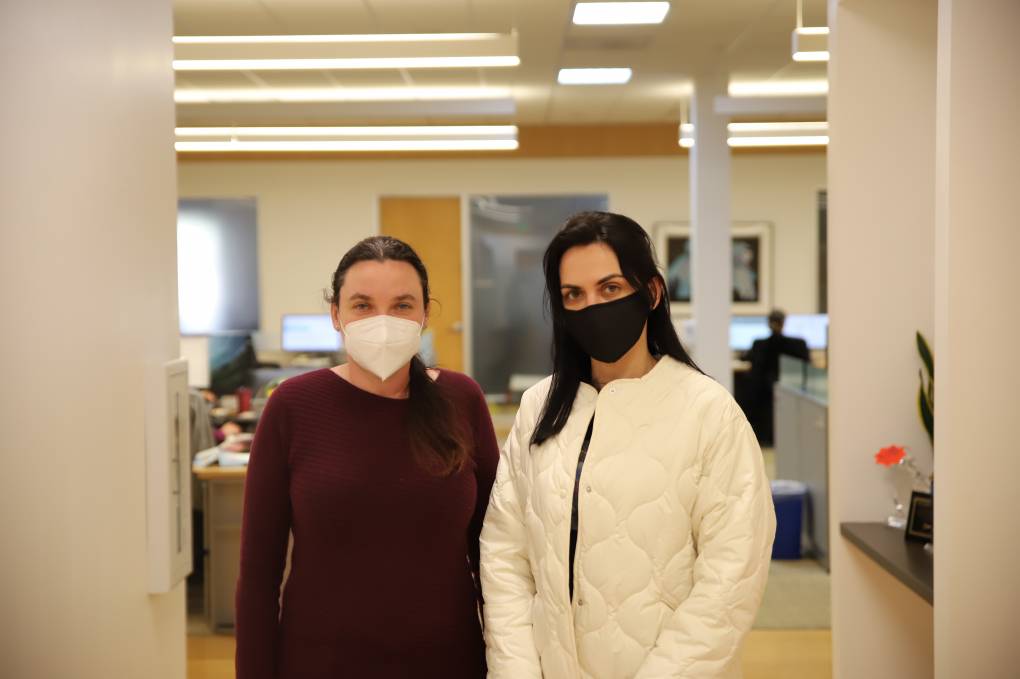
Ukrainians Cross California Border, Even As Pandemic Policy Keeps Other Asylum-Seekers Out
‘A Butterfly With My Wings Cut Off’: A Transgender Asylum Seeker’s Quest to Come to California
‘Una mariposa con las alas rotas’: La búsqueda de una solicitante de asilo transgénera para llegar a California
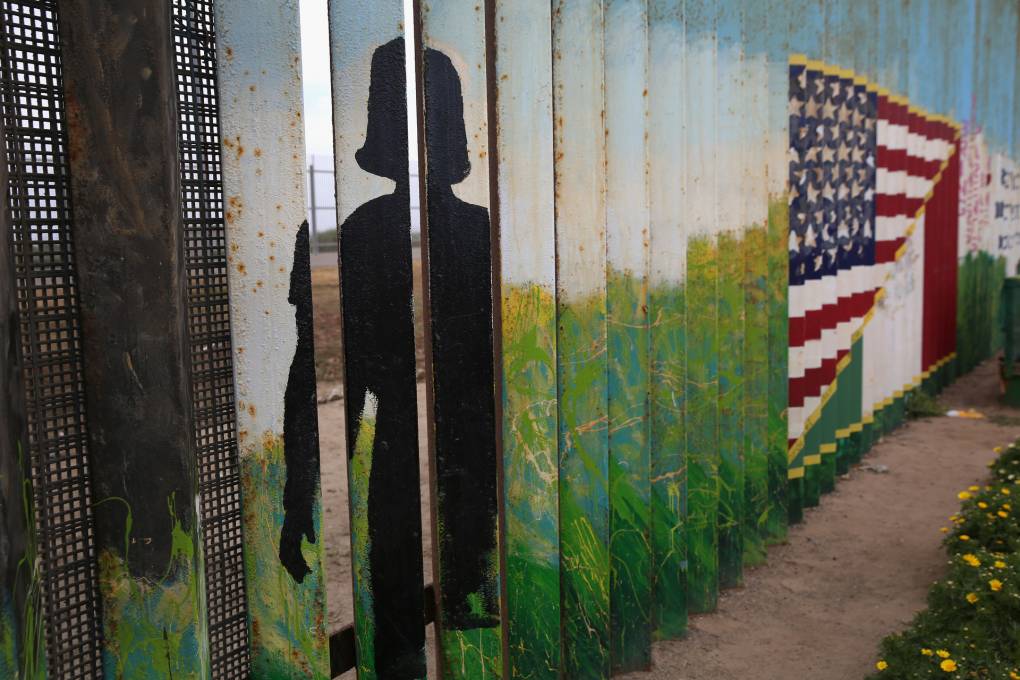
Border Patrol Allows Replanting After Bulldozing Garden
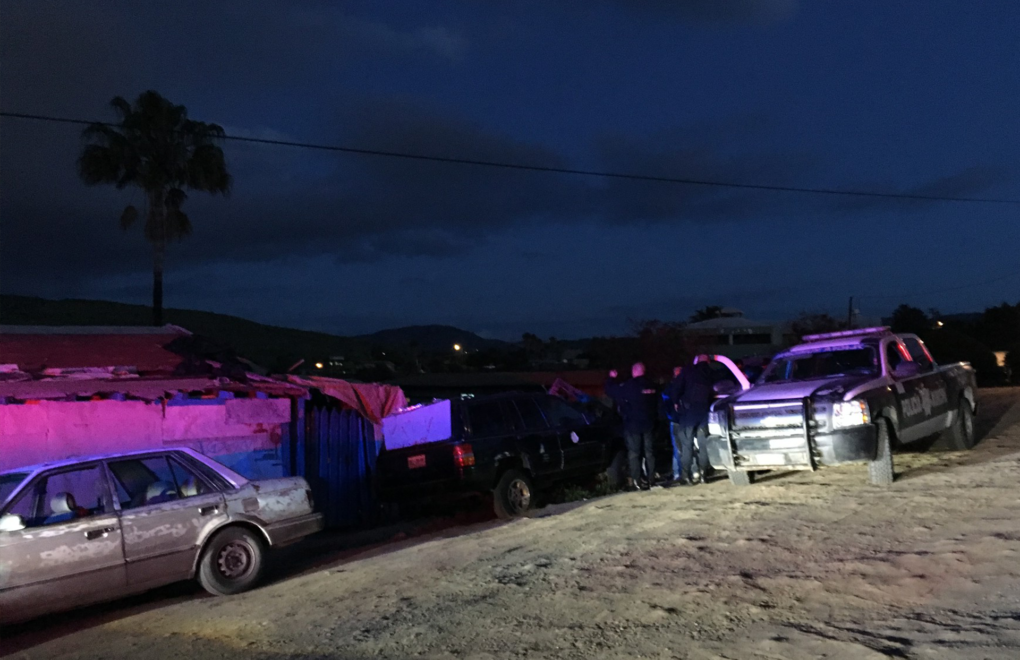
In Tijuana, Police Grapple With World's Worst Homicide Rate
Immigration Lawyers Denied Entry to Mexico as U.S. Rolls Out New Asylum Policy
Sponsored
Player sponsored by
window.__IS_SSR__=true
window.__INITIAL_STATE__={
"attachmentsReducer": {
"audio_0": {
"type": "attachments",
"id": "audio_0",
"imgSizes": {
"kqedFullSize": {
"file": "https://ww2.kqed.org/news/wp-content/themes/KQED-unified/img/audio_bgs/background0.jpg"
}
}
},
"audio_1": {
"type": "attachments",
"id": "audio_1",
"imgSizes": {
"kqedFullSize": {
"file": "https://ww2.kqed.org/news/wp-content/themes/KQED-unified/img/audio_bgs/background1.jpg"
}
}
},
"audio_2": {
"type": "attachments",
"id": "audio_2",
"imgSizes": {
"kqedFullSize": {
"file": "https://ww2.kqed.org/news/wp-content/themes/KQED-unified/img/audio_bgs/background2.jpg"
}
}
},
"audio_3": {
"type": "attachments",
"id": "audio_3",
"imgSizes": {
"kqedFullSize": {
"file": "https://ww2.kqed.org/news/wp-content/themes/KQED-unified/img/audio_bgs/background3.jpg"
}
}
},
"audio_4": {
"type": "attachments",
"id": "audio_4",
"imgSizes": {
"kqedFullSize": {
"file": "https://ww2.kqed.org/news/wp-content/themes/KQED-unified/img/audio_bgs/background4.jpg"
}
}
},
"placeholder": {
"type": "attachments",
"id": "placeholder",
"imgSizes": {
"thumbnail": {
"file": "https://cdn.kqed.org/wp-content/uploads/2024/12/KQED-Default-Image-816638274-2000x1333-1-160x107.jpg",
"width": 160,
"height": 107,
"mimeType": "image/jpeg"
},
"medium": {
"file": "https://cdn.kqed.org/wp-content/uploads/2024/12/KQED-Default-Image-816638274-2000x1333-1-800x533.jpg",
"width": 800,
"height": 533,
"mimeType": "image/jpeg"
},
"medium_large": {
"file": "https://cdn.kqed.org/wp-content/uploads/2024/12/KQED-Default-Image-816638274-2000x1333-1-768x512.jpg",
"width": 768,
"height": 512,
"mimeType": "image/jpeg"
},
"large": {
"file": "https://cdn.kqed.org/wp-content/uploads/2024/12/KQED-Default-Image-816638274-2000x1333-1-1020x680.jpg",
"width": 1020,
"height": 680,
"mimeType": "image/jpeg"
},
"1536x1536": {
"file": "https://cdn.kqed.org/wp-content/uploads/2024/12/KQED-Default-Image-816638274-2000x1333-1-1536x1024.jpg",
"width": 1536,
"height": 1024,
"mimeType": "image/jpeg"
},
"fd-lrg": {
"file": "https://cdn.kqed.org/wp-content/uploads/2024/12/KQED-Default-Image-816638274-2000x1333-1-1536x1024.jpg",
"width": 1536,
"height": 1024,
"mimeType": "image/jpeg"
},
"fd-med": {
"file": "https://cdn.kqed.org/wp-content/uploads/2024/12/KQED-Default-Image-816638274-2000x1333-1-1020x680.jpg",
"width": 1020,
"height": 680,
"mimeType": "image/jpeg"
},
"fd-sm": {
"file": "https://cdn.kqed.org/wp-content/uploads/2024/12/KQED-Default-Image-816638274-2000x1333-1-800x533.jpg",
"width": 800,
"height": 533,
"mimeType": "image/jpeg"
},
"post-thumbnail": {
"file": "https://cdn.kqed.org/wp-content/uploads/2024/12/KQED-Default-Image-816638274-2000x1333-1-672x372.jpg",
"width": 672,
"height": 372,
"mimeType": "image/jpeg"
},
"twentyfourteen-full-width": {
"file": "https://cdn.kqed.org/wp-content/uploads/2024/12/KQED-Default-Image-816638274-2000x1333-1-1038x576.jpg",
"width": 1038,
"height": 576,
"mimeType": "image/jpeg"
},
"xxsmall": {
"file": "https://cdn.kqed.org/wp-content/uploads/2024/12/KQED-Default-Image-816638274-2000x1333-1-160x107.jpg",
"width": 160,
"height": 107,
"mimeType": "image/jpeg"
},
"xsmall": {
"file": "https://cdn.kqed.org/wp-content/uploads/2024/12/KQED-Default-Image-816638274-2000x1333-1-672x372.jpg",
"width": 672,
"height": 372,
"mimeType": "image/jpeg"
},
"small": {
"file": "https://cdn.kqed.org/wp-content/uploads/2024/12/KQED-Default-Image-816638274-2000x1333-1-672x372.jpg",
"width": 672,
"height": 372,
"mimeType": "image/jpeg"
},
"xlarge": {
"file": "https://cdn.kqed.org/wp-content/uploads/2024/12/KQED-Default-Image-816638274-2000x1333-1-1020x680.jpg",
"width": 1020,
"height": 680,
"mimeType": "image/jpeg"
},
"full-width": {
"file": "https://cdn.kqed.org/wp-content/uploads/2024/12/KQED-Default-Image-816638274-2000x1333-1-1920x1280.jpg",
"width": 1920,
"height": 1280,
"mimeType": "image/jpeg"
},
"guest-author-32": {
"file": "https://cdn.kqed.org/wp-content/uploads/2025/01/KQED-Default-Image-816638274-1333x1333-1-160x160.jpg",
"width": 32,
"height": 32,
"mimeType": "image/jpeg"
},
"guest-author-50": {
"file": "https://cdn.kqed.org/wp-content/uploads/2025/01/KQED-Default-Image-816638274-1333x1333-1-160x160.jpg",
"width": 50,
"height": 50,
"mimeType": "image/jpeg"
},
"guest-author-64": {
"file": "https://cdn.kqed.org/wp-content/uploads/2025/01/KQED-Default-Image-816638274-1333x1333-1-160x160.jpg",
"width": 64,
"height": 64,
"mimeType": "image/jpeg"
},
"guest-author-96": {
"file": "https://cdn.kqed.org/wp-content/uploads/2025/01/KQED-Default-Image-816638274-1333x1333-1-160x160.jpg",
"width": 96,
"height": 96,
"mimeType": "image/jpeg"
},
"guest-author-128": {
"file": "https://cdn.kqed.org/wp-content/uploads/2025/01/KQED-Default-Image-816638274-1333x1333-1-160x160.jpg",
"width": 128,
"height": 128,
"mimeType": "image/jpeg"
},
"detail": {
"file": "https://cdn.kqed.org/wp-content/uploads/2025/01/KQED-Default-Image-816638274-1333x1333-1-160x160.jpg",
"width": 160,
"height": 160,
"mimeType": "image/jpeg"
},
"kqedFullSize": {
"file": "https://cdn.kqed.org/wp-content/uploads/2024/12/KQED-Default-Image-816638274-2000x1333-1.jpg",
"width": 2000,
"height": 1333
}
}
},
"news_11909544": {
"type": "attachments",
"id": "news_11909544",
"meta": {
"index": "attachments_1716263798",
"site": "news",
"id": "11909544",
"found": true
},
"parent": 11909515,
"imgSizes": {
"twentyfourteen-full-width": {
"file": "https://ww2.kqed.org/app/uploads/sites/10/2022/03/Maryna-L-with-an-interpreter-at-JFC-in-San-Diego-1038x576.jpg",
"width": 1038,
"mimeType": "image/jpeg",
"height": 576
},
"thumbnail": {
"file": "https://ww2.kqed.org/app/uploads/sites/10/2022/03/Maryna-L-with-an-interpreter-at-JFC-in-San-Diego-160x106.jpg",
"width": 160,
"mimeType": "image/jpeg",
"height": 106
},
"post-thumbnail": {
"file": "https://ww2.kqed.org/app/uploads/sites/10/2022/03/Maryna-L-with-an-interpreter-at-JFC-in-San-Diego-672x372.jpg",
"width": 672,
"mimeType": "image/jpeg",
"height": 372
},
"kqedFullSize": {
"file": "https://ww2.kqed.org/app/uploads/sites/10/2022/03/Maryna-L-with-an-interpreter-at-JFC-in-San-Diego-scaled.jpg",
"width": 2560,
"height": 1703
},
"2048x2048": {
"file": "https://ww2.kqed.org/app/uploads/sites/10/2022/03/Maryna-L-with-an-interpreter-at-JFC-in-San-Diego-2048x1363.jpg",
"width": 2048,
"mimeType": "image/jpeg",
"height": 1363
},
"large": {
"file": "https://ww2.kqed.org/app/uploads/sites/10/2022/03/Maryna-L-with-an-interpreter-at-JFC-in-San-Diego-1020x679.jpg",
"width": 1020,
"mimeType": "image/jpeg",
"height": 679
},
"1536x1536": {
"file": "https://ww2.kqed.org/app/uploads/sites/10/2022/03/Maryna-L-with-an-interpreter-at-JFC-in-San-Diego-1536x1022.jpg",
"width": 1536,
"mimeType": "image/jpeg",
"height": 1022
},
"full-width": {
"file": "https://ww2.kqed.org/app/uploads/sites/10/2022/03/Maryna-L-with-an-interpreter-at-JFC-in-San-Diego-1920x1278.jpg",
"width": 1920,
"mimeType": "image/jpeg",
"height": 1278
},
"medium": {
"file": "https://ww2.kqed.org/app/uploads/sites/10/2022/03/Maryna-L-with-an-interpreter-at-JFC-in-San-Diego-800x532.jpg",
"width": 800,
"mimeType": "image/jpeg",
"height": 532
}
},
"publishDate": 1648497048,
"modified": 1648504850,
"caption": "Maryna (right) stands alongside Ilona Sokolinsky, a staff member at Jewish Family Service of San Diego, who acted as her interpreter for an interview with KQED.",
"description": null,
"title": "Maryna (right), a Ukrainian asylum seeker, meets with staff at Jewish Family Service in San Diego in March 2022 (DATE TBD). Ilona Sokolinsky (left), JFS Senior Grant Accountant, interpreted for her.",
"credit": "Max Rivlin-Nadler",
"status": "inherit",
"altTag": "Two women stand together in a building. The woman on the right has a black face mask and a white jacket. The woman on the left has a white face mask and dark-colored shirt.",
"fetchFailed": false,
"isLoading": false
},
"news_11852386": {
"type": "attachments",
"id": "news_11852386",
"meta": {
"index": "attachments_1716263798",
"site": "news",
"id": "11852386",
"found": true
},
"parent": 11844742,
"imgSizes": {
"apple_news_ca_square_4_0": {
"file": "https://ww2.kqed.org/app/uploads/sites/10/2020/12/LUNA-featured-edit-1020x574-1-470x470.jpg",
"width": 470,
"mimeType": "image/jpeg",
"height": 470
},
"thumbnail": {
"file": "https://ww2.kqed.org/app/uploads/sites/10/2020/12/LUNA-featured-edit-1020x574-1-160x90.jpg",
"width": 160,
"mimeType": "image/jpeg",
"height": 90
},
"post-thumbnail": {
"file": "https://ww2.kqed.org/app/uploads/sites/10/2020/12/LUNA-featured-edit-1020x574-1-672x372.jpg",
"width": 672,
"mimeType": "image/jpeg",
"height": 372
},
"kqedFullSize": {
"file": "https://ww2.kqed.org/app/uploads/sites/10/2020/12/LUNA-featured-edit-1020x574-1.jpg",
"width": 1020,
"height": 574
},
"apple_news_ca_landscape_4_7": {
"file": "https://ww2.kqed.org/app/uploads/sites/10/2020/12/LUNA-featured-edit-1020x574-1-632x474.jpg",
"width": 632,
"mimeType": "image/jpeg",
"height": 474
},
"apple_news_ca_landscape_4_0": {
"file": "https://ww2.kqed.org/app/uploads/sites/10/2020/12/LUNA-featured-edit-1020x574-1-536x402.jpg",
"width": 536,
"mimeType": "image/jpeg",
"height": 402
},
"medium": {
"file": "https://ww2.kqed.org/app/uploads/sites/10/2020/12/LUNA-featured-edit-1020x574-1-800x450.jpg",
"width": 800,
"mimeType": "image/jpeg",
"height": 450
},
"apple_news_ca_portrait_4_0": {
"file": "https://ww2.kqed.org/app/uploads/sites/10/2020/12/LUNA-featured-edit-1020x574-1-354x472.jpg",
"width": 354,
"mimeType": "image/jpeg",
"height": 472
},
"apple_news_ca_portrait_9_7": {
"file": "https://ww2.kqed.org/app/uploads/sites/10/2020/12/LUNA-featured-edit-1020x574-1-840x574.jpg",
"width": 840,
"mimeType": "image/jpeg",
"height": 574
},
"apple_news_ca_portrait_4_7": {
"file": "https://ww2.kqed.org/app/uploads/sites/10/2020/12/LUNA-featured-edit-1020x574-1-414x552.jpg",
"width": 414,
"mimeType": "image/jpeg",
"height": 552
},
"apple_news_ca_portrait_5_5": {
"file": "https://ww2.kqed.org/app/uploads/sites/10/2020/12/LUNA-featured-edit-1020x574-1-687x574.jpg",
"width": 687,
"mimeType": "image/jpeg",
"height": 574
},
"apple_news_ca_square_4_7": {
"file": "https://ww2.kqed.org/app/uploads/sites/10/2020/12/LUNA-featured-edit-1020x574-1-550x550.jpg",
"width": 550,
"mimeType": "image/jpeg",
"height": 550
},
"apple_news_ca_square_5_5": {
"file": "https://ww2.kqed.org/app/uploads/sites/10/2020/12/LUNA-featured-edit-1020x574-1-912x574.jpg",
"width": 912,
"mimeType": "image/jpeg",
"height": 574
}
},
"publishDate": 1608619592,
"modified": 1608620055,
"caption": "Luna Guzmán left Guatemala four years ago with the goal of reaching California. She had to face violence and sexual harassment while she was detained in a migrant detention center near San Diego and was later infected with COVID-19 while she waited for her asylum process in Tijuana.",
"description": "Luna Guzmán left Guatemala four years ago with the goal of reaching California. She had to face violence and sexual harassment while she was detained in a migrant detention center near San Diego and was later infected with COVID-19 while she waited for her asylum process in Tijuana.",
"title": "LUNA-featured-edit-1020x574",
"credit": "Courtest of Luna Guzmán",
"status": "inherit",
"altTag": null,
"fetchFailed": false,
"isLoading": false
},
"news_11846826": {
"type": "attachments",
"id": "news_11846826",
"meta": {
"index": "attachments_1716263798",
"site": "news",
"id": "11846826",
"found": true
},
"parent": 11844742,
"imgSizes": {
"apple_news_ca_landscape_5_5": {
"file": "https://ww2.kqed.org/app/uploads/sites/10/2020/11/LUNA-featured-edit-1044x783.jpg",
"width": 1044,
"mimeType": "image/jpeg",
"height": 783
},
"apple_news_ca_square_4_0": {
"file": "https://ww2.kqed.org/app/uploads/sites/10/2020/11/LUNA-featured-edit-470x470.jpg",
"width": 470,
"mimeType": "image/jpeg",
"height": 470
},
"twentyfourteen-full-width": {
"file": "https://ww2.kqed.org/app/uploads/sites/10/2020/11/LUNA-featured-edit-1038x576.jpg",
"width": 1038,
"mimeType": "image/jpeg",
"height": 576
},
"thumbnail": {
"file": "https://ww2.kqed.org/app/uploads/sites/10/2020/11/LUNA-featured-edit-160x90.jpg",
"width": 160,
"mimeType": "image/jpeg",
"height": 90
},
"post-thumbnail": {
"file": "https://ww2.kqed.org/app/uploads/sites/10/2020/11/LUNA-featured-edit-672x372.jpg",
"width": 672,
"mimeType": "image/jpeg",
"height": 372
},
"kqedFullSize": {
"file": "https://ww2.kqed.org/app/uploads/sites/10/2020/11/LUNA-featured-edit.jpg",
"width": 1920,
"height": 1080
},
"apple_news_ca_landscape_4_7": {
"file": "https://ww2.kqed.org/app/uploads/sites/10/2020/11/LUNA-featured-edit-632x474.jpg",
"width": 632,
"mimeType": "image/jpeg",
"height": 474
},
"large": {
"file": "https://ww2.kqed.org/app/uploads/sites/10/2020/11/LUNA-featured-edit-1020x574.jpg",
"width": 1020,
"mimeType": "image/jpeg",
"height": 574
},
"apple_news_ca_landscape_4_0": {
"file": "https://ww2.kqed.org/app/uploads/sites/10/2020/11/LUNA-featured-edit-536x402.jpg",
"width": 536,
"mimeType": "image/jpeg",
"height": 402
},
"apple_news_ca_portrait_12_9": {
"file": "https://ww2.kqed.org/app/uploads/sites/10/2020/11/LUNA-featured-edit-1122x1080.jpg",
"width": 1122,
"mimeType": "image/jpeg",
"height": 1080
},
"medium": {
"file": "https://ww2.kqed.org/app/uploads/sites/10/2020/11/LUNA-featured-edit-800x450.jpg",
"width": 800,
"mimeType": "image/jpeg",
"height": 450
},
"apple_news_ca_portrait_4_0": {
"file": "https://ww2.kqed.org/app/uploads/sites/10/2020/11/LUNA-featured-edit-354x472.jpg",
"width": 354,
"mimeType": "image/jpeg",
"height": 472
},
"apple_news_ca_portrait_9_7": {
"file": "https://ww2.kqed.org/app/uploads/sites/10/2020/11/LUNA-featured-edit-840x1080.jpg",
"width": 840,
"mimeType": "image/jpeg",
"height": 1080
},
"apple_news_ca_landscape_12_9": {
"file": "https://ww2.kqed.org/app/uploads/sites/10/2020/11/LUNA-featured-edit-1832x1080.jpg",
"width": 1832,
"mimeType": "image/jpeg",
"height": 1080
},
"apple_news_ca_square_9_7": {
"file": "https://ww2.kqed.org/app/uploads/sites/10/2020/11/LUNA-featured-edit-1104x1080.jpg",
"width": 1104,
"mimeType": "image/jpeg",
"height": 1080
},
"1536x1536": {
"file": "https://ww2.kqed.org/app/uploads/sites/10/2020/11/LUNA-featured-edit-1536x864.jpg",
"width": 1536,
"mimeType": "image/jpeg",
"height": 864
},
"apple_news_ca_portrait_4_7": {
"file": "https://ww2.kqed.org/app/uploads/sites/10/2020/11/LUNA-featured-edit-414x552.jpg",
"width": 414,
"mimeType": "image/jpeg",
"height": 552
},
"apple_news_ca_square_12_9": {
"file": "https://ww2.kqed.org/app/uploads/sites/10/2020/11/LUNA-featured-edit-1472x1080.jpg",
"width": 1472,
"mimeType": "image/jpeg",
"height": 1080
},
"apple_news_ca_portrait_5_5": {
"file": "https://ww2.kqed.org/app/uploads/sites/10/2020/11/LUNA-featured-edit-687x916.jpg",
"width": 687,
"mimeType": "image/jpeg",
"height": 916
},
"apple_news_ca_square_4_7": {
"file": "https://ww2.kqed.org/app/uploads/sites/10/2020/11/LUNA-featured-edit-550x550.jpg",
"width": 550,
"mimeType": "image/jpeg",
"height": 550
},
"apple_news_ca_landscape_9_7": {
"file": "https://ww2.kqed.org/app/uploads/sites/10/2020/11/LUNA-featured-edit-1376x1032.jpg",
"width": 1376,
"mimeType": "image/jpeg",
"height": 1032
},
"apple_news_ca_square_5_5": {
"file": "https://ww2.kqed.org/app/uploads/sites/10/2020/11/LUNA-featured-edit-912x912.jpg",
"width": 912,
"mimeType": "image/jpeg",
"height": 912
}
},
"publishDate": 1605033795,
"modified": 1608596556,
"caption": "Luna Guzmán se fue de Guatemala hace cuatro años para intentar llegar a California. Sufrió acoso sexual y violencia durante su estancia en un centro de detención de migrantes cerca de San Diego y luego contrajó COVID-19 mientras esperaba en Tijuana.",
"description": "Luna Guzmán se fue de Guatemala hace cuatro años para intentar llegar a California. Sufrió acoso sexual y violencia durante su estancia en un centro de detención de migrantes cerca de San Diego y luego contrajó COVID-19 mientras esperaba en Tijuana.",
"title": "LUNA-featured-edit",
"credit": "Cortesía de Luna Guzmán",
"status": "inherit",
"altTag": "\"\"",
"fetchFailed": false,
"isLoading": false
},
"news_11798041": {
"type": "attachments",
"id": "news_11798041",
"meta": {
"index": "attachments_1716263798",
"site": "news",
"id": "11798041",
"found": true
},
"parent": 11798037,
"imgSizes": {
"apple_news_ca_landscape_5_5": {
"file": "https://ww2.kqed.org/app/uploads/sites/10/2020/01/RS40905_GettyImages-527188674-qut-1044x783.jpg",
"width": 1044,
"mimeType": "image/jpeg",
"height": 783
},
"apple_news_ca_square_4_0": {
"file": "https://ww2.kqed.org/app/uploads/sites/10/2020/01/RS40905_GettyImages-527188674-qut-470x470.jpg",
"width": 470,
"mimeType": "image/jpeg",
"height": 470
},
"twentyfourteen-full-width": {
"file": "https://ww2.kqed.org/app/uploads/sites/10/2020/01/RS40905_GettyImages-527188674-qut-1038x576.jpg",
"width": 1038,
"mimeType": "image/jpeg",
"height": 576
},
"thumbnail": {
"file": "https://ww2.kqed.org/app/uploads/sites/10/2020/01/RS40905_GettyImages-527188674-qut-160x107.jpg",
"width": 160,
"mimeType": "image/jpeg",
"height": 107
},
"post-thumbnail": {
"file": "https://ww2.kqed.org/app/uploads/sites/10/2020/01/RS40905_GettyImages-527188674-qut-672x372.jpg",
"width": 672,
"mimeType": "image/jpeg",
"height": 372
},
"kqedFullSize": {
"file": "https://ww2.kqed.org/app/uploads/sites/10/2020/01/RS40905_GettyImages-527188674-qut.jpg",
"width": 1920,
"height": 1280
},
"apple_news_ca_landscape_4_7": {
"file": "https://ww2.kqed.org/app/uploads/sites/10/2020/01/RS40905_GettyImages-527188674-qut-632x474.jpg",
"width": 632,
"mimeType": "image/jpeg",
"height": 474
},
"large": {
"file": "https://ww2.kqed.org/app/uploads/sites/10/2020/01/RS40905_GettyImages-527188674-qut-1020x680.jpg",
"width": 1020,
"mimeType": "image/jpeg",
"height": 680
},
"apple_news_ca_landscape_4_0": {
"file": "https://ww2.kqed.org/app/uploads/sites/10/2020/01/RS40905_GettyImages-527188674-qut-536x402.jpg",
"width": 536,
"mimeType": "image/jpeg",
"height": 402
},
"apple_news_ca_portrait_12_9": {
"file": "https://ww2.kqed.org/app/uploads/sites/10/2020/01/RS40905_GettyImages-527188674-qut-1122x1280.jpg",
"width": 1122,
"mimeType": "image/jpeg",
"height": 1280
},
"medium": {
"file": "https://ww2.kqed.org/app/uploads/sites/10/2020/01/RS40905_GettyImages-527188674-qut-800x533.jpg",
"width": 800,
"mimeType": "image/jpeg",
"height": 533
},
"apple_news_ca_portrait_4_0": {
"file": "https://ww2.kqed.org/app/uploads/sites/10/2020/01/RS40905_GettyImages-527188674-qut-354x472.jpg",
"width": 354,
"mimeType": "image/jpeg",
"height": 472
},
"apple_news_ca_portrait_9_7": {
"file": "https://ww2.kqed.org/app/uploads/sites/10/2020/01/RS40905_GettyImages-527188674-qut-840x1120.jpg",
"width": 840,
"mimeType": "image/jpeg",
"height": 1120
},
"apple_news_ca_landscape_12_9": {
"file": "https://ww2.kqed.org/app/uploads/sites/10/2020/01/RS40905_GettyImages-527188674-qut-1832x1280.jpg",
"width": 1832,
"mimeType": "image/jpeg",
"height": 1280
},
"apple_news_ca_square_9_7": {
"file": "https://ww2.kqed.org/app/uploads/sites/10/2020/01/RS40905_GettyImages-527188674-qut-1104x1104.jpg",
"width": 1104,
"mimeType": "image/jpeg",
"height": 1104
},
"apple_news_ca_portrait_4_7": {
"file": "https://ww2.kqed.org/app/uploads/sites/10/2020/01/RS40905_GettyImages-527188674-qut-414x552.jpg",
"width": 414,
"mimeType": "image/jpeg",
"height": 552
},
"apple_news_ca_square_12_9": {
"file": "https://ww2.kqed.org/app/uploads/sites/10/2020/01/RS40905_GettyImages-527188674-qut-1472x1280.jpg",
"width": 1472,
"mimeType": "image/jpeg",
"height": 1280
},
"apple_news_ca_portrait_5_5": {
"file": "https://ww2.kqed.org/app/uploads/sites/10/2020/01/RS40905_GettyImages-527188674-qut-687x916.jpg",
"width": 687,
"mimeType": "image/jpeg",
"height": 916
},
"full-width": {
"file": "https://ww2.kqed.org/app/uploads/sites/10/2020/01/RS40905_GettyImages-527188674-qut-1920x1280.jpg",
"width": 1920,
"mimeType": "image/jpeg",
"height": 1280
},
"apple_news_ca_square_4_7": {
"file": "https://ww2.kqed.org/app/uploads/sites/10/2020/01/RS40905_GettyImages-527188674-qut-550x550.jpg",
"width": 550,
"mimeType": "image/jpeg",
"height": 550
},
"apple_news_ca_landscape_9_7": {
"file": "https://ww2.kqed.org/app/uploads/sites/10/2020/01/RS40905_GettyImages-527188674-qut-1376x1032.jpg",
"width": 1376,
"mimeType": "image/jpeg",
"height": 1032
},
"apple_news_ca_square_5_5": {
"file": "https://ww2.kqed.org/app/uploads/sites/10/2020/01/RS40905_GettyImages-527188674-qut-912x912.jpg",
"width": 912,
"mimeType": "image/jpeg",
"height": 912
}
},
"publishDate": 1579997064,
"modified": 1579997184,
"caption": "Friendship Park was inaugurated by first lady Pat Nixon in 1971 as a symbol of bilateral bonds. The half-acre plaza separating San Diego and Tijuana has hosted cross-border yoga classes, festivals and religious services.",
"description": "Friendship Park was inaugurated by first lady Pat Nixon in 1971 as a symbol of bilateral bonds. The half-acre plaza separating San Diego and Tijuana has hosted cross-border yoga classes, festivals and religious services.",
"title": "Friendship Park was inaugurated by first lady Pat Nixon in 1971 as a symbol of bilateral bonds. The half-acre plaza separating San Diego and Tijuana has hosted cross-border yoga classes, festivals and religious services.",
"credit": "John Moore/Getty Images",
"status": "inherit",
"fetchFailed": false,
"isLoading": false
},
"news_11735645": {
"type": "attachments",
"id": "news_11735645",
"meta": {
"index": "attachments_1716263798",
"site": "news",
"id": "11735645",
"found": true
},
"parent": 11735361,
"imgSizes": {
"post-thumbnail": {
"file": "https://ww2.kqed.org/app/uploads/sites/10/2019/03/03262019_Tijuana-Police-Drug-Trade-qut-672x372.png",
"width": 672,
"mimeType": "image/png",
"height": 372
},
"kqedFullSize": {
"file": "https://ww2.kqed.org/app/uploads/sites/10/2019/03/03262019_Tijuana-Police-Drug-Trade-qut.png",
"width": 1920,
"height": 1243
},
"guest-author-50": {
"file": "https://ww2.kqed.org/app/uploads/sites/10/2019/03/03262019_Tijuana-Police-Drug-Trade-qut-50x50.png",
"width": 50,
"mimeType": "image/png",
"height": 50
},
"guest-author-96": {
"file": "https://ww2.kqed.org/app/uploads/sites/10/2019/03/03262019_Tijuana-Police-Drug-Trade-qut-96x96.png",
"width": 96,
"mimeType": "image/png",
"height": 96
},
"apple_news_ca_portrait_12_9": {
"file": "https://ww2.kqed.org/app/uploads/sites/10/2019/03/03262019_Tijuana-Police-Drug-Trade-qut-1122x1243.png",
"width": 1122,
"mimeType": "image/png",
"height": 1243
},
"medium": {
"file": "https://ww2.kqed.org/app/uploads/sites/10/2019/03/03262019_Tijuana-Police-Drug-Trade-qut-800x518.png",
"width": 800,
"mimeType": "image/png",
"height": 518
},
"guest-author-32": {
"file": "https://ww2.kqed.org/app/uploads/sites/10/2019/03/03262019_Tijuana-Police-Drug-Trade-qut-32x32.png",
"width": 32,
"mimeType": "image/png",
"height": 32
},
"apple_news_ca_portrait_9_7": {
"file": "https://ww2.kqed.org/app/uploads/sites/10/2019/03/03262019_Tijuana-Police-Drug-Trade-qut-840x1120.png",
"width": 840,
"mimeType": "image/png",
"height": 1120
},
"apple_news_ca_square_9_7": {
"file": "https://ww2.kqed.org/app/uploads/sites/10/2019/03/03262019_Tijuana-Police-Drug-Trade-qut-1104x1104.png",
"width": 1104,
"mimeType": "image/png",
"height": 1104
},
"apple_news_ca_portrait_4_7": {
"file": "https://ww2.kqed.org/app/uploads/sites/10/2019/03/03262019_Tijuana-Police-Drug-Trade-qut-414x552.png",
"width": 414,
"mimeType": "image/png",
"height": 552
},
"apple_news_ca_square_12_9": {
"file": "https://ww2.kqed.org/app/uploads/sites/10/2019/03/03262019_Tijuana-Police-Drug-Trade-qut-1472x1243.png",
"width": 1472,
"mimeType": "image/png",
"height": 1243
},
"apple_news_ca_portrait_5_5": {
"file": "https://ww2.kqed.org/app/uploads/sites/10/2019/03/03262019_Tijuana-Police-Drug-Trade-qut-687x916.png",
"width": 687,
"mimeType": "image/png",
"height": 916
},
"apple_news_ca_square_4_7": {
"file": "https://ww2.kqed.org/app/uploads/sites/10/2019/03/03262019_Tijuana-Police-Drug-Trade-qut-550x550.png",
"width": 550,
"mimeType": "image/png",
"height": 550
},
"apple_news_ca_square_5_5": {
"file": "https://ww2.kqed.org/app/uploads/sites/10/2019/03/03262019_Tijuana-Police-Drug-Trade-qut-912x912.png",
"width": 912,
"mimeType": "image/png",
"height": 912
},
"apple_news_ca_landscape_5_5": {
"file": "https://ww2.kqed.org/app/uploads/sites/10/2019/03/03262019_Tijuana-Police-Drug-Trade-qut-1044x783.png",
"width": 1044,
"mimeType": "image/png",
"height": 783
},
"apple_news_ca_square_4_0": {
"file": "https://ww2.kqed.org/app/uploads/sites/10/2019/03/03262019_Tijuana-Police-Drug-Trade-qut-470x470.png",
"width": 470,
"mimeType": "image/png",
"height": 470
},
"twentyfourteen-full-width": {
"file": "https://ww2.kqed.org/app/uploads/sites/10/2019/03/03262019_Tijuana-Police-Drug-Trade-qut-1038x576.png",
"width": 1038,
"mimeType": "image/png",
"height": 576
},
"thumbnail": {
"file": "https://ww2.kqed.org/app/uploads/sites/10/2019/03/03262019_Tijuana-Police-Drug-Trade-qut-160x104.png",
"width": 160,
"mimeType": "image/png",
"height": 104
},
"apple_news_ca_landscape_4_7": {
"file": "https://ww2.kqed.org/app/uploads/sites/10/2019/03/03262019_Tijuana-Police-Drug-Trade-qut-632x474.png",
"width": 632,
"mimeType": "image/png",
"height": 474
},
"large": {
"file": "https://ww2.kqed.org/app/uploads/sites/10/2019/03/03262019_Tijuana-Police-Drug-Trade-qut-1020x660.png",
"width": 1020,
"mimeType": "image/png",
"height": 660
},
"complete_open_graph": {
"file": "https://ww2.kqed.org/app/uploads/sites/10/2019/03/03262019_Tijuana-Police-Drug-Trade-qut-1200x777.png",
"width": 1200,
"mimeType": "image/png",
"height": 777
},
"apple_news_ca_landscape_4_0": {
"file": "https://ww2.kqed.org/app/uploads/sites/10/2019/03/03262019_Tijuana-Police-Drug-Trade-qut-536x402.png",
"width": 536,
"mimeType": "image/png",
"height": 402
},
"guest-author-64": {
"file": "https://ww2.kqed.org/app/uploads/sites/10/2019/03/03262019_Tijuana-Police-Drug-Trade-qut-64x64.png",
"width": 64,
"mimeType": "image/png",
"height": 64
},
"apple_news_ca_portrait_4_0": {
"file": "https://ww2.kqed.org/app/uploads/sites/10/2019/03/03262019_Tijuana-Police-Drug-Trade-qut-354x472.png",
"width": 354,
"mimeType": "image/png",
"height": 472
},
"apple_news_ca_landscape_12_9": {
"file": "https://ww2.kqed.org/app/uploads/sites/10/2019/03/03262019_Tijuana-Police-Drug-Trade-qut-1832x1243.png",
"width": 1832,
"mimeType": "image/png",
"height": 1243
},
"full-width": {
"file": "https://ww2.kqed.org/app/uploads/sites/10/2019/03/03262019_Tijuana-Police-Drug-Trade-qut-1920x1243.png",
"width": 1920,
"mimeType": "image/png",
"height": 1243
},
"guest-author-128": {
"file": "https://ww2.kqed.org/app/uploads/sites/10/2019/03/03262019_Tijuana-Police-Drug-Trade-qut-128x128.png",
"width": 128,
"mimeType": "image/png",
"height": 128
},
"apple_news_ca_landscape_9_7": {
"file": "https://ww2.kqed.org/app/uploads/sites/10/2019/03/03262019_Tijuana-Police-Drug-Trade-qut-1376x1032.png",
"width": 1376,
"mimeType": "image/png",
"height": 1032
}
},
"publishDate": 1553643500,
"modified": 1553646505,
"caption": "State and local police investigate a murder in Tijuana on March 10, 2019. Drug gang rivalries led to more than 2.500 homicides last year, making Tijuana the murder capital of the world.",
"description": "State and local police investigate a murder in Tijuana on March 10, 2019. Drug gang rivalries led to more than 2500 homicides last year, making Tijuana the murder capital of the world.",
"title": "03262019_Tijuana Police Drug Trade-qut",
"credit": "Tyche Hendricks/KQED",
"status": "inherit",
"fetchFailed": false,
"isLoading": false
},
"news_11723265": {
"type": "attachments",
"id": "news_11723265",
"meta": {
"index": "attachments_1716263798",
"site": "news",
"id": "11723265",
"found": true
},
"parent": 11723169,
"imgSizes": {
"twentyfourteen-full-width": {
"file": "https://ww2.kqed.org/app/uploads/sites/10/2019/02/GettyImages-1090911016-1038x576.jpg",
"width": 1038,
"mimeType": "image/jpeg",
"height": 576
},
"thumbnail": {
"file": "https://ww2.kqed.org/app/uploads/sites/10/2019/02/GettyImages-1090911016-160x107.jpg",
"width": 160,
"mimeType": "image/jpeg",
"height": 107
},
"post-thumbnail": {
"file": "https://ww2.kqed.org/app/uploads/sites/10/2019/02/GettyImages-1090911016-672x372.jpg",
"width": 672,
"mimeType": "image/jpeg",
"height": 372
},
"kqedFullSize": {
"file": "https://ww2.kqed.org/app/uploads/sites/10/2019/02/GettyImages-1090911016-e1549309533461.jpg",
"width": 1920,
"height": 1280
},
"large": {
"file": "https://ww2.kqed.org/app/uploads/sites/10/2019/02/GettyImages-1090911016-1020x680.jpg",
"width": 1020,
"mimeType": "image/jpeg",
"height": 680
},
"complete_open_graph": {
"file": "https://ww2.kqed.org/app/uploads/sites/10/2019/02/GettyImages-1090911016-1200x800.jpg",
"width": 1200,
"mimeType": "image/jpeg",
"height": 800
},
"guest-author-50": {
"file": "https://ww2.kqed.org/app/uploads/sites/10/2019/02/GettyImages-1090911016-50x50.jpg",
"width": 50,
"mimeType": "image/jpeg",
"height": 50
},
"guest-author-96": {
"file": "https://ww2.kqed.org/app/uploads/sites/10/2019/02/GettyImages-1090911016-96x96.jpg",
"width": 96,
"mimeType": "image/jpeg",
"height": 96
},
"medium": {
"file": "https://ww2.kqed.org/app/uploads/sites/10/2019/02/GettyImages-1090911016-800x533.jpg",
"width": 800,
"mimeType": "image/jpeg",
"height": 533
},
"guest-author-64": {
"file": "https://ww2.kqed.org/app/uploads/sites/10/2019/02/GettyImages-1090911016-64x64.jpg",
"width": 64,
"mimeType": "image/jpeg",
"height": 64
},
"guest-author-32": {
"file": "https://ww2.kqed.org/app/uploads/sites/10/2019/02/GettyImages-1090911016-32x32.jpg",
"width": 32,
"mimeType": "image/jpeg",
"height": 32
},
"full-width": {
"file": "https://ww2.kqed.org/app/uploads/sites/10/2019/02/GettyImages-1090911016-1920x1280.jpg",
"width": 1920,
"mimeType": "image/jpeg",
"height": 1280
},
"detail": {
"file": "https://ww2.kqed.org/app/uploads/sites/10/2019/02/GettyImages-1090911016-150x150.jpg",
"width": 150,
"mimeType": "image/jpeg",
"height": 150
},
"guest-author-128": {
"file": "https://ww2.kqed.org/app/uploads/sites/10/2019/02/GettyImages-1090911016-128x128.jpg",
"width": 128,
"mimeType": "image/jpeg",
"height": 128
}
},
"publishDate": 1549309477,
"modified": 1549309567,
"caption": "Asylum seekers wait at El Chaparral crossing port at the US-Mexico border, in Tijuana, Baja California state, Mexico, on January 29, 2019.",
"description": "Asylum seekers wait at El Chaparral crossing port at the US-Mexico border, in Tijuana, Baja California state, Mexico, on January 29, 2019.",
"title": "MEXICO-US-MIGRATION",
"credit": "GUILLERMO ARIAS/AFP/Getty Images",
"status": "inherit",
"fetchFailed": false,
"isLoading": false
}
},
"audioPlayerReducer": {
"postId": "stream_live",
"isPaused": true,
"isPlaying": false,
"pfsActive": false,
"pledgeModalIsOpen": true,
"playerDrawerIsOpen": false
},
"authorsReducer": {
"byline_news_11909515": {
"type": "authors",
"id": "byline_news_11909515",
"meta": {
"override": true
},
"slug": "byline_news_11909515",
"name": "Max Rivlin-Nadler",
"isLoading": false
},
"byline_news_11844742": {
"type": "authors",
"id": "byline_news_11844742",
"meta": {
"override": true
},
"slug": "byline_news_11844742",
"name": "\u003ca href=\"https://www.kqed.org/author/sasha-khokha\">Sasha Khokha\u003c/a> and \u003ca href=\"http://erin-mcintyre.com/\">Erin Siegal McIntyre\u003c/a>",
"isLoading": false
},
"byline_news_11852044": {
"type": "authors",
"id": "byline_news_11852044",
"meta": {
"override": true
},
"slug": "byline_news_11852044",
"name": "\u003ca href=\"https://www.kqed.org/author/sasha-khokha\">Sasha Khokha\u003c/a> and \u003ca href=\"http://erin-mcintyre.com/\">Erin Siegal McIntyre\u003c/a>",
"isLoading": false
},
"byline_news_11798037": {
"type": "authors",
"id": "byline_news_11798037",
"meta": {
"override": true
},
"slug": "byline_news_11798037",
"name": "\u003cstrong>Elliot Spagat\u003cbr />Associated Press\u003c/strong>",
"isLoading": false
},
"byline_news_11723169": {
"type": "authors",
"id": "byline_news_11723169",
"meta": {
"override": true
},
"slug": "byline_news_11723169",
"name": "Max Rivlin-Nadler",
"isLoading": false
},
"tychehendricks": {
"type": "authors",
"id": "259",
"meta": {
"index": "authors_1716337520",
"id": "259",
"found": true
},
"name": "Tyche Hendricks",
"firstName": "Tyche",
"lastName": "Hendricks",
"slug": "tychehendricks",
"email": "thendricks@kqed.org",
"display_author_email": true,
"staff_mastheads": [
"news"
],
"title": "KQED Senior Editor, Immigration",
"bio": "\u003cspan style=\"font-weight: 400;\">Tyche Hendricks is KQED’s senior editor for immigration, leading coverage of the policy and politics that affect California’s immigrant communities. Her work for KQED’s radio and online audiences is also carried on NPR and other national outlets. She has been recognized with awards from the Radio and Television News Directors Association, the Society for Professional Journalists; the Education Writers Association; the Best of the West and the National Federation of Community Broadcasters. Before joining KQED in 2010, Tyche spent more than a dozen years as a newspaper reporter, notably at the \u003c/span>\u003ci>\u003cspan style=\"font-weight: 400;\">San Francisco Chronicle\u003c/span>\u003c/i>\u003cspan style=\"font-weight: 400;\">. At different times she has covered criminal justice, government and politics and urban planning. Tyche has taught in the MFA Creative Writing program at the University of San Francisco and at UC Berkeley’s Graduate School of Journalism, where she was co-director of a national immigration symposium for professional journalists. She is the author of \u003c/span>\u003ci>\u003cspan style=\"font-weight: 400;\">The Wind Doesn't Need a Passport: Stories from the U.S.-Mexico Borderlands\u003c/span>\u003c/i>\u003cspan style=\"font-weight: 400;\"> (University of California Press). \u003c/span>",
"avatar": "https://secure.gravatar.com/avatar/b8ee458e2731c2d43df86882ce17267e?s=600&d=blank&r=g",
"twitter": "tychehendricks",
"facebook": null,
"instagram": null,
"linkedin": null,
"sites": [
{
"site": "news",
"roles": [
"editor"
]
},
{
"site": "stateofhealth",
"roles": [
"editor"
]
}
],
"headData": {
"title": "Tyche Hendricks | KQED",
"description": "KQED Senior Editor, Immigration",
"ogImgSrc": "https://secure.gravatar.com/avatar/b8ee458e2731c2d43df86882ce17267e?s=600&d=blank&r=g",
"twImgSrc": "https://secure.gravatar.com/avatar/b8ee458e2731c2d43df86882ce17267e?s=600&d=blank&r=g"
},
"isLoading": false,
"link": "/author/tychehendricks"
}
},
"breakingNewsReducer": {},
"pagesReducer": {},
"postsReducer": {
"stream_live": {
"type": "live",
"id": "stream_live",
"audioUrl": "https://streams.kqed.org/kqedradio",
"title": "Live Stream",
"excerpt": "Live Stream information currently unavailable.",
"link": "/radio",
"featImg": "",
"label": {
"name": "KQED Live",
"link": "/"
}
},
"stream_kqedNewscast": {
"type": "posts",
"id": "stream_kqedNewscast",
"audioUrl": "https://www.kqed.org/.stream/anon/radio/RDnews/newscast.mp3?_=1",
"title": "KQED Newscast",
"featImg": "",
"label": {
"name": "88.5 FM",
"link": "/"
}
},
"news_11909515": {
"type": "posts",
"id": "news_11909515",
"meta": {
"index": "posts_1716263798",
"site": "news",
"id": "11909515",
"score": null,
"sort": [
1648500709000
]
},
"guestAuthors": [],
"slug": "ukrainians-cross-california-border-even-as-pandemic-policy-keeps-other-asylum-seekers-out",
"title": "Ukrainians Cross California Border, Even As Pandemic Policy Keeps Other Asylum-Seekers Out",
"publishDate": 1648500709,
"format": "standard",
"headTitle": "Ukrainians Cross California Border, Even As Pandemic Policy Keeps Other Asylum-Seekers Out | KQED",
"labelTerm": {
"site": "news"
},
"content": "\u003cp>It’s well after midnight at a border crossing in Tijuana, Mexico, on a recent Saturday night. A group of migrants are huddled under blankets near the San Ysidro port of entry. They say they’re from Russia and Belarus, and they’ve come here to ask for asylum in the United States. But the door to the U.S., just feet away from where they’re camped out, is still closed to them.\u003c/p>\n\u003cp>That’s because of \u003ca href=\"https://uscode.house.gov/view.xhtml?hl=false&edition=prelim&req=granuleid%3AUSC-prelim-title42-section265&num=0&saved=%7CKHRpdGxlOjQyIHNlY3Rpb246MjY0IGVkaXRpb246cHJlbGltKQ%3D%3D%7C%7C%7C0%7Cfalse%7Cprelim\">Title 42\u003c/a>, a public health code intended to prevent the spread of disease that’s being used to block the entry of migrants without visas. The policy was imposed by the Centers for Disease Control and Prevention, \u003ca href=\"https://apnews.com/article/virus-outbreak-pandemics-public-health-new-york-health-4ef0c6c5263815a26f8aa17f6ea490ae\">under pressure\u003c/a> from the Trump White House, at the start of the pandemic two years ago. And while COVID-19 restrictions have been lifted in much of the U.S., Title 42 is still in place. But it’s \u003ca href=\"https://www.cdc.gov/coronavirus/2019-ncov/more/pdf/NoticeUnaccompaniedChildren-update.pdf\">subject to review\u003c/a> by the end of this month.[pullquote size=\"medium\" align=\"right\" citation=\"Kate Clark, attorney, Jewish Family Service of San Diego\"]‘Many times [migrants] will try to seek asylum at the port, and they’re denied, and so they’re forced to grapple with going between ports.’[/pullquote]\u003c/p>\n\u003cp>Also, two weeks ago, the Department of Homeland Security issued \u003ca href=\"https://drive.google.com/file/d/1glEe8MnsNWR15BsfQtiaSR75yKBrCuqe/view\">an extraordinary exception for Ukrainians\u003c/a>, saying they — and only they — could be exempted from Title 42. That means something resembling the normal asylum process is restored for them.\u003c/p>\n\u003cp>Title 42 has been used to expel people \u003ca href=\"https://www.cbp.gov/newsroom/stats/southwest-land-border-encounters\">more than 1.7 million times\u003c/a>, without allowing them the opportunity to request asylum. Eastern Europeans — the same as Central Americans, Haitians and other asylum-seekers who have arrived in the thousands at the U.S.-Mexico border — are now increasingly desperate to cross. And some are trying dangerous methods to get into the United States.\u003c/p>\n\u003cfigure id=\"attachment_11909546\" class=\"wp-caption aligncenter\" style=\"max-width: 800px\">\u003ca href=\"https://ww2.kqed.org/app/uploads/sites/10/2022/03/IMG_7212-scaled.jpg\">\u003cimg loading=\"lazy\" decoding=\"async\" class=\"wp-image-11909546 size-medium\" src=\"https://ww2.kqed.org/app/uploads/sites/10/2022/03/IMG_7212-800x600.jpg\" alt=\"Cars are seen in front of barricades with razor wire.\" width=\"800\" height=\"600\" srcset=\"https://cdn.kqed.org/wp-content/uploads/sites/10/2022/03/IMG_7212-800x600.jpg 800w, https://cdn.kqed.org/wp-content/uploads/sites/10/2022/03/IMG_7212-1020x765.jpg 1020w, https://cdn.kqed.org/wp-content/uploads/sites/10/2022/03/IMG_7212-160x120.jpg 160w, https://cdn.kqed.org/wp-content/uploads/sites/10/2022/03/IMG_7212-1536x1152.jpg 1536w, https://cdn.kqed.org/wp-content/uploads/sites/10/2022/03/IMG_7212-2048x1536.jpg 2048w, https://cdn.kqed.org/wp-content/uploads/sites/10/2022/03/IMG_7212-1920x1440.jpg 1920w\" sizes=\"(max-width: 800px) 100vw, 800px\">\u003c/a>\u003cfigcaption class=\"wp-caption-text\">Cars line up at the automobile crossing at the San Ysidro port of entry, where Customs and Border Protection recently added cement blocks and concertina wire, on Thursday, March 10, 2022. \u003ccite>(Max Rivlin-Nadler)\u003c/cite>\u003c/figcaption>\u003c/figure>\n\u003cp>“Legal ways that would normally be afforded to people seeking protection are not available,” said Kate Clark, an attorney with Jewish Family Service of San Diego. Her organization provides shelter and assistance to every asylum-seeker that passes through San Diego County.\u003c/p>\n\u003cp>Since January, more than 1,000 Russians and over 450 Ukrainians have crossed the San Diego-Tijuana border, according to Jewish Family Service.\u003c/p>\n\u003cp>“Many times [migrants] will try to seek asylum at the port, and they’re denied, and so they’re forced to grapple with going between ports,” Clark said, “whether it be through the high desert or through another way that, quite frankly, risks their lives.”\u003c/p>\n\u003cp>For Ukrainians and other Eastern Europeans, the challenge has just been to get onto U.S. soil. As part of an agreement with the United States, Mexico won’t accept Eastern European asylum-seekers if the U.S. doesn’t want to admit them under Title 42. Mexicans and Central Americans, by contrast, have been promptly expelled back to Mexico, though the Biden administration has made exceptions for unaccompanied children and many families.\u003c/p>\n\u003cp>One strategy used by Russians and, until recently, Ukrainians, is to buy or rent a car in Tijuana, and drive past an initial checkpoint at the port of entry before asking for protection. In September, one Ukrainian asylum-seeker even went so far as to ram his car into the car in front of him to make sure he was firmly in the U.S.\u003c/p>\n\u003cp>“Really, it was a miracle that we were able to get past the [American] border officials. They didn’t ask for my documents,” said Maryna, a Ukrainian asylum-seeker who made it to the U.S. before the exception from DHS. She left Vyshneve, a small city near Kyiv, in early March as Russian bombs began to fall. (KQED is using only her first name because of safety concerns for her parents and husband, who are still in Ukraine.)\u003c/p>\n\u003cp>Maryna and her two young daughters fled to Germany, then flew to Mexico City. After a final flight to Tijuana, a family friend crossed over from San Diego and drove them back to California through the port of entry.\u003c/p>\n\u003cp>“They just saw that a U.S. citizen was behind the wheel, and they let us through,” she told me through an interpreter.\u003c/p>\n\u003cfigure id=\"attachment_11909547\" class=\"wp-caption aligncenter\" style=\"max-width: 800px\">\u003ca href=\"https://ww2.kqed.org/app/uploads/sites/10/2022/03/IMG_7291-scaled.jpg\">\u003cimg loading=\"lazy\" decoding=\"async\" class=\"wp-image-11909547 size-medium\" src=\"https://ww2.kqed.org/app/uploads/sites/10/2022/03/IMG_7291-800x600.jpg\" alt=\"A man and woman are standing close together with other people around them next to a metal gate.\" width=\"800\" height=\"600\" srcset=\"https://cdn.kqed.org/wp-content/uploads/sites/10/2022/03/IMG_7291-800x600.jpg 800w, https://cdn.kqed.org/wp-content/uploads/sites/10/2022/03/IMG_7291-1020x765.jpg 1020w, https://cdn.kqed.org/wp-content/uploads/sites/10/2022/03/IMG_7291-160x120.jpg 160w, https://cdn.kqed.org/wp-content/uploads/sites/10/2022/03/IMG_7291-1536x1152.jpg 1536w, https://cdn.kqed.org/wp-content/uploads/sites/10/2022/03/IMG_7291-2048x1536.jpg 2048w, https://cdn.kqed.org/wp-content/uploads/sites/10/2022/03/IMG_7291-1920x1440.jpg 1920w\" sizes=\"(max-width: 800px) 100vw, 800px\">\u003c/a>\u003cfigcaption class=\"wp-caption-text\">An unidentified Ukrainian couple waits at the pedestrian crossing at the San Ysidro port of entry, as Eastern Europeans try to find safety in the United States, on Thursday, March 10, 2022. \u003ccite>(Max Rivlin-Nadler)\u003c/cite>\u003c/figcaption>\u003c/figure>\n\u003cp>Once at the passport control booth on U.S. soil, Maryna told Customs and Border Protection officers they were seeking asylum.\u003c/p>\n\u003cp>She’s relieved that she and her daughters reached the U.S., but as she looks out at the beautiful spring weather in San Diego, she says her mind is constantly elsewhere.\u003c/p>\n\u003cp>“At night, I couldn’t sleep because of the emotions, because [my family] is far away and we’re already here,” she said. “Yes, everything is pretty, everything is great here, but I can’t enjoy it or relax.”\u003c/p>\n\u003cp>The preferential treatment Ukrainians are now receiving has left migrants from other countries — many of whom have been waiting months, if not years — baffled and frustrated.\u003c/p>\n\u003cp>One woman turned back under Title 42 is Jackie, 21, from Michoacán, Mexico. She said she came to Tijuana a year ago, fleeing cartel violence, and lives in a crowded shelter, with no timetable on when she can enter the United States. We’re only using her first name because she fears for her safety.\u003c/p>\n\u003cp>During her wait in Tijuana, she has slept in a dangerous encampment near the border, and has had to relocate multiple times after being confronted by Mexican police. She told me last November that when she tried to cross the border into the United States, Border Patrol agents were insulting and dismissive.\u003c/p>\n\u003cp>“They were very racist to me,” Jackie said. “They treated my family like insects.”\u003c/p>\n\u003cp>Erika Pinheiro, an attorney with Al Otro Lado, a legal aid group that assists asylum-seekers in Tijuana, said she has seen Eastern Europeans receive much better treatment than other migrants.\u003c/p>\n\u003cp>“What I’ve personally observed is that CBP tends to be more polite or tell them to wait,” she said. “But when we see Central American or Black migrants approach the port of entry, they’re told to leave, they’re screamed at.”\u003c/p>\n\u003cp>Earlier this month, several U.S. senators, including majority leader Chuck Shumer and California’s Alex Padilla, \u003ca href=\"https://www.menendez.senate.gov/newsroom/press/menendez-schumer-booker-and-padilla-joint-statement-on-recent-court-decisions-on-title-42\">called on the Biden administration\u003c/a> to end Title 42. The CDC must reassess the policy every 60 days, and the current review period ends March 30.\u003c/p>\n\u003cp>[ad fullwidth]\u003c/p>\n\u003cp>[ad floatright]\u003c/p>\n",
"blocks": [],
"excerpt": "Ukrainians are exempted from Title 42, the public health law imposed by former President Trump that has blocked most asylum-seekers for two years. Now the policy is up for review and, amid stark contrasts in how different migrants are treated, pressure is growing to lift it.",
"status": "publish",
"parent": 0,
"modified": 1721158526,
"stats": {
"hasAudio": false,
"hasVideo": false,
"hasChartOrMap": false,
"iframeSrcs": [],
"hasGoogleForm": false,
"hasGallery": false,
"hasHearkenModule": false,
"hasPolis": false,
"paragraphCount": 24,
"wordCount": 1181
},
"headData": {
"title": "Ukrainians Cross California Border, Even As Pandemic Policy Keeps Other Asylum-Seekers Out | KQED",
"description": "Ukrainians are exempted from Title 42, the public health law imposed by former President Trump that has blocked most asylum-seekers for two years. Now the policy is up for review and, amid stark contrasts in how different migrants are treated, pressure is growing to lift it.",
"ogTitle": "",
"ogDescription": "",
"ogImgId": "",
"twTitle": "",
"twDescription": "",
"twImgId": "",
"schema": {
"@context": "https://schema.org",
"@type": "NewsArticle",
"headline": "Ukrainians Cross California Border, Even As Pandemic Policy Keeps Other Asylum-Seekers Out",
"datePublished": "2022-03-28T13:51:49-07:00",
"dateModified": "2024-07-16T12:35:26-07:00",
"image": "https://cdn.kqed.org/wp-content/uploads/2020/02/KQED-OG-Image@1x.png",
"isAccessibleForFree": "True",
"publisher": {
"@type": "NewsMediaOrganization",
"@id": "https://www.kqed.org/#organization",
"name": "KQED",
"logo": "https://cdn.kqed.org/wp-content/uploads/2020/02/KQED-OG-Image@1x.png",
"url": "https://www.kqed.org",
"sameAs": [
"https://www.facebook.com/KQED",
"https://twitter.com/KQED",
"https://www.instagram.com/kqed/",
"https://www.tiktok.com/@kqedofficial",
"https://www.linkedin.com/company/kqed",
"https://www.youtube.com/channel/UCeC0IOo7i1P_61zVUWbJ4nw"
]
}
}
},
"audioUrl": "https:// https://traffic.omny.fm/d/clips/0af137ef-751e-4b19-a055-aaef00d2d578/ffca7e9f-6831-4[…]f-aaef00f5a073/52f42773-3275-4af2-a412-ae620101c024/audio.mp3",
"sticky": false,
"nprByline": "Max Rivlin-Nadler",
"excludeFromSiteSearch": "Include",
"showOnAuthorArchivePages": "No",
"path": "/news/11909515/ukrainians-cross-california-border-even-as-pandemic-policy-keeps-other-asylum-seekers-out",
"audioTrackLength": null,
"parsedContent": [
{
"type": "contentString",
"content": "\u003cdiv class=\"post-body\">\u003cp>\u003cp>It’s well after midnight at a border crossing in Tijuana, Mexico, on a recent Saturday night. A group of migrants are huddled under blankets near the San Ysidro port of entry. They say they’re from Russia and Belarus, and they’ve come here to ask for asylum in the United States. But the door to the U.S., just feet away from where they’re camped out, is still closed to them.\u003c/p>\n\u003cp>That’s because of \u003ca href=\"https://uscode.house.gov/view.xhtml?hl=false&edition=prelim&req=granuleid%3AUSC-prelim-title42-section265&num=0&saved=%7CKHRpdGxlOjQyIHNlY3Rpb246MjY0IGVkaXRpb246cHJlbGltKQ%3D%3D%7C%7C%7C0%7Cfalse%7Cprelim\">Title 42\u003c/a>, a public health code intended to prevent the spread of disease that’s being used to block the entry of migrants without visas. The policy was imposed by the Centers for Disease Control and Prevention, \u003ca href=\"https://apnews.com/article/virus-outbreak-pandemics-public-health-new-york-health-4ef0c6c5263815a26f8aa17f6ea490ae\">under pressure\u003c/a> from the Trump White House, at the start of the pandemic two years ago. And while COVID-19 restrictions have been lifted in much of the U.S., Title 42 is still in place. But it’s \u003ca href=\"https://www.cdc.gov/coronavirus/2019-ncov/more/pdf/NoticeUnaccompaniedChildren-update.pdf\">subject to review\u003c/a> by the end of this month.\u003c/p>\u003c/div>",
"attributes": {
"named": {},
"numeric": []
}
},
{
"type": "component",
"content": "‘Many times [migrants] will try to seek asylum at the port, and they’re denied, and so they’re forced to grapple with going between ports.’",
"name": "pullquote",
"attributes": {
"named": {
"size": "medium",
"align": "right",
"citation": "Kate Clark, attorney, Jewish Family Service of San Diego",
"label": ""
},
"numeric": []
}
},
{
"type": "contentString",
"content": "\u003cdiv class=\"post-body\">\u003cp>\u003c/p>\n\u003cp>Also, two weeks ago, the Department of Homeland Security issued \u003ca href=\"https://drive.google.com/file/d/1glEe8MnsNWR15BsfQtiaSR75yKBrCuqe/view\">an extraordinary exception for Ukrainians\u003c/a>, saying they — and only they — could be exempted from Title 42. That means something resembling the normal asylum process is restored for them.\u003c/p>\n\u003cp>Title 42 has been used to expel people \u003ca href=\"https://www.cbp.gov/newsroom/stats/southwest-land-border-encounters\">more than 1.7 million times\u003c/a>, without allowing them the opportunity to request asylum. Eastern Europeans — the same as Central Americans, Haitians and other asylum-seekers who have arrived in the thousands at the U.S.-Mexico border — are now increasingly desperate to cross. And some are trying dangerous methods to get into the United States.\u003c/p>\n\u003cfigure id=\"attachment_11909546\" class=\"wp-caption aligncenter\" style=\"max-width: 800px\">\u003ca href=\"https://ww2.kqed.org/app/uploads/sites/10/2022/03/IMG_7212-scaled.jpg\">\u003cimg loading=\"lazy\" decoding=\"async\" class=\"wp-image-11909546 size-medium\" src=\"https://ww2.kqed.org/app/uploads/sites/10/2022/03/IMG_7212-800x600.jpg\" alt=\"Cars are seen in front of barricades with razor wire.\" width=\"800\" height=\"600\" srcset=\"https://cdn.kqed.org/wp-content/uploads/sites/10/2022/03/IMG_7212-800x600.jpg 800w, https://cdn.kqed.org/wp-content/uploads/sites/10/2022/03/IMG_7212-1020x765.jpg 1020w, https://cdn.kqed.org/wp-content/uploads/sites/10/2022/03/IMG_7212-160x120.jpg 160w, https://cdn.kqed.org/wp-content/uploads/sites/10/2022/03/IMG_7212-1536x1152.jpg 1536w, https://cdn.kqed.org/wp-content/uploads/sites/10/2022/03/IMG_7212-2048x1536.jpg 2048w, https://cdn.kqed.org/wp-content/uploads/sites/10/2022/03/IMG_7212-1920x1440.jpg 1920w\" sizes=\"(max-width: 800px) 100vw, 800px\">\u003c/a>\u003cfigcaption class=\"wp-caption-text\">Cars line up at the automobile crossing at the San Ysidro port of entry, where Customs and Border Protection recently added cement blocks and concertina wire, on Thursday, March 10, 2022. \u003ccite>(Max Rivlin-Nadler)\u003c/cite>\u003c/figcaption>\u003c/figure>\n\u003cp>“Legal ways that would normally be afforded to people seeking protection are not available,” said Kate Clark, an attorney with Jewish Family Service of San Diego. Her organization provides shelter and assistance to every asylum-seeker that passes through San Diego County.\u003c/p>\n\u003cp>Since January, more than 1,000 Russians and over 450 Ukrainians have crossed the San Diego-Tijuana border, according to Jewish Family Service.\u003c/p>\n\u003cp>“Many times [migrants] will try to seek asylum at the port, and they’re denied, and so they’re forced to grapple with going between ports,” Clark said, “whether it be through the high desert or through another way that, quite frankly, risks their lives.”\u003c/p>\n\u003cp>For Ukrainians and other Eastern Europeans, the challenge has just been to get onto U.S. soil. As part of an agreement with the United States, Mexico won’t accept Eastern European asylum-seekers if the U.S. doesn’t want to admit them under Title 42. Mexicans and Central Americans, by contrast, have been promptly expelled back to Mexico, though the Biden administration has made exceptions for unaccompanied children and many families.\u003c/p>\n\u003cp>One strategy used by Russians and, until recently, Ukrainians, is to buy or rent a car in Tijuana, and drive past an initial checkpoint at the port of entry before asking for protection. In September, one Ukrainian asylum-seeker even went so far as to ram his car into the car in front of him to make sure he was firmly in the U.S.\u003c/p>\n\u003cp>“Really, it was a miracle that we were able to get past the [American] border officials. They didn’t ask for my documents,” said Maryna, a Ukrainian asylum-seeker who made it to the U.S. before the exception from DHS. She left Vyshneve, a small city near Kyiv, in early March as Russian bombs began to fall. (KQED is using only her first name because of safety concerns for her parents and husband, who are still in Ukraine.)\u003c/p>\n\u003cp>Maryna and her two young daughters fled to Germany, then flew to Mexico City. After a final flight to Tijuana, a family friend crossed over from San Diego and drove them back to California through the port of entry.\u003c/p>\n\u003cp>“They just saw that a U.S. citizen was behind the wheel, and they let us through,” she told me through an interpreter.\u003c/p>\n\u003cfigure id=\"attachment_11909547\" class=\"wp-caption aligncenter\" style=\"max-width: 800px\">\u003ca href=\"https://ww2.kqed.org/app/uploads/sites/10/2022/03/IMG_7291-scaled.jpg\">\u003cimg loading=\"lazy\" decoding=\"async\" class=\"wp-image-11909547 size-medium\" src=\"https://ww2.kqed.org/app/uploads/sites/10/2022/03/IMG_7291-800x600.jpg\" alt=\"A man and woman are standing close together with other people around them next to a metal gate.\" width=\"800\" height=\"600\" srcset=\"https://cdn.kqed.org/wp-content/uploads/sites/10/2022/03/IMG_7291-800x600.jpg 800w, https://cdn.kqed.org/wp-content/uploads/sites/10/2022/03/IMG_7291-1020x765.jpg 1020w, https://cdn.kqed.org/wp-content/uploads/sites/10/2022/03/IMG_7291-160x120.jpg 160w, https://cdn.kqed.org/wp-content/uploads/sites/10/2022/03/IMG_7291-1536x1152.jpg 1536w, https://cdn.kqed.org/wp-content/uploads/sites/10/2022/03/IMG_7291-2048x1536.jpg 2048w, https://cdn.kqed.org/wp-content/uploads/sites/10/2022/03/IMG_7291-1920x1440.jpg 1920w\" sizes=\"(max-width: 800px) 100vw, 800px\">\u003c/a>\u003cfigcaption class=\"wp-caption-text\">An unidentified Ukrainian couple waits at the pedestrian crossing at the San Ysidro port of entry, as Eastern Europeans try to find safety in the United States, on Thursday, March 10, 2022. \u003ccite>(Max Rivlin-Nadler)\u003c/cite>\u003c/figcaption>\u003c/figure>\n\u003cp>Once at the passport control booth on U.S. soil, Maryna told Customs and Border Protection officers they were seeking asylum.\u003c/p>\n\u003cp>She’s relieved that she and her daughters reached the U.S., but as she looks out at the beautiful spring weather in San Diego, she says her mind is constantly elsewhere.\u003c/p>\n\u003cp>“At night, I couldn’t sleep because of the emotions, because [my family] is far away and we’re already here,” she said. “Yes, everything is pretty, everything is great here, but I can’t enjoy it or relax.”\u003c/p>\n\u003cp>The preferential treatment Ukrainians are now receiving has left migrants from other countries — many of whom have been waiting months, if not years — baffled and frustrated.\u003c/p>\n\u003cp>One woman turned back under Title 42 is Jackie, 21, from Michoacán, Mexico. She said she came to Tijuana a year ago, fleeing cartel violence, and lives in a crowded shelter, with no timetable on when she can enter the United States. We’re only using her first name because she fears for her safety.\u003c/p>\n\u003cp>During her wait in Tijuana, she has slept in a dangerous encampment near the border, and has had to relocate multiple times after being confronted by Mexican police. She told me last November that when she tried to cross the border into the United States, Border Patrol agents were insulting and dismissive.\u003c/p>\n\u003cp>“They were very racist to me,” Jackie said. “They treated my family like insects.”\u003c/p>\n\u003cp>Erika Pinheiro, an attorney with Al Otro Lado, a legal aid group that assists asylum-seekers in Tijuana, said she has seen Eastern Europeans receive much better treatment than other migrants.\u003c/p>\n\u003cp>“What I’ve personally observed is that CBP tends to be more polite or tell them to wait,” she said. “But when we see Central American or Black migrants approach the port of entry, they’re told to leave, they’re screamed at.”\u003c/p>\n\u003cp>Earlier this month, several U.S. senators, including majority leader Chuck Shumer and California’s Alex Padilla, \u003ca href=\"https://www.menendez.senate.gov/newsroom/press/menendez-schumer-booker-and-padilla-joint-statement-on-recent-court-decisions-on-title-42\">called on the Biden administration\u003c/a> to end Title 42. The CDC must reassess the policy every 60 days, and the current review period ends March 30.\u003c/p>\n\u003cp>\u003c/p>\u003c/div>",
"attributes": {
"named": {},
"numeric": []
}
},
{
"type": "component",
"content": "",
"name": "ad",
"attributes": {
"named": {
"label": "fullwidth"
},
"numeric": [
"fullwidth"
]
}
},
{
"type": "contentString",
"content": "\u003cdiv class=\"post-body\">\u003cp>\u003c/p>\n\u003cp>\u003c/p>\u003c/div>",
"attributes": {
"named": {},
"numeric": []
}
},
{
"type": "component",
"content": "",
"name": "ad",
"attributes": {
"named": {
"label": "floatright"
},
"numeric": [
"floatright"
]
}
},
{
"type": "contentString",
"content": "\u003cdiv class=\"post-body\">\u003cp>\u003c/p>\n\u003c/div>\u003c/p>",
"attributes": {
"named": {},
"numeric": []
}
}
],
"link": "/news/11909515/ukrainians-cross-california-border-even-as-pandemic-policy-keeps-other-asylum-seekers-out",
"authors": [
"byline_news_11909515"
],
"categories": [
"news_8"
],
"tags": [
"news_23087",
"news_26233",
"news_23653",
"news_20458",
"news_20202",
"news_24942",
"news_18121",
"news_30868",
"news_30818"
],
"featImg": "news_11909544",
"label": "news"
},
"news_11844742": {
"type": "posts",
"id": "news_11844742",
"meta": {
"index": "posts_1716263798",
"site": "news",
"id": "11844742",
"score": null,
"sort": [
1618011040000
]
},
"guestAuthors": [],
"slug": "a-butterfly-with-my-wings-cut-off-a-transgender-asylum-seekers-quest-to-come-to-california",
"title": "‘A Butterfly With My Wings Cut Off’: A Transgender Asylum Seeker’s Quest to Come to California",
"publishDate": 1618011040,
"format": "audio",
"headTitle": "‘A Butterfly With My Wings Cut Off’: A Transgender Asylum Seeker’s Quest to Come to California | KQED",
"labelTerm": {
"term": 26731,
"site": "news"
},
"content": "\u003cp>\u003ca href=\"https://www.kqed.org/news/11852044/una-mariposa-con-las-alas-rotas-la-busqueda-de-una-solicitante-de-asilo-transgenera-para-llegar-a-california\">\u003cem>Leer en español\u003c/em>\u003c/a>\u003c/p>\n\u003cp>\u003cem>Since \u003ca href=\"https://podcasts.apple.com/us/podcast/the-california-report-magazine/id1314750545?mt=2\">The California Report Magazine\u003c/a> first aired this documentary in December 2020, dozens of listeners reached out to help Luna Guzmán with messages of encouragement and support. In May, 2021, Luna was \u003ca href=\"https://www.kqed.org/news/11876583/living-my-dream-after-years-transgender-asylum-seeker-finally-makes-it-to-the-us\">finally able to make it to the US\u003c/a>, where she is now waiting for another chance to go before an immigration judge and ask for protection.\u003c/em>\u003c/p>\n\u003cp>[dropcap]W[/dropcap]hen she turned 15, like so many girls in her town in Guatemala, Luna Guzmán celebrated with a quinceañera.\u003c/p>\n\u003cp>“My friend lent me the dress because she saw the way I used to cry every time we passed the dress shop on the way to school, with all those beautiful dresses,” she said in Spanish. “I would just press my hand up against the glass and stare at them for a long time.”\u003c/p>\n\u003cp>The dress she borrowed was turquoise, with a long skirt. She took off her tennies, put on heels and a tiara, and danced with her friends.\u003c/p>\n\u003cp>There was a cake, bottles of champagne and chambelanes, boys who dressed up in suits to escort her into the secret party at a friend’s house. No one was there from Luna’s family, because they couldn’t fathom her as a transgender girl.\u003c/p>\n\u003cp>[pullquote size=\"medium\" align=\"right\" citation=\"Luna Guzmán\"]‘The teacher would always ask my mom, ‘Listen, can’t you change your son? Can you take him to a psychologist? A psychiatrist? It’s making my school look bad.’[/pullquote]Moments from that birthday party still linger in Luna’s memory as a time when she truly felt delight and freedom. It was something to be savored again and again as the next decade began to unfold, even as she put back on her soccer jerseys and tried to look like the boy she knew she wasn’t inside. Even as she dealt with brutal violence and decided to take a tremendous risk and leave everything behind in Guatemala to try to find a life in California. The memories were one place in the world where she could imagine being safe, being herself.\u003c/p>\n\u003cp>We first met Luna two years ago at a migrant shelter in Tijuana and have stayed in touch with her as she’s journeyed across the border, spent months in U.S. Immigration and Customs Enforcement detention, and sought shelter in Mexico. We’ve spent weeks frantically trying to reach her in an intensive care unit, after she left a voice message that she had been diagnosed with a severe case of COVID-19. “Thank you for telling my story,” she rasped through labored breaths, her voice barely recognizable. “If I die, I hope that one day people will remember something about me.”\u003c/p>\n\u003cp>https://www.youtube.com/watch?v=8-aYksXNNUA\u003c/p>\n\u003ch3>\u003cstrong>‘Can’t You Change Your Son?’\u003c/strong>\u003c/h3>\n\u003cp>Luna grew up on the outskirts of a small city in Central Guatemala, in a house cobbled together from sticks and newspaper. Her mom sold french fries from a cart, and Luna helped care for her three siblings, including a brother with developmental disabilities. Her dad wasn’t part of her life.\u003c/p>\n\u003cp>She said she was a voracious reader, spending hours in the town library. At school she would play dress up with the other girls. Luna would transform into a butterfly, her wings made from pieces of cardboard she scavenged on the street.\u003c/p>\n\u003cp>“The teacher would always ask my mom, ‘Listen, can’t you change your son? Can you take him to a psychologist? A psychiatrist? It’s making my school look bad,’ ” she recalled.\u003c/p>\n\u003cp>[ad fullwidth]\u003c/p>\n\u003cp>Luna said her mom defended her at first. When she came out as gay at age 14, her mom gave a toast with some agua de jamaica. But as Luna got older, she said her mom disapproved of the dresses and the heels. Her son, dressing like a woman? For her, that went against nature. So Luna put back on the soccer jerseys and shorts.\u003c/p>\n\u003cp>“The hurtful things she said to me, I understand them better now,” said Luna. “She just wanted to protect me.”\u003c/p>\n\u003cfigure id=\"attachment_11849344\" class=\"wp-caption alignnone\" style=\"max-width: 800px\">\u003cimg loading=\"lazy\" decoding=\"async\" class=\"size-medium wp-image-11849344\" src=\"https://ww2.kqed.org/app/uploads/sites/10/2020/12/RS45761__MG_2008_crop-qut_v2-800x613.jpg\" alt=\"Luna Guzmán has spent most of her life fighting to be accepted as a transgender woman. She said she has often experienced brutal violence when she expresses her true gender identity as a woman.\" width=\"800\" height=\"613\" srcset=\"https://cdn.kqed.org/wp-content/uploads/sites/10/2020/12/RS45761__MG_2008_crop-qut_v2-800x613.jpg 800w, https://cdn.kqed.org/wp-content/uploads/sites/10/2020/12/RS45761__MG_2008_crop-qut_v2-1020x781.jpg 1020w, https://cdn.kqed.org/wp-content/uploads/sites/10/2020/12/RS45761__MG_2008_crop-qut_v2-160x123.jpg 160w, https://cdn.kqed.org/wp-content/uploads/sites/10/2020/12/RS45761__MG_2008_crop-qut_v2-1536x1177.jpg 1536w, https://cdn.kqed.org/wp-content/uploads/sites/10/2020/12/RS45761__MG_2008_crop-qut_v2.jpg 1856w\" sizes=\"auto, (max-width: 800px) 100vw, 800px\">\u003cfigcaption class=\"wp-caption-text\">Luna Guzmán has spent most of her life fighting to be accepted as a transgender woman. She said she has often experienced brutal violence when she expresses her true gender identity as a woman. \u003ccite>(Erin Siegal McIntyre)\u003c/cite>\u003c/figcaption>\u003c/figure>\n\u003cp>\u003cstrong>October 2007\u003c/strong>\u003c/p>\n\u003cp>When Luna was 13, just on the cusp of adolescence, she said she was raped by an older man who was a neighbor.\u003c/p>\n\u003cp>“I would ask, why me? Tell me — if anyone is up there — explain it to me,” she sighed. “I still haven’t gotten an answer to this day.”\u003c/p>\n\u003cp>Soon after, Luna said she was trafficked into prostitution. Some powerful men in her town forced her into a trafficking ring. The clients? Older men who would pay hundreds of U.S. dollars to sleep with young boys and transgender girls.\u003c/p>\n\u003cp>\u003ca href=\"https://www.reuters.com/article/us-guatemala-humantrafficking/guatemala-closes-its-eyes-to-rampant-child-sex-trafficking-u-n-idUSKCN0YU29V\">Sex trafficking is rampant in Guatemala\u003c/a>, and the United Nations has denounced the shocking number of children forced into trafficking rings because of poverty.\u003c/p>\n\u003cp>But there was no one to help. The traffickers, Luna said, had connections with the police and top public officials in town. “If anyone tried to denounce them or file a complaint, they’d throw it in the trash,” she said.\u003c/p>\n\u003cp>Many of the kids trafficked in the ring, she said, were infected with sexually transmitted diseases. When she was 16, Luna said she found out she was HIV-positive. Harassment from people in town, who had already thrown rocks at her and told her to stay away from their children, intensified. Once, she remembered, some people beat her up so badly they broke her collarbone, telling her they wanted her to behave like a “real man.”\u003c/p>\n\u003cp>“My town is so small, there was no information about sexual orientation or HIV,” Luna said. “No information about anything. It’s so close-minded.”\u003c/p>\n\u003cp>When she turned 19, she said, she was still occasionally forced into sex work. But as she reached adulthood, she started to take some small steps to wrest back control of her life. She signed up for a training course to become a volunteer firefighter.\u003c/p>\n\u003cfigure id=\"attachment_11849342\" class=\"wp-caption alignnone\" style=\"max-width: 800px\">\u003cimg loading=\"lazy\" decoding=\"async\" class=\"size-medium wp-image-11849342\" src=\"https://ww2.kqed.org/app/uploads/sites/10/2020/12/IMG_0768_v3-800x450.jpg\" alt=\"Luna Guzmán worked as a fire fighter in her home town. She said she left the department after experiencing harassment and homophobic threats.\" width=\"800\" height=\"450\" srcset=\"https://cdn.kqed.org/wp-content/uploads/sites/10/2020/12/IMG_0768_v3-800x450.jpg 800w, https://cdn.kqed.org/wp-content/uploads/sites/10/2020/12/IMG_0768_v3-1020x574.jpg 1020w, https://cdn.kqed.org/wp-content/uploads/sites/10/2020/12/IMG_0768_v3-160x90.jpg 160w, https://cdn.kqed.org/wp-content/uploads/sites/10/2020/12/IMG_0768_v3.jpg 1500w\" sizes=\"auto, (max-width: 800px) 100vw, 800px\">\u003cfigcaption class=\"wp-caption-text\">Luna Guzmán worked as a firefighter in her hometown. She said she left the department after experiencing harassment and homophobic threats. \u003ccite>(Cortesía de Luna Guzmán )\u003c/cite>\u003c/figcaption>\u003c/figure>\n\u003cp>\u003cstrong>November 2014\u003c/strong>\u003c/p>\n\u003cp>Luna graduated from the firefighting program. She felt powerful rescuing people from car accidents and hosing down burning buildings.\u003c/p>\n\u003cp>But then, she said, the other firefighters found out she was HIV-positive, and began taunting her with homophobic slurs.\u003c/p>\n\u003cp>She dreamed about a way out and set her sights on California. She’d seen videos of San Francisco’s massive pride parade. She knew in California she couldn’t be fired or evicted for being transgender, would have the right to get an ID in the name she wants to use, and use the restroom that matches her gender identity. She also hoped it was a place where she could earn enough money to pay for her transition.\u003c/p>\n\u003cp>\u003cstrong>January 2017 \u003c/strong>\u003c/p>\n\u003cp>Luna left her family, the fire department, the neighbors, the pimps. She was 22 years old.\u003c/p>\n\u003cp>She leaped onto that famous train migrants call \u003ca href=\"https://www.npr.org/sections/parallels/2014/06/05/318905712/riding-the-beast-across-mexico-to-the-u-s-border\">La Bestia\u003c/a>, or “the beast,” which travels north from Mexico’s southern border. She didn’t wear dresses on the journey. As she’s done for most of her life, she kept her hair short and wore men’s T-shirts and shorts, for safety.\u003c/p>\n\u003cfigure id=\"attachment_11849343\" class=\"wp-caption alignnone\" style=\"max-width: 694px\">\u003cimg loading=\"lazy\" decoding=\"async\" class=\"size-full wp-image-11849343\" src=\"https://ww2.kqed.org/app/uploads/sites/10/2020/12/LUNA-TRAIN-2019-03-30-12-57-30_cropped_v2.jpg\" alt=\"Luna Guzmán rides a train heading from Guatemala through Mexico in 2017. She traveled with several other LGBTQ migrants and said that at one point they were attacked by men armed with machetes. \" width=\"694\" height=\"390\" srcset=\"https://cdn.kqed.org/wp-content/uploads/sites/10/2020/12/LUNA-TRAIN-2019-03-30-12-57-30_cropped_v2.jpg 694w, https://cdn.kqed.org/wp-content/uploads/sites/10/2020/12/LUNA-TRAIN-2019-03-30-12-57-30_cropped_v2-160x90.jpg 160w\" sizes=\"auto, (max-width: 694px) 100vw, 694px\">\u003cfigcaption class=\"wp-caption-text\">Luna Guzmán rides a train heading from Guatemala through Mexico in 2017. She traveled with several other LGBTQ migrants and said that at one point they were attacked by men armed with machetes. \u003ccite>(Cortesía de Luna Guzmán)\u003c/cite>\u003c/figcaption>\u003c/figure>\n\u003ch3>\u003cstrong>\u003cstrong>Crossing the Border But Not Finding Safety \u003c/strong> \u003c/strong>\u003c/h3>\n\u003cp>\u003cstrong>August 2017\u003c/strong>\u003c/p>\n\u003cp>When Luna reached the U.S.-Mexico border crossing at Otay Mesa near San Diego, she told an officer she was running away from homophobic violence in Guatemala and was requesting asylum. But her hopes that she would feel protected as soon as she crossed into the U.S. vanished.\u003c/p>\n\u003cp>“They took me into some offices. About 30 minutes later, they arrested me. Put chains on my hands, my feet, my waist,” she recalled. “They treat you like a criminal, just for asking for help. It feels horrible, like you’re nothing.”\u003c/p>\n\u003cp>Border officials don’t decide on asylum requests — that happens later — but they are responsible for the transfer of detainees to ICE custody, where they’ll eventually speak with an asylum officer. However, border officials didn’t check the box on Luna’s intake form indicating that she identified as LGBT, nor the box indicating that she could be at increased risk of sexual abuse in detention.\u003c/p>\n\u003cfigure id=\"attachment_11846822\" class=\"wp-caption alignnone\" style=\"max-width: 800px\">\u003cimg loading=\"lazy\" decoding=\"async\" class=\"size-medium wp-image-11846822\" src=\"https://ww2.kqed.org/app/uploads/sites/10/2020/11/Detainee-Assess-Form-screen-shot-800x490.png\" alt=\"U.S. Customs and Border Patrol “Detainee Assessment” form dated Aug. 9, 2017. Although Luna Guzmán clearly told officials she feared homophobic violence, they did not check the box noting that she identified as LGBTQ. \" width=\"800\" height=\"490\" srcset=\"https://cdn.kqed.org/wp-content/uploads/sites/10/2020/11/Detainee-Assess-Form-screen-shot-800x490.png 800w, https://cdn.kqed.org/wp-content/uploads/sites/10/2020/11/Detainee-Assess-Form-screen-shot-1020x624.png 1020w, https://cdn.kqed.org/wp-content/uploads/sites/10/2020/11/Detainee-Assess-Form-screen-shot-160x98.png 160w, https://cdn.kqed.org/wp-content/uploads/sites/10/2020/11/Detainee-Assess-Form-screen-shot.png 1428w\" sizes=\"auto, (max-width: 800px) 100vw, 800px\">\u003cfigcaption class=\"wp-caption-text\">U.S. Customs and Border Protection ‘Detainee Assessment’ form dated Aug. 9, 2017. Although Luna Guzmán clearly told officials she feared homophobic violence, they did not check the box noting that she identified as LGBTQ. \u003ccite>(Solicitud de información bajo la Ley por la Libertad de la Información)\u003c/cite>\u003c/figcaption>\u003c/figure>\n\u003cp>That’s where things started to go wrong for her. ICE eventually assigned Luna a bed in a crowded men’s unit at the Otay Mesa Detention Center.\u003c/p>\n\u003cp>Ten days after she arrived at the border asking for help, an asylum officer with U.S. Citizenship and Immigration Services conducted a “credible fear” interview. That’s when Luna told her she also dressed as a woman at times. The officer found her story credible.\u003c/p>\n\u003cp>A few weeks later, a transgender Latina organization based near Los Angeles called \u003ca href=\"https://www.facebook.com/LasCrisantemas/?ref=page_internal\">Las Crisantemas\u003c/a> sent a letter of support to the immigration court identifying Luna as a trans woman.\u003c/p>\n\u003cp>But Luna was never moved to a special detention unit for transgender women, despite the fact that in 2015 ICE had agreed to \u003ca href=\"https://www.ice.gov/news/releases/ice-issues-new-guidance-care-transgender-individuals-custody\">improve standards for transgender detainees\u003c/a>, including access to separate detention units away from the general population.\u003c/p>\n\u003cp>[pullquote size=\"medium\" align=\"right\" citation=\"Luna Guzmán\"]‘They treat you like a criminal, just for asking for help. It feels horrible, like you’re nothing.’[/pullquote]\u003c/p>\n\u003cp>“They did not put her into the protective custody that is required by their own standards,” said Allegra Love, an attorney with the \u003ca href=\"http://www.santafedreamersproject.org/transdetention\">Santa Fe Dreamers Project\u003c/a>, which has represented hundreds of transgender women in detention over the last few years. She was never Luna’s lawyer, but we asked her to review Luna’s case after KQED sued ICE to obtain her immigration records.\u003c/p>\n\u003cp>“If someone expresses to them, ‘Hey, look, I am trans, I have gender dysphoria. I am not the gender you think I am,’ then the government has this responsibility acknowledged by their own hand to take that seriously and protect people from heightened danger,” said Love.\u003c/p>\n\u003cp>But Luna would spend months in the men’s unit before her asylum case could be fully heard — months when she said she was repeatedly harassed and belittled by the other detainees.\u003c/p>\n\u003cfigure id=\"attachment_11846829\" class=\"wp-caption alignnone\" style=\"max-width: 800px\">\u003cimg loading=\"lazy\" decoding=\"async\" class=\"size-medium wp-image-11846829\" src=\"https://ww2.kqed.org/app/uploads/sites/10/2020/11/RS45759__MG_0162-qut-800x533.jpg\" alt=\"Layers of security fencing at Otay Mesa immigration Detention Facility just east of San Diego, where Luna Guzmán was held for eight months while waiting to present her asylum claim.\" width=\"800\" height=\"533\" srcset=\"https://cdn.kqed.org/wp-content/uploads/sites/10/2020/11/RS45759__MG_0162-qut-800x533.jpg 800w, https://cdn.kqed.org/wp-content/uploads/sites/10/2020/11/RS45759__MG_0162-qut-1020x680.jpg 1020w, https://cdn.kqed.org/wp-content/uploads/sites/10/2020/11/RS45759__MG_0162-qut-160x107.jpg 160w, https://cdn.kqed.org/wp-content/uploads/sites/10/2020/11/RS45759__MG_0162-qut-1536x1024.jpg 1536w, https://cdn.kqed.org/wp-content/uploads/sites/10/2020/11/RS45759__MG_0162-qut.jpg 1920w\" sizes=\"auto, (max-width: 800px) 100vw, 800px\">\u003cfigcaption class=\"wp-caption-text\">Layers of security fencing at Otay Mesa Detention Center just east of San Diego, where Luna Guzmán was held for eight months while waiting to present her asylum claim. \u003ccite>(Erin Siegal McIntyre)\u003c/cite>\u003c/figcaption>\u003c/figure>\n\u003ch3>\u003cstrong>Backlogged Immigration Court, Long Months in Detention\u003c/strong>\u003c/h3>\n\u003cp>\u003cstrong>November 2017\u003c/strong>\u003c/p>\n\u003cp>Luna appeared before immigration Judge Olga Attia, appointed to the immigration court in 2017 by former Attorney General Jeff Sessions. Luna was assigned an interpreter, but no lawyer. If she had wanted one, she would have had to find and pay for one herself.\u003c/p>\n\u003cp>In the audio recordings of her hearings at the immigration court, Luna told the judge she was worried about being detained for so long.\u003c/p>\n\u003cp>“I don’t always get the medicine I need for my chronic condition [HIV],” she said.\u003c/p>\n\u003cp>“Unfortunately, I don’t have jurisdiction over such matters,” Attia told her. “You need to bring this to the attention of the detention officers.”\u003c/p>\n\u003cp>\u003cstrong>January 2018\u003c/strong>\u003c/p>\n\u003cp>Luna was in detention for five months before she was able to officially present her asylum application to Judge Attia. Then the judge informed her there were no available appointments to hear the merits of her case for another five months.\u003c/p>\n\u003cp>\u003cstrong>February 2018\u003c/strong>\u003c/p>\n\u003cp>After six months in detention, Luna was eligible to get out on bond. ICE attorneys didn’t object as she had no criminal history. The judge set the bond at $4,500, but like many asylum seekers, she had no way to pay that kind of money.\u003c/p>\n\u003cp>Luna pleaded with the judge. “It’s hurting me, psychologically,” she said. “I’ve never been locked up, your honor.”\u003c/p>\n\u003cp>\u003cstrong>March 2018\u003c/strong>\u003c/p>\n\u003cp>Unable to tolerate being in detention in a men’s unit any longer, Luna did something she never expected to do. She gave up on her asylum case and asked to be deported right away.\u003c/p>\n\u003cp>“It’s been eight months since I was detained at the detention center, your honor,” she said through an interpreter. “I feel alone. I don’t have the words to explain to you.”\u003c/p>\n\u003cp>Even as Attia accepted the withdrawal of Luna’s asylum application, it wasn’t clear that the judge understood that Luna was transgender. Even after the interpreter explained that Luna was referring to herself in the feminine pronoun, Attia kept calling Luna “sir.”\u003c/p>\n\u003cp>“I can only imagine the loss of hope that someone experiences when they’re fleeing a country where the reason their life is in danger is because their institutions refuse to acknowledge who they are,” said Love, the attorney who has represented dozens of transgender detainees from Central America. “Then to arrive with a hopeful feeling in a place where they think they are going to have a different treatment, and then to have law enforcement officers and judges — officers of the court — immediately reject them as well.”\u003c/p>\n\u003cp>Even if Luna had decided to stay in detention and pursue her asylum claim, the odds were against her, especially without a lawyer. During the last year of the Obama administration, 55% of all asylum applications were denied. Under the Trump administration, those numbers jumped to a record high of 72% in 2020, according to data from \u003ca href=\"https://trac.syr.edu/whatsnew/email.201028.html\">Syracuse University’s TRAC project\u003c/a>.\u003c/p>\n\u003cp>For asylum seekers from Guatemala, the rate is even higher: 85.8% of those applications are denied.\u003c/p>\n\u003cp>\u003cstrong>April 2018\u003c/strong>\u003c/p>\n\u003cp>On the plane ICE chartered to transport Luna and other detainees back to Guatemala, she recalled, she had a panic attack, shaking so badly she could barely walk onto the tarmac when she landed in Guatemala City.\u003c/p>\n\u003cp>She said she went to stay with her sister, who had married an evangelical Christian. After a few days, however, she said her sister gave her some money and asked her to leave.\u003c/p>\n\u003cp>“You don’t have a home with me as a sister,” Luna remembered her saying. “Only as a brother.”\u003c/p>\n\u003cp>\u003cstrong>November 2018\u003c/strong>\u003c/p>\n\u003cp>Luna had left Guatemala and had gradually made her way back to the U.S.-Mexico border, hoping to find her way to California again. We met Luna while she was staying at \u003ca href=\"https://www.facebook.com/CasadelMigranteTijuana/\">Casa del Migrante\u003c/a>, a migrant shelter in Tijuana.\u003c/p>\n\u003cp>[pullquote size=\"medium\" align=\"right\" citation=\"Luna Guzmán\"]‘I am a transgender woman. I’m not going to live dressed as a boy my whole life. One day soon I want everyone who knows me to say, “Luna made it. She fought for her dreams and they came true.”‘[/pullquote]\u003c/p>\n\u003cp>She said she was trying to make it as a dishwasher in a restaurant where the owner kept making homophobic comments. She was also scrambling to find a clinic to get her HIV medication without a Mexican ID.\u003c/p>\n\u003cp>The soles of her tennis shoes were wearing thin, and she was wearing a soccer jersey, her hair buzzed short.\u003c/p>\n\u003cp>“I am a transgender woman. I’m not going to live dressed as a boy my whole life,” Luna told us. “One day soon I want everyone who knows me to say, ‘Luna made it. She fought for her dreams and they came true.’ ”\u003c/p>\n\u003cfigure id=\"attachment_11846832\" class=\"wp-caption alignnone\" style=\"max-width: 800px\">\u003cimg loading=\"lazy\" decoding=\"async\" class=\"size-medium wp-image-11846832\" src=\"https://ww2.kqed.org/app/uploads/sites/10/2020/11/RS45762__MG_2087-qut-800x533.jpg\" alt=\"Luna Guzmán stands in front of a mural in Tijuana. As a child, she often dressed up as a butterfly. In detention, she said she felt like a “butterfly with its wings cut off.”\" width=\"800\" height=\"533\" srcset=\"https://cdn.kqed.org/wp-content/uploads/sites/10/2020/11/RS45762__MG_2087-qut-800x533.jpg 800w, https://cdn.kqed.org/wp-content/uploads/sites/10/2020/11/RS45762__MG_2087-qut-1020x680.jpg 1020w, https://cdn.kqed.org/wp-content/uploads/sites/10/2020/11/RS45762__MG_2087-qut-160x107.jpg 160w, https://cdn.kqed.org/wp-content/uploads/sites/10/2020/11/RS45762__MG_2087-qut-1536x1024.jpg 1536w, https://cdn.kqed.org/wp-content/uploads/sites/10/2020/11/RS45762__MG_2087-qut.jpg 1920w\" sizes=\"auto, (max-width: 800px) 100vw, 800px\">\u003cfigcaption class=\"wp-caption-text\">Luna Guzmán stands in front of a mural in Tijuana. As a child, she often dressed up as a butterfly. In detention, she said she felt like a “butterfly with its wings cut off.” \u003ccite>(Erin Siegal McIntyre)\u003c/cite>\u003c/figcaption>\u003c/figure>\n\u003cp>\u003cstrong>January 2019\u003c/strong>\u003c/p>\n\u003cp>A month later, Luna messaged via WhatsApp to say she knew her dream of coming to California was probably over, because she had given up her asylum case the year before.\u003c/p>\n\u003cp>But then, a few weeks later, she sent a video of herself standing someplace windy, with the border wall far behind her.\u003c/p>\n\u003cp>“Look!” she exclaimed. “I crossed! I’ll see you in San Francisco, by the Golden Gate bridge, for a coffee.”\u003c/p>\n\u003cp>Then the WhatsApp feed went quiet for weeks.\u003c/p>\n\u003cp>\u003cstrong>February 2019\u003c/strong>\u003c/p>\n\u003cp>Finally, we got a collect call from Otay Mesa Detention Center. Over the scratchy phone line, Luna said she was in the same cell and the same bed where she had stayed the year before.\u003c/p>\n\u003cp>“I feel like a butterfly who’s had her wings cut off,” she said.\u003c/p>\n\u003ch3>\u003cstrong>‘I’ve Been a Prisoner in My Own Body, Now I’m a Prisoner Here’\u003c/strong>\u003c/h3>\n\u003cp>\u003cstrong>March 12, 2019\u003c/strong>\u003c/p>\n\u003cp>After Luna had been detained for about six weeks, ICE granted us permission to interview her in person at Otay Mesa.\u003c/p>\n\u003cp>We followed a guard to a waiting room with other families. A sign above one guard’s gray metal desk proclaimed “Hope is the anchor for the soul. Be grateful.”\u003c/p>\n\u003cp>When they called our names, we walked down past a heavy door, to where Luna sat in a tiny room. She wore blue crocs, brown socks and a blue uniform with “detainee” emblazoned on the back in white letters.\u003c/p>\n\u003cfigure id=\"attachment_11846827\" class=\"wp-caption alignnone\" style=\"max-width: 800px\">\u003cimg loading=\"lazy\" decoding=\"async\" class=\"size-medium wp-image-11846827\" src=\"https://ww2.kqed.org/app/uploads/sites/10/2020/11/RS45757__MG_0143-qut-800x533.jpg\" alt=\"The California Report’s Sasha Khokha interviews Luna Guzmán inside Otay Mesa Detention Center in March 2019. \" width=\"800\" height=\"533\" srcset=\"https://cdn.kqed.org/wp-content/uploads/sites/10/2020/11/RS45757__MG_0143-qut-800x533.jpg 800w, https://cdn.kqed.org/wp-content/uploads/sites/10/2020/11/RS45757__MG_0143-qut-1020x680.jpg 1020w, https://cdn.kqed.org/wp-content/uploads/sites/10/2020/11/RS45757__MG_0143-qut-160x107.jpg 160w, https://cdn.kqed.org/wp-content/uploads/sites/10/2020/11/RS45757__MG_0143-qut-1536x1024.jpg 1536w, https://cdn.kqed.org/wp-content/uploads/sites/10/2020/11/RS45757__MG_0143-qut.jpg 1920w\" sizes=\"auto, (max-width: 800px) 100vw, 800px\">\u003cfigcaption class=\"wp-caption-text\">The California Report’s Sasha Khokha interviews Luna Guzmán inside Otay Mesa Detention Center in March 2019. \u003ccite>(Erin Siegal McIntyre.)\u003c/cite>\u003c/figcaption>\u003c/figure>\n\u003cp>She looked gaunt and exhausted, but her eyes were still bright. Her hair was shorn super-short. She had to cut it all off after a bully hacked off a chunk of it with a razor, she said.\u003c/p>\n\u003cp>“He told me he couldn’t stand homosexuals and whipped out the razor,” she said. “He told me if I complained to the guards, it would be worse.”\u003c/p>\n\u003cp>Luna said that happened at the Metropolitan Correctional Facility, a federal jail in San Diego, where she had been held for about a week after Border Patrol agents picked her up. She was charged there with the federal crime of illegally reentering the U.S., after President Trump ramped up prosecutions under a “zero tolerance” policy.\u003c/p>\n\u003cp>But the sexual harassment at the ICE detention facility, she said, was even worse.\u003c/p>\n\u003cp>“Some people here, they touch your butt, your breasts, they look at you when you’re taking a shower,” she said. “They flash us. I don’t want to be here anymore. I know if I complain they won’t listen to me.”\u003c/p>\n\u003cp>Luna told us she couldn’t afford to buy shampoo or snacks from the detention center commissary. She said other inmates offered to buy them for her, in exchange for sexual favors.\u003c/p>\n\u003cp>“I’m not going to do something I don’t want to do for a cup of soup that costs 60 cents,” she said. “I’m not going to have sex with anyone here. There’s discrimination on the outside. But here, it’s a different world. It’s worse. … You have nowhere to go to get away from it. You’re trapped.”\u003c/p>\n\u003cp>A \u003ca href=\"https://www.americanprogress.org/issues/lgbtq-rights/news/2018/05/30/451294/ices-rejection-rules-placing-lgbt-immigrants-severe-risk-sexual-abuse/\">2018 study \u003c/a>found that LGBT immigrants are nearly 100 times more likely to be sexually harassed or assaulted in ICE detention.\u003c/p>\n\u003cp>“I’ve been a prisoner in my own body, I’m now a prisoner here,” Luna said.\u003c/p>\n\u003cp>She told us she didn’t want to cry in front of us. She wanted to be the strong person who had impressed us with her courage and tenacity when we met her in Tijuana four months earlier.\u003c/p>\n\u003cp>But after our interview, we peeked back through a window of the tiny room. Her head was on the table, and she was sobbing.\u003c/p>\n\u003cfigure id=\"attachment_11846828\" class=\"wp-caption alignnone\" style=\"max-width: 800px\">\u003cimg loading=\"lazy\" decoding=\"async\" class=\"size-medium wp-image-11846828\" src=\"https://ww2.kqed.org/app/uploads/sites/10/2020/11/RS45758__MG_0156-qut-800x533.jpg\" alt=\"Luna Guzmán puts her head down and cries after her interview with reporters Sasha Khokha and Erin Siegal McIntyre. \" width=\"800\" height=\"533\" srcset=\"https://cdn.kqed.org/wp-content/uploads/sites/10/2020/11/RS45758__MG_0156-qut-800x533.jpg 800w, https://cdn.kqed.org/wp-content/uploads/sites/10/2020/11/RS45758__MG_0156-qut-1020x680.jpg 1020w, https://cdn.kqed.org/wp-content/uploads/sites/10/2020/11/RS45758__MG_0156-qut-160x107.jpg 160w, https://cdn.kqed.org/wp-content/uploads/sites/10/2020/11/RS45758__MG_0156-qut-1536x1024.jpg 1536w, https://cdn.kqed.org/wp-content/uploads/sites/10/2020/11/RS45758__MG_0156-qut.jpg 1920w\" sizes=\"auto, (max-width: 800px) 100vw, 800px\">\u003cfigcaption class=\"wp-caption-text\">Luna Guzmán puts her head down and cries after her interview with reporters Sasha Khokha and Erin Siegal McIntyre. \u003ccite>(Erin Siegal McIntyre. )\u003c/cite>\u003c/figcaption>\u003c/figure>\n\u003cp>Luna’s second stint in detention only lasted a couple months. ICE moved to deport her as soon as possible: She had re-entered the U.S. by climbing the border fence and violated the five-year bar on re-entry imposed on her when she was deported the first time. Now, she was barred from returning to the U.S. for 20 years.\u003c/p>\n\u003cp>This was her second time in detention, and she still had no lawyer. No one to tell her about an alternative to asylum — something called “\u003ca href=\"https://www.justia.com/lgbtq/immigration/transgender-rights/\">withholding of removal,\u003c/a>” which has allowed some transgender women from Central America to stay in the U.S.\u003c/p>\n\u003cp>“If she had partnered with a skilled asylum lawyer, we would be having a really different conversation right now about her,” said Love. “We might be talking about her now in 2020, enrolling in community college or, you know, getting her first apartment or, in fact, getting her legal permanent residence in the United States and having a green card. But instead, she was not provided with the due process that she was owed.”\u003c/p>\n\u003cp> \u003c/p>\n\u003ch3>\u003cstrong>‘It’s Not Safe For You To Stay in Guatemala’\u003c/strong>\u003c/h3>\n\u003cp>\u003cstrong>March 27, 2019\u003c/strong>\u003c/p>\n\u003cp>Luna was deported a second time to Guatemala City. KQED hired a film crew to meet her when she got off the plane.\u003c/p>\n\u003cp>She counted out four U.S. dollar bills from a plastic bag marked “personal property” — money she said she earned working in the laundry at the detention center. She brushed her hand over her face, as if to make it all go away.\u003c/p>\n\u003cp>Then she headed to \u003ca href=\"https://asociacionlambda.com/\">Asociación Lambda\u003c/a>, an LGBT organization in Guatemala City that helps deportees, but after hearing her story, an intake worker told Luna it was unsafe for her to stay in Guatemala.\u003c/p>\n\u003cp>“Your profile is very high risk,” he said.\u003c/p>\n\u003cp>He didn’t need to remind her about the \u003ca href=\"https://www.pri.org/stories/2020-02-13/ice-deported-trans-asylum-seeker-she-was-killed-el-salvador\">trans women who’ve been murdered\u003c/a> recently after being deported back to Central America. He also said he worried the traffickers from her hometown might have connections in Guatemala City and could track her down.\u003c/p>\n\u003cp>He arranged for a safe house in a secret location, but Luna decided to leave after just one night there. She refused to feel locked up again.\u003c/p>\n\u003cp>By now we’d been reporting on Luna’s story for five months. Some transgender California Report listeners in Modesto who heard one of the stories even reached out to her and sent her $80, money that helped her get out of Guatemala again and start another journey back to the border. They also put together a drag performance that they dedicated to her.\u003c/p>\n\u003cp>https://www.youtube.com/embed/XkR9vHtM9T8\u003c/p>\n\u003cp>\u003cstrong>April-July 2019\u003c/strong>\u003c/p>\n\u003cp>After a few more months, Luna found her way out of Guatemala and back to Mexico. She applied for a humanitarian visa to stay temporarily and found a job making tortillas in a restaurant in Tapachula. She met some new friends, other transgender migrants.\u003c/p>\n\u003cp>Soon, emboldened by her new friends, she decided to dress as a woman again, for dinner with them at a local cafe.\u003c/p>\n\u003cp>Then she called at 6 a.m. the next morning, crying. She said she had been raped by five armed men, who abducted her while she was waiting alone for a taxi after dinner. She said they beat her, kicking her in the kidneys, where she was recovering from a recent infection.\u003c/p>\n\u003cp>“Why is that every time I show the person I really am, does it go so wrong?” she sobbed. “Why is life so hard?”\u003c/p>\n\u003cp>She said she was too afraid to file a complaint with the Mexican police, that they would probably do nothing but laugh at her and say homophobic things. She sent me a Facebook post about the \u003ca href=\"https://www.diariodelsur.com.mx/local/gobierno-de-chiapas-complice-en-crimenes-de-odio-y-violencia-activistas-3949418.html\">death of a gay activist, Juan Ruiz Nicolas\u003c/a>, who was assassinated in Tapachula, the town where she was staying near the Guatemala border.\u003c/p>\n\u003cp>[pullquote size=\"small\" align=\"right\" citation=\"Allegra Love, attorney with Santa Fe Dreamers Project\"]‘If [Luna] had partnered with a skilled asylum lawyer, we would be having a really different conversation right now about her. We might be talking about her now in 2020, enrolling in community college … getting her first apartment or, in fact, getting her legal permanent residence in the United States.’[/pullquote]\u003c/p>\n\u003cp>Because she didn’t report the rape to anyone, it’s hard to confirm that Luna was assaulted. This is part of the paradox for asylum seekers. They’re expected to document and prove the horrible things that have happened to them, but all too often, the act of reporting these abuses could put them in more danger.\u003c/p>\n\u003cp>Of course, as journalists, we’ve done our best to vet her story. KQED even sued the Department of Homeland Security to obtain Luna’s records. But when it comes to what happened to Luna in Guatemala or Mexico, there’s no way to prove the trafficking and the violence. She’s been in transit so long, living on the street and in shelters, that she has little documentation of her life. Still, Luna’s story is consistent with what advocates and investigations into the treatment of transgender and \u003ca href=\"https://www.rollcall.com/2020/09/24/house-report-medical-neglect-falsified-records-harmed-detained-immigrants/\">HIV-positive immigration detainees\u003c/a> have found. Much of it is also echoed in her asylum application and in her health records.\u003c/p>\n\u003cp>Luna eventually received a temporary humanitarian visa and Mexican identification card, good for one year. The Mexican government sent her back to Tijuana, to a safe house for LGBT refugees called \u003ca href=\"https://casaarcoiris.org/en/\">Casa Arcoiris\u003c/a>, or rainbow house.\u003c/p>\n\u003cfigure id=\"attachment_11846833\" class=\"wp-caption alignnone\" style=\"max-width: 800px\">\u003cimg loading=\"lazy\" decoding=\"async\" class=\"size-medium wp-image-11846833\" src=\"https://ww2.kqed.org/app/uploads/sites/10/2020/11/RS45763__MG_2127-qut-800x533.jpg\" alt=\"Luna Guzmán walks through Tijuana with friends from Casa Arco Iris, a shelter for LGBTQ refugees from around the world waiting in Mexico to seek asylum in the U.S.\" width=\"800\" height=\"533\" srcset=\"https://cdn.kqed.org/wp-content/uploads/sites/10/2020/11/RS45763__MG_2127-qut-800x533.jpg 800w, https://cdn.kqed.org/wp-content/uploads/sites/10/2020/11/RS45763__MG_2127-qut-1020x680.jpg 1020w, https://cdn.kqed.org/wp-content/uploads/sites/10/2020/11/RS45763__MG_2127-qut-160x107.jpg 160w, https://cdn.kqed.org/wp-content/uploads/sites/10/2020/11/RS45763__MG_2127-qut-1536x1024.jpg 1536w, https://cdn.kqed.org/wp-content/uploads/sites/10/2020/11/RS45763__MG_2127-qut.jpg 1920w\" sizes=\"auto, (max-width: 800px) 100vw, 800px\">\u003cfigcaption class=\"wp-caption-text\">Luna Guzmán walks through Tijuana with friends from Casa Arcoiris, a shelter for LGBTQ refugees from around the world waiting in Mexico to seek asylum in the U.S. \u003ccite>(Erin Siegal McIntyre)\u003c/cite>\u003c/figcaption>\u003c/figure>\n\u003cp>\u003cstrong>October 2019\u003c/strong>\u003c/p>\n\u003cp>In October, we decided to visit her again in Tijuana to see how she was doing. But we couldn’t meet her at the safe house where she was staying, because they wanted to keep the location secret.\u003c/p>\n\u003cp>Instead, we met up with Luna and some of her new shelter-mates at a huge supermarket where they were shopping for dried beans, carrots and cabbage. They each took turns cooking a meal from their home country for the other residents.\u003c/p>\n\u003cp>One nonbinary friend from Honduras, who didn’t want to give their name for safety, said Luna is beloved in the house.\u003c/p>\n\u003cp>“Everybody loves her. She’s shared her history, so much we have in common,” they said. “We’ve become like family.”\u003c/p>\n\u003cp>That community, that stability, had changed things for Luna. She was wearing dresses and lipstick more often, laughing more with her new friends.\u003c/p>\n\u003cfigure id=\"attachment_11846825\" class=\"wp-caption alignnone\" style=\"max-width: 800px\">\u003cimg loading=\"lazy\" decoding=\"async\" class=\"size-medium wp-image-11846825\" src=\"https://ww2.kqed.org/app/uploads/sites/10/2020/11/Luna_diptych-800x632.jpg\" alt=\"In Tijuana, Luna Guzmán has been able to express and explore her gender identity more openly.\" width=\"800\" height=\"632\" srcset=\"https://cdn.kqed.org/wp-content/uploads/sites/10/2020/11/Luna_diptych-800x632.jpg 800w, https://cdn.kqed.org/wp-content/uploads/sites/10/2020/11/Luna_diptych-1020x805.jpg 1020w, https://cdn.kqed.org/wp-content/uploads/sites/10/2020/11/Luna_diptych-160x126.jpg 160w, https://cdn.kqed.org/wp-content/uploads/sites/10/2020/11/Luna_diptych.jpg 1368w\" sizes=\"auto, (max-width: 800px) 100vw, 800px\">\u003cfigcaption class=\"wp-caption-text\">In Tijuana, Luna Guzmán has been able to express and explore her gender identity more openly. \u003ccite>(Courtesy of Luna Guzmán)\u003c/cite>\u003c/figcaption>\u003c/figure>\n\u003cp>But she got serious again when she took us to see the section of border fence where she crossed the last time she came to California. She pointed to squirrels and dragonflies flitting between the slats of the fence, between countries, without even knowing it.\u003c/p>\n\u003cp>“It’s only we humans that don’t have that freedom,” she said.\u003c/p>\n\u003cp>We asked what she thought about as she gazed through the bars of the fence to California.\u003c/p>\n\u003cp>“This wall kills your dreams. It takes away everything,” she said. “I told myself that when I climbed over this wall. I would leave my past behind. I would be reborn. That’s California, but I can’t get there. One day I will. It might be 2050, or 2100, but I will get there.”\u003c/p>\n\u003cfigure id=\"attachment_11846830\" class=\"wp-caption alignnone\" style=\"max-width: 800px\">\u003cimg loading=\"lazy\" decoding=\"async\" class=\"size-medium wp-image-11846830\" src=\"https://ww2.kqed.org/app/uploads/sites/10/2020/11/RS45760__MG_1096-qut-800x533.jpg\" alt=\"Luna Guzmán stands at the border fence in Tijuana, at the section she had climbed across in January 2019 during her second attempt to immigrate to California. She had been deported the year before after giving up her asylum claim, unable to withstand long months of detention and sexual harassment at the detention center.\" width=\"800\" height=\"533\" srcset=\"https://cdn.kqed.org/wp-content/uploads/sites/10/2020/11/RS45760__MG_1096-qut-800x533.jpg 800w, https://cdn.kqed.org/wp-content/uploads/sites/10/2020/11/RS45760__MG_1096-qut-1020x680.jpg 1020w, https://cdn.kqed.org/wp-content/uploads/sites/10/2020/11/RS45760__MG_1096-qut-160x107.jpg 160w, https://cdn.kqed.org/wp-content/uploads/sites/10/2020/11/RS45760__MG_1096-qut-1536x1024.jpg 1536w, https://cdn.kqed.org/wp-content/uploads/sites/10/2020/11/RS45760__MG_1096-qut.jpg 1920w\" sizes=\"auto, (max-width: 800px) 100vw, 800px\">\u003cfigcaption class=\"wp-caption-text\">Luna Guzmán stands at the border fence in Tijuana, at the section she had climbed across in January 2019 during her second attempt to immigrate to California. She had been deported the year before after giving up her asylum claim, unable to withstand long months of detention and sexual harassment at the detention center. \u003ccite>(Erin Siegal McIntyre)\u003c/cite>\u003c/figcaption>\u003c/figure>\n\u003ch3>‘Thank You for Telling My Story’\u003c/h3>\n\u003cp>\u003cstrong>March 2020\u003c/strong>\u003c/p>\n\u003cp>When the COVID-19 outbreak arrived in Mexico, Luna left us a voicemail that she planned to shelter in place with a friend outside of Ensenada.\u003c/p>\n\u003cp>We talked about her relief that she was far away from the Otay Mesa Detention Center, which turned out to have one of the \u003ca href=\"https://www.kqed.org/news/11816707/man-dies-of-covid-19-in-san-diego-ice-detention-center-lawyers-say\">biggest outbreaks of COVID-19\u003c/a>. That, ironically, being deported may have saved her life.\u003c/p>\n\u003cp>On the other hand, if she had still been in detention, she might have been released to a sponsor in the U.S. — as some other transgender detainees have been — to avoid the risk of getting coronavirus.\u003c/p>\n\u003cp>But a month later, in April, Luna left a voice memo. Her breathing was so heavy and ragged it was hard to understand. She said she was in the ICU at the public hospital in Tijuana, sick with COVID-19. They were about to put her on a respirator.\u003c/p>\n\u003cp>“Thank you for everything,” she rasped. “For wanting to tell my story. Hopefully people will remember a little bit about me.”\u003c/p>\n\u003cp>Then, as has happened so many times over the last two years, the WhatsApp feed with Luna went quiet for weeks.\u003c/p>\n\u003cp>Finally, after several weeks in the hospital, Luna left another message from her hospital bed.\u003c/p>\n\u003cp>They had taken her off the ventilator.\u003c/p>\n\u003cp>“Oh God, I thought I was gonna die,” she breathed. “But nope, Luna, she’s still here, resisting everything. I’ve got a lot more life in me. A lot I still want to say.”\u003c/p>\n\u003cp>\u003cstrong>November 2020\u003c/strong>\u003c/p>\n\u003cp>Luna left us a voice message, saying the Mexican government just extended her humanitarian visa for another year. Still, it’s been difficult for her to work and pay her rent in Tijuana. She has lingering symptoms from COVID-19, including fatigue, difficulty breathing and sore vocal cords. Her immune system is also struggling to fight HIV. She’s worried her body isn’t strong enough to fight off another virus, so is staying at home as much as possible to avoid getting reinfected with COVID-19.\u003c/p>\n\u003cp>Luna also said she and other migrants are celebrating Joe Biden’s win and hoping that he will make good on his campaign pledge to “end President Trump’s detrimental asylum policies,” which included making it harder for LGBTQ migrants to seek protection.\u003c/p>\n\u003cp>Luna said she’s ready to try for asylum in the U.S. again if things change with the new administration.\u003c/p>\n\u003cp>“We’re warriors, and we’ve gotten through a lot of tough situations,” Luna said.\u003c/p>\n\u003cp>\u003cstrong>April 2021\u003c/strong>\u003c/p>\n\u003cp>Luna is still dealing with the after-effects of COVID-19. She gets out of breath easily and has to use an inhaler.\u003c/p>\n\u003cp>With the help of donations from listeners, she’s been able to find stable housing in Tijuana, where she’s working part time as a dishwasher. On April 8, Luna proudly graduated from a 12-week course in gardening, nutrition and cooking for migrants on the border.\u003c/p>\n\u003cp>https://twitter.com/Lareinaluna31/status/1380357337186140162?s=20\u003c/p>\n\u003cp>She’s sitting tight, waiting for a chance to work with an immigration lawyer to try to reopen her case. She said as more asylum seekers waiting at the border are getting a chance to present their claims, she’s hopeful the transgender migrants among them will find conditions in detention improved under the Biden administration.\u003c/p>\n\u003cp>\u003cstrong>May 2021\u003c/strong>\u003c/p>\n\u003cp>Luna calls and leaves a voice message, nearly shrieking with excitement. \u003c/p>\n\u003cp>“I am in the US! I am in San Diego. I was able to cross yesterday!”\u003c/p>\n\u003cp>This time, she had the help of an attorney, from the Oakland-based Transgender Law Center, who helped her with an application for humanitarian parole. And it was approved, allowing her to come into the United States while she waits for another chance to go in front of an immigration judge and ask for protection. \u003c/p>\n\u003cp>[aside postID=news_11876583 hero='https://ww2.kqed.org/app/uploads/sites/10/2021/06/Luna-Times-Square-1-1020x876.jpg']The Queer Detainee Empowerment Project in New York City agreed to sponsor Luna. They are helping her with housing, medical care and finding a lawyer to represent her in immigration court. \u003c/p>\n\u003cp>They sent her a plane ticket for travel from San Diego to JFK – and she boarded a flight May 17 after quarantining at a hotel in San Diego and taking a COVID test. \u003c/p>\n\u003cp>When she arrived in New York, a volunteer took her to a shelter that houses transgender women in Jamaica, Queens. She’ll eventually be able to get her own apartment, through a program in New York City that guarantees housing for people living with HIV. With her humanitarian parole status, Luna is eligible for Medicaid in New York, which can help her get HIV meds, hormones or eventually, gender-affirming surgery. QDEP can help her with English-language classes and mental health services, too. \u003c/p>\n\u003cp>She’ll still have to present her case in front of an immigration judge in New York. But this time, she’ll have a lawyer to represent her. With the pandemic, the backlog of immigration cases could take many months – even years to resolve.\u003c/p>\n\u003cp>While Luna is waiting, she can start to live the life she’s dreamed about. She’s been sending us videos of her dancing to street musicians in Times Square, and wearing her new pink high tops to take the subway.\u003c/p>\n\u003cp>“I’m living my dream, right?” Luna said in a recent voice message. “I may not be in California, but I am in New York. I know the universe will bring good things, and I’m going to be OK.”\u003c/p>\n\u003cp>\u003cem>This story was originally published on Dec. 4, 2020 and last updated on June 4, 2021.\u003c/em>\u003c/p>\n\u003cp>\u003cem>This project was supported by a grant from the \u003ca href=\"https://www.iwmf.org/\">International Women’s Media Foundation\u003c/a>. Their Reporting Grants for Women’s Stories Program is funded by the Secular Society. Luna Guzmán’s voice in English in the audio documentary was performed by pioneering transgender actress \u003ca href=\"https://www.imdb.com/name/nm10656367/\">Zoey Luna.\u003c/a>\u003c/em>\u003c/p>\n\u003cp>[ad floatright]\u003c/p>\n",
"blocks": [],
"excerpt": "We spent two years following Luna Guzmán’s harrowing journey as she fights for her dream of coming to California.",
"status": "publish",
"parent": 0,
"modified": 1739493737,
"stats": {
"hasAudio": false,
"hasVideo": true,
"hasChartOrMap": false,
"iframeSrcs": [],
"hasGoogleForm": false,
"hasGallery": false,
"hasHearkenModule": false,
"hasPolis": false,
"paragraphCount": 155,
"wordCount": 5986
},
"headData": {
"title": "‘A Butterfly With My Wings Cut Off’: A Transgender Asylum Seeker’s Quest to Come to California | KQED",
"description": "We spent two years following Luna Guzmán’s harrowing journey as she fights for her dream of coming to California.",
"ogTitle": "",
"ogDescription": "",
"ogImgId": "",
"twTitle": "",
"twDescription": "",
"twImgId": "",
"schema": {
"@context": "https://schema.org",
"@type": "NewsArticle",
"headline": "‘A Butterfly With My Wings Cut Off’: A Transgender Asylum Seeker’s Quest to Come to California",
"datePublished": "2021-04-09T16:30:40-07:00",
"dateModified": "2025-02-13T16:42:17-08:00",
"image": "https://cdn.kqed.org/wp-content/uploads/2020/02/KQED-OG-Image@1x.png",
"isAccessibleForFree": "True",
"publisher": {
"@type": "NewsMediaOrganization",
"@id": "https://www.kqed.org/#organization",
"name": "KQED",
"logo": "https://cdn.kqed.org/wp-content/uploads/2020/02/KQED-OG-Image@1x.png",
"url": "https://www.kqed.org",
"sameAs": [
"https://www.facebook.com/KQED",
"https://twitter.com/KQED",
"https://www.instagram.com/kqed/",
"https://www.tiktok.com/@kqedofficial",
"https://www.linkedin.com/company/kqed",
"https://www.youtube.com/channel/UCeC0IOo7i1P_61zVUWbJ4nw"
]
}
}
},
"audioUrl": "https://www.podtrac.com/pts/redirect.mp3/traffic.megaphone.fm/KQINC9472731956.mp3",
"sticky": false,
"nprByline": "\u003ca href=\"https://www.kqed.org/author/sasha-khokha\">Sasha Khokha\u003c/a> and \u003ca href=\"http://erin-mcintyre.com/\">Erin Siegal McIntyre\u003c/a>",
"path": "/news/11844742/a-butterfly-with-my-wings-cut-off-a-transgender-asylum-seekers-quest-to-come-to-california",
"audioDuration": 2518000,
"audioTrackLength": null,
"parsedContent": [
{
"type": "contentString",
"content": "\u003cdiv class=\"post-body\">\u003cp>\u003cp>\u003ca href=\"https://www.kqed.org/news/11852044/una-mariposa-con-las-alas-rotas-la-busqueda-de-una-solicitante-de-asilo-transgenera-para-llegar-a-california\">\u003cem>Leer en español\u003c/em>\u003c/a>\u003c/p>\n\u003cp>\u003cem>Since \u003ca href=\"https://podcasts.apple.com/us/podcast/the-california-report-magazine/id1314750545?mt=2\">The California Report Magazine\u003c/a> first aired this documentary in December 2020, dozens of listeners reached out to help Luna Guzmán with messages of encouragement and support. In May, 2021, Luna was \u003ca href=\"https://www.kqed.org/news/11876583/living-my-dream-after-years-transgender-asylum-seeker-finally-makes-it-to-the-us\">finally able to make it to the US\u003c/a>, where she is now waiting for another chance to go before an immigration judge and ask for protection.\u003c/em>\u003c/p>\n\u003cp>\u003c/p>\u003cp>\u003cspan class=\"utils-parseShortcode-shortcodes-__dropcapShortcode__dropcap\">W\u003c/span>\u003c/p>\u003cp>hen she turned 15, like so many girls in her town in Guatemala, Luna Guzmán celebrated with a quinceañera.\u003c/p>\n\u003cp>“My friend lent me the dress because she saw the way I used to cry every time we passed the dress shop on the way to school, with all those beautiful dresses,” she said in Spanish. “I would just press my hand up against the glass and stare at them for a long time.”\u003c/p>\n\u003cp>The dress she borrowed was turquoise, with a long skirt. She took off her tennies, put on heels and a tiara, and danced with her friends.\u003c/p>\n\u003cp>There was a cake, bottles of champagne and chambelanes, boys who dressed up in suits to escort her into the secret party at a friend’s house. No one was there from Luna’s family, because they couldn’t fathom her as a transgender girl.\u003c/p>\n\u003cp>\u003c/p>\u003c/div>",
"attributes": {
"named": {},
"numeric": []
}
},
{
"type": "component",
"content": "‘The teacher would always ask my mom, ‘Listen, can’t you change your son? Can you take him to a psychologist? A psychiatrist? It’s making my school look bad.’",
"name": "pullquote",
"attributes": {
"named": {
"size": "medium",
"align": "right",
"citation": "Luna Guzmán",
"label": ""
},
"numeric": []
}
},
{
"type": "contentString",
"content": "\u003cdiv class=\"post-body\">\u003cp>Moments from that birthday party still linger in Luna’s memory as a time when she truly felt delight and freedom. It was something to be savored again and again as the next decade began to unfold, even as she put back on her soccer jerseys and tried to look like the boy she knew she wasn’t inside. Even as she dealt with brutal violence and decided to take a tremendous risk and leave everything behind in Guatemala to try to find a life in California. The memories were one place in the world where she could imagine being safe, being herself.\u003c/p>\n\u003cp>We first met Luna two years ago at a migrant shelter in Tijuana and have stayed in touch with her as she’s journeyed across the border, spent months in U.S. Immigration and Customs Enforcement detention, and sought shelter in Mexico. We’ve spent weeks frantically trying to reach her in an intensive care unit, after she left a voice message that she had been diagnosed with a severe case of COVID-19. “Thank you for telling my story,” she rasped through labored breaths, her voice barely recognizable. “If I die, I hope that one day people will remember something about me.”\u003c/p>\u003c/p>\u003cp>\u003cspan class='utils-parseShortcode-shortcodes-__youtubeShortcode__embedYoutube'>\n \u003cspan class='utils-parseShortcode-shortcodes-__youtubeShortcode__embedYoutubeInside'>\n \u003ciframe\n loading='lazy'\n class='utils-parseShortcode-shortcodes-__youtubeShortcode__youtubePlayer'\n type='text/html'\n src='//www.youtube.com/embed/8-aYksXNNUA'\n title='//www.youtube.com/embed/8-aYksXNNUA'\n allowfullscreen='true'\n style='border:0;'>\u003c/iframe>\n \u003c/span>\n \u003c/span>\u003c/p>\u003cp>\u003ch3>\u003cstrong>‘Can’t You Change Your Son?’\u003c/strong>\u003c/h3>\n\u003cp>Luna grew up on the outskirts of a small city in Central Guatemala, in a house cobbled together from sticks and newspaper. Her mom sold french fries from a cart, and Luna helped care for her three siblings, including a brother with developmental disabilities. Her dad wasn’t part of her life.\u003c/p>\n\u003cp>She said she was a voracious reader, spending hours in the town library. At school she would play dress up with the other girls. Luna would transform into a butterfly, her wings made from pieces of cardboard she scavenged on the street.\u003c/p>\n\u003cp>“The teacher would always ask my mom, ‘Listen, can’t you change your son? Can you take him to a psychologist? A psychiatrist? It’s making my school look bad,’ ” she recalled.\u003c/p>\n\u003cp>\u003c/p>\u003c/div>",
"attributes": {
"named": {},
"numeric": []
}
},
{
"type": "component",
"content": "",
"name": "ad",
"attributes": {
"named": {
"label": "fullwidth"
},
"numeric": [
"fullwidth"
]
}
},
{
"type": "contentString",
"content": "\u003cdiv class=\"post-body\">\u003cp>\u003c/p>\n\u003cp>Luna said her mom defended her at first. When she came out as gay at age 14, her mom gave a toast with some agua de jamaica. But as Luna got older, she said her mom disapproved of the dresses and the heels. Her son, dressing like a woman? For her, that went against nature. So Luna put back on the soccer jerseys and shorts.\u003c/p>\n\u003cp>“The hurtful things she said to me, I understand them better now,” said Luna. “She just wanted to protect me.”\u003c/p>\n\u003cfigure id=\"attachment_11849344\" class=\"wp-caption alignnone\" style=\"max-width: 800px\">\u003cimg loading=\"lazy\" decoding=\"async\" class=\"size-medium wp-image-11849344\" src=\"https://ww2.kqed.org/app/uploads/sites/10/2020/12/RS45761__MG_2008_crop-qut_v2-800x613.jpg\" alt=\"Luna Guzmán has spent most of her life fighting to be accepted as a transgender woman. She said she has often experienced brutal violence when she expresses her true gender identity as a woman.\" width=\"800\" height=\"613\" srcset=\"https://cdn.kqed.org/wp-content/uploads/sites/10/2020/12/RS45761__MG_2008_crop-qut_v2-800x613.jpg 800w, https://cdn.kqed.org/wp-content/uploads/sites/10/2020/12/RS45761__MG_2008_crop-qut_v2-1020x781.jpg 1020w, https://cdn.kqed.org/wp-content/uploads/sites/10/2020/12/RS45761__MG_2008_crop-qut_v2-160x123.jpg 160w, https://cdn.kqed.org/wp-content/uploads/sites/10/2020/12/RS45761__MG_2008_crop-qut_v2-1536x1177.jpg 1536w, https://cdn.kqed.org/wp-content/uploads/sites/10/2020/12/RS45761__MG_2008_crop-qut_v2.jpg 1856w\" sizes=\"auto, (max-width: 800px) 100vw, 800px\">\u003cfigcaption class=\"wp-caption-text\">Luna Guzmán has spent most of her life fighting to be accepted as a transgender woman. She said she has often experienced brutal violence when she expresses her true gender identity as a woman. \u003ccite>(Erin Siegal McIntyre)\u003c/cite>\u003c/figcaption>\u003c/figure>\n\u003cp>\u003cstrong>October 2007\u003c/strong>\u003c/p>\n\u003cp>When Luna was 13, just on the cusp of adolescence, she said she was raped by an older man who was a neighbor.\u003c/p>\n\u003cp>“I would ask, why me? Tell me — if anyone is up there — explain it to me,” she sighed. “I still haven’t gotten an answer to this day.”\u003c/p>\n\u003cp>Soon after, Luna said she was trafficked into prostitution. Some powerful men in her town forced her into a trafficking ring. The clients? Older men who would pay hundreds of U.S. dollars to sleep with young boys and transgender girls.\u003c/p>\n\u003cp>\u003ca href=\"https://www.reuters.com/article/us-guatemala-humantrafficking/guatemala-closes-its-eyes-to-rampant-child-sex-trafficking-u-n-idUSKCN0YU29V\">Sex trafficking is rampant in Guatemala\u003c/a>, and the United Nations has denounced the shocking number of children forced into trafficking rings because of poverty.\u003c/p>\n\u003cp>But there was no one to help. The traffickers, Luna said, had connections with the police and top public officials in town. “If anyone tried to denounce them or file a complaint, they’d throw it in the trash,” she said.\u003c/p>\n\u003cp>Many of the kids trafficked in the ring, she said, were infected with sexually transmitted diseases. When she was 16, Luna said she found out she was HIV-positive. Harassment from people in town, who had already thrown rocks at her and told her to stay away from their children, intensified. Once, she remembered, some people beat her up so badly they broke her collarbone, telling her they wanted her to behave like a “real man.”\u003c/p>\n\u003cp>“My town is so small, there was no information about sexual orientation or HIV,” Luna said. “No information about anything. It’s so close-minded.”\u003c/p>\n\u003cp>When she turned 19, she said, she was still occasionally forced into sex work. But as she reached adulthood, she started to take some small steps to wrest back control of her life. She signed up for a training course to become a volunteer firefighter.\u003c/p>\n\u003cfigure id=\"attachment_11849342\" class=\"wp-caption alignnone\" style=\"max-width: 800px\">\u003cimg loading=\"lazy\" decoding=\"async\" class=\"size-medium wp-image-11849342\" src=\"https://ww2.kqed.org/app/uploads/sites/10/2020/12/IMG_0768_v3-800x450.jpg\" alt=\"Luna Guzmán worked as a fire fighter in her home town. She said she left the department after experiencing harassment and homophobic threats.\" width=\"800\" height=\"450\" srcset=\"https://cdn.kqed.org/wp-content/uploads/sites/10/2020/12/IMG_0768_v3-800x450.jpg 800w, https://cdn.kqed.org/wp-content/uploads/sites/10/2020/12/IMG_0768_v3-1020x574.jpg 1020w, https://cdn.kqed.org/wp-content/uploads/sites/10/2020/12/IMG_0768_v3-160x90.jpg 160w, https://cdn.kqed.org/wp-content/uploads/sites/10/2020/12/IMG_0768_v3.jpg 1500w\" sizes=\"auto, (max-width: 800px) 100vw, 800px\">\u003cfigcaption class=\"wp-caption-text\">Luna Guzmán worked as a firefighter in her hometown. She said she left the department after experiencing harassment and homophobic threats. \u003ccite>(Cortesía de Luna Guzmán )\u003c/cite>\u003c/figcaption>\u003c/figure>\n\u003cp>\u003cstrong>November 2014\u003c/strong>\u003c/p>\n\u003cp>Luna graduated from the firefighting program. She felt powerful rescuing people from car accidents and hosing down burning buildings.\u003c/p>\n\u003cp>But then, she said, the other firefighters found out she was HIV-positive, and began taunting her with homophobic slurs.\u003c/p>\n\u003cp>She dreamed about a way out and set her sights on California. She’d seen videos of San Francisco’s massive pride parade. She knew in California she couldn’t be fired or evicted for being transgender, would have the right to get an ID in the name she wants to use, and use the restroom that matches her gender identity. She also hoped it was a place where she could earn enough money to pay for her transition.\u003c/p>\n\u003cp>\u003cstrong>January 2017 \u003c/strong>\u003c/p>\n\u003cp>Luna left her family, the fire department, the neighbors, the pimps. She was 22 years old.\u003c/p>\n\u003cp>She leaped onto that famous train migrants call \u003ca href=\"https://www.npr.org/sections/parallels/2014/06/05/318905712/riding-the-beast-across-mexico-to-the-u-s-border\">La Bestia\u003c/a>, or “the beast,” which travels north from Mexico’s southern border. She didn’t wear dresses on the journey. As she’s done for most of her life, she kept her hair short and wore men’s T-shirts and shorts, for safety.\u003c/p>\n\u003cfigure id=\"attachment_11849343\" class=\"wp-caption alignnone\" style=\"max-width: 694px\">\u003cimg loading=\"lazy\" decoding=\"async\" class=\"size-full wp-image-11849343\" src=\"https://ww2.kqed.org/app/uploads/sites/10/2020/12/LUNA-TRAIN-2019-03-30-12-57-30_cropped_v2.jpg\" alt=\"Luna Guzmán rides a train heading from Guatemala through Mexico in 2017. She traveled with several other LGBTQ migrants and said that at one point they were attacked by men armed with machetes. \" width=\"694\" height=\"390\" srcset=\"https://cdn.kqed.org/wp-content/uploads/sites/10/2020/12/LUNA-TRAIN-2019-03-30-12-57-30_cropped_v2.jpg 694w, https://cdn.kqed.org/wp-content/uploads/sites/10/2020/12/LUNA-TRAIN-2019-03-30-12-57-30_cropped_v2-160x90.jpg 160w\" sizes=\"auto, (max-width: 694px) 100vw, 694px\">\u003cfigcaption class=\"wp-caption-text\">Luna Guzmán rides a train heading from Guatemala through Mexico in 2017. She traveled with several other LGBTQ migrants and said that at one point they were attacked by men armed with machetes. \u003ccite>(Cortesía de Luna Guzmán)\u003c/cite>\u003c/figcaption>\u003c/figure>\n\u003ch3>\u003cstrong>\u003cstrong>Crossing the Border But Not Finding Safety \u003c/strong> \u003c/strong>\u003c/h3>\n\u003cp>\u003cstrong>August 2017\u003c/strong>\u003c/p>\n\u003cp>When Luna reached the U.S.-Mexico border crossing at Otay Mesa near San Diego, she told an officer she was running away from homophobic violence in Guatemala and was requesting asylum. But her hopes that she would feel protected as soon as she crossed into the U.S. vanished.\u003c/p>\n\u003cp>“They took me into some offices. About 30 minutes later, they arrested me. Put chains on my hands, my feet, my waist,” she recalled. “They treat you like a criminal, just for asking for help. It feels horrible, like you’re nothing.”\u003c/p>\n\u003cp>Border officials don’t decide on asylum requests — that happens later — but they are responsible for the transfer of detainees to ICE custody, where they’ll eventually speak with an asylum officer. However, border officials didn’t check the box on Luna’s intake form indicating that she identified as LGBT, nor the box indicating that she could be at increased risk of sexual abuse in detention.\u003c/p>\n\u003cfigure id=\"attachment_11846822\" class=\"wp-caption alignnone\" style=\"max-width: 800px\">\u003cimg loading=\"lazy\" decoding=\"async\" class=\"size-medium wp-image-11846822\" src=\"https://ww2.kqed.org/app/uploads/sites/10/2020/11/Detainee-Assess-Form-screen-shot-800x490.png\" alt=\"U.S. Customs and Border Patrol “Detainee Assessment” form dated Aug. 9, 2017. Although Luna Guzmán clearly told officials she feared homophobic violence, they did not check the box noting that she identified as LGBTQ. \" width=\"800\" height=\"490\" srcset=\"https://cdn.kqed.org/wp-content/uploads/sites/10/2020/11/Detainee-Assess-Form-screen-shot-800x490.png 800w, https://cdn.kqed.org/wp-content/uploads/sites/10/2020/11/Detainee-Assess-Form-screen-shot-1020x624.png 1020w, https://cdn.kqed.org/wp-content/uploads/sites/10/2020/11/Detainee-Assess-Form-screen-shot-160x98.png 160w, https://cdn.kqed.org/wp-content/uploads/sites/10/2020/11/Detainee-Assess-Form-screen-shot.png 1428w\" sizes=\"auto, (max-width: 800px) 100vw, 800px\">\u003cfigcaption class=\"wp-caption-text\">U.S. Customs and Border Protection ‘Detainee Assessment’ form dated Aug. 9, 2017. Although Luna Guzmán clearly told officials she feared homophobic violence, they did not check the box noting that she identified as LGBTQ. \u003ccite>(Solicitud de información bajo la Ley por la Libertad de la Información)\u003c/cite>\u003c/figcaption>\u003c/figure>\n\u003cp>That’s where things started to go wrong for her. ICE eventually assigned Luna a bed in a crowded men’s unit at the Otay Mesa Detention Center.\u003c/p>\n\u003cp>Ten days after she arrived at the border asking for help, an asylum officer with U.S. Citizenship and Immigration Services conducted a “credible fear” interview. That’s when Luna told her she also dressed as a woman at times. The officer found her story credible.\u003c/p>\n\u003cp>A few weeks later, a transgender Latina organization based near Los Angeles called \u003ca href=\"https://www.facebook.com/LasCrisantemas/?ref=page_internal\">Las Crisantemas\u003c/a> sent a letter of support to the immigration court identifying Luna as a trans woman.\u003c/p>\n\u003cp>But Luna was never moved to a special detention unit for transgender women, despite the fact that in 2015 ICE had agreed to \u003ca href=\"https://www.ice.gov/news/releases/ice-issues-new-guidance-care-transgender-individuals-custody\">improve standards for transgender detainees\u003c/a>, including access to separate detention units away from the general population.\u003c/p>\n\u003cp>\u003c/p>\u003c/div>",
"attributes": {
"named": {},
"numeric": []
}
},
{
"type": "component",
"content": "‘They treat you like a criminal, just for asking for help. It feels horrible, like you’re nothing.’",
"name": "pullquote",
"attributes": {
"named": {
"size": "medium",
"align": "right",
"citation": "Luna Guzmán",
"label": ""
},
"numeric": []
}
},
{
"type": "contentString",
"content": "\u003cdiv class=\"post-body\">\u003cp>\u003c/p>\n\u003cp>“They did not put her into the protective custody that is required by their own standards,” said Allegra Love, an attorney with the \u003ca href=\"http://www.santafedreamersproject.org/transdetention\">Santa Fe Dreamers Project\u003c/a>, which has represented hundreds of transgender women in detention over the last few years. She was never Luna’s lawyer, but we asked her to review Luna’s case after KQED sued ICE to obtain her immigration records.\u003c/p>\n\u003cp>“If someone expresses to them, ‘Hey, look, I am trans, I have gender dysphoria. I am not the gender you think I am,’ then the government has this responsibility acknowledged by their own hand to take that seriously and protect people from heightened danger,” said Love.\u003c/p>\n\u003cp>But Luna would spend months in the men’s unit before her asylum case could be fully heard — months when she said she was repeatedly harassed and belittled by the other detainees.\u003c/p>\n\u003cfigure id=\"attachment_11846829\" class=\"wp-caption alignnone\" style=\"max-width: 800px\">\u003cimg loading=\"lazy\" decoding=\"async\" class=\"size-medium wp-image-11846829\" src=\"https://ww2.kqed.org/app/uploads/sites/10/2020/11/RS45759__MG_0162-qut-800x533.jpg\" alt=\"Layers of security fencing at Otay Mesa immigration Detention Facility just east of San Diego, where Luna Guzmán was held for eight months while waiting to present her asylum claim.\" width=\"800\" height=\"533\" srcset=\"https://cdn.kqed.org/wp-content/uploads/sites/10/2020/11/RS45759__MG_0162-qut-800x533.jpg 800w, https://cdn.kqed.org/wp-content/uploads/sites/10/2020/11/RS45759__MG_0162-qut-1020x680.jpg 1020w, https://cdn.kqed.org/wp-content/uploads/sites/10/2020/11/RS45759__MG_0162-qut-160x107.jpg 160w, https://cdn.kqed.org/wp-content/uploads/sites/10/2020/11/RS45759__MG_0162-qut-1536x1024.jpg 1536w, https://cdn.kqed.org/wp-content/uploads/sites/10/2020/11/RS45759__MG_0162-qut.jpg 1920w\" sizes=\"auto, (max-width: 800px) 100vw, 800px\">\u003cfigcaption class=\"wp-caption-text\">Layers of security fencing at Otay Mesa Detention Center just east of San Diego, where Luna Guzmán was held for eight months while waiting to present her asylum claim. \u003ccite>(Erin Siegal McIntyre)\u003c/cite>\u003c/figcaption>\u003c/figure>\n\u003ch3>\u003cstrong>Backlogged Immigration Court, Long Months in Detention\u003c/strong>\u003c/h3>\n\u003cp>\u003cstrong>November 2017\u003c/strong>\u003c/p>\n\u003cp>Luna appeared before immigration Judge Olga Attia, appointed to the immigration court in 2017 by former Attorney General Jeff Sessions. Luna was assigned an interpreter, but no lawyer. If she had wanted one, she would have had to find and pay for one herself.\u003c/p>\n\u003cp>In the audio recordings of her hearings at the immigration court, Luna told the judge she was worried about being detained for so long.\u003c/p>\n\u003cp>“I don’t always get the medicine I need for my chronic condition [HIV],” she said.\u003c/p>\n\u003cp>“Unfortunately, I don’t have jurisdiction over such matters,” Attia told her. “You need to bring this to the attention of the detention officers.”\u003c/p>\n\u003cp>\u003cstrong>January 2018\u003c/strong>\u003c/p>\n\u003cp>Luna was in detention for five months before she was able to officially present her asylum application to Judge Attia. Then the judge informed her there were no available appointments to hear the merits of her case for another five months.\u003c/p>\n\u003cp>\u003cstrong>February 2018\u003c/strong>\u003c/p>\n\u003cp>After six months in detention, Luna was eligible to get out on bond. ICE attorneys didn’t object as she had no criminal history. The judge set the bond at $4,500, but like many asylum seekers, she had no way to pay that kind of money.\u003c/p>\n\u003cp>Luna pleaded with the judge. “It’s hurting me, psychologically,” she said. “I’ve never been locked up, your honor.”\u003c/p>\n\u003cp>\u003cstrong>March 2018\u003c/strong>\u003c/p>\n\u003cp>Unable to tolerate being in detention in a men’s unit any longer, Luna did something she never expected to do. She gave up on her asylum case and asked to be deported right away.\u003c/p>\n\u003cp>“It’s been eight months since I was detained at the detention center, your honor,” she said through an interpreter. “I feel alone. I don’t have the words to explain to you.”\u003c/p>\n\u003cp>Even as Attia accepted the withdrawal of Luna’s asylum application, it wasn’t clear that the judge understood that Luna was transgender. Even after the interpreter explained that Luna was referring to herself in the feminine pronoun, Attia kept calling Luna “sir.”\u003c/p>\n\u003cp>“I can only imagine the loss of hope that someone experiences when they’re fleeing a country where the reason their life is in danger is because their institutions refuse to acknowledge who they are,” said Love, the attorney who has represented dozens of transgender detainees from Central America. “Then to arrive with a hopeful feeling in a place where they think they are going to have a different treatment, and then to have law enforcement officers and judges — officers of the court — immediately reject them as well.”\u003c/p>\n\u003cp>Even if Luna had decided to stay in detention and pursue her asylum claim, the odds were against her, especially without a lawyer. During the last year of the Obama administration, 55% of all asylum applications were denied. Under the Trump administration, those numbers jumped to a record high of 72% in 2020, according to data from \u003ca href=\"https://trac.syr.edu/whatsnew/email.201028.html\">Syracuse University’s TRAC project\u003c/a>.\u003c/p>\n\u003cp>For asylum seekers from Guatemala, the rate is even higher: 85.8% of those applications are denied.\u003c/p>\n\u003cp>\u003cstrong>April 2018\u003c/strong>\u003c/p>\n\u003cp>On the plane ICE chartered to transport Luna and other detainees back to Guatemala, she recalled, she had a panic attack, shaking so badly she could barely walk onto the tarmac when she landed in Guatemala City.\u003c/p>\n\u003cp>She said she went to stay with her sister, who had married an evangelical Christian. After a few days, however, she said her sister gave her some money and asked her to leave.\u003c/p>\n\u003cp>“You don’t have a home with me as a sister,” Luna remembered her saying. “Only as a brother.”\u003c/p>\n\u003cp>\u003cstrong>November 2018\u003c/strong>\u003c/p>\n\u003cp>Luna had left Guatemala and had gradually made her way back to the U.S.-Mexico border, hoping to find her way to California again. We met Luna while she was staying at \u003ca href=\"https://www.facebook.com/CasadelMigranteTijuana/\">Casa del Migrante\u003c/a>, a migrant shelter in Tijuana.\u003c/p>\n\u003cp>\u003c/p>\u003c/div>",
"attributes": {
"named": {},
"numeric": []
}
},
{
"type": "component",
"content": "‘I am a transgender woman. I’m not going to live dressed as a boy my whole life. One day soon I want everyone who knows me to say, “Luna made it. She fought for her dreams and they came true.”‘",
"name": "pullquote",
"attributes": {
"named": {
"size": "medium",
"align": "right",
"citation": "Luna Guzmán",
"label": ""
},
"numeric": []
}
},
{
"type": "contentString",
"content": "\u003cdiv class=\"post-body\">\u003cp>\u003c/p>\n\u003cp>She said she was trying to make it as a dishwasher in a restaurant where the owner kept making homophobic comments. She was also scrambling to find a clinic to get her HIV medication without a Mexican ID.\u003c/p>\n\u003cp>The soles of her tennis shoes were wearing thin, and she was wearing a soccer jersey, her hair buzzed short.\u003c/p>\n\u003cp>“I am a transgender woman. I’m not going to live dressed as a boy my whole life,” Luna told us. “One day soon I want everyone who knows me to say, ‘Luna made it. She fought for her dreams and they came true.’ ”\u003c/p>\n\u003cfigure id=\"attachment_11846832\" class=\"wp-caption alignnone\" style=\"max-width: 800px\">\u003cimg loading=\"lazy\" decoding=\"async\" class=\"size-medium wp-image-11846832\" src=\"https://ww2.kqed.org/app/uploads/sites/10/2020/11/RS45762__MG_2087-qut-800x533.jpg\" alt=\"Luna Guzmán stands in front of a mural in Tijuana. As a child, she often dressed up as a butterfly. In detention, she said she felt like a “butterfly with its wings cut off.”\" width=\"800\" height=\"533\" srcset=\"https://cdn.kqed.org/wp-content/uploads/sites/10/2020/11/RS45762__MG_2087-qut-800x533.jpg 800w, https://cdn.kqed.org/wp-content/uploads/sites/10/2020/11/RS45762__MG_2087-qut-1020x680.jpg 1020w, https://cdn.kqed.org/wp-content/uploads/sites/10/2020/11/RS45762__MG_2087-qut-160x107.jpg 160w, https://cdn.kqed.org/wp-content/uploads/sites/10/2020/11/RS45762__MG_2087-qut-1536x1024.jpg 1536w, https://cdn.kqed.org/wp-content/uploads/sites/10/2020/11/RS45762__MG_2087-qut.jpg 1920w\" sizes=\"auto, (max-width: 800px) 100vw, 800px\">\u003cfigcaption class=\"wp-caption-text\">Luna Guzmán stands in front of a mural in Tijuana. As a child, she often dressed up as a butterfly. In detention, she said she felt like a “butterfly with its wings cut off.” \u003ccite>(Erin Siegal McIntyre)\u003c/cite>\u003c/figcaption>\u003c/figure>\n\u003cp>\u003cstrong>January 2019\u003c/strong>\u003c/p>\n\u003cp>A month later, Luna messaged via WhatsApp to say she knew her dream of coming to California was probably over, because she had given up her asylum case the year before.\u003c/p>\n\u003cp>But then, a few weeks later, she sent a video of herself standing someplace windy, with the border wall far behind her.\u003c/p>\n\u003cp>“Look!” she exclaimed. “I crossed! I’ll see you in San Francisco, by the Golden Gate bridge, for a coffee.”\u003c/p>\n\u003cp>Then the WhatsApp feed went quiet for weeks.\u003c/p>\n\u003cp>\u003cstrong>February 2019\u003c/strong>\u003c/p>\n\u003cp>Finally, we got a collect call from Otay Mesa Detention Center. Over the scratchy phone line, Luna said she was in the same cell and the same bed where she had stayed the year before.\u003c/p>\n\u003cp>“I feel like a butterfly who’s had her wings cut off,” she said.\u003c/p>\n\u003ch3>\u003cstrong>‘I’ve Been a Prisoner in My Own Body, Now I’m a Prisoner Here’\u003c/strong>\u003c/h3>\n\u003cp>\u003cstrong>March 12, 2019\u003c/strong>\u003c/p>\n\u003cp>After Luna had been detained for about six weeks, ICE granted us permission to interview her in person at Otay Mesa.\u003c/p>\n\u003cp>We followed a guard to a waiting room with other families. A sign above one guard’s gray metal desk proclaimed “Hope is the anchor for the soul. Be grateful.”\u003c/p>\n\u003cp>When they called our names, we walked down past a heavy door, to where Luna sat in a tiny room. She wore blue crocs, brown socks and a blue uniform with “detainee” emblazoned on the back in white letters.\u003c/p>\n\u003cfigure id=\"attachment_11846827\" class=\"wp-caption alignnone\" style=\"max-width: 800px\">\u003cimg loading=\"lazy\" decoding=\"async\" class=\"size-medium wp-image-11846827\" src=\"https://ww2.kqed.org/app/uploads/sites/10/2020/11/RS45757__MG_0143-qut-800x533.jpg\" alt=\"The California Report’s Sasha Khokha interviews Luna Guzmán inside Otay Mesa Detention Center in March 2019. \" width=\"800\" height=\"533\" srcset=\"https://cdn.kqed.org/wp-content/uploads/sites/10/2020/11/RS45757__MG_0143-qut-800x533.jpg 800w, https://cdn.kqed.org/wp-content/uploads/sites/10/2020/11/RS45757__MG_0143-qut-1020x680.jpg 1020w, https://cdn.kqed.org/wp-content/uploads/sites/10/2020/11/RS45757__MG_0143-qut-160x107.jpg 160w, https://cdn.kqed.org/wp-content/uploads/sites/10/2020/11/RS45757__MG_0143-qut-1536x1024.jpg 1536w, https://cdn.kqed.org/wp-content/uploads/sites/10/2020/11/RS45757__MG_0143-qut.jpg 1920w\" sizes=\"auto, (max-width: 800px) 100vw, 800px\">\u003cfigcaption class=\"wp-caption-text\">The California Report’s Sasha Khokha interviews Luna Guzmán inside Otay Mesa Detention Center in March 2019. \u003ccite>(Erin Siegal McIntyre.)\u003c/cite>\u003c/figcaption>\u003c/figure>\n\u003cp>She looked gaunt and exhausted, but her eyes were still bright. Her hair was shorn super-short. She had to cut it all off after a bully hacked off a chunk of it with a razor, she said.\u003c/p>\n\u003cp>“He told me he couldn’t stand homosexuals and whipped out the razor,” she said. “He told me if I complained to the guards, it would be worse.”\u003c/p>\n\u003cp>Luna said that happened at the Metropolitan Correctional Facility, a federal jail in San Diego, where she had been held for about a week after Border Patrol agents picked her up. She was charged there with the federal crime of illegally reentering the U.S., after President Trump ramped up prosecutions under a “zero tolerance” policy.\u003c/p>\n\u003cp>But the sexual harassment at the ICE detention facility, she said, was even worse.\u003c/p>\n\u003cp>“Some people here, they touch your butt, your breasts, they look at you when you’re taking a shower,” she said. “They flash us. I don’t want to be here anymore. I know if I complain they won’t listen to me.”\u003c/p>\n\u003cp>Luna told us she couldn’t afford to buy shampoo or snacks from the detention center commissary. She said other inmates offered to buy them for her, in exchange for sexual favors.\u003c/p>\n\u003cp>“I’m not going to do something I don’t want to do for a cup of soup that costs 60 cents,” she said. “I’m not going to have sex with anyone here. There’s discrimination on the outside. But here, it’s a different world. It’s worse. … You have nowhere to go to get away from it. You’re trapped.”\u003c/p>\n\u003cp>A \u003ca href=\"https://www.americanprogress.org/issues/lgbtq-rights/news/2018/05/30/451294/ices-rejection-rules-placing-lgbt-immigrants-severe-risk-sexual-abuse/\">2018 study \u003c/a>found that LGBT immigrants are nearly 100 times more likely to be sexually harassed or assaulted in ICE detention.\u003c/p>\n\u003cp>“I’ve been a prisoner in my own body, I’m now a prisoner here,” Luna said.\u003c/p>\n\u003cp>She told us she didn’t want to cry in front of us. She wanted to be the strong person who had impressed us with her courage and tenacity when we met her in Tijuana four months earlier.\u003c/p>\n\u003cp>But after our interview, we peeked back through a window of the tiny room. Her head was on the table, and she was sobbing.\u003c/p>\n\u003cfigure id=\"attachment_11846828\" class=\"wp-caption alignnone\" style=\"max-width: 800px\">\u003cimg loading=\"lazy\" decoding=\"async\" class=\"size-medium wp-image-11846828\" src=\"https://ww2.kqed.org/app/uploads/sites/10/2020/11/RS45758__MG_0156-qut-800x533.jpg\" alt=\"Luna Guzmán puts her head down and cries after her interview with reporters Sasha Khokha and Erin Siegal McIntyre. \" width=\"800\" height=\"533\" srcset=\"https://cdn.kqed.org/wp-content/uploads/sites/10/2020/11/RS45758__MG_0156-qut-800x533.jpg 800w, https://cdn.kqed.org/wp-content/uploads/sites/10/2020/11/RS45758__MG_0156-qut-1020x680.jpg 1020w, https://cdn.kqed.org/wp-content/uploads/sites/10/2020/11/RS45758__MG_0156-qut-160x107.jpg 160w, https://cdn.kqed.org/wp-content/uploads/sites/10/2020/11/RS45758__MG_0156-qut-1536x1024.jpg 1536w, https://cdn.kqed.org/wp-content/uploads/sites/10/2020/11/RS45758__MG_0156-qut.jpg 1920w\" sizes=\"auto, (max-width: 800px) 100vw, 800px\">\u003cfigcaption class=\"wp-caption-text\">Luna Guzmán puts her head down and cries after her interview with reporters Sasha Khokha and Erin Siegal McIntyre. \u003ccite>(Erin Siegal McIntyre. )\u003c/cite>\u003c/figcaption>\u003c/figure>\n\u003cp>Luna’s second stint in detention only lasted a couple months. ICE moved to deport her as soon as possible: She had re-entered the U.S. by climbing the border fence and violated the five-year bar on re-entry imposed on her when she was deported the first time. Now, she was barred from returning to the U.S. for 20 years.\u003c/p>\n\u003cp>This was her second time in detention, and she still had no lawyer. No one to tell her about an alternative to asylum — something called “\u003ca href=\"https://www.justia.com/lgbtq/immigration/transgender-rights/\">withholding of removal,\u003c/a>” which has allowed some transgender women from Central America to stay in the U.S.\u003c/p>\n\u003cp>“If she had partnered with a skilled asylum lawyer, we would be having a really different conversation right now about her,” said Love. “We might be talking about her now in 2020, enrolling in community college or, you know, getting her first apartment or, in fact, getting her legal permanent residence in the United States and having a green card. But instead, she was not provided with the due process that she was owed.”\u003c/p>\n\u003cp> \u003c/p>\n\u003ch3>\u003cstrong>‘It’s Not Safe For You To Stay in Guatemala’\u003c/strong>\u003c/h3>\n\u003cp>\u003cstrong>March 27, 2019\u003c/strong>\u003c/p>\n\u003cp>Luna was deported a second time to Guatemala City. KQED hired a film crew to meet her when she got off the plane.\u003c/p>\n\u003cp>She counted out four U.S. dollar bills from a plastic bag marked “personal property” — money she said she earned working in the laundry at the detention center. She brushed her hand over her face, as if to make it all go away.\u003c/p>\n\u003cp>Then she headed to \u003ca href=\"https://asociacionlambda.com/\">Asociación Lambda\u003c/a>, an LGBT organization in Guatemala City that helps deportees, but after hearing her story, an intake worker told Luna it was unsafe for her to stay in Guatemala.\u003c/p>\n\u003cp>“Your profile is very high risk,” he said.\u003c/p>\n\u003cp>He didn’t need to remind her about the \u003ca href=\"https://www.pri.org/stories/2020-02-13/ice-deported-trans-asylum-seeker-she-was-killed-el-salvador\">trans women who’ve been murdered\u003c/a> recently after being deported back to Central America. He also said he worried the traffickers from her hometown might have connections in Guatemala City and could track her down.\u003c/p>\n\u003cp>He arranged for a safe house in a secret location, but Luna decided to leave after just one night there. She refused to feel locked up again.\u003c/p>\n\u003cp>By now we’d been reporting on Luna’s story for five months. Some transgender California Report listeners in Modesto who heard one of the stories even reached out to her and sent her $80, money that helped her get out of Guatemala again and start another journey back to the border. They also put together a drag performance that they dedicated to her.\u003c/p>\u003c/p>\u003cp>\u003cspan class='utils-parseShortcode-shortcodes-__youtubeShortcode__embedYoutube'>\n \u003cspan class='utils-parseShortcode-shortcodes-__youtubeShortcode__embedYoutubeInside'>\n \u003ciframe\n loading='lazy'\n class='utils-parseShortcode-shortcodes-__youtubeShortcode__youtubePlayer'\n type='text/html'\n src='//www.youtube.com/embed/XkR9vHtM9T8'\n title='//www.youtube.com/embed/XkR9vHtM9T8'\n allowfullscreen='true'\n style='border:0;'>\u003c/iframe>\n \u003c/span>\n \u003c/span>\u003c/p>\u003cp>\u003cp>\u003cstrong>April-July 2019\u003c/strong>\u003c/p>\n\u003cp>After a few more months, Luna found her way out of Guatemala and back to Mexico. She applied for a humanitarian visa to stay temporarily and found a job making tortillas in a restaurant in Tapachula. She met some new friends, other transgender migrants.\u003c/p>\n\u003cp>Soon, emboldened by her new friends, she decided to dress as a woman again, for dinner with them at a local cafe.\u003c/p>\n\u003cp>Then she called at 6 a.m. the next morning, crying. She said she had been raped by five armed men, who abducted her while she was waiting alone for a taxi after dinner. She said they beat her, kicking her in the kidneys, where she was recovering from a recent infection.\u003c/p>\n\u003cp>“Why is that every time I show the person I really am, does it go so wrong?” she sobbed. “Why is life so hard?”\u003c/p>\n\u003cp>She said she was too afraid to file a complaint with the Mexican police, that they would probably do nothing but laugh at her and say homophobic things. She sent me a Facebook post about the \u003ca href=\"https://www.diariodelsur.com.mx/local/gobierno-de-chiapas-complice-en-crimenes-de-odio-y-violencia-activistas-3949418.html\">death of a gay activist, Juan Ruiz Nicolas\u003c/a>, who was assassinated in Tapachula, the town where she was staying near the Guatemala border.\u003c/p>\n\u003cp>\u003c/p>\u003c/div>",
"attributes": {
"named": {},
"numeric": []
}
},
{
"type": "component",
"content": "‘If [Luna] had partnered with a skilled asylum lawyer, we would be having a really different conversation right now about her. We might be talking about her now in 2020, enrolling in community college … getting her first apartment or, in fact, getting her legal permanent residence in the United States.’",
"name": "pullquote",
"attributes": {
"named": {
"size": "small",
"align": "right",
"citation": "Allegra Love, attorney with Santa Fe Dreamers Project",
"label": ""
},
"numeric": []
}
},
{
"type": "contentString",
"content": "\u003cdiv class=\"post-body\">\u003cp>\u003c/p>\n\u003cp>Because she didn’t report the rape to anyone, it’s hard to confirm that Luna was assaulted. This is part of the paradox for asylum seekers. They’re expected to document and prove the horrible things that have happened to them, but all too often, the act of reporting these abuses could put them in more danger.\u003c/p>\n\u003cp>Of course, as journalists, we’ve done our best to vet her story. KQED even sued the Department of Homeland Security to obtain Luna’s records. But when it comes to what happened to Luna in Guatemala or Mexico, there’s no way to prove the trafficking and the violence. She’s been in transit so long, living on the street and in shelters, that she has little documentation of her life. Still, Luna’s story is consistent with what advocates and investigations into the treatment of transgender and \u003ca href=\"https://www.rollcall.com/2020/09/24/house-report-medical-neglect-falsified-records-harmed-detained-immigrants/\">HIV-positive immigration detainees\u003c/a> have found. Much of it is also echoed in her asylum application and in her health records.\u003c/p>\n\u003cp>Luna eventually received a temporary humanitarian visa and Mexican identification card, good for one year. The Mexican government sent her back to Tijuana, to a safe house for LGBT refugees called \u003ca href=\"https://casaarcoiris.org/en/\">Casa Arcoiris\u003c/a>, or rainbow house.\u003c/p>\n\u003cfigure id=\"attachment_11846833\" class=\"wp-caption alignnone\" style=\"max-width: 800px\">\u003cimg loading=\"lazy\" decoding=\"async\" class=\"size-medium wp-image-11846833\" src=\"https://ww2.kqed.org/app/uploads/sites/10/2020/11/RS45763__MG_2127-qut-800x533.jpg\" alt=\"Luna Guzmán walks through Tijuana with friends from Casa Arco Iris, a shelter for LGBTQ refugees from around the world waiting in Mexico to seek asylum in the U.S.\" width=\"800\" height=\"533\" srcset=\"https://cdn.kqed.org/wp-content/uploads/sites/10/2020/11/RS45763__MG_2127-qut-800x533.jpg 800w, https://cdn.kqed.org/wp-content/uploads/sites/10/2020/11/RS45763__MG_2127-qut-1020x680.jpg 1020w, https://cdn.kqed.org/wp-content/uploads/sites/10/2020/11/RS45763__MG_2127-qut-160x107.jpg 160w, https://cdn.kqed.org/wp-content/uploads/sites/10/2020/11/RS45763__MG_2127-qut-1536x1024.jpg 1536w, https://cdn.kqed.org/wp-content/uploads/sites/10/2020/11/RS45763__MG_2127-qut.jpg 1920w\" sizes=\"auto, (max-width: 800px) 100vw, 800px\">\u003cfigcaption class=\"wp-caption-text\">Luna Guzmán walks through Tijuana with friends from Casa Arcoiris, a shelter for LGBTQ refugees from around the world waiting in Mexico to seek asylum in the U.S. \u003ccite>(Erin Siegal McIntyre)\u003c/cite>\u003c/figcaption>\u003c/figure>\n\u003cp>\u003cstrong>October 2019\u003c/strong>\u003c/p>\n\u003cp>In October, we decided to visit her again in Tijuana to see how she was doing. But we couldn’t meet her at the safe house where she was staying, because they wanted to keep the location secret.\u003c/p>\n\u003cp>Instead, we met up with Luna and some of her new shelter-mates at a huge supermarket where they were shopping for dried beans, carrots and cabbage. They each took turns cooking a meal from their home country for the other residents.\u003c/p>\n\u003cp>One nonbinary friend from Honduras, who didn’t want to give their name for safety, said Luna is beloved in the house.\u003c/p>\n\u003cp>“Everybody loves her. She’s shared her history, so much we have in common,” they said. “We’ve become like family.”\u003c/p>\n\u003cp>That community, that stability, had changed things for Luna. She was wearing dresses and lipstick more often, laughing more with her new friends.\u003c/p>\n\u003cfigure id=\"attachment_11846825\" class=\"wp-caption alignnone\" style=\"max-width: 800px\">\u003cimg loading=\"lazy\" decoding=\"async\" class=\"size-medium wp-image-11846825\" src=\"https://ww2.kqed.org/app/uploads/sites/10/2020/11/Luna_diptych-800x632.jpg\" alt=\"In Tijuana, Luna Guzmán has been able to express and explore her gender identity more openly.\" width=\"800\" height=\"632\" srcset=\"https://cdn.kqed.org/wp-content/uploads/sites/10/2020/11/Luna_diptych-800x632.jpg 800w, https://cdn.kqed.org/wp-content/uploads/sites/10/2020/11/Luna_diptych-1020x805.jpg 1020w, https://cdn.kqed.org/wp-content/uploads/sites/10/2020/11/Luna_diptych-160x126.jpg 160w, https://cdn.kqed.org/wp-content/uploads/sites/10/2020/11/Luna_diptych.jpg 1368w\" sizes=\"auto, (max-width: 800px) 100vw, 800px\">\u003cfigcaption class=\"wp-caption-text\">In Tijuana, Luna Guzmán has been able to express and explore her gender identity more openly. \u003ccite>(Courtesy of Luna Guzmán)\u003c/cite>\u003c/figcaption>\u003c/figure>\n\u003cp>But she got serious again when she took us to see the section of border fence where she crossed the last time she came to California. She pointed to squirrels and dragonflies flitting between the slats of the fence, between countries, without even knowing it.\u003c/p>\n\u003cp>“It’s only we humans that don’t have that freedom,” she said.\u003c/p>\n\u003cp>We asked what she thought about as she gazed through the bars of the fence to California.\u003c/p>\n\u003cp>“This wall kills your dreams. It takes away everything,” she said. “I told myself that when I climbed over this wall. I would leave my past behind. I would be reborn. That’s California, but I can’t get there. One day I will. It might be 2050, or 2100, but I will get there.”\u003c/p>\n\u003cfigure id=\"attachment_11846830\" class=\"wp-caption alignnone\" style=\"max-width: 800px\">\u003cimg loading=\"lazy\" decoding=\"async\" class=\"size-medium wp-image-11846830\" src=\"https://ww2.kqed.org/app/uploads/sites/10/2020/11/RS45760__MG_1096-qut-800x533.jpg\" alt=\"Luna Guzmán stands at the border fence in Tijuana, at the section she had climbed across in January 2019 during her second attempt to immigrate to California. She had been deported the year before after giving up her asylum claim, unable to withstand long months of detention and sexual harassment at the detention center.\" width=\"800\" height=\"533\" srcset=\"https://cdn.kqed.org/wp-content/uploads/sites/10/2020/11/RS45760__MG_1096-qut-800x533.jpg 800w, https://cdn.kqed.org/wp-content/uploads/sites/10/2020/11/RS45760__MG_1096-qut-1020x680.jpg 1020w, https://cdn.kqed.org/wp-content/uploads/sites/10/2020/11/RS45760__MG_1096-qut-160x107.jpg 160w, https://cdn.kqed.org/wp-content/uploads/sites/10/2020/11/RS45760__MG_1096-qut-1536x1024.jpg 1536w, https://cdn.kqed.org/wp-content/uploads/sites/10/2020/11/RS45760__MG_1096-qut.jpg 1920w\" sizes=\"auto, (max-width: 800px) 100vw, 800px\">\u003cfigcaption class=\"wp-caption-text\">Luna Guzmán stands at the border fence in Tijuana, at the section she had climbed across in January 2019 during her second attempt to immigrate to California. She had been deported the year before after giving up her asylum claim, unable to withstand long months of detention and sexual harassment at the detention center. \u003ccite>(Erin Siegal McIntyre)\u003c/cite>\u003c/figcaption>\u003c/figure>\n\u003ch3>‘Thank You for Telling My Story’\u003c/h3>\n\u003cp>\u003cstrong>March 2020\u003c/strong>\u003c/p>\n\u003cp>When the COVID-19 outbreak arrived in Mexico, Luna left us a voicemail that she planned to shelter in place with a friend outside of Ensenada.\u003c/p>\n\u003cp>We talked about her relief that she was far away from the Otay Mesa Detention Center, which turned out to have one of the \u003ca href=\"https://www.kqed.org/news/11816707/man-dies-of-covid-19-in-san-diego-ice-detention-center-lawyers-say\">biggest outbreaks of COVID-19\u003c/a>. That, ironically, being deported may have saved her life.\u003c/p>\n\u003cp>On the other hand, if she had still been in detention, she might have been released to a sponsor in the U.S. — as some other transgender detainees have been — to avoid the risk of getting coronavirus.\u003c/p>\n\u003cp>But a month later, in April, Luna left a voice memo. Her breathing was so heavy and ragged it was hard to understand. She said she was in the ICU at the public hospital in Tijuana, sick with COVID-19. They were about to put her on a respirator.\u003c/p>\n\u003cp>“Thank you for everything,” she rasped. “For wanting to tell my story. Hopefully people will remember a little bit about me.”\u003c/p>\n\u003cp>Then, as has happened so many times over the last two years, the WhatsApp feed with Luna went quiet for weeks.\u003c/p>\n\u003cp>Finally, after several weeks in the hospital, Luna left another message from her hospital bed.\u003c/p>\n\u003cp>They had taken her off the ventilator.\u003c/p>\n\u003cp>“Oh God, I thought I was gonna die,” she breathed. “But nope, Luna, she’s still here, resisting everything. I’ve got a lot more life in me. A lot I still want to say.”\u003c/p>\n\u003cp>\u003cstrong>November 2020\u003c/strong>\u003c/p>\n\u003cp>Luna left us a voice message, saying the Mexican government just extended her humanitarian visa for another year. Still, it’s been difficult for her to work and pay her rent in Tijuana. She has lingering symptoms from COVID-19, including fatigue, difficulty breathing and sore vocal cords. Her immune system is also struggling to fight HIV. She’s worried her body isn’t strong enough to fight off another virus, so is staying at home as much as possible to avoid getting reinfected with COVID-19.\u003c/p>\n\u003cp>Luna also said she and other migrants are celebrating Joe Biden’s win and hoping that he will make good on his campaign pledge to “end President Trump’s detrimental asylum policies,” which included making it harder for LGBTQ migrants to seek protection.\u003c/p>\n\u003cp>Luna said she’s ready to try for asylum in the U.S. again if things change with the new administration.\u003c/p>\n\u003cp>“We’re warriors, and we’ve gotten through a lot of tough situations,” Luna said.\u003c/p>\n\u003cp>\u003cstrong>April 2021\u003c/strong>\u003c/p>\n\u003cp>Luna is still dealing with the after-effects of COVID-19. She gets out of breath easily and has to use an inhaler.\u003c/p>\n\u003cp>With the help of donations from listeners, she’s been able to find stable housing in Tijuana, where she’s working part time as a dishwasher. On April 8, Luna proudly graduated from a 12-week course in gardening, nutrition and cooking for migrants on the border.\u003c/p>\u003c/p>\u003c/div>",
"attributes": {
"named": {},
"numeric": []
}
},
{
"type": "component",
"content": "",
"name": "singleTwitterStatus",
"attributes": {
"named": {
"id": "1380357337186140162"
},
"numeric": []
}
},
{
"type": "contentString",
"content": "\u003cdiv class=\"post-body\">\u003cp>\n\u003cp>She’s sitting tight, waiting for a chance to work with an immigration lawyer to try to reopen her case. She said as more asylum seekers waiting at the border are getting a chance to present their claims, she’s hopeful the transgender migrants among them will find conditions in detention improved under the Biden administration.\u003c/p>\n\u003cp>\u003cstrong>May 2021\u003c/strong>\u003c/p>\n\u003cp>Luna calls and leaves a voice message, nearly shrieking with excitement. \u003c/p>\n\u003cp>“I am in the US! I am in San Diego. I was able to cross yesterday!”\u003c/p>\n\u003cp>This time, she had the help of an attorney, from the Oakland-based Transgender Law Center, who helped her with an application for humanitarian parole. And it was approved, allowing her to come into the United States while she waits for another chance to go in front of an immigration judge and ask for protection. \u003c/p>\n\u003cp>\u003c/p>\u003c/div>",
"attributes": {
"named": {},
"numeric": []
}
},
{
"type": "component",
"content": "",
"name": "aside",
"attributes": {
"named": {
"postid": "news_11876583",
"hero": "https://ww2.kqed.org/app/uploads/sites/10/2021/06/Luna-Times-Square-1-1020x876.jpg",
"label": ""
},
"numeric": []
}
},
{
"type": "contentString",
"content": "\u003cdiv class=\"post-body\">\u003cp>The Queer Detainee Empowerment Project in New York City agreed to sponsor Luna. They are helping her with housing, medical care and finding a lawyer to represent her in immigration court. \u003c/p>\n\u003cp>They sent her a plane ticket for travel from San Diego to JFK – and she boarded a flight May 17 after quarantining at a hotel in San Diego and taking a COVID test. \u003c/p>\n\u003cp>When she arrived in New York, a volunteer took her to a shelter that houses transgender women in Jamaica, Queens. She’ll eventually be able to get her own apartment, through a program in New York City that guarantees housing for people living with HIV. With her humanitarian parole status, Luna is eligible for Medicaid in New York, which can help her get HIV meds, hormones or eventually, gender-affirming surgery. QDEP can help her with English-language classes and mental health services, too. \u003c/p>\n\u003cp>She’ll still have to present her case in front of an immigration judge in New York. But this time, she’ll have a lawyer to represent her. With the pandemic, the backlog of immigration cases could take many months – even years to resolve.\u003c/p>\n\u003cp>While Luna is waiting, she can start to live the life she’s dreamed about. She’s been sending us videos of her dancing to street musicians in Times Square, and wearing her new pink high tops to take the subway.\u003c/p>\n\u003cp>“I’m living my dream, right?” Luna said in a recent voice message. “I may not be in California, but I am in New York. I know the universe will bring good things, and I’m going to be OK.”\u003c/p>\n\u003cp>\u003cem>This story was originally published on Dec. 4, 2020 and last updated on June 4, 2021.\u003c/em>\u003c/p>\n\u003cp>\u003cem>This project was supported by a grant from the \u003ca href=\"https://www.iwmf.org/\">International Women’s Media Foundation\u003c/a>. Their Reporting Grants for Women’s Stories Program is funded by the Secular Society. Luna Guzmán’s voice in English in the audio documentary was performed by pioneering transgender actress \u003ca href=\"https://www.imdb.com/name/nm10656367/\">Zoey Luna.\u003c/a>\u003c/em>\u003c/p>\n\u003cp>\u003c/p>\u003c/div>",
"attributes": {
"named": {},
"numeric": []
}
},
{
"type": "component",
"content": "",
"name": "ad",
"attributes": {
"named": {
"label": "floatright"
},
"numeric": [
"floatright"
]
}
},
{
"type": "contentString",
"content": "\u003cdiv class=\"post-body\">\u003cp>\u003c/p>\n\u003c/div>\u003c/p>",
"attributes": {
"named": {},
"numeric": []
}
}
],
"link": "/news/11844742/a-butterfly-with-my-wings-cut-off-a-transgender-asylum-seekers-quest-to-come-to-california",
"authors": [
"byline_news_11844742"
],
"programs": [
"news_26731"
],
"categories": [
"news_457",
"news_1169",
"news_8"
],
"tags": [
"news_23087",
"news_23653",
"news_20458",
"news_18538",
"news_20575",
"news_24253",
"news_27626",
"news_21691",
"news_21027",
"news_20202",
"news_20004",
"news_1435",
"news_23797",
"news_24942",
"news_2486",
"news_244"
],
"featImg": "news_11852386",
"label": "news_26731"
},
"news_11852044": {
"type": "posts",
"id": "news_11852044",
"meta": {
"index": "posts_1716263798",
"site": "news",
"id": "11852044",
"score": null,
"sort": [
1608596765000
]
},
"guestAuthors": [],
"slug": "una-mariposa-con-las-alas-rotas-la-busqueda-de-una-solicitante-de-asilo-transgenera-para-llegar-a-california",
"title": "‘Una mariposa con las alas rotas’: La búsqueda de una solicitante de asilo transgénera para llegar a California",
"publishDate": 1608596765,
"format": "audio",
"headTitle": "‘Una mariposa con las alas rotas’: La búsqueda de una solicitante de asilo transgénera para llegar a California | KQED",
"labelTerm": {
"site": "news"
},
"content": "\u003cp>\u003ca href=\"https://www.kqed.org/news/11844742/a-butterfly-with-my-wings-cut-off-a-transgender-asylum-seekers-quest-to-come-to-california\">\u003cem>Read in English\u003c/em>\u003c/a>\u003c/p>\n\u003cp>\u003cem>Nota de editorx: Pese a que la Real Academia Española (RAE) específica el uso del término transgénero para describir y abarcar todas las experiencias trans dentro del arco de la identidad de género, hemos decidido utilizar la palabra transgénera con la intención de usar un término que mejor corresponda a las experiencias e identidad de Luna.\u003c/em>\u003c/p>\n\u003cp>Cuando cumplió 15 años, como tantas chicas en su pueblo en Guatemala, Luna Guzmán celebró con una quinceañera.\u003c/p>\n\u003cp>“Me prestaron el vestido de una compañera porque yo lloraba. Cada vez que íbamos a la escuela teníamos que pasar en frente de una tienda donde habían vestidos de novia y de quinceañera”, dijo Luna. “Yo siempre me quedaba viendo, hasta tocaba el vidrio”.\u003c/p>\n\u003cp>El vestido que pidió prestado era de color turquesa, con una falda larga. Se quitó sus zapatos tenis, se puso los tacones y una tiara y empezó a bailar con sus amigos.\u003c/p>\n\u003cp>Había un pastel, botellas de champán y chambelanes, chicos que se vistieron en trajes para acompañarla a la fiesta secreta en casa de un amigo. Ninguno de sus parientes estaba allí porque no podían imaginar a Luna como una niña transgénera.\u003c/p>\n\u003cp>[pullquote size=\"medium\" align=\"right\" citation=\"Luna Guzmán\"]‘La maestra siempre hablaba con mi mamá. Le decía, ‘¿Oye por qué no puedes cambiar a tu hijo? ¿No los puedes llevar con un psicólogo? ¿No lo puedes llevar con un psiquiatra? Hace ver mal a mi escuela’[/pullquote]\u003c/p>\n\u003cp>Instantes de esa fiesta de cumpleaños perduran en la memoria de Luna como un tiempo en su vida en el cual sintió verdaderamente el placer y la libertad. Era algo para saborear una y otra vez conforme iniciaba la década siguiente, cuando vestía camisetas de fútbol y trataba de parecerse al chico que sabía no llevaba por dentro. Mientras lidiaba con una violencia brutal, decidió tomar el tremendo riesgo de dejar atrás todo en Guatemala y tratar de encontrar una nueva vida en California. Las memorias eran un lugar en donde ella podía imaginarse a salvo, siendo ella misma.\u003c/p>\n\u003cp>Conocimos a Luna en un refugio para migrantes en Tijuana dos años atrás y desde entonces nos hemos mantenido en contacto con ella, durante su viaje por la frontera, donde pasó meses detenida por el Servicio de Inmigración y Control de Aduanas (ICE por sus siglas en inglés), y su búsqueda por el amparo en México. Pasamos semanas tratando desesperadamente de localizarla en una unidad de cuidados intensivos después de que ella dejara un mensaje de voz en el que había sido diagnosticada con un caso severo de COVID-19. “Gracias por contar mi historia”, dijo con voz ronca y entrecortada, apenas se reconocía su voz . “Gracias por todo. Por contar mi historia. Si muero, ojalá que la gente un día se acuerde de mí”.\u003c/p>\n\u003cp>https://www.youtube.com/watch?v=8-aYksXNNUA\u003c/p>\n\u003ch3>‘¿No puedes cambiar a tu hijo?’\u003c/h3>\n\u003cp>Luna creció en las afueras de una pequeña ciudad en el área central de Guatemala, en una casa construida por palos y periódicos. Su madre vendía papas fritas en un carrito de comida y Luna ayudó a cuidar a sus tres hermanos, uno de ellos con discapacidades del desarrollo. Su padre no formó parte de su vida.\u003c/p>\n\u003cp>Luna contó que era una voraz lectora, pasando horas en la biblioteca de su ciudad. En la escuela jugaba a disfrazarse con otras chicas. Luna se transformaba en una mariposa, sus alas estaban hechas de pedazos de cartón que encontraba en las calles.\u003c/p>\n\u003cp>“La maestra siempre hablaba con mi mamá. Le decía, ‘¿Oye por qué no puedes cambiar a tu hijo? ¿No lo puedes llevar con un psicólogo? ¿No lo puedes llevar con un psiquiatra? Hace ver mal a mi escuela”.\u003c/p>\n\u003cp>Luna dijo que su madre la defendió al principio. Cuando confesó ser gay a los 14 años, su mamá brindó con una copa de agua de jamaica. Pero a medida que Luna crecía, su madre desaprobaba los vestidos y los tacones. Su hijo, ¿vistiéndose como una mujer? Para ella, eso iba en contra de la naturaleza. Entonces Luna volvió a vestir con camisetas de fútbol y pantalones cortos.\u003c/p>\n\u003cp>“Esos desprecios ahora los entiendo”, dijo Luna. “Ella tal vez quería protegerme”.\u003c/p>\n\u003cfigure id=\"attachment_11849344\" class=\"wp-caption alignnone\" style=\"max-width: 800px\">\u003cimg loading=\"lazy\" decoding=\"async\" class=\"wp-image-11849344 size-medium\" src=\"https://ww2.kqed.org/app/uploads/sites/10/2020/12/RS45761__MG_2008_crop-qut_v2-800x613.jpg\" alt=\"A lo largo de su vida, Luna Guzmán ha luchado para ser aceptada como mujer transgénera. Ella ha dicho que ha sido víctima de violencia brutal cuando demuestra su verdadera identidad de género como mujer.\" width=\"800\" height=\"613\" srcset=\"https://cdn.kqed.org/wp-content/uploads/sites/10/2020/12/RS45761__MG_2008_crop-qut_v2-800x613.jpg 800w, https://cdn.kqed.org/wp-content/uploads/sites/10/2020/12/RS45761__MG_2008_crop-qut_v2-1020x781.jpg 1020w, https://cdn.kqed.org/wp-content/uploads/sites/10/2020/12/RS45761__MG_2008_crop-qut_v2-160x123.jpg 160w, https://cdn.kqed.org/wp-content/uploads/sites/10/2020/12/RS45761__MG_2008_crop-qut_v2-1536x1177.jpg 1536w, https://cdn.kqed.org/wp-content/uploads/sites/10/2020/12/RS45761__MG_2008_crop-qut_v2.jpg 1856w\" sizes=\"auto, (max-width: 800px) 100vw, 800px\">\u003cfigcaption class=\"wp-caption-text\">A lo largo de su vida, Luna Guzmán ha luchado para ser aceptada como mujer transgénera. Ella ha dicho que ha sido víctima de violencia brutal cuando demuestra su verdadera identidad de género como mujer. \u003ccite>(Erin Siegal McIntyre)\u003c/cite>\u003c/figcaption>\u003c/figure>\n\u003cp>\u003cstrong>Octubre de 2007\u003c/strong>\u003c/p>\n\u003cp>A los 13 años, justo en la cúspide de su adolescencia, Luna fue violada por un hombre mayor que era su vecino.\u003c/p>\n\u003cp>“En un principio decía ¿por qué a mí? Explícame ¿por qué a mí? Si hay alguien ahí arriba por qué no me explicas”, suspiró Luna. “Pero nunca obtuve esa respuesta. Nunca la obtuve. Hasta hoy en día nunca la he tenido.”\u003c/p>\n\u003cp>Luna contó que poco después fue forzada a integrar una red de tráfico de personas y labor sexual. Algunos hombres de mucho poder en su pueblo la obligaron a entrar a una red de tráfico de personas. ¿Los clientes? Hombres mayores que pagaban cientos de dólares estadounidenses para dormir con niños pequeños y niñas transgénera.\u003c/p>\n\u003cp>El tráfico de personas y la explotación sexual están desenfrenados en Guatemala, y la Organización de las Naciones Unidas ha denunciado el alarmante número de menores de edad forzados a ingresar a redes de tráfico debido a la pobreza.\u003c/p>\n\u003cp>Pero no había nadie que la ayudara. Los proxenetas, según Luna, tenían vínculos con la policía y los principales funcionarios públicos de la ciudad. “Si alguien intentaba denunciarlos o presentar una denuncia, lo tiraban a la basura”, dijo Luna.\u003c/p>\n\u003cp>Muchos menores de edad en la red de tráfico de personas estaban infectados con enfermedades de transmisión sexual. Cuando tenía 16 años, Luna descubrió que era portadora del virus de inmunodeficiencia humana, conocido también como VIH. El acoso de la gente se intensificó en una ciudad donde ya se le había arrojado piedras y manifestado que se mantuviera alejada de los niños. Luna recuerda que, una vez, algunas personas la golpearon con tanta fuerza que le rompieron la clavícula y le dijeron que se comportara como un “hombre de verdad”.\u003c/p>\n\u003cp>“Mi pueblo es tan pequeño. No hay información sobre orientación sexual, sobre VIH”, dijo Luna. “No hay información de nada. Es muy cerrado (de mente)”.\u003c/p>\n\u003cp>Cuando cumplío 19 años, Luna cuenta que todavía la obligaban ocasionalmente a trabajar en la red de tráfico sexual. Al llegar a la edad adulta, comenzó a dar algunos pasos para recuperar el control de su vida. Se inscribió en un curso para convertirse en una bombero voluntaria.\u003c/p>\n\u003cfigure id=\"attachment_11849342\" class=\"wp-caption alignnone\" style=\"max-width: 800px\">\u003cimg loading=\"lazy\" decoding=\"async\" class=\"wp-image-11849342 size-medium\" src=\"https://ww2.kqed.org/app/uploads/sites/10/2020/12/IMG_0768_v3-800x450.jpg\" alt=\"Luna Guzmán worked as a fire fighter in her home town. She said she left the department after experiencing harassment and homophobic threats.\" width=\"800\" height=\"450\" srcset=\"https://cdn.kqed.org/wp-content/uploads/sites/10/2020/12/IMG_0768_v3-800x450.jpg 800w, https://cdn.kqed.org/wp-content/uploads/sites/10/2020/12/IMG_0768_v3-1020x574.jpg 1020w, https://cdn.kqed.org/wp-content/uploads/sites/10/2020/12/IMG_0768_v3-160x90.jpg 160w, https://cdn.kqed.org/wp-content/uploads/sites/10/2020/12/IMG_0768_v3.jpg 1500w\" sizes=\"auto, (max-width: 800px) 100vw, 800px\">\u003cfigcaption class=\"wp-caption-text\">Luna Guzmán trabajó como bombera en su pueblo natal. Ella dice que abandonó la cuadrilla luego de sufrir acoso y amenazas homofóbicas. \u003ccite>(Cortesía de Luna Guzmán )\u003c/cite>\u003c/figcaption>\u003c/figure>\n\u003cp>\u003cstrong>Noviembre de 2014\u003c/strong>\u003c/p>\n\u003cp>Luna se graduó del programa de bomberos. Se sentía valerosa al rescatar personas de accidentes automovilísticos y apagar edificios en llamas. Pero luego, los otros bomberos descubrieron que era portadora del VIH y comenzaron a burlarse de ella con insultos homofóbicos.\u003c/p>\n\u003cp>Soñó entonces con una salida y puso su mirada en California. Había visto vídeos del enorme desfile del orgullo LGBTQ en San Francisco. Sabía que en California no podría ser despedida o desalojada por ser transgénera, tendría derecho a obtener una identificación con el nombre que deseaba y a usar el baño que coincida con su género. También esperaba poder ganar lo suficiente dinero para pagar su transición.\u003c/p>\n\u003cp>[ad fullwidth]\u003c/p>\n\u003cp>\u003cstrong>Enero de 2017\u003c/strong>\u003c/p>\n\u003cp>Luna dejó a su familia, el departamento de bomberos, los vecinos y los proxenetas. Tenía 22 años.\u003c/p>\n\u003cp>Se subió al famoso tren que los migrantes llaman La Bestia, que viaja de la frontera sur a la frontera norte de México. No usó vestidos en el viaje. Como ha hecho durante la mayor parte de su vida, mantuvo su cabello corto y usó camisetas y pantalones cortos de hombre por seguridad.\u003c/p>\n\u003cfigure id=\"attachment_11849343\" class=\"wp-caption alignnone\" style=\"max-width: 694px\">\u003cimg loading=\"lazy\" decoding=\"async\" class=\"wp-image-11849343 size-full\" src=\"https://ww2.kqed.org/app/uploads/sites/10/2020/12/LUNA-TRAIN-2019-03-30-12-57-30_cropped_v2.jpg\" alt=\"Luna Guzmán rides a train heading from Guatemala through Mexico in 2017. She travelled with several other LGBTQ migrants and said that at one point they were attacked by men armed with machetes.\" width=\"694\" height=\"390\" srcset=\"https://cdn.kqed.org/wp-content/uploads/sites/10/2020/12/LUNA-TRAIN-2019-03-30-12-57-30_cropped_v2.jpg 694w, https://cdn.kqed.org/wp-content/uploads/sites/10/2020/12/LUNA-TRAIN-2019-03-30-12-57-30_cropped_v2-160x90.jpg 160w\" sizes=\"auto, (max-width: 694px) 100vw, 694px\">\u003cfigcaption class=\"wp-caption-text\">Luna Guzmán montada en un tren, el cual la llevaría de Guatemala a México en 2017. Viajó con otros migrantes LGBTQ y dijo que una vez fueron atacados por hombres armados con machetes. \u003ccite>(Cortesía de Luna Guzmán)\u003c/cite>\u003c/figcaption>\u003c/figure>\n\u003ch3>Cruzando la Frontera Sin Un Respaldo Seguro\u003c/h3>\n\u003cp>\u003cstrong>Agosto de 2017\u003c/strong>\u003c/p>\n\u003cp>Cuando Luna llegó al cruce fronterizo entre Estados Unidos y México en Otay Mesa, cerca de San Diego, le dijo a un oficial que estaba huyendo de la violencia homofóbica en Guatemala y que estaba pidiendo asilo. Sin embargo, sus esperanzas de sentirse protegida se desvanecieron al cruzar a Estados Unidos.\u003c/p>\n\u003cp>“Me entraron a unas oficinas. Y como a los 30 minutos me arrestaron en unas cadenas en las manos, en los pies, en la cintura”, dijo Luna. “Aquí te tratan como un criminal, solamente por eso. Se siente bien feo, te sientes como un zero a la izquierda”.\u003c/p>\n\u003cp>Los agentes fronterizos no determinan las solicitudes de asilo—eso sucede más tarde—pero son responsables de la transferencia de los detenidos en custodia de ICE, donde eventualmente hablan con un oficial encargado de procesar una petición de asilo. Sin embargo, los funcionarios fronterizos no marcaron la casilla en el formulario de admisión de Luna que indica que se identificó como LGBTQ, ni la casilla que indica que podría correr un mayor riesgo de abuso sexual durante su detención.\u003c/p>\n\u003cfigure id=\"attachment_11846822\" class=\"wp-caption alignnone\" style=\"max-width: 800px\">\u003cimg loading=\"lazy\" decoding=\"async\" class=\"wp-image-11846822 size-medium\" src=\"https://ww2.kqed.org/app/uploads/sites/10/2020/11/Detainee-Assess-Form-screen-shot-800x490.png\" alt=\"U.S. Customs and Border Patrol “Detainee Assessment” form dated 8/9/2017. Although Luna Guzmán clearly told officials she feared homophobic violence, they did not check the box noting that she identified as LGBTQ.\" width=\"800\" height=\"490\" srcset=\"https://cdn.kqed.org/wp-content/uploads/sites/10/2020/11/Detainee-Assess-Form-screen-shot-800x490.png 800w, https://cdn.kqed.org/wp-content/uploads/sites/10/2020/11/Detainee-Assess-Form-screen-shot-1020x624.png 1020w, https://cdn.kqed.org/wp-content/uploads/sites/10/2020/11/Detainee-Assess-Form-screen-shot-160x98.png 160w, https://cdn.kqed.org/wp-content/uploads/sites/10/2020/11/Detainee-Assess-Form-screen-shot.png 1428w\" sizes=\"auto, (max-width: 800px) 100vw, 800px\">\u003cfigcaption class=\"wp-caption-text\">Un formulario titulado ‘Evaluación del detenido’ de la Oficina de Aduanas y Protección Fronteriza, con la fecha 9 de agosto, de 2017. Pese a que Luna Guzmán claramente le explicó a los oficiales que ella había sido un blanco de violencia homofóbica, ellos no marcaron la casilla para identificar a Luna como alguien LGBTQ. \u003ccite>(Solicitud de información bajo la Ley por la Libertad de la Información)\u003c/cite>\u003c/figcaption>\u003c/figure>\n\u003cp>Fue entonces cuando las cosas empezaron a complicarse. ICE finalmente le asignó a Luna una cama en la unidad de hombres s en el centro de detención de Otay Mesa.\u003c/p>\n\u003cp>Diez días después de que llegó a la frontera pidiendo ayuda, un oficial del Servicio y Ciudadanía de los Estados Unidos realizó una entrevista de “miedo creíble”. Fue entonces cuando Luna dijo que a veces también se vestía como mujer. El oficial denominó su historia como verídica.\u003c/p>\n\u003cp>Semanas más tarde, una organización latina que apoya a las personas trangénero con sede cerca de Los Ángeles llamada Las Crisantemas envió una carta de apoyo a la corte de inmigración reconociendo a Luna como una mujer trans.\u003c/p>\n\u003cp>Sin embargo, Luna nunca fue trasladada a una unidad de detención para mujeres transgénera, a pesar de que en 2015 ICE había acordado mejorar los estándares para las detenidas transgénera, incluido el acceso a unidades separadas de la población en general.\u003c/p>\n\u003cp>[pullquote size=\"medium\" align=\"right\" citation=\"Luna Guzmán\"]‘Aquí te tratan como un criminal, solamente por eso. Se siente bien feo, te sientes como un zero a la izquierda’[/pullquote]\u003c/p>\n\u003cp>“No la pusieron bajo la custodia protectora que requieren sus propios estándares”, dijo Allegra Love, abogada del Santa Fe Dreamers Project, quien ha representado a cientos de mujeres transgénera detenidas en los últimos años. Ella nunca fue la abogada de Luna, pero le pedimos que revisara su caso luego de que KQED demandó a ICE para obtener sus registros de inmigración.\u003c/p>\n\u003cp>“Si alguien les dice: ‘oye, mira, soy trans, tengo disforia de género. No soy del género que crees que soy’, entonces el gobierno tiene esta responsabilidad consentida por su propia mano de tomar eso en serio y proteger a las personas de un mayor peligro”, dijo Love.\u003c/p>\n\u003cp>Luna pasó meses en la unidad de hombres antes de que su caso de asilo pudiera ser escuchado por completo, meses en los que dijo que los otros detenidos la acosaban y menospreciaban repetidamente.\u003c/p>\n\u003cfigure id=\"attachment_11846829\" class=\"wp-caption alignnone\" style=\"max-width: 800px\">\u003cimg loading=\"lazy\" decoding=\"async\" class=\"wp-image-11846829 size-medium\" src=\"https://ww2.kqed.org/app/uploads/sites/10/2020/11/RS45759__MG_0162-qut-800x533.jpg\" alt=\"Varias rejas de seguridad rodean el centro de detención de migrantes Otay Mesa, ubicado al este de San Diego, donde Luna Guzmán fue detenida por ocho meses mientras esperaba presentar su solicitud para recibir asilo.\" width=\"800\" height=\"533\" srcset=\"https://cdn.kqed.org/wp-content/uploads/sites/10/2020/11/RS45759__MG_0162-qut-800x533.jpg 800w, https://cdn.kqed.org/wp-content/uploads/sites/10/2020/11/RS45759__MG_0162-qut-1020x680.jpg 1020w, https://cdn.kqed.org/wp-content/uploads/sites/10/2020/11/RS45759__MG_0162-qut-160x107.jpg 160w, https://cdn.kqed.org/wp-content/uploads/sites/10/2020/11/RS45759__MG_0162-qut-1536x1024.jpg 1536w, https://cdn.kqed.org/wp-content/uploads/sites/10/2020/11/RS45759__MG_0162-qut.jpg 1920w\" sizes=\"auto, (max-width: 800px) 100vw, 800px\">\u003cfigcaption class=\"wp-caption-text\">Varias rejas de seguridad rodean el centro de detención de migrantes Otay Mesa, ubicado al este de San Diego, donde Luna Guzmán fue detenida por ocho meses mientras esperaba presentar su solicitud para recibir asilo. \u003ccite>(Erin Siegal McIntyre)\u003c/cite>\u003c/figcaption>\u003c/figure>\n\u003ch3>Tribunal de inmigración aplazado, largos meses detenida\u003c/h3>\n\u003cp>\u003cstrong>Noviembre de 2017\u003c/strong>\u003c/p>\n\u003cp>Luna compareció ante la jueza de inmigración Olga Attia, asignada para la corte de inmgiración en 2017 por el entonces fiscal general Jeff Sessions. A Luna se le asignó un intérprete, pero ningún abogado. Si hubiera querido uno, habría tenido que encontrarlo y pagarlo por su propia cuenta.\u003c/p>\n\u003cp>En las grabaciones de audio de las audiencias en la corte de inmigración, Luna le dijo a la jueza que estaba preocupada de estar detenida durante tanto tiempo.\u003c/p>\n\u003cp>“Es que no siempre me dan la medicina que necesito para la enfermedad crónica que yo sufro”, dijo Luna.\u003c/p>\n\u003cp>“Desafortunadamente, no tengo jurisdicción sobre tales asuntos,” le dijo Attia. “Debe informar a los oficiales de detención de esto”.\u003c/p>\n\u003cp>\u003cstrong>Enero de 2018\u003c/strong>\u003c/p>\n\u003cp>Luna estuvo detenida durante cinco meses antes de poder presentar oficialmente su solicitud de asilo a la jueza Attia. Luego, la jueza le informó que no había citas disponibles para conocer la profundidad de su caso hasta otros cinco meses más.\u003c/p>\n\u003cp>\u003cstrong>Febrero de 2018\u003c/strong>\u003c/p>\n\u003cp>Después de seis meses detenida, Luna era elegible para salir bajo fianza. Los abogados de ICE no se opusieron puesto que ella no tenía antecedentes penales. La jueza fijó la fianza en 4,500 dólares, sin embargo, como muchos solicitantes de asilo, Luna no tenía forma de pagar esa cantidad de dinero.\u003c/p>\n\u003cp>“A mí me hace daño psicológicamente. Yo nunca he estado detenida, su señoría”, dijo Luna.\u003c/p>\n\u003cp>\u003cstrong>Marzo de 2018\u003c/strong>\u003c/p>\n\u003cp>Incapaz de tolerar su detención en una unidad de hombres, Luna realizó algo que jamás pensó que podría. Renunció a su caso de asilo y pidió ser deportada de inmediato.\u003c/p>\n\u003cp>“Voy a cumplir 8 meses de estar detenida en el centro de detención”, dijo Luna a través de un intérprete. “Me siento sola. No tengo palabras para explicarle, su señoría”.\u003c/p>\n\u003cp>Incluso cuando Attia aceptó el retiro de la solicitud de asilo, no estaba claro que la jueza entendía que Luna era transgénera. Después de que el intérprete explicó que Luna se refería a sí misma con el pronombre femenino, Attia siguió llamando a Luna “señor”.\u003c/p>\n\u003cp>“Sólo puedo imaginar la pérdida de esperanza que alguien experimenta cuando huye de un país donde la razón por la que su vida está en peligro es porque sus instituciones se niegan a reconocer quiénes son”, dijo Love, la abogada que ha representado a decenas de personas trans detenidas provenientes de Centroamérica. “Luego llegar con un sentimiento de esperanza a un lugar donde creen que van a recibir un trato diferente, y luego que los agentes del orden y los jueces, oficiales de la corte, los rechacen inmediatamente también”.\u003c/p>\n\u003cp>Si Luna hubiera decidido permanecer detenida y continuar con su solicitud de asilo, las probabilidades estaban en su contra especialmente sin un abogado. Durante el último año de la administración de Barack Obama, se denegó el 55 por ciento de todas las peticiones de asilo. Bajo la administración de Donald Trump, esas cifras subieron a un récord del 72 por ciento en 2020, según datos del proyecto TRAC de la Universidad de Syracuse.\u003c/p>\n\u003cp>Para los solicitantes de asilo de Guatemala, la tasa es aún mayor: el 85.8 por ciento de esas solicitudes son rechazadas.\u003c/p>\n\u003cp>\u003cstrong>Abril de 2018\u003c/strong>\u003c/p>\n\u003cp>En el avión chárter de ICE para transportar a Luna y otros detenidos de regreso a Guatemala, ella recuerda que tuvo un ataque de pánico, temblaba tanto que apenas podía caminar sobre la pista cuando aterrizó en Ciudad de Guatemala.\u003c/p>\n\u003cp>Luna dijo también que fue a quedarse con su hermana, quien se había casado con un cristiano evangélico. Sin embargo, después de unos días, su hermana le dio algo de dinero y le pidió que se marchara.\u003c/p>\n\u003cp>“No tienes un hogar conmigo como una hermana”, recordó Luna que su hermana le dijo. “Solo como un hermano”.\u003c/p>\n\u003cp>\u003cstrong>Noviembre de 2018\u003c/strong>\u003c/p>\n\u003cp>Luna se fue de Guatemala y poco a poco regresó a la frontera entre Estados Unidos y México, con la esperanza de encontrar un camino de regreso a California. Conocimos a Luna mientras se hospedaba en Casa del Migrante, un refugio para migrantes en Tijuana.\u003c/p>\n\u003cp>[pullquote size=\"medium\" align=\"right\" citation=\"Luna Guzmán\"]“Soy una mujer transgénera, pero no toda mi vida voy a vivir vestido como un niño. Yo quiero que el día de mañana todas las personas que me conocen digan , ‘Luna. Triunfó. Luna luchó por sus sueños y los alcanzó”.[/pullquote]\u003c/p>\n\u003cp>Luna dijo que estaba tratando de seguir adelante como lavaplatos en un restaurante donde el dueño hacía comentarios homofóbicos. También luchaba por encontrar una clínica donde obtener su medicamento contra el VIH sin una identificación mexicana.\u003c/p>\n\u003cp>Las suelas de sus zapatos se estaban desgastando y vestía una camiseta de fútbol, su cabello era muy corto.\u003c/p>\n\u003cp>“Soy una mujer transgénera, pero no toda mi vida voy a vivir vestido como un niño. Yo quiero que el día de mañana todas las personas que me conocen digan , ‘Luna. Triunfo. Luna luchó por sus sueños y los alcanzó”.\u003c/p>\n\u003cfigure id=\"attachment_11846832\" class=\"wp-caption alignnone\" style=\"max-width: 800px\">\u003cimg loading=\"lazy\" decoding=\"async\" class=\"wp-image-11846832 size-medium\" src=\"https://ww2.kqed.org/app/uploads/sites/10/2020/11/RS45762__MG_2087-qut-800x533.jpg\" alt='Luna Guzmán posa enfrente de un mural en Tijuana. Cuando era pequeña, ella se disfrazaba como una mariposa. Mientras estaba detenida, dijo que se sentía como \"una mariposa con las alas rotas\".' width=\"800\" height=\"533\" srcset=\"https://cdn.kqed.org/wp-content/uploads/sites/10/2020/11/RS45762__MG_2087-qut-800x533.jpg 800w, https://cdn.kqed.org/wp-content/uploads/sites/10/2020/11/RS45762__MG_2087-qut-1020x680.jpg 1020w, https://cdn.kqed.org/wp-content/uploads/sites/10/2020/11/RS45762__MG_2087-qut-160x107.jpg 160w, https://cdn.kqed.org/wp-content/uploads/sites/10/2020/11/RS45762__MG_2087-qut-1536x1024.jpg 1536w, https://cdn.kqed.org/wp-content/uploads/sites/10/2020/11/RS45762__MG_2087-qut.jpg 1920w\" sizes=\"auto, (max-width: 800px) 100vw, 800px\">\u003cfigcaption class=\"wp-caption-text\">Luna Guzmán posa enfrente de un mural en Tijuana. Cuando era pequeña, ella se disfrazaba como una mariposa. Mientras estaba detenida, dijo que se sentía como “una mariposa con las alas rotas”. \u003ccite>(Erin Siegal McIntyre)\u003c/cite>\u003c/figcaption>\u003c/figure>\n\u003cp>\u003cstrong>Enero de 2019\u003c/strong>\u003c/p>\n\u003cp>Un mes después, Luna mandó un mensaje vía WhatsApp para decir que sabía que su sueño de venir a California probablemente terminó porque había renunciado a su solicitud de asilo el año anterior.\u003c/p>\n\u003cp>Pero luego, unas semanas más tarde, envió un vídeo suyo, de pie, en un lugar con mucho viento, y con el muro fronterizo detrás de ella.\u003c/p>\n\u003cp>“¡Mira!” exclamó Luna. “¡Crucé! Te veré en San Francisco, junto al puente Golden Gate para tomar un café”.\u003c/p>\n\u003cp>WhatsApp se mantuvo en silencio durante semanas.\u003c/p>\n\u003cp>\u003cstrong>Febrero de 2019\u003c/strong>\u003c/p>\n\u003cp>Recibimos finalmente una llamada que debimos pagar del centro de detención de Otay Mesa. Luna dijo a través de la línea telefónica desafinada que estaba en la misma celda y en la misma cama en la que se había quedado el año pasado.\u003c/p>\n\u003cp>“Le quita las alas a una mariposa, así me siento yo ahora”, dijo Luna. “He sido una prisionera en mi propio cuerpo, ahora soy una prisionera aquí”.\u003c/p>\n\u003cp>\u003cstrong>12 de marzo de 2019\u003c/strong>\u003c/p>\n\u003cp>Después de que Luna estuvo detenida durante unas seis semanas, ICE nos concedió permiso para entrevistarla en persona en Otay Mesa.\u003c/p>\n\u003cp>Seguimos a un guardia a una sala de espera con otras familias. Un letrero sobre el escritorio de metal gris de un guardia decía: “la esperanza es el ancla del alma. Sé agradecido”.\u003c/p>\n\u003cp>Cuando llamaron nuestros nombres, pasamos por una puerta pesada hasta donde Luna estaba sentada en una pequeña habitación. Vestía sandalias Crocs azules, calcetines marrones y un uniforme azul con la palabra “detenida” estampada en la espalda con letras blancas.\u003c/p>\n\u003cfigure id=\"attachment_11846827\" class=\"wp-caption alignnone\" style=\"max-width: 800px\">\u003cimg loading=\"lazy\" decoding=\"async\" class=\"wp-image-11846827 size-medium\" src=\"https://ww2.kqed.org/app/uploads/sites/10/2020/11/RS45757__MG_0143-qut-800x533.jpg\" alt=\"Sasha Khokha de The California Report entrevistó a Luna Guzmán dentro del centro de detención de migrantes Otay Mesa en marzo de 2019.\" width=\"800\" height=\"533\" srcset=\"https://cdn.kqed.org/wp-content/uploads/sites/10/2020/11/RS45757__MG_0143-qut-800x533.jpg 800w, https://cdn.kqed.org/wp-content/uploads/sites/10/2020/11/RS45757__MG_0143-qut-1020x680.jpg 1020w, https://cdn.kqed.org/wp-content/uploads/sites/10/2020/11/RS45757__MG_0143-qut-160x107.jpg 160w, https://cdn.kqed.org/wp-content/uploads/sites/10/2020/11/RS45757__MG_0143-qut-1536x1024.jpg 1536w, https://cdn.kqed.org/wp-content/uploads/sites/10/2020/11/RS45757__MG_0143-qut.jpg 1920w\" sizes=\"auto, (max-width: 800px) 100vw, 800px\">\u003cfigcaption class=\"wp-caption-text\">Sasha Khokha de The California Report entrevistó a Luna Guzmán dentro del centro de detención de migrantes Otay Mesa en marzo de 2019. \u003ccite>(Erin Siegal McIntyre.)\u003c/cite>\u003c/figcaption>\u003c/figure>\n\u003cp>Se veía demacrada y exhausta, pero sus ojos aún brillaban. Su cabello era muy corto. Luna dijo que tuvo que cortárselo todo después de que un hombre le quitara un trozo de cabello con una navaja.\u003c/p>\n\u003cp>“Me dijo que no toleraba a los homosexuales y me cortó con la navaja”, dijo Luna. “De un rastrillo de una rasuradora me cortó mi cabello. Fue muy duro para mí porque me dijo que si yo me quejaba con los oficiales me iba a ir peor”.\u003c/p>\n\u003cp>Luna dijo además que eso sucedió en el Centro Correccional Metropolitano, una cárcel federal en San Diego, donde estuvo detenida durante aproximadamente una semana después de que los agentes de la patrulla fronteriza la recogieran. Fue acusada allí del delito federal de reingreso ilegal a Estados Unidos, luego de que el presidente Trump intensificara los enjuiciamientos bajo una política de “cero tolerancia”.\u003c/p>\n\u003cp>Pero el acoso sexual en el centro de detención de ICE fue aún peor, agregó Luna.\u003c/p>\n\u003cp>“Aquí hay personas que nos tocan el trasero, que nos tocan las bubis que nos miran cuando nos estamos bañando”, dijo Luna. “ Quieren que nos enseñen sus partes. Yo no quiero estar más tiempo acá. Yo sé que si yo me meto una queja, no me van a hacer caso. Yo se que no me van a hacer caso”.\u003c/p>\n\u003cp>Además, Luna dijo que no le alcanzaba el dinero para comprarse champú o bocadillos en la tienda del centro de detención. Agregó que otros presos se ofrecieron a comprárselos a cambio de favores sexuales.\u003c/p>\n\u003cp>“Yo no voy a hacer algo que no me guste por una sopa que vale 60 centavos de dólar”, dijo Luna. Yo no voy a estar haciendo cosas malas, tener sexo con nadie acá. Toda la discriminación que vivimos allá afuera, acá es peor porque acá es otro mundo. Acá es un mundo de la discriminación y la homofobia y el acoso es súper grandísimo. Es peor que allá afuera. Porque acá no tienes para dónde ir, acá está todo cerrado”.\u003c/p>\n\u003cp>Un estudio en 2018 encontró que los inmigrantes LGBTQ tienen casi 100 veces más probabilidades de ser acosados o agredidos sexualmente durante una detención de ICE.\u003c/p>\n\u003cp>“He sido prisionera en mi propio cuerpo, ahora soy una prisionera aquí”, dijo Luna.\u003c/p>\n\u003cp>Luna dijo que no quería llorar delante de nosotros. Quería ser la persona fuerte que nos había impresionado con su coraje y tenacidad cuando la conocimos en Tijuana cuatro meses atrás.\u003c/p>\n\u003cp>Pero después de nuestra entrevista nos asomamos por una ventana de la pequeña habitación. Tenía la cabeza sobre la mesa y sollozaba.\u003c/p>\n\u003cfigure id=\"attachment_11846828\" class=\"wp-caption alignnone\" style=\"max-width: 800px\">\u003cimg loading=\"lazy\" decoding=\"async\" class=\"wp-image-11846828 size-medium\" src=\"https://ww2.kqed.org/app/uploads/sites/10/2020/11/RS45758__MG_0156-qut-800x533.jpg\" alt=\"Luna Guzmán llora cabizbaja después de su entrevista con las reporteras Sasha Khokha y Erin Siegal McIntyre.\" width=\"800\" height=\"533\" srcset=\"https://cdn.kqed.org/wp-content/uploads/sites/10/2020/11/RS45758__MG_0156-qut-800x533.jpg 800w, https://cdn.kqed.org/wp-content/uploads/sites/10/2020/11/RS45758__MG_0156-qut-1020x680.jpg 1020w, https://cdn.kqed.org/wp-content/uploads/sites/10/2020/11/RS45758__MG_0156-qut-160x107.jpg 160w, https://cdn.kqed.org/wp-content/uploads/sites/10/2020/11/RS45758__MG_0156-qut-1536x1024.jpg 1536w, https://cdn.kqed.org/wp-content/uploads/sites/10/2020/11/RS45758__MG_0156-qut.jpg 1920w\" sizes=\"auto, (max-width: 800px) 100vw, 800px\">\u003cfigcaption class=\"wp-caption-text\">Luna Guzmán llora cabizbaja después de su entrevista con las reporteras Sasha Khokha y Erin Siegal McIntyre. \u003ccite>(Erin Siegal McIntyre. )\u003c/cite>\u003c/figcaption>\u003c/figure>\n\u003cp>El segundo período de detención de Luna solo duró un par de meses. ICE trató de deportarla lo antes posible: había reingresado a Estados Unidos escalando la valla fronteriza y violó la prohibición de cinco años de reingreso que se le impuso cuando fue deportada por primera vez. Ahora se le prohibió regresar al país en 20 años.\u003c/p>\n\u003cp>Esta era la segunda vez que estaba detenida y todavía no tenía abogado. Nadie que le ofrezca una alternativa al asilo, algo llamado “Retención de la Expulsión”, que ha permitido que algunas mujeres trans de Centroamérica se queden en Estados Unidos.\u003c/p>\n\u003cp>“Si ella se hubiera asociado con un buen abogado de asilo, ahora mismo estaríamos teniendo una conversación realmente diferente sobre ella”, dijo Love. “Podríamos estar hablando de ella ahora en 2020, inscribiéndose en una universidad comunitaria o, ya sabes, consiguiendo su primer apartamento o, de hecho, obteniendo su residencia legal permanente en Estados Unidos y una green card o permiso de residencia. Pero en cambio, no se le proporcionó el proceso que se merecía”.\u003c/p>\n\u003ch3>“No es seguro que te quedes en Guatemala”\u003c/h3>\n\u003cp>\u003cstrong>Marzo 27 de 2019\u003c/strong>\u003c/p>\n\u003cp>Luna fue deportada por segunda vez a la Ciudad de Guatemala. KQED contrató a un equipo de filmación para encontrarse con ella cuando bajara del avión.\u003c/p>\n\u003cp>Contó cuatro dólares estadounidense de una bolsa de plástico marcada como “propiedad personal”, dinero ganado trabajando en la lavandería del centro de detención. Se pasó la mano por la cara, como queriendo que todo desapareciera.\u003c/p>\n\u003cp>Luego se dirigió a la Asociación Lambda, una organización LGBTQ en la Ciudad de Guatemala que ayuda a los deportados, que después de escuchar su historia, un empleado de admisión le dijo a Luna que no era seguro quedarse en Guatemala.\u003c/p>\n\u003cp>“Su perfil es de alto riesgo”, dijo.\u003c/p>\n\u003cp>No necesitaba recordarle sobre las mujeres trans que fueron asesinadas recientemente después de haber sido deportadas a Centroamérica. El empleado de admisión dijo también que le preocupaba que los proxenetas en su ciudad natal pudieran tener conexiones en la Ciudad de Guatemala y rastrearla.\u003c/p>\n\u003cp>Consiguió una casa segura en un lugar secreto, pero Luna decidió irse después de pasar una noche allí. Se negó a sentirse encerrada de nuevo.\u003c/p>\n\u003cp>A estas alturas llevábamos cinco meses informando sobre la historia de Luna. Algunos oyentes transgéneros de California Report en Modesto que escucharon una de las historias, la contactaron y le enviaron 80 dólares, dinero que la ayudó a salir de Guatemala nuevamente y emprender otro viaje de regreso a la frontera. También organizaron un \u003cem>drag show\u003c/em> dedicado a Luna.\u003c/p>\n\u003cp>https://www.youtube.com/embed/XkR9vHtM9T8\u003c/p>\n\u003cp>\u003cstrong>Abril y julio de 2019\u003c/strong>\u003c/p>\n\u003cp>Después de unos meses más, Luna encontró la manera de salir de Guatemala y regresar a México. Solicitó una visa humanitaria para quedarse temporalmente y encontró trabajo haciendo tortillas en un restaurante de Tapachula. Conoció a algunos nuevos amigos, otros migrantes transgéneros.\u003c/p>\n\u003cp>Pronto, llena de valor por sus nuevos amigos, decidió vestirse de mujer nuevamente para cenar con ellos en un café local.\u003c/p>\n\u003cp>La mañana siguiente, a las 6 a.m. llamó llorando. Dijo que había sido violada por cinco hombres armados, que la secuestraron mientras esperaba un taxi después de cenar. Dijo que la golpearon y la patearon en los riñones, donde se estaba recuperando de una reciente infección.\u003c/p>\n\u003cp>“¿Por qué tengo que sufrir tanto? ¿Por qué la vida es injusta conmigo?”, sollozó Luna. “¿Por qué cuando demuestro la persona que soy, siempre me va mal, eso es lo que no entiendo”.\u003c/p>\n\u003cp>Luna dijo que tenía demasiado miedo de presentar una demanda ante la policía mexicana, porque probablemente no harían más que reírse de ella y decir cosas homofóbicas. Me envió una publicación en Facebook sobre la muerte de un activista gay, Juan Ruiz Nicolás, quien fue asesinado en Tapachula, el pueblo donde se hospedaba cerca de la frontera con Guatemala.\u003c/p>\n\u003cp>[pullquote size=\"small\" align=\"right\" citation=\"Allegra Love, abogada con Santa Fe Dreamers Project\"]‘Si ella se hubiera asociado con un buen abogado de asilo, ahora mismo estaríamos teniendo una conversación realmente diferente sobre ella. Podríamos estar hablando de ella ahora en 2020, inscribirse en un colegio comunitario o, ya sabes, conseguir su primer apartamento o, de hecho, conseguir su residencia legal permanente en Estados Unidos’.[/pullquote]\u003c/p>\n\u003cp>Como no reportó la violación a nadie, es difícil confirmar que Luna fue agredida. Esto es parte de la paradoja de los solicitantes de asilo. Se espera que documenten y prueben las cosas horribles que les han sucedido, pero con demasiada frecuencia, el acto de demandar estos abusos podría ponerlos en mayor peligro.\u003c/p>\n\u003cp>Por supuesto, como periodistas, hemos hecho todo lo posible para examinar su historia. KQED incluso demandó al Departamento de Seguridad Nacional para obtener los registros de Luna. Pero cuando se trata de lo que sucedió a Luna en Guatemala o México, no hay forma de probar el tráfico y la violencia. Llevaba tanto tiempo en tránsito, viviendo en la calle y en refugios, que tiene poca documentación de su vida. Aún así, la historia de Luna es consistente con lo que han encontrado los defensores y las investigaciones sobre el trato de los detenidos inmigrantes transgéneros y portadores de VIH. Mucho de esto también se refleja en su solicitud de asilo y en sus registros médicos.\u003c/p>\n\u003cp>Luna finalmente recibió una visa humanitaria temporal y una tarjeta de identificación mexicana, válida por un año. El gobierno mexicano la envió de regreso a Tijuana, a una casa segura para refugiados LGBTQ llamada Casa Arcoíris.\u003c/p>\n\u003cfigure id=\"attachment_11846833\" class=\"wp-caption alignnone\" style=\"max-width: 800px\">\u003cimg loading=\"lazy\" decoding=\"async\" class=\"wp-image-11846833 size-medium\" src=\"https://ww2.kqed.org/app/uploads/sites/10/2020/11/RS45763__MG_2127-qut-800x533.jpg\" alt=\"Luna Guzmán camina por las calles de Tijuana con sus amistades de Casa Arcoíris, un albergue para refugiados LGBTQ provenientes de todo el mundo que esperan en México para recibir asilo en los Estados Unidos.\" width=\"800\" height=\"533\" srcset=\"https://cdn.kqed.org/wp-content/uploads/sites/10/2020/11/RS45763__MG_2127-qut-800x533.jpg 800w, https://cdn.kqed.org/wp-content/uploads/sites/10/2020/11/RS45763__MG_2127-qut-1020x680.jpg 1020w, https://cdn.kqed.org/wp-content/uploads/sites/10/2020/11/RS45763__MG_2127-qut-160x107.jpg 160w, https://cdn.kqed.org/wp-content/uploads/sites/10/2020/11/RS45763__MG_2127-qut-1536x1024.jpg 1536w, https://cdn.kqed.org/wp-content/uploads/sites/10/2020/11/RS45763__MG_2127-qut.jpg 1920w\" sizes=\"auto, (max-width: 800px) 100vw, 800px\">\u003cfigcaption class=\"wp-caption-text\">Luna Guzmán camina por las calles de Tijuana con sus amistades de Casa Arcoíris, un albergue para refugiados LGBTQ provenientes de todo el mundo que esperan en México para recibir asilo en los Estados Unidos. \u003ccite>(Erin Siegal McIntyre)\u003c/cite>\u003c/figcaption>\u003c/figure>\n\u003cp>\u003cstrong>Octubre de 2019\u003c/strong>\u003c/p>\n\u003cp>En octubre decidimos volver a visitarla en Tijuana para saber cómo estaba. Pero no pudimos encontrarnos con ella en la casa donde se quedaba porque querían mantener la ubicación en secreto.\u003c/p>\n\u003cp>Nos encontramos con Luna y uno de sus nuevos compañeros refugiados en un enorme supermercado donde compraban frijoles secos, zanahorias y repollo. Cada uno de ellos se turnaron para cocinar un platillo de su país de origen para los otros habitantes.\u003c/p>\n\u003cp>Une amige no binario de Honduras, que no quiso dar su nombre por seguridad, dijo que Luna es bien querida en la casa.\u003c/p>\n\u003cp>“Se ha encariñado con todo el mundo. Todo el mundo la aprecia mucho”, dijo une compañere refugiados de Luna. \u003cspan style=\"color: #ff0000\"> \u003c/span>“Ha compartido su historia. La comunidad LGBT nos hace una conexión como familia”.\u003c/p>\n\u003cp>Esa comunidad, esa estabilidad, cambiaron las cosas para Luna. Llevaba vestido y lápiz labial con más frecuencia, se reía más con sus nuevos amigos.\u003c/p>\n\u003cfigure id=\"attachment_11846825\" class=\"wp-caption alignnone\" style=\"max-width: 800px\">\u003cimg loading=\"lazy\" decoding=\"async\" class=\"wp-image-11846825 size-medium\" src=\"https://ww2.kqed.org/app/uploads/sites/10/2020/11/Luna_diptych-800x632.jpg\" alt=\"En Tijuana, Luna Guzmán ha logrado expresar y explorar su identidad de género con más libertad.\" width=\"800\" height=\"632\" srcset=\"https://cdn.kqed.org/wp-content/uploads/sites/10/2020/11/Luna_diptych-800x632.jpg 800w, https://cdn.kqed.org/wp-content/uploads/sites/10/2020/11/Luna_diptych-1020x805.jpg 1020w, https://cdn.kqed.org/wp-content/uploads/sites/10/2020/11/Luna_diptych-160x126.jpg 160w, https://cdn.kqed.org/wp-content/uploads/sites/10/2020/11/Luna_diptych.jpg 1368w\" sizes=\"auto, (max-width: 800px) 100vw, 800px\">\u003cfigcaption class=\"wp-caption-text\">En Tijuana, Luna Guzmán ha logrado expresar y explorar su identidad de género con más libertad. \u003ccite>(Courtesy of Luna Guzmán)\u003c/cite>\u003c/figcaption>\u003c/figure>\n\u003cp>Pero su semblante cambió cuando nos llevó a ver la sección de la valla fronteriza por donde cruzó la última vez que vino a California. Señaló ardillas y libélulas que volaban entre los listones de la cerca, entre países, sin siquiera saberlo.\u003c/p>\n\u003cp>“Es algo que los humanos se nos limita a veces, verdad, que no tenemos esa libertad”, dijo Luna.\u003c/p>\n\u003cp>Le preguntamos qué pensaba mientras miraba a través de los barrotes de la cerca hacia California.\u003c/p>\n\u003cp>“Es un muro que mata sueños, que quita todo”, dijo Luna “Yo dije de este muro para acá, voy a dejar todo mi pasado. No a voltear ni a ver. Aquí es el nuevo inicio, aquí volví a nacer. Eso es California, y no se va a ir. Algún día yo voy a ir ahí. No sé si hasta cuando sea el 2050 o 2100 pero voy a ir ahí algún día”.\u003c/p>\n\u003cfigure id=\"attachment_11846830\" class=\"wp-caption alignnone\" style=\"max-width: 800px\">\u003cimg loading=\"lazy\" decoding=\"async\" class=\"wp-image-11846830 size-medium\" src=\"https://ww2.kqed.org/app/uploads/sites/10/2020/11/RS45760__MG_1096-qut-800x533.jpg\" alt=\"Luna Guzmán mira a través de la valla fronteriza en Tijuana, desde el mismo sitio en donde cruzó la frontera en enero de 2019 cuando intentaba entrar a California por segunda vez. Había sido deportada anteriormente luego de que abandonó su solicitud de asilo ya que no podía aguantar más meses largos de sufrir acosos y abusos en el centro de detención.\" width=\"800\" height=\"533\" srcset=\"https://cdn.kqed.org/wp-content/uploads/sites/10/2020/11/RS45760__MG_1096-qut-800x533.jpg 800w, https://cdn.kqed.org/wp-content/uploads/sites/10/2020/11/RS45760__MG_1096-qut-1020x680.jpg 1020w, https://cdn.kqed.org/wp-content/uploads/sites/10/2020/11/RS45760__MG_1096-qut-160x107.jpg 160w, https://cdn.kqed.org/wp-content/uploads/sites/10/2020/11/RS45760__MG_1096-qut-1536x1024.jpg 1536w, https://cdn.kqed.org/wp-content/uploads/sites/10/2020/11/RS45760__MG_1096-qut.jpg 1920w\" sizes=\"auto, (max-width: 800px) 100vw, 800px\">\u003cfigcaption class=\"wp-caption-text\">Luna Guzmán mira a través de la valla fronteriza en Tijuana, desde el mismo sitio en donde cruzó la frontera en enero de 2019 cuando intentaba entrar a California por segunda vez. Había sido deportada anteriormente luego de que abandonó su solicitud de asilo ya que no podía aguantar más meses largos de sufrir acosos y abusos en el centro de detención. \u003ccite>(Erin Siegal McIntyre)\u003c/cite>\u003c/figcaption>\u003c/figure>\n\u003ch3>“Gracias por contar mi historia”\u003c/h3>\n\u003cp>\u003cstrong>Marzo de 2020\u003c/strong>\u003c/p>\n\u003cp>Cuando el brote de COVID-19 llegó a México, Luna nos dejó un mensaje de voz. Planeaba quedarse en un albergue con una amiga en las afueras de Ensenada.\u003c/p>\n\u003cp>Hablamos sobre su alivio por estar lejos del centro de detención de Otay Mesa que resultó tener uno de los mayores brotes de COVID-19. Irónicamente, ser deportada pudo haberle salvado la vida.\u003c/p>\n\u003cp>Por otro lado, si todavía estuviera detenida, podría haber sido entregada a un patrocinador en EE.UU., como lo han estado algunos otros detenidos transgénera, para evitar el riesgo de contraer coronavirus.\u003c/p>\n\u003cp>Pero un mes después, en abril, Luna dejó una mensaje de voz. Su respiración era tan pesada y astrosa que era difícil de entender. Dijo que estaba en una unidad de cuidados intensivos del hospital público de Tijuana, enferma de COVID-19. Estaban a punto de ponerle un respirador.\u003c/p>\n\u003cp>“Gracias por todo”, dijo Luna con voz ronca. “Por querer contar mi historia. Ojalá la gente recuerde un poco de mí”.\u003c/p>\n\u003cp>Luego, como ha sucedido tantas veces en los últimos dos años, la conversación con Luna en WhatsApp se quedó en silencio durante semanas.\u003c/p>\n\u003cp>Finalmente, luego de varias semanas en el hospital, Luna dejó otro mensaje desde su cama de hospital. La habían desconectado del ventilador.\u003c/p>\n\u003cp>“Ay, Dios, yo pensé que iba a morir”, suspiró. “Pero no, aquí la pinche Luna está todavía aquí. Aquí está todavía resistiendo todo esto. Tengo mucho que vivir, mucho que expresar todavía. Soy una mujer fuerte. He sobrevivido todo, puedo sobrevivir esto.”\u003c/p>\n\u003cp>[aside label ='Historias Relacionadas' tag='kqed-en-espanol']\u003cbr>\n\u003cstrong>Noviembre de 2020\u003c/strong>\u003c/p>\n\u003cp>Luna nos dejó un mensaje de voz diciendo que el gobierno mexicano acaba de extender su visa humanitaria por un año más. Para ella era complicado trabajar y pagar alquiler en Tijuana. Tiene síntomas persistentes de coronavirus que incluyen fatiga, dificultad para respirar y dolor en las cuerdas vocales. Su sistema inmunológico también estaba luchando para combatir el VIH. Le preocupa que su cuerpo no sea lo suficientemente fuerte para combatir otro virus, por lo que se queda en casa lo más posible para evitar volver a infectarse con COVID-19.\u003c/p>\n\u003cp>Luna dijo también que ella y otros migrantes están celebrando la victoria de Joe Biden y esperan que él cumpla su promesa de campaña de “poner fin a las políticas de asilo perjudiciales del presidente Trump”, que incluían dificultar la búsqueda de protección para los migrantes LGBTQ.\u003c/p>\n\u003cp>Luna dijo que está lista para solicitar asilo en Estados Unidos nuevamente si las cosas cambian bajo el nuevo gobierno.\u003c/p>\n\u003cp>“Aquí estamos echándole ganas a la vida. Somos guerrilleras y hemos pasado por momentos difíciles. Tenemos esperanzas siempre, siempre sonriendole a la vida”, dijo Luna.\u003c/p>\n\u003chr>\n\u003cp>\u003cem>Este reporte fue traducido por el periodista Kervy Robles y editado por la periodista \u003ca href=\"https://www.kqed.org/author/amorga\" target=\"_blank\" rel=\"noopener noreferrer\">Adriana Morga\u003c/a>. \u003ca href=\"https://www.kqed.org/author/ccabreralomeli\" target=\"_blank\" rel=\"noopener noreferrer\">Carlos Cabrera-Lomelí\u003c/a> y \u003ca href=\"https://www.kqed.org/author/lblanco\" target=\"_blank\" rel=\"noopener noreferrer\">Lina Blanco\u003c/a> también contribuyeron a esta versión en español. \u003c/em>\u003c/p>\n\u003cp>\u003cem>Este proyecto contó con el apoyo de una subvención de la fundación \u003ca href=\"https://www.iwmf.org/\">International Women’s Media\u003c/a>. Su programa de Subvenciones para reportar las historias de las mujeres recibe fondos de la organización Secular Society. \u003ca href=\"https://www.imdb.com/name/nm10656367/\">Zoey Luna\u003c/a>, actriz transgénero vanguardista, dio su voz para el doblaje de Luna Guzmán en el audio \u003c/em>\u003cem>documental.\u003c/em>\u003cbr>\n[ad fullwidth]\u003c/p>\n\u003cp>[ad floatright]\u003c/p>\n",
"blocks": [],
"excerpt": "Hemos seguido la historia de Luna Guzmán por dos años, desde que llegó a Tijuana luego de haber abandonado su vieja vida en Guatemala con el sueño de llegar a California.",
"status": "publish",
"parent": 0,
"modified": 1739493761,
"stats": {
"hasAudio": false,
"hasVideo": true,
"hasChartOrMap": false,
"iframeSrcs": [],
"hasGoogleForm": false,
"hasGallery": false,
"hasHearkenModule": false,
"hasPolis": false,
"paragraphCount": 140,
"wordCount": 6672
},
"headData": {
"title": "‘Una mariposa con las alas rotas’: La búsqueda de una solicitante de asilo transgénera para llegar a California | KQED",
"description": "Hemos seguido la historia de Luna Guzmán por dos años, desde que llegó a Tijuana luego de haber abandonado su vieja vida en Guatemala con el sueño de llegar a California.",
"ogTitle": "",
"ogDescription": "",
"ogImgId": "",
"twTitle": "",
"twDescription": "",
"twImgId": "",
"schema": {
"@context": "https://schema.org",
"@type": "NewsArticle",
"headline": "‘Una mariposa con las alas rotas’: La búsqueda de una solicitante de asilo transgénera para llegar a California",
"datePublished": "2020-12-21T16:26:05-08:00",
"dateModified": "2025-02-13T16:42:41-08:00",
"image": "https://cdn.kqed.org/wp-content/uploads/2020/02/KQED-OG-Image@1x.png",
"isAccessibleForFree": "True",
"publisher": {
"@type": "NewsMediaOrganization",
"@id": "https://www.kqed.org/#organization",
"name": "KQED",
"logo": "https://cdn.kqed.org/wp-content/uploads/2020/02/KQED-OG-Image@1x.png",
"url": "https://www.kqed.org",
"sameAs": [
"https://www.facebook.com/KQED",
"https://twitter.com/KQED",
"https://www.instagram.com/kqed/",
"https://www.tiktok.com/@kqedofficial",
"https://www.linkedin.com/company/kqed",
"https://www.youtube.com/channel/UCeC0IOo7i1P_61zVUWbJ4nw"
]
}
}
},
"audioUrl": "https://www.podtrac.com/pts/redirect.mp3/traffic.megaphone.fm/KQINC2614661071.mp3",
"sticky": false,
"nprByline": "\u003ca href=\"https://www.kqed.org/author/sasha-khokha\">Sasha Khokha\u003c/a> and \u003ca href=\"http://erin-mcintyre.com/\">Erin Siegal McIntyre\u003c/a>",
"path": "/news/11852044/una-mariposa-con-las-alas-rotas-la-busqueda-de-una-solicitante-de-asilo-transgenera-para-llegar-a-california",
"audioTrackLength": null,
"parsedContent": [
{
"type": "contentString",
"content": "\u003cdiv class=\"post-body\">\u003cp>\u003cp>\u003ca href=\"https://www.kqed.org/news/11844742/a-butterfly-with-my-wings-cut-off-a-transgender-asylum-seekers-quest-to-come-to-california\">\u003cem>Read in English\u003c/em>\u003c/a>\u003c/p>\n\u003cp>\u003cem>Nota de editorx: Pese a que la Real Academia Española (RAE) específica el uso del término transgénero para describir y abarcar todas las experiencias trans dentro del arco de la identidad de género, hemos decidido utilizar la palabra transgénera con la intención de usar un término que mejor corresponda a las experiencias e identidad de Luna.\u003c/em>\u003c/p>\n\u003cp>Cuando cumplió 15 años, como tantas chicas en su pueblo en Guatemala, Luna Guzmán celebró con una quinceañera.\u003c/p>\n\u003cp>“Me prestaron el vestido de una compañera porque yo lloraba. Cada vez que íbamos a la escuela teníamos que pasar en frente de una tienda donde habían vestidos de novia y de quinceañera”, dijo Luna. “Yo siempre me quedaba viendo, hasta tocaba el vidrio”.\u003c/p>\n\u003cp>El vestido que pidió prestado era de color turquesa, con una falda larga. Se quitó sus zapatos tenis, se puso los tacones y una tiara y empezó a bailar con sus amigos.\u003c/p>\n\u003cp>Había un pastel, botellas de champán y chambelanes, chicos que se vistieron en trajes para acompañarla a la fiesta secreta en casa de un amigo. Ninguno de sus parientes estaba allí porque no podían imaginar a Luna como una niña transgénera.\u003c/p>\n\u003cp>\u003c/p>\u003c/div>",
"attributes": {
"named": {},
"numeric": []
}
},
{
"type": "component",
"content": "‘La maestra siempre hablaba con mi mamá. Le decía, ‘¿Oye por qué no puedes cambiar a tu hijo? ¿No los puedes llevar con un psicólogo? ¿No lo puedes llevar con un psiquiatra? Hace ver mal a mi escuela’",
"name": "pullquote",
"attributes": {
"named": {
"size": "medium",
"align": "right",
"citation": "Luna Guzmán",
"label": ""
},
"numeric": []
}
},
{
"type": "contentString",
"content": "\u003cdiv class=\"post-body\">\u003cp>\u003c/p>\n\u003cp>Instantes de esa fiesta de cumpleaños perduran en la memoria de Luna como un tiempo en su vida en el cual sintió verdaderamente el placer y la libertad. Era algo para saborear una y otra vez conforme iniciaba la década siguiente, cuando vestía camisetas de fútbol y trataba de parecerse al chico que sabía no llevaba por dentro. Mientras lidiaba con una violencia brutal, decidió tomar el tremendo riesgo de dejar atrás todo en Guatemala y tratar de encontrar una nueva vida en California. Las memorias eran un lugar en donde ella podía imaginarse a salvo, siendo ella misma.\u003c/p>\n\u003cp>Conocimos a Luna en un refugio para migrantes en Tijuana dos años atrás y desde entonces nos hemos mantenido en contacto con ella, durante su viaje por la frontera, donde pasó meses detenida por el Servicio de Inmigración y Control de Aduanas (ICE por sus siglas en inglés), y su búsqueda por el amparo en México. Pasamos semanas tratando desesperadamente de localizarla en una unidad de cuidados intensivos después de que ella dejara un mensaje de voz en el que había sido diagnosticada con un caso severo de COVID-19. “Gracias por contar mi historia”, dijo con voz ronca y entrecortada, apenas se reconocía su voz . “Gracias por todo. Por contar mi historia. Si muero, ojalá que la gente un día se acuerde de mí”.\u003c/p>\u003c/p>\u003cp>\u003cspan class='utils-parseShortcode-shortcodes-__youtubeShortcode__embedYoutube'>\n \u003cspan class='utils-parseShortcode-shortcodes-__youtubeShortcode__embedYoutubeInside'>\n \u003ciframe\n loading='lazy'\n class='utils-parseShortcode-shortcodes-__youtubeShortcode__youtubePlayer'\n type='text/html'\n src='//www.youtube.com/embed/8-aYksXNNUA'\n title='//www.youtube.com/embed/8-aYksXNNUA'\n allowfullscreen='true'\n style='border:0;'>\u003c/iframe>\n \u003c/span>\n \u003c/span>\u003c/p>\u003cp>\u003ch3>‘¿No puedes cambiar a tu hijo?’\u003c/h3>\n\u003cp>Luna creció en las afueras de una pequeña ciudad en el área central de Guatemala, en una casa construida por palos y periódicos. Su madre vendía papas fritas en un carrito de comida y Luna ayudó a cuidar a sus tres hermanos, uno de ellos con discapacidades del desarrollo. Su padre no formó parte de su vida.\u003c/p>\n\u003cp>Luna contó que era una voraz lectora, pasando horas en la biblioteca de su ciudad. En la escuela jugaba a disfrazarse con otras chicas. Luna se transformaba en una mariposa, sus alas estaban hechas de pedazos de cartón que encontraba en las calles.\u003c/p>\n\u003cp>“La maestra siempre hablaba con mi mamá. Le decía, ‘¿Oye por qué no puedes cambiar a tu hijo? ¿No lo puedes llevar con un psicólogo? ¿No lo puedes llevar con un psiquiatra? Hace ver mal a mi escuela”.\u003c/p>\n\u003cp>Luna dijo que su madre la defendió al principio. Cuando confesó ser gay a los 14 años, su mamá brindó con una copa de agua de jamaica. Pero a medida que Luna crecía, su madre desaprobaba los vestidos y los tacones. Su hijo, ¿vistiéndose como una mujer? Para ella, eso iba en contra de la naturaleza. Entonces Luna volvió a vestir con camisetas de fútbol y pantalones cortos.\u003c/p>\n\u003cp>“Esos desprecios ahora los entiendo”, dijo Luna. “Ella tal vez quería protegerme”.\u003c/p>\n\u003cfigure id=\"attachment_11849344\" class=\"wp-caption alignnone\" style=\"max-width: 800px\">\u003cimg loading=\"lazy\" decoding=\"async\" class=\"wp-image-11849344 size-medium\" src=\"https://ww2.kqed.org/app/uploads/sites/10/2020/12/RS45761__MG_2008_crop-qut_v2-800x613.jpg\" alt=\"A lo largo de su vida, Luna Guzmán ha luchado para ser aceptada como mujer transgénera. Ella ha dicho que ha sido víctima de violencia brutal cuando demuestra su verdadera identidad de género como mujer.\" width=\"800\" height=\"613\" srcset=\"https://cdn.kqed.org/wp-content/uploads/sites/10/2020/12/RS45761__MG_2008_crop-qut_v2-800x613.jpg 800w, https://cdn.kqed.org/wp-content/uploads/sites/10/2020/12/RS45761__MG_2008_crop-qut_v2-1020x781.jpg 1020w, https://cdn.kqed.org/wp-content/uploads/sites/10/2020/12/RS45761__MG_2008_crop-qut_v2-160x123.jpg 160w, https://cdn.kqed.org/wp-content/uploads/sites/10/2020/12/RS45761__MG_2008_crop-qut_v2-1536x1177.jpg 1536w, https://cdn.kqed.org/wp-content/uploads/sites/10/2020/12/RS45761__MG_2008_crop-qut_v2.jpg 1856w\" sizes=\"auto, (max-width: 800px) 100vw, 800px\">\u003cfigcaption class=\"wp-caption-text\">A lo largo de su vida, Luna Guzmán ha luchado para ser aceptada como mujer transgénera. Ella ha dicho que ha sido víctima de violencia brutal cuando demuestra su verdadera identidad de género como mujer. \u003ccite>(Erin Siegal McIntyre)\u003c/cite>\u003c/figcaption>\u003c/figure>\n\u003cp>\u003cstrong>Octubre de 2007\u003c/strong>\u003c/p>\n\u003cp>A los 13 años, justo en la cúspide de su adolescencia, Luna fue violada por un hombre mayor que era su vecino.\u003c/p>\n\u003cp>“En un principio decía ¿por qué a mí? Explícame ¿por qué a mí? Si hay alguien ahí arriba por qué no me explicas”, suspiró Luna. “Pero nunca obtuve esa respuesta. Nunca la obtuve. Hasta hoy en día nunca la he tenido.”\u003c/p>\n\u003cp>Luna contó que poco después fue forzada a integrar una red de tráfico de personas y labor sexual. Algunos hombres de mucho poder en su pueblo la obligaron a entrar a una red de tráfico de personas. ¿Los clientes? Hombres mayores que pagaban cientos de dólares estadounidenses para dormir con niños pequeños y niñas transgénera.\u003c/p>\n\u003cp>El tráfico de personas y la explotación sexual están desenfrenados en Guatemala, y la Organización de las Naciones Unidas ha denunciado el alarmante número de menores de edad forzados a ingresar a redes de tráfico debido a la pobreza.\u003c/p>\n\u003cp>Pero no había nadie que la ayudara. Los proxenetas, según Luna, tenían vínculos con la policía y los principales funcionarios públicos de la ciudad. “Si alguien intentaba denunciarlos o presentar una denuncia, lo tiraban a la basura”, dijo Luna.\u003c/p>\n\u003cp>Muchos menores de edad en la red de tráfico de personas estaban infectados con enfermedades de transmisión sexual. Cuando tenía 16 años, Luna descubrió que era portadora del virus de inmunodeficiencia humana, conocido también como VIH. El acoso de la gente se intensificó en una ciudad donde ya se le había arrojado piedras y manifestado que se mantuviera alejada de los niños. Luna recuerda que, una vez, algunas personas la golpearon con tanta fuerza que le rompieron la clavícula y le dijeron que se comportara como un “hombre de verdad”.\u003c/p>\n\u003cp>“Mi pueblo es tan pequeño. No hay información sobre orientación sexual, sobre VIH”, dijo Luna. “No hay información de nada. Es muy cerrado (de mente)”.\u003c/p>\n\u003cp>Cuando cumplío 19 años, Luna cuenta que todavía la obligaban ocasionalmente a trabajar en la red de tráfico sexual. Al llegar a la edad adulta, comenzó a dar algunos pasos para recuperar el control de su vida. Se inscribió en un curso para convertirse en una bombero voluntaria.\u003c/p>\n\u003cfigure id=\"attachment_11849342\" class=\"wp-caption alignnone\" style=\"max-width: 800px\">\u003cimg loading=\"lazy\" decoding=\"async\" class=\"wp-image-11849342 size-medium\" src=\"https://ww2.kqed.org/app/uploads/sites/10/2020/12/IMG_0768_v3-800x450.jpg\" alt=\"Luna Guzmán worked as a fire fighter in her home town. She said she left the department after experiencing harassment and homophobic threats.\" width=\"800\" height=\"450\" srcset=\"https://cdn.kqed.org/wp-content/uploads/sites/10/2020/12/IMG_0768_v3-800x450.jpg 800w, https://cdn.kqed.org/wp-content/uploads/sites/10/2020/12/IMG_0768_v3-1020x574.jpg 1020w, https://cdn.kqed.org/wp-content/uploads/sites/10/2020/12/IMG_0768_v3-160x90.jpg 160w, https://cdn.kqed.org/wp-content/uploads/sites/10/2020/12/IMG_0768_v3.jpg 1500w\" sizes=\"auto, (max-width: 800px) 100vw, 800px\">\u003cfigcaption class=\"wp-caption-text\">Luna Guzmán trabajó como bombera en su pueblo natal. Ella dice que abandonó la cuadrilla luego de sufrir acoso y amenazas homofóbicas. \u003ccite>(Cortesía de Luna Guzmán )\u003c/cite>\u003c/figcaption>\u003c/figure>\n\u003cp>\u003cstrong>Noviembre de 2014\u003c/strong>\u003c/p>\n\u003cp>Luna se graduó del programa de bomberos. Se sentía valerosa al rescatar personas de accidentes automovilísticos y apagar edificios en llamas. Pero luego, los otros bomberos descubrieron que era portadora del VIH y comenzaron a burlarse de ella con insultos homofóbicos.\u003c/p>\n\u003cp>Soñó entonces con una salida y puso su mirada en California. Había visto vídeos del enorme desfile del orgullo LGBTQ en San Francisco. Sabía que en California no podría ser despedida o desalojada por ser transgénera, tendría derecho a obtener una identificación con el nombre que deseaba y a usar el baño que coincida con su género. También esperaba poder ganar lo suficiente dinero para pagar su transición.\u003c/p>\n\u003cp>\u003c/p>\u003c/div>",
"attributes": {
"named": {},
"numeric": []
}
},
{
"type": "component",
"content": "",
"name": "ad",
"attributes": {
"named": {
"label": "fullwidth"
},
"numeric": [
"fullwidth"
]
}
},
{
"type": "contentString",
"content": "\u003cdiv class=\"post-body\">\u003cp>\u003c/p>\n\u003cp>\u003cstrong>Enero de 2017\u003c/strong>\u003c/p>\n\u003cp>Luna dejó a su familia, el departamento de bomberos, los vecinos y los proxenetas. Tenía 22 años.\u003c/p>\n\u003cp>Se subió al famoso tren que los migrantes llaman La Bestia, que viaja de la frontera sur a la frontera norte de México. No usó vestidos en el viaje. Como ha hecho durante la mayor parte de su vida, mantuvo su cabello corto y usó camisetas y pantalones cortos de hombre por seguridad.\u003c/p>\n\u003cfigure id=\"attachment_11849343\" class=\"wp-caption alignnone\" style=\"max-width: 694px\">\u003cimg loading=\"lazy\" decoding=\"async\" class=\"wp-image-11849343 size-full\" src=\"https://ww2.kqed.org/app/uploads/sites/10/2020/12/LUNA-TRAIN-2019-03-30-12-57-30_cropped_v2.jpg\" alt=\"Luna Guzmán rides a train heading from Guatemala through Mexico in 2017. She travelled with several other LGBTQ migrants and said that at one point they were attacked by men armed with machetes.\" width=\"694\" height=\"390\" srcset=\"https://cdn.kqed.org/wp-content/uploads/sites/10/2020/12/LUNA-TRAIN-2019-03-30-12-57-30_cropped_v2.jpg 694w, https://cdn.kqed.org/wp-content/uploads/sites/10/2020/12/LUNA-TRAIN-2019-03-30-12-57-30_cropped_v2-160x90.jpg 160w\" sizes=\"auto, (max-width: 694px) 100vw, 694px\">\u003cfigcaption class=\"wp-caption-text\">Luna Guzmán montada en un tren, el cual la llevaría de Guatemala a México en 2017. Viajó con otros migrantes LGBTQ y dijo que una vez fueron atacados por hombres armados con machetes. \u003ccite>(Cortesía de Luna Guzmán)\u003c/cite>\u003c/figcaption>\u003c/figure>\n\u003ch3>Cruzando la Frontera Sin Un Respaldo Seguro\u003c/h3>\n\u003cp>\u003cstrong>Agosto de 2017\u003c/strong>\u003c/p>\n\u003cp>Cuando Luna llegó al cruce fronterizo entre Estados Unidos y México en Otay Mesa, cerca de San Diego, le dijo a un oficial que estaba huyendo de la violencia homofóbica en Guatemala y que estaba pidiendo asilo. Sin embargo, sus esperanzas de sentirse protegida se desvanecieron al cruzar a Estados Unidos.\u003c/p>\n\u003cp>“Me entraron a unas oficinas. Y como a los 30 minutos me arrestaron en unas cadenas en las manos, en los pies, en la cintura”, dijo Luna. “Aquí te tratan como un criminal, solamente por eso. Se siente bien feo, te sientes como un zero a la izquierda”.\u003c/p>\n\u003cp>Los agentes fronterizos no determinan las solicitudes de asilo—eso sucede más tarde—pero son responsables de la transferencia de los detenidos en custodia de ICE, donde eventualmente hablan con un oficial encargado de procesar una petición de asilo. Sin embargo, los funcionarios fronterizos no marcaron la casilla en el formulario de admisión de Luna que indica que se identificó como LGBTQ, ni la casilla que indica que podría correr un mayor riesgo de abuso sexual durante su detención.\u003c/p>\n\u003cfigure id=\"attachment_11846822\" class=\"wp-caption alignnone\" style=\"max-width: 800px\">\u003cimg loading=\"lazy\" decoding=\"async\" class=\"wp-image-11846822 size-medium\" src=\"https://ww2.kqed.org/app/uploads/sites/10/2020/11/Detainee-Assess-Form-screen-shot-800x490.png\" alt=\"U.S. Customs and Border Patrol “Detainee Assessment” form dated 8/9/2017. Although Luna Guzmán clearly told officials she feared homophobic violence, they did not check the box noting that she identified as LGBTQ.\" width=\"800\" height=\"490\" srcset=\"https://cdn.kqed.org/wp-content/uploads/sites/10/2020/11/Detainee-Assess-Form-screen-shot-800x490.png 800w, https://cdn.kqed.org/wp-content/uploads/sites/10/2020/11/Detainee-Assess-Form-screen-shot-1020x624.png 1020w, https://cdn.kqed.org/wp-content/uploads/sites/10/2020/11/Detainee-Assess-Form-screen-shot-160x98.png 160w, https://cdn.kqed.org/wp-content/uploads/sites/10/2020/11/Detainee-Assess-Form-screen-shot.png 1428w\" sizes=\"auto, (max-width: 800px) 100vw, 800px\">\u003cfigcaption class=\"wp-caption-text\">Un formulario titulado ‘Evaluación del detenido’ de la Oficina de Aduanas y Protección Fronteriza, con la fecha 9 de agosto, de 2017. Pese a que Luna Guzmán claramente le explicó a los oficiales que ella había sido un blanco de violencia homofóbica, ellos no marcaron la casilla para identificar a Luna como alguien LGBTQ. \u003ccite>(Solicitud de información bajo la Ley por la Libertad de la Información)\u003c/cite>\u003c/figcaption>\u003c/figure>\n\u003cp>Fue entonces cuando las cosas empezaron a complicarse. ICE finalmente le asignó a Luna una cama en la unidad de hombres s en el centro de detención de Otay Mesa.\u003c/p>\n\u003cp>Diez días después de que llegó a la frontera pidiendo ayuda, un oficial del Servicio y Ciudadanía de los Estados Unidos realizó una entrevista de “miedo creíble”. Fue entonces cuando Luna dijo que a veces también se vestía como mujer. El oficial denominó su historia como verídica.\u003c/p>\n\u003cp>Semanas más tarde, una organización latina que apoya a las personas trangénero con sede cerca de Los Ángeles llamada Las Crisantemas envió una carta de apoyo a la corte de inmigración reconociendo a Luna como una mujer trans.\u003c/p>\n\u003cp>Sin embargo, Luna nunca fue trasladada a una unidad de detención para mujeres transgénera, a pesar de que en 2015 ICE había acordado mejorar los estándares para las detenidas transgénera, incluido el acceso a unidades separadas de la población en general.\u003c/p>\n\u003cp>\u003c/p>\u003c/div>",
"attributes": {
"named": {},
"numeric": []
}
},
{
"type": "component",
"content": "‘Aquí te tratan como un criminal, solamente por eso. Se siente bien feo, te sientes como un zero a la izquierda’",
"name": "pullquote",
"attributes": {
"named": {
"size": "medium",
"align": "right",
"citation": "Luna Guzmán",
"label": ""
},
"numeric": []
}
},
{
"type": "contentString",
"content": "\u003cdiv class=\"post-body\">\u003cp>\u003c/p>\n\u003cp>“No la pusieron bajo la custodia protectora que requieren sus propios estándares”, dijo Allegra Love, abogada del Santa Fe Dreamers Project, quien ha representado a cientos de mujeres transgénera detenidas en los últimos años. Ella nunca fue la abogada de Luna, pero le pedimos que revisara su caso luego de que KQED demandó a ICE para obtener sus registros de inmigración.\u003c/p>\n\u003cp>“Si alguien les dice: ‘oye, mira, soy trans, tengo disforia de género. No soy del género que crees que soy’, entonces el gobierno tiene esta responsabilidad consentida por su propia mano de tomar eso en serio y proteger a las personas de un mayor peligro”, dijo Love.\u003c/p>\n\u003cp>Luna pasó meses en la unidad de hombres antes de que su caso de asilo pudiera ser escuchado por completo, meses en los que dijo que los otros detenidos la acosaban y menospreciaban repetidamente.\u003c/p>\n\u003cfigure id=\"attachment_11846829\" class=\"wp-caption alignnone\" style=\"max-width: 800px\">\u003cimg loading=\"lazy\" decoding=\"async\" class=\"wp-image-11846829 size-medium\" src=\"https://ww2.kqed.org/app/uploads/sites/10/2020/11/RS45759__MG_0162-qut-800x533.jpg\" alt=\"Varias rejas de seguridad rodean el centro de detención de migrantes Otay Mesa, ubicado al este de San Diego, donde Luna Guzmán fue detenida por ocho meses mientras esperaba presentar su solicitud para recibir asilo.\" width=\"800\" height=\"533\" srcset=\"https://cdn.kqed.org/wp-content/uploads/sites/10/2020/11/RS45759__MG_0162-qut-800x533.jpg 800w, https://cdn.kqed.org/wp-content/uploads/sites/10/2020/11/RS45759__MG_0162-qut-1020x680.jpg 1020w, https://cdn.kqed.org/wp-content/uploads/sites/10/2020/11/RS45759__MG_0162-qut-160x107.jpg 160w, https://cdn.kqed.org/wp-content/uploads/sites/10/2020/11/RS45759__MG_0162-qut-1536x1024.jpg 1536w, https://cdn.kqed.org/wp-content/uploads/sites/10/2020/11/RS45759__MG_0162-qut.jpg 1920w\" sizes=\"auto, (max-width: 800px) 100vw, 800px\">\u003cfigcaption class=\"wp-caption-text\">Varias rejas de seguridad rodean el centro de detención de migrantes Otay Mesa, ubicado al este de San Diego, donde Luna Guzmán fue detenida por ocho meses mientras esperaba presentar su solicitud para recibir asilo. \u003ccite>(Erin Siegal McIntyre)\u003c/cite>\u003c/figcaption>\u003c/figure>\n\u003ch3>Tribunal de inmigración aplazado, largos meses detenida\u003c/h3>\n\u003cp>\u003cstrong>Noviembre de 2017\u003c/strong>\u003c/p>\n\u003cp>Luna compareció ante la jueza de inmigración Olga Attia, asignada para la corte de inmgiración en 2017 por el entonces fiscal general Jeff Sessions. A Luna se le asignó un intérprete, pero ningún abogado. Si hubiera querido uno, habría tenido que encontrarlo y pagarlo por su propia cuenta.\u003c/p>\n\u003cp>En las grabaciones de audio de las audiencias en la corte de inmigración, Luna le dijo a la jueza que estaba preocupada de estar detenida durante tanto tiempo.\u003c/p>\n\u003cp>“Es que no siempre me dan la medicina que necesito para la enfermedad crónica que yo sufro”, dijo Luna.\u003c/p>\n\u003cp>“Desafortunadamente, no tengo jurisdicción sobre tales asuntos,” le dijo Attia. “Debe informar a los oficiales de detención de esto”.\u003c/p>\n\u003cp>\u003cstrong>Enero de 2018\u003c/strong>\u003c/p>\n\u003cp>Luna estuvo detenida durante cinco meses antes de poder presentar oficialmente su solicitud de asilo a la jueza Attia. Luego, la jueza le informó que no había citas disponibles para conocer la profundidad de su caso hasta otros cinco meses más.\u003c/p>\n\u003cp>\u003cstrong>Febrero de 2018\u003c/strong>\u003c/p>\n\u003cp>Después de seis meses detenida, Luna era elegible para salir bajo fianza. Los abogados de ICE no se opusieron puesto que ella no tenía antecedentes penales. La jueza fijó la fianza en 4,500 dólares, sin embargo, como muchos solicitantes de asilo, Luna no tenía forma de pagar esa cantidad de dinero.\u003c/p>\n\u003cp>“A mí me hace daño psicológicamente. Yo nunca he estado detenida, su señoría”, dijo Luna.\u003c/p>\n\u003cp>\u003cstrong>Marzo de 2018\u003c/strong>\u003c/p>\n\u003cp>Incapaz de tolerar su detención en una unidad de hombres, Luna realizó algo que jamás pensó que podría. Renunció a su caso de asilo y pidió ser deportada de inmediato.\u003c/p>\n\u003cp>“Voy a cumplir 8 meses de estar detenida en el centro de detención”, dijo Luna a través de un intérprete. “Me siento sola. No tengo palabras para explicarle, su señoría”.\u003c/p>\n\u003cp>Incluso cuando Attia aceptó el retiro de la solicitud de asilo, no estaba claro que la jueza entendía que Luna era transgénera. Después de que el intérprete explicó que Luna se refería a sí misma con el pronombre femenino, Attia siguió llamando a Luna “señor”.\u003c/p>\n\u003cp>“Sólo puedo imaginar la pérdida de esperanza que alguien experimenta cuando huye de un país donde la razón por la que su vida está en peligro es porque sus instituciones se niegan a reconocer quiénes son”, dijo Love, la abogada que ha representado a decenas de personas trans detenidas provenientes de Centroamérica. “Luego llegar con un sentimiento de esperanza a un lugar donde creen que van a recibir un trato diferente, y luego que los agentes del orden y los jueces, oficiales de la corte, los rechacen inmediatamente también”.\u003c/p>\n\u003cp>Si Luna hubiera decidido permanecer detenida y continuar con su solicitud de asilo, las probabilidades estaban en su contra especialmente sin un abogado. Durante el último año de la administración de Barack Obama, se denegó el 55 por ciento de todas las peticiones de asilo. Bajo la administración de Donald Trump, esas cifras subieron a un récord del 72 por ciento en 2020, según datos del proyecto TRAC de la Universidad de Syracuse.\u003c/p>\n\u003cp>Para los solicitantes de asilo de Guatemala, la tasa es aún mayor: el 85.8 por ciento de esas solicitudes son rechazadas.\u003c/p>\n\u003cp>\u003cstrong>Abril de 2018\u003c/strong>\u003c/p>\n\u003cp>En el avión chárter de ICE para transportar a Luna y otros detenidos de regreso a Guatemala, ella recuerda que tuvo un ataque de pánico, temblaba tanto que apenas podía caminar sobre la pista cuando aterrizó en Ciudad de Guatemala.\u003c/p>\n\u003cp>Luna dijo también que fue a quedarse con su hermana, quien se había casado con un cristiano evangélico. Sin embargo, después de unos días, su hermana le dio algo de dinero y le pidió que se marchara.\u003c/p>\n\u003cp>“No tienes un hogar conmigo como una hermana”, recordó Luna que su hermana le dijo. “Solo como un hermano”.\u003c/p>\n\u003cp>\u003cstrong>Noviembre de 2018\u003c/strong>\u003c/p>\n\u003cp>Luna se fue de Guatemala y poco a poco regresó a la frontera entre Estados Unidos y México, con la esperanza de encontrar un camino de regreso a California. Conocimos a Luna mientras se hospedaba en Casa del Migrante, un refugio para migrantes en Tijuana.\u003c/p>\n\u003cp>\u003c/p>\u003c/div>",
"attributes": {
"named": {},
"numeric": []
}
},
{
"type": "component",
"content": "“Soy una mujer transgénera, pero no toda mi vida voy a vivir vestido como un niño. Yo quiero que el día de mañana todas las personas que me conocen digan , ‘Luna. Triunfó. Luna luchó por sus sueños y los alcanzó”.",
"name": "pullquote",
"attributes": {
"named": {
"size": "medium",
"align": "right",
"citation": "Luna Guzmán",
"label": ""
},
"numeric": []
}
},
{
"type": "contentString",
"content": "\u003cdiv class=\"post-body\">\u003cp>\u003c/p>\n\u003cp>Luna dijo que estaba tratando de seguir adelante como lavaplatos en un restaurante donde el dueño hacía comentarios homofóbicos. También luchaba por encontrar una clínica donde obtener su medicamento contra el VIH sin una identificación mexicana.\u003c/p>\n\u003cp>Las suelas de sus zapatos se estaban desgastando y vestía una camiseta de fútbol, su cabello era muy corto.\u003c/p>\n\u003cp>“Soy una mujer transgénera, pero no toda mi vida voy a vivir vestido como un niño. Yo quiero que el día de mañana todas las personas que me conocen digan , ‘Luna. Triunfo. Luna luchó por sus sueños y los alcanzó”.\u003c/p>\n\u003cfigure id=\"attachment_11846832\" class=\"wp-caption alignnone\" style=\"max-width: 800px\">\u003cimg loading=\"lazy\" decoding=\"async\" class=\"wp-image-11846832 size-medium\" src=\"https://ww2.kqed.org/app/uploads/sites/10/2020/11/RS45762__MG_2087-qut-800x533.jpg\" alt='Luna Guzmán posa enfrente de un mural en Tijuana. Cuando era pequeña, ella se disfrazaba como una mariposa. Mientras estaba detenida, dijo que se sentía como \"una mariposa con las alas rotas\".' width=\"800\" height=\"533\" srcset=\"https://cdn.kqed.org/wp-content/uploads/sites/10/2020/11/RS45762__MG_2087-qut-800x533.jpg 800w, https://cdn.kqed.org/wp-content/uploads/sites/10/2020/11/RS45762__MG_2087-qut-1020x680.jpg 1020w, https://cdn.kqed.org/wp-content/uploads/sites/10/2020/11/RS45762__MG_2087-qut-160x107.jpg 160w, https://cdn.kqed.org/wp-content/uploads/sites/10/2020/11/RS45762__MG_2087-qut-1536x1024.jpg 1536w, https://cdn.kqed.org/wp-content/uploads/sites/10/2020/11/RS45762__MG_2087-qut.jpg 1920w\" sizes=\"auto, (max-width: 800px) 100vw, 800px\">\u003cfigcaption class=\"wp-caption-text\">Luna Guzmán posa enfrente de un mural en Tijuana. Cuando era pequeña, ella se disfrazaba como una mariposa. Mientras estaba detenida, dijo que se sentía como “una mariposa con las alas rotas”. \u003ccite>(Erin Siegal McIntyre)\u003c/cite>\u003c/figcaption>\u003c/figure>\n\u003cp>\u003cstrong>Enero de 2019\u003c/strong>\u003c/p>\n\u003cp>Un mes después, Luna mandó un mensaje vía WhatsApp para decir que sabía que su sueño de venir a California probablemente terminó porque había renunciado a su solicitud de asilo el año anterior.\u003c/p>\n\u003cp>Pero luego, unas semanas más tarde, envió un vídeo suyo, de pie, en un lugar con mucho viento, y con el muro fronterizo detrás de ella.\u003c/p>\n\u003cp>“¡Mira!” exclamó Luna. “¡Crucé! Te veré en San Francisco, junto al puente Golden Gate para tomar un café”.\u003c/p>\n\u003cp>WhatsApp se mantuvo en silencio durante semanas.\u003c/p>\n\u003cp>\u003cstrong>Febrero de 2019\u003c/strong>\u003c/p>\n\u003cp>Recibimos finalmente una llamada que debimos pagar del centro de detención de Otay Mesa. Luna dijo a través de la línea telefónica desafinada que estaba en la misma celda y en la misma cama en la que se había quedado el año pasado.\u003c/p>\n\u003cp>“Le quita las alas a una mariposa, así me siento yo ahora”, dijo Luna. “He sido una prisionera en mi propio cuerpo, ahora soy una prisionera aquí”.\u003c/p>\n\u003cp>\u003cstrong>12 de marzo de 2019\u003c/strong>\u003c/p>\n\u003cp>Después de que Luna estuvo detenida durante unas seis semanas, ICE nos concedió permiso para entrevistarla en persona en Otay Mesa.\u003c/p>\n\u003cp>Seguimos a un guardia a una sala de espera con otras familias. Un letrero sobre el escritorio de metal gris de un guardia decía: “la esperanza es el ancla del alma. Sé agradecido”.\u003c/p>\n\u003cp>Cuando llamaron nuestros nombres, pasamos por una puerta pesada hasta donde Luna estaba sentada en una pequeña habitación. Vestía sandalias Crocs azules, calcetines marrones y un uniforme azul con la palabra “detenida” estampada en la espalda con letras blancas.\u003c/p>\n\u003cfigure id=\"attachment_11846827\" class=\"wp-caption alignnone\" style=\"max-width: 800px\">\u003cimg loading=\"lazy\" decoding=\"async\" class=\"wp-image-11846827 size-medium\" src=\"https://ww2.kqed.org/app/uploads/sites/10/2020/11/RS45757__MG_0143-qut-800x533.jpg\" alt=\"Sasha Khokha de The California Report entrevistó a Luna Guzmán dentro del centro de detención de migrantes Otay Mesa en marzo de 2019.\" width=\"800\" height=\"533\" srcset=\"https://cdn.kqed.org/wp-content/uploads/sites/10/2020/11/RS45757__MG_0143-qut-800x533.jpg 800w, https://cdn.kqed.org/wp-content/uploads/sites/10/2020/11/RS45757__MG_0143-qut-1020x680.jpg 1020w, https://cdn.kqed.org/wp-content/uploads/sites/10/2020/11/RS45757__MG_0143-qut-160x107.jpg 160w, https://cdn.kqed.org/wp-content/uploads/sites/10/2020/11/RS45757__MG_0143-qut-1536x1024.jpg 1536w, https://cdn.kqed.org/wp-content/uploads/sites/10/2020/11/RS45757__MG_0143-qut.jpg 1920w\" sizes=\"auto, (max-width: 800px) 100vw, 800px\">\u003cfigcaption class=\"wp-caption-text\">Sasha Khokha de The California Report entrevistó a Luna Guzmán dentro del centro de detención de migrantes Otay Mesa en marzo de 2019. \u003ccite>(Erin Siegal McIntyre.)\u003c/cite>\u003c/figcaption>\u003c/figure>\n\u003cp>Se veía demacrada y exhausta, pero sus ojos aún brillaban. Su cabello era muy corto. Luna dijo que tuvo que cortárselo todo después de que un hombre le quitara un trozo de cabello con una navaja.\u003c/p>\n\u003cp>“Me dijo que no toleraba a los homosexuales y me cortó con la navaja”, dijo Luna. “De un rastrillo de una rasuradora me cortó mi cabello. Fue muy duro para mí porque me dijo que si yo me quejaba con los oficiales me iba a ir peor”.\u003c/p>\n\u003cp>Luna dijo además que eso sucedió en el Centro Correccional Metropolitano, una cárcel federal en San Diego, donde estuvo detenida durante aproximadamente una semana después de que los agentes de la patrulla fronteriza la recogieran. Fue acusada allí del delito federal de reingreso ilegal a Estados Unidos, luego de que el presidente Trump intensificara los enjuiciamientos bajo una política de “cero tolerancia”.\u003c/p>\n\u003cp>Pero el acoso sexual en el centro de detención de ICE fue aún peor, agregó Luna.\u003c/p>\n\u003cp>“Aquí hay personas que nos tocan el trasero, que nos tocan las bubis que nos miran cuando nos estamos bañando”, dijo Luna. “ Quieren que nos enseñen sus partes. Yo no quiero estar más tiempo acá. Yo sé que si yo me meto una queja, no me van a hacer caso. Yo se que no me van a hacer caso”.\u003c/p>\n\u003cp>Además, Luna dijo que no le alcanzaba el dinero para comprarse champú o bocadillos en la tienda del centro de detención. Agregó que otros presos se ofrecieron a comprárselos a cambio de favores sexuales.\u003c/p>\n\u003cp>“Yo no voy a hacer algo que no me guste por una sopa que vale 60 centavos de dólar”, dijo Luna. Yo no voy a estar haciendo cosas malas, tener sexo con nadie acá. Toda la discriminación que vivimos allá afuera, acá es peor porque acá es otro mundo. Acá es un mundo de la discriminación y la homofobia y el acoso es súper grandísimo. Es peor que allá afuera. Porque acá no tienes para dónde ir, acá está todo cerrado”.\u003c/p>\n\u003cp>Un estudio en 2018 encontró que los inmigrantes LGBTQ tienen casi 100 veces más probabilidades de ser acosados o agredidos sexualmente durante una detención de ICE.\u003c/p>\n\u003cp>“He sido prisionera en mi propio cuerpo, ahora soy una prisionera aquí”, dijo Luna.\u003c/p>\n\u003cp>Luna dijo que no quería llorar delante de nosotros. Quería ser la persona fuerte que nos había impresionado con su coraje y tenacidad cuando la conocimos en Tijuana cuatro meses atrás.\u003c/p>\n\u003cp>Pero después de nuestra entrevista nos asomamos por una ventana de la pequeña habitación. Tenía la cabeza sobre la mesa y sollozaba.\u003c/p>\n\u003cfigure id=\"attachment_11846828\" class=\"wp-caption alignnone\" style=\"max-width: 800px\">\u003cimg loading=\"lazy\" decoding=\"async\" class=\"wp-image-11846828 size-medium\" src=\"https://ww2.kqed.org/app/uploads/sites/10/2020/11/RS45758__MG_0156-qut-800x533.jpg\" alt=\"Luna Guzmán llora cabizbaja después de su entrevista con las reporteras Sasha Khokha y Erin Siegal McIntyre.\" width=\"800\" height=\"533\" srcset=\"https://cdn.kqed.org/wp-content/uploads/sites/10/2020/11/RS45758__MG_0156-qut-800x533.jpg 800w, https://cdn.kqed.org/wp-content/uploads/sites/10/2020/11/RS45758__MG_0156-qut-1020x680.jpg 1020w, https://cdn.kqed.org/wp-content/uploads/sites/10/2020/11/RS45758__MG_0156-qut-160x107.jpg 160w, https://cdn.kqed.org/wp-content/uploads/sites/10/2020/11/RS45758__MG_0156-qut-1536x1024.jpg 1536w, https://cdn.kqed.org/wp-content/uploads/sites/10/2020/11/RS45758__MG_0156-qut.jpg 1920w\" sizes=\"auto, (max-width: 800px) 100vw, 800px\">\u003cfigcaption class=\"wp-caption-text\">Luna Guzmán llora cabizbaja después de su entrevista con las reporteras Sasha Khokha y Erin Siegal McIntyre. \u003ccite>(Erin Siegal McIntyre. )\u003c/cite>\u003c/figcaption>\u003c/figure>\n\u003cp>El segundo período de detención de Luna solo duró un par de meses. ICE trató de deportarla lo antes posible: había reingresado a Estados Unidos escalando la valla fronteriza y violó la prohibición de cinco años de reingreso que se le impuso cuando fue deportada por primera vez. Ahora se le prohibió regresar al país en 20 años.\u003c/p>\n\u003cp>Esta era la segunda vez que estaba detenida y todavía no tenía abogado. Nadie que le ofrezca una alternativa al asilo, algo llamado “Retención de la Expulsión”, que ha permitido que algunas mujeres trans de Centroamérica se queden en Estados Unidos.\u003c/p>\n\u003cp>“Si ella se hubiera asociado con un buen abogado de asilo, ahora mismo estaríamos teniendo una conversación realmente diferente sobre ella”, dijo Love. “Podríamos estar hablando de ella ahora en 2020, inscribiéndose en una universidad comunitaria o, ya sabes, consiguiendo su primer apartamento o, de hecho, obteniendo su residencia legal permanente en Estados Unidos y una green card o permiso de residencia. Pero en cambio, no se le proporcionó el proceso que se merecía”.\u003c/p>\n\u003ch3>“No es seguro que te quedes en Guatemala”\u003c/h3>\n\u003cp>\u003cstrong>Marzo 27 de 2019\u003c/strong>\u003c/p>\n\u003cp>Luna fue deportada por segunda vez a la Ciudad de Guatemala. KQED contrató a un equipo de filmación para encontrarse con ella cuando bajara del avión.\u003c/p>\n\u003cp>Contó cuatro dólares estadounidense de una bolsa de plástico marcada como “propiedad personal”, dinero ganado trabajando en la lavandería del centro de detención. Se pasó la mano por la cara, como queriendo que todo desapareciera.\u003c/p>\n\u003cp>Luego se dirigió a la Asociación Lambda, una organización LGBTQ en la Ciudad de Guatemala que ayuda a los deportados, que después de escuchar su historia, un empleado de admisión le dijo a Luna que no era seguro quedarse en Guatemala.\u003c/p>\n\u003cp>“Su perfil es de alto riesgo”, dijo.\u003c/p>\n\u003cp>No necesitaba recordarle sobre las mujeres trans que fueron asesinadas recientemente después de haber sido deportadas a Centroamérica. El empleado de admisión dijo también que le preocupaba que los proxenetas en su ciudad natal pudieran tener conexiones en la Ciudad de Guatemala y rastrearla.\u003c/p>\n\u003cp>Consiguió una casa segura en un lugar secreto, pero Luna decidió irse después de pasar una noche allí. Se negó a sentirse encerrada de nuevo.\u003c/p>\n\u003cp>A estas alturas llevábamos cinco meses informando sobre la historia de Luna. Algunos oyentes transgéneros de California Report en Modesto que escucharon una de las historias, la contactaron y le enviaron 80 dólares, dinero que la ayudó a salir de Guatemala nuevamente y emprender otro viaje de regreso a la frontera. También organizaron un \u003cem>drag show\u003c/em> dedicado a Luna.\u003c/p>\u003c/p>\u003cp>\u003cspan class='utils-parseShortcode-shortcodes-__youtubeShortcode__embedYoutube'>\n \u003cspan class='utils-parseShortcode-shortcodes-__youtubeShortcode__embedYoutubeInside'>\n \u003ciframe\n loading='lazy'\n class='utils-parseShortcode-shortcodes-__youtubeShortcode__youtubePlayer'\n type='text/html'\n src='//www.youtube.com/embed/XkR9vHtM9T8'\n title='//www.youtube.com/embed/XkR9vHtM9T8'\n allowfullscreen='true'\n style='border:0;'>\u003c/iframe>\n \u003c/span>\n \u003c/span>\u003c/p>\u003cp>\u003cp>\u003cstrong>Abril y julio de 2019\u003c/strong>\u003c/p>\n\u003cp>Después de unos meses más, Luna encontró la manera de salir de Guatemala y regresar a México. Solicitó una visa humanitaria para quedarse temporalmente y encontró trabajo haciendo tortillas en un restaurante de Tapachula. Conoció a algunos nuevos amigos, otros migrantes transgéneros.\u003c/p>\n\u003cp>Pronto, llena de valor por sus nuevos amigos, decidió vestirse de mujer nuevamente para cenar con ellos en un café local.\u003c/p>\n\u003cp>La mañana siguiente, a las 6 a.m. llamó llorando. Dijo que había sido violada por cinco hombres armados, que la secuestraron mientras esperaba un taxi después de cenar. Dijo que la golpearon y la patearon en los riñones, donde se estaba recuperando de una reciente infección.\u003c/p>\n\u003cp>“¿Por qué tengo que sufrir tanto? ¿Por qué la vida es injusta conmigo?”, sollozó Luna. “¿Por qué cuando demuestro la persona que soy, siempre me va mal, eso es lo que no entiendo”.\u003c/p>\n\u003cp>Luna dijo que tenía demasiado miedo de presentar una demanda ante la policía mexicana, porque probablemente no harían más que reírse de ella y decir cosas homofóbicas. Me envió una publicación en Facebook sobre la muerte de un activista gay, Juan Ruiz Nicolás, quien fue asesinado en Tapachula, el pueblo donde se hospedaba cerca de la frontera con Guatemala.\u003c/p>\n\u003cp>\u003c/p>\u003c/div>",
"attributes": {
"named": {},
"numeric": []
}
},
{
"type": "component",
"content": "‘Si ella se hubiera asociado con un buen abogado de asilo, ahora mismo estaríamos teniendo una conversación realmente diferente sobre ella. Podríamos estar hablando de ella ahora en 2020, inscribirse en un colegio comunitario o, ya sabes, conseguir su primer apartamento o, de hecho, conseguir su residencia legal permanente en Estados Unidos’.",
"name": "pullquote",
"attributes": {
"named": {
"size": "small",
"align": "right",
"citation": "Allegra Love, abogada con Santa Fe Dreamers Project",
"label": ""
},
"numeric": []
}
},
{
"type": "contentString",
"content": "\u003cdiv class=\"post-body\">\u003cp>\u003c/p>\n\u003cp>Como no reportó la violación a nadie, es difícil confirmar que Luna fue agredida. Esto es parte de la paradoja de los solicitantes de asilo. Se espera que documenten y prueben las cosas horribles que les han sucedido, pero con demasiada frecuencia, el acto de demandar estos abusos podría ponerlos en mayor peligro.\u003c/p>\n\u003cp>Por supuesto, como periodistas, hemos hecho todo lo posible para examinar su historia. KQED incluso demandó al Departamento de Seguridad Nacional para obtener los registros de Luna. Pero cuando se trata de lo que sucedió a Luna en Guatemala o México, no hay forma de probar el tráfico y la violencia. Llevaba tanto tiempo en tránsito, viviendo en la calle y en refugios, que tiene poca documentación de su vida. Aún así, la historia de Luna es consistente con lo que han encontrado los defensores y las investigaciones sobre el trato de los detenidos inmigrantes transgéneros y portadores de VIH. Mucho de esto también se refleja en su solicitud de asilo y en sus registros médicos.\u003c/p>\n\u003cp>Luna finalmente recibió una visa humanitaria temporal y una tarjeta de identificación mexicana, válida por un año. El gobierno mexicano la envió de regreso a Tijuana, a una casa segura para refugiados LGBTQ llamada Casa Arcoíris.\u003c/p>\n\u003cfigure id=\"attachment_11846833\" class=\"wp-caption alignnone\" style=\"max-width: 800px\">\u003cimg loading=\"lazy\" decoding=\"async\" class=\"wp-image-11846833 size-medium\" src=\"https://ww2.kqed.org/app/uploads/sites/10/2020/11/RS45763__MG_2127-qut-800x533.jpg\" alt=\"Luna Guzmán camina por las calles de Tijuana con sus amistades de Casa Arcoíris, un albergue para refugiados LGBTQ provenientes de todo el mundo que esperan en México para recibir asilo en los Estados Unidos.\" width=\"800\" height=\"533\" srcset=\"https://cdn.kqed.org/wp-content/uploads/sites/10/2020/11/RS45763__MG_2127-qut-800x533.jpg 800w, https://cdn.kqed.org/wp-content/uploads/sites/10/2020/11/RS45763__MG_2127-qut-1020x680.jpg 1020w, https://cdn.kqed.org/wp-content/uploads/sites/10/2020/11/RS45763__MG_2127-qut-160x107.jpg 160w, https://cdn.kqed.org/wp-content/uploads/sites/10/2020/11/RS45763__MG_2127-qut-1536x1024.jpg 1536w, https://cdn.kqed.org/wp-content/uploads/sites/10/2020/11/RS45763__MG_2127-qut.jpg 1920w\" sizes=\"auto, (max-width: 800px) 100vw, 800px\">\u003cfigcaption class=\"wp-caption-text\">Luna Guzmán camina por las calles de Tijuana con sus amistades de Casa Arcoíris, un albergue para refugiados LGBTQ provenientes de todo el mundo que esperan en México para recibir asilo en los Estados Unidos. \u003ccite>(Erin Siegal McIntyre)\u003c/cite>\u003c/figcaption>\u003c/figure>\n\u003cp>\u003cstrong>Octubre de 2019\u003c/strong>\u003c/p>\n\u003cp>En octubre decidimos volver a visitarla en Tijuana para saber cómo estaba. Pero no pudimos encontrarnos con ella en la casa donde se quedaba porque querían mantener la ubicación en secreto.\u003c/p>\n\u003cp>Nos encontramos con Luna y uno de sus nuevos compañeros refugiados en un enorme supermercado donde compraban frijoles secos, zanahorias y repollo. Cada uno de ellos se turnaron para cocinar un platillo de su país de origen para los otros habitantes.\u003c/p>\n\u003cp>Une amige no binario de Honduras, que no quiso dar su nombre por seguridad, dijo que Luna es bien querida en la casa.\u003c/p>\n\u003cp>“Se ha encariñado con todo el mundo. Todo el mundo la aprecia mucho”, dijo une compañere refugiados de Luna. \u003cspan style=\"color: #ff0000\"> \u003c/span>“Ha compartido su historia. La comunidad LGBT nos hace una conexión como familia”.\u003c/p>\n\u003cp>Esa comunidad, esa estabilidad, cambiaron las cosas para Luna. Llevaba vestido y lápiz labial con más frecuencia, se reía más con sus nuevos amigos.\u003c/p>\n\u003cfigure id=\"attachment_11846825\" class=\"wp-caption alignnone\" style=\"max-width: 800px\">\u003cimg loading=\"lazy\" decoding=\"async\" class=\"wp-image-11846825 size-medium\" src=\"https://ww2.kqed.org/app/uploads/sites/10/2020/11/Luna_diptych-800x632.jpg\" alt=\"En Tijuana, Luna Guzmán ha logrado expresar y explorar su identidad de género con más libertad.\" width=\"800\" height=\"632\" srcset=\"https://cdn.kqed.org/wp-content/uploads/sites/10/2020/11/Luna_diptych-800x632.jpg 800w, https://cdn.kqed.org/wp-content/uploads/sites/10/2020/11/Luna_diptych-1020x805.jpg 1020w, https://cdn.kqed.org/wp-content/uploads/sites/10/2020/11/Luna_diptych-160x126.jpg 160w, https://cdn.kqed.org/wp-content/uploads/sites/10/2020/11/Luna_diptych.jpg 1368w\" sizes=\"auto, (max-width: 800px) 100vw, 800px\">\u003cfigcaption class=\"wp-caption-text\">En Tijuana, Luna Guzmán ha logrado expresar y explorar su identidad de género con más libertad. \u003ccite>(Courtesy of Luna Guzmán)\u003c/cite>\u003c/figcaption>\u003c/figure>\n\u003cp>Pero su semblante cambió cuando nos llevó a ver la sección de la valla fronteriza por donde cruzó la última vez que vino a California. Señaló ardillas y libélulas que volaban entre los listones de la cerca, entre países, sin siquiera saberlo.\u003c/p>\n\u003cp>“Es algo que los humanos se nos limita a veces, verdad, que no tenemos esa libertad”, dijo Luna.\u003c/p>\n\u003cp>Le preguntamos qué pensaba mientras miraba a través de los barrotes de la cerca hacia California.\u003c/p>\n\u003cp>“Es un muro que mata sueños, que quita todo”, dijo Luna “Yo dije de este muro para acá, voy a dejar todo mi pasado. No a voltear ni a ver. Aquí es el nuevo inicio, aquí volví a nacer. Eso es California, y no se va a ir. Algún día yo voy a ir ahí. No sé si hasta cuando sea el 2050 o 2100 pero voy a ir ahí algún día”.\u003c/p>\n\u003cfigure id=\"attachment_11846830\" class=\"wp-caption alignnone\" style=\"max-width: 800px\">\u003cimg loading=\"lazy\" decoding=\"async\" class=\"wp-image-11846830 size-medium\" src=\"https://ww2.kqed.org/app/uploads/sites/10/2020/11/RS45760__MG_1096-qut-800x533.jpg\" alt=\"Luna Guzmán mira a través de la valla fronteriza en Tijuana, desde el mismo sitio en donde cruzó la frontera en enero de 2019 cuando intentaba entrar a California por segunda vez. Había sido deportada anteriormente luego de que abandonó su solicitud de asilo ya que no podía aguantar más meses largos de sufrir acosos y abusos en el centro de detención.\" width=\"800\" height=\"533\" srcset=\"https://cdn.kqed.org/wp-content/uploads/sites/10/2020/11/RS45760__MG_1096-qut-800x533.jpg 800w, https://cdn.kqed.org/wp-content/uploads/sites/10/2020/11/RS45760__MG_1096-qut-1020x680.jpg 1020w, https://cdn.kqed.org/wp-content/uploads/sites/10/2020/11/RS45760__MG_1096-qut-160x107.jpg 160w, https://cdn.kqed.org/wp-content/uploads/sites/10/2020/11/RS45760__MG_1096-qut-1536x1024.jpg 1536w, https://cdn.kqed.org/wp-content/uploads/sites/10/2020/11/RS45760__MG_1096-qut.jpg 1920w\" sizes=\"auto, (max-width: 800px) 100vw, 800px\">\u003cfigcaption class=\"wp-caption-text\">Luna Guzmán mira a través de la valla fronteriza en Tijuana, desde el mismo sitio en donde cruzó la frontera en enero de 2019 cuando intentaba entrar a California por segunda vez. Había sido deportada anteriormente luego de que abandonó su solicitud de asilo ya que no podía aguantar más meses largos de sufrir acosos y abusos en el centro de detención. \u003ccite>(Erin Siegal McIntyre)\u003c/cite>\u003c/figcaption>\u003c/figure>\n\u003ch3>“Gracias por contar mi historia”\u003c/h3>\n\u003cp>\u003cstrong>Marzo de 2020\u003c/strong>\u003c/p>\n\u003cp>Cuando el brote de COVID-19 llegó a México, Luna nos dejó un mensaje de voz. Planeaba quedarse en un albergue con una amiga en las afueras de Ensenada.\u003c/p>\n\u003cp>Hablamos sobre su alivio por estar lejos del centro de detención de Otay Mesa que resultó tener uno de los mayores brotes de COVID-19. Irónicamente, ser deportada pudo haberle salvado la vida.\u003c/p>\n\u003cp>Por otro lado, si todavía estuviera detenida, podría haber sido entregada a un patrocinador en EE.UU., como lo han estado algunos otros detenidos transgénera, para evitar el riesgo de contraer coronavirus.\u003c/p>\n\u003cp>Pero un mes después, en abril, Luna dejó una mensaje de voz. Su respiración era tan pesada y astrosa que era difícil de entender. Dijo que estaba en una unidad de cuidados intensivos del hospital público de Tijuana, enferma de COVID-19. Estaban a punto de ponerle un respirador.\u003c/p>\n\u003cp>“Gracias por todo”, dijo Luna con voz ronca. “Por querer contar mi historia. Ojalá la gente recuerde un poco de mí”.\u003c/p>\n\u003cp>Luego, como ha sucedido tantas veces en los últimos dos años, la conversación con Luna en WhatsApp se quedó en silencio durante semanas.\u003c/p>\n\u003cp>Finalmente, luego de varias semanas en el hospital, Luna dejó otro mensaje desde su cama de hospital. La habían desconectado del ventilador.\u003c/p>\n\u003cp>“Ay, Dios, yo pensé que iba a morir”, suspiró. “Pero no, aquí la pinche Luna está todavía aquí. Aquí está todavía resistiendo todo esto. Tengo mucho que vivir, mucho que expresar todavía. Soy una mujer fuerte. He sobrevivido todo, puedo sobrevivir esto.”\u003c/p>\n\u003cp>\u003c/p>\u003c/div>",
"attributes": {
"named": {},
"numeric": []
}
},
{
"type": "component",
"content": "",
"name": "aside",
"attributes": {
"named": {
"label": "Historias Relacionadas ",
"tag": "kqed-en-espanol"
},
"numeric": []
}
},
{
"type": "contentString",
"content": "\u003cdiv class=\"post-body\">\u003cp>\u003cbr>\n\u003cstrong>Noviembre de 2020\u003c/strong>\u003c/p>\n\u003cp>Luna nos dejó un mensaje de voz diciendo que el gobierno mexicano acaba de extender su visa humanitaria por un año más. Para ella era complicado trabajar y pagar alquiler en Tijuana. Tiene síntomas persistentes de coronavirus que incluyen fatiga, dificultad para respirar y dolor en las cuerdas vocales. Su sistema inmunológico también estaba luchando para combatir el VIH. Le preocupa que su cuerpo no sea lo suficientemente fuerte para combatir otro virus, por lo que se queda en casa lo más posible para evitar volver a infectarse con COVID-19.\u003c/p>\n\u003cp>Luna dijo también que ella y otros migrantes están celebrando la victoria de Joe Biden y esperan que él cumpla su promesa de campaña de “poner fin a las políticas de asilo perjudiciales del presidente Trump”, que incluían dificultar la búsqueda de protección para los migrantes LGBTQ.\u003c/p>\n\u003cp>Luna dijo que está lista para solicitar asilo en Estados Unidos nuevamente si las cosas cambian bajo el nuevo gobierno.\u003c/p>\n\u003cp>“Aquí estamos echándole ganas a la vida. Somos guerrilleras y hemos pasado por momentos difíciles. Tenemos esperanzas siempre, siempre sonriendole a la vida”, dijo Luna.\u003c/p>\n\u003chr>\n\u003cp>\u003cem>Este reporte fue traducido por el periodista Kervy Robles y editado por la periodista \u003ca href=\"https://www.kqed.org/author/amorga\" target=\"_blank\" rel=\"noopener noreferrer\">Adriana Morga\u003c/a>. \u003ca href=\"https://www.kqed.org/author/ccabreralomeli\" target=\"_blank\" rel=\"noopener noreferrer\">Carlos Cabrera-Lomelí\u003c/a> y \u003ca href=\"https://www.kqed.org/author/lblanco\" target=\"_blank\" rel=\"noopener noreferrer\">Lina Blanco\u003c/a> también contribuyeron a esta versión en español. \u003c/em>\u003c/p>\n\u003cp>\u003cem>Este proyecto contó con el apoyo de una subvención de la fundación \u003ca href=\"https://www.iwmf.org/\">International Women’s Media\u003c/a>. Su programa de Subvenciones para reportar las historias de las mujeres recibe fondos de la organización Secular Society. \u003ca href=\"https://www.imdb.com/name/nm10656367/\">Zoey Luna\u003c/a>, actriz transgénero vanguardista, dio su voz para el doblaje de Luna Guzmán en el audio \u003c/em>\u003cem>documental.\u003c/em>\u003cbr>\n\u003c/p>\u003c/div>",
"attributes": {
"named": {},
"numeric": []
}
},
{
"type": "component",
"content": "",
"name": "ad",
"attributes": {
"named": {
"label": "fullwidth"
},
"numeric": [
"fullwidth"
]
}
},
{
"type": "contentString",
"content": "\u003cdiv class=\"post-body\">\u003cp>\u003c/p>\n\u003cp>\u003c/p>\u003c/div>",
"attributes": {
"named": {},
"numeric": []
}
},
{
"type": "component",
"content": "",
"name": "ad",
"attributes": {
"named": {
"label": "floatright"
},
"numeric": [
"floatright"
]
}
},
{
"type": "contentString",
"content": "\u003cdiv class=\"post-body\">\u003cp>\u003c/p>\n\u003c/div>\u003c/p>",
"attributes": {
"named": {},
"numeric": []
}
}
],
"link": "/news/11852044/una-mariposa-con-las-alas-rotas-la-busqueda-de-una-solicitante-de-asilo-transgenera-para-llegar-a-california",
"authors": [
"byline_news_11852044"
],
"categories": [
"news_1169",
"news_28523"
],
"tags": [
"news_23087",
"news_20458",
"news_20575",
"news_24253",
"news_28586",
"news_21691",
"news_21027",
"news_20202",
"news_28535",
"news_27775",
"news_28444",
"news_1435",
"news_23797",
"news_24942",
"news_2486",
"news_244"
],
"featImg": "news_11846826",
"label": "news"
},
"news_11798037": {
"type": "posts",
"id": "news_11798037",
"meta": {
"index": "posts_1716263798",
"site": "news",
"id": "11798037",
"score": null,
"sort": [
1579999749000
]
},
"guestAuthors": [],
"slug": "border-patrol-allows-replanting-after-bulldozing-garden",
"title": "Border Patrol Allows Replanting After Bulldozing Garden",
"publishDate": 1579999749,
"format": "standard",
"headTitle": "Border Patrol Allows Replanting After Bulldozing Garden | KQED",
"labelTerm": {},
"content": "\u003cp>The Border Patrol, reacting to a breach it discovered in a steel-pole border wall believed to be used by smugglers, gave activists no warning this month when it bulldozed the U.S. side of a cross-border garden on an iconic bluff overlooking the Pacific Ocean.\u003c/p>\n\u003cp>On Saturday, after a public apology for “the unintentional destruction,” the agency allowed the activists in a highly restricted area to plant sticky monkey-flowers, seaside daisies and other native species in Friendship Park, which was inaugurated by first lady Pat Nixon in 1971 as a symbol of bilateral bonds. The half-acre plaza separating San Diego and Tijuana has hosted cross-border yoga classes, festivals and religious services.\u003c/p>\n\u003cp>The garden’s rebirth is the latest twist in a sometimes-adversarial, sometimes-conciliatory, relationship between security-minded border agents and activists who consider the park a special place to exercise rights to free expression. [aside tag='immigration' label='Related Coverage']\u003c/p>\n\u003cp>“It’s hard to reconcile because we have two different agendas, but we’re both in the same place, so we’re trying our best,” said Daniel Watman, a Spanish teacher who spearheads the garden for the volunteer group, \u003ca href=\"https://www.friendshippark.org/\" target=\"_blank\" rel=\"noopener noreferrer\">Friends of Friendship Park\u003c/a>.\u003c/p>\n\u003cp>During an art festival in 2005, David Smith Jr., known as “The Human Cannonball,” flashed his passport, lowered himself into a barrel and was shot over the wall on the nearby beach, landing on a net with U.S. Border Patrol agents nearby. In 2017, professional swimmers crossed the border from the U.S. in the Pacific Ocean and landed on the same beach, where a Mexican official greeted them with stamped passports and schoolchildren cheered. \u003c/p>\n\u003cp>The Border Patrol has been less receptive to events that carry an overtly political message or that, in its view, take things too far. In 2017, it rejected the Dresdner Symphony Orchestra’s plans for a cross-border concert named, “Tear Down This Wall.” It also nixed a “Let Them Hug” signature campaign to allow “touch time” across the border on weekends.\u003c/p>\n\u003cp>Agents briefly opened a heavy steel gate several times a year but ended the practice after an American man and Mexican woman wed in a cross-border ceremony in 2017. They were furious to learn later that the groom was a convicted drug smuggler whose criminal record prohibited him from entering Mexico.\u003c/p>\n\u003cp>Friends of Friendship Park, which advocates for “unrestricted access to this historic meeting place,” said the garden was created in 2007, shortly before a second barrier created a buffer enforcement zone that the Border Patrol opens to the public on weekends only. People can barely touch fingertips through a steel mesh screen during those weekend encounters.\u003c/p>\n\u003cp>The Border Patrol said in a statement after the garden was bulldozed that it was being used “as cover to hide smuggling activities.” It released photos that showed a padlock on the Mexican side, which smugglers apparently used to keep the roughly 18-inch (46-centimeter) opening to themselves. [pullquote size='medium' align='right' citation='Daniel Watman']‘It’s hard to reconcile because we have two different agendas, but we’re both in the same place, so we’re trying our best.’[/pullquote]\u003c/p>\n\u003cp>Walls are often breached. Manny Bayon, president of the National Border Patrol Council union local that represents San Diego-area agents, said some have cut through President Donald Trump’s new wall of high, concrete-filled steel bollards. Smugglers use cordless grinders that cost about $100.\u003c/p>\n\u003cp>Friends of Friendship Park met Jan. 15 with Douglas Harrison, the Border Patrol’s interim San Diego chief, and settled on a plan to resurrect the garden. Harrison said the intent was to trim, not destroy, it.\u003c/p>\n\u003cp>“We take full responsibility, are investigating the event, & look forward to working with (Friends of Friendship Park) on the path forward,” Harrison said on Twitter.\u003c/p>\n\u003cp>A compromise called for the garden to be set back 4 feet (1.2 meters) from the wall to give agents better visibility with minimal planting on the next 4 feet to better facilitate temporarily removal when construction crews replace the existing barrier with Trump’s wall.\u003c/p>\n\u003cp>There was last-minute misunderstanding Saturday when Watman said the group’s willingness to set the garden back came with permission to plant over a larger space, which the agents on duty wouldn’t allow. Watman agreed to shrink his blueprint and take it up later.\u003c/p>\n\u003cp>“Things are always up in the air somewhat,” he said. “There’s a little bit of playing it by ear.”\u003c/p>\n\u003cp>The Border Patrol released a statement Saturday that said it values “the friendships we have built over the years with the community.”\u003c/p>\n\u003cp>“We are confident that this relationship will continue as we move into a new era of the bi-national garden,” it said.\u003c/p>\n\u003cp>[ad fullwidth]\u003c/p>\n\u003cp>\u003c/p>\n",
"blocks": [],
"excerpt": "After a public apology for \"the unintentional destruction,\" the agency allowed activists in a highly restricted area to plant in Friendship Park.",
"status": "publish",
"parent": 0,
"modified": 1721116261,
"stats": {
"hasAudio": false,
"hasVideo": false,
"hasChartOrMap": false,
"iframeSrcs": [],
"hasGoogleForm": false,
"hasGallery": false,
"hasHearkenModule": false,
"hasPolis": false,
"paragraphCount": 19,
"wordCount": 839
},
"headData": {
"title": "Border Patrol Allows Replanting After Bulldozing Garden | KQED",
"description": "After a public apology for "the unintentional destruction," the agency allowed activists in a highly restricted area to plant in Friendship Park.",
"ogTitle": "",
"ogDescription": "",
"ogImgId": "",
"twTitle": "",
"twDescription": "",
"twImgId": "",
"schema": {
"@context": "https://schema.org",
"@type": "NewsArticle",
"headline": "Border Patrol Allows Replanting After Bulldozing Garden",
"datePublished": "2020-01-25T16:49:09-08:00",
"dateModified": "2024-07-16T00:51:01-07:00",
"image": "https://cdn.kqed.org/wp-content/uploads/2020/02/KQED-OG-Image@1x.png",
"isAccessibleForFree": "True",
"publisher": {
"@type": "NewsMediaOrganization",
"@id": "https://www.kqed.org/#organization",
"name": "KQED",
"logo": "https://cdn.kqed.org/wp-content/uploads/2020/02/KQED-OG-Image@1x.png",
"url": "https://www.kqed.org",
"sameAs": [
"https://www.facebook.com/KQED",
"https://twitter.com/KQED",
"https://www.instagram.com/kqed/",
"https://www.tiktok.com/@kqedofficial",
"https://www.linkedin.com/company/kqed",
"https://www.youtube.com/channel/UCeC0IOo7i1P_61zVUWbJ4nw"
]
}
}
},
"source": "Associated press",
"sourceUrl": "https://apnews.com/",
"sticky": false,
"nprByline": "\u003cstrong>Elliot Spagat\u003cbr />Associated Press\u003c/strong>",
"path": "/news/11798037/border-patrol-allows-replanting-after-bulldozing-garden",
"audioTrackLength": null,
"parsedContent": [
{
"type": "contentString",
"content": "\u003cdiv class=\"post-body\">\u003cp>\u003cp>The Border Patrol, reacting to a breach it discovered in a steel-pole border wall believed to be used by smugglers, gave activists no warning this month when it bulldozed the U.S. side of a cross-border garden on an iconic bluff overlooking the Pacific Ocean.\u003c/p>\n\u003cp>On Saturday, after a public apology for “the unintentional destruction,” the agency allowed the activists in a highly restricted area to plant sticky monkey-flowers, seaside daisies and other native species in Friendship Park, which was inaugurated by first lady Pat Nixon in 1971 as a symbol of bilateral bonds. The half-acre plaza separating San Diego and Tijuana has hosted cross-border yoga classes, festivals and religious services.\u003c/p>\n\u003cp>The garden’s rebirth is the latest twist in a sometimes-adversarial, sometimes-conciliatory, relationship between security-minded border agents and activists who consider the park a special place to exercise rights to free expression. \u003c/p>\u003c/div>",
"attributes": {
"named": {},
"numeric": []
}
},
{
"type": "component",
"content": "",
"name": "aside",
"attributes": {
"named": {
"tag": "immigration",
"label": "Related Coverage "
},
"numeric": []
}
},
{
"type": "contentString",
"content": "\u003cdiv class=\"post-body\">\u003cp>\u003c/p>\n\u003cp>“It’s hard to reconcile because we have two different agendas, but we’re both in the same place, so we’re trying our best,” said Daniel Watman, a Spanish teacher who spearheads the garden for the volunteer group, \u003ca href=\"https://www.friendshippark.org/\" target=\"_blank\" rel=\"noopener noreferrer\">Friends of Friendship Park\u003c/a>.\u003c/p>\n\u003cp>During an art festival in 2005, David Smith Jr., known as “The Human Cannonball,” flashed his passport, lowered himself into a barrel and was shot over the wall on the nearby beach, landing on a net with U.S. Border Patrol agents nearby. In 2017, professional swimmers crossed the border from the U.S. in the Pacific Ocean and landed on the same beach, where a Mexican official greeted them with stamped passports and schoolchildren cheered. \u003c/p>\n\u003cp>The Border Patrol has been less receptive to events that carry an overtly political message or that, in its view, take things too far. In 2017, it rejected the Dresdner Symphony Orchestra’s plans for a cross-border concert named, “Tear Down This Wall.” It also nixed a “Let Them Hug” signature campaign to allow “touch time” across the border on weekends.\u003c/p>\n\u003cp>Agents briefly opened a heavy steel gate several times a year but ended the practice after an American man and Mexican woman wed in a cross-border ceremony in 2017. They were furious to learn later that the groom was a convicted drug smuggler whose criminal record prohibited him from entering Mexico.\u003c/p>\n\u003cp>Friends of Friendship Park, which advocates for “unrestricted access to this historic meeting place,” said the garden was created in 2007, shortly before a second barrier created a buffer enforcement zone that the Border Patrol opens to the public on weekends only. People can barely touch fingertips through a steel mesh screen during those weekend encounters.\u003c/p>\n\u003cp>The Border Patrol said in a statement after the garden was bulldozed that it was being used “as cover to hide smuggling activities.” It released photos that showed a padlock on the Mexican side, which smugglers apparently used to keep the roughly 18-inch (46-centimeter) opening to themselves. \u003c/p>\u003c/div>",
"attributes": {
"named": {},
"numeric": []
}
},
{
"type": "component",
"content": "‘It’s hard to reconcile because we have two different agendas, but we’re both in the same place, so we’re trying our best.’",
"name": "pullquote",
"attributes": {
"named": {
"size": "medium",
"align": "right",
"citation": "Daniel Watman",
"label": ""
},
"numeric": []
}
},
{
"type": "contentString",
"content": "\u003cdiv class=\"post-body\">\u003cp>\u003c/p>\n\u003cp>Walls are often breached. Manny Bayon, president of the National Border Patrol Council union local that represents San Diego-area agents, said some have cut through President Donald Trump’s new wall of high, concrete-filled steel bollards. Smugglers use cordless grinders that cost about $100.\u003c/p>\n\u003cp>Friends of Friendship Park met Jan. 15 with Douglas Harrison, the Border Patrol’s interim San Diego chief, and settled on a plan to resurrect the garden. Harrison said the intent was to trim, not destroy, it.\u003c/p>\n\u003cp>“We take full responsibility, are investigating the event, & look forward to working with (Friends of Friendship Park) on the path forward,” Harrison said on Twitter.\u003c/p>\n\u003cp>A compromise called for the garden to be set back 4 feet (1.2 meters) from the wall to give agents better visibility with minimal planting on the next 4 feet to better facilitate temporarily removal when construction crews replace the existing barrier with Trump’s wall.\u003c/p>\n\u003cp>There was last-minute misunderstanding Saturday when Watman said the group’s willingness to set the garden back came with permission to plant over a larger space, which the agents on duty wouldn’t allow. Watman agreed to shrink his blueprint and take it up later.\u003c/p>\n\u003cp>“Things are always up in the air somewhat,” he said. “There’s a little bit of playing it by ear.”\u003c/p>\n\u003cp>The Border Patrol released a statement Saturday that said it values “the friendships we have built over the years with the community.”\u003c/p>\n\u003cp>“We are confident that this relationship will continue as we move into a new era of the bi-national garden,” it said.\u003c/p>\n\u003cp>\u003c/p>\u003c/div>",
"attributes": {
"named": {},
"numeric": []
}
},
{
"type": "component",
"content": "",
"name": "ad",
"attributes": {
"named": {
"label": "fullwidth"
},
"numeric": [
"fullwidth"
]
}
},
{
"type": "contentString",
"content": "\u003cdiv class=\"post-body\">\u003cp>\u003c/p>\n\u003cp>\u003c/p>\n\u003c/div>\u003c/p>",
"attributes": {
"named": {},
"numeric": []
}
}
],
"link": "/news/11798037/border-patrol-allows-replanting-after-bulldozing-garden",
"authors": [
"byline_news_11798037"
],
"programs": [
"news_72"
],
"categories": [
"news_1169",
"news_8",
"news_13"
],
"tags": [
"news_20595",
"news_20202",
"news_2905",
"news_4486",
"news_24942",
"news_23796"
],
"featImg": "news_11798041",
"label": "source_news_11798037"
},
"news_11735361": {
"type": "posts",
"id": "news_11735361",
"meta": {
"index": "posts_1716263798",
"site": "news",
"id": "11735361",
"score": null,
"sort": [
1553691693000
]
},
"parent": 0,
"labelTerm": {
"site": "news",
"term": 72
},
"blocks": [],
"publishDate": 1553691693,
"format": "audio",
"disqusTitle": "In Tijuana, Police Grapple With World's Worst Homicide Rate",
"title": "In Tijuana, Police Grapple With World's Worst Homicide Rate",
"headTitle": "The California Report | KQED News",
"content": "\u003cp>As dusk fell on the steep hills and canyons of Tijuana, a unit of the Baja California State Preventive Police cruised through one of the city’s toughest neighborhoods, in the south-central part of the city.\u003c/p>\n\u003cp>In a bulletproof vest with a small icon of a skull on the chest, Officer Manuel Martínez drove down a gritty avenue in the first of the unit’s two reinforced pickup trucks. His partner, Officer Alfredo Rodríguez, conferred with a dispatcher over the crackling radio. Then he gestured out the window at the side streets.\u003c/p>\n\u003cp>“The conflict zone starts here,” said Rodríguez, on an evening patrol in mid-March. “This whole area: Sánchez Taboada, Reforma, Camino Verde. This is where the killings happen.”\u003c/p>\n\u003cp>Tijuana was declared the\u003ca href=\"http://seguridadjusticiaypaz.org.mx/seguridad/1564-boletin-ranking\"> most violent city in the world\u003c/a> this month, by Mexico’s Citizens’ Council for Public Safety and Criminal Justice, which lists the Top 50 cities with the highest number of homicides per capita.\u003c/p>\n\u003cp>This fast-growing border city suffered \u003ca href=\"https://www.seguridadbc.gob.mx/contenidos/estadisticas2.php\">2,519 homicides in 2018\u003c/a>. That’s 40 percent more than in 2017, which was already a record-breaking year. And it’s almost three times as many killings as in the worst previous spike of violence Tijuana suffered between 2008 and 2010.\u003c/p>\n\u003cp>[ad fullwidth]\u003c/p>\n\u003cp>At the core of the violence is the drug trade, and the fight for turf.\u003c/p>\n\u003cp>[pullquote size='small' align='right' citation='Officer Alfredo Rodríguez, Baja California State Preventive Police']'... that’s the war we have now, where drug dealers are killing each other over street corners.'[/pullquote]\u003c/p>\n\u003cp>Over the past dozen years, organized crime groups such as the Sinaloa Cartel and the Cartel Jalisco Nueva Generación have \u003ca href=\"https://justiceinmexico.org/wp-content/uploads/2018/02/180205_TJViolence.pdf\">vied for control of Tijuana\u003c/a>, making alliances with remaining factions of the once-dominant Arellano-Félix Cartel, and then fragmenting, re-forming and battling each other, according to police and criminal justice experts.\u003c/p>\n\u003cp>“There’s a mix now: There are Michoacanos allied with Sinaloenses, and Guadalajaras with Sinaloenses,” said Rodríguez. “They’re fighting with each other and fighting amongst themselves.”\u003c/p>\n\u003cfigure id=\"attachment_11735656\" class=\"wp-caption alignnone\" style=\"max-width: 800px\">\u003cimg class=\"wp-image-11735656 size-medium\" src=\"https://ww2.kqed.org/news/wp-content/uploads/sites/10/2019/03/03262019_Tijuana-Police-Drug-Trade-qut-phone-e1553644308358-800x600.jpg\" alt=\"Tijuana Police Drug Trade\" width=\"800\" height=\"600\" srcset=\"https://ww2.kqed.org/app/uploads/sites/10/2019/03/03262019_Tijuana-Police-Drug-Trade-qut-phone-e1553644308358-800x600.jpg 800w, https://ww2.kqed.org/app/uploads/sites/10/2019/03/03262019_Tijuana-Police-Drug-Trade-qut-phone-e1553644308358-160x120.jpg 160w, https://ww2.kqed.org/app/uploads/sites/10/2019/03/03262019_Tijuana-Police-Drug-Trade-qut-phone-e1553644308358-1020x765.jpg 1020w, https://ww2.kqed.org/app/uploads/sites/10/2019/03/03262019_Tijuana-Police-Drug-Trade-qut-phone-e1553644308358-1200x900.jpg 1200w, https://ww2.kqed.org/app/uploads/sites/10/2019/03/03262019_Tijuana-Police-Drug-Trade-qut-phone-e1553644308358.jpg 1920w, https://ww2.kqed.org/app/uploads/sites/10/2019/03/03262019_Tijuana-Police-Drug-Trade-qut-phone-e1553644308358-1832x1374.jpg 1832w, https://ww2.kqed.org/app/uploads/sites/10/2019/03/03262019_Tijuana-Police-Drug-Trade-qut-phone-e1553644308358-1376x1032.jpg 1376w, https://ww2.kqed.org/app/uploads/sites/10/2019/03/03262019_Tijuana-Police-Drug-Trade-qut-phone-e1553644308358-1044x783.jpg 1044w, https://ww2.kqed.org/app/uploads/sites/10/2019/03/03262019_Tijuana-Police-Drug-Trade-qut-phone-e1553644308358-632x474.jpg 632w, https://ww2.kqed.org/app/uploads/sites/10/2019/03/03262019_Tijuana-Police-Drug-Trade-qut-phone-e1553644308358-536x402.jpg 536w\" sizes=\"(max-width: 800px) 100vw, 800px\">\u003cfigcaption class=\"wp-caption-text\">Officer Manuel Martínez searches for the location of a murder in Tijuana on March 10, 2019. \u003ccite>(Tyche Hendricks/KQED)\u003c/cite>\u003c/figcaption>\u003c/figure>\n\u003cp>\u003cstrong>Dynamics of Violence\u003c/strong>\u003c/p>\n\u003cp>Situated on the border with the United States, Tijuana has always been a prize for smugglers. But in the past decade or so, a new market has emerged.\u003c/p>\n\u003cp>“There are two lucrative sources,” said Rodríguez, as the truck bounced up a rutted street. “One is to control \u003ca href=\"https://www.latimes.com/archives/la-xpm-2009-oct-28-fg-narco-glossary28-story.html\" target=\"_blank\" rel=\"noopener\">the plaza\u003c/a> (marketplace for drugs), to cross drugs to the United States. And the other is the local market.”\u003c/p>\n\u003cp>[pullquote size='small' align='right' citation='Professor David Shirk, an expert on criminal justice in Mexico']'When the bosses are fighting each other and the big powerful mafia-type organizations are at war, it's not clear who's in charge at the street level. So you see more low-level criminal actors running around and fighting each other, literally for street corners.'[/pullquote]\u003c/p>\n\u003cp>In distressed neighborhoods like Sánchez Taboada, drug dealers can make a fortune selling crystal meth on street corners, out of mom-and-pop convenience stores, and the parking lots behind local bars, he said.\u003c/p>\n\u003cp>“In just one Tijuana neighborhood there are 30 or 40 points of sale, and they produce $30,000 or $40,000 a day. That’s just in one neighborhood, and there are hundreds all over the city,” said Rodríguez. “So that’s the war we have now, where drug dealers are killing each other over street corners.”\u003c/p>\n\u003cp>Rodríguez and Martínez have been on the force for about 15 years, long enough to see changes in the dynamics of violence in Tijuana. Back around 2008, the battle between cartels involved sensational brutality, with bodies hanging from bridges, beheadings, kidnappings and heavily armed convoys of cartel foot soldiers.\u003c/p>\n\u003cfigure id=\"attachment_11735673\" class=\"wp-caption alignnone\" style=\"max-width: 800px\">\u003cimg class=\"size-medium wp-image-11735673\" src=\"https://ww2.kqed.org/news/wp-content/uploads/sites/10/2019/03/RS36204_03262019_Tijuana-Police-Drug-Trade-Rodriguez-qut-qut-800x858.jpg\" alt=\"Tijuana Police Drug Trade-Rodriguez\" width=\"800\" height=\"858\" srcset=\"https://ww2.kqed.org/app/uploads/sites/10/2019/03/RS36204_03262019_Tijuana-Police-Drug-Trade-Rodriguez-qut-qut-800x858.jpg 800w, https://ww2.kqed.org/app/uploads/sites/10/2019/03/RS36204_03262019_Tijuana-Police-Drug-Trade-Rodriguez-qut-qut-160x172.jpg 160w, https://ww2.kqed.org/app/uploads/sites/10/2019/03/RS36204_03262019_Tijuana-Police-Drug-Trade-Rodriguez-qut-qut-1020x1094.jpg 1020w, https://ww2.kqed.org/app/uploads/sites/10/2019/03/RS36204_03262019_Tijuana-Police-Drug-Trade-Rodriguez-qut-qut-1119x1200.jpg 1119w, https://ww2.kqed.org/app/uploads/sites/10/2019/03/RS36204_03262019_Tijuana-Police-Drug-Trade-Rodriguez-qut-qut-1920x2059.jpg 1920w, https://ww2.kqed.org/app/uploads/sites/10/2019/03/RS36204_03262019_Tijuana-Police-Drug-Trade-Rodriguez-qut-qut.jpg 1910w\" sizes=\"(max-width: 800px) 100vw, 800px\">\u003cfigcaption class=\"wp-caption-text\">Officer Alfredo Rodríguez, of the Baja California State Preventive Police, on patrol on March 10, 2019. \u003ccite>(Tyche Hendricks/KQED)\u003c/cite>\u003c/figcaption>\u003c/figure>\n\u003cp>Nowadays, murders are more likely to be committed by a single man with a handgun, who gets away in an inconspicuous Japanese sedan, the officers said. The killing takes place block by block, with rivalries between local cells in neighborhoods like this.\u003c/p>\n\u003cp>The violence got worse in the power vacuum left after Sinaloa crime boss Joaquin “El Chapo” Guzman was extradited to stand trial in the U.S. in January 2017, said Professor David Shirk, an expert on criminal justice in Mexico at the University of San Diego. The strategy of the Mexican and U.S. government to target the top leaders of criminal organizations has led to a breakdown in cartel hierarchy and discipline, he said.\u003c/p>\n\u003cp>“When the bosses are fighting each other and the big powerful mafia-type organizations are at war, it's not clear who's in charge at the street level,” Shirk said in a recent interview in Tijuana. “So you see more low-level criminal actors running around and fighting each other, literally for street corners.”\u003c/p>\n\u003cp>\u003cstrong>Unmarked Streets\u003c/strong>\u003c/p>\n\u003cp>On the streets of Tijuana, even elite forces, such as this state police unit, struggle to keep up.\u003c/p>\n\u003cp>As Martínez patrolled, a call came in from a dispatcher. Martínez flipped on his lights and siren and raced up a steep, rutted street — in search of a house where a man had been found dead, with a bag over his head and a pool of blood beside his body.\u003c/p>\n\u003cp>[aside tag='us-mexico-border' label='KQED coverage of the U.S.-Mexico border']\u003c/p>\n\u003cp>At each unmarked intersection, he and Rodríguez debated which way to turn. Finally, Martínez stopped the truck. He couldn’t find the house.\u003c/p>\n\u003cp>“Didn’t he say there was a little store nearby — or some kind of commercial center?” he asked.\u003c/p>\n\u003cp>The officers called the dispatcher back, and consulted maps on their cellphones.\u003c/p>\n\u003cp>Then Martínez put the truck in gear and, with sirens blaring, he barreled back down the ravine and up another hill. Again, he stopped and consulted with Rodríguez. Finally they ran into a local Tijuana officer who gave them directions to the crime scene.\u003c/p>\n\u003cp>“This is a problem we have,” said Martínez, as he drove. “Sometimes the streets aren’t well marked. Or they give us conflicting directions. Or we arrive and the street name has been changed.”\u003c/p>\n\u003cp>Ten or 15 minutes after the initial call, Martínez and Rodríguez rolled up to the crime scene. The Tijuana municipal police had gotten there first, so they took charge of the case, securing evidence and interviewing witnesses.\u003c/p>\n\u003cp>The state police officers stood sentry, with rifles at the ready. Then they climbed back into their pickup truck and continued on the night’s patrol.\u003c/p>\n\u003cp>[ad floatright]\u003c/p>\n\u003cp>\u003cem>This reporting was supported by the International Women’s Media Foundation as part of its \u003ca href=\"https://www.iwmf.org/programs/adelante/\">Adelante Latin America Reporting Initiative\u003c/a>.\u003c/em>\u003c/p>\n\n",
"disqusIdentifier": "11735361 https://ww2.kqed.org/news/?p=11735361",
"disqusUrl": "https://ww2.kqed.org/news/2019/03/27/in-tijuana-police-grapple-with-worlds-worst-homicide-rate/",
"stats": {
"hasVideo": false,
"hasChartOrMap": false,
"hasAudio": false,
"hasPolis": false,
"wordCount": 1215,
"hasGoogleForm": false,
"hasGallery": false,
"hasHearkenModule": false,
"iframeSrcs": [],
"paragraphCount": 33
},
"modified": 1553711638,
"excerpt": "This fast-growing border city suffered 2,519 homicides in 2018. That’s 40 percent more than in 2017, which was already a record-breaking year. At the core of the violence is the drug trade, and the fight for turf.\r\n",
"headData": {
"twImgId": "",
"twTitle": "",
"ogTitle": "",
"ogImgId": "",
"twDescription": "",
"description": "This fast-growing border city suffered 2,519 homicides in 2018. That’s 40 percent more than in 2017, which was already a record-breaking year. At the core of the violence is the drug trade, and the fight for turf.\r\n",
"title": "In Tijuana, Police Grapple With World's Worst Homicide Rate | KQED",
"ogDescription": "",
"schema": {
"@context": "https://schema.org",
"@type": "NewsArticle",
"headline": "In Tijuana, Police Grapple With World's Worst Homicide Rate",
"datePublished": "2019-03-27T06:01:33-07:00",
"dateModified": "2019-03-27T11:33:58-07:00",
"image": "https://cdn.kqed.org/wp-content/uploads/2020/02/KQED-OG-Image@1x.png",
"isAccessibleForFree": "True",
"publisher": {
"@type": "NewsMediaOrganization",
"@id": "https://www.kqed.org/#organization",
"name": "KQED",
"logo": "https://cdn.kqed.org/wp-content/uploads/2020/02/KQED-OG-Image@1x.png",
"url": "https://www.kqed.org",
"sameAs": [
"https://www.facebook.com/KQED",
"https://twitter.com/KQED",
"https://www.instagram.com/kqed/",
"https://www.tiktok.com/@kqedofficial",
"https://www.linkedin.com/company/kqed",
"https://www.youtube.com/channel/UCeC0IOo7i1P_61zVUWbJ4nw"
]
}
}
},
"guestAuthors": [],
"slug": "in-tijuana-police-grapple-with-worlds-worst-homicide-rate",
"status": "publish",
"audioUrl": "https://www.kqed.org/.stream/anon/radio/tcr/2019/03/HendricksTijuanaCops.mp3",
"audioTrackLength": 190,
"path": "/news/11735361/in-tijuana-police-grapple-with-worlds-worst-homicide-rate",
"audioDuration": 190000,
"parsedContent": [
{
"type": "contentString",
"content": "\u003cdiv class=\"post-body\">\u003cp>\u003cp>As dusk fell on the steep hills and canyons of Tijuana, a unit of the Baja California State Preventive Police cruised through one of the city’s toughest neighborhoods, in the south-central part of the city.\u003c/p>\n\u003cp>In a bulletproof vest with a small icon of a skull on the chest, Officer Manuel Martínez drove down a gritty avenue in the first of the unit’s two reinforced pickup trucks. His partner, Officer Alfredo Rodríguez, conferred with a dispatcher over the crackling radio. Then he gestured out the window at the side streets.\u003c/p>\n\u003cp>“The conflict zone starts here,” said Rodríguez, on an evening patrol in mid-March. “This whole area: Sánchez Taboada, Reforma, Camino Verde. This is where the killings happen.”\u003c/p>\n\u003cp>Tijuana was declared the\u003ca href=\"http://seguridadjusticiaypaz.org.mx/seguridad/1564-boletin-ranking\"> most violent city in the world\u003c/a> this month, by Mexico’s Citizens’ Council for Public Safety and Criminal Justice, which lists the Top 50 cities with the highest number of homicides per capita.\u003c/p>\n\u003cp>This fast-growing border city suffered \u003ca href=\"https://www.seguridadbc.gob.mx/contenidos/estadisticas2.php\">2,519 homicides in 2018\u003c/a>. That’s 40 percent more than in 2017, which was already a record-breaking year. And it’s almost three times as many killings as in the worst previous spike of violence Tijuana suffered between 2008 and 2010.\u003c/p>\n\u003cp>\u003c/p>\u003c/div>",
"attributes": {
"named": {},
"numeric": []
}
},
{
"type": "component",
"content": "",
"name": "ad",
"attributes": {
"named": {
"label": "fullwidth"
},
"numeric": [
"fullwidth"
]
}
},
{
"type": "contentString",
"content": "\u003cdiv class=\"post-body\">\u003cp>\u003c/p>\n\u003cp>At the core of the violence is the drug trade, and the fight for turf.\u003c/p>\n\u003cp>\u003c/p>\u003c/div>",
"attributes": {
"named": {},
"numeric": []
}
},
{
"type": "component",
"content": "'... that’s the war we have now, where drug dealers are killing each other over street corners.'",
"name": "pullquote",
"attributes": {
"named": {
"size": "small",
"align": "right",
"citation": "Officer Alfredo Rodríguez, Baja California State Preventive Police",
"label": ""
},
"numeric": []
}
},
{
"type": "contentString",
"content": "\u003cdiv class=\"post-body\">\u003cp>\u003c/p>\n\u003cp>Over the past dozen years, organized crime groups such as the Sinaloa Cartel and the Cartel Jalisco Nueva Generación have \u003ca href=\"https://justiceinmexico.org/wp-content/uploads/2018/02/180205_TJViolence.pdf\">vied for control of Tijuana\u003c/a>, making alliances with remaining factions of the once-dominant Arellano-Félix Cartel, and then fragmenting, re-forming and battling each other, according to police and criminal justice experts.\u003c/p>\n\u003cp>“There’s a mix now: There are Michoacanos allied with Sinaloenses, and Guadalajaras with Sinaloenses,” said Rodríguez. “They’re fighting with each other and fighting amongst themselves.”\u003c/p>\n\u003cfigure id=\"attachment_11735656\" class=\"wp-caption alignnone\" style=\"max-width: 800px\">\u003cimg class=\"wp-image-11735656 size-medium\" src=\"https://ww2.kqed.org/news/wp-content/uploads/sites/10/2019/03/03262019_Tijuana-Police-Drug-Trade-qut-phone-e1553644308358-800x600.jpg\" alt=\"Tijuana Police Drug Trade\" width=\"800\" height=\"600\" srcset=\"https://ww2.kqed.org/app/uploads/sites/10/2019/03/03262019_Tijuana-Police-Drug-Trade-qut-phone-e1553644308358-800x600.jpg 800w, https://ww2.kqed.org/app/uploads/sites/10/2019/03/03262019_Tijuana-Police-Drug-Trade-qut-phone-e1553644308358-160x120.jpg 160w, https://ww2.kqed.org/app/uploads/sites/10/2019/03/03262019_Tijuana-Police-Drug-Trade-qut-phone-e1553644308358-1020x765.jpg 1020w, https://ww2.kqed.org/app/uploads/sites/10/2019/03/03262019_Tijuana-Police-Drug-Trade-qut-phone-e1553644308358-1200x900.jpg 1200w, https://ww2.kqed.org/app/uploads/sites/10/2019/03/03262019_Tijuana-Police-Drug-Trade-qut-phone-e1553644308358.jpg 1920w, https://ww2.kqed.org/app/uploads/sites/10/2019/03/03262019_Tijuana-Police-Drug-Trade-qut-phone-e1553644308358-1832x1374.jpg 1832w, https://ww2.kqed.org/app/uploads/sites/10/2019/03/03262019_Tijuana-Police-Drug-Trade-qut-phone-e1553644308358-1376x1032.jpg 1376w, https://ww2.kqed.org/app/uploads/sites/10/2019/03/03262019_Tijuana-Police-Drug-Trade-qut-phone-e1553644308358-1044x783.jpg 1044w, https://ww2.kqed.org/app/uploads/sites/10/2019/03/03262019_Tijuana-Police-Drug-Trade-qut-phone-e1553644308358-632x474.jpg 632w, https://ww2.kqed.org/app/uploads/sites/10/2019/03/03262019_Tijuana-Police-Drug-Trade-qut-phone-e1553644308358-536x402.jpg 536w\" sizes=\"(max-width: 800px) 100vw, 800px\">\u003cfigcaption class=\"wp-caption-text\">Officer Manuel Martínez searches for the location of a murder in Tijuana on March 10, 2019. \u003ccite>(Tyche Hendricks/KQED)\u003c/cite>\u003c/figcaption>\u003c/figure>\n\u003cp>\u003cstrong>Dynamics of Violence\u003c/strong>\u003c/p>\n\u003cp>Situated on the border with the United States, Tijuana has always been a prize for smugglers. But in the past decade or so, a new market has emerged.\u003c/p>\n\u003cp>“There are two lucrative sources,” said Rodríguez, as the truck bounced up a rutted street. “One is to control \u003ca href=\"https://www.latimes.com/archives/la-xpm-2009-oct-28-fg-narco-glossary28-story.html\" target=\"_blank\" rel=\"noopener\">the plaza\u003c/a> (marketplace for drugs), to cross drugs to the United States. And the other is the local market.”\u003c/p>\n\u003cp>\u003c/p>\u003c/div>",
"attributes": {
"named": {},
"numeric": []
}
},
{
"type": "component",
"content": "'When the bosses are fighting each other and the big powerful mafia-type organizations are at war, it's not clear who's in charge at the street level. So you see more low-level criminal actors running around and fighting each other, literally for street corners.'",
"name": "pullquote",
"attributes": {
"named": {
"size": "small",
"align": "right",
"citation": "Professor David Shirk, an expert on criminal justice in Mexico",
"label": ""
},
"numeric": []
}
},
{
"type": "contentString",
"content": "\u003cdiv class=\"post-body\">\u003cp>\u003c/p>\n\u003cp>In distressed neighborhoods like Sánchez Taboada, drug dealers can make a fortune selling crystal meth on street corners, out of mom-and-pop convenience stores, and the parking lots behind local bars, he said.\u003c/p>\n\u003cp>“In just one Tijuana neighborhood there are 30 or 40 points of sale, and they produce $30,000 or $40,000 a day. That’s just in one neighborhood, and there are hundreds all over the city,” said Rodríguez. “So that’s the war we have now, where drug dealers are killing each other over street corners.”\u003c/p>\n\u003cp>Rodríguez and Martínez have been on the force for about 15 years, long enough to see changes in the dynamics of violence in Tijuana. Back around 2008, the battle between cartels involved sensational brutality, with bodies hanging from bridges, beheadings, kidnappings and heavily armed convoys of cartel foot soldiers.\u003c/p>\n\u003cfigure id=\"attachment_11735673\" class=\"wp-caption alignnone\" style=\"max-width: 800px\">\u003cimg class=\"size-medium wp-image-11735673\" src=\"https://ww2.kqed.org/news/wp-content/uploads/sites/10/2019/03/RS36204_03262019_Tijuana-Police-Drug-Trade-Rodriguez-qut-qut-800x858.jpg\" alt=\"Tijuana Police Drug Trade-Rodriguez\" width=\"800\" height=\"858\" srcset=\"https://ww2.kqed.org/app/uploads/sites/10/2019/03/RS36204_03262019_Tijuana-Police-Drug-Trade-Rodriguez-qut-qut-800x858.jpg 800w, https://ww2.kqed.org/app/uploads/sites/10/2019/03/RS36204_03262019_Tijuana-Police-Drug-Trade-Rodriguez-qut-qut-160x172.jpg 160w, https://ww2.kqed.org/app/uploads/sites/10/2019/03/RS36204_03262019_Tijuana-Police-Drug-Trade-Rodriguez-qut-qut-1020x1094.jpg 1020w, https://ww2.kqed.org/app/uploads/sites/10/2019/03/RS36204_03262019_Tijuana-Police-Drug-Trade-Rodriguez-qut-qut-1119x1200.jpg 1119w, https://ww2.kqed.org/app/uploads/sites/10/2019/03/RS36204_03262019_Tijuana-Police-Drug-Trade-Rodriguez-qut-qut-1920x2059.jpg 1920w, https://ww2.kqed.org/app/uploads/sites/10/2019/03/RS36204_03262019_Tijuana-Police-Drug-Trade-Rodriguez-qut-qut.jpg 1910w\" sizes=\"(max-width: 800px) 100vw, 800px\">\u003cfigcaption class=\"wp-caption-text\">Officer Alfredo Rodríguez, of the Baja California State Preventive Police, on patrol on March 10, 2019. \u003ccite>(Tyche Hendricks/KQED)\u003c/cite>\u003c/figcaption>\u003c/figure>\n\u003cp>Nowadays, murders are more likely to be committed by a single man with a handgun, who gets away in an inconspicuous Japanese sedan, the officers said. The killing takes place block by block, with rivalries between local cells in neighborhoods like this.\u003c/p>\n\u003cp>The violence got worse in the power vacuum left after Sinaloa crime boss Joaquin “El Chapo” Guzman was extradited to stand trial in the U.S. in January 2017, said Professor David Shirk, an expert on criminal justice in Mexico at the University of San Diego. The strategy of the Mexican and U.S. government to target the top leaders of criminal organizations has led to a breakdown in cartel hierarchy and discipline, he said.\u003c/p>\n\u003cp>“When the bosses are fighting each other and the big powerful mafia-type organizations are at war, it's not clear who's in charge at the street level,” Shirk said in a recent interview in Tijuana. “So you see more low-level criminal actors running around and fighting each other, literally for street corners.”\u003c/p>\n\u003cp>\u003cstrong>Unmarked Streets\u003c/strong>\u003c/p>\n\u003cp>On the streets of Tijuana, even elite forces, such as this state police unit, struggle to keep up.\u003c/p>\n\u003cp>As Martínez patrolled, a call came in from a dispatcher. Martínez flipped on his lights and siren and raced up a steep, rutted street — in search of a house where a man had been found dead, with a bag over his head and a pool of blood beside his body.\u003c/p>\n\u003cp>\u003c/p>\u003c/div>",
"attributes": {
"named": {},
"numeric": []
}
},
{
"type": "component",
"content": "",
"name": "aside",
"attributes": {
"named": {
"tag": "us-mexico-border",
"label": "KQED coverage of the U.S.-Mexico border "
},
"numeric": []
}
},
{
"type": "contentString",
"content": "\u003cdiv class=\"post-body\">\u003cp>\u003c/p>\n\u003cp>At each unmarked intersection, he and Rodríguez debated which way to turn. Finally, Martínez stopped the truck. He couldn’t find the house.\u003c/p>\n\u003cp>“Didn’t he say there was a little store nearby — or some kind of commercial center?” he asked.\u003c/p>\n\u003cp>The officers called the dispatcher back, and consulted maps on their cellphones.\u003c/p>\n\u003cp>Then Martínez put the truck in gear and, with sirens blaring, he barreled back down the ravine and up another hill. Again, he stopped and consulted with Rodríguez. Finally they ran into a local Tijuana officer who gave them directions to the crime scene.\u003c/p>\n\u003cp>“This is a problem we have,” said Martínez, as he drove. “Sometimes the streets aren’t well marked. Or they give us conflicting directions. Or we arrive and the street name has been changed.”\u003c/p>\n\u003cp>Ten or 15 minutes after the initial call, Martínez and Rodríguez rolled up to the crime scene. The Tijuana municipal police had gotten there first, so they took charge of the case, securing evidence and interviewing witnesses.\u003c/p>\n\u003cp>The state police officers stood sentry, with rifles at the ready. Then they climbed back into their pickup truck and continued on the night’s patrol.\u003c/p>\n\u003cp>\u003c/p>\u003c/div>",
"attributes": {
"named": {},
"numeric": []
}
},
{
"type": "component",
"content": "",
"name": "ad",
"attributes": {
"named": {
"label": "floatright"
},
"numeric": [
"floatright"
]
}
},
{
"type": "contentString",
"content": "\u003cdiv class=\"post-body\">\u003cp>\u003c/p>\n\u003cp>\u003cem>This reporting was supported by the International Women’s Media Foundation as part of its \u003ca href=\"https://www.iwmf.org/programs/adelante/\">Adelante Latin America Reporting Initiative\u003c/a>.\u003c/em>\u003c/p>\n\n\u003c/div>\u003c/p>",
"attributes": {
"named": {},
"numeric": []
}
}
],
"link": "/news/11735361/in-tijuana-police-grapple-with-worlds-worst-homicide-rate",
"authors": [
"259"
],
"programs": [
"news_72"
],
"categories": [
"news_1169",
"news_6188",
"news_8",
"news_13"
],
"tags": [
"news_20458",
"news_17626",
"news_2587",
"news_1393",
"news_2403",
"news_116",
"news_24942",
"news_17041",
"news_18121",
"news_21038",
"news_18029"
],
"featImg": "news_11735645",
"label": "news_72"
},
"news_11723169": {
"type": "posts",
"id": "news_11723169",
"meta": {
"index": "posts_1716263798",
"site": "news",
"id": "11723169",
"score": null,
"sort": [
1549313019000
]
},
"parent": 0,
"labelTerm": {
"site": "news",
"term": 72
},
"blocks": [],
"publishDate": 1549313019,
"format": "image",
"disqusTitle": "Immigration Lawyers Denied Entry to Mexico as U.S. Rolls Out New Asylum Policy",
"title": "Immigration Lawyers Denied Entry to Mexico as U.S. Rolls Out New Asylum Policy",
"headTitle": "The California Report | KQED News",
"content": "\u003cp>Over the past several weeks, American immigration lawyers who work directly with asylum-seekers in Mexico have been denied entry to Mexico due to “migratory alerts” being placed on their passports by a foreign government. These denials have coincided with the rollout of \u003ca href=\"https://www.washingtonpost.com/world/the_americas/asylum-seekers-are-being-sent-back-to-mexico-as-trump-administration-rolls-out-new-policy/2019/01/29/a0a89e9c-233b-11e9-b5b4-1d18dfb7b084_story.html?utm_term=.af387b08fb45\" rel=\"noopener\" target=\"_blank\">a new policy\u003c/a> by the \u003ca href=\"https://www.dhs.gov/news/2019/01/24/migrant-protection-protocols\" rel=\"noopener\" target=\"_blank\">Department of Homeland Security\u003c/a> that is sending back some asylum-seekers to Mexico for the duration of their asylum process, where they will have to rely on immigration lawyers crossing the border to assist with their cases. \u003c/p>\n\u003caside class=\"alignright\">\n\u003ch3>\u003ca href=\"https://www.kqed.org/news/11722189/trump-administration-starts-returning-asylum-seekers-to-tijuana\" target=\"_blank\" rel=\"noopener\">Trump Administration Starts Returning Asylum-Seekers to Tijuana\u003c/a>\u003c/h3>\n\u003cfigure>\u003ca href=\"https://www.kqed.org/news/11722189/trump-administration-starts-returning-asylum-seekers-to-tijuana\" target=\"_blank\" rel=\"noopener\">\u003cimg src=\"https://ww2.kqed.org/news/wp-content/uploads/sites/10/2019/01/AsylumSeekers.jpg\" alt=\"\">\u003c/a>\u003c/figure>\n\u003cp>An effort was quietly launched to make asylum-seekers wait in Mexico while their cases wind through U.S. immigration courts, despite clear reservations and conflicting messages from the Mexican government.\u003cbr>\n\u003c/p>\u003c/aside>\n\u003cp>Last Friday, Nora Phillips, the executive director of \u003ca href=\"https://alotrolado.org/\" rel=\"noopener\" target=\"_blank\">Al Otro Lado,\u003c/a> a legal service provider for refugees in Tijuana, was sent back to the U.S. from the airport in Guadalajara by Mexican authorities after a flight from Los Angeles. Phillips, who was separated from her 7-year-old daughter for at least 10 hours, was told that her that passport had been flagged by an unidentified government, but Mexican officials did not elaborate on why Phillips had been flagged.\u003c/p>\n\u003cp>Other lawyers in her organization are also being denied entry into the country. Nicole Ramos had her \u003ca href=\"https://www.cbp.gov/travel/trusted-traveler-programs/sentri\" rel=\"noopener\" target=\"_blank\">SENTRI pass\u003c/a>, which offers expedited crossing at the border, revoked and confiscated two weeks ago.\u003c/p>\n\u003cp>“I crossed on that Thursday, and that’s when my SENTRI pass was confiscated. They advised me that they could not give me any information,” Ramos said. \u003c/p>\n\u003cp>Ramos is unsure what would happen if she were to leave Mexico and try to return. So she hasn’t left. Al Otro Lado’s litigation director was also denied entry to Mexico this week, after the Mexican government told her that an “alerta migratoria,” had been placed on her passport by an unidentified foreign government.\u003c/p>\n\u003cp>[ad fullwidth]\u003c/p>\n\u003cp>The new restrictions on the lawyers’ passports come at the same time that non-Mexican refugees are being sent back to Mexico as part of the policy that the Department of Homeland Security has dubbed the “\u003ca href=\"https://www.dhs.gov/news/2019/01/24/migrant-protection-protocols\" rel=\"noopener\" target=\"_blank\">Migrant Protection Protocols.\u003c/a>” As of Sunday night, immigration advocates said at least 14 Central Americans have been returned to Tijuana.\u003c/p>\n\u003cp>“It’s the epitome of dramatic irony that the U.S. government is telling asylum-seekers that U.S. attorneys are going to come and handle their cases but when you have some of the principle attorneys who handle refugees issues on the border, attempting to access Mexico, there are alerts placed on our passports which are causing Mexican officials to deny us entry or deport us,” Ramos said. \u003c/p>\n\u003cp>She believes the U.S. government is behind the migratory advisories. “The denial of entry and the deportation of my co-directors is directly tied to our action in defending human rights here along the border,” she said.\u003c/p>\n\u003cp>\u003ca href=\"https://www.cbp.gov/\" rel=\"noopener\" target=\"_blank\">Customs and Border Protection\u003c/a> said that it didn’t place any security alerts on Phillips and “many factors could deem a person ineligible for SENTRI,” adding that “being an Al Otro Lado lawyer, or their employee, in any part doesn’t make you ineligible for SENTRI.”\u003c/p>\n\u003caside class=\"alignright\">\n\u003ch3>\u003ca href=\"https://www.kqed.org/news/11722223/toddler-separated-from-family-at-border-is-returned-in-san-francisco\" target=\"_blank\" rel=\"noopener\">Toddler Separated From Family at Border Reunited with Mom in San Francisco\u003c/a>\u003c/h3>\n\u003cfigure>\u003ca href=\"https://www.kqed.org/news/11722223/toddler-separated-from-family-at-border-is-returned-in-san-francisco\" target=\"_blank\" rel=\"noopener\">\u003cimg src=\"https://ww2.kqed.org/wp-content/uploads/sites/10/2019/01/Sindy_Ortiz_Flores_reunion_013019-1020x765.jpg\" alt=\"\">\u003c/a>\u003c/figure>\n\u003cp>Months after a judge ordered an end to most migrant family separations, an 18-month-old girl spent a month in government custody in Texas.\u003cbr>\n\u003c/p>\u003c/aside>\n\u003cp>Al Otro Lado says it is currently working with several agencies on both sides of the border to find out who placed the advisory on their passports. The migratory advisories have not been limited to immigration attorneys.\u003c/p>\n\u003cp>Kitra Cahana, an American-Canadian photojournalist who has been covering the migration of refugees from Central America, has also repeatedly been denied entrance to Mexico, along with other journalists. Cahana had crossed back and forth across the border without incident for several weeks, before she was turned back after flying to Mexico City from Detroit on January 17. She’s currently in northern Guatemala after she was again denied entry to Mexico along its southern border.\u003c/p>\n\u003cp>“For me, this is a question of freedom of the press and our ability as the press to cover important stories like the migrant caravan,” Cahana said. “And I, along with other journalists, are effectively no longer able to cover the story of the migrant caravan. What kind of list have I been put on? Who placed my name there?”\u003c/p>\n\u003cp>\u003c/p>\n\u003cp>Mexican officials have not yet returned requests for further details on the denials.\u003c/p>\n\n",
"disqusIdentifier": "11723169 https://ww2.kqed.org/news/?p=11723169",
"disqusUrl": "https://ww2.kqed.org/news/2019/02/04/immigration-lawyers-denied-entry-to-mexico-as-us-rolls-out-new-asylum-policy/",
"stats": {
"hasVideo": false,
"hasChartOrMap": false,
"hasAudio": false,
"hasPolis": false,
"wordCount": 781,
"hasGoogleForm": false,
"hasGallery": false,
"hasHearkenModule": false,
"iframeSrcs": [],
"paragraphCount": 17
},
"modified": 1549331123,
"excerpt": "Over the past several weeks, American immigration lawyers who work directly with asylum-seekers in Mexico have been denied entry to Mexico due to “migratory alerts” being placed on their passports.",
"headData": {
"twImgId": "",
"twTitle": "",
"ogTitle": "",
"ogImgId": "",
"twDescription": "",
"description": "Over the past several weeks, American immigration lawyers who work directly with asylum-seekers in Mexico have been denied entry to Mexico due to “migratory alerts” being placed on their passports.",
"title": "Immigration Lawyers Denied Entry to Mexico as U.S. Rolls Out New Asylum Policy | KQED",
"ogDescription": "",
"schema": {
"@context": "https://schema.org",
"@type": "NewsArticle",
"headline": "Immigration Lawyers Denied Entry to Mexico as U.S. Rolls Out New Asylum Policy",
"datePublished": "2019-02-04T12:43:39-08:00",
"dateModified": "2019-02-04T17:45:23-08:00",
"image": "https://cdn.kqed.org/wp-content/uploads/2020/02/KQED-OG-Image@1x.png",
"isAccessibleForFree": "True",
"publisher": {
"@type": "NewsMediaOrganization",
"@id": "https://www.kqed.org/#organization",
"name": "KQED",
"logo": "https://cdn.kqed.org/wp-content/uploads/2020/02/KQED-OG-Image@1x.png",
"url": "https://www.kqed.org",
"sameAs": [
"https://www.facebook.com/KQED",
"https://twitter.com/KQED",
"https://www.instagram.com/kqed/",
"https://www.tiktok.com/@kqedofficial",
"https://www.linkedin.com/company/kqed",
"https://www.youtube.com/channel/UCeC0IOo7i1P_61zVUWbJ4nw"
]
}
}
},
"guestAuthors": [],
"slug": "immigration-lawyers-denied-entry-to-mexico-as-us-rolls-out-new-asylum-policy",
"status": "publish",
"audioUrl": "https://www.kqed.org/.stream/anon/radio/tcr/2019/02/NadlerImmigrationAttorneys.mp3",
"nprByline": "Max Rivlin-Nadler",
"audioTrackLength": 154,
"path": "/news/11723169/immigration-lawyers-denied-entry-to-mexico-as-us-rolls-out-new-asylum-policy",
"parsedContent": [
{
"type": "contentString",
"content": "\u003cdiv class=\"post-body\">\u003cp>\u003cp>Over the past several weeks, American immigration lawyers who work directly with asylum-seekers in Mexico have been denied entry to Mexico due to “migratory alerts” being placed on their passports by a foreign government. These denials have coincided with the rollout of \u003ca href=\"https://www.washingtonpost.com/world/the_americas/asylum-seekers-are-being-sent-back-to-mexico-as-trump-administration-rolls-out-new-policy/2019/01/29/a0a89e9c-233b-11e9-b5b4-1d18dfb7b084_story.html?utm_term=.af387b08fb45\" rel=\"noopener\" target=\"_blank\">a new policy\u003c/a> by the \u003ca href=\"https://www.dhs.gov/news/2019/01/24/migrant-protection-protocols\" rel=\"noopener\" target=\"_blank\">Department of Homeland Security\u003c/a> that is sending back some asylum-seekers to Mexico for the duration of their asylum process, where they will have to rely on immigration lawyers crossing the border to assist with their cases. \u003c/p>\n\u003caside class=\"alignright\">\n\u003ch3>\u003ca href=\"https://www.kqed.org/news/11722189/trump-administration-starts-returning-asylum-seekers-to-tijuana\" target=\"_blank\" rel=\"noopener\">Trump Administration Starts Returning Asylum-Seekers to Tijuana\u003c/a>\u003c/h3>\n\u003cfigure>\u003ca href=\"https://www.kqed.org/news/11722189/trump-administration-starts-returning-asylum-seekers-to-tijuana\" target=\"_blank\" rel=\"noopener\">\u003cimg src=\"https://ww2.kqed.org/news/wp-content/uploads/sites/10/2019/01/AsylumSeekers.jpg\" alt=\"\">\u003c/a>\u003c/figure>\n\u003cp>An effort was quietly launched to make asylum-seekers wait in Mexico while their cases wind through U.S. immigration courts, despite clear reservations and conflicting messages from the Mexican government.\u003cbr>\n\u003c/p>\u003c/aside>\n\u003cp>Last Friday, Nora Phillips, the executive director of \u003ca href=\"https://alotrolado.org/\" rel=\"noopener\" target=\"_blank\">Al Otro Lado,\u003c/a> a legal service provider for refugees in Tijuana, was sent back to the U.S. from the airport in Guadalajara by Mexican authorities after a flight from Los Angeles. Phillips, who was separated from her 7-year-old daughter for at least 10 hours, was told that her that passport had been flagged by an unidentified government, but Mexican officials did not elaborate on why Phillips had been flagged.\u003c/p>\n\u003cp>Other lawyers in her organization are also being denied entry into the country. Nicole Ramos had her \u003ca href=\"https://www.cbp.gov/travel/trusted-traveler-programs/sentri\" rel=\"noopener\" target=\"_blank\">SENTRI pass\u003c/a>, which offers expedited crossing at the border, revoked and confiscated two weeks ago.\u003c/p>\n\u003cp>“I crossed on that Thursday, and that’s when my SENTRI pass was confiscated. They advised me that they could not give me any information,” Ramos said. \u003c/p>\n\u003cp>Ramos is unsure what would happen if she were to leave Mexico and try to return. So she hasn’t left. Al Otro Lado’s litigation director was also denied entry to Mexico this week, after the Mexican government told her that an “alerta migratoria,” had been placed on her passport by an unidentified foreign government.\u003c/p>\n\u003cp>\u003c/p>\u003c/div>",
"attributes": {
"named": {},
"numeric": []
}
},
{
"type": "component",
"content": "",
"name": "ad",
"attributes": {
"named": {
"label": "fullwidth"
},
"numeric": [
"fullwidth"
]
}
},
{
"type": "contentString",
"content": "\u003cdiv class=\"post-body\">\u003cp>\u003c/p>\n\u003cp>The new restrictions on the lawyers’ passports come at the same time that non-Mexican refugees are being sent back to Mexico as part of the policy that the Department of Homeland Security has dubbed the “\u003ca href=\"https://www.dhs.gov/news/2019/01/24/migrant-protection-protocols\" rel=\"noopener\" target=\"_blank\">Migrant Protection Protocols.\u003c/a>” As of Sunday night, immigration advocates said at least 14 Central Americans have been returned to Tijuana.\u003c/p>\n\u003cp>“It’s the epitome of dramatic irony that the U.S. government is telling asylum-seekers that U.S. attorneys are going to come and handle their cases but when you have some of the principle attorneys who handle refugees issues on the border, attempting to access Mexico, there are alerts placed on our passports which are causing Mexican officials to deny us entry or deport us,” Ramos said. \u003c/p>\n\u003cp>She believes the U.S. government is behind the migratory advisories. “The denial of entry and the deportation of my co-directors is directly tied to our action in defending human rights here along the border,” she said.\u003c/p>\n\u003cp>\u003ca href=\"https://www.cbp.gov/\" rel=\"noopener\" target=\"_blank\">Customs and Border Protection\u003c/a> said that it didn’t place any security alerts on Phillips and “many factors could deem a person ineligible for SENTRI,” adding that “being an Al Otro Lado lawyer, or their employee, in any part doesn’t make you ineligible for SENTRI.”\u003c/p>\n\u003caside class=\"alignright\">\n\u003ch3>\u003ca href=\"https://www.kqed.org/news/11722223/toddler-separated-from-family-at-border-is-returned-in-san-francisco\" target=\"_blank\" rel=\"noopener\">Toddler Separated From Family at Border Reunited with Mom in San Francisco\u003c/a>\u003c/h3>\n\u003cfigure>\u003ca href=\"https://www.kqed.org/news/11722223/toddler-separated-from-family-at-border-is-returned-in-san-francisco\" target=\"_blank\" rel=\"noopener\">\u003cimg src=\"https://ww2.kqed.org/wp-content/uploads/sites/10/2019/01/Sindy_Ortiz_Flores_reunion_013019-1020x765.jpg\" alt=\"\">\u003c/a>\u003c/figure>\n\u003cp>Months after a judge ordered an end to most migrant family separations, an 18-month-old girl spent a month in government custody in Texas.\u003cbr>\n\u003c/p>\u003c/aside>\n\u003cp>Al Otro Lado says it is currently working with several agencies on both sides of the border to find out who placed the advisory on their passports. The migratory advisories have not been limited to immigration attorneys.\u003c/p>\n\u003cp>Kitra Cahana, an American-Canadian photojournalist who has been covering the migration of refugees from Central America, has also repeatedly been denied entrance to Mexico, along with other journalists. Cahana had crossed back and forth across the border without incident for several weeks, before she was turned back after flying to Mexico City from Detroit on January 17. She’s currently in northern Guatemala after she was again denied entry to Mexico along its southern border.\u003c/p>\n\u003cp>“For me, this is a question of freedom of the press and our ability as the press to cover important stories like the migrant caravan,” Cahana said. “And I, along with other journalists, are effectively no longer able to cover the story of the migrant caravan. What kind of list have I been put on? Who placed my name there?”\u003c/p>\n\u003cp>\u003c/p>\n\u003cp>Mexican officials have not yet returned requests for further details on the denials.\u003c/p>\n\n\u003c/div>\u003c/p>",
"attributes": {
"named": {},
"numeric": []
}
}
],
"link": "/news/11723169/immigration-lawyers-denied-entry-to-mexico-as-us-rolls-out-new-asylum-policy",
"authors": [
"byline_news_11723169"
],
"programs": [
"news_72"
],
"categories": [
"news_1169",
"news_6188",
"news_8",
"news_13"
],
"tags": [
"news_23653",
"news_24239",
"news_24941",
"news_23978",
"news_24942",
"news_17041"
],
"featImg": "news_11723265",
"label": "news_72"
}
},
"programsReducer": {
"all-things-considered": {
"id": "all-things-considered",
"title": "All Things Considered",
"info": "Every weekday, \u003cem>All Things Considered\u003c/em> hosts Robert Siegel, Audie Cornish, Ari Shapiro, and Kelly McEvers present the program's trademark mix of news, interviews, commentaries, reviews, and offbeat features. Michel Martin hosts on the weekends.",
"airtime": "MON-FRI 1pm-2pm, 4:30pm-6:30pm\u003cbr />SAT-SUN 5pm-6pm",
"imageSrc": "https://cdn.kqed.org/wp-content/uploads/2024/04/All-Things-Considered-Podcast-Tile-360x360-1.jpg",
"officialWebsiteLink": "https://www.npr.org/programs/all-things-considered/",
"meta": {
"site": "news",
"source": "npr"
},
"link": "/radio/program/all-things-considered"
},
"american-suburb-podcast": {
"id": "american-suburb-podcast",
"title": "American Suburb: The Podcast",
"tagline": "The flip side of gentrification, told through one town",
"info": "Gentrification is changing cities across America, forcing people from neighborhoods they have long called home. Call them the displaced. Now those priced out of the Bay Area are looking for a better life in an unlikely place. American Suburb follows this migration to one California town along the Delta, 45 miles from San Francisco. But is this once sleepy suburb ready for them?",
"imageSrc": "https://cdn.kqed.org/wp-content/uploads/2024/04/American-Suburb-Podcast-Tile-703x703-1.jpg",
"officialWebsiteLink": "/news/series/american-suburb-podcast",
"meta": {
"site": "news",
"source": "kqed",
"order": 19
},
"link": "/news/series/american-suburb-podcast/",
"subscribe": {
"npr": "https://rpb3r.app.goo.gl/RBrW",
"apple": "https://itunes.apple.com/WebObjects/MZStore.woa/wa/viewPodcast?mt=2&id=1287748328",
"tuneIn": "https://tunein.com/radio/American-Suburb-p1086805/",
"rss": "https://ww2.kqed.org/news/series/american-suburb-podcast/feed/podcast",
"google": "https://podcasts.google.com/feed/aHR0cHM6Ly9mZWVkcy5tZWdhcGhvbmUuZm0vS1FJTkMzMDExODgxNjA5"
}
},
"baycurious": {
"id": "baycurious",
"title": "Bay Curious",
"tagline": "Exploring the Bay Area, one question at a time",
"info": "KQED’s new podcast, Bay Curious, gets to the bottom of the mysteries — both profound and peculiar — that give the Bay Area its unique identity. And we’ll do it with your help! You ask the questions. You decide what Bay Curious investigates. And you join us on the journey to find the answers.",
"imageSrc": "https://cdn.kqed.org/wp-content/uploads/2024/04/Bay-Curious-Podcast-Tile-703x703-1.jpg",
"imageAlt": "\"KQED Bay Curious",
"officialWebsiteLink": "/news/series/baycurious",
"meta": {
"site": "news",
"source": "kqed",
"order": 3
},
"link": "/podcasts/baycurious",
"subscribe": {
"apple": "https://podcasts.apple.com/us/podcast/bay-curious/id1172473406",
"npr": "https://www.npr.org/podcasts/500557090/bay-curious",
"rss": "https://ww2.kqed.org/news/category/bay-curious-podcast/feed/podcast",
"google": "https://podcasts.google.com/feed/aHR0cHM6Ly93dzIua3FlZC5vcmcvbmV3cy9jYXRlZ29yeS9iYXktY3VyaW91cy1wb2RjYXN0L2ZlZWQvcG9kY2FzdA",
"stitcher": "https://www.stitcher.com/podcast/kqed/bay-curious",
"spotify": "https://open.spotify.com/show/6O76IdmhixfijmhTZLIJ8k"
}
},
"bbc-world-service": {
"id": "bbc-world-service",
"title": "BBC World Service",
"info": "The day's top stories from BBC News compiled twice daily in the week, once at weekends.",
"airtime": "MON-FRI 9pm-10pm, TUE-FRI 1am-2am",
"imageSrc": "https://cdn.kqed.org/wp-content/uploads/2024/04/BBC-World-Service-Podcast-Tile-360x360-1.jpg",
"officialWebsiteLink": "https://www.bbc.co.uk/sounds/play/live:bbc_world_service",
"meta": {
"site": "news",
"source": "BBC World Service"
},
"link": "/radio/program/bbc-world-service",
"subscribe": {
"apple": "https://itunes.apple.com/us/podcast/global-news-podcast/id135067274?mt=2",
"tuneIn": "https://tunein.com/radio/BBC-World-Service-p455581/",
"rss": "https://podcasts.files.bbci.co.uk/p02nq0gn.rss"
}
},
"californiareport": {
"id": "californiareport",
"title": "The California Report",
"tagline": "California, day by day",
"info": "KQED’s statewide radio news program providing daily coverage of issues, trends and public policy decisions.",
"imageSrc": "https://cdn.kqed.org/wp-content/uploads/2024/04/The-California-Report-Podcast-Tile-703x703-1.jpg",
"imageAlt": "KQED The California Report",
"officialWebsiteLink": "/californiareport",
"meta": {
"site": "news",
"source": "kqed",
"order": 8
},
"link": "/californiareport",
"subscribe": {
"apple": "https://podcasts.apple.com/us/podcast/kqeds-the-california-report/id79681292",
"google": "https://podcasts.google.com/feed/aHR0cHM6Ly9mZWVkcy5tZWdhcGhvbmUuZm0vS1FJTkM1MDAyODE4NTgz",
"npr": "https://www.npr.org/podcasts/432285393/the-california-report",
"stitcher": "https://www.stitcher.com/podcast/kqedfm-kqeds-the-california-report-podcast-8838",
"rss": "https://ww2.kqed.org/news/tag/tcram/feed/podcast"
}
},
"californiareportmagazine": {
"id": "californiareportmagazine",
"title": "The California Report Magazine",
"tagline": "Your state, your stories",
"info": "Every week, The California Report Magazine takes you on a road trip for the ears: to visit the places and meet the people who make California unique. The in-depth storytelling podcast from the California Report.",
"airtime": "FRI 4:30pm-5pm, 6:30pm-7pm, 11pm-11:30pm",
"imageSrc": "https://cdn.kqed.org/wp-content/uploads/2024/04/The-California-Report-Magazine-Podcast-Tile-703x703-1.jpg",
"imageAlt": "KQED The California Report Magazine",
"officialWebsiteLink": "/californiareportmagazine",
"meta": {
"site": "news",
"source": "kqed",
"order": 10
},
"link": "/californiareportmagazine",
"subscribe": {
"apple": "https://podcasts.apple.com/us/podcast/the-california-report-magazine/id1314750545",
"google": "https://podcasts.google.com/feed/aHR0cHM6Ly9mZWVkcy5tZWdhcGhvbmUuZm0vS1FJTkM3NjkwNjk1OTAz",
"npr": "https://www.npr.org/podcasts/564733126/the-california-report-magazine",
"stitcher": "https://www.stitcher.com/podcast/kqed/the-california-report-magazine",
"rss": "https://ww2.kqed.org/news/tag/tcrmag/feed/podcast"
}
},
"city-arts": {
"id": "city-arts",
"title": "City Arts & Lectures",
"info": "A one-hour radio program to hear celebrated writers, artists and thinkers address contemporary ideas and values, often discussing the creative process. Please note: tapes or transcripts are not available",
"imageSrc": "https://ww2.kqed.org/radio/wp-content/uploads/sites/50/2018/05/cityartsandlecture-300x300.jpg",
"officialWebsiteLink": "https://www.cityarts.net/",
"airtime": "SUN 1pm-2pm, TUE 10pm, WED 1am",
"meta": {
"site": "news",
"source": "City Arts & Lectures"
},
"link": "https://www.cityarts.net",
"subscribe": {
"tuneIn": "https://tunein.com/radio/City-Arts-and-Lectures-p692/",
"rss": "https://www.cityarts.net/feed/"
}
},
"closealltabs": {
"id": "closealltabs",
"title": "Close All Tabs",
"tagline": "Your irreverent guide to the trends redefining our world",
"info": "Close All Tabs breaks down how digital culture shapes our world through thoughtful insights and irreverent humor.",
"imageSrc": "https://cdn.kqed.org/wp-content/uploads/2025/02/CAT_2_Tile-scaled.jpg",
"imageAlt": "\"KQED Close All Tabs",
"officialWebsiteLink": "/podcasts/closealltabs",
"meta": {
"site": "news",
"source": "kqed",
"order": 1
},
"link": "/podcasts/closealltabs",
"subscribe": {
"apple": "https://podcasts.apple.com/us/podcast/close-all-tabs/id214663465",
"rss": "https://feeds.megaphone.fm/KQINC6993880386",
"amazon": "https://music.amazon.com/podcasts/92d9d4ac-67a3-4eed-b10a-fb45d45b1ef2/close-all-tabs",
"spotify": "https://open.spotify.com/show/6LAJFHnGK1pYXYzv6SIol6?si=deb0cae19813417c"
}
},
"code-switch-life-kit": {
"id": "code-switch-life-kit",
"title": "Code Switch / Life Kit",
"info": "\u003cem>Code Switch\u003c/em>, which listeners will hear in the first part of the hour, has fearless and much-needed conversations about race. Hosted by journalists of color, the show tackles the subject of race head-on, exploring how it impacts every part of society — from politics and pop culture to history, sports and more.\u003cbr />\u003cbr />\u003cem>Life Kit\u003c/em>, which will be in the second part of the hour, guides you through spaces and feelings no one prepares you for — from finances to mental health, from workplace microaggressions to imposter syndrome, from relationships to parenting. The show features experts with real world experience and shares their knowledge. Because everyone needs a little help being human.\u003cbr />\u003cbr />\u003ca href=\"https://www.npr.org/podcasts/510312/codeswitch\">\u003cem>Code Switch\u003c/em> offical site and podcast\u003c/a>\u003cbr />\u003ca href=\"https://www.npr.org/lifekit\">\u003cem>Life Kit\u003c/em> offical site and podcast\u003c/a>\u003cbr />",
"airtime": "SUN 9pm-10pm",
"imageSrc": "https://cdn.kqed.org/wp-content/uploads/2024/04/Code-Switch-Life-Kit-Podcast-Tile-360x360-1.jpg",
"meta": {
"site": "radio",
"source": "npr"
},
"link": "/radio/program/code-switch-life-kit",
"subscribe": {
"apple": "https://podcasts.apple.com/podcast/1112190608?mt=2&at=11l79Y&ct=nprdirectory",
"google": "https://podcasts.google.com/feed/aHR0cHM6Ly93d3cubnByLm9yZy9yc3MvcG9kY2FzdC5waHA_aWQ9NTEwMzEy",
"spotify": "https://open.spotify.com/show/3bExJ9JQpkwNhoHvaIIuyV",
"rss": "https://feeds.npr.org/510312/podcast.xml"
}
},
"commonwealth-club": {
"id": "commonwealth-club",
"title": "Commonwealth Club of California Podcast",
"info": "The Commonwealth Club of California is the nation's oldest and largest public affairs forum. As a non-partisan forum, The Club brings to the public airwaves diverse viewpoints on important topics. The Club's weekly radio broadcast - the oldest in the U.S., dating back to 1924 - is carried across the nation on public radio stations and is now podcasting. Our website archive features audio of our recent programs, as well as selected speeches from our long and distinguished history. This podcast feed is usually updated twice a week and is always un-edited.",
"airtime": "THU 10pm, FRI 1am",
"imageSrc": "https://cdn.kqed.org/wp-content/uploads/2024/04/Commonwealth-Club-Podcast-Tile-360x360-1.jpg",
"officialWebsiteLink": "https://www.commonwealthclub.org/podcasts",
"meta": {
"site": "news",
"source": "Commonwealth Club of California"
},
"link": "/radio/program/commonwealth-club",
"subscribe": {
"apple": "https://itunes.apple.com/us/podcast/commonwealth-club-of-california-podcast/id976334034?mt=2",
"google": "https://podcasts.google.com/feed/aHR0cDovL3d3dy5jb21tb253ZWFsdGhjbHViLm9yZy9hdWRpby9wb2RjYXN0L3dlZWtseS54bWw",
"tuneIn": "https://tunein.com/radio/Commonwealth-Club-of-California-p1060/"
}
},
"forum": {
"id": "forum",
"title": "Forum",
"tagline": "The conversation starts here",
"info": "KQED’s live call-in program discussing local, state, national and international issues, as well as in-depth interviews.",
"airtime": "MON-FRI 9am-11am, 10pm-11pm",
"imageSrc": "https://cdn.kqed.org/wp-content/uploads/2024/04/Forum-Podcast-Tile-703x703-1.jpg",
"imageAlt": "KQED Forum with Mina Kim and Alexis Madrigal",
"officialWebsiteLink": "/forum",
"meta": {
"site": "news",
"source": "kqed",
"order": 9
},
"link": "/forum",
"subscribe": {
"apple": "https://podcasts.apple.com/us/podcast/kqeds-forum/id73329719",
"google": "https://podcasts.google.com/feed/aHR0cHM6Ly9mZWVkcy5tZWdhcGhvbmUuZm0vS1FJTkM5NTU3MzgxNjMz",
"npr": "https://www.npr.org/podcasts/432307980/forum",
"stitcher": "https://www.stitcher.com/podcast/kqedfm-kqeds-forum-podcast",
"rss": "https://feeds.megaphone.fm/KQINC9557381633"
}
},
"freakonomics-radio": {
"id": "freakonomics-radio",
"title": "Freakonomics Radio",
"info": "Freakonomics Radio is a one-hour award-winning podcast and public-radio project hosted by Stephen Dubner, with co-author Steve Levitt as a regular guest. It is produced in partnership with WNYC.",
"imageSrc": "https://ww2.kqed.org/news/wp-content/uploads/sites/10/2018/05/freakonomicsRadio.png",
"officialWebsiteLink": "http://freakonomics.com/",
"airtime": "SUN 1am-2am, SAT 3pm-4pm",
"meta": {
"site": "radio",
"source": "WNYC"
},
"link": "/radio/program/freakonomics-radio",
"subscribe": {
"npr": "https://rpb3r.app.goo.gl/4s8b",
"apple": "https://itunes.apple.com/us/podcast/freakonomics-radio/id354668519",
"tuneIn": "https://tunein.com/podcasts/WNYC-Podcasts/Freakonomics-Radio-p272293/",
"rss": "https://feeds.feedburner.com/freakonomicsradio"
}
},
"fresh-air": {
"id": "fresh-air",
"title": "Fresh Air",
"info": "Hosted by Terry Gross, \u003cem>Fresh Air from WHYY\u003c/em> is the Peabody Award-winning weekday magazine of contemporary arts and issues. One of public radio's most popular programs, Fresh Air features intimate conversations with today's biggest luminaries.",
"airtime": "MON-FRI 7pm-8pm",
"imageSrc": "https://cdn.kqed.org/wp-content/uploads/2024/04/Fresh-Air-Podcast-Tile-360x360-1.jpg",
"officialWebsiteLink": "https://www.npr.org/programs/fresh-air/",
"meta": {
"site": "radio",
"source": "npr"
},
"link": "/radio/program/fresh-air",
"subscribe": {
"npr": "https://rpb3r.app.goo.gl/4s8b",
"apple": "https://itunes.apple.com/WebObjects/MZStore.woa/wa/viewPodcast?s=143441&mt=2&id=214089682&at=11l79Y&ct=nprdirectory",
"tuneIn": "https://tunein.com/radio/Fresh-Air-p17/",
"rss": "https://feeds.npr.org/381444908/podcast.xml"
}
},
"here-and-now": {
"id": "here-and-now",
"title": "Here & Now",
"info": "A live production of NPR and WBUR Boston, in collaboration with stations across the country, Here & Now reflects the fluid world of news as it's happening in the middle of the day, with timely, in-depth news, interviews and conversation. Hosted by Robin Young, Jeremy Hobson and Tonya Mosley.",
"airtime": "MON-THU 11am-12pm",
"imageSrc": "https://cdn.kqed.org/wp-content/uploads/2024/04/Here-And-Now-Podcast-Tile-360x360-1.jpg",
"officialWebsiteLink": "http://www.wbur.org/hereandnow",
"meta": {
"site": "news",
"source": "npr"
},
"link": "/radio/program/here-and-now",
"subsdcribe": {
"apple": "https://itunes.apple.com/WebObjects/MZStore.woa/wa/viewPodcast?mt=2&id=426698661",
"tuneIn": "https://tunein.com/radio/Here--Now-p211/",
"rss": "https://feeds.npr.org/510051/podcast.xml"
}
},
"hidden-brain": {
"id": "hidden-brain",
"title": "Hidden Brain",
"info": "Shankar Vedantam uses science and storytelling to reveal the unconscious patterns that drive human behavior, shape our choices and direct our relationships.",
"imageSrc": "https://ww2.kqed.org/radio/wp-content/uploads/sites/50/2018/05/hiddenbrain.jpg",
"officialWebsiteLink": "https://www.npr.org/series/423302056/hidden-brain",
"airtime": "SUN 7pm-8pm",
"meta": {
"site": "news",
"source": "NPR"
},
"link": "/radio/program/hidden-brain",
"subscribe": {
"apple": "https://itunes.apple.com/us/podcast/hidden-brain/id1028908750?mt=2",
"tuneIn": "https://tunein.com/podcasts/Science-Podcasts/Hidden-Brain-p787503/",
"rss": "https://feeds.npr.org/510308/podcast.xml"
}
},
"how-i-built-this": {
"id": "how-i-built-this",
"title": "How I Built This with Guy Raz",
"info": "Guy Raz dives into the stories behind some of the world's best known companies. How I Built This weaves a narrative journey about innovators, entrepreneurs and idealists—and the movements they built.",
"imageSrc": "https://ww2.kqed.org/news/wp-content/uploads/sites/10/2018/05/howIBuiltThis.png",
"officialWebsiteLink": "https://www.npr.org/podcasts/510313/how-i-built-this",
"airtime": "SUN 7:30pm-8pm",
"meta": {
"site": "news",
"source": "npr"
},
"link": "/radio/program/how-i-built-this",
"subscribe": {
"npr": "https://rpb3r.app.goo.gl/3zxy",
"apple": "https://itunes.apple.com/us/podcast/how-i-built-this-with-guy-raz/id1150510297?mt=2",
"tuneIn": "https://tunein.com/podcasts/Arts--Culture-Podcasts/How-I-Built-This-p910896/",
"rss": "https://feeds.npr.org/510313/podcast.xml"
}
},
"hyphenacion": {
"id": "hyphenacion",
"title": "Hyphenación",
"tagline": "Where conversation and cultura meet",
"info": "What kind of no sabo word is Hyphenación? For us, it’s about living within a hyphenation. Like being a third-gen Mexican-American from the Texas border now living that Bay Area Chicano life. Like Xorje! Each week we bring together a couple of hyphenated Latinos to talk all about personal life choices: family, careers, relationships, belonging … everything is on the table. ",
"imageSrc": "https://cdn.kqed.org/wp-content/uploads/2025/03/Hyphenacion_FinalAssets_PodcastTile.png",
"imageAlt": "KQED Hyphenación",
"officialWebsiteLink": "/podcasts/hyphenacion",
"meta": {
"site": "news",
"source": "kqed",
"order": 15
},
"link": "/podcasts/hyphenacion",
"subscribe": {
"apple": "https://podcasts.apple.com/us/podcast/hyphenaci%C3%B3n/id1191591838",
"spotify": "https://open.spotify.com/show/2p3Fifq96nw9BPcmFdIq0o?si=39209f7b25774f38",
"youtube": "https://www.youtube.com/c/kqedarts",
"amazon": "https://music.amazon.com/podcasts/6c3dd23c-93fb-4aab-97ba-1725fa6315f1/hyphenaci%C3%B3n",
"rss": "https://feeds.megaphone.fm/KQINC2275451163"
}
},
"jerrybrown": {
"id": "jerrybrown",
"title": "The Political Mind of Jerry Brown",
"tagline": "Lessons from a lifetime in politics",
"info": "The Political Mind of Jerry Brown brings listeners the wisdom of the former Governor, Mayor, and presidential candidate. Scott Shafer interviewed Brown for more than 40 hours, covering the former governor's life and half-century in the political game – and Brown has some lessons he'd like to share. ",
"imageSrc": "https://cdn.kqed.org/wp-content/uploads/2024/04/The-Political-Mind-of-Jerry-Brown-Podcast-Tile-703x703-1.jpg",
"imageAlt": "KQED The Political Mind of Jerry Brown",
"officialWebsiteLink": "/podcasts/jerrybrown",
"meta": {
"site": "news",
"source": "kqed",
"order": 18
},
"link": "/podcasts/jerrybrown",
"subscribe": {
"npr": "https://www.npr.org/podcasts/790253322/the-political-mind-of-jerry-brown",
"apple": "https://itunes.apple.com/us/podcast/id1492194549",
"rss": "https://ww2.kqed.org/news/series/jerrybrown/feed/podcast/",
"tuneIn": "http://tun.in/pjGcK",
"stitcher": "https://www.stitcher.com/podcast/kqed/the-political-mind-of-jerry-brown",
"spotify": "https://open.spotify.com/show/54C1dmuyFyKMFttY6X2j6r?si=K8SgRCoISNK6ZbjpXrX5-w",
"google": "https://podcasts.google.com/feed/aHR0cHM6Ly93dzIua3FlZC5vcmcvbmV3cy9zZXJpZXMvamVycnlicm93bi9mZWVkL3BvZGNhc3Qv"
}
},
"latino-usa": {
"id": "latino-usa",
"title": "Latino USA",
"airtime": "MON 1am-2am, SUN 6pm-7pm",
"info": "Latino USA, the radio journal of news and culture, is the only national, English-language radio program produced from a Latino perspective.",
"imageSrc": "https://ww2.kqed.org/radio/wp-content/uploads/sites/50/2018/04/latinoUsa.jpg",
"officialWebsiteLink": "http://latinousa.org/",
"meta": {
"site": "news",
"source": "npr"
},
"link": "/radio/program/latino-usa",
"subscribe": {
"npr": "https://rpb3r.app.goo.gl/xtTd",
"apple": "https://itunes.apple.com/WebObjects/MZStore.woa/wa/viewPodcast?s=143441&mt=2&id=79681317&at=11l79Y&ct=nprdirectory",
"tuneIn": "https://tunein.com/radio/Latino-USA-p621/",
"rss": "https://feeds.npr.org/510016/podcast.xml"
}
},
"marketplace": {
"id": "marketplace",
"title": "Marketplace",
"info": "Our flagship program, helmed by Kai Ryssdal, examines what the day in money delivered, through stories, conversations, newsworthy numbers and more. Updated Monday through Friday at about 3:30 p.m. PT.",
"airtime": "MON-FRI 4pm-4:30pm, MON-WED 6:30pm-7pm",
"imageSrc": "https://cdn.kqed.org/wp-content/uploads/2024/04/Marketplace-Podcast-Tile-360x360-1.jpg",
"officialWebsiteLink": "https://www.marketplace.org/",
"meta": {
"site": "news",
"source": "American Public Media"
},
"link": "/radio/program/marketplace",
"subscribe": {
"apple": "https://itunes.apple.com/WebObjects/MZStore.woa/wa/viewPodcast?s=143441&mt=2&id=201853034&at=11l79Y&ct=nprdirectory",
"tuneIn": "https://tunein.com/radio/APM-Marketplace-p88/",
"rss": "https://feeds.publicradio.org/public_feeds/marketplace-pm/rss/rss"
}
},
"masters-of-scale": {
"id": "masters-of-scale",
"title": "Masters of Scale",
"info": "Masters of Scale is an original podcast in which LinkedIn co-founder and Greylock Partner Reid Hoffman sets out to describe and prove theories that explain how great entrepreneurs take their companies from zero to a gazillion in ingenious fashion.",
"airtime": "Every other Wednesday June 12 through October 16 at 8pm (repeats Thursdays at 2am)",
"imageSrc": "https://cdn.kqed.org/wp-content/uploads/2024/04/Masters-of-Scale-Podcast-Tile-360x360-1.jpg",
"officialWebsiteLink": "https://mastersofscale.com/",
"meta": {
"site": "radio",
"source": "WaitWhat"
},
"link": "/radio/program/masters-of-scale",
"subscribe": {
"apple": "http://mastersofscale.app.link/",
"rss": "https://rss.art19.com/masters-of-scale"
}
},
"mindshift": {
"id": "mindshift",
"title": "MindShift",
"tagline": "A podcast about the future of learning and how we raise our kids",
"info": "The MindShift podcast explores the innovations in education that are shaping how kids learn. Hosts Ki Sung and Katrina Schwartz introduce listeners to educators, researchers, parents and students who are developing effective ways to improve how kids learn. We cover topics like how fed-up administrators are developing surprising tactics to deal with classroom disruptions; how listening to podcasts are helping kids develop reading skills; the consequences of overparenting; and why interdisciplinary learning can engage students on all ends of the traditional achievement spectrum. This podcast is part of the MindShift education site, a division of KQED News. KQED is an NPR/PBS member station based in San Francisco. You can also visit the MindShift website for episodes and supplemental blog posts or tweet us \u003ca href=\"https://twitter.com/MindShiftKQED\">@MindShiftKQED\u003c/a> or visit us at \u003ca href=\"/mindshift\">MindShift.KQED.org\u003c/a>",
"imageSrc": "https://cdn.kqed.org/wp-content/uploads/2024/04/Mindshift-Podcast-Tile-703x703-1.jpg",
"imageAlt": "KQED MindShift: How We Will Learn",
"officialWebsiteLink": "/mindshift/",
"meta": {
"site": "news",
"source": "kqed",
"order": 12
},
"link": "/podcasts/mindshift",
"subscribe": {
"apple": "https://podcasts.apple.com/us/podcast/mindshift-podcast/id1078765985",
"google": "https://podcasts.google.com/feed/aHR0cHM6Ly9mZWVkcy5tZWdhcGhvbmUuZm0vS1FJTkM1NzY0NjAwNDI5",
"npr": "https://www.npr.org/podcasts/464615685/mind-shift-podcast",
"stitcher": "https://www.stitcher.com/podcast/kqed/stories-teachers-share",
"spotify": "https://open.spotify.com/show/0MxSpNYZKNprFLCl7eEtyx"
}
},
"morning-edition": {
"id": "morning-edition",
"title": "Morning Edition",
"info": "\u003cem>Morning Edition\u003c/em> takes listeners around the country and the world with multi-faceted stories and commentaries every weekday. Hosts Steve Inskeep, David Greene and Rachel Martin bring you the latest breaking news and features to prepare you for the day.",
"airtime": "MON-FRI 3am-9am",
"imageSrc": "https://cdn.kqed.org/wp-content/uploads/2024/04/Morning-Edition-Podcast-Tile-360x360-1.jpg",
"officialWebsiteLink": "https://www.npr.org/programs/morning-edition/",
"meta": {
"site": "news",
"source": "npr"
},
"link": "/radio/program/morning-edition"
},
"onourwatch": {
"id": "onourwatch",
"title": "On Our Watch",
"tagline": "Deeply-reported investigative journalism",
"info": "For decades, the process for how police police themselves has been inconsistent – if not opaque. In some states, like California, these proceedings were completely hidden. After a new police transparency law unsealed scores of internal affairs files, our reporters set out to examine these cases and the shadow world of police discipline. On Our Watch brings listeners into the rooms where officers are questioned and witnesses are interrogated to find out who this system is really protecting. Is it the officers, or the public they've sworn to serve?",
"imageSrc": "https://cdn.kqed.org/wp-content/uploads/2024/04/On-Our-Watch-Podcast-Tile-703x703-1.jpg",
"imageAlt": "On Our Watch from NPR and KQED",
"officialWebsiteLink": "/podcasts/onourwatch",
"meta": {
"site": "news",
"source": "kqed",
"order": 11
},
"link": "/podcasts/onourwatch",
"subscribe": {
"apple": "https://podcasts.apple.com/podcast/id1567098962",
"google": "https://podcasts.google.com/feed/aHR0cHM6Ly9mZWVkcy5ucHIub3JnLzUxMDM2MC9wb2RjYXN0LnhtbD9zYz1nb29nbGVwb2RjYXN0cw",
"npr": "https://rpb3r.app.goo.gl/onourwatch",
"spotify": "https://open.spotify.com/show/0OLWoyizopu6tY1XiuX70x",
"tuneIn": "https://tunein.com/radio/On-Our-Watch-p1436229/",
"stitcher": "https://www.stitcher.com/show/on-our-watch",
"rss": "https://feeds.npr.org/510360/podcast.xml"
}
},
"on-the-media": {
"id": "on-the-media",
"title": "On The Media",
"info": "Our weekly podcast explores how the media 'sausage' is made, casts an incisive eye on fluctuations in the marketplace of ideas, and examines threats to the freedom of information and expression in America and abroad. For one hour a week, the show tries to lift the veil from the process of \"making media,\" especially news media, because it's through that lens that we see the world and the world sees us",
"airtime": "SUN 2pm-3pm, MON 12am-1am",
"imageSrc": "https://ww2.kqed.org/radio/wp-content/uploads/sites/50/2018/04/onTheMedia.png",
"officialWebsiteLink": "https://www.wnycstudios.org/shows/otm",
"meta": {
"site": "news",
"source": "wnyc"
},
"link": "/radio/program/on-the-media",
"subscribe": {
"apple": "https://itunes.apple.com/us/podcast/on-the-media/id73330715?mt=2",
"tuneIn": "https://tunein.com/radio/On-the-Media-p69/",
"rss": "http://feeds.wnyc.org/onthemedia"
}
},
"pbs-newshour": {
"id": "pbs-newshour",
"title": "PBS NewsHour",
"info": "Analysis, background reports and updates from the PBS NewsHour putting today's news in context.",
"airtime": "MON-FRI 3pm-4pm",
"imageSrc": "https://cdn.kqed.org/wp-content/uploads/2024/04/PBS-News-Hour-Podcast-Tile-360x360-1.jpg",
"officialWebsiteLink": "https://www.pbs.org/newshour/",
"meta": {
"site": "news",
"source": "pbs"
},
"link": "/radio/program/pbs-newshour",
"subscribe": {
"apple": "https://itunes.apple.com/us/podcast/pbs-newshour-full-show/id394432287?mt=2",
"tuneIn": "https://tunein.com/radio/PBS-NewsHour---Full-Show-p425698/",
"rss": "https://www.pbs.org/newshour/feeds/rss/podcasts/show"
}
},
"perspectives": {
"id": "perspectives",
"title": "Perspectives",
"tagline": "KQED's series of daily listener commentaries since 1991",
"info": "KQED's series of daily listener commentaries since 1991.",
"imageSrc": "https://cdn.kqed.org/wp-content/uploads/2025/01/Perspectives_Tile_Final.jpg",
"officialWebsiteLink": "/perspectives/",
"meta": {
"site": "radio",
"source": "kqed",
"order": 14
},
"link": "/perspectives",
"subscribe": {
"apple": "https://podcasts.apple.com/us/podcast/id73801135",
"npr": "https://www.npr.org/podcasts/432309616/perspectives",
"rss": "https://ww2.kqed.org/perspectives/category/perspectives/feed/",
"google": "https://podcasts.google.com/feed/aHR0cHM6Ly93dzIua3FlZC5vcmcvcGVyc3BlY3RpdmVzL2NhdGVnb3J5L3BlcnNwZWN0aXZlcy9mZWVkLw"
}
},
"planet-money": {
"id": "planet-money",
"title": "Planet Money",
"info": "The economy explained. Imagine you could call up a friend and say, Meet me at the bar and tell me what's going on with the economy. Now imagine that's actually a fun evening.",
"airtime": "SUN 3pm-4pm",
"imageSrc": "https://ww2.kqed.org/radio/wp-content/uploads/sites/50/2018/04/planetmoney.jpg",
"officialWebsiteLink": "https://www.npr.org/sections/money/",
"meta": {
"site": "news",
"source": "npr"
},
"link": "/radio/program/planet-money",
"subscribe": {
"npr": "https://rpb3r.app.goo.gl/M4f5",
"apple": "https://itunes.apple.com/us/podcast/planet-money/id290783428?mt=2",
"tuneIn": "https://tunein.com/podcasts/Business--Economics-Podcasts/Planet-Money-p164680/",
"rss": "https://feeds.npr.org/510289/podcast.xml"
}
},
"politicalbreakdown": {
"id": "politicalbreakdown",
"title": "Political Breakdown",
"tagline": "Politics from a personal perspective",
"info": "Political Breakdown is a new series that explores the political intersection of California and the nation. Each week hosts Scott Shafer and Marisa Lagos are joined with a new special guest to unpack politics -- with personality — and offer an insider’s glimpse at how politics happens.",
"airtime": "THU 6:30pm-7pm",
"imageSrc": "https://cdn.kqed.org/wp-content/uploads/2024/04/Political-Breakdown-2024-Podcast-Tile-703x703-1.jpg",
"imageAlt": "KQED Political Breakdown",
"officialWebsiteLink": "/podcasts/politicalbreakdown",
"meta": {
"site": "radio",
"source": "kqed",
"order": 5
},
"link": "/podcasts/politicalbreakdown",
"subscribe": {
"apple": "https://podcasts.apple.com/us/podcast/political-breakdown/id1327641087",
"google": "https://podcasts.google.com/feed/aHR0cHM6Ly9mZWVkcy5tZWdhcGhvbmUuZm0vS1FJTkM5Nzk2MzI2MTEx",
"npr": "https://www.npr.org/podcasts/572155894/political-breakdown",
"stitcher": "https://www.stitcher.com/podcast/kqed/political-breakdown",
"spotify": "https://open.spotify.com/show/07RVyIjIdk2WDuVehvBMoN",
"rss": "https://ww2.kqed.org/news/tag/political-breakdown/feed/podcast"
}
},
"possible": {
"id": "possible",
"title": "Possible",
"info": "Possible is hosted by entrepreneur Reid Hoffman and writer Aria Finger. Together in Possible, Hoffman and Finger lead enlightening discussions about building a brighter collective future. The show features interviews with visionary guests like Trevor Noah, Sam Altman and Janette Sadik-Khan. Possible paints an optimistic portrait of the world we can create through science, policy, business, art and our shared humanity. It asks: What if everything goes right for once? How can we get there? Each episode also includes a short fiction story generated by advanced AI GPT-4, serving as a thought-provoking springboard to speculate how humanity could leverage technology for good.",
"airtime": "SUN 2pm",
"imageSrc": "https://cdn.kqed.org/wp-content/uploads/2024/04/Possible-Podcast-Tile-360x360-1.jpg",
"officialWebsiteLink": "https://www.possible.fm/",
"meta": {
"site": "news",
"source": "Possible"
},
"link": "/radio/program/possible",
"subscribe": {
"apple": "https://podcasts.apple.com/us/podcast/possible/id1677184070",
"spotify": "https://open.spotify.com/show/730YpdUSNlMyPQwNnyjp4k"
}
},
"pri-the-world": {
"id": "pri-the-world",
"title": "PRI's The World: Latest Edition",
"info": "Each weekday, host Marco Werman and his team of producers bring you the world's most interesting stories in an hour of radio that reminds us just how small our planet really is.",
"airtime": "MON-FRI 2pm-3pm",
"imageSrc": "https://cdn.kqed.org/wp-content/uploads/2024/04/The-World-Podcast-Tile-360x360-1.jpg",
"officialWebsiteLink": "https://www.pri.org/programs/the-world",
"meta": {
"site": "news",
"source": "PRI"
},
"link": "/radio/program/pri-the-world",
"subscribe": {
"apple": "https://itunes.apple.com/us/podcast/pris-the-world-latest-edition/id278196007?mt=2",
"tuneIn": "https://tunein.com/podcasts/News--Politics-Podcasts/PRIs-The-World-p24/",
"rss": "http://feeds.feedburner.com/pri/theworld"
}
},
"radiolab": {
"id": "radiolab",
"title": "Radiolab",
"info": "A two-time Peabody Award-winner, Radiolab is an investigation told through sounds and stories, and centered around one big idea. In the Radiolab world, information sounds like music and science and culture collide. Hosted by Jad Abumrad and Robert Krulwich, the show is designed for listeners who demand skepticism, but appreciate wonder. WNYC Studios is the producer of other leading podcasts including Freakonomics Radio, Death, Sex & Money, On the Media and many more.",
"airtime": "SUN 12am-1am, SAT 2pm-3pm",
"imageSrc": "https://ww2.kqed.org/radio/wp-content/uploads/sites/50/2018/04/radiolab1400.png",
"officialWebsiteLink": "https://www.wnycstudios.org/shows/radiolab/",
"meta": {
"site": "science",
"source": "WNYC"
},
"link": "/radio/program/radiolab",
"subscribe": {
"apple": "https://itunes.apple.com/us/podcast/radiolab/id152249110?mt=2",
"tuneIn": "https://tunein.com/radio/RadioLab-p68032/",
"rss": "https://feeds.wnyc.org/radiolab"
}
},
"reveal": {
"id": "reveal",
"title": "Reveal",
"info": "Created by The Center for Investigative Reporting and PRX, Reveal is public radios first one-hour weekly radio show and podcast dedicated to investigative reporting. Credible, fact based and without a partisan agenda, Reveal combines the power and artistry of driveway moment storytelling with data-rich reporting on critically important issues. The result is stories that inform and inspire, arming our listeners with information to right injustices, hold the powerful accountable and improve lives.Reveal is hosted by Al Letson and showcases the award-winning work of CIR and newsrooms large and small across the nation. In a radio and podcast market crowded with choices, Reveal focuses on important and often surprising stories that illuminate the world for our listeners.",
"airtime": "SAT 4pm-5pm",
"imageSrc": "https://ww2.kqed.org/radio/wp-content/uploads/sites/50/2018/04/reveal300px.png",
"officialWebsiteLink": "https://www.revealnews.org/episodes/",
"meta": {
"site": "news",
"source": "npr"
},
"link": "/radio/program/reveal",
"subscribe": {
"apple": "https://itunes.apple.com/us/podcast/reveal/id886009669",
"tuneIn": "https://tunein.com/radio/Reveal-p679597/",
"rss": "http://feeds.revealradio.org/revealpodcast"
}
},
"rightnowish": {
"id": "rightnowish",
"title": "Rightnowish",
"tagline": "Art is where you find it",
"info": "Rightnowish digs into life in the Bay Area right now… ish. Journalist Pendarvis Harshaw takes us to galleries painted on the sides of liquor stores in West Oakland. We'll dance in warehouses in the Bayview, make smoothies with kids in South Berkeley, and listen to classical music in a 1984 Cutlass Supreme in Richmond. Every week, Pen talks to movers and shakers about how the Bay Area shapes what they create, and how they shape the place we call home.",
"imageSrc": "https://cdn.kqed.org/wp-content/uploads/2024/04/Rightnowish-Podcast-Tile-500x500-1.jpg",
"imageAlt": "KQED Rightnowish with Pendarvis Harshaw",
"officialWebsiteLink": "/podcasts/rightnowish",
"meta": {
"site": "arts",
"source": "kqed",
"order": 16
},
"link": "/podcasts/rightnowish",
"subscribe": {
"npr": "https://www.npr.org/podcasts/721590300/rightnowish",
"rss": "https://ww2.kqed.org/arts/programs/rightnowish/feed/podcast",
"apple": "https://podcasts.apple.com/us/podcast/rightnowish/id1482187648",
"stitcher": "https://www.stitcher.com/podcast/kqed/rightnowish",
"google": "https://podcasts.google.com/feed/aHR0cHM6Ly9mZWVkcy5tZWdhcGhvbmUuZm0vS1FJTkMxMjU5MTY3NDc4",
"spotify": "https://open.spotify.com/show/7kEJuafTzTVan7B78ttz1I"
}
},
"science-friday": {
"id": "science-friday",
"title": "Science Friday",
"info": "Science Friday is a weekly science talk show, broadcast live over public radio stations nationwide. Each week, the show focuses on science topics that are in the news and tries to bring an educated, balanced discussion to bear on the scientific issues at hand. Panels of expert guests join host Ira Flatow, a veteran science journalist, to discuss science and to take questions from listeners during the call-in portion of the program.",
"airtime": "FRI 11am-1pm",
"imageSrc": "https://cdn.kqed.org/wp-content/uploads/2024/04/Science-Friday-Podcast-Tile-360x360-1.jpg",
"officialWebsiteLink": "https://www.wnycstudios.org/shows/science-friday",
"meta": {
"site": "news",
"source": "npr"
},
"link": "/radio/program/science-friday",
"subscribe": {
"apple": "https://itunes.apple.com/WebObjects/MZStore.woa/wa/viewPodcast?s=143441&mt=2&id=73329284&at=11l79Y&ct=nprdirectory",
"tuneIn": "https://tunein.com/radio/Science-Friday-p394/",
"rss": "http://feeds.wnyc.org/science-friday"
}
},
"snap-judgment": {
"id": "snap-judgment",
"title": "Snap Judgment",
"tagline": "Real stories with killer beats",
"info": "The Snap Judgment radio show and podcast mixes real stories with killer beats to produce cinematic, dramatic radio. Snap's musical brand of storytelling dares listeners to see the world through the eyes of another. This is storytelling... with a BEAT!! Snap first aired on public radio stations nationwide in July 2010. Today, Snap Judgment airs on over 450 public radio stations and is brought to the airwaves by KQED & PRX.",
"airtime": "SAT 1pm-2pm, 9pm-10pm",
"imageSrc": "https://cdn.kqed.org/wp-content/uploads/2024/05/Snap-Judgment-Podcast-Tile-703x703-1.jpg",
"officialWebsiteLink": "https://snapjudgment.org",
"meta": {
"site": "arts",
"source": "kqed",
"order": 4
},
"link": "https://snapjudgment.org",
"subscribe": {
"apple": "https://podcasts.apple.com/us/podcast/snap-judgment/id283657561",
"npr": "https://www.npr.org/podcasts/449018144/snap-judgment",
"stitcher": "https://www.pandora.com/podcast/snap-judgment/PC:241?source=stitcher-sunset",
"spotify": "https://open.spotify.com/show/3Cct7ZWmxHNAtLgBTqjC5v",
"rss": "https://snap.feed.snapjudgment.org/"
}
},
"soldout": {
"id": "soldout",
"title": "SOLD OUT: Rethinking Housing in America",
"tagline": "A new future for housing",
"info": "Sold Out: Rethinking Housing in America",
"imageSrc": "https://cdn.kqed.org/wp-content/uploads/2024/04/Sold-Out-Podcast-Tile-703x703-1.jpg",
"imageAlt": "KQED Sold Out: Rethinking Housing in America",
"officialWebsiteLink": "/podcasts/soldout",
"meta": {
"site": "news",
"source": "kqed",
"order": 13
},
"link": "/podcasts/soldout",
"subscribe": {
"npr": "https://www.npr.org/podcasts/911586047/s-o-l-d-o-u-t-a-new-future-for-housing",
"apple": "https://podcasts.apple.com/us/podcast/introducing-sold-out-rethinking-housing-in-america/id1531354937",
"rss": "https://feeds.megaphone.fm/soldout",
"spotify": "https://open.spotify.com/show/38dTBSk2ISFoPiyYNoKn1X",
"stitcher": "https://www.stitcher.com/podcast/kqed/sold-out-rethinking-housing-in-america",
"tunein": "https://tunein.com/radio/SOLD-OUT-Rethinking-Housing-in-America-p1365871/",
"google": "https://podcasts.google.com/feed/aHR0cHM6Ly9mZWVkcy5tZWdhcGhvbmUuZm0vc29sZG91dA"
}
},
"spooked": {
"id": "spooked",
"title": "Spooked",
"tagline": "True-life supernatural stories",
"info": "",
"imageSrc": "https://cdn.kqed.org/wp-content/uploads/2024/10/Spooked-Podcast-Tile-703x703-1.jpg",
"imageAlt": "",
"officialWebsiteLink": "https://spookedpodcast.org/",
"meta": {
"site": "news",
"source": "kqed",
"order": 7
},
"link": "https://spookedpodcast.org/",
"subscribe": {
"apple": "https://podcasts.apple.com/us/podcast/spooked/id1279361017",
"npr": "https://www.npr.org/podcasts/549547848/snap-judgment-presents-spooked",
"spotify": "https://open.spotify.com/show/76571Rfl3m7PLJQZKQIGCT",
"rss": "https://feeds.simplecast.com/TBotaapn"
}
},
"tech-nation": {
"id": "tech-nation",
"title": "Tech Nation Radio Podcast",
"info": "Tech Nation is a weekly public radio program, hosted by Dr. Moira Gunn. Founded in 1993, it has grown from a simple interview show to a multi-faceted production, featuring conversations with noted technology and science leaders, and a weekly science and technology-related commentary.",
"airtime": "FRI 10pm",
"imageSrc": "https://cdn.kqed.org/wp-content/uploads/2024/04/Tech-Nation-Radio-Podcast-Tile-360x360-1.jpg",
"officialWebsiteLink": "http://technation.podomatic.com/",
"meta": {
"site": "science",
"source": "Tech Nation Media"
},
"link": "/radio/program/tech-nation",
"subscribe": {
"rss": "https://technation.podomatic.com/rss2.xml"
}
},
"ted-radio-hour": {
"id": "ted-radio-hour",
"title": "TED Radio Hour",
"info": "The TED Radio Hour is a journey through fascinating ideas, astonishing inventions, fresh approaches to old problems, and new ways to think and create.",
"airtime": "SUN 3pm-4pm, SAT 10pm-11pm",
"imageSrc": "https://ww2.kqed.org/radio/wp-content/uploads/sites/50/2018/04/tedRadioHour.jpg",
"officialWebsiteLink": "https://www.npr.org/programs/ted-radio-hour/?showDate=2018-06-22",
"meta": {
"site": "news",
"source": "npr"
},
"link": "/radio/program/ted-radio-hour",
"subscribe": {
"npr": "https://rpb3r.app.goo.gl/8vsS",
"apple": "https://itunes.apple.com/WebObjects/MZStore.woa/wa/viewPodcast?s=143441&mt=2&id=523121474&at=11l79Y&ct=nprdirectory",
"tuneIn": "https://tunein.com/radio/TED-Radio-Hour-p418021/",
"rss": "https://feeds.npr.org/510298/podcast.xml"
}
},
"thebay": {
"id": "thebay",
"title": "The Bay",
"tagline": "Local news to keep you rooted",
"info": "Host Devin Katayama walks you through the biggest story of the day with reporters and newsmakers.",
"imageSrc": "https://cdn.kqed.org/wp-content/uploads/2024/04/The-Bay-Podcast-Tile-703x703-1.jpg",
"imageAlt": "KQED The Bay",
"officialWebsiteLink": "/podcasts/thebay",
"meta": {
"site": "radio",
"source": "kqed",
"order": 2
},
"link": "/podcasts/thebay",
"subscribe": {
"apple": "https://podcasts.apple.com/us/podcast/the-bay/id1350043452",
"google": "https://podcasts.google.com/feed/aHR0cHM6Ly9mZWVkcy5tZWdhcGhvbmUuZm0vS1FJTkM4MjU5Nzg2MzI3",
"npr": "https://www.npr.org/podcasts/586725995/the-bay",
"stitcher": "https://www.stitcher.com/podcast/kqed/the-bay",
"spotify": "https://open.spotify.com/show/4BIKBKIujizLHlIlBNaAqQ",
"rss": "https://feeds.megaphone.fm/KQINC8259786327"
}
},
"thelatest": {
"id": "thelatest",
"title": "The Latest",
"tagline": "Trusted local news in real time",
"info": "",
"imageSrc": "https://cdn.kqed.org/wp-content/uploads/2025/05/The-Latest-2025-Podcast-Tile-703x703-1.jpg",
"imageAlt": "KQED The Latest",
"officialWebsiteLink": "/thelatest",
"meta": {
"site": "news",
"source": "kqed",
"order": 6
},
"link": "/thelatest",
"subscribe": {
"apple": "https://podcasts.apple.com/us/podcast/the-latest-from-kqed/id1197721799",
"npr": "https://www.npr.org/podcasts/1257949365/the-latest-from-k-q-e-d",
"spotify": "https://open.spotify.com/show/5KIIXMgM9GTi5AepwOYvIZ?si=bd3053fec7244dba",
"rss": "https://feeds.megaphone.fm/KQINC9137121918"
}
},
"theleap": {
"id": "theleap",
"title": "The Leap",
"tagline": "What if you closed your eyes, and jumped?",
"info": "Stories about people making dramatic, risky changes, told by award-winning public radio reporter Judy Campbell.",
"imageSrc": "https://cdn.kqed.org/wp-content/uploads/2024/04/The-Leap-Podcast-Tile-703x703-1.jpg",
"imageAlt": "KQED The Leap",
"officialWebsiteLink": "/podcasts/theleap",
"meta": {
"site": "news",
"source": "kqed",
"order": 17
},
"link": "/podcasts/theleap",
"subscribe": {
"apple": "https://podcasts.apple.com/us/podcast/the-leap/id1046668171",
"google": "https://podcasts.google.com/feed/aHR0cHM6Ly9mZWVkcy5tZWdhcGhvbmUuZm0vS1FJTkM0NTcwODQ2MjY2",
"npr": "https://www.npr.org/podcasts/447248267/the-leap",
"stitcher": "https://www.stitcher.com/podcast/kqed/the-leap",
"spotify": "https://open.spotify.com/show/3sSlVHHzU0ytLwuGs1SD1U",
"rss": "https://ww2.kqed.org/news/programs/the-leap/feed/podcast"
}
},
"the-moth-radio-hour": {
"id": "the-moth-radio-hour",
"title": "The Moth Radio Hour",
"info": "Since its launch in 1997, The Moth has presented thousands of true stories, told live and without notes, to standing-room-only crowds worldwide. Moth storytellers stand alone, under a spotlight, with only a microphone and a roomful of strangers. The storyteller and the audience embark on a high-wire act of shared experience which is both terrifying and exhilarating. Since 2008, The Moth podcast has featured many of our favorite stories told live on Moth stages around the country. For information on all of our programs and live events, visit themoth.org.",
"airtime": "SAT 8pm-9pm and SUN 11am-12pm",
"imageSrc": "https://ww2.kqed.org/radio/wp-content/uploads/sites/50/2018/04/theMoth.jpg",
"officialWebsiteLink": "https://themoth.org/",
"meta": {
"site": "arts",
"source": "prx"
},
"link": "/radio/program/the-moth-radio-hour",
"subscribe": {
"apple": "https://itunes.apple.com/us/podcast/the-moth-podcast/id275699983?mt=2",
"tuneIn": "https://tunein.com/radio/The-Moth-p273888/",
"rss": "http://feeds.themoth.org/themothpodcast"
}
},
"the-new-yorker-radio-hour": {
"id": "the-new-yorker-radio-hour",
"title": "The New Yorker Radio Hour",
"info": "The New Yorker Radio Hour is a weekly program presented by the magazine's editor, David Remnick, and produced by WNYC Studios and The New Yorker. Each episode features a diverse mix of interviews, profiles, storytelling, and an occasional burst of humor inspired by the magazine, and shaped by its writers, artists, and editors. This isn't a radio version of a magazine, but something all its own, reflecting the rich possibilities of audio storytelling and conversation. Theme music for the show was composed and performed by Merrill Garbus of tUnE-YArDs.",
"airtime": "SAT 10am-11am",
"imageSrc": "https://cdn.kqed.org/wp-content/uploads/2024/04/The-New-Yorker-Podcast-Tile-360x360-1.jpg",
"officialWebsiteLink": "https://www.wnycstudios.org/shows/tnyradiohour",
"meta": {
"site": "arts",
"source": "WNYC"
},
"link": "/radio/program/the-new-yorker-radio-hour",
"subscribe": {
"apple": "https://itunes.apple.com/us/podcast/id1050430296",
"tuneIn": "https://tunein.com/podcasts/WNYC-Podcasts/New-Yorker-Radio-Hour-p803804/",
"rss": "https://feeds.feedburner.com/newyorkerradiohour"
}
},
"the-sam-sanders-show": {
"id": "the-sam-sanders-show",
"title": "The Sam Sanders Show",
"info": "One of public radio's most dynamic voices, Sam Sanders helped launch The NPR Politics Podcast and hosted NPR's hit show It's Been A Minute. Now, the award-winning host returns with something brand new, The Sam Sanders Show. Every week, Sam Sanders and friends dig into the culture that shapes our lives: what's driving the biggest trends, how artists really think, and even the memes you can't stop scrolling past. Sam is beloved for his way of unpacking the world and bringing you up close to fresh currents and engaging conversations. The Sam Sanders Show is smart, funny and always a good time.",
"airtime": "FRI 12-1pm AND SAT 11am-12pm",
"imageSrc": "https://cdn.kqed.org/wp-content/uploads/2025/11/The-Sam-Sanders-Show-Podcast-Tile-400x400-1.jpg",
"officialWebsiteLink": "https://www.kcrw.com/shows/the-sam-sanders-show/latest",
"meta": {
"site": "arts",
"source": "KCRW"
},
"link": "https://www.kcrw.com/shows/the-sam-sanders-show/latest",
"subscribe": {
"rss": "https://feed.cdnstream1.com/zjb/feed/download/ac/28/59/ac28594c-e1d0-4231-8728-61865cdc80e8.xml"
}
},
"the-splendid-table": {
"id": "the-splendid-table",
"title": "The Splendid Table",
"info": "\u003cem>The Splendid Table\u003c/em> hosts our nation's conversations about cooking, sustainability and food culture.",
"imageSrc": "https://cdn.kqed.org/wp-content/uploads/2024/04/The-Splendid-Table-Podcast-Tile-360x360-1.jpg",
"officialWebsiteLink": "https://www.splendidtable.org/",
"airtime": "SUN 10-11 pm",
"meta": {
"site": "radio",
"source": "npr"
},
"link": "/radio/program/the-splendid-table"
},
"this-american-life": {
"id": "this-american-life",
"title": "This American Life",
"info": "This American Life is a weekly public radio show, heard by 2.2 million people on more than 500 stations. Another 2.5 million people download the weekly podcast. It is hosted by Ira Glass, produced in collaboration with Chicago Public Media, delivered to stations by PRX The Public Radio Exchange, and has won all of the major broadcasting awards.",
"airtime": "SAT 12pm-1pm, 7pm-8pm",
"imageSrc": "https://ww2.kqed.org/radio/wp-content/uploads/sites/50/2018/04/thisAmericanLife.png",
"officialWebsiteLink": "https://www.thisamericanlife.org/",
"meta": {
"site": "news",
"source": "wbez"
},
"link": "/radio/program/this-american-life",
"subscribe": {
"apple": "https://itunes.apple.com/WebObjects/MZStore.woa/wa/viewPodcast?s=143441&mt=2&id=201671138&at=11l79Y&ct=nprdirectory",
"rss": "https://www.thisamericanlife.org/podcast/rss.xml"
}
},
"tinydeskradio": {
"id": "tinydeskradio",
"title": "Tiny Desk Radio",
"info": "We're bringing the best of Tiny Desk to the airwaves, only on public radio.",
"airtime": "SUN 8pm and SAT 9pm",
"imageSrc": "https://cdn.kqed.org/wp-content/uploads/2025/04/300x300-For-Member-Station-Logo-Tiny-Desk-Radio-@2x.png",
"officialWebsiteLink": "https://www.npr.org/series/g-s1-52030/tiny-desk-radio",
"meta": {
"site": "news",
"source": "npr"
},
"link": "/radio/program/tinydeskradio",
"subscribe": {
"rss": "https://feeds.npr.org/g-s1-52030/rss.xml"
}
},
"wait-wait-dont-tell-me": {
"id": "wait-wait-dont-tell-me",
"title": "Wait Wait... Don't Tell Me!",
"info": "Peter Sagal and Bill Kurtis host the weekly NPR News quiz show alongside some of the best and brightest news and entertainment personalities.",
"airtime": "SUN 10am-11am, SAT 11am-12pm, SAT 6pm-7pm",
"imageSrc": "https://cdn.kqed.org/wp-content/uploads/2024/04/Wait-Wait-Podcast-Tile-300x300-1.jpg",
"officialWebsiteLink": "https://www.npr.org/programs/wait-wait-dont-tell-me/",
"meta": {
"site": "news",
"source": "npr"
},
"link": "/radio/program/wait-wait-dont-tell-me",
"subscribe": {
"npr": "https://rpb3r.app.goo.gl/Xogv",
"apple": "https://itunes.apple.com/WebObjects/MZStore.woa/wa/viewPodcast?s=143441&mt=2&id=121493804&at=11l79Y&ct=nprdirectory",
"tuneIn": "https://tunein.com/radio/Wait-Wait-Dont-Tell-Me-p46/",
"rss": "https://feeds.npr.org/344098539/podcast.xml"
}
},
"weekend-edition-saturday": {
"id": "weekend-edition-saturday",
"title": "Weekend Edition Saturday",
"info": "Weekend Edition Saturday wraps up the week's news and offers a mix of analysis and features on a wide range of topics, including arts, sports, entertainment, and human interest stories. The two-hour program is hosted by NPR's Peabody Award-winning Scott Simon.",
"airtime": "SAT 5am-10am",
"imageSrc": "https://cdn.kqed.org/wp-content/uploads/2024/04/Weekend-Edition-Podcast-Tile-360x360-1.jpg",
"officialWebsiteLink": "https://www.npr.org/programs/weekend-edition-saturday/",
"meta": {
"site": "news",
"source": "npr"
},
"link": "/radio/program/weekend-edition-saturday"
},
"weekend-edition-sunday": {
"id": "weekend-edition-sunday",
"title": "Weekend Edition Sunday",
"info": "Weekend Edition Sunday features interviews with newsmakers, artists, scientists, politicians, musicians, writers, theologians and historians. The program has covered news events from Nelson Mandela's 1990 release from a South African prison to the capture of Saddam Hussein.",
"airtime": "SUN 5am-10am",
"imageSrc": "https://cdn.kqed.org/wp-content/uploads/2024/04/Weekend-Edition-Podcast-Tile-360x360-1.jpg",
"officialWebsiteLink": "https://www.npr.org/programs/weekend-edition-sunday/",
"meta": {
"site": "news",
"source": "npr"
},
"link": "/radio/program/weekend-edition-sunday"
}
},
"racesReducer": {},
"racesGenElectionReducer": {},
"radioSchedulesReducer": {},
"listsReducer": {
"posts/news?tag=san-diego-tijuana-border": {
"isFetching": false,
"latestQuery": {
"from": 0,
"postsToRender": 9
},
"tag": null,
"vitalsOnly": true,
"totalRequested": 6,
"isLoading": false,
"isLoadingMore": true,
"total": {
"value": 6,
"relation": "eq"
},
"items": [
"news_11909515",
"news_11844742",
"news_11852044",
"news_11798037",
"news_11735361",
"news_11723169"
]
}
},
"recallGuideReducer": {
"intros": {},
"policy": {},
"candidates": {}
},
"savedArticleReducer": {
"articles": [],
"status": {}
},
"pfsSessionReducer": {},
"subscriptionsReducer": {},
"termsReducer": {
"about": {
"name": "About",
"type": "terms",
"id": "about",
"slug": "about",
"link": "/about",
"taxonomy": "site"
},
"arts": {
"name": "Arts & Culture",
"grouping": [
"arts",
"pop",
"trulyca"
],
"description": "KQED Arts provides daily in-depth coverage of the Bay Area's music, art, film, performing arts, literature and arts news, as well as cultural commentary and criticism.",
"type": "terms",
"id": "arts",
"slug": "arts",
"link": "/arts",
"taxonomy": "site"
},
"artschool": {
"name": "Art School",
"parent": "arts",
"type": "terms",
"id": "artschool",
"slug": "artschool",
"link": "/artschool",
"taxonomy": "site"
},
"bayareabites": {
"name": "KQED food",
"grouping": [
"food",
"bayareabites",
"checkplease"
],
"parent": "food",
"type": "terms",
"id": "bayareabites",
"slug": "bayareabites",
"link": "/food",
"taxonomy": "site"
},
"bayareahiphop": {
"name": "Bay Area Hiphop",
"type": "terms",
"id": "bayareahiphop",
"slug": "bayareahiphop",
"link": "/bayareahiphop",
"taxonomy": "site"
},
"campaign21": {
"name": "Campaign 21",
"type": "terms",
"id": "campaign21",
"slug": "campaign21",
"link": "/campaign21",
"taxonomy": "site"
},
"checkplease": {
"name": "KQED food",
"grouping": [
"food",
"bayareabites",
"checkplease"
],
"parent": "food",
"type": "terms",
"id": "checkplease",
"slug": "checkplease",
"link": "/food",
"taxonomy": "site"
},
"education": {
"name": "Education",
"grouping": [
"education"
],
"type": "terms",
"id": "education",
"slug": "education",
"link": "/education",
"taxonomy": "site"
},
"elections": {
"name": "Elections",
"type": "terms",
"id": "elections",
"slug": "elections",
"link": "/elections",
"taxonomy": "site"
},
"events": {
"name": "Events",
"type": "terms",
"id": "events",
"slug": "events",
"link": "/events",
"taxonomy": "site"
},
"event": {
"name": "Event",
"alias": "events",
"type": "terms",
"id": "event",
"slug": "event",
"link": "/event",
"taxonomy": "site"
},
"filmschoolshorts": {
"name": "Film School Shorts",
"type": "terms",
"id": "filmschoolshorts",
"slug": "filmschoolshorts",
"link": "/filmschoolshorts",
"taxonomy": "site"
},
"food": {
"name": "KQED food",
"grouping": [
"food",
"bayareabites",
"checkplease"
],
"type": "terms",
"id": "food",
"slug": "food",
"link": "/food",
"taxonomy": "site"
},
"forum": {
"name": "Forum",
"relatedContentQuery": "posts/forum?",
"parent": "news",
"type": "terms",
"id": "forum",
"slug": "forum",
"link": "/forum",
"taxonomy": "site"
},
"futureofyou": {
"name": "Future of You",
"grouping": [
"science",
"futureofyou"
],
"parent": "science",
"type": "terms",
"id": "futureofyou",
"slug": "futureofyou",
"link": "/futureofyou",
"taxonomy": "site"
},
"jpepinheart": {
"name": "KQED food",
"relatedContentQuery": "posts/food,bayareabites,checkplease",
"parent": "food",
"type": "terms",
"id": "jpepinheart",
"slug": "jpepinheart",
"link": "/food",
"taxonomy": "site"
},
"liveblog": {
"name": "Live Blog",
"type": "terms",
"id": "liveblog",
"slug": "liveblog",
"link": "/liveblog",
"taxonomy": "site"
},
"livetv": {
"name": "Live TV",
"parent": "tv",
"type": "terms",
"id": "livetv",
"slug": "livetv",
"link": "/livetv",
"taxonomy": "site"
},
"lowdown": {
"name": "The Lowdown",
"relatedContentQuery": "posts/lowdown?",
"parent": "news",
"type": "terms",
"id": "lowdown",
"slug": "lowdown",
"link": "/lowdown",
"taxonomy": "site"
},
"mindshift": {
"name": "Mindshift",
"parent": "news",
"description": "MindShift explores the future of education by highlighting the innovative – and sometimes counterintuitive – ways educators and parents are helping all children succeed.",
"type": "terms",
"id": "mindshift",
"slug": "mindshift",
"link": "/mindshift",
"taxonomy": "site"
},
"news": {
"name": "News",
"grouping": [
"news",
"forum"
],
"type": "terms",
"id": "news",
"slug": "news",
"link": "/news",
"taxonomy": "site"
},
"perspectives": {
"name": "Perspectives",
"parent": "radio",
"type": "terms",
"id": "perspectives",
"slug": "perspectives",
"link": "/perspectives",
"taxonomy": "site"
},
"podcasts": {
"name": "Podcasts",
"type": "terms",
"id": "podcasts",
"slug": "podcasts",
"link": "/podcasts",
"taxonomy": "site"
},
"pop": {
"name": "Pop",
"parent": "arts",
"type": "terms",
"id": "pop",
"slug": "pop",
"link": "/pop",
"taxonomy": "site"
},
"pressroom": {
"name": "Pressroom",
"type": "terms",
"id": "pressroom",
"slug": "pressroom",
"link": "/pressroom",
"taxonomy": "site"
},
"quest": {
"name": "Quest",
"parent": "science",
"type": "terms",
"id": "quest",
"slug": "quest",
"link": "/quest",
"taxonomy": "site"
},
"radio": {
"name": "Radio",
"grouping": [
"forum",
"perspectives"
],
"description": "Listen to KQED Public Radio – home of Forum and The California Report – on 88.5 FM in San Francisco, 89.3 FM in Sacramento, 88.3 FM in Santa Rosa and 88.1 FM in Martinez.",
"type": "terms",
"id": "radio",
"slug": "radio",
"link": "/radio",
"taxonomy": "site"
},
"root": {
"name": "KQED",
"image": "https://ww2.kqed.org/app/uploads/2020/02/KQED-OG-Image@1x.png",
"imageWidth": 1200,
"imageHeight": 630,
"headData": {
"title": "KQED | News, Radio, Podcasts, TV | Public Media for Northern California",
"description": "KQED provides public radio, television, and independent reporting on issues that matter to the Bay Area. We’re the NPR and PBS member station for Northern California."
},
"type": "terms",
"id": "root",
"slug": "root",
"link": "/root",
"taxonomy": "site"
},
"science": {
"name": "Science",
"grouping": [
"science",
"futureofyou"
],
"description": "KQED Science brings you award-winning science and environment coverage from the Bay Area and beyond.",
"type": "terms",
"id": "science",
"slug": "science",
"link": "/science",
"taxonomy": "site"
},
"stateofhealth": {
"name": "State of Health",
"parent": "science",
"type": "terms",
"id": "stateofhealth",
"slug": "stateofhealth",
"link": "/stateofhealth",
"taxonomy": "site"
},
"support": {
"name": "Support",
"type": "terms",
"id": "support",
"slug": "support",
"link": "/support",
"taxonomy": "site"
},
"thedolist": {
"name": "The Do List",
"parent": "arts",
"type": "terms",
"id": "thedolist",
"slug": "thedolist",
"link": "/thedolist",
"taxonomy": "site"
},
"trulyca": {
"name": "Truly CA",
"grouping": [
"arts",
"pop",
"trulyca"
],
"parent": "arts",
"type": "terms",
"id": "trulyca",
"slug": "trulyca",
"link": "/trulyca",
"taxonomy": "site"
},
"tv": {
"name": "TV",
"type": "terms",
"id": "tv",
"slug": "tv",
"link": "/tv",
"taxonomy": "site"
},
"voterguide": {
"name": "Voter Guide",
"parent": "elections",
"alias": "elections",
"type": "terms",
"id": "voterguide",
"slug": "voterguide",
"link": "/voterguide",
"taxonomy": "site"
},
"guiaelectoral": {
"name": "Guia Electoral",
"parent": "elections",
"alias": "elections",
"type": "terms",
"id": "guiaelectoral",
"slug": "guiaelectoral",
"link": "/guiaelectoral",
"taxonomy": "site"
},
"news_24942": {
"type": "terms",
"id": "news_24942",
"meta": {
"index": "terms_1716263798",
"site": "news",
"id": "24942",
"found": true
},
"relationships": {},
"featImg": null,
"name": "San Diego-Tijuana Border",
"description": null,
"taxonomy": "tag",
"headData": {
"twImgId": null,
"twTitle": null,
"ogTitle": null,
"ogImgId": null,
"twDescription": null,
"description": null,
"title": "San Diego-Tijuana Border Archives | KQED News",
"ogDescription": null,
"imageData": {
"ogImageSize": {
"file": "https://cdn.kqed.org/wp-content/uploads/2020/02/KQED-OG-Image@1x.png",
"width": 1200,
"height": 630
},
"twImageSize": {
"file": "https://cdn.kqed.org/wp-content/uploads/2020/02/KQED-OG-Image@1x.png"
},
"twitterCard": "summary_large_image"
}
},
"ttid": 24959,
"slug": "san-diego-tijuana-border",
"isLoading": false,
"link": "/news/tag/san-diego-tijuana-border"
},
"source_news_11798037": {
"type": "terms",
"id": "source_news_11798037",
"meta": {
"override": true
},
"name": "Associated press",
"link": "https://apnews.com/",
"isLoading": false
},
"news_8": {
"type": "terms",
"id": "news_8",
"meta": {
"index": "terms_1716263798",
"site": "news",
"id": "8",
"found": true
},
"relationships": {},
"featImg": null,
"name": "News",
"description": null,
"taxonomy": "category",
"headData": {
"twImgId": null,
"twTitle": null,
"ogTitle": null,
"ogImgId": null,
"twDescription": null,
"description": null,
"title": "News Archives | KQED News",
"ogDescription": null
},
"ttid": 8,
"slug": "news",
"isLoading": false,
"link": "/news/category/news"
},
"news_23087": {
"type": "terms",
"id": "news_23087",
"meta": {
"index": "terms_1716263798",
"site": "news",
"id": "23087",
"found": true
},
"relationships": {},
"featImg": null,
"name": "Asylum",
"description": null,
"taxonomy": "tag",
"headData": {
"twImgId": null,
"twTitle": null,
"ogTitle": null,
"ogImgId": null,
"twDescription": null,
"description": null,
"title": "Asylum Archives | KQED News",
"ogDescription": null
},
"ttid": 23104,
"slug": "asylum",
"isLoading": false,
"link": "/news/tag/asylum"
},
"news_26233": {
"type": "terms",
"id": "news_26233",
"meta": {
"index": "terms_1716263798",
"site": "news",
"id": "26233",
"found": true
},
"relationships": {},
"featImg": null,
"name": "asylum seeker",
"description": null,
"taxonomy": "tag",
"headData": {
"twImgId": null,
"twTitle": null,
"ogTitle": null,
"ogImgId": null,
"twDescription": null,
"description": null,
"title": "asylum seeker Archives | KQED News",
"ogDescription": null
},
"ttid": 26250,
"slug": "asylum-seeker",
"isLoading": false,
"link": "/news/tag/asylum-seeker"
},
"news_23653": {
"type": "terms",
"id": "news_23653",
"meta": {
"index": "terms_1716263798",
"site": "news",
"id": "23653",
"found": true
},
"relationships": {},
"featImg": null,
"name": "Asylum-seekers",
"description": null,
"taxonomy": "tag",
"headData": {
"twImgId": null,
"twTitle": null,
"ogTitle": null,
"ogImgId": null,
"twDescription": null,
"description": null,
"title": "Asylum-seekers Archives | KQED News",
"ogDescription": null
},
"ttid": 23670,
"slug": "asylum-seekers",
"isLoading": false,
"link": "/news/tag/asylum-seekers"
},
"news_20458": {
"type": "terms",
"id": "news_20458",
"meta": {
"index": "terms_1716263798",
"site": "news",
"id": "20458",
"found": true
},
"relationships": {},
"featImg": null,
"name": "border",
"description": null,
"taxonomy": "tag",
"headData": {
"twImgId": null,
"twTitle": null,
"ogTitle": null,
"ogImgId": null,
"twDescription": null,
"description": null,
"title": "border Archives | KQED News",
"ogDescription": null
},
"ttid": 20475,
"slug": "border",
"isLoading": false,
"link": "/news/tag/border"
},
"news_20202": {
"type": "terms",
"id": "news_20202",
"meta": {
"index": "terms_1716263798",
"site": "news",
"id": "20202",
"found": true
},
"relationships": {},
"featImg": null,
"name": "immigration",
"description": null,
"taxonomy": "tag",
"headData": {
"twImgId": null,
"twTitle": null,
"ogTitle": null,
"ogImgId": null,
"twDescription": null,
"description": null,
"title": "immigration Archives | KQED News",
"ogDescription": null
},
"ttid": 20219,
"slug": "immigration",
"isLoading": false,
"link": "/news/tag/immigration"
},
"news_18121": {
"type": "terms",
"id": "news_18121",
"meta": {
"index": "terms_1716263798",
"site": "news",
"id": "18121",
"found": true
},
"relationships": {},
"featImg": null,
"name": "Tijuana",
"description": null,
"taxonomy": "tag",
"headData": {
"twImgId": null,
"twTitle": null,
"ogTitle": null,
"ogImgId": null,
"twDescription": null,
"description": null,
"title": "Tijuana Archives | KQED News",
"ogDescription": null
},
"ttid": 18155,
"slug": "tijuana",
"isLoading": false,
"link": "/news/tag/tijuana"
},
"news_30868": {
"type": "terms",
"id": "news_30868",
"meta": {
"index": "terms_1716263798",
"site": "news",
"id": "30868",
"found": true
},
"relationships": {},
"featImg": null,
"name": "Title 42",
"description": null,
"taxonomy": "tag",
"headData": {
"twImgId": null,
"twTitle": null,
"ogTitle": null,
"ogImgId": null,
"twDescription": null,
"description": null,
"title": "Title 42 Archives | KQED News",
"ogDescription": null
},
"ttid": 30885,
"slug": "title-42",
"isLoading": false,
"link": "/news/tag/title-42"
},
"news_30818": {
"type": "terms",
"id": "news_30818",
"meta": {
"index": "terms_1716263798",
"site": "news",
"id": "30818",
"found": true
},
"relationships": {},
"featImg": null,
"name": "war in ukraine",
"description": null,
"taxonomy": "tag",
"headData": {
"twImgId": null,
"twTitle": null,
"ogTitle": null,
"ogImgId": null,
"twDescription": null,
"description": null,
"title": "war in ukraine Archives | KQED News",
"ogDescription": null
},
"ttid": 30835,
"slug": "war-in-ukraine",
"isLoading": false,
"link": "/news/tag/war-in-ukraine"
},
"news_26731": {
"type": "terms",
"id": "news_26731",
"meta": {
"index": "terms_1716263798",
"site": "news",
"id": "26731",
"found": true
},
"relationships": {},
"featImg": null,
"name": "The California Report Magazine",
"description": null,
"taxonomy": "program",
"headData": {
"twImgId": null,
"twTitle": null,
"ogTitle": null,
"ogImgId": null,
"twDescription": null,
"description": null,
"title": "The California Report Magazine Archives | KQED News",
"ogDescription": null
},
"ttid": 26748,
"slug": "the-california-report-magazine",
"isLoading": false,
"link": "/news/program/the-california-report-magazine"
},
"news_457": {
"type": "terms",
"id": "news_457",
"meta": {
"index": "terms_1716263798",
"site": "news",
"id": "457",
"found": true
},
"relationships": {},
"featImg": null,
"name": "Health",
"description": null,
"taxonomy": "category",
"headData": {
"twImgId": null,
"twTitle": null,
"ogTitle": null,
"ogImgId": null,
"twDescription": null,
"description": null,
"title": "Health Archives | KQED News",
"ogDescription": null
},
"ttid": 16998,
"slug": "health",
"isLoading": false,
"link": "/news/category/health"
},
"news_1169": {
"type": "terms",
"id": "news_1169",
"meta": {
"index": "terms_1716263798",
"site": "news",
"id": "1169",
"found": true
},
"relationships": {},
"featImg": null,
"name": "Immigration",
"description": null,
"taxonomy": "category",
"headData": {
"twImgId": null,
"twTitle": null,
"ogTitle": null,
"ogImgId": null,
"twDescription": null,
"description": null,
"title": "Immigration Archives | KQED News",
"ogDescription": null
},
"ttid": 1180,
"slug": "immigration",
"isLoading": false,
"link": "/news/category/immigration"
},
"news_18538": {
"type": "terms",
"id": "news_18538",
"meta": {
"index": "terms_1716263798",
"site": "news",
"id": "18538",
"found": true
},
"relationships": {},
"featImg": null,
"name": "California",
"description": null,
"taxonomy": "tag",
"headData": {
"twImgId": null,
"twTitle": null,
"ogTitle": null,
"ogImgId": null,
"twDescription": null,
"description": null,
"title": "California Archives | KQED News",
"ogDescription": null
},
"ttid": 31,
"slug": "california",
"isLoading": false,
"link": "/news/tag/california"
},
"news_20575": {
"type": "terms",
"id": "news_20575",
"meta": {
"index": "terms_1716263798",
"site": "news",
"id": "20575",
"found": true
},
"relationships": {},
"featImg": null,
"name": "Central America",
"description": null,
"taxonomy": "tag",
"headData": {
"twImgId": null,
"twTitle": null,
"ogTitle": null,
"ogImgId": null,
"twDescription": null,
"description": null,
"title": "Central America Archives | KQED News",
"ogDescription": null
},
"ttid": 20592,
"slug": "central-america",
"isLoading": false,
"link": "/news/tag/central-america"
},
"news_24253": {
"type": "terms",
"id": "news_24253",
"meta": {
"index": "terms_1716263798",
"site": "news",
"id": "24253",
"found": true
},
"relationships": {},
"featImg": null,
"name": "detention",
"description": null,
"taxonomy": "tag",
"headData": {
"twImgId": null,
"twTitle": null,
"ogTitle": null,
"ogImgId": null,
"twDescription": null,
"description": null,
"title": "detention Archives | KQED News",
"ogDescription": null
},
"ttid": 24270,
"slug": "detention",
"isLoading": false,
"link": "/news/tag/detention"
},
"news_27626": {
"type": "terms",
"id": "news_27626",
"meta": {
"index": "terms_1716263798",
"site": "news",
"id": "27626",
"found": true
},
"relationships": {},
"featImg": null,
"name": "featured-news",
"description": null,
"taxonomy": "tag",
"headData": {
"twImgId": null,
"twTitle": null,
"ogTitle": null,
"ogImgId": null,
"twDescription": null,
"description": null,
"title": "featured-news Archives | KQED News",
"ogDescription": null
},
"ttid": 27643,
"slug": "featured-news",
"isLoading": false,
"link": "/news/tag/featured-news"
},
"news_21691": {
"type": "terms",
"id": "news_21691",
"meta": {
"index": "terms_1716263798",
"site": "news",
"id": "21691",
"found": true
},
"relationships": {},
"featImg": null,
"name": "Guatemala",
"description": null,
"taxonomy": "tag",
"headData": {
"twImgId": null,
"twTitle": null,
"ogTitle": null,
"ogImgId": null,
"twDescription": null,
"description": null,
"title": "Guatemala Archives | KQED News",
"ogDescription": null
},
"ttid": 21708,
"slug": "guatemala",
"isLoading": false,
"link": "/news/tag/guatemala"
},
"news_21027": {
"type": "terms",
"id": "news_21027",
"meta": {
"index": "terms_1716263798",
"site": "news",
"id": "21027",
"found": true
},
"relationships": {},
"featImg": null,
"name": "ICE",
"description": null,
"taxonomy": "tag",
"headData": {
"twImgId": null,
"twTitle": null,
"ogTitle": null,
"ogImgId": null,
"twDescription": null,
"description": null,
"title": "ICE Archives | KQED News",
"ogDescription": null
},
"ttid": 21044,
"slug": "ice",
"isLoading": false,
"link": "/news/tag/ice"
},
"news_20004": {
"type": "terms",
"id": "news_20004",
"meta": {
"index": "terms_1716263798",
"site": "news",
"id": "20004",
"found": true
},
"relationships": {},
"featImg": null,
"name": "LGBTQ",
"description": null,
"taxonomy": "tag",
"headData": {
"twImgId": null,
"twTitle": null,
"ogTitle": null,
"ogImgId": null,
"twDescription": null,
"description": null,
"title": "LGBTQ Archives | KQED News",
"ogDescription": null
},
"ttid": 20021,
"slug": "lgbtq",
"isLoading": false,
"link": "/news/tag/lgbtq"
},
"news_1435": {
"type": "terms",
"id": "news_1435",
"meta": {
"index": "terms_1716263798",
"site": "news",
"id": "1435",
"found": true
},
"relationships": {},
"featImg": null,
"name": "Modesto",
"description": null,
"taxonomy": "tag",
"headData": {
"twImgId": null,
"twTitle": null,
"ogTitle": null,
"ogImgId": null,
"twDescription": null,
"description": null,
"title": "Modesto Archives | KQED News",
"ogDescription": null
},
"ttid": 1447,
"slug": "modesto",
"isLoading": false,
"link": "/news/tag/modesto"
},
"news_23797": {
"type": "terms",
"id": "news_23797",
"meta": {
"index": "terms_1716263798",
"site": "news",
"id": "23797",
"found": true
},
"relationships": {},
"featImg": null,
"name": "Otay Mesa",
"description": null,
"taxonomy": "tag",
"headData": {
"twImgId": null,
"twTitle": null,
"ogTitle": null,
"ogImgId": null,
"twDescription": null,
"description": null,
"title": "Otay Mesa Archives | KQED News",
"ogDescription": null
},
"ttid": 23814,
"slug": "otay-mesa",
"isLoading": false,
"link": "/news/tag/otay-mesa"
},
"news_2486": {
"type": "terms",
"id": "news_2486",
"meta": {
"index": "terms_1716263798",
"site": "news",
"id": "2486",
"found": true
},
"relationships": {},
"featImg": null,
"name": "transgender",
"description": null,
"taxonomy": "tag",
"headData": {
"twImgId": null,
"twTitle": null,
"ogTitle": null,
"ogImgId": null,
"twDescription": null,
"description": null,
"title": "transgender Archives | KQED News",
"ogDescription": null
},
"ttid": 2501,
"slug": "transgender",
"isLoading": false,
"link": "/news/tag/transgender"
},
"news_244": {
"type": "terms",
"id": "news_244",
"meta": {
"index": "terms_1716263798",
"site": "news",
"id": "244",
"found": true
},
"relationships": {},
"featImg": null,
"name": "undocumented immigrants",
"description": null,
"taxonomy": "tag",
"headData": {
"twImgId": null,
"twTitle": null,
"ogTitle": null,
"ogImgId": null,
"twDescription": null,
"description": null,
"title": "undocumented immigrants Archives | KQED News",
"ogDescription": null
},
"ttid": 252,
"slug": "undocumented-immigrants",
"isLoading": false,
"link": "/news/tag/undocumented-immigrants"
},
"news_28523": {
"type": "terms",
"id": "news_28523",
"meta": {
"index": "terms_1716263798",
"site": "news",
"id": "28523",
"found": true
},
"relationships": {},
"featImg": null,
"name": "KQED en Español",
"description": null,
"taxonomy": "category",
"headData": {
"twImgId": null,
"twTitle": null,
"ogTitle": null,
"ogImgId": null,
"twDescription": null,
"description": null,
"title": "KQED en Español Archives | KQED News",
"ogDescription": null
},
"ttid": 28540,
"slug": "kqed-en-espanol",
"isLoading": false,
"link": "/news/category/kqed-en-espanol"
},
"news_28586": {
"type": "terms",
"id": "news_28586",
"meta": {
"index": "terms_1716263798",
"site": "news",
"id": "28586",
"found": true
},
"relationships": {},
"featImg": null,
"name": "en español",
"description": null,
"taxonomy": "tag",
"headData": {
"twImgId": null,
"twTitle": null,
"ogTitle": null,
"ogImgId": null,
"twDescription": null,
"description": null,
"title": "en español Archives | KQED News",
"ogDescription": null
},
"ttid": 28603,
"slug": "en-espanol",
"isLoading": false,
"link": "/news/tag/en-espanol"
},
"news_28535": {
"type": "terms",
"id": "news_28535",
"meta": {
"index": "terms_1716263798",
"site": "news",
"id": "28535",
"found": true
},
"relationships": {},
"featImg": null,
"name": "inmigración",
"description": null,
"taxonomy": "tag",
"headData": {
"twImgId": null,
"twTitle": null,
"ogTitle": null,
"ogImgId": null,
"twDescription": null,
"description": null,
"title": "inmigración Archives | KQED News",
"ogDescription": null
},
"ttid": 28552,
"slug": "inmigracion",
"isLoading": false,
"link": "/news/tag/inmigracion"
},
"news_27775": {
"type": "terms",
"id": "news_27775",
"meta": {
"index": "terms_1716263798",
"site": "news",
"id": "27775",
"found": true
},
"relationships": {},
"featImg": null,
"name": "kqed en español",
"description": null,
"taxonomy": "tag",
"headData": {
"twImgId": null,
"twTitle": null,
"ogTitle": null,
"ogImgId": null,
"twDescription": null,
"description": null,
"title": "kqed en español Archives | KQED News",
"ogDescription": null
},
"ttid": 27792,
"slug": "kqed-en-espanol",
"isLoading": false,
"link": "/news/tag/kqed-en-espanol"
},
"news_28444": {
"type": "terms",
"id": "news_28444",
"meta": {
"index": "terms_1716263798",
"site": "news",
"id": "28444",
"found": true
},
"relationships": {},
"featImg": null,
"name": "kqedenespanol",
"description": null,
"taxonomy": "tag",
"headData": {
"twImgId": null,
"twTitle": null,
"ogTitle": null,
"ogImgId": null,
"twDescription": null,
"description": null,
"title": "kqedenespanol Archives | KQED News",
"ogDescription": null
},
"ttid": 28461,
"slug": "kqedenespanol",
"isLoading": false,
"link": "/news/tag/kqedenespanol"
},
"news_72": {
"type": "terms",
"id": "news_72",
"meta": {
"index": "terms_1716263798",
"site": "news",
"id": "72",
"found": true
},
"relationships": {},
"featImg": "https://ww2.kqed.org/app/uploads/sites/10/2014/10/TCR-2-Logo-Web-Banners-03.png",
"name": "The California Report",
"description": null,
"taxonomy": "program",
"headData": {
"twImgId": null,
"twTitle": null,
"ogTitle": null,
"ogImgId": null,
"twDescription": null,
"description": null,
"title": "The California Report Archives | KQED News",
"ogDescription": null
},
"ttid": 6969,
"slug": "the-california-report",
"isLoading": false,
"link": "/news/program/the-california-report"
},
"news_13": {
"type": "terms",
"id": "news_13",
"meta": {
"index": "terms_1716263798",
"site": "news",
"id": "13",
"found": true
},
"relationships": {},
"name": "Politics",
"slug": "politics",
"taxonomy": "category",
"description": null,
"featImg": null,
"headData": {
"title": "Politics | KQED News",
"description": null,
"ogTitle": null,
"ogDescription": null,
"ogImgId": null,
"twTitle": null,
"twDescription": null,
"twImgId": null
},
"ttid": 13,
"isLoading": false,
"link": "/news/category/politics"
},
"news_20595": {
"type": "terms",
"id": "news_20595",
"meta": {
"index": "terms_1716263798",
"site": "news",
"id": "20595",
"found": true
},
"relationships": {},
"featImg": null,
"name": "border patrol",
"description": null,
"taxonomy": "tag",
"headData": {
"twImgId": null,
"twTitle": null,
"ogTitle": null,
"ogImgId": null,
"twDescription": null,
"description": null,
"title": "border patrol Archives | KQED News",
"ogDescription": null
},
"ttid": 20612,
"slug": "border-patrol",
"isLoading": false,
"link": "/news/tag/border-patrol"
},
"news_2905": {
"type": "terms",
"id": "news_2905",
"meta": {
"index": "terms_1716263798",
"site": "news",
"id": "2905",
"found": true
},
"relationships": {},
"featImg": null,
"name": "parks",
"description": null,
"taxonomy": "tag",
"headData": {
"twImgId": null,
"twTitle": null,
"ogTitle": null,
"ogImgId": null,
"twDescription": null,
"description": null,
"title": "parks Archives | KQED News",
"ogDescription": null
},
"ttid": 2923,
"slug": "parks",
"isLoading": false,
"link": "/news/tag/parks"
},
"news_4486": {
"type": "terms",
"id": "news_4486",
"meta": {
"index": "terms_1716263798",
"site": "news",
"id": "4486",
"found": true
},
"relationships": {},
"featImg": null,
"name": "San Diego",
"description": null,
"taxonomy": "tag",
"headData": {
"twImgId": null,
"twTitle": null,
"ogTitle": null,
"ogImgId": null,
"twDescription": null,
"description": null,
"title": "San Diego Archives | KQED News",
"ogDescription": null
},
"ttid": 4505,
"slug": "san-diego",
"isLoading": false,
"link": "/news/tag/san-diego"
},
"news_23796": {
"type": "terms",
"id": "news_23796",
"meta": {
"index": "terms_1716263798",
"site": "news",
"id": "23796",
"found": true
},
"relationships": {},
"featImg": null,
"name": "U.S. Border Patrol",
"description": null,
"taxonomy": "tag",
"headData": {
"twImgId": null,
"twTitle": null,
"ogTitle": null,
"ogImgId": null,
"twDescription": null,
"description": null,
"title": "U.S. Border Patrol Archives | KQED News",
"ogDescription": null
},
"ttid": 23813,
"slug": "u-s-border-patrol",
"isLoading": false,
"link": "/news/tag/u-s-border-patrol"
},
"news_6188": {
"type": "terms",
"id": "news_6188",
"meta": {
"index": "terms_1716263798",
"site": "news",
"id": "6188",
"found": true
},
"relationships": {},
"featImg": null,
"name": "Law and Justice",
"description": null,
"taxonomy": "category",
"headData": {
"twImgId": null,
"twTitle": null,
"ogTitle": null,
"ogImgId": null,
"twDescription": null,
"description": null,
"title": "Law and Justice Archives | KQED News",
"ogDescription": null
},
"ttid": 6212,
"slug": "law-and-justice",
"isLoading": false,
"link": "/news/category/law-and-justice"
},
"news_17626": {
"type": "terms",
"id": "news_17626",
"meta": {
"index": "terms_1716263798",
"site": "news",
"id": "17626",
"found": true
},
"relationships": {},
"featImg": null,
"name": "crime",
"description": null,
"taxonomy": "tag",
"headData": {
"twImgId": null,
"twTitle": null,
"ogTitle": null,
"ogImgId": null,
"twDescription": null,
"description": null,
"title": "crime Archives | KQED News",
"ogDescription": null
},
"ttid": 17660,
"slug": "crime",
"isLoading": false,
"link": "/news/tag/crime"
},
"news_2587": {
"type": "terms",
"id": "news_2587",
"meta": {
"index": "terms_1716263798",
"site": "news",
"id": "2587",
"found": true
},
"relationships": {},
"featImg": null,
"name": "drugs",
"description": null,
"taxonomy": "tag",
"headData": {
"twImgId": null,
"twTitle": null,
"ogTitle": null,
"ogImgId": null,
"twDescription": null,
"description": null,
"title": "drugs Archives | KQED News",
"ogDescription": null
},
"ttid": 2603,
"slug": "drugs",
"isLoading": false,
"link": "/news/tag/drugs"
},
"news_1393": {
"type": "terms",
"id": "news_1393",
"meta": {
"index": "terms_1716263798",
"site": "news",
"id": "1393",
"found": true
},
"relationships": {},
"featImg": null,
"name": "homicide",
"description": null,
"taxonomy": "tag",
"headData": {
"twImgId": null,
"twTitle": null,
"ogTitle": null,
"ogImgId": null,
"twDescription": null,
"description": null,
"title": "homicide Archives | KQED News",
"ogDescription": null
},
"ttid": 1405,
"slug": "homicide",
"isLoading": false,
"link": "/news/tag/homicide"
},
"news_2403": {
"type": "terms",
"id": "news_2403",
"meta": {
"index": "terms_1716263798",
"site": "news",
"id": "2403",
"found": true
},
"relationships": {},
"featImg": null,
"name": "Mexico",
"description": null,
"taxonomy": "tag",
"headData": {
"twImgId": null,
"twTitle": null,
"ogTitle": null,
"ogImgId": null,
"twDescription": null,
"description": null,
"title": "Mexico Archives | KQED News",
"ogDescription": null
},
"ttid": 2418,
"slug": "mexico",
"isLoading": false,
"link": "/news/tag/mexico"
},
"news_116": {
"type": "terms",
"id": "news_116",
"meta": {
"index": "terms_1716263798",
"site": "news",
"id": "116",
"found": true
},
"relationships": {},
"featImg": null,
"name": "police",
"description": null,
"taxonomy": "tag",
"headData": {
"twImgId": null,
"twTitle": null,
"ogTitle": null,
"ogImgId": null,
"twDescription": null,
"description": null,
"title": "police Archives | KQED News",
"ogDescription": null
},
"ttid": 120,
"slug": "police",
"isLoading": false,
"link": "/news/tag/police"
},
"news_17041": {
"type": "terms",
"id": "news_17041",
"meta": {
"index": "terms_1716263798",
"site": "news",
"id": "17041",
"found": true
},
"relationships": {},
"featImg": null,
"name": "the-california-report-featured",
"description": null,
"taxonomy": "tag",
"headData": {
"twImgId": null,
"twTitle": null,
"ogTitle": null,
"ogImgId": null,
"twDescription": null,
"description": null,
"title": "the-california-report-featured Archives | KQED News",
"ogDescription": null
},
"ttid": 17067,
"slug": "the-california-report-featured",
"isLoading": false,
"link": "/news/tag/the-california-report-featured"
},
"news_21038": {
"type": "terms",
"id": "news_21038",
"meta": {
"index": "terms_1716263798",
"site": "news",
"id": "21038",
"found": true
},
"relationships": {},
"featImg": null,
"name": "U.S. Mexico border",
"description": null,
"taxonomy": "tag",
"headData": {
"twImgId": null,
"twTitle": null,
"ogTitle": null,
"ogImgId": null,
"twDescription": null,
"description": null,
"title": "U.S. Mexico border Archives | KQED News",
"ogDescription": null
},
"ttid": 21055,
"slug": "u-s-mexico-border",
"isLoading": false,
"link": "/news/tag/u-s-mexico-border"
},
"news_18029": {
"type": "terms",
"id": "news_18029",
"meta": {
"index": "terms_1716263798",
"site": "news",
"id": "18029",
"found": true
},
"relationships": {},
"featImg": null,
"name": "violence",
"description": null,
"taxonomy": "tag",
"headData": {
"twImgId": null,
"twTitle": null,
"ogTitle": null,
"ogImgId": null,
"twDescription": null,
"description": null,
"title": "violence Archives | KQED News",
"ogDescription": null
},
"ttid": 18063,
"slug": "violence",
"isLoading": false,
"link": "/news/tag/violence"
},
"news_24239": {
"type": "terms",
"id": "news_24239",
"meta": {
"index": "terms_1716263798",
"site": "news",
"id": "24239",
"found": true
},
"relationships": {},
"featImg": null,
"name": "DHS",
"description": null,
"taxonomy": "tag",
"headData": {
"twImgId": null,
"twTitle": null,
"ogTitle": null,
"ogImgId": null,
"twDescription": null,
"description": null,
"title": "DHS Archives | KQED News",
"ogDescription": null
},
"ttid": 24256,
"slug": "dhs",
"isLoading": false,
"link": "/news/tag/dhs"
},
"news_24941": {
"type": "terms",
"id": "news_24941",
"meta": {
"index": "terms_1716263798",
"site": "news",
"id": "24941",
"found": true
},
"relationships": {},
"featImg": null,
"name": "Migrant Protection Protocols",
"description": null,
"taxonomy": "tag",
"headData": {
"twImgId": null,
"twTitle": null,
"ogTitle": null,
"ogImgId": null,
"twDescription": null,
"description": null,
"title": "Migrant Protection Protocols Archives | KQED News",
"ogDescription": null
},
"ttid": 24958,
"slug": "migrant-protection-protocols",
"isLoading": false,
"link": "/news/tag/migrant-protection-protocols"
},
"news_23978": {
"type": "terms",
"id": "news_23978",
"meta": {
"index": "terms_1716263798",
"site": "news",
"id": "23978",
"found": true
},
"relationships": {},
"featImg": null,
"name": "migrants",
"description": null,
"taxonomy": "tag",
"headData": {
"twImgId": null,
"twTitle": null,
"ogTitle": null,
"ogImgId": null,
"twDescription": null,
"description": null,
"title": "migrants Archives | KQED News",
"ogDescription": null
},
"ttid": 23995,
"slug": "migrants",
"isLoading": false,
"link": "/news/tag/migrants"
}
},
"userAgentReducer": {
"userAgent": "Mozilla/5.0 AppleWebKit/537.36 (KHTML, like Gecko; compatible; ClaudeBot/1.0; +claudebot@anthropic.com)",
"isBot": true
},
"userPermissionsReducer": {
"wpLoggedIn": false
},
"localStorageReducer": {},
"browserHistoryReducer": [],
"eventsReducer": {},
"fssReducer": {},
"tvDailyScheduleReducer": {},
"tvWeeklyScheduleReducer": {},
"tvPrimetimeScheduleReducer": {},
"tvMonthlyScheduleReducer": {},
"userAccountReducer": {
"user": {
"email": null,
"emailStatus": "EMAIL_UNVALIDATED",
"loggedStatus": "LOGGED_OUT",
"loggingChecked": false,
"articles": [],
"firstName": null,
"lastName": null,
"phoneNumber": null,
"fetchingMembership": false,
"membershipError": false,
"memberships": [
{
"id": null,
"startDate": null,
"firstName": null,
"lastName": null,
"familyNumber": null,
"memberNumber": null,
"memberSince": null,
"expirationDate": null,
"pfsEligible": false,
"isSustaining": false,
"membershipLevel": "Prospect",
"membershipStatus": "Non Member",
"lastGiftDate": null,
"renewalDate": null,
"lastDonationAmount": null
}
]
},
"authModal": {
"isOpen": false,
"view": "LANDING_VIEW"
},
"error": null
},
"youthMediaReducer": {},
"checkPleaseReducer": {
"filterData": {},
"restaurantData": []
},
"location": {
"pathname": "/news/tag/san-diego-tijuana-border",
"previousPathname": "/"
}
}