window.__IS_SSR__=true
window.__INITIAL_STATE__={
"attachmentsReducer": {
"audio_0": {
"type": "attachments",
"id": "audio_0",
"imgSizes": {
"kqedFullSize": {
"file": "https://ww2.kqed.org/news/wp-content/themes/KQED-unified/img/audio_bgs/background0.jpg"
}
}
},
"audio_1": {
"type": "attachments",
"id": "audio_1",
"imgSizes": {
"kqedFullSize": {
"file": "https://ww2.kqed.org/news/wp-content/themes/KQED-unified/img/audio_bgs/background1.jpg"
}
}
},
"audio_2": {
"type": "attachments",
"id": "audio_2",
"imgSizes": {
"kqedFullSize": {
"file": "https://ww2.kqed.org/news/wp-content/themes/KQED-unified/img/audio_bgs/background2.jpg"
}
}
},
"audio_3": {
"type": "attachments",
"id": "audio_3",
"imgSizes": {
"kqedFullSize": {
"file": "https://ww2.kqed.org/news/wp-content/themes/KQED-unified/img/audio_bgs/background3.jpg"
}
}
},
"audio_4": {
"type": "attachments",
"id": "audio_4",
"imgSizes": {
"kqedFullSize": {
"file": "https://ww2.kqed.org/news/wp-content/themes/KQED-unified/img/audio_bgs/background4.jpg"
}
}
},
"placeholder": {
"type": "attachments",
"id": "placeholder",
"imgSizes": {
"thumbnail": {
"file": "https://cdn.kqed.org/wp-content/uploads/2024/12/KQED-Default-Image-816638274-2000x1333-1-160x107.jpg",
"width": 160,
"height": 107,
"mimeType": "image/jpeg"
},
"medium": {
"file": "https://cdn.kqed.org/wp-content/uploads/2024/12/KQED-Default-Image-816638274-2000x1333-1-800x533.jpg",
"width": 800,
"height": 533,
"mimeType": "image/jpeg"
},
"medium_large": {
"file": "https://cdn.kqed.org/wp-content/uploads/2024/12/KQED-Default-Image-816638274-2000x1333-1-768x512.jpg",
"width": 768,
"height": 512,
"mimeType": "image/jpeg"
},
"large": {
"file": "https://cdn.kqed.org/wp-content/uploads/2024/12/KQED-Default-Image-816638274-2000x1333-1-1020x680.jpg",
"width": 1020,
"height": 680,
"mimeType": "image/jpeg"
},
"1536x1536": {
"file": "https://cdn.kqed.org/wp-content/uploads/2024/12/KQED-Default-Image-816638274-2000x1333-1-1536x1024.jpg",
"width": 1536,
"height": 1024,
"mimeType": "image/jpeg"
},
"fd-lrg": {
"file": "https://cdn.kqed.org/wp-content/uploads/2024/12/KQED-Default-Image-816638274-2000x1333-1-1536x1024.jpg",
"width": 1536,
"height": 1024,
"mimeType": "image/jpeg"
},
"fd-med": {
"file": "https://cdn.kqed.org/wp-content/uploads/2024/12/KQED-Default-Image-816638274-2000x1333-1-1020x680.jpg",
"width": 1020,
"height": 680,
"mimeType": "image/jpeg"
},
"fd-sm": {
"file": "https://cdn.kqed.org/wp-content/uploads/2024/12/KQED-Default-Image-816638274-2000x1333-1-800x533.jpg",
"width": 800,
"height": 533,
"mimeType": "image/jpeg"
},
"post-thumbnail": {
"file": "https://cdn.kqed.org/wp-content/uploads/2024/12/KQED-Default-Image-816638274-2000x1333-1-672x372.jpg",
"width": 672,
"height": 372,
"mimeType": "image/jpeg"
},
"twentyfourteen-full-width": {
"file": "https://cdn.kqed.org/wp-content/uploads/2024/12/KQED-Default-Image-816638274-2000x1333-1-1038x576.jpg",
"width": 1038,
"height": 576,
"mimeType": "image/jpeg"
},
"xxsmall": {
"file": "https://cdn.kqed.org/wp-content/uploads/2024/12/KQED-Default-Image-816638274-2000x1333-1-160x107.jpg",
"width": 160,
"height": 107,
"mimeType": "image/jpeg"
},
"xsmall": {
"file": "https://cdn.kqed.org/wp-content/uploads/2024/12/KQED-Default-Image-816638274-2000x1333-1-672x372.jpg",
"width": 672,
"height": 372,
"mimeType": "image/jpeg"
},
"small": {
"file": "https://cdn.kqed.org/wp-content/uploads/2024/12/KQED-Default-Image-816638274-2000x1333-1-672x372.jpg",
"width": 672,
"height": 372,
"mimeType": "image/jpeg"
},
"xlarge": {
"file": "https://cdn.kqed.org/wp-content/uploads/2024/12/KQED-Default-Image-816638274-2000x1333-1-1020x680.jpg",
"width": 1020,
"height": 680,
"mimeType": "image/jpeg"
},
"full-width": {
"file": "https://cdn.kqed.org/wp-content/uploads/2024/12/KQED-Default-Image-816638274-2000x1333-1-1920x1280.jpg",
"width": 1920,
"height": 1280,
"mimeType": "image/jpeg"
},
"guest-author-32": {
"file": "https://cdn.kqed.org/wp-content/uploads/2025/01/KQED-Default-Image-816638274-1333x1333-1-160x160.jpg",
"width": 32,
"height": 32,
"mimeType": "image/jpeg"
},
"guest-author-50": {
"file": "https://cdn.kqed.org/wp-content/uploads/2025/01/KQED-Default-Image-816638274-1333x1333-1-160x160.jpg",
"width": 50,
"height": 50,
"mimeType": "image/jpeg"
},
"guest-author-64": {
"file": "https://cdn.kqed.org/wp-content/uploads/2025/01/KQED-Default-Image-816638274-1333x1333-1-160x160.jpg",
"width": 64,
"height": 64,
"mimeType": "image/jpeg"
},
"guest-author-96": {
"file": "https://cdn.kqed.org/wp-content/uploads/2025/01/KQED-Default-Image-816638274-1333x1333-1-160x160.jpg",
"width": 96,
"height": 96,
"mimeType": "image/jpeg"
},
"guest-author-128": {
"file": "https://cdn.kqed.org/wp-content/uploads/2025/01/KQED-Default-Image-816638274-1333x1333-1-160x160.jpg",
"width": 128,
"height": 128,
"mimeType": "image/jpeg"
},
"detail": {
"file": "https://cdn.kqed.org/wp-content/uploads/2025/01/KQED-Default-Image-816638274-1333x1333-1-160x160.jpg",
"width": 160,
"height": 160,
"mimeType": "image/jpeg"
},
"kqedFullSize": {
"file": "https://cdn.kqed.org/wp-content/uploads/2024/12/KQED-Default-Image-816638274-2000x1333-1.jpg",
"width": 2000,
"height": 1333
}
}
},
"news_11712832": {
"type": "attachments",
"id": "news_11712832",
"meta": {
"index": "attachments_1716263798",
"site": "news",
"id": "11712832",
"found": true
},
"parent": 11712831,
"imgSizes": {
"twentyfourteen-full-width": {
"file": "https://ww2.kqed.org/app/uploads/sites/10/2018/12/ap_18228545450901-171fc4dd7a263d1f3e1f9e4aac5b45d9b60606ee-e1544890532788-1038x576.jpg",
"width": 1038,
"mimeType": "image/jpeg",
"height": 576
},
"thumbnail": {
"file": "https://ww2.kqed.org/app/uploads/sites/10/2018/12/ap_18228545450901-171fc4dd7a263d1f3e1f9e4aac5b45d9b60606ee-e1544890532788-160x120.jpg",
"width": 160,
"mimeType": "image/jpeg",
"height": 120
},
"post-thumbnail": {
"file": "https://ww2.kqed.org/app/uploads/sites/10/2018/12/ap_18228545450901-171fc4dd7a263d1f3e1f9e4aac5b45d9b60606ee-e1544890532788-672x372.jpg",
"width": 672,
"mimeType": "image/jpeg",
"height": 372
},
"kqedFullSize": {
"file": "https://ww2.kqed.org/app/uploads/sites/10/2018/12/ap_18228545450901-171fc4dd7a263d1f3e1f9e4aac5b45d9b60606ee-e1544890532788.jpg",
"width": 1920,
"height": 1439
},
"large": {
"file": "https://ww2.kqed.org/app/uploads/sites/10/2018/12/ap_18228545450901-171fc4dd7a263d1f3e1f9e4aac5b45d9b60606ee-e1544890532788-1020x764.jpg",
"width": 1020,
"mimeType": "image/jpeg",
"height": 764
},
"complete_open_graph": {
"file": "https://ww2.kqed.org/app/uploads/sites/10/2018/12/ap_18228545450901-171fc4dd7a263d1f3e1f9e4aac5b45d9b60606ee-e1544890532788-1200x899.jpg",
"width": 1200,
"mimeType": "image/jpeg",
"height": 899
},
"guest-author-50": {
"file": "https://ww2.kqed.org/app/uploads/sites/10/2018/12/ap_18228545450901-171fc4dd7a263d1f3e1f9e4aac5b45d9b60606ee-e1544890532788-50x50.jpg",
"width": 50,
"mimeType": "image/jpeg",
"height": 50
},
"guest-author-96": {
"file": "https://ww2.kqed.org/app/uploads/sites/10/2018/12/ap_18228545450901-171fc4dd7a263d1f3e1f9e4aac5b45d9b60606ee-e1544890532788-96x96.jpg",
"width": 96,
"mimeType": "image/jpeg",
"height": 96
},
"medium": {
"file": "https://ww2.kqed.org/app/uploads/sites/10/2018/12/ap_18228545450901-171fc4dd7a263d1f3e1f9e4aac5b45d9b60606ee-e1544890532788-800x600.jpg",
"width": 800,
"mimeType": "image/jpeg",
"height": 600
},
"guest-author-64": {
"file": "https://ww2.kqed.org/app/uploads/sites/10/2018/12/ap_18228545450901-171fc4dd7a263d1f3e1f9e4aac5b45d9b60606ee-e1544890532788-64x64.jpg",
"width": 64,
"mimeType": "image/jpeg",
"height": 64
},
"guest-author-32": {
"file": "https://ww2.kqed.org/app/uploads/sites/10/2018/12/ap_18228545450901-171fc4dd7a263d1f3e1f9e4aac5b45d9b60606ee-e1544890532788-32x32.jpg",
"width": 32,
"mimeType": "image/jpeg",
"height": 32
},
"full-width": {
"file": "https://ww2.kqed.org/app/uploads/sites/10/2018/12/ap_18228545450901-171fc4dd7a263d1f3e1f9e4aac5b45d9b60606ee-e1544890532788-1920x1439.jpg",
"width": 1920,
"mimeType": "image/jpeg",
"height": 1439
},
"detail": {
"file": "https://ww2.kqed.org/app/uploads/sites/10/2018/12/ap_18228545450901-171fc4dd7a263d1f3e1f9e4aac5b45d9b60606ee-e1544890532788-150x150.jpg",
"width": 150,
"mimeType": "image/jpeg",
"height": 150
},
"guest-author-128": {
"file": "https://ww2.kqed.org/app/uploads/sites/10/2018/12/ap_18228545450901-171fc4dd7a263d1f3e1f9e4aac5b45d9b60606ee-e1544890532788-128x128.jpg",
"width": 128,
"mimeType": "image/jpeg",
"height": 128
}
},
"publishDate": 1544890463,
"modified": 1544890525,
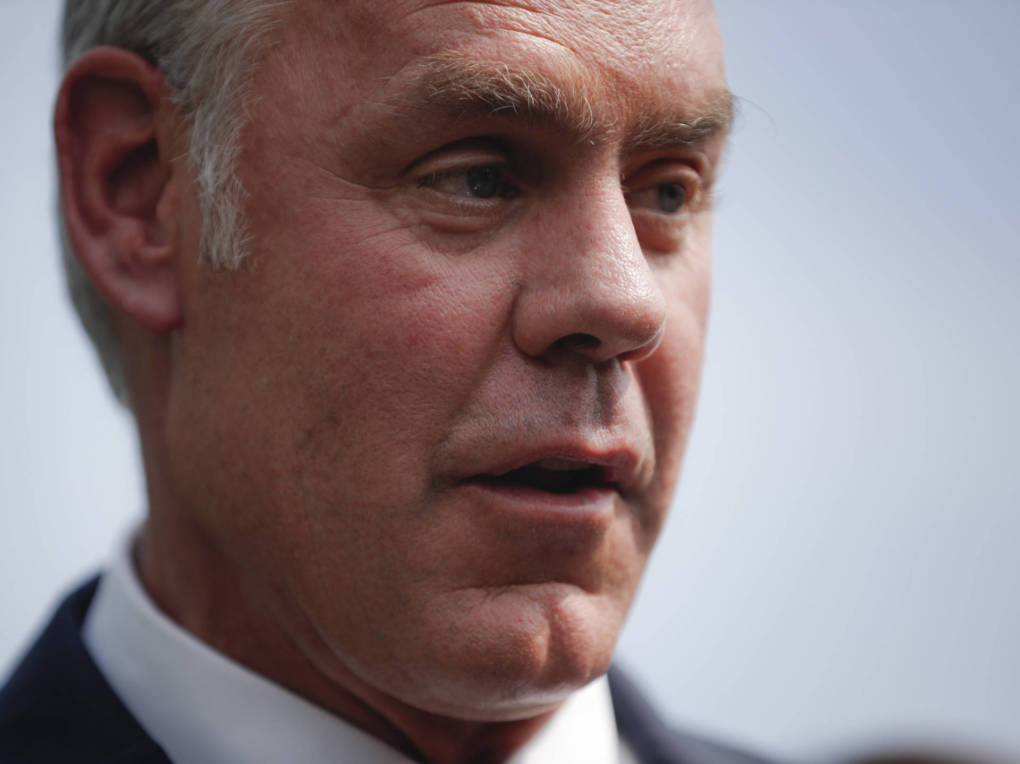
"caption": "Interior Secretary Ryan Zinke speaks to members of the media outside the White House in August.",
"description": "Interior Secretary Ryan Zinke speaks to members of the media outside the White House in August.",
"title": "Interior Secretary Ryan Zinke speaks to members of the media outside the White House in August.",
"credit": "Pablo Martinez Monsivais/AP",
"status": "inherit",
"isLoading": false,
"fetchFailed": false
},
"news_11712795": {
"type": "attachments",
"id": "news_11712795",
"meta": {
"index": "attachments_1716263798",
"site": "news",
"id": "11712795",
"found": true
},
"parent": 11712792,
"imgSizes": {
"twentyfourteen-full-width": {
"file": "https://ww2.kqed.org/app/uploads/sites/10/2018/12/NR610_MARQUEE-1038x576.jpg",
"width": 1038,
"mimeType": "image/jpeg",
"height": 576
},
"thumbnail": {
"file": "https://ww2.kqed.org/app/uploads/sites/10/2018/12/NR610_MARQUEE-160x90.jpg",
"width": 160,
"mimeType": "image/jpeg",
"height": 90
},
"post-thumbnail": {
"file": "https://ww2.kqed.org/app/uploads/sites/10/2018/12/NR610_MARQUEE-672x372.jpg",
"width": 672,
"mimeType": "image/jpeg",
"height": 372
},
"kqedFullSize": {
"file": "https://ww2.kqed.org/app/uploads/sites/10/2018/12/NR610_MARQUEE.jpg",
"width": 1280,
"height": 720
},
"large": {
"file": "https://ww2.kqed.org/app/uploads/sites/10/2018/12/NR610_MARQUEE-1020x574.jpg",
"width": 1020,
"mimeType": "image/jpeg",
"height": 574
},
"complete_open_graph": {
"file": "https://ww2.kqed.org/app/uploads/sites/10/2018/12/NR610_MARQUEE-1200x675.jpg",
"width": 1200,
"mimeType": "image/jpeg",
"height": 675
},
"guest-author-50": {
"file": "https://ww2.kqed.org/app/uploads/sites/10/2018/12/NR610_MARQUEE-50x50.jpg",
"width": 50,
"mimeType": "image/jpeg",
"height": 50
},
"guest-author-96": {
"file": "https://ww2.kqed.org/app/uploads/sites/10/2018/12/NR610_MARQUEE-96x96.jpg",
"width": 96,
"mimeType": "image/jpeg",
"height": 96
},
"medium": {
"file": "https://ww2.kqed.org/app/uploads/sites/10/2018/12/NR610_MARQUEE-800x450.jpg",
"width": 800,
"mimeType": "image/jpeg",
"height": 450
},
"guest-author-64": {
"file": "https://ww2.kqed.org/app/uploads/sites/10/2018/12/NR610_MARQUEE-64x64.jpg",
"width": 64,
"mimeType": "image/jpeg",
"height": 64
},
"guest-author-32": {
"file": "https://ww2.kqed.org/app/uploads/sites/10/2018/12/NR610_MARQUEE-32x32.jpg",
"width": 32,
"mimeType": "image/jpeg",
"height": 32
},
"detail": {
"file": "https://ww2.kqed.org/app/uploads/sites/10/2018/12/NR610_MARQUEE-150x150.jpg",
"width": 150,
"mimeType": "image/jpeg",
"height": 150
},
"guest-author-128": {
"file": "https://ww2.kqed.org/app/uploads/sites/10/2018/12/NR610_MARQUEE-128x128.jpg",
"width": 128,
"mimeType": "image/jpeg",
"height": 128
}
},
"publishDate": 1544835302,
"modified": 1544835302,
"caption": null,
"description": null,
"title": "NR610_MARQUEE",
"credit": null,
"status": "inherit",
"isLoading": false,
"fetchFailed": false
},
"news_11712716": {
"type": "attachments",
"id": "news_11712716",
"meta": {
"index": "attachments_1716263798",
"site": "news",
"id": "11712716",
"found": true
},
"parent": 11712699,
"imgSizes": {
"twentyfourteen-full-width": {
"file": "https://ww2.kqed.org/app/uploads/sites/10/2018/12/tani-1015x576.jpg",
"width": 1015,
"mimeType": "image/jpeg",
"height": 576
},
"thumbnail": {
"file": "https://ww2.kqed.org/app/uploads/sites/10/2018/12/tani-160x114.jpg",
"width": 160,
"mimeType": "image/jpeg",
"height": 114
},
"post-thumbnail": {
"file": "https://ww2.kqed.org/app/uploads/sites/10/2018/12/tani-672x372.jpg",
"width": 672,
"mimeType": "image/jpeg",
"height": 372
},
"kqedFullSize": {
"file": "https://ww2.kqed.org/app/uploads/sites/10/2018/12/tani.jpg",
"width": 1015,
"height": 721
},
"guest-author-50": {
"file": "https://ww2.kqed.org/app/uploads/sites/10/2018/12/tani-50x50.jpg",
"width": 50,
"mimeType": "image/jpeg",
"height": 50
},
"guest-author-96": {
"file": "https://ww2.kqed.org/app/uploads/sites/10/2018/12/tani-96x96.jpg",
"width": 96,
"mimeType": "image/jpeg",
"height": 96
},
"medium": {
"file": "https://ww2.kqed.org/app/uploads/sites/10/2018/12/tani-800x568.jpg",
"width": 800,
"mimeType": "image/jpeg",
"height": 568
},
"guest-author-64": {
"file": "https://ww2.kqed.org/app/uploads/sites/10/2018/12/tani-64x64.jpg",
"width": 64,
"mimeType": "image/jpeg",
"height": 64
},
"detail": {
"file": "https://ww2.kqed.org/app/uploads/sites/10/2018/12/tani-150x150.jpg",
"width": 150,
"mimeType": "image/jpeg",
"height": 150
},
"guest-author-32": {
"file": "https://ww2.kqed.org/app/uploads/sites/10/2018/12/tani-32x32.jpg",
"width": 32,
"mimeType": "image/jpeg",
"height": 32
},
"guest-author-128": {
"file": "https://ww2.kqed.org/app/uploads/sites/10/2018/12/tani-128x128.jpg",
"width": 128,
"mimeType": "image/jpeg",
"height": 128
}
},
"publishDate": 1544827183,
"modified": 1544832754,
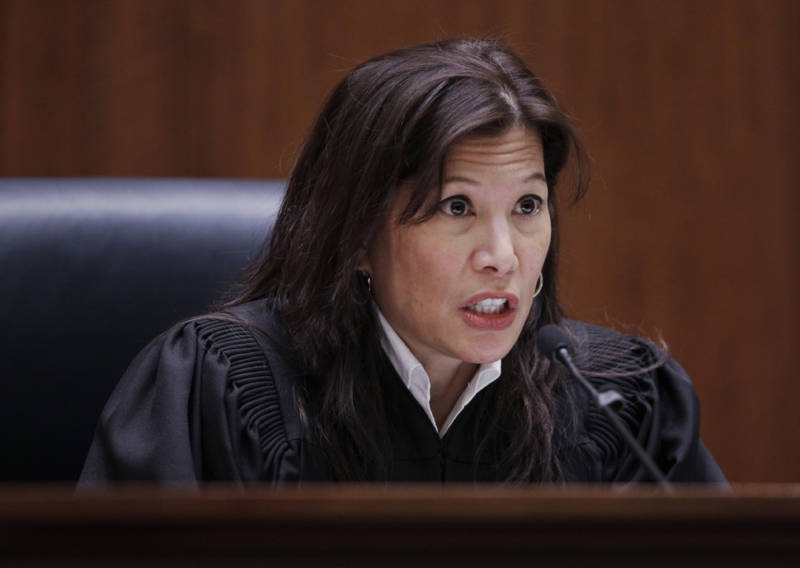
"caption": "California Supreme Court Chief Justice Tani Cantil-Sakauye addresses a hearing in San Francisco, Tuesday, Jan. 10, 2012. ",
"description": "California Supreme Court Chief Justice Tani Cantil-Sakauye addresses a hearing in San Francisco, Tuesday, Jan. 10, 2012. ",
"title": "Tani Cantil-Sakauye",
"credit": "Paul Sakuma/AP",
"status": "inherit",
"isLoading": false,
"fetchFailed": false
},
"news_11711658": {
"type": "attachments",
"id": "news_11711658",
"meta": {
"index": "attachments_1716263798",
"site": "news",
"id": "11711658",
"found": true
},
"parent": 11711657,
"imgSizes": {
"twentyfourteen-full-width": {
"file": "https://ww2.kqed.org/app/uploads/sites/10/2018/12/gettyimages-10718178121_wide-066c1e0d08e9a5e3b4486732836ce5979c0a71df-1038x576.jpg",
"width": 1038,
"mimeType": "image/jpeg",
"height": 576
},
"thumbnail": {
"file": "https://ww2.kqed.org/app/uploads/sites/10/2018/12/gettyimages-10718178121_wide-066c1e0d08e9a5e3b4486732836ce5979c0a71df-160x90.jpg",
"width": 160,
"mimeType": "image/jpeg",
"height": 90
},
"post-thumbnail": {
"file": "https://ww2.kqed.org/app/uploads/sites/10/2018/12/gettyimages-10718178121_wide-066c1e0d08e9a5e3b4486732836ce5979c0a71df-672x372.jpg",
"width": 672,
"mimeType": "image/jpeg",
"height": 372
},
"kqedFullSize": {
"file": "https://ww2.kqed.org/app/uploads/sites/10/2018/12/gettyimages-10718178121_wide-066c1e0d08e9a5e3b4486732836ce5979c0a71df.jpg",
"width": 2986,
"height": 1680
},
"large": {
"file": "https://ww2.kqed.org/app/uploads/sites/10/2018/12/gettyimages-10718178121_wide-066c1e0d08e9a5e3b4486732836ce5979c0a71df-1020x574.jpg",
"width": 1020,
"mimeType": "image/jpeg",
"height": 574
},
"complete_open_graph": {
"file": "https://ww2.kqed.org/app/uploads/sites/10/2018/12/gettyimages-10718178121_wide-066c1e0d08e9a5e3b4486732836ce5979c0a71df-1200x675.jpg",
"width": 1200,
"mimeType": "image/jpeg",
"height": 675
},
"guest-author-50": {
"file": "https://ww2.kqed.org/app/uploads/sites/10/2018/12/gettyimages-10718178121_wide-066c1e0d08e9a5e3b4486732836ce5979c0a71df-50x50.jpg",
"width": 50,
"mimeType": "image/jpeg",
"height": 50
},
"guest-author-96": {
"file": "https://ww2.kqed.org/app/uploads/sites/10/2018/12/gettyimages-10718178121_wide-066c1e0d08e9a5e3b4486732836ce5979c0a71df-96x96.jpg",
"width": 96,
"mimeType": "image/jpeg",
"height": 96
},
"medium": {
"file": "https://ww2.kqed.org/app/uploads/sites/10/2018/12/gettyimages-10718178121_wide-066c1e0d08e9a5e3b4486732836ce5979c0a71df-800x450.jpg",
"width": 800,
"mimeType": "image/jpeg",
"height": 450
},
"guest-author-64": {
"file": "https://ww2.kqed.org/app/uploads/sites/10/2018/12/gettyimages-10718178121_wide-066c1e0d08e9a5e3b4486732836ce5979c0a71df-64x64.jpg",
"width": 64,
"mimeType": "image/jpeg",
"height": 64
},
"guest-author-32": {
"file": "https://ww2.kqed.org/app/uploads/sites/10/2018/12/gettyimages-10718178121_wide-066c1e0d08e9a5e3b4486732836ce5979c0a71df-32x32.jpg",
"width": 32,
"mimeType": "image/jpeg",
"height": 32
},
"full-width": {
"file": "https://ww2.kqed.org/app/uploads/sites/10/2018/12/gettyimages-10718178121_wide-066c1e0d08e9a5e3b4486732836ce5979c0a71df-1920x1080.jpg",
"width": 1920,
"mimeType": "image/jpeg",
"height": 1080
},
"detail": {
"file": "https://ww2.kqed.org/app/uploads/sites/10/2018/12/gettyimages-10718178121_wide-066c1e0d08e9a5e3b4486732836ce5979c0a71df-150x150.jpg",
"width": 150,
"mimeType": "image/jpeg",
"height": 150
},
"guest-author-128": {
"file": "https://ww2.kqed.org/app/uploads/sites/10/2018/12/gettyimages-10718178121_wide-066c1e0d08e9a5e3b4486732836ce5979c0a71df-128x128.jpg",
"width": 128,
"mimeType": "image/jpeg",
"height": 128
}
},
"publishDate": 1544560932,
"modified": 1544561470,
"caption": null,
"description": "With a partial government shutdown on the horizon, President Trump and Democratic leaders had a heated exchange over border security and wall funding in front of reporters.",
"title": "With a partial government shutdown on the horizon, President Trump and Democratic leaders had a heated exchange over border security and wall funding in front of reporters.",
"credit": "C-SPAN YouTube",
"status": "inherit",
"isLoading": false,
"fetchFailed": false
},
"news_11711058": {
"type": "attachments",
"id": "news_11711058",
"meta": {
"index": "attachments_1716263798",
"site": "news",
"id": "11711058",
"found": true
},
"parent": 11711033,
"imgSizes": {
"twentyfourteen-full-width": {
"file": "https://ww2.kqed.org/app/uploads/sites/10/2018/12/NR609_MARQUEE_2-1038x576.jpg",
"width": 1038,
"mimeType": "image/jpeg",
"height": 576
},
"thumbnail": {
"file": "https://ww2.kqed.org/app/uploads/sites/10/2018/12/NR609_MARQUEE_2-160x90.jpg",
"width": 160,
"mimeType": "image/jpeg",
"height": 90
},
"post-thumbnail": {
"file": "https://ww2.kqed.org/app/uploads/sites/10/2018/12/NR609_MARQUEE_2-672x372.jpg",
"width": 672,
"mimeType": "image/jpeg",
"height": 372
},
"kqedFullSize": {
"file": "https://ww2.kqed.org/app/uploads/sites/10/2018/12/NR609_MARQUEE_2.jpg",
"width": 1280,
"height": 720
},
"large": {
"file": "https://ww2.kqed.org/app/uploads/sites/10/2018/12/NR609_MARQUEE_2-1020x574.jpg",
"width": 1020,
"mimeType": "image/jpeg",
"height": 574
},
"complete_open_graph": {
"file": "https://ww2.kqed.org/app/uploads/sites/10/2018/12/NR609_MARQUEE_2-1200x675.jpg",
"width": 1200,
"mimeType": "image/jpeg",
"height": 675
},
"guest-author-50": {
"file": "https://ww2.kqed.org/app/uploads/sites/10/2018/12/NR609_MARQUEE_2-50x50.jpg",
"width": 50,
"mimeType": "image/jpeg",
"height": 50
},
"guest-author-96": {
"file": "https://ww2.kqed.org/app/uploads/sites/10/2018/12/NR609_MARQUEE_2-96x96.jpg",
"width": 96,
"mimeType": "image/jpeg",
"height": 96
},
"medium": {
"file": "https://ww2.kqed.org/app/uploads/sites/10/2018/12/NR609_MARQUEE_2-800x450.jpg",
"width": 800,
"mimeType": "image/jpeg",
"height": 450
},
"guest-author-64": {
"file": "https://ww2.kqed.org/app/uploads/sites/10/2018/12/NR609_MARQUEE_2-64x64.jpg",
"width": 64,
"mimeType": "image/jpeg",
"height": 64
},
"guest-author-32": {
"file": "https://ww2.kqed.org/app/uploads/sites/10/2018/12/NR609_MARQUEE_2-32x32.jpg",
"width": 32,
"mimeType": "image/jpeg",
"height": 32
},
"detail": {
"file": "https://ww2.kqed.org/app/uploads/sites/10/2018/12/NR609_MARQUEE_2-150x150.jpg",
"width": 150,
"mimeType": "image/jpeg",
"height": 150
},
"guest-author-128": {
"file": "https://ww2.kqed.org/app/uploads/sites/10/2018/12/NR609_MARQUEE_2-128x128.jpg",
"width": 128,
"mimeType": "image/jpeg",
"height": 128
}
},
"publishDate": 1544233442,
"modified": 1544233442,
"caption": null,
"description": null,
"title": "NR609_MARQUEE_2",
"credit": null,
"status": "inherit",
"isLoading": false,
"fetchFailed": false
},
"news_11710368": {
"type": "attachments",
"id": "news_11710368",
"meta": {
"index": "attachments_1716263798",
"site": "news",
"id": "11710368",
"found": true
},
"parent": 11710128,
"imgSizes": {
"twentyfourteen-full-width": {
"file": "https://ww2.kqed.org/app/uploads/sites/10/2018/12/GettyImages-1064113664-e1544056674666-1038x576.jpg",
"width": 1038,
"mimeType": "image/jpeg",
"height": 576
},
"thumbnail": {
"file": "https://ww2.kqed.org/app/uploads/sites/10/2018/12/GettyImages-1064113664-e1544056674666-160x105.jpg",
"width": 160,
"mimeType": "image/jpeg",
"height": 105
},
"post-thumbnail": {
"file": "https://ww2.kqed.org/app/uploads/sites/10/2018/12/GettyImages-1064113664-e1544056674666-672x372.jpg",
"width": 672,
"mimeType": "image/jpeg",
"height": 372
},
"kqedFullSize": {
"file": "https://ww2.kqed.org/app/uploads/sites/10/2018/12/GettyImages-1064113664-e1544056674666.jpg",
"width": 1920,
"height": 1264
},
"large": {
"file": "https://ww2.kqed.org/app/uploads/sites/10/2018/12/GettyImages-1064113664-e1544056674666-1020x672.jpg",
"width": 1020,
"mimeType": "image/jpeg",
"height": 672
},
"complete_open_graph": {
"file": "https://ww2.kqed.org/app/uploads/sites/10/2018/12/GettyImages-1064113664-e1544056674666-1200x790.jpg",
"width": 1200,
"mimeType": "image/jpeg",
"height": 790
},
"guest-author-50": {
"file": "https://ww2.kqed.org/app/uploads/sites/10/2018/12/GettyImages-1064113664-e1544056674666-50x50.jpg",
"width": 50,
"mimeType": "image/jpeg",
"height": 50
},
"guest-author-96": {
"file": "https://ww2.kqed.org/app/uploads/sites/10/2018/12/GettyImages-1064113664-e1544056674666-96x96.jpg",
"width": 96,
"mimeType": "image/jpeg",
"height": 96
},
"medium": {
"file": "https://ww2.kqed.org/app/uploads/sites/10/2018/12/GettyImages-1064113664-e1544056674666-800x527.jpg",
"width": 800,
"mimeType": "image/jpeg",
"height": 527
},
"guest-author-64": {
"file": "https://ww2.kqed.org/app/uploads/sites/10/2018/12/GettyImages-1064113664-e1544056674666-64x64.jpg",
"width": 64,
"mimeType": "image/jpeg",
"height": 64
},
"guest-author-32": {
"file": "https://ww2.kqed.org/app/uploads/sites/10/2018/12/GettyImages-1064113664-e1544056674666-32x32.jpg",
"width": 32,
"mimeType": "image/jpeg",
"height": 32
},
"full-width": {
"file": "https://ww2.kqed.org/app/uploads/sites/10/2018/12/GettyImages-1064113664-e1544056674666-1920x1264.jpg",
"width": 1920,
"mimeType": "image/jpeg",
"height": 1264
},
"detail": {
"file": "https://ww2.kqed.org/app/uploads/sites/10/2018/12/GettyImages-1064113664-e1544056674666-150x150.jpg",
"width": 150,
"mimeType": "image/jpeg",
"height": 150
},
"guest-author-128": {
"file": "https://ww2.kqed.org/app/uploads/sites/10/2018/12/GettyImages-1064113664-e1544056674666-128x128.jpg",
"width": 128,
"mimeType": "image/jpeg",
"height": 128
}
},
"publishDate": 1544056580,
"modified": 1544058367,
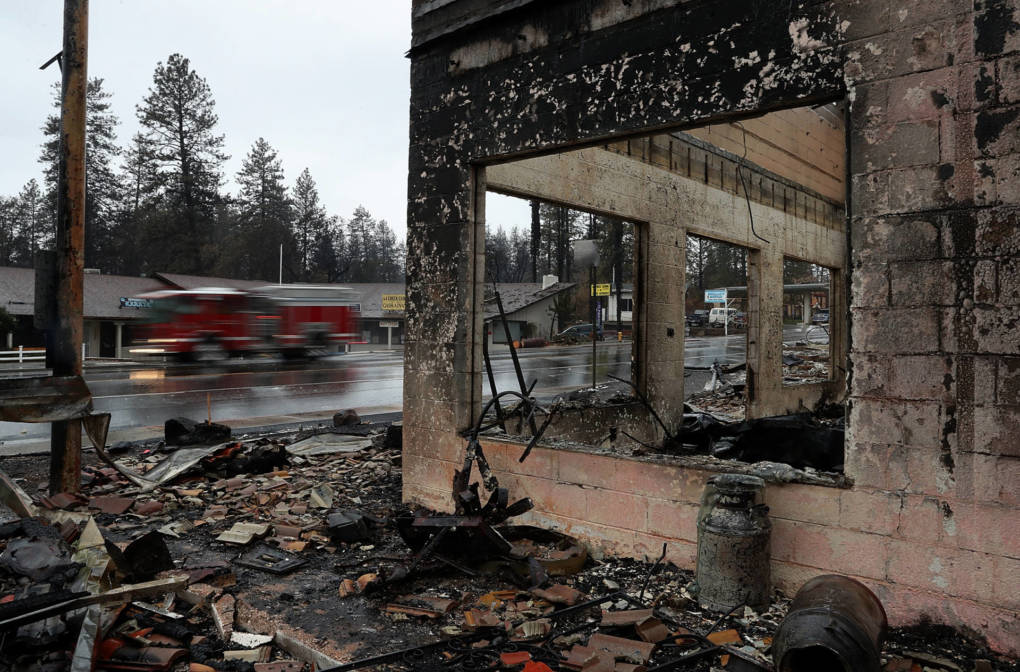
"caption": "A fire truck drives by a business that was destroyed by the Camp Fire in Paradise.",
"description": "A fire truck drives by a business that was destroyed by the Camp Fire in Paradise.",
"title": "Paradise, California Continues Recovery Efforts From The Devastating Camp Fire",
"credit": "Justin Sullivan/Getty Images",
"status": "inherit",
"isLoading": false,
"fetchFailed": false
},
"news_11710084": {
"type": "attachments",
"id": "news_11710084",
"meta": {
"index": "attachments_1716263798",
"site": "news",
"id": "11710084",
"found": true
},
"parent": 11709817,
"imgSizes": {
"twentyfourteen-full-width": {
"file": "https://ww2.kqed.org/app/uploads/sites/10/2018/12/bryant-18th_181204-1038x576.jpg",
"width": 1038,
"mimeType": "image/jpeg",
"height": 576
},
"thumbnail": {
"file": "https://ww2.kqed.org/app/uploads/sites/10/2018/12/bryant-18th_181204-160x105.jpg",
"width": 160,
"mimeType": "image/jpeg",
"height": 105
},
"post-thumbnail": {
"file": "https://ww2.kqed.org/app/uploads/sites/10/2018/12/bryant-18th_181204-672x372.jpg",
"width": 672,
"mimeType": "image/jpeg",
"height": 372
},
"kqedFullSize": {
"file": "https://ww2.kqed.org/app/uploads/sites/10/2018/12/bryant-18th_181204.jpg",
"width": 1920,
"height": 1258
},
"large": {
"file": "https://ww2.kqed.org/app/uploads/sites/10/2018/12/bryant-18th_181204-1020x668.jpg",
"width": 1020,
"mimeType": "image/jpeg",
"height": 668
},
"complete_open_graph": {
"file": "https://ww2.kqed.org/app/uploads/sites/10/2018/12/bryant-18th_181204-1200x786.jpg",
"width": 1200,
"mimeType": "image/jpeg",
"height": 786
},
"guest-author-50": {
"file": "https://ww2.kqed.org/app/uploads/sites/10/2018/12/bryant-18th_181204-50x50.jpg",
"width": 50,
"mimeType": "image/jpeg",
"height": 50
},
"guest-author-96": {
"file": "https://ww2.kqed.org/app/uploads/sites/10/2018/12/bryant-18th_181204-96x96.jpg",
"width": 96,
"mimeType": "image/jpeg",
"height": 96
},
"medium": {
"file": "https://ww2.kqed.org/app/uploads/sites/10/2018/12/bryant-18th_181204-800x524.jpg",
"width": 800,
"mimeType": "image/jpeg",
"height": 524
},
"guest-author-64": {
"file": "https://ww2.kqed.org/app/uploads/sites/10/2018/12/bryant-18th_181204-64x64.jpg",
"width": 64,
"mimeType": "image/jpeg",
"height": 64
},
"guest-author-32": {
"file": "https://ww2.kqed.org/app/uploads/sites/10/2018/12/bryant-18th_181204-32x32.jpg",
"width": 32,
"mimeType": "image/jpeg",
"height": 32
},
"full-width": {
"file": "https://ww2.kqed.org/app/uploads/sites/10/2018/12/bryant-18th_181204-1920x1258.jpg",
"width": 1920,
"mimeType": "image/jpeg",
"height": 1258
},
"detail": {
"file": "https://ww2.kqed.org/app/uploads/sites/10/2018/12/bryant-18th_181204-150x150.jpg",
"width": 150,
"mimeType": "image/jpeg",
"height": 150
},
"guest-author-128": {
"file": "https://ww2.kqed.org/app/uploads/sites/10/2018/12/bryant-18th_181204-128x128.jpg",
"width": 128,
"mimeType": "image/jpeg",
"height": 128
}
},
"publishDate": 1543980519,
"modified": 1543980594,
"caption": "SB 50 by San Francisco state Sen. Scott Wiener would mandate denser housing near major transit and rail lines and in \"job-rich\" communities. ",
"description": null,
"title": "Bryant Street-San Francisco",
"credit": "Dan Brekke/KQED",
"status": "inherit",
"isLoading": false,
"fetchFailed": false
},
"news_11709645": {
"type": "attachments",
"id": "news_11709645",
"meta": {
"index": "attachments_1716263798",
"site": "news",
"id": "11709645",
"found": true
},
"parent": 11709644,
"imgSizes": {
"twentyfourteen-full-width": {
"file": "https://ww2.kqed.org/app/uploads/sites/10/2018/12/ap_18335675687854_custom-5c5608f16412e6685b9d95dab6d037c69131189f-e1543767930408-1038x576.jpg",
"width": 1038,
"mimeType": "image/jpeg",
"height": 576
},
"thumbnail": {
"file": "https://ww2.kqed.org/app/uploads/sites/10/2018/12/ap_18335675687854_custom-5c5608f16412e6685b9d95dab6d037c69131189f-e1543767930408-160x83.jpg",
"width": 160,
"mimeType": "image/jpeg",
"height": 83
},
"post-thumbnail": {
"file": "https://ww2.kqed.org/app/uploads/sites/10/2018/12/ap_18335675687854_custom-5c5608f16412e6685b9d95dab6d037c69131189f-e1543767930408-672x372.jpg",
"width": 672,
"mimeType": "image/jpeg",
"height": 372
},
"kqedFullSize": {
"file": "https://ww2.kqed.org/app/uploads/sites/10/2018/12/ap_18335675687854_custom-5c5608f16412e6685b9d95dab6d037c69131189f-e1543767930408.jpg",
"width": 1920,
"height": 995
},
"large": {
"file": "https://ww2.kqed.org/app/uploads/sites/10/2018/12/ap_18335675687854_custom-5c5608f16412e6685b9d95dab6d037c69131189f-e1543767930408-1020x529.jpg",
"width": 1020,
"mimeType": "image/jpeg",
"height": 529
},
"complete_open_graph": {
"file": "https://ww2.kqed.org/app/uploads/sites/10/2018/12/ap_18335675687854_custom-5c5608f16412e6685b9d95dab6d037c69131189f-e1543767930408-1200x622.jpg",
"width": 1200,
"mimeType": "image/jpeg",
"height": 622
},
"guest-author-50": {
"file": "https://ww2.kqed.org/app/uploads/sites/10/2018/12/ap_18335675687854_custom-5c5608f16412e6685b9d95dab6d037c69131189f-e1543767930408-50x50.jpg",
"width": 50,
"mimeType": "image/jpeg",
"height": 50
},
"guest-author-96": {
"file": "https://ww2.kqed.org/app/uploads/sites/10/2018/12/ap_18335675687854_custom-5c5608f16412e6685b9d95dab6d037c69131189f-e1543767930408-96x96.jpg",
"width": 96,
"mimeType": "image/jpeg",
"height": 96
},
"medium": {
"file": "https://ww2.kqed.org/app/uploads/sites/10/2018/12/ap_18335675687854_custom-5c5608f16412e6685b9d95dab6d037c69131189f-e1543767930408-800x415.jpg",
"width": 800,
"mimeType": "image/jpeg",
"height": 415
},
"guest-author-64": {
"file": "https://ww2.kqed.org/app/uploads/sites/10/2018/12/ap_18335675687854_custom-5c5608f16412e6685b9d95dab6d037c69131189f-e1543767930408-64x64.jpg",
"width": 64,
"mimeType": "image/jpeg",
"height": 64
},
"guest-author-32": {
"file": "https://ww2.kqed.org/app/uploads/sites/10/2018/12/ap_18335675687854_custom-5c5608f16412e6685b9d95dab6d037c69131189f-e1543767930408-32x32.jpg",
"width": 32,
"mimeType": "image/jpeg",
"height": 32
},
"full-width": {
"file": "https://ww2.kqed.org/app/uploads/sites/10/2018/12/ap_18335675687854_custom-5c5608f16412e6685b9d95dab6d037c69131189f-e1543767930408-1920x995.jpg",
"width": 1920,
"mimeType": "image/jpeg",
"height": 995
},
"detail": {
"file": "https://ww2.kqed.org/app/uploads/sites/10/2018/12/ap_18335675687854_custom-5c5608f16412e6685b9d95dab6d037c69131189f-e1543767930408-150x150.jpg",
"width": 150,
"mimeType": "image/jpeg",
"height": 150
},
"guest-author-128": {
"file": "https://ww2.kqed.org/app/uploads/sites/10/2018/12/ap_18335675687854_custom-5c5608f16412e6685b9d95dab6d037c69131189f-e1543767930408-128x128.jpg",
"width": 128,
"mimeType": "image/jpeg",
"height": 128
}
},
"publishDate": 1543767390,
"modified": 1543767939,
"caption": "Flowers sit at the base of a statue of former President George H.W. Bush outside the George H.W. Bush Presidential Library and Museum on Saturday, in College Station, Texas. Bush will be laid to rest at his family plot near the library on Thursday.",
"description": "Flowers sit at the base of a statue of former President George H.W. Bush outside the George H.W. Bush Presidential Library and Museum on Saturday, in College Station, Texas. Bush will be laid to rest at his family plot near the library on Thursday.",
"title": "Flowers sit at the base of a statue of former President George H.W. Bush outside the George H.W. Bush Presidential Library and Museum on Saturday, in College Station, Texas. Bush will be laid to rest at his family plot near the library on Thursday.",
"credit": "David J. Phillip/AP",
"status": "inherit",
"isLoading": false,
"fetchFailed": false
},
"news_11709520": {
"type": "attachments",
"id": "news_11709520",
"meta": {
"index": "attachments_1716263798",
"site": "news",
"id": "11709520",
"found": true
},
"parent": 11709519,
"imgSizes": {
"small": {
"file": "https://ww2.kqed.org/app/uploads/sites/10/2018/11/george_h_slide-8d899d5fa01a9700f9f1ca173f679623ca264265-520x346.jpg",
"width": 520,
"mimeType": "image/jpeg",
"height": 346
},
"twentyfourteen-full-width": {
"file": "https://ww2.kqed.org/app/uploads/sites/10/2018/11/george_h_slide-8d899d5fa01a9700f9f1ca173f679623ca264265-1038x576.jpg",
"width": 1038,
"mimeType": "image/jpeg",
"height": 576
},
"thumbnail": {
"file": "https://ww2.kqed.org/app/uploads/sites/10/2018/11/george_h_slide-8d899d5fa01a9700f9f1ca173f679623ca264265-160x107.jpg",
"width": 160,
"mimeType": "image/jpeg",
"height": 107
},
"fd-sm": {
"file": "https://ww2.kqed.org/app/uploads/sites/10/2018/11/george_h_slide-8d899d5fa01a9700f9f1ca173f679623ca264265-960x639.jpg",
"width": 960,
"mimeType": "image/jpeg",
"height": 639
},
"post-thumbnail": {
"file": "https://ww2.kqed.org/app/uploads/sites/10/2018/11/george_h_slide-8d899d5fa01a9700f9f1ca173f679623ca264265-672x372.jpg",
"width": 672,
"mimeType": "image/jpeg",
"height": 372
},
"xsmall": {
"file": "https://ww2.kqed.org/app/uploads/sites/10/2018/11/george_h_slide-8d899d5fa01a9700f9f1ca173f679623ca264265-375x250.jpg",
"width": 375,
"mimeType": "image/jpeg",
"height": 250
},
"kqedFullSize": {
"file": "https://ww2.kqed.org/app/uploads/sites/10/2018/11/george_h_slide-8d899d5fa01a9700f9f1ca173f679623ca264265-e1543676699775.jpg",
"width": 1920,
"height": 1278
},
"large": {
"file": "https://ww2.kqed.org/app/uploads/sites/10/2018/11/george_h_slide-8d899d5fa01a9700f9f1ca173f679623ca264265-1020x679.jpg",
"width": 1020,
"mimeType": "image/jpeg",
"height": 679
},
"xlarge": {
"file": "https://ww2.kqed.org/app/uploads/sites/10/2018/11/george_h_slide-8d899d5fa01a9700f9f1ca173f679623ca264265-1180x786.jpg",
"width": 1180,
"mimeType": "image/jpeg",
"height": 786
},
"complete_open_graph": {
"file": "https://ww2.kqed.org/app/uploads/sites/10/2018/11/george_h_slide-8d899d5fa01a9700f9f1ca173f679623ca264265-1200x799.jpg",
"width": 1200,
"mimeType": "image/jpeg",
"height": 799
},
"guest-author-50": {
"file": "https://ww2.kqed.org/app/uploads/sites/10/2018/11/george_h_slide-8d899d5fa01a9700f9f1ca173f679623ca264265-50x50.jpg",
"width": 50,
"mimeType": "image/jpeg",
"height": 50
},
"guest-author-96": {
"file": "https://ww2.kqed.org/app/uploads/sites/10/2018/11/george_h_slide-8d899d5fa01a9700f9f1ca173f679623ca264265-96x96.jpg",
"width": 96,
"mimeType": "image/jpeg",
"height": 96
},
"medium": {
"file": "https://ww2.kqed.org/app/uploads/sites/10/2018/11/george_h_slide-8d899d5fa01a9700f9f1ca173f679623ca264265-800x533.jpg",
"width": 800,
"mimeType": "image/jpeg",
"height": 533
},
"guest-author-64": {
"file": "https://ww2.kqed.org/app/uploads/sites/10/2018/11/george_h_slide-8d899d5fa01a9700f9f1ca173f679623ca264265-64x64.jpg",
"width": 64,
"mimeType": "image/jpeg",
"height": 64
},
"guest-author-32": {
"file": "https://ww2.kqed.org/app/uploads/sites/10/2018/11/george_h_slide-8d899d5fa01a9700f9f1ca173f679623ca264265-32x32.jpg",
"width": 32,
"mimeType": "image/jpeg",
"height": 32
},
"fd-lrg": {
"file": "https://ww2.kqed.org/app/uploads/sites/10/2018/11/george_h_slide-8d899d5fa01a9700f9f1ca173f679623ca264265-1920x1278.jpg",
"width": 1920,
"mimeType": "image/jpeg",
"height": 1278
},
"fd-med": {
"file": "https://ww2.kqed.org/app/uploads/sites/10/2018/11/george_h_slide-8d899d5fa01a9700f9f1ca173f679623ca264265-1180x786.jpg",
"width": 1180,
"mimeType": "image/jpeg",
"height": 786
},
"full-width": {
"file": "https://ww2.kqed.org/app/uploads/sites/10/2018/11/george_h_slide-8d899d5fa01a9700f9f1ca173f679623ca264265-1920x1278.jpg",
"width": 1920,
"mimeType": "image/jpeg",
"height": 1278
},
"detail": {
"file": "https://ww2.kqed.org/app/uploads/sites/10/2018/11/george_h_slide-8d899d5fa01a9700f9f1ca173f679623ca264265-150x150.jpg",
"width": 150,
"mimeType": "image/jpeg",
"height": 150
},
"guest-author-128": {
"file": "https://ww2.kqed.org/app/uploads/sites/10/2018/11/george_h_slide-8d899d5fa01a9700f9f1ca173f679623ca264265-128x128.jpg",
"width": 128,
"mimeType": "image/jpeg",
"height": 128
},
"xxsmall": {
"file": "https://ww2.kqed.org/app/uploads/sites/10/2018/11/george_h_slide-8d899d5fa01a9700f9f1ca173f679623ca264265-240x160.jpg",
"width": 240,
"mimeType": "image/jpeg",
"height": 160
}
},
"publishDate": 1543676511,
"modified": 1543676750,
"caption": "U.S. President George H.W. Bush speaks during a fundraiser in Dallas, on Nov. 1, 1991.",
"description": "U.S. President George H.W. Bush speaks during a fundraiser in Dallas, on Nov. 1, 1991.",
"title": "George H.W. Bush, the 41st president of the United States, speaks at a fundraiser in Dallas in 1991.",
"credit": "Marcy Nighswander/AP",
"status": "inherit",
"isLoading": false,
"fetchFailed": false
},
"news_11709423": {
"type": "attachments",
"id": "news_11709423",
"meta": {
"index": "attachments_1716263798",
"site": "news",
"id": "11709423",
"found": true
},
"parent": 11709417,
"imgSizes": {
"twentyfourteen-full-width": {
"file": "https://ww2.kqed.org/app/uploads/sites/10/2018/11/RS33897_paradise_AW_14-qut-1-1038x576.jpg",
"width": 1038,
"mimeType": "image/jpeg",
"height": 576
},
"thumbnail": {
"file": "https://ww2.kqed.org/app/uploads/sites/10/2018/11/RS33897_paradise_AW_14-qut-1-160x107.jpg",
"width": 160,
"mimeType": "image/jpeg",
"height": 107
},
"post-thumbnail": {
"file": "https://ww2.kqed.org/app/uploads/sites/10/2018/11/RS33897_paradise_AW_14-qut-1-672x372.jpg",
"width": 672,
"mimeType": "image/jpeg",
"height": 372
},
"kqedFullSize": {
"file": "https://ww2.kqed.org/app/uploads/sites/10/2018/11/RS33897_paradise_AW_14-qut-1.jpg",
"width": 1920,
"height": 1280
},
"large": {
"file": "https://ww2.kqed.org/app/uploads/sites/10/2018/11/RS33897_paradise_AW_14-qut-1-1020x680.jpg",
"width": 1020,
"mimeType": "image/jpeg",
"height": 680
},
"complete_open_graph": {
"file": "https://ww2.kqed.org/app/uploads/sites/10/2018/11/RS33897_paradise_AW_14-qut-1-1200x800.jpg",
"width": 1200,
"mimeType": "image/jpeg",
"height": 800
},
"guest-author-50": {
"file": "https://ww2.kqed.org/app/uploads/sites/10/2018/11/RS33897_paradise_AW_14-qut-1-50x50.jpg",
"width": 50,
"mimeType": "image/jpeg",
"height": 50
},
"guest-author-96": {
"file": "https://ww2.kqed.org/app/uploads/sites/10/2018/11/RS33897_paradise_AW_14-qut-1-96x96.jpg",
"width": 96,
"mimeType": "image/jpeg",
"height": 96
},
"medium": {
"file": "https://ww2.kqed.org/app/uploads/sites/10/2018/11/RS33897_paradise_AW_14-qut-1-800x533.jpg",
"width": 800,
"mimeType": "image/jpeg",
"height": 533
},
"guest-author-64": {
"file": "https://ww2.kqed.org/app/uploads/sites/10/2018/11/RS33897_paradise_AW_14-qut-1-64x64.jpg",
"width": 64,
"mimeType": "image/jpeg",
"height": 64
},
"guest-author-32": {
"file": "https://ww2.kqed.org/app/uploads/sites/10/2018/11/RS33897_paradise_AW_14-qut-1-32x32.jpg",
"width": 32,
"mimeType": "image/jpeg",
"height": 32
},
"full-width": {
"file": "https://ww2.kqed.org/app/uploads/sites/10/2018/11/RS33897_paradise_AW_14-qut-1-1920x1280.jpg",
"width": 1920,
"mimeType": "image/jpeg",
"height": 1280
},
"detail": {
"file": "https://ww2.kqed.org/app/uploads/sites/10/2018/11/RS33897_paradise_AW_14-qut-1-150x150.jpg",
"width": 150,
"mimeType": "image/jpeg",
"height": 150
},
"guest-author-128": {
"file": "https://ww2.kqed.org/app/uploads/sites/10/2018/11/RS33897_paradise_AW_14-qut-1-128x128.jpg",
"width": 128,
"mimeType": "image/jpeg",
"height": 128
}
},
"publishDate": 1543624758,
"modified": 1543624758,
"caption": "The site of Paradise Army Surplus on November 13, 2018.",
"description": null,
"title": "The site of Paradise Army Surplus on November 13, 2018.",
"credit": null,
"status": "inherit",
"isLoading": false,
"fetchFailed": false
},
"news_11708017": {
"type": "attachments",
"id": "news_11708017",
"meta": {
"index": "attachments_1716263798",
"site": "news",
"id": "11708017",
"found": true
},
"parent": 11707429,
"imgSizes": {
"twentyfourteen-full-width": {
"file": "https://ww2.kqed.org/app/uploads/sites/10/2018/11/RS34087_GettyImages-108007553-qut-1038x576.jpg",
"width": 1038,
"mimeType": "image/jpeg",
"height": 576
},
"thumbnail": {
"file": "https://ww2.kqed.org/app/uploads/sites/10/2018/11/RS34087_GettyImages-108007553-qut-160x104.jpg",
"width": 160,
"mimeType": "image/jpeg",
"height": 104
},
"post-thumbnail": {
"file": "https://ww2.kqed.org/app/uploads/sites/10/2018/11/RS34087_GettyImages-108007553-qut-672x372.jpg",
"width": 672,
"mimeType": "image/jpeg",
"height": 372
},
"kqedFullSize": {
"file": "https://ww2.kqed.org/app/uploads/sites/10/2018/11/RS34087_GettyImages-108007553-qut.jpg",
"width": 1920,
"height": 1252
},
"large": {
"file": "https://ww2.kqed.org/app/uploads/sites/10/2018/11/RS34087_GettyImages-108007553-qut-1020x665.jpg",
"width": 1020,
"mimeType": "image/jpeg",
"height": 665
},
"complete_open_graph": {
"file": "https://ww2.kqed.org/app/uploads/sites/10/2018/11/RS34087_GettyImages-108007553-qut-1200x783.jpg",
"width": 1200,
"mimeType": "image/jpeg",
"height": 783
},
"guest-author-50": {
"file": "https://ww2.kqed.org/app/uploads/sites/10/2018/11/RS34087_GettyImages-108007553-qut-50x50.jpg",
"width": 50,
"mimeType": "image/jpeg",
"height": 50
},
"guest-author-96": {
"file": "https://ww2.kqed.org/app/uploads/sites/10/2018/11/RS34087_GettyImages-108007553-qut-96x96.jpg",
"width": 96,
"mimeType": "image/jpeg",
"height": 96
},
"medium": {
"file": "https://ww2.kqed.org/app/uploads/sites/10/2018/11/RS34087_GettyImages-108007553-qut-800x522.jpg",
"width": 800,
"mimeType": "image/jpeg",
"height": 522
},
"guest-author-64": {
"file": "https://ww2.kqed.org/app/uploads/sites/10/2018/11/RS34087_GettyImages-108007553-qut-64x64.jpg",
"width": 64,
"mimeType": "image/jpeg",
"height": 64
},
"guest-author-32": {
"file": "https://ww2.kqed.org/app/uploads/sites/10/2018/11/RS34087_GettyImages-108007553-qut-32x32.jpg",
"width": 32,
"mimeType": "image/jpeg",
"height": 32
},
"full-width": {
"file": "https://ww2.kqed.org/app/uploads/sites/10/2018/11/RS34087_GettyImages-108007553-qut-1920x1252.jpg",
"width": 1920,
"mimeType": "image/jpeg",
"height": 1252
},
"detail": {
"file": "https://ww2.kqed.org/app/uploads/sites/10/2018/11/RS34087_GettyImages-108007553-qut-150x150.jpg",
"width": 150,
"mimeType": "image/jpeg",
"height": 150
},
"guest-author-128": {
"file": "https://ww2.kqed.org/app/uploads/sites/10/2018/11/RS34087_GettyImages-108007553-qut-128x128.jpg",
"width": 128,
"mimeType": "image/jpeg",
"height": 128
}
},
"publishDate": 1543093456,
"modified": 1543093503,
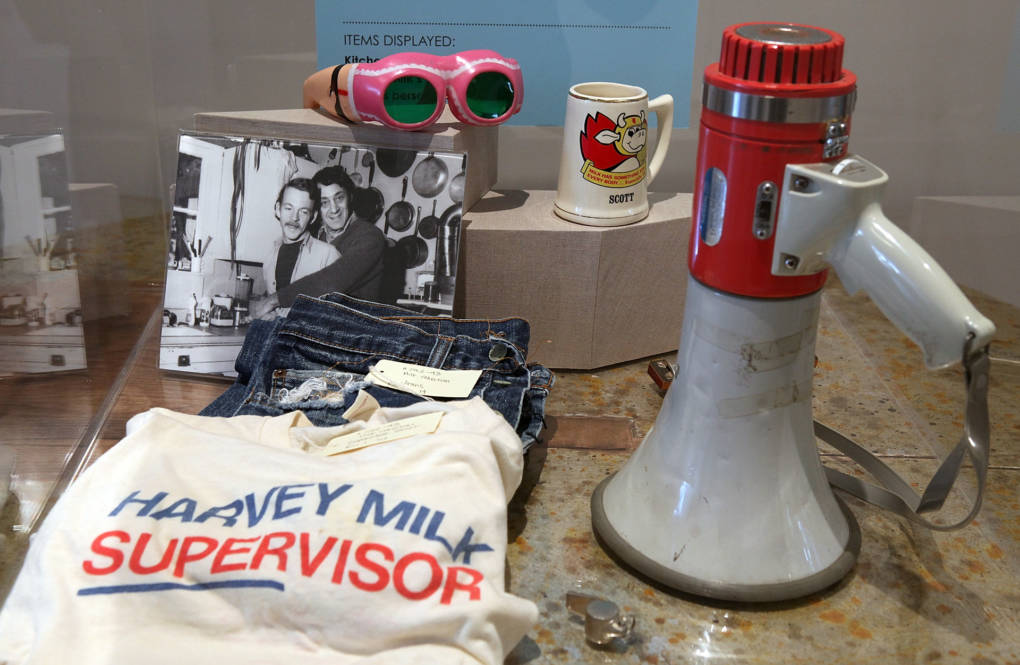
"caption": "Personal possessions of the late San Francisco supervisor Harvey Milk are displayed during the grand opening of the Gay, Lesbian, Bisexual and Transgender History Museum on January 12, 2011 in San Francisco, California.",
"description": "Personal possessions of the late San Francisco supervisor Harvey Milk are displayed during the grand opening of the Gay, Lesbian, Bisexual and Transgender History Museum on January 12, 2011 in San Francisco, California.",
"title": "Country's First Gay, Lesbian, Bisexual, And Transgender History Museum Opens",
"credit": "Justin Sullivan/Getty Images",
"status": "inherit",
"isLoading": false,
"fetchFailed": false
},
"news_11708303": {
"type": "attachments",
"id": "news_11708303",
"meta": {
"index": "attachments_1716263798",
"site": "news",
"id": "11708303",
"found": true
},
"parent": 11708297,
"imgSizes": {
"twentyfourteen-full-width": {
"file": "https://ww2.kqed.org/app/uploads/sites/10/2018/11/GettyImages-1061487250-e1543281067507-1038x576.jpg",
"width": 1038,
"mimeType": "image/jpeg",
"height": 576
},
"thumbnail": {
"file": "https://ww2.kqed.org/app/uploads/sites/10/2018/11/GettyImages-1061487250-e1543281067507-160x107.jpg",
"width": 160,
"mimeType": "image/jpeg",
"height": 107
},
"post-thumbnail": {
"file": "https://ww2.kqed.org/app/uploads/sites/10/2018/11/GettyImages-1061487250-e1543281067507-672x372.jpg",
"width": 672,
"mimeType": "image/jpeg",
"height": 372
},
"kqedFullSize": {
"file": "https://ww2.kqed.org/app/uploads/sites/10/2018/11/GettyImages-1061487250-e1543281067507.jpg",
"width": 1920,
"height": 1284
},
"large": {
"file": "https://ww2.kqed.org/app/uploads/sites/10/2018/11/GettyImages-1061487250-e1543281067507-1020x682.jpg",
"width": 1020,
"mimeType": "image/jpeg",
"height": 682
},
"complete_open_graph": {
"file": "https://ww2.kqed.org/app/uploads/sites/10/2018/11/GettyImages-1061487250-e1543281067507-1200x803.jpg",
"width": 1200,
"mimeType": "image/jpeg",
"height": 803
},
"guest-author-50": {
"file": "https://ww2.kqed.org/app/uploads/sites/10/2018/11/GettyImages-1061487250-e1543281067507-50x50.jpg",
"width": 50,
"mimeType": "image/jpeg",
"height": 50
},
"guest-author-96": {
"file": "https://ww2.kqed.org/app/uploads/sites/10/2018/11/GettyImages-1061487250-e1543281067507-96x96.jpg",
"width": 96,
"mimeType": "image/jpeg",
"height": 96
},
"medium": {
"file": "https://ww2.kqed.org/app/uploads/sites/10/2018/11/GettyImages-1061487250-e1543281067507-800x535.jpg",
"width": 800,
"mimeType": "image/jpeg",
"height": 535
},
"guest-author-64": {
"file": "https://ww2.kqed.org/app/uploads/sites/10/2018/11/GettyImages-1061487250-e1543281067507-64x64.jpg",
"width": 64,
"mimeType": "image/jpeg",
"height": 64
},
"guest-author-32": {
"file": "https://ww2.kqed.org/app/uploads/sites/10/2018/11/GettyImages-1061487250-e1543281067507-32x32.jpg",
"width": 32,
"mimeType": "image/jpeg",
"height": 32
},
"full-width": {
"file": "https://ww2.kqed.org/app/uploads/sites/10/2018/11/GettyImages-1061487250-e1543281067507-1920x1284.jpg",
"width": 1920,
"mimeType": "image/jpeg",
"height": 1284
},
"detail": {
"file": "https://ww2.kqed.org/app/uploads/sites/10/2018/11/GettyImages-1061487250-e1543281067507-150x150.jpg",
"width": 150,
"mimeType": "image/jpeg",
"height": 150
},
"guest-author-128": {
"file": "https://ww2.kqed.org/app/uploads/sites/10/2018/11/GettyImages-1061487250-e1543281067507-128x128.jpg",
"width": 128,
"mimeType": "image/jpeg",
"height": 128
}
},
"publishDate": 1543278294,
"modified": 1543281174,
"caption": "U.S. Secretary of the Interior Ryan Zinke (pointing) joined Gov. Jerry Brown and FEMA Administrator Brock Long on Nov. 14 to survey fire damage in Paradise.",
"description": "U.S. Secretary of the Interior Ryan Zinke (pointing) joined Gov. Jerry Brown and FEMA Administrator Brock Long on Nov. 14 to survey fire damage in Paradise.",
"title": "California Gov. Brown, Interior Secretary Zinke, And FEMA Chief Long Tour Town Of Paradise Devastated By Recent Wildfire",
"credit": "Justin Sullivan/Getty Images",
"status": "inherit",
"isLoading": false,
"fetchFailed": false
}
},
"audioPlayerReducer": {
"postId": "stream_live",
"isPaused": true,
"isPlaying": false,
"pfsActive": false,
"pledgeModalIsOpen": true,
"playerDrawerIsOpen": false,
"liveAudioPlayStartedAt": 0,
"liveAudioPlayContext": ""
},
"authorsReducer": {
"byline_news_11712831": {
"type": "authors",
"id": "byline_news_11712831",
"meta": {
"override": true
},
"slug": "byline_news_11712831",
"name": "Shannon Van Sant and Nathan Rott",
"isLoading": false
},
"byline_news_11712699": {
"type": "authors",
"id": "byline_news_11712699",
"meta": {
"override": true
},
"slug": "byline_news_11712699",
"name": "Dan Morain",
"isLoading": false
},
"byline_news_11711657": {
"type": "authors",
"id": "byline_news_11711657",
"meta": {
"override": true
},
"slug": "byline_news_11711657",
"name": "Jessica Taylor and Tamara Keith",
"isLoading": false
},
"byline_news_11709644": {
"type": "authors",
"id": "byline_news_11709644",
"meta": {
"override": true
},
"slug": "byline_news_11709644",
"name": "Emma Bowman",
"isLoading": false
},
"byline_news_11709519": {
"type": "authors",
"id": "byline_news_11709519",
"meta": {
"override": true
},
"slug": "byline_news_11709519",
"name": "Marcus Rosenbaum, Scott Horsley, Dina Kesbeh",
"isLoading": false
},
"byline_news_11708297": {
"type": "authors",
"id": "byline_news_11708297",
"meta": {
"override": true
},
"slug": "byline_news_11708297",
"name": "Jonathan J. Cooper \u003cbr> Associated Press ",
"isLoading": false
},
"danbrekke": {
"type": "authors",
"id": "222",
"meta": {
"index": "authors_1716337520",
"id": "222",
"found": true
},
"name": "Dan Brekke",
"firstName": "Dan",
"lastName": "Brekke",
"slug": "danbrekke",
"email": "dbrekke@kqed.org",
"display_author_email": true,
"staff_mastheads": [
"news",
"science"
],
"title": "KQED Editor and Reporter",
"bio": "Dan Brekke is a reporter and editor for KQED News, responsible for coverage of topics ranging from California water issues to the Bay Area's transportation challenges. In a newsroom career that began in Chicago in 1972, Dan has worked for \u003cem>The San Francisco Examiner,\u003c/em> Wired and TechTV and has been published in The New York Times, The New York Times Magazine, Business 2.0, Salon and elsewhere.\r\n\r\nSince joining KQED in 2007, Dan has reported, edited and produced both radio and online features and breaking news pieces. He has shared as both editor and reporter in four Society of Professional Journalists Norcal Excellence in Journalism awards and one Edward R. Murrow regional award. He was chosen for a spring 2017 residency at the Mesa Refuge to advance his research on California salmon.\r\n\r\nEmail Dan at: \u003ca href=\"mailto:dbrekke@kqed.org\">dbrekke@kqed.org\u003c/a>\r\n\r\n\u003cstrong>Twitter:\u003c/strong> \u003ca href=\"https://twitter.com/danbrekke\" rel=\"noopener noreferrer\">twitter.com/danbrekke\u003c/a>\r\n\u003cstrong>Facebook:\u003c/strong> \u003ca href=\"https://www.facebook.com/danbrekke\" rel=\"noopener noreferrer\">www.facebook.com/danbrekke\u003c/a>\r\n\u003cstrong>LinkedIn:\u003c/strong> \u003ca href=\"https://www.linkedin.com/in/danbrekke\" rel=\"noopener noreferrer\">www.linkedin.com/in/danbrekke\u003c/a>",
"avatar": "https://secure.gravatar.com/avatar/c8126230345efca3f7aa89b1a402be45?s=600&d=mm&r=g",
"twitter": "danbrekke",
"facebook": null,
"instagram": "https://www.instagram.com/dan.brekke/",
"linkedin": "https://www.linkedin.com/in/danbrekke/",
"sites": [
{
"site": "news",
"roles": [
"administrator",
"create_posts"
]
},
{
"site": "stateofhealth",
"roles": [
"editor"
]
},
{
"site": "science",
"roles": [
"editor"
]
},
{
"site": "quest",
"roles": [
"contributor"
]
},
{
"site": "food",
"roles": [
"contributor"
]
},
{
"site": "forum",
"roles": [
"contributor"
]
},
{
"site": "liveblog",
"roles": [
"editor"
]
}
],
"headData": {
"title": "Dan Brekke | KQED",
"description": "KQED Editor and Reporter",
"ogImgSrc": "https://secure.gravatar.com/avatar/c8126230345efca3f7aa89b1a402be45?s=600&d=mm&r=g",
"twImgSrc": "https://secure.gravatar.com/avatar/c8126230345efca3f7aa89b1a402be45?s=600&d=mm&r=g"
},
"isLoading": false,
"link": "/author/danbrekke"
},
"kqed": {
"type": "authors",
"id": "236",
"meta": {
"index": "authors_1716337520",
"id": "236",
"found": true
},
"name": "KQED News Staff",
"firstName": "KQED News Staff",
"lastName": null,
"slug": "kqed",
"email": "faq@kqed.org",
"display_author_email": false,
"staff_mastheads": [],
"title": null,
"bio": null,
"avatar": "https://secure.gravatar.com/avatar/ef0e801a68c4c54afa9180db14084167?s=600&d=blank&r=g",
"twitter": null,
"facebook": null,
"instagram": null,
"linkedin": null,
"sites": [
{
"site": "arts",
"roles": [
"contributor"
]
},
{
"site": "news",
"roles": [
"editor"
]
},
{
"site": "futureofyou",
"roles": [
"author"
]
}
],
"headData": {
"title": "KQED News Staff | KQED",
"description": null,
"ogImgSrc": "https://secure.gravatar.com/avatar/ef0e801a68c4c54afa9180db14084167?s=600&d=blank&r=g",
"twImgSrc": "https://secure.gravatar.com/avatar/ef0e801a68c4c54afa9180db14084167?s=600&d=blank&r=g"
},
"isLoading": false,
"link": "/author/kqed"
},
"scottshafer": {
"type": "authors",
"id": "255",
"meta": {
"index": "authors_1716337520",
"id": "255",
"found": true
},
"name": "Scott Shafer",
"firstName": "Scott",
"lastName": "Shafer",
"slug": "scottshafer",
"email": "sshafer@kqed.org",
"display_author_email": false,
"staff_mastheads": [
"news"
],
"title": "KQED Contributor",
"bio": "Scott Shafer is a senior editor with the KQED Politics and Government desk. He is co-host of Political Breakdown, the award-winning radio show and podcast with a personal take on the world of politics. Scott came to KQED in 1998 to host the statewide\u003cem> California Report\u003c/em>. Prior to that he had extended stints in politics and government\u003cem>.\u003c/em> He uses that inside experience at KQED in his, reporting, hosting and analysis for the politics desk. Scott collaborated \u003cem>Political Breakdown a\u003c/em>nd on \u003cem>The Political Mind of Jerry Brown, \u003c/em>an eight-part series about the life and extraordinary political career of the former governor. For fun, he plays water polo with the San Francisco Tsunami.",
"avatar": "https://secure.gravatar.com/avatar/a62ebae45b79d7aed1a39a0e3bf68104?s=600&d=blank&r=g",
"twitter": "scottshafer",
"bluesky": null,
"facebook": null,
"instagram": null,
"linkedin": null,
"sites": [
{
"site": "news",
"roles": [
"editor"
]
},
{
"site": "stateofhealth",
"roles": [
"author"
]
},
{
"site": "science",
"roles": [
"author"
]
},
{
"site": "forum",
"roles": [
"subscriber"
]
},
{
"site": "liveblog",
"roles": [
"author"
]
}
],
"headData": {
"title": "Scott Shafer | KQED",
"description": "KQED Contributor",
"ogImgSrc": "https://secure.gravatar.com/avatar/a62ebae45b79d7aed1a39a0e3bf68104?s=600&d=blank&r=g",
"twImgSrc": "https://secure.gravatar.com/avatar/a62ebae45b79d7aed1a39a0e3bf68104?s=600&d=blank&r=g"
},
"isLoading": false,
"link": "/author/scottshafer"
},
"mlagos": {
"type": "authors",
"id": "3239",
"meta": {
"index": "authors_1716337520",
"id": "3239",
"found": true
},
"name": "Marisa Lagos",
"firstName": "Marisa",
"lastName": "Lagos",
"slug": "mlagos",
"email": "mlagos@kqed.org",
"display_author_email": false,
"staff_mastheads": [
"news"
],
"title": "KQED Contributor",
"bio": "Marisa Lagos is a correspondent for KQED’s California Politics and Government Desk and co-hosts the award-winning show and podcast, Political Breakdown. At KQED, Lagos also conducts reporting, analysis and investigations into state, local and national politics for radio, TV, online and onstage. In 2022, she and co-host, Scott Shafer, moderated the only gubernatorial debate in California. In 2020, the \u003ci>Washington Post\u003c/i> named her one of the top political journalists in California; she was nominated for a Peabody and won several other awards for her work investigating the 2017 California wildfires. She has worked at the \u003ci>San Francisco Chronicle\u003c/i>, \u003ci>San Francisco Examiner\u003c/i> and \u003ci>Los Angeles Times\u003c/i>. A UC Santa Barbara graduate, she lives in San Francisco with her two sons and husband.",
"avatar": "https://secure.gravatar.com/avatar/a261a0d3696fc066871ef96b85b5e7d2?s=600&d=blank&r=g",
"twitter": "@mlagos",
"facebook": null,
"instagram": null,
"linkedin": null,
"sites": [
{
"site": "arts",
"roles": [
"author"
]
},
{
"site": "news",
"roles": [
"editor"
]
},
{
"site": "science",
"roles": [
"editor"
]
},
{
"site": "forum",
"roles": [
"author"
]
},
{
"site": "liveblog",
"roles": [
"author"
]
}
],
"headData": {
"title": "Marisa Lagos | KQED",
"description": "KQED Contributor",
"ogImgSrc": "https://secure.gravatar.com/avatar/a261a0d3696fc066871ef96b85b5e7d2?s=600&d=blank&r=g",
"twImgSrc": "https://secure.gravatar.com/avatar/a261a0d3696fc066871ef96b85b5e7d2?s=600&d=blank&r=g"
},
"isLoading": false,
"link": "/author/mlagos"
}
},
"pagesReducer": {
"news_tag_politics": {
"type": "terms",
"id": "news_17968",
"meta": {
"index": "terms_1716263798",
"site": "news",
"id": "17968",
"score": 8.003003
},
"name": "Politics",
"slug": "politics",
"taxonomy": "tag",
"description": null,
"featImg": null,
"headData": {
"title": "Politics | KQED News",
"description": null,
"ogTitle": null,
"ogDescription": null,
"ogImgId": null,
"twTitle": null,
"twDescription": null,
"twImgId": null
},
"ttid": 18002,
"isLoading": false,
"title": "Politics",
"pageMeta": {
"site": "news",
"WpPageTemplate": "page-topic-editorial",
"currentPage": 239
},
"blocks": [
{
"blockName": "kqed/post-list",
"attrs": {
"layout": "cardArticle2",
"query": "posts/news?tag=politics",
"seeMore": false,
"paginated": true,
"page": 239
}
},
{
"blockName": "kqed/ad"
}
]
}
},
"pfsSessionReducer": {},
"postsReducer": {
"stream_live": {
"type": "live",
"id": "stream_live",
"audioUrl": "https://streams.kqed.org/kqedradio",
"title": "Live Stream",
"excerpt": "Live Stream information currently unavailable.",
"link": "/radio",
"featImg": "",
"label": {
"name": "KQED Live",
"link": "/"
}
},
"stream_kqedNewscast": {
"type": "posts",
"id": "stream_kqedNewscast",
"audioUrl": "https://www.kqed.org/.stream/anon/radio/RDnews/newscast.mp3?_=1",
"title": "KQED Newscast",
"featImg": "",
"label": {
"name": "88.5 FM",
"link": "/"
}
},
"news_11712831": {
"type": "posts",
"id": "news_11712831",
"meta": {
"index": "posts_1716263798",
"site": "news",
"id": "11712831",
"score": null,
"sort": [
1544895023000
]
},
"guestAuthors": [],
"slug": "ryan-zinke-is-leaving-the-interior-department-trump-tweets",
"title": "Ryan Zinke Is Leaving the Interior Department, Trump Tweets",
"publishDate": 1544895023,
"format": "standard",
"headTitle": "Ryan Zinke Is Leaving the Interior Department, Trump Tweets | KQED",
"labelTerm": {},
"content": "\u003cp>\u003cem>This report contains a clarification.\u003c/em>\u003c/p>\n\u003cp>\u003cstrong>Updated at 3:40 p.m. PT \u003c/strong>\u003c/p>\n\u003cp>Ryan Zinke is out as secretary of the interior. \u003c/p>\n\u003cp>Zinke will be leaving the Trump administration at the end of the year; his successor is expected to be announced next week. \u003c/p>\n\u003cp>On Saturday morning, President Trump tweeted that Zinke is leaving after serving for almost two years. He said Zinke has accomplished much during his tenure and thanked him for his service. \u003c/p>\n\u003cp>[ad fullwidth]\u003c/p>\n\u003cp>https://twitter.com/realDonaldTrump/status/1073944491588022272\u003c/p>\n\u003cp>Zinke’s departure comes after a tumultuous two years at the department, marked by mounting allegations of misconduct in office. He also faced the prospect of congressional probes after newly elected Democrats take majority control of the House. \u003c/p>\n\u003cp>The former Navy SEAL and one-term Montana congressman showed up for his first day at the Interior Department \u003ca href=\"https://www.npr.org/2017/03/02/518152247/new-interior-secretary-rides-a-horse-to-first-day-on-the-job\">on horseback\u003c/a>, promising to model himself after Theodore Roosevelt, the famed conservationist and 26\u003csup>th\u003c/sup> president. \u003c/p>\n\u003cp>“I shall faithfully uphold Teddy Roosevelt’s belief that our treasured public lands are ‘for the benefit and enjoyment of the people’ and will work tirelessly to ensure our public lands are managed and preserved in a way that benefits all Americans for generations to come,” Zinke said in a statement released during his swearing-in. \u003c/p>\n\u003cp>But Zinke’s critics and even some of his early supporters \u003ca href=\"https://www.npr.org/2017/09/06/547687095/hunters-sour-on-trump-s-interior-secretary-over-public-lands-review\">soured on him\u003c/a> early, arguing that his actions benefited extractive industries over all else. \u003c/p>\n\u003cp>As the top manager for more than 500 million acres of public lands, including nearly 400 national parks and monuments and wide expanses of coastal waters, the interior secretary has a lot of control over outdoor recreation, development and energy production on federal lands.\u003c/p>\n\u003cp>Boosting the latter has been a priority for the Trump administration. President Trump came into office touting an “\u003ca href=\"https://www.whitehouse.gov/issues/energy-environment/\">America First\u003c/a>” energy plan and Zinke was instrumental in seeing it through. \u003c/p>\n\u003cp>As interior secretary, he moved to open more coastal waters and public lands for oil and gas leasing, recommended the shrinking of as many as four national monuments, and initiated the rollback of a number of Obama-era environmental regulations, which industry and Republican lawmakers had criticized as being overly burdensome. \u003c/p>\n\u003cp>The moves have helped fuel a boom in domestic oil and gas production. The U.S. recently surpassed \u003ca href=\"https://www.eia.gov/todayinenergy/detail.php?id=37416\">11 million barrels\u003c/a> of crude oil a day, making it the world’s leading producer.\u003c/p>\n\u003cp>But some conservation and environmental groups argue those moves have come at a cost to the environment, wildlife and the future climate. Many of them have greeted Zinke’s departure as welcome news. \u003cstrong> \u003c/strong>\u003c/p>\n\u003cp>“During his time as Secretary, our national parks faced unprecedented threats and suffered from a clear lack of support,” said Phil Francis, the chair of the\u003ca href=\"https://urldefense.proofpoint.com/v2/url?u=https-3A__mrss-2Ddot-2Dyamm-2Dtrack.appspot.com_Redirect-3Fukey-3D1Q6X-2D8hbtM-5FTviqRF1jMNF-2DHrHu-2DJow-5Ft26UdX40qXG8-2D574625381-26key-3DYAMMID-2D93419519-26link-3Dhttps-253A-252F-252Fprotectnps.org-252F&d=DwMFaQ&c=E2nBno7hEddFhl23N5nD1Q&r=FqxfHRkiv9G66q8NGoaT5w&m=VHEdRZP-zdY9jYjPS6VtDj8dXcnHxewQPDEqMbfRKcU&s=ZjNVmfdgXhgkR0jXA3wTIQPjnD7JHWQpeSnvckORQ8M&e=\"> Coalition to Protect America’s National Parks\u003c/a>, which represents over 1,600 current, former and retired employees of the National Park Service. “Now, the current administration must seize this opportunity to appoint a leader who will listen to the needs of those on the ground, work in partnership with the stewards of our public lands, and passionately advocate for the protection of our national parks.”\u003c/p>\n\u003cp>Ana Unruh Cohen, managing director for the Natural Resources Defense Council, said Zinke was “wholly unqualified” to lead the department. “Instead of protecting our natural heritage, Zinke acted like the chief lobbyist for the oil and gas industries,” said Cohen. “If his successor also puts the interests of polluters ahead of safeguarding public health and the environment, he or she will encounter the same wall of resistance.”\u003c/p>\n\u003cp>Land Tawney, president and CEO of Backcountry Hunters & Anglers, issued a statement reading, “Ryan Zinke came to the Interior Department with an ambitious vision for overseeing the nation’s great natural resources, but he ultimately broke his contract with the Americans people. His actions – such as undermining the federal Antiquities Act, diminishing good faith collaborative successes in sage grouse management, and pushing resource exploitation at the expense of conservation – eroded public goodwill.”\u003c/p>\n\u003cp>\u003cstrong>Ethics inquiries\u003c/strong>\u003c/p>\n\u003cp>Zinke’s tenure was also marred by mounting ethics inquiries into his travel and personal financial dealings, among others. \u003c/p>\n\u003cp>He was vindicated in some cases, including investigations into his use of \u003ca href=\"https://www.doioig.gov/reports/investigative-report-secretary-zinke%E2%80%99s-use-chartered-and-military-aircraft-between-march-and\">chartered and military aircraft\u003c/a>, whether \u003ca href=\"https://www.politico.com/story/2018/11/27/interior-watchdog-ryan-zinke-monuments-probe-1019431\">he improperly attended a GOP fundraiser\u003c/a> in the Virgin Islands and whether he shrank the boundaries of a national monument in Utah to help a local Republican official. Others were closed because of lack of cooperation from his agency. \u003c/p>\n\u003cp>Still others remained, becoming\u003cstrong> \u003c/strong>sore points for the administration.\u003c/p>\n\u003cp>The most glaring centered on a \u003ca href=\"https://www.npr.org/2018/06/22/622441793/emails-raise-questions-about-interior-secretary-zinkes-link-with-oil-executive\">land deal in Zinke’s hometown\u003c/a> of Whitefish, Mont., that involved an organization run by Zinke’s wife and the chairman of Halliburton, a giant in the oil and gas industry. \u003c/p>\n\u003cp>Democrats contend that the land deal constituted a conflict of interest for Zinke. \u003c/p>\n\u003cp>Mary Kendall, the acting inspector general at Interior, opened an investigation into it last summer, looking at Zinke’s involvement in the deal and whether any taxpayer resources were used to advance the development. \u003c/p>\n\u003cp>Zinke’s lawyer and spokeswoman have both said that he did nothing improper. \u003c/p>\n\u003cp>On Saturday, Zinke tweeted about his decision to leave the administration, saying he could not “justify spending thousands of dollars defending myself and my family against false allegations.” \u003c/p>\n\u003cp>https://twitter.com/SecretaryZinke/status/1074014810830974977\u003c/p>\n\u003cp>The inspector general is also looking at whether Zinke blocked a proposal from two Connecticut Native American tribes to expand a casino because of political pressure and lobbying from MGM resorts. \u003c/p>\n\u003cp>Deputy Secretary David Bernhardt, a lawyer and longtime lobbyist for the oil and gas industry, is expected to take Zinke’s place. \u003c/p>\n\u003cp>Bernhardt worked at Interior under George W. Bush as the department’s solicitor. He’s expected to pursue a similar agenda of deregulation on the nation’s public lands. \u003c/p>\n\u003cp>\u003cem>Dec. 15: An earlier version of this story said Ryan Zinke recommended the shrinking of two national monuments. In a 2017 report, he actually suggested the boundaries of four monuments be cut back; the president has shrunk two of those.\u003c/em>\u003c/p>\n\u003cp>\u003c/p>\n\u003cp>Copyright 2018 NPR. To see more, visit https://www.npr.org.\u003c/p>\n\n",
"blocks": [],
"excerpt": "The interior secretary is stepping down after a tumultuous two years, marked by mounting allegations of misconduct in office.",
"status": "publish",
"parent": 0,
"modified": 1721148501,
"stats": {
"hasAudio": false,
"hasVideo": false,
"hasChartOrMap": false,
"iframeSrcs": [],
"hasGoogleForm": false,
"hasGallery": false,
"hasHearkenModule": false,
"hasPolis": false,
"paragraphCount": 33,
"wordCount": 1045
},
"headData": {
"title": "Ryan Zinke Is Leaving the Interior Department, Trump Tweets | KQED",
"description": "The interior secretary is stepping down after a tumultuous two years, marked by mounting allegations of misconduct in office.",
"ogTitle": "",
"ogDescription": "",
"ogImgId": "",
"twTitle": "",
"twDescription": "",
"twImgId": "",
"schema": {
"@context": "https://schema.org",
"@type": "NewsArticle",
"headline": "Ryan Zinke Is Leaving the Interior Department, Trump Tweets",
"datePublished": "2018-12-15T09:30:23-08:00",
"dateModified": "2024-07-16T09:48:21-07:00",
"image": "https://cdn.kqed.org/wp-content/uploads/2020/02/KQED-OG-Image@1x.png",
"isAccessibleForFree": "True",
"publisher": {
"@type": "NewsMediaOrganization",
"@id": "https://www.kqed.org/#organization",
"name": "KQED",
"logo": "https://cdn.kqed.org/wp-content/uploads/2020/02/KQED-OG-Image@1x.png",
"url": "https://www.kqed.org",
"sameAs": [
"https://www.facebook.com/KQED",
"https://twitter.com/KQED",
"https://www.instagram.com/kqed/",
"https://www.tiktok.com/@kqedofficial",
"https://www.linkedin.com/company/kqed",
"https://www.youtube.com/channel/UCeC0IOo7i1P_61zVUWbJ4nw"
]
}
}
},
"source": "NPR",
"sourceUrl": "https://www.npr.org/",
"sticky": false,
"nprImageCredit": "Pablo Martinez Monsivais",
"nprByline": "Shannon Van Sant and Nathan Rott",
"nprImageAgency": "AP",
"nprStoryId": "663597698",
"nprApiLink": "http://api.npr.org/query?id=663597698&apiKey=MDAxOTAwOTE4MDEyMTkxMDAzNjczZDljZA004",
"nprHtmlLink": "https://www.npr.org/2018/12/15/663597698/ryan-zinke-is-leaving-the-interior-department?ft=nprml&f=663597698",
"nprRetrievedStory": "1",
"nprPubDate": "Sat, 15 Dec 2018 18:40:00 -0500",
"nprStoryDate": "Sat, 15 Dec 2018 09:30:23 -0500",
"nprLastModifiedDate": "Sat, 15 Dec 2018 18:40:06 -0500",
"path": "/news/11712831/ryan-zinke-is-leaving-the-interior-department-trump-tweets",
"audioTrackLength": null,
"parsedContent": [
{
"type": "contentString",
"content": "\u003cdiv class=\"post-body\">\u003cp>\u003cp>\u003cem>This report contains a clarification.\u003c/em>\u003c/p>\n\u003cp>\u003cstrong>Updated at 3:40 p.m. PT \u003c/strong>\u003c/p>\n\u003cp>Ryan Zinke is out as secretary of the interior. \u003c/p>\n\u003cp>Zinke will be leaving the Trump administration at the end of the year; his successor is expected to be announced next week. \u003c/p>\n\u003cp>On Saturday morning, President Trump tweeted that Zinke is leaving after serving for almost two years. He said Zinke has accomplished much during his tenure and thanked him for his service. \u003c/p>\n\u003cp>\u003c/p>\u003c/div>",
"attributes": {
"named": {},
"numeric": []
}
},
{
"type": "component",
"content": "",
"name": "ad",
"attributes": {
"named": {
"label": "fullwidth"
},
"numeric": [
"fullwidth"
]
}
},
{
"type": "contentString",
"content": "\u003cdiv class=\"post-body\">\u003cp>\u003c/p>\u003c/p>\u003c/div>",
"attributes": {
"named": {},
"numeric": []
}
},
{
"type": "component",
"content": "",
"name": "singleTwitterStatus",
"attributes": {
"named": {
"id": "1073944491588022272"
},
"numeric": []
}
},
{
"type": "contentString",
"content": "\u003cdiv class=\"post-body\">\u003cp>\n\u003cp>Zinke’s departure comes after a tumultuous two years at the department, marked by mounting allegations of misconduct in office. He also faced the prospect of congressional probes after newly elected Democrats take majority control of the House. \u003c/p>\n\u003cp>The former Navy SEAL and one-term Montana congressman showed up for his first day at the Interior Department \u003ca href=\"https://www.npr.org/2017/03/02/518152247/new-interior-secretary-rides-a-horse-to-first-day-on-the-job\">on horseback\u003c/a>, promising to model himself after Theodore Roosevelt, the famed conservationist and 26\u003csup>th\u003c/sup> president. \u003c/p>\n\u003cp>“I shall faithfully uphold Teddy Roosevelt’s belief that our treasured public lands are ‘for the benefit and enjoyment of the people’ and will work tirelessly to ensure our public lands are managed and preserved in a way that benefits all Americans for generations to come,” Zinke said in a statement released during his swearing-in. \u003c/p>\n\u003cp>But Zinke’s critics and even some of his early supporters \u003ca href=\"https://www.npr.org/2017/09/06/547687095/hunters-sour-on-trump-s-interior-secretary-over-public-lands-review\">soured on him\u003c/a> early, arguing that his actions benefited extractive industries over all else. \u003c/p>\n\u003cp>As the top manager for more than 500 million acres of public lands, including nearly 400 national parks and monuments and wide expanses of coastal waters, the interior secretary has a lot of control over outdoor recreation, development and energy production on federal lands.\u003c/p>\n\u003cp>Boosting the latter has been a priority for the Trump administration. President Trump came into office touting an “\u003ca href=\"https://www.whitehouse.gov/issues/energy-environment/\">America First\u003c/a>” energy plan and Zinke was instrumental in seeing it through. \u003c/p>\n\u003cp>As interior secretary, he moved to open more coastal waters and public lands for oil and gas leasing, recommended the shrinking of as many as four national monuments, and initiated the rollback of a number of Obama-era environmental regulations, which industry and Republican lawmakers had criticized as being overly burdensome. \u003c/p>\n\u003cp>The moves have helped fuel a boom in domestic oil and gas production. The U.S. recently surpassed \u003ca href=\"https://www.eia.gov/todayinenergy/detail.php?id=37416\">11 million barrels\u003c/a> of crude oil a day, making it the world’s leading producer.\u003c/p>\n\u003cp>But some conservation and environmental groups argue those moves have come at a cost to the environment, wildlife and the future climate. Many of them have greeted Zinke’s departure as welcome news. \u003cstrong> \u003c/strong>\u003c/p>\n\u003cp>“During his time as Secretary, our national parks faced unprecedented threats and suffered from a clear lack of support,” said Phil Francis, the chair of the\u003ca href=\"https://urldefense.proofpoint.com/v2/url?u=https-3A__mrss-2Ddot-2Dyamm-2Dtrack.appspot.com_Redirect-3Fukey-3D1Q6X-2D8hbtM-5FTviqRF1jMNF-2DHrHu-2DJow-5Ft26UdX40qXG8-2D574625381-26key-3DYAMMID-2D93419519-26link-3Dhttps-253A-252F-252Fprotectnps.org-252F&d=DwMFaQ&c=E2nBno7hEddFhl23N5nD1Q&r=FqxfHRkiv9G66q8NGoaT5w&m=VHEdRZP-zdY9jYjPS6VtDj8dXcnHxewQPDEqMbfRKcU&s=ZjNVmfdgXhgkR0jXA3wTIQPjnD7JHWQpeSnvckORQ8M&e=\"> Coalition to Protect America’s National Parks\u003c/a>, which represents over 1,600 current, former and retired employees of the National Park Service. “Now, the current administration must seize this opportunity to appoint a leader who will listen to the needs of those on the ground, work in partnership with the stewards of our public lands, and passionately advocate for the protection of our national parks.”\u003c/p>\n\u003cp>Ana Unruh Cohen, managing director for the Natural Resources Defense Council, said Zinke was “wholly unqualified” to lead the department. “Instead of protecting our natural heritage, Zinke acted like the chief lobbyist for the oil and gas industries,” said Cohen. “If his successor also puts the interests of polluters ahead of safeguarding public health and the environment, he or she will encounter the same wall of resistance.”\u003c/p>\n\u003cp>Land Tawney, president and CEO of Backcountry Hunters & Anglers, issued a statement reading, “Ryan Zinke came to the Interior Department with an ambitious vision for overseeing the nation’s great natural resources, but he ultimately broke his contract with the Americans people. His actions – such as undermining the federal Antiquities Act, diminishing good faith collaborative successes in sage grouse management, and pushing resource exploitation at the expense of conservation – eroded public goodwill.”\u003c/p>\n\u003cp>\u003cstrong>Ethics inquiries\u003c/strong>\u003c/p>\n\u003cp>Zinke’s tenure was also marred by mounting ethics inquiries into his travel and personal financial dealings, among others. \u003c/p>\n\u003cp>He was vindicated in some cases, including investigations into his use of \u003ca href=\"https://www.doioig.gov/reports/investigative-report-secretary-zinke%E2%80%99s-use-chartered-and-military-aircraft-between-march-and\">chartered and military aircraft\u003c/a>, whether \u003ca href=\"https://www.politico.com/story/2018/11/27/interior-watchdog-ryan-zinke-monuments-probe-1019431\">he improperly attended a GOP fundraiser\u003c/a> in the Virgin Islands and whether he shrank the boundaries of a national monument in Utah to help a local Republican official. Others were closed because of lack of cooperation from his agency. \u003c/p>\n\u003cp>Still others remained, becoming\u003cstrong> \u003c/strong>sore points for the administration.\u003c/p>\n\u003cp>The most glaring centered on a \u003ca href=\"https://www.npr.org/2018/06/22/622441793/emails-raise-questions-about-interior-secretary-zinkes-link-with-oil-executive\">land deal in Zinke’s hometown\u003c/a> of Whitefish, Mont., that involved an organization run by Zinke’s wife and the chairman of Halliburton, a giant in the oil and gas industry. \u003c/p>\n\u003cp>Democrats contend that the land deal constituted a conflict of interest for Zinke. \u003c/p>\n\u003cp>Mary Kendall, the acting inspector general at Interior, opened an investigation into it last summer, looking at Zinke’s involvement in the deal and whether any taxpayer resources were used to advance the development. \u003c/p>\n\u003cp>Zinke’s lawyer and spokeswoman have both said that he did nothing improper. \u003c/p>\n\u003cp>On Saturday, Zinke tweeted about his decision to leave the administration, saying he could not “justify spending thousands of dollars defending myself and my family against false allegations.” \u003c/p>\u003c/p>\u003c/div>",
"attributes": {
"named": {},
"numeric": []
}
},
{
"type": "component",
"content": "",
"name": "singleTwitterStatus",
"attributes": {
"named": {
"id": "1074014810830974977"
},
"numeric": []
}
},
{
"type": "contentString",
"content": "\u003cdiv class=\"post-body\">\u003cp>\n\u003cp>The inspector general is also looking at whether Zinke blocked a proposal from two Connecticut Native American tribes to expand a casino because of political pressure and lobbying from MGM resorts. \u003c/p>\n\u003cp>Deputy Secretary David Bernhardt, a lawyer and longtime lobbyist for the oil and gas industry, is expected to take Zinke’s place. \u003c/p>\n\u003cp>Bernhardt worked at Interior under George W. Bush as the department’s solicitor. He’s expected to pursue a similar agenda of deregulation on the nation’s public lands. \u003c/p>\n\u003cp>\u003cem>Dec. 15: An earlier version of this story said Ryan Zinke recommended the shrinking of two national monuments. In a 2017 report, he actually suggested the boundaries of four monuments be cut back; the president has shrunk two of those.\u003c/em>\u003c/p>\n\u003cp>\u003c/p>\n\u003cp>Copyright 2018 NPR. To see more, visit https://www.npr.org.\u003c/p>\n\n\u003c/div>\u003c/p>",
"attributes": {
"named": {},
"numeric": []
}
}
],
"link": "/news/11712831/ryan-zinke-is-leaving-the-interior-department-trump-tweets",
"authors": [
"byline_news_11712831"
],
"programs": [
"news_72"
],
"categories": [
"news_8"
],
"tags": [
"news_17968"
],
"featImg": "news_11712832",
"label": "source_news_11712831"
},
"news_11712792": {
"type": "posts",
"id": "news_11712792",
"meta": {
"index": "posts_1716263798",
"site": "news",
"id": "11712792",
"score": null,
"sort": [
1544838415000
]
},
"guestAuthors": [],
"slug": "kqed-newsroom-katie-hill-transit-hub-housing-bill-week-in-tech",
"title": "WATCH: Katie Hill, Transit Hub Housing Bill, Week in Tech",
"publishDate": 1544838415,
"format": "video",
"headTitle": "WATCH: Katie Hill, Transit Hub Housing Bill, Week in Tech | KQED",
"labelTerm": {
"term": 7052,
"site": "news"
},
"content": "\u003cp>\u003cspan style=\"font-weight: 400\">Friday, December 14, 2018\u003c/span>\u003cbr>\n\u003cspan style=\"font-weight: 400\">7 p.m. on Channel 9\u003c/span>\u003c/p>\n\u003cp>\u003cb>Congresswoman-elect Katie Hill\u003c/b>\u003cbr>\n\u003cspan style=\"font-weight: 400\">Among the many young Democrats shaking things up on Capitol Hill is newly elected congresswoman Katie Hill. She made LGBTQ rights part of her platform in the midterms — and beat two-term Republican Steve Knight to flip California’s 25th District in suburban Los Angeles and Ventura counties. She has vowed to tackle homelessness and support the working class and immigrants. Her staff has been called “the most millennial campaign ever.” \u003c/span>\u003c/p>\n\u003cp>\u003cb>Week in Tech\u003c/b>\u003cbr>\n\u003cspan style=\"font-weight: 400\">Google goes to Washington — again. Its chief executive, Sundar Pichai, testified before the House Judiciary Committee and denied allegations that the company suppresses conservative viewpoints in Google’s search results. Similar questions are already being leveled at Facebook over its handling of consumer data — including today’s news of a security breach that exposed photographs from nearly 7 million users to third-party apps. Meanwhile, the recent arrest of one of China’s leading technology executives at the request of U.S. prosecutors has ignited fears in Silicon Valley that China might retaliate. \u003c/span>\u003c/p>\n\u003cp>\u003cspan style=\"font-weight: 400\">Guests: \u003c/span>\u003c/p>\n\u003cul>\n\u003cli style=\"font-weight: 400\">\u003cb>Casey Newton\u003c/b>\u003cspan style=\"font-weight: 400\">, Silicon Valley editor, The Verge\u003c/span>\u003c/li>\n\u003cli style=\"font-weight: 400\">\u003cb>Ina Fried\u003c/b>\u003cspan style=\"font-weight: 400\">, chief technology correspondent, Axios\u003c/span>\u003c/li>\n\u003cli style=\"font-weight: 400\">\u003cb>Jeremy Owens\u003c/b>\u003cspan style=\"font-weight: 400\">, tech editor and San Francisco bureau chief, MarketWatch\u003c/span>\u003c/li>\n\u003c/ul>\n\u003cp>\u003cb>State Sen. Scott Wiener’s SB 50\u003c/b>\u003cbr>\n\u003cspan style=\"font-weight: 400\">State legislation encouraging higher-density housing near transit hubs gets a second chance, after a previous version faced fierce opposition earlier this year. Championed by state Sen. Scott Wiener, SB 50 aims to alleviate California’s housing crisis and link new construction more closely to mass transit. The current version of the bill incorporates more protections for communities at risk of displacement and gentrification, and so far has the backing of key unions. Many stakeholders and interest groups have yet to indicate their position on the revised bill.\u003c/span>\u003c/p>\n\u003cp>[ad fullwidth]\u003c/p>\n\u003cp>\u003cspan style=\"font-weight: 400\">Guests: \u003c/span>\u003cspan style=\"font-weight: 400\">\u003cbr>\n\u003c/span>\u003cspan style=\"font-weight: 400\">· \u003c/span>\u003cb>State Sen. Scott Wiener\u003c/b>\u003cspan style=\"font-weight: 400\">, San Francisco \u003c/span>\u003cbr>\n\u003cspan style=\"font-weight: 400\">· \u003c/span>\u003cb>Professor Ethan Elkind\u003c/b>\u003cspan style=\"font-weight: 400\">, director, UC Berkeley Climate Program\u003c/span>\u003c/p>\n\u003cp>\u003c/p>\n\u003cp> \u003c/p>\n\n",
"blocks": [],
"excerpt": null,
"status": "publish",
"parent": 0,
"modified": 1721118873,
"stats": {
"hasAudio": false,
"hasVideo": false,
"hasChartOrMap": false,
"iframeSrcs": [],
"hasGoogleForm": false,
"hasGallery": false,
"hasHearkenModule": false,
"hasPolis": false,
"paragraphCount": 8,
"wordCount": 345
},
"headData": {
"title": "WATCH: Katie Hill, Transit Hub Housing Bill, Week in Tech | KQED",
"description": "Friday, December 14, 2018 7 p.m. on Channel 9 Congresswoman-elect Katie Hill Among the many young Democrats shaking things up on Capitol Hill is newly elected congresswoman Katie Hill. She made LGBTQ rights part of her platform in the midterms — and beat two-term Republican Steve Knight to flip California’s 25th District in suburban Los",
"ogTitle": "",
"ogDescription": "",
"ogImgId": "",
"twTitle": "",
"twDescription": "",
"twImgId": "",
"schema": {
"@context": "https://schema.org",
"@type": "NewsArticle",
"headline": "WATCH: Katie Hill, Transit Hub Housing Bill, Week in Tech",
"datePublished": "2018-12-14T17:46:55-08:00",
"dateModified": "2024-07-16T01:34:33-07:00",
"image": "https://cdn.kqed.org/wp-content/uploads/2020/02/KQED-OG-Image@1x.png",
"isAccessibleForFree": "True",
"publisher": {
"@type": "NewsMediaOrganization",
"@id": "https://www.kqed.org/#organization",
"name": "KQED",
"logo": "https://cdn.kqed.org/wp-content/uploads/2020/02/KQED-OG-Image@1x.png",
"url": "https://www.kqed.org",
"sameAs": [
"https://www.facebook.com/KQED",
"https://twitter.com/KQED",
"https://www.instagram.com/kqed/",
"https://www.tiktok.com/@kqedofficial",
"https://www.linkedin.com/company/kqed",
"https://www.youtube.com/channel/UCeC0IOo7i1P_61zVUWbJ4nw"
]
}
}
},
"videoEmbed": "https://youtu.be/WGggucRu_AI",
"sticky": false,
"path": "/news/11712792/kqed-newsroom-katie-hill-transit-hub-housing-bill-week-in-tech",
"audioTrackLength": null,
"parsedContent": [
{
"type": "contentString",
"content": "\u003cdiv class=\"post-body\">\u003cp>\u003cp>\u003cspan style=\"font-weight: 400\">Friday, December 14, 2018\u003c/span>\u003cbr>\n\u003cspan style=\"font-weight: 400\">7 p.m. on Channel 9\u003c/span>\u003c/p>\n\u003cp>\u003cb>Congresswoman-elect Katie Hill\u003c/b>\u003cbr>\n\u003cspan style=\"font-weight: 400\">Among the many young Democrats shaking things up on Capitol Hill is newly elected congresswoman Katie Hill. She made LGBTQ rights part of her platform in the midterms — and beat two-term Republican Steve Knight to flip California’s 25th District in suburban Los Angeles and Ventura counties. She has vowed to tackle homelessness and support the working class and immigrants. Her staff has been called “the most millennial campaign ever.” \u003c/span>\u003c/p>\n\u003cp>\u003cb>Week in Tech\u003c/b>\u003cbr>\n\u003cspan style=\"font-weight: 400\">Google goes to Washington — again. Its chief executive, Sundar Pichai, testified before the House Judiciary Committee and denied allegations that the company suppresses conservative viewpoints in Google’s search results. Similar questions are already being leveled at Facebook over its handling of consumer data — including today’s news of a security breach that exposed photographs from nearly 7 million users to third-party apps. Meanwhile, the recent arrest of one of China’s leading technology executives at the request of U.S. prosecutors has ignited fears in Silicon Valley that China might retaliate. \u003c/span>\u003c/p>\n\u003cp>\u003cspan style=\"font-weight: 400\">Guests: \u003c/span>\u003c/p>\n\u003cul>\n\u003cli style=\"font-weight: 400\">\u003cb>Casey Newton\u003c/b>\u003cspan style=\"font-weight: 400\">, Silicon Valley editor, The Verge\u003c/span>\u003c/li>\n\u003cli style=\"font-weight: 400\">\u003cb>Ina Fried\u003c/b>\u003cspan style=\"font-weight: 400\">, chief technology correspondent, Axios\u003c/span>\u003c/li>\n\u003cli style=\"font-weight: 400\">\u003cb>Jeremy Owens\u003c/b>\u003cspan style=\"font-weight: 400\">, tech editor and San Francisco bureau chief, MarketWatch\u003c/span>\u003c/li>\n\u003c/ul>\n\u003cp>\u003cb>State Sen. Scott Wiener’s SB 50\u003c/b>\u003cbr>\n\u003cspan style=\"font-weight: 400\">State legislation encouraging higher-density housing near transit hubs gets a second chance, after a previous version faced fierce opposition earlier this year. Championed by state Sen. Scott Wiener, SB 50 aims to alleviate California’s housing crisis and link new construction more closely to mass transit. The current version of the bill incorporates more protections for communities at risk of displacement and gentrification, and so far has the backing of key unions. Many stakeholders and interest groups have yet to indicate their position on the revised bill.\u003c/span>\u003c/p>\n\u003cp>\u003c/p>\u003c/div>",
"attributes": {
"named": {},
"numeric": []
}
},
{
"type": "component",
"content": "",
"name": "ad",
"attributes": {
"named": {
"label": "fullwidth"
},
"numeric": [
"fullwidth"
]
}
},
{
"type": "contentString",
"content": "\u003cdiv class=\"post-body\">\u003cp>\u003c/p>\n\u003cp>\u003cspan style=\"font-weight: 400\">Guests: \u003c/span>\u003cspan style=\"font-weight: 400\">\u003cbr>\n\u003c/span>\u003cspan style=\"font-weight: 400\">· \u003c/span>\u003cb>State Sen. Scott Wiener\u003c/b>\u003cspan style=\"font-weight: 400\">, San Francisco \u003c/span>\u003cbr>\n\u003cspan style=\"font-weight: 400\">· \u003c/span>\u003cb>Professor Ethan Elkind\u003c/b>\u003cspan style=\"font-weight: 400\">, director, UC Berkeley Climate Program\u003c/span>\u003c/p>\n\u003cp>\u003c/p>\n\u003cp> \u003c/p>\n\n\u003c/div>\u003c/p>",
"attributes": {
"named": {},
"numeric": []
}
}
],
"link": "/news/11712792/kqed-newsroom-katie-hill-transit-hub-housing-bill-week-in-tech",
"authors": [
"236"
],
"programs": [
"news_7052"
],
"categories": [
"news_6266",
"news_13",
"news_248"
],
"tags": [
"news_22844",
"news_249",
"news_152",
"news_22831",
"news_20297",
"news_19177",
"news_24625",
"news_17968",
"news_23282",
"news_23596",
"news_20473",
"news_1631"
],
"featImg": "news_11712795",
"label": "news_7052"
},
"news_11712699": {
"type": "posts",
"id": "news_11712699",
"meta": {
"index": "posts_1716263798",
"site": "news",
"id": "11712699",
"score": null,
"sort": [
1544828597000
]
},
"guestAuthors": [],
"slug": "chief-justice-of-the-california-supreme-court-leaves-the-republican-party-citing-kavanaugh",
"title": "Chief Justice of the California Supreme Court Leaves the Republican Party, Citing Kavanaugh",
"publishDate": 1544828597,
"format": "standard",
"headTitle": "Chief Justice of the California Supreme Court Leaves the Republican Party, Citing Kavanaugh | KQED",
"labelTerm": {},
"content": "\u003cp>California Chief Justice Tani Cantil-Sakauye has quietly given up her Republican registration and re-registered as a no-party-preference voter, saying Thursday she had become increasingly uncomfortable with the GOP’s direction nationally and in the state.\u003c/p>\n\u003cp>In a phone interview with CALmatters, Cantil-Sakauye—who was a prosecutor before becoming a judge 28 years ago and California Supreme Court chief justice in 2011—said she made the final decision to change her registration after watching the U.S. Senate confirmation hearings of U.S. Supreme Court Justice Brett Kavanaugh. “You can draw your own conclusions,” she said.\u003c/p>\n\u003cp>In those hearings, Kavanaugh denied allegations by Christine Blasey Ford, a Palo Alto professor, that he assaulted her when they were high school students in Maryland.\u003c/p>\n\u003cp>“I’ve been thinking about it for some time,” Cantil-Sakauye said, adding that she talked it over with her husband and friends. Their consensus, she said, was that, “you didn’t leave the party. The party left you.”\u003c/p>\n\u003cp>The 59-year-old jurist, who as chief justice is the head of the judicial branch of government, is the latest high-profile Republican to disavow the party in the wake of President Donald Trump’s 2016 election, though she did so without fanfare. Political consultant Steve Schmidt, who ran Sen. John McCain’s 2008 presidential campaign, TV personality and former congressman Joe Scarborough and others have publicly peeled off as GOP priorities shifted to reflect the president and his administration’s combative style and nationalist agenda.\u003c/p>\n\u003cp>[ad fullwidth]\u003c/p>\n\u003cp>Her decision also underscores the GOP’s decline in California, where Republicans’ share of registered voters has plummeted to less than a quarter of the electorate, below no-party-preference registration. And it reflects the diminished support for the GOP among women, particularly since the divisive Kavanaugh hearings.\u003c/p>\n\u003cp>An Associated Press poll found that women favored Democratic candidates over Republicans 56-41 percent in the recent congressional elections. “I felt compelled to make a choice now,” said Cantil-Sakauye, the first Filipina-American Supreme Court justice and the second woman to serve as California’s chief justice. “It better suits what I do and how I approach issues.”\u003c/p>\n\u003cp>She answered the question about her party registration Thursday after appearing on a National Judicial College-hosted panel at the National Press Club with judges and justices who discussed attacks on the judiciary.\u003c/p>\n\u003cp>Cantil-Sakauye last year sent a pointed letter to then U.S. Attorney General Jeff Sessions and then Homeland Security Secretary John Kelly urging that federal law enforcement cease the practice of “stalking undocumented immigrants” to arrest them in courthouses. She warned that it would prompt immigrants to stop reporting crimes.\u003c/p>\n\u003caside class=\"alignright\">\n\u003ch3>\u003ca href=\"https://www.kqed.org/news/11712244/judges-ask-ice-to-make-courts-off-limits-to-immigration-arrests\">Judges Ask ICE to Make Courts Off Limits to Immigration Arrests\u003c/a>\u003c/h3>\n\u003cfigure>\u003ca href=\"https://www.kqed.org/news/11712244/judges-ask-ice-to-make-courts-off-limits-to-immigration-arrests\">\u003cimg decoding=\"async\" src=\"https://ww2.kqed.org/news/wp-content/uploads/sites/10/2018/12/gettyimages-888870656-e9acdd0cdcb80ec5cd16b8a05023e4e5664f30fb-1180x885.jpg\" alt=\"\">\u003c/a>\u003c/figure>\n\u003c/aside>\n\u003cp>“Enforcement policies that include stalking courthouses and arresting undocumented immigrants, the vast majority of whom pose no risk to public safety, are neither safe nor fair,” she wrote. Kelly and Sessions dismissed her request, telling her to address her concerns to Gov. Jerry Brown and that California “sanctuary” policies “threaten public safety, rather than enhance it.”\u003c/p>\n\u003cp>At the Thursday event, she cited the dispute over courthouse arrests, and also indirect attacks, including legislative efforts to shape the judiciary by using the budget to direct judges’ priorities, and sniping by other judges. She has resisted such earmarks.\u003c/p>\n\u003cp>“I don’t believe the attacks are going to stop. I do not believe the undermining and marginalizing of the branch will ever stop. And it is people’s right to speak up,” she said. But she added that judges need to help their cause by opening themselves and the courts to the public.\u003c/p>\n\u003cp>In California, she said, she, other judges, legislators, and schools are working to increase and improve civics education in public schools.Republican Govs. George Deukmejian and Pete Wilson appointed Cantil-Sakauye to the trial courts, and Republican Gov. Arnold Schwarzenegger appointed her first to an appellate court and then to the California Supreme Court as chief justice.\u003c/p>\n\u003cp>Until recently, the court had been divided, with four justices appointed by Republican governors and three by Democratic Gov. Brown. Brown’s fourth appointee, Joshua Groban, is expected to be confirmed at a hearing next week.Decisions during Cantil-Sakauye’s tenure as chief justice, however, have generally conveyed cohesion, with the court regularly issuing decisions that are unanimous or near-unanimous.\u003c/p>\n\u003cp>\u003c/p>\n\u003cp>\u003cem>CALmatters.org is a nonprofit, nonpartisan media venture explaining California policies and politics.\u003c/em>\u003c/p>\n\n",
"blocks": [],
"excerpt": "'I felt compelled to make a choice now,' said Tani Cantil-Sakauye, the second woman to serve as California's chief justice. 'It better suits what I do and how I approach issues.'",
"status": "publish",
"parent": 0,
"modified": 1728425657,
"stats": {
"hasAudio": false,
"hasVideo": false,
"hasChartOrMap": false,
"iframeSrcs": [],
"hasGoogleForm": false,
"hasGallery": false,
"hasHearkenModule": false,
"hasPolis": false,
"paragraphCount": 17,
"wordCount": 775
},
"headData": {
"title": "Chief Justice of the California Supreme Court Leaves the Republican Party, Citing Kavanaugh | KQED",
"description": "'I felt compelled to make a choice now,' said Tani Cantil-Sakauye, the second woman to serve as California's chief justice. 'It better suits what I do and how I approach issues.'",
"ogTitle": "",
"ogDescription": "",
"ogImgId": "",
"twTitle": "",
"twDescription": "",
"twImgId": "",
"schema": {
"@context": "https://schema.org",
"@type": "NewsArticle",
"headline": "Chief Justice of the California Supreme Court Leaves the Republican Party, Citing Kavanaugh",
"datePublished": "2018-12-14T15:03:17-08:00",
"dateModified": "2024-10-08T15:14:17-07:00",
"image": "https://cdn.kqed.org/wp-content/uploads/2020/02/KQED-OG-Image@1x.png",
"isAccessibleForFree": "True",
"publisher": {
"@type": "NewsMediaOrganization",
"@id": "https://www.kqed.org/#organization",
"name": "KQED",
"logo": "https://cdn.kqed.org/wp-content/uploads/2020/02/KQED-OG-Image@1x.png",
"url": "https://www.kqed.org",
"sameAs": [
"https://www.facebook.com/KQED",
"https://twitter.com/KQED",
"https://www.instagram.com/kqed/",
"https://www.tiktok.com/@kqedofficial",
"https://www.linkedin.com/company/kqed",
"https://www.youtube.com/channel/UCeC0IOo7i1P_61zVUWbJ4nw"
]
}
}
},
"source": "CALMatters",
"sourceUrl": "https://calmatters.org",
"sticky": false,
"nprByline": "Dan Morain",
"path": "/news/11712699/chief-justice-of-the-california-supreme-court-leaves-the-republican-party-citing-kavanaugh",
"audioTrackLength": null,
"parsedContent": [
{
"type": "contentString",
"content": "\u003cdiv class=\"post-body\">\u003cp>\u003cp>California Chief Justice Tani Cantil-Sakauye has quietly given up her Republican registration and re-registered as a no-party-preference voter, saying Thursday she had become increasingly uncomfortable with the GOP’s direction nationally and in the state.\u003c/p>\n\u003cp>In a phone interview with CALmatters, Cantil-Sakauye—who was a prosecutor before becoming a judge 28 years ago and California Supreme Court chief justice in 2011—said she made the final decision to change her registration after watching the U.S. Senate confirmation hearings of U.S. Supreme Court Justice Brett Kavanaugh. “You can draw your own conclusions,” she said.\u003c/p>\n\u003cp>In those hearings, Kavanaugh denied allegations by Christine Blasey Ford, a Palo Alto professor, that he assaulted her when they were high school students in Maryland.\u003c/p>\n\u003cp>“I’ve been thinking about it for some time,” Cantil-Sakauye said, adding that she talked it over with her husband and friends. Their consensus, she said, was that, “you didn’t leave the party. The party left you.”\u003c/p>\n\u003cp>The 59-year-old jurist, who as chief justice is the head of the judicial branch of government, is the latest high-profile Republican to disavow the party in the wake of President Donald Trump’s 2016 election, though she did so without fanfare. Political consultant Steve Schmidt, who ran Sen. John McCain’s 2008 presidential campaign, TV personality and former congressman Joe Scarborough and others have publicly peeled off as GOP priorities shifted to reflect the president and his administration’s combative style and nationalist agenda.\u003c/p>\n\u003cp>\u003c/p>\u003c/div>",
"attributes": {
"named": {},
"numeric": []
}
},
{
"type": "component",
"content": "",
"name": "ad",
"attributes": {
"named": {
"label": "fullwidth"
},
"numeric": [
"fullwidth"
]
}
},
{
"type": "contentString",
"content": "\u003cdiv class=\"post-body\">\u003cp>\u003c/p>\n\u003cp>Her decision also underscores the GOP’s decline in California, where Republicans’ share of registered voters has plummeted to less than a quarter of the electorate, below no-party-preference registration. And it reflects the diminished support for the GOP among women, particularly since the divisive Kavanaugh hearings.\u003c/p>\n\u003cp>An Associated Press poll found that women favored Democratic candidates over Republicans 56-41 percent in the recent congressional elections. “I felt compelled to make a choice now,” said Cantil-Sakauye, the first Filipina-American Supreme Court justice and the second woman to serve as California’s chief justice. “It better suits what I do and how I approach issues.”\u003c/p>\n\u003cp>She answered the question about her party registration Thursday after appearing on a National Judicial College-hosted panel at the National Press Club with judges and justices who discussed attacks on the judiciary.\u003c/p>\n\u003cp>Cantil-Sakauye last year sent a pointed letter to then U.S. Attorney General Jeff Sessions and then Homeland Security Secretary John Kelly urging that federal law enforcement cease the practice of “stalking undocumented immigrants” to arrest them in courthouses. She warned that it would prompt immigrants to stop reporting crimes.\u003c/p>\n\u003caside class=\"alignright\">\n\u003ch3>\u003ca href=\"https://www.kqed.org/news/11712244/judges-ask-ice-to-make-courts-off-limits-to-immigration-arrests\">Judges Ask ICE to Make Courts Off Limits to Immigration Arrests\u003c/a>\u003c/h3>\n\u003cfigure>\u003ca href=\"https://www.kqed.org/news/11712244/judges-ask-ice-to-make-courts-off-limits-to-immigration-arrests\">\u003cimg decoding=\"async\" src=\"https://ww2.kqed.org/news/wp-content/uploads/sites/10/2018/12/gettyimages-888870656-e9acdd0cdcb80ec5cd16b8a05023e4e5664f30fb-1180x885.jpg\" alt=\"\">\u003c/a>\u003c/figure>\n\u003c/aside>\n\u003cp>“Enforcement policies that include stalking courthouses and arresting undocumented immigrants, the vast majority of whom pose no risk to public safety, are neither safe nor fair,” she wrote. Kelly and Sessions dismissed her request, telling her to address her concerns to Gov. Jerry Brown and that California “sanctuary” policies “threaten public safety, rather than enhance it.”\u003c/p>\n\u003cp>At the Thursday event, she cited the dispute over courthouse arrests, and also indirect attacks, including legislative efforts to shape the judiciary by using the budget to direct judges’ priorities, and sniping by other judges. She has resisted such earmarks.\u003c/p>\n\u003cp>“I don’t believe the attacks are going to stop. I do not believe the undermining and marginalizing of the branch will ever stop. And it is people’s right to speak up,” she said. But she added that judges need to help their cause by opening themselves and the courts to the public.\u003c/p>\n\u003cp>In California, she said, she, other judges, legislators, and schools are working to increase and improve civics education in public schools.Republican Govs. George Deukmejian and Pete Wilson appointed Cantil-Sakauye to the trial courts, and Republican Gov. Arnold Schwarzenegger appointed her first to an appellate court and then to the California Supreme Court as chief justice.\u003c/p>\n\u003cp>Until recently, the court had been divided, with four justices appointed by Republican governors and three by Democratic Gov. Brown. Brown’s fourth appointee, Joshua Groban, is expected to be confirmed at a hearing next week.Decisions during Cantil-Sakauye’s tenure as chief justice, however, have generally conveyed cohesion, with the court regularly issuing decisions that are unanimous or near-unanimous.\u003c/p>\n\u003cp>\u003c/p>\n\u003cp>\u003cem>CALmatters.org is a nonprofit, nonpartisan media venture explaining California policies and politics.\u003c/em>\u003c/p>\n\n\u003c/div>\u003c/p>",
"attributes": {
"named": {},
"numeric": []
}
}
],
"link": "/news/11712699/chief-justice-of-the-california-supreme-court-leaves-the-republican-party-citing-kavanaugh",
"authors": [
"byline_news_11712699"
],
"programs": [
"news_72"
],
"categories": [
"news_6188",
"news_8",
"news_33520",
"news_13"
],
"tags": [
"news_23686",
"news_548",
"news_17968",
"news_1135",
"news_1172"
],
"affiliates": [
"news_18481"
],
"featImg": "news_11712716",
"label": "source_news_11712699"
},
"news_11711657": {
"type": "posts",
"id": "news_11711657",
"meta": {
"index": "posts_1716263798",
"site": "news",
"id": "11711657",
"score": null,
"sort": [
1544562000000
]
},
"guestAuthors": [],
"slug": "in-fight-with-chuck-and-nancy-trump-says-hed-be-proud-to-shut-down-government",
"title": "In Fight With 'Chuck and Nancy,' Trump Says He'd Be 'Proud' to Shut Down Government",
"publishDate": 1544562000,
"format": "standard",
"headTitle": "In Fight With ‘Chuck and Nancy,’ Trump Says He’d Be ‘Proud’ to Shut Down Government | KQED",
"labelTerm": {},
"content": "\u003cp>\u003cstrong>Updated at 5:37 p.m. ET\u003c/strong>\u003c/p>\n\u003cp>In a testy Oval Office exchange with the two top congressional Democrats, Rep. Nancy Pelosi and Sen. Chuck Schumer, President Trump made clear he would be “proud” to shut down the government in less than two weeks if he doesn’t get funding for his border wall.\u003c/p>\n\u003cp>“I’ll be the one to shut it down. I will take the mantle. And I will shut it down for border security,” Trump told House and Senate Democratic leaders as Vice President Pence sat by stoically.\u003c/p>\n\u003cp>The statement from Trump came in an extraordinary show before the cameras and the press, with minutes of tense back-and-forth with both Pelosi, the likely incoming House speaker, and Schumer, the Senate minority leader.\u003c/p>\n\u003cp>Democratic leaders have made it clear they don’t intend to give the president a victory on funding for his signature border wall, and afterward released a statement reiterating that “We gave the president two options that would keep the government open. It’s his choice to accept one of those options or shut the government down.”\u003c/p>\n\u003cp>[ad fullwidth]\u003c/p>\n\u003cp>Pelosi told reporters on Capitol Hill at a holiday reception later Tuesday she and Trump had spoken on the phone but there was no response to the earlier offer from her and Schumer. According to an aide, the call was around 4 p.m. and lasted about a minute.\u003c/p>\n\u003cp>Speaking immediately afterthe meeting, both Schumer and Pelosi thought they had emerged with the upper hand after seemingly baiting Trump into taking the blame if there’s a partial shutdown just days before Christmas.\u003c/p>\n\u003cp>“This Trump shutdown, this temper tantrum he seems to want to throw, will not get him his wall,” the Senate minority leader told reporters outside the White House.\u003c/p>\n\u003cp>Throughout the meeting, Trump kept insisting that much of the wall has already been built (numerous fact checkers earlier this year \u003ca href=\"https://www.factcheck.org/2018/04/has-the-border-wall-begun/\">determined it hasn’t\u003c/a>, which Schumer pointed out) and he’s also said that the military can build the rest. In a statement provided to NPR Tuesday evening, a spokesperson for the Department of Defense said “to date, there is no plan to build sections of the wall.” But, “Congress has provided options under [existing law] that could permit the Department of Defense to fund border barrier projects, such as in support of counter drug operations or national emergencies.”\u003c/p>\n\u003cp>During the 2016 campaign, Trump also kept claiming that Mexico would pay to build the wall, but he has since dropped that talking point.\u003c/p>\n\u003cp>Pelosi insisted during the meeting that the cameras should leave, saying afterward she made such a request because “we didn’t want to contradict the president when he was putting forth figures that have no basis in fact. … I didn’t want to say in front of those people, ‘You have no idea what you’re talking about.'”\u003c/p>\n\u003cp>Except by making that comment just after leaving the Oval Office, Pelosi was saying just that. She also kept trying to explain to Trump that there wasn’t enough support even in the GOP-controlled House for his border wall, urging him to accept a continuous funding resolution at the current spending levels, or $1.3 billion for a year. But Trump kept interjecting to shift blame, saying a House vote wouldn’t matter since he needs to get to 60 votes in the Senate anyway and that would require help from Democrats — a frequent complaint of his.\u003c/p>\n\u003cp>Back on Capitol Hill, Pelosi told fellow Democratic lawmakers in private that she was “trying to be the mom” in the room.\u003c/p>\n\u003cp>“I can’t explain it to you. It was so wild. It goes to show you: You get into a tinkle contest with a skunk, you get tinkle all over you,'” Pelosi said, according to an aide in the room. “You can’t let him take you down that path. But the fact is we did get him to say, to fully own that the shutdown was his. That was an accomplishment.”\u003c/p>\n\u003cp>In another comment sure to irk the president, Pelosi went even further, saying that Trump’s obsession with the border wall is “like a manhood thing for him. As if manhood could ever be associated with him.”\u003c/p>\n\u003cp>The tense exchanges underscored the challenges in the coming two years of divided government. Trump diverted from discussing Democrats’ takeover of the House, choosing to focus on GOP gains in the Senate — thanks, in large part, to a very Republican-friendly map in the 2018 midterms.\u003c/p>\n\u003cp>“When the president brags that he won North Dakota and Indiana, he’s in real trouble,” Schumer jabbed.\u003c/p>\n\u003cp>“Well, I did,” Trump retorted.\u003c/p>\n\u003cp>The White House tried to paint a very different picture of the meeting after the fact, with press secretary Sarah Sanders saying in a statement, “President Trump had a constructive dialogue with Democrat Leaders Chuck Schumer and Nancy Pelosi,” although “Major disagreement remains on the issue of border security and transparency.”\u003c/p>\n\u003cp>Trump himself told reporters later on Tuesday that “believe it or not, I think it was a very friendly meeting….I’ve actually liked [Schumer and Pelosi] for a long period of time, and I respect them both” and that “when the press left, we had a fairly long meeting and we really discussed a lot of great subjects.”\u003c/p>\n\u003cp>And the president showed no regrets for having said he would own a shutdown if it comes to that.\u003c/p>\n\u003cp>“If we close down the country I will take it, because we’re closing it down for border security, and I think I win that every single time,” Trump said.\u003c/p>\n\u003cp>Speaking on Capitol Hill, Senate Majority Leader Mitch McConnell, R-Ky., acknowledged it had been a “spirited meeting” at the White House, but that “I’d still like to have a smooth ending here” and avoid a government shutdown.\u003c/p>\n\u003cp>“I’m sort of hoping for a Christmas miracle here that we’ll have a level of cooperation that we don’t normally have in getting bills across the Senate floor,” McConnell said, pointing to not just the government funding bill, but the farm bill and a \u003ca href=\"https://www.npr.org/2018/12/11/675596651/senate-to-vote-on-criminal-justice-bill-after-push-from-boosters-white-house\">criminal justice overhaul\u003c/a>.\u003c/p>\n\u003cp>Democratic resistance to funding the wall may have prompted President Trump’s pre-meeting tweetstorm, which over a series of five long tweets seemed to simultaneously \u003ca href=\"https://twitter.com/realDonaldTrump/status/1072471575956504576\">concede defeat\u003c/a> and declare victory on wall funding.\u003c/p>\n\u003cblockquote class=\"twitter-tweet\">\n\u003cp dir=\"ltr\" lang=\"en\">…..I look forward to my meeting with Chuck Schumer & Nancy Pelosi. In 2006, Democrats voted for a Wall, and they were right to do so. Today, they no longer want Border Security. They will fight it at all cost, and Nancy must get votes for Speaker. But the Wall will get built…\u003c/p>\n\u003cp>— Donald J. Trump (@realDonaldTrump) \u003ca href=\"https://twitter.com/realDonaldTrump/status/1072468779974713345?ref_src=twsrc%5Etfw\">December 11, 2018\u003c/a>\u003c/p>\u003c/blockquote>\n\u003cblockquote class=\"twitter-tweet\">\n\u003cp dir=\"ltr\" lang=\"en\">….People do not yet realize how much of the Wall, including really effective renovation, has already been built. If the Democrats do not give us the votes to secure our Country, the Military will build the remaining sections of the Wall. They know how important it is!\u003c/p>\n\u003cp>— Donald J. Trump (@realDonaldTrump) \u003ca href=\"https://twitter.com/realDonaldTrump/status/1072471575956504576?ref_src=twsrc%5Etfw\">December 11, 2018\u003c/a>\u003c/p>\u003c/blockquote>\n\u003cp>Troops have been stationed along the southern border with Mexico since just before the midterm elections, and while some are being extended through the end of January, other units have been sent home.\u003c/p>\n\u003cp>“He’s talking about reprogramming/transferring funds from other [Department of Defense] programs,” said Stan Collender, a federal budget expert, when asked if he could explain the Trump tweets. “That would indeed take away resources from other activities.”\u003c/p>\n\u003cp>Collender said he wasn’t sure how much discretion Trump would actually have to do this and said it will “get the new Democratic House very angry.”\u003c/p>\n\u003cp>Even before the Tuesday morning tweetstorm, in recent days Trump had been far less specific about his demands for border-wall funding than he has been in past rounds of budget talks. Sometimes he leaves out specific dollar amounts (though the standing ask is $5 billion). \u003ca href=\"https://twitter.com/realDonaldTrump/status/1070879369432850433\">And his use of the phrase “border security”\u003c/a> indicates more than just funding to build the wall.\u003c/p>\n\u003cblockquote class=\"twitter-tweet\">\n\u003cp dir=\"ltr\" lang=\"en\">Arizona, together with our Military and Border Patrol, is bracing for a massive surge at a NON-WALLED area. WE WILL NOT LET THEM THROUGH. Big danger. Nancy and Chuck must approve Boarder Security and the Wall!\u003c/p>\n\u003cp>— Donald J. Trump (@realDonaldTrump) \u003ca href=\"https://twitter.com/realDonaldTrump/status/1070879369432850433?ref_src=twsrc%5Etfw\">December 7, 2018\u003c/a>\u003c/p>\u003c/blockquote>\n\u003cp>“Congress must fully fund border security in the year-ending funding bill,” Trump said Friday in a speech at a law enforcement conference. “We have to — we have to get this done. They’re playing games. They’re playing political games. I actually think the politics of what they’re doing is very bad for them, but we’re going to very soon find out. Maybe I’m not right, but usually I’m right.”\u003c/p>\n\u003cp>Democrats, looking at public opinion, may feel they have some leverage in the talks. A \u003ca href=\"https://www.npr.org/2018/12/11/675334306/poll-americans-want-trump-to-compromise-on-border-wall-amid-possible-shutdown\">new NPR/PBS NewsHour/Marist poll \u003c/a>out Tuesday shows that 57 percent of Americans, including 63 percent of independents, want the president to compromise on the border wall to prevent gridlock and not risk a government shutdown. Two-thirds of Republicans, however, want the president to stand his ground. And President Trump is often laser focused on his base.\u003c/p>\n\u003ch3>\u003cstrong>A history of failed meetings with “Chuck and Nancy”\u003c/strong>\u003c/h3>\n\u003cp>The days of high expectations for White House summits leading to bipartisan breakthroughs were well in the past even before Tuesday’s Oval Office throw down.\u003c/p>\n\u003cp>A little more than a year ago, Trump had a couple of meetings with Schumer and Pelosi. He said he’d worked out a deal on immigration with “Chuck and Nancy,” as he called them.\u003c/p>\n\u003cp>“I think something can happen,” Trump told reporters. “We’ll see what happens. But something will happen.”\u003c/p>\n\u003cp>Nothing happened. The deal blew up without even an agreement on what the deal was.\u003c/p>\n\u003ch3>\u003cstrong>Can Trump work with a Democratic House next year?\u003c/strong>\u003c/h3>\n\u003cp>The sparring between Trump, Pelosi and Schumer may well be a preview of the next two years of divided government. Both Trump and Pelosi, who is expected to once again become speaker when Democrats take control of the House, have talked about the potential for bipartisan compromise on things like infrastructure and prescription drug prices. But they’ve also both foreshadowed conflict.\u003c/p>\n\u003cp>Pelosi and Democrats are promising robust investigations of Trump and his administration, and Trump has said that would lead to a “warlike posture.”\u003c/p>\n\u003cp>“Then at the end of two years, nothing is done,” Trump predicted. “Now what’s bad for them is being in the majority, I’m just going to blame them.”\u003c/p>\n\u003cp>This leaves many questions: Are Democrats willing or able to compromise with Trump? Is Trump willing to deal? If he is, will congressional Republicans go along? And, given the way Trump has changed his mind in the midst of past negotiations, will anyone trust him?\u003c/p>\n\u003cp>Still, allies of the president and Pelosi interviewed for this story say some limited compromise is possible.\u003c/p>\n\u003cp>“I think there’s several positions the president has that frankly line up more traditionally with Democrats,” said Marc Short, former director of legislative affairs for the Trump administration. “The question I think that is yet to be determined is whether or not Democrats will give their leadership the flexibility to negotiate with the president.”\u003c/p>\n\u003cp>That’s one way of pinning blame back on the other party when big things fail to get done. Short also questioned whether Democrats would be willing to give Trump a win as he begins his re-election campaign in earnest.\u003c/p>\n\u003cp>John Lawrence, a former chief of staff to Pelosi, countered that Democrats are likely open and looking to cut some deals.\u003c/p>\n\u003cp>“[Pelosi] is going to be, and I think Democrats in the House are going to be, concerned with proving that they can be trusted that they can govern,” Lawrence said.\u003c/p>\n\u003cp>Short and Lawrence both see incentives for their respective parties to get something done, while questioning whether those incentives exist for the other side. But first they have to make it to next year. And the budget fight brewing as 2018 closes out could well affect the relationship going forward.\u003c/p>\n\u003cp>[ad floatright]\u003c/p>\n\u003cp>\u003cem>NPR congressional correspondents Scott Detrow and Kelsey Snell contributed. \u003c/em>\u003c/p>\n\u003cdiv class=\"fullattribution\">Copyright 2018 NPR. To see more, visit https://www.npr.org.\u003cimg decoding=\"async\" src=\"https://www.google-analytics.com/__utm.gif?utmac=UA-5828686-4&utmdt=In+Fight+With+%27Chuck+And+Nancy%2C%27+Trump+Says+He%27d+Be+%27Proud%27+To+Shut+Down+Government&utme=8(APIKey)9(MDAxOTAwOTE4MDEyMTkxMDAzNjczZDljZA004)\">\u003c/div>\n\n",
"blocks": [],
"excerpt": "With a partial government shutdown on the horizon, President Trump and Democratic leaders had a heated exchange over border security and wall funding in front of reporters.",
"status": "publish",
"parent": 0,
"modified": 1738179034,
"stats": {
"hasAudio": false,
"hasVideo": false,
"hasChartOrMap": false,
"iframeSrcs": [],
"hasGoogleForm": false,
"hasGallery": false,
"hasHearkenModule": false,
"hasPolis": false,
"paragraphCount": 51,
"wordCount": 2160
},
"headData": {
"title": "In Fight With 'Chuck and Nancy,' Trump Says He'd Be 'Proud' to Shut Down Government | KQED",
"description": "With a partial government shutdown on the horizon, President Trump and Democratic leaders had a heated exchange over border security and wall funding in front of reporters.",
"ogTitle": "",
"ogDescription": "",
"ogImgId": "",
"twTitle": "",
"twDescription": "",
"twImgId": "",
"schema": {
"@context": "https://schema.org",
"@type": "NewsArticle",
"headline": "In Fight With 'Chuck and Nancy,' Trump Says He'd Be 'Proud' to Shut Down Government",
"datePublished": "2018-12-11T13:00:00-08:00",
"dateModified": "2025-01-29T11:30:34-08:00",
"image": "https://cdn.kqed.org/wp-content/uploads/2020/02/KQED-OG-Image@1x.png",
"isAccessibleForFree": "True",
"publisher": {
"@type": "NewsMediaOrganization",
"@id": "https://www.kqed.org/#organization",
"name": "KQED",
"logo": "https://cdn.kqed.org/wp-content/uploads/2020/02/KQED-OG-Image@1x.png",
"url": "https://www.kqed.org",
"sameAs": [
"https://www.facebook.com/KQED",
"https://twitter.com/KQED",
"https://www.instagram.com/kqed/",
"https://www.tiktok.com/@kqedofficial",
"https://www.linkedin.com/company/kqed",
"https://www.youtube.com/channel/UCeC0IOo7i1P_61zVUWbJ4nw"
]
}
}
},
"source": "NPR",
"sourceUrl": "https://www.npr.org/",
"sticky": false,
"nprImageCredit": "Mark Wilson",
"nprByline": "Jessica Taylor and Tamara Keith",
"nprImageAgency": "Getty Images",
"nprStoryId": "675425269",
"nprApiLink": "http://api.npr.org/query?id=675425269&apiKey=MDAxOTAwOTE4MDEyMTkxMDAzNjczZDljZA004",
"nprHtmlLink": "https://www.npr.org/2018/12/11/675425269/trump-to-meet-with-chuck-and-nancy-expectations-are-low?ft=nprml&f=675425269",
"nprRetrievedStory": "1",
"nprPubDate": "Tue, 11 Dec 2018 17:37:00 -0500",
"nprStoryDate": "Tue, 11 Dec 2018 05:01:00 -0500",
"nprLastModifiedDate": "Tue, 11 Dec 2018 17:37:29 -0500",
"nprAudio": "https://ondemand.npr.org/anon.npr-mp3/npr/me/2018/12/20181211_me_trump_to_meet_with_chuck_and_nancy_expectations_are_low.mp3?orgId=1&topicId=1014&d=250&p=3&story=675425269&ft=nprml&f=675425269",
"nprAudioM3u": "http://api.npr.org/m3u/1675505135-b8bb8c.m3u?orgId=1&topicId=1014&d=250&p=3&story=675425269&ft=nprml&f=675425269",
"audioTrackLength": 251,
"path": "/news/11711657/in-fight-with-chuck-and-nancy-trump-says-hed-be-proud-to-shut-down-government",
"audioUrl": "https://ondemand.npr.org/anon.npr-mp3/npr/me/2018/12/20181211_me_trump_to_meet_with_chuck_and_nancy_expectations_are_low.mp3?orgId=1&topicId=1014&d=250&p=3&story=675425269&ft=nprml&f=675425269",
"parsedContent": [
{
"type": "contentString",
"content": "\u003cdiv class=\"post-body\">\u003cp>\u003cp>\u003cstrong>Updated at 5:37 p.m. ET\u003c/strong>\u003c/p>\n\u003cp>In a testy Oval Office exchange with the two top congressional Democrats, Rep. Nancy Pelosi and Sen. Chuck Schumer, President Trump made clear he would be “proud” to shut down the government in less than two weeks if he doesn’t get funding for his border wall.\u003c/p>\n\u003cp>“I’ll be the one to shut it down. I will take the mantle. And I will shut it down for border security,” Trump told House and Senate Democratic leaders as Vice President Pence sat by stoically.\u003c/p>\n\u003cp>The statement from Trump came in an extraordinary show before the cameras and the press, with minutes of tense back-and-forth with both Pelosi, the likely incoming House speaker, and Schumer, the Senate minority leader.\u003c/p>\n\u003cp>Democratic leaders have made it clear they don’t intend to give the president a victory on funding for his signature border wall, and afterward released a statement reiterating that “We gave the president two options that would keep the government open. It’s his choice to accept one of those options or shut the government down.”\u003c/p>\n\u003cp>\u003c/p>\u003c/div>",
"attributes": {
"named": {},
"numeric": []
}
},
{
"type": "component",
"content": "",
"name": "ad",
"attributes": {
"named": {
"label": "fullwidth"
},
"numeric": [
"fullwidth"
]
}
},
{
"type": "contentString",
"content": "\u003cdiv class=\"post-body\">\u003cp>\u003c/p>\n\u003cp>Pelosi told reporters on Capitol Hill at a holiday reception later Tuesday she and Trump had spoken on the phone but there was no response to the earlier offer from her and Schumer. According to an aide, the call was around 4 p.m. and lasted about a minute.\u003c/p>\n\u003cp>Speaking immediately afterthe meeting, both Schumer and Pelosi thought they had emerged with the upper hand after seemingly baiting Trump into taking the blame if there’s a partial shutdown just days before Christmas.\u003c/p>\n\u003cp>“This Trump shutdown, this temper tantrum he seems to want to throw, will not get him his wall,” the Senate minority leader told reporters outside the White House.\u003c/p>\n\u003cp>Throughout the meeting, Trump kept insisting that much of the wall has already been built (numerous fact checkers earlier this year \u003ca href=\"https://www.factcheck.org/2018/04/has-the-border-wall-begun/\">determined it hasn’t\u003c/a>, which Schumer pointed out) and he’s also said that the military can build the rest. In a statement provided to NPR Tuesday evening, a spokesperson for the Department of Defense said “to date, there is no plan to build sections of the wall.” But, “Congress has provided options under [existing law] that could permit the Department of Defense to fund border barrier projects, such as in support of counter drug operations or national emergencies.”\u003c/p>\n\u003cp>During the 2016 campaign, Trump also kept claiming that Mexico would pay to build the wall, but he has since dropped that talking point.\u003c/p>\n\u003cp>Pelosi insisted during the meeting that the cameras should leave, saying afterward she made such a request because “we didn’t want to contradict the president when he was putting forth figures that have no basis in fact. … I didn’t want to say in front of those people, ‘You have no idea what you’re talking about.'”\u003c/p>\n\u003cp>Except by making that comment just after leaving the Oval Office, Pelosi was saying just that. She also kept trying to explain to Trump that there wasn’t enough support even in the GOP-controlled House for his border wall, urging him to accept a continuous funding resolution at the current spending levels, or $1.3 billion for a year. But Trump kept interjecting to shift blame, saying a House vote wouldn’t matter since he needs to get to 60 votes in the Senate anyway and that would require help from Democrats — a frequent complaint of his.\u003c/p>\n\u003cp>Back on Capitol Hill, Pelosi told fellow Democratic lawmakers in private that she was “trying to be the mom” in the room.\u003c/p>\n\u003cp>“I can’t explain it to you. It was so wild. It goes to show you: You get into a tinkle contest with a skunk, you get tinkle all over you,'” Pelosi said, according to an aide in the room. “You can’t let him take you down that path. But the fact is we did get him to say, to fully own that the shutdown was his. That was an accomplishment.”\u003c/p>\n\u003cp>In another comment sure to irk the president, Pelosi went even further, saying that Trump’s obsession with the border wall is “like a manhood thing for him. As if manhood could ever be associated with him.”\u003c/p>\n\u003cp>The tense exchanges underscored the challenges in the coming two years of divided government. Trump diverted from discussing Democrats’ takeover of the House, choosing to focus on GOP gains in the Senate — thanks, in large part, to a very Republican-friendly map in the 2018 midterms.\u003c/p>\n\u003cp>“When the president brags that he won North Dakota and Indiana, he’s in real trouble,” Schumer jabbed.\u003c/p>\n\u003cp>“Well, I did,” Trump retorted.\u003c/p>\n\u003cp>The White House tried to paint a very different picture of the meeting after the fact, with press secretary Sarah Sanders saying in a statement, “President Trump had a constructive dialogue with Democrat Leaders Chuck Schumer and Nancy Pelosi,” although “Major disagreement remains on the issue of border security and transparency.”\u003c/p>\n\u003cp>Trump himself told reporters later on Tuesday that “believe it or not, I think it was a very friendly meeting….I’ve actually liked [Schumer and Pelosi] for a long period of time, and I respect them both” and that “when the press left, we had a fairly long meeting and we really discussed a lot of great subjects.”\u003c/p>\n\u003cp>And the president showed no regrets for having said he would own a shutdown if it comes to that.\u003c/p>\n\u003cp>“If we close down the country I will take it, because we’re closing it down for border security, and I think I win that every single time,” Trump said.\u003c/p>\n\u003cp>Speaking on Capitol Hill, Senate Majority Leader Mitch McConnell, R-Ky., acknowledged it had been a “spirited meeting” at the White House, but that “I’d still like to have a smooth ending here” and avoid a government shutdown.\u003c/p>\n\u003cp>“I’m sort of hoping for a Christmas miracle here that we’ll have a level of cooperation that we don’t normally have in getting bills across the Senate floor,” McConnell said, pointing to not just the government funding bill, but the farm bill and a \u003ca href=\"https://www.npr.org/2018/12/11/675596651/senate-to-vote-on-criminal-justice-bill-after-push-from-boosters-white-house\">criminal justice overhaul\u003c/a>.\u003c/p>\n\u003cp>Democratic resistance to funding the wall may have prompted President Trump’s pre-meeting tweetstorm, which over a series of five long tweets seemed to simultaneously \u003ca href=\"https://twitter.com/realDonaldTrump/status/1072471575956504576\">concede defeat\u003c/a> and declare victory on wall funding.\u003c/p>\n\u003cblockquote class=\"twitter-tweet\">\n\u003cp dir=\"ltr\" lang=\"en\">…..I look forward to my meeting with Chuck Schumer & Nancy Pelosi. In 2006, Democrats voted for a Wall, and they were right to do so. Today, they no longer want Border Security. They will fight it at all cost, and Nancy must get votes for Speaker. But the Wall will get built…\u003c/p>\n\u003cp>— Donald J. Trump (@realDonaldTrump) \u003ca href=\"https://twitter.com/realDonaldTrump/status/1072468779974713345?ref_src=twsrc%5Etfw\">December 11, 2018\u003c/a>\u003c/p>\u003c/blockquote>\n\u003cblockquote class=\"twitter-tweet\">\n\u003cp dir=\"ltr\" lang=\"en\">….People do not yet realize how much of the Wall, including really effective renovation, has already been built. If the Democrats do not give us the votes to secure our Country, the Military will build the remaining sections of the Wall. They know how important it is!\u003c/p>\n\u003cp>— Donald J. Trump (@realDonaldTrump) \u003ca href=\"https://twitter.com/realDonaldTrump/status/1072471575956504576?ref_src=twsrc%5Etfw\">December 11, 2018\u003c/a>\u003c/p>\u003c/blockquote>\n\u003cp>Troops have been stationed along the southern border with Mexico since just before the midterm elections, and while some are being extended through the end of January, other units have been sent home.\u003c/p>\n\u003cp>“He’s talking about reprogramming/transferring funds from other [Department of Defense] programs,” said Stan Collender, a federal budget expert, when asked if he could explain the Trump tweets. “That would indeed take away resources from other activities.”\u003c/p>\n\u003cp>Collender said he wasn’t sure how much discretion Trump would actually have to do this and said it will “get the new Democratic House very angry.”\u003c/p>\n\u003cp>Even before the Tuesday morning tweetstorm, in recent days Trump had been far less specific about his demands for border-wall funding than he has been in past rounds of budget talks. Sometimes he leaves out specific dollar amounts (though the standing ask is $5 billion). \u003ca href=\"https://twitter.com/realDonaldTrump/status/1070879369432850433\">And his use of the phrase “border security”\u003c/a> indicates more than just funding to build the wall.\u003c/p>\n\u003cblockquote class=\"twitter-tweet\">\n\u003cp dir=\"ltr\" lang=\"en\">Arizona, together with our Military and Border Patrol, is bracing for a massive surge at a NON-WALLED area. WE WILL NOT LET THEM THROUGH. Big danger. Nancy and Chuck must approve Boarder Security and the Wall!\u003c/p>\n\u003cp>— Donald J. Trump (@realDonaldTrump) \u003ca href=\"https://twitter.com/realDonaldTrump/status/1070879369432850433?ref_src=twsrc%5Etfw\">December 7, 2018\u003c/a>\u003c/p>\u003c/blockquote>\n\u003cp>“Congress must fully fund border security in the year-ending funding bill,” Trump said Friday in a speech at a law enforcement conference. “We have to — we have to get this done. They’re playing games. They’re playing political games. I actually think the politics of what they’re doing is very bad for them, but we’re going to very soon find out. Maybe I’m not right, but usually I’m right.”\u003c/p>\n\u003cp>Democrats, looking at public opinion, may feel they have some leverage in the talks. A \u003ca href=\"https://www.npr.org/2018/12/11/675334306/poll-americans-want-trump-to-compromise-on-border-wall-amid-possible-shutdown\">new NPR/PBS NewsHour/Marist poll \u003c/a>out Tuesday shows that 57 percent of Americans, including 63 percent of independents, want the president to compromise on the border wall to prevent gridlock and not risk a government shutdown. Two-thirds of Republicans, however, want the president to stand his ground. And President Trump is often laser focused on his base.\u003c/p>\n\u003ch3>\u003cstrong>A history of failed meetings with “Chuck and Nancy”\u003c/strong>\u003c/h3>\n\u003cp>The days of high expectations for White House summits leading to bipartisan breakthroughs were well in the past even before Tuesday’s Oval Office throw down.\u003c/p>\n\u003cp>A little more than a year ago, Trump had a couple of meetings with Schumer and Pelosi. He said he’d worked out a deal on immigration with “Chuck and Nancy,” as he called them.\u003c/p>\n\u003cp>“I think something can happen,” Trump told reporters. “We’ll see what happens. But something will happen.”\u003c/p>\n\u003cp>Nothing happened. The deal blew up without even an agreement on what the deal was.\u003c/p>\n\u003ch3>\u003cstrong>Can Trump work with a Democratic House next year?\u003c/strong>\u003c/h3>\n\u003cp>The sparring between Trump, Pelosi and Schumer may well be a preview of the next two years of divided government. Both Trump and Pelosi, who is expected to once again become speaker when Democrats take control of the House, have talked about the potential for bipartisan compromise on things like infrastructure and prescription drug prices. But they’ve also both foreshadowed conflict.\u003c/p>\n\u003cp>Pelosi and Democrats are promising robust investigations of Trump and his administration, and Trump has said that would lead to a “warlike posture.”\u003c/p>\n\u003cp>“Then at the end of two years, nothing is done,” Trump predicted. “Now what’s bad for them is being in the majority, I’m just going to blame them.”\u003c/p>\n\u003cp>This leaves many questions: Are Democrats willing or able to compromise with Trump? Is Trump willing to deal? If he is, will congressional Republicans go along? And, given the way Trump has changed his mind in the midst of past negotiations, will anyone trust him?\u003c/p>\n\u003cp>Still, allies of the president and Pelosi interviewed for this story say some limited compromise is possible.\u003c/p>\n\u003cp>“I think there’s several positions the president has that frankly line up more traditionally with Democrats,” said Marc Short, former director of legislative affairs for the Trump administration. “The question I think that is yet to be determined is whether or not Democrats will give their leadership the flexibility to negotiate with the president.”\u003c/p>\n\u003cp>That’s one way of pinning blame back on the other party when big things fail to get done. Short also questioned whether Democrats would be willing to give Trump a win as he begins his re-election campaign in earnest.\u003c/p>\n\u003cp>John Lawrence, a former chief of staff to Pelosi, countered that Democrats are likely open and looking to cut some deals.\u003c/p>\n\u003cp>“[Pelosi] is going to be, and I think Democrats in the House are going to be, concerned with proving that they can be trusted that they can govern,” Lawrence said.\u003c/p>\n\u003cp>Short and Lawrence both see incentives for their respective parties to get something done, while questioning whether those incentives exist for the other side. But first they have to make it to next year. And the budget fight brewing as 2018 closes out could well affect the relationship going forward.\u003c/p>\n\u003cp>\u003c/p>\u003c/div>",
"attributes": {
"named": {},
"numeric": []
}
},
{
"type": "component",
"content": "",
"name": "ad",
"attributes": {
"named": {
"label": "floatright"
},
"numeric": [
"floatright"
]
}
},
{
"type": "contentString",
"content": "\u003cdiv class=\"post-body\">\u003cp>\u003c/p>\n\u003cp>\u003cem>NPR congressional correspondents Scott Detrow and Kelsey Snell contributed. \u003c/em>\u003c/p>\n\u003cdiv class=\"fullattribution\">Copyright 2018 NPR. To see more, visit https://www.npr.org.\u003cimg decoding=\"async\" src=\"https://www.google-analytics.com/__utm.gif?utmac=UA-5828686-4&utmdt=In+Fight+With+%27Chuck+And+Nancy%2C%27+Trump+Says+He%27d+Be+%27Proud%27+To+Shut+Down+Government&utme=8(APIKey)9(MDAxOTAwOTE4MDEyMTkxMDAzNjczZDljZA004)\">\u003c/div>\n\n\u003c/div>\u003c/p>",
"attributes": {
"named": {},
"numeric": []
}
}
],
"link": "/news/11711657/in-fight-with-chuck-and-nancy-trump-says-hed-be-proud-to-shut-down-government",
"authors": [
"byline_news_11711657"
],
"programs": [
"news_72"
],
"categories": [
"news_8",
"news_33520"
],
"tags": [
"news_20446",
"news_1323",
"news_177",
"news_17968"
],
"affiliates": [
"news_253"
],
"featImg": "news_11711658",
"label": "source_news_11711657"
},
"news_11711033": {
"type": "posts",
"id": "news_11711033",
"meta": {
"index": "posts_1716263798",
"site": "news",
"id": "11711033",
"score": null,
"sort": [
1544233639000
]
},
"parent": 0,
"labelTerm": {
"site": "news",
"term": 7052
},
"blocks": [],
"publishDate": 1544233639,
"format": "video",
"disqusTitle": "KQED Newsroom: Wildfire Smoke Health Risks, Millennial Politicians, Week in Politics",
"title": "KQED Newsroom: Wildfire Smoke Health Risks, Millennial Politicians, Week in Politics",
"headTitle": "KQED Newsroom | KQED News",
"content": "\u003cp>\u003ca href=\"https://www.kqed.org/news/program/kqed-newsroom/\">\u003cspan style=\"font-weight: 400\">KQED Newsroom\u003c/span>\u003c/a>\u003c/p>\n\u003cp>\u003cspan style=\"font-weight: 400\">Friday, December 7, 2018\u003c/span>\u003c/p>\n\u003cp>\u003cspan style=\"font-weight: 400\">7 p.m. on Channel 9\u003c/span>\u003c/p>\n\u003cp> \u003c/p>\n\u003cp>\u003cb>Week in Politics\u003c/b>\u003c/p>\n\u003cp>[ad fullwidth]\u003c/p>\n\u003cp>\u003cspan style=\"font-weight: 400\">President Trump nominated a new attorney general this week, William Barr, who served during the George H. W. Bush administration. Barr would replace Jeff Sessions, who resigned under pressure last month. Meanwhile in Sacramento, the legislative session kicked off with the most Democrats in the State Senate and Assembly in modern history and an already ambitious legislative agenda. \u003c/span>\u003c/p>\n\u003cp>\u003cspan style=\"font-weight: 400\">Guests: \u003c/span>\u003c/p>\n\u003cul>\n\u003cli>\u003cspan style=\"font-weight: 400\"> Scott Shafer, KQED’s Government and Politics Desk senior editor\u003c/span>\u003c/li>\n\u003cli>\u003cspan style=\"font-weight: 400\"> Guy Marzorati, KQED’s Government and Politics Desk producer and reporter\u003c/span>\u003c/li>\n\u003cli>\u003cspan style=\"font-weight: 400\"> Sean Walsh, Wilson Walsh Consulting \u003c/span>\u003c/li>\n\u003c/ul>\n\u003cp>\u003cb>Wildfire Smoke Poses Long-Term Health Risks\u003c/b>\u003c/p>\n\u003cp>\u003cspan style=\"font-weight: 400\">Only two weeks ago, the Bay Area was cloaked in thick smoke from the Camp Fire. Medical experts say wildfire smoke is bad for your lungs and heart and even skin. Researchers are only beginning to understand the risks, but early analysis of hospital data shows the health effects linger long after the flames die down. \u003c/span>\u003c/p>\n\u003cp>\u003cspan style=\"font-weight: 400\">Guests: \u003c/span>\u003c/p>\n\u003cul>\n\u003cli>\u003cspan style=\"font-weight: 400\"> Aaron Glantz, Reveal and Center for Investigative Reporting senior reporter\u003c/span>\u003c/li>\n\u003cli>\u003cspan style=\"font-weight: 400\"> Katharine Hammond, UC Berkeley School of Public Health professor of epidemiology\u003c/span>\u003c/li>\n\u003c/ul>\n\u003cp>\u003cb>Millennial Politicians\u003c/b>\u003c/p>\n\u003cp>\u003cspan style=\"font-weight: 400\">We sit down with a recent Cal grad who put his freshly-minted political economy degree to work on the campaign trail and got elected to the Berkeley City Council. At 22, Rigel Robinson is the youngest person ever elected to that position in Berkeley. He’s part of a wave of young people who ran in the midterm elections, which also drew the highest turnout of young voters during a midterm election in 25 years. We’ll talk about his campaign strategy and what he hopes to accomplish after he’s sworn in on Dec. 8.\u003c/span>\u003c/p>\n\u003cp>\u003cspan style=\"font-weight: 400\">Guests:\u003c/span>\u003c/p>\n\u003cul>\n\u003cli>\u003cspan style=\"font-weight: 400\"> Rigel Robinson, Berkeley City Councilman-elect\u003c/span>\u003c/li>\n\u003cli>\u003cspan style=\"font-weight: 400\"> Varsha Sarveshwar, UC Berkeley student and campaign manager\u003c/span>\u003c/li>\n\u003c/ul>\n\u003cp>\u003c/p>\n\u003cp> \u003c/p>\n\n",
"disqusIdentifier": "11711033 https://ww2.kqed.org/news/?p=11711033",
"disqusUrl": "https://ww2.kqed.org/news/2018/12/07/kqed-newsroom-wildfire-smoke-health-risks-millennial-politicians-week-in-politics/",
"stats": {
"hasVideo": false,
"hasChartOrMap": false,
"hasAudio": false,
"hasPolis": false,
"wordCount": 364,
"hasGoogleForm": false,
"hasGallery": false,
"hasHearkenModule": false,
"iframeSrcs": [],
"paragraphCount": 14
},
"modified": 1544297619,
"excerpt": null,
"headData": {
"twImgId": "",
"twTitle": "",
"ogTitle": "",
"ogImgId": "",
"twDescription": "",
"description": "KQED Newsroom Friday, December 7, 2018 7 p.m. on Channel 9 Week in Politics President Trump nominated a new attorney general this week, William Barr, who served during the George H. W. Bush administration. Barr would replace Jeff Sessions, who resigned under pressure last month. Meanwhile in Sacramento, the legislative session kicked off with",
"title": "KQED Newsroom: Wildfire Smoke Health Risks, Millennial Politicians, Week in Politics | KQED",
"ogDescription": "",
"schema": {
"@context": "https://schema.org",
"@type": "NewsArticle",
"headline": "KQED Newsroom: Wildfire Smoke Health Risks, Millennial Politicians, Week in Politics",
"datePublished": "2018-12-07T17:47:19-08:00",
"dateModified": "2018-12-08T11:33:39-08:00",
"image": "https://cdn.kqed.org/wp-content/uploads/2020/02/KQED-OG-Image@1x.png",
"isAccessibleForFree": "True",
"publisher": {
"@type": "NewsMediaOrganization",
"@id": "https://www.kqed.org/#organization",
"name": "KQED",
"logo": "https://cdn.kqed.org/wp-content/uploads/2020/02/KQED-OG-Image@1x.png",
"url": "https://www.kqed.org",
"sameAs": [
"https://www.facebook.com/KQED",
"https://twitter.com/KQED",
"https://www.instagram.com/kqed/",
"https://www.tiktok.com/@kqedofficial",
"https://www.linkedin.com/company/kqed",
"https://www.youtube.com/channel/UCeC0IOo7i1P_61zVUWbJ4nw"
]
}
}
},
"guestAuthors": [],
"slug": "kqed-newsroom-wildfire-smoke-health-risks-millennial-politicians-week-in-politics",
"status": "publish",
"videoEmbed": "https://youtu.be/LSKGQWYCKH4",
"path": "/news/11711033/kqed-newsroom-wildfire-smoke-health-risks-millennial-politicians-week-in-politics",
"audioTrackLength": null,
"parsedContent": [
{
"type": "contentString",
"content": "\u003cdiv class=\"post-body\">\u003cp>\u003cp>\u003ca href=\"https://www.kqed.org/news/program/kqed-newsroom/\">\u003cspan style=\"font-weight: 400\">KQED Newsroom\u003c/span>\u003c/a>\u003c/p>\n\u003cp>\u003cspan style=\"font-weight: 400\">Friday, December 7, 2018\u003c/span>\u003c/p>\n\u003cp>\u003cspan style=\"font-weight: 400\">7 p.m. on Channel 9\u003c/span>\u003c/p>\n\u003cp> \u003c/p>\n\u003cp>\u003cb>Week in Politics\u003c/b>\u003c/p>\n\u003cp>\u003c/p>\u003c/div>",
"attributes": {
"named": {},
"numeric": []
}
},
{
"type": "component",
"content": "",
"name": "ad",
"attributes": {
"named": {
"label": "fullwidth"
},
"numeric": [
"fullwidth"
]
}
},
{
"type": "contentString",
"content": "\u003cdiv class=\"post-body\">\u003cp>\u003c/p>\n\u003cp>\u003cspan style=\"font-weight: 400\">President Trump nominated a new attorney general this week, William Barr, who served during the George H. W. Bush administration. Barr would replace Jeff Sessions, who resigned under pressure last month. Meanwhile in Sacramento, the legislative session kicked off with the most Democrats in the State Senate and Assembly in modern history and an already ambitious legislative agenda. \u003c/span>\u003c/p>\n\u003cp>\u003cspan style=\"font-weight: 400\">Guests: \u003c/span>\u003c/p>\n\u003cul>\n\u003cli>\u003cspan style=\"font-weight: 400\"> Scott Shafer, KQED’s Government and Politics Desk senior editor\u003c/span>\u003c/li>\n\u003cli>\u003cspan style=\"font-weight: 400\"> Guy Marzorati, KQED’s Government and Politics Desk producer and reporter\u003c/span>\u003c/li>\n\u003cli>\u003cspan style=\"font-weight: 400\"> Sean Walsh, Wilson Walsh Consulting \u003c/span>\u003c/li>\n\u003c/ul>\n\u003cp>\u003cb>Wildfire Smoke Poses Long-Term Health Risks\u003c/b>\u003c/p>\n\u003cp>\u003cspan style=\"font-weight: 400\">Only two weeks ago, the Bay Area was cloaked in thick smoke from the Camp Fire. Medical experts say wildfire smoke is bad for your lungs and heart and even skin. Researchers are only beginning to understand the risks, but early analysis of hospital data shows the health effects linger long after the flames die down. \u003c/span>\u003c/p>\n\u003cp>\u003cspan style=\"font-weight: 400\">Guests: \u003c/span>\u003c/p>\n\u003cul>\n\u003cli>\u003cspan style=\"font-weight: 400\"> Aaron Glantz, Reveal and Center for Investigative Reporting senior reporter\u003c/span>\u003c/li>\n\u003cli>\u003cspan style=\"font-weight: 400\"> Katharine Hammond, UC Berkeley School of Public Health professor of epidemiology\u003c/span>\u003c/li>\n\u003c/ul>\n\u003cp>\u003cb>Millennial Politicians\u003c/b>\u003c/p>\n\u003cp>\u003cspan style=\"font-weight: 400\">We sit down with a recent Cal grad who put his freshly-minted political economy degree to work on the campaign trail and got elected to the Berkeley City Council. At 22, Rigel Robinson is the youngest person ever elected to that position in Berkeley. He’s part of a wave of young people who ran in the midterm elections, which also drew the highest turnout of young voters during a midterm election in 25 years. We’ll talk about his campaign strategy and what he hopes to accomplish after he’s sworn in on Dec. 8.\u003c/span>\u003c/p>\n\u003cp>\u003cspan style=\"font-weight: 400\">Guests:\u003c/span>\u003c/p>\n\u003cul>\n\u003cli>\u003cspan style=\"font-weight: 400\"> Rigel Robinson, Berkeley City Councilman-elect\u003c/span>\u003c/li>\n\u003cli>\u003cspan style=\"font-weight: 400\"> Varsha Sarveshwar, UC Berkeley student and campaign manager\u003c/span>\u003c/li>\n\u003c/ul>\n\u003cp>\u003c/p>\n\u003cp> \u003c/p>\n\n\u003c/div>\u003c/p>",
"attributes": {
"named": {},
"numeric": []
}
}
],
"link": "/news/11711033/kqed-newsroom-wildfire-smoke-health-risks-millennial-politicians-week-in-politics",
"authors": [
"236"
],
"programs": [
"news_7052"
],
"categories": [
"news_19906",
"news_457",
"news_6266",
"news_1169",
"news_13",
"news_356"
],
"tags": [
"news_2036",
"news_129",
"news_16",
"news_152",
"news_23289",
"news_20297",
"news_19177",
"news_24474",
"news_24625",
"news_17968",
"news_163",
"news_20871",
"news_2936",
"news_23596"
],
"featImg": "news_11711058",
"label": "news_7052"
},
"news_11710128": {
"type": "posts",
"id": "news_11710128",
"meta": {
"index": "posts_1716263798",
"site": "news",
"id": "11710128",
"score": null,
"sort": [
1544059579000
]
},
"guestAuthors": [],
"slug": "with-wildfire-crisis-hanging-over-capitol-lawmakers-start-rolling-out-proposals",
"title": "With Wildfire Crisis Hanging Over Capitol, Lawmakers Start Rolling Out Proposals",
"publishDate": 1544059579,
"format": "image",
"headTitle": "With Wildfire Crisis Hanging Over Capitol, Lawmakers Start Rolling Out Proposals | KQED",
"labelTerm": {
"term": 72,
"site": "news"
},
"content": "\u003cp>Lawmakers introduced bills this week to improve emergency alerts and create a council tasked with wide-ranging responsibilities around preparing California for fires — the first of what seems \u003ca href=\"https://www.kqed.org/news/11709053/lawmakers-after-yet-more-wildfires-what-now-for-pge\">likely to be a series of 2019 proposals tackling the state’s wildfire crisis\u003c/a>.\u003c/p>\n\u003cp>One of the proposals — a \u003ca href=\"http://leginfo.legislature.ca.gov/faces/billNavClient.xhtml?bill_id=201920200AB38\">wide-ranging bill by Assemblyman Jim Wood\u003c/a> whose district stretches from Santa Rosa north to the Oregon border — would create new building standards for construction in high fire hazard zones, and create a state fund to help homeowners finance fire safety improvements.\u003c/p>\n\u003caside class=\"pullquote alignright\">‘It goes back to that old adage — an ounce of prevention is worth a pound of cure. We haven’t focused on prevention enough.’\u003ccite>Assemblyman Jim Wood\u003c/cite>\u003c/aside>\n\u003cp>The proposals come just three months after Wood and other lawmakers wrapped up weeks of hearings on the state’s wildfire policies, which resulted in a \u003ca href=\"https://www.kqed.org/news/11689873/california-legislature-passes-major-reforms-to-wildfire-law\">package of bills\u003c/a> signed by Gov. Jerry Brown. But before many of those laws could even take effect, California was hit by two devastating fires, including \u003ca href=\"https://www.kqed.org/news/11705243/california-wildfires-what-you-need-to-know\">the most destructive and deadly blaze in state history\u003c/a>.\u003c/p>\n\u003cp>“I imagine there will be a pretty big emphasis on this, and there should be,” Wood said, noting that his bill is aimed at preventing and limiting fires. “It goes back to that old adage — an ounce of prevention is worth a pound of cure. We haven’t focused on prevention enough.”\u003c/p>\n\u003cp>But lawmakers are also grappling with how to respond to blazes once they break out.\u003c/p>\n\u003cp>On Tuesday, the one year anniversary of the devastating Thomas Fire in her Santa Barbara district, Sen. Hannah Beth Jackson introduced \u003ca href=\"http://leginfo.legislature.ca.gov/faces/billNavClient.xhtml?bill_id=201920200SB46\">a bill that would make it easier\u003c/a> for local governments and colleges to obtain contact information for their residents for the purpose of issuing emergency alerts.\u003c/p>\n\u003caside class=\"alignright\">\n\u003ch3>\u003ca href=\"https://www.kqed.org/news/11709037/cpuc-orders-pge-to-implement-safety-improvements-amid-stormy-meeting\">CPUC Orders PG&E to Implement Safety Improvements Amid Stormy Meeting\u003c/a>\u003c/h3>\n\u003cfigure>\u003ca href=\"https://www.kqed.org/news/11709037/cpuc-orders-pge-to-implement-safety-improvements-amid-stormy-meeting\">\u003cimg decoding=\"async\" src=\"https://ww2.kqed.org/news/wp-content/uploads/sites/10/2018/11/RS33930_111318_AW_CampFire_17-qut-1180x787.jpg\" alt=\"\" />\u003c/a>\u003c/figure>\n\u003c/aside>\n\u003cp>Senate Bill 46 would build on another law Jackson authored, which takes effect in January and gives county governments access to resident’s contact information.\u003c/p>\n\u003cp>The first bill allowed counties to access utility bills to get that contact information. SB 46 not only gives cities, universities and colleges access to the information as well, but also allows government agencies to access wireless company records to get that information.\u003c/p>\n\u003cp>Jackson said she’s trying to tackle a problem that has arisen in every major fire in the past year: Most California residents \u003ca href=\"https://www.kqed.org/news/11644154/north-bay-fires-what-took-authorities-so-long-to-warn-people\">have not signed up for emergency alert systems\u003c/a> offered by their local government.\u003c/p>\n\u003cp>“So rather than have people opt-in to the system — we’ve discovered that people just don’t — we are going opt them in. They will have a right to opt out … but we will try to automatically get them into a system, so that they get these emergency alerts in real time,” she said.\u003c/p>\n\u003cp>Jackson’s bill would also let social service agencies give counties, cities and colleges information about people who are elderly or have disabilities, “so that we know who the people are that require the most support and assistance in being able to escape,” Jackson said.\u003c/p>\n\u003cfigure id=\"attachment_11710371\" class=\"wp-caption aligncenter\" style=\"max-width: 1920px\">\u003ca href=\"https://ww2.kqed.org/news/wp-content/uploads/sites/10/2018/12/GettyImages-1070764782-1.jpg\">\u003cimg loading=\"lazy\" decoding=\"async\" class=\"wp-image-11710371 size-full\" src=\"https://ww2.kqed.org/news/wp-content/uploads/sites/10/2018/12/GettyImages-1070764782-1-e1544057494409.jpg\" alt=\"\" width=\"1920\" height=\"1289\" srcset=\"https://cdn.kqed.org/wp-content/uploads/sites/10/2018/12/GettyImages-1070764782-1-e1544057494409.jpg 1920w, https://cdn.kqed.org/wp-content/uploads/sites/10/2018/12/GettyImages-1070764782-1-e1544057494409-160x107.jpg 160w, https://cdn.kqed.org/wp-content/uploads/sites/10/2018/12/GettyImages-1070764782-1-e1544057494409-800x537.jpg 800w, https://cdn.kqed.org/wp-content/uploads/sites/10/2018/12/GettyImages-1070764782-1-e1544057494409-1020x685.jpg 1020w, https://cdn.kqed.org/wp-content/uploads/sites/10/2018/12/GettyImages-1070764782-1-e1544057494409-1200x806.jpg 1200w\" sizes=\"(max-width: 1920px) 100vw, 1920px\" />\u003c/a>\u003cfigcaption class=\"wp-caption-text\">A search and rescue crew member searches for human remains at a mobile home park that was destroyed by the Camp Fire on November 21, 2018 in Paradise, California. Senate Bill 46 would let social service agencies give counties, cities and colleges information about people who need extra assistance in order to escape from future fires, such as those who are elderly or have disabilities. \u003ccite>(Justin Sullivan/Getty Images)\u003c/cite>\u003c/figcaption>\u003c/figure>\n\u003cp>Assemblyman Wood’s North Bay district was also scarred by fire in 2017. The bill he introduced Monday goes well beyond emergency alerts, and would create a new body to oversee how communities plan for wildfires and how they respond once fires break out.\u003c/p>\n\u003cp>The Community Fire Preparedness Council created under Assembly Bill 38 would be responsible for reviewing local wildfire plans, developing best practices for alerts and evacuations and organizing fire drills.\u003c/p>\n\u003cp>“If we establish a council like this, it makes pretty clear that this is a big, big statewide priority — and that sends a very strong message,” Wood said. \u003c/p>\n\u003cp>“It becomes the umbrella organization for local community fire preparedness councils … California is an extremely diverse state, and having a council that can be helpful with resources and overarching policies, and then giving regional and community fire councils the ability to have flexibility to do what’s best in their communities is big part of why it’s structured this way.”\u003c/p>\n\u003cp>The council would also be tasked with tackling one of the most intransigent issues of the wildfire debate: How to encourage or even require more fire-resistant buildings throughout the state.\u003c/p>\n\u003cp>Wood wants to create a new revolving loan fund that would offer no- or low-interest loans for homeowners to replace or install “fire-hardening” features. Wood said that would include things like fire-resistant roofing.\u003c/p>\n\u003caside class=\"alignright\">\n\u003ch3>\u003ca href=\"https://www.kqed.org/news/11710160/nearly-a-month-after-camp-fire-some-paradise-residents-can-finally-go-home\">Nearly a Month After Camp Fire, Some Paradise Residents Can Finally Go Home\u003c/a>\u003c/h3>\n\u003cfigure>\u003ca href=\"https://www.kqed.org/news/11710160/nearly-a-month-after-camp-fire-some-paradise-residents-can-finally-go-home\">\u003cimg decoding=\"async\" src=\"https://ww2.kqed.org/news/wp-content/uploads/sites/10/2018/12/EvacueeDog-1180x776.jpg\" alt=\"\" />\u003c/a>\u003c/figure>\n\u003c/aside>\n\u003cp>Additionally, AB 38 would require the state Community Fire Preparedness Council to develop a list of construction features that must be retrofitted, or built into new construction in high fire severity zones. These features, once approved, would be required for all homes and commercial buildings starting Jan. 1, 2024.\u003c/p>\n\u003cp>Wood acknowledged that the state telling local communities or residents how or where to build could anger some Californians.\u003c/p>\n\u003cp>But, he said, “I think the time is right to have these discussions.”\u003c/p>\n\u003cp>“It’s not without controversy. People own land and want to do with it what they deem fit, but I also believe you have a responsibility as a landowner to make sure you protect your neighbors,” he said.\u003c/p>\n\u003cp>Lawmakers will likely be faced with a number of tough choices over fire prevention, preparedness and response in 2019. Thousands of Butte County residents remain homeless in the aftermath of the Camp Fire, which killed at least 85 people and destroyed more than 18,000 buildings.\u003c/p>\n\u003cp>Some of the discussion will be around more immediate relief for the survivors of the Camp Fire and Woolsey Fire, which killed three people and burned more than 1,500 structures in Ventura and Los Angeles Counties.\u003c/p>\n\u003cp>For example, Assemblyman Jim Gallagher, who represents portions of Butte County, introduced two bills this week aimed at putting more state funds towards helping recovery in the communities impacted by the Camp Fire.\u003c/p>\n\u003cp>But lawmakers will also have to tackle more controversial questions around wildfire liability and the \u003ca href=\"https://www.kqed.org/news/11706641/californias-chief-regulator-calls-for-review-of-pges-structure\">future of the state’s utilities\u003c/a>.\u003c/p>\n",
"blocks": [],
"excerpt": "California lawmakers unveiled the first 2019 legislation dealing with wildfires this week, with more sure to come. ",
"status": "publish",
"parent": 0,
"modified": 1722632796,
"stats": {
"hasAudio": false,
"hasVideo": false,
"hasChartOrMap": false,
"iframeSrcs": [],
"hasGoogleForm": false,
"hasGallery": false,
"hasHearkenModule": false,
"hasPolis": false,
"paragraphCount": 25,
"wordCount": 1118
},
"headData": {
"title": "With Wildfire Crisis Hanging Over Capitol, Lawmakers Start Rolling Out Proposals | KQED",
"description": "California lawmakers unveiled the first 2019 legislation dealing with wildfires this week, with more sure to come. ",
"ogTitle": "",
"ogDescription": "",
"ogImgId": "",
"twTitle": "",
"twDescription": "",
"twImgId": "",
"schema": {
"@context": "https://schema.org",
"@type": "NewsArticle",
"headline": "With Wildfire Crisis Hanging Over Capitol, Lawmakers Start Rolling Out Proposals",
"datePublished": "2018-12-05T17:26:19-08:00",
"dateModified": "2024-08-02T14:06:36-07:00",
"image": "https://cdn.kqed.org/wp-content/uploads/2020/02/KQED-OG-Image@1x.png",
"isAccessibleForFree": "True",
"publisher": {
"@type": "NewsMediaOrganization",
"@id": "https://www.kqed.org/#organization",
"name": "KQED",
"logo": "https://cdn.kqed.org/wp-content/uploads/2020/02/KQED-OG-Image@1x.png",
"url": "https://www.kqed.org",
"sameAs": [
"https://www.facebook.com/KQED",
"https://twitter.com/KQED",
"https://www.instagram.com/kqed/",
"https://www.tiktok.com/@kqedofficial",
"https://www.linkedin.com/company/kqed",
"https://www.youtube.com/channel/UCeC0IOo7i1P_61zVUWbJ4nw"
]
}
}
},
"audioUrl": "https://www.kqed.org/.stream/anon/radio/RDnews/2018/12/Lagos2wayWildfireBills.mp3",
"sticky": false,
"audioTrackLength": 245,
"path": "/news/11710128/with-wildfire-crisis-hanging-over-capitol-lawmakers-start-rolling-out-proposals",
"parsedContent": [
{
"type": "contentString",
"content": "\u003cdiv class=\"post-body\">\u003cp>\u003cp>Lawmakers introduced bills this week to improve emergency alerts and create a council tasked with wide-ranging responsibilities around preparing California for fires — the first of what seems \u003ca href=\"https://www.kqed.org/news/11709053/lawmakers-after-yet-more-wildfires-what-now-for-pge\">likely to be a series of 2019 proposals tackling the state’s wildfire crisis\u003c/a>.\u003c/p>\n\u003cp>One of the proposals — a \u003ca href=\"http://leginfo.legislature.ca.gov/faces/billNavClient.xhtml?bill_id=201920200AB38\">wide-ranging bill by Assemblyman Jim Wood\u003c/a> whose district stretches from Santa Rosa north to the Oregon border — would create new building standards for construction in high fire hazard zones, and create a state fund to help homeowners finance fire safety improvements.\u003c/p>\n\u003caside class=\"pullquote alignright\">‘It goes back to that old adage — an ounce of prevention is worth a pound of cure. We haven’t focused on prevention enough.’\u003ccite>Assemblyman Jim Wood\u003c/cite>\u003c/aside>\n\u003cp>The proposals come just three months after Wood and other lawmakers wrapped up weeks of hearings on the state’s wildfire policies, which resulted in a \u003ca href=\"https://www.kqed.org/news/11689873/california-legislature-passes-major-reforms-to-wildfire-law\">package of bills\u003c/a> signed by Gov. Jerry Brown. But before many of those laws could even take effect, California was hit by two devastating fires, including \u003ca href=\"https://www.kqed.org/news/11705243/california-wildfires-what-you-need-to-know\">the most destructive and deadly blaze in state history\u003c/a>.\u003c/p>\n\u003cp>“I imagine there will be a pretty big emphasis on this, and there should be,” Wood said, noting that his bill is aimed at preventing and limiting fires. “It goes back to that old adage — an ounce of prevention is worth a pound of cure. We haven’t focused on prevention enough.”\u003c/p>\n\u003cp>But lawmakers are also grappling with how to respond to blazes once they break out.\u003c/p>\n\u003cp>On Tuesday, the one year anniversary of the devastating Thomas Fire in her Santa Barbara district, Sen. Hannah Beth Jackson introduced \u003ca href=\"http://leginfo.legislature.ca.gov/faces/billNavClient.xhtml?bill_id=201920200SB46\">a bill that would make it easier\u003c/a> for local governments and colleges to obtain contact information for their residents for the purpose of issuing emergency alerts.\u003c/p>\n\u003caside class=\"alignright\">\n\u003ch3>\u003ca href=\"https://www.kqed.org/news/11709037/cpuc-orders-pge-to-implement-safety-improvements-amid-stormy-meeting\">CPUC Orders PG&E to Implement Safety Improvements Amid Stormy Meeting\u003c/a>\u003c/h3>\n\u003cfigure>\u003ca href=\"https://www.kqed.org/news/11709037/cpuc-orders-pge-to-implement-safety-improvements-amid-stormy-meeting\">\u003cimg decoding=\"async\" src=\"https://ww2.kqed.org/news/wp-content/uploads/sites/10/2018/11/RS33930_111318_AW_CampFire_17-qut-1180x787.jpg\" alt=\"\" />\u003c/a>\u003c/figure>\n\u003c/aside>\n\u003cp>Senate Bill 46 would build on another law Jackson authored, which takes effect in January and gives county governments access to resident’s contact information.\u003c/p>\n\u003cp>The first bill allowed counties to access utility bills to get that contact information. SB 46 not only gives cities, universities and colleges access to the information as well, but also allows government agencies to access wireless company records to get that information.\u003c/p>\n\u003cp>Jackson said she’s trying to tackle a problem that has arisen in every major fire in the past year: Most California residents \u003ca href=\"https://www.kqed.org/news/11644154/north-bay-fires-what-took-authorities-so-long-to-warn-people\">have not signed up for emergency alert systems\u003c/a> offered by their local government.\u003c/p>\n\u003cp>“So rather than have people opt-in to the system — we’ve discovered that people just don’t — we are going opt them in. They will have a right to opt out … but we will try to automatically get them into a system, so that they get these emergency alerts in real time,” she said.\u003c/p>\n\u003cp>Jackson’s bill would also let social service agencies give counties, cities and colleges information about people who are elderly or have disabilities, “so that we know who the people are that require the most support and assistance in being able to escape,” Jackson said.\u003c/p>\n\u003cfigure id=\"attachment_11710371\" class=\"wp-caption aligncenter\" style=\"max-width: 1920px\">\u003ca href=\"https://ww2.kqed.org/news/wp-content/uploads/sites/10/2018/12/GettyImages-1070764782-1.jpg\">\u003cimg loading=\"lazy\" decoding=\"async\" class=\"wp-image-11710371 size-full\" src=\"https://ww2.kqed.org/news/wp-content/uploads/sites/10/2018/12/GettyImages-1070764782-1-e1544057494409.jpg\" alt=\"\" width=\"1920\" height=\"1289\" srcset=\"https://cdn.kqed.org/wp-content/uploads/sites/10/2018/12/GettyImages-1070764782-1-e1544057494409.jpg 1920w, https://cdn.kqed.org/wp-content/uploads/sites/10/2018/12/GettyImages-1070764782-1-e1544057494409-160x107.jpg 160w, https://cdn.kqed.org/wp-content/uploads/sites/10/2018/12/GettyImages-1070764782-1-e1544057494409-800x537.jpg 800w, https://cdn.kqed.org/wp-content/uploads/sites/10/2018/12/GettyImages-1070764782-1-e1544057494409-1020x685.jpg 1020w, https://cdn.kqed.org/wp-content/uploads/sites/10/2018/12/GettyImages-1070764782-1-e1544057494409-1200x806.jpg 1200w\" sizes=\"(max-width: 1920px) 100vw, 1920px\" />\u003c/a>\u003cfigcaption class=\"wp-caption-text\">A search and rescue crew member searches for human remains at a mobile home park that was destroyed by the Camp Fire on November 21, 2018 in Paradise, California. Senate Bill 46 would let social service agencies give counties, cities and colleges information about people who need extra assistance in order to escape from future fires, such as those who are elderly or have disabilities. \u003ccite>(Justin Sullivan/Getty Images)\u003c/cite>\u003c/figcaption>\u003c/figure>\n\u003cp>Assemblyman Wood’s North Bay district was also scarred by fire in 2017. The bill he introduced Monday goes well beyond emergency alerts, and would create a new body to oversee how communities plan for wildfires and how they respond once fires break out.\u003c/p>\n\u003cp>The Community Fire Preparedness Council created under Assembly Bill 38 would be responsible for reviewing local wildfire plans, developing best practices for alerts and evacuations and organizing fire drills.\u003c/p>\n\u003cp>“If we establish a council like this, it makes pretty clear that this is a big, big statewide priority — and that sends a very strong message,” Wood said. \u003c/p>\n\u003cp>“It becomes the umbrella organization for local community fire preparedness councils … California is an extremely diverse state, and having a council that can be helpful with resources and overarching policies, and then giving regional and community fire councils the ability to have flexibility to do what’s best in their communities is big part of why it’s structured this way.”\u003c/p>\n\u003cp>The council would also be tasked with tackling one of the most intransigent issues of the wildfire debate: How to encourage or even require more fire-resistant buildings throughout the state.\u003c/p>\n\u003cp>Wood wants to create a new revolving loan fund that would offer no- or low-interest loans for homeowners to replace or install “fire-hardening” features. Wood said that would include things like fire-resistant roofing.\u003c/p>\n\u003caside class=\"alignright\">\n\u003ch3>\u003ca href=\"https://www.kqed.org/news/11710160/nearly-a-month-after-camp-fire-some-paradise-residents-can-finally-go-home\">Nearly a Month After Camp Fire, Some Paradise Residents Can Finally Go Home\u003c/a>\u003c/h3>\n\u003cfigure>\u003ca href=\"https://www.kqed.org/news/11710160/nearly-a-month-after-camp-fire-some-paradise-residents-can-finally-go-home\">\u003cimg decoding=\"async\" src=\"https://ww2.kqed.org/news/wp-content/uploads/sites/10/2018/12/EvacueeDog-1180x776.jpg\" alt=\"\" />\u003c/a>\u003c/figure>\n\u003c/aside>\n\u003cp>Additionally, AB 38 would require the state Community Fire Preparedness Council to develop a list of construction features that must be retrofitted, or built into new construction in high fire severity zones. These features, once approved, would be required for all homes and commercial buildings starting Jan. 1, 2024.\u003c/p>\n\u003cp>Wood acknowledged that the state telling local communities or residents how or where to build could anger some Californians.\u003c/p>\n\u003cp>But, he said, “I think the time is right to have these discussions.”\u003c/p>\n\u003cp>“It’s not without controversy. People own land and want to do with it what they deem fit, but I also believe you have a responsibility as a landowner to make sure you protect your neighbors,” he said.\u003c/p>\n\u003cp>Lawmakers will likely be faced with a number of tough choices over fire prevention, preparedness and response in 2019. Thousands of Butte County residents remain homeless in the aftermath of the Camp Fire, which killed at least 85 people and destroyed more than 18,000 buildings.\u003c/p>\n\u003cp>Some of the discussion will be around more immediate relief for the survivors of the Camp Fire and Woolsey Fire, which killed three people and burned more than 1,500 structures in Ventura and Los Angeles Counties.\u003c/p>\n\u003cp>For example, Assemblyman Jim Gallagher, who represents portions of Butte County, introduced two bills this week aimed at putting more state funds towards helping recovery in the communities impacted by the Camp Fire.\u003c/p>\n\u003cp>But lawmakers will also have to tackle more controversial questions around wildfire liability and the \u003ca href=\"https://www.kqed.org/news/11706641/californias-chief-regulator-calls-for-review-of-pges-structure\">future of the state’s utilities\u003c/a>.\u003c/p>\n\u003c/div>\u003c/p>",
"attributes": {
"named": {},
"numeric": []
}
}
],
"link": "/news/11710128/with-wildfire-crisis-hanging-over-capitol-lawmakers-start-rolling-out-proposals",
"authors": [
"3239"
],
"programs": [
"news_72"
],
"categories": [
"news_19906",
"news_8",
"news_13",
"news_356"
],
"tags": [
"news_2704",
"news_24483",
"news_212",
"news_2960",
"news_17968",
"news_17041",
"news_22132",
"news_4463",
"news_24487"
],
"featImg": "news_11710368",
"label": "news_72"
},
"news_11709817": {
"type": "posts",
"id": "news_11709817",
"meta": {
"index": "posts_1716263798",
"site": "news",
"id": "11709817",
"score": null,
"sort": [
1543980685000
]
},
"guestAuthors": [],
"slug": "its-sb-827-take-2-wiener-introduces-revamped-bill-to-require-more-housing-near-transit",
"title": "It's SB 827, the Sequel: Wiener Introduces Revamped Bill to Spur Housing Near Transit",
"publishDate": 1543980685,
"format": "standard",
"headTitle": "It’s SB 827, the Sequel: Wiener Introduces Revamped Bill to Spur Housing Near Transit | KQED",
"labelTerm": {
"term": 72,
"site": "news"
},
"content": "\u003cp>San Francisco state Sen. Scott Wiener is taking another run at passing a bill that would remake many California cities — and perhaps help solve the state’s affordable housing crisis — by requiring high-density residential development near major transit corridors and commuter trains stations.\u003c/p>\n\u003cp>Wiener’s pitch for the bill, unveiled Tuesday, is identical to the argument he made for \u003ca href=\"https://www.kqed.org/news/11663113/californias-most-controversial-housing-bill-in-years-just-died-heres-what-to-take-away-from-that\" rel=\"noopener\" target=\"_blank\">SB 827\u003c/a>, which was killed in its first state Senate committee hearing. He says the legislation addresses affordability, sprawl and its impact on the state’s climate goals and the threat the housing crisis poses to the California economy.\u003c/p>\n\u003cp>But Wiener’s new \u003ca href=\"http://leginfo.legislature.ca.gov/faces/billTextClient.xhtml?bill_id=201920200SB50\">SB 50\u003c/a> — like SB 827, it’s sponsored by the pro-development group California YIMBY — includes several new provisions that attempt to answer concerns that helped sink the earlier bill.\u003c/p>\n\u003cp>One new feature would mandate denser development in more affluent “job-rich” communities — even if they don’t have high-intensity commute transit service. That’s in response to complaints that SB 827 would have focused development on central-city communities and spared wealthier areas outside transit corridors. \u003c/p>\n\u003cp>The legislation would also allow cities that include “sensitive communities”– neighborhoods adjacent to transit that have a high risk of gentrification and displacement — extra time to develop alternative planning processes focused on development of affordable, multifamily housing. \u003c/p>\n\u003cp>[ad fullwidth]\u003c/p>\n\u003cp>SB 50 also seeks to ensure that state-defined affordable housing is included in any developments approved under the bill. For instance, developers would need to comply with existing city ordinances that require the inclusion of affordable units in new developments. If cities don’t have such “inclusionary” housing ordinances on the books, builders would still be bound by state affordable development requirements to build units for a wide range of low-income tenants. \u003c/p>\n\u003cp>The bill specifies that rental properties that have housed tenants any time in the last seven years or where owners have evicted tenants under the state’s Ellis Act in the last 15 years will be ineligible to benefit under the proposal’s zoning waivers. \u003c/p>\n\u003cp>Qualifying projects proposed for either the “job-rich” or “transit-rich” development zones would be exempt from local limits on housing density and requirements to build a certain number of parking spots per new unit. \u003c/p>\n\u003cp>Those proposing developments in “transit-rich” neighborhoods would get added incentives if they include as yet unspecified percentages of affordable units in their projects. Such projects could get to a waiver from local height limits of less than 55 feet, for instance. \u003c/p>\n\u003cp>And through a grant of higher floor-area ratios — a measure of the usable floor area in a development in relation to the size of the lot its built on — the bill would allow developers to build more housing on a given parcel. \u003c/p>\n\u003cp>One central conflict that played a major part in opposition to SB 827 — cities’ jealous protection of their power to decide what gets built where — still looms as SB 50 begins its journey through the legislative process. \u003c/p>\n\u003cp>“We’re at a point in California where we have to do things differently,” Wiener said in an interview Monday. “The way we’ve approached housing for many years, where we allow cities to do whatever they want with housing and adopt whatever zoning they want, no matter how restrictive or exclusionary — that time period has come to an end.”\u003c/p>\n\u003cp>Wiener, who was elected to the state Senate after serving on the San Francisco Board of Supervisors, said he believes in local control and that it “overwhelmingly produces better results — but not always.”\u003c/p>\n\u003cp>“When it comes to housing, I think the proof is in the pudding,” he said. “We have a terrible housing problem, and we have to set better and stronger state standards so that local communities are allowing enough housing.”\u003c/p>\n\u003cp>Although he conceded that local government organizations like the League of California Cities will likely oppose SB 50, he pointed to early support expressed by several big city mayors, including London Breed of San Francisco, Libby Schaaf of Oakland and Darryl Steinberg of Sacramento. \u003c/p>\n\u003cp>A more tempered view came from Los Angeles Mayor Eric Garcetti, who opposed SB 827. He offered a statement of support for Wiener’s work but hinted at tough negotiations to come on SB 50.\u003c/p>\n\u003cp>“Our state is coping with a housing crisis that threatens the California dream — and I applaud Senator Wiener for his bold efforts to help us get housing built while protecting people from being priced out of communities where they have invested so much of their lives,” Garcetti said in a statement. “This bill is a good first step, and I will continue working with him to make certain that these statewide solutions are the right fit for Angelenos.”\u003c/p>\n\u003cp>\u003c/p>\n\u003cp>SB 50 is coauthored by two East Bay Democratic lawmakers — state Sen. Nancy Skinner of Berkeley and Assemblymember Buffy Wicks of Oakland. Other coauthors include Sens. Anna Caballero, D-Salinas; Ben Hueso, D-San Diego; John Moorlach, D-Costa Mesa; and Assemblymembers Autumn Burke, D-Marina Del Rey; Ash Kalra, D-San Jose; Kevin Kiley, R-Rocklin; Evan Low, D-Campbell; Robert Rivas, D-Hollister; and Phil Ting, D-San Francisco. \u003c/p>\n\n",
"blocks": [],
"excerpt": "San Francisco state senator again introduces legislation to spur development near bus and train lines -- but this time with measures to protect inner-city neighborhoods and tenants. ",
"status": "publish",
"parent": 0,
"modified": 1721114873,
"stats": {
"hasAudio": false,
"hasVideo": false,
"hasChartOrMap": false,
"iframeSrcs": [],
"hasGoogleForm": false,
"hasGallery": false,
"hasHearkenModule": false,
"hasPolis": false,
"paragraphCount": 20,
"wordCount": 911
},
"headData": {
"title": "It's SB 827, the Sequel: Wiener Introduces Revamped Bill to Spur Housing Near Transit | KQED",
"description": "San Francisco state senator again introduces legislation to spur development near bus and train lines -- but this time with measures to protect inner-city neighborhoods and tenants. ",
"ogTitle": "",
"ogDescription": "",
"ogImgId": "",
"twTitle": "",
"twDescription": "",
"twImgId": "",
"schema": {
"@context": "https://schema.org",
"@type": "NewsArticle",
"headline": "It's SB 827, the Sequel: Wiener Introduces Revamped Bill to Spur Housing Near Transit",
"datePublished": "2018-12-04T19:31:25-08:00",
"dateModified": "2024-07-16T00:27:53-07:00",
"image": "https://cdn.kqed.org/wp-content/uploads/2020/02/KQED-OG-Image@1x.png",
"isAccessibleForFree": "True",
"publisher": {
"@type": "NewsMediaOrganization",
"@id": "https://www.kqed.org/#organization",
"name": "KQED",
"logo": "https://cdn.kqed.org/wp-content/uploads/2020/02/KQED-OG-Image@1x.png",
"url": "https://www.kqed.org",
"sameAs": [
"https://www.facebook.com/KQED",
"https://twitter.com/KQED",
"https://www.instagram.com/kqed/",
"https://www.tiktok.com/@kqedofficial",
"https://www.linkedin.com/company/kqed",
"https://www.youtube.com/channel/UCeC0IOo7i1P_61zVUWbJ4nw"
]
}
}
},
"sticky": false,
"path": "/news/11709817/its-sb-827-take-2-wiener-introduces-revamped-bill-to-require-more-housing-near-transit",
"audioTrackLength": null,
"parsedContent": [
{
"type": "contentString",
"content": "\u003cdiv class=\"post-body\">\u003cp>\u003cp>San Francisco state Sen. Scott Wiener is taking another run at passing a bill that would remake many California cities — and perhaps help solve the state’s affordable housing crisis — by requiring high-density residential development near major transit corridors and commuter trains stations.\u003c/p>\n\u003cp>Wiener’s pitch for the bill, unveiled Tuesday, is identical to the argument he made for \u003ca href=\"https://www.kqed.org/news/11663113/californias-most-controversial-housing-bill-in-years-just-died-heres-what-to-take-away-from-that\" rel=\"noopener\" target=\"_blank\">SB 827\u003c/a>, which was killed in its first state Senate committee hearing. He says the legislation addresses affordability, sprawl and its impact on the state’s climate goals and the threat the housing crisis poses to the California economy.\u003c/p>\n\u003cp>But Wiener’s new \u003ca href=\"http://leginfo.legislature.ca.gov/faces/billTextClient.xhtml?bill_id=201920200SB50\">SB 50\u003c/a> — like SB 827, it’s sponsored by the pro-development group California YIMBY — includes several new provisions that attempt to answer concerns that helped sink the earlier bill.\u003c/p>\n\u003cp>One new feature would mandate denser development in more affluent “job-rich” communities — even if they don’t have high-intensity commute transit service. That’s in response to complaints that SB 827 would have focused development on central-city communities and spared wealthier areas outside transit corridors. \u003c/p>\n\u003cp>The legislation would also allow cities that include “sensitive communities”– neighborhoods adjacent to transit that have a high risk of gentrification and displacement — extra time to develop alternative planning processes focused on development of affordable, multifamily housing. \u003c/p>\n\u003cp>\u003c/p>\u003c/div>",
"attributes": {
"named": {},
"numeric": []
}
},
{
"type": "component",
"content": "",
"name": "ad",
"attributes": {
"named": {
"label": "fullwidth"
},
"numeric": [
"fullwidth"
]
}
},
{
"type": "contentString",
"content": "\u003cdiv class=\"post-body\">\u003cp>\u003c/p>\n\u003cp>SB 50 also seeks to ensure that state-defined affordable housing is included in any developments approved under the bill. For instance, developers would need to comply with existing city ordinances that require the inclusion of affordable units in new developments. If cities don’t have such “inclusionary” housing ordinances on the books, builders would still be bound by state affordable development requirements to build units for a wide range of low-income tenants. \u003c/p>\n\u003cp>The bill specifies that rental properties that have housed tenants any time in the last seven years or where owners have evicted tenants under the state’s Ellis Act in the last 15 years will be ineligible to benefit under the proposal’s zoning waivers. \u003c/p>\n\u003cp>Qualifying projects proposed for either the “job-rich” or “transit-rich” development zones would be exempt from local limits on housing density and requirements to build a certain number of parking spots per new unit. \u003c/p>\n\u003cp>Those proposing developments in “transit-rich” neighborhoods would get added incentives if they include as yet unspecified percentages of affordable units in their projects. Such projects could get to a waiver from local height limits of less than 55 feet, for instance. \u003c/p>\n\u003cp>And through a grant of higher floor-area ratios — a measure of the usable floor area in a development in relation to the size of the lot its built on — the bill would allow developers to build more housing on a given parcel. \u003c/p>\n\u003cp>One central conflict that played a major part in opposition to SB 827 — cities’ jealous protection of their power to decide what gets built where — still looms as SB 50 begins its journey through the legislative process. \u003c/p>\n\u003cp>“We’re at a point in California where we have to do things differently,” Wiener said in an interview Monday. “The way we’ve approached housing for many years, where we allow cities to do whatever they want with housing and adopt whatever zoning they want, no matter how restrictive or exclusionary — that time period has come to an end.”\u003c/p>\n\u003cp>Wiener, who was elected to the state Senate after serving on the San Francisco Board of Supervisors, said he believes in local control and that it “overwhelmingly produces better results — but not always.”\u003c/p>\n\u003cp>“When it comes to housing, I think the proof is in the pudding,” he said. “We have a terrible housing problem, and we have to set better and stronger state standards so that local communities are allowing enough housing.”\u003c/p>\n\u003cp>Although he conceded that local government organizations like the League of California Cities will likely oppose SB 50, he pointed to early support expressed by several big city mayors, including London Breed of San Francisco, Libby Schaaf of Oakland and Darryl Steinberg of Sacramento. \u003c/p>\n\u003cp>A more tempered view came from Los Angeles Mayor Eric Garcetti, who opposed SB 827. He offered a statement of support for Wiener’s work but hinted at tough negotiations to come on SB 50.\u003c/p>\n\u003cp>“Our state is coping with a housing crisis that threatens the California dream — and I applaud Senator Wiener for his bold efforts to help us get housing built while protecting people from being priced out of communities where they have invested so much of their lives,” Garcetti said in a statement. “This bill is a good first step, and I will continue working with him to make certain that these statewide solutions are the right fit for Angelenos.”\u003c/p>\n\u003cp>\u003c/p>\n\u003cp>SB 50 is coauthored by two East Bay Democratic lawmakers — state Sen. Nancy Skinner of Berkeley and Assemblymember Buffy Wicks of Oakland. Other coauthors include Sens. Anna Caballero, D-Salinas; Ben Hueso, D-San Diego; John Moorlach, D-Costa Mesa; and Assemblymembers Autumn Burke, D-Marina Del Rey; Ash Kalra, D-San Jose; Kevin Kiley, R-Rocklin; Evan Low, D-Campbell; Robert Rivas, D-Hollister; and Phil Ting, D-San Francisco. \u003c/p>\n\n\u003c/div>\u003c/p>",
"attributes": {
"named": {},
"numeric": []
}
}
],
"link": "/news/11709817/its-sb-827-take-2-wiener-introduces-revamped-bill-to-require-more-housing-near-transit",
"authors": [
"222"
],
"programs": [
"news_72"
],
"categories": [
"news_6266",
"news_8",
"news_1397"
],
"tags": [
"news_19542",
"news_17968",
"news_24601",
"news_1217",
"news_17041"
],
"featImg": "news_11710084",
"label": "news_72"
},
"news_11709644": {
"type": "posts",
"id": "news_11709644",
"meta": {
"index": "posts_1716263798",
"site": "news",
"id": "11709644",
"score": null,
"sort": [
1543767988000
]
},
"guestAuthors": [],
"slug": "george-h-w-bush-to-lie-in-state-at-the-capitol-and-be-buried-in-texas",
"title": "George H.W. Bush to Lie in State at U.S. Capitol and Be Buried at Texas A&M",
"publishDate": 1543767988,
"format": "standard",
"headTitle": "George H.W. Bush to Lie in State at U.S. Capitol and Be Buried at Texas A&M | KQED",
"labelTerm": {},
"content": "\u003cp>In keeping with presidential tradition, a detailed schedule of the funeral and memorial services for former President George H.W. Bush \u003ca href=\"https://jtf.usstatefuneral.mdw.army.mil/docs/default-source/new-releases/41w-nr02-official-schedule---state-funeral-for-george-hw-bush.pdf?sfvrsn=1a7b34cb_2\" rel=\"noopener\" target=\"_blank\">was released\u003c/a> Saturday evening, with ceremonies planned in Houston; Washington, D.C.; and Spring and College Station, Texas. Bush \u003ca href=\"https://www.npr.org/2018/11/30/423556608/former-president-george-h-w-bush-dies-at-94\" rel=\"noopener\" target=\"_blank\">died late Friday\u003c/a> at age 94.\u003c/p>\n\u003cp>In honor of the 41st president, President Trump has declared Wednesday a national day of mourning, the White House said, and issued an executive order to close federal offices. Trump also announced that he’ll be sending one of the Boeing 747s that serves as Air Force One to Houston to transport Bush’s casket to Washington, D.C.\u003c/p>\n\u003cp>On Monday, members of both the House and Senate will attend a 1:45 p.m. PST arrival ceremony at the U.S. Capitol. Bush’s remains will lie in state in the rotunda until Wednesday morning.\u003c/p>\n\u003cp>Family and friends will then gather at the National Cathedral in Washington for an 11 a.m. funeral service on Wednesday. \u003c/p>\n\u003cp>Bush will be taken to his home of Houston, where he’ll lie in repose Wednesday evening and early Thursday morning at St. Martin’s Episcopal Church in Houston, where a second memorial service will be held. \u003c/p>\n\u003cp>[ad fullwidth]\u003c/p>\n\u003cp>Thursday afternoon, a motorcade will take Bush’s remains to a Union Pacific Railroad facility to be placed aboard a funeral train that will carry take him to Texas A&M University in College Station, Texas, the site of the George H.W. Bush Presidential Library and Museum, where he will be laid to rest.\u003c/p>\n\u003cp>Bush will be buried next to his wife, Barbara Bush, who \u003ca href=\"https://www.npr.org/sections/thetwo-way/2018/04/17/200470972/former-first-lady-barbara-bush-dies-at-92\" rel=\"noopener\" target=\"_blank\">died in April\u003c/a>, along with his daughter Pauline Robinson “Robin” Bush, who died in 1953 at just 3 years old.\u003c/p>\n\u003cp>\u003c/p>\n\u003cp>More details about Bush’s funeral arrangements are posted on \u003ca href=\"https://georgehwbush.com/\" rel=\"noopener\" target=\"_blank\">a tribute website\u003c/a> for the former president. For those who want to pay their respects, the Bush family requested that donations be made to the George Bush School of Government and Public Service at Texas A&M University to “help ensure that President Bush’s legacy of public service with integrity is perpetuated.” \u003c/p>\n\u003cdiv class=\"fullattribution\">Copyright 2018 NPR. To see more, visit https://www.npr.org.\u003cimg decoding=\"async\" src=\"https://www.google-analytics.com/__utm.gif?utmac=UA-5828686-4&utmdt=George+H.W.+Bush+To+Lie+In+State+At+The+Capitol%2C+And+Be+Buried+In+Texas&utme=8(APIKey)9(MDAxOTAwOTE4MDEyMTkxMDAzNjczZDljZA004)\">\u003c/div>\n\n",
"blocks": [],
"excerpt": "Funeral and memorial arrangements for the former president will be held through Thursday, concluding in College Station, Texas, where he'll be buried at his presidential library.",
"status": "publish",
"parent": 0,
"modified": 1721119011,
"stats": {
"hasAudio": false,
"hasVideo": false,
"hasChartOrMap": false,
"iframeSrcs": [],
"hasGoogleForm": false,
"hasGallery": false,
"hasHearkenModule": false,
"hasPolis": false,
"paragraphCount": 10,
"wordCount": 376
},
"headData": {
"title": "George H.W. Bush to Lie in State at U.S. Capitol and Be Buried at Texas A&M | KQED",
"description": "Funeral and memorial arrangements for the former president will be held through Thursday, concluding in College Station, Texas, where he'll be buried at his presidential library.",
"ogTitle": "",
"ogDescription": "",
"ogImgId": "",
"twTitle": "",
"twDescription": "",
"twImgId": "",
"schema": {
"@context": "https://schema.org",
"@type": "NewsArticle",
"headline": "George H.W. Bush to Lie in State at U.S. Capitol and Be Buried at Texas A&M",
"datePublished": "2018-12-02T08:26:28-08:00",
"dateModified": "2024-07-16T01:36:51-07:00",
"image": "https://cdn.kqed.org/wp-content/uploads/2020/02/KQED-OG-Image@1x.png",
"isAccessibleForFree": "True",
"publisher": {
"@type": "NewsMediaOrganization",
"@id": "https://www.kqed.org/#organization",
"name": "KQED",
"logo": "https://cdn.kqed.org/wp-content/uploads/2020/02/KQED-OG-Image@1x.png",
"url": "https://www.kqed.org",
"sameAs": [
"https://www.facebook.com/KQED",
"https://twitter.com/KQED",
"https://www.instagram.com/kqed/",
"https://www.tiktok.com/@kqedofficial",
"https://www.linkedin.com/company/kqed",
"https://www.youtube.com/channel/UCeC0IOo7i1P_61zVUWbJ4nw"
]
}
}
},
"source": "NPR",
"sourceUrl": "https://www.npr.org/",
"sticky": false,
"nprImageCredit": "David J. Phillip",
"nprByline": "Emma Bowman",
"nprImageAgency": "AP",
"nprStoryId": "672639505",
"nprApiLink": "http://api.npr.org/query?id=672639505&apiKey=MDAxOTAwOTE4MDEyMTkxMDAzNjczZDljZA004",
"nprHtmlLink": "https://www.npr.org/2018/12/02/672639505/george-h-w-bush-to-lie-in-state-at-the-capitol-and-be-buried-in-texas?ft=nprml&f=672639505",
"nprRetrievedStory": "1",
"nprPubDate": "Sun, 02 Dec 2018 01:02:00 -0500",
"nprStoryDate": "Sun, 02 Dec 2018 00:33:11 -0500",
"nprLastModifiedDate": "Sun, 02 Dec 2018 01:02:40 -0500",
"path": "/news/11709644/george-h-w-bush-to-lie-in-state-at-the-capitol-and-be-buried-in-texas",
"audioTrackLength": null,
"parsedContent": [
{
"type": "contentString",
"content": "\u003cdiv class=\"post-body\">\u003cp>\u003cp>In keeping with presidential tradition, a detailed schedule of the funeral and memorial services for former President George H.W. Bush \u003ca href=\"https://jtf.usstatefuneral.mdw.army.mil/docs/default-source/new-releases/41w-nr02-official-schedule---state-funeral-for-george-hw-bush.pdf?sfvrsn=1a7b34cb_2\" rel=\"noopener\" target=\"_blank\">was released\u003c/a> Saturday evening, with ceremonies planned in Houston; Washington, D.C.; and Spring and College Station, Texas. Bush \u003ca href=\"https://www.npr.org/2018/11/30/423556608/former-president-george-h-w-bush-dies-at-94\" rel=\"noopener\" target=\"_blank\">died late Friday\u003c/a> at age 94.\u003c/p>\n\u003cp>In honor of the 41st president, President Trump has declared Wednesday a national day of mourning, the White House said, and issued an executive order to close federal offices. Trump also announced that he’ll be sending one of the Boeing 747s that serves as Air Force One to Houston to transport Bush’s casket to Washington, D.C.\u003c/p>\n\u003cp>On Monday, members of both the House and Senate will attend a 1:45 p.m. PST arrival ceremony at the U.S. Capitol. Bush’s remains will lie in state in the rotunda until Wednesday morning.\u003c/p>\n\u003cp>Family and friends will then gather at the National Cathedral in Washington for an 11 a.m. funeral service on Wednesday. \u003c/p>\n\u003cp>Bush will be taken to his home of Houston, where he’ll lie in repose Wednesday evening and early Thursday morning at St. Martin’s Episcopal Church in Houston, where a second memorial service will be held. \u003c/p>\n\u003cp>\u003c/p>\u003c/div>",
"attributes": {
"named": {},
"numeric": []
}
},
{
"type": "component",
"content": "",
"name": "ad",
"attributes": {
"named": {
"label": "fullwidth"
},
"numeric": [
"fullwidth"
]
}
},
{
"type": "contentString",
"content": "\u003cdiv class=\"post-body\">\u003cp>\u003c/p>\n\u003cp>Thursday afternoon, a motorcade will take Bush’s remains to a Union Pacific Railroad facility to be placed aboard a funeral train that will carry take him to Texas A&M University in College Station, Texas, the site of the George H.W. Bush Presidential Library and Museum, where he will be laid to rest.\u003c/p>\n\u003cp>Bush will be buried next to his wife, Barbara Bush, who \u003ca href=\"https://www.npr.org/sections/thetwo-way/2018/04/17/200470972/former-first-lady-barbara-bush-dies-at-92\" rel=\"noopener\" target=\"_blank\">died in April\u003c/a>, along with his daughter Pauline Robinson “Robin” Bush, who died in 1953 at just 3 years old.\u003c/p>\n\u003cp>\u003c/p>\n\u003cp>More details about Bush’s funeral arrangements are posted on \u003ca href=\"https://georgehwbush.com/\" rel=\"noopener\" target=\"_blank\">a tribute website\u003c/a> for the former president. For those who want to pay their respects, the Bush family requested that donations be made to the George Bush School of Government and Public Service at Texas A&M University to “help ensure that President Bush’s legacy of public service with integrity is perpetuated.” \u003c/p>\n\u003cdiv class=\"fullattribution\">Copyright 2018 NPR. To see more, visit https://www.npr.org.\u003cimg decoding=\"async\" src=\"https://www.google-analytics.com/__utm.gif?utmac=UA-5828686-4&utmdt=George+H.W.+Bush+To+Lie+In+State+At+The+Capitol%2C+And+Be+Buried+In+Texas&utme=8(APIKey)9(MDAxOTAwOTE4MDEyMTkxMDAzNjczZDljZA004)\">\u003c/div>\n\n\u003c/div>\u003c/p>",
"attributes": {
"named": {},
"numeric": []
}
}
],
"link": "/news/11709644/george-h-w-bush-to-lie-in-state-at-the-capitol-and-be-buried-in-texas",
"authors": [
"byline_news_11709644"
],
"categories": [
"news_8"
],
"tags": [
"news_17968"
],
"featImg": "news_11709645",
"label": "source_news_11709644"
},
"news_11709519": {
"type": "posts",
"id": "news_11709519",
"meta": {
"index": "posts_1716263798",
"site": "news",
"id": "11709519",
"score": null,
"sort": [
1543677126000
]
},
"guestAuthors": [],
"slug": "former-president-george-h-w-bush-dies-at-94",
"title": "Former President George H.W. Bush Dies at 94",
"publishDate": 1543677126,
"format": "standard",
"headTitle": "Former President George H.W. Bush Dies at 94 | KQED",
"labelTerm": {},
"content": "\u003cp>\u003cstrong>Updated at 7:05 a.m. ET\u003c/strong>\u003c/p>\n\u003cp>George Herbert Walker Bush died Friday at the age of 94.\u003c/p>\n\u003cp>George W. Bush released \u003ca href=\"https://twitter.com/jgm41/status/1068729735495073792\" rel=\"noopener\" target=\"_blank\">a statement\u003c/a>, saying for himself and his siblings, “Jeb, Neil, Marvin, Doro, and I are saddened to announce that after 94 remarkable years, our dear Dad has died.”\u003c/p>\n\u003cp>“George H.W. Bush was a man of the highest character and the best dad a son or daughter could ask for,” he said. “The entire Bush family is deeply grateful for 41’s life and love, for the compassion of those who have cared and prayed for Dad, and for the condolences of our friends and fellow citizens.”\u003c/p>\n\u003cp>There were fears that after his wife, Barbara, died in April, Bush might die, too. He \u003ca href=\"https://www.npr.org/2018/04/23/605119663/former-president-george-h-w-bush-hospitalized-for-blood-infection\" rel=\"noopener\" target=\"_blank\">was admitted to the hospital with a blood infection\u003c/a> on April 23, one day after the funeral for the former first lady, and remained there for 13 days. He also spent time in the hospital in \u003ca href=\"https://www.npr.org/sections/thetwo-way/2018/05/28/614919009/former-president-george-h-w-bush-hospitalized-in-maine-spokesman-says\" rel=\"noopener\" target=\"_blank\">May and June\u003c/a>, but lived to be the first former president to reach the age of 94.\u003c/p>\n\u003cp>[ad fullwidth]\u003c/p>\n\u003cp>Bush was the patriarch of a political dynasty that included one son who served as president, another as a governor and a grandson who currently holds statewide office in Texas.\u003c/p>\n\u003cfigure id=\"attachment_11709540\" class=\"wp-caption aligncenter\" style=\"max-width: 800px\">\u003cimg loading=\"lazy\" decoding=\"async\" src=\"https://ww2.kqed.org/news/wp-content/uploads/sites/10/2018/12/ap_8811101545_custom-dd76b3192efd3034d11ddda3e55269a34a2c64d3-s800-c85.jpg\" alt=\"President Ronald Reagan (right) greets President-elect George H.W. Bush upon his arrival at the White House on Nov. 10, 1988.\" width=\"800\" height=\"523\" class=\"size-full wp-image-11709540\" srcset=\"https://cdn.kqed.org/wp-content/uploads/sites/10/2018/12/ap_8811101545_custom-dd76b3192efd3034d11ddda3e55269a34a2c64d3-s800-c85.jpg 800w, https://cdn.kqed.org/wp-content/uploads/sites/10/2018/12/ap_8811101545_custom-dd76b3192efd3034d11ddda3e55269a34a2c64d3-s800-c85-160x105.jpg 160w\" sizes=\"(max-width: 800px) 100vw, 800px\">\u003cfigcaption class=\"wp-caption-text\">President Ronald Reagan (right) greets President-elect George H.W. Bush upon his arrival at the White House on Nov. 10, 1988. \u003ccite>(Charles Tasnadi/AP)\u003c/cite>\u003c/figcaption>\u003c/figure>\n\u003cp>The senior Bush had a lifetime of public service before he became president — as a young Navy pilot in World War II, Texas congressman, CIA director and faithful vice president to Ronald Reagan.\u003c/p>\n\u003cp>“His loyalty to Ronald Reagan was legendary,” said biographer Timothy Naftali. “He did not always agree with Ronald Reagan. And he was so secretive about those moments where he disagreed, we don’t even have good documentation — at least not available yet — on when he disagreed.”\u003c/p>\n\u003cp>Bush famously disagreed with Reagan when he ran against him in the Republican primary of 1980. Bush branded Reagan’s supply-side faith that government could slash tax rates without losing revenue as “voodoo economic policy.”\u003c/p>\n\u003cp>History would prove that assessment right. Reagan later had to reverse some of his tax cuts in the face of mounting deficits. But by the time Bush ran to succeed Reagan, he knew what it took to win the confidence of conservative Republicans.\u003c/p>\n\u003cp>“Read my lips,” Bush pledged at the 1988 GOP convention. “No new taxes.”\u003c/p>\n\u003cp>Bush trounced Democrat Michael Dukakis that year to win the White House. But he ultimately backtracked on his lip-reading promise. During 1990 budget negotiations with Democratic congressional leaders, Bush, like Reagan before him, agreed to a tax increase.\u003c/p>\n\u003cfigure id=\"attachment_11709541\" class=\"wp-caption aligncenter\" style=\"max-width: 800px\">\u003cimg loading=\"lazy\" decoding=\"async\" src=\"https://ww2.kqed.org/news/wp-content/uploads/sites/10/2018/12/103068285-0c69d3baceb9a2224eb7602385b7ab3bf4107e9e-s800-c85.jpg\" alt=\"\" width=\"800\" height=\"599\" class=\"size-full wp-image-11709541\" srcset=\"https://cdn.kqed.org/wp-content/uploads/sites/10/2018/12/103068285-0c69d3baceb9a2224eb7602385b7ab3bf4107e9e-s800-c85.jpg 800w, https://cdn.kqed.org/wp-content/uploads/sites/10/2018/12/103068285-0c69d3baceb9a2224eb7602385b7ab3bf4107e9e-s800-c85-160x120.jpg 160w\" sizes=\"(max-width: 800px) 100vw, 800px\">\u003cfigcaption class=\"wp-caption-text\">Bush talks with Soviet President Mikhail Gorbachev during a signing ceremony at the White House on June 1, 1990. Bush and Gorbachev signed the foundation of a treaty for the first-ever cuts in nuclear missiles and a pact to slash chemical weapon stockpiles. \u003ccite>(J. David Ake/AFP/Getty Images)\u003c/cite>\u003c/figcaption>\u003c/figure>\n\u003cp>His press secretary, Marlin Fitzwater, recalled a budget meeting where the deal was presented.\u003c/p>\n\u003cp>“The minute I saw it, I looked around the table and the Democrats looked like the cat who ate the canary,” Fitzwater said. “They knew they had negotiated a winner.”\u003c/p>\n\u003cp>The tax hike cut the deficit, but it cost Bush dearly with conservatives. Years later, he would receive a Profile in Courage award from John F. Kennedy’s grandson, who said, “America’s gain was President Bush’s loss.”\u003c/p>\n\u003cp>Bush’s most notable accomplishments in the White House came in the area of foreign policy. While Reagan is often credited with winning the Cold War, it was Bush who successfully navigated the aftermath. His low-key approach avoided inflaming communist hard-liners and allowed for the peaceful breakup of the Soviet Union.\u003c/p>\n\u003cp>“The soft landing that occurred, which was not inevitable, is in large measure due to George H.W. Bush’s diplomacy,” said Naftali.\u003c/p>\n\u003cp>Bush, who served as U.S. envoy to China as well as a globe-trotting vice president, had a thick Rolodex and plenty of experience working the phones. His lifetime of foreign contacts also came in handy when Iraqi troops invaded Kuwait in 1990. Bush methodically assembled an international coalition to push them back.\u003c/p>\n\u003cfigure id=\"attachment_11709542\" class=\"wp-caption aligncenter\" style=\"max-width: 800px\">\u003cimg loading=\"lazy\" decoding=\"async\" src=\"https://ww2.kqed.org/news/wp-content/uploads/sites/10/2018/12/ap_707728051433_custom-16aa334da9d67316b8c2284343d536915d3d7565-s800-c85.jpg\" alt=\"President Bush poses with soldiers during a stop at an air base in Dhahran, Saudi Arabia, on Nov. 22, 1990.\" width=\"800\" height=\"559\" class=\"size-full wp-image-11709542\" srcset=\"https://cdn.kqed.org/wp-content/uploads/sites/10/2018/12/ap_707728051433_custom-16aa334da9d67316b8c2284343d536915d3d7565-s800-c85.jpg 800w, https://cdn.kqed.org/wp-content/uploads/sites/10/2018/12/ap_707728051433_custom-16aa334da9d67316b8c2284343d536915d3d7565-s800-c85-160x112.jpg 160w, https://cdn.kqed.org/wp-content/uploads/sites/10/2018/12/ap_707728051433_custom-16aa334da9d67316b8c2284343d536915d3d7565-s800-c85-240x168.jpg 240w, https://cdn.kqed.org/wp-content/uploads/sites/10/2018/12/ap_707728051433_custom-16aa334da9d67316b8c2284343d536915d3d7565-s800-c85-375x262.jpg 375w, https://cdn.kqed.org/wp-content/uploads/sites/10/2018/12/ap_707728051433_custom-16aa334da9d67316b8c2284343d536915d3d7565-s800-c85-520x363.jpg 520w\" sizes=\"(max-width: 800px) 100vw, 800px\">\u003cfigcaption class=\"wp-caption-text\">President Bush poses with soldiers during a stop at an air base in Dhahran, Saudi Arabia, on Nov. 22, 1990. \u003ccite>(J. Scott Applewhite/AP)\u003c/cite>\u003c/figcaption>\u003c/figure>\n\u003cp>A five-week bombing campaign was followed by a 100-hour ground assault that routed the Iraqis from Kuwait. Some wanted allied troops to push on to Baghdad and topple Saddam Hussein. But Bush said no.\u003c/p>\n\u003cp>“The president’s decision was we are not going on to Baghdad,” the late diplomat Lawrence Eagleburger recalled. “If we do, we will have violated the agreement we have with our allies, which was to bring Saddam out of Kuwait. It was not to bring Saddam down. And in addition, it will tie us into an area where we cannot be sure how soon we can withdraw.”\u003c/p>\n\u003cfigure id=\"attachment_11709543\" class=\"wp-caption aligncenter\" style=\"max-width: 800px\">\u003cimg loading=\"lazy\" decoding=\"async\" src=\"https://ww2.kqed.org/news/wp-content/uploads/sites/10/2018/12/ap090107024995_custom-574f46a764184e08ffea6e0b8869d23e2b2b4ac4-s800-c85.jpg\" alt=\"\" width=\"800\" height=\"620\" class=\"size-full wp-image-11709543\" srcset=\"https://cdn.kqed.org/wp-content/uploads/sites/10/2018/12/ap090107024995_custom-574f46a764184e08ffea6e0b8869d23e2b2b4ac4-s800-c85.jpg 800w, https://cdn.kqed.org/wp-content/uploads/sites/10/2018/12/ap090107024995_custom-574f46a764184e08ffea6e0b8869d23e2b2b4ac4-s800-c85-160x124.jpg 160w\" sizes=\"(max-width: 800px) 100vw, 800px\">\u003cfigcaption class=\"wp-caption-text\">Bush with (from left) his son Neal Bush; wife, Barbara Bush; daughter-in-law Laura Bush; and son former President George W. Bush at a reception in honor of the Points of Light Institute at the White House on Jan. 7, 2009. \u003ccite>(Ron Edmonds/AP)\u003c/cite>\u003c/figcaption>\u003c/figure>\n\u003cp>Bush’s son George W. would revisit that decision a dozen years later, with costly results.\u003c/p>\n\u003cp>The first Gulf War was a clear victory for U.S. forces. As commander in chief, George H.W. Bush saw his approval ratings soar to nearly 90 percent. His lock on a second term seemed so solid, many national Democrats opted to sit out the 1992 election, leaving it to the governor of a small Southern state to challenge him.\u003c/p>\n\u003cp>Bill Clinton had one big advantage, though: the economy, stupid. As the country sank into recession, Bush’s popularity sank with it. There was no parachute or soft landing this time. He lost a three-way race in the November election, carrying just 38 percent of the vote.\u003c/p>\n\u003cp>More than two decades later, George W. Bush, who experienced his own roller coaster ride in the polls, wrote an affectionate portrait of his father, titled \u003cem>41.\u003c/em>\u003c/p>\n\u003cp>“I want people to better appreciate George Bush, as not only a great person but a very successful president,” the younger Bush said.\u003c/p>\n\u003cp>Bush was also the linchpin of a political dynasty that now spans four generations — including a second son, former Florida Gov. Jeb Bush, who ran for the White House and lost in the 2016 Republican primaries as Donald Trump became the dominant force in a GOP that had evolved far from where it was when the 41st president was in office.\u003c/p>\n\u003cp>Whatever the senior Bush’s political shortcomings, hindsight has cast his presidency in a kinder, gentler light.\u003c/p>\n\u003cp>President Trump praised George H.W. Bush on Twitter as someone who “led a long, successful and beautiful life.” \u003c/p>\n\u003cp>“Whenever I was with him I saw his absolute joy for life and true pride in his family,” President Trump \u003ca href=\"https://twitter.com/realDonaldTrump/status/1068826073775964160\" rel=\"noopener\" target=\"_blank\">Tweeted\u003c/a>. “His accomplishments were great from beginning to end. He was a truly wonderful man and will be missed by all!”\u003c/p>\n\u003cp>The White House also issued a \u003ca href=\"https://www.whitehouse.gov/briefings-statements/statement-president-donald-j-trump-first-lady-melania-trump-passing-former-president-george-h-w-bush/\" rel=\"noopener\" target=\"_blank\">statement\u003c/a> saying, “Melania and I join with a grieving Nation to mourn the loss of former President George H.W. Bush, who passed away last night.” \u003c/p>\n\u003cp>The statement also referenced George H.W. Bush as a president who “guided our nation, and the world, to a peaceful and victorious conclusion of the Cold War.” \u003c/p>\n\u003cp>George H.W. Bush was the definition of establishment success: Yale graduate. Prosperous business career. Forty-first president of the United States.\u003c/p>\n\u003cp>But to one admittedly biased observer, the elder Bush has always been shortchanged.\u003c/p>\n\u003cp>[ad floatright]\u003c/p>\n\u003cp>“As a result of him being a one-term president, historians hadn’t paid much attention to him,” George W. Bush told NPR in a 2014 interview. He called his father “one of the greatest one-term presidents in the nation’s history.” \u003c/p>\n\u003cdiv class=\"fullattribution\">Copyright 2018 NPR. To see more, visit https://www.npr.org.\u003cimg decoding=\"async\" src=\"https://www.google-analytics.com/__utm.gif?utmac=UA-5828686-4&utmdt=Former+President+George+H.W.+Bush+Dies+At+94&utme=8(APIKey)9(MDAxOTAwOTE4MDEyMTkxMDAzNjczZDljZA004)\">\u003c/div>\n\n",
"blocks": [],
"excerpt": "The patriarch of a political dynasty, Bush was the last World War II vet to serve in the Oval Office. His son George W. called him \"one of the greatest one-term presidents in the nation's history.\"",
"status": "publish",
"parent": 0,
"modified": 1721119015,
"stats": {
"hasAudio": false,
"hasVideo": false,
"hasChartOrMap": false,
"iframeSrcs": [],
"hasGoogleForm": false,
"hasGallery": false,
"hasHearkenModule": false,
"hasPolis": false,
"paragraphCount": 36,
"wordCount": 1406
},
"headData": {
"title": "Former President George H.W. Bush Dies at 94 | KQED",
"description": "The patriarch of a political dynasty, Bush was the last World War II vet to serve in the Oval Office. His son George W. called him "one of the greatest one-term presidents in the nation's history."",
"ogTitle": "",
"ogDescription": "",
"ogImgId": "",
"twTitle": "",
"twDescription": "",
"twImgId": "",
"schema": {
"@context": "https://schema.org",
"@type": "NewsArticle",
"headline": "Former President George H.W. Bush Dies at 94",
"datePublished": "2018-12-01T07:12:06-08:00",
"dateModified": "2024-07-16T01:36:55-07:00",
"image": "https://cdn.kqed.org/wp-content/uploads/2020/02/KQED-OG-Image@1x.png",
"isAccessibleForFree": "True",
"publisher": {
"@type": "NewsMediaOrganization",
"@id": "https://www.kqed.org/#organization",
"name": "KQED",
"logo": "https://cdn.kqed.org/wp-content/uploads/2020/02/KQED-OG-Image@1x.png",
"url": "https://www.kqed.org",
"sameAs": [
"https://www.facebook.com/KQED",
"https://twitter.com/KQED",
"https://www.instagram.com/kqed/",
"https://www.tiktok.com/@kqedofficial",
"https://www.linkedin.com/company/kqed",
"https://www.youtube.com/channel/UCeC0IOo7i1P_61zVUWbJ4nw"
]
}
}
},
"source": "NPR",
"sourceUrl": "https://www.npr.org",
"sticky": false,
"nprByline": "Marcus Rosenbaum, Scott Horsley, Dina Kesbeh",
"path": "/news/11709519/former-president-george-h-w-bush-dies-at-94",
"audioTrackLength": null,
"parsedContent": [
{
"type": "contentString",
"content": "\u003cdiv class=\"post-body\">\u003cp>\u003cp>\u003cstrong>Updated at 7:05 a.m. ET\u003c/strong>\u003c/p>\n\u003cp>George Herbert Walker Bush died Friday at the age of 94.\u003c/p>\n\u003cp>George W. Bush released \u003ca href=\"https://twitter.com/jgm41/status/1068729735495073792\" rel=\"noopener\" target=\"_blank\">a statement\u003c/a>, saying for himself and his siblings, “Jeb, Neil, Marvin, Doro, and I are saddened to announce that after 94 remarkable years, our dear Dad has died.”\u003c/p>\n\u003cp>“George H.W. Bush was a man of the highest character and the best dad a son or daughter could ask for,” he said. “The entire Bush family is deeply grateful for 41’s life and love, for the compassion of those who have cared and prayed for Dad, and for the condolences of our friends and fellow citizens.”\u003c/p>\n\u003cp>There were fears that after his wife, Barbara, died in April, Bush might die, too. He \u003ca href=\"https://www.npr.org/2018/04/23/605119663/former-president-george-h-w-bush-hospitalized-for-blood-infection\" rel=\"noopener\" target=\"_blank\">was admitted to the hospital with a blood infection\u003c/a> on April 23, one day after the funeral for the former first lady, and remained there for 13 days. He also spent time in the hospital in \u003ca href=\"https://www.npr.org/sections/thetwo-way/2018/05/28/614919009/former-president-george-h-w-bush-hospitalized-in-maine-spokesman-says\" rel=\"noopener\" target=\"_blank\">May and June\u003c/a>, but lived to be the first former president to reach the age of 94.\u003c/p>\n\u003cp>\u003c/p>\u003c/div>",
"attributes": {
"named": {},
"numeric": []
}
},
{
"type": "component",
"content": "",
"name": "ad",
"attributes": {
"named": {
"label": "fullwidth"
},
"numeric": [
"fullwidth"
]
}
},
{
"type": "contentString",
"content": "\u003cdiv class=\"post-body\">\u003cp>\u003c/p>\n\u003cp>Bush was the patriarch of a political dynasty that included one son who served as president, another as a governor and a grandson who currently holds statewide office in Texas.\u003c/p>\n\u003cfigure id=\"attachment_11709540\" class=\"wp-caption aligncenter\" style=\"max-width: 800px\">\u003cimg loading=\"lazy\" decoding=\"async\" src=\"https://ww2.kqed.org/news/wp-content/uploads/sites/10/2018/12/ap_8811101545_custom-dd76b3192efd3034d11ddda3e55269a34a2c64d3-s800-c85.jpg\" alt=\"President Ronald Reagan (right) greets President-elect George H.W. Bush upon his arrival at the White House on Nov. 10, 1988.\" width=\"800\" height=\"523\" class=\"size-full wp-image-11709540\" srcset=\"https://cdn.kqed.org/wp-content/uploads/sites/10/2018/12/ap_8811101545_custom-dd76b3192efd3034d11ddda3e55269a34a2c64d3-s800-c85.jpg 800w, https://cdn.kqed.org/wp-content/uploads/sites/10/2018/12/ap_8811101545_custom-dd76b3192efd3034d11ddda3e55269a34a2c64d3-s800-c85-160x105.jpg 160w\" sizes=\"(max-width: 800px) 100vw, 800px\">\u003cfigcaption class=\"wp-caption-text\">President Ronald Reagan (right) greets President-elect George H.W. Bush upon his arrival at the White House on Nov. 10, 1988. \u003ccite>(Charles Tasnadi/AP)\u003c/cite>\u003c/figcaption>\u003c/figure>\n\u003cp>The senior Bush had a lifetime of public service before he became president — as a young Navy pilot in World War II, Texas congressman, CIA director and faithful vice president to Ronald Reagan.\u003c/p>\n\u003cp>“His loyalty to Ronald Reagan was legendary,” said biographer Timothy Naftali. “He did not always agree with Ronald Reagan. And he was so secretive about those moments where he disagreed, we don’t even have good documentation — at least not available yet — on when he disagreed.”\u003c/p>\n\u003cp>Bush famously disagreed with Reagan when he ran against him in the Republican primary of 1980. Bush branded Reagan’s supply-side faith that government could slash tax rates without losing revenue as “voodoo economic policy.”\u003c/p>\n\u003cp>History would prove that assessment right. Reagan later had to reverse some of his tax cuts in the face of mounting deficits. But by the time Bush ran to succeed Reagan, he knew what it took to win the confidence of conservative Republicans.\u003c/p>\n\u003cp>“Read my lips,” Bush pledged at the 1988 GOP convention. “No new taxes.”\u003c/p>\n\u003cp>Bush trounced Democrat Michael Dukakis that year to win the White House. But he ultimately backtracked on his lip-reading promise. During 1990 budget negotiations with Democratic congressional leaders, Bush, like Reagan before him, agreed to a tax increase.\u003c/p>\n\u003cfigure id=\"attachment_11709541\" class=\"wp-caption aligncenter\" style=\"max-width: 800px\">\u003cimg loading=\"lazy\" decoding=\"async\" src=\"https://ww2.kqed.org/news/wp-content/uploads/sites/10/2018/12/103068285-0c69d3baceb9a2224eb7602385b7ab3bf4107e9e-s800-c85.jpg\" alt=\"\" width=\"800\" height=\"599\" class=\"size-full wp-image-11709541\" srcset=\"https://cdn.kqed.org/wp-content/uploads/sites/10/2018/12/103068285-0c69d3baceb9a2224eb7602385b7ab3bf4107e9e-s800-c85.jpg 800w, https://cdn.kqed.org/wp-content/uploads/sites/10/2018/12/103068285-0c69d3baceb9a2224eb7602385b7ab3bf4107e9e-s800-c85-160x120.jpg 160w\" sizes=\"(max-width: 800px) 100vw, 800px\">\u003cfigcaption class=\"wp-caption-text\">Bush talks with Soviet President Mikhail Gorbachev during a signing ceremony at the White House on June 1, 1990. Bush and Gorbachev signed the foundation of a treaty for the first-ever cuts in nuclear missiles and a pact to slash chemical weapon stockpiles. \u003ccite>(J. David Ake/AFP/Getty Images)\u003c/cite>\u003c/figcaption>\u003c/figure>\n\u003cp>His press secretary, Marlin Fitzwater, recalled a budget meeting where the deal was presented.\u003c/p>\n\u003cp>“The minute I saw it, I looked around the table and the Democrats looked like the cat who ate the canary,” Fitzwater said. “They knew they had negotiated a winner.”\u003c/p>\n\u003cp>The tax hike cut the deficit, but it cost Bush dearly with conservatives. Years later, he would receive a Profile in Courage award from John F. Kennedy’s grandson, who said, “America’s gain was President Bush’s loss.”\u003c/p>\n\u003cp>Bush’s most notable accomplishments in the White House came in the area of foreign policy. While Reagan is often credited with winning the Cold War, it was Bush who successfully navigated the aftermath. His low-key approach avoided inflaming communist hard-liners and allowed for the peaceful breakup of the Soviet Union.\u003c/p>\n\u003cp>“The soft landing that occurred, which was not inevitable, is in large measure due to George H.W. Bush’s diplomacy,” said Naftali.\u003c/p>\n\u003cp>Bush, who served as U.S. envoy to China as well as a globe-trotting vice president, had a thick Rolodex and plenty of experience working the phones. His lifetime of foreign contacts also came in handy when Iraqi troops invaded Kuwait in 1990. Bush methodically assembled an international coalition to push them back.\u003c/p>\n\u003cfigure id=\"attachment_11709542\" class=\"wp-caption aligncenter\" style=\"max-width: 800px\">\u003cimg loading=\"lazy\" decoding=\"async\" src=\"https://ww2.kqed.org/news/wp-content/uploads/sites/10/2018/12/ap_707728051433_custom-16aa334da9d67316b8c2284343d536915d3d7565-s800-c85.jpg\" alt=\"President Bush poses with soldiers during a stop at an air base in Dhahran, Saudi Arabia, on Nov. 22, 1990.\" width=\"800\" height=\"559\" class=\"size-full wp-image-11709542\" srcset=\"https://cdn.kqed.org/wp-content/uploads/sites/10/2018/12/ap_707728051433_custom-16aa334da9d67316b8c2284343d536915d3d7565-s800-c85.jpg 800w, https://cdn.kqed.org/wp-content/uploads/sites/10/2018/12/ap_707728051433_custom-16aa334da9d67316b8c2284343d536915d3d7565-s800-c85-160x112.jpg 160w, https://cdn.kqed.org/wp-content/uploads/sites/10/2018/12/ap_707728051433_custom-16aa334da9d67316b8c2284343d536915d3d7565-s800-c85-240x168.jpg 240w, https://cdn.kqed.org/wp-content/uploads/sites/10/2018/12/ap_707728051433_custom-16aa334da9d67316b8c2284343d536915d3d7565-s800-c85-375x262.jpg 375w, https://cdn.kqed.org/wp-content/uploads/sites/10/2018/12/ap_707728051433_custom-16aa334da9d67316b8c2284343d536915d3d7565-s800-c85-520x363.jpg 520w\" sizes=\"(max-width: 800px) 100vw, 800px\">\u003cfigcaption class=\"wp-caption-text\">President Bush poses with soldiers during a stop at an air base in Dhahran, Saudi Arabia, on Nov. 22, 1990. \u003ccite>(J. Scott Applewhite/AP)\u003c/cite>\u003c/figcaption>\u003c/figure>\n\u003cp>A five-week bombing campaign was followed by a 100-hour ground assault that routed the Iraqis from Kuwait. Some wanted allied troops to push on to Baghdad and topple Saddam Hussein. But Bush said no.\u003c/p>\n\u003cp>“The president’s decision was we are not going on to Baghdad,” the late diplomat Lawrence Eagleburger recalled. “If we do, we will have violated the agreement we have with our allies, which was to bring Saddam out of Kuwait. It was not to bring Saddam down. And in addition, it will tie us into an area where we cannot be sure how soon we can withdraw.”\u003c/p>\n\u003cfigure id=\"attachment_11709543\" class=\"wp-caption aligncenter\" style=\"max-width: 800px\">\u003cimg loading=\"lazy\" decoding=\"async\" src=\"https://ww2.kqed.org/news/wp-content/uploads/sites/10/2018/12/ap090107024995_custom-574f46a764184e08ffea6e0b8869d23e2b2b4ac4-s800-c85.jpg\" alt=\"\" width=\"800\" height=\"620\" class=\"size-full wp-image-11709543\" srcset=\"https://cdn.kqed.org/wp-content/uploads/sites/10/2018/12/ap090107024995_custom-574f46a764184e08ffea6e0b8869d23e2b2b4ac4-s800-c85.jpg 800w, https://cdn.kqed.org/wp-content/uploads/sites/10/2018/12/ap090107024995_custom-574f46a764184e08ffea6e0b8869d23e2b2b4ac4-s800-c85-160x124.jpg 160w\" sizes=\"(max-width: 800px) 100vw, 800px\">\u003cfigcaption class=\"wp-caption-text\">Bush with (from left) his son Neal Bush; wife, Barbara Bush; daughter-in-law Laura Bush; and son former President George W. Bush at a reception in honor of the Points of Light Institute at the White House on Jan. 7, 2009. \u003ccite>(Ron Edmonds/AP)\u003c/cite>\u003c/figcaption>\u003c/figure>\n\u003cp>Bush’s son George W. would revisit that decision a dozen years later, with costly results.\u003c/p>\n\u003cp>The first Gulf War was a clear victory for U.S. forces. As commander in chief, George H.W. Bush saw his approval ratings soar to nearly 90 percent. His lock on a second term seemed so solid, many national Democrats opted to sit out the 1992 election, leaving it to the governor of a small Southern state to challenge him.\u003c/p>\n\u003cp>Bill Clinton had one big advantage, though: the economy, stupid. As the country sank into recession, Bush’s popularity sank with it. There was no parachute or soft landing this time. He lost a three-way race in the November election, carrying just 38 percent of the vote.\u003c/p>\n\u003cp>More than two decades later, George W. Bush, who experienced his own roller coaster ride in the polls, wrote an affectionate portrait of his father, titled \u003cem>41.\u003c/em>\u003c/p>\n\u003cp>“I want people to better appreciate George Bush, as not only a great person but a very successful president,” the younger Bush said.\u003c/p>\n\u003cp>Bush was also the linchpin of a political dynasty that now spans four generations — including a second son, former Florida Gov. Jeb Bush, who ran for the White House and lost in the 2016 Republican primaries as Donald Trump became the dominant force in a GOP that had evolved far from where it was when the 41st president was in office.\u003c/p>\n\u003cp>Whatever the senior Bush’s political shortcomings, hindsight has cast his presidency in a kinder, gentler light.\u003c/p>\n\u003cp>President Trump praised George H.W. Bush on Twitter as someone who “led a long, successful and beautiful life.” \u003c/p>\n\u003cp>“Whenever I was with him I saw his absolute joy for life and true pride in his family,” President Trump \u003ca href=\"https://twitter.com/realDonaldTrump/status/1068826073775964160\" rel=\"noopener\" target=\"_blank\">Tweeted\u003c/a>. “His accomplishments were great from beginning to end. He was a truly wonderful man and will be missed by all!”\u003c/p>\n\u003cp>The White House also issued a \u003ca href=\"https://www.whitehouse.gov/briefings-statements/statement-president-donald-j-trump-first-lady-melania-trump-passing-former-president-george-h-w-bush/\" rel=\"noopener\" target=\"_blank\">statement\u003c/a> saying, “Melania and I join with a grieving Nation to mourn the loss of former President George H.W. Bush, who passed away last night.” \u003c/p>\n\u003cp>The statement also referenced George H.W. Bush as a president who “guided our nation, and the world, to a peaceful and victorious conclusion of the Cold War.” \u003c/p>\n\u003cp>George H.W. Bush was the definition of establishment success: Yale graduate. Prosperous business career. Forty-first president of the United States.\u003c/p>\n\u003cp>But to one admittedly biased observer, the elder Bush has always been shortchanged.\u003c/p>\n\u003cp>\u003c/p>\u003c/div>",
"attributes": {
"named": {},
"numeric": []
}
},
{
"type": "component",
"content": "",
"name": "ad",
"attributes": {
"named": {
"label": "floatright"
},
"numeric": [
"floatright"
]
}
},
{
"type": "contentString",
"content": "\u003cdiv class=\"post-body\">\u003cp>\u003c/p>\n\u003cp>“As a result of him being a one-term president, historians hadn’t paid much attention to him,” George W. Bush told NPR in a 2014 interview. He called his father “one of the greatest one-term presidents in the nation’s history.” \u003c/p>\n\u003cdiv class=\"fullattribution\">Copyright 2018 NPR. To see more, visit https://www.npr.org.\u003cimg decoding=\"async\" src=\"https://www.google-analytics.com/__utm.gif?utmac=UA-5828686-4&utmdt=Former+President+George+H.W.+Bush+Dies+At+94&utme=8(APIKey)9(MDAxOTAwOTE4MDEyMTkxMDAzNjczZDljZA004)\">\u003c/div>\n\n\u003c/div>\u003c/p>",
"attributes": {
"named": {},
"numeric": []
}
}
],
"link": "/news/11709519/former-president-george-h-w-bush-dies-at-94",
"authors": [
"byline_news_11709519"
],
"categories": [
"news_8",
"news_13"
],
"tags": [
"news_19542",
"news_17968"
],
"featImg": "news_11709520",
"label": "source_news_11709519"
},
"news_11709417": {
"type": "posts",
"id": "news_11709417",
"meta": {
"index": "posts_1716263798",
"site": "news",
"id": "11709417",
"score": null,
"sort": [
1543630417000
]
},
"guestAuthors": [],
"slug": "rebuilding-camp-fire-janet-delaney-week-in-politics",
"title": "Rebuilding After the Camp Fire, Janet Delaney, Week in Politics",
"publishDate": 1543630417,
"format": "video",
"headTitle": "Rebuilding After the Camp Fire, Janet Delaney, Week in Politics | KQED",
"labelTerm": {
"term": 7052,
"site": "news"
},
"content": "\u003cp>\u003cb>Week in Politics\u003c/b>\u003cbr>\n\u003cspan style=\"font-weight: 400\">A Democratic “blue wave” has swept through California. This week, Democratic congressional candidate TJ Cox declared himself the winner over incumbent Republican David Valadao in a tight Central Valley race. Meanwhile, the chairman of the California Democratic Party, Eric Bauman, has resigned amid allegations of sexual misconduct. Plus, a look at what’s ahead for presumed House Speaker Nancy Pelosi and new Minority Leader Kevin McCarthy. Our politics panel weighs in on that, as well as the turmoil at the U.S.-Mexico border as Gov.-elect Gavin Newsom visited San Diego on Thursday and called it a “humanitarian crisis.”\u003c/span>\u003c/p>\n\u003cp>\u003cspan style=\"font-weight: 400\">Guests: \u003c/span>\u003c/p>\n\u003cul>\n\u003cli>\u003cspan style=\"font-weight: 400\"> Lily Jamali, KQED’s The California Report co-host and correspondent\u003c/span>\u003c/li>\n\u003cli>\u003cspan style=\"font-weight: 400\"> Carla Marinucci, Politico senior writer\u003c/span>\u003c/li>\n\u003cli>\u003cspan style=\"font-weight: 400\"> Lanhee Chen, Hoover Institution fellow \u003c/span>\u003c/li>\n\u003c/ul>\n\u003cp>\u003cb>Rebuilding After the Camp Fire\u003c/b>\u003cbr>\n\u003cspan style=\"font-weight: 400\">Three weeks after wildfire swept through Paradise and destroyed nearly 14,000 homes, Butte County residents are still trying to pick up the pieces. The challenge now is finding new homes for the thousands of people who lost everything. Federal emergency officials are working to move mobile homes into the area. With extremely low vacancy rates in the nearby cities of Chico and Oroville, and hundreds of people still in shelters and staying with friends and relatives, reporters on the ground say frustration is growing.\u003c/span>\u003c/p>\n\u003cp>\u003cspan style=\"font-weight: 400\">Guests: \u003c/span>\u003c/p>\n\u003cul>\n\u003cli>\u003cspan style=\"font-weight: 400\"> Polly Stryker, KQED’s The California Report assignment editor\u003c/span>\u003c/li>\n\u003cli>\u003cspan style=\"font-weight: 400\"> Andre Byik, Chico Enterprise-Record reporter\u003c/span>\u003c/li>\n\u003c/ul>\n\u003cp>\u003cb>Photographer Janet Delaney’s \u003c/b>\u003cb>\u003ci>Public Matters\u003c/i>\u003c/b>\u003cbr>\n\u003cspan style=\"font-weight: 400\">In her new book of photography, \u003c/span>\u003ci>\u003cspan style=\"font-weight: 400\">Public Matters\u003c/span>\u003c/i>\u003cspan style=\"font-weight: 400\">, Janet Delaney captures the spirit of protest and parade in San Francisco’s Mission District in the 1980s — a time marked by the AIDS crisis and increased migration from war-torn Central America. Delaney’s photos of colorful protests and public life offer a poignant perspective on how the storied Mission District has changed. Her images also show how that transformation reflects where we are today as a society. Photographs from \u003c/span>\u003ci>\u003cspan style=\"font-weight: 400\">Public Matters\u003c/span>\u003c/i>\u003cspan style=\"font-weight: 400\"> are on view at the \u003c/span>\u003ca href=\"http://euqinomgallery.com/\">\u003cspan style=\"font-weight: 400\">Euqinom Gallery\u003c/span>\u003c/a>\u003cspan style=\"font-weight: 400\"> in San Francisco through Dec. 22.\u003c/span>\u003c/p>\n\u003cp>[ad fullwidth]\u003c/p>\n\u003cp>\u003c/p>\n\u003cp>\u003cspan style=\"font-weight: 400\">Guest: \u003c/span>\u003cspan style=\"font-weight: 400\">Janet Delaney, photographer\u003c/span>\u003c/p>\n\n",
"blocks": [],
"excerpt": "In Butte county, firefighters are still battling the worst wildfire in state history. We take a look at what’s being described as “the new abnormal” and how future fires can be prevented. ",
"status": "publish",
"parent": 0,
"modified": 1722632822,
"stats": {
"hasAudio": false,
"hasVideo": false,
"hasChartOrMap": false,
"iframeSrcs": [],
"hasGoogleForm": false,
"hasGallery": false,
"hasHearkenModule": false,
"hasPolis": false,
"paragraphCount": 8,
"wordCount": 389
},
"headData": {
"title": "Rebuilding After the Camp Fire, Janet Delaney, Week in Politics | KQED",
"description": "In Butte county, firefighters are still battling the worst wildfire in state history. We take a look at what’s being described as “the new abnormal” and how future fires can be prevented. ",
"ogTitle": "",
"ogDescription": "",
"ogImgId": "",
"twTitle": "",
"twDescription": "",
"twImgId": "",
"schema": {
"@context": "https://schema.org",
"@type": "NewsArticle",
"headline": "Rebuilding After the Camp Fire, Janet Delaney, Week in Politics",
"datePublished": "2018-11-30T18:13:37-08:00",
"dateModified": "2024-08-02T14:07:02-07:00",
"image": "https://cdn.kqed.org/wp-content/uploads/2020/02/KQED-OG-Image@1x.png",
"isAccessibleForFree": "True",
"publisher": {
"@type": "NewsMediaOrganization",
"@id": "https://www.kqed.org/#organization",
"name": "KQED",
"logo": "https://cdn.kqed.org/wp-content/uploads/2020/02/KQED-OG-Image@1x.png",
"url": "https://www.kqed.org",
"sameAs": [
"https://www.facebook.com/KQED",
"https://twitter.com/KQED",
"https://www.instagram.com/kqed/",
"https://www.tiktok.com/@kqedofficial",
"https://www.linkedin.com/company/kqed",
"https://www.youtube.com/channel/UCeC0IOo7i1P_61zVUWbJ4nw"
]
}
}
},
"videoEmbed": "https://youtu.be/JoKojRyXYI8",
"sticky": false,
"nprStoryId": "kqed-11709417",
"excludeFromSiteSearch": "Include",
"articleAge": "0",
"path": "/news/11709417/rebuilding-camp-fire-janet-delaney-week-in-politics",
"audioTrackLength": null,
"parsedContent": [
{
"type": "contentString",
"content": "\u003cdiv class=\"post-body\">\u003cp>\u003cp>\u003cb>Week in Politics\u003c/b>\u003cbr>\n\u003cspan style=\"font-weight: 400\">A Democratic “blue wave” has swept through California. This week, Democratic congressional candidate TJ Cox declared himself the winner over incumbent Republican David Valadao in a tight Central Valley race. Meanwhile, the chairman of the California Democratic Party, Eric Bauman, has resigned amid allegations of sexual misconduct. Plus, a look at what’s ahead for presumed House Speaker Nancy Pelosi and new Minority Leader Kevin McCarthy. Our politics panel weighs in on that, as well as the turmoil at the U.S.-Mexico border as Gov.-elect Gavin Newsom visited San Diego on Thursday and called it a “humanitarian crisis.”\u003c/span>\u003c/p>\n\u003cp>\u003cspan style=\"font-weight: 400\">Guests: \u003c/span>\u003c/p>\n\u003cul>\n\u003cli>\u003cspan style=\"font-weight: 400\"> Lily Jamali, KQED’s The California Report co-host and correspondent\u003c/span>\u003c/li>\n\u003cli>\u003cspan style=\"font-weight: 400\"> Carla Marinucci, Politico senior writer\u003c/span>\u003c/li>\n\u003cli>\u003cspan style=\"font-weight: 400\"> Lanhee Chen, Hoover Institution fellow \u003c/span>\u003c/li>\n\u003c/ul>\n\u003cp>\u003cb>Rebuilding After the Camp Fire\u003c/b>\u003cbr>\n\u003cspan style=\"font-weight: 400\">Three weeks after wildfire swept through Paradise and destroyed nearly 14,000 homes, Butte County residents are still trying to pick up the pieces. The challenge now is finding new homes for the thousands of people who lost everything. Federal emergency officials are working to move mobile homes into the area. With extremely low vacancy rates in the nearby cities of Chico and Oroville, and hundreds of people still in shelters and staying with friends and relatives, reporters on the ground say frustration is growing.\u003c/span>\u003c/p>\n\u003cp>\u003cspan style=\"font-weight: 400\">Guests: \u003c/span>\u003c/p>\n\u003cul>\n\u003cli>\u003cspan style=\"font-weight: 400\"> Polly Stryker, KQED’s The California Report assignment editor\u003c/span>\u003c/li>\n\u003cli>\u003cspan style=\"font-weight: 400\"> Andre Byik, Chico Enterprise-Record reporter\u003c/span>\u003c/li>\n\u003c/ul>\n\u003cp>\u003cb>Photographer Janet Delaney’s \u003c/b>\u003cb>\u003ci>Public Matters\u003c/i>\u003c/b>\u003cbr>\n\u003cspan style=\"font-weight: 400\">In her new book of photography, \u003c/span>\u003ci>\u003cspan style=\"font-weight: 400\">Public Matters\u003c/span>\u003c/i>\u003cspan style=\"font-weight: 400\">, Janet Delaney captures the spirit of protest and parade in San Francisco’s Mission District in the 1980s — a time marked by the AIDS crisis and increased migration from war-torn Central America. Delaney’s photos of colorful protests and public life offer a poignant perspective on how the storied Mission District has changed. Her images also show how that transformation reflects where we are today as a society. Photographs from \u003c/span>\u003ci>\u003cspan style=\"font-weight: 400\">Public Matters\u003c/span>\u003c/i>\u003cspan style=\"font-weight: 400\"> are on view at the \u003c/span>\u003ca href=\"http://euqinomgallery.com/\">\u003cspan style=\"font-weight: 400\">Euqinom Gallery\u003c/span>\u003c/a>\u003cspan style=\"font-weight: 400\"> in San Francisco through Dec. 22.\u003c/span>\u003c/p>\n\u003cp>\u003c/p>\u003c/div>",
"attributes": {
"named": {},
"numeric": []
}
},
{
"type": "component",
"content": "",
"name": "ad",
"attributes": {
"named": {
"label": "fullwidth"
},
"numeric": [
"fullwidth"
]
}
},
{
"type": "contentString",
"content": "\u003cdiv class=\"post-body\">\u003cp>\u003c/p>\n\u003cp>\u003c/p>\n\u003cp>\u003cspan style=\"font-weight: 400\">Guest: \u003c/span>\u003cspan style=\"font-weight: 400\">Janet Delaney, photographer\u003c/span>\u003c/p>\n\n\u003c/div>\u003c/p>",
"attributes": {
"named": {},
"numeric": []
}
}
],
"link": "/news/11709417/rebuilding-camp-fire-janet-delaney-week-in-politics",
"authors": [
"236"
],
"programs": [
"news_7052"
],
"categories": [
"news_223",
"news_19906",
"news_6266",
"news_1169",
"news_8",
"news_13"
],
"tags": [
"news_22754",
"news_24483",
"news_262",
"news_21917",
"news_16",
"news_20202",
"news_1891",
"news_20297",
"news_19177",
"news_21899",
"news_24571",
"news_5270",
"news_177",
"news_17968",
"news_4463"
],
"featImg": "news_11709423",
"label": "news_7052"
},
"news_11706248": {
"type": "posts",
"id": "news_11706248",
"meta": {
"index": "posts_1716263798",
"site": "news",
"id": "11706248",
"score": null,
"sort": [
1543305806000
]
},
"guestAuthors": [],
"slug": "40-years-after-assassinations-assessing-the-legacies-of-harvey-milk-and-george-moscone",
"title": "40 Years After Assassinations, Assessing the Legacies of Harvey Milk and George Moscone",
"publishDate": 1543305806,
"format": "image",
"headTitle": "40 Years After Assassinations, Assessing the Legacies of Harvey Milk and George Moscone | KQED",
"labelTerm": {
"term": 72,
"site": "news"
},
"content": "\u003cp>[dropcap]T[/dropcap]his month, Colorado elected the nation’s \u003ca href=\"https://www.npr.org/2018/11/07/665387829/in-colorado-jared-polis-becomes-first-openly-gay-elected-governor\" target=\"_blank\" rel=\"noopener\">first openly gay governor\u003c/a> and voters across the country sent a record number of \u003ca href=\"https://www.nytimes.com/2018/11/07/us/politics/lgbt-election-winners-midterms.html\" target=\"_blank\" rel=\"noopener\">LGBT candidates\u003c/a> to Congress. Here in California, Los Angeles state Sen. Ricardo Lara was elected state insurance commissioner, making him the first openly LGBT candidate to win a statewide election.\u003c/p>\n\u003cp>It all comes 40 years after the assassination of the first openly gay elected official in California: Harvey Milk.\u003c/p>\n\u003cp>Back then, the recent success of LGBT candidates in the midterm elections would have been hard to imagine.\u003c/p>\n\u003cp>In California, a conservative state senator named John Briggs was pushing a statewide ballot measure, known as Proposition 6 or the Briggs Initiative, to ban gay and lesbian teachers. Milk, an openly gay member of the San Francisco Board of Supervisors, led the fight against the proposition, debating Briggs around the state, and that November, voters overwhelmingly defeated Proposition 6.\u003c/p>\n\u003cp>But just 11 days later, San Francisco was thrown into shock. More than 900 Peoples Temple followers of the Rev. Jim Jones died at Jonestown on Nov. 18, 1978, after following his orders to drink fruit punch laced with cyanide.\u003c/p>\n\u003cp>[ad fullwidth]\u003c/p>\n\u003cp>Then, nine days after that, Dianne Feinstein, then the president of the Board of Supervisors, announced to the world that Milk and San Francisco Mayor George Moscone had been gunned down in City Hall by former Supervisor Dan White.\u003c/p>\n\u003cp>“I remember this so well, and it’s still traumatic,” Feinstein, now a U.S. senator, recently said on \u003ca href=\"https://www.kqed.org/news/11701374/i-get-things-done-dianne-feinstein-on-her-history-political-style-and-the-future-of-compromise-in-the-senate\" target=\"_blank\" rel=\"noopener\">KQED’s Political Breakdown\u003c/a>.\u003c/p>\n\u003cp>She vividly recalls the day she found Milk’s body. “Because I tried to get a pulse in his wrist and put my finger in a bullet hole,” she said. “And it was clear he was dead. And that changed the world.”\u003c/p>\n\u003cp>\u003cstrong>‘He Wanted to Open the City Up to Everyone’\u003c/strong>\u003c/p>\n\u003cp>Moscone had been elected mayor three years earlier, earning a tough, narrow victory over John Barbagelata, a very conservative opponent who represented old San Francisco.\u003c/p>\n\u003cp>“Moscone was a charmer,” said filmmaker Steve Talbot. “He was an extremely handsome guy. Everybody said he had a movie star smile. He loved people. They called him the people’s mayor when he got into office, and everyone called him ‘George.’ ”\u003c/p>\n\u003cp>Talbot wrote a new PBS documentary titled “\u003ca href=\"https://www.pbs.org/video/moscone-a-legacy-of-change-hlozkc/\" target=\"_blank\" rel=\"noopener\">Moscone: A Legacy of Change\u003c/a>” that is airing on KQED this month.\u003c/p>\n\u003caside class=\"alignright\">\n\u003ch3>\u003ca href=\"https://www.kqed.org/news/11708263/remembering-george-moscone-the-peoples-mayor-of-san-francisco\" target=\"_blank\" rel=\"noopener\">Remembering George Moscone, ‘The People’s Mayor’ of San Francisco\u003c/a>\u003c/h3>\n\u003cfigure>\u003ca href=\"https://www.kqed.org/news/11708263/remembering-george-moscone-the-peoples-mayor-of-san-francisco\" target=\"_blank\" rel=\"noopener\">\u003cimg loading=\"lazy\" decoding=\"async\" src=\"https://ww2.kqed.org/news/wp-content/uploads/sites/10/2015/03/George-R.-Moscone-photo-courtesy-Moscone-Family-date-unknown-Credit-University-of-the-Pacific-4-800x639.jpg\" alt=\"\" width=\"800\" height=\"639\" class=\"size-medium wp-image-10467212\">\u003c/a>\u003c/figure>\n\u003cp>Often overshadowed by Harvey Milk in death, George Moscone left behind a lasting progressive legacy as a state legislator and mayor.\u003c/p>\n\u003c/aside>\n\u003cp>“I think that was a watershed election in the history of San Francisco,” Talbot said. “It really changed things because the old establishment in San Francisco, which was essentially white Italian and Irish guys, gave way to this new guy who is also white Italian. But he wanted to open the city up to everybody. The full rainbow of San Francisco people, including Harvey Milk, who he appointed to his first commission.”\u003c/p>\n\u003cp>Back then, the San Francisco we know today was just beginning to emerge. Art Agnos, who became mayor more than a decade later, says Moscone opened up city government.\u003c/p>\n\u003cp>“For the first time, neighborhood activists in large proportions were put on commissions by Mayor Moscone, and that signaled a kind of new engagement by neighborhoods that we hadn’t seen in San Francisco before,” Agnos said.\u003c/p>\n\u003cp>\u003cstrong>‘What We Were Doing Was Brand-New’\u003c/strong>\u003c/p>\n\u003cp>Thousands of gay men and lesbians were flocking to the city at the time — some rejected by their families, others just wanting a place to be themselves. Many gravitated to the city’s Castro District, where Milk, then just a colorful neighborhood activist, owned a camera store.\u003c/p>\n\u003cp>At the time, Cleve Jones was in his early 20s and drawn to Milk’s brand of populism.\u003c/p>\n\u003cp>“It’s just a wonderful thing when one is allowed to participate in something that is brand-new,” Jones recalled recently. “And we all knew that what we were doing was brand-new. Nobody had ever seen this before.\u003c/p>\n\u003cfigure id=\"attachment_11706591\" class=\"wp-caption alignright\" style=\"max-width: 720px\">\u003cimg loading=\"lazy\" decoding=\"async\" class=\"wp-image-11706591 size-full\" src=\"https://ww2.kqed.org/news/wp-content/uploads/sites/10/2018/11/gwen-and-harvey-1.jpg\" alt=\"As a young activist Gwenn Craig worked with Harvey Milk to defeat an anti-gay ballot measure in 1978.\" width=\"720\" height=\"540\" srcset=\"https://cdn.kqed.org/wp-content/uploads/sites/10/2018/11/gwen-and-harvey-1.jpg 720w, https://cdn.kqed.org/wp-content/uploads/sites/10/2018/11/gwen-and-harvey-1-160x120.jpg 160w\" sizes=\"(max-width: 720px) 100vw, 720px\">\u003cfigcaption class=\"wp-caption-text\">As a young activist Gwenn Craig worked with Harvey Milk to defeat an anti-gay ballot measure in 1978. \u003ccite>(Courtesy of Gwenn Craig)\u003c/cite>\u003c/figcaption>\u003c/figure>\n\u003cp>Milk’s rise also attracted people like Gwenn Craig to get involved in his campaign for gay rights.\u003c/p>\n\u003cp>“It was amazing the number of people we had volunteering on his campaign and the number of people who saw him as the best hope for how we were going to succeed as a movement,” Craig said.\u003c/p>\n\u003cp>In 1977, when Milk won a seat on the San Francisco Board of Supervisors, Craig said there were a lot of tears.\u003c/p>\n\u003cp>“People were so swept up because to them it meant not just Harvey’s acceptance by the voters of San Francisco, but also their acceptance by society,” she said.\u003c/p>\n\u003cp>\u003cstrong>Death at City Hall\u003c/strong>\u003c/p>\n\u003cp>But the celebration in San Francisco was short-lived. On Nov. 27, 1978, less than two weeks after the Jonestown massacre, former Supervisor Dan White climbed through a basement window at City Hall carrying a loaded gun and headed for the mayor’s office.\u003c/p>\n\u003cp>White had suddenly resigned from the board and went into a rage after learning that Mayor Moscone would not reappoint him. After shooting Moscone, White walked across City Hall and shot and killed Milk.\u003c/p>\n\u003cp>Cleve Jones, then a student intern working for Milk, got the news while he was on Castro Street that day. He raced back to City Hall and up to Milk’s office.\u003c/p>\n\u003cp>“I went running up the stairs to find Harvey and saw his body when I turned the corner,” Jones said. “It was just horrifying. I’d never seen a dead person before.”\u003c/p>\n\u003cp>Devastated, Jones organized a candlelight march that night from the Castro down Market Street.\u003c/p>\n\u003cp>“I just thought ‘Well, it’s all over now.’ But then the sun went down and people began to gather, and they were gay and straight and young and old and black and brown and white, and we marched to Civic Center and filled it with candlelight,” he said. “And I remember standing in that huge crowd and realizing that of course it wasn’t over. It was, in fact, just beginning.”\u003c/p>\n\u003cp>\u003cstrong>LGBT Representation 40 Years After Milk\u003c/strong>\u003c/p>\n\u003cp>Since Milk, the gay rights movement has scored political victories that would have been inconceivable four decades ago. Today, Milk’s seat on the Board of Supervisors is occupied by another openly gay supervisor, Rafael Mandelman.\u003c/p>\n\u003cp>“As someone who was 5 years old when he was shot, I am continually grateful not just for Harvey but for the folks of that generation who really did change the world,” Mandelman said.\u003c/p>\n\u003caside class=\"alignright\">\n\u003ch3>\u003ca href=\"https://www.kqed.org/news/11707340/why-harvey-milk-still-matters-to-these-young-people\" target=\"_blank\" rel=\"noopener\">Why Harvey Milk Still Matters to These Young People\u003c/a>\u003c/h3>\n\u003cfigure>\u003ca href=\"https://www.kqed.org/news/11707340/why-harvey-milk-still-matters-to-these-young-people\" rel=\"noopener\">\u003cimg loading=\"lazy\" decoding=\"async\" class=\"size-medium wp-image-11708237\" src=\"https://ww2.kqed.org/news/wp-content/uploads/sites/10/2018/11/RS34106_Museum.05-qut-800x600.jpg\" alt=\"\" width=\"800\" height=\"600\" srcset=\"https://cdn.kqed.org/wp-content/uploads/sites/10/2018/11/RS34106_Museum.05-qut-800x600.jpg 800w, https://cdn.kqed.org/wp-content/uploads/sites/10/2018/11/RS34106_Museum.05-qut-160x120.jpg 160w, https://cdn.kqed.org/wp-content/uploads/sites/10/2018/11/RS34106_Museum.05-qut-1020x765.jpg 1020w, https://cdn.kqed.org/wp-content/uploads/sites/10/2018/11/RS34106_Museum.05-qut-1200x900.jpg 1200w, https://cdn.kqed.org/wp-content/uploads/sites/10/2018/11/RS34106_Museum.05-qut.jpg 1920w\" sizes=\"(max-width: 800px) 100vw, 800px\">\u003c/a>\u003c/figure>\n\u003cp>A lot has changed in the LGBT world in the last 40 years. How much do young queer people today know about Harvey Milk? And what does he mean to them?\u003c/p>\n\u003c/aside>\n\u003cp>But first, Mandelman notes, Milk changed himself. The closeted former Wall Street stockbroker left New York and came to San Francisco, where he could open a small business and be out.\u003c/p>\n\u003cp>“Today, young queer professionals certainly can be in San Francisco and be out and proud and work at Salesforce or in real estate or banks or any aspect of American business and do just fine,” he said.\u003c/p>\n\u003cp>Mandelman is hoping to build on Milk’s legacy of progressive politics, but he worries that as queer people are \u003ca href=\"https://www.kqed.org/news/11634601/is-the-castro-getting-less-gay\" target=\"_blank\" rel=\"noopener\">priced out of gay neighborhoods\u003c/a> like the Castro, it dilutes their political power.\u003c/p>\n\u003cp>“You know, I am the only LGBT person on the Board of Supervisors, and that is less representation than our community has had in decades. That’s a little concerning to me,” he said.\u003c/p>\n\u003cp>But there is much more LGBT representation where it would have been hard to imagine four decades ago, in places like rural Minnesota, Kansas and Arizona, where voters elected LGBT officials earlier this month.\u003c/p>\n\u003cp>Gwenn Craig, who came to San Francisco in the 1970s and worked with Milk before he was killed, traces it all back to Milk pushing people to come out of the closet.\u003c/p>\n\u003cp>“I do think that he sort of started this path that made it possible for the openly gay officials that were elected in this last round. And it makes me so proud,” Craig said.\u003c/p>\n\u003cp>[ad floatright]\u003c/p>\n\u003cp>And it surely would have made Harvey Milk proud, too.\u003c/p>\n\n",
"blocks": [],
"excerpt": "The LGBT community scored legal and political victories unimaginable in 1978. And local activists got involved with city government, signaling unprecedented engagement by neighborhoods.",
"status": "publish",
"parent": 0,
"modified": 1728425664,
"stats": {
"hasAudio": false,
"hasVideo": false,
"hasChartOrMap": false,
"iframeSrcs": [],
"hasGoogleForm": false,
"hasGallery": false,
"hasHearkenModule": false,
"hasPolis": false,
"paragraphCount": 45,
"wordCount": 1468
},
"headData": {
"title": "40 Years After Assassinations, Assessing the Legacies of Harvey Milk and George Moscone | KQED",
"description": "The LGBT community scored legal and political victories unimaginable in 1978. And local activists got involved with city government, signaling unprecedented engagement by neighborhoods.",
"ogTitle": "",
"ogDescription": "",
"ogImgId": "",
"twTitle": "",
"twDescription": "",
"twImgId": "",
"schema": {
"@context": "https://schema.org",
"@type": "NewsArticle",
"headline": "40 Years After Assassinations, Assessing the Legacies of Harvey Milk and George Moscone",
"datePublished": "2018-11-27T00:03:26-08:00",
"dateModified": "2024-10-08T15:14:24-07:00",
"image": "https://cdn.kqed.org/wp-content/uploads/2020/02/KQED-OG-Image@1x.png",
"isAccessibleForFree": "True",
"publisher": {
"@type": "NewsMediaOrganization",
"@id": "https://www.kqed.org/#organization",
"name": "KQED",
"logo": "https://cdn.kqed.org/wp-content/uploads/2020/02/KQED-OG-Image@1x.png",
"url": "https://www.kqed.org",
"sameAs": [
"https://www.facebook.com/KQED",
"https://twitter.com/KQED",
"https://www.instagram.com/kqed/",
"https://www.tiktok.com/@kqedofficial",
"https://www.linkedin.com/company/kqed",
"https://www.youtube.com/channel/UCeC0IOo7i1P_61zVUWbJ4nw"
]
}
}
},
"audioUrl": "https://www.kqed.org/.stream/anon/radio/RDnews/2018/11/ShaferMilkMosconeFeature.mp3",
"sticky": false,
"audioTrackLength": 571,
"path": "/news/11706248/40-years-after-assassinations-assessing-the-legacies-of-harvey-milk-and-george-moscone",
"audioDuration": 557000,
"parsedContent": [
{
"type": "contentString",
"content": "\u003cdiv class=\"post-body\">\u003cp>\u003cp>\u003c/p>\u003cp>\u003cspan class=\"utils-parseShortcode-shortcodes-__dropcapShortcode__dropcap\">T\u003c/span>\u003c/p>\u003cp>his month, Colorado elected the nation’s \u003ca href=\"https://www.npr.org/2018/11/07/665387829/in-colorado-jared-polis-becomes-first-openly-gay-elected-governor\" target=\"_blank\" rel=\"noopener\">first openly gay governor\u003c/a> and voters across the country sent a record number of \u003ca href=\"https://www.nytimes.com/2018/11/07/us/politics/lgbt-election-winners-midterms.html\" target=\"_blank\" rel=\"noopener\">LGBT candidates\u003c/a> to Congress. Here in California, Los Angeles state Sen. Ricardo Lara was elected state insurance commissioner, making him the first openly LGBT candidate to win a statewide election.\u003c/p>\n\u003cp>It all comes 40 years after the assassination of the first openly gay elected official in California: Harvey Milk.\u003c/p>\n\u003cp>Back then, the recent success of LGBT candidates in the midterm elections would have been hard to imagine.\u003c/p>\n\u003cp>In California, a conservative state senator named John Briggs was pushing a statewide ballot measure, known as Proposition 6 or the Briggs Initiative, to ban gay and lesbian teachers. Milk, an openly gay member of the San Francisco Board of Supervisors, led the fight against the proposition, debating Briggs around the state, and that November, voters overwhelmingly defeated Proposition 6.\u003c/p>\n\u003cp>But just 11 days later, San Francisco was thrown into shock. More than 900 Peoples Temple followers of the Rev. Jim Jones died at Jonestown on Nov. 18, 1978, after following his orders to drink fruit punch laced with cyanide.\u003c/p>\n\u003cp>\u003c/p>\u003c/div>",
"attributes": {
"named": {},
"numeric": []
}
},
{
"type": "component",
"content": "",
"name": "ad",
"attributes": {
"named": {
"label": "fullwidth"
},
"numeric": [
"fullwidth"
]
}
},
{
"type": "contentString",
"content": "\u003cdiv class=\"post-body\">\u003cp>\u003c/p>\n\u003cp>Then, nine days after that, Dianne Feinstein, then the president of the Board of Supervisors, announced to the world that Milk and San Francisco Mayor George Moscone had been gunned down in City Hall by former Supervisor Dan White.\u003c/p>\n\u003cp>“I remember this so well, and it’s still traumatic,” Feinstein, now a U.S. senator, recently said on \u003ca href=\"https://www.kqed.org/news/11701374/i-get-things-done-dianne-feinstein-on-her-history-political-style-and-the-future-of-compromise-in-the-senate\" target=\"_blank\" rel=\"noopener\">KQED’s Political Breakdown\u003c/a>.\u003c/p>\n\u003cp>She vividly recalls the day she found Milk’s body. “Because I tried to get a pulse in his wrist and put my finger in a bullet hole,” she said. “And it was clear he was dead. And that changed the world.”\u003c/p>\n\u003cp>\u003cstrong>‘He Wanted to Open the City Up to Everyone’\u003c/strong>\u003c/p>\n\u003cp>Moscone had been elected mayor three years earlier, earning a tough, narrow victory over John Barbagelata, a very conservative opponent who represented old San Francisco.\u003c/p>\n\u003cp>“Moscone was a charmer,” said filmmaker Steve Talbot. “He was an extremely handsome guy. Everybody said he had a movie star smile. He loved people. They called him the people’s mayor when he got into office, and everyone called him ‘George.’ ”\u003c/p>\n\u003cp>Talbot wrote a new PBS documentary titled “\u003ca href=\"https://www.pbs.org/video/moscone-a-legacy-of-change-hlozkc/\" target=\"_blank\" rel=\"noopener\">Moscone: A Legacy of Change\u003c/a>” that is airing on KQED this month.\u003c/p>\n\u003caside class=\"alignright\">\n\u003ch3>\u003ca href=\"https://www.kqed.org/news/11708263/remembering-george-moscone-the-peoples-mayor-of-san-francisco\" target=\"_blank\" rel=\"noopener\">Remembering George Moscone, ‘The People’s Mayor’ of San Francisco\u003c/a>\u003c/h3>\n\u003cfigure>\u003ca href=\"https://www.kqed.org/news/11708263/remembering-george-moscone-the-peoples-mayor-of-san-francisco\" target=\"_blank\" rel=\"noopener\">\u003cimg loading=\"lazy\" decoding=\"async\" src=\"https://ww2.kqed.org/news/wp-content/uploads/sites/10/2015/03/George-R.-Moscone-photo-courtesy-Moscone-Family-date-unknown-Credit-University-of-the-Pacific-4-800x639.jpg\" alt=\"\" width=\"800\" height=\"639\" class=\"size-medium wp-image-10467212\">\u003c/a>\u003c/figure>\n\u003cp>Often overshadowed by Harvey Milk in death, George Moscone left behind a lasting progressive legacy as a state legislator and mayor.\u003c/p>\n\u003c/aside>\n\u003cp>“I think that was a watershed election in the history of San Francisco,” Talbot said. “It really changed things because the old establishment in San Francisco, which was essentially white Italian and Irish guys, gave way to this new guy who is also white Italian. But he wanted to open the city up to everybody. The full rainbow of San Francisco people, including Harvey Milk, who he appointed to his first commission.”\u003c/p>\n\u003cp>Back then, the San Francisco we know today was just beginning to emerge. Art Agnos, who became mayor more than a decade later, says Moscone opened up city government.\u003c/p>\n\u003cp>“For the first time, neighborhood activists in large proportions were put on commissions by Mayor Moscone, and that signaled a kind of new engagement by neighborhoods that we hadn’t seen in San Francisco before,” Agnos said.\u003c/p>\n\u003cp>\u003cstrong>‘What We Were Doing Was Brand-New’\u003c/strong>\u003c/p>\n\u003cp>Thousands of gay men and lesbians were flocking to the city at the time — some rejected by their families, others just wanting a place to be themselves. Many gravitated to the city’s Castro District, where Milk, then just a colorful neighborhood activist, owned a camera store.\u003c/p>\n\u003cp>At the time, Cleve Jones was in his early 20s and drawn to Milk’s brand of populism.\u003c/p>\n\u003cp>“It’s just a wonderful thing when one is allowed to participate in something that is brand-new,” Jones recalled recently. “And we all knew that what we were doing was brand-new. Nobody had ever seen this before.\u003c/p>\n\u003cfigure id=\"attachment_11706591\" class=\"wp-caption alignright\" style=\"max-width: 720px\">\u003cimg loading=\"lazy\" decoding=\"async\" class=\"wp-image-11706591 size-full\" src=\"https://ww2.kqed.org/news/wp-content/uploads/sites/10/2018/11/gwen-and-harvey-1.jpg\" alt=\"As a young activist Gwenn Craig worked with Harvey Milk to defeat an anti-gay ballot measure in 1978.\" width=\"720\" height=\"540\" srcset=\"https://cdn.kqed.org/wp-content/uploads/sites/10/2018/11/gwen-and-harvey-1.jpg 720w, https://cdn.kqed.org/wp-content/uploads/sites/10/2018/11/gwen-and-harvey-1-160x120.jpg 160w\" sizes=\"(max-width: 720px) 100vw, 720px\">\u003cfigcaption class=\"wp-caption-text\">As a young activist Gwenn Craig worked with Harvey Milk to defeat an anti-gay ballot measure in 1978. \u003ccite>(Courtesy of Gwenn Craig)\u003c/cite>\u003c/figcaption>\u003c/figure>\n\u003cp>Milk’s rise also attracted people like Gwenn Craig to get involved in his campaign for gay rights.\u003c/p>\n\u003cp>“It was amazing the number of people we had volunteering on his campaign and the number of people who saw him as the best hope for how we were going to succeed as a movement,” Craig said.\u003c/p>\n\u003cp>In 1977, when Milk won a seat on the San Francisco Board of Supervisors, Craig said there were a lot of tears.\u003c/p>\n\u003cp>“People were so swept up because to them it meant not just Harvey’s acceptance by the voters of San Francisco, but also their acceptance by society,” she said.\u003c/p>\n\u003cp>\u003cstrong>Death at City Hall\u003c/strong>\u003c/p>\n\u003cp>But the celebration in San Francisco was short-lived. On Nov. 27, 1978, less than two weeks after the Jonestown massacre, former Supervisor Dan White climbed through a basement window at City Hall carrying a loaded gun and headed for the mayor’s office.\u003c/p>\n\u003cp>White had suddenly resigned from the board and went into a rage after learning that Mayor Moscone would not reappoint him. After shooting Moscone, White walked across City Hall and shot and killed Milk.\u003c/p>\n\u003cp>Cleve Jones, then a student intern working for Milk, got the news while he was on Castro Street that day. He raced back to City Hall and up to Milk’s office.\u003c/p>\n\u003cp>“I went running up the stairs to find Harvey and saw his body when I turned the corner,” Jones said. “It was just horrifying. I’d never seen a dead person before.”\u003c/p>\n\u003cp>Devastated, Jones organized a candlelight march that night from the Castro down Market Street.\u003c/p>\n\u003cp>“I just thought ‘Well, it’s all over now.’ But then the sun went down and people began to gather, and they were gay and straight and young and old and black and brown and white, and we marched to Civic Center and filled it with candlelight,” he said. “And I remember standing in that huge crowd and realizing that of course it wasn’t over. It was, in fact, just beginning.”\u003c/p>\n\u003cp>\u003cstrong>LGBT Representation 40 Years After Milk\u003c/strong>\u003c/p>\n\u003cp>Since Milk, the gay rights movement has scored political victories that would have been inconceivable four decades ago. Today, Milk’s seat on the Board of Supervisors is occupied by another openly gay supervisor, Rafael Mandelman.\u003c/p>\n\u003cp>“As someone who was 5 years old when he was shot, I am continually grateful not just for Harvey but for the folks of that generation who really did change the world,” Mandelman said.\u003c/p>\n\u003caside class=\"alignright\">\n\u003ch3>\u003ca href=\"https://www.kqed.org/news/11707340/why-harvey-milk-still-matters-to-these-young-people\" target=\"_blank\" rel=\"noopener\">Why Harvey Milk Still Matters to These Young People\u003c/a>\u003c/h3>\n\u003cfigure>\u003ca href=\"https://www.kqed.org/news/11707340/why-harvey-milk-still-matters-to-these-young-people\" rel=\"noopener\">\u003cimg loading=\"lazy\" decoding=\"async\" class=\"size-medium wp-image-11708237\" src=\"https://ww2.kqed.org/news/wp-content/uploads/sites/10/2018/11/RS34106_Museum.05-qut-800x600.jpg\" alt=\"\" width=\"800\" height=\"600\" srcset=\"https://cdn.kqed.org/wp-content/uploads/sites/10/2018/11/RS34106_Museum.05-qut-800x600.jpg 800w, https://cdn.kqed.org/wp-content/uploads/sites/10/2018/11/RS34106_Museum.05-qut-160x120.jpg 160w, https://cdn.kqed.org/wp-content/uploads/sites/10/2018/11/RS34106_Museum.05-qut-1020x765.jpg 1020w, https://cdn.kqed.org/wp-content/uploads/sites/10/2018/11/RS34106_Museum.05-qut-1200x900.jpg 1200w, https://cdn.kqed.org/wp-content/uploads/sites/10/2018/11/RS34106_Museum.05-qut.jpg 1920w\" sizes=\"(max-width: 800px) 100vw, 800px\">\u003c/a>\u003c/figure>\n\u003cp>A lot has changed in the LGBT world in the last 40 years. How much do young queer people today know about Harvey Milk? And what does he mean to them?\u003c/p>\n\u003c/aside>\n\u003cp>But first, Mandelman notes, Milk changed himself. The closeted former Wall Street stockbroker left New York and came to San Francisco, where he could open a small business and be out.\u003c/p>\n\u003cp>“Today, young queer professionals certainly can be in San Francisco and be out and proud and work at Salesforce or in real estate or banks or any aspect of American business and do just fine,” he said.\u003c/p>\n\u003cp>Mandelman is hoping to build on Milk’s legacy of progressive politics, but he worries that as queer people are \u003ca href=\"https://www.kqed.org/news/11634601/is-the-castro-getting-less-gay\" target=\"_blank\" rel=\"noopener\">priced out of gay neighborhoods\u003c/a> like the Castro, it dilutes their political power.\u003c/p>\n\u003cp>“You know, I am the only LGBT person on the Board of Supervisors, and that is less representation than our community has had in decades. That’s a little concerning to me,” he said.\u003c/p>\n\u003cp>But there is much more LGBT representation where it would have been hard to imagine four decades ago, in places like rural Minnesota, Kansas and Arizona, where voters elected LGBT officials earlier this month.\u003c/p>\n\u003cp>Gwenn Craig, who came to San Francisco in the 1970s and worked with Milk before he was killed, traces it all back to Milk pushing people to come out of the closet.\u003c/p>\n\u003cp>“I do think that he sort of started this path that made it possible for the openly gay officials that were elected in this last round. And it makes me so proud,” Craig said.\u003c/p>\n\u003cp>\u003c/p>\u003c/div>",
"attributes": {
"named": {},
"numeric": []
}
},
{
"type": "component",
"content": "",
"name": "ad",
"attributes": {
"named": {
"label": "floatright"
},
"numeric": [
"floatright"
]
}
},
{
"type": "contentString",
"content": "\u003cdiv class=\"post-body\">\u003cp>\u003c/p>\n\u003cp>And it surely would have made Harvey Milk proud, too.\u003c/p>\n\n\u003c/div>\u003c/p>",
"attributes": {
"named": {},
"numeric": []
}
}
],
"link": "/news/11706248/40-years-after-assassinations-assessing-the-legacies-of-harvey-milk-and-george-moscone",
"authors": [
"255"
],
"programs": [
"news_72"
],
"categories": [
"news_8",
"news_33520",
"news_13"
],
"tags": [
"news_19542",
"news_1681",
"news_1682",
"news_17896",
"news_24543",
"news_17968",
"news_17041"
],
"featImg": "news_11708017",
"label": "news_72"
},
"news_11708297": {
"type": "posts",
"id": "news_11708297",
"meta": {
"index": "posts_1716263798",
"site": "news",
"id": "11708297",
"score": null,
"sort": [
1543283282000
]
},
"guestAuthors": [],
"slug": "interior-secretary-zinke-says-camp-fire-costs-likely-to-reach-into-the-billions",
"title": "Interior Secretary Zinke Says Camp Fire Costs Likely to Reach Into the Billions",
"publishDate": 1543283282,
"format": "audio",
"headTitle": "Interior Secretary Zinke Says Camp Fire Costs Likely to Reach Into the Billions | KQED",
"labelTerm": {
"term": 72,
"site": "news"
},
"content": "\u003cp>Costs associated with the deadly \u003ca href=\"https://www.kqed.org/news/11705243/california-wildfires-what-you-need-to-know\" rel=\"noopener\" target=\"_blank\">Camp Fire\u003c/a> will likely reach into the billions, said U.S. Interior Secretary Ryan Zinke during a visit Monday to the fire-ravaged town of Paradise.\u003c/p>\n\u003cp>Zinke, who first visited the region two weeks ago, said he has never witnessed such devastation. The Camp Fire, the deadliest and most destructive wildfire in modern California history, has killed at least 85 people. \u003c/p>\n\u003cp>“There’s a lot of things I’d rather spend this federal money on rather than repairing damage of things that have been destroyed,” he said, nodding to other public services, such as improving visitor experiences at Yosemite National Park or thinning forests.\u003c/p>\n\u003cp>U.S. Agriculture Secretary Sonny Perdue joined Zinke on his tour of Paradise, which was decimated by the fire that ignited in the parched Sierra Nevada foothills on Nov. 8 and quickly spread across 240 square miles, scorching an area roughly the size of Chicago.\u003c/p>\n\u003cp>Perdue suggested donating timber from the nearby Plumas National Forest to rebuild Paradise.\u003c/p>\n\u003cp>[ad fullwidth]\u003c/p>\n\u003cp>The U.S. government has already distributed more than $20 million in assistance for people displaced by the catastrophic wildfire, a Federal Emergency Management Agency official said Monday, as hundreds of searchers \u003ca href=\"https://www.kqed.org/news/11708052/search-for-the-missing-in-deadly-camp-fire-continues\" rel=\"noopener\" target=\"_blank\">continued looking for more human remains\u003c/a>.\u003c/p>\n\u003cp>The Camp Fire destroyed nearly 14,000 homes in Paradise and the surrounding area. Fire officials this weekend said the blaze had been fully contained.\u003c/p>\n\u003caside class=\"alignright\">\n\u003ch3>\u003ca href=\"https://www.kqed.org/news/11708037/the-climate-report-and-the-fires-a-reporters-perspective\">The Climate Report and the Fires: A Reporter’s Perspective\u003c/a>\u003c/h3>\n\u003cfigure>\u003ca href=\"https://www.kqed.org/news/11708037/the-climate-report-and-the-fires-a-reporters-perspective\">\u003cimg decoding=\"async\" src=\"https://ww2.kqed.org/news/wp-content/uploads/sites/10/2018/11/GettyImages-1059690604-1180x785.jpg\" alt=\"\">\u003c/a>\u003c/figure>\n\u003c/aside>\n\u003cp>FEMA spokesman Frank Mansell told The Associated Press that $15.5 million has been spent on housing assistance, including vouchers for hotel rooms. During an interview in the city of Chico, he said disaster response is in an early phase but many people will eventually get longer-term housing in trailers or apartments.\u003c/p>\n\u003cp>FEMA has also distributed $5 million to help with other needs, including funeral expenses, he said.\u003c/p>\n\u003cp>About 17,000 people have registered with the federal disaster agency, which will look at insurance coverage, assets and other factors to determine how much assistance they are eligible for, Mansell said.\u003c/p>\n\u003cp>Meanwhile, the list of people who are unaccounted for has dropped from a high of 1,300 to the “high 200s” Monday, Butte County Sheriff Kory Honea said. He said the number of volunteers searching for the missing and dead has been reduced to about 200 Monday from 500 Sunday after many of those reported missing were found over the weekend.\u003c/p>\n\u003cp>“We made great progress,” Honea said.\u003c/p>\n\u003cp>\u003c/p>\n\u003cp>\u003cem>Associated Press writer Paul Elias also contributed to this report.\u003c/em>\u003c/p>\n\n",
"blocks": [],
"excerpt": "Joined by U.S. Agriculture Secretary Sonny Perdue in a return visit to Paradise, Zinke said he'd never witnessed such devastation.",
"status": "publish",
"parent": 0,
"modified": 1721110980,
"stats": {
"hasAudio": false,
"hasVideo": false,
"hasChartOrMap": false,
"iframeSrcs": [],
"hasGoogleForm": false,
"hasGallery": false,
"hasHearkenModule": false,
"hasPolis": false,
"paragraphCount": 15,
"wordCount": 429
},
"headData": {
"title": "Interior Secretary Zinke Says Camp Fire Costs Likely to Reach Into the Billions | KQED",
"description": "Joined by U.S. Agriculture Secretary Sonny Perdue in a return visit to Paradise, Zinke said he'd never witnessed such devastation.",
"ogTitle": "",
"ogDescription": "",
"ogImgId": "",
"twTitle": "",
"twDescription": "",
"twImgId": "",
"schema": {
"@context": "https://schema.org",
"@type": "NewsArticle",
"headline": "Interior Secretary Zinke Says Camp Fire Costs Likely to Reach Into the Billions",
"datePublished": "2018-11-26T17:48:02-08:00",
"dateModified": "2024-07-15T23:23:00-07:00",
"image": "https://cdn.kqed.org/wp-content/uploads/2020/02/KQED-OG-Image@1x.png",
"isAccessibleForFree": "True",
"publisher": {
"@type": "NewsMediaOrganization",
"@id": "https://www.kqed.org/#organization",
"name": "KQED",
"logo": "https://cdn.kqed.org/wp-content/uploads/2020/02/KQED-OG-Image@1x.png",
"url": "https://www.kqed.org",
"sameAs": [
"https://www.facebook.com/KQED",
"https://twitter.com/KQED",
"https://www.instagram.com/kqed/",
"https://www.tiktok.com/@kqedofficial",
"https://www.linkedin.com/company/kqed",
"https://www.youtube.com/channel/UCeC0IOo7i1P_61zVUWbJ4nw"
]
}
}
},
"audioUrl": "https://www.kqed.org/.stream/anon/radio/RDnews/2018/11/Sepulvado2wayZinkeParadiseVisit.mp3",
"sticky": false,
"nprByline": "Jonathan J. Cooper \u003cbr> Associated Press ",
"audioTrackLength": 239,
"path": "/news/11708297/interior-secretary-zinke-says-camp-fire-costs-likely-to-reach-into-the-billions",
"audioDuration": 225000,
"parsedContent": [
{
"type": "contentString",
"content": "\u003cdiv class=\"post-body\">\u003cp>\u003cp>Costs associated with the deadly \u003ca href=\"https://www.kqed.org/news/11705243/california-wildfires-what-you-need-to-know\" rel=\"noopener\" target=\"_blank\">Camp Fire\u003c/a> will likely reach into the billions, said U.S. Interior Secretary Ryan Zinke during a visit Monday to the fire-ravaged town of Paradise.\u003c/p>\n\u003cp>Zinke, who first visited the region two weeks ago, said he has never witnessed such devastation. The Camp Fire, the deadliest and most destructive wildfire in modern California history, has killed at least 85 people. \u003c/p>\n\u003cp>“There’s a lot of things I’d rather spend this federal money on rather than repairing damage of things that have been destroyed,” he said, nodding to other public services, such as improving visitor experiences at Yosemite National Park or thinning forests.\u003c/p>\n\u003cp>U.S. Agriculture Secretary Sonny Perdue joined Zinke on his tour of Paradise, which was decimated by the fire that ignited in the parched Sierra Nevada foothills on Nov. 8 and quickly spread across 240 square miles, scorching an area roughly the size of Chicago.\u003c/p>\n\u003cp>Perdue suggested donating timber from the nearby Plumas National Forest to rebuild Paradise.\u003c/p>\n\u003cp>\u003c/p>\u003c/div>",
"attributes": {
"named": {},
"numeric": []
}
},
{
"type": "component",
"content": "",
"name": "ad",
"attributes": {
"named": {
"label": "fullwidth"
},
"numeric": [
"fullwidth"
]
}
},
{
"type": "contentString",
"content": "\u003cdiv class=\"post-body\">\u003cp>\u003c/p>\n\u003cp>The U.S. government has already distributed more than $20 million in assistance for people displaced by the catastrophic wildfire, a Federal Emergency Management Agency official said Monday, as hundreds of searchers \u003ca href=\"https://www.kqed.org/news/11708052/search-for-the-missing-in-deadly-camp-fire-continues\" rel=\"noopener\" target=\"_blank\">continued looking for more human remains\u003c/a>.\u003c/p>\n\u003cp>The Camp Fire destroyed nearly 14,000 homes in Paradise and the surrounding area. Fire officials this weekend said the blaze had been fully contained.\u003c/p>\n\u003caside class=\"alignright\">\n\u003ch3>\u003ca href=\"https://www.kqed.org/news/11708037/the-climate-report-and-the-fires-a-reporters-perspective\">The Climate Report and the Fires: A Reporter’s Perspective\u003c/a>\u003c/h3>\n\u003cfigure>\u003ca href=\"https://www.kqed.org/news/11708037/the-climate-report-and-the-fires-a-reporters-perspective\">\u003cimg decoding=\"async\" src=\"https://ww2.kqed.org/news/wp-content/uploads/sites/10/2018/11/GettyImages-1059690604-1180x785.jpg\" alt=\"\">\u003c/a>\u003c/figure>\n\u003c/aside>\n\u003cp>FEMA spokesman Frank Mansell told The Associated Press that $15.5 million has been spent on housing assistance, including vouchers for hotel rooms. During an interview in the city of Chico, he said disaster response is in an early phase but many people will eventually get longer-term housing in trailers or apartments.\u003c/p>\n\u003cp>FEMA has also distributed $5 million to help with other needs, including funeral expenses, he said.\u003c/p>\n\u003cp>About 17,000 people have registered with the federal disaster agency, which will look at insurance coverage, assets and other factors to determine how much assistance they are eligible for, Mansell said.\u003c/p>\n\u003cp>Meanwhile, the list of people who are unaccounted for has dropped from a high of 1,300 to the “high 200s” Monday, Butte County Sheriff Kory Honea said. He said the number of volunteers searching for the missing and dead has been reduced to about 200 Monday from 500 Sunday after many of those reported missing were found over the weekend.\u003c/p>\n\u003cp>“We made great progress,” Honea said.\u003c/p>\n\u003cp>\u003c/p>\n\u003cp>\u003cem>Associated Press writer Paul Elias also contributed to this report.\u003c/em>\u003c/p>\n\n\u003c/div>\u003c/p>",
"attributes": {
"named": {},
"numeric": []
}
}
],
"link": "/news/11708297/interior-secretary-zinke-says-camp-fire-costs-likely-to-reach-into-the-billions",
"authors": [
"byline_news_11708297"
],
"programs": [
"news_72"
],
"categories": [
"news_19906",
"news_8",
"news_356"
],
"tags": [
"news_24483",
"news_22753",
"news_17968",
"news_4463"
],
"featImg": "news_11708303",
"label": "news_72"
}
},
"podcastsReducer": {
"isFetching": false,
"fetchFailed": false,
"hasFetched": false,
"podcasts": {}
},
"radioProgramsReducer": {
"isFetching": false,
"fetchFailed": false,
"hasFetched": false,
"radioPrograms": {}
},
"programsReducer": {
"all-things-considered": {
"id": "all-things-considered",
"title": "All Things Considered",
"info": "Every weekday, \u003cem>All Things Considered\u003c/em> hosts Robert Siegel, Audie Cornish, Ari Shapiro, and Kelly McEvers present the program's trademark mix of news, interviews, commentaries, reviews, and offbeat features. Michel Martin hosts on the weekends.",
"airtime": "MON-FRI 1pm-2pm, 4:30pm-6:30pm\u003cbr />SAT-SUN 5pm-6pm",
"imageSrc": "https://cdn.kqed.org/wp-content/uploads/2024/04/All-Things-Considered-Podcast-Tile-360x360-1.jpg",
"officialWebsiteLink": "https://www.npr.org/programs/all-things-considered/",
"meta": {
"site": "news",
"source": "npr"
},
"link": "/radio/program/all-things-considered"
},
"american-suburb-podcast": {
"id": "american-suburb-podcast",
"title": "American Suburb: The Podcast",
"tagline": "The flip side of gentrification, told through one town",
"info": "Gentrification is changing cities across America, forcing people from neighborhoods they have long called home. Call them the displaced. Now those priced out of the Bay Area are looking for a better life in an unlikely place. American Suburb follows this migration to one California town along the Delta, 45 miles from San Francisco. But is this once sleepy suburb ready for them?",
"imageSrc": "https://cdn.kqed.org/wp-content/uploads/2024/04/American-Suburb-Podcast-Tile-703x703-1.jpg",
"officialWebsiteLink": "/news/series/american-suburb-podcast",
"meta": {
"site": "news",
"source": "kqed",
"order": 19
},
"link": "/news/series/american-suburb-podcast/",
"subscribe": {
"npr": "https://rpb3r.app.goo.gl/RBrW",
"apple": "https://itunes.apple.com/WebObjects/MZStore.woa/wa/viewPodcast?mt=2&id=1287748328",
"tuneIn": "https://tunein.com/radio/American-Suburb-p1086805/",
"rss": "https://ww2.kqed.org/news/series/american-suburb-podcast/feed/podcast",
"google": "https://podcasts.google.com/feed/aHR0cHM6Ly9mZWVkcy5tZWdhcGhvbmUuZm0vS1FJTkMzMDExODgxNjA5"
}
},
"baycurious": {
"id": "baycurious",
"title": "Bay Curious",
"tagline": "Exploring the Bay Area, one question at a time",
"info": "KQED’s new podcast, Bay Curious, gets to the bottom of the mysteries — both profound and peculiar — that give the Bay Area its unique identity. And we’ll do it with your help! You ask the questions. You decide what Bay Curious investigates. And you join us on the journey to find the answers.",
"imageSrc": "https://cdn.kqed.org/wp-content/uploads/2024/04/Bay-Curious-Podcast-Tile-703x703-1.jpg",
"imageAlt": "KQED Bay Curious",
"officialWebsiteLink": "/news/series/baycurious",
"meta": {
"site": "news",
"source": "kqed",
"order": 3
},
"link": "/podcasts/baycurious",
"subscribe": {
"apple": "https://podcasts.apple.com/us/podcast/bay-curious/id1172473406",
"npr": "https://www.npr.org/podcasts/500557090/bay-curious",
"rss": "https://ww2.kqed.org/news/category/bay-curious-podcast/feed/podcast",
"amazon": "https://music.amazon.com/podcasts/9a90d476-aa04-455d-9a4c-0871ed6216d4/bay-curious",
"stitcher": "https://www.stitcher.com/podcast/kqed/bay-curious",
"spotify": "https://open.spotify.com/show/6O76IdmhixfijmhTZLIJ8k"
}
},
"bbc-world-service": {
"id": "bbc-world-service",
"title": "BBC World Service",
"info": "The day's top stories from BBC News compiled twice daily in the week, once at weekends.",
"airtime": "MON-FRI 9pm-10pm, TUE-FRI 1am-2am",
"imageSrc": "https://cdn.kqed.org/wp-content/uploads/2024/04/BBC-World-Service-Podcast-Tile-360x360-1.jpg",
"officialWebsiteLink": "https://www.bbc.co.uk/sounds/play/live:bbc_world_service",
"meta": {
"site": "news",
"source": "BBC World Service"
},
"link": "/radio/program/bbc-world-service",
"subscribe": {
"apple": "https://itunes.apple.com/us/podcast/global-news-podcast/id135067274?mt=2",
"tuneIn": "https://tunein.com/radio/BBC-World-Service-p455581/",
"rss": "https://podcasts.files.bbci.co.uk/p02nq0gn.rss"
}
},
"californiareport": {
"id": "californiareport",
"title": "The California Report",
"tagline": "California, day by day",
"info": "KQED’s statewide radio news program providing daily coverage of issues, trends and public policy decisions.",
"imageSrc": "https://cdn.kqed.org/wp-content/uploads/2024/04/The-California-Report-Podcast-Tile-703x703-1.jpg",
"imageAlt": "KQED The California Report",
"officialWebsiteLink": "/californiareport",
"meta": {
"site": "news",
"source": "kqed",
"order": 8
},
"link": "/californiareport",
"subscribe": {
"apple": "https://podcasts.apple.com/us/podcast/kqeds-the-california-report/id79681292",
"amazon": "https://music.amazon.com/podcasts/26099305-72af-4542-9dde-ac1807fe36d5/kqed-s-the-california-report",
"npr": "https://www.npr.org/podcasts/432285393/the-california-report",
"stitcher": "https://www.stitcher.com/podcast/kqedfm-kqeds-the-california-report-podcast-8838",
"rss": "https://ww2.kqed.org/news/tag/tcram/feed/podcast"
}
},
"californiareportmagazine": {
"id": "californiareportmagazine",
"title": "The California Report Magazine",
"tagline": "Your state, your stories",
"info": "Every week, The California Report Magazine takes you on a road trip for the ears: to visit the places and meet the people who make California unique. The in-depth storytelling podcast from the California Report.",
"airtime": "FRI 4:30pm-5pm, 6:30pm-7pm, 11pm-11:30pm",
"imageSrc": "https://cdn.kqed.org/wp-content/uploads/2024/04/The-California-Report-Magazine-Podcast-Tile-703x703-1.jpg",
"imageAlt": "KQED The California Report Magazine",
"officialWebsiteLink": "/californiareportmagazine",
"meta": {
"site": "news",
"source": "kqed",
"order": 10
},
"link": "/californiareportmagazine",
"subscribe": {
"apple": "https://podcasts.apple.com/us/podcast/the-california-report-magazine/id1314750545",
"google": "https://podcasts.google.com/feed/aHR0cHM6Ly9mZWVkcy5tZWdhcGhvbmUuZm0vS1FJTkM3NjkwNjk1OTAz",
"npr": "https://www.npr.org/podcasts/564733126/the-california-report-magazine",
"stitcher": "https://www.stitcher.com/podcast/kqed/the-california-report-magazine",
"rss": "https://ww2.kqed.org/news/tag/tcrmag/feed/podcast"
}
},
"city-arts": {
"id": "city-arts",
"title": "City Arts & Lectures",
"info": "A one-hour radio program to hear celebrated writers, artists and thinkers address contemporary ideas and values, often discussing the creative process. Please note: tapes or transcripts are not available",
"imageSrc": "https://ww2.kqed.org/radio/wp-content/uploads/sites/50/2018/05/cityartsandlecture-300x300.jpg",
"officialWebsiteLink": "https://www.cityarts.net/",
"airtime": "SUN 1pm-2pm, TUE 10pm, WED 1am",
"meta": {
"site": "news",
"source": "City Arts & Lectures"
},
"link": "https://www.cityarts.net",
"subscribe": {
"tuneIn": "https://tunein.com/radio/City-Arts-and-Lectures-p692/",
"rss": "https://www.cityarts.net/feed/"
}
},
"closealltabs": {
"id": "closealltabs",
"title": "Close All Tabs",
"tagline": "Your irreverent guide to the trends redefining our world",
"info": "Close All Tabs breaks down how digital culture shapes our world through thoughtful insights and irreverent humor.",
"imageSrc": "https://cdn.kqed.org/wp-content/uploads/2025/02/CAT_2_Tile-scaled.jpg",
"imageAlt": "KQED Close All Tabs",
"officialWebsiteLink": "/podcasts/closealltabs",
"meta": {
"site": "news",
"source": "kqed",
"order": 1
},
"link": "/podcasts/closealltabs",
"subscribe": {
"apple": "https://podcasts.apple.com/us/podcast/close-all-tabs/id214663465",
"rss": "https://feeds.megaphone.fm/KQINC6993880386",
"amazon": "https://music.amazon.com/podcasts/92d9d4ac-67a3-4eed-b10a-fb45d45b1ef2/close-all-tabs",
"spotify": "https://open.spotify.com/show/6LAJFHnGK1pYXYzv6SIol6?si=deb0cae19813417c"
}
},
"code-switch-life-kit": {
"id": "code-switch-life-kit",
"title": "Code Switch / Life Kit",
"info": "\u003cem>Code Switch\u003c/em>, which listeners will hear in the first part of the hour, has fearless and much-needed conversations about race. Hosted by journalists of color, the show tackles the subject of race head-on, exploring how it impacts every part of society — from politics and pop culture to history, sports and more.\u003cbr />\u003cbr />\u003cem>Life Kit\u003c/em>, which will be in the second part of the hour, guides you through spaces and feelings no one prepares you for — from finances to mental health, from workplace microaggressions to imposter syndrome, from relationships to parenting. The show features experts with real world experience and shares their knowledge. Because everyone needs a little help being human.\u003cbr />\u003cbr />\u003ca href=\"https://www.npr.org/podcasts/510312/codeswitch\">\u003cem>Code Switch\u003c/em> offical site and podcast\u003c/a>\u003cbr />\u003ca href=\"https://www.npr.org/lifekit\">\u003cem>Life Kit\u003c/em> offical site and podcast\u003c/a>\u003cbr />",
"airtime": "SUN 9pm-10pm",
"imageSrc": "https://cdn.kqed.org/wp-content/uploads/2024/04/Code-Switch-Life-Kit-Podcast-Tile-360x360-1.jpg",
"meta": {
"site": "radio",
"source": "npr"
},
"link": "/radio/program/code-switch-life-kit",
"subscribe": {
"apple": "https://podcasts.apple.com/podcast/1112190608?mt=2&at=11l79Y&ct=nprdirectory",
"google": "https://podcasts.google.com/feed/aHR0cHM6Ly93d3cubnByLm9yZy9yc3MvcG9kY2FzdC5waHA_aWQ9NTEwMzEy",
"spotify": "https://open.spotify.com/show/3bExJ9JQpkwNhoHvaIIuyV",
"rss": "https://feeds.npr.org/510312/podcast.xml"
}
},
"commonwealth-club": {
"id": "commonwealth-club",
"title": "Commonwealth Club of California Podcast",
"info": "The Commonwealth Club of California is the nation's oldest and largest public affairs forum. As a non-partisan forum, The Club brings to the public airwaves diverse viewpoints on important topics. The Club's weekly radio broadcast - the oldest in the U.S., dating back to 1924 - is carried across the nation on public radio stations and is now podcasting. Our website archive features audio of our recent programs, as well as selected speeches from our long and distinguished history. This podcast feed is usually updated twice a week and is always un-edited.",
"airtime": "THU 10pm, FRI 1am",
"imageSrc": "https://cdn.kqed.org/wp-content/uploads/2024/04/Commonwealth-Club-Podcast-Tile-360x360-1.jpg",
"officialWebsiteLink": "https://www.commonwealthclub.org/podcasts",
"meta": {
"site": "news",
"source": "Commonwealth Club of California"
},
"link": "/radio/program/commonwealth-club",
"subscribe": {
"apple": "https://itunes.apple.com/us/podcast/commonwealth-club-of-california-podcast/id976334034?mt=2",
"google": "https://podcasts.google.com/feed/aHR0cDovL3d3dy5jb21tb253ZWFsdGhjbHViLm9yZy9hdWRpby9wb2RjYXN0L3dlZWtseS54bWw",
"tuneIn": "https://tunein.com/radio/Commonwealth-Club-of-California-p1060/"
}
},
"forum": {
"id": "forum",
"title": "Forum",
"tagline": "The conversation starts here",
"info": "KQED’s live call-in program discussing local, state, national and international issues, as well as in-depth interviews.",
"airtime": "MON-FRI 9am-11am, 10pm-11pm",
"imageSrc": "https://cdn.kqed.org/wp-content/uploads/2024/04/Forum-Podcast-Tile-703x703-1.jpg",
"imageAlt": "KQED Forum with Mina Kim and Alexis Madrigal",
"officialWebsiteLink": "/forum",
"meta": {
"site": "news",
"source": "kqed",
"order": 9
},
"link": "/forum",
"subscribe": {
"apple": "https://podcasts.apple.com/us/podcast/kqeds-forum/id73329719",
"google": "https://podcasts.google.com/feed/aHR0cHM6Ly9mZWVkcy5tZWdhcGhvbmUuZm0vS1FJTkM5NTU3MzgxNjMz",
"npr": "https://www.npr.org/podcasts/432307980/forum",
"stitcher": "https://www.stitcher.com/podcast/kqedfm-kqeds-forum-podcast",
"rss": "https://feeds.megaphone.fm/KQINC9557381633"
}
},
"freakonomics-radio": {
"id": "freakonomics-radio",
"title": "Freakonomics Radio",
"info": "Freakonomics Radio is a one-hour award-winning podcast and public-radio project hosted by Stephen Dubner, with co-author Steve Levitt as a regular guest. It is produced in partnership with WNYC.",
"imageSrc": "https://ww2.kqed.org/news/wp-content/uploads/sites/10/2018/05/freakonomicsRadio.png",
"officialWebsiteLink": "http://freakonomics.com/",
"airtime": "SUN 1am-2am, SAT 3pm-4pm",
"meta": {
"site": "radio",
"source": "WNYC"
},
"link": "/radio/program/freakonomics-radio",
"subscribe": {
"npr": "https://rpb3r.app.goo.gl/4s8b",
"apple": "https://itunes.apple.com/us/podcast/freakonomics-radio/id354668519",
"tuneIn": "https://tunein.com/podcasts/WNYC-Podcasts/Freakonomics-Radio-p272293/",
"rss": "https://feeds.feedburner.com/freakonomicsradio"
}
},
"fresh-air": {
"id": "fresh-air",
"title": "Fresh Air",
"info": "Hosted by Terry Gross, \u003cem>Fresh Air from WHYY\u003c/em> is the Peabody Award-winning weekday magazine of contemporary arts and issues. One of public radio's most popular programs, Fresh Air features intimate conversations with today's biggest luminaries.",
"airtime": "MON-FRI 7pm-8pm",
"imageSrc": "https://cdn.kqed.org/wp-content/uploads/2024/04/Fresh-Air-Podcast-Tile-360x360-1.jpg",
"officialWebsiteLink": "https://www.npr.org/programs/fresh-air/",
"meta": {
"site": "radio",
"source": "npr"
},
"link": "/radio/program/fresh-air",
"subscribe": {
"npr": "https://rpb3r.app.goo.gl/4s8b",
"apple": "https://itunes.apple.com/WebObjects/MZStore.woa/wa/viewPodcast?s=143441&mt=2&id=214089682&at=11l79Y&ct=nprdirectory",
"tuneIn": "https://tunein.com/radio/Fresh-Air-p17/",
"rss": "https://feeds.npr.org/381444908/podcast.xml"
}
},
"here-and-now": {
"id": "here-and-now",
"title": "Here & Now",
"info": "A live production of NPR and WBUR Boston, in collaboration with stations across the country, Here & Now reflects the fluid world of news as it's happening in the middle of the day, with timely, in-depth news, interviews and conversation. Hosted by Robin Young, Jeremy Hobson and Tonya Mosley.",
"airtime": "MON-THU 11am-12pm",
"imageSrc": "https://cdn.kqed.org/wp-content/uploads/2024/04/Here-And-Now-Podcast-Tile-360x360-1.jpg",
"officialWebsiteLink": "http://www.wbur.org/hereandnow",
"meta": {
"site": "news",
"source": "npr"
},
"link": "/radio/program/here-and-now",
"subsdcribe": {
"apple": "https://itunes.apple.com/WebObjects/MZStore.woa/wa/viewPodcast?mt=2&id=426698661",
"tuneIn": "https://tunein.com/radio/Here--Now-p211/",
"rss": "https://feeds.npr.org/510051/podcast.xml"
}
},
"hidden-brain": {
"id": "hidden-brain",
"title": "Hidden Brain",
"info": "Shankar Vedantam uses science and storytelling to reveal the unconscious patterns that drive human behavior, shape our choices and direct our relationships.",
"imageSrc": "https://ww2.kqed.org/radio/wp-content/uploads/sites/50/2018/05/hiddenbrain.jpg",
"officialWebsiteLink": "https://www.npr.org/series/423302056/hidden-brain",
"airtime": "SUN 7pm-8pm",
"meta": {
"site": "news",
"source": "NPR"
},
"link": "/radio/program/hidden-brain",
"subscribe": {
"apple": "https://itunes.apple.com/us/podcast/hidden-brain/id1028908750?mt=2",
"tuneIn": "https://tunein.com/podcasts/Science-Podcasts/Hidden-Brain-p787503/",
"rss": "https://feeds.npr.org/510308/podcast.xml"
}
},
"how-i-built-this": {
"id": "how-i-built-this",
"title": "How I Built This with Guy Raz",
"info": "Guy Raz dives into the stories behind some of the world's best known companies. How I Built This weaves a narrative journey about innovators, entrepreneurs and idealists—and the movements they built.",
"imageSrc": "https://ww2.kqed.org/news/wp-content/uploads/sites/10/2018/05/howIBuiltThis.png",
"officialWebsiteLink": "https://www.npr.org/podcasts/510313/how-i-built-this",
"airtime": "SUN 7:30pm-8pm",
"meta": {
"site": "news",
"source": "npr"
},
"link": "/radio/program/how-i-built-this",
"subscribe": {
"npr": "https://rpb3r.app.goo.gl/3zxy",
"apple": "https://itunes.apple.com/us/podcast/how-i-built-this-with-guy-raz/id1150510297?mt=2",
"tuneIn": "https://tunein.com/podcasts/Arts--Culture-Podcasts/How-I-Built-This-p910896/",
"rss": "https://feeds.npr.org/510313/podcast.xml"
}
},
"hyphenacion": {
"id": "hyphenacion",
"title": "Hyphenación",
"tagline": "Where conversation and cultura meet",
"info": "What kind of no sabo word is Hyphenación? For us, it’s about living within a hyphenation. Like being a third-gen Mexican-American from the Texas border now living that Bay Area Chicano life. Like Xorje! Each week we bring together a couple of hyphenated Latinos to talk all about personal life choices: family, careers, relationships, belonging … everything is on the table. ",
"imageSrc": "https://cdn.kqed.org/wp-content/uploads/2025/03/Hyphenacion_FinalAssets_PodcastTile.png",
"imageAlt": "KQED Hyphenación",
"officialWebsiteLink": "/podcasts/hyphenacion",
"meta": {
"site": "news",
"source": "kqed",
"order": 15
},
"link": "/podcasts/hyphenacion",
"subscribe": {
"apple": "https://podcasts.apple.com/us/podcast/hyphenaci%C3%B3n/id1191591838",
"spotify": "https://open.spotify.com/show/2p3Fifq96nw9BPcmFdIq0o?si=39209f7b25774f38",
"youtube": "https://www.youtube.com/c/kqedarts",
"amazon": "https://music.amazon.com/podcasts/6c3dd23c-93fb-4aab-97ba-1725fa6315f1/hyphenaci%C3%B3n",
"rss": "https://feeds.megaphone.fm/KQINC2275451163"
}
},
"jerrybrown": {
"id": "jerrybrown",
"title": "The Political Mind of Jerry Brown",
"tagline": "Lessons from a lifetime in politics",
"info": "The Political Mind of Jerry Brown brings listeners the wisdom of the former Governor, Mayor, and presidential candidate. Scott Shafer interviewed Brown for more than 40 hours, covering the former governor's life and half-century in the political game – and Brown has some lessons he'd like to share. ",
"imageSrc": "https://cdn.kqed.org/wp-content/uploads/2024/04/The-Political-Mind-of-Jerry-Brown-Podcast-Tile-703x703-1.jpg",
"imageAlt": "KQED The Political Mind of Jerry Brown",
"officialWebsiteLink": "/podcasts/jerrybrown",
"meta": {
"site": "news",
"source": "kqed",
"order": 18
},
"link": "/podcasts/jerrybrown",
"subscribe": {
"npr": "https://www.npr.org/podcasts/790253322/the-political-mind-of-jerry-brown",
"apple": "https://itunes.apple.com/us/podcast/id1492194549",
"rss": "https://ww2.kqed.org/news/series/jerrybrown/feed/podcast/",
"tuneIn": "http://tun.in/pjGcK",
"stitcher": "https://www.stitcher.com/podcast/kqed/the-political-mind-of-jerry-brown",
"spotify": "https://open.spotify.com/show/54C1dmuyFyKMFttY6X2j6r?si=K8SgRCoISNK6ZbjpXrX5-w",
"amazon": "https://music.amazon.com/podcasts/44420f75-3b0e-4301-ab3b-16da6b09e543/the-political-mind-of-jerry-brown"
}
},
"latino-usa": {
"id": "latino-usa",
"title": "Latino USA",
"airtime": "MON 1am-2am, SUN 6pm-7pm",
"info": "Latino USA, the radio journal of news and culture, is the only national, English-language radio program produced from a Latino perspective.",
"imageSrc": "https://ww2.kqed.org/radio/wp-content/uploads/sites/50/2018/04/latinoUsa.jpg",
"officialWebsiteLink": "http://latinousa.org/",
"meta": {
"site": "news",
"source": "npr"
},
"link": "/radio/program/latino-usa",
"subscribe": {
"npr": "https://rpb3r.app.goo.gl/xtTd",
"apple": "https://itunes.apple.com/WebObjects/MZStore.woa/wa/viewPodcast?s=143441&mt=2&id=79681317&at=11l79Y&ct=nprdirectory",
"tuneIn": "https://tunein.com/radio/Latino-USA-p621/",
"rss": "https://feeds.npr.org/510016/podcast.xml"
}
},
"marketplace": {
"id": "marketplace",
"title": "Marketplace",
"info": "Our flagship program, helmed by Kai Ryssdal, examines what the day in money delivered, through stories, conversations, newsworthy numbers and more. Updated Monday through Friday at about 3:30 p.m. PT.",
"airtime": "MON-FRI 4pm-4:30pm, MON-WED 6:30pm-7pm",
"imageSrc": "https://cdn.kqed.org/wp-content/uploads/2024/04/Marketplace-Podcast-Tile-360x360-1.jpg",
"officialWebsiteLink": "https://www.marketplace.org/",
"meta": {
"site": "news",
"source": "American Public Media"
},
"link": "/radio/program/marketplace",
"subscribe": {
"apple": "https://itunes.apple.com/WebObjects/MZStore.woa/wa/viewPodcast?s=143441&mt=2&id=201853034&at=11l79Y&ct=nprdirectory",
"tuneIn": "https://tunein.com/radio/APM-Marketplace-p88/",
"rss": "https://feeds.publicradio.org/public_feeds/marketplace-pm/rss/rss"
}
},
"masters-of-scale": {
"id": "masters-of-scale",
"title": "Masters of Scale",
"info": "Masters of Scale is an original podcast in which LinkedIn co-founder and Greylock Partner Reid Hoffman sets out to describe and prove theories that explain how great entrepreneurs take their companies from zero to a gazillion in ingenious fashion.",
"airtime": "Every other Wednesday June 12 through October 16 at 8pm (repeats Thursdays at 2am)",
"imageSrc": "https://cdn.kqed.org/wp-content/uploads/2024/04/Masters-of-Scale-Podcast-Tile-360x360-1.jpg",
"officialWebsiteLink": "https://mastersofscale.com/",
"meta": {
"site": "radio",
"source": "WaitWhat"
},
"link": "/radio/program/masters-of-scale",
"subscribe": {
"apple": "http://mastersofscale.app.link/",
"rss": "https://rss.art19.com/masters-of-scale"
}
},
"mindshift": {
"id": "mindshift",
"title": "MindShift",
"tagline": "A podcast about the future of learning and how we raise our kids",
"info": "The MindShift podcast explores the innovations in education that are shaping how kids learn. Hosts Ki Sung and Katrina Schwartz introduce listeners to educators, researchers, parents and students who are developing effective ways to improve how kids learn. We cover topics like how fed-up administrators are developing surprising tactics to deal with classroom disruptions; how listening to podcasts are helping kids develop reading skills; the consequences of overparenting; and why interdisciplinary learning can engage students on all ends of the traditional achievement spectrum. This podcast is part of the MindShift education site, a division of KQED News. KQED is an NPR/PBS member station based in San Francisco. You can also visit the MindShift website for episodes and supplemental blog posts or tweet us \u003ca href=\"https://twitter.com/MindShiftKQED\">@MindShiftKQED\u003c/a> or visit us at \u003ca href=\"/mindshift\">MindShift.KQED.org\u003c/a>",
"imageSrc": "https://cdn.kqed.org/wp-content/uploads/2024/04/Mindshift-Podcast-Tile-703x703-1.jpg",
"imageAlt": "KQED MindShift: How We Will Learn",
"officialWebsiteLink": "/mindshift/",
"meta": {
"site": "news",
"source": "kqed",
"order": 12
},
"link": "/podcasts/mindshift",
"subscribe": {
"apple": "https://podcasts.apple.com/us/podcast/mindshift-podcast/id1078765985",
"google": "https://podcasts.google.com/feed/aHR0cHM6Ly9mZWVkcy5tZWdhcGhvbmUuZm0vS1FJTkM1NzY0NjAwNDI5",
"npr": "https://www.npr.org/podcasts/464615685/mind-shift-podcast",
"stitcher": "https://www.stitcher.com/podcast/kqed/stories-teachers-share",
"spotify": "https://open.spotify.com/show/0MxSpNYZKNprFLCl7eEtyx"
}
},
"morning-edition": {
"id": "morning-edition",
"title": "Morning Edition",
"info": "\u003cem>Morning Edition\u003c/em> takes listeners around the country and the world with multi-faceted stories and commentaries every weekday. Hosts Steve Inskeep, David Greene and Rachel Martin bring you the latest breaking news and features to prepare you for the day.",
"airtime": "MON-FRI 3am-9am",
"imageSrc": "https://cdn.kqed.org/wp-content/uploads/2024/04/Morning-Edition-Podcast-Tile-360x360-1.jpg",
"officialWebsiteLink": "https://www.npr.org/programs/morning-edition/",
"meta": {
"site": "news",
"source": "npr"
},
"link": "/radio/program/morning-edition"
},
"onourwatch": {
"id": "onourwatch",
"title": "On Our Watch",
"tagline": "Deeply-reported investigative journalism",
"info": "For decades, the process for how police police themselves has been inconsistent – if not opaque. In some states, like California, these proceedings were completely hidden. After a new police transparency law unsealed scores of internal affairs files, our reporters set out to examine these cases and the shadow world of police discipline. On Our Watch brings listeners into the rooms where officers are questioned and witnesses are interrogated to find out who this system is really protecting. Is it the officers, or the public they've sworn to serve?",
"imageSrc": "https://cdn.kqed.org/wp-content/uploads/2024/04/On-Our-Watch-Podcast-Tile-703x703-1.jpg",
"imageAlt": "On Our Watch from NPR and KQED",
"officialWebsiteLink": "/podcasts/onourwatch",
"meta": {
"site": "news",
"source": "kqed",
"order": 11
},
"link": "/podcasts/onourwatch",
"subscribe": {
"apple": "https://podcasts.apple.com/podcast/id1567098962",
"google": "https://podcasts.google.com/feed/aHR0cHM6Ly9mZWVkcy5ucHIub3JnLzUxMDM2MC9wb2RjYXN0LnhtbD9zYz1nb29nbGVwb2RjYXN0cw",
"npr": "https://rpb3r.app.goo.gl/onourwatch",
"spotify": "https://open.spotify.com/show/0OLWoyizopu6tY1XiuX70x",
"tuneIn": "https://tunein.com/radio/On-Our-Watch-p1436229/",
"stitcher": "https://www.stitcher.com/show/on-our-watch",
"rss": "https://feeds.npr.org/510360/podcast.xml"
}
},
"on-the-media": {
"id": "on-the-media",
"title": "On The Media",
"info": "Our weekly podcast explores how the media 'sausage' is made, casts an incisive eye on fluctuations in the marketplace of ideas, and examines threats to the freedom of information and expression in America and abroad. For one hour a week, the show tries to lift the veil from the process of \"making media,\" especially news media, because it's through that lens that we see the world and the world sees us",
"airtime": "SUN 2pm-3pm, MON 12am-1am",
"imageSrc": "https://ww2.kqed.org/radio/wp-content/uploads/sites/50/2018/04/onTheMedia.png",
"officialWebsiteLink": "https://www.wnycstudios.org/shows/otm",
"meta": {
"site": "news",
"source": "wnyc"
},
"link": "/radio/program/on-the-media",
"subscribe": {
"apple": "https://itunes.apple.com/us/podcast/on-the-media/id73330715?mt=2",
"tuneIn": "https://tunein.com/radio/On-the-Media-p69/",
"rss": "http://feeds.wnyc.org/onthemedia"
}
},
"pbs-newshour": {
"id": "pbs-newshour",
"title": "PBS NewsHour",
"info": "Analysis, background reports and updates from the PBS NewsHour putting today's news in context.",
"airtime": "MON-FRI 3pm-4pm",
"imageSrc": "https://cdn.kqed.org/wp-content/uploads/2024/04/PBS-News-Hour-Podcast-Tile-360x360-1.jpg",
"officialWebsiteLink": "https://www.pbs.org/newshour/",
"meta": {
"site": "news",
"source": "pbs"
},
"link": "/radio/program/pbs-newshour",
"subscribe": {
"apple": "https://itunes.apple.com/us/podcast/pbs-newshour-full-show/id394432287?mt=2",
"tuneIn": "https://tunein.com/radio/PBS-NewsHour---Full-Show-p425698/",
"rss": "https://www.pbs.org/newshour/feeds/rss/podcasts/show"
}
},
"perspectives": {
"id": "perspectives",
"title": "Perspectives",
"tagline": "KQED's series of daily listener commentaries since 1991",
"info": "KQED's series of daily listener commentaries since 1991.",
"imageSrc": "https://cdn.kqed.org/wp-content/uploads/2025/01/Perspectives_Tile_Final.jpg",
"imageAlt": "KQED Perspectives",
"officialWebsiteLink": "/perspectives/",
"meta": {
"site": "radio",
"source": "kqed",
"order": 14
},
"link": "/perspectives",
"subscribe": {
"apple": "https://podcasts.apple.com/us/podcast/id73801135",
"npr": "https://www.npr.org/podcasts/432309616/perspectives",
"rss": "https://ww2.kqed.org/perspectives/category/perspectives/feed/",
"google": "https://podcasts.google.com/feed/aHR0cHM6Ly93dzIua3FlZC5vcmcvcGVyc3BlY3RpdmVzL2NhdGVnb3J5L3BlcnNwZWN0aXZlcy9mZWVkLw"
}
},
"planet-money": {
"id": "planet-money",
"title": "Planet Money",
"info": "The economy explained. Imagine you could call up a friend and say, Meet me at the bar and tell me what's going on with the economy. Now imagine that's actually a fun evening.",
"airtime": "SUN 3pm-4pm",
"imageSrc": "https://ww2.kqed.org/radio/wp-content/uploads/sites/50/2018/04/planetmoney.jpg",
"officialWebsiteLink": "https://www.npr.org/sections/money/",
"meta": {
"site": "news",
"source": "npr"
},
"link": "/radio/program/planet-money",
"subscribe": {
"npr": "https://rpb3r.app.goo.gl/M4f5",
"apple": "https://itunes.apple.com/us/podcast/planet-money/id290783428?mt=2",
"tuneIn": "https://tunein.com/podcasts/Business--Economics-Podcasts/Planet-Money-p164680/",
"rss": "https://feeds.npr.org/510289/podcast.xml"
}
},
"politicalbreakdown": {
"id": "politicalbreakdown",
"title": "Political Breakdown",
"tagline": "Politics from a personal perspective",
"info": "Political Breakdown is a new series that explores the political intersection of California and the nation. Each week hosts Scott Shafer and Marisa Lagos are joined with a new special guest to unpack politics -- with personality — and offer an insider’s glimpse at how politics happens.",
"airtime": "THU 6:30pm-7pm",
"imageSrc": "https://cdn.kqed.org/wp-content/uploads/2024/04/Political-Breakdown-2024-Podcast-Tile-703x703-1.jpg",
"imageAlt": "KQED Political Breakdown",
"officialWebsiteLink": "/podcasts/politicalbreakdown",
"meta": {
"site": "radio",
"source": "kqed",
"order": 5
},
"link": "/podcasts/politicalbreakdown",
"subscribe": {
"apple": "https://podcasts.apple.com/us/podcast/political-breakdown/id1327641087",
"amazon": "https://music.amazon.com/podcasts/e0c2d153-ad36-4c8d-901d-f1da6a724824/political-breakdown",
"npr": "https://www.npr.org/podcasts/572155894/political-breakdown",
"stitcher": "https://www.stitcher.com/podcast/kqed/political-breakdown",
"spotify": "https://open.spotify.com/show/07RVyIjIdk2WDuVehvBMoN",
"rss": "https://ww2.kqed.org/news/tag/political-breakdown/feed/podcast"
}
},
"possible": {
"id": "possible",
"title": "Possible",
"info": "Possible is hosted by entrepreneur Reid Hoffman and writer Aria Finger. Together in Possible, Hoffman and Finger lead enlightening discussions about building a brighter collective future. The show features interviews with visionary guests like Trevor Noah, Sam Altman and Janette Sadik-Khan. Possible paints an optimistic portrait of the world we can create through science, policy, business, art and our shared humanity. It asks: What if everything goes right for once? How can we get there? Each episode also includes a short fiction story generated by advanced AI GPT-4, serving as a thought-provoking springboard to speculate how humanity could leverage technology for good.",
"airtime": "SUN 2pm",
"imageSrc": "https://cdn.kqed.org/wp-content/uploads/2024/04/Possible-Podcast-Tile-360x360-1.jpg",
"officialWebsiteLink": "https://www.possible.fm/",
"meta": {
"site": "news",
"source": "Possible"
},
"link": "/radio/program/possible",
"subscribe": {
"apple": "https://podcasts.apple.com/us/podcast/possible/id1677184070",
"spotify": "https://open.spotify.com/show/730YpdUSNlMyPQwNnyjp4k"
}
},
"pri-the-world": {
"id": "pri-the-world",
"title": "PRI's The World: Latest Edition",
"info": "Each weekday, host Marco Werman and his team of producers bring you the world's most interesting stories in an hour of radio that reminds us just how small our planet really is.",
"airtime": "MON-FRI 2pm-3pm",
"imageSrc": "https://cdn.kqed.org/wp-content/uploads/2024/04/The-World-Podcast-Tile-360x360-1.jpg",
"officialWebsiteLink": "https://www.pri.org/programs/the-world",
"meta": {
"site": "news",
"source": "PRI"
},
"link": "/radio/program/pri-the-world",
"subscribe": {
"apple": "https://itunes.apple.com/us/podcast/pris-the-world-latest-edition/id278196007?mt=2",
"tuneIn": "https://tunein.com/podcasts/News--Politics-Podcasts/PRIs-The-World-p24/",
"rss": "http://feeds.feedburner.com/pri/theworld"
}
},
"radiolab": {
"id": "radiolab",
"title": "Radiolab",
"info": "A two-time Peabody Award-winner, Radiolab is an investigation told through sounds and stories, and centered around one big idea. In the Radiolab world, information sounds like music and science and culture collide. Hosted by Jad Abumrad and Robert Krulwich, the show is designed for listeners who demand skepticism, but appreciate wonder. WNYC Studios is the producer of other leading podcasts including Freakonomics Radio, Death, Sex & Money, On the Media and many more.",
"airtime": "SUN 12am-1am, SAT 2pm-3pm",
"imageSrc": "https://ww2.kqed.org/radio/wp-content/uploads/sites/50/2018/04/radiolab1400.png",
"officialWebsiteLink": "https://www.wnycstudios.org/shows/radiolab/",
"meta": {
"site": "science",
"source": "WNYC"
},
"link": "/radio/program/radiolab",
"subscribe": {
"apple": "https://itunes.apple.com/us/podcast/radiolab/id152249110?mt=2",
"tuneIn": "https://tunein.com/radio/RadioLab-p68032/",
"rss": "https://feeds.wnyc.org/radiolab"
}
},
"reveal": {
"id": "reveal",
"title": "Reveal",
"info": "Created by The Center for Investigative Reporting and PRX, Reveal is public radios first one-hour weekly radio show and podcast dedicated to investigative reporting. Credible, fact based and without a partisan agenda, Reveal combines the power and artistry of driveway moment storytelling with data-rich reporting on critically important issues. The result is stories that inform and inspire, arming our listeners with information to right injustices, hold the powerful accountable and improve lives.Reveal is hosted by Al Letson and showcases the award-winning work of CIR and newsrooms large and small across the nation. In a radio and podcast market crowded with choices, Reveal focuses on important and often surprising stories that illuminate the world for our listeners.",
"airtime": "SAT 4pm-5pm",
"imageSrc": "https://ww2.kqed.org/radio/wp-content/uploads/sites/50/2018/04/reveal300px.png",
"officialWebsiteLink": "https://www.revealnews.org/episodes/",
"meta": {
"site": "news",
"source": "npr"
},
"link": "/radio/program/reveal",
"subscribe": {
"apple": "https://itunes.apple.com/us/podcast/reveal/id886009669",
"tuneIn": "https://tunein.com/radio/Reveal-p679597/",
"rss": "http://feeds.revealradio.org/revealpodcast"
}
},
"rightnowish": {
"id": "rightnowish",
"title": "Rightnowish",
"tagline": "Art is where you find it",
"info": "Rightnowish digs into life in the Bay Area right now… ish. Journalist Pendarvis Harshaw takes us to galleries painted on the sides of liquor stores in West Oakland. We'll dance in warehouses in the Bayview, make smoothies with kids in South Berkeley, and listen to classical music in a 1984 Cutlass Supreme in Richmond. Every week, Pen talks to movers and shakers about how the Bay Area shapes what they create, and how they shape the place we call home.",
"imageSrc": "https://cdn.kqed.org/wp-content/uploads/2024/04/Rightnowish-Podcast-Tile-500x500-1.jpg",
"imageAlt": "KQED Rightnowish with Pendarvis Harshaw",
"officialWebsiteLink": "/podcasts/rightnowish",
"meta": {
"site": "arts",
"source": "kqed",
"order": 16
},
"link": "/podcasts/rightnowish",
"subscribe": {
"npr": "https://www.npr.org/podcasts/721590300/rightnowish",
"rss": "https://ww2.kqed.org/arts/programs/rightnowish/feed/podcast",
"apple": "https://podcasts.apple.com/us/podcast/rightnowish/id1482187648",
"stitcher": "https://www.stitcher.com/podcast/kqed/rightnowish",
"google": "https://podcasts.google.com/feed/aHR0cHM6Ly9mZWVkcy5tZWdhcGhvbmUuZm0vS1FJTkMxMjU5MTY3NDc4",
"spotify": "https://open.spotify.com/show/7kEJuafTzTVan7B78ttz1I"
}
},
"science-friday": {
"id": "science-friday",
"title": "Science Friday",
"info": "Science Friday is a weekly science talk show, broadcast live over public radio stations nationwide. Each week, the show focuses on science topics that are in the news and tries to bring an educated, balanced discussion to bear on the scientific issues at hand. Panels of expert guests join host Ira Flatow, a veteran science journalist, to discuss science and to take questions from listeners during the call-in portion of the program.",
"airtime": "FRI 11am-1pm",
"imageSrc": "https://cdn.kqed.org/wp-content/uploads/2024/04/Science-Friday-Podcast-Tile-360x360-1.jpg",
"officialWebsiteLink": "https://www.wnycstudios.org/shows/science-friday",
"meta": {
"site": "news",
"source": "npr"
},
"link": "/radio/program/science-friday",
"subscribe": {
"apple": "https://itunes.apple.com/WebObjects/MZStore.woa/wa/viewPodcast?s=143441&mt=2&id=73329284&at=11l79Y&ct=nprdirectory",
"tuneIn": "https://tunein.com/radio/Science-Friday-p394/",
"rss": "http://feeds.wnyc.org/science-friday"
}
},
"snap-judgment": {
"id": "snap-judgment",
"title": "Snap Judgment",
"tagline": "Real stories with killer beats",
"info": "The Snap Judgment radio show and podcast mixes real stories with killer beats to produce cinematic, dramatic radio. Snap's musical brand of storytelling dares listeners to see the world through the eyes of another. This is storytelling... with a BEAT!! Snap first aired on public radio stations nationwide in July 2010. Today, Snap Judgment airs on over 450 public radio stations and is brought to the airwaves by KQED & PRX.",
"airtime": "SAT 1pm-2pm, 9pm-10pm",
"imageSrc": "https://cdn.kqed.org/wp-content/uploads/2024/05/Snap-Judgment-Podcast-Tile-703x703-1.jpg",
"imageAlt": "KQED Snap Judgment",
"officialWebsiteLink": "https://snapjudgment.org",
"meta": {
"site": "arts",
"source": "kqed",
"order": 4
},
"link": "https://snapjudgment.org",
"subscribe": {
"apple": "https://podcasts.apple.com/us/podcast/snap-judgment/id283657561",
"npr": "https://www.npr.org/podcasts/449018144/snap-judgment",
"stitcher": "https://www.pandora.com/podcast/snap-judgment/PC:241?source=stitcher-sunset",
"spotify": "https://open.spotify.com/show/3Cct7ZWmxHNAtLgBTqjC5v",
"rss": "https://snap.feed.snapjudgment.org/"
}
},
"soldout": {
"id": "soldout",
"title": "SOLD OUT: Rethinking Housing in America",
"tagline": "A new future for housing",
"info": "Sold Out: Rethinking Housing in America",
"imageSrc": "https://cdn.kqed.org/wp-content/uploads/2024/04/Sold-Out-Podcast-Tile-703x703-1.jpg",
"imageAlt": "KQED Sold Out: Rethinking Housing in America",
"officialWebsiteLink": "/podcasts/soldout",
"meta": {
"site": "news",
"source": "kqed",
"order": 13
},
"link": "/podcasts/soldout",
"subscribe": {
"npr": "https://www.npr.org/podcasts/911586047/s-o-l-d-o-u-t-a-new-future-for-housing",
"apple": "https://podcasts.apple.com/us/podcast/introducing-sold-out-rethinking-housing-in-america/id1531354937",
"rss": "https://feeds.megaphone.fm/soldout",
"spotify": "https://open.spotify.com/show/38dTBSk2ISFoPiyYNoKn1X",
"stitcher": "https://www.stitcher.com/podcast/kqed/sold-out-rethinking-housing-in-america",
"tunein": "https://tunein.com/radio/SOLD-OUT-Rethinking-Housing-in-America-p1365871/"
}
},
"spooked": {
"id": "spooked",
"title": "Spooked",
"tagline": "True-life supernatural stories",
"info": "",
"imageSrc": "https://cdn.kqed.org/wp-content/uploads/2024/10/Spooked-Podcast-Tile-703x703-1.jpg",
"imageAlt": "KQED Spooked",
"officialWebsiteLink": "https://spookedpodcast.org/",
"meta": {
"site": "news",
"source": "kqed",
"order": 7
},
"link": "https://spookedpodcast.org/",
"subscribe": {
"apple": "https://podcasts.apple.com/us/podcast/spooked/id1279361017",
"npr": "https://www.npr.org/podcasts/549547848/snap-judgment-presents-spooked",
"spotify": "https://open.spotify.com/show/76571Rfl3m7PLJQZKQIGCT",
"rss": "https://feeds.simplecast.com/TBotaapn"
}
},
"tech-nation": {
"id": "tech-nation",
"title": "Tech Nation Radio Podcast",
"info": "Tech Nation is a weekly public radio program, hosted by Dr. Moira Gunn. Founded in 1993, it has grown from a simple interview show to a multi-faceted production, featuring conversations with noted technology and science leaders, and a weekly science and technology-related commentary.",
"airtime": "FRI 10pm",
"imageSrc": "https://cdn.kqed.org/wp-content/uploads/2024/04/Tech-Nation-Radio-Podcast-Tile-360x360-1.jpg",
"officialWebsiteLink": "http://technation.podomatic.com/",
"meta": {
"site": "science",
"source": "Tech Nation Media"
},
"link": "/radio/program/tech-nation",
"subscribe": {
"rss": "https://technation.podomatic.com/rss2.xml"
}
},
"ted-radio-hour": {
"id": "ted-radio-hour",
"title": "TED Radio Hour",
"info": "The TED Radio Hour is a journey through fascinating ideas, astonishing inventions, fresh approaches to old problems, and new ways to think and create.",
"airtime": "SUN 3pm-4pm, SAT 10pm-11pm",
"imageSrc": "https://ww2.kqed.org/radio/wp-content/uploads/sites/50/2018/04/tedRadioHour.jpg",
"officialWebsiteLink": "https://www.npr.org/programs/ted-radio-hour/?showDate=2018-06-22",
"meta": {
"site": "news",
"source": "npr"
},
"link": "/radio/program/ted-radio-hour",
"subscribe": {
"npr": "https://rpb3r.app.goo.gl/8vsS",
"apple": "https://itunes.apple.com/WebObjects/MZStore.woa/wa/viewPodcast?s=143441&mt=2&id=523121474&at=11l79Y&ct=nprdirectory",
"tuneIn": "https://tunein.com/radio/TED-Radio-Hour-p418021/",
"rss": "https://feeds.npr.org/510298/podcast.xml"
}
},
"thebay": {
"id": "thebay",
"title": "The Bay",
"tagline": "Local news to keep you rooted",
"info": "Host Devin Katayama walks you through the biggest story of the day with reporters and newsmakers.",
"imageSrc": "https://cdn.kqed.org/wp-content/uploads/2024/04/The-Bay-Podcast-Tile-703x703-1.jpg",
"imageAlt": "KQED The Bay",
"officialWebsiteLink": "/podcasts/thebay",
"meta": {
"site": "radio",
"source": "kqed",
"order": 2
},
"link": "/podcasts/thebay",
"subscribe": {
"apple": "https://podcasts.apple.com/us/podcast/the-bay/id1350043452",
"amazon": "https://music.amazon.com/podcasts/d800ea4c-7a2c-42f2-b861-edaf78a5db0b/the-bay",
"npr": "https://www.npr.org/podcasts/586725995/the-bay",
"stitcher": "https://www.stitcher.com/podcast/kqed/the-bay",
"spotify": "https://open.spotify.com/show/4BIKBKIujizLHlIlBNaAqQ",
"rss": "https://feeds.megaphone.fm/KQINC8259786327"
}
},
"thelatest": {
"id": "thelatest",
"title": "The Latest",
"tagline": "Trusted local news in real time",
"info": "",
"imageSrc": "https://cdn.kqed.org/wp-content/uploads/2025/05/The-Latest-2025-Podcast-Tile-703x703-1.jpg",
"imageAlt": "KQED The Latest",
"officialWebsiteLink": "/thelatest",
"meta": {
"site": "news",
"source": "kqed",
"order": 6
},
"link": "/thelatest",
"subscribe": {
"apple": "https://podcasts.apple.com/us/podcast/the-latest-from-kqed/id1197721799",
"npr": "https://www.npr.org/podcasts/1257949365/the-latest-from-k-q-e-d",
"spotify": "https://open.spotify.com/show/5KIIXMgM9GTi5AepwOYvIZ?si=bd3053fec7244dba",
"rss": "https://feeds.megaphone.fm/KQINC9137121918"
}
},
"theleap": {
"id": "theleap",
"title": "The Leap",
"tagline": "What if you closed your eyes, and jumped?",
"info": "Stories about people making dramatic, risky changes, told by award-winning public radio reporter Judy Campbell.",
"imageSrc": "https://cdn.kqed.org/wp-content/uploads/2024/04/The-Leap-Podcast-Tile-703x703-1.jpg",
"imageAlt": "KQED The Leap",
"officialWebsiteLink": "/podcasts/theleap",
"meta": {
"site": "news",
"source": "kqed",
"order": 17
},
"link": "/podcasts/theleap",
"subscribe": {
"apple": "https://podcasts.apple.com/us/podcast/the-leap/id1046668171",
"npr": "https://www.npr.org/podcasts/447248267/the-leap",
"stitcher": "https://www.stitcher.com/podcast/kqed/the-leap",
"spotify": "https://open.spotify.com/show/3sSlVHHzU0ytLwuGs1SD1U",
"rss": "https://ww2.kqed.org/news/programs/the-leap/feed/podcast"
}
},
"the-moth-radio-hour": {
"id": "the-moth-radio-hour",
"title": "The Moth Radio Hour",
"info": "Since its launch in 1997, The Moth has presented thousands of true stories, told live and without notes, to standing-room-only crowds worldwide. Moth storytellers stand alone, under a spotlight, with only a microphone and a roomful of strangers. The storyteller and the audience embark on a high-wire act of shared experience which is both terrifying and exhilarating. Since 2008, The Moth podcast has featured many of our favorite stories told live on Moth stages around the country. For information on all of our programs and live events, visit themoth.org.",
"airtime": "SAT 8pm-9pm and SUN 11am-12pm",
"imageSrc": "https://ww2.kqed.org/radio/wp-content/uploads/sites/50/2018/04/theMoth.jpg",
"officialWebsiteLink": "https://themoth.org/",
"meta": {
"site": "arts",
"source": "prx"
},
"link": "/radio/program/the-moth-radio-hour",
"subscribe": {
"apple": "https://itunes.apple.com/us/podcast/the-moth-podcast/id275699983?mt=2",
"tuneIn": "https://tunein.com/radio/The-Moth-p273888/",
"rss": "http://feeds.themoth.org/themothpodcast"
}
},
"the-new-yorker-radio-hour": {
"id": "the-new-yorker-radio-hour",
"title": "The New Yorker Radio Hour",
"info": "The New Yorker Radio Hour is a weekly program presented by the magazine's editor, David Remnick, and produced by WNYC Studios and The New Yorker. Each episode features a diverse mix of interviews, profiles, storytelling, and an occasional burst of humor inspired by the magazine, and shaped by its writers, artists, and editors. This isn't a radio version of a magazine, but something all its own, reflecting the rich possibilities of audio storytelling and conversation. Theme music for the show was composed and performed by Merrill Garbus of tUnE-YArDs.",
"airtime": "SAT 10am-11am",
"imageSrc": "https://cdn.kqed.org/wp-content/uploads/2024/04/The-New-Yorker-Podcast-Tile-360x360-1.jpg",
"officialWebsiteLink": "https://www.wnycstudios.org/shows/tnyradiohour",
"meta": {
"site": "arts",
"source": "WNYC"
},
"link": "/radio/program/the-new-yorker-radio-hour",
"subscribe": {
"apple": "https://itunes.apple.com/us/podcast/id1050430296",
"tuneIn": "https://tunein.com/podcasts/WNYC-Podcasts/New-Yorker-Radio-Hour-p803804/",
"rss": "https://feeds.feedburner.com/newyorkerradiohour"
}
},
"the-sam-sanders-show": {
"id": "the-sam-sanders-show",
"title": "The Sam Sanders Show",
"info": "One of public radio's most dynamic voices, Sam Sanders helped launch The NPR Politics Podcast and hosted NPR's hit show It's Been A Minute. Now, the award-winning host returns with something brand new, The Sam Sanders Show. Every week, Sam Sanders and friends dig into the culture that shapes our lives: what's driving the biggest trends, how artists really think, and even the memes you can't stop scrolling past. Sam is beloved for his way of unpacking the world and bringing you up close to fresh currents and engaging conversations. The Sam Sanders Show is smart, funny and always a good time.",
"airtime": "FRI 12-1pm AND SAT 11am-12pm",
"imageSrc": "https://cdn.kqed.org/wp-content/uploads/2025/11/The-Sam-Sanders-Show-Podcast-Tile-400x400-1.jpg",
"officialWebsiteLink": "https://www.kcrw.com/shows/the-sam-sanders-show/latest",
"meta": {
"site": "arts",
"source": "KCRW"
},
"link": "https://www.kcrw.com/shows/the-sam-sanders-show/latest",
"subscribe": {
"rss": "https://feed.cdnstream1.com/zjb/feed/download/ac/28/59/ac28594c-e1d0-4231-8728-61865cdc80e8.xml"
}
},
"the-splendid-table": {
"id": "the-splendid-table",
"title": "The Splendid Table",
"info": "\u003cem>The Splendid Table\u003c/em> hosts our nation's conversations about cooking, sustainability and food culture.",
"imageSrc": "https://cdn.kqed.org/wp-content/uploads/2024/04/The-Splendid-Table-Podcast-Tile-360x360-1.jpg",
"officialWebsiteLink": "https://www.splendidtable.org/",
"airtime": "SUN 10-11 pm",
"meta": {
"site": "radio",
"source": "npr"
},
"link": "/radio/program/the-splendid-table"
},
"this-american-life": {
"id": "this-american-life",
"title": "This American Life",
"info": "This American Life is a weekly public radio show, heard by 2.2 million people on more than 500 stations. Another 2.5 million people download the weekly podcast. It is hosted by Ira Glass, produced in collaboration with Chicago Public Media, delivered to stations by PRX The Public Radio Exchange, and has won all of the major broadcasting awards.",
"airtime": "SAT 12pm-1pm, 7pm-8pm",
"imageSrc": "https://ww2.kqed.org/radio/wp-content/uploads/sites/50/2018/04/thisAmericanLife.png",
"officialWebsiteLink": "https://www.thisamericanlife.org/",
"meta": {
"site": "news",
"source": "wbez"
},
"link": "/radio/program/this-american-life",
"subscribe": {
"apple": "https://itunes.apple.com/WebObjects/MZStore.woa/wa/viewPodcast?s=143441&mt=2&id=201671138&at=11l79Y&ct=nprdirectory",
"rss": "https://www.thisamericanlife.org/podcast/rss.xml"
}
},
"tinydeskradio": {
"id": "tinydeskradio",
"title": "Tiny Desk Radio",
"info": "We're bringing the best of Tiny Desk to the airwaves, only on public radio.",
"airtime": "SUN 8pm and SAT 9pm",
"imageSrc": "https://cdn.kqed.org/wp-content/uploads/2025/04/300x300-For-Member-Station-Logo-Tiny-Desk-Radio-@2x.png",
"officialWebsiteLink": "https://www.npr.org/series/g-s1-52030/tiny-desk-radio",
"meta": {
"site": "news",
"source": "npr"
},
"link": "/radio/program/tinydeskradio",
"subscribe": {
"rss": "https://feeds.npr.org/g-s1-52030/rss.xml"
}
},
"wait-wait-dont-tell-me": {
"id": "wait-wait-dont-tell-me",
"title": "Wait Wait... Don't Tell Me!",
"info": "Peter Sagal and Bill Kurtis host the weekly NPR News quiz show alongside some of the best and brightest news and entertainment personalities.",
"airtime": "SUN 10am-11am, SAT 11am-12pm, SAT 6pm-7pm",
"imageSrc": "https://cdn.kqed.org/wp-content/uploads/2024/04/Wait-Wait-Podcast-Tile-300x300-1.jpg",
"officialWebsiteLink": "https://www.npr.org/programs/wait-wait-dont-tell-me/",
"meta": {
"site": "news",
"source": "npr"
},
"link": "/radio/program/wait-wait-dont-tell-me",
"subscribe": {
"npr": "https://rpb3r.app.goo.gl/Xogv",
"apple": "https://itunes.apple.com/WebObjects/MZStore.woa/wa/viewPodcast?s=143441&mt=2&id=121493804&at=11l79Y&ct=nprdirectory",
"tuneIn": "https://tunein.com/radio/Wait-Wait-Dont-Tell-Me-p46/",
"rss": "https://feeds.npr.org/344098539/podcast.xml"
}
},
"weekend-edition-saturday": {
"id": "weekend-edition-saturday",
"title": "Weekend Edition Saturday",
"info": "Weekend Edition Saturday wraps up the week's news and offers a mix of analysis and features on a wide range of topics, including arts, sports, entertainment, and human interest stories. The two-hour program is hosted by NPR's Peabody Award-winning Scott Simon.",
"airtime": "SAT 5am-10am",
"imageSrc": "https://cdn.kqed.org/wp-content/uploads/2024/04/Weekend-Edition-Podcast-Tile-360x360-1.jpg",
"officialWebsiteLink": "https://www.npr.org/programs/weekend-edition-saturday/",
"meta": {
"site": "news",
"source": "npr"
},
"link": "/radio/program/weekend-edition-saturday"
},
"weekend-edition-sunday": {
"id": "weekend-edition-sunday",
"title": "Weekend Edition Sunday",
"info": "Weekend Edition Sunday features interviews with newsmakers, artists, scientists, politicians, musicians, writers, theologians and historians. The program has covered news events from Nelson Mandela's 1990 release from a South African prison to the capture of Saddam Hussein.",
"airtime": "SUN 5am-10am",
"imageSrc": "https://cdn.kqed.org/wp-content/uploads/2024/04/Weekend-Edition-Podcast-Tile-360x360-1.jpg",
"officialWebsiteLink": "https://www.npr.org/programs/weekend-edition-sunday/",
"meta": {
"site": "news",
"source": "npr"
},
"link": "/radio/program/weekend-edition-sunday"
}
},
"racesReducer": {},
"racesGenElectionReducer": {},
"racesGenElection2026Reducer": {},
"radioSchedulesReducer": {},
"listsReducer": {
"posts/news?tag=politics": {
"isFetching": false,
"latestQuery": {
"from": 2856,
"size": 12
},
"vitalsOnly": false,
"totalRequested": 12,
"isLoading": false,
"isLoadingMore": true,
"total": {
"value": 3253,
"relation": "eq"
},
"items": [
"news_11712831",
"news_11712792",
"news_11712699",
"news_11711657",
"news_11711033",
"news_11710128",
"news_11709817",
"news_11709644",
"news_11709519",
"news_11709417",
"news_11706248",
"news_11708297"
],
"complete": true
}
},
"recallGuideReducer": {
"intros": {},
"policy": {},
"candidates": {}
},
"savedArticleReducer": {
"articles": [],
"status": {}
},
"newslettersReducer": {
"isFetching": false,
"fetchFailed": false,
"hasFetched": false,
"newsletters": {},
"isSubscribing": false,
"isUnsubscribing": false,
"subscribedNewsletters": {}
},
"termsReducer": {
"about": {
"name": "About",
"type": "terms",
"id": "about",
"slug": "about",
"link": "/about",
"taxonomy": "site"
},
"arts": {
"name": "Arts & Culture",
"grouping": [
"arts",
"pop",
"trulyca"
],
"description": "KQED Arts provides daily in-depth coverage of the Bay Area's music, art, film, performing arts, literature and arts news, as well as cultural commentary and criticism.",
"type": "terms",
"id": "arts",
"slug": "arts",
"link": "/arts",
"taxonomy": "site"
},
"artschool": {
"name": "Art School",
"parent": "arts",
"type": "terms",
"id": "artschool",
"slug": "artschool",
"link": "/artschool",
"taxonomy": "site"
},
"bayareabites": {
"name": "KQED food",
"grouping": [
"food",
"bayareabites",
"checkplease"
],
"parent": "food",
"type": "terms",
"id": "bayareabites",
"slug": "bayareabites",
"link": "/food",
"taxonomy": "site"
},
"bayareahiphop": {
"name": "Bay Area Hiphop",
"type": "terms",
"id": "bayareahiphop",
"slug": "bayareahiphop",
"link": "/bayareahiphop",
"taxonomy": "site"
},
"campaign21": {
"name": "Campaign 21",
"type": "terms",
"id": "campaign21",
"slug": "campaign21",
"link": "/campaign21",
"taxonomy": "site"
},
"careers": {
"name": "Careers",
"type": "terms",
"id": "careers",
"slug": "careers",
"link": "/careers",
"taxonomy": "site"
},
"checkplease": {
"name": "KQED food",
"grouping": [
"food",
"bayareabites",
"checkplease"
],
"parent": "food",
"type": "terms",
"id": "checkplease",
"slug": "checkplease",
"link": "/food",
"taxonomy": "site"
},
"education": {
"name": "Education",
"grouping": [
"education"
],
"type": "terms",
"id": "education",
"slug": "education",
"link": "/education",
"taxonomy": "site"
},
"elections": {
"name": "Elections",
"type": "terms",
"id": "elections",
"slug": "elections",
"link": "/elections",
"taxonomy": "site"
},
"events": {
"name": "Events",
"type": "terms",
"id": "events",
"slug": "events",
"link": "/events",
"taxonomy": "site"
},
"event": {
"name": "Event",
"alias": "events",
"type": "terms",
"id": "event",
"slug": "event",
"link": "/event",
"taxonomy": "site"
},
"filmschoolshorts": {
"name": "Film School Shorts",
"type": "terms",
"id": "filmschoolshorts",
"slug": "filmschoolshorts",
"link": "/filmschoolshorts",
"taxonomy": "site"
},
"food": {
"name": "KQED food",
"grouping": [
"food",
"bayareabites",
"checkplease"
],
"type": "terms",
"id": "food",
"slug": "food",
"link": "/food",
"taxonomy": "site"
},
"forum": {
"name": "Forum",
"relatedContentQuery": "posts/forum?",
"parent": "news",
"type": "terms",
"id": "forum",
"slug": "forum",
"link": "/forum",
"taxonomy": "site"
},
"futureofyou": {
"name": "Future of You",
"grouping": [
"science",
"futureofyou"
],
"parent": "science",
"type": "terms",
"id": "futureofyou",
"slug": "futureofyou",
"link": "/futureofyou",
"taxonomy": "site"
},
"jpepinheart": {
"name": "KQED food",
"relatedContentQuery": "posts/food,bayareabites,checkplease",
"parent": "food",
"type": "terms",
"id": "jpepinheart",
"slug": "jpepinheart",
"link": "/food",
"taxonomy": "site"
},
"liveblog": {
"name": "Live Blog",
"type": "terms",
"id": "liveblog",
"slug": "liveblog",
"link": "/liveblog",
"taxonomy": "site"
},
"livetv": {
"name": "Live TV",
"parent": "tv",
"type": "terms",
"id": "livetv",
"slug": "livetv",
"link": "/livetv",
"taxonomy": "site"
},
"lowdown": {
"name": "The Lowdown",
"relatedContentQuery": "posts/lowdown?",
"parent": "news",
"type": "terms",
"id": "lowdown",
"slug": "lowdown",
"link": "/lowdown",
"taxonomy": "site"
},
"mindshift": {
"name": "Mindshift",
"parent": "news",
"description": "MindShift explores the future of education by highlighting the innovative – and sometimes counterintuitive – ways educators and parents are helping all children succeed.",
"type": "terms",
"id": "mindshift",
"slug": "mindshift",
"link": "/mindshift",
"taxonomy": "site"
},
"news": {
"name": "News",
"grouping": [
"news",
"forum"
],
"type": "terms",
"id": "news",
"slug": "news",
"link": "/news",
"taxonomy": "site"
},
"newsletters": {
"name": "newsletters",
"type": "terms",
"id": "newsletters",
"slug": "newsletters",
"link": "/newsletters",
"taxonomy": "site"
},
"perspectives": {
"name": "Perspectives",
"parent": "radio",
"type": "terms",
"id": "perspectives",
"slug": "perspectives",
"link": "/perspectives",
"taxonomy": "site"
},
"podcasts": {
"name": "Podcasts",
"type": "terms",
"id": "podcasts",
"slug": "podcasts",
"link": "/podcasts",
"taxonomy": "site"
},
"pop": {
"name": "Pop",
"parent": "arts",
"type": "terms",
"id": "pop",
"slug": "pop",
"link": "/pop",
"taxonomy": "site"
},
"pressroom": {
"name": "Pressroom",
"type": "terms",
"id": "pressroom",
"slug": "pressroom",
"link": "/pressroom",
"taxonomy": "site"
},
"quest": {
"name": "Quest",
"parent": "science",
"type": "terms",
"id": "quest",
"slug": "quest",
"link": "/quest",
"taxonomy": "site"
},
"radio": {
"name": "Radio",
"grouping": [
"forum",
"perspectives"
],
"description": "Listen to KQED Public Radio – home of Forum and The California Report – on 88.5 FM in San Francisco, 89.3 FM in Sacramento, 88.3 FM in Santa Rosa and 88.1 FM in Martinez.",
"type": "terms",
"id": "radio",
"slug": "radio",
"link": "/radio",
"taxonomy": "site"
},
"root": {
"name": "KQED",
"image": "https://ww2.kqed.org/app/uploads/2020/02/KQED-OG-Image@1x.png",
"imageWidth": 1200,
"imageHeight": 630,
"headData": {
"title": "KQED | News, Radio, Podcasts, TV | Public Media for Northern California",
"description": "KQED provides public radio, television, and independent reporting on issues that matter to the Bay Area. We’re the NPR and PBS member station for Northern California."
},
"type": "terms",
"id": "root",
"slug": "root",
"link": "/root",
"taxonomy": "site"
},
"science": {
"name": "Science",
"grouping": [
"science",
"futureofyou"
],
"description": "KQED Science brings you award-winning science and environment coverage from the Bay Area and beyond.",
"type": "terms",
"id": "science",
"slug": "science",
"link": "/science",
"taxonomy": "site"
},
"stateofhealth": {
"name": "State of Health",
"parent": "science",
"type": "terms",
"id": "stateofhealth",
"slug": "stateofhealth",
"link": "/stateofhealth",
"taxonomy": "site"
},
"support": {
"name": "Support",
"type": "terms",
"id": "support",
"slug": "support",
"link": "/support",
"taxonomy": "site"
},
"thedolist": {
"name": "The Do List",
"parent": "arts",
"type": "terms",
"id": "thedolist",
"slug": "thedolist",
"link": "/thedolist",
"taxonomy": "site"
},
"trulyca": {
"name": "Truly CA",
"grouping": [
"arts",
"pop",
"trulyca"
],
"parent": "arts",
"type": "terms",
"id": "trulyca",
"slug": "trulyca",
"link": "/trulyca",
"taxonomy": "site"
},
"tv": {
"name": "TV",
"type": "terms",
"id": "tv",
"slug": "tv",
"link": "/tv",
"taxonomy": "site"
},
"voterguide": {
"name": "Voter Guide",
"parent": "elections",
"alias": "elections",
"type": "terms",
"id": "voterguide",
"slug": "voterguide",
"link": "/voterguide",
"taxonomy": "site"
},
"guiaelectoral": {
"name": "Guia Electoral",
"parent": "elections",
"alias": "elections",
"type": "terms",
"id": "guiaelectoral",
"slug": "guiaelectoral",
"link": "/guiaelectoral",
"taxonomy": "site"
},
"news_tag_politics": {
"isLoading": true
},
"news_17968": {
"type": "terms",
"id": "news_17968",
"meta": {
"index": "terms_1716263798",
"site": "news",
"id": "17968",
"found": true
},
"relationships": {},
"name": "Politics",
"slug": "politics",
"taxonomy": "tag",
"description": null,
"featImg": null,
"headData": {
"title": "Politics | KQED News",
"description": null,
"ogTitle": null,
"ogDescription": null,
"ogImgId": null,
"twTitle": null,
"twDescription": null,
"twImgId": null
},
"ttid": 18002,
"isLoading": false,
"link": "/news/tag/politics"
},
"source_news_11712831": {
"type": "terms",
"id": "source_news_11712831",
"meta": {
"override": true
},
"name": "NPR",
"link": "https://www.npr.org/",
"isLoading": false
},
"source_news_11712699": {
"type": "terms",
"id": "source_news_11712699",
"meta": {
"override": true
},
"name": "CALMatters",
"link": "https://calmatters.org",
"isLoading": false
},
"source_news_11711657": {
"type": "terms",
"id": "source_news_11711657",
"meta": {
"override": true
},
"name": "NPR",
"link": "https://www.npr.org/",
"isLoading": false
},
"source_news_11709644": {
"type": "terms",
"id": "source_news_11709644",
"meta": {
"override": true
},
"name": "NPR",
"link": "https://www.npr.org/",
"isLoading": false
},
"source_news_11709519": {
"type": "terms",
"id": "source_news_11709519",
"meta": {
"override": true
},
"name": "NPR",
"link": "https://www.npr.org",
"isLoading": false
},
"news_72": {
"type": "terms",
"id": "news_72",
"meta": {
"index": "terms_1716263798",
"site": "news",
"id": "72",
"found": true
},
"relationships": {},
"featImg": "https://ww2.kqed.org/app/uploads/sites/10/2014/10/TCR-2-Logo-Web-Banners-03.png",
"name": "The California Report",
"description": null,
"taxonomy": "program",
"headData": {
"twImgId": null,
"twTitle": null,
"ogTitle": null,
"ogImgId": null,
"twDescription": null,
"description": null,
"title": "The California Report Archives | KQED News",
"ogDescription": null
},
"ttid": 6969,
"slug": "the-california-report",
"isLoading": false,
"link": "/news/program/the-california-report"
},
"news_8": {
"type": "terms",
"id": "news_8",
"meta": {
"index": "terms_1716263798",
"site": "news",
"id": "8",
"found": true
},
"relationships": {},
"featImg": null,
"name": "News",
"description": null,
"taxonomy": "category",
"headData": {
"twImgId": null,
"twTitle": null,
"ogTitle": null,
"ogImgId": null,
"twDescription": null,
"description": null,
"title": "News Archives | KQED News",
"ogDescription": null
},
"ttid": 8,
"slug": "news",
"isLoading": false,
"link": "/news/category/news"
},
"news_7052": {
"type": "terms",
"id": "news_7052",
"meta": {
"index": "terms_1716263798",
"site": "news",
"id": "7052",
"found": true
},
"relationships": {
"ogImgId": {
"data": {
"type": "attachments",
"id": "news_117396"
}
}
},
"featImg": "https://ww2.kqed.org/app/uploads/sites/10/2014/10/KQED-Newsroom-Logo-Web-Banners-051.png",
"name": "KQED Newsroom",
"description": null,
"taxonomy": "program",
"headData": {
"twImgId": null,
"twTitle": null,
"ogTitle": "KQED Newsroom",
"ogImgId": "news_117396",
"twDescription": null,
"description": "KQED Newsroom airs every Friday on KQED-9",
"title": "KQED Newsroom | KQED Arts",
"ogDescription": "KQED Newsroom is our weekly show highlighting the issues that matter most to the people of Northern California."
},
"ttid": 7078,
"slug": "kqed-newsroom",
"isLoading": false,
"link": "/news/program/kqed-newsroom"
},
"news_6266": {
"type": "terms",
"id": "news_6266",
"meta": {
"index": "terms_1716263798",
"site": "news",
"id": "6266",
"found": true
},
"relationships": {},
"featImg": null,
"name": "Housing",
"description": null,
"taxonomy": "category",
"headData": {
"twImgId": null,
"twTitle": null,
"ogTitle": null,
"ogImgId": null,
"twDescription": null,
"description": null,
"title": "Housing Archives | KQED News",
"ogDescription": null
},
"ttid": 6290,
"slug": "housing",
"isLoading": false,
"link": "/news/category/housing"
},
"news_13": {
"type": "terms",
"id": "news_13",
"meta": {
"index": "terms_1716263798",
"site": "news",
"id": "13",
"found": true
},
"relationships": {},
"name": "Politics",
"slug": "politics",
"taxonomy": "category",
"description": null,
"featImg": null,
"headData": {
"title": "Politics | KQED News",
"description": null,
"ogTitle": null,
"ogDescription": null,
"ogImgId": null,
"twTitle": null,
"twDescription": null,
"twImgId": null
},
"ttid": 13,
"isLoading": false,
"link": "/news/category/politics"
},
"news_248": {
"type": "terms",
"id": "news_248",
"meta": {
"index": "terms_1716263798",
"site": "news",
"id": "248",
"found": true
},
"relationships": {},
"featImg": null,
"name": "Technology",
"description": null,
"taxonomy": "category",
"headData": {
"twImgId": null,
"twTitle": null,
"ogTitle": null,
"ogImgId": null,
"twDescription": null,
"description": null,
"title": "Technology Archives | KQED News",
"ogDescription": null
},
"ttid": 256,
"slug": "technology",
"isLoading": false,
"link": "/news/category/technology"
},
"news_22844": {
"type": "terms",
"id": "news_22844",
"meta": {
"index": "terms_1716263798",
"site": "news",
"id": "22844",
"found": true
},
"relationships": {},
"featImg": null,
"name": "Data Privacy",
"description": null,
"taxonomy": "tag",
"headData": {
"twImgId": null,
"twTitle": null,
"ogTitle": null,
"ogImgId": null,
"twDescription": null,
"description": null,
"title": "Data Privacy Archives | KQED News",
"ogDescription": null
},
"ttid": 22861,
"slug": "data-privacy",
"isLoading": false,
"link": "/news/tag/data-privacy"
},
"news_249": {
"type": "terms",
"id": "news_249",
"meta": {
"index": "terms_1716263798",
"site": "news",
"id": "249",
"found": true
},
"relationships": {},
"featImg": null,
"name": "Facebook",
"description": null,
"taxonomy": "tag",
"headData": {
"twImgId": null,
"twTitle": null,
"ogTitle": null,
"ogImgId": null,
"twDescription": null,
"description": null,
"title": "Facebook Archives | KQED News",
"ogDescription": null
},
"ttid": 257,
"slug": "facebook",
"isLoading": false,
"link": "/news/tag/facebook"
},
"news_152": {
"type": "terms",
"id": "news_152",
"meta": {
"index": "terms_1716263798",
"site": "news",
"id": "152",
"found": true
},
"relationships": {},
"featImg": null,
"name": "Government",
"description": null,
"taxonomy": "tag",
"headData": {
"twImgId": null,
"twTitle": null,
"ogTitle": null,
"ogImgId": null,
"twDescription": null,
"description": null,
"title": "Government Archives | KQED News",
"ogDescription": null
},
"ttid": 159,
"slug": "government",
"isLoading": false,
"link": "/news/tag/government"
},
"news_22831": {
"type": "terms",
"id": "news_22831",
"meta": {
"index": "terms_1716263798",
"site": "news",
"id": "22831",
"found": true
},
"relationships": {},
"featImg": null,
"name": "jeremy owens",
"description": null,
"taxonomy": "tag",
"headData": {
"twImgId": null,
"twTitle": null,
"ogTitle": null,
"ogImgId": null,
"twDescription": null,
"description": null,
"title": "jeremy owens Archives | KQED News",
"ogDescription": null
},
"ttid": 22848,
"slug": "jeremy-owens",
"isLoading": false,
"link": "/news/tag/jeremy-owens"
},
"news_20297": {
"type": "terms",
"id": "news_20297",
"meta": {
"index": "terms_1716263798",
"site": "news",
"id": "20297",
"found": true
},
"relationships": {},
"featImg": "https://ww2.kqed.org/app/uploads/sites/10/2014/10/KQED-Newsroom-Logo-Web-Banners-051.png",
"name": "KQED Newsroom Full Episodes",
"description": null,
"taxonomy": "tag",
"headData": {
"twImgId": null,
"twTitle": null,
"ogTitle": null,
"ogImgId": null,
"twDescription": null,
"description": null,
"title": "KQED Newsroom Full Episodes Archives | KQED News",
"ogDescription": null
},
"ttid": 20314,
"slug": "kqed-newsroom-episode",
"isLoading": false,
"link": "/news/tag/kqed-newsroom-episode"
},
"news_19177": {
"type": "terms",
"id": "news_19177",
"meta": {
"index": "terms_1716263798",
"site": "news",
"id": "19177",
"found": true
},
"relationships": {},
"featImg": null,
"name": "kqed-newsroom-featured",
"description": null,
"taxonomy": "tag",
"headData": {
"twImgId": null,
"twTitle": null,
"ogTitle": null,
"ogImgId": null,
"twDescription": null,
"description": null,
"title": "kqed-newsroom-featured Archives | KQED News",
"ogDescription": null
},
"ttid": 19194,
"slug": "kqed-newsroom-featured",
"isLoading": false,
"link": "/news/tag/kqed-newsroom-featured"
},
"news_24625": {
"type": "terms",
"id": "news_24625",
"meta": {
"index": "terms_1716263798",
"site": "news",
"id": "24625",
"found": true
},
"relationships": {},
"name": "Millennial",
"slug": "millennial",
"taxonomy": "tag",
"description": null,
"featImg": null,
"headData": {
"title": "Millennial | KQED News",
"description": null,
"ogTitle": null,
"ogDescription": null,
"ogImgId": null,
"twTitle": null,
"twDescription": null,
"twImgId": null,
"metaRobotsNoIndex": "noindex"
},
"ttid": 24642,
"isLoading": false,
"link": "/news/tag/millennial"
},
"news_23282": {
"type": "terms",
"id": "news_23282",
"meta": {
"index": "terms_1716263798",
"site": "news",
"id": "23282",
"found": true
},
"relationships": {},
"featImg": null,
"name": "Sen. Scott Wiener",
"description": null,
"taxonomy": "tag",
"headData": {
"twImgId": null,
"twTitle": null,
"ogTitle": null,
"ogImgId": null,
"twDescription": null,
"description": null,
"title": "Sen. Scott Wiener Archives | KQED News",
"ogDescription": null
},
"ttid": 23299,
"slug": "sen-scott-wiener",
"isLoading": false,
"link": "/news/tag/sen-scott-wiener"
},
"news_23596": {
"type": "terms",
"id": "news_23596",
"meta": {
"index": "terms_1716263798",
"site": "news",
"id": "23596",
"found": true
},
"relationships": {},
"featImg": null,
"name": "State Legislature",
"description": null,
"taxonomy": "tag",
"headData": {
"twImgId": null,
"twTitle": null,
"ogTitle": null,
"ogImgId": null,
"twDescription": null,
"description": null,
"title": "State Legislature Archives | KQED News",
"ogDescription": null
},
"ttid": 23613,
"slug": "state-legislature",
"isLoading": false,
"link": "/news/tag/state-legislature"
},
"news_20473": {
"type": "terms",
"id": "news_20473",
"meta": {
"index": "terms_1716263798",
"site": "news",
"id": "20473",
"found": true
},
"relationships": {},
"featImg": null,
"name": "sundar pichai",
"description": null,
"taxonomy": "tag",
"headData": {
"twImgId": null,
"twTitle": null,
"ogTitle": null,
"ogImgId": null,
"twDescription": null,
"description": null,
"title": "sundar pichai Archives | KQED News",
"ogDescription": null
},
"ttid": 20490,
"slug": "sundar-pichai",
"isLoading": false,
"link": "/news/tag/sundar-pichai"
},
"news_1631": {
"type": "terms",
"id": "news_1631",
"meta": {
"index": "terms_1716263798",
"site": "news",
"id": "1631",
"found": true
},
"relationships": {},
"name": "Technology",
"slug": "technology",
"taxonomy": "tag",
"description": null,
"featImg": null,
"headData": {
"title": "Technology | KQED News",
"description": null,
"ogTitle": null,
"ogDescription": null,
"ogImgId": null,
"twTitle": null,
"twDescription": null,
"twImgId": null
},
"ttid": 1643,
"isLoading": false,
"link": "/news/tag/technology"
},
"news_6188": {
"type": "terms",
"id": "news_6188",
"meta": {
"index": "terms_1716263798",
"site": "news",
"id": "6188",
"found": true
},
"relationships": {},
"featImg": null,
"name": "Law and Justice",
"description": null,
"taxonomy": "category",
"headData": {
"twImgId": null,
"twTitle": null,
"ogTitle": null,
"ogImgId": null,
"twDescription": null,
"description": null,
"title": "Law and Justice Archives | KQED News",
"ogDescription": null
},
"ttid": 6212,
"slug": "law-and-justice",
"isLoading": false,
"link": "/news/category/law-and-justice"
},
"news_33520": {
"type": "terms",
"id": "news_33520",
"meta": {
"index": "terms_1716263798",
"site": "news",
"id": "33520",
"found": true
},
"relationships": {},
"featImg": null,
"name": "Podcast",
"description": null,
"taxonomy": "category",
"headData": {
"twImgId": null,
"twTitle": null,
"ogTitle": null,
"ogImgId": null,
"twDescription": null,
"description": null,
"title": "Podcast Archives | KQED News",
"ogDescription": null
},
"ttid": 33537,
"slug": "podcast",
"isLoading": false,
"link": "/news/category/podcast"
},
"news_23686": {
"type": "terms",
"id": "news_23686",
"meta": {
"index": "terms_1716263798",
"site": "news",
"id": "23686",
"found": true
},
"relationships": {},
"featImg": null,
"name": "Brett Kavanaugh",
"description": null,
"taxonomy": "tag",
"headData": {
"twImgId": null,
"twTitle": null,
"ogTitle": null,
"ogImgId": null,
"twDescription": null,
"description": null,
"title": "Brett Kavanaugh Archives | KQED News",
"ogDescription": null
},
"ttid": 23703,
"slug": "brett-kavanaugh",
"isLoading": false,
"link": "/news/tag/brett-kavanaugh"
},
"news_548": {
"type": "terms",
"id": "news_548",
"meta": {
"index": "terms_1716263798",
"site": "news",
"id": "548",
"found": true
},
"relationships": {},
"featImg": null,
"name": "California Supreme Court",
"description": null,
"taxonomy": "tag",
"headData": {
"twImgId": null,
"twTitle": null,
"ogTitle": null,
"ogImgId": null,
"twDescription": null,
"description": null,
"title": "California Supreme Court Archives | KQED News",
"ogDescription": null
},
"ttid": 557,
"slug": "california-supreme-court",
"isLoading": false,
"link": "/news/tag/california-supreme-court"
},
"news_1135": {
"type": "terms",
"id": "news_1135",
"meta": {
"index": "terms_1716263798",
"site": "news",
"id": "1135",
"found": true
},
"relationships": {},
"featImg": null,
"name": "Tani Cantil-Sakauye",
"description": null,
"taxonomy": "tag",
"headData": {
"twImgId": null,
"twTitle": null,
"ogTitle": null,
"ogImgId": null,
"twDescription": null,
"description": null,
"title": "Tani Cantil-Sakauye Archives | KQED News",
"ogDescription": null
},
"ttid": 1146,
"slug": "tani-cantil-sakauye",
"isLoading": false,
"link": "/news/tag/tani-cantil-sakauye"
},
"news_1172": {
"type": "terms",
"id": "news_1172",
"meta": {
"index": "terms_1716263798",
"site": "news",
"id": "1172",
"found": true
},
"relationships": {},
"featImg": null,
"name": "U.S. Supreme Court",
"description": null,
"taxonomy": "tag",
"headData": {
"twImgId": null,
"twTitle": null,
"ogTitle": null,
"ogImgId": null,
"twDescription": null,
"description": null,
"title": "U.S. Supreme Court Archives | KQED News",
"ogDescription": null
},
"ttid": 1183,
"slug": "u-s-supreme-court",
"isLoading": false,
"link": "/news/tag/u-s-supreme-court"
},
"news_18481": {
"type": "terms",
"id": "news_18481",
"meta": {
"index": "terms_1716263798",
"site": "news",
"id": "18481",
"found": true
},
"relationships": {},
"featImg": null,
"name": "CALmatters",
"description": null,
"taxonomy": "affiliate",
"headData": {
"twImgId": null,
"twTitle": null,
"ogTitle": null,
"ogImgId": null,
"twDescription": null,
"description": null,
"title": "CALmatters Archives | KQED Arts",
"ogDescription": null
},
"ttid": 18515,
"slug": "calmatters",
"isLoading": false,
"link": "/news/affiliate/calmatters"
},
"news_20446": {
"type": "terms",
"id": "news_20446",
"meta": {
"index": "terms_1716263798",
"site": "news",
"id": "20446",
"found": true
},
"relationships": {},
"featImg": null,
"name": "Border Wall",
"description": null,
"taxonomy": "tag",
"headData": {
"twImgId": null,
"twTitle": null,
"ogTitle": null,
"ogImgId": null,
"twDescription": null,
"description": null,
"title": "Border Wall Archives | KQED News",
"ogDescription": null
},
"ttid": 20463,
"slug": "border-wall",
"isLoading": false,
"link": "/news/tag/border-wall"
},
"news_1323": {
"type": "terms",
"id": "news_1323",
"meta": {
"index": "terms_1716263798",
"site": "news",
"id": "1323",
"found": true
},
"relationships": {},
"featImg": null,
"name": "Donald Trump",
"description": null,
"taxonomy": "tag",
"headData": {
"twImgId": null,
"twTitle": null,
"ogTitle": null,
"ogImgId": null,
"twDescription": null,
"description": null,
"title": "Donald Trump Archives | KQED News",
"ogDescription": null
},
"ttid": 1335,
"slug": "donald-trump",
"isLoading": false,
"link": "/news/tag/donald-trump"
},
"news_177": {
"type": "terms",
"id": "news_177",
"meta": {
"index": "terms_1716263798",
"site": "news",
"id": "177",
"found": true
},
"relationships": {},
"featImg": null,
"name": "Nancy Pelosi",
"description": null,
"taxonomy": "tag",
"headData": {
"twImgId": null,
"twTitle": null,
"ogTitle": null,
"ogImgId": null,
"twDescription": null,
"description": null,
"title": "Nancy Pelosi Archives | KQED News",
"ogDescription": null
},
"ttid": 184,
"slug": "nancy-pelosi",
"isLoading": false,
"link": "/news/tag/nancy-pelosi"
},
"news_253": {
"type": "terms",
"id": "news_253",
"meta": {
"index": "terms_1716263798",
"site": "news",
"id": "253",
"found": true
},
"relationships": {},
"featImg": null,
"name": "NPR",
"description": null,
"taxonomy": "affiliate",
"headData": {
"twImgId": null,
"twTitle": null,
"ogTitle": null,
"ogImgId": null,
"twDescription": null,
"description": "KQED is the NPR station for the Bay Area, providing award-winning news, programming, and community engagement.",
"title": "NPR Archives - Get the Latest News and Reports from California | KQED",
"ogDescription": null
},
"ttid": 7083,
"slug": "npr",
"isLoading": false,
"link": "/news/affiliate/npr"
},
"news_19906": {
"type": "terms",
"id": "news_19906",
"meta": {
"index": "terms_1716263798",
"site": "news",
"id": "19906",
"found": true
},
"relationships": {},
"featImg": null,
"name": "Environment",
"description": null,
"taxonomy": "category",
"headData": {
"twImgId": null,
"twTitle": null,
"ogTitle": null,
"ogImgId": null,
"twDescription": null,
"description": null,
"title": "Environment Archives | KQED News",
"ogDescription": null
},
"ttid": 19923,
"slug": "environment",
"isLoading": false,
"link": "/news/category/environment"
},
"news_457": {
"type": "terms",
"id": "news_457",
"meta": {
"index": "terms_1716263798",
"site": "news",
"id": "457",
"found": true
},
"relationships": {},
"featImg": null,
"name": "Health",
"description": null,
"taxonomy": "category",
"headData": {
"twImgId": null,
"twTitle": null,
"ogTitle": null,
"ogImgId": null,
"twDescription": null,
"description": null,
"title": "Health Archives | KQED News",
"ogDescription": null
},
"ttid": 16998,
"slug": "health",
"isLoading": false,
"link": "/news/category/health"
},
"news_1169": {
"type": "terms",
"id": "news_1169",
"meta": {
"index": "terms_1716263798",
"site": "news",
"id": "1169",
"found": true
},
"relationships": {},
"featImg": null,
"name": "Immigration",
"description": null,
"taxonomy": "category",
"headData": {
"twImgId": null,
"twTitle": null,
"ogTitle": null,
"ogImgId": null,
"twDescription": null,
"description": null,
"title": "Immigration Archives | KQED News",
"ogDescription": null
},
"ttid": 1180,
"slug": "immigration",
"isLoading": false,
"link": "/news/category/immigration"
},
"news_356": {
"type": "terms",
"id": "news_356",
"meta": {
"index": "terms_1716263798",
"site": "news",
"id": "356",
"found": true
},
"relationships": {},
"featImg": null,
"name": "Science",
"description": null,
"taxonomy": "category",
"headData": {
"twImgId": null,
"twTitle": null,
"ogTitle": null,
"ogImgId": null,
"twDescription": null,
"description": null,
"title": "Science Archives | KQED News",
"ogDescription": null
},
"ttid": 364,
"slug": "science",
"isLoading": false,
"link": "/news/category/science"
},
"news_2036": {
"type": "terms",
"id": "news_2036",
"meta": {
"index": "terms_1716263798",
"site": "news",
"id": "2036",
"found": true
},
"relationships": {},
"featImg": null,
"name": "air pollution",
"description": null,
"taxonomy": "tag",
"headData": {
"twImgId": null,
"twTitle": null,
"ogTitle": null,
"ogImgId": null,
"twDescription": null,
"description": null,
"title": "air pollution Archives | KQED News",
"ogDescription": null
},
"ttid": 2051,
"slug": "air-pollution",
"isLoading": false,
"link": "/news/tag/air-pollution"
},
"news_129": {
"type": "terms",
"id": "news_129",
"meta": {
"index": "terms_1716263798",
"site": "news",
"id": "129",
"found": true
},
"relationships": {},
"featImg": null,
"name": "Berkeley",
"description": null,
"taxonomy": "tag",
"headData": {
"twImgId": null,
"twTitle": null,
"ogTitle": null,
"ogImgId": null,
"twDescription": null,
"description": null,
"title": "Berkeley Archives | KQED News",
"ogDescription": null
},
"ttid": 133,
"slug": "berkeley",
"isLoading": false,
"link": "/news/tag/berkeley"
},
"news_16": {
"type": "terms",
"id": "news_16",
"meta": {
"index": "terms_1716263798",
"site": "news",
"id": "16",
"found": true
},
"relationships": {},
"featImg": null,
"name": "Gavin Newsom",
"description": null,
"taxonomy": "tag",
"headData": {
"twImgId": null,
"twTitle": null,
"ogTitle": null,
"ogImgId": null,
"twDescription": null,
"description": null,
"title": "Gavin Newsom Archives | KQED News",
"ogDescription": null
},
"ttid": 16,
"slug": "gavin-newsom",
"isLoading": false,
"link": "/news/tag/gavin-newsom"
},
"news_23289": {
"type": "terms",
"id": "news_23289",
"meta": {
"index": "terms_1716263798",
"site": "news",
"id": "23289",
"found": true
},
"relationships": {},
"featImg": null,
"name": "Guy Marzorati",
"description": null,
"taxonomy": "tag",
"headData": {
"twImgId": null,
"twTitle": null,
"ogTitle": null,
"ogImgId": null,
"twDescription": null,
"description": null,
"title": "Guy Marzorati Archives | KQED News",
"ogDescription": null
},
"ttid": 23306,
"slug": "guy-marzorati",
"isLoading": false,
"link": "/news/tag/guy-marzorati"
},
"news_24474": {
"type": "terms",
"id": "news_24474",
"meta": {
"index": "terms_1716263798",
"site": "news",
"id": "24474",
"found": true
},
"relationships": {},
"featImg": null,
"name": "midterm election",
"description": null,
"taxonomy": "tag",
"headData": {
"twImgId": null,
"twTitle": null,
"ogTitle": null,
"ogImgId": null,
"twDescription": null,
"description": null,
"title": "midterm election Archives | KQED News",
"ogDescription": null
},
"ttid": 24491,
"slug": "midterm-election",
"isLoading": false,
"link": "/news/tag/midterm-election"
},
"news_163": {
"type": "terms",
"id": "news_163",
"meta": {
"index": "terms_1716263798",
"site": "news",
"id": "163",
"found": true
},
"relationships": {},
"featImg": null,
"name": "Scott Shafer",
"description": null,
"taxonomy": "tag",
"headData": {
"twImgId": null,
"twTitle": null,
"ogTitle": null,
"ogImgId": null,
"twDescription": null,
"description": null,
"title": "Scott Shafer Archives | KQED News",
"ogDescription": null
},
"ttid": 170,
"slug": "scott-shafer",
"isLoading": false,
"link": "/news/tag/scott-shafer"
},
"news_20871": {
"type": "terms",
"id": "news_20871",
"meta": {
"index": "terms_1716263798",
"site": "news",
"id": "20871",
"found": true
},
"relationships": {},
"featImg": null,
"name": "sean walsh",
"description": null,
"taxonomy": "tag",
"headData": {
"twImgId": null,
"twTitle": null,
"ogTitle": null,
"ogImgId": null,
"twDescription": null,
"description": null,
"title": "sean walsh Archives | KQED News",
"ogDescription": null
},
"ttid": 20888,
"slug": "sean-walsh",
"isLoading": false,
"link": "/news/tag/sean-walsh"
},
"news_2936": {
"type": "terms",
"id": "news_2936",
"meta": {
"index": "terms_1716263798",
"site": "news",
"id": "2936",
"found": true
},
"relationships": {},
"featImg": null,
"name": "smoke",
"description": null,
"taxonomy": "tag",
"headData": {
"twImgId": null,
"twTitle": null,
"ogTitle": null,
"ogImgId": null,
"twDescription": null,
"description": null,
"title": "smoke Archives | KQED News",
"ogDescription": null
},
"ttid": 2954,
"slug": "smoke",
"isLoading": false,
"link": "/news/tag/smoke"
},
"news_2704": {
"type": "terms",
"id": "news_2704",
"meta": {
"index": "terms_1716263798",
"site": "news",
"id": "2704",
"found": true
},
"relationships": {},
"featImg": null,
"name": "California Legislature",
"description": null,
"taxonomy": "tag",
"headData": {
"twImgId": null,
"twTitle": null,
"ogTitle": null,
"ogImgId": null,
"twDescription": null,
"description": null,
"title": "California Legislature Archives | KQED News",
"ogDescription": null
},
"ttid": 2722,
"slug": "california-legislature",
"isLoading": false,
"link": "/news/tag/california-legislature"
},
"news_24483": {
"type": "terms",
"id": "news_24483",
"meta": {
"index": "terms_1716263798",
"site": "news",
"id": "24483",
"found": true
},
"relationships": {},
"featImg": null,
"name": "Camp Fire",
"description": null,
"taxonomy": "tag",
"headData": {
"twImgId": null,
"twTitle": null,
"ogTitle": null,
"ogImgId": null,
"twDescription": null,
"description": null,
"title": "Camp Fire Archives | KQED News",
"ogDescription": null
},
"ttid": 24500,
"slug": "camp-fire",
"isLoading": false,
"link": "/news/tag/camp-fire"
},
"news_212": {
"type": "terms",
"id": "news_212",
"meta": {
"index": "terms_1716263798",
"site": "news",
"id": "212",
"found": true
},
"relationships": {},
"featImg": null,
"name": "Fire",
"description": null,
"taxonomy": "tag",
"headData": {
"twImgId": null,
"twTitle": null,
"ogTitle": null,
"ogImgId": null,
"twDescription": null,
"description": null,
"title": "Fire Archives | KQED News",
"ogDescription": null
},
"ttid": 220,
"slug": "fire",
"isLoading": false,
"link": "/news/tag/fire"
},
"news_2960": {
"type": "terms",
"id": "news_2960",
"meta": {
"index": "terms_1716263798",
"site": "news",
"id": "2960",
"found": true
},
"relationships": {},
"featImg": null,
"name": "legislation",
"description": null,
"taxonomy": "tag",
"headData": {
"twImgId": null,
"twTitle": null,
"ogTitle": null,
"ogImgId": null,
"twDescription": null,
"description": null,
"title": "legislation Archives | KQED News",
"ogDescription": null
},
"ttid": 2978,
"slug": "legislation",
"isLoading": false,
"link": "/news/tag/legislation"
},
"news_17041": {
"type": "terms",
"id": "news_17041",
"meta": {
"index": "terms_1716263798",
"site": "news",
"id": "17041",
"found": true
},
"relationships": {},
"featImg": null,
"name": "the-california-report-featured",
"description": null,
"taxonomy": "tag",
"headData": {
"twImgId": null,
"twTitle": null,
"ogTitle": null,
"ogImgId": null,
"twDescription": null,
"description": null,
"title": "the-california-report-featured Archives | KQED News",
"ogDescription": null
},
"ttid": 17067,
"slug": "the-california-report-featured",
"isLoading": false,
"link": "/news/tag/the-california-report-featured"
},
"news_22132": {
"type": "terms",
"id": "news_22132",
"meta": {
"index": "terms_1716263798",
"site": "news",
"id": "22132",
"found": true
},
"relationships": {},
"featImg": null,
"name": "Thomas Fire",
"description": null,
"taxonomy": "tag",
"headData": {
"twImgId": null,
"twTitle": null,
"ogTitle": null,
"ogImgId": null,
"twDescription": null,
"description": null,
"title": "Thomas Fire Archives | KQED News",
"ogDescription": null
},
"ttid": 22149,
"slug": "thomas-fire",
"isLoading": false,
"link": "/news/tag/thomas-fire"
},
"news_4463": {
"type": "terms",
"id": "news_4463",
"meta": {
"index": "terms_1716263798",
"site": "news",
"id": "4463",
"found": true
},
"relationships": {},
"featImg": null,
"name": "wildfires",
"description": null,
"taxonomy": "tag",
"headData": {
"twImgId": null,
"twTitle": null,
"ogTitle": null,
"ogImgId": null,
"twDescription": null,
"description": null,
"title": "wildfires Archives | KQED News",
"ogDescription": null
},
"ttid": 4482,
"slug": "wildfires",
"isLoading": false,
"link": "/news/tag/wildfires"
},
"news_24487": {
"type": "terms",
"id": "news_24487",
"meta": {
"index": "terms_1716263798",
"site": "news",
"id": "24487",
"found": true
},
"relationships": {},
"featImg": null,
"name": "Woolsey Fire",
"description": null,
"taxonomy": "tag",
"headData": {
"twImgId": null,
"twTitle": null,
"ogTitle": null,
"ogImgId": null,
"twDescription": null,
"description": null,
"title": "Woolsey Fire Archives | KQED News",
"ogDescription": null
},
"ttid": 24504,
"slug": "woolsey-fire",
"isLoading": false,
"link": "/news/tag/woolsey-fire"
},
"news_1397": {
"type": "terms",
"id": "news_1397",
"meta": {
"index": "terms_1716263798",
"site": "news",
"id": "1397",
"found": true
},
"relationships": {},
"featImg": null,
"name": "Transportation",
"description": null,
"taxonomy": "category",
"headData": {
"twImgId": null,
"twTitle": null,
"ogTitle": null,
"ogImgId": null,
"twDescription": null,
"description": null,
"title": "Transportation Archives | KQED News",
"ogDescription": null
},
"ttid": 1409,
"slug": "transportation",
"isLoading": false,
"link": "/news/category/transportation"
},
"news_19542": {
"type": "terms",
"id": "news_19542",
"meta": {
"index": "terms_1716263798",
"site": "news",
"id": "19542",
"found": true
},
"relationships": {},
"featImg": null,
"name": "featured",
"description": null,
"taxonomy": "tag",
"headData": {
"twImgId": null,
"twTitle": null,
"ogTitle": null,
"ogImgId": null,
"twDescription": null,
"description": null,
"title": "featured Archives | KQED News",
"ogDescription": null
},
"ttid": 19559,
"slug": "featured",
"isLoading": false,
"link": "/news/tag/featured"
},
"news_24601": {
"type": "terms",
"id": "news_24601",
"meta": {
"index": "terms_1716263798",
"site": "news",
"id": "24601",
"found": true
},
"relationships": {},
"featImg": null,
"name": "SB 50",
"description": null,
"taxonomy": "tag",
"headData": {
"twImgId": null,
"twTitle": null,
"ogTitle": null,
"ogImgId": null,
"twDescription": null,
"description": null,
"title": "SB 50 Archives | KQED News",
"ogDescription": null
},
"ttid": 24618,
"slug": "sb-50",
"isLoading": false,
"link": "/news/tag/sb-50"
},
"news_1217": {
"type": "terms",
"id": "news_1217",
"meta": {
"index": "terms_1716263798",
"site": "news",
"id": "1217",
"found": true
},
"relationships": {},
"featImg": null,
"name": "Scott Wiener",
"description": null,
"taxonomy": "tag",
"headData": {
"twImgId": null,
"twTitle": null,
"ogTitle": null,
"ogImgId": null,
"twDescription": null,
"description": null,
"title": "Scott Wiener Archives | KQED News",
"ogDescription": null
},
"ttid": 1229,
"slug": "scott-wiener",
"isLoading": false,
"link": "/news/tag/scott-wiener"
},
"news_223": {
"type": "terms",
"id": "news_223",
"meta": {
"index": "terms_1716263798",
"site": "news",
"id": "223",
"found": true
},
"relationships": {},
"featImg": null,
"name": "Arts and Culture",
"description": null,
"taxonomy": "category",
"headData": {
"twImgId": null,
"twTitle": null,
"ogTitle": null,
"ogImgId": null,
"twDescription": null,
"description": null,
"title": "Arts and Culture Archives | KQED News",
"ogDescription": null
},
"ttid": 231,
"slug": "arts-and-culture",
"isLoading": false,
"link": "/news/category/arts-and-culture"
},
"news_22754": {
"type": "terms",
"id": "news_22754",
"meta": {
"index": "terms_1716263798",
"site": "news",
"id": "22754",
"found": true
},
"relationships": {},
"featImg": null,
"name": "Butte County",
"description": null,
"taxonomy": "tag",
"headData": {
"twImgId": null,
"twTitle": null,
"ogTitle": null,
"ogImgId": null,
"twDescription": null,
"description": null,
"title": "Butte County Archives | KQED News",
"ogDescription": null
},
"ttid": 22771,
"slug": "butte-county",
"isLoading": false,
"link": "/news/tag/butte-county"
},
"news_262": {
"type": "terms",
"id": "news_262",
"meta": {
"index": "terms_1716263798",
"site": "news",
"id": "262",
"found": true
},
"relationships": {},
"featImg": null,
"name": "Carla Marinucci",
"description": null,
"taxonomy": "tag",
"headData": {
"twImgId": null,
"twTitle": null,
"ogTitle": null,
"ogImgId": null,
"twDescription": null,
"description": null,
"title": "Carla Marinucci Archives | KQED News",
"ogDescription": null
},
"ttid": 270,
"slug": "carla-marinucci",
"isLoading": false,
"link": "/news/tag/carla-marinucci"
},
"news_21917": {
"type": "terms",
"id": "news_21917",
"meta": {
"index": "terms_1716263798",
"site": "news",
"id": "21917",
"found": true
},
"relationships": {},
"featImg": null,
"name": "FEMA",
"description": null,
"taxonomy": "tag",
"headData": {
"twImgId": null,
"twTitle": null,
"ogTitle": null,
"ogImgId": null,
"twDescription": null,
"description": null,
"title": "FEMA Archives | KQED News",
"ogDescription": null
},
"ttid": 21934,
"slug": "fema",
"isLoading": false,
"link": "/news/tag/fema"
},
"news_20202": {
"type": "terms",
"id": "news_20202",
"meta": {
"index": "terms_1716263798",
"site": "news",
"id": "20202",
"found": true
},
"relationships": {},
"featImg": null,
"name": "immigration",
"description": null,
"taxonomy": "tag",
"headData": {
"twImgId": null,
"twTitle": null,
"ogTitle": null,
"ogImgId": null,
"twDescription": null,
"description": null,
"title": "immigration Archives | KQED News",
"ogDescription": null
},
"ttid": 20219,
"slug": "immigration",
"isLoading": false,
"link": "/news/tag/immigration"
},
"news_1891": {
"type": "terms",
"id": "news_1891",
"meta": {
"index": "terms_1716263798",
"site": "news",
"id": "1891",
"found": true
},
"relationships": {},
"featImg": null,
"name": "Kevin McCarthy",
"description": null,
"taxonomy": "tag",
"headData": {
"twImgId": null,
"twTitle": null,
"ogTitle": null,
"ogImgId": null,
"twDescription": null,
"description": null,
"title": "Kevin McCarthy Archives | KQED News",
"ogDescription": null
},
"ttid": 1906,
"slug": "kevin-mccarthy",
"isLoading": false,
"link": "/news/tag/kevin-mccarthy"
},
"news_21899": {
"type": "terms",
"id": "news_21899",
"meta": {
"index": "terms_1716263798",
"site": "news",
"id": "21899",
"found": true
},
"relationships": {},
"featImg": null,
"name": "Lanhee Chen",
"description": null,
"taxonomy": "tag",
"headData": {
"twImgId": null,
"twTitle": null,
"ogTitle": null,
"ogImgId": null,
"twDescription": null,
"description": null,
"title": "Lanhee Chen Archives | KQED News",
"ogDescription": null
},
"ttid": 21916,
"slug": "lanhee-chen",
"isLoading": false,
"link": "/news/tag/lanhee-chen"
},
"news_24571": {
"type": "terms",
"id": "news_24571",
"meta": {
"index": "terms_1716263798",
"site": "news",
"id": "24571",
"found": true
},
"relationships": {},
"featImg": null,
"name": "Lily Jamali",
"description": null,
"taxonomy": "tag",
"headData": {
"twImgId": null,
"twTitle": null,
"ogTitle": null,
"ogImgId": null,
"twDescription": null,
"description": null,
"title": "Lily Jamali Archives | KQED News",
"ogDescription": null
},
"ttid": 24588,
"slug": "lily-jamali",
"isLoading": false,
"link": "/news/tag/lily-jamali"
},
"news_5270": {
"type": "terms",
"id": "news_5270",
"meta": {
"index": "terms_1716263798",
"site": "news",
"id": "5270",
"found": true
},
"relationships": {},
"featImg": null,
"name": "Mission District",
"description": null,
"taxonomy": "tag",
"headData": {
"twImgId": null,
"twTitle": null,
"ogTitle": null,
"ogImgId": null,
"twDescription": null,
"description": null,
"title": "Mission District Archives | KQED News",
"ogDescription": null
},
"ttid": 5292,
"slug": "mission-district",
"isLoading": false,
"link": "/news/tag/mission-district"
},
"news_1681": {
"type": "terms",
"id": "news_1681",
"meta": {
"index": "terms_1716263798",
"site": "news",
"id": "1681",
"found": true
},
"relationships": {},
"featImg": null,
"name": "George Moscone",
"description": null,
"taxonomy": "tag",
"headData": {
"twImgId": null,
"twTitle": null,
"ogTitle": null,
"ogImgId": null,
"twDescription": null,
"description": null,
"title": "George Moscone Archives | KQED News",
"ogDescription": null
},
"ttid": 1693,
"slug": "george-moscone",
"isLoading": false,
"link": "/news/tag/george-moscone"
},
"news_1682": {
"type": "terms",
"id": "news_1682",
"meta": {
"index": "terms_1716263798",
"site": "news",
"id": "1682",
"found": true
},
"relationships": {},
"featImg": null,
"name": "Harvey Milk",
"description": null,
"taxonomy": "tag",
"headData": {
"twImgId": null,
"twTitle": null,
"ogTitle": null,
"ogImgId": null,
"twDescription": null,
"description": null,
"title": "Harvey Milk Archives | KQED News",
"ogDescription": null
},
"ttid": 1694,
"slug": "harvey-milk",
"isLoading": false,
"link": "/news/tag/harvey-milk"
},
"news_17896": {
"type": "terms",
"id": "news_17896",
"meta": {
"index": "terms_1716263798",
"site": "news",
"id": "17896",
"found": true
},
"relationships": {},
"featImg": null,
"name": "LGBT rights",
"description": null,
"taxonomy": "tag",
"headData": {
"twImgId": null,
"twTitle": null,
"ogTitle": null,
"ogImgId": null,
"twDescription": null,
"description": null,
"title": "LGBT rights Archives | KQED News",
"ogDescription": null
},
"ttid": 17930,
"slug": "lgbt-rights",
"isLoading": false,
"link": "/news/tag/lgbt-rights"
},
"news_24543": {
"type": "terms",
"id": "news_24543",
"meta": {
"index": "terms_1716263798",
"site": "news",
"id": "24543",
"found": true
},
"relationships": {},
"featImg": null,
"name": "Milk Moscone 40",
"description": null,
"taxonomy": "tag",
"headData": {
"twImgId": null,
"twTitle": null,
"ogTitle": null,
"ogImgId": null,
"twDescription": null,
"description": null,
"title": "Milk Moscone 40 Archives | KQED News",
"ogDescription": null
},
"ttid": 24560,
"slug": "milk-moscone-40",
"isLoading": false,
"link": "/news/tag/milk-moscone-40"
},
"news_22753": {
"type": "terms",
"id": "news_22753",
"meta": {
"index": "terms_1716263798",
"site": "news",
"id": "22753",
"found": true
},
"relationships": {},
"featImg": null,
"name": "Paradise",
"description": null,
"taxonomy": "tag",
"headData": {
"twImgId": null,
"twTitle": null,
"ogTitle": null,
"ogImgId": null,
"twDescription": null,
"description": null,
"title": "Paradise Archives | KQED News",
"ogDescription": null
},
"ttid": 22770,
"slug": "paradise",
"isLoading": false,
"link": "/news/tag/paradise"
}
},
"userPermissionsReducer": {
"wpLoggedIn": false
},
"eventsReducer": {},
"fssReducer": {},
"tvDailyScheduleReducer": {},
"tvWeeklyScheduleReducer": {},
"tvPrimetimeScheduleReducer": {},
"tvMonthlyScheduleReducer": {},
"userAccountReducer": {
"user": {
"email": null,
"emailStatus": "EMAIL_UNVALIDATED",
"loggedStatus": "LOGGED_OUT",
"loggingChecked": false,
"articles": [],
"firstName": null,
"lastName": null,
"phoneNumber": null,
"fetchingMembership": false,
"membershipError": false,
"memberships": [
{
"id": null,
"startDate": null,
"firstName": null,
"lastName": null,
"familyNumber": null,
"memberNumber": null,
"memberSince": null,
"expirationDate": null,
"pfsEligible": false,
"isSustaining": false,
"membershipLevel": "Prospect",
"membershipStatus": "Non Member",
"lastGiftDate": null,
"renewalDate": null,
"lastDonationAmount": null
}
]
},
"authModal": {
"isOpen": false,
"view": "LANDING_VIEW"
},
"error": null
},
"youthMediaReducer": {},
"checkPleaseReducer": {
"filterData": {
"region": {
"key": "Restaurant Region",
"filters": [
"Any Region"
]
},
"cuisine": {
"key": "Restaurant Cuisine",
"filters": [
"Any Cuisine"
]
}
},
"restaurantDataById": {},
"restaurantIdsSorted": [],
"error": null
},
"userAgentReducer": {
"userAgent": "Mozilla/5.0 AppleWebKit/537.36 (KHTML, like Gecko; compatible; ClaudeBot/1.0; +claudebot@anthropic.com)",
"isBot": true
}
}