Point Reyes National SeashorePoint Reyes National Seashore
5 Great Bay Area Days Out for When It’s Cold and Gloomy
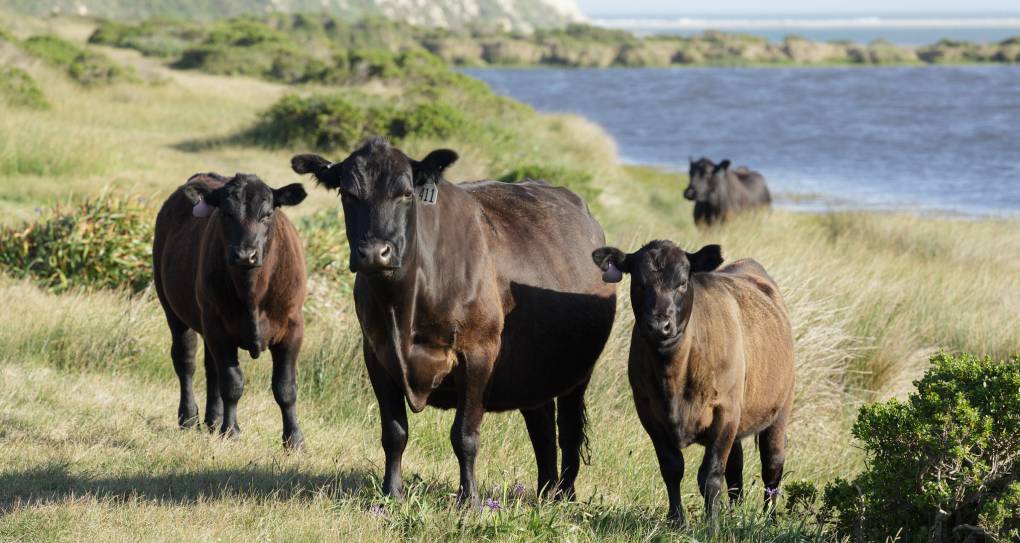
In Point Reyes, Cattle Ranching As We Know It Is Ending. What Now?
Point Reyes Cattle Ranchers Urge Republicans to Leave Environmental Deal Alone
Republicans’ Probe Could Threaten Historic Deal to End Point Reyes Ranching
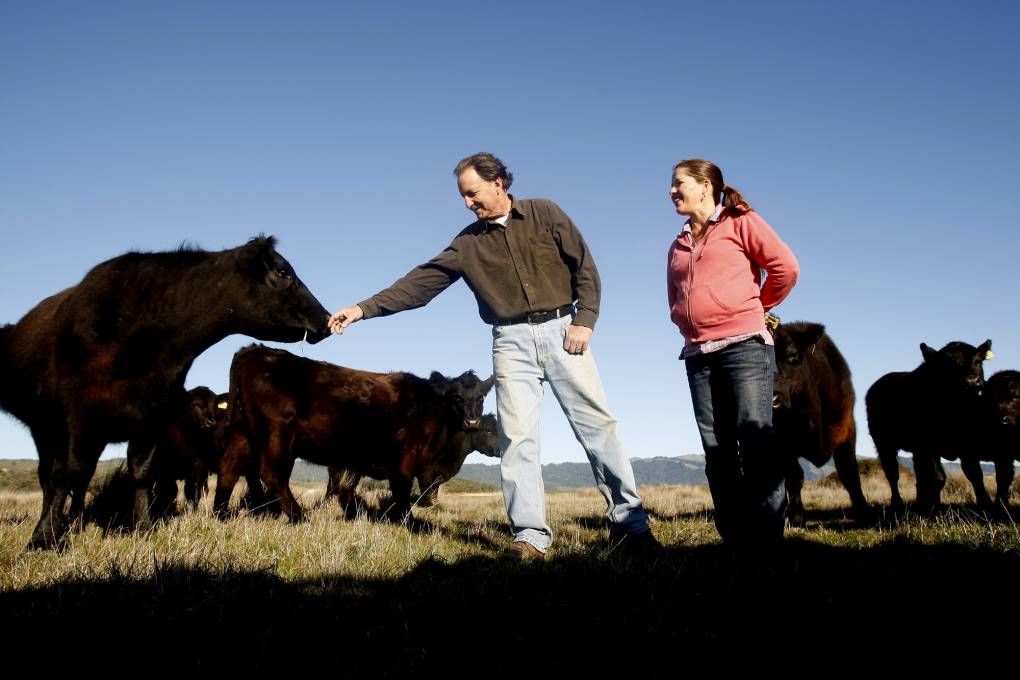
Niman Ranch Challenges Point Reyes Seashore Settlement in Lawsuit Over Ranching
Cattle Ranching Is at the Center of a Battle Brewing in Point Reyes
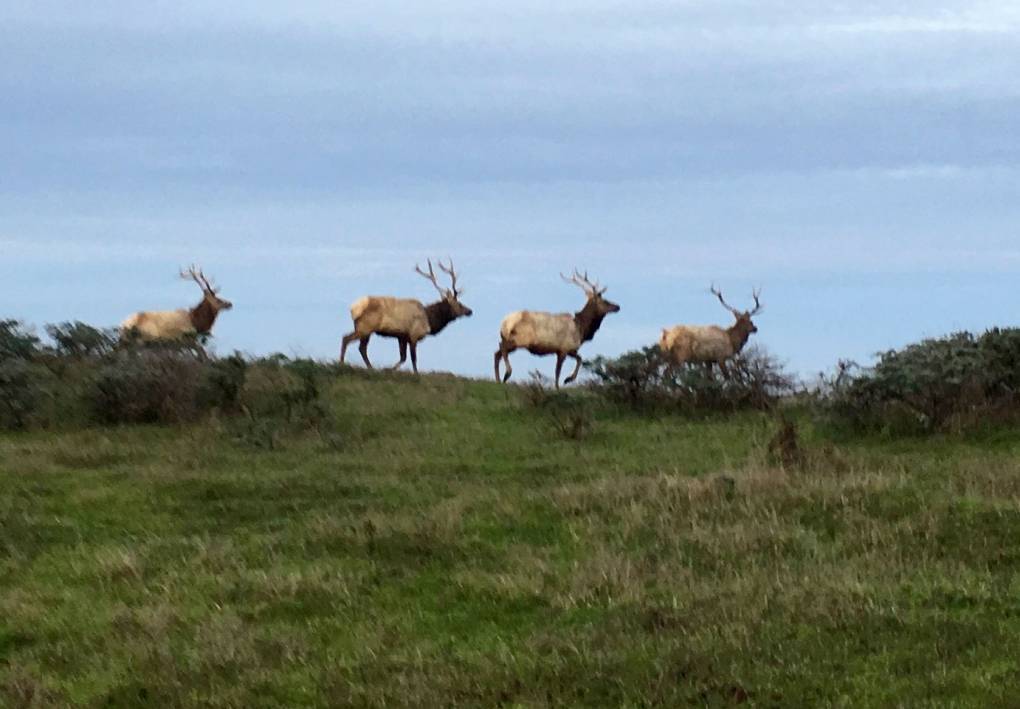
Lawsuit: Deaths of Point Reyes Elk Due to National Park Service Negligence
About That 'Exercise' Exemption ...
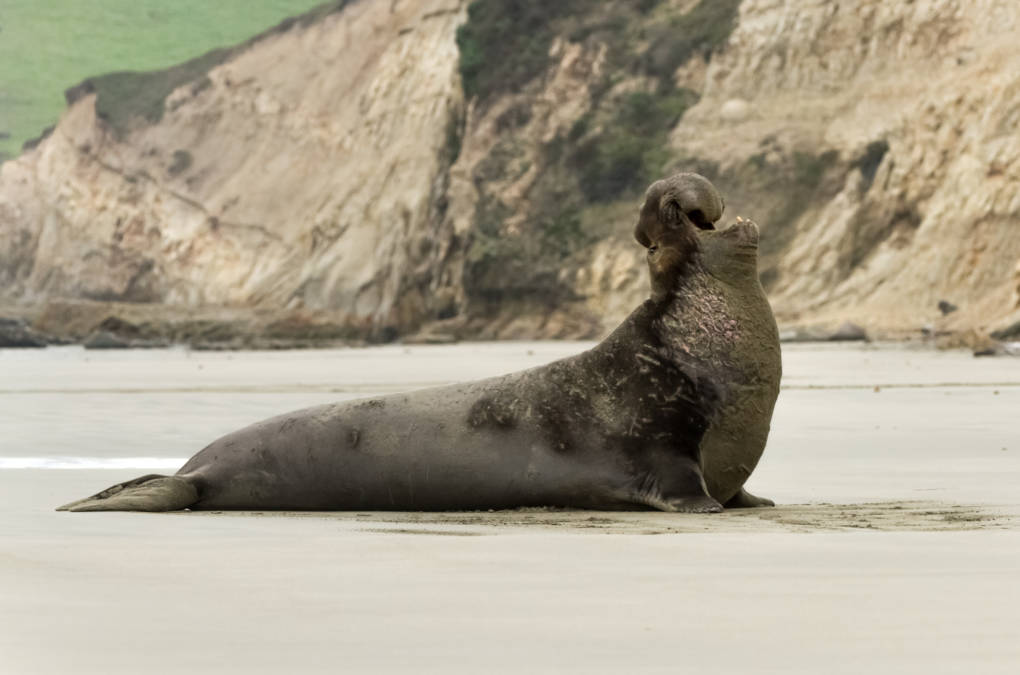
Point Reyes Beach Taken Over by Elephant Seals During Shutdown to Reopen for Viewing
Sponsored
Player sponsored by
window.__IS_SSR__=true
window.__INITIAL_STATE__={
"attachmentsReducer": {
"audio_0": {
"type": "attachments",
"id": "audio_0",
"imgSizes": {
"kqedFullSize": {
"file": "https://ww2.kqed.org/news/wp-content/themes/KQED-unified/img/audio_bgs/background0.jpg"
}
}
},
"audio_1": {
"type": "attachments",
"id": "audio_1",
"imgSizes": {
"kqedFullSize": {
"file": "https://ww2.kqed.org/news/wp-content/themes/KQED-unified/img/audio_bgs/background1.jpg"
}
}
},
"audio_2": {
"type": "attachments",
"id": "audio_2",
"imgSizes": {
"kqedFullSize": {
"file": "https://ww2.kqed.org/news/wp-content/themes/KQED-unified/img/audio_bgs/background2.jpg"
}
}
},
"audio_3": {
"type": "attachments",
"id": "audio_3",
"imgSizes": {
"kqedFullSize": {
"file": "https://ww2.kqed.org/news/wp-content/themes/KQED-unified/img/audio_bgs/background3.jpg"
}
}
},
"audio_4": {
"type": "attachments",
"id": "audio_4",
"imgSizes": {
"kqedFullSize": {
"file": "https://ww2.kqed.org/news/wp-content/themes/KQED-unified/img/audio_bgs/background4.jpg"
}
}
},
"placeholder": {
"type": "attachments",
"id": "placeholder",
"imgSizes": {
"thumbnail": {
"file": "https://cdn.kqed.org/wp-content/uploads/2024/12/KQED-Default-Image-816638274-2000x1333-1-160x107.jpg",
"width": 160,
"height": 107,
"mimeType": "image/jpeg"
},
"medium": {
"file": "https://cdn.kqed.org/wp-content/uploads/2024/12/KQED-Default-Image-816638274-2000x1333-1-800x533.jpg",
"width": 800,
"height": 533,
"mimeType": "image/jpeg"
},
"medium_large": {
"file": "https://cdn.kqed.org/wp-content/uploads/2024/12/KQED-Default-Image-816638274-2000x1333-1-768x512.jpg",
"width": 768,
"height": 512,
"mimeType": "image/jpeg"
},
"large": {
"file": "https://cdn.kqed.org/wp-content/uploads/2024/12/KQED-Default-Image-816638274-2000x1333-1-1020x680.jpg",
"width": 1020,
"height": 680,
"mimeType": "image/jpeg"
},
"1536x1536": {
"file": "https://cdn.kqed.org/wp-content/uploads/2024/12/KQED-Default-Image-816638274-2000x1333-1-1536x1024.jpg",
"width": 1536,
"height": 1024,
"mimeType": "image/jpeg"
},
"fd-lrg": {
"file": "https://cdn.kqed.org/wp-content/uploads/2024/12/KQED-Default-Image-816638274-2000x1333-1-1536x1024.jpg",
"width": 1536,
"height": 1024,
"mimeType": "image/jpeg"
},
"fd-med": {
"file": "https://cdn.kqed.org/wp-content/uploads/2024/12/KQED-Default-Image-816638274-2000x1333-1-1020x680.jpg",
"width": 1020,
"height": 680,
"mimeType": "image/jpeg"
},
"fd-sm": {
"file": "https://cdn.kqed.org/wp-content/uploads/2024/12/KQED-Default-Image-816638274-2000x1333-1-800x533.jpg",
"width": 800,
"height": 533,
"mimeType": "image/jpeg"
},
"post-thumbnail": {
"file": "https://cdn.kqed.org/wp-content/uploads/2024/12/KQED-Default-Image-816638274-2000x1333-1-672x372.jpg",
"width": 672,
"height": 372,
"mimeType": "image/jpeg"
},
"twentyfourteen-full-width": {
"file": "https://cdn.kqed.org/wp-content/uploads/2024/12/KQED-Default-Image-816638274-2000x1333-1-1038x576.jpg",
"width": 1038,
"height": 576,
"mimeType": "image/jpeg"
},
"xxsmall": {
"file": "https://cdn.kqed.org/wp-content/uploads/2024/12/KQED-Default-Image-816638274-2000x1333-1-160x107.jpg",
"width": 160,
"height": 107,
"mimeType": "image/jpeg"
},
"xsmall": {
"file": "https://cdn.kqed.org/wp-content/uploads/2024/12/KQED-Default-Image-816638274-2000x1333-1-672x372.jpg",
"width": 672,
"height": 372,
"mimeType": "image/jpeg"
},
"small": {
"file": "https://cdn.kqed.org/wp-content/uploads/2024/12/KQED-Default-Image-816638274-2000x1333-1-672x372.jpg",
"width": 672,
"height": 372,
"mimeType": "image/jpeg"
},
"xlarge": {
"file": "https://cdn.kqed.org/wp-content/uploads/2024/12/KQED-Default-Image-816638274-2000x1333-1-1020x680.jpg",
"width": 1020,
"height": 680,
"mimeType": "image/jpeg"
},
"full-width": {
"file": "https://cdn.kqed.org/wp-content/uploads/2024/12/KQED-Default-Image-816638274-2000x1333-1-1920x1280.jpg",
"width": 1920,
"height": 1280,
"mimeType": "image/jpeg"
},
"guest-author-32": {
"file": "https://cdn.kqed.org/wp-content/uploads/2025/01/KQED-Default-Image-816638274-1333x1333-1-160x160.jpg",
"width": 32,
"height": 32,
"mimeType": "image/jpeg"
},
"guest-author-50": {
"file": "https://cdn.kqed.org/wp-content/uploads/2025/01/KQED-Default-Image-816638274-1333x1333-1-160x160.jpg",
"width": 50,
"height": 50,
"mimeType": "image/jpeg"
},
"guest-author-64": {
"file": "https://cdn.kqed.org/wp-content/uploads/2025/01/KQED-Default-Image-816638274-1333x1333-1-160x160.jpg",
"width": 64,
"height": 64,
"mimeType": "image/jpeg"
},
"guest-author-96": {
"file": "https://cdn.kqed.org/wp-content/uploads/2025/01/KQED-Default-Image-816638274-1333x1333-1-160x160.jpg",
"width": 96,
"height": 96,
"mimeType": "image/jpeg"
},
"guest-author-128": {
"file": "https://cdn.kqed.org/wp-content/uploads/2025/01/KQED-Default-Image-816638274-1333x1333-1-160x160.jpg",
"width": 128,
"height": 128,
"mimeType": "image/jpeg"
},
"detail": {
"file": "https://cdn.kqed.org/wp-content/uploads/2025/01/KQED-Default-Image-816638274-1333x1333-1-160x160.jpg",
"width": 160,
"height": 160,
"mimeType": "image/jpeg"
},
"kqedFullSize": {
"file": "https://cdn.kqed.org/wp-content/uploads/2024/12/KQED-Default-Image-816638274-2000x1333-1.jpg",
"width": 2000,
"height": 1333
}
}
},
"news_12049693": {
"type": "attachments",
"id": "news_12049693",
"meta": {
"index": "attachments_1716263798",
"site": "news",
"id": "12049693",
"found": true
},
"title": "Fog 2",
"publishDate": 1753396768,
"status": "inherit",
"parent": 12049568,
"modified": 1753396787,
"caption": "A popular trail for cyclists in Montara State Beach/McNee Ranch State Park: Going over Highway 1 aka Devil's Slide. These hikes and outdoor excursions around the Bay Area actually shine most in dreary weather. ",
"credit": "Sarah Wright/KQED",
"altTag": null,
"description": null,
"imgSizes": {
"thumbnail": {
"file": "https://cdn.kqed.org/wp-content/uploads/sites/10/2025/07/Fog-2-160x107.png",
"width": 160,
"height": 107,
"mimeType": "image/png"
},
"1536x1536": {
"file": "https://cdn.kqed.org/wp-content/uploads/sites/10/2025/07/Fog-2-1536x1024.png",
"width": 1536,
"height": 1024,
"mimeType": "image/png"
},
"post-thumbnail": {
"file": "https://cdn.kqed.org/wp-content/uploads/sites/10/2025/07/Fog-2-672x372.png",
"width": 672,
"height": 372,
"mimeType": "image/png"
},
"twentyfourteen-full-width": {
"file": "https://cdn.kqed.org/wp-content/uploads/sites/10/2025/07/Fog-2-1038x576.png",
"width": 1038,
"height": 576,
"mimeType": "image/png"
},
"kqedFullSize": {
"file": "https://cdn.kqed.org/wp-content/uploads/sites/10/2025/07/Fog-2.png",
"width": 1920,
"height": 1280
}
},
"fetchFailed": false,
"isLoading": false
},
"news_12021428": {
"type": "attachments",
"id": "news_12021428",
"meta": {
"index": "attachments_1716263798",
"site": "news",
"id": "12021428",
"found": true
},
"title": "Cows in a farm in Point Reyes National Seashore, located in Marin County, California",
"publishDate": 1736530336,
"status": "inherit",
"parent": 12021426,
"modified": 1736530393,
"caption": "Cows in a meadow in Point Reyes National Seashore located in Marin County, California, on Nov. 17, 2017. ",
"credit": "Gili Yaari/NurPhoto via Getty Images",
"altTag": null,
"description": null,
"imgSizes": {
"medium": {
"file": "https://cdn.kqed.org/wp-content/uploads/sites/10/2025/01/PointReyesCattleGetty-800x533.jpg",
"width": 800,
"height": 533,
"mimeType": "image/jpeg"
},
"large": {
"file": "https://cdn.kqed.org/wp-content/uploads/sites/10/2025/01/PointReyesCattleGetty-1020x680.jpg",
"width": 1020,
"height": 680,
"mimeType": "image/jpeg"
},
"thumbnail": {
"file": "https://cdn.kqed.org/wp-content/uploads/sites/10/2025/01/PointReyesCattleGetty-160x107.jpg",
"width": 160,
"height": 107,
"mimeType": "image/jpeg"
},
"1536x1536": {
"file": "https://cdn.kqed.org/wp-content/uploads/sites/10/2025/01/PointReyesCattleGetty-1536x1024.jpg",
"width": 1536,
"height": 1024,
"mimeType": "image/jpeg"
},
"post-thumbnail": {
"file": "https://cdn.kqed.org/wp-content/uploads/sites/10/2025/01/PointReyesCattleGetty-672x372.jpg",
"width": 672,
"height": 372,
"mimeType": "image/jpeg"
},
"twentyfourteen-full-width": {
"file": "https://cdn.kqed.org/wp-content/uploads/sites/10/2025/01/PointReyesCattleGetty-1038x576.jpg",
"width": 1038,
"height": 576,
"mimeType": "image/jpeg"
},
"full-width": {
"file": "https://cdn.kqed.org/wp-content/uploads/sites/10/2025/01/PointReyesCattleGetty-1920x1280.jpg",
"width": 1920,
"height": 1280,
"mimeType": "image/jpeg"
},
"kqedFullSize": {
"file": "https://cdn.kqed.org/wp-content/uploads/sites/10/2025/01/PointReyesCattleGetty.jpg",
"width": 2000,
"height": 1333
}
},
"fetchFailed": false,
"isLoading": false
},
"news_12037675": {
"type": "attachments",
"id": "news_12037675",
"meta": {
"index": "attachments_1716263798",
"site": "news",
"id": "12037675",
"found": true
},
"title": "Point Reyes",
"publishDate": 1745604759,
"status": "inherit",
"parent": 12037672,
"modified": 1745604798,
"caption": "A Marin Sun Farms Inc. calf with foliage in its mouth in Point Reyes, California, on Feb. 28, 2018. ",
"credit": "Lauren Hanussak/KQED",
"altTag": null,
"description": null,
"imgSizes": {
"medium": {
"file": "https://cdn.kqed.org/wp-content/uploads/sites/10/2025/04/Point-Reyes_622_qed-800x534.jpg",
"width": 800,
"height": 534,
"mimeType": "image/jpeg"
},
"large": {
"file": "https://cdn.kqed.org/wp-content/uploads/sites/10/2025/04/Point-Reyes_622_qed-1020x681.jpg",
"width": 1020,
"height": 681,
"mimeType": "image/jpeg"
},
"thumbnail": {
"file": "https://cdn.kqed.org/wp-content/uploads/sites/10/2025/04/Point-Reyes_622_qed-160x107.jpg",
"width": 160,
"height": 107,
"mimeType": "image/jpeg"
},
"1536x1536": {
"file": "https://cdn.kqed.org/wp-content/uploads/sites/10/2025/04/Point-Reyes_622_qed-1536x1025.jpg",
"width": 1536,
"height": 1025,
"mimeType": "image/jpeg"
},
"post-thumbnail": {
"file": "https://cdn.kqed.org/wp-content/uploads/sites/10/2025/04/Point-Reyes_622_qed-672x372.jpg",
"width": 672,
"height": 372,
"mimeType": "image/jpeg"
},
"twentyfourteen-full-width": {
"file": "https://cdn.kqed.org/wp-content/uploads/sites/10/2025/04/Point-Reyes_622_qed-1038x576.jpg",
"width": 1038,
"height": 576,
"mimeType": "image/jpeg"
},
"full-width": {
"file": "https://cdn.kqed.org/wp-content/uploads/sites/10/2025/04/Point-Reyes_622_qed-1920x1282.jpg",
"width": 1920,
"height": 1282,
"mimeType": "image/jpeg"
},
"kqedFullSize": {
"file": "https://cdn.kqed.org/wp-content/uploads/sites/10/2025/04/Point-Reyes_622_qed.jpg",
"width": 1997,
"height": 1333
}
},
"fetchFailed": false,
"isLoading": false
},
"news_12029691": {
"type": "attachments",
"id": "news_12029691",
"meta": {
"index": "attachments_1716263798",
"site": "news",
"id": "12029691",
"found": true
},
"title": "Point Reyes National Seashore of California",
"publishDate": 1741126228,
"status": "inherit",
"parent": 12029675,
"modified": 1744401872,
"caption": "Cattle are seen during heavy fog at Point Reyes National Seashore of Inverness in California on Jan. 6, 2025. ",
"credit": "Tayfun Coskun/Anadolu via Getty Images",
"altTag": null,
"description": null,
"imgSizes": {
"medium": {
"file": "https://cdn.kqed.org/wp-content/uploads/sites/10/2025/03/PointReyesNationalSeashoreGetty-800x533.jpg",
"width": 800,
"height": 533,
"mimeType": "image/jpeg"
},
"large": {
"file": "https://cdn.kqed.org/wp-content/uploads/sites/10/2025/03/PointReyesNationalSeashoreGetty-1020x680.jpg",
"width": 1020,
"height": 680,
"mimeType": "image/jpeg"
},
"thumbnail": {
"file": "https://cdn.kqed.org/wp-content/uploads/sites/10/2025/03/PointReyesNationalSeashoreGetty-160x107.jpg",
"width": 160,
"height": 107,
"mimeType": "image/jpeg"
},
"1536x1536": {
"file": "https://cdn.kqed.org/wp-content/uploads/sites/10/2025/03/PointReyesNationalSeashoreGetty-1536x1024.jpg",
"width": 1536,
"height": 1024,
"mimeType": "image/jpeg"
},
"post-thumbnail": {
"file": "https://cdn.kqed.org/wp-content/uploads/sites/10/2025/03/PointReyesNationalSeashoreGetty-672x372.jpg",
"width": 672,
"height": 372,
"mimeType": "image/jpeg"
},
"twentyfourteen-full-width": {
"file": "https://cdn.kqed.org/wp-content/uploads/sites/10/2025/03/PointReyesNationalSeashoreGetty-1038x576.jpg",
"width": 1038,
"height": 576,
"mimeType": "image/jpeg"
},
"full-width": {
"file": "https://cdn.kqed.org/wp-content/uploads/sites/10/2025/03/PointReyesNationalSeashoreGetty-1920x1280.jpg",
"width": 1920,
"height": 1280,
"mimeType": "image/jpeg"
},
"kqedFullSize": {
"file": "https://cdn.kqed.org/wp-content/uploads/sites/10/2025/03/PointReyesNationalSeashoreGetty.jpg",
"width": 2000,
"height": 1333
}
},
"fetchFailed": false,
"isLoading": false
},
"news_12029693": {
"type": "attachments",
"id": "news_12029693",
"meta": {
"index": "attachments_1716263798",
"site": "news",
"id": "12029693",
"found": true
},
"title": "Bill Niman and his wife, Nicolette, with their cows in Bolinas, Calif., on January 29, 2009. Bill Niman founded Niman Ranch meat company.",
"publishDate": 1741126372,
"status": "inherit",
"parent": 12029675,
"modified": 1741189336,
"caption": "Niman Ranch founder Bill Niman and his wife, Nicolette, with their cows in Bolinas, Marin County, on Jan. 29, 2009. The couple filed a lawsuit against the park service, advocating for regenerative farming at Point Reyes Seashore to preserve wildlife and the environment. ",
"credit": "Craig Lee/San Francisco Chronicle via Getty Images",
"altTag": null,
"description": null,
"imgSizes": {
"medium": {
"file": "https://cdn.kqed.org/wp-content/uploads/sites/10/2025/03/NimanRanchGetty-800x533.jpg",
"width": 800,
"height": 533,
"mimeType": "image/jpeg"
},
"large": {
"file": "https://cdn.kqed.org/wp-content/uploads/sites/10/2025/03/NimanRanchGetty-1020x680.jpg",
"width": 1020,
"height": 680,
"mimeType": "image/jpeg"
},
"thumbnail": {
"file": "https://cdn.kqed.org/wp-content/uploads/sites/10/2025/03/NimanRanchGetty-160x107.jpg",
"width": 160,
"height": 107,
"mimeType": "image/jpeg"
},
"1536x1536": {
"file": "https://cdn.kqed.org/wp-content/uploads/sites/10/2025/03/NimanRanchGetty-1536x1024.jpg",
"width": 1536,
"height": 1024,
"mimeType": "image/jpeg"
},
"post-thumbnail": {
"file": "https://cdn.kqed.org/wp-content/uploads/sites/10/2025/03/NimanRanchGetty-672x372.jpg",
"width": 672,
"height": 372,
"mimeType": "image/jpeg"
},
"twentyfourteen-full-width": {
"file": "https://cdn.kqed.org/wp-content/uploads/sites/10/2025/03/NimanRanchGetty-1038x576.jpg",
"width": 1038,
"height": 576,
"mimeType": "image/jpeg"
},
"full-width": {
"file": "https://cdn.kqed.org/wp-content/uploads/sites/10/2025/03/NimanRanchGetty-1920x1280.jpg",
"width": 1920,
"height": 1280,
"mimeType": "image/jpeg"
},
"kqedFullSize": {
"file": "https://cdn.kqed.org/wp-content/uploads/sites/10/2025/03/NimanRanchGetty.jpg",
"width": 2000,
"height": 1333
}
},
"fetchFailed": false,
"isLoading": false
},
"news_11936894": {
"type": "attachments",
"id": "news_11936894",
"meta": {
"index": "attachments_1716263798",
"site": "news",
"id": "11936894",
"found": true
},
"parent": 11936802,
"imgSizes": {
"twentyfourteen-full-width": {
"file": "https://ww2.kqed.org/app/uploads/sites/10/2023/01/Cows-in-Point-Reyes-1038x576.jpg",
"width": 1038,
"mimeType": "image/jpeg",
"height": 576
},
"thumbnail": {
"file": "https://ww2.kqed.org/app/uploads/sites/10/2023/01/Cows-in-Point-Reyes-160x85.jpg",
"width": 160,
"mimeType": "image/jpeg",
"height": 85
},
"post-thumbnail": {
"file": "https://ww2.kqed.org/app/uploads/sites/10/2023/01/Cows-in-Point-Reyes-672x372.jpg",
"width": 672,
"mimeType": "image/jpeg",
"height": 372
},
"kqedFullSize": {
"file": "https://ww2.kqed.org/app/uploads/sites/10/2023/01/Cows-in-Point-Reyes-e1672879647911.jpg",
"width": 1920,
"height": 1023
},
"large": {
"file": "https://ww2.kqed.org/app/uploads/sites/10/2023/01/Cows-in-Point-Reyes-1020x543.jpg",
"width": 1020,
"mimeType": "image/jpeg",
"height": 543
},
"1536x1536": {
"file": "https://ww2.kqed.org/app/uploads/sites/10/2023/01/Cows-in-Point-Reyes-1536x818.jpg",
"width": 1536,
"mimeType": "image/jpeg",
"height": 818
},
"full-width": {
"file": "https://ww2.kqed.org/app/uploads/sites/10/2023/01/Cows-in-Point-Reyes-1920x1023.jpg",
"width": 1920,
"mimeType": "image/jpeg",
"height": 1023
},
"medium": {
"file": "https://ww2.kqed.org/app/uploads/sites/10/2023/01/Cows-in-Point-Reyes-800x426.jpg",
"width": 800,
"mimeType": "image/jpeg",
"height": 426
}
},
"publishDate": 1672879621,
"modified": 1672895850,
"caption": "Cattle graze at Point Reyes National Seashore, where some areas are designated wilderness zones and others pastoral zones.",
"description": null,
"title": "Cows in Point Reyes",
"credit": "John Loo/flickr",
"status": "inherit",
"altTag": "A group of dark brown cows stare at the photographer in a grassy area near the beach",
"fetchFailed": false,
"isLoading": false
},
"news_11878969": {
"type": "attachments",
"id": "news_11878969",
"meta": {
"index": "attachments_1716263798",
"site": "news",
"id": "11878969",
"found": true
},
"parent": 11878963,
"imgSizes": {
"twentyfourteen-full-width": {
"file": "https://ww2.kqed.org/app/uploads/sites/10/2021/06/TuleElk-1038x576.jpg",
"width": 1038,
"mimeType": "image/jpeg",
"height": 576
},
"thumbnail": {
"file": "https://ww2.kqed.org/app/uploads/sites/10/2021/06/TuleElk-160x111.jpg",
"width": 160,
"mimeType": "image/jpeg",
"height": 111
},
"post-thumbnail": {
"file": "https://ww2.kqed.org/app/uploads/sites/10/2021/06/TuleElk-672x372.jpg",
"width": 672,
"mimeType": "image/jpeg",
"height": 372
},
"kqedFullSize": {
"file": "https://ww2.kqed.org/app/uploads/sites/10/2021/06/TuleElk.jpg",
"width": 1382,
"height": 961
},
"large": {
"file": "https://ww2.kqed.org/app/uploads/sites/10/2021/06/TuleElk-1020x709.jpg",
"width": 1020,
"mimeType": "image/jpeg",
"height": 709
},
"medium": {
"file": "https://ww2.kqed.org/app/uploads/sites/10/2021/06/TuleElk-800x556.jpg",
"width": 800,
"mimeType": "image/jpeg",
"height": 556
}
},
"publishDate": 1624405901,
"modified": 1624405956,
"caption": "Tule elk roam near Tomales Point in the Point Reyes National Seashore in 2016.",
"description": "Tule elk roam near Tomales Point in the Point Reyes National Seashore in 2016.",
"title": "TuleElk",
"credit": "David Marks/KQED",
"status": "inherit",
"altTag": null,
"fetchFailed": false,
"isLoading": false
},
"news_11808323": {
"type": "attachments",
"id": "news_11808323",
"meta": {
"index": "attachments_1716263798",
"site": "news",
"id": "11808323",
"found": true
},
"parent": 11808315,
"imgSizes": {
"apple_news_ca_landscape_5_5": {
"file": "https://ww2.kqed.org/app/uploads/sites/10/2020/03/gohome_032320_final-1044x783.png",
"width": 1044,
"mimeType": "image/png",
"height": 783
},
"apple_news_ca_square_4_0": {
"file": "https://ww2.kqed.org/app/uploads/sites/10/2020/03/gohome_032320_final-470x470.png",
"width": 470,
"mimeType": "image/png",
"height": 470
},
"twentyfourteen-full-width": {
"file": "https://ww2.kqed.org/app/uploads/sites/10/2020/03/gohome_032320_final-1038x576.png",
"width": 1038,
"mimeType": "image/png",
"height": 576
},
"thumbnail": {
"file": "https://ww2.kqed.org/app/uploads/sites/10/2020/03/gohome_032320_final-160x122.png",
"width": 160,
"mimeType": "image/png",
"height": 122
},
"post-thumbnail": {
"file": "https://ww2.kqed.org/app/uploads/sites/10/2020/03/gohome_032320_final-672x372.png",
"width": 672,
"mimeType": "image/png",
"height": 372
},
"kqedFullSize": {
"file": "https://ww2.kqed.org/app/uploads/sites/10/2020/03/gohome_032320_final.png",
"width": 1920,
"height": 1461
},
"apple_news_ca_landscape_4_7": {
"file": "https://ww2.kqed.org/app/uploads/sites/10/2020/03/gohome_032320_final-632x474.png",
"width": 632,
"mimeType": "image/png",
"height": 474
},
"large": {
"file": "https://ww2.kqed.org/app/uploads/sites/10/2020/03/gohome_032320_final-1020x776.png",
"width": 1020,
"mimeType": "image/png",
"height": 776
},
"apple_news_ca_landscape_4_0": {
"file": "https://ww2.kqed.org/app/uploads/sites/10/2020/03/gohome_032320_final-536x402.png",
"width": 536,
"mimeType": "image/png",
"height": 402
},
"apple_news_ca_portrait_12_9": {
"file": "https://ww2.kqed.org/app/uploads/sites/10/2020/03/gohome_032320_final-1122x1461.png",
"width": 1122,
"mimeType": "image/png",
"height": 1461
},
"medium": {
"file": "https://ww2.kqed.org/app/uploads/sites/10/2020/03/gohome_032320_final-800x609.png",
"width": 800,
"mimeType": "image/png",
"height": 609
},
"apple_news_ca_portrait_4_0": {
"file": "https://ww2.kqed.org/app/uploads/sites/10/2020/03/gohome_032320_final-354x472.png",
"width": 354,
"mimeType": "image/png",
"height": 472
},
"apple_news_ca_portrait_9_7": {
"file": "https://ww2.kqed.org/app/uploads/sites/10/2020/03/gohome_032320_final-840x1120.png",
"width": 840,
"mimeType": "image/png",
"height": 1120
},
"apple_news_ca_landscape_12_9": {
"file": "https://ww2.kqed.org/app/uploads/sites/10/2020/03/gohome_032320_final-1832x1374.png",
"width": 1832,
"mimeType": "image/png",
"height": 1374
},
"apple_news_ca_square_9_7": {
"file": "https://ww2.kqed.org/app/uploads/sites/10/2020/03/gohome_032320_final-1104x1104.png",
"width": 1104,
"mimeType": "image/png",
"height": 1104
},
"apple_news_ca_portrait_4_7": {
"file": "https://ww2.kqed.org/app/uploads/sites/10/2020/03/gohome_032320_final-414x552.png",
"width": 414,
"mimeType": "image/png",
"height": 552
},
"apple_news_ca_square_12_9": {
"file": "https://ww2.kqed.org/app/uploads/sites/10/2020/03/gohome_032320_final-1472x1461.png",
"width": 1472,
"mimeType": "image/png",
"height": 1461
},
"apple_news_ca_portrait_5_5": {
"file": "https://ww2.kqed.org/app/uploads/sites/10/2020/03/gohome_032320_final-687x916.png",
"width": 687,
"mimeType": "image/png",
"height": 916
},
"full-width": {
"file": "https://ww2.kqed.org/app/uploads/sites/10/2020/03/gohome_032320_final-1920x1461.png",
"width": 1920,
"mimeType": "image/png",
"height": 1461
},
"apple_news_ca_square_4_7": {
"file": "https://ww2.kqed.org/app/uploads/sites/10/2020/03/gohome_032320_final-550x550.png",
"width": 550,
"mimeType": "image/png",
"height": 550
},
"apple_news_ca_landscape_9_7": {
"file": "https://ww2.kqed.org/app/uploads/sites/10/2020/03/gohome_032320_final-1376x1032.png",
"width": 1376,
"mimeType": "image/png",
"height": 1032
},
"apple_news_ca_square_5_5": {
"file": "https://ww2.kqed.org/app/uploads/sites/10/2020/03/gohome_032320_final-912x912.png",
"width": 912,
"mimeType": "image/png",
"height": 912
}
},
"publishDate": 1585007220,
"modified": 1585007252,
"caption": null,
"description": null,
"title": "gohome_032320_final",
"credit": null,
"status": "inherit",
"fetchFailed": false,
"isLoading": false
},
"news_11722225": {
"type": "attachments",
"id": "news_11722225",
"meta": {
"index": "attachments_1716263798",
"site": "news",
"id": "11722225",
"found": true
},
"parent": 11722180,
"imgSizes": {
"twentyfourteen-full-width": {
"file": "https://ww2.kqed.org/app/uploads/sites/10/2019/01/Mirounga_angustirostris_Point_Reyes-1038x576.jpg",
"width": 1038,
"mimeType": "image/jpeg",
"height": 576
},
"thumbnail": {
"file": "https://ww2.kqed.org/app/uploads/sites/10/2019/01/Mirounga_angustirostris_Point_Reyes-160x106.jpg",
"width": 160,
"mimeType": "image/jpeg",
"height": 106
},
"post-thumbnail": {
"file": "https://ww2.kqed.org/app/uploads/sites/10/2019/01/Mirounga_angustirostris_Point_Reyes-672x372.jpg",
"width": 672,
"mimeType": "image/jpeg",
"height": 372
},
"kqedFullSize": {
"file": "https://ww2.kqed.org/app/uploads/sites/10/2019/01/Mirounga_angustirostris_Point_Reyes-e1548886684375.jpg",
"width": 1920,
"height": 1271
},
"large": {
"file": "https://ww2.kqed.org/app/uploads/sites/10/2019/01/Mirounga_angustirostris_Point_Reyes-1020x675.jpg",
"width": 1020,
"mimeType": "image/jpeg",
"height": 675
},
"complete_open_graph": {
"file": "https://ww2.kqed.org/app/uploads/sites/10/2019/01/Mirounga_angustirostris_Point_Reyes-1200x794.jpg",
"width": 1200,
"mimeType": "image/jpeg",
"height": 794
},
"guest-author-50": {
"file": "https://ww2.kqed.org/app/uploads/sites/10/2019/01/Mirounga_angustirostris_Point_Reyes-50x50.jpg",
"width": 50,
"mimeType": "image/jpeg",
"height": 50
},
"guest-author-96": {
"file": "https://ww2.kqed.org/app/uploads/sites/10/2019/01/Mirounga_angustirostris_Point_Reyes-96x96.jpg",
"width": 96,
"mimeType": "image/jpeg",
"height": 96
},
"medium": {
"file": "https://ww2.kqed.org/app/uploads/sites/10/2019/01/Mirounga_angustirostris_Point_Reyes-800x530.jpg",
"width": 800,
"mimeType": "image/jpeg",
"height": 530
},
"guest-author-64": {
"file": "https://ww2.kqed.org/app/uploads/sites/10/2019/01/Mirounga_angustirostris_Point_Reyes-64x64.jpg",
"width": 64,
"mimeType": "image/jpeg",
"height": 64
},
"guest-author-32": {
"file": "https://ww2.kqed.org/app/uploads/sites/10/2019/01/Mirounga_angustirostris_Point_Reyes-32x32.jpg",
"width": 32,
"mimeType": "image/jpeg",
"height": 32
},
"full-width": {
"file": "https://ww2.kqed.org/app/uploads/sites/10/2019/01/Mirounga_angustirostris_Point_Reyes-1920x1271.jpg",
"width": 1920,
"mimeType": "image/jpeg",
"height": 1271
},
"detail": {
"file": "https://ww2.kqed.org/app/uploads/sites/10/2019/01/Mirounga_angustirostris_Point_Reyes-150x150.jpg",
"width": 150,
"mimeType": "image/jpeg",
"height": 150
},
"guest-author-128": {
"file": "https://ww2.kqed.org/app/uploads/sites/10/2019/01/Mirounga_angustirostris_Point_Reyes-128x128.jpg",
"width": 128,
"mimeType": "image/jpeg",
"height": 128
}
},
"publishDate": 1548885129,
"modified": 1548888334,
"caption": "A northern elephant seal on a beach in Point Reyes National Seashore.",
"description": "A Northern Elephant Seal on a beach in Point Reyes National Seashore.",
"title": "Mirounga_angustirostris,_Point_Reyes",
"credit": "\u003ca href=\"https://commons.wikimedia.org/wiki/File:Mirounga_angustirostris,_Point_Reyes.jpg#/media/File:Mirounga_angustirostris,_Point_Reyes.jpg\" target=\"_blank\">Frank Schulenburg/Wikimedia\u003c/a>",
"status": "inherit",
"fetchFailed": false,
"isLoading": false
}
},
"audioPlayerReducer": {
"postId": "stream_live",
"isPaused": true,
"isPlaying": false,
"pfsActive": false,
"pledgeModalIsOpen": true,
"playerDrawerIsOpen": false
},
"authorsReducer": {
"byline_news_11878963": {
"type": "authors",
"id": "byline_news_11878963",
"meta": {
"override": true
},
"slug": "byline_news_11878963",
"name": "Olga R. Rodriguez \u003cbr> The Associated Press",
"isLoading": false
},
"byline_news_11722180": {
"type": "authors",
"id": "byline_news_11722180",
"meta": {
"override": true
},
"slug": "byline_news_11722180",
"name": "Associated Press",
"isLoading": false
},
"katrinaschwartz": {
"type": "authors",
"id": "234",
"meta": {
"index": "authors_1716337520",
"id": "234",
"found": true
},
"name": "Katrina Schwartz",
"firstName": "Katrina",
"lastName": "Schwartz",
"slug": "katrinaschwartz",
"email": "kschwartz@kqed.org",
"display_author_email": false,
"staff_mastheads": [
"news"
],
"title": "Producer",
"bio": "Katrina Schwartz is a journalist based in San Francisco. She's worked at KPCC public radio in LA and has reported on air and online for KQED since 2010. She covered how teaching and learning is changing for MindShift between 2012 and 2020. She is the co-host of the MindShift podcast and now produces KQED's Bay Curious podcast.",
"avatar": "https://secure.gravatar.com/avatar/a6a567574dafefa959593925eead665c?s=600&d=blank&r=g",
"twitter": "kschwart",
"facebook": null,
"instagram": null,
"linkedin": null,
"sites": [
{
"site": "news",
"roles": [
"editor"
]
},
{
"site": "mindshift",
"roles": [
"administrator"
]
},
{
"site": "stateofhealth",
"roles": [
"author"
]
},
{
"site": "science",
"roles": [
"editor"
]
}
],
"headData": {
"title": "Katrina Schwartz | KQED",
"description": "Producer",
"ogImgSrc": "https://secure.gravatar.com/avatar/a6a567574dafefa959593925eead665c?s=600&d=blank&r=g",
"twImgSrc": "https://secure.gravatar.com/avatar/a6a567574dafefa959593925eead665c?s=600&d=blank&r=g"
},
"isLoading": false,
"link": "/author/katrinaschwartz"
},
"markfiore": {
"type": "authors",
"id": "3236",
"meta": {
"index": "authors_1716337520",
"id": "3236",
"found": true
},
"name": "Mark Fiore",
"firstName": "Mark",
"lastName": "Fiore",
"slug": "markfiore",
"email": "mark@markfiore.com",
"display_author_email": false,
"staff_mastheads": [
"news"
],
"title": "KQED News Cartoonist",
"bio": "\u003ca href=\"http://www.MarkFiore.com\">MarkFiore.com\u003c/a> | \u003ca href=\"https://twitter.com/markfiore\">Follow on Twitter\u003c/a> | \u003ca href=\"https://www.facebook.com/pages/Mark-Fiore-Animated-Political-Cartoons/94451707396?ref=bookmarks\">Facebook\u003c/a> | \u003ca href=\"mailto:mark@markfiore.com\">email\u003c/a>\r\n\r\nPulitzer Prize-winner, Mark Fiore, who the Wall Street Journal has called “the undisputed guru of the form,” creates animated political cartoons in San Francisco, where his work has been featured regularly on the San Francisco Chronicle’s web site, SFGate.com. His work has appeared on Newsweek.com, Slate.com, CBSNews.com, MotherJones.com, DailyKos.com and NPR’s web site. Fiore’s political animation has appeared on CNN, Frontline, Bill Moyers Journal, Salon.com and cable and broadcast outlets across the globe.\r\n\r\nBeginning his professional life by drawing traditional political cartoons for newspapers, Fiore’s work appeared in publications ranging from the Washington Post to the Los Angeles Times. In the late 1990s, he began to experiment with animating political cartoons and, after a short stint at the San Jose Mercury News as their staff cartoonist, Fiore devoted all his energies to animation.\r\nGrowing up in California, Fiore also spent a good portion of his life in the backwoods of Idaho. It was this combination that shaped him politically. Mark majored in political science at Colorado College, where, in a perfect send-off for a cartoonist, he received his diploma in 1991 as commencement speaker Dick Cheney smiled approvingly.\r\nMark Fiore was awarded the Pulitzer Prize for political cartooning in 2010, a Robert F. Kennedy Journalism Award in 2004 and has twice received an Online Journalism Award for commentary from the Online News Association (2002, 2008). Fiore has received two awards for his work in new media from the National Cartoonists Society (2001, 2002), and in 2006 received The James Madison Freedom of Information Award from The Society of Professional Journalists.",
"avatar": "https://secure.gravatar.com/avatar/fc4e2a612b15b67bad0c6f0e1db4ca9b?s=600&d=blank&r=g",
"twitter": "MarkFiore",
"facebook": null,
"instagram": "https://www.instagram.com/markfiore/?hl=en",
"linkedin": null,
"sites": [
{
"site": "arts",
"roles": [
"contributor"
]
},
{
"site": "news",
"roles": [
"editor"
]
},
{
"site": "futureofyou",
"roles": [
"editor"
]
},
{
"site": "science",
"roles": [
"editor"
]
}
],
"headData": {
"title": "Mark Fiore | KQED",
"description": "KQED News Cartoonist",
"ogImgSrc": "https://secure.gravatar.com/avatar/fc4e2a612b15b67bad0c6f0e1db4ca9b?s=600&d=blank&r=g",
"twImgSrc": "https://secure.gravatar.com/avatar/fc4e2a612b15b67bad0c6f0e1db4ca9b?s=600&d=blank&r=g"
},
"isLoading": false,
"link": "/author/markfiore"
},
"ecruzguevarra": {
"type": "authors",
"id": "8654",
"meta": {
"index": "authors_1716337520",
"id": "8654",
"found": true
},
"name": "Ericka Cruz Guevarra",
"firstName": "Ericka",
"lastName": "Cruz Guevarra",
"slug": "ecruzguevarra",
"email": "ecruzguevarra@kqed.org",
"display_author_email": true,
"staff_mastheads": [
"news"
],
"title": "Producer, The Bay Podcast",
"bio": "Ericka Cruz Guevarra is host of \u003ca href=\"https://www.kqed.org/podcasts/thebay\">\u003cem>The Bay\u003c/em>\u003c/a> podcast at KQED. Before host, she was the show’s producer. Her work in that capacity includes a three-part reported series on policing in Vallejo, which won a 2020 excellence in journalism award from the Society of Professional Journalists. Ericka has worked as a breaking news reporter at Oregon Public Broadcasting, helped produce the Code Switch podcast, and was KQED’s inaugural Raul Ramirez Diversity Fund intern. She’s also an alumna of NPR’s Next Generation Radio program. Send her an email if you have strong feelings about whether Fairfield and Suisun City are the Bay. Ericka is represented by SAG-AFTRA.",
"avatar": "https://secure.gravatar.com/avatar/25e5ab8d3d53fad2dcc7bb2b5c506b1a?s=600&d=blank&r=g",
"twitter": "NotoriousECG",
"facebook": null,
"instagram": null,
"linkedin": null,
"sites": [
{
"site": "arts",
"roles": [
"subscriber"
]
},
{
"site": "news",
"roles": [
"editor",
"manage_categories"
]
},
{
"site": "futureofyou",
"roles": [
"subscriber"
]
},
{
"site": "stateofhealth",
"roles": [
"subscriber"
]
},
{
"site": "science",
"roles": [
"editor"
]
},
{
"site": "forum",
"roles": [
"subscriber"
]
}
],
"headData": {
"title": "Ericka Cruz Guevarra | KQED",
"description": "Producer, The Bay Podcast",
"ogImgSrc": "https://secure.gravatar.com/avatar/25e5ab8d3d53fad2dcc7bb2b5c506b1a?s=600&d=blank&r=g",
"twImgSrc": "https://secure.gravatar.com/avatar/25e5ab8d3d53fad2dcc7bb2b5c506b1a?s=600&d=blank&r=g"
},
"isLoading": false,
"link": "/author/ecruzguevarra"
},
"amontecillo": {
"type": "authors",
"id": "11649",
"meta": {
"index": "authors_1716337520",
"id": "11649",
"found": true
},
"name": "Alan Montecillo",
"firstName": "Alan",
"lastName": "Montecillo",
"slug": "amontecillo",
"email": "amontecillo@kqed.org",
"display_author_email": false,
"staff_mastheads": [
"news"
],
"title": "KQED Contributor",
"bio": "Alan Montecillo is the senior editor of \u003cem>\u003ca href=\"http://kqed.org/thebay\">The Bay\u003c/a>, \u003c/em> KQED's local news podcast. Before moving to the Bay Area, he worked as a senior talk show producer for WILL in Champaign-Urbana, Illinois and at Oregon Public Broadcasting in Portland, Oregon. He has won journalism awards from the Society of Professional Journalists Northern California, the Public Media Journalists Association, The Signal Awards, and has also received a regional Edward R. Murrow award. Alan is a Filipino American from Hong Kong and a graduate of Reed College.",
"avatar": "https://secure.gravatar.com/avatar/d5e4e7a76481969ccba76f4e2b5ccabc?s=600&d=blank&r=g",
"twitter": "alanmontecillo",
"facebook": null,
"instagram": null,
"linkedin": null,
"sites": [
{
"site": "",
"roles": [
"editor"
]
},
{
"site": "news",
"roles": [
"editor",
"manage_categories"
]
}
],
"headData": {
"title": "Alan Montecillo | KQED",
"description": "KQED Contributor",
"ogImgSrc": "https://secure.gravatar.com/avatar/d5e4e7a76481969ccba76f4e2b5ccabc?s=600&d=blank&r=g",
"twImgSrc": "https://secure.gravatar.com/avatar/d5e4e7a76481969ccba76f4e2b5ccabc?s=600&d=blank&r=g"
},
"isLoading": false,
"link": "/author/amontecillo"
},
"jessicakariisa": {
"type": "authors",
"id": "11831",
"meta": {
"index": "authors_1716337520",
"id": "11831",
"found": true
},
"name": "Jessica Kariisa",
"firstName": "Jessica",
"lastName": "Kariisa",
"slug": "jessicakariisa",
"email": "jkariisa@kqed.org",
"display_author_email": false,
"staff_mastheads": [
"news"
],
"title": "Producer, The Bay",
"bio": "Jessica Kariisa is the producer of The Bay. She first joined KQED as an intern for The California Report Magazine, after which she became an on-call producer. She reported a Bay Curious episode on the use of rap lyrics in criminal trials which won a Society of Professional Journalists award in 2023 for Excellence in Features Journalism and the 2023 Signal Award for Best Conversation Starter. She’s worked on podcasts for Snap Judgment and American Public Media. Before embarking on her audio career, she was a music journalist.\r\n\r\nJessica Kariisa is represented by SAG-AFTRA.",
"avatar": "https://secure.gravatar.com/avatar/4afd355fd24f5515aeab77fd6c72b671?s=600&d=blank&r=g",
"twitter": null,
"facebook": null,
"instagram": null,
"linkedin": null,
"sites": [
{
"site": "arts",
"roles": [
"author"
]
},
{
"site": "news",
"roles": [
"editor",
"manage_categories"
]
}
],
"headData": {
"title": "Jessica Kariisa | KQED",
"description": "Producer, The Bay",
"ogImgSrc": "https://secure.gravatar.com/avatar/4afd355fd24f5515aeab77fd6c72b671?s=600&d=blank&r=g",
"twImgSrc": "https://secure.gravatar.com/avatar/4afd355fd24f5515aeab77fd6c72b671?s=600&d=blank&r=g"
},
"isLoading": false,
"link": "/author/jessicakariisa"
},
"kdebenedetti": {
"type": "authors",
"id": "11913",
"meta": {
"index": "authors_1716337520",
"id": "11913",
"found": true
},
"name": "Katie DeBenedetti",
"firstName": "Katie",
"lastName": "DeBenedetti",
"slug": "kdebenedetti",
"email": "kdebenedetti@kqed.org",
"display_author_email": false,
"staff_mastheads": [
"news",
"science"
],
"title": "KQED Contributor",
"bio": "Katie DeBenedetti is a digital reporter covering daily news for the Express Desk. Prior to joining KQED as a culture reporting intern in January 2024, she covered education and city government for the Napa Valley Register.",
"avatar": "https://secure.gravatar.com/avatar/6e31073cb8f7e4214ab03f42771d0f45?s=600&d=blank&r=g",
"twitter": null,
"facebook": null,
"instagram": null,
"linkedin": null,
"sites": [
{
"site": "news",
"roles": [
"author"
]
},
{
"site": "science",
"roles": [
"author"
]
},
{
"site": "liveblog",
"roles": [
"author"
]
}
],
"headData": {
"title": "Katie DeBenedetti | KQED",
"description": "KQED Contributor",
"ogImgSrc": "https://secure.gravatar.com/avatar/6e31073cb8f7e4214ab03f42771d0f45?s=600&d=blank&r=g",
"twImgSrc": "https://secure.gravatar.com/avatar/6e31073cb8f7e4214ab03f42771d0f45?s=600&d=blank&r=g"
},
"isLoading": false,
"link": "/author/kdebenedetti"
},
"mvelasquez": {
"type": "authors",
"id": "11939",
"meta": {
"index": "authors_1716337520",
"id": "11939",
"found": true
},
"name": "Mel Velasquez",
"firstName": "Mel",
"lastName": "Velasquez",
"slug": "mvelasquez",
"email": "mvelasquez@kqed.org",
"display_author_email": false,
"staff_mastheads": [],
"title": "KQED Contributor",
"bio": null,
"avatar": "https://secure.gravatar.com/avatar/409094312d56fab09fef4251e949ffa6?s=600&d=blank&r=g",
"twitter": null,
"facebook": null,
"instagram": null,
"linkedin": "www.linkedin.com/in/melanievelasquezz",
"sites": [
{
"site": "news",
"roles": [
"editor"
]
}
],
"headData": {
"title": "Mel Velasquez | KQED",
"description": "KQED Contributor",
"ogImgSrc": "https://secure.gravatar.com/avatar/409094312d56fab09fef4251e949ffa6?s=600&d=blank&r=g",
"twImgSrc": "https://secure.gravatar.com/avatar/409094312d56fab09fef4251e949ffa6?s=600&d=blank&r=g"
},
"isLoading": false,
"link": "/author/mvelasquez"
},
"sarahwright": {
"type": "authors",
"id": "11956",
"meta": {
"index": "authors_1716337520",
"id": "11956",
"found": true
},
"name": "Sarah Wright",
"firstName": "Sarah",
"lastName": "Wright",
"slug": "sarahwright",
"email": "swright@kqed.org",
"display_author_email": true,
"staff_mastheads": [],
"title": "Outdoors Engagement Reporter",
"bio": "Sarah Wright is KQED's Outdoors Engagement Reporter. Originally from Lake Tahoe, she completed a thru-hike of the Pacific Crest Trail in 2019 and was a U.S. Fulbright Program grantee to Argentina in 2023. Her journalism has appeared in The Guardian, The San Francisco Standard, The Palo Alto Weekly and the Half Moon Bay Review.",
"avatar": "https://secure.gravatar.com/avatar/585b7a53f459b86d1d3ca1561541ab4b?s=600&d=blank&r=g",
"twitter": null,
"facebook": null,
"instagram": null,
"linkedin": null,
"sites": [
{
"site": "arts",
"roles": [
"editor"
]
},
{
"site": "news",
"roles": [
"editor"
]
},
{
"site": "science",
"roles": [
"contributor",
"author"
]
},
{
"site": "forum",
"roles": [
"editor"
]
}
],
"headData": {
"title": "Sarah Wright | KQED",
"description": "Outdoors Engagement Reporter",
"ogImgSrc": "https://secure.gravatar.com/avatar/585b7a53f459b86d1d3ca1561541ab4b?s=600&d=blank&r=g",
"twImgSrc": "https://secure.gravatar.com/avatar/585b7a53f459b86d1d3ca1561541ab4b?s=600&d=blank&r=g"
},
"isLoading": false,
"link": "/author/sarahwright"
}
},
"breakingNewsReducer": {},
"pagesReducer": {},
"postsReducer": {
"stream_live": {
"type": "live",
"id": "stream_live",
"audioUrl": "https://streams.kqed.org/kqedradio",
"title": "Live Stream",
"excerpt": "Live Stream information currently unavailable.",
"link": "/radio",
"featImg": "",
"label": {
"name": "KQED Live",
"link": "/"
}
},
"stream_kqedNewscast": {
"type": "posts",
"id": "stream_kqedNewscast",
"audioUrl": "https://www.kqed.org/.stream/anon/radio/RDnews/newscast.mp3?_=1",
"title": "KQED Newscast",
"featImg": "",
"label": {
"name": "88.5 FM",
"link": "/"
}
},
"news_12049568": {
"type": "posts",
"id": "news_12049568",
"meta": {
"index": "posts_1716263798",
"site": "news",
"id": "12049568",
"score": null,
"sort": [
1753453851000
]
},
"guestAuthors": [],
"slug": "best-bay-area-hikes-for-cold-gloomy-weather",
"title": "5 Great Bay Area Days Out for When It’s Cold and Gloomy",
"publishDate": 1753453851,
"format": "standard",
"headTitle": "5 Great Bay Area Days Out for When It’s Cold and Gloomy | KQED",
"labelTerm": {
"site": "news"
},
"content": "\u003cp>We’re used to cold summers in the Bay Area. But \u003ca href=\"https://www.kqed.org/science/1997437/why-is-the-bay-area-so-chilly-compared-to-inland-california-blame-karl\">this year has been exceptional.\u003c/a>\u003c/p>\n\u003cp>According to measurements taken at San Francisco International Airport, \u003ca href=\"https://www.sfchronicle.com/weather/article/temperature-bay-area-california-20769865.php\">it’s the coldest Bay summer since 1965\u003c/a>, \u003ca href=\"https://x.com/KCRAHeather/status/1945259151644614752\">and the coolest in the city itself since 2000. \u003c/a>\u003c/p>\n\u003cfigure id=\"attachment_12049692\" class=\"wp-caption alignnone\" style=\"max-width: 1920px\">\u003cimg loading=\"lazy\" decoding=\"async\" class=\"size-full wp-image-12049692\" src=\"https://cdn.kqed.org/wp-content/uploads/sites/10/2025/07/Fog1.png\" alt=\"\" width=\"1920\" height=\"1279\" srcset=\"https://cdn.kqed.org/wp-content/uploads/sites/10/2025/07/Fog1.png 1920w, https://cdn.kqed.org/wp-content/uploads/sites/10/2025/07/Fog1-160x107.png 160w, https://cdn.kqed.org/wp-content/uploads/sites/10/2025/07/Fog1-1536x1023.png 1536w\" sizes=\"auto, (max-width: 1920px) 100vw, 1920px\">\u003cfigcaption class=\"wp-caption-text\">Fog settles over Crissy Field in the Marina neighborhood of San Francisco on July 13, 2018. \u003ccite>(Anne Wernikoff/KQED)\u003c/cite>\u003c/figcaption>\u003c/figure>\n\u003cp>This in-between weather, not quite rainy, not quite sunny, makes weekend planning tough. It’s not cold enough to seek shelter in a museum or movie theater, but nowhere near summery enough for a \u003ca href=\"https://www.kqed.org/arts/13976437/best-swimming-spots-public-pools-rivers-lakes-beaches-holes-bay-area\">dip in a local swimming spot\u003c/a>. It’s also the wrong type of cloud cover for \u003ca href=\"https://www.kqed.org/science/1997579/bay-area-hikes-views-clouds-marine-inversion-layer\">catching an unforgettable “above the fog” view from the Bay Area’s soaring peaks\u003c/a>.\u003c/p>\n\u003cp>While it’s true that you could hop in a car or public transit and travel several hours to escape the Bay Area gloom, why get away when we have a wealth of parks, hiking trails and outdoor spaces that are just as good, maybe even better, in cold, overcast weather?\u003c/p>\n\u003cp>Read on for ideas for a weekend spent embracing, not resisting, this cold spell.\u003c/p>\n\u003cp>[ad fullwidth]\u003c/p>\n\u003ch2>Take a picnic to Tomales Bay in Point Reyes\u003c/h2>\n\u003cp>Many folks’ most obvious choice for a gloomy day is \u003ca href=\"https://www.nps.gov/pore/index.htm\">Point Reyes National Seashore\u003c/a>. You can go for a hike along this rugged terrain — \u003ca href=\"https://www.pointreyesnature.com/coast-trail\">any part of Point Reyes’ iconic Coast Trail\u003c/a> will get you sweeping ocean views — or take your time on a leisurely drive down \u003ca href=\"https://www.nps.gov/pore/planyourvisit/directions_inpark_sfdb.htm\">Sir Francis Drake Boulevard \u003c/a>to the park’s most iconic stops, like the \u003ca href=\"https://www.nps.gov/places/point-reyes-cypress-tree-tunnel.htm\">Cypress Tree Tunnel\u003c/a>, the \u003ca href=\"https://www.nps.gov/pore/planyourvisit/lighthouse.htm\">Point Reyes Lighthouse\u003c/a> and the \u003ca href=\"https://www.nps.gov/places/point-reyes-south-beach-overlook.htm\">South Beach Overlook\u003c/a>.\u003c/p>\n\u003cp>To get the full seashore experience, stop at any one of the markets, bakeries and cafes in Point Reyes Station to pick up fresh bread, cheese, fruits and veggies for your picnic.\u003c/p>\n\u003cp>Then head to the S.S. Point Reyes, \u003ca href=\"https://www.latimes.com/california/story/2024-06-14/beloved-but-rotting-this-central-coast-shipwreck-has-to-go\">an abandoned boat slowly rotting on a scenic sandbar\u003c/a> on Tomales Bay in Inverness, to sit and enjoy your meal, \u003ca href=\"https://www.latimes.com/california/story/2024-06-14/beloved-but-rotting-this-central-coast-shipwreck-has-to-go\">before this local icon is removed forever.\u003c/a>\u003c/p>\n\u003cfigure id=\"attachment_12049701\" class=\"wp-caption alignnone\" style=\"max-width: 1920px\">\u003cimg loading=\"lazy\" decoding=\"async\" class=\"size-full wp-image-12049701\" src=\"https://cdn.kqed.org/wp-content/uploads/sites/10/2025/07/Fog-4.png\" alt=\"\" width=\"1920\" height=\"1280\" srcset=\"https://cdn.kqed.org/wp-content/uploads/sites/10/2025/07/Fog-4.png 1920w, https://cdn.kqed.org/wp-content/uploads/sites/10/2025/07/Fog-4-160x107.png 160w, https://cdn.kqed.org/wp-content/uploads/sites/10/2025/07/Fog-4-1536x1024.png 1536w\" sizes=\"auto, (max-width: 1920px) 100vw, 1920px\">\u003cfigcaption class=\"wp-caption-text\">S.S. Point Reyes, a dilapidated fishing vessel stuck in the sand along Tomales Bay in the Point Reyes National Seashore in the town of Inverness. \u003ccite>(\tiStock / Getty Images Plus)\u003c/cite>\u003c/figcaption>\u003c/figure>\n\u003cp>If you’re still hungry and you’re willing to splurge, stop by any one of the many world-famous oyster restaurants along Tomales Bay, like \u003ca href=\"https://hogislandoysters.com/\">Hog Island Oyster Farm\u003c/a>, \u003ca href=\"https://themarshallstore.com/\">The Marshall Store\u003c/a>, \u003ca href=\"https://www.saltwateroysterdepot.com/\">Saltwater Oyster Depot\u003c/a> or \u003ca href=\"https://www.tomalesbayoystercompany.com/\">Tomales Bay Oyster\u003c/a> Company and top off with a salty snack.\u003c/p>\n\u003cp>\u003cem>Getting more adventurous:\u003c/em> If you’re looking for wildlife, try stopping by the \u003ca href=\"https://www.nps.gov/places/point_reyes_elephant_seal_overlook.htm\">Elephant Seal Overlook\u003c/a> or brave the long hike to the \u003ca href=\"https://www.nps.gov/thingstodo/tule-elk-viewing-point-reyes.htm\">Tule Elk Reserve.\u003c/a>\u003c/p>\n\u003ch2>Watch the waves crash at Devil’s Slide near Pacifica\u003c/h2>\n\u003cp>Once a very treacherous segment of Highway 1, the \u003ca href=\"https://www.smcgov.org/parks/devils-slide-trail\">Devil’s Slide Trail \u003c/a>takes you on the knife’s edge of the coast for a flat 1.3-mile stroll with nonstop views of the stormy ocean below.\u003c/p>\n\u003cp>The trail even has benches, interpretive signs and binocular scopes to get a closer look at the cliffs below.\u003c/p>\n\u003cp>For a warm cup of Joe, try Pacifica’s \u003ca href=\"https://www.soulgrindcoffee.com/\">Soul Grint Coffee Roasters\u003c/a> — or better yet, a pint from Santa Cruz-based brewery \u003ca href=\"https://humblesea.com/\">Humble Sea Brewing\u003c/a>, which has an outpost here.\u003c/p>\n\u003cfigure id=\"attachment_12049697\" class=\"wp-caption alignnone\" style=\"max-width: 1920px\">\u003cimg loading=\"lazy\" decoding=\"async\" class=\"size-full wp-image-12049697\" src=\"https://cdn.kqed.org/wp-content/uploads/sites/10/2025/07/160809_DevilsSlide_bhs06.jpg\" alt=\"\" width=\"1920\" height=\"1280\" srcset=\"https://cdn.kqed.org/wp-content/uploads/sites/10/2025/07/160809_DevilsSlide_bhs06.jpg 1920w, https://cdn.kqed.org/wp-content/uploads/sites/10/2025/07/160809_DevilsSlide_bhs06-160x107.jpg 160w, https://cdn.kqed.org/wp-content/uploads/sites/10/2025/07/160809_DevilsSlide_bhs06-1536x1024.jpg 1536w\" sizes=\"auto, (max-width: 1920px) 100vw, 1920px\">\u003cfigcaption class=\"wp-caption-text\">Miles of beautiful coastline stretch out in either direction along the Devil’s Slide hiking trail on the cliffs next to Hwy 1 in Montara, Calif. \u003ccite>(Brittany Hosea-Small/KQED)\u003c/cite>\u003c/figcaption>\u003c/figure>\n\u003cp>\u003cem>Getting more adventurous: \u003c/em>For an extended hike, explore the nearby \u003ca href=\"https://www.alltrails.com/parks/us/california/pedro-point-headlands\">Pedro Point Headlands\u003c/a>\u003cem>. \u003c/em>If you’d rather get up close and personal with the ocean, head to \u003ca href=\"https://www.parks.ca.gov/?page_id=528\">Gray Whale Cove State Beach\u003c/a>. But stay aware: These waters are dangerous, \u003ca href=\"https://www.kqed.org/science/1978061/after-their-son-was-swept-into-the-ocean-this-fremont-family-turned-their-grief-into-advocacy\">the cold water can cause cramps and rip currents are present\u003c/a>, so take care.\u003c/p>\n\u003ch2>Learn about plant ecology at Huckleberry Path in Oakland\u003c/h2>\n\u003cp>Nestled above Oakland in the East Bay is an unassuming 1.7-mile loop trail with a wealth of biodiversity: the \u003ca href=\"https://www.ebparks.org/parks/huckleberry\">Huckleberry Botanic Regional Preserve\u003c/a>. And on a cold, overcast day, the forest can feel even more immersive and enveloping.\u003c/p>\n\u003cfigure id=\"attachment_12049664\" class=\"wp-caption aligncenter\" style=\"max-width: 2000px\">\u003cimg loading=\"lazy\" decoding=\"async\" class=\"size-full wp-image-12049664\" src=\"https://cdn.kqed.org/wp-content/uploads/sites/10/2025/07/huckleberriesgetty.jpg\" alt=\"\" width=\"2000\" height=\"1333\" srcset=\"https://cdn.kqed.org/wp-content/uploads/sites/10/2025/07/huckleberriesgetty.jpg 2000w, https://cdn.kqed.org/wp-content/uploads/sites/10/2025/07/huckleberriesgetty-160x107.jpg 160w, https://cdn.kqed.org/wp-content/uploads/sites/10/2025/07/huckleberriesgetty-1536x1024.jpg 1536w\" sizes=\"auto, (max-width: 2000px) 100vw, 2000px\">\u003cfigcaption class=\"wp-caption-text\">A huckleberry branch with ripe berries. \u003ccite>(step2626/Getty Images)\u003c/cite>\u003c/figcaption>\u003c/figure>\n\u003cp>As you wind your way along the \u003ca href=\"https://www.alltrails.com/trail/us/california/huckleberry-preserve-short-loop\">well-maintained path,\u003c/a> you’ll see ancient rock and resilient chaparral, sweeping views of the East Bay’s rolling hills and, if you’re lucky, a few huckleberries. The trail features 21 interpretive signs so visitors can orient themselves among the blooming plants and their ecological significance.\u003c/p>\n\u003cp>\u003cem>Getting more adventurous: \u003c/em>This preserve is sandwiched in the middle of the sweeping \u003ca href=\"https://www.ebparks.org/parks/sibley-volcanic\">Sibley Volcanic Regional Preserve\u003c/a>, where ample miles of trail can extend your hike up to the \u003ca href=\"https://storymaps.arcgis.com/stories/3e80aa360f98479b92ac4264af0aa04a\">10-million-year-old Round Top volcano.\u003c/a>\u003c/p>\n\u003ch2>Get lost in eucalyptus groves at Quarry Park in El Granada\u003c/h2>\n\u003cp>Light mist, towering trees — this small seaside park has it all.\u003c/p>\n\u003cp>Just above the community of El Granada near Half Moon Bay’s namesake crescent-shaped \u003ca href=\"https://www.visithalfmoonbay.org/places/pillar-point-harbor/\">Pillar Point Harbor\u003c/a>, \u003ca href=\"https://www.smcgov.org/parks/quarry-park\">Quarry Park\u003c/a> not only immerses you in the sights and smells of eucalyptus trees but also reveals small glimpses of the harbor and ocean community below.[aside postID=news_12049405 hero='https://cdn.kqed.org/wp-content/uploads/sites/10/2025/07/Muir-Woods-Exhibit-1.png']Grab sandwiches from \u003ca href=\"http://thepressgrilledcheese.com/\">The Press\u003c/a> in El Granada or a bowl of clam chowder from \u003ca href=\"https://www.hmbbrewingco.com/\">Half Moon Bay Brewing Company\u003c/a> and enjoy the view of the water.\u003c/p>\n\u003cfigure id=\"attachment_12049696\" class=\"wp-caption alignnone\" style=\"max-width: 1920px\">\u003cimg loading=\"lazy\" decoding=\"async\" class=\"size-full wp-image-12049696\" src=\"https://cdn.kqed.org/wp-content/uploads/sites/10/2025/07/Fog-3.png\" alt=\"\" width=\"1920\" height=\"1440\" srcset=\"https://cdn.kqed.org/wp-content/uploads/sites/10/2025/07/Fog-3.png 1920w, https://cdn.kqed.org/wp-content/uploads/sites/10/2025/07/Fog-3-160x120.png 160w, https://cdn.kqed.org/wp-content/uploads/sites/10/2025/07/Fog-3-1536x1152.png 1536w\" sizes=\"auto, (max-width: 1920px) 100vw, 1920px\">\u003cfigcaption class=\"wp-caption-text\">A dog carries a stick at Quarry Park in Half Moon Bay on Sept. 24, 2021.\u003c/figcaption>\u003c/figure>\n\u003cp>Alternatively, bring a picnic or barbecue to Quarry Park’s parking area, which also has restrooms and even a playground for kids. Dogs are allowed off-leash on the entire network of trails.\u003c/p>\n\u003cp>\u003cem>Getting more adventurous: \u003c/em>If you want to enjoy this park to its fullest, bring a mountain bike or \u003ca href=\"https://www.hmbkayak.com/\">rent one at Half Moon Bay Kayak\u003c/a> nearby.\u003c/p>\n\u003cp>Nearly all the trails in the park allow bikes, and \u003ca href=\"https://www.smcgov.org/parks/quarry-park-pump-track\">there’s even a pump track\u003c/a> to help riders develop their off-road skills.\u003c/p>\n\u003ch2>Grab a glass of zin at Picchetti Ranch in Santa Clara County\u003c/h2>\n\u003cp>Yes, wine tasting tends to be a \u003cem>warm\u003c/em>-weather activity. But at \u003ca href=\"https://www.openspace.org/preserves/picchetti-ranch\">Picchetti Ranch Preserve\u003c/a>, and the \u003ca href=\"https://www.picchetti.com/\">Picchetti Winery\u003c/a> located at its entrance, you can get not just a taste of history (the winery was started in 1880) but also roam nearly 4 miles of trails that wind through old orchards with views of the nearby Sierra Azul range and Mount Umunhum.\u003c/p>\n\u003cp>“Do your hike and warm up with a glass of wine,” Midpeninsula Regional Open Space District spokesperson Ryan McCauley said.\u003c/p>\n\u003cp>There’s even a trail called the \u003ca href=\"https://www.alltrails.com/trail/us/california/zinfandel-trail\">Zinfandel Trail\u003c/a> that’s an “homage to the wineowning and vineyards of days past,” as it meanders by the historic winery building and through oak groves that have stood since its founding, McCauley said.\u003c/p>\n\u003cp>\u003cem>Getting more adventurous: \u003c/em>The preserve is adjacent to \u003ca href=\"https://parks.santaclaracounty.gov/locations/stevens-creek-county-park\">Stevens Creek County Park\u003c/a> and the Stevens Creek Reservoir, which offer abundant fishing, boating and hiking opportunities and even more wineries in the nearby Santa Cruz Mountains.\u003c/p>\n\u003cp>https://docs.google.com/forms/d/e/1FAIpQLSeCeDp_MY_h4G6VWj_-VPl-BJlQ3Uya2H0vxRZZd_47BpXwVA/viewform?embedded=true\u003c/p>\n\u003cp>[ad floatright]\u003c/p>\n",
"blocks": [],
"excerpt": "Sick of the summer gloom? These hikes and outdoor excursions around the Bay Area actually shine most in dreary weather. ",
"status": "publish",
"parent": 0,
"modified": 1753471641,
"stats": {
"hasAudio": false,
"hasVideo": false,
"hasChartOrMap": false,
"iframeSrcs": [],
"hasGoogleForm": true,
"hasGallery": false,
"hasHearkenModule": false,
"hasPolis": false,
"paragraphCount": 28,
"wordCount": 1208
},
"headData": {
"title": "5 Great Bay Area Days Out for When It’s Cold and Gloomy | KQED",
"description": "Sick of the summer gloom? These hikes and outdoor excursions around the Bay Area actually shine most in dreary weather. ",
"ogTitle": "",
"ogDescription": "",
"ogImgId": "",
"twTitle": "",
"twDescription": "",
"twImgId": "",
"schema": {
"@context": "https://schema.org",
"@type": "NewsArticle",
"headline": "5 Great Bay Area Days Out for When It’s Cold and Gloomy",
"datePublished": "2025-07-25T07:30:51-07:00",
"dateModified": "2025-07-25T12:27:21-07:00",
"image": "https://cdn.kqed.org/wp-content/uploads/2020/02/KQED-OG-Image@1x.png",
"isAccessibleForFree": "True",
"publisher": {
"@type": "NewsMediaOrganization",
"@id": "https://www.kqed.org/#organization",
"name": "KQED",
"logo": "https://cdn.kqed.org/wp-content/uploads/2020/02/KQED-OG-Image@1x.png",
"url": "https://www.kqed.org",
"sameAs": [
"https://www.facebook.com/KQED",
"https://twitter.com/KQED",
"https://www.instagram.com/kqed/",
"https://www.tiktok.com/@kqedofficial",
"https://www.linkedin.com/company/kqed",
"https://www.youtube.com/channel/UCeC0IOo7i1P_61zVUWbJ4nw"
]
}
}
},
"primaryCategory": {
"termId": 8,
"slug": "news",
"name": "News"
},
"sticky": false,
"nprStoryId": "kqed-12049568",
"templateType": "standard",
"featuredImageType": "standard",
"excludeFromSiteSearch": "Include",
"articleAge": "0",
"path": "/news/12049568/best-bay-area-hikes-for-cold-gloomy-weather",
"audioTrackLength": null,
"parsedContent": [
{
"type": "contentString",
"content": "\u003cdiv class=\"post-body\">\u003cp>\u003cp>We’re used to cold summers in the Bay Area. But \u003ca href=\"https://www.kqed.org/science/1997437/why-is-the-bay-area-so-chilly-compared-to-inland-california-blame-karl\">this year has been exceptional.\u003c/a>\u003c/p>\n\u003cp>According to measurements taken at San Francisco International Airport, \u003ca href=\"https://www.sfchronicle.com/weather/article/temperature-bay-area-california-20769865.php\">it’s the coldest Bay summer since 1965\u003c/a>, \u003ca href=\"https://x.com/KCRAHeather/status/1945259151644614752\">and the coolest in the city itself since 2000. \u003c/a>\u003c/p>\n\u003cfigure id=\"attachment_12049692\" class=\"wp-caption alignnone\" style=\"max-width: 1920px\">\u003cimg loading=\"lazy\" decoding=\"async\" class=\"size-full wp-image-12049692\" src=\"https://cdn.kqed.org/wp-content/uploads/sites/10/2025/07/Fog1.png\" alt=\"\" width=\"1920\" height=\"1279\" srcset=\"https://cdn.kqed.org/wp-content/uploads/sites/10/2025/07/Fog1.png 1920w, https://cdn.kqed.org/wp-content/uploads/sites/10/2025/07/Fog1-160x107.png 160w, https://cdn.kqed.org/wp-content/uploads/sites/10/2025/07/Fog1-1536x1023.png 1536w\" sizes=\"auto, (max-width: 1920px) 100vw, 1920px\">\u003cfigcaption class=\"wp-caption-text\">Fog settles over Crissy Field in the Marina neighborhood of San Francisco on July 13, 2018. \u003ccite>(Anne Wernikoff/KQED)\u003c/cite>\u003c/figcaption>\u003c/figure>\n\u003cp>This in-between weather, not quite rainy, not quite sunny, makes weekend planning tough. It’s not cold enough to seek shelter in a museum or movie theater, but nowhere near summery enough for a \u003ca href=\"https://www.kqed.org/arts/13976437/best-swimming-spots-public-pools-rivers-lakes-beaches-holes-bay-area\">dip in a local swimming spot\u003c/a>. It’s also the wrong type of cloud cover for \u003ca href=\"https://www.kqed.org/science/1997579/bay-area-hikes-views-clouds-marine-inversion-layer\">catching an unforgettable “above the fog” view from the Bay Area’s soaring peaks\u003c/a>.\u003c/p>\n\u003cp>While it’s true that you could hop in a car or public transit and travel several hours to escape the Bay Area gloom, why get away when we have a wealth of parks, hiking trails and outdoor spaces that are just as good, maybe even better, in cold, overcast weather?\u003c/p>\n\u003cp>Read on for ideas for a weekend spent embracing, not resisting, this cold spell.\u003c/p>\n\u003cp>\u003c/p>\u003c/div>",
"attributes": {
"named": {},
"numeric": []
}
},
{
"type": "component",
"content": "",
"name": "ad",
"attributes": {
"named": {
"label": "fullwidth"
},
"numeric": [
"fullwidth"
]
}
},
{
"type": "contentString",
"content": "\u003cdiv class=\"post-body\">\u003cp>\u003c/p>\n\u003ch2>Take a picnic to Tomales Bay in Point Reyes\u003c/h2>\n\u003cp>Many folks’ most obvious choice for a gloomy day is \u003ca href=\"https://www.nps.gov/pore/index.htm\">Point Reyes National Seashore\u003c/a>. You can go for a hike along this rugged terrain — \u003ca href=\"https://www.pointreyesnature.com/coast-trail\">any part of Point Reyes’ iconic Coast Trail\u003c/a> will get you sweeping ocean views — or take your time on a leisurely drive down \u003ca href=\"https://www.nps.gov/pore/planyourvisit/directions_inpark_sfdb.htm\">Sir Francis Drake Boulevard \u003c/a>to the park’s most iconic stops, like the \u003ca href=\"https://www.nps.gov/places/point-reyes-cypress-tree-tunnel.htm\">Cypress Tree Tunnel\u003c/a>, the \u003ca href=\"https://www.nps.gov/pore/planyourvisit/lighthouse.htm\">Point Reyes Lighthouse\u003c/a> and the \u003ca href=\"https://www.nps.gov/places/point-reyes-south-beach-overlook.htm\">South Beach Overlook\u003c/a>.\u003c/p>\n\u003cp>To get the full seashore experience, stop at any one of the markets, bakeries and cafes in Point Reyes Station to pick up fresh bread, cheese, fruits and veggies for your picnic.\u003c/p>\n\u003cp>Then head to the S.S. Point Reyes, \u003ca href=\"https://www.latimes.com/california/story/2024-06-14/beloved-but-rotting-this-central-coast-shipwreck-has-to-go\">an abandoned boat slowly rotting on a scenic sandbar\u003c/a> on Tomales Bay in Inverness, to sit and enjoy your meal, \u003ca href=\"https://www.latimes.com/california/story/2024-06-14/beloved-but-rotting-this-central-coast-shipwreck-has-to-go\">before this local icon is removed forever.\u003c/a>\u003c/p>\n\u003cfigure id=\"attachment_12049701\" class=\"wp-caption alignnone\" style=\"max-width: 1920px\">\u003cimg loading=\"lazy\" decoding=\"async\" class=\"size-full wp-image-12049701\" src=\"https://cdn.kqed.org/wp-content/uploads/sites/10/2025/07/Fog-4.png\" alt=\"\" width=\"1920\" height=\"1280\" srcset=\"https://cdn.kqed.org/wp-content/uploads/sites/10/2025/07/Fog-4.png 1920w, https://cdn.kqed.org/wp-content/uploads/sites/10/2025/07/Fog-4-160x107.png 160w, https://cdn.kqed.org/wp-content/uploads/sites/10/2025/07/Fog-4-1536x1024.png 1536w\" sizes=\"auto, (max-width: 1920px) 100vw, 1920px\">\u003cfigcaption class=\"wp-caption-text\">S.S. Point Reyes, a dilapidated fishing vessel stuck in the sand along Tomales Bay in the Point Reyes National Seashore in the town of Inverness. \u003ccite>(\tiStock / Getty Images Plus)\u003c/cite>\u003c/figcaption>\u003c/figure>\n\u003cp>If you’re still hungry and you’re willing to splurge, stop by any one of the many world-famous oyster restaurants along Tomales Bay, like \u003ca href=\"https://hogislandoysters.com/\">Hog Island Oyster Farm\u003c/a>, \u003ca href=\"https://themarshallstore.com/\">The Marshall Store\u003c/a>, \u003ca href=\"https://www.saltwateroysterdepot.com/\">Saltwater Oyster Depot\u003c/a> or \u003ca href=\"https://www.tomalesbayoystercompany.com/\">Tomales Bay Oyster\u003c/a> Company and top off with a salty snack.\u003c/p>\n\u003cp>\u003cem>Getting more adventurous:\u003c/em> If you’re looking for wildlife, try stopping by the \u003ca href=\"https://www.nps.gov/places/point_reyes_elephant_seal_overlook.htm\">Elephant Seal Overlook\u003c/a> or brave the long hike to the \u003ca href=\"https://www.nps.gov/thingstodo/tule-elk-viewing-point-reyes.htm\">Tule Elk Reserve.\u003c/a>\u003c/p>\n\u003ch2>Watch the waves crash at Devil’s Slide near Pacifica\u003c/h2>\n\u003cp>Once a very treacherous segment of Highway 1, the \u003ca href=\"https://www.smcgov.org/parks/devils-slide-trail\">Devil’s Slide Trail \u003c/a>takes you on the knife’s edge of the coast for a flat 1.3-mile stroll with nonstop views of the stormy ocean below.\u003c/p>\n\u003cp>The trail even has benches, interpretive signs and binocular scopes to get a closer look at the cliffs below.\u003c/p>\n\u003cp>For a warm cup of Joe, try Pacifica’s \u003ca href=\"https://www.soulgrindcoffee.com/\">Soul Grint Coffee Roasters\u003c/a> — or better yet, a pint from Santa Cruz-based brewery \u003ca href=\"https://humblesea.com/\">Humble Sea Brewing\u003c/a>, which has an outpost here.\u003c/p>\n\u003cfigure id=\"attachment_12049697\" class=\"wp-caption alignnone\" style=\"max-width: 1920px\">\u003cimg loading=\"lazy\" decoding=\"async\" class=\"size-full wp-image-12049697\" src=\"https://cdn.kqed.org/wp-content/uploads/sites/10/2025/07/160809_DevilsSlide_bhs06.jpg\" alt=\"\" width=\"1920\" height=\"1280\" srcset=\"https://cdn.kqed.org/wp-content/uploads/sites/10/2025/07/160809_DevilsSlide_bhs06.jpg 1920w, https://cdn.kqed.org/wp-content/uploads/sites/10/2025/07/160809_DevilsSlide_bhs06-160x107.jpg 160w, https://cdn.kqed.org/wp-content/uploads/sites/10/2025/07/160809_DevilsSlide_bhs06-1536x1024.jpg 1536w\" sizes=\"auto, (max-width: 1920px) 100vw, 1920px\">\u003cfigcaption class=\"wp-caption-text\">Miles of beautiful coastline stretch out in either direction along the Devil’s Slide hiking trail on the cliffs next to Hwy 1 in Montara, Calif. \u003ccite>(Brittany Hosea-Small/KQED)\u003c/cite>\u003c/figcaption>\u003c/figure>\n\u003cp>\u003cem>Getting more adventurous: \u003c/em>For an extended hike, explore the nearby \u003ca href=\"https://www.alltrails.com/parks/us/california/pedro-point-headlands\">Pedro Point Headlands\u003c/a>\u003cem>. \u003c/em>If you’d rather get up close and personal with the ocean, head to \u003ca href=\"https://www.parks.ca.gov/?page_id=528\">Gray Whale Cove State Beach\u003c/a>. But stay aware: These waters are dangerous, \u003ca href=\"https://www.kqed.org/science/1978061/after-their-son-was-swept-into-the-ocean-this-fremont-family-turned-their-grief-into-advocacy\">the cold water can cause cramps and rip currents are present\u003c/a>, so take care.\u003c/p>\n\u003ch2>Learn about plant ecology at Huckleberry Path in Oakland\u003c/h2>\n\u003cp>Nestled above Oakland in the East Bay is an unassuming 1.7-mile loop trail with a wealth of biodiversity: the \u003ca href=\"https://www.ebparks.org/parks/huckleberry\">Huckleberry Botanic Regional Preserve\u003c/a>. And on a cold, overcast day, the forest can feel even more immersive and enveloping.\u003c/p>\n\u003cfigure id=\"attachment_12049664\" class=\"wp-caption aligncenter\" style=\"max-width: 2000px\">\u003cimg loading=\"lazy\" decoding=\"async\" class=\"size-full wp-image-12049664\" src=\"https://cdn.kqed.org/wp-content/uploads/sites/10/2025/07/huckleberriesgetty.jpg\" alt=\"\" width=\"2000\" height=\"1333\" srcset=\"https://cdn.kqed.org/wp-content/uploads/sites/10/2025/07/huckleberriesgetty.jpg 2000w, https://cdn.kqed.org/wp-content/uploads/sites/10/2025/07/huckleberriesgetty-160x107.jpg 160w, https://cdn.kqed.org/wp-content/uploads/sites/10/2025/07/huckleberriesgetty-1536x1024.jpg 1536w\" sizes=\"auto, (max-width: 2000px) 100vw, 2000px\">\u003cfigcaption class=\"wp-caption-text\">A huckleberry branch with ripe berries. \u003ccite>(step2626/Getty Images)\u003c/cite>\u003c/figcaption>\u003c/figure>\n\u003cp>As you wind your way along the \u003ca href=\"https://www.alltrails.com/trail/us/california/huckleberry-preserve-short-loop\">well-maintained path,\u003c/a> you’ll see ancient rock and resilient chaparral, sweeping views of the East Bay’s rolling hills and, if you’re lucky, a few huckleberries. The trail features 21 interpretive signs so visitors can orient themselves among the blooming plants and their ecological significance.\u003c/p>\n\u003cp>\u003cem>Getting more adventurous: \u003c/em>This preserve is sandwiched in the middle of the sweeping \u003ca href=\"https://www.ebparks.org/parks/sibley-volcanic\">Sibley Volcanic Regional Preserve\u003c/a>, where ample miles of trail can extend your hike up to the \u003ca href=\"https://storymaps.arcgis.com/stories/3e80aa360f98479b92ac4264af0aa04a\">10-million-year-old Round Top volcano.\u003c/a>\u003c/p>\n\u003ch2>Get lost in eucalyptus groves at Quarry Park in El Granada\u003c/h2>\n\u003cp>Light mist, towering trees — this small seaside park has it all.\u003c/p>\n\u003cp>Just above the community of El Granada near Half Moon Bay’s namesake crescent-shaped \u003ca href=\"https://www.visithalfmoonbay.org/places/pillar-point-harbor/\">Pillar Point Harbor\u003c/a>, \u003ca href=\"https://www.smcgov.org/parks/quarry-park\">Quarry Park\u003c/a> not only immerses you in the sights and smells of eucalyptus trees but also reveals small glimpses of the harbor and ocean community below.\u003c/p>\u003c/div>",
"attributes": {
"named": {},
"numeric": []
}
},
{
"type": "component",
"content": "",
"name": "aside",
"attributes": {
"named": {
"postid": "news_12049405",
"hero": "https://cdn.kqed.org/wp-content/uploads/sites/10/2025/07/Muir-Woods-Exhibit-1.png",
"label": ""
},
"numeric": []
}
},
{
"type": "contentString",
"content": "\u003cdiv class=\"post-body\">\u003cp>Grab sandwiches from \u003ca href=\"http://thepressgrilledcheese.com/\">The Press\u003c/a> in El Granada or a bowl of clam chowder from \u003ca href=\"https://www.hmbbrewingco.com/\">Half Moon Bay Brewing Company\u003c/a> and enjoy the view of the water.\u003c/p>\n\u003cfigure id=\"attachment_12049696\" class=\"wp-caption alignnone\" style=\"max-width: 1920px\">\u003cimg loading=\"lazy\" decoding=\"async\" class=\"size-full wp-image-12049696\" src=\"https://cdn.kqed.org/wp-content/uploads/sites/10/2025/07/Fog-3.png\" alt=\"\" width=\"1920\" height=\"1440\" srcset=\"https://cdn.kqed.org/wp-content/uploads/sites/10/2025/07/Fog-3.png 1920w, https://cdn.kqed.org/wp-content/uploads/sites/10/2025/07/Fog-3-160x120.png 160w, https://cdn.kqed.org/wp-content/uploads/sites/10/2025/07/Fog-3-1536x1152.png 1536w\" sizes=\"auto, (max-width: 1920px) 100vw, 1920px\">\u003cfigcaption class=\"wp-caption-text\">A dog carries a stick at Quarry Park in Half Moon Bay on Sept. 24, 2021.\u003c/figcaption>\u003c/figure>\n\u003cp>Alternatively, bring a picnic or barbecue to Quarry Park’s parking area, which also has restrooms and even a playground for kids. Dogs are allowed off-leash on the entire network of trails.\u003c/p>\n\u003cp>\u003cem>Getting more adventurous: \u003c/em>If you want to enjoy this park to its fullest, bring a mountain bike or \u003ca href=\"https://www.hmbkayak.com/\">rent one at Half Moon Bay Kayak\u003c/a> nearby.\u003c/p>\n\u003cp>Nearly all the trails in the park allow bikes, and \u003ca href=\"https://www.smcgov.org/parks/quarry-park-pump-track\">there’s even a pump track\u003c/a> to help riders develop their off-road skills.\u003c/p>\n\u003ch2>Grab a glass of zin at Picchetti Ranch in Santa Clara County\u003c/h2>\n\u003cp>Yes, wine tasting tends to be a \u003cem>warm\u003c/em>-weather activity. But at \u003ca href=\"https://www.openspace.org/preserves/picchetti-ranch\">Picchetti Ranch Preserve\u003c/a>, and the \u003ca href=\"https://www.picchetti.com/\">Picchetti Winery\u003c/a> located at its entrance, you can get not just a taste of history (the winery was started in 1880) but also roam nearly 4 miles of trails that wind through old orchards with views of the nearby Sierra Azul range and Mount Umunhum.\u003c/p>\n\u003cp>“Do your hike and warm up with a glass of wine,” Midpeninsula Regional Open Space District spokesperson Ryan McCauley said.\u003c/p>\n\u003cp>There’s even a trail called the \u003ca href=\"https://www.alltrails.com/trail/us/california/zinfandel-trail\">Zinfandel Trail\u003c/a> that’s an “homage to the wineowning and vineyards of days past,” as it meanders by the historic winery building and through oak groves that have stood since its founding, McCauley said.\u003c/p>\n\u003cp>\u003cem>Getting more adventurous: \u003c/em>The preserve is adjacent to \u003ca href=\"https://parks.santaclaracounty.gov/locations/stevens-creek-county-park\">Stevens Creek County Park\u003c/a> and the Stevens Creek Reservoir, which offer abundant fishing, boating and hiking opportunities and even more wineries in the nearby Santa Cruz Mountains.\u003c/p>\u003c/p>\u003cp>\u003cdiv class='utils-parseShortcode-shortcodes-__shortcodes__shortcodeWrapper'>\n \u003ciframe\n src='https://docs.google.com/forms/d/e/1FAIpQLSeCeDp_MY_h4G6VWj_-VPl-BJlQ3Uya2H0vxRZZd_47BpXwVA/viewform?embedded=true?embedded=true'\n title='https://docs.google.com/forms/d/e/1FAIpQLSeCeDp_MY_h4G6VWj_-VPl-BJlQ3Uya2H0vxRZZd_47BpXwVA/viewform?embedded=true'\n width='760' height='500'\n frameborder='0'\n marginheight='0' marginwidth='0'>\u003c/iframe>\u003c/div>\u003c/p>\u003cp>\u003cp>\u003c/p>\u003c/div>",
"attributes": {
"named": {},
"numeric": []
}
},
{
"type": "component",
"content": "",
"name": "ad",
"attributes": {
"named": {
"label": "floatright"
},
"numeric": [
"floatright"
]
}
},
{
"type": "contentString",
"content": "\u003cdiv class=\"post-body\">\u003cp>\u003c/p>\n\u003c/div>\u003c/p>",
"attributes": {
"named": {},
"numeric": []
}
}
],
"link": "/news/12049568/best-bay-area-hikes-for-cold-gloomy-weather",
"authors": [
"11956"
],
"categories": [
"news_31795",
"news_34165",
"news_34168",
"news_8"
],
"tags": [
"news_32707",
"news_34945",
"news_18538",
"news_19204",
"news_255",
"news_28199",
"news_17925",
"news_21950",
"news_34054",
"news_5521",
"news_3287",
"news_524",
"news_3"
],
"featImg": "news_12049693",
"label": "news"
},
"news_12038934": {
"type": "posts",
"id": "news_12038934",
"meta": {
"index": "posts_1716263798",
"site": "news",
"id": "12038934",
"score": null,
"sort": [
1746612021000
]
},
"guestAuthors": [],
"slug": "at-point-reyes-cattle-ranching-as-we-know-it-is-ending-what-now",
"title": "In Point Reyes, Cattle Ranching As We Know It Is Ending. What Now?",
"publishDate": 1746612021,
"format": "audio",
"headTitle": "In Point Reyes, Cattle Ranching As We Know It Is Ending. What Now? | KQED",
"labelTerm": {},
"content": "\u003cp>\u003cspan style=\"font-weight: 400\">After a decadeslong fight, the majority of ranching along the Point Reyes National Seashore will end by next year, thanks to a legal settlement involving environmentalists, ranchers, and the National Park Service. Environmentalists say the deal will protect native animal and grass species. Meanwhile, ranchers and workers are now in a scramble to find housing in an area already squeezed for options.\u003c/span>\u003c/p>\n\u003cp>\u003cem>Editor’s Note: An earlier version of this episode stated that ranchers would need to leave roughly 28,000 acres of land and that ranchers would have up to 20 years to cease operations. The correct number is roughly 16,000 acres, and ranchers will have 15 months to cease operations. It has also been updated to clarify the terms of the settlement and provide additional context on the Point Reyes Act.\u003c/em>\u003c/p>\n\u003cp>\u003cb>Links:\u003c/b>\u003c/p>\n\u003cul>\n\u003cli style=\"font-weight: 400\">\u003ca href=\"https://www.kqed.org/news/11936802/cattle-ranching-is-at-the-center-of-a-battle-brewing-in-point-reyes\">\u003cspan style=\"font-weight: 400\">Cattle Ranching Is at the Center of a Battle Brewing in Point Reyes\u003c/span>\u003c/a>\u003c/li>\n\u003cli style=\"font-weight: 400\">\u003ca href=\"https://www.kqed.org/news/12021426/point-reyes-ranching-will-all-but-end-under-new-deal-capping-decades-long-conflict\">\u003cspan style=\"font-weight: 400\">Point Reyes Ranching Will All But End Under New Deal, Capping Decadeslong Conflict\u003c/span>\u003c/a>\u003c/li>\n\u003cli style=\"font-weight: 400\">\u003ca href=\"https://www.kqed.org/news/12021426/point-reyes-ranching-will-all-but-end-under-new-deal-capping-decades-long-conflict\">\u003cspan style=\"font-weight: 400\">Point Reyes Cattle Ranchers Urge Republicans to Leave Environmental Deal Alone\u003c/span>\u003c/a>\u003c/li>\n\u003c/ul>\n\u003cp>\u003cem>Some members of the KQED podcast team are represented by The Screen Actors Guild, American Federation of Television and Radio Artists. San Francisco Northern California Local.\u003c/em>\u003c/p>\n\u003cp>\u003c!-- iframe plugin v.4.3 wordpress.org/plugins/iframe/ -->\u003cbr>\n\u003ciframe loading=\"lazy\" frameborder=\"0\" height=\"200\" scrolling=\"no\" src=\"https://playlist.megaphone.fm?e=KQINC7148889068&light=true\" width=\"100%\" class=\"iframe-class\">\u003c/iframe>\u003c/p>\n\u003cp>[ad fullwidth]\u003c/p>\n\u003cp>\u003cem>This is a computer-generated transcript. While our team has reviewed it, there may be errors.\u003c/em>\u003c/p>\n\u003cp>\u003cstrong>Katie DeBenedetti \u003c/strong>[00:01:01] This is an area up in the Western part of Marin County, really along the coast. It’s kind of a peninsula and extends about 70,000 acres. It’s just vast green hills and fields and there are cattle roaming, branches are kind of nestled in and you know you can see the Pacific Ocean out in the distance. There are 14 cattle and dairy ranches that are actually in the national seashore and there are more outside of it in the surrounding areas. They raise cattle and produce local beef and dairy, which is used by brands that we all know like Strauss Creamery. Most of these are family-run farms that have been operating in the area since really right after the California Gold Rush, so for more than a century.\u003c/p>\n\u003cp>\u003cstrong>Ericka Cruz Guevarra \u003c/strong>[00:02:08] Okay, so a long legacy of ranching in this part of Point Reyes since the gold rush. But then I know that in 1962, Point Reye’s national seashore was established. How does this change things for the area and what goes on there?\u003c/p>\n\u003cp>\u003cstrong>Katie DeBenedetti \u003c/strong>[00:02:29] When the land was set aside, it was kind of to protect it against housing expansion and development, similar to the Golden Gate recreation area that keeps the Presidio and a lot of them are in headlands, a pretty open space. The biggest change was that the farmers actually had to sell their land back to the federal government and were promised in return that they would be offered leases. So originally these started out as, you know. 25 to 30 year leases. And the expectation was that, you know, they would continue to get leases and that would go on for generations. But over the last decade or so, they have had more trouble getting lease renewals, new long term leases, and instead there’s been kind of this patchwork of short term lease extensions, which has really hampered ranchers ability to invest in infrastructure and plan for the future. But also it opens them up a lot to litigation, especially over the past decade. Environmental groups have really targeted the area kind of arguing that this should be land that is restored and kept natural and it shouldn’t be used for agriculture anymore.\u003c/p>\n\u003cp>\u003cstrong>Ericka Cruz Guevarra \u003c/strong>[00:03:55] Tell me a bit more about the lawsuits filed by environmentalists, what’s their argument?\u003c/p>\n\u003cp>\u003cstrong>Katie DeBenedetti \u003c/strong>[00:04:01] In 2016, three environmental groups, the Resource Renewal Institute, the Center for Biological Diversity, and the Western Watershed Project, they sued the National Park Service. This lawsuit by environmental groups kind of alleges that the ranchers dump large amounts of pollutants and greenhouse gasses onto the land. It can get into water and violates the Clean Water Act. And they say that it’s causing ecological damage and harming the elk population that grazes in the area.\u003c/p>\n\u003cp>\u003cstrong>Ericka Cruz Guevarra \u003c/strong>[00:04:35] And what do ranchers say in response to that?\u003c/p>\n\u003cp>\u003cstrong>Katie DeBenedetti \u003c/strong>[00:04:38] At the time, ranchers hoped and really believed that when they made the deal to sell their land back in the 60s, generations of farmers could keep operating there for years to come. The Point Reyes Act says that the land could continue to be used for existing ranching and dairying purposes, but it also gave the Secretary of Interior oversight over conservation of the natural land there and management of the zone’s natural resources. But overall, I think ranchers thought, you know, we’ve been here a long time, we’re connected to this land and we should be able to continue to stay.\u003c/p>\n\u003cp>\u003cstrong>Ericka Cruz Guevarra \u003c/strong>[00:05:20] We’re talking about this now because a settlement was reached earlier this year, what happened?\u003c/p>\n\u003cp>\u003cstrong>Katie DeBenedetti \u003c/strong>[00:05:28] So in January the Nature Conservancy announced that it had helped mediate a settlement between 12 of the 14 ranches that are within the National Seashore Area and the National Park Service. Basically the ranches agreed to be bought out of their lease agreements and stop ranching the land and in exchange the environmental groups would cease their litigation. Total the ranchers believe about. 16,000 of those acres are gonna be rezoned as a scenic landscape zone, which is gonna not allow ranching and really focus on conservation.\u003c/p>\n\u003cp>\u003cstrong>Ericka Cruz Guevarra \u003c/strong>[00:06:15] When the deal was announced back in January, environmentalists called it a major victory for the native Tule elk. They also listed a whole waterfall of benefits, like less erosion and sediment in streams, restored native grasslands, and more access to trails and campsites for the public. Ranchers, on the other hand, said this would mark the end of a lifestyle as they knew it. Now that the deal is closed, it’s left a big question. What happens to the workers living on the ranches?\u003c/p>\n\u003cp>\u003cstrong>Katie DeBenedetti \u003c/strong>[00:06:53] There’s lots of people who work on the ranches and actually even live on the branches. There are about 100 people who are at risk of being displaced when these branches close. And West Marin and Marin in general doesn’t have enough shelter at the price that these tenants can afford for them really to stay. You know, I think there’s a lot of fear about just what’s going to come next.\u003c/p>\n\u003cp>\u003cstrong>Jasmine Bravo \u003c/strong>[00:07:24] There is fear and stress of having to possibly start a new life in another community and possibly, you know, another county.\u003c/p>\n\u003cp>\u003cstrong>Katie DeBenedetti \u003c/strong>[00:07:35] Jasmine Bravo works with the Bolinas Land Trust. She is an advocate for tenants in West Marin. Her family actually lived in ranch housing when she was growing up.\u003c/p>\n\u003cp>\u003cstrong>Jasmine Bravo \u003c/strong>[00:07:49] No affordable housing inside West Marin, specifically in Point Reyes and Inverness where people work, go to school, have their daughter.\u003c/p>\n\u003cp>\u003cstrong>Katie DeBenedetti \u003c/strong>[00:07:57] She said this is really a concern because a lot of the community is primarily Spanish-speaking and they’ve developed, you know, really strong ties where they have bilingual doctors, they have teachers that they trust, they have really developed resources that they stand to lose.\u003c/p>\n\u003cp>\u003cstrong>Jasmine Bravo \u003c/strong>[00:08:15] We are at serious risk of people leaving West Marin this year.\u003c/p>\n\u003cp>\u003cstrong>Ericka Cruz Guevarra \u003c/strong>[00:08:21] And I imagine there’s this sort of ripple effect. Everyone is already sort of squeezed, right? And there’s already a housing crisis in Marin County. What is the reaction from the broader community?\u003c/p>\n\u003cp>\u003cstrong>Katie DeBenedetti \u003c/strong>[00:08:36] You know, not a lot of the tenants have really spoken super publicly about this just because it is so sensitive, but during a recent city council meeting, some of them talked about the way that this is gonna affect whether or not they can stay in West Marin and kind of just what the impact of losing this housing option is gonna be on them.\u003c/p>\n\u003cp>\u003cstrong>Ranch worker \u003c/strong>[00:09:06] Hola, buenos dias. Mi nombre es Enrique y vengo representando la comunidad de Ponreyes.\u003c/p>\n\u003cp>\u003cstrong>Ranch worker (interpreter) \u003c/strong>[00:09:14] This is the interpretation into English. I am the father of a son with an extreme disability. And as you can imagine, this situation is very, very worrisome. We are extremely concerned. Where are we going to go if we Asked to leave.\u003c/p>\n\u003cp>\u003cstrong>Ericka Cruz Guevarra \u003c/strong>[00:09:49] Coming up, what help is being offered to displaced workers, and what’s next for the Point Reyes National Seashore. Stay with us.\u003c/p>\n\u003cp>\u003cstrong>Ericka Cruz Guevarra \u003c/strong>[00:10:10] Well, what help is being offered to those 100 people who are being affected and displaced here?\u003c/p>\n\u003cp>\u003cstrong>Katie DeBenedetti \u003c/strong>[00:10:18] As part of the settlement deal, the Nature Conservancy is providing some resettlement resources for things like money to move and advising services. In March, the board of supervisors there declared a shelter crisis, in part they say to speed up development of temporary housing for displaced residents. This could mean bringing in tiny homes, bringing in mobile homes, kind of trying to get creative about spaces that. Under normal California law would not be allowed to be created into housing so quickly, but it remains to be seen if they can execute it.\u003c/p>\n\u003cp>\u003cstrong>Ericka Cruz Guevarra \u003c/strong>[00:11:02] Well, I wanna talk about what things will look like moving forward, Katie. What’s the timeline here? I mean, how soon will these ranches close and how soon people will have to leave?\u003c/p>\n\u003cp>\u003cstrong>Katie DeBenedetti \u003c/strong>[00:11:13] For these 12 ranches, they have to wrap up their operations within 15 months of the settlement, which puts us at April of next year.\u003c/p>\n\u003cp>\u003cstrong>Ericka Cruz Guevarra \u003c/strong>[00:11:26] There are still two ranches sort of hanging on, right? I mean, what does that mean for all of this?\u003c/p>\n\u003cp>\u003cstrong>Katie DeBenedetti \u003c/strong>[00:11:34] Nicolette Niman is one of two of the ranch operators who is actually not losing their ranch and suing the park service.\u003c/p>\n\u003cp>\u003cstrong>Nicolette Niman \u003c/strong>[00:11:46] In our view, the entire direction of the park in recent years, especially with this settlement now, has been to discourage agriculture.\u003c/p>\n\u003cp>\u003cstrong>Katie DeBenedetti \u003c/strong>[00:11:57] They’re saying the park’s service should include the option to lease the land to new generations of farmers.\u003c/p>\n\u003cp>\u003cstrong>Nicolette Niman \u003c/strong>[00:12:04] Not just the people, but just sort of the presence of people that are working on the lands and producing very high quality food on a smaller scale that’s grass-based.\u003c/p>\n\u003cp>\u003cstrong>Katie DeBenedetti \u003c/strong>[00:12:18] Nicolette says that the farms that operate in West Marin have really been at the forefront of sustainable and regenerative agricultural methods. She believes that this is a real benefit to ranching in general and is worried about what would happen if that doesn’t get to continue.\u003c/p>\n\u003cp>\u003cstrong>Nicolette Niman \u003c/strong>[00:12:37] There’s this opportunity here to use this as an example of what agriculture could be, what food production should be and could be in the future. And basically the park is just tossing that whole opportunity aside.\u003c/p>\n\u003cp>\u003cstrong>Ericka Cruz Guevarra \u003c/strong>[00:12:52] And I know that Jasmine, one of the women you talked with, is very connected with many of the impacted workers. What did she tell you about how some of those displaced workers are feeling right now and where they’re sort of all at?\u003c/p>\n\u003cp>\u003cstrong>Katie DeBenedetti \u003c/strong>[00:13:10] People are really just feeling scared and unsettled. They don’t have a lot of information about, you know, these possible temporary housing options. They’re also looking at that March deadline and wondering if they should enroll their kids in school next fall, or whether they’re gonna be moving out of the county. And now they’re increasingly worried, too, about federal scrutiny.\u003c/p>\n\u003cp>\u003cstrong>Jasmine Bravo \u003c/strong>[00:13:37] Not only are people now facing job insecurity, housing instability, but people are now experiencing fear of retaliation.\u003c/p>\n\u003cp>\u003cstrong>Katie DeBenedetti \u003c/strong>[00:13:47] In April, some House Republicans launched a probe into the settlement deal, kind of looking to see if the deal is fair to ranchers. And people are worried. Some of them are undocumented. They don’t want the federal government kind of coming in and trying to speak with ranchers and looking around this deal. When the Congressional probe was launched, really the environmental groups, the ranchers have kind of all come out and said, please let the deal stand, you know, this is kind of our only option forward and it’s untenable to continue ranching in this area at this point.\u003c/p>\n\u003cp>\u003cstrong>Ericka Cruz Guevarra \u003c/strong>[00:14:38] Um, I mean, so what’s, what is this all going to mean for this area of Point Reyes, Katie? I mean how could this part of the Bay Area change moving forward?\u003c/p>\n\u003cp>[ad floatright]\u003c/p>\n\u003cp>\u003cstrong>Katie DeBenedetti \u003c/strong>[00:14:50] It’s gonna be really interesting to see. I mean, ranching has been happening in this land kind of since the Bay Area started being developed around the time of the gold rush. So it’ll be a really big change. This is gonna affect almost 30,000 acres and more than half of that, there will be a total ban on agriculture. So it’s gonna open space, it seems. You know, what’s gonna happen to the identity of this place that is so wrapped up in its agriculture and how are the people there going to be affected when essentially all of the people living there are no longer allowed to live there. I guess we’ll just kind of have to see what’s going to happen. People don’t really know at this point.\u003c/p>\n\n",
"blocks": [],
"excerpt": "After a decadeslong fight, the majority of ranching along the Point Reyes National Seashore will end by next year",
"status": "publish",
"parent": 0,
"modified": 1746819030,
"stats": {
"hasAudio": true,
"hasVideo": false,
"hasChartOrMap": false,
"iframeSrcs": [],
"hasGoogleForm": false,
"hasGallery": false,
"hasHearkenModule": false,
"hasPolis": false,
"paragraphCount": 46,
"wordCount": 2398
},
"headData": {
"title": "In Point Reyes, Cattle Ranching As We Know It Is Ending. What Now? | KQED",
"description": "After a decadeslong fight, the majority of ranching along the Point Reyes National Seashore will end by next year",
"ogTitle": "",
"ogDescription": "",
"ogImgId": "",
"twTitle": "",
"twDescription": "",
"twImgId": "",
"schema": {
"@context": "https://schema.org",
"@type": "NewsArticle",
"headline": "In Point Reyes, Cattle Ranching As We Know It Is Ending. What Now?",
"datePublished": "2025-05-07T03:00:21-07:00",
"dateModified": "2025-05-09T12:30:30-07:00",
"image": "https://cdn.kqed.org/wp-content/uploads/2020/02/KQED-OG-Image@1x.png",
"isAccessibleForFree": "True",
"publisher": {
"@type": "NewsMediaOrganization",
"@id": "https://www.kqed.org/#organization",
"name": "KQED",
"logo": "https://cdn.kqed.org/wp-content/uploads/2020/02/KQED-OG-Image@1x.png",
"url": "https://www.kqed.org",
"sameAs": [
"https://www.facebook.com/KQED",
"https://twitter.com/KQED",
"https://www.instagram.com/kqed/",
"https://www.tiktok.com/@kqedofficial",
"https://www.linkedin.com/company/kqed",
"https://www.youtube.com/channel/UCeC0IOo7i1P_61zVUWbJ4nw"
]
}
}
},
"source": "The Bay",
"sourceUrl": "https://www.kqed.org/podcasts/thebay",
"audioUrl": "https://www.podtrac.com/pts/redirect.mp3/chrt.fm/track/G6C7C3/traffic.megaphone.fm/KQINC7148889068.mp3?updated=1746561281",
"sticky": false,
"nprStoryId": "kqed-12038934",
"templateType": "standard",
"featuredImageType": "standard",
"excludeFromSiteSearch": "Include",
"articleAge": "0",
"path": "/news/12038934/at-point-reyes-cattle-ranching-as-we-know-it-is-ending-what-now",
"audioTrackLength": null,
"parsedContent": [
{
"type": "contentString",
"content": "\u003cdiv class=\"post-body\">\u003cp>\u003cp>\u003cspan style=\"font-weight: 400\">After a decadeslong fight, the majority of ranching along the Point Reyes National Seashore will end by next year, thanks to a legal settlement involving environmentalists, ranchers, and the National Park Service. Environmentalists say the deal will protect native animal and grass species. Meanwhile, ranchers and workers are now in a scramble to find housing in an area already squeezed for options.\u003c/span>\u003c/p>\n\u003cp>\u003cem>Editor’s Note: An earlier version of this episode stated that ranchers would need to leave roughly 28,000 acres of land and that ranchers would have up to 20 years to cease operations. The correct number is roughly 16,000 acres, and ranchers will have 15 months to cease operations. It has also been updated to clarify the terms of the settlement and provide additional context on the Point Reyes Act.\u003c/em>\u003c/p>\n\u003cp>\u003cb>Links:\u003c/b>\u003c/p>\n\u003cul>\n\u003cli style=\"font-weight: 400\">\u003ca href=\"https://www.kqed.org/news/11936802/cattle-ranching-is-at-the-center-of-a-battle-brewing-in-point-reyes\">\u003cspan style=\"font-weight: 400\">Cattle Ranching Is at the Center of a Battle Brewing in Point Reyes\u003c/span>\u003c/a>\u003c/li>\n\u003cli style=\"font-weight: 400\">\u003ca href=\"https://www.kqed.org/news/12021426/point-reyes-ranching-will-all-but-end-under-new-deal-capping-decades-long-conflict\">\u003cspan style=\"font-weight: 400\">Point Reyes Ranching Will All But End Under New Deal, Capping Decadeslong Conflict\u003c/span>\u003c/a>\u003c/li>\n\u003cli style=\"font-weight: 400\">\u003ca href=\"https://www.kqed.org/news/12021426/point-reyes-ranching-will-all-but-end-under-new-deal-capping-decades-long-conflict\">\u003cspan style=\"font-weight: 400\">Point Reyes Cattle Ranchers Urge Republicans to Leave Environmental Deal Alone\u003c/span>\u003c/a>\u003c/li>\n\u003c/ul>\n\u003cp>\u003cem>Some members of the KQED podcast team are represented by The Screen Actors Guild, American Federation of Television and Radio Artists. San Francisco Northern California Local.\u003c/em>\u003c/p>\n\u003cp>\u003c!-- iframe plugin v.4.3 wordpress.org/plugins/iframe/ -->\u003cbr>\n\u003ciframe loading=\"lazy\" frameborder=\"0\" height=\"200\" scrolling=\"no\" src=\"https://playlist.megaphone.fm?e=KQINC7148889068&light=true\" width=\"100%\" class=\"iframe-class\">\u003c/iframe>\u003c/p>\n\u003cp>\u003c/p>\u003c/div>",
"attributes": {
"named": {},
"numeric": []
}
},
{
"type": "component",
"content": "",
"name": "ad",
"attributes": {
"named": {
"label": "fullwidth"
},
"numeric": [
"fullwidth"
]
}
},
{
"type": "contentString",
"content": "\u003cdiv class=\"post-body\">\u003cp>\u003c/p>\n\u003cp>\u003cem>This is a computer-generated transcript. While our team has reviewed it, there may be errors.\u003c/em>\u003c/p>\n\u003cp>\u003cstrong>Katie DeBenedetti \u003c/strong>[00:01:01] This is an area up in the Western part of Marin County, really along the coast. It’s kind of a peninsula and extends about 70,000 acres. It’s just vast green hills and fields and there are cattle roaming, branches are kind of nestled in and you know you can see the Pacific Ocean out in the distance. There are 14 cattle and dairy ranches that are actually in the national seashore and there are more outside of it in the surrounding areas. They raise cattle and produce local beef and dairy, which is used by brands that we all know like Strauss Creamery. Most of these are family-run farms that have been operating in the area since really right after the California Gold Rush, so for more than a century.\u003c/p>\n\u003cp>\u003cstrong>Ericka Cruz Guevarra \u003c/strong>[00:02:08] Okay, so a long legacy of ranching in this part of Point Reyes since the gold rush. But then I know that in 1962, Point Reye’s national seashore was established. How does this change things for the area and what goes on there?\u003c/p>\n\u003cp>\u003cstrong>Katie DeBenedetti \u003c/strong>[00:02:29] When the land was set aside, it was kind of to protect it against housing expansion and development, similar to the Golden Gate recreation area that keeps the Presidio and a lot of them are in headlands, a pretty open space. The biggest change was that the farmers actually had to sell their land back to the federal government and were promised in return that they would be offered leases. So originally these started out as, you know. 25 to 30 year leases. And the expectation was that, you know, they would continue to get leases and that would go on for generations. But over the last decade or so, they have had more trouble getting lease renewals, new long term leases, and instead there’s been kind of this patchwork of short term lease extensions, which has really hampered ranchers ability to invest in infrastructure and plan for the future. But also it opens them up a lot to litigation, especially over the past decade. Environmental groups have really targeted the area kind of arguing that this should be land that is restored and kept natural and it shouldn’t be used for agriculture anymore.\u003c/p>\n\u003cp>\u003cstrong>Ericka Cruz Guevarra \u003c/strong>[00:03:55] Tell me a bit more about the lawsuits filed by environmentalists, what’s their argument?\u003c/p>\n\u003cp>\u003cstrong>Katie DeBenedetti \u003c/strong>[00:04:01] In 2016, three environmental groups, the Resource Renewal Institute, the Center for Biological Diversity, and the Western Watershed Project, they sued the National Park Service. This lawsuit by environmental groups kind of alleges that the ranchers dump large amounts of pollutants and greenhouse gasses onto the land. It can get into water and violates the Clean Water Act. And they say that it’s causing ecological damage and harming the elk population that grazes in the area.\u003c/p>\n\u003cp>\u003cstrong>Ericka Cruz Guevarra \u003c/strong>[00:04:35] And what do ranchers say in response to that?\u003c/p>\n\u003cp>\u003cstrong>Katie DeBenedetti \u003c/strong>[00:04:38] At the time, ranchers hoped and really believed that when they made the deal to sell their land back in the 60s, generations of farmers could keep operating there for years to come. The Point Reyes Act says that the land could continue to be used for existing ranching and dairying purposes, but it also gave the Secretary of Interior oversight over conservation of the natural land there and management of the zone’s natural resources. But overall, I think ranchers thought, you know, we’ve been here a long time, we’re connected to this land and we should be able to continue to stay.\u003c/p>\n\u003cp>\u003cstrong>Ericka Cruz Guevarra \u003c/strong>[00:05:20] We’re talking about this now because a settlement was reached earlier this year, what happened?\u003c/p>\n\u003cp>\u003cstrong>Katie DeBenedetti \u003c/strong>[00:05:28] So in January the Nature Conservancy announced that it had helped mediate a settlement between 12 of the 14 ranches that are within the National Seashore Area and the National Park Service. Basically the ranches agreed to be bought out of their lease agreements and stop ranching the land and in exchange the environmental groups would cease their litigation. Total the ranchers believe about. 16,000 of those acres are gonna be rezoned as a scenic landscape zone, which is gonna not allow ranching and really focus on conservation.\u003c/p>\n\u003cp>\u003cstrong>Ericka Cruz Guevarra \u003c/strong>[00:06:15] When the deal was announced back in January, environmentalists called it a major victory for the native Tule elk. They also listed a whole waterfall of benefits, like less erosion and sediment in streams, restored native grasslands, and more access to trails and campsites for the public. Ranchers, on the other hand, said this would mark the end of a lifestyle as they knew it. Now that the deal is closed, it’s left a big question. What happens to the workers living on the ranches?\u003c/p>\n\u003cp>\u003cstrong>Katie DeBenedetti \u003c/strong>[00:06:53] There’s lots of people who work on the ranches and actually even live on the branches. There are about 100 people who are at risk of being displaced when these branches close. And West Marin and Marin in general doesn’t have enough shelter at the price that these tenants can afford for them really to stay. You know, I think there’s a lot of fear about just what’s going to come next.\u003c/p>\n\u003cp>\u003cstrong>Jasmine Bravo \u003c/strong>[00:07:24] There is fear and stress of having to possibly start a new life in another community and possibly, you know, another county.\u003c/p>\n\u003cp>\u003cstrong>Katie DeBenedetti \u003c/strong>[00:07:35] Jasmine Bravo works with the Bolinas Land Trust. She is an advocate for tenants in West Marin. Her family actually lived in ranch housing when she was growing up.\u003c/p>\n\u003cp>\u003cstrong>Jasmine Bravo \u003c/strong>[00:07:49] No affordable housing inside West Marin, specifically in Point Reyes and Inverness where people work, go to school, have their daughter.\u003c/p>\n\u003cp>\u003cstrong>Katie DeBenedetti \u003c/strong>[00:07:57] She said this is really a concern because a lot of the community is primarily Spanish-speaking and they’ve developed, you know, really strong ties where they have bilingual doctors, they have teachers that they trust, they have really developed resources that they stand to lose.\u003c/p>\n\u003cp>\u003cstrong>Jasmine Bravo \u003c/strong>[00:08:15] We are at serious risk of people leaving West Marin this year.\u003c/p>\n\u003cp>\u003cstrong>Ericka Cruz Guevarra \u003c/strong>[00:08:21] And I imagine there’s this sort of ripple effect. Everyone is already sort of squeezed, right? And there’s already a housing crisis in Marin County. What is the reaction from the broader community?\u003c/p>\n\u003cp>\u003cstrong>Katie DeBenedetti \u003c/strong>[00:08:36] You know, not a lot of the tenants have really spoken super publicly about this just because it is so sensitive, but during a recent city council meeting, some of them talked about the way that this is gonna affect whether or not they can stay in West Marin and kind of just what the impact of losing this housing option is gonna be on them.\u003c/p>\n\u003cp>\u003cstrong>Ranch worker \u003c/strong>[00:09:06] Hola, buenos dias. Mi nombre es Enrique y vengo representando la comunidad de Ponreyes.\u003c/p>\n\u003cp>\u003cstrong>Ranch worker (interpreter) \u003c/strong>[00:09:14] This is the interpretation into English. I am the father of a son with an extreme disability. And as you can imagine, this situation is very, very worrisome. We are extremely concerned. Where are we going to go if we Asked to leave.\u003c/p>\n\u003cp>\u003cstrong>Ericka Cruz Guevarra \u003c/strong>[00:09:49] Coming up, what help is being offered to displaced workers, and what’s next for the Point Reyes National Seashore. Stay with us.\u003c/p>\n\u003cp>\u003cstrong>Ericka Cruz Guevarra \u003c/strong>[00:10:10] Well, what help is being offered to those 100 people who are being affected and displaced here?\u003c/p>\n\u003cp>\u003cstrong>Katie DeBenedetti \u003c/strong>[00:10:18] As part of the settlement deal, the Nature Conservancy is providing some resettlement resources for things like money to move and advising services. In March, the board of supervisors there declared a shelter crisis, in part they say to speed up development of temporary housing for displaced residents. This could mean bringing in tiny homes, bringing in mobile homes, kind of trying to get creative about spaces that. Under normal California law would not be allowed to be created into housing so quickly, but it remains to be seen if they can execute it.\u003c/p>\n\u003cp>\u003cstrong>Ericka Cruz Guevarra \u003c/strong>[00:11:02] Well, I wanna talk about what things will look like moving forward, Katie. What’s the timeline here? I mean, how soon will these ranches close and how soon people will have to leave?\u003c/p>\n\u003cp>\u003cstrong>Katie DeBenedetti \u003c/strong>[00:11:13] For these 12 ranches, they have to wrap up their operations within 15 months of the settlement, which puts us at April of next year.\u003c/p>\n\u003cp>\u003cstrong>Ericka Cruz Guevarra \u003c/strong>[00:11:26] There are still two ranches sort of hanging on, right? I mean, what does that mean for all of this?\u003c/p>\n\u003cp>\u003cstrong>Katie DeBenedetti \u003c/strong>[00:11:34] Nicolette Niman is one of two of the ranch operators who is actually not losing their ranch and suing the park service.\u003c/p>\n\u003cp>\u003cstrong>Nicolette Niman \u003c/strong>[00:11:46] In our view, the entire direction of the park in recent years, especially with this settlement now, has been to discourage agriculture.\u003c/p>\n\u003cp>\u003cstrong>Katie DeBenedetti \u003c/strong>[00:11:57] They’re saying the park’s service should include the option to lease the land to new generations of farmers.\u003c/p>\n\u003cp>\u003cstrong>Nicolette Niman \u003c/strong>[00:12:04] Not just the people, but just sort of the presence of people that are working on the lands and producing very high quality food on a smaller scale that’s grass-based.\u003c/p>\n\u003cp>\u003cstrong>Katie DeBenedetti \u003c/strong>[00:12:18] Nicolette says that the farms that operate in West Marin have really been at the forefront of sustainable and regenerative agricultural methods. She believes that this is a real benefit to ranching in general and is worried about what would happen if that doesn’t get to continue.\u003c/p>\n\u003cp>\u003cstrong>Nicolette Niman \u003c/strong>[00:12:37] There’s this opportunity here to use this as an example of what agriculture could be, what food production should be and could be in the future. And basically the park is just tossing that whole opportunity aside.\u003c/p>\n\u003cp>\u003cstrong>Ericka Cruz Guevarra \u003c/strong>[00:12:52] And I know that Jasmine, one of the women you talked with, is very connected with many of the impacted workers. What did she tell you about how some of those displaced workers are feeling right now and where they’re sort of all at?\u003c/p>\n\u003cp>\u003cstrong>Katie DeBenedetti \u003c/strong>[00:13:10] People are really just feeling scared and unsettled. They don’t have a lot of information about, you know, these possible temporary housing options. They’re also looking at that March deadline and wondering if they should enroll their kids in school next fall, or whether they’re gonna be moving out of the county. And now they’re increasingly worried, too, about federal scrutiny.\u003c/p>\n\u003cp>\u003cstrong>Jasmine Bravo \u003c/strong>[00:13:37] Not only are people now facing job insecurity, housing instability, but people are now experiencing fear of retaliation.\u003c/p>\n\u003cp>\u003cstrong>Katie DeBenedetti \u003c/strong>[00:13:47] In April, some House Republicans launched a probe into the settlement deal, kind of looking to see if the deal is fair to ranchers. And people are worried. Some of them are undocumented. They don’t want the federal government kind of coming in and trying to speak with ranchers and looking around this deal. When the Congressional probe was launched, really the environmental groups, the ranchers have kind of all come out and said, please let the deal stand, you know, this is kind of our only option forward and it’s untenable to continue ranching in this area at this point.\u003c/p>\n\u003cp>\u003cstrong>Ericka Cruz Guevarra \u003c/strong>[00:14:38] Um, I mean, so what’s, what is this all going to mean for this area of Point Reyes, Katie? I mean how could this part of the Bay Area change moving forward?\u003c/p>\n\u003cp>\u003c/p>\u003c/div>",
"attributes": {
"named": {},
"numeric": []
}
},
{
"type": "component",
"content": "",
"name": "ad",
"attributes": {
"named": {
"label": "floatright"
},
"numeric": [
"floatright"
]
}
},
{
"type": "contentString",
"content": "\u003cdiv class=\"post-body\">\u003cp>\u003c/p>\n\u003cp>\u003cstrong>Katie DeBenedetti \u003c/strong>[00:14:50] It’s gonna be really interesting to see. I mean, ranching has been happening in this land kind of since the Bay Area started being developed around the time of the gold rush. So it’ll be a really big change. This is gonna affect almost 30,000 acres and more than half of that, there will be a total ban on agriculture. So it’s gonna open space, it seems. You know, what’s gonna happen to the identity of this place that is so wrapped up in its agriculture and how are the people there going to be affected when essentially all of the people living there are no longer allowed to live there. I guess we’ll just kind of have to see what’s going to happen. People don’t really know at this point.\u003c/p>\n\n\u003c/div>\u003c/p>",
"attributes": {
"named": {},
"numeric": []
}
}
],
"link": "/news/12038934/at-point-reyes-cattle-ranching-as-we-know-it-is-ending-what-now",
"authors": [
"8654",
"11913",
"11831",
"11649",
"11939"
],
"categories": [
"news_8"
],
"tags": [
"news_18334",
"news_20023",
"news_3287",
"news_22598"
],
"featImg": "news_12021428",
"label": "source_news_12038934"
},
"news_12037672": {
"type": "posts",
"id": "news_12037672",
"meta": {
"index": "posts_1716263798",
"site": "news",
"id": "12037672",
"score": null,
"sort": [
1745613037000
]
},
"guestAuthors": [],
"slug": "point-reyes-cattle-ranchers-urge-republicans-to-leave-environmental-deal-alone",
"title": "Point Reyes Cattle Ranchers Urge Republicans to Leave Environmental Deal Alone",
"publishDate": 1745613037,
"format": "standard",
"headTitle": "Point Reyes Cattle Ranchers Urge Republicans to Leave Environmental Deal Alone | KQED",
"labelTerm": {
"site": "news"
},
"content": "\u003cp>A \u003ca href=\"https://www.kqed.org/news/12035621/historic-deal-end-point-reyes-ranching-threatened-republicans-probe\">congressional probe\u003c/a> into the historic settlement between ranchers and environmentalists at the \u003ca href=\"https://www.kqed.org/news/tag/point-reyes\">Point Reyes National Seashore\u003c/a> is uniting the unexpected allies over a clear message: Leave the deal alone.\u003c/p>\n\u003cp>House Republicans who launched the investigation this month had accused the Nature Conservancy of “muzzling” ranchers and expressed concerns over a lack of transparency and the environmental and legal consequences of the deal. A dozen ranchers \u003ca href=\"https://www.kqed.org/news/12021426/point-reyes-ranching-will-all-but-end-under-new-deal-capping-decades-long-conflict\">agreed in January to lease buyouts\u003c/a> by the Nature Conservancy, setting up the end of most ranching in the longtime North Bay agricultural region.\u003c/p>\n\u003cp>Though Republicans alleged that many leaseholders were unhappy with the buyout terms, ranchers have called the deal their “only viable path forward,” one that promised compensation and an end to years of environmental litigation.\u003c/p>\n\u003cp>[ad fullwidth]\u003c/p>\n\u003cp>“We are sincerely thankful for the resources that the Nature Conservancy brought to bear to resolve what for us was an untenable situation,” seven of the departing ranch owners, who are members of the Point Reyes Seashore Ranchers Association, wrote last week in a joint letter to Rep. Bruce Westerman, the chairman of the House Committee on Natural Resources and one of the Republicans who initiated the probe.\u003c/p>\n\u003cp>The investigation was started without the knowledge of the top-ranking Democrat on the committee, Rep. Jared Huffman, who represents \u003ca href=\"https://www.kqed.org/news/tag/marin-county\">West Marin\u003c/a> and previously told KQED that the move could “blow up” the historic land deal.\u003c/p>\n\u003cp>[aside postID=news_12035621 hero='https://cdn.kqed.org/wp-content/uploads/sites/10/2025/03/PointReyesNationalSeashoreGetty-1020x680.jpg']\u003c/p>\n\u003cp>The deal, which the ranchers’ statement called “an opportunity and a lifeline,” sent shockwaves through West Marin, where family-run operations say they have spearheaded sustainable farming practices since shortly after the Gold Rush and where many low-income workers \u003ca href=\"https://www.kqed.org/news/12030718/marin-county-declares-shelter-crisis-ranch-workers-poised-lose-homes\">rely on ranches’ affordable housing\u003c/a>.\u003c/p>\n\u003cp>It promised to halt an ongoing lawsuit by three environmental groups in 2022 as they \u003ca href=\"https://www.kqed.org/news/11936802/cattle-ranching-is-at-the-center-of-a-battle-brewing-in-point-reyes\">sparred with ranchers\u003c/a> over land use, alleging that the ranchers dump large amounts of pollutants and greenhouse gases, causing ecological damage and harming the tule elk population that grazes there. It would also bar future similar litigation as the ranches finish out their existing property leases, some of which are set to last nearly 20 more years.\u003c/p>\n\u003cp>However, preventing future lawsuits hinges on the ranchers meeting the settlement’s terms for ceasing operations, according to a letter that environmental groups Advocates for the West, the Resource Renewal Institute, the Center for Biological Diversity and the Western Watersheds Project sent Thursday in response to a document request from the House committee.\u003c/p>\n\u003cp>The ranchers say that there isn’t any turning back on the deal and that the investigation only threatens to upend their protection from litigation and their payouts from the Nature Conservancy.\u003c/p>\n\u003cp>“One ranch has already closed down,” according to the letter from the members of the Point Reyes Seashore Ranchers Association. “Another ranch has purchased property elsewhere. Many of the families are currently cleaning out their ranch buildings and surroundings and removing possessions.”\u003c/p>\n\u003cfigure id=\"attachment_12021428\" class=\"wp-caption aligncenter\" style=\"max-width: 2000px\">\u003cimg loading=\"lazy\" decoding=\"async\" class=\"size-full wp-image-12021428\" src=\"https://cdn.kqed.org/wp-content/uploads/sites/10/2025/01/PointReyesCattleGetty.jpg\" alt=\"\" width=\"2000\" height=\"1333\" srcset=\"https://cdn.kqed.org/wp-content/uploads/sites/10/2025/01/PointReyesCattleGetty.jpg 2000w, https://cdn.kqed.org/wp-content/uploads/sites/10/2025/01/PointReyesCattleGetty-800x533.jpg 800w, https://cdn.kqed.org/wp-content/uploads/sites/10/2025/01/PointReyesCattleGetty-1020x680.jpg 1020w, https://cdn.kqed.org/wp-content/uploads/sites/10/2025/01/PointReyesCattleGetty-160x107.jpg 160w, https://cdn.kqed.org/wp-content/uploads/sites/10/2025/01/PointReyesCattleGetty-1536x1024.jpg 1536w, https://cdn.kqed.org/wp-content/uploads/sites/10/2025/01/PointReyesCattleGetty-1920x1280.jpg 1920w\" sizes=\"auto, (max-width: 2000px) 100vw, 2000px\">\u003cfigcaption class=\"wp-caption-text\">Cows in a meadow in Point Reyes National Seashore, located in Marin County, California, on Nov. 17, 2017. \u003ccite>(Gili Yaari/NurPhoto via Getty Images)\u003c/cite>\u003c/figcaption>\u003c/figure>\n\u003cp>An attorney writing on behalf of three additional dairies sent a second letter to the Committee on Natural Resources last week, requesting that it allow the settlement to move forward without requiring their confidential mediation documents to be revealed.\u003c/p>\n\u003cp>“My clients are asking that their decisions be respected and that they be allowed to fulfill their\u003c/p>\n\u003cp>legal obligations under the agreements to close down their ranches in an orderly and appropriate manner and complete the transaction within the agreed timeline,” it reads.\u003c/p>\n\u003cp>Meanwhile, the environmental groups targeted by the congressional investigation handed over more than 3,500 pages of documents related to the deal but said their mediation documents would not be released, citing attorney-client privilege and work product.\u003c/p>\n\u003cp>While they amplified the ranchers’ request to allow the settlement to continue, the environmental groups didn’t echo the ranchers’ other plea to Congress: to strengthen legal protections for ranchers on public lands elsewhere.[aside postID=news_12029675 hero='https://cdn.kqed.org/wp-content/uploads/sites/10/2025/03/NimanRanchGetty-1020x680.jpg']The dairies called for additional protections against “predatory litigation” by environmental activists, which they said has made it impossible for them to remain in Marin and the wider Bay Area.\u003c/p>\n\u003cp>The dairies said they “urge our elected officials to examine how and why a state like California, where dairy, made up almost entirely of family farms, has been strangled by hostile regulations, activism, and litigation instead of being protected.”\u003c/p>\n\u003cp>Two \u003ca href=\"https://www.kqed.org/news/12029675/niman-ranch-challenges-point-reyes-seashore-settlement-in-lawsuit-over-ranching\">lawsuits fighting the settlement\u003c/a> deal have already been filed on behalf of ranching families and tenants who have long resided there.\u003c/p>\n\u003cp>Bill and Nicolette Niman, who operate one of the two ranches that isn’t party to the settlement, sued the National Park Service, alleging that its move to bar agricultural operations on most of the 28,000-acre seashore fails to account for Congress’ goal to preserve the area’s “ranching and agricultural heritage.”\u003c/p>\n\u003cp>They believe the land should continue to be available to future generations of ranchers, even after those who have signed onto the settlement leave.\u003c/p>\n\u003cp>The other remaining ranch owner, David Evans, joined the Nimans’ suit, and in his own letter to the House committee, he urged it to provide protections from “green groups,” according to \u003ca href=\"https://www.pressdemocrat.com/article/news/most-point-reyes-seashore-ranchers-signal-support-for-buyout-deal-after-hou/?ref=home-icymysmallstories\">reporting by the \u003cem>Press Democrat\u003c/em>\u003c/a>.\u003c/p>\n\u003cp>“Congress, when it authorized the seashore and created the seashore, granted the park service and the Secretary of the Interior the authority — should the initial ranchers decide to leave, as most have now done — to lease that land to a new generation of ranchers,” said Peter Prows, the attorney representing the Nimans. “That alternative of leasing it to others is something that the park service hasn’t considered in violation of the law, and it’s really unfortunate.”\u003c/p>\n\u003cp>\u003c/p>\n",
"blocks": [],
"excerpt": "House Republicans’ investigation into the historic settlement to end most ranching at the Point Reyes National Seashore threatens a 'lifeline' for the ranchers, they say.",
"status": "publish",
"parent": 0,
"modified": 1745618451,
"stats": {
"hasAudio": false,
"hasVideo": false,
"hasChartOrMap": false,
"iframeSrcs": [],
"hasGoogleForm": false,
"hasGallery": false,
"hasHearkenModule": false,
"hasPolis": false,
"paragraphCount": 24,
"wordCount": 1014
},
"headData": {
"title": "Point Reyes Cattle Ranchers Urge Republicans to Leave Environmental Deal Alone | KQED",
"description": "House Republicans’ investigation into the historic settlement to end most ranching at the Point Reyes National Seashore threatens a 'lifeline' for the ranchers, they say.",
"ogTitle": "",
"ogDescription": "",
"ogImgId": "",
"twTitle": "",
"twDescription": "",
"twImgId": "",
"schema": {
"@context": "https://schema.org",
"@type": "NewsArticle",
"headline": "Point Reyes Cattle Ranchers Urge Republicans to Leave Environmental Deal Alone",
"datePublished": "2025-04-25T13:30:37-07:00",
"dateModified": "2025-04-25T15:00:51-07:00",
"image": "https://cdn.kqed.org/wp-content/uploads/2020/02/KQED-OG-Image@1x.png",
"isAccessibleForFree": "True",
"publisher": {
"@type": "NewsMediaOrganization",
"@id": "https://www.kqed.org/#organization",
"name": "KQED",
"logo": "https://cdn.kqed.org/wp-content/uploads/2020/02/KQED-OG-Image@1x.png",
"url": "https://www.kqed.org",
"sameAs": [
"https://www.facebook.com/KQED",
"https://twitter.com/KQED",
"https://www.instagram.com/kqed/",
"https://www.tiktok.com/@kqedofficial",
"https://www.linkedin.com/company/kqed",
"https://www.youtube.com/channel/UCeC0IOo7i1P_61zVUWbJ4nw"
]
}
}
},
"sticky": false,
"nprStoryId": "kqed-12037672",
"templateType": "standard",
"featuredImageType": "standard",
"excludeFromSiteSearch": "Include",
"articleAge": "0",
"path": "/news/12037672/point-reyes-cattle-ranchers-urge-republicans-to-leave-environmental-deal-alone",
"audioTrackLength": null,
"parsedContent": [
{
"type": "contentString",
"content": "\u003cdiv class=\"post-body\">\u003cp>\u003cp>A \u003ca href=\"https://www.kqed.org/news/12035621/historic-deal-end-point-reyes-ranching-threatened-republicans-probe\">congressional probe\u003c/a> into the historic settlement between ranchers and environmentalists at the \u003ca href=\"https://www.kqed.org/news/tag/point-reyes\">Point Reyes National Seashore\u003c/a> is uniting the unexpected allies over a clear message: Leave the deal alone.\u003c/p>\n\u003cp>House Republicans who launched the investigation this month had accused the Nature Conservancy of “muzzling” ranchers and expressed concerns over a lack of transparency and the environmental and legal consequences of the deal. A dozen ranchers \u003ca href=\"https://www.kqed.org/news/12021426/point-reyes-ranching-will-all-but-end-under-new-deal-capping-decades-long-conflict\">agreed in January to lease buyouts\u003c/a> by the Nature Conservancy, setting up the end of most ranching in the longtime North Bay agricultural region.\u003c/p>\n\u003cp>Though Republicans alleged that many leaseholders were unhappy with the buyout terms, ranchers have called the deal their “only viable path forward,” one that promised compensation and an end to years of environmental litigation.\u003c/p>\n\u003cp>\u003c/p>\u003c/div>",
"attributes": {
"named": {},
"numeric": []
}
},
{
"type": "component",
"content": "",
"name": "ad",
"attributes": {
"named": {
"label": "fullwidth"
},
"numeric": [
"fullwidth"
]
}
},
{
"type": "contentString",
"content": "\u003cdiv class=\"post-body\">\u003cp>\u003c/p>\n\u003cp>“We are sincerely thankful for the resources that the Nature Conservancy brought to bear to resolve what for us was an untenable situation,” seven of the departing ranch owners, who are members of the Point Reyes Seashore Ranchers Association, wrote last week in a joint letter to Rep. Bruce Westerman, the chairman of the House Committee on Natural Resources and one of the Republicans who initiated the probe.\u003c/p>\n\u003cp>The investigation was started without the knowledge of the top-ranking Democrat on the committee, Rep. Jared Huffman, who represents \u003ca href=\"https://www.kqed.org/news/tag/marin-county\">West Marin\u003c/a> and previously told KQED that the move could “blow up” the historic land deal.\u003c/p>\n\u003cp>\u003c/p>\u003c/div>",
"attributes": {
"named": {},
"numeric": []
}
},
{
"type": "component",
"content": "",
"name": "aside",
"attributes": {
"named": {
"postid": "news_12035621",
"hero": "https://cdn.kqed.org/wp-content/uploads/sites/10/2025/03/PointReyesNationalSeashoreGetty-1020x680.jpg",
"label": ""
},
"numeric": []
}
},
{
"type": "contentString",
"content": "\u003cdiv class=\"post-body\">\u003cp>\u003c/p>\n\u003cp>The deal, which the ranchers’ statement called “an opportunity and a lifeline,” sent shockwaves through West Marin, where family-run operations say they have spearheaded sustainable farming practices since shortly after the Gold Rush and where many low-income workers \u003ca href=\"https://www.kqed.org/news/12030718/marin-county-declares-shelter-crisis-ranch-workers-poised-lose-homes\">rely on ranches’ affordable housing\u003c/a>.\u003c/p>\n\u003cp>It promised to halt an ongoing lawsuit by three environmental groups in 2022 as they \u003ca href=\"https://www.kqed.org/news/11936802/cattle-ranching-is-at-the-center-of-a-battle-brewing-in-point-reyes\">sparred with ranchers\u003c/a> over land use, alleging that the ranchers dump large amounts of pollutants and greenhouse gases, causing ecological damage and harming the tule elk population that grazes there. It would also bar future similar litigation as the ranches finish out their existing property leases, some of which are set to last nearly 20 more years.\u003c/p>\n\u003cp>However, preventing future lawsuits hinges on the ranchers meeting the settlement’s terms for ceasing operations, according to a letter that environmental groups Advocates for the West, the Resource Renewal Institute, the Center for Biological Diversity and the Western Watersheds Project sent Thursday in response to a document request from the House committee.\u003c/p>\n\u003cp>The ranchers say that there isn’t any turning back on the deal and that the investigation only threatens to upend their protection from litigation and their payouts from the Nature Conservancy.\u003c/p>\n\u003cp>“One ranch has already closed down,” according to the letter from the members of the Point Reyes Seashore Ranchers Association. “Another ranch has purchased property elsewhere. Many of the families are currently cleaning out their ranch buildings and surroundings and removing possessions.”\u003c/p>\n\u003cfigure id=\"attachment_12021428\" class=\"wp-caption aligncenter\" style=\"max-width: 2000px\">\u003cimg loading=\"lazy\" decoding=\"async\" class=\"size-full wp-image-12021428\" src=\"https://cdn.kqed.org/wp-content/uploads/sites/10/2025/01/PointReyesCattleGetty.jpg\" alt=\"\" width=\"2000\" height=\"1333\" srcset=\"https://cdn.kqed.org/wp-content/uploads/sites/10/2025/01/PointReyesCattleGetty.jpg 2000w, https://cdn.kqed.org/wp-content/uploads/sites/10/2025/01/PointReyesCattleGetty-800x533.jpg 800w, https://cdn.kqed.org/wp-content/uploads/sites/10/2025/01/PointReyesCattleGetty-1020x680.jpg 1020w, https://cdn.kqed.org/wp-content/uploads/sites/10/2025/01/PointReyesCattleGetty-160x107.jpg 160w, https://cdn.kqed.org/wp-content/uploads/sites/10/2025/01/PointReyesCattleGetty-1536x1024.jpg 1536w, https://cdn.kqed.org/wp-content/uploads/sites/10/2025/01/PointReyesCattleGetty-1920x1280.jpg 1920w\" sizes=\"auto, (max-width: 2000px) 100vw, 2000px\">\u003cfigcaption class=\"wp-caption-text\">Cows in a meadow in Point Reyes National Seashore, located in Marin County, California, on Nov. 17, 2017. \u003ccite>(Gili Yaari/NurPhoto via Getty Images)\u003c/cite>\u003c/figcaption>\u003c/figure>\n\u003cp>An attorney writing on behalf of three additional dairies sent a second letter to the Committee on Natural Resources last week, requesting that it allow the settlement to move forward without requiring their confidential mediation documents to be revealed.\u003c/p>\n\u003cp>“My clients are asking that their decisions be respected and that they be allowed to fulfill their\u003c/p>\n\u003cp>legal obligations under the agreements to close down their ranches in an orderly and appropriate manner and complete the transaction within the agreed timeline,” it reads.\u003c/p>\n\u003cp>Meanwhile, the environmental groups targeted by the congressional investigation handed over more than 3,500 pages of documents related to the deal but said their mediation documents would not be released, citing attorney-client privilege and work product.\u003c/p>\n\u003cp>While they amplified the ranchers’ request to allow the settlement to continue, the environmental groups didn’t echo the ranchers’ other plea to Congress: to strengthen legal protections for ranchers on public lands elsewhere.\u003c/p>\u003c/div>",
"attributes": {
"named": {},
"numeric": []
}
},
{
"type": "component",
"content": "",
"name": "aside",
"attributes": {
"named": {
"postid": "news_12029675",
"hero": "https://cdn.kqed.org/wp-content/uploads/sites/10/2025/03/NimanRanchGetty-1020x680.jpg",
"label": ""
},
"numeric": []
}
},
{
"type": "contentString",
"content": "\u003cdiv class=\"post-body\">\u003cp>The dairies called for additional protections against “predatory litigation” by environmental activists, which they said has made it impossible for them to remain in Marin and the wider Bay Area.\u003c/p>\n\u003cp>The dairies said they “urge our elected officials to examine how and why a state like California, where dairy, made up almost entirely of family farms, has been strangled by hostile regulations, activism, and litigation instead of being protected.”\u003c/p>\n\u003cp>Two \u003ca href=\"https://www.kqed.org/news/12029675/niman-ranch-challenges-point-reyes-seashore-settlement-in-lawsuit-over-ranching\">lawsuits fighting the settlement\u003c/a> deal have already been filed on behalf of ranching families and tenants who have long resided there.\u003c/p>\n\u003cp>Bill and Nicolette Niman, who operate one of the two ranches that isn’t party to the settlement, sued the National Park Service, alleging that its move to bar agricultural operations on most of the 28,000-acre seashore fails to account for Congress’ goal to preserve the area’s “ranching and agricultural heritage.”\u003c/p>\n\u003cp>They believe the land should continue to be available to future generations of ranchers, even after those who have signed onto the settlement leave.\u003c/p>\n\u003cp>The other remaining ranch owner, David Evans, joined the Nimans’ suit, and in his own letter to the House committee, he urged it to provide protections from “green groups,” according to \u003ca href=\"https://www.pressdemocrat.com/article/news/most-point-reyes-seashore-ranchers-signal-support-for-buyout-deal-after-hou/?ref=home-icymysmallstories\">reporting by the \u003cem>Press Democrat\u003c/em>\u003c/a>.\u003c/p>\n\u003cp>“Congress, when it authorized the seashore and created the seashore, granted the park service and the Secretary of the Interior the authority — should the initial ranchers decide to leave, as most have now done — to lease that land to a new generation of ranchers,” said Peter Prows, the attorney representing the Nimans. “That alternative of leasing it to others is something that the park service hasn’t considered in violation of the law, and it’s really unfortunate.”\u003c/p>\n\u003cp>\u003c/p>\n\u003c/div>\u003c/p>",
"attributes": {
"named": {},
"numeric": []
}
}
],
"link": "/news/12037672/point-reyes-cattle-ranchers-urge-republicans-to-leave-environmental-deal-alone",
"authors": [
"11913"
],
"categories": [
"news_31795",
"news_19906",
"news_8",
"news_13"
],
"tags": [
"news_18538",
"news_3976",
"news_18334",
"news_21074",
"news_20023",
"news_27626",
"news_34377",
"news_6804",
"news_3286",
"news_3287",
"news_17968"
],
"featImg": "news_12037675",
"label": "news"
},
"news_12035621": {
"type": "posts",
"id": "news_12035621",
"meta": {
"index": "posts_1716263798",
"site": "news",
"id": "12035621",
"score": null,
"sort": [
1744401547000
]
},
"guestAuthors": [],
"slug": "historic-deal-end-point-reyes-ranching-threatened-republicans-probe",
"title": "Republicans’ Probe Could Threaten Historic Deal to End Point Reyes Ranching",
"publishDate": 1744401547,
"format": "standard",
"headTitle": "Republicans’ Probe Could Threaten Historic Deal to End Point Reyes Ranching | KQED",
"labelTerm": {
"site": "news"
},
"content": "\u003cp>Congress has launched an investigation into the \u003ca href=\"https://www.kqed.org/news/12021426/point-reyes-ranching-will-all-but-end-under-new-deal-capping-decades-long-conflict\">controversial settlement deal\u003c/a> that is set to end most dairy and cattle ranching along the \u003ca href=\"https://www.kqed.org/news/tag/point-reyes\">Point Reyes National Seashore\u003c/a>, according to a letter this week from Republican members, including many on the House Committee on Natural Resources.\u003c/p>\n\u003cp>Rep. Jared Huffman, the committee’s ranking Democrat, said the move could “blow up” the historic land deal, which had seemed poised to end years of environmental strife over the area.\u003c/p>\n\u003cp>The settlement was announced in January, when the National Park Service said that a dozen ranchers had agreed to cede their leases in exchange for a buyout from the Nature Conservancy. The park service also said it would revise its general management plan to rezone about 16,000 acres of the seashore to disallow most agricultural operations and add \u003ca href=\"https://www.kqed.org/news/11936802/cattle-ranching-is-at-the-center-of-a-battle-brewing-in-point-reyes\">protections for the tule elk\u003c/a> population there.\u003c/p>\n\u003cp>[ad fullwidth]\u003c/p>\n\u003cp>According to the letter sent Thursday to the Nature Conservancy and other environmental organizations who were party to the deal, Congress members are concerned about the “lack of transparency” and potential “environmental and legal consequences” of the deal, as well as the environmental nonprofit’s part in it.\u003c/p>\n\u003cp>The terms of the deal have been kept mostly private, and ranchers had to sign non-disclosure agreements related to the settlement and their compensation, according to the letter.\u003c/p>\n\u003cp>Congress members are now alleging that the NDAs have “muzzled” lessies who agreed to the deal and that many aren’t happy with its terms.\u003c/p>\n\u003cfigure id=\"attachment_11936879\" class=\"wp-caption aligncenter\" style=\"max-width: 1920px\">\u003cimg loading=\"lazy\" decoding=\"async\" class=\"size-full wp-image-11936879\" src=\"https://cdn.kqed.org/wp-content/uploads/sites/10/2023/01/DSC5237-scaled-e1672877098790.jpg\" alt=\"Four male elk walk down a grassy hillside\" width=\"1920\" height=\"1280\">\u003cfigcaption class=\"wp-caption-text\">Once abundant in Point Reyes, Tule elk were nearly hunted to extinction. In the 1970s, the Parks Service designated the northern tip of Point Reyes as an elk preserve. \u003ccite>(Amanda Font/KQED)\u003c/cite>\u003c/figcaption>\u003c/figure>\n\u003cp>“The committee understands that not only are some parties uncomfortable with the settlement agreement, but also that [Nature Conservancy] donors and environmental advocates have expressed displeasure with the settlement,” the letter reads.\u003c/p>\n\u003cp>The Nature Conservancy said in a statement that it “was not part of the Point Reyes litigation, but was asked by all of the litigating parties, including the ranchers, to join their mediation as an honest broker and help find a compromise to end the long-standing conflict.”\u003c/p>\n\u003cp>“As an organization, we have a long history of partnering with ranchers, farmers and communities who work closest to the land to help conserve the lands and waters that sustain us all,” the statement reads. “We have long considered farmers and ranchers some of our greatest conservation allies.”[aside postID=news_12029675 hero='https://cdn.kqed.org/wp-content/uploads/sites/10/2025/03/NimanRanchGetty-1020x680.jpg']The settlement came after three environmental groups — Resource Renewal Institute, the Center for Biological Diversity and the Western Watersheds Project — sued the park service in 2022, faulting it for part of the ecological damage done by ranchers.\u003c/p>\n\u003cp>But the deal spurred anger and anxiety within the \u003ca href=\"https://www.kqed.org/news/tag/marin-county\">West Marin\u003c/a> community, where ranching had been an economic backbone for generations. One rancher who agreed to the buyout told KQED at the time that even though he ultimately took the settlement, he and other ranchers “felt so much in a corner that [they] didn’t know what else to do.”\u003c/p>\n\u003cp>Nicolette Hahn Niman and her husband, William, who own Niman Ranch, refused the deal and \u003ca href=\"https://www.kqed.org/news/12029675/niman-ranch-challenges-point-reyes-seashore-settlement-in-lawsuit-over-ranching\">filed a lawsuit\u003c/a> against the park service in March, saying that the move to bar ranching would cause environmental damage and failed to account for Congress’ goal to preserve the “ranching and agricultural heritage” of the seashore.\u003c/p>\n\u003cp>A second lawsuit filed against the park service, Nature Conservancy and Department of Interior alleges that they conspired to pay off the ranchers. West Marin attorney Andrew Giacomini filed the suit on behalf of local workers \u003ca href=\"https://www.kqed.org/news/12002972/west-marin-worker-housing-often-substandard-and-faulty-new-report-finds\">who live in housing on the ranches\u003c/a> — one of few affordable options in the area — and are now poised to be evicted in the coming year.\u003c/p>\n\u003cp>The members of Congress are requesting wide-ranging communication records between the Nature Conservancy, the environmental groups that brought the 2022 suit, the National Park Service, and the ranchers who are party to the settlement.\u003c/p>\n\u003cfigure id=\"attachment_12035708\" class=\"wp-caption aligncenter\" style=\"max-width: 2000px\">\u003cimg loading=\"lazy\" decoding=\"async\" class=\"size-full wp-image-12035708\" src=\"https://cdn.kqed.org/wp-content/uploads/sites/10/2025/04/20240426_DeptofLaborAnnouncement-11_qed.jpg\" alt=\"\" width=\"2000\" height=\"1333\" srcset=\"https://cdn.kqed.org/wp-content/uploads/sites/10/2025/04/20240426_DeptofLaborAnnouncement-11_qed.jpg 2000w, https://cdn.kqed.org/wp-content/uploads/sites/10/2025/04/20240426_DeptofLaborAnnouncement-11_qed-800x533.jpg 800w, https://cdn.kqed.org/wp-content/uploads/sites/10/2025/04/20240426_DeptofLaborAnnouncement-11_qed-1020x680.jpg 1020w, https://cdn.kqed.org/wp-content/uploads/sites/10/2025/04/20240426_DeptofLaborAnnouncement-11_qed-160x107.jpg 160w, https://cdn.kqed.org/wp-content/uploads/sites/10/2025/04/20240426_DeptofLaborAnnouncement-11_qed-1536x1024.jpg 1536w, https://cdn.kqed.org/wp-content/uploads/sites/10/2025/04/20240426_DeptofLaborAnnouncement-11_qed-1920x1280.jpg 1920w\" sizes=\"auto, (max-width: 2000px) 100vw, 2000px\">\u003cfigcaption class=\"wp-caption-text\">U.S. Congressman Jared Huffman speaks during a press conference in Santa Rosa on April 26, 2024. \u003ccite>(Gina Castro/KQED)\u003c/cite>\u003c/figcaption>\u003c/figure>\n\u003cp>They also seem to be reviewing the Nature Conservancy’s new role helping manage the seashore under the park service’s revision to the General Management Plan this year, which they believe could be a conflict of interest because of the nonprofit’s part in the land deal.\u003c/p>\n\u003cp>Huffman, whose district includes West Marin, said he didn’t have any advance knowledge that the probe was being launched and that the representatives investigating never asked for information regarding the settlement before now.\u003c/p>\n\u003cp>“There’s nothing to hide here,” he said. “I would have gladly brought them to Point Reyes, had them sit down and talk to the ranchers. There’s nothing controversial or scandalous in any of this, it’s just a painful and difficult business decision that these ranching families have made.”\u003c/p>\n\u003cp>He said that the probe has the possibility to reverse the historic deal unless the ranchers who agreed to it back it up.\u003c/p>\n\u003cp>Ranching families who “have largely been silent for the last few months … [are] going to need to explain that they want this deal and that people should knock it off and stop politicizing it,” Huffman said. “If they do that, then we can probably still move forward, but if they’ve changed their minds, then we’re probably in a new place.”\u003c/p>\n\u003cp>\u003c/p>\n",
"blocks": [],
"excerpt": "Congress has launched an investigation into the controversial settlement deal that is set to end most dairy and cattle ranching along the Point Reyes National Seashore.",
"status": "publish",
"parent": 0,
"modified": 1744571558,
"stats": {
"hasAudio": false,
"hasVideo": false,
"hasChartOrMap": false,
"iframeSrcs": [],
"hasGoogleForm": false,
"hasGallery": false,
"hasHearkenModule": false,
"hasPolis": false,
"paragraphCount": 20,
"wordCount": 954
},
"headData": {
"title": "Republicans’ Probe Could Threaten Historic Deal to End Point Reyes Ranching | KQED",
"description": "Congress has launched an investigation into the controversial settlement deal that is set to end most dairy and cattle ranching along the Point Reyes National Seashore.",
"ogTitle": "",
"ogDescription": "",
"ogImgId": "",
"twTitle": "",
"twDescription": "",
"twImgId": "",
"schema": {
"@context": "https://schema.org",
"@type": "NewsArticle",
"headline": "Republicans’ Probe Could Threaten Historic Deal to End Point Reyes Ranching",
"datePublished": "2025-04-11T12:59:07-07:00",
"dateModified": "2025-04-13T12:12:38-07:00",
"image": "https://cdn.kqed.org/wp-content/uploads/2020/02/KQED-OG-Image@1x.png",
"isAccessibleForFree": "True",
"publisher": {
"@type": "NewsMediaOrganization",
"@id": "https://www.kqed.org/#organization",
"name": "KQED",
"logo": "https://cdn.kqed.org/wp-content/uploads/2020/02/KQED-OG-Image@1x.png",
"url": "https://www.kqed.org",
"sameAs": [
"https://www.facebook.com/KQED",
"https://twitter.com/KQED",
"https://www.instagram.com/kqed/",
"https://www.tiktok.com/@kqedofficial",
"https://www.linkedin.com/company/kqed",
"https://www.youtube.com/channel/UCeC0IOo7i1P_61zVUWbJ4nw"
]
}
}
},
"sticky": false,
"nprStoryId": "kqed-12035621",
"templateType": "standard",
"featuredImageType": "standard",
"excludeFromSiteSearch": "Include",
"articleAge": "0",
"path": "/news/12035621/historic-deal-end-point-reyes-ranching-threatened-republicans-probe",
"audioTrackLength": null,
"parsedContent": [
{
"type": "contentString",
"content": "\u003cdiv class=\"post-body\">\u003cp>\u003cp>Congress has launched an investigation into the \u003ca href=\"https://www.kqed.org/news/12021426/point-reyes-ranching-will-all-but-end-under-new-deal-capping-decades-long-conflict\">controversial settlement deal\u003c/a> that is set to end most dairy and cattle ranching along the \u003ca href=\"https://www.kqed.org/news/tag/point-reyes\">Point Reyes National Seashore\u003c/a>, according to a letter this week from Republican members, including many on the House Committee on Natural Resources.\u003c/p>\n\u003cp>Rep. Jared Huffman, the committee’s ranking Democrat, said the move could “blow up” the historic land deal, which had seemed poised to end years of environmental strife over the area.\u003c/p>\n\u003cp>The settlement was announced in January, when the National Park Service said that a dozen ranchers had agreed to cede their leases in exchange for a buyout from the Nature Conservancy. The park service also said it would revise its general management plan to rezone about 16,000 acres of the seashore to disallow most agricultural operations and add \u003ca href=\"https://www.kqed.org/news/11936802/cattle-ranching-is-at-the-center-of-a-battle-brewing-in-point-reyes\">protections for the tule elk\u003c/a> population there.\u003c/p>\n\u003cp>\u003c/p>\u003c/div>",
"attributes": {
"named": {},
"numeric": []
}
},
{
"type": "component",
"content": "",
"name": "ad",
"attributes": {
"named": {
"label": "fullwidth"
},
"numeric": [
"fullwidth"
]
}
},
{
"type": "contentString",
"content": "\u003cdiv class=\"post-body\">\u003cp>\u003c/p>\n\u003cp>According to the letter sent Thursday to the Nature Conservancy and other environmental organizations who were party to the deal, Congress members are concerned about the “lack of transparency” and potential “environmental and legal consequences” of the deal, as well as the environmental nonprofit’s part in it.\u003c/p>\n\u003cp>The terms of the deal have been kept mostly private, and ranchers had to sign non-disclosure agreements related to the settlement and their compensation, according to the letter.\u003c/p>\n\u003cp>Congress members are now alleging that the NDAs have “muzzled” lessies who agreed to the deal and that many aren’t happy with its terms.\u003c/p>\n\u003cfigure id=\"attachment_11936879\" class=\"wp-caption aligncenter\" style=\"max-width: 1920px\">\u003cimg loading=\"lazy\" decoding=\"async\" class=\"size-full wp-image-11936879\" src=\"https://cdn.kqed.org/wp-content/uploads/sites/10/2023/01/DSC5237-scaled-e1672877098790.jpg\" alt=\"Four male elk walk down a grassy hillside\" width=\"1920\" height=\"1280\">\u003cfigcaption class=\"wp-caption-text\">Once abundant in Point Reyes, Tule elk were nearly hunted to extinction. In the 1970s, the Parks Service designated the northern tip of Point Reyes as an elk preserve. \u003ccite>(Amanda Font/KQED)\u003c/cite>\u003c/figcaption>\u003c/figure>\n\u003cp>“The committee understands that not only are some parties uncomfortable with the settlement agreement, but also that [Nature Conservancy] donors and environmental advocates have expressed displeasure with the settlement,” the letter reads.\u003c/p>\n\u003cp>The Nature Conservancy said in a statement that it “was not part of the Point Reyes litigation, but was asked by all of the litigating parties, including the ranchers, to join their mediation as an honest broker and help find a compromise to end the long-standing conflict.”\u003c/p>\n\u003cp>“As an organization, we have a long history of partnering with ranchers, farmers and communities who work closest to the land to help conserve the lands and waters that sustain us all,” the statement reads. “We have long considered farmers and ranchers some of our greatest conservation allies.”\u003c/p>\u003c/div>",
"attributes": {
"named": {},
"numeric": []
}
},
{
"type": "component",
"content": "",
"name": "aside",
"attributes": {
"named": {
"postid": "news_12029675",
"hero": "https://cdn.kqed.org/wp-content/uploads/sites/10/2025/03/NimanRanchGetty-1020x680.jpg",
"label": ""
},
"numeric": []
}
},
{
"type": "contentString",
"content": "\u003cdiv class=\"post-body\">\u003cp>The settlement came after three environmental groups — Resource Renewal Institute, the Center for Biological Diversity and the Western Watersheds Project — sued the park service in 2022, faulting it for part of the ecological damage done by ranchers.\u003c/p>\n\u003cp>But the deal spurred anger and anxiety within the \u003ca href=\"https://www.kqed.org/news/tag/marin-county\">West Marin\u003c/a> community, where ranching had been an economic backbone for generations. One rancher who agreed to the buyout told KQED at the time that even though he ultimately took the settlement, he and other ranchers “felt so much in a corner that [they] didn’t know what else to do.”\u003c/p>\n\u003cp>Nicolette Hahn Niman and her husband, William, who own Niman Ranch, refused the deal and \u003ca href=\"https://www.kqed.org/news/12029675/niman-ranch-challenges-point-reyes-seashore-settlement-in-lawsuit-over-ranching\">filed a lawsuit\u003c/a> against the park service in March, saying that the move to bar ranching would cause environmental damage and failed to account for Congress’ goal to preserve the “ranching and agricultural heritage” of the seashore.\u003c/p>\n\u003cp>A second lawsuit filed against the park service, Nature Conservancy and Department of Interior alleges that they conspired to pay off the ranchers. West Marin attorney Andrew Giacomini filed the suit on behalf of local workers \u003ca href=\"https://www.kqed.org/news/12002972/west-marin-worker-housing-often-substandard-and-faulty-new-report-finds\">who live in housing on the ranches\u003c/a> — one of few affordable options in the area — and are now poised to be evicted in the coming year.\u003c/p>\n\u003cp>The members of Congress are requesting wide-ranging communication records between the Nature Conservancy, the environmental groups that brought the 2022 suit, the National Park Service, and the ranchers who are party to the settlement.\u003c/p>\n\u003cfigure id=\"attachment_12035708\" class=\"wp-caption aligncenter\" style=\"max-width: 2000px\">\u003cimg loading=\"lazy\" decoding=\"async\" class=\"size-full wp-image-12035708\" src=\"https://cdn.kqed.org/wp-content/uploads/sites/10/2025/04/20240426_DeptofLaborAnnouncement-11_qed.jpg\" alt=\"\" width=\"2000\" height=\"1333\" srcset=\"https://cdn.kqed.org/wp-content/uploads/sites/10/2025/04/20240426_DeptofLaborAnnouncement-11_qed.jpg 2000w, https://cdn.kqed.org/wp-content/uploads/sites/10/2025/04/20240426_DeptofLaborAnnouncement-11_qed-800x533.jpg 800w, https://cdn.kqed.org/wp-content/uploads/sites/10/2025/04/20240426_DeptofLaborAnnouncement-11_qed-1020x680.jpg 1020w, https://cdn.kqed.org/wp-content/uploads/sites/10/2025/04/20240426_DeptofLaborAnnouncement-11_qed-160x107.jpg 160w, https://cdn.kqed.org/wp-content/uploads/sites/10/2025/04/20240426_DeptofLaborAnnouncement-11_qed-1536x1024.jpg 1536w, https://cdn.kqed.org/wp-content/uploads/sites/10/2025/04/20240426_DeptofLaborAnnouncement-11_qed-1920x1280.jpg 1920w\" sizes=\"auto, (max-width: 2000px) 100vw, 2000px\">\u003cfigcaption class=\"wp-caption-text\">U.S. Congressman Jared Huffman speaks during a press conference in Santa Rosa on April 26, 2024. \u003ccite>(Gina Castro/KQED)\u003c/cite>\u003c/figcaption>\u003c/figure>\n\u003cp>They also seem to be reviewing the Nature Conservancy’s new role helping manage the seashore under the park service’s revision to the General Management Plan this year, which they believe could be a conflict of interest because of the nonprofit’s part in the land deal.\u003c/p>\n\u003cp>Huffman, whose district includes West Marin, said he didn’t have any advance knowledge that the probe was being launched and that the representatives investigating never asked for information regarding the settlement before now.\u003c/p>\n\u003cp>“There’s nothing to hide here,” he said. “I would have gladly brought them to Point Reyes, had them sit down and talk to the ranchers. There’s nothing controversial or scandalous in any of this, it’s just a painful and difficult business decision that these ranching families have made.”\u003c/p>\n\u003cp>He said that the probe has the possibility to reverse the historic deal unless the ranchers who agreed to it back it up.\u003c/p>\n\u003cp>Ranching families who “have largely been silent for the last few months … [are] going to need to explain that they want this deal and that people should knock it off and stop politicizing it,” Huffman said. “If they do that, then we can probably still move forward, but if they’ve changed their minds, then we’re probably in a new place.”\u003c/p>\n\u003cp>\u003c/p>\n\u003c/div>\u003c/p>",
"attributes": {
"named": {},
"numeric": []
}
}
],
"link": "/news/12035621/historic-deal-end-point-reyes-ranching-threatened-republicans-probe",
"authors": [
"11913"
],
"categories": [
"news_31795",
"news_19906",
"news_8"
],
"tags": [
"news_1386",
"news_18538",
"news_34076",
"news_18334",
"news_2563",
"news_21950",
"news_6804",
"news_3286",
"news_3287",
"news_1421"
],
"featImg": "news_12029691",
"label": "news"
},
"news_12029675": {
"type": "posts",
"id": "news_12029675",
"meta": {
"index": "posts_1716263798",
"site": "news",
"id": "12029675",
"score": null,
"sort": [
1741135751000
]
},
"guestAuthors": [],
"slug": "niman-ranch-challenges-point-reyes-seashore-settlement-in-lawsuit-over-ranching",
"title": "Niman Ranch Challenges Point Reyes Seashore Settlement in Lawsuit Over Ranching",
"publishDate": 1741135751,
"format": "standard",
"headTitle": "Niman Ranch Challenges Point Reyes Seashore Settlement in Lawsuit Over Ranching | KQED",
"labelTerm": {
"site": "news"
},
"content": "\u003cp>Point Reyes ranchers are suing the National Parks Service after it announced it would rezone the coastal land where multigenerational family farms have operated for decades.\u003c/p>\n\u003cp>Nicolette Hahn Niman and her husband William are suing the park service, alleging that barring agricultural operations on most of the 28,000-acre seashore will cause irreparable damage and fails to account for Congress’s goal to preserve the “ranching and agricultural heritage” of the seashore.\u003c/p>\n\u003cp>“Defendants’ refusal to consider allowing farming and ranching to continue, even though Congress has specifically authorized Defendants to do so, violates the law and will cause significant and irreparable harm to this agricultural heritage, to the environment, to the community, to the regional food supply, and to the health of the nation,” their suit, filed Feb. 25, reads.\u003c/p>\n\u003cp>A \u003ca href=\"https://www.kqed.org/news/12021426/point-reyes-ranching-will-all-but-end-under-new-deal-capping-decades-long-conflict\">historic deal\u003c/a> between a dozen Point Reyes cattle ranches and dairies, The Nature Conservatory and the National Parks Service in January will end most ranching on the seashore by 2026. Under the agreement, ranchers will relinquish their leases in exchange for compensation from The Nature Conservatory, according to a press release.\u003c/p>\n\u003cp>[ad fullwidth]\u003c/p>\n\u003cp>The settlement stemmed from a 2022 lawsuit by three environmental groups, which argued that the park service’s decision to continue leasing seashore land to commercial beef and dairy ranches caused ecological damage and threatened the region’s tule elk population.\u003c/p>\n\u003cp>While many have praised the decision as an ecological win, the Nimans — one of only two Point Reyes Seashore ranches that refused the settlement — disagree.\u003c/p>\n\u003cp>“We feel like we’re fighting for the continuation of this agricultural community here,” she told KQED. “Not just the people, but the presence of people that are working on the land and producing very high-quality food, focused on a smaller scale that’s grass-based and is really not based on the industrial methods that are used in most of agriculture in the United States today.”\u003c/p>\n\u003cp>Niman said the Point Reyes area has long followed a unique model where ranchers are deeply connected to the land, using regenerative farming to work in harmony with the environment. Expanding these methods, she said, is both economically and ecologically sustainable — especially as the U.S. works to reshape its food system.[aside postID=news_12021426 hero='https://cdn.kqed.org/wp-content/uploads/sites/10/2025/01/PointReyesCattleGetty-1020x680.jpg']The lawsuit claims the park service is violating the law by refusing to lease ceded land to other ranchers.\u003c/p>\n\u003cp>“Congress, when it authorized the seashore and created the seashore, granted the park service and the Secretary of the Interior the authority — should the initial ranchers decide to leave, as most have now done — to lease that land to a new generation of ranchers,” said Peter Prows, the attorney representing the Nimans. “That alternative of leasing it to others is something that the park service hasn’t considered in violation of the law, and it’s really unfortunate.”\u003c/p>\n\u003cp>The suit alleges that the National Park Service violated the National Environmental Policy Act, the 1976 Tule Elk Law and the Coastal Zone Management Act, among other regulations.\u003c/p>\n\u003cp>The lawsuit argues that the park service failed to prepare an “adequate” environmental impact statement when revising its management plan this year, as required by the NEPA before any federal action “significantly affecting the quality of the human environment.”\u003c/p>\n\u003cp>Niman said that new restrictions had been placed on their ranch over the years, making it financially unfeasible to continue — and marking a significant shift in the use of their 800-acre property, part of which they own and part they lease from the park service. Over time, the lease has imposed more stringent restrictions on operations, including a reduction in the number of cattle the ranch can host.\u003c/p>\n\u003cfigure id=\"attachment_12029746\" class=\"wp-caption aligncenter\" style=\"max-width: 2000px\">\u003cimg loading=\"lazy\" decoding=\"async\" class=\"size-full wp-image-12029746\" src=\"https://cdn.kqed.org/wp-content/uploads/sites/10/2025/03/PointReyesNationalSeashoreGetty-1.jpg\" alt=\"\" width=\"2000\" height=\"1333\" srcset=\"https://cdn.kqed.org/wp-content/uploads/sites/10/2025/03/PointReyesNationalSeashoreGetty-1.jpg 2000w, https://cdn.kqed.org/wp-content/uploads/sites/10/2025/03/PointReyesNationalSeashoreGetty-1-800x533.jpg 800w, https://cdn.kqed.org/wp-content/uploads/sites/10/2025/03/PointReyesNationalSeashoreGetty-1-1020x680.jpg 1020w, https://cdn.kqed.org/wp-content/uploads/sites/10/2025/03/PointReyesNationalSeashoreGetty-1-160x107.jpg 160w, https://cdn.kqed.org/wp-content/uploads/sites/10/2025/03/PointReyesNationalSeashoreGetty-1-1536x1024.jpg 1536w, https://cdn.kqed.org/wp-content/uploads/sites/10/2025/03/PointReyesNationalSeashoreGetty-1-1920x1280.jpg 1920w\" sizes=\"auto, (max-width: 2000px) 100vw, 2000px\">\u003cfigcaption class=\"wp-caption-text\">Cattle are seen during heavy fog at Point Reyes National Seashore of Inverness in Marin County on Jan. 6, 2025. \u003ccite>(Tayfun Coskun/Anadolu via Getty Images)\u003c/cite>\u003c/figcaption>\u003c/figure>\n\u003cp>The park service \u003ca href=\"https://www.nps.gov/pore/getinvolved/planning_gmp_amendment.htm\">said on its website\u003c/a> that it could issue a revised management plan without doing a new environmental impact report because it consists of elements considered already in alternative plans and is within the spectrum of those alternatives.\u003c/p>\n\u003cp>The lawsuit also claims that a sustainable management plan for the Tule Elk population has not been developed despite the elk’s health being at the center of the legal battle.\u003c/p>\n\u003cp>The suit is the second filed against the National Park Service since January’s settlement. Last week, a suit was filed on behalf of workers on the ranches who are at risk of eviction when they shutter. It alleges that the \u003ca href=\"https://www.ptreyeslight.com/news/suit-alleges-conspiracy-at-park-service/\">park service conspired with the Nature Conservancy\u003c/a> to get ranchers to lease their properties to the conservatory.\u003c/p>\n\u003cp>Niman hopes her lawsuit will prompt the park service to lean into regenerative farming at the North Bay seashore.\u003c/p>\n\u003cp>“There’s this opportunity here, there has been for a long time, to use this as an example of what agriculture could be, what food production should be and could be in the future,” she said. “We feel like we’re kind of fighting for the soul of this area.”\u003c/p>\n\u003cp>\u003c/p>\n",
"blocks": [],
"excerpt": "One of California’s largest ranches filed a lawsuit against the park service, advocating for regenerative farming at Point Reyes Seashore to preserve wildlife and the environment. ",
"status": "publish",
"parent": 0,
"modified": 1741189342,
"stats": {
"hasAudio": false,
"hasVideo": false,
"hasChartOrMap": false,
"iframeSrcs": [],
"hasGoogleForm": false,
"hasGallery": false,
"hasHearkenModule": false,
"hasPolis": false,
"paragraphCount": 19,
"wordCount": 884
},
"headData": {
"title": "Niman Ranch Challenges Point Reyes Seashore Settlement in Lawsuit Over Ranching | KQED",
"description": "One of California’s largest ranches filed a lawsuit against the park service, advocating for regenerative farming at Point Reyes Seashore to preserve wildlife and the environment. ",
"ogTitle": "",
"ogDescription": "",
"ogImgId": "",
"twTitle": "",
"twDescription": "",
"twImgId": "",
"schema": {
"@context": "https://schema.org",
"@type": "NewsArticle",
"headline": "Niman Ranch Challenges Point Reyes Seashore Settlement in Lawsuit Over Ranching",
"datePublished": "2025-03-04T16:49:11-08:00",
"dateModified": "2025-03-05T07:42:22-08:00",
"image": "https://cdn.kqed.org/wp-content/uploads/2020/02/KQED-OG-Image@1x.png",
"isAccessibleForFree": "True",
"publisher": {
"@type": "NewsMediaOrganization",
"@id": "https://www.kqed.org/#organization",
"name": "KQED",
"logo": "https://cdn.kqed.org/wp-content/uploads/2020/02/KQED-OG-Image@1x.png",
"url": "https://www.kqed.org",
"sameAs": [
"https://www.facebook.com/KQED",
"https://twitter.com/KQED",
"https://www.instagram.com/kqed/",
"https://www.tiktok.com/@kqedofficial",
"https://www.linkedin.com/company/kqed",
"https://www.youtube.com/channel/UCeC0IOo7i1P_61zVUWbJ4nw"
]
}
}
},
"sticky": false,
"nprStoryId": "kqed-12029675",
"templateType": "standard",
"featuredImageType": "standard",
"excludeFromSiteSearch": "Include",
"articleAge": "0",
"path": "/news/12029675/niman-ranch-challenges-point-reyes-seashore-settlement-in-lawsuit-over-ranching",
"audioTrackLength": null,
"parsedContent": [
{
"type": "contentString",
"content": "\u003cdiv class=\"post-body\">\u003cp>\u003cp>Point Reyes ranchers are suing the National Parks Service after it announced it would rezone the coastal land where multigenerational family farms have operated for decades.\u003c/p>\n\u003cp>Nicolette Hahn Niman and her husband William are suing the park service, alleging that barring agricultural operations on most of the 28,000-acre seashore will cause irreparable damage and fails to account for Congress’s goal to preserve the “ranching and agricultural heritage” of the seashore.\u003c/p>\n\u003cp>“Defendants’ refusal to consider allowing farming and ranching to continue, even though Congress has specifically authorized Defendants to do so, violates the law and will cause significant and irreparable harm to this agricultural heritage, to the environment, to the community, to the regional food supply, and to the health of the nation,” their suit, filed Feb. 25, reads.\u003c/p>\n\u003cp>A \u003ca href=\"https://www.kqed.org/news/12021426/point-reyes-ranching-will-all-but-end-under-new-deal-capping-decades-long-conflict\">historic deal\u003c/a> between a dozen Point Reyes cattle ranches and dairies, The Nature Conservatory and the National Parks Service in January will end most ranching on the seashore by 2026. Under the agreement, ranchers will relinquish their leases in exchange for compensation from The Nature Conservatory, according to a press release.\u003c/p>\n\u003cp>\u003c/p>\u003c/div>",
"attributes": {
"named": {},
"numeric": []
}
},
{
"type": "component",
"content": "",
"name": "ad",
"attributes": {
"named": {
"label": "fullwidth"
},
"numeric": [
"fullwidth"
]
}
},
{
"type": "contentString",
"content": "\u003cdiv class=\"post-body\">\u003cp>\u003c/p>\n\u003cp>The settlement stemmed from a 2022 lawsuit by three environmental groups, which argued that the park service’s decision to continue leasing seashore land to commercial beef and dairy ranches caused ecological damage and threatened the region’s tule elk population.\u003c/p>\n\u003cp>While many have praised the decision as an ecological win, the Nimans — one of only two Point Reyes Seashore ranches that refused the settlement — disagree.\u003c/p>\n\u003cp>“We feel like we’re fighting for the continuation of this agricultural community here,” she told KQED. “Not just the people, but the presence of people that are working on the land and producing very high-quality food, focused on a smaller scale that’s grass-based and is really not based on the industrial methods that are used in most of agriculture in the United States today.”\u003c/p>\n\u003cp>Niman said the Point Reyes area has long followed a unique model where ranchers are deeply connected to the land, using regenerative farming to work in harmony with the environment. Expanding these methods, she said, is both economically and ecologically sustainable — especially as the U.S. works to reshape its food system.\u003c/p>\u003c/div>",
"attributes": {
"named": {},
"numeric": []
}
},
{
"type": "component",
"content": "",
"name": "aside",
"attributes": {
"named": {
"postid": "news_12021426",
"hero": "https://cdn.kqed.org/wp-content/uploads/sites/10/2025/01/PointReyesCattleGetty-1020x680.jpg",
"label": ""
},
"numeric": []
}
},
{
"type": "contentString",
"content": "\u003cdiv class=\"post-body\">\u003cp>The lawsuit claims the park service is violating the law by refusing to lease ceded land to other ranchers.\u003c/p>\n\u003cp>“Congress, when it authorized the seashore and created the seashore, granted the park service and the Secretary of the Interior the authority — should the initial ranchers decide to leave, as most have now done — to lease that land to a new generation of ranchers,” said Peter Prows, the attorney representing the Nimans. “That alternative of leasing it to others is something that the park service hasn’t considered in violation of the law, and it’s really unfortunate.”\u003c/p>\n\u003cp>The suit alleges that the National Park Service violated the National Environmental Policy Act, the 1976 Tule Elk Law and the Coastal Zone Management Act, among other regulations.\u003c/p>\n\u003cp>The lawsuit argues that the park service failed to prepare an “adequate” environmental impact statement when revising its management plan this year, as required by the NEPA before any federal action “significantly affecting the quality of the human environment.”\u003c/p>\n\u003cp>Niman said that new restrictions had been placed on their ranch over the years, making it financially unfeasible to continue — and marking a significant shift in the use of their 800-acre property, part of which they own and part they lease from the park service. Over time, the lease has imposed more stringent restrictions on operations, including a reduction in the number of cattle the ranch can host.\u003c/p>\n\u003cfigure id=\"attachment_12029746\" class=\"wp-caption aligncenter\" style=\"max-width: 2000px\">\u003cimg loading=\"lazy\" decoding=\"async\" class=\"size-full wp-image-12029746\" src=\"https://cdn.kqed.org/wp-content/uploads/sites/10/2025/03/PointReyesNationalSeashoreGetty-1.jpg\" alt=\"\" width=\"2000\" height=\"1333\" srcset=\"https://cdn.kqed.org/wp-content/uploads/sites/10/2025/03/PointReyesNationalSeashoreGetty-1.jpg 2000w, https://cdn.kqed.org/wp-content/uploads/sites/10/2025/03/PointReyesNationalSeashoreGetty-1-800x533.jpg 800w, https://cdn.kqed.org/wp-content/uploads/sites/10/2025/03/PointReyesNationalSeashoreGetty-1-1020x680.jpg 1020w, https://cdn.kqed.org/wp-content/uploads/sites/10/2025/03/PointReyesNationalSeashoreGetty-1-160x107.jpg 160w, https://cdn.kqed.org/wp-content/uploads/sites/10/2025/03/PointReyesNationalSeashoreGetty-1-1536x1024.jpg 1536w, https://cdn.kqed.org/wp-content/uploads/sites/10/2025/03/PointReyesNationalSeashoreGetty-1-1920x1280.jpg 1920w\" sizes=\"auto, (max-width: 2000px) 100vw, 2000px\">\u003cfigcaption class=\"wp-caption-text\">Cattle are seen during heavy fog at Point Reyes National Seashore of Inverness in Marin County on Jan. 6, 2025. \u003ccite>(Tayfun Coskun/Anadolu via Getty Images)\u003c/cite>\u003c/figcaption>\u003c/figure>\n\u003cp>The park service \u003ca href=\"https://www.nps.gov/pore/getinvolved/planning_gmp_amendment.htm\">said on its website\u003c/a> that it could issue a revised management plan without doing a new environmental impact report because it consists of elements considered already in alternative plans and is within the spectrum of those alternatives.\u003c/p>\n\u003cp>The lawsuit also claims that a sustainable management plan for the Tule Elk population has not been developed despite the elk’s health being at the center of the legal battle.\u003c/p>\n\u003cp>The suit is the second filed against the National Park Service since January’s settlement. Last week, a suit was filed on behalf of workers on the ranches who are at risk of eviction when they shutter. It alleges that the \u003ca href=\"https://www.ptreyeslight.com/news/suit-alleges-conspiracy-at-park-service/\">park service conspired with the Nature Conservancy\u003c/a> to get ranchers to lease their properties to the conservatory.\u003c/p>\n\u003cp>Niman hopes her lawsuit will prompt the park service to lean into regenerative farming at the North Bay seashore.\u003c/p>\n\u003cp>“There’s this opportunity here, there has been for a long time, to use this as an example of what agriculture could be, what food production should be and could be in the future,” she said. “We feel like we’re kind of fighting for the soul of this area.”\u003c/p>\n\u003cp>\u003c/p>\n\u003c/div>\u003c/p>",
"attributes": {
"named": {},
"numeric": []
}
}
],
"link": "/news/12029675/niman-ranch-challenges-point-reyes-seashore-settlement-in-lawsuit-over-ranching",
"authors": [
"11913"
],
"categories": [
"news_8"
],
"tags": [
"news_18538",
"news_18334",
"news_20199",
"news_17898",
"news_6804",
"news_3286",
"news_3287"
],
"featImg": "news_12029693",
"label": "news"
},
"news_11936802": {
"type": "posts",
"id": "news_11936802",
"meta": {
"index": "posts_1716263798",
"site": "news",
"id": "11936802",
"score": null,
"sort": [
1672916417000
]
},
"guestAuthors": [],
"slug": "cattle-ranching-is-at-the-center-of-a-battle-brewing-in-point-reyes",
"title": "Cattle Ranching Is at the Center of a Battle Brewing in Point Reyes",
"publishDate": 1672916417,
"format": "audio",
"headTitle": "Cattle Ranching Is at the Center of a Battle Brewing in Point Reyes | KQED",
"labelTerm": {},
"content": "\u003cp>\u003ca href=\"https://bit.ly/3QhozaD\">\u003cem>Read a transcript of this episode here.\u003c/em>\u003c/a>\u003c/p>\n\u003cp>\u003cem>This story is inspired by a question from Bay Curious listener Beth Touchette. She asked, “How did we end up allowing cattle in Point Reyes National Seashore?”\u003c/em>\u003c/p>\n\u003cp>[dropcap]S[/dropcap]aturday, Aug. 28, 2021, brought a dramatic scene to the normally peaceful, windblown hills of Tomales Point in Point Reyes National Seashore. Dozens of people, from small children to older adults, hauled jugs of water over hills and through valleys only to dump their precious cargo into nearly dry ponds.\u003c/p>\n\u003cp>[baycuriouspodcastinfo]\u003c/p>\n\u003cp>The volunteers were trying to keep the Tule elk that live on a fenced preserve alive during one of California’s longest droughts. In 2019, nearly a third of the herd died from a shortage of water and malnutrition — in part because they could not roam beyond the tall fence that contained them.\u003c/p>\n\u003cp>[ad fullwidth]\u003c/p>\n\u003cp>The \u003ca href=\"https://wildlife.ca.gov/Conservation/Mammals/Elk/Tule-Elk\">Tule elk\u003c/a> are an endemic species found only in California. They were hunted almost to extinction in the 1800s, but have been making a comeback in places like Point Reyes. The elk are big, averaging around 400 pounds, and need room to roam and forage. But this herd is isolated behind the fence to keep them away from another animal grazing in the park — an animal that some environmentalists say is being given priority: cattle.\u003c/p>\n\u003cp>Since Point Reyes National Seashore was established in 1962, it’s been a lot of things to a lot of people. To the general public, it’s a beloved park that offers beautiful coastline, lush forests and windswept grassy hills. To environmentalists, it’s a habitat worth preserving. To ranchers, it’s the land their livelihoods depend on. To the area’s Native people, it’s long been a homeland with sacred sites.\u003c/p>\n\u003cp>At one time, these competing interests could exist in relative harmony on the 70,000 acres that make up the park — but increasing demands on the land have caused things to sour.\u003c/p>\n\u003cfigure id=\"attachment_11936864\" class=\"wp-caption aligncenter\" style=\"max-width: 800px\">\u003ca href=\"https://ww2.kqed.org/app/uploads/sites/10/2023/01/DSC5101-scaled-e1672874259984.jpg\">\u003cimg loading=\"lazy\" decoding=\"async\" class=\"size-medium wp-image-11936864\" src=\"https://ww2.kqed.org/app/uploads/sites/10/2023/01/DSC5101-800x553.jpg\" alt=\"A group of female Tule elk lounge on a green hillside. The rugged California coastline and ocean are visible in the background.\" width=\"800\" height=\"553\">\u003c/a>\u003cfigcaption class=\"wp-caption-text\">Once abundant in Point Reyes, Tule elk were nearly hunted to extinction. \u003ccite>(Amanda Font/KQED)\u003c/cite>\u003c/figcaption>\u003c/figure>\n\u003ch2>How cattle came to graze on Point Reyes\u003c/h2>\n\u003cp>The Point Reyes peninsula is the homeland of the Coast Miwok people, who lived here for generations alongside the Tule elk. When Spanish missionaries colonized the area, they brought cows with them. Although the missionaries were based in San Rafael, their cows would roam as far west as the Point Reyes peninsula. Later, when Spain granted the land to Mexico, rancheros divided up the peninsula and continued to run cattle. After the Mexican-American war, California changed hands once again to become part of the United States. In the chaotic transition period, the boundaries of the Mexican ranches on the peninsula were challenged.\u003c/p>\n\u003cp>“If you look at some of the Spanish land grants, they literally said from the tree to the rock,” said Loretta Farley, a former park ranger at Point Reyes National Seashore. “So that’s really open to interpretation.”\u003c/p>\n\u003cp>Squatters moved in and settled on the land. The Mexican rancheros took them to court, but lost because they didn’t have the paperwork to demarcate the boundaries of their land. The legal battles were many and complicated, but when the dust settled in 1857, the law firm of Shafter, Shafter, Park and Heydenfeldt emerged as primary owners of the peninsula we now know as Point Reyes.\u003c/p>\n\u003cp>“After a series of tremendous fights we have beaten our adversaries at all points and, what is more, have humbled the strongest and the proudest of them,” \u003ca href=\"http://npshistory.com/publications/pore/hrs-ranching.pdf\">wrote Oscar Shafter (PDF)\u003c/a>.\u003c/p>\n\u003cfigure id=\"attachment_11936882\" class=\"wp-caption alignleft\" style=\"max-width: 637px\">\u003ca href=\"https://ww2.kqed.org/app/uploads/sites/10/2023/01/Alphabet-Ranch-Map.jpg\">\u003cimg loading=\"lazy\" decoding=\"async\" class=\"size-full wp-image-11936882\" src=\"https://ww2.kqed.org/app/uploads/sites/10/2023/01/Alphabet-Ranch-Map.jpg\" alt=\"\" width=\"637\" height=\"881\" srcset=\"https://cdn.kqed.org/wp-content/uploads/sites/10/2023/01/Alphabet-Ranch-Map.jpg 637w, https://cdn.kqed.org/wp-content/uploads/sites/10/2023/01/Alphabet-Ranch-Map-160x221.jpg 160w\" sizes=\"(max-width: 637px) 100vw, 637px\">\u003c/a>\u003cfigcaption class=\"wp-caption-text\">A historic map of the alphabet ranch parcels in Point Reyes.\u003c/figcaption>\u003c/figure>\n\u003cp>The Shafter brothers divided their property into more than 30 sections and leased the land to immigrants flooding into the area from places like Ireland, Switzerland and the Azores, in Portugal. The Shafters named the ranches from A to Z, what we now call the historic alphabet ranches, and developed a flourishing dairy business.\u003c/p>\n\u003cp>San Francisco was growing rapidly and people were hungry for the butter and cheese produced at the dairy farms. Later, when refrigeration was invented, the farms would also ship milk. At one point, the Point Reyes dairies produced more butter than anywhere else in the state.\u003c/p>\n\u003cp>In the early 1900s, the Shafter families sold some of their land to the farmers who had been leasing it from them. Some of those families are still operating beef and dairy ranches to this day.\u003c/p>\n\u003ch2>Home of the Coast Miwok\u003c/h2>\n\u003cp>Many of the laborers on those early dairy ranches were Coast Miwok people who had been enslaved by Spanish missionaries, but returned to their homes along Tomales Bay if they were able. Their way of life had been completely upended, and now white ranchers owned the land and offered some of the only employment around.\u003c/p>\n\u003cp>“My grandmother was a ranch cook,” said Theresa Harlan. “My uncles worked on ranches as ranch hands.” Harlan is now the founder and director of the \u003ca href=\"https://www.alliance4felixcove.org/\">Alliance for Felix Cove\u003c/a>; the cove is known as Laird’s Landing on maps. Harlan’s mother is Tomalko (Coast Miwok Tomales Bay) and grew up in a small wooden cabin here.\u003c/p>\n\u003cp>“My family would row a small skiff across the bay to get mail or supplies that they couldn’t make themselves,” she said. “They say it was a 30-minute row.”\u003c/p>\n\u003cp>Harlan’s family was evicted in the 1950s by the white dairy farmers who owned the land at the time, Sayles Turney and James Lundgren. Harlan’s family tried to fight the eviction, saying they’d been there since the 1800s, and the case went all the way to the state Supreme Court. Her family ultimately lost.\u003c/p>\n\u003cfigure id=\"attachment_11936854\" class=\"wp-caption aligncenter\" style=\"max-width: 800px\">\u003ca href=\"https://ww2.kqed.org/app/uploads/sites/10/2023/01/IMG_2299-scaled-e1672872337625.jpg\">\u003cimg loading=\"lazy\" decoding=\"async\" class=\"size-medium wp-image-11936854\" src=\"https://ww2.kqed.org/app/uploads/sites/10/2023/01/IMG_2299-800x600.jpg\" alt=\"A couple stands below the porch of an old wooden cabin\" width=\"800\" height=\"600\">\u003c/a>\u003cfigcaption class=\"wp-caption-text\">Theresa Harlan and her husband, Ken Tiger, pose in front of the wood cabin her great-grandfather Joe Felix built. \u003ccite>(Katrina Schwartz/KQED)\u003c/cite>\u003c/figcaption>\u003c/figure>\n\u003cp>“This is a historic site,” Harlan said. “This needs to be protected. This little house sits neglected. Why? Why? Because it was the home of Tomalko people, California Indian people?”\u003c/p>\n\u003cp>She’s been pushing the National Park Service and the \u003ca href=\"https://gratonrancheria.com/\">Federated Indians of Graton Rancheria\u003c/a>, the federally recognized tribe with whom it partners to preserve Coast Miwok sites, to do more to explain and protect her family’s legacy here. In particular, she wants visitors to know that as recently as the 1950s Tomalko people lived here, but were pushed out, repeating the violent history of Indigenous people throughout California. This is family lore to her, not ancient history.\u003c/p>\n\u003cp>There are other Coast Miwok archaeological sites in Point Reyes, but many of them are kept confidential because they are sacred. The cabins in Felix Cove represent a more modern side of Native American history here, one that existed alongside the ranching history, which has already been designated as historic. Still, far fewer people know about Theresa Harlan’s family than about the \u003ca href=\"https://www.nps.gov/pore/learn/news/newsreleases_20181113_ranches_national_register_of_historic_places.htm\">historic alphabet ranches\u003c/a>.\u003c/p>\n\u003ch2>From private ranch land to national park\u003c/h2>\n\u003cp>For decades, West Marin remained quite rural, with the ranches dominating local life and culture. But after World War II, when the Bay Area population was booming and demand for housing was high, real estate speculators started eyeing the Point Reyes peninsula for subdivision and development. Conservationists and local residents didn’t want to see that happen. They rallied together to advocate for a national seashore that would preserve the coastline for the public in perpetuity.\u003c/p>\n\u003cp>A local U.S. representative, Clem Miller, was the primary force advocating for the national seashore in Washington, D.C. To achieve the dream, park advocates had to convince the ranchers to sell their land to the federal government. At first, many ranchers were adamantly opposed to the idea, but they also saw that if it wanted to, the government could use eminent domain to take their land, so instead they made a deal.\u003c/p>\n\u003cp>At the time, the government was most interested in preserving the coastline. So, they \u003ca href=\"https://www.nps.gov/pore/getinvolved/upload/planning_gmp_ea_goga_pore_1980_map_management_zoning.pdf\">divided the park into pastoral zones and wilderness areas (PDF)\u003c/a>. The ranchers sold their land to the government, but retained the right to ranch the land in the pastoral zones. It took years for the federal government to acquire the land, but by 1978, most of the ranchers had signed 25-year leases. At the end of the lease, the Park Service could decide whether to renew or not.\u003c/p>\n\u003cp>The arrangement made most parties happy. Conservationists were proud to have saved the area for the public. And the ranchers had earned a chunk of cash, while retaining the right to lease their lands from the government. \u003ca href=\"https://www.nps.gov/pore/learn/historyculture/people_coastmiwok.htm\">The Coast Miwok, however, continued to struggle for recognition.\u003c/a>\u003c/p>\n\u003cp>The original 25-year leases have long expired, but for decades the Park Service has renewed them on a five-year basis. This longevity has made the ranches an important part of the economy and culture of West Marin, as well as key players in the local organic food scene.\u003c/p>\n\u003ch2>Recent controversies challenge the status quo\u003c/h2>\n\u003cp>In 2014, the National Park Service, which manages Point Reyes National Seashore, started a public process to update its Ranch Comprehensive Management Plan. Environmental groups watching the process believed the Park Service was heading down a road that would give ranchers more of what they wanted, without considering the rest of the park’s needs. So in 2016, a coalition of environmental groups sued the Park Service. They pointed out that the \u003ca href=\"https://www.nps.gov/pore/learn/management/upload/planning_gmp_1980.pdf\">Point Reyes General Management Plan (PDF)\u003c/a>, the document that governs park activities, hadn’t been updated since 1980. Awareness of sensitive habitats, endangered species, climate change and the impacts of cattle on ecosystems had evolved since then, they said.\u003c/p>\n\u003cp>The parties came to a \u003ca href=\"https://www.nps.gov/pore/getinvolved/upload/planning_ranch_cmp_settlement_agreement_final_170714.pdf\">court-approved settlement agreement (PDF)\u003c/a> that required the Park Service to amend its general management plan with an emphasis on the 28,000 acres affected by ranching activities. They had to come up with several scenarios, including one that would eliminate all ranching from the park. They also had to detail the environmental impacts of their preferred option, which involved several rounds of public comment and a presentation before the California Coastal Commission, which safeguards the state’s coastline and is concerned with the health of the waterways that run into the ocean.\u003c/p>\n\u003cfigure id=\"attachment_11936897\" class=\"wp-caption aligncenter\" style=\"max-width: 800px\">\u003ca href=\"https://ww2.kqed.org/app/uploads/sites/10/2023/01/Point-Reyes-Protest.jpg\">\u003cimg loading=\"lazy\" decoding=\"async\" class=\"size-medium wp-image-11936897\" src=\"https://ww2.kqed.org/app/uploads/sites/10/2023/01/Point-Reyes-Protest-800x600.jpg\" alt='Protesters hold signs that say \"Save the Elk\" and \"Protect the Herd.\"' width=\"800\" height=\"600\" srcset=\"https://cdn.kqed.org/wp-content/uploads/sites/10/2023/01/Point-Reyes-Protest-800x600.jpg 800w, https://cdn.kqed.org/wp-content/uploads/sites/10/2023/01/Point-Reyes-Protest-1020x765.jpg 1020w, https://cdn.kqed.org/wp-content/uploads/sites/10/2023/01/Point-Reyes-Protest-160x120.jpg 160w, https://cdn.kqed.org/wp-content/uploads/sites/10/2023/01/Point-Reyes-Protest-1536x1152.jpg 1536w, https://cdn.kqed.org/wp-content/uploads/sites/10/2023/01/Point-Reyes-Protest-1920x1440.jpg 1920w, https://cdn.kqed.org/wp-content/uploads/sites/10/2023/01/Point-Reyes-Protest.jpg 2048w\" sizes=\"(max-width: 800px) 100vw, 800px\">\u003c/a>\u003cfigcaption class=\"wp-caption-text\">People protest the National Park Service over a plan to cull Tule elk at Point Reyes National Seashore in Northern California. \u003ccite>(Peg Hunter/flickr)\u003c/cite>\u003c/figcaption>\u003c/figure>\n\u003cp>Over the past several years, in public comment and through advocacy, environmentalists have argued that it’s time for cattle ranching to end in Point Reyes National Seashore. They say cattle suppress endemic plant species and endanger protected animals like the \u003ca href=\"https://www.biologicaldiversity.org/species/amphibians/California_red-legged_frog/index.html\">California red-legged frog\u003c/a> when their manure gets into waterways. And, they’re concerned that as climate change worsens, drier conditions will be the norm, further upsetting ecosystems. If water and grass are scarce in Point Reyes, they say, it should go to the endemic flora and fauna, not cattle raised by private businesses.\u003c/p>\n\u003cp>Complicating the matter are the Tule elk, which have no natural predators now that grizzly bears no longer roam the area. Current management practices used throughout the state call for \u003ca href=\"https://nrm.dfg.ca.gov/FileHandler.ashx?DocumentID=162912&inline\">lethal termination to keep herd sizes in check (PDF)\u003c/a>. But in the 1990s, the Park Service got major pushback from the public when they proposed killing some of the Tule elk behind the fence once their numbers had grown too large.\u003c/p>\n\u003cp>Instead, in 1998, the Park Service moved some of the elk from behind the fence to a wilderness area near Limantour Beach. In the early 2000s, some of those elk migrated to an area near Drakes Beach, creating another herd.* These free-roaming herds have increasingly created problems for the ranchers, knocking down fences and competing for the same grass cattle eat. The Park Service has said it will actively keep these unfenced herds at specific sizes, terminating elk if need be.\u003c/p>\n\u003cfigure id=\"attachment_11936879\" class=\"wp-caption aligncenter\" style=\"max-width: 800px\">\u003ca href=\"https://ww2.kqed.org/app/uploads/sites/10/2023/01/DSC5237-scaled-e1672877098790.jpg\">\u003cimg loading=\"lazy\" decoding=\"async\" class=\"size-medium wp-image-11936879\" src=\"https://ww2.kqed.org/app/uploads/sites/10/2023/01/DSC5237-800x533.jpg\" alt=\"Four male elk walk down a grassy hillside\" width=\"800\" height=\"533\">\u003c/a>\u003cfigcaption class=\"wp-caption-text\">In the ’70s, the Park Service designated the northern tip of Point Reyes as an elk preserve. \u003ccite>(Amanda Font/KQED)\u003c/cite>\u003c/figcaption>\u003c/figure>\n\u003cp>The elk situation has increasingly called attention to the Park Service’s management of the national seashore. Some Bay Area residents, like our question-asker this week, Beth Touchette, are wondering whether ranching is still appropriate there.\u003c/p>\n\u003cp>“[Cattle ranching] never really bothered me until the drought got really bad,” she said. “There’s just limited resources and it’s like, well, how do we decide who gets this limited water? Should it be cattle ranching or should it be trying to keep the wildlife in the national park?”\u003c/p>\n\u003cp>Ranching advocates and the National Park Service say the issue needn’t be so cut-and-dried. While they admit they do need to plan for more extreme dry conditions in the future, they contend there are ways for the agency to balance ecological diversity with the direction from Congress and the Department of the Interior to continue to grant leases to ranchers. They say they are committed to more monitoring and regulation of the ranches in the park to ensure high environmental standards are met. In public comment, the ranchers also have committed to complying with environmental requirements. The Secretary of the interior could decide to end the decades long agreement, but so far each one, including \u003ca href=\"https://www.doi.gov/office-of-the-secretary\">the current Secretary Deb Haaland,\u003c/a> have not chosen to exercise that authority.\u003c/p>\n\u003ch2>All eyes on what’s next\u003c/h2>\n\u003cp>History is at the heart of the debate about the future of Point Reyes National Seashore. The Coast Miwok were pushed off this land by Spanish colonizers, and again by ranchers decades later. Environmentalists and ranchers once found middle ground to create this 70,000-acre park. That ground has gotten shaky. How and if the Park Service can balance the interests of all parties going forward is yet to be seen. But the economic future of part of the community, the health of the environment and the very spirit of this land are at stake. Everyone will be watching what happens here next.\u003c/p>\n\u003cp>\u003cem>*An earlier version of this story said the NPS created the Drakes Bay herd, when in fact the second herd was a product of the original elk migrating to a new area. We regret the error.\u003c/em>\u003c/p>\n\u003cp>[ad floatright]\u003c/p>\n\u003cp>[baycuriousquestion]\u003c/p>\n\n",
"blocks": [],
"excerpt": "Visitors searching for tule elk in Point Reyes are sometimes surprised to find cattle grazing on commercial ranches. This week on we explore the legacy of ranching on this land, and hear from those who want it to end.",
"status": "publish",
"parent": 0,
"modified": 1728943801,
"stats": {
"hasAudio": false,
"hasVideo": false,
"hasChartOrMap": false,
"iframeSrcs": [],
"hasGoogleForm": false,
"hasGallery": false,
"hasHearkenModule": true,
"hasPolis": false,
"paragraphCount": 40,
"wordCount": 2406
},
"headData": {
"title": "Cattle Ranching Is at the Center of a Battle Brewing in Point Reyes | KQED",
"description": "Visitors searching for tule elk in Point Reyes are sometimes surprised to find cattle grazing on commercial ranches. This week on we explore the legacy of ranching on this land, and hear from those who want it to end.",
"ogTitle": "",
"ogDescription": "",
"ogImgId": "",
"twTitle": "",
"twDescription": "",
"twImgId": "",
"schema": {
"@context": "https://schema.org",
"@type": "NewsArticle",
"headline": "Cattle Ranching Is at the Center of a Battle Brewing in Point Reyes",
"datePublished": "2023-01-05T03:00:17-08:00",
"dateModified": "2024-10-14T15:10:01-07:00",
"image": "https://cdn.kqed.org/wp-content/uploads/2020/02/KQED-OG-Image@1x.png",
"isAccessibleForFree": "True",
"publisher": {
"@type": "NewsMediaOrganization",
"@id": "https://www.kqed.org/#organization",
"name": "KQED",
"logo": "https://cdn.kqed.org/wp-content/uploads/2020/02/KQED-OG-Image@1x.png",
"url": "https://www.kqed.org",
"sameAs": [
"https://www.facebook.com/KQED",
"https://twitter.com/KQED",
"https://www.instagram.com/kqed/",
"https://www.tiktok.com/@kqedofficial",
"https://www.linkedin.com/company/kqed",
"https://www.youtube.com/channel/UCeC0IOo7i1P_61zVUWbJ4nw"
]
}
}
},
"source": "Bay Curious",
"sourceUrl": "https://www.kqed.org/podcasts/baycurious",
"audioUrl": "https://www.podtrac.com/pts/redirect.mp3/chrt.fm/track/EBCBFA/traffic.megaphone.fm/KQINC5399481021.mp3?updated=1672875097",
"sticky": false,
"excludeFromSiteSearch": "Include",
"articleAge": "0",
"path": "/news/11936802/cattle-ranching-is-at-the-center-of-a-battle-brewing-in-point-reyes",
"audioTrackLength": null,
"parsedContent": [
{
"type": "contentString",
"content": "\u003cdiv class=\"post-body\">\u003cp>\u003cp>\u003ca href=\"https://bit.ly/3QhozaD\">\u003cem>Read a transcript of this episode here.\u003c/em>\u003c/a>\u003c/p>\n\u003cp>\u003cem>This story is inspired by a question from Bay Curious listener Beth Touchette. She asked, “How did we end up allowing cattle in Point Reyes National Seashore?”\u003c/em>\u003c/p>\n\u003cp>\u003c/p>\u003cp>\u003cspan class=\"utils-parseShortcode-shortcodes-__dropcapShortcode__dropcap\">S\u003c/span>\u003c/p>\u003cp>aturday, Aug. 28, 2021, brought a dramatic scene to the normally peaceful, windblown hills of Tomales Point in Point Reyes National Seashore. Dozens of people, from small children to older adults, hauled jugs of water over hills and through valleys only to dump their precious cargo into nearly dry ponds.\u003c/p>\n\u003cp>\u003c/p>\u003cp>\u003caside class=\"alignleft utils-parseShortcode-shortcodes-__bayCuriousPodcastShortcode__bayCurious\">\u003cimg src=https://cdn.kqed.org/wp-content/uploads/2023/02/bayCuriousLogo.png alt=\"Bay Curious Podcast\" loading=\"lazy\" />\n \u003ca href=\"/news/series/baycurious\">Bay Curious\u003c/a> is a podcast that answers your questions about the Bay Area.\n Subscribe on \u003ca href=\"https://itunes.apple.com/us/podcast/bay-curious/id1172473406\" target=\"_blank\" rel=\"noopener noreferrer\">Apple Podcasts\u003c/a>,\n \u003ca href=\"http://www.npr.org/podcasts/500557090/bay-curious\" target=\"_blank\" rel=\"noopener noreferrer\">NPR One\u003c/a> or your favorite podcast platform.\u003c/aside>\u003c/p>\u003cp>\u003c/p>\n\u003cp>The volunteers were trying to keep the Tule elk that live on a fenced preserve alive during one of California’s longest droughts. In 2019, nearly a third of the herd died from a shortage of water and malnutrition — in part because they could not roam beyond the tall fence that contained them.\u003c/p>\n\u003cp>\u003c/p>\u003c/div>",
"attributes": {
"named": {},
"numeric": []
}
},
{
"type": "component",
"content": "",
"name": "ad",
"attributes": {
"named": {
"label": "fullwidth"
},
"numeric": [
"fullwidth"
]
}
},
{
"type": "contentString",
"content": "\u003cdiv class=\"post-body\">\u003cp>\u003c/p>\n\u003cp>The \u003ca href=\"https://wildlife.ca.gov/Conservation/Mammals/Elk/Tule-Elk\">Tule elk\u003c/a> are an endemic species found only in California. They were hunted almost to extinction in the 1800s, but have been making a comeback in places like Point Reyes. The elk are big, averaging around 400 pounds, and need room to roam and forage. But this herd is isolated behind the fence to keep them away from another animal grazing in the park — an animal that some environmentalists say is being given priority: cattle.\u003c/p>\n\u003cp>Since Point Reyes National Seashore was established in 1962, it’s been a lot of things to a lot of people. To the general public, it’s a beloved park that offers beautiful coastline, lush forests and windswept grassy hills. To environmentalists, it’s a habitat worth preserving. To ranchers, it’s the land their livelihoods depend on. To the area’s Native people, it’s long been a homeland with sacred sites.\u003c/p>\n\u003cp>At one time, these competing interests could exist in relative harmony on the 70,000 acres that make up the park — but increasing demands on the land have caused things to sour.\u003c/p>\n\u003cfigure id=\"attachment_11936864\" class=\"wp-caption aligncenter\" style=\"max-width: 800px\">\u003ca href=\"https://ww2.kqed.org/app/uploads/sites/10/2023/01/DSC5101-scaled-e1672874259984.jpg\">\u003cimg loading=\"lazy\" decoding=\"async\" class=\"size-medium wp-image-11936864\" src=\"https://ww2.kqed.org/app/uploads/sites/10/2023/01/DSC5101-800x553.jpg\" alt=\"A group of female Tule elk lounge on a green hillside. The rugged California coastline and ocean are visible in the background.\" width=\"800\" height=\"553\">\u003c/a>\u003cfigcaption class=\"wp-caption-text\">Once abundant in Point Reyes, Tule elk were nearly hunted to extinction. \u003ccite>(Amanda Font/KQED)\u003c/cite>\u003c/figcaption>\u003c/figure>\n\u003ch2>How cattle came to graze on Point Reyes\u003c/h2>\n\u003cp>The Point Reyes peninsula is the homeland of the Coast Miwok people, who lived here for generations alongside the Tule elk. When Spanish missionaries colonized the area, they brought cows with them. Although the missionaries were based in San Rafael, their cows would roam as far west as the Point Reyes peninsula. Later, when Spain granted the land to Mexico, rancheros divided up the peninsula and continued to run cattle. After the Mexican-American war, California changed hands once again to become part of the United States. In the chaotic transition period, the boundaries of the Mexican ranches on the peninsula were challenged.\u003c/p>\n\u003cp>“If you look at some of the Spanish land grants, they literally said from the tree to the rock,” said Loretta Farley, a former park ranger at Point Reyes National Seashore. “So that’s really open to interpretation.”\u003c/p>\n\u003cp>Squatters moved in and settled on the land. The Mexican rancheros took them to court, but lost because they didn’t have the paperwork to demarcate the boundaries of their land. The legal battles were many and complicated, but when the dust settled in 1857, the law firm of Shafter, Shafter, Park and Heydenfeldt emerged as primary owners of the peninsula we now know as Point Reyes.\u003c/p>\n\u003cp>“After a series of tremendous fights we have beaten our adversaries at all points and, what is more, have humbled the strongest and the proudest of them,” \u003ca href=\"http://npshistory.com/publications/pore/hrs-ranching.pdf\">wrote Oscar Shafter (PDF)\u003c/a>.\u003c/p>\n\u003cfigure id=\"attachment_11936882\" class=\"wp-caption alignleft\" style=\"max-width: 637px\">\u003ca href=\"https://ww2.kqed.org/app/uploads/sites/10/2023/01/Alphabet-Ranch-Map.jpg\">\u003cimg loading=\"lazy\" decoding=\"async\" class=\"size-full wp-image-11936882\" src=\"https://ww2.kqed.org/app/uploads/sites/10/2023/01/Alphabet-Ranch-Map.jpg\" alt=\"\" width=\"637\" height=\"881\" srcset=\"https://cdn.kqed.org/wp-content/uploads/sites/10/2023/01/Alphabet-Ranch-Map.jpg 637w, https://cdn.kqed.org/wp-content/uploads/sites/10/2023/01/Alphabet-Ranch-Map-160x221.jpg 160w\" sizes=\"(max-width: 637px) 100vw, 637px\">\u003c/a>\u003cfigcaption class=\"wp-caption-text\">A historic map of the alphabet ranch parcels in Point Reyes.\u003c/figcaption>\u003c/figure>\n\u003cp>The Shafter brothers divided their property into more than 30 sections and leased the land to immigrants flooding into the area from places like Ireland, Switzerland and the Azores, in Portugal. The Shafters named the ranches from A to Z, what we now call the historic alphabet ranches, and developed a flourishing dairy business.\u003c/p>\n\u003cp>San Francisco was growing rapidly and people were hungry for the butter and cheese produced at the dairy farms. Later, when refrigeration was invented, the farms would also ship milk. At one point, the Point Reyes dairies produced more butter than anywhere else in the state.\u003c/p>\n\u003cp>In the early 1900s, the Shafter families sold some of their land to the farmers who had been leasing it from them. Some of those families are still operating beef and dairy ranches to this day.\u003c/p>\n\u003ch2>Home of the Coast Miwok\u003c/h2>\n\u003cp>Many of the laborers on those early dairy ranches were Coast Miwok people who had been enslaved by Spanish missionaries, but returned to their homes along Tomales Bay if they were able. Their way of life had been completely upended, and now white ranchers owned the land and offered some of the only employment around.\u003c/p>\n\u003cp>“My grandmother was a ranch cook,” said Theresa Harlan. “My uncles worked on ranches as ranch hands.” Harlan is now the founder and director of the \u003ca href=\"https://www.alliance4felixcove.org/\">Alliance for Felix Cove\u003c/a>; the cove is known as Laird’s Landing on maps. Harlan’s mother is Tomalko (Coast Miwok Tomales Bay) and grew up in a small wooden cabin here.\u003c/p>\n\u003cp>“My family would row a small skiff across the bay to get mail or supplies that they couldn’t make themselves,” she said. “They say it was a 30-minute row.”\u003c/p>\n\u003cp>Harlan’s family was evicted in the 1950s by the white dairy farmers who owned the land at the time, Sayles Turney and James Lundgren. Harlan’s family tried to fight the eviction, saying they’d been there since the 1800s, and the case went all the way to the state Supreme Court. Her family ultimately lost.\u003c/p>\n\u003cfigure id=\"attachment_11936854\" class=\"wp-caption aligncenter\" style=\"max-width: 800px\">\u003ca href=\"https://ww2.kqed.org/app/uploads/sites/10/2023/01/IMG_2299-scaled-e1672872337625.jpg\">\u003cimg loading=\"lazy\" decoding=\"async\" class=\"size-medium wp-image-11936854\" src=\"https://ww2.kqed.org/app/uploads/sites/10/2023/01/IMG_2299-800x600.jpg\" alt=\"A couple stands below the porch of an old wooden cabin\" width=\"800\" height=\"600\">\u003c/a>\u003cfigcaption class=\"wp-caption-text\">Theresa Harlan and her husband, Ken Tiger, pose in front of the wood cabin her great-grandfather Joe Felix built. \u003ccite>(Katrina Schwartz/KQED)\u003c/cite>\u003c/figcaption>\u003c/figure>\n\u003cp>“This is a historic site,” Harlan said. “This needs to be protected. This little house sits neglected. Why? Why? Because it was the home of Tomalko people, California Indian people?”\u003c/p>\n\u003cp>She’s been pushing the National Park Service and the \u003ca href=\"https://gratonrancheria.com/\">Federated Indians of Graton Rancheria\u003c/a>, the federally recognized tribe with whom it partners to preserve Coast Miwok sites, to do more to explain and protect her family’s legacy here. In particular, she wants visitors to know that as recently as the 1950s Tomalko people lived here, but were pushed out, repeating the violent history of Indigenous people throughout California. This is family lore to her, not ancient history.\u003c/p>\n\u003cp>There are other Coast Miwok archaeological sites in Point Reyes, but many of them are kept confidential because they are sacred. The cabins in Felix Cove represent a more modern side of Native American history here, one that existed alongside the ranching history, which has already been designated as historic. Still, far fewer people know about Theresa Harlan’s family than about the \u003ca href=\"https://www.nps.gov/pore/learn/news/newsreleases_20181113_ranches_national_register_of_historic_places.htm\">historic alphabet ranches\u003c/a>.\u003c/p>\n\u003ch2>From private ranch land to national park\u003c/h2>\n\u003cp>For decades, West Marin remained quite rural, with the ranches dominating local life and culture. But after World War II, when the Bay Area population was booming and demand for housing was high, real estate speculators started eyeing the Point Reyes peninsula for subdivision and development. Conservationists and local residents didn’t want to see that happen. They rallied together to advocate for a national seashore that would preserve the coastline for the public in perpetuity.\u003c/p>\n\u003cp>A local U.S. representative, Clem Miller, was the primary force advocating for the national seashore in Washington, D.C. To achieve the dream, park advocates had to convince the ranchers to sell their land to the federal government. At first, many ranchers were adamantly opposed to the idea, but they also saw that if it wanted to, the government could use eminent domain to take their land, so instead they made a deal.\u003c/p>\n\u003cp>At the time, the government was most interested in preserving the coastline. So, they \u003ca href=\"https://www.nps.gov/pore/getinvolved/upload/planning_gmp_ea_goga_pore_1980_map_management_zoning.pdf\">divided the park into pastoral zones and wilderness areas (PDF)\u003c/a>. The ranchers sold their land to the government, but retained the right to ranch the land in the pastoral zones. It took years for the federal government to acquire the land, but by 1978, most of the ranchers had signed 25-year leases. At the end of the lease, the Park Service could decide whether to renew or not.\u003c/p>\n\u003cp>The arrangement made most parties happy. Conservationists were proud to have saved the area for the public. And the ranchers had earned a chunk of cash, while retaining the right to lease their lands from the government. \u003ca href=\"https://www.nps.gov/pore/learn/historyculture/people_coastmiwok.htm\">The Coast Miwok, however, continued to struggle for recognition.\u003c/a>\u003c/p>\n\u003cp>The original 25-year leases have long expired, but for decades the Park Service has renewed them on a five-year basis. This longevity has made the ranches an important part of the economy and culture of West Marin, as well as key players in the local organic food scene.\u003c/p>\n\u003ch2>Recent controversies challenge the status quo\u003c/h2>\n\u003cp>In 2014, the National Park Service, which manages Point Reyes National Seashore, started a public process to update its Ranch Comprehensive Management Plan. Environmental groups watching the process believed the Park Service was heading down a road that would give ranchers more of what they wanted, without considering the rest of the park’s needs. So in 2016, a coalition of environmental groups sued the Park Service. They pointed out that the \u003ca href=\"https://www.nps.gov/pore/learn/management/upload/planning_gmp_1980.pdf\">Point Reyes General Management Plan (PDF)\u003c/a>, the document that governs park activities, hadn’t been updated since 1980. Awareness of sensitive habitats, endangered species, climate change and the impacts of cattle on ecosystems had evolved since then, they said.\u003c/p>\n\u003cp>The parties came to a \u003ca href=\"https://www.nps.gov/pore/getinvolved/upload/planning_ranch_cmp_settlement_agreement_final_170714.pdf\">court-approved settlement agreement (PDF)\u003c/a> that required the Park Service to amend its general management plan with an emphasis on the 28,000 acres affected by ranching activities. They had to come up with several scenarios, including one that would eliminate all ranching from the park. They also had to detail the environmental impacts of their preferred option, which involved several rounds of public comment and a presentation before the California Coastal Commission, which safeguards the state’s coastline and is concerned with the health of the waterways that run into the ocean.\u003c/p>\n\u003cfigure id=\"attachment_11936897\" class=\"wp-caption aligncenter\" style=\"max-width: 800px\">\u003ca href=\"https://ww2.kqed.org/app/uploads/sites/10/2023/01/Point-Reyes-Protest.jpg\">\u003cimg loading=\"lazy\" decoding=\"async\" class=\"size-medium wp-image-11936897\" src=\"https://ww2.kqed.org/app/uploads/sites/10/2023/01/Point-Reyes-Protest-800x600.jpg\" alt='Protesters hold signs that say \"Save the Elk\" and \"Protect the Herd.\"' width=\"800\" height=\"600\" srcset=\"https://cdn.kqed.org/wp-content/uploads/sites/10/2023/01/Point-Reyes-Protest-800x600.jpg 800w, https://cdn.kqed.org/wp-content/uploads/sites/10/2023/01/Point-Reyes-Protest-1020x765.jpg 1020w, https://cdn.kqed.org/wp-content/uploads/sites/10/2023/01/Point-Reyes-Protest-160x120.jpg 160w, https://cdn.kqed.org/wp-content/uploads/sites/10/2023/01/Point-Reyes-Protest-1536x1152.jpg 1536w, https://cdn.kqed.org/wp-content/uploads/sites/10/2023/01/Point-Reyes-Protest-1920x1440.jpg 1920w, https://cdn.kqed.org/wp-content/uploads/sites/10/2023/01/Point-Reyes-Protest.jpg 2048w\" sizes=\"(max-width: 800px) 100vw, 800px\">\u003c/a>\u003cfigcaption class=\"wp-caption-text\">People protest the National Park Service over a plan to cull Tule elk at Point Reyes National Seashore in Northern California. \u003ccite>(Peg Hunter/flickr)\u003c/cite>\u003c/figcaption>\u003c/figure>\n\u003cp>Over the past several years, in public comment and through advocacy, environmentalists have argued that it’s time for cattle ranching to end in Point Reyes National Seashore. They say cattle suppress endemic plant species and endanger protected animals like the \u003ca href=\"https://www.biologicaldiversity.org/species/amphibians/California_red-legged_frog/index.html\">California red-legged frog\u003c/a> when their manure gets into waterways. And, they’re concerned that as climate change worsens, drier conditions will be the norm, further upsetting ecosystems. If water and grass are scarce in Point Reyes, they say, it should go to the endemic flora and fauna, not cattle raised by private businesses.\u003c/p>\n\u003cp>Complicating the matter are the Tule elk, which have no natural predators now that grizzly bears no longer roam the area. Current management practices used throughout the state call for \u003ca href=\"https://nrm.dfg.ca.gov/FileHandler.ashx?DocumentID=162912&inline\">lethal termination to keep herd sizes in check (PDF)\u003c/a>. But in the 1990s, the Park Service got major pushback from the public when they proposed killing some of the Tule elk behind the fence once their numbers had grown too large.\u003c/p>\n\u003cp>Instead, in 1998, the Park Service moved some of the elk from behind the fence to a wilderness area near Limantour Beach. In the early 2000s, some of those elk migrated to an area near Drakes Beach, creating another herd.* These free-roaming herds have increasingly created problems for the ranchers, knocking down fences and competing for the same grass cattle eat. The Park Service has said it will actively keep these unfenced herds at specific sizes, terminating elk if need be.\u003c/p>\n\u003cfigure id=\"attachment_11936879\" class=\"wp-caption aligncenter\" style=\"max-width: 800px\">\u003ca href=\"https://ww2.kqed.org/app/uploads/sites/10/2023/01/DSC5237-scaled-e1672877098790.jpg\">\u003cimg loading=\"lazy\" decoding=\"async\" class=\"size-medium wp-image-11936879\" src=\"https://ww2.kqed.org/app/uploads/sites/10/2023/01/DSC5237-800x533.jpg\" alt=\"Four male elk walk down a grassy hillside\" width=\"800\" height=\"533\">\u003c/a>\u003cfigcaption class=\"wp-caption-text\">In the ’70s, the Park Service designated the northern tip of Point Reyes as an elk preserve. \u003ccite>(Amanda Font/KQED)\u003c/cite>\u003c/figcaption>\u003c/figure>\n\u003cp>The elk situation has increasingly called attention to the Park Service’s management of the national seashore. Some Bay Area residents, like our question-asker this week, Beth Touchette, are wondering whether ranching is still appropriate there.\u003c/p>\n\u003cp>“[Cattle ranching] never really bothered me until the drought got really bad,” she said. “There’s just limited resources and it’s like, well, how do we decide who gets this limited water? Should it be cattle ranching or should it be trying to keep the wildlife in the national park?”\u003c/p>\n\u003cp>Ranching advocates and the National Park Service say the issue needn’t be so cut-and-dried. While they admit they do need to plan for more extreme dry conditions in the future, they contend there are ways for the agency to balance ecological diversity with the direction from Congress and the Department of the Interior to continue to grant leases to ranchers. They say they are committed to more monitoring and regulation of the ranches in the park to ensure high environmental standards are met. In public comment, the ranchers also have committed to complying with environmental requirements. The Secretary of the interior could decide to end the decades long agreement, but so far each one, including \u003ca href=\"https://www.doi.gov/office-of-the-secretary\">the current Secretary Deb Haaland,\u003c/a> have not chosen to exercise that authority.\u003c/p>\n\u003ch2>All eyes on what’s next\u003c/h2>\n\u003cp>History is at the heart of the debate about the future of Point Reyes National Seashore. The Coast Miwok were pushed off this land by Spanish colonizers, and again by ranchers decades later. Environmentalists and ranchers once found middle ground to create this 70,000-acre park. That ground has gotten shaky. How and if the Park Service can balance the interests of all parties going forward is yet to be seen. But the economic future of part of the community, the health of the environment and the very spirit of this land are at stake. Everyone will be watching what happens here next.\u003c/p>\n\u003cp>\u003cem>*An earlier version of this story said the NPS created the Drakes Bay herd, when in fact the second herd was a product of the original elk migrating to a new area. We regret the error.\u003c/em>\u003c/p>\n\u003cp>\u003c/p>\u003c/div>",
"attributes": {
"named": {},
"numeric": []
}
},
{
"type": "component",
"content": "",
"name": "ad",
"attributes": {
"named": {
"label": "floatright"
},
"numeric": [
"floatright"
]
}
},
{
"type": "contentString",
"content": "\u003cdiv class=\"post-body\">\u003cp>\u003c/p>\n\u003cp>\u003c/p>\u003c/div>",
"attributes": {
"named": {},
"numeric": []
}
},
{
"type": "component",
"content": "",
"name": "baycuriousquestion",
"attributes": {
"named": {
"label": ""
},
"numeric": []
}
},
{
"type": "contentString",
"content": "\u003cdiv class=\"post-body\">\u003cp>\u003c/p>\n\n\u003c/div>\u003c/p>",
"attributes": {
"named": {},
"numeric": []
}
}
],
"link": "/news/11936802/cattle-ranching-is-at-the-center-of-a-battle-brewing-in-point-reyes",
"authors": [
"234"
],
"programs": [
"news_28779",
"news_34552",
"news_33523"
],
"series": [
"news_17986"
],
"categories": [
"news_8",
"news_33520"
],
"tags": [
"news_18132",
"news_18334",
"news_21074",
"news_27966",
"news_1262",
"news_3286",
"news_3287"
],
"featImg": "news_11936894",
"label": "source_news_11936802"
},
"news_11878963": {
"type": "posts",
"id": "news_11878963",
"meta": {
"index": "posts_1716263798",
"site": "news",
"id": "11878963",
"score": null,
"sort": [
1624406314000
]
},
"guestAuthors": [],
"slug": "lawsuit-deaths-of-point-reyes-elk-due-to-national-park-service-negligence",
"title": "Lawsuit: Deaths of Point Reyes Elk Due to National Park Service Negligence",
"publishDate": 1624406314,
"format": "standard",
"headTitle": "Lawsuit: Deaths of Point Reyes Elk Due to National Park Service Negligence | KQED",
"labelTerm": {
"site": "news"
},
"content": "\u003cp>Dozens of tule elk at Point Reyes National Seashore have died from starvation and dehydration in the last year because the animals couldn’t get past a fence that the National Park Service placed to stop them from competing for food and water with cattle, according to a lawsuit filed Tuesday against the federal government.\u003c/p>\n\u003cp>Three California residents and the Animal Legal Defense Fund sued the park service in federal court in San Francisco, claiming it is being negligent and saying more animals will die if the agency is not ordered to provide food and water during the drought.\u003c/p>\n\u003cp>“The National Park Service has a responsibility to protect and preserve these beautiful animals. The idea that depriving them of food and water somehow fulfills that responsibility isn’t just absurd, it’s undeniably inhumane,” said Kate Barnekow, of Harvard Law School’s Animal Law & Policy Clinic, who is representing the plaintiffs.\u003c/p>\n\u003cp>[pullquote size=\"medium\" align=\"right\" citation=\"Jack Gescheidt, environmentalist and plaintiff in the lawsuit\"]‘The knowledge that approximately a third of the Tomales Point herd of tule elk has already died from a lack of adequate water and forage is absolutely chilling.’[/pullquote]Point Reyes National Seashore spokeswoman Melanie Gunn said she couldn’t comment on pending litigation.\u003c/p>\n\u003cp>Tule elk are a subspecies of elk native to California. The 700-pound animals, which were hunted to near extinction in the 1800s, were reintroduced in Point Reyes in 1978. Herds of the animals roam within a preserve at Tomales Point at the northern end of the national seashore.\u003c/p>\n\u003cp>According to the lawsuit, 152 elk — more than a third of the population — have died since last year, and necropsies obtained under the Freedom of Information Act show that the emaciated elk died of starvation or dehydration.\u003c/p>\n\u003cp>[ad fullwidth]\u003c/p>\n\u003cp>The park service announced earlier this month that it had installed three large troughs after many of the stock ponds and other water sources began drying up earlier than expected due to lack of rain. But that water was only accessible to one of four herds at Tomales Point, the lawsuit said.\u003c/p>\n\u003cp>The fence was erected decades ago to prevent the elk from competing with the cattle that are permitted by the park service to graze on public land.\u003c/p>\n\u003cp>Some of the biggest names in the Bay Area’s organic meat and dairy industry lease land in Point Reyes, including Straus Family Creamery, Bill Niman and Nicolette Hahn Niman of BN Ranch, LLC (\u003ca href=\"https://www.eater.com/2017/3/22/15027302/blue-apron-bn-ranch-bill-niman-acquisition\">and formerly of Niman Ranch fame\u003c/a>), and David Evans of Marin Sun Farms.\u003c/p>\n\u003cp>Plaintiff Jack Gescheidt, an environmentalist and artist, has been visiting \u003ca href=\"https://www.nps.gov/pore/planyourvisit/tomales_point.htm\">Tomales Point\u003c/a> for at least 20 years. He said the park service cited him after he took troughs of water to the elk.\u003c/p>\n\u003cp>“The knowledge that approximately a third of the Tomales Point herd of tule elk has already died from a lack of adequate water and forage is absolutely chilling,” he said. “I see these beautiful animals and want them to experience a healthy, happy, safe life, but I know that so many of them will die—through no fault of their own.”\u003c/p>\n\u003cp>\u003c/p>\n",
"blocks": [],
"excerpt": "Dozens of tule elk at Point Reyes National Seashore have died from starvation and dehydration in the last year. A lawsuit filed Tuesday places blame on the National Park Service.",
"status": "publish",
"parent": 0,
"modified": 1721129855,
"stats": {
"hasAudio": false,
"hasVideo": false,
"hasChartOrMap": false,
"iframeSrcs": [],
"hasGoogleForm": false,
"hasGallery": false,
"hasHearkenModule": false,
"hasPolis": false,
"paragraphCount": 13,
"wordCount": 535
},
"headData": {
"title": "Lawsuit: Deaths of Point Reyes Elk Due to National Park Service Negligence | KQED",
"description": "Dozens of tule elk at Point Reyes National Seashore have died from starvation and dehydration in the last year. A lawsuit filed Tuesday places blame on the National Park Service.",
"ogTitle": "",
"ogDescription": "",
"ogImgId": "",
"twTitle": "",
"twDescription": "",
"twImgId": "",
"schema": {
"@context": "https://schema.org",
"@type": "NewsArticle",
"headline": "Lawsuit: Deaths of Point Reyes Elk Due to National Park Service Negligence",
"datePublished": "2021-06-22T16:58:34-07:00",
"dateModified": "2024-07-16T04:37:35-07:00",
"image": "https://cdn.kqed.org/wp-content/uploads/2020/02/KQED-OG-Image@1x.png",
"isAccessibleForFree": "True",
"publisher": {
"@type": "NewsMediaOrganization",
"@id": "https://www.kqed.org/#organization",
"name": "KQED",
"logo": "https://cdn.kqed.org/wp-content/uploads/2020/02/KQED-OG-Image@1x.png",
"url": "https://www.kqed.org",
"sameAs": [
"https://www.facebook.com/KQED",
"https://twitter.com/KQED",
"https://www.instagram.com/kqed/",
"https://www.tiktok.com/@kqedofficial",
"https://www.linkedin.com/company/kqed",
"https://www.youtube.com/channel/UCeC0IOo7i1P_61zVUWbJ4nw"
]
}
}
},
"sticky": false,
"nprByline": "Olga R. Rodriguez \u003cbr> The Associated Press",
"path": "/news/11878963/lawsuit-deaths-of-point-reyes-elk-due-to-national-park-service-negligence",
"audioTrackLength": null,
"parsedContent": [
{
"type": "contentString",
"content": "\u003cdiv class=\"post-body\">\u003cp>\u003cp>Dozens of tule elk at Point Reyes National Seashore have died from starvation and dehydration in the last year because the animals couldn’t get past a fence that the National Park Service placed to stop them from competing for food and water with cattle, according to a lawsuit filed Tuesday against the federal government.\u003c/p>\n\u003cp>Three California residents and the Animal Legal Defense Fund sued the park service in federal court in San Francisco, claiming it is being negligent and saying more animals will die if the agency is not ordered to provide food and water during the drought.\u003c/p>\n\u003cp>“The National Park Service has a responsibility to protect and preserve these beautiful animals. The idea that depriving them of food and water somehow fulfills that responsibility isn’t just absurd, it’s undeniably inhumane,” said Kate Barnekow, of Harvard Law School’s Animal Law & Policy Clinic, who is representing the plaintiffs.\u003c/p>\n\u003cp>\u003c/p>\u003c/div>",
"attributes": {
"named": {},
"numeric": []
}
},
{
"type": "component",
"content": "‘The knowledge that approximately a third of the Tomales Point herd of tule elk has already died from a lack of adequate water and forage is absolutely chilling.’",
"name": "pullquote",
"attributes": {
"named": {
"size": "medium",
"align": "right",
"citation": "Jack Gescheidt, environmentalist and plaintiff in the lawsuit",
"label": ""
},
"numeric": []
}
},
{
"type": "contentString",
"content": "\u003cdiv class=\"post-body\">\u003cp>Point Reyes National Seashore spokeswoman Melanie Gunn said she couldn’t comment on pending litigation.\u003c/p>\n\u003cp>Tule elk are a subspecies of elk native to California. The 700-pound animals, which were hunted to near extinction in the 1800s, were reintroduced in Point Reyes in 1978. Herds of the animals roam within a preserve at Tomales Point at the northern end of the national seashore.\u003c/p>\n\u003cp>According to the lawsuit, 152 elk — more than a third of the population — have died since last year, and necropsies obtained under the Freedom of Information Act show that the emaciated elk died of starvation or dehydration.\u003c/p>\n\u003cp>\u003c/p>\u003c/div>",
"attributes": {
"named": {},
"numeric": []
}
},
{
"type": "component",
"content": "",
"name": "ad",
"attributes": {
"named": {
"label": "fullwidth"
},
"numeric": [
"fullwidth"
]
}
},
{
"type": "contentString",
"content": "\u003cdiv class=\"post-body\">\u003cp>\u003c/p>\n\u003cp>The park service announced earlier this month that it had installed three large troughs after many of the stock ponds and other water sources began drying up earlier than expected due to lack of rain. But that water was only accessible to one of four herds at Tomales Point, the lawsuit said.\u003c/p>\n\u003cp>The fence was erected decades ago to prevent the elk from competing with the cattle that are permitted by the park service to graze on public land.\u003c/p>\n\u003cp>Some of the biggest names in the Bay Area’s organic meat and dairy industry lease land in Point Reyes, including Straus Family Creamery, Bill Niman and Nicolette Hahn Niman of BN Ranch, LLC (\u003ca href=\"https://www.eater.com/2017/3/22/15027302/blue-apron-bn-ranch-bill-niman-acquisition\">and formerly of Niman Ranch fame\u003c/a>), and David Evans of Marin Sun Farms.\u003c/p>\n\u003cp>Plaintiff Jack Gescheidt, an environmentalist and artist, has been visiting \u003ca href=\"https://www.nps.gov/pore/planyourvisit/tomales_point.htm\">Tomales Point\u003c/a> for at least 20 years. He said the park service cited him after he took troughs of water to the elk.\u003c/p>\n\u003cp>“The knowledge that approximately a third of the Tomales Point herd of tule elk has already died from a lack of adequate water and forage is absolutely chilling,” he said. “I see these beautiful animals and want them to experience a healthy, happy, safe life, but I know that so many of them will die—through no fault of their own.”\u003c/p>\n\u003cp>\u003c/p>\n\u003c/div>\u003c/p>",
"attributes": {
"named": {},
"numeric": []
}
}
],
"link": "/news/11878963/lawsuit-deaths-of-point-reyes-elk-due-to-national-park-service-negligence",
"authors": [
"byline_news_11878963"
],
"categories": [
"news_19906",
"news_8"
],
"tags": [
"news_18132",
"news_17898",
"news_3286",
"news_3287"
],
"featImg": "news_11878969",
"label": "news"
},
"news_11808315": {
"type": "posts",
"id": "news_11808315",
"meta": {
"index": "posts_1716263798",
"site": "news",
"id": "11808315",
"score": null,
"sort": [
1585007920000
]
},
"parent": 0,
"labelTerm": {
"site": "news",
"term": 18515
},
"blocks": [],
"publishDate": 1585007920,
"format": "standard",
"disqusTitle": "About That 'Exercise' Exemption ...",
"title": "About That 'Exercise' Exemption ...",
"headTitle": "Mark Fiore: Drawn to the Bay | KQED News",
"content": "\u003cp>How much outdoor time is too much under a shelter-in-place order?\u003c/p>\n\u003cp>After crowds descended on Stinson Beach over the weekend, Marin County officials \u003ca href=\"https://www.kqed.org/science/1957877/live-updates-coronavirus-in-the-san-francisco-bay-area\">begged people to stay home\u003c/a>.\u003c/p>\n\u003cp>From Point Reyes National Seashore to Yosemite National Park, facilities and in some cases entire national parks have been shut down in response to the coronavirus pandemic.\u003c/p>\n\u003cp>Shelter-in-place rules currently allow for wiggle room to get exercise or to walk the dog outdoors, but these rules may be tightened if last weekend's crowd scenes are repeated.\u003c/p>\n\u003cp>When in doubt, stay home.\u003c/p>\n\u003cp>Even if you're not in doubt, stay home.\u003c/p>\n\u003cp>[ad fullwidth]\u003c/p>\n\u003cp>\u003c/p>\n",
"disqusIdentifier": "11808315 https://ww2.kqed.org/news/?p=11808315",
"disqusUrl": "https://ww2.kqed.org/news/2020/03/23/about-that-exercise-exemption/",
"stats": {
"hasVideo": false,
"hasChartOrMap": false,
"hasAudio": false,
"hasPolis": false,
"wordCount": 105,
"hasGoogleForm": false,
"hasGallery": false,
"hasHearkenModule": false,
"iframeSrcs": [],
"paragraphCount": 8
},
"modified": 1585008560,
"excerpt": "How much outdoor time is too much under a shelter-in-place order? After crowds descended on Stinson Beach over the weekend, Marin County officials begged people to stay home. ",
"headData": {
"twImgId": "",
"twTitle": "",
"ogTitle": "",
"ogImgId": "",
"twDescription": "",
"description": "How much outdoor time is too much under a shelter-in-place order? After crowds descended on Stinson Beach over the weekend, Marin County officials begged people to stay home. ",
"title": "About That 'Exercise' Exemption ... | KQED",
"ogDescription": "",
"schema": {
"@context": "https://schema.org",
"@type": "NewsArticle",
"headline": "About That 'Exercise' Exemption ...",
"datePublished": "2020-03-23T16:58:40-07:00",
"dateModified": "2020-03-23T17:09:20-07:00",
"image": "https://cdn.kqed.org/wp-content/uploads/2020/02/KQED-OG-Image@1x.png",
"isAccessibleForFree": "True",
"publisher": {
"@type": "NewsMediaOrganization",
"@id": "https://www.kqed.org/#organization",
"name": "KQED",
"logo": "https://cdn.kqed.org/wp-content/uploads/2020/02/KQED-OG-Image@1x.png",
"url": "https://www.kqed.org",
"sameAs": [
"https://www.facebook.com/KQED",
"https://twitter.com/KQED",
"https://www.instagram.com/kqed/",
"https://www.tiktok.com/@kqedofficial",
"https://www.linkedin.com/company/kqed",
"https://www.youtube.com/channel/UCeC0IOo7i1P_61zVUWbJ4nw"
]
}
}
},
"guestAuthors": [],
"slug": "about-that-exercise-exemption",
"status": "publish",
"path": "/news/11808315/about-that-exercise-exemption",
"audioTrackLength": null,
"parsedContent": [
{
"type": "contentString",
"content": "\u003cdiv class=\"post-body\">\u003cp>\u003cp>How much outdoor time is too much under a shelter-in-place order?\u003c/p>\n\u003cp>After crowds descended on Stinson Beach over the weekend, Marin County officials \u003ca href=\"https://www.kqed.org/science/1957877/live-updates-coronavirus-in-the-san-francisco-bay-area\">begged people to stay home\u003c/a>.\u003c/p>\n\u003cp>From Point Reyes National Seashore to Yosemite National Park, facilities and in some cases entire national parks have been shut down in response to the coronavirus pandemic.\u003c/p>\n\u003cp>Shelter-in-place rules currently allow for wiggle room to get exercise or to walk the dog outdoors, but these rules may be tightened if last weekend's crowd scenes are repeated.\u003c/p>\n\u003cp>When in doubt, stay home.\u003c/p>\n\u003cp>Even if you're not in doubt, stay home.\u003c/p>\n\u003cp>\u003c/p>\u003c/div>",
"attributes": {
"named": {},
"numeric": []
}
},
{
"type": "component",
"content": "",
"name": "ad",
"attributes": {
"named": {
"label": "fullwidth"
},
"numeric": [
"fullwidth"
]
}
},
{
"type": "contentString",
"content": "\u003cdiv class=\"post-body\">\u003cp>\u003c/p>\n\u003cp>\u003c/p>\n\u003c/div>\u003c/p>",
"attributes": {
"named": {},
"numeric": []
}
}
],
"link": "/news/11808315/about-that-exercise-exemption",
"authors": [
"3236"
],
"series": [
"news_18515"
],
"categories": [
"news_19906",
"news_457",
"news_8"
],
"tags": [
"news_27350",
"news_27504",
"news_20949",
"news_3287",
"news_27638",
"news_4709"
],
"featImg": "news_11808323",
"label": "news_18515"
},
"news_11722180": {
"type": "posts",
"id": "news_11722180",
"meta": {
"index": "posts_1716263798",
"site": "news",
"id": "11722180",
"score": null,
"sort": [
1549057215000
]
},
"guestAuthors": [],
"slug": "elephant-seals-take-over-popular-point-reyes-beach-left-unguarded-during-shutdown",
"title": "Point Reyes Beach Taken Over by Elephant Seals During Shutdown to Reopen for Viewing",
"publishDate": 1549057215,
"format": "image",
"headTitle": "Point Reyes Beach Taken Over by Elephant Seals During Shutdown to Reopen for Viewing | KQED",
"labelTerm": {
"term": 72,
"site": "news"
},
"content": "\u003cp>\u003cem>Updated Friday, Feb. 1, at 12:45 p.m.\u003c/em>\u003c/p>\n\u003cp>Tourists unable to visit a popular beach in Northern California that was taken over by a colony of nursing elephant seals during the government shutdown will be able to get an up-close view of the creatures, officials said Friday.\u003c/p>\n\u003cp>Point Reyes National Seashore rangers and volunteer docents will lead small groups of visitors starting Saturday to the edge of a parking lot so they can safely see the elephant seals and their newborn pups, said park spokesman John Dell’Osso.\u003c/p>\n\u003cp>About 60 adult seals that gave birth to 35 pups took over Drakes Beach during the 35-day government shutdown, leading park officials to close access to the beach.\u003c/p>\n\u003cp>It’s likely that recent storms and high tides inundated the animal’s normal habitat, and so they sought a wider swath of dry land around the corner, Dell’Osso said.\u003c/p>\n\u003cp>[ad fullwidth]\u003c/p>\n\u003cp>He said the guided tours will be an opportunity for visitors to witness the recovery of a once-threatened species from about 40 yards away.\u003c/p>\n\u003cp>Visitors can normally view the seals from an overlook at Chimney Rock, often with assistance from volunteer docents who provide binoculars and spotting scopes as well as interpretive materials.\u003c/p>\n\u003cp>“This is a great story about the recovery of a species,” he said.\u003c/p>\n\u003cp>Dell’Osso said a large winter storm is forecast for this weekend and that may keep people away, but officials will decide next week if the weekend tours will continue.\u003c/p>\n\u003cp>Elephant seals began appearing at the seashore in the 1970s after an absence of more than 150 years. The marine mammals spend most of their lives out in the ocean but return to shore each winter to birth pups and breed and, later, in spring or summer, to molt, \u003ca href=\"http://www.pressdemocrat.com\" target=\"_blank\" rel=\"noopener\">the Press Democrat reported\u003c/a>.\u003c/p>\n\u003cp>\u003cstrong>Original Post, Jan. 30:\u003c/strong> When the government goes away, the elephant seals will play.\u003c/p>\n\u003cp>That’s at least what happened at Point Reyes National Seashore during the government shutdown earlier this month, when no staff members were on duty to ward off a colony of the large marine mammals from congregating on a popular beach, officials said.\u003c/p>\n\u003cp>About 60 adult seals that have birthed 35 pups took over \u003ca href=\"https://goo.gl/maps/miZRPgrbarm\">Drakes Beach\u003c/a> by knocking down a fence and moving into the parking lot, the \u003ca href=\"https://www.sfgate.com/bayarea/article/Point-Reyes-Drakes-Beach-elephant-seals-13570578.php\" target=\"_blank\" rel=\"noopener\">San Francisco Chronicle reported Wednesday\u003c/a>. The seals continued lounging in the sand after the park reopened on Sunday, \u003ca href=\"https://www.nps.gov/pore/learn/nature/elephant_seals.htm\" target=\"_blank\" rel=\"noopener\">prompting park staff to close\u003c/a> the beach and the road leading to it from Sir Francis Drake Boulevard.\u003c/p>\n\u003cp>https://twitter.com/nbcbayarea/status/1090105097957376000\u003c/p>\n\u003cp>The park north of San Francisco is home to a colony of about 1,500 elephant seals that tend to frequent another nearby beach with 100-foot-tall cliffs that keep the animals protected and mostly hidden from the public, said park spokesman John Dell’Osso.\u003c/p>\n\u003cp>Dell’Osso said it’s likely the recent storms and high tides inundated their normal gathering spot with water, and so they sought a wider swath of dry land nearby.\u003c/p>\n\u003cp>“Sometimes you go out with tarps and you shake the tarps, and it annoys them and they move the other direction,” he said.\u003c/p>\n\u003cp>But because nobody was at work to address the seal migration, the animals took over. One seal even ventured under a picnic table near a cafe, the Chronicle reported.\u003c/p>\n\u003cp>\u003c/p>\n\u003cp>Officials have no plans to try to move the elephant seals, as some are still nursing their pups. But Dell’Osso said the park is considering offering guided tours of the colony.\u003c/p>\n\n",
"blocks": [],
"excerpt": "About 60 adult seals that gave birth to 35 pups took over Drakes Beach during the 35-day government shutdown, leading park officials to close access to the beach.",
"status": "publish",
"parent": 0,
"modified": 1721119519,
"stats": {
"hasAudio": false,
"hasVideo": false,
"hasChartOrMap": false,
"iframeSrcs": [],
"hasGoogleForm": false,
"hasGallery": false,
"hasHearkenModule": false,
"hasPolis": false,
"paragraphCount": 20,
"wordCount": 600
},
"headData": {
"title": "Point Reyes Beach Taken Over by Elephant Seals During Shutdown to Reopen for Viewing | KQED",
"description": "About 60 adult seals that gave birth to 35 pups took over Drakes Beach during the 35-day government shutdown, leading park officials to close access to the beach.",
"ogTitle": "",
"ogDescription": "",
"ogImgId": "",
"twTitle": "",
"twDescription": "",
"twImgId": "",
"schema": {
"@context": "https://schema.org",
"@type": "NewsArticle",
"headline": "Point Reyes Beach Taken Over by Elephant Seals During Shutdown to Reopen for Viewing",
"datePublished": "2019-02-01T13:40:15-08:00",
"dateModified": "2024-07-16T01:45:19-07:00",
"image": "https://cdn.kqed.org/wp-content/uploads/2020/02/KQED-OG-Image@1x.png",
"isAccessibleForFree": "True",
"publisher": {
"@type": "NewsMediaOrganization",
"@id": "https://www.kqed.org/#organization",
"name": "KQED",
"logo": "https://cdn.kqed.org/wp-content/uploads/2020/02/KQED-OG-Image@1x.png",
"url": "https://www.kqed.org",
"sameAs": [
"https://www.facebook.com/KQED",
"https://twitter.com/KQED",
"https://www.instagram.com/kqed/",
"https://www.tiktok.com/@kqedofficial",
"https://www.linkedin.com/company/kqed",
"https://www.youtube.com/channel/UCeC0IOo7i1P_61zVUWbJ4nw"
]
}
}
},
"sticky": false,
"nprByline": "Associated Press",
"path": "/news/11722180/elephant-seals-take-over-popular-point-reyes-beach-left-unguarded-during-shutdown",
"audioTrackLength": null,
"parsedContent": [
{
"type": "contentString",
"content": "\u003cdiv class=\"post-body\">\u003cp>\u003cp>\u003cem>Updated Friday, Feb. 1, at 12:45 p.m.\u003c/em>\u003c/p>\n\u003cp>Tourists unable to visit a popular beach in Northern California that was taken over by a colony of nursing elephant seals during the government shutdown will be able to get an up-close view of the creatures, officials said Friday.\u003c/p>\n\u003cp>Point Reyes National Seashore rangers and volunteer docents will lead small groups of visitors starting Saturday to the edge of a parking lot so they can safely see the elephant seals and their newborn pups, said park spokesman John Dell’Osso.\u003c/p>\n\u003cp>About 60 adult seals that gave birth to 35 pups took over Drakes Beach during the 35-day government shutdown, leading park officials to close access to the beach.\u003c/p>\n\u003cp>It’s likely that recent storms and high tides inundated the animal’s normal habitat, and so they sought a wider swath of dry land around the corner, Dell’Osso said.\u003c/p>\n\u003cp>\u003c/p>\u003c/div>",
"attributes": {
"named": {},
"numeric": []
}
},
{
"type": "component",
"content": "",
"name": "ad",
"attributes": {
"named": {
"label": "fullwidth"
},
"numeric": [
"fullwidth"
]
}
},
{
"type": "contentString",
"content": "\u003cdiv class=\"post-body\">\u003cp>\u003c/p>\n\u003cp>He said the guided tours will be an opportunity for visitors to witness the recovery of a once-threatened species from about 40 yards away.\u003c/p>\n\u003cp>Visitors can normally view the seals from an overlook at Chimney Rock, often with assistance from volunteer docents who provide binoculars and spotting scopes as well as interpretive materials.\u003c/p>\n\u003cp>“This is a great story about the recovery of a species,” he said.\u003c/p>\n\u003cp>Dell’Osso said a large winter storm is forecast for this weekend and that may keep people away, but officials will decide next week if the weekend tours will continue.\u003c/p>\n\u003cp>Elephant seals began appearing at the seashore in the 1970s after an absence of more than 150 years. The marine mammals spend most of their lives out in the ocean but return to shore each winter to birth pups and breed and, later, in spring or summer, to molt, \u003ca href=\"http://www.pressdemocrat.com\" target=\"_blank\" rel=\"noopener\">the Press Democrat reported\u003c/a>.\u003c/p>\n\u003cp>\u003cstrong>Original Post, Jan. 30:\u003c/strong> When the government goes away, the elephant seals will play.\u003c/p>\n\u003cp>That’s at least what happened at Point Reyes National Seashore during the government shutdown earlier this month, when no staff members were on duty to ward off a colony of the large marine mammals from congregating on a popular beach, officials said.\u003c/p>\n\u003cp>About 60 adult seals that have birthed 35 pups took over \u003ca href=\"https://goo.gl/maps/miZRPgrbarm\">Drakes Beach\u003c/a> by knocking down a fence and moving into the parking lot, the \u003ca href=\"https://www.sfgate.com/bayarea/article/Point-Reyes-Drakes-Beach-elephant-seals-13570578.php\" target=\"_blank\" rel=\"noopener\">San Francisco Chronicle reported Wednesday\u003c/a>. The seals continued lounging in the sand after the park reopened on Sunday, \u003ca href=\"https://www.nps.gov/pore/learn/nature/elephant_seals.htm\" target=\"_blank\" rel=\"noopener\">prompting park staff to close\u003c/a> the beach and the road leading to it from Sir Francis Drake Boulevard.\u003c/p>\u003c/p>\u003c/div>",
"attributes": {
"named": {},
"numeric": []
}
},
{
"type": "component",
"content": "",
"name": "singleTwitterStatus",
"attributes": {
"named": {
"id": "1090105097957376000"
},
"numeric": []
}
},
{
"type": "contentString",
"content": "\u003cdiv class=\"post-body\">\u003cp>\n\u003cp>The park north of San Francisco is home to a colony of about 1,500 elephant seals that tend to frequent another nearby beach with 100-foot-tall cliffs that keep the animals protected and mostly hidden from the public, said park spokesman John Dell’Osso.\u003c/p>\n\u003cp>Dell’Osso said it’s likely the recent storms and high tides inundated their normal gathering spot with water, and so they sought a wider swath of dry land nearby.\u003c/p>\n\u003cp>“Sometimes you go out with tarps and you shake the tarps, and it annoys them and they move the other direction,” he said.\u003c/p>\n\u003cp>But because nobody was at work to address the seal migration, the animals took over. One seal even ventured under a picnic table near a cafe, the Chronicle reported.\u003c/p>\n\u003cp>\u003c/p>\n\u003cp>Officials have no plans to try to move the elephant seals, as some are still nursing their pups. But Dell’Osso said the park is considering offering guided tours of the colony.\u003c/p>\n\n\u003c/div>\u003c/p>",
"attributes": {
"named": {},
"numeric": []
}
}
],
"link": "/news/11722180/elephant-seals-take-over-popular-point-reyes-beach-left-unguarded-during-shutdown",
"authors": [
"byline_news_11722180"
],
"programs": [
"news_72"
],
"categories": [
"news_19906",
"news_8"
],
"tags": [
"news_18132",
"news_1204",
"news_3287"
],
"featImg": "news_11722225",
"label": "news_72"
}
},
"programsReducer": {
"all-things-considered": {
"id": "all-things-considered",
"title": "All Things Considered",
"info": "Every weekday, \u003cem>All Things Considered\u003c/em> hosts Robert Siegel, Audie Cornish, Ari Shapiro, and Kelly McEvers present the program's trademark mix of news, interviews, commentaries, reviews, and offbeat features. Michel Martin hosts on the weekends.",
"airtime": "MON-FRI 1pm-2pm, 4:30pm-6:30pm\u003cbr />SAT-SUN 5pm-6pm",
"imageSrc": "https://cdn.kqed.org/wp-content/uploads/2024/04/All-Things-Considered-Podcast-Tile-360x360-1.jpg",
"officialWebsiteLink": "https://www.npr.org/programs/all-things-considered/",
"meta": {
"site": "news",
"source": "npr"
},
"link": "/radio/program/all-things-considered"
},
"american-suburb-podcast": {
"id": "american-suburb-podcast",
"title": "American Suburb: The Podcast",
"tagline": "The flip side of gentrification, told through one town",
"info": "Gentrification is changing cities across America, forcing people from neighborhoods they have long called home. Call them the displaced. Now those priced out of the Bay Area are looking for a better life in an unlikely place. American Suburb follows this migration to one California town along the Delta, 45 miles from San Francisco. But is this once sleepy suburb ready for them?",
"imageSrc": "https://cdn.kqed.org/wp-content/uploads/2024/04/American-Suburb-Podcast-Tile-703x703-1.jpg",
"officialWebsiteLink": "/news/series/american-suburb-podcast",
"meta": {
"site": "news",
"source": "kqed",
"order": 19
},
"link": "/news/series/american-suburb-podcast/",
"subscribe": {
"npr": "https://rpb3r.app.goo.gl/RBrW",
"apple": "https://itunes.apple.com/WebObjects/MZStore.woa/wa/viewPodcast?mt=2&id=1287748328",
"tuneIn": "https://tunein.com/radio/American-Suburb-p1086805/",
"rss": "https://ww2.kqed.org/news/series/american-suburb-podcast/feed/podcast",
"google": "https://podcasts.google.com/feed/aHR0cHM6Ly9mZWVkcy5tZWdhcGhvbmUuZm0vS1FJTkMzMDExODgxNjA5"
}
},
"baycurious": {
"id": "baycurious",
"title": "Bay Curious",
"tagline": "Exploring the Bay Area, one question at a time",
"info": "KQED’s new podcast, Bay Curious, gets to the bottom of the mysteries — both profound and peculiar — that give the Bay Area its unique identity. And we’ll do it with your help! You ask the questions. You decide what Bay Curious investigates. And you join us on the journey to find the answers.",
"imageSrc": "https://cdn.kqed.org/wp-content/uploads/2024/04/Bay-Curious-Podcast-Tile-703x703-1.jpg",
"imageAlt": "\"KQED Bay Curious",
"officialWebsiteLink": "/news/series/baycurious",
"meta": {
"site": "news",
"source": "kqed",
"order": 3
},
"link": "/podcasts/baycurious",
"subscribe": {
"apple": "https://podcasts.apple.com/us/podcast/bay-curious/id1172473406",
"npr": "https://www.npr.org/podcasts/500557090/bay-curious",
"rss": "https://ww2.kqed.org/news/category/bay-curious-podcast/feed/podcast",
"google": "https://podcasts.google.com/feed/aHR0cHM6Ly93dzIua3FlZC5vcmcvbmV3cy9jYXRlZ29yeS9iYXktY3VyaW91cy1wb2RjYXN0L2ZlZWQvcG9kY2FzdA",
"stitcher": "https://www.stitcher.com/podcast/kqed/bay-curious",
"spotify": "https://open.spotify.com/show/6O76IdmhixfijmhTZLIJ8k"
}
},
"bbc-world-service": {
"id": "bbc-world-service",
"title": "BBC World Service",
"info": "The day's top stories from BBC News compiled twice daily in the week, once at weekends.",
"airtime": "MON-FRI 9pm-10pm, TUE-FRI 1am-2am",
"imageSrc": "https://cdn.kqed.org/wp-content/uploads/2024/04/BBC-World-Service-Podcast-Tile-360x360-1.jpg",
"officialWebsiteLink": "https://www.bbc.co.uk/sounds/play/live:bbc_world_service",
"meta": {
"site": "news",
"source": "BBC World Service"
},
"link": "/radio/program/bbc-world-service",
"subscribe": {
"apple": "https://itunes.apple.com/us/podcast/global-news-podcast/id135067274?mt=2",
"tuneIn": "https://tunein.com/radio/BBC-World-Service-p455581/",
"rss": "https://podcasts.files.bbci.co.uk/p02nq0gn.rss"
}
},
"californiareport": {
"id": "californiareport",
"title": "The California Report",
"tagline": "California, day by day",
"info": "KQED’s statewide radio news program providing daily coverage of issues, trends and public policy decisions.",
"imageSrc": "https://cdn.kqed.org/wp-content/uploads/2024/04/The-California-Report-Podcast-Tile-703x703-1.jpg",
"imageAlt": "KQED The California Report",
"officialWebsiteLink": "/californiareport",
"meta": {
"site": "news",
"source": "kqed",
"order": 8
},
"link": "/californiareport",
"subscribe": {
"apple": "https://podcasts.apple.com/us/podcast/kqeds-the-california-report/id79681292",
"google": "https://podcasts.google.com/feed/aHR0cHM6Ly9mZWVkcy5tZWdhcGhvbmUuZm0vS1FJTkM1MDAyODE4NTgz",
"npr": "https://www.npr.org/podcasts/432285393/the-california-report",
"stitcher": "https://www.stitcher.com/podcast/kqedfm-kqeds-the-california-report-podcast-8838",
"rss": "https://ww2.kqed.org/news/tag/tcram/feed/podcast"
}
},
"californiareportmagazine": {
"id": "californiareportmagazine",
"title": "The California Report Magazine",
"tagline": "Your state, your stories",
"info": "Every week, The California Report Magazine takes you on a road trip for the ears: to visit the places and meet the people who make California unique. The in-depth storytelling podcast from the California Report.",
"airtime": "FRI 4:30pm-5pm, 6:30pm-7pm, 11pm-11:30pm",
"imageSrc": "https://cdn.kqed.org/wp-content/uploads/2024/04/The-California-Report-Magazine-Podcast-Tile-703x703-1.jpg",
"imageAlt": "KQED The California Report Magazine",
"officialWebsiteLink": "/californiareportmagazine",
"meta": {
"site": "news",
"source": "kqed",
"order": 10
},
"link": "/californiareportmagazine",
"subscribe": {
"apple": "https://podcasts.apple.com/us/podcast/the-california-report-magazine/id1314750545",
"google": "https://podcasts.google.com/feed/aHR0cHM6Ly9mZWVkcy5tZWdhcGhvbmUuZm0vS1FJTkM3NjkwNjk1OTAz",
"npr": "https://www.npr.org/podcasts/564733126/the-california-report-magazine",
"stitcher": "https://www.stitcher.com/podcast/kqed/the-california-report-magazine",
"rss": "https://ww2.kqed.org/news/tag/tcrmag/feed/podcast"
}
},
"city-arts": {
"id": "city-arts",
"title": "City Arts & Lectures",
"info": "A one-hour radio program to hear celebrated writers, artists and thinkers address contemporary ideas and values, often discussing the creative process. Please note: tapes or transcripts are not available",
"imageSrc": "https://ww2.kqed.org/radio/wp-content/uploads/sites/50/2018/05/cityartsandlecture-300x300.jpg",
"officialWebsiteLink": "https://www.cityarts.net/",
"airtime": "SUN 1pm-2pm, TUE 10pm, WED 1am",
"meta": {
"site": "news",
"source": "City Arts & Lectures"
},
"link": "https://www.cityarts.net",
"subscribe": {
"tuneIn": "https://tunein.com/radio/City-Arts-and-Lectures-p692/",
"rss": "https://www.cityarts.net/feed/"
}
},
"closealltabs": {
"id": "closealltabs",
"title": "Close All Tabs",
"tagline": "Your irreverent guide to the trends redefining our world",
"info": "Close All Tabs breaks down how digital culture shapes our world through thoughtful insights and irreverent humor.",
"imageSrc": "https://cdn.kqed.org/wp-content/uploads/2025/02/CAT_2_Tile-scaled.jpg",
"imageAlt": "\"KQED Close All Tabs",
"officialWebsiteLink": "/podcasts/closealltabs",
"meta": {
"site": "news",
"source": "kqed",
"order": 1
},
"link": "/podcasts/closealltabs",
"subscribe": {
"apple": "https://podcasts.apple.com/us/podcast/close-all-tabs/id214663465",
"rss": "https://feeds.megaphone.fm/KQINC6993880386",
"amazon": "https://music.amazon.com/podcasts/92d9d4ac-67a3-4eed-b10a-fb45d45b1ef2/close-all-tabs",
"spotify": "https://open.spotify.com/show/6LAJFHnGK1pYXYzv6SIol6?si=deb0cae19813417c"
}
},
"code-switch-life-kit": {
"id": "code-switch-life-kit",
"title": "Code Switch / Life Kit",
"info": "\u003cem>Code Switch\u003c/em>, which listeners will hear in the first part of the hour, has fearless and much-needed conversations about race. Hosted by journalists of color, the show tackles the subject of race head-on, exploring how it impacts every part of society — from politics and pop culture to history, sports and more.\u003cbr />\u003cbr />\u003cem>Life Kit\u003c/em>, which will be in the second part of the hour, guides you through spaces and feelings no one prepares you for — from finances to mental health, from workplace microaggressions to imposter syndrome, from relationships to parenting. The show features experts with real world experience and shares their knowledge. Because everyone needs a little help being human.\u003cbr />\u003cbr />\u003ca href=\"https://www.npr.org/podcasts/510312/codeswitch\">\u003cem>Code Switch\u003c/em> offical site and podcast\u003c/a>\u003cbr />\u003ca href=\"https://www.npr.org/lifekit\">\u003cem>Life Kit\u003c/em> offical site and podcast\u003c/a>\u003cbr />",
"airtime": "SUN 9pm-10pm",
"imageSrc": "https://cdn.kqed.org/wp-content/uploads/2024/04/Code-Switch-Life-Kit-Podcast-Tile-360x360-1.jpg",
"meta": {
"site": "radio",
"source": "npr"
},
"link": "/radio/program/code-switch-life-kit",
"subscribe": {
"apple": "https://podcasts.apple.com/podcast/1112190608?mt=2&at=11l79Y&ct=nprdirectory",
"google": "https://podcasts.google.com/feed/aHR0cHM6Ly93d3cubnByLm9yZy9yc3MvcG9kY2FzdC5waHA_aWQ9NTEwMzEy",
"spotify": "https://open.spotify.com/show/3bExJ9JQpkwNhoHvaIIuyV",
"rss": "https://feeds.npr.org/510312/podcast.xml"
}
},
"commonwealth-club": {
"id": "commonwealth-club",
"title": "Commonwealth Club of California Podcast",
"info": "The Commonwealth Club of California is the nation's oldest and largest public affairs forum. As a non-partisan forum, The Club brings to the public airwaves diverse viewpoints on important topics. The Club's weekly radio broadcast - the oldest in the U.S., dating back to 1924 - is carried across the nation on public radio stations and is now podcasting. Our website archive features audio of our recent programs, as well as selected speeches from our long and distinguished history. This podcast feed is usually updated twice a week and is always un-edited.",
"airtime": "THU 10pm, FRI 1am",
"imageSrc": "https://cdn.kqed.org/wp-content/uploads/2024/04/Commonwealth-Club-Podcast-Tile-360x360-1.jpg",
"officialWebsiteLink": "https://www.commonwealthclub.org/podcasts",
"meta": {
"site": "news",
"source": "Commonwealth Club of California"
},
"link": "/radio/program/commonwealth-club",
"subscribe": {
"apple": "https://itunes.apple.com/us/podcast/commonwealth-club-of-california-podcast/id976334034?mt=2",
"google": "https://podcasts.google.com/feed/aHR0cDovL3d3dy5jb21tb253ZWFsdGhjbHViLm9yZy9hdWRpby9wb2RjYXN0L3dlZWtseS54bWw",
"tuneIn": "https://tunein.com/radio/Commonwealth-Club-of-California-p1060/"
}
},
"forum": {
"id": "forum",
"title": "Forum",
"tagline": "The conversation starts here",
"info": "KQED’s live call-in program discussing local, state, national and international issues, as well as in-depth interviews.",
"airtime": "MON-FRI 9am-11am, 10pm-11pm",
"imageSrc": "https://cdn.kqed.org/wp-content/uploads/2024/04/Forum-Podcast-Tile-703x703-1.jpg",
"imageAlt": "KQED Forum with Mina Kim and Alexis Madrigal",
"officialWebsiteLink": "/forum",
"meta": {
"site": "news",
"source": "kqed",
"order": 9
},
"link": "/forum",
"subscribe": {
"apple": "https://podcasts.apple.com/us/podcast/kqeds-forum/id73329719",
"google": "https://podcasts.google.com/feed/aHR0cHM6Ly9mZWVkcy5tZWdhcGhvbmUuZm0vS1FJTkM5NTU3MzgxNjMz",
"npr": "https://www.npr.org/podcasts/432307980/forum",
"stitcher": "https://www.stitcher.com/podcast/kqedfm-kqeds-forum-podcast",
"rss": "https://feeds.megaphone.fm/KQINC9557381633"
}
},
"freakonomics-radio": {
"id": "freakonomics-radio",
"title": "Freakonomics Radio",
"info": "Freakonomics Radio is a one-hour award-winning podcast and public-radio project hosted by Stephen Dubner, with co-author Steve Levitt as a regular guest. It is produced in partnership with WNYC.",
"imageSrc": "https://ww2.kqed.org/news/wp-content/uploads/sites/10/2018/05/freakonomicsRadio.png",
"officialWebsiteLink": "http://freakonomics.com/",
"airtime": "SUN 1am-2am, SAT 3pm-4pm",
"meta": {
"site": "radio",
"source": "WNYC"
},
"link": "/radio/program/freakonomics-radio",
"subscribe": {
"npr": "https://rpb3r.app.goo.gl/4s8b",
"apple": "https://itunes.apple.com/us/podcast/freakonomics-radio/id354668519",
"tuneIn": "https://tunein.com/podcasts/WNYC-Podcasts/Freakonomics-Radio-p272293/",
"rss": "https://feeds.feedburner.com/freakonomicsradio"
}
},
"fresh-air": {
"id": "fresh-air",
"title": "Fresh Air",
"info": "Hosted by Terry Gross, \u003cem>Fresh Air from WHYY\u003c/em> is the Peabody Award-winning weekday magazine of contemporary arts and issues. One of public radio's most popular programs, Fresh Air features intimate conversations with today's biggest luminaries.",
"airtime": "MON-FRI 7pm-8pm",
"imageSrc": "https://cdn.kqed.org/wp-content/uploads/2024/04/Fresh-Air-Podcast-Tile-360x360-1.jpg",
"officialWebsiteLink": "https://www.npr.org/programs/fresh-air/",
"meta": {
"site": "radio",
"source": "npr"
},
"link": "/radio/program/fresh-air",
"subscribe": {
"npr": "https://rpb3r.app.goo.gl/4s8b",
"apple": "https://itunes.apple.com/WebObjects/MZStore.woa/wa/viewPodcast?s=143441&mt=2&id=214089682&at=11l79Y&ct=nprdirectory",
"tuneIn": "https://tunein.com/radio/Fresh-Air-p17/",
"rss": "https://feeds.npr.org/381444908/podcast.xml"
}
},
"here-and-now": {
"id": "here-and-now",
"title": "Here & Now",
"info": "A live production of NPR and WBUR Boston, in collaboration with stations across the country, Here & Now reflects the fluid world of news as it's happening in the middle of the day, with timely, in-depth news, interviews and conversation. Hosted by Robin Young, Jeremy Hobson and Tonya Mosley.",
"airtime": "MON-THU 11am-12pm",
"imageSrc": "https://cdn.kqed.org/wp-content/uploads/2024/04/Here-And-Now-Podcast-Tile-360x360-1.jpg",
"officialWebsiteLink": "http://www.wbur.org/hereandnow",
"meta": {
"site": "news",
"source": "npr"
},
"link": "/radio/program/here-and-now",
"subsdcribe": {
"apple": "https://itunes.apple.com/WebObjects/MZStore.woa/wa/viewPodcast?mt=2&id=426698661",
"tuneIn": "https://tunein.com/radio/Here--Now-p211/",
"rss": "https://feeds.npr.org/510051/podcast.xml"
}
},
"hidden-brain": {
"id": "hidden-brain",
"title": "Hidden Brain",
"info": "Shankar Vedantam uses science and storytelling to reveal the unconscious patterns that drive human behavior, shape our choices and direct our relationships.",
"imageSrc": "https://ww2.kqed.org/radio/wp-content/uploads/sites/50/2018/05/hiddenbrain.jpg",
"officialWebsiteLink": "https://www.npr.org/series/423302056/hidden-brain",
"airtime": "SUN 7pm-8pm",
"meta": {
"site": "news",
"source": "NPR"
},
"link": "/radio/program/hidden-brain",
"subscribe": {
"apple": "https://itunes.apple.com/us/podcast/hidden-brain/id1028908750?mt=2",
"tuneIn": "https://tunein.com/podcasts/Science-Podcasts/Hidden-Brain-p787503/",
"rss": "https://feeds.npr.org/510308/podcast.xml"
}
},
"how-i-built-this": {
"id": "how-i-built-this",
"title": "How I Built This with Guy Raz",
"info": "Guy Raz dives into the stories behind some of the world's best known companies. How I Built This weaves a narrative journey about innovators, entrepreneurs and idealists—and the movements they built.",
"imageSrc": "https://ww2.kqed.org/news/wp-content/uploads/sites/10/2018/05/howIBuiltThis.png",
"officialWebsiteLink": "https://www.npr.org/podcasts/510313/how-i-built-this",
"airtime": "SUN 7:30pm-8pm",
"meta": {
"site": "news",
"source": "npr"
},
"link": "/radio/program/how-i-built-this",
"subscribe": {
"npr": "https://rpb3r.app.goo.gl/3zxy",
"apple": "https://itunes.apple.com/us/podcast/how-i-built-this-with-guy-raz/id1150510297?mt=2",
"tuneIn": "https://tunein.com/podcasts/Arts--Culture-Podcasts/How-I-Built-This-p910896/",
"rss": "https://feeds.npr.org/510313/podcast.xml"
}
},
"hyphenacion": {
"id": "hyphenacion",
"title": "Hyphenación",
"tagline": "Where conversation and cultura meet",
"info": "What kind of no sabo word is Hyphenación? For us, it’s about living within a hyphenation. Like being a third-gen Mexican-American from the Texas border now living that Bay Area Chicano life. Like Xorje! Each week we bring together a couple of hyphenated Latinos to talk all about personal life choices: family, careers, relationships, belonging … everything is on the table. ",
"imageSrc": "https://cdn.kqed.org/wp-content/uploads/2025/03/Hyphenacion_FinalAssets_PodcastTile.png",
"imageAlt": "KQED Hyphenación",
"officialWebsiteLink": "/podcasts/hyphenacion",
"meta": {
"site": "news",
"source": "kqed",
"order": 15
},
"link": "/podcasts/hyphenacion",
"subscribe": {
"apple": "https://podcasts.apple.com/us/podcast/hyphenaci%C3%B3n/id1191591838",
"spotify": "https://open.spotify.com/show/2p3Fifq96nw9BPcmFdIq0o?si=39209f7b25774f38",
"youtube": "https://www.youtube.com/c/kqedarts",
"amazon": "https://music.amazon.com/podcasts/6c3dd23c-93fb-4aab-97ba-1725fa6315f1/hyphenaci%C3%B3n",
"rss": "https://feeds.megaphone.fm/KQINC2275451163"
}
},
"jerrybrown": {
"id": "jerrybrown",
"title": "The Political Mind of Jerry Brown",
"tagline": "Lessons from a lifetime in politics",
"info": "The Political Mind of Jerry Brown brings listeners the wisdom of the former Governor, Mayor, and presidential candidate. Scott Shafer interviewed Brown for more than 40 hours, covering the former governor's life and half-century in the political game – and Brown has some lessons he'd like to share. ",
"imageSrc": "https://cdn.kqed.org/wp-content/uploads/2024/04/The-Political-Mind-of-Jerry-Brown-Podcast-Tile-703x703-1.jpg",
"imageAlt": "KQED The Political Mind of Jerry Brown",
"officialWebsiteLink": "/podcasts/jerrybrown",
"meta": {
"site": "news",
"source": "kqed",
"order": 18
},
"link": "/podcasts/jerrybrown",
"subscribe": {
"npr": "https://www.npr.org/podcasts/790253322/the-political-mind-of-jerry-brown",
"apple": "https://itunes.apple.com/us/podcast/id1492194549",
"rss": "https://ww2.kqed.org/news/series/jerrybrown/feed/podcast/",
"tuneIn": "http://tun.in/pjGcK",
"stitcher": "https://www.stitcher.com/podcast/kqed/the-political-mind-of-jerry-brown",
"spotify": "https://open.spotify.com/show/54C1dmuyFyKMFttY6X2j6r?si=K8SgRCoISNK6ZbjpXrX5-w",
"google": "https://podcasts.google.com/feed/aHR0cHM6Ly93dzIua3FlZC5vcmcvbmV3cy9zZXJpZXMvamVycnlicm93bi9mZWVkL3BvZGNhc3Qv"
}
},
"latino-usa": {
"id": "latino-usa",
"title": "Latino USA",
"airtime": "MON 1am-2am, SUN 6pm-7pm",
"info": "Latino USA, the radio journal of news and culture, is the only national, English-language radio program produced from a Latino perspective.",
"imageSrc": "https://ww2.kqed.org/radio/wp-content/uploads/sites/50/2018/04/latinoUsa.jpg",
"officialWebsiteLink": "http://latinousa.org/",
"meta": {
"site": "news",
"source": "npr"
},
"link": "/radio/program/latino-usa",
"subscribe": {
"npr": "https://rpb3r.app.goo.gl/xtTd",
"apple": "https://itunes.apple.com/WebObjects/MZStore.woa/wa/viewPodcast?s=143441&mt=2&id=79681317&at=11l79Y&ct=nprdirectory",
"tuneIn": "https://tunein.com/radio/Latino-USA-p621/",
"rss": "https://feeds.npr.org/510016/podcast.xml"
}
},
"marketplace": {
"id": "marketplace",
"title": "Marketplace",
"info": "Our flagship program, helmed by Kai Ryssdal, examines what the day in money delivered, through stories, conversations, newsworthy numbers and more. Updated Monday through Friday at about 3:30 p.m. PT.",
"airtime": "MON-FRI 4pm-4:30pm, MON-WED 6:30pm-7pm",
"imageSrc": "https://cdn.kqed.org/wp-content/uploads/2024/04/Marketplace-Podcast-Tile-360x360-1.jpg",
"officialWebsiteLink": "https://www.marketplace.org/",
"meta": {
"site": "news",
"source": "American Public Media"
},
"link": "/radio/program/marketplace",
"subscribe": {
"apple": "https://itunes.apple.com/WebObjects/MZStore.woa/wa/viewPodcast?s=143441&mt=2&id=201853034&at=11l79Y&ct=nprdirectory",
"tuneIn": "https://tunein.com/radio/APM-Marketplace-p88/",
"rss": "https://feeds.publicradio.org/public_feeds/marketplace-pm/rss/rss"
}
},
"masters-of-scale": {
"id": "masters-of-scale",
"title": "Masters of Scale",
"info": "Masters of Scale is an original podcast in which LinkedIn co-founder and Greylock Partner Reid Hoffman sets out to describe and prove theories that explain how great entrepreneurs take their companies from zero to a gazillion in ingenious fashion.",
"airtime": "Every other Wednesday June 12 through October 16 at 8pm (repeats Thursdays at 2am)",
"imageSrc": "https://cdn.kqed.org/wp-content/uploads/2024/04/Masters-of-Scale-Podcast-Tile-360x360-1.jpg",
"officialWebsiteLink": "https://mastersofscale.com/",
"meta": {
"site": "radio",
"source": "WaitWhat"
},
"link": "/radio/program/masters-of-scale",
"subscribe": {
"apple": "http://mastersofscale.app.link/",
"rss": "https://rss.art19.com/masters-of-scale"
}
},
"mindshift": {
"id": "mindshift",
"title": "MindShift",
"tagline": "A podcast about the future of learning and how we raise our kids",
"info": "The MindShift podcast explores the innovations in education that are shaping how kids learn. Hosts Ki Sung and Katrina Schwartz introduce listeners to educators, researchers, parents and students who are developing effective ways to improve how kids learn. We cover topics like how fed-up administrators are developing surprising tactics to deal with classroom disruptions; how listening to podcasts are helping kids develop reading skills; the consequences of overparenting; and why interdisciplinary learning can engage students on all ends of the traditional achievement spectrum. This podcast is part of the MindShift education site, a division of KQED News. KQED is an NPR/PBS member station based in San Francisco. You can also visit the MindShift website for episodes and supplemental blog posts or tweet us \u003ca href=\"https://twitter.com/MindShiftKQED\">@MindShiftKQED\u003c/a> or visit us at \u003ca href=\"/mindshift\">MindShift.KQED.org\u003c/a>",
"imageSrc": "https://cdn.kqed.org/wp-content/uploads/2024/04/Mindshift-Podcast-Tile-703x703-1.jpg",
"imageAlt": "KQED MindShift: How We Will Learn",
"officialWebsiteLink": "/mindshift/",
"meta": {
"site": "news",
"source": "kqed",
"order": 12
},
"link": "/podcasts/mindshift",
"subscribe": {
"apple": "https://podcasts.apple.com/us/podcast/mindshift-podcast/id1078765985",
"google": "https://podcasts.google.com/feed/aHR0cHM6Ly9mZWVkcy5tZWdhcGhvbmUuZm0vS1FJTkM1NzY0NjAwNDI5",
"npr": "https://www.npr.org/podcasts/464615685/mind-shift-podcast",
"stitcher": "https://www.stitcher.com/podcast/kqed/stories-teachers-share",
"spotify": "https://open.spotify.com/show/0MxSpNYZKNprFLCl7eEtyx"
}
},
"morning-edition": {
"id": "morning-edition",
"title": "Morning Edition",
"info": "\u003cem>Morning Edition\u003c/em> takes listeners around the country and the world with multi-faceted stories and commentaries every weekday. Hosts Steve Inskeep, David Greene and Rachel Martin bring you the latest breaking news and features to prepare you for the day.",
"airtime": "MON-FRI 3am-9am",
"imageSrc": "https://cdn.kqed.org/wp-content/uploads/2024/04/Morning-Edition-Podcast-Tile-360x360-1.jpg",
"officialWebsiteLink": "https://www.npr.org/programs/morning-edition/",
"meta": {
"site": "news",
"source": "npr"
},
"link": "/radio/program/morning-edition"
},
"onourwatch": {
"id": "onourwatch",
"title": "On Our Watch",
"tagline": "Deeply-reported investigative journalism",
"info": "For decades, the process for how police police themselves has been inconsistent – if not opaque. In some states, like California, these proceedings were completely hidden. After a new police transparency law unsealed scores of internal affairs files, our reporters set out to examine these cases and the shadow world of police discipline. On Our Watch brings listeners into the rooms where officers are questioned and witnesses are interrogated to find out who this system is really protecting. Is it the officers, or the public they've sworn to serve?",
"imageSrc": "https://cdn.kqed.org/wp-content/uploads/2024/04/On-Our-Watch-Podcast-Tile-703x703-1.jpg",
"imageAlt": "On Our Watch from NPR and KQED",
"officialWebsiteLink": "/podcasts/onourwatch",
"meta": {
"site": "news",
"source": "kqed",
"order": 11
},
"link": "/podcasts/onourwatch",
"subscribe": {
"apple": "https://podcasts.apple.com/podcast/id1567098962",
"google": "https://podcasts.google.com/feed/aHR0cHM6Ly9mZWVkcy5ucHIub3JnLzUxMDM2MC9wb2RjYXN0LnhtbD9zYz1nb29nbGVwb2RjYXN0cw",
"npr": "https://rpb3r.app.goo.gl/onourwatch",
"spotify": "https://open.spotify.com/show/0OLWoyizopu6tY1XiuX70x",
"tuneIn": "https://tunein.com/radio/On-Our-Watch-p1436229/",
"stitcher": "https://www.stitcher.com/show/on-our-watch",
"rss": "https://feeds.npr.org/510360/podcast.xml"
}
},
"on-the-media": {
"id": "on-the-media",
"title": "On The Media",
"info": "Our weekly podcast explores how the media 'sausage' is made, casts an incisive eye on fluctuations in the marketplace of ideas, and examines threats to the freedom of information and expression in America and abroad. For one hour a week, the show tries to lift the veil from the process of \"making media,\" especially news media, because it's through that lens that we see the world and the world sees us",
"airtime": "SUN 2pm-3pm, MON 12am-1am",
"imageSrc": "https://ww2.kqed.org/radio/wp-content/uploads/sites/50/2018/04/onTheMedia.png",
"officialWebsiteLink": "https://www.wnycstudios.org/shows/otm",
"meta": {
"site": "news",
"source": "wnyc"
},
"link": "/radio/program/on-the-media",
"subscribe": {
"apple": "https://itunes.apple.com/us/podcast/on-the-media/id73330715?mt=2",
"tuneIn": "https://tunein.com/radio/On-the-Media-p69/",
"rss": "http://feeds.wnyc.org/onthemedia"
}
},
"pbs-newshour": {
"id": "pbs-newshour",
"title": "PBS NewsHour",
"info": "Analysis, background reports and updates from the PBS NewsHour putting today's news in context.",
"airtime": "MON-FRI 3pm-4pm",
"imageSrc": "https://cdn.kqed.org/wp-content/uploads/2024/04/PBS-News-Hour-Podcast-Tile-360x360-1.jpg",
"officialWebsiteLink": "https://www.pbs.org/newshour/",
"meta": {
"site": "news",
"source": "pbs"
},
"link": "/radio/program/pbs-newshour",
"subscribe": {
"apple": "https://itunes.apple.com/us/podcast/pbs-newshour-full-show/id394432287?mt=2",
"tuneIn": "https://tunein.com/radio/PBS-NewsHour---Full-Show-p425698/",
"rss": "https://www.pbs.org/newshour/feeds/rss/podcasts/show"
}
},
"perspectives": {
"id": "perspectives",
"title": "Perspectives",
"tagline": "KQED's series of daily listener commentaries since 1991",
"info": "KQED's series of daily listener commentaries since 1991.",
"imageSrc": "https://cdn.kqed.org/wp-content/uploads/2025/01/Perspectives_Tile_Final.jpg",
"officialWebsiteLink": "/perspectives/",
"meta": {
"site": "radio",
"source": "kqed",
"order": 14
},
"link": "/perspectives",
"subscribe": {
"apple": "https://podcasts.apple.com/us/podcast/id73801135",
"npr": "https://www.npr.org/podcasts/432309616/perspectives",
"rss": "https://ww2.kqed.org/perspectives/category/perspectives/feed/",
"google": "https://podcasts.google.com/feed/aHR0cHM6Ly93dzIua3FlZC5vcmcvcGVyc3BlY3RpdmVzL2NhdGVnb3J5L3BlcnNwZWN0aXZlcy9mZWVkLw"
}
},
"planet-money": {
"id": "planet-money",
"title": "Planet Money",
"info": "The economy explained. Imagine you could call up a friend and say, Meet me at the bar and tell me what's going on with the economy. Now imagine that's actually a fun evening.",
"airtime": "SUN 3pm-4pm",
"imageSrc": "https://ww2.kqed.org/radio/wp-content/uploads/sites/50/2018/04/planetmoney.jpg",
"officialWebsiteLink": "https://www.npr.org/sections/money/",
"meta": {
"site": "news",
"source": "npr"
},
"link": "/radio/program/planet-money",
"subscribe": {
"npr": "https://rpb3r.app.goo.gl/M4f5",
"apple": "https://itunes.apple.com/us/podcast/planet-money/id290783428?mt=2",
"tuneIn": "https://tunein.com/podcasts/Business--Economics-Podcasts/Planet-Money-p164680/",
"rss": "https://feeds.npr.org/510289/podcast.xml"
}
},
"politicalbreakdown": {
"id": "politicalbreakdown",
"title": "Political Breakdown",
"tagline": "Politics from a personal perspective",
"info": "Political Breakdown is a new series that explores the political intersection of California and the nation. Each week hosts Scott Shafer and Marisa Lagos are joined with a new special guest to unpack politics -- with personality — and offer an insider’s glimpse at how politics happens.",
"airtime": "THU 6:30pm-7pm",
"imageSrc": "https://cdn.kqed.org/wp-content/uploads/2024/04/Political-Breakdown-2024-Podcast-Tile-703x703-1.jpg",
"imageAlt": "KQED Political Breakdown",
"officialWebsiteLink": "/podcasts/politicalbreakdown",
"meta": {
"site": "radio",
"source": "kqed",
"order": 5
},
"link": "/podcasts/politicalbreakdown",
"subscribe": {
"apple": "https://podcasts.apple.com/us/podcast/political-breakdown/id1327641087",
"google": "https://podcasts.google.com/feed/aHR0cHM6Ly9mZWVkcy5tZWdhcGhvbmUuZm0vS1FJTkM5Nzk2MzI2MTEx",
"npr": "https://www.npr.org/podcasts/572155894/political-breakdown",
"stitcher": "https://www.stitcher.com/podcast/kqed/political-breakdown",
"spotify": "https://open.spotify.com/show/07RVyIjIdk2WDuVehvBMoN",
"rss": "https://ww2.kqed.org/news/tag/political-breakdown/feed/podcast"
}
},
"possible": {
"id": "possible",
"title": "Possible",
"info": "Possible is hosted by entrepreneur Reid Hoffman and writer Aria Finger. Together in Possible, Hoffman and Finger lead enlightening discussions about building a brighter collective future. The show features interviews with visionary guests like Trevor Noah, Sam Altman and Janette Sadik-Khan. Possible paints an optimistic portrait of the world we can create through science, policy, business, art and our shared humanity. It asks: What if everything goes right for once? How can we get there? Each episode also includes a short fiction story generated by advanced AI GPT-4, serving as a thought-provoking springboard to speculate how humanity could leverage technology for good.",
"airtime": "SUN 2pm",
"imageSrc": "https://cdn.kqed.org/wp-content/uploads/2024/04/Possible-Podcast-Tile-360x360-1.jpg",
"officialWebsiteLink": "https://www.possible.fm/",
"meta": {
"site": "news",
"source": "Possible"
},
"link": "/radio/program/possible",
"subscribe": {
"apple": "https://podcasts.apple.com/us/podcast/possible/id1677184070",
"spotify": "https://open.spotify.com/show/730YpdUSNlMyPQwNnyjp4k"
}
},
"pri-the-world": {
"id": "pri-the-world",
"title": "PRI's The World: Latest Edition",
"info": "Each weekday, host Marco Werman and his team of producers bring you the world's most interesting stories in an hour of radio that reminds us just how small our planet really is.",
"airtime": "MON-FRI 2pm-3pm",
"imageSrc": "https://cdn.kqed.org/wp-content/uploads/2024/04/The-World-Podcast-Tile-360x360-1.jpg",
"officialWebsiteLink": "https://www.pri.org/programs/the-world",
"meta": {
"site": "news",
"source": "PRI"
},
"link": "/radio/program/pri-the-world",
"subscribe": {
"apple": "https://itunes.apple.com/us/podcast/pris-the-world-latest-edition/id278196007?mt=2",
"tuneIn": "https://tunein.com/podcasts/News--Politics-Podcasts/PRIs-The-World-p24/",
"rss": "http://feeds.feedburner.com/pri/theworld"
}
},
"radiolab": {
"id": "radiolab",
"title": "Radiolab",
"info": "A two-time Peabody Award-winner, Radiolab is an investigation told through sounds and stories, and centered around one big idea. In the Radiolab world, information sounds like music and science and culture collide. Hosted by Jad Abumrad and Robert Krulwich, the show is designed for listeners who demand skepticism, but appreciate wonder. WNYC Studios is the producer of other leading podcasts including Freakonomics Radio, Death, Sex & Money, On the Media and many more.",
"airtime": "SUN 12am-1am, SAT 2pm-3pm",
"imageSrc": "https://ww2.kqed.org/radio/wp-content/uploads/sites/50/2018/04/radiolab1400.png",
"officialWebsiteLink": "https://www.wnycstudios.org/shows/radiolab/",
"meta": {
"site": "science",
"source": "WNYC"
},
"link": "/radio/program/radiolab",
"subscribe": {
"apple": "https://itunes.apple.com/us/podcast/radiolab/id152249110?mt=2",
"tuneIn": "https://tunein.com/radio/RadioLab-p68032/",
"rss": "https://feeds.wnyc.org/radiolab"
}
},
"reveal": {
"id": "reveal",
"title": "Reveal",
"info": "Created by The Center for Investigative Reporting and PRX, Reveal is public radios first one-hour weekly radio show and podcast dedicated to investigative reporting. Credible, fact based and without a partisan agenda, Reveal combines the power and artistry of driveway moment storytelling with data-rich reporting on critically important issues. The result is stories that inform and inspire, arming our listeners with information to right injustices, hold the powerful accountable and improve lives.Reveal is hosted by Al Letson and showcases the award-winning work of CIR and newsrooms large and small across the nation. In a radio and podcast market crowded with choices, Reveal focuses on important and often surprising stories that illuminate the world for our listeners.",
"airtime": "SAT 4pm-5pm",
"imageSrc": "https://ww2.kqed.org/radio/wp-content/uploads/sites/50/2018/04/reveal300px.png",
"officialWebsiteLink": "https://www.revealnews.org/episodes/",
"meta": {
"site": "news",
"source": "npr"
},
"link": "/radio/program/reveal",
"subscribe": {
"apple": "https://itunes.apple.com/us/podcast/reveal/id886009669",
"tuneIn": "https://tunein.com/radio/Reveal-p679597/",
"rss": "http://feeds.revealradio.org/revealpodcast"
}
},
"rightnowish": {
"id": "rightnowish",
"title": "Rightnowish",
"tagline": "Art is where you find it",
"info": "Rightnowish digs into life in the Bay Area right now… ish. Journalist Pendarvis Harshaw takes us to galleries painted on the sides of liquor stores in West Oakland. We'll dance in warehouses in the Bayview, make smoothies with kids in South Berkeley, and listen to classical music in a 1984 Cutlass Supreme in Richmond. Every week, Pen talks to movers and shakers about how the Bay Area shapes what they create, and how they shape the place we call home.",
"imageSrc": "https://cdn.kqed.org/wp-content/uploads/2024/04/Rightnowish-Podcast-Tile-500x500-1.jpg",
"imageAlt": "KQED Rightnowish with Pendarvis Harshaw",
"officialWebsiteLink": "/podcasts/rightnowish",
"meta": {
"site": "arts",
"source": "kqed",
"order": 16
},
"link": "/podcasts/rightnowish",
"subscribe": {
"npr": "https://www.npr.org/podcasts/721590300/rightnowish",
"rss": "https://ww2.kqed.org/arts/programs/rightnowish/feed/podcast",
"apple": "https://podcasts.apple.com/us/podcast/rightnowish/id1482187648",
"stitcher": "https://www.stitcher.com/podcast/kqed/rightnowish",
"google": "https://podcasts.google.com/feed/aHR0cHM6Ly9mZWVkcy5tZWdhcGhvbmUuZm0vS1FJTkMxMjU5MTY3NDc4",
"spotify": "https://open.spotify.com/show/7kEJuafTzTVan7B78ttz1I"
}
},
"science-friday": {
"id": "science-friday",
"title": "Science Friday",
"info": "Science Friday is a weekly science talk show, broadcast live over public radio stations nationwide. Each week, the show focuses on science topics that are in the news and tries to bring an educated, balanced discussion to bear on the scientific issues at hand. Panels of expert guests join host Ira Flatow, a veteran science journalist, to discuss science and to take questions from listeners during the call-in portion of the program.",
"airtime": "FRI 11am-1pm",
"imageSrc": "https://cdn.kqed.org/wp-content/uploads/2024/04/Science-Friday-Podcast-Tile-360x360-1.jpg",
"officialWebsiteLink": "https://www.wnycstudios.org/shows/science-friday",
"meta": {
"site": "news",
"source": "npr"
},
"link": "/radio/program/science-friday",
"subscribe": {
"apple": "https://itunes.apple.com/WebObjects/MZStore.woa/wa/viewPodcast?s=143441&mt=2&id=73329284&at=11l79Y&ct=nprdirectory",
"tuneIn": "https://tunein.com/radio/Science-Friday-p394/",
"rss": "http://feeds.wnyc.org/science-friday"
}
},
"snap-judgment": {
"id": "snap-judgment",
"title": "Snap Judgment",
"tagline": "Real stories with killer beats",
"info": "The Snap Judgment radio show and podcast mixes real stories with killer beats to produce cinematic, dramatic radio. Snap's musical brand of storytelling dares listeners to see the world through the eyes of another. This is storytelling... with a BEAT!! Snap first aired on public radio stations nationwide in July 2010. Today, Snap Judgment airs on over 450 public radio stations and is brought to the airwaves by KQED & PRX.",
"airtime": "SAT 1pm-2pm, 9pm-10pm",
"imageSrc": "https://cdn.kqed.org/wp-content/uploads/2024/05/Snap-Judgment-Podcast-Tile-703x703-1.jpg",
"officialWebsiteLink": "https://snapjudgment.org",
"meta": {
"site": "arts",
"source": "kqed",
"order": 4
},
"link": "https://snapjudgment.org",
"subscribe": {
"apple": "https://podcasts.apple.com/us/podcast/snap-judgment/id283657561",
"npr": "https://www.npr.org/podcasts/449018144/snap-judgment",
"stitcher": "https://www.pandora.com/podcast/snap-judgment/PC:241?source=stitcher-sunset",
"spotify": "https://open.spotify.com/show/3Cct7ZWmxHNAtLgBTqjC5v",
"rss": "https://snap.feed.snapjudgment.org/"
}
},
"soldout": {
"id": "soldout",
"title": "SOLD OUT: Rethinking Housing in America",
"tagline": "A new future for housing",
"info": "Sold Out: Rethinking Housing in America",
"imageSrc": "https://cdn.kqed.org/wp-content/uploads/2024/04/Sold-Out-Podcast-Tile-703x703-1.jpg",
"imageAlt": "KQED Sold Out: Rethinking Housing in America",
"officialWebsiteLink": "/podcasts/soldout",
"meta": {
"site": "news",
"source": "kqed",
"order": 13
},
"link": "/podcasts/soldout",
"subscribe": {
"npr": "https://www.npr.org/podcasts/911586047/s-o-l-d-o-u-t-a-new-future-for-housing",
"apple": "https://podcasts.apple.com/us/podcast/introducing-sold-out-rethinking-housing-in-america/id1531354937",
"rss": "https://feeds.megaphone.fm/soldout",
"spotify": "https://open.spotify.com/show/38dTBSk2ISFoPiyYNoKn1X",
"stitcher": "https://www.stitcher.com/podcast/kqed/sold-out-rethinking-housing-in-america",
"tunein": "https://tunein.com/radio/SOLD-OUT-Rethinking-Housing-in-America-p1365871/",
"google": "https://podcasts.google.com/feed/aHR0cHM6Ly9mZWVkcy5tZWdhcGhvbmUuZm0vc29sZG91dA"
}
},
"spooked": {
"id": "spooked",
"title": "Spooked",
"tagline": "True-life supernatural stories",
"info": "",
"imageSrc": "https://cdn.kqed.org/wp-content/uploads/2024/10/Spooked-Podcast-Tile-703x703-1.jpg",
"imageAlt": "",
"officialWebsiteLink": "https://spookedpodcast.org/",
"meta": {
"site": "news",
"source": "kqed",
"order": 7
},
"link": "https://spookedpodcast.org/",
"subscribe": {
"apple": "https://podcasts.apple.com/us/podcast/spooked/id1279361017",
"npr": "https://www.npr.org/podcasts/549547848/snap-judgment-presents-spooked",
"spotify": "https://open.spotify.com/show/76571Rfl3m7PLJQZKQIGCT",
"rss": "https://feeds.simplecast.com/TBotaapn"
}
},
"tech-nation": {
"id": "tech-nation",
"title": "Tech Nation Radio Podcast",
"info": "Tech Nation is a weekly public radio program, hosted by Dr. Moira Gunn. Founded in 1993, it has grown from a simple interview show to a multi-faceted production, featuring conversations with noted technology and science leaders, and a weekly science and technology-related commentary.",
"airtime": "FRI 10pm",
"imageSrc": "https://cdn.kqed.org/wp-content/uploads/2024/04/Tech-Nation-Radio-Podcast-Tile-360x360-1.jpg",
"officialWebsiteLink": "http://technation.podomatic.com/",
"meta": {
"site": "science",
"source": "Tech Nation Media"
},
"link": "/radio/program/tech-nation",
"subscribe": {
"rss": "https://technation.podomatic.com/rss2.xml"
}
},
"ted-radio-hour": {
"id": "ted-radio-hour",
"title": "TED Radio Hour",
"info": "The TED Radio Hour is a journey through fascinating ideas, astonishing inventions, fresh approaches to old problems, and new ways to think and create.",
"airtime": "SUN 3pm-4pm, SAT 10pm-11pm",
"imageSrc": "https://ww2.kqed.org/radio/wp-content/uploads/sites/50/2018/04/tedRadioHour.jpg",
"officialWebsiteLink": "https://www.npr.org/programs/ted-radio-hour/?showDate=2018-06-22",
"meta": {
"site": "news",
"source": "npr"
},
"link": "/radio/program/ted-radio-hour",
"subscribe": {
"npr": "https://rpb3r.app.goo.gl/8vsS",
"apple": "https://itunes.apple.com/WebObjects/MZStore.woa/wa/viewPodcast?s=143441&mt=2&id=523121474&at=11l79Y&ct=nprdirectory",
"tuneIn": "https://tunein.com/radio/TED-Radio-Hour-p418021/",
"rss": "https://feeds.npr.org/510298/podcast.xml"
}
},
"thebay": {
"id": "thebay",
"title": "The Bay",
"tagline": "Local news to keep you rooted",
"info": "Host Devin Katayama walks you through the biggest story of the day with reporters and newsmakers.",
"imageSrc": "https://cdn.kqed.org/wp-content/uploads/2024/04/The-Bay-Podcast-Tile-703x703-1.jpg",
"imageAlt": "KQED The Bay",
"officialWebsiteLink": "/podcasts/thebay",
"meta": {
"site": "radio",
"source": "kqed",
"order": 2
},
"link": "/podcasts/thebay",
"subscribe": {
"apple": "https://podcasts.apple.com/us/podcast/the-bay/id1350043452",
"google": "https://podcasts.google.com/feed/aHR0cHM6Ly9mZWVkcy5tZWdhcGhvbmUuZm0vS1FJTkM4MjU5Nzg2MzI3",
"npr": "https://www.npr.org/podcasts/586725995/the-bay",
"stitcher": "https://www.stitcher.com/podcast/kqed/the-bay",
"spotify": "https://open.spotify.com/show/4BIKBKIujizLHlIlBNaAqQ",
"rss": "https://feeds.megaphone.fm/KQINC8259786327"
}
},
"thelatest": {
"id": "thelatest",
"title": "The Latest",
"tagline": "Trusted local news in real time",
"info": "",
"imageSrc": "https://cdn.kqed.org/wp-content/uploads/2025/05/The-Latest-2025-Podcast-Tile-703x703-1.jpg",
"imageAlt": "KQED The Latest",
"officialWebsiteLink": "/thelatest",
"meta": {
"site": "news",
"source": "kqed",
"order": 6
},
"link": "/thelatest",
"subscribe": {
"apple": "https://podcasts.apple.com/us/podcast/the-latest-from-kqed/id1197721799",
"npr": "https://www.npr.org/podcasts/1257949365/the-latest-from-k-q-e-d",
"spotify": "https://open.spotify.com/show/5KIIXMgM9GTi5AepwOYvIZ?si=bd3053fec7244dba",
"rss": "https://feeds.megaphone.fm/KQINC9137121918"
}
},
"theleap": {
"id": "theleap",
"title": "The Leap",
"tagline": "What if you closed your eyes, and jumped?",
"info": "Stories about people making dramatic, risky changes, told by award-winning public radio reporter Judy Campbell.",
"imageSrc": "https://cdn.kqed.org/wp-content/uploads/2024/04/The-Leap-Podcast-Tile-703x703-1.jpg",
"imageAlt": "KQED The Leap",
"officialWebsiteLink": "/podcasts/theleap",
"meta": {
"site": "news",
"source": "kqed",
"order": 17
},
"link": "/podcasts/theleap",
"subscribe": {
"apple": "https://podcasts.apple.com/us/podcast/the-leap/id1046668171",
"google": "https://podcasts.google.com/feed/aHR0cHM6Ly9mZWVkcy5tZWdhcGhvbmUuZm0vS1FJTkM0NTcwODQ2MjY2",
"npr": "https://www.npr.org/podcasts/447248267/the-leap",
"stitcher": "https://www.stitcher.com/podcast/kqed/the-leap",
"spotify": "https://open.spotify.com/show/3sSlVHHzU0ytLwuGs1SD1U",
"rss": "https://ww2.kqed.org/news/programs/the-leap/feed/podcast"
}
},
"the-moth-radio-hour": {
"id": "the-moth-radio-hour",
"title": "The Moth Radio Hour",
"info": "Since its launch in 1997, The Moth has presented thousands of true stories, told live and without notes, to standing-room-only crowds worldwide. Moth storytellers stand alone, under a spotlight, with only a microphone and a roomful of strangers. The storyteller and the audience embark on a high-wire act of shared experience which is both terrifying and exhilarating. Since 2008, The Moth podcast has featured many of our favorite stories told live on Moth stages around the country. For information on all of our programs and live events, visit themoth.org.",
"airtime": "SAT 8pm-9pm and SUN 11am-12pm",
"imageSrc": "https://ww2.kqed.org/radio/wp-content/uploads/sites/50/2018/04/theMoth.jpg",
"officialWebsiteLink": "https://themoth.org/",
"meta": {
"site": "arts",
"source": "prx"
},
"link": "/radio/program/the-moth-radio-hour",
"subscribe": {
"apple": "https://itunes.apple.com/us/podcast/the-moth-podcast/id275699983?mt=2",
"tuneIn": "https://tunein.com/radio/The-Moth-p273888/",
"rss": "http://feeds.themoth.org/themothpodcast"
}
},
"the-new-yorker-radio-hour": {
"id": "the-new-yorker-radio-hour",
"title": "The New Yorker Radio Hour",
"info": "The New Yorker Radio Hour is a weekly program presented by the magazine's editor, David Remnick, and produced by WNYC Studios and The New Yorker. Each episode features a diverse mix of interviews, profiles, storytelling, and an occasional burst of humor inspired by the magazine, and shaped by its writers, artists, and editors. This isn't a radio version of a magazine, but something all its own, reflecting the rich possibilities of audio storytelling and conversation. Theme music for the show was composed and performed by Merrill Garbus of tUnE-YArDs.",
"airtime": "SAT 10am-11am",
"imageSrc": "https://cdn.kqed.org/wp-content/uploads/2024/04/The-New-Yorker-Podcast-Tile-360x360-1.jpg",
"officialWebsiteLink": "https://www.wnycstudios.org/shows/tnyradiohour",
"meta": {
"site": "arts",
"source": "WNYC"
},
"link": "/radio/program/the-new-yorker-radio-hour",
"subscribe": {
"apple": "https://itunes.apple.com/us/podcast/id1050430296",
"tuneIn": "https://tunein.com/podcasts/WNYC-Podcasts/New-Yorker-Radio-Hour-p803804/",
"rss": "https://feeds.feedburner.com/newyorkerradiohour"
}
},
"the-sam-sanders-show": {
"id": "the-sam-sanders-show",
"title": "The Sam Sanders Show",
"info": "One of public radio's most dynamic voices, Sam Sanders helped launch The NPR Politics Podcast and hosted NPR's hit show It's Been A Minute. Now, the award-winning host returns with something brand new, The Sam Sanders Show. Every week, Sam Sanders and friends dig into the culture that shapes our lives: what's driving the biggest trends, how artists really think, and even the memes you can't stop scrolling past. Sam is beloved for his way of unpacking the world and bringing you up close to fresh currents and engaging conversations. The Sam Sanders Show is smart, funny and always a good time.",
"airtime": "FRI 12-1pm AND SAT 11am-12pm",
"imageSrc": "https://cdn.kqed.org/wp-content/uploads/2025/11/The-Sam-Sanders-Show-Podcast-Tile-400x400-1.jpg",
"officialWebsiteLink": "https://www.kcrw.com/shows/the-sam-sanders-show/latest",
"meta": {
"site": "arts",
"source": "KCRW"
},
"link": "https://www.kcrw.com/shows/the-sam-sanders-show/latest",
"subscribe": {
"rss": "https://feed.cdnstream1.com/zjb/feed/download/ac/28/59/ac28594c-e1d0-4231-8728-61865cdc80e8.xml"
}
},
"the-splendid-table": {
"id": "the-splendid-table",
"title": "The Splendid Table",
"info": "\u003cem>The Splendid Table\u003c/em> hosts our nation's conversations about cooking, sustainability and food culture.",
"imageSrc": "https://cdn.kqed.org/wp-content/uploads/2024/04/The-Splendid-Table-Podcast-Tile-360x360-1.jpg",
"officialWebsiteLink": "https://www.splendidtable.org/",
"airtime": "SUN 10-11 pm",
"meta": {
"site": "radio",
"source": "npr"
},
"link": "/radio/program/the-splendid-table"
},
"this-american-life": {
"id": "this-american-life",
"title": "This American Life",
"info": "This American Life is a weekly public radio show, heard by 2.2 million people on more than 500 stations. Another 2.5 million people download the weekly podcast. It is hosted by Ira Glass, produced in collaboration with Chicago Public Media, delivered to stations by PRX The Public Radio Exchange, and has won all of the major broadcasting awards.",
"airtime": "SAT 12pm-1pm, 7pm-8pm",
"imageSrc": "https://ww2.kqed.org/radio/wp-content/uploads/sites/50/2018/04/thisAmericanLife.png",
"officialWebsiteLink": "https://www.thisamericanlife.org/",
"meta": {
"site": "news",
"source": "wbez"
},
"link": "/radio/program/this-american-life",
"subscribe": {
"apple": "https://itunes.apple.com/WebObjects/MZStore.woa/wa/viewPodcast?s=143441&mt=2&id=201671138&at=11l79Y&ct=nprdirectory",
"rss": "https://www.thisamericanlife.org/podcast/rss.xml"
}
},
"tinydeskradio": {
"id": "tinydeskradio",
"title": "Tiny Desk Radio",
"info": "We're bringing the best of Tiny Desk to the airwaves, only on public radio.",
"airtime": "SUN 8pm and SAT 9pm",
"imageSrc": "https://cdn.kqed.org/wp-content/uploads/2025/04/300x300-For-Member-Station-Logo-Tiny-Desk-Radio-@2x.png",
"officialWebsiteLink": "https://www.npr.org/series/g-s1-52030/tiny-desk-radio",
"meta": {
"site": "news",
"source": "npr"
},
"link": "/radio/program/tinydeskradio",
"subscribe": {
"rss": "https://feeds.npr.org/g-s1-52030/rss.xml"
}
},
"wait-wait-dont-tell-me": {
"id": "wait-wait-dont-tell-me",
"title": "Wait Wait... Don't Tell Me!",
"info": "Peter Sagal and Bill Kurtis host the weekly NPR News quiz show alongside some of the best and brightest news and entertainment personalities.",
"airtime": "SUN 10am-11am, SAT 11am-12pm, SAT 6pm-7pm",
"imageSrc": "https://cdn.kqed.org/wp-content/uploads/2024/04/Wait-Wait-Podcast-Tile-300x300-1.jpg",
"officialWebsiteLink": "https://www.npr.org/programs/wait-wait-dont-tell-me/",
"meta": {
"site": "news",
"source": "npr"
},
"link": "/radio/program/wait-wait-dont-tell-me",
"subscribe": {
"npr": "https://rpb3r.app.goo.gl/Xogv",
"apple": "https://itunes.apple.com/WebObjects/MZStore.woa/wa/viewPodcast?s=143441&mt=2&id=121493804&at=11l79Y&ct=nprdirectory",
"tuneIn": "https://tunein.com/radio/Wait-Wait-Dont-Tell-Me-p46/",
"rss": "https://feeds.npr.org/344098539/podcast.xml"
}
},
"weekend-edition-saturday": {
"id": "weekend-edition-saturday",
"title": "Weekend Edition Saturday",
"info": "Weekend Edition Saturday wraps up the week's news and offers a mix of analysis and features on a wide range of topics, including arts, sports, entertainment, and human interest stories. The two-hour program is hosted by NPR's Peabody Award-winning Scott Simon.",
"airtime": "SAT 5am-10am",
"imageSrc": "https://cdn.kqed.org/wp-content/uploads/2024/04/Weekend-Edition-Podcast-Tile-360x360-1.jpg",
"officialWebsiteLink": "https://www.npr.org/programs/weekend-edition-saturday/",
"meta": {
"site": "news",
"source": "npr"
},
"link": "/radio/program/weekend-edition-saturday"
},
"weekend-edition-sunday": {
"id": "weekend-edition-sunday",
"title": "Weekend Edition Sunday",
"info": "Weekend Edition Sunday features interviews with newsmakers, artists, scientists, politicians, musicians, writers, theologians and historians. The program has covered news events from Nelson Mandela's 1990 release from a South African prison to the capture of Saddam Hussein.",
"airtime": "SUN 5am-10am",
"imageSrc": "https://cdn.kqed.org/wp-content/uploads/2024/04/Weekend-Edition-Podcast-Tile-360x360-1.jpg",
"officialWebsiteLink": "https://www.npr.org/programs/weekend-edition-sunday/",
"meta": {
"site": "news",
"source": "npr"
},
"link": "/radio/program/weekend-edition-sunday"
}
},
"racesReducer": {},
"racesGenElectionReducer": {},
"radioSchedulesReducer": {},
"listsReducer": {
"posts/news?tag=point-reyes-national-seashore": {
"isFetching": false,
"latestQuery": {
"from": 0,
"postsToRender": 9
},
"tag": null,
"vitalsOnly": true,
"totalRequested": 9,
"isLoading": false,
"isLoadingMore": true,
"total": {
"value": 22,
"relation": "eq"
},
"items": [
"news_12049568",
"news_12038934",
"news_12037672",
"news_12035621",
"news_12029675",
"news_11936802",
"news_11878963",
"news_11808315",
"news_11722180"
]
}
},
"recallGuideReducer": {
"intros": {},
"policy": {},
"candidates": {}
},
"savedArticleReducer": {
"articles": [],
"status": {}
},
"pfsSessionReducer": {},
"subscriptionsReducer": {},
"termsReducer": {
"about": {
"name": "About",
"type": "terms",
"id": "about",
"slug": "about",
"link": "/about",
"taxonomy": "site"
},
"arts": {
"name": "Arts & Culture",
"grouping": [
"arts",
"pop",
"trulyca"
],
"description": "KQED Arts provides daily in-depth coverage of the Bay Area's music, art, film, performing arts, literature and arts news, as well as cultural commentary and criticism.",
"type": "terms",
"id": "arts",
"slug": "arts",
"link": "/arts",
"taxonomy": "site"
},
"artschool": {
"name": "Art School",
"parent": "arts",
"type": "terms",
"id": "artschool",
"slug": "artschool",
"link": "/artschool",
"taxonomy": "site"
},
"bayareabites": {
"name": "KQED food",
"grouping": [
"food",
"bayareabites",
"checkplease"
],
"parent": "food",
"type": "terms",
"id": "bayareabites",
"slug": "bayareabites",
"link": "/food",
"taxonomy": "site"
},
"bayareahiphop": {
"name": "Bay Area Hiphop",
"type": "terms",
"id": "bayareahiphop",
"slug": "bayareahiphop",
"link": "/bayareahiphop",
"taxonomy": "site"
},
"campaign21": {
"name": "Campaign 21",
"type": "terms",
"id": "campaign21",
"slug": "campaign21",
"link": "/campaign21",
"taxonomy": "site"
},
"checkplease": {
"name": "KQED food",
"grouping": [
"food",
"bayareabites",
"checkplease"
],
"parent": "food",
"type": "terms",
"id": "checkplease",
"slug": "checkplease",
"link": "/food",
"taxonomy": "site"
},
"education": {
"name": "Education",
"grouping": [
"education"
],
"type": "terms",
"id": "education",
"slug": "education",
"link": "/education",
"taxonomy": "site"
},
"elections": {
"name": "Elections",
"type": "terms",
"id": "elections",
"slug": "elections",
"link": "/elections",
"taxonomy": "site"
},
"events": {
"name": "Events",
"type": "terms",
"id": "events",
"slug": "events",
"link": "/events",
"taxonomy": "site"
},
"event": {
"name": "Event",
"alias": "events",
"type": "terms",
"id": "event",
"slug": "event",
"link": "/event",
"taxonomy": "site"
},
"filmschoolshorts": {
"name": "Film School Shorts",
"type": "terms",
"id": "filmschoolshorts",
"slug": "filmschoolshorts",
"link": "/filmschoolshorts",
"taxonomy": "site"
},
"food": {
"name": "KQED food",
"grouping": [
"food",
"bayareabites",
"checkplease"
],
"type": "terms",
"id": "food",
"slug": "food",
"link": "/food",
"taxonomy": "site"
},
"forum": {
"name": "Forum",
"relatedContentQuery": "posts/forum?",
"parent": "news",
"type": "terms",
"id": "forum",
"slug": "forum",
"link": "/forum",
"taxonomy": "site"
},
"futureofyou": {
"name": "Future of You",
"grouping": [
"science",
"futureofyou"
],
"parent": "science",
"type": "terms",
"id": "futureofyou",
"slug": "futureofyou",
"link": "/futureofyou",
"taxonomy": "site"
},
"jpepinheart": {
"name": "KQED food",
"relatedContentQuery": "posts/food,bayareabites,checkplease",
"parent": "food",
"type": "terms",
"id": "jpepinheart",
"slug": "jpepinheart",
"link": "/food",
"taxonomy": "site"
},
"liveblog": {
"name": "Live Blog",
"type": "terms",
"id": "liveblog",
"slug": "liveblog",
"link": "/liveblog",
"taxonomy": "site"
},
"livetv": {
"name": "Live TV",
"parent": "tv",
"type": "terms",
"id": "livetv",
"slug": "livetv",
"link": "/livetv",
"taxonomy": "site"
},
"lowdown": {
"name": "The Lowdown",
"relatedContentQuery": "posts/lowdown?",
"parent": "news",
"type": "terms",
"id": "lowdown",
"slug": "lowdown",
"link": "/lowdown",
"taxonomy": "site"
},
"mindshift": {
"name": "Mindshift",
"parent": "news",
"description": "MindShift explores the future of education by highlighting the innovative – and sometimes counterintuitive – ways educators and parents are helping all children succeed.",
"type": "terms",
"id": "mindshift",
"slug": "mindshift",
"link": "/mindshift",
"taxonomy": "site"
},
"news": {
"name": "News",
"grouping": [
"news",
"forum"
],
"type": "terms",
"id": "news",
"slug": "news",
"link": "/news",
"taxonomy": "site"
},
"perspectives": {
"name": "Perspectives",
"parent": "radio",
"type": "terms",
"id": "perspectives",
"slug": "perspectives",
"link": "/perspectives",
"taxonomy": "site"
},
"podcasts": {
"name": "Podcasts",
"type": "terms",
"id": "podcasts",
"slug": "podcasts",
"link": "/podcasts",
"taxonomy": "site"
},
"pop": {
"name": "Pop",
"parent": "arts",
"type": "terms",
"id": "pop",
"slug": "pop",
"link": "/pop",
"taxonomy": "site"
},
"pressroom": {
"name": "Pressroom",
"type": "terms",
"id": "pressroom",
"slug": "pressroom",
"link": "/pressroom",
"taxonomy": "site"
},
"quest": {
"name": "Quest",
"parent": "science",
"type": "terms",
"id": "quest",
"slug": "quest",
"link": "/quest",
"taxonomy": "site"
},
"radio": {
"name": "Radio",
"grouping": [
"forum",
"perspectives"
],
"description": "Listen to KQED Public Radio – home of Forum and The California Report – on 88.5 FM in San Francisco, 89.3 FM in Sacramento, 88.3 FM in Santa Rosa and 88.1 FM in Martinez.",
"type": "terms",
"id": "radio",
"slug": "radio",
"link": "/radio",
"taxonomy": "site"
},
"root": {
"name": "KQED",
"image": "https://ww2.kqed.org/app/uploads/2020/02/KQED-OG-Image@1x.png",
"imageWidth": 1200,
"imageHeight": 630,
"headData": {
"title": "KQED | News, Radio, Podcasts, TV | Public Media for Northern California",
"description": "KQED provides public radio, television, and independent reporting on issues that matter to the Bay Area. We’re the NPR and PBS member station for Northern California."
},
"type": "terms",
"id": "root",
"slug": "root",
"link": "/root",
"taxonomy": "site"
},
"science": {
"name": "Science",
"grouping": [
"science",
"futureofyou"
],
"description": "KQED Science brings you award-winning science and environment coverage from the Bay Area and beyond.",
"type": "terms",
"id": "science",
"slug": "science",
"link": "/science",
"taxonomy": "site"
},
"stateofhealth": {
"name": "State of Health",
"parent": "science",
"type": "terms",
"id": "stateofhealth",
"slug": "stateofhealth",
"link": "/stateofhealth",
"taxonomy": "site"
},
"support": {
"name": "Support",
"type": "terms",
"id": "support",
"slug": "support",
"link": "/support",
"taxonomy": "site"
},
"thedolist": {
"name": "The Do List",
"parent": "arts",
"type": "terms",
"id": "thedolist",
"slug": "thedolist",
"link": "/thedolist",
"taxonomy": "site"
},
"trulyca": {
"name": "Truly CA",
"grouping": [
"arts",
"pop",
"trulyca"
],
"parent": "arts",
"type": "terms",
"id": "trulyca",
"slug": "trulyca",
"link": "/trulyca",
"taxonomy": "site"
},
"tv": {
"name": "TV",
"type": "terms",
"id": "tv",
"slug": "tv",
"link": "/tv",
"taxonomy": "site"
},
"voterguide": {
"name": "Voter Guide",
"parent": "elections",
"alias": "elections",
"type": "terms",
"id": "voterguide",
"slug": "voterguide",
"link": "/voterguide",
"taxonomy": "site"
},
"guiaelectoral": {
"name": "Guia Electoral",
"parent": "elections",
"alias": "elections",
"type": "terms",
"id": "guiaelectoral",
"slug": "guiaelectoral",
"link": "/guiaelectoral",
"taxonomy": "site"
},
"news_3287": {
"type": "terms",
"id": "news_3287",
"meta": {
"index": "terms_1716263798",
"site": "news",
"id": "3287",
"found": true
},
"relationships": {},
"featImg": null,
"name": "Point Reyes National Seashore",
"description": null,
"taxonomy": "tag",
"headData": {
"twImgId": null,
"twTitle": null,
"ogTitle": null,
"ogImgId": null,
"twDescription": null,
"description": null,
"title": "Point Reyes National Seashore Archives | KQED News",
"ogDescription": null,
"imageData": {
"ogImageSize": {
"file": "https://cdn.kqed.org/wp-content/uploads/2020/02/KQED-OG-Image@1x.png",
"width": 1200,
"height": 630
},
"twImageSize": {
"file": "https://cdn.kqed.org/wp-content/uploads/2020/02/KQED-OG-Image@1x.png"
},
"twitterCard": "summary_large_image"
}
},
"ttid": 3305,
"slug": "point-reyes-national-seashore",
"isLoading": false,
"link": "/news/tag/point-reyes-national-seashore"
},
"source_news_12038934": {
"type": "terms",
"id": "source_news_12038934",
"meta": {
"override": true
},
"name": "The Bay",
"link": "https://www.kqed.org/podcasts/thebay",
"isLoading": false
},
"source_news_11936802": {
"type": "terms",
"id": "source_news_11936802",
"meta": {
"override": true
},
"name": "Bay Curious",
"link": "https://www.kqed.org/podcasts/baycurious",
"isLoading": false
},
"news_31795": {
"type": "terms",
"id": "news_31795",
"meta": {
"index": "terms_1716263798",
"site": "news",
"id": "31795",
"found": true
},
"relationships": {},
"featImg": null,
"name": "California",
"description": null,
"taxonomy": "category",
"headData": {
"twImgId": null,
"twTitle": null,
"ogTitle": null,
"ogImgId": null,
"twDescription": null,
"description": null,
"title": "California Archives | KQED News",
"ogDescription": null
},
"ttid": 31812,
"slug": "california",
"isLoading": false,
"link": "/news/category/california"
},
"news_34165": {
"type": "terms",
"id": "news_34165",
"meta": {
"index": "terms_1716263798",
"site": "news",
"id": "34165",
"found": true
},
"relationships": {},
"name": "Climate",
"slug": "climate",
"taxonomy": "category",
"description": null,
"featImg": null,
"headData": {
"title": "Climate Archives | KQED News",
"description": null,
"ogTitle": null,
"ogDescription": null,
"ogImgId": null,
"twTitle": null,
"twDescription": null,
"twImgId": null
},
"ttid": 34182,
"isLoading": false,
"link": "/news/category/climate"
},
"news_34168": {
"type": "terms",
"id": "news_34168",
"meta": {
"index": "terms_1716263798",
"site": "news",
"id": "34168",
"found": true
},
"relationships": {},
"name": "Guides and Explainers",
"slug": "guides-and-explainers",
"taxonomy": "category",
"description": null,
"featImg": null,
"headData": {
"title": "Guides and Explainers Archives | KQED News",
"description": null,
"ogTitle": null,
"ogDescription": null,
"ogImgId": null,
"twTitle": null,
"twDescription": null,
"twImgId": null
},
"ttid": 34185,
"isLoading": false,
"link": "/news/category/guides-and-explainers"
},
"news_8": {
"type": "terms",
"id": "news_8",
"meta": {
"index": "terms_1716263798",
"site": "news",
"id": "8",
"found": true
},
"relationships": {},
"featImg": null,
"name": "News",
"description": null,
"taxonomy": "category",
"headData": {
"twImgId": null,
"twTitle": null,
"ogTitle": null,
"ogImgId": null,
"twDescription": null,
"description": null,
"title": "News Archives | KQED News",
"ogDescription": null
},
"ttid": 8,
"slug": "news",
"isLoading": false,
"link": "/news/category/news"
},
"news_32707": {
"type": "terms",
"id": "news_32707",
"meta": {
"index": "terms_1716263798",
"site": "news",
"id": "32707",
"found": true
},
"relationships": {},
"featImg": null,
"name": "audience-news",
"description": null,
"taxonomy": "tag",
"headData": {
"twImgId": null,
"twTitle": null,
"ogTitle": null,
"ogImgId": null,
"twDescription": null,
"description": null,
"title": "audience-news Archives | KQED News",
"ogDescription": null
},
"ttid": 32724,
"slug": "audience-news",
"isLoading": false,
"link": "/news/tag/audience-news"
},
"news_34945": {
"type": "terms",
"id": "news_34945",
"meta": {
"index": "terms_1716263798",
"site": "news",
"id": "34945",
"found": true
},
"relationships": {},
"name": "bay area weather",
"slug": "bay-area-weather",
"taxonomy": "tag",
"description": null,
"featImg": null,
"headData": {
"title": "bay area weather | KQED News",
"description": null,
"ogTitle": null,
"ogDescription": null,
"ogImgId": null,
"twTitle": null,
"twDescription": null,
"twImgId": null
},
"ttid": 34962,
"isLoading": false,
"link": "/news/tag/bay-area-weather"
},
"news_18538": {
"type": "terms",
"id": "news_18538",
"meta": {
"index": "terms_1716263798",
"site": "news",
"id": "18538",
"found": true
},
"relationships": {},
"featImg": null,
"name": "California",
"description": null,
"taxonomy": "tag",
"headData": {
"twImgId": null,
"twTitle": null,
"ogTitle": null,
"ogImgId": null,
"twDescription": null,
"description": null,
"title": "California Archives | KQED News",
"ogDescription": null
},
"ttid": 31,
"slug": "california",
"isLoading": false,
"link": "/news/tag/california"
},
"news_19204": {
"type": "terms",
"id": "news_19204",
"meta": {
"index": "terms_1716263798",
"site": "news",
"id": "19204",
"found": true
},
"relationships": {},
"featImg": null,
"name": "climate",
"description": null,
"taxonomy": "tag",
"headData": {
"twImgId": null,
"twTitle": null,
"ogTitle": null,
"ogImgId": null,
"twDescription": null,
"description": null,
"title": "climate Archives | KQED News",
"ogDescription": null
},
"ttid": 19221,
"slug": "climate",
"isLoading": false,
"link": "/news/tag/climate"
},
"news_255": {
"type": "terms",
"id": "news_255",
"meta": {
"index": "terms_1716263798",
"site": "news",
"id": "255",
"found": true
},
"relationships": {},
"featImg": null,
"name": "climate change",
"description": null,
"taxonomy": "tag",
"headData": {
"twImgId": null,
"twTitle": null,
"ogTitle": null,
"ogImgId": null,
"twDescription": null,
"description": null,
"title": "climate change Archives | KQED News",
"ogDescription": null
},
"ttid": 263,
"slug": "climate-change",
"isLoading": false,
"link": "/news/tag/climate-change"
},
"news_28199": {
"type": "terms",
"id": "news_28199",
"meta": {
"index": "terms_1716263798",
"site": "news",
"id": "28199",
"found": true
},
"relationships": {},
"featImg": null,
"name": "featured-science",
"description": null,
"taxonomy": "tag",
"headData": {
"twImgId": null,
"twTitle": null,
"ogTitle": null,
"ogImgId": null,
"twDescription": null,
"description": null,
"title": "featured-science Archives | KQED News",
"ogDescription": null
},
"ttid": 28216,
"slug": "featured-science",
"isLoading": false,
"link": "/news/tag/featured-science"
},
"news_17925": {
"type": "terms",
"id": "news_17925",
"meta": {
"index": "terms_1716263798",
"site": "news",
"id": "17925",
"found": true
},
"relationships": {},
"featImg": null,
"name": "hiking",
"description": null,
"taxonomy": "tag",
"headData": {
"twImgId": null,
"twTitle": null,
"ogTitle": null,
"ogImgId": null,
"twDescription": null,
"description": null,
"title": "hiking Archives | KQED News",
"ogDescription": null
},
"ttid": 17959,
"slug": "hiking",
"isLoading": false,
"link": "/news/tag/hiking"
},
"news_21950": {
"type": "terms",
"id": "news_21950",
"meta": {
"index": "terms_1716263798",
"site": "news",
"id": "21950",
"found": true
},
"relationships": {},
"featImg": null,
"name": "nature",
"description": null,
"taxonomy": "tag",
"headData": {
"twImgId": null,
"twTitle": null,
"ogTitle": null,
"ogImgId": null,
"twDescription": null,
"description": null,
"title": "nature Archives | KQED News",
"ogDescription": null
},
"ttid": 21967,
"slug": "nature",
"isLoading": false,
"link": "/news/tag/nature"
},
"news_34054": {
"type": "terms",
"id": "news_34054",
"meta": {
"index": "terms_1716263798",
"site": "news",
"id": "34054",
"found": true
},
"relationships": {},
"featImg": null,
"name": "oakland",
"description": null,
"taxonomy": "tag",
"headData": {
"twImgId": null,
"twTitle": null,
"ogTitle": null,
"ogImgId": null,
"twDescription": null,
"description": null,
"title": "oakland Archives | KQED News",
"ogDescription": null
},
"ttid": 34071,
"slug": "oakland",
"isLoading": false,
"link": "/news/tag/oakland"
},
"news_5521": {
"type": "terms",
"id": "news_5521",
"meta": {
"index": "terms_1716263798",
"site": "news",
"id": "5521",
"found": true
},
"relationships": {},
"featImg": null,
"name": "Pacifica",
"description": null,
"taxonomy": "tag",
"headData": {
"twImgId": null,
"twTitle": null,
"ogTitle": null,
"ogImgId": null,
"twDescription": null,
"description": null,
"title": "Pacifica Archives | KQED News",
"ogDescription": null
},
"ttid": 5544,
"slug": "pacifica",
"isLoading": false,
"link": "/news/tag/pacifica"
},
"news_524": {
"type": "terms",
"id": "news_524",
"meta": {
"index": "terms_1716263798",
"site": "news",
"id": "524",
"found": true
},
"relationships": {},
"featImg": null,
"name": "Tomales Bay",
"description": null,
"taxonomy": "tag",
"headData": {
"twImgId": null,
"twTitle": null,
"ogTitle": null,
"ogImgId": null,
"twDescription": null,
"description": null,
"title": "Tomales Bay Archives | KQED News",
"ogDescription": null
},
"ttid": 533,
"slug": "tomales-bay",
"isLoading": false,
"link": "/news/tag/tomales-bay"
},
"news_3": {
"type": "terms",
"id": "news_3",
"meta": {
"index": "terms_1716263798",
"site": "news",
"id": "3",
"found": true
},
"relationships": {},
"featImg": null,
"name": "weather",
"description": null,
"taxonomy": "tag",
"headData": {
"twImgId": null,
"twTitle": null,
"ogTitle": null,
"ogImgId": null,
"twDescription": null,
"description": null,
"title": "weather Archives | KQED News",
"ogDescription": null
},
"ttid": 3,
"slug": "weather",
"isLoading": false,
"link": "/news/tag/weather"
},
"news_33738": {
"type": "terms",
"id": "news_33738",
"meta": {
"index": "terms_1716263798",
"site": "news",
"id": "33738",
"found": true
},
"relationships": {},
"featImg": null,
"name": "California",
"description": null,
"taxonomy": "interest",
"headData": {
"twImgId": null,
"twTitle": null,
"ogTitle": null,
"ogImgId": null,
"twDescription": null,
"description": null,
"title": "California Archives | KQED News",
"ogDescription": null
},
"ttid": 33755,
"slug": "california",
"isLoading": false,
"link": "/news/interest/california"
},
"news_33750": {
"type": "terms",
"id": "news_33750",
"meta": {
"index": "terms_1716263798",
"site": "news",
"id": "33750",
"found": true
},
"relationships": {},
"featImg": null,
"name": "Climate",
"description": null,
"taxonomy": "interest",
"headData": {
"twImgId": null,
"twTitle": null,
"ogTitle": null,
"ogImgId": null,
"twDescription": null,
"description": null,
"title": "Climate Archives | KQED News",
"ogDescription": null
},
"ttid": 33767,
"slug": "climate",
"isLoading": false,
"link": "/news/interest/climate"
},
"news_33733": {
"type": "terms",
"id": "news_33733",
"meta": {
"index": "terms_1716263798",
"site": "news",
"id": "33733",
"found": true
},
"relationships": {},
"featImg": null,
"name": "News",
"description": null,
"taxonomy": "interest",
"headData": {
"twImgId": null,
"twTitle": null,
"ogTitle": null,
"ogImgId": null,
"twDescription": null,
"description": null,
"title": "News Archives | KQED News",
"ogDescription": null
},
"ttid": 33750,
"slug": "news",
"isLoading": false,
"link": "/news/interest/news"
},
"news_18334": {
"type": "terms",
"id": "news_18334",
"meta": {
"index": "terms_1716263798",
"site": "news",
"id": "18334",
"found": true
},
"relationships": {},
"featImg": null,
"name": "cattle ranchers",
"description": null,
"taxonomy": "tag",
"headData": {
"twImgId": null,
"twTitle": null,
"ogTitle": null,
"ogImgId": null,
"twDescription": null,
"description": null,
"title": "cattle ranchers Archives | KQED News",
"ogDescription": null
},
"ttid": 18368,
"slug": "cattle-ranchers",
"isLoading": false,
"link": "/news/tag/cattle-ranchers"
},
"news_20023": {
"type": "terms",
"id": "news_20023",
"meta": {
"index": "terms_1716263798",
"site": "news",
"id": "20023",
"found": true
},
"relationships": {},
"featImg": null,
"name": "environment",
"description": null,
"taxonomy": "tag",
"headData": {
"twImgId": null,
"twTitle": null,
"ogTitle": null,
"ogImgId": null,
"twDescription": null,
"description": null,
"title": "environment Archives | KQED News",
"ogDescription": null
},
"ttid": 20040,
"slug": "environment",
"isLoading": false,
"link": "/news/tag/environment"
},
"news_22598": {
"type": "terms",
"id": "news_22598",
"meta": {
"index": "terms_1716263798",
"site": "news",
"id": "22598",
"found": true
},
"relationships": {},
"featImg": null,
"name": "The Bay",
"description": "\u003cimg class=\"alignnone size-medium wp-image-11638190\" src=\"https://ww2.kqed.org/news/wp-content/uploads/sites/10/2018/02/TheBay_1200x6301.png\" alt=\"\" />\r\n\u003cbr/>\r\n\r\nEvery good story starts local. So that’s where we start. \u003ci>The Bay\u003c/i> is storytelling for daily news. KQED host Devin Katayama talks with reporters to help us make sense of what’s happening in the Bay Area. One story. One conversation. One idea.\r\n\r\n\u003cstrong>Subscribe to The Bay:\u003c/strong>\r\n\r\n\u003ca href=\"https://itunes.apple.com/us/podcast/the-bay/id1350043452?mt=2\">\u003cimg src=\"https://ww2.kqed.org/news/wp-content/uploads/sites/10/2018/01/Listen_on_Apple_Podcasts_sRGB_US-e1515635079510.png\" />\u003c/a>",
"taxonomy": "tag",
"headData": {
"twImgId": null,
"twTitle": null,
"ogTitle": null,
"ogImgId": null,
"twDescription": null,
"description": "Every good story starts local. So that’s where we start. The Bay is storytelling for daily news. KQED host Devin Katayama talks with reporters to help us make sense of what’s happening in the Bay Area. One story. One conversation. One idea. Subscribe to The Bay:",
"title": "The Bay Archives | KQED News",
"ogDescription": null
},
"ttid": 22615,
"slug": "the-bay",
"isLoading": false,
"link": "/news/tag/the-bay"
},
"news_19906": {
"type": "terms",
"id": "news_19906",
"meta": {
"index": "terms_1716263798",
"site": "news",
"id": "19906",
"found": true
},
"relationships": {},
"featImg": null,
"name": "Environment",
"description": null,
"taxonomy": "category",
"headData": {
"twImgId": null,
"twTitle": null,
"ogTitle": null,
"ogImgId": null,
"twDescription": null,
"description": null,
"title": "Environment Archives | KQED News",
"ogDescription": null
},
"ttid": 19923,
"slug": "environment",
"isLoading": false,
"link": "/news/category/environment"
},
"news_13": {
"type": "terms",
"id": "news_13",
"meta": {
"index": "terms_1716263798",
"site": "news",
"id": "13",
"found": true
},
"relationships": {},
"name": "Politics",
"slug": "politics",
"taxonomy": "category",
"description": null,
"featImg": null,
"headData": {
"title": "Politics | KQED News",
"description": null,
"ogTitle": null,
"ogDescription": null,
"ogImgId": null,
"twTitle": null,
"twDescription": null,
"twImgId": null
},
"ttid": 13,
"isLoading": false,
"link": "/news/category/politics"
},
"news_3976": {
"type": "terms",
"id": "news_3976",
"meta": {
"index": "terms_1716263798",
"site": "news",
"id": "3976",
"found": true
},
"relationships": {},
"featImg": null,
"name": "California Republicans",
"description": null,
"taxonomy": "tag",
"headData": {
"twImgId": null,
"twTitle": null,
"ogTitle": null,
"ogImgId": null,
"twDescription": null,
"description": null,
"title": "California Republicans Archives | KQED News",
"ogDescription": null
},
"ttid": 3995,
"slug": "california-republicans",
"isLoading": false,
"link": "/news/tag/california-republicans"
},
"news_21074": {
"type": "terms",
"id": "news_21074",
"meta": {
"index": "terms_1716263798",
"site": "news",
"id": "21074",
"found": true
},
"relationships": {},
"featImg": null,
"name": "Conservation",
"description": null,
"taxonomy": "tag",
"headData": {
"twImgId": null,
"twTitle": null,
"ogTitle": null,
"ogImgId": null,
"twDescription": null,
"description": null,
"title": "Conservation Archives | KQED News",
"ogDescription": null
},
"ttid": 21091,
"slug": "conservation",
"isLoading": false,
"link": "/news/tag/conservation"
},
"news_27626": {
"type": "terms",
"id": "news_27626",
"meta": {
"index": "terms_1716263798",
"site": "news",
"id": "27626",
"found": true
},
"relationships": {},
"featImg": null,
"name": "featured-news",
"description": null,
"taxonomy": "tag",
"headData": {
"twImgId": null,
"twTitle": null,
"ogTitle": null,
"ogImgId": null,
"twDescription": null,
"description": null,
"title": "featured-news Archives | KQED News",
"ogDescription": null
},
"ttid": 27643,
"slug": "featured-news",
"isLoading": false,
"link": "/news/tag/featured-news"
},
"news_34377": {
"type": "terms",
"id": "news_34377",
"meta": {
"index": "terms_1716263798",
"site": "news",
"id": "34377",
"found": true
},
"relationships": {},
"name": "featured-politics",
"slug": "featured-politics",
"taxonomy": "tag",
"description": null,
"featImg": null,
"headData": {
"title": "featured-politics Archives | KQED News",
"description": null,
"ogTitle": null,
"ogDescription": null,
"ogImgId": null,
"twTitle": null,
"twDescription": null,
"twImgId": null
},
"ttid": 34394,
"isLoading": false,
"link": "/news/tag/featured-politics"
},
"news_6804": {
"type": "terms",
"id": "news_6804",
"meta": {
"index": "terms_1716263798",
"site": "news",
"id": "6804",
"found": true
},
"relationships": {},
"featImg": null,
"name": "Niman Ranch",
"description": null,
"taxonomy": "tag",
"headData": {
"twImgId": null,
"twTitle": null,
"ogTitle": null,
"ogImgId": null,
"twDescription": null,
"description": null,
"title": "Niman Ranch Archives | KQED News",
"ogDescription": null
},
"ttid": 6828,
"slug": "niman-ranch",
"isLoading": false,
"link": "/news/tag/niman-ranch"
},
"news_3286": {
"type": "terms",
"id": "news_3286",
"meta": {
"index": "terms_1716263798",
"site": "news",
"id": "3286",
"found": true
},
"relationships": {},
"featImg": null,
"name": "Point Reyes",
"description": null,
"taxonomy": "tag",
"headData": {
"twImgId": null,
"twTitle": null,
"ogTitle": null,
"ogImgId": null,
"twDescription": null,
"description": null,
"title": "Point Reyes Archives | KQED News",
"ogDescription": null
},
"ttid": 3304,
"slug": "point-reyes",
"isLoading": false,
"link": "/news/tag/point-reyes"
},
"news_17968": {
"type": "terms",
"id": "news_17968",
"meta": {
"index": "terms_1716263798",
"site": "news",
"id": "17968",
"found": true
},
"relationships": {},
"name": "Politics",
"slug": "politics",
"taxonomy": "tag",
"description": null,
"featImg": null,
"headData": {
"title": "Politics | KQED News",
"description": null,
"ogTitle": null,
"ogDescription": null,
"ogImgId": null,
"twTitle": null,
"twDescription": null,
"twImgId": null
},
"ttid": 18002,
"isLoading": false,
"link": "/news/tag/politics"
},
"news_33734": {
"type": "terms",
"id": "news_33734",
"meta": {
"index": "terms_1716263798",
"site": "news",
"id": "33734",
"found": true
},
"relationships": {},
"featImg": null,
"name": "Local Politics",
"description": null,
"taxonomy": "interest",
"headData": {
"twImgId": null,
"twTitle": null,
"ogTitle": null,
"ogImgId": null,
"twDescription": null,
"description": null,
"title": "Local Politics Archives | KQED News",
"ogDescription": null
},
"ttid": 33751,
"slug": "local-politics",
"isLoading": false,
"link": "/news/interest/local-politics"
},
"news_1386": {
"type": "terms",
"id": "news_1386",
"meta": {
"index": "terms_1716263798",
"site": "news",
"id": "1386",
"found": true
},
"relationships": {},
"featImg": null,
"name": "Bay Area",
"description": null,
"taxonomy": "tag",
"headData": {
"twImgId": null,
"twTitle": null,
"ogTitle": null,
"ogImgId": null,
"twDescription": null,
"description": null,
"title": "Bay Area Archives | KQED News",
"ogDescription": null
},
"ttid": 1398,
"slug": "bay-area",
"isLoading": false,
"link": "/news/tag/bay-area"
},
"news_34076": {
"type": "terms",
"id": "news_34076",
"meta": {
"index": "terms_1716263798",
"site": "news",
"id": "34076",
"found": true
},
"relationships": {},
"featImg": null,
"name": "California coast",
"description": null,
"taxonomy": "tag",
"headData": {
"twImgId": null,
"twTitle": null,
"ogTitle": null,
"ogImgId": null,
"twDescription": null,
"description": null,
"title": "California coast Archives | KQED News",
"ogDescription": null
},
"ttid": 34093,
"slug": "california-coast",
"isLoading": false,
"link": "/news/tag/california-coast"
},
"news_2563": {
"type": "terms",
"id": "news_2563",
"meta": {
"index": "terms_1716263798",
"site": "news",
"id": "2563",
"found": true
},
"relationships": {},
"featImg": null,
"name": "Jared Huffman",
"description": null,
"taxonomy": "tag",
"headData": {
"twImgId": null,
"twTitle": null,
"ogTitle": null,
"ogImgId": null,
"twDescription": null,
"description": null,
"title": "Jared Huffman Archives | KQED News",
"ogDescription": null
},
"ttid": 2578,
"slug": "jared-huffman",
"isLoading": false,
"link": "/news/tag/jared-huffman"
},
"news_1421": {
"type": "terms",
"id": "news_1421",
"meta": {
"index": "terms_1716263798",
"site": "news",
"id": "1421",
"found": true
},
"relationships": {},
"featImg": null,
"name": "wildlife",
"description": null,
"taxonomy": "tag",
"headData": {
"twImgId": null,
"twTitle": null,
"ogTitle": null,
"ogImgId": null,
"twDescription": null,
"description": null,
"title": "wildlife Archives | KQED News",
"ogDescription": null
},
"ttid": 1433,
"slug": "wildlife",
"isLoading": false,
"link": "/news/tag/wildlife"
},
"news_33743": {
"type": "terms",
"id": "news_33743",
"meta": {
"index": "terms_1716263798",
"site": "news",
"id": "33743",
"found": true
},
"relationships": {},
"featImg": null,
"name": "North Bay",
"description": null,
"taxonomy": "interest",
"headData": {
"twImgId": null,
"twTitle": null,
"ogTitle": null,
"ogImgId": null,
"twDescription": null,
"description": null,
"title": "North Bay Archives | KQED News",
"ogDescription": null
},
"ttid": 33760,
"slug": "north-bay",
"isLoading": false,
"link": "/news/interest/north-bay"
},
"news_20199": {
"type": "terms",
"id": "news_20199",
"meta": {
"index": "terms_1716263798",
"site": "news",
"id": "20199",
"found": true
},
"relationships": {},
"featImg": null,
"name": "lawsuit",
"description": null,
"taxonomy": "tag",
"headData": {
"twImgId": null,
"twTitle": null,
"ogTitle": null,
"ogImgId": null,
"twDescription": null,
"description": null,
"title": "lawsuit Archives | KQED News",
"ogDescription": null
},
"ttid": 20216,
"slug": "lawsuit",
"isLoading": false,
"link": "/news/tag/lawsuit"
},
"news_17898": {
"type": "terms",
"id": "news_17898",
"meta": {
"index": "terms_1716263798",
"site": "news",
"id": "17898",
"found": true
},
"relationships": {},
"featImg": null,
"name": "National Park Service",
"description": null,
"taxonomy": "tag",
"headData": {
"twImgId": null,
"twTitle": null,
"ogTitle": null,
"ogImgId": null,
"twDescription": null,
"description": null,
"title": "National Park Service Archives | KQED News",
"ogDescription": null
},
"ttid": 17932,
"slug": "national-park-service",
"isLoading": false,
"link": "/news/tag/national-park-service"
},
"news_28779": {
"type": "terms",
"id": "news_28779",
"meta": {
"index": "terms_1716263798",
"site": "news",
"id": "28779",
"found": true
},
"relationships": {},
"featImg": null,
"name": "The Bay",
"description": null,
"taxonomy": "program",
"headData": {
"twImgId": null,
"twTitle": null,
"ogTitle": null,
"ogImgId": null,
"twDescription": null,
"description": "The Bay is a daily news and culture program from KQED that covers the latest headlines, trends, and stories that matter to the Bay Area.",
"title": "The Bay Area Archives | KQED",
"ogDescription": null
},
"ttid": 28796,
"slug": "the-bay",
"isLoading": false,
"link": "/news/program/the-bay"
},
"news_34552": {
"type": "terms",
"id": "news_34552",
"meta": {
"index": "terms_1716263798",
"site": "news",
"id": "34552",
"found": true
},
"relationships": {},
"name": "baycurious",
"slug": "baycurious",
"taxonomy": "program",
"description": null,
"featImg": null,
"headData": {
"title": "baycurious | KQED News",
"description": null,
"ogTitle": null,
"ogDescription": null,
"ogImgId": null,
"twTitle": null,
"twDescription": null,
"twImgId": null
},
"ttid": 34569,
"isLoading": false,
"link": "/news/program/baycurious"
},
"news_33523": {
"type": "terms",
"id": "news_33523",
"meta": {
"index": "terms_1716263798",
"site": "news",
"id": "33523",
"found": true
},
"relationships": {},
"featImg": null,
"name": "Bay Curious",
"description": null,
"taxonomy": "program",
"headData": {
"twImgId": null,
"twTitle": null,
"ogTitle": null,
"ogImgId": null,
"twDescription": null,
"description": null,
"title": "Bay Curious Archives | KQED News",
"ogDescription": null
},
"ttid": 33540,
"slug": "bay-curious",
"isLoading": false,
"link": "/news/program/bay-curious"
},
"news_17986": {
"type": "terms",
"id": "news_17986",
"meta": {
"index": "terms_1716263798",
"site": "news",
"id": "17986",
"found": true
},
"relationships": {},
"featImg": "https://ww2.kqed.org/app/uploads/sites/10/2016/11/BayCuriousLogoFinal01-e1493662037229.png",
"name": "Bay Curious",
"description": "\u003ch2>A podcast exploring the Bay Area one question at a time\u003c/h2>\r\n\r\n\u003caside>\r\n\u003cdiv style=\"width: 100%; padding-right: 20px;\">\r\n\r\nKQED’s \u003cstrong>Bay Curious\u003c/strong> gets to the bottom of the mysteries — both profound and peculiar — that give the Bay Area its unique identity. And we’ll do it with your help! You ask the questions. You decide what Bay Curious investigates. And you join us on the journey to find the answers.\r\n\u003cbr />\r\n\u003cspan class=\"alignleft\">\u003ca href=\"https://itunes.apple.com/us/podcast/id1172473406\">\u003cimg width=\"75px\" src=\"https://ww2.kqed.org/news/wp-content/uploads/sites/10/2016/11/DownloadOniTunes_100x100.png\">\u003c/a> \u003ca href=\"https://goo.gl/app/playmusic?ibi=com.google.PlayMusic&isi=691797987&ius=googleplaymusic&link=https://play.google.com/music/m/Ipi2mc5aqfen4nr2daayiziiyuy?t%3DBay_Curious\">\u003cimg width=\"75px\" src=\"https://ww2.kqed.org/news/wp-content/uploads/sites/10/2016/11/Google_Play_100x100.png\">\u003c/a>\u003c/span>\u003c/div>\r\n\u003c/aside> \r\n\u003ch2>What's your question?\u003c/h2>\r\n\u003cdiv id=\"huxq6\" class=\"curiosity-module\" data-pym-src=\"//modules.wearehearken.com/kqed/curiosity_modules/133\">\u003c/div>\r\n\u003cscript src=\"//assets.wearehearken.com/production/thirdparty/p.m.js\">\u003c/script>\r\n\u003ch2>Bay Curious monthly newsletter\u003c/h2>\r\nWe're launching it soon! \u003ca href=\"https://docs.google.com/forms/d/e/1FAIpQLSdEtzbyNbSQkRHCCAkKhoGiAl3Bd0zWxhk0ZseJ1KH_o_ZDjQ/viewform\" target=\"_blank\">Sign up\u003c/a> so you don't miss it when it drops.\r\n",
"taxonomy": "series",
"headData": {
"twImgId": null,
"twTitle": null,
"ogTitle": null,
"ogImgId": null,
"twDescription": null,
"description": "A podcast exploring the Bay Area one question at a time KQED’s Bay Curious gets to the bottom of the mysteries — both profound and peculiar — that give the Bay Area its unique identity. And we’ll do it with your help! You ask the questions. You decide what Bay Curious investigates. And you join us on the journey to find the answers. What's your question? Bay Curious monthly newsletter We're launching it soon! Sign up so you don't miss it when it drops.",
"title": "Bay Curious Archives | KQED News",
"ogDescription": null
},
"ttid": 18020,
"slug": "baycurious",
"isLoading": false,
"link": "/news/series/baycurious"
},
"news_33520": {
"type": "terms",
"id": "news_33520",
"meta": {
"index": "terms_1716263798",
"site": "news",
"id": "33520",
"found": true
},
"relationships": {},
"featImg": null,
"name": "Podcast",
"description": null,
"taxonomy": "category",
"headData": {
"twImgId": null,
"twTitle": null,
"ogTitle": null,
"ogImgId": null,
"twDescription": null,
"description": null,
"title": "Podcast Archives | KQED News",
"ogDescription": null
},
"ttid": 33537,
"slug": "podcast",
"isLoading": false,
"link": "/news/category/podcast"
},
"news_18132": {
"type": "terms",
"id": "news_18132",
"meta": {
"index": "terms_1716263798",
"site": "news",
"id": "18132",
"found": true
},
"relationships": {},
"featImg": null,
"name": "animals",
"description": null,
"taxonomy": "tag",
"headData": {
"twImgId": null,
"twTitle": null,
"ogTitle": null,
"ogImgId": null,
"twDescription": null,
"description": null,
"title": "animals Archives | KQED News",
"ogDescription": null
},
"ttid": 18166,
"slug": "animals",
"isLoading": false,
"link": "/news/tag/animals"
},
"news_27966": {
"type": "terms",
"id": "news_27966",
"meta": {
"index": "terms_1716263798",
"site": "news",
"id": "27966",
"found": true
},
"relationships": {},
"featImg": null,
"name": "indigenous",
"description": null,
"taxonomy": "tag",
"headData": {
"twImgId": null,
"twTitle": null,
"ogTitle": null,
"ogImgId": null,
"twDescription": null,
"description": null,
"title": "indigenous Archives | KQED News",
"ogDescription": null
},
"ttid": 27983,
"slug": "indigenous",
"isLoading": false,
"link": "/news/tag/indigenous"
},
"news_1262": {
"type": "terms",
"id": "news_1262",
"meta": {
"index": "terms_1716263798",
"site": "news",
"id": "1262",
"found": true
},
"relationships": {},
"featImg": null,
"name": "native americans",
"description": null,
"taxonomy": "tag",
"headData": {
"twImgId": null,
"twTitle": null,
"ogTitle": null,
"ogImgId": null,
"twDescription": null,
"description": null,
"title": "native americans Archives | KQED News",
"ogDescription": null
},
"ttid": 1274,
"slug": "native-americans",
"isLoading": false,
"link": "/news/tag/native-americans"
},
"news_18515": {
"type": "terms",
"id": "news_18515",
"meta": {
"index": "terms_1716263798",
"site": "news",
"id": "18515",
"found": true
},
"relationships": {},
"featImg": "https://ww2.kqed.org/app/uploads/sites/10/2015/09/DrawnBayHeader.jpg",
"name": "Mark Fiore: Drawn to the Bay",
"description": "\"Mark Fiore: Drawn to the Bay\" is a look at the Bay Area through the eyes of a longtime local cartoonist. Sometimes current, sometimes quirky, always interesting and engaging, you can find Drawn to the Bay here and on KQED’s Facebook, Twitter and Instagram feeds Monday through Friday. Mark Fiore is a Pulitzer Prize-winning political animator and cartoonist who hatched in California before the Intertubes were even invented.\r\n",
"taxonomy": "series",
"headData": {
"twImgId": null,
"twTitle": null,
"ogTitle": null,
"ogImgId": null,
"twDescription": null,
"description": "\"Mark Fiore: Drawn to the Bay\" is a look at the Bay Area through the eyes of a longtime local cartoonist. Sometimes current, sometimes quirky, always interesting and engaging, you can find Drawn to the Bay here and on KQED’s Facebook, Twitter and Instagram feeds Monday through Friday. Mark Fiore is a Pulitzer Prize-winning political animator and cartoonist who hatched in California before the Intertubes were even invented.",
"title": "Mark Fiore: Drawn to the Bay Archives | KQED News",
"ogDescription": null
},
"ttid": 18549,
"slug": "mark-fiore-drawn-to-the-bay",
"isLoading": false,
"link": "/news/series/mark-fiore-drawn-to-the-bay"
},
"news_457": {
"type": "terms",
"id": "news_457",
"meta": {
"index": "terms_1716263798",
"site": "news",
"id": "457",
"found": true
},
"relationships": {},
"featImg": null,
"name": "Health",
"description": null,
"taxonomy": "category",
"headData": {
"twImgId": null,
"twTitle": null,
"ogTitle": null,
"ogImgId": null,
"twDescription": null,
"description": null,
"title": "Health Archives | KQED News",
"ogDescription": null
},
"ttid": 16998,
"slug": "health",
"isLoading": false,
"link": "/news/category/health"
},
"news_27350": {
"type": "terms",
"id": "news_27350",
"meta": {
"index": "terms_1716263798",
"site": "news",
"id": "27350",
"found": true
},
"relationships": {},
"featImg": null,
"name": "coronavirus",
"description": null,
"taxonomy": "tag",
"headData": {
"twImgId": null,
"twTitle": null,
"ogTitle": null,
"ogImgId": null,
"twDescription": null,
"description": null,
"title": "coronavirus Archives | KQED News",
"ogDescription": null
},
"ttid": 27367,
"slug": "coronavirus",
"isLoading": false,
"link": "/news/tag/coronavirus"
},
"news_27504": {
"type": "terms",
"id": "news_27504",
"meta": {
"index": "terms_1716263798",
"site": "news",
"id": "27504",
"found": true
},
"relationships": {},
"featImg": null,
"name": "covid-19",
"description": null,
"taxonomy": "tag",
"headData": {
"twImgId": null,
"twTitle": null,
"ogTitle": null,
"ogImgId": null,
"twDescription": null,
"description": null,
"title": "covid-19 Archives | KQED News",
"ogDescription": null
},
"ttid": 27521,
"slug": "covid-19",
"isLoading": false,
"link": "/news/tag/covid-19"
},
"news_20949": {
"type": "terms",
"id": "news_20949",
"meta": {
"index": "terms_1716263798",
"site": "news",
"id": "20949",
"found": true
},
"relationships": {},
"featImg": null,
"name": "mark-fiore-drawn-to-the-bay-featured",
"description": null,
"taxonomy": "tag",
"headData": {
"twImgId": null,
"twTitle": null,
"ogTitle": null,
"ogImgId": null,
"twDescription": null,
"description": null,
"title": "mark-fiore-drawn-to-the-bay-featured Archives | KQED News",
"ogDescription": null
},
"ttid": 20966,
"slug": "mark-fiore-drawn-to-the-bay-featured",
"isLoading": false,
"link": "/news/tag/mark-fiore-drawn-to-the-bay-featured"
},
"news_27638": {
"type": "terms",
"id": "news_27638",
"meta": {
"index": "terms_1716263798",
"site": "news",
"id": "27638",
"found": true
},
"relationships": {},
"featImg": null,
"name": "shelter-in-place",
"description": null,
"taxonomy": "tag",
"headData": {
"twImgId": null,
"twTitle": null,
"ogTitle": null,
"ogImgId": null,
"twDescription": null,
"description": null,
"title": "shelter-in-place Archives | KQED News",
"ogDescription": null
},
"ttid": 27655,
"slug": "shelter-in-place",
"isLoading": false,
"link": "/news/tag/shelter-in-place"
},
"news_4709": {
"type": "terms",
"id": "news_4709",
"meta": {
"index": "terms_1716263798",
"site": "news",
"id": "4709",
"found": true
},
"relationships": {},
"featImg": null,
"name": "Stinson Beach",
"description": null,
"taxonomy": "tag",
"headData": {
"twImgId": null,
"twTitle": null,
"ogTitle": null,
"ogImgId": null,
"twDescription": null,
"description": null,
"title": "Stinson Beach Archives | KQED News",
"ogDescription": null
},
"ttid": 4728,
"slug": "stinson-beach",
"isLoading": false,
"link": "/news/tag/stinson-beach"
},
"news_72": {
"type": "terms",
"id": "news_72",
"meta": {
"index": "terms_1716263798",
"site": "news",
"id": "72",
"found": true
},
"relationships": {},
"featImg": "https://ww2.kqed.org/app/uploads/sites/10/2014/10/TCR-2-Logo-Web-Banners-03.png",
"name": "The California Report",
"description": null,
"taxonomy": "program",
"headData": {
"twImgId": null,
"twTitle": null,
"ogTitle": null,
"ogImgId": null,
"twDescription": null,
"description": null,
"title": "The California Report Archives | KQED News",
"ogDescription": null
},
"ttid": 6969,
"slug": "the-california-report",
"isLoading": false,
"link": "/news/program/the-california-report"
},
"news_1204": {
"type": "terms",
"id": "news_1204",
"meta": {
"index": "terms_1716263798",
"site": "news",
"id": "1204",
"found": true
},
"relationships": {},
"featImg": null,
"name": "government shutdown",
"description": null,
"taxonomy": "tag",
"headData": {
"twImgId": null,
"twTitle": null,
"ogTitle": null,
"ogImgId": null,
"twDescription": null,
"description": null,
"title": "government shutdown Archives | KQED News",
"ogDescription": null
},
"ttid": 1216,
"slug": "government-shutdown",
"isLoading": false,
"link": "/news/tag/government-shutdown"
}
},
"userAgentReducer": {
"userAgent": "Mozilla/5.0 AppleWebKit/537.36 (KHTML, like Gecko; compatible; ClaudeBot/1.0; +claudebot@anthropic.com)",
"isBot": true
},
"userPermissionsReducer": {
"wpLoggedIn": false
},
"localStorageReducer": {},
"browserHistoryReducer": [],
"eventsReducer": {},
"fssReducer": {},
"tvDailyScheduleReducer": {},
"tvWeeklyScheduleReducer": {},
"tvPrimetimeScheduleReducer": {},
"tvMonthlyScheduleReducer": {},
"userAccountReducer": {
"user": {
"email": null,
"emailStatus": "EMAIL_UNVALIDATED",
"loggedStatus": "LOGGED_OUT",
"loggingChecked": false,
"articles": [],
"firstName": null,
"lastName": null,
"phoneNumber": null,
"fetchingMembership": false,
"membershipError": false,
"memberships": [
{
"id": null,
"startDate": null,
"firstName": null,
"lastName": null,
"familyNumber": null,
"memberNumber": null,
"memberSince": null,
"expirationDate": null,
"pfsEligible": false,
"isSustaining": false,
"membershipLevel": "Prospect",
"membershipStatus": "Non Member",
"lastGiftDate": null,
"renewalDate": null,
"lastDonationAmount": null
}
]
},
"authModal": {
"isOpen": false,
"view": "LANDING_VIEW"
},
"error": null
},
"youthMediaReducer": {},
"checkPleaseReducer": {
"filterData": {},
"restaurantData": []
},
"location": {
"pathname": "/news/tag/point-reyes-national-seashore",
"previousPathname": "/"
}
}