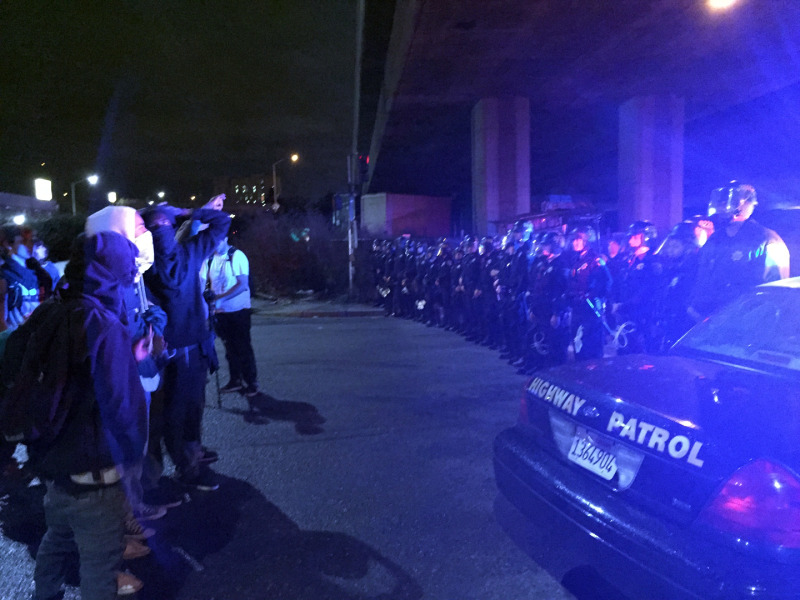
window.__IS_SSR__=true
window.__INITIAL_STATE__={
"attachmentsReducer": {
"audio_0": {
"type": "attachments",
"id": "audio_0",
"imgSizes": {
"kqedFullSize": {
"file": "https://ww2.kqed.org/news/wp-content/themes/KQED-unified/img/audio_bgs/background0.jpg"
}
}
},
"audio_1": {
"type": "attachments",
"id": "audio_1",
"imgSizes": {
"kqedFullSize": {
"file": "https://ww2.kqed.org/news/wp-content/themes/KQED-unified/img/audio_bgs/background1.jpg"
}
}
},
"audio_2": {
"type": "attachments",
"id": "audio_2",
"imgSizes": {
"kqedFullSize": {
"file": "https://ww2.kqed.org/news/wp-content/themes/KQED-unified/img/audio_bgs/background2.jpg"
}
}
},
"audio_3": {
"type": "attachments",
"id": "audio_3",
"imgSizes": {
"kqedFullSize": {
"file": "https://ww2.kqed.org/news/wp-content/themes/KQED-unified/img/audio_bgs/background3.jpg"
}
}
},
"audio_4": {
"type": "attachments",
"id": "audio_4",
"imgSizes": {
"kqedFullSize": {
"file": "https://ww2.kqed.org/news/wp-content/themes/KQED-unified/img/audio_bgs/background4.jpg"
}
}
},
"placeholder": {
"type": "attachments",
"id": "placeholder",
"imgSizes": {
"thumbnail": {
"file": "https://cdn.kqed.org/wp-content/uploads/2024/12/KQED-Default-Image-816638274-2000x1333-1-160x107.jpg",
"width": 160,
"height": 107,
"mimeType": "image/jpeg"
},
"medium": {
"file": "https://cdn.kqed.org/wp-content/uploads/2024/12/KQED-Default-Image-816638274-2000x1333-1-800x533.jpg",
"width": 800,
"height": 533,
"mimeType": "image/jpeg"
},
"medium_large": {
"file": "https://cdn.kqed.org/wp-content/uploads/2024/12/KQED-Default-Image-816638274-2000x1333-1-768x512.jpg",
"width": 768,
"height": 512,
"mimeType": "image/jpeg"
},
"large": {
"file": "https://cdn.kqed.org/wp-content/uploads/2024/12/KQED-Default-Image-816638274-2000x1333-1-1020x680.jpg",
"width": 1020,
"height": 680,
"mimeType": "image/jpeg"
},
"1536x1536": {
"file": "https://cdn.kqed.org/wp-content/uploads/2024/12/KQED-Default-Image-816638274-2000x1333-1-1536x1024.jpg",
"width": 1536,
"height": 1024,
"mimeType": "image/jpeg"
},
"fd-lrg": {
"file": "https://cdn.kqed.org/wp-content/uploads/2024/12/KQED-Default-Image-816638274-2000x1333-1-1536x1024.jpg",
"width": 1536,
"height": 1024,
"mimeType": "image/jpeg"
},
"fd-med": {
"file": "https://cdn.kqed.org/wp-content/uploads/2024/12/KQED-Default-Image-816638274-2000x1333-1-1020x680.jpg",
"width": 1020,
"height": 680,
"mimeType": "image/jpeg"
},
"fd-sm": {
"file": "https://cdn.kqed.org/wp-content/uploads/2024/12/KQED-Default-Image-816638274-2000x1333-1-800x533.jpg",
"width": 800,
"height": 533,
"mimeType": "image/jpeg"
},
"post-thumbnail": {
"file": "https://cdn.kqed.org/wp-content/uploads/2024/12/KQED-Default-Image-816638274-2000x1333-1-672x372.jpg",
"width": 672,
"height": 372,
"mimeType": "image/jpeg"
},
"twentyfourteen-full-width": {
"file": "https://cdn.kqed.org/wp-content/uploads/2024/12/KQED-Default-Image-816638274-2000x1333-1-1038x576.jpg",
"width": 1038,
"height": 576,
"mimeType": "image/jpeg"
},
"xxsmall": {
"file": "https://cdn.kqed.org/wp-content/uploads/2024/12/KQED-Default-Image-816638274-2000x1333-1-160x107.jpg",
"width": 160,
"height": 107,
"mimeType": "image/jpeg"
},
"xsmall": {
"file": "https://cdn.kqed.org/wp-content/uploads/2024/12/KQED-Default-Image-816638274-2000x1333-1-672x372.jpg",
"width": 672,
"height": 372,
"mimeType": "image/jpeg"
},
"small": {
"file": "https://cdn.kqed.org/wp-content/uploads/2024/12/KQED-Default-Image-816638274-2000x1333-1-672x372.jpg",
"width": 672,
"height": 372,
"mimeType": "image/jpeg"
},
"xlarge": {
"file": "https://cdn.kqed.org/wp-content/uploads/2024/12/KQED-Default-Image-816638274-2000x1333-1-1020x680.jpg",
"width": 1020,
"height": 680,
"mimeType": "image/jpeg"
},
"full-width": {
"file": "https://cdn.kqed.org/wp-content/uploads/2024/12/KQED-Default-Image-816638274-2000x1333-1-1920x1280.jpg",
"width": 1920,
"height": 1280,
"mimeType": "image/jpeg"
},
"guest-author-32": {
"file": "https://cdn.kqed.org/wp-content/uploads/2025/01/KQED-Default-Image-816638274-1333x1333-1-160x160.jpg",
"width": 32,
"height": 32,
"mimeType": "image/jpeg"
},
"guest-author-50": {
"file": "https://cdn.kqed.org/wp-content/uploads/2025/01/KQED-Default-Image-816638274-1333x1333-1-160x160.jpg",
"width": 50,
"height": 50,
"mimeType": "image/jpeg"
},
"guest-author-64": {
"file": "https://cdn.kqed.org/wp-content/uploads/2025/01/KQED-Default-Image-816638274-1333x1333-1-160x160.jpg",
"width": 64,
"height": 64,
"mimeType": "image/jpeg"
},
"guest-author-96": {
"file": "https://cdn.kqed.org/wp-content/uploads/2025/01/KQED-Default-Image-816638274-1333x1333-1-160x160.jpg",
"width": 96,
"height": 96,
"mimeType": "image/jpeg"
},
"guest-author-128": {
"file": "https://cdn.kqed.org/wp-content/uploads/2025/01/KQED-Default-Image-816638274-1333x1333-1-160x160.jpg",
"width": 128,
"height": 128,
"mimeType": "image/jpeg"
},
"detail": {
"file": "https://cdn.kqed.org/wp-content/uploads/2025/01/KQED-Default-Image-816638274-1333x1333-1-160x160.jpg",
"width": 160,
"height": 160,
"mimeType": "image/jpeg"
},
"kqedFullSize": {
"file": "https://cdn.kqed.org/wp-content/uploads/2024/12/KQED-Default-Image-816638274-2000x1333-1.jpg",
"width": 2000,
"height": 1333
}
}
},
"news_10410724": {
"type": "attachments",
"id": "news_10410724",
"meta": {
"index": "attachments_1716263798",
"site": "news",
"id": "10410724",
"found": true
},
"parent": 10410587,
"imgSizes": {
"twentyfourteen-full-width": {
"file": "https://ww2.kqed.org/app/uploads/sites/10/2015/01/schaafprotest-e1421696164922-1038x576.jpg",
"width": 1038,
"mimeType": "image/jpeg",
"height": 576
},
"thumbnail": {
"file": "https://ww2.kqed.org/app/uploads/sites/10/2015/01/schaafprotest-e1421696164922-400x305.jpg",
"width": 400,
"mimeType": "image/jpeg",
"height": 305
},
"post-thumbnail": {
"file": "https://ww2.kqed.org/app/uploads/sites/10/2015/01/schaafprotest-e1421696164922-672x372.jpg",
"width": 672,
"mimeType": "image/jpeg",
"height": 372
},
"kqedFullSize": {
"file": "https://ww2.kqed.org/app/uploads/sites/10/2015/01/schaafprotest-e1421696164922.jpg",
"width": 1040,
"height": 795
},
"large": {
"file": "https://ww2.kqed.org/app/uploads/sites/10/2015/01/schaafprotest-1440x1080.jpg",
"width": 1440,
"mimeType": "image/jpeg",
"height": 1080
},
"guest-author-96": {
"file": "https://ww2.kqed.org/app/uploads/sites/10/2015/01/schaafprotest-e1421696164922-96x96.jpg",
"width": 96,
"mimeType": "image/jpeg",
"height": 96
},
"medium": {
"file": "https://ww2.kqed.org/app/uploads/sites/10/2015/01/schaafprotest-e1421696164922-800x611.jpg",
"width": 800,
"mimeType": "image/jpeg",
"height": 611
},
"guest-author-64": {
"file": "https://ww2.kqed.org/app/uploads/sites/10/2015/01/schaafprotest-e1421696164922-64x64.jpg",
"width": 64,
"mimeType": "image/jpeg",
"height": 64
},
"detail": {
"file": "https://ww2.kqed.org/app/uploads/sites/10/2015/01/schaafprotest-e1421696164922-75x75.jpg",
"width": 75,
"mimeType": "image/jpeg",
"height": 75
},
"guest-author-32": {
"file": "https://ww2.kqed.org/app/uploads/sites/10/2015/01/schaafprotest-e1421696164922-32x32.jpg",
"width": 32,
"mimeType": "image/jpeg",
"height": 32
},
"guest-author-128": {
"file": "https://ww2.kqed.org/app/uploads/sites/10/2015/01/schaafprotest-e1421696164922-128x128.jpg",
"width": 128,
"mimeType": "image/jpeg",
"height": 128
}
},
"publishDate": 1421695673,
"modified": 1421706243,
"caption": "Protesters gather outside Oakland Mayor Libby Schaaf's home early Monday on Martin Luther King Jr. Day. ",
"description": "Protesters gather outside Oakland Mayor Libby Schaaf's home early Monday on Martin Luther King Jr. Day. ",
"title": "schaafprotest",
"credit": "Deirdre Smith Shabaaz",
"status": "inherit",
"isLoading": false,
"fetchFailed": false
},
"news_10369442": {
"type": "attachments",
"id": "news_10369442",
"meta": {
"index": "attachments_1716263798",
"site": "news",
"id": "10369442",
"found": true
},
"parent": 10369395,
"imgSizes": {
"twentyfourteen-full-width": {
"file": "https://ww2.kqed.org/app/uploads/sites/10/2014/12/AEdit2-1038x576.jpg",
"width": 1038,
"mimeType": "image/jpeg",
"height": 576
},
"thumbnail": {
"file": "https://ww2.kqed.org/app/uploads/sites/10/2014/12/AEdit2-400x300.jpg",
"width": 400,
"mimeType": "image/jpeg",
"height": 300
},
"post-thumbnail": {
"file": "https://ww2.kqed.org/app/uploads/sites/10/2014/12/AEdit2-672x372.jpg",
"width": 672,
"mimeType": "image/jpeg",
"height": 372
},
"kqedFullSize": {
"file": "https://ww2.kqed.org/app/uploads/sites/10/2014/12/AEdit2.jpg",
"width": 1440,
"height": 1080
},
"guest-author-96": {
"file": "https://ww2.kqed.org/app/uploads/sites/10/2014/12/AEdit2-96x96.jpg",
"width": 96,
"mimeType": "image/jpeg",
"height": 96
},
"medium": {
"file": "https://ww2.kqed.org/app/uploads/sites/10/2014/12/AEdit2-800x600.jpg",
"width": 800,
"mimeType": "image/jpeg",
"height": 600
},
"guest-author-64": {
"file": "https://ww2.kqed.org/app/uploads/sites/10/2014/12/AEdit2-64x64.jpg",
"width": 64,
"mimeType": "image/jpeg",
"height": 64
},
"detail": {
"file": "https://ww2.kqed.org/app/uploads/sites/10/2014/12/AEdit2-75x75.jpg",
"width": 75,
"mimeType": "image/jpeg",
"height": 75
},
"guest-author-32": {
"file": "https://ww2.kqed.org/app/uploads/sites/10/2014/12/AEdit2-32x32.jpg",
"width": 32,
"mimeType": "image/jpeg",
"height": 32
},
"guest-author-128": {
"file": "https://ww2.kqed.org/app/uploads/sites/10/2014/12/AEdit2-128x128.jpg",
"width": 128,
"mimeType": "image/jpeg",
"height": 128
}
},
"publishDate": 1417862570,
"modified": 1443985244,
"caption": "Protesters regroup in front of a police line under Interstate 880 in Oakland.",
"description": "Protesters regroup in front of a police line under Interstate 880 in Oakland.",
"title": "AEdit2",
"credit": "Alex Emslie/KQED",
"status": "inherit",
"isLoading": false,
"fetchFailed": false
},
"news_122860": {
"type": "attachments",
"id": "news_122860",
"meta": {
"index": "attachments_1716263798",
"site": "news",
"id": "122860",
"found": true
},
"parent": 122842,
"imgSizes": {
"kqedFullSize": {
"file": "https://ww2.kqed.org/app/uploads/sites/10/2014/01/RS5947_OaklandPoliceCar.jpg",
"width": 1498,
"height": 1051
}
},
"publishDate": 1389061842,
"modified": 1449876770,
"caption": "Oakland police on patrol. ",
"description": "Oakland police on patrol. (Justin Sullivan/Getty Images)",
"title": "Oakland Polcie",
"credit": "Justin Sullivan/Getty Images",
"status": "inherit",
"isLoading": false,
"fetchFailed": false
},
"news_144871": {
"type": "attachments",
"id": "news_144871",
"meta": {
"index": "attachments_1716263798",
"site": "news",
"id": "144871",
"found": true
},
"parent": 144840,
"imgSizes": {
"kqedFullSize": {
"file": "https://ww2.kqed.org/app/uploads/sites/10/2014/08/IMG_1248-e1408121764472.jpg",
"width": 2592,
"height": 3888
}
},
"publishDate": 1408121728,
"modified": 1408121728,
"caption": null,
"description": null,
"title": "IMG_1248",
"credit": null,
"status": "inherit",
"isLoading": false,
"fetchFailed": false
},
"news_138300": {
"type": "attachments",
"id": "news_138300",
"meta": {
"index": "attachments_1716263798",
"site": "news",
"id": "138300",
"found": true
},
"parent": 138299,
"imgSizes": {
"kqedFullSize": {
"file": "https://ww2.kqed.org/app/uploads/sites/10/2014/06/danielakantorova_jeralynn_alanblueford_800.jpg",
"width": 800,
"height": 533
}
},
"publishDate": 1402080495,
"modified": 1402080495,
"caption": "Jeralynn Blueford, shown speaking at a rally in March 2013, has helped create a foundation that is a resource for victims of police abuse. Her son Alan was shot and killed by an OPD officer in 2012. (Daniela Kantorova/Flickr)",
"description": null,
"title": "danielakantorova_jeralynn_alanblueford_800",
"credit": null,
"status": "inherit",
"isLoading": false,
"fetchFailed": false
},
"news_136024": {
"type": "attachments",
"id": "news_136024",
"meta": {
"index": "attachments_1716263798",
"site": "news",
"id": "136024",
"found": true
},
"parent": 136015,
"imgSizes": {
"kqedFullSize": {
"file": "https://ww2.kqed.org/app/uploads/sites/10/2014/05/whent.jpg",
"width": 640,
"height": 427
}
},
"publishDate": 1400092257,
"modified": 1400092257,
"caption": "Oakland Police Chief Sean Whent speaking to the media and the community last June about the Oakland Police Departments priority of reducing crime in Oakland. (Deborah Svoboda/KQED",
"description": "Oakland Police Chief Sean Whent speaking to the media and the community last June about the Oakland Police Departments priority of reducing crime in Oakland. (Deborah Svoboda/KQED",
"title": "whent",
"credit": null,
"status": "inherit",
"isLoading": false,
"fetchFailed": false
},
"news_130082": {
"type": "attachments",
"id": "news_130082",
"meta": {
"index": "attachments_1716263798",
"site": "news",
"id": "130082",
"found": true
},
"parent": 130079,
"imgSizes": {
"kqedFullSize": {
"file": "https://ww2.kqed.org/app/uploads/sites/10/2014/03/Olsen.png",
"width": 845,
"height": 468
}
},
"publishDate": 1395429917,
"modified": 1395429917,
"caption": "Frame from video showing Occupy Oakland protester Scott Olsen immediately after a police projectile struck him in the head. ",
"description": "Frame from video showing Occupy Oakland protester Scott Olsen immediately after a police projectile struck him in the head. ",
"title": "Olsen-Occupy Oakland",
"credit": null,
"status": "inherit",
"isLoading": false,
"fetchFailed": false
},
"news_79013": {
"type": "attachments",
"id": "news_79013",
"meta": {
"index": "attachments_1716263798",
"site": "news",
"id": "79013",
"found": true
},
"parent": 79005,
"imgSizes": {
"kqedFullSize": {
"file": "https://ww2.kqed.org/app/uploads/sites/10/2012/10/OccupyOaklandProtesterHitbyTearGas102611-e1386864588915.jpg",
"width": 640,
"height": 460
}
},
"publishDate": 1351206387,
"modified": 1351206387,
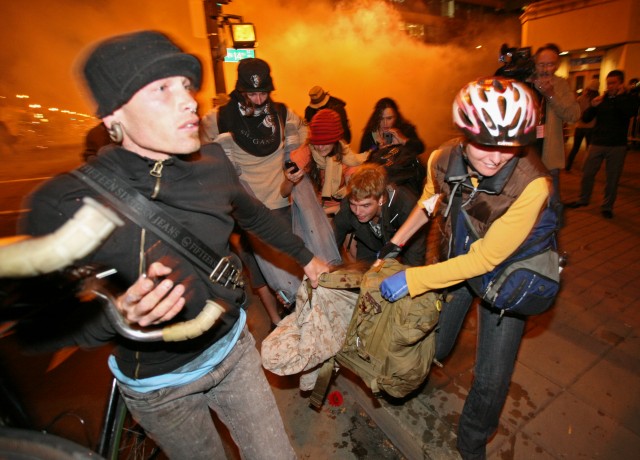
"caption": "Occupy Oakland protesters carry injured former Marine Scott Olsen after he was struck in the head with a tear-gas canister during unrest in October 2011. Olsen has a lawsuit pending against the city, which settled a suit with a second veteran, Kayvan Sabeghi, for $645,000. (Kimihiro Hoshino/AFP/Getty Images)",
"description": null,
"title": "Occupy Oakland-Olsen",
"credit": null,
"status": "inherit",
"isLoading": false,
"fetchFailed": false
},
"news_85615": {
"type": "attachments",
"id": "news_85615",
"meta": {
"index": "attachments_1716263798",
"site": "news",
"id": "85615",
"found": true
},
"title": "Oakland Gun Violence",
"publishDate": 1358192867,
"status": "inherit",
"parent": 85613,
"modified": 1733357406,
"caption": "Demonstration against gun violence in Oakland in 2012. ",
"credit": "Ingrid Becker/KQED",
"altTag": null,
"description": null,
"imgSizes": {
"kqedFullSize": {
"file": "https://cdn.kqed.org/wp-content/uploads/sites/10/2013/01/Oakland-Gun-Violence-e1376000800855.jpg",
"width": 640,
"height": 427
}
},
"isLoading": false,
"fetchFailed": false
}
},
"audioPlayerReducer": {
"postId": "stream_live",
"isPaused": true,
"isPlaying": false,
"pfsActive": false,
"pledgeModalIsOpen": true,
"playerDrawerIsOpen": false,
"liveAudioPlayStartedAt": 0,
"liveAudioPlayContext": ""
},
"authorsReducer": {
"jbrooks": {
"type": "authors",
"id": "80",
"meta": {
"index": "authors_1716337520",
"id": "80",
"found": true
},
"name": "Jon Brooks",
"firstName": "Jon",
"lastName": "Brooks",
"slug": "jbrooks",
"email": "jbrooks@kqed.org",
"display_author_email": true,
"staff_mastheads": [
"science"
],
"title": "Digital Editor",
"bio": "Jon Brooks is a former Digital Editor for KQED Science. He is the former editor of KQED’s daily news blog, News Fix. In 2014, he won a California Journalism Award for his coverage of ride services like Uber and Lyft and the taxi industry. A veteran blogger, he previously worked for Yahoo! in various news writing and editing roles. Jon is also a playwright whose work has been produced in San Francisco, New York, Italy, and around the U.S. He has written about film for his own blog and studied film at Boston University.",
"avatar": "https://secure.gravatar.com/avatar/98887f7ed1c876ed414d4c915e969584?s=600&d=blank&r=g",
"twitter": "jbrooksfoy",
"facebook": null,
"instagram": null,
"linkedin": null,
"sites": [
{
"site": "arts",
"roles": [
"Contributor",
"editor"
]
},
{
"site": "news",
"roles": [
"author"
]
},
{
"site": "futureofyou",
"roles": [
"administrator"
]
},
{
"site": "mindshift",
"roles": [
"editor"
]
},
{
"site": "stateofhealth",
"roles": [
"editor"
]
},
{
"site": "science",
"roles": [
"administrator"
]
},
{
"site": "quest",
"roles": [
"editor"
]
}
],
"headData": {
"title": "Jon Brooks | KQED",
"description": "Digital Editor",
"ogImgSrc": "https://secure.gravatar.com/avatar/98887f7ed1c876ed414d4c915e969584?s=600&d=blank&r=g",
"twImgSrc": "https://secure.gravatar.com/avatar/98887f7ed1c876ed414d4c915e969584?s=600&d=blank&r=g"
},
"isLoading": false,
"link": "/author/jbrooks"
},
"lisapickoffwhite-2": {
"type": "authors",
"id": "199",
"meta": {
"index": "authors_1716337520",
"id": "199",
"found": true
},
"name": "Lisa Pickoff-White",
"firstName": "Lisa",
"lastName": "Pickoff-White",
"slug": "lisapickoffwhite-2",
"email": "lpickoffwhite@kqed.org",
"display_author_email": false,
"staff_mastheads": [
"news"
],
"title": "Data Journalist, Senior Producer",
"bio": "Lisa Pickoff-White is KQED's data reporter. Lisa specializes in simplifying complex topics and bringing them to life through compelling visuals, including photography and data visualizations. She previously has worked at the Center for Investigative Reporting and other national outlets. Her work has been honored with awards from the Online News Association, Investigative Reporters and Editors, the Society of Professional Journalists and SXSW Interactive. \u003cstrong> \u003c/strong>",
"avatar": "https://secure.gravatar.com/avatar/5513c5f3967df792aa65bee2501e84d6?s=600&d=blank&r=g",
"twitter": "pickoffwhite",
"facebook": null,
"instagram": null,
"linkedin": null,
"sites": [
{
"site": "",
"roles": [
"editor"
]
},
{
"site": "arts",
"roles": []
},
{
"site": "news",
"roles": [
"administrator"
]
},
{
"site": "about",
"roles": [
"editor"
]
},
{
"site": "stateofhealth",
"roles": [
"administrator"
]
},
{
"site": "science",
"roles": [
"editor"
]
},
{
"site": "quest",
"roles": [
"editor"
]
},
{
"site": "forum",
"roles": [
"editor"
]
}
],
"headData": {
"title": "Lisa Pickoff-White | KQED",
"description": "Data Journalist, Senior Producer",
"ogImgSrc": "https://secure.gravatar.com/avatar/5513c5f3967df792aa65bee2501e84d6?s=600&d=blank&r=g",
"twImgSrc": "https://secure.gravatar.com/avatar/5513c5f3967df792aa65bee2501e84d6?s=600&d=blank&r=g"
},
"isLoading": false,
"link": "/author/lisapickoffwhite-2"
},
"danbrekke": {
"type": "authors",
"id": "222",
"meta": {
"index": "authors_1716337520",
"id": "222",
"found": true
},
"name": "Dan Brekke",
"firstName": "Dan",
"lastName": "Brekke",
"slug": "danbrekke",
"email": "dbrekke@kqed.org",
"display_author_email": true,
"staff_mastheads": [
"news",
"science"
],
"title": "KQED Editor and Reporter",
"bio": "Dan Brekke is a reporter and editor for KQED News, responsible for coverage of topics ranging from California water issues to the Bay Area's transportation challenges. In a newsroom career that began in Chicago in 1972, Dan has worked for \u003cem>The San Francisco Examiner,\u003c/em> Wired and TechTV and has been published in The New York Times, The New York Times Magazine, Business 2.0, Salon and elsewhere.\r\n\r\nSince joining KQED in 2007, Dan has reported, edited and produced both radio and online features and breaking news pieces. He has shared as both editor and reporter in four Society of Professional Journalists Norcal Excellence in Journalism awards and one Edward R. Murrow regional award. He was chosen for a spring 2017 residency at the Mesa Refuge to advance his research on California salmon.\r\n\r\nEmail Dan at: \u003ca href=\"mailto:dbrekke@kqed.org\">dbrekke@kqed.org\u003c/a>\r\n\r\n\u003cstrong>Twitter:\u003c/strong> \u003ca href=\"https://twitter.com/danbrekke\" rel=\"noopener noreferrer\">twitter.com/danbrekke\u003c/a>\r\n\u003cstrong>Facebook:\u003c/strong> \u003ca href=\"https://www.facebook.com/danbrekke\" rel=\"noopener noreferrer\">www.facebook.com/danbrekke\u003c/a>\r\n\u003cstrong>LinkedIn:\u003c/strong> \u003ca href=\"https://www.linkedin.com/in/danbrekke\" rel=\"noopener noreferrer\">www.linkedin.com/in/danbrekke\u003c/a>",
"avatar": "https://secure.gravatar.com/avatar/c8126230345efca3f7aa89b1a402be45?s=600&d=mm&r=g",
"twitter": "danbrekke",
"facebook": null,
"instagram": "https://www.instagram.com/dan.brekke/",
"linkedin": "https://www.linkedin.com/in/danbrekke/",
"sites": [
{
"site": "news",
"roles": [
"administrator",
"create_posts"
]
},
{
"site": "stateofhealth",
"roles": [
"editor"
]
},
{
"site": "science",
"roles": [
"editor"
]
},
{
"site": "quest",
"roles": [
"contributor"
]
},
{
"site": "food",
"roles": [
"contributor"
]
},
{
"site": "forum",
"roles": [
"contributor"
]
},
{
"site": "liveblog",
"roles": [
"editor"
]
}
],
"headData": {
"title": "Dan Brekke | KQED",
"description": "KQED Editor and Reporter",
"ogImgSrc": "https://secure.gravatar.com/avatar/c8126230345efca3f7aa89b1a402be45?s=600&d=mm&r=g",
"twImgSrc": "https://secure.gravatar.com/avatar/c8126230345efca3f7aa89b1a402be45?s=600&d=mm&r=g"
},
"isLoading": false,
"link": "/author/danbrekke"
},
"kqed": {
"type": "authors",
"id": "236",
"meta": {
"index": "authors_1716337520",
"id": "236",
"found": true
},
"name": "KQED News Staff",
"firstName": "KQED News Staff",
"lastName": null,
"slug": "kqed",
"email": "faq@kqed.org",
"display_author_email": false,
"staff_mastheads": [],
"title": null,
"bio": null,
"avatar": "https://secure.gravatar.com/avatar/ef0e801a68c4c54afa9180db14084167?s=600&d=blank&r=g",
"twitter": null,
"facebook": null,
"instagram": null,
"linkedin": null,
"sites": [
{
"site": "arts",
"roles": [
"contributor"
]
},
{
"site": "news",
"roles": [
"editor"
]
},
{
"site": "futureofyou",
"roles": [
"author"
]
}
],
"headData": {
"title": "KQED News Staff | KQED",
"description": null,
"ogImgSrc": "https://secure.gravatar.com/avatar/ef0e801a68c4c54afa9180db14084167?s=600&d=blank&r=g",
"twImgSrc": "https://secure.gravatar.com/avatar/ef0e801a68c4c54afa9180db14084167?s=600&d=blank&r=g"
},
"isLoading": false,
"link": "/author/kqed"
},
"kqednewsstaffandwires": {
"type": "authors",
"id": "237",
"meta": {
"index": "authors_1716337520",
"id": "237",
"found": true
},
"name": "KQED News Staff and Wires",
"firstName": "KQED News Staff and Wires",
"lastName": null,
"slug": "kqednewsstaffandwires",
"email": "onlinenewsstaff@kqed.org",
"display_author_email": false,
"staff_mastheads": [],
"title": null,
"bio": null,
"avatar": "https://secure.gravatar.com/avatar/72295af8ebbfbd19a4948f5271285664?s=600&d=blank&r=g",
"twitter": null,
"facebook": null,
"instagram": null,
"linkedin": null,
"sites": [
{
"site": "arts",
"roles": [
"contributor"
]
},
{
"site": "news",
"roles": [
"contributor"
]
},
{
"site": "lowdown",
"roles": [
"author"
]
},
{
"site": "stateofhealth",
"roles": [
"contributor"
]
},
{
"site": "food",
"roles": [
"author"
]
}
],
"headData": {
"title": "KQED News Staff and Wires | KQED",
"description": null,
"ogImgSrc": "https://secure.gravatar.com/avatar/72295af8ebbfbd19a4948f5271285664?s=600&d=blank&r=g",
"twImgSrc": "https://secure.gravatar.com/avatar/72295af8ebbfbd19a4948f5271285664?s=600&d=blank&r=g"
},
"isLoading": false,
"link": "/author/kqednewsstaffandwires"
},
"minakim": {
"type": "authors",
"id": "243",
"meta": {
"index": "authors_1716337520",
"id": "243",
"found": true
},
"name": "Mina Kim",
"firstName": "Mina",
"lastName": "Kim",
"slug": "minakim",
"email": "mkim@kqed.org",
"display_author_email": false,
"staff_mastheads": [
"news"
],
"title": "Host, Forum",
"bio": "Mina Kim is host of the 10 a.m. statewide hour of Forum; a live daily talk show for curious Californians on issues that matter to the state and nation, with a particular emphasis on race and equity.\r\n\r\nBefore joining the Forum team, Mina was KQED’s evening news anchor, and health reporter for The California Report. Her award-winning work has included natural disasters in Napa and gun violence in Oakland. Mina grew up in St. John’s, Newfoundland.",
"avatar": "https://secure.gravatar.com/avatar/145ce657a2d08cb86d93686beb958982?s=600&d=blank&r=g",
"twitter": "mkimreporter",
"facebook": null,
"instagram": null,
"linkedin": null,
"sites": [
{
"site": "news",
"roles": [
"contributor"
]
},
{
"site": "stateofhealth",
"roles": [
"author"
]
},
{
"site": "forum",
"roles": [
"editor"
]
}
],
"headData": {
"title": "Mina Kim | KQED",
"description": "Host, Forum",
"ogImgSrc": "https://secure.gravatar.com/avatar/145ce657a2d08cb86d93686beb958982?s=600&d=blank&r=g",
"twImgSrc": "https://secure.gravatar.com/avatar/145ce657a2d08cb86d93686beb958982?s=600&d=blank&r=g"
},
"isLoading": false,
"link": "/author/minakim"
},
"aemslie": {
"type": "authors",
"id": "3206",
"meta": {
"index": "authors_1716337520",
"id": "3206",
"found": true
},
"name": "Alex Emslie",
"firstName": "Alex",
"lastName": "Emslie",
"slug": "aemslie",
"email": "aemslie@kqed.org",
"display_author_email": true,
"staff_mastheads": [
"news"
],
"title": "KQED Senior Editor",
"bio": "Alex Emslie is senior editor of talent and development at KQED, where he manages dozens of early career journalists and oversees news department internships.\r\n\r\nHe is a former carpenter and proud graduate of City College of San Francisco and San Francisco State University, where he studied journalism and criminal justice before joining KQED in 2013.\r\n\r\nAlex produced investigative journalism focused on \u003ca href=\"https://www.kqed.org/news/11667594/the-trials-of-marvin-mutch-video\">criminal justice\u003c/a> and policing for most of a decade. He has broken major stories about \u003ca href=\"https://www.kqed.org/news/135682/amid-a-series-of-vallejo-police-shootings-one-officers-name-stands-out\">police use of deadly force\u003c/a>, \u003ca href=\"https://www.kqed.org/news/10454955/racist-texts-prompt-sfpd-internal-investigation\">officer misconduct\u003c/a> and \u003ca href=\"https://www.kqed.org/news/11712239/terrorist-or-troll-judge-to-weigh-whether-oakland-man-really-intended-to-attack-bay-area\">other\u003c/a> \u003ca href=\"https://www.kqed.org/news/11221414/hayward-paid-159000-to-husband-of-retired-police-chief-documents-show\">high\u003c/a>-\u003ca href=\"https://www.kqed.org/news/10622762/the-forgotten-tracking-two-homicides-in-san-francisco-public-housing\">profile\u003c/a> \u003ca href=\"https://www.kqed.org/news/11624516/federal-agency-promoted-ranger-just-months-after-his-gun-was-stolen-and-used-in-steinle-killing\">cases\u003c/a>. He co-founded the \u003ca href=\"https://projects.scpr.org/california-reporting-project/\">California Reporting Project\u003c/a> in 2019 to obtain and report on previously confidential police internal investigations. The effort produced well over 100 original stories and changed the course of multiple criminal cases.\r\n\r\nHis work has been recognized with numerous journalism awards, including a national Edward R. Murrow award for several years of \u003ca href=\"https://www.kqed.org/news/11688481/sfpd-officers-in-mario-woods-case-recount-shooting-in-newly-filed-depositions\">reporting\u003c/a> on the San Francisco Police shooting of Mario Woods. His \u003ca href=\"https://www.kqed.org/news/147854/half-of-those-killed-by-san-francisco-police-are-mentally-ill\">reporting\u003c/a> on police killings of people in psychiatric crisis was cited in amicus briefs before the U.S. Supreme Court.\r\n\r\nAlex now enjoys mentoring the next generation of journalists at KQED.",
"avatar": "https://secure.gravatar.com/avatar/e691e65209f20e9da202bd730ead5663?s=600&d=blank&r=g",
"twitter": "SFNewsReporter",
"facebook": null,
"instagram": null,
"linkedin": null,
"sites": [
{
"site": "arts",
"roles": [
"editor"
]
},
{
"site": "news",
"roles": [
"editor"
]
},
{
"site": "mindshift",
"roles": [
"editor"
]
},
{
"site": "stateofhealth",
"roles": [
"editor"
]
},
{
"site": "science",
"roles": [
"administrator"
]
}
],
"headData": {
"title": "Alex Emslie | KQED",
"description": "KQED Senior Editor",
"ogImgSrc": "https://secure.gravatar.com/avatar/e691e65209f20e9da202bd730ead5663?s=600&d=blank&r=g",
"twImgSrc": "https://secure.gravatar.com/avatar/e691e65209f20e9da202bd730ead5663?s=600&d=blank&r=g"
},
"isLoading": false,
"link": "/author/aemslie"
},
"shossaini": {
"type": "authors",
"id": "3214",
"meta": {
"index": "authors_1716337520",
"id": "3214",
"found": true
},
"name": "Sara Hossaini",
"firstName": "Sara",
"lastName": "Hossaini",
"slug": "shossaini",
"email": "shossaini@kqed.org",
"display_author_email": true,
"staff_mastheads": [
"news"
],
"title": "KQED Reporter",
"bio": "Sara Hossaini came to general assignment reporting at KQED in 2013 after two winters reporting at Wyoming Public Radio. She holds a bachelor's degree in broadcast journalism from the University of Nebraska-Lincoln. Her radio romance began after a bitter breakup with documentary film (Ok, maybe it's still complicated). Her first simultaneous jobs in San Francisco were as Associate Producer on a PBS film series through the Center for Asian American Media and as a butler. She likes to trot, plot and make things with her hands.",
"avatar": "https://secure.gravatar.com/avatar/060e9f56b9554e17942e89f413242774?s=600&d=blank&r=g",
"twitter": "mshossaini",
"facebook": null,
"instagram": null,
"linkedin": null,
"sites": [
{
"site": "news",
"roles": [
"author"
]
},
{
"site": "stateofhealth",
"roles": [
"author"
]
}
],
"headData": {
"title": "Sara Hossaini | KQED",
"description": "KQED Reporter",
"ogImgSrc": "https://secure.gravatar.com/avatar/060e9f56b9554e17942e89f413242774?s=600&d=blank&r=g",
"twImgSrc": "https://secure.gravatar.com/avatar/060e9f56b9554e17942e89f413242774?s=600&d=blank&r=g"
},
"isLoading": false,
"link": "/author/shossaini"
}
},
"pagesReducer": {
"news_tag_oakland-police-department": {
"type": "terms",
"id": "news_416",
"meta": {
"index": "terms_1716263798",
"site": "news",
"id": "416",
"score": 9.892363
},
"featImg": null,
"name": "Oakland Police Department",
"description": null,
"taxonomy": "tag",
"headData": {
"twImgId": null,
"twTitle": null,
"ogTitle": null,
"ogImgId": null,
"twDescription": null,
"description": null,
"title": "Oakland Police Department Archives | KQED News",
"ogDescription": null
},
"ttid": 425,
"slug": "oakland-police-department",
"isLoading": false,
"title": "Oakland Police Department",
"pageMeta": {
"site": "news",
"WpPageTemplate": "page-topic-editorial",
"currentPage": 12
},
"blocks": [
{
"blockName": "kqed/post-list",
"attrs": {
"layout": "cardArticle2",
"query": "posts/news?tag=oakland-police-department",
"seeMore": false,
"paginated": true,
"page": 12
}
},
{
"blockName": "kqed/ad"
}
]
}
},
"pfsSessionReducer": {},
"postsReducer": {
"stream_live": {
"type": "live",
"id": "stream_live",
"audioUrl": "https://streams.kqed.org/kqedradio",
"title": "Live Stream",
"excerpt": "Live Stream information currently unavailable.",
"link": "/radio",
"featImg": "",
"label": {
"name": "KQED Live",
"link": "/"
}
},
"stream_kqedNewscast": {
"type": "posts",
"id": "stream_kqedNewscast",
"audioUrl": "https://www.kqed.org/.stream/anon/radio/RDnews/newscast.mp3?_=1",
"title": "KQED Newscast",
"featImg": "",
"label": {
"name": "88.5 FM",
"link": "/"
}
},
"news_10410587": {
"type": "posts",
"id": "news_10410587",
"meta": {
"index": "posts_1716263798",
"site": "news",
"id": "10410587",
"score": null,
"sort": [
1421696837000
]
},
"parent": 0,
"labelTerm": {
"site": "news",
"term": 6944
},
"blocks": [],
"publishDate": 1421696837,
"format": "standard",
"disqusTitle": "In Oakland, a 5 a.m. Protest at Libby Schaaf's House",
"title": "In Oakland, a 5 a.m. Protest at Libby Schaaf's House",
"headTitle": "News Fix | KQED News",
"content": "\u003cp>Protesters who say they want to reclaim the radical legacy of Martin Luther King Jr. rallied for a couple of hours Monday morning outside the home of new Oakland Mayor Libby Schaaf.\u003c/p>\n\u003caside class=\"pullquote alignright\">The protesters took issue with the mayor spending her first day in office with the police department.\u003c/aside>\n\u003cp>The crowd gathered at 5 a.m. Around 40 demonstrators chanted, \"Turn it up, don't turn it down, we do this for Mike Brown.\"\u003c/p>\n\u003cp>Demonstrators also danced and held vigils for local residents killed by police. They stood with fists raised while speeches from Martin Luther King Jr. played on a speaker, including his famous \"\u003ca href=\"http://www.americanrhetoric.com/speeches/mlkatimetobreaksilence.htm\" target=\"_blank\">A Time to Break Silence\u003c/a>\" address, criticizing the Vietnam War.\u003c/p>\n\u003cp>The protesters said they take issue with the mayor spending her first day in office with the \u003ca href=\"http://www.contracostatimes.com/my-town/ci_27269514/mayor-libby-schaaf-devotes-first-day-oakland-police\" target=\"_blank\">police department\u003c/a>. Some said they did not like the way Schaaf dealt with officer-involved shootings when she was on the City Council.\u003c/p>\n\u003cp>\u003ca href=\"http://www.contracostatimes.com/breaking-news/ci_27348922/oakland-mayor-libby-schaffs-home-scene-protest\" target=\"_blank\">Bay Area News Group reported\u003c/a> that demonstrators drew outlines of bodies in the street. From the report:\u003c/p>\n\u003cblockquote>\u003cp>They also rang her doorbell and handed her husband a list of demands that include dismantling the Oakland school district's police force, ending paid leave for city officers being investigated in questionable shootings, overhauling a state law that limits public access to police personnel records, and ending ties with Israel.\u003c/p>\u003c/blockquote>\n\u003cp>One protester, Xan West, said she came to \"pray for Libby and bring a change to our neighborhoods.\"\u003c/p>\n\u003cp>[ad fullwidth]\u003c/p>\n\u003cp>West says Schaaf's focus on crime sends a clear message that she intends to invest in policing rather than infrastructure and economic development in communities that need it the most. That does little to honor the values of King, protesters said.\u003c/p>\n\u003cp>\"Martin Luther King is a victim of identity theft,\" said West. \"The way that he's portrayed is very much that he's this meek and mild character who just sought justice through peaceful means, which is very true. But he was not meek and mild. He used nonviolent direct action. And so we're here to reclaim that spirit of nonviolent direct action and say, 'Libby, you have no right to hold onto his legacy, you don't do anything to uphold what he stood for … and we're bringing that to her front doorstep.'\"\u003c/p>\n\u003cp>Police were present but did not disperse the crowd. Several neighbors came outside to view the action.\u003c/p>\n\u003cp>The \u003ca href=\"http://www.sfgate.com/bayarea/article/Protesters-outside-Oakland-mayor-s-house-6024982.php\" target=\"_blank\">San Francisco Chronicle reported\u003c/a> that an elderly woman living across the street from Schaaf \"voiced displeasure\" at the protest, after which a demonstrator apologized to her.\u003c/p>\n\u003cp>So what did Schaaf have to say? From the \u003ca href=\"http://www.insidebayarea.com/breaking-news/ci_27348922/oakland-mayor-libby-schaffs-home-scene-protest\" target=\"_blank\">Bay Area News Group\u003c/a>:\u003c/p>\n\u003cblockquote>\u003cp>\"I'm happy to meet with people about the city's business in City Hall during normal hours,\" Schaaf said after the protest, as she traveled between events commemorating Martin Luther King, Jr. ...\u003c/p>\n\u003cp>Schaaf said her children, ages 7 and 9, slept through much of the protest and that she and her husband tried to make it a teachable moment for them.\u003c/p>\n\u003cp>\"I am sorry that it disturbed my neighbors, but I appreciate that we live in a country where people are free to protest and express their passionate politics,\" she said.\u003c/p>\u003c/blockquote>\n\u003cp>\u003c/p>\n\u003cp>\u003cem>Jon Brooks contributed to this report.\u003c/em>\u003c/p>\n\n",
"disqusIdentifier": "10410587 http://ww2.kqed.org/news/?p=10410587",
"disqusUrl": "https://ww2.kqed.org/news/2015/01/19/in-oakland-a-5-a-m-protest-at-libby-schaafs-house/",
"stats": {
"hasVideo": false,
"hasChartOrMap": false,
"hasAudio": false,
"hasPolis": false,
"wordCount": 540,
"hasGoogleForm": false,
"hasGallery": false,
"hasHearkenModule": false,
"iframeSrcs": [],
"paragraphCount": 18
},
"modified": 1421708435,
"excerpt": "Demonstrators, upset that new mayor spent 1st day with police, played speeches by Martin Luther King Jr.",
"headData": {
"twImgId": "",
"twTitle": "",
"ogTitle": "",
"ogImgId": "",
"twDescription": "",
"description": "Demonstrators, upset that new mayor spent 1st day with police, played speeches by Martin Luther King Jr.",
"title": "In Oakland, a 5 a.m. Protest at Libby Schaaf's House | KQED",
"ogDescription": "",
"schema": {
"@context": "https://schema.org",
"@type": "NewsArticle",
"headline": "In Oakland, a 5 a.m. Protest at Libby Schaaf's House",
"datePublished": "2015-01-19T11:47:17-08:00",
"dateModified": "2015-01-19T15:00:35-08:00",
"image": "https://cdn.kqed.org/wp-content/uploads/2020/02/KQED-OG-Image@1x.png",
"isAccessibleForFree": "True",
"publisher": {
"@type": "NewsMediaOrganization",
"@id": "https://www.kqed.org/#organization",
"name": "KQED",
"logo": "https://cdn.kqed.org/wp-content/uploads/2020/02/KQED-OG-Image@1x.png",
"url": "https://www.kqed.org",
"sameAs": [
"https://www.facebook.com/KQED",
"https://twitter.com/KQED",
"https://www.instagram.com/kqed/",
"https://www.tiktok.com/@kqedofficial",
"https://www.linkedin.com/company/kqed",
"https://www.youtube.com/channel/UCeC0IOo7i1P_61zVUWbJ4nw"
]
}
}
},
"guestAuthors": [],
"slug": "in-oakland-a-5-a-m-protest-at-libby-schaafs-house",
"status": "publish",
"path": "/news/10410587/in-oakland-a-5-a-m-protest-at-libby-schaafs-house",
"audioTrackLength": null,
"parsedContent": [
{
"type": "contentString",
"content": "\u003cdiv class=\"post-body\">\u003cp>\u003cp>Protesters who say they want to reclaim the radical legacy of Martin Luther King Jr. rallied for a couple of hours Monday morning outside the home of new Oakland Mayor Libby Schaaf.\u003c/p>\n\u003caside class=\"pullquote alignright\">The protesters took issue with the mayor spending her first day in office with the police department.\u003c/aside>\n\u003cp>The crowd gathered at 5 a.m. Around 40 demonstrators chanted, \"Turn it up, don't turn it down, we do this for Mike Brown.\"\u003c/p>\n\u003cp>Demonstrators also danced and held vigils for local residents killed by police. They stood with fists raised while speeches from Martin Luther King Jr. played on a speaker, including his famous \"\u003ca href=\"http://www.americanrhetoric.com/speeches/mlkatimetobreaksilence.htm\" target=\"_blank\">A Time to Break Silence\u003c/a>\" address, criticizing the Vietnam War.\u003c/p>\n\u003cp>The protesters said they take issue with the mayor spending her first day in office with the \u003ca href=\"http://www.contracostatimes.com/my-town/ci_27269514/mayor-libby-schaaf-devotes-first-day-oakland-police\" target=\"_blank\">police department\u003c/a>. Some said they did not like the way Schaaf dealt with officer-involved shootings when she was on the City Council.\u003c/p>\n\u003cp>\u003ca href=\"http://www.contracostatimes.com/breaking-news/ci_27348922/oakland-mayor-libby-schaffs-home-scene-protest\" target=\"_blank\">Bay Area News Group reported\u003c/a> that demonstrators drew outlines of bodies in the street. From the report:\u003c/p>\n\u003cblockquote>\u003cp>They also rang her doorbell and handed her husband a list of demands that include dismantling the Oakland school district's police force, ending paid leave for city officers being investigated in questionable shootings, overhauling a state law that limits public access to police personnel records, and ending ties with Israel.\u003c/p>\u003c/blockquote>\n\u003cp>One protester, Xan West, said she came to \"pray for Libby and bring a change to our neighborhoods.\"\u003c/p>\n\u003cp>\u003c/p>\u003c/div>",
"attributes": {
"named": {},
"numeric": []
}
},
{
"type": "component",
"content": "",
"name": "ad",
"attributes": {
"named": {
"label": "fullwidth"
},
"numeric": [
"fullwidth"
]
}
},
{
"type": "contentString",
"content": "\u003cdiv class=\"post-body\">\u003cp>\u003c/p>\n\u003cp>West says Schaaf's focus on crime sends a clear message that she intends to invest in policing rather than infrastructure and economic development in communities that need it the most. That does little to honor the values of King, protesters said.\u003c/p>\n\u003cp>\"Martin Luther King is a victim of identity theft,\" said West. \"The way that he's portrayed is very much that he's this meek and mild character who just sought justice through peaceful means, which is very true. But he was not meek and mild. He used nonviolent direct action. And so we're here to reclaim that spirit of nonviolent direct action and say, 'Libby, you have no right to hold onto his legacy, you don't do anything to uphold what he stood for … and we're bringing that to her front doorstep.'\"\u003c/p>\n\u003cp>Police were present but did not disperse the crowd. Several neighbors came outside to view the action.\u003c/p>\n\u003cp>The \u003ca href=\"http://www.sfgate.com/bayarea/article/Protesters-outside-Oakland-mayor-s-house-6024982.php\" target=\"_blank\">San Francisco Chronicle reported\u003c/a> that an elderly woman living across the street from Schaaf \"voiced displeasure\" at the protest, after which a demonstrator apologized to her.\u003c/p>\n\u003cp>So what did Schaaf have to say? From the \u003ca href=\"http://www.insidebayarea.com/breaking-news/ci_27348922/oakland-mayor-libby-schaffs-home-scene-protest\" target=\"_blank\">Bay Area News Group\u003c/a>:\u003c/p>\n\u003cblockquote>\u003cp>\"I'm happy to meet with people about the city's business in City Hall during normal hours,\" Schaaf said after the protest, as she traveled between events commemorating Martin Luther King, Jr. ...\u003c/p>\n\u003cp>Schaaf said her children, ages 7 and 9, slept through much of the protest and that she and her husband tried to make it a teachable moment for them.\u003c/p>\n\u003cp>\"I am sorry that it disturbed my neighbors, but I appreciate that we live in a country where people are free to protest and express their passionate politics,\" she said.\u003c/p>\u003c/blockquote>\n\u003cp>\u003c/p>\n\u003cp>\u003cem>Jon Brooks contributed to this report.\u003c/em>\u003c/p>\n\n\u003c/div>\u003c/p>",
"attributes": {
"named": {},
"numeric": []
}
}
],
"link": "/news/10410587/in-oakland-a-5-a-m-protest-at-libby-schaafs-house",
"authors": [
"3214"
],
"programs": [
"news_6944"
],
"categories": [
"news_6188",
"news_8"
],
"tags": [
"news_6905",
"news_412",
"news_416"
],
"featImg": "news_10410724",
"label": "news_6944"
},
"news_10369395": {
"type": "posts",
"id": "news_10369395",
"meta": {
"index": "posts_1716263798",
"site": "news",
"id": "10369395",
"score": null,
"sort": [
1417874437000
]
},
"parent": 0,
"labelTerm": {
"site": "news",
"term": 6944
},
"blocks": [],
"publishDate": 1417874437,
"format": "standard",
"disqusTitle": "Michael Brown, Eric Garner Protesters Block I-880 in Oakland",
"title": "Michael Brown, Eric Garner Protesters Block I-880 in Oakland",
"headTitle": "News Fix | KQED News",
"content": "\u003cp>A crowd of several hundred people blocked traffic on Interstate 880 and descended on West Oakland BART Station, resulting in a brief closure, in another night of \u003ca href=\"http://ww2.kqed.org/news/2014/11/24/oakland-prepares-for-michael-brown-grand-jury-announcement\" target=\"_blank\">sustained\u003c/a> protests Friday over high-profile police killings of unarmed black men.\u003c/p>\n\u003cp>Protests initially over a Missouri grand jury decision not to indict former Ferguson police Officer Darren Wilson for the fatal shooting of Michael Brown gained new fuel this week when a New York grand jury did not indict NYPD Officer Daniel Pantaleo for the chokehold death of Eric Garner.\u003c/p>\n\u003cp>A few hundred people began gathering in solemn quiet at Telegraph Avenue and 27th Street before 7 p.m. last night. A man stood on the tailgate of a parked truck and told the crowd, \"We're not going to stand for the f-ing police killing us every day,\" but added that breaking windows \"don't do nothing -- it just breaks you.\"\u003c/p>\n\u003cp>The protest grew as it moved south and met a second march heading north at West Grand and Telegraph avenues, swelling to more than 500 people. Protesters shouted, \"Eric Garner, Michael Brown! Shut it down, shut it down!\"\u003c/p>\n\u003cp>Marchers met a line of Oakland police at Broadway and Seventh street, initially blocking the route to the city's police department and downtown jail.\u003c/p>\n\u003cfigure id=\"attachment_10369535\" class=\"wp-caption aligncenter\" style=\"max-width: 800px\">\u003ca href=\"http://ww2.kqed.org/news/wp-content/uploads/sites/10/2014/12/AEdit3.jpg\">\u003cimg class=\"wp-image-10369535 size-medium\" src=\"http://ww2.kqed.org/news/wp-content/uploads/sites/10/2014/12/AEdit3-800x582.jpg\" alt=\"AEdit3\" width=\"800\" height=\"582\" srcset=\"https://ww2.kqed.org/app/uploads/sites/10/2014/12/AEdit3-800x582.jpg 800w, https://ww2.kqed.org/app/uploads/sites/10/2014/12/AEdit3-400x291.jpg 400w, https://ww2.kqed.org/app/uploads/sites/10/2014/12/AEdit3.jpg 1440w\" sizes=\"(max-width: 800px) 100vw, 800px\">\u003c/a>\u003cfigcaption class=\"wp-caption-text\">A man in a mask squares off with police in riot gear at Broadway and Seventh Street in Oakland on Dec. 5. (Alex Emslie/KQED)\u003c/figcaption>\u003c/figure>\n\u003cp>\"Yes, all lives matter,\" a woman standing in front of the police line said over a loudspeaker, \"but we are here because this system does not give value to black lives. Black lives fall below the windows of Smart and Final.\"\u003c/p>\n\u003cp>[ad fullwidth]\u003c/p>\n\u003cp>Three men were \u003ca href=\"http://www.sfgate.com/crime/article/3-men-charged-in-Oakland-protest-looting-5928604.php#next\" target=\"_blank\">charged with burglary\u003c/a> for allegedly looting a Smart and Final market in Oakland during Nov. 25 protests over the Michael Brown killing and grand jury decision not to indict.\u003c/p>\n\u003cp>The crowd circled around the barricade of police officers and rallied briefly at the jail before marching west and climbing an off-ramp to I-880 near Market and Sixth streets just before 9 p.m.\u003c/p>\n\u003cfigure id=\"attachment_10369490\" class=\"wp-caption alignright\" style=\"max-width: 400px\">\u003ca href=\"http://ww2.kqed.org/news/wp-content/uploads/sites/10/2014/12/IMG_0755.jpg\">\u003cimg class=\"wp-image-10369490 size-thumbnail\" src=\"http://ww2.kqed.org/news/wp-content/uploads/sites/10/2014/12/IMG_0755-400x300.jpg\" alt=\"A woman holding a sign in reference to Eric Garner is about to be shoved off a dividing wall on Interstate 880 in Oakland on Dec. 5. (Alex Emslie/KQED)\" width=\"400\" height=\"300\" srcset=\"https://ww2.kqed.org/app/uploads/sites/10/2014/12/IMG_0755-400x300.jpg 400w, https://ww2.kqed.org/app/uploads/sites/10/2014/12/IMG_0755-800x600.jpg 800w, https://ww2.kqed.org/app/uploads/sites/10/2014/12/IMG_0755-1440x1080.jpg 1440w\" sizes=\"(max-width: 400px) 100vw, 400px\">\u003c/a>\u003cfigcaption class=\"wp-caption-text\">A woman holding a sign in reference to Eric Garner is about to be shoved off a dividing wall on Interstate 880 in Oakland on Dec. 5. (Alex Emslie/KQED)\u003c/figcaption>\u003c/figure>\n\u003cp>Protesters stopped traffic in both directions for about 15 minutes before California Highway Patrol officers arrived and began pushing them back to the off-ramp. Several protesters said there were two arrests on the interstate, but that is so far unconfirmed.\u003c/p>\n\u003cp>Demonstrators, still numbering several hundred, regrouped back at street level and made their way to the West Oakland BART Station. BART Police locked the station down before the march arrived. It had been a week since about two dozen people stopped BART service between San Francisco and the East Bay by \u003ca href=\"http://ww2.kqed.org/news/2014/11/28/bart-no-transbay-service-due-to-civil-unrest\" target=\"_blank\">chaining themselves to trains\u003c/a> on Black Friday.\u003c/p>\n\u003cp>Protesters shook and banged on the gates blocking station entrances and shouted, \"Oscar Grant! Oscar Grant!\" at onlooking BART police officers. \u003ca href=\"http://ww2.kqed.org/news/tag/oscar-grant\" target=\"_blank\">Grant\u003c/a> was shot and killed by then-BART police Officer Johannes Mehserle while he was unarmed and being handcuffed on Jan. 1, 2009.\u003c/p>\n\u003cfigure id=\"attachment_10369539\" class=\"wp-caption alignleft\" style=\"max-width: 400px\">\u003ca href=\"http://ww2.kqed.org/news/wp-content/uploads/sites/10/2014/12/AEdit4.jpg\">\u003cimg class=\"size-thumbnail wp-image-10369539\" src=\"http://ww2.kqed.org/news/wp-content/uploads/sites/10/2014/12/AEdit4-400x300.jpg\" alt=\"Protesters shake gates blocking the entrance to the West Oakland BART Station as police watch. (Alex Emslie/KQED)\" width=\"400\" height=\"300\" srcset=\"https://ww2.kqed.org/app/uploads/sites/10/2014/12/AEdit4-400x300.jpg 400w, https://ww2.kqed.org/app/uploads/sites/10/2014/12/AEdit4-800x600.jpg 800w, https://ww2.kqed.org/app/uploads/sites/10/2014/12/AEdit4.jpg 1440w\" sizes=\"(max-width: 400px) 100vw, 400px\">\u003c/a>\u003cfigcaption class=\"wp-caption-text\">Protesters shake gates blocking the entrance to the West Oakland BART Station as police watch. (Alex Emslie/KQED)\u003c/figcaption>\u003c/figure>\n\u003cp>The march then returned to downtown Oakland, arriving at 14th and Broadway at about 10:30 a.m. A few masked protesters smashed large windows of the new Downtown Wine Merchants shop at the edge of Oakland's city center.\u003c/p>\n\u003cp>Employee Edwin Cabrillo was bleeding from his right arm after the brief assault. He said two people beat him up when he tried to stop them from vandalizing the shop.\u003c/p>\n\u003cp>\"We worked all our life to open this business,\" he said, adding he agreed with the fury over the killings of Brown and Garner, but not the vandalism.\u003c/p>\n\u003cp>See Cabrillo's reaction below:\u003c/p>\n\u003cp>https://vine.co/v/OvljZ7wgXIQ\u003c/p>\n\u003cp>Right after the glass shattered, other members of the march shouted at the vandals and stood between the larger group and the storefront, but the damage had been done.\u003c/p>\n\u003cp>Police charged, moving quickly up Broadway while ordering protesters to disperse. They caught some of the dwindling crowd on 27th Street near Telegraph, but most escaped through an alley before the full police perimeter, or \"kettle,\" could trap them.\u003c/p>\n\u003cp>\u003c/p>\n\u003cp>There were unconfirmed reports of a few more arrests by Oakland police.\u003c/p>\n\n",
"disqusIdentifier": "10369395 http://ww2.kqed.org/news/?p=10369395",
"disqusUrl": "https://ww2.kqed.org/news/2014/12/06/michael-brown-eric-garner-protesters-block-i-880-in-oakland/",
"stats": {
"hasVideo": false,
"hasChartOrMap": false,
"hasAudio": false,
"hasPolis": false,
"wordCount": 730,
"hasGoogleForm": false,
"hasGallery": false,
"hasHearkenModule": false,
"iframeSrcs": [],
"paragraphCount": 20
},
"modified": 1443985259,
"excerpt": "Another night of demonstrations charges through Oakland, decrying police killings of unarmed black men.",
"headData": {
"twImgId": "",
"twTitle": "",
"ogTitle": "",
"ogImgId": "",
"twDescription": "",
"description": "Another night of demonstrations charges through Oakland, decrying police killings of unarmed black men.",
"title": "Michael Brown, Eric Garner Protesters Block I-880 in Oakland | KQED",
"ogDescription": "",
"schema": {
"@context": "https://schema.org",
"@type": "NewsArticle",
"headline": "Michael Brown, Eric Garner Protesters Block I-880 in Oakland",
"datePublished": "2014-12-06T06:00:37-08:00",
"dateModified": "2015-10-04T12:00:59-07:00",
"image": "https://cdn.kqed.org/wp-content/uploads/2020/02/KQED-OG-Image@1x.png",
"isAccessibleForFree": "True",
"publisher": {
"@type": "NewsMediaOrganization",
"@id": "https://www.kqed.org/#organization",
"name": "KQED",
"logo": "https://cdn.kqed.org/wp-content/uploads/2020/02/KQED-OG-Image@1x.png",
"url": "https://www.kqed.org",
"sameAs": [
"https://www.facebook.com/KQED",
"https://twitter.com/KQED",
"https://www.instagram.com/kqed/",
"https://www.tiktok.com/@kqedofficial",
"https://www.linkedin.com/company/kqed",
"https://www.youtube.com/channel/UCeC0IOo7i1P_61zVUWbJ4nw"
]
}
}
},
"guestAuthors": [],
"slug": "michael-brown-eric-garner-protesters-block-i-880-in-oakland",
"status": "publish",
"path": "/news/10369395/michael-brown-eric-garner-protesters-block-i-880-in-oakland",
"audioTrackLength": null,
"parsedContent": [
{
"type": "contentString",
"content": "\u003cdiv class=\"post-body\">\u003cp>\u003cp>A crowd of several hundred people blocked traffic on Interstate 880 and descended on West Oakland BART Station, resulting in a brief closure, in another night of \u003ca href=\"http://ww2.kqed.org/news/2014/11/24/oakland-prepares-for-michael-brown-grand-jury-announcement\" target=\"_blank\">sustained\u003c/a> protests Friday over high-profile police killings of unarmed black men.\u003c/p>\n\u003cp>Protests initially over a Missouri grand jury decision not to indict former Ferguson police Officer Darren Wilson for the fatal shooting of Michael Brown gained new fuel this week when a New York grand jury did not indict NYPD Officer Daniel Pantaleo for the chokehold death of Eric Garner.\u003c/p>\n\u003cp>A few hundred people began gathering in solemn quiet at Telegraph Avenue and 27th Street before 7 p.m. last night. A man stood on the tailgate of a parked truck and told the crowd, \"We're not going to stand for the f-ing police killing us every day,\" but added that breaking windows \"don't do nothing -- it just breaks you.\"\u003c/p>\n\u003cp>The protest grew as it moved south and met a second march heading north at West Grand and Telegraph avenues, swelling to more than 500 people. Protesters shouted, \"Eric Garner, Michael Brown! Shut it down, shut it down!\"\u003c/p>\n\u003cp>Marchers met a line of Oakland police at Broadway and Seventh street, initially blocking the route to the city's police department and downtown jail.\u003c/p>\n\u003cfigure id=\"attachment_10369535\" class=\"wp-caption aligncenter\" style=\"max-width: 800px\">\u003ca href=\"http://ww2.kqed.org/news/wp-content/uploads/sites/10/2014/12/AEdit3.jpg\">\u003cimg class=\"wp-image-10369535 size-medium\" src=\"http://ww2.kqed.org/news/wp-content/uploads/sites/10/2014/12/AEdit3-800x582.jpg\" alt=\"AEdit3\" width=\"800\" height=\"582\" srcset=\"https://ww2.kqed.org/app/uploads/sites/10/2014/12/AEdit3-800x582.jpg 800w, https://ww2.kqed.org/app/uploads/sites/10/2014/12/AEdit3-400x291.jpg 400w, https://ww2.kqed.org/app/uploads/sites/10/2014/12/AEdit3.jpg 1440w\" sizes=\"(max-width: 800px) 100vw, 800px\">\u003c/a>\u003cfigcaption class=\"wp-caption-text\">A man in a mask squares off with police in riot gear at Broadway and Seventh Street in Oakland on Dec. 5. (Alex Emslie/KQED)\u003c/figcaption>\u003c/figure>\n\u003cp>\"Yes, all lives matter,\" a woman standing in front of the police line said over a loudspeaker, \"but we are here because this system does not give value to black lives. Black lives fall below the windows of Smart and Final.\"\u003c/p>\n\u003cp>\u003c/p>\u003c/div>",
"attributes": {
"named": {},
"numeric": []
}
},
{
"type": "component",
"content": "",
"name": "ad",
"attributes": {
"named": {
"label": "fullwidth"
},
"numeric": [
"fullwidth"
]
}
},
{
"type": "contentString",
"content": "\u003cdiv class=\"post-body\">\u003cp>\u003c/p>\n\u003cp>Three men were \u003ca href=\"http://www.sfgate.com/crime/article/3-men-charged-in-Oakland-protest-looting-5928604.php#next\" target=\"_blank\">charged with burglary\u003c/a> for allegedly looting a Smart and Final market in Oakland during Nov. 25 protests over the Michael Brown killing and grand jury decision not to indict.\u003c/p>\n\u003cp>The crowd circled around the barricade of police officers and rallied briefly at the jail before marching west and climbing an off-ramp to I-880 near Market and Sixth streets just before 9 p.m.\u003c/p>\n\u003cfigure id=\"attachment_10369490\" class=\"wp-caption alignright\" style=\"max-width: 400px\">\u003ca href=\"http://ww2.kqed.org/news/wp-content/uploads/sites/10/2014/12/IMG_0755.jpg\">\u003cimg class=\"wp-image-10369490 size-thumbnail\" src=\"http://ww2.kqed.org/news/wp-content/uploads/sites/10/2014/12/IMG_0755-400x300.jpg\" alt=\"A woman holding a sign in reference to Eric Garner is about to be shoved off a dividing wall on Interstate 880 in Oakland on Dec. 5. (Alex Emslie/KQED)\" width=\"400\" height=\"300\" srcset=\"https://ww2.kqed.org/app/uploads/sites/10/2014/12/IMG_0755-400x300.jpg 400w, https://ww2.kqed.org/app/uploads/sites/10/2014/12/IMG_0755-800x600.jpg 800w, https://ww2.kqed.org/app/uploads/sites/10/2014/12/IMG_0755-1440x1080.jpg 1440w\" sizes=\"(max-width: 400px) 100vw, 400px\">\u003c/a>\u003cfigcaption class=\"wp-caption-text\">A woman holding a sign in reference to Eric Garner is about to be shoved off a dividing wall on Interstate 880 in Oakland on Dec. 5. (Alex Emslie/KQED)\u003c/figcaption>\u003c/figure>\n\u003cp>Protesters stopped traffic in both directions for about 15 minutes before California Highway Patrol officers arrived and began pushing them back to the off-ramp. Several protesters said there were two arrests on the interstate, but that is so far unconfirmed.\u003c/p>\n\u003cp>Demonstrators, still numbering several hundred, regrouped back at street level and made their way to the West Oakland BART Station. BART Police locked the station down before the march arrived. It had been a week since about two dozen people stopped BART service between San Francisco and the East Bay by \u003ca href=\"http://ww2.kqed.org/news/2014/11/28/bart-no-transbay-service-due-to-civil-unrest\" target=\"_blank\">chaining themselves to trains\u003c/a> on Black Friday.\u003c/p>\n\u003cp>Protesters shook and banged on the gates blocking station entrances and shouted, \"Oscar Grant! Oscar Grant!\" at onlooking BART police officers. \u003ca href=\"http://ww2.kqed.org/news/tag/oscar-grant\" target=\"_blank\">Grant\u003c/a> was shot and killed by then-BART police Officer Johannes Mehserle while he was unarmed and being handcuffed on Jan. 1, 2009.\u003c/p>\n\u003cfigure id=\"attachment_10369539\" class=\"wp-caption alignleft\" style=\"max-width: 400px\">\u003ca href=\"http://ww2.kqed.org/news/wp-content/uploads/sites/10/2014/12/AEdit4.jpg\">\u003cimg class=\"size-thumbnail wp-image-10369539\" src=\"http://ww2.kqed.org/news/wp-content/uploads/sites/10/2014/12/AEdit4-400x300.jpg\" alt=\"Protesters shake gates blocking the entrance to the West Oakland BART Station as police watch. (Alex Emslie/KQED)\" width=\"400\" height=\"300\" srcset=\"https://ww2.kqed.org/app/uploads/sites/10/2014/12/AEdit4-400x300.jpg 400w, https://ww2.kqed.org/app/uploads/sites/10/2014/12/AEdit4-800x600.jpg 800w, https://ww2.kqed.org/app/uploads/sites/10/2014/12/AEdit4.jpg 1440w\" sizes=\"(max-width: 400px) 100vw, 400px\">\u003c/a>\u003cfigcaption class=\"wp-caption-text\">Protesters shake gates blocking the entrance to the West Oakland BART Station as police watch. (Alex Emslie/KQED)\u003c/figcaption>\u003c/figure>\n\u003cp>The march then returned to downtown Oakland, arriving at 14th and Broadway at about 10:30 a.m. A few masked protesters smashed large windows of the new Downtown Wine Merchants shop at the edge of Oakland's city center.\u003c/p>\n\u003cp>Employee Edwin Cabrillo was bleeding from his right arm after the brief assault. He said two people beat him up when he tried to stop them from vandalizing the shop.\u003c/p>\n\u003cp>\"We worked all our life to open this business,\" he said, adding he agreed with the fury over the killings of Brown and Garner, but not the vandalism.\u003c/p>\n\u003cp>See Cabrillo's reaction below:\u003c/p>\n\u003cp>https://vine.co/v/OvljZ7wgXIQ\u003c/p>\n\u003cp>Right after the glass shattered, other members of the march shouted at the vandals and stood between the larger group and the storefront, but the damage had been done.\u003c/p>\n\u003cp>Police charged, moving quickly up Broadway while ordering protesters to disperse. They caught some of the dwindling crowd on 27th Street near Telegraph, but most escaped through an alley before the full police perimeter, or \"kettle,\" could trap them.\u003c/p>\n\u003cp>\u003c/p>\n\u003cp>There were unconfirmed reports of a few more arrests by Oakland police.\u003c/p>\n\n\u003c/div>\u003c/p>",
"attributes": {
"named": {},
"numeric": []
}
}
],
"link": "/news/10369395/michael-brown-eric-garner-protesters-block-i-880-in-oakland",
"authors": [
"3206"
],
"programs": [
"news_6944"
],
"categories": [
"news_6188",
"news_8"
],
"tags": [
"news_17396",
"news_6798",
"news_416",
"news_147"
],
"featImg": "news_10369442",
"label": "news_6944"
},
"news_10349660": {
"type": "posts",
"id": "news_10349660",
"meta": {
"index": "posts_1716263798",
"site": "news",
"id": "10349660",
"score": null,
"sort": [
1416450222000
]
},
"parent": 0,
"labelTerm": {
"site": "news",
"term": 6944
},
"blocks": [],
"publishDate": 1416450222,
"format": "standard",
"disqusTitle": "Oakland Police Prepare for Protests as Ferguson Grand Jury Decision Looms",
"title": "Oakland Police Prepare for Protests as Ferguson Grand Jury Decision Looms",
"headTitle": "News Fix | KQED News",
"content": "\u003cp>A grand jury is reported to be close to deciding whether to indict a white police officer in the fatal shooting of a black teenager in Ferguson, Missouri, on Aug. 9.\u003c/p>\n\u003cp>Police in Oakland, who have dealt with tensions from their own officer-involved shootings of unarmed black men in the past, say they are ready to \"facilitate\" any local protest that may arise.\u003c/p>\n\u003cp>Attorney Jim Chanin represented Scott Olsen, who suffered major injuries from police during an Occupy Oakland demonstration in October 2011. He says these next protests, if they happen, will put OPD's new crowd control policy to the test.\u003c/p>\n\u003cp>\"A test of whether we're moving forward, and a test of whether, you know, we see continued improvement in the community relations between Oakland and the people they police,\" said Chanin.\u003c/p>\n\u003cp>[soundcloud url=\"https://api.soundcloud.com/tracks/177586321\" params=\"color=ff5500&auto_play=false&hide_related=false&show_comments=true&show_user=true&show_reposts=false\" width=\"100%\" height=\"166\" iframe=\"true\" /]\u003c/p>\n\u003cp>Shooting a\u003ca href=\"https://www.ncjrs.gov/pdffiles1/nij/206089.pdf\"> bean bag\u003c/a>, like the one that caused Olsen's brain damage, is prohibited under the rules. Police can still use \"less than lethal\" crowd control measures, but need to stay within strict guidelines.\u003c/p>\n\u003cp>[ad fullwidth]\u003c/p>\n\u003cp>\"I think that there will be a possibility of use of less than lethal,\" Chanin says. \"You can use less than lethal, but it has to be used if the person is either a direct threat to someone's life, or is about to cause great bodily injury, or is about to cause severe and great property damage, like throwing a bomb or something like that. That's part one. And part two is that you can't use it in a way that endangers other members of the crowd that are not deserving to be shot.\"\u003c/p>\n\u003cp>\u003cstrong>Quan's Letter to Residents\u003c/strong>\u003c/p>\n\u003cp>Mayor Jean Quan says she is committed to \"facilitating peaceful expressions and demonstrations\" in Oakland.\u003c/p>\n\u003cp>\"We are providing this information to raise awareness about these events, not to alarm, and so that you may plan ahead,\" she wrote in \u003ca href=\"http://www2.oaklandnet.com/oakca1/groups/ceda/documents/pressrelease/oak050277.pdf\" target=\"_blank\">a letter\u003c/a> to residents.\u003c/p>\n\u003caside class=\"pullquote alignright\">'You can have constitutional law enforcement and still have a lowering of crime and effective policing.'\u003ccite>Jim Chanin,\u003cbr>\nattorney for Scott Olsen\u003c/cite>\u003c/aside>\n\u003cp>The Oakland Police Department has not had an officer-involved shooting in the last 17 months, according to Quan.\u003c/p>\n\u003cp>\"We also have a tremendous decline in the number of complaints. The crime rate is down as well, which just goes to show that you can have constitutional law enforcement and still have a lowering of crime and effective policing,\" Chanin said.\u003c/p>\n\u003cp>There is no specific date for an announcement on whether Ferguson police Officer Darren Wilson will face charges for his deadly shooting of 18-year-old Michael Brown, who was unarmed. The St. Louis County prosecutor has said he expects the grand jury to reach a decision in mid-to-late November.\u003c/p>\n\u003cp>\u003cstrong>Protesters Prepare for Decision\u003c/strong>\u003c/p>\n\u003cp>Oakland city officials are preparing for protesters to converge on Frank Ogawa Plaza. ABC7 \u003ca href=\"http://abc7news.com/news/oakland-police-ready-for-verdict-in-ferguson-shooting-death/401588/\" target=\"_blank\">also reports\u003c/a> on planned demonstrations.\u003c/p>\n\u003cblockquote>\u003cp>\"We are saying when the decision comes down regardless of what the decision is people should be out in the streets,\" D'Andre Teeter of Stop Mass Incarceration Network said. \"There should be no business as usual in the country.\"\u003c/p>\u003c/blockquote>\n\u003cp>The Rev. Al Sharpton's National Action Network has plans in place for vigils and protests in at least two dozen cities no matter what decision is announced, he said. Demonstrators will gather outside U.S. government buildings to demand federal prosecutors take over the case.\u003c/p>\n\u003cp>\"We are prepared to continue to mobilize. We are calling for everyone to act in a strategic, disciplined, nonviolent way, but do not allow either decision to feel like the case is over.\"\u003c/p>\n\u003cp>The U.S. Justice Department is conducting a separate investigation, and it has not said when its work will be completed. It's looking into potential civil rights violations in Wilson's actions and the police department's overall practices, including whether officers used excessive force and engaged in discriminatory practices.\u003c/p>\n\u003cp>\u003c/p>\n\u003cp>\u003cem>Tom Hays, Associated Press, contributed to this report.\u003c/em>\u003c/p>\n\n",
"disqusIdentifier": "10349660 http://ww2.kqed.org/news/?p=10349660",
"disqusUrl": "https://ww2.kqed.org/news/2014/11/19/oakland-police-prepare-for-protests-as-ferguson-grand-jury-decision-looms/",
"stats": {
"hasVideo": false,
"hasChartOrMap": false,
"hasAudio": false,
"hasPolis": false,
"wordCount": 686,
"hasGoogleForm": false,
"hasGallery": false,
"hasHearkenModule": false,
"iframeSrcs": [],
"paragraphCount": 22
},
"modified": 1416527463,
"excerpt": "The coming days may reveal just how far the police department's 'community policing' efforts have come.",
"headData": {
"twImgId": "",
"twTitle": "",
"ogTitle": "",
"ogImgId": "",
"twDescription": "",
"description": "The coming days may reveal just how far the police department's 'community policing' efforts have come.",
"title": "Oakland Police Prepare for Protests as Ferguson Grand Jury Decision Looms | KQED",
"ogDescription": "",
"schema": {
"@context": "https://schema.org",
"@type": "NewsArticle",
"headline": "Oakland Police Prepare for Protests as Ferguson Grand Jury Decision Looms",
"datePublished": "2014-11-19T18:23:42-08:00",
"dateModified": "2014-11-20T15:51:03-08:00",
"image": "https://cdn.kqed.org/wp-content/uploads/2020/02/KQED-OG-Image@1x.png",
"isAccessibleForFree": "True",
"publisher": {
"@type": "NewsMediaOrganization",
"@id": "https://www.kqed.org/#organization",
"name": "KQED",
"logo": "https://cdn.kqed.org/wp-content/uploads/2020/02/KQED-OG-Image@1x.png",
"url": "https://www.kqed.org",
"sameAs": [
"https://www.facebook.com/KQED",
"https://twitter.com/KQED",
"https://www.instagram.com/kqed/",
"https://www.tiktok.com/@kqedofficial",
"https://www.linkedin.com/company/kqed",
"https://www.youtube.com/channel/UCeC0IOo7i1P_61zVUWbJ4nw"
]
}
}
},
"guestAuthors": [],
"slug": "oakland-police-prepare-for-protests-as-ferguson-grand-jury-decision-looms",
"status": "publish",
"path": "/news/10349660/oakland-police-prepare-for-protests-as-ferguson-grand-jury-decision-looms",
"audioTrackLength": null,
"parsedContent": [
{
"type": "contentString",
"content": "\u003cdiv class=\"post-body\">\u003cp>\u003cp>A grand jury is reported to be close to deciding whether to indict a white police officer in the fatal shooting of a black teenager in Ferguson, Missouri, on Aug. 9.\u003c/p>\n\u003cp>Police in Oakland, who have dealt with tensions from their own officer-involved shootings of unarmed black men in the past, say they are ready to \"facilitate\" any local protest that may arise.\u003c/p>\n\u003cp>Attorney Jim Chanin represented Scott Olsen, who suffered major injuries from police during an Occupy Oakland demonstration in October 2011. He says these next protests, if they happen, will put OPD's new crowd control policy to the test.\u003c/p>\n\u003cp>\"A test of whether we're moving forward, and a test of whether, you know, we see continued improvement in the community relations between Oakland and the people they police,\" said Chanin.\u003c/p>\n\u003cp>\u003c/p>\u003cp>\u003cdiv class='utils-parseShortcode-shortcodes-__shortcodes__shortcodeWrapper'>\n \u003ciframe width='100%' height='166'\n scrolling='no' frameborder='no'\n src='https://w.soundcloud.com/player/?url=https://api.soundcloud.com/tracks/177586321&visual=true&color=ff5500&auto_play=false&hide_related=false&show_comments=true&show_user=true&show_reposts=false'\n title='https://api.soundcloud.com/tracks/177586321'>\n \u003c/iframe>\n \u003c/div>\u003c/p>\u003cp>\u003c/p>\n\u003cp>Shooting a\u003ca href=\"https://www.ncjrs.gov/pdffiles1/nij/206089.pdf\"> bean bag\u003c/a>, like the one that caused Olsen's brain damage, is prohibited under the rules. Police can still use \"less than lethal\" crowd control measures, but need to stay within strict guidelines.\u003c/p>\n\u003cp>\u003c/p>\u003c/div>",
"attributes": {
"named": {},
"numeric": []
}
},
{
"type": "component",
"content": "",
"name": "ad",
"attributes": {
"named": {
"label": "fullwidth"
},
"numeric": [
"fullwidth"
]
}
},
{
"type": "contentString",
"content": "\u003cdiv class=\"post-body\">\u003cp>\u003c/p>\n\u003cp>\"I think that there will be a possibility of use of less than lethal,\" Chanin says. \"You can use less than lethal, but it has to be used if the person is either a direct threat to someone's life, or is about to cause great bodily injury, or is about to cause severe and great property damage, like throwing a bomb or something like that. That's part one. And part two is that you can't use it in a way that endangers other members of the crowd that are not deserving to be shot.\"\u003c/p>\n\u003cp>\u003cstrong>Quan's Letter to Residents\u003c/strong>\u003c/p>\n\u003cp>Mayor Jean Quan says she is committed to \"facilitating peaceful expressions and demonstrations\" in Oakland.\u003c/p>\n\u003cp>\"We are providing this information to raise awareness about these events, not to alarm, and so that you may plan ahead,\" she wrote in \u003ca href=\"http://www2.oaklandnet.com/oakca1/groups/ceda/documents/pressrelease/oak050277.pdf\" target=\"_blank\">a letter\u003c/a> to residents.\u003c/p>\n\u003caside class=\"pullquote alignright\">'You can have constitutional law enforcement and still have a lowering of crime and effective policing.'\u003ccite>Jim Chanin,\u003cbr>\nattorney for Scott Olsen\u003c/cite>\u003c/aside>\n\u003cp>The Oakland Police Department has not had an officer-involved shooting in the last 17 months, according to Quan.\u003c/p>\n\u003cp>\"We also have a tremendous decline in the number of complaints. The crime rate is down as well, which just goes to show that you can have constitutional law enforcement and still have a lowering of crime and effective policing,\" Chanin said.\u003c/p>\n\u003cp>There is no specific date for an announcement on whether Ferguson police Officer Darren Wilson will face charges for his deadly shooting of 18-year-old Michael Brown, who was unarmed. The St. Louis County prosecutor has said he expects the grand jury to reach a decision in mid-to-late November.\u003c/p>\n\u003cp>\u003cstrong>Protesters Prepare for Decision\u003c/strong>\u003c/p>\n\u003cp>Oakland city officials are preparing for protesters to converge on Frank Ogawa Plaza. ABC7 \u003ca href=\"http://abc7news.com/news/oakland-police-ready-for-verdict-in-ferguson-shooting-death/401588/\" target=\"_blank\">also reports\u003c/a> on planned demonstrations.\u003c/p>\n\u003cblockquote>\u003cp>\"We are saying when the decision comes down regardless of what the decision is people should be out in the streets,\" D'Andre Teeter of Stop Mass Incarceration Network said. \"There should be no business as usual in the country.\"\u003c/p>\u003c/blockquote>\n\u003cp>The Rev. Al Sharpton's National Action Network has plans in place for vigils and protests in at least two dozen cities no matter what decision is announced, he said. Demonstrators will gather outside U.S. government buildings to demand federal prosecutors take over the case.\u003c/p>\n\u003cp>\"We are prepared to continue to mobilize. We are calling for everyone to act in a strategic, disciplined, nonviolent way, but do not allow either decision to feel like the case is over.\"\u003c/p>\n\u003cp>The U.S. Justice Department is conducting a separate investigation, and it has not said when its work will be completed. It's looking into potential civil rights violations in Wilson's actions and the police department's overall practices, including whether officers used excessive force and engaged in discriminatory practices.\u003c/p>\n\u003cp>\u003c/p>\n\u003cp>\u003cem>Tom Hays, Associated Press, contributed to this report.\u003c/em>\u003c/p>\n\n\u003c/div>\u003c/p>",
"attributes": {
"named": {},
"numeric": []
}
}
],
"link": "/news/10349660/oakland-police-prepare-for-protests-as-ferguson-grand-jury-decision-looms",
"authors": [
"199",
"243"
],
"programs": [
"news_6944"
],
"categories": [
"news_6188",
"news_8"
],
"tags": [
"news_6879",
"news_6798",
"news_416"
],
"featImg": "news_122860",
"label": "news_6944"
},
"news_144930": {
"type": "posts",
"id": "news_144930",
"meta": {
"index": "posts_1716263798",
"site": "news",
"id": "144930",
"score": null,
"sort": [
1408197631000
]
},
"parent": 0,
"labelTerm": {
"site": "news",
"term": 6944
},
"blocks": [],
"publishDate": 1408197631,
"format": "aside",
"disqusTitle": "Judge Orders Probe Into Reinstatement of Fired Oakland Police Officers",
"title": "Judge Orders Probe Into Reinstatement of Fired Oakland Police Officers",
"headTitle": "News Fix | KQED News",
"content": "\u003cfigure id=\"attachment_122860\" class=\"wp-caption aligncenter\" style=\"max-width: 640px\">\u003ca href=\"http://ww2.kqed.org/news/wp-content/uploads/sites/10/2014/01/RS5947_OaklandPoliceCar.jpg\">\u003cimg class=\"size-medium wp-image-122860\" src=\"http://ww2.kqed.org/news/wp-content/uploads/sites/10/2014/01/RS5947_OaklandPoliceCar-640x449.jpg\" alt=\"Oakland police on patrol. (Justin Sullivan/Getty Images)\" width=\"640\" height=\"449\">\u003c/a>\u003cfigcaption class=\"wp-caption-text\">Oakland police on patrol. (Justin Sullivan/Getty Images) \u003ccite>(Justin Sullivan/Getty Images)\u003c/cite>\u003c/figcaption>\u003c/figure>\n\u003cp>\u003ciframe width=\"100%\" height=\"20\" scrolling=\"no\" frameborder=\"no\" src=\"https://w.soundcloud.com/player/?url=https%3A//api.soundcloud.com/tracks/163345736&color=ff5500&inverse=false&auto_play=false&show_user=true\">\u003c/iframe>\u003c/p>\n\u003cp>A federal judge is ordering a wide-ranging investigation into why two Oakland police officers disciplined for misconduct won their cases on appeal and got their jobs back. U.S. District Judge Thelton Henderson wrote that discipline is worthless if it is not carried out.\u003c/p>\n\u003cp>\"Because imposition of discipline is meaningless if it is not final, the Monitor and the Court must consider whether discipline is upheld at the highest level, most often arbitration,\" wrote Henderson, whose order was issued Thursday.\u003c/p>\n\u003cp>He cited two cases. One was the \u003ca href=\"http://sanfrancisco.cbslocal.com/2014/07/31/407627-robert-roche-scott-olsen/\" target=\"_blank\">recent reinstatement of Officer Robert Roche\u003c/a>, who was fired for lobbing a tear gas canister into a crowd of Occupy Oakland protesters who were trying to help Iraq War veteran Scott Olsen in October 2011 after he'd been struck in the head by a police projectile.\u003c/p>\n\u003cp>Oakland has \u003ca href=\"http://www.mercurynews.com/crime-courts/ci_26339892/judge-orders-investigation-into-oaklands-police-arbitration-losses\" target=\"_blank\">prevailed only three times\u003c/a> out of the last 15 arbitration cases.\u003c/p>\n\u003cp>[ad fullwidth]\u003c/p>\n\u003cp>When an officer is fired by the police review board, the police union can appeal the decision by going to an arbitrator. That person then acts as a judge, hears both sides of the case and decides whether the officer can return to duty. Two weeks ago, arbitrator David Stiteler overturned the police department's termination of Roche and ordered him reinstated with back pay.\u003c/p>\n\u003cp>In 2011, \u003ca href=\"http://www.mercurynews.com/breaking-news/ci_17552820?nclick_check=1\" target=\"_blank\">Officer Hector Jimenez was also ordered back\u003c/a> on the job by an arbitrator after being fired for shooting an unarmed suspect in the back.\u003c/p>\n\u003cp>This is not an uncommon problem, says Professor David Harris, an expert in police misconduct at the University of Pittsburgh School of Law.\u003c/p>\n\u003cp>\"I hear this complaint almost more often than any other from police leaders. 'I fired the guy, he did this, I fired him and I got him back. I can't get rid of these officers,' \" Harris said.\u003c/p>\n\u003cp>Sometimes the city does not build strong enough cases at arbitration hearings.\u003c/p>\n\u003cp>\"If the city that is involved in these things does not put enough evidence in front of the arbitrator, the arbitrator has to come out for the police officer,\" Harris said.\u003c/p>\n\u003cp>It's rare that an arbitration decision can be overturned. But Oakland is in a unusual situation. Since 2003 the Oakland Police Department has been under court order to reform after the Riders police brutality case, in which four officers were accused of beating and framing suspects in West Oakland.\u003c/p>\n\u003cp>Henderson ordered court-appointed federal monitor Robert Warshaw to investigate why police review board decisions are being frequently overturned. The judge also questioned whether the city is providing adequate counsel and bringing the appropriate witnesses.\u003c/p>\n\u003cp style=\"margin: 12px auto 6px auto;font-family: Helvetica,Arial,Sans-serif;font-style: normal;font-variant: normal;font-weight: normal;font-size: 14px;line-height: normal\">\u003ca style=\"text-decoration: underline\" title=\"View Judge Orders Investigation into Reinstated Oakland Police on Scribd\" href=\"http://www.scribd.com/doc/236934693/Judge-Orders-Investigation-into-Reinstated-Oakland-Police\">Judge Orders Investigation into Reinstated Oakland Police\u003c/a> by \u003ca style=\"text-decoration: underline\" title=\"View KQED News's profile on Scribd\" href=\"http://www.scribd.com/KQED_News\">KQED News\u003c/a>\u003c/p>\n\u003cp>\u003ciframe id=\"doc_66175\" class=\"scribd_iframe_embed\" src=\"//www.scribd.com/embeds/236934693/content?start_page=1&view_mode=scroll&access_key=key-o7J9KV7wkV3R2GFIor9D&show_recommendations=false\" width=\"640\" height=\"853\" frameborder=\"0\" scrolling=\"no\">\u003c/iframe>\u003c/p>\n\u003cp>\u003c/p>\n\u003cp>\u003cem>Tara Siler contributed to this report.\u003c/em>\u003c/p>\n\n",
"disqusIdentifier": "144930 http://ww2.kqed.org/news/?p=144930",
"disqusUrl": "https://ww2.kqed.org/news/2014/08/16/judge-orders-probe-into-reinstatement-of-fired-oakland-police-officers/",
"stats": {
"hasVideo": false,
"hasChartOrMap": false,
"hasAudio": true,
"hasPolis": false,
"wordCount": 461,
"hasGoogleForm": false,
"hasGallery": false,
"hasHearkenModule": false,
"iframeSrcs": [],
"paragraphCount": 17
},
"modified": 1408152048,
"excerpt": "City has prevailed only three times out of last 15 cases in which arbitrator heard appeal from the union.",
"headData": {
"twImgId": "",
"twTitle": "",
"ogTitle": "",
"ogImgId": "",
"twDescription": "",
"description": "City has prevailed only three times out of last 15 cases in which arbitrator heard appeal from the union.",
"title": "Judge Orders Probe Into Reinstatement of Fired Oakland Police Officers | KQED",
"ogDescription": "",
"schema": {
"@context": "https://schema.org",
"@type": "NewsArticle",
"headline": "Judge Orders Probe Into Reinstatement of Fired Oakland Police Officers",
"datePublished": "2014-08-16T07:00:31-07:00",
"dateModified": "2014-08-15T18:20:48-07:00",
"image": "https://cdn.kqed.org/wp-content/uploads/2020/02/KQED-OG-Image@1x.png",
"isAccessibleForFree": "True",
"publisher": {
"@type": "NewsMediaOrganization",
"@id": "https://www.kqed.org/#organization",
"name": "KQED",
"logo": "https://cdn.kqed.org/wp-content/uploads/2020/02/KQED-OG-Image@1x.png",
"url": "https://www.kqed.org",
"sameAs": [
"https://www.facebook.com/KQED",
"https://twitter.com/KQED",
"https://www.instagram.com/kqed/",
"https://www.tiktok.com/@kqedofficial",
"https://www.linkedin.com/company/kqed",
"https://www.youtube.com/channel/UCeC0IOo7i1P_61zVUWbJ4nw"
]
}
}
},
"guestAuthors": [],
"slug": "judge-orders-probe-into-reinstatement-of-fired-oakland-police-officers",
"status": "publish",
"customPermalink": "2014/08/16/judge-orders-probe-reinstatement-fired-oakland-police-officers/",
"path": "/news/144930/judge-orders-probe-into-reinstatement-of-fired-oakland-police-officers",
"audioTrackLength": null,
"parsedContent": [
{
"type": "contentString",
"content": "\u003cdiv class=\"post-body\">\u003cp>\u003cfigure id=\"attachment_122860\" class=\"wp-caption aligncenter\" style=\"max-width: 640px\">\u003ca href=\"http://ww2.kqed.org/news/wp-content/uploads/sites/10/2014/01/RS5947_OaklandPoliceCar.jpg\">\u003cimg class=\"size-medium wp-image-122860\" src=\"http://ww2.kqed.org/news/wp-content/uploads/sites/10/2014/01/RS5947_OaklandPoliceCar-640x449.jpg\" alt=\"Oakland police on patrol. (Justin Sullivan/Getty Images)\" width=\"640\" height=\"449\">\u003c/a>\u003cfigcaption class=\"wp-caption-text\">Oakland police on patrol. (Justin Sullivan/Getty Images) \u003ccite>(Justin Sullivan/Getty Images)\u003c/cite>\u003c/figcaption>\u003c/figure>\n\u003cp>\u003ciframe width=\"100%\" height=\"20\" scrolling=\"no\" frameborder=\"no\" src=\"https://w.soundcloud.com/player/?url=https%3A//api.soundcloud.com/tracks/163345736&color=ff5500&inverse=false&auto_play=false&show_user=true\">\u003c/iframe>\u003c/p>\n\u003cp>A federal judge is ordering a wide-ranging investigation into why two Oakland police officers disciplined for misconduct won their cases on appeal and got their jobs back. U.S. District Judge Thelton Henderson wrote that discipline is worthless if it is not carried out.\u003c/p>\n\u003cp>\"Because imposition of discipline is meaningless if it is not final, the Monitor and the Court must consider whether discipline is upheld at the highest level, most often arbitration,\" wrote Henderson, whose order was issued Thursday.\u003c/p>\n\u003cp>He cited two cases. One was the \u003ca href=\"http://sanfrancisco.cbslocal.com/2014/07/31/407627-robert-roche-scott-olsen/\" target=\"_blank\">recent reinstatement of Officer Robert Roche\u003c/a>, who was fired for lobbing a tear gas canister into a crowd of Occupy Oakland protesters who were trying to help Iraq War veteran Scott Olsen in October 2011 after he'd been struck in the head by a police projectile.\u003c/p>\n\u003cp>Oakland has \u003ca href=\"http://www.mercurynews.com/crime-courts/ci_26339892/judge-orders-investigation-into-oaklands-police-arbitration-losses\" target=\"_blank\">prevailed only three times\u003c/a> out of the last 15 arbitration cases.\u003c/p>\n\u003cp>\u003c/p>\u003c/div>",
"attributes": {
"named": {},
"numeric": []
}
},
{
"type": "component",
"content": "",
"name": "ad",
"attributes": {
"named": {
"label": "fullwidth"
},
"numeric": [
"fullwidth"
]
}
},
{
"type": "contentString",
"content": "\u003cdiv class=\"post-body\">\u003cp>\u003c/p>\n\u003cp>When an officer is fired by the police review board, the police union can appeal the decision by going to an arbitrator. That person then acts as a judge, hears both sides of the case and decides whether the officer can return to duty. Two weeks ago, arbitrator David Stiteler overturned the police department's termination of Roche and ordered him reinstated with back pay.\u003c/p>\n\u003cp>In 2011, \u003ca href=\"http://www.mercurynews.com/breaking-news/ci_17552820?nclick_check=1\" target=\"_blank\">Officer Hector Jimenez was also ordered back\u003c/a> on the job by an arbitrator after being fired for shooting an unarmed suspect in the back.\u003c/p>\n\u003cp>This is not an uncommon problem, says Professor David Harris, an expert in police misconduct at the University of Pittsburgh School of Law.\u003c/p>\n\u003cp>\"I hear this complaint almost more often than any other from police leaders. 'I fired the guy, he did this, I fired him and I got him back. I can't get rid of these officers,' \" Harris said.\u003c/p>\n\u003cp>Sometimes the city does not build strong enough cases at arbitration hearings.\u003c/p>\n\u003cp>\"If the city that is involved in these things does not put enough evidence in front of the arbitrator, the arbitrator has to come out for the police officer,\" Harris said.\u003c/p>\n\u003cp>It's rare that an arbitration decision can be overturned. But Oakland is in a unusual situation. Since 2003 the Oakland Police Department has been under court order to reform after the Riders police brutality case, in which four officers were accused of beating and framing suspects in West Oakland.\u003c/p>\n\u003cp>Henderson ordered court-appointed federal monitor Robert Warshaw to investigate why police review board decisions are being frequently overturned. The judge also questioned whether the city is providing adequate counsel and bringing the appropriate witnesses.\u003c/p>\n\u003cp style=\"margin: 12px auto 6px auto;font-family: Helvetica,Arial,Sans-serif;font-style: normal;font-variant: normal;font-weight: normal;font-size: 14px;line-height: normal\">\u003ca style=\"text-decoration: underline\" title=\"View Judge Orders Investigation into Reinstated Oakland Police on Scribd\" href=\"http://www.scribd.com/doc/236934693/Judge-Orders-Investigation-into-Reinstated-Oakland-Police\">Judge Orders Investigation into Reinstated Oakland Police\u003c/a> by \u003ca style=\"text-decoration: underline\" title=\"View KQED News's profile on Scribd\" href=\"http://www.scribd.com/KQED_News\">KQED News\u003c/a>\u003c/p>\n\u003cp>\u003ciframe id=\"doc_66175\" class=\"scribd_iframe_embed\" src=\"//www.scribd.com/embeds/236934693/content?start_page=1&view_mode=scroll&access_key=key-o7J9KV7wkV3R2GFIor9D&show_recommendations=false\" width=\"640\" height=\"853\" frameborder=\"0\" scrolling=\"no\">\u003c/iframe>\u003c/p>\n\u003cp>\u003c/p>\n\u003cp>\u003cem>Tara Siler contributed to this report.\u003c/em>\u003c/p>\n\n\u003c/div>\u003c/p>",
"attributes": {
"named": {},
"numeric": []
}
}
],
"link": "/news/144930/judge-orders-probe-into-reinstatement-of-fired-oakland-police-officers",
"authors": [
"199"
],
"programs": [
"news_6944"
],
"categories": [
"news_6188",
"news_8"
],
"tags": [
"news_3322",
"news_416"
],
"featImg": "news_122860",
"label": "news_6944"
},
"news_144840": {
"type": "posts",
"id": "news_144840",
"meta": {
"index": "posts_1716263798",
"site": "news",
"id": "144840",
"score": null,
"sort": [
1408125150000
]
},
"parent": 0,
"labelTerm": {
"site": "news",
"term": 6944
},
"blocks": [],
"publishDate": 1408125150,
"format": "aside",
"disqusTitle": "Anger Over Missouri Police Shooting Resonates Across Bay Area and Nation",
"title": "Anger Over Missouri Police Shooting Resonates Across Bay Area and Nation",
"headTitle": "News Fix | KQED News",
"content": "\u003cfigure id=\"attachment_144867\" class=\"wp-caption alignnone\" style=\"max-width: 640px\">\u003ca href=\"http://ww2.kqed.org/news/wp-content/uploads/sites/10/2014/08/IMG_1325.jpg\">\u003cimg class=\"size-medium wp-image-144867\" src=\"http://ww2.kqed.org/news/wp-content/uploads/sites/10/2014/08/IMG_1325-640x426.jpg\" alt=\"Jeralynn Blueford speaks to the crowd at an Oakland vigil for people killed by police on Aug. 14. (Alex Emslie/KQED)\" width=\"640\" height=\"426\">\u003c/a>\u003cfigcaption class=\"wp-caption-text\">Jeralynn Blueford speaks to the crowd at an Aug. 14 Oakland vigil for people killed by police. (Alex Emslie/KQED)\u003c/figcaption>\u003c/figure>\n\u003cp>Hundreds of people gathered Thursday at the Civic Center in both Oakland and San Francisco to attend one of about 100 vigils nationwide for people killed by police.\u003c/p>\n\u003cp>The largely peaceful protests came less than a week after an unarmed 18-year-old African-American, Michael Brown, was shot and killed by a Ferguson, Missouri, police officer on Aug. 9. That officer was \u003ca href=\"http://www.npr.org/blogs/thetwo-way/2014/08/15/340594634/ferguson-police-release-name-of-officer-who-shot-michael-brown\">identified today\u003c/a> as Darren Wilson.\u003c/p>\n\u003cp>Six days of unrest in the St. Louis suburb following the killing of Brown have dominated national news reports and drawn responses from President Barack Obama and the U.S. Department of Justice, which on Tuesday announced the launch of a comprehensive \u003ca href=\"https://www.google.com/url?sa=t&rct=j&q=&esrc=s&source=newssearch&cd=1&cad=rja&uact=8&ved=0CBwQqQIoADAA&url=http%3A%2F%2Fwww.usatoday.com%2Fstory%2Fnews%2Fpolitics%2F2014%2F08%2F12%2Fpolice-force-panel%2F13951033%2F&ei=ZjfuU9WIAoj3oATwo4CwCg&usg=AFQjCNGMEI_e1i7UOXmaGP7S97Qjqa51Nw&sig2=iT4xgOVpO602ByQnTzlgSQ\" target=\"_blank\">review of police tactics\u003c/a>.\u003c/p>\n\u003cp>The drone of helicopters thumped in the background of a 15-minute moment of silence in Oakland, which was punctuated by members of the crowd shouting the names of people killed in confrontations with police in the Bay Area in recent years.\u003c/p>\n\u003cp>Jeralynn Blueford, whose 18-year-old son, Alan Blueford, was \u003ca href=\"http://ww2.kqed.org/news/2012/10/03/after-raucous-city-council-meeting-reid-hands-police-report-to-blueford-family-redacted/\" target=\"_blank\">killed by an Oakland police officer in 2012\u003c/a>, said hearing about the killing of Michael Brown \"was like losing Alan all over again.\"\u003c/p>\n\u003cp>[ad fullwidth]\u003c/p>\n\u003cp>\"It's just too much,\" she said. \"Our young men have no hope. It's jail or it's death, and they don't even imagine living past the age of 25. It's outrageous, all the names, all the lies, all the hurt, all the pain, it's just sickening. I'm sick to my stomach right now.\"\u003c/p>\n\u003cp>To many observers in Oakland, the scenes in Ferguson of militarized police officers and clouds of tear gas are reminiscent of local clashes, including skirmishes between police and \u003ca href=\"http://ww2.kqed.org/news/tag/occupy-oakland/\" target=\"_blank\">Occupy protesters\u003c/a> and the protests that followed the 2009 BART police killing of \u003ca href=\"http://ww2.kqed.org/news/tag/oscar-grant/\" target=\"_blank\">Oscar Grant\u003c/a>.\u003c/p>\n\u003cp>\"The very thing that the community is upset about, the use of deadly force, the police then come out with even more show of deadly force, and even more sophisticated deadly force, and that does not in any way temper the frustration and anxiety and angst that people feel toward the police,\" Oakland civil rights attorney John Burris said.\u003c/p>\n\u003cp>\"When they come forward with Gestapo-type machinery and tear gas and grenades they throw into the crowd, we saw in Oakland that it did not help,\" he continued.\u003c/p>\n\u003cp>The Oakland Police Department's crowd control policy has been repeatedly criticized, \u003ca href=\"http://www.sfweekly.com/thesnitch/2013/06/24/national-lawyers-guild-obtains-1m-for-oscar-grant-protesters-oakland-police-reforms\" target=\"_blank\">litigated\u003c/a> and reworked over the past decade. A lawsuit over the \u003ca href=\"http://ww2.kqed.org/news/2012/01/30/opd-crowd-control-tactics-again-an-issue-in-occupy-oakland-confrontations/\" target=\"_blank\">Jan. 28, 2012, Occupy Oakland protest\u003c/a>, in which 400 demonstrators and several journalists were arrested, is still pending.\u003c/p>\n\u003cp>\u003ca href=\"http://www.mercurynews.com/breaking-news/ci_20861115/report-rips-police-response-occupy-oakland\" target=\"_blank\">A report\u003c/a> in June of that year by then-federal compliance director Thomas Frazier found \"the crowd control tactics used by OPD are outdated, dangerous and ineffective.\"\u003c/p>\n\u003cp>But since then, Burris said, the department's culture is changing, and more recent protests have been marked by a more muted police presence.\u003c/p>\n\u003cp>\"I think that less presence, and certainly less presence in terms of the armored weaponry (deployed) in Ferguson, is much better,\" he said. \"When you have military trucks and officers standing on top of these armored trucks, it sends the wrong message to people.\"\u003c/p>\n\u003cp>Data from \u003ca href=\"http://oaklandpolicebeat.com/\" target=\"_blank\">Oakland Police Beat\u003c/a>, a project of KQED affiliate \u003ca href=\"http://oaklandlocal.com/\" target=\"_blank\">Oakland Local\u003c/a>, show 10 teens were killed in officer-involved shootings by Oakland police between 1993 and 2012.\u003c/p>\n\u003cp>Both Burris and Jack Bryson, a friend of Oscar Grant's family, said fatal shootings in Oakland have dropped significantly since then.\u003c/p>\n\u003cp>\"I think that OPD and city officials know that the community of Oakland will respond to a police killing in Oakland,\" Bryson said. Burris said federal monitoring of the department is also having an impact.\u003c/p>\n\u003cp>Burris and Blueford said Oakland's long history of activism around police issues, stemming from the Black Panther movement in the 1960s, compels people in the community to protest killings by police in other parts of the country.\u003c/p>\n\u003cp>\u003c/p>\n\u003cp>\"We have to say something,\" Blueford said.\u003c/p>\n\n",
"disqusIdentifier": "144840 http://ww2.kqed.org/news/?p=144840",
"disqusUrl": "https://ww2.kqed.org/news/2014/08/15/anger-over-missouri-police-shooting-resonates-across-bay-area-and-nation/",
"stats": {
"hasVideo": false,
"hasChartOrMap": false,
"hasAudio": false,
"hasPolis": false,
"wordCount": 670,
"hasGoogleForm": false,
"hasGallery": false,
"hasHearkenModule": false,
"iframeSrcs": [],
"paragraphCount": 20
},
"modified": 1408145362,
"excerpt": "Hundreds gather in Oakland and San Francisco for peaceful protests of killings by police.",
"headData": {
"twImgId": "",
"twTitle": "",
"ogTitle": "",
"ogImgId": "",
"twDescription": "",
"description": "Hundreds gather in Oakland and San Francisco for peaceful protests of killings by police.",
"title": "Anger Over Missouri Police Shooting Resonates Across Bay Area and Nation | KQED",
"ogDescription": "",
"schema": {
"@context": "https://schema.org",
"@type": "NewsArticle",
"headline": "Anger Over Missouri Police Shooting Resonates Across Bay Area and Nation",
"datePublished": "2014-08-15T10:52:30-07:00",
"dateModified": "2014-08-15T16:29:22-07:00",
"image": "https://cdn.kqed.org/wp-content/uploads/2020/02/KQED-OG-Image@1x.png",
"isAccessibleForFree": "True",
"publisher": {
"@type": "NewsMediaOrganization",
"@id": "https://www.kqed.org/#organization",
"name": "KQED",
"logo": "https://cdn.kqed.org/wp-content/uploads/2020/02/KQED-OG-Image@1x.png",
"url": "https://www.kqed.org",
"sameAs": [
"https://www.facebook.com/KQED",
"https://twitter.com/KQED",
"https://www.instagram.com/kqed/",
"https://www.tiktok.com/@kqedofficial",
"https://www.linkedin.com/company/kqed",
"https://www.youtube.com/channel/UCeC0IOo7i1P_61zVUWbJ4nw"
]
}
}
},
"guestAuthors": [],
"slug": "anger-over-missouri-police-shooting-resonates-across-bay-area-and-nation",
"status": "publish",
"customPermalink": "2014/08/15/missouri-shooting-anger-in-sf-bay-area/",
"path": "/news/144840/anger-over-missouri-police-shooting-resonates-across-bay-area-and-nation",
"audioTrackLength": null,
"parsedContent": [
{
"type": "contentString",
"content": "\u003cdiv class=\"post-body\">\u003cp>\u003cfigure id=\"attachment_144867\" class=\"wp-caption alignnone\" style=\"max-width: 640px\">\u003ca href=\"http://ww2.kqed.org/news/wp-content/uploads/sites/10/2014/08/IMG_1325.jpg\">\u003cimg class=\"size-medium wp-image-144867\" src=\"http://ww2.kqed.org/news/wp-content/uploads/sites/10/2014/08/IMG_1325-640x426.jpg\" alt=\"Jeralynn Blueford speaks to the crowd at an Oakland vigil for people killed by police on Aug. 14. (Alex Emslie/KQED)\" width=\"640\" height=\"426\">\u003c/a>\u003cfigcaption class=\"wp-caption-text\">Jeralynn Blueford speaks to the crowd at an Aug. 14 Oakland vigil for people killed by police. (Alex Emslie/KQED)\u003c/figcaption>\u003c/figure>\n\u003cp>Hundreds of people gathered Thursday at the Civic Center in both Oakland and San Francisco to attend one of about 100 vigils nationwide for people killed by police.\u003c/p>\n\u003cp>The largely peaceful protests came less than a week after an unarmed 18-year-old African-American, Michael Brown, was shot and killed by a Ferguson, Missouri, police officer on Aug. 9. That officer was \u003ca href=\"http://www.npr.org/blogs/thetwo-way/2014/08/15/340594634/ferguson-police-release-name-of-officer-who-shot-michael-brown\">identified today\u003c/a> as Darren Wilson.\u003c/p>\n\u003cp>Six days of unrest in the St. Louis suburb following the killing of Brown have dominated national news reports and drawn responses from President Barack Obama and the U.S. Department of Justice, which on Tuesday announced the launch of a comprehensive \u003ca href=\"https://www.google.com/url?sa=t&rct=j&q=&esrc=s&source=newssearch&cd=1&cad=rja&uact=8&ved=0CBwQqQIoADAA&url=http%3A%2F%2Fwww.usatoday.com%2Fstory%2Fnews%2Fpolitics%2F2014%2F08%2F12%2Fpolice-force-panel%2F13951033%2F&ei=ZjfuU9WIAoj3oATwo4CwCg&usg=AFQjCNGMEI_e1i7UOXmaGP7S97Qjqa51Nw&sig2=iT4xgOVpO602ByQnTzlgSQ\" target=\"_blank\">review of police tactics\u003c/a>.\u003c/p>\n\u003cp>The drone of helicopters thumped in the background of a 15-minute moment of silence in Oakland, which was punctuated by members of the crowd shouting the names of people killed in confrontations with police in the Bay Area in recent years.\u003c/p>\n\u003cp>Jeralynn Blueford, whose 18-year-old son, Alan Blueford, was \u003ca href=\"http://ww2.kqed.org/news/2012/10/03/after-raucous-city-council-meeting-reid-hands-police-report-to-blueford-family-redacted/\" target=\"_blank\">killed by an Oakland police officer in 2012\u003c/a>, said hearing about the killing of Michael Brown \"was like losing Alan all over again.\"\u003c/p>\n\u003cp>\u003c/p>\u003c/div>",
"attributes": {
"named": {},
"numeric": []
}
},
{
"type": "component",
"content": "",
"name": "ad",
"attributes": {
"named": {
"label": "fullwidth"
},
"numeric": [
"fullwidth"
]
}
},
{
"type": "contentString",
"content": "\u003cdiv class=\"post-body\">\u003cp>\u003c/p>\n\u003cp>\"It's just too much,\" she said. \"Our young men have no hope. It's jail or it's death, and they don't even imagine living past the age of 25. It's outrageous, all the names, all the lies, all the hurt, all the pain, it's just sickening. I'm sick to my stomach right now.\"\u003c/p>\n\u003cp>To many observers in Oakland, the scenes in Ferguson of militarized police officers and clouds of tear gas are reminiscent of local clashes, including skirmishes between police and \u003ca href=\"http://ww2.kqed.org/news/tag/occupy-oakland/\" target=\"_blank\">Occupy protesters\u003c/a> and the protests that followed the 2009 BART police killing of \u003ca href=\"http://ww2.kqed.org/news/tag/oscar-grant/\" target=\"_blank\">Oscar Grant\u003c/a>.\u003c/p>\n\u003cp>\"The very thing that the community is upset about, the use of deadly force, the police then come out with even more show of deadly force, and even more sophisticated deadly force, and that does not in any way temper the frustration and anxiety and angst that people feel toward the police,\" Oakland civil rights attorney John Burris said.\u003c/p>\n\u003cp>\"When they come forward with Gestapo-type machinery and tear gas and grenades they throw into the crowd, we saw in Oakland that it did not help,\" he continued.\u003c/p>\n\u003cp>The Oakland Police Department's crowd control policy has been repeatedly criticized, \u003ca href=\"http://www.sfweekly.com/thesnitch/2013/06/24/national-lawyers-guild-obtains-1m-for-oscar-grant-protesters-oakland-police-reforms\" target=\"_blank\">litigated\u003c/a> and reworked over the past decade. A lawsuit over the \u003ca href=\"http://ww2.kqed.org/news/2012/01/30/opd-crowd-control-tactics-again-an-issue-in-occupy-oakland-confrontations/\" target=\"_blank\">Jan. 28, 2012, Occupy Oakland protest\u003c/a>, in which 400 demonstrators and several journalists were arrested, is still pending.\u003c/p>\n\u003cp>\u003ca href=\"http://www.mercurynews.com/breaking-news/ci_20861115/report-rips-police-response-occupy-oakland\" target=\"_blank\">A report\u003c/a> in June of that year by then-federal compliance director Thomas Frazier found \"the crowd control tactics used by OPD are outdated, dangerous and ineffective.\"\u003c/p>\n\u003cp>But since then, Burris said, the department's culture is changing, and more recent protests have been marked by a more muted police presence.\u003c/p>\n\u003cp>\"I think that less presence, and certainly less presence in terms of the armored weaponry (deployed) in Ferguson, is much better,\" he said. \"When you have military trucks and officers standing on top of these armored trucks, it sends the wrong message to people.\"\u003c/p>\n\u003cp>Data from \u003ca href=\"http://oaklandpolicebeat.com/\" target=\"_blank\">Oakland Police Beat\u003c/a>, a project of KQED affiliate \u003ca href=\"http://oaklandlocal.com/\" target=\"_blank\">Oakland Local\u003c/a>, show 10 teens were killed in officer-involved shootings by Oakland police between 1993 and 2012.\u003c/p>\n\u003cp>Both Burris and Jack Bryson, a friend of Oscar Grant's family, said fatal shootings in Oakland have dropped significantly since then.\u003c/p>\n\u003cp>\"I think that OPD and city officials know that the community of Oakland will respond to a police killing in Oakland,\" Bryson said. Burris said federal monitoring of the department is also having an impact.\u003c/p>\n\u003cp>Burris and Blueford said Oakland's long history of activism around police issues, stemming from the Black Panther movement in the 1960s, compels people in the community to protest killings by police in other parts of the country.\u003c/p>\n\u003cp>\u003c/p>\n\u003cp>\"We have to say something,\" Blueford said.\u003c/p>\n\n\u003c/div>\u003c/p>",
"attributes": {
"named": {},
"numeric": []
}
}
],
"link": "/news/144840/anger-over-missouri-police-shooting-resonates-across-bay-area-and-nation",
"authors": [
"3206"
],
"programs": [
"news_6944"
],
"categories": [
"news_6188",
"news_8"
],
"tags": [
"news_3256",
"news_6798",
"news_416",
"news_6104",
"news_147"
],
"featImg": "news_144871",
"label": "news_6944"
},
"news_138299": {
"type": "posts",
"id": "news_138299",
"meta": {
"index": "posts_1716263798",
"site": "news",
"id": "138299",
"score": null,
"sort": [
1402243207000
]
},
"parent": 0,
"labelTerm": {
"site": "news",
"term": 6944
},
"blocks": [],
"publishDate": 1402243207,
"format": "aside",
"disqusTitle": "Alan Blueford's Mother Speaks Out on Settlement Agreement",
"title": "Alan Blueford's Mother Speaks Out on Settlement Agreement",
"headTitle": "News Fix | KQED News",
"content": "\u003cp>\u003cstrong>By Laura McCamy\u003cbr>\n\u003ca href=\"http://oaklandpolicebeat.com/2014/06/alan-blueford-settlement-no-amount-of-money-could-replace-my-sons-life/\" target=\"_blank\">Oakland Local\u003c/a>\u003c/strong>\u003c/p>\n\u003cfigure id=\"attachment_138300\" class=\"wp-caption aligncenter\" style=\"max-width: 640px\">\u003ca href=\"http://ww2.kqed.org/news/wp-content/uploads/sites/10/2014/06/danielakantorova_jeralynn_alanblueford_800.jpg\">\u003cimg src=\"http://ww2.kqed.org/news/wp-content/uploads/sites/10/2014/06/danielakantorova_jeralynn_alanblueford_800-640x426.jpg\" alt=\"Jeralynn Blueford, shown speaking at a rally in March 2013, has helped create a foundation that is a resource for victims of police abuse. Her son Alan was shot and killed by an OPD officer in 2012. (Daniela Kantorova/Flickr)\" width=\"640\" height=\"426\" class=\"size-medium wp-image-138300\">\u003c/a>\u003cfigcaption class=\"wp-caption-text\">Jeralynn Blueford, shown speaking at a rally in March 2013, has helped create a foundation that is a resource for victims of police abuse. Her son Alan was shot and killed by an OPD officer in 2012. (Daniela Kantorova/Flickr)\u003c/figcaption>\u003c/figure>\n\u003cp>Two days after the Oakland City Council agreed to settle a wrongful death lawsuit stemming from one of the city’s most controversial police shootings, the victim’s mother, Jeralyn Blueford spoke with KQED's News Associate Oakland Local in an exclusive interview.\u003c/p>\n\u003cp>“No amount of money could replace my son’s life,” Blueford said. “His spirit should be allowed to rest in peace.”\u003c/p>\n\u003cp>“Each day I spend in terror of the police, grieving, bleeding heart,” she said. “It hurts all the time.”\u003c/p>\n\u003cp>Alan Blueford was an 18-year-old senior at Skyline High School when he was killed by Oakland Police Department Officer Miguel Masso during a foot chase in East Oakland in 2012. Police initially claimed that Blueford was killed after exchanging gunfire with Masso, but it was later determined that Masso shot himself in the foot and that Blueford was not holding a gun when he was shot and had not fired a gun found near the scene. The City Council settled the case for $110,000.\u003c/p>\n\u003cp>[ad fullwidth]\u003c/p>\n\u003cp>“It’s never been about the money,” Jeralyn Blueford said. “It’s about the truth and what’s right and standing up for change. Had we not said anything, they could have swept everything under the rug.”\u003c/p>\n\u003cp>According to Blueford, Masso testified in his deposition that Post Traumatic Stress Disorder caused him to black out after he shot himself in the foot (a shot initially blamed on the victim) and doesn’t remember killing Alan.\u003c/p>\n\u003cp>“What he said in deposition was totally different from what he said in the police report,” she noted, “but [the Alameda County District Attorney] ruled it justified.”\u003c/p>\n\u003cp>“I just wanted to tell Alan’s truth. [Masso] didn’t follow procedures,” Blueford said, recalling the night of Alan’s death. “My son is shot and killed. They did not notify us. They pretended they didn’t know who he was.” She noted that the police washed forensic evidence from the scene before it could be examined.\u003c/p>\n\u003cp>As a policy, the Oakland Police Department does not comment on officer personnel information.\u003c/p>\n\u003cp>Asked if she would have liked to recognition from the City of Oakland and OPD that they were at fault in her son’s death, she said, “That’s how you make change. Admitting when you’re wrong and don’t do it again.”\u003c/p>\n\u003cp>On May 3, 2014, in honor of the two-year anniversary of Alan’s death, the Alan Blueford Foundation organized a community walk. “It was a way to heal. It was just showing unity and love,” she said of the approximately 200 people who joined the walk and shared music and art.\u003c/p>\n\u003cp>“Just the outpouring of love made me feel close to him,” she said. “I was able to tune into his spirit.” She added, “It made me feel honored and happy, sad, but at the same time, joy.”\u003c/p>\n\u003cp>The announcement of the monetary settlement from the city, which admitted no wrongdoing on the part of Masso or the police department when it agreed to settle, had the opposite effect: “It was like reopening the wound,” Jeralyn said. “At that moment, it was the feelings of pain and loss.”\u003c/p>\n\u003cp>“Who has closure for a loss of a child? I’ll live with that, unfortunately, for the rest of my life,” she said. “The thing is, what am I going to do with that pain?” Blueford vows to do what she can to bring justice to other mothers who have lost children. “There’s a bigger fight,” she said.\u003c/p>\n\u003cp>“We need people in the city who are going to hold the city and the police accountable,” she said. “I’m going to be using my voice.” She wants to reach out to other mothers through the foundation she started in her son’s honor.\u003c/p>\n\u003cp>\u003c/p>\n\u003cp>\u003cem>This article was originally published on KQED News Associate site Oakland Local.\u003c/em>\u003c/p>\n\n",
"disqusIdentifier": "138299 http://ww2.kqed.org/news/?p=138299",
"disqusUrl": "https://ww2.kqed.org/news/2014/06/08/alan-bluefords-mother-speaks-out-on-settlement-agreement/",
"stats": {
"hasVideo": false,
"hasChartOrMap": false,
"hasAudio": false,
"hasPolis": false,
"wordCount": 754,
"hasGoogleForm": false,
"hasGallery": false,
"hasHearkenModule": false,
"iframeSrcs": [],
"paragraphCount": 19
},
"modified": 1402122366,
"excerpt": "Alan Blueford's mother says settling her son's wrongful death lawsuit with the city brings some closure.",
"headData": {
"twImgId": "",
"twTitle": "",
"ogTitle": "",
"ogImgId": "",
"twDescription": "",
"description": "Alan Blueford's mother says settling her son's wrongful death lawsuit with the city brings some closure.",
"title": "Alan Blueford's Mother Speaks Out on Settlement Agreement | KQED",
"ogDescription": "",
"schema": {
"@context": "https://schema.org",
"@type": "NewsArticle",
"headline": "Alan Blueford's Mother Speaks Out on Settlement Agreement",
"datePublished": "2014-06-08T09:00:07-07:00",
"dateModified": "2014-06-06T23:26:06-07:00",
"image": "https://cdn.kqed.org/wp-content/uploads/2020/02/KQED-OG-Image@1x.png",
"isAccessibleForFree": "True",
"publisher": {
"@type": "NewsMediaOrganization",
"@id": "https://www.kqed.org/#organization",
"name": "KQED",
"logo": "https://cdn.kqed.org/wp-content/uploads/2020/02/KQED-OG-Image@1x.png",
"url": "https://www.kqed.org",
"sameAs": [
"https://www.facebook.com/KQED",
"https://twitter.com/KQED",
"https://www.instagram.com/kqed/",
"https://www.tiktok.com/@kqedofficial",
"https://www.linkedin.com/company/kqed",
"https://www.youtube.com/channel/UCeC0IOo7i1P_61zVUWbJ4nw"
]
}
}
},
"guestAuthors": [],
"slug": "alan-bluefords-mother-speaks-out-on-settlement-agreement",
"status": "publish",
"customPermalink": "Alan-Blueford-Settlement-Oakland-Police/",
"path": "/news/138299/alan-bluefords-mother-speaks-out-on-settlement-agreement",
"audioTrackLength": null,
"parsedContent": [
{
"type": "contentString",
"content": "\u003cdiv class=\"post-body\">\u003cp>\u003cp>\u003cstrong>By Laura McCamy\u003cbr>\n\u003ca href=\"http://oaklandpolicebeat.com/2014/06/alan-blueford-settlement-no-amount-of-money-could-replace-my-sons-life/\" target=\"_blank\">Oakland Local\u003c/a>\u003c/strong>\u003c/p>\n\u003cfigure id=\"attachment_138300\" class=\"wp-caption aligncenter\" style=\"max-width: 640px\">\u003ca href=\"http://ww2.kqed.org/news/wp-content/uploads/sites/10/2014/06/danielakantorova_jeralynn_alanblueford_800.jpg\">\u003cimg src=\"http://ww2.kqed.org/news/wp-content/uploads/sites/10/2014/06/danielakantorova_jeralynn_alanblueford_800-640x426.jpg\" alt=\"Jeralynn Blueford, shown speaking at a rally in March 2013, has helped create a foundation that is a resource for victims of police abuse. Her son Alan was shot and killed by an OPD officer in 2012. (Daniela Kantorova/Flickr)\" width=\"640\" height=\"426\" class=\"size-medium wp-image-138300\">\u003c/a>\u003cfigcaption class=\"wp-caption-text\">Jeralynn Blueford, shown speaking at a rally in March 2013, has helped create a foundation that is a resource for victims of police abuse. Her son Alan was shot and killed by an OPD officer in 2012. (Daniela Kantorova/Flickr)\u003c/figcaption>\u003c/figure>\n\u003cp>Two days after the Oakland City Council agreed to settle a wrongful death lawsuit stemming from one of the city’s most controversial police shootings, the victim’s mother, Jeralyn Blueford spoke with KQED's News Associate Oakland Local in an exclusive interview.\u003c/p>\n\u003cp>“No amount of money could replace my son’s life,” Blueford said. “His spirit should be allowed to rest in peace.”\u003c/p>\n\u003cp>“Each day I spend in terror of the police, grieving, bleeding heart,” she said. “It hurts all the time.”\u003c/p>\n\u003cp>Alan Blueford was an 18-year-old senior at Skyline High School when he was killed by Oakland Police Department Officer Miguel Masso during a foot chase in East Oakland in 2012. Police initially claimed that Blueford was killed after exchanging gunfire with Masso, but it was later determined that Masso shot himself in the foot and that Blueford was not holding a gun when he was shot and had not fired a gun found near the scene. The City Council settled the case for $110,000.\u003c/p>\n\u003cp>\u003c/p>\u003c/div>",
"attributes": {
"named": {},
"numeric": []
}
},
{
"type": "component",
"content": "",
"name": "ad",
"attributes": {
"named": {
"label": "fullwidth"
},
"numeric": [
"fullwidth"
]
}
},
{
"type": "contentString",
"content": "\u003cdiv class=\"post-body\">\u003cp>\u003c/p>\n\u003cp>“It’s never been about the money,” Jeralyn Blueford said. “It’s about the truth and what’s right and standing up for change. Had we not said anything, they could have swept everything under the rug.”\u003c/p>\n\u003cp>According to Blueford, Masso testified in his deposition that Post Traumatic Stress Disorder caused him to black out after he shot himself in the foot (a shot initially blamed on the victim) and doesn’t remember killing Alan.\u003c/p>\n\u003cp>“What he said in deposition was totally different from what he said in the police report,” she noted, “but [the Alameda County District Attorney] ruled it justified.”\u003c/p>\n\u003cp>“I just wanted to tell Alan’s truth. [Masso] didn’t follow procedures,” Blueford said, recalling the night of Alan’s death. “My son is shot and killed. They did not notify us. They pretended they didn’t know who he was.” She noted that the police washed forensic evidence from the scene before it could be examined.\u003c/p>\n\u003cp>As a policy, the Oakland Police Department does not comment on officer personnel information.\u003c/p>\n\u003cp>Asked if she would have liked to recognition from the City of Oakland and OPD that they were at fault in her son’s death, she said, “That’s how you make change. Admitting when you’re wrong and don’t do it again.”\u003c/p>\n\u003cp>On May 3, 2014, in honor of the two-year anniversary of Alan’s death, the Alan Blueford Foundation organized a community walk. “It was a way to heal. It was just showing unity and love,” she said of the approximately 200 people who joined the walk and shared music and art.\u003c/p>\n\u003cp>“Just the outpouring of love made me feel close to him,” she said. “I was able to tune into his spirit.” She added, “It made me feel honored and happy, sad, but at the same time, joy.”\u003c/p>\n\u003cp>The announcement of the monetary settlement from the city, which admitted no wrongdoing on the part of Masso or the police department when it agreed to settle, had the opposite effect: “It was like reopening the wound,” Jeralyn said. “At that moment, it was the feelings of pain and loss.”\u003c/p>\n\u003cp>“Who has closure for a loss of a child? I’ll live with that, unfortunately, for the rest of my life,” she said. “The thing is, what am I going to do with that pain?” Blueford vows to do what she can to bring justice to other mothers who have lost children. “There’s a bigger fight,” she said.\u003c/p>\n\u003cp>“We need people in the city who are going to hold the city and the police accountable,” she said. “I’m going to be using my voice.” She wants to reach out to other mothers through the foundation she started in her son’s honor.\u003c/p>\n\u003cp>\u003c/p>\n\u003cp>\u003cem>This article was originally published on KQED News Associate site Oakland Local.\u003c/em>\u003c/p>\n\n\u003c/div>\u003c/p>",
"attributes": {
"named": {},
"numeric": []
}
}
],
"link": "/news/138299/alan-bluefords-mother-speaks-out-on-settlement-agreement",
"authors": [
"236"
],
"programs": [
"news_6944"
],
"categories": [
"news_8"
],
"tags": [
"news_3256",
"news_416"
],
"affiliates": [
"news_1983"
],
"featImg": "news_138300",
"label": "news_6944"
},
"news_136015": {
"type": "posts",
"id": "news_136015",
"meta": {
"index": "posts_1716263798",
"site": "news",
"id": "136015",
"score": null,
"sort": [
1400098501000
]
},
"parent": 0,
"labelTerm": {
"site": "news",
"term": 6944
},
"blocks": [],
"publishDate": 1400098501,
"format": "aside",
"disqusTitle": "It's Official: Sean Whent Named Oakland Police Chief",
"title": "It's Official: Sean Whent Named Oakland Police Chief",
"headTitle": "News Fix | KQED News",
"content": "\u003cfigure id=\"attachment_136024\" class=\"wp-caption aligncenter\" style=\"max-width: 640px\">\u003ca href=\"http://ww2.kqed.org/news/wp-content/uploads/sites/10/2014/05/whent.jpg\">\u003cimg class=\"size-full wp-image-136024\" src=\"http://ww2.kqed.org/news/wp-content/uploads/sites/10/2014/05/whent.jpg\" alt=\"Oakland Police Chief Sean Whent speaking to the media and the community last June about his department's crime-reduction efforts. (Deborah Svoboda/KQED\" width=\"640\" height=\"427\">\u003c/a>\u003cfigcaption class=\"wp-caption-text\">Oakland Police Chief Sean Whent speaking to the media and the community last June about his department's crime-reduction efforts. (Deborah Svoboda/KQED)\u003c/figcaption>\u003c/figure>\n\u003cp>\u003cstrong>Update, 1:15 p.m.:\u003c/strong> Declaring \"Oakland is a safer city today than it was a year ago,\" Mayor Jean Quan confirmed that interim Police Chief Sean Whent has been hired to lead the department. In a statement, Quan said:\u003c/p>\n\u003cblockquote>\u003cp>As a non-nonsense chief, he has led the department’s reorganization, built a strong leadership team and strengthened police collaboration with neighborhood leaders. We’ve made significant progress in the last year in both reducing crime and completing mandated federal reforms. We have more more work to do, but Chief Whent has demonstrated he is the right person for the job.\u003c/p>\u003c/blockquote>\n\u003cp>\u003cstrong>Original post: \u003c/strong> After a year as interim chief, Sean Whent is about to be named Oakland's police chief — and one of the department's severest critics says it's a good move. Mayor Jean Quan and other city officials have scheduled a 1 p.m. news conference to announce that Whent, who is 39, has been chosen following a nationwide search, according to the\u003ca href=\"http://www.insidebayarea.com/news/ci_25760513/went-be-named-permanent-oakland-police-chief\"> Oakland Tribune\u003c/a> and other reports. Oakland attorney John Burris, a frequent critic of department policy who has represented many plaintiffs in suits against the city, called Whent \"a good, solid choice.\" He says Whent, who is serving alongside an overseer appointed by a federal judge, has been particularly effective in moving the department toward compliance with a court-decreed civil rights agreement. The Trib says:\u003c/p>\n\u003cblockquote>\u003cp>Whent's appointment is no surprise. His performance had recently been praised both by department's federal overseer, Robert Warshaw, and Mayor Jean Quan. Whent ascended to interim chief last year during one of the most turbulent weeks in Oakland Police Department history. Within 48 hours, Chief Howard Jordan announced he was taking a medical retirement. His initial replacement, Assistant Chief Anthony Toribio, quickly stepped down to make room for Whent. Whent, who had spent several years overseeing the investigation of officer misconduct, was seen as the preferred choice at the time of the department's federal overseers. His tenure in the Internal Affairs Division also made him unpopular with many officers. Whent got off to a rocky start as chief. He was criticized for the department's failure to prepare for violent protests that broke out following a Saturday evening acquittal in the killing of Florida teen Trayvon Martin. Whent faced more heat when he questioned whether police could safeguard downtown businesses that had been damaged the previous night by hammer-wielding protesters. But crime started falling during his first year in office after two years in which robberies and burglaries spiked. This year, major crimes are down 13 percent. Likewise, the department has made strides in satisfying court-ordered reforms stemming from the 1999 Riders police brutality scandal. A progress report released last month by Warshaw showed that the department was closer to completing the reforms than at any point since federal oversight began 11 years ago.\u003c/p>\u003c/blockquote>\n\u003cp>Oakland attorney Burris points to Warshaw's report on the OPD's recent progress in complying with a negotiated court settlement of a 2003 civil rights lawsuit as evidence that Whent has already been effective:\u003c/p>\n\u003cblockquote>\u003cp>\"He has worked very well as an interim chief. He has put together a good command staff. He seems to have a good vision for the future. He has done a very good job of working with the monitor to implement the Negotiated Settlement Agreement. In my point of view, I think it’s a good choice. I didn’t think it would be wise to find someone outside the department at a time when the NSA was not completed, and there would be a significant learning curve. So this is a good sound decision for the department. \"I recognize there have been some tension with the leadership of the union, who have voiced some opposition to Chief Whent along the way, but I think that’s good. There should be some tension between the chief and the union. The chief represents the entire department, not just the union, and is responsive to the city, so I think it’s a good thing there’s some tension.\"\u003c/p>\u003c/blockquote>\n\u003cp>[ad fullwidth]\u003c/p>\u003cp>\u003c/p>\n",
"disqusIdentifier": "136015 http://ww2.kqed.org/news/?p=136015",
"disqusUrl": "https://ww2.kqed.org/news/2014/05/14/report-whent-to-be-named-oakland-police-chief/",
"stats": {
"hasVideo": false,
"hasChartOrMap": false,
"hasAudio": false,
"hasPolis": false,
"wordCount": 717,
"hasGoogleForm": false,
"hasGallery": false,
"hasHearkenModule": false,
"iframeSrcs": [],
"paragraphCount": 8
},
"modified": 1400110027,
"excerpt": "Permanent appointment of interim chief wins praise from one of the department's severest critics. ",
"headData": {
"twImgId": "",
"twTitle": "",
"ogTitle": "",
"ogImgId": "",
"twDescription": "",
"description": "Permanent appointment of interim chief wins praise from one of the department's severest critics. ",
"title": "It's Official: Sean Whent Named Oakland Police Chief | KQED",
"ogDescription": "",
"schema": {
"@context": "https://schema.org",
"@type": "NewsArticle",
"headline": "It's Official: Sean Whent Named Oakland Police Chief",
"datePublished": "2014-05-14T13:15:01-07:00",
"dateModified": "2014-05-14T16:27:07-07:00",
"image": "https://cdn.kqed.org/wp-content/uploads/2020/02/KQED-OG-Image@1x.png",
"isAccessibleForFree": "True",
"publisher": {
"@type": "NewsMediaOrganization",
"@id": "https://www.kqed.org/#organization",
"name": "KQED",
"logo": "https://cdn.kqed.org/wp-content/uploads/2020/02/KQED-OG-Image@1x.png",
"url": "https://www.kqed.org",
"sameAs": [
"https://www.facebook.com/KQED",
"https://twitter.com/KQED",
"https://www.instagram.com/kqed/",
"https://www.tiktok.com/@kqedofficial",
"https://www.linkedin.com/company/kqed",
"https://www.youtube.com/channel/UCeC0IOo7i1P_61zVUWbJ4nw"
]
}
}
},
"guestAuthors": [],
"slug": "report-whent-to-be-named-oakland-police-chief",
"status": "publish",
"customPermalink": "whent-oakland-police-chief/",
"path": "/news/136015/report-whent-to-be-named-oakland-police-chief",
"audioTrackLength": null,
"parsedContent": [
{
"type": "contentString",
"content": "\u003cdiv class=\"post-body\">\u003cp>\u003cfigure id=\"attachment_136024\" class=\"wp-caption aligncenter\" style=\"max-width: 640px\">\u003ca href=\"http://ww2.kqed.org/news/wp-content/uploads/sites/10/2014/05/whent.jpg\">\u003cimg class=\"size-full wp-image-136024\" src=\"http://ww2.kqed.org/news/wp-content/uploads/sites/10/2014/05/whent.jpg\" alt=\"Oakland Police Chief Sean Whent speaking to the media and the community last June about his department's crime-reduction efforts. (Deborah Svoboda/KQED\" width=\"640\" height=\"427\">\u003c/a>\u003cfigcaption class=\"wp-caption-text\">Oakland Police Chief Sean Whent speaking to the media and the community last June about his department's crime-reduction efforts. (Deborah Svoboda/KQED)\u003c/figcaption>\u003c/figure>\n\u003cp>\u003cstrong>Update, 1:15 p.m.:\u003c/strong> Declaring \"Oakland is a safer city today than it was a year ago,\" Mayor Jean Quan confirmed that interim Police Chief Sean Whent has been hired to lead the department. In a statement, Quan said:\u003c/p>\n\u003cblockquote>\u003cp>As a non-nonsense chief, he has led the department’s reorganization, built a strong leadership team and strengthened police collaboration with neighborhood leaders. We’ve made significant progress in the last year in both reducing crime and completing mandated federal reforms. We have more more work to do, but Chief Whent has demonstrated he is the right person for the job.\u003c/p>\u003c/blockquote>\n\u003cp>\u003cstrong>Original post: \u003c/strong> After a year as interim chief, Sean Whent is about to be named Oakland's police chief — and one of the department's severest critics says it's a good move. Mayor Jean Quan and other city officials have scheduled a 1 p.m. news conference to announce that Whent, who is 39, has been chosen following a nationwide search, according to the\u003ca href=\"http://www.insidebayarea.com/news/ci_25760513/went-be-named-permanent-oakland-police-chief\"> Oakland Tribune\u003c/a> and other reports. Oakland attorney John Burris, a frequent critic of department policy who has represented many plaintiffs in suits against the city, called Whent \"a good, solid choice.\" He says Whent, who is serving alongside an overseer appointed by a federal judge, has been particularly effective in moving the department toward compliance with a court-decreed civil rights agreement. The Trib says:\u003c/p>\n\u003cblockquote>\u003cp>Whent's appointment is no surprise. His performance had recently been praised both by department's federal overseer, Robert Warshaw, and Mayor Jean Quan. Whent ascended to interim chief last year during one of the most turbulent weeks in Oakland Police Department history. Within 48 hours, Chief Howard Jordan announced he was taking a medical retirement. His initial replacement, Assistant Chief Anthony Toribio, quickly stepped down to make room for Whent. Whent, who had spent several years overseeing the investigation of officer misconduct, was seen as the preferred choice at the time of the department's federal overseers. His tenure in the Internal Affairs Division also made him unpopular with many officers. Whent got off to a rocky start as chief. He was criticized for the department's failure to prepare for violent protests that broke out following a Saturday evening acquittal in the killing of Florida teen Trayvon Martin. Whent faced more heat when he questioned whether police could safeguard downtown businesses that had been damaged the previous night by hammer-wielding protesters. But crime started falling during his first year in office after two years in which robberies and burglaries spiked. This year, major crimes are down 13 percent. Likewise, the department has made strides in satisfying court-ordered reforms stemming from the 1999 Riders police brutality scandal. A progress report released last month by Warshaw showed that the department was closer to completing the reforms than at any point since federal oversight began 11 years ago.\u003c/p>\u003c/blockquote>\n\u003cp>Oakland attorney Burris points to Warshaw's report on the OPD's recent progress in complying with a negotiated court settlement of a 2003 civil rights lawsuit as evidence that Whent has already been effective:\u003c/p>\n\u003cblockquote>\u003cp>\"He has worked very well as an interim chief. He has put together a good command staff. He seems to have a good vision for the future. He has done a very good job of working with the monitor to implement the Negotiated Settlement Agreement. In my point of view, I think it’s a good choice. I didn’t think it would be wise to find someone outside the department at a time when the NSA was not completed, and there would be a significant learning curve. So this is a good sound decision for the department. \"I recognize there have been some tension with the leadership of the union, who have voiced some opposition to Chief Whent along the way, but I think that’s good. There should be some tension between the chief and the union. The chief represents the entire department, not just the union, and is responsive to the city, so I think it’s a good thing there’s some tension.\"\u003c/p>\u003c/blockquote>\n\u003cp>\u003c/p>\u003c/div>",
"attributes": {
"named": {},
"numeric": []
}
},
{
"type": "component",
"content": "",
"name": "ad",
"attributes": {
"named": {
"label": "fullwidth"
},
"numeric": [
"fullwidth"
]
}
},
{
"type": "contentString",
"content": "\u003cdiv class=\"post-body\">\u003cp>\u003c/p>\u003cp>\u003c/p>\n\u003c/div>\u003c/p>",
"attributes": {
"named": {},
"numeric": []
}
}
],
"link": "/news/136015/report-whent-to-be-named-oakland-police-chief",
"authors": [
"237"
],
"programs": [
"news_6944"
],
"categories": [
"news_8"
],
"tags": [
"news_18",
"news_416",
"news_6305"
],
"featImg": "news_136024",
"label": "news_6944"
},
"news_134565": {
"type": "posts",
"id": "news_134565",
"meta": {
"index": "posts_1716263798",
"site": "news",
"id": "134565",
"score": null,
"sort": [
1398807141000
]
},
"parent": 0,
"labelTerm": {
"site": "news",
"term": 6944
},
"blocks": [],
"publishDate": 1398807141,
"format": "aside",
"disqusTitle": "Will Affluent Oaklanders Support Renewal of Anti-Crime Tax?",
"title": "Will Affluent Oaklanders Support Renewal of Anti-Crime Tax?",
"headTitle": "News Fix | KQED News",
"content": "\u003cp>\u003cstrong>By Sara Hossaini\u003c/strong>\u003c/p>\n\u003cfigure id=\"attachment_122860\" class=\"wp-caption aligncenter\" style=\"max-width: 640px\">\u003ca href=\"http://ww2.kqed.org/news/wp-content/uploads/sites/10/2014/01/RS5947_OaklandPoliceCar.jpg\">\u003cimg class=\"size-medium wp-image-122860\" src=\"http://ww2.kqed.org/news/wp-content/uploads/sites/10/2014/01/RS5947_OaklandPoliceCar-640x449.jpg\" alt=\"Oakland police near the department's downtown headquarters. (Justin Sullivan/Getty Images)\" width=\"640\" height=\"449\">\u003c/a>\u003cfigcaption class=\"wp-caption-text\">Oakland police near the department's downtown headquarters. (Justin Sullivan/Getty Images) \u003ccite>(Justin Sullivan/Getty Images)\u003c/cite>\u003c/figcaption>\u003c/figure>\n\u003cp>Lifelong Oaklander Karen Flynn lives on a charming street in the affluent Upper Rockridge neighborhood with her husband and two giant enthusiastic dogs.\u003c/p>\n\u003cp>She's part of a three-person neighborhood subcommittee looking into hiring private security patrols. That's despite the big dogs and the fact she already has a Bay Alarm home security system. She says they used to make her feel safe.\u003c/p>\n\u003cp>\"I felt that way before, until all this started happening,\" Flynn says.\u003c/p>\n\u003cp>By \"all this,\" she means stories circulated on neighborhood listservs, like the one about a woman on her street who was tied up in her home and robbed.\u003c/p>\n\u003cp>[ad fullwidth]\u003c/p>\n\u003cp>She’s convinced that a nearby neighborhood's new private security patrols are driving criminals into her area. Flynn says considering private security for her own community is not just about personal safety. She says she's also concerned about property values.\u003c/p>\n\u003cp>\"It's really expensive to live here,\" she says, \"and you don't want to your investment to get messed with by people who want to just steal loose change from your car. It just seems ridiculous. But you know it could start there and then it can escalate into people tying you up in your house.\"\u003c/p>\n\u003cp>Concerns like those expressed by Flynn — about safety, home values and the impact of a growing number of private security firms monitoring Oakland's more affluent neighborhoods — could play a prominent role as Oakland city official ask voters to renew Measure Y, a property assessment that funds more than 60 police officers and a wide array of community crime-prevention programs.\u003c/p>\n\u003cp>Ariel Bierbaum lives in the Lower Rockridge area, one of the neighborhoods that has contracted for security patrols. She says she supports Measure Y and fears that residents who have started paying for their own security won't support it any longer.\u003c/p>\n\u003caside class=\"pullquote alignleft\">'I worry that people are going to not be interested in funding Measure Y because they feel like they’re already paying out of pocket for something that they feel like is providing a better service.'\u003ccite>Ariel Bierbaum,\u003cbr>\nLower Rockridge resident\u003c/cite>\u003c/aside>\n\u003cp>\"I worry that people are going to not be interested in funding Measure Y because they feel like they’re already paying out of pocket for something that they feel like is providing a better service,\" Bierbaum says.\u003c/p>\n\u003cp>North Oakland police Capt. Anthony Toribio says no one should mistake private security as a replacement for city police. He says they have distinctly different roles. \"It's important to remember that the job of security is to observe and report,\" Toribio says. \"The job of police is to investigate and arrest. And those are two different things.\"\u003c/p>\n\u003cp>Randy Price, a retired Piedmont police officer, is president of Premiere Protective Services, one of the many private firms monitoring Oakland streets. While I accompanied him on a tour of the Rockridge neighborhood, we encountered a situation he said highlights the difference between how his staffers and police officers might respond to an incident on the street.\u003c/p>\n\u003cp>On a busy thoroughfare, a man passed by shouting profanities. He was so erratic that people crossed the street to avoid him. I asked Price: What would your security patrol officer do?\u003c/p>\n\u003cp>\"That's a perfect question,\" Price said, adding that the officer would probably just keep an eye on the man. \"Kind of follow him in the car,\" Price said. \"He's not gonna get out on foot, we don't do that. But if he does something aggressive, he's going to call OPD.\"\u003c/p>\n\u003cp>In fact, the working relationship between the private security operatives and the police is becoming more formal. Security firms are now meeting with Oakland police on a regular basis to share crime statistics and compare notes.\u003c/p>\n\u003cp>Franklin Zimring, a UC Berkeley Law School professor and expert on criminal justice trends, says he believes Oaklanders who pay for private security may also support extending Measure Y.\u003c/p>\n\u003cp>\"You cannot assume that it's a zero sum game between private security and public security,\" Zimring says. \"It may be that the people who care about community safety are willing to invest in both directions.\"\u003c/p>\n\u003cp>A \u003ca href=\"http://www.insidebayarea.com/News/ci_25529808/Survey:-Oakland-voters-wont-pay-more\" target=\"_blank\">recent city-commissioned poll\u003c/a> suggests a large majority of Oakland voters are willing to extend Measure Y — up to a point.\u003c/p>\n\u003cp>The poll found that 82 percent of those surveyed would vote for continuing the existing $98 a year parcel tax that pays for Measure Y programs. But faced with a continuing siege of violent crime — mostly far away from affluent neighborhoods like Rockridge — and an epidemic of property crime that has beset the entire city — some have called for doubling the tax to $196 a year. The poll finds that just 53 percent of voters support that idea, far short of the two-thirds support the tax measure will need to pass.\u003c/p>\n\u003cp>The City Council is expected to decide on the specifics of the tax measure this summer.\u003c/p>\n\u003cp>Listen to the story below.\u003c/p>\n\u003cp>\u003c/p>\n\u003cp>\u003ciframe src=\"https://w.soundcloud.com/player/?url=https%3A//api.soundcloud.com/tracks/147120110&color=ff5500&auto_play=false&hide_related=false&show_artwork=true\" width=\"100%\" height=\"166\" frameborder=\"no\" scrolling=\"no\">\u003c/iframe>\u003c/p>\n\n",
"disqusIdentifier": "134565 http://ww2.kqed.org/news/?p=134565",
"disqusUrl": "https://ww2.kqed.org/news/2014/04/29/will-affluent-oaklanders-support-renewal-of-anti-crime-tax/",
"stats": {
"hasVideo": false,
"hasChartOrMap": false,
"hasAudio": true,
"hasPolis": false,
"wordCount": 853,
"hasGoogleForm": false,
"hasGallery": false,
"hasHearkenModule": false,
"iframeSrcs": [],
"paragraphCount": 24
},
"modified": 1399097171,
"excerpt": "Better-off neighborhoods resort to private security patrols, raising question about support for levy. ",
"headData": {
"twImgId": "",
"twTitle": "",
"ogTitle": "",
"ogImgId": "",
"twDescription": "",
"description": "Better-off neighborhoods resort to private security patrols, raising question about support for levy. ",
"title": "Will Affluent Oaklanders Support Renewal of Anti-Crime Tax? | KQED",
"ogDescription": "",
"schema": {
"@context": "https://schema.org",
"@type": "NewsArticle",
"headline": "Will Affluent Oaklanders Support Renewal of Anti-Crime Tax?",
"datePublished": "2014-04-29T14:32:21-07:00",
"dateModified": "2014-05-02T23:06:11-07:00",
"image": "https://cdn.kqed.org/wp-content/uploads/2020/02/KQED-OG-Image@1x.png",
"isAccessibleForFree": "True",
"publisher": {
"@type": "NewsMediaOrganization",
"@id": "https://www.kqed.org/#organization",
"name": "KQED",
"logo": "https://cdn.kqed.org/wp-content/uploads/2020/02/KQED-OG-Image@1x.png",
"url": "https://www.kqed.org",
"sameAs": [
"https://www.facebook.com/KQED",
"https://twitter.com/KQED",
"https://www.instagram.com/kqed/",
"https://www.tiktok.com/@kqedofficial",
"https://www.linkedin.com/company/kqed",
"https://www.youtube.com/channel/UCeC0IOo7i1P_61zVUWbJ4nw"
]
}
}
},
"guestAuthors": [],
"slug": "will-affluent-oaklanders-support-renewal-of-anti-crime-tax",
"status": "publish",
"customPermalink": "will-affluent-oaklanders-support-renewal-of-anti-crime-tax/",
"path": "/news/134565/will-affluent-oaklanders-support-renewal-of-anti-crime-tax",
"audioTrackLength": null,
"parsedContent": [
{
"type": "contentString",
"content": "\u003cdiv class=\"post-body\">\u003cp>\u003cp>\u003cstrong>By Sara Hossaini\u003c/strong>\u003c/p>\n\u003cfigure id=\"attachment_122860\" class=\"wp-caption aligncenter\" style=\"max-width: 640px\">\u003ca href=\"http://ww2.kqed.org/news/wp-content/uploads/sites/10/2014/01/RS5947_OaklandPoliceCar.jpg\">\u003cimg class=\"size-medium wp-image-122860\" src=\"http://ww2.kqed.org/news/wp-content/uploads/sites/10/2014/01/RS5947_OaklandPoliceCar-640x449.jpg\" alt=\"Oakland police near the department's downtown headquarters. (Justin Sullivan/Getty Images)\" width=\"640\" height=\"449\">\u003c/a>\u003cfigcaption class=\"wp-caption-text\">Oakland police near the department's downtown headquarters. (Justin Sullivan/Getty Images) \u003ccite>(Justin Sullivan/Getty Images)\u003c/cite>\u003c/figcaption>\u003c/figure>\n\u003cp>Lifelong Oaklander Karen Flynn lives on a charming street in the affluent Upper Rockridge neighborhood with her husband and two giant enthusiastic dogs.\u003c/p>\n\u003cp>She's part of a three-person neighborhood subcommittee looking into hiring private security patrols. That's despite the big dogs and the fact she already has a Bay Alarm home security system. She says they used to make her feel safe.\u003c/p>\n\u003cp>\"I felt that way before, until all this started happening,\" Flynn says.\u003c/p>\n\u003cp>By \"all this,\" she means stories circulated on neighborhood listservs, like the one about a woman on her street who was tied up in her home and robbed.\u003c/p>\n\u003cp>\u003c/p>\u003c/div>",
"attributes": {
"named": {},
"numeric": []
}
},
{
"type": "component",
"content": "",
"name": "ad",
"attributes": {
"named": {
"label": "fullwidth"
},
"numeric": [
"fullwidth"
]
}
},
{
"type": "contentString",
"content": "\u003cdiv class=\"post-body\">\u003cp>\u003c/p>\n\u003cp>She’s convinced that a nearby neighborhood's new private security patrols are driving criminals into her area. Flynn says considering private security for her own community is not just about personal safety. She says she's also concerned about property values.\u003c/p>\n\u003cp>\"It's really expensive to live here,\" she says, \"and you don't want to your investment to get messed with by people who want to just steal loose change from your car. It just seems ridiculous. But you know it could start there and then it can escalate into people tying you up in your house.\"\u003c/p>\n\u003cp>Concerns like those expressed by Flynn — about safety, home values and the impact of a growing number of private security firms monitoring Oakland's more affluent neighborhoods — could play a prominent role as Oakland city official ask voters to renew Measure Y, a property assessment that funds more than 60 police officers and a wide array of community crime-prevention programs.\u003c/p>\n\u003cp>Ariel Bierbaum lives in the Lower Rockridge area, one of the neighborhoods that has contracted for security patrols. She says she supports Measure Y and fears that residents who have started paying for their own security won't support it any longer.\u003c/p>\n\u003caside class=\"pullquote alignleft\">'I worry that people are going to not be interested in funding Measure Y because they feel like they’re already paying out of pocket for something that they feel like is providing a better service.'\u003ccite>Ariel Bierbaum,\u003cbr>\nLower Rockridge resident\u003c/cite>\u003c/aside>\n\u003cp>\"I worry that people are going to not be interested in funding Measure Y because they feel like they’re already paying out of pocket for something that they feel like is providing a better service,\" Bierbaum says.\u003c/p>\n\u003cp>North Oakland police Capt. Anthony Toribio says no one should mistake private security as a replacement for city police. He says they have distinctly different roles. \"It's important to remember that the job of security is to observe and report,\" Toribio says. \"The job of police is to investigate and arrest. And those are two different things.\"\u003c/p>\n\u003cp>Randy Price, a retired Piedmont police officer, is president of Premiere Protective Services, one of the many private firms monitoring Oakland streets. While I accompanied him on a tour of the Rockridge neighborhood, we encountered a situation he said highlights the difference between how his staffers and police officers might respond to an incident on the street.\u003c/p>\n\u003cp>On a busy thoroughfare, a man passed by shouting profanities. He was so erratic that people crossed the street to avoid him. I asked Price: What would your security patrol officer do?\u003c/p>\n\u003cp>\"That's a perfect question,\" Price said, adding that the officer would probably just keep an eye on the man. \"Kind of follow him in the car,\" Price said. \"He's not gonna get out on foot, we don't do that. But if he does something aggressive, he's going to call OPD.\"\u003c/p>\n\u003cp>In fact, the working relationship between the private security operatives and the police is becoming more formal. Security firms are now meeting with Oakland police on a regular basis to share crime statistics and compare notes.\u003c/p>\n\u003cp>Franklin Zimring, a UC Berkeley Law School professor and expert on criminal justice trends, says he believes Oaklanders who pay for private security may also support extending Measure Y.\u003c/p>\n\u003cp>\"You cannot assume that it's a zero sum game between private security and public security,\" Zimring says. \"It may be that the people who care about community safety are willing to invest in both directions.\"\u003c/p>\n\u003cp>A \u003ca href=\"http://www.insidebayarea.com/News/ci_25529808/Survey:-Oakland-voters-wont-pay-more\" target=\"_blank\">recent city-commissioned poll\u003c/a> suggests a large majority of Oakland voters are willing to extend Measure Y — up to a point.\u003c/p>\n\u003cp>The poll found that 82 percent of those surveyed would vote for continuing the existing $98 a year parcel tax that pays for Measure Y programs. But faced with a continuing siege of violent crime — mostly far away from affluent neighborhoods like Rockridge — and an epidemic of property crime that has beset the entire city — some have called for doubling the tax to $196 a year. The poll finds that just 53 percent of voters support that idea, far short of the two-thirds support the tax measure will need to pass.\u003c/p>\n\u003cp>The City Council is expected to decide on the specifics of the tax measure this summer.\u003c/p>\n\u003cp>Listen to the story below.\u003c/p>\n\u003cp>\u003c/p>\n\u003cp>\u003ciframe src=\"https://w.soundcloud.com/player/?url=https%3A//api.soundcloud.com/tracks/147120110&color=ff5500&auto_play=false&hide_related=false&show_artwork=true\" width=\"100%\" height=\"166\" frameborder=\"no\" scrolling=\"no\">\u003c/iframe>\u003c/p>\n\n\u003c/div>\u003c/p>",
"attributes": {
"named": {},
"numeric": []
}
}
],
"link": "/news/134565/will-affluent-oaklanders-support-renewal-of-anti-crime-tax",
"authors": [
"236"
],
"programs": [
"news_6944"
],
"categories": [
"news_6188"
],
"tags": [
"news_18",
"news_416"
],
"featImg": "news_122860",
"label": "news_6944"
},
"news_130079": {
"type": "posts",
"id": "news_130079",
"meta": {
"index": "posts_1716263798",
"site": "news",
"id": "130079",
"score": null,
"sort": [
1395430406000
]
},
"guestAuthors": [],
"slug": "iraq-vet-scott-olsen-settles-occupy-suit-against-oakland",
"title": "Iraq Vet Scott Olsen Settles 'Occupy' Suit Against Oakland",
"publishDate": 1395430406,
"format": "aside",
"headTitle": "Iraq Vet Scott Olsen Settles ‘Occupy’ Suit Against Oakland | KQED",
"labelTerm": {
"term": 6944,
"site": "news"
},
"content": "\u003cdiv class=\"single-video\">\u003ciframe loading=\"lazy\" src=\"//www.youtube.com/embed/gPAqvzSogzA\" frameborder=\"0\" width=\"640\" height=\"360\">\u003c/iframe>\u003c/div>\n\u003cp>Scott Olsen, the former Marine and Iraq War veteran who was struck in the head with a police projectile during an Occupy Oakland protest in October 2011, has settled his federal lawsuit against the city for $4.5 million.\u003c/p>\n\u003cp>Olsen suffered permanent brain injuries when he was hit with a “flexible baton round” fired by an Oakland police officer on the night of Oct. 25, 2014. A flexible baton round, the city explains, is “a cloth-enclosed, lead-filled round fired from a shotgun.”\u003c/p>\n\u003caside class=\"pullquote alignleft\">‘They could give me a billion dollars and it wouldn’t give me my brain back.’\u003ccite>— Scott Olsen,\u003cbr>\nFormer Marine and injured protester\u003c/cite>\u003c/aside>\n\u003cp>Appearing with his attorneys today, Olsen said the settlement “should be enough to allow me to get by for the rest of my life. But they could give me a billion dollars, right, and it wouldn’t give me my brain back.”\u003c/p>\n\u003cp>In a statement, City Attorney Barbara Parker called the settlement “fair”: “Mr. Olsen suffered a tragic injury that will affect him for the rest of his life. This settlement will save the City the far greater costs of a trial and potentially much higher judgment. This is a fair settlement given the facts of the case and the significant injuries Mr. Olsen sustained.”\u003c/p>\n\u003cp>Breaking away from the tone of straight reportage for a second: Take a look at the video embedded above. It’s remarkable: a 10-minute documentary that recounts the events of the night Olsen was shot, including footage from the Oakland Police Department. What the video can’t explain is the cruelty and sadism — I can’t think of other words that fit, honestly — exhibited by the Oakland officer who tossed a flash-bang grenade into the small and entirely non-threatening group of people who had gathered to help the grievously injured Olsen.\u003c/p>\n\u003cp>[ad fullwidth]\u003c/p>\n\u003cp>\u003c/p>\n\u003cp>The agreement between Olsen and the city is the latest in a string of large settlements arising from the Occupy Oakland protests and earlier demonstrations in the wake of a BART officer’s killing of passenger Oscar Grant early New Year’s Day 2009. Those settlements include:\u003c/p>\n\u003cul>\n\u003cli>\u003ca href=\"http://www.mercurynews.com/breaking-news/ci_23589592/oakland-approves-1-million-occupy-settlement\" target=\"_blank\" rel=\"noopener\">$1.17 million\u003c/a> paid to 12 people injured in the 2011 protests.\u003c/li>\n\u003cli>\u003ca href=\"http://ww2.kqed.org/news/2013/12/12/oakland-settles-occupy-lawsuit-with-veteran-kayvan-sabeghi\" target=\"_blank\" rel=\"noopener\">$645,000 paid to Kayvan Sabeghi\u003c/a>, an Army veteran beaten and seriously injured by police following the Occupy Oakland general strike in November 2011.\u003c/li>\n\u003cli>\u003ca href=\"http://www.eastbayexpress.com/oakland/oakland-and-alameda-county-agree-to-pay-oscar-grant-protesters-1-million/Content?oid=3619442\" target=\"_blank\" rel=\"noopener\">$1.025 million\u003c/a> in a case involving the arrest of 150 people during one of the Grant protests.\u003c/li>\n\u003c/ul>\n\n",
"blocks": [],
"excerpt": "City calls $4.5 million settlement 'fair.' Victim says no amount of money can heal his injuries. ",
"status": "publish",
"parent": 0,
"modified": 1721147884,
"stats": {
"hasAudio": false,
"hasVideo": true,
"hasChartOrMap": false,
"iframeSrcs": [],
"hasGoogleForm": false,
"hasGallery": false,
"hasHearkenModule": false,
"hasPolis": false,
"paragraphCount": 8,
"wordCount": 431
},
"headData": {
"title": "Iraq Vet Scott Olsen Settles 'Occupy' Suit Against Oakland | KQED",
"description": "City calls $4.5 million settlement 'fair.' Victim says no amount of money can heal his injuries. ",
"ogTitle": "",
"ogDescription": "",
"ogImgId": "",
"twTitle": "",
"twDescription": "",
"twImgId": "",
"schema": {
"@context": "https://schema.org",
"@type": "NewsArticle",
"headline": "Iraq Vet Scott Olsen Settles 'Occupy' Suit Against Oakland",
"datePublished": "2014-03-21T12:33:26-07:00",
"dateModified": "2024-07-16T09:38:04-07:00",
"image": "https://cdn.kqed.org/wp-content/uploads/2020/02/KQED-OG-Image@1x.png",
"isAccessibleForFree": "True",
"publisher": {
"@type": "NewsMediaOrganization",
"@id": "https://www.kqed.org/#organization",
"name": "KQED",
"logo": "https://cdn.kqed.org/wp-content/uploads/2020/02/KQED-OG-Image@1x.png",
"url": "https://www.kqed.org",
"sameAs": [
"https://www.facebook.com/KQED",
"https://twitter.com/KQED",
"https://www.instagram.com/kqed/",
"https://www.tiktok.com/@kqedofficial",
"https://www.linkedin.com/company/kqed",
"https://www.youtube.com/channel/UCeC0IOo7i1P_61zVUWbJ4nw"
]
}
}
},
"sticky": false,
"customPermalink": "2014/03/21/iraq-vet-settles-suit-against-oakland-for/",
"path": "/news/130079/iraq-vet-scott-olsen-settles-occupy-suit-against-oakland",
"audioTrackLength": null,
"parsedContent": [
{
"type": "contentString",
"content": "\u003cdiv class=\"post-body\">\u003cp>\u003cdiv class=\"single-video\">\u003ciframe loading=\"lazy\" src=\"//www.youtube.com/embed/gPAqvzSogzA\" frameborder=\"0\" width=\"640\" height=\"360\">\u003c/iframe>\u003c/div>\n\u003cp>Scott Olsen, the former Marine and Iraq War veteran who was struck in the head with a police projectile during an Occupy Oakland protest in October 2011, has settled his federal lawsuit against the city for $4.5 million.\u003c/p>\n\u003cp>Olsen suffered permanent brain injuries when he was hit with a “flexible baton round” fired by an Oakland police officer on the night of Oct. 25, 2014. A flexible baton round, the city explains, is “a cloth-enclosed, lead-filled round fired from a shotgun.”\u003c/p>\n\u003caside class=\"pullquote alignleft\">‘They could give me a billion dollars and it wouldn’t give me my brain back.’\u003ccite>— Scott Olsen,\u003cbr>\nFormer Marine and injured protester\u003c/cite>\u003c/aside>\n\u003cp>Appearing with his attorneys today, Olsen said the settlement “should be enough to allow me to get by for the rest of my life. But they could give me a billion dollars, right, and it wouldn’t give me my brain back.”\u003c/p>\n\u003cp>In a statement, City Attorney Barbara Parker called the settlement “fair”: “Mr. Olsen suffered a tragic injury that will affect him for the rest of his life. This settlement will save the City the far greater costs of a trial and potentially much higher judgment. This is a fair settlement given the facts of the case and the significant injuries Mr. Olsen sustained.”\u003c/p>\n\u003cp>Breaking away from the tone of straight reportage for a second: Take a look at the video embedded above. It’s remarkable: a 10-minute documentary that recounts the events of the night Olsen was shot, including footage from the Oakland Police Department. What the video can’t explain is the cruelty and sadism — I can’t think of other words that fit, honestly — exhibited by the Oakland officer who tossed a flash-bang grenade into the small and entirely non-threatening group of people who had gathered to help the grievously injured Olsen.\u003c/p>\n\u003cp>\u003c/p>\u003c/div>",
"attributes": {
"named": {},
"numeric": []
}
},
{
"type": "component",
"content": "",
"name": "ad",
"attributes": {
"named": {
"label": "fullwidth"
},
"numeric": [
"fullwidth"
]
}
},
{
"type": "contentString",
"content": "\u003cdiv class=\"post-body\">\u003cp>\u003c/p>\n\u003cp>\u003c/p>\n\u003cp>The agreement between Olsen and the city is the latest in a string of large settlements arising from the Occupy Oakland protests and earlier demonstrations in the wake of a BART officer’s killing of passenger Oscar Grant early New Year’s Day 2009. Those settlements include:\u003c/p>\n\u003cul>\n\u003cli>\u003ca href=\"http://www.mercurynews.com/breaking-news/ci_23589592/oakland-approves-1-million-occupy-settlement\" target=\"_blank\" rel=\"noopener\">$1.17 million\u003c/a> paid to 12 people injured in the 2011 protests.\u003c/li>\n\u003cli>\u003ca href=\"http://ww2.kqed.org/news/2013/12/12/oakland-settles-occupy-lawsuit-with-veteran-kayvan-sabeghi\" target=\"_blank\" rel=\"noopener\">$645,000 paid to Kayvan Sabeghi\u003c/a>, an Army veteran beaten and seriously injured by police following the Occupy Oakland general strike in November 2011.\u003c/li>\n\u003cli>\u003ca href=\"http://www.eastbayexpress.com/oakland/oakland-and-alameda-county-agree-to-pay-oscar-grant-protesters-1-million/Content?oid=3619442\" target=\"_blank\" rel=\"noopener\">$1.025 million\u003c/a> in a case involving the arrest of 150 people during one of the Grant protests.\u003c/li>\n\u003c/ul>\n\n\u003c/div>\u003c/p>",
"attributes": {
"named": {},
"numeric": []
}
}
],
"link": "/news/130079/iraq-vet-scott-olsen-settles-occupy-suit-against-oakland",
"authors": [
"222"
],
"programs": [
"news_6944"
],
"categories": [
"news_6188"
],
"tags": [
"news_20013",
"news_686",
"news_416",
"news_1963"
],
"featImg": "news_130082",
"label": "news_6944"
},
"news_120581": {
"type": "posts",
"id": "news_120581",
"meta": {
"index": "posts_1716263798",
"site": "news",
"id": "120581",
"score": null,
"sort": [
1386866295000
]
},
"guestAuthors": [],
"slug": "oakland-agrees-to-settle-with-military-veteran-hurt-in-occupy-incident",
"title": "Oakland Agrees to Settle With Military Veteran Hurt in Occupy Incident",
"publishDate": 1386866295,
"format": "aside",
"headTitle": "Oakland Agrees to Settle With Military Veteran Hurt in Occupy Incident | KQED",
"labelTerm": {
"term": 6944,
"site": "news"
},
"content": "\u003cfigure id=\"attachment_79013\" class=\"wp-caption aligncenter\" style=\"max-width: 640px\">\u003ca href=\"http://ww2.kqed.org/news/2012/10/25/watch-live-occupy-oaklands-anniversary-protest/the-occupy-oakland-protesters-a-par-of/\" rel=\"attachment wp-att-79013\">\u003cimg loading=\"lazy\" decoding=\"async\" src=\"http://ww2.kqed.org/news/wp-content/uploads/sites/10/2012/10/OccupyOaklandProtesterHitbyTearGas102611-640x459.jpg\" alt=\"Occupy Oakland protesters carry injured former Marine Scott Olsen after he was struck in the head with a police projectile during unrest in October 2011. Olsen has a lawsuit pending against the city, which settled a suit with a second veteran, Kayvan Sabeghi, for $645,000. (Kimihiro Hoshino/AFP/Getty Images)\" width=\"640\" height=\"459\" class=\"size-medium wp-image-79013\">\u003c/a>\u003cfigcaption class=\"wp-caption-text\">Occupy Oakland protesters carry injured former Marine Scott Olsen after he was struck in the head with a police projectile during unrest in October 2011. Olsen has a lawsuit pending against the city, which settled a suit with a second veteran, Kayvan Sabeghi, for $645,000. (Kimihiro Hoshino/AFP/Getty Images)\u003c/figcaption>\u003c/figure>\n\u003cp>\u003cstrong>*Please see correction at end of this post.\u003c/strong>\u003c/p>\n\u003cp>The city of Oakland is on its way to settling yet another claim arising from police violence during the 2011-12 Occupy protests. The City Council has given preliminary approval for a $645,000 settlement with Kayvan Sabeghi, a military veteran who suffered a lacerated spleen and other injuries after an encounter with police in downtown Oakland in November 2011. \u003c/p>\n\u003cp>Sabeghi was the second veteran hurt during police crackdowns on Occupy Oakland protesters. A week before he was beaten, \u003ca href=\"http://www.nytimes.com/2011/10/28/us/veterans-injury-at-occupy-protest-prompts-outrage.html?_r=0\" target=\"_blank\" rel=\"noopener\">Marine vet Scott Olsen was critically injured \u003c/a>when a bean-bag projectile fired by an Oakland police officer struck him in the head. Olsen’s legal action against the city is still pending. \u003c/p>\n\u003cp>Sabeghi’s federal suit, filed in November 2012 and amended last January, alleged he was beaten by Oakland police Officer Frank Uu and illegally detained in the hours after the Occupy Oakland general strike in November 2011. Sabeghi’s complaint says in part: \u003c/p>\n\u003cblockquote>\u003cp>…Defendant Uu came through the police line and confronted plaintiff, cursing at him, and then struck him repeatedly with a club, driving him towards the west sidewalk in front of the police line. Although plaintiff did not resist or fight back and was not physically aggressive in any way, Uu continued to beat him and Uu, Patterson, and other officers tackled him at or near the curb with unnecessary and excessive force, piling on top of him and violently twisting his arms. Plaintiff suffered a lacerated spleen, as well as cuts and bruises. There was no justification for the use of force on plaintiff. Defendant Sgt. Gonzalez and other superiors failed to adequately supervise Ofcr. Uu and other officers, failed to intervene, and approved and condoned the officers’ unlawful conduct against plaintiff.\u003c/p>\u003c/blockquote>\n\u003cp>A joint case management statement issued in March reported “it is anticipated that defendants do not dispute that Officer Uu used excessive force on plaintiff in violation of the Fourth Amendment, or the extent of plaintiff’s injury.”\u003c/p>\n\u003cp>[ad fullwidth]\u003c/p>\n\u003cp>Sabeghi also filed a state lawsuit against Alameda County over his treatment after he was taken to jail, an action that’s still pending. \u003c/p>\n\u003cp>Here’s how the San Francisco Chronicle’s Bob Egelko \u003ca href=\"http://www.sfgate.com/bayarea/article/Occupy-protester-s-suit-charges-abuse-4068497.php\" target=\"_blank\" rel=\"noopener\">reported the second lawsuit \u003c/a>when it was filed last year: \u003c/p>\n\u003cblockquote>\u003cp>After Kayvan Sabeghi was arrested and jailed in November 2011, sheriff’s deputies ignored his complaints even as he lay on the floor vomiting, unable to move and begging for help, his lawyers said in a suit filed in Alameda County Superior Court last month.\u003c/p>\n\u003cp>The officers “acted with deliberate indifference to a serious medical need” and worsened Sabeghi’s injuries, the suit said. It seeks compensation and punitive damages against the county and Corizon, its medical contractor for the jail.\u003c/p>\n\u003cp>Sabeghi, 33, of Oakland, a businessman who was an Army Ranger in Iraq and Afghanistan, said he had taken part in a nonviolent Occupy Oakland protest on Nov. 2, 2011, and was trying to walk home when he was stopped by police. One officer was videotaped repeatedly hitting him with a nightstick. He was arrested on suspicion of remaining at the scene of a riot but was never charged, his lawyers said.\u003c/p>\n\u003cp>At the Glenn Dyer Jail in downtown Oakland, the suit said, deputies initially refused to examine Sabeghi or take him to a doctor. One officer saw him lying on the floor throwing up and told him to stop using heroin, and another deputy recorded his sufferings on video to humiliate him, the suit said.\u003c/p>\u003c/blockquote>\n\u003cp>The \u003ca href=\"http://www.insidebayarea.com/news/ci_24698963/oakland-settles-iraq-war-veteran-beaten-at-occupy\" target=\"_blank\" rel=\"noopener\">Oakland Tribune’s Matthew Artz says\u003c/a> of this week’s unanimous City Council settlement: \u003c/p>\n\u003cblockquote>\u003cp>The settlement with Kayvan Sabeghi, who suffered a ruptured spleen, is the largest awarded so far to anyone injured during a string of Occupy Oakland protests in late 2011 and early 2012.\u003c/p>\n\u003cp>In July, the city agreed to pay $1.17 million to resolve 12 Occupy-related claims — including that of Scott Campbell, who filmed a police officer shooting him in the leg with a lead beanbag.\u003c/p>\n\u003cp>Sabeghi, who co-owned a brewpub in El Cerrito at the time of the attack, could not be reached for comment late Tuesday.\u003c/p>\u003c/blockquote>\n\u003cp>Here’s a video of the Nov. 3, 2011, incident shot by artist Neil Rivas, posted by The Guardian:\u003c/p>\n\u003cp>\u003c!-- Start of guardian embedded video -->\u003cbr>\n\u003c!-- To autoplay video, set 'a=true' in the following line of code-->\u003cbr>\n\u003ciframe loading=\"lazy\" src=\"http://embedded-video.guardianapps.co.uk/?a=false&u=/world/video/2011/nov/18/occupy-oakland-veteran-beaten-police-video\" frameborder=\"0\" width=\"613\" height=\"500\">\u003c/iframe>\u003cbr>\n\u003c!-- End of guardian embedded video -->\u003c/p>\n\u003cp>\u003c/p>\n\u003cp>\u003cstrong>Correction:\u003c/strong> This post has been corrected to note that Occupy Oakland protester Scott Olsen was struck in the head with a police bean-bag projectile, not a tear-gas canister. The post has also been corrected to note that the suit being settled by the city of Oakland was brought by Kayvan Sabeghi against Oakland police officers alleged to have participated in his beating and detention in the wake of an Occupy Oakland protest in November 2011. A second lawsuit is still pending against Alameda County concerning allegations about Sabeghi’s treatment while he was detained in a county jail. \u003c/p>\n\n",
"blocks": [],
"excerpt": "City Council votes to pay $645,000 to man who suffered lacerated spleen in police beating. ",
"status": "publish",
"parent": 0,
"modified": 1721147888,
"stats": {
"hasAudio": false,
"hasVideo": false,
"hasChartOrMap": true,
"iframeSrcs": [
"http://embedded-video.guardianapps.co.uk/"
],
"hasGoogleForm": false,
"hasGallery": false,
"hasHearkenModule": false,
"hasPolis": false,
"paragraphCount": 21,
"wordCount": 881
},
"headData": {
"title": "Oakland Agrees to Settle With Military Veteran Hurt in Occupy Incident | KQED",
"description": "City Council votes to pay $645,000 to man who suffered lacerated spleen in police beating. ",
"ogTitle": "",
"ogDescription": "",
"ogImgId": "",
"twTitle": "",
"twDescription": "",
"twImgId": "",
"schema": {
"@context": "https://schema.org",
"@type": "NewsArticle",
"headline": "Oakland Agrees to Settle With Military Veteran Hurt in Occupy Incident",
"datePublished": "2013-12-12T08:38:15-08:00",
"dateModified": "2024-07-16T09:38:08-07:00",
"image": "https://cdn.kqed.org/wp-content/uploads/2020/02/KQED-OG-Image@1x.png",
"isAccessibleForFree": "True",
"publisher": {
"@type": "NewsMediaOrganization",
"@id": "https://www.kqed.org/#organization",
"name": "KQED",
"logo": "https://cdn.kqed.org/wp-content/uploads/2020/02/KQED-OG-Image@1x.png",
"url": "https://www.kqed.org",
"sameAs": [
"https://www.facebook.com/KQED",
"https://twitter.com/KQED",
"https://www.instagram.com/kqed/",
"https://www.tiktok.com/@kqedofficial",
"https://www.linkedin.com/company/kqed",
"https://www.youtube.com/channel/UCeC0IOo7i1P_61zVUWbJ4nw"
]
}
}
},
"sticky": false,
"customPermalink": "2013/12/12/oakland-settles-occupy-lawsuit-with-veteran-kayvan-sabeghi/",
"path": "/news/120581/oakland-agrees-to-settle-with-military-veteran-hurt-in-occupy-incident",
"audioTrackLength": null,
"parsedContent": [
{
"type": "contentString",
"content": "\u003cdiv class=\"post-body\">\u003cp>\u003cfigure id=\"attachment_79013\" class=\"wp-caption aligncenter\" style=\"max-width: 640px\">\u003ca href=\"http://ww2.kqed.org/news/2012/10/25/watch-live-occupy-oaklands-anniversary-protest/the-occupy-oakland-protesters-a-par-of/\" rel=\"attachment wp-att-79013\">\u003cimg loading=\"lazy\" decoding=\"async\" src=\"http://ww2.kqed.org/news/wp-content/uploads/sites/10/2012/10/OccupyOaklandProtesterHitbyTearGas102611-640x459.jpg\" alt=\"Occupy Oakland protesters carry injured former Marine Scott Olsen after he was struck in the head with a police projectile during unrest in October 2011. Olsen has a lawsuit pending against the city, which settled a suit with a second veteran, Kayvan Sabeghi, for $645,000. (Kimihiro Hoshino/AFP/Getty Images)\" width=\"640\" height=\"459\" class=\"size-medium wp-image-79013\">\u003c/a>\u003cfigcaption class=\"wp-caption-text\">Occupy Oakland protesters carry injured former Marine Scott Olsen after he was struck in the head with a police projectile during unrest in October 2011. Olsen has a lawsuit pending against the city, which settled a suit with a second veteran, Kayvan Sabeghi, for $645,000. (Kimihiro Hoshino/AFP/Getty Images)\u003c/figcaption>\u003c/figure>\n\u003cp>\u003cstrong>*Please see correction at end of this post.\u003c/strong>\u003c/p>\n\u003cp>The city of Oakland is on its way to settling yet another claim arising from police violence during the 2011-12 Occupy protests. The City Council has given preliminary approval for a $645,000 settlement with Kayvan Sabeghi, a military veteran who suffered a lacerated spleen and other injuries after an encounter with police in downtown Oakland in November 2011. \u003c/p>\n\u003cp>Sabeghi was the second veteran hurt during police crackdowns on Occupy Oakland protesters. A week before he was beaten, \u003ca href=\"http://www.nytimes.com/2011/10/28/us/veterans-injury-at-occupy-protest-prompts-outrage.html?_r=0\" target=\"_blank\" rel=\"noopener\">Marine vet Scott Olsen was critically injured \u003c/a>when a bean-bag projectile fired by an Oakland police officer struck him in the head. Olsen’s legal action against the city is still pending. \u003c/p>\n\u003cp>Sabeghi’s federal suit, filed in November 2012 and amended last January, alleged he was beaten by Oakland police Officer Frank Uu and illegally detained in the hours after the Occupy Oakland general strike in November 2011. Sabeghi’s complaint says in part: \u003c/p>\n\u003cblockquote>\u003cp>…Defendant Uu came through the police line and confronted plaintiff, cursing at him, and then struck him repeatedly with a club, driving him towards the west sidewalk in front of the police line. Although plaintiff did not resist or fight back and was not physically aggressive in any way, Uu continued to beat him and Uu, Patterson, and other officers tackled him at or near the curb with unnecessary and excessive force, piling on top of him and violently twisting his arms. Plaintiff suffered a lacerated spleen, as well as cuts and bruises. There was no justification for the use of force on plaintiff. Defendant Sgt. Gonzalez and other superiors failed to adequately supervise Ofcr. Uu and other officers, failed to intervene, and approved and condoned the officers’ unlawful conduct against plaintiff.\u003c/p>\u003c/blockquote>\n\u003cp>A joint case management statement issued in March reported “it is anticipated that defendants do not dispute that Officer Uu used excessive force on plaintiff in violation of the Fourth Amendment, or the extent of plaintiff’s injury.”\u003c/p>\n\u003cp>\u003c/p>\u003c/div>",
"attributes": {
"named": {},
"numeric": []
}
},
{
"type": "component",
"content": "",
"name": "ad",
"attributes": {
"named": {
"label": "fullwidth"
},
"numeric": [
"fullwidth"
]
}
},
{
"type": "contentString",
"content": "\u003cdiv class=\"post-body\">\u003cp>\u003c/p>\n\u003cp>Sabeghi also filed a state lawsuit against Alameda County over his treatment after he was taken to jail, an action that’s still pending. \u003c/p>\n\u003cp>Here’s how the San Francisco Chronicle’s Bob Egelko \u003ca href=\"http://www.sfgate.com/bayarea/article/Occupy-protester-s-suit-charges-abuse-4068497.php\" target=\"_blank\" rel=\"noopener\">reported the second lawsuit \u003c/a>when it was filed last year: \u003c/p>\n\u003cblockquote>\u003cp>After Kayvan Sabeghi was arrested and jailed in November 2011, sheriff’s deputies ignored his complaints even as he lay on the floor vomiting, unable to move and begging for help, his lawyers said in a suit filed in Alameda County Superior Court last month.\u003c/p>\n\u003cp>The officers “acted with deliberate indifference to a serious medical need” and worsened Sabeghi’s injuries, the suit said. It seeks compensation and punitive damages against the county and Corizon, its medical contractor for the jail.\u003c/p>\n\u003cp>Sabeghi, 33, of Oakland, a businessman who was an Army Ranger in Iraq and Afghanistan, said he had taken part in a nonviolent Occupy Oakland protest on Nov. 2, 2011, and was trying to walk home when he was stopped by police. One officer was videotaped repeatedly hitting him with a nightstick. He was arrested on suspicion of remaining at the scene of a riot but was never charged, his lawyers said.\u003c/p>\n\u003cp>At the Glenn Dyer Jail in downtown Oakland, the suit said, deputies initially refused to examine Sabeghi or take him to a doctor. One officer saw him lying on the floor throwing up and told him to stop using heroin, and another deputy recorded his sufferings on video to humiliate him, the suit said.\u003c/p>\u003c/blockquote>\n\u003cp>The \u003ca href=\"http://www.insidebayarea.com/news/ci_24698963/oakland-settles-iraq-war-veteran-beaten-at-occupy\" target=\"_blank\" rel=\"noopener\">Oakland Tribune’s Matthew Artz says\u003c/a> of this week’s unanimous City Council settlement: \u003c/p>\n\u003cblockquote>\u003cp>The settlement with Kayvan Sabeghi, who suffered a ruptured spleen, is the largest awarded so far to anyone injured during a string of Occupy Oakland protests in late 2011 and early 2012.\u003c/p>\n\u003cp>In July, the city agreed to pay $1.17 million to resolve 12 Occupy-related claims — including that of Scott Campbell, who filmed a police officer shooting him in the leg with a lead beanbag.\u003c/p>\n\u003cp>Sabeghi, who co-owned a brewpub in El Cerrito at the time of the attack, could not be reached for comment late Tuesday.\u003c/p>\u003c/blockquote>\n\u003cp>Here’s a video of the Nov. 3, 2011, incident shot by artist Neil Rivas, posted by The Guardian:\u003c/p>\n\u003cp>\u003c!-- Start of guardian embedded video -->\u003cbr>\n\u003c!-- To autoplay video, set 'a=true' in the following line of code-->\u003cbr>\n\u003ciframe loading=\"lazy\" src=\"http://embedded-video.guardianapps.co.uk/?a=false&u=/world/video/2011/nov/18/occupy-oakland-veteran-beaten-police-video\" frameborder=\"0\" width=\"613\" height=\"500\">\u003c/iframe>\u003cbr>\n\u003c!-- End of guardian embedded video -->\u003c/p>\n\u003cp>\u003c/p>\n\u003cp>\u003cstrong>Correction:\u003c/strong> This post has been corrected to note that Occupy Oakland protester Scott Olsen was struck in the head with a police bean-bag projectile, not a tear-gas canister. The post has also been corrected to note that the suit being settled by the city of Oakland was brought by Kayvan Sabeghi against Oakland police officers alleged to have participated in his beating and detention in the wake of an Occupy Oakland protest in November 2011. A second lawsuit is still pending against Alameda County concerning allegations about Sabeghi’s treatment while he was detained in a county jail. \u003c/p>\n\n\u003c/div>\u003c/p>",
"attributes": {
"named": {},
"numeric": []
}
}
],
"link": "/news/120581/oakland-agrees-to-settle-with-military-veteran-hurt-in-occupy-incident",
"authors": [
"222"
],
"programs": [
"news_6944"
],
"categories": [
"news_6188",
"news_8"
],
"tags": [
"news_5306",
"news_416",
"news_1963"
],
"featImg": "news_79013",
"label": "news_6944"
},
"news_106186": {
"type": "posts",
"id": "news_106186",
"meta": {
"index": "posts_1716263798",
"site": "news",
"id": "106186",
"score": null,
"sort": [
1375989792000
]
},
"parent": 0,
"labelTerm": {
"site": "news",
"term": 6944
},
"blocks": [],
"publishDate": 1375989792,
"format": "aside",
"disqusTitle": "In Oakland, Killing of Toddler and Father Spur New Commitment to 'Operation Ceasefire'",
"title": "In Oakland, Killing of Toddler and Father Spur New Commitment to 'Operation Ceasefire'",
"headTitle": "News Fix | KQED News",
"content": "\u003cfigure id=\"attachment_106247\" class=\"wp-caption alignleft\" style=\"max-width: 300px\">\u003ca href=\"http://ww2.kqed.org/news/wp-content/uploads/sites/10/2013/08/Oakland-Violence-Alex.jpg\">\u003cimg src=\"http://ww2.kqed.org/news/wp-content/uploads/sites/10/2013/08/Oakland-Violence-Alex-300x171.jpg\" alt=\"Oakland Mayor Jean Quan, with interim Police Chief Sean Whent and representatives from Youth Uprising, discuss the city's violent crime strategy on Wed, Aug. 8. (Alex Emslie/KQED)\" width=\"300\" height=\"171\" class=\"size-medium wp-image-106247\">\u003c/a>\u003cfigcaption class=\"wp-caption-text\">Oakland Mayor Jean Quan, with interim Police Chief Sean Whent and representatives from Youth Uprising, discuss the city's violent crime strategy on Wed, Aug. 8. (Alex Emslie/KQED)\u003c/figcaption>\u003c/figure>\n\u003cp>City officials are reaching out to Oakland youth in an effort to fully implement Operation Ceasefire, which was adopted last year as the police department’s violent crime reduction strategy but is only now getting a dedicated team of officers.\u003c/p>\n\u003cp>The move comes after the shooting deaths Wednesday of 1½-year-old Drew Jackson and his father, Andrew Thomas, in East Oakland.\u003c/p>\n\u003cp>Yesterday afternoon, Mayor Jean Quan and interim Police Chief Sean Whent talked violence prevention with young Oakland residents. They announced a partnership with community development and leadership program Youth Uprising, aimed at instilling an investment in public safety among young people.\u003c/p>\n\u003cp>“The shooting of Andrew and his son, Drew, is another example that no one is coming to East Oakland to save us,” said Olis Simmons, founding CEO of Youth Uprising. “The solution to violence has to be from the young people who live here that are not only the victims but, sadly, often the perpetrators of violence.” \u003c!--more-->\u003c/p>\n\u003cp>Developed in Boston in the mid-1990s, Operation Ceasefire is a multi-pronged approach to reducing gun and street violence. Under Ceasefire, police put gang members and groups they suspect of violence on notice that they’re cracking down on shootings, while also offering to connect them to city services.\u003c/p>\n\u003caside class=\"pullquote alignleft\">We plan to continue with Ceasefire until we’ve called in the top two and three hundred most violent people in the city.”\n\u003cp>--Jean Quan\u003c/p>\u003c/aside>\n\u003cp>Oakland has already hosted two of these meetings, Quan said, and is working on setting up a third.\u003c/p>\n\u003cp>[ad fullwidth]\u003c/p>\n\u003cp>“We plan to continue with Ceasefire until we’ve called in the top two and three hundred most violent people in the city,” she said. “It doesn’t happen in one round.”\u003c/p>\n\u003cp>Whent said a police academy class that recently graduated from field training will free up enough officers to create a full-time Ceasefire enforcement team. Responsibility was previously spread among officers who coordinated the effort part time while also performing other duties, Whent said.\u003c/p>\n\u003cp>A practice called street-based conflict mediation is another component of the program that’s shown recent success in Baltimore. Street mediators, who are sometimes former gang members, try to diffuse tension before it erupts into violence. They’re sometimes called \u003ca href=\"http://ww2.kqed.org/news/2013/04/02/stopping-violence-before-it-begins-in-oakland/\" target=\"_blank\">violence interrupters\u003c/a> because they try to break the cycle of shootings and retaliations that can lead to increased homicides.\u003c/p>\n\u003cp>Quan and Whent said much of the violence in Oakland is retaliatory. Whent said Wednesday morning’s shooting was believed to be a targeted killing, but he did not confirm speculation that an earlier homicide could be related.\u003c/p>\n\u003cp>Simmons says youth often know when tension will lead to gunshots, and they can help diffuse the situation before it comes to that.\u003c/p>\n\u003cp>“We’re not asking the young people after a crime has been committed to tell,” she said. “We’re asking the young people before a crime has been committed to be a part of the solution.”\u003c/p>\n\u003cp>Jamani Williams said he and other young Oakland residents are committed to building a better community.\u003c/p>\n\u003cp>\u003c/p>\n\u003cp>“Let’s have it grow and continue to be something stronger,” he said. “More recreation centers, more college career counselors and coaches, and more job opportunities and less of the negative.”\u003c/p>\n\n",
"disqusIdentifier": "106186 http://ww2.kqed.org/news/?p=106186",
"disqusUrl": "https://ww2.kqed.org/news/2013/08/08/in-oakland-killing-of-toddler-and-father-spur-new-commitment-to-operaton-ceasefire/",
"stats": {
"hasVideo": false,
"hasChartOrMap": false,
"hasAudio": false,
"hasPolis": false,
"wordCount": 593,
"hasGoogleForm": false,
"hasGallery": false,
"hasHearkenModule": false,
"iframeSrcs": [],
"paragraphCount": 17
},
"modified": 1414040135,
"excerpt": null,
"headData": {
"twImgId": "",
"twTitle": "",
"ogTitle": "",
"ogImgId": "",
"twDescription": "",
"description": "City officials are reaching out to Oakland youth in an effort to fully implement Operation Ceasefire, which was adopted last year as the police department’s violent crime reduction strategy but is only now getting a dedicated team of officers. The move comes after the shooting deaths Wednesday of 1½-year-old Drew Jackson and his father, Andrew",
"title": "In Oakland, Killing of Toddler and Father Spur New Commitment to 'Operation Ceasefire' | KQED",
"ogDescription": "",
"schema": {
"@context": "https://schema.org",
"@type": "NewsArticle",
"headline": "In Oakland, Killing of Toddler and Father Spur New Commitment to 'Operation Ceasefire'",
"datePublished": "2013-08-08T12:23:12-07:00",
"dateModified": "2014-10-22T21:55:35-07:00",
"image": "https://cdn.kqed.org/wp-content/uploads/2020/02/KQED-OG-Image@1x.png",
"isAccessibleForFree": "True",
"publisher": {
"@type": "NewsMediaOrganization",
"@id": "https://www.kqed.org/#organization",
"name": "KQED",
"logo": "https://cdn.kqed.org/wp-content/uploads/2020/02/KQED-OG-Image@1x.png",
"url": "https://www.kqed.org",
"sameAs": [
"https://www.facebook.com/KQED",
"https://twitter.com/KQED",
"https://www.instagram.com/kqed/",
"https://www.tiktok.com/@kqedofficial",
"https://www.linkedin.com/company/kqed",
"https://www.youtube.com/channel/UCeC0IOo7i1P_61zVUWbJ4nw"
]
}
}
},
"guestAuthors": [],
"slug": "in-oakland-killing-of-toddler-and-father-spur-new-commitment-to-operaton-ceasefire",
"status": "publish",
"customPermalink": "2013/08/08/Oakland_youth_violence_prevention/",
"path": "/news/106186/in-oakland-killing-of-toddler-and-father-spur-new-commitment-to-operaton-ceasefire",
"audioTrackLength": null,
"parsedContent": [
{
"type": "contentString",
"content": "\u003cdiv class=\"post-body\">\u003cp>\u003cfigure id=\"attachment_106247\" class=\"wp-caption alignleft\" style=\"max-width: 300px\">\u003ca href=\"http://ww2.kqed.org/news/wp-content/uploads/sites/10/2013/08/Oakland-Violence-Alex.jpg\">\u003cimg src=\"http://ww2.kqed.org/news/wp-content/uploads/sites/10/2013/08/Oakland-Violence-Alex-300x171.jpg\" alt=\"Oakland Mayor Jean Quan, with interim Police Chief Sean Whent and representatives from Youth Uprising, discuss the city's violent crime strategy on Wed, Aug. 8. (Alex Emslie/KQED)\" width=\"300\" height=\"171\" class=\"size-medium wp-image-106247\">\u003c/a>\u003cfigcaption class=\"wp-caption-text\">Oakland Mayor Jean Quan, with interim Police Chief Sean Whent and representatives from Youth Uprising, discuss the city's violent crime strategy on Wed, Aug. 8. (Alex Emslie/KQED)\u003c/figcaption>\u003c/figure>\n\u003cp>City officials are reaching out to Oakland youth in an effort to fully implement Operation Ceasefire, which was adopted last year as the police department’s violent crime reduction strategy but is only now getting a dedicated team of officers.\u003c/p>\n\u003cp>The move comes after the shooting deaths Wednesday of 1½-year-old Drew Jackson and his father, Andrew Thomas, in East Oakland.\u003c/p>\n\u003cp>Yesterday afternoon, Mayor Jean Quan and interim Police Chief Sean Whent talked violence prevention with young Oakland residents. They announced a partnership with community development and leadership program Youth Uprising, aimed at instilling an investment in public safety among young people.\u003c/p>\n\u003cp>“The shooting of Andrew and his son, Drew, is another example that no one is coming to East Oakland to save us,” said Olis Simmons, founding CEO of Youth Uprising. “The solution to violence has to be from the young people who live here that are not only the victims but, sadly, often the perpetrators of violence.” \u003c!--more-->\u003c/p>\n\u003cp>Developed in Boston in the mid-1990s, Operation Ceasefire is a multi-pronged approach to reducing gun and street violence. Under Ceasefire, police put gang members and groups they suspect of violence on notice that they’re cracking down on shootings, while also offering to connect them to city services.\u003c/p>\n\u003caside class=\"pullquote alignleft\">We plan to continue with Ceasefire until we’ve called in the top two and three hundred most violent people in the city.”\n\u003cp>--Jean Quan\u003c/p>\u003c/aside>\n\u003cp>Oakland has already hosted two of these meetings, Quan said, and is working on setting up a third.\u003c/p>\n\u003cp>\u003c/p>\u003c/div>",
"attributes": {
"named": {},
"numeric": []
}
},
{
"type": "component",
"content": "",
"name": "ad",
"attributes": {
"named": {
"label": "fullwidth"
},
"numeric": [
"fullwidth"
]
}
},
{
"type": "contentString",
"content": "\u003cdiv class=\"post-body\">\u003cp>\u003c/p>\n\u003cp>“We plan to continue with Ceasefire until we’ve called in the top two and three hundred most violent people in the city,” she said. “It doesn’t happen in one round.”\u003c/p>\n\u003cp>Whent said a police academy class that recently graduated from field training will free up enough officers to create a full-time Ceasefire enforcement team. Responsibility was previously spread among officers who coordinated the effort part time while also performing other duties, Whent said.\u003c/p>\n\u003cp>A practice called street-based conflict mediation is another component of the program that’s shown recent success in Baltimore. Street mediators, who are sometimes former gang members, try to diffuse tension before it erupts into violence. They’re sometimes called \u003ca href=\"http://ww2.kqed.org/news/2013/04/02/stopping-violence-before-it-begins-in-oakland/\" target=\"_blank\">violence interrupters\u003c/a> because they try to break the cycle of shootings and retaliations that can lead to increased homicides.\u003c/p>\n\u003cp>Quan and Whent said much of the violence in Oakland is retaliatory. Whent said Wednesday morning’s shooting was believed to be a targeted killing, but he did not confirm speculation that an earlier homicide could be related.\u003c/p>\n\u003cp>Simmons says youth often know when tension will lead to gunshots, and they can help diffuse the situation before it comes to that.\u003c/p>\n\u003cp>“We’re not asking the young people after a crime has been committed to tell,” she said. “We’re asking the young people before a crime has been committed to be a part of the solution.”\u003c/p>\n\u003cp>Jamani Williams said he and other young Oakland residents are committed to building a better community.\u003c/p>\n\u003cp>\u003c/p>\n\u003cp>“Let’s have it grow and continue to be something stronger,” he said. “More recreation centers, more college career counselors and coaches, and more job opportunities and less of the negative.”\u003c/p>\n\n\u003c/div>\u003c/p>",
"attributes": {
"named": {},
"numeric": []
}
}
],
"link": "/news/106186/in-oakland-killing-of-toddler-and-father-spur-new-commitment-to-operaton-ceasefire",
"authors": [
"3206"
],
"programs": [
"news_6944"
],
"categories": [
"news_6188"
],
"tags": [
"news_2865",
"news_18",
"news_416"
],
"featImg": "news_85615",
"label": "news_6944"
},
"news_103729": {
"type": "posts",
"id": "news_103729",
"meta": {
"index": "posts_1716263798",
"site": "news",
"id": "103729",
"score": null,
"sort": [
1374001255000
]
},
"parent": 0,
"labelTerm": {
"site": "news",
"term": 6944
},
"blocks": [],
"publishDate": 1374001255,
"format": "aside",
"title": "Mayor Jean Quan on Police Response to Oakland Protests: 'We Need to Do Better'",
"headTitle": "Mayor Jean Quan on Police Response to Oakland Protests: ‘We Need to Do Better’ | KQED",
"content": "\u003cfigure id=\"attachment_103731\" class=\"wp-caption alignleft\" style=\"max-width: 300px\">\u003cimg decoding=\"async\" loading=\"lazy\" class=\"size-medium wp-image-103731 \" src=\"http://ww2.kqed.org/news/wp-content/uploads/sites/10/2013/07/OaklandZimmermanProtest.jpg-300x225.jpg\" alt=\"A man cleans up in downtown Oakland after angry protests over the acquittal of George Zimmerman on Saturday night. (Francesca Segre/KQED)\" width=\"300\" height=\"225\">\u003cfigcaption class=\"wp-caption-text\">A man cleans up in downtown Oakland after angry protests over the acquittal of George Zimmerman on Saturday night. (Francesca Segre/KQED)\u003c/figcaption>\u003c/figure>\n\u003cp>On KQED’s \u003ca href=\"http://www.kqed.org/a/forum/R201307160900\" target=\"_blank\" rel=\"noopener\">Forum program today\u003c/a>, Oakland Mayor Jean Quan and Acting Police Chief Sean Whent discussed the police response to \u003ca href=\"http://ww2.kqed.org/news/2013/07/16/oakland-protests-trayvon-martin/\" target=\"_blank\" rel=\"noopener\">protests in the city\u003c/a> over the George Zimmerman verdict. Last night, at least nine people were arrested, numerous acts of vandalism were committed, and a waiter who was trying to prevent masked protesters from smashing windows at the downtown restaurant Flora was attacked with what is reported to be a hammer.\u003c/p>\n\u003cp>Some may be wondering this morning why Oakland, once again, has been a particular target of protesters. One comment on the Forum website today:\u003c/p>\n\u003cp>“I don’t get it. Why do Oakland protests always seem to end up destroying businesses in their own community?”\u003c/p>\n\u003cp>And another:\u003c/p>\n\u003cp>“What responsibility, if any, does Mayor Quan take for the ineffective response to these ‘protests’ over the last two years? Certainly other cities deal with this effectively all the time.” \u003c!--more-->\u003c/p>\n\u003cp>[ad fullwidth]\u003c/p>\n\u003cp>Others, though, may think Quan and the OPD are caught in a damned-if-they-do-damned-if-they-don’t dilemma. San Francisco Chronicle reporter Demian Bulwa, who was covering the protests, said on today’s show that while police were hanging back and definitely did not have control of the situation, they have been criticized in the past for escalating confrontations with demonstrators. In fact, just two weeks ago, the City Council \u003ca href=\"http://www.mercurynews.com/breaking-news/ci_23589592/oakland-approves-1-million-occupy-settlement\">approved a $1.17 million settlement\u003c/a> with 12 Occupy Oakland participants who were injured during two 2011 protests by beanbags or flash-bang grenades. A couple of weeks before that, both Oakland and Alameda County agreed to pay $1 million in damages to arrestees who were protesting the sentence of Johannes Mehserle in 2010 for the shooting death of Oscar Grant.\u003c/p>\n\u003cp>“Evidence in the case showed that the Oakland Police Department violated a 2004 court order concerning the handling of large numbers of protesters,” the \u003ca href=\"http://www.eastbayexpress.com/oakland/oakland-and-alameda-county-agree-to-pay-oscar-grant-protesters-1-million/Content?oid=3619442\" target=\"_blank\" rel=\"noopener\">East Bay Express\u003c/a> wrote.\u003c/p>\n\u003cp>\u003c!--more-->\u003c/p>\n\u003cp>And of course, OPD is now \u003ca href=\"http://ww2.kqed.org/news/2013/07/16/jean-quan-oakland-protests-trayvon-martin/\" target=\"_blank\" rel=\"noopener\">overseen by an outsider\u003c/a>, an appointment made as part of a deal to avoid an unprecedented federal takeover due to lack of compliance with reforms mandated in a settlement over the Riders police misconduct case.\u003c/p>\n\u003cp>Acting Police Chief Whent said on today’s show that the lawsuits had nothing to do with the department’s lack of aggressive action during the recent protests. “You try to not provoke and to not get hurt,” he said. “Our focus is safety over property. … We’re going to review what happened. I think we probably could do better.” He said the crowd was very dispersed and hitting a lot of different areas, thwarting an effective response. Whent acknowledged that staffing was inadequate on Saturday, after news of the verdict broke, but said that on Sunday, “we planned better.” Last night, he said, “we staffed similar to how we did on Sunday expecting the same type of crowd, but obviously it was a different type of crowd that showed up.”\u003c/p>\n\u003cp>Quan also said “we need to do better,” and that there would be a review of the police response. The mayor said the decision to devote more police resources to demonstrations is not an easy calculation. “When we do that, we have to take police out of our community. (That’s) something we need to weigh every day and every event.”\u003c/p>\n\u003cp>The mayor made a distinction between “real demonstrators” and the masked vandals who have been rearing their heads at the end of protests. “There are people who were peacefully and legitimately demonstrating and (the vandals) consistently hide within these crowds,” she said. “People who are from Oakland who do regular demonstrations actually have … as much security to keep people they don’t know out of their demonstrations as to actually doing the demonstration. These protests have been much more spontaneous and a lot less well organized. It’s frustrating to the organizers of the demonstrations, too.”\u003c/p>\n\u003cp>Quan characterized the violent protesters as coming from outside Oakland. “They obviously don’t know the city very well,” she said, citing the vandalism of two well-respected local nonprofits.\u003c/p>\n\u003cp>The Oakland Tribune held a \u003ca href=\"http://www.insidebayarea.com/breaking-news/ci_23664082\" target=\"_blank\" rel=\"noopener\">live chat\u003c/a> today with Paul Junge of the Oakland Metropolitan Chamber of Commerce, discussing how the local business community feels about the vandalism and the city’s response. He said, among other things, “There is frustration that the events happen again and again.”\u003c/p>\n\u003cp>\u003c/p>\n\u003cp>\u003ca href=\"http://www.kqed.org/a/forum/R201307160900\" target=\"_blank\" rel=\"noopener\">\u003cem>Listen to the show\u003c/em>\u003c/a> …\u003c/p>\n\n",
"stats": {
"hasVideo": false,
"hasChartOrMap": false,
"hasAudio": false,
"hasPolis": false,
"wordCount": 792,
"hasGoogleForm": false,
"hasGallery": false,
"hasHearkenModule": false,
"iframeSrcs": [],
"paragraphCount": 17
},
"modified": 1685487476,
"excerpt": null,
"headData": {
"twImgId": "",
"twTitle": "",
"ogTitle": "",
"ogImgId": "",
"twDescription": "",
"description": "On KQED's Forum program today, Oakland Mayor Jean Quan and Acting Police Chief Sean Whent discussed the police response to protests in the city over the George Zimmerman verdict. Last night, at least nine people were arrested, numerous acts of vandalism were committed, and a waiter who was trying to prevent masked protesters from smashing",
"title": "Mayor Jean Quan on Police Response to Oakland Protests: 'We Need to Do Better' | KQED",
"ogDescription": "",
"schema": {
"@context": "https://schema.org",
"@type": "NewsArticle",
"headline": "Mayor Jean Quan on Police Response to Oakland Protests: 'We Need to Do Better'",
"datePublished": "2013-07-16T12:00:55-07:00",
"dateModified": "2023-05-30T15:57:56-07:00",
"image": "https://cdn.kqed.org/wp-content/uploads/2020/02/KQED-OG-Image@1x.png",
"isAccessibleForFree": "True",
"publisher": {
"@type": "NewsMediaOrganization",
"@id": "https://www.kqed.org/#organization",
"name": "KQED",
"logo": "https://cdn.kqed.org/wp-content/uploads/2020/02/KQED-OG-Image@1x.png",
"url": "https://www.kqed.org",
"sameAs": [
"https://www.facebook.com/KQED",
"https://twitter.com/KQED",
"https://www.instagram.com/kqed/",
"https://www.tiktok.com/@kqedofficial",
"https://www.linkedin.com/company/kqed",
"https://www.youtube.com/channel/UCeC0IOo7i1P_61zVUWbJ4nw"
]
}
}
},
"guestAuthors": [],
"slug": "jean-quan-on-police-response-to-oakland-protests-we-need-to-do-better",
"status": "publish",
"customPermalink": "2013/07/16/jean-quan-oakland-protests-trayvon-martin/",
"templateType": "standard",
"excludeFromSiteSearch": "Include",
"featuredImageType": "standard",
"articleAge": "0",
"path": "/news/103729/jean-quan-on-police-response-to-oakland-protests-we-need-to-do-better",
"audioTrackLength": null,
"parsedContent": [
{
"type": "contentString",
"content": "\u003cdiv class=\"post-body\">\u003cp>\u003cfigure id=\"attachment_103731\" class=\"wp-caption alignleft\" style=\"max-width: 300px\">\u003cimg decoding=\"async\" loading=\"lazy\" class=\"size-medium wp-image-103731 \" src=\"http://ww2.kqed.org/news/wp-content/uploads/sites/10/2013/07/OaklandZimmermanProtest.jpg-300x225.jpg\" alt=\"A man cleans up in downtown Oakland after angry protests over the acquittal of George Zimmerman on Saturday night. (Francesca Segre/KQED)\" width=\"300\" height=\"225\">\u003cfigcaption class=\"wp-caption-text\">A man cleans up in downtown Oakland after angry protests over the acquittal of George Zimmerman on Saturday night. (Francesca Segre/KQED)\u003c/figcaption>\u003c/figure>\n\u003cp>On KQED’s \u003ca href=\"http://www.kqed.org/a/forum/R201307160900\" target=\"_blank\" rel=\"noopener\">Forum program today\u003c/a>, Oakland Mayor Jean Quan and Acting Police Chief Sean Whent discussed the police response to \u003ca href=\"http://ww2.kqed.org/news/2013/07/16/oakland-protests-trayvon-martin/\" target=\"_blank\" rel=\"noopener\">protests in the city\u003c/a> over the George Zimmerman verdict. Last night, at least nine people were arrested, numerous acts of vandalism were committed, and a waiter who was trying to prevent masked protesters from smashing windows at the downtown restaurant Flora was attacked with what is reported to be a hammer.\u003c/p>\n\u003cp>Some may be wondering this morning why Oakland, once again, has been a particular target of protesters. One comment on the Forum website today:\u003c/p>\n\u003cp>“I don’t get it. Why do Oakland protests always seem to end up destroying businesses in their own community?”\u003c/p>\n\u003cp>And another:\u003c/p>\n\u003cp>“What responsibility, if any, does Mayor Quan take for the ineffective response to these ‘protests’ over the last two years? Certainly other cities deal with this effectively all the time.” \u003c!--more-->\u003c/p>\n\u003cp>\u003c/p>\u003c/div>",
"attributes": {
"named": {},
"numeric": []
}
},
{
"type": "component",
"content": "",
"name": "ad",
"attributes": {
"named": {
"label": "fullwidth"
},
"numeric": [
"fullwidth"
]
}
},
{
"type": "contentString",
"content": "\u003cdiv class=\"post-body\">\u003cp>\u003c/p>\n\u003cp>Others, though, may think Quan and the OPD are caught in a damned-if-they-do-damned-if-they-don’t dilemma. San Francisco Chronicle reporter Demian Bulwa, who was covering the protests, said on today’s show that while police were hanging back and definitely did not have control of the situation, they have been criticized in the past for escalating confrontations with demonstrators. In fact, just two weeks ago, the City Council \u003ca href=\"http://www.mercurynews.com/breaking-news/ci_23589592/oakland-approves-1-million-occupy-settlement\">approved a $1.17 million settlement\u003c/a> with 12 Occupy Oakland participants who were injured during two 2011 protests by beanbags or flash-bang grenades. A couple of weeks before that, both Oakland and Alameda County agreed to pay $1 million in damages to arrestees who were protesting the sentence of Johannes Mehserle in 2010 for the shooting death of Oscar Grant.\u003c/p>\n\u003cp>“Evidence in the case showed that the Oakland Police Department violated a 2004 court order concerning the handling of large numbers of protesters,” the \u003ca href=\"http://www.eastbayexpress.com/oakland/oakland-and-alameda-county-agree-to-pay-oscar-grant-protesters-1-million/Content?oid=3619442\" target=\"_blank\" rel=\"noopener\">East Bay Express\u003c/a> wrote.\u003c/p>\n\u003cp>\u003c!--more-->\u003c/p>\n\u003cp>And of course, OPD is now \u003ca href=\"http://ww2.kqed.org/news/2013/07/16/jean-quan-oakland-protests-trayvon-martin/\" target=\"_blank\" rel=\"noopener\">overseen by an outsider\u003c/a>, an appointment made as part of a deal to avoid an unprecedented federal takeover due to lack of compliance with reforms mandated in a settlement over the Riders police misconduct case.\u003c/p>\n\u003cp>Acting Police Chief Whent said on today’s show that the lawsuits had nothing to do with the department’s lack of aggressive action during the recent protests. “You try to not provoke and to not get hurt,” he said. “Our focus is safety over property. … We’re going to review what happened. I think we probably could do better.” He said the crowd was very dispersed and hitting a lot of different areas, thwarting an effective response. Whent acknowledged that staffing was inadequate on Saturday, after news of the verdict broke, but said that on Sunday, “we planned better.” Last night, he said, “we staffed similar to how we did on Sunday expecting the same type of crowd, but obviously it was a different type of crowd that showed up.”\u003c/p>\n\u003cp>Quan also said “we need to do better,” and that there would be a review of the police response. The mayor said the decision to devote more police resources to demonstrations is not an easy calculation. “When we do that, we have to take police out of our community. (That’s) something we need to weigh every day and every event.”\u003c/p>\n\u003cp>The mayor made a distinction between “real demonstrators” and the masked vandals who have been rearing their heads at the end of protests. “There are people who were peacefully and legitimately demonstrating and (the vandals) consistently hide within these crowds,” she said. “People who are from Oakland who do regular demonstrations actually have … as much security to keep people they don’t know out of their demonstrations as to actually doing the demonstration. These protests have been much more spontaneous and a lot less well organized. It’s frustrating to the organizers of the demonstrations, too.”\u003c/p>\n\u003cp>Quan characterized the violent protesters as coming from outside Oakland. “They obviously don’t know the city very well,” she said, citing the vandalism of two well-respected local nonprofits.\u003c/p>\n\u003cp>The Oakland Tribune held a \u003ca href=\"http://www.insidebayarea.com/breaking-news/ci_23664082\" target=\"_blank\" rel=\"noopener\">live chat\u003c/a> today with Paul Junge of the Oakland Metropolitan Chamber of Commerce, discussing how the local business community feels about the vandalism and the city’s response. He said, among other things, “There is frustration that the events happen again and again.”\u003c/p>\n\u003cp>\u003c/p>\n\u003cp>\u003ca href=\"http://www.kqed.org/a/forum/R201307160900\" target=\"_blank\" rel=\"noopener\">\u003cem>Listen to the show\u003c/em>\u003c/a> …\u003c/p>\n\n\u003c/div>\u003c/p>",
"attributes": {
"named": {},
"numeric": []
}
}
],
"link": "/news/103729/jean-quan-on-police-response-to-oakland-protests-we-need-to-do-better",
"authors": [
"80"
],
"programs": [
"news_6944"
],
"categories": [
"news_6188"
],
"tags": [
"news_2419",
"news_18",
"news_416",
"news_2162",
"news_2418"
],
"label": "news_6944"
}
},
"podcastsReducer": {
"isFetching": false,
"fetchFailed": false,
"hasFetched": false,
"podcasts": {}
},
"radioProgramsReducer": {
"isFetching": false,
"fetchFailed": false,
"hasFetched": false,
"radioPrograms": {}
},
"radioSearchSegmentsReducer": {},
"programsReducer": {
"all-things-considered": {
"id": "all-things-considered",
"title": "All Things Considered",
"info": "Every weekday, \u003cem>All Things Considered\u003c/em> hosts Robert Siegel, Audie Cornish, Ari Shapiro, and Kelly McEvers present the program's trademark mix of news, interviews, commentaries, reviews, and offbeat features. Michel Martin hosts on the weekends.",
"airtime": "MON-FRI 1pm-2pm, 4:30pm-6:30pm\u003cbr />SAT-SUN 5pm-6pm",
"imageSrc": "https://cdn.kqed.org/wp-content/uploads/2024/04/All-Things-Considered-Podcast-Tile-360x360-1.jpg",
"officialWebsiteLink": "https://www.npr.org/programs/all-things-considered/",
"meta": {
"site": "news",
"source": "npr"
},
"link": "/radio/program/all-things-considered"
},
"american-suburb-podcast": {
"id": "american-suburb-podcast",
"title": "American Suburb: The Podcast",
"tagline": "The flip side of gentrification, told through one town",
"info": "Gentrification is changing cities across America, forcing people from neighborhoods they have long called home. Call them the displaced. Now those priced out of the Bay Area are looking for a better life in an unlikely place. American Suburb follows this migration to one California town along the Delta, 45 miles from San Francisco. But is this once sleepy suburb ready for them?",
"imageSrc": "https://cdn.kqed.org/wp-content/uploads/2024/04/American-Suburb-Podcast-Tile-703x703-1.jpg",
"officialWebsiteLink": "/news/series/american-suburb-podcast",
"meta": {
"site": "news",
"source": "kqed",
"order": 19
},
"link": "/news/series/american-suburb-podcast/",
"subscribe": {
"npr": "https://rpb3r.app.goo.gl/RBrW",
"apple": "https://itunes.apple.com/WebObjects/MZStore.woa/wa/viewPodcast?mt=2&id=1287748328",
"tuneIn": "https://tunein.com/radio/American-Suburb-p1086805/",
"rss": "https://ww2.kqed.org/news/series/american-suburb-podcast/feed/podcast",
"google": "https://podcasts.google.com/feed/aHR0cHM6Ly9mZWVkcy5tZWdhcGhvbmUuZm0vS1FJTkMzMDExODgxNjA5"
}
},
"baycurious": {
"id": "baycurious",
"title": "Bay Curious",
"tagline": "Exploring the Bay Area, one question at a time",
"info": "KQED’s new podcast, Bay Curious, gets to the bottom of the mysteries — both profound and peculiar — that give the Bay Area its unique identity. And we’ll do it with your help! You ask the questions. You decide what Bay Curious investigates. And you join us on the journey to find the answers.",
"imageSrc": "https://cdn.kqed.org/wp-content/uploads/2024/04/Bay-Curious-Podcast-Tile-703x703-1.jpg",
"imageAlt": "KQED Bay Curious",
"officialWebsiteLink": "/news/series/baycurious",
"meta": {
"site": "news",
"source": "kqed",
"order": 3
},
"link": "/podcasts/baycurious",
"subscribe": {
"apple": "https://podcasts.apple.com/us/podcast/bay-curious/id1172473406",
"npr": "https://www.npr.org/podcasts/500557090/bay-curious",
"rss": "https://ww2.kqed.org/news/category/bay-curious-podcast/feed/podcast",
"amazon": "https://music.amazon.com/podcasts/9a90d476-aa04-455d-9a4c-0871ed6216d4/bay-curious",
"stitcher": "https://www.stitcher.com/podcast/kqed/bay-curious",
"spotify": "https://open.spotify.com/show/6O76IdmhixfijmhTZLIJ8k"
}
},
"bbc-world-service": {
"id": "bbc-world-service",
"title": "BBC World Service",
"info": "The day's top stories from BBC News compiled twice daily in the week, once at weekends.",
"airtime": "MON-FRI 9pm-10pm, TUE-FRI 1am-2am",
"imageSrc": "https://cdn.kqed.org/wp-content/uploads/2024/04/BBC-World-Service-Podcast-Tile-360x360-1.jpg",
"officialWebsiteLink": "https://www.bbc.co.uk/sounds/play/live:bbc_world_service",
"meta": {
"site": "news",
"source": "BBC World Service"
},
"link": "/radio/program/bbc-world-service",
"subscribe": {
"apple": "https://itunes.apple.com/us/podcast/global-news-podcast/id135067274?mt=2",
"tuneIn": "https://tunein.com/radio/BBC-World-Service-p455581/",
"rss": "https://podcasts.files.bbci.co.uk/p02nq0gn.rss"
}
},
"californiareport": {
"id": "californiareport",
"title": "The California Report",
"tagline": "California, day by day",
"info": "KQED’s statewide radio news program providing daily coverage of issues, trends and public policy decisions.",
"imageSrc": "https://cdn.kqed.org/wp-content/uploads/2024/04/The-California-Report-Podcast-Tile-703x703-1.jpg",
"imageAlt": "KQED The California Report",
"officialWebsiteLink": "/californiareport",
"meta": {
"site": "news",
"source": "kqed",
"order": 8
},
"link": "/californiareport",
"subscribe": {
"apple": "https://podcasts.apple.com/us/podcast/kqeds-the-california-report/id79681292",
"amazon": "https://music.amazon.com/podcasts/26099305-72af-4542-9dde-ac1807fe36d5/kqed-s-the-california-report",
"npr": "https://www.npr.org/podcasts/432285393/the-california-report",
"stitcher": "https://www.stitcher.com/podcast/kqedfm-kqeds-the-california-report-podcast-8838",
"rss": "https://ww2.kqed.org/news/tag/tcram/feed/podcast"
}
},
"californiareportmagazine": {
"id": "californiareportmagazine",
"title": "The California Report Magazine",
"tagline": "Your state, your stories",
"info": "Every week, The California Report Magazine takes you on a road trip for the ears: to visit the places and meet the people who make California unique. The in-depth storytelling podcast from the California Report.",
"airtime": "FRI 4:30pm-5pm, 6:30pm-7pm, 11pm-11:30pm",
"imageSrc": "https://cdn.kqed.org/wp-content/uploads/2024/04/The-California-Report-Magazine-Podcast-Tile-703x703-1.jpg",
"imageAlt": "KQED The California Report Magazine",
"officialWebsiteLink": "/californiareportmagazine",
"meta": {
"site": "news",
"source": "kqed",
"order": 10
},
"link": "/californiareportmagazine",
"subscribe": {
"apple": "https://podcasts.apple.com/us/podcast/the-california-report-magazine/id1314750545",
"google": "https://podcasts.google.com/feed/aHR0cHM6Ly9mZWVkcy5tZWdhcGhvbmUuZm0vS1FJTkM3NjkwNjk1OTAz",
"npr": "https://www.npr.org/podcasts/564733126/the-california-report-magazine",
"stitcher": "https://www.stitcher.com/podcast/kqed/the-california-report-magazine",
"rss": "https://ww2.kqed.org/news/tag/tcrmag/feed/podcast"
}
},
"city-arts": {
"id": "city-arts",
"title": "City Arts & Lectures",
"info": "A one-hour radio program to hear celebrated writers, artists and thinkers address contemporary ideas and values, often discussing the creative process. Please note: tapes or transcripts are not available",
"imageSrc": "https://ww2.kqed.org/radio/wp-content/uploads/sites/50/2018/05/cityartsandlecture-300x300.jpg",
"officialWebsiteLink": "https://www.cityarts.net/",
"airtime": "SUN 1pm-2pm, TUE 10pm, WED 1am",
"meta": {
"site": "news",
"source": "City Arts & Lectures"
},
"link": "https://www.cityarts.net",
"subscribe": {
"tuneIn": "https://tunein.com/radio/City-Arts-and-Lectures-p692/",
"rss": "https://www.cityarts.net/feed/"
}
},
"closealltabs": {
"id": "closealltabs",
"title": "Close All Tabs",
"tagline": "Your irreverent guide to the trends redefining our world",
"info": "Close All Tabs breaks down how digital culture shapes our world through thoughtful insights and irreverent humor.",
"imageSrc": "https://cdn.kqed.org/wp-content/uploads/2025/02/CAT_2_Tile-scaled.jpg",
"imageAlt": "KQED Close All Tabs",
"officialWebsiteLink": "/podcasts/closealltabs",
"meta": {
"site": "news",
"source": "kqed",
"order": 1
},
"link": "/podcasts/closealltabs",
"subscribe": {
"apple": "https://podcasts.apple.com/us/podcast/close-all-tabs/id214663465",
"rss": "https://feeds.megaphone.fm/KQINC6993880386",
"amazon": "https://music.amazon.com/podcasts/92d9d4ac-67a3-4eed-b10a-fb45d45b1ef2/close-all-tabs",
"spotify": "https://open.spotify.com/show/6LAJFHnGK1pYXYzv6SIol6?si=deb0cae19813417c"
}
},
"code-switch-life-kit": {
"id": "code-switch-life-kit",
"title": "Code Switch / Life Kit",
"info": "\u003cem>Code Switch\u003c/em>, which listeners will hear in the first part of the hour, has fearless and much-needed conversations about race. Hosted by journalists of color, the show tackles the subject of race head-on, exploring how it impacts every part of society — from politics and pop culture to history, sports and more.\u003cbr />\u003cbr />\u003cem>Life Kit\u003c/em>, which will be in the second part of the hour, guides you through spaces and feelings no one prepares you for — from finances to mental health, from workplace microaggressions to imposter syndrome, from relationships to parenting. The show features experts with real world experience and shares their knowledge. Because everyone needs a little help being human.\u003cbr />\u003cbr />\u003ca href=\"https://www.npr.org/podcasts/510312/codeswitch\">\u003cem>Code Switch\u003c/em> offical site and podcast\u003c/a>\u003cbr />\u003ca href=\"https://www.npr.org/lifekit\">\u003cem>Life Kit\u003c/em> offical site and podcast\u003c/a>\u003cbr />",
"airtime": "SUN 9pm-10pm",
"imageSrc": "https://cdn.kqed.org/wp-content/uploads/2024/04/Code-Switch-Life-Kit-Podcast-Tile-360x360-1.jpg",
"meta": {
"site": "radio",
"source": "npr"
},
"link": "/radio/program/code-switch-life-kit",
"subscribe": {
"apple": "https://podcasts.apple.com/podcast/1112190608?mt=2&at=11l79Y&ct=nprdirectory",
"google": "https://podcasts.google.com/feed/aHR0cHM6Ly93d3cubnByLm9yZy9yc3MvcG9kY2FzdC5waHA_aWQ9NTEwMzEy",
"spotify": "https://open.spotify.com/show/3bExJ9JQpkwNhoHvaIIuyV",
"rss": "https://feeds.npr.org/510312/podcast.xml"
}
},
"commonwealth-club": {
"id": "commonwealth-club",
"title": "Commonwealth Club of California Podcast",
"info": "The Commonwealth Club of California is the nation's oldest and largest public affairs forum. As a non-partisan forum, The Club brings to the public airwaves diverse viewpoints on important topics. The Club's weekly radio broadcast - the oldest in the U.S., dating back to 1924 - is carried across the nation on public radio stations and is now podcasting. Our website archive features audio of our recent programs, as well as selected speeches from our long and distinguished history. This podcast feed is usually updated twice a week and is always un-edited.",
"airtime": "THU 10pm, FRI 1am",
"imageSrc": "https://cdn.kqed.org/wp-content/uploads/2024/04/Commonwealth-Club-Podcast-Tile-360x360-1.jpg",
"officialWebsiteLink": "https://www.commonwealthclub.org/podcasts",
"meta": {
"site": "news",
"source": "Commonwealth Club of California"
},
"link": "/radio/program/commonwealth-club",
"subscribe": {
"apple": "https://itunes.apple.com/us/podcast/commonwealth-club-of-california-podcast/id976334034?mt=2",
"google": "https://podcasts.google.com/feed/aHR0cDovL3d3dy5jb21tb253ZWFsdGhjbHViLm9yZy9hdWRpby9wb2RjYXN0L3dlZWtseS54bWw",
"tuneIn": "https://tunein.com/radio/Commonwealth-Club-of-California-p1060/"
}
},
"forum": {
"id": "forum",
"title": "Forum",
"tagline": "The conversation starts here",
"info": "KQED’s live call-in program discussing local, state, national and international issues, as well as in-depth interviews.",
"airtime": "MON-FRI 9am-11am, 10pm-11pm",
"imageSrc": "https://cdn.kqed.org/wp-content/uploads/2024/04/Forum-Podcast-Tile-703x703-1.jpg",
"imageAlt": "KQED Forum with Mina Kim and Alexis Madrigal",
"officialWebsiteLink": "/forum",
"meta": {
"site": "news",
"source": "kqed",
"order": 9
},
"link": "/forum",
"subscribe": {
"apple": "https://podcasts.apple.com/us/podcast/kqeds-forum/id73329719",
"google": "https://podcasts.google.com/feed/aHR0cHM6Ly9mZWVkcy5tZWdhcGhvbmUuZm0vS1FJTkM5NTU3MzgxNjMz",
"npr": "https://www.npr.org/podcasts/432307980/forum",
"stitcher": "https://www.stitcher.com/podcast/kqedfm-kqeds-forum-podcast",
"rss": "https://feeds.megaphone.fm/KQINC9557381633"
}
},
"freakonomics-radio": {
"id": "freakonomics-radio",
"title": "Freakonomics Radio",
"info": "Freakonomics Radio is a one-hour award-winning podcast and public-radio project hosted by Stephen Dubner, with co-author Steve Levitt as a regular guest. It is produced in partnership with WNYC.",
"imageSrc": "https://ww2.kqed.org/news/wp-content/uploads/sites/10/2018/05/freakonomicsRadio.png",
"officialWebsiteLink": "http://freakonomics.com/",
"airtime": "SUN 1am-2am, SAT 3pm-4pm",
"meta": {
"site": "radio",
"source": "WNYC"
},
"link": "/radio/program/freakonomics-radio",
"subscribe": {
"npr": "https://rpb3r.app.goo.gl/4s8b",
"apple": "https://itunes.apple.com/us/podcast/freakonomics-radio/id354668519",
"tuneIn": "https://tunein.com/podcasts/WNYC-Podcasts/Freakonomics-Radio-p272293/",
"rss": "https://feeds.feedburner.com/freakonomicsradio"
}
},
"fresh-air": {
"id": "fresh-air",
"title": "Fresh Air",
"info": "Hosted by Terry Gross, \u003cem>Fresh Air from WHYY\u003c/em> is the Peabody Award-winning weekday magazine of contemporary arts and issues. One of public radio's most popular programs, Fresh Air features intimate conversations with today's biggest luminaries.",
"airtime": "MON-FRI 7pm-8pm",
"imageSrc": "https://cdn.kqed.org/wp-content/uploads/2024/04/Fresh-Air-Podcast-Tile-360x360-1.jpg",
"officialWebsiteLink": "https://www.npr.org/programs/fresh-air/",
"meta": {
"site": "radio",
"source": "npr"
},
"link": "/radio/program/fresh-air",
"subscribe": {
"npr": "https://rpb3r.app.goo.gl/4s8b",
"apple": "https://itunes.apple.com/WebObjects/MZStore.woa/wa/viewPodcast?s=143441&mt=2&id=214089682&at=11l79Y&ct=nprdirectory",
"tuneIn": "https://tunein.com/radio/Fresh-Air-p17/",
"rss": "https://feeds.npr.org/381444908/podcast.xml"
}
},
"here-and-now": {
"id": "here-and-now",
"title": "Here & Now",
"info": "A live production of NPR and WBUR Boston, in collaboration with stations across the country, Here & Now reflects the fluid world of news as it's happening in the middle of the day, with timely, in-depth news, interviews and conversation. Hosted by Robin Young, Jeremy Hobson and Tonya Mosley.",
"airtime": "MON-THU 11am-12pm",
"imageSrc": "https://cdn.kqed.org/wp-content/uploads/2024/04/Here-And-Now-Podcast-Tile-360x360-1.jpg",
"officialWebsiteLink": "http://www.wbur.org/hereandnow",
"meta": {
"site": "news",
"source": "npr"
},
"link": "/radio/program/here-and-now",
"subsdcribe": {
"apple": "https://itunes.apple.com/WebObjects/MZStore.woa/wa/viewPodcast?mt=2&id=426698661",
"tuneIn": "https://tunein.com/radio/Here--Now-p211/",
"rss": "https://feeds.npr.org/510051/podcast.xml"
}
},
"hidden-brain": {
"id": "hidden-brain",
"title": "Hidden Brain",
"info": "Shankar Vedantam uses science and storytelling to reveal the unconscious patterns that drive human behavior, shape our choices and direct our relationships.",
"imageSrc": "https://ww2.kqed.org/radio/wp-content/uploads/sites/50/2018/05/hiddenbrain.jpg",
"officialWebsiteLink": "https://www.npr.org/series/423302056/hidden-brain",
"airtime": "SUN 7pm-8pm",
"meta": {
"site": "news",
"source": "NPR"
},
"link": "/radio/program/hidden-brain",
"subscribe": {
"apple": "https://itunes.apple.com/us/podcast/hidden-brain/id1028908750?mt=2",
"tuneIn": "https://tunein.com/podcasts/Science-Podcasts/Hidden-Brain-p787503/",
"rss": "https://feeds.npr.org/510308/podcast.xml"
}
},
"how-i-built-this": {
"id": "how-i-built-this",
"title": "How I Built This with Guy Raz",
"info": "Guy Raz dives into the stories behind some of the world's best known companies. How I Built This weaves a narrative journey about innovators, entrepreneurs and idealists—and the movements they built.",
"imageSrc": "https://ww2.kqed.org/news/wp-content/uploads/sites/10/2018/05/howIBuiltThis.png",
"officialWebsiteLink": "https://www.npr.org/podcasts/510313/how-i-built-this",
"airtime": "SUN 7:30pm-8pm",
"meta": {
"site": "news",
"source": "npr"
},
"link": "/radio/program/how-i-built-this",
"subscribe": {
"npr": "https://rpb3r.app.goo.gl/3zxy",
"apple": "https://itunes.apple.com/us/podcast/how-i-built-this-with-guy-raz/id1150510297?mt=2",
"tuneIn": "https://tunein.com/podcasts/Arts--Culture-Podcasts/How-I-Built-This-p910896/",
"rss": "https://feeds.npr.org/510313/podcast.xml"
}
},
"hyphenacion": {
"id": "hyphenacion",
"title": "Hyphenación",
"tagline": "Where conversation and cultura meet",
"info": "What kind of no sabo word is Hyphenación? For us, it’s about living within a hyphenation. Like being a third-gen Mexican-American from the Texas border now living that Bay Area Chicano life. Like Xorje! Each week we bring together a couple of hyphenated Latinos to talk all about personal life choices: family, careers, relationships, belonging … everything is on the table. ",
"imageSrc": "https://cdn.kqed.org/wp-content/uploads/2025/03/Hyphenacion_FinalAssets_PodcastTile.png",
"imageAlt": "KQED Hyphenación",
"officialWebsiteLink": "/podcasts/hyphenacion",
"meta": {
"site": "news",
"source": "kqed",
"order": 15
},
"link": "/podcasts/hyphenacion",
"subscribe": {
"apple": "https://podcasts.apple.com/us/podcast/hyphenaci%C3%B3n/id1191591838",
"spotify": "https://open.spotify.com/show/2p3Fifq96nw9BPcmFdIq0o?si=39209f7b25774f38",
"youtube": "https://www.youtube.com/c/kqedarts",
"amazon": "https://music.amazon.com/podcasts/6c3dd23c-93fb-4aab-97ba-1725fa6315f1/hyphenaci%C3%B3n",
"rss": "https://feeds.megaphone.fm/KQINC2275451163"
}
},
"jerrybrown": {
"id": "jerrybrown",
"title": "The Political Mind of Jerry Brown",
"tagline": "Lessons from a lifetime in politics",
"info": "The Political Mind of Jerry Brown brings listeners the wisdom of the former Governor, Mayor, and presidential candidate. Scott Shafer interviewed Brown for more than 40 hours, covering the former governor's life and half-century in the political game – and Brown has some lessons he'd like to share. ",
"imageSrc": "https://cdn.kqed.org/wp-content/uploads/2024/04/The-Political-Mind-of-Jerry-Brown-Podcast-Tile-703x703-1.jpg",
"imageAlt": "KQED The Political Mind of Jerry Brown",
"officialWebsiteLink": "/podcasts/jerrybrown",
"meta": {
"site": "news",
"source": "kqed",
"order": 18
},
"link": "/podcasts/jerrybrown",
"subscribe": {
"npr": "https://www.npr.org/podcasts/790253322/the-political-mind-of-jerry-brown",
"apple": "https://itunes.apple.com/us/podcast/id1492194549",
"rss": "https://ww2.kqed.org/news/series/jerrybrown/feed/podcast/",
"tuneIn": "http://tun.in/pjGcK",
"stitcher": "https://www.stitcher.com/podcast/kqed/the-political-mind-of-jerry-brown",
"spotify": "https://open.spotify.com/show/54C1dmuyFyKMFttY6X2j6r?si=K8SgRCoISNK6ZbjpXrX5-w",
"amazon": "https://music.amazon.com/podcasts/44420f75-3b0e-4301-ab3b-16da6b09e543/the-political-mind-of-jerry-brown"
}
},
"latino-usa": {
"id": "latino-usa",
"title": "Latino USA",
"airtime": "MON 1am-2am, SUN 6pm-7pm",
"info": "Latino USA, the radio journal of news and culture, is the only national, English-language radio program produced from a Latino perspective.",
"imageSrc": "https://ww2.kqed.org/radio/wp-content/uploads/sites/50/2018/04/latinoUsa.jpg",
"officialWebsiteLink": "http://latinousa.org/",
"meta": {
"site": "news",
"source": "npr"
},
"link": "/radio/program/latino-usa",
"subscribe": {
"npr": "https://rpb3r.app.goo.gl/xtTd",
"apple": "https://itunes.apple.com/WebObjects/MZStore.woa/wa/viewPodcast?s=143441&mt=2&id=79681317&at=11l79Y&ct=nprdirectory",
"tuneIn": "https://tunein.com/radio/Latino-USA-p621/",
"rss": "https://feeds.npr.org/510016/podcast.xml"
}
},
"marketplace": {
"id": "marketplace",
"title": "Marketplace",
"info": "Our flagship program, helmed by Kai Ryssdal, examines what the day in money delivered, through stories, conversations, newsworthy numbers and more. Updated Monday through Friday at about 3:30 p.m. PT.",
"airtime": "MON-FRI 4pm-4:30pm, MON-WED 6:30pm-7pm",
"imageSrc": "https://cdn.kqed.org/wp-content/uploads/2024/04/Marketplace-Podcast-Tile-360x360-1.jpg",
"officialWebsiteLink": "https://www.marketplace.org/",
"meta": {
"site": "news",
"source": "American Public Media"
},
"link": "/radio/program/marketplace",
"subscribe": {
"apple": "https://itunes.apple.com/WebObjects/MZStore.woa/wa/viewPodcast?s=143441&mt=2&id=201853034&at=11l79Y&ct=nprdirectory",
"tuneIn": "https://tunein.com/radio/APM-Marketplace-p88/",
"rss": "https://feeds.publicradio.org/public_feeds/marketplace-pm/rss/rss"
}
},
"masters-of-scale": {
"id": "masters-of-scale",
"title": "Masters of Scale",
"info": "Masters of Scale is an original podcast in which LinkedIn co-founder and Greylock Partner Reid Hoffman sets out to describe and prove theories that explain how great entrepreneurs take their companies from zero to a gazillion in ingenious fashion.",
"airtime": "Every other Wednesday June 12 through October 16 at 8pm (repeats Thursdays at 2am)",
"imageSrc": "https://cdn.kqed.org/wp-content/uploads/2024/04/Masters-of-Scale-Podcast-Tile-360x360-1.jpg",
"officialWebsiteLink": "https://mastersofscale.com/",
"meta": {
"site": "radio",
"source": "WaitWhat"
},
"link": "/radio/program/masters-of-scale",
"subscribe": {
"apple": "http://mastersofscale.app.link/",
"rss": "https://rss.art19.com/masters-of-scale"
}
},
"mindshift": {
"id": "mindshift",
"title": "MindShift",
"tagline": "A podcast about the future of learning and how we raise our kids",
"info": "The MindShift podcast explores the innovations in education that are shaping how kids learn. Hosts Ki Sung and Katrina Schwartz introduce listeners to educators, researchers, parents and students who are developing effective ways to improve how kids learn. We cover topics like how fed-up administrators are developing surprising tactics to deal with classroom disruptions; how listening to podcasts are helping kids develop reading skills; the consequences of overparenting; and why interdisciplinary learning can engage students on all ends of the traditional achievement spectrum. This podcast is part of the MindShift education site, a division of KQED News. KQED is an NPR/PBS member station based in San Francisco. You can also visit the MindShift website for episodes and supplemental blog posts or tweet us \u003ca href=\"https://twitter.com/MindShiftKQED\">@MindShiftKQED\u003c/a> or visit us at \u003ca href=\"/mindshift\">MindShift.KQED.org\u003c/a>",
"imageSrc": "https://cdn.kqed.org/wp-content/uploads/2024/04/Mindshift-Podcast-Tile-703x703-1.jpg",
"imageAlt": "KQED MindShift: How We Will Learn",
"officialWebsiteLink": "/mindshift/",
"meta": {
"site": "news",
"source": "kqed",
"order": 12
},
"link": "/podcasts/mindshift",
"subscribe": {
"apple": "https://podcasts.apple.com/us/podcast/mindshift-podcast/id1078765985",
"google": "https://podcasts.google.com/feed/aHR0cHM6Ly9mZWVkcy5tZWdhcGhvbmUuZm0vS1FJTkM1NzY0NjAwNDI5",
"npr": "https://www.npr.org/podcasts/464615685/mind-shift-podcast",
"stitcher": "https://www.stitcher.com/podcast/kqed/stories-teachers-share",
"spotify": "https://open.spotify.com/show/0MxSpNYZKNprFLCl7eEtyx"
}
},
"morning-edition": {
"id": "morning-edition",
"title": "Morning Edition",
"info": "\u003cem>Morning Edition\u003c/em> takes listeners around the country and the world with multi-faceted stories and commentaries every weekday. Hosts Steve Inskeep, David Greene and Rachel Martin bring you the latest breaking news and features to prepare you for the day.",
"airtime": "MON-FRI 3am-9am",
"imageSrc": "https://cdn.kqed.org/wp-content/uploads/2024/04/Morning-Edition-Podcast-Tile-360x360-1.jpg",
"officialWebsiteLink": "https://www.npr.org/programs/morning-edition/",
"meta": {
"site": "news",
"source": "npr"
},
"link": "/radio/program/morning-edition"
},
"onourwatch": {
"id": "onourwatch",
"title": "On Our Watch",
"tagline": "Deeply-reported investigative journalism",
"info": "For decades, the process for how police police themselves has been inconsistent – if not opaque. In some states, like California, these proceedings were completely hidden. After a new police transparency law unsealed scores of internal affairs files, our reporters set out to examine these cases and the shadow world of police discipline. On Our Watch brings listeners into the rooms where officers are questioned and witnesses are interrogated to find out who this system is really protecting. Is it the officers, or the public they've sworn to serve?",
"imageSrc": "https://cdn.kqed.org/wp-content/uploads/2024/04/On-Our-Watch-Podcast-Tile-703x703-1.jpg",
"imageAlt": "On Our Watch from NPR and KQED",
"officialWebsiteLink": "/podcasts/onourwatch",
"meta": {
"site": "news",
"source": "kqed",
"order": 11
},
"link": "/podcasts/onourwatch",
"subscribe": {
"apple": "https://podcasts.apple.com/podcast/id1567098962",
"google": "https://podcasts.google.com/feed/aHR0cHM6Ly9mZWVkcy5ucHIub3JnLzUxMDM2MC9wb2RjYXN0LnhtbD9zYz1nb29nbGVwb2RjYXN0cw",
"npr": "https://rpb3r.app.goo.gl/onourwatch",
"spotify": "https://open.spotify.com/show/0OLWoyizopu6tY1XiuX70x",
"tuneIn": "https://tunein.com/radio/On-Our-Watch-p1436229/",
"stitcher": "https://www.stitcher.com/show/on-our-watch",
"rss": "https://feeds.npr.org/510360/podcast.xml"
}
},
"on-the-media": {
"id": "on-the-media",
"title": "On The Media",
"info": "Our weekly podcast explores how the media 'sausage' is made, casts an incisive eye on fluctuations in the marketplace of ideas, and examines threats to the freedom of information and expression in America and abroad. For one hour a week, the show tries to lift the veil from the process of \"making media,\" especially news media, because it's through that lens that we see the world and the world sees us",
"airtime": "SUN 2pm-3pm, MON 12am-1am",
"imageSrc": "https://ww2.kqed.org/radio/wp-content/uploads/sites/50/2018/04/onTheMedia.png",
"officialWebsiteLink": "https://www.wnycstudios.org/shows/otm",
"meta": {
"site": "news",
"source": "wnyc"
},
"link": "/radio/program/on-the-media",
"subscribe": {
"apple": "https://itunes.apple.com/us/podcast/on-the-media/id73330715?mt=2",
"tuneIn": "https://tunein.com/radio/On-the-Media-p69/",
"rss": "http://feeds.wnyc.org/onthemedia"
}
},
"pbs-newshour": {
"id": "pbs-newshour",
"title": "PBS NewsHour",
"info": "Analysis, background reports and updates from the PBS NewsHour putting today's news in context.",
"airtime": "MON-FRI 3pm-4pm",
"imageSrc": "https://cdn.kqed.org/wp-content/uploads/2024/04/PBS-News-Hour-Podcast-Tile-360x360-1.jpg",
"officialWebsiteLink": "https://www.pbs.org/newshour/",
"meta": {
"site": "news",
"source": "pbs"
},
"link": "/radio/program/pbs-newshour",
"subscribe": {
"apple": "https://itunes.apple.com/us/podcast/pbs-newshour-full-show/id394432287?mt=2",
"tuneIn": "https://tunein.com/radio/PBS-NewsHour---Full-Show-p425698/",
"rss": "https://www.pbs.org/newshour/feeds/rss/podcasts/show"
}
},
"perspectives": {
"id": "perspectives",
"title": "Perspectives",
"tagline": "KQED's series of daily listener commentaries since 1991",
"info": "KQED's series of daily listener commentaries since 1991.",
"imageSrc": "https://cdn.kqed.org/wp-content/uploads/2025/01/Perspectives_Tile_Final.jpg",
"imageAlt": "KQED Perspectives",
"officialWebsiteLink": "/perspectives/",
"meta": {
"site": "radio",
"source": "kqed",
"order": 14
},
"link": "/perspectives",
"subscribe": {
"apple": "https://podcasts.apple.com/us/podcast/id73801135",
"npr": "https://www.npr.org/podcasts/432309616/perspectives",
"rss": "https://ww2.kqed.org/perspectives/category/perspectives/feed/",
"google": "https://podcasts.google.com/feed/aHR0cHM6Ly93dzIua3FlZC5vcmcvcGVyc3BlY3RpdmVzL2NhdGVnb3J5L3BlcnNwZWN0aXZlcy9mZWVkLw"
}
},
"planet-money": {
"id": "planet-money",
"title": "Planet Money",
"info": "The economy explained. Imagine you could call up a friend and say, Meet me at the bar and tell me what's going on with the economy. Now imagine that's actually a fun evening.",
"airtime": "SUN 3pm-4pm",
"imageSrc": "https://ww2.kqed.org/radio/wp-content/uploads/sites/50/2018/04/planetmoney.jpg",
"officialWebsiteLink": "https://www.npr.org/sections/money/",
"meta": {
"site": "news",
"source": "npr"
},
"link": "/radio/program/planet-money",
"subscribe": {
"npr": "https://rpb3r.app.goo.gl/M4f5",
"apple": "https://itunes.apple.com/us/podcast/planet-money/id290783428?mt=2",
"tuneIn": "https://tunein.com/podcasts/Business--Economics-Podcasts/Planet-Money-p164680/",
"rss": "https://feeds.npr.org/510289/podcast.xml"
}
},
"politicalbreakdown": {
"id": "politicalbreakdown",
"title": "Political Breakdown",
"tagline": "Politics from a personal perspective",
"info": "Political Breakdown is a new series that explores the political intersection of California and the nation. Each week hosts Scott Shafer and Marisa Lagos are joined with a new special guest to unpack politics -- with personality — and offer an insider’s glimpse at how politics happens.",
"airtime": "THU 6:30pm-7pm",
"imageSrc": "https://cdn.kqed.org/wp-content/uploads/2024/04/Political-Breakdown-2024-Podcast-Tile-703x703-1.jpg",
"imageAlt": "KQED Political Breakdown",
"officialWebsiteLink": "/podcasts/politicalbreakdown",
"meta": {
"site": "radio",
"source": "kqed",
"order": 5
},
"link": "/podcasts/politicalbreakdown",
"subscribe": {
"apple": "https://podcasts.apple.com/us/podcast/political-breakdown/id1327641087",
"amazon": "https://music.amazon.com/podcasts/e0c2d153-ad36-4c8d-901d-f1da6a724824/political-breakdown",
"npr": "https://www.npr.org/podcasts/572155894/political-breakdown",
"stitcher": "https://www.stitcher.com/podcast/kqed/political-breakdown",
"spotify": "https://open.spotify.com/show/07RVyIjIdk2WDuVehvBMoN",
"rss": "https://ww2.kqed.org/news/tag/political-breakdown/feed/podcast"
}
},
"possible": {
"id": "possible",
"title": "Possible",
"info": "Possible is hosted by entrepreneur Reid Hoffman and writer Aria Finger. Together in Possible, Hoffman and Finger lead enlightening discussions about building a brighter collective future. The show features interviews with visionary guests like Trevor Noah, Sam Altman and Janette Sadik-Khan. Possible paints an optimistic portrait of the world we can create through science, policy, business, art and our shared humanity. It asks: What if everything goes right for once? How can we get there? Each episode also includes a short fiction story generated by advanced AI GPT-4, serving as a thought-provoking springboard to speculate how humanity could leverage technology for good.",
"airtime": "SUN 2pm",
"imageSrc": "https://cdn.kqed.org/wp-content/uploads/2024/04/Possible-Podcast-Tile-360x360-1.jpg",
"officialWebsiteLink": "https://www.possible.fm/",
"meta": {
"site": "news",
"source": "Possible"
},
"link": "/radio/program/possible",
"subscribe": {
"apple": "https://podcasts.apple.com/us/podcast/possible/id1677184070",
"spotify": "https://open.spotify.com/show/730YpdUSNlMyPQwNnyjp4k"
}
},
"pri-the-world": {
"id": "pri-the-world",
"title": "PRI's The World: Latest Edition",
"info": "Each weekday, host Marco Werman and his team of producers bring you the world's most interesting stories in an hour of radio that reminds us just how small our planet really is.",
"airtime": "MON-FRI 2pm-3pm",
"imageSrc": "https://cdn.kqed.org/wp-content/uploads/2024/04/The-World-Podcast-Tile-360x360-1.jpg",
"officialWebsiteLink": "https://www.pri.org/programs/the-world",
"meta": {
"site": "news",
"source": "PRI"
},
"link": "/radio/program/pri-the-world",
"subscribe": {
"apple": "https://itunes.apple.com/us/podcast/pris-the-world-latest-edition/id278196007?mt=2",
"tuneIn": "https://tunein.com/podcasts/News--Politics-Podcasts/PRIs-The-World-p24/",
"rss": "http://feeds.feedburner.com/pri/theworld"
}
},
"radiolab": {
"id": "radiolab",
"title": "Radiolab",
"info": "A two-time Peabody Award-winner, Radiolab is an investigation told through sounds and stories, and centered around one big idea. In the Radiolab world, information sounds like music and science and culture collide. Hosted by Jad Abumrad and Robert Krulwich, the show is designed for listeners who demand skepticism, but appreciate wonder. WNYC Studios is the producer of other leading podcasts including Freakonomics Radio, Death, Sex & Money, On the Media and many more.",
"airtime": "SUN 12am-1am, SAT 2pm-3pm",
"imageSrc": "https://ww2.kqed.org/radio/wp-content/uploads/sites/50/2018/04/radiolab1400.png",
"officialWebsiteLink": "https://www.wnycstudios.org/shows/radiolab/",
"meta": {
"site": "science",
"source": "WNYC"
},
"link": "/radio/program/radiolab",
"subscribe": {
"apple": "https://itunes.apple.com/us/podcast/radiolab/id152249110?mt=2",
"tuneIn": "https://tunein.com/radio/RadioLab-p68032/",
"rss": "https://feeds.wnyc.org/radiolab"
}
},
"reveal": {
"id": "reveal",
"title": "Reveal",
"info": "Created by The Center for Investigative Reporting and PRX, Reveal is public radios first one-hour weekly radio show and podcast dedicated to investigative reporting. Credible, fact based and without a partisan agenda, Reveal combines the power and artistry of driveway moment storytelling with data-rich reporting on critically important issues. The result is stories that inform and inspire, arming our listeners with information to right injustices, hold the powerful accountable and improve lives.Reveal is hosted by Al Letson and showcases the award-winning work of CIR and newsrooms large and small across the nation. In a radio and podcast market crowded with choices, Reveal focuses on important and often surprising stories that illuminate the world for our listeners.",
"airtime": "SAT 4pm-5pm",
"imageSrc": "https://ww2.kqed.org/radio/wp-content/uploads/sites/50/2018/04/reveal300px.png",
"officialWebsiteLink": "https://www.revealnews.org/episodes/",
"meta": {
"site": "news",
"source": "npr"
},
"link": "/radio/program/reveal",
"subscribe": {
"apple": "https://itunes.apple.com/us/podcast/reveal/id886009669",
"tuneIn": "https://tunein.com/radio/Reveal-p679597/",
"rss": "http://feeds.revealradio.org/revealpodcast"
}
},
"rightnowish": {
"id": "rightnowish",
"title": "Rightnowish",
"tagline": "Art is where you find it",
"info": "Rightnowish digs into life in the Bay Area right now… ish. Journalist Pendarvis Harshaw takes us to galleries painted on the sides of liquor stores in West Oakland. We'll dance in warehouses in the Bayview, make smoothies with kids in South Berkeley, and listen to classical music in a 1984 Cutlass Supreme in Richmond. Every week, Pen talks to movers and shakers about how the Bay Area shapes what they create, and how they shape the place we call home.",
"imageSrc": "https://cdn.kqed.org/wp-content/uploads/2024/04/Rightnowish-Podcast-Tile-500x500-1.jpg",
"imageAlt": "KQED Rightnowish with Pendarvis Harshaw",
"officialWebsiteLink": "/podcasts/rightnowish",
"meta": {
"site": "arts",
"source": "kqed",
"order": 16
},
"link": "/podcasts/rightnowish",
"subscribe": {
"npr": "https://www.npr.org/podcasts/721590300/rightnowish",
"rss": "https://ww2.kqed.org/arts/programs/rightnowish/feed/podcast",
"apple": "https://podcasts.apple.com/us/podcast/rightnowish/id1482187648",
"stitcher": "https://www.stitcher.com/podcast/kqed/rightnowish",
"google": "https://podcasts.google.com/feed/aHR0cHM6Ly9mZWVkcy5tZWdhcGhvbmUuZm0vS1FJTkMxMjU5MTY3NDc4",
"spotify": "https://open.spotify.com/show/7kEJuafTzTVan7B78ttz1I"
}
},
"science-friday": {
"id": "science-friday",
"title": "Science Friday",
"info": "Science Friday is a weekly science talk show, broadcast live over public radio stations nationwide. Each week, the show focuses on science topics that are in the news and tries to bring an educated, balanced discussion to bear on the scientific issues at hand. Panels of expert guests join host Ira Flatow, a veteran science journalist, to discuss science and to take questions from listeners during the call-in portion of the program.",
"airtime": "FRI 11am-1pm",
"imageSrc": "https://cdn.kqed.org/wp-content/uploads/2024/04/Science-Friday-Podcast-Tile-360x360-1.jpg",
"officialWebsiteLink": "https://www.wnycstudios.org/shows/science-friday",
"meta": {
"site": "news",
"source": "npr"
},
"link": "/radio/program/science-friday",
"subscribe": {
"apple": "https://itunes.apple.com/WebObjects/MZStore.woa/wa/viewPodcast?s=143441&mt=2&id=73329284&at=11l79Y&ct=nprdirectory",
"tuneIn": "https://tunein.com/radio/Science-Friday-p394/",
"rss": "http://feeds.wnyc.org/science-friday"
}
},
"snap-judgment": {
"id": "snap-judgment",
"title": "Snap Judgment",
"tagline": "Real stories with killer beats",
"info": "The Snap Judgment radio show and podcast mixes real stories with killer beats to produce cinematic, dramatic radio. Snap's musical brand of storytelling dares listeners to see the world through the eyes of another. This is storytelling... with a BEAT!! Snap first aired on public radio stations nationwide in July 2010. Today, Snap Judgment airs on over 450 public radio stations and is brought to the airwaves by KQED & PRX.",
"airtime": "SAT 1pm-2pm, 9pm-10pm",
"imageSrc": "https://cdn.kqed.org/wp-content/uploads/2024/05/Snap-Judgment-Podcast-Tile-703x703-1.jpg",
"imageAlt": "KQED Snap Judgment",
"officialWebsiteLink": "https://snapjudgment.org",
"meta": {
"site": "arts",
"source": "kqed",
"order": 4
},
"link": "https://snapjudgment.org",
"subscribe": {
"apple": "https://podcasts.apple.com/us/podcast/snap-judgment/id283657561",
"npr": "https://www.npr.org/podcasts/449018144/snap-judgment",
"stitcher": "https://www.pandora.com/podcast/snap-judgment/PC:241?source=stitcher-sunset",
"spotify": "https://open.spotify.com/show/3Cct7ZWmxHNAtLgBTqjC5v",
"rss": "https://snap.feed.snapjudgment.org/"
}
},
"soldout": {
"id": "soldout",
"title": "SOLD OUT: Rethinking Housing in America",
"tagline": "A new future for housing",
"info": "Sold Out: Rethinking Housing in America",
"imageSrc": "https://cdn.kqed.org/wp-content/uploads/2024/04/Sold-Out-Podcast-Tile-703x703-1.jpg",
"imageAlt": "KQED Sold Out: Rethinking Housing in America",
"officialWebsiteLink": "/podcasts/soldout",
"meta": {
"site": "news",
"source": "kqed",
"order": 13
},
"link": "/podcasts/soldout",
"subscribe": {
"npr": "https://www.npr.org/podcasts/911586047/s-o-l-d-o-u-t-a-new-future-for-housing",
"apple": "https://podcasts.apple.com/us/podcast/introducing-sold-out-rethinking-housing-in-america/id1531354937",
"rss": "https://feeds.megaphone.fm/soldout",
"spotify": "https://open.spotify.com/show/38dTBSk2ISFoPiyYNoKn1X",
"stitcher": "https://www.stitcher.com/podcast/kqed/sold-out-rethinking-housing-in-america",
"tunein": "https://tunein.com/radio/SOLD-OUT-Rethinking-Housing-in-America-p1365871/"
}
},
"spooked": {
"id": "spooked",
"title": "Spooked",
"tagline": "True-life supernatural stories",
"info": "",
"imageSrc": "https://cdn.kqed.org/wp-content/uploads/2024/10/Spooked-Podcast-Tile-703x703-1.jpg",
"imageAlt": "KQED Spooked",
"officialWebsiteLink": "https://spookedpodcast.org/",
"meta": {
"site": "news",
"source": "kqed",
"order": 7
},
"link": "https://spookedpodcast.org/",
"subscribe": {
"apple": "https://podcasts.apple.com/us/podcast/spooked/id1279361017",
"npr": "https://www.npr.org/podcasts/549547848/snap-judgment-presents-spooked",
"spotify": "https://open.spotify.com/show/76571Rfl3m7PLJQZKQIGCT",
"rss": "https://feeds.simplecast.com/TBotaapn"
}
},
"tech-nation": {
"id": "tech-nation",
"title": "Tech Nation Radio Podcast",
"info": "Tech Nation is a weekly public radio program, hosted by Dr. Moira Gunn. Founded in 1993, it has grown from a simple interview show to a multi-faceted production, featuring conversations with noted technology and science leaders, and a weekly science and technology-related commentary.",
"airtime": "FRI 10pm",
"imageSrc": "https://cdn.kqed.org/wp-content/uploads/2024/04/Tech-Nation-Radio-Podcast-Tile-360x360-1.jpg",
"officialWebsiteLink": "http://technation.podomatic.com/",
"meta": {
"site": "science",
"source": "Tech Nation Media"
},
"link": "/radio/program/tech-nation",
"subscribe": {
"rss": "https://technation.podomatic.com/rss2.xml"
}
},
"ted-radio-hour": {
"id": "ted-radio-hour",
"title": "TED Radio Hour",
"info": "The TED Radio Hour is a journey through fascinating ideas, astonishing inventions, fresh approaches to old problems, and new ways to think and create.",
"airtime": "SUN 3pm-4pm, SAT 10pm-11pm",
"imageSrc": "https://ww2.kqed.org/radio/wp-content/uploads/sites/50/2018/04/tedRadioHour.jpg",
"officialWebsiteLink": "https://www.npr.org/programs/ted-radio-hour/?showDate=2018-06-22",
"meta": {
"site": "news",
"source": "npr"
},
"link": "/radio/program/ted-radio-hour",
"subscribe": {
"npr": "https://rpb3r.app.goo.gl/8vsS",
"apple": "https://itunes.apple.com/WebObjects/MZStore.woa/wa/viewPodcast?s=143441&mt=2&id=523121474&at=11l79Y&ct=nprdirectory",
"tuneIn": "https://tunein.com/radio/TED-Radio-Hour-p418021/",
"rss": "https://feeds.npr.org/510298/podcast.xml"
}
},
"thebay": {
"id": "thebay",
"title": "The Bay",
"tagline": "Local news to keep you rooted",
"info": "Host Devin Katayama walks you through the biggest story of the day with reporters and newsmakers.",
"imageSrc": "https://cdn.kqed.org/wp-content/uploads/2024/04/The-Bay-Podcast-Tile-703x703-1.jpg",
"imageAlt": "KQED The Bay",
"officialWebsiteLink": "/podcasts/thebay",
"meta": {
"site": "radio",
"source": "kqed",
"order": 2
},
"link": "/podcasts/thebay",
"subscribe": {
"apple": "https://podcasts.apple.com/us/podcast/the-bay/id1350043452",
"amazon": "https://music.amazon.com/podcasts/d800ea4c-7a2c-42f2-b861-edaf78a5db0b/the-bay",
"npr": "https://www.npr.org/podcasts/586725995/the-bay",
"stitcher": "https://www.stitcher.com/podcast/kqed/the-bay",
"spotify": "https://open.spotify.com/show/4BIKBKIujizLHlIlBNaAqQ",
"rss": "https://feeds.megaphone.fm/KQINC8259786327"
}
},
"thelatest": {
"id": "thelatest",
"title": "The Latest",
"tagline": "Trusted local news in real time",
"info": "",
"imageSrc": "https://cdn.kqed.org/wp-content/uploads/2025/05/The-Latest-2025-Podcast-Tile-703x703-1.jpg",
"imageAlt": "KQED The Latest",
"officialWebsiteLink": "/thelatest",
"meta": {
"site": "news",
"source": "kqed",
"order": 6
},
"link": "/thelatest",
"subscribe": {
"apple": "https://podcasts.apple.com/us/podcast/the-latest-from-kqed/id1197721799",
"npr": "https://www.npr.org/podcasts/1257949365/the-latest-from-k-q-e-d",
"spotify": "https://open.spotify.com/show/5KIIXMgM9GTi5AepwOYvIZ?si=bd3053fec7244dba",
"rss": "https://feeds.megaphone.fm/KQINC9137121918"
}
},
"theleap": {
"id": "theleap",
"title": "The Leap",
"tagline": "What if you closed your eyes, and jumped?",
"info": "Stories about people making dramatic, risky changes, told by award-winning public radio reporter Judy Campbell.",
"imageSrc": "https://cdn.kqed.org/wp-content/uploads/2024/04/The-Leap-Podcast-Tile-703x703-1.jpg",
"imageAlt": "KQED The Leap",
"officialWebsiteLink": "/podcasts/theleap",
"meta": {
"site": "news",
"source": "kqed",
"order": 17
},
"link": "/podcasts/theleap",
"subscribe": {
"apple": "https://podcasts.apple.com/us/podcast/the-leap/id1046668171",
"npr": "https://www.npr.org/podcasts/447248267/the-leap",
"stitcher": "https://www.stitcher.com/podcast/kqed/the-leap",
"spotify": "https://open.spotify.com/show/3sSlVHHzU0ytLwuGs1SD1U",
"rss": "https://ww2.kqed.org/news/programs/the-leap/feed/podcast"
}
},
"the-moth-radio-hour": {
"id": "the-moth-radio-hour",
"title": "The Moth Radio Hour",
"info": "Since its launch in 1997, The Moth has presented thousands of true stories, told live and without notes, to standing-room-only crowds worldwide. Moth storytellers stand alone, under a spotlight, with only a microphone and a roomful of strangers. The storyteller and the audience embark on a high-wire act of shared experience which is both terrifying and exhilarating. Since 2008, The Moth podcast has featured many of our favorite stories told live on Moth stages around the country. For information on all of our programs and live events, visit themoth.org.",
"airtime": "SAT 8pm-9pm and SUN 11am-12pm",
"imageSrc": "https://ww2.kqed.org/radio/wp-content/uploads/sites/50/2018/04/theMoth.jpg",
"officialWebsiteLink": "https://themoth.org/",
"meta": {
"site": "arts",
"source": "prx"
},
"link": "/radio/program/the-moth-radio-hour",
"subscribe": {
"apple": "https://itunes.apple.com/us/podcast/the-moth-podcast/id275699983?mt=2",
"tuneIn": "https://tunein.com/radio/The-Moth-p273888/",
"rss": "http://feeds.themoth.org/themothpodcast"
}
},
"the-new-yorker-radio-hour": {
"id": "the-new-yorker-radio-hour",
"title": "The New Yorker Radio Hour",
"info": "The New Yorker Radio Hour is a weekly program presented by the magazine's editor, David Remnick, and produced by WNYC Studios and The New Yorker. Each episode features a diverse mix of interviews, profiles, storytelling, and an occasional burst of humor inspired by the magazine, and shaped by its writers, artists, and editors. This isn't a radio version of a magazine, but something all its own, reflecting the rich possibilities of audio storytelling and conversation. Theme music for the show was composed and performed by Merrill Garbus of tUnE-YArDs.",
"airtime": "SAT 10am-11am",
"imageSrc": "https://cdn.kqed.org/wp-content/uploads/2024/04/The-New-Yorker-Podcast-Tile-360x360-1.jpg",
"officialWebsiteLink": "https://www.wnycstudios.org/shows/tnyradiohour",
"meta": {
"site": "arts",
"source": "WNYC"
},
"link": "/radio/program/the-new-yorker-radio-hour",
"subscribe": {
"apple": "https://itunes.apple.com/us/podcast/id1050430296",
"tuneIn": "https://tunein.com/podcasts/WNYC-Podcasts/New-Yorker-Radio-Hour-p803804/",
"rss": "https://feeds.feedburner.com/newyorkerradiohour"
}
},
"the-sam-sanders-show": {
"id": "the-sam-sanders-show",
"title": "The Sam Sanders Show",
"info": "One of public radio's most dynamic voices, Sam Sanders helped launch The NPR Politics Podcast and hosted NPR's hit show It's Been A Minute. Now, the award-winning host returns with something brand new, The Sam Sanders Show. Every week, Sam Sanders and friends dig into the culture that shapes our lives: what's driving the biggest trends, how artists really think, and even the memes you can't stop scrolling past. Sam is beloved for his way of unpacking the world and bringing you up close to fresh currents and engaging conversations. The Sam Sanders Show is smart, funny and always a good time.",
"airtime": "FRI 12-1pm AND SAT 11am-12pm",
"imageSrc": "https://cdn.kqed.org/wp-content/uploads/2025/11/The-Sam-Sanders-Show-Podcast-Tile-400x400-1.jpg",
"officialWebsiteLink": "https://www.kcrw.com/shows/the-sam-sanders-show/latest",
"meta": {
"site": "arts",
"source": "KCRW"
},
"link": "https://www.kcrw.com/shows/the-sam-sanders-show/latest",
"subscribe": {
"rss": "https://feed.cdnstream1.com/zjb/feed/download/ac/28/59/ac28594c-e1d0-4231-8728-61865cdc80e8.xml"
}
},
"the-splendid-table": {
"id": "the-splendid-table",
"title": "The Splendid Table",
"info": "\u003cem>The Splendid Table\u003c/em> hosts our nation's conversations about cooking, sustainability and food culture.",
"imageSrc": "https://cdn.kqed.org/wp-content/uploads/2024/04/The-Splendid-Table-Podcast-Tile-360x360-1.jpg",
"officialWebsiteLink": "https://www.splendidtable.org/",
"airtime": "SUN 10-11 pm",
"meta": {
"site": "radio",
"source": "npr"
},
"link": "/radio/program/the-splendid-table"
},
"this-american-life": {
"id": "this-american-life",
"title": "This American Life",
"info": "This American Life is a weekly public radio show, heard by 2.2 million people on more than 500 stations. Another 2.5 million people download the weekly podcast. It is hosted by Ira Glass, produced in collaboration with Chicago Public Media, delivered to stations by PRX The Public Radio Exchange, and has won all of the major broadcasting awards.",
"airtime": "SAT 12pm-1pm, 7pm-8pm",
"imageSrc": "https://ww2.kqed.org/radio/wp-content/uploads/sites/50/2018/04/thisAmericanLife.png",
"officialWebsiteLink": "https://www.thisamericanlife.org/",
"meta": {
"site": "news",
"source": "wbez"
},
"link": "/radio/program/this-american-life",
"subscribe": {
"apple": "https://itunes.apple.com/WebObjects/MZStore.woa/wa/viewPodcast?s=143441&mt=2&id=201671138&at=11l79Y&ct=nprdirectory",
"rss": "https://www.thisamericanlife.org/podcast/rss.xml"
}
},
"tinydeskradio": {
"id": "tinydeskradio",
"title": "Tiny Desk Radio",
"info": "We're bringing the best of Tiny Desk to the airwaves, only on public radio.",
"airtime": "SUN 8pm and SAT 9pm",
"imageSrc": "https://cdn.kqed.org/wp-content/uploads/2025/04/300x300-For-Member-Station-Logo-Tiny-Desk-Radio-@2x.png",
"officialWebsiteLink": "https://www.npr.org/series/g-s1-52030/tiny-desk-radio",
"meta": {
"site": "news",
"source": "npr"
},
"link": "/radio/program/tinydeskradio",
"subscribe": {
"rss": "https://feeds.npr.org/g-s1-52030/rss.xml"
}
},
"wait-wait-dont-tell-me": {
"id": "wait-wait-dont-tell-me",
"title": "Wait Wait... Don't Tell Me!",
"info": "Peter Sagal and Bill Kurtis host the weekly NPR News quiz show alongside some of the best and brightest news and entertainment personalities.",
"airtime": "SUN 10am-11am, SAT 11am-12pm, SAT 6pm-7pm",
"imageSrc": "https://cdn.kqed.org/wp-content/uploads/2024/04/Wait-Wait-Podcast-Tile-300x300-1.jpg",
"officialWebsiteLink": "https://www.npr.org/programs/wait-wait-dont-tell-me/",
"meta": {
"site": "news",
"source": "npr"
},
"link": "/radio/program/wait-wait-dont-tell-me",
"subscribe": {
"npr": "https://rpb3r.app.goo.gl/Xogv",
"apple": "https://itunes.apple.com/WebObjects/MZStore.woa/wa/viewPodcast?s=143441&mt=2&id=121493804&at=11l79Y&ct=nprdirectory",
"tuneIn": "https://tunein.com/radio/Wait-Wait-Dont-Tell-Me-p46/",
"rss": "https://feeds.npr.org/344098539/podcast.xml"
}
},
"weekend-edition-saturday": {
"id": "weekend-edition-saturday",
"title": "Weekend Edition Saturday",
"info": "Weekend Edition Saturday wraps up the week's news and offers a mix of analysis and features on a wide range of topics, including arts, sports, entertainment, and human interest stories. The two-hour program is hosted by NPR's Peabody Award-winning Scott Simon.",
"airtime": "SAT 5am-10am",
"imageSrc": "https://cdn.kqed.org/wp-content/uploads/2024/04/Weekend-Edition-Podcast-Tile-360x360-1.jpg",
"officialWebsiteLink": "https://www.npr.org/programs/weekend-edition-saturday/",
"meta": {
"site": "news",
"source": "npr"
},
"link": "/radio/program/weekend-edition-saturday"
},
"weekend-edition-sunday": {
"id": "weekend-edition-sunday",
"title": "Weekend Edition Sunday",
"info": "Weekend Edition Sunday features interviews with newsmakers, artists, scientists, politicians, musicians, writers, theologians and historians. The program has covered news events from Nelson Mandela's 1990 release from a South African prison to the capture of Saddam Hussein.",
"airtime": "SUN 5am-10am",
"imageSrc": "https://cdn.kqed.org/wp-content/uploads/2024/04/Weekend-Edition-Podcast-Tile-360x360-1.jpg",
"officialWebsiteLink": "https://www.npr.org/programs/weekend-edition-sunday/",
"meta": {
"site": "news",
"source": "npr"
},
"link": "/radio/program/weekend-edition-sunday"
}
},
"racesReducer": {},
"racesGenElectionReducer": {},
"racesGenElection2026Reducer": {},
"radioSchedulesReducer": {},
"listsReducer": {
"posts/news?tag=oakland-police-department": {
"isFetching": false,
"latestQuery": {
"from": 132,
"size": 12
},
"vitalsOnly": false,
"totalRequested": 12,
"isLoading": false,
"isLoadingMore": true,
"total": {
"value": 187,
"relation": "eq"
},
"items": [
"news_10410587",
"news_10369395",
"news_10349660",
"news_144930",
"news_144840",
"news_138299",
"news_136015",
"news_134565",
"news_130079",
"news_120581",
"news_106186",
"news_103729"
],
"complete": true
}
},
"recallGuideReducer": {
"intros": {},
"policy": {},
"candidates": {}
},
"savedArticleReducer": {
"articles": [],
"status": {}
},
"newslettersReducer": {
"isFetching": false,
"fetchFailed": false,
"hasFetched": false,
"newsletters": {},
"isSubscribing": false,
"isUnsubscribing": false,
"subscribedNewsletters": {}
},
"termsReducer": {
"about": {
"name": "About",
"type": "terms",
"id": "about",
"slug": "about",
"link": "/about",
"taxonomy": "site"
},
"arts": {
"name": "Arts & Culture",
"grouping": [
"arts",
"pop",
"trulyca"
],
"description": "KQED Arts provides daily in-depth coverage of the Bay Area's music, art, film, performing arts, literature and arts news, as well as cultural commentary and criticism.",
"type": "terms",
"id": "arts",
"slug": "arts",
"link": "/arts",
"taxonomy": "site"
},
"artschool": {
"name": "Art School",
"parent": "arts",
"type": "terms",
"id": "artschool",
"slug": "artschool",
"link": "/artschool",
"taxonomy": "site"
},
"bayareabites": {
"name": "KQED food",
"grouping": [
"food",
"bayareabites",
"checkplease"
],
"parent": "food",
"type": "terms",
"id": "bayareabites",
"slug": "bayareabites",
"link": "/food",
"taxonomy": "site"
},
"bayareahiphop": {
"name": "Bay Area Hiphop",
"type": "terms",
"id": "bayareahiphop",
"slug": "bayareahiphop",
"link": "/bayareahiphop",
"taxonomy": "site"
},
"campaign21": {
"name": "Campaign 21",
"type": "terms",
"id": "campaign21",
"slug": "campaign21",
"link": "/campaign21",
"taxonomy": "site"
},
"careers": {
"name": "Careers",
"type": "terms",
"id": "careers",
"slug": "careers",
"link": "/careers",
"taxonomy": "site"
},
"checkplease": {
"name": "KQED food",
"grouping": [
"food",
"bayareabites",
"checkplease"
],
"parent": "food",
"type": "terms",
"id": "checkplease",
"slug": "checkplease",
"link": "/food",
"taxonomy": "site"
},
"education": {
"name": "Education",
"grouping": [
"education"
],
"type": "terms",
"id": "education",
"slug": "education",
"link": "/education",
"taxonomy": "site"
},
"elections": {
"name": "Elections",
"type": "terms",
"id": "elections",
"slug": "elections",
"link": "/elections",
"taxonomy": "site"
},
"events": {
"name": "Events",
"type": "terms",
"id": "events",
"slug": "events",
"link": "/events",
"taxonomy": "site"
},
"event": {
"name": "Event",
"alias": "events",
"type": "terms",
"id": "event",
"slug": "event",
"link": "/event",
"taxonomy": "site"
},
"filmschoolshorts": {
"name": "Film School Shorts",
"type": "terms",
"id": "filmschoolshorts",
"slug": "filmschoolshorts",
"link": "/filmschoolshorts",
"taxonomy": "site"
},
"food": {
"name": "KQED food",
"grouping": [
"food",
"bayareabites",
"checkplease"
],
"type": "terms",
"id": "food",
"slug": "food",
"link": "/food",
"taxonomy": "site"
},
"forum": {
"name": "Forum",
"relatedContentQuery": "posts/forum?",
"parent": "news",
"type": "terms",
"id": "forum",
"slug": "forum",
"link": "/forum",
"taxonomy": "site"
},
"futureofyou": {
"name": "Future of You",
"grouping": [
"science",
"futureofyou"
],
"parent": "science",
"type": "terms",
"id": "futureofyou",
"slug": "futureofyou",
"link": "/futureofyou",
"taxonomy": "site"
},
"jpepinheart": {
"name": "KQED food",
"relatedContentQuery": "posts/food,bayareabites,checkplease",
"parent": "food",
"type": "terms",
"id": "jpepinheart",
"slug": "jpepinheart",
"link": "/food",
"taxonomy": "site"
},
"liveblog": {
"name": "Live Blog",
"type": "terms",
"id": "liveblog",
"slug": "liveblog",
"link": "/liveblog",
"taxonomy": "site"
},
"livetv": {
"name": "Live TV",
"parent": "tv",
"type": "terms",
"id": "livetv",
"slug": "livetv",
"link": "/livetv",
"taxonomy": "site"
},
"lowdown": {
"name": "The Lowdown",
"relatedContentQuery": "posts/lowdown?",
"parent": "news",
"type": "terms",
"id": "lowdown",
"slug": "lowdown",
"link": "/lowdown",
"taxonomy": "site"
},
"mindshift": {
"name": "Mindshift",
"parent": "news",
"description": "MindShift explores the future of education by highlighting the innovative – and sometimes counterintuitive – ways educators and parents are helping all children succeed.",
"type": "terms",
"id": "mindshift",
"slug": "mindshift",
"link": "/mindshift",
"taxonomy": "site"
},
"news": {
"name": "News",
"grouping": [
"news",
"forum"
],
"type": "terms",
"id": "news",
"slug": "news",
"link": "/news",
"taxonomy": "site"
},
"newsletters": {
"name": "newsletters",
"type": "terms",
"id": "newsletters",
"slug": "newsletters",
"link": "/newsletters",
"taxonomy": "site"
},
"perspectives": {
"name": "Perspectives",
"parent": "radio",
"type": "terms",
"id": "perspectives",
"slug": "perspectives",
"link": "/perspectives",
"taxonomy": "site"
},
"podcasts": {
"name": "Podcasts",
"type": "terms",
"id": "podcasts",
"slug": "podcasts",
"link": "/podcasts",
"taxonomy": "site"
},
"pop": {
"name": "Pop",
"parent": "arts",
"type": "terms",
"id": "pop",
"slug": "pop",
"link": "/pop",
"taxonomy": "site"
},
"pressroom": {
"name": "Pressroom",
"type": "terms",
"id": "pressroom",
"slug": "pressroom",
"link": "/pressroom",
"taxonomy": "site"
},
"quest": {
"name": "Quest",
"parent": "science",
"type": "terms",
"id": "quest",
"slug": "quest",
"link": "/quest",
"taxonomy": "site"
},
"radio": {
"name": "Radio",
"grouping": [
"forum",
"perspectives"
],
"description": "Listen to KQED Public Radio – home of Forum and The California Report – on 88.5 FM in San Francisco, 89.3 FM in Sacramento, 88.3 FM in Santa Rosa and 88.1 FM in Martinez.",
"type": "terms",
"id": "radio",
"slug": "radio",
"link": "/radio",
"taxonomy": "site"
},
"root": {
"name": "KQED",
"image": "https://ww2.kqed.org/app/uploads/2020/02/KQED-OG-Image@1x.png",
"imageWidth": 1200,
"imageHeight": 630,
"headData": {
"title": "KQED | News, Radio, Podcasts, TV | Public Media for Northern California",
"description": "KQED provides public radio, television, and independent reporting on issues that matter to the Bay Area. We’re the NPR and PBS member station for Northern California."
},
"type": "terms",
"id": "root",
"slug": "root",
"link": "/root",
"taxonomy": "site"
},
"science": {
"name": "Science",
"grouping": [
"science",
"futureofyou"
],
"description": "KQED Science brings you award-winning science and environment coverage from the Bay Area and beyond.",
"type": "terms",
"id": "science",
"slug": "science",
"link": "/science",
"taxonomy": "site"
},
"stateofhealth": {
"name": "State of Health",
"parent": "science",
"type": "terms",
"id": "stateofhealth",
"slug": "stateofhealth",
"link": "/stateofhealth",
"taxonomy": "site"
},
"support": {
"name": "Support",
"type": "terms",
"id": "support",
"slug": "support",
"link": "/support",
"taxonomy": "site"
},
"thedolist": {
"name": "The Do List",
"parent": "arts",
"type": "terms",
"id": "thedolist",
"slug": "thedolist",
"link": "/thedolist",
"taxonomy": "site"
},
"trulyca": {
"name": "Truly CA",
"grouping": [
"arts",
"pop",
"trulyca"
],
"parent": "arts",
"type": "terms",
"id": "trulyca",
"slug": "trulyca",
"link": "/trulyca",
"taxonomy": "site"
},
"tv": {
"name": "TV",
"type": "terms",
"id": "tv",
"slug": "tv",
"link": "/tv",
"taxonomy": "site"
},
"voterguide": {
"name": "Voter Guide",
"parent": "elections",
"alias": "elections",
"type": "terms",
"id": "voterguide",
"slug": "voterguide",
"link": "/voterguide",
"taxonomy": "site"
},
"guiaelectoral": {
"name": "Guia Electoral",
"parent": "elections",
"alias": "elections",
"type": "terms",
"id": "guiaelectoral",
"slug": "guiaelectoral",
"link": "/guiaelectoral",
"taxonomy": "site"
},
"news_tag_oakland-police-department": {
"isLoading": true
},
"news_416": {
"type": "terms",
"id": "news_416",
"meta": {
"index": "terms_1716263798",
"site": "news",
"id": "416",
"found": true
},
"relationships": {},
"featImg": null,
"name": "Oakland Police Department",
"description": null,
"taxonomy": "tag",
"headData": {
"twImgId": null,
"twTitle": null,
"ogTitle": null,
"ogImgId": null,
"twDescription": null,
"description": null,
"title": "Oakland Police Department Archives | KQED News",
"ogDescription": null
},
"ttid": 425,
"slug": "oakland-police-department",
"isLoading": false,
"link": "/news/tag/oakland-police-department"
},
"news_6944": {
"type": "terms",
"id": "news_6944",
"meta": {
"index": "terms_1716263798",
"site": "news",
"id": "6944",
"found": true
},
"relationships": {},
"featImg": "https://ww2.kqed.org/app/uploads/sites/10/2014/10/News-Fix-Logo-Web-Banners-04.png",
"name": "News Fix",
"description": null,
"taxonomy": "program",
"headData": {
"twImgId": null,
"twTitle": null,
"ogTitle": null,
"ogImgId": null,
"twDescription": null,
"description": "The News Fix is a daily news podcast from KQED that breaks down the latest headlines and provides in-depth analysis of the stories that matter to the Bay Area.",
"title": "News Fix - Daily Dose of Bay Area News | KQED",
"ogDescription": null
},
"ttid": 6968,
"slug": "news-fix",
"isLoading": false,
"link": "/news/program/news-fix"
},
"news_6188": {
"type": "terms",
"id": "news_6188",
"meta": {
"index": "terms_1716263798",
"site": "news",
"id": "6188",
"found": true
},
"relationships": {},
"featImg": null,
"name": "Law and Justice",
"description": null,
"taxonomy": "category",
"headData": {
"twImgId": null,
"twTitle": null,
"ogTitle": null,
"ogImgId": null,
"twDescription": null,
"description": null,
"title": "Law and Justice Archives | KQED News",
"ogDescription": null
},
"ttid": 6212,
"slug": "law-and-justice",
"isLoading": false,
"link": "/news/category/law-and-justice"
},
"news_8": {
"type": "terms",
"id": "news_8",
"meta": {
"index": "terms_1716263798",
"site": "news",
"id": "8",
"found": true
},
"relationships": {},
"featImg": null,
"name": "News",
"description": null,
"taxonomy": "category",
"headData": {
"twImgId": null,
"twTitle": null,
"ogTitle": null,
"ogImgId": null,
"twDescription": null,
"description": null,
"title": "News Archives | KQED News",
"ogDescription": null
},
"ttid": 8,
"slug": "news",
"isLoading": false,
"link": "/news/category/news"
},
"news_6905": {
"type": "terms",
"id": "news_6905",
"meta": {
"index": "terms_1716263798",
"site": "news",
"id": "6905",
"found": true
},
"relationships": {},
"featImg": null,
"name": "Libby Schaaf",
"description": null,
"taxonomy": "tag",
"headData": {
"twImgId": null,
"twTitle": null,
"ogTitle": null,
"ogImgId": null,
"twDescription": null,
"description": null,
"title": "Libby Schaaf Archives | KQED News",
"ogDescription": null
},
"ttid": 6929,
"slug": "libby-schaaf",
"isLoading": false,
"link": "/news/tag/libby-schaaf"
},
"news_412": {
"type": "terms",
"id": "news_412",
"meta": {
"index": "terms_1716263798",
"site": "news",
"id": "412",
"found": true
},
"relationships": {},
"featImg": null,
"name": "Oakland police",
"description": null,
"taxonomy": "tag",
"headData": {
"twImgId": null,
"twTitle": null,
"ogTitle": null,
"ogImgId": null,
"twDescription": null,
"description": null,
"title": "Oakland police Archives | KQED News",
"ogDescription": null
},
"ttid": 421,
"slug": "oakland-police",
"isLoading": false,
"link": "/news/tag/oakland-police"
},
"news_17396": {
"type": "terms",
"id": "news_17396",
"meta": {
"index": "terms_1716263798",
"site": "news",
"id": "17396",
"found": true
},
"relationships": {},
"featImg": null,
"name": "Eric Garner",
"description": null,
"taxonomy": "tag",
"headData": {
"twImgId": null,
"twTitle": null,
"ogTitle": null,
"ogImgId": null,
"twDescription": null,
"description": null,
"title": "Eric Garner Archives | KQED News",
"ogDescription": null
},
"ttid": 17429,
"slug": "eric-garner",
"isLoading": false,
"link": "/news/tag/eric-garner"
},
"news_6798": {
"type": "terms",
"id": "news_6798",
"meta": {
"index": "terms_1716263798",
"site": "news",
"id": "6798",
"found": true
},
"relationships": {},
"featImg": null,
"name": "Michael Brown",
"description": null,
"taxonomy": "tag",
"headData": {
"twImgId": null,
"twTitle": null,
"ogTitle": null,
"ogImgId": null,
"twDescription": null,
"description": null,
"title": "Michael Brown Archives | KQED News",
"ogDescription": null
},
"ttid": 6822,
"slug": "michael-brown",
"isLoading": false,
"link": "/news/tag/michael-brown"
},
"news_147": {
"type": "terms",
"id": "news_147",
"meta": {
"index": "terms_1716263798",
"site": "news",
"id": "147",
"found": true
},
"relationships": {},
"featImg": null,
"name": "Oscar Grant",
"description": null,
"taxonomy": "tag",
"headData": {
"twImgId": null,
"twTitle": null,
"ogTitle": null,
"ogImgId": null,
"twDescription": null,
"description": null,
"title": "Oscar Grant Archives | KQED News",
"ogDescription": null
},
"ttid": 153,
"slug": "oscar-grant",
"isLoading": false,
"link": "/news/tag/oscar-grant"
},
"news_6879": {
"type": "terms",
"id": "news_6879",
"meta": {
"index": "terms_1716263798",
"site": "news",
"id": "6879",
"found": true
},
"relationships": {},
"featImg": null,
"name": "Ferguson",
"description": null,
"taxonomy": "tag",
"headData": {
"twImgId": null,
"twTitle": null,
"ogTitle": null,
"ogImgId": null,
"twDescription": null,
"description": null,
"title": "Ferguson Archives | KQED News",
"ogDescription": null
},
"ttid": 6903,
"slug": "ferguson",
"isLoading": false,
"link": "/news/tag/ferguson"
},
"news_3322": {
"type": "terms",
"id": "news_3322",
"meta": {
"index": "terms_1716263798",
"site": "news",
"id": "3322",
"found": true
},
"relationships": {},
"featImg": null,
"name": "misconduct",
"description": null,
"taxonomy": "tag",
"headData": {
"twImgId": null,
"twTitle": null,
"ogTitle": null,
"ogImgId": null,
"twDescription": null,
"description": null,
"title": "misconduct Archives | KQED News",
"ogDescription": null
},
"ttid": 3340,
"slug": "misconduct",
"isLoading": false,
"link": "/news/tag/misconduct"
},
"news_3256": {
"type": "terms",
"id": "news_3256",
"meta": {
"index": "terms_1716263798",
"site": "news",
"id": "3256",
"found": true
},
"relationships": {},
"name": "Alan Blueford",
"slug": "alan-blueford",
"taxonomy": "tag",
"description": null,
"featImg": null,
"headData": {
"title": "Alan Blueford | KQED News",
"description": null,
"ogTitle": null,
"ogDescription": null,
"ogImgId": null,
"twTitle": null,
"twDescription": null,
"twImgId": null,
"metaRobotsNoIndex": "noindex"
},
"ttid": 3274,
"isLoading": false,
"link": "/news/tag/alan-blueford"
},
"news_6104": {
"type": "terms",
"id": "news_6104",
"meta": {
"index": "terms_1716263798",
"site": "news",
"id": "6104",
"found": true
},
"relationships": {},
"featImg": null,
"name": "officer involved shootings",
"description": null,
"taxonomy": "tag",
"headData": {
"twImgId": null,
"twTitle": null,
"ogTitle": null,
"ogImgId": null,
"twDescription": null,
"description": null,
"title": "officer involved shootings Archives | KQED News",
"ogDescription": null
},
"ttid": 6128,
"slug": "officer-involved-shootings",
"isLoading": false,
"link": "/news/tag/officer-involved-shootings"
},
"news_1983": {
"type": "terms",
"id": "news_1983",
"meta": {
"index": "terms_1716263798",
"site": "news",
"id": "1983",
"found": true
},
"relationships": {},
"featImg": null,
"name": "Oakland Local",
"description": null,
"taxonomy": "affiliate",
"headData": {
"twImgId": null,
"twTitle": null,
"ogTitle": null,
"ogImgId": null,
"twDescription": null,
"description": null,
"title": "Oakland Local Archives | KQED Arts",
"ogDescription": null
},
"ttid": 5255,
"slug": "oakland-local",
"isLoading": false,
"link": "/news/affiliate/oakland-local"
},
"news_6305": {
"type": "terms",
"id": "news_6305",
"meta": {
"index": "terms_1716263798",
"site": "news",
"id": "6305",
"found": true
},
"relationships": {},
"featImg": null,
"name": "Sean Whent",
"description": null,
"taxonomy": "tag",
"headData": {
"twImgId": null,
"twTitle": null,
"ogTitle": null,
"ogImgId": null,
"twDescription": null,
"description": null,
"title": "Sean Whent Archives | KQED News",
"ogDescription": null
},
"ttid": 6329,
"slug": "sean-whent",
"isLoading": false,
"link": "/news/tag/sean-whent"
},
"news_20013": {
"type": "terms",
"id": "news_20013",
"meta": {
"index": "terms_1716263798",
"site": "news",
"id": "20013",
"found": true
},
"relationships": {},
"featImg": null,
"name": "education",
"description": null,
"taxonomy": "tag",
"headData": {
"twImgId": null,
"twTitle": null,
"ogTitle": null,
"ogImgId": null,
"twDescription": null,
"description": null,
"title": "education Archives | KQED News",
"ogDescription": null
},
"ttid": 20030,
"slug": "education",
"isLoading": false,
"link": "/news/tag/education"
},
"news_686": {
"type": "terms",
"id": "news_686",
"meta": {
"index": "terms_1716263798",
"site": "news",
"id": "686",
"found": true
},
"relationships": {},
"featImg": null,
"name": "Human Rights",
"description": null,
"taxonomy": "tag",
"headData": {
"twImgId": null,
"twTitle": null,
"ogTitle": null,
"ogImgId": null,
"twDescription": null,
"description": null,
"title": "Human Rights Archives | KQED News",
"ogDescription": null
},
"ttid": 695,
"slug": "human-rights",
"isLoading": false,
"link": "/news/tag/human-rights"
},
"news_1963": {
"type": "terms",
"id": "news_1963",
"meta": {
"index": "terms_1716263798",
"site": "news",
"id": "1963",
"found": true
},
"relationships": {},
"featImg": null,
"name": "Occupy Oakland",
"description": null,
"taxonomy": "tag",
"headData": {
"twImgId": null,
"twTitle": null,
"ogTitle": null,
"ogImgId": null,
"twDescription": null,
"description": null,
"title": "Occupy Oakland Archives | KQED News",
"ogDescription": null
},
"ttid": 1978,
"slug": "occupy-oakland",
"isLoading": false,
"link": "/news/tag/occupy-oakland"
},
"news_5306": {
"type": "terms",
"id": "news_5306",
"meta": {
"index": "terms_1716263798",
"site": "news",
"id": "5306",
"found": true
},
"relationships": {},
"name": "Kayvan Sabeghi",
"slug": "kayvan-sabeghi",
"taxonomy": "tag",
"description": null,
"featImg": null,
"headData": {
"title": "Kayvan Sabeghi | KQED News",
"description": null,
"ogTitle": null,
"ogDescription": null,
"ogImgId": null,
"twTitle": null,
"twDescription": null,
"twImgId": null,
"metaRobotsNoIndex": "noindex"
},
"ttid": 5328,
"isLoading": false,
"link": "/news/tag/kayvan-sabeghi"
},
"news_2865": {
"type": "terms",
"id": "news_2865",
"meta": {
"index": "terms_1716263798",
"site": "news",
"id": "2865",
"found": true
},
"relationships": {},
"featImg": null,
"name": "Gun Issues",
"description": null,
"taxonomy": "tag",
"headData": {
"twImgId": null,
"twTitle": null,
"ogTitle": null,
"ogImgId": null,
"twDescription": null,
"description": null,
"title": "Gun Issues Archives | KQED News",
"ogDescription": null
},
"ttid": 2883,
"slug": "gun-issues",
"isLoading": false,
"link": "/news/tag/gun-issues"
},
"news_2419": {
"type": "terms",
"id": "news_2419",
"meta": {
"index": "terms_1716263798",
"site": "news",
"id": "2419",
"found": true
},
"relationships": {},
"featImg": null,
"name": "George Zimmerman",
"description": null,
"taxonomy": "tag",
"headData": {
"twImgId": null,
"twTitle": null,
"ogTitle": null,
"ogImgId": null,
"twDescription": null,
"description": null,
"title": "George Zimmerman Archives | KQED News",
"ogDescription": null
},
"ttid": 2434,
"slug": "george-zimmerman",
"isLoading": false,
"link": "/news/tag/george-zimmerman"
},
"news_2162": {
"type": "terms",
"id": "news_2162",
"meta": {
"index": "terms_1716263798",
"site": "news",
"id": "2162",
"found": true
},
"relationships": {},
"featImg": null,
"name": "Racial Issues",
"description": null,
"taxonomy": "tag",
"headData": {
"twImgId": null,
"twTitle": null,
"ogTitle": null,
"ogImgId": null,
"twDescription": null,
"description": null,
"title": "Racial Issues Archives | KQED News",
"ogDescription": null
},
"ttid": 2177,
"slug": "racial-issues",
"isLoading": false,
"link": "/news/tag/racial-issues"
},
"news_2418": {
"type": "terms",
"id": "news_2418",
"meta": {
"index": "terms_1716263798",
"site": "news",
"id": "2418",
"found": true
},
"relationships": {},
"featImg": null,
"name": "Trayvon Martin",
"description": null,
"taxonomy": "tag",
"headData": {
"twImgId": null,
"twTitle": null,
"ogTitle": null,
"ogImgId": null,
"twDescription": null,
"description": null,
"title": "Trayvon Martin Archives | KQED News",
"ogDescription": null
},
"ttid": 2433,
"slug": "trayvon-martin",
"isLoading": false,
"link": "/news/tag/trayvon-martin"
}
},
"userPermissionsReducer": {
"wpLoggedIn": false
},
"eventsReducer": {},
"fssReducer": {},
"tvDailyScheduleReducer": {},
"tvWeeklyScheduleReducer": {},
"tvPrimetimeScheduleReducer": {},
"tvMonthlyScheduleReducer": {},
"userAccountReducer": {
"user": {
"email": null,
"emailStatus": "EMAIL_UNVALIDATED",
"loggedStatus": "LOGGED_OUT",
"loggingChecked": false,
"articles": [],
"firstName": null,
"lastName": null,
"phoneNumber": null,
"fetchingMembership": false,
"membershipError": false,
"memberships": [
{
"id": null,
"startDate": null,
"firstName": null,
"lastName": null,
"familyNumber": null,
"memberNumber": null,
"memberSince": null,
"expirationDate": null,
"pfsEligible": false,
"isSustaining": false,
"membershipLevel": "Prospect",
"membershipStatus": "Non Member",
"lastGiftDate": null,
"renewalDate": null,
"lastDonationAmount": null
}
]
},
"authModal": {
"isOpen": false,
"view": "LANDING_VIEW"
},
"error": null
},
"youthMediaReducer": {},
"checkPleaseReducer": {
"filterData": {
"region": {
"key": "Restaurant Region",
"filters": [
"Any Region"
]
},
"cuisine": {
"key": "Restaurant Cuisine",
"filters": [
"Any Cuisine"
]
}
},
"restaurantDataById": {},
"restaurantIdsSorted": [],
"error": null
},
"userAgentReducer": {
"userAgent": "Mozilla/5.0 AppleWebKit/537.36 (KHTML, like Gecko; compatible; ClaudeBot/1.0; +claudebot@anthropic.com)",
"isBot": true
},
"requestOutcomesReducer": {
"notFound": []
}
}